Feeds:
Posts
Comments

Archive for the ‘Pharmaceutical Analytics’ Category

Some Recent Challenging News from Gene Therapy Companies: Sarepta’s Gene Therapy Halted by FDA, Spark Therapeutics Program Gets a Realignment and  Review from Roche


Curator: Stephen J.Williams,  Ph.D.


Sarepta Therapeutics has received a order from the FDA to halt clinical trials on its Duchenne Muscular Dystrophy gene therapy Elevidys on July 18, 2025 following three deaths.


From FDA: https://www.fda.gov/news-events/press-announcements/fda-requests-sarepta-therapeutics-suspend-distribution-elevidys-and-places-clinical-trials-hold 


FDA Requests Sarepta Therapeutics Suspend Distribution of Elevidys and Places Clinical Trials on Hold for Multiple Gene Therapy Products Following 3 Deaths


For Immediate Release:

July 18, 2025

The U.S. Food and Drug Administration today announced it has placed Sarepta Therapeutics investigational gene therapy clinical trials for limb girdle muscular dystrophy on clinical hold following three deaths potentially related to these products and new safety concerns that the study participants are or would be exposed to an unreasonable and significant risk of illness or injury. The FDA has also revoked Sarepta’s platform technology designation.

The FDA leadership also met with Sarepta Therapeutics and requested it voluntarily stop all shipments of Elevidys today. The company refused to do so.  

“Today, we’ve shown that this FDA takes swift action when patient safety is at risk.” said FDA Commissioner Marty Makary, M.D., M.P.H. “We believe in access to drugs for unmet medical needs but are not afraid to take immediate action when a serious safety signal emerges.”

The three deaths appear to have been a result of acute liver failure in individuals treated with Elevidys or investigational gene therapy using the same AAVrh74 serotype that is used in Elevidys. One of the fatalities occurred during a clinical trial conducted under an investigational new drug application for the treatment of Limb Girdle Muscular Dystrophy.

“Protecting patient safety is our highest priority, and the FDA will not allow products whose harms are greater than benefits. The FDA will halt any clinical trial of an investigational product if clinical trial participants would be exposed to an unreasonable and significant risk of illness or injury,” said Director of the FDA’s Center for Biologics Evaluation and Research Vinay Prasad, M.D., M.P.H.

Elevidys is an adeno-associated virus vector-based gene therapy using Sarepta Therapeutics, Inc.’s AAVrh74 Platform Technology for the treatment of Duchenne muscular dystrophy (DMD). It is designed to deliver into the body a gene that leads to production of Elevidys micro-dystrophin, a shortened protein (138 kDa, compared to the 427 kDa dystrophin protein of normal muscle cells) that contains selected domains of the dystrophin protein present in normal muscle cells. The product is administered as a single intravenous dose.

Duchenne muscular dystrophy is a rare and serious genetic condition which worsens over time, leading to weakness and wasting away of the body’s muscles. The disease occurs due to a defective gene that results in abnormalities in, or absence of, dystrophin, a protein that helps keep the body’s muscle cells intact.

Further, today, the FDA revoked the platform technology designation for Sarepta’s AAVrh74 Platform Technology because, among other things, given the new safety information, the preliminary evidence is insufficient to demonstrate that AAVrh74 Platform Technology has the potential to be incorporated in, or utilized by, more than one drug without an adverse effect on safety.

Elevidys received traditional approval for use in ambulatory DMD patients 4 years of age and older with a confirmed mutation in the DMD gene on June 20, 2024. It was approved for non-ambulatory patients on June 22, 2023 under the accelerated approval pathway. This pathway can allow earlier approval based on an effect on a surrogate endpoint or intermediate clinical endpoint that is reasonably likely to predict clinical benefit, while the company conducts confirmatory studies to verify the predicted clinical benefit. Continued approval for non-ambulatory patients is contingent upon verification and description of clinical benefit in a confirmatory trial. Given the new safety information, The FDA has notified the company that the indication should be restricted to use in ambulatory patients. The FDA is committed to further investigating the safety of the product in ambulatory patients and will take additional steps to protect patients as needed.


On July 18 Sarepta appeared to be disregarding the FDA release (according to the New York Times)


Source: https://www.nytimes.com/2025/07/18/health/fda-sarepta-elevidys-duchenne.html 


Published July 18, 2025 


In a remarkable public dispute between drugmaker and regulator, the biotech company Sarepta Therapeutics is defying the Food and Drug Administration’s request that it halt distribution of its treatment for a deadly muscle-wasting disease.

In a news release on Friday evening, the agency said that it requested that the company voluntarily stop all shipments of the therapy, known as Elevidys, citing the deaths of three patients from liver failure who had taken the product or a similar therapy.

In its own news release later on Friday evening, Sarepta, which is based in Cambridge, Mass., said that it would continue to ship the treatment for patients who do not use wheelchairs. The company said its analysis showed no new safety problems in those patients and that it was committed to patient safety.

Dr. Marty Makary, the F.D.A. commissioner, said in the agency’s statement that its request to Sarepta demonstrated that the F.D.A. “takes swift action when patient safety is at risk.”

“We believe in access to drugs for unmet medical needs but are not afraid to take immediate action when a serious safety signal emerges,” he said.

In the past, the F.D.A. has sometimes asked companies to pause distribution of a drug until a new problem is better understood and mitigated. However, it can also press its case, and begin a process to revoke the drug’s license, which would begin with a formal notification and opportunity to respond and participate in a public hearing.


On July 21, 2025 Sarepta announces on their website in press release


Sarepta Therapeutics Announces Voluntary Pause of ELEVIDYS Shipments in the U.S.

07/21/25 7:40 PM EDT

CAMBRIDGE, Mass.–(BUSINESS WIRE)–Jul. 21, 2025– Sarepta Therapeutics, Inc. (NASDAQ:SRPT), the leader in precision genetic medicine for rare diseases, today issued the following statement:

Today, Sarepta Therapeutics notified the U.S. Food and Drug Administration (FDA) of its decision to voluntarily and temporarily pause all shipments of ELEVIDYS (delandistrogene moxeparvovec) for Duchenne muscular dystrophy in the United States, effective close of business Tuesday, July 22, 2025.

This proactive step will allow Sarepta the necessary time to respond to any requests for information and allow Sarepta and FDA to complete the ELEVIDYS safety labeling supplement process. The Company looks forward to a collaborative, science-driven review process and dialogue with the FDA.

“As a patient-centric organization, the decision to voluntarily and temporarily pause shipments of ELEVIDYS was a painful one, as individuals with Duchenne are losing muscle daily and in need of disease-modifying options,” said Doug Ingram, chief executive officer, Sarepta. “It is important for the patients we serve that Sarepta maintains a productive and positive working relationship with FDA, and it became obvious that maintaining that productive working relationship required this temporary suspension while we address any questions that FDA may have and complete the ELEVIDYS label supplement process.”

Sarepta remains committed to transparency and patient safety and will continue to provide timely updates to patients, families, healthcare providers, and the broader Duchenne community as additional information becomes available.

About ELEVIDYS (delandistrogene moxeparvovec-rokl)
ELEVIDYS (delandistrogene moxeparvovec-rokl) is a single-dose, adeno-associated virus (AAV)-based gene transfer therapy for intravenous infusion designed to address the underlying genetic cause of Duchenne muscular dystrophy – mutations or changes in the DMD gene that result in the lack of dystrophin protein – through the delivery of a transgene that codes for the targeted production of ELEVIDYS micro-dystrophin in skeletal muscle.

ELEVIDYS is indicated for the treatment of Duchenne muscular dystrophy (DMD) in individuals at least 4 years of age.

  • For patients who are ambulatory and have a confirmed mutation in the DMD gene
  • For patients who are non-ambulatory and have a confirmed mutation in the DMD gene.

However this is not the first time Sarepta has been in the hot seat… 


Read this interesting article from Derrick  Lowe of Science.  I will put it in its entirety as Derick Lowe really writes some great articles in his blog.


Source: https://www.science.org/content/blog-post/sarepta-why 


Sarepta. Why? 21 Jun 2024


I really, really wish that I were not writing about Sarepta again. But here we are. Perhaps a quick review will explain my reluctance.

Back in 2013, the company was trying to get approval for an unusual “exon skipping” molecule (eteplirsen) as a therapy for Duchenne muscular dystropy. Nothing wrong with that – in fact, there’s a lot that’s right with that, since Duchenne is a perfect “unmet medical need” situation, and the exon-skipping idea was an innovative approach ten years ago (and it’s still not exactly a standard-issue therapy). Attacking very hard-to-treat diseases with new mechanisms of action is just what we’re supposed to be doing in this business.

The approval, though, was having trouble for some very good reasons. Sarepta’s trial was very, very small and the FDA later found that their trial design was very, very flawed. But in 2016 eteplirsen was suddenly approved, to the surprise of many observers (including me). A few years later, a follow-up drug (golodirsen) from the company (golodirsen) was also rejected by the FDA (with a Complete Response Letter) but then was later suddenly approved, although no new data had been presented. That was particularly mystifying since the eventually-published CRL detailed a number of real problems with eteplirsen since its approval, problems that looked to be possibly even greater with the follow-up drug. To the best of my knowledge, the confirmatory Phase III trial that was required at the time of golodirsen’s approval is still going on and is expected to read out next year. In 2021, another Sarepta exon-skipping drug (different exon this time) was approved (casimirsen) on the basis of biomarker levels that were expected to show eventual clinical benefit, and I believe that its confirmatory trial is part of the golodirsen one. That one at least did not go through the first-rejected-then-approved pathway.

More recently the company has been working on an outright gene therapy (elevidys) for Duchenne, and the initial results were quite promising. The company got accelerated FDA approval for that one last June for 4- and 5-year-old patients, even though actual clinical benefit had not yet been established. But gene therapy is a winding road, and last October the Phase III results for Elevidys were a complete miss in the primary endpoint. Arguing commenced, with the company saying that the results in the secondary endpoints showed that the drug was “modifying the trajectory” of the disease, and the CEO called the results a “massive win” and said that the company would use them to ask for a much wider label approval from the FDA. Apparently during the conference call, when he was asked about why he was so confident, he said that the FDA’s CBER head Peter Marks was “very supportive”. (It should be noted that since then another Duchenne gene therapy effort, this one from Pfizer, also failed its Phase III, so it’s not like this is a straightforward area).

Boy, was that the truth. The agency has just granted that use expansion, and it turns out that it was all due to Peter Marks, who completely overruled three review teams and two of his highest-level staffers (all of whom said that Sarepta had not proven its case). Honestly, I’m starting to wonder why any of us go to all this trouble. It appears that all you need is a friend high up in the agency and your clinical failures just aren’t an issue any more. Review committees aren’t convinced? Statisticians don’t buy your arguments? Who cares! Peter Marks is here to deliver hot, steaming takeout containers full of Hope.

Back in 2016, when eteplirsen first came up for its advisory committee vote, I wrote that there was a matrix of possible votes and interpretations, which I summed up this way:

(1) A negative vote, which is a rejection of the potential of the drug, the suffering of DMD patients, and their right to try a therapy which apparently does no harm, for a disease that has no other options.

(2) A negative vote, which is the only possible one, considering that the company’s trial data are far too sparse and unconvincing to allow a recommendation to approve the drug. If this gets recommended, what doesn’t? Why do we require new drugs to show efficacy at all?


(3) A positive vote, which is a victory for patient advocates everywhere, and in particular for the extremely ill boys who suffer from this disease, or. . .


(4) A positive vote, which marks an undeserved and potentially hazardous victory of emotional rhetoric and relentless patient advocacy over the scientific and medical evidence.

As I’ve said many times since, including just a few days ago, I believe that the FDA is tilting very, very noticeably towards #4 while proclaiming the wonderful new world of #3. And while I realize that this may make me sound like a heartless SOB, I think this is a huge mistake that we will be paying for for a long time.


Note that there has been reported deaths in 2024.


The following was from some data published in Nature in 2025 from Clinical Trial ClinicalTrials.gov: NCT05096221.

Mendell JR, Muntoni F, McDonald CM, Mercuri EM, Ciafaloni E, Komaki H, Leon-Astudillo C, Nascimento A, Proud C, Schara-Schmidt U, Veerapandiyan A, Zaidman CM, Guridi M, Murphy AP, Reid C, Wandel C, Asher DR, Darton E, Mason S, Potter RA, Singh T, Zhang W, Fontoura P, Elkins JS, Rodino-Klapac LR. AAV gene therapy for Duchenne muscular dystrophy: the EMBARK phase 3 randomized trial. Nat Med. 2025 Jan;31(1):332-341. doi: 10.1038/s41591-024-03304-z


Abstract

Duchenne muscular dystrophy (DMD) is a rare, X-linked neuromuscular disease caused by pathogenic variants in the DMD gene that result in the absence of functional dystrophin, beginning at birth and leading to progressive impaired motor function, loss of ambulation and life-threatening cardiorespiratory complications. Delandistrogene moxeparvovec, an adeno-associated rh74-viral vector-based gene therapy, addresses absent functional dystrophin in DMD. Here the phase 3 EMBARK study aimed to assess the efficacy and safety of delandistrogene moxeparvovec in patients with DMD. Ambulatory males with DMD, ≥4 years to <8 years of age, were randomized and stratified by age group and North Star Ambulatory Assessment (NSAA) score to single-administration intravenous delandistrogene moxeparvovec (1.33 × 10¹⁴ vector genomes per kilogram; n = 63) or placebo (n = 62). At week 52, the primary endpoint, change from baseline in NSAA score, was not met (least squares mean 2.57 (delandistrogene moxeparvovec) versus 1.92 (placebo) points; between-group difference, 0.65; 95% confidence interval (CI), -0.45, 1.74; P = 0.2441). Secondary efficacy endpoints included mean micro-dystrophin expression at week 12: 34.29% (treated) versus 0.00% (placebo). Other secondary efficacy endpoints at week 52 (between-group differences (95% CI)) included: Time to Rise (-0.64 (-1.06, -0.23)), 10-meter Walk/Run (-0.42 (-0.71, -0.13)), stride velocity 95th centile (0.10 (0.00, 0.19)), 100-meter Walk/Run (-3.29 (-8.28, 1.70)), time to ascend 4 steps (-0.36 (-0.71, -0.01)), PROMIS Mobility and Upper Extremity (0.05 (-0.08, 0.19); -0.04 (-0.24, 0.17)) and number of NSAA skills gained/improved (0.19 (-0.67, 1.06)). In total, 674 adverse events were recorded with delandistrogene moxeparvovec and 514 with placebo. There were no deaths, discontinuations or clinically significant complement-mediated adverse events; 7 patients (11.1%) experienced 10 treatment-related serious adverse events. Delandistrogene moxeparvovec did not lead to a significant improvement in NSAA score at week 52. Some of the secondary endpoints numerically favored treatment, although no statistical significance can be claimed. Safety was manageable and consistent with previous delandistrogene moxeparvovec trials.

As noted in the adobe abstract everything seemed to fine as reported in  this trial.

However there was a report of an immunoloically related death in 2023:


For the first time, in June 2023, delandistrogene moxeparvovec (SRP-9001), a gene replacement therapy based on an adeno-associated virus (AAV) vector, was approved in the USA for children aged 4-5 years with DMD. Other promising gene therapies are in preclinical development or clinical trials, including CRISPR/Cas9-mediated strategies to restore dystrophin expression. Two deaths following DMD gene therapy with high-dose AAV vectors were attributed to AAV-mediated immune responses. The pre-existing disease underlying the therapy is most likely involved in the fatal AAV toxicity.


Now this may have been dose related as the patient was given a high dose.


DMD gene therapy death exposes risks of treating older patients

By Nick Paul Taylor  May 19, 2023 9:35am

Duchenne muscular dystrophy (DMD) Cell & Gene Therapy gene therapy viral vectors

Cure Rare Disease plans to continue its programs with alternative vectors. (iStock / Getty Images Plus)

Cure Rare Disease has shared a deep dive into the death of the only participant in a gene therapy trial. The nonprofit and its collaborators tied the death of a patient with Duchenne muscular dystrophy (DMD) to an immune reaction to the viral vector, raising concerns about dosing older, more advanced people. 

Commercial development of DMD gene therapies has focused on younger patients, with Sarepta Therapeutics limiting enrollment in its phase 3 trial to children aged 4 to 8 years old. The restrictive recruitment criteria have stopped many DMD patients from accessing gene therapies in clinical trials run by Sarepta and its rivals. The patient dosed in the Cure Rare Disease clinical trial was 27 years of age, and the therapy had been designed for him. 

Last year, the nonprofit reported that the patient, who was the brother of its CEO, died after receiving the therapy. The death led to an investigation into what happened after the patient received the therapy, which was designed to use CRISPR transactivation to upregulate an alternate form of a key DMD protein.

Writing in preprint journal medRxiv (PDF), Cure Rare Disease described the findings of the investigation. A post-mortem showed injuries to the patient’s lungs, likely caused by a strong immune reaction to the high dose of the adeno-associated virus (AAV) vector that was given to try to ensure sufficient expression to achieve a therapeutic effect. There was minimal expression of the transgene in the liver. 

At 1×10¹⁴ vg/kg, the studied dose was similar to that tested in other clinical trials but resulted in a higher vector genome load, a finding the researchers attributed to the patient’s lower lean muscle mass, 45%. The analysis suggests the patient had “a more severe innate immune reaction than others receiving similar or slightly higher doses of rAAV in microdystrophin gene therapy trials.” 

Based on the finding, the researchers identified a need for more data on the characteristics that may predispose people to severe innate immune reactions and concluded “dose determination will remain a challenge for custom-designed AAV-mediated therapies, as by definition the precise therapeutic dose will not have been established.”

As for the application of CRISPR, the researchers said the toxicity and eventual death of the patient meant that an assessment of the safety and efficacy of the treatment was not possible.  

AAV related clinical trials have been  halted for drug-induced liver injury, predominantly due to severe immune reaction.  In many cases it appears when high dose AAV therapy is used.


Duan D. Lethal immunotoxicity in high-dose systemic AAV therapy. Mol Ther. 2023 Nov 1;31(11):3123-3126. Doi: 10.1016/j.ymthe.2023.10.015

.10.015. Epub 2023 Oct 10. PMID: 37822079; PMCID: PMC10638066.

Abstract

High-dose systemic gene therapy with adeno-associated virus (AAV) is in clinical trials to treat various inherited diseases. Despite remarkable success in spinal muscular atrophy and promising results in other diseases, fatality has been observed due to liver, kidney, heart, or lung failure. Innate and adaptive immune responses to the vector play a critical role in the toxicity. Host factors also contribute to patient death. This mini-review summarizes clinical findings and calls for concerted efforts from all stakeholders to better understand the mechanisms underlying lethality in AAV gene therapy and to develop effective strategies to prevent/treat high-dose systemic AAV-gene-therapy-induced immunotoxicity.

Table 1.

Fatality cases following high-dose systemic AAV delivery

Drug name AAV Clinical profile Reference
Serotype Dose (vg/kg) Promoter Transgene Disease Patient age Time of death Cause of death Immunotoxicity Clinical trial ID
Acute death PF-06939926 AAV9 2 × 10¹⁴ miniMCK μDys gene DMD 16 years 6 days post-dosing heart failure innate response NCT03362502 Lek et al.,8 Philippidis9, and Lek et al.10
CRD-TMH-001 AAV9 1 × 10¹⁴ CK8e dCas9-VP64 and gRNA DMD 27 years 8 days post-dosing lung failure innate response (cytokine-mediated) NCT05514249 Lek et al.10
Subacute death Zolgensma AAV9 1.1 × 10¹⁴ CBA SMN gene SMA ≤2 years (4 patients) 5–6 weeks post-dosing liver failure adaptive response post-marketing Philippidis, Whiteley, and Kishimoto and Samulski6,19,20
Zolgensma AAV9 1.1 × 10¹⁴ CBA SMN gene SMA 6 months 8 weeks post-dosing kidney failure innate response (complement mediated) post-marketing Guillou et al.7
AT132 AAV8 1.3–3 × 10¹⁴ DES MTM1 gene XLMTM ≤5 years (4 patients) 20–40 weeks post-dosing liver fa


Table from Duan D. Lethal immunotoxicity in high-dose systemic AAV therapy. Mol Ther. 2023 Nov 1;31(11):3123-3126. source: https://pmc.ncbi.nlm.nih.gov/articles/PMC10638066/ 


Roche Decides to Stop backing Sparks Therapeutics Hemophilia A Gene Therapy Program


     In 2019, Roche acquired Children’s Hospital of Pennsylvania (CHOP) spinout Spark Therapeutics for $4.8 billion, one of the largest pharma acquisitions up to that time.  It was reported on this site here


Spark Therapeutics’ $4.8Billion deal Confirmed as Biggest VC-backed Exit in Philadelphia


https://pharmaceuticalintelligence.com/2019/03/01/spark-therapeutics-4-8billion-deal-confirmed-as-biggest-vc-backed-exit-in-philadelphia/ 

However as reported by Fierce Biotech (and updated above link) at https://www.fiercepharma.com/pharma/roche-overhauls-spark-gene-therapy-unit-recording-24b-full-impairment  Roche will reorganize the company and deal, bringing in Spark into the corporate fold.  However this meant massive layoffs and possibly either end of the gene therapy program in order to integrate it with Roche’s current programs.  The Spark gene therapy has met with success so it will be interesting to see how Roche continues this program in the future.

However it has been a rough year for many gene therapies.

Other Articles in this Open Access Scientific Journol of Gene Therapy 

Tailored Hope: Personalized Gene Therapy Makes History

Lessons on the Frontier of Gene & Cell Therapy – The Disruptive Dozen 12 #GCT Breakthroughs that are revolutionizing Healthcare

Novartis uses a ‘dimmer switch’ medication to fine-tune gene therapy candidates

Top Industrialization Challenges of Gene Therapy Manufacturing

Read Full Post »

Bridging the Gender Gap in Healthcare: Unlocking Biopharma’s Potential in Women’s Health

Curator: Dr. Sudipta Saha, Ph.D.

Nearly half of the global population—and 80 percent of patients in therapeutic areas such as immunology—are women. Yet, treatments are frequently developed without tailored insights for female patients, often ignoring critical biological differences such as hormonal impacts, genetic factors, and cellular sex. Historically, women’s health has been narrowly defined through the lens of reproductive organs, while for non-reproductive conditions, women were treated as “small men.” This lack of focus on sex-specific biology has contributed to significant gaps in healthcare.

A recent analysis found that women spend 25 percent more of their lives in poor health compared with men due to the absence of sex-based treatments. Addressing this disparity could not only improve women’s quality of life but also unlock over $1 trillion in annual global GDP by 2040.

Four key factors contribute to the women’s health gap: limited understanding of sex-based biological differences, healthcare systems designed around male physiology, incomplete data that underestimates women’s disease burden, and chronic underfunding of female-focused research. For instance, despite women representing 78 percent of U.S. rheumatoid arthritis patients, only 7 percent of related NIH funding in 2019 targeted female-specific studies.

However, change is happening. Companies have demonstrated how targeted R&D can drive better outcomes for women. These therapies achieved expanded FDA approvals after clinical trials revealed their unique benefits for female patients. Similarly, addressing sex-based treatment gaps in asthma, atrial fibrillation, and tuberculosis could prevent millions of disability-adjusted life years.

By closing the women’s health gap, biopharma companies can drive innovation, improve therapeutic outcomes, and build high-growth markets while addressing long-standing inequities. This untapped opportunity holds the potential to transform global health outcomes for women and create a more equitable future.

References

https://www.mckinsey.com/industries/life-sciences/our-insights/closing-the-womens-health-gap-biopharmas-untapped-opportunity?stcr=97136BA6BDD64C2396A57E9487438CC6

https://www.weforum.org

https://www.nih.gov

https://www.fda.gov

https://www.who.int

Read Full Post »

Eight Subcellular Pathologies driving Chronic Metabolic Diseases – Methods for Mapping Bioelectronic Adjustable Measurements as potential new Therapeutics: Impact on Pharmaceuticals in Use

Eight Subcellular Pathologies driving Chronic Metabolic Diseases – Methods for Mapping Bioelectronic Adjustable Measurements as potential new Therapeutics: Impact on Pharmaceuticals in Use

Curators:


THE VOICE of Aviva Lev-Ari, PhD, RN

In this curation we wish to present two breaking through goals:

Goal 1:

Exposition of a new direction of research leading to a more comprehensive understanding of Metabolic Dysfunctional Diseases that are implicated in effecting the emergence of the two leading causes of human mortality in the World in 2023: (a) Cardiovascular Diseases, and (b) Cancer

Goal 2:

Development of Methods for Mapping Bioelectronic Adjustable Measurements as potential new Therapeutics for these eight subcellular causes of chronic metabolic diseases. It is anticipated that it will have a potential impact on the future of Pharmaceuticals to be used, a change from the present time current treatment protocols for Metabolic Dysfunctional Diseases.

According to Dr. Robert Lustig, M.D, an American pediatric endocrinologist. He is Professor emeritus of Pediatrics in the Division of Endocrinology at the University of California, San Francisco, where he specialized in neuroendocrinology and childhood obesity, there are eight subcellular pathologies that drive chronic metabolic diseases.

These eight subcellular pathologies can’t be measured at present time.

In this curation we will attempt to explore methods of measurement for each of these eight pathologies by harnessing the promise of the emerging field known as Bioelectronics.

Unmeasurable eight subcellular pathologies that drive chronic metabolic diseases

  1. Glycation
  2. Oxidative Stress
  3. Mitochondrial dysfunction [beta-oxidation Ac CoA malonyl fatty acid]
  4. Insulin resistance/sensitive [more important than BMI], known as a driver to cancer development
  5. Membrane instability
  6. Inflammation in the gut [mucin layer and tight junctions]
  7. Epigenetics/Methylation
  8. Autophagy [AMPKbeta1 improvement in health span]

Diseases that are not Diseases: no drugs for them, only diet modification will help

Image source

Robert Lustig, M.D. on the Subcellular Processes That Belie Chronic Disease

https://www.youtube.com/watch?v=Ee_uoxuQo0I


Exercise will not undo Unhealthy Diet

Image source

Robert Lustig, M.D. on the Subcellular Processes That Belie Chronic Disease

https://www.youtube.com/watch?v=Ee_uoxuQo0I


These eight Subcellular Pathologies driving Chronic Metabolic Diseases are becoming our focus for exploration of the promise of Bioelectronics for two pursuits:

  1. Will Bioelectronics be deemed helpful in measurement of each of the eight pathological processes that underlie and that drive the chronic metabolic syndrome(s) and disease(s)?
  2. IF we will be able to suggest new measurements to currently unmeasurable health harming processes THEN we will attempt to conceptualize new therapeutic targets and new modalities for therapeutics delivery – WE ARE HOPEFUL

In the Bioelecronics domain we are inspired by the work of the following three research sources:

  1. Biological and Biomedical Electrical Engineering (B2E2) at Cornell University, School of Engineering https://www.engineering.cornell.edu/bio-electrical-engineering-0
  2. Bioelectronics Group at MIT https://bioelectronics.mit.edu/
  3. The work of Michael Levin @Tufts, The Levin Lab
Michael Levin is an American developmental and synthetic biologist at Tufts University, where he is the Vannevar Bush Distinguished Professor. Levin is a director of the Allen Discovery Center at Tufts University and Tufts Center for Regenerative and Developmental Biology. Wikipedia
Born: 1969 (age 54 years), Moscow, Russia
Education: Harvard University (1992–1996), Tufts University (1988–1992)
Affiliation: University of Cape Town
Research interests: Allergy, Immunology, Cross Cultural Communication
Awards: Cozzarelli prize (2020)
Doctoral advisor: Clifford Tabin
Most recent 20 Publications by Michael Levin, PhD
SOURCE
SCHOLARLY ARTICLE
The nonlinearity of regulation in biological networks
1 Dec 2023npj Systems Biology and Applications9(1)
Co-authorsManicka S, Johnson K, Levin M
SCHOLARLY ARTICLE
Toward an ethics of autopoietic technology: Stress, care, and intelligence
1 Sep 2023BioSystems231
Co-authorsWitkowski O, Doctor T, Solomonova E
SCHOLARLY ARTICLE
Closing the Loop on Morphogenesis: A Mathematical Model of Morphogenesis by Closed-Loop Reaction-Diffusion
14 Aug 2023Frontiers in Cell and Developmental Biology11:1087650
Co-authorsGrodstein J, McMillen P, Levin M
SCHOLARLY ARTICLE
30 Jul 2023Biochim Biophys Acta Gen Subj1867(10):130440
Co-authorsCervera J, Levin M, Mafe S
SCHOLARLY ARTICLE
Regulative development as a model for origin of life and artificial life studies
1 Jul 2023BioSystems229
Co-authorsFields C, Levin M
SCHOLARLY ARTICLE
The Yin and Yang of Breast Cancer: Ion Channels as Determinants of Left–Right Functional Differences
1 Jul 2023International Journal of Molecular Sciences24(13)
Co-authorsMasuelli S, Real S, McMillen P
SCHOLARLY ARTICLE
Bioelectricidad en agregados multicelulares de células no excitables- modelos biofísicos
Jun 2023Revista Española de Física32(2)
Co-authorsCervera J, Levin M, Mafé S
SCHOLARLY ARTICLE
Bioelectricity: A Multifaceted Discipline, and a Multifaceted Issue!
1 Jun 2023Bioelectricity5(2):75
Co-authorsDjamgoz MBA, Levin M
SCHOLARLY ARTICLE
Control Flow in Active Inference Systems – Part I: Classical and Quantum Formulations of Active Inference
1 Jun 2023IEEE Transactions on Molecular, Biological, and Multi-Scale Communications9(2):235-245
Co-authorsFields C, Fabrocini F, Friston K
SCHOLARLY ARTICLE
Control Flow in Active Inference Systems – Part II: Tensor Networks as General Models of Control Flow
1 Jun 2023IEEE Transactions on Molecular, Biological, and Multi-Scale Communications9(2):246-256
Co-authorsFields C, Fabrocini F, Friston K
SCHOLARLY ARTICLE
Darwin’s agential materials: evolutionary implications of multiscale competency in developmental biology
1 Jun 2023Cellular and Molecular Life Sciences80(6)
Co-authorsLevin M
SCHOLARLY ARTICLE
Morphoceuticals: Perspectives for discovery of drugs targeting anatomical control mechanisms in regenerative medicine, cancer and aging
1 Jun 2023Drug Discovery Today28(6)
Co-authorsPio-Lopez L, Levin M
SCHOLARLY ARTICLE
Cellular signaling pathways as plastic, proto-cognitive systems: Implications for biomedicine
12 May 2023Patterns4(5)
Co-authorsMathews J, Chang A, Devlin L
SCHOLARLY ARTICLE
Making and breaking symmetries in mind and life
14 Apr 2023Interface Focus13(3)
Co-authorsSafron A, Sakthivadivel DAR, Sheikhbahaee Z
SCHOLARLY ARTICLE
The scaling of goals from cellular to anatomical homeostasis: an evolutionary simulation, experiment and analysis
14 Apr 2023Interface Focus13(3)
Co-authorsPio-Lopez L, Bischof J, LaPalme JV
SCHOLARLY ARTICLE
The collective intelligence of evolution and development
Apr 2023Collective Intelligence2(2):263391372311683SAGE Publications
Co-authorsWatson R, Levin M
SCHOLARLY ARTICLE
Bioelectricity of non-excitable cells and multicellular pattern memories: Biophysical modeling
13 Mar 2023Physics Reports1004:1-31
Co-authorsCervera J, Levin M, Mafe S
SCHOLARLY ARTICLE
There’s Plenty of Room Right Here: Biological Systems as Evolved, Overloaded, Multi-Scale Machines
1 Mar 2023Biomimetics8(1)
Co-authorsBongard J, Levin M
SCHOLARLY ARTICLE
Transplantation of fragments from different planaria: A bioelectrical model for head regeneration
7 Feb 2023Journal of Theoretical Biology558
Co-authorsCervera J, Manzanares JA, Levin M
SCHOLARLY ARTICLE
Bioelectric networks: the cognitive glue enabling evolutionary scaling from physiology to mind
1 Jan 2023Animal Cognition
Co-authorsLevin M
SCHOLARLY ARTICLE
Biological Robots: Perspectives on an Emerging Interdisciplinary Field
1 Jan 2023Soft Robotics
Co-authorsBlackiston D, Kriegman S, Bongard J
SCHOLARLY ARTICLE
Cellular Competency during Development Alters Evolutionary Dynamics in an Artificial Embryogeny Model
1 Jan 2023Entropy25(1)
Co-authorsShreesha L, Levin M
5

5 total citations on Dimensions.

Article has an altmetric score of 16
SCHOLARLY ARTICLE
1 Jan 2023BIOLOGICAL JOURNAL OF THE LINNEAN SOCIETY138(1):141
Co-authorsClawson WP, Levin M
SCHOLARLY ARTICLE
Future medicine: from molecular pathways to the collective intelligence of the body
1 Jan 2023Trends in Molecular Medicine
Co-authorsLagasse E, Levin M

THE VOICE of Dr. Justin D. Pearlman, MD, PhD, FACC

PENDING

THE VOICE of  Stephen J. Williams, PhD

Ten TakeAway Points of Dr. Lustig’s talk on role of diet on the incidence of Type II Diabetes


  1. 25% of US children have fatty liver
  2. Type II diabetes can be manifested from fatty live with 151 million  people worldwide affected moving up to 568 million in 7 years
  3. A common myth is diabetes due to overweight condition driving the metabolic disease
  4. There is a trend of ‘lean’ diabetes or diabetes in lean people, therefore body mass index not a reliable biomarker for risk for diabetes
  5. Thirty percent of ‘obese’ people just have high subcutaneous fat.  the visceral fat is more problematic
  6. there are people who are ‘fat’ but insulin sensitive while have growth hormone receptor defects.  Points to other issues related to metabolic state other than insulin and potentially the insulin like growth factors
  7. At any BMI some patients are insulin sensitive while some resistant
  8. Visceral fat accumulation may be more due to chronic stress condition
  9. Fructose can decrease liver mitochondrial function
  10. A methionine and choline deficient diet can lead to rapid NASH development


Read Full Post »

A Platform called VirtualFlow: Discovery of Pan-coronavirus Drugs help prepare the US for the Next Coronavirus Pandemic

Reporter: Aviva Lev-Ari, PhD, RN


ARTICLE|ONLINE NOW, 102021

A multi-pronged approach targeting SARS-CoV-2 proteins using ultra-large virtual screening

Open AccessPublished:January 04, 2021DOI:https://doi.org/10.1016/j.isci.2020.102021


The work was made possible in large part by about $1 million in cloud computing hours awarded by Google through a COVID-19 research grant program.

The work reported, below was sponsored by

  • a Google Cloud COVID-19 research grant. Funding was also provided by the
  • Fondation Aclon,
  • National Institutes of Health (GM136859),
  • Claudia Adams Barr Program for Innovative Basic Cancer Research,
  • Math+ Berlin Mathematics Research Center,
  • Templeton Religion Trust (TRT 0159),
  • U.S. Army Research Office (W911NF1910302), and
  • Chleck Family Foundation


Harvard University, AbbVie form research alliance to address emergent viral diseases

This article is part of Harvard Medical School’s continuing coverage of medicine, biomedical research, medical education and policy related to the SARS-CoV-2 pandemic and the disease COVID-19.

Harvard University and AbbVie today announced a $30 million collaborative research alliance, launching a multi-pronged effort at Harvard Medical School to study and develop therapies against emergent viral infections, with a focus on those caused by coronaviruses and by viruses that lead to hemorrhagic fever.

The collaboration aims to rapidly integrate fundamental biology into the preclinical and clinical development of new therapies for viral diseases that address a variety of therapeutic modalities. HMS has led several large-scale, coordinated research efforts launched at the beginning of the COVID-19 pandemic.

“A key element of having a strong R&D organization is collaboration with top academic institutions, like Harvard Medical School, to develop therapies for patients who need them most,” said Michael Severino, vice chairman and president of AbbVie. “There is much to learn about viral diseases and the best way to treat them. By harnessing the power of collaboration, we can develop new therapeutics sooner to ensure the world is better prepared for future potential outbreaks.”

“The cataclysmic nature of the COVID-19 pandemic reminds us how vital it is to be prepared for the next public health crisis and how critical collaboration is on every level—across disciplines, across institutions and across national boundaries,” said George Q. Daley, dean of Harvard Medical School. “Harvard Medical School, as the nucleus of an ecosystem of fundamental discovery and therapeutic translation, is uniquely positioned to propel this transformative research alongside allies like AbbVie.”

AbbVie will provide $30 million over three years and additional in-kind support leveraging AbbVie’s scientists, expertise and facilities to advance collaborative research and early-stage development efforts across five program areas that address a variety of therapeutic modalities:

  • Immunity and immunopathology—Study of the fundamental processes that impact the body’s critical immune responses to viruses and identification of opportunities for therapeutic intervention.

Led by Ulirich Von Andrian, the Edward Mallinckrodt Jr. Professor of Immunopathology in the Blavatnik Institute at HMS and program leader of basic immunology at the Ragon Institute of MGH, MIT and Harvard, and Jochen Salfeld, vice president of immunology and virology discovery at AbbVie.

  • Host targeting for antiviral therapies—Development of approaches that modulate host proteins in an effort to disrupt the life cycle of emergent viral pathogens.

Led by Pamela Silver, the Elliot T. and Onie H. Adams Professor of Biochemistry and Systems Biology in the Blavatnik Institute at HMS, and Steve Elmore, vice president of drug discovery science and technology at AbbVie.

  • Antibody therapeutics—Rapid development of therapeutic antibodies or biologics against emergent pathogens, including SARS-CoV-2, to a preclinical or early clinical stage.

Led by Jonathan Abraham, assistant professor of microbiology in the Blavatnik Institute at HMS, and by Jochen Salfeld, vice president of immunology and virology discovery at AbbVie.

  • Small molecules—Discovery and early-stage development of small-molecule drugs that would act to prevent replication of known coronaviruses and emergent pathogens.

Led by Mark Namchuk, executive director of therapeutics translation at HMS and senior lecturer on biological chemistry and molecular pharmacology in the Blavatnik Institute at HMS, and Steve Elmore, vice president of drug discovery science and technology at AbbVie.

  • Translational development—Preclinical validation, pharmacological testing, and optimization of leading approaches, in collaboration with Harvard-affiliated hospitals, with program leads to be determined.

SOURCE

https://hms.harvard.edu/news/joining-forces


A Screen Door Opens

Virtual screen finds compounds that could combat SARS-CoV-2

This article is part of Harvard Medical School’s continuing coverage of medicine, biomedical research, medical education, and policy related to the SARS-CoV-2 pandemic and the disease COVID-19.

Less than a year ago, Harvard Medical School researchers and international colleagues unveiled a platform called VirtualFlow that could swiftly sift through more than 1 billion chemical compounds and identify those with the greatest promise to become disease-specific treatments, providing researchers with invaluable guidance before they embark on expensive and time-consuming lab experiments and clinical trials.

Propelled by the urgent needs of the pandemic, the team has now pushed VirtualFlow even further, conducting 45 screens of more than 1 billion compounds each and ranking the compounds with the greatest potential for fighting COVID-19—including some that are already approved by the FDA for other diseases.

“This was the largest virtual screening effort ever done,” said VirtualFlow co-developer Christoph Gorgulla, research fellow in biological chemistry and molecular pharmacology in the labs of Haribabu Arthanari and Gerhard Wagner in the Blavatnik Institute at HMS.

The results were published in January in the open-access journal iScience.

The team searched for compounds that bind to any of 15 proteins on SARS-CoV-2 or two human proteins, ACE2 and TMPRSS2, known to interact with the virus and enable infection.

Researchers can now explore on an interactive website the 1,000 most promising compounds from each screen and start testing in the lab any ones they choose.

The urgency of the pandemic and the sheer number of candidate compounds inspired the team to release the early results to the scientific community.

“No one group can validate all the compounds as quickly as the pandemic demands,” said Gorgulla, who is also an associate of the Department of Physics at Harvard University. “We hope that our colleagues can collectively use our results to identify potent inhibitors of SARS-CoV-2.

In most cases, it will take years to find out whether a compound is safe and effective in humans. For some of the compounds, however, researchers have a head start.

Hundreds of the most promising compounds that VirtualFlow flagged are already FDA approved or being studied in clinical or preclinical trials for other diseases. If researchers find that one of those compounds proves effective against SARS-CoV-2 in lab experiments, the data their colleagues have already collected could save time establishing safety in humans.

Other compounds among VirtualFlow’s top hits are currently being assessed in clinical trials for COVID-19, including several drugs in the steroid family. In those cases, researchers could build on the software findings to investigate how those drug candidates work at the molecular level—something that’s not always clear even when a drug works well.

It shows what we’re capable of computationally during a pandemic.

Hari Arthanari

SOURCE

https://hms.harvard.edu/news/screen-door-opens?utm_source=Silverpop&utm_medium=email&utm_term=field_news_item_1&utm_content=HMNews02012021

Read Full Post »

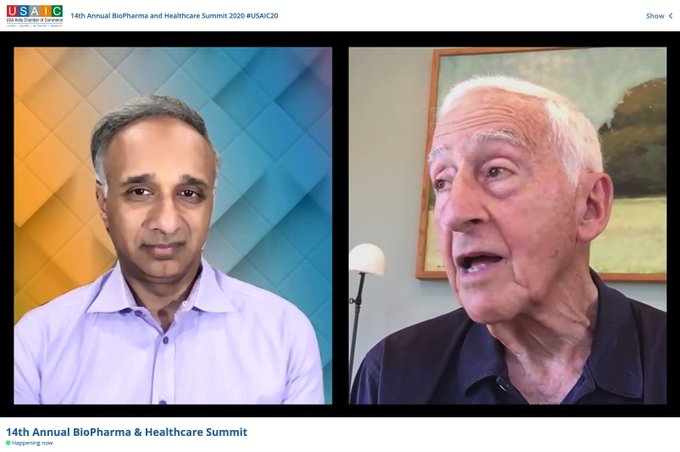
Tweet Collection by @pharma_BI and @AVIVA1950 and Re-Tweets for e-Proceedings 14th Annual BioPharma &amp; Healthcare Summit, Friday, September 4, 2020, 8 AM EST to 3-30 PM EST – Virtual Edition

Reporter: Aviva Lev-Ari, PhD, RN

Real Time Press Coverage: Aviva Lev-Ari, PhD, RN


e-Proceedings 14th Annual BioPharma & Healthcare Summit, Friday, September 4, 2020, 8 AM EST to 3-30 PM EST – Virtual Edition

Real Time Press Coverage: Aviva Lev-Ari, PhD, RN

Founder & Director, LPBI Group

https://pharmaceuticalintelligence.com/2020/07/28/14th-annual-biopharma-healthcare-summit-friday-september-4-2020-8-am-est-to-3-30-pm-est-virtual-edition/


Aviva Lev-Ari
@AVIVA1950

#USAIC20 Dr. Hal Barron, Chief Scientific Officer and President R&D, GlaxoSmithKline GWAS not easy to find which gene drives the association  Functional Genomics gene by gene with phenotypes using machine learning significant help

Aviva Lev-Ari
@AVIVA1950

#USAIC20 Dr. Hal Barron, Chief Scientific Officer and President R&D, GSK GWAS not easy to find which gene drives the association  Functional Genomics gene by gene with phenotypes using machine learning significant help

Srihari Gopal
@sgopal2

Enjoyed hearing enthusiasm for Neuroscience R&D by Roy Vagelos at #USAIC20. Wonderful interview by Mathai Mammen

Image

1
2
Show this thread

Aviva Lev-Ari
@AVIVA1950

#USAIC20 Nina Kjellson, General Partner, Canaan Data science is a winner in Healthcare Women – Data Science is an excellent match

Aviva Lev-Ari
@AVIVA1950

#USAIC20 Arpa Garay, President, Global Pharmaceuticals, Commercial Analytics, Merck & Co. Data on Patients and identification who will benefit fro which therapy  cultural bias risk aversion

Aviva Lev-Ari
@AVIVA1950

#USAIC20 Dr. Najat Khan, Chief Operating Officer, Janssen R&D Data Sciences, Johnson & Johnson Data Validation  Deployment of algorithms embed data by type early on in the crisis to understand the disease

Aviva Lev-Ari
@AVIVA1950

#USAIC20 Sastry Chilukuri, President, Acorn AI- Medidata Opportunities in Data Science in Paharma COVID-19 and Data Science

Aviva Lev-Ari
@AVIVA1950

#USAIC20 Dr. Maya Said, Chief Executive Officer, Outcomes4Me Cancer patients taking change of their care Digital Health – consumerization of Health, patient demand to be part of the decision, part the information FDA launched a Program Project Patient Voice

USAIC
@USAIC

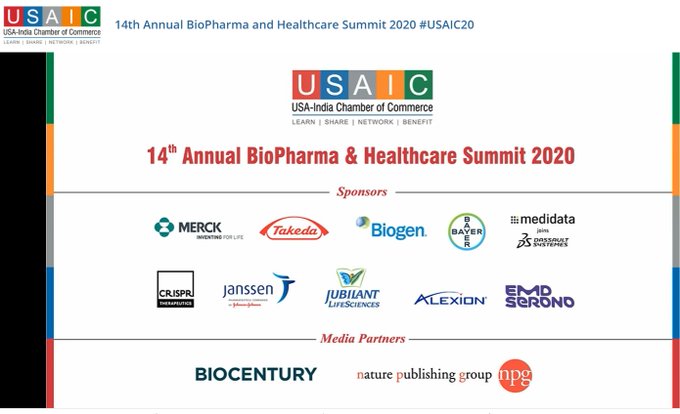
We’re taking a quick break at #USAIC20 before our next panel on rare diseases starts at 12:20pm EDT. USAIC would like to thank our Sponsors and Partners for supporting this year’s digital event.

Image

Aviva Lev-Ari
@AVIVA1950

#USAIC20 Dr. Roy Vagelos, Chairman of the Board, Regeneron HIV-AIDS: reverse transcriptase converted a lethal disease to a chronic disease, tried hard to make vaccine – the science was not there

Aviva Lev-Ari
@AVIVA1950

#USAIC20 Dr. Roy Vagelos, Chairman of the Board, Regeneron Pharmaceuticals Congratulates Big Pharma for taking the challenge on COVID-19 Vaccine, Antibody and anti-viral Government funding Merck was independent from Government – to be able to set the price

1

Dr Kapil Khambholja
@kapilmk

Christopher Viehbacher, Gurnet Point Capital touches very sensitive topic at #USAIC20 He claims that we are never going to have real innovation out of big pharma! Well this isn’t new but not entirely true either… any more thoughts?
1
1
Show this thread

Aviva Lev-Ari
@AVIVA1950

#USAIC20 Daphne Zohar, Founder & CEO, PureTech Health Disease focus, best science is the decision factors

1

Aviva Lev-Ari
@AVIVA1950

#USAIC20 Christopher Viehbacher, Managing Partner, Gurnet Point Capital Dream of every Biotech – get Big Pharma coming to acquire and pay a lot Morph and adapt

anju ghangurde
@scripanjug

Biogen’s chair Papadopoulos big co mergers is an attempt to solve problems; typically driven by patent expirations.. #usaic20

2

anju ghangurde
@scripanjug

Chris Viehbacher/Gurnet Point Capital on US election: industry will work with whoever wins; we’ll have to ‘morph & adapt’ #usaic20

1

Dr Kapil Khambholja
@kapilmk

of

talks about various philosophies and key reasons why certain projects/molecules are killed early. My counter questions- What are chances of losing hope little early? Do small #biopharma publish negative results to aid to the knowledge pool? #USAIC20

Image

2
2
Show this thread

Aviva Lev-Ari
@AVIVA1950

#USAIC20 Dr. Laurie Glimcher, President & CEO, Dana-Farber Cancer Institute DNA repair and epignetics are the future of medicine

Aviva Lev-Ari
@AVIVA1950

#USAIC20 Dr. Laurie Glimcher, President & CEO, Dana-Farber Cancer Institute COlonorectal cancer is increasing immuno therapy 5 drugs marketed 30% cancer patients are treated early detection key vs metastatic 10% of cancer are inherited treatment early

Aviva Lev-Ari
@AVIVA1950

#USAIC20 Rehan Verjee, President, EMD Serono Charities funding cancer research – were impacted and resources will come later and in decreased amount New opportunities support access to Medicine improve investment across the board

Aviva Lev-Ari
@AVIVA1950

#USAIC20 Dr. Philip Larsen, Global Head of Research, Bayer AG Repurposing drugs as antiviral from drug screening innovating methods Cytokine storm in OCVID-19 – kinase inhibitors may be antiviral data of tested positive allows research of pathway in new ways

Aviva Lev-Ari
@AVIVA1950

#USAIC20 Dr. Laurie Glimcher, President & CEO, Dana-Farber 3,000 Telemedicine session in the first week of the Pandemic vs 300 before – patient come back visits patient happy with Telemedicine team virtually need be reimbursed same rate working remotely

Aviva Lev-Ari
@AVIVA1950

#USAIC20 Dr. Raju Kucherlapati, Professor of Genetics, Harvard Medical School New normal as a result of the pandemic role of personalized medicine

Aviva Lev-Ari
@AVIVA1950

#USAIC20 Rehan Verjee, President, EMD Serono entire volume of clinical trials at Roche went down same at EMD delay of 6 month, some were to be initiated but was put on hold Charities funding cancer research were impacted and resources will come later smaller

Aviva Lev-Ari
@AVIVA1950

#USAIC20 Dr. Laurie Glimcher, President & CEO, Dana-Farber Cancer Institute Dana Farber saw impact of COVID-19 on immunosuppressed patients coming in for Cancer Tx – switch from IV Tx to Oral 96% decrease in screenings due to Pandemic – increase with Cancer

Aviva Lev-Ari
@AVIVA1950

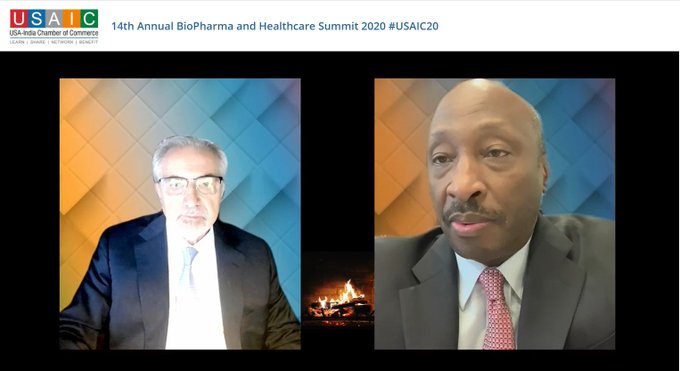
#USAIC20 Kenneth Frazier, Chairman of the Board and Chief Executive Officer, Merck & Co. Pharma’s obligation for next generations requires investment in R&D vs Politicians running for 4 years Patients must come first vs shareholders vs R&D investment in 2011

Aviva Lev-Ari
@AVIVA1950

#USAIC20 Kenneth Frazier, Chairman of the Board and Chief Executive Officer, Merck & Co. Antibiotic research at Merck – no market incentives on pricing for Merck to invest in antibiotics people will die from bacterial resistance next pandemic be bacterial

Aviva Lev-Ari
@AVIVA1950

#USAIC20 Kenneth Frazier, Chairman of the Board and Chief Executive Officer, Merck & Co. Strategies of Merck = “Medicine is for the People not for Profit” – Ketruda in India is not reembureable in India and million are in need it Partnership are encouraged

Dr Kapil Khambholja
@kapilmk

Chairman Stelios Papadopoulos asks #KennethFrazier if wealthy nations will try to secure large proportion of #COVID19 drugs/vaccines. #KennethFrazie rightly mentions: pharma industry’s responsibility to balance the access to diff countries during pandemic. #USAIC20

1
3
Show this thread

Dr Kapil Khambholja
@kapilmk

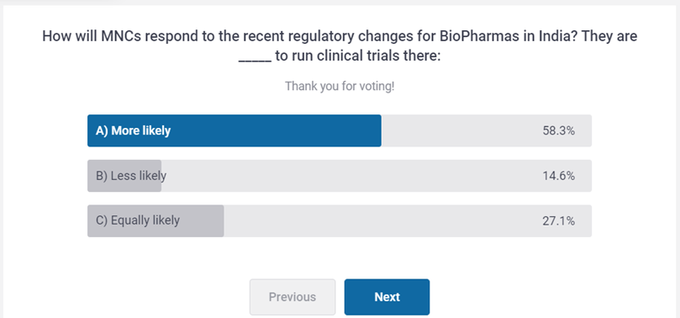
Almost 60% participants at #USAIC20 feel that MNCs are more likely to run their #clinicalTrials in #INDIA seeing changing environment here, reveals the poll. Exciting time ahead for scientific fraternity as this can substantially increase the speed of #DrugDevelopment globally

Clapping hands sign

Image

1
1
Show this thread

Aviva Lev-Ari
@AVIVA1950

#USAIC20 Dr. Barry Bloom, Professor & former Dean, Harvard School of Public Health Vaccine in clinical trials, public need to return for 2nd shot, hesitancy Who will get the Vaccine first in the US  most vulnerable of those causing transmission Pharma’s risk

4

Aviva Lev-Ari
@AVIVA1950

#USAIC20 Dr. Barry Bloom, Professor & former Dean, Harvard School of Public Health Testing – PCR expensive does not enable quick testing is expensive result come transmission occurred Antibody testing CRISPR test based Vaccine in clinical trials

1

Aviva Lev-Ari
@AVIVA1950

#USAIC20 Dr Andrew Plump, President of R&D, Takeda Pharmaceuticals COllaboration effort around the Globe in the Pandemic therapy solutions including Vaccines

Read Full Post »

Top 15 pharmas, then=2026 and now=2020: How the next five years will shake up Big Pharma’s rankings

Read Full Post »

Live Notes, Real Time Conference Coverage 2020 AACR Virtual Meeting April 28, 2020 Symposium: New Drugs on the Horizon Part 3 12:30-1:25 PM

Reporter: Stephen J. Williams, PhD

New Drugs on the Horizon: Part 3
Introduction

Andrew J. Phillips, C4 Therapeutics

  • symposium brought by AACR CICR and had about 30 proposals for talks and chose three talks
  • unfortunately the networking event is not possible but hope to see you soon in good health

ABBV-184: A novel survivin specific T cell receptor/CD3 bispecific therapeutic that targets both solid tumor and hematological malignancies

Edward B Reilly
AbbVie Inc. @abbvie

  • T-cell receptors (TCR) can recognize the intracellular targets whereas antibodies only recognize the 25% of potential extracellular targets
  • survivin is expressed in multiple cancers and correlates with poor survival and prognosis
  • CD3 bispecific TCR to survivn (Ab to CD3 on T- cells and TCR to survivin on cancer cells presented in MHC Class A3)
  • ABBV184  effective in vivo in lung cancer models as single agent;
  • in humanized mouse tumor models CD3/survivin bispecific can recruit T cells into solid tumors; multiple immune cells CD4 and CD8 positive T cells were found to infiltrate into tumor
  • therapeutic window as measured by cytokine release assays in tumor vs. normal cells very wide (>25 fold)
  • ABBV184 does not bind platelets and has good in vivo safety profile
  • First- in human dose determination trial: used in vitro cancer cell assays to determine 1st human dose
  • looking at AML and lung cancer indications
  • phase 1 trial is underway for safety and efficacy and determine phase 2 dose
  • survivin has very few mutations so they are not worried about a changing epitope of their target TCR peptide of choice

The discovery of TNO155: A first in class SHP2 inhibitor

Matthew J. LaMarche
Novartis @Novartis

  • SHP2 is an intracellular phosphatase that is upstream of MEK ERK pathway; has an SH2 domain and PTP domain
  • knockdown of SHP2 inhibits tumor growth and colony formation in soft agar
  • 55 TKIs there are very little phosphatase inhibitors; difficult to target the active catalytic site; inhibitors can be oxidized at the active site; so they tried to target the two domains and developed an allosteric inhibitor at binding site where three domains come together and stabilize it
  • they produced a number of chemical scaffolds that would bind and stabilize this allosteric site
  • block the redox reaction by blocking the cysteine in the binding site
  • lead compound had phototoxicity; used SAR analysis to improve affinity and reduce phototox effects
  • was very difficult to balance efficacy, binding properties, and tox by adjusting stuctures
  • TNO155 is their lead into trials
  • SHP2 expressed in T cells and they find good combo with I/O with uptick of CD8 cells
  • TNO155 is very selective no SHP1 inhibition; SHP2 can autoinhibit itself when three domains come together and stabilize; no cross reactivity with other phosphatases
  • they screened 1.5 million compounds and got low hit rate so that is why they needed to chemically engineer and improve on the classes they found as near hits

Closing Remarks


Xiaojing Wang
Genentech, Inc. @genentech

Follow on Twitter at:

@pharma_BI

@AACR

@CureCancerNow

@pharmanews

@BiotechWorld

@HopkinsMedicine

#AACR20

Read Full Post »

Pfizer buys out Array BioPharma for $11.4 Billion to beef up its oncology offerings

Reporter: Stephen J. Williams, PhD

As reported in FiercePharma.com:

by Angus Liu |

Three years after purchasing Medivation for $14.3 billion, Pfizer is back with another hefty M&A deal. And once again, it’s betting on oncology.

In the first big M&A deal under new CEO Albert Bourla, Pfizer has agreed to buy oncology specialist Array BioPharma for a total value of about $11.4 billion, the two companies unveiled Monday. The $48-per-share offer represents a premium of about 62% to Array stock’s closing price on Friday.

With the acquisition, Pfizer will beef up its oncology offerings with two marketed drugs, MEK inhibitor Mektovi and BRAF inhibitor Braftovi, which are approved as a combo treatment for melanoma and recently turned up positive results in colon cancer.

The buy will enhance the Pfizer innovative drug business’ “long-term growth trajectory,” Bourla said in a Monday statement, dubbing Mektovi-Braftovi “a potentially industry-leading franchise for colorectal cancer.”

RELATED: Array’s ‘extremely compelling’ new colon cancer data spark blockbuster talk

In a recent interim analysis of a trial in BRAF-mutant metastatic colorectal cancer, the pair, used in tandem with Eli Lilly and Merck KGaA’s Erbitux, produced a benefit in 26% of patients, versus the 2% that chemotherapy helped. The combo also showed it could reduce the risk of death by 48%. SVB Leerink analysts at that time called the data “extremely compelling.”

Right now, one in every three new patients with mutated metastatic melanoma is getting the combo, despite its third-to-market behind combos from Roche and Novartis, Andy Schmeltz, Pfizer’s oncology global president, said during an investor briefing on Monday.

It is being studied in more than 30 clinical studies across several solid tumor indications. Moving forward, Pfizer believes the combo could potentially be used in the adjuvant setting to prevent tumor recurrence after surgery, Pfizer’s chief scientific officer, Mikael Dolsten, said on the call. The company is also keen to know how it could be paired up with Pfizer’s own investigational PD-1, he said, as the combo is already in studies with other PD-1/L1s.

But as Pfizer execs have previously said, the company’s current business development strategy no longer centers on adding revenues “now or soon,” but rather on strengthening Pfizer’s pipeline with earlier-stage assets. And Array can help there, too.

“We are very excited by Array’s impressive track record of successfully discovering and developing innovative small-molecules and targeted cancer therapies,” Dolsten said in a statement.

On top of Mektovi and Braftovi, Array has a long list of out-licensed drugs that could generate big royalties over time. For example, Vitrakvi, the first drug to get an initial FDA approval in tumors with a particular molecular feature regardless of their location, was initially licensed to Loxo Oncology—which was itself snapped up by Eli Lilly for $8 billion—but was taken over by pipeline-hungry Bayer. There are other drugs licensed to the likes of AstraZeneca, Roche, Celgene, Ono Pharmaceutical and Seattle Genetics, among others.

Those drugs are also a manifestation of Array’s strong research capabilities. To keep those Array scientists doing what they do best, Pfizer is keeping a 100-person team in Colorado as a standalone research unit alongside Pfizer’s existing hubs, Schmeltz said.

Pfizer is counting on Array to augment its leadership in breast cancer, an area championed by Ibrance, and prostate cancer, the pharma giant markets Astellas-partnered Xtandi. For 2018, revenues from the Pfizer oncology portfolio jumped to $7.20 billion—up from $6.06 billion in 2017—mainly thanks to those two drugs.

Source: https://www.fiercepharma.com/pharma/pfizer-never-say-never-m-a-buys-oncology-innovator-array-for-11-4b


About Array BioPharma

Array markets BRAFTOVI® (encorafenib) capsules in combination with MEKTOVI® (binimetinib)  tablets for the treatment of patients with unresectable or metastatic melanoma with a BRAFV600E or BRAFV600K  mutation in the United States and with partners in other major worldwide markets.* Array’s lead clinical programs, encorafenib and binimetinib, are being investigated in over 30 clinical trials across a number of solid tumor indications, including a Phase 3 trial in BRAF-mutant metastatic colorectal cancer. Array’s pipeline includes several additional programs being advanced by Array or current license-holders, including the following programs currently in registration trials: selumetinib (partnered with AstraZeneca), LOXO-292 (partnered with Eli Lilly), ipatasertib (partnered with Genentech), tucatinib (partnered with Seattle Genetics) and ARRY-797. Vitrakvi® (larotrectinib, partnered with Bayer AG) is approved in the United States and Ganovo® (danoprevir, partnered with Roche) is approved in China.


Other Articles of Note of Pfizer Merger and Acquisition deals on this Open Access Journal Include:

From Thalidomide to Revlimid: Celgene to Bristol Myers to possibly Pfizer; A Curation of Deals, Discovery and the State of Pharma

Pfizer Near Allergan Buyout Deal But Will Fed Allow It?

Pfizer offers legal guarantees over AstraZeneca bid

Re-Creation of the Big Pharma Model via Transformational Deals for Accelerating Innovations: Licensing vs In-house inventions

Read Full Post »

Real Time Coverage of BIO 2019 International Convention, June 3-6, 2019 Philadelphia Convention Center, Philadelphia PA

Reporter: Stephen J. Williams, PhD @StephenJWillia2

Please follow LIVE on TWITTER using the following @ handles and # hashtags:

@Handles

@pharma_BI

@AVIVA1950

@BIOConvention

# Hashtags

#BIO2019 (official meeting hashtag)

Please check daily on this OPEN ACCESS JOURNAL for updates on one of the most important BIO Conferences of the year for meeting notes, posts, as well as occasional PODCASTS.


The BIO International Convention is the largest global event for the biotechnology industry and attracts the biggest names in biotech, offers key networking and partnering opportunities, and provides insights and inspiration on the major trends affecting the industry. The event features keynotes and sessions from key policymakers, scientists, CEOs, and celebrities.  The Convention also features the BIO Business Forum (One-on-One Partnering), hundreds of sessions covering biotech trends, policy issues and technological innovations, and the world’s largest biotechnology exhibition – the BIO Exhibition.

The BIO International Convention is hosted by the Biotechnology Innovation Organization (BIO). BIO represents more than 1,100 biotechnology companies, academic institutions, state biotechnology centers and related organizations across the United States and in more than 30 other nations. BIO members are involved in the research and development of innovative healthcare, agricultural, industrial and environmental biotechnology products.


Keynote Speakers INCLUDE:

Fireside Chat with Margaret (Peggy) Hamburg, MD, Foreign Secretary, National Academy of Medicine; Chairman of the Board, American Association for the Advancement of Science

Tuesday Keynote: Siddhartha Mukherjee (Author of the bestsellers Emperor of All Maladies: A Biography of Cancer and  The Gene: An Intimate History)

Fireside Chat with Jeffrey Solomon, Chief Executive Officer, COWEN

Fireside Chat with Christi Shaw, Senior Vice President and President, Lilly BIO-Medicines, Eli Lilly and Company

Wednesday Keynote: Jamie Dimon (Chairman JP Morgan Chase)

Fireside Chat with Kenneth C. Frazier, Chairman of the Board and Chief Executive Officer, Merck & Co., Inc.

Fireside Chat: Understanding the Voices of Patients: Unique Perspectives on Healthcare

Fireside Chat: FDA Town Hall


ALSO SUPERSESSIONS including:

Super Session: What’s Next: The Landscape of Innovation in 2019 and Beyond

Super Session: Falling in Love with Science: Championing Science for Everyone, Everywhere

Super Session: Digital Health in Practice: A Conversation with Ameet Nathawani, Chief Digital Officer, Chief Medical Falling in Love with Science: Championing Science for Everyone, Everywhere

Super Session: Realizing the Promise of Gene Therapies for Patients Around the World

Super Session: Biotech’s Contribution to Innovation: Current and Future Drivers of Success

Super Session: The Art & Science of R&D Innovation and Productivity

Super Session: Dealmaker’s Intentions: 2019 Market Outlook

Super Session: The State of the Vaccine Industry: Stimulating Sustainable Growth


See here for full AGENDA

Link for Registration: https://convention.bio.org/register/

The BIO International Convention is literally where hundreds of deals and partnerships have been made over the years.


BIO performs many services for members, but none of them are more visible than the BIO International Convention. The BIO International Convention helps BIO fulfill its mission to help grow the global biotech industry. Profits from the BIO International Convention are returned to the biotechnology industry by supporting BIO programs and initiatives. BIO works throughout the year to create a policy environment that enables the industry to continue to fulfill its vision of bettering the world through biotechnology innovation.

The key benefits of attending the BIO International Convention are access to global biotech and pharma leaders via BIO One-on-One Partnering, exposure to industry though-leaders with over 1,500 education sessions at your fingertips, and unparalleled networking opportunities with 16,000+ attendees from 74 countries.

In addition, we produce BIOtechNOW, an online blog chronicling ‘innovations transforming our world’ and the BIO Newsletter, the organization’s bi-weekly email newsletter. Subscribe to the BIO Newsletter.


Membership with the Biotechnology Innovation Organization (BIO)

BIO has a diverse membership that is comprised of  companies from all facets of biotechnology. Corporate R&D members range from entrepreneurial companies developing a first product to Fortune 100 multinationals. The majority of our members are small companies – 90 percent have annual revenues of $25 million or less, reflecting the broader biotechnology industry. Learn more about how you can save with BIO Membership.

BIO also represents academic centers, state and regional biotech associations and service providers to the industry, including financial and consulting firms.

  • 66% R&D-Intensive Companies *Of those: 89% have annual revenues under $25 million,  4% have annual revenues between $25 million and $1 billion, 7% have annual revenues over $1 billion.
  • 16% Nonprofit/Academic
  • 11% Service Providers
  • 7% State/International Affiliate Organizations

Other posts on LIVE CONFERENCE COVERAGE using Social Media on this OPEN ACCESS JOURNAL and OTHER Conferences Covered please see the following link at https://pharmaceuticalintelligence.com/press-coverage/


Notable Conferences Covered THIS YEAR INCLUDE: (see full list from 2013 at this link)

  • Koch Institute 2019 Immune Engineering Symposium, January 28-29, 2019, Kresge Auditorium, MIT

https://calendar.mit.edu/event/immune_engineering_symposium_2019#.XBrIDc9Kgcg

http://kochinstituteevents.cvent.com/events/koch-institute-2019-immune-engineering-symposium/event-summary-8d2098bb601a4654991060d59e92d7fe.aspx?dvce=1


  • 2019 MassBio’s Annual Meeting, State of Possible Conference ​, March 27 – 28, 2019, Royal Sonesta, Cambridge

http://files.massbio.org/file/MassBio-State-Of-Possible-Conference-Agenda-Feb-22-2019.pdf


  • World Medical Innovation Forum, Partners Innovations, ARTIFICIAL INTELLIGENCE | APRIL 8–10, 2019 | Westin, BOSTON

https://worldmedicalinnovation.org/agenda-list/

https://worldmedicalinnovation.org/


  • 18th Annual 2019 BioIT, Conference & Expo, April 16-18, 2019, Boston, Seaport World Trade Center, Track 5 Next-Gen Sequencing Informatics – Advances in Large-Scale Computing

http://www.giiconference.com/chi653337/

https://pharmaceuticalintelligence.com/2019/04/22/18th-annual-2019-bioit-conference-expo-april-16-18-2019-boston-seaport-world-trade-center-track-5-next-gen-sequencing-informatics-advances-in-large-scale-computing/


  • Translating Genetics into Medicine, April 25, 2019, 8:30 AM – 6:00 PM, The New York Academy of Sciences, 7 World Trade Center, 250 Greenwich St Fl 40, New York

https://pharmaceuticalintelligence.com/2019/04/25/translating-genetics-into-medicine-april-25-2019-830-am-600-pm-the-new-york-academy-of-sciences-7-world-trade-center-250-greenwich-st-fl-40-new-york/


  • 13th Annual US-India BioPharma & Healthcare Summit, May 9, 2019, Marriott, Cambridge

https://pharmaceuticalintelligence.com/2019/04/30/13th-annual-biopharma-healthcare-summit-thursday-may-9-2019/


  • 2019 Petrie-Flom Center Annual Conference: Consuming Genetics: Ethical and Legal Considerations of New Technologies, May 17, 2019, Harvard Law School

http://petrieflom.law.harvard.edu/events/details/2019-petrie-flom-center-annual-conference

https://pharmaceuticalintelligence.com/2019/01/11/2019-petrie-flom-center-annual-conference-consuming-genetics-ethical-and-legal-considerations-of-new-technologies/


  • 2019 Koch Institute Symposium – Machine Learning and Cancer, June 14, 2019, 8:00 AM-5:00 PM  ET MIT Kresge Auditorium, 48 Massachusetts Ave, Cambridge, MA

https://pharmaceuticalintelligence.com/2019/03/12/2019-koch-institute-symposium-machine-learning-and-cancer-june-14-2019-800-am-500-pmet-mit-kresge-auditorium-48-massachusetts-ave-cambridge-ma/


Read Full Post »

2018 Biopharma CEO Compensation Packages by John Carroll — on May 5, 2019 08:40 AM EDT


Reporter: Aviva Lev-Ari, PhD, RN

What we know so far:

Chart

Read Full Post »

Older Posts »