Feeds:
Posts
Comments

Posts Tagged ‘Drug discovery’

Horizons of drug discovery

Larry H. Bernstein, MD., FCAP, Curator

LPBI


Phenotypic and Biomarker-based Drug Discovery

NY Acad Sci.    http://www.nyas.org/Publications/Ebriefings/Detail.aspx

Organizers: Michael Foley (Tri-Institutional Therapeutics Discovery Institute), Ralph Garippa (Memorial Sloan-Kettering Cancer Center), David Mark (F. Hoffmann-La Roche), Lorenz Mayr (Astra Zeneca), John Moffat (Genentech), Marco Prunotto (F. Hoffmann-La Roche), and Sonya Dougal (The New York Academy of Sciences)Presented by the Biochemical Pharmacology Discussion Group

Reported by Robert Frawley | Posted January 12, 2016


http://www.nyas.org/image.axd?id=7fb0ef88-6198-465b-9f1f-52ec1e0b0b3d&t=635616760148070000

Overview

There are two major methods for designing pharmaceutical drugs. In traditional drug discovery (TDD), or empiric design, researchers target a particular domain or protein after working to understand its mechanisms and molecular biology. In phenotypic drug discovery (PDD), many different compounds are tested on a system until one results in an observable phenotype of success, and the compounds’ mechanisms of action are not considered. The Phenotypic and Biomarker-based Drug Discovery symposium, presented by the Academy’s Biochemical Pharmacology Discussion Group on October 27, 2015, featured current work in PDD and highlighted the need to bridge commercial and academic research to improve phenotypic drug design.

Phenotypic drug discovery—screening of thousands of substances for functional cellular outputs such as gene expression, growth arrest, and cancer cell death—has led to the development of more commercial drugs than TDD, the more common method of discovery. Indeed, as Jonathan A. Lee of Eli Lilly noted, spending on TDD is out of sync with the rate of new drugs reaching approval; the number of new drugs per billion dollars spent dropped sharply in the last few decades. He argued that the need for functionally validated drugs could be met through a renewed focus on PDD.

http://www.nyas.org/image.axd?id=a4ee4660-5709-4c34-a954-15dc2da625a6&t=635863102808800000

Spending has increased while drug discovery has flattened, leading to historic reductions in new molecular entities (NMEs) per billion dollars spent. Noted are the introduction of expressed sequence tags (ESTs) and the mapping of the human genome sequence, which should have aided targeted drug discovery. (Image presented by Jonathan A. Lee)


Bruce A. Posner started the morning session with a discussion of a phenotypic screen conducted at the University of Texas Southwestern Medical Center which identified two chemical scaffolds that are effective in killing non-small cell lung cancer (NSCLC) cells but are harmless to the non-cancer cells tested. In further studies, the group showed that an optimized analog of one scaffold arrested tumor growth in a mouse xenograft model of NSCLC. Both chemical scaffolds appear to work through a novel mechanism targeting stearoyl-CoA desaturase (SCD), which is known to be important in unsaturated fatty acid synthesis. These compounds were found to be specific, effective, and potent in NSCLC cell lines that express elevated levels of Cyp4F11 and/or related Cyp family members. The group also showed that these scaffolds function as prodrugs that are activated only in cancer cells expressing these Cyp isoforms and that the Cyps produce metabolites of the prodrug that bring about cancer-specific cell toxicity. The group is working to improve these scaffolds and to develop a putative biomarker based on Cyp expression.

The Broad Institute’s LINCS (Library of Network-based Cellular Signatures) database is designed to keep track of small-molecule therapeutics, collecting data on cellular responses to “perturbagens” (drugs, factors, and others stimuli). Data are generated using the L1000 assay, which assesses the expression of 1000 genes known to explain 80% of genetic variation in assayed cell lines. Aravind Subramanian explained that the technique can identify the majority of drug effects for a fraction of the cost of RNA sequencing. Although it examines only a subset of molecules and relies on measuring genetic responses, the technique can help predict the likelihood that new compounds will elicit desired effects.

Martin Main of AstraZeneca described phenotypic drug discovery at AstraZeneca. The company’s model for discovery is to check phenotypic markers at every step, as drugs are moved from cell lines to patients. Main’s team identified a molecule that enhances the regenerative function of cardiac myocytes after infarction. Using cells from several donors, the team validated a promising compound that increases proliferation of cardiac myocytes and drives epicardium-derived progenitor cells to assume a myocyte lineage. In another discovery, the team used islet β-cell regeneration as the phenotype, discovering a compound the researchers believe will reach clinical trials for type 2 diabetes.

Andras J. Bauer of Boehringer Ingelheim discussed a method to increase predictive strength in compound selection before phenotypic screening. By cataloging the structures of known target–reference compound binding pairs, the team can compare those structures to untested compounds, and then assess only the most promising compounds. The THICK (Target Hypothesis Information from Curated Knowledge bases) database gives interaction-probability scores to untested compounds on the basis of structure. Bauer also described a method to verify target–compound interaction without labeling the molecules, in which phenotypic results were verified with mass spectrometry.

In the afternoon session, Myles Fennell of Memorial Sloan-Kettering Cancer Center described his work testing small interfering RNA (siRNA) libraries to find siRNAs that alter macropinocytosis (MP), cell-surface ruffling that is seen in prostate cancer cells. The surface phenotype allows TMR-dextran uptake, which the researchers measured in the screen. MP is driven by RAS (a commonly affected gene family in cancers) and the pathways are already popular drug targets. The researchers tested two libraries of siRNAs, which block translation of specific proteins, using TMR as a marker to report MP severity, as well as sensitive single-cell assays to determine siRNA efficacy. The team identified promising target sequences and used a data-analysis pipeline called KNIME to define several hits, which the researchers are pursuing in therapeutic development.         www.knime.org

http://www.nyas.org/image.axd?id=0b4496f6-28fb-435c-bd11-06b4d31fc0ad&t=635863102714400000

TMR-dextran is able to work into cells undergoing macropinocytosis and thus these cells can be separated by phenotype as seen in the controls above. (Image courtesy of Myles Fennell)

Giulio Superti-Furga of the Austrian Academy of Sciences is a proponent of understanding the mechanisms of action (MOA) of candidate drugs. He began by explaining that the genome is an incomplete indicator of disease; epigenetics, altered protein function, metabolism, and other factors are also important. He then introduced pharmacoscopy and the “thermal shiftome” as methods to phenotypically screen compounds. Pharmacoscopy uses high-power automated microscopy to describe how compounds affect cell populations by using specific stains for different cell types; a computer then counts the cells expressing each stain, yielding results similar to those obtained via fluorescence-activated cell sorting but generated through an automated process. The thermal shiftome catalogs changes in thermal stability after protein binding in known reactions and is used to characterize the stability of new reactions. Superti-Furga offered a perspective that tempered the enthusiasm for pure PDD and advocated a mechanistic approach to drug discovery.

Michael R. Jackson, at one of the largest academic screening facilities, the Sanford Burnham Prebys Medical Discovery Institute, led a reexamination of drug screens performed by pharmaceutical companies. His team conducted millions of assays and accumulated a large data library with few new hits. However, the researchers were able to closely characterize the chemistry of one hit, an undisclosed interaction, and Jackson’s group is proceeding to develop a drug to modulate nuclear receptor signaling. The researchers also have a procedure that can screen for the differentiation of human induced pluripotent stem cells (iPSCs) into neurons for potential neuro-regenerative therapies. They developed high-throughput morphology, endpoint-measurement, and proliferation assays that generate tightly clustered, repeatable data. The team has produced consistent results screening 10 immune modulators and various cytokines to assess the reactivity and stability of the cells, providing reliable compound characterization. This success in human cells shows that a disease-relevant patient-derived screening platform to characterize differentiation and immune response is possible with robust assays.

In the next set of talks, Friedrich Metzger and Susanne Swalley described the parallel work of Hoffmann-La Roche and Novartis, respectively, toward treating spinal muscular atrophy (SMA). A devastating disease that leads to loss of motor function and affects motor nerve cells in the spinal cord, SMA presents a unique drug development opportunity. The condition is caused by the loss of function of a single gene product called survival of motor neuron (SMN1). Humans encode an unstable gene product, called SMN2, which is nearly homologous to SMN1.

Metzger explained that the inactive SMN2 variant is largely the same as active SMN1 but, missing exon 7, cannot compensate in its absence. The group from Hoffmann-La Roche aimed to stabilize SMN2 by promoting the inclusion of exon 7. The researchers conducted a phenotypic screen seeking a compound that could change the splicing in patient fibroblasts in vitro and produce a stable, functional SMN2 protein including exon 7. In studies with an SMN2Δ7 mouse model (lacking exon 7), mice drugged with the compound experienced full phenotypic rescue. The compound has been shown to induce alternative splicing of SMN2 to include exon 7 in healthy human volunteers; it was well tolerated and is moving to human patient trials.

Swalley discussed the target identification and MOA of the Novartis compound. After a screening process similar to Roche’s, Novartis moved its compound into animal models while also beginning parallel experimentation to find out why it worked. The group found that U1-snRNP, a spliceosome component required for the splicing process, is bound at two essential nucleotides by the compound. In the SMN2Δ7 mice, the compound improved survival and rescued full SMN2 protein expression. The Novartis compound stabilizes the appropriate spliceosome components to produce SMN2 with exon 7 intact. This novel mechanism demonstrates that a sequence-selective small molecule therapy can alter splicing activity to treat SMA. Together these talks demonstrated the power of PDD and the importance of validating drug mechanisms.

The final talk of the day was given by Hoffmann-La Roche’s Jitao David Zhang, who suggested that pathway reporter genes, which are only modulated when a specific signaling pathway is activated or inhibited, can be used as phenotypic readouts. It is known that gene expression data can predict cell phenotype. Using transcriptomics as a surrogate for downstream phenotypes, for example by using expression data from a gene subset to predict outcomes, would save time and effort. In an iPSC cardiomyocyte model of diabetic stress, machine learning (guided by pathway information) characterizes the response of the iPSCs to a library of compounds, highlighting compounds and pathways worthy of further investigation. This new platform for molecular phenotyping using pathway reporter genes, sequencing, and early analysis speeds compound characterization.


The New York Academy of Sciences. Phenotypic and Biomarker-based Drug Discovery. Academy eBriefings.2016. Available at: www.nyas.org/PhenotypicDrug-eB


Read Full Post »

New glucokinase activator

Larry H. Bernstein, MD, FCAP, Curator

LPBI


RO-28-1675 for Type 2 Diabetes

by DR ANTHONY MELVIN CRASTO Ph.D

http://www.medchemexpress.com/product_pic/hy-10595.gif


RO-28-1675

  • (2R)-3-Cyclopentyl-2-[4-(methanesulfonyl)phenyl]-N-(thiazol-2-yl)propionamide
  • Ro 028-1675
  • Ro 0281675
  • Ro 28-1675

3-Cyclopentyl-2(R)-[4-(methylsulfonyl)phenyl]-N-(2-thiazolyl)propionamide

MW 378.51 .-70.4 °Conc 0.027 g/100mL; chloroform, 589 nm;  23 °C


Formula C18H22N2O3S2
CAS No 300353-13-3

Glucokinase Activators

Ro 28-1675 (Ro 0281675) is a potent allosteric GK activator with a SC1.5 value of 0.24± 0.0019 uM.

Roche (Innovator)

Hoffmann La Roche

PHASE 1    Type 2  DIABETES,
IC50 value: 0.24± 0.0019 uM (SC1.5) [1]
Target: Glucokinase activator
The R stereoisomer Ro 28-1675 activated GK with a SC1.5 of 0.24 uM, while the S isomer did not activated GK up to 10 uM. Oral administration of Ro 28-1675 (50 mg/Kg) to male C57B1/6J mice caused a statistically significant reduction in fasting glucose levels and improvement in glucose tolerance relative to the vehicle treated animals [1].
Comparison of rat PK parameters indicated that Ro 28-1675 displayed lower clearance and higher oral bioavailability compared to 9a.

Following a single oral dose, Ro 28-1675 reduced fasting and postprandial glucose levels following an OGTT, was well tolerated, and displayed no adverse effects related to drug administration other than hypoglycemia at the maximum dose (400 mg).

RO-28-1675 as glucokinase activator.

Joseph Grimsby et al., of Roche have recently discovered activators of glucokinase that increase kcat and decrease the S0.5 for glucose, and these may offer a treatment for type II diabetes. Glucokinase (GK) plays a key role in whole-body glucose homeostasis by catalyzing the phosphorylation of glucose in cells that express this enzyme, such as pancreatic β cells and hepatocytes.

By screening of a library of 120,000 structurally diverse synthetic compounds, they found one small molecule that increased the enzymatic activity of GK. Chemical optimization of this initial molecule led to the synthesis of RO-28-0450 as a lead GK activator which is a class of antidiabetic agents that act as nonessential, mixed-type GK activators (GKAs) that increase the glucose affinity and maximum velocity (Vmax) of GK. RO-28-0450 is a racemic compound.

Activation of GK was exquisitely sensitive to the chirality of the molecule: The R enantiomer, RO-28-1675, was found to be a potent GKA, whereas the S enantiomer, RO-28-1674, was inactive. RO-28-1675 also reversed the inhibitory action of the human glucokinase regulatory protein (GKRP). The activators binding in a glucokinase regulatory site originally was discovered in patients with persistent hyperinsulinemic hypoglycemi.

The result of RO-28-1675 as a potent small molecule GKA may shed light to the chemical biologists to devise strategy for developing activators. Thus for a success to this end we must focus on highly regulated enzymes, or cooperative enzymes such as glucokinase, where nature has provided binding sites that are designed to modulate catalysis.


SYNTHESIS

Paper

J. Med. Chem., 2010, 53 (9), pp 3618–3625
DOI: 10.1021/jm100039a
Abstract Image

Glucokinase (GK) is a glucose sensor that couples glucose metabolism to insulin release. The important role of GK in maintaining glucose homeostasis is illustrated in patients with GK mutations. In this publication, identification of the hit molecule 1 and its SAR development, which led to the discovery of potent allosteric GK activators 9a and21a, is described. Compound 21a (RO0281675) was used to validate the clinical relevance of targeting GK to treat type 2 diabetes.

Flash chromatography (Merck Silica gel 60, 70-230 mesh, 9/1, 3/1, and then 11/9 hexanes/ethyl acetate) afforded (2R)-3-cyclopentyl-2-(4-methanesulfonylphenyl)-N-thiazol-2-yl-propionamide (2.10 g, 74%) as a white foam.   ….

PATENT

WO 2000058293

http://www.google.com/patents/WO2000058293A2?cl=en


Discovery, Structure−Activity Relationships, Pharmacokinetics, and Efficacy of Glucokinase Activator (2R)-3-Cyclopentyl-2-(4-methanesulfonylphenyl)-N-thiazol-2-yl-propionamide (RO0281675)

J. Med. Chem., 2010, 53 (9), pp 3618–3625   DOI:http://dx.doi.org:/10.1021/jm100039a
Abstract Image
Glucokinase (GK) is a glucose sensor that couples glucose metabolism to insulin release. The important role of GK in maintaining glucose homeostasis is illustrated in patients with GK mutations. In this publication, identification of the hit molecule 1 and its SAR development, which led to the discovery of potent allosteric GK activators 9a and 21a, is described. Compound 21a (RO0281675) was used to validate the clinical relevance of targeting GK to treat type 2 diabetes.

REFERENCES

[1]. Haynes NE, et al. Discovery, structure-activity relationships, pharmacokinetics, and efficacy of glucokinase activator (2R)-3-cyclopentyl-2-(4-methanesulfonylphenyl)-N-thiazol-2-yl-propionamide (RO0281675).

Glucokinase (GK) is a glucose sensor that couples glucose metabolism to insulin release. The important role of GK in maintaining glucose homeostasis is illustrated in patients with GK mutations. In this publication, identification of the hit molecule 1 and its SAR development, which led to the discovery of potent allosteric GK activators 9a and 21a, is described. Compound 21a (RO0281675) was used to validate the clinical relevance of targeting GK to treat type 2 diabetes.

http://www.nature.com/nrd/journal/v8/n5/fig_tab/nrd2850_T2.html

NMR…..http://www.medchemexpress.com/product_pdf/HY-10595/Ro%2028-1675-NMR-HY-10595-13569-2014.pdf

http://www.medchemexpress.com/product_pdf/HY-10595/Ro%2028-1675-Lcms_Ms-HY-10595-13569-2014.pdf

J Grimsby et al. Allosteric Activators of Glucokinase: Potential Role in Diabetes Therapy. Science Signaling 2003, 301(5631), 370-373.
T Kietzmann and GK Ganjam. Glucokinase: old enzyme, new target. Exp. Opin. Ther. Patents. 2005, 15(6), 705-713.

Read Full Post »

This content is password-protected. To view it, please enter the password below.

Read Full Post »

Gene-Silencing and Gene-Disabling in Pharmaceutical Development

Larry H. Bernstein, MD, FCAP, Curator

LPBI

2.1.2.8

Gene-Silencing and Gene-Disabling in Pharmaceutical Development, Volume 2 (Volume Two: Latest in Genomics Methodologies for Therapeutics: Gene Editing, NGS and BioInformatics, Simulations and the Genome Ontology), Part 2: CRISPR for Gene Editing and DNA Repair

Down and Out with RNAi and CRISPR

http://www.genengnews.com/gen-articles/down-and-out-with-rnai-and-crispr/5619/

RNA interference (RNAi) silences, or knocks down, the translation of a gene by inducing degradation of a gene target’s transcript. To advance RNAi applications, Thermo Fisher Scientific has developed two types of small RNA molecules: short interfering RNAs and microRNAs. The company also offers products for RNAi analysis in vitro and in vivo, including libraries for high-throughput applications.

Genes can be knocked down with RNA interference (RNAi) or knocked out with CRISPR-Cas9. RNAi, the screening workhorse, knocks down the translation of genes by inducing rapid degradation of a gene target’s transcript.

CRISPR-Cas9, the new but already celebrated genome-editing technology, cleaves specific DNA sequences to render genes inoperative. Although mechanistically different, the two techniques complement one another, and when used together facilitate discovery and validation of scientific findings.

RNAi technologies along with other developments in functional genomics screening were discussed by industry leaders at the recent Discovery on Target conference. The conference, which emphasized the identification and validation of novel drug targets and the exploration of unknown cellular pathways, included a symposium on the development of CRISPR-based therapies.

RNAi screening can be performed in either pooled or arrayed formats. Pooled screening provides an affordable benchtop option, but requires back-end deconvolution and deep sequencing to identify the shRNA causing the specific phenotype. Targets are much easier to identify using the arrayed format since each shRNA clone is in an individual well.

“CRISPR complements RNAi screens,” commented Ryan Raver, Ph.D., global product manager of functional genomics at Sigma-Aldrich. “You can do a whole genome screen with either small interfering RNA (siRNA) or small hairpin RNA (shRNA), then validate with individual CRISPRs to ensure it is a true result.”

A powerful and useful validation method for knockdown or knockout studies is to use lentiviral open reading frames (ORFs) for gene re-expression, for rescue experiments, or to detect whether the wild-type phenotype is restored. However, the ORF randomly integrates into the genome. Also, with this validation technique, gene expression is not acting under the endogenous promoter. Accordingly, physiologically relevant levels of the gene may not be expressed unless controlled for via an inducible system.

In the future, CRISPR activators may provide more efficient ways to express not only wild-type but also mutant forms of genes under the endogenous promoter.

Choice of screening technique depends on the researcher and the research question. Whole gene knockout may be necessary to observe a phenotype, while partial knockdown might be required to investigate functions of essential or lethal genes. Use of both techniques is recommended to identify all potential targets.

For example, recently, a whole genome siRNA screen on a human glioblastoma cell line identified a gene, known as FAT1, as a negative regulator of apoptosis. A CRISPR-mediated knockout of the gene also conferred sensitivity to death receptor–induced apoptosis with an even stronger phenotype, thereby validating FAT1’s new role and link to extrinsic apoptosis, a new model system.

Dr. Raver indicated that next-generation RNAi libraries that are microRNA-adapted might have a more robust knockdown of gene expression, up to 90–95% in some cases. Ultracomplex shRNA libraries help to minimize both false-negative and false-positive rates by targeting each gene with ~25 independent shRNAs and by including thousands of negative-control shRNAs.

Recently, a relevant paper emerged from the laboratory of Jonathan Weissman, Ph.D., a professor of cellular and molecular pharmacology at the University of California, San Francisco. The paper described how a new ultracomplex pooled shRNA library was optimized by means of a microRNA-adapted system. This system, which was able to achieve high specificity in the detection of hit genes, produced robust results. In fact, they were comparable to results obtained with a CRISPR pooled screen. Members of the Weissman group systematically optimized the promoter and microRNA contexts for shRNA expression along with a selection of guide strands.

Using a sublibrary of proteostasis genes (targeting 2,933 genes), the investigators compared CRISPR and RNAi pooled screens. Data showed 48 hits unique to RNAi, 40 unique to CRISPR, and an overlap of 21 hits (with a 5% false discovery rate cut-off). Together, the technologies provided a more complete research story.

“RNA screens are well accepted and will continue to be used, but it is important biologically that researchers step away from the RNA mechanism to further study and validate their hits to eliminate potential bias,” explained Louise Baskin, senior product manager, Dharmacon, part of GE Healthcare. “The natural progression is to adopt CRISPR in the later stages.”

RNAi uses the cell’s endogenous mechanism. All of the components required for gene knockdown are already within the cell, and the delivery of the siRNA starts the process. With the CRISPR gene-editing system, which is derived from a bacterial immune defense system, delivery of both the guide RNA and the Cas9 nuclease, often the rate limiter in terms of knockout efficiency, are required.

Arrayed CRISPR Screens

Synthetic crRNA:tracrRNA reagents can be used in a similar manner to siRNA reagents for assessment of phenotypes in a cell population. Top row: A reporter cell line stably expressing Cas9 nuclease was transfected with GE Dharmacon’s Edit-R synthetic crRNA:tracrRNA system, which was used to target three positive control genes (PSMD7, PSMD14, and VCP) and a negative control gene (PPIB). Green cells indicate EGFP signaling occuring as a result of proteasome pathway disruption. Bottom row: A siGENOME siRNA pool targeting the same genes was used in the same reporter cell line.

In pooled approaches, the cell has to either drop out or overexpress so that it is sortable, limiting the types of addressable biological questions. A CRISPR-arrayed approach opens up the door for use of other analytical tools, such as high-content imaging, to identify hits of interest.

To facilitate use of CRISPR, GE recently introduced Dharmacon Edit-R synthetic CRISPR RNA (crRNA) libraries that can be used to carry out high-throughput arrayed analysis of multiple genes. Rather than a vector- or plasmid-based gRNA to guide the targeting of the Cas9 cleavage, a synthetic crRNA and tracrRNA are used. These algorithm-designed crRNA reagents can be delivered into the cells very much like siRNA, opening up the capability to screen multiple target regions for many different genes simultaneously.

GE showed a very strong overlap between CRISPR and RNAi using this arrayed approach to validate RNAi screen hits with synthetic crRNA. The data concluded that CRISPR can be used for medium- or high-throughput validation of knockdown studies.

“We will continue to see a lot of cooperation between RNAi and gene editing,” declared Baskin. “Using the CRISPR mechanism to knockin could introduce mutations to help understand gene function at a much deeper level, including a more thorough functional analysis of noncoding genes.

“These regulatory RNAs often act in the nucleus to control translation and transcription, so to knockdown these genes with RNAi would require export to the cytoplasm. Precision gene editing, which takes place in the nucleus, will help us understand the noncoding transcriptome and dive deeper into how those genes regulate disease progression, cellular development and other aspects of human health and biology.”

Tool Selection

The functional genomics tool should fit the specific biology; the biology should not be forced to fit the tool. Points to consider include the regulation of expression, the cell line or model system, as well as assay scale and design. For example, there may be a need for regulatable expression. There may be limitations around the cell line or model system. And assay scale and design may include delivery conditions and timing to optimally complete perturbation and reporting.

“Both RNAi- and CRISPR-based gene modulation strategies have pros and cons that should be considered based on the biology of the genes being studied,” commented Gwen Fewell, Ph.D., chief commercial officer, Transomic Technologies.

RNAi reagents, which can produce hypomorphic or transient gene-suppression states, are well known for their use in probing drug targets. In addition, these reagents are enriching studies of gene function. CRISPR-Cas9 reagents, which produce clean heterozygous and null mutations, are important for studying tumor suppressors and other genes where complete loss of function is desired.

Schematic of a pooled shRNA screening workflow developed by Transomic Technologies. Cells are transduced, and positive or negative selection screens are performed. PCR amplification and sequencing of the shRNA integrated into the target cell genome allows the determination of shRNA representation in the population.

Timing to readout the effects of gene perturbation must be considered to ensure that the biological assay is feasible. RNAi gene knockdown effects can be seen in as little as 24–72 hours, and inducible and reversible gene knockdown can be realized. CRISPR-based gene knockout effects may become complete and permanent only after 10 days.

Both RNAi and CRISPR reagents work well for pooled positive selection screens; however, for negative selection screens, RNAi is the more mature tool. Current versions of CRISPR pooled reagents can produce mixed populations containing a fraction of non-null mutations, which can reduce the overall accuracy of the readout.

To meet the needs of varied and complex biological questions, Transomic Technologies has developed both RNAi and CRISPR tools with options for optimal expression, selection, and assay scale. For example, the company’s shERWOOD-UltramiR shRNA reagents incorporate advances in design and small RNA processing to produce increased potency and specificity of knockdown, particularly important for pooled screens.

Sequence-verified pooled shRNA screening libraries provide flexibility in promoter choice, in vitro formats, in vivo formats, and a choice of viral vectors for optimal delivery and expression in biologically relevant cell lines, primary cells or in vivo.

The company’s line of lentiviral-based CRISPR-Cas9 reagents has variable selectable markers such that guide RNA- and Cas9-expressing vectors, including inducible Cas9, can be co-delivered and selected for in the same cell to increase editing efficiency. Promoter options are available to ensure expression across a range of cell types.

“Researchers are using RNAi and CRISPR reagents individually and in combination as cross-validation tools, or to engineer CRISPR-based models to perform RNAi-based assays,” informs Dr. Fewell. “Most exciting are parallel CRISPR and RNAi screens that have tremendous potential to uncover novel biology.”

Converging Technologies

The convergence of RNAi technology with genome-editing tools, such as CRISPR-Cas9 and transcription activator-like effector nucleases, combined with next-generation sequencing will allow researchers to dissect biological systems in a way not previously possible.

“From a purely technical standpoint, the challenges for traditional RNAi screens come down to efficient delivery of the RNAi reagents and having those reagents provide significant, consistent, and lasting knockdown of the target mRNAs,” states Ross Whittaker, Ph.D., a product manager for genome editing products at Thermo Fisher Scientific. “We have approached these challenges with a series of reagents and siRNA libraries designed to increase the success of RNAi screens.”

Thermo Fisher’ provides lipid-transfection RNAiMax reagents, which effectively deliver siRNA. In addition, the company’s Silencer and Silencer Select siRNA libraries provide consistent and significant knockdown of the target mRNAs. These siRNA libraries utilize highly stringent bioinformatic designs that ensure accurate and potent targeting for gene-silencing studies. The Silencer Select technology adds a higher level of efficacy and specificity due to chemical modifications with locked nucleic acid (LNA) chemistry.

The libraries alleviate concerns for false-positive or false-negative data. The high potency allows less reagent use; thus, more screens or validations can be conducted per library.

Dr. Whittaker believes that researchers will migrate regularly between RNAi and CRISPR-Cas9 technology in the future. CRISPR-Cas9 will be used to create engineered cell lines not only to validate RNAi hits but also to follow up on the underlying mechanisms. Cell lines engineered with CRISPR-Cas9 will be utilized in RNAi screens. In the long term, CRISPR-Cas9 screening will likely replace RNAi screening in many cases, especially with the introduction of arrayed CRISPR libraries.

Validating Antibodies with RNAi

Unreliable antibody specificity is a widespread problem for researchers, but RNAi is assuaging scientists’ concerns as a validation method.

The procedure introduces short hairpin RNAs (shRNAs) to reduce expression levels of a targeted protein. The associated antibody follows. With its protein knocked down, a truly specific antibody shows dramatically reduced or no signal on a Western blot. Short of knockout animal models, RNAi is arguably the most effective method of validating research antibodies.

The method is not common among antibody suppliers—time and cost being the chief barriers to its adoption, although some companies are beginning to embrace RNAi validation.

“In the interest of fostering better science, Proteintech felt it was necessary to implement this practice,” said Jason Li, Ph.D., founder and CEO of Proteintech Group, which made RNAi standard protocol in February 2015. “When researchers can depend on reproducibility, they execute more thorough experiments and advance the treatment of human diseases and conditions.”

Down and Out with RNAi and CRISPR

Genes can be knocked down with RNA interference (RNAi) or knocked out with CRISPR-Cas9. RNAi, the screening workhorse, knocks down the translation of genes by inducing rapid degradation of a gene target’s transcript.

RNA-Based Therapeutics and Vaccines

RNA-based biopharmaceuticals, which includes therapeutics and vaccines, is a relatively new class of treatment and prophylactic for a number of chronic and rare diseases, including cancer, diabetes, tuberculosis, and certain cardiovascular conditions. The field holds great promise in the prevention and treatment of these diseases as demonstrated by early-phase clinical trials as well as significant investment by the drug development community.

Ready, Aim, CRISPR (or RNAi)

Recent progress in probing gene function via the RNAi and CRISPR methods were a strong theme of the Discovery On Target conference. Both methods enable researchers to impair the function of a targeted gene.

Masked RNAi Drug Slips through Membrane, Sheds Guise within Cell

For small interfering RNA, approaching a cell is like walking up to the door of an old speakeasy. Such doors were heavily reinforced and had a narrow, built-in sliding panel at eye level, and if the eyes peering out though the open panel didn’t like the look of you, well, you were not getting inside. Failing to gain entry is something that happens all too frequently to small interfering RNAs, which admittedly are anything but “life of the party” types.

Read Full Post »

Antiparasite Drug Developers Win Nobel

Larry H Bernstein, MD, FCAP, Curator

LPBI

Antiparasite Drug Developers Win Nobel

William Campbell, Satoshi Omura, and Youyou Tu have won this year’s Nobel Prize in Physiology or Medicine in recognition of their contributions to antiparasitic drug development.

By Karen Zusi and Tracy Vence | October 5, 2015

http://www.the-scientist.com//?articles.view/articleNo/44159/title/Antiparasite-Drug-Developers-Win-Nobel/

William Campbell, Satoshi Omura, and Youyou Tu have made significant contributions to treatments for river blindness, lymphatic filariasis, and malaria; today (October 5) these three scientists were jointly awarded the 2015 Nobel Prize in Physiology or Medicine in recognition of these advancements.

Tu is being recognized for her discoveries leading to the development of the antimalarial drug artemisinin. Campbell and Omura jointly received the other half of this year’s prize for their separate work leading to the discovery of the drug avermectin, which has been used to develop therapies for river blindness and lymphatic filariasis.

“These discoveries are now more than 30 years old,” David Conway, a professor of biology of the London School of Hygiene & Tropical Medicine, told The Scientist. “[These drugs] are still, today, the best two groups of compounds for antimalarial use, on the one hand, and antinematode worms and filariasis on the other.”

Omura, a Japanese microbiologist at Kitasato University in Tokyo, isolated strains of the soil bacteriaStreptomyces in a search for those with promising antibacterial activity. He eventually narrowed thousands of cultures down to 50.

Now research fellow emeritus at Drew University in New Jersey, Campbell spent much of his career at Merck, where he discovered effective antiparasitic properties in one of Omura’s cultures and purified the relevant compounds into avermectin (later refined into ivermectin).

“Bill Campbell is a wonderful scientist, a wonderful man, and a great mentor for undergraduate students,” said his colleague Roger Knowles, a professor of biology at Drew University. “His ability to speak about disease mechanisms and novel strategies to help [fight] these diseases. . . . that’s been a great boon to students.”

Tu began searching for a novel malaria treatment in the 1960s in traditional herbal medicine. She served as the head of Project 523, a program at the China Academy of Chinese Medical Sciences in Beijing aimed at finding new drugs for malaria. Tu successfully extracted a promising compound from the plant Artemisia annu that was highly effective against the malaria parasite. In recognition of her malaria research, Tu won a Lasker Award in 2011.

Read Full Post »

Protecting Your Biotech IP and Market Strategy: Notes from Life Sciences Collaborative 2015 Meeting


Protecting Your Biotech IP and Market Strategy: Notes from Life Sciences Collaborative 2015 Meeting

Reporter: Stephen J. Williams, PhD

Article ID #169: Protecting Your Biotech IP and Market Strategy: Notes from Life Sciences Collaborative 2015 Meeting. Published on 3/11/2015

WordCloud Image Produced by Adam Tubman

Achievement Beyond Regulatory Approval – Design for Commercial Success

philly2nightStephen J. Williams, Ph.D.: Reporter

The Mid-Atlantic group Life Sciences Collaborative, a select group of industry veterans and executives from the pharmaceutical, biotechnology, and medical device sectors whose mission is to increase the success of emerging life sciences businesses in the Mid-Atlantic region through networking, education, training and mentorship, met Tuesday March 3, 2015 at the University of the Sciences in Philadelphia (USP) to discuss post-approval regulatory issues and concerns such as designing strong patent protection, developing strategies for insurance reimbursement, and securing financing for any stage of a business.

The meeting was divided into three panel discussions and keynote speech:

  1. Panel 1: Design for Market Protection– Intellectual Property Strategy Planning
  2. Panel 2: Design for Market Success– Commercial Strategy Planning
  3. Panel 3: Design for Investment– Financing Each Stage
  4. Keynote Speaker: Robert Radie, President & CEO Egalet Corporation

Below are Notes from each PANEL Discussion:

For more information about the Life Sciences Collaborative SEE

Website: http://www.lifesciencescollaborative.org/

Or On Facebook

Or On Twitter @LSCollaborative

Panel 1: Design for Market Protection; Intellectual Property Strategy Planning

Take-home Message: Developing a very strong Intellectual Property (IP) portfolio and strategy for a startup is CRITICALLY IMPORTANT for its long-term success. Potential investors, partners, and acquirers will focus on the strength of a startup’s IP so important to take advantage of the legal services available. Do your DUE DIGILENCE.

Panelists:

John F. Ritter, J.D.., MBA; Director Office Tech. Licensing Princeton University

Cozette McAvoy; Senior Attorney Novartis Oncology Pharma Patents

Ryan O’Donnell; Partner Volpe & Koenig

Panel Moderator: Dipanjan “DJ” Nag, PhD, MBA, CLP, RTTP; President CEO IP Shaktl, LLC

Notes:

Dr. Nag:

  • Sometimes IP can be a double edged sword; e.g. Herbert Boyer with Paul Berg and Stanley Cohen credited with developing recombinant technology but they did not keep the IP strict and opened the door for a biotech revolution (see nice review from Chemical Heritage Foundation).
  • Naked patent licenses are most profitable when try to sell IP

John Ritter: Mr. Ritter gave Princeton University’s perspective on developing and promoting a university-based IP portfolio.

  • 30-40% of Princeton’s IP portfolio is related to life sciences
  • Universities will prefer to seek provisional patent status as a quicker process and allows for publication
  • Princeton will work closely with investigators to walk them through process – Very Important to have support system in place INCLUDING helping investigators and early startups establish a STRONG startup MANAGEMENT TEAM, and making important introductions to and DEVELOPING RELATIONSHIOPS with investors, angels
  • Good to cast a wide net when looking at early development partners like pharma
  • Good example of university which takes active role in developing startups is University of Pennsylvania’s Penn UPstart program.
  • Last 2 years many universities filing patents for startups as a micro-entity

Comment from attendee: Universities are not using enough of their endowments for purpose of startups. Princeton only using $500,00 for accelerator program.

Cozette McAvoy: Mrs. McAvoy talked about monetizing your IP from an industry perspective

  • Industry now is looking at “indirect monetization” of their and others IP portfolio. Indirect monetization refers to unlocking the “indirect value” of intellectual property; for example research tools, processes, which may or may not be related to a tangible product.
  • Good to make a contractual bundle of IP – “days of the $million check is gone”
  • Big companies like big pharma looks to PR (press relation) buzz surrounding new technology, products SO IMPORTANT FOR STARTUP TO FOCUS ON YOUR PR

Ryan O’Donnell: talked about how life science IP has changed especially due to America Invests Act

  • Need to develop a GLOBAL IP strategy so whether drug or device can market in multiple countries
  • Diagnostics and genes not patentable now – Major shift in patent strategy
  • Companies like Unified Patents can protect you against the patent trolls – if patent threatened by patent troll (patent assertion entity) will file a petition with the USPTO (US Patent Office) requesting institution of inter partes review (IPR); this may cost $40,000 BUT WELL WORTH the money – BE PROACTIVE about your patents and IP

Panel 2: Design for Market Success; Commercial Strategy Planning

Take-home Message: Commercial strategy development is defined market facing data, reimbursement strategies and commercial planning that inform labeling requirements, clinical study designs, healthcare economic outcomes and pricing targets. Clarity from payers is extremely important to develop any market strategy. Develop this strategy early and seek advice from payers.

Panelists:

David Blaszczak; Founder, Precipio Health Strategies

Terri Bernacchi, PharmD, MBA; Founder & President Cambria Health Advisory Professionals

Paul Firuta; President US Commercial Operations, NPS Pharma


Panel Moderator: Matt Cabrey; Executive Director, Select Greater Philadelphia


Notes:

David Blaszczak:

  • Commercial payers are bundling payment: most important to get clarity from these payers
  • Payers are using clinical trials to alter marketing (labeling) so IMPORTANT to BUILD LABEL in early clinical trial phases (phase I or II)
  • When in early phases of small company best now to team or partner with a Medicare or PBM (pharmacy benefit manager) and payers to help develop and spot tier1 and tier 2 companies in their area

Terri Bernacchi:

  • Building relationship with the payer is very important but firms like hers will also look to patients and advocacy groups to see how they respond to a given therapy and decrease the price risk by bundling
  • Value-based contracting with manufacturers can save patient and payer $$
  • As most PBMs formularies are 80% generics goal is how to make money off of generics
  • Patent extension would have greatest impact on price, value

Paul Firuta:

  • NPS Pharma developing a pharmacy benefit program for orphan diseases
  • How you pay depends on mix of Medicare, private payers now
  • Most important change which could affect price is change in compliance regulations

Panel 3: Design for Investment; Financing Each Stage

Take-home Message: VC is a personal relationship so spend time making those relationships. Do your preparation on your value and your market. Look to non-VC avenues: they are out there.

Panelists:

Ting Pau Oei; Managing Director, Easton Capital (NYC)

Manya Deehr; CEO & Founder, Pediva Therapeutics

Sanjoy Dutta, PhD; Assistant VP, Translational Devel. & Intl. Res., Juvenile Diabetes Research Foundation


Panel Moderator: Shahram Hejazi, PhD; Venture Partner, BioAdvance

  • In 2000 his experience finding 1st capital was what are your assets; now has changed to value

Notes:

Ting Pau Oei:

  • Your very 1st capital is all about VALUE– so plan where you add value
  • Venture Capital is a PERSONAL RELATIONSHIP
  • 1) you need the management team, 2) be able to communicate effectively                  (Powerpoint, elevator pitch, business plan) and #1 and #2 will get you important 2nd Venture Capital meeting; VC’s don’t decide anything in 1st meeting
  • VC’s don’t normally do a good job of premarket valuation or premarket due diligence but know post market valuation well
  • Best advice: show some phase 2 milestones and VC will knock on your door

Manya Deehr:

  • Investment is more niche oriented so find your niche investors
  • Define your product first and then match the investors
  • Biggest failure she has experienced: companies that go out too early looking for capital

Dr. Dutta: funding from a non-profit patient advocacy group perspective

  • Your First Capital: find alliances which can help you get out of “valley of death
  • Develop a targeted product and patient treatment profile
  • Non-profit groups ask three questions:

1) what is the value to patients (non-profits want to partner)

2) what is your timeline (we can wait longer than VC; for example Cystic Fibrosis Foundation waited long time but got great returns for their patients with Kalydeco™)

3) when can we see return

  • Long-term market projections are the knowledge gaps that startups have (the landscape) and startups don’t have all the competitive intelligence
  • Have a plan B every step of the way

Other posts on this site related to Philadelphia Biotech, Startup Funding, Payer Issues, and Intellectual Property Issues include:

PCCI’s 7th Annual Roundtable “Crowdfunding for Life Sciences: A Bridge Over Troubled Waters?” May 12 2014 Embassy Suites Hotel, Chesterbrook PA 6:00-9:30 PM
The Vibrant Philly Biotech Scene: Focus on KannaLife Sciences and the Discipline and Potential of Pharmacognosy
The Vibrant Philly Biotech Scene: Focus on Computer-Aided Drug Design and Gfree Bio, LLC
The Vibrant Philly Biotech Scene: Focus on Vaccines and Philimmune, LLC
The Bioscience Crowdfunding Environment: The Bigger Better VC?
Foundations as a Funding Source
Venture Capital Funding in the Life Sciences: Phase4 Ventures – A Case Study
10 heart-focused apps & devices are crowdfunding for American Heart Association’s open innovation challenge
Funding, Deals & Partnerships
Medicare Panel Punts on Best Tx for Carotid Plaque
9:15AM–2:00PM, January 27, 2015 – Regulatory & Reimbursement Frameworks for Molecular Testing, LIVE @Silicon Valley 2015 Personalized Medicine World Conference, Mountain View, CA
FDA Commissioner, Dr. Margaret A. Hamburg on HealthCare for 310Million Americans and the Role of Personalized Medicine
Biosimilars: Intellectual Property Creation and Protection by Pioneer and by Biosimilar Manufacturers
Litigation on the Way: Broad Institute Gets Patent on Revolutionary Gene-Editing Method
The Patents for CRISPR, the DNA editing technology as the Biggest Biotech Discovery of the Century


Read Full Post »

Summary and Perspectives: Impairments in Pathological States: Endocrine Disorders, Stress Hypermetabolism and Cancer

Summary and Perspectives: Impairments in Pathological States: Endocrine Disorders, Stress Hypermetabolism and Cancer

Author and Curator: Larry H. Bernstein, MD, FCAP

Article ID #160: Summary and Perspectives: Impairments in Pathological States: Endocrine Disorders, Stress Hypermetabolism and Cancer. Published on 11/9/2014

WordCloud Image Produced by Adam Tubman

This summary is the last of a series on the impact of transcriptomics, proteomics, and metabolomics on disease investigation, and the sorting and integration of genomic signatures and metabolic signatures to explain phenotypic relationships in variability and individuality of response to disease expression and how this leads to  pharmaceutical discovery and personalized medicine.  We have unquestionably better tools at our disposal than has ever existed in the history of mankind, and an enormous knowledge-base that has to be accessed.  I shall conclude here these discussions with the powerful contribution to and current knowledge pertaining to biochemistry, metabolism, protein-interactions, signaling, and the application of the -OMICS to diseases and drug discovery at this time.

The Ever-Transcendent Cell

Deriving physiologic first principles By John S. Torday | The Scientist Nov 1, 2014
http://www.the-scientist.com/?articles.view/articleNo/41282/title/The-Ever-Transcendent-Cell/

Both the developmental and phylogenetic histories of an organism describe the evolution of physiology—the complex of metabolic pathways that govern the function of an organism as a whole. The necessity of establishing and maintaining homeostatic mechanisms began at the cellular level, with the very first cells, and homeostasis provides the underlying selection pressure fueling evolution.

While the events leading to the formation of the first functioning cell are debatable, a critical one was certainly the formation of simple lipid-enclosed vesicles, which provided a protected space for the evolution of metabolic pathways. Protocells evolved from a common ancestor that experienced environmental stresses early in the history of cellular development, such as acidic ocean conditions and low atmospheric oxygen levels, which shaped the evolution of metabolism.

The reduction of evolution to cell biology may answer the perennially unresolved question of why organisms return to their unicellular origins during the life cycle.

As primitive protocells evolved to form prokaryotes and, much later, eukaryotes, changes to the cell membrane occurred that were critical to the maintenance of chemiosmosis, the generation of bioenergy through the partitioning of ions. The incorporation of cholesterol into the plasma membrane surrounding primitive eukaryotic cells marked the beginning of their differentiation from prokaryotes. Cholesterol imparted more fluidity to eukaryotic cell membranes, enhancing functionality by increasing motility and endocytosis. Membrane deformability also allowed for increased gas exchange.

Acidification of the oceans by atmospheric carbon dioxide generated high intracellular calcium ion concentrations in primitive aquatic eukaryotes, which had to be lowered to prevent toxic effects, namely the aggregation of nucleotides, proteins, and lipids. The early cells achieved this by the evolution of calcium channels composed of cholesterol embedded within the cell’s plasma membrane, and of internal membranes, such as that of the endoplasmic reticulum, peroxisomes, and other cytoplasmic organelles, which hosted intracellular chemiosmosis and helped regulate calcium.

As eukaryotes thrived, they experienced increasingly competitive pressure for metabolic efficiency. Engulfed bacteria, assimilated as mitochondria, provided more bioenergy. As the evolution of eukaryotic organisms progressed, metabolic cooperation evolved, perhaps to enable competition with biofilm-forming, quorum-sensing prokaryotes. The subsequent appearance of multicellular eukaryotes expressing cellular growth factors and their respective receptors facilitated cell-cell signaling, forming the basis for an explosion of multicellular eukaryote evolution, culminating in the metazoans.

Casting a cellular perspective on evolution highlights the integration of genotype and phenotype. Starting from the protocell membrane, the functional homolog for all complex metazoan organs, it offers a way of experimentally determining the role of genes that fostered evolution based on the ontogeny and phylogeny of cellular processes that can be traced back, in some cases, to our last universal common ancestor.  ….

As eukaryotes thrived, they experienced increasingly competitive pressure for metabolic efficiency. Engulfed bacteria, assimilated as mitochondria, provided more bioenergy. As the evolution of eukaryotic organisms progressed, metabolic cooperation evolved, perhaps to enable competition with biofilm-forming, quorum-sensing prokaryotes. The subsequent appearance of multicellular eukaryotes expressing cellular growth factors and their respective receptors facilitated cell-cell signaling, forming the basis for an explosion of multicellular eukaryote evolution, culminating in the metazoans.

Casting a cellular perspective on evolution highlights the integration of genotype and phenotype. Starting from the protocell membrane, the functional homolog for all complex metazoan organs, it offers a way of experimentally determining the role of genes that fostered evolution based on the ontogeny and phylogeny of cellular processes that can be traced back, in some cases, to our last universal common ancestor.

Given that the unicellular toolkit is complete with all the traits necessary for forming multicellular organisms (Science, 301:361-63, 2003), it is distinctly possible that metazoans are merely permutations of the unicellular body plan. That scenario would clarify a lot of puzzling biology: molecular commonalities between the skin, lung, gut, and brain that affect physiology and pathophysiology exist because the cell membranes of unicellular organisms perform the equivalents of these tissue functions, and the existence of pleiotropy—one gene affecting many phenotypes—may be a consequence of the common unicellular source for all complex biologic traits.  …

The cell-molecular homeostatic model for evolution and stability addresses how the external environment generates homeostasis developmentally at the cellular level. It also determines homeostatic set points in adaptation to the environment through specific effectors, such as growth factors and their receptors, second messengers, inflammatory mediators, crossover mutations, and gene duplications. This is a highly mechanistic, heritable, plastic process that lends itself to understanding evolution at the cellular, tissue, organ, system, and population levels, mediated by physiologically linked mechanisms throughout, without having to invoke random, chance mechanisms to bridge different scales of evolutionary change. In other words, it is an integrated mechanism that can often be traced all the way back to its unicellular origins.

The switch from swim bladder to lung as vertebrates moved from water to land is proof of principle that stress-induced evolution in metazoans can be understood from changes at the cellular level.

http://www.the-scientist.com/Nov2014/TE_21.jpg

A MECHANISTIC BASIS FOR LUNG DEVELOPMENT: Stress from periodic atmospheric hypoxia (1) during vertebrate adaptation to land enhances positive selection of the stretch-regulated parathyroid hormone-related protein (PTHrP) in the pituitary and adrenal glands. In the pituitary (2), PTHrP signaling upregulates the release of adrenocorticotropic hormone (ACTH) (3), which stimulates the release of glucocorticoids (GC) by the adrenal gland (4). In the adrenal gland, PTHrP signaling also stimulates glucocorticoid production of adrenaline (5), which in turn affects the secretion of lung surfactant, the distension of alveoli, and the perfusion of alveolar capillaries (6). PTHrP signaling integrates the inflation and deflation of the alveoli with surfactant production and capillary perfusion.  THE SCIENTIST STAFF

From a cell-cell signaling perspective, two critical duplications in genes coding for cell-surface receptors occurred during this period of water-to-land transition—in the stretch-regulated parathyroid hormone-related protein (PTHrP) receptor gene and the β adrenergic (βA) receptor gene. These gene duplications can be disassembled by following their effects on vertebrate physiology backwards over phylogeny. PTHrP signaling is necessary for traits specifically relevant to land adaptation: calcification of bone, skin barrier formation, and the inflation and distention of lung alveoli. Microvascular shear stress in PTHrP-expressing organs such as bone, skin, kidney, and lung would have favored duplication of the PTHrP receptor, since sheer stress generates radical oxygen species (ROS) known to have this effect and PTHrP is a potent vasodilator, acting as an epistatic balancing selection for this constraint.

Positive selection for PTHrP signaling also evolved in the pituitary and adrenal cortex (see figure on this page), stimulating the secretion of ACTH and corticoids, respectively, in response to the stress of land adaptation. This cascade amplified adrenaline production by the adrenal medulla, since corticoids passing through it enzymatically stimulate adrenaline synthesis. Positive selection for this functional trait may have resulted from hypoxic stress that arose during global episodes of atmospheric hypoxia over geologic time. Since hypoxia is the most potent physiologic stressor, such transient oxygen deficiencies would have been acutely alleviated by increasing adrenaline levels, which would have stimulated alveolar surfactant production, increasing gas exchange by facilitating the distension of the alveoli. Over time, increased alveolar distension would have generated more alveoli by stimulating PTHrP secretion, impelling evolution of the alveolar bed of the lung.

This scenario similarly explains βA receptor gene duplication, since increased density of the βA receptor within the alveolar walls was necessary for relieving another constraint during the evolution of the lung in adaptation to land: the bottleneck created by the existence of a common mechanism for blood pressure control in both the lung alveoli and the systemic blood pressure. The pulmonary vasculature was constrained by its ability to withstand the swings in pressure caused by the systemic perfusion necessary to sustain all the other vital organs. PTHrP is a potent vasodilator, subserving the blood pressure constraint, but eventually the βA receptors evolved to coordinate blood pressure in both the lung and the periphery.

Gut Microbiome Heritability

Analyzing data from a large twin study, researchers have homed in on how host genetics can shape the gut microbiome.
By Tracy Vence | The Scientist Nov 6, 2014

Previous research suggested host genetic variation can influence microbial phenotype, but an analysis of data from a large twin study published in Cell today (November 6) solidifies the connection between human genotype and the composition of the gut microbiome. Studying more than 1,000 fecal samples from 416 monozygotic and dizygotic twin pairs, Cornell University’s Ruth Ley and her colleagues have homed in on one bacterial taxon, the family Christensenellaceae, as the most highly heritable group of microbes in the human gut. The researchers also found that Christensenellaceae—which was first described just two years ago—is central to a network of co-occurring heritable microbes that is associated with lean body mass index (BMI).  …

Of particular interest was the family Christensenellaceae, which was the most heritable taxon among those identified in the team’s analysis of fecal samples obtained from the TwinsUK study population.

While microbiologists had previously detected 16S rRNA sequences belonging to Christensenellaceae in the human microbiome, the family wasn’t named until 2012. “People hadn’t looked into it, partly because it didn’t have a name . . . it sort of flew under the radar,” said Ley.

Ley and her colleagues discovered that Christensenellaceae appears to be the hub in a network of co-occurring heritable taxa, which—among TwinsUK participants—was associated with low BMI. The researchers also found that Christensenellaceae had been found at greater abundance in low-BMI twins in older studies.

To interrogate the effects of Christensenellaceae on host metabolic phenotype, the Ley’s team introduced lean and obese human fecal samples into germ-free mice. They found animals that received lean fecal samples containing more Christensenellaceae showed reduced weight gain compared with their counterparts. And treatment of mice that had obesity-associated microbiomes with one member of the Christensenellaceae family, Christensenella minuta, led to reduced weight gain.   …

Ley and her colleagues are now focusing on the host alleles underlying the heritability of the gut microbiome. “We’re running a genome-wide association analysis to try to find genes—particular variants of genes—that might associate with higher levels of these highly heritable microbiota.  . . . Hopefully that will point us to possible reasons they’re heritable,” she said. “The genes will guide us toward understanding how these relationships are maintained between host genotype and microbiome composition.”

J.K. Goodrich et al., “Human genetics shape the gut microbiome,” Cell,  http://dx.doi.org:/10.1016/j.cell.2014.09.053, 2014.

Light-Operated Drugs

Scientists create a photosensitive pharmaceutical to target a glutamate receptor.
By Ruth Williams | The Scentist Nov 1, 2014
http://www.the-scientist.com/?articles.view/articleNo/41279/title/Light-Operated-Drugs/

light operated drugs MO1

light operated drugs MO1

http://www.the-scientist.com/Nov2014/MO1.jpg

The desire for temporal and spatial control of medications to minimize side effects and maximize benefits has inspired the development of light-controllable drugs, or optopharmacology. Early versions of such drugs have manipulated ion channels or protein-protein interactions, “but never, to my knowledge, G protein–coupled receptors [GPCRs], which are one of the most important pharmacological targets,” says Pau Gorostiza of the Institute for Bioengineering of Catalonia, in Barcelona.

Gorostiza has taken the first step toward filling that gap, creating a photosensitive inhibitor of the metabotropic glutamate 5 (mGlu5) receptor—a GPCR expressed in neurons and implicated in a number of neurological and psychiatric disorders. The new mGlu5 inhibitor—called alloswitch-1—is based on a known mGlu receptor inhibitor, but the simple addition of a light-responsive appendage, as had been done for other photosensitive drugs, wasn’t an option. The binding site on mGlu5 is “extremely tight,” explains Gorostiza, and would not accommodate a differently shaped molecule. Instead, alloswitch-1 has an intrinsic light-responsive element.

In a human cell line, the drug was active under dim light conditions, switched off by exposure to violet light, and switched back on by green light. When Gorostiza’s team administered alloswitch-1 to tadpoles, switching between violet and green light made the animals stop and start swimming, respectively.

The fact that alloswitch-1 is constitutively active and switched off by light is not ideal, says Gorostiza. “If you are thinking of therapy, then in principle you would prefer the opposite,” an “on” switch. Indeed, tweaks are required before alloswitch-1 could be a useful drug or research tool, says Stefan Herlitze, who studies ion channels at Ruhr-Universität Bochum in Germany. But, he adds, “as a proof of principle it is great.” (Nat Chem Biol, http://dx.doi.org:/10.1038/nchembio.1612, 2014)

Enhanced Enhancers

The recent discovery of super-enhancers may offer new drug targets for a range of diseases.
By Eric Olson | The Scientist Nov 1, 2014
http://www.the-scientist.com/?articles.view/articleNo/41281/title/Enhanced-Enhancers/

To understand disease processes, scientists often focus on unraveling how gene expression in disease-associated cells is altered. Increases or decreases in transcription—as dictated by a regulatory stretch of DNA called an enhancer, which serves as a binding site for transcription factors and associated proteins—can produce an aberrant composition of proteins, metabolites, and signaling molecules that drives pathologic states. Identifying the root causes of these changes may lead to new therapeutic approaches for many different diseases.

Although few therapies for human diseases aim to alter gene expression, the outstanding examples—including antiestrogens for hormone-positive breast cancer, antiandrogens for prostate cancer, and PPAR-γ agonists for type 2 diabetes—demonstrate the benefits that can be achieved through targeting gene-control mechanisms.  Now, thanks to recent papers from laboratories at MIT, Harvard, and the National Institutes of Health, researchers have a new, much bigger transcriptional target: large DNA regions known as super-enhancers or stretch-enhancers. Already, work on super-enhancers is providing insights into how gene-expression programs are established and maintained, and how they may go awry in disease.  Such research promises to open new avenues for discovering medicines for diseases where novel approaches are sorely needed.

Super-enhancers cover stretches of DNA that are 10- to 100-fold longer and about 10-fold less abundant in the genome than typical enhancer regions (Cell, 153:307-19, 2013). They also appear to bind a large percentage of the transcriptional machinery compared to typical enhancers, allowing them to better establish and enforce cell-type specific transcriptional programs (Cell, 153:320-34, 2013).

Super-enhancers are closely associated with genes that dictate cell identity, including those for cell-type–specific master regulatory transcription factors. This observation led to the intriguing hypothesis that cells with a pathologic identity, such as cancer cells, have an altered gene expression program driven by the loss, gain, or altered function of super-enhancers.

Sure enough, by mapping the genome-wide location of super-enhancers in several cancer cell lines and from patients’ tumor cells, we and others have demonstrated that genes located near super-enhancers are involved in processes that underlie tumorigenesis, such as cell proliferation, signaling, and apoptosis.

Super-enhancers cover stretches of DNA that are 10- to 100-fold longer and about 10-fold less abundant in the genome than typical enhancer regions.

Genome-wide association studies (GWAS) have found that disease- and trait-associated genetic variants often occur in greater numbers in super-enhancers (compared to typical enhancers) in cell types involved in the disease or trait of interest (Cell, 155:934-47, 2013). For example, an enrichment of fasting glucose–associated single nucleotide polymorphisms (SNPs) was found in the stretch-enhancers of pancreatic islet cells (PNAS, 110:17921-26, 2013). Given that some 90 percent of reported disease-associated SNPs are located in noncoding regions, super-enhancer maps may be extremely valuable in assigning functional significance to GWAS variants and identifying target pathways.

Because only 1 to 2 percent of active genes are physically linked to a super-enhancer, mapping the locations of super-enhancers can be used to pinpoint the small number of genes that may drive the biology of that cell. Differential super-enhancer maps that compare normal cells to diseased cells can be used to unravel the gene-control circuitry and identify new molecular targets, in much the same way that somatic mutations in tumor cells can point to oncogenic drivers in cancer. This approach is especially attractive in diseases for which an incomplete understanding of the pathogenic mechanisms has been a barrier to discovering effective new therapies.

Another therapeutic approach could be to disrupt the formation or function of super-enhancers by interfering with their associated protein components. This strategy could make it possible to downregulate multiple disease-associated genes through a single molecular intervention. A group of Boston-area researchers recently published support for this concept when they described inhibited expression of cancer-specific genes, leading to a decrease in cancer cell growth, by using a small molecule inhibitor to knock down a super-enhancer component called BRD4 (Cancer Cell, 24:777-90, 2013).  More recently, another group showed that expression of the RUNX1 transcription factor, involved in a form of T-cell leukemia, can be diminished by treating cells with an inhibitor of a transcriptional kinase that is present at the RUNX1 super-enhancer (Nature, 511:616-20, 2014).

Fungal effector Ecp6 outcompetes host immune receptor for chitin binding through intrachain LysM dimerization 
Andrea Sánchez-Vallet, et al.   eLife 2013;2:e00790 http://elifesciences.org/content/2/e00790#sthash.LnqVMJ9p.dpuf

LysM effector

LysM effector

http://img.scoop.it/ZniCRKQSvJOG18fHbb4p0Tl72eJkfbmt4t8yenImKBVvK0kTmF0xjctABnaLJIm9

While host immune receptors

  • detect pathogen-associated molecular patterns to activate immunity,
  • pathogens attempt to deregulate host immunity through secreted effectors.

Fungi employ LysM effectors to prevent

  • recognition of cell wall-derived chitin by host immune receptors

Structural analysis of the LysM effector Ecp6 of

  • the fungal tomato pathogen Cladosporium fulvum reveals
  • a novel mechanism for chitin binding,
  • mediated by intrachain LysM dimerization,

leading to a chitin-binding groove that is deeply buried in the effector protein.

This composite binding site involves

  • two of the three LysMs of Ecp6 and
  • mediates chitin binding with ultra-high (pM) affinity.

The remaining singular LysM domain of Ecp6 binds chitin with

  • low micromolar affinity but can nevertheless still perturb chitin-triggered immunity.

Conceivably, the perturbation by this LysM domain is not established through chitin sequestration but possibly through interference with the host immune receptor complex.

Mutated Genes in Schizophrenia Map to Brain Networks
From www.nih.gov –  Sep 3, 2013

Previous studies have shown that many people with schizophrenia have de novo, or new, genetic mutations. These misspellings in a gene’s DNA sequence

  • occur spontaneously and so aren’t shared by their close relatives.

Dr. Mary-Claire King of the University of Washington in Seattle and colleagues set out to

  • identify spontaneous genetic mutations in people with schizophrenia and
  • to assess where and when in the brain these misspelled genes are turned on, or expressed.

The study was funded in part by NIH’s National Institute of Mental Health (NIMH). The results were published in the August 1, 2013, issue of Cell.

The researchers sequenced the exomes (protein-coding DNA regions) of 399 people—105 with schizophrenia plus their unaffected parents and siblings. Gene variations
that were found in a person with schizophrenia but not in either parent were considered spontaneous.

The likelihood of having a spontaneous mutation was associated with

  • the age of the father in both affected and unaffected siblings.

Significantly more mutations were found in people

  • whose fathers were 33-45 years at the time of conception compared to 19-28 years.

Among people with schizophrenia, the scientists identified

  • 54 genes with spontaneous mutations
  • predicted to cause damage to the function of the protein they encode.

The researchers used newly available database resources that show

  • where in the brain and when during development genes are expressed.

The genes form an interconnected expression network with many more connections than

  • that of the genes with spontaneous damaging mutations in unaffected siblings.

The spontaneously mutated genes in people with schizophrenia

  • were expressed in the prefrontal cortex, a region in the front of the brain.

The genes are known to be involved in important pathways in brain development. Fifty of these genes were active

  • mainly during the period of fetal development.

“Processes critical for the brain’s development can be revealed by the mutations that disrupt them,” King says. “Mutations can lead to loss of integrity of a whole pathway,
not just of a single gene.”

These findings support the concept that schizophrenia may result, in part, from

  • disruptions in development in the prefrontal cortex during fetal development.

James E. Darnell’s “Reflections”

A brief history of the discovery of RNA and its role in transcription — peppered with career advice
By Joseph P. Tiano

James Darnell begins his Journal of Biological Chemistry “Reflections” article by saying, “graduate students these days

  • have to swim in a sea virtually turgid with the daily avalanche of new information and
  • may be momentarily too overwhelmed to listen to the aging.

I firmly believe how we learned what we know can provide useful guidance for how and what a newcomer will learn.” Considering his remarkable discoveries in

  • RNA processing and eukaryotic transcriptional regulation

spanning 60 years of research, Darnell’s advice should be cherished. In his second year at medical school at Washington University School of Medicine in St. Louis, while
studying streptococcal disease in Robert J. Glaser’s laboratory, Darnell realized he “loved doing the experiments” and had his first “career advancement event.”
He and technician Barbara Pesch discovered that in vivo penicillin treatment killed streptococci only in the exponential growth phase and not in the stationary phase. These
results were published in the Journal of Clinical Investigation and earned Darnell an interview with Harry Eagle at the National Institutes of Health.

Darnell arrived at the NIH in 1956, shortly after Eagle  shifted his research interest to developing his minimal essential cell culture medium, still used. Eagle, then studying cell metabolism, suggested that Darnell take up a side project on poliovirus replication in mammalian cells in collaboration with Robert I. DeMars. DeMars’ Ph.D.
adviser was also James  Watson’s mentor, so Darnell met Watson, who invited him to give a talk at Harvard University, which led to an assistant professor position
at the MIT under Salvador Luria. A take-home message is to embrace side projects, because you never know where they may lead: this project helped to shape
his career.

Darnell arrived in Boston in 1961. Following the discovery of DNA’s structure in 1953, the world of molecular biology was turning to RNA in an effort to understand how
proteins are made. Darnell’s background in virology (it was discovered in 1960 that viruses used RNA to replicate) was ideal for the aim of his first independent lab:
exploring mRNA in animal cells grown in culture. While at MIT, he developed a new technique for purifying RNA along with making other observations

  • suggesting that nonribosomal cytoplasmic RNA may be involved in protein synthesis.

When Darnell moved to Albert Einstein College of Medicine for full professorship in 1964,  it was hypothesized that heterogenous nuclear RNA was a precursor to mRNA.
At Einstein, Darnell discovered RNA processing of pre-tRNAs and demonstrated for the first time

  • that a specific nuclear RNA could represent a possible specific mRNA precursor.

In 1967 Darnell took a position at Columbia University, and it was there that he discovered (simultaneously with two other labs) that

  • mRNA contained a polyadenosine tail.

The three groups all published their results together in the Proceedings of the National Academy of Sciences in 1971. Shortly afterward, Darnell made his final career move
four short miles down the street to Rockefeller University in 1974.

Over the next 35-plus years at Rockefeller, Darnell never strayed from his original research question: How do mammalian cells make and control the making of different
mRNAs? His work was instrumental in the collaborative discovery of

  • splicing in the late 1970s and
  • in identifying and cloning many transcriptional activators.

Perhaps his greatest contribution during this time, with the help of Ernest Knight, was

  • the discovery and cloning of the signal transducers and activators of transcription (STAT) proteins.

And with George Stark, Andy Wilks and John Krowlewski, he described

  • cytokine signaling via the JAK-STAT pathway.

Darnell closes his “Reflections” with perhaps his best advice: Do not get too wrapped up in your own work, because “we are all needed and we are all in this together.”

Darnell Reflections - James_Darnell

Darnell Reflections – James_Darnell

http://www.asbmb.org/assets/0/366/418/428/85528/85529/85530/8758cb87-84ff-42d6-8aea-96fda4031a1b.jpg

Recent findings on presenilins and signal peptide peptidase

By Dinu-Valantin Bălănescu

γ-secretase and SPP

γ-secretase and SPP

Fig. 1 from the minireview shows a schematic depiction of γ-secretase and SPP

http://www.asbmb.org/assets/0/366/418/428/85528/85529/85530/c2de032a-daad-41e5-ba19-87a17bd26362.png

GxGD proteases are a family of intramembranous enzymes capable of hydrolyzing

  • the transmembrane domain of some integral membrane proteins.

The GxGD family is one of the three families of

  • intramembrane-cleaving proteases discovered so far (along with the rhomboid and site-2 protease) and
  • includes the γ-secretase and the signal peptide peptidase.

Although only recently discovered, a number of functions in human pathology and in numerous other biological processes

  • have been attributed to γ-secretase and SPP.

Taisuke Tomita and Takeshi Iwatsubo of the University of Tokyo highlighted the latest findings on the structure and function of γ-secretase and SPP
in a recent minireview in The Journal of Biological Chemistry.

  • γ-secretase is involved in cleaving the amyloid-β precursor protein, thus producing amyloid-β peptide,

the main component of senile plaques in Alzheimer’s disease patients’ brains. The complete structure of mammalian γ-secretase is not yet known; however,
Tomita and Iwatsubo note that biochemical analyses have revealed it to be a multisubunit protein complex.

  • Its catalytic subunit is presenilin, an aspartyl protease.

In vitro and in vivo functional and chemical biology analyses have revealed that

  • presenilin is a modulator and mandatory component of the γ-secretase–mediated cleavage of APP.

Genetic studies have identified three other components required for γ-secretase activity:

  1. nicastrin,
  2. anterior pharynx defective 1 and
  3. presenilin enhancer 2.

By coexpression of presenilin with the other three components, the authors managed to

  • reconstitute γ-secretase activity.

Tomita and Iwatsubo determined using the substituted cysteine accessibility method and by topological analyses, that

  • the catalytic aspartates are located at the center of the nine transmembrane domains of presenilin,
  • by revealing the exact location of the enzyme’s catalytic site.

The minireview also describes in detail the formerly enigmatic mechanism of γ-secretase mediated cleavage.

SPP, an enzyme that cleaves remnant signal peptides in the membrane

  • during the biogenesis of membrane proteins and
  • signal peptides from major histocompatibility complex type I,
  • also is involved in the maturation of proteins of the hepatitis C virus and GB virus B.

Bioinformatics methods have revealed in fruit flies and mammals four SPP-like proteins,

  • two of which are involved in immunological processes.

By using γ-secretase inhibitors and modulators, it has been confirmed

  • that SPP shares a similar GxGD active site and proteolytic activity with γ-secretase.

Upon purification of the human SPP protein with the baculovirus/Sf9 cell system,

  • single-particle analysis revealed further structural and functional details.

HLA targeting efficiency correlates with human T-cell response magnitude and with mortality from influenza A infection

From www.pnas.org –  Sep 3, 2013 4:24 PM

Experimental and computational evidence suggests that

  • HLAs preferentially bind conserved regions of viral proteins, a concept we term “targeting efficiency,” and that
  • this preference may provide improved clearance of infection in several viral systems.

To test this hypothesis, T-cell responses to A/H1N1 (2009) were measured from peripheral blood mononuclear cells obtained from a household cohort study
performed during the 2009–2010 influenza season. We found that HLA targeting efficiency scores significantly correlated with

  • IFN-γ enzyme-linked immunosorbent spot responses (P = 0.042, multiple regression).

A further population-based analysis found that the carriage frequencies of the alleles with the lowest targeting efficiencies, A*24,

  • were associated with pH1N1 mortality (r = 0.37, P = 0.031) and
  • are common in certain indigenous populations in which increased pH1N1 morbidity has been reported.

HLA efficiency scores and HLA use are associated with CD8 T-cell magnitude in humans after influenza infection.
The computational tools used in this study may be useful predictors of potential morbidity and

  • identify immunologic differences of new variant influenza strains
  • more accurately than evolutionary sequence comparisons.

Population-based studies of the relative frequency of these alleles in severe vs. mild influenza cases

  • might advance clinical practices for severe H1N1 infections among genetically susceptible populations.

Metabolomics in drug target discovery

J D Rabinowitz et al.

Lewis-Sigler Institute for Integrative Genomics, Princeton University, Princeton, NJ.
Cold Spring Harbor Symposia on Quantitative Biology 11/2011; 76:235-46.
http://dx.doi.org:/10.1101/sqb.2011.76.010694 

Most diseases result in metabolic changes. In many cases, these changes play a causative role in disease progression. By identifying pathological metabolic changes,

  • metabolomics can point to potential new sites for therapeutic intervention.

Particularly promising enzymatic targets are those that

  • carry increased flux in the disease state.

Definitive assessment of flux requires the use of isotope tracers. Here we present techniques for

  • finding new drug targets using metabolomics and isotope tracers.

The utility of these methods is exemplified in the study of three different viral pathogens. For influenza A and herpes simplex virus,

  • metabolomic analysis of infected versus mock-infected cells revealed
  • dramatic concentration changes around the current antiviral target enzymes.

Similar analysis of human-cytomegalovirus-infected cells, however, found the greatest changes

  • in a region of metabolism unrelated to the current antiviral target.

Instead, it pointed to the tricarboxylic acid (TCA) cycle and

  • its efflux to feed fatty acid biosynthesis as a potential preferred target.

Isotope tracer studies revealed that cytomegalovirus greatly increases flux through

  • the key fatty acid metabolic enzyme acetyl-coenzyme A carboxylase.
  • Inhibition of this enzyme blocks human cytomegalovirus replication.

Examples where metabolomics has contributed to identification of anticancer drug targets are also discussed. Eventual proof of the value of

  • metabolomics as a drug target discovery strategy will be
  • successful clinical development of therapeutics hitting these new targets.

 Related References

Use of metabolic pathway flux information in targeted cancer drug design. Drug Discovery Today: Therapeutic Strategies 1:435-443, 2004.

Detection of resistance to imatinib by metabolic profiling: clinical and drug development implications. Am J Pharmacogenomics. 2005;5(5):293-302. Review. PMID: 16196499

Medicinal chemistry, metabolic profiling and drug target discovery: a role for metabolic profiling in reverse pharmacology and chemical genetics.
Mini Rev Med Chem.  2005 Jan;5(1):13-20. Review. PMID: 15638788 [PubMed – indexed for MEDLINE] Related citations

Development of Tracer-Based Metabolomics and its Implications for the Pharmaceutical Industry. Int J Pharm Med 2007; 21 (3): 217-224.

Use of metabolic pathway flux information in anticancer drug design. Ernst Schering Found Symp Proc. 2007;(4):189-203. Review. PMID: 18811058

Pharmacological targeting of glucagon and glucagon-like peptide 1 receptors has different effects on energy state and glucose homeostasis in diet-induced obese mice. J Pharmacol Exp Ther. 2011 Jul;338(1):70-81. http://dx.doi.org:/10.1124/jpet.111.179986. PMID: 21471191

Single valproic acid treatment inhibits glycogen and RNA ribose turnover while disrupting glucose-derived cholesterol synthesis in liver as revealed by the
[U-C(6)]-d-glucose tracer in mice. Metabolomics. 2009 Sep;5(3):336-345. PMID: 19718458

Metabolic Pathways as Targets for Drug Screening, Metabolomics, Dr Ute Roessner (Ed.), ISBN: 978-953-51-0046-1, InTech, Available from: http://www.intechopen.com/books/metabolomics/metabolic-pathways-as-targets-for-drug-screening

Iron regulates glucose homeostasis in liver and muscle via AMP-activated protein kinase in mice. FASEB J. 2013 Jul;27(7):2845-54.
http://dx.doi.org:/10.1096/fj.12-216929. PMID: 23515442

Metabolomics and systems pharmacology: why and how to model the human metabolic network for drug discovery

Drug Discov. Today 19 (2014), 171–182     http://dx.doi.org:/10.1016/j.drudis.2013.07.014

Highlights

  • We now have metabolic network models; the metabolome is represented by their nodes.
  • Metabolite levels are sensitive to changes in enzyme activities.
  • Drugs hitchhike on metabolite transporters to get into and out of cells.
  • The consensus network Recon2 represents the present state of the art, and has predictive power.
  • Constraint-based modelling relates network structure to metabolic fluxes.

Metabolism represents the ‘sharp end’ of systems biology, because changes in metabolite concentrations are

  • necessarily amplified relative to changes in the transcriptome, proteome and enzyme activities, which can be modulated by drugs.

To understand such behaviour, we therefore need (and increasingly have) reliable consensus (community) models of

  • the human metabolic network that include the important transporters.

Small molecule ‘drug’ transporters are in fact metabolite transporters, because

  • drugs bear structural similarities to metabolites known from the network reconstructions and
  • from measurements of the metabolome.

Recon2 represents the present state-of-the-art human metabolic network reconstruction; it can predict inter alia:

(i) the effects of inborn errors of metabolism;

(ii) which metabolites are exometabolites, and

(iii) how metabolism varies between tissues and cellular compartments.

However, even these qualitative network models are not yet complete. As our understanding improves

  • so do we recognise more clearly the need for a systems (poly)pharmacology.

Introduction – a systems biology approach to drug discovery

It is clearly not news that the productivity of the pharmaceutical industry has declined significantly during recent years

  • following an ‘inverse Moore’s Law’, Eroom’s Law, or
  • that many commentators, consider that the main cause of this is
  • because of an excessive focus on individual molecular target discovery rather than a more sensible strategy
  • based on a systems-level approach (Fig. 1).
drug discovery science

drug discovery science

Figure 1.

The change in drug discovery strategy from ‘classical’ function-first approaches (in which the assay of drug function was at the tissue or organism level),
with mechanistic studies potentially coming later, to more-recent target-based approaches where initial assays usually involve assessing the interactions
of drugs with specified (and often cloned, recombinant) proteins in vitro. In the latter cases, effects in vivo are assessed later, with concomitantly high levels of attrition.

Arguably the two chief hallmarks of the systems biology approach are:

(i) that we seek to make mathematical models of our systems iteratively or in parallel with well-designed ‘wet’ experiments, and
(ii) that we do not necessarily start with a hypothesis but measure as many things as possible (the ’omes) and

  • let the data tell us the hypothesis that best fits and describes them.

Although metabolism was once seen as something of a Cinderella subject,

  • there are fundamental reasons to do with the organisation of biochemical networks as
  • to why the metabol(om)ic level – now in fact seen as the ‘apogee’ of the ’omics trilogy –
  •  is indeed likely to be far more discriminating than are
  • changes in the transcriptome or proteome.

The next two subsections deal with these points and Fig. 2 summarises the paper in the form of a Mind Map.

metabolomics and systems pharmacology

metabolomics and systems pharmacology

http://ars.els-cdn.com/content/image/1-s2.0-S1359644613002481-gr2.jpg

Metabolic Disease Drug Discovery— “Hitting the Target” Is Easier Said Than Done

David E. Moller, et al.   http://dx.doi.org:/10.1016/j.cmet.2011.10.012

Despite the advent of new drug classes, the global epidemic of cardiometabolic disease has not abated. Continuing

  • unmet medical needs remain a major driver for new research.

Drug discovery approaches in this field have mirrored industry trends, leading to a recent

  • increase in the number of molecules entering development.

However, worrisome trends and newer hurdles are also apparent. The history of two newer drug classes—

  1. glucagon-like peptide-1 receptor agonists and
  2. dipeptidyl peptidase-4 inhibitors—

illustrates both progress and challenges. Future success requires that researchers learn from these experiences and

  • continue to explore and apply new technology platforms and research paradigms.

The global epidemic of obesity and diabetes continues to progress relentlessly. The International Diabetes Federation predicts an even greater diabetes burden (>430 million people afflicted) by 2030, which will disproportionately affect developing nations (International Diabetes Federation, 2011). Yet

  • existing drug classes for diabetes, obesity, and comorbid cardiovascular (CV) conditions have substantial limitations.

Currently available prescription drugs for treatment of hyperglycemia in patients with type 2 diabetes (Table 1) have notable shortcomings. In general,

Therefore, clinicians must often use combination therapy, adding additional agents over time. Ultimately many patients will need to use insulin—a therapeutic class first introduced in 1922. Most existing agents also have

  • issues around safety and tolerability as well as dosing convenience (which can impact patient compliance).

Pharmacometabolomics, also known as pharmacometabonomics, is a field which stems from metabolomics,

  • the quantification and analysis of metabolites produced by the body.

It refers to the direct measurement of metabolites in an individual’s bodily fluids, in order to

  • predict or evaluate the metabolism of pharmaceutical compounds, and
  • to better understand the pharmacokinetic profile of a drug.

Alternatively, pharmacometabolomics can be applied to measure metabolite levels

  • following the administration of a pharmaceutical compound, in order to
  • monitor the effects of the compound on certain metabolic pathways(pharmacodynamics).

This provides detailed mapping of drug effects on metabolism and

  • the pathways that are implicated in mechanism of variation of response to treatment.

In addition, the metabolic profile of an individual at baseline (metabotype) provides information about

  • how individuals respond to treatment and highlights heterogeneity within a disease state.

All three approaches require the quantification of metabolites found
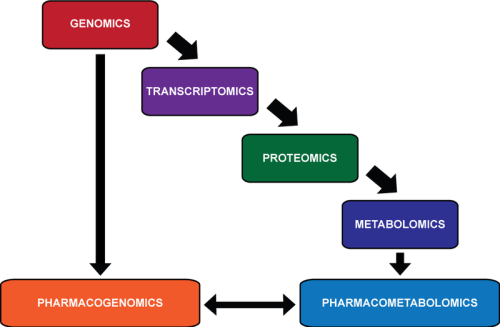
relationship between -OMICS

relationship between -OMICS

http://upload.wikimedia.org/wikipedia/commons/thumb/e/eb/OMICS.png/350px-OMICS.png

Pharmacometabolomics is thought to provide information that

Looking at the characteristics of an individual down through these different levels of detail, there is an

  • increasingly more accurate prediction of a person’s ability to respond to a pharmaceutical compound.
  1. the genome, made up of 25 000 genes, can indicate possible errors in drug metabolism;
  2. the transcriptome, made up of 85,000 transcripts, can provide information about which genes important in metabolism are being actively transcribed;
  3. and the proteome, >10,000,000 members, depicts which proteins are active in the body to carry out these functions.

Pharmacometabolomics complements the omics with

  • direct measurement of the products of all of these reactions, but with perhaps a relatively
  • smaller number of members: that was initially projected to be approximately 2200 metabolites,

but could be a larger number when gut derived metabolites and xenobiotics are added to the list. Overall, the goal of pharmacometabolomics is

  • to more closely predict or assess the response of an individual to a pharmaceutical compound,
  • permitting continued treatment with the right drug or dosage
  • depending on the variations in their metabolism and ability to respond to treatment.

Pharmacometabolomic analyses, through the use of a metabolomics approach,

  • can provide a comprehensive and detailed metabolic profile or “metabolic fingerprint” for an individual patient.

Such metabolic profiles can provide a complete overview of individual metabolite or pathway alterations,

This approach can then be applied to the prediction of response to a pharmaceutical compound

  • by patients with a particular metabolic profile.

Pharmacometabolomic analyses of drug response are

Pharmacogenetics focuses on the identification of genetic variations (e.g. single-nucleotide polymorphisms)

  • within patients that may contribute to altered drug responses and overall outcome of a certain treatment.

The results of pharmacometabolomics analyses can act to “inform” or “direct”

  • pharmacogenetic analyses by correlating aberrant metabolite concentrations or metabolic pathways to potential alterations at the genetic level.

This concept has been established with two seminal publications from studies of antidepressants serotonin reuptake inhibitors

  • where metabolic signatures were able to define a pathway implicated in response to the antidepressant and
  • that lead to identification of genetic variants within a key gene
  • within the highlighted pathway as being implicated in variation in response.

These genetic variants were not identified through genetic analysis alone and hence

  • illustrated how metabolomics can guide and inform genetic data.

en.wikipedia.org/wiki/Pharmacometabolomics

Benznidazole Biotransformation and Multiple Targets in Trypanosoma cruzi Revealed by Metabolomics

Andrea Trochine, Darren J. Creek, Paula Faral-Tello, Michael P. Barrett, Carlos Robello
Published: May 22, 2014   http://dx.doi.org:/10.1371/journal.pntd.0002844

The first line treatment for Chagas disease, a neglected tropical disease caused by the protozoan parasite Trypanosoma cruzi,

  • involves administration of benznidazole (Bzn).

Bzn is a 2-nitroimidazole pro-drug which requires nitroreduction to become active. We used a

  • non-targeted MS-based metabolomics approach to study the metabolic response of T. cruzi to Bzn.

Parasites treated with Bzn were minimally altered compared to untreated trypanosomes, although the redox active thiols

  1. trypanothione,
  2. homotrypanothione and
  3. cysteine

were significantly diminished in abundance post-treatment. In addition, multiple Bzn-derived metabolites were detected after treatment.

These metabolites included reduction products, fragments and covalent adducts of reduced Bzn

  • linked to each of the major low molecular weight thiols:
  1. trypanothione,
  2. glutathione,
  3. g-glutamylcysteine,
  4. glutathionylspermidine,
  5. cysteine and
  6. ovothiol A.

Bzn products known to be generated in vitro by the unusual trypanosomal nitroreductase, TcNTRI,

  • were found within the parasites,
  • but low molecular weight adducts of glyoxal, a proposed toxic end-product of NTRI Bzn metabolism, were not detected.

Our data is indicative of a major role of the

  • thiol binding capacity of Bzn reduction products
  • in the mechanism of Bzn toxicity against T. cruzi.


Read Full Post »

Upcoming Meetings on Cancer Immunogenetics


Curator: Stephen J. Williams, Ph.D.

Below is a curation of upcoming 2014-15 Cancer Immunogenetics symposia. Some listed have CME credits.

August 2014

Target Discovery for T Cell Therapy Symposium
Next Step to Advance Immunotherapies
August 14, 2014 | Part of ImVacS – The Immunotherapies and Vaccine Summit
Learn more | View Agenda PDF | Register by July 18 & SAVE up to $200


Q&A with Dr. Adrian Bot of Kite Pharma


SITC 2014 Meetings

The Society for Immunotherapy of Cancer (SITC) is a 501 (c)(3) non-profit society of medical professionals. Recent advances in immunology and biology have opened up new horizons in the field of cancer therapy, with an upsurge in the integration of new biologic agents into clinical practice. With several high-caliber scientific meetings with a focus on clinical and translational aspects of biologic approaches to cancer treatment and numerous networking opportunities unique to this organization, the Society for Immunotherapy of Cancer (SITC) has developed into the premier destination for interaction and innovation in the cancer biologics community.

Upcoming SITC Meetings and Activities

sitc banner

Advances in Cancer Immunotherapy™ (ACI™) Regional CME-Certified Programs

  • La Jolla, CA – Friday, August 22, 2014
  • Portland, OR – Friday, October 3, 2014
    Charlotte, NC – Friday, October 3, 2014
  • Tampa, FL – Friday, December 5, 2014

 ACI

September 2014


 aacrmeetinghemoto2014

  Hematologic Malignancies: Translating Discoveries to Novel Therapies
    September 20-23, 2014 • Sheraton Philadelphia Downtown • Philadelphia, PA

The AACR is proud to announce our conference focused on the blood-based cancers and associated disorders categorized as hematologic malignancies. Sessions will include presentations on leukemia, lymphoma, myeloma, myelodysplastic syndrome, and myeloproliferative neoplasms.


Advances in Melanoma: From Biology to Therapy

Loews Philadelphia • Philadelphia, PA • September 20-23, 2014

With so many recent advances in treating metastatic melanoma, including approaches like immunotherapies, targeted therapies, and combination therapies, melanoma research is at a critical point where it is extremely important for the field to have a continuous exchange of information. Despite the success of various “targeted” inhibitors, therapeutic responses in melanoma patients are often short-lived due to rapidly acquired drug resistance. Therefore, it is essential that melanoma researchers translate the novel understanding of melanoma biology to decipher the mechanisms of innate and acquired drug resistance for the development of improved therapeutic options. To bridge the gap between scientists and clinician-scientists’ professional practice, this conference will provide a platform for discussion and potential collaborations for the discovery of new therapeutic targets.


 proimmunegif

The 4th Mastering Immunogenicity Summit

September 15-16, 2014

British Consulate-General, Boston MA, USA

Join leaders in the immunogenicity field for a two day conference to learn what constitutes a successful strategy for managing immunogenicity risk, and explore the business case for introducing immunogenicity assessment into your program.

  • Learn about the latest strategies and exciting new technologies
  • Discuss current and developing challenges and exchange new ideas
  • Improve the outcome of your R&D programs

Our 4th Mastering Immunogenicity Conference will continue to have a strong focus on immunogenicity sciences, particularly on what basic research needs to be carried out to improve our understanding of immune regulation to biotherapeutics. We will review progress made in correlating data from pre-clinical predictive tools to clinical outcomes, as well as continuing our discussions surrounding the benefits that Quality by Design has on reduced immunogenicity, considering subsequent patient benefits as well as competitive advantage. Presentations by experts will provide an overview of the wide range of technologies currently used for immunogenicity risk management and how they can be incorporated for a ‘quality by design’ approach.


Immunogenomics 2014

September 29 – October 1, 2014

HudsonAlpha Biotechnology Campus
Huntsville, Alabama, USA

The HudsonAlpha-Science Conference on Immunogenomics will bring together preeminent leaders and thinkers at the intersection of genomics and immunology.

October 2014

canerrersinstlogo

Cancer Immunotherapy: Out of the Gate

October 06, 2014 Grand Hyatt New York Hotel at Grand Central, New York, NY

The Cancer Research Institute (CRI) will host its 22nd Annual International Cancer Immunotherapy Symposium October 6-8, 2014 at The Grand Hyatt in New York City. Attracting clinicians, laboratory scientists, postdoctoral fellows, and graduate students, the symposium will feature plenary presentations from leaders in immunology and cancer immunotherapy, a poster session, and numerous networking opportunities.

This year’s CRI symposium, entitled Cancer Immunotherapy: Out of the Gate, will harness the excitement and enthusiasm generated by recent clinical successes to explore new and emerging areas of basic, translational, and clinical research. Topics such as the use of genomic methods to catalogue cancer heterogeneity, mechanistic studies of checkpoint blockage antibodies, new views on immunosurveillance and immunoregulation, and emerging therapies that are altering the landscape of cancer treatment will be discussed.

– See more at: http://www.cancerresearch.org/grants-programs/conferences-meetings/annual-international-cancer-immunotherapy-symposia/2014-symposium#sthash.PnY56e5E.dpuf

Cytokines 2014

October 26–29, Melbourne, Australia

EMBO Conference: Innate Lymphoid Cells
September 29–October 1, Paris, France

Recommended reading

Laurie Dempsey


November 2014

SITC 2014 – November 6-9, 2014

  • Gaylord National Hotel & Convention Center, National Harbor, MD
  • SITC 29th Annual Meeting
  • SITC Workshop on Combination Immunotherapy: Where Do We Go From Here?
  • SITC Primer on Tumor Immunology and Cancer Immunotherapy™
  • SITC Hot Topic Symposium – including two topics explored concurrently:
    • Accelerating Tumor Immunity with Agonist Antibodies
    • Engineered T Cell Toxicities
  • Professional Development Session: A Roadmap for Thriving in Your Career

The Fourth International Conference on Regulatory T cells and TH Subsets and Clinical Application in Human Diseases
November 1–4, Shanghai, China

Recommended reading
Olive Leavy


eortspainmeeting


Keystone Symposium: Cell Death Signaling in Cancer and the Immune System
October 28-November 2, Sao Paolo, Brazil

Recommended reading

December 2014

Tumor Immunology and Immunotherapy: A New Chapter
Co-Chairpersons: Robert H. Vonderheide, Nina Bhardwaj, Stanley Riddell, and Cynthia L. Sears
December 1-4, 2014 • Orlando, FL

2015 Conferences

Keystone Symposia on Molecular and Cellular Biology

Tumor Immunology: Multidisciplinary Science Driving Combination Therapy 

February 8—13, 2015

Fairmont Banff Springs, Banff, Alberta, Canada


· March 2015

  1. 8–13, Montreal, Quebec, Canada
  2. 22–27, Banff, Alberta, Canada
  3. 29–3 April, Snowbird, Utah, USA

9th World Immune Regulation Meeting

Keystone Symposium: The Golden Anniversary of B Cell Discovery
Recommended reading

Keystone Symposium: T Cells: Regulation and Effector Function
Recommended reading


Read Full Post »

Innovation: Drug Discovery, Medical Devices and Digital Health

Curator:  Larry H. Bernstein, MD, FCAP

The following discussuions are related to postings presenting on innovation by Dr. Aviva Lav-Ari.   It is painfull on this week that the Federal Funding for research necessary for maintaining a fruitful and dominant position of US universities and scientific organizations is hanging on the vine.  What resources will be available to ripen the fruit?  Despite the serious fracturing of serious issues debated in the republican “Tea Parrty” led House of Representatives, The actual productivity of scientific discovery has increased with falling budgets since the Vietnam War, mainly because of great postdocs and great mentoring – in both “ivy league”, fluorishing non-ivy league (Duke, Vanderbilt, University of Chicago),  and strong state and land-grant universities.  The difference now is that states are struggling with budgets and the decline of municipalities, and research is no longer an individual exploring an idea because of the need for many scientists with different technologies and different approaches to collaborate, across worldwide and state borders.  Michelangelo as an example.  3-D printing revolution.

This Will Save Us Years — Lean LaunchPad for Life Science Oct 14, 2013

Steve Blank
Part 1 of this post described the issues in the drug discovery. Part 2 covered medical devices and digital health. Part 3 described what we’re going to do about it.

This is post is a brief snapshot of our progress.

Vitruvian is one of the 28 teams in the class. The team members are:

Dr. Hobart Harris Chief of General Surgery, Vice-Chair of the Department of Surgery, and a Professor of Surgery at UCSF. Dr. Harris is also a Principal Investigator in the UCSF Surgical Research Laboratory at San Francisco General Hospital.
Dr. David Young, Professor of Plastic Surgery at UCSF. His area of expertise includes wound healing, microsurgery, and reconstruction after burns and trauma. His research interests include the molecular mechanisms of wound healing and the epidemiology and treatment of soft tissue infections.
Sarah Seegal is at One Medical.  Sarah is interested in increasing the quality and accessibility of healthcare services. Sarah worked with Breakthrough.com to connect individuals with professional therapists for online sessions.
Cindy Chang is an Enzymologist investigating novel enzymes involved in biofuel and chemical synthesis in microbes at LS9

Vitruvian’s first product, MyoSeal, promotes wound repair via biocompatible microparticles plus a fibrin tissue sealant that has been shown to prevent incisional hernias through enhanced wound healing. The team believed that surgeons would embrace the product and pay thousands to use it. In week 2 of the class 14 of their potential customers (surgeons) told the team otherwise.
Watch and find out how the Lean LaunchPad class saved them years.
https://media.licdn.com/mpr/mpr/shrink_80_80/p/8/000/1c3/112/01bd323.jpg

10d0de1 Vitruvian Man by Leonardo da Vinci
Image: A derived drawing from Vitruvian Man by Leonardo da Vinci, via Wikimedia Commons

Lessons Learned – Get out of the building
https://www.linkedin.com/today/post/article/20131014134545-95015-this-will-save-us-years-lean-launchpad-for-life-science?trk=cha-feed-art-title-217
Read more Steve Blank posts at http://www.steveblank.com

What Michelangelo Can Teach Us about Innovation and Competition

Daniel Burrus  Oct 14, 2013

On a recent trip to Italy I had the opportunity to visit both Florence and Rome, and to see the work of some of history’s greatest artists, including Michelangelo.
In Florence, I saw David, Michelangelo’s amazing sculpture. I also refreshed my memory about the history of that sculpture which is a great story of innovation, courage, and reinvention. Historians have well documented the fact that Michelangelo was very competitive with other artists. When other sculptures looked at the large piece of marble that was selected for this sculpture that was being commissioned, they decided it was not a good piece of marble and would be too difficult to work with. So they passed on it.
But not Michelangelo. He said he could do it and he took it on. At that moment, he began to separate himself from the competition and he began his strategy to redefine sculpting. Therefore, he became the competition.
And that’s what business needs to do. In Michelangelo’s case, all of the depictions of David in the David and Goliath story, up to that point, depicted David as a very young boy. And, of course, he was clothed. Additionally, all of the sculptures up to that point were human-sized or slightly bigger. They weren’t overly large.
So Michelangelo did something very different from his peers. He did the opposite and created a 17-foot tall David, made him an adult, and kept him unclothed. The only thing he had with him was his slingshot to get Goliath.
After working each day on David, he would study cadavers to learn more of how the human body worked. Taking what he learned and applying it to his work, he became the first sculptor to show veins and arteries and detailed muscle structures.
The result, of course, was absolute mastery. Anyone who has ever seen David understands that.
Michelangelo changed everyone’s view. He redefined what sculpting was about and set a new standard. In other words, he went beyond the competition.
Years passed and Michelangelo had done some drawings and some paintings, but he considered himself, first and foremost, a sculptor. However, the Pope decided that he wanted Michelangelo to paint the ceiling of the Sistine Chapel. Interestingly, Michelangelo didn’t want to do it because he considered himself a sculptor. In a note to the Pope, Michelangelo even signed it, “The Sculptor, Michelangelo,” pointing out the fact that he wasn’t a painter; he was a sculptor. When the Pope wouldn’t take “no” for an answer, Michelangelo left Rome.
The Pope sent guards to get him and bring him back, essentially forcing him into painting the Sistine Chapel. So Michelangelo reluctantly agreed.
At that time, all of his competition was painting pictures in 2D. In other words, paintings were flat with no depth to them.
Anyone who has ever seen the ceiling of the Sistine Chapel knows that Michelangelo, once again, redefined what art was by putting in amazing—even by today’s standards—depth and 3D effects. Essentially, he once again went beyond the competition. As a matter of fact, while he was working on the Sistine Chapel, other great artists of the day would sneak in during Michelangelo’s breaks just to look at his techniques. They were floored, literally, by what he was doing. And from that point on, other artists started to incorporate depth and 3D techniques into their paintings.
So what’s the moral of the story? Look at what your competition is doing … and don’t do that. Why? Because they are already doing it.
Instead, raise the bar. Look at what the best of the best are doing … and then go beyond them. Think bigger. Don’t compete. Create. Innovate.
*****
DANIEL BURRUS is considered one of the world’s leading technology forecasters and innovation experts, and is the founder and CEO of Burrus Research, a research and consulting firm that monitors global advancements in technology driven trends to help clients understand how technological, social and business forces are converging to create enormous untapped opportunities. He is the author of six books including The New York Times best seller Flash Foresight.

3D Printing Is Turning the Impossible Into the Possible

Daniel Burrus      Aug 22, 2013

1299592  3-D Printing

Thanks to 3D Printing, you can!
I have been covering 3D Printing (also called Additive Manufacturing) for over 20 years in my Technotrends Newsletter,and at first the technology was used for rapid prototyping. Over the past few years, however, rapid advances in processing power, storage, and bandwidth have catapulted this technology into a tool for manufacturing finished products that include jewelry, shoes, dresses, car dashboards, parts for jet engines, jawbones for humans, replacement parts for synthesizers, and much more.
When people first hear that you can manufacture something by printing it, they have a hard time visualizing it. Think of it this way:
  • 3D printers build things by depositing material, typically plastic or metal, layer by layer, until the prototype or final product is finished.
  • When the design is downloaded into the printer, a laser creates a layer of material and fuses it.
  • Then it adds another layer and fuses it…and then another and another…until the object is completed.
For example, a Belgian company, LayerWise, used 3D printing to create a jawbone that was recently implanted into an 83-year-old woman. An Australian company, Inventech, has created what they call their 3D BioPrinters to print tissue structures using human tissue. And Bespoke Innovations is using 3D printing to create prosthetic limb castings.
This amazing technology can also be used for on-demand printing of spare parts—something the U.S. military is already doing in the field. Knowing this,
  • it is not hard to see that in the future, a manufacturer could sell a machine or system to a company, and as part of their maintenance and support contract they can put their 3D printer on-site with the licensed software to print replacement parts as needed.
On a smaller level, it is easy to see that service mechanics will have portable 3D printers in their vans or at their main office. Original equipment manufacturers (OEM) will most likely sell and license these printers to their dealer network.
In addition, there are already a number of companies including Shapeways and Quirky that will use their 3D printers to print the design you send them, and then they’ll ship the final product to you. It’s not hard to see that at some point Amazon will provide this service too.
3D printing will definitely become more commonplace in the near future thanks to its many benefits, including the ability to print the complete part without assembly and the ability to print complex inner structures too difficult to be machined. Additionally, the entire process produces much less waste than traditional manufacturing where large amounts of material have to be trimmed away from the usable part.
Whether you call it 3D Printing or Additive Manufacturing, it is advancing quickly on a global level and offers something that up until recently was impossible: On-demand, anytime, anywhere, by anyone manufacturing.

Related references at Pharmaceutical Intelligence:

Healthcare Startups Accelerator is Reaching Out: Deadline November 11, 2013
Reporter: Aviva Lev-Ari, PhD, RN
24 New MacArthur Fellows: 13 men and 11 women — Now so-called “Geniuses”
Reporter: Aviva Lev-Ari, PhD, RN
Biopharma Industry: The Leaders are Massachusetts-based
Reporter: Aviva Lev-Ari, PhD, RN
Stent Design and Thrombosis: Bifurcation Intervention, Drug Eluting Stents (DES) and Biodegrable Stents
Curator: Aviva Lev-Ari, PhD, RN
Cardiovascular Original Research: Cases in Methodology Design for Content Curation and Co-Curation
Author: Aviva Lev-Ari, PhD, RN
Emerging Clinical Applications for Cardiac CT: Plaque Characterization, SPECT Functionality, Angiogram’s and Non-Invasive FFR
Curators: Justin D Pearlman, MD, PhD, FACC and Aviva Lev-Ari, PhD, RN
Fractional Flow Reserve (FFR) & Instantaneous wave-free ratio (iFR): An Evaluation of Catheterization Lab Tools for Ischemic Assessment
Reporters: Justin D Pearlman, MD, PhD, FACC and Aviva Lev-Ari, PhD, RN
Precision Medicine: The Future of Medicine?
Reporter: Aviva Lev-Ari, PhD, RN

Read Full Post »

Reporter: Aviva Lev-Ari, PhD, RN


Kinase Inhibitors

Seventh Annual

Novel Strategies for Kinase Inhibitors

Exploring New Therapeutic Areas

September 24-25, 2013  | Boston, MA

Dr. Jeffrey Settleman, Senior Director of Discovery Oncology at Genentech, to Present “The Role of Growth Factors in Resistance to Anti-Cancer Kinase Inhibitors” at Novel Strategies for Kinase Inhibitors Conference

The Role of Growth Factors in Resistance to Anti-Cancer Kinase Inhibitors

Selective kinase inhibitors have been clinically validated as an important class of oncology drugs. While mutational activation of the targeted pathway largely defines the patient population most likely to benefit from treatment, there is considerable variability among patients with respect to the magnitude and duration of benefit, implicating intrinsic resistance mechanisms. We find evidence of a potentially broad role for stromally-produced growth factors in clinical response to kinase inhibition. > Read More in NatureDr. Settleman’s research is focused on cancer cell biology and therapeutics. He is particularly interested in personalized cancer medicine and mechanisms of drug resistance. Since 2010, Dr. Settleman has been at Genentech, where he is currently the Senior Director of Discovery Oncology, overseeing efforts to identify and validate targets for oncology drug discovery and to discover predictive biomarkers for new cancer therapies. Before Genentech, Dr. Settleman was Director of the Center for Molecular Therapeutics and the Scientific Director of the Massachusetts General Hospital Cancer Center. He joined the Harvard School of Medicine faculty in 1992 and was named the Laurel Schwartz Professor of Oncology at Harvard Medical School in 2008. Dr. Settleman completed his postdoctoral fellowship at the Whitehead Institute for Biomedical Research at M.I.T. in Dr. Robert Weinberg’s laboratory. He earned his Ph.D. in genetics from Yale University in 1989.


Learn More   |   View Brochure   |   Register  (Deadline to Save Up to $250 is August 16)

Recommended Short Courses*

– New Class of Kinase Inhibitors: Covalent Modifiers

– Advancing Tools & Technologies for Fragment-Based Design

* separate registration required for short courses

Conference-at-a-Glance

Beyond Cancer

Second Generation Janus Kinase Inhibitors

Jordan S. Fridman, Ph.D., Senior Director, Pharmacology, Incyte Corp.

BTK Inhibitors in Inflammation and Autoimmunity

John Douhan III, Ph.D., Senior Principal Scientist, Immunoscience, Pfizer

ARRY-382, a Selective cFMS Inhibitor for the Treatment of Osteolytic Bone Diseases

Dale Wright, Ph.D., Research Investigator, Senior Project Leader, Pharmacology, Array BioPharma, Inc.

Targeting B-Cell Receptor Signaling with PI3Kdelta Inhibitors for Treatment of Inflammatory Diseases and B-cell Malignancies

Kamal Puri, Ph.D., Associate Director, Research, Gilead Sciences, Inc.

> Sponsored presentation (opportunities available)

Deregulated Cdk5-Targeted Inhibitor for Neuro-inflammation

Harish C. Pant, Ph.D., Chief; Laboratory of Cytoskeleton Protein Regulation, National Institute of Neurological Disease and Stroke/NIH

Orally Available, CNS Penetrant MLK Inhibitors for Treatment of Neurodegenerative Diseases

Val Goodfellow, Ph.D., CEO, Califia Bio, Inc.

Allosteric Kinase Inhibitors

JNK Inhibitor Discovery at Celgene – Tanzisertib and Beyond

Yoshitaka Satoh, Ph.D., Senior Principal Scientist, Medicinal Chemistry, Celgene

Highly Selective Allosteric FMS Kinase Inhibitors

Bryan Smith, Ph.D., Director, Biology, Deciphera Pharmaceuticals LLC

P529, An Allosteric Modifier of the TORC1 and TORC2 Complexes of the PI3K/Akt/mTOR Pathway

David Sherris, Ph.D., President and CEO, Paloma Pharmaceuticals, Inc.

Allosterically Targeting Polo-Like Kinase 1 for Selective Cancer Cell Killing

Kyung Lee, Ph.D., Senior Investigator, Section Head, Laboratory of Metabolism, National Cancer Institute

Interactive Breakout Discussion Groups

In a Class By Themselves: Discovery and Characterization of Allosteric  Modulators of Protein Kinases

Moderator: John Watson, Ph.D., Senior Research Investigator, Bristol-Myers Squibb, Lead Discovery, Evaluation, Profiling and Compound Management

Challenges Working with Non-competitive Kinase Inhibitors

Moderator: John Robinson, Ph.D., Senior Scientist, Medicinal Chemistry, Array BioPharma, Inc.

Repurposing Kinase Inhibitors

Moderator: Jordan S. Fridman, Ph.D., Senior Director, Pharmacology, Incyte Corp.

Overcoming Cancer Drug Resistance and Selective Kinase Inhibitors

++++++++++++++++++++++++++++++++++++++++++++++++++++++++

Featured Speaker: The Role of Growth Factors in Resistance to Anti-Cancer Kinase Inhibitors

Jeffrey Settleman, Ph.D., Senior Director, Discovery Oncology, Genentech

++++++++++++++++++++++++++++++++++++++++++++++++++++++++

Featured Speaker: Stromal Factors that are Targets for Pi-3 Kinase Inhibitor Therapeutics in the Control of Metastasis

Donald Durden, M.D., Ph.D., Professor, Department of Pediatrics; Director Pediatric Oncology Research, University of California, San Diego and CEO, SignalRx Pharmaceuticals

mTOR Inhibitor Torin-1 for Effective Targeting of Resistant Human Colon Cancer Stem Cells

Maria Giovanna Francipane, Ph.D., Post Doctoral Research Scholar, Pathology, University of Pittsburgh

Development of c-MET Kinase Inhibitors for Cancer Therapy and Drug Resistance

Xiangdong Liu, Ph.D., Drug Discovery Group, Incyte Corporation

Exploiting a Serendipitous Binding Opportunity in the Development of Highly Selective Rho Kinase Inhibitors

Erick Young, Ph.D., Distinguished Research Fellow, Medicinal Chemistry and Research Administration, Boehringer Ingelheim Pharma

PLENARY KEYNOTE PRESENTATIONS

Towards a Patient-Based Drug Discovery

Stuart L. Schreiber, Ph.D., Director, Chemical Biology and Founding Member, Broad Institute of Harvard and MIT; Howard Hughes Medical Institute Investigator; Morris Loeb Professor of Chemistry and Chemical Biology, Harvard University

Enteroendocrine Drug Discovery for Treatment of Metabolic Diseases

Paul L. Feldman, Ph.D., Senior Vice President, GlaxoSmithKline

> For sponsorship & exhibit information, including sponsored podium presentations, please contact Jon Stroup at 781-972-5483.

> Stay on and Attend Cardio-Metabolic Drug Targets


——————————————————————————————————————————————–

Novel Strategies for Kinase Inhibitors is part of Discovery on Target, the preeminent event on novel drug targets, which features more than 600 attendees, 150 scientific presentations, 12 conferences, and 10 short courses.

————————


Read Full Post »

« Newer Posts - Older Posts »