Feeds:
Posts
Comments

Archive for the ‘Myocardial Metabolism’ Category

Summary of Lipid Metabolism


Author: Larry H. Bernstein, MD, FCAP


Lipid Classification System

The LIPID MAPS Lipid Classification System is comprised of eight lipid categories, each with its own sublassification hierarchy.

http://www.lipidmaps.org/resources/tutorials/lipid_cns.html

Each LMSD record contains an image of the

  • molecular structure,
  • common and systematic names,
  • links to external databases,
  • Wikipedia pages (where available),
  • other annotations and links to structure viewing tools.

All lipids in the LIPID MAPS Structure Database (LMSD) have been classified using this system and have been assigned LIPID MAPS ID’s (LM_ID) which reflects their position in the classification hierarchy.

The LIPID MAPS Structure Database (LMSD) is a relational database encompassing structures and annotations of biologically relevant lipids. As of May 3, 2013, LMSD contains over 37,500 unique lipid structures, making it the largest public lipid-only database in the world. Structures of lipids in the database come from several sources:

  • LIPID MAPS Consortium’s core laboratories and partners;
  • lipids identified by LIPID MAPS experiments;
  • biologically relevant lipids manually curated from LIPID BANK, LIPIDAT, Lipid Library, Cyberlipids, ChEBI and other public sources;
  • novel lipids submitted to peer-reviewed journals;
  • computationally generated structures for appropriate classes.

All the lipid structures in LMSD adhere to the structure drawing rules proposed by the LIPID MAPS consortium. A number of structure viewing options are offered: gif image (default), Chemdraw (requires Chemdraw ActiveX/Plugin), MarvinView (Java applet) and JMol (Java applet).

(as of 10/8/14)

Number of lipids per category

Fatty acyls          5869

Glycerolipids       7541

Glycerophospholipids       8002

Sphingolipids      4338

Sterol lipids         2715

Prenol lipids        1259

Sacccharolipids  1293

Polyketides         6742

TOTAL  37,759 structures

References

Sud M, Fahy E, Cotter D, Brown A, Dennis EA, Glass CK, Merrill AH Jr, Murphy RC, Raetz CR, Russell DW, Subramaniam S. LMSD: LIPID MAPS structure database Nucleic Acids Research 35: p. D527-32. PMID:17098933 [doi:10.1093/nar/gkl838] PMID: 17098933

Fahy E, Sud M, Cotter D & Subramaniam S. LIPID MAPS online tools for lipid research Nucleic Acids Research (2007) 35: p. W606-12.PMID:17584797 [doi:10.1093/nar/gkm324] PMID: 17584797 

The Recognition of Essential Fatty Acids

Dietary fat has long been recognized as an important source of energy for mammals, but in the late 1920s, researchers demonstrated the dietary requirement for particular fatty acids, which came to be called essential fatty acids. It was not until the advent of intravenous feeding, however, that the importance of essential fatty acids was widely accepted: Clinical signs of essential fatty acid deficiency are generally observed only in patients on total parenteral nutrition who received mixtures devoid of essential fatty acids or in those with malabsorption syndromes.

These signs include dermatitis and changes in visual and neural function. Over the past 40 years, an increasing number of physiological functions, such as immunomodulation, have been attributed to the essential fatty acids and their metabolites, and this area of research remains quite active.1, 2

Fatty Acid Nomenclature

The fat found in foods consists largely of a heterogeneous mixture of triacylglycerols (triglycerides)–glycerol molecules that are each combined with three fatty acids. The fatty acids can be divided into two categories, based on chemical properties: saturated fatty acids, which are usually solid at room temperature, and unsaturated fatty acids, which are liquid at room temperature. The term “saturation” refers to a chemical structure in which each carbon atom in the fatty acyl chain is bound to (saturated with) four other atoms, these carbons are linked by single bonds, and no other atoms or molecules can attach; unsaturated fatty acids contain at least one pair of carbon atoms linked by a double bond, which allows the attachment of additional atoms to those carbons (resulting in saturation). Despite their differences in structure, all fats contain approximately the same amount of energy (37 kilojoules/gram, or 9 kilocalories/gram).

The class of unsaturated fatty acids can be further divided into monounsaturated and polyunsaturated fatty acids. Monounsaturated fatty acids (the primary constituents of olive and canola oils) contain only one double bond. Polyunsaturated fatty acids (PUFAs) (the primary constituents of corn, sunflower, flax seed and many other vegetable oils) contain more than one double bond. Fatty acids are often referred to using the number of carbon atoms in the acyl chain, followed by a colon, followed by the number of double bonds in the chain (e.g., 18:1 refers to the 18-carbon monounsaturated fatty acid, oleic acid; 18:3 refers to any 18-carbon PUFA with three double bonds).

PUFAs are further categorized on the basis of the location of their double bonds. An omega or n notation indicates the number of carbon atoms from the methyl end of the acyl chain to the first double bond. Thus, for example, in the omega-3 (n-3) family of PUFAs, the first double bond is 3 carbons from the methyl end of the molecule.  Finally, PUFAs can be categorized according to their chain length. The 18-carbon n-3 and n-6 short-chain PUFAs are precursors to the longer 20- and 22-carbon PUFAs, called long-chain PUFAs (LCPUFAs).

Fatty Acid Metabolism

Mammalian cells can introduce double bonds into all positions on the fatty acid chain except the n-3 and n-6 position. Thus, the short-chain alpha- linolenic acid (ALA, chemical abbreviation: 18:3n-3) and linoleic acid (LA, chemical abbreviation: 18:2n-6) are essential fatty acids.

No other fatty acids found in food are considered ‘essential’ for humans, because they can all be synthesized from the short chain fatty acids.

Following ingestion, ALA and LA can be converted in the liver to the long chain, more unsaturated n-3 and n-6 LCPUFAs by a complex set of synthetic pathways that share several enzymes (Figure 1). LC PUFAs retain the original sites of desaturation (including n-3 or n-6). The omega-6 fatty acid LA is converted to gamma-linolenic acid (GLA, 18:3n-6), an omega- 6 fatty acid that is a positional isomer of ALA. GLA, in turn, can be converted to the longerchain omega-6 fatty acid, arachidonic acid (AA, 20:4n-6). AA is the precursor for certain classes of an important family of hormone- like substances called the eicosanoids (see below).

The omega-3 fatty acid ALA (18:3n-3) can be converted to the long-chain omega-3 fatty acid, eicosapentaenoic acid (EPA; 20:5n-3). EPA can be elongated to docosapentaenoic acid (DPA 22:5n-3), which is further desaturated to docosahexaenoic acid (DHA; 22:6n-3). EPA and DHA are also precursors of several classes of eicosanoids and are known to play several other critical roles, some of which are discussed further below.

The conversion from parent fatty acids into the LC PUFAs – EPA, DHA, and AA – appears to occur slowly in humans. In addition, the regulation of conversion is not well understood, although it is known that ALA and LA compete for entry into the metabolic pathways.

Physiological Functions of EPA and AA

As stated earlier, fatty acids play a variety of physiological roles. The specific biological functions of a fatty acid are determined by the number and position of double bonds and the length of the acyl chain.

Both EPA (20:5n-3) and AA (20:4n-6) are precursors for the formation of a family of hormone- like agents called eicosanoids. Eicosanoids are rudimentary hormones or regulating – molecules that appear to occur in most forms of life. However, unlike endocrine hormones, which travel in the blood stream to exert their effects at distant sites, the eicosanoids are autocrine or paracrine factors, which exert their effects locally – in the cells that synthesize them or adjacent cells. Processes affected include the movement of calcium and other substances into and out of cells, relaxation and contraction of muscles, inhibition and promotion of clotting, regulation of secretions including digestive juices and hormones, and control of fertility, cell division, and growth.3

The eicosanoid family includes subgroups of substances known as prostaglandins, leukotrienes, and thromboxanes, among others. As shown in Figure 1.1, the long-chain omega-6 fatty acid, AA (20:4n-6), is the precursor of a group of eicosanoids that include series-2 prostaglandins and series-4 leukotrienes. The omega-3 fatty acid, EPA (20:5n-3), is the precursor to a group of eicosanoids that includes series-3 prostaglandins and series-5 leukotrienes. The AA-derived series-2 prostaglandins and series-4 leukotrienes are often synthesized in response to some emergency such as injury or stress, whereas the EPA-derived series-3 prostaglandins and series-5 leukotrienes appear to modulate the effects of the series-2 prostaglandins and series-4 leukotrienes (usually on the same target cells). More specifically, the series-3 prostaglandins are formed at a slower rate and work to attenuate the effects of excessive levels of series-2 prostaglandins. Thus, adequate production of the series-3 prostaglandins seems to protect against heart attack and stroke as well as certain inflammatory diseases like arthritis, lupus, and asthma.3.

EPA (22:6 n-3) also affects lipoprotein metabolism and decreases the production of substances – including cytokines, interleukin 1ß (IL-1ß), and tumor necrosis factor a (TNF-a) – that have pro-inflammatory effects (such as stimulation of collagenase synthesis and the expression of adhesion molecules necessary for leukocyte extravasation [movement from the circulatory system into tissues]).2 The mechanism responsible for the suppression of cytokine production by omega-3 LC PUFAs remains unknown, although suppression of omega-6-derived eicosanoid production by omega-3 fatty acids may be involved, because the omega-3 and omega-6 fatty acids compete for a common enzyme in the eicosanoid synthetic pathway, delta-6 desaturase.

DPA (22:5n-3) (the elongation product of EPA) and its metabolite DHA (22:6n-3) are frequently referred to as very long chain n-3 fatty acids (VLCFA). Along with AA, DHA is the major PUFA found in the brain and is thought to be important for brain development and function. Recent research has focused on this role and the effect of supplementing infant formula with DHA (since DHA is naturally present in breast milk but not in formula).

Overview of Lipid Catabolism:

http://www.elmhurst.edu/~chm/vchembook/622overview.html

The major aspects of lipid metabolism are involved with

  • Fatty Acid Oxidation to produce energy or
  • the synthesis of lipids which is called Lipogenesis.

The metabolism of lipids and carbohydrates are related by the conversion of lipids from carbohydrates. This can be seen in the diagram. Notice the link through actyl-CoA, the seminal discovery of Fritz Lipmann. The metabolism of both is upset by diabetes mellitus, which results in the release of ketones (2/3 betahydroxybutyric acid) into the circulation.


fatty acid metabolism

fatty acid metabolism


http://www.elmhurst.edu/~chm/vchembook/images/590metabolism.gif

The first step in lipid metabolism is the hydrolysis of the lipid in the cytoplasm to produce glycerol and fatty acids.

Since glycerol is a three carbon alcohol, it is metabolized quite readily into an intermediate in glycolysis, dihydroxyacetone phosphate. The last reaction is readily reversible if glycerol is needed for the synthesis of a lipid.

The hydroxyacetone, obtained from glycerol is metabolized into one of two possible compounds. Dihydroxyacetone may be converted into pyruvic acid, a 3-C intermediate at the last step of glycolysis to make energy.

In addition, the dihydroxyacetone may also be used in gluconeogenesis (usually dependent on conversion of gluconeogenic amino acids) to make glucose-6-phosphate for glucose to the blood or glycogen depending upon what is required at that time.

Fatty acids are oxidized to acetyl CoA in the mitochondria using the fatty acid spiral. The acetyl CoA is then ultimately converted into ATP, CO2, and H2O using the citric acid cycle and the electron transport chain.

There are two major types of fatty acids – ω-3 and ω-6.  There are also saturated and unsaturated with respect to the existence of double bonds, and monounsaturated and polyunsatured.  Polyunsaturated fatty acids (PUFAs) are important in long term health, and it will be seen that high cardiovascular risk is most associated with a low ratio of ω-3/ω-6, the denominator being from animal fat. Ω-3 fatty acids are readily available from fish, seaweed, and flax seed. More can be said of this later.

Fatty acids are synthesized from carbohydrates and occasionally from proteins. Actually, the carbohydrates and proteins have first been catabolized into acetyl CoA. Depending upon the energy requirements, the acetyl CoA enters the citric acid cycle or is used to synthesize fatty acids in a process known as LIPOGENESIS.

The relationships between lipid and carbohydrate metabolism are
summarized in Figure 2.

fatty acid spiral


Energy Production Fatty Acid Oxidation:

Visible” ATP:

In the fatty acid spiral, there is only one reaction which directly uses ATP and that is in the initiating step. So this is a loss of ATP and must be subtracted later.

A large amount of energy is released and restored as ATP during the oxidation of fatty acids. The ATP is formed from both the fatty acid spiral and the citric acid cycle. 

Connections to Electron Transport and ATP:

One turn of the fatty acid spiral produces ATP from the interaction of the coenzymes FAD (step 1) and NAD+ (step 3) with the electron transport chain. Total ATP per turn of the fatty acid spiral is:

Electron Transport Diagram – (e.t.c.)

Step 1 – FAD into e.t.c. = 2 ATP
Step 3 – NAD+ into e.t.c. = 3 ATP
Total ATP per turn of spiral = 5 ATP

In order to calculate total ATP from the fatty acid spiral, you must calculate the number of turns that the spiral makes. Remember that the number of turns is found by subtracting one from the number of acetyl CoA produced. See the graphic on the left bottom.

Example with Palmitic Acid = 16 carbons = 8 acetyl groups

Number of turns of fatty acid spiral = 8-1 = 7 turns

ATP from fatty acid spiral = 7 turns and 5 per turn = 35 ATP.

This would be a good time to remember that single ATP that was needed to get the fatty acid spiral started. Therefore subtract it now.

NET ATP from Fatty Acid Spiral = 35 – 1 = 34 ATP

SREBPs: activators of the complete program of cholesterol and fatty acid synthesis in the liver

Jay D. Horton1,2, Joseph L. Goldstein1 and Michael S. Brown1

1Department of Molecular Genetics, and
2Department of Internal Medicine, University of Texas Southwestern Medical Center, Dallas, Texas, USA

J Clin Invest. 2002;109(9):1125–1131.
http://dx.doi.org:/10.1172/JCI15593
Lipid homeostasis in vertebrate cells is regulated by a family of membrane-bound transcription factors designated sterol regulatory element–binding proteins (SREBPs). SREBPs directly activate the expression of more than 30 genes dedicated to the synthesis and uptake of cholesterol, fatty acids, triglycerides, and phospholipids, as well as the NADPH cofactor required to synthesize these molecules (14). In the liver, three SREBPs regulate the production of lipids for export into the plasma as lipoproteins and into the bile as micelles. The complex, interdigitated roles of these three SREBPs have been dissected through the study of ten different lines of gene-manipulated mice. These studies form the subject of this review.

SREBPs: activation through proteolytic processing

SREBPs belong to the basic helix-loop-helix–leucine zipper (bHLH-Zip) family of transcription factors, but they differ from other bHLH-Zip proteins in that they are synthesized as inactive precursors bound to the endoplasmic reticulum (ER) (1, 5). Each SREBP precursor of about 1150 amino acids is organized into three domains: (a) an NH2-terminal domain of about 480 amino acids that contains the bHLH-Zip region for binding DNA; (b) two hydrophobic transmembrane–spanning segments interrupted by a short loop of about 30 amino acids that projects into the lumen of the ER; and (c) a COOH-terminal domain of about 590 amino acids that performs the essential regulatory function described below.

In order to reach the nucleus and act as a transcription factor, the NH2-terminal domain of each SREBP must be released from the membrane proteolytically (Figure1). Three proteins required for SREBP processing have been delineated in cultured cells, using the tools of somatic cell genetics (see ref. 5for review). One is an escort protein designated SREBP cleavage–activating protein (SCAP). The other two are proteases, designated Site-1 protease (S1P) and Site-2 protease (S2P). Newly synthesized SREBP is inserted into the membranes of the ER, where its COOH-terminal regulatory domain binds to the COOH-terminal domain of SCAP (Figure 1).

Figure 1

Model for the sterol-mediated proteolytic release of SREBPs from membranes JCI0215593.f1

Model for the sterol-mediated proteolytic release of SREBPs from membranes. SCAP is a sensor of sterols and an escort of SREBPs. When cells are depleted of sterols, SCAP transports SREBPs from the ER to the Golgi apparatus, where two proteases, Site-1 protease (S1P) and Site-2 protease (S2P), act sequentially to release the NH2-terminal bHLH-Zip domain from the membrane. The bHLH-Zip domain enters the nucleus and binds to a sterol response element (SRE) in the enhancer/promoter region of target genes, activating their transcription.

SCAP is both an escort for SREBPs and a sensor of sterols. When cells become depleted in cholesterol, SCAP escorts the SREBP from the ER to the Golgi apparatus, where the two proteases reside. In the Golgi apparatus, S1P, a membrane-bound serine protease, cleaves the SREBP in the luminal loop between its two membrane-spanning segments, dividing the SREBP molecule in half. (Fig 1)  The NH2-terminal bHLH-Zip domain is then released from the membrane via a second cleavage mediated by S2P, a membrane-bound zinc metalloproteinase. The NH2-terminal domain, designated nuclear SREBP (nSREBP), translocates to the nucleus, where it activates transcription by binding to nonpalindromic sterol response elements (SREs) in the promoter/enhancer regions of multiple target genes.

SREBPs: two genes, three proteins

The mammalian genome encodes three SREBP isoforms, designated SREBP-1a, SREBP-1c, and SREBP-2.

SREBP-1a is a potent activator of all SREBP-responsive genes, including those that mediate the synthesis of cholesterol, fatty acids, and triglycerides. High-level transcriptional activation is dependent on exon 1a, which encodes a longer acidic transactivation segment than does the first exon of SREBP-1c. The roles of SREBP-1c and SREBP-2 are more restricted than that of SREBP-1a. SREBP-1c preferentially enhances transcription of genes required for fatty acid synthesis but not cholesterol synthesis.

SREBP-1c and SREBP-2 activate three genes required to generate NADPH, which is consumed at multiple stages in these lipid biosynthetic pathways (8) (Figure 2).

major metabolic intermediates in the pathways for synthesis of cholesterol, fatty acids, and triglycerides

major metabolic intermediates in the pathways for synthesis of cholesterol, fatty acids, and triglycerides

Steroids

A major class of lipids, steroids, have a ring structure of three cyclohexanes and one
cyclopentane in a fused ring system as shown below. There are a variety of functional
groups that may be attached. The main feature, as in all lipids, is the large number of
carbon-hydrogens which make steroids non-polar.

Steroids include such well known compounds as cholesterol, sex hormones, birth
control pills, cortisone, and anabolic steroids.


sex hormones

sex hormones

cortisone

cortisone

Adrenocorticoid Hormones

The adrenocorticoid hormones are products of the adrenal glands.

The most important mineralcorticoid is aldosterone, which regulates the
reabsorption of sodium and chloride ions in the kidney tubules and increases
the loss of potassium ions.Aldosterone is secreted when blood sodium ion
levels are too low to cause the kidney to retain sodium ions. If sodium
levels are elevated, aldosterone is not secreted, so that some sodium
will be lost in the urine. Aldosterone also controls swelling in the tissues.

Cortisol, the most important glucocortinoid, has the function of increasing
glucose and glycogen concentrations in the body. These reactions are
completed in the liver by taking fatty acids from lipid storage cells and
amino acids from body proteins to make glucose and glycogen.

In addition, cortisol is elevated in the circulation with cytokine mediated
(IL1, IL1, TNFα) inflammatory reaction, called the systemic inflammatory
response syndrome. Its ketone derivative, cortisone, has the ability
to relieve inflammatory effects. Cortisone or similar synthetic derivatives
such as prednisolone are used to treat inflammatory diseases, rheumatoid
arthritis, and bronchial asthma. There are many side effects with the use
of cortisone drugs, such as bone resorption, so there use must be
monitored carefully.

Hormone Receptors

Steroid hormone receptors are found on the plasma membrane, in the cytosol and also in the nucleus of target cells. They are generally intracellular receptors (typically cytoplasmic) and initiate signal transduction for steroid hormones which lead to changes in gene expression over a time period of hours to days. The best studied steroid hormone receptors are members of the nuclear receptor subfamily 3 (NR3) that include receptors for estrogen (group NR3A)[1] and 3-ketosteroids (group NR3C).[2] In addition to nuclear receptors, several G protein-coupled receptors and ion channels act as cell surface receptors for certain steroid hormones.


Steroid Hormone Receptors and their Response Elements

Steroid hormone receptors are proteins that have a binding site for a particular steroid molecule. Their response elements are DNA sequences that are bound by the complex of the steroid bound to its Steroid receptor.

The response element is part of the promoter of a gene. Binding by the receptor activates or represses, as the case may be, the gene controlled by that promoter.

It is through this mechanism that steroid hormones turn genes on (or off).

steroid hormone receptor

steroid hormone receptor

http://users.rcn.com/jkimball.ma.ultranet/BiologyPages/S/Sigler.jpg

The glucocorticoid receptor, like all steroid hormone receptors, is a zinc-finger transcription factor; the zinc atoms are the four yellow spheres. Each is attached to four cysteines.

For a steroid hormone to regulate (turn on or off) gene transcription, its receptor must:

  1. bind to the hormone (cortisol in the case of the glucocorticoid receptor)
  2. bind to a second copy of itself to form a homodimer
  3. be in the nucleus, moving from the cytosol if necessary
  4. bind to its response element
  5. bind to other protein cofactors

Each of these functions depend upon a particular region of the protein (e.g., the zinc fingers for binding DNA).

Each of these functions depend upon a particular region of the protein (e.g., the zinc fingers for binding DNA). Mutations in any one region may upset the function of that region without necessarily interfering with other functions of the receptor.

Positive and Negative Response Elements

Some of the hundreds of glucocorticoid response elements in the human genome activate gene transcription when bound by the hormone/receptor complex. Others inhibit gene transcription when bound by the hormone/receptor complex.

Example: When the stress hormone cortisol — bound to its receptor — enters the nucleus of a liver cell, the complex binds to the positive response elements of the many genes needed for gluconeogenesis — the conversion of protein and fat into glucose resulting in a rise in the level of blood sugar.

the negative response element of the insulin receptor gene thus diminishing the ability of the cells to remove glucose from the blood. (This hyperglycemic effect is enhanced by the binding of the cortisol/receptor complex to a negative response element in the beta cells of the pancreas thus reducing the production of insulin.)

Note that every type of cell in the body contains the same response elements in its genome. What determines if a given cell responds to the arrival of a hormone depends on the presence of the hormone’s receptor in the cell.

The Nuclear Receptor Superfamily

Retinoids

Retinoids

http://users.rcn.com/jkimball.ma.ultranet/BiologyPages/R/Retinoids.png

 The zinc-finger proteins that serve as receptors for glucocorticoids and progesterone are members of a large family of similar proteins that serve as receptors for a variety of small, hydrophobic molecules. These include:

  1. other steroid hormones like
  2. the mineralocorticoid aldosterone
  3. estrogens
  4. the thyroid hormone, T3
  5. calcitriol, the active form of vitamin D
  6. retinoids: vitamin A (retinol) and its relatives
    1. retinal
    2. retinoic acid (tretinoin — also available as the drug Retin-A®); and its isomer
  7. isotretinoin (sold as Accutane® for the treatment of acne).
  8. bile acids
  9. fatty acids.

These bind members of the superfamily called peroxisome-proliferator-activated receptors (PPARs). They got their name from their initial discovery as the receptors for

  • drugs that increase the number and size of peroxisomes in cells.

In every case, the receptors consist of at least

  • three functional modules or domains.

From N-terminal to C-terminal, these are:

  1. a domain needed
  2. the zinc-finger domain needed for DNA binding (to the response element)
  3. the domain responsible for binding the particular hormone as well as the second unit of the dimer.
  4. for the receptor to activate the promoters of the genes being controlled

Schematic diagram of type II zinc finger proteins characteristic of the DNA-binding domain structure of members of the steroid hormone receptor superfamily. Zinc fingers are common features of many transcription factors, allowing proteins to bind to DNA. Each circle represents one amino acid. The CI zinc finger interacts specifically with five base pairs of DNA and determines the DNA sequence recognized by the particular steroid receptor. The three shaded amino acids indicated by the arrows in the knuckle of the CI zinc finger are in the “P box” that allows HRE sequence discrimination between the GR and ERα. The vertically striped aa within the knuckle of the CII zinc finger constitutes the “D box” that is important for dimerization and contacts with the DNA phosphate backbone. Adapted from Tsai M-J, O’Malley BW. Molecular mechanisms of action of steroid/thyroid receptor superfamily members. Annu Rev Biochem 1994;63:451-483; Gronemeyer H. Transcription activation by estrogen and progesterone receptors. Annu Rev Genet 1991;25:89-123.

type II zinc finger proteins

type II zinc finger proteins

Cytoskeleton and Cell Membrane Physiology

http://pharmaceuticalinnovation.com/10/28/2014/larryhbern/Cytoskeleton_
and_Cell_Membrane_Physiology

Definition and Function

The cytoskeleton is a series of intercellular proteins that help a cell with

  1. shape,
  2. support, and
  3. movement.

Cytoskeleton has three main structural components:

  1. microfilaments,
  2. intermediate filaments, and
  3. movement

The cytoskeleton mediates movement by

  • helping the cell move in its environment and
  • mediating the movement of the cell’s components.

Thereby it provides an important structural framework for the cell –

  • the framework for the movement of organelles, contiguous with the cell membrane, around the cytoplasm. By the activity of
  • the network of protein microfilaments, intermediate filaments, and microtubules.

The structural framework supports cell function as follows:

Cell shape. For cells without cell walls, the cytoskeleton determines the shape of the cell. This is one of the functions of the intermediate filaments.

Cell movement. The dynamic collection of microfilaments and microtubles can be continually in the process of assembly and disassembly, resulting in forces that move the cell. There can also be sliding motions of these structures. Audesirk and Audesirk give examples of white blood cells “crawling” and the migration and shape changes of cells during the development of multicellular organisms.

Organelle movement. Microtubules and microfilaments can help move organelles from place to place in the cell. In endocytosis a vesicle formed engulfs a particle abutting the cell. Microfilaments then attach to the vesicle and pull it into the cell. Much of the complex synthesis and distribution function of the endoplasmic reticulum and the Golgi complex makes use of transport vescicles,  associated with the cytoskeleton.

Cell division. During cell division, microtubules accomplish the movement of the chromosones to the daughter nucleus. Also, a ring of microfilaments helps divide two developing cells by constricting the central region between the cells (fission).

References:
Hickman, et al. Ch 4 Hickman, Cleveland P., Roberts, Larry S., and Larson, Allan, Integrated Principles of Zoology, 9th. Ed., Wm C. Brown, 1995.
Audesirk & Audesirk Ch 6 Audesirk, Teresa and Audesirk, Gerald, Biology, Life on Earth, 5th Ed., Prentice-Hall, 1999.
http://hyperphysics.phy-astr.gsu.edu/hbase/biology/bioref.html#c1
http://hyperphysics.phy-astr.gsu.edu/hbase/biology/cytoskel.html


Read Full Post »

Oxidation and Synthesis of Fatty Acids

Author and Curator: Larry H. Bernstein, MD, FCAP 


Lipid Metabolism

http://www.elmhurst.edu/~chm/vchembook/622overview.html

Overview of Lipid Catabolism:

The major aspects of lipid metabolism are involved with

  • Fatty Acid Oxidation to produce energy or
  • the synthesis of lipids which is called Lipogenesis.

The metabolism of lipids and carbohydrates are related by the conversion of lipids from carbohydrates. This can be seen in the diagram. Notice the link through actyl-CoA, the seminal discovery of Fritz Lipmann. The metabolism of both is upset by diabetes mellitus, which results in the release of ketones (2/3 betahydroxybutyric acid) into the circulation.

metabolism of fats

metabolism of fats

http://www.elmhurst.edu/~chm/vchembook/images/590metabolism.gif

The first step in lipid metabolism is the hydrolysis of the lipid in the cytoplasm to produce glycerol and fatty acids.

Since glycerol is a three carbon alcohol, it is metabolized quite readily into an intermediate in glycolysis, dihydroxyacetone phosphate. The last reaction is readily reversible if glycerol is needed for the synthesis of a lipid.

The hydroxyacetone, obtained from glycerol is metabolized into one of two possible compounds. Dihydroxyacetone may be converted into pyruvic acid, a 3-C intermediate at the last step of glycolysis to make energy.

In addition, the dihydroxyacetone may also be used in gluconeogenesis (usually dependent on conversion of gluconeogenic amino acids) to make glucose-6-phosphate for glucose to the blood or glycogen depending upon what is required at that time.

Fatty acids are oxidized to acetyl CoA in the mitochondria using the fatty acid spiral. The acetyl CoA is then ultimately converted into ATP, CO2, and H2O using the citric acid cycle and the electron transport chain.

There are two major types of fatty acids – ω-3 and ω-6.  There are also saturated and unsaturated with respect to the existence of double bonds, and monounsaturated and polyunsatured.  Polyunsaturated fatty acids (PUFAs) are important in long term health, and it will be seen that high cardiovascular risk is most associated with a low ratio of ω-3/ω-6, the denominator being from animal fat. Ω-3 fatty acids are readily available from fish, seaweed, and flax seed. More can be said of this later.

Fatty acids are synthesized from carbohydrates and occasionally from proteins. Actually, the carbohydrates and proteins have first been catabolized into acetyl CoA. Depending upon the energy requirements, the acetyl CoA enters the citric acid cycle or is used to synthesize fatty acids in a process known as LIPOGENESIS.

The relationships between lipid and carbohydrate metabolism are
summarized in Figure 2.

fattyacidspiral

fattyacidspiral

http://www.elmhurst.edu/~chm/vchembook/images/620fattyacidspiral.gif

 Energy Production Fatty Acid Oxidation:

Visible” ATP:

In the fatty acid spiral, there is only one reaction which directly uses ATP and that is in the initiating step. So this is a loss of ATP and must be subtracted later.

A large amount of energy is released and restored as ATP during the oxidation of fatty acids. The ATP is formed from both the fatty acid spiral and the citric acid cycle.


Connections to Electron Transport and ATP:

One turn of the fatty acid spiral produces ATP from the interaction of the coenzymes FAD (step 1) and NAD+ (step 3) with the electron transport chain. Total ATP per turn of the fatty acid spiral is:

Electron Transport Diagram – (e.t.c.)

Step 1 – FAD into e.t.c. = 2 ATP
Step 3 – NAD+ into e.t.c. = 3 ATP
Total ATP per turn of spiral = 5 ATP

In order to calculate total ATP from the fatty acid spiral, you must calculate the number of turns that the spiral makes. Remember that the number of turns is found by subtracting one from the number of acetyl CoA produced. See the graphic on the left bottom.

Example with Palmitic Acid = 16 carbons = 8 acetyl groups

Number of turns of fatty acid spiral = 8-1 = 7 turns

ATP from fatty acid spiral = 7 turns and 5 per turn = 35 ATP.

This would be a good time to remember that single ATP that was needed to get the fatty acid spiral started. Therefore subtract it now.

NET ATP from Fatty Acid Spiral = 35 – 1 = 34 ATP

Review ATP Summary for Citric Acid Cycle:The acetyl CoA produced from the fatty acid spiral enters the citric acid cycle. When calculating ATP production, you have to show how many acetyl CoA are produced from a given fatty acid as this controls how many “turns” the citric acid cycle makes.Starting with acetyl CoA, how many ATP are made using the citric acid cycle? E.T.C = electron transport chain

 Step  ATP produced
7  1
Step 4 (NAD+ to E.T.C.) 3
Step 6 (NAD+ to E.T.C.)  3
Step10 (NAD+ to E.T.C.)  3
Step 8 (FAD to E.T.C.) 2
 NET 12 ATP
 ATP Summary for Palmitic Acid – Complete Metabolism:The phrase “complete metabolism” means do reactions until you end up with carbon dioxide and water. This also means to use fatty acid spiral, citric acid cycle, and electron transport as needed.Starting with palmitic acid (16 carbons) how many ATP are made using fatty acid spiral? This is a review of the above panel E.T.C = electron transport chain

 Step  ATP (used -) (produced +)
Step 1 (FAD to E.T.C.) +2
Step 4 (NAD+ to E.T.C.) +3
Total ATP  +5
 7 turns  7 x 5 = 35
initial step  -1
 NET  34 ATP

The fatty acid spiral ends with the production of 8 acetyl CoA from the 16 carbon palmitic acid.

Starting with one acetyl CoA, how many ATP are made using the citric acid cycle? Above panel gave the answer of 12 ATP per acetyl CoA.

E.T.C = electron transport chain

 Step  ATP produced
One acetyl CoA per turn C.A.C. +12 ATP
8 Acetyl CoA = 8 turns C.A.C. 8 x 12 = 96 ATP
Fatty Acid Spiral 34 ATP
GRAND TOTAL  130 ATP

Fyodor Lynen

Feodor Lynen was born in Munich on 6 April 1911, the son of Wilhelm Lynen, Professor of Mechanical Engineering at the Munich Technische Hochschule. He received his Doctorate in Chemistry from Munich University under Heinrich Wieland, who had won the Nobel Prize for Chemistry in 1927, in March 1937 with the work: «On the Toxic Substances in Amanita». in 1954 he became head of the Max-Planck-Institut für Zellchemie, newly created for him as a result of the initiative of Otto Warburg and Otto Hahn, then President of the Max-Planck-Gesellschaft zur Förderung der Wissenschaften.

Lynen’s work was devoted to the elucidation of the chemical details of metabolic processes in living cells, and of the mechanisms of metabolic regulation. The problems tackled by him, in conjunction with German and other workers, include the Pasteur effect, acetic acid degradation in yeast, the chemical structure of «activated acetic acid» of «activated isoprene», of «activated carboxylic acid», and of cytohaemin, degradation of fatty acids and formation of acetoacetic acid, degradation of tararic acid, biosynthesis of cysteine, of terpenes, of rubber, and of fatty acids.

In 1954 Lynen received the Neuberg Medal of the American Society of European Chemists and Pharmacists, in 1955 the Liebig Commemorative Medal of the Gesellschaft Deutscher Chemiker, in 1961 the Carus Medal of the Deutsche Akademie der Naturforscher «Leopoldina», and in 1963 the Otto Warburg Medal of the Gesellschaft für Physiologische Chemie. He was also a member of the U>S> National Academy of Sciences, and shared the Nobel Prize in Physiology and Medicine with Konrad Bloch in 1964, and was made President of the Gesellschaft Deutscher Chemiker (GDCh) in 1972.

This biography was written at the time of the award and first published in the book series Les Prix Nobel. It was later edited and republished in Nobel Lectures, and shortened by myself.

The Pathway from “Activated Acetic Acid” to the Terpenes and Fatty Acids

My first contact with dynamic biochemistry in 1937 occurred at an exceedingly propitious time. The remarkable investigations on the enzyme chain of respiration, on the oxygen-transferring haemin enzyme of respiration, the cytochromes, the yellow enzymes, and the pyridine proteins had thrown the first rays of light on the chemical processes underlying the mystery of biological catalysis, which had been recognised by your famous countryman Jöns Jakob Berzelius. Vitamin B2 , which is essential to the nourishment of man and of animals, had been recognised by Hugo Theorell in the form of the phosphate ester as the active group of an important class of enzymes, and the fermentation processes that are necessary for Pasteur’s “life without oxygen”

had been elucidated as the result of a sequence of reactions centered around “hydrogen shift” and “phosphate shift” with adenosine triphosphate as the phosphate-transferring coenzyme. However, 1,3-diphosphoglyceric acid, the key substance to an understanding of the chemical relation between oxidation and phosphorylation, still lay in the depths of the unknown. Never-

theless, Otto Warburg was on its trail in the course of his investigations on the fermentation enzymes, and he was able to present it to the world in 1939.

This was the period in which I carried out my first independent investigation, which was concerned with the metabolism of yeast cells after freezing in liquid air, and which brought me directly into contact with the mechanism of alcoholic fermentation. This work taught me a great deal, and yielded two important pieces of information.

  • The first was that in experiments with living cells, special attention must be given to the permeability properties of the cell membranes, and
  • the second was that the adenosine polyphosphate system plays a vital part in the cell,
    • not only in energy transfer, but
    • also in the regulation of the metabolic processes.

.

This investigation aroused by interest in problems of metabolic regulation, which led me to the investigation of the Pasteur effects, and has remained with me to the present day.

My subsequent concern with the problem of the acetic acid metabolism arose from my stay at Heinrich Wieland’s laboratory. Workers here had studied the oxidation of acetic acid by yeast cells, and had found that though most of the acetic acid undergoes complete oxidation, some remains in the form of succinic and citric acids.

The explanation of these observations was provided-by the Thunberg-Wieland process, according to which two molecules of acetic acid are dehydrogenated to succinic acid, which is converted back into acetic acid via oxaloacetic acid, pyruvic acid, and acetaldehyde, or combines at the oxaloacetic acid stage with a further molecule of acetic acid to form citric acid (Fig. 1). However, an experimental check on this view by a Wieland’s student Robert Sonderhoffs brought a surprise. The citric acid formed when trideuteroacetic acid was supplied to yeast cells contained the expected quantity of deuterium, but the succinic acid contained only half of the four deuterium atoms required by Wieland’s scheme.

This investigation aroused by interest in problems of metabolic regulation, which led me to the investigation of the Pasteur effects, and has remained with me to the present day. My subsequent concern with the problem of the acetic acid metabolism arose from my stay at Heinrich Wieland’s laboratory. Workers here had studied the oxidation of acetic acid by yeast cells, and had found that though most of the acetic acid undergoes complete oxidation, some remains in the form of succinic and citric acid

The answer provided by Martius was that citric acid  is in equilibrium with isocitric acid and is oxidised to cr-ketoglutaric acid, the conversion of which into succinic acid had already been discovered by Carl Neuberg (Fig. 1).

It was possible to assume with fair certainty from these results that the succinic acid produced by yeast from acetate is formed via citric acid. Sonderhoff’s experiments with deuterated acetic acid led to another important discovery.

In the analysis of the yeast cells themselves, it was found that while the carbohydrate fraction contained only insignificant quantities of deuterium, large quantities of heavy hydrogen were present in the fatty acids formed and in the sterol fraction. This showed that

  • fatty acids and sterols were formed directly from acetic acid, and not indirectly via the carbohydrates.

As a result of Sonderhoff’s early death, these important findings were not pursued further in the Munich laboratory.

  • This situation was elucidated only by Konrad Bloch’s isotope experiments, on which he reports.

My interest first turned entirely to the conversion of acetic acid into citric acid, which had been made the focus of the aerobic degradation of carbohydrates by the formulation of the citric acid cycle by Hans Adolf Krebs. Unlike Krebs, who regarded pyruvic acid as the condensation partner of acetic acid,

  • we were firmly convinced, on the basis of the experiments on yeast, that pyruvic acid is first oxidised to acetic acid, and only then does the condensation take place.

Further progress resulted from Wieland’s observation that yeast cells that had been “impoverished” in endogenous fuels by shaking under oxygen were able to oxidise added acetic acid only after a certain “induction period” (Fig. 2). This “induction period” could be shortened by addition of small quantities of a readily oxidisable substrate such as ethyl alcohol, though propyl and butyl alcohol were also effective. I explained this by assuming that acetic acid is converted, at the expense of the oxidation of the alcohol, into an “activated acetic acid”, and can only then condense with oxalacetic acid.

In retrospect, we find that I had come independently on the same group of problems as Fritz Lipmann, who had discovered that inorganic phosphate is indispensable to the oxidation of pyruvic acid by lactobacilli, and had detected acetylphosphate as an oxidation product. Since this anhydride of acetic acid and phosphoric acid could be assumed to be the “activated acetic acid”.

I learned of the advances that had been made in the meantime in the investigation of the problem of “activated acetic acid”. Fritz Lipmann has described the development at length in his Nobel Lecture’s, and I need not repeat it. The main advance was the recognition that the formation of “activated acetic acid” from acetate involved not only ATP as an energy source, but also the newly discovered coenzyme A, which contains the vitamin pantothenic acid, and that “activated acetic acid” was probably an acetylated coenzyme  A.

http://www.nobelprize.org/nobel_prizes/medicine/laureates/1964/lynen-bio.html

http://onlinelibrary.wiley.com/store/10.1002/anie.201106003/asset/image_m/mcontent.gif?v=1&s=1e6dc789dfa585fe48947e92cc5dfdcabd8e2677

Fyodor Lynen

Lynen’s most important research at the University of Munich focused on intermediary metabolism, cholesterol synthesis, and fatty acid biosynthesis. Metabolism involves all the chemical processes by which an organism converts matter and energy into forms that it can use. Metabolism supplies the matter—the molecular building blocks an organism needs for the growth of new tissues. These building blocks must either come from the breakdown of molecules of food, such as glucose (sugar) and fat, or be built up from simpler molecules within the organism.

Cholesterol is one of the fatty substances found in animal tissues. The human body produces cholesterol, but this substance also enters the body in food. Meats, egg yolks, and milk products, such as butter and cheese, contain cholesterol. Such organs as the brain and liver contain much cholesterol. Cholesterol is a type of lipid, one of the classes of chemical compounds essential to human health. It makes up an important part of the membranes of each cell in the body. The body also uses cholesterol to produce vitamin D and certain hormones.

All fats are composed of an alcohol called glycerol and substances called fatty acids. A fatty acid consists of a long chain of carbon atoms, to which hydrogen atoms are attached. There are three types of fatty acids: saturated, monounsaturated, and polyunsaturated.

Living cells manufacture complicated chemical compounds from simpler substances through a process called biosynthesis. For example, simple molecules called amino acids are put together to make proteins. The biosynthesis of both fatty acids and cholesterol begins with a chemically active form of acetate, a two-carbon molecule. Lynen discovered that the active form of acetate is a coenzyme, a heat-stabilized, water-soluble portion of an enzyme, called acetyl coenzyme A. Lynen and his colleagues demonstrated that the formation of cholesterol begins with the condensation of two molecules of acetyl coenzyme A to form acetoacetyl coenzyme A, a four-carbon molecule.

http://science.howstuffworks.com/dictionary/famous-scientists/biologists/feodor-lynen-info.htm

Fyodor Lynen

Fyodor Lynen

Read Full Post »

Summary, Metabolic Pathways

Author: Larry H. Bernstein, MD, FCAP 


This portion of a series of chapters on metabolism, proteomics and metabolomics dealt mainly with carbohydrate metabolism. Amino acids and lipids are presented more fully in the chapters that follow. There are features on the

  • functioning of enzymes and proteins,
  • on sequential changes in a chain reaction, and
  • on conformational changes that we shall also cover.

These are critical to developing a more complete understanding of life processes.

I needed to lay out the scope of metabolic reactions and pathways, and their complementary changes. These may not appear to be adaptive, if the circumstances and the duration is not clear. The metabolic pathways map in total
is in interaction with environmental conditions – light, heat, external nutrients and minerals, and toxins – all of which give direction and strength to these reactions. A developing goal is to discover how views introduced by molecular biology and genomics don’t clarify functional cellular dynamics that are not related to the classical view.  The work is vast.

Carbohydrate metabolism denotes the various biochemical processes responsible for the formation, breakdown and interconversion of carbohydrates in living organisms. The most important carbohydrate is glucose, a simple sugar (monosaccharide) that is metabolized by nearly all known organisms. Glucose and other carbohydrates are part of a wide variety of metabolic pathways across species: plants synthesize carbohydrates from carbon dioxide and water by photosynthesis storing the absorbed energy internally, often in the form of starch or lipids. Plant components are consumed by animals and fungi, and used as fuel for cellular respiration. Oxidation of one gram of carbohydrate yields approximately 4 kcal of energy and from lipids about 9 kcal. Energy obtained from metabolism (e.g. oxidation of glucose) is usually stored temporarily within cells in the form of ATP. Organisms capable of aerobic respiration metabolize glucose and oxygen to release energy with carbon dioxide and water as byproducts.

Carbohydrates are used for short-term fuel, and even though they are simpler to metabolize than fats, they don’t produce as equivalent energy yield measured by ATP.  In animals, the concentration of glucose in the blood is linked to the pancreatic endocrine hormone, insulin. . In most organisms, excess carbohydrates are regularly catabolized to form acetyl-CoA, which is a feed stock for the fatty acid synthesis pathway; fatty acids, triglycerides, and other lipids are commonly used for long-term energy storage. The hydrophobic character of lipids makes them a much more compact form of energy storage than hydrophilic carbohydrates.

Glucose is metabolized obtaining ATP and pyruvate by way of first splitting a six-carbon into two three carbon chains, which are converted to lactic acid from pyruvate in the lactic dehydrogenase reaction. The reverse conversion is by a separate unidirectional reaction back to pyruvate after moving through pyruvate dehydrogenase complex.

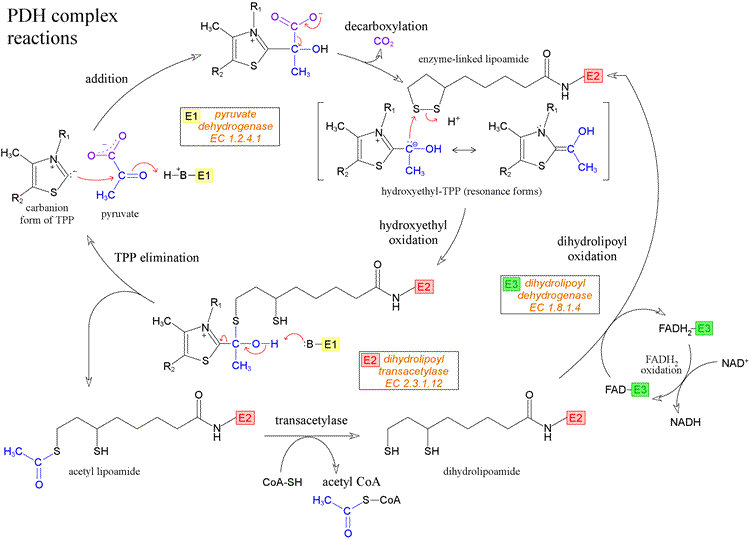
Pyruvate dehydrogenase complex (PDC) is a complex of three enzymes that convert pyruvate into acetyl-CoA by a process called pyruvate decarboxylation. Acetyl-CoA may then be used in the citric acid cycle to carry out cellular respiration, and this complex links the glycolysis metabolic pathway to the citric acid cycle. This multi-enzyme complex is related structurally and functionally to the oxoglutarate dehydrogenase and branched-chain oxo-acid dehydrogenase multi-enzyme complexes. In eukaryotic cells the reaction occurs inside the mitochondria, after transport of the substrate, pyruvate, from the cytosol. The transport of pyruvate into the mitochondria is via a transport protein and is active, consuming energy. On entry to the mitochondria pyruvate decarboxylation occurs, producing acetyl CoA. This irreversible reaction traps the acetyl CoA within the mitochondria. Pyruvate dehydrogenase deficiency from mutations in any of the enzymes or cofactors results in lactic acidosis.

PDH-rxns The acetyl group is transferred to coenzyme A

PDH-rxns The acetyl group is transferred to coenzyme A

http://guweb2.gonzaga.edu/faculty/cronk/biochem/images/PDH-rxns.gif

Typically, a breakdown of one molecule of glucose by aerobic respiration (i.e. involving both glycolysis and Kreb’s cycle) is about 33-35 ATP. This is categorized as:

Glycogenolysis – the breakdown of glycogen into glucose, which provides a glucose supply for glucose-dependent tissues.

Glycogenolysis in liver provides circulating glucose short term.

Glycogenolysis in muscle is obligatory for muscle contraction.

Pyruvate from glycolysis enters the Krebs cycle, also known as the citric acid cycle, in aerobic organisms.

Anaerobic breakdown by glycolysis – yielding 8-10 ATP

Aerobic respiration by Kreb’s cycle – yielding 25 ATP

The pentose phosphate pathway (shunt) converts hexoses into pentoses and regenerates NADPH. NADPH is an essential antioxidant in cells which prevents oxidative damage and acts as precursor for production of many biomolecules.

Glycogenesis – the conversion of excess glucose into glycogen as a cellular storage mechanism; achieving low osmotic pressure.

Gluconeogenesis – de novo synthesis of glucose molecules from simple organic compounds. An example in humans is the conversion of a few amino acids in cellular protein to glucose.

Metabolic use of glucose is highly important as an energy source for muscle cells and in the brain, and red blood cells.

The hormone insulin is the primary glucose regulatory signal in animals. It mainly promotes glucose uptake by the cells, and it causes the liver to store excess glucose as glycogen. Its absence

  1. turns off glucose uptake,
  2. reverses electrolyte adjustments,
  3. begins glycogen breakdown and glucose release into the circulation by some cells,
  4. begins lipid release from lipid storage cells, etc.

The level of circulatory glucose (known informally as “blood sugar”) is the most important signal to the insulin-producing cells.

  • insulin is made by beta cells in the pancreas,
  • fat is stored n adipose tissue cells, and
  • glycogen is both stored and released as needed by liver cells.
  • no glucose is released to the blood from internal glycogen stores from muscle cells.

The hormone glucagon, on the other hand, opposes that of insulin, forcing the conversion of glycogen in liver cells to glucose, and then release into the blood. Growth hormone, cortisol, and certain catecholamines (such as epinepherine) have glucoregulatory actions similar to glucagon.  These hormones are referred to as stress hormones because they are released under the influence of catabolic proinflammatory (stress) cytokines – interleukin-1 (IL1) and tumor necrosis factor α (TNFα).

Net Yield of GlycolysisThe preparatory phase consumes 2 ATP

The pay-off phase produces 4 ATP.

The gross yield of glycolysis is therefore

4 ATP – 2 ATP = 2 ATP

The pay-off phase also produces 2 molecules of NADH + H+ which can be further converted to a total of 5 molecules of ATP* by the electron transport chain (ETC) during oxidative phosphorylation.

Thus the net yield during glycolysis is 7 molecules of ATP*
This is calculated assuming one NADH molecule gives 2.5 molecules of ATP during oxidative phosphorylation.

Cellular respiration involves 3 stages for the breakdown of glucose – glycolysis, Kreb’s cycle and the electron transport system. Kreb’s cycle produces about 60-70% of ATP for release of energy in the body. It directly or indirectly connects with all the other individual pathways in the body.

The Kreb’s Cycle occurs in two stages:

  1. Conversion of Pyruvate to Acetyl CoA
  2. Acetyl CoA Enters the Kreb’s Cycle

Each pyruvate in the presence of pyruvate dehydrogenase (PDH) complex in the mitochondria gets converted to acetyl CoA which in turn enters the Kreb’s cycle. This reaction is called as oxidative  decarboxylation as the carboxyl group is removed from the pyruvate molecule in the form of CO2 thus yielding 2-carbon acetyl group which along with the coenzyme A forms acetyl CoA.

The PDH requires the sequential action of five co-factors or co-enzymes for the combined action of dehydrogenation and decarboxylation to take place. These five are TPP (thiamine phosphate), FAD (flavin adenine dinucleotide), NAD (nicotinamide adenine dinucleotide), coenzyme A (denoted as CoA-SH at times to depict role of -SH group) and lipoamide.

Acetyl CoA condenses with oxaloacetate (4C) to form a citrate (6C) by transferring its acetyl group in the presence of enzyme citrate synthase. The CoA liberated in this reaction is ready to participate in the oxidative decarboxylation of another molecule of pyruvate by PDH complex.

Isocitrate undergoes oxidative decarboxylation by the enzyme isocitrate dehydrogenase to form oxalosuccinate (intermediate- not shown) which in turn forms α-ketoglutarate (also known as oxoglutarate) which is a five carbon compound. CO2 and NADH are released in this step. α-ketoglutarate (5C) undergoes oxidative decarboxylation once again to form succinyl CoA (4C) catalysed by the enzyme α-ketoglutarate dehydrogenase complex.

Succinyl CoA is then converted to succinate by succinate thiokinase or succinyl coA synthetase in a reversible manner. This reaction involves an intermediate step in which the enzyme gets phosphorylated and then the phosphoryl group which has a high group transfer potential is transferred to GDP to form GTP.

Succinate then gets oxidised reversibly to fumarate by succinate dehydrogenase. The enzyme contains iron-sulfur clusters and covalently bound FAD which when undergoes electron exchange in the mitochondria causes the production of FADH2.

Fumarate is then by the enzyme fumarase converted to malate by hydration(addition of H2O) in a reversible manner.

Malate is then reversibly converted to oxaloacetate by malate dehydrogenase which is NAD linked and thus produces NADH.

The oxaloacetate produced is now ready to be utilized in the next cycle by the citrate synthase reaction and thus the equilibrium of the cycle shifts to the right.

The NADH formed in the cytosol can yield variable amounts of ATP depending on the shuttle system utilized to transport them into the mitochondrial matrix. This NADH, formed in the cytosol, is impermeable to the mitochondrial inner-membrane where oxidative phosphorylation takes place. Thus to carry this NADH to the mitochondrial matrix there are special shuttle systems in the body. The most active shuttle is the malate-aspartate shuttle via which 2.5 molecules of ATP are generated for 1 NADH molecule. This shuttle is mainly used by the heart, liver and kidneys. The brain and skeletal muscles use the other shuttle known as glycerol 3-phosphate shuttle which synthesizes 1.5 molecules of ATP for 1 NADH.

Glucose-6-phosphate Dehydrogenase is the committed step of the Pentose Phosphate Pathway. This enzyme is regulated by availability of the substrate NADP+. As NADPH is utilized in reductive synthetic pathways, the increasing concentration of NADP+ stimulates the Pentose Phosphate Pathway, to replenish NADPH. The importance of this pathway can easily be underestimated.  The main source for energy in respiration was considered to be tied to the high energy phosphate bond in phosphorylation and utilizes NADPH, converting it to NADP+. The pentose phosphate shunt is essential for the generation of nucleic acids, in regeneration of red cells and lens – requiring NADPH.

NAD+ serves as electron acceptor in catabolic pathways in which metabolites are oxidized. The resultant NADH is reoxidized by the respiratory chain, producing ATP.

The pyridine nucleotide transhydrogenase reaction concerns the energy-dependent reduction of TPN by DPNH. In 1959, Klingenberg and Slenczka made the important observation that incubation of isolated liver mitochondria with DPN-specific substrates or succinate in the absence of phosphate acceptor resulted in a rapid and almost complete reduction of  the intramitochondrial TPN. These and related findings led Klingenberg and co-workers (1-3) to postulate the occurrence of a ATP-controlled transhydrogenase reaction catalyzing the reduction of TPN by DPNH.  (The role of transhydrogenase in the energy-linked reduction of TPN.  Fritz Hommes, Ronald W. Estabrook, The Wenner-Gren Institute, University of Stockholm, Stockholm, Sweden. Biochemical and Biophysical Research Communications 11, (1), 2 Apr 1963, Pp 1–6. http://dx.doi.org:/10.1016/0006-291X(63)90017-2/).

Further studies observed the coupling of TPN-specific dehydrogenases with the transhydrogenase and observing the reduction of large amounts of diphosphopyridine nucleotide (DPN) in the presence of catalytic amounts of triphosphopyridine nucleotide (TPN). The studies showed the direct interaction between TPNHz and DPN, in the presence of transhydrogenase to yield products having the properties of TPN and DPNHZ. The reaction involves a transfer of electrons (or hydrogen) rather than a phosphate. (Pyridine Nucleotide Transhydrogenase  II. Direct Evidence for and Mechanism of the Transhydrogenase Reaction* by  Nathan 0. Kaplan, Sidney P. Colowick, And Elizabeth F. Neufeld. (From The Mccollum-Pratt Institute, The Johns Hopkins University, Baltimore, Maryland) J. Biol. Chem. 1952, 195:107-119.) http://www.JBC.org/Content/195/1/107.Citation
Notation: TPN, NADP; DPN, NAD+; reduced pyridine nucleotides: TPNH (NADPH2), DPNH (NADH).

Note: In this discussion there is a detailed presentation of the activity of lactic acid conversion in the mitochondria by way of PDH. In a later section there is mention of the bidirectional reaction of lactate dehydrogenase.  However, the forward reaction is dominant (pyruvate to lactate) and is described. This is not related to the kinetics of the LD reaction with respect to the defining characteristic – Km.

Biochemical Education Jan 1977; 5(1):15. Kinetics of Lactate Dehydrogenase: A Textbook Problem.
K.L. MANCHESTER. Department of Biochemistry, University of Witwatersrand, Johannesburg South Africa.

One presupposes that determined Km values are meaningful under intracellular conditions. In relation to teaching it is a simple experiment for students to determine for themselves the Km towards pyruvate of LDH in a post-mitochondrial supernatant of rat heart and thigh muscle. The difference in Km may be a factor of 3 or 4-fold.It is pertinent then to ask what is the range of suhstrate concentrations over which a difference in Km may be expected to lead to significant differences in activity and how these concentrations compare with pyruvate concentrations in the cell. The evidence of Vesell and co-workers that inhibition by pyruvate is more readily seen at low than at high enzyme concentration is important in emphasizing that under intracellular conditions enzyme concentrations may be relatively large in relation to the substrate available. This will be particularly so in relation to [NADH] which in the cytoplasm is likely to be in the ~M range.

A final point concerns the kinetic parameters for LDH quoted by Bergmeyer for lactate estimations a pH of 9 is recommended and the Km towards lactate at that pH is likely to be appreciably different from the quoted values at pH 7 — Though still at pH 9 showing a substantially lower value for lactate with the heart preparationhttp://onlinelibrary.wiley.com/doi/10.1016/0307-4412%2877%2990013-9/pdf

Several investigators have established that epidermis converts most of the glucose it uses to lactic acid even in the presence of oxygen. This is in contrast to most tissues where lactic acid production is used for energy production only when oxygen is not available. This large amount of lactic acid being continually produced within the epidermal cell must be excreted by the cell and then carried away by the blood stream to other tissues where the lactate can be utilized. The LDH reaction with pyruvate and NADH is reversible although at physiological pH the equilibrium position for the reaction lies very far to the right, i.e., in favor of lactate production. The speed of this reaction depends not only on the amount of enzyme present but also on the concentrations of the substances involved on both sides of the equation. The net direction in which the reaction will proceed depends solely on the relative concentrations of the substances on each side of the equation.
In vivo there is net conversion of pyruvate (formed from glucose) to lactate. Measurements of the speed of lactate production by sheets of epidermis floating on a medium containing glucose indicate a rate of lactate production of approximately 0.7 rn/sm/
mm/mg of fresh epidermis.Slice incubation experiments are presumably much closer to the actual in vivo conditions than
the homogenate experiments. The discrepancy between the
two indicates that in vivo conditions are far from optimal for the conversion of pyruvate to lactate. Only 1/100th of the maximal activity of the enzyme present is being achieved. The concentrations of the various substances involved are not
optimal in vivo since pyruvate and NADH concentrations are
lower than lactate and NAD concentrations and this might explain the in vivo inhibition of LDH activity. (Lactate Production And Lactate Dehydrogenase In The Human Epidermis*. KM. Halprin, A Ohkawara. J Invest Dermat 1966; 47(3): 222-6.)
http://www.nature.com/jid/journal/v47/n3/pdf/jid1966133a.pdf

Read Full Post »

Introduction to Metabolomics

Introduction to Metabolomics

Author: Larry H. Bernstein, MD, FCAP


This is the first volume of the Series D: e-Books on BioMedicine – Metabolomics, Immunology, Infectious Diseases.  It is written for comprehension at the third year medical student level, or as a reference for licensing board exams, but it is also written for the education of a first time bachalaureate degree reader in the biological sciences.  Hopefully, it can be read with great interest by the undergraduate student who is undecided in the choice of a career.

In the Preface, I failed to disclose that the term Metabolomics applies to plants, animals, bacteria, and both prokaryotes and eukaryotes.  The metabolome for each organism is unique, but from an evolutionary perspective has metabolic pathways in common, and expressed in concert with the environment that these living creatures exist. The metabolome of each has adaptive accommodation with suppression and activation of pathways that are functional and necessary in balance, for its existence.  Was it William Faulkner who said in his Nobel Prize acceptance that mankind shall not merely exist, but survive? That seems to be the overlying theme for all of life. If life cannot persist, a surviving “remnant” might continue. The history of life may well be etched into the genetic code, some of which is not expressed.

This work is apportioned into chapters in a sequence that is first directed at the major sources for the energy and the structure of life, in the carbohydrates, lipids, and fats, which are sourced from both plants and animals, and depending on their balance, results in an equilibrium, and a disequilibrium we refer to as disease.  There is also a need to consider the nonorganic essentials which are derived from the soil, from water, and from the energy of the sun and the air we breathe, or in the case of water-bound metabolomes, dissolved gases.

In addition to the basic essential nutrients and their metabolic utilization, they are under cellular metabolic regulation that is tied to signaling pathways.  In addition, the genetic expression of the organism is under regulatory control by the interaction of RNAs that interact with the chromatin genetic framework, with exosomes, and with protein modulators.This is referred to as epigenetics, but there are also drivers of metabolism that are shaped by the interactions between enzymes and substartes, and are related to the tertiary structure of a protein.  The framework for diseases in a separate chapter.  Pharmaceutical interventions that are designed to modulate specific metabolic targets are addressed as the pathways are unfolded. Neutraceuticals and plant based nutrition are covered in Chapter 8.

Chapter 1: Metabolic Pathways

Chapter 2. Lipid Metabolism

Chapter 3. Cell Signaling

Chapter 4. Protein Synthesis and Degradation

Chapter 5: Sub-cellular Structure

Chapter 6: Proteomics

Chapter 7: Metabolomics

Chapter 8. Impairments in Pathological States: Endocrine Disorders; Stress Hypermetabolism and Cancer

Read Full Post »

Metformin, Thyroid-Pituitary Axis, Diabetes Mellitus, and Metabolism

Metformin, Thyroid-Pituitary Axis, Diabetes Mellitus, and Metabolism

Larry H, Bernstein, MD, FCAP, Author and Curator
and Aviva Lev-Ari, PhD, RN

http://pharmaceuticalintelligence.com/9/27/2014/Metformin,_thyroid-pituitary_ axis,_diabetes_mellitus,_and_metabolism

The following article is a review of the central relationship between the action of
metformin as a diabetic medication and its relationship to AMPK, the important and
essential regulator of glucose and lipid metabolism under normal activity, stress, with
its effects on skeletal muscle, the liver, the action of T3 and more.

We start with a case study and a publication in the J Can Med Assoc.  Then we shall look
into key literature on these metabolic relationships.

Part I.  Metformin , Diabetes Mellitus, and Thyroid Function

Hypothyroidism, Insulin resistance and Metformin
May 30, 2012   By Janie Bowthorpe
The following was written by a UK hypothyroid patient’s mother –
Sarah Wilson.

My daughter’s epilepsy is triggered by unstable blood sugars. And since taking
Metformin to control her blood sugar, she has significantly reduced the number of
seizures. I have been doing research and read numerous academic medical journals,
which got me thinking about natural thyroid hormone and Hypothyroidism. My hunch
was that when patients develop hypothyroid symptoms, they are actually becoming
insulin resistant (IR). There are many symptoms in common between women with
polycystic ovaries and hypothyroidism–the hair loss, the weight gain, etc.
(http://insulinhub.hubpages.com/hub/PCOS-and-Hypothyroidism).

A hypothyroid person’s body behaves as if it’s going into starvation mode and so, to
preserve resources and prolong life, the metabolism changes. If hypothyroid is prolonged
or pronounced, then perhaps, chemical preservation mode becomes permanent even
with the reintroduction of thyroid hormones. To get back to normal, they need
a “jump-start” reinitiate a higher rate of metabolism. The kick start is initiated through
AMPK, which is known as the “master metabolic regulating enzyme.”
(http://en.wikipedia.org/wiki/AMP-activated protein kinase).

Guess what? This is exactly what happens to Diabetes patients when Metformin is
introduced. http://en.wikipedia.org/wiki/Metformin
Suggested articles: http://www.springerlink.com/content/r81606gl3r603167/  and
http://onlinelibrary.wiley.com/doi/10.1111/j.1365-2265.2011.04029.x/pdf

Note the following comments/partial statements:
“Hypothyroidism is characterized by decreased insulin responsiveness”;
“the pivotal regulatory role of T3 in major metabolic pathways”.

The community knows that T3/NTH (natural thyroid hormone [Armour]) makes
hypothyroid patients feel better – but the medical establishment is averse to T3/NTH
(treating subclinical hypoT (T3/T4 euthyroid) with natural dessicated thyroid (NDT).
The medical establishment might find an alternative view about impaired metabolism
more if shown real proof that the old NDT **was/is** having the right result –i.e., the
T3 is jump-starting the metabolism by re-activating
 AMPK.

If NDT also can be used for hypothyroidism without the surmised “dangers” of NTH,
then they should consider it. [The reality in the choice is actually recombinant TH
(Synthroid)]. Metformin is cheap, stable and has very few serious side effects. I use the
car engine metaphor, and refer to glucose as our petrol, AMPK as the spark plug and
both T3 and Metformin as the ignition switches. Sometimes if you have flat batteries in
the car, it doesn’t matter how much you turn the ignition switch or pump the petrol
pedal, all it does is flatten the battery and flood the engine.

Dr. Skinner in the UK has been treating “pre-hypothyroidism” the way that some
doctors treat “pre-diabetes”. Those hypothyroid patients who get treated early
might not have had their AMPK pathways altered and the T4-T3 conversion still works.
There seems to be no reason why thyroid hormone replacement therapy shouldn’t
logically be given to ward off a greater problem down the line.

It’s my belief that there is clear and abundant academic evidence that the AMPK/
Metformin research should branch out to also look at thyroid disease.

Point – direct T3 is kicking the closed -down metabolic process back into life,
just like Metformin does for insulin resistance.
http://www.hotthyroidology.com/editorial_79.html
There is serotonin resistance! http://www.ncbi.nlm.nih.gov/pubmed/17250776

Metformin Linked to Risk of Low Levels of Thyroid Hormone

CMAJ (Canadian Medical Association Journal) 09/22/2014

Metformin, the drug commonly for treating type 2 diabetes,

  • is linked to an increased risk of low thyroid-stimulating hormone
    (TSH) levels
  • in patients with underactive thyroids (hypothyroidism),

according to a study in CMAJ (Canadian Medical Association Journal).

Metformin is used to lower blood glucose levels

  • by reducing glucose production in the liver.

previous studies have raised concerns that

  • metformin may lower thyroid-stimulating hormone levels.

Study characteristics:

  1. Retrospective  long-term
  2. 74 300 patient who received metformin and sulfonylurea
  3. 25-year study period.
  4. 5689 had treated hypothyroidism
  5. 59 937 had normal thyroid function.

Metformin and low levels of thyroid-stimulating hormone in
patients with type 2 diabetes mellitus

Jean-Pascal Fournier,  Hui Yin, Oriana Hoi Yun Yu, Laurent Azoulay  +
Centre for Clinical Epidemiology (Fournier, Yin, Yu, Azoulay), Lady Davis Institute,
Jewish General Hospital; Department of Epidemiology, Biostatistics and Occupational
Health (Fournier), McGill University; Division of Endocrinology (Yu), Jewish General
Hospital; Department of Oncology (Azoulay), McGill University, Montréal, Que., Cananda

CMAJ Sep 22, 2014,   http://dx.doi.org:/10.1503/cmaj.140688

Background:

  • metformin may lower thyroid-stimulating hormone (TSH) levels.

Objective:

  • determine whether the use of metformin monotherapy, when compared with
    sulfonylurea monotherapy,
  • is associated with an increased risk of low TSH levels(< 0.4 mIU/L)
  • in patients with type 2 diabetes mellitus.

Methods:

  • Used the Clinical Practice Research Datalink,
  • identified patients who began receiving metformin or sulfonylurea monotherapy
    between Jan. 1, 1988, and Dec. 31, 2012.
  • 2 subcohorts of patients with treated hypothyroidism or euthyroidism,

followed them until Mar. 31, 2013.

  • Used Cox proportional hazards models to evaluate the association of low TSH
    levels with metformin monotherapy, compared with sulfonylurea monotherapy,
    in each subcohort.

Results:

  • 5689 patients with treated hypothyroidism and 59 937 euthyroid patients were
    included in the subcohorts.

For patients with treated hypothyroidism:

  1. 495 events of low TSH levels were observed (incidence rate 0.1197/person-years).
  2. 322 events of low TSH levels were observed (incidence rate 0.0045/person-years)
    in the euthyroid group.
  • metformin monotherapy was associated with a 55% increased risk of low TSH
    levels 
    in patients with treated hypothyroidism (incidence rate 0.0795/person-years
    vs.0.1252/ person-years, adjusted hazard ratio [HR] 1.55, 95% confidence
    interval [CI] 1.09– 1.20), compared with sulfonylurea monotherapy,
  • the highest risk in the 90–180 days after initiation (adjusted HR 2.30, 95% CI
    1.00–5.29).
  • No association was observed in euthyroid patients (adjusted HR 0.97, 95% CI 0.69–1.36).

Interpretation: The clinical consequences of this needs further investigation.


Crude and adjusted hazard ratios for suppressed thyroid-stimulating hormone
levels (< 0.1 mIU/L) associated with the use metformin monotherapy, compared
with sulfonylurea monotherapy, in patients with treated hypothyroidism or
euthyroidism and type 2 diabetes
Variable No. events
suppressed
TSH levels
Person-years of
exposure
Incidence rate,
per 1000 person-years (95% CI)
Crude
HR
Adjusted HR*(95% CI)
Patients with treated hypothyroidism, = 5689
Sulfonylure,
= 762
18 503 35.8
(21.2–56.6)
1.00 1.00
(reference)
Metformin,
= 4927
130 3 633 35.8
(29.9–42.5)
1.05 0.99
(0.57–1.72)
Euthyroid patients, = 59 937
Sulfonylurea,
= 7980
12 8 576 1.4
(0.7–2.4)
1.00 1.00
(reference)
Metformin,
= 51 957
75 63 047 1.2
(0.9–1.5)
0.85 1.03
(0.52–2.03)


Part II. Metabolic Underpinning 
(Source: Wikipedia, AMPK and thyroid)

5′ AMP-activated protein kinase or AMPK or 5′ adenosine monophosphate-activated protein kinase
is an enzyme that plays a role in cellular energy homeostasis.
It consists of three proteins (subunits) that

  1. together make a functional enzyme, conserved from yeast to humans.
  2. It is expressed in a number of tissues, including the liver, brain, and skeletal
    muscle.
  3. The net effect of AMPK activation is stimulation of
    1. hepatic fatty acid oxidation and ketogenesis,
    2. inhibition of cholesterol synthesis,
    3. lipogenesis, and triglyceride synthesis,
    4. inhibition of adipocyte lipolysis and lipogenesis,
    5. stimulation of skeletal muscle fatty acid oxidation and muscle
      glucose uptake, and
    6. modulation of insulin secretion by pancreatic beta-cells.

The heterotrimeric protein AMPK is formed by α, β, and γ subunits. Each of these three
subunits takes on a specific role in both the stability and activity of AMPK.

  • the γ subunit includes four particular Cystathionine beta synthase (CBS) domains
    giving AMPK its ability to sensitively detect shifts in the AMP:ATP ratio.
  • The four CBS domains create two binding sites for AMP commonly referred to as
    Bateman domains. Binding of one AMP to a Bateman domain cooperatively
    increases the binding affinity of the second AMP to the other Bateman domain.
  • As AMP binds both Bateman domains the γ subunit undergoes a conformational
    change which exposes the catalytic domain found on the α subunit.
  • It is in this catalytic domain where AMPK becomes activated when
    phosphorylation takes place at threonine-172by an upstream AMPK kinase
    (AMPKK). The α, β, and γ subunits can also be found in different isoforms.

AMPK acts as a metabolic master switch regulating several intracellular systems

  1. the cellular uptake of glucose,
  2. the β-oxidation of fatty acids and
  3. the biogenesis of glucose transporter 4 (GLUT4) and
  4. mitochondria

The energy-sensing capability of AMPK can be attributed to

  • its ability to detect and react to fluctuations in the AMP:ATP ratio that take
    place during rest and exercise (muscle stimulation).

During muscle stimulation,

  • AMP increases while ATP decreases, which changes AMPK into a good substrate
    for activation.
  • AMPK activity increases while the muscle cell experiences metabolic stress
    brought about by an extreme cellular demand for ATP.
  • Upon activation, AMPK increases cellular energy levels by
    • inhibiting anabolic energy consuming pathways (fatty acid synthesis,
      protein synthesis, etc.) and
    • stimulating energy producing, catabolic pathways (fatty acid oxidation,
      glucose transport, etc.).

A recent JBC paper on mice at Johns Hopkins has shown that when the activity of brain
AMPK was pharmacologically inhibited,

  • the mice ate less and lost weight.

When AMPK activity was pharmacologically raised (AICAR see below)

  • the mice ate more and gained weight.

Research in Britain has shown that the appetite-stimulating hormone ghrelin also
affects AMPK levels.

The antidiabetic drug metformin (Glucophage) acts by stimulating AMPK, leading to

  1. reduced glucose production in the liver and
  2. reduced insulin resistance in the muscle.

(Metformin usually causes weight loss and reduced appetite, not weight gain and
increased appetite, ..opposite of expected from the Johns Hopkins mouse study results.)

Triggering the activation of AMPK can be carried out provided two conditions are met.

First, the γ subunit of AMPK

  • must undergo a conformational change so as to
  • expose the active site(Thr-172) on the α subunit.

The conformational change of the γ subunit of AMPK can be accomplished

  • under increased concentrations of AMP.

Increased concentrations of AMP will

  • give rise to the conformational change on the γ subunit of AMPK
  • as two AMP bind the two Bateman domains located on that subunit.
  • It is this conformational change brought about by increased concentrations
    of  AMP that exposes the active site (Thr-172) on the α subunit.

This critical role of AMP is further substantiated in experiments that demonstrate

  • AMPK activation via an AMP analogue 5-amino-4-imidazolecarboxamide
    ribotide (ZMP) which is derived fromthe familiar
  • 5-amino-4-imidazolecarboxamide riboside (AICAR)

AMPK is a good substrate for activation via an upstream kinase complex, AMPKK
AMPKK is a complex of three proteins,

  1. STE-related adaptor (STRAD),
  2. mouse protein 25 (MO25), and
  3. LKB1 (a serine/threonine kinase).

The second condition that must be met is

  • the phosphorylation/activation of AMPK on its activating loop at
    Thr-172of the α subunit
  • brought about by an upstream kinase (AMPKK).

The complex formed between LKB1 (STK 11), mouse protein 25 (MO25), and the
pseudokinase STE-related adaptor protein (STRAD) has been identified as

  • the major upstream kinase responsible for phosphorylation of AMPK
    on its activating loop at Thr-172

Although AMPK must be phosphorylated by the LKB1/MO25/STRAD complex,

  • it can also be regulated by allosteric modulators which
  • directly increase general AMPK activity and
  • modify AMPK to make it a better substrate for AMPKK
  • and a worse substrate for phosphatases.

It has recently been found that 3-phosphoglycerate (glycolysis intermediate)

  • acts to further pronounce AMPK activation via AMPKK

Muscle contraction is the main method carried out by the body that can provide
the conditions mentioned above needed for AMPK activation

  • As muscles contract, ATP is hydrolyzed, forming ADP.
  • ADP then helps to replenish cellular ATP by donating a phosphate group to
    another ADP,

    • forming an ATP and an AMP.
  • As more AMP is produced during muscle contraction,
    • the AMP:ATP ratio dramatically increases,
  • leading to the allosteric activation of AMPK

For over a decade it has been known that calmodulin-dependent protein kinase
kinase-beta (CaMKKbeta) can phosphorylate and thereby activate AMPK,

  • but it was not the main AMPKK in liver.

CaMKK inhibitors had no effect on 5-aminoimidazole-4-carboxamide-1-beta-4-
ribofuranoside (AICAR) phosphorylation and activation of AMPK.

  • AICAR is taken into the celland converted to ZMP,
  • an AMP analogthat has been shown to activate AMPK.

Recent LKB1 knockout studies have shown that without LKB1,

  • electrical and AICAR stimulation of muscleresults in very little
    phosphorylation of AMPK and of ACC, providing evidence that
  • LKB1-STRAD-MO25 is the major AMPKK in muscle.

Two particular adipokines, adiponectin and leptin, have even been demonstrated
to regulate AMPK. A main functions of leptin in skeletal muscle is

  • the upregulation of fatty acid oxidation.

Leptin works by way of the AMPK signaling pathway, and adiponectin also
stimulates the oxidation of fatty acids via the AMPK pathway, and

  • Adiponectin also stimulates the uptake of glucose in skeletal muscle.

An increase in enzymes which specialize in glucose uptake in cells such as GLUT4
and hexokinase II are thought to be mediated in part by AMPK when it is activated.
Increases in AMPK activity are brought about by increases in the AMP:ATP ratio
during single bouts of exercise and long-term training.

One of the key pathways in AMPK’s regulation of fatty acid oxidation is the

  • phosphorylation and inactivation of acetyl-CoA carboxylase.
  1. Acetyl-CoA carboxylase (ACC) converts acetyl-CoA (ACA) to malonyl-CoA
    (MCA), an inhibitor of carnitine palmitoyltransferase 1 (CPT-1).
  2. CPT-1 transports fatty acids into the mitochondria for oxidation.
  3. Inactivation of ACC results in increased fatty acid transport and oxidation.
  4. the AMPK induced ACC inactivation  and reduced conversion to MCA
    may occur as a result of malonyl-CoA decarboxylase (MCD)
  5. MCD as an antagonist to ACC, decarboxylatesmalonyl-CoA to acetyl-CoA
    (reversal of ACC conversion of ACA to MCA)
  6. This resultsin decreased malonyl-CoA and increased CPT-1 and fatty acid oxidation.

AMPK also plays an important role in lipid metabolism in the liver. It has long been
known that hepatic ACC has been regulated in the liver.

  1. It phosphorylates and inactivates 3-hydroxy-3-methylglutaryl-CoA reductase (HMGCR)
  2. acetyl-CoA(ACA) is converted to mevalonic acid (MVA) by ACC
    with inhibition of CPT-1
  3. HMGR converts 3-hydroxy-3-methylglutaryl-CoA, which is made from MVA
  4. which then travels down several more metabolic steps to become cholesterol.

Insulin facilitates the uptake of glucose into cells via increased expression and
translocation of glucose transporter GLUT-4. In addition, glucose is phosphorylated
by hexokinase wheni iot enters the cell. The phosphorylated form keeps glucose from
leaving the cell,

  • The decreasedthe concentration of glucose molecules creates a gradient for more
    glucose to be transported into the cell.
AMPK and thyroid hormone regulate some similar processes. Knowing these similarities,
Winder and Hardie et al. designed an experiment to see if AMPK was influenced by thyroid
hormone. They found that all of the subunits of AMPK were increased in skeletal muscle,
especially in the soleus and red quadriceps, with thyroid hormone treatment. There was
also an increase in phospho-ACC, a marker of AMPK activity.
  •  Winder WW, Hardie DG (July 1999). “AMP-activated protein kinase,
    a metabolic master switch: possible roles in type 2 diabetes”. J. Physiol. 277
    (1 Pt 1): E1–10. PMID 10409121.
  • Winder WW, Hardie DG (February 1996). “Inactivation of acetyl-CoA
    carboxylase and activation of AMP-activated protein kinase in muscle
    during exercise”. J. Physiol. 270 (2 Pt 1): E299–304. PMID 8779952.
  • Hutber CA, Hardie DG, Winder WW (February 1997). “Electrical stimulation
    inactivates muscle acetyl-CoA carboxylase and increases AMP-activated
    protein kinase”. Am. J. Physiol. 272 (2 Pt 1): E262–6. PMID 9124333
  • Durante PE, Mustard KJ, Park SH, Winder WW, Hardie DG (July 2002).
    “Effects of endurance training on activity and expression of AMP-activated
    protein kinase isoforms in rat muscles”. Am. J. Physiol. Endocrinol.
    Metab. 283 (1): E178–86. doi:10.1152/ajpendo.00404.2001. PMID 12067859
  • Corton JM, Gillespie JG, Hardie DG (April 1994). “Role of the AMP-activated
    protein kinase in the cellular stress response”. Curr. Biol. 4 (4):
    315–24. doi:10.1016/S0960-9822(00)00070-1. PMID 7922340
  • Winder WW (September 2001). “Energy-sensing and signaling by
    AMP-activated protein kinase in skeletal muscle”. J. Appl. Physiol. 91 (3):
    1017–28. PMID 11509493
  • Suter M, Riek U, Tuerk R, Schlattner U, Wallimann T, Neumann D (October
    2006). “Dissecting the role of 5′-AMP for allosteric stimulation, activation,
    and deactivation of AMP-activated protein kinase”.  J. Biol. Chem.
    281 (43): 32207–6. doi:10.1074/jbc.M606357200. PMID 16943194


Part III. Pituitary-thyroid axis and diabetes mellitus
The Interface Between Thyroid and Diabetes Mellitus

Leonidas H. Duntas, Jacques Orgiazzi, Georg Brabant   Clin Endocrinol. 2011;75(1):1-9.
Interaction of Metformin and Thyroid Function

Metformin acts primarily by

  • suppressing hepatic gluconeogenesis via activation of AMPK
  • It has the opposite effects on hypothalamic AMPK,
    • inhibiting activity of the enzyme.
  • the metformin effects on hypothalamic AMPK activity will
    • counteractT3 effects at the hypothalamic level.
  • AMPK therefore represents a direct target for dual regulation
    • in the hypothalamic partitioning of energy homeostasis.
  • metformin crossesthe blood–brain barrier and
    • levels in the pituitary gland are substantially increased.
  • It convincinglysuppresses TSH

A recent study recruiting 66 patients with benign thyroid nodules furthermore
demonstrated that metformin significantly decreases nodule size in patients with
insulin resistance.[76] The effect of metformin, which was produced over a
6-month treatment period, parallelled a fall in TSH concentrations and achieved a
shrinkage amounting to 30% of the initial nodule size when metformin was
administered alone and up to 55% when it was added to ongoing LT4 treatment.

These studies reveal a

  • suppressive effect of metformin on TSH secretion patterns in
    hypothyroid patients, an effect that is apparently
  • independent of T4 treatment and does not alter the TH profile.
  • A rebound of TSH secretion occurs at about 3 months following metformin
    withdrawal.

It appears that recommendations for more frequent testing, on an annual to
biannual basis, seems justified in higher risk groups like patients over 50 or 55,
particularly with suggestive symptoms, raised antibody titres or dylipidaemia.
We thus would support the suggestion of an initial TSH and TPO antibody testing
which, as discussed, will help to predict the development of hypothyroidism in
patients with diabetes.

Hypothalamic AMPK and fatty acid metabolism mediate thyroid
regulation of energy 
balance
M López,  L Varela,  MJ Vázquez,  S Rodríguez-Cuenca, CR González, …, & Vidal-Puig
Nature Medicine  29 Aug 2010; 16: 1001–1008 http://dx.doi.org:/10.1038/nm.2207

Thyroid hormones have widespread cellular effects; however it is unclear whether
their effects on the central nervous system (CNS) contribute to global energy balance.
Here we demonstrate that either

  • whole-body hyperthyroidism or central administration of triiodothyronine
    (T3) decreases

    • the activity of hypothalamic AMP-activated protein kinase (AMPK),
    • increases sympathetic nervous system (SNS) activity and
    • upregulates thermogenic markers in brown adipose tissue (BAT).

Inhibition of the lipogenic pathway in the ventromedial nucleus of the hypothalamus
(VMH) prevents CNS-mediated activation of BAT by thyroid hormone and reverses
the weight loss associated with hyperthyroidism. Similarly, inhibition of thyroid
hormone receptors in the VMH reverses the weight loss associated with hyperthyroidism.

This regulatory mechanism depends on AMPK inactivation, as genetic inhibition of this
enzyme in the VMH of euthyroid rats induces feeding-independent weight loss and
increases expression of thermogenic markers in BAT. These effects are reversed by
pharmacological blockade of the SNS. Thus, thyroid hormone–induced modulation
of AMPK activity and lipid metabolism in the hypothalamus is a major regulator of
whole-body energy homeostasis.

Metabolic Basis for Thyroid Hormone Liver Preconditioning:
Upregulation of AMP-Activated Protein Kinase Signaling
  
LA Videla,1 V Fernández, P Cornejo, and R Vargas
1Molecular and Clinical Pharmacology Program, Institute of Biomedical Sciences,
Faculty of Medicine, University of Chile, 2Faculty of Medicine, Diego Portales University,
Santiago, Chile
Academic Editors: H. M. Abu-Soud and D. Benke
The Scientific World Journal 2012; 2012, ID 475675, 10 pp
http://dx.doi.org/10.1100/2012/475675

The liver is a major organ responsible for most functions of cellular metabolism and

  • a mediator between dietary and endogenous sources of energy for extrahepatic tissues.
  • In this context, adenosine-monophosphate- (AMP-) activated protein kinase (AMPK)
    constitutes an intrahepatic energy sensor
  • regulating physiological energy dynamics by limiting anabolism and stimulating
    catabolism, thus increasing ATP availability.
  • This is achieved by mechanisms involving direct allosteric activation and
    reversible phosphorylation of AMPK, in response to signals such as

    • energy status,
    • serum insulin/glucagon ratio,
    • nutritional stresses,
    • pharmacological and natural compounds, and
    • oxidative stress status.

Reactive oxygen species (ROS) lead to cellular AMPK activation and

  • downstream signaling under several experimental conditions.

Thyroid hormone (L-3,3′,5-triiodothyronine, T3) administration, a condition
that enhances liver ROS generation,

  • triggers the redox upregulation of cytoprotective proteins
    • affording preconditioning against ischemia-reperfusion (IR) liver injury.

Data discussed in this work suggest that T3-induced liver activation of AMPK

  • may be of importance in the promotion of metabolic processes
  • favouring energy supply for the induction and operation of preconditioning
    mechanisms.

These include

  1. antioxidant,
  2. antiapoptotic, and
  3. anti-inflammatory mechanisms,
  4. repair or resynthesis of altered biomolecules,
  5. induction of the homeostatic acute-phase response, and
  6. stimulation of liver cell proliferation,

which are required to cope with the damaging processes set in by IR.

The liver functions as a mediator between dietary and endogenous sources
of energy and extrahepatic organs that continuously require energy, mainly
the brain and erythrocytes, under cycling conditions between fed and fasted states.

In the fed state, where insulin action predominates, digestion-derived glucose is
converted to pyruvate via glycolysis, which is oxidized to produce energy, whereas
fatty acid oxidation is suppressed. Excess glucose can be either stored as hepatic
glycogen or channelled into de novo lipogenesis.

In the fasted state, considerable liver fuel metabolism changes occur due to decreased
serum insulin/glucagon ratio, with higher glucose production as a consequence of
stimulated glycogenolysis and gluconeogenesis (from alanine, lactate, and glycerol).

Major enhancement in fatty acid oxidation also occurs to provide energy for liver
processes and ketogenesis to supply metabolic fuels for extrahepatic tissues. For these
reasons, the liver is considered as the metabolic processing organ of the body, and
alterations in liver functioning affect whole-body metabolism and energy homeostasis.

In this context, adenosine-monophosphate- (AMP-) activated protein kinase (AMPK)
is the downstream component of a protein kinase cascade acting as an

  • intracellular energy sensor regulating physiological energy dynamics by
  • limiting anabolic pathways, to prevent excessive adenosine triphosphate (ATP)
    utilization, and
  • by stimulating catabolic processes, to increase ATP production.

Thus, the understanding of the mechanisms by which liver AMPK coordinates hepatic
energy metabolism represents a crucial point of convergence of regulatory signals
monitoring systemic and cellular energy status

Liver AMPK: Structure and Regulation

AMPK, a serine/threonine kinase, is a heterotrimeric complex comprising

  1. a catalytic subunit α and
  2. two regulatory subunits β and γ .

The α subunit has a threonine residue (Thr172) within the activation loop of the kinase
domain, with the C-terminal region being required for association with β and γ subunits.
The β subunit associates with α and γ by means of its C-terminal region , whereas

  • the γ subunit has four cystathionine β-synthase (CBS) motifs, which
  • bind AMP or ATP in a competitive manner.

75675.fig.001 (not shown)

Figure 1: Regulation of AMP-activated protein kinase (AMPK) by
(A) direct allosteric activation and
(B) reversible phosphorylation and downstream responses maintaining
intracellular energy balance.

Regulation of liver AMPK activity involves both direct allosteric activation and
reversible phosphorylation. AMPK is allosterically activated by AMP through

  • binding to the regulatory subunit-γ, which induces a conformational change in
    the kinase domain of subunit α that protects AMPK from dephosphorylation
    of Thr172, probably by protein phosphatase-2C.

Activation of AMPK requires phosphorylation of Thr172 in its α subunit, which can be
attained by either

(i) tumor suppressor LKB1 kinase following enhancement in the AMP/ATP ratio, a
kinase that plays a crucial role in AMPK-dependent control of liver glucose and
lipid metabolism;

(ii) Ca2+-calmodulin-dependent protein kinase kinase-β (CaMKKβ) that
phosphorylates AMPK in an AMP-independent, Ca2+-dependent manner;

(iii) transforming growth-factor-β-activated kinase-1 (TAK1), an important
kinase in hepatic Toll-like receptor 4 signaling in response to lipopolysaccharide.

Among these kinases, the relevance of CaMKKβ and TAK1 in liver AMPK activation
remains to be established in metabolic stress conditions. Both allosteric and
phosphorylation mechanisms are able to elicit

  • over 1000-fold increase in AMPK activity, thus allowing
  • the liver to respond to small changes in energy status in a highly sensitive fashion.

In addition to rapid AMPK regulation through allosterism and reversible phosphorylation

  • long-term effects of AMPK activation induce changes in hepatic gene expression.

This was demonstrated for

(i) the transcription factor carbohydrate-response element-binding protein (ChREBP),

  • whose Ser568 phosphorylation by activated AMPK
  • blocks its DNA binding capacity and glucose-induced gene transcription
  • under hyperlipidemic conditions;(ii) liver sterol regulatory element-binding
    protein-1c (SREBP-1c), whose mRNA and protein expression and those of
    its target gene for fatty acid synthase (FAS)
  • are reduced by metformin-induced AMPK activation,
  • decreasing lipogenesis and increasing fatty acid oxidation due to
    malonyl-CoA depletion;

(iii) transcriptional coactivator transducer of regulated CREB activity-2 (TORC2),
a crucial component of the hepatic gluconeogenic program, was reported
to be phosphorylated by activated AMPK.

This modification leads to subsequent cytoplasmatic sequestration of TORC2 and
inhibition of gluconeogenic gene expression, a mechanism underlying

  • the plasma glucose-lowering effects of adiponectin and metformin
  • through AMPK activation by upstream LKB1.

Activation of AMPK in the liver is a key regulatory mechanism controlling glucose
and lipid metabolism,

  1. inhibiting anabolic processes, and
  2. enhancing catabolic pathways in response to different signals, including
    1. energy status,
    2. serum insulin/glucagon ratio,
    3. nutritional stresses,
    4. pharmacological and natural compounds, and
    5. oxidative stress status

Reactive Oxygen Species (ROS) and AMPK Activation

The high energy demands required to cope with all the metabolic functions
of the liver are met by

  • fatty acid oxidation under conditions of both normal blood glucose levels and
    hypoglycemia, whereas
  • glucose oxidation is favoured in hyperglycemic states, with consequent
    generation of ROS.

Under normal conditions, ROS occur at relatively low levels due to their fast processing
by antioxidant mechanisms, whereas at acute or prolonged high ROS levels, severe
oxidation of biomolecules and dysregulation of signal transduction and gene expression
is achieved, with consequent cell death through necrotic and/or apoptotic-signaling
pathways.

Thyroid Hormone (L-3,3′,5-Triiodothyronine, T3), Metabolic Regulation,
and ROS Production

T3 is important for the normal function of most mammalian tissues, with major actions
on O2 consumption and metabolic rate, thus

  • determining enhancement in fuel consumption for oxidation processes
  • and ATP repletion.

T3 acts predominantly through nuclear receptors (TR) α and β, forming

  • functional complexes with retinoic X receptor that
  • bind to thyroid hormone response elements (TRE) to activate gene expression.

T3 calorigenesis is primarily due to the

  • induction of enzymes related to mitochondrial electron transport and ATP
    synthesis, catabolism, and
  • some anabolic processes via upregulation of genomic mechanisms.

The net result of T3 action is the enhancement in the rate of O2 consumption of target
tissues such as liver, which may be effected by secondary processes induced by T3

(i) energy expenditure due to higher active cation transport,

(ii) energy loss due to futile cycles coupled to increase in catabolic and anabolic pathways, and

(iii) O2 equivalents used in hepatic ROS generation both in hepatocytes and Kupffer cells

In addition, T3-induced higher rates of mitochondrial oxidative phosphorylation are
likely to induce higher levels of ATP, which are partially balanced by intrinsic uncoupling
afforded by induction of uncoupling proteins by T3. In agreement with this view, the
cytosolic ATP/ADP ratio is decreased in hyperthyroid tissues, due to simultaneous
stimulation of ATP synthesis and consumption.

Regulation of fatty acid oxidation is mainly attained by carnitine palmitoyltransferase Iα (CPT-Iα),

  • catalyzing the transport of fatty acids from cytosol to mitochondria for β-oxidation,
    and acyl-CoA oxidase (ACO),
  • catalyzing the first rate-limiting reaction of peroxisomal β-oxidation, enzymes that are
    induced by both T3 and peroxisome proliferator-activated receptor α (PPAR-α).

Furthermore, PPAR-α-mediated upregulation of CPT-Iα mRNA is enhanced by PPAR-γ
coactivator 1α (PGC-1α), which in turn

  • augments T3 induction of CPT-Iα expression.

Interestingly, PGC-1α is induced by

  1. T3,
  2. AMPK activation, and
  3. ROS,

thus establishing potential links between

  • T3 action, ROS generation, and AMPK activation

with the onset of mitochondrial biogenesis and fatty acid β-oxidation.

Liver ROS generation leads to activation of the transcription factors

  1. nuclear factor-κB (NF-κB),
  2. activating protein 1 (AP-1), and
  3. signal transducer and activator of transcription 3 (STAT3)

at the Kupffer cell level, with upregulation of cytokine expression (TNF-α, IL-1, IL-6),
which upon interaction with specific receptors in hepatocytes trigger the expression of

  1. cytoprotective proteins (Figure 3(A)).

These responses and the promotion of hepatocyte and Kupffer-cell proliferation
represent hormetic effects reestablishing

  1. redox homeostasis,
  2. promoting cell survival, and
  3. protecting the liver against ischemia-reperfusion injury.

T3 liver preconditioning also involves the activation of the

  1. Nrf2-Keap1 defense pathway
  • upregulating antioxidant proteins,
  • phase-2 detoxifying enzymes, and
  • multidrug resistance proteins, members of the ATP binding cassette (ABC)
    superfamily of transporters (Figure 3(B))

In agreement with T3-induced liver preconditioning, T3 or L-thyroxin afford
preconditioning against IR injury in the heart, in association with

  • activation of protein kinase C and
  • attenuation of p38 and
  • c-Jun-N-terminal kinase activation ,

and in the kidney, in association with

  • heme oxygenase-1 upregulation.

475675.fig.002

http://www.hindawi.com/journals/tswj/2012/floats/475675/thumbnails/475675.fig.002_th.jpg

Figure 2: Calorigenic response of thyroid hormone (T3) and its relationship with O2
consumption, reactive oxygen species (ROS) generation, and antioxidant depletion in the liver.
Abbreviations: CYP2E1, cytochrome P450 isoform 2E1; GSH, reduced glutathione; QO2, rate
of O2 consumption; SOD, superoxide dismutase.

475675.fig.003

genomic signaling in T3 calorigenesis and ROS production 475675.fig.003

genomic signaling in T3 calorigenesis and ROS production 475675.fig.003

http://www.hindawi.com/journals/tswj/2012/floats/475675/thumbnails/475675.fig.003_th.jpg

Figure 3: Genomic signaling mechanisms in T3 calorigenesis and liver reactive oxygen
species (ROS) production leading to
(A) upregulation of cytokine expression in Kupffer cells and hepatocyte activation of genes
conferring cytoprotection,
(B) Nrf2 activation controling expression of antioxidant and detoxication proteins, and
(C) activation of the AMPK cascade regulating metabolic functions.Abbreviations: AP-1, activating protein 1; ARE, antioxidant responsive element; CaMKKβ,
Ca2+-calmodulin-dependent kinase kinase-β; CBP, CREB binding protein; CRC, chromatin
remodelling complex; EH, epoxide hydrolase; HO-1, hemoxygenase-1; GC-Ligase,
glutamate cysteine ligase; GPx, glutathione peroxidase; G-S-T, glutathione-S-transferase;
HAT, histone acetyltransferase; HMT, histone arginine methyltransferase; IL1,
interleukin 1; iNOS, inducible nitric oxide synthase; LKB1, tumor suppressor LKB1 kinase;
MnSOD, manganese superoxide dismutase; MRPs, multidrug resistance proteins; NF-κB,
nuclear factor-κB; NQO1, NADPH-quinone oxidoreductase-1; NRF-1, nuclear respiratory
factor-1; Nrf2, nuclear receptor-E2-related factor 2; PCAF, p300/CBP-associated
factor; RXR, retinoic acid receptor; PGC-1, peroxisome proliferator-activated receptor-γ
coactivator-1; QO2, rate of O2 consumption; STAT3, signal transducer and activator
of transcription 3; TAK1, transforming-growth-factor-β-activated kinase-1; TNF-α, tumor
necrosis factor-α; TR, T 3 receptor; TRAP, T3-receptor-associated protein; TRE,  T3 responsive element; UCP, uncoupling proteins; (—), reported mechanisms;
(- - - -), proposed mechanisms.


T3 is a key metabolic regulator coordinating short-term and long-term energy needs,
with major actions on liver metabolism. These include promotion of

(i) gluconeogenesis and hepatic glucose production, and

(ii) fatty acid oxidation coupled to enhanced adipose tissue lipolysis, with

  • higher fatty acid flux to the liver and
  • consequent ROS production (Figure 2) and
  • redox upregulation of cytoprotective proteins

affording liver preconditioning (Figure 3).

Thyroid Hormone and AMPK Activation: Skeletal Muscle and Heart

In skeletal muscle, T3 increases the levels of numerous proteins involved in

  1. glucose uptake (GLUT4),
  2. glycolysis (enolase, pyruvate kinase, triose phosphate isomerase),
  3. fatty acid oxidation (carnitine palmitoyl transferase-1, mitochondrial thioesterase I),
    and uncoupling protein-3,

effects that are achieved through enhanced transcription of TRE-containing genes

Skeletal muscle AMPK activation is characterized by

(i) being a rapid and transient response,

(ii) upstream activation by Ca2+-induced mobilization and CaMKKβ activation,

(iii) upstream upregulation of LKB1 expression, which requires association with STRAD
and MO25 for optimal phosphorylation/activation of AMPK, and

(iv) stimulation of mitochondrial fatty acid β-oxidation.

T3-induced muscle AMPK activation was found to trigger two major downstream

signaling pathways, namely,

(i) peroxisome proliferator-activated receptor-γ coactivator-1α (PGC-1α) mRNA
expression and phosphorylation, a transcriptional regulator for genes related to

  • mitochondrial biogenesis,
  • fatty acid oxidation, and
  • gluconeogenesis and

(ii) cyclic AMP response element binding protein (CREB) phosphorylation, which

  • in turn induces PGC-1α expression in liver tissue, thus
  • reinforcing mechanism (i).

These data indicate that AMPK phosphorylation of PGC-1α initiates many of the
important gene regulatory functions of AMPK in skeletal muscle.

In heart, hyperthyroidism increased glycolysis and sarcolemmal GLUT4 levels by the
combined effects of AMPK activation and insulin stimulation, with concomitant increase
in fatty acid oxidation proportional to enhanced cardiac mass and contractile function.

Thyroid Hormone, AMPK Activation, and Liver Preconditioning

Recent studies by our group revealed that administration of a single dose of 0.1 mg T3/kg
to rats activates liver AMPK (Figure 4; unpublished work).

  1. enhancement in phosphorylated AMPK/nonphosphorylated AMPK ratios in T3-
    treated rats over control values thatis significant in the time period of 1 to 48
    hours after hormone treatment
  2. Administration of a substantially higher dose (0.4 mg T3/kg) resulted in
    decreased liver AMPK activation at 4 h to return to control values at 6 h
    after treatment

Activation of liver AMPK by T3 may be of relevance in terms of

  • promotion of fatty acid oxidation for ATP supply,
  • supporting hepatoprotection against IR injury (Figure 3(C)).

This proposal is based on the high energy demands underlying effective liver
preconditioning for full operation of hepatic

  • antioxidant, antiapoptotic, and anti-inflammatory mechanisms,
  • oxidized biomolecules repair or resynthesis,
  • induction of the homeostatic acute-phase response, and
  • promotion of hepatocyte and Kupffer cell proliferation,

mechanisms that are needed to cope with the damaging processes set in by IR.
T3 liver preconditioning , in addition to that afforded by

  • n-3 long-chain polyunsaturated fatty acids given alone or
  • combined with T3 at lower dosages, or
  • by iron supplementation,

constitutes protective strategies against hepatic IR injury.

Studies on the molecular mechanisms underlying T3-induced liver AMPK
activation (Figure 4) are currently under assessment in our laboratory.

References

Fernández and L. A. Videla, “Kupffer cell-dependent signaling in thyroid hormone
calorigenesis: possible applications for liver preconditioning,” Current Signal
Transduction Therapy 2009; 4(2): 144–151.

Viollet, B. Guigas, J. Leclerc et al., “AMP-activated protein kinase in the regulation
of  hepatic energy metabolism: from physiology to therapeutic perspectives,” Acta
Physiologica 2009; 196(1): 81–98.

Carling, “The AMP-activated protein kinase cascade – A unifying system
for energy control,” Trends in Biochemical Sciences, 2004;. 29(1): 18–24.

E. Kemp, D. Stapleton, D. J. Campbell et al., “AMP-activated protein kinase,
super 
metabolic regulator,” Biochemical Society Transactions 2003; 31(1):
162–168
.

G. Hardie, “AMP-activated protein kinase-an energy sensor that
regulates all ;aspects of cell function,” Genes and Development,
2011; 25(18): 1895–1908.

Woods, P. C. F. Cheung, F. C. Smith et al., “Characterization of AMP-activated
protein kinase βandγ subunits Assembly of the heterotrimeric complex in vitro,”
Journal of Biological Chemistry 1996;271(17): 10282–10290.

Xiao, R. Heath, P. Saiu et al., “Structural basis for AMP binding to mammalian AMP-
activated protein kinase,” Nature 2007; 449(7161): 496–500.

more…

Impact of Metformin and compound C on NIS expression and iodine uptake in vitro and in vivo: a role for CRE in AMPK modulation of thyroid function.
Abdulrahman RM1, Boon MRSips HCGuigas BRensen PCSmit JWHovens GC.
Author information 
Thyroid. 2014 Jan;24(1):78-87.  Epub 2013 Sep 25.  PMID: 23819433
http://dx.doi.org:/10.1089/thy.2013.0041.

Although adenosine monophosphate activated protein kinase (AMPK) plays a crucial role
in energy metabolism, a direct effect of AMPK modulation on thyroid function has only
recently been reported, and much of its function in the thyroid is currently unknown.

The aim of this study was

  1. to investigate the mechanism of AMPK modulation in iodide uptake.
  2. to investigate the potential of the AMPK inhibitor compound C as an enhancer of
    iodide uptake by thyrocytes.

Metformin reduced NIS promoter activity (0.6-fold of control), whereas compound C
stimulated its activity (3.4-fold) after 4 days. This largely coincides with

  • CRE activation (0.6- and 3.0-fold).

These experiments show that AMPK exerts its effects on iodide uptake, at least partly,
through the CRE element in the NIS promoter. Furthermore, we have used AMPK-alpha1
knockout mice to determine the long-term effects of AMPK inhibition without chemical compounds.
These mice have a less active thyroid, as shown by reduced colloid volume and reduced
responsiveness to thyrotropin.

NIS expression and iodine uptake in thyrocytes

  • can be modulated by metformin and compound C.

These compounds exert their effect by

  • modulation of AMPK, which, in turn, regulates
  • the activation of the CRE element in the NIS promoter.

Overall, this suggests that AMPK modulating compounds may be useful for the
enhancement of iodide uptake by thyrocytes, which could be useful for the
treatment of thyroid cancer patients with radioactive iodine.

AMPK: Master Metabolic Regulator

© 1996–2013 themedicalbiochemistrypage.org, LLC | info
@ themedicalbiochemistrypage.org

AMPK-activating drugs metformin or phenformin might provide protection against cancer 1741-7007-11-36-5

AMPK-activating drugs metformin or phenformin might provide protection against cancer 1741-7007-11-36-5


AMPK and AMPK-related kinase (ARK) family 1741-7007-11-36-4

AMPK and AMPK-related kinase (ARK) family 1741-7007-11-36-4


central role of AMPK in the regulation of metabolism


AMP-activated protein kinase (AMPK) was first discovered as an activity that

AMPK induces a cascade of events within cells in response to the ever changing energy
charge of the cell. The role of AMPK in regulating cellular energy charge places this
enzyme at a central control point in maintaining energy homeostasis.

More recent evidence has shown that AMPK activity can also be regulated by physiological stimuli, independent of the energy charge of the cell, including hormones and nutrients.


Once activated, AMPK-mediated phosphorylation events

These events are rapidly initiated and are referred to as

  • short-term regulatory processes.

The activation of AMPK also exerts

  • long-term effects at the level of both gene expression and protein synthesis.

Other important activities attributable to AMPK are

  1. regulation of insulin synthesis and
  2. secretion in pancreatic islet β-cells and
  3. modulation of hypothalamic functions involved in the regulation of satiety.

How these latter two functions impact obesity and diabetes will be discussed below.

Regulation of AMPK

In the presence of AMP the activity of AMPK is increased approximately 5-fold.
However, more importantly is the role of AMP in regulating the level of phosphorylation
of AMPK. An increased AMP to ATP ratio leads to a conformational change in the γ-subunit
leading to increased phosphorylation and decreased dephosphorylation of AMPK.

The phosphorylation of AMPK results in activation by at least 100-fold. AMPK is
phosphorylated by at least three different upstream AMPK kinases (AMPKKs).
Phosphorylation of AMPK occurs in the α subunit at threonine 172 (T172) which

  • lies in the activation loop.

One kinase activator of AMPK is

  • Ca2+-calmodulin-dependent kinase kinase β (CaMKKβ)
  • which phosphorylates and activates AMPK in response to increased calcium.

The distribution of CaMKKβ expression is primarily in the brain with detectable levels
also found in the testes, thymus, and T cells. As described for the Ca2+-mediated
regulation of glycogen metabolism,

  • increased release of intracellular stores of Ca2+ create a subsequent demand for
    ATP.

Activation of AMPK in response to Ca fluxes

  • provides a mechanism for cells to anticipate the increased demand for ATP.

Evidence has also demonstrated that the serine-threonine kinase, LKB1 (also called
serine-threonine kinase 11, STK11) which is encoded by the Peutz-Jeghers syndrome
tumor suppressor gene, is required for activation of AMPK in response to stress.

The active LKB1 kinase is actually a complex of three proteins:

  1. LKB1,
  2. Ste20-related adaptor (STRAD) and
  3. mouse protein 25 (MO25).

Thus, the enzyme complex is often referred to as LKB1-STRAD-MO25. Phosphorylation
of AMPK by LKB1 also occurs on T172. Unlike the limited distribution of CaMKKβ,

  • LKB1 is widely expressed, thus making it the primary AMPK-regulating kinase.

Loss of LKB1 activity in adult mouse liver leads to

  • near complete loss of AMPK activity and
  • is associated with hyperglycemia.

The hyperglycemia is, in part, due to an increase in the transcription of gluconeogenic
genes. Of particular significance is the increased expression of

  • the peroxisome proliferator-activated receptor-γ (PPAR-γ) coactivator 1α
    (PGC-1α), which drives gluconeogenesis.
  • Reduction in PGC-1α activity results in normalized blood glucose levels in
    LKB1-deficient mice.

The third AMPK phosphorylating kinase is transforming growth factor-β-activated
kinase 1 (TAK1). However, the normal physiological conditions under which TAK1
phosphorylates AMPK are currently unclear.

The effects of AMP are two-fold:

  1. a direct allosteric activation and making AMPK a poorer substrate for
    dephosphorylation.

Because AMP affects both
the rate of AMPK phoshorylation in the positive direction and
dephosphorylation in the negative direction,

the cascade is ultrasensitive. This means that

  1. a very small rise in AMP levels can induce a dramatic increase in the activity of
    AMPK.

The activity of adenylate kinase, catalyzing the reaction shown below, ensures that

  • AMPK is highly sensitive to small changes in the intracellular [ATP]/[ADP] ratio.

2 ADP ——> ATP + AMP

Negative allosteric regulation of AMPK also occurs and this effect is exerted by
phosphocreatine. As indicated above, the β subunits of AMPK have a glycogen-binding domain, GBD. In muscle, a high glycogen content

  • represses AMPK activity and
  • this is likely the result of interaction between the GBD and glycogen,
  • the GBD of AMPK allows association of the enzyme with the regulation of glycogen metabolism
  • by placing AMPK in close proximity to one of its substrates glycogen synthase.

AMPK has also been shown to be activated by receptors that are coupled to

  • phospholipase C-β (PLC-β) and by
  • hormones secreted by adipose tissue (termed adipokines) such as leptinand adiponectin (discussed below).

Targets of AMPK

The signaling cascades initiated by the activation of AMPK exert effects on

  • glucose and lipid metabolism,
  • gene expression and
  • protein synthesis.

These effects are most important for regulating metabolic events in the liver, skeletal
muscle, heart, adipose tissue, and pancreas.

Demonstration of the central role of AMPK in the regulation of metabolism in response
to events such as nutrient- or exercise-induced stress. Several of the known physiologic
targets for AMPK are included as well as several pathways whose flux is affected by
AMPK activation. Arrows indicate positive effects of AMPK, whereas, T-lines indicate
the resultant inhibitory effects of AMPK action.

The uptake, by skeletal muscle, accounts for >70% of the glucose removal from the
serum in humans. Therefore, it should be obvious that this event is extremely important
for overall glucose homeostasis, keeping in mind, of course, that glucose uptake by
cardiac muscle and adipocytes cannot be excluded from consideration. An important fact
related to skeletal muscle glucose uptake is that this process is markedly impaired in
individuals with type 2 diabetes.

The uptake of glucose increases dramatically in response to stress (such as ischemia) and
exercise and is stimulated by insulin-induced recruitment of glucose transporters
to the plasma membrane, primarily GLUT4. Insulin-independent recruitment of glucose
transporters also occurs in skeletal muscle in response to contraction (exercise).

The activation of AMPK plays an important, albeit not an exclusive, role in the induction of
GLUT4 recruitment to the plasma membrane. The ability of AMPK to stimulate
GLUT4 translocation to the plasma membrane in skeletal muscle is by a different mechanism
than that stimulated by insulin and insulin and AMPK effects are additive.

Under ischemic/hypoxic conditions in the heart the activation of AMPK leads to the
phosphorylation and activation of the kinase activity of phosphofructokinase-2, PFK-2
(6-phosphofructo-2-kinase). The product of the action of PFK-2 (fructose-2,6-bisphosphate,
F2,6BP) is one of the most potent regulators of the rate of flux through
glycolysis and gluconeogenesis.

In liver the PKA-mediated phosphorylation of PFK-2 results in conversion of the
enzyme from a kinase that generates F2,6BP to a phosphatase that removes the
2-phosphate thus reducing the levels of the potent allosteric activator of the glycolytic
enzyme 6-phosphfructo-1-kinase, PFK-1 and the potent allosteric inhibitor
of the gluconeogenic enzyme fructose-1,6-bisphosphatase (F1,-6BPase).

It is important to note that like many enzymes, there are multiple isoforms of PFK-2
(at least 4) and neither the liver or the skeletal muscle isoforms contain the AMPK
phosphorylation sites found in the cardiac and inducible (iPFK2) isoforms of PFK-2.

Inducible PFK-2 is expressed in the monocyte/macrophage lineage in response to pro-
inflammatory stimuli. The ability to activate the kinase activity by phosphorylation of
PFK-2 in cardiac tissue and macrophages in response to ischemic conditions allows these
cells to continue to have a source of ATP via anaerobic glycolysis. This phenomenon is
recognized as the Pasteur effect: an increased rate of glycolysis in response to hypoxia.

Of pathological significance is the fact that the inducible form of PFK-2 is commonly
expressed in many tumor cells and this may allow AMPK to play an important role in
protecting tumor cells from hypoxic stress. Indeed, techniques for depleting AMPK in
tumor cells have shown that these cells become sensitized to nutritional stress upon loss
of AMPK activity.

Whereas, stress and exercise are powerful inducers of AMPK activity in skeletal muscle,
additional regulators of its activity have been identified.

Insulin-sensitizing drugs of the thiazolidinedione family (activators of PPAR-γ, see
below) as well as the hypoglycemia drug metformin exert a portion of their effects
through regulation of the activity of AMPK.

As indicated above, the activity of the AMPK activating kinase, LKB1, is critical for
regulating gluconeogenic flux and consequent glucose homeostasis. The action of
metformin in reducing blood glucose levels

  • requires the activity of LKB1 in the liver for this function.

Also, several adipokines (hormones secreted by adipocytes) either stimulate or inhibit
AMPK activation:

  1. leptin and adiponectin have been shown to stimulate AMPK activation, whereas,
  2. resistininhibits AMPK activation.

Cardiac effects exerted by activation of AMPK also include

AMPK-mediated phosphorylation of eNOS leads to increased activity and consequent
NO production and provides a link between metabolic stresses and cardiac function.

In platelets, insulin action leads to an increase in eNOS activity that is

  • due to its phosphorylation by AMPK.

Activation of NO production in platelets leads to

  • a decrease in thrombin-induced aggregation, thereby,
  • limiting the pro-coagulant effects of platelet activation.

The response of platelets to insulin function clearly indicates why disruption in insulin
action is a major contributing factor in the development of the metabolic syndrome

Activation of AMPK leads to a reduction in the level of SREBP

  • a transcription factor &regulator of the expression of numerous
    lipogenic enzymes

Another transcription factor reduced in response to AMPK activation is

  • hepatocyte nuclear factor 4α, HNF4α
    • a member of the steroid/thyroid hormone superfamily.
    • HNF4α is known to regulate the expression of several liver and
      pancreatic β-cell genes such as GLUT2, L-PK and preproinsulin.
  • Of clinical significance is that mutations in HNF4α are responsible for
    • maturity-onset diabetes of the young, MODY-1.

Recent evidence indicates that the gene for the carbohydrate-response-element-
binding protein (ChREBP) is a target for AMPK-mediated transcriptional regulation
in the liver. ChREBP is rapidly being recognized as a master regulator of lipid
metabolism in liver, in particular in response to glucose uptake.

The target of the thiazolidinedione (TZD) class of drugs used to treat type 2 diabetes is
the peroxisome proliferator-activated receptor γPPARγ which

  • itself may be a target for the action of AMPK.

The transcription co-activator, p300, is phosphorylated by AMPK

  • which inhibits interaction of p300 with not only PPARγ but also
  • the retinoic acid receptor, retinoid X receptor, and
  • thyroid hormone receptor.

PPARγ is primarily expressed in adipose tissue and thus it was difficult to reconcile how
a drug that was apparently acting only in adipose tissue could lead to improved insulin
sensitivity of other tissues. The answer to this question came when it was discovered that the TZDs stimulated the expression and release of the adipocyte hormone (adipokine),
adiponectin. Adiponectin stimulates glucose uptake and fatty acid oxidation in skeletal
muscle. In addition, adiponectin stimulates fatty acid oxidation in liver while inhibiting
expression of gluconeogenic enzymes in this tissue.

These responses to adiponectin are exerted via activation of AMPK. Another
transcription factor target of AMPK is the forkhead protein, FKHR (now referred to as
FoxO1). FoxO1 is involved in the activation of glucose-6-phosphatase expression and,
therefore, loss of FoxO1 activity in response to AMPK activation will lead to reduced
hepatic output of glucose.

This concludes a very complicated perspective that ties together the thyroid hormone
activity, the hypophysis, diabetes mellitus, and AMPK tegulation of metabolism in the
liver, skeletal muscle, adipose tissue, and heart.  I also note at this time that there
nongenetic points to be made here:

  1. The tissue specificity of isoenzymes
  2. The modulatory role of AMP:ATP ratio in phosphorylation/dephosphorylation
    effects on metabolism tied to AMPK
  3. The tie in of stress or ROS with fast reactions to protect harm to tissues
  4. The relationship of cytokine activation and release to the above metabolic events
  5. The relationship of effective and commonly used diabetes medications to AMPK
    mediated processes
  6. The preceding presentation is notable for the importance of proteomic and
    metabolomic invetigations in elucidation common chronic and nongenetic diseases


Read Full Post »

Biomarkers and risk factors for cardiovascular events, endothelial dysfunction, and thromboembolic complications

Curator: Larry H Bernstein, MD, FCAP


Acute Coronary Syndrome

Predictive Cardiovascular and Circulation Biomarkers

Biomarkers are chemistry analytes measured in plasma, serum or whole blood that potentially identify injury or risk for injury.  They may be measured in the laboratory or at the bedside (point of care technology).  They may be measured as an enzyme (CK isoenzyme MB), a protein (troponins I & T), or as a micro RNA (miRNA).  In the last decade the discovery and use of cardiac biomarkers has moved toward very small quantities, even 100 times below the picogram range using Quanterix Simoa, compared with an enzyme immunoassay.

The time of sampling was based on time to appearance from time of damage, and the release of the biomarker is a stochastic process. The earliest studies of CK-MB appearance, peak height, and disappearance was by Burton Sobel and associates related to measuring the extent of damage, and determined that reperfusion had an effect.

There has been a nonlinear introduction of new biomarkers in that period, with an explosion of methods discovery and large studies to validate them in concert with clinical trials. The improvement of interventional methods, imaging methods, and the unraveling of patient characteristics associated with emerging cardiovascular disease is both cause for alarm (technology costs) and for raised expectations for both prevention, risk reduction, and treatment. What is strikingly missing is the kind of data analyses on the population database that could alleviate the burden of physician overload. It is an urgent requirement for the EHR, and it needs to be put in place to facilitate patient care.


Biomarkers: Diagnosis and Management, Present and Future

Curator: Larry H Bernstein, MD, FCAP
Biomarkers of Cardiovascular Disease : Molecular Basis and Practical Considerations.
RS Vasan .
Circulation. 2006;113:2335-2362. http://dx.doi.org/10.1161/CIRCULATIONAHA.104.482570
http://pharmaceuticalintelligence.com/2013/11/10/biomarkers-diagnosis-and-management/

sCD40L indicates soluble CD40 ligand; Fbg, fibrinogen; FFA, free fatty acid; ICAM, intercellular adhesion molecule; IL, interleukin; IMA, ischemia modified albumin; MMP, matrix metalloproteinases; MPO, myeloperoxidase; Myg, myoglobin; NT-proBNP, N-terminal proBNP; Ox-LDL, oxidized low-density lipoprotein; PAI-1, plasminogen activator inhibitor; PAPP-A, pregnancy-associated plasma protein-A; PlGF, placental growth factor; TF, tissue factor; TNF, tumor necrosis factor; TNI, troponin I; TNT, troponin T; VCAM, vascular cell adhesion molecule; and VWF, von Willebrand factor.


Accurate Identification and Treatment of Emergent Cardiac Events  

Author: Larry H Bernstein, MD, FCAP
http://pharmaceuticalintelligence.com/2013/03/15/accurate-identification-and-treatment-of-emergent-cardiac-events/

The main issue that we have a consensus agreement that PLAQUE RUPTURE is not the only basis for a cardiac ischemic event. The introduction of  high sensitivity troponin tests has made it no less difficult after throwing out the receiver-operator characteristic curve (ROC) and assuming that any amount of cardiac troponin released from the heart is pathognomonic of an acute ischemic event.  This has resulted in a consensus agreement that

  • ctn measurement at a coefficient of variant (CV) measurement in excess of 2 Std dev of the upper limit of normal is a “red flag” signaling AMI? or other cardiomyopathic disorder

This is the catch.  The ROC curve established AMI in ctn(s) that were accurate for NSTEMI – (and probably not needed with STEMI or new Q-wave, not previously seen) –

  1. ST-depression
  2. T-wave inversion
  3. in the presence of other findings
  • suspicious for AMI

Wouldn’t it be nice if it was like seeing a robin on your lawn after a harsh winter?  Life isn’t like that.  When acute illness hits the patient may well present with ambiguous findings.   We are accustomed to relying on

  • clinical history
  • family history
  • co-morbidities, eg., diabetes, obesity, limited activity?, diet?
  • stroke and/or peripheral vascular disease
  • hypertension and/or renal vascular disease
  • aortic atherosclerosis or valvular heart disease

these are evidence, and they make up syndromic classes

  • Electrocardiogram – 12 lead EKG (as above)
  • Laboratory tests
  • isoenzyme MB of creatine kinase (CK)… which declines after 12-18 hours
  • isoenzyme-1 of LD if the time of appearance is > day-1 after initial symptoms (no longer used)
  1. cardiac troponin cTnI or cTnT
  • genome testing
  • advanced analysis of EKG

This may result in more consults for cardiologists, but it lays the ground for better evaluation of the patient, in the long run.

Perspectives on the Value of Biomarkers in Acute Cardiac Care and Implications for Strategic Management
Antoine Kossaify, … STAR-P Consortium
Biomarker Insights 2013:8 115–126.
http://dx.doi.org:/10.4137/BMI.S12703

In addition to the conventional use of natriuretic peptides, cardiac troponin, and C-reactive protein, other biomarkers are outlined in variable critical conditions that may be related to acute cardiac illness. These include ST2 and chromogranin A in acute dyspnea and acute heart failure, matrix metalloproteinase in acute chest pain, heart-type fatty acid binding protein in acute coronary syndrome, CD40 ligand and interleukin-6 in acute myocardial infarction, blood ammonia and lactate in cardiac arrest, as well as tumor necrosis factor-alpha in atrial fibrillation. Endothelial dysfunction, oxidative stress and inflammation are involved in the physiopathology of most cardiac diseases, whether acute or chronic. In summary, natriuretic peptides, cardiac troponin, C-reactive protein are currently the most relevant biomarkers in acute cardiac care.

 Inverse Association between Cardiac Troponin-I and Soluble Receptor for Advanced Glycation End Products in Patients with Non-ST-Segment Elevation Myocardial Infarction

ED. McNair, CR. Wells, A.M. Qureshi, C Pearce, G Caspar-Bell, and K Prasad
Int J Angiol 2011;20:49–54
http://dx.doi.org/10.1055/s-0031-1272552

Interaction of advanced glycation end products (AGEs) with the receptor for advanced AGEs (RAGE) results in activation of nuclear factor kappa-B, release of cytokines, expression of adhesion molecules, and induction of oxidative stress. Oxygen radicals are involved in plaque rupture contributing to thromboembolism, resulting in acute coronary syndrome (ACS). Thromboembolism and the direct effect of oxygen radicals on myocardial cells cause cardiac damage that results in the release of cardiac troponin-I (cTnI) and other biochemical markers. The soluble RAGE (sRAGE) compete with RAGE for binding with AGE, thus functioning as a decoy and exerting a cytoprotective effect. Low levels of serum sRAGE would allow unopposed serum AGE availability for binding with RAGE, resulting in the generation of oxygen radicals and proinflammatory molecules that have deleterious consequences and promote myocardial damage. sRAGE may stabilize atherosclerotic plaques. It is hypothesized that low levels of sRAGE are associated with high levels of serum cTnI in patients with ACS.
The levels of cTnI were higher in NSTEMI patients (2.180.33 mg/mL) as compared with control subjects (0.0120.001 mg/mL). Serum sRAGE levels were negatively correlated with the levels of cTnI. In conclusion, the data suggest that low levels of serum sRAGE are associated with high serum levels of cTnI and that there is a negative correlation between sRAGE and cTnI.

Correlation of soluble receptor for advanced glycation end products (sRAGE) with cardiac troponin-I

Correlation of soluble receptor for advanced glycation end products (sRAGE) with cardiac troponin-I


Figure 1 Serum levels of soluble receptor for advanced glycation end products (sRAGE) in control subjects and in patients with non-ST-elevation myocardial infarction (NSTEMI). Results are expressed as meanstandard error. *p<0.05, control versus NSTEMI.


Serum levels of soluble receptor for advanced glycation end products

Serum levels of soluble receptor for advanced glycation end products

Figure 3 Correlation of soluble receptor for advanced glycation end products (sRAGE) with cardiac troponin-I (cTnI) in patients with non-ST-segment elevation myocardial infarction.


Heart Failure Complicating Non–ST-Segment Elevation Acute Coronary Syndrome

MC Bahit, RD. Lopes, RM. Clare, et al.
JACC: HtFail 2013; 1(3):223–9 .
http://dx.doi.org/10.1016/j.jchf.2013.02.007

This study sought to describe the occurrence and timing of heart failure (HF), associated clinical factors, and 30-day outcomes in patients with non–ST-segment elevation acute coronary syndromes (NSTE-ACS). Of 46,519 NSTE-ACS patients, 4,910 (10.6%) had HF at presentation. Of the 41,609 with no HF at presentation, 1,194 (2.9%) developed HF during hospitalization. A total of 40,415 (86.9%) had no HF at any time. Patients presenting with or developing HF during hospitalization were older, more often female, and had a higher risk of death at 30 days than patients without HF (adjusted odds ratio [OR]: 1.74; 95% confidence interval: 1.35 to 2.26). Older age, higher presenting heart rate, diabetes, prior myocardial infarction (MI), and enrolling MI were significantly associated with HF during hospitalization.

Other risk factors

Additive influence of genetic predisposition and conventional risk factors in the incidence of coronary heart disease: a population-based study in Greece
N Yiannakouris, M Katsoulis, A Trichopoulou, JM Ordovas, DTrichopoulos
BMJ Open 2014;4:e004387.
http://dx.doi.org:/10.1136/bmjopen-2013-004387

Genetic predisposition to CHD, operationalised through a multilocus GRS, and ConvRFs have essentially additive effects on CHD risk.

PTX3, A Prototypical Long Pentraxin, Is an Early Indicator of Acute Myocardial Infarction

G Peri, M Introna, D Corradi, G Iacuitti, S Signorini, et al.
Circulation. 2000;102:636-641
http://circ.ahajournals.org/content/102/6/636
http://dx.doi.org:/10.1161/01.CIR.102.6.636

PTX3 is a long pentraxin whose expression is induced by cytokines in endothelial cells, mononuclear phagocytes, and myocardium. PTX3 is present in the intact myocardium, increases in the blood of patients with AMI, and disappears from damaged myocytes. We suggest that PTX3 is an early indicator of myocyte irreversible injury in ischemic cardiomyopathy.

Early release of glycogen phosphorylase inpatients with unstable angina and transient ST-T alterations

J Mair, B Puschendorf, J Smidt, P Lechleitner, F Dienstl, et al.
BrHeartJ 1994;72:125-127.
http://www.ncbi.nlm.nih.gov/pubmed/7917682

Glycogen phosphorylase BB (molecular weight 96000 kDa as a monomer) is the predominant isotype in human myocardium where it occurs alongside the MM subtype. The release of glycogen phosphorylase from injured myocardium may reflect the burst in glycogenolysis initiated during acute myocardial ischaemia. This is supported by a rapid increase in serum concentrations of glycogen phosphorylase BB in patients with acute myocardial infarction before concentrations of creatine kinase, creatine kinase MB, myoglobin, and cardiac troponin T increase. Unstable angina, however, ranges from no myocardial cell damage to non-Q wave myocardial infarction.
All variables except for creatine kinase and creatine kinase MB activities were significantly higher on admission in patients with unstable angina and transient ST-T alterations than in patients without. However, glycogen phosphorylase BB concentration was the only marker that was significantly (p = 0-0001) increased above its discriminator value in most patients.

Endothelium and Vascular

Endothelial Dysfunction: An Early Cardiovascular Risk Marker in Asymptomatic Obese Individuals with Prediabetes
AK. Gupta, E Ravussin, DL. Johannsen, AJ. Stull, WT. Cefalu and WD. Johnson
Br J Med Med Res 2012; 2(3): 413-423.
http://www.ncbi.nlm.nih.gov/pubmed/22905340

Adults with desirable weight [n=12] and overweight [n=8] state, had normal fasting plasma glucose [Mean(SD)]: FPG [91.1(4.5), 94.8(5.8) mg/dL], insulin [INS, 2.3(4.4), 3.1(4.8) μU/ml], insulin sensitivity by homeostasis model assessment [HOMA-IR, 0.62(1.2), 0.80(1.2)] and desirable resting clinic blood pressure [SBP/DBP, 118(12)/74(5), 118(13)/76(8) mmHg]. Obese adults [n=22] had prediabetes [FPG, 106.5(3.5) mg/dL], hyperinsulinemia [INS 18.0(5.2) μU/ml], insulin resistance [HOMA-IR 4.59(2.3)], prehypertension [PreHTN; SBP/DBP 127(13)/81(7) mmHg] and endothelial dysfunction [ED; reduced RHI 1.7(0.3) vs. 2.4(0.3); all p<0.05]. Age-adjusted RHI correlated with BMI [r=-0.53; p<0.001]; however, BMI-adjusted RHI was not correlated with age [r=-0.01; p=0.89].

Association of digital vascular function with cardiovascular risk factors: a population study.
T Kuznetsova, E Van Vlierberghe, J Knez, G Szczesny, L Thijs, et al.
BMJ Open 2014; 4:e004399.
http://dx.doi.org:/10.1136/bmjopen-2013-004399

Our study is the first to implement the new photoplethysmography (PPG) technique to measure digital pulse amplitude hyperemic in a sample of a general population. The correlates of hyperaemic response were as expected and constitute an internal validation of the PPG technique in assessment of digital vascular function.

Thrombotic/Embolic Events

Risk marker associations with venous thrombotic events: a cross-sectional analysis 
BA Golomb, VT Chan, JO Denenberg, S Koperski,  & MH Criqui.
BMJ Open 2014;4:e003208.
http://dx.doi.org:/10.1136/bmjopen-2013-003208

To examine the interrelations among, and risk marker associations for, superficial and deep venous events—superficial venous thrombosis (SVT), deep venous thrombosis (DVT) and pulmonary embolism (PE). Significant correlates on multivariable analysis were, for SVT: female sex, ethnicity (African-American=protective), lower educational attainment, immobility and family history of varicose veins. For DVT and DVE, significant correlates included: heavy smoking, immobility and family history of DVEs (borderline for DVE). For PE, significant predictors included immobility and, in contrast to DVT, blood pressure (BP, systolic or diastolic). In women, estrogen use duration for hormone replacement therapy, in all and among estrogen users, predicted PE and DVE, respectively.

Endothelium and hemorheology
T Gori, S Dragoni, G Di Stolfo and S Forconi
Ann Ist Super Sanità 2007 | Vol. 43, No. 2: 124-129
http://www.ncbi.nlm.nih.gov/pubmed/22951621

The mechanisms underlying the regulation of its function are extremely complex, and are principally determined by physical forces imposed on the endothelium by the flowing blood. In the present paper, we describe the interactions between the rheological properties of blood and the vascular endothelium.The role of shear stress, viscosity, cell-cell interactions, as well as the molecular mechanisms that are important for the transduction of these signals are discussed both in physiology and in pathology, with a particular attention to the role of reactive oxygen species. In the final conclusions, we propose an hypothesis regarding the implications of changes in blood viscosity, and particularly on the significance of secondary hyperviscosity syndromes..

Fig. 1 | Endothelial “function” (i.e.,the production of protective autacoids by the vascular endothelium) and “dysfunction” (i.e., the involvement of the endothelium in vascular pathology). EDHF: En d o t h e l i um-De r i v e d Hyperpolarizing Factor; LDL:Low-Density Lipoprotein

Fig. 2 | Endothelial production of nitric oxide (NO) is stimulated by oscillatory shear stress, transmitted by the endothelial surface layer to the endothelial cells. NO: Nitric Oxide; NOS: Nitrous Oxide Systems; ESL: Endothelial Surface Layer


Read Full Post »

A Future for Plasma Metabolomics in Cardiovascular Disease Assessment

Curator: Larry H Bernstein, MD, FCAP


Plasma metabolomics reveals a potential panel of biomarkers for early diagnosis
in acute coronary syndrome  

CM. Laborde, L Mourino-Alvarez, M Posada-Ayala,
G Alvarez-Llamas, MG Serranillos-Reus, et al.
Metabolomics – manuscript draft

In this study, analyses of peripheral plasma from Non-ST Segment Elevation
Acute Coronary Syndrome patients and healthy controls by gas chromatography-
mass spectrometry permitted the identification of 15 metabolites with statistical
differences (p<0.05) between experimental groups.
In our study, 6 amino acids were found decreased in NSTEACS patients when
compared with healthy control group suggesting either a decrease in anabolic
activity of these metabolites or an increase in the catabolic pathways. Of both
possibilities, the increased catabolism of the amino acids can be explained
considering simultaneously the capacity of glycogenic and ketogenic amino
acids along with the gradual hypoxic condition to which cardiac muscle cells
have been exposed.

Additionally, validation by gas chromatography-mass spectrometry and liquid
chromatography-mass spectrometry permitted us to identify a potential panel
of biomarkers formed by 5-OH tryptophan, 2-OH-butyric acid and 3-OH-butyric
acid. Oxidative stress conditions dramatically increase the rate of hepatic
synthesis of glutathione. It is synthesized from the amino acids cysteine, glutamic
acid and glycine. Under these conditions of metabolic stress, the supply of cysteine
for glutathione synthesis become limiting and homocysteine is used to form
cystathionine, which is cleaved to cysteine and 2-OH-butyric acid. Thus elevated
plasma levels of 2-OH-butyric acid can be a good biomarker of cellular oxidative
stress for the early diagnosis of ACS.  Another altered metabolite of similar
structure was 3-OH-butyric acid, a ketone body together with the acetoacetate,
and acetone. Elevated levels of ketone bodies in blood and urine mainly occur
in diabetic ketoacidosis. Type 1 diabetes mellitus (DMI) patients have decreased
levels of insulin in the blood that prevent glucose enter cells so these cells use
the catabolism of fats as energy source that produce ketones as final products.
This panel of biomarkers reflects the oxidative stress and the hypoxic state that
disrupts the myocardial cells and consequently constitutes a metabolomic
signature that could be used for early diagnosis of acute coronary syndrome.
We hypothesize that the hypoxia situation comes to “mimic” the physiological
situation that occurs in DMI. In this case, the low energy yield of glucose
metabolism “forces” these cells to use fat as energy source (through catabolism
independent of aerobic/anaerobic conditions) occurring ketones as final
products. In our experiment, the 3-OH-butyric acid was strongly elevated in
NSTEACS patients.


Current Methods Used in the Protein Carbonyl Assay
Nicoleta Carmen Purdel, Denisa Margina and Mihaela Ilie.
Ann Res & Rev in Biol 2014; 4(12): 2015-2026.
http://www.sciencedomain.org/download.php?f=Purdel4122013ARRB8763-1

The attack of reactive oxygen species on proteins and theformation of
protein carbonyls were investigated only in the recent years. Taking into
account that protein carbonyls may play an important role in the early
diagnosis of pathologies associated with reactive oxygen species
overproduction, a robust and reliable method to quantify the protein
carbonyls in complex biological samples is also required. Oxidative
stress represents the aggression produced at the molecular level by
the imbalance between pro-oxidant and antioxidant agents, in favor of
pro-oxidants, with severe functional consequences in all organs and
tissues. An overproduction of ROS results in oxidative damages
especially to proteins (the main target of ROS), as well as in lipids,or
DNA. Glycation and oxidative stress are closely linked, and both
phenomena are referred to as ‘‘glycoxidation’’. All steps of glycoxidation
generate oxygen-free radical production, some of them being common
with lipidic peroxidation pathways.
The initial glycation reaction is followed by a cascade of chemical
reactions resulting in the formation of intermediate products (Schiff base,
Amadori and Maillard products) and finally to a variety of derivatives
named advanced glycation end products (AGEs). In hyperglycemic
environments and in natural aging, AGEs are generated in increased
concentrations; their levels can be evaluated in plasma due to the fact
that they are fluorescent compounds. Specific biomarkers of oxidative
stress are currently investigated in order to evaluate the oxidative status
of a biological system and/or its regenerative power. Generaly, malondi-
aldehyde, 4-hydroxy-nonenal (known together as thiobarbituric acid
reactive substances – TBARS), 2-propenal and F2-isoprostanes are
investigated as markers of lipid peroxidation, while the measurement
of protein thiols, as well as S-glutathionylated protein are assessed
as markers of oxidative damage of proteins. In most cases, the
oxidative damage of the DNA has 8-hydroxy-2l-deoxyguanosine
(8-OHdG) as a marker.  The oxidative degradation of proteins plays an
important role in the early diagnosis of pathologies associated with
ROS overproduction. Oxidative modification of the protein structure
may take a variety of forms, including the nitration of tyrosine residues,
carbonylation, oxidation of methionine, or thiol groups, etc.

The carbonylation of protein represents the introduction of carbonyl
groups (aldehyde or ketone) in the protein structure, through several
mechanisms: by direct oxidation of the residues of lysine, arginine,
proline and threonine residues from the protein chain, by interaction
with lipid peroxidation products with aldehyde groups (such as 4-
hydroxy-2-nonenal, malondialdehyde, 2-propenal), or by the
interaction with the compounds with the carbonyl groups resulting
from the degradation of the lipid or glycoxidation. All of these
molecular changes occur under oxidative stress conditions.
There is a pattern of carbonylation, meaning that only certain
proteins can undergo this process and protein structure determines
the preferential sites of carbonylation. The most investigated
carbonyl derivates are represented by gamma-glutamic
semialdehyde (GGS) generated from the degradation of arginine
residue and α-aminoadipic semialdehyde (AAS) derived from lysine.

A number of studies have shown that the generation of protein
carbonyl groups is associated with normal cellular phenomena like
apoptosis, and cell differentiation and is dependent on age, species
and habits (eg. smoking) or severe conditions’ exposure (as
starvation or stress). The formation and accumulation of protein
carbonyls is increased in various human diseases, including –
diabetes and cardiovascular disease.

Recently, Nystrom [7] suggested that the carbonylation process
is associated with the physiological and not to the chronological
age of the organism and the carbonylation may be one of the causes
of aging and cell senescence; therefore it can be used as the marker
of these processes. Jha and Rizvi, [15] proposed the quantification of
protein carbonyls in the erythrocyte membrane as a biomarker of aging

PanelomiX: A threshold-based algorithm to create panels of
biomarkers

X Robin, N Turck, A Hainard, N Tiberti, F Lisacek. 
T r a n s l a t i o n a l  P r o t e o m i c s   2 0 1 3; 1: 57–64.
http://dx.doi.org/10.1016/j.trprot.2013.04.003

The computational toolbox we present here – PanelomiX – uses
the iterative combination of biomarkers and thresholds (ICBT) method.
This method combines biomarkers andclinical scores by selecting
thresholds that provide optimal classification performance. Tospeed
up the calculation for a large number of biomarkers, PanelomiX selects
a subset ofthresholds and parameters based on the random forest method.
The panels’ robustness and performance are analysed by cross-validation
(CV) and receiver operating characteristic(ROC) analysis.

Using 8 biomarkers, we compared this method against classic
combination procedures inthe determination of outcome for 113 patients
with an aneurysmal subarachnoid hemorrhage. The panel classified the
patients better than the best single biomarker (< 0.005) and compared
favourably with other off-the-shelf classification methods.

In conclusion, the PanelomiX toolbox combines biomarkers and evaluates
the performance of panels to classify patients better than single markers
or other classifiers. The ICBT algorithm proved to be an efficient classifier,
the results of which can easily be interpreted. 

Multiparametric diagnostics of cardiomyopathies by microRNA
signatures.
CS. Siegismund, M Rohde, U Kühl,  D  Lassner.
Microchim Acta 2014 Mar.
http://dx.doi.org:/10.1007/s00604-014-1249-y

MicroRNAs (miRNAs) represent a new group of stable biomarkers
that are detectable both in tissue and body fluids. Such miRNAs
may serve as cardiological biomarkers to characterize inflammatory
processes and to differentiate various forms of infection. The predictive
power of single miRNAs for diagnosis of complex diseases may be further
increased if several distinctly deregulated candidates are combined to
form a specific miRNA signature. Diagnostic systems that generate
disease related miRNA profiles are based on microarrays, bead-based
oligo sorbent assays, or on assays based on real-time polymerase
chain reactions and placed on microfluidic cards or nanowell plates.
Multiparametric diagnostic systems that can measure differentially
expressed miRNAs may become the diagnostic tool of the future due
to their predictive value with respect to clinical course, therapeutic
decisions, and therapy monitoring.

Nutritional lipidomics: Molecular metabolism, analytics, and
diagnostics
JT. Smilowitz, AM. Zivkovic, Yu-Jui Y Wan, SM. Watkins, et al.
Mol. Nutr. Food Res2013, 00, 1–17.
http://dx.doi.org:/10.1002/mnfr.201200808

The term lipidomics is quite new, first appearing in 2001. Its definition
is still being debated, from “the comprehensive analysis of all lipid
components in a biological sample” to “the full characterization of
lipid molecular species and their biological roles with respect to the
genes that encode proteins that regulate lipid metabolism”. In principle,
lipidomics is a field taking advantage of the innovations in the separation
sciences and MS together with bioinformatics to characterize the lipid
compositions of biological samples (biofluids, cells, tissues, organisms)
compositionally and quantitatively.

Biochemical pathways of lipid metabolism remain incomplete and the
tools to map lipid compositional data to pathways are still being assembled.
Biology itself is dauntingly complex and simply separating biological
structures remains a key challenge to lipidomics. Nonetheless, the
strategy of combining tandem analytical methods to perform the sensitive,
high-throughput, quantitative, and comprehensive analysis of lipid
metabolites of very large numbers of molecules is poised to drive
the field forward rapidly. Among the next steps for nutrition to understand
the changes in structures, compositions, and function of lipid biomolecules
in response to diet is to describe their distribution within discrete functional
compartments lipoproteins. Additionally, lipidomics must tackle the task
of assigning the functions of lipids as signaling molecules, nutrient sensors,
and intermediates of metabolic pathways.

Read Full Post »

Larry H Bernstein, MD, FCAP, Curator

Leaders in Pharmaceutical Intelligence


Predictive value of plasma galectin-3 levels in heart failure with
reduced and preserved ejection fraction   

RA. de Boer, DJ.A. Lok, T Jaarsma1, P van der Meer, AA. Voors, HL. Hillege
& DJ. van Veldhuisen
Annals of Medicine 2011; 43: 60–68.
http://dx.doi.org:/10.3109/07853890.2010.538080

We studied 592 HFpatients who had been hospitalized for HFand were followed
for 18 months. The primary end-point was a composite of all-cause mortality and
HF hospitalization. A doubling of galectin-3 levels was associated with a hazard
ratio (HR) of 1.97 (1.62–2.42) for the primary outcome (P = 0.001). After
correction for age, gender, BNP, eGFR, and diabetes the HR was 1.38 (1.07–
1.78; P = 0.015). Galectin-3 levels were correlated with higher IL-6 and CRP
levels (P = 0.002). Changes of galectin-3 levels after 6 months did not add
prognostic information to the base-line value (n = 291); however, combining
plasma galectin-3 and BNP levels increased prognostic value over either
biomarker alone (ROC analysis, P = 0.05). The predictive value of galectin-3
was stronger in patients with preserved LVEF (n = 114) compared to
patients with reduced LVEF (P = 0.001).

Galectin-3 in Ambulatory Patients with Heart Failure: Results
from the HF-ACTION Study
GM Felker, M Fiuzat, LK. Shaw, R Clare, ,DJ. Whellan, et al.
Circ Heart Fail. 2012 Jan; 5(1): 72–78.
http://dx.doi.org:/10.1161/CIRCHEARTFAILURE.111.963637

Galectin-3 is a soluble ß-galactoside-binding lectin released by activated
cardiac macrophages. Elevated levels of galectin-3 have been found to
be associated with adverse outcomes in patients with heart failure. We
evaluated the association between galectin-3 and long-term clinical
outcomes in ambulatory heart failure patients enrolled in the HF-ACTION
study.
Galectin-3 is elevated in ambulatory heart failure patients and is
associated with poor functional capacity and other known measures of
heart failure severity. In univariate analysis, galectin-3 was significantly
predictive of long-term outcomes, but this association did not
persist after adjustment for other predictors, especially NTproBNP.


Read Full Post »

Larry H. Bernstein, MD, FCAP, Curator

Leaders in Pharmaceutical Intelligence

Early discharge using single cardiac troponin and copeptin testing in patients
with suspected 
acute coronary syndrome (ACS): a randomized, controlled
clinical process study
M Mockel, J Searle, Christian Hamm, A Slagman, S Blankenberg, et al.
EurHeartJ Apr 2014.  http://dx.doi.org:/10.1093/eurheartj/ehu178

This randomized controlled trial (RCT) evaluated whether a process with single
combined testing of copeptin and troponin at admission in patients with low-to-
intermediate risk and suspected acute coronary syndrome (ACS)  does not lead to a higher proportion of major adverse cardiac events (MACE) than
the current standard process (non-inferiority design). After clinical work-up and  single combined testing of troponin and copeptin to rule-out AMI,  early  discharge
of low- to intermediate risk patients with suspected ACS seems to be safe and has
the potential to shorten length of stay in the ED.

Diagnostic accuracy of combined cardiac troponin and copeptin
assessment for 
early rule-out of myocardial infarction: a systematic
review and meta-analysis
T Raskovalova, R Twerenbold, PO Collinson, T Keller, H Bouvaist, et al.
http://acc.sagepub.com/content/3/1/18
EurHeartJ: Acute Cardiovascular Care 2014; 3(1): 18-27.
http://dx.doi.org:/10.1177/2048872613514015

This systematic review aimed to investigate the diagnostic accuracy of combined
cardiac troponin (cTn) and  copeptin assessment in comparison to cTn alone for
early rule-out of acute myocardial infarction (AMI).  In 15  studies totalling 8740
patients (prevalence of   AMI 16%), adding copeptin improved the sensitivity
of cTn assays  (from 0.87 to 0.96, p=0.003) at the expense of lower specificity
(from 0.84 to 0.56, p<0.001).

In 12 studies providing for 6988 patients without ST-segment elevation,
the summary sensitivity and specificity  estimates were 0.95 (95% CI 0.89 to
0.98) and 0.57 (95% CI 0.49 to   0.65) for the combined assessment of cTn
and copeptin. When a high-sensitivity cTnT assay was used in combination
with copeptin,  the summary sensitivity  and specificity estimates were 0.98
(95% CI 0.96 to 1.00) and 0.50 (95% CI 0.42 to 0.58). The result indicates
that  copeptin significantly improves baseline cTn sensitivity.

Diagnostic accuracy of copeptin sensitivity and specificity in patients with
suspected non-ST-elevation myocardial infarction with troponin I below
the 
99th centile at presentation
J Duchenne, S Mestres, N Dublanchet, N Combaret, G Marceau, et al.
BMJ Open 2014;4:e004449.
http://dx.doi.org:/10.1136/bmjopen-2013-004449

To our knowledge, our prospective multicentric study is the only one that includes
only patients with suspected non-ST-segment elevation myocardial infarction and
high-sensitive cardiac troponin I below  the 99th centile  at presentation to the
emergency department, to limit spectrum bias. Our study included only patients
with negative ultrasensitive troponin at admission. However, this is the only group
of patients for which a multimarker rule-out strategy could add diagnostic value.
Serial clinical, electrographical and biochemical investigations were performed at
admission and after 2, 4, 6 and 12 h. Hs-cTnT was measured using an assay with
Dimension VISTA, Siemens. Copeptin was measured by the BRAHMS copeptin-us
assay on the KRYPTOR Compact Plus system. The follow-up period was 90 days.

The final diagnosis was adjudicated blinded to copeptin result. During 12 months,
102 patients were analysed. Final diagnosis was NSTEMI for 7.8% (n=8), unstable
angina for 3.9% (n=4), cardiac but non coronary artery disease for 8.8% (n=9),
non-cardiac chest pain for 52% (n=53) and unknown for 27.5% (n=28).

There was no statistical difference for copeptin values between patients with
NSTEMI and others (respectively 5.5 pmol/L IQR (3.1–7.9) and 6.5 pmol/L IQR
(3.9–12.1), p=0.49). Only one patient with NSTEMI had a copeptin value
above the cut-off
 of 95th centile at admission.

In this study, copeptin does not add a diagnostic value at admission to ED for patients
with suspected acute coronary syndrome without ST-
segment elevation and with hs-cTnT below the 99th centile.

Can a Second Measurement of Copeptin Improve Acute Myocardial
Infarction Rule Out?

N Marston, K Shah, C Mueller, Sean-Xavier Neath, R Christenson, J McCord, et al.
J Am Coll Cardiol. 2014;63(12_S):A202.  Presentation Number: 1226-242
http://dx.doi.org:/10.1016/S0735-1097(14)60202-3

Of the 494 patients analyzed, 378 (76.5%) had a persistently elevated copeptin at 2
hours and 116 patients (23.5%) had a copeptin that fell below the cutoff of 14 pmol/l.
The AMI rate was 6.1% when the second copeptin was elevated compared to 0%
when the second copeptin was not (p=.006), yielding a sensitivity of 100%. This
strategy identified 23.5% of patients with an intermediate risk who could be ruled
out for AMI while still in the ED. In contrast, a second troponin measurement had a
sensitivity of 74%. A negative second copeptin drawn 2 hours after presentation
demonstrated 100% sensitivity for AMI, allowing for effective rule out in this
intermediate risk cohort. This strategy identified nearly 25% of intermediate risk
patients who could be considered for discharge.

 The role of copeptin as a diagnostic and prognostic biomarker for risk
stratification in the emergency department.
Nickel CH, Bingisser R and Morgenthaler NG
BMC Medicine 2012, 10:7
http://www.biomedcentral.com/1741-7015/10/7

Copeptin, the C-terminal part of the arginine vasopressin precursor peptide,
is a sensitive and stable surrogate marker for arginine vasopressin release.
Measurement of copeptin levels has been shown to be useful in a variety of
clinical scenarios, particularly as a prognostic marker in patients with acute
diseases such as lower respiratory tract infection, heart disease and stroke.

Read Full Post »

Proteomics, Metabolomics, Signaling Pathways, and Cell Regulation: a Compilation of Articles in the Journal http://pharmaceuticalintelligence.com

Compilation of References by Leaders in Pharmaceutical Business Intelligence in the Journal http://pharmaceuticalintelligence.com about
Proteomics, Metabolomics, Signaling Pathways, and Cell Regulation

Curator: Larry H Bernstein, MD, FCAP

Proteomics

  1. The Human Proteome Map Completed

Reporter and Curator: Larry H. Bernstein, MD, FCAP

http://pharmaceuticalintelligence.com/2014/08/28/the-human-proteome-map-completed/

  1. Proteomics – The Pathway to Understanding and Decision-making in Medicine

Author and Curator, Larry H Bernstein, MD, FCAP

http://pharmaceuticalintelligence.com/2014/06/24/proteomics-the-pathway-to-
understanding-and-decision-making-in-medicine/

3. Advances in Separations Technology for the “OMICs” and Clarification of Therapeutic Targets

Author and Curator, Larry H Bernstein, MD, FCAP

http://pharmaceuticalintelligence.com/2012/10/22/advances-in-separations-technology-for-the-omics-and-clarification-         of-therapeutic-targets/

  1. Expanding the Genetic Alphabet and Linking the Genome to the Metabolome

Author and Curator, Larry H Bernstein, MD, FCAP

http://pharmaceuticalintelligence.com/2012/09/24/expanding-the-genetic-alphabet-and-linking-the-genome-to-the-                metabolome/

5. Genomics, Proteomics and standards

Larry H Bernstein, MD, FCAP, Author and Curator

http://pharmaceuticalintelligence.com/2014/07/06/genomics-proteomics-and-standards/

6. Proteins and cellular adaptation to stress

Larry H Bernstein, MD, FCAP, Author and Curator

http://pharmaceuticalintelligence.com/2014/07/08/proteins-and-cellular-adaptation-to-stress/


Metabolomics

  1. Extracellular evaluation of intracellular flux in yeast cells

Larry H. Bernstein, MD, FCAP, Reviewer and Curator

http://pharmaceuticalintelligence.com/2014/08/25/extracellular-evaluation-of-intracellular-flux-in-yeast-cells/

  1. Metabolomic analysis of two leukemia cell lines. I.

Larry H. Bernstein, MD, FCAP, Reviewer and Curator

http://pharmaceuticalintelligence.com/2014/08/23/metabolomic-analysis-of-two-leukemia-cell-lines-_i/

  1. Metabolomic analysis of two leukemia cell lines. II.

Larry H. Bernstein, MD, FCAP, Reviewer and Curator

http://pharmaceuticalintelligence.com/2014/08/24/metabolomic-analysis-of-two-leukemia-cell-lines-ii/

  1. Metabolomics, Metabonomics and Functional Nutrition: the next step in nutritional metabolism and biotherapeutics

Reviewer and Curator, Larry H. Bernstein, MD, FCAP

http://pharmaceuticalintelligence.com/2014/08/22/metabolomics-metabonomics-and-functional-nutrition-the-next-step-          in-nutritional-metabolism-and-biotherapeutics/

  1. Buffering of genetic modules involved in tricarboxylic acid cycle metabolism provides homeomeostatic regulation

Larry H. Bernstein, MD, FCAP, Reviewer and curator

http://pharmaceuticalintelligence.com/2014/08/27/buffering-of-genetic-modules-involved-in-tricarboxylic-acid-cycle-              metabolism-provides-homeomeostatic-regulation/

Metabolic Pathways

  1. Pentose Shunt, Electron Transfer, Galactose, more Lipids in brief

Reviewer and Curator: Larry H. Bernstein, MD, FCAP

http://pharmaceuticalintelligence.com/2014/08/21/pentose-shunt-electron-transfer-galactose-more-lipids-in-brief/

  1. Mitochondria: More than just the “powerhouse of the cell”

Ritu Saxena, PhD

http://pharmaceuticalintelligence.com/2012/07/09/mitochondria-more-than-just-the-powerhouse-of-the-cell/

  1. Mitochondrial fission and fusion: potential therapeutic targets?

Ritu saxena

http://pharmaceuticalintelligence.com/2012/10/31/mitochondrial-fission-and-fusion-potential-therapeutic-target/

4.  Mitochondrial mutation analysis might be “1-step” away

Ritu Saxena

http://pharmaceuticalintelligence.com/2012/08/14/mitochondrial-mutation-analysis-might-be-1-step-away/

  1. Selected References to Signaling and Metabolic Pathways in PharmaceuticalIntelligence.com

Curator: Larry H. Bernstein, MD, FCAP

http://pharmaceuticalintelligence.com/2014/08/14/selected-references-to-signaling-and-metabolic-pathways-in-                     leaders-in-pharmaceutical-intelligence/

  1. Metabolic drivers in aggressive brain tumors

Prabodh Kandal, PhD

http://pharmaceuticalintelligence.com/2012/11/11/metabolic-drivers-in-aggressive-brain-tumors/

  1. Metabolite Identification Combining Genetic and Metabolic Information: Genetic association links unknown metabolites to functionally related genes

Writer and Curator, Aviva Lev-Ari, PhD, RD

http://pharmaceuticalintelligence.com/2012/10/22/metabolite-identification-combining-genetic-and-metabolic-                        information-genetic-association-links-unknown-metabolites-to-functionally-related-genes/

  1. Mitochondria: Origin from oxygen free environment, role in aerobic glycolysis, metabolic adaptation

Larry H Bernstein, MD, FCAP, author and curator

http://pharmaceuticalintelligence.com/2012/09/26/mitochondria-origin-from-oxygen-free-environment-role-in-aerobic-            glycolysis-metabolic-adaptation/

  1. Therapeutic Targets for Diabetes and Related Metabolic Disorders

Reporter, Aviva Lev-Ari, PhD, RD

http://pharmaceuticalintelligence.com/2012/08/20/therapeutic-targets-for-diabetes-and-related-metabolic-disorders/

10.  Buffering of genetic modules involved in tricarboxylic acid cycle metabolism provides homeomeostatic regulation

Larry H. Bernstein, MD, FCAP, Reviewer and curator

http://pharmaceuticalintelligence.com/2014/08/27/buffering-of-genetic-modules-involved-in-tricarboxylic-acid-cycle-              metabolism-provides-homeomeostatic-regulation/

11. The multi-step transfer of phosphate bond and hydrogen exchange energy

Larry H. Bernstein, MD, FCAP, Curator:

http://pharmaceuticalintelligence.com/2014/08/19/the-multi-step-transfer-of-phosphate-bond-and-hydrogen-                          exchange-energy/

12. Studies of Respiration Lead to Acetyl CoA

http://pharmaceuticalintelligence.com/2014/08/18/studies-of-respiration-lead-to-acetyl-coa/

13. Lipid Metabolism

Author and Curator: Larry H. Bernstein, MD, FCAP

http://pharmaceuticalintelligence.com/2014/08/15/lipid-metabolism/

14. Carbohydrate Metabolism

Author and Curator: Larry H. Bernstein, MD, FCAP

http://pharmaceuticalintelligence.com/2014/08/13/carbohydrate-metabolism/

15. Update on mitochondrial function, respiration, and associated disorders

Larry H. Bernstein, MD, FCAP, Author and Curator

http://pharmaceuticalintelligence.com/2014/07/08/update-on-mitochondrial-function-respiration-and-associated-                   disorders/

16. Prologue to Cancer – e-book Volume One – Where are we in this journey?

Author and Curator: Larry H. Bernstein, MD, FCAP

http://pharmaceuticalintelligence.com/2014/04/13/prologue-to-cancer-ebook-4-where-are-we-in-this-journey/

17. Introduction – The Evolution of Cancer Therapy and Cancer Research: How We Got Here?

Author and Curator: Larry H. Bernstein, MD, FCAP

http://pharmaceuticalintelligence.com/2014/04/04/introduction-the-evolution-of-cancer-therapy-and-cancer-research-          how-we-got-here/

18. Inhibition of the Cardiomyocyte-Specific Kinase TNNI3K

Author and Curator: Larry H. Bernstein, MD, FCAP

http://pharmaceuticalintelligence.com/2013/11/01/inhibition-of-the-cardiomyocyte-specific-kinase-tnni3k/

19. The Binding of Oligonucleotides in DNA and 3-D Lattice Structures

Author and Curator: Larry H. Bernstein, MD, FCAP

http://pharmaceuticalintelligence.com/2013/05/15/the-binding-of-oligonucleotides-in-dna-and-3-d-lattice-structures/

20. Mitochondrial Metabolism and Cardiac Function

Author and Curator: Larry H. Bernstein, MD, FCAP

http://pharmaceuticalintelligence.com/2013/04/14/mitochondrial-metabolism-and-cardiac-function/

21. How Methionine Imbalance with Sulfur-Insufficiency Leads to Hyperhomocysteinemia

Curator: Larry H. Bernstein, MD, FCAP

http://pharmaceuticalintelligence.com/2013/04/04/sulfur-deficiency-leads_to_hyperhomocysteinemia/

22. AMPK Is a Negative Regulator of the Warburg Effect and Suppresses Tumor Growth In Vivo

Author and Curator: Stephen J. Williams, PhD

http://pharmaceuticalintelligence.com/2013/03/12/ampk-is-a-negative-regulator-of-the-warburg-effect-and-suppresses-         tumor-growth-in-vivo/

23. A Second Look at the Transthyretin Nutrition Inflammatory Conundrum

Author and Curator: Larry H. Bernstein, MD, FCAP

http://pharmaceuticalintelligence.com/2012/12/03/a-second-look-at-the-transthyretin-nutrition-inflammatory-                         conundrum/

24. Mitochondrial Damage and Repair under Oxidative Stress

Author and Curator: Larry H. Bernstein, MD, FCAP

http://pharmaceuticalintelligence.com/2012/10/28/mitochondrial-damage-and-repair-under-oxidative-stress/

25. Nitric Oxide and Immune Responses: Part 2

Author and Curator: Aviral Vatsa, PhD, MBBS

http://pharmaceuticalintelligence.com/2012/10/28/nitric-oxide-and-immune-responses-part-2/

26. Overview of Posttranslational Modification (PTM)

Writer and Curator: Larry H. Bernstein, MD, FCAP

http://pharmaceuticalintelligence.com/2014/07/29/overview-of-posttranslational-modification-ptm/

27. Malnutrition in India, high newborn death rate and stunting of children age under five years

Writer and Curator: Larry H. Bernstein, MD, FCAP

http://pharmaceuticalintelligence.com/2014/07/15/malnutrition-in-india-high-newborn-death-rate-and-stunting-of-                   children-age-under-five-years/

28. Update on mitochondrial function, respiration, and associated disorders

Writer and Curator: Larry H. Bernstein, MD, FCAP

http://pharmaceuticalintelligence.com/2014/07/08/update-on-mitochondrial-function-respiration-and-associated-                  disorders/

29. Omega-3 fatty acids, depleting the source, and protein insufficiency in renal disease

Larry H. Bernstein, MD, FCAP, Curator

http://pharmaceuticalintelligence.com/2014/07/06/omega-3-fatty-acids-depleting-the-source-and-protein-insufficiency-         in-renal-disease/

30. Introduction to e-Series A: Cardiovascular Diseases, Volume Four Part 2: Regenerative Medicine

Larry H. Bernstein, MD, FCAP, writer, and Aviva Lev- Ari, PhD, RN

http://pharmaceuticalintelligence.com/2014/04/27/larryhbernintroduction_to_cardiovascular_diseases-                                  translational_medicine-part_2/

31. Epilogue: Envisioning New Insights in Cancer Translational Biology
Series C: e-Books on Cancer & Oncology

Author & Curator: Larry H. Bernstein, MD, FCAP, Series C Content Consultant

http://pharmaceuticalintelligence.com/2014/03/29/epilogue-envisioning-new-insights/

32. Ca2+-Stimulated Exocytosis:  The Role of Calmodulin and Protein Kinase C in Ca2+ Regulation of Hormone                         and Neurotransmitter

Writer and Curator: Larry H Bernstein, MD, FCAP and
Curator and Content Editor: Aviva Lev-Ari, PhD, RN

http://pharmaceuticalintelligence.com/2013/12/23/calmodulin-and-protein-kinase-c-drive-the-ca2-regulation-of-                    hormone-and-neurotransmitter-release-that-triggers-ca2-stimulated-exocy

33. Cardiac Contractility & Myocardial Performance: Therapeutic Implications of Ryanopathy (Calcium Release-                           related Contractile Dysfunction) and Catecholamine Responses

Author, and Content Consultant to e-SERIES A: Cardiovascular Diseases: Justin Pearlman, MD, PhD, FACC
Author and Curator: Larry H Bernstein, MD, FCAP
and Article Curator: Aviva Lev-Ari, PhD, RN

http://pharmaceuticalintelligence.com/2013/08/28/cardiac-contractility-myocardium-performance-ventricular-arrhythmias-      and-non-ischemic-heart-failure-therapeutic-implications-for-cardiomyocyte-ryanopathy-calcium-release-related-                    contractile/

34. Role of Calcium, the Actin Skeleton, and Lipid Structures in Signaling and Cell Motility

Author and Curator: Larry H Bernstein, MD, FCAP Author: Stephen Williams, PhD, and Curator: Aviva Lev-Ari, PhD, RN

http://pharmaceuticalintelligence.com/2013/08/26/role-of-calcium-the-actin-skeleton-and-lipid-structures-in-signaling-and-cell-motility/

35. Identification of Biomarkers that are Related to the Actin Cytoskeleton

Larry H Bernstein, MD, FCAP, Author and Curator

http://pharmaceuticalintelligence.com/2012/12/10/identification-of-biomarkers-that-are-related-to-the-actin-                           cytoskeleton/

36. Advanced Topics in Sepsis and the Cardiovascular System at its End Stage

Author: Larry H Bernstein, MD, FCAP

http://pharmaceuticalintelligence.com/2013/08/18/advanced-topics-in-Sepsis-and-the-Cardiovascular-System-at-its-              End-Stage/

37. The Delicate Connection: IDO (Indolamine 2, 3 dehydrogenase) and Cancer Immunology

Demet Sag, PhD, Author and Curator

http://pharmaceuticalintelligence.com/2013/08/04/the-delicate-connection-ido-indolamine-2-3-dehydrogenase-and-               immunology/

38. IDO for Commitment of a Life Time: The Origins and Mechanisms of IDO, indolamine 2, 3-dioxygenase

Demet Sag, PhD, Author and Curator

http://pharmaceuticalintelligence.com/2013/08/04/ido-for-commitment-of-a-life-time-the-origins-and-mechanisms-of-             ido-indolamine-2-3-dioxygenase/

39. Confined Indolamine 2, 3 dioxygenase (IDO) Controls the Homeostasis of Immune Responses for Good and Bad

Curator: Demet Sag, PhD, CRA, GCP

http://pharmaceuticalintelligence.com/2013/07/31/confined-indolamine-2-3-dehydrogenase-controls-the-hemostasis-           of-immune-responses-for-good-and-bad/

40. Signaling Pathway that Makes Young Neurons Connect was discovered @ Scripps Research Institute

Reporter: Aviva Lev-Ari, PhD, RN

http://pharmaceuticalintelligence.com/2013/06/26/signaling-pathway-that-makes-young-neurons-connect-was-                     discovered-scripps-research-institute/

41. Naked Mole Rats Cancer-Free

Writer and Curator: Larry H. Bernstein, MD, FCAP

http://pharmaceuticalintelligence.com/2013/06/20/naked-mole-rats-cancer-free/

42. Late Onset of Alzheimer’s Disease and One-carbon Metabolism

Reporter and Curator: Dr. Sudipta Saha, Ph.D.

http://pharmaceuticalintelligence.com/2013/05/06/alzheimers-disease-and-one-carbon-metabolism/

43. Problems of vegetarianism

Reporter and Curator: Dr. Sudipta Saha, Ph.D.

http://pharmaceuticalintelligence.com/2013/04/22/problems-of-vegetarianism/

44.  Amyloidosis with Cardiomyopathy

Writer and Curator: Larry H. Bernstein, MD, FCAP

http://pharmaceuticalintelligence.com/2013/03/31/amyloidosis-with-cardiomyopathy/

45. Liver endoplasmic reticulum stress and hepatosteatosis

Larry H Bernstein, MD, FACP

http://pharmaceuticalintelligence.com/2013/03/10/liver-endoplasmic-reticulum-stress-and-hepatosteatosis/

46. The Molecular Biology of Renal Disorders: Nitric Oxide – Part III

Curator and Author: Larry H Bernstein, MD, FACP

http://pharmaceuticalintelligence.com/2012/11/26/the-molecular-biology-of-renal-disorders/

47. Nitric Oxide Function in Coagulation – Part II

Curator and Author: Larry H. Bernstein, MD, FCAP

http://pharmaceuticalintelligence.com/2012/11/26/nitric-oxide-function-in-coagulation/

48. Nitric Oxide, Platelets, Endothelium and Hemostasis

Curator and Author: Larry H Bernstein, MD, FACP

http://pharmaceuticalintelligence.com/2012/11/08/nitric-oxide-platelets-endothelium-and-hemostasis/

49. Interaction of Nitric Oxide and Prostacyclin in Vascular Endothelium

Curator and Author: Larry H Bernstein, MD, FACP

http://pharmaceuticalintelligence.com/2012/09/14/interaction-of-nitric-oxide-and-prostacyclin-in-vascular-endothelium/

50. Nitric Oxide and Immune Responses: Part 1

Curator and Author:  Aviral Vatsa PhD, MBBS

http://pharmaceuticalintelligence.com/2012/10/18/nitric-oxide-and-immune-responses-part-1/

51. Nitric Oxide and Immune Responses: Part 2

Curator and Author:  Aviral Vatsa PhD, MBBS

http://pharmaceuticalintelligence.com/2012/10/28/nitric-oxide-and-immune-responses-part-2/

52. Mitochondrial Damage and Repair under Oxidative Stress

Curator and Author: Larry H Bernstein, MD, FACP

http://pharmaceuticalintelligence.com/2012/10/28/mitochondrial-damage-and-repair-under-oxidative-stress/

53. Is the Warburg Effect the cause or the effect of cancer: A 21st Century View?

Curator and Author: Larry H Bernstein, MD, FACP

http://pharmaceuticalintelligence.com/2012/10/17/is-the-warburg-effect-the-cause-or-the-effect-of-cancer-a-21st-                 century-view/

54. Ubiquinin-Proteosome pathway, autophagy, the mitochondrion, proteolysis and cell apoptosis

Curator and Author: Larry H Bernstein, MD, FACP

http://pharmaceuticalintelligence.com/2012/10/30/ubiquinin-proteosome-pathway-autophagy-the-mitochondrion-                  proteolysis-and-cell-apoptosis/

55. Ubiquitin-Proteosome pathway, Autophagy, the Mitochondrion, Proteolysis and Cell Apoptosis: Part III

Curator and Author: Larry H Bernstein, MD, FACP

http://pharmaceuticalintelligence.com/2013/02/14/ubiquinin-proteosome-pathway-autophagy-the-mitochondrion-                   proteolysis-and-cell-apoptosis-reconsidered/

56. Nitric Oxide and iNOS have Key Roles in Kidney Diseases – Part II

Curator and Author: Larry H Bernstein, MD, FACP

http://pharmaceuticalintelligence.com/2012/11/26/nitric-oxide-and-inos-have-key-roles-in-kidney-diseases/

57. New Insights on Nitric Oxide donors – Part IV

Curator and Author: Larry H Bernstein, MD, FACP

http://pharmaceuticalintelligence.com/2012/11/26/new-insights-on-no-donors/

58. Crucial role of Nitric Oxide in Cancer

Curator and Author: Ritu Saxena, Ph.D.

http://pharmaceuticalintelligence.com/2012/10/16/crucial-role-of-nitric-oxide-in-cancer/

59. Nitric Oxide has a ubiquitous role in the regulation of glycolysis -with a concomitant influence on mitochondrial function

Curator and Author: Larry H Bernstein, MD, FACP

http://pharmaceuticalintelligence.com/2012/09/16/nitric-oxide-has-a-ubiquitous-role-in-the-regulation-of-glycolysis-with-         a-concomitant-influence-on-mitochondrial-function/

60. Targeting Mitochondrial-bound Hexokinase for Cancer Therapy

Curator and Author: Ziv Raviv, PhD, RN 04/06/2013

http://pharmaceuticalintelligence.com/2013/04/06/targeting-mitochondrial-bound-hexokinase-for-cancer-therapy/

61. Biochemistry of the Coagulation Cascade and Platelet Aggregation – Part I

Curator and Author: Larry H Bernstein, MD, FACP

http://pharmaceuticalintelligence.com/2012/11/26/biochemistry-of-the-coagulation-cascade-and-platelet-aggregation/

Genomics, Transcriptomics, and Epigenetics

  1. What is the meaning of so many RNAs?

Writer and Curator: Larry H. Bernstein, MD, FCAP

http://pharmaceuticalintelligence.com/2014/08/06/what-is-the-meaning-of-so-many-rnas/

  1. RNA and the transcription the genetic code

Larry H. Bernstein, MD, FCAP, Writer and Curator

http://pharmaceuticalintelligence.com/2014/08/02/rna-and-the-transcription-of-the-genetic-code/

  1. A Primer on DNA and DNA Replication

Writer and Curator: Larry H. Bernstein, MD, FCAP

http://pharmaceuticalintelligence.com/2014/07/29/a_primer_on_dna_and_dna_replication/

4. Synthesizing Synthetic Biology: PLOS Collections

Reporter: Aviva Lev-Ari

http://pharmaceuticalintelligence.com/2012/08/17/synthesizing-synthetic-biology-plos-collections/

5. Pathology Emergence in the 21st Century

Author and Curator: Larry Bernstein, MD, FCAP

http://pharmaceuticalintelligence.com/2014/08/03/pathology-emergence-in-the-21st-century/

6. RNA and the transcription the genetic code

Writer and Curator, Larry H. Bernstein, MD, FCAP

http://pharmaceuticalintelligence.com/2014/08/02/rna-and-the-transcription-of-the-genetic-code/

7. A Great University engaged in Drug Discovery: University of Pittsburgh

Larry H. Bernstein, MD, FCAP, Reporter and Curator

http://pharmaceuticalintelligence.com/2014/07/15/a-great-university-engaged-in-drug-discovery/

8. microRNA called miRNA-142 involved in the process by which the immature cells in the bone  marrow give                              rise to all the types of blood cells, including immune cells and the oxygen-bearing red blood cells

Aviva Lev-Ari, PhD, RN, Author and Curator

http://pharmaceuticalintelligence.com/2014/07/24/microrna-called-mir-142-involved-in-the-process-by-which-the-                   immature-cells-in-the-bone-marrow-give-rise-to-all-the-types-of-blood-cells-including-immune-cells-and-the-oxygen-             bearing-red-blood-cells/

9. Genes, proteomes, and their interaction

Larry H. Bernstein, MD, FCAP, Writer and Curator

http://pharmaceuticalintelligence.com/2014/07/28/genes-proteomes-and-their-interaction/

10. Regulation of somatic stem cell Function

Larry H. Bernstein, MD, FCAP, Writer and Curator    Aviva Lev-Ari, PhD, RN, Curator

http://pharmaceuticalintelligence.com/2014/07/29/regulation-of-somatic-stem-cell-function/

11. Scientists discover that pluripotency factor NANOG is also active in adult organisms

Larry H. Bernstein, MD, FCAP, Reporter

http://pharmaceuticalintelligence.com/2014/07/10/scientists-discover-that-pluripotency-factor-nanog-is-also-active-in-           adult-organisms/

12. Bzzz! Are fruitflies like us?

Larry H Bernstein, MD, FCAP, Author and Curator

http://pharmaceuticalintelligence.com/2014/07/07/bzzz-are-fruitflies-like-us/

13. Long Non-coding RNAs Can Encode Proteins After All

Larry H Bernstein, MD, FCAP, Reporter

http://pharmaceuticalintelligence.com/2014/06/29/long-non-coding-rnas-can-encode-proteins-after-all/

14. Michael Snyder @Stanford University sequenced the lymphoblastoid transcriptomes and developed an
allele-specific full-length transcriptome

Aviva Lev-Ari, PhD, RN, Author and Curator

http://pharmaceuticalintelligence.com/014/06/23/michael-snyder-stanford-university-sequenced-the-lymphoblastoid-            transcriptomes-and-developed-an-allele-specific-full-length-transcriptome/

15. Commentary on Biomarkers for Genetics and Genomics of Cardiovascular Disease: Views by Larry H                                     Bernstein, MD, FCAP

Author: Larry H Bernstein, MD, FCAP

http://pharmaceuticalintelligence.com/2014/07/16/commentary-on-biomarkers-for-genetics-and-genomics-of-                        cardiovascular-disease-views-by-larry-h-bernstein-md-fcap/

16. Observations on Finding the Genetic Links in Common Disease: Whole Genomic Sequencing Studies

Author an curator: Larry H Bernstein, MD, FCAP

http://pharmaceuticalintelligence.com/2013/05/18/observations-on-finding-the-genetic-links/

17. Silencing Cancers with Synthetic siRNAs

Larry H. Bernstein, MD, FCAP, Reviewer and Curator

http://pharmaceuticalintelligence.com/2013/12/09/silencing-cancers-with-synthetic-sirnas/

18. Cardiometabolic Syndrome and the Genetics of Hypertension: The Neuroendocrine Transcriptome Control Points

Reporter: Aviva Lev-Ari, PhD, RN

http://pharmaceuticalintelligence.com/2013/12/12/cardiometabolic-syndrome-and-the-genetics-of-hypertension-the-neuroendocrine-transcriptome-control-points/

19. Developments in the Genomics and Proteomics of Type 2 Diabetes Mellitus and Treatment Targets

Larry H. Bernstein, MD, FCAP, Reviewer and Curator

http://pharmaceuticalintelligence.com/2013/12/08/developments-in-the-genomics-and-proteomics-of-type-2-diabetes-           mellitus-and-treatment-targets/

20. Loss of normal growth regulation

Larry H Bernstein, MD, FCAP, Curator

http://pharmaceuticalintelligence.com/2014/07/06/loss-of-normal-growth-regulation/

21. CT Angiography & TrueVision™ Metabolomics (Genomic Phenotyping) for new Therapeutic Targets to Atherosclerosis

Reporter: Aviva Lev-Ari, PhD, RN

http://pharmaceuticalintelligence.com/2013/11/15/ct-angiography-truevision-metabolomics-genomic-phenotyping-for-           new-therapeutic-targets-to-atherosclerosis/

22.  CRACKING THE CODE OF HUMAN LIFE: The Birth of BioInformatics & Computational Genomics

Genomics Curator, Larry H Bernstein, MD, FCAP

http://pharmaceuticalintelligence.com/2014/08/30/cracking-the-code-of-human-life-the-birth-of-bioinformatics-                      computational-genomics/

23. Big Data in Genomic Medicine

Author and Curator, Larry H Bernstein, MD, FCAP

http://pharmaceuticalintelligence.com/2012/12/17/big-data-in-genomic-medicine/

24. From Genomics of Microorganisms to Translational Medicine

Author and Curator: Demet Sag, PhD

http://pharmaceuticalintelligence.com/2014/03/20/without-the-past-no-future-but-learn-and-move-genomics-of-                      microorganisms-to-translational-medicine/

25. Summary of Genomics and Medicine: Role in Cardiovascular Diseases

Author and Curator, Larry H Bernstein, MD, FCAP

http://pharmaceuticalintelligence.com/2014/01/06/summary-of-genomics-and-medicine-role-in-cardiovascular-diseases/

 26. Genomic Promise for Neurodegenerative Diseases, Dementias, Autism Spectrum, Schizophrenia, and Serious                      Depression

Author and Curator, Larry H Bernstein, MD, FCAP

http://pharmaceuticalintelligence.com/2013/02/19/genomic-promise-for-neurodegenerative-diseases-dementias-autism-        spectrum-schizophrenia-and-serious-depression/

 27.  BRCA1 a tumour suppressor in breast and ovarian cancer – functions in transcription, ubiquitination and DNA repair

Sudipta Saha, PhD

http://pharmaceuticalintelligence.com/2012/12/04/brca1-a-tumour-suppressor-in-breast-and-ovarian-cancer-functions-         in-transcription-ubiquitination-and-dna-repair/

28. Personalized medicine gearing up to tackle cancer

Ritu Saxena, PhD

http://pharmaceuticalintelligence.com/2013/01/07/personalized-medicine-gearing-up-to-tackle-cancer/

29. Differentiation Therapy – Epigenetics Tackles Solid Tumors

Stephen J Williams, PhD

      http://pharmaceuticalintelligence.com/2013/01/03/differentiation-therapy-epigenetics-tackles-solid-tumors/

30. Mechanism involved in Breast Cancer Cell Growth: Function in Early Detection & Treatment

     Aviva Lev-Ari, PhD, RN

http://pharmaceuticalintelligence.com/2013/01/17/mechanism-involved-in-breast-cancer-cell-growth-function-in-early-          detection-treatment/

31. The Molecular pathology of Breast Cancer Progression

Tilde Barliya, PhD

http://pharmaceuticalintelligence.com/2013/01/10/the-molecular-pathology-of-breast-cancer-progression

32. Gastric Cancer: Whole-genome reconstruction and mutational signatures

Aviva Lev-Ari, PhD, RN

http://pharmaceuticalintelligence.com/2012/12/24/gastric-cancer-whole-genome-reconstruction-and-mutational-                   signatures-2/

33. Paradigm Shift in Human Genomics – Predictive Biomarkers and Personalized Medicine –                                                       Part 1 (pharmaceuticalintelligence.com)

Aviva  Lev-Ari, PhD, RN

http://pharmaceuticalntelligence.com/2013/01/13/paradigm-shift-in-human-genomics-predictive-biomarkers-and-personalized-medicine-part-1/

34. LEADERS in Genome Sequencing of Genetic Mutations for Therapeutic Drug Selection in Cancer                                         Personalized Treatment: Part 2

A Lev-Ari, PhD, RN

http://pharmaceuticalintelligence.com/2013/01/13/leaders-in-genome-sequencing-of-genetic-mutations-for-therapeutic-       drug-selection-in-cancer-personalized-treatment-part-2/

35. Personalized Medicine: An Institute Profile – Coriell Institute for Medical Research: Part 3

Aviva Lev-Ari, PhD, RN

http://pharmaceuticalintelligence.com/2013/01/13/personalized-medicine-an-institute-profile-coriell-institute-for-medical-        research-part-3/

36. Harnessing Personalized Medicine for Cancer Management, Prospects of Prevention and Cure: Opinions of                           Cancer Scientific Leaders @http://pharmaceuticalintelligence.com

Aviva Lev-Ari, PhD, RN

http://pharmaceuticalintelligence.com/2013/01/13/7000/Harnessing_Personalized_Medicine_for_ Cancer_Management-      Prospects_of_Prevention_and_Cure/

37.  GSK for Personalized Medicine using Cancer Drugs needs Alacris systems biology model to determine the in silico
effect of the inhibitor in its “virtual clinical trial”

Aviva Lev-Ari, PhD, RN

http://pharmaceuticalintelligence.com/2012/11/14/gsk-for-personalized-medicine-using-cancer-drugs-needs-alacris-             systems-biology-model-to-determine-the-in-silico-effect-of-the-inhibitor-in-its-virtual-clinical-trial/

38. Personalized medicine-based cure for cancer might not be far away

Ritu Saxena, PhD

  http://pharmaceuticalintelligence.com/2012/11/20/personalized-medicine-based-cure-for-cancer-might-not-be-far-away/

39. Human Variome Project: encyclopedic catalog of sequence variants indexed to the human genome sequence

Aviva Lev-Ari, PhD, RN

http://pharmaceuticalintelligence.com/2012/11/24/human-variome-project-encyclopedic-catalog-of-sequence-variants-         indexed-to-the-human-genome-sequence/

40. Inspiration From Dr. Maureen Cronin’s Achievements in Applying Genomic Sequencing to Cancer Diagnostics

Aviva Lev-Ari, PhD, RN

http://pharmaceuticalintelligence.com/2013/01/10/inspiration-from-dr-maureen-cronins-achievements-in-applying-                genomic-sequencing-to-cancer-diagnostics/

41. The “Cancer establishments” examined by James Watson, co-discoverer of DNA w/Crick, 4/1953

Aviva Lev-Ari, PhD, RN

http://pharmaceuticalintelligence.com/2013/01/09/the-cancer-establishments-examined-by-james-watson-co-discover-         of-dna-wcrick-41953/

42. What can we expect of tumor therapeutic response?

Author and curator: Larry H Bernstein, MD, FACP

http://pharmaceuticalintelligence.com/2012/12/05/what-can-we-expect-of-tumor-therapeutic-response/

43. Directions for genomics in personalized medicine

Author and Curator: Larry H. Bernstein, MD, FCAP

http://pharmaceuticalintelligence.com/2013/01/27/directions-for-genomics-in-personalized-medicine/

44. How mobile elements in “Junk” DNA promote cancer. Part 1: Transposon-mediated tumorigenesis.

Stephen J Williams, PhD

http://pharmaceuticalintelligence.com/2012/10/31/how-mobile-elements-in-junk-dna-prote-cancer-part1-transposon-            mediated-tumorigenesis/

45. mRNA interference with cancer expression

Author and Curator, Larry H. Bernstein, MD, FCAP

 http://pharmaceuticalintelligence.com/2012/10/26/mrna-interference-with-cancer-expression/

46. Expanding the Genetic Alphabet and linking the genome to the metabolome

Aviva Lev-Ari, PhD, RD

http://pharmaceuticalintelligence.com/2012/09/24/expanding-the-genetic-alphabet-and-linking-the-genome-to-the-               metabolome/

47. Breast Cancer, drug resistance, and biopharmaceutical targets

Author and Curator: Larry H Bernstein, MD, FCAP

http://pharmaceuticalintelligence.com/2012/09/18/breast-cancer-drug-resistance-and-biopharmaceutical-targets/

48.  Breast Cancer: Genomic profiling to predict Survival: Combination of Histopathology and Gene Expression                            Analysis

Aviva Lev-Ari, PhD, RD

http://pharmaceuticalintelligence.com/2012/12/24/breast-cancer-genomic-profiling-to-predict-survival-combination-of-           histopathology-and-gene-expression-analysis

49. Gastric Cancer: Whole-genome reconstruction and mutational signatures

Aviva  Lev-Ari, PhD, RD

http://pharmaceuticalintelligence.com/2012/12/24/gastric-cancer-whole-genome-reconstruction-and-mutational-                   signatures-2/

50. Genomic Analysis: FLUIDIGM Technology in the Life Science and Agricultural Biotechnology

Aviva Lev-Ari, PhD, RD

http://pharmaceuticalintelligence.com/2012/08/22/genomic-analysis-fluidigm-technology-in-the-life-science-and-                   agricultural-biotechnology/

51. 2013 Genomics: The Era Beyond the Sequencing Human Genome: Francis Collins, Craig Venter, Eric Lander, et al.

Aviva Lev-Ari, PhD, RD

http://pharmaceuticalintelligence.com/2013_Genomics

52. Paradigm Shift in Human Genomics – Predictive Biomarkers and Personalized Medicine – Part 1

Aviva Lev-Ari, PhD, RD

http://pharmaceuticalintelligence.com/Paradigm Shift in Human Genomics_/

Signaling Pathways

  1. Proteins and cellular adaptation to stress

Larry H Bernstein, MD, FCAP, Curator

http://pharmaceuticalintelligence.com/2014/07/08/proteins-and-cellular-adaptation-to-stress/

  1. A Synthesis of the Beauty and Complexity of How We View Cancer:
    Cancer Volume One – Summary

Author and Curator: Larry H. Bernstein, MD, FCAP

http://pharmaceuticalintelligence.com/2014/03/26/a-synthesis-of-the-beauty-and-complexity-of-how-we-view-cancer/

  1. Recurrent somatic mutations in chromatin-remodeling and ubiquitin ligase complex genes in
    serous endometrial tumors

Sudipta Saha, PhD

http://pharmaceuticalintelligence.com/2012/11/19/recurrent-somatic-mutations-in-chromatin-remodeling-ad-ubiquitin-           ligase-complex-genes-in-serous-endometrial-tumors/

4.  Prostate Cancer Cells: Histone Deacetylase Inhibitors Induce Epithelial-to-Mesenchymal Transition

Stephen J Williams, PhD

http://pharmaceuticalintelligence.com/2012/11/30/histone-deacetylase-inhibitors-induce-epithelial-to-mesenchymal-              transition-in-prostate-cancer-cells/

5. Ubiquinin-Proteosome pathway, autophagy, the mitochondrion, proteolysis and cell apoptosis

Author and Curator: Larry H Bernstein, MD, FCAP

http://pharmaceuticalintelligence.com/2012/10/30/ubiquinin-proteosome-pathway-autophagy-the-mitochondrion-                   proteolysis-and-cell-apoptosis/

6. Signaling and Signaling Pathways

Larry H. Bernstein, MD, FCAP, Reporter and Curator

http://pharmaceuticalintelligence.com/2014/08/12/signaling-and-signaling-pathways/

7.  Leptin signaling in mediating the cardiac hypertrophy associated with obesity

Larry H. Bernstein, MD, FCAP, Reporter and Curator

http://pharmaceuticalintelligence.com/2013/11/03/leptin-signaling-in-mediating-the-cardiac-hypertrophy-associated-            with-obesity/

  1. Sensors and Signaling in Oxidative Stress

Larry H. Bernstein, MD, FCAP, Reporter and Curator

http://pharmaceuticalintelligence.com/2013/11/01/sensors-and-signaling-in-oxidative-stress/

  1. The Final Considerations of the Role of Platelets and Platelet Endothelial Reactions in Atherosclerosis and Novel
    Treatments

Larry H. Bernstein, MD, FCAP, Reporter and Curator

http://pharmaceuticalintelligence.com/2013/10/15/the-final-considerations-of-the-role-of-platelets-and-platelet-                      endothelial-reactions-in-atherosclerosis-and-novel-treatments

10.   Platelets in Translational Research – Part 1

Larry H. Bernstein, MD, FCAP, Reporter and Curator

http://pharmaceuticalintelligence.com/2013/10/07/platelets-in-translational-research-1/

11.  Disruption of Calcium Homeostasis: Cardiomyocytes and Vascular Smooth Muscle Cells: The Cardiac and
Cardiovascular Calcium Signaling Mechanism

Author and Curator: Larry H Bernstein, MD, FCAP, Author, and Content Consultant to e-SERIES A:
Cardiovascular Diseases: Justin Pearlman, MD, PhD, FACC and Curator: Aviva Lev-Ari, PhD, RN

http://pharmaceuticalintelligence.com/2013/09/12/disruption-of-calcium-homeostasis-cardiomyocytes-and-vascular-             smooth-muscle-cells-the-cardiac-and-cardiovascular-calcium-signaling-mechanism/

12. The Centrality of Ca(2+) Signaling and Cytoskeleton Involving Calmodulin Kinases and
Ryanodine Receptors in Cardiac Failure, Arterial Smooth Muscle, Post-ischemic Arrhythmia,
Similarities and Differences, and Pharmaceutical Targets

     Author and Curator: Larry H Bernstein, MD, FCAP, Author, and Content Consultant to
e-SERIES A: Cardiovascular Diseases: Justin Pearlman, MD, PhD, FACC and
Curator: Aviva Lev-Ari, PhD, RN

http://pharmaceuticalintelligence.com/2013/09/08/the-centrality-of-ca2-signaling-and-cytoskeleton-involving-calmodulin-       kinases-and-ryanodine-receptors-in-cardiac-failure-arterial-smooth-muscle-post-ischemic-arrhythmia-similarities-and-           differen/

13.  Nitric Oxide Signalling Pathways

Aviral Vatsa, PhD, MBBS

http://pharmaceuticalintelligence.com/2012/08/22/nitric-oxide-signalling-pathways/

14. Immune activation, immunity, antibacterial activity

Larry H. Bernstein, MD, FCAP, Curator

http://pharmaceuticalintelligence.com/2014/07/06/immune-activation-immunity-antibacterial-activity/

15.  Regulation of somatic stem cell Function

Larry H. Bernstein, MD, FCAP, Writer and Curator    Aviva Lev-Ari, PhD, RN, Curator

http://pharmaceuticalintelligence.com/2014/07/29/regulation-of-somatic-stem-cell-function/

16. Scientists discover that pluripotency factor NANOG is also active in adult organisms

Larry H. Bernstein, MD, FCAP, Reporter

http://pharmaceuticalintelligence.com/2014/07/10/scientists-discover-that-pluripotency-factor-nanog-is-also-active-in-adult-organisms/

Read Full Post »

« Newer Posts - Older Posts »