Feeds:
Posts
Comments

Archive for the ‘Pharmacologic toxicities’ Category

Endocrine Action on Midbrain

Writer and Curator: Larry H. Bernstein, MD, FCAP

 
  • Brain’s Role in Browning White Fat
  • Insulin and leptin act on specialized neurons in the mouse hypothalamus to promote conversion of white to beige fat.

By Anna Azvolinsky | January 15, 2015

JUSTIN HEWLETT, MNHS MULTIMEDIA, MONASH UNIVERSITY

Ever since energy-storing white fat has been shown to convert to metabolically active beige fat, through a process called browning, scientists have been trying to understand how this switch occurs. The immune system has been shown to contribute to activation of brown fat cells. Now, researchers from Monash University in Australia and their colleagues have shown that insulin and leptin—two hormones that regulate glucose metabolism and satiety and hunger cues—activate “satiety” neurons in the mouse hypothalamus to promote the conversion of white fat to beige. The results are published today (January 15) in Cell.

Hypothalamic appetite-suppressing proopiomelanocortin (POMC) neurons are known to relay the satiety signals in the bloodstream to other parts of the brain and other tissues to promote energy balance. “What is new here is that one way that these neurons promote calorie-burning is to stimulate the browning of white fat,” said Xiaoyong Yang, who studies the molecular mechanisms of metabolism at the Yale University School of Medicine, but was not involved in the work. “The study identifies how the brain communicates to fat tissue to promote energy dissipation.”

“The authors show that [insulin and leptin] directly interact in the brain to produce nervous-system signaling both to white and brown adipose tissue,” said Jan Nedergaard, a professor of physiology at Stockholm University who also was not involved in the study. “This is a nice demonstration of how the acute and chronic energy status talks to the thermogenic tissues.”

Although the differences between beige and brown fat are still being defined, the former is currently considered a metabolically active fat—which converts the energy of triglycerides into heat—nestled within white fat tissue. Because of their energy-burning properties, brown and beige fat are considered superior to white fat, so understanding how white fat can be browned is a key research question. Exposure to cold can promote the browning of white fat, but the ability of insulin and leptin to act in synergy to signal to the brain to promote browning was not known before this study, according the author Tony Tiganis, a biochemist at Monash.

White fat cells steadily produce leptin, while insulin is produced by cells of the pancreas in response to a surge of glucose into the blood. Both hormones are known to signal to the brain to regulate satiety and body weight. To explore the connection between this energy expenditure control system and fat tissue, Garron Dodd, a postdoctoral fellow in Tiganis’s laboratory, and his colleagues deleted one or both of two phosphatase enzymes in murine POMC neurons. These phosphatase enzymes were previously known to act in the hypothalamus to regulate both glucose metabolism and body weight, each regulating either leptin or insulin signaling. When both phosphatases were deleted, mice had less white fat tissue and increased insulin and leptin signaling.

“These [phosphatase enzymes] work in POMC neurons by acting as ‘dimmer switches,’ controlling the sensitivity of leptin and insulin receptors to their endogenous ligands,” Dodd told The Scientist in an e-mail. The double knockout mice also had an increase in beige fat and more active heat-generating brown fat. When fed a high-fat diet, unlike either the single knockout or wild-type mice, the double knockout mice did not gain weight, suggesting that leptin and insulin signaling to POMC neurons is important for controlling body weight and fat metabolism.

The researchers also infused leptin and insulin directly into the hypothalami of wild-type mice, which promoted the browning of white fat. But when these hormones were infused but the neuronal connections between the white fat and the brain were physically severed, browning was prevented. Moreover, hormone infusion and cutting the neuronal connection to only a single fat pad resulted in browning only in the fat pad that maintained signaling ties to the brain. “This really told us that direct innervation from the brain is necessary and that these hormones are acting together to regulate energy expenditure,” said Tiganis.

These results are “really exciting as, perhaps, resistance to the actions of leptin and insulin in POMC neurons is a key feature underlying obesity in people,” said Dodd.

Another set of neurons in the hypothalamus, the agouti-related protein expressing (AgRP) or “hunger” neurons, are activated by hunger signals and promote energy storage. Along with Tamas Horvath, Yale’s Yang recently showed that fasting activates AgRP neurons that then suppress the browning of white fat. “These two stories are complimentary, providing a bigger picture: that the hunger and satiety neurons control browning of fat depending on the body’s energy state,” said Yang. Activation of POMC neurons during caloric intake protects against diet-induced obesity while activation of AgRP neurons tells the body to store energy during fasting.

Whether these results hold up in humans has yet to be explored. Expression of the two phosphatases in the hypothalamus is known to be higher in obese people, but it is not clear whether this suppresses the browning of white fat.

“One of the next big questions is whether this increased expression and prevention of insulin plus leptin signaling, and conversion of white to brown fat perturbs energy balance and promotes obesity,” said Tiganis. Another, said Dodd, is whether other parts of the brain are involved in signaling to and from adipose tissue.

  1. Dodd et al., “Leptin and insulin act on POMC neurons to promote the browning of white fat,”

Cell, 2015.    http://dx.doi.org:/10.1016/j.cell.2014.12.022   http://medicine.yale.edu/lab/horvath/index.aspx

Our main interest is the neuroendocrine regulation of homeostasis with particular emphasis on metabolic disorders, such as obesity and diabetes, and the effect of metabolic signals on higher brain functions and neurodegeneration. We have active research programs to pursue the role of synaptic plasticity in the mediation of peripheral hormones’ effects on the central nervous system.

We also study the role of mitochondrial membrane potential in normal and pathological brain functions with particular emphasis on the acute effect of mitochondria in neuronal transmission and neuroprotection. We combine classical neurobiological approaches, including electrophysiology and neuroanatomy, with endocrine and genetic techniques to better understand biological events at the level of the organism.

Leptin and Insulin Act on POMC Neurons to Promote the Browning of White Fat

Garron T. Dodd, Stephanie Decherf, Kim Loh, Stephanie E. Simonds, Florian Wiede, Eglantine Balland, Troy L. Merry, et al.

http://dx.doi.org/10.1016/j.cell.2014.12.022

Highlights

  • Insulin and leptin act synergistically on POMC neurons to promote WAT browning
  • Increased POMC-mediated WAT browning prevents diet-induced obesity
  • PTP1B and TCPTP attenuate leptin and insulin signaling in POMC neurons
  • Combined PTP1B and TCPTP deficiency in POMC neurons promotes white fat browning

The primary task of white adipose tissue (WAT) is the storage of lipids. However, “beige” adipocytes also exist in WAT. Beige adipocytes burn fat and dissipate the energy as heat, but their abundance is diminished in obesity. Stimulating beige adipocyte development, or WAT browning, increases energy expenditure and holds potential for combating metabolic disease and obesity. Here, we report that insulin and leptin act together on hypothalamic neurons to promote WAT browning and weight loss. Deletion of the phosphatases PTP1B and TCPTP enhanced insulin and leptin signaling in proopiomelanocortin neurons and prevented diet-induced obesity by increasing WAT browning and energy expenditure. The coinfusion of insulin plus leptin into the CNS or the activation of proopiomelanocortin neurons also increased WAT browning and decreased adiposity. Our findings identify a homeostatic mechanism for coordinating the status of energy stores, as relayed by insulin and leptin, with the central control of WAT browning.  http://www.cell.com/cms/attachment/2023992410/2043906325/fx1.jpg

Light on the Brain

Researchers find that photoreceptors expressed in zebrafish hypothalamus contribute to light-dependent behavior.

By Sabrina Richards | September 20, 2012

A 21 day old zebrafish. Their optical clarity and relatively easy maintenance make them a favorite for geneticists and developmental biologists. In this fish, the muscles can be seen as chevron shapes in the tail, the swim bladder as a “bubble” just behind the head, and the food that the fish has been eating as a brown patch just below the swim bladder.

Juvenile zebrafish. Shawn Burgess, NHGRI

Zebrafish larvae without eyes or pineal glands can still respond to light using photopigments located deep within their brains.  Published today (September 20) in Current Biology, the findings are the first to link opsins, photoreceptors in the hypothalamus and other brain areas, to increased swimming in response to darkness, a behavior researchers hypothesize may help the fish move toward better-lit environments.

“[It’s a] strong demonstration that opsin-dependent photoreceptors in deep brain areas affect behaviors,” said Samer Hattar, who studies light reception in mammals at Johns Hopkins University but did not participate in the research.

Photoreceptors in eyes enable vision, and photoreceptors in the pineal gland, a small endocrine gland located in the center of the vertebrate brain, regulate circadian rhythms. But photoreceptors are also found in other brain areas of both invertebrates and vertebrate lineages. The function of these extraocular photoreceptors has been best studied in birds, where they regulate seasonal reproduction, explained Harold Burgess, a behavioral neurogeneticist at the Eunice Kennedy Shriver National Institute for Child Health and Human Development. Many opsins have been reported in the brains of tiny and transparent larval zebrafish, raising the possibility that light could be stimulating the photoreceptors even deep in the brain. To test for behaviors that may be regulated by deep brain photoreceptors, Burgess and his colleagues in Wolfgang Driever’s lab at the University of Freiburg removed the eyes of zebrafish larvae, and compared their behavior to larvae that retained their eyes. Although most light-dependent behavior required eyes, the eyeless larvae did respond when the lights were turned off, increasing their activity for a several minutes, though to a somewhat lesser extent than control larvae. But the fact that they responded at all suggests that non-retinal photoreceptors contributed to the behavior.

To confirm the role of the deep brain photoreceptors, the researchers also tested eyeless larvae that had been genetically modified to block expression of photoreceptors in the pineal gland. This fish still showed this jump in activity for several minutes after entering darkness.

Two different types of opsins—melanopsin and multiple tissue opsin—are expressed in the same type of neuron in zebrafish hypothalamus. Burgess and his colleagues looked at zebrafish missing the transcription factor Orthopedia, which is unique to these neurons, and found that the darkness-induced activity boost is nearly absent in these fish. To further narrow the search for the responsible photoreceptors, the researchers overexpressed melanopsin in hypothalamus neurons that co-express Orthopedia and melanopsin, and found that it increased the sensitivity of eyeless zebrafish to reductions in light. The results point to both melanopsin and Orthopedia as key players in modulating this behavior and pinpoint the location to neurons that coexpress these factors in the zebrafish hypothalamus.

Interestingly, the hypothalamus is one of the oldest parts of the vertebrate brain, said Detlev Arendt, a developmental biologist at the European Molecular Biology Laboratory in Heidelberg. “It’s very possible that this is one of the oldest functions”—one that evolved in “non-visual organisms” that had no eyes but still needed to sense light.

Although not as directed and efficient as eye-dependent behaviors that help fish swim toward light, Burgess speculates that deep brain opsins can still benefit zebrafish larvae. “You could imagine situation where it can’t see light, if a leaf falls on it and it doesn’t know where to swim. I think this behavior puts it in a hyperactive state where it swims wildly for several minutes until it reaches enough light for eyes to take over,” he explained, noting that such behavior is common in invertebrates.

It remains to be seen whether these deep brain opsins regulate other behaviors, perhaps in similar fashion to seasonal hormonal regulation in birds, but Hattar believes it is likely. “It’s beyond reasonable doubt there are many functions for these deep brain photoreceptors.”

Fernandes et al., “Deep brain photoreceptors control light-seeking behavior in zebrafish larvae,” Current Biology, 22:1-6, 2012.

Neuroendocrine basis of sexuality, mood, anxiety, social consciousness

Physiology, signaling, and pharmacology of galanin peptides and receptors: Three decades of emerging diversity

Lang, R., Gundlach, A.L., Holmes, F.E., (…), Hökfelt, T., Kofler, B.
Pharmacological Reviews 2015: 67 (1), pp. 118-175
http://dx.doi.org:/10.1124/pr.112.006536

Galanin was first identified 30 years ago as a “classic neuropeptide,” with actions primarily as a modulator of neurotransmission in the brain and peripheral nervous system. Other structurally-related peptides—galanin-like peptide and alarin—with diverse biologic actions in brain and other tissues have since been identified, although, unlike galanin, their cognate receptors are currently unknown. Over the last two decades, in addition to many neuronal actions, a number of nonneuronal actions of galanin and other galanin family peptides have been described. These include actions associated with neural stem cells, nonneuronal cells in the brain such as glia, endocrine functions, effects on metabolism, energy homeostasis, and paracrine effects in bone. Substantial new data also indicate an emerging role for galanin in innate immunity, inflammation, and cancer. Galanin has been shown to regulate its numerous physiologic and pathophysiological processes through interactions with three G protein–coupled receptors, GAL1, GAL2, and GAL3, and signaling via multiple transduction pathways, including inhibition of cAMP/PKA (GAL1, GAL3) and stimulation of phospholipase C (GAL2). In this review, we emphasize the importance of novel galanin receptor–specific agonists and antagonists. Also, other approaches, including new transgenic mouse lines (such as a recently characterized GAL3 knockout mouse) represent, in combination with viral-based techniques, critical tools required to better evaluate galanin system physiology. These in turn will help identify potential targets of the galanin/galanin-receptor systems in a diverse range of human diseases, including pain, mood disorders, epilepsy, neurodegenerative conditions, diabetes, and cancer.

Estradiol regulates responsiveness of the dorsal premammillary nucleus of the hypothalamus and affects fear- and anxiety-like behaviors in female rats

Litvin, Y., Cataldo, G., Pfaff, D.W., Kow, L.-M.
European Journal of Neuroscience 2014; 40 (2), pp. 2344-2351
10.1111/ejn.12608

Research suggests a causal link between estrogens and mood. Here, we began by examining the effects of estradiol (E2) on rat innate and conditioned defensive behaviors in response to cat odor. Second, we utilized whole-cell patch clamp electrophysiological techniques to assess noradrenergic effects on neurons within the dorsal premammillary nucleus of the hypothalamus (PMd), a nucleus implicated in fear reactivity, and their regulation by E2. Our results show that E2 increased general arousal and modified innate defensive reactivity to cat odor. When ovariectomized females treated with E2 as opposed to oil were exposed to cat odor, they showed elevations in risk assessment and reductions in freezing, indicating a shift from passive to active coping. In addition, animals previously exposed to cat odor showed clear cue + context conditioning 24 h later. However, although E2 persisted in its effects on general arousal in the conditioning task, its effects on fear disappeared. In the patch clamp experiments noradrenergic compounds that typically induce fear clearly excited PMd neurons, producing depolarizations and action potentials. E2 treatment shifted some excitatory effects of noradrenergic agonists to inhibitory, possibly by differentially affecting α- and β-adrenoreceptors. In summary, our results implicate E2 in general arousal and fear reactivity, and suggest these may be governed by changes in noradrenergic responsivity in the PMd. These effects of E2 may have ethological relevance, serving to promote mate seeking even in contexts of ambiguous threat and shed light on the involvement of estrogen in mood and its associated disorders.

Endogenous opiates and behavior: 2013

Richard J. Bodnar
Peptides 62 (2014) 67–136
http://dx.doi.org/10.1016/j.peptides.2014.09.013

This paper is the thirty-sixth consecutive installment of the annual review of research concerning the endogenous opioid system. It summarizes papers published during 2013 that studied the behavioral effects of molecular, pharmacological and genetic manipulation of opioid peptides, opioid receptors, opioid agonists and opioid antagonists. The particular topics that continue to be covered include the molecular-biochemical effects and neurochemical localization studies of endogenous opioids and their receptors related to behavior, and the roles of these opioid peptides and receptors in pain and analgesia; stress and social status; tolerance and dependence; learning and memory; eating and drinking; alcohol and drugs of abuse; sexual activity and hormones, pregnancy, development and endocrinology; mental illness and mood; seizures and neurologic disorders; electrical-related activity and neurophysiology; general activity and locomotion; gastrointestinal, renal and hepatic functions; cardiovascular responses; respiration and thermoregulation; and immunological responses.

Brain aromatase (cyp19a1b) and gonadotropin releasing hormone (gnrh2 and gnrh3) expression during reproductive development and sex change in black sea bass (Centropristis striata)

Timothy S Breton, Matthew A DiMaggio, Stacia A Sowe, David L Berlinsky, et al.
Comparative Biochemistry and Physiology, Part A 181 (2015) 45–53
http://dx.doi.org/10.1016/j.cbpa.2014.11.020

Teleost fish exhibit diverse reproductive strategies, and some species are capable of changing sex. The influence of many endocrine factors, such as gonadal steroids and neuropeptides, has been studied in relation to sex change, but comparatively less research has focused on gene expression changes within the brain in temperate grouper species with non-haremic social structures. The purpose of the present study was to investigate gonadotropin releasing hormone (GnRH) and brain aromatase (cyp19a1b) gene expression patterns during reproductive development and sex change in protogynous (female to male) black sea bass (Centropristis striata). Partial cDNA fragments for cyp19a1b and eef1a (a reference gene) were identified, and included with known gnrh2 and gnrh3 sequences in real time quantitative PCR. Elevated cyp19a1b expression was evident in the olfactory bulbs, telencephalon, optic tectum, and hypothalamus/
midbrain region during vitellogenic growth, which may indicate changes in the brain related to neurogenesis or sexual behavior. In contrast, gnrh2 and gnrh3 expression levels were largely similar among gonadal states, and all three genes exhibited stable expression during sex change. Although sex change in black sea bass is not associated with dramatic changes in GnRH or cyp19a1b gene expression among brain regions, these genes may mediate processes at other levels, such as within individual hypothalamic nuclei, or through changes in neuron size, that warrant further research.

Evaluation for roles of neurosteroids in modulating forebrain mechanisms controlling vasopressin secretion and related phenomena in conscious rats

Ken’ichi Yamaguchi
Neuroscience Research xxx (2015) xxx–xxx
http://dx.doi.org/10.1016/j.neures.2015.01.002

Anteroventral third ventricular region (AV3V) regulates autonomic functions through a GABAergic mechanism that possesses neuroactive steroid (NS)-synthesizing ability. Although NS can exert effects by acting on a certain type of GABAA-receptor (R), it is not clear whether NS may operate to modulateAV3V GABAergic activity for controlling autonomic functions. This study aimed to investigate the issue.AV3V infusion with a GABAA antagonist bicuculline increased plasma vasopressin (AVP), glucose, blood pressure (BP), and heart rate in rats. These events were abolished by preinjecting its agonist muscimol, whereas the infusion with allopregnanolone, a NS capable of potentiating GABAA-R function, affectednone of the variables in the absence or presence of such bicuculline actions. Similarly, AV3V infusion with pregnanolone sulfate, a NS capable of antagonizing GABAA-R, produced no effect on those variables.AV3V infusion with muscimol was effective in inhibiting the responses of plasma AVP or glucose, orBP to an osmotic loading or bleeding. However, AV3V infusion with aminoglutethimide, a NS synthesis inhibitor, did not affect any of the variables in the absence or presence of those stimuli. These results suggest that NS may not cause acute effects on the AV3V GABAergic mechanism involved in regulating AVP release and other autonomic function.

Novel receptor targets for production and action of allopregnanolone in the central nervous system: a focus on pregnane xenobiotic receptor

Cheryl A. Frye, Carolyn J. Koonce, and Alicia A. Walf
Front in Cell Neurosci Apr 2014; 8(106)
http://dx.doi.org:/10.3389/fncel.2014.00106

Neurosteroids are cholesterol-based hormones that can be produced in the brain, independent of secretion from peripheral endocrine glands, such as the gonads and adrenals. A focus in our laboratory for over 25 years has been how production of the pregnane neurosteroid, allopregnanolone, is regulated and the novel (i.e., non steroid receptor) targets for steroid action for behavior. One endpoint of interest has been lordosis, the mating posture of female rodents. Allopregnanolone is necessary and sufficient for lordosis, and the brain circuitry underlying it, such as actions in the midbrain ventral tegmental area (VTA), has been well-characterized. Published and recent findings supporting a dynamic role of allopregnanolone are included in this review. First, contributions of ovarian and adrenal sources of precursors of allopregnanolone, and the requisite enzymatic actions for de novo production in the central nervous system will be discussed.
Second, how allopregnanolone produced in the brain has actions on behavioral processes that are independent of binding to steroid receptors, but instead involve rapid modulatory actions via neurotransmitter targets (e.g., g-amino butyric acid-GABA, Nmethyl-D-aspartate- NMDA) will be reviewed.
Third, a recent focus on characterizing the role of a promiscuous nuclear receptor, pregnane xenobiotic receptor (PXR), involved in cholesterol metabolism and expressed in the VTA, as a target for allopregnanolone and how this relates to both actions and production of allopregnanolone will be addressed. For example, allopregnanolone can bind PXR and knocking down expression of PXR in the midbrain VTA attenuates actions of allopregnanolone via NMDA and/or GABAA for lordosis. Our understanding of allopregnanolone’s actions in the VTA for lordosis has been extended to reveal the role of allopregnanolone for broader, clinically-relevant questions, such as neurodevelopmental processes, neuropsychiatric disorders, epilepsy, and aging.

Long-term dysregulation of brain corticotrophin and glucocorticoid receptors and stress reactivity by single early-life pain experience in male and female rats

Nicole C. Victoria, Kiyoshi Inoue, Larry J. Young, Anne Z. Murphy
Psychoneuroendocrinology (2013) 38, 3015—3028
http://dx.doi.org/10.1016/j.psyneuen.2013.08.013

Inflammatory pain experienced on the day of birth (postnatal day 0: PD0) significantly dampens behavioral responses to stress- and anxiety-provoking stimuli in adult rats. However, to date, the mechanisms by which early life pain permanently alters adult stress responses remain unknown. The present studies examined the impact of inflammatory pain, experienced on the day of birth, on adult expression of receptors or proteins implicated in the activation and termination of the stress response, including corticotrophin releasing factor receptors (CRFR1 and CRFR2) and glucocorticoid receptor (GR). Using competitive receptor autoradiography, we show that Sprague Dawley male and female rat pups administered 1% carrageenan into the intraplantar surface of the hindpaw on the day of birth have significantly decreased CRFR1 binding in the basolateral amygdala and midbrain periaqueductal gray in adulthood. In contrast, CRFR2 binding, which is associated with stress termination, was significantly increased in the lateral septum and cortical amygdala. GR expression, measured with in situ hybridization and immunohistochemistry, was significantly increased in the paraventricular nucleus of the hypothalamus and significantly decreased in the hippocampus of neonatally injured adults. In parallel, acute stress-induced corticosterone release was significantly attenuated and returned to baseline more rapidly in adults injured on PD0 in comparison to controls. Collectively, these data show that early life pain alters neural circuits that regulate responses to and neuroendocrine recovery from stress, and suggest that pain experienced by infants in the Neonatal Intensive Care Unit may permanently alter future responses to anxiety- and stress provoking stimuli.

Dysruption of Corticotropin Releasing Factor in hypocampal region

Stress and trauma: BDNF control of dendritic-spine formation and regression

M.R. Bennett, J. Lagopoulos
Progress in Neurobiology 112 (2014) 80–99
http://dx.doi.org/10.1016/j.pneurobio.2013.10.005

Chronic restraint stress leads to increases in brain derived neurotrophic factor (BDNF) mRNA and protein in some regions of the brain, e.g. the basal lateral amygdala (BLA) but decreases in other regions such as the CA3 region of the hippocampus and dendritic spine density increases or decreases in line with these changes in BDNF. Given the powerful influence that BDNF has on dendritic spine growth, these observations suggest that the fundamental reason for the direction and extent of changes in dendritic spine density in a particular region of the brain under stress is due to the changes in BDNF there.
The most likely cause of these changes is provided by the stress initiated release of steroids, which readily enter neurons and alter gene expression, for example that of BDNF. Of particular interest is how glucocorticoids and mineralocorticoids tend to have opposite effects on BDNF gene expression offering the possibility that differences in the distribution of their receptors and of their downstream effects might provide a basis for the differential transcription of the BDNF genes. Alternatively, differences in the extent of methylation and acetylation in the epigenetic control of BDNF transcription are possible in different parts of the brain following stress.
Although present evidence points to changes in BDNF transcription being the major causal agent for the changes in spine density in different parts of the brain following stress, steroids have significant effects on downstream pathways from the TrkB receptor once it is acted upon by BDNF, including those that modulate the density of dendritic spines.
Finally, although glucocorticoids play a canonical role in determining BDNF modulation of dendritic spines, recent studies have shown a role for corticotrophin releasing factor (CRF) in this regard. There is considerable improvement in the extent of changes in spine size and density in rodents with forebrain specific knockout of CRF receptor 1 (CRFR1) even when the glucocorticoid pathways are left intact. It seems then that CRF does have a role to play in determining BDNF control of dendritic spines.

Central CRF system perturbation in an Alzheimer’s disease knockin mouse model

Qinxi Guo, Hui Zheng, Nicholas John Justice
Neurobiology of Aging 33 (2012) 2678–2691
http://dx.doi.org:/10.1016/j.neurobiolaging.2012.01.002

Alzheimer’s disease (AD) is often accompanied by changes in mood as well as increases in circulating cortisol levels, suggesting that regulation of the stress responsive hypothalamic-pituitary-adrenal (HPA) axis is disturbed. Here, we show that amyloid precursor protein (APP) is endogenously expressed in important limbic, hypothalamic, and midbrain nuclei that regulate hypothalamic-pituitary-adrenal axis activity. Furthermore, in a knockin mouse model of AD that expresses familial AD (FAD) mutations of both APP with humanized amyloid beta (hA), and presenilin 1 (PS1), in their endogenous patterns (APP/hA/PS1 animals), corticotropin releasing factor (CRF) levels are increased in key stress-related nuclei, resting corticosteroid levels are elevated, and animals display increased anxiety-related behavior. Endocrine and behavioral phenotypes can be normalized by loss of 1 copy of CRF receptor type-1 (Crfr1), consistent with a perturbation of central CRF signaling in APP/hA/PS1 animals. However, reductions in anxiety and corticosteroid levels conferred by heterozygosity of CRF receptor type-1 do not improve a deficit in working memory observed in APP/hA/PS1 mice, suggesting that perturbations of the CRF system are not the primary cause of decreased cognitive performance.

Alzheimer’s disease-like neuropathology of gene-targeted APP-SLxPS1mut mice expressing the amyloid precursor protein at endogenous levels

Christoph Kohler, Ulrich Ebert, Karlheinz Baumann, and Hannsjorg Schroeder
Neurobiology of Disease 20 (2005) 528 – 540
http://dx.doi.org:/10.1016/j.nbd.2005.04.009

Most transgenic mice used for preclinical evaluation of potential disease-modifying treatments of Alzheimer’s disease develop major histopathological features of this disease by several-fold overexpression of the human amyloid precursor protein. We studied the phenotype of three different strains of gene-targeted mice which express the amyloid precursor protein at endogenous levels. Only further crossing with transgenic mice overexpressing mutant human presenilin1 led to the deposition of extracellular amyloid, accompanied by the deposition of apolipoprotein E, an astrocyte and microglia reaction, and the occurrence of dilated cholinergic terminals in the cortex. Features of neurodegeneration, however, were absent. The pattern of plaque development and deposition in these mice was similar to that of amyloid precursor protein overproducing strains if crossed to presenilin1-transgenics. However, plaque development started much later and developed slowly until the age of 18 months but then increased more rapidly.

Central Cholinergic Functions In Human Amyloid Precursor Protein Knock-In/Presenilin-1 Transgenic Mice

Hartmann, C. Erb, U. Ebert, K. H. Baumann, A. Popp, G. Koenig, J. Klein
Neuroscience 125 (2004) 1009–1017
http://dx.doi.org:/10.1016/j.neuroscience.2004.02.038

Alzheimer’s disease is characterized by amyloid peptide formation and deposition, neurofibrillary tangles, central cholinergic dysfunction, and dementia; however, the relationship between these parameters is not well understood. We studied the effect of amyloid peptide formation and deposition on central cholinergic function in knock-in mice carrying the human amyloid precursor protein (APP) gene with the Swedish/London double mutation (APP-SL mice) which were crossbred with transgenic mice overexpressing normal (PS1wt) or mutated (M146L; PS1mut) human presenilin-1. APP-SLxPS1mut mice had increased levels of Aβ peptides at 10 months of age and amyloid plaques at 14 months of age while APP-SLPS1wt mice did not have increased peptide levels and did not develop amyloid plaques. We used microdialysis in 15–27 months old mice to compare hippocampal acetylcholine (ACh) levels in the two mouse lines and found that extracellular ACh levels were slightly but significantly reduced in the APP-SLPS1mut mice (-26%; P=0.044). Exploratory activity in the open field increased hippocampal ACh release by two-fold in both mouse lines; total and relative increases were not significantly different for the two strains under study. Similarly, infusion of scopolamine (1 µM) increased hippocampal ACh release to a similar extent (3–5-fold) in both groups. High-affinity choline uptake, a measure of the ACh turnover rate, was identical in both mouse lines. Neurons expressing choline acetyltransferase were increased in the septum of APP-SLPS1mut mice (26%; P =0.046). We conclude that amyloid peptide production causes a small decrease of extracellular ACh levels. The deposition of amyloid plaques, however, does not impair stimulated ACh release and proceeds without major changes of central cholinergic function.

Glutamate Neurotoxicity

Glutamate Neurotoxicity and Diseases of the Nervous System

Dennis W. Choi
Neuron. Oct, 1988; 1: 623-634

A growing number of studies now suggest that the cellular mechanisms which normally participate in signaling in the central nervous system (CNS) can be transformed by disease into instruments of neuronal cell destruction. Excitatory synaptic transmission in the mammalian CNS is principally mediated by L-glutamate. In fact, glutamate excites virtually all central neurons and is present in nerve terminals at millimolar levels (Curtis and Johnston, 1974). Normally, the extracellular levels of glutamate rise to high levels only in the brief and spatially localized fashion appropriate to synaptic transmission. This is fortunate, because as Lucas and Newhouse first showed in 1957, sustained exposure to glutamate can destroy retinal neurons. In a subsequent set of pioneering experiments, Olney (Olney and Sharpe, 1969; Olney et al., 1971) established that this toxicity, which he later called excitotoxicity, was not unique to glutamate or to retinal neurons, but was a feature common to the actions of all excitatory amino acids on central neurons. He postulated therefore that glutamate, or related compounds, might be the cause of the neuronal cell loss found in certain neurological diseases. In recent years, this hypothesis has gathered considerable support, fueled by new insights into glutamate receptor function and the development of effective glutamate antagonist drugs. The evidence is most convincing in diseases involving an acute insult to the brain, as occurs in a stroke, with abrupt deprivation of blood supply. But neurotoxicity due to excitatory amino acids may also be involved in slowly progressive degenerative diseases such as Huntington’s disease. Although the detailed molecular basis of glutamate neurotoxicity is not known, it appears that Ca2+ influx may play a critical role.
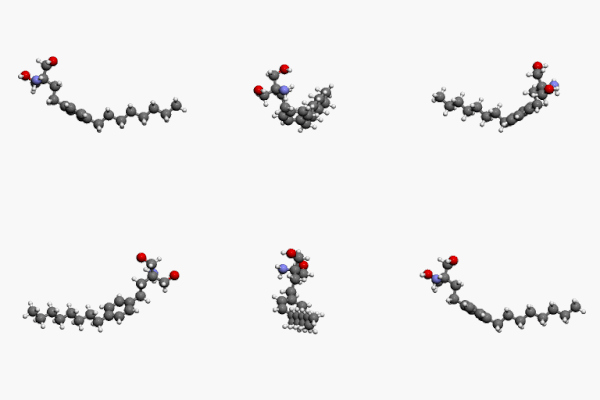
Glutamate interacts with at least three classes of membrane receptors, each commonly referred to by preferred pharmacological agonists: N-methyl-o-aspartate (NMDA), quisqualate, and kainate (Watkins and Olverman, 1987) (Figure I). These three classes are linked to membrane cation channels. A second type of quisqualate receptor has been additionally linked to a second messenger system (see below). It has been suggested that all three classes might actually be substates of a single molecular complex, but binding studies and newer physiological studies favor separate structures.

Quisqualate                         NMDA                       Kainate

Three Classes of Glutamate Receptors

Three Classes of Glutamate Receptors

Three Classes of Glutamate Receptors

One type of quisqualate receptor stimulates the formation of inositol 1,4,5-trisphosphate UPS) and diacylglycerol (DAG) from phosphatidylinositol-4,5-biphosphate (PIP,); the other is linked directly to a Na+ ionophore. Activation of the quisqualate receptor-ionophore complex can be potentiated by Zn2+. The NMDA receptor opens a channel permeable to Ca2+ as well as Na+; this receptor-channel complex has several modulatory sites discussed in the text. The kainate receptor opens an ionophore permeable to Na+.

Best defined is the NMDA receptor. This receptor opens a distinctive membrane channel characterized by high conductance (main state about 50 pS), voltage dependent Mgz+ blockade and permeability to both Ca2+ and Na+. The NMDA receptor can be selectively activated by several endogenous compounds, including L-aspartate, homocysteate, and quinolinate. Activation requires the coavailability of glycine in near micromolar concentrations. The action of glutamate at the NMDA receptor can be selectively antagonized: competitively by 2-amino-5-phosphonovalerate (APV) and 2-amino-5-phosphonoheptanoate (APH), or noncompetitively by drugs that bind to the phencyclidine site within the open channel (such as phencyclidine, MK-801, dextrorphan, or ketamine. The NMDA receptor-activated channel can also be blocked noncompetitively by Znz+, most likely at a site different from that which binds Mg2.
Although glutamate has high affinity for all three classes of postsynaptic receptors, it is not easy to demonstrate its neurotoxicity in vivo. Even when directly injected into brain, bypassing the blood-brain barrier, extremely high doses of glutamate are required to create lesions.  Mangano & Schwartz found that they could infuse 0.5 crl/hr of a 300 mM glutamate solution into the hippocampus of a rat for 2 weeks without producing neuronal injury. This apparent low in vivo neurotoxic potency of glutamate may represent one reason why Olney’s “glutamate hypothesis” of neurological disease did not initially achieve a more widespread following. However, in fact, glutamate is a potent and rapidly acting neurotoxin; its neurotoxicity in vivo is likely masked by the efficiency of normal cellular uptake mechanisms in removing glutamate from the extracellular space. Glutamate neurotoxicity can be most directly studied in cell culture where bath exposure is not limited by cellular uptake.
The toxic changes produced by glutamate or related excitatory amino acids in vivo are of two sorts:

  1. acute swelling of neuronal dendrites and cell bodies and a
  2. more slowly evolving neuronal degeneration (Olney, 1986).

Axons and glia are relatively spared, although high levels of excitatory amino acids can produce some swelling of glia. A hallmark of excitatory amino acid neurotoxicity is its cellular selectivity, with distinctive patterns of neuronal loss produced by different excitatory amino acids and different routes of administration. For example, Nadler and co-workers (1978) found that intraventricular kainate preferentially destroys hippocampal CA3 neurons but spares dentate granule neurons. Different neuronal subpopulations
may differ in their intrinsic vulnerability to damage.

Possible Mechanisms Involved in Glutamate Neurotoxicity

How Ca*+ may mediate glutamate-induced neuronal degeneration. Glutamate acts on NMDA, non-NMDA, and “metabotropic” receptors (the quisqualate receptor linked to a second messenger system) to produce an increase in cytosolic free Ca*+. This cytosolic Ca *+, in concert with diacylglycerol liberated by the quisqualate-triggered second messenger system, activates protein kinase C, which acts via a number of mechanisms (primarily by altering membrane ion channels) to increase neuronal excitability and further increase cytosolic Ca*+. Elevated cytosolic Ca2+ then activates several enzymes capable of either directly or indirectly (through free radical formation) destroying cellular structure. Glutamate released from synaptic terminals or leaking nonspecifically from ruptured neurons contributes to additional injury propagation.

Glutamate Neurotoxicity in Perspective

The hypothesis that excitatory amino acids may specifically mediate pathological neuronal injury gives new form to this age-old enemy and raises the tantalizing possibility that current molecular and cellular insights into excitatory amino acid transmitter systems might be harnessed to develop an efficacious clinical therapy. Some points of attack are already apparent; others will likely be defined as the biology of excitatory amino acids continues to be unraveled. An intriguing area for investigation is the relationship between excitatory amino acid neurotoxicity and normal neuronal processes such as maturation, neurite outgrowth, and synaptic plasticity.

Glutamate Toxicity in a Neuronal Cell line Involves Inhibition of Cystine Transport Leading to Oxidative Stress

Timothy H. Murphy, M Miyamoto, A Sastre, R Schnaar and JT Coyle
Neuron 1989: 2: 1547-88.

Glutamate binds to both excitatory neurotransmitter binding sites and a W-dependent, quisqualate- and cystine-inhibited transport site on brain neurons. The neuroblastoma-primary retina hybrid cells (NWRE-105) are susceptible to glutamate-induced cytotoxicity. The Cl–dependent transport site to which glutamate and quisqualate (but not kainate or NMDA) bind has a higher affinity for cystine than for glutamate. Towering cystine concentrations in the cell culture medium results in cytotoxicity similar to that induced by glutamate addition in its morphology, kinetics, and CaZ+ dependence. Glutamate-induced cytotoxicity is directly proportional to its ability to inhibit cystine uptake. Exposure to glutamate (or lowered cystine) causes a decrease in glutathione levels and an accumulation of intracellular peroxides. Like NW-RE-105 cells, primary rat hippocampal neurons (but not glia) in culture degenerate in medium with lowered cystine concentration. Thus, glutamate-induced cytotoxicity in N18-RE-105 cells is due to inhibition of cystine uptake, resulting in lowered glutathione levels leading to oxidative stress and cell death.

Mechanism of glutamate-induced neurotoxicity in HT22 mouse hippocampal cells

Masayuki Fukui, Ji-Hoon Song, Jinyoung Choi, Hye Joung Choi, Bao Ting Zhu
European Journal of Pharmacology 617 (2009) 1–11
http://dx.doi.org:/10.1016/j.ejphar.2009.06.059

Glutamate is an endogenous excitatory neurotransmitter. At high concentrations, it is neurotoxic and contributes to the development of certain neurodegenerative diseases. There is considerable controversy in the literature with regard to whether glutamate-induced cell death in cultured HT22 cells (an immortalized mouse hippocampal cell line) is apoptosis, necrosis, or a new form of cell death. The present study focused on investigating the mechanism of glutamate-induced cell death. We found that glutamate induced, in a time dependent manner, both necrosis and apoptosis in HT22 cells. At relatively early time points (8–12 h), glutamate induced mostly necrosis, whereas at late time points (16–24 h), it induced mainly apoptosis. Glutamate-induced mitochondrial oxidative stress and dysfunction were crucial early events required for the induction of apoptosis through the release of the mitochondrial apoptosis-inducing factor (AIF), which catalyzed DNA fragmentation (an ATP-independent process). Glutamate-induced cell death proceeded independently of the Bcl-2 family proteins and caspase activation. The lack of caspase activation likely resulted from the lack of intracellular ATP when the mitochondrial functions were rapidly disrupted by the mitochondrial oxidative stress. In addition, it was observed that activation of JNK, p38, and ERK signaling molecules was also involved in the induction of apoptosis by glutamate. In conclusion, glutamate-induced apoptosis is AIF-dependent but caspase-independent, and is accompanied by DNA ladder formation but not chromatin condensation.

Understanding Low Reliability of Memories for Neutral Information Encoded under Stress: Alterations in Memory-Related Activation in the Hippocampus and Midbrain

Shaozheng Qin, EJ Hermans, HJF van Marle, and G Fernandez, et al.
The Journal of Neuroscience, Mar 21, 2012; 32(12): 4032–4041
http://dx.doi.org:/10.1523/JNEUROSCI.3101-11.2012

Exposure to an acute stressor can lead to unreliable remembrance of intrinsically neutral information, as exemplified by low reliability of eyewitness memories, which stands in contrast with enhanced memory for the stressful incident itself. Stress-sensitive neuromodulators (e.g., catecholamines) are believed to cause this low reliability by altering neurocognitive processes underlying memory formation. Using event-related functional magnetic resonance imaging, we investigated neural activity during memory formation in 44 young, healthy human participants while incidentally encoding emotionally neutral, complex scenes embedded in either a stressful or neutral context.
We recorded event-related pupil dilation responses as an indirect index of phasic noradrenergic activity. Autonomic, endocrine, and psychological measures were acquired to validate stress manipulation. Acute stress during encoding led to a more liberal response bias (more hits and false alarms) when testing memory for the scenes 24 h later. The strength of this bias correlated negatively with pupil dilation responses and positively with stress-induced heart rate increases at encoding. Acute stress, moreover, reduced subsequent memory effects (SMEs; items later remembered vs forgotten) in hippocampus and midbrain, and in pupil dilation responses.
The diminished SMEs indicate reduced selectivity and specificity in mnemonic processing during memory formation. This is in line with a model in which stress-induced catecholaminergic hyperactivation alters phasic neuromodulatory signaling in memory-related circuits, resulting in generalized (gist-based) processing at the cost of specificity. Thus, one may speculate that loss of specificity may yield less discrete memory representations at time of encoding, thereby causing a more liberal response bias when probing these memories.

Neuroendocrinology – Signaling, neuron plasticity and memory

Leptin Signaling Modulates the Activity of Urocortin 1 Neurons in the Mouse Nonpreganglionic Edinger-Westphal Nucleus

Lu Xu, Wim J. J. M. Scheenen, Rebecca L. Leshan, Christa M. Patterson, et al.
Endocrinology 152(3): 979–988, 2011
http://dx.doi.org:/10.1210/en.2010-1143

A recent study systematically characterized the distribution of the long form of the leptin receptor (LepRb) in the mouse brain and showed substantial LepRb mRNA expression in the nonpreganglionic Edinger-Westphal nucleus (npEW) in the rostroventral part of the midbrain. This nucleus hosts the majority of urocortin 1 (Ucn1) neurons in the rodent brain, and because Ucn1 is a potent satiety hormone and electrical lesioning of the npEW strongly decreases food intake, we have hypothesized a role of npEW-Ucn1 neurons in leptin-controlled food intake. Here, we show by immunohistochemistry that npEW-Ucn1 neurons in the mouse contain LepRb and respond to leptin administration with induction of the Janus kinase 2-signal transducer and activator of transcription 3 pathway, both in vivo and in vitro. Furthermore, systemic leptin administration increases the Ucn1 content of then pEW significantly, whereas in mice that lack LepRb (db/db mice), then pEW contains considerably reduced amount of Ucn1. Finally, we reveal by patch clamping of midbrain Ucn1 neurons that leptin administration reduces the electrical firing activity of the Ucn1 neurons. In conclusion, we provide ample evidence for leptin actions that go beyond leptin’s well-known targets in the hypothalamus and propose that leptin can directly influence the activity of the midbrain Ucn1 neurons.

Leptin regulation of hippocampal synaptic function in health and disease

Andrew J. Irving and Jenni Harvey
Trans. R. Soc. B 369: 20130155 http://dx.doi.org/10.1098/rstb.2013.0155

The endocrine hormone leptin plays a key role in regulating food intake and body weight via its actions in the hypothalamus. However, leptin receptors are highly expressed in many extra-hypothalamic brain regions and evidence is growing that leptin influences many central processes including cognition. Indeed, recent studies indicate that leptin is a potential cognitive enhancer as it markedly facilitates the cellular events underlying hippocampal-dependent learning and memory, including effects on glutamate receptor trafficking, neuronal morphology and activity-dependent synaptic plasticity. However, the ability of leptin to regulate hippocampal synaptic function markedly declines with age and aberrant leptin function has been linked to neurodegenerative disorders such as Alzheimer’s disease (AD). Here, we review the evidence supporting a cognitive enhancing role for the hormone leptin and discuss the therapeutic potential of using leptin-based agents to treat AD.

The Y2 receptor agonist PYY3–36 increases the behavioral response to novelty and acute dopaminergic drug challenge in mice

Ulrike Stadlbauer, Elisabeth Weber, Wolfgang Langhans and Urs Meyer
International Journal of Neuropsychopharmacology (2014), 17, 407–419
http://dx.doi.org:/10.1017/S1461145713001223

The gastrointestinal hormone PYY3–36 is a preferential Y2 neuropeptide Y (NPY) receptor agonist. Recent evidence indicates that PYY3–36 acts on central dopaminergic pathways, but its influence on dopamine-dependent behaviors remains largely unknown. We therefore explored the effects of peripheral PYY3–36 treatment on the behavioral responses to novelty and to dopamine-activating drugs in mice. In addition, we examined whether PYY3–36 administration may activate distinct dopamine and γ-aminobutyric acid (GABA) cell populations in the mesoaccumbal and nigrostriatal pathways. We found that i.p. PYY3–36 injection led to a dose-dependent increase in novel object exploration. The effective dose of PYY3–36 (1 μg/100 g body weight) also potentiated the locomotor reaction to the indirect dopamine receptor agonist amphetamine and increased stereotyped climbing/leaning responses following administration of the direct dopamine receptor agonist apomorphine. PYY3–36 administration did not affect activity of midbrain dopaminergic cells as evaluated by double immuno-enzyme staining of the neuronal early gene product c-Fos with tyrosine hydroxylase. PYY3–36 did, however, lead to a marked increase in the number of cells co-expressing c-Fos with glutamic acid decarboxylase in the nucleus accumbens and caudate putamen, indicating activation of GABAergic cells in dorsal and ventral striatal areas. Our results support the hypothesis that acute administration of the preferential Y2 receptor agonist PYY3–36 modulates dopamine-dependent behaviours. These effects do not seem to involve direct activation of midbrain dopamine cells but instead are associated with neuronal activation in the major input areas of the mesoaccumbal and nigrostriatal pathways.

Somatostatin and nociceptin inhibit neurons in the central nucleus of amygdala that project to the periaqueductal grey

Billy Chieng, MacDonald J. Christie
Neuropharmacology 59 (2010) 425e430
http://dx.doi.org:/10.1016/j.neuropharm.2010.06.001

The central nucleus of amygdala (CeA) plays an important role in modulation of the descending antinociceptive pathways. Using whole-cell patch clamp recordings from brain slices, we found that CeA neurons responded to the endogenous ligands somatostatin (SST) and nociceptin/orphanin FQ (OFQ) via an increased K-conductance. Co-application with selective antagonists suggested that SST and OFQ act on SSTR2 and ORL1 receptors, respectively. Taking account of anatomical localisation of recorded neurons, the present study showed that many responsive neurons were located within the medial subdivision of CeA and all CeA projection neurons to the midbrain periaqueductal grey invariably responded to these peptides. Randomly selected agonist-responsive neurons in CeA predominantly classified physiologically as low-threshold spiking neurons. The similarity of SST, OFQ and, as previously reported, opioid responsiveness in a sub-population of CeA neurons suggests converging roles of these peptides to inhibit the activity of projections from CeA to vlPAG, and potentially similar antinociceptive actions in this pathway.

In vitro identification and electrophysiological characterization of dopamine neurons in the ventral tegmental area

Tao A. Zhang, Andon N. Placzek, John A. Dani
Neuropharmacology 59 (2010) 431e436
http://dx.doi.org:/10.1016/j.neuropharm.2010.06.004

Dopamine (DA) neurons in the ventral tegmental area (VTA) have been implicated in brain mechanisms related to motivation, reward, and drug addiction. Successful identification of these neurons in vitro has historically depended upon the expression of a hyperpolarization-activated current (Ih) and immunohistochemical demonstration of the presence of tyrosine hydroxylase (TH), the rate-limiting enzyme for DA synthesis. Recent findings suggest that electrophysiological criteria may be insufficient for distinguishing DA neurons from non-DA neurons in the VTA. In this study, we sought to determine factors that could potentially account for the apparent discrepancies in the literature regarding DA neuron identification in the rodent brain slice preparation. We found that confirmed DA neurons from the lateral VTA generally displayed a larger amplitude Ih relative to DA neurons located in the medial VTA. Measurement of a large amplitude Ih (>100 pA) consistently indicated a dopaminergic phenotype, but non-dopamine neurons also can have Ih current. The data also showed that immunohistochemical TH labeling of DA neurons can render false negative results after relatively long duration (>15 min) wholecell patch clamp recordings. We conclude that whole-cell patch clamp recording in combination with immunohistochemical detection of TH expression can guarantee positive but not negative DA identification in the VTA.

Dopamine Enables In Vivo Synaptic Plasticity Associated with the Addictive Drug Nicotine

Jianrong Tang and John A. Dani
Neuron, Sept 10, 2009; 63, 673–682
http://dx.doi.org:/10.1016/j.neuron.2009.07.025

Addictive drugs induce a dopamine signal that contributes to the initiation of addiction, and the dopamine signal influences drug-associated memories that perpetuate drug use. The addiction process shares many commonalities with the synaptic plasticity mechanisms normally attributed to learning and memory. Environmental stimuli repeatedly linked to addictive drugs become learned associations, and those stimuli come to elicit memories or sensations that motivate continued drug use. Applying in vivo recording techniques to freely moving mice, we show that physiologically relevant concentrations of the addictive drug nicotine directly cause in vivo hippocampal synaptic potentiation of the kind that underlies learning and memory. The drug-induced long-term synaptic plasticity required a local hippocampal dopamine signal. Disrupting general dopamine signaling prevented the nicotine-induced synaptic plasticity and conditioned place preference. These results suggest that dopaminergic signaling serves as a functional label of salient events by enabling and scaling synaptic plasticity that underlies drug-induced associative memory.

NCS-1 in the Dentate Gyrus Promotes Exploration, Synaptic Plasticity, and Rapid Acquisition of Spatial Memory

Bechara J. Saab, John Georgiou, Arup Nath, Frank J.S. Lee, et al.
Neuron, Sept 10, 2009; 63, 643–656
http://dx.doi.org:/10.1016/j.neuron.2009.08.014

The molecular underpinnings of exploration and its link to learning and memory remain poorly understood. Here we show that inducible, modest overexpression of neuronal calcium sensor 1 (Ncs1) selectively in the adult murine dentate gyrus (DG) promotes a specific form of exploratory behavior. The mice also display a selective facilitation of longterm potentiation (LTP) in the medial perforant path and a selective enhancement in rapid-acquisition spatial memory, phenotypes that are reversed by direct application of a cell-permeant peptide (DNIP) designed to interfere with NCS-1 binding to the dopamine type-2 receptor (D2R). Moreover, the DNIP and the D2R-selective antagonist L-741,626 attenuated exploratory behavior, DG LTP, and spatial memory in control mice. These data demonstrate a role for NCS-1 and D2R in DG plasticity and provide insight for understanding how the DG contributes to the origin of exploration and spatial memory acquisition.

Neuroligin 2 Drives Postsynaptic Assembly at Perisomatic Inhibitory Synapses through Gephyrin and Collybistin

Alexandros Poulopoulos, Gayane Aramuni, Guido Meyer, Tolga Soykan, et al.
Neuron 63, 628–642, Sept 10, 2009
http://dx.doi.org:/10.1016/j.neuron.2009.08.023

In the mammalian CNS, each neuron typically receives thousands of synaptic inputs from diverse classes of neurons. Synaptic transmission to the postsynaptic neuron relies on localized and transmitter-specific differentiation of the plasma membrane with postsynaptic receptor, scaffolding, and adhesion proteins accumulating in precise apposition to presynaptic sites of transmitter release. We identified protein interactions of the synaptic adhesion molecule neuroligin 2 that drive postsynaptic differentiation at inhibitory synapses. Neuroligin 2 binds the scaffolding protein gephyrin through a conserved cytoplasmic motif and functions as a specific activator of collybistin, thus guiding membrane tethering of the inhibitory postsynaptic scaffold. Complexes of neuroligin 2, gephyrin and collybistin are sufficient for cell-autonomous clustering of inhibitory neurotransmitter receptors. Deletion of neuroligin 2 in mice perturbs GABAergic and glycinergic synaptic transmission and leads to a loss of postsynaptic specializations specifically at perisomatic inhibitory synapses.

A Subset of Ventral Tegmental Area Neurons is Inhibited by Dopamine, 5-Hydroxytryptamine and Opioids

L. Cameron, M. W. Wessendorf and J. T. Williams
Neuroscience 1997; 77(1), pp. 155–166 PII: S0306-4522(96)00444-7

Neurons originating in the ventral tegmental area are thought to play a key role in the formation of addictive behaviors, particularly in response to drugs such as cocaine and opioids. In this study we identified different populations of ventral tegmental area neurons by the pharmacology of their evoked synaptic potentials and their response to dopamine, 5-hydroxytryptamine and opioids. Intracellular recordings were made from ventral tegmental area neurons in horizontal slices of guinea-pig brain and electrical stimulation was used to evoke synaptic potentials. The majority of cells (61.3%) hyperpolarized in response to dopamine, depolarized to 5-hydroxytryptamine, failed to respond to [Met]5enkephalin and exhibited a slow GABAB-mediated inhibitory postsynaptic potential. A smaller proportion of cells (11.3%) hyperpolarized in response to [Met]5enkephalin, depolarized to 5-hydroxytryptamine, failed to respond to dopamine and did not exhibit a slow inhibitory postsynaptic potential. These two groups of cells corresponded to previously described ‘‘principal’’ and ‘‘secondary’’ cells, respectively. A further group of cells (27.4%) was identified that, like the principal cells, hyperpolarized to dopamine.

However, these ‘‘tertiary cells’’ also hyperpolarized to both 5-hydroxytryptamine and [Met]5enkephalin and exhibited a slow, cocaine-sensitive 5-hydroxytryptamine1A-mediated inhibitory postsynaptic potential. When principal and tertiary cells were investigated immuno-histochemically, 82% of the principal cells were positive for tyrosine hydroxylase compared
with only 29% of the tertiary cells. The 5-hydroxytryptamine innervation of both these cell types was investigated and a similar density of putative contacts was observed near the somata and dendrites in both groups. This latter finding suggests that the existence of a 5-hydroxytryptamine-mediated inhibitory postsynaptic potential in the tertiary cells may be determined by the selective expression of 5-hydroxytryptamine receptors, rather than the distribution or density of the 5-hydroxytryptamine innervation.
We conclude that tertiary cells are a distinct subset of ventral tegmental area neurons where cocaine and μ-opioids both mediate inhibition.

Dopamine reward circuitry: Two projection systems from the ventral midbrain to the nucleus accumbens–olfactory tubercle complex

Satoshi Ikemoto
Brain Research Reviews 56 (2007) 27–78
http://:dx.doi.org:/10.1016/j.brainresrev.2007.05.004

Anatomical and functional refinements of the meso-limbic dopamine system
of the rat are discussed. Present experiments suggest that dopaminergic neurons localized in the posteromedial ventral tegmental area (VTA) and central linear nucleus raphe selectively project to the ventromedial striatum (medial olfactory tubercle and medial nucleus accumbens shell), whereas
the anteromedial VTA has few if any projections to the ventral striatum,
and the lateral VTA largely projects to the ventrolateral striatum (accumbens
core, lateral shell and lateral tubercle). These findings complement the recent behavioral findings that cocaine and amphetamine are more rewarding when administered into the ventromedial striatum than into the ventrolateral striatum. Drugs such as nicotine and opiates are more rewarding when administered into the posterior VTA or the central linear nucleus than into
the anterior VTA. A review of the literature suggests that
(1) the midbrain has corresponding zones for the accumbens core and medial shell;
(2) the striatal portion of the olfactory tubercle is a ventral extension of the nucleus accumbens shell; and
(3) a model of two dopamine projection systems from the ventral midbrain to the ventral striatum is useful for understanding reward function.
The medial projection system is important in the regulation of arousal characterized by affect and drive and plays a different role in goal directed learning than the lateral projection system, as described in the variation–selection hypothesis of striatal functional organization.

Metabolic hormones, dopamine circuits, and feeding

Nandakumar S. Narayanan, Douglas J. Guarnieri, Ralph J. DiLeone
Frontiers in Neuroendocrinology 31 (2010) 104–112
http://dx.doi.org:/10.1016/j.yfrne.2009.10.004

Recent evidence has emerged demonstrating that metabolic hormones such as ghrelin and leptin can act on ventral tegmental area (VTA) midbrain dopamine neurons to influence feeding. The VTA is the origin of mesolimbic dopamine neurons that project to the nucleus accumbens (NAc) to influence behavior. While blockade of dopamine via systemic antagonists or targeted gene delete can impair food intake, local NAc dopamine manipulations have little effect on food intake. Notably, non-dopaminergic manipulations in the VTA and NAc produce more consistent effects on feeding and food choice. More recent genetic evidence supports a role for the substantia nigra-striatal dopamine pathways in food intake, while the VTA–NAc circuit is more likely involved in higher-order aspects of food acquisition, such as motivation and cue associations. This rich and complex literature should be considered in models of how peripheral hormones influence feeding behavior via action on the midbrain circuits.

Control of brain development and homeostasis by local and systemic insulin signaling

Liu, P. Speder & A. H. Brand
Diabetes, Obesity and Metabolism 16 (Suppl. 1): 16–20, 2014

Insulin and insulin-like growth factors (IGFs) are important regulators of growth and metabolism. In both vertebrates and invertebrates, insulin/IGFs are made available to various organs, including the brain, through two routes: the circulating systemic insulin/IGFs act on distant organs via endocrine signaling, whereas insulin/IGF ligands released by local tissues act in a paracrine or autocrine fashion. Although the mechanisms governing the secretion and action of systemic insulin/IGF have been the focus of extensive investigation, the significance of locally derived insulin/IGF has only more recently come to the fore. Local insulin/IGF signaling is particularly important for the development and homeostasis of the central nervous system, which is insulated from the systemic environment by the blood–brain barrier. Local insulin/IGF signaling from glial cells, the blood–brain barrier and the cerebrospinal fluid has emerged as a potent regulator of neurogenesis. This review will address the main sources of local insulin/IGF and how they affect neurogenesis during development. In addition, we describe how local insulin/IGF signaling couples neural stem cell proliferation with systemic energy state in Drosophila and in mammals.

Pharmacology, Physiology, and Mechanisms of Action of Dipeptidyl Peptidase-4 Inhibitors

Erin E. Mulvihill and Daniel J. Drucker
Endocrine Reviews 35: 992–1019, 2014
http://dx.doi.org/10.1210/er.2014-1035

Dipeptidyl peptidase-4 (DPP4) is a widely expressed enzyme transducing actions through an anchored transmembrane molecule and a soluble circulating protein. Both membrane-associated and soluble DPP4 exert
catalytic activity, cleaving proteins containing a position 2 alanine or proline. DPP4-mediated enzymatic cleavage alternatively inactivates peptides or generates new bioactive moieties that may exert competing or novel activities. The widespread use of selective DPP4 inhibitors for the treatment of type 2 diabetes has heightened interest in the molecular mechanisms through which DPP4 inhibitors exert their pleiotropic actions. Here we review the biology ofDPP4with a focus on:
1) identification of pharmacological vs physiological DPP4 substrates; and
2) elucidation of mechanisms of actions of DPP4 in studies employing genetic elimination or chemical reduction of DPP4 activity.
We review data identifying the roles of key DPP4 substrates in transducing the glucoregulatory, anti-inflammatory, and cardiometabolic actions of DPP4  inhibitors in both preclinical and clinical studies. Finally, we highlight experimental pitfalls and technical challenges encountered in studies designed to understand the mechanisms of action and downstream targets activated by inhibition of DPP4.
Dipeptidyl peptidase-4 (DPP4) is a multifunctional protein that exerts biological activity through pleiotropic actions including:

  • protease activity (1),
  • association with adenosine deaminase (ADA) (2),
  • interaction with the extracellular matrix (3),
  • cell surface coreceptor activity mediating viral entry (4), and
  • regulation of intracellular signal transduction coupled to control of cell migration and proliferation (5).

The complexity of DPP4 action is amplified by the panoply of bioactive DPP4 substrates, which in turn act as elegant biochemical messengers in multiple tissues, including the immune and neuroendocrine systems.

DPP4 transmits signals across cell membranes and interacts with other membrane proteins (Figure). Remarkably, most of the protein is extracellular, including the C-terminal catalytic domain, a cysteine-rich area, and a large glycosylated region linked by a flexible stalk to the transmembrane segment. Only six N-terminal amino acids are predicted to extend into the cytoplasm. The active site, Ser 630, is flanked by the classic serine peptidase motif Gly-Trp-Ser630-Tyr-Gly-Gly-Tyr-Val.

Membrane-bound DPP4

Membrane-bound DPP4

Membrane-bound DPP4 contains residues 1–766, whereas sDPP4 contains residues 39–766. sDPP4 is lacking the cytoplasmic domain [residues 1–6], transmembrane domain [residues 7–28], and the flexible stalk [residues 29–39]. Both membrane-bound and circulating sDPP4 share many domains including the glycosylated region [residues 101–535, specific residues 85,92, 150], ADA binding domain [340–343], fibronectin binding domain [468–479], cysteine-rich domain [351–506, disulfide bonds are formed from 385–394, 444–472, and 649–762], and the catalytic domain [507–766 including residues composing the catalytic active site 630, 708, and 740].

DPP4 activity is subject to regulation at many levels, including control of gene and protein expression, interaction with binding partners, and modulation of enzyme activity. The DPP4 gene does not contain conventional TATAA or CCAAT promoter sequences but is characterized by a cytosine/guanine-rich promoter region.
DPP4 contains eight to 11 potential N-glycosylation sites, which can contribute to its folding and stability. Although glycosylation may contribute approximately 18–25% of the total molecular weight, mutational analysis has determined that the glycosylation sites are not required for dimerization, catalytic activity, or ADA binding. However, N-terminal sialylation facilitates trafficking of DPP4 to the apical membrane. Interestingly, molecular analysis of DPP4 isoforms isolated from the rat kidney brush border membrane reveals extensive heterogeneity in the oligosaccharides of DPP4.DPP4 was first investigated for its role in hydrolysis of dietary prolyl peptides (58); subsequent studies using DPP4 isolated using immunoaffinity chromatography and ADA binding identified DPP4 as the primary enzyme responsible for the generation of Gly-Prop-nitroanilide substrates in human serum. It is now known that DPP4 can cleave dozens of peptides, including chemokines, neuropeptides, and regulatory peptides, most containing a proline or alanine residue at position 2 of the amino-terminal region. Despite the preference for a position 2 proline, alternate residues (hydroxyproline, dehydroproline > alanine >,  glycine, threonine, valine, or leucine) at the penultimate position are also cleaved by DPP4, suggesting a required stereochemistry. The DPP4 cleavage at postproline peptide bonds inactivates peptides and/or generates new bioactive peptides (see Figure), thereby regulating diverse biological processes.

DPP4 cleavage regulates substrate-receptor interactions

DPP4 cleavage regulates substrate-receptor interactions

DPP4 cleavage regulates substrate/receptor interactions. A, DPP4 cleaves NPY [1–36] and PYY [1–36]. The intact forms of these peptides signal through Y1R-Y5R. After DPP4 cleavage, NPY [3–36] and PYY [3–36] are generated and preferentially signal through the Y2R and Y5R. B, DPP4 cleaves SP [1–11], which signals through the NK1R receptor to generate SP [5–11], which can signal through (NK1R, -2R, -3R).

GHRH and IGF-1

GHRH [1–44] and [1–40] are produced in the arcuate nucleus of the hypothalamus and bind its receptor on the anterior pituitary to stimulate the release of GH, and in turn, GH stimulates hepatic IGF-1 release. GHRH was among the first peptides to be identified as a DPP4 substrate; it is rapidly degraded in rodent and human plasma to GHRH [3–44]/GHRH [3–40], and this cleavage was blocked upon incubation of human plasma with the DPP4 inhibitor, diprotin A (99).GHRH[1–44] or [1–40] exhibits a very short half-life (6 min) andDPP4 cleavage was initially perceived to be a critical regulator of GHRH bioactivity and, in turn, the GH-IGF-1 axis. IGF-1, the downstream effector of GHRH and GH, is a 105-amino acid protein produced mainly by the liver.
IGF-1 was identified as a pharmacological DPP4 substrate by matrix-assisted laser desorption/ionization-time of flight analysis of molecular forms of IGF-1 generated after incubation with DPP4 purified from baculovirus-infected insect cells. However, studies in pigs treated with sitagliptin at doses inhibiting 90% of DPP4 activity failed to demonstrate an increase in active intact IGF-1.
Clinically, treatment of healthy human male subjects with sitagliptin (25–600 mg) for 10 days did not produce increased concentrations of serum IGF-1 or IGF-binding protein 3 as measured by ELISA. Furthermore, Dpp4/ mice or rats do not exhibit increased organ growth or body size. Hence, the available data suggest that although DPP4 cleaves and inactivates both GHRH and IGF-1, enzymatic inactivation by DPP4 is not the major mechanism regulating the bioactivity of the GHRH-IGF-1 axis.

The role of acute cortisol and DHEAS in predicting acute and chronic PTSD symptoms

Joanne Mouthaan, Marit Sijbrandij, Jan S.K. Luitse
Psychoneuroendocrinology (2014) 45, 179—186
http://dx.doi.org/10.1016/j.psyneuen.2014.04.001

Background: Decreased activation of the hypothalamus—pituitary—adrenal (HPA) axis in response to stress is suspected to be a vulnerability factor for posttraumatic stress disorder (PTSD). Previous studies showed inconsistent findings regarding the role of cortisol in predicting PTSD. In addition, no prospective studies have examined the role of dehydroepiandrosterone (DHEA), or its sulfate form DHEAS, and the cortisol-to-DHEA(S) ratio in predicting PTSD. In this study, we tested whether acute plasma cortisol, DHEAS and the cortisol-to-DHEAS ratio predicted PTSD symptoms at 6 weeks and 6 months post-trauma. Methods: Blood samples of 397 adult level-1 trauma center patients, taken at the trauma resuscitation room within hours after the injury, were analyzed for cortisol and DHEAS levels. PTSD symptoms were assessed at 6 weeks and 6 months post-trauma with the Clinician Administered PTSD Scale. Results: Multivariate linear regression analyses showed that lower cortisol predicted PTSD symptoms at both 6 weeks and 6 months, controlling for age, gender, time of blood sampling, injury, trauma history, and admission to intensive care. Higher DHEAS and a smaller cortisol-to-DHEAS ratio predicted PTSD symptoms at 6 weeks, but not after controlling for the same variables, and not at 6 months. Conclusions: Our study provides important new evidence on the crucial role of the HPA-axis in response to trauma by showing that acute cortisol and DHEAS levels predict PTSD symptoms in survivors of recent trauma.
Neurobiology of DHEA and effects on sexuality, mood and cognition

  1. Pluchino, P.Drakopoulos, F.Bianchi-Demicheli, J.M.Wenger
    J Steroid Biochem & Molec Biol 145 (2015) 273–280
    http://dx.doi.org/10.1016/j.jsbmb.2014.04.012

Dehydroepiandrosterone (DHEA) and its sulfate ester, DHEAS, are the most abundant steroid hormones in the humans. However, their physiological significance, their mechanisms of action and their possible roles as treatment are not fully clarified. Biological actions of DHEA(S) in the brain involve neuroprotection, neurite growth, neurogenesis and neuronal survival, apoptosis, catecholamine synthesis and secretion, as well as anti-oxidant, anti- inflammatory and antiglucocorticoid effects. In addition, DHEA affects neurosteroidogen is and endorphin synthesis/release. We also demonstrated in a model of ovariectomized rats that DHEA therapy increases proceptive behaviors, already after 1 week of treatment, affecting central function of sexual drive. In women, the analyses of clinical outcomes are far from being conclusive and many issues should still be addressed. Although DHEA preparations have been available in the market since the 1990s, there are very few definitive reports on the biological functions of this steroid. We demonstrate that 1 year DHEA administration at the dose of 10mg provided a significant improvement in comparison with vitamin D in sexual function
and in frequency of sexual intercourse in early postmenopausal women. Among symptomatic women, the spectrum of symptoms responding to DHEA requires further investigation, to define the type of sexual symptoms (e.g. decreased sexual function or hypoactive sexual desire disorder) and the degree of mood/cognitive symptoms that could be responsive to hormonal treatment.
In this regard, our findings are promising, although they need further exploration with a larger and more representative sample size.
Although adrenal cortex is considered to be the primary source of DHEAS in the brain, it was reported that DHEAS did not dis- appear or decrease in the brain 15 days neither after orchiectomy, adrenalectomy, or both, nor after the inhibition of adrenal secretion by dexamethasone. DHEA and DHEAS were among the first neurosteroids identified in rat brains. Cytochrome P450c17 was found in a subset of neurons of embryonic rodent brains. While P450c17 protein was readily detected in the brain, the abundance of P450c17 mRNA transcripts in the embryonic mouse brain or hippocampus of adult male rats was low, and was approximated to be 1/200th of the expression in testis.
DHEAS may be synthesized in the brain from DHEA. Sulfation of DHEA has been observed in the brains of rhesus monkeys in vivo and in human fetal brain slices in vitro. DHEA sulfotransferase (HSTor SULT2A1) is an enzyme that sulfonates DHEA (in addition to pregnenolone).Western blotting and immune-histochemistry showed protein expression of an HST in adult Wistar rat brain. In addition SULT2A1 mRNA expression has been shown in rat brains. DHEAS is predominately transported out of the brain across the blood–brain barrier and DHEAS found in the brain is most likely due to local synthesis . DHEA(S) may mediate some of its actions through conversion into more potent sex steroids and activation of androgen or estrogen receptors in tissue.
According to existing assumption of the biology of depression, DHEA(S) ability to modulate many neurobiological actions could underlie relationships between endogenous and/or exogenously- supplemented DHEA(S) concentrations and depression. There is evidence that DHEAS concentrations are negatively correlated with ratings of depressed mood. However, the remaining literature examining plasma and serum DHEA(S) concentrations in depression is still inconsistent and other plasma indexes were studied in order to more accurately discriminate depressed from nondepressed individuals. Hypothalamic–pituitary–adrenal axis (HPA) hyperactivity has
been demonstrated in chronic diseases affecting nervous system disorders like depression. The end products of HPA axis, glucocorticoids (GCs), regulate many physiological functions and play an important role in affective regulation and dysregulation. Despite DHEAS levels which markedly decrease throughout adulthood, an increase in circulating cortisol with advanced age has been observed in human and nonhuman primates.
The most relevant aspect meriting attention is certainly the controversial finding among the studies that investigate the correlation of the endogenous DHEA sulfate (DHEAS) level, the aging process or organ illness with the results coming from studies focusing on the effects of exogenous DHEAS administration on brain function, sexuality, cardiovascular health and metabolic syndrome. Indeed, the marked age-related decline in serum DHEA and DHEAS has suggested that a deficiency of these steroids may be causally related to the development of a series of diseases that are generally associ- ated with aging. The postulated consequences of low DHEA levels include insulin resistance, obesity, cardiovascular disease, cancer, reduction of the immune defense system as well as psychosocial problems such as depression and a general deterioration in the sensation of well-being and cognitive function, DHEA replacement may seem an attractive treatment opportunity. Nevertheless, the analyses of clinical outcomes are far from being conclusive.

Dehydroepiandrosterone, its metabolites and ion channels

Hill, M. Dusková, L. Stárka
J Steroid Biochem & Molec Biology 145(2015)293–314
http://dx.doi.org/10.1016/j.jsbmb.2014.05.006

This review is focused on the physiological and pathophysiological relevance of steroids influencing the activities of the central and peripheral nervous systems with regard to their concentrations in body fluids and tissues in various stages of human life like the fetal development or pregnancy. The data summarized in this review shows that DHEA and its unconjugated and sulfated metabolites are physiologically and pathophysiologically relevant in modulating numerous ion channels and participate in vital functions of the human organism. DHEA and its unconjugated and sulfated metabolites including 5 _/ _-reduced androstane steroids participate in various physiological and pathophysiological processes like the management of GnRH cyclic release, regulation of glandular and neurotransmitter secretions, maintenance of glucose homeostasis on one hand and insulin insensitivity on the other hand, control of skeletalmuscle and smooth muscle activities including vasoregulation, promotion of tolerance to ischemia and other neuroprotective effects. In respect of prevalence of steroid sulfates over unconjugated steroids in the periphery and the opposite situation in the CNS, the sulfated androgens and androgen metabolites reach relevance in peripheral organs. The unconjugated androgens and estrogens are relevant in periphery and so much the more in the CNS due to higher concentrations of most unconjugated steroids in the CNS tissues than in circulation and peripheral organs.

Neurotrophins are proteins found within a broad range of cell types in the brain and periphery that facilitate neuronal growth, survival, and plasticity. The neurotrophin ‘‘superfamily’’ includes nerve growth factor (NGF), brain-derived neurotrophic factor (BDNF), neurotrophin-3 (NT3), neurotrophin-4/5 (NT4/5), and neurotrophin-6. Target tissues are hypothesized to regulate neuron survival by making neurotrophins available in limited amounts, resulting in selection of neurons with the best connectivity to the target tissue. NGF, in particular, is released by the target tissue and taken up in responsive neurons by receptor-mediated endocytosis. It is then transported retrogradedly into the cell where it exerts trophic effects. Lu et al. proposed a ‘‘Yin and Yang model,’’ whereby neurotrophic action is mediated by two principal classes of transmembrane receptor systems: the tyrosine kinase (Trk) receptors (including TrkA [selective for NGF], TrkB [selective for BDNF and NT4/5], and TrkC [selective for NT3]) and the neurotrophin receptor p75NTR. Each receptor type binds mature neurotrophins and/or neurotrophin precursors (proneurotrophins), creating a complex ‘‘balance’’ that then causes neuronal survival or death.
DHEA has been shown to evoke NGF mRNA expression in target cells. In a study of pregnant women, Schulte-Herbrüggen et al. showed no relationships between serum DHEAS and NGF. In contrast, we showed that DHEAS independently associated with salivary NGF (sNGF) in military men under baseline conditions, while DHEA did not. We now know that both DHEA(S) and NGF respond affirmatively to stressful insult, yet the association between these analytes during stress exposure is not understood. Characterization of this relationship has implications for prevention and treatment of traumatic stress and injury, degenerative disease management, and nerve repair. In this report, we extended our prior study of neuroprotective properties of DHEAS in men under baseline conditions to a prospective paradigm involving intense stress exposure in both men and women. We hypothesized that

(a) robust associations would prevail between total output of DHEAS and sNGF across the stress trajectory and at each time point,
(b) changes in DHEAS would predict corresponding changes in sNGF, and
(c) baseline DHEAS would positively predict total sNGF output across the stress trajectory.
We also explored the roles of testosterone and cortisol. In light of less definitive prior literature, directional hypotheses were not stated regarding these analytes.

In the first regression model, total hormone output (AUCG) of the independent variables (DHEAS, testosterone, and cortisol) combined to explain 63.7% of variance in sNGF output (F = 65.4, p < 0.001). Standardized beta coefficients revealed that testosterone exerted an independent effect (b = 0.80, p < 0.001), while the other predictors were not significant. In light of this unexpected finding, we then used regression-based causal steps modeling to evaluate whether testosterone mediated a hypothesized direct effect of DHEAS on sNGF. Following this approach, DHEAS predicted sNGF in an initial regression model (b = 0.45, p < 0.001). When testosterone was added, the direct effect of DHEAS (path c0) on sNGF was nearly eradicated and no longer significant (b = .04, p = .57), thus suggesting a mediated effect. An alternate statistical test (Sobel Test; 34) evaluating the hypothesized difference between the total effect (path c) and the direct effect (path c0) of DHEAS on sNGF produced a similar result (test statistic = 4.0, p < 0.001). Fig. 1 depicts positive association of DHEAS to sNGF, while Fig. 2 depicts Positive association of testosterone to sNGF.

Positive association of DHEAS total output and sNGF total output

Positive association of DHEAS total output and sNGF total output

Positive association of DHEAS total output and sNGF total output

Positive association of testosterone total output and sNGF total output

Positive association of testosterone total output and sNGF total output

Positive association of testosterone total output and sNGF total output.
The models were then decomposed at each time point. At baseline, the independent variables (DHEAS, testosterone, and cortisol) combined to account for 10.2% of variance in sNGF (F = 5.3, p < 0.01). Standardized beta coefficients showed that DHEAS exerted an independent effect on sNGF (b = 0.39, p < 0.001), while the other predictors were not significant. During stress exposure, the independent variables combined to account for 28.0% of variance in NGF (F = 15.8, p < 0.001). Again, DHEAS exerted an independent effect (b = 0.56, p < 0.001) while the other predictors were not significant. During recovery, the predictor set accounted for 18.0% of variance in sNGF (F = 9.2, p < 0.001), and DHEAS exerted an independent effect (b = 0.47, p < 0.001) while the other predictors did not.
The models were then decomposed relative to each change index. In terms of reactivity, the independent variables (DHEAS, testosterone, and cortisol reactivity) and covariate (sex) combined to account for 20.3% of variance in sNGF reactivity (F = 8.2, p < 0.001). Standardized beta coefficients revealed that DHEAS reactivity exerted an independent effect (b = 0.39, p < 0.001), while the other predictors were not significant. In terms of recovery, the predictors combined to account for 28.2% of variance in sNGF recovery (F = 15.5, p < 0.001); DHEAS recovery exerted an independent effect (b = 0.52, p < 0.001), as did testosterone recovery (b = [1]0.27, p < 0.01). In terms of residual elevation/depression, the independent variables explained 12.4% of variance in sNGF residual elevation (F = 6.2, p < 0.001). DHEAS residual elevation exerted an independent effect (b = 0.35, p < 0.001), while the other predictors did not.

Endocrine-Disrupting Chemicals and Human Growth and Maturation: A Focus on Early Critical Windows of Exposure

Julie Fudvoye, Jean-Pierre Bourguignon, Anne-Simone Parent
Vitamins and Hormones, 2014; 94: Chapt 1. 1-25.
http://dx.doi.org/10.1016/B978-0-12-800095-3.00001-8

Endocrine-disrupting chemicals (EDCs) are exogenous substances that interfere with hormone synthesis, metabolism, or action. In addition, some of them could cause epigenetic alterations of DNA that can be transmitted to the following generations. Because the developing organism is highly dependent on sex steroids and thyroid hormones for its maturation, the fetus and the child are very sensitive to any alteration of their hormonal environment. An additional concern about that early period of life comes from the shaping of the homeostatic mechanisms that takes place also at that time with involvement of epigenetic mechanisms along with the concept of fetal origin of health and disease. In this chapter, we will review the studies reporting effects of EDCs on human development. Using a translational approach, we will review animal studies that can shed light on some mechanisms of action of EDCs on the developing organism. We will focus on the major hormone-dependent stages of development: fetal growth, sexual differentiation, puberty, brain development, and energy balance. We will also discuss the possible epigenetic effects of EDCs on human development.

Several studies have reported that prenatal or early postnatal exposure to some EDCs is associated with alterations of cognitive or motor functions in children. Knowing the fundamental role played by thyroid hormones and sex steroids in cortex development, one can hypothesize that disruption of those hormones could cause alteration of the development of the cerebral cortex and of its functions later in life. We will review here the human data suggesting a causal effect for endocrine disrupters on impairment of cortical functions and approach some EDC mechanisms of action using animal models.

Thyroid hormones are known to be essential for brain development. They regulate progenitor proliferation and differentiation, neuron migration, and dendrite outgrowth (Parent, Naveau, Gerard, Bourguignon, & Westbrook, 2011). Even mild thyroid hormone insufficiency in humans can produce measurable deficits in cognitive functions (Zoeller & Rovet, 2004). Thyroid hormone action is mediated by two classes of nuclear receptors (Forrest & Vennstro¨m, 2000) that exhibit differential spatial and temporal expressions in the brain, suggesting that thyroid hormones have variable functions during brain development. This differential expression of thyroid hormone receptors explains the critical period of thyroid hormone action on brain development as suggested by models of maternal hypothyroidism or congenital hypothyroidism.

Depending on the timing of onset of hypothyroidism, the offspring will display problems of visual attention, gross or fine motor skills, or language and memory skills. Similarly, one can hypothesize that disruption of thyroid function by EDCs will have different effects based on the timing of exposure. However, few studies focused on that aspect. Polychlorinated biphenyls (PCBs) form a group of widespread environmental contaminants composed of 209 different congeners used in a wide variety of applications. Their production was banned in the 1970s but PCBs are still present in the environment due to their high stability. PCBs were among the first EDCs identified as responsible for alterations of cognitive functions. Indeed, impaired memory and altered learning abilities have been associated with prenatal exposure to EDCs in humans and In animal models, perinatal exposure to PCBs has been consistently associated with a decrease of thyroid hormone concentration in maternal serum as well as pup serum. Some but not all epidemiological studies in human have found an association between PCB body burden and thyroid hormone levels. This disruption of thyroid function could explain some of the effects of PCBs on the developing brain. Indeed, animal models have shown that the ototoxic effects of PCBs could be partially ameliorated by thyroxin replacement and PCBs seem to alter some of the developmental processes in the cortex and the cerebellum that are dependent on thyroid hormones. However, recent publications raise important issues.

As it is the case for other EDCs, some windows of susceptibility have been identified during pre- and postnatal brain development. Recent studies have shown that exposure to PBDEs causes alteration of thyroid hormone levels in pregnant women and infants as it is the case in rodents. Only very few studies, however, have focused on the molecular or cellular effects of perinatal exposure to PBDEs in vivo. Viberg et al. have reported a decrease of cholinergic nicotinic receptors in the hippocampus after exposure to BDE-99 and BDE-153. However, the link between such a decrease and the behavioral effects of PBDEs is still unclear. Other teams have reported that exposure to PBDEs reduced hippocampal long term potentiation and decreased brain-derived neurotrophic factor expression in the brain. While several studies have reported negative effect of PBDEs on brain development and cognitive function in animals, there is relatively little information about adverse health effects of PBDEs in humans. Some very recent studies have identified a correlation between prenatal exposure to PBDEs and alteration of cognitive functions.

Endocrine-Disrupting Chemicals: Elucidating Our Understanding of Their Role in Sex and Gender-Relevant End Points

Cheryl A. Frye
Vitamins and Hormones, 2014; 94: 41-98
http://dx.doi.org/10.1016/B978-0-12-800095-3.00003-1

Endocrine-disrupting chemicals (EDCs) are diverse and pervasive and may have significant consequence for health, including reproductive development and expression of sex-/gender-sensitive parameters. This review chapter discusses what is known about common EDCs and their effects on reproductively relevant end points. It is proposed that one way that EDCs may exert such effects is by altering steroid levels (androgens or 17-estradiol, E2) and/or intracellular E2 receptors (ERs) in the hypothalamus and/or hippocampus. Basic research findings that demonstrate developmentally sensitive end points to androgens and E2 are provided. Furthermore, an approach is suggested to examine differences in EDCs that diverge in their actions at ERs to elucidate their role in sex-/gender-sensitive parameters.

Reproductive dysfunction among adults and emotional, attentional, and behavioral disorders among children are on the rise. Sperm counts and fertility have declined in the last 50 years . Incidence of attention-deficit hyperactivity disorder (ADHD) and autism has increased in the last 30 years. These increases in reproductive dysfunction and developmental disorders may be due to increased exposure to environmental contaminants, although there is controversy about the relationship between exposure and these effects.
Many contaminants in the environment, including polychlorinated biphenyls (PCBs), dioxins, and metals, accumulate in exposed individuals and may have adverse consequences due to effects as endocrine-disrupting chemicals (EDCs). EDCs may have effects by altering steroid levels (androgens or 17β-estradiol, E2) and/or intracellular E2 receptors (ERs) in the hypothalamus and/or hippocampus.
Steroid hormones, during critical periods of development, organize sexual dimorphisms in brain and behavior and give rise to sex differences in later responses to steroid hormones. EDCs can profoundly disrupt reproductive responses following adult exposure and result in pervasive effects that extend throughout the life of their offspring. Many nonreproductive behaviors, such
as spatial performance, activity, and arousal, are also sexually dimorphic and organized and activated by steroid hormones. Thus, EDCs may affect reproductive and the aforementioned nonreproductive parameters by altering E2 levels and/or ER binding in the hypothalamus and/or hippocampus.
Results from the literature and preliminary data will be presented that demonstrate our use of a whole-animal model to begin to investigate effects of exposure (in adulthood and/or development) to EDCs on steroid levels (androgens and E2), actions at ERs (in hypothalamus and hippocampus), and reproductive-sensitive measures (anogenital distance, accessory structure weight, onset of puberty and sexual maturity, and reproductive behavior) and nonreproductive behaviors (spatial performance, play behavior, and arousal) throughout development.

A common feature of many environmental contaminants is their estrogenic effects. Some contaminants can alter production of E2 and/or androgens or act as agonists or antagonists for intracellular or membrane ERs. Thus, the term “endocrine-disrupting chemicals” (EDCs) in this chapter is used to refer to contaminants with these effects. An important question considered here is the extent to which EDCs’ actions to alter E2 levels and/or ER binding in the hypothalamus or hippocampus mitigates effects on reproductive or nonreproductive processes. There are potential pervasive, negative effects of endocrine disrupters on steroid sensitive tissues, which may confer risk to disease states, such as cancer, heart disease, and neurodegenerative disorders. The following discussion provides evidence that exposure to EDCs during development may result in permanent, lifelong differences in sexual function and reproductive ability, as well as cognitive function and/or emotional reactivity/arousal. Gonad development, sex determination, and reproductive success of offspring are highly dependent on sex hormone systems. The developing organism is exquisitely sensitive to alterations in hormone function. In the early embryonic state, the gonads of human males and females are morphologically identical. Sexual differentiation begins under hormonal influence during the fifth and sixth weeks of fetal development, and thus, alterations in hormones during this highly sensitive period can have profound consequences. Disruption of the sex steroid system during fetal stages of life results in profound adverse developmental reproductive effects, as is well known from the effects of DES. The balance of estrogens and androgens is critical for normal development, growth, and functioning of the reproductive system. Although especially important during development, this balance is important throughout life for the preservation of normal feminine or masculine traits, as well as the expression of some sexually dimorphic behaviors (sex, spatial performance, and arousal).

Proposed negative effects of exposure to endocrine disrupters during development in people and in animals. The focus here is on vulnerability to sexually dimorphic processes that are estrogen-sensitive, such as reproductive, cognitive, and emotional development and associated behavioral processes

The existing data clearly indicate that developmental exposure to EDCs can adversely affect sexual development of people and animals; however, there are different effects depending upon the EDCs and when in development exposure occurs. Therefore, we consider the next effects of EDCs exposure at different point in development and the consequences for reproductive development and behavior, as well as E2 levels and hypothalamic ER binding.
Steroid hormones also play a critical role in neurodevelopment that influences not only reproductive but also nonreproductive behaviors that show sex differences. Specific behavioral differences in nonreproductive behaviors between males and females include differences in spatial learning, play, exploration, activity levels, novelty-seeking behavior, and emotional reactivity. These sex dimorphisms are thought to reflect adaptive differences for behavioral strategies in coping as a result of sexual selection. Moreover, these sexually dimorphic behaviors may be relevant for concerns regarding increased developmental, cognitive, or emotional disabilities over the past 30 years. Also, behaviors are particularly sensitive measures of effects of EDCs.
EDCs can alter cognitive development. Some, but not all, studies have shown a predictive relationship between prenatal PCB exposure and cognitive development in infancy through preschool years. EDCs have direct effects on nervous system function. Long-term potentiation (LTP), a form of synaptic plasticity used as a model system for study of cognitive potential, is altered by PCBs and lead. The protein kinase C (PKC)-signaling pathway is involved in the modulation of learning, memory, and motor behavior and may be a target of E2’s actions. PCBs also alter PKC signaling. Although findings provide evidence that EDCs can alter cognitive performance, these measures of cognition are neither sexually dimorphic nor E2- or ER-dependent.
There are sex-specific effects of perinatal PCB and dioxin exposure on spatial learning. Yu-Cheng boys that were prenatally exposed to high levels of PCBs and PCDFs when their mothers were accidentally exposed to these contaminants in rice oil show more disrupted cognitive development, mainly spatial function, than did exposed girls. In animal studies, spatial learning that favors males is mediated by perinatal exposure to androgens. Gestational and lactational exposure to ortho-substituted PCBs produces spatial deficits at adolescence in male mice or adulthood in male rats. The sparse data suggest that developmental exposure to EDCs disrupts spatial memory. Furthermore, Exposure during adulthood to EDCs can also have activational effects on spatial memory. Females exposed to a phytoestrogen-rich diet exhibit “masculinized” spatial performance in a radial arm maze, while males fed with a phytoestrogen-free diet show “feminized” performance.
An important question is what are the mechanisms by which developmental and/or adult exposure to EDCs alters spatial performance? There is evidence for sex differences in spatial performance and activational effects of E2 in adulthood to alter spatial performance of rats. Systemic or intrahippocampal administration of E2 improves spatial performance of female rats. Further, E2’s actions at intracellular ERs in the hippocampus of adults do not seem to be required to mediate these effects on spatial performance.
EDCs may have effects on E2 metabolism in a number of ways. First, some EDCs can alter serum lipid concentrations. Cholesterol is the precursor for the production of E2 and other steroid hormones (see Fig. 3.3). Second, there is also evidence that some EDCs can alter metabolism enzymes that are necessary for converting cholesterol to steroid hormones. Induction of CYP occurs when EDCs, such as TCDD, bind the aromatic hydrocarbon receptor (AhR). There is a firm link between PCBs, enzyme induction, and AhR. The binding of EDCs with AhR can result in antiestrogenic activity through increased metabolism and depletion of endogenous E2. Elevated levels of CYP enzymes, primarily expressed not only in the liver but also in the brain and other tissues, result in increased E2 metabolism and excretion. Alternatively, compounds that are metabolized by P450s may result in a net estrogenic effect if they inhibit endogenous estrogens from being metabolized.
Steroid hormones are lipid molecules with limited solubility in plasma and are accordingly carried through the plasma compartment to target cells by specific plasma transporter proteins. Each transporter protein has a specific ligand-binding domain for its associated hormone. It is generally accepted that the “free” formof the steroid hormone, and not the conjugate of the hormone with its plasma transport protein, enters target cells and binds with the appropriate receptor. Receptors for the steroid hormones are proteins located primarily in the cell nucleus or partitioned between the cytoplasm and the nucleus. The unoccupied steroid receptors may reside in the cell as heterodimeric complexes with the 90 kDa heat-shock protein, which prevents the receptor from binding with the DNA until the receptor has first bound with its steroid hormone. Once the hormone binds to the receptor, the hormone receptor complexes with the heterodimeric heat-shock protein and undergoes a conformational change and is activated. The activated receptor binds with DNA at a specific site, initiating gene transcription.

Traditional effects of steroid hormones at their cognate steroid receptors

Traditional effects of steroid hormones at their cognate steroid receptors

Traditional effects of steroid hormones at their cognate steroid receptors, which act as transcription factors. In this example, effects of steroid hormones, such as estradiol, to bind estrogen receptor (ER) subtypes, referred to as ERa and ERb, are shown.

Beyond traditional actions solely through intracellular cognate estrogen receptors (ERs; ERa and ERb), steroids, such as estradiol, and estradiol-mimetics (endocrine disrupters) may have novel actions involving membrane bound ERs, other neurotransmitter systems (e.g., NMDA receptor), and signal transduction cascades (e.g., growth factors, MAPK).

To date, there has been little investigation in a whole-animal model of the effects of EDCs on E2 levels and/or activity at intracellular ERs in the brain. Thus, changes in E2 levels and ER activity in the hypothalamus and hippocampus, concomitant with alterations in endocrine parameters and reproductive behavior and nonreproductive behavior, respectively, are
needed to elucidate tissue specificity of EDCs’ functions and mechanisms.

Low-Dose Effects of Hormones and Endocrine Disruptors

Laura N. Vandenberg
Vitamins and Hormones, 2014; 94: 129-165
http://dx.doi.org/10.1016/B978-0-12-800095-3.00005-5

Endogenous hormones have effects on tissue morphology, cell physiology, and behaviors at low doses. In fact, hormones are known to circulate in the part-per-trillion and part-per-billion concentrations, making them highly effective and potent signaling molecules.

Many endocrine-disrupting chemicals (EDCs) mimic hormones, yet there is strong debate over whether these chemicals can also have effects at low doses. In the 1990s, scientists proposed the “low-dose hypothesis,” which postulated that EDCs affect humans and animals at environmentally relevant doses. This chapter focuses on data that support and refute the low-dose hypothesis. A case study examining the highly controversial example of bisphenol A and its low-dose effects on the prostate is examined through the lens of endocrinology. Finally, the chapter concludes with a discussion of factors that can influence the ability of a study to detect and interpret low-dose effects appropriately.

Since EDCs began to be studied in depth in the 1990s, there has been intense debate over whether the public should be concerned about low level exposures to these chemicals. The low-dose hypothesis, proposed at that time, has steadily accumulated evidence that EDCs have actions at low doses, and these effects are not necessarily predicted from high-dose toxicology testing. In 2002, the NTP expert panel reported evidence for low-dose effects for a small number of EDCs and estradiol. In 2012, an updated approach identified several dozen additional EDCs with evidence for low-dose effects. Further, epidemiology studies continue to find relationships between EDC exposure levels and diseases in the general public, which has raised concerns because the general public is exposed to a large number of environmental chemicals at low doses. For decades, hormones have been known to produce striking changes in tissue morphology, physiology, and behaviors at exceedingly low doses.

A relatively large body of evidence suggests that EDCs, and in particular those environmental chemicals that mimic endogenous hormones, have similar effects at low doses. Although there is still no consensus about the universality of “low-dose effects” in the toxicology community, the Endocrine Society (Diamanti-Kandarakis et al., 2009; Zoeller et al., 2012) believes not only that there is sufficient evidence in support of this phenomenon but also that it is time for public health agencies to make changes to risk assessment paradigms and give greater consideration to studies that specifically identify low-dose effects when considering risks from chemical exposures.

Bisphenol A interferes with synaptic remodeling

Tibor Hajszan, Csaba Leranth
Frontiers in Neuroendocrinology 31 (2010) 519–530
http://dx.doi.org:/10.1016/j.yfrne.2010.06.004

The potential adverse effects of Bisphenol A (BPA), a synthetic xenoestrogen, have long been debated. Although standard toxicology tests have revealed no harmful effects, recent research highlighted what was missed so far: BPA-induced alterations in the nervous system. Since 2004, our laboratory has been investigating one of the central effects of BPA, which is interference with gonadal steroid-induced synaptogenesis and the resulting loss of spine synapses. We have shown in both rats and nonhuman primates that BPA completely negates the ~70–100% increase in the number of hippocampal and prefrontal spine synapses induced by both estrogens and androgens. Synaptic loss of this magnitude may have significant consequences, potentially causing cognitive decline, depression, and schizophrenia, to mention those that our laboratory has shown to be associated with synaptic loss. Finally, we discuss why children may particularly be vulnerable to BPA, which represents future direction of research in our laboratory.

Bisphenol-A rapidly promotes dynamic changes in hippocampal dendritic morphology through estrogen receptor-mediated pathway by concomitant phosphorylation of NMDA receptor subunit NR2B

Xiaohong Xu ⁎, Yinping Ye, Tao Li, Lei Chen, Dong Tian, Qingqing Luo, Mei Lu
Toxicology and Applied Pharmacology 249 (2010) 188–196
http://dx.doi.org:/10.1016/j.taap.2010.09.007

Bisphenol-A (BPA) is known to be a potent endocrine disrupter. Evidence is emerging that estrogen exerts a rapid influence on hippocampal synaptic plasticity and the dendritic spine density, which requires activation of NMDA receptors. In the present study, we investigated the effects of BPA (ranging from 1 to 1000 nM), focusing on the rapid dynamic changes in dendritic filopodia and the expressions of estrogen receptor (ER) β and NMDA receptor, as well as the phosphorylation of NMDA receptor subunit NR2B in the cultured hippocampal neurons. A specific ER antagonist ICI 182,780 was used to examine the potential involvement of ERs. The results demonstrated that exposure to BPA (ranging from 10 to 1000 nM) for 30 min rapidly enhanced the motility and the density of dendritic filopodia in the cultured hippocampal neurons, as well as the phosphorylation of NR2B (pNR2B), though the expressions of NMDA receptor subunits NR1, NR2B, and ERβ were not changed. The antagonist of ERs completely inhibited the BPA-induced increases in the filopodial motility and the number of filopodia extending from dendrites. The increased pNR2B induced by BPA (100 nM) was also completely eliminated. Furthermore, BPA attenuated the effects of 17β-estradiol (17β-E2) on the dendritic filopodia outgrowth and the expression of pNR2B when BPA was co-treated with 17β-E2. The present results suggest that BPA, like 17β-E2, rapidly results in the enhanced motility and density of dendritic filopodia in the cultured hippocampal neurons with the concomitant activation of NMDA receptor subunit NR2B via an ER-mediated signaling pathway. Meanwhile, BPA suppressed the enhancement effects of 17β-E2 when it coexists with 17β-E2. These results provided important evidence suggesting the neurotoxicity of the low levels of BPA during the early postnatal development of the brain.

Bisphenol-A rapidly enhanced passive avoidance memory and phosphorylation of NMDA receptor subunits in hippocampus of young rats

Xiaohong Xu⁎, Tao Li, Qingqing Luo, Xing Hong, Lingdan Xie, Dong Tian
Toxicology and Applied Pharmacology 255 (2011) 221–228
http://dx.doi.org:/10.1016/j.taap.2011.06.022

Bisphenol-A (BPA), an endocrine disruptor, is found to influence development of brain and behaviors in rodents. The previous study indicated that perinatal exposure to BPA impaired learning-memory and inhibited N-methyl-D-aspartate receptor (NMDAR) subunits expressions in hippocampus during the postnatal development in rats; and in cultured hippocampal neurons, BPA rapidly promotes dynamic changes in dendritic morphology through estrogen receptor-mediated pathway by concomitant phosphorylation of NMDAR subunit NR2B. In the present study, we examined the rapid effect of BPA on passive avoidance memory and NMDAR in the developing hippocampus of Sprague–Dawley rats at the age of postnatal day 18. The results showed that BPA or estradiol benzoate (EB) rapidly extended the latency to step down from the platform 1 h after foot shock and increased the phosphorylation levels of NR1, NR2B, and mitogen-activated extracellular signal-regulated kinase (ERK) in hippocampus within 1 h. While 24 h after BPA or EB treatment, the improved memory and the increased phosphorylation levels of NR1, NR2B, ERK disappeared. Furthermore, pre-treatment with an estrogen receptors (ERs) antagonist, ICI182, 780, or an ERK-activating kinase inhibitor, U0126, significantly attenuated EB- or BPA-induced phosphorylations of NR1, NR2B, and ERK within 1 h. These data suggest that BPA rapidly enhanced short-term passive avoidance memory in the developing rats. A non-genomic effect via ERs may mediate the modulation of the phosphorylation of NMDAR subunits NR1 and NR2B through ERK signaling pathway.

Bisphenol A promotes dendritic morphogenesis of hippocampal neurons through estrogen receptor-mediated ERK1/2 signal pathway

Xiaohong Xu, Yang Lu, Guangxia Zhang, Lei Chen, Dong Tian, et al.
Chemosphere 96 (2014) 129–137
http://dx.doi.org/10.1016/j.chemosphere.2013.09.063

Bisphenol A (BPA), an environmental endocrine disruptor, has attracted increasing attention to its adverse effects on brain developmental process. The previous study indicated that BPA rapidly increased motility and density of dendritic filopodia and enhanced the phosphorylation of N-methyl-D-aspartate (NMDA) receptor subunit NR2B in cultured hippocampal neurons within 30 min. The purpose of the present study was further to investigate the effects of BPA for 24 h on dendritic morphogenesis and the underlying mechanisms. After cultured for 5 d in vitro, the hippocampal neurons from 24 h-old rat were infected by AdV-EGFP to indicate time-lapse imaging of living neurons. The results demonstrated that the exposure of the cultured hippocampal neurons to BPA (10, 100 nM) or 17β-estradiol (17β-E2, 10 nM) for 24 h significantly promoted dendritic development, as evidenced by the increased total length of dendrite and the enhanced motility and density of dendritic filopodia. However, these changes were suppressed by an ERs antagonist, ICI182,780, a non-competitive NMDA receptor antagonist, MK-801, and a mitogen activated ERK1/2-activating kinase (MEK1/2) inhibitor, U0126. Meanwhile, the increased F-actin (filamentous actin) induced by BPA (100 nM) was also completely eliminated by these blockers. Furthermore, the result of western blot analyses showed that, the exposure of the cultures to BPA or 17β-E2 for 24 h promoted the expression of Rac1/Cdc42 but inhibited that of RhoA, suggesting Rac1 (Ras related C3 botulinum toxinsubstrate 1)/Cdc42 (cell divisioncycle 42) and RhoA (Ras homologous A), the Rho family of small GTPases, were involved in BPA- or 17β-E2-induced changes in the dendritic morphogenesis of neurons. These BPA- or 17b-E2-induced effects were completely blocked by ICI182,780, and were partially suppressed by U0126. These results reveal that, similar to 17β-E2, BPA exerts its effects on dendritic morphogenesis by eliciting both nuclear actions and extranuclear-initiated actions that are integrated to influence the development of dendrite in hippocampal neurons.

Tyreoliberin (Trh) – The Regulatory Neuropeptide Of Cns Homeostasis
Danuta Jantas
Advances In Cell Biology 2;(4)/2010 (139–154)
http://dx.doi.org:/10.2478/v10052-010-0008-4

The physiological role of thyreoliberin (TRH) is the preservation of homeostasis within four systems
(i) the hypothalamic-hypophsysiotropic neuroendocrine system,
(ii) the brain stem/midbrain/spinal cord system,
(iii) the limbic/cortical system, and
(iv) the chronobiological system.

Thus TRH, via various cellular mechanisms, regulates a wide range of biological processes (arousal, sleep, learning, locomotive activity, mood) and possesses the potential for unique and widespread applications for treatment of human illnesses. Since the therapeutic potential of TRH is limited by its pharmacological profile (enzymatic instability, short half-life, undesirable effects), several synthetic analogues of TRH were constructed and studied in mono- or adjunct therapy of central nervous system (CNS) disturbances. The present article summarizes the current state of understanding of the physiological role of TRH and describes its putative role in clinical indications in CNS maladies with a focus on the action of TRH analogues.

Breakthrough in neuroendocrinology by discovering novel neuropeptides and neurosteroids: 2. Discovery of neurosteroids and pineal neurosteroids

Kazuyoshi Tsutsui, Shogo Haraguchi
General and Comparative Endocrinology 205 (2014) 11–22
http://dx.doi.org/10.1016/j.ygcen.2014.03.008

Bargmann–Scharrer’s discovery of ‘‘neurosecretion’’ in the first half of the 20th century has since matured into the scientific discipline of neuroendocrinology. Identification of novel neurohormones, such as neuropeptides and neurosteroids, is essential for the progress of neuroendocrinology. Our studies over the past two decades have significantly broadened the horizons of this field of research by identifying novel neuropeptides and neurosteroids in vertebrates that have opened new lines of scientific investigation in neuroendocrinology. We have established de novo synthesis and functions of neurosteroids in the brain of various vertebrates. Recently, we discovered 7α-hydroxypregnenolone (7α-OH PREG), a novel bioactive neurosteroid that acts as a key regulator for inducing locomotor behavior by means of the dopaminergic system. We further discovered that the pineal gland, an endocrine organ located close to the brain, is an important site of production of neurosteroids de novo from cholesterol (CHOL). The pineal gland secretes 7α-OH PREG and 3α,5α-tetrahydroprogesterone (3α,5α-THP; allopregnanolone) that are involved in locomotor rhythms and neuronal survival, respectively. Subsequently, we have demonstrated their mode of action and functional significance. This review summarizes the discovery of these novel neurosteroids and its contribution to the progress of neuroendocrinology.

Mechanisms of crosstalk between endocrine systems: Regulation of sex steroid hormone synthesis and action by thyroid hormones

Paula Duarte-Guterman, Laia Navarro-Martín, Vance L. Trudeau
General and Comparative Endocrinology 203 (2014) 69–85
http://dx.doi.org/10.1016/j.ygcen.2014.03.015

Thyroid hormones (THs) are well-known regulators of development and metabolism in vertebrates. There is increasing evidence that THs are also involved in gonadal differentiation and reproductive function. Changes in TH status affect sex ratios in developing fish and frogs and reproduction (e.g., fertility), hormone levels, and gonad morphology in adults of species of different vertebrates. In this review, we have summarized and compared the evidence for cross-talk between the steroid hormone and thyroid axes and present a comparative model. We gave special attention to TH regulation of sex steroid synthesis and action in both the brain and gonad, since these are important for gonad development and brain sexual differentiation and have been studied in many species. We also reviewed research showing that there is a TH system, including receptors and enzymes, in the brains and gonads in developing and adult vertebrates. Our analysis shows that THs influences sex steroid hormone synthesis in vertebrates, ranging from fish to pigs. This concept of crosstalk and conserved hormone interaction has implications for our understanding of the role of THs in reproduction, and how these processes may be dysregulated by environmental endocrine disruptors.

Insights into the structure of class B GPCRs

Kaspar Hollenstein, Chris de Graaf, Andrea Bortolato, Ming-Wei Wang, et al.
Trends in Pharmacological Sciences, Jan 2014; 35(1)
http://dx.doi.org/10.1016/j.tips.2013.11.001

The secretin-like (class B) family of G protein-coupled receptors (GPCRs) are key players in hormonal homeostasis and are interesting drug targets for the treatment of several metabolic disorders (such as type 2 diabetes, osteoporosis, and obesity) and nervous system diseases (such as migraine, anxiety, and depression). The recently solved crystal structures of the transmembrane domains of the human glucagon receptor and human corticotropin-releasing factor receptor 1 have opened up new opportunities to study the structure and function of class B GPCRs. The current review shows how these structures offer more detailed explanations to previous biochemical and pharmacological studies of class B GPCRs, and provides new insights into their interactions with ligands.

Class B G protein-coupled receptors (GPCRs), also referred to as the secretin family of GPCRs, include receptors for 15 peptide hormones, which can be grouped into five subfamilies based on their physiological role (see Table 1 for an overview) [1]. These receptors are important drug targets in many human diseases, including diabetes, osteoporosis, obesity, cancer, neurodegeneration, cardiovascular disease, headache, and psychiatric disorders. However, the identification of small-molecule oral drugs for this family has proved extremely challenging.

(A,B) Crystal structures of the class B G protein-coupled receptors corticotropin-releasing factor receptor 1 (CRF1) [Protein Data Bank (PDB) identifier: 4K5Y] and glucagon receptor (PDB identifier: 4L6R) are shown in blue and orange ribbons, respectively, in two different views from within the membrane. Transmembrane (TM) helices and helix 8 are labelled. The disulfide bond tethering extracellular loop 2 (ECL2) to the tip of TM3 is shown as purple sticks. In CRF1 the small-molecule antagonist CP-376395 is shown in stick representation with carbon, nitrogen, and oxygen atoms colored magenta, blue, and red, respectively, and as skeletal formula in an inset. (C) Superposition of the two structures, with insets highlighting regions of particular interest. To highlight the structural differences in the extracellular halves of CRF1 and glucagon receptor, the distance of approximately 11 A° between the Ca-atoms of residues 7.33b at the N-terminal end of TM7 is indicated with a red arrow. The small molecule binding pocket is shown as a superposition of the two receptors around CP-376395, illustrating the antagonist binding mode and the substantial structural differences observed for TM6 of the two receptors.

  • Overview of NMR and crystal structures of class B G protein-coupled

receptor (GPCR) extracellular domains (ECDs; magenta) and their complexes with peptide ligands (different colors). A complete overview of corresponding Protein Data Bank identifiers is presented in Table 1 (not shown). (B) Structure-based sequence alignment of representative peptide ligands of class B GPCR, adopted from Parthier et al. [6]. The residues of the peptide ligands solved in ECD–ligand complex crystal structures are marked using the same colour as in Figure 2A. The residues that are boxed black are found in an α-helical conformation in the complex. Peptide ligand residues that covalently bind receptors in photo-crosslinking or cysteine-trapping studies are colored and boxed green, whereas peptide ligand residues that have been mutated and studied in combination with receptor mutants are colored and boxed red. Note that the first residue of glucagon-like peptide-1 (GLP-1) is His7. A complete overview of all ECD structures and important peptide ligands for all class B GPCRs is presented in Table 1. Putative helix-capping residues [6] are coloured blue and cysteines involved in a disulfide-bridge (calcitonin) are coloured orange. D-phenylalanine (f), and norleucine (m) residues are indicated in stressin and astressin. The last 41 and 99 residues of parathyroid hormone (PTH) and PTH-related protein.  (PTHrP), respectively, are not displayed. Abbreviations: CGRP, calcitonin gene-related peptide; CLR, calcitonin receptor-like receptor; CRF, corticotropin-releasing factor; CT, calcitonin; Ext-4, exendin-4; GHRHR, growth hormone releasing hormone receptor; GIP, glucose-dependent insulinotropic peptide; PAC, pituitary adenylate cyclase; PACAP, pituitary adenylate cyclase activating polypeptide; RAMP, receptor-activity modifying proteins; SCTR, secretin receptor; Ucn, urocortin; VPAC, vasoactive pituitary adenylate cyclase.

Figure 3. (not shown) (A) The spatial correspondence between residues in transmembrane (TM) helices of class A and class B G protein-coupled receptors (GPCRs) makes it possible to align the most conserved residues in class A (designated X.50, Ballesteros–Weinstein numbering) and class B (designated X.50b, Wootten numbering) for comparisons between GPCR classes (Box 1). (B) Structural alignment of corticotropin-releasing factor receptor 1 (CRF1; blue) and glucagon receptor (GCGR; orange) to two representative class A GPCRs, histamine H1 receptor (H1R; Protein Data Bank identifier: 3RZE) and CXC-chemokine receptor 4 (CXCR4; Protein Data Bank identifier: 3ODU/3OE0) (in grey). Helices are depicted as cylinders, and the ligands glucagon (for GCGR), CP-376395 (for CRF1), doxepin (for H1R), and IT1t and CVX15 (for CXCR4) are shown as sticks. The

location of the Ca-atoms of the most conserved residues of TM1–3 and TM5 among class A and class B GPCRs (Box 1) are indicated by spheres (TM4 is not depicted for clarity).

The GCGR and CRF1 crystal structures show distinct structural features and different binding pockets compared to class A GPCRs, and give new insights into the molecular details of peptide and small-molecule binding to class B GPCRs. The first two crystal structures of the TM domains of class B GPCRs provide a structural framework that will enable the design of biochemical and biophysical experiments detailing the complex structure of this class of receptors, and facilitate the design of stabilized constructs that might lead to the solution of full-length class B GPCR–ligand complexes. The structures furthermore present more reliable structural templates for the design of specific and potent small molecules for the treatment of type 2 diabetes (GCGR) and depression (CRF1) in particular, and open new avenues for structure-based small-molecule drug discovery for class B GPCRs as a whole.

Novel receptor targets for production and action of allopregnanolone in the central nervous system: a focus on pregnane xenobiotic receptor

Cheryl A. Frye, Carolyn J. Koonce and Alicia A. Walf
Front in Cell Neurosci  Apr 2014; 8(106): 1-13.
http://dx.doi.org:/10.3389/fncel.2014.00106

Neurosteroids are cholesterol-based hormones that can be produced in the brain,

independent of secretion from peripheral endocrine glands, such as the gonads and

adrenals. A focus in our laboratory for over 25 years has been how production of the

pregnane neurosteroid, allopregnanolone, is regulated and the novel (i.e., non steroid

receptor) targets for steroid action for behavior. One endpoint of interest has been lordosis, the mating posture of female rodents. Allopregnanolone is necessary and sufficient for lordosis, and the brain circuitry underlying it, such as actions in the midbrain ventral tegmental area (VTA), has been well-characterized. Published and recent findings supporting a dynamic role of allopregnanolone are included in this review.
First, contributions of ovarian and adrenal sources of precursors of allopregnanolone, and the requisite enzymatic actions for de novo production in the central nervous system will be discussed.
Second, how allopregnanolone produced in the brain has actions on behavioral processes that are independent of binding to steroid receptors, but instead involve rapid modulatory actions via neurotransmitter targets (e.g., g-amino butyric acid-GABA, N methyl-D-aspartate- NMDA) will be reviewed.
Third, a recent focus on characterizing the role of a promiscuous nuclear receptor, pregnane xenobiotic receptor (PXR), involved in cholesterol metabolism and expressed in the VTA, as a target for allopregnanolone and how this relates to both actions and production of allopregnanolone will be addressed. For example, allopregnanolone can bind PXR and knocking down expression of PXR in the midbrain VTA attenuates actions of allopregnanolone via NMDA and/or GABAA for lordosis. Our understanding of allopregnanolone’s actions in the VTA for lordosis has been extended to reveal the role of allopregnanolone for broader, clinically-relevant questions, such as neurodevelopmental processes, neuropsychiatric disorders, epilepsy, and aging.

Genetically Encoded Chemical Probes in Cells Reveal the Binding Path of Urocortin-I to CRF Class B GPCR

Irene Coin, Vsevolod Katritch, Tingting Sun, Zheng Xiang, Fai Yiu Siu
Cell  Dec 2013; 155, 1258–1269
http://dx.doi.org/10.1016/j.cell.2013.11.008

Molecular determinants regulating the activation of class B G-protein-coupled receptors (GPCRs) by native peptide agonists are largely unknown. We have investigated here the interaction between the corticotropin releasing factor receptor type 1 (CRF1R) and its native 40-mer peptide ligand Urocortin- I directly in mammalian cells. By incorporating unnatural amino acid photochemical and new click chemical probes into the intact receptor expressed in the native membrane of live cells, 44 intermolecular spatial constraints have been derived for the ligand-receptor interaction. The data were analyzed in the context of the recently resolved crystal structure of
CRF1R transmembrane domain and existing extracellular domain structures, yielding a complete conformational model for the peptide-receptor complex. Structural features of the receptor-ligand complex yield molecular insights
on the mechanism of receptor activation and the basis for discrimination between agonist and antagonist function.

Investigation of GPCR-Ligand Interactions under Native Conditions Using Genetically Encoded Chemical Probes GPCRs are integral membrane proteins containing multiple domains and various posttranslational modifications. To understand GPCR-ligand interactions by crystallography, receptors have to be extracted from the cell membrane and modified with a series of expedients such as deglycosylation, therm-stabilizing mutations, fusions with soluble proteins, or complexes with stabilizing nanobodies. We present here a method to investigate GPCR-ligand interactions at the intact fully posttranslationally modified receptor bound to its WT ligand on the membrane of the live cell, which mimics the native conditions for GPCR function. We first genetically incorporated into the receptor the photocrosslinking Uaa Azi, which served as
a proximity probe to provide an overall map of the ligand binding sites on the receptor. We then determined the relative position of the ligand in the binding pocket using a residue-specific chemical crosslinking reaction between Ffact genetically incorporated into the receptor and Cys introduced into the ligand. The derived intermolecular spatial constraints served eventually to build a detailed conformational model for the receptor-ligand complex.

Glutamate Neurons within the Midbrain Dopamine Regions

  1. Morales and D. H. Root
    Neuroscience 282 (2014) 60–68
    http://dx.doi.org/10.1016/j.neuroscience.2014.05.032

Midbrain dopamine (DA) neurons are hypothesized to play roles in reward-based behavior and addiction, reward prediction and learning by error detection, effort-based decision making, flexible reward-directed behaviors,

incentive salience, stimulus salience (e.g., prediction of rewarding and aversive events), aversion, depression, and fear. The extensive, divergent behavioral roles of midbrain dopamine neurons, predominantly from the ventral tegmental area (VTA), indicate that this system is highly heterogeneous.
This heterogeneity may be reflected in part by the diverse phenotypic characteristics among DAergic neurons and their interactive brain structures.

Midbrain dopamine systems play important roles in Parkinson’s disease, schizophrenia, addiction, and depression. The participation of midbrain dopamine systems in diverse clinical contexts suggests these systems are highly complex. Midbrain dopamine regions contain at least three neuronal phenotypes: dopaminergic, GABAergic, and glutamatergic. Here, we review the locations, subtypes, and functions of glutamatergic neurons within midbrain dopamine regions. Vesicular glutamate transporter 2 (VGluT2) mRNA-expressing neurons are observed within each midbrain dopamine system. Within rat retrorubral field (RRF), large populations of VGluT2 neurons are observed throughout its anteroposterior extent. Within rat substantia nigra pars compacta (SNC), VGluT2 neurons are observed centrally and caudally, and are most dense within the laterodorsal subdivision. RRF and SNC rat VGluT2 neurons lack tyrosine hydroxylase (TH), making them an entirely distinct population of neurons from dopaminergic neurons. The rat ventral tegmental area (VTA) contains the most heterogeneous populations of VGluT2 neurons. VGluT2 neurons are found in each VTA subnucleus but are most dense within the anterior midline subnuclei. Some subpopulations of rat VGluT2 neurons co-express TH or glutamic acid decarboxylase (GAD), but most of the VGluT2 neurons lack TH or GAD. Different subsets of rat VGluT2-TH neurons exist based on the presence or absence of vesicular monoamine transporter 2, dopamine transporter, or D2 dopamine receptor. Thus, the capacity by which VGluT2-TH neurons may release dopamine will differ based on their capacity to accumulate vesicular dopamine, uptake extracellular dopamine, or be autoregulated by dopamine. Rat VTA VGluT2 neurons exhibit intrinsic VTA projections and extrinsic projections to the accumbens and to the prefrontal cortex. Mouse VTA VGluT2 neurons project to accumbens shell, prefrontal cortex, ventral pallidum, amygdala, and lateral habenula. Given their molecular diversity and participation in circuits involved in addiction, we hypothesize that individual VGluT2 subpopulations of neurons play unique roles in addiction and other disorders. This article is part of a Special Issue entitled: Ventral Tegmentum & Dopamine. Published by Elsevier Ltd. On behalf of IBRO.

Read Full Post »

The Union of Biomarkers and Drug Development

The Union of Biomarkers and Drug Development

Author and Curator: Larry H. Bernstein, MD, FCAP

There has been consolidation going on for over a decade in both thr pharmaceutical and in the diagnostics industry, and at the same time the page is being rewritten for health care delivery.  I shall try to work through a clear picture of these not coincidental events.

Key notables:

  1. A growing segment of the US population is reaching Medicare age
  2. There is also a large underserved population in both metropolitan and nonurban areas and a fragmentation of the middle class after a growth slowdown in the economy since the 2008 deep recession.
  3. The deep recession affecting worldwide economies was only buffered by availability of oil or natural gas.
  4. In addition, there was a self-destructive strategy to cut spending on national scales that withdrew the support that would bolster support for infrastrucrue renewl.
  5. There has been a dramatic success in the clinical diagnostics industry, with a long history of being viewed as a loss leader, and this has been recently followed by the pharmaceutical industry faced with inability to introduce new products, leading to more competition in off-patent medications.
  6. The introduction of the Accountable Care Act has opened the opportunities for improved care, despite political opposition, and has probably sustained opportunity in the healthcare market.

Let’s take a look at this three headed serpent. – Pharma, Diagnostics, New Entity
?  The patient  ?
?  Insurance    ?
?  Physician    ?

Part I.   The Concept

When Illumina Buys Roche: The Dawning Of The Era Of Diagnostics Dominance

Robert J. Easton, Alain J. Gilbert, Olivier Lesueur, Rachel Laing, and Mark Ratner
http://PharmaMedtechBI.com    | IN VIVO: The Business & Medicine Report Jul/Aug 2014; 32(7).

  • With current technology and resources, a well-funded IVD company can create and pursue a strategy of information gathering and informatics application to create medical knowledge, enabling it to assume the risk and manage certain segments of patients
  • We see the first step in the process as the emergence of new specialty therapy companies coming from an IVD legacy, most likely focused in cancer, infection, or critical care

When Illumina Inc. acquired the regulatory consulting firm Myraqa, a specialist in in vitro diagnostics (IVD), in July, the press release announcement characterized the deal as one that would bolster illumina’s in-house capabilities for clinical readiness and help prepare for its next growth phase in regulated markets. That’s not surprising given the US Food and Drug Administration’s (FDA) approval a year and a half ago of its MiSeq next-generation sequencer for clinical use. But the deal could also suggest illumina is beginning to move along the path toward taking on clinical risk – that is, eventually

  • advising physicians and patients, which would mean facing regulators directly

Such a move – by illumina, another life sciences tools firm, or an information specialist from the high-tech universe – is inevitable given

  • the emerging power of diagnostics and traditional health care players’ reluctance to themselves take on such risk.

Alternatively, we believe that a well-funded diagnostics company could establish this position. either way, such a champion would establish dominion over and earn higher valuation than less-aggressive players who

  • only supply compartmentalized drug and device solutions.

Diagnostics companies have long been dogged by a fundamental issue:

  1. they are viewed and valued more along the lines of a commodity business than as firms that deliver a unique product or service
  2. diagnostics companies are in position to do just that today because they are now advantaged by having access to more data points.
  3. if they were to cobble together the right capabilities, diagnostics companies would have the ability to turn information into true medical knowledge

Example: PathGEN PathChip

nucleic-acid-based platform detects 296 viruses, bacteria, fungi & parasites

http://ow.ly/d/2GvQhttp://ow.ly/DSORV

This puts the diagnostics player in an unfamiliar realm where it can ask the question of what value they offer compared with a therapeutic. The key is that diagnostics can now offer unique information and potentially unique tools to capture that information. In order to do so, it has to create information from the data it generates, and then to supply that knowledge to users who will value and act on that knowledge. Complex genomic tests, as much as physical examination, may be the first meaningful touch point for physicians’ classification of disease.

Even if lab tests are more expensive, it is a cheaper means for deciding what to do first for a patient than the trial and error of prescribing medication without adequate information. Information is gaining in value as the amount of treatment data available on genomically characterizable subpopulations increases. In such a circumstance
it is the ability to perform that advisory function that will add tremendous value above what any test provides, the leverage of being able to apply a proprietary diagnostics platform – and importantly, the data it generates. It is the ability to perform that advisory function that will add tremendous value above what any test provides.

Integrated Diagnostics Inc. and Biodesix Inc. with mass spectrometry has the tools for unraveling disease processes, and numerous players are quite visibly in or are getting into the business of providing medical knowledge and clinical decision support in pursuit of a huge payout for those who actually solve important disease mysteries. Of course one has to ask whether MS/MS is sufficient for the assigned task, and also whether the technology is ready for the kind of workload experienced in a clinical service compared to a research vehicle.  My impression (as a reviewer) is that it is not now the time to take this seriously.

Roche has not realized its intent with Ventana: failing to deliver on the promise of boosting Roche’s pipeline, which was a significant factor in the high price Roche paid. The combined company was to be “uniquely positioned to further expand Ventana’s business globally and together develop more cost-efficient, differentiated, and targeted medicines.  On the other hand,  Biodesix decided to use Veristrat to look back and analyze important trial data to try to ascertain which patients would benefit from ficlatuzumab (subset). The predictive effect for the otherwise unimpressive trial results was observed in both progression-free survival and overall survival endpoints, and encouraged the companies to conduct a proof-of-concept study of ficlatuzumab in combination with Tarceva in advanced Non Small Cell Lung Cancer Patients (NSCLC) selected using the Veristrat test.

A second phase of IVD evolution will be far more challenging to pharma, when the most accomplished companies begin to assemble and integrate much broader data
sets, thereby gaining knowledge sufficient to actually manage patients and dictate therapy, including drug selection. No individual physician has or will have access to all of this information on thousands of patients, combined with the informatics to tease out from trillions of data points the optimal personalized medical approach. When the IVD-origin knowledge integrator amasses enough data and understanding to guide therapy decisions in large categories, particularly drug choices, it will become more valuable than any of the drug suppliers.

This is an apparent reversal of fortune. The pharmaceutical industry has been considered the valued provider, while the IVD manufacturer has been the low valued cousin. Now, it is by an ability to make kore accurate the drug administration that the IVD company can control the drug bill, to the detriment of drug developers, by finding algorithms that generate equal-to-innovative-drug outcomes using generics for most of the patients, thereby limiting the margins of drug suppliers and the upsides for new drug discovery/development.

It is here that there appears to be a misunderstanding of the whole picture of the development of the healthcare industry.  The pharmaceutical industry had a high value added only insofar it could replace market leaders for treatment before or at the time of patent expiration, which largely depended either introducing a new class of drug, or by relieving the current drug in its class of undesired toxicities or “side effects”.  Otherwise, the drug armamentarium was time limited to the expiration date. In other words, the value was dependent on a window of no competition.  In addition, as the regulation of healthcare costs were tightening under managed care, the introduction of new products that were deemed to be only marginally better, could be substitued by “off-patent” drug products.

The other misunderstanding is related to the IVD sector.  Laboratory tests in the 1950’s were manual, and they could be done by “technicians” who might not have completed a specialized training in clinical laboratory sciences.  The first sign of progress was the introduction of continuous flow chemistry, with a sampling probe, tubing to bring the reacting reagents into a photocell, and the timing of the reaction controlled by a coiled glass tubing before introducing the colored product into a uv-visible photometer.  In perhaps a decade, the Technicon SMA 12 and 6 instruments were introduced that could do up to 18 tests from a single sample.

Part 2. Emergence of an IVD Clinical Automated Diagnostics Industry

Why tests are ordered

  1. Screening
  2. Diagnosis
  3. Monitoring

Historical Perspective

Case in Point 1:  Outstanding Contributions in Clinical Chemistry. 1991. Arthur Karmen.

Dr. Karmen was born in New York City in 1930. He graduated from the Bronx High School of Science in 1946 and earned an A.B. and M.D. in 1950 and 1954, respectively, from New York University. In 1952, while a medical student working on a summer project at Memorial-Sloan Kettering, he used paper chromatography of amino acids to demonstrate the presence of glutamic-oxaloacetic and glutaniic-pyruvic ransaminases (aspartate and alanine aminotransferases) in serum and blood. In 1954, he devised the spectrophotometric method for measuring aspartate aminotransferase in serum, which, with minor modifications, is still used for diagnostic testing today. When developing this assay, he studied the reaction of NADH with serum and demonstrated the presence of lactate and malate dehydrogenases, both of which were also later used in diagnosis. Using the spectrophotometric method, he found that aspartate aminotransferase increased in the period immediately after an acute myocardial infarction and did the pilot studies that showed its diagnostic utility in heart and liver diseases.  This became as important as the EKG. It was replaced in cardiology usage by the MB isoenzyme of creatine kinase, which was driven by Burton Sobel’s work on infarct size, and later by the troponins.

Case in point 2: Arterial Blood Gases.  Van Slyke. National Academy of Sciences.

The test is used to determine the pH of the blood, the partial pressure of carbon dioxide and oxygen, and the bicarbonate level. Many blood gas analyzers will also report concentrations of lactate, hemoglobin, several electrolytes, oxyhemoglobin, carboxyhemoglobin and methemoglobin. ABG testing is mainly used in pulmonology and critical care medicine to determine gas exchange which reflect gas exchange across the alveolar-capillary membrane.

DONALD DEXTER VAN SLYKE died on May 4, 1971, after a long and productive career that spanned three generations of biochemists and physicians. He left behind not only a bibliography of 317 journal publications and 5 books, but also more than 100 persons who had worked with him and distinguished themselves in biochemistry and academic medicine. His doctoral thesis, with Gomberg at University of Michigan was published in the Journal of the American Chemical Society in 1907.  Van Slyke received an invitation from Dr. Simon Flexner, Director of the Rockefeller Institute, to come to New York for an interview. In 1911 he spent a year in Berlin with Emil Fischer, who was then the leading chemist of the scientific world. He was particularly impressed by Fischer’s performing all laboratory operations quantitatively —a procedure Van followed throughout his life. Prior to going to Berlin, he published the  classic nitrous acid method for the quantitative determination of primary aliphatic amino groups,  the first of the many gasometric procedures devised by Van Slyke, and made possible the determination of amino acids. It was the primary method used to study amino acid

composition of proteins for years before chromatography. Thus, his first seven postdoctoral years were centered around the development of better methodology for protein composition and amino acid metabolism.

With his colleague G. M. Meyer, he first demonstrated that amino acids, liberated during digestion in the intestine, are absorbed into the bloodstream, that they are removed by the tissues, and that the liver alone possesses the ability to convert the amino acid nitrogen into urea.  From the study of the kinetics of urease action, Van Slyke and Cullen developed equations that depended upon two reactions: (1) the combination of enzyme and substrate in stoichiometric proportions and (2) the reaction of the combination into the end products. Published in 1914, this formulation, involving two velocity constants, was similar to that arrived at contemporaneously by Michaelis and Menten in Germany in 1913.

He transferred to the Rockefeller Institute’s Hospital in 2013, under Dr. Rufus Cole, where “Men who were studying disease clinically had the right to go as deeply into its fundamental nature as their training allowed, and in the Rockefeller Institute’s Hospital every man who was caring for patients should also be engaged in more fundamental study”.  The study of diabetes was already under way by Dr. F. M. Allen, but patients inevitably died of acidosis.  Van Slyke reasoned that if incomplete oxidation of fatty acids in the body led to the accumulation of acetoacetic and beta-hydroxybutyric acids in the blood, then a reaction would result between these acids and the bicarbonate ions that would lead to a lower than-normal bicarbonate concentration in blood plasma. The problem thus became one of devising an analytical method that would permit the quantitative determination of bicarbonate concentration in small amounts of blood plasma.  He ingeniously devised a volumetric glass apparatus that was easy to use and required less than ten minutes for the determination of the total carbon dioxide in one cubic centimeter of plasma.  It also was soon found to be an excellent apparatus by which to determine blood oxygen concentrations, thus leading to measurements of the percentage saturation of blood hemoglobin with oxygen. This found extensive application in the study of respiratory diseases, such as pneumonia and tuberculosis. It also led to the quantitative study of cyanosis and a monograph on the subject by C. Lundsgaard and Van Slyke.

In all, Van Slyke and his colleagues published twenty-one papers under the general title “Studies of Acidosis,” beginning in 1917 and ending in 1934. They included not only chemical manifestations of acidosis, but Van Slyke, in No. 17 of the series (1921), elaborated and expanded the subject to describe in chemical terms the normal and abnormal variations in the acid-base balance of the blood. This was a landmark in understanding acid-base balance pathology.  Within seven years after Van moved to the Hospital, he had published a total of fifty-three papers, thirty-three of them coauthored with clinical colleagues.

In 1920, Van Slyke and his colleagues undertook a comprehensive investigation of gas and electrolyte equilibria in blood. McLean and Henderson at Harvard had made preliminary studies of blood as a physico-chemical system, but realized that Van Slyke and his colleagues at the Rockefeller Hospital had superior techniques and the facilities necessary for such an undertaking. A collaboration thereupon began between the two laboratories, which resulted in rapid progress toward an exact physico-chemical description of the role of hemoglobin in the transport of oxygen and carbon dioxide, of the distribution of diffusible ions and water between erythrocytes and plasma,
and of factors such as degree of oxygenation of hemoglobin and hydrogen ion concentration that modified these distributions. In this Van Slyke revised his volumetric gas analysis apparatus into a manometric method.  The manometric apparatus proved to give results that were from five to ten times more accurate.

A series of papers on the CO2 titration curves of oxy- and deoxyhemoglobin, of oxygenated and reduced whole blood, and of blood subjected to different degrees of oxygenation and on the distribution of diffusible ions in blood resulted.  These developed equations that predicted the change in distribution of water and diffusible ions between blood plasma and blood cells when there was a change in pH of the oxygenated blood. A significant contribution of Van Slyke and his colleagues was the application of the Gibbs-Donnan Law to the blood—regarded as a two-phase system, in which one phase (the erythrocytes) contained a high concentration of nondiffusible negative ions, i.e., those associated with hemoglobin, and cations, which were not freely exchaThe importance of Vanngeable between cells and plasma. By changing the pH through varying the CO2 tension, the concentration of negative hemoglobin charges changed in a predictable amount. This, in turn, changed the distribution of diffusible anions such as Cl” and HCO3″ in order to restore the Gibbs-Donnan equilibrium. Redistribution of water occurred to restore osmotic equilibrium. The experimental results confirmed the predictions of the equations.

As a spin-off from the physico-chemical study of the blood, Van undertook, in 1922, to put the concept of buffer value of weak electrolytes on a mathematically exact basis.
This proved to be useful in determining buffer values of mixed, polyvalent, and amphoteric electrolytes, and put the understanding of buffering on a quantitative basis. A
monograph in Medicine entitled “Observation on the Courses of Different Types of Bright’s Disease, and on the Resultant Changes in Renal Anatomy,” was a landmark that
related the changes occurring at different stages of renal deterioration to the quantitative changes taking place in kidney function. During this period, Van Slyke and R. M. Archibald identified glutamine as the source of urinary ammonia. During World War II, Van and his colleagues documented the effect of shock on renal function and, with R. A. Phillips, developed a simple method, based on specific gravity, suitable for use in the field.

Over 100 of Van’s 300 publications were devoted to methodology. The importance of Van Slyke’s contribution to clinical chemical methodology cannot be overestimated.
These included the blood organic constituents (carbohydrates, fats, proteins, amino acids, urea, nonprotein nitrogen, and phospholipids) and the inorganic constituents (total cations, calcium, chlorides, phosphate, and the gases carbon dioxide, carbon monoxide, and nitrogen). It was said that a Van Slyke manometric apparatus was almost all the special equipment needed to perform most of the clinical chemical analyses customarily performed prior to the introduction of photocolorimeters and spectrophotometers for such determinations.

The progress made in the medical sciences in genetics, immunology, endocrinology, and antibiotics during the second half of the twentieth century obscures at times the progress that was made in basic and necessary biochemical knowledge during the first half. Methods capable of giving accurate quantitative chemical information on biological material had to be painstakingly devised; basic questions on chemical behavior and metabolism had to be answered; and, finally, those factors that adversely modified the normal chemical reactions in the body so that abnormal conditions arise that we characterize as disease states had to be identified.

Viewed in retrospect, he combined in one scientific lifetime (1) basic contributions to the chemistry of body constituents and their chemical behavior in the body, (2) a chemical understanding of physiological functions of certain organ systems (notably the respiratory and renal), and (3) how such information could be exploited in the
understanding and treatment of disease. That outstanding additions to knowledge in all three categories were possible was in large measure due to his sound and broadly based chemical preparation, his ingenuity in devising means of accurate measurements of chemical constituents, and the opportunity given him at the Hospital of the Rockefeller Institute to study disease in company with physicians.

In addition, he found time to work collaboratively with Dr. John P. Peters of Yale on the classic, two-volume Quantitative Clinical Chemistry. In 1922, John P. Peters, who had just gone to Yale from Van Slyke’s laboratory as an Associate Professor of Medicine, was asked by a publisher to write a modest handbook for clinicians describing useful chemical methods and discussing their application to clinical problems. It was originally to be called “Quantitative Chemistry in Clinical Medicine.” He soon found that it was going to be a bigger job than he could handle alone and asked Van Slyke to join him in writing it. Van agreed, and the two men proceeded to draw up an outline and divide up the writing of the first drafts of the chapters between them. They also agreed to exchange each chapter until it met the satisfaction of both.At the time it was published in 1931, it contained practically all that could be stated with confidence about those aspects of disease that could be and had been studied by chemical means. It was widely accepted throughout the medical world as the “Bible” of quantitative clinical chemistry, and to this day some of the chapters have not become outdated.

History of Laboratory Medicine at Yale University.

The roots of the Department of Laboratory Medicine at Yale can be traced back to John Peters, the head of what he called the “Chemical Division” of the Department of Internal Medicine, subsequently known as the Section of Metabolism, who co-authored with Donald Van Slyke the landmark 1931 textbook Quantitative Clinical Chemistry (2.3); and to Pauline Hald, research collaborator of Dr. Peters who subsequently served as Director of Clinical Chemistry at Yale-New Haven Hospital for many years. In 1947, Miss Hald reported the very first flame photometric measurements of sodium and potassium in serum (4). This study helped to lay the foundation for modern studies of metabolism and their application to clinical care.

The Laboratory Medicine program at Yale had its inception in 1958 as a section of Internal Medicine under the leadership of David Seligson. In 1965, Laboratory Medicine achieved autonomous section status and in 1971, became a full-fledged academic department. Dr. Seligson, who served as the first Chair, pioneered modern automation and computerized data processing in the clinical laboratory. In particular, he demonstrated the feasibility of discrete sample handling for automation that is now the basis of virtually all automated chemistry analyzers. In addition, Seligson and Zetner demonstrated the first clinical use of atomic absorption spectrophotometry. He was one of the founding members of the major Laboratory Medicine academic society, the Academy of Clinical Laboratory Physicians and Scientists.

Davenport fig 10.jpg

Case in Point 3.  Nathan Gochman.  Developer of Automated Chemistries.

Nathan Gochman, PhD, has over 40 years of experience in the clinical diagnostics industry. This includes academic teaching and research, and 30 years in the pharmaceutical and in vitro diagnostics industry. He has managed R & D, technical marketing and technical support departments. As a leader in the industry he was President of the American Association for Clinical Chemistry (AACC) and the National Committee for Clinical Laboratory Standards (NCCLS, now CLSI). He is currently a Consultant to investment firms and IVD companies.

Nathan Gochman

Nathan Gochman

The clinical laboratory has become so productive, particularly in chemistry and immunology, and the labor, instrument and reagent costs are well determined, that today a physician’s medical decisions are 80% determined by the clinical laboratory.  Medical information systems have lagged far behind.  Why is that?  Because the decision for a MIS has historical been based on billing capture.  Moreover, the historical use of chemical profiles were quite good at validating healthy dtatus in an outpatient population, but the profiles became restricted under Diagnostic Related Groups.    Thus, it came to be that the diagnostics was considered a “commodity”.  In order to be competitive, a laboratory had to provide “high complexity” tests that were drawn in by a large volume of “moderate complexity”tests.

Part 3. Biomarkers in Medical Practice

Case in Point 1.

A Solid Prognostic Biomarker

HDL-C: Target of Therapy or Fuggedaboutit?

Steven E. Nissen, MD, MACC, Peter Libby, MD

DisclosuresNovember 06, 2014

Steven E. Nissen, MD, MACC: I am Steve Nissen, chairman of the Department of Cardiovascular Medicine at the Cleveland Clinic. I am here with Dr Peter Libby, chief of cardiology at the Brigham and Women’s Hospital and professor of medicine at Harvard Medical School. We are going to discuss high-density lipoprotein cholesterol (HDL-C), a topic that has been very controversial recently. Peter, HDL-C has been a pretty good biomarker. The question is whether it is a good target.

Peter Libby, MD: Since the early days in Berkley, when they were doing ultracentrifugation, and when it was reinforced and put on the map by the Framingham Study,[1] we have known that HDL-C is an extremely good biomarker of prospective cardiovascular risk with an inverse relationship with all kinds of cardiovascular events. That is as solid a finding as you can get in observational epidemiology. It is a very reliable prospective marker. It’s natural that the pharmaceutical industry and those of us who are interested in risk reduction would focus on HDL-C as a target. That is where the controversies come in.

Dr Nissen: It has been difficult. My view is that the trials that have attempted to modulate HDL-C or the drugs they used have been flawed. Although the results have not been promising, the jury is yet out. Torcetrapib, the cholesteryl ester transfer protein (CETP) inhibitor developed by Pfizer, had anoff-target toxicity.[2] Niacin is not very effective, and there are a lot of downsides to the drug. That has been an issue, but people are still working on this. We have done some studies. We did our ApoA-1 Milano infusion study[3]about a decade ago, which showed very promising results with respect to shrinking plaques in coronary arteries. I remain open to the possibility that the right drug in the right trial will work.

Dr Libby: What do you do with the genetic data that have come out in the past couple of years? Sekar Kathiresan masterminded and organized an enormous collaboration[4] in which they looked, with contemporary genetics, at whether HDL had the genetic markers of being a causal risk factor. They came up empty-handed.

Dr Nissen: I am cautious about interpreting those data, like I am cautious about interpreting animal studies of atherosclerosis. We have both lived through this problem in which something works extremely well in animals but doesn’t work in humans, or it doesn’t work in animals but it works in humans. The genetic studies don’t seal the fate of HDL. I have an open mind about this. Drugs are complex. They work by complex mechanisms. It is my belief that what we have to do is test these hypotheses in well-designed clinical trials, which are rigorously performed with drugs that are clean—unlike torcetrapib—and don’t have off-target toxicities.

An Unmet Need: High Lp(a) Levels

Dr Nissen: I’m going to push back on that and make a couple of points. The HPS2-THRIVE study was flawed. They studied the wrong people. It was not a good study, and AIM-HIGH[8] was underpowered. I am not putting people on niacin. What do you do with a patient whose Lp(a) is 200 mg/dL?

Dr Libby: I’m waiting for the results of the PCSK9 and anacetrapib studies. You can tell me about evacetrapib.[9]Reducing Lp(a) is an unmet medical need. We both care for kindreds with high Lp(a) levels and premature coronary artery disease. We have no idea what to do with them other than to treat them with statins and lower their LDL-C levels.

Dr Nissen: I have taken a more cautious approach with respect to taking people off of niacin. If I have patients who are doing well and tolerating it (depending on why it was started), I am discontinuing niacin in some people. I am starting very few people on the drug, but I worry about the quality of the trial.

Dr Libby: So you are of the “don’t start don’t stop” school?

Dr Nissen: Yes. It’s difficult when the trial is fatally flawed. There were 11,000 patients from China in this study. I have known for years that if you give niacin to people of Asiatic ethnic descent, they have terrible flushing and they won’t continue the drug. One question is, what was the adherence? The adverse events would have been tolerable had there been efficacy. The concern here is that this study was destined to fail because they studied a low LDL/high HDL population, a group of people for whom niacin just isn’t used.

Triglycerides and HDL: Do We Have It Backwards?

Dr Libby: What about the recent genetic[10] and epidemiologic data that support triglycerides, and apolipoprotein C3 in particular as a causal risk factor? Have we been misled through all of the generations in whom we have been adjusting triglycerides for HDL-C and saying that triglycerides are not a causal risk factor because once we adjust for HDL, the risk goes away? Do you think we got it backwards?

Dr Nissen: The tricky factor here is that because of this intimate inverse relationship between triglycerides and HDL, we may be talking about the same phenomenon. That is one of the reasons that I am not certain we are not going to be able to find a therapy. What if you had a therapy that lowered triglycerides and raised HDL-C? Could that work? Could that combination be favorable? I want answers from rigorous, well-designed clinical trials that ask the right questions in the right populations. I am disappointed, just as I have been disappointed by the fibrate trials.[11,12] There is a class of drugs that raises HDL-C a little and lowers triglycerides a lot.

Dr Nissen: But the gemfibrozil studies (VA-HIT[13] and Helsinki Heart[14]) showed benefit.

The Dyslipidemia Bar Has Been Raised

Dr Libby: Those studies were from the pre-statin era. We both were involved in trials in which patients were on high-dose statins at baseline. Do you think that this is too high a bar?

Dr Nissen: The bar has been raised, and for the pharmaceutical industry, the studies that we need to find out whether lowering triglycerides or raising HDL is beneficial are going to be large. We are doing a study with evacetrapib. It has 12,000 patients. It’s fully enrolled. Evacetrapib is a very clean-looking drug. It doesn’t have such a long biological half-life as anacetrapib, so I am very encouraged that it won’t have that baggage of being around for 2-4 years. We’ve got a couple of shots on goal here. Don’t forget that we have multiple ongoing studies of HDL-C infusion therapies that are still under development. Those have some promise too. The jury is still out.

Dr Libby: We agree on the need to do rigorous, large-scale endpoint trials. Do the biomarker studies, but don’t wait to start the endpoint trial because that’s the proof in the pudding.

Dr Nissen: Exactly. We have had a little controversy about HDL-C. We often agree, but not always, and we may have a different perspective. Thanks for joining me in this interesting discussion of what will continue to be a controversial topic for the next several years until we get the results of the current ongoing trials.

Case in Point 2.

NSTEMI? Honesty in Coding and Communication?

Melissa Walton-Shirley

November 07, 2014

The complaint at ER triage: Weakness, fatigue, near syncope of several days’ duration, vomiting, and decreased sensorium.

The findings: O2sat: 88% on room air. BP: 88 systolic. Telemetry: Sinus tachycardia 120 bpm. Blood sugar: 500 mg/dL. Chest X ray: atelectasis. Urinalysis: pyuria. ECG: T-wave-inversion anterior leads. Echocardiography: normal left ventricular ejection fraction (LVEF) and wall motion. Troponin I: 0.3 ng/mL. CT angiography: negative for pulmonary embolism (PE). White blood cell count: 20K with left shift. Blood cultures: positive for Gram-negative rods.

The treatment: Intravenous fluids and IV levofloxacin—changed to ciprofloxacin.

The communication at discharge: “You had a severe urinary-tract infection and grew bacteria in your bloodstream. Also, you’ve had a slight heart attack. See your cardiologist immediately upon discharge-no more than 5 days from now.”

The diagnoses coded at discharge: Urosepsis and non-ST segment elevation MI (NSTEMI) 410.1.

One year earlier: This moderately obese patient was referred to our practice for a preoperative risk assessment. The surgery planned was a technically simple procedure, but due to the need for precise instrumentation, general endotracheal anesthesia (GETA) was being considered. The patient was diabetic, overweight, and short of air. A stress exam was equivocal for CAD due to poor exercise tolerance and suboptimal imaging. Upon further discussion, symptoms were progressive; therefore, cardiac cath was recommended, revealing angiographically normal coronaries and a predictably elevated left ventricular end diastolic pressure (LVEDP) in the mid-20s range. The patient was given a diagnosis of diastolic dysfunction, a prescription for better hypertension control, and in-depth discussion on exercise and the Mediterranean and DASH diets for weight loss. Symptoms improved with a low dose of diuretic. The surgery was completed without difficulty. Upon follow-up visit, the patient felt well, had lost a few pounds, and blood pressure was well controlled.

Five days after ER workup: While out of town, the patient developed profound weakness and went to the ER as described above. Fast forward to our office visit in the designated time frame of “no longer than 5 days’ postdischarge,” where the patient and family asked me about the “slight heart attack” that literally came on the heels of a normal coronary angiogram.

But the patient really didn’t have a “heart attack,” did they? The cardiologist aptly stated that it was likely nonspecific troponin I leak in his progress notes. Yet the hospitalist framed the diagnosis of NSTEMI as item number 2 in the final diagnoses.

The motivations on behalf of personnel who code charts are largely innocent and likely a direct result of the lack of understanding of the coding system on behalf of us as healthcare providers. I have a feeling, though, that hospitals aren’t anxious to correct this misperception, due to an opportunity for increased reimbursement. I contacted a director of a coding department for a large hospital who prefers to remain anonymous. She explained that NSTEMI ICD9 code 410.1 falls in DRG 282 with a weight of .7562. The diagnosis of “demand ischemia,” code 411.89, a slightly less inappropriate code for a nonspecific troponin I leak, falls in DRG 311 with a weight of .5662. To determine reimbursement, one must multiply the weight by the average hospital Medicare base rate of $5370. Keep in mind that each hospital’s base rate and corresponding payment will vary. The difference in reimbursement for a large hospital bill between these two choices for coding is substantial, at over $1000 difference ($4060 vs $3040).

Although hospitals that are already reeling from shrinking revenues will make more money on the front end by coding the troponin leak incorrectly as an NSTEMI, when multiple unnecessary tests are generated to follow up on a nondiagnostic troponin leak, the amount of available Centers for Medicare & Medicaid Services (CMS) reimbursement pie shrinks in the long run. Furthermore, this inappropriate categorization generates extreme concern on behalf of patients and family members that is often never laid to rest. The emotional toll of a “heart-attack” diagnosis has an impact on work fitness, quality of life, cost of medication, and the cost of future testing. If the patient lived for another 100 years, they will likely still list a “heart attack” in their medical history.

As a cardiologist, I resent the loose utilization of one of “my” heart-attack codes when it wasn’t that at all. At discharge, we need to develop a better way of communicating what exactly did happen. Equally important, we need to communicate what exactly didn’t happen as well.

Case in Point 3.

Blood Markers Predict CKD Heart Failure 

Published: Oct 3, 2014 | Updated: Oct 3, 2014

Elevated levels of high-sensitivity troponin T (hsTnT) and N-terminal pro-B-type natriuretic peptide (NT-proBNP) strongly predicted heart failure in patients with chronic kidney disease followed for a median of close to 6 years, researchers reported.

Compared with patients with the lowest blood levels of hsTnT, those with the highest had a nearly five-fold higher risk for developing heart failure and the risk was 10-fold higher in patients with the highest NT-proBNP levels compared with those with the lowest levels of the protein, researcher Nisha Bansal, MD, of the University of Washington in Seattle, and colleagues wrote online in the Journal of the American Society of Nephrology.

A separate study, published online in theJournal of the American Medical Association earlier in the week, also examined the comorbid conditions of heart and kidney disease, finding no benefit to the practice of treating cardiac surgery patients who developed acute kidney injury with infusions of the antihypertensive drug fenoldopam.

The study, reported by researcher Giovanni Landoni, MD, of the IRCCS San Raffaele Scientific Institute, Milan, Italy, and colleagues, was stopped early “for futility,” according to the authors, and the incidence of hypotension during drug infusion was significantly higher in patients infused with fenoldopam than placebo (26% vs. 15%; P=0.001).

Blood Markers Predict CKD Heart Failure

The study in patients with mild to moderate chronic kidney disease (CKD) was conducted to determine if blood markers could help identify patients at high risk for developing heart failure.

Heart failure is the most common cardiovascular complication among people with renal disease, occurring in about a quarter of CKD patients.

The two markers, hsTnT and NT-proBNP, are associated with overworked cardiac myocytes and have been shown to predict heart failure in the general population.

However, Bansal and colleagues noted, the markers have not been widely used in diagnosing heart failure among patients with CKD due to concerns that reduced renal excretion may raise levels of these markers, and therefore do not reflect an actual increase in heart muscle strain.

To better understand the importance of elevated concentrations of hsTnT and NT-proBNP in CKD patients, the researchers examined their association with incident heart failure events in 3,483 participants in the ongoing observational Chronic Renal Insufficiency Cohort (CRIC) study.

All participants were recruited from June 2003 to August 2008, and all were free of heart failure at baseline. The researchers used Cox regression to examine the association of baseline levels of hsTnT and NT-proBNP with incident heart failure after adjustment for demographic influences, traditional cardiovascular risk factors, makers of kidney disease, pertinent medication use, and mineral metabolism markers.

At baseline, hsTnT levels ranged from ≤5.0 to 378.7 pg/mL and NT-proBNP levels ranged from ≤5 to 35,000 pg/mL. Compared with patients who had undetectable hsTnT, those in the highest quartile (>26.5 ng/mL) had a significantly higher rate of heart failure (hazard ratio 4.77; 95% CI 2.49-9.14).

Compared with those in the lowest NT-proBNP quintile (<47.6 ng/mL), patients in the highest quintile (>433.0 ng/mL) experienced an almost 10-fold increase in heart failure risk (HR 9.57; 95% CI 4.40-20.83).

The researchers noted that these associations remained robust after adjustment for potential confounders and for the other biomarker, suggesting that while hsTnT and NT-proBNP are complementary, they may be indicative of distinct biological pathways for heart failure.

Even Modest Increases in NP-proBNP Linked to Heart Failure

The findings are consistent with an earlier analysis that included 8,000 patients with albuminuria in the Prevention of REnal and Vascular ENd-stage Disease (PREVEND) study, which showed that hsTnT was associated with incident cardiovascular events, even after adjustment for eGFR and severity of albuminuria.

“Among participants in the CRIC study, those with the highest quartile of detectable hsTnT had a twofold higher odds of left ventricular hypertrophy compared with those in the lowest quartile,” Bansal and colleagues wrote, adding that the findings were similar after excluding participants with any cardiovascular disease at baseline.

Even modest elevations in NT-proBNP were associated with significantly increased rates of heart failure, including in subgroups stratified by eGFR, proteinuria, and diabetic status.

“NT-proBNP regulates blood pressure and body fluid volume by its natriuretic and diuretic actions, arterial dilation, and inhibition of the renin-aldosterone-angiotensin system and increased levels of this marker likely reflect myocardial stress induced by subclinical changes in volume or pressure, even in persons without clinical disease,” the researchers wrote.

The researchers concluded that further studies are needed to develop and validate risk prediction tools for clinical heart failure in patients with CKD, and to determine the potential role of these two biomarkers in a heart failure risk prediction and prevention strategy.

Fenoldopam ‘Widely Promoted’ in AKI Cardiac Surgery Setting

The JAMA study examined whether the selective dopamine receptor D agonist fenoldopam mesylate can reduce the need for dialysis in cardiac surgery patients who develop acute kidney injury (AKI).

Fenoldopam induces vasodilation of the renal, mesenteric, peripheral, and coronary arteries, and, unlike dopamine, it has no significant affinity for D2 receptors, meaning that it theoretically induces greater vasodilation in the renal medulla than in the cortex, the researchers wrote.

“Because of these hemodynamic effects, fenoldopam has been widely promoted for the prevention and therapy of AKI in the United States and many other countries with apparent favorable results in cardiac surgery and other settings,” Landoni and colleagues wrote.

The drug was approved in 1997 by the FDA for the indication of in-hospital, short-term management of severe hypertension. It has not been approved for renal indications, but is commonly used off-label in cardiac surgery patients who develop AKI.

Although a meta analysis of randomized trials, conducted by the researchers, indicated a reduction in the incidence and progression of AKI associated with the treatment, Landoni and colleagues wrote that the absence of a definitive trial “leaves clinicians uncertain as to whether fenoldopam should be prescribed after cardiac surgery to prevent deterioration in renal function.”

To address this uncertainty, the researchers conducted a prospective, randomized, parallel-group trial in 667 patients treated at 19 hospitals in Italy from March 2008 to April 2013.

All patients had been admitted to ICUs after cardiac surgery with early acute kidney injury (≥50% increase of serum creatinine level from baseline or low output of urine for ≥6 hours). A total of 338 received fenoldopam by continuous intravenous infusion for a total of 96 hours or until ICU discharge, while 329 patients received saline infusions.

The primary end point was the rate of renal replacement therapy, and secondary end points included mortality (intensive care unit and 30-day mortality) and the rate of hypotension during study drug infusion.

Study Showed No Benefit, Was Stopped Early

Yale Lampoon – AA Liebow.   1954

Not As a Doctor
[Fourth Year]

These lyrics, sung by John Cole, Jack Gariepy and Ed Ransenhofer to music borrowed from Gilbert and Sullivan’s The Mikado, lampooned Averill Liebow, M.D., a pathologist noted for his demands on students. (CPC stands for clinical pathology conference.)

If you want to know what this is,
it’s a medical CPC
Where we give the house staff
the biz, for there’s no one so
wise as we!
We pathologists show them how,
Although it is too late now.
Our art is a sacred cow!

American physician, born 1911, Stryj in Galicia, Austria (now in Ukraine); died 1978.

Averill Abraham Liebow, born in Austria, was the “founding father” of pulmonary pathology in the United States. He started his career as a pathologist at Yale, where he remained for many years. In 1968 he moved to the University of California School of Medicine, San Diego, where he taught for 7 years as Professor and Chairman, Department of Pathology.

His studies include many classic studies of lung diseases. Best known of these is his famous classification of interstitial lung disease. He also published papers on sclerosing pneumocytoma, pulmonary alveolar proteinosis, meningothelial-like nodules, pulmonary hypertension, pulmonary veno-occlusive disease, lymphomatoid granulomatosis, pulmonary Langerhans cell histiocytosis, pulmonary epithelioid hemangioendothelioma and pulmonary hyalinizing granuloma .

As a Lieutenant Colonel in the US Army Medical Corps, He was a member of the Atomic Bomb Casualty Commission who studied the effects of the atomic bomb in Hiroshima and Nagasaki.

We thank Sanjay Mukhopadhyay, M.D., for information submitted.

As a resident at UCSD, Dr. Liebow held “Organ Recitals” every morning, including Mother’s day.  The organs had to be presented in specified order… heart, lung, and so forth.  On one occasion, we needed a heart for purification of human lactate dehydrogenase for a medical student project, so I presented the lung out of order.  Dr. Liebow asked where the heart was, and I told the group it was noprmal and I froze it for enzyme purification (smiles).  In the future show it to me first. He was generous to those who showed interest.  As I was also doing research in Nathan Kaplan’s laboratory, he made special arrangements for me to mentor Deborah Peters, the daughter of a pulmonary physician, and granddaughter of the Peters who collaborated with Van Slyke.  I mentored many students with great reward since then.  He could look at a slide and tell you what the x-ray looked like.  I didn’t encounter that again until he sent me to the Armed Forces Institute of Pathology, Washington, DC during the Vietnam War and Watergate, and I worked in Orthopedic Pathology with Lent C. Johnson.  He would not review a case without the x-ray, and he taught the radiologists.

Part 3

My Cancer Genome from Vanderbilt University: Matching Tumor Mutations to Therapies & Clinical Trials

Reporter: Aviva Lev-Ari, PhD, RN

My Cancer Genome from Vanderbilt University: Matching Tumor Mutations to Therapies & Clinical Trials


GenomOncology and Vanderbilt-Ingram Cancer Center (VICC) today announced a partnership for the exclusive commercial development of a decision support tool based on My Cancer Genome™, an online precision cancer medicine knowledge resource for physicians, patients, caregivers and researchers.

Through this collaboration, GenomOncology and VICC will enhance My Cancer Genome through the development of a new genomics content management tool. The MyCancerGenome.org website will remain free and open to the public. In addition, GenomOncology will develop a decision support tool based on My Cancer Genome™ data that will enable automated interpretation of mutations in the genome of a patient’s tumor, providing actionable results in hours versus days.

Vanderbilt-Ingram Cancer Center (VICC) launched My Cancer Genome™ in January 2011 as an integral part of their Personalized Cancer Medicine Initiative that helps physicians and researchers track the latest developments in precision cancer medicine and connect with clinical research trials. This web-based information tool is designed to quickly educate clinicians on the rapidly expanding list of genetic mutations that impact cancers and enable the research of treatment options based on specific mutations. For more information on My Cancer Genome™visit www.mycancergenome.org/about/what-is-my-cancer-genome.

Therapies based on the specific genetic alterations that underlie a patient’s cancer not only result in better outcomes but often have less adverse reactions

Up front fee

Nominal fee covers installation support, configuring the Workbench to your specification, designing and developing custom report(s) and training your team.

Per sample fee

GenomOncology is paid on signed-out clinical reports. This philosophy aligns GenomOncology with your Laboratory as we are incentivized to offer world-class support and solutions to differentiate your clinical NGS program. There is no annual license fee.

Part 4

Clinical Trial Services: Foundation Medicine & EmergingMed to Partner

Reporter: Aviva Lev-Ari, PhD, RN

Clinical Trial Services: Foundation Medicine & EmergingMed to Partner


Foundation Medicine and EmergingMed said today that they will partner to offer clinical trial navigation services for health care providers and their patients who have received one of Foundation Medicine’s tumor genomic profiling tests.

The firms will provide concierge services to help physicians

  • identify appropriate clinical trials for patients
  • based on the results of FoundationOne or FoundationOne Heme.

“By providing clinical trial navigation services, we aim to facilitate

  • timely and accurate clinical trial information and enrollment support services for physicians and patients,
  • enabling greater access to treatment options based on the unique genomic profile of a patient’s cancer

Currently, there are over 800 candidate therapies that target genomic alterations in clinical trials,

  • but “patients and physicians must identify and act on relevant options
  • when the patient’s clinical profile is aligned with the often short enrollment window for each trial.

These investigational therapies are an opportunity to engage patients with cancer whose cancer has progressed or returned following standard treatment in a most favorable second option after relapse.  The new service is unique in notifying when new clinical trials emerge that match a patient’s genomic and clinical profile.

Google signs on to Foundation Medicine cancer Dx by offering tests to employees

By Emily Wasserman

Diagnostics luminary Foundation Medicine ($FMI) is generating some upward momentum, fueled by growing revenues and the success of its clinical tests. Tech giant Google ($GOOG) has taken note and is signing onto the company’s cancer diagnostics by offering them to employees.

Foundation Medicine CEO Michael Pellini said during the company’s Q3 earnings call that Google will start covering its DNA tests for employees and their family members suffering from cancer as part of its health benefits portfolio, Reuters reports.

Both sides stand to benefit from the deal, as Google looks to keep a leg up on Silicon Valley competitors and Foundation Medicine expands its cancer diagnostics platform. Last month, Apple ($AAPL) and Facebook ($FB) announced that they would begin covering the cost of egg freezing for female employees. A diagnostics partnership and attractive health benefits could work wonders for Google’s employee retention rates and bottom line.

In the meantime, Cambridge, MA-based Foundation Medicine is charging full speed ahead with its cancer diagnostics platform after filing for an IPO in September 2013. The company chalked up 6,428 clinical tests during Q3 2014, an eye-popping 149% increase year over year, and brought in total revenue for the quarter of $16.4 million–a 100% leap from last year. Foundation Medicine credits the promising numbers in part to new diagnostic partnerships and extended coverage for its tests.

In January, the company teamed up with Novartis ($NVS) to help the drugmaker evaluate potential candidates for its cancer therapies. In April, Foundation Medicine announced that it would develop a companion diagnostic test for a Clovis Oncology ($CLVS) drug under development to treat patients with ovarian cancer, building on an ongoing collaboration between the two companies.

Foundation Medicine also has its sights set on China’s growing diagnostics market, inking a deal in October with WuXi PharmaTech ($WX) that allows the company to perform lab testing for its FoundationOne assay at WuXi’s Shanghai-based Genome Center.

a nod to the deal with Google during a corporate earnings call on Wednesday, according to a person who listened in. Pellini said Google employees were made aware of this new benefit last week.

Foundation Medicine teams with MD Anderson for new trial of cancer Dx

Second study to see if targeted therapy can change patient outcomes

August 15, 2014 | By   FierceDiagnostics

Foundation Medicine ($FMI) is teaming up with the MD Anderson Cancer Center in Texas for a new trial of the the Cambridge, MA-based company’s molecular diagnostic cancer test that targets therapies matched to individual patients.

The study is called IMPACT2 (Initiative for Molecular Profiling and Advanced Cancer Therapy) and is designed to build on results from the the first IMPACT study that found

  • 40% of the 1,144 patients enrolled had an identifiable genomic alteration.

The company said that

  • by matching specific gene alterations to therapies,
  • 27% of patients in the first study responded versus
  • 5% with an unmatched treatment, and
  • “progression-free survival” was longer in the matched group.

The FoundationOne molecular diagnostic test

  • combines genetic sequencing and data gathering
  • to help oncologists choose the best treatment for individual patients.

Costing $5,800 per test, FoundationOne’s technology can uncover a large number of genetic alterations for 200 cancer-related genes,

  • blending genomic sequencing, information and clinical practice.

“Based on the IMPACT1 data, a validated, comprehensive profiling approach has already been adopted by many academic and community-based oncology practices,” Vincent Miller, chief medical officer of Foundation Medicine, said in a release. “This study has the potential to yield sufficient evidence necessary to support broader adoption across most newly diagnosed metastatic tumors.”

The company got a boost last month when the New York State Department of Health approved Foundation Medicine’s two initial cancer tests: the FoundationOne test and FoundationOne Heme, which creates a genetic profile for blood cancers. Typically,

  • diagnostics companies struggle to win insurance approval for their tests
  • even after they gain a regulatory approval, leaving revenue growth relatively flat.

However, Foundation Medicine reported earlier this week its Q2 revenue reached $14.5 million compared to $5.9 million for the same period a year ago. Still,

  1. net losses continue to soar as the company ramps up
  2. its commercial and business development operation,
  • hitting $13.7 million versus a $10.1 million deficit in the second quarter of 2013.

Oncology

There has been a remarkable transformation in our understanding of

  • the molecular genetic basis of cancer and its treatment during the past decade or so.

In depth genetic and genomic analysis of cancers has revealed that

  • each cancer type can be sub-classified into many groups based on the genetic profiles and
  • this information can be used to develop new targeted therapies and treatment options for cancer patients.

This panel will explore the technologies that are facilitating our understanding of cancer, and

  • how this information is being used in novel approaches for clinical development and treatment.
Oncology _ Reprted by Dr. Aviva Lev-Ari, Founder, Leaders in Pharmaceutical Intelligence

Opening Speaker & Moderator:

Lynda Chin, M.D.
Department Chair, Department of Genomic Medicine
MD Anderson Cancer Center

  • Who pays for PM?
  • potential of Big data, analytics, Expert systems, so not each MD needs to see all cases, Profile disease to get same treatment
  • business model: IP, Discovery, sharing, ownership — yet accelerate therapy
  • security of healthcare data
  • segmentation of patient population
  • management of data and tracking innovations
  • platforms to be shared for innovations
  • study to be longitudinal,
  • How do we reconcile course of disease with PM
  • phinotyping the disease vs a Patient in wait for cure/treatment

Panelists:

Roy Herbst, M.D., Ph.D.
Ensign Professor of Medicine and Professor of Pharmacology;
Chief of Medical Oncology, Yale Cancer Center and Smilow Cancer Hospital

Development new drugs to match patient, disease and drug – finding the right patient for the right Clinical Trial

  • match patient to drugs
  • partnerships: out of 100 screened patients, 10 had the gene, 5 were able to attend the trial — without the biomarker — all 100 patients would participate for the WRONG drug for them (except the 5)
  • patients wants to participate in trials next to home NOT to have to travel — now it is in the protocol
  • Annotated Databases – clinical Trial informed consent – adaptive design of Clinical Trial vs protocol
  • even Academic MD can’t read the reports on Genomics
  • patients are treated in the community — more training to MDs
  • Five companies collaborating – comparison og 6 drugs in the same class
  • if drug exist and you have the patient — you must apply PM

Summary and Perspective:

The current changes in Biotechnology have been reviewed with an open question about the relationship of In Vitro Diagnostics to Biopharmaceuticals switching, with the potential, particularly in cancer and infectious diseases, to added value in targeted therapy by matching patients to the best potential treatment for a favorable outcome.

This reviewer does not see the movement of the major diagnostics leaders entering into the domain of direct patient care, even though there are signals in that direction.  The Roche example is perhaps the most interesting because Roche already became the elephant in the room after the introduction of Valium,  subsequently bought out Boehringer Mannheim Diagnostics to gain entry into the IVD market, and established a huge presence in Molecular Diagnostics early.  If it did anything to gain a foothold in the treatment realm, it would more likely forge a relationship with Foundation Medicine.  Abbott Laboratories more than a decade ago was overextended, and it had become the leader in IVD as a result of the specialty tests, but it fell into difficulties with quality control of its products in the high volume testing market, and acceeded to Olympus, Roche, and in the mid volume market to Beckman and Siemens.  Of course, Dupont and Kodak, pioneering companies in IVD, both left the market.

The biggest challenge in the long run is identified by the ability to eliminate many treatments that would be failures for a large number of patients. That has already met the proof of concept.  However, when you look at the size of the subgroups, we are not anywhere near a large scale endeavor.  In addition, there is a lot that has to be worked out that is not related to genomic expression by the “classic” model, but has to take into account the emrging knowledge and greater understanding of regulation of cell metabolism, not only in cancer, but also in chronic inflammatory diseases.

Read Full Post »

Summary to Metabolomics

Summary to Metabolomics

Author and Curator: Larry H. Bernstein, MD, FCAP 

This concludes a long step-by-step journey into rediscovering biological processes from the genome as a framework to the remodeled and reconstituted cell through a number of posttranscription and posttranslation processes that modify the proteome and determine the metabolome.  The remodeling process continues over a lifetime. The process requires a balance between nutrient intake, energy utilization for work in the lean body mass, energy reserves, endocrine, paracrine and autocrine mechanisms, and autophagy.  It is true when we look at this in its full scope – What a creature is man?

http://masspec.scripps.edu/metabo_science/recommended_readings.php
 Recommended Readings and Historical Perspectives

Metabolomics is the scientific study of chemical processes involving metabolites. Specifically, metabolomics is the “systematic study of the unique chemical fingerprints that specific cellular processes leave behind”, the study of their small-molecule metabolite profiles.[1] The metabolome represents the collection of all metabolites in a biological cell, tissue, organ or organism, which are the end products of cellular processes.[2] mRNA gene expression data and proteomic analyses reveal the set of gene products being produced in the cell, data that represents one aspect of cellular function. Conversely, metabolic profiling can give an instantaneous snapshot of the physiology of that cell. One of the challenges of systems biology and functional genomics is to integrate proteomic, transcriptomic, and metabolomic information to provide a better understanding of cellular biology.

The term “metabolic profile” was introduced by Horning, et al. in 1971 after they demonstrated that gas chromatography-mass spectrometry (GC-MS) could be used to measure compounds present in human urine and tissue extracts. The Horning group, along with that of Linus Pauling and Arthur B. Robinson led the development of GC-MS methods to monitor the metabolites present in urine through the 1970s.

Concurrently, NMR spectroscopy, which was discovered in the 1940s, was also undergoing rapid advances. In 1974, Seeley et al. demonstrated the utility of using NMR to detect metabolites in unmodified biological samples.This first study on muscle highlighted the value of NMR in that it was determined that 90% of cellular ATP is complexed with magnesium. As sensitivity has improved with the evolution of higher magnetic field strengths and magic angle spinning, NMR continues to be a leading analytical tool to investigate metabolism. Efforts to utilize NMR for metabolomics have been influenced by the laboratory of Dr. Jeremy Nicholson at Birkbeck College, University of London and later at Imperial College London. In 1984, Nicholson showed 1H NMR spectroscopy could potentially be used to diagnose diabetes mellitus, and later pioneered the application of pattern recognition methods to NMR spectroscopic data.

In 2005, the first metabolomics web database, METLIN, for characterizing human metabolites was developed in the Siuzdak laboratory at The Scripps Research Institute and contained over 10,000 metabolites and tandem mass spectral data. As of September 2012, METLIN contains over 60,000 metabolites as well as the largest repository of tandem mass spectrometry data in metabolomics.

On 23 January 2007, the Human Metabolome Project, led by Dr. David Wishart of the University of Alberta, Canada, completed the first draft of the human metabolome, consisting of a database of approximately 2500 metabolites, 1200 drugs and 3500 food components. Similar projects have been underway in several plant species, most notably Medicago truncatula and Arabidopsis thaliana for several years.

As late as mid-2010, metabolomics was still considered an “emerging field”. Further, it was noted that further progress in the field depended in large part, through addressing otherwise “irresolvable technical challenges”, by technical evolution of mass spectrometry instrumentation.

Metabolome refers to the complete set of small-molecule metabolites (such as metabolic intermediates, hormones and other signaling molecules, and secondary metabolites) to be found within a biological sample, such as a single organism. The word was coined in analogy with transcriptomics and proteomics; like the transcriptome and the proteome, the metabolome is dynamic, changing from second to second. Although the metabolome can be defined readily enough, it is not currently possible to analyse the entire range of metabolites by a single analytical method. The first metabolite database(called METLIN) for searching m/z values from mass spectrometry data was developed by scientists at The Scripps Research Institute in 2005. In January 2007, scientists at the University of Alberta and the University of Calgary completed the first draft of the human metabolome. They catalogued approximately 2500 metabolites, 1200 drugs and 3500 food components that can be found in the human body, as reported in the literature. This information, available at the Human Metabolome Database (www.hmdb.ca) and based on analysis of information available in the current scientific literature, is far from complete.

Each type of cell and tissue has a unique metabolic ‘fingerprint’ that can elucidate organ or tissue-specific information, while the study of biofluids can give more generalized though less specialized information. Commonly used biofluids are urine and plasma, as they can be obtained non-invasively or relatively non-invasively, respectively. The ease of collection facilitates high temporal resolution, and because they are always at dynamic equilibrium with the body, they can describe the host as a whole.

Metabolites are the intermediates and products of metabolism. Within the context of metabolomics, a metabolite is usually defined as any molecule less than 1 kDa in size.
A primary metabolite is directly involved in the normal growth, development, and reproduction. A secondary metabolite is not directly involved in those processes.  By contrast, in human-based metabolomics, it is more common to describe metabolites as being either endogenous (produced by the host organism) or exogenous. Metabolites of foreign substances such as drugs are termed xenometabolites. The metabolome forms a large network of metabolic reactions, where outputs from one enzymatic chemical reaction are inputs to other chemical reactions.

Metabonomics is defined as “the quantitative measurement of the dynamic multiparametric metabolic response of living systems to pathophysiological stimuli or genetic modification”. The word origin is from the Greek μεταβολή meaning change and nomos meaning a rule set or set of laws. This approach was pioneered by Jeremy Nicholson at Imperial College London and has been used in toxicology, disease diagnosis and a number of other fields. Historically, the metabonomics approach was one of the first methods to apply the scope of systems biology to studies of metabolism.

There is a growing consensus that ‘metabolomics’ places a greater emphasis on metabolic profiling at a cellular or organ level and is primarily concerned with normal endogenous metabolism. ‘Metabonomics’ extends metabolic profiling to include information about perturbations of metabolism caused by environmental factors (including diet and toxins), disease processes, and the involvement of extragenomic influences, such as gut microflora. This is not a trivial difference; metabolomic studies should, by definition, exclude metabolic contributions from extragenomic sources, because these are external to the system being studied.

Toxicity assessment/toxicology. Metabolic profiling (especially of urine or blood plasma samples) detects the physiological changes caused by toxic insult of a chemical (or mixture of chemicals).

Functional genomics. Metabolomics can be an excellent tool for determining the phenotype caused by a genetic manipulation, such as gene deletion or insertion. Sometimes this can be a sufficient goal in itself—for instance, to detect any phenotypic changes in a genetically-modified plant intended for human or animal consumption. More exciting is the prospect of predicting the function of unknown genes by comparison with the metabolic perturbations caused by deletion/insertion of known genes.

Nutrigenomics is a generalised term which links genomics, transcriptomics, proteomics and metabolomics to human nutrition. In general a metabolome in a given body fluid is influenced by endogenous factors such as age, sex, body composition and genetics as well as underlying pathologies. The large bowel microflora are also a very significant potential confounder of metabolic profiles and could be classified as either an endogenous or exogenous factor. The main exogenous factors are diet and drugs. Diet can then be broken down to nutrients and non- nutrients.

http://en.wikipedia.org/wiki/Metabolomics

Jose Eduardo des Salles Roselino

The problem with genomics was it was set as explanation for everything. In fact, when something is genetic in nature the genomic reasoning works fine. However, this means whenever an inborn error is found and only in this case the genomic knowledge afterwards may indicate what is wrong and not the completely way to put biology upside down by reading everything in the DNA genetic as well as non-genetic problems.

Coordination of the transcriptome and metabolome by the circadian clock PNAS 2012

Coordination of the transcriptome and metabolome by the circadian clock PNAS 2012

analysis of metabolomic data and differential metabolic regulation for fetal lungs, and maternal blood plasma

conformational changes leading to substrate efflux.img

conformational changes leading to substrate efflux.img

The cellular response is defined by a network of chemogenomic response signatures.

The cellular response is defined by a network of chemogenomic response signatures.

Dynamic Construct of the –Omics

Dynamic Construct of the –Omics

 genome cartoon

genome cartoon

central dogma phenotype

central dogma phenotype

Read Full Post »

Twitter is Becoming a Powerful Tool in Science and Medicine

 Curator: Stephen J. Williams, Ph.D.

Article ID #159: Twitter is Becoming a Powerful Tool in Science and Medicine. Published on 11/6/2014

WordCloud Image Produced by Adam Tubman

Updated 4/2016

Life-cycle of Science 2

A recent Science article (Who are the science stars of Twitter?; Sept. 19, 2014) reported the top 50 scientists followed on Twitter. However, the article tended to focus on the use of Twitter as a means to develop popularity, a sort of “Science Kardashian” as they coined it. So the writers at Science developed a “Kardashian Index (K-Index) to determine scientists following and popularity on Twitter.

Now as much buzz Kim Kardashian or a Perez Hilton get on social media, their purpose is solely for entertainment and publicity purposes, the Science sort of fell flat in that it focused mainly on the use of Twitter as a metric for either promotional or public outreach purposes. A notable scientist was mentioned in the article, using Twitter feed to gauge the receptiveness of his presentation. In addition, relying on Twitter for effective public discourse of science is problematic as:

  • Twitter feeds are rapidly updated and older feeds quickly get buried within the “Twittersphere” = LIMITED EXPOSURE TIMEFRAME
  • Short feeds may not provide the access to appropriate and understandable scientific information (The Science Communication Trap) which is explained in The Art of Communicating Science: traps, tips and tasks for the modern-day scientist. “The challenge of clearly communicating the intended scientific message to the public is not insurmountable but requires an understanding of what works and what does not work.” – from Heidi Roop, G.-Martinez-Mendez and K. Mills

However, as highlighted below, Twitter, and other social media platforms are being used in creative ways to enhance the research, medical, and bio investment collaborative, beyond a simple news-feed.  And the power of Twitter can be attributed to two simple features

  1. Ability to organize – through use of the hashtag (#) and handle (@), Twitter assists in the very important task of organizing, indexing, and ANNOTATING content and conversations. A very great article on Why the Hashtag in Probably the Most Powerful Tool on Twitter by Vanessa Doctor explains how hashtags and # search may be as popular as standard web-based browser search. Thorough annotation is crucial for any curation process, which are usually in the form of database tags or keywords. The use of # and @ allows curators to quickly find, index and relate disparate databases to link annotated information together. The discipline of scientific curation requires annotation to assist in the digital preservation, organization, indexing, and access of data and scientific & medical literature. For a description of scientific curation methodologies please see the following links:

Please read the following articles on CURATION

The Methodology of Curation for Scientific Research Findings

Power of Analogy: Curation in Music, Music Critique as a Curation and Curation of Medical Research Findings – A Comparison

Science and Curation: The New Practice of Web 2.0

  1. Information Analytics

Multiple analytic software packages have been made available to analyze information surrounding Twitter feeds, including Twitter feeds from #chat channels one can set up to cover a meeting, product launch etc.. Some of these tools include:

Twitter Analytics – measures metrics surrounding Tweets including retweets, impressions, engagement, follow rate, …

Twitter Analytics – Hashtags.org – determine most impactful # for your Tweets For example, meeting coverage of bioinvestment conferences or startup presentations using #startup generates automatic retweeting by Startup tweetbot @StartupTweetSF.


  1. Tweet Sentiment Analytics

Examples of Twitter Use

A. Scientific Meeting Coverage

In a paper entitled Twitter Use at a Family Medicine Conference: Analyzing #STFM13 authors Ranit Mishori, MD, Frendan Levy, MD, and Benjamin Donvan analyzed the public tweets from the 2013 Society of Teachers of Family Medicine (STFM) conference bearing the meeting-specific hashtag #STFM13. Thirteen percent of conference attendees (181 users) used the #STFM13 to share their thoughts on the meeting (1,818 total tweets) showing a desire for social media interaction at conferences but suggesting growth potential in this area. As we have also seen, the heaviest volume of conference-tweets originated from a small number of Twitter users however most tweets were related to session content.

However, as the authors note, although it is easy to measure common metrics such as number of tweets and retweets, determining quality of engagement from tweets would be important for gauging the value of Twitter-based social-media coverage of medical conferences.

Thea authors compared their results with similar analytics generated by the HealthCare Hashtag Project, a project and database of medically-related hashtag use, coordinated and maintained by the company Symplur.  Symplur’s database includes medical and scientific conference Twitter coverage but also Twitter usuage related to patient care. In this case the database was used to compare meeting tweets and hashtag use with the 2012 STFM conference.

These are some of the published journal articles that have employed Symplur (www.symplur.com) data in their research of Twitter usage in medical conferences.

B. Twitter Usage for Patient Care and Engagement

Although the desire of patients to use and interact with their physicians over social media is increasing, along with increasing health-related social media platforms and applications, there are certain obstacles to patient-health provider social media interaction, including lack of regulatory framework as well as database and security issues. Some of the successes and issues of social media and healthcare are discussed in the post Can Mobile Health Apps Improve Oral-Chemotherapy Adherence? The Benefit of Gamification.

However there is also a concern if social media truly engages the patient and improves patient education. In a study of Twitter communications by breast cancer patients Tweeting about breast cancer, authors noticed Tweeting was a singular event. The majority of tweets did not promote any specific preventive behavior. The authors concluded “Twitter is being used mostly as a one-way communication tool.” (Using Twitter for breast cancer prevention: an analysis of breast cancer awareness month. Thackeray R1, Burton SH, Giraud-Carrier C, Rollins S, Draper CR. BMC Cancer. 2013;13:508).

In addition a new poll by Harris Interactive and HealthDay shows one third of patients want some mobile interaction with their physicians.

Some papers cited in Symplur’s HealthCare Hashtag Project database on patient use of Twitter include:

C. Twitter Use in Pharmacovigilance to Monitor Adverse Events

Pharmacovigilance is the systematic detection, reporting, collecting, and monitoring of adverse events pre- and post-market of a therapeutic intervention (drug, device, modality e.g.). In a Cutting Edge Information Study, 56% of pharma companies databases are an adverse event channel and more companies are turning to social media to track adverse events (in Pharmacovigilance Teams Turn to Technology for Adverse Event Reporting Needs). In addition there have been many reports (see Digital Drug Safety Surveillance: Monitoring Pharmaceutical Products in Twitter) that show patients are frequently tweeting about their adverse events.

There have been concerns with using Twitter and social media to monitor for adverse events. For example FDA funded a study where a team of researchers from Harvard Medical School and other academic centers examined more than 60,000 tweets, of which 4,401 were manually categorized as resembling adverse events and compared with the FDA pharmacovigilance databases. Problems associated with such social media strategy were inability to obtain extra, needed information from patients and difficulty in separating the relevant Tweets from irrelevant chatter.  The UK has launched a similar program called WEB-RADR to determine if monitoring #drug_reaction could be useful for monitoring adverse events. Many researchers have found the adverse-event related tweets “noisy” due to varied language but had noticed many people do understand some principles of causation including when adverse event subsides after discontinuing the drug.

However Dr. Clark Freifeld, Ph.D., from Boston University and founder of the startup Epidemico, feels his company has the algorithms that can separate out the true adverse events from the junk. According to their web site, their algorithm has high accuracy when compared to the FDA database. Dr. Freifeld admits that Twitter use for pharmacovigilance purposes is probably a starting point for further follow-up, as each patient needs to fill out the four-page forms required for data entry into the FDA database.

D. Use of Twitter in Big Data Analytics

Published on Aug 28, 2012

http://blogs.ischool.berkeley.edu/i29…

Course: Information 290. Analyzing Big Data with Twitter
School of Information
UC Berkeley

Lecture 1: August 23, 2012

Course description:
How to store, process, analyze and make sense of Big Data is of increasing interest and importance to technology companies, a wide range of industries, and academic institutions. In this course, UC Berkeley professors and Twitter engineers will lecture on the most cutting-edge algorithms and software tools for data analytics as applied to Twitter microblog data. Topics will include applied natural language processing algorithms such as sentiment analysis, large scale anomaly detection, real-time search, information diffusion and outbreak detection, trend detection in social streams, recommendation algorithms, and advanced frameworks for distributed computing. Social science perspectives on analyzing social media will also be covered.

This is a hands-on project course in which students are expected to form teams to complete intensive programming and analytics projects using the real-world example of Twitter data and code bases. Engineers from Twitter will help advise student projects, and students will have the option of presenting their final project presentations to an audience of engineers at the headquarters of Twitter in San Francisco (in addition to on campus). Project topics include building on existing infrastructure tools, building Twitter apps, and analyzing Twitter data. Access to data will be provided.

Other posts on this site on USE OF SOCIAL MEDIA AND TWITTER IN HEALTHCARE and Conference Coverage include:

Methodology for Conference Coverage using Social Media: 2014 MassBio Annual Meeting 4/3 – 4/4 2014, Royal Sonesta Hotel, Cambridge, MA

Strategy for Event Joint Promotion: 14th ANNUAL BIOTECH IN EUROPE FORUM For Global Partnering & Investment 9/30 – 10/1/2014 • Congress Center Basel – SACHS Associates, London

REAL TIME Cancer Conference Coverage: A Novel Methodology for Authentic Reporting on Presentations and Discussions launched via Twitter.com @ The 2nd ANNUAL Sachs Cancer Bio Partnering & Investment Forum in Drug Development, 19th March 2014 • New York Academy of Sciences • USA

PCCI’s 7th Annual Roundtable “Crowdfunding for Life Sciences: A Bridge Over Troubled Waters?” May 12 2014 Embassy Suites Hotel, Chesterbrook PA 6:00-9:30 PM

CRISPR-Cas9 Discovery and Development of Programmable Genome Engineering – Gabbay Award Lectures in Biotechnology and Medicine – Hosted by Rosenstiel Basic Medical Sciences Research Center, 10/27/14 3:30PM Brandeis University, Gerstenzang 121

Tweeting on 14th ANNUAL BIOTECH IN EUROPE FORUM For Global Partnering & Investment 9/30 – 10/1/2014 • Congress Center Basel – SACHS Associates, London

http://pharmaceuticalintelligence.com/press-coverage/

Statistical Analysis of Tweet Feeds from the 14th ANNUAL BIOTECH IN EUROPE FORUM For Global Partnering & Investment 9/30 – 10/1/2014 • Congress Center Basel – SACHS Associates, London

1st Pitch Life Science- Philadelphia- What VCs Really Think of your Pitch

What VCs Think about Your Pitch? Panel Summary of 1st Pitch Life Science Philly

How Social Media, Mobile Are Playing a Bigger Part in Healthcare

Can Mobile Health Apps Improve Oral-Chemotherapy Adherence? The Benefit of Gamification.

Medical Applications and FDA regulation of Sensor-enabled Mobile Devices: Apple and the Digital Health Devices Market

E-Medical Records Get A Mobile, Open-Sourced Overhaul By White House Health Design Challenge Winners

Read Full Post »

Complex Models of Signaling: Therapeutic Implications

Complex Models of Signaling: Therapeutic Implications

Curator: Larry H. Bernstein, MD, FCAP

Updated 6/24/2019

Fishy Business: Effect of Omega-3 Fatty Acids on Zinc Transporters and Free Zinc Availability in Human Neuronal Cells

Damitha De Mel and Cenk Suphioglu *

NeuroAllergy Research Laboratory (NARL), School of Life and Environmental Sciences, Faculty of Science, Engineering and Built Environment, Waurn Ponds, Victoria, Australia.

Nutrients 2014, 6, 3245-3258; http://dx.doi.org:/10.3390/nu6083245

Omega-3 (ω-3) fatty acids are one of the two main families of long chain polyunsaturated fatty acids (PUFA). The main omega-3 fatty acids in the mammalian body are

  • α-linolenic acid (ALA), docosahexaenoic acid (DHA) and eicosapentaenoic acid (EPA).

Central nervous tissues of vertebrates are characterized by a high concentration of omega-3 fatty acids. Moreover, in the human brain,

  • DHA is considered as the main structural omega-3 fatty acid, which comprises about 40% of the PUFAs in total.

DHA deficiency may be the cause of many disorders such as depression, inability to concentrate, excessive mood swings, anxiety, cardiovascular disease, type 2 diabetes, dry skin and so on.

On the other hand,

  • zinc is the most abundant trace metal in the human brain.

There are many scientific studies linking zinc, especially

  • excess amounts of free zinc, to cellular death.

Neurodegenerative diseases, such as Alzheimer’s disease, are characterized by altered zinc metabolism. Both animal model studies and human cell culture studies have shown a possible link between

  • omega-3 fatty acids, zinc transporter levels and
  • free zinc availability at cellular levels.

Many other studies have also suggested a possible

  • omega-3 and zinc effect on neurodegeneration and cellular death.

Therefore, in this review, we will examine

  • the effect of omega-3 fatty acids on zinc transporters and
  • the importance of free zinc for human neuronal cells.

Moreover, we will evaluate the collective understanding of

  • mechanism(s) for the interaction of these elements in neuronal research and their
  • significance for the diagnosis and treatment of neurodegeneration.

Epidemiological studies have linked high intake of fish and shellfish as part of the daily diet to

  • reduction of the incidence and/or severity of Alzheimer’s disease (AD) and senile mental decline in

Omega-3 fatty acids are one of the two main families of a broader group of fatty acids referred to as polyunsaturated fatty acids (PUFAs). The other main family of PUFAs encompasses the omega-6 fatty acids. In general, PUFAs are essential in many biochemical events, especially in early post-natal development processes such as

  • cellular differentiation,
  • photoreceptor membrane biogenesis and
  • active synaptogenesis.

Despite the significance of these

two families, mammals cannot synthesize PUFA de novo, so they must be ingested from dietary sources. Though belonging to the same family, both

  • omega-3 and omega-6 fatty acids are metabolically and functionally distinct and have
  • opposing physiological effects. In the human body,
  • high concentrations of omega-6 fatty acids are known to increase the formation of prostaglandins and
  • thereby increase inflammatory processes [10].

the reverse process can be seen with increased omega-3 fatty acids in the body.

Many other factors, such as

  1. thromboxane A2 (TXA2),
  2. leukotriene
  3. B4 (LTB4),
  4. IL-1,
  5. IL-6,
  6. tumor necrosis factor (TNF) and
  7. C-reactive protein,

which are implicated in various health conditions, have been shown to be increased with high omega-6 fatty acids but decreased with omega-3 fatty acids in the human body.

Dietary fatty acids have been identified as protective factors in coronary heart disease, and PUFA levels are known to play a critical role in

  • immune responses,
  • gene expression and
  • intercellular communications.

omega-3 fatty acids are known to be vital in

  • the prevention of fatal ventricular arrhythmias, and
  • are also known to reduce thrombus formation propensity by decreasing platelet aggregation, blood viscosity and fibrinogen levels

.Since omega-3 fatty acids are prevalent in the nervous system, it seems logical that a deficiency may result in neuronal problems, and this is indeed what has been identified and reported.

The main omega-3 fatty acids in the mammalian body are

  1. α-linolenic acid (ALA),
  2. docosahexenoic acid (DHA) and
  3. eicosapentaenoic acid (EPA).

In general, seafood is rich in omega-3 fatty acids, more specifically DHA and EPA (Table 1). Thus far, there are nine separate epidemiological studies that suggest a possible link between

  • increased fish consumption and reduced risk of AD
  • and eight out of ten studies have reported a link between higher blood omega-3 levels

Table 1. Total percentage of omega-3 fatty acids in common foods and supplements.

Food/Supplement EPA DHA ALA Total %
Fish
SalmonSardine

Anchovy

Halibut

Herring

Mackerel

Tuna

Fresh Bluefin

XX

X

X

X

X

X

X

XX

X

X

X

X

X

X

>50%>50%

>50%

>50%

>50%

>50%

>50%

>50%

Oils/Supplements
Fish oil capsulesCod liver oils

Salmon oil

Sardine oil

XX

X

X

XX

X

X

>50%>50%

>50%

>50%

Black currant oilCanola oil Mustard seed oils

Soybean oil

Walnut oil

Wheat germ oil

XX

X

X

X

X

10%–50%10%–50%

10%–50%

10%–50%

10%–50%

10%–50%

Seeds and other foods
Flaxseeds/LinseedsSpinach

Wheat germ Human milk

Peanut butter

Soybeans

Olive oil

Walnuts

XX

X

X

X

X

X

X

>50%>50%

10%–50%

10%–50%

<10%

<10%

<10%

<10%


Table adopted from Maclean C.H. et al. [18].

In another study conducted with individuals of 65 years of age or older (n = 6158), it was found that

  • only high fish consumption, but
  • not dietary omega-3 acid intake,
  • had a protective effect on cognitive decline

In 2005, based on a meta-analysis of the available epidemiology and preclinical studies, clinical trials were conducted to assess the effects of omega-3 fatty acids on cognitive protection. Four of the trials completed have shown

a protective effect of omega-3 fatty acids only among those with mild cognitive impairment conditions.

A  trial of subjects with mild memory complaints demonstrated

  • an improvement with 900 mg of DHA.

We review key findings on

  • the effect of the omega-3 fatty acid DHA on zinc transporters and the
  • importance of free zinc to human neuronal cells.

DHA is the most abundant fatty acid in neural membranes, imparting appropriate

  • fluidity and other properties,

and is thus considered as the most important fatty acid in neuronal studies. DHA is well conserved throughout the mammalian species despite their dietary differences. It is mainly concentrated

  • in membrane phospholipids at synapses and
  • in retinal photoreceptors and
  • also in the testis and sperm.

In adult rats’ brain, DHA comprises approximately

  • 17% of the total fatty acid weight, and
  • in the retina it is as high as 33%.

DHA is believed to have played a major role in the evolution of the modern human –

  • in particular the well-developed brain.

Premature babies fed on DHA-rich formula show improvements in vocabulary and motor performance.

Analysis of human cadaver brains have shown that

  • people with AD have less DHA in their frontal lobe
  • and hippocampus compared with unaffected individuals

Furthermore, studies in mice have increased support for the

  • protective role of omega-3 fatty acids.

Mice administrated with a dietary intake of DHA showed

  • an increase in DHA levels in the hippocampus.

Errors in memory were decreased in these mice and they demonstrated

  • reduced peroxide and free radical levels,
  • suggesting a role in antioxidant defense.

Another study conducted with a Tg2576 mouse model of AD demonstrated that dietary

  • DHA supplementation had a protective effect against reduction in
  • drebrin (actin associated protein), elevated oxidation, and to some extent, apoptosis via
  • decreased caspase activity.


Zinc

Zinc is a trace element, which is indispensable for life, and it is the second most abundant trace element in the body. It is known to be related to

  • growth,
  • development,
  • differentiation,
  • immune response,
  • receptor activity,
  • DNA synthesis,
  • gene expression,
  • neuro-transmission,
  • enzymatic catalysis,
  • hormonal storage and release,
  • tissue repair,
  • memory,
  • the visual process

and many other cellular functions. Moreover, the indispensability of zinc to the body can be discussed in many other aspects,  as

  • a component of over 300 different enzymes
  • an integral component of a metallothioneins
  • a gene regulatory protein.

Approximately 3% of all proteins contain

  • zinc binding motifs .

The broad biological functionality of zinc is thought to be due to its stable chemical and physical properties. Zinc is considered to have three different functions in enzymes;

  1. catalytic,
  2. coactive and

Indeed, it is the only metal found in all six different subclasses

of enzymes. The essential nature of zinc to the human body can be clearly displayed by studying the wide range of pathological effects of zinc deficiency. Anorexia, embryonic and post-natal growth retardation, alopecia, skin lesions, difficulties in wound healing, increased hemorrhage tendency and severe reproductive abnormalities, emotional instability, irritability and depression are just some of the detrimental effects of zinc deficiency.

Proper development and function of the central nervous system (CNS) is highly dependent on zinc levels. In the mammalian organs, zinc is mainly concentrated in the brain at around 150 μm. However, free zinc in the mammalian brain is calculated to be around 10 to 20 nm and the rest exists in either protein-, enzyme- or nucleotide bound form. The brain and zinc relationship is thought to be mediated

  • through glutamate receptors, and
  • it inhibits excitatory and inhibitory receptors.

Vesicular localization of zinc in pre-synaptic terminals is a characteristic feature of brain-localized zinc, and

  • its release is dependent on neural activity.

Retardation of the growth and development of CNS tissues have been linked to low zinc levels. Peripheral neuropathy, spina bifida, hydrocephalus, anencephalus, epilepsy and Pick’s disease have been linked to zinc deficiency. However, the body cannot tolerate excessive amounts of zinc.

The relationship between zinc and neurodegeneration, specifically AD, has been interpreted in several ways. One study has proposed that β-amyloid has a greater propensity to

  • form insoluble amyloid in the presence of
  • high physiological levels of zinc.

Insoluble amyloid is thought to

  • aggregate to form plaques,

which is a main pathological feature of AD. Further studies have shown that

  • chelation of zinc ions can deform and disaggregate plaques.

In AD, the most prominent injuries are found in

  • hippocampal pyramidal neurons, acetylcholine-containing neurons in the basal forebrain, and in
  • somatostatin-containing neurons in the forebrain.

All of these neurons are known to favor

  • rapid and direct entry of zinc in high concentration
  • leaving neurons frequently exposed to high dosages of zinc.

This is thought to promote neuronal cell damage through oxidative stress and mitochondrial dysfunction. Excessive levels of zinc are also capable of

  • inhibiting Ca2+ and Na+ voltage gated channels
  • and up-regulating the cellular levels of reactive oxygen species (ROS).

High levels of zinc are found in Alzheimer’s brains indicating a possible zinc related neurodegeneration. A study conducted with mouse neuronal cells has shown that even a 24-h exposure to high levels of zinc (40 μm) is sufficient to degenerate cells.

If the human diet is deficient in zinc, the body

  • efficiently conserves zinc at the tissue level by compensating other cellular mechanisms

to delay the dietary deficiency effects of zinc. These include reduction of cellular growth rate and zinc excretion levels, and

  • redistribution of available zinc to more zinc dependent cells or organs.

A novel method of measuring metallothionein (MT) levels was introduced as a biomarker for the

  • assessment of the zinc status of individuals and populations.

In humans, erythrocyte metallothionein (E-MT) levels may be considered as an indicator of zinc depletion and repletion, as E-MT levels are sensitive to dietary zinc intake. It should be noted here that MT plays an important role in zinc homeostasis by acting

  • as a target for zinc ion binding and thus
  • assisting in the trafficking of zinc ions through the cell,
  • which may be similar to that of zinc transporters

Zinc Transporters

Deficient or excess amounts of zinc in the body can be catastrophic to the integrity of cellular biochemical and biological systems. The gastrointestinal system controls the absorption, excretion and the distribution of zinc, although the hydrophilic and high-charge molecular characteristics of zinc are not favorable for passive diffusion across the cell membranes. Zinc movement is known to occur

  • via intermembrane proteins and zinc transporter (ZnT) proteins

These transporters are mainly categorized under two metal transporter families; Zip (ZRT, IRT like proteins) and CDF/ZnT (Cation Diffusion Facilitator), also known as SLC (Solute Linked Carrier) gene families: Zip (SLC-39) and ZnT (SLC-30). More than 20 zinc transporters have been identified and characterized over the last two decades (14 Zips and 8 ZnTs).

Members of the SLC39 family have been identified as the putative facilitators of zinc influx into the cytosol, either from the extracellular environment or from intracellular compartments (Figure 1).

The identification of this transporter family was a result of gene sequencing of known Zip1 protein transporters in plants, yeast and human cells. In contrast to the SLC39 family, the SLC30 family facilitates the opposite process, namely zinc efflux from the cytosol to the extracellular environment or into luminal compartments such as secretory granules, endosomes and synaptic vesicles; thus decreasing intracellular zinc availability (Figure 1). ZnT3 is the most important in the brain where

  • it is responsible for the transport of zinc into the synaptic vesicles of
  • glutamatergic neurons in the hippocampus and neocortex,


Figure 1. Putative cellular localization of some of the different human zinc transporters (i.e., Zip1- Zip4 and ZnT1- ZnT7). Arrows indicate the direction of zinc passage by the appropriate putative zinc transporters in a generalized human cell. Although there are fourteen Zips and eight ZnTs known so far, only the main zinc transporters are illustrated in this figure for clarity and brevity.

Figure 1: Subcellular localization and direction of transport of the zinc transporter families, ZnT and ZIP. Arrows show the direction of zinc mobilization for the ZnT (green) and ZIP (red) proteins. A net gain in cytosolic zinc is achieved by the transportation of zinc from the extracellular region and organelles such as the endoplasmic reticulum (ER) and Golgi apparatus by the ZIP transporters. Cytosolic zinc is mobilized into early secretory compartments such as the ER and Golgi apparatus by the ZnT transporters. Figures were produced using Servier Medical Art, http://www.servier.com/.   http://www.hindawi.com/journals/jnme/2012/173712.fig.001.jpg

zinc transporters

zinc transporters


Early zinc signaling (EZS) and late zinc signaling (LZS)

Early zinc signaling (EZS) and late zinc signaling (LZS)

http://www.hindawi.com/journals/jnme/2012/floats/173712/thumbnails/173712.fig.002_th.jpg


Figure 2: Early zinc signaling (EZS) and late zinc signaling (LZS). EZS involves transcription-independent mechanisms where an extracellular stimulus directly induces an increase in zinc levels within several minutes by releasing zinc from intracellular stores (e.g., endoplasmic reticulum). LSZ is induced several hours after an external stimulus and is dependent on transcriptional changes in zinc transporter expression. Components of this figure were produced using Servier Medical Art, http://www.servier.com/ and adapted from Fukada et al. [30].


DHA and Zinc Homeostasis

Many studies have identified possible associations between DHA levels, zinc homeostasis, neuroprotection and neurodegeneration. Dietary DHA deficiency resulted in

  • increased zinc levels in the hippocampus and
  • elevated expression of the putative zinc transporter, ZnT3, in the rat brain.

Altered zinc metabolism in neuronal cells has been linked to neurodegenerative conditions such as AD. A study conducted with transgenic mice has shown a significant link between ZnT3 transporter levels and cerebral amyloid plaque pathology. When the ZnT3 transporter was silenced in transgenic mice expressing cerebral amyloid plaque pathology,

  • a significant reduction in plaque load
  • and the presence of insoluble amyloid were observed.

In addition to the decrease in plaque load, ZnT3 silenced mice also exhibited a significant

  • reduction in free zinc availability in the hippocampus
  • and cerebral cortex.

Collectively, the findings from this study are very interesting and indicate a clear connection between

  • zinc availability and amyloid plaque formation,

thus indicating a possible link to AD.

DHA supplementation has also been reported to limit the following:

  1. amyloid presence,
  2. synaptic marker loss,
  3. hyper-phosphorylation of Tau,
  4. oxidative damage and
  5. cognitive deficits in transgenic mouse model of AD.

In addition, studies by Stoltenberg, Flinn and colleagues report on the modulation of zinc and the effect in transgenic mouse models of AD. Given that all of these are classic pathological features of AD, and considering the limiting nature of DHA in these processes, it can be argued that DHA is a key candidate in preventing or even curing this debilitating disease.

In order to better understand the possible links and pathways of zinc and DHA with neurodegeneration, we designed a study that incorporates all three of these aspects, to study their effects at the cellular level. In this study, we were able to demonstrate a possible link between omega-3 fatty acid (DHA) concentration, zinc availability and zinc transporter expression levels in cultured human neuronal cells.

When treated with DHA over 48 h, ZnT3 levels were markedly reduced in the human neuroblastoma M17 cell line. Moreover, in the same study, we were able to propose a possible

  • neuroprotective mechanism of DHA,

which we believe is exerted through

  • a reduction in cellular zinc levels (through altering zinc transporter expression levels)
  • that in turn inhibits apoptosis.

DHA supplemented M17 cells also showed a marked depletion of zinc uptake (up to 30%), and

  • free zinc levels in the cytosol were significantly low compared to the control

This reduction in free zinc availability was specific to DHA; cells treated with EPA had no significant change in free zinc levels (unpublished data). Moreover, DHA-repleted cells had

  • low levels of active caspase-3 and
  • high Bcl-2 levels compared to the control treatment.

These findings are consistent with previous published data and further strengthen the possible

  • correlation between zinc, DHA and neurodegeneration.

On the other hand, recent studies using ZnT3 knockout (ZnT3KO) mice have shown the importance of

  • ZnT3 in memory and AD pathology.

For example, Sindreu and colleagues have used ZnT3KO mice to establish the important role of

  • ZnT3 in zinc homeostasis that modulates presynaptic MAPK signaling
  • required for hippocampus-dependent memory

Results from these studies indicate a possible zinc-transporter-expression-level-dependent mechanism for DHA neuroprotection.

Collectively from these studies, the following possible mechanism can be proposed (Figure 2).

possible benefits of DHA in neuroprotection through reduction of ZnT3 transporter

possible benefits of DHA in neuroprotection through reduction of ZnT3 transporter


Figure 2. Proposed neuroprotection mechanism of docosahexaenoic acid (DHA) in reference to synaptic zinc. Schematic diagram showing possible benefits of DHA in neuroprotection through reduction of ZnT3 transporter expression levels in human neuronal cells, which results in a reduction of zinc flux and thus lowering zinc concentrations in neuronal synaptic vesicles, and therefore contributing to a lower incidence of neurodegenerative diseases (ND), such as Alzheimer’s disease (AD).

More recent data from our research group have also shown a link between the expression levels of histone H3 and H4 proteins in human neuronal cells in relation to DHA and zinc. Following DHA treatment, both H3 and H4 levels were up-regulated. In contrast, zinc treatment resulted in a down-regulation of histone levels. Both zinc and DHA have shown opposing effects on histone post-translational modifications, indicating a possible distinctive epigenetic pattern. Upon treatment with zinc, M17 cells displayed an increase in histone deacetylase (HDACs) and a reduction in histone acetylation. Conversely, with DHA treatment, HDAC levels were significantly reduced and the acetylation of histones was up-regulated. These findings also support a possible interaction between DHA and zinc availability.

Conclusions

It is possible to safely claim that there is more than one potential pathway by which DHA and zinc interact at a cellular level, at least in cultured human neuronal cells. Significance and importance of both DHA and zinc in neuronal survival is attested by the presence of these multiple mechanisms.
Most of these reported studies were conducted using human neuroblastoma cells, or similar cell types, due to the lack of live mature human neuronal cells. Thus, the results may differ from results achieved under actual human physiological conditions due to the structural and functional differences between these cells and mature human neurons. Therefore, an alternative approach that can mimic the human neuronal cells more effectively would be advantageous.

Sphingosine-1-phosphate signaling as a therapeutic target          

E Giannoudaki, DJ Swan, JA Kirby, S Ali

Applied Immunobiology and Transplantation Research Group, Institute of Cellular Medicine, Faculty of Medical Sciences, Newcastle University, Newcastle upon Tyne, UK

Cell Health and Cytoskeleton 2012; 4: 63–72

S1P is a 379Da member of the lysophospholipid family. It is the direct metabolite of sphingosine through the action of two sphingosine kinases, SphK1 and SphK2. The main metabolic pathway starts with the hydrolysis of sphingomyelin, a membrane sphingolipid, into ceramide by the enzyme sphingomyelinase and the subsequent production of sphingosine by ceramidase (Figure 1). Ceramide can also be produced de novo in the endoplasmic reticulum (ER) from serine and palmitoyl coenzyme A through multiple intermediates. S1P production is regulated by various S1P-specific and general lipid phosphatases, as well as S1P lyase, which irreversibly degrades S1P into phosphoethanolamine and hexadecanal. The balance between intracellular S1P and its metabolite ceramide can determine cellular fate. Ceramide promotes apoptosis, while S1P suppresses cell death and promotes cell survival. This creates an S1P ceramide “rheostat” inside the cells. S1P lyase expression in tissue is higher than it is in erythrocytes and platelets, the main “suppliers” of S1P in blood. This causes a tissue–blood gradient of S1P, which is important in many S1P-mediated responses, like the lymphocyte egress from lymphoid organs.

S1P signaling overview

S1P is produced inside cells; however, it can also be found extracellularly, in a variety of different tissues. It is abundant in the blood, at concentrations of 0.4–1.5 μM, where it is mainly secreted by erythrocytes and platelets. Blood S1P can be found separately, but mainly it exists in complexes with high-density lipoprotein (HDL) (∼60%).  Many of the cardioprotective effects of HDL are hypothesized to involve S1P. Before 1996, S1P was thought to act mainly intracellularly as a second messenger. However, the identification of several GPCRs that bind S1P led to the initiation of many studies on

  • extracellular S1P signaling through those receptors.

There are five receptors that have been identified currently. These can be coupled with different G-proteins. Assuming that each receptor coupling with a G protein has a slightly different function, one can recognize the complexity of S1P receptor signaling.

S1P as a second messenger

S1P is involved in many cellular processes through its GPCR signaling; studies demonstrate that S1P also acts at an intracellular level. Intracellular S1P plays a role in maintaining the balance of cell survival signal toward apoptotic signals, creating a

  • cell “rheostat” between S1P and its precursor ceramide.

Important evidence that S1P can act intracellularly as a second messenger came from yeast (Saccharomyces cerevisiae) and plant (Arabidopsis thaliana) cells. Yeast cells do not express any S1P receptors, although they can be affected by S1P during heat-shock responses. Similarly, Arabidopsis has only one GPCR-like protein, termed “GCR1,” which does not bind S1P, although S1P regulates stomata closure during drought.

Sphingosine-1-phosphate

Sphingosine-1-phosphate

In mammals, the sphingosine kinases have been found to localize in different cell compartments, being responsible for the accumulation of S1P in those compartments to give intracellular signals. In mitochondria, for instance,

  • S1P was recently found to interact with prohibitin 2,

a conserved protein that maintains mitochondria assembly and function. According to the same study,

SphK2 is the major producer of S1P in mitochondria and the knockout of its gene can cause

  • disruption of mitochondrial respiration and cytochrome c oxidase function.

SphK2 is also present in the nucleus of many cells and has been implicated to cause cell cycle arrest, and it causes S1P accumulation in the nucleus. It seems that nuclear S1P is affiliated with the histone deacetylases HDAC1 and HDAC2,

  • inhibiting their activity, thus having an indirect effect in epigenetic regulation of gene expression.

In the ER, SphK2 has been identified to translocate during stress, and promote apoptosis. It seems that S1P has specific targets in the ER that cause apoptosis, probably through calcium mobilization signals.

Sphingosine 1-phosphate (S1P) is a small bioactive lipid molecule that is involved in several processes both intracellularly and extracellularly. It acts intracellularly

  • to promote the survival and growth of the cell,

through its interaction with molecules in different compartments of the cell.

It can also exist at high concentrations extracellularly, in the blood plasma and lymph. This causes an S1P gradient important for cell migration. S1P signals through five G protein-coupled receptors, S1PR1–S1PR5, whose expression varies in different types of cells and tissue. S1P signaling can be involved in physiological and pathophysiological conditions of the cardiovascular, nervous, and immune systems and diseases such as ischemia/reperfusion injury, autoimmunity, and cancer. In this review, we discuss how it can be used to discover novel therapeutic targets.

The involvement of S1P signaling in disease

In a mouse model of myocardial ischemia-reperfusion injury (IRI), S1P and its carrier, HDL, can help protect myocardial tissue and decrease the infarct size. It seems they reduce cardiomyocyte apoptosis and neutrophil recruitment to the ischemic tissue and may decrease leukocyte adhesion to the endothelium. This effect appears to be S1PR3 mediated, since in S1PR3 knockout mice it is alleviated.

Ischemia activates SphK1, which is then translocated to the plasma membrane. This leads to an increase of intracellular S1P, helping to promote cardiomyocyte survival against apoptosis, induced by ceramide. SphK1 knockout mice cannot be preconditioned against IRI, whereas SphK1 gene induction in the heart protects it from IRI. Interestingly, a recent study shows SphK2 may also play a role, since its knockout reduces the cardioprotective effects of preconditioning. Further, administration of S1P or sphingosine during reperfusion results in better recovery and attenuation of damage to cardiomyocytes. As with preconditioning, SphK1 deficiency also affects post-conditioning of mouse hearts after ischemia reperfusion (IR).

S1P does not only protect the heart from IRI. During intestinal IR, multiple organs can be damaged, including the lungs. S1P treatment of mice during intestinal IR seems to have a protective effect on lung injury, probably due to suppression of iNOS-induced nitric oxide generation. In renal IRI, SphK1 seems to be important, since its deficiency increased the damage in kidney tissue, whereas the lentiviral overexpression of the SphK1 gene protected from injury. Another study suggests that, after IRI, apoptotic renal cells release S1P, which recruits macrophages through S1PR3 activation and might contribute to kidney regeneration and restoration of renal epithelium. However, SphK2 is negatively implicated in hepatic IRI, its inhibition helping protect hepatocytes and restoring mitochondrial function.

Further studies are implicating S1P signaling or sphingosine kinases in several kinds of cancer as well as autoimmune diseases.

Figure 2 FTY720-P causes retention of T cells in the lymph nodes.

Notes: C57BL/6 mice were injected with BALB/c splenocytes in the footpad to create an allogenic response then treated with FTY720-P or vehicle every day on days 2 to 5. On day 6, the popliteal lymph nodes were removed. Popliteal node-derived cells were mixed with BALB/c splenocytes in interferon gamma (IFN-γ) cultured enzyme-linked immunosorbent spot reactions. Bars represent the mean number of IFN-γ spot-forming cells per 1000 popliteal node-derived cells, from six mice treated with vehicle and seven with FTY720-P. **P , 0.01.  (not shown)

Fingolimod (INN, trade name Gilenya, Novartis) is an immunomodulating drug, approved for treating multiple sclerosis. It has reduced the rate of relapses in relapsing-remitting multiple sclerosis by over half. Fingolimod is a sphingosine-1-phosphate receptor modulator, which sequesters lymphocytes in lymph nodes, preventing them from contributing to an autoimmune reaction.

Fingolimod3Dan

Fingolimod3Dan


http://upload.wikimedia.org/wikipedia/commons/thumb/4/48/Fingolimod3Dan.gif/200px-Fingolimod3Dan.gif

The S1P antagonist FTY720 has been approved by the US Food and Drug Administration to be used as a drug against multiple sclerosis (MS). FTY720 is in fact a prodrug, since it is phosphorylated in vivo by SphK2 into FTY720-P, an S1P structural analog, which can activate S1PR1, 3, 4, and 5. FTY720-P binding to S1PR1 causes internalization of the receptor, as does S1P – but instead of recycling it back to the cell surface, it promotes its ubiquitination and degradation at the proteasome. This has a direct effect on lymphocyte trafficking through the lymph nodes, since it relies on S1PR1 signaling and S1P gradient (Figure 2). In MS, it stops migrating lymphocytes into the brain, but it may also have direct effects on the CNS through neuroprotection. FTY720 can pass the blood–brain barrier and it could be phosphorylated by local sphingosine kinases to act through S1PR1 and S1PR3 receptors that are mainly expressed in the CNS. In MS lesions, astrocytes upregulate those two receptors and it has been shown that FTY720-P treatment in vitro inhibits astrocyte production of inflammatory cytokines. A recent study confirms the importance of S1PR3 signaling on activated astrocytes, as well as SphK1, that are upregulated and promote the secretion of the potentially neuroprotective cytokine CXCL-1.

There are several studies implicating the intracellular S1P ceramide rheostat to cancer cell survival or apoptosis and resistance to chemotherapy or irradiation in vitro. Studies with SphK1 inhibition in pancreatic, prostate cancers, and leukemia, show increased ceramide/S1P ratio and induction of apoptosis. However, S1P receptor signaling plays conflicting roles in cancer cell migration and metastasis.

Modulation of S1P signaling: therapeutic potential

S1P signaling can be involved in many pathophysiological conditions. This means that we could look for therapeutic targets in all the molecules taking part in S1P signaling and production, most importantly the S1P receptors and the sphingosine kinases. S1P agonists and antagonists could also be used to modulate S1P signaling during pathological conditions.

S1P can have direct effects on the cardiovascular system. During IRI, intracellular S1P can protect the cardiomyocytes and promote their survival. Pre- or post-conditioning of the heart with S1P could be used as a treatment, but upregulation of sphingosine kinases could also increase intracellular S1P bioavailability. S1P could also have effects on endothelial cells and neutrophil trafficking. Vascular endothelial cells mainly express S1PR1 and S1PR3; only a few types express S1PR2. S1PR1 and S1PR3 activation on these cells has been shown to enhance their chemotactic migration, probably through direct phosphorylation of S1PR1 by Akt, in a phosphatidylinositol 3-kinase and Rac1-dependent signaling pathway. Moreover, it stimulates endothelial cell proliferation through an ERK pathway. S1PR2 activation, however, inhibits endothelial cell migration, morphogenesis, and angiogenesis, most likely through Rho-dependent inhibition of Rac signaling pathway, as Inoki et al showed in mouse cells with the use of S1PR1 and S1PR3 specific antagonists.

Regarding permeability of the vascular endothelium and endothelial barrier integrity, S1P receptors can have different effects. S1PR1 activation enhances endothelial barrier integrity by stimulation of cellular adhesion and upregulation of adhesion molecules. However, S1PR2 and S1PR3 have been shown to have barrier-disrupting effects in vitro, and vascular permeability increasing effects in vivo. All the effects S1P can have on vascular endothelium and smooth muscle cells suggest that activation of S1PR2, not S1PR1 and S1PR3, signaling, perhaps with the use of S1PR2 specific agonists, could be used therapeutically to inhibit angiogenesis and disrupt vasculature, suppressing tumor growth and progression.

An important aspect of S1P signaling that is being already therapeutically targeted, but could be further investigated, is immune cell trafficking. Attempts have already been made to regulate lymphocyte cell migration with the use of the drug FTY720, whose phosphorylated form can inhibit the cells S1PR1-dependent egress from the lymph nodes, causing lymphopenia. FTY720 is used as an immunosuppressant for MS but is also being investigated for other autoimmune conditions and for transplantation. Unfortunately, Phase II and III clinical trials for the prevention of kidney graft rejection have not shown an advantage over standard therapies. Moreover, FTY720 can have some adverse cardiac effects, such as bradycardia. However, there are other S1PR1 antagonists that could be considered instead, including KRP-203, AUY954, and SEW2871. KRP-203 in particular has been shown to prolong rat skin and heart allograft survival and attenuate chronic rejection without causing bradycardia, especially when combined with other immunomodulators.

There are studies that argue S1P pretreatment has a negative effect on neutrophil chemotaxis toward the chemokine CXCL-8 (interleukin-8) or the potent chemoattractant formyl-methionyl-leucyl-phenylalanine. S1P pretreatment might also inhibit trans-endothelial migration of neutrophils, without affecting their adhesion to the endothelium. S1P effects on neutrophil migration toward CXCL-8 might be the result of S1PRs cross-linking with the CXCL-8 receptors in neutrophils, CXCR-1 and CXCR-2. Indeed, there is evidence suggesting S1PR4 and S1PR3 form heterodimers with CXCR-1 in neutrophils. Another indication that S1P plays a role in neutrophil trafficking is a recent paper on S1P lyase deficiency, a deficiency that impairs neutrophil migration from blood to tissue in knockout mice.

S1P lyase and S1PRs in neutrophils may be new therapeutic targets against IRI and inflammatory conditions in general. Consistent with these results, another study has shown that inhibition of S1P lyase can have a protective effect on the heart after IRI and this effect is alleviated when pretreated with an S1PR1 and S1PR3 antagonist. Inhibition was achieved with a US Food and Drug Administration-approved food additive, 2-acetyl-4-tetrahydroxybutylimidazole, providing a possible new drug perspective. Another S1P lyase inhibitor, LX2931, a synthetic analog of 2-acetyl-4-tetrahydroxybutylimidazole, has been shown to cause peripheral lymphopenia when administered in mice, providing a potential treatment for autoimmune diseases and prevention of graft rejection in transplantation. This molecule is currently under Phase II clinical trials in rheumatoid arthritis patients.

S1P signaling research has the potential to discover novel therapeutic targets. S1P signaling is involved in many physiological and pathological processes. However, the complexity of S1P signaling makes it necessary to consider every possible pathway, either through its GPCRs, or intracellularly, with S1P as a second messenger. Where the activation of one S1P receptor may lead to the desired outcome, the simultaneous activation of another S1P receptor may lead to the opposite outcome. Thus, if we are to target a specific signaling pathway, we might need specific agonists for S1P receptors to activate one S1P receptor pathway, while, at the same time, we might need to inhibit another through S1P receptor antagonists.

Evidence of sphingolipid signaling in cancer

Biologically active lipids are important cellular signaling molecules and play a role in cell communication and cancer cell proliferation, and cancer stem cell biology.  A recent study in ovarian cancer cell lines shows that exogenous sphingosine 1 phosphate (SIP1) or overexpression of the sphingosine kinase (SPHK1) increases ovarian cancer cell proliferation, invasion and contributes to cancer stem cell like phenotype.  The diabetes drug metformin was shown to be an inhibitor of SPHK1 and reduce ovarian cancer tumor growth.

 2019 Apr;17(4):870-881. doi: 10.1158/1541-7786.MCR-18-0409. Epub 2019 Jan 17.

SPHK1 Is a Novel Target of Metformin in Ovarian Cancer.

Abstract

The role of phospholipid signaling in ovarian cancer is poorly understood. Sphingosine-1-phosphate (S1P) is a bioactive metabolite of sphingosine that has been associated with tumor progression through enhanced cell proliferation and motility. Similarly, sphingosine kinases (SPHK), which catalyze the formation of S1P and thus regulate the sphingolipid rheostat, have been reported to promote tumor growth in a variety of cancers. The findings reported here show that exogenous S1P or overexpression of SPHK1 increased proliferation, migration, invasion, and stem-like phenotypes in ovarian cancer cell lines. Likewise, overexpression of SPHK1 markedly enhanced tumor growth in a xenograft model of ovarian cancer, which was associated with elevation of key markers of proliferation and stemness. The diabetes drug, metformin, has been shown to have anticancer effects. Here, we found that ovarian cancer patients taking metformin had significantly reduced serum S1P levels, a finding that was recapitulated when ovarian cancer cells were treated with metformin and analyzed by lipidomics. These findings suggested that in cancer the sphingolipid rheostat may be a novel metabolic target of metformin. In support of this, metformin blocked hypoxia-induced SPHK1, which was associated with inhibited nuclear translocation and transcriptional activity of hypoxia-inducible factors (HIF1α and HIF2α). Further, ovarian cancer cells with high SPHK1 were found to be highly sensitive to the cytotoxic effects of metformin, whereas ovarian cancer cells with low SPHK1 were resistant. Together, the findings reported here show that hypoxia-induced SPHK1 expression and downstream S1P signaling promote ovarian cancer progression and that tumors with high expression of SPHK1 or S1P levels might have increased sensitivity to the cytotoxic effects of metformin. IMPLICATIONS: Metformin targets sphingolipid metabolism through inhibiting SPHK1, thereby impeding ovarian cancer cell migration, proliferation, and self-renewal.

Nrf2:INrf2(Keap1) Signaling in Oxidative Stress

James W. Kaspar, Suresh K. Niture, and Anil K. Jaiswal*

Department of Pharmacology, University of Maryland School of Medicine, Baltimore, MD

Free Radic Biol Med. 2009 Nov 1; 47(9): 1304–1309. http://dx.doi.org:/10.1016/j.freeradbiomed.2009.07.035

Nrf2:INrf2(Keap1) are cellular sensors of chemical and radiation induced oxidative and electrophilic stress. Nrf2 is a nuclear transcription factor that

  • controls the expression and coordinated induction of a battery of defensive genes encoding detoxifying enzymes and antioxidant proteins.

This is a mechanism of critical importance for cellular protection and cell survival. Nrf2 is retained in the cytoplasm by an inhibitor INrf2. INrf2 functions as an adapter for

  • Cul3/Rbx1 mediated degradation of Nrf2.
  • In response to oxidative/electrophilic stress,
  • Nrf2 is switched on and then off by distinct

early and delayed mechanisms.

Oxidative/electrophilic modification of INrf2cysteine151 and/or PKC phosphorylation of Nrf2serine40 results in the escape or release of Nrf2 from INrf2. Nrf2 is stabilized and translocates to the nucleus, forms heterodimers with unknown proteins, and binds antioxidant response element (ARE) that leads to coordinated activation of gene expression. It takes less than fifteen minutes from the time of exposure

  • to switch on nuclear import of Nrf2.

This is followed by activation of a delayed mechanism that controls

  • switching off of Nrf2 activation of gene expression.

GSK3β phosphorylates Fyn at unknown threonine residue(s) leading to

  • nuclear localization of Fyn.

Fyn phosphorylates Nrf2tyrosine568 resulting in

  • nuclear export of Nrf2,
  • binding with INrf2 and
  • degradation of Nrf2.

The switching on and off of Nrf2 protects cells against free radical damage, prevents apoptosis and promotes cell survival.

NPRA-mediated suppression of AngII-induced ROS production contributes to the antiproliferative effects of B-type natriuretic peptide in VSMC

Pan Gao, De-Hui Qian, Wei Li,  Lan Huang
Mol Cell Biochem (2009) 324:165–172

http://dx.doi.org/10.1007/s11010-008-9995-y

Excessive proliferation of vascular smooth cells (VSMCs) plays a critical role in the pathogenesis of diverse vascular disorders, and inhibition of VSMCs proliferation has been proved to be beneficial to these diseases.

In this study, we investigated the antiproliferative effect of

  • B-type natriuretic peptide (BNP), a natriuretic peptide with potent antioxidant capacity,

on rat aortic VSMCs, and the possible mechanisms involved. The results indicate that

  • BNP potently inhibited Angiotensin II (AngII)-induced VSMCs proliferation,

as evaluated by [3H]-thymidine incorporation assay. Consistently, BNP significantly decreased

  • AngII-induced intracellular reactive oxygen species (ROS)
  • and NAD(P)H oxidase activity.

8-Br-cGMP, a cGMP analog,

  • mimicked these effects.

To confirm its mechanism, siRNA of natriuretic peptide receptor-A(NRPA) strategy technology was used

  • to block cGMP production in VSMCs, and
  • siNPRA attenuated the inhibitory effects of BNP in VSMCs.

Taken together, these results indicate that

  • BNP was capable of inhibiting VSMCs proliferation by
  • NPRA/cGMP pathway,

which might be associated with

  • the suppression of ROS production.

These results might be related, at least partly, to the anti-oxidant property of BNP.

Cellular prion protein is required for neuritogenesis: fine-tuning of multiple signaling pathways involved in focal adhesions and actin cytoskeleton dynamics

A Alleaume-Butaux, C Dakowski, M Pietri, S Mouillet-Richard, Jean-Marie Launay, O Kellermann, B Schneider

1INSERM, UMR-S 747, 2Paris Descartes University, Sorbonne Paris, 3Public Hospital of Paris, Department of Biochemistry, Paris, France; 4Pharma Research Department, Hoffmann La Roche Ltd, Basel, Switzerland

Cell Health and Cytoskeleton 2013; 5: 1–12

Neuritogenesis is a complex morphological phenomena accompanying neuronal differentiation. Neuritogenesis relies on the initial breakage of the rather spherical symmetry of neuroblasts and the formation of buds emerging from the postmitotic neuronal soma. Buds then evolve into neurites, which later convert into an axon or dendrites. At the distal tip of neurites, the growth cone integrates extracellular signals and guides the neurite to its target. The acquisition of neuronal polarity depends on deep modifications of the neuroblast cytoskeleton characterized by the remodeling and activation of focal adhesions (FAs) and localized destabilization of the actin network in the neuronal sphere.Actin instability in unpolarized neurons allows neurite sprouting, ie, the protrusion of microtubules, and subsequent neurite outgrowth. Once the neurite is formed, actin microfilaments recover their stability and exert a sheathed action on neurites, a dynamic process necessary for the maintenance and integrity of neurites.

A combination of extrinsic and intrinsic cues pilots the architectural and functional changes in FAs and the actin network along neuritogenesis. This process includes neurotrophic factors (nerve growth factor, brain derived neurotrophic factor, neurotrophin, ciliary neurotrophic factor, glial derived neurotrophic factor) and their receptors, protein components of the extracellular matrix (ECM) (laminin, vitronectin, fibronectin), plasma membrane integrins and neural cell adhesion molecules (NCAM), and intracellular molecular protagonists such as small G proteins (RhoA, Rac, Cdc42) and their downstream targets.

Neuritogenesis is a dynamic phenomenon associated with neuronal differentiation that allows a rather spherical neuronal stem cell to develop dendrites and axon, a prerequisite for the integration and transmission of signals. The acquisition of neuronal polarity occurs in three steps:

(1) neurite sprouting, which consists of the formation of buds emerging from the postmitotic neuronal soma;

(2) neurite outgrowth, which represents the conversion of buds into neurites, their elongation and evolution into axon or dendrites; and

(3) the stability and plasticity of neuronal polarity.

In neuronal stem cells, remodeling and activation of focal adhesions (FAs) associated with deep modifications of the actin cytoskeleton is a prerequisite for neurite sprouting and subsequent neurite outgrowth. A multiple set of growth factors and interactors located in the extracellular matrix and the plasma membrane orchestrate neuritogenesis

  • by acting on intracellular signaling effectors,
  • notably small G proteins such as RhoA, Rac, and Cdc42,
  • which are involved in actin turnover and the dynamics of FAs.

The cellular prion protein (PrPC), a glycosylphosphatidylinositol

  • (GPI)-anchored membrane protein

mainly known for its role in a group of fatal

  • neurodegenerative diseases,

has emerged as a central player in neuritogenesis.

Here, we review the contribution of PrPC to neuronal polarization and detail the current knowledge on the

  • signaling pathways fine-tuned by PrPC
  • to promote neurite sprouting, outgrowth, and maintenance.

We emphasize that PrPC-dependent neurite sprouting is a process in which PrPC

  • governs the dynamics of FAs and the actin cytoskeleton
  • via β1 integrin signaling.

The presence of PrPC is necessary to render neuronal stem cells

  • competent to respond to neuronal inducers and
  • to develop neurites.

In differentiating neurons, PrPC exerts

  • a facilitator role towards neurite elongation.

This function relies on the interaction of PrPC with a set of diverse partners such as

  1. elements of the extracellular matrix,
  2. plasma membrane receptors,
  3. adhesion molecules, and
  4. soluble factors that control actin cytoskeleton turnover through Rho-GTPase signaling.

Once neurons have reached their terminal stage of differentiation and acquired their polarized morphology, PrPC also

  • takes part in the maintenance of neurites.

By acting on tissue nonspecific alkaline phosphatase, or

  • matrix metalloproteinase type 9,

PrPC stabilizes interactions between

  • neurites and the extracellular matrix.

Keywords: prion, neuronal differentiation

Read Full Post »

Announcement of UPDATES to New Medicine-Oncology KnowledgeBase Data Base for September 2014

Curator: Katie Siafaca


Latest Updates

September 2014 New Drug Updates and Additions

Designation Brand Name Generic Name
OncoVEX GM-CSF, OncoVEXGMCSF, OncoVEXGM-CSF, Tvec, t-vec Talimogene laherparepvec
IL-17E
BIBF 1120 Vargatef Nintedanib
CV9202
CV9104
EPZ005687, EPZ-6438, E7438
EPZ-5676, EPZ004777
RG3638, anti-c-Met, PRO143966, RO5490258 MetMab Onartuzumab
G-202 Mipsagargin
AB0024, GS-6624 Simtuzumab
GS-5745
PEGPH20
L-DOS47
IPI-145 Duvelisib
KTN3379
5B1
MEDI4736
L-BLP25, BLP-25 (formerly BP1-7-KLH), EMD531444, emepepimut-S Formerly Stimuvax Tecemotide
MSB0010718C
MM-121, MM121, SAR256212
PEP02, MM-398, nal-IRI
CRA-024781, CG-781, PCI-24781, S-78454 Abexinostat
RX-3117
TG4010, MVA-MUC-1-IL-2, MVA-MUC1-IL-2


September 2014 Marketed Drug Updates and Additions

Brand Name Generic Name Other Designation
Pixuvri Pixantrone dimaleate BBR 2778
Cyramza Ramucirumab IMC-1121b, IMC 1121B, LY3009806
Perjeta (formerly Omnitarg) Pertuzumab RG1273, R1273, 2C4, rhuMAb-2C4
Zydelig Idelalisib CAL-101, GS-1101
Keytruda Pembrolizumab (formerly lambrolizumab) MK-3475
Lymphoseek Technetium Tc 99m tilmanocept
Zykadia Ceritinib LDK378
Afinitor Everolimus RAD001, RAD001C
Zelboraf Vemurafenib PLX4032, PLX4720, RG7204, RO5185426


September 2014 Company Updates and Additions

  • AADi
  • Abcodia
  • Accelovance
  • Adimab
  • Affymax
  • Akinion Pharmaceuticals
  • Aprea
  • Aptose Biosciences
  • BeiGene
  • Bioceros
  • Biogen Idec
  • Blueprint Medicines
  • BTG
  • Can-Fite BioPharma
  • Caris Life Sciences
  • Celgene
  • Cellerant Therapeutics
  • Champions Oncology
  • CureVac
  • DanDrit Biotech
  • Epizyme
  • Eutropics Pharmaceuticals
  • F2G
  • Genetic Technologies
  • Ignyta
  • ImaginAb
  • Johnson & Johnson (J&J)
  • Karolinska Development
  • Kolltan Pharmaceuticals
  • Lpath
  • Merus
  • Novartis
  • OncoCyte
  • Oncology Analytics (OA)
  • OncoNOx
  • Oncothyreon
  • Personal Genome Diagnostics (PGDx)
  • ProNAi Therapeutics
  • Propanc Health Group
  • Protagonist Therapeutics
  • Regeneron Pharmaceuticals
  • Relmada Therapeutics
  • Rosetta Genomics
  • Scholar Rock
  • Sentinel Oncology
  • Sevion Therapeutics
  • SutroVax
  • to-BBB Technologies (to-BBB)
  • Transgene
  • Veracyte
  • Zenith Epigenetics


September 2014 Targets in Oncology Updates and Additions

  • Fibroblast growth factor receptor 4 (FGFr4)
  • KIT
  • MUC16
  • V-raf murine sarcoma viral oncogene homolog B1 (BRAF)

SOURCE

http://www.nmok.net/oksite/updates.html

From: info <info@newmedinc.com>
Reply-To: <info@newmedinc.com>
Date: Wed, 29 Oct 2014 13:41:44 -0700
To: “Aviva Lev-Ari, PhD, RN” <avivalev-ari@alum.berkeley.edu>
Subject: DB coverage


Read Full Post »

Larry H. Bernstein, MD, FCAP, Reporter, Reposted

Leaders in Pharmaceutical Intelligence

DR ANTHONY MELVIN CRASTO …..FOR BLOG HOME CLICK HERE

http://pharmaceuticalintelligence.com/10/29/2010/larryhbern/Rofecoxib

ROFECOXIB

MK-966, MK-0966, Vioxx

162011-90-7

C17-H14-O4-S
314.3596
\
Percent Composition: C 64.95%, H 4.49%, O 20.36%, S 10.20%
LitRef: Selective cyclooxygenase-2 (COX-2) inhibitor. Prepn: Y. Ducharme et al., WO 9500501; eidem, US5474995 (both 1995 to Merck Frosst).
Therap-Cat: Anti-inflammatory; analgesic.

Rofecoxib /ˌrɒfɨˈkɒksɪb/ is a nonsteroidal anti-inflammatory drug (NSAID) that has now been withdrawn over safety concerns. It was marketed by Merck & Co. to treat osteoarthritisacute pain conditions, and dysmenorrhoea. Rofecoxib was approved by the Food and Drug Administration (FDA) on May 20, 1999, and was marketed under the brand names VioxxCeoxx, and Ceeoxx.

Rofecoxib

Rofecoxib

Rofecoxib gained widespread acceptance among physicians treating patients with arthritis and other conditions causing chronic or acute pain. Worldwide, over 80 million people were prescribed rofecoxib at some time.[1]

On September 30, 2004, Merck withdrew rofecoxib from the market because of concerns about increased risk of heart attack and stroke associated with long-term, high-dosage use. Merck withdrew the drug after disclosures that it withheld information about rofecoxib’s risks from doctors and patients for over five years, resulting in between 88,000 and 140,000 cases of serious heart disease.[2] Rofecoxib was one of the most widely used drugs ever to be withdrawn from the market. In the year before withdrawal, Merck had sales revenue of US$2.5 billion from Vioxx.[3] Merck reserved $970 million to pay for its Vioxx-related legal expenses through 2007, and have set aside $4.85bn for legal claims from US citizens.

Rofecoxib was available on prescription in both tablet-form and as an oral suspension. It was available by injection for hospital use.


 Mode of action
 Cyclooxygenase (COX) has two well-studied isoforms, called COX-1 and COX-2.
  • COX-1 mediates the synthesis of prostaglandins responsible for protection of the stomach lining, while
  • COX-2 mediates the synthesis of prostaglandins responsible for pain and inflammation.
prostaglandin PGE2

prostaglandin PGE2

By creating “selective” NSAIDs that inhibit COX-2, but not COX-1, the same pain relief as traditional NSAIDs is offered, but with greatly reduced risk of fatal or debilitating peptic ulcers. Rofecoxib is a selective COX-2 inhibitor, or “coxib”.

Others include Merck’s etoricoxib (Arcoxia), Pfizer’s celecoxib (Celebrex) and valdecoxib (Bextra). Interestingly, at the time of its withdrawal, rofecoxib was the only coxib with clinical evidence of its superior gastrointestinal adverse effect profile over conventional NSAIDs. This was largely based on the VIGOR (Vioxx GI Outcomes Research) study, which compared the efficacy and adverse effect profiles of rofecoxib and naproxen.[4]

Pharmacokinetics

The therapeutic recommended dosages were 12.5, 25, and 50 mg with an approximate bioavailability of 93%.[5][6][7] Rofecoxib crossed the placenta and blood–brain barrier,[5][6][8]and took 1–3 hours to reach peak plasma concentration with an effective half-life (based on steady-state levels) of approximately 17 hours.[5][7][9] The metabolic products are cis-dihydro and trans-dihydro derivatives of rofecoxib[5][9] which are primarily excreted through urine.

Fabricated efficacy studies

On March 11, 2009, Scott S. Reuben, former chief of acute pain at Baystate Medical Center, Springfield, Mass., revealed that data for 21 studies he had authored for the efficacy of the drug (along with others such as celecoxib) had been fabricated in order to augment the analgesic effects of the drugs. There is no evidence that Reuben colluded with Merck in falsifying his data. Reuben was also a former paid spokesperson for the drug company Pfizer (which owns the intellectual property rights for marketing celecoxib in the United States). The retracted studies were not submitted to either the FDA or the European Union’s regulatory agencies prior to the drug’s approval. Drug manufacturer Merckhad no comment on the disclosure.[10]

Adverse drug reactions

VIOXX sample blister pack.jpg

Aside from the reduced incidence of gastric ulceration, rofecoxib exhibits a similar adverse effect profile to other NSAIDs.

Prostaglandin is a large family of lipids. Prostaglandin I2/PGI2/prostacyclin is just one member of it. Prostaglandins other than PGI2 (such as PGE2) also play important roles in vascular tone regulation. Prostacyclin/thromboxane are produced by both COX-1 and COX-2, and rofecoxib suppresses just COX-2 enzyme, so there is no reason to believe that prostacyclin levels are significantly reduced by the drug. And there is no reason to believe that only the balance between quantities of prostacyclin and thromboxane is the determinant factor for vascular tone.[11] Indeed Merck has stated that there was no effect on prostacyclin production in blood vessels in animal testing.[12] Other researchers have speculated that the cardiotoxicity may be associated with maleic anhydride metabolites formed when rofecoxib becomes ionized under physiological conditions. (Reddy & Corey, 2005)

 Adverse cardiovascular events

VIGOR study and publishing controversy

The VIGOR (Vioxx GI Outcomes Research) study, conducted by Bombardier, et al., which compared the efficacy and adverse effect profiles of rofecoxib and naproxen, had indicated a significant 4-fold increased risk of acute myocardial infarction (heart attack) in rofecoxib patients when compared with naproxen patients (0.4% vs 0.1%, RR 0.25) over the 12 month span of the study. The elevated risk began during the second month on rofecoxib. There was no significant difference in the mortality from cardiovascular events between the two groups, nor was there any significant difference in the rate of myocardial infarction between the rofecoxib and naproxen treatment groups in patients without high cardiovascular risk. The difference in overall risk was by the patients at higher risk of heart attack, i.e. those meeting the criteria for low-dose aspirin prophylaxis of secondary cardiovascular events (previous myocardial infarction, angina, cerebrovascular accidenttransient ischemic attack, or coronary artery bypass).

Merck’s scientists interpreted the finding as a protective effect of naproxen, telling the FDA that the difference in heart attacks “is primarily due to” this protective effect (Targum, 2001). Some commentators have noted that naproxen would have to be three times as effective as aspirin to account for all of the difference (Michaels 2005), and some outside scientists warned Merck that this claim was implausible before VIGOR was published.[13] No evidence has since emerged for such a large cardioprotective effect of naproxen, although a number of studies have found protective effects similar in size to those of aspirin.[14][15] Though Dr. Topol’s 2004 paper criticized Merck’s naproxen hypothesis, he himself co-authored a 2001 JAMA article stating “because of the evidence for an antiplatelet effect of naproxen, it is difficult to assess whether the difference in cardiovascular event rates in VIGOR was due to a benefit from naproxen or to a prothrombotic effect from rofecoxib.” (Mukherjee, Nissen and Topol, 2001.)

The results of the VIGOR study were submitted to the United States Food and Drug Administration (FDA) in February 2001. In September 2001, the FDA sent a warning letter to the CEO of Merck, stating, “Your promotional campaign discounts the fact that in the VIGOR study, patients on Vioxx were observed to have a four to five fold increase in myocardial infarctions (MIs) compared to patients on the comparator non-steroidal anti-inflammatory drug (NSAID), Naprosyn (naproxen).”[16] This led to the introduction, in April 2002, of warnings on Vioxx labeling concerning the increased risk of cardiovascular events (heart attack and stroke).

Months after the preliminary version of VIGOR was published in the New England Journal of Medicine, the journal editors learned that certain data reported to the FDA were not included in the NEJM article. Several years later, when they were shown a Merck memo during the depositions for the first federal Vioxx trial, they realized that these data had been available to the authors months before publication. The editors wrote an editorial accusing the authors of deliberately withholding the data.[17] They released the editorial to the media on December 8, 2005, before giving the authors a chance to respond. NEJM editor Gregory Curfman explained that the quick release was due to the imminent presentation of his deposition testimony, which he feared would be misinterpreted in the media. He had earlier denied any relationship between the timing of the editorial and the trial. Although his testimony was not actually used in the December trial, Curfman had testified well before the publication of the editorial.[18]

The editors charged that “more than four months before the article was published, at least two of its authors were aware of critical data on an array of adverse cardiovascular events that were not included in the VIGOR article.” These additional data included three additional heart attacks, and raised the relative risk of Vioxx from 4.25-fold to 5-fold. All the additional heart attacks occurred in the group at low risk of heart attack (the “aspirin not indicated” group) and the editors noted that the omission “resulted in the misleading conclusion that there was a difference in the risk of myocardial infarction between the aspirin indicated and aspirin not indicated groups.” The relative risk for myocardial infarctions among the aspirin not indicated patients increased from 2.25 to 3 (although it remained statitistically insignificant). The editors also noted a statistically significant (2-fold) increase in risk for serious thromboembolic events for this group, an outcome that Merck had not reported in the NEJM, though it had disclosed that information publicly in March 2000, eight months before publication.[19]

The authors of the study, including the non-Merck authors, responded by claiming that the three additional heart attacks had occurred after the prespecified cutoff date for data collection and thus were appropriately not included. (Utilizing the prespecified cutoff date also meant that an additional stroke in the naproxen population was not reported.) Furthermore, they said that the additional data did not qualitatively change any of the conclusions of the study, and the results of the full analyses were disclosed to the FDA and reflected on the Vioxx warning label. They further noted that all of the data in the “omitted” table were printed in the text of the article. The authors stood by the original article.[20]

NEJM stood by its editorial, noting that the cutoff date was never mentioned in the article, nor did the authors report that the cutoff for cardiovascular adverse events was before that for gastrointestinal adverse events. The different cutoffs increased the reported benefits of Vioxx (reduced stomach problems) relative to the risks (increased heart attacks).[19]

Some scientists have accused the NEJM editorial board of making unfounded accusations.[21][22] Others have applauded the editorial. Renowned research cardiologist Eric Topol,[23] a prominent Merck critic, accused Merck of “manipulation of data” and said “I think now the scientific misconduct trial is really fully backed up”.[24] Phil Fontanarosa, executive editor of the prestigious Journal of the American Medical Association, welcomed the editorial, saying “this is another in the long list of recent examples that have generated real concerns about trust and confidence in industry-sponsored studies”.[25]

On May 15, 2006, the Wall Street Journal reported that a late night email, written by an outside public relations specialist and sent to Journal staffers hours before the Expression of Concern was released, predicted that “the rebuke would divert attention to Merck and induce the media to ignore the New England Journal of Medicine‘s own role in aiding Vioxx sales.”[26]

“Internal emails show the New England Journal’s expression of concern was timed to divert attention from a deposition in which Executive Editor Gregory Curfman made potentially damaging admissions about the journal’s handling of the Vioxx study. In the deposition, part of the Vioxx litigation, Dr. Curfman acknowledged that lax editing might have helped the authors make misleading claims in the article.” The Journal stated that NEJM‘s “ambiguous” language misled reporters into incorrectly believing that Merck had deleted data regarding the three additional heart attacks, rather than a blank table that contained no statistical information; “the New England Journal says it didn’t attempt to have these mistakes corrected.”[26]

APPROVe study

In 2001, Merck commenced the APPROVe (Adenomatous Polyp PRevention On Vioxx) study, a three-year trial with the primary aim of evaluating the efficacy of rofecoxib for theprophylaxis of colorectal polypsCelecoxib had already been approved for this indication, and it was hoped to add this to the indications for rofecoxib as well. An additional aim of the study was to further evaluate the cardiovascular safety of rofecoxib.

The APPROVe study was terminated early when the preliminary data from the study showed an increased relative risk of adverse thrombotic cardiovascular events (includingheart attack and stroke), beginning after 18 months of rofecoxib therapy. In patients taking rofecoxib, versus placebo, the relative risk of these events was 1.92 (rofecoxib 1.50 events vs placebo 0.78 events per 100 patient years). The results from the first 18 months of the APPROVe study did not show an increased relative risk of adverse cardiovascular events. Moreover, overall and cardiovascular mortality rates were similar between the rofecoxib and placebo populations.[28]

In summary, the APPROVe study suggested that long-term use of rofecoxib resulted in nearly twice the risk of suffering a heart attack or stroke compared to patients receiving a placebo.

Other studies

Several very large observational studies have also found elevated risk of heart attack from rofecoxib. For example, a recent retrospective study of 113,000 elderly Canadians suggested a borderline statistically significant increased relative risk of heart attacks of 1.24 from Vioxx usage, with a relative risk of 1.73 for higher-dose Vioxx usage. (Levesque, 2005). Another study, using Kaiser Permanente data, found a 1.47 relative risk for low-dose Vioxx usage and 3.58 for high-dose Vioxx usage compared to current use of celecoxib, though the smaller number was not statistically significant, and relative risk compared to other populations was not statistically significant. (Graham, 2005).

Furthermore, a more recent meta-study of 114 randomized trials with a total of 116,000+ participants, published in JAMA, showed that Vioxx uniquely increased risk of renal (kidney) disease, and heart arrhythmia.[31]

Other COX-2 inhibitors

Any increased risk of renal and arrhythmia pathologies associated with the class of COX-2 inhibitors, e.g. celecoxib (Celebrex), valdecoxib (Bextra), parecoxib (Dynastat),lumiracoxib, and etoricoxib is not evident,[31] although smaller studies[32][33] had demonstrated such effects earlier with the use of celecoxib, valdecoxib and parecoxib.

Nevertheless, it is likely that trials of newer drugs in the category will be extended in order to supply additional evidence of cardiovascular safety. Examples are some more specific COX-2 inhibitors, including etoricoxib (Arcoxia) and lumiracoxib (Prexige), which are currently (circa 2005) undergoing Phase III/IV clinical trials.

Besides, regulatory authorities worldwide now require warnings about cardiovascular risk of COX-2 inhibitors still on the market. For example, in 2005, EU regulators required the following changes to the product information and/or packaging of all COX-2 inhibitors:[34]

  • Contraindications stating that COX-2 inhibitors must not be used in patients with established ischaemic heart disease and/or cerebrovascular disease (stroke), and also in patients with peripheral arterial disease
  • Reinforced warnings to healthcare professionals to exercise caution when prescribing COX-2 inhibitors to patients with risk factors for heart disease, such as hypertension, hyperlipidaemia (high cholesterol levels), diabetes and smoking
  • Given the association between cardiovascular risk and exposure to COX-2 inhibitors, doctors are advised to use the lowest effective dose for the shortest possible duration of treatment

Other NSAIDs

Since the withdrawal of Vioxx it has come to light that there may be negative cardiovascular effects with not only other COX-2 inhibitiors, but even the majority of other NSAIDs. It is only with the recent development of drugs like Vioxx that drug companies have carried out the kind of well executed trials that could establish such effects and these sort of trials have never been carried out in older “trusted” NSAIDs such as ibuprofendiclofenac and others. The possible exceptions may be aspirin and naproxen due to their anti-platelet aggregation properties.

Withdrawal

Due to the findings of its own APPROVe study, Merck publicly announced its voluntary withdrawal of the drug from the market worldwide on September 30, 2004.[35]

In addition to its own studies, on September 23, 2004 Merck apparently received information about new research by the FDA that supported previous findings of increased risk of heart attack among rofecoxib users (Grassley, 2004). FDA analysts estimated that Vioxx caused between 88,000 and 139,000 heart attacks, 30 to 40 percent of which were probably fatal, in the five years the drug was on the market.[36]

On November 5, the medical journal The Lancet published a meta-analysis of the available studies on the safety of rofecoxib (Jüni et al., 2004). The authors concluded that, owing to the known cardiovascular risk, rofecoxib should have been withdrawn several years earlier. The Lancet published an editorial which condemned both Merck and the FDA for the continued availability of rofecoxib from 2000 until the recall. Merck responded by issuing a rebuttal of the Jüni et al. meta-analysis that noted that Jüni omitted several studies that showed no increased cardiovascular risk. (Merck & Co., 2004).

In 2005, advisory panels in both the U.S. and Canada encouraged the return of rofecoxib to the market, stating that rofecoxib’s benefits outweighed the risks for some patients. The FDA advisory panel voted 17-15 to allow the drug to return to the market despite being found to increase heart risk. The vote in Canada was 12-1, and the Canadian panel noted that the cardiovascular risks from rofecoxib seemed to be no worse than those from ibuprofen—though the panel recommended that further study was needed for all NSAIDs to fully understand their risk profiles. Notwithstanding these recommendations, Merck has not returned rofecoxib to the market.[37]

In 2005, Merck retained Debevoise & Plimpton LLP to investigate Vioxx study results and communications conducted by Merck. Through the report, it was found that Merck’s senior management acted in good faith, and that the confusion over the clinical safety of Vioxx was due to the sales team’s overzealous behavior. The report that was filed gave a timeline of the events surrounding Vioxx and showed that Merck intended to operate honestly throughout the process. Any mistakes that were made regarding the mishandling of clinical trial results and withholding of information was the result of oversight, not malicious behavior….The report was published in February 2006, and Merck was satisfied with the findings of the report and promised to consider the recommendations contained in the Martin Report. Advisers to the US Food and Drug Administration (FDA) have voted, by a narrow margin, that it should not ban Vioxx — the painkiller withdrawn by drug-maker Merck.

They also said that Pfizer’s Celebrex and Bextra, two other members of the family of painkillers known as COX-2 inhibitors, should remain available, despite the fact that they too boost patients’ risk of heart attack and stroke. url = http://www.nature.com/drugdisc/news/articles/433790b.html The recommendations of the arthritis and drug safety advisory panel offer some measure of relief to the pharmaceutical industry, which has faced a barrage of criticism for its promotion of the painkillers. But the advice of the panel, which met near Washington DC over 16–18 February, comes with several strings attached.

For example, most panel members said that manufacturers should be required to add a prominent warning about the drugs’ risks to their labels; to stop direct-to-consumer advertising of the drugs; and to include detailed, written risk information with each prescription. The panel also unanimously stated that all three painkillers “significantly increase the risk of cardiovascular events”.

External links

For more details and references.. they are provided in the entirety in the original post

Read Full Post »

Pharmacological Action of Steroid Hormones

Curator: Larry H. Bernstein, MD, FCAP


Hormone Receptors

Steroid hormone receptors are found on the plasma membrane, in the cytosol and also in the nucleus of target cells. They are generally intracellular receptors (typically cytoplasmic) and initiate signal transduction for steroid hormones which lead to changes in gene expression over a time period of hours to days. The best studied steroid hormone receptors are members of the nuclear receptor subfamily 3 (NR3) that include receptors for estrogen (group NR3A)[1] and 3-ketosteroids (group NR3C).[2] In addition to nuclear receptors, several G protein-coupled receptors and ion channels act as cell surface receptors for certain steroid hormones.


Steroid Hormone Receptors and their Response Elements

Steroid hormone receptors are proteins that have a binding site for a particular steroid molecule. Their response elements are DNA sequences that are bound by the complex of the steroid bound to its Steroid receptor.

The response element is part of the promoter of a gene. Binding by the receptor activates or represses, as the case may be, the gene controlled by that promoter.

It is through this mechanism that steroid hormones turn genes on (or off).


steroid hormone receptor

steroid hormone receptor

http://users.rcn.com/jkimball.ma.ultranet/BiologyPages/S/Sigler.jpg


This image (courtesy of P. B. Sigler) shows a stereoscopic view of the glucocorticoid response element (DNA, the double helix shown in yellow at the left of each panel) with the glucocorticoid receptor (a protein homodimer, right portion of each panel) bound to it.


The DNA sequence of the glucocorticoid response element is

  • 5′ AGAACAnnnTGTTCT 3′
  • 3′ TCTTGTnnnACAAGA 5′

where n represents any nucleotide. (Note the inverted repeats.)


The glucocorticoid receptor, like all steroid hormone receptors, is a zinc-finger transcription factor; the zinc atoms are the four yellow spheres. Each is attached to four cysteines.


For a steroid hormone to regulate (turn on or off) gene transcription, its receptor must:

  1. bind to the hormone (cortisol in the case of the glucocorticoid receptor)
  2. bind to a second copy of itself to form a homodimer
  3. be in the nucleus, moving from the cytosol if necessary
  4. bind to its response element
  5. bind to other protein cofactors

Each of these functions depend upon a particular region of the protein (e.g., the zinc fingers for binding DNA). Mutations in any one region may upset the function of that region without necessarily interfering with other functions of the receptor.

Positive and Negative Response Elements

Some of the hundreds of glucocorticoid response elements in the human genome activate gene transcription when bound by the hormone/receptor complex. Others inhibit gene transcription when bound by the hormone/receptor complex.

Example: When the stress hormone cortisol — bound to its receptor — enters the nucleus of a liver cell, the complex binds to

the positive response elements of the many genes needed for gluconeogenesis — the conversion of protein and fat into glucose resulting in a rise in the level of blood sugar.

the negative response element of the insulin receptor gene thus diminishing the ability of the cells to remove glucose from the blood. (This hyperglycemic effect is enhanced by the binding of the cortisol/receptor complex to a negative response element in the beta cells of the pancreas thus reducing the production of insulin.)

Note that every type of cell in the body contains the same response elements in its genome. What determines if a given cell responds to the arrival of a hormone depends on the presence of the hormone’s receptor in the cell.

Visual Evidence of Hormone Binding

This autoradiograph (courtesy of Madhabananda Sar and Walter E. Stumpf) shows the endometrial cells from the uterus of a guinea pig 15 minutes after an injection of radioactive progesterone. The radioactivity has concentrated within the nuclei of the endometrial cells as shown by the dark grains superimposed on the images of the nuclei. The same effect is seen when radioactive estrogens are administered.

The cells of the endometrium are target cells for both progesterone and estrogens, preparing the uterus for possible pregnancy. [Link to discussion]


Endometrium

Endometrium

http://users.rcn.com/jkimball.ma.ultranet/BiologyPages/E/Endometrium.jpg

Nontarget cells (e.g. liver cells or lymphocytes) show no accumulation of female sex hormones. Although their DNA contains the response elements, their cells do not have the protein receptors needed.

 The Nuclear Receptor Superfamily


Retinoids

Retinoids

http://users.rcn.com/jkimball.ma.ultranet/BiologyPages/R/Retinoids.png

 The zinc-finger proteins that serve as receptors for glucocorticoids and progesterone are members of a large family of similar proteins that serve as receptors for a variety of small, hydrophobic molecules. These include:

  1. other steroid hormones like
  2. the mineralocorticoid aldosterone
  3. estrogens
  4. the thyroid hormone, T3
  5. calcitriol, the active form of vitamin D
  6. retinoids: vitamin A (retinol) and its relatives
    1. retinal
    2. retinoic acid (tretinoin — also available as the drug Retin-A®); and its isomer
  7. isotretinoin (sold as Accutane® for the treatment of acne).
  8. bile acids
  9. fatty acids.
The three dimensional crystal structure of holo-retinol binding protein (RBP–ROH)

The three dimensional crystal structure of holo-retinol binding protein (RBP–ROH)


vitamin_d_synthesis


Chemical structures of vitamin A (retinol)

Chemical structures of vitamin A (retinol)


vit D and receptor complex

vit D and receptor complex


These bind members of the superfamily called peroxisome-proliferator-activated receptors (PPARs). They got their name from their initial discovery as the receptors for

  • drugs that increase the number and size of peroxisomes in cells.

In every case, the receptors consist of at least

  • three functional modules or domains.

From N-terminal to C-terminal, these are:

  1. a domain needed
  2. the zinc-finger domain needed for DNA binding (to the response element)
  3. the domain responsible for binding the particular hormone as well as the second unit of the dimer.
  4. for the receptor to activate the promoters of the genes being controlled

The Steroid Hormone Receptors

Klinge, C, Rao, C, Glob. libr. women’s med.,

(ISSN: 1756-2228) 2008;
http://dx.doi.org:/10.3843/GLOWM.10281
Structure of The Steroid Hormone Receptor Protein

In order to understand how steroid hormone receptors regulate gene function, it is important to know the structure of the receptor proteins as well as the identity and cellular function of the genes that they regulate. Members of the steroid receptor superfamily share direct amino acid homology and a common structure (Fig. 1).

Fig. 1 Relative lengths of several members of the steroid/nuclear hormone receptor superfamily, shown schematically as linearized proteins with common structural and functional domains. Variability between members of the steroid hormone receptor family is due primarily to differences in the length and amino acid sequence of the amino (N)-terminal domain. Adapted from Wahli W, Martinez E. Superfamily of steroid nuclear receptors: Positive and negative regulators of gene expression. FASEB J 1991;5:2243-2249.

lengths of steroid hormone receptor superfamily

lengths of steroid hormone receptor superfamily

http://resources.ama.uk.com/glowm_www/graphics/figures/v5/0040/001f.gif

Molecular cloning of the complementary DNA (cDNA) for each of the major steroid receptors has greatly enhanced our understanding of the structure–function relationships for these molecules. The receptor proteins have five or six domains called A–F from N- to C-terminus, encoded by 8–9 exons.  The receptors contain three major functional domains that have been shown experimentally to operate as independent “cassettes”,13 unrestricted as to position within the molecule. The three major functional domains (Fig. 2) of the receptor are:


  1. A variable N-terminus (domains A and B) that confers immunogenicity and modulates transcription in a gene and cell-specific manner through its N-terminal Activation Function-1 (AF-1);
  2. A central DNA-binding domain (DBD, consisting of the C domain), comprised of two functionally distinct zinc fingers through which the receptor physically interacts directly with the DNA helix;
  3. The ligand-binding domain (LBD, domains E and in some receptors F) that contains Activation Function-2 (AF-2).


Fig. 2 Schematic representation of the common structural and functional domains of the steroid hormone receptors. The horizontal lines indicate the domains of the receptor. Adapted from Wahli W, Martinez E. Superfamily of steroid nuclear receptors: Positive and negative regulators of gene expression. FASEB J 1991;5:2243-2249.


http://resources.ama.uk.com/glowm_www/graphics/figures/v5/0040/002f.gif


The F domain is thought to play a role in distinguishing estrogen agonists from antagonists, perhaps through interaction with cell-specific factors. Domain-swapping experiments in which the DBD of estrogen receptor α (ERα) was switched with that of the glucocorticoid receptor (GR), yielded a chimeric receptor that bound to specific DNA sequences bound by GR, but up-regulated transcription of glucocorticoid-responsive target genes when treated with estrogen, thus demonstrating the specificity of the DNA-binding domain in target gene regulation.

The amino (N)-terminal domain is hypervariable (less than 15% homology among steroid receptors) in both size and amino acid sequence, ranging in length from 25 amino acids to 603 amino acids and constituting the major source of size differences between receptors. The AF-1 domain in this region is involved in activation of gene transcription, but does not depend on ligand binding. In rat GR, the AF-1 region is called tau 1 or enh2 and constitutes aa 108–317. Tau 1 is necessary for transcriptional activation and repression. Deletion of the C-terminal LBD of GR yields constitutive (hormone-independent) transcriptional activation, implying that the N-terminal regions harbor autonomous transcriptional activation functions.


Some steroid receptors exist as isoforms, encoded by the same gene, but differing in their N-terminus. The progesterone and androgen receptors (PR and AR) exist in two distinct forms, A and B, synthesized from the same mRNA by alternate splicing. The two PR receptor isoforms differ by 128 amino acids in the N-terminal region, yielding PR-A = 90 kDa and PR-B = 120 kDa, that have strikingly differing capacities to regulate transcription. In contrast, AR-A and AR-B isoforms show minimal differences in activation of a reporter gene in response to androgen agonists or antagonists in transiently transfected cells.

Receptors in this superfamily contain several key structural elements which enable them to bind to their respective ligands with high affinity and specificity, recognize and bind to discrete response elements within the DNA sequence of target genes with high affinity and specificity, and regulate gene transcription.

The central core or DNA-binding domain (DBD) is highly conserved and shows 60–95% homology among steroid receptors.1 The DBD varies in size from 66 to 70 amino acids, and is hydrophilic due to its high content of basic amino acids. The major function of this region is to bind to specific hormone response elements (HREs) of the target gene. DNA-binding is achieved through the tetrahedral coordination of zinc (Zn) by four cysteine residues in each of two extensions, that form two structurally distinct “Zn fingers” (Fig. 3). Zn fingers are common among gene regulatory proteins. Specificity of HRE binding is determined by the more highly conserved hydrophilic first Zn finger (C1), while the second Zn finger (C2) is involved in dimerization and stabilizing DNA binding by ionic interactions with the phosphate backbone of the DNA.18 The D box is involved in HRE half-site spacing recognition. The highly conserved DBD shared by AR, GR, mineralocorticoid receptor (MR), and PR enables them to bind to the same HRE, called the glucocorticoid response element (GRE). The more C-terminal part of the C2 Zn finger and amino acids in the hinge region are involved in receptor dimerization in coordination with amino acids in the hinge region and the LBD.


Fig. 3 Schematic diagram of type II zinc finger proteins characteristic of the DNA-binding domain structure of members of the steroid hormone receptor superfamily. Zinc fingers are common features of many transcription factors, allowing proteins to bind to DNA. Each circle represents one amino acid. The CI zinc finger interacts specifically with five base pairs of DNA and determines the DNA sequence recognized by the particular steroid receptor. The three shaded amino acids indicated by the arrows in the knuckle of the CI zinc finger are in the “P box” that allows HRE sequence discrimination between the GR and ERα. The vertically striped aa within the knuckle of the CII zinc finger constitutes the “D box” that is important for dimerization and contacts with the DNA phosphate backbone. Adapted from Tsai M-J, O’Malley BW. Molecular mechanisms of action of steroid/thyroid receptor superfamily members. Annu Rev Biochem 1994;63:451-483; Gronemeyer H. Transcription activation by estrogen and progesterone receptors. Annu Rev Genet 1991;25:89-123.

type II zinc finger proteins

type II zinc finger proteins

http://resources.ama.uk.com/glowm_www/graphics/figures/v5/0040/003f.gif

The hinge region or D domain is a 40–50 amino acid sequence separating the DNA-binding and ligand-binding domains that contains sequences for receptor dimerization and ligand-dependent and independent nuclear localization sequences (NLSs). The hinge region interacts with nuclear corepressor proteins, and with L7/SPA, a 27 kDa protein that increases the partial agonist activity of certain antagonist-liganded steroid hormone receptors, i.e., tamoxifen-liganded ERα, RU486-occupied PR, or RU486-occupied GR. ….

The carboxy (C)-terminal or ligand-binding domain (LBD) is poorly conserved, ranging in size from 218 to 264 amino acids and is hydrophobic. This region contains the ligand-binding site and dictates hormone binding specificity.

Two human GR isoforms, GRα and GRβ, derived from the same gene by differential splicing at the C-terminus, have been reported. While GRα and GRβ share the first eight exons, they differ in their last two exons, i.e., exons 9α or 9β, spliced into the respective mRNA.40 GRβ was reported to localize in the cell nucleus in the absence of ligand and to block hGRα activity. …

Sequences within the LBD form the binding site for hsp90 that blocks the DBD in the cytosolic, nonliganded GR.40 The CII and CIII regions (Fig. 2) show homology among members of the steroid/nuclear receptor superfamily and are important in forming the ligand binding pocket. …


The Bifunctional Role of Steroid Hormones: Implications for Therapy in Prostate Cancer

Paul Mathew, MD
Review Article | May 15, 2014 | Oncology Journal, Genitourinary Cancers, Prostate Cancer

In a biomarker-driven study reported in 1941, Drs. Huggins and Hodges of the University of Chicago demonstrated reduction in elevated levels of serum acid phosphatase in five men with metastatic prostate cancer treated with estrogens and orchiectomy, whereas three men who received testosterone injections after orchiectomy exhibited increased serum levels of the enzyme. Hitherto, serum elevations of acid phosphatase had been associated strictly with prostate cancer, and Huggins and Hodges thus concluded that androgens activated prostate cancer. Nevertheless, in the years that followed, several investigators experimented with testosterone injections in prostate cancer. Pearson[3] of the Sloan-Kettering Institute reviewed the inconsistent biochemical and clinical responses to testosterone injections associated with these studies and puzzled over two case studies of his own, one of a hormone-naive patient, another of a castration-resistant patient, both of whom had responded to testosterone injection: “These observations invite the development of new concepts to explain the response of these prostatic cancers to alterations in the endocrine environment.”

Table 1: Sex Steroids as Tumor Suppressors (not shown)

ABSTRACT: Ablation of the androgen-signaling axis is currently a dominant theme in developmental therapeutics in prostate cancer. Highly potent inhibitors of androgen biosynthesis and androgen receptor (AR) function have formally improved survival in castration-resistant metastatic disease. Resistance to androgen-ablative strategies arises through diverse mechanisms. Strategies to preserve and extend the success of hormonal therapy while mitigating the emergence of resistance have long been of interest. In preclinical models, intermittent hormonal ablative strategies delay the emergence of resistant stem-cell–driven phenotypes, but clinical studies in hormone-naive disease have not observed more than noninferiority over continual androgen ablation. In castration-resistant disease, response and improvement in subjective quality of life with therapeutic testosterone has been observed, but so too has symptomatic and life-threatening disease acceleration. The multifunctional and paradoxical role of steroid hormones in regulating proliferation and differentiation, as well as cell death, requires deeper understanding. The lack of molecular biomarkers that predict the outcome of hormone supplementation in a particular clinical context remains an obstacle to individualized therapy. Biphasic patterns of response to hormones are identifiable in vitro, and endocrine-regulated neoplasms that proliferate after prolonged periods of hormone deprivation appear preferentially sex steroid–suppressible. This review examines the relevance of a translational framework for studying therapeutic androgens in prostate cancer.


Protection and Damage from Acute and Chronic Stress: Allostasis and Allostatic Overload and Relevance to the Pathophysiology of Psychiatric Disorders

Bruce S. Mcewen*

Annals of the New York Academy of Sciences 12 JAN 2006;
1032 (Biobehavioral Stress Response: Protective and Damaging Effects): Pp1–328

http://dx.doi.org:/10.1196/annals.1314.001


Keywords:

stress;psychiatric disorders;depression;allostasis;allostatic overload;homeostasis

Abstract: Stress promotes adaptation, but prolonged stress leads over time to wear-and-tear on the body (allostatic load). Neural changes mirror the pattern seen in other body systems, that is, short-term adaptation vs. long-term damage. Allostatic load leads to impaired immunity, atherosclerosis, obesity, bone demineralization, and atrophy of nerve cells in the brain. Many of these processes are seen in major depressive illness and may be expressed also in other chronic anxiety disorders. The brain controls the physiological and behavioral coping responses to daily events and stressors. The hippocampal formation expresses high levels of adrenal steroid receptors and is a malleable brain structure that is important for certain types of learning and memory. It is also vulnerable to the effects of stress and trauma. The amygdala mediates physiological and behavioral responses associated with fear. The prefrontal cortex plays an important role in working memory and executive function and is also involved in extinction of learning. All three regions are targets of stress hormones. In animal models, neurons in the hippocampus and prefrontal cortex respond to repeated stress by showing atrophy, whereas neurons in amygdala show a growth response. Yet, these are not necessarily “damaged” and may be treatable with the right medications.

Read Full Post »

Introduction to Metabolomics

Introduction to Metabolomics

Author: Larry H. Bernstein, MD, FCAP


This is the first volume of the Series D: e-Books on BioMedicine – Metabolomics, Immunology, Infectious Diseases.  It is written for comprehension at the third year medical student level, or as a reference for licensing board exams, but it is also written for the education of a first time bachalaureate degree reader in the biological sciences.  Hopefully, it can be read with great interest by the undergraduate student who is undecided in the choice of a career.

In the Preface, I failed to disclose that the term Metabolomics applies to plants, animals, bacteria, and both prokaryotes and eukaryotes.  The metabolome for each organism is unique, but from an evolutionary perspective has metabolic pathways in common, and expressed in concert with the environment that these living creatures exist. The metabolome of each has adaptive accommodation with suppression and activation of pathways that are functional and necessary in balance, for its existence.  Was it William Faulkner who said in his Nobel Prize acceptance that mankind shall not merely exist, but survive? That seems to be the overlying theme for all of life. If life cannot persist, a surviving “remnant” might continue. The history of life may well be etched into the genetic code, some of which is not expressed.

This work is apportioned into chapters in a sequence that is first directed at the major sources for the energy and the structure of life, in the carbohydrates, lipids, and fats, which are sourced from both plants and animals, and depending on their balance, results in an equilibrium, and a disequilibrium we refer to as disease.  There is also a need to consider the nonorganic essentials which are derived from the soil, from water, and from the energy of the sun and the air we breathe, or in the case of water-bound metabolomes, dissolved gases.

In addition to the basic essential nutrients and their metabolic utilization, they are under cellular metabolic regulation that is tied to signaling pathways.  In addition, the genetic expression of the organism is under regulatory control by the interaction of RNAs that interact with the chromatin genetic framework, with exosomes, and with protein modulators.This is referred to as epigenetics, but there are also drivers of metabolism that are shaped by the interactions between enzymes and substartes, and are related to the tertiary structure of a protein.  The framework for diseases in a separate chapter.  Pharmaceutical interventions that are designed to modulate specific metabolic targets are addressed as the pathways are unfolded. Neutraceuticals and plant based nutrition are covered in Chapter 8.

Chapter 1: Metabolic Pathways

Chapter 2. Lipid Metabolism

Chapter 3. Cell Signaling

Chapter 4. Protein Synthesis and Degradation

Chapter 5: Sub-cellular Structure

Chapter 6: Proteomics

Chapter 7: Metabolomics

Chapter 8. Impairments in Pathological States: Endocrine Disorders; Stress Hypermetabolism and Cancer

Read Full Post »

Metabolomics Summary and Perspective

Metabolomics Summary and Perspective

Author and Curator: Larry H Bernstein, MD, FCAP 


This is the final article in a robust series on metabolism, metabolomics, and  the “-OMICS-“ biological synthesis that is creating a more holistic and interoperable view of natural sciences, including the biological disciplines, climate science, physics, chemistry, toxicology, pharmacology, and pathophysiology with as yet unforeseen consequences.

There have been impressive advances already in the research into developmental biology, plant sciences, microbiology, mycology, and human diseases, most notably, cancer, metabolic , and infectious, as well as neurodegenerative diseases.

Acknowledgements:

I write this article in honor of my first mentor, Harry Maisel, Professor and Emeritus Chairman of Anatomy, Wayne State University, Detroit, MI and to my stimulating mentors, students, fellows, and associates over many years:

Masahiro Chiga, MD, PhD, Averill A Liebow, MD, Nathan O Kaplan, PhD, Johannes Everse, PhD, Norio Shioura, PhD, Abraham Braude, MD, Percy J Russell, PhD, Debby Peters, Walter D Foster, PhD, Herschel Sidransky, MD, Sherman Bloom, MD, Matthew Grisham, PhD, Christos Tsokos, PhD,  IJ Good, PhD, Distinguished Professor, Raool Banagale, MD, Gustavo Reynoso, MD,Gustave Davis, MD, Marguerite M Pinto, MD, Walter Pleban, MD, Marion Feietelson-Winkler, RD, PhD,  John Adan,MD, Joseph Babb, MD, Stuart Zarich, MD,  Inder Mayall, MD, A Qamar, MD, Yves Ingenbleek, MD, PhD, Emeritus Professor, Bette Seamonds, PhD, Larry Kaplan, PhD, Pauline Y Lau, PhD, Gil David, PhD, Ronald Coifman, PhD, Emeritus Professor, Linda Brugler, RD, MBA, James Rucinski, MD, Gitta Pancer, Ester Engelman, Farhana Hoque, Mohammed Alam, Michael Zions, William Fleischman, MD, Salman Haq, MD, Jerard Kneifati-Hayek, Madeleine Schleffer, John F Heitner, MD, Arun Devakonda,MD, Liziamma George,MD, Suhail Raoof, MD, Charles Oribabor,MD, Anthony Tortolani, MD, Prof and Chairman, JRDS Rosalino, PhD, Aviva Lev Ari, PhD, RN, Rosser Rudolph, MD, PhD, Eugene Rypka, PhD, Jay Magidson, PhD, Izaak Mayzlin, PhD, Maurice Bernstein, PhD, Richard Bing, Eli Kaplan, PhD, Maurice Bernstein, PhD.

This article has EIGHT parts, as follows:

Part 1

Metabolomics Continues Auspicious Climb

Part 2

Biologists Find ‘Missing Link’ in the Production of Protein Factories in Cells

Part 3

Neuroscience

Part 4

Cancer Research

Part 5

Metabolic Syndrome

Part 6

Biomarkers

Part 7

Epigenetics and Drug Metabolism

Part 8

Pictorial

genome cartoon

genome cartoon

 iron metabolism

iron metabolism

personalized reference range within population range

personalized reference range within population range

Part 1.  MetabolomicsSurge

metagraph  _OMICS

metagraph _OMICS

Metabolomics Continues Auspicious Climb

Jeffery Herman, Ph.D.
GEN May 1, 2012 (Vol. 32, No. 9)

Aberrant biochemical and metabolite signaling plays an important role in

  • the development and progression of diseased tissue.

This concept has been studied by the science community for decades. However, with relatively

  1. recent advances in analytical technology and bioinformatics as well as
  2. the development of the Human Metabolome Database (HMDB),

metabolomics has become an invaluable field of research.

At the “International Conference and Exhibition on Metabolomics & Systems Biology” held recently in San Francisco, researchers and industry leaders discussed how

  • the underlying cellular biochemical/metabolite fingerprint in response to
  1. a specific disease state,
  2. toxin exposure, or
  3. pharmaceutical compound
  • is useful in clinical diagnosis and biomarker discovery and
  • in understanding disease development and progression.

Developed by BASF, MetaMap® Tox is

  • a database that helps identify in vivo systemic effects of a tested compound, including
  1. targeted organs,
  2. mechanism of action, and
  3. adverse events.

Based on 28-day systemic rat toxicity studies, MetaMap Tox is composed of

  • differential plasma metabolite profiles of rats
  • after exposure to a large variety of chemical toxins and pharmaceutical compounds.

“Using the reference data,

  • we have developed more than 110 patterns of metabolite changes, which are
  • specific and predictive for certain toxicological modes of action,”

said Hennicke Kamp, Ph.D., group leader, department of experimental toxicology and ecology at BASF.

With MetaMap Tox, a potential drug candidate

  • can be compared to a similar reference compound
  • using statistical correlation algorithms,
  • which allow for the creation of a toxicity and mechanism of action profile.

“MetaMap Tox, in the context of early pre-clinical safety enablement in pharmaceutical development,” continued Dr. Kamp,

  • has been independently validated “
  • by an industry consortium (Drug Safety Executive Council) of 12 leading biopharmaceutical companies.”

Dr. Kamp added that this technology may prove invaluable

  • allowing for quick and accurate decisions and
  • for high-throughput drug candidate screening, in evaluation
  1. on the safety and efficacy of compounds
  2. during early and preclinical toxicological studies,
  3. by comparing a lead compound to a variety of molecular derivatives, and
  • the rapid identification of the most optimal molecular structure
  • with the best efficacy and safety profiles might be streamlined.
Dynamic Construct of the –Omics

Dynamic Construct of the –Omics

Targeted Tandem Mass Spectrometry

Biocrates Life Sciences focuses on targeted metabolomics, an important approach for

  • the accurate quantification of known metabolites within a biological sample.

Originally used for the clinical screening of inherent metabolic disorders from dried blood-spots of newborn children, Biocrates has developed

  • a tandem mass spectrometry (MS/MS) platform, which allows for
  1. the identification,
  2. quantification, and
  3. mapping of more than 800 metabolites to specific cellular pathways.

It is based on flow injection analysis and high-performance liquid chromatography MS/MS.

Clarification of Pathway-Specific Inhibition by Fourier Transform Ion Cyclotron Resonance.Mass Spectrometry-Based Metabolic Phenotyping Studies F5.large

common drug targets

common drug targets

The MetaDisIDQ® Kit is a

  • “multiparamatic” diagnostic assay designed for the “comprehensive assessment of a person’s metabolic state” and
  • the early determination of pathophysiological events with regards to a specific disease.

MetaDisIDQ is designed to quantify

  • a diverse range of 181 metabolites involved in major metabolic pathways
  • from a small amount of human serum (10 µL) using isotopically labeled internal standards,

This kit has been demonstrated to detect changes in metabolites that are commonly associated with the development of

  • metabolic syndrome, type 2 diabetes, and diabetic nephropathy,

Dr. Dallman reports that data generated with the MetaDisIDQ kit correlates strongly with

  • routine chemical analyses of common metabolites including glucose and creatinine

Biocrates has also developed the MS/MS-based AbsoluteIDQ® kits, which are

  • an “easy-to-use” biomarker analysis tool for laboratory research.

The kit functions on MS machines from a variety of vendors, and allows for the quantification of 150-180 metabolites.

The SteroIDQ® kit is a high-throughput standardized MS/MS diagnostic assay,

  • validated in human serum, for the rapid and accurate clinical determination of 16 known steroids.

Initially focusing on the analysis of steroid ranges for use in hormone replacement therapy, the SteroIDQ Kit is expected to have a wide clinical application.

Hormone-Resistant Breast Cancer

Scientists at Georgetown University have shown that

  • breast cancer cells can functionally coordinate cell-survival and cell-proliferation mechanisms,
  • while maintaining a certain degree of cellular metabolism.

To grow, cells need energy, and energy is a product of cellular metabolism. For nearly a century, it was thought that

  1. the uncoupling of glycolysis from the mitochondria,
  2. leading to the inefficient but rapid metabolism of glucose and
  3. the formation of lactic acid (the Warburg effect), was

the major and only metabolism driving force for unchecked proliferation and tumorigenesis of cancer cells.

Other aspects of metabolism were often overlooked.

“.. we understand now that

  • cellular metabolism is a lot more than just metabolizing glucose,”

said Robert Clarke, Ph.D., professor of oncology and physiology and biophysics at Georgetown University. Dr. Clarke, in collaboration with the Waters Center for Innovation at Georgetown University (led by Albert J. Fornace, Jr., M.D.), obtained

  • the metabolomic profile of hormone-sensitive and -resistant breast cancer cells through the use of UPLC-MS.

They demonstrated that breast cancer cells, through a rather complex and not yet completely understood process,

  1. can functionally coordinate cell-survival and cell-proliferation mechanisms,
  2. while maintaining a certain degree of cellular metabolism.

This is at least partly accomplished through the upregulation of important pro-survival mechanisms; including

  • the unfolded protein response;
  • a regulator of endoplasmic reticulum stress and
  • initiator of autophagy.

Normally, during a stressful situation, a cell may

  • enter a state of quiescence and undergo autophagy,
  • a process by which a cell can recycle organelles
  • in order to maintain enough energy to survive during a stressful situation or,

if the stress is too great,

  • undergo apoptosis.

By integrating cell-survival mechanisms and cellular metabolism

  • advanced ER+ hormone-resistant breast cancer cells
  • can maintain a low level of autophagy
  • to adapt and resist hormone/chemotherapy treatment.

This adaptation allows cells

  • to reallocate important metabolites recovered from organelle degradation and
  • provide enough energy to also promote proliferation.

With further research, we can gain a better understanding of the underlying causes of hormone-resistant breast cancer, with

  • the overall goal of developing effective diagnostic, prognostic, and therapeutic tools.

NMR

Over the last two decades, NMR has established itself as a major tool for metabolomics analysis. It is especially adept at testing biological fluids. [Bruker BioSpin]

Historically, nuclear magnetic resonance spectroscopy (NMR) has been used for structural elucidation of pure molecular compounds. However, in the last two decades, NMR has established itself as a major tool for metabolomics analysis. Since

  • the integral of an NMR signal is directly proportional to
  • the molar concentration throughout the dynamic range of a sample,

“the simultaneous quantification of compounds is possible

  • without the need for specific reference standards or calibration curves,” according to Lea Heintz of Bruker BioSpin.

NMR is adept at testing biological fluids because of

  1.  high reproducibility,
  2. standardized protocols,
  3. low sample manipulation, and
  4. the production of a large subset of data,

Bruker BioSpin is presently involved in a project for the screening of inborn errors of metabolism in newborn children from Turkey, based on their urine NMR profiles. More than 20 clinics are participating to the project that is coordinated by INFAI, a specialist in the transfer of advanced analytical technology into medical diagnostics. The construction of statistical models are being developed

  • for the detection of deviations from normality, as well as
  • automatic quantification methods for indicative metabolites

Bruker BioSpin recently installed high-resolution magic angle spinning NMR (HRMAS-NMR) systems that can rapidly analyze tissue biopsies. The main objective for HRMAS-NMR is to establish a rapid and effective clinical method to assess tumor grade and other important aspects of cancer during surgery.

Combined NMR and Mass Spec

There is increasing interest in combining NMR and MS, two of the main analytical assays in metabolomic research, as a means

  • to improve data sensitivity and to
  • fully elucidate the complex metabolome within a given biological sample.
  •  to realize a potential for cancer biomarker discovery in the realms of diagnosis, prognosis, and treatment.

.

Using combined NMR and MS to measure the levels of nearly 250 separate metabolites in the patient’s blood, Dr. Weljie and other researchers at the University of Calgary were able to rapidly determine the malignancy of a  pancreatic lesion (in 10–15% of the cases, it is difficult to discern between benign and malignant), while avoiding unnecessary surgery in patients with benign lesions.

When performing NMR and MS on a single biological fluid, ultimately “we are,” noted Dr. Weljie,

  1. “splitting up information content, processing, and introducing a lot of background noise and error and
  2. then trying to reintegrate the data…
    It’s like taking a complex item, with multiple pieces, out of an IKEA box and trying to repackage it perfectly into another box.”

By improving the workflow between the initial splitting of the sample, they improved endpoint data integration, proving that

  • a streamlined approach to combined NMR/MS can be achieved,
  • leading to a very strong, robust and precise metabolomics toolset.

Metabolomics Research Picks Up Speed

Field Advances in Quest to Improve Disease Diagnosis and Predict Drug Response

John Morrow Jr., Ph.D.
GEN May 1, 2011 (Vol. 31, No. 9)

As an important discipline within systems biology, metabolomics is being explored by a number of laboratories for

  • its potential in pharmaceutical development.

Studying metabolites can offer insights into the relationships between genotype and phenotype, as well as between genotype and environment. In addition, there is plenty to work with—there are estimated to be some 2,900 detectable metabolites in the human body, of which

  1. 309 have been identified in cerebrospinal fluid,
  2. 1,122 in serum,
  3. 458 in urine, and
  4. roughly 300 in other compartments.

Guowang Xu, Ph.D., a researcher at the Dalian Institute of Chemical Physics.  is investigating the causes of death in China,

  • and how they have been changing over the years as the country has become a more industrialized nation.
  •  the increase in the incidence of metabolic disorders such as diabetes has grown to affect 9.7% of the Chinese population.

Dr. Xu,  collaborating with Rainer Lehman, Ph.D., of the University of Tübingen, Germany, compared urinary metabolites in samples from healthy individuals with samples taken from prediabetic, insulin-resistant subjects. Using mass spectrometry coupled with electrospray ionization in the positive mode, they observed striking dissimilarities in levels of various metabolites in the two groups.

“When we performed a comprehensive two-dimensional gas chromatography, time-of-flight mass spectrometry analysis of our samples, we observed several metabolites, including

  • 2-hydroxybutyric acid in plasma,
  •  as potential diabetes biomarkers,” Dr. Xu explains.

In other, unrelated studies, Dr. Xu and the German researchers used a metabolomics approach to investigate the changes in plasma metabolite profiles immediately after exercise and following a 3-hour and 24-hour period of recovery. They found that

  • medium-chain acylcarnitines were the most distinctive exercise biomarkers, and
  • they are released as intermediates of partial beta oxidation in human myotubes and mouse muscle tissue.

Dr. Xu says. “The traditional approach of assessment based on a singular biomarker is being superseded by the introduction of multiple marker profiles.”

Typical of the studies under way by Dr. Kaddurah-Daouk and her colleaguesat Duke University

  • is a recently published investigation highlighting the role of an SNP variant in
  • the glycine dehydrogenase gene on individual response to antidepressants.
  •  patients who do not respond to the selective serotonin uptake inhibitors citalopram and escitalopram
  • carried a particular single nucleotide polymorphism in the GD gene.

“These results allow us to pinpoint a possible

  • role for glycine in selective serotonin reuptake inhibitor response and
  • illustrate the use of pharmacometabolomics to inform pharmacogenomics.

These discoveries give us the tools for prognostics and diagnostics so that

  • we can predict what conditions will respond to treatment.

“This approach to defining health or disease in terms of metabolic states opens a whole new paradigm.

By screening hundreds of thousands of molecules, we can understand

  • the relationship between human genetic variability and the metabolome.”

Dr. Kaddurah-Daouk talks about statins as a current

  • model of metabolomics investigations.

It is now known that the statins  have widespread effects, altering a range of metabolites. To sort out these changes and develop recommendations for which individuals should be receiving statins will require substantial investments of energy and resources into defining the complex web of biochemical changes that these drugs initiate.
Furthermore, Dr. Kaddurah-Daouk asserts that,

  • “genetics only encodes part of the phenotypic response.

One needs to take into account the

  • net environment contribution in order to determine
  • how both factors guide the changes in our metabolic state that determine the phenotype.”

Interactive Metabolomics

Researchers at the University of Nottingham use diffusion-edited nuclear magnetic resonance spectroscopy to assess the effects of a biological matrix on metabolites. Diffusion-edited NMR experiments provide a way to

  • separate the different compounds in a mixture
  • based on the differing translational diffusion coefficients (which reflect the size and shape of the molecule).

The measurements are carried out by observing

  • the attenuation of the NMR signals during a pulsed field gradient experiment.

Clare Daykin, Ph.D., is a lecturer at the University of Nottingham, U.K. Her field of investigation encompasses “interactive metabolomics,”which she defines as

“the study of the interactions between low molecular weight biochemicals and macromolecules in biological samples ..

  • without preselection of the components of interest.

“Blood plasma is a heterogeneous mixture of molecules that

  1. undergo a variety of interactions including metal complexation,
  2. chemical exchange processes,
  3. micellar compartmentation,
  4. enzyme-mediated biotransformations, and
  5. small molecule–macromolecular binding.”

Many low molecular weight compounds can exist

  • freely in solution,
  • bound to proteins, or
  • within organized aggregates such as lipoprotein complexes.

Therefore, quantitative comparison of plasma composition from

  • diseased individuals compared to matched controls provides an incomplete insight to plasma metabolism.

“It is not simply the concentrations of metabolites that must be investigated,

  • but their interactions with the proteins and lipoproteins within this complex web.

Rather than targeting specific metabolites of interest, Dr. Daykin’s metabolite–protein binding studies aim to study

  • the interactions of all detectable metabolites within the macromolecular sample.

Such activities can be studied through the use of diffusion-edited nuclear magnetic resonance (NMR) spectroscopy, in which one can assess

  • the effects of the biological matrix on the metabolites.

“This can lead to a more relevant and exact interpretation

  • for systems where metabolite–macromolecule interactions occur.”

Diffusion-edited NMR experiments provide a way to separate the different compounds in a mixture based on

  • the differing translational diffusion coefficients (which reflect the size and shape of the molecule).

The measurements are carried out by observing

  • the attenuation of the NMR signals during a pulsed field gradient experiment.

Pushing the Limits

It is widely recognized that many drug candidates fail during development due to ancillary toxicity. Uwe Sauer, Ph.D., professor, and Nicola Zamboni, Ph.D., researcher, both at the Eidgenössische Technische Hochschule, Zürich (ETH Zürich), are applying

  • high-throughput intracellular metabolomics to understand
  • the basis of these unfortunate events and
  • head them off early in the course of drug discovery.

“Since metabolism is at the core of drug toxicity, we developed a platform for

  • measurement of 50–100 targeted metabolites by
  • a high-throughput system consisting of flow injection
  • coupled to tandem mass spectrometry.”

Using this approach, Dr. Sauer’s team focused on

  • the central metabolism of the yeast Saccharomyces cerevisiae, reasoning that
  • this core network would be most susceptible to potential drug toxicity.

Screening approximately 41 drugs that were administered at seven concentrations over three orders of magnitude, they observed changes in metabolome patterns at much lower drug concentrations without attendant physiological toxicity.

The group carried out statistical modeling of about

  • 60 metabolite profiles for each drug they evaluated.

This data allowed the construction of a “profile effect map” in which

  • the influence of each drug on metabolite levels can be followed, including off-target effects, which
  • provide an indirect measure of the possible side effects of the various drugs.

Dr. Sauer says.“We have found that this approach is

  • at least 100 times as fast as other omics screening platforms,”

“Some drugs, including many anticancer agents,

  • disrupt metabolism long before affecting growth.”
killing cancer cells

killing cancer cells

Furthermore, they used the principle of 13C-based flux analysis, in which

  • metabolites labeled with 13C are used to follow the utilization of metabolic pathways in the cell.

These 13C-determined intracellular responses of metabolic fluxes to drug treatment demonstrate

  • the functional performance of the network to be rather robust,
conformational changes leading to substrate efflux.

conformational changes leading to substrate efflux.

leading Dr. Sauer to the conclusion that

  • the phenotypic vigor he observes to drug challenges
  • is achieved by a flexible make up of the metabolome.

Dr. Sauer is confident that it will be possible to expand the scope of these investigations to hundreds of thousands of samples per study. This will allow answers to the questions of

  • how cells establish a stable functioning network in the face of inevitable concentration fluctuations.

Is Now the Hour?

There is great enthusiasm and agitation within the biotech community for

  • metabolomics approaches as a means of reversing the dismal record of drug discovery

that has accumulated in the last decade.

While the concept clearly makes sense and is being widely applied today, there are many reasons why drugs fail in development, and metabolomics will not be a panacea for resolving all of these questions. It is too early at this point to recognize a trend or a track record, and it will take some time to see how this approach can aid in drug discovery and shorten the timeline for the introduction of new pharmaceutical agents.

Degree of binding correlated with function

Degree of binding correlated with function

Diagram_of_a_two-photon_excitation_microscope_

Diagram_of_a_two-photon_excitation_microscope_

Part 2.  Biologists Find ‘Missing Link’ in the Production of Protein Factories in Cells

Biologists at UC San Diego have found

  • the “missing link” in the chemical system that
  • enables animal cells to produce ribosomes

—the thousands of protein “factories” contained within each cell that

  • manufacture all of the proteins needed to build tissue and sustain life.
‘Missing Link’

‘Missing Link’

Their discovery, detailed in the June 23 issue of the journal Genes & Development, will not only force

  • a revision of basic textbooks on molecular biology, but also
  • provide scientists with a better understanding of
  • how to limit uncontrolled cell growth, such as cancer,
  • that might be regulated by controlling the output of ribosomes.

Ribosomes are responsible for the production of the wide variety of proteins that include

  1. enzymes;
  2. structural molecules, such as hair,
  3. skin and bones;
  4. hormones like insulin; and
  5. components of our immune system such as antibodies.

Regarded as life’s most important molecular machine, ribosomes have been intensively studied by scientists (the 2009 Nobel Prize in Chemistry, for example, was awarded for studies of its structure and function). But until now researchers had not uncovered all of the details of how the proteins that are used to construct ribosomes are themselves produced.

In multicellular animals such as humans,

  • ribosomes are made up of about 80 different proteins
    (humans have 79 while some other animals have a slightly different number) as well as
  • four different kinds of RNA molecules.

In 1969, scientists discovered that

  • the synthesis of the ribosomal RNAs is carried out by specialized systems using two key enzymes:
  • RNA polymerase I and RNA polymerase III.

But until now, scientists were unsure if a complementary system was also responsible for

  • the production of the 80 proteins that make up the ribosome.

That’s essentially what the UC San Diego researchers headed by Jim Kadonaga, a professor of biology, set out to examine. What they found was the missing link—the specialized

  • system that allows ribosomal proteins themselves to be synthesized by the cell.

Kadonaga says that he and coworkers found that ribosomal proteins are synthesized via

  • a novel regulatory system with the enzyme RNA polymerase II and
  • a factor termed TRF2,”

“For the production of most proteins,

  1. RNA polymerase II functions with
  2. a factor termed TBP,
  3. but for the synthesis of ribosomal proteins, it uses TRF2.”
  •  this specialized TRF2-based system for ribosome biogenesis
  • provides a new avenue for the study of ribosomes and
  • its control of cell growth, and

“it should lead to a better understanding and potential treatment of diseases such as cancer.”

Coordination of the transcriptome and metabolome

Coordination of the transcriptome and metabolome

the potential advantages conferred by distal-site protein synthesis

the potential advantages conferred by distal-site protein synthesis

Other authors of the paper were UC San Diego biologists Yuan-Liang Wang, Sascha Duttke and George Kassavetis, and Kai Chen, Jeff Johnston, and Julia Zeitlinger of the Stowers Institute for Medical Research in Kansas City, Missouri. Their research was supported by two grants from the National Institutes of Health (1DP2OD004561-01 and R01 GM041249).

Turning Off a Powerful Cancer Protein

Scientists have discovered how to shut down a master regulatory transcription factor that is

  • key to the survival of a majority of aggressive lymphomas,
  • which arise from the B cells of the immune system.

The protein, Bcl6, has long been considered too complex to target with a drug since it is also crucial

  • to the healthy functioning of many immune cells in the body, not just B cells gone bad.

The researchers at Weill Cornell Medical College report that it is possible

  • to shut down Bcl6 in diffuse large B-cell lymphoma (DLBCL)
  • while not affecting its vital function in T cells and macrophages
  • that are needed to support a healthy immune system.

If Bcl6 is completely inhibited, patients might suffer from systemic inflammation and atherosclerosis. The team conducted this new study to help clarify possible risks, as well as to understand

  • how Bcl6 controls the various aspects of the immune system.

The findings in this study were inspired from

  • preclinical testing of two Bcl6-targeting agents that Dr. Melnick and his Weill Cornell colleagues have developed
  • to treat DLBCLs.

These experimental drugs are

  • RI-BPI, a peptide mimic, and
  • the small molecule agent 79-6.

“This means the drugs we have developed against Bcl6 are more likely to be

  • significantly less toxic and safer for patients with this cancer than we realized,”

says Ari Melnick, M.D., professor of hematology/oncology and a hematologist-oncologist at NewYork-Presbyterian Hospital/Weill Cornell Medical Center.

Dr. Melnick says the discovery that

  • a master regulatory transcription factor can be targeted
  • offers implications beyond just treating DLBCL.

Recent studies from Dr. Melnick and others have revealed that

  • Bcl6 plays a key role in the most aggressive forms of acute leukemia, as well as certain solid tumors.

Bcl6 can control the type of immune cell that develops in the bone marrow—playing many roles

  • in the development of B cells, T cells, macrophages, and other cells—including a primary and essential role in
  • enabling B-cells to generate specific antibodies against pathogens.

According to Dr. Melnick, “When cells lose control of Bcl6,

  • lymphomas develop in the immune system.

Lymphomas are ‘addicted’ to Bcl6, and therefore

  • Bcl6 inhibitors powerfully and quickly destroy lymphoma cells,” .

The big surprise in the current study is that rather than functioning as a single molecular machine,

  • Bcl6 functions like a Swiss Army knife,
  • using different tools to control different cell types.

This multifunction paradigm could represent a general model for the functioning of other master regulatory transcription factors.

“In this analogy, the Swiss Army knife, or transcription factor, keeps most of its tools folded,

  • opening only the one it needs in any given cell type,”

He makes the following analogy:

  • “For B cells, it might open and use the knife tool;
  • for T cells, the cork screw;
  • for macrophages, the scissors.”

“this means that you only need to prevent the master regulator from using certain tools to treat cancer. You don’t need to eliminate the whole knife,” . “In fact, we show that taking out the whole knife is harmful since

  • the transcription factor has many other vital functions that other cells in the body need.”

Prior to these study results, it was not known that a master regulator could separate its functions so precisely. Researchers hope this will be a major benefit to the treatment of DLBCL and perhaps other disorders that are influenced by Bcl6 and other master regulatory transcription factors.

The study is published in the journal Nature Immunology, in a paper titled “Lineage-specific functions of Bcl-6 in immunity and inflammation are mediated by distinct biochemical mechanisms”.

Part 3. Neuroscience

Vesicles influence function of nerve cells 
Oct, 06 2014        source: http://feeds.sciencedaily.com

Neurons (blue) which have absorbed exosomes (green) have increased levels of the enzyme catalase (red), which helps protect them against peroxides.

Neurons (blue) which have absorbed exosomes (green) have increased levels of the enzyme catalase (red), which helps protect them against peroxides.

Neurons (blue) which have absorbed exosomes (green) have increased levels of the enzyme catalase (red), which helps protect them against peroxides.

Tiny vesicles containing protective substances

  • which they transmit to nerve cells apparently
  • play an important role in the functioning of neurons.

As cell biologists at Johannes Gutenberg University Mainz (JGU) have discovered,

  • nerve cells can enlist the aid of mini-vesicles of neighboring glial cells
  • to defend themselves against stress and other potentially detrimental factors.

These vesicles, called exosomes, appear to stimulate the neurons on various levels:

  • they influence electrical stimulus conduction,
  • biochemical signal transfer, and
  • gene regulation.

Exosomes are thus multifunctional signal emitters

  • that can have a significant effect in the brain.
Exosome

Exosome

The researchers in Mainz already observed in a previous study that

  • oligodendrocytes release exosomes on exposure to neuronal stimuli.
  • these are absorbed by the neurons and improve neuronal stress tolerance.

Oligodendrocytes, a type of glial cell, form an

  • insulating myelin sheath around the axons of neurons.

The exosomes transport protective proteins such as

  • heat shock proteins,
  • glycolytic enzymes, and
  • enzymes that reduce oxidative stress from one cell type to another,
  • but also transmit genetic information in the form of ribonucleic acids.

“As we have now discovered in cell cultures, exosomes seem to have a whole range of functions,” explained Dr. Eva-Maria Krmer-Albers. By means of their transmission activity, the small bubbles that are the vesicles

  • not only promote electrical activity in the nerve cells, but also
  • influence them on the biochemical and gene regulatory level.

“The extent of activities of the exosomes is impressive,” added Krmer-Albers. The researchers hope that the understanding of these processes will contribute to the development of new strategies for the treatment of neuronal diseases. Their next aim is to uncover how vesicles actually function in the brains of living organisms.

http://labroots.com/user/news/article/id/217438/title/vesicles-influence-function-of-nerve-cells

The above story is based on materials provided by Universitt Mainz.

Universitt Mainz. “Vesicles influence function of nerve cells.” ScienceDaily. ScienceDaily, 6 October 2014. www.sciencedaily.com/releases/2014/10/141006174214.htm

Neuroscientists use snail research to help explain “chemo brain”

10/08/2014
It is estimated that as many as half of patients taking cancer drugs experience a decrease in mental sharpness. While there have been many theories, what causes “chemo brain” has eluded scientists.

In an effort to solve this mystery, neuroscientists at The University of Texas Health Science Center at Houston (UTHealth) conducted an experiment in an animal memory model and their results point to a possible explanation. Findings appeared in The Journal of Neuroscience.

In the study involving a sea snail that shares many of the same memory mechanisms as humans and a drug used to treat a variety of cancers, the scientists identified

  • memory mechanisms blocked by the drug.

Then, they were able to counteract or

  • unblock the mechanisms by administering another agent.

“Our research has implications in the care of people given to cognitive deficits following drug treatment for cancer,” said John H. “Jack” Byrne, Ph.D., senior author, holder of the June and Virgil Waggoner Chair and Chairman of the Department of Neurobiology and Anatomy at the UTHealth Medical School. “There is no satisfactory treatment at this time.”

Byrne’s laboratory is known for its use of a large snail called Aplysia californica to further the understanding of the biochemical signaling among nerve cells (neurons).  The snails have large neurons that relay information much like those in humans.

When Byrne’s team compared cell cultures taken from normal snails to

  • those administered a dose of a cancer drug called doxorubicin,

the investigators pinpointed a neuronal pathway

  • that was no longer passing along information properly.

With the aid of an experimental drug,

  • the scientists were able to reopen the pathway.

Unfortunately, this drug would not be appropriate for humans, Byrne said. “We want to identify other drugs that can rescue these memory mechanisms,” he added.

According the American Cancer Society, some of the distressing mental changes cancer patients experience may last a short time or go on for years.

Byrne’s UT Health research team includes co-lead authors Rong-Yu Liu, Ph.D., and Yili Zhang, Ph.D., as well as Brittany Coughlin and Leonard J. Cleary, Ph.D. All are affiliated with the W.M. Keck Center for the Neurobiology of Learning and Memory.

Byrne and Cleary also are on the faculty of The University of Texas Graduate School of Biomedical Sciences at Houston. Coughlin is a student at the school, which is jointly operated by UT Health and The University of Texas MD Anderson Cancer Center.

The study titled “Doxorubicin Attenuates Serotonin-Induced Long-Term Synaptic Facilitation by Phosphorylation of p38 Mitogen-Activated Protein Kinase” received support from National Institutes of Health grant (NS019895) and the Zilkha Family Discovery Fellowship.

Doxorubicin Attenuates Serotonin-Induced Long-Term Synaptic Facilitation by Phosphorylation of p38 Mitogen-Activated Protein Kinase

Source: Univ. of Texas Health Science Center at Houston

http://www.rdmag.com/news/2014/10/neuroscientists-use-snail-research-help-explain-E2_9_Cchemo-brain

Doxorubicin Attenuates Serotonin-Induced Long-Term Synaptic Facilitation by Phosphorylation of p38 Mitogen-Activated Protein Kinase

Rong-Yu Liu*,  Yili Zhang*,  Brittany L. Coughlin,  Leonard J. Cleary, and  John H. Byrne   +Show Affiliations
The Journal of Neuroscience, 1 Oct 2014, 34(40): 13289-13300;
http://dx.doi.org:/10.1523/JNEUROSCI.0538-14.2014

Doxorubicin (DOX) is an anthracycline used widely for cancer chemotherapy. Its primary mode of action appears to be

  • topoisomerase II inhibition, DNA cleavage, and free radical generation.

However, in non-neuronal cells, DOX also inhibits the expression of

  • dual-specificity phosphatases (also referred to as MAPK phosphatases) and thereby
  1. inhibits the dephosphorylation of extracellular signal-regulated kinase (ERK) and
  2. p38 mitogen-activated protein kinase (p38 MAPK),
  3. two MAPK isoforms important for long-term memory (LTM) formation.

Activation of these kinases by DOX in neurons, if present,

  • could have secondary effects on cognitive functions, such as learning and memory.

The present study used cultures of rat cortical neurons and sensory neurons (SNs) of Aplysia

  • to examine the effects of DOX on levels of phosphorylated ERK (pERK) and
  • phosphorylated p38 (p-p38) MAPK.

In addition, Aplysia neurons were used to examine the effects of DOX on

  • long-term enhanced excitability, long-term synaptic facilitation (LTF), and
  • long-term synaptic depression (LTD).

DOX treatment led to elevated levels of

  • pERK and p-p38 MAPK in SNs and cortical neurons.

In addition, it increased phosphorylation of

  • the downstream transcriptional repressor cAMP response element-binding protein 2 in SNs.

DOX treatment blocked serotonin-induced LTF and enhanced LTD induced by the neuropeptide Phe-Met-Arg-Phe-NH2. The block of LTF appeared to be attributable to

  • overriding inhibitory effects of p-p38 MAPK, because
  • LTF was rescued in the presence of an inhibitor of p38 MAPK
    (SB203580 [4-(4-fluorophenyl)-2-(4-methylsulfinylphenyl)-5-(4-pyridyl)-1H-imidazole]) .

These results suggest that acute application of DOX might impair the formation of LTM via the p38 MAPK pathway.
Terms: Aplysia chemotherapy ERK  p38 MAPK serotonin synaptic plasticity

Technology that controls brain cells with radio waves earns early BRAIN grant

10/08/2014

bright spots = cells with increased calcium after treatment with radio waves,  allows neurons to fire

bright spots = cells with increased calcium after treatment with radio waves, allows neurons to fire

BRAIN control: The new technology uses radio waves to activate or silence cells remotely. The bright spots above represent cells with increased calcium after treatment with radio waves, a change that would allow neurons to fire.

A proposal to develop a new way to

  • remotely control brain cells

from Sarah Stanley, a research associate in Rockefeller University’s Laboratory of Molecular Genetics, headed by Jeffrey M. Friedman, is

  • among the first to receive funding from U.S. President Barack Obama’s BRAIN initiative.

The project will make use of a technique called

  • radiogenetics that combines the use of radio waves or magnetic fields with
  • nanoparticles to turn neurons on or off.

The National Institutes of Health is one of four federal agencies involved in the BRAIN (Brain Research through Advancing Innovative Neurotechnologies) initiative. Following in the ambitious footsteps of the Human Genome Project, the BRAIN initiative seeks

  • to create a dynamic map of the brain in action,

a goal that requires the development of new technologies. The BRAIN initiative working group, which outlined the broad scope of the ambitious project, was co-chaired by Rockefeller’s Cori Bargmann, head of the Laboratory of Neural Circuits and Behavior.

Stanley’s grant, for $1.26 million over three years, is one of 58 projects to get BRAIN grants, the NIH announced. The NIH’s plan for its part of this national project, which has been pitched as “America’s next moonshot,” calls for $4.5 billion in federal funds over 12 years.

The technology Stanley is developing would

  • enable researchers to manipulate the activity of neurons, as well as other cell types,
  • in freely moving animals in order to better understand what these cells do.

Other techniques for controlling selected groups of neurons exist, but her new nanoparticle-based technique has a

  • unique combination of features that may enable new types of experimentation.
  • it would allow researchers to rapidly activate or silence neurons within a small area of the brain or
  • dispersed across a larger region, including those in difficult-to-access locations.

Stanley also plans to explore the potential this method has for use treating patients.

“Francis Collins, director of the NIH, has discussed

  • the need for studying the circuitry of the brain,
  • which is formed by interconnected neurons.

Our remote-control technology may provide a tool with which researchers can ask new questions about the roles of complex circuits in regulating behavior,” Stanley says.
Rockefeller University’s Laboratory of Molecular Genetics
Source: Rockefeller Univ.

Part 4.  Cancer

Two Proteins Found to Block Cancer Metastasis

Why do some cancers spread while others don’t? Scientists have now demonstrated that

  • metastatic incompetent cancers actually “poison the soil”
  • by generating a micro-environment that blocks cancer cells
  • from settling and growing in distant organs.

The “seed and the soil” hypothesis proposed by Stephen Paget in 1889 is now widely accepted to explain how

  • cancer cells (seeds) are able to generate fertile soil (the micro-environment)
  • in distant organs that promotes cancer’s spread.

However, this concept had not explained why some tumors do not spread or metastasize.

The researchers, from Weill Cornell Medical College, found that

  • two key proteins involved in this process work by
  • dramatically suppressing cancer’s spread.

The study offers hope that a drug based on these

  • potentially therapeutic proteins, prosaposin and Thrombospondin 1 (Tsp-1),

might help keep human cancer at bay and from metastasizing.

Scientists don’t understand why some tumors wouldn’t “want” to spread. It goes against their “job description,” says the study’s senior investigator, Vivek Mittal, Ph.D., an associate professor of cell and developmental biology in cardiothoracic surgery and director of the Neuberger Berman Foundation Lung Cancer Laboratory at Weill Cornell Medical College. He theorizes that metastasis occurs when

  • the barriers that the body throws up to protect itself against cancer fail.

But there are some tumors in which some of the barriers may still be intact. “So that suggests

  • those primary tumors will continue to grow, but that
  • an innate protective barrier still exists that prevents them from spreading and invading other organs,”

The researchers found that, like typical tumors,

  • metastasis-incompetent tumors also send out signaling molecules
  • that establish what is known as the “premetastatic niche” in distant organs.

These niches composed of bone marrow cells and various growth factors have been described previously by others including Dr. Mittal as the fertile “soil” that the disseminated cancer cell “seeds” grow in.

Weill Cornell’s Raúl Catena, Ph.D., a postdoctoral fellow in Dr. Mittal’s laboratory, found an important difference between the tumor types. Metastatic-incompetent tumors

  • systemically increased expression of Tsp-1, a molecule known to fight cancer growth.
  • increased Tsp-1 production was found specifically in the bone marrow myeloid cells
  • that comprise the metastatic niche.

These results were striking, because for the first time Dr. Mittal says

  • the bone marrow-derived myeloid cells were implicated as
  • the main producers of Tsp-1,.

In addition, Weill Cornell and Harvard researchers found that

  • prosaposin secreted predominantly by the metastatic-incompetent tumors
  • increased expression of Tsp-1 in the premetastatic lungs.

Thus, Dr. Mittal posits that prosaposin works in combination with Tsp-1

  • to convert pro-metastatic bone marrow myeloid cells in the niche
  • into cells that are not hospitable to cancer cells that spread from a primary tumor.
  • “The very same myeloid cells in the niche that we know can promote metastasis
  • can also be induced under the command of the metastatic incompetent primary tumor to inhibit metastasis,”

The research team found that

  • the Tsp-1–inducing activity of prosaposin
  • was contained in only a 5-amino acid peptide region of the protein, and
  • this peptide alone induced Tsp-1 in the bone marrow cells and
  • effectively suppressed metastatic spread in the lungs
  • in mouse models of breast and prostate cancer.

This 5-amino acid peptide with Tsp-1–inducing activity

  • has the potential to be used as a therapeutic agent against metastatic cancer,

The scientists have begun to test prosaposin in other tumor types or metastatic sites.

Dr. Mittal says that “The clinical implications of the study are:

  • “Not only is it theoretically possible to design a prosaposin-based drug or drugs
  • that induce Tsp-1 to block cancer spread, but
  • you could potentially create noninvasive prognostic tests
  • to predict whether a cancer will metastasize.”

The study was reported in the April 30 issue of Cancer Discovery, in a paper titled “Bone Marrow-Derived Gr1+ Cells Can Generate a Metastasis-Resistant Microenvironment Via Induced Secretion of Thrombospondin-1”.

Disabling Enzyme Cripples Tumors, Cancer Cells

First Step of Metastasis

First Step of Metastasis

Published: Sep 05, 2013  http://www.technologynetworks.com/Metabolomics/news.aspx?id=157138

Knocking out a single enzyme dramatically cripples the ability of aggressive cancer cells to spread and grow tumors.

The paper, published in the journal Proceedings of the National Academy of Sciences, sheds new light on the importance of lipids, a group of molecules that includes fatty acids and cholesterol, in the development of cancer.

Researchers have long known that cancer cells metabolize lipids differently than normal cells. Levels of ether lipids – a class of lipids that are harder to break down – are particularly elevated in highly malignant tumors.

“Cancer cells make and use a lot of fat and lipids, and that makes sense because cancer cells divide and proliferate at an accelerated rate, and to do that,

  • they need lipids, which make up the membranes of the cell,”

said study principal investigator Daniel Nomura, assistant professor in UC Berkeley’s Department of Nutritional Sciences and Toxicology. “Lipids have a variety of uses for cellular structure, but what we’re showing with our study is that

  • lipids can send signals that fuel cancer growth.”

In the study, Nomura and his team tested the effects of reducing ether lipids on human skin cancer cells and primary breast tumors. They targeted an enzyme,

  • alkylglycerone phosphate synthase, or AGPS,
  • known to be critical to the formation of ether lipids.

The researchers confirmed that

  1. AGPS expression increased when normal cells turned cancerous.
  2. inactivating AGPS substantially reduced the aggressiveness of the cancer cells.

“The cancer cells were less able to move and invade,” said Nomura.

The researchers also compared the impact of

  • disabling the AGPS enzyme in mice that had been injected with cancer cells.

Nomura. observes -“Among the mice that had the AGPS enzyme inactivated,

  • the tumors were nonexistent,”

“The mice that did not have this enzyme

  • disabled rapidly developed tumors.”

The researchers determined that

  • inhibiting AGPS expression depleted the cancer cells of ether lipids.
  • AGPS altered levels of other types of lipids important to the ability of the cancer cells to survive and spread, including
    • prostaglandins and acyl phospholipids.

“What makes AGPS stand out as a treatment target is that the enzyme seems to simultaneously

  • regulate multiple aspects of lipid metabolism
  • important for tumor growth and malignancy.”

Future steps include the

  • development of AGPS inhibitors for use in cancer therapy,

“This study sheds considerable light on the important role that AGPS plays in ether lipid metabolism in cancer cells, and it suggests that

  • inhibitors of this enzyme could impair tumor formation,”

said Benjamin Cravatt, Professor and Chair of Chemical Physiology at The Scripps Research Institute, who is not part of the UC.

Agilent Technologies Thought Leader Award Supports Translational Research Program
Published: Mon, March 04, 2013

The award will support Dr DePinho’s research into

  • metabolic reprogramming in the earliest stages of cancer.

Agilent Technologies Inc. announces that Dr. Ronald A. DePinho, a world-renowned oncologist and researcher, has received an Agilent Thought Leader Award.

DePinho is president of the University of Texas MD Anderson Cancer Center. DePinho and his team hope to discover and characterize

  • alterations in metabolic flux during tumor initiation and maintenance, and to identify biomarkers for early detection of pancreatic cancer together with
  • novel therapeutic targets.

Researchers on his team will work with scientists from the university’s newly formed Institute of Applied Cancer Sciences.

The Agilent Thought Leader Award provides funds to support personnel as well as a state-of-the-art Agilent 6550 iFunnel Q-TOF LC/MS system.

“I am extremely pleased to receive this award for metabolomics research, as the survival rates for pancreatic cancer have not significantly improved over the past 20 years,” DePinho said. “This technology will allow us to

  • rapidly identify new targets that drive the formation, progression and maintenance of pancreatic cancer.

Discoveries from this research will also lead to

  • the development of effective early detection biomarkers and novel therapeutic interventions.”

“We are proud to support Dr. DePinho’s exciting translational research program, which will make use of

  • metabolomics and integrated biology workflows and solutions in biomarker discovery,”

said Patrick Kaltenbach, Agilent vice president, general manager of the Liquid Phase Division, and the executive sponsor of this award.

The Agilent Thought Leader Program promotes fundamental scientific advances by support of influential thought leaders in the life sciences and chemical analysis fields.

The covalent modifier Nedd8 is critical for the activation of Smurf1 ubiquitin ligase in tumorigenesis

Ping Xie, Minghua Zhang, Shan He, Kefeng Lu, Yuhan Chen, Guichun Xing, et al.
Nature Communications
  2014; 5(3733).  http://dx.doi.org:/10.1038/ncomms4733

Neddylation, the covalent attachment of ubiquitin-like protein Nedd8, of the Cullin-RING E3 ligase family

  • regulates their ubiquitylation activity.

However, regulation of HECT ligases by neddylation has not been reported to date. Here we show that

  • the C2-WW-HECT ligase Smurf1 is activated by neddylation.

Smurf1 physically interacts with

  1. Nedd8 and Ubc12,
  2. forms a Nedd8-thioester intermediate, and then
  3. catalyses its own neddylation on multiple lysine residues.

Intriguingly, this autoneddylation needs

  • an active site at C426 in the HECT N-lobe.

Neddylation of Smurf1 potently enhances

  • ubiquitin E2 recruitment and
  • augments the ubiquitin ligase activity of Smurf1.

The regulatory role of neddylation

  • is conserved in human Smurf1 and yeast Rsp5.

Furthermore, in human colorectal cancers,

  • the elevated expression of Smurf1, Nedd8, NAE1 and Ubc12
  • correlates with cancer progression and poor prognosis.

These findings provide evidence that

  • neddylation is important in HECT ubiquitin ligase activation and
  • shed new light on the tumour-promoting role of Smurf1.
 Swinging domains in HECT E3

Swinging domains in HECT E3

Subject terms: Biological sciences Cancer Cell biology

Figure 1: Smurf1 expression is elevated in colorectal cancer tissues.

Smurf1 expression is elevated in colorectal cancer tissues.

Smurf1 expression is elevated in colorectal cancer tissues.

(a) Smurf1 expression scores are shown as box plots, with the horizontal lines representing the median; the bottom and top of the boxes representing the 25th and 75th percentiles, respectively; and the vertical bars representing the ra

Figure 2: Positive correlation of Smurf1 expression with Nedd8 and its interacting enzymes in colorectal cancer.

Positive correlation of Smurf1 expression with Nedd8 and its interacting enzymes in colorectal cancer

Positive correlation of Smurf1 expression with Nedd8 and its interacting enzymes in colorectal cancer

(a) Representative images from immunohistochemical staining of Smurf1, Ubc12, NAE1 and Nedd8 in the same colorectal cancer tumour. Scale bars, 100 μm. (bd) The expression scores of Nedd8 (b, n=283 ), NAE1 (c, n=281) and Ubc12 (d, n=19…

Figure 3: Smurf1 interacts with Ubc12.

Smurf1 interacts with Ubc12

Smurf1 interacts with Ubc12

(a) GST pull-down assay of Smurf1 with Ubc12. Both input and pull-down samples were subjected to immunoblotting with anti-His and anti-GST antibodies. Smurf1 interacted with Ubc12 and UbcH5c, but not with Ubc9. (b) Mapping the regions…

Figure 4: Nedd8 is attached to Smurf1through C426-catalysed autoneddylation.

Nedd8 is attached to Smurf1through C426-catalysed autoneddylation

Nedd8 is attached to Smurf1through C426-catalysed autoneddylation

(a) Covalent neddylation of Smurf1 in vitro.Purified His-Smurf1-WT or C699A proteins were incubated with Nedd8 and Nedd8-E1/E2. Reactions were performed as described in the Methods section. Samples were analysed by western blotting wi…

Figure 5: Neddylation of Smurf1 activates its ubiquitin ligase activity.

Neddylation of Smurf1 activates its ubiquitin ligase activity.

Neddylation of Smurf1 activates its ubiquitin ligase activity.

(a) In vivo Smurf1 ubiquitylation assay. Nedd8 was co-expressed with Smurf1 WT or C699A in HCT116 cells (left panels). Twenty-four hours post transfection, cells were treated with MG132 (20 μM, 8 h). HCT116 cells were transfected with…

http://www.nature.com/ncomms/2014/140513/ncomms4733/carousel/ncomms4733-f1.jpg

http://www.nature.com/ncomms/2014/140513/ncomms4733/carousel/ncomms4733-f2.jpg

http://www.nature.com/ncomms/2014/140513/ncomms4733/carousel/ncomms4733-f3.jpg

http://www.nature.com/ncomms/2014/140513/ncomms4733/carousel/ncomms4733-f4.jpg

http://www.nature.com/ncomms/2014/140513/ncomms4733/carousel/ncomms4733-f5.jpg

http://www.nature.com/ncomms/2014/140513/ncomms4733/carousel/ncomms4733-f6.jpg

http://www.nature.com/ncomms/2014/140513/ncomms4733/carousel/ncomms4733-f7.jpg

http://www.nature.com/ncomms/2014/140513/ncomms4733/carousel/ncomms4733-f8.jpg

The deubiquitylase USP33 discriminates between RALB functions in autophagy and innate immune response

M Simicek, S Lievens, M Laga, D Guzenko, VN. Aushev, et al.
Nature Cell Biology 2013; 15, 1220–1230    http://dx.doi.org:/10.1038/ncb2847

The RAS-like GTPase RALB mediates cellular responses to nutrient availability or viral infection by respectively

  • engaging two components of the exocyst complex, EXO84 and SEC5.
  1. RALB employs SEC5 to trigger innate immunity signalling, whereas
  2. RALB–EXO84 interaction induces autophagocytosis.

How this differential interaction is achieved molecularly by the RAL GTPase remains unknown.

We found that whereas GTP binding

  • turns on RALB activity,

ubiquitylation of RALB at Lys 47

  • tunes its activity towards a particular effector.

Specifically, ubiquitylation at Lys 47

  • sterically inhibits RALB binding to EXO84, while
  • facilitating its interaction with SEC5.

Double-stranded RNA promotes

  • RALB ubiquitylation and
  • SEC5–TBK1 complex formation.

In contrast, nutrient starvation

  • induces RALB deubiquitylation
  • by accumulation and relocalization of the deubiquitylase USP33
  • to RALB-positive vesicles.

Deubiquitylated RALB

  • promotes the assembly of the RALB–EXO84–beclin-1 complexes
  • driving autophagosome formation. Thus,
  • ubiquitylation within the effector-binding domain
  • provides the switch for the dual functions of RALB in
    • autophagy and innate immune responses.

Part 5. Metabolic Syndrome

Single Enzyme is Necessary for Development of Diabetes

Published: Aug 20, 2014 http://www.technologynetworks.com/Metabolomics/news.aspx?ID=169416

12-LO enzyme promotes the obesity-induced oxidative stress in the pancreatic cells.

An enzyme called 12-LO promotes the obesity-induced oxidative stress in the pancreatic cells that leads

  • to pre-diabetes, and diabetes.

12-LO’s enzymatic action is the last step in

  • the production of certain small molecules that harm the cell,

according to a team from Indiana University School of Medicine, Indianapolis.

The findings will enable the development of drugs that can interfere with this enzyme, preventing or even reversing diabetes. The research is published ahead of print in the journal Molecular and Cellular Biology.

In earlier studies, these researchers and their collaborators at Eastern Virginia Medical School showed that

  • 12-LO (which stands for 12-lipoxygenase) is present in these cells
  • only in people who become overweight.

The harmful small molecules resulting from 12-LO’s enzymatic action are known as HETEs, short for hydroxyeicosatetraenoic acid.

  1. HETEs harm the mitochondria, which then
  2. fail to produce sufficient energy to enable
  3. the pancreatic cells to manufacture the necessary quantities of insulin.

For the study, the investigators genetically engineered mice that

  • lacked the gene for 12-LO exclusively in their pancreas cells.

Mice were either fed a low-fat or high-fat diet.

Both the control mice and the knockout mice on the high fat diet

  • developed obesity and insulin resistance.

The investigators also examined the pancreatic beta cells of both knockout and control mice, using both microscopic studies and molecular analysis. Those from the knockout mice were intact and healthy, while

  • those from the control mice showed oxidative damage,
  • demonstrating that 12-LO and the resulting HETEs
  • caused the beta cell failure.

Mirmira notes that fatty diet used in the study was the Western Diet, which comprises mostly saturated-“bad”-fats. Based partly on a recent study of related metabolic pathways, he says that

  • the unsaturated and mono-unsaturated fats-which comprise most fats in the healthy,
  • relatively high fat Mediterranean diet-are unlikely to have the same effects.

“Our research is the first to show that 12-LO in the beta cell

  • is the culprit in the development of pre-diabetes, following high fat diets,” says Mirmira.

“Our work also lends important credence to the notion that

  • the beta cell is the primary defective cell in virtually all forms of diabetes and pre-diabetes.”

A New Player in Lipid Metabolism Discovered

Published: Aug18, 2014  http://www.technologynetworks.com/Metabolomics/news.aspx?ID=169356

Specially engineered mice gained no weight, and normal counterparts became obese

  • on the same high-fat, obesity-inducing Western diet.

Specially engineered mice that lacked a particular gene did not gain weight

  • when fed a typical high-fat, obesity-inducing Western diet.

Yet, these mice ate the same amount as their normal counterparts that became obese.

The mice were engineered with fat cells that lacked a gene called SEL1L,

  • known to be involved in the clearance of mis-folded proteins
  • in the cell’s protein making machinery called the endoplasmic reticulum (ER).

When mis-folded proteins are not cleared but accumulate,

  • they destroy the cell and contribute to such diseases as
  1. mad cow disease,
  2. Type 1 diabetes and
  3. cystic fibrosis.

“The million-dollar question is why don’t these mice gain weight? Is this related to its inability to clear mis-folded proteins in the ER?” said Ling Qi, associate professor of molecular and biochemical nutrition and senior author of the study published online July 24 in Cell Metabolism. Haibo Sha, a research associate in Qi’s lab, is the paper’s lead author.

Interestingly, the experimental mice developed a host of other problems, including

  • postprandial hypertriglyceridemia,
  • and fatty livers.

“Although we are yet to find out whether these conditions contribute to the lean phenotype, we found that

  • there was a lipid partitioning defect in the mice lacking SEL1L in fat cells,
  • where fat cells cannot store fat [lipids], and consequently
  • fat goes to the liver.

During the investigation of possible underlying mechanisms, we discovered

  • a novel function for SEL1L as a regulator of lipid metabolism,” said Qi.

Sha said “We were very excited to find that

  • SEL1L is required for the intracellular trafficking of
  • lipoprotein lipase (LPL), acting as a chaperone,” .

and added that “Using several tissue-specific knockout mouse models,

  • we showed that this is a general phenomenon,”

Without LPL, lipids remain in the circulation;

  • fat and muscle cells cannot absorb fat molecules for storage and energy combustion,

People with LPL mutations develop

  • postprandial hypertriglyceridemia similar to
  • conditions found in fat cell-specific SEL1L-deficient mice, said Qi.

Future work will investigate the

  • role of SEL1L in human patients carrying LPL mutations and
  • determine why fat cell-specific SEL1L-deficient mice remain lean under Western diets, said Sha.

Co-authors include researchers from Cedars-Sinai Medical Center in Los Angeles; Wageningen University in the Netherlands; Georgia State University; University of California, Los Angeles; and the Medical College of Soochow University in China.

The study was funded by the U.S. National Institutes of Health, the Netherlands Organization for Health Research and Development National Institutes of Health, the Cedars-Sinai Medical Center, Chinese National Science Foundation, the American Diabetes Association, Cornell’s Center for Vertebrate Genomics and the Howard Hughes Medical Institute.

Part 6. Biomarkers

Biomarkers Take Center Stage

Josh P. Roberts
GEN May 1, 2013 (Vol. 33, No. 9)  http://www.genengnews.com/

While work with biomarkers continues to grow, scientists are also grappling with research-related bottlenecks, such as

  1. affinity reagent development,
  2. platform reproducibility, and
  3. sensitivity.

Biomarkers by definition indicate some state or process that generally occurs

  • at a spatial or temporal distance from the marker itself, and

it would not be an exaggeration to say that biomedicine has become infatuated with them:

  1. where to find them,
  2. when they may appear,
  3. what form they may take, and
  4. how they can be used to diagnose a condition or
  5. predict whether a therapy may be successful.

Biomarkers are on the agenda of many if not most industry gatherings, and in cases such as Oxford Global’s recent “Biomarker Congress” and the GTC “Biomarker Summit”, they hold the naming rights. There, some basic principles were built upon, amended, and sometimes challenged.

In oncology, for example, biomarker discovery is often predicated on the premise that

  • proteins shed from a tumor will traverse to and persist in, and be detectable in, the circulation.

By quantifying these proteins—singularly or as part of a larger “signature”—the hope is

  1. to garner information about the molecular characteristics of the cancer
  2. that will help with cancer detection and
  3. personalization of the treatment strategy.

Yet this approach has not yet turned into the panacea that was hoped for. Bottlenecks exist in

  • affinity reagent development,
  • platform reproducibility, and
  • sensitivity.

There is also a dearth of understanding of some of the

  • fundamental principles of biomarker biology that we need to know the answers to,

said Parag Mallick, Ph.D., whose lab at Stanford University is “working on trying to understand where biomarkers come from.”

There are dogmas saying that

  • circulating biomarkers come solely from secreted proteins.

But Dr. Mallick’s studies indicate that fully

  • 50% of circulating proteins may come from intracellular sources or
  • proteins that are annotated as such.

“We don’t understand the processes governing

  • which tumor-derived proteins end up in the blood.”

Other questions include “how does the size of a tumor affect how much of a given protein will be in the blood?”—perhaps

  • the tumor is necrotic at the center, or
  • it’s hypervascular or hypovascular.

He points out “The problem is that these are highly nonlinear processes at work, and

  • there is a large number of factors that might affect the answer to that question,” .

Their research focuses on using

  1. mass spectrometry and
  2. computational analysis
  • to characterize the biophysical properties of the circulating proteome, and
  • relate these to measurements made of the tumor itself.

Furthermore, he said – “We’ve observed that the proteins that are likely to

  • first show up and persist in the circulation, ..
  • are more stable than proteins that don’t,”
  • “we can quantify how significant the effect is.”

The goal is ultimately to be able to

  1. build rigorous, formal mathematical models that will allow something measured in the blood
  2. to be tied back to the molecular biology taking place in the tumor.

And conversely, to use those models

  • to predict from a tumor what will be found in the circulation.

“Ultimately, the models will allow you to connect the dots between

  • what you measure in the blood and the biology of the tumor.”

Bound for Affinity Arrays

Affinity reagents are the main tools for large-scale protein biomarker discovery. And while this has tended to mean antibodies (or their derivatives), other affinity reagents are demanding a place in the toolbox.

Affimers, a type of affinity reagent being developed by Avacta, consist of

  1. a biologically inert, biophysically stable protein scaffold
  2. containing three variable regions into which
  3. distinct peptides are inserted.

The resulting three-dimensional surface formed by these peptides

  • interacts and binds to proteins and other molecules in solution,
  • much like the antigen-binding site of antibodies.

Unlike antibodies, Affimers are relatively small (13 KDa),

  • non-post-translationally modified proteins
  • that can readily be expressed in bacterial culture.

They may be made to bind surfaces through unique residues

  • engineered onto the opposite face of the Affimer,
  • allowing the binding site to be exposed to the target in solution.

“We don’t seem to see in what we’ve done so far

  • any real loss of activity or functionality of Affimers when bound to surfaces—

they’re very robust,” said CEO Alastair Smith, Ph.D.

Avacta is taking advantage of this stability and its large libraries of Affimers to develop

  • very large affinity microarrays for
  • drug and biomarker discovery.

To date they have printed arrays with around 20–25,000 features, and Dr. Smith is “sure that we can get toward about 50,000 on a slide,” he said. “There’s no real impediment to us doing that other than us expressing the proteins and getting on with it.”

Customers will be provided with these large, complex “naïve” discovery arrays, readable with standard equipment. The plan is for the company to then “support our customers by providing smaller arrays with

  • the Affimers that are binding targets of interest to them,” Dr. Smith foretold.

And since the intellectual property rights are unencumbered,

  • Affimers in those arrays can be licensed to the end users
  • to develop diagnostics that can be validated as time goes on.

Around 20,000-Affimer discovery arrays were recently tested by collaborator Professor Ann Morgan of the University of Leeds with pools of unfractionated serum from patients with symptoms of inflammatory disease. The arrays

  • “rediscovered” elevated C-reactive protein (CRP, the clinical gold standard marker)
  • as well as uncovered an additional 22 candidate biomarkers.
  • other candidates combined with CRP, appear able to distinguish between different diseases such as
  1. rheumatoid arthritis,
  2. psoriatic arthritis,
  3. SLE, or
  4. giant cell arteritis.

Epigenetic Biomarkers

Methylation of adenine

Sometimes biomarkers are used not to find disease but

  • to distinguish healthy human cell types, with
  •  examples being found in flow cytometry and immunohistochemistry.

These widespread applications, however, are difficult to standardize, being

  • subject to arbitrary or subjective gating protocols and other imprecise criteria.

Epiontis instead uses an epigenetic approach. “What we need is a unique marker that is

  • demethylated only in one cell type and
  • methylated in all the other cell types,”

Each cell of the right cell type will have

  • two demethylated copies of a certain gene locus,
  • allowing them to be enumerated by quantitative PCR.

The biggest challenge is finding that unique epigenetic marker. To do so they look through the literature for proteins and genes described as playing a role in the cell type’s biology, and then

  • look at the methylation patterns to see if one can be used as a marker,

They also “use customized Affymetrix chips to look at the

  • differential epigenetic status of different cell types on a genomewide scale.”

explained CBO and founder Ulrich Hoffmueller, Ph.D.

The company currently has a panel of 12 assays for 12 immune cell types. Among these is an assay for

  • regulatory T (Treg) cells that queries the Foxp3 gene—which is uniquely demethylated in Treg
  • even though it is transiently expressed in activated T cells of other subtypes.

Also assayed are Th17 cells, difficult to detect by flow cytometry because

  • “the cells have to be stimulated in vitro,” he pointed out.

Developing New Assays for Cancer Biomarkers

Researchers at Myriad RBM and the Cancer Prevention Research Institute of Texas are collaborating to develop

  • new assays for cancer biomarkers on the Myriad RBM Multi-Analyte Profile (MAP) platform.

The release of OncologyMAP 2.0 expanded Myriad RBM’s biomarker menu to over 250 analytes, which can be measured from a small single sample, according to the company. Using this menu, L. Stephen et al., published a poster, “Analysis of Protein Biomarkers in Prostate and Colorectal Tumor Lysates,” which showed the results of

  • a survey of proteins relevant to colorectal (CRC) and prostate (PC) tumors
  • to identify potential proteins of interest for cancer research.

The study looked at CRC and PC tumor lysates and found that 102 of the 115 proteins showed levels above the lower limit of quantification.

  • Four markers were significantly higher in PC and 10 were greater in CRC.

For most of the analytes, duplicate sections of the tumor were similar, although some analytes did show differences. In four of the CRC analytes, tumor number four showed differences for CEA and tumor number 2 for uPA.

Thirty analytes were shown to be

  • different in CRC tumor compared to its adjacent tissue.
  • Ten of the analytes were higher in adjacent tissue compared to CRC.
  • Eighteen of the markers examined demonstrated  —-

significant correlations of CRC tumor concentration to serum levels.

“This suggests.. that the Oncology MAP 2.0 platform “provides a good method for studying changes in tumor levels because many proteins can be assessed with a very small sample.”

Clinical Test Development with MALDI-ToF

While there have been many attempts to translate results from early discovery work on the serum proteome into clinical practice, few of these efforts have progressed past the discovery phase.

Matrix-assisted laser desorption/ionization-time of flight (MALDI-ToF) mass spectrometry on unfractionated serum/plasma samples offers many practical advantages over alternative techniques, and does not require

  • a shift from discovery to development and commercialization platforms.

Biodesix claims it has been able to develop the technology into

  • a reproducible, high-throughput tool to
  • routinely measure protein abundance from serum/plasma samples.

“.. we improved data-analysis algorithms to

  • reproducibly obtain quantitative measurements of relative protein abundance from MALDI-ToF mass spectra.

Heinrich Röder, CTO points out that the MALDI-ToF measurements

  • are combined with clinical outcome data using
  • modern learning theory techniques
  • to define specific disease states
  • based on a patient’s serum protein content,”

The clinical utility of the identification of these disease states can be investigated through a retrospective analysis of differing sample sets. For example, Biodesix clinically validated its first commercialized serum proteomic test, VeriStrat®, in 85 different retrospective sample sets.

Röder adds that “It is becoming increasingly clear that

  • the patients whose serum is characterized as VeriStrat Poor show
  • consistently poor outcomes irrespective of
  1. tumor type,
  2. histology, or
  3. molecular tumor characteristics,”

MALDI-ToF mass spectrometry, in its standard implementation,

  • allows for the observation of around 100 mostly high-abundant serum proteins.

Further, “while this does not limit the usefulness of tests developed from differential expression of these proteins,

  • the discovery potential would be greatly enhanced
  • if we could probe deeper into the proteome
  • while not giving up the advantages of the MALDI-ToF approach,”

Biodesix reports that its new MALDI approach, Deep MALDI™, can perform

  • simultaneous quantitative measurement of more than 1,000 serum protein features (or peaks) from 10 µL of serum in a high-throughput manner.
  • it increases the observable signal noise ratio from a few hundred to over 50,000,
  • resulting in the observation of many lower-abundance serum proteins.

Breast cancer, a disease now considered to be a collection of many complexes of symptoms and signatures—the dominant ones are labeled Luminal A, Luminal B, Her2, and Basal— which suggests different prognose, and

  • these labels are considered too simplistic for understanding and managing a woman’s cancer.

Studies published in the past year have looked at

  1. somatic mutations,
  2. gene copy number aberrations,
  3. gene expression abnormalities,
  4. protein and miRNA expression, and
  5. DNA methylation,

coming up with a list of significantly mutated genes—hot spots—in different categories of breast cancers. Targeting these will inevitably be the focus of much coming research.

“We’ve been taking these large trials and profiling these on a variety of array or sequence platforms. We think we’ll get

  1. prognostic drivers
  2. predictive markers for taxanes and
  3. monoclonal antibodies and
  4. tamoxifen and aromatase inhibitors,”
    explained Brian Leyland-Jones, Ph.D., director of Edith Sanford Breast Cancer Research. “We will end up with 20–40 different diseases, maybe more.”

Edith Sanford Breast Cancer Research is undertaking a pilot study in collaboration with The Scripps Research Institute, using a variety of tests on 25 patients to see how the information they provide complements each other, the overall flow, and the time required to get and compile results.

Laser-captured tumor samples will be subjected to low passage whole-genome, exome, and RNA sequencing (with targeted resequencing done in parallel), and reverse-phase protein and phosphorylation arrays, with circulating nucleic acids and circulating tumor cells being queried as well. “After that we hope to do a 100- or 150-patient trial when we have some idea of the best techniques,” he said.

Dr. Leyland-Jones predicted that ultimately most tumors will be found

  • to have multiple drivers,
  • with most patients receiving a combination of two, three, or perhaps four different targeted therapies.

Reduce to Practice

According to Randox, the evidence Investigator is a sophisticated semi-automated biochip sys­tem designed for research, clinical, forensic, and veterinary applications.

Once biomarkers that may have an impact on therapy are discovered, it is not always routine to get them into clinical practice. Leaving regulatory and financial, intellectual property and cultural issues aside, developing a diagnostic based on a biomarker often requires expertise or patience that its discoverer may not possess.

Andrew Gribben is a clinical assay and development scientist at Randox Laboratories, based in Northern Ireland, U.K. The company utilizes academic and industrial collaborators together with in-house discovery platforms to identify biomarkers that are

  • augmented or diminished in a particular pathology
  • relative to appropriate control populations.

Biomarkers can be developed to be run individually or

  • combined into panels of immunoassays on its multiplex biochip array technology.

Specificity can also be gained—or lost—by the affinity of reagents in an assay. The diagnostic potential of Heart-type fatty acid binding protein (H-FABP) abundantly expressed in human myocardial cells was recognized by Jan Glatz of Maastricht University, The Netherlands, back in 1988. Levels rise quickly within 30 minutes after a myocardial infarction, peaking at 6–8 hours and return to normal within 24–30 hours. Yet at the time it was not known that H-FABP was a member of a multiprotein family, with which the polyclonal antibodies being used in development of an assay were cross-reacting, Gribben related.

Randox developed monoclonal antibodies specific to H-FABP, funded trials investigating its use alone, and multiplexed with cardiac biomarker assays, and, more than 30 years after the biomarker was identified, in 2011, released a validated assay for H-FABP as a biomarker for early detection of acute myocardial infarction.

Ultrasensitive Immunoassays for Biomarker Development

Research has shown that detection and monitoring of biomarker concentrations can provide

  • insights into disease risk and progression.

Cytokines have become attractive biomarkers and candidates

  • for targeted therapies for a number of autoimmune diseases, including rheumatoid arthritis (RA), Crohn’s disease, and psoriasis, among others.

However, due to the low-abundance of circulating cytokines, such as IL-17A, obtaining robust measurements in clinical samples has been difficult.

Singulex reports that its digital single-molecule counting technology provides

  • increased precision and detection sensitivity over traditional ELISA techniques,
  • helping to shed light on biomarker verification and validation programs.

The company’s Erenna® immunoassay system, which includes optimized immunoassays, offers LLoQ to femtogram levels per mL resolution—even in healthy populations, at an improvement of 1-3 fold over standard ELISAs or any conventional technology and with a dynamic range of up to 4-logs, according to a Singulex official, who adds that

  • this sensitivity improvement helps minimize undetectable samples that
  • could otherwise delay or derail clinical studies.

The official also explains that the Singulex solution includes an array of products and services that are being applied to a number of programs and have enabled the development of clinically relevant biomarkers, allowing translation from discovery to the clinic.

In a poster entitled “Advanced Single Molecule Detection: Accelerating Biomarker Development Utilizing Cytokines through Ultrasensitive Immunoassays,” a case study was presented of work performed by Jeff Greenberg of NYU to show how the use of the Erenna system can provide insights toward

  • improving the clinical utility of biomarkers and
  • accelerating the development of novel therapies for treating inflammatory diseases.

A panel of inflammatory biomarkers was examined in DMARD (disease modifying antirheumatic drugs)-naïve RA (rheumatoid arthritis) vs. knee OA (osteoarthritis) patient cohorts. Markers that exhibited significant differences in plasma concentrations between the two cohorts included

  • CRP, IL-6R alpha, IL-6, IL-1 RA, VEGF, TNF-RII, and IL-17A, IL-17F, and IL-17A/F.

Among the three tested isoforms of IL-17,

  • the magnitude of elevation for IL-17F in RA patients was the highest.

“Singulex provides high-resolution monitoring of baseline IL-17A concentrations that are present at low levels,” concluded the researchers. “The technology also enabled quantification of other IL-17 isoforms in RA patients, which have not been well characterized before.”

The Singulex Erenna System has also been applied to cardiovascular disease research, for which its

  • cardiac troponin I (cTnI) digital assay can be used to measure circulating
  • levels of cTnI undetectable by other commercial assays.

Recently presented data from Brigham and Women’s Hospital and the TIMI-22 study showed that

  • using the Singulex test to serially monitor cTnI helps
  • stratify risk in post-acute coronary syndrome patients and
  • can identify patients with elevated cTnI
  • who have the most to gain from intensive vs. moderate-dose statin therapy,

according to the scientists involved in the research.

The study poster, “Prognostic Performance of Serial High Sensitivity Cardiac Troponin Determination in Stable Ischemic Heart Disease: Analysis From PROVE IT-TIMI 22,” was presented at the 2013 American College of Cardiology (ACC) Annual Scientific Session & Expo by R. O’Malley et al.

Biomarkers Changing Clinical Medicine

Better Diagnosis, Prognosis, and Drug Targeting Are among Potential Benefits

  1. John Morrow Jr., Ph.D.

Researchers at EMD Chemicals are developing biomarker immunoassays

  • to monitor drug-induced toxicity including kidney damage.

The pace of biomarker development is accelerating as investigators report new studies on cancer, diabetes, Alzheimer disease, and other conditions in which the evaluation and isolation of workable markers is prominently featured.

Wei Zheng, Ph.D., leader of the R&D immunoassay group at EMD Chemicals, is overseeing a program to develop biomarker immunoassays to

  • monitor drug-induced toxicity, including kidney damage.

“One of the principle reasons for drugs failing during development is because of organ toxicity,” says Dr. Zheng.
“proteins liberated into the serum and urine can serve as biomarkers of adverse response to drugs, as well as disease states.”

Through collaborative programs with Rules-Based Medicine (RBM), the EMD group has released panels for the profiling of human renal impairment and renal toxicity. These urinary biomarker based products fit the FDA and EMEA guidelines for assessment of drug-induced kidney damage in rats.

The group recently performed a screen for potential protein biomarkers in relation to

  • kidney toxicity/damage on a set of urine and plasma samples
  • from patients with documented renal damage.

Additionally, Dr. Zheng is directing efforts to move forward with the multiplexed analysis of

  • organ and cellular toxicity.

Diseases thought to involve compromised oxidative phosphorylation include

  • diabetes, Parkinson and Alzheimer diseases, cancer, and the aging process itself.

Good biomarkers allow Dr. Zheng to follow the mantra, “fail early, fail fast.” With robust, multiplexible biomarkers, EMD can detect bad drugs early and kill them before they move into costly large animal studies and clinical trials. “Recognizing the severe liability that toxicity presents, we can modify the structure of the candidate molecule and then rapidly reassess its performance.”

Scientists at Oncogene Science a division of Siemens Healthcare Diagnostics, are also focused on biomarkers. “We are working on a number of antibody-based tests for various cancers, including a test for the Ca-9 CAIX protein, also referred to as carbonic anhydrase,” Walter Carney, Ph.D., head of the division, states.

CAIX is a transmembrane protein that is

  • overexpressed in a number of cancers, and, like Herceptin and the Her-2 gene,
  • can serve as an effective and specific marker for both diagnostic and therapeutic purposes.
  • It is liberated into the circulation in proportion to the tumor burden.

Dr. Carney and his colleagues are evaluating patients after tumor removal for the presence of the Ca-9 CAIX protein. If

  • the levels of the protein in serum increase over time,
  • this suggests that not all the tumor cells were removed and the tumor has metastasized.

Dr. Carney and his team have developed both an immuno-histochemistry and an ELISA test that could be used as companion diagnostics in clinical trials of CAIX-targeted drugs.

The ELISA for the Ca-9 CAIX protein will be used in conjunction with Wilex’ Rencarex®, which is currently in a

  • Phase III trial as an adjuvant therapy for non-metastatic clear cell renal cancer.

Additionally, Oncogene Science has in its portfolio an FDA-approved test for the Her-2 marker. Originally approved for Her-2/Neu-positive breast cancer, its indications have been expanded over time, and was approved

  • for the treatment of gastric cancer last year.

It is normally present on breast cancer epithelia but

  • overexpressed in some breast cancer tumors.

“Our products are designed to be used in conjunction with targeted therapies,” says Dr. Carney. “We are working with companies that are developing technology around proteins that are

  • overexpressed in cancerous tissues and can be both diagnostic and therapeutic targets.”

The long-term goal of these studies is to develop individualized therapies, tailored for the patient. Since the therapies are expensive, accurate diagnostics are critical to avoid wasting resources on patients who clearly will not respond (or could be harmed) by the particular drug.

“At this time the rate of response to antibody-based therapies may be very poor, as

  • they are often employed late in the course of the disease, and patients are in such a debilitated state
  • that they lack the capacity to react positively to the treatment,” Dr. Carney explains.

Nanoscale Real-Time Proteomics

Stanford University School of Medicine researchers, working with Cell BioSciences, have developed a

  • nanofluidic proteomic immunoassay that measures protein charge,
  • similar to immunoblots, mass spectrometry, or flow cytometry.
  • unlike these platforms, this approach can measure the amount of individual isoforms,
  • specifically, phosphorylated molecules.

“We have developed a nanoscale device for protein measurement, which I believe could be useful for clinical analysis,” says Dean W. Felsher, M.D., Ph.D., associate professor at Stanford University School of Medicine.

Critical oncogenic transformations involving

  • the activation of the signal-related kinases ERK-1 and ERK-2 can now be followed with ease.

“The fact that we measure nanoquantities with accuracy means that

  • we can interrogate proteomic profiles in clinical patients,

by drawing tiny needle aspirates from tumors over the course of time,” he explains.

“This allows us to observe the evolution of tumor cells and

  • their response to therapy
  • from a baseline of the normal tissue as a standard of comparison.”

According to Dr. Felsher, 20 cells is a large enough sample to obtain a detailed description. The technology is easy to automate, which allows

  • the inclusion of hundreds of assays.

Contrasting this technology platform with proteomic analysis using microarrays, Dr. Felsher notes that the latter is not yet workable for revealing reliable markers.

Dr. Felsher and his group published a description of this technology in Nature Medicine. “We demonstrated that we could take a set of human lymphomas and distinguish them from both normal tissue and other tumor types. We can

  • quantify changes in total protein, protein activation, and relative abundance of specific phospho-isoforms
  • from leukemia and lymphoma patients receiving targeted therapy.

Even with very small numbers of cells, we are able to show that the results are consistent, and

  • our sample is a random profile of the tumor.”

Splice Variant Peptides

“Aberrations in alternative splicing may generate

  • much of the variation we see in cancer cells,”

says Gilbert Omenn, Ph.D., director of the center for computational medicine and bioinformatics at the University of Michigan School of Medicine. Dr. Omenn and his colleague, Rajasree Menon, are

  • using this variability as a key to new biomarker identification.

It is becoming evident that splice variants play a significant role in the properties of cancer cells, including

  • initiation, progression, cell motility, invasiveness, and metastasis.

Alternative splicing occurs through multiple mechanisms

  • when the exons or coding regions of the DNA transcribe mRNA,
  • generating initiation sites and connecting exons in protein products.

Their translation into protein can result in numerous protein isoforms, and

  • these isoforms may reflect a diseased or cancerous state.

Regulatory elements within the DNA are responsible for selecting different alternatives; thus

  • the splice variants are tempting targets for exploitation as biomarkers.
Analyses of the splice-site mutation

Analyses of the splice-site mutation

Despite the many questions raised by these observations, splice variation in tumor material has not been widely studied. Cancer cells are known for their tremendous variability, which allows them to

  • grow rapidly, metastasize, and develop resistance to anticancer drugs.

Dr. Omenn and his collaborators used

  • mass spec data to interrogate a custom-built database of all potential mRNA sequences
  • to find alternative splice variants.

When they compared normal and malignant mammary gland tissue from a mouse model of Her2/Neu human breast cancers, they identified a vast number (608) of splice variant proteins, of which

  • peptides from 216 were found only in the tumor sample.

“These novel and known alternative splice isoforms

  • are detectable both in tumor specimens and in plasma and
  • represent potential biomarker candidates,” Dr. Omenn adds.

Dr. Omenn’s observations and those of his colleague Lewis Cantley, Ph.D., have also

  • shed light on the origins of the classic Warburg effect,
  • the shift to anaerobic glycolysis in tumor cells.

The novel splice variant M2, of muscle pyruvate kinase,

  • is observed in embryonic and tumor tissue.

It is associated with this shift, the result of

  • the expression of a peptide splice variant sequence.

It is remarkable how many different areas of the life sciences are tied into the phenomenon of splice variation. The changes in the genetic material can be much greater than point mutations, which have been traditionally considered to be the prime source of genetic variability.

“We now have powerful methods available to uncover a whole new category of variation,” Dr. Omenn says. “High-throughput RNA sequencing and proteomics will be complementary in discovery studies of splice variants.”

Splice variation may play an important role in rapid evolutionary changes, of the sort discussed by Susumu Ohno and Stephen J. Gould decades ago. They, and other evolutionary biologists, argued that

  • gene duplication, combined with rapid variability, could fuel major evolutionary jumps.

At the time, the molecular mechanisms of variation were poorly understood, but today

  • the tools are available to rigorously evaluate the role of
  • splice variation and other contributors to evolutionary change.

“Biomarkers derived from studies of splice variants, could, in the future, be exploited

  • both for diagnosis and prognosis and
  • for drug targeting of biological networks,
  • in situations such as the Her-2/Neu breast cancers,” Dr. Omenn says.

Aminopeptidase Activities

“By correlating the proteolytic patterns with disease groups and controls, we have shown that

  • exopeptidase activities contribute to the generation of not only cancer-specific
  • but also cancer type specific serum peptides.

according to Paul Tempst, Ph.D., professor and director of the Protein Center at the Memorial Sloan-Kettering Cancer Center.

So there is a direct link between peptide marker profiles of disease and differential protease activity.” For this reason Dr. Tempst argues that “the patterns we describe may have value as surrogate markers for detection and classification of cancer.”

To investigate this avenue, Dr. Tempst and his colleagues have followed

  • the relationship between exopeptidase activities and metastatic disease.

“We monitored controlled, de novo peptide breakdown in large numbers of biological samples using mass spectrometry, with relative quantitation of the metabolites,” Dr. Tempst explains. This entailed the use of magnetic, reverse-phase beads for analyte capture and a MALDI-TOF MS read-out.

“In biomarker discovery programs, functional proteomics is usually not pursued,” says Dr. Tempst. “For putative biomarkers, one may observe no difference in quantitative levels of proteins, while at the same time, there may be substantial differences in enzymatic activity.”

In a preliminary prostate cancer study, the team found a significant difference

  • in activity levels of exopeptidases in serum from patients with metastatic prostate cancer
  • as compared to primary tumor-bearing individuals and normal healthy controls.

However, there were no differences in amounts of the target protein, and this potential biomarker would have been missed if quantitative levels of protein had been the only criterion of selection.

It is frequently stated that “practical fusion energy is 30 years in the future and always will be.” The same might be said of functional, practical biomarkers that can pass muster with the FDA. But splice variation represents a new handle on this vexing problem. It appears that we are seeing the emergence of a new approach that may finally yield definitive diagnostic tests, detectable in serum and urine samples.

Part 7. Epigenetics and Drug Metabolism

DNA Methylation Rules: Studying Epigenetics with New Tools

The tools to unravel the epigenetic control mechanisms that influence how cells control access of transcriptional proteins to DNA are just beginning to emerge.

Patricia Fitzpatrick Dimond, Ph.D.

http://www.genengnews.com/media/images/AnalysisAndInsight/Feb7_2013_24454248_GreenPurpleDNA_EpigeneticsToolsII3576166141.jpg

New tools may help move the field of epigenetic analysis forward and potentially unveil novel biomarkers for cellular development, differentiation, and disease.

DNA sequencing has had the power of technology behind it as novel platforms to produce more sequencing faster and at lower cost have been introduced. But the tools to unravel the epigenetic control mechanisms that influence how cells control access of transcriptional proteins to DNA are just beginning to emerge.

Among these mechanisms, DNA methylation, or the enzymatically mediated addition of a methyl group to cytosine or adenine dinucleotides,

  • serves as an inherited epigenetic modification that
  • stably modifies gene expression in dividing cells.

The unique methylomes are largely maintained in differentiated cell types, making them critical to understanding the differentiation potential of the cell.

In the DNA methylation process, cytosine residues in the genome are enzymatically modified to 5-methylcytosine,

  • which participates in transcriptional repression of genes during development and disease progression.

5-methylcytosine can be further enzymatically modified to 5-hydroxymethylcytosine by the TET family of methylcytosine dioxygenases. DNA methylation affects gene transcription by physically

  • interfering with the binding of proteins involved in gene transcription.

Methylated DNA may be bound by methyl-CpG-binding domain proteins (MBDs) that can

  • then recruit additional proteins. Some of these include histone deacetylases and other chromatin remodeling proteins that modify histones, thereby
  • forming compact, inactive chromatin, or heterochromatin.

While DNA methylation doesn’t change the genetic code,

  • it influences chromosomal stability and gene expression.

Epigenetics and Cancer Biomarkers

multistage chemical carcinogenesis

multistage chemical carcinogenesis

And because of the increasing recognition that DNA methylation changes are involved in human cancers, scientists have suggested that these epigenetic markers may provide biological markers for cancer cells, and eventually point toward new diagnostic and therapeutic targets. Cancer cell genomes display genome-wide abnormalities in DNA methylation patterns,

  • some of which are oncogenic and contribute to genome instability.

In particular, de novo methylation of tumor suppressor gene promoters

  • occurs frequently in cancers, thereby silencing them and promoting transformation.

Cytosine hydroxymethylation (5-hydroxymethylcytosine, or 5hmC), the aforementioned DNA modification resulting from the enzymatic conversion of 5mC into 5-hydroxymethylcytosine by the TET family of oxygenases, has been identified

  • as another key epigenetic modification marking genes important for
  • pluripotency in embryonic stem cells (ES), as well as in cancer cells.

The base 5-hydroxymethylcytosine was recently identified as an oxidation product of 5-methylcytosine in mammalian DNA. In 2011, using sensitive and quantitative methods to assess levels of 5-hydroxymethyl-2′-deoxycytidine (5hmdC) and 5-methyl-2′-deoxycytidine (5mdC) in genomic DNA, scientists at the Department of Cancer Biology, Beckman Research Institute of the City of Hope, Duarte, California investigated

  • whether levels of 5hmC can distinguish normal tissue from tumor tissue.

They showed that in squamous cell lung cancers, levels of 5hmdC showed

  • up to five-fold reduction compared with normal lung tissue.

In brain tumors,5hmdC showed an even more drastic reduction

  • with levels up to more than 30-fold lower than in normal brain,
  • but 5hmdC levels were independent of mutations in isocitrate dehydrogenase-1, the enzyme that converts 5hmC to 5hmdC.

Immunohistochemical analysis indicated that 5hmC is “remarkably depleted” in many types of human cancer.

  • there was an inverse relationship between 5hmC levels and cell proliferation with lack of 5hmC in proliferating cells.

Their data suggest that 5hmdC is strongly depleted in human malignant tumors,

  • a finding that adds another layer of complexity to the aberrant epigenome found in cancer tissue.

In addition, a lack of 5hmC may become a useful biomarker for cancer diagnosis.

Enzymatic Mapping

But according to New England Biolabs’ Sriharsa Pradhan, Ph.D., methods for distinguishing 5mC from 5hmC and analyzing and quantitating the cell’s entire “methylome” and “hydroxymethylome” remain less than optimal.

The protocol for bisulphite conversion to detect methylation remains the “gold standard” for DNA methylation analysis. This method is generally followed by PCR analysis for single nucleotide resolution to determine methylation across the DNA molecule. According to Dr. Pradhan, “.. bisulphite conversion does not distinguish 5mC and 5hmC,”

Recently we found an enzyme, a unique DNA modification-dependent restriction endonuclease, AbaSI, which can

  • decode the hydryoxmethylome of the mammalian genome.

You easily can find out where the hydroxymethyl regions are.”

AbaSI, recognizes 5-glucosylatedmethylcytosine (5gmC) with high specificity when compared to 5mC and 5hmC, and

  • cleaves at narrow range of distances away from the recognized modified cytosine.

By mapping the cleaved ends, the exact 5hmC location can, the investigators reported, be determined.

Dr. Pradhan and his colleagues at NEB; the Department of Biochemistry, Emory University School of Medicine, Atlanta; and the New England Biolabs Shanghai R&D Center described use of this technique in a paper published in Cell Reports this month, in which they described high-resolution enzymatic mapping of genomic hydroxymethylcytosine in mouse ES cells.

In the current report, the authors used the enzyme technology for the genome-wide high-resolution hydroxymethylome, describing simple library construction even with a low amount of input DNA (50 ng) and the ability to readily detect 5hmC sites with low occupancy.

As a result of their studies, they propose that

factors affecting the local 5mC accessibility to TET enzymes play important roles in the 5hmC deposition

  • including include chromatin compaction, nucleosome positioning, or TF binding.
  •  the regularly oscillating 5hmC profile around the CTCF-binding sites, suggests 5hmC ‘‘writers’’ may be sensitive to the nucleosomal environment.
  • some transiently stable 5hmCs may indicate a poised epigenetic state or demethylation intermediate, whereas others may suggest a locally accessible chromosomal environment for the TET enzymatic apparatus.

“We were able to do complete mapping in mouse embryonic cells and are pleased about what this enzyme can do and how it works,” Dr. Pradhan said.

And the availability of novel tools that make analysis of the methylome and hypomethylome more accessible will move the field of epigenetic analysis forward and potentially novel biomarkers for cellular development, differentiation, and disease.

Patricia Fitzpatrick Dimond, Ph.D. (pdimond@genengnews.com), is technical editor at Genetic Engineering & Biotechnology News.

Epigenetic Regulation of ADME-Related Genes: Focus on Drug Metabolism and Transport

Published: Sep 23, 2013

Epigenetic regulation of gene expression refers to heritable factors that are functionally relevant genomic modifications but that do not involve changes in DNA sequence.

Examples of such modifications include

  • DNA methylation, histone modifications, noncoding RNAs, and chromatin architecture.

Epigenetic modifications are crucial for

packaging and interpreting the genome, and they have fundamental functions in regulating gene expression and activity under the influence of physiologic and environmental factors.

In this issue of Drug Metabolism and Disposition, a series of articles is presented to demonstrate the role of epigenetic factors in regulating

  • the expression of genes involved in drug absorption, distribution, metabolism, and excretion in organ development, tissue-specific gene expression, sexual dimorphism, and in the adaptive response to xenobiotic exposure, both therapeutic and toxic.

The articles also demonstrate that, in addition to genetic polymorphisms, epigenetics may also contribute to wide inter-individual variations in drug metabolism and transport. Identification of functionally relevant epigenetic biomarkers in human specimens has the potential to improve prediction of drug responses based on patient’s epigenetic profiles.

http://www.technologynetworks.com/Metabolomics/news.aspx?ID=157804

This study is published online in Drug Metabolism and Disposition

Part 8.  Pictorial Maps

 Prediction of intracellular metabolic states from extracellular metabolomic data

MK Aurich, G Paglia, Ottar Rolfsson, S Hrafnsdottir, M Magnusdottir, MM Stefaniak, BØ Palsson, RMT Fleming &

Ines Thiele

Metabolomics Aug 14, 2014;

http://dx.doi.org:/10.1007/s11306-014-0721-3

http://link.springer.com/article/10.1007/s11306-014-0721-3/fulltext.html#Sec1

http://link.springer.com/static-content/images/404/art%253A10.1007%252Fs11306-014-0721-3/MediaObjects/11306_2014_721_Fig1_HTML.gif

Metabolic models can provide a mechanistic framework

  • to analyze information-rich omics data sets, and are
  • increasingly being used to investigate metabolic alternations in human diseases.

An expression of the altered metabolic pathway utilization is the selection of metabolites consumed and released by cells. However, methods for the

  • inference of intracellular metabolic states from extracellular measurements in the context of metabolic models remain underdeveloped compared to methods for other omics data.

Herein, we describe a workflow for such an integrative analysis

  • emphasizing on extracellular metabolomics data.

We demonstrate,

  • using the lymphoblastic leukemia cell lines Molt-4 and CCRF-CEM,

how our methods can reveal differences in cell metabolism. Our models explain metabolite uptake and secretion by predicting

  • a more glycolytic phenotype for the CCRF-CEM model and
  • a more oxidative phenotype for the Molt-4 model,
  • which was supported by our experimental data.

Gene expression analysis revealed altered expression of gene products at

  • key regulatory steps in those central metabolic pathways, and

literature query emphasized the role of these genes in cancer metabolism.

Moreover, in silico gene knock-outs identified unique

  •  control points for each cell line model, e.g., phosphoglycerate dehydrogenase for the Molt-4 model.

Thus, our workflow is well suited to the characterization of cellular metabolic traits based on

  • -extracellular metabolomic data, and it allows the integration of multiple omics data sets
  • into a cohesive picture based on a defined model context.

Keywords Constraint-based modeling _ Metabolomics _ Multi-omics _ Metabolic network _ Transcriptomics

1 Introduction

Modern high-throughput techniques have increased the pace of biological data generation. Also referred to as the ‘‘omics avalanche’’, this wealth of data provides great opportunities for metabolic discovery. Omics data sets

  • contain a snapshot of almost the entire repertoire of mRNA, protein, or metabolites at a given time point or

under a particular set of experimental conditions. Because of the high complexity of the data sets,

  • computational modeling is essential for their integrative analysis.

Currently, such data analysis is a bottleneck in the research process and methods are needed to facilitate the use of these data sets, e.g., through meta-analysis of data available in public databases [e.g., the human protein atlas (Uhlen et al. 2010) or the gene expression omnibus (Barrett et al.  2011)], and to increase the accessibility of valuable information for the biomedical research community.

Constraint-based modeling and analysis (COBRA) is

  • a computational approach that has been successfully used to
  • investigate and engineer microbial metabolism through the prediction of steady-states (Durot et al.2009).

The basis of COBRA is network reconstruction: networks are assembled in a bottom-up fashion based on

  • genomic data and extensive
  • organism-specific information from the literature.

Metabolic reconstructions capture information on the

  • known biochemical transformations taking place in a target organism
  • to generate a biochemical, genetic and genomic knowledge base (Reed et al. 2006).

Once assembled, a

  • metabolic reconstruction can be converted into a mathematical model (Thiele and Palsson 2010), and
  • model properties can be interrogated using a great variety of methods (Schellenberger et al. 2011).

The ability of COBRA models

  • to represent genotype–phenotype and environment–phenotype relationships arises
  • through the imposition of constraints, which
  • limit the system to a subset of possible network states (Lewis et al. 2012).

Currently, COBRA models exist for more than 100 organisms, including humans (Duarte et al. 2007; Thiele et al. 2013).

Since the first human metabolic reconstruction was described [Recon 1 (Duarte et al. 2007)],

  • biomedical applications of COBRA have increased (Bordbar and Palsson 2012).

One way to contextualize networks is to

  • define their system boundaries according to the metabolic states of the system, e.g., disease or dietary regimes.

The consequences of the applied constraints can

  • then be assessed for the entire network (Sahoo and Thiele 2013).

Additionally, omics data sets have frequently been used

  • to generate cell-type or condition-specific metabolic models.

Models exist for specific cell types, such as

  1. enterocytes (Sahoo and Thiele2013),
  2. macrophages (Bordbar et al. 2010),
  3. adipocytes (Mardinoglu et al. 2013),
  4. even multi-cell assemblies that represent the interactions of brain cells (Lewis et al. 2010).

All of these cell type specific models, except the enterocyte reconstruction

  • were generated based on omics data sets.

Cell-type-specific models have been used to study

  • diverse human disease conditions.

For example, an adipocyte model was generated using

  • transcriptomic, proteomic, and metabolomics data.

This model was subsequently used to investigate metabolic alternations in adipocytes

  • that would allow for the stratification of obese patients (Mardinoglu et al. 2013).

The biomedical applications of COBRA have been

  1. cancer metabolism (Jerby and Ruppin, 2012).
  2. predicting drug targets (Folger et al. 2011; Jerby et al. 2012).

A cancer model was generated using

  • multiple gene expression data sets and subsequently used
  • to predict synthetic lethal gene pairs as potential drug targets
  • selective for the cancer model, but non-toxic to the global model (Recon 1),

a consequence of the reduced redundancy in the cancer specific model (Folger et al. 2011).

In a follow up study, lethal synergy between FH and enzymes of the heme metabolic pathway

  • were experimentally validated and resolved the mechanism by which FH deficient cells,
    e.g., in renal-cell cancer cells survive a non-functional TCA cycle (Frezza et al. 2011).

Contextualized models, which contain only the subset of reactions active in a particular tissue (or cell-) type,

  • can be generated in different ways (Becker and Palsson, 2008; Jerby et al. 2010).

However, the existing algorithms mainly consider

  • gene expression and proteomic data
  • to define the reaction sets that comprise the contextualized metabolic models.

These subset of reactions are usually defined

  • based on the expression or absence of expression of the genes or proteins (present and absent calls),
  • or inferred from expression values or differential gene expression.

Comprehensive reviews of the methods are available (Blazier and Papin, 2012; Hyduke et al. 2013). Only the compilation of a large set of omics data sets

  • can result in a tissue (or cell-type) specific metabolic model, whereas

the representation of one particular experimental condition is achieved

  • through the integration of omics data set generated from one experiment only (condition-specific cell line model).

Recently, metabolomic data sets have become more comprehensive and

  • using these data sets allow direct determination of the metabolic network components (the metabolites).

Additionally, metabolomics has proven to be stable, relatively inexpensive, and highly reproducible (Antonucci et al. 2012). These factors make metabolomic data sets particularly valuable for

  • interrogation of metabolic phenotypes.

Thus, the integration of these data sets is now an active field of research (Li et al. 2013; Mo et al. 2009; Paglia et al. 2012b; Schmidt et al. 2013).

Generally, metabolomic data can be incorporated into metabolic networks as

  • qualitative, quantitative, and thermodynamic constraints (Fleming et al. 2009; Mo et al. 2009).

Mo et al. used metabolites detected in the

  • spent medium of yeast cells to determine intracellular flux states through a sampling analysis (Mo et al. 2009),
  • which allowed unbiased interrogation of the possible network states (Schellenberger and Palsson 2009) and
  • prediction of internal pathway use.
Modes of transcriptional regulation during the YMC

Modes of transcriptional regulation during the YMC

Such analyses have also been used to reveal the effects of

  1. enzymopathies on red blood cells (Price et al. 2004),
  2. to study effects of diet on diabetes (Thiele et al. 2005) and
  3. to define macrophage metabolic states (Bordbar et al. 2010).

This type of analysis is available as a function in the COBRA toolbox (Schellenberger et al. 2011).

In this study, we established a workflow

  • for the generation and analysis of condition-specific metabolic cell line models
  • that can facilitate the interpretation of metabolomic data.

Our modeling yields meaningful predictions regarding

  • metabolic differences between two lymphoblastic leukemia cell lines (Fig. 1A).

Fig. 1

metabol leukem cell lines11306_2014_721_Fig1_HTML

metabol leukem cell lines11306_2014_721_Fig1_HTML

A Combined experimental and computational pipeline to study human metabolism.

  1. Experimental work and omics data analysis steps precede computational modeling.
  2. Model predictions are validated based on targeted experimental data.
  3. Metabolomic and transcriptomic data are used for model refinement and submodel extraction.
  4. Functional analysis methods are used to characterize the metabolism of the cell-line models and compare it to additional experimental data.
  5. The validated models are subsequently used for the prediction of drug targets.

B Uptake and secretion pattern of model metabolites. All metabolite uptakes and secretions that were mapped during model generation are shown.

  • Metabolite uptakes are depicted on the left, and
  • secreted metabolites are shown on the right.
  1. A number of metabolite exchanges mapped to the model were unique to one cell line.
  2. Differences between cell lines were used to set quantitative constraints for the sampling analysis.

C Statistics about the cell line-specific network generation.

D Quantitative constraints.

For the sampling analysis, an additional set of constraints was imposed on the cell line specific models,

  • emphasizing the differences in metabolite uptake and secretion between cell lines.

Higher uptake of a metabolite was allowed

  • in the model of the cell line that consumed more of the metabolite in vitro, whereas
  • the supply was restricted for the model with lower in vitro uptake.

This was done by establishing the same ratio between the models bounds as detected in vitro.

X denotes the factor (slope ratio) that distinguishes the bounds, and

  • which was individual for each metabolite.

(a) The uptake of a metabolite could be x times higher in CCRF-CEM cells,

(b) the metabolite uptake could be x times higher in Molt-4,

(c) metabolite secretion could be x times higher in CCRF-CEM, or

(d) metabolite secretion could be x times higher in Molt-4 cells.LOD limit of detection.

The consequence of the adjustment was, in case of uptake, that one model was constrained to a lower metabolite uptake (A, B), and the difference depended on the ratio detected in vitro. In case of secretion, one model

  • had to secrete more of the metabolite, and again
  • the difference depended on the experimental difference detected between the cell lines

2 Results

We set up a pipeline that could be used to infer intracellular metabolic states

  • from semi-quantitative data regarding metabolites exchanged between cells and their environment.

Our pipeline combined the following four steps:

  1. data acquisition,
  2. data analysis,
  3. metabolic modeling and
  4. experimental validation of the model predictions (Fig. 1A).

We demonstrated the pipeline and the predictive potential to predict metabolic alternations in diseases such as cancer based on

^two lymphoblastic leukemia cell lines.

The resulting Molt-4 and CCRF-CEM condition-specific cell line models could explain

^  metabolite uptake and secretion
^  by predicting the distinct utilization of central metabolic pathways by the two cell lines.
^  the CCRF-CEM model resembled more a glycolytic, commonly referred to as ‘Warburg’ phenotype,
^  our model predicted a more respiratory phenotype for the Molt-4 model.

We found these predictions to be in agreement with measured gene expression differences

  • at key regulatory steps in the central metabolic pathways, and they were also
  • consistent with additional experimental data regarding the energy and redox states of the cells.

After a brief discussion of the data generation and analysis steps, the results derived from model generation and analysis will be described in detail.

2.1 Pipeline for generation of condition-specific metabolic cell line models

integration of exometabolomic (EM) data

integration of exometabolomic (EM) data

2.1.1 Generation of experimental data

We monitored the growth and viability of lymphoblastic leukemia cell lines in serum-free medium (File S2, Fig. S1). Multiple omics data sets were derived from these cells.Extracellular metabolomics (exo-metabolomic) data,

integration of exometabolomic (EM) data

integration of exometabolomic (EM) data

^  comprising measurements of the metabolites in the spent medium of the cell cultures (Paglia et al. 2012a),
^ were collected along with transcriptomic data, and these data sets were used to construct the models.

2.1.4 Condition-specific models for CCRF-CEM and Molt-4 cells

To determine whether we had obtained two distinct models, we evaluated the reactions, metabolites, and genes of the two models. Both the Molt-4 and CCRF-CEM models contained approximately half of the reactions and metabolites present in the global model (Fig. 1C). They were very similar to each other in terms of their reactions, metabolites, and genes (File S1, Table S5A–C).

(1) The Molt-4 model contained seven reactions that were not present in the CCRF-CEM model (Co-A biosynthesis pathway and exchange reactions).
(2) The CCRF-CEM contained 31 unique reactions (arginine and proline metabolism, vitamin B6 metabolism, fatty acid activation, transport, and exchange reactions).
(3) There were 2 and 15 unique metabolites in the Molt-4 and CCRF-CEM models, respectively (File S1, Table S5B).
(4) Approximately three quarters of the global model genes remained in the condition-specific cell line models (Fig. 1C).
(5) The Molt-4 model contained 15 unique genes, and the CCRF-CEM model had 4 unique genes (File S1, Table S5C).
(6) Both models lacked NADH dehydrogenase (complex I of the electron transport chain—ETC), which was determined by the absence of expression of a mandatory subunit (NDUFB3, Entrez gene ID 4709).

Rather, the ETC was fueled by FADH2 originating from succinate dehydrogenase and from fatty acid oxidation, which through flavoprotein electron transfer

FADH2

FADH2

  • could contribute to the same ubiquinone pool as complex I and complex II (succinate dehydrogenase).

Despite their different in vitro growth rates (which differed by 11 %, see File S2, Fig. S1) and
^^^ differences in exo-metabolomic data (Fig. 1B) and transcriptomic data,
^^^ the internal networks were largely conserved in the two condition-specific cell line models.

2.1.5 Condition-specific cell line models predict distinct metabolic strategies

Despite the overall similarity of the metabolic models, differences in their cellular uptake and secretion patterns suggested distinct metabolic states in the two cell lines (Fig. 1B and see “Materials and methods” section for more detail). To interrogate the metabolic differences, we sampled the solution space of each model using an Artificial Centering Hit-and-Run (ACHR) sampler (Thiele et al. 2005). For this analysis, additional constraints were applied, emphasizing the quantitative differences in commonly uptaken and secreted metabolites. The maximum possible uptake and maximum possible secretion flux rates were reduced
^^^ according to the measured relative differences between the cell lines (Fig. 1D, see “Materials and methods” section).

We plotted the number of sample points containing a particular flux rate for each reaction. The resulting binned histograms can be understood as representing the probability that a particular reaction can have a certain flux value.

A comparison of the sample points obtained for the Molt-4 and CCRF-CEM models revealed

  • a considerable shift in the distributions, suggesting a higher utilization of glycolysis by the CCRF-CEM model
    (File S2, Fig. S2).

This result was further supported by differences in medians calculated from sampling points (File S1, Table S6).
The shift persisted throughout all reactions of the pathway and was induced by the higher glucose uptake (34 %) from the extracellular medium in CCRF-CEM cells.

The sampling median for glucose uptake was 34 % higher in the CCRF-CEM model than in Molt-4 model (File S2, Fig. S2).

The usage of the TCA cycle was also distinct in the two condition-specific cell-line models (Fig. 2). Interestingly,
the models used succinate dehydrogenase differently (Figs. 2, 3).

TCA_reactions

TCA_reactions

The Molt-4 model utilized an associated reaction to generate FADH2, whereas

  • in the CCRF-CEM model, the histogram was shifted in the opposite direction,
  • toward the generation of succinate.

Additionally, there was a higher efflux of citrate toward amino acid and lipid metabolism in the CCRF-CEM model (Fig. 2). There was higher flux through anaplerotic and cataplerotic reactions in the CCRF-CEM model than in the Molt-4 model (Fig. 2); these reactions include

(1) the efflux of citrate through ATP-citrate lyase,
(2) uptake of glutamine,
(3) generation of glutamate from glutamine,
(4) transamination of pyruvate and glutamate to alanine and to 2-oxoglutarate,
(5) secretion of nitrogen, and
(6) secretion of alanine.

energetics-of-cellular-respiration

energetics-of-cellular-respiration

The Molt-4 model showed higher utilization of oxidative phosphorylation (Fig. 3), again supported by
elevated median flux through ATP synthase (36 %) and other enzymes, which contributed to higher oxidative metabolism. The sampling analysis therefore revealed different usage of central metabolic pathways by the condition-specific models.

Fig. 2

Differences in the use of  the TCA cycle by the CCRF-CEM model (red) and the Molt-4 model (blue).

Differences in the use of the TCA cycle by the CCRF-CEM model (red) and the Molt-4 model (blue).

Differences in the use of the TCA cycle by the CCRF-CEM model (red) and the Molt-4 model (blue).

The table provides the median values of the sampling results. Negative values in histograms and in the table describe reversible reactions with flux in the reverse direction. There are multiple reversible reactions for the transformation of isocitrate and α-ketoglutarate, malate and fumarate, and succinyl-CoA and succinate. These reactions are unbounded, and therefore histograms are not shown. The details of participating cofactors have been removed.

Figure 3.

Molt-4 has higher median flux through ETC reactions II–IV 11306_2014_721_Fig3_HTML

Molt-4 has higher median flux through ETC reactions II–IV 11306_2014_721_Fig3_HTML

Atp ATP, cit citrate, adp ADP, pi phosphate, oaa oxaloacetate, accoa acetyl-CoA, coa coenzyme-A, icit isocitrate, αkg α-ketoglutarate, succ-coa succinyl-CoA, succ succinate, fumfumarate, mal malate, oxa oxaloacetate,
pyr pyruvate, lac lactate, ala alanine, gln glutamine, ETC electron transport chain

Ingenuity network analysis showing up (red) and downregulation (green) of miRNAs involved in PC and their target genes

Ingenuity network analysis showing up (red) and downregulation (green) of miRNAs involved in PC and their target genes

metabolic pathways 1476-4598-10-70-1

metabolic pathways 1476-4598-10-70-1

Metabolic Systems Research Team fig2

Metabolic Systems Research Team fig2

Metabolic control analysis of respiration in human cancer tissue. fphys-04-00151-g001

Metabolic control analysis of respiration in human cancer tissue. fphys-04-00151-g001

Metabolome Informatics Research fig1

Metabolome Informatics Research fig1

Modelling of Central Metabolism network3

Modelling of Central Metabolism network3

N. gaditana metabolic pathway map ncomms1688-f4

N. gaditana metabolic pathway map ncomms1688-f4

protein changes in biological mechanisms

protein changes in biological mechanisms

Read Full Post »

« Newer Posts - Older Posts »