Feeds:
Posts
Comments

Archive for the ‘Electrophysiology’ Category

A Future for Plasma Metabolomics in Cardiovascular Disease Assessment

Curator: Larry H Bernstein, MD, FCAP


Plasma metabolomics reveals a potential panel of biomarkers for early diagnosis
in acute coronary syndrome  

CM. Laborde, L Mourino-Alvarez, M Posada-Ayala,
G Alvarez-Llamas, MG Serranillos-Reus, et al.
Metabolomics – manuscript draft

In this study, analyses of peripheral plasma from Non-ST Segment Elevation
Acute Coronary Syndrome patients and healthy controls by gas chromatography-
mass spectrometry permitted the identification of 15 metabolites with statistical
differences (p<0.05) between experimental groups.
In our study, 6 amino acids were found decreased in NSTEACS patients when
compared with healthy control group suggesting either a decrease in anabolic
activity of these metabolites or an increase in the catabolic pathways. Of both
possibilities, the increased catabolism of the amino acids can be explained
considering simultaneously the capacity of glycogenic and ketogenic amino
acids along with the gradual hypoxic condition to which cardiac muscle cells
have been exposed.

Additionally, validation by gas chromatography-mass spectrometry and liquid
chromatography-mass spectrometry permitted us to identify a potential panel
of biomarkers formed by 5-OH tryptophan, 2-OH-butyric acid and 3-OH-butyric
acid. Oxidative stress conditions dramatically increase the rate of hepatic
synthesis of glutathione. It is synthesized from the amino acids cysteine, glutamic
acid and glycine. Under these conditions of metabolic stress, the supply of cysteine
for glutathione synthesis become limiting and homocysteine is used to form
cystathionine, which is cleaved to cysteine and 2-OH-butyric acid. Thus elevated
plasma levels of 2-OH-butyric acid can be a good biomarker of cellular oxidative
stress for the early diagnosis of ACS.  Another altered metabolite of similar
structure was 3-OH-butyric acid, a ketone body together with the acetoacetate,
and acetone. Elevated levels of ketone bodies in blood and urine mainly occur
in diabetic ketoacidosis. Type 1 diabetes mellitus (DMI) patients have decreased
levels of insulin in the blood that prevent glucose enter cells so these cells use
the catabolism of fats as energy source that produce ketones as final products.
This panel of biomarkers reflects the oxidative stress and the hypoxic state that
disrupts the myocardial cells and consequently constitutes a metabolomic
signature that could be used for early diagnosis of acute coronary syndrome.
We hypothesize that the hypoxia situation comes to “mimic” the physiological
situation that occurs in DMI. In this case, the low energy yield of glucose
metabolism “forces” these cells to use fat as energy source (through catabolism
independent of aerobic/anaerobic conditions) occurring ketones as final
products. In our experiment, the 3-OH-butyric acid was strongly elevated in
NSTEACS patients.


Current Methods Used in the Protein Carbonyl Assay
Nicoleta Carmen Purdel, Denisa Margina and Mihaela Ilie.
Ann Res & Rev in Biol 2014; 4(12): 2015-2026.
http://www.sciencedomain.org/download.php?f=Purdel4122013ARRB8763-1

The attack of reactive oxygen species on proteins and theformation of
protein carbonyls were investigated only in the recent years. Taking into
account that protein carbonyls may play an important role in the early
diagnosis of pathologies associated with reactive oxygen species
overproduction, a robust and reliable method to quantify the protein
carbonyls in complex biological samples is also required. Oxidative
stress represents the aggression produced at the molecular level by
the imbalance between pro-oxidant and antioxidant agents, in favor of
pro-oxidants, with severe functional consequences in all organs and
tissues. An overproduction of ROS results in oxidative damages
especially to proteins (the main target of ROS), as well as in lipids,or
DNA. Glycation and oxidative stress are closely linked, and both
phenomena are referred to as ‘‘glycoxidation’’. All steps of glycoxidation
generate oxygen-free radical production, some of them being common
with lipidic peroxidation pathways.
The initial glycation reaction is followed by a cascade of chemical
reactions resulting in the formation of intermediate products (Schiff base,
Amadori and Maillard products) and finally to a variety of derivatives
named advanced glycation end products (AGEs). In hyperglycemic
environments and in natural aging, AGEs are generated in increased
concentrations; their levels can be evaluated in plasma due to the fact
that they are fluorescent compounds. Specific biomarkers of oxidative
stress are currently investigated in order to evaluate the oxidative status
of a biological system and/or its regenerative power. Generaly, malondi-
aldehyde, 4-hydroxy-nonenal (known together as thiobarbituric acid
reactive substances – TBARS), 2-propenal and F2-isoprostanes are
investigated as markers of lipid peroxidation, while the measurement
of protein thiols, as well as S-glutathionylated protein are assessed
as markers of oxidative damage of proteins. In most cases, the
oxidative damage of the DNA has 8-hydroxy-2l-deoxyguanosine
(8-OHdG) as a marker.  The oxidative degradation of proteins plays an
important role in the early diagnosis of pathologies associated with
ROS overproduction. Oxidative modification of the protein structure
may take a variety of forms, including the nitration of tyrosine residues,
carbonylation, oxidation of methionine, or thiol groups, etc.

The carbonylation of protein represents the introduction of carbonyl
groups (aldehyde or ketone) in the protein structure, through several
mechanisms: by direct oxidation of the residues of lysine, arginine,
proline and threonine residues from the protein chain, by interaction
with lipid peroxidation products with aldehyde groups (such as 4-
hydroxy-2-nonenal, malondialdehyde, 2-propenal), or by the
interaction with the compounds with the carbonyl groups resulting
from the degradation of the lipid or glycoxidation. All of these
molecular changes occur under oxidative stress conditions.
There is a pattern of carbonylation, meaning that only certain
proteins can undergo this process and protein structure determines
the preferential sites of carbonylation. The most investigated
carbonyl derivates are represented by gamma-glutamic
semialdehyde (GGS) generated from the degradation of arginine
residue and α-aminoadipic semialdehyde (AAS) derived from lysine.

A number of studies have shown that the generation of protein
carbonyl groups is associated with normal cellular phenomena like
apoptosis, and cell differentiation and is dependent on age, species
and habits (eg. smoking) or severe conditions’ exposure (as
starvation or stress). The formation and accumulation of protein
carbonyls is increased in various human diseases, including –
diabetes and cardiovascular disease.

Recently, Nystrom [7] suggested that the carbonylation process
is associated with the physiological and not to the chronological
age of the organism and the carbonylation may be one of the causes
of aging and cell senescence; therefore it can be used as the marker
of these processes. Jha and Rizvi, [15] proposed the quantification of
protein carbonyls in the erythrocyte membrane as a biomarker of aging

PanelomiX: A threshold-based algorithm to create panels of
biomarkers

X Robin, N Turck, A Hainard, N Tiberti, F Lisacek. 
T r a n s l a t i o n a l  P r o t e o m i c s   2 0 1 3; 1: 57–64.
http://dx.doi.org/10.1016/j.trprot.2013.04.003

The computational toolbox we present here – PanelomiX – uses
the iterative combination of biomarkers and thresholds (ICBT) method.
This method combines biomarkers andclinical scores by selecting
thresholds that provide optimal classification performance. Tospeed
up the calculation for a large number of biomarkers, PanelomiX selects
a subset ofthresholds and parameters based on the random forest method.
The panels’ robustness and performance are analysed by cross-validation
(CV) and receiver operating characteristic(ROC) analysis.

Using 8 biomarkers, we compared this method against classic
combination procedures inthe determination of outcome for 113 patients
with an aneurysmal subarachnoid hemorrhage. The panel classified the
patients better than the best single biomarker (< 0.005) and compared
favourably with other off-the-shelf classification methods.

In conclusion, the PanelomiX toolbox combines biomarkers and evaluates
the performance of panels to classify patients better than single markers
or other classifiers. The ICBT algorithm proved to be an efficient classifier,
the results of which can easily be interpreted. 

Multiparametric diagnostics of cardiomyopathies by microRNA
signatures.
CS. Siegismund, M Rohde, U Kühl,  D  Lassner.
Microchim Acta 2014 Mar.
http://dx.doi.org:/10.1007/s00604-014-1249-y

MicroRNAs (miRNAs) represent a new group of stable biomarkers
that are detectable both in tissue and body fluids. Such miRNAs
may serve as cardiological biomarkers to characterize inflammatory
processes and to differentiate various forms of infection. The predictive
power of single miRNAs for diagnosis of complex diseases may be further
increased if several distinctly deregulated candidates are combined to
form a specific miRNA signature. Diagnostic systems that generate
disease related miRNA profiles are based on microarrays, bead-based
oligo sorbent assays, or on assays based on real-time polymerase
chain reactions and placed on microfluidic cards or nanowell plates.
Multiparametric diagnostic systems that can measure differentially
expressed miRNAs may become the diagnostic tool of the future due
to their predictive value with respect to clinical course, therapeutic
decisions, and therapy monitoring.

Nutritional lipidomics: Molecular metabolism, analytics, and
diagnostics
JT. Smilowitz, AM. Zivkovic, Yu-Jui Y Wan, SM. Watkins, et al.
Mol. Nutr. Food Res2013, 00, 1–17.
http://dx.doi.org:/10.1002/mnfr.201200808

The term lipidomics is quite new, first appearing in 2001. Its definition
is still being debated, from “the comprehensive analysis of all lipid
components in a biological sample” to “the full characterization of
lipid molecular species and their biological roles with respect to the
genes that encode proteins that regulate lipid metabolism”. In principle,
lipidomics is a field taking advantage of the innovations in the separation
sciences and MS together with bioinformatics to characterize the lipid
compositions of biological samples (biofluids, cells, tissues, organisms)
compositionally and quantitatively.

Biochemical pathways of lipid metabolism remain incomplete and the
tools to map lipid compositional data to pathways are still being assembled.
Biology itself is dauntingly complex and simply separating biological
structures remains a key challenge to lipidomics. Nonetheless, the
strategy of combining tandem analytical methods to perform the sensitive,
high-throughput, quantitative, and comprehensive analysis of lipid
metabolites of very large numbers of molecules is poised to drive
the field forward rapidly. Among the next steps for nutrition to understand
the changes in structures, compositions, and function of lipid biomolecules
in response to diet is to describe their distribution within discrete functional
compartments lipoproteins. Additionally, lipidomics must tackle the task
of assigning the functions of lipids as signaling molecules, nutrient sensors,
and intermediates of metabolic pathways.

Read Full Post »

Larry H Bernstein, MD, Curator

Leaders in Pharmaceutical Intelligence


Natriuretic Peptides (BNP and Amino-terminal proBNP)

Author: Larry Bernstein, M.D.,
(see Reviewers/Authors page)
Revised: 12 December 2010, last major update December 2010
Copyright: (c) 2003-2010, PathologyOutlines.com, Inc.
http://dx.doi.org:/PathologyOutlines.com/cardiac

General
=========================================================================

  • Brain natriuretic peptide (BNP), now known as B-type natriuretic peptide (also BNP),
    is a 32 amino acid polypeptide secreted by the cardiac ventricles in response to
    excessive stretching of cardiomyocytes (Wikipedia)
  • BNP was originally identified in extracts of porcine brain, although in humans
    it is produced mainly in the cardiac ventricles
  • BNP is co-secreted with a 76 amino acid N-terminal fragment (NT-proBNP),
    which is biologically inactive Indications

=========================================================================

  • Evaluation of dyspneic patient with suspected congestive heart failure,
    regardless of renal function (J Am Coll Cardiol 2006;47:91)
  • B-type natriuretic peptide levels are higher in patients with congestive heart
    failure than in dyspnea from other causes (J Am Coll Cardiol 2002;39:202,
    N Engl J Med 2004;350:647)
  • NT-proBNP measurement is a valuable addition to standard clinical
    assessment for the identification and exclusion of acute CHF in the
    emergency department setting (Am J Cardiol 2005;95:9480)

Clinical features
=========================================================================

  • Reduces misdiagnosis of congestive heart failure, which occurs
    50% to 75% of the time
  • NT-proBNP is superior to BNP for predicting mortality and morbidity for heart
    failure (Clin Chem 2006;52:1528), and coexisting renal disease and heart failure
    (Clin Chem 2007;53:1511)

Reference ranges
=========================================================================

  • BNP levels below 100 pg/mL indicate no heart failure

Limitations
=========================================================================

  • Determination of endogenous BNP with the AxSYM assay using frozen
    plasma samples may not be valid after 1 day, but NT-proBNP as
    measured by the Elecsys assay may be stored at -20 degrees C for
    at least four months without a relevant loss of the immunoreactive
    analyte (Clin Chem Lab Med 2004;42:942)

Additional references
=========================================================================

  • Clin Chem 2007;53:1928, Am J Kidney Dis 2005;46:610,
    Hypertension 2005;46:118, Hypertension 2006;47:874,
    Eur J Heart Fail 2004;6:269

Natriuretic peptides for risk stratification of patients with acute
coronary
 syndromes  
M Galvani,  D Ferrini, F Ottani. Eur J Heart Fail 2004;  6: 327–333.
http://eurjhf.oxfordjournals.org

Both BNP and NT-proBNP possess several characteristics of the ideal biomarker,
showing independent and incremental prognostic value above traditional clinical,
electrocardiographic, and biochemical (particularly troponin) risk indicators. Specifically,
in ACS patients, BNP and NT-proBNP have powerful prognostic value both in patients
without a history of previous heart failure or without clinical or instrumental signs of
left ventricular dysfunction on admission or during hospital stay.

Our results show that the prognostic value of natriuretic peptides is similar:
(1) both at short- and long-term;
(2) when natriuretic peptides are measured at first patient contact or during hospital stay;
(3) for BNP or NT-proBNP; and
(4) in patients with ST elevation myocardial infarction or no ST elevation ACS.


Steady-State Levels of Troponin and Brain Natriuretic Peptide for Prediction
of Long-Term
 Outcome after Acute Heart Failure with or without Stage 3 to 4
Chronic Kidney Disease

Y Endo, S Kohsaka, T Nagai, K Koide, M Takahashi, et al.
Br J Med Med Res 2012; 2(4): 490-500.
http://dx.doi.org:/10.9734/BJMMR/2012/1384

The population was predominantly male (69.3%), and the mean age was 66.6±15.3 years.
Patients with higher BNP levels or detectable TnT had a worse prognosis (BNP45.0% vs.
18.8%, p<0.001; TnT 43.8% vs. 25.1%, p=0.002, respectively). The primary event rate
was additively worse among patients with both increased BNP levels and detectable TnT
compared to those with increased levels of BNP or detectable TnT alone (log-rank p<0.001).
A similar trend was observed in the subgroup of patients with CKD stage III–V (n=172).

The Effect of Correction of Mild Anemia in Severe, Resistant Congestive
Heart Failure
 Using Subcutaneous Erythropoietin and Intravenous Iron:
A Randomized Controlled Study

DS. Silverberg, D Wexler, D Sheps, M Blum, G Keren, et al.  JACC 2001; 37(7).
PII S0735-1097(01)01248-7  http://www.ncbi.nlm.nih.gov/pubmed/11401110

When anemia in CHF is treated with EPO and IV iron, a marked improvement in
cardiac and patient function is seen, associated with less hospitalization and renal
impairment and less need for diuretics. (J Am Coll Cardiol 2001;37:1775– 80)


Hemoglobin on NT proBNP

Hemoglobin on NT proBNP


What is the best approximation of reference normal for NT-proBNP?
Clinical levels for enhanced assessment
 of NT-proBNP (CLEAN) 

Larry H. Bernstein1*, Michael Y. Zions1,4, Mohammed E. Alam1,5, Salman A. Haq1,
John F. Heitner1, Stuart Zarich2, Bette Seamonds3 and Stanley Berger3
1New York Methodist Hospital, Brooklyn, NY; 2Bridgeport Hospital, Bridgeport, CT;
3Mercy Catholic Medical Center, Darby, Phila, PA;  4Touro College, &  5Medgar
Evers College, Brooklyn, NY
Journal of Medical Laboratory and Diagnosis 04/2011; 2:16-21.
http://www.academicjournals.org/jmld

The natriuretic peptides, B-type natriuretic peptide (BNP) and NT-proBNP that
have emerged as tools for diagnosing congestive heart failure (CHF) are affected
by age and renal insufficiency (RI).  NTproBNP is used in rejecting CHF and as a
marker of risk for patients with acute coronary syndromes. This observational study
was undertaken to evaluate the reference value for interpreting NT-proBNP
concentrations. The hypothesis is that increasing concentrations of NT-proBNP
are associated with the effects of multiple co-morbidities, not merely CHF,
resulting in altered volume status or myocardial filling pressures.

NT-proBNP was measured in a population with normal trans-thoracic echocardiograms
(TTE) and free of anemia or renal impairment. Exclusion conditions were the following
co-morbidities:

  • anemia as defined by WHO,
  • atrial fibrillation (AF),
  • elevated troponin T exceeding 0.070 mg/dl,
  • systolic or diastolic blood pressure exceeding 140 and 90 respectively,
  • ejection fraction less than 45%,
  • left ventricular hypertrophy (LVH),
  • left ventricular wall relaxation impairment, and
  • renal insufficiency (RI) defined by creatinine clearance < 60ml/min using
    the MDRD formula .

Study participants were seen in acute care for symptoms of shortness of breath
suspicious for CHF requiring evaluation with cardiac NTproBNP assay. The median
NT-proBNP for patients under 50 years is 60.5 pg/ml with an upper limit of 462 pg/ml,
and for patients over 50 years the median was 272.8 pg/ml with an upper limit of
998.2 pg/ml.
We suggest that NT-proBNP levels can be more accurately interpreted only after
removal of the major co-morbidities that affect an increase in this  peptide in serum.
The PRIDE study guidelines should be applied until presence or absence of
comorbidities is diagnosed. With no comorbidities, the reference range for normal
over 50 years of age remains steady at ~1000 pg/ml. The effect shown in previous
papers likely is due to increasing concurrent comorbidity with age.

NT-proBNP profile of combined population taken from 3 sites and donors.

Age    Under 50 years 50-69 years 70 and over
NT-proBNP

Mean   
95% CI of Mean
Median   
95% CI of median
2.5-97.5 percentile   
25-75 percentile
209
35.9
29.8-43.3
27.6
24.8-33.6
5.0-1364
14.9-55.8
126
182.4
132.1-251.9
142.3
92.3-219.0
10.8-11604
42.1-565
82
611.7
425.2-880.1
564.2
419.7-1007.7
28.8-14242
210.2-2062


We observe the following changes with respect to NTproBNP and age:

(i) Sharp increase in NT-proBNP at over age 50

(ii) Increase in NT-proBNP at 7% per decade over 50

(iii) Decrease in eGFR at 4% per decade over 50

(iv) Slope of NT-proBNP increase with age is related to proportion of patients with
eGFR less than 90

(v) NT-proBNP increase can be delayed or accelerated based on disease
comorbidities

NT-proBNP sensitivity and specificity with RI prevalence

NT-proBNP sensitivity and specificity with RI prevalence

Figure 1. Plot of NT-proBNP sensitivity and specificity with RI prevalence.
GFRe scale: 0, > 120; 1, 90- 119; 2, 60-89; 3, 40-59; 4, 15-39; 5, under 15 ml/min.

NKF staging by GFRe interval and NT-proBNP (CHF removed).

NKF staging by GFRe interval and NT-proBNP (CHF removed).


Figure 2  plots the mean and 95% CI of NTproBNP (CHF removed) by the National Kidney Foundation
staging for eGFR interval (eGFR scale: 0, > 120; 1, 90 to 119;2, 60 to 89; 3, 40 to 59; 4, 15 to 39; 5,
under 15 ml/min). We created a new variable to minimize the effects of age and eGFR variability by
correcting these large effects in the whole sample population.

Adjustment of the NT-proBNP for eGFR and for age over 50 differences. We have
carried out a normalization to adjust for both eGFR and for age over 50:

(i) Take Log of NT-proBNP and multiply by 1000

(ii) Divide the result by eGFR (using MDRD9 or Cockroft Gault10)

(iii) Compare results for age under 50, 50-70, and over 70 years

(iv) Adjust to age under 50 years by multiplying by 0.66 and 0.56.

The equation does not require weight because the results are reported normalized
to 1.73 m2 body surface area, which is an accepted average adult surface area.


fn.log-NT-proBNP vs age

fn.log-NT-proBNP vs age

Figure 3.  Plot of 1000*log (NT-proBNP)/GFR vs age at  eGFR over 90  and 60 ml/min

scatterplot and regression line with centroid and confidence interval for fn.logNTproBNP vs age

scatterplot and regression line with centroid and confidence interval for fn.logNTproBNP vs age

Figure 4. Superimposed scatterplot and regression line with centroid and
confidence interval for 1000*log(NT-proBNP)/eGFR vs age (anemia removed)
at eGFR over 40 and 90 ml/min. (Black: eGFR > 90, Blue:  eGFR > 40)  


Ref Range NTpro NKLogNTpro

Ref Range NTpro NKLogNTpro


Reference range for NT-proBNP before and after adjusting


Amino-Terminal Pro-Brain Natriuretic Peptide, Renal Function, and
Outcomes in Acute Heart Failure
RRJ. van Kimmenade,  JL. Januzzi, JR,  AL. Baggish, et al. JACC 2006; 48(8).: 1621-7.

We sought to study the individual and integrative role of amino-terminal pro-brain natriuretic
peptide (NT-proBNP) and parameters of renal function for prognosis in heart failure. The
combination of NT-proBNP with measures of renal function better predicts short-term outcome
in acute heart failure than either parameter alone. Among heart failure patients, the objective
parameter of NT-proBNP seems more useful to delineate the “cardiorenal syndrome” than the
previous criteria of a clinical diagnosis of heart failure.


NT-proBNP testing for diagnosis and short-term prognosis in acute destabilized
heart failure: an international pooled analysis of 1256 patients The International
Collaborative of NT-proBNP Study
Januzzi, R van Kimmenade, J Lainchbury, A Bayes-Genis, J Ordonez-Llanos, et al.
Eur Heart J 2006; 27, 330–337. http://dx.doi.org:/10.1093/eurheartj/ehi631

Differences in NT-proBNP levels among 1256 patients with and without acute HF and the relationship
between NT-proBNPlevels and HF symptomswere examined.Optimal cut-points for diagnosis and
prognosis were identified and verified using bootstrapping and multi-variable logistic regression techniques.

Seven hundred and twenty subjects (57.3%) had acute HF, whose median NT-proBNP was considerably
higher than those without (4639 vs. 108 pg/mL, P < 0.001), and levels of NT-proBNP correlated with HF
symptom severity (P < 0.008). An optimal strategy to identify acute HF was to use age-related cut-points
of 450, 900, and 1800 pg/mL for ages < 50, 50–75, and  > 75, which yielded 90% sensitivity and 84% specificity
for acute HF. An age-independent cut-point of 300 pg/mL had 98% negative predictive value to exclude acute
HF. Among those with acute HF, a presenting NT-proBNP concentration > 5180 pg/mL was strongly predictive
of death by 76 days [odds ratio = 5.2, 95% confidence interval (CI) =2.2 – 8.1, P < 0.001].

Effect of B-type natriuretic peptide-guided treatment of chronic heart failure on total mortality
and hospitalization: an individual patient meta-analysis
RW. Troughton, CM. Frampton, HP Brunner-La Rocca, M Pfisterer, LW.M. Eurlings, et al.
Eur Heart J Mar 2014; 35, 1559–1567.
http://dx.doi.org:/10.1093/eurheartj/ehu090

We sought to perform an individual patient data meta-analysis to evaluate the effect of NP-guided treatment
of heart failure on all-cause mortality.  The survival benefit from NP-guided therapy was seen in younger (< 75
years) patients [0.62 (0.45–0.85); P = 0.004] but not older (≥75 years) patients [0.98 (0.75–1.27); P = 0.96].
Hospitalization due to heart failure [0.80 (0.67–0.94); P = 0.009] or cardiovascular disease [0.82 (0.67–0.99);
P = 0.048] was significantly lower in NP-guided patients with no heterogeneity between studies and no interaction
with age or LVEF.


Diagnostic and prognostic evaluation of left ventricular systolic heart failure by plasma N-terminal
pro-brain natriuretic peptide concentrations in a large sample of the general population

BA Groenning, I Raymond, PR Hildebrandt, JC Nilsson, M Baumann, F Pedersen.
Heart 2004; 90:297–303.  http://dx.doi.org:/10.1136/hrt.2003.026021

Value of NT-proBNP in evaluating patients with symptoms of heart failure and impaired left ventricular (LV) systolic
function; prognostic value of NT-proBNP for mortality and hospital admissions. In 38 (5.6%) participants LV ejection
fraction (LVEF) was ( 40%. NT-proBNP identified patients with symptoms of heart failure and LVEF ( 40% with a
sensitivity of 0.92, a specificity of 0.86, AUC of 0.94.  NT-proBNP was the strongest independent predictor of mortality
(hazard ratio (HR) = 5.70, p , 0.0001), hospital admissions for heart failure (HR = 13.83, p , 0.0001), and other cardiac
admissions (HR = 3.69, p , 0.0001). Mortality (26 v 6, p = 0.0003), heart failure admissions (18 v 2, p = 0.0002), and
admissions for other cardiac causes (44 v 13, p , 0.0001) were significantly higher in patients with NTproBNP above the
study median (32.5 pmol/l).


Testing for BNP and NT-proBNP in the Diagnosis and Prognosis of Heart Failure
Evidence Report/Technology Assessment – Number 142. Agency for Healthcare Research and Quality.
Prepared by: McMaster University Evidence-based Practice Center, Hamilton, ON, Canada
C Balion, PL. Santaguida, S Hill, A Worster, M McQueen, et al.
http://archive.ahrq.gov/downloads/pub/evidence/pdf/bnp/bnp.pdf

Question 1: What are the determinants of both BNP and NT-proBNP?
Question 2a: What are the clinical performance characteristics of both BNP and NTproBNP
measurement in patients with symptoms suggestive of HF or with known HF?
Question 2b: Does measurement of BNP or NT-proBNP add independent diagnostic information
to the traditional diagnostic measures of HF in patients with suggestive HF?
Question 3a: Do BNP or NT-proBNP levels predict cardiac events in populations at risk of CAD,
with diagnosed CAD and HF?
Question 3b: What are the screening performance characteristics of BNP or NT-proBNP in
general asymptomatic populations?
Question 4: Can BNP or NT-proBNP measurement be used to monitor response to therapy?        

Diagnosis: In all settings both BNP and NT-proBNP show good diagnostic properties as a rule out test for HF.
Prognosis: BNP and NT-proBNP are consistent independent predictors of mortality and other cardiac composite
endpoints for populations with risk of CAD, diagnosed CAD, and diagnosed HF. There is insufficient evidence to
determine the value of B-type natriuretic peptides for screening of HF.
Monitoring Treatment: There is insufficient evidence to demonstrate that BNP and NT-proBNP levels
show change in response to therapies to manage stable chronic HF patients.

Guide-IT Trial

Biomarker-Guided HF Therapy: Is It Cost-Effective
www.medscape.org/viewarticle/764686_transcript

Jan 29, 2013 – Uploaded by DCLRI
Michael Felker, MD, MHS
Associate Professor in the Division of Cardiology
Duke University Medical Center
www.youtube.com/watch?v=AW0480EE2kw

GUIDE-IT will last five years and involve approximately 45 trial sites in the United States. The first group of
patients will be enrolled by the end of 2012.

The trial tests NT-proBNP guided therapy with a COMPANION diagnostic biomarker used to optimize already
available and effective therapies for heart failure. It may identify  patients who will benefit from intensified therapy,
and  who would not have been known using only signs and symptoms of heart failure as it is currently the practice.
The NT-proBNP biomarker would enable doctors to create personalized treatment plans for patients to substantially
reduce mortality and morbidity

 Risk stratification in acute heart failure: Rationale and design of the
STRATIFY and DECIDE studies 

SP. Collins, CJ. Lindsell, CA. Jenkins, FE. Harrell, et al.
Am Heart J 2012;164:825-34.
http://dx.doi.org/10.1016/j.ahj.2012.07.033

Two studies (STRATIFY and DECIDE) have been funded by the National Heart Lung and Blood Institute with
the goal of developing prediction rules to facilitate early decision making in AHF. Using prospectively gathered
evaluation and treatment data from the acute setting (STRATIFY) and early inpatient stay (DECIDE), rules will
be generated to predict risk for death and serious complications.
A rigorous analysis plan has been developed to construct the prediction rules that will maximally extract both the
statistical and clinical properties of every data element. Upon completion of this study we will subsequently externally
test the prediction rules in a heterogeneous patient cohort.

N-terminal pro-B-type natriuretic peptide and the prediction of primary cardiovascular
events: results from 15-year follow-up of WOSCOPS

P Welsh, O Doolin, P Willeit, C Packard, P Macfarlane, S Cobbe, et al.
Eur Heart J Aug  2012.
http://dx.doi.org:/10.1093/eurheartj/ehs239

To test whether N-terminal pro-B-type natriuretic peptide (NT-proBNP) was independently associated with, and
improved the prediction of, cardiovascular disease (CVD) in a primary prevention cohort. N-terminal pro-B-type
natriuretic peptide predicts CVD events in men without clinical evidence of CHD, angina, or history of stroke,
and appears related more strongly to the risk for fatal events.
NT-proBNP was associated with an increased risk of all CVD [HR: 1.17 (95% CI: 1.11–1.23) per standard deviation
increase in log NT-proBNP] after adjustment for classical and clinical cardiovascular risk factors plus C-reactive protein.
N-terminal pro-B-type natriuretic peptide was more strongly related to the rsk of fatal [HR: 1.34 (95% CI: 1.19–1.52)]
than non-fatal CVD [HR: 1.17 (95% CI: 1.10–1.24)] (P = 0.022). The addition of NT-proBNP to traditional risk factors
improved the C-index (+0.013; P = 0.001). The continuous net reclassification index improved with the addition of NT-
proBNP by 19.8% (95% CI: 13.6–25.9%) compared with 9.8% (95% CI: 4.2–15.6%) with the addition of C-reactive protein.


Utility of B-Natriuretic Peptide in Detecting Diastolic Dysfunction: Comparison With
Doppler Velocity Recordings
E Lubien, A DeMaria, P Krishnaswamy, P Clopton, J Koon…A Maisel.
http://circ.ahajournals.org/content/105/5/595
Circulation. 2002;105:595-601
http://dx.doi.org:/10.1161/hc0502.103010

Although Doppler echocardiography has been used to identify abnormal left ventricular (LV) diastolic filling dynamics,
inherent limitations suggest the need for additional measures of diastolic dysfunction. Because data suggest that B-natriuretic
peptide (BNP) partially reflects ventricular pressure, we hypothesized that BNP levels could predict diastolic abnormalities
in patients with normal systolic function. A rapid assay for BNP can reliably detect the presence of diastolic abnormalities
on echocardiography. In  patients with normal systolic function, elevated BNP levels and diastolic filling abnormalities might
help to reinforce the diagnosis diastolic dysfunction

Association of common variants in NPPA and NPPB with circulating natriuretic
peptides and blood pressure.
C Newton-Cheh, MG Larson, RS Vasan, D Levy, KD Bloch, et al.
Nat Genet. 2009 Mar; 41(3): 348–353.
http://dx.doi.org:/10.1038/ng.328

We examined the association of common variants at the NPPA-NPPB locus with circulating concentrations of the
natriuretic peptides, which have blood pressure–lowering properties. In 29,717 individuals, the alleles of rs5068
and rs198358 that showed association with increased circulating natriuretic peptide concentrations were also found
to be associated with lower systolic (P = 2 ×10⁻⁶ and 6 × 10⁻⁵, respectively) and diastolic blood pressure (P = 1 × 10⁻⁶
and 5 × 10⁻⁵), as well as reduced odds of hypertension (OR = 0.85, 95% CI = 0.79–0.92, P = 4 × 10⁻⁵; OR = 0.90, 95%
CI = 0.85–0.95, P = 2 × 10⁻⁴, respectively).

2013 ACC/AHA Guideline on the Assessment of Cardiovascular Risk
DC. Goff, Jr, DM. Lloyd-Jones, G Bennett, S Coady, RB. D’Agostino, Sr, et al.
Circulation. 2013;  http://circ.ahajournals.org/content/early/2013/11/11/01.cir.0000437741.48606.98.citation
http://dx.doi.org:/10.1161/01.cir.0000437741.48606.98

The ACC and AHA have collaborated with the National Heart, Lung, and Blood Institute (NHLBI) and stakeholder
and professional organizations to develop clinical practice guidelines for assessment of CV risk, lifestyle modifications
to reduce CV risk, and management of blood cholesterol, overweight and obesity in adults.
Although the Task Force led the final development of these prevention guidelines, they differ from other ACC/AHA
guidelines. First, as opposed to an extensive compendium of clinical information, these documents are significantly
more limited in scope and focus on selected CQs in each topic, based on the highest quality evidence available.
Recommendations were derived from randomized trials, meta-analyses, and observational studies evaluated for quality,
and were not formulated when sufficient evidence was not available. Second, the text accompanying each recommendation
is succinct, summarizing the evidence for each question. Third, the format of the recommendations differs from other
ACC/AHA guidelines. Each recommendation has been mapped from the NHLBI grading format to the ACC/AHA Class
of Recommendation/Level of Evidence (COR/LOE) construct (Table 1) and is expressed in both formats.


Read Full Post »

Signaling transduction tutorial

Larry H. Bernstein, MD, FCAP, Reporter and Curator
Leaders in Pharmaceutical Intelligence

http://pharmaceuticalintelligence.com/8-10-2014/Signaling transduction tutorial

This portion of the discussion is a series of articles on signaling and signaling pathways. Many of the protein-protein interactions or protein-membrane interactions and associated regulatory features have been referred to previously, but the focus of the discussion or points made were different.  I considered placing this after the discussion of proteins and how they play out their essential role, but this is quite a suitable place for a progression to what follows.  This is introduced by material taken from Wikipedia, which will be followed by a series of mechanisms and examples from the current literature, which give insight into the developments in cell metabolism, with the later goal of separating views introduced by molecular biology and genomics from functional cellular dynamics that are not dependent on the classic view.  The work is vast, and this discussion does not attempt to cover it in great depth.  It is the first in a series.  This discussion, in particular is a tutorial on signaling transduction that was already available, and relevant.  One may note that all of the slides used herein were also used in the previous blog, but in a different construction.  I shall tweak the contents, as I find helpful.

  1. Signaling and signaling pathways
  2. Signaling transduction tutorial.
  3. Carbohydrate metabolism
  4. Lipid metabolism
  5. Protein synthesis and degradation
  6. Subcellular structure
  7. Impairments in pathological states: endocrine disorders; stress hypermetabolism; cancer.


Signal Transduction Tutorial

The goal of this tutorial is for you to gain an understanding of how cell signaling occurs in a cell.  Upon completion of the tutorial,

  • you will have a basic understanding signal transduction and
  • the role of phosphorylation in signal transduction.

You will also have detailed knowledge of

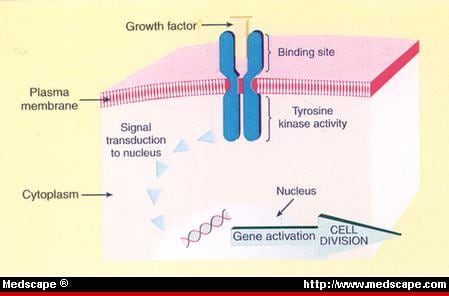
  • the role of Tyrosine kinases and
  • G protein-coupled receptors in cell signaling.
  1. Description of Signal Transduction

As living organisms

  • we are constantly receiving and interpreting signals from our environment.

These signals can come

  • in the form of light, heat, odors, touch or sound.

The cells of our bodies are also

  • constantly receiving signals from other cells.

These signals are important to

  • keep cells alive and functioning as well as
  • to stimulate important events such as
  • cell division and differentiation.

Signals are most often chemicals that can be found

  • in the extracellular fluid around cells.

These chemicals can come

  • from distant locations in the body (endocrine signaling by hormones), from
  • nearby cells (paracrine signaling) or can even
  • be secreted by the same cell (autocrine signaling).
intercellular signaling

intercellular signaling

http://www.hartnell.edu/tutorials/biology/images/intercellularsignaling.jpg

Signaling molecules may trigger any number of cellular responses, including

  • changing the metabolism of the cell receiving the signal or
  • result in a change in gene expression (transcription) within the nucleus of the cell or both.

Overview of Cell Signaling

Cell signaling can be divided into 3 stages.

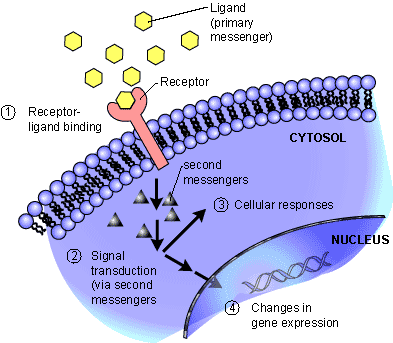
  1. Reception: A cell detects a signaling molecule from the outside of the cell. A signal is detected when the chemical signal (also known as a ligand) binds to a receptor protein on the surface of the cell or inside the cell.
  2. Transduction: When the signaling molecule binds the receptor it changes the receptor protein in some way. This change initiates the process of transduction. Signal transduction is usually a pathway of several steps. Each relay molecule in the signal transduction pathway changes the next molecule in the pathway.
  3. Response: Finally, the signal triggers a specific cellular response.
signal transduction_simple

signal transduction_simple

http://www.hartnell.edu/tutorials/biology/images/signaltransduction_simple.jpg

Reception

Signal Transduction - ligand binds to surface receptor

Signal Transduction – ligand binds to surface receptor


Membrane receptors function by binding the signal molecule (ligand) and causing the production of a second signal (also known as a second messenger) that then causes a cellular response. These types of receptors transmit information from the extracellular environment to the inside of the cell

  • by changing shape or
conformational-rearrangements

conformational-rearrangements

Enzyme_Model  allosterism

Enzyme_Model allosterism

  • by joining with another protein
  • once a specific ligand binds to it.

Examples of membrane receptors include

  • G Protein-Coupled Receptors and
membrane_receptor_g protein

membrane_receptor_g protein


  • Receptor Tyrosine Kinases.
activation of receptor Tyrosine Kinase

activation of receptor Tyrosine Kinase

http://www.hartnell.edu/tutorials/biology/images/membrane_receptor_tk.jpg

Intracellular receptors are found inside the cell, either in the cytopolasm or in the nucleus of the target cell (the cell receiving the signal).

Chemical messengers that are hydrophobic or very small (steroid hormones for example) can

  • pass through the plasma membrane without assistance and
  • bind these intracellular receptors.

Once bound and activated by the signal molecule,

  • the activated receptor can initiate a cellular response, such as a
  • change in gene expression.

Note that this is the first time that change in gene expression is stated.  Is the change in gene expression implication of a change in the genetic information – such as – mutation?  That does not have to be the case in the normal homeostatic case.  This might only be

  • a change in the rate of a transcription or a suppression of expression through RNA.
intracellular_receptor_steroid

intracellular_receptor_steroid

http://www.hartnell.edu/tutorials/biology/images/intracellular_receptor_steroid.jpg

Transduction

Since signaling systems need to be

  • responsive to small concentrations of chemical signals and act quickly,
  • cells often use a multi-step pathway that transmits the signal quickly,
  • while amplifying the signal to numerous molecules at each step.
Signal transduction cascades amplify the signal output

Signal transduction cascades amplify the signal output

Steps in the signal transduction pathway often involve

  • the addition or removal of phosphate groups which results in the activation of proteins.
  • Enzymes that transfer phosphate groups from ATP to a protein are called protein kinases.

Many of the relay molecules in a signal transduction pathway are protein kinases and

  • often act on other protein kinases in the pathway. Often
  • this creates a phosphorylation cascade, where
  • one enzyme phosphorylates another, which then phosphorylates another protein, causing a chain reaction.
phosphorylation-cascade

phosphorylation-cascade

Also important to the phosphorylation cascade are

  • a group of proteins known as protein phosphatases.

Protein phosphatases are enzymes that can rapidly remove phosphate groups from proteins (dephosphorylation) and thus inactivate protein kinases. Protein phosphatases are

  • the “off switch” in the signal transduction pathway.

Phosphorylation Dephosphorylation


Turning the signal transduction pathway off when the signal is no longer present is important

  • to ensure that the cellular response is regulated appropriately.

Dephosphorylation also makes protein kinases

  • available for reuse and
  • enables the cell to respond again when another signal is received.

Kinases are not the only tools used by cells in signal transduction. Small, nonprotein, water-soluble molecules or ions called second messengers (the ligand that binds the receptor is the first messenger) can also

  • relay signals received by receptors on the cell surface
  • to target molecules in the cytoplasm or the nucleus.
membrane protein receptor binds with hormone

membrane protein receptor binds with hormone


insulin receptor and and insulin receptor signaling pathway (IRS)

insulin receptor and and insulin receptor signaling pathway (IRS)


binding-proteins-and-bioavailable-25-hydroxyvitamin-d

binding-proteins-and-bioavailable-25-hydroxyvitamin-d


Examples of second messengers include cyclic AMP (cAMP) and calcium ions.

membrane_receptor_g protein

membrane_receptor_g protein

http://www.hartnell.edu/tutorials/biology/images/membrane_receptor_gprotein.jpg

Response

Cell signaling ultimately leads to the regulation of one or more cellular activities. Regulation of gene expression (turning transcription of specific genes on or off) is a common outcome of cell signaling. A signaling pathway may also

  • regulate the activity of a protein, for example
ion-transporters-and-channels-in-mammalian-choroidal-epithelium

ion-transporters-and-channels-in-mammalian-choroidal-epithelium

Ca(2+) and contraction

Ca(2+) and contraction


transepithelial-electrogenic-ion-transport

transepithelial-electrogenic-ion-transport


calcium release flux

calcium release flux


coupled receptors


  1. opening or closing an ion channel in the plasma membrane or
  2. promoting a change in cell metabolism such as catalyzing the breakdown of glycogen.

Signaling pathways can also lead to important cellular events such as

  • cell division or apoptosis (programmed cell death).
ubiquitylation-is-a-multistep-reaction.

ubiquitylation-is-a-multistep-reaction.


Involvement of VSMCs apoptosis in fibrous plaque rupture.

Involvement of VSMCs apoptosis in fibrous plaque rupture.


G- Protein-Coupled Receptor


membrane_receptor_g protein

membrane_receptor_g protein

Arrestin binding to active GPCR kinase (GRK)-phosphorylated GPCRs blocks G protein coupling

Arrestin binding to active GPCR kinase (GRK)-phosphorylated GPCRs blocks G protein coupling

Signal Transduction Tutorial bDr. Katherine Harris is licensed under a Creative Commons Attribution-NonCommercial-ShareAlike 3.0 Unported License.

Funded by the U.S. Department of Education, College Cost Reduction and Access (CCRAA) grant award # P031C080096.

http://creativecommons.org/licenses/by-nc-sa/3.0/

  • NonCommercial — You may not use the material for commercial purposes.
  • ShareAlike — If you remix, transform, or build upon the material, you must distribute your contributions under the same license as the original.

Adapt — remix, transform, and build upon the material

hormone + receptor signaling

http://home.earthlink.net/~dayvdanls/SignalTrans.gif

Signal-Transduction-Pathway

http://pi-silico.hkbu.edu.hk/wp-content/uploads/2012/12/Signal-Transduction-Pathway.png

http://upload.wikimedia.org/wikipedia/commons/a/a4/1Signal_Transduction_Pathways_Model.jpg

Akt mTOR pathway

Akt mTOR pathway

http://cc.scu.edu.cn/G2S/eWebEditor/uploadfile/20120810155043970.jpg

Quia – 9AP Chapter 11 – Cell Commun

http://www.quia.com/files/quia/users/lmcgee/membranetransport/cell_communication/reception_transduction_resp.gif

http://cc.scu.edu.cn/G2S/eWebEditor/uploadfile/20120810155043970.jpg

HER2 in Breast Cancer–What Does it Mean?

http://img.medscape.com/fullsize/migrated/editorial/clinupdates/2000/681/tu02.fig2.jpg

Protease signalling: the cutting edge

http://emboj.embopress.org/content/embojnl/31/7/1630/F5.large.jpg

Quia – 9AP Chapter 11 – Cell Commun

http://www.quia.com/files/quia/users/lmcgee/membranetransport/cell_communication/phosphorylation-cascade.gif


Signal Transduction in Autism

http://www.mun.ca/biology/desmid/brian/BIOL2060/BIOL2060-14/1403.jpg

The multiple protein-dependent steps in signal transduction

http://www.nature.com/nrm/journal/v1/n2/images/nrm1100_145a_i2.gif

CONVERSING AT THE CELLULAR LEVEL: AN INTRODUCTION TO SIGNAL …

  1. scq.ubc.ca


http://www.scq.ubc.ca/wp-content/uploads/2006/07/transduction.gif


Biology 1710 > Davis > Flashcards > exam 1 | StudyBlue

  1. studyblue.com


http://classconnection.s3.amazonaws.com/602/flashcards/1005602/png/bio101332955375817.png


Read Full Post »

Dr. Smith’s ECG Blog: Look at the PVCs (again)!!


Reporter: Aviva Lev-Ari, PhD, RN


Frequently, one finding on the ECG is not diagnostic, but the combination of several, which match ischemia of one… http://t.co/AWzTiX4M4r

Source: hqmeded-ecg.blogspot.fr

See on Scoop.itCardiovascular and vascular imaging

Read Full Post »

The Experience of a Patient with Thyroid Cancer

Interviewer and Curator: Larry H Bernstein, MD, FCAP


Thyroid cancer is usually a fairly innocuous disease, but it can present in different ways. There are are perhaps two main types – medullary, and follicular.  But an anaplastic type is also a third uncommon type.  It is speculative for me to suggest that the anaplastic type is a progression of either of the two main types.  A RAS genotype coexists with the aggressive anaplastic carcinoma.  Thyroid cancers are BRAF positive in genotype.  The histological feature that is used to identify this neoplasm is the presence of “sammoma bodies”.  It is more common in women, and less common in the elderly, and the incidence appears to have increased regionally in recent years.  A recent paper suggests a common specific feature with breast cancer, which is unconfirmed.

When we consider thyroid disease, we start with euthyroid status, hypothyroid and hyperthyroid, all of which are related to the synthetic activity of the gland, that has a right and left lobe joined by a isthmus.  In the midwestern US there is a deficiency of iodine, which leads to nodular thyroid goiter.  The Mayo brothers pioneered in thyroid surgery at their clinic in Rochester, MN.  This led to the insertion of iodine in table salt (Morton’s salt- “when it rains, it pours).  Hyperthyroid status is over production of the hormone by an overactive gland. It is usually primary disease, called Grave’s Disease, after the physician who described it. I am not aware of the occurrence secondary to hyperactivity of the pituitary gland, which would result in both an increased thyroid stimulating hormone (TSH), thyrotropin, and elevated thyroid hormone, except by a primary neoplasm of thyrotropin secreting cells.  The two hormones are under feedback control.  This feedback is a valuable diagnostic indicator because the TSH is suppressed with Grave’s disease.  The TSH assay is very accurate, and as the TSH falls, the TH increases, but the TH assay has never been as accurate as the TSH. The TH is transported in serum by three proteins: thyroxin-binding globulin (TBG), albumin, and trans-thy-retin (TTR), a quadruplex peptide with one subunit binding to retinol-binding protein (RPB), which transports retinol, vitamin A).  The importance of TTR is not a subject for discussion here, but it has extremely important ties to metabolic disease that includes hyperhomocysteinemia and Alzheimer’s disease, as this protein is produced by both the liver and the choroid plexus, but the CP production declines in the elderly.  The TTR metabolism is closely linked to total body sulfur, measured by K+ isotope measurement of lean body mass (fat free mass), and is a more accurate measure than use of urinary creatinine loss, which only measure the structural body mass, but not the visceral component.

There is another twist to the story in that thyroid hormone may be depressed over time secondary to an autoantibody to thyroid “peroxidase”, leading to destruction of the gland.  The thyroid antibody that occurs has been recently reported to be a “peroxidase” antibody in common with the mammary gland.  The disorder is denominated – Hashimoto’s thyroiditis. The presence of thyroid antibody may occur with Grave’s disease, with an occular protrusion with inflammation of the adductor muscles of eye movement.  This is termed “exophthalmus”.  However, thyroid eye disease is known to occur with hypo-, hyper-, and euthyroid status.

I here describe the long and difficult search to identify a confusing case.


Family history: Mother had thyroid cancer, surgically cured at Mayo Clinic. Sister had Hashimoto’s thyroiditis. Father had severe rheumatoid arthritis.

History of Illness.  The patient is a male over 65 years age who attended a discussion group for several years and participated in supervised fitness exercises and did daily walks for 2-3 years prior to the discovery of the problem when he recalls, his voice was weak in making presentations to the discussion group (age 86 and over).

At the end of summer, 2013, he experienced shortness of breath and dizziness on walking.  His physician had been concerned about the change of voice prior to this.  He had a history of sleep apnea, and he was actively trying to lose weight.  Cardiac and vascular examination of carotid and of peripheral circulation were unexpectedly excellent.  Pulmonary studies were good.

A visit to an ENT physician did not explain the voice impairment.  An unexpected low TSH result came back < 0.01, compared to a normal result 9 months earlier. This was the first indication of an active cyst or Grave’s disease. The patient was referred for ultrasound exam, and a thyroid panel was ordered.  The result of the ultrasound was an enlarged right lobe with two large degenerate cysts, and a central small calcified cyst.  The cyst was biopsied and it was malignant. It was BRAF pos and RAS negative.

He was referred to the nearest world-class academic center for further endocrine evaluation.  The endocrinologist palpated a thyroid enlargement, and a biopsy was performed of the lymph nodes under a full scan of the neck.  Surgery was scheduled and a surgeon skilled in endocrine surgery and cancer removed the thyroid, and noted that the right lobe compressed the recurrent laryngeal nerve.  This was consistent with en ENT examination of the larynx that showed paralysis of the right larynx.  The good news was that the prediction was that the nerve innovation was good, and would return.

There were a few involved lymph nodes in the removed specimen. The patient was put on synthroid. The next step was to schedule I131 radioiodine treatment by oral tablets.  This required a preparatory diet of no salt or iodine intake prior to treatment.  There was also a 5 day isolation for beta ray emission (which kills residual thyroid cells).  The neck was scanned with a gamma scanned prior to induction of treatment, which required a dose of synthetic TSH and a low dose of I131.   The patiemt is recovered for 14 days post treatment and has regained much energy.

There is a residual burden of the thyroid eye disease that requires special optical care because of loss of distance perception with diplopia.  This is stable, but any surgical repair would have to wait for a year.


Notes from PathologyOutlines.com, Nathan Pernick, Editor-in-Chief

Thyroid gland

Reviewer: Zubair W. Baloch, M.D., Shahidul Islam, M.D., Ph.D., Ricardo R. Lastra, M.D., Michelle R. Pramick, M.D., Phillip A. Williams, M.D., MSC (see Reviewers page)

Revised: 11 July 2014, last major update IN PROGRESS
Copyright: (c) 2001-2014, PathologyOutlines.com, Inc.

Endocrine abnormalities and thyroid gland
Hyperthyroidism

Reviewer: Shahidul Islam, M.D., Ph.D.

General
=======================================================

  • Accelerated thyroid hormone biosynthesis and secretion by thyroid gland
  • Early symptoms: anxiety, palpitations, rapid pulse, fatigue, muscle weakness, tremor, weight loss, diarrhea, heat intolerance, warm skin, excessive perspiration, menstrual changes, hand tremor
  • Ocular changes: wide staring gaze and lid lag due to sympathetic overstimulation of levator palpebrae superioris

Thyrotoxicosis: hypermetabolic clinical syndrome due to elevated serum T3 or T4

Types
=======================================================

  • Primary hyperthyroidism: intrinsic thyroid abnormality
    • Low TSH, high free T4, normal TRH stimulation test
  • Secondary hyperthyroidism: high TSH, abnormal TRH stimulation test
  • Subclinical hyperthyroidism: low TSH (< 0.1 µIU/ml), normal T3 and T4 (Eur J Endocrinol 2005;152:1), no clinical hyperthyroidism
  • T3 hyperthyroidism: 1-4%ofhyperthyroid patients
    • Low TSH, high free T3, normal free T4
    • Associated with early treatment of hyperthyroidism with antithyroid drugs
  • T4 hyperthyroidism:highT4, normal T3

Graves’ disease (85%)

Micro images
=======================================================

Diffuse hyperplasia of thyroid gland

Additional references
=======================================================

Hashimoto’s thyroiditis

General
=======================================================

  • Autoimmune disease with goiter, elevated circulating anti-thyroid peroxidase and anti-thyroglobulin antibodies
  • First described by Hakaru Hashimoto in 1912 (World J Surg 2008;32:688)

Epidemiology
=======================================================

Clinical features

Clinical features
=======================================================

  • Adults present with painless, gradual thyroid failure due to autoimmune destruction, may initially have transient hyperthyroidism
  • Children have variable hypothyroidism and reversion to euthyroidism so must monitor thyroid function (Clin Endocrinol (Oxf) 2009;71:451)
  • Associated with HLA-DR5 (goitrous form), HLA-DR3 (atrophic form)
  • May coexist with SLE, rheumatoid arthritis, Sjögren’s syndrome, pernicious anemia, type 2 diabetes, Graves’ disease, chronic active hepatitis, adrenal insufficiency, MALT lymphoma of gastrointestinal tract (80:1 relative risk), other B cell lymphomas
  • Associated with well differentiated thyroid cancer (J Am Coll Surg 2007;204:764)
  • May evolve into thyroid lymphoma (J Clin Pathol 2008;61:438)


Laboratory
=======================================================

  • Autoantibodies include:
    • Anti-TSH (specific for Hashimoto’s and Graves’ disease)
    • Anti-thyroglobulin (less sensitive but similar specificity as anti-thyroid peroxidase, Clin Chem Lab Med 2006;44:837)
    • Anti-thyroid peroxidase (previously called antimicrosomal antibody, sensitive but not specific as 20% of adult women without disease have these antibodies); anti-iodine transporter (rare)
    • Note: anti-TSH antibodies block the TSH receptor in Hashimoto’s disease but stimulate the TSH receptor in Graves’ disease

Papillary carcinoma

  • 75-80% of thyroid carcinomas
  • Occult tumors in 6% at autopsy (1 to 10 mm), 46% multicentric, 14% with nodal metastases (Am J Clin Pathol 1988;90:72)
  • Occult tumors in up to 24% with other thyroid disease, but with male predominance (Mod Pathol 1996;9:816)

Epidemiology
=======================================================

  • Usually women (70%) of reproductive age

Clinical features
=======================================================

Prognostic factors
=======================================================

  • 10 year survival is 98%, similar to general population (versus 92% for follicular carcinoma); 100% if under age 20, even with nodal metastases
  • Cervical nodal involvement does NOT affect prognosis
  • 5-20% have local recurrences, 10-15% have distant metastases (lung, bones, CNS)
  • Poorer prognosis:
    • Age 40+ or elderly, male (possibly), local invasion (associated with higher incidence of nodal metastases, Arch Pathol Lab Med 1998;122:166), distant metastases (other sites worse than lung, Surgery 2008;143:35), large tumor size, multicentricity, tall cell, columnar or diffuse sclerosing variants
    • Poorly differentiated, anaplastic or squamous foci

added July 14, 2014

Summary – Intraoperative laryngeal nerve monitoring
Objectives: The aim of this study was to stimulate the recurrent laryngeal nerve during thyroidectomy or parathyroidectomy and to record the muscle responses in an attempt to predict postoperative vocal fold mobility.
Patients and methods: Intraoperative recurrent laryngeal nerve monitoring during general anaesthesia was performed by using an electrode-bearing endotracheal tube (nerve integrity monitor EMG endotracheal tube [Medtronic Xomed, Jacksonville, Flo, USA]). Two hundred and fifteen recurrent laryngeal nerves from 141 patients undergoing total thyroidectomy (n = 74),
hemithyroidectomy (n = 63), or parathyroidectomy (n = 4) were prospectively monitored. In each case, the muscle potential was recorded after stimulation of the recurrent laryngeal nerve by a monopolar probe.
Results: The nerve stimulation threshold before and after dissection that induced a muscle response of at least 100 V ranged from 0.1 to 0.85 mA (mean 0.4 mA). The supramaximal stimulation intensity was defined as 1 mA. The amplitude of muscle response varied considerably from one patient to another, but the similarity of the muscle response at supramaximal intensity between pre- and postdissection and between postdissection at the proximal and distal exposed
portions of the nerve was correlated with normal postoperative vocal fold function. Inversely, alteration of the muscle response indicated a considerable risk of recurrent laryngeal nerve palsy, but was not predictive of whether or not this lesion would be permanent.  http://dx.doi.org:/10.1016/j.anorl.2011.09.003

Summary – Prognostic impact of tumour multifocality in thyroid papillary microcarcinoma
European Annals of Otorhinolaryngology, Head and Neck diseases (2012) 129, 175—178

Objective: The objective of this study was to evaluate the prognostic impact of tumour multifocality in papillary thyroid microcarcinoma (PTMC).
Methods: All patients who underwent total thyroidectomy and central neck dissection for PTMC in our institution between 1990 and 2007 were included in this retrospective study. Statistical correlations between tumour multifocality and various clinical or pathological prognostic parameters were assessed by univariate and multivariate analyses.
Results: A total of 160 patients (133 women and 27 men; mean age: 47.8 ± 13.7 years) were included in this study. Tumour multifocality was demonstrated in 59 (37%) patients. Central neck metastatic lymph node involvement was identified in 46 (28%) patients. No statistical correlation was demonstrated between tumour multifocality and the following factors: age, gender, tumour size, extension beyond the thyroid, metastatic central neck lymph node involvement and risk of recurrence. A tumour diameter greater than 5 mm was associated with a higher risk of recurrence (P = 0.008).
Conclusion: Tumour multifocality does not appear to have a prognostic impact in PTMC.   http://dx.doi.org:/10.1016/j.anorl.2011.11.003

Positron emission tomography thyroid carcinoma
European Annals of Otorhinolaryngology, Head and Neck diseases (2012) 129, 251—256

Objectives: Recurrence is observed in 15—20% of patients under surveillance following treatment of differentiated thyroid cancer (DTC). However, due to cell dedifferentiation, the recurrence may be iodine-negative, thereby compromising detection. For this reason, new methods of exploration are indispensable to enable localization of such recurrences. The purpose of this work is to review the contribution of positron emission tomography—computed tomography (PET-CT) in the exploration of iodine-negative recurrent DTC.
Method: A comprehensive review and discussion of the medical literature was carried out.
Results: Depending on the report, the sensitivity of PET-CT ranged from 70% to 85%, with up to 90% specificity. However, the large number of false negatives, which can reach 40%, is the
disadvantage of this examination. PET-CT results lead to change in the therapeutic strategy in approximately 50% of patients with isolated raised serum thyroglobulin levels, and surgical exploration of a precise anatomical area in the neck.
Conclusion: As post-treatment recurrence of a DTC can affect patient survival, a thorough diagnostic work-up is required in these cases. Where thyroglobulin levels are elevated with no uptake on 131-iodine scans, PET-CT can be a useful complementary exploration, especially for localizing the site of recurrence.
http://dx.doi.org:/10.1016/j.anorl.2012.01.003
French ENT Society (SFORL) practice guidelines for lymph-node management in adult differentiated thyroid carcinoma
European Annals of Otorhinolaryngology, Head and Neck diseases (2012) 129, 197—206

Cervical and mediastinal lymph-node management differentiated thyroid carcinoma of the follicular epithelium (DTC) remains controversial. Depending on the situation, pre-operative staging and indications for and extent of lymph-node dissection are still matters of debate, even in case of palpable nodes found on primary surgery. Procedural indications for adenectomy, selective neck dissection, and anatomic regional extension of dissection are not clearly defined.

Questions raised:

• what is lymph-node involvement in DTC?
• what is the prognostic value of lymph-node invasion: for
recurrence, and for survival?

• what baseline assessment is required ahead of treatment
of papillary thyroid carcinoma to assess possible lymphnode
involvement?

• what are the principles of lymph-node surgery?
Central and lateral dissection, and dissection extended to the mediastinum;
• what is the iatrogenesis in cN0 and cN+ neck?
• what is the impact of central and lateral neck dissection on recurrence, survival, secondary treatment and surveillance in cN0 and cN+ ?
• in cN0 patients, when neck dissection is considered, what lymph-node regions should be indicated?
http://www.orlfrance.org/ download.php?id=159.

Molecular Diagnosis for Indeterminate Thyroid Nodules on Fine Needle Aspiration
Expert Rev Mol Diagn. 2013;13(6):613-62

Somatic mutation testing, mRNA gene expression platforms, protein immunocytochemistry and miRNA panels have improved the diagnostic accuracy of indeterminate thyroid nodules, and although no test is perfectly accurate, in the authors’ opinion, these methods will most certainly become an important part of the diagnostic tools for clinicians and cytopathologists in the future.

Several point mutations and gene rearrangements have been identified in thyroid cancer. The most common somatic mutation in differentiated thyroid cancer  has been studied as a potential tool to enhance the diagnostic accuracy of indeterminate FNA lesions – BRAF. This mutation occurs in papillary, poorly differentiated and anaplastic thyroid cancer and causes a V600E substitution in the BRAF protein, which results in neoplastic progression by aberrant activation of the MAPK pathway. The BRAF V600E mutation, along with RET/PTC rearrangements, are a hallmark of thyroid cancer and a vast majority of indeterminate thyroid nodules harboring either one of these two mutations are malignant on final pathology.

The RAS proto-oncogene encodes three different membrane associated GTP proteins: HRAS, KRAS and NRAS. Mutation of these domains causes increased signal transduction through both the MAPK and the PI3K/AKT pathways. These mutations are highly prevalent in FTC and in the follicular variant of papillary thyroid cancer (40–50%) and seldom detected in the classic variant papillary thyroid cancer (10%). RAS mutations have also been identified in benign FA; however, it is unclear whether RAS-positive FA have a higher chance of progression to cancer.

Recurrence detection in differentiated thyroid cancer patients..
Clinical endocrinology, Vol. 72, No. 4. (10 September 2009), pp. 558-563, doi:10.1111/j.1365-2265.2009.03693.x

There was a correlation between TgAb level and recurrence (p = 0.032).
). Recurrence was found in 37.5% of 24 TgAb+/Tg- patients who showed a gradually increasing tendency in serial measurements of TgAb. Sixteen cervical foci (21.1%) missed on neck USG and 17 lesions (22.4%) located outside the neck were additionally detected with PET/CT in TgAb+ patients.

Solving the mystery of iodine uptake
Science 20 June 2014: Vol. 344 no. 6190 p. 1355    http://dx.doi.org:/10.1126/science.344.6190.1355-a

The cell membrane protein NIS (sodium/iodine symporter) transports iodine into thyroid cells, but because iodine concentrations outside of the cell are so low, how it does so is a mystery. The key? Moving two sodium ions along with the iodine ion, Nicola et al found. NIS also does not bind sodium very tightly, but the high concentrations of sodium outside the cell allow one sodium ion to bind. This binding increases the affinity of NIS for a second sodium ion and also for iodine. With the three ions bound, NIS changes its conformation so that it opens to the inside of the cell, where the sodium concentration is low enough for NIS to release its sodium ions. When the sodium goes away, so does NIS’s affinity for iodine, leading NIS to release it.


Read Full Post »

Summary – Volume 4, Part 2: Translational Medicine in Cardiovascular Diseases

Summary – Volume 4, Part 2:  Translational Medicine in Cardiovascular Diseases

Author and Curator: Larry H Bernstein, MD, FCAP


We have covered a large amount of material that involves

  • the development,
  • application, and
  • validation of outcomes of medical and surgical procedures

that are based on translation of science from the laboratory to the bedside, improving the standards of medical practice at an accelerated pace in the last quarter century, and in the last decade.  Encouraging enabling developments have been:

1. The establishment of national and international outcomes databases for procedures by specialist medical societies

Stent Design and Thrombosis: Bifurcation Intervention, Drug Eluting Stents (DES) and Biodegrable Stents
Curator: Aviva Lev-Ari, PhD, RN
http://pharmaceuticalintelligence.com/2013/08/06/stent-design-and-thrombosis-bifurcation-intervention-drug-eluting-stents-des-and-biodegrable-stents/

On Devices and On Algorithms: Prediction of Arrhythmia after Cardiac Surgery and ECG Prediction of an Onset of Paroxysmal Atrial Fibrillation
Author, and Content Consultant to e-SERIES A: Cardiovascular Diseases: Justin Pearlman, MD, PhD, FACC
http://pharmaceuticalintelligence.com/2013/05/07/on-devices-and-on-algorithms-arrhythmia-after-cardiac-surgery-prediction-and-ecg-prediction-of-paroxysmal-atrial-fibrillation-onset/

Mitral Valve Repair: Who is a Patient Candidate for a Non-Ablative Fully Non-Invasive Procedure?
Author, and Content Consultant to e-SERIES A: Cardiovascular Diseases: Justin Pearlman, MD, PhD, FACC and Article Curator: Aviva Lev-Ari, PhD, RN
http://pharmaceuticalintelligence.com/2013/11/04/mitral-valve-repair-who-is-a-candidate-for-a-non-ablative-fully-non-invasive-procedure/

Cardiovascular Complications: Death from Reoperative Sternotomy after prior CABG, MVR, AVR, or Radiation; Complications of PCI; Sepsis from Cardiovascular Interventions
Author, Introduction and Summary: Justin D Pearlman, MD, PhD, FACC and Article Curator: Aviva Lev-Ari, PhD, RN
http://pharmaceuticalintelligence.com/2013/07/23/cardiovascular-complications-of-multiple-etiologies-repeat-sternotomy-post-cabg-or-avr-post-pci-pad-endoscopy-andor-resultant-of-systemic-sepsis/

Survivals Comparison of Coronary Artery Bypass Graft (CABG) and Percutaneous Coronary Intervention (PCI) /Coronary Angioplasty
Larry H. Bernstein, MD, Writer And Aviva Lev-Ari, PhD, RN, Curator
http://pharmaceuticalintelligence.com/2013/06/23/comparison-of-cardiothoracic-bypass-and-percutaneous-interventional-catheterization-survivals/

Revascularization: PCI, Prior History of PCI vs CABG
Curator: Aviva Lev-Ari, PhD, RN
http://pharmaceuticalintelligence.com/2013/04/25/revascularization-pci-prior-history-of-pci-vs-cabg/

Outcomes in High Cardiovascular Risk Patients: Prasugrel (Effient) vs. Clopidogrel (Plavix); Aliskiren (Tekturna) added to ACE or added to ARB
Reporter and Curator: Aviva Lev-Ari, PhD, RN
http://pharmaceuticalintelligence.com/2012/08/27/outcomes-in-high-cardiovascular-risk-patients-prasugrel-effient-vs-clopidogrel-plavix-aliskiren-tekturna-added-to-ace-or-added-to-arb/

Endovascular Lower-extremity Revascularization Effectiveness: Vascular Surgeons (VSs), Interventional Cardiologists (ICs) and Interventional Radiologists (IRs)
Curator: Aviva Lev-Ari, PhD, RN
http://pharmaceuticalintelligence.com/2012/08/13/coronary-artery-disease-medical-devices-solutions-from-first-in-man-stent-implantation-via-medical-ethical-dilemmas-to-drug-eluting-stents/

and more

2. The identification of problem areas, particularly in activation of the prothrombotic pathways, infection control to an extent, and targeting of pathways leading to progression or to arrythmogenic complications.

Cardiovascular Complications: Death from Reoperative Sternotomy after prior CABG, MVR, AVR, or Radiation; Complications of PCI; Sepsis from Cardiovascular Interventions Author, Introduction and Summary: Justin D Pearlman, MD, PhD, FACC and Article Curator: Aviva Lev-Ari, PhD, RN
http://pharmaceuticalintelligence.com/2013/07/23/cardiovascular-complications-of-multiple-etiologies-repeat-sternotomy-post-cabg-or-avr-post-pci-pad-endoscopy-andor-resultant-of-systemic-sepsis/

Anticoagulation genotype guided dosing
Larry H. Bernstein, MD, FCAP, Author and Curator
http://pharmaceuticalintelligence.com/2013/12/08/anticoagulation-genotype-guided-dosing/

Stent Design and Thrombosis: Bifurcation Intervention, Drug Eluting Stents (DES) and Biodegrable Stents
Curator: Aviva Lev-Ari, PhD, RN
http://pharmaceuticalintelligence.com/2013/08/06/stent-design-and-thrombosis-bifurcation-intervention-drug-eluting-stents-des-and-biodegrable-stents/

The Effects of Aprotinin on Endothelial Cell Coagulant Biology
Co-Author (Kamran Baig, MBBS, James Jaggers, MD, Jeffrey H. Lawson, MD, PhD) and Curator
http://pharmaceuticalintelligence.com/2013/07/20/the-effects-of-aprotinin-on-endothelial-cell-coagulant-biology/

Outcomes in High Cardiovascular Risk Patients: Prasugrel (Effient) vs. Clopidogrel (Plavix); Aliskiren (Tekturna) added to ACE or added to ARB
Reporter and Curator: Aviva Lev-Ari, PhD, RN
http://pharmaceuticalintelligence.com/2012/08/27/outcomes-in-high-cardiovascular-risk-patients-prasugrel-effient-vs-clopidogrel-plavix-aliskiren-tekturna-added-to-ace-or-added-to-arb/

Pharmacogenomics – A New Method for Druggability  Author and Curator: Demet Sag, PhD
http://pharmaceuticalintelligence.com/2014/04/28/pharmacogenomics-a-new-method-for-druggability/

Advanced Topics in Sepsis and the Cardiovascular System at its End Stage    Author: Larry H Bernstein, MD, FCAP
http://pharmaceuticalintelligence.com/2013/08/18/advanced-topics-in-Sepsis-and-the-Cardiovascular-System-at-its-End-Stage/

3. Development of procedures that use a safer materials in vascular management.

Stent Design and Thrombosis: Bifurcation Intervention, Drug Eluting Stents (DES) and Biodegrable Stents
Curator: Aviva Lev-Ari, PhD, RN
http://pharmaceuticalintelligence.com/2013/08/06/stent-design-and-thrombosis-bifurcation-intervention-drug-eluting-stents-des-and-biodegrable-stents/

Biomaterials Technology: Models of Tissue Engineering for Reperfusion and Implantable Devices for Revascularization
Author and Curator: Larry H Bernstein, MD, FACP and Curator: Aviva Lev-Ari, PhD, RN
http://pharmaceuticalintelligence.com/2013/05/05/bioengineering-of-vascular-and-tissue-models/

Vascular Repair: Stents and Biologically Active Implants
Author and Curator: Larry H Bernstein, MD, FACP and Curator: Aviva Lev-Ari, RN, PhD
http://pharmaceuticalintelligence.com/2013/05/04/stents-biologically-active-implants-and-vascular-repair/

Drug Eluting Stents: On MIT’s Edelman Lab’s Contributions to Vascular Biology and its Pioneering Research on DES
Author: Larry H Bernstein, MD, FACP and Curator: Aviva Lev-Ari, PhD, RN
http://PharmaceuticalIntelligence.com/2013/04/25/Contributions-to-vascular-biology/

MedTech & Medical Devices for Cardiovascular Repair – Curations by Aviva Lev-Ari, PhD, RN
http://pharmaceuticalintelligence.com/2014/04/17/medtech-medical-devices-for-cardiovascular-repair-curation-by-aviva-lev-ari-phd-rn/

4. Discrimination of cases presenting for treatment based on qualifications for medical versus surgical intervention.

Treatment Options for Left Ventricular Failure – Temporary Circulatory Support: Intra-aortic balloon pump (IABP) – Impella Recover LD/LP 5.0 and 2.5, Pump Catheters (Non-surgical) vs Bridge Therapy: Percutaneous Left Ventricular Assist Devices (pLVADs) and LVADs (Surgical)
Author: Larry H Bernstein, MD, FCAP And Curator: Justin D Pearlman, MD, PhD, FACC
http://pharmaceuticalintelligence.com/2013/07/17/treatment-options-for-left-ventricular-failure-temporary-circulatory-support-intra-aortic-balloon-pump-iabp-impella-recover-ldlp-5-0-and-2-5-pump-catheters-non-surgical-vs-bridge-therapy/

Coronary Reperfusion Therapies: CABG vs PCI – Mayo Clinic preprocedure Risk Score (MCRS) for Prediction of in-Hospital Mortality after CABG or PCI
Writer and Curator: Larry H. Bernstein, MD, FCAP and Curator: Aviva Lev-Ari, PhD, RN
http://pharmaceuticalintelligence.com/2013/06/30/mayo-risk-score-for-percutaneous-coronary-intervention/

ACC/AHA Guidelines for Coronary Artery Bypass Graft Surgery Reporter: Aviva Lev-Ari, PhD, RN
http://pharmaceuticalintelligence.com/2013/11/05/accaha-guidelines-for-coronary-artery-bypass-graft-surgery/

Mitral Valve Repair: Who is a Patient Candidate for a Non-Ablative Fully Non-Invasive Procedure?
Author, and Content Consultant to e-SERIES A: Cardiovascular Diseases: Justin Pearlman, MD, PhD, FACC and Article Curator: Aviva Lev-Ari, PhD, RN
http://pharmaceuticalintelligence.com/2013/11/04/mitral-valve-repair-who-is-a-candidate-for-a-non-ablative-fully-non-invasive-procedure/ 

5.  This has become possible because of the advances in our knowledge of key related pathogenetic mechanisms involving gene expression and cellular regulation of complex mechanisms.

What is the key method to harness Inflammation to close the doors for many complex diseases?
Author and Curator: Larry H Bernstein, MD, FCAP
http://pharmaceuticalintelligence.com/2014/03/21/what-is-the-key-method-to-harness-inflammation-to-close-the-doors-for-many-complex-diseases/

CVD Prevention and Evaluation of Cardiovascular Imaging Modalities: Coronary Calcium Score by CT Scan Screening to justify or not the Use of Statin
Curator: Aviva Lev-Ari, PhD, RN
http://pharmaceuticalintelligence.com/2014/03/03/cvd-prevention-and-evaluation-of-cardiovascular-imaging-modalities-coronary-calcium-score-by-ct-scan-screening-to-justify-or-not-the-use-of-statin/

Richard Lifton, MD, PhD of Yale University and Howard Hughes Medical Institute: Recipient of 2014 Breakthrough Prizes Awarded in Life Sciences for the Discovery of Genes and Biochemical Mechanisms that cause Hypertension
Curator: Aviva Lev-Ari, PhD, RN
http://pharmaceuticalintelligence.com/2014/03/03/richard-lifton-md-phd-of-yale-university-and-howard-hughes-medical-institute-recipient-of-2014-breakthrough-prizes-awarded-in-life-sciences-for-the-discovery-of-genes-and-biochemical-mechanisms-tha/

Pathophysiological Effects of Diabetes on Ischemic-Cardiovascular Disease and on Chronic Obstructive Pulmonary Disease (COPD)
Curator:  Larry H. Bernstein, MD, FCAP
http://pharmaceuticalintelligence.com/2014/01/15/pathophysiological-effects-of-diabetes-on-ischemic-cardiovascular-disease-and-on-chronic-obstructive-pulmonary-disease-copd/

Atherosclerosis Independence: Genetic Polymorphisms of Ion Channels Role in the Pathogenesis of Coronary Microvascular Dysfunction and Myocardial Ischemia (Coronary Artery Disease (CAD))
Reviewer and Co-Curator: Larry H Bernstein, MD, CAP and Curator: Aviva Lev-Ari, PhD, RN
http://pharmaceuticalintelligence.com/2013/12/21/genetic-polymorphisms-of-ion-channels-have-a-role-in-the-pathogenesis-of-coronary-microvascular-dysfunction-and-ischemic-heart-disease/

Notable Contributions to Regenerative Cardiology  Author and Curator: Larry H Bernstein, MD, FCAP and Article Commissioner: Aviva Lev-Ari, PhD, RD
http://pharmaceuticalintelligence.com/2013/10/20/notable-contributions-to-regenerative-cardiology/

As noted in the introduction, any of the material can be found and reviewed by content, and the eTOC is identified in attached:

http://wp.me/p2xfv8-1W


This completes what has been presented in Part 2, Vol 4 , and supporting references for the main points that are found in the Leaders in Pharmaceutical Intelligence Cardiovascular book.  Part 1 was concerned with Posttranslational Modification of Proteins, vital for understanding cellular regulation and dysregulation.  Part 2 was concerned with Translational Medical Therapeutics, the efficacy of medical and surgical decisions based on bringing the knowledge gained from the laboratory, and from clinical trials into the realm opf best practice.  The time for this to occur in practice in the past has been through roughly a generation of physicians.  That was in part related to the busy workload of physicians, and inability to easily access specialty literature as the volume and complexity increased.  This had an effect of making access of a family to a primary care provider through a lifetime less likely than the period post WWII into the 1980s.

However, the growth of knowledge has accelerated in the specialties since the 1980’s so that the use of physician referral in time became a concern about the cost of medical care.  This is not the place for or a matter for discussion here.  It is also true that the scientific advances and improvements in available technology have had a great impact on medical outcomes.  The only unrelated issue is that of healthcare delivery, which is not up to the standard set by serial advances in therapeutics, accompanied by high cost due to development costs, marketing costs, and development of drug resistance.

I shall identify continuing developments in cardiovascular diagnostics, therapeutics, and bioengineering that is and has been emerging.

1. Mechanisms of disease

REPORT: Mapping the Cellular Response to Small Molecules Using Chemogenomic Fitness Signatures 

Science 11 April 2014:
Vol. 344 no. 6180 pp. 208-211
http://dx.doi.org/10.1126/science.1250217

Abstract: Genome-wide characterization of the in vivo cellular response to perturbation is fundamental to understanding how cells survive stress. Identifying the proteins and pathways perturbed by small molecules affects biology and medicine by revealing the mechanisms of drug action. We used a yeast chemogenomics platform that quantifies the requirement for each gene for resistance to a compound in vivo to profile 3250 small molecules in a systematic and unbiased manner. We identified 317 compounds that specifically perturb the function of 121 genes and characterized the mechanism of specific compounds. Global analysis revealed that the cellular response to small molecules is limited and described by a network of 45 major chemogenomic signatures. Our results provide a resource for the discovery of functional interactions among genes, chemicals, and biological processes.

Yeasty HIPHOP

Laura Zahn
Sci. Signal. 15 April 2014; 7(321): ec103.   http://dx.doi.org/10.1126/scisignal.2005362

In order to identify how chemical compounds target genes and affect the physiology of the cell, tests of the perturbations that occur when treated with a range of pharmacological chemicals are required. By examining the haploinsufficiency profiling (HIP) and homozygous profiling (HOP) chemogenomic platforms, Lee et al.(p. 208) analyzed the response of yeast to thousands of different small molecules, with genetic, proteomic, and bioinformatic analyses. Over 300 compounds were identified that targeted 121 genes within 45 cellular response signature networks. These networks were used to extrapolate the likely effects of related chemicals, their impact upon genetic pathways, and to identify putative gene functions

Key Heart Failure Culprit Discovered

A team of cardiovascular researchers from the Cardiovascular Research Center at Icahn School of Medicine at Mount Sinai, Sanford-Burnham Medical Research Institute, and University of California, San Diego have identified a small, but powerful, new player in thIe onset and progression of heart failure. Their findings, published in the journal Nature  on March 12, also show how they successfully blocked the newly discovered culprit.
Investigators identified a tiny piece of RNA called miR-25 that blocks a gene known as SERCA2a, which regulates the flow of calcium within heart muscle cells. Decreased SERCA2a activity is one of the main causes of poor contraction of the heart and enlargement of heart muscle cells leading to heart failure.

Using a functional screening system developed by researchers at Sanford-Burnham, the research team discovered miR-25 acts pathologically in patients suffering from heart failure, delaying proper calcium uptake in heart muscle cells. According to co-lead study authors Christine Wahlquist and Dr. Agustin Rojas Muñoz, developers of the approach and researchers in Mercola’s lab at Sanford-Burnham, they used high-throughput robotics to sift through the entire genome for microRNAs involved in heart muscle dysfunction.

Subsequently, the researchers at the Cardiovascular Research Center at Icahn School of Medicine at Mount Sinai found that injecting a small piece of RNA to inhibit the effects of miR-25 dramatically halted heart failure progression in mice. In addition, it also improved their cardiac function and survival.

“In this study, we have not only identified one of the key cellular processes leading to heart failure, but have also demonstrated the therapeutic potential of blocking this process,” says co-lead study author Dr. Dongtak Jeong, a post-doctoral fellow at the Cardiovascular Research Center at Icahn School of  Medicine at Mount Sinai in the laboratory of the study’s co-senior author Dr. Roger J. Hajjar.

Publication: Inhibition of miR-25 improves cardiac contractility in the failing heart.Christine Wahlquist, Dongtak Jeong, Agustin Rojas-Muñoz, Changwon Kho, Ahyoung Lee, Shinichi Mitsuyama, Alain Van Mil, Woo Jin Park, Joost P. G. Sluijter, Pieter A. F. Doevendans, Roger J. :  Hajjar & Mark Mercola.     Nature (March 2014)    http://www.nature.com/nature/journal/vaop/ncurrent/full/nature13073.html


“Junk” DNA Tied to Heart Failure

Deep RNA Sequencing Reveals Dynamic Regulation of Myocardial Noncoding RNAs in Failing Human Heart and Remodeling With Mechanical Circulatory Support

Yang KC, Yamada KA, Patel AY, Topkara VK, George I, et al.
Circulation 2014;  129(9):1009-21.
http://dx.doi.org/10.1161/CIRCULATIONAHA.113.003863              http://circ.ahajournals.org/…/CIRCULATIONAHA.113.003863.full

The myocardial transcriptome is dynamically regulated in advanced heart failure and after LVAD support. The expression profiles of lncRNAs, but not mRNAs or miRNAs, can discriminate failing hearts of different pathologies and are markedly altered in response to LVAD support. These results suggest an important role for lncRNAs in the pathogenesis of heart failure and in reverse remodeling observed with mechanical support.

Junk DNA was long thought to have no important role in heredity or disease because it doesn’t code for proteins. But emerging research in recent years has revealed that many of these sections of the genome produce noncoding RNA molecules that still have important functions in the body. They come in a variety of forms, some more widely studied than others. Of these, about 90% are called long noncoding RNAs (lncRNAs), and exploration of their roles in health and disease is just beginning.

The Washington University group performed a comprehensive analysis of all RNA molecules expressed in the human heart. The researchers studied nonfailing hearts and failing hearts before and after patients received pump support from left ventricular assist devices (LVAD). The LVADs increased each heart’s pumping capacity while patients waited for heart transplants.

In their study, the researchers found that unlike other RNA molecules, expression patterns of long noncoding RNAs could distinguish between two major types of heart failure and between failing hearts before and after they received LVAD support.

“The myocardial transcriptome is dynamically regulated in advanced heart failure and after LVAD support. The expression profiles of lncRNAs, but not mRNAs or miRNAs, can discriminate failing hearts of different pathologies and are markedly altered in response to LVAD support,” wrote the researchers. “These results suggest an important role for lncRNAs in the pathogenesis of heart failure and in reverse remodeling observed with mechanical support.”

‘Junk’ Genome Regions Linked to Heart Failure

In a recent issue of the journal Circulation, Washington University investigators report results from the first comprehensive analysis of all RNA molecules expressed in the human heart. The researchers studied nonfailing hearts and failing hearts before and after patients received pump support from left ventricular assist devices (LVAD). The LVADs increased each heart’s pumping capacity while patients waited for heart transplants.

“We took an unbiased approach to investigating which types of RNA might be linked to heart failure,” said senior author Jeanne Nerbonne, the Alumni Endowed Professor of Molecular Biology and Pharmacology. “We were surprised to find that long noncoding RNAs stood out.

In the new study, the investigators found that unlike other RNA molecules, expression patterns of long noncoding RNAs could distinguish between two major types of heart failure and between failing hearts before and after they received LVAD support.

“We don’t know whether these changes in long noncoding RNAs are a cause or an effect of heart failure,” Nerbonne said. “But it seems likely they play some role in coordinating the regulation of multiple genes involved in heart function.”

Nerbonne pointed out that all types of RNA molecules they examined could make the obvious distinction: telling the difference between failing and nonfailing hearts. But only expression of the long noncoding RNAs was measurably different between heart failure associated with a heart attack (ischemic) and heart failure without the obvious trigger of blocked arteries (nonischemic). Similarly, only long noncoding RNAs significantly changed expression patterns after implantation of left ventricular assist devices.

Comment

Decoding the noncoding transcripts in human heart failure

Xiao XG, Touma M, Wang Y
Circulation. 2014; 129(9): 958960,  http://dx.doi.org/10.1161/CIRCULATIONAHA.114.007548 

Heart failure is a complex disease with a broad spectrum of pathological features. Despite significant advancement in clinical diagnosis through improved imaging modalities and hemodynamic approaches, reliable molecular signatures for better differential diagnosis and better monitoring of heart failure progression remain elusive. The few known clinical biomarkers for heart failure, such as plasma brain natriuretic peptide and troponin, have been shown to have limited use in defining the cause or prognosis of the disease.1,2 Consequently, current clinical identification and classification of heart failure remain descriptive, mostly based on functional and morphological parameters. Therefore, defining the pathogenic mechanisms for hypertrophic versus dilated or ischemic versus nonischemic cardiomyopathies in the failing heart remain a major challenge to both basic science and clinic researchers. In recent years, mechanical circulatory support using left ventricular assist devices (LVADs) has assumed a growing role in the care of patients with end-stage heart failure.3 During the earlier years of LVAD application as a bridge to transplant, it became evident that some patients exhibit substantial recovery of ventricular function, structure, and electric properties.4 This led to the recognition that reverse remodeling is potentially an achievable therapeutic goal using LVADs. However, the underlying mechanism for the reverse remodeling in the LVAD-treated hearts is unclear, and its discovery would likely hold great promise to halt or even reverse the progression of heart failure.


Efficacy and Safety of Dabigatran Compared With Warfarin in Relation to Baseline Renal Function in Patients With Atrial Fibrillation: A RE-LY (Randomized Evaluation of Long-term Anticoagulation Therapy) Trial Analysis

Circulation. 2014; 129: 951-952     http://dx.doi.org/10.1161/​CIR.0000000000000022

In patients with atrial fibrillation, impaired renal function is associated with a higher risk of thromboembolic events and major bleeding. Oral anticoagulation with vitamin K antagonists reduces thromboembolic events but raises the risk of bleeding. The new oral anticoagulant dabigatran has 80% renal elimination, and its efficacy and safety might, therefore, be related to renal function. In this prespecified analysis from the Randomized Evaluation of Long-Term Anticoagulant Therapy (RELY) trial, outcomes with dabigatran versus warfarin were evaluated in relation to 4 estimates of renal function, that is, equations based on creatinine levels (Cockcroft-Gault, Modification of Diet in Renal Disease (MDRD), Chronic Kidney Disease Epidemiology Collaboration [CKD-EPI]) and cystatin C. The rates of stroke or systemic embolism were lower with dabigatran 150 mg and similar with 110 mg twice daily irrespective of renal function. Rates of major bleeding were lower with dabigatran 110 mg and similar with 150 mg twice daily across the entire range of renal function. However, when the CKD-EPI or MDRD equations were used, there was a significantly greater relative reduction in major bleeding with both doses of dabigatran than with warfarin in patients with estimated glomerular filtration rate ≥80 mL/min. These findings show that dabigatran can be used with the same efficacy and adequate safety in patients with a wide range of renal function and that a more accurate estimate of renal function might be useful for improved tailoring of anticoagulant treatment in patients with atrial fibrillation and an increased risk of stroke.

Aldosterone Regulates MicroRNAs in the Cortical Collecting Duct to Alter Sodium Transport.

Robert S Edinger, Claudia Coronnello, Andrew J Bodnar, William A Laframboise, Panayiotis V Benos, Jacqueline Ho, John P Johnson, Michael B Butterworth

Journal of the American Society of Nephrology (Impact Factor: 8.99). 04/2014;     http://dx. DO.org/I:10.1681/ASN.2013090931

Source: PubMed

ABSTRACT A role for microRNAs (miRs) in the physiologic regulation of sodium transport in the kidney has not been established. In this study, we investigated the potential of aldosterone to alter miR expression in mouse cortical collecting duct (mCCD) epithelial cells. Microarray studies demonstrated the regulation of miR expression by aldosterone in both cultured mCCD and isolated primary distal nephron principal cells.

Aldosterone regulation of the most significantly downregulated miRs, mmu-miR-335-3p, mmu-miR-290-5p, and mmu-miR-1983 was confirmed by quantitative RT-PCR. Reducing the expression of these miRs separately or in combination increased epithelial sodium channel (ENaC)-mediated sodium transport in mCCD cells, without mineralocorticoid supplementation. Artificially increasing the expression of these miRs by transfection with plasmid precursors or miR mimic constructs blunted aldosterone stimulation of ENaC transport.

Using a newly developed computational approach, termed ComiR, we predicted potential gene targets for the aldosterone-regulated miRs and confirmed ankyrin 3 (Ank3) as a novel aldosterone and miR-regulated protein.

A dual-luciferase assay demonstrated direct binding of the miRs with the Ank3-3′ untranslated region. Overexpression of Ank3 increased and depletion of Ank3 decreased ENaC-mediated sodium transport in mCCD cells. These findings implicate miRs as intermediaries in aldosterone signaling in principal cells of the distal kidney nephron.


2. Diagnostic Biomarker Status

A prospective study of the impact of serial troponin measurements on the diagnosis of myocardial infarction and hospital and 6-month mortality in patients admitted to ICU with non-cardiac diagnoses.

Marlies Ostermann, Jessica Lo, Michael Toolan, Emma Tuddenham, Barnaby Sanderson, Katie Lei, John Smith, Anna Griffiths, Ian Webb, James Coutts, John hambers, Paul Collinson, Janet Peacock, David Bennett, David Treacher

Critical care (London, England) (Impact Factor: 4.72). 04/2014; 18(2):R62.   http://dx.doi.org/:10.1186/cc13818

Source: PubMed

ABSTRACT Troponin T (cTnT) elevation is common in patients in the Intensive Care Unit (ICU) and associated with morbidity and mortality. Our aim was to determine the epidemiology of raised cTnT levels and contemporaneous electrocardiogram (ECG) changes suggesting myocardial infarction (MI) in ICU patients admitted for non-cardiac reasons.
cTnT and ECGs were recorded daily during week 1 and on alternate days during week 2 until discharge from ICU or death. ECGs were interpreted independently for the presence of ischaemic changes. Patients were classified into 4 groups: (i) definite MI (cTnT >=15 ng/L and contemporaneous changes of MI on ECG), (ii) possible MI (cTnT >=15 ng/L and contemporaneous ischaemic changes on ECG), (iii) troponin rise alone (cTnT >=15 ng/L), or (iv) normal. Medical notes were screened independently by two ICU clinicians for evidence that the clinical teams had considered a cardiac event.
Data from 144 patients were analysed [42% female; mean age 61.9 (SD 16.9)]. 121 patients (84%) had at least one cTnT level >=15 ng/L. A total of 20 patients (14%) had a definite MI, 27% had a possible MI, 43% had a cTNT rise without contemporaneous ECG changes, and 16% had no cTNT rise. ICU, hospital and 180 day mortality were significantly higher in patients with a definite or possible MI.Only 20% of definite MIs were recognised by the clinical team. There was no significant difference in mortality between recognised and non-recognised events.At time of cTNT rise, 100 patients (70%) were septic and 58% were on vasopressors. Patients who were septic when cTNT was elevated had an ICU mortality of 28% compared to 9% in patients without sepsis. ICU mortality of patients who were on vasopressors at time of cTNT elevation was 37% compared to 1.7% in patients not on vasopressors.
The majority of critically ill patients (84%) had a cTnT rise and 41% met criteria for a possible or definite MI of whom only 20% were recognised clinically. Mortality up to 180 days was higher in patients with a cTnT rise.


Prognostic performance of high-sensitivity cardiac troponin T kinetic changes adjusted for elevated admission values and the GRACE score in an unselected emergency department population.

Moritz BienerMatthias MuellerMehrshad VafaieAllan S JaffeHugo A Katus,Evangelos Giannitsis

Clinica chimica acta; international journal of clinical chemistry (Impact Factor: 2.54). 04/2014;   http://dx.doi.org/10.1016/j.cca.2014.04.007

Source: PubMed

ABSTRACT To test the prognostic performance of rising and falling kinetic changes of high-sensitivity cardiac troponin T (hs-cTnT) and the GRACE score.
Rising and falling hs-cTnT changes in an unselected emergency department population were compared.
635 patients with a hs-cTnT >99th percentile admission value were enrolled. Of these, 572 patients qualified for evaluation with rising patterns (n=254, 44.4%), falling patterns (n=224, 39.2%), or falling patterns following an initial rise (n=94, 16.4%). During 407days of follow-up, we observed 74 deaths, 17 recurrent AMI, and 79 subjects with a composite of death/AMI. Admission values >14ng/L were associated with a higher rate of adverse outcomes (OR, 95%CI:death:12.6, 1.8-92.1, p=0.01, death/AMI:6.7, 1.6-27.9, p=0.01). Neither rising nor falling changes increased the AUC of baseline values (AUC: rising 0.562 vs 0.561, p=ns, falling: 0.533 vs 0.575, p=ns). A GRACE score ≥140 points indicated a higher risk of death (OR, 95%CI: 3.14, 1.84-5.36), AMI (OR,95%CI: 1.56, 0.59-4.17), or death/AMI (OR, 95%CI: 2.49, 1.51-4.11). Hs-cTnT changes did not improve prognostic performance of a GRACE score ≥140 points (AUC, 95%CI: death: 0.635, 0.570-0.701 vs. 0.560, 0.470-0.649 p=ns, AMI: 0.555, 0.418-0.693 vs. 0.603, 0.424-0.782, p=ns, death/AMI: 0.610, 0.545-0.676 vs. 0.538, 0.454-0.622, p=ns). Coronary angiography was performed earlier in patients with rising than with falling kinetics (median, IQR [hours]:13.7, 5.5-28.0 vs. 20.8, 6.3-59.0, p=0.01).
Neither rising nor falling hs-cTnT changes improve prognostic performance of elevated hs-cTnT admission values or the GRACE score. However, rising values are more likely associated with the decision for earlier invasive strategy.


Troponin assays for the diagnosis of myocardial infarction and acute coronary syndrome: where do we stand?

Arie Eisenman

ABSTRACT: Under normal circumstances, most intracellular troponin is part of the muscle contractile apparatus, and only a small percentage (< 2-8%) is free in the cytoplasm. The presence of a cardiac-specific troponin in the circulation at levels above normal is good evidence of damage to cardiac muscle cells, such as myocardial infarction, myocarditis, trauma, unstable angina, cardiac surgery or other cardiac procedures. Troponins are released as complexes leading to various cut-off values depending on the assay used. This makes them very sensitive and specific indicators of cardiac injury. As with other cardiac markers, observation of a rise and fall in troponin levels in the appropriate time-frame increases the diagnostic specificity for acute myocardial infarction. They start to rise approximately 4-6 h after the onset of acute myocardial infarction and peak at approximately 24 h, as is the case with creatine kinase-MB. They remain elevated for 7-10 days giving a longer diagnostic window than creatine kinase. Although the diagnosis of various types of acute coronary syndrome remains a clinical-based diagnosis, the use of troponin levels contributes to their classification. This Editorial elaborates on the nature of troponin, its classification, clinical use and importance, as well as comparing it with other currently available cardiac markers.

Expert Review of Cardiovascular Therapy 07/2006; 4(4):509-14.   http://dx.doi.org/:10.1586/14779072.4.4.509 


Impact of redefining acute myocardial infarction on incidence, management and reimbursement rate of acute coronary syndromes.

Carísi A Polanczyk, Samir Schneid, Betina V Imhof, Mariana Furtado, Carolina Pithan, Luis E Rohde, Jorge P Ribeiro

ABSTRACT: Although redefinition for acute myocardial infarction (AMI) has been proposed few years ago, to date it has not been universally adopted by many institutions. The purpose of this study is to evaluate the diagnostic, prognostic and economical impact of the new diagnostic criteria for AMI. Patients consecutively admitted to the emergency department with suspected acute coronary syndromes were enrolled in this study. Troponin T (cTnT) was measured in samples collected for routine CK-MB analyses and results were not available to physicians. Patients without AMI by traditional criteria and cTnT > or = 0.035 ng/mL were coded as redefined AMI. Clinical outcomes were hospital death, major cardiac events and revascularization procedures. In-hospital management and reimbursement rates were also analyzed. Among 363 patients, 59 (16%) patients had AMI by conventional criteria, whereas additional 75 (21%) had redefined AMI, an increase of 127% in the incidence. Patients with redefined AMI were significantly older, more frequently male, with atypical chest pain and more risk factors. In multivariate analysis, redefined AMI was associated with 3.1 fold higher hospital death (95% CI: 0.6-14) and a 5.6 fold more cardiac events (95% CI: 2.1-15) compared to those without AMI. From hospital perspective, based on DRGs payment system, adoption of AMI redefinition would increase 12% the reimbursement rate [3552 Int dollars per 100 patients evaluated]. The redefined criteria result in a substantial increase in AMI cases, and allow identification of high-risk patients. Efforts should be made to reinforce the adoption of AMI redefinition, which may result in more qualified and efficient management of ACS.

International Journal of Cardiology 03/2006; 107(2):180-7. · 5.51 Impact Factor   http://www.sciencedirect.com/science/article/pii/S0167527305005279


3. Biomedical Engineerin3g

Safety and Efficacy of an Injectable Extracellular Matrix Hydrogel for Treating Myocardial Infarction 

Sonya B. Seif-Naraghi, Jennifer M. Singelyn, Michael A. Salvatore,  et al.
Sci Transl Med 20 February 2013 5:173ra25  http://dx.doi.org/10.1126/scitranslmed.3005503

Acellular biomaterials can stimulate the local environment to repair tissues without the regulatory and scientific challenges of cell-based therapies. A greater understanding of the mechanisms of such endogenous tissue repair is furthering the design and application of these biomaterials. We discuss recent progress in acellular materials for tissue repair, using cartilage and cardiac tissues as examples of application with substantial intrinsic hurdles, but where human translation is now occurring.

 Acellular Biomaterials: An Evolving Alternative to Cell-Based Therapies

J. A. Burdick, R. L. Mauck, J. H. Gorman, R. C. Gorman,
Sci. Transl. Med. 2013; 5, (176): 176 ps4    http://stm.sciencemag.org/content/5/176/176ps4

Acellular biomaterials can stimulate the local environment to repair tissues without the regulatory and scientific challenges of cell-based therapies. A greater understanding of the mechanisms of such endogenous tissue repair is furthering the design and application of these biomaterials. We discuss recent progress in acellular materials for tissue repair, using cartilage and cardiac tissues as examples of applications with substantial intrinsic hurdles, but where human translation is now occurring.


Instructive Nanofiber Scaffolds with VEGF Create a Microenvironment for Arteriogenesis and Cardiac Repair

Yi-Dong Lin, Chwan-Yau Luo, Yu-Ning Hu, Ming-Long Yeh, Ying-Chang Hsueh, Min-Yao Chang, et al.
Sci Transl Med 8 August 2012; 4(146):ra109.   http://dx.doi.org/ 10.1126/scitranslmed.3003841

Angiogenic therapy is a promising approach for tissue repair and regeneration. However, recent clinical trials with protein delivery or gene therapy to promote angiogenesis have failed to provide therapeutic effects. A key factor for achieving effective revascularization is the durability of the microvasculature and the formation of new arterial vessels. Accordingly, we carried out experiments to test whether intramyocardial injection of self-assembling peptide nanofibers (NFs) combined with vascular endothelial growth factor (VEGF) could create an intramyocardial microenvironment with prolonged VEGF release to improve post-infarct neovascularization in rats. Our data showed that when injected with NF, VEGF delivery was sustained within the myocardium for up to 14 days, and the side effects of systemic edema and proteinuria were significantly reduced to the same level as that of control. NF/VEGF injection significantly improved angiogenesis, arteriogenesis, and cardiac performance 28 days after myocardial infarction. NF/VEGF injection not only allowed controlled local delivery but also transformed the injected site into a favorable microenvironment that recruited endogenous myofibroblasts and helped achieve effective revascularization. The engineered vascular niche further attracted a new population of cardiomyocyte-like cells to home to the injected sites, suggesting cardiomyocyte regeneration. Follow-up studies in pigs also revealed healing benefits consistent with observations in rats. In summary, this study demonstrates a new strategy for cardiovascular repair with potential for future clinical translation.

Manufacturing Challenges in Regenerative Medicine

I. Martin, P. J. Simmons, D. F. Williams.
Sci. Transl. Med. 2014; 6(232): fs16.   http://dx.doi.org/10.1126/scitranslmed.3008558

Along with scientific and regulatory issues, the translation of cell and tissue therapies in the routine clinical practice needs to address standardization and cost-effectiveness through the definition of suitable manufacturing paradigms.


Read Full Post »

Summary of Translational Medicine – e-Series A: Cardiovascular Diseases, Volume Four – Part 1

Summary of Translational Medicine – e-Series A: Cardiovascular Diseases, Volume Four – Part 1

Author and Curator: Larry H Bernstein, MD, FCAP

and

Curator: Aviva Lev-Ari, PhD, RN

Article ID #135: Summary of Translational Medicine – e-Series A: Cardiovascular Diseases, Volume Four – Part 1. Published on 4/28/2014

WordCloud Image Produced by Adam Tubman


Part 1 of Volume 4 in the e-series A: Cardiovascular Diseases and Translational Medicine, provides a foundation for grasping a rapidly developing surging scientific endeavor that is transcending laboratory hypothesis testing and providing guidelines to:

  • Target genomes and multiple nucleotide sequences involved in either coding or in regulation that might have an impact on complex diseases, not necessarily genetic in nature.
  • Target signaling pathways that are demonstrably maladjusted, activated or suppressed in many common and complex diseases, or in their progression.
  • Enable a reduction in failure due to toxicities in the later stages of clinical drug trials as a result of this science-based understanding.
  • Enable a reduction in complications from the improvement of machanical devices that have already had an impact on the practice of interventional procedures in cardiology, cardiac surgery, and radiological imaging, as well as improving laboratory diagnostics at the molecular level.
  • Enable the discovery of new drugs in the continuing emergence of drug resistance.
  • Enable the construction of critical pathways and better guidelines for patient management based on population outcomes data, that will be critically dependent on computational methods and large data-bases.

What has been presented can be essentially viewed in the following Table:


Summary Table for TM - Part 1

Summary Table for TM – Part 1


There are some developments that deserve additional development:

1. The importance of mitochondrial function in the activity state of the mitochondria in cellular work (combustion) is understood, and impairments of function are identified in diseases of muscle, cardiac contraction, nerve conduction, ion transport, water balance, and the cytoskeleton – beyond the disordered metabolism in cancer.  A more detailed explanation of the energetics that was elucidated based on the electron transport chain might also be in order.

2. The processes that are enabling a more full application of technology to a host of problems in the environment we live in and in disease modification is growing rapidly, and will change the face of medicine and its allied health sciences.


Electron Transport and Bioenergetics

Deferred for metabolomics topic

Synthetic Biology

Introduction to Synthetic Biology and Metabolic Engineering

Kristala L. J. Prather: Part-1    <iBiology > iBioSeminars > Biophysics & Chemical Biology >

http://www.ibiology.org Lecturers generously donate their time to prepare these lectures. The project is funded by NSF and NIGMS, and is supported by the ASCB and HHMI.
Dr. Prather explains that synthetic biology involves applying engineering principles to biological systems to build “biological machines”.

Dr. Prather has received numerous awards both for her innovative research and for excellence in teaching.  Learn more about how Kris became a scientist at
Prather 1: Synthetic Biology and Metabolic Engineering  2/6/14IntroductionLecture Overview In the first part of her lecture, Dr. Prather explains that synthetic biology involves applying engineering principles to biological systems to build “biological machines”. The key material in building these machines is synthetic DNA. Synthetic DNA can be added in different combinations to biological hosts, such as bacteria, turning them into chemical factories that can produce small molecules of choice. In Part 2, Prather describes how her lab used design principles to engineer E. coli that produce glucaric acid from glucose. Glucaric acid is not naturally produced in bacteria, so Prather and her colleagues “bioprospected” enzymes from other organisms and expressed them in E. coli to build the needed enzymatic pathway. Prather walks us through the many steps of optimizing the timing, localization and levels of enzyme expression to produce the greatest yield. Speaker Bio: Kristala Jones Prather received her S.B. degree from the Massachusetts Institute of Technology and her PhD at the University of California, Berkeley both in chemical engineering. Upon graduation, Prather joined the Merck Research Labs for 4 years before returning to academia. Prather is now an Associate Professor of Chemical Engineering at MIT and an investigator with the multi-university Synthetic Biology Engineering Reseach Center (SynBERC). Her lab designs and constructs novel synthetic pathways in microorganisms converting them into tiny factories for the production of small molecules. Dr. Prather has received numerous awards both for her innovative research and for excellence in teaching.

VIEW VIDEOS

https://www.youtube.com/watch?feature=player_embedded&v=ndThuqVumAk#t=0

https://www.youtube.com/watch?feature=player_embedded&v=ndThuqVumAk#t=12

https://www.youtube.com/watch?feature=player_embedded&v=ndThuqVumAk#t=74

https://www.youtube.com/watch?feature=player_embedded&v=ndThuqVumAk#t=129

https://www.youtube.com/watch?feature=player_embedded&v=ndThuqVumAk#t=168

https://www.youtube.com/watch?feature=player_embedded&v=ndThuqVumAk


II. Regulatory Effects of Mammalian microRNAs

Calcium Cycling in Synthetic and Contractile Phasic or Tonic Vascular Smooth Muscle Cells

in INTECH
Current Basic and Pathological Approaches to
the Function of Muscle Cells and Tissues – From Molecules to HumansLarissa Lipskaia, Isabelle Limon, Regis Bobe and Roger Hajjar
Additional information is available at the end of the chapter
http://dx.doi.org/10.5772/48240
1. Introduction
Calcium ions (Ca ) are present in low concentrations in the cytosol (~100 nM) and in high concentrations (in mM range) in both the extracellular medium and intracellular stores (mainly sarco/endo/plasmic reticulum, SR). This differential allows the calcium ion messenger that carries information
as diverse as contraction, metabolism, apoptosis, proliferation and/or hypertrophic growth. The mechanisms responsible for generating a Ca signal greatly differ from one cell type to another.
In the different types of vascular smooth muscle cells (VSMC), enormous variations do exist with regard to the mechanisms responsible for generating Ca signal. In each VSMC phenotype (synthetic/proliferating and contractile [1], tonic or phasic), the Ca signaling system is adapted to its particular function and is due to the specific patterns of expression and regulation of Ca.
For instance, in contractile VSMCs, the initiation of contractile events is driven by mem- brane depolarization; and the principal entry-point for extracellular Ca is the voltage-operated L-type calcium channel (LTCC). In contrast, in synthetic/proliferating VSMCs, the principal way-in for extracellular Ca is the store-operated calcium (SOC) channel.
Whatever the cell type, the calcium signal consists of  limited elevations of cytosolic free calcium ions in time and space. The calcium pump, sarco/endoplasmic reticulum Ca ATPase (SERCA), has a critical role in determining the frequency of SR Ca release by upload into the sarcoplasmic
sensitivity of  SR calcium channels, Ryanodin Receptor, RyR and Inositol tri-Phosphate Receptor, IP3R.
Synthetic VSMCs have a fibroblast appearance, proliferate readily, and synthesize increased levels of various extracellular matrix components, particularly fibronectin, collagen types I and III, and tropoelastin [1].
Contractile VSMCs have a muscle-like or spindle-shaped appearance and well-developed contractile apparatus resulting from the expression and intracellular accumulation of thick and thin muscle filaments [1].
Schematic representation of Calcium Cycling in Contractile and Proliferating VSMCs

Schematic representation of Calcium Cycling in Contractile and Proliferating VSMCs


Figure 1. Schematic representation of Calcium Cycling in Contractile and Proliferating VSMCs.

Left panel: schematic representation of calcium cycling in quiescent /contractile VSMCs. Contractile re-sponse is initiated by extracellular Ca influx due to activation of Receptor Operated Ca (through phosphoinositol-coupled receptor) or to activation of L-Type Calcium channels (through an increase in luminal pressure). Small increase of cytosolic due IP3 binding to IP3R (puff) or RyR activation by LTCC or ROC-dependent Ca influx leads to large SR Ca IP3R or RyR clusters (“Ca -induced Ca SR calcium pumps (both SERCA2a and SERCA2b are expressed in quiescent VSMCs), maintaining high concentration of cytosolic Ca and setting the sensitivity of RyR or IP3R for the next spike.
Contraction of VSMCs occurs during oscillatory Ca transient.
Middle panel: schematic representa tion of atherosclerotic vessel wall. Contractile VSMC are located in the media layer, synthetic VSMC are located in sub-endothelial intima.
Right panel: schematic representation of calcium cycling in quiescent /contractile VSMCs. Agonist binding to phosphoinositol-coupled receptor leads to the activation of IP3R resulting in large increase in cytosolic Ca calcium pumps (only SERCA2b, having low turnover and low affinity to Ca depletion leads to translocation of SR Ca sensor STIM1 towards PM, resulting in extracellular Ca influx though opening of Store Operated Channel (CRAC). Resulted steady state Ca transient is critical for activation of proliferation-related transcription factors ‘NFAT).
Abbreviations: PLC – phospholipase C; PM – plasma membrane; PP2B – Ca /calmodulin-activated protein phosphatase 2B (calcineurin); ROC- receptor activated channel; IP3 – inositol-1,4,5-trisphosphate, IP3R – inositol-1,4,5- trisphosphate receptor; RyR – ryanodine receptor; NFAT – nuclear factor of activated T-lymphocytes; VSMC – vascular smooth muscle cells; SERCA – sarco(endo)plasmic reticulum Ca sarcoplasmic reticulum.


Time for New DNA Synthesis and Sequencing Cost Curves

By Rob Carlson

I’ll start with the productivity plot, as this one isn’t new. For a discussion of the substantial performance increase in sequencing compared to Moore’s Law, as well as the difficulty of finding this data, please see this post. If nothing else, keep two features of the plot in mind: 1) the consistency of the pace of Moore’s Law and 2) the inconsistency and pace of sequencing productivity. Illumina appears to be the primary driver, and beneficiary, of improvements in productivity at the moment, especially if you are looking at share prices. It looks like the recently announced NextSeq and Hiseq instruments will provide substantially higher productivities (hand waving, I would say the next datum will come in another order of magnitude higher), but I think I need a bit more data before officially putting another point on the plot.


cost-of-oligo-and-gene-synthesis

cost-of-oligo-and-gene-synthesis

Illumina’s instruments are now responsible for such a high percentage of sequencing output that the company is effectively setting prices for the entire industry. Illumina is being pushed by competition to increase performance, but this does not necessarily translate into lower prices. It doesn’t behoove Illumina to drop prices at this point, and we won’t see any substantial decrease until a serious competitor shows up and starts threatening Illumina’s market share. The absence of real competition is the primary reason sequencing prices have flattened out over the last couple of data points.

Note that the oligo prices above are for column-based synthesis, and that oligos synthesized on arrays are much less expensive. However, array synthesis comes with the usual caveat that the quality is generally lower, unless you are getting your DNA from Agilent, which probably means you are getting your dsDNA from Gen9.

Note also that the distinction between the price of oligos and the price of double-stranded sDNA is becoming less useful. Whether you are ordering from Life/Thermo or from your local academic facility, the cost of producing oligos is now, in most cases, independent of their length. That’s because the cost of capital (including rent, insurance, labor, etc) is now more significant than the cost of goods. Consequently, the price reflects the cost of capital rather than the cost of goods. Moreover, the cost of the columns, reagents, and shipping tubes is certainly more than the cost of the atoms in the sDNA you are ostensibly paying for. Once you get into longer oligos (substantially larger than 50-mers) this relationship breaks down and the sDNA is more expensive. But, at this point in time, most people aren’t going to use longer oligos to assemble genes unless they have a tricky job that doesn’t work using short oligos.

Looking forward, I suspect oligos aren’t going to get much cheaper unless someone sorts out how to either 1) replace the requisite human labor and thereby reduce the cost of capital, or 2) finally replace the phosphoramidite chemistry that the industry relies upon.

IDT’s gBlocks come at prices that are constant across quite substantial ranges in length. Moreover, part of the decrease in price for these products is embedded in the fact that you are buying smaller chunks of DNA that you then must assemble and integrate into your organism of choice.

Someone who has purchased and assembled an absolutely enormous amount of sDNA over the last decade, suggested that if prices fell by another order of magnitude, he could switch completely to outsourced assembly. This is a potentially interesting “tipping point”. However, what this person really needs is sDNA integrated in a particular way into a particular genome operating in a particular host. The integration and testing of the new genome in the host organism is where most of the cost is. Given the wide variety of emerging applications, and the growing array of hosts/chassis, it isn’t clear that any given technology or firm will be able to provide arbitrary synthetic sequences incorporated into arbitrary hosts.

 TrackBack URL: http://www.synthesis.cc/cgi-bin/mt/mt-t.cgi/397


Startup to Strengthen Synthetic Biology and Regenerative Medicine Industries with Cutting Edge Cell Products

28 Nov 2013 | PR Web

Dr. Jon Rowley and Dr. Uplaksh Kumar, Co-Founders of RoosterBio, Inc., a newly formed biotech startup located in Frederick, are paving the way for even more innovation in the rapidly growing fields of Synthetic Biology and Regenerative Medicine. Synthetic Biology combines engineering principles with basic science to build biological products, including regenerative medicines and cellular therapies. Regenerative medicine is a broad definition for innovative medical therapies that will enable the body to repair, replace, restore and regenerate damaged or diseased cells, tissues and organs. Regenerative therapies that are in clinical trials today may enable repair of damaged heart muscle following heart attack, replacement of skin for burn victims, restoration of movement after spinal cord injury, regeneration of pancreatic tissue for insulin production in diabetics and provide new treatments for Parkinson’s and Alzheimer’s diseases, to name just a few applications.

While the potential of the field is promising, the pace of development has been slow. One main reason for this is that the living cells required for these therapies are cost-prohibitive and not supplied at volumes that support many research and product development efforts. RoosterBio will manufacture large quantities of standardized primary cells at high quality and low cost, which will quicken the pace of scientific discovery and translation to the clinic. “Our goal is to accelerate the development of products that incorporate living cells by providing abundant, affordable and high quality materials to researchers that are developing and commercializing these regenerative technologies” says Dr. Rowley


Life at the Speed of Light

http://kcpw.org/?powerpress_pinw=92027-podcast

NHMU Lecture featuring – J. Craig Venter, Ph.D.
Founder, Chairman, and CEO – J. Craig Venter Institute; Co-Founder and CEO, Synthetic Genomics Inc.

J. Craig Venter, Ph.D., is Founder, Chairman, and CEO of the J. Craig Venter Institute (JVCI), a not-for-profit, research organization dedicated to human, microbial, plant, synthetic and environmental research. He is also Co-Founder and CEO of Synthetic Genomics Inc. (SGI), a privately-held company dedicated to commercializing genomic-driven solutions to address global needs.

In 1998, Dr. Venter founded Celera Genomics to sequence the human genome using new tools and techniques he and his team developed.  This research culminated with the February 2001 publication of the human genome in the journal, Science. Dr. Venter and his team at JVCI continue to blaze new trails in genomics.  They have sequenced and a created a bacterial cell constructed with synthetic DNA,  putting humankind at the threshold of a new phase of biological research.  Whereas, we could  previously read the genetic code (sequencing genomes), we can now write the genetic code for designing new species.

The science of synthetic genomics will have a profound impact on society, including new methods for chemical and energy production, human health and medical advances, clean water, and new food and nutritional products. One of the most prolific scientists of the 21st century for his numerous pioneering advances in genomics,  he  guides us through this emerging field, detailing its origins, current challenges, and the potential positive advances.

His work on synthetic biology truly embodies the theme of “pushing the boundaries of life.”  Essentially, Venter is seeking to “write the software of life” to create microbes designed by humans rather than only through evolution. The potential benefits and risks of this new technology are enormous. It also requires us to examine, both scientifically and philosophically, the question of “What is life?”

J Craig Venter wants to digitize DNA and transmit the signal to teleport organisms

http://pharmaceuticalintelligence.com/2013/11/01/j-craig-venter-wants-to-digitize-dna-and-transmit-the-signal-to-teleport-organisms/

2013 Genomics: The Era Beyond the Sequencing of the Human Genome: Francis Collins, Craig Venter, Eric Lander, et al.

http://pharmaceuticalintelligence.com/2013/02/11/2013-genomics-the-era-beyond-the-sequencing-human-genome-francis-collins-craig-venter-eric-lander-et-al/

Human Longevity Inc (HLI) – $70M in Financing of Venter’s New Integrative Omics and Clinical Bioinformatics

http://pharmaceuticalintelligence.com/2014/03/05/human-longevity-inc-hli-70m-in-financing-of-venters-new-integrative-omics-and-clinical-bioinformatics/


Where Will the Century of Biology Lead Us?

By Randall Mayes

A technology trend analyst offers an overview of synthetic biology, its potential applications, obstacles to its development, and prospects for public approval.

  • In addition to boosting the economy, synthetic biology projects currently in development could have profound implications for the future of manufacturing, sustainability, and medicine.
  • Before society can fully reap the benefits of synthetic biology, however, the field requires development and faces a series of hurdles in the process. Do researchers have the scientific know-how and technical capabilities to develop the field?

Biology + Engineering = Synthetic Biology

Bioengineers aim to build synthetic biological systems using compatible standardized parts that behave predictably. Bioengineers synthesize DNA parts—oligonucleotides composed of 50–100 base pairs—which make specialized components that ultimately make a biological system. As biology becomes a true engineering discipline, bioengineers will create genomes using mass-produced modular units similar to the microelectronics and computer industries.

Currently, bioengineering projects cost millions of dollars and take years to develop products. For synthetic biology to become a Schumpeterian revolution, smaller companies will need to be able to afford to use bioengineering concepts for industrial applications. This will require standardized and automated processes.

A major challenge to developing synthetic biology is the complexity of biological systems. When bioengineers assemble synthetic parts, they must prevent cross talk between signals in other biological pathways. Until researchers better understand these undesired interactions that nature has already worked out, applications such as gene therapy will have unwanted side effects. Scientists do not fully understand the effects of environmental and developmental interaction on gene expression. Currently, bioengineers must repeatedly use trial and error to create predictable systems.

Similar to physics, synthetic biology requires the ability to model systems and quantify relationships between variables in biological systems at the molecular level.

The second major challenge to ensuring the success of synthetic biology is the development of enabling technologies. With genomes having billions of nucleotides, this requires fast, powerful, and cost-efficient computers. Moore’s law, named for Intel co-founder Gordon Moore, posits that computing power progresses at a predictable rate and that the number of components in integrated circuits doubles each year until its limits are reached. Since Moore’s prediction, computer power has increased at an exponential rate while pricing has declined.

DNA sequencers and synthesizers are necessary to identify genes and make synthetic DNA sequences. Bioengineer Robert Carlson calculated that the capabilities of DNA sequencers and synthesizers have followed a pattern similar to computing. This pattern, referred to as the Carlson Curve, projects that scientists are approaching the ability to sequence a human genome for $1,000, perhaps in 2020. Carlson calculated that the costs of reading and writing new genes and genomes are falling by a factor of two every 18–24 months. (see recent Carlson comment on requirement to read and write for a variety of limiting  conditions).

Startup to Strengthen Synthetic Biology and Regenerative Medicine Industries with Cutting Edge Cell Products

http://pharmaceuticalintelligence.com/2013/11/28/startup-to-strengthen-synthetic-biology-and-regenerative-medicine-industries-with-cutting-edge-cell-products/

Synthetic Biology: On Advanced Genome Interpretation for Gene Variants and Pathways: What is the Genetic Base of Atherosclerosis and Loss of Arterial Elasticity with Aging

http://pharmaceuticalintelligence.com/2013/05/17/synthetic-biology-on-advanced-genome-interpretation-for-gene-variants-and-pathways-what-is-the-genetic-base-of-atherosclerosis-and-loss-of-arterial-elasticity-with-aging/

Synthesizing Synthetic Biology: PLOS Collections

http://pharmaceuticalintelligence.com/2012/08/17/synthesizing-synthetic-biology-plos-collections/

Capturing ten-color ultrasharp images of synthetic DNA structures resembling numerals 0 to 9

http://pharmaceuticalintelligence.com/2014/02/05/capturing-ten-color-ultrasharp-images-of-synthetic-dna-structures-resembling-numerals-0-to-9/

Silencing Cancers with Synthetic siRNAs

http://pharmaceuticalintelligence.com/2013/12/09/silencing-cancers-with-synthetic-sirnas/

Genomics Now—and Beyond the Bubble

Futurists have touted the twenty-first century as the century of biology based primarily on the promise of genomics. Medical researchers aim to use variations within genes as biomarkers for diseases, personalized treatments, and drug responses. Currently, we are experiencing a genomics bubble, but with advances in understanding biological complexity and the development of enabling technologies, synthetic biology is reviving optimism in many fields, particularly medicine.

BY MICHAEL BROOKS    17 APR, 2014     http://www.newstatesman.com/

Michael Brooks holds a PhD in quantum physics. He writes a weekly science column for the New Statesman, and his most recent book is The Secret Anarchy of Science.

The basic idea is that we take an organism – a bacterium, say – and re-engineer its genome so that it does something different. You might, for instance, make it ingest carbon dioxide from the atmosphere, process it and excrete crude oil.

That project is still under construction, but others, such as using synthesised DNA for data storage, have already been achieved. As evolution has proved, DNA is an extraordinarily stable medium that can preserve information for millions of years. In 2012, the Harvard geneticist George Church proved its potential by taking a book he had written, encoding it in a synthesised strand of DNA, and then making DNA sequencing machines read it back to him.

When we first started achieving such things it was costly and time-consuming and demanded extraordinary resources, such as those available to the millionaire biologist Craig Venter. Venter’s team spent most of the past two decades and tens of millions of dollars creating the first artificial organism, nicknamed “Synthia”. Using computer programs and robots that process the necessary chemicals, the team rebuilt the genome of the bacterium Mycoplasma mycoides from scratch. They also inserted a few watermarks and puzzles into the DNA sequence, partly as an identifying measure for safety’s sake, but mostly as a publicity stunt.

What they didn’t do was redesign the genome to do anything interesting. When the synthetic genome was inserted into an eviscerated bacterial cell, the new organism behaved exactly the same as its natural counterpart. Nevertheless, that Synthia, as Venter put it at the press conference to announce the research in 2010, was “the first self-replicating species we’ve had on the planet whose parent is a computer” made it a standout achievement.

Today, however, we have entered another era in synthetic biology and Venter faces stiff competition. The Steve Jobs to Venter’s Bill Gates is Jef Boeke, who researches yeast genetics at New York University.

Boeke wanted to redesign the yeast genome so that he could strip out various parts to see what they did. Because it took a private company a year to complete just a small part of the task, at a cost of $50,000, he realised he should go open-source. By teaching an undergraduate course on how to build a genome and teaming up with institutions all over the world, he has assembled a skilled workforce that, tinkering together, has made a synthetic chromosome for baker’s yeast.


Stepping into DIYbio and Synthetic Biology at ScienceHack

Posted April 22, 2014 by Heather McGaw and Kyrie Vala-Webb

We got a crash course on genetics and protein pathways, and then set out to design and build our own pathways using both the “Genomikon: Violacein Factory” kit and Synbiota platform. With Synbiota’s software, we dragged and dropped the enzymes to create the sequence that we were then going to build out. After a process of sketching ideas, mocking up pathways, and writing hypotheses, we were ready to start building!

The night stretched long, and at midnight we were forced to vacate the school. Not quite finished, we loaded our delicate bacteria, incubator, and boxes of gloves onto the bus and headed back to complete our bacterial transformation in one of our hotel rooms. Jammed in between the beds and the mini-fridge, we heat-shocked our bacteria in the hotel ice bucket. It was a surreal moment.

While waiting for our bacteria, we held an “unconference” where we explored bioethics, security and risk related to synthetic biology, 3D printing on Mars, patterns in juggling (with live demonstration!), and even did a Google Hangout with Rob Carlson. Every few hours, we would excitedly check in on our bacteria, looking for bacterial colonies and the purple hue characteristic of violacein.

Most impressive was the wildly successful and seamless integration of a diverse set of people: in a matter of hours, we were transformed from individual experts and practitioners in assorted fields into cohesive and passionate teams of DIY biologists and science hackers. The ability of everyone to connect and learn was a powerful experience, and over the course of just one weekend we were able to challenge each other and grow.

Returning to work on Monday, we were hungry for more. We wanted to find a way to bring the excitement and energy from the weekend into the studio and into the projects we’re working on. It struck us that there are strong parallels between design and DIYbio, and we knew there was an opportunity to bring some of the scientific approaches and curiosity into our studio.


Read Full Post »

Cardiovascular Diseases and Pharmacological Therapy: Curations by Aviva Lev-Ari, PhD, RN

Cardiovascular Diseases and Pharmacological Therapy: Curations by Aviva Lev-Ari, PhD, RN, 2006 – 4/2018


+120 articles listed below cover the following topics:

  • National Trends: Cardiovascular-related Hospital stay, Cost of Treatment & Societal Burden
  • Introduction to Drug Types: De Novo Brand, Generic, Biologics, Biosimsilars
  • Anti-Inflammatory & Systemic Inflammatory
  • Anti-thrombotic Drug Class & Novel Oral Anticoagulants (NOACs)
  • Pharmaco-Genetics response to Congenital and Spontaneous Mutations: new drugs and new biomarkers for Atherosclerosis, Genetic-related Novel Anti-Cholesterol, Lipids, LDL, HDL, Hypertriglyceridemia Hyperlipidemia
  • Epigenetics, Gender differences and Life Style: DM, Obesity, Hormonal Markers, Diets, Chrono-therapeutics
  • BP Management: Genetics & Human Adaptive Immunity
  • Anti-arrhythmic Drugs – Atrial Fibrillation (AF) & Silent Cerebral Infarctions
  • MI, Acute Coronary Syndrome (ACS) and Heart Failure (HF)
  • Calcium &Cardiovascular Diseases: Contractile Dysfunction, Calcium as Neurotransmitter Sensor
  • Regeneration: Cardiac System (cardiomyogenesis) and Vasculature (angiogenesis)
  • Vascular Biology, Atherosclerosis and Molecular Cardiology


A new mechanism of action to attack in the treatment of coronary artery disease (CAD), Novartis developed Ilaris (canakinumab), a human monoclonal antibody targeting the interleukin-1beta innate immunity pathway

Reporter: Aviva Lev-Ari, PhD, RN

https://pharmaceuticalintelligence.com/2018/04/06/a-new-mechanism-of-action-to-attack-in-the-treatment-of-coronary-artery-disease-cad-novartis-developed-ilaris-canakinumab-a-human-monoclonal-antibody-targeting-the-interleukin-1beta-innate-i/


Advantages and Disadvantages of Novel Oral Anticoagulants (NOACs)

Reporter: Aviva Lev-Ari, PhD, RN

https://pharmaceuticalintelligence.com/2018/03/20/advantages-and-disadvantages-of-novel-oral-anticoagulants-noacs/


Acute Coronary Syndrome (ACS): Strategies in Anticoagulant Selection: Diagnostics Approaches – Genetic Testing Aids vs. Biomarkers (Troponin types and BNP)

Curator: Aviva Lev-Ari, PhD, RN

https://pharmaceuticalintelligence.com/2018/03/13/acute-coronary-syndrome-acs-strategies-in-anticoagulant-selection-diagnostics-approaches-genetic-testing-aids-vs-biomarkers-troponin-types-and-bnp/


Cholesterol Lowering Novel PCSK9 drugs: Praluent [Sanofi and Regeneron] vs Repatha [Amgen] – which drug cuts CV risks enough to make it cost-effective?

Reporter: Aviva Lev-Ari, PhD, RN

https://pharmaceuticalintelligence.com/2018/03/12/cholesterol-lowering-novel-pcsk9-drugs-praluent-sanofi-and-regeneron-vs-repatha-amgen-which-drug-cuts-cv-risks-enough-to-make-it-cost-effective/


Higher BMI (Obesity Marker): Earlier onset of incident CVD followed by Shorter overall Survival – Men and women of all ages

Reporter: Aviva Lev-Ari, PhD, RN

https://pharmaceuticalintelligence.com/2018/03/05/higher-bmi-obesity-marker-earlier-onset-of-incident-cvd-followed-by-shorter-overall-survival-men-and-women-of-all-ages/


ODYSSEY Outcomes trial evaluating the effects of a PCSK9 inhibitor, alirocumab, on major cardiovascular events in patients with an acute coronary syndrome to be presented at the American College of Cardiology meeting on March 10.

Reporter: Aviva Lev-Ari, PhD, RN

https://pharmaceuticalintelligence.com/2018/02/28/odyssey-outcomes-trial-evaluating-the-effects-of-a-pcsk9-inhibitor-alirocumab-on-major-cardiovascular-events-in-patients-with-an-acute-coronary-syndrome-to-be-presented-at-the-america/


Sex and Gender Connections: Heart and Brain Disease in Women

Reporter: Aviva Lev-Ari, PhD, RN

https://pharmaceuticalintelligence.com/2018/02/28/sex-and-gender-connections-heart-and-brain-disease-in-women/


In 2018 Cardiovascular PharmacoTherapy Market: Anti-thrombotic Drug Class Segment will continue to bring in the biggest profit and dominate production

Reporter: Aviva Lev-Ari, PhD, RN

https://pharmaceuticalintelligence.com/2018/02/27/in-2018-cardiovascular-pharmacotherapy-market-anti-thrombotic-drug-class-segment-will-continue-to-bring-in-the-biggest-profit-and-dominate-production/


Cost per Inpatient Hospital Stay: Five cardiovascular issues ranked in the top 10 – #1 Heart valve disorders, #2 Acute myocardial infarction (heart attack), #4 Coronary atherosclerosis, #7 Septicemia, #10 Acute cerebrovascular disease

Reporter: Aviva Lev-Ari, PhD, RN

https://pharmaceuticalintelligence.com/2018/02/27/cost-per-inpatient-hospital-stay-five-cardiovascular-issues-ranked-in-the-top-10-1-heart-valve-disorders-2-acute-myocardial-infarction-heart-attack-4-coronary-atherosclerosis/


There may be a genetic basis to CAD and that CXCL5 may be of therapeutic interest

Reporter: Aviva Lev-Ari, PhD, RN

https://pharmaceuticalintelligence.com/2018/02/09/there-may-be-a-genetic-basis-to-cad-and-that-cxcl5-may-be-of-therapeutic-interest/


FDA Approval marks first presentation of bivalirudin in frozen, premixed, ready-to-use formulation

Reporter: Aviva Lev-Ari, PhD, RN

https://pharmaceuticalintelligence.com/2018/01/24/fda-approval-marks-first-presentation-of-bivalirudin-in-frozen-premixed-ready-to-use-formulation/


What Level of Blood Pressure (BP) should be Treated? Comments on the New Guidelines

Reporter: Aviva Lev-Ari, PhD, RN

https://pharmaceuticalintelligence.com/2018/01/24/what-level-of-blood-pressure-bp-should-be-treated-comments-on-the-new-guidelines/


FDA approval on 12/1/2017 of Amgen’s evolocumb (Repatha) a PCSK9 inhibitor for the prevention of heart attacks, strokes, and coronary revascularizations in patients with established cardiovascular disease

Reporter: Aviva Lev-Ari, PhD, RN

https://pharmaceuticalintelligence.com/2017/12/01/fda-approval-on-12-1-2017-of-amgens-evolocumb-repatha-a-pcsk9-inhibitor-for-the-prevention-of-heart-attacks-strokes-and-coronary-revascularizations-in-patients-with-established-cardiovascular-di/


Long-term Canakinumab Treatment Lowering Inflammation Independent of Lipid Levels for Residual Inflammatory Risk Benefit – Personalized Medicine for Recurrent MI, Strokes and Cardiovascular Death

Reporter: Aviva Lev-Ari, PhD, RN

https://pharmaceuticalintelligence.com/2017/11/21/long-term-canakinumab-treatment-lowering-inflammation-independent-of-lipid-levels-for-residual-inflammatory-risk-benefit-personalized-medicine-for-recurrent-mi-strokes-and-cardiovascular-death/


Daily Highlights at 2017 American Heart Association Annual Meeting Scientific Sessions

Reporter: Aviva Lev-Ari, PhD, RN

https://pharmaceuticalintelligence.com/2017/11/14/daily-highlights-at-2017-american-heart-association-annual-meeting-scientific-sessions/


2017 Guideline for the Prevention, Detection, Evaluation and Management of High Blood Pressure in Adults – A REPORT OF THE American College of Cardiology/ American Heart Association Task Force on Clinical Practice Guidelines

Reporter: Aviva Lev-Ari, PhD, RN

https://pharmaceuticalintelligence.com/2017/11/14/2017-guideline-for-the-prevention-detection-evaluation-and-management-of-high-blood-pressure-in-adults-a-report-of-the-american-college-of-cardiology-american-heart-association-task-force-on-clin/


2017 American Heart Association Annual Meeting: Sunday’s Science at #AHA17 – Presidential Address

Reporter: Aviva Lev-Ari, PhD, RN

https://pharmaceuticalintelligence.com/2017/11/13/2017-american-heart-association-annual-meeting-sundays-science-at-aha17-presidential-address/


Systemic Inflammatory Diseases as Crohn’s disease, Rheumatoid Arthritis and Longer Psoriasis Duration May Mean Higher CVD Risk

Reporter: Aviva Lev-Ari, PhD, RN

https://pharmaceuticalintelligence.com/2017/10/09/systemic-inflammatory-diseases-as-crohns-disease-rheumatoid-arthritis-and-longer-psoriasis-duration-may-mean-higher-cvd-risk/


Shaun Coughlin from UCSF Cardiovascular Research Center to cardio group for the Novartis Institute for Biomedical Research in Cambridge, MA

Reporter: Aviva Lev-Ari, PhD, RN

https://pharmaceuticalintelligence.com/2017/08/17/shaun-coughlin-from-ucsf-cardiovascular-research-center-to-cardio-group-for-the-novartis-institute-for-biomedical-research-in-cambridge-ma/


In Europe, BigData@Heart aim to improve patient outcomes and reduce societal burden of atrial fibrillation (AF), heart failure (HF) and acute coronary syndrome (ACS).

Reporter: Aviva Lev-Ari, PhD, RN

https://pharmaceuticalintelligence.com/2017/07/10/in-europe-bigdataheart-aim-to-improve-patient-outcomes-and-reduce-societal-burden-of-atrial-fibrillation-af-heart-failure-hf-and-acute-coronary-syndrome-acs/


SNP-based Study on high BMI exposure confirms CVD and DM Risks – no associations with Stroke

Reporter: Aviva Lev-Ari, PhD, RN

https://pharmaceuticalintelligence.com/2017/07/10/snp-based-study-on-high-bmi-exposure-confirms-cvd-and-dm-risks-no-associations-with-stroke/


Tweets by @pharma_BI and @AVIVA1950 at World Medical Innovation Forum – CARDIOVASCULAR • MAY 1-3, 2017, BOSTON, MA

Curator: Aviva Lev-Ari, PhD, RN

https://pharmaceuticalintelligence.com/2017/05/05/tweets-by-pharma_bi-and-aviva1950-at-world-medical-innovation-forum-cardiovascular-%E2%80%A2-may-1-3-2017-boston-ma/


e-Proceedings for Day 1,2,3: World Medical Innovation Forum – CARDIOVASCULAR • MAY 1-3, 2017, BOSTON, MA

Curator and Reporter: Aviva Lev-Ari, PhD, RN

https://pharmaceuticalintelligence.com/2017/05/05/e-proceedings-for-day-123-world-medical-innovation-forum-cardiovascular-%E2%80%A2-may-1-3-2017-boston-ma/

REAL TIME Highlights and Tweets: Day 1,2,3: World Medical Innovation Forum – CARDIOVASCULAR • MAY 1-3, 2017, BOSTON, MA

Author and Curator: Aviva Lev-Ari, PhD, RN

https://pharmaceuticalintelligence.com/2017/05/03/deliverables-day-123-world-medical-innovation-forum-cardiovascular-%E2%80%A2-may-1-3-2017-boston-ma-httpsworldmedicalinnovation-orgagenda-highlights-of-live-day-1-world-medical/


Expedite Use of Agents in Clinical Trials: New Drug Formulary Created – The NCI Formulary is a public-private partnership between NCI, part of the National Institutes of Health, and pharmaceutical and biotechnology companies

Reporter: Aviva Lev-Ari, PhD, RN

https://pharmaceuticalintelligence.com/2017/01/12/expedite-use-of-agents-in-clinical-trials-new-drug-formulary-created-the-nci-formulary-is-a-public-private-partnership-between-nci-part-of-the-national-institutes-of-health-and-pharmaceutical-and/


Reversing Heart Disease: Combination of PCSK9 Inhibitors and Statins – Opinion by Steven Nissen, MD, Chairman of Cardiovascular Medicine at Cleveland Clinic

Reporter: Aviva Lev-Ari, PhD, RN

https://pharmaceuticalintelligence.com/2016/12/29/reversing-heart-disease-combination-of-pcsk9-inhibitors-and-statins-opinion-by-steven-nissen-md-chairman-of-cardiovascular-medicine-at-cleveland-clinicopinion-on-reversing-heart-disease-combinat/


Coronary Heart Disease Research: Sugar Industry influenced national conversation on heart disease – Adoption of Low Fat Diet vs Low Carbohydrates Diet

Reporter: Aviva Lev-Ari, PhD, RN

https://pharmaceuticalintelligence.com/2016/09/17/coronary-heart-disease-research-sugar-industry-influenced-national-conversation-on-heart-disease-adoption-of-low-fat-diet-vs-low-carbohydrates-diet/


Pathophysiology in Hypertension: Opposing Roles of Human Adaptive Immunity

Reporter: Aviva Lev-Ari, PhD, RN

https://pharmaceuticalintelligence.com/2016/08/19/pathophysiology-in-hypertension-opposing-roles-of-human-adaptive-immunity/


PCSK9 inhibitors: Reducing annual drug prices from more than $14 000 to $4536 would be necessary to meet a $100 000 per QALY threshold per JAMA

Curator: Aviva Lev-Ari, PhD, RN

https://pharmaceuticalintelligence.com/2016/08/17/pcsk9-inhibitors-reducing-annual-drug-prices-from-more-than-14%E2%80%AF000-to-4536-would-be-necessary-to-meet-a-100%E2%80%AF000-per-qaly-threshold-per-jama/


The presence of any Valvular Heart Disease (VHD) did not influence the comparison of Dabigatran [Pradaxa, Boehringer Ingelheim] with Warfarin

Reporter: Aviva Lev-Ari, PhD, RN

https://pharmaceuticalintelligence.com/2016/08/16/the-presence-of-any-valvular-heart-disease-vhd-did-not-influence-the-comparison-of-dabigatran-pradaxa-boehringer-ingelheim-with-warfarin/


Resveratrol, an antioxidant found in red wine presented since 2003 presented for its potential to lower risk for cardiovascular disease and neurodegeneration by increasing cell survival and slowing aging: 2014 Study – Diet rich in resveratrol offers no health boost

Reporter: Aviva Lev-Ari, PhD, RN

https://pharmaceuticalintelligence.com/2016/07/25/resveratrol-an-antioxidant-found-in-red-wine-2014-study-resveratrol-offers-no-health-boost/


Amgen’s Corlanor® can help Reduce the Risk of Hospitalization for Patients with worsening Heart Failure

Reporter: Aviva Lev-Ari, PhD, RN

https://pharmaceuticalintelligence.com/2016/05/04/amgens-corlanor-can-help-reduce-the-risk-of-hospitalization-for-patients-with-worsening-heart-failure/


Effectiveness of Anti-arrhythmic Drugs: Amiodarone and Lidocaine, for treating sudden cardiac arrest, increasing likelihood of Patients Surviving Emergency Transport to Hospital

Curator: Aviva Lev-Ari, PhD, RN

https://pharmaceuticalintelligence.com/2016/04/04/effectiveness-of-anti-arrhythmic-drugs-amiodarone-and-lidocaine-for-treating-sudden-cardiac-arrest-increasing-likelihood-of-patients-surviving-emergency-transport-to-hospital/


Efficacy and Tolerability of PCSK9 Inhibitors by Patients with Muscle-related Statin Intolerance – New Cleveland Clinic study published in JAMA 4/2016

Curators: Larry H. Bernstein, MD, FCAP and Aviva Lev-Ari, PhD, RN

https://pharmaceuticalintelligence.com/2016/04/03/efficacy-and-tolerability-of-pcsk9-inhibitors-by-patients-with-muscle-related-statin-intolerance-new-cleveland-clinic-study-published-in-jama-42016/


Triglycerides: Is it a Risk Factor or a Risk Marker for Atherosclerosis and Cardiovascular Disease ? The Impact of Genetic Mutations on (ANGPTL4) Gene, encoder of (angiopoietin-like 4) Protein, inhibitor of Lipoprotein Lipase

Reporters, Curators and Authors: Aviva Lev-Ari, PhD, RN and Larry H. Bernstein, MD, FCAP

https://pharmaceuticalintelligence.com/2016/03/13/triglycerides-is-it-a-risk-factor-or-a-risk-marker-for-atherosclerosis-and-cardiovascular-disease-the-impact-of-genetic-mutations-on-angptl4-gene-encoder-of-angiopoietin-like-4-protein-that-in/


In One-Hour: A Diagnosis of Heart Attack made possible by one Blood Test

Reporter: Larry H Bernstein, MD, FCAP

https://pharmaceuticalintelligence.com/2016/01/14/in-one-hour-a-diagnosis-of-heart-attack-made-possible-by-one-blood-test/


Heart-Failure–Related Mortality Rate: CDC Reports comparison of 2000, 2012, 2014  – the decease is steadily reversed

Reporter: Aviva Lev-Ari, PhD, RN

https://pharmaceuticalintelligence.com/2016/01/05/heart-failure-related-mortality-rate-cdc-reports-comparison-of-2000-2012-2014-the-decease-is-steadily-reversed/


PCSK9: A Recent Discovery in Understanding Cholesterol Regulation @ AMGEN Cardiovascular

Reporter: Aviva Lev-Ari, PhD, RN

https://pharmaceuticalintelligence.com/2015/08/04/pcsk9-a-recent-discovery-in-understanding-cholesterol-regulation-amgen-cardiovascular/


Praluent – FDA approved as Cholesterol-lowering Medicine for Patient non responsive to Statin due to Genetic origin of Hypercholesterolemia

Reporter: Aviva Lev-Ari, PhD, RN

https://pharmaceuticalintelligence.com/2015/07/27/praluent-fda-approved-as-cholesterol-lowering-medicine-for-patient-non-responsive-to-statin-due-to-genetic-origin-of-hypercholesterolemia/


Atherosclerosis: What is New in Biomarker Discovery

Reporter: Aviva Lev-Ari, PhD, RN

https://pharmaceuticalintelligence.com/2015/07/01/atherosclerosis-what-is-new-in-biomarker-discovery/


Cangrelor wins Clopidogrel (Plavix): reduction of Risk of a composite of all-cause mortality, myocardial infarction, ischemia driven revascularization, and stent thrombosis

Reporter: Aviva Lev-Ari, PhD, RN

https://pharmaceuticalintelligence.com/2015/04/16/cangrelor-wins-clopidogrel-plavix-reduction-of-risk-of-a-composite-of-all-cause-mortality-myocardial-infarction-ischemia-driven-revascularization-and-stent-thrombosis/


Sets of co-expressed Genes influence Blood Pressure Regulation: Genome-wide Association and mRNA expression @US National Heart, Lung, and Blood Institute

Reporter: Aviva Lev-Ari, PhD, RN

https://pharmaceuticalintelligence.com/2015/04/16/sets-of-co-expressed-genes-influence-blood-pressure-regulation-genome-wide-association-and-mrna-expression-us-national-heart-lung-and-blood-institute/


HDL-C: Target of Therapy – Steven E. Nissen, MD, MACC, Cleveland Clinic vs Peter Libby, MD, BWH

Reporter: Aviva Lev-Ari, PhD, RN

https://pharmaceuticalintelligence.com/2014/11/07/hdl-c-target-of-therapy-steven-e-nissen-md-macc-cleveland-clinic-vs-peter-libby-md-bwh/


Atrial Fibrillation and Silent Cerebral Infarctions: A Meta Analysis Study and Literature Review

Reporter: Aviva Lev-Ari, PhD, RN

https://pharmaceuticalintelligence.com/2014/11/04/atrial-fibrillation-and-silent-cerebral-infarctions-a-meta-analysis-study-and-literature-review/


Intracranial Vascular Stenosis: Comparison of Clinical Trials: Percutaneous Transluminal Angioplasty and Stenting (PTAS) vs. Clot-inhibiting Drugs: Aspirin and Clopidogrel (dual antiplatelet therapy) – more Strokes if Stenting

Reporter: Aviva Lev-Ari, PhD, RN

https://pharmaceuticalintelligence.com/2014/10/15/intracranial-vascular-stenosis-comparison-of-clinical-trials-percutaneous-transluminal-angioplasty-and-stenting-ptas-vs-clot-inhibiting-drugs-aspirin-and-clopidogrel-dual-antiplatelet-therapy/


Hypertension: It is Autoimmunity that Underlies its Development in Humans

Reporter: Aviva Lev-Ari, PhD, RN

https://pharmaceuticalintelligence.com/2014/10/08/hypertension-it-is-autoimmunity-that-underlies-its-development-in-humans/


OPINION LEADERSHIP on Cardiovascular Diseases

Cardiovascular Original Research: Cases in Methodology Design for Content Co-Curation

  • Cardiovascular Diseases, Volume Two: Cardiovascular Original Research: Cases in Methodology Design for Content Co-Curation. On Amazon.com since 11/30/2015

http://www.amazon.com/dp/B018Q5MCN8

 Epilogue to Volume Two

Author and Curator: Aviva Lev-Ari, PhD, RN, Editor-in-Chief, BioMed e-Series of e-Books

https://pharmaceuticalintelligence.com/2014/07/31/opinion-leadership-on-cardiovascular-diseases/


Risk of Major Cardiovascular Events by LDL-Cholesterol Level (mg/dL): Among those treated with high-dose statin therapy, more than 40% of patients failed to achieve an LDL-cholesterol target of less than 70 mg/dL.

Reporter: Aviva Lev-Ari, PhD, RN

https://pharmaceuticalintelligence.com/2014/07/29/risk-of-major-cardiovascular-events-by-ldl-cholesterol-level-mgdl-among-those-treated-with-high-dose-statin-therapy-more-than-40-of-patients-failed-to-achieve-an-ldl-cholesterol-target-of-less-th/


Commentary on Biomarkers for Genetics and Genomics of Cardiovascular Disease: Views by Larry H Bernstein, MD, FCAP

Commissioned article, Author: Larry H Bernstein, MD, FCAP

https://pharmaceuticalintelligence.com/2014/07/16/commentary-on-biomarkers-for-genetics-and-genomics-of-cardiovascular-disease-views-by-larry-h-bernstein-md-fcap/


Coagulation Therapy: Leading New Drugs – Efficacy Comparison

Curator: Aviva Lev-Ari, PhD, RN

https://pharmaceuticalintelligence.com/2014/05/10/coagulation-therapy-leading-new-drugs-efficacy-comparison/


Apixaban (Eliquis): Mechanism of Action, Drug Comparison and Additional Indications

Curator: Aviva Lev-Ari, PhD, RN

https://pharmaceuticalintelligence.com/2014/05/10/apixaban-eliquis-mechanism-of-action-drug-comparison-and-additional-indications/


Boston Heart Diagnostics (BHD) offers Statin Induced Myopathy (SLCO1B1) Genotype test and genetic tests targeting ApoE, Factor V Leiden, prothrombin (Factor II), and CYP2C19

Reporter: Aviva Lev-Ari, PhD, RN

https://pharmaceuticalintelligence.com/2014/04/17/boston-heart-diagnostics-bhd-offers-statin-induced-myopathy-slco1b1-genotype-test-and-genetic-tests-targeting-apoe-factor-v-leiden-prothrombin-factor-ii-and-cyp2c19/


@@@ Cardiovascular Diseases and Pharmacological Therapy: Curations by Aviva Lev-Ari, PhD, RN

Curator: Aviva Leve-Ari, PhD, RN

https://pharmaceuticalintelligence.com/2014/04/17/cardiovascular-diseases-and-pharmacological-therapy-curations-by-aviva-lev-ari-phd-rn/


Richard Lifton, MD, PhD of Yale University & Howard Hughes Medical Institute: Recipient of 2014 Breakthrough Prizes Awarded in Life Sciences for the Discovery of Genes and Biochemical Mechanisms that cause Hypertension

Curator: Aviva Lev-Ari, PhD, RN

https://pharmaceuticalintelligence.com/2014/03/03/richard-lifton-md-phd-of-yale-university-and-howard-hughes-medical-institute-recipient-of-2014-breakthrough-prizes-awarded-in-life-sciences-for-the-discovery-of-genes-and-biochemical-mechanisms-tha/


Differences in Health Services Utilization and Costs between Antihypertensive Medication Users Versus Nonusers in Adults with Diabetes and Concomitant Hypertension from Medical Expenditure Panel Su…

Reporter: Aviva Lev-Ari, PhD, RN

https://pharmaceuticalintelligence.com/2014/02/28/differences-in-health-services-utilization-and-costs-between-antihypertensive-medication-users-versus-nonusers-in-adults-with-diabetes-and-concomitant-hypertension-from-medical-expenditure-panel-su-2/


2014 Epidemiology and Prevention, Nutrition, Physical Activity and Metabolism Conference: San Francisco, Ca. Conference Dates: San Francisco, CA 3/18-21, 2014

Reporter: Aviva Lev-Ari, PhD, RN

https://pharmaceuticalintelligence.com/2014/02/26/2014-epidemiology-and-prevention-nutrition-physical-activity-and-metabolism-conference-san-francisco-ca-conference-dates-san-francisco-ca-318-21-2014/


2014 High Blood Pressure Research Conference, 9/9 – 9/12, 2014 — Hilton SF Union Square, San Francisco, CA

Reporter: Aviva Lev-Ari, PhD, RN

https://pharmaceuticalintelligence.com/2014/02/24/2014-high-blood-pressure-research-conference-99-912-2014-hilton-sf-union-square-san-francisco-ca/


Females and Non-Atherosclerotic Plaque: Spontaneous Coronary Artery Dissection – New Insights from Research and DNA Ongoing Study

Reporter: Aviva Lev-Ari, PhD, RN

https://pharmaceuticalintelligence.com/2014/02/12/female-and-non-atherosclerotic-plaque-spontaneous-coronary-artery-dissection-new-insights-from-research-and-dna-ongoing-study/


Hypertension – JNC 8 Guideline: Henry R. Black, MD, Michael A. Weber, MD and Raymond R. Townsend, MD

Reporter: Aviva Lev-Ari, PhD, RN

https://pharmaceuticalintelligence.com/2014/02/12/hypertension-jnc-8-guideline-henry-r-black-md-michael-a-weber-md-and-raymond-r-townsend-md/


Why Don’t You Trust Generic Drugs as Much as Brand Name …

Reporter: Aviva Lev-Ari, PhD, RN

https://pharmaceuticalintelligence.com/2014/02/10/why-dont-you-trust-generic-drugs-as-much-as-brand-name/


National Trends, 2005 – 2011: Adverse-event Rates Declined among Patients Hospitalized for Acute Myocardial Infarction or Congestive Heart Failure

Reporter: Aviva Lev-Ari, PhD, RN

https://pharmaceuticalintelligence.com/2014/02/04/national-trends-2005-2011-adverse-event-rates-declined-among-patients-hospitalized-for-acute-myocardial-infarction-or-congestive-heart-failure/


Is Pharmacogenetic-based Dosing of Warfarin Superior for Anticoagulation Control?

Curator: Aviva Lev-Ari, PhD, RN

https://pharmaceuticalintelligence.com/2014/02/04/is-pharmacogenetic-based-dosing-of-warfarin-superior-for-anticoagulation-control/


Prolonged Wakefulness: Lack of Sufficient Duration of Sleep as a Risk Factor for Cardiovascular Diseases – Indications for Cardiovascular Chrono-therapeutics

Curator: Aviva Lev-Ari, PhD, RN

https://pharmaceuticalintelligence.com/2014/02/02/prolonged-wakefulness-lack-of-sufficient-duration-of-sleep-as-a-risk-factor-for-cardiovascular-diseases-indications-for-cardiovascular-chrono-therapeutics/


Testosterone Therapy for Idiopathic Hypogonadotrophic Hypogonadism has Beneficial and Deleterious Effects on Cardiovascular Risk Factors

Curator: Aviva Lev-Ari, PhD, RN

https://pharmaceuticalintelligence.com/2014/01/30/testosterone-therapy-for-idiopathic-hypogonadotrophic-hypogonadism-has-beneficial-and-deleterious-effects-on-cardiovascular-risk-factors/


Calcium and Cardiovascular Diseases: A Series of Twelve Articles in Advanced Cardiology

Curator: Aviva Lev-Ari, PhD, RN

https://pharmaceuticalintelligence.com/2014/01/28/calcium-and-cardiovascular-diseases-a-series-of-twelve-articles-in-advanced-cardiology/


Acute Myocardial Infarction: Curations of Cardiovascular Original Research – A Bibliography

Curator: Aviva Lev-Ari, PhD, RN

https://pharmaceuticalintelligence.com/2014/01/22/acute-myocardial-infarction-curations-of-cardiovascular-original-research-a-bibliography/


On-Hours vs Off-Hours: Presentation to ER with Acute Myocardial Infarction – Lower Survival Rate if Off-Hours

Reporter: Aviva Lev-Ari, PhD, RN

https://pharmaceuticalintelligence.com/2014/01/22/on-hours-vs-off-hours-presentation-to-er-with-acute-myocardial-infarction-lower-survival-rate-if-off-hours/


2014 Winter in New England: The Effect of Record Cold Temperatures on Cardiovascular Diseases

Curator: Aviva Lev-Ari, PhD, RN

https://pharmaceuticalintelligence.com/2014/01/21/2014-winter-in-new-england-the-effect-of-record-cold-temperatures-on-cardiovascular-diseases/


Voices from the Cleveland Clinic: On the New Lipid Guidelines and On the ACC/AHA Risk Calculator

Reporter: Aviva Lev-Ari, PhD, RN

https://pharmaceuticalintelligence.com/2014/01/21/voices-from-the-cleveland-clinic-on-the-new-lipid-guidelines-and-on-the-accaha-risk-calculator/


Is it Hypertension or Physical Inactivity: Cardiovascular Risk and Mortality – New results in 3/2013

Reporter: Aviva Lev-Ari, PhD, RN

https://pharmaceuticalintelligence.com/2014/01/19/is-it-hypertension-or-physical-inactivity-cardiovascular-risk-and-mortality-new-results-in-32013/


Regeneration: Cardiac System (cardiomyogenesis) and Vasculature (angiogenesis)

Curator: Aviva Lev-Ari, PhD, RN

https://pharmaceuticalintelligence.com/2014/01/15/regeneration-cardiac-system-and-vasculature


Conceived: NEW Definition for Co-Curation in Medical Research

Curator: Aviva Lev-Ari, PhD, RN

https://pharmaceuticalintelligence.com/2014/01/04/conceived-new-definition-for-co-curation-in-medical-research/


The Young Surgeon and The Retired Pathologist: On Science, Medicine and HealthCare Policy – The Best Writers Among the WRITERS

Curator: Aviva Lev-Ari, PhD, RN

https://pharmaceuticalintelligence.com/2013/12/10/the-young-surgeon-and-the-retired-pathologist-on-science-medicine-and-healthcare-policy-best-writers-among-the-writers/


Diabetes-risk Forecasts: Serum Calcium in Upper-Normal Range (>2.5 mmol/L) as a New Biomarker

Curator: Aviva Lev-Ari, PhD, RN 

https://pharmaceuticalintelligence.com/2013/09/25/diabetes-risk-forecasts-serum-calcium-in-upper-normal-range-2-5-mmoll-as-a-new-biomarker/


Do Novel Anticoagulants Affect the PT/INR? The Cases of XARELTO (rivaroxaban) or PRADAXA (dabigatran)

Curators: Lal, V., Justin D. Pearlman, MD, PhD, FACC and Aviva Lev-Ari, PhD, RN

https://pharmaceuticalintelligence.com/2013/09/23/do-novel-anticoagulants-affect-the-ptinr-the-cases-of-xarelto-rivaroxaban-and-pradaxa-dabigatran/


Calcium-Channel Blocker, Calcium Release-related Contractile Dysfunction (Ryanopathy) and Calcium as Neurotransmitter Sensor

Curators: Justin D. Pearlman, MD, PhD, FACC, Larry H. Bernstein, MD FCAP and Aviva Lev-Ari, PhD, RN

https://pharmaceuticalintelligence.com/2013/09/16/calcium-channel-blocker-calcium-as-neurotransmitter-sensor-and-calcium-release-related-contractile-dysfunction-ryanopathy/


Disruption of Calcium HomeostasisCardiomyocytes and Vascular Smooth Muscle Cells: The Cardiac and Cardiovascular Calcium Signaling Mechanism

Curators: Larry H. Bernstein, MD FCAP, Justin D. Pearlman, MD, PhD, FACC, and Aviva Lev-Ari, PhD, RN

https://pharmaceuticalintelligence.com/2013/09/12/disruption-of-calcium-homeostasis-cardiomyocytes-and-vascular-smooth-muscle-cells-the-cardiac-and-cardiovascular-calcium-signaling-mechanism/


Synaptotagmin functions as a Calcium Sensor: How Calcium Ions Regulate the fusion of vesicles with cell membranes during Neurotransmission

Curators:  Larry H. Bernstein, MD FCAP and Aviva Lev-Ari, PhD, RN

https://pharmaceuticalintelligence.com/2013/09/10/synaptotagmin-functions-as-a-calcium-sensor-how-calcium-ions-regulate-the-fusion-of-vesicles-with-cell-membranes-during-neurotransmission/


Cardiac Contractility & Myocardium Performance: Ventricular Arrhythmias and Non-ischemic Heart Failure – Therapeutic Implications for Cardiomyocyte Ryanopathy (Calcium Release-related Contractile Dysfunction) and Catecholamine Responses

Curators: Justin D. Pearlman, MD, PhD, FACC, Larry H. Bernstein, MD FCAP and Aviva Lev-Ari, PhD, RN

https://pharmaceuticalintelligence.com/2013/08/28/cardiac-contractility-myocardium-performance-ventricular-arrhythmias-and-non-ischemic-heart-failure-therapeutic-implications-for-cardiomyocyte-ryanopathy-calcium-release-related-contractile/


Cardiovascular Original Research: Cases in Methodology Design for Content Curation and Co-Curation

Curator: Aviva Lev-Ari, PhD, RN

https://pharmaceuticalintelligence.com/2013/07/29/cardiovascular-original-research-cases-in-methodology-design-for-content-curation-and-co-curation/


Heart Transplant (HT) Indication for Heart Failure (HF): Procedure Outcomes and Research on HF, HT @ Two Nation’s Leading HF & HT Centers

Curator: Aviva Lev-Ari, PhD, RN 

https://pharmaceuticalintelligence.com/2013/07/09/research-programs-george-m-linda-h-kaufman-center-for-heart-failure-cleveland-clinic/


Congenital Heart Disease (CHD) at Birth and into Adulthood: The Role of Spontaneous Mutations

Curator: Aviva Lev-Ari, PhD, RN 

https://pharmaceuticalintelligence.com/2013/06/09/congenital-heart-disease-at-birth-and-into-adulthood-the-role-of-spontaneous-mutations-the-genes-and-the-pathways/


Clinical Indications for Use of Inhaled Nitric Oxide (iNO) in the Adult Patient Market: Clinical Outcomes after Use, Therapy Demand and Cost of Care

Curator: Aviva Lev-Ari, PhD, RN 

https://pharmaceuticalintelligence.com/2013/06/03/clinical-indications-for-use-of-inhaled-nitric-oxide-ino-in-the-adult-patient-market-clinical-outcomes-after-use-therapy-demand-and-cost-of-care/


Inhaled Nitric Oxide in Adults: Clinical Trials and Meta Analysis Studies – Recent Findings

Curator: Aviva Lev-Ari, PhD, RN 

https://pharmaceuticalintelligence.com/2013/06/02/inhaled-nitric-oxide-in-adults-with-acute-respiratory-distress-syndrome/


Imaging Biomarker for Arterial Stiffness: Pathways in Pharmacotherapy for Hypertension and Hypercholesterolemia Management

Curators: Justin D. Pearlman, MD, PhD, FACC and Aviva Lev-Ari, PhD, RN 

https://pharmaceuticalintelligence.com/2013/05/24/imaging-biomarker-for-arterial-stiffness-pathways-in-pharmacotherapy-for-hypertension-and-hypercholesterolemia-management/


Synthetic Biology: On Advanced Genome Interpretation for Gene Variants and Pathways: What is the Genetic Base of Atherosclerosis and Loss of Arterial Elasticity with Aging

Curator: Aviva Lev-Ari, PhD, RN 

https://pharmaceuticalintelligence.com/2013/05/17/synthetic-biology-on-advanced-genome-interpretation-for-gene-variants-and-pathways-what-is-the-genetic-base-of-atherosclerosis-and-loss-of-arterial-elasticity-with-aging/


Diagnosis of Cardiovascular Disease, Treatment and Prevention: Current & Predicted Cost of Care and the Promise of Individualized Medicine Using Clinical Decision Support Systems

Curators: Justin D. Pearlman, MD, PhD, FACC, Larry H. Bernstein, MD, FCAP and Aviva Lev-Ari, PhD, RN

https://pharmaceuticalintelligence.com/2013/05/15/diagnosis-of-cardiovascular-disease-treatment-and-prevention-current-predicted-cost-of-care-and-the-promise-of-individualized-medicine-using-clinical-decision-support-systems-2/


Gene, Meis1, Regulates the Heart’s Ability to Regenerate after Injuries.

Curator: Aviva Lev-Ari, PhD, RN 

https://pharmaceuticalintelligence.com/2013/05/03/gene-meis1-regulates-the-hearts-ability-to-regenerate-after-injuries/


Prostacyclin and Nitric Oxide: Adventures in Vascular Biology – A Tale of Two Mediators

Curator: Aviva Lev-Ari, PhD, RN 

https://pharmaceuticalintelligence.com/2013/04/30/prostacyclin-and-nitric-oxide-adventures-in-vascular-biology-a-tale-of-two-mediators/


Genetics of Conduction Disease: Atrioventricular (AV) Conduction Disease (block): Gene Mutations – Transcription, Excitability, and Energy Homeostasis

Curator: Aviva Lev-Ari, PhD, RN 

https://pharmaceuticalintelligence.com/2013/04/28/genetics-of-conduction-disease-atrioventricular-av-conduction-disease-block-gene-mutations-transcription-excitability-and-energy-homeostasis/


Economic Toll of Heart Failure in the US: Forecasting the Impact of Heart Failure in the United States – A Policy Statement From the American Heart Association

Curator: Aviva Lev-Ari, PhD, RN 

https://pharmaceuticalintelligence.com/2013/04/25/economic-toll-of-heart-failure-in-the-us-forecasting-the-impact-of-heart-failure-in-the-united-states-a-policy-statement-from-the-american-heart-association/


Harnessing New Players in Atherosclerosis to Treat Heart Disease

Curator: Aviva Lev-Ari, PhD, RN 

https://pharmaceuticalintelligence.com/2013/04/25/harnessing-new-players-in-atherosclerosis-to-treat-heart-disease/


Cholesteryl Ester Transfer Protein (CETP) Inhibitor: Potential of Anacetrapib to treat Atherosclerosis and CAD

Curator: Aviva Lev-Ari, PhD, RN 

https://pharmaceuticalintelligence.com/2013/04/07/cholesteryl-ester-transfer-protein-cetp-inhibitor-potential-of-anacetrapib-to-treat-atherosclerosis-and-cad/


Hypertriglyceridemia concurrent Hyperlipidemia: Vertical Density Gradient Ultracentrifugation a Better Test to Prevent Undertreatment of High-Risk Cardiac Patients

Curator: Aviva Lev-Ari, PhD, RN 

https://pharmaceuticalintelligence.com/2013/04/04/hypertriglyceridemia-concurrent-hyperlipidemia-vertical-density-gradient-ultracentrifugation-a-better-test-to-prevent-undertreatment-of-high-risk-cardiac-patients/


Fight against Atherosclerotic Cardiovascular Disease: A Biologics not a Small Molecule – Recombinant Human lecithin-cholesterol acyltransferase (rhLCAT) attracted AstraZeneca to acquire AlphaCore

Curator: Aviva Lev-Ari, PhD, RN 

https://pharmaceuticalintelligence.com/2013/04/03/fight-against-atherosclerotic-cardiovascular-disease-a-biologics-not-a-small-molecule-recombinant-human-lecithin-cholesterol-acyltransferase-rhlcat-attracted-astrazeneca-to-acquire-alphacore/


High-Density Lipoprotein (HDL): An Independent Predictor of Endothelial Function & Atherosclerosis, A Modulator, An Agonist, A Biomarker for Cardiovascular Risk

Curator: Aviva Lev-Ari, PhD, RN 

https://pharmaceuticalintelligence.com/2013/03/31/high-density-lipoprotein-hdl-an-independent-predictor-of-endothelial-function-artherosclerosis-a-modulator-an-agonist-a-biomarker-for-cardiovascular-risk/ 


Genomics & Genetics of Cardiovascular Disease Diagnoses: A Literature Survey of AHA’s Circulation Cardiovascular Genetics, 3/2010 – 3/2013

Curators: Aviva Lev-Ari, PhD, RN and Larry H. Bernstein, MD, FCAP

https://pharmaceuticalintelligence.com/2013/03/07/genomics-genetics-of-cardiovascular-disease-diagnoses-a-literature-survey-of-ahas-circulation-cardiovascular-genetics-32010-32013/


The Heart: Vasculature Protection – A Concept-based Pharmacological Therapy including THYMOSIN

Curator: Aviva Lev-Ari, PhD, RN 

https://pharmaceuticalintelligence.com/2013/02/28/the-heart-vasculature-protection-a-concept-based-pharmacological-therapy-including-thymosin/


Thymosin References

Curator: Aviva Lev-Ari, PhD, RN

https://pharmaceuticalintelligence.com/2013/02/27/thymosin-references/


Arteriogenesis and Cardiac Repair: Two Biomaterials – Injectable Thymosin beta4 and Myocardial Matrix Hydrogel

Curator: Aviva Lev-Ari, PhD, RN 

https://pharmaceuticalintelligence.com/2013/02/27/arteriogenesis-and-cardiac-repair-two-biomaterials-injectable-thymosin-beta4-and-myocardial-matrix-hydrogel/


PCI Outcomes, Increased Ischemic Risk associated with Elevated Plasma Fibrinogen not Platelet Reactivity

Reporter: Aviva Lev-Ari, PhD, RN

https://pharmaceuticalintelligence.com/2013/01/10/pci-outcomes-increased-ischemic-risk-associated-with-elevated-plasma-fibrinogen-not-platelet-reactivity/


Heart Renewal by pre-existing Cardiomyocytes: Source of New Heart Cell Growth Discovered

Reporter: Aviva Lev-Ari, PhD, RN

https://pharmaceuticalintelligence.com/2012/12/23/heart-renewal-by-pre-existing-cardiomyocytes-source-of-new-heart-cell-growth-discovered/


Special Considerations in Blood Lipoproteins, Viscosity, Assessment and Treatment

Curators: Larry H. Bernstein and Aviva Lev-Ari, PhD, RN

https://pharmaceuticalintelligence.com/2012/11/28/special-considerations-in-blood-lipoproteins-viscosity-assessment-and-treatment/


Peroxisome proliferator-activated receptor (PPAR-gamma) Receptors Activation: PPARγ transrepression for Angiogenesis in Cardiovascular Disease and PPARγ transactivation for Treatment of Diabetes

Curator: Aviva Lev-Ari, PhD, RN 

https://pharmaceuticalintelligence.com/2012/11/13/peroxisome-proliferator-activated-receptor-ppar-gamma-receptors-activation-pparγ-transrepression-for-angiogenesis-in-cardiovascular-disease-and-pparγ-transactivation-for-treatment-of-dia/


Cardiovascular Risk Inflammatory Marker: Risk Assessment for Coronary Heart Disease and Ischemic Stroke – Atherosclerosis.

Reporter: Aviva Lev-Ari, PhD, RN

https://pharmaceuticalintelligence.com/2012/10/30/cardiovascular-risk-inflammatory-marker-risk-assessment-for-coronary-heart-disease-and-ischemic-stroke-atherosclerosis/


Clinical Trials Results for Endothelin System: Pathophysiological role in Chronic Heart Failure, Acute Coronary Syndromes and MI – Marker of Disease Severity or Genetic Determination?

Curator: Aviva Lev-Ari, PhD, RN 

https://pharmaceuticalintelligence.com/2012/10/19/clinical-trials-results-for-endothelin-system-pathophysiological-role-in-chronic-heart-failure-acute-coronary-syndromes-and-mi-marker-of-disease-severity-or-genetic-determination/


Sustained Cardiac Atrial Fibrillation: Management Strategies by Director of the Arrhythmia Service and Electrophysiology Lab at The Johns Hopkins Hospital

Reporter: Aviva Lev-Ari, PhD, RN

https://pharmaceuticalintelligence.com/2012/10/16/sustained-cardiac-atrial-fibrillation-management-strategies-by-director-of-the-arrhythmia-service-and-electrophysiology-lab-at-the-johns-hopkins-hospital/


Endothelin Receptors in Cardiovascular Diseases: The Role of eNOS Stimulation

Curator: Aviva Lev-Ari, PhD, RN 

https://pharmaceuticalintelligence.com/2012/10/04/endothelin-receptors-in-cardiovascular-diseases-the-role-of-enos-stimulation/


Inhibition of ET-1, ETA and ETA-ETB, Induction of NO production, stimulation of eNOS and Treatment Regime with PPAR-gamma agonists (TZD): cEPCs Endogenous Augmentation for Cardiovascular Risk Reduction – A Bibliography

Curator: Aviva Lev-Ari, PhD, RN 

https://pharmaceuticalintelligence.com/2012/10/04/inhibition-of-et-1-eta-and-eta-etb-induction-of-no-production-and-stimulation-of-enos-and-treatment-regime-with-ppar-gamma-agonists-tzd-cepcs-endogenous-augmentation-for-cardiovascular-risk-reduc/

Positioning a Therapeutic Concept for Endogenous Augmentation of cEPCs — Therapeutic Indications for Macrovascular Disease: Coronary, Cerebrovascular and Peripheral

Curator: Aviva Lev-Ari, PhD, RN

https://pharmaceuticalintelligence.com/2012/08/29/positioning-a-therapeutic-concept-for-endogenous-augmentation-of-cepcs-therapeutic-indications-for-macrovascular-disease-coronary-cerebrovascular-and-peripheral/ 


Cardiovascular Outcomes: Function of circulating Endothelial Progenitor Cells (cEPCs): Exploring Pharmaco-therapy targeted at Endogenous Augmentation of cEPCs

Curator: Aviva Lev-Ari, PhD, RN 

https://pharmaceuticalintelligence.com/2012/08/28/cardiovascular-outcomes-function-of-circulating-endothelial-progenitor-cells-cepcs-exploring-pharmaco-therapy-targeted-at-endogenous-augmentation-of-cepcs/


Endothelial Dysfunction, Diminished Availability of cEPCs, Increasing CVD Risk for Macrovascular Disease – Therapeutic Potential of cEPCs

Curator: Aviva Lev-Ari, PhD, RN 

https://pharmaceuticalintelligence.com/2012/08/27/endothelial-dysfunction-diminished-availability-of-cepcs-increasing-cvd-risk-for-macrovascular-disease-therapeutic-potential-of-cepcs/


Vascular Medicine and Biology: Classification of Fast Acting Therapy for Patients at High Risk for Macrovascular Events – Macrovascular Disease – Therapeutic Potential of cEPCs

Curator: Aviva Lev-Ari, PhD, RN

https://pharmaceuticalintelligence.com/2012/08/24/vascular-medicine-and-biology-classification-of-fast-acting-therapy-for-patients-at-high-risk-for-macrovascular-events-macrovascular-disease-therapeutic-potential-of-cepcs/


Ethical Considerations in Studying Drug Safety — The Institute of Medicine Report

Reporter: Aviva Lev-Ari, PhD, RN

https://pharmaceuticalintelligence.com/2012/08/23/ethical-considerations-in-studying-drug-safety-the-institute-of-medicine-report/


Cardiac Arrhythmias: A Risk for Extreme Performance Athletes

Reporter: Aviva Lev-Ari, PhD, RN

https://pharmaceuticalintelligence.com/2012/08/08/cardiac-arrhythmias-a-risk-for-extreme-performance-athletes/


Biosimilars: Intellectual Property Creation and Protection by Pioneer and by Biosimilar Manufacturers

Curator: Aviva Lev-Ari, PhD, RN 

https://pharmaceuticalintelligence.com/2012/07/30/biosimilars-intellectual-property-creation-and-protection-by-pioneer-and-by-biosimilar-manufacturers/


Biosimilars: Financials 2012 vs. 2008

Curator: Aviva Lev-Ari, PhD, RN 

https://pharmaceuticalintelligence.com/2012/07/30/biosimilars-financials-2012-vs-2008/


Biosimilars: CMC Issues and Regulatory Requirements

Curator: Aviva Lev-Ari, PhD, RN 

https://pharmaceuticalintelligence.com/2012/07/29/biosimilars-cmc-issues-and-regulatory-requirements/


Cardiovascular Disease (CVD) and the Role of agent alternatives in endothelial Nitric Oxide Synthase (eNOS) Activation and Nitric Oxide Production

Curator: Aviva Lev-Ari, PhD, RN 

https://pharmaceuticalintelligence.com/2012/07/19/cardiovascular-disease-cvd-and-the-role-of-agent-alternatives-in-endothelial-nitric-oxide-synthase-enos-activation-and-nitric-oxide-production/


Resident-cell-based Therapy in Human Ischaemic Heart Disease: Evolution in the PROMISE of Thymosin beta4 for Cardiac Repair

Curator: Aviva Lev-Ari, PhD, RN 

https://pharmaceuticalintelligence.com/2012/04/30/93/


Triple Antihypertensive Combination Therapy Significantly Lowers Blood Pressure in Hard-to-Treat Patients with Hypertension and Diabetes

Curator: Aviva Lev-Ari, PhD, RN 

https://pharmaceuticalintelligence.com/2012/05/29/445/


Macrovascular Disease – Therapeutic Potential of cEPCs: Reduction Methods for CV Risk

Curator: Aviva Lev-Ari, PhD, RN 

https://pharmaceuticalintelligence.com/2012/07/02/macrovascular-disease-therapeutic-potential-of-cepcs-reduction-methods-for-cv-risk/


Mitochondria Dysfunction and Cardiovascular Disease – Mitochondria: More than just the “powerhouse of the cell”

Curator: Aviva Lev-Ari, PhD, RN 

https://pharmaceuticalintelligence.com/2012/07/09/mitochondria-more-than-just-the-powerhouse-of-the-cell/


Bystolic’s generic Nebivolol – positive effect on circulating Endothelial Progenitor Cells endogenous augmentation

Curator: Aviva Lev-Ari, PhD, RN 

https://pharmaceuticalintelligence.com/2012/07/16/bystolics-generic-nebivolol-positive-effect-on-circulating-endothilial-progrnetor-cells-endogenous-augmentation/

Lev-Ari, A. Heart Vasculature (2007) Regeneration and Protection of Coronary Artery Endothelium and Smooth Muscle: A Concept-based Pharmacological Therapy of a Combined Three Drug Regimen.

Bouve College of Health Sciences, Northeastern University, Boston, MA 02115


Lev-Ari, A. & Abourjaily, P. (2006a) “An Investigation of the Potential of circulating Endothelial Progenitor Cells (cEPC) as a Therapeutic Target for Pharmacologic Therapy Design for Cardiovascular Risk Reduction.”

  • Part IMacrovascular Disease – Therapeutic Potential of cEPCs – Reduction methods for CV risk.
  • Part II:(2006b) Therapeutic Strategy for cEPCs Endogenous Augmentation: A Concept-based Treatment Protocol for a Combined Three Drug Regimen.
  • Part III: (2006c)Biomarker for Therapeutic Targets of Cardiovascular Risk Reduction by cEPCs Endogenous Augmentation using New Combination Drug Therapy of Three Drug Classes and Several Drug Indications.

Northeastern University, Boston, MA 02115


Curator: Medical Research – 557 articles in Books

Editorial & Publication of Articles in e-Books by Leaders in Pharmaceutical Business Intelligence: Contributions of Aviva Lev-Ari, PhD, RN

https://pharmaceuticalintelligence.com/2014/10/16/editorial-publication-of-articles-in-e-books-by-leaders-in-pharmaceutical-business-intelligence-contributions-of-aviva-lev-ari-phd-rn/


Read Full Post »

MedTech (Cardiac Imaging) and Medical Devices for Cardiovascular Repair – Curations, Co-Curations and Reporting by Aviva Lev-Ari, PhD, RN

MedTech (Cardiac Imaging) and Medical Devices for Cardiovascular Repair – Curations, Co-Curations and Reporting by Aviva Lev-Ari, PhD, RN

Cardiac Imaging and Cardiovascular Medical Devices in use for

Cardiac Surgery, Cardiothoracic Surgical Procedures and Percutaneous Coronary Intervention (PCI) / Coronary Angioplasty

List of Publications updated on 8/13/2018


Single-Author Curation by Aviva Lev-Ari, PhD, RN


42c       Experimental Therapy (Left inter-atrial shunt implant device) for Heart Failure: Expert Opinion on a Preliminary Study on Heart Failure with preserved Ejection Fraction

Article Curator: Aviva Lev-Ari, PhD, RN

https://pharmaceuticalintelligence.com/2018/05/09/experimental-therapy-left-inter-atrial-shunt-implant-device-for-heart-failure-expert-opinion-on-a-preliminary-study-on-heart-failure-with-preserved-ejection-fraction/


41c       Spectranetics, a Technology Leader in Medical Devices for Coronary Intervention, Peripheral Intervention, Lead Management to be acquired by Philips for 1.9 Billion Euros

Reporter and Curator: Aviva Lev-Ari, PhD, RN

https://pharmaceuticalintelligence.com/2017/06/28/spectranetics-a-technology-leader-in-medical-devices-for-coronary-intervention-peripheral-intervention-lead-management-to-be-acquired-by-philips-for-1-9-billion-euros/


40c       Moderate Ischemic Mitral Regurgitation: Outcomes of Surgical Treatment during CABG vs CABG without Mitral Valve Repair

Curator: Aviva Lev-Ari, PhD, RN

https://pharmaceuticalintelligence.com/2016/04/04/moderate-ischemic-mitral-regurgitation-outcomes-of-surgical-treatment-during-cabg-vs-cabg-without-mitral-valve-repair/


39c       Patients with Heart Failure & Left Ventricular Dysfunction: Life Expectancy Increased by coronary artery bypass graft (CABG) surgery: Medical Therapy alone and had Poor Outcomes

Curator: Aviva Lev-Ari, PhD, RN

https://pharmaceuticalintelligence.com/2016/04/04/patients-with-heart-failure-left-ventricular-dysfunction-life-expectancy-increased-by-coronary-artery-bypass-graft-cabg-surgery/


38c       Mapping the Universe of Pharmaceutical Business Intelligence: The Model developed by LPBI and the Model of Best Practices LLC

Author and Curator of Model A: Aviva Lev-Ari, PhD, RN and Reporter on Model B: Aviva Lev-Ari, PhD, RN

https://pharmaceuticalintelligence.com/2014/10/13/mapping-the-universe-of-pharmaceutical-business-intelligence-the-model-developed-by-lpbi-and-the-model-of-best-practices-llc/


37c     MedTech & Medical Devices for Cardiovascular Repair – Curations by

Curator: Aviva Lev-Ari, PhD, RN

MedTech (Cardiac Imaging) and Medical Devices for Cardiovascular Repair – Curations, Co-Curations and Reporting by Aviva Lev-Ari, PhD, RN


36c     Stem Cells and Cardiac Repair: Scientific Reporting by: Aviva Lev-Ari, PhD, RN

Curator: Aviva Lev-Ari, PhD, RN

https://pharmaceuticalintelligence.com/2014/04/17/stem-cells-and-cardiac-repair-content-curation-scientific-reporting-aviva-lev-ari-phd-rn/


35c       CVD Prevention and Evaluation of Cardiovascular Imaging Modalities: Coronary Calcium Score by CT Scan Screening to justify or not the Use of Statin

Curator: Aviva Lev-Ari, PhD, RN

https://pharmaceuticalintelligence.com/2014/03/03/cvd-prevention-and-evaluation-of-cardiovascular-imaging-modalities-coronary-calcium-score-by-ct-scan-screening-to-justify-or-not-the-use-of-statin/


34c       “Sudden Cardiac Death,” SudD is in Ferrer inCode’s Suite of Cardiovascular Genetic Tests to be Commercialized in the US

Curator: Aviva Lev-Ari, PhD, RN

https://pharmaceuticalintelligence.com/2014/02/10/sudden-cardiac-death-sudd-is-in-ferrer-incodes-suite-of-cardiovascular-genetic-tests-to-be-commercialized-in-the-us/


33c       Transcatheter Valve Competition in the United States: Medtronic CoreValve infringes on Edwards Lifesciences Corp. Transcatheter Device Patents

Curator: Aviva Lev-Ari, PhD, RN

https://pharmaceuticalintelligence.com/2014/01/26/transcatheter-valve-competition-in-the-united-states-medtronic-corevalve-infringes-on-edwards-lifesciences-corp-transcatheter-device-patents/


32c       Developments on the Frontier of Transcatheter Aortic Valve Replacement (TAVR) Devices

Curator: Aviva Lev-Ari, PhD, RN

https://pharmaceuticalintelligence.com/2014/01/26/developments-on-the-frontier-of-transcatheter-aortic-valve-replacement-tavr-devices/


31c       Market Impact on Global Suppliers of Renal Denervation Systems by Pivotal US Trial: Metronics’ Symplicity Renal Denervation System FAILURE at Efficacy Endpoint

Curator and Reporter: Aviva Lev-Ari, PhD, RN

https://pharmaceuticalintelligence.com/2014/01/09/market-impact-on-global-suppliers-of-renal-denervation-systems-by-pivotal-us-trial-metronics-symplicity-renal-denervation-system-failure-at-efficacy-endpoint/


30c     Stenting for Proximal LAD Lesions

Curator: Aviva Lev-Ari, PhD, RN

https://pharmaceuticalintelligence.com/2013/08/18/stenting-for-proximal-lad-lesions/


29c       Stent Design and Thrombosis:  Bifurcation Intervention, Drug Eluting Stents (DES) and Biodegrable Stents

Curator: Aviva Lev-Ari, PhD, RN

https://pharmaceuticalintelligence.com/2013/08/06/stent-design-and-thrombosis-bifurcation-intervention-drug-eluting-stents-des-and-biodegrable-stents/


28c       Calcium Cycling (ATPase Pump) in Cardiac Gene Therapy: Inhalable Gene Therapy for Pulmonary Arterial Hypertension and Percutaneous Intra-coronary Artery Infusion for Heart Failure: Contributions by Roger J. Hajjar, MD

Curator: Aviva Lev-Ari, PhD, RN

https://pharmaceuticalintelligence.com/2013/08/01/calcium-molecule-in-cardiac-gene-therapy-inhalable-gene-therapy-for-pulmonary-arterial-hypertension-and-percutaneous-intra-coronary-artery-infusion-for-heart-failure-contributions-by-roger-j-hajjar/


27c       Call for the abandonment of the Off-pump CABG surgery (OPCAB) in the On-pump / Off-pump Debate, +100 Research Studies

Curator: Aviva Lev-Ari, PhD, RN

https://pharmaceuticalintelligence.com/2013/07/31/call-for-the-abandonment-of-the-off-pump-cabg-surgery-opcab-in-the-on-pump-off-pump-debate-100-research-studies/


26c       3D Cardiovascular Theater – Hybrid Cath Lab/OR Suite, Hybrid Surgery, Complications Post PCI and Repeat Sternotomy

Curator: Aviva Lev-Ari, PhD, RN

https://pharmaceuticalintelligence.com/2013/07/19/3d-cardiovascular-theater-hybrid-cath-labor-suite-hybrid-surgery-complications-post-pci-and-repeat-sternotomy/


25c       Vascular Surgery: International, Multispecialty Position Statement on Carotid Stenting, 2013 and Contributions of a Vascular Surgeon at Peak Career – Richard Paul Cambria, MD

Curator: Aviva Lev-Ari, PhD, RN

https://pharmaceuticalintelligence.com/2013/07/14/vascular-surgery-position-statement-in-2013-and-contributions-of-a-vascular-surgeon-at-peak-career-richard-paul-cambria-md-chief-division-of-vascular-and-endovascular-surgery-co-director-thoracic/


24c       Heart Transplant (HT) Indication for Heart Failure (HF): Procedure Outcomes and Research on HF, HT @ Two Nation’s Leading HF & HT Centers

Curator: Aviva Lev-Ari, PhD, RN

https://pharmaceuticalintelligence.com/2013/07/09/research-programs-george-m-linda-h-kaufman-center-for-heart-failure-cleveland-clinic/


23c       Becoming a Cardiothoracic Surgeon: An Emerging Profile in the Surgery Theater and through Scientific Publications 

Curator: Aviva Lev-Ari, PhD, RN

https://pharmaceuticalintelligence.com/2013/07/08/becoming-a-cardiothoracic-surgeon-an-emerging-profile-in-the-surgery-theater-and-through-scientific-publications/


22c       Fractional Flow Reserve (FFR) & Instantaneous wave-free ratio (iFR): An Evaluation of Catheterization Lab Tools (Software Validation) for Endovascular Lower-extremity Revascularization Effectiveness: Vascular Surgeons (VSs), Interventional Cardiologists (ICs) and Interventional Radiologists (IRs)

Curator: Aviva Lev-Ari, PhD, RN

https://pharmaceuticalintelligence.com/2013/07/01/endovascular-lower-extremity-revascularization-effectiveness-vascular-surgeons-vss-interventional-cardiologists-ics-and-interventional-radiologists-irs/


21c       No Early Symptoms – An Aortic Aneurysm Before It Ruptures – Is There A Way To Know If I Have it?

Curator: Aviva Lev-Ari, PhD, RN

https://pharmaceuticalintelligence.com/2013/06/10/no-early-symptoms-an-aortic-aneurysm-before-it-ruptures-is-there-a-way-to-know-if-i-have-it/


20c       Synthetic Biology: On Advanced Genome Interpretation for Gene Variants and Pathways: What is the Genetic Base of Atherosclerosis and Loss of Arterial Elasticity with Aging

Curator: Aviva Lev-Ari, PhD, RN

https://pharmaceuticalintelligence.com/2013/05/17/synthetic-biology-on-advanced-genome-interpretation-for-gene-variants-and-pathways-what-is-the-genetic-base-of-atherosclerosis-and-loss-of-arterial-elasticity-with-aging/


19c       Revascularization: PCI, Prior History of PCI vs CABG

Curator: Aviva Lev-Ari, PhD, RN

https://pharmaceuticalintelligence.com/2013/04/25/revascularization-pci-prior-history-of-pci-vs-cabg/


18c       Minimally Invasive Structural CVD Repairs: FDA grants 510(k) Clearance to Philips’ EchoNavigator – X-ray and 3-D Ultrasound Image Fused.

Curator: Aviva Lev-Ari, PhD, RN

https://pharmaceuticalintelligence.com/2013/03/21/minimally-invasive-structural-cvd-repairs-fda-grants-510k-to-philips-echonavigator-x-ray-and-3-d-ultrasound-image-fused/


17c       Acute Chest Pain/ER Admission: Three Emerging Alternatives to Angiography and PCI

Curator: Aviva Lev-Ari, PhD, RN

https://pharmaceuticalintelligence.com/2013/03/10/acute-chest-painer-admission-three-emerging-alternatives-to-angiography-and-pci/


16c       Clinical Trials on Transcatheter Aortic Valve Replacement (TAVR) to be conducted by American College of Cardiology and the Society of Thoracic Surgeons

Curator: Aviva Lev-Ari, PhD, RN

https://pharmaceuticalintelligence.com/2013/02/12/american-college-of-cardiologys-and-the-society-of-thoracic-surgeons-entrance-into-clinical-trials-is-noteworthy-read-more-two-medical-societies-jump-into-clinical-trial-effort-for-tavr-tech-f/


15c       FDA Pending 510(k) for The Latest Cardiovascular Imaging Technology

Curator: Aviva Lev-Ari, PhD, RN

https://pharmaceuticalintelligence.com/2013/01/28/fda-pending-510k-for-the-latest-cardiovascular-imaging-technology/


14c       The ACUITY-PCI score: Will it Replace Four Established Risk Scores — TIMI, GRACE, SYNTAX, and Clinical SYNTAX

Curator: Aviva Lev-Ari, PhD, RN   https://pharmaceuticalintelligence.com/2013/01/03/the-acuity-pci-score-will-it-replace-four-established-risk-scores-timi-grace-syntax-and-clinical-syntax/

13c       Renal Sympathetic Denervation: Updates on the State of Medicine

Curator: Aviva Lev-Ari, PhD, RN

https://pharmaceuticalintelligence.com/2012/12/31/renal-sympathetic-denervation-updates-on-the-state-of-medicine/


12c       Coronary artery disease in symptomatic patients referred for coronary angiography: Predicted by Serum Protein Profiles

Curator: Aviva Lev-Ari, PhD, RN

https://pharmaceuticalintelligence.com/2012/12/29/coronary-artery-disease-in-symptomatic-patients-referred-for-coronary-angiography-predicted-by-serum-protein-profiles/


11c       CABG or PCI: Patients with Diabetes – CABG Rein Supreme

Curator: Aviva Lev-Ari, PhD, RN
https://pharmaceuticalintelligence.com/2012/11/05/cabg-or-pci-patients-with-diabetes-cabg-rein-supreme/


10c       Clinical Trials Results for Endothelin System: Pathophysiological role in Chronic Heart Failure, Acute Coronary Syndromes and MI – Marker of Disease Severity or Genetic Determination?

Curator: Aviva Lev-Ari, PhD, RN

https://pharmaceuticalintelligence.com/2012/10/19/clinical-trials-results-for-endothelin-system-pathophysiological-role-in-chronic-heart-failure-acute-coronary-syndromes-and-mi-marker-of-disease-severity-or-genetic-determination/


9c         Imbalance of Autonomic Tone: The Promise of Intravascular Stimulation of Autonomics

Curator: Aviva Lev-Ari, PhD, RN

https://pharmaceuticalintelligence.com/2012/09/02/imbalance-of-autonomic-tone-the-promise-of-intravascular-stimulation-of-autonomics/


8c         New Drug-Eluting Stent Works Well in STEMI

Curator: Aviva Lev-Ari, PhD, RN
https://pharmaceuticalintelligence.com/2012/08/22/new-drug-eluting-stent-works-well-in-stemi/


7c         Coronary Artery Disease – Medical Devices Solutions: From First-In-Man Stent Implantation, via Medical Ethical Dilemmas to Drug Eluting Stents

Curator: Aviva Lev-Ari, PhD, RN

https://pharmaceuticalintelligence.com/2012/08/13/coronary-artery-disease-medical-devices-solutions-from-first-in-man-stent-implantation-via-medical-ethical-dilemmas-to-drug-eluting-stents/


6c         DELETED, identical to 7r


5c         Percutaneous Endocardial Ablation of Scar-Related Ventricular Tachycardia

Curator: Aviva Lev-Ari, PhD, RN

https://pharmaceuticalintelligence.com/2012/07/18/percutaneous-endocardial-ablation-of-scar-related-ventricular-tachycardia/


4c         Global Supplier Strategy for Market Penetration &amp; Partnership Options (Niche Suppliers vs. National Leaders) in the Massachusetts Cardiology &amp; Vascular Surgery Tools and Devices Market for Cardiac Operating Rooms and Angioplasty Suites

Curator: Aviva Lev-Ari, PhD, RN

https://pharmaceuticalintelligence.com/2012/06/22/global-supplier-strategy-for-market-penetration-partnership-options-niche-suppliers-vs-national-leaders-in-the-massachusetts-cardiology-vascular-surgery-tools-and-devices-market-for-car/


3c         Competition in the Ecosystem of Medical Devices in Cardiac and Vascular Repair: Heart Valves, Stents, Catheterization Tools and Kits for Open Heart and Minimally Invasive Surgery (MIS)

Curator: Aviva Lev-Ari, PhD, RN

https://pharmaceuticalintelligence.com/2012/06/22/competition-in-the-ecosystem-of-medical-devices-in-cardiac-and-vascular-repair-heart-valves-stents-catheterization-tools-and-kits-for-open-heart-and-minimally-invasive-surgery-mis/


2c         Executive Compensation and Comparator Group Definition in the Cardiac and Vascular Medical Devices Sector: A Bright Future for Edwards Lifesciences Corporation in the Transcatheter Heart Valve Replacement Market

Curator: Aviva Lev-Ari, PhD, RN

https://pharmaceuticalintelligence.com/2012/06/19/executive-compensation-and-comparator-group-definition-in-the-cardiac-and-vascular-medical-devices-sector-a-bright-future-for-edwards-lifesciences-corporation-in-the-transcatheter-heart-valve-replace/


1c         Treatment of Refractory Hypertension via Percutaneous Renal Denervation

Curator: Aviva Lev-Ari, PhD, RN

https://pharmaceuticalintelligence.com/2012/06/13/treatment-of-refractory-hypertension-via-percutaneous-renal-denervation/


Lev-Ari, A. (2006b). First-In-Man Stent Implantation Clinical Trials & Medical Ethical Dilemmas.

Bouve College of Health Sciences, Northeastern University, Boston, MA 02115


Co-Curation Articles on MedTech and Cardiac Medical Devices by LPBI Group’s Team Members and Aviva Lev-Ari, PhD, RN

67co     ATP – the universal energy carrier in the living cell: Reflections on the discoveries and applications in Medicine

Curators: Larry H. Bernstein, MD, FCAP and Aviva Lev-Ari, PhD, RN

https://pharmaceuticalintelligence.com/2016/12/27/atp-the-universal-energy-carrier-in-the-living-cell-reflections-on-the-discoveries-and-applications-in-medicine/

66co     Eric Topol, M.D.

Curators: Larry H Bernstein, MD, FCAP and Aviva Lev-Ari, PhD, RN

https://pharmaceuticalintelligence.com/2015/09/22/eric-topol-m-d/


65co     Summary of Translational Medicine – e-Series A: Cardiovascular Diseases, Volume Four – Part 1

Author and Curator: Larry H Bernstein, MD, FCAP and Curator: Aviva Lev-Ari, PhD, RN

https://pharmaceuticalintelligence.com/2014/04/28/summary-of-translational-medicine-cardiovascular-diseases-part-1/


64co     Introduction to e-Series A: Cardiovascular Diseases, Volume Four Part 2: Regenerative Medicine

Author and Curator: Larry H Bernstein, MD, FCAP and Curator: Aviva Lev-Ari, PhD, RN

https://pharmaceuticalintelligence.com/2014/04/27/larryhbernintroduction_to_cardiovascular_diseases-translational_medicine-part_2/


63co     Epilogue: Volume 4 – Translational, Post-Translational and Regenerative Medicine in Cardiology

Larry H Bernstein, MD, FCAP, Author and Curator, Consultant for Series B,C,D,E

Justin Pearlman, MD, PhD, FACC, Content Consultant for Series A: Cardiovascular Diseases

Aviva Lev-Ari, PhD, RN, Co-Editor and Editor-in-Chief, BioMed e-Series

https://pharmaceuticalintelligence.com/2014/05/12/epilogue-volume-4-post-translational-and-transformative-cardiology/


62co     Introduction to Translational Medicine (TM) – Part 1: Translational Medicine

Author and Curator: Larry H Bernstein, MD, FCAP and Curator: Aviva Lev-Ari, PhD, RN

https://pharmaceuticalintelligence.com/2014/04/25/introduction-to-translational-medicine-tm-part-1/


61co     Acute Myocardial Infarction: Curations of Cardiovascular Original Research A Bibliography

Curators: Aviva Lev-Ari, PhD, RN and Larry H Bernstein, MD, FCAP

https://pharmaceuticalintelligence.com/2014/01/22/acute-myocardial-infarction-curations-of-cardiovascular-original-research-a-bibliography/

60co     Mitral Valve Repair: Who is a Patient Candidate for a Non-Ablative Fully Non-Invasive Procedure?

Author, and Content Consultant to e-SERIES A: Cardiovascular Diseases: Justin Pearlman, MD, PhD, FACC and Article Curator: Aviva Lev-Ari, PhD, RN

https://pharmaceuticalintelligence.com/2013/11/04/mitral-valve-repair-who-is-a-candidate-for-a-non-ablative-fully-non-invasive-procedure/


59co     Coronary Circulation Combined Assessment: Optical Coherence Tomography (OCT), Near-Infrared Spectroscopy (NIRS) and Intravascular Ultrasound (IVUS) – Detection of Lipid-Rich Plaque and Prevention of Acute Coronary Syndrome (ACS)

Author, and Content Consultant to e-SERIES A: Cardiovascular Diseases: Justin Pearlman, MD, PhD, FACC and Article Curator: Aviva Lev-Ari, PhD, RN

https://pharmaceuticalintelligence.com/2013/08/25/coronary-circulation-combined-assessment-optical-coherence-tomography-oct-near-infrared-spectroscopy-nirs-and-intravascular-ultrasound-ivus-detection-of-lipid-rich-plaque-and-prevention-of-a/


58co     Normal and Anomalous Coronary Arteries: Dual Source CT in Cardiothoracic Imaging

Reporters: Justin D Pearlman, MD, PhD, FACC and Aviva Lev-Ari, PhD, RN

https://pharmaceuticalintelligence.com/2013/08/18/normal-and-anomalous-coronary-arteries-dual-source-ct-in-cardiothoracic-imaging/


57co     Alternative Designs for the Human Artificial Heart: Patients in Heart Failure –  Outcomes of Transplant (donor)/Implantation (artificial) and Monitoring Technologies for the Transplant/Implant Patient in the Community

Authors and Curators: Larry H Bernstein, MD, FCAP and Justin D Pearlman, MD, PhD, FACC and Article Curator and Reporter: Aviva Lev-Ari, PhD, RN

https://pharmaceuticalintelligence.com/2013/08/05/alternative-designs-for-the-human-artificial-heart-the-patients-in-heart-failure-outcomes-of-transplant-donorimplantation-artificial-and-monitoring-technologies-for-the-transplantimplant-pat/


56co     Cardiovascular Complications: Death from Reoperative Sternotomy after prior CABG, MVR, AVR, or Radiation; Complications of PCI; Sepsis from Cardiovascular Interventions

Author, Introduction and Summary: Justin D Pearlman, MD, PhD, FACC, and Article Curator: Aviva Lev-Ari, PhD, RN

https://pharmaceuticalintelligence.com/2013/07/23/cardiovascular-complications-of-multiple-etiologies-repeat-sternotomy-post-cabg-or-avr-post-pci-pad-endoscopy-andor-resultant-of-systemic-sepsis/


55co     The Cardiorenal Syndrome in Heart Failure: Cardiac? Renal? syndrome?

Author and Curator: Larry H. Bernstein, MD, FCAP and Curator: Aviva Lev-Ari, PhD, RN

https://pharmaceuticalintelligence.com/2013/06/30/the-cardiorenal-syndrome-in-heart-failure/


54co     Mechanical Circulatory Assist Devices as a Bridge to Heart Transplantation or as “Destination Therapy“: Options for Patients in Advanced Heart Failure

Author and Curator: Larry H. Bernstein, MD, FCAP and Curator: Aviva Lev-Ari, PhD, RN

https://pharmaceuticalintelligence.com/2013/06/30/advanced-heart-failure/


53co     Heart Transplantation: NHLBI’s Ten year Strategic Research Plan to Achieving Evidence-based Outcomes

Author and Curator: Larry H Bernstein, MD, FCAP and Curator: Aviva Lev-Ari, PhD, RN

https://pharmaceuticalintelligence.com/2013/06/30/heart-transplantation-research-in-the-next-decade-a-goal-to-achieving-evidence-based-outcomes/


52co     After Cardiac Transplantation: Sirolimus acts as immunosuppressant Attenuates Allograft Vasculopathy

Author and Curator: Larry H Bernstein, MD, FCAP and Curator: Aviva Lev-Ari, PhD, RN

https://pharmaceuticalintelligence.com/2013/06/30/sirolimus-as-primary-immunosuppression-attenuates-allograft-vasculopathy/

51co     Orthotropic Heart Transplant (OHT): Effects of Autonomic Innervation / Denervation on Atrial Fibrillation (AF) Genesis and Maintenance

Author and Curator: Larry H. Bernstein, MD, FCAP and

Curator: Aviva Lev-Ari, PhD, RN

https://pharmaceuticalintelligence.com/2013/06/30/decreased-postoperative-atrial-fibrillation-following-cardiac-transplantation/


50co     CABG Survival in Multivessel Disease Patients: Comparison of Arterial Bypass Grafts vs Saphenous Venous Grafts

Author and Curator: Larry H. Bernstein, MD, FCAP and Curator: Aviva Lev-Ari, PhD, RN

https://pharmaceuticalintelligence.com/2013/06/30/multiple-arterial-grafts-improve-late-survival-of-patients-with-multivessel-disease/

49co     Coronary Reperfusion Therapies: CABG vs PCI – Mayo Clinic preprocedure Risk Score (MCRS) for Prediction of in-Hospital Mortality after CABG or PCI

Author and Curator: Larry H. Bernstein, MD, FCAP and Curator: Aviva Lev-Ari, PhD, RN

https://pharmaceuticalintelligence.com/2013/06/30/mayo-risk-score-for-percutaneous-coronary-intervention/


48co     Pre-operative Risk Factors and Clinical Outcomes Associated with Vasoplegia in Recipients of Orthotopic Heart Transplantation in the Contemporary Era

Writer and Curator: Larry H. Bernstein, MD, FCAP and Curator: Aviva Lev-Ari, PhD, RN

https://pharmaceuticalintelligence.com/2013/06/30/vasoplegia-in-orthotopic-heart-transplants/


47co     Carotid Endarterectomy (CEA) vs. Carotid Artery Stenting (CAS): Comparison of CMMS high-risk criteria on the Outcomes after Surgery:  Analysis of the Society for Vascular Surgery (SVS) Vascular Registry Data

Writer and Curator: Larry H. Bernstein, MD, FCAP and Curator: Aviva Lev-Ari, PhD, RN

https://pharmaceuticalintelligence.com/2013/06/28/effect-on-endovascular-carotid-artery-repair-outcomes-of-the-cmms-high-risk-criteria/


46co     Improved Results for Treatment of Persistent type 2 Endoleak after Endovascular Aneurysm Repair: Onyx Glue Embolization

Author and Curator: Larry H Bernstein, MD, FCAP and Curator: Aviva Lev-Ari, PhD, RN

https://pharmaceuticalintelligence.com/2013/06/28/onyx-glue-for-the-treatment-of-persistent-type-2-endoleak/


45co     DELETED, was identical to 47co


44co     Open Abdominal Aortic Aneurysm (AAA) repair (OAR) vs. Endovascular AAA Repair (EVAR) in Chronic Kidney Disease (CKD) Patients – Comparison of Surgery Outcomes

Author and Curator: Larry H. Bernstein, MD, FCAP and Curator: Aviva Lev-Ari, PhD, RN

https://pharmaceuticalintelligence.com/2013/06/28/the-effect-of-chronic-kidney-disease-on-outcomes-after-abdominal-aortic-aneurysm-repair/


43co     Effect of Hospital Characteristics on Outcomes of Endovascular Repair of Descending Aortic Aneurysms in US Medicare Population

Author and Curator: Larry H. Bernstein, MD, FCAP and Curator: Aviva Lev-Ari, PhD, RN

https://pharmaceuticalintelligence.com/2013/06/27/effect-of-hospital-characteristics-on-outcomes-of-endovascular-repair-of-descending-aortic-aneurysms-in-us-medicare-population/


42co     First case in the US: Valve-in-Valve (Aortic and  Mitral) Replacements with Transapical Transcatheter Implants – The Use of Transfemoral Devices

Author: Larry H Bernstein, MD, FCAP and Curator: Aviva Lev-Ari, PhD, RN

https://pharmaceuticalintelligence.com/2013/06/23/valve-in-valve-replacements-with-transapical-transcatheter-implants/


41co     Survivals Comparison of Coronary Artery Bypass Graft (CABG) and Percutaneous Coronary Intervention (PCI) / Coronary Angioplasty

Curators: Larry H Bernstein, MD, FCAP and Aviva Lev-Ari, PhD, RN

https://pharmaceuticalintelligence.com/2013/06/23/comparison-of-cardiothoracic-bypass-and-percutaneous-interventional-catheterization-survivals/


40co     Ventricular Assist Device (VAD): A Recommended Approach to the Treatment of Intractable Cardiogenic Shock

Author: Larry H Bernstein, MD, FCAP and Curator: Aviva Lev-Ari, PhD, RN

https://pharmaceuticalintelligence.com/2013/06/18/a-recommended-approach-to-the-treatmnt-of-intractable-cardiogenic-shock/

39co     Trans-apical Transcatheter Aortic Valve Replacement in a Patient with Severe and Complex Left Main Coronary Artery Disease (LMCAD)

Author: Larry H Bernstein, MD, FCAP and Curator: Aviva Lev-Ari, PhD, RN

https://pharmaceuticalintelligence.com/2013/06/17/management-of-difficult-trans-apical-transcatheter-aortic-valve-replacement-in-a-patient-with-severe-and-complex-arterial-disease/


38co     Transcatheter Aortic Valve Replacement (TAVR): Postdilatation to Reduce Paravalvular Regurgitation During TAVR with a Balloon-expandable Valve

Curator: Larry H Bernstein, MD, FCAP and Curator: Aviva Lev-Ari, PhD, RN

https://pharmaceuticalintelligence.com/2013/06/17/postdilatation-to-reduce-paravalvular-regurgitation-during-transcatheter-aortic-valve-replacement/


37co     Acute and Chronic Myocardial Infarction: Quantification of Myocardial Perfusion Viability – FDG-PET/MRI vs. MRI or PET alone

Justin Pearlman, MD, PhD and Aviva Lev-Ari, PhD, RN
https://pharmaceuticalintelligence.com/2013/05/22/acute-and-chronic-myocardial-infarction-quantification-of-myocardial-viability-fdg-petmri-vs-mri-or-pet-alone/


36co     On Devices and On Algorithms: Arrhythmia after Cardiac SurgeryPrediction and ECG Prediction of Paroxysmal Atrial Fibrillation Onset

Author, and Content Consultant to e-SERIES A: Cardiovascular Diseases: Justin Pearlman, MD, PhD, FACC and Article Curator: Aviva Lev-Ari, PhD, RN

https://pharmaceuticalintelligence.com/2013/05/07/on-devices-and-on-algorithms-arrhythmia-after-cardiac-surgery-prediction-and-ecg-prediction-of-paroxysmal-atrial-fibrillation-onset/


35co     Vascular Repair: Stents and Biologically Active Implants

Author and Curator: Larry H Bernstein, MD, FACP and Curator: Aviva Lev-Ari, PhD, RN

https://pharmaceuticalintelligence.com/2013/05/04/stents-biologically-active-implants-and-vascular-repair/


34co     Drug Eluting Stents: On MIT‘s Edelman Lab’s Contributions to Vascular Biology and its Pioneering Research on DES

Author: Larry H Bernstein, MD, FACP and Curator: Aviva Lev-Ari, PhD, RN

https://pharmaceuticalintelligence.com/2013/04/25/contributions-to-vascular-biology/


33co     Mitral Valve Repair: Who is a Patient Candidate for a Non-Ablative Fully Non-Invasive Procedure?

Author, and Content Consultant to e-SERIES A: Cardiovascular Diseases: Justin Pearlman, MD, PhD, FACC and Article Curator: Aviva Lev-Ari, PhD, RN

https://pharmaceuticalintelligence.com/2013/11/04/mitral-valve-repair-who-is-a-candidate-for-a-non-ablative-fully-non-invasive-procedure/


32co     Source of Stem Cells to Ameliorate Damaged Myocardium (Part 2)

Author and Curator: Larry H. Bernstein, MD, FCAP and Curator: Aviva Lev-Ari, PhD, RN

https://pharmaceuticalintelligence.com/2013/10/29/source-of-stem-cells-to-ameliorate-damaged-myocardium/


31co     State of Cardiology on Wall Stress, Ventricular Workload and Myocardial Contractile Reserve: Aspects of Translational Medicine (TM)

Curators: Justin D. Pearlman, MD, PhD, FACC and Aviva Lev-Ari, PhD, RN

https://pharmaceuticalintelligence.com/2013/09/30/state-of-cardiology-on-wall-stress-ventricular-workload-and-myocardial-contractile-reserve-aspects-of-translational-medicine/


30co  DELETED identical to 58co


29co  DELETED identical to 58co


28co  DELETED identical to 57co


27co  DELETED identical to 47co


26co     Cardiac Resynchronization Therapy (CRT) to Arrhythmias: Pacemaker/Implantable Cardioverter Defibrillator (ICD) Insertion

Curators: Justin D. Pearlman, MD, PhD, FACC and Aviva Lev-Ari, PhD, RN

https://pharmaceuticalintelligence.com/2013/07/22/cardiac-resynchronization-therapy-crt-to-arrhythmias-pacemakerimplantable-cardioverter-defibrillator-icd-insertion/


25co     Emerging Clinical Applications for Cardiac CT: Plaque Characterization, SPECT Functionality, Angiogram’s and Non-Invasive FFR

Curators: Justin D. Pearlman, MD, PhD, FACC and Aviva Lev-Ari, PhD, RN

https://pharmaceuticalintelligence.com/2013/07/17/emerging-clinical-applications-for-cardiac-ct-plaque-characterization-spect-functionality-angiograms-and-non-invasive-ffr/


24co     Fractional Flow Reserve (FFR) & Instantaneous wave-free ratio (iFR): An Evaluation of Catheterization Lab Tools (Software Validation) for Ischemic Assessment (Diagnostics) – Change in Paradigm: The RIGHT vessel not ALL vessels

Reporters: Justin D Pearlman, MD, PhD, FACC and Aviva Lev-Ari, PhD, RN

https://pharmaceuticalintelligence.com/2013/07/04/fractional-flow-reserve-ffr-instantaneous-wave-free-rario-ifr-an-evaluation-of-catheterization-lab-tools-for-ischemic-assessment/


23co  DELETED identical to 24co


22co  DELETED identical to 49co


21co  DELETED identical to 52co


20co  DELETED identical to 50co


19co  DELETED identical to 57co


18co     Open Abdominal Aortic Aneurysm (AAA) repair (OAR) vs. Endovascular AAA Repair (EVAR) in Chronic Kidney Disease (CKD) Patients – Comparison of Surgery Outcomes

Author and Curator: Larry H. Bernstein, MD, FCAP and Curator: Aviva Lev-Ari, PhD, RN

https://pharmaceuticalintelligence.com/2013/06/28/the-effect-of-chronic-kidney-disease-on-outcomes-after-abdominal-aortic-aneurysm-repair/


17co     Improved Results for Treatment of Persistent type 2 Endoleak after Endovascular Aneurysm Repair: Onyx Glue Embolization

Author & Curator: Larry H Bernstein, MD, FCAP and Curator: Aviva Lev-Ari, PhD, RN

https://pharmaceuticalintelligence.com/2013/06/28/onyx-glue-for-the-treatment-of-persistent-type-2-endoleak/

16co     Effect of Hospital Characteristics on Outcomes of Endovascular Repair of Descending Aortic Aneurysms in US Medicare Population

Author and Curator: Larry H. Bernstein, MD, FCAP and Curator: Aviva Lev-Ari, PhD, RN

https://pharmaceuticalintelligence.com/2013/06/27/effect-of-hospital-characteristics-on-outcomes-of-endovascular-repair-of-descending-aortic-aneurysms-in-us-medicare-population/


15co     Comparison of Coronary Artery Bypass Graft (CABG) and Percutaneous Coronary Intervention (PCI) / Coronary Angioplasty

Curators: Larry H. Bernstein, MD, FCAP and Aviva Lev-Ari, PhD, RN

https://pharmaceuticalintelligence.com/2013/06/23/comparison-of-cardiothoracic-bypass-and-percutaneous-interventional-catheterization-survivals/


14co     First case in the US: Valve-in-Valve (Aortic and Mitral) Replacements with Transapical Transcatheter Implants – The Use of Transfemoral Devices.

Curators: Larry H. Bernstein, MD, FCAP and Aviva Lev-Ari, PhD, RN

https://pharmaceuticalintelligence.com/2013/06/23/valve-in-valve-replacements-with-transapical-transcatheter-implants/


13co     Phrenic Nerve Stimulation in Patients with Cheyne-Stokes Respiration and Congestive Heart Failure

Curators: Larry H. Bernstein, MD, FCAP and Aviva Lev-Ari, PhD, RN

https://pharmaceuticalintelligence.com/2013/06/20/phrenic-nerve-stimulation-in-patients-with-cheyne-stokes-respiration-and-congestive-heart-failure/


12co  DELETED identical to 40co

11co  DELETED identical to 38co

10co  DELETED identical to 39co


9co       Imaging Biomarker for Arterial Stiffness: Pathways in Pharmacotherapy for Hypertension and Hypercholesterolemia Management

Curators: Justin D. Pearlman, MD, PhD, FACC and Aviva Lev-Ari, PhD, RN

https://pharmaceuticalintelligence.com/2013/05/24/imaging-biomarker-for-arterial-stiffness-pathways-in-pharmacotherapy-for-hypertension-and-hypercholesterolemia-management/


8co       DELETED identical to 37co


7co       Treatment, Prevention and Cost of Cardiovascular Disease: Current & Predicted Cost of Care and the Potential for Improved Individualized Care Using Clinical Decision Support Systems

Author, and Content Consultant to e-SERIES A: Cardiovascular Diseases: Justin Pearlman, MD, PhD, FACC, Author and Curator: Larry H Bernstein, MD, FACP and Curator: Aviva Lev-Ari, PhD, RN

https://pharmaceuticalintelligence.com/2013/05/15/diagnosis-of-cardiovascular-disease-treatment-and-prevention-current-predicted-cost-of-care-and-the-promise-of-individualized-medicine-using-clinical-decision-support-systems-2/


6co       Hypertension and Vascular Compliance: 2013 Thought Frontier – An Arterial Elasticity Focus

Curators: Justin D. Pearlman, MD, PhD, FACC and Aviva Lev-Ari, PhD, RN

https://pharmaceuticalintelligence.com/2013/05/11/arterial-elasticity-in-quest-for-a-drug-stabilizer-isolated-systolic-hypertension-caused-by-arterial-stiffening-ineffectively-treated-by-vasodilatation-antihypertensives/


5co       DELETED identical to 36co


4co       Biomaterials Technology: Models of Tissue Engineering for Reperfusion and Implantable Devices for Revascularization

Author and Curator: Larry H Bernstein, MD, FACP and Curator: Aviva Lev-Ari, PhD, RN

https://pharmaceuticalintelligence.com/2013/05/05/bioengineering-of-vascular-and-tissue-models/


3co       Cardiovascular Diseases: Decision Support Systems for Disease Management Decision Making

Curators: Justin D. Pearlman, MD, PhD, FACC and Aviva Lev-Ari, PhD, RN

https://pharmaceuticalintelligence.com/2013/05/04/cardiovascular-diseases-decision-support-systems-for-disease-management-decision-making/


2co    DELETED identical to 35co


1co    DELETED identical to 34co


Single-Author Reporting on MedTech and Cardiac Medical Devices by

Aviva Lev-Ari, PhD, RN


162r Rhythm Management Device Hardware (Dual-chamber Pacemaker) coupled with BackBeat’s Cardiac Neuromodulation Therapy (CNT) bioelectronic therapy for Lowering Systolic Blood Pressure for patients with Pacemakers

Reporter: Aviva Lev-Ari, PhD, RN

https://pharmaceuticalintelligence.com/2018/10/03/rhythm-management-device-hardware-dual-chamber-pacemaker-coupled-with-backbeats-cardiac-neuromodulation-therapy-cnt-bioelectronic-therapy-for-lowering-systolic-blood-pressure-for-patients-w/


161r Pulmonary Valve Replacement and Repair: Valvuloplasty Device – Tissue (bioprosthetic) or mechanical valve;  Surgery type – Transcatheter Pulmonary Valve Replacement (TPVR) vs Open Heart, Valve Repair – Commissurotomy, Valve-ring Annuloplasty

Reporter: Aviva Lev-Ari, PhD, RN

https://pharmaceuticalintelligence.com/2018/09/30/pulmonary-valve-replacement-and-repair-valvuloplasty-device-tissue-bioprosthetic-or-mechanical-valve-surgery-type-transcatheter-pulmonary-valve-replacement-tpvr-vs-open-heart-valve-re/


160r Are TAVR volume requirements limiting rural and minority access to this life-saving procedure, or are they still necessary for patient safety?

Reporter: Aviva Lev-Ari, PhD, RN

https://pharmaceuticalintelligence.com/2018/09/20/are-tavr-volume-requirements-limiting-rural-and-minority-access-to-this-life-saving-procedure-or-are-they-still-necessary-for-patient-safety/

159r Top 100 of 415 articles published on PubMed in 2018 on TAVR

Reporter: Aviva Lev-Ari, PhD, RN

https://pharmaceuticalintelligence.com/2018/08/14/top-100-of-415-articles-published-on-pubmed-in-2018-on-tavr/

158r Aortic Stenosis (AS): Managed Surgically by Transcatheter Aortic Valve Replacement (TAVR) – Search Results for “TAVR” on NIH.GOV website, Top 16 pages

Reporter: Aviva Lev-Ari, PhD, RN

https://pharmaceuticalintelligence.com/2018/08/14/aortic-stenosis-as-managed-surgically-by-transcatheter-aortic-valve-replacement-tavr-search-results-for-tavr-on-nih-gov-website-top-16-pages/


157r Comparison of four methods in diagnosing acute myocarditis: The diagnostic performance of native T1, T2, ECV to LLC

Reporter: Aviva Lev-Ari, PhD, RN

https://pharmaceuticalintelligence.com/2018/08/08/comparison-of-four-methods-in-diagnosing-acute-myocarditis-the-diagnostic-performance-of-native-t1-t2-ecv-to-llc/


156r   Left ventricular outflow tract (LVOT) obstruction (LVOTO): The Role of CT in TAVR and in TMVR

Reporter: Aviva Lev-Ari, PhD, RN

https://pharmaceuticalintelligence.com/2018/07/25/left-ventricular-outflow-tract-lvot-obstruction-lvoto-the-role-of-ct-in-tavr-and-in-tmvr/


155r   CABG: a Superior Revascularization Modality to PCI in Patients with poor LVF, Multivessel disease and Diabetes, Similar Risk of Stroke between 31 days and 5 years, post intervention

Reporter: Aviva Lev-Ari, PhD, RN

https://pharmaceuticalintelligence.com/2018/07/25/cabg-a-superior-revascularization-modality-to-pci-in-patients-with-poor-lvf-multivessel-disease-and-diabetes-similar-risk-of-stroke-between-31-days-and-5-years-post-intervention/


154r   Stanford University researchers have developed a scanner that unites optical, radioluminescence, and photoacoustic imaging to evaluate for Thin-Cap Fibro Atheroma (TCFA)

Reporter: Aviva Lev-Ari, RN

https://pharmaceuticalintelligence.com/2018/07/23/stanford-university-researchers-have-developed-a-scanner-that-unites-optical-radioluminescence-and-photoacoustic-imaging-to-evaluate-for-thin-cap-fibro-atheroma-tcfa/


153r   An Overview of the Heart Surgery Specialty: heart transplant, lung transplant, heart-lung transplantation, aortic valve surgery, bypass surgery, minimally invasive cardiac surgery, heart valve surgery, removal of cardiac tumors, reoperation valve surgery

Reporter: Aviva Lev-Ari, PhD, RN

https://pharmaceuticalintelligence.com/2018/07/11/the-heart-surgery-specialty-heart-transplant-lung-transplant-heart-lung-transplantation-aortic-valve-surgery-bypass-surgery-minimally-invasive-cardiac-surgery-heart-valve-surgery-removal-of-ca/


152r   PCI, CABG, CHF, AMI – Two Payment Methods: Bundled payments (hospitalization costs, up to 90 days of post-acute care, nursing home care, complications, and rehospitalizations) vs Diagnosis-related groupings cover only what happens in the hospital.

Reporter: Aviva Lev-Ari, PhD, RN

https://pharmaceuticalintelligence.com/2018/07/10/pci-cabg-chf-ami-two-payment-methods-bundled-payments-hospitalization-costs-up-to-90-days-of-post-acute-care-nursing-home-care-complications-and-rehospitalizations-vs-diagnosis-related-gro/


151r   Expanded Stroke Thrombectomy Guidelines: FDA expands treatment window for use (Up to 24 Hours Post-Stroke) of clot retrieval devices (Stryker’s Trevo Stent) in certain stroke patients

Reporter: Aviva Lev-Ari, PhD, RN

https://pharmaceuticalintelligence.com/2018/02/27/expanded-stroke-thrombectomy-guidelines-fda-expands-treatment-window-for-use-up-to-24-hours-post-stroke-of-clot-retrieval-devices-strykers-trevo-stent-in-certain-stroke-patients/


150r   What is the Role of Noninvasive Diagnostic Fractional Flow Reserve (FFR) CT vs Invasive FFR for PCI?

Reporter: Aviva Lev-Ari, PhD, RN

https://pharmaceuticalintelligence.com/2018/02/27/what-is-the-role-of-noninvasive-diagnostic-fractional-flow-reserve-ffr-ct-vs-invasive-ffr-for-pci/


149r   Renowned Electrophysiologist Dr. Arthur Moss Died on February 14, 2018 at 86

Reporter: Aviva Lev-Ari, PhD, RN

https://pharmaceuticalintelligence.com/2018/02/27/renowned-electrophysiologist-dr-arthur-moss-died-on-february-14-2018-at-86/


148r   Mitral Valve Repair Global Leader: Edwards LifeSciences acquired Harpoon Medical for $250 in 12/2017 followed by $690 million buyout of Valtech Cardio 1/2017 and $400 million acquisition of CardiAQ Valve Technologies in 8/2017

Reporter: Aviva Lev-Ari, PhD

https://pharmaceuticalintelligence.com/2017/12/08/mitral-valve-repair-global-leader-edwards-lifesciences-acquired-harpoon-medical-for-250-in-12-2017-followed-by-690-million-buyout-of-valtech-cardio-1-2017-and-400-million-acquisitio/


147r   2017 American Heart Association Annual Meeting: Sunday’s Science at #AHA17 – Presidential Address

Reporter: Aviva Lev-Ari, PhD, RN

https://pharmaceuticalintelligence.com/2017/11/13/2017-american-heart-association-annual-meeting-sundays-science-at-aha17-presidential-address/


146r   Medical Devices Early Feasibility FDA’s Pathway – Accelerated Recruitment for Randomized Clinical Trials: Replacement and Repair of Mitral Valves

Reporter: Aviva Lev-Ari, PhD, RN

https://pharmaceuticalintelligence.com/2017/11/13/medical-devices-early-feasibility-fdas-pathway-accelerated-recruitment-for-randomized-clinical-trials-replacement-and-repair-of-mitral-valves/


145r   Arrhythmias Detection: Speeding Diagnosis and Treatment – New deep learning algorithm can diagnose 14 types of heart rhythm defects by sifting through hours of ECG data generated by some REMOTELY iRhythm’s wearable monitors

Reporter: Aviva Lev-Ari, PhD, RN

https://pharmaceuticalintelligence.com/2017/07/10/arrhythmias-detection-speeding-diagnosis-and-treatment-new-deep-learning-algorithm-can-diagnose-14-types-of-heart-rhythm-defects-by-sifting-through-hours-of-ecg-data-generated-by-some-remotely-irhy/


144r   Cleveland Clinic: Change at the Top, Tomislav “Tom” Mihaljevic, M.D., as its next CEO and President to succeed Toby Cosgrove, M.D., effective Jan. 1, 2018

Reporter: Aviva Lev-Ari, PhD, RN

https://pharmaceuticalintelligence.com/2017/09/01/cleveland-clinic-change-at-the-top-tomislay-tom-mihaljevic-m-d-as-its-next-ceo-and-president-to-succeed-toby-cosgrove-m-d-effective-jan-1-2018/


143r   Off-Label TAVR Procedures: 1 in 10 associated with higher in-hospital 30-day mortality, 1-year mortality was similar in the Off-Label and the On-Label groups

Reporter: Aviva Lev-Ari, PhD, RN

https://pharmaceuticalintelligence.com/2017/06/22/off-label-tavr-procedures-1-in-10-associated-with-higher-in-hospital-30-day-mortality-1-year-mortality-was-similar-in-the-off-lavel-and-the-on-label-groups/


142r   Right Internal Carotid Artery Clot Aspiration: 4.5 Minute Thrombectomy Using the ADAPT-FAST Technique and the ACE68 Catheter

Reporter: Aviva Lev-Ari, PhD, RN

https://pharmaceuticalintelligence.com/2017/05/17/right-internal-carotid-artery-clot-aspiration-4-5-minute-thrombectomy-using-the-adapt-fast-technique-and-the-ace68-catheter/


141r   Less is More: Minimalist Mitral Valve Repair: Expert Opinion of Prem S. Shekar, MD, Chief, Division of Cardiac Surgery, BWH – #7, 2017 Disruptive Dozen at #WMIF17

Reporter: Aviva Lev-Ari, PhD, RN

https://pharmaceuticalintelligence.com/2017/05/17/less-is-more-minimalist-mitral-valve-repair-expert-opinion-of-prem-s-shekar-md-chief-division-of-cardiac-surgery-bwh-7-2017-disruptive-dozen-at-wmif17/

140r   What is the history of STEMI? What is the current treatment for Cardiogenic Shock? The Case Study of Detroit Cardiogenic Shock Initiative

Reporter: Aviva Lev-Ari, PhD, RN

https://pharmaceuticalintelligence.com/2017/05/07/what-is-the-history-of-stemi-what-is-the-current-treatment-for-cardiogenic-shock-the-case-study-of-detroit-cardiogenic-shock-initiative/


139r   ACC 2017, 3/30/2017 – Poor Outcomes for Bioresorbable Stents in Small Coronary Arteries

Reporter: Aviva Lev-Ari, PhD, RN

https://pharmaceuticalintelligence.com/2017/04/02/acc-2017-3302017-poor-outcomes-for-bioresorbable-stents-in-small-coronary-arteries/


138r   Edwards Lifesciences closes $690m a buy of Valtech Cardio and most of the heart valve repair technologies it’s developing

Reporter: Aviva Lev-Ari, PhD, RN

https://pharmaceuticalintelligence.com/2017/01/25/edwards-lifesciences-closes-690m-a-buy-of-valtech-cardio-and-most-of-the-heart-valve-repair-technologies-its-developing/


137r   First U.S. TAVR Patients Treated With Temporary Pacing Lead (Tempo Lead)

Reporter: Aviva Lev-Ari, PhD, RN

https://pharmaceuticalintelligence.com/2016/12/21/first-u-s-tavr-patients-treated-with-temporary-pacing-lead-tempo-lead/


136r   2017 World Medical Innovation Forum: Cardiovascular, May 1-3, 2017, Partners HealthCare, Boston, at the Westin Hotel, Boston

Reporter: Aviva Lev-Ari, PhD, RN

https://pharmaceuticalintelligence.com/2016/12/14/2017-world-medical-innovation-forum-cardiovascular-may-1-3-2017-partners-healthcare-boston-at-the-westin-hotel-boston/


135r   Advanced Peripheral Artery Disease (PAD): Axillary Artery PCI for Insertion and Removal of Impella Device

Reporter: Aviva Lev-Ari, PhD, RN

https://pharmaceuticalintelligence.com/2016/12/13/advanced-peripheral-artery-disease-pad-axillary-pci-for-insertion-and-removal-of-impella-device/


134r   CorPath robotic system for bifurcation lesions with placement of the Absorb GT1 Bioresorbable Vascular Scaffold (BVS) (Abbott Vascular)

Reporter: Aviva Lev-Ari, PhD, RN

https://pharmaceuticalintelligence.com/2016/12/07/corpath-robotic-system-for-bifurcation-lesions-with-placement-of-the-absorb-gt1-bioresorbable-vascular-scaffold-bvs-abbott-vascular/


133r   Hadassah Opens Israel’s First Heart Valve Disease Clinic

Reporter: Aviva Lev-Ari, PhD, RN

https://pharmaceuticalintelligence.com/2016/12/06/hadassah-opens-israels-first-heart-valve-disease-clinic/


132r   Left Main Coronary Artery Disease (LMCAD): Stents vs CABG – The less-invasive option is Equally Safe and Effective

Reporter: Aviva Lev-Ari, PhD, RN

https://pharmaceuticalintelligence.com/2016/12/06/left-main-coronary-artery-disease-lmcad-stents-vs-cabg-the-less-invasive-option-is-equally-safe-and-effective/


131r   Advances and Future Directions for Transcatheter Valves – Mitral and tricuspid valve repair technologies now in development

Reporter: Aviva Lev-Ari, PhD, RN

https://pharmaceuticalintelligence.com/2016/12/06/advances-and-future-directions-for-transcatheter-valves-mitral-and-tricuspid-valve-repair-technologies-now-in-development/


130r   New method for performing Aortic Valve Replacement: Transmural catheter procedure developed at NIH, Minimally-invasive tissue-crossing – Transcaval access, abdominal aorta and the inferior vena cava

Reporter: Aviva Lev-Ari, PhD, RN

https://pharmaceuticalintelligence.com/2016/10/31/new-method-for-performing-aortic-valve-replacement-transmural-catheter-procedure-developed-at-nih-minimally-invasive-tissue-crossing-transcaval-access-abdominal-aorta-and-the-inferior-vena-cava/


129r   Robot-assisted coronary intervention program @MGH – The first CorPath Vascular Robotic System, lets Interventional Cardiologists position the right stent in the right place at reduces radiation exposure by 95%

Reporter: Aviva Lev-Ari, PhD, RN

https://pharmaceuticalintelligence.com/2016/10/17/robot-assisted-coronary-intervention-program-mgh-the-first-corpath-vascular-robotic-system-lets-interventional-cardiologists-position-the-right-stent-in-the-right-place-at-reduces-radiation-exposu/


128r   Second in the United States to implant Edwards Newly FDA-Approved Aortic Valve “Intuity Elite” Sutureless Valve at Northwestern Medicine

Reporter: Aviva Lev-Ari, PhD, RN

https://pharmaceuticalintelligence.com/2016/10/13/second-in-the-united-states-to-implant-edwards-newly-fda-approved-aortic-valve-intuity-elite-sutureless-valve-at-northwestern-medicine/


127r   First-in-Man Mitral Valve Repairs Device used for Tricuspid Valve Repair: Cardioband used by University Hospital Zurich Heart Team

Reporter: Aviva Lev-Ari, PhD, RN

https://pharmaceuticalintelligence.com/2016/10/13/first-in-man-mitral-valve-repairs-device-used-for-tricuspid-valve-repair-cardioband-used-by-university-hospital-zurich-heart-team/


126r   Inferior Vena Cava Filters: Device for Prevention of Pulmonary Embolism and Thrombosis

Reporter: Aviva Lev-Ari, PhD, RN

https://pharmaceuticalintelligence.com/2016/10/04/vena-caval-filters-device-for-prevention-of-pulmonary-embolism-and-thrombosis/


125r   Chest Radiation Therapy causes Collateral Damage to the Human Heart

Reporter: Aviva Lev-Ari, PhD, RN

https://pharmaceuticalintelligence.com/2016/08/28/chest-radiation-therapy-causes-collateral-damage-to-the-human-heart/


124r   Clinical Trials for Transcatheter Mitral Valves Annulus Repairs and TAVR: CT Structural Software for Procedural Planning and Anatomical Assessments

Reporter: Aviva Lev-Ari, PhD, RN

https://pharmaceuticalintelligence.com/2016/08/15/clinical-trials-for-transcatheter-mitral-valves-annulus-repairs-and-tavr-ct-structural-software-for-procedural-planning-and-anatomical-assessments/


123r   Lysyl Oxidase (LOX) gene missense mutation causes Thoracic Aortic Aneurysm and Dissection (TAAD) in Humans because of inadequate cross-linking of collagen and elastin in the aortic wall

Mutation carriers may be predisposed to vascular diseases because of weakened vessel walls under stress conditions.

Reporter: Aviva Lev-Ari, PhD, RN

https://pharmaceuticalintelligence.com/2016/07/19/lysyl-oxidase-lox-gene-missense-mutation-causes-thoracic-aortic-aneurysm-and-dissection-taad-in-humans-because-of-inadequate-cross-linking-of-collagen-and-elastin-in-the-aortic-wall/


122r   SAPIEN 3 Transcatheter Aortic Valve Replacement in High-Risk and Inoperable Patients with Severe Aortic Stenosis: One-Year Clinical Outcomes

Reporter: Aviva Lev-Ari, PhD, RN

https://pharmaceuticalintelligence.com/2016/07/14/sapien-3-transcatheter-aortic-valve-replacement-in-high-risk-and-inoperable-patients-with-severe-aortic-stenosis-one-year-clinical-outcomes/


121r   Entire Family of Impella Abiomed Impella® Therapy Left Side Heart Pumps: FDA Approved To Enable Heart Recovery

Reporter: Aviva Lev-Ari, PhD, RN

https://pharmaceuticalintelligence.com/2016/07/06/entire-family-of-impella-abiomed-impella-therapy-left-side-heart-pumps-fda-approved-to-enable-heart-recovery/


120r   DELETED identical to 121r


119r   FDA approved Absorb GT1 Bioresorbable Vascular Scaffold System (BVS), Everolimus releasing and Absorbed by the body in 3 years

Reporter: Aviva Lev-Ari, PhD, RN

https://pharmaceuticalintelligence.com/2016/07/05/fda-approved-absorb-gt1-bioresorbable-vascular-scaffold-system-bvs-everolimus-releasing-and-absorbed-by-the-body-in-3-years/


118r   TAVR with Sapien 3: combined all-cause death & disabling stroke rate was 8.4% and 16.6% for the surgery arm

Reporter: Aviva Lev-Ari, PhD, RN

https://pharmaceuticalintelligence.com/2016/04/05/tavr-with-sapien-3-combined-all-cause-death-disabling-stroke-rate-was-8-4-and-16-6-for-the-surgery-arm/


117r   Boston Scientific implant designed to occlude the heart’s left atrial appendage implicated with embolization – Device Sales in Europe halts

Reporter: Aviva Lev-Ari, PhD, RN

https://pharmaceuticalintelligence.com/2016/04/05/boston-scientific-implant-designed-to-occlude-the-hearts-left-atrial-appendage-implicated-with-embolization-device-sales-in-europe-halts/


116r   Issue with Delivery System Deployment Process: MitraClip Clip Recalled by Abbott Vascular

Reporter: Aviva Lev-Ari, PhD, RN

https://pharmaceuticalintelligence.com/2016/03/21/issue-with-delivery-system-deployment-process-mitraclip-clip-recalled-by-abbott-vascular/


115r   Prospects for First-in-man Implantation of Transcatheter Mitral Valve by Direct Flow Medical

Reporter: Aviva Lev-Ari, PhD, RN

https://pharmaceuticalintelligence.com/2016/03/03/prospects-for-first-in-man-implantation-of-transcatheter-mitral-valve-by-direct-flow-medical/


114r   Steps to minimise replacement of cardiac implantable electronic devices

Reporter: Aviva Lev-Ari, PhD, RN

https://pharmaceuticalintelligence.com/2016/02/04/steps-to-minimise-replacement-of-cardiac-implantable-electronic-devices/


113r Atrial Fibrillation Surgery Market worth $1.73 Billion by 2020

Reporter: Aviva Lev-Ari, PhD, RN

https://pharmaceuticalintelligence.com/2015/12/15/atrial-fibrillation-surgery-market-worth-1-73-billion-by-2020/


112r   Abbott’s Bioabsorbable Stent met its Primary Endpoint in a U.S. Clinical Trial, applications for FDA Approval follows

Reporter: Aviva Lev-Ari, PhD, RN

https://pharmaceuticalintelligence.com/2015/10/13/abbotts-bioabsorbable-stent-met-its-primary-endpoint-in-a-u-s-clinical-trial-applications-for-fda-approval-follows/


111r   Low-dose and High-resolution Cardiac Imaging with Revolution™ CT

Reporter: Aviva Lev-Ari, PhD, RN

https://pharmaceuticalintelligence.com/2015/08/23/low-dose-and-high-resolution-cardiac-imaging-with-revolution-ct/


110r   Hybrid Imaging 3D Model of a Human Heart by Cardiac Imaging Techniques: CT and Echocardiography

Reporter: Aviva Lev-Ari, PhD, RN

https://pharmaceuticalintelligence.com/2015/08/03/hybrid-imaging-3d-model-of-a-human-heart-by-cardiac-imaging-techniques-ct-and-echocardiography/


109r   Premature Ventricular Contraction percentage predicts new Systolic Dysfunction and clinically diagnosed CHF and overall Mortality

Reporter: Aviva Lev-Ari, PhD, RN

https://pharmaceuticalintelligence.com/2015/07/14/premature-ventricular-contraction-percentage-predicts-new-systolic-dysfunction-and-clinically-diagnosed-chf-and-overall-mortality/


108r   ‘Mammogram for the heart’ can predict heart attack by Dr. James Min, Director of the Dalio Institute of Cardiovascular Imaging at New York-Presbyterian Hospital and Weill Cornell Medical College

Reporter: Aviva Lev-Ari, PhD, RN

https://pharmaceuticalintelligence.com/2015/07/07/mammogram-for-the-heart-can-predict-heart-attack-by-dr-james-min-director-of-the-dalio-institute-of-cardiovascular-imaging-at-new-york-presbyterian-hospital-and-weill-cornell-medic/


107r   Abbott’s percutaneous MitraClip mitral valve repair device SUPERIOR to Pacemaker or Implantable Cardioverter Defibrillator (ICD) for reduction of Ventricular Tachyarrhythmia (VT) episodes

Reporter: Aviva Lev-Ari, PhD, RN

https://pharmaceuticalintelligence.com/2015/05/19/abbotts-percutaneous-mitraclip-mitral-valve-repair-device-superior-to-pacemaker-or-implantable-cardioverter-defibrillator-for-reduction-of-ventricular-tachyarrhythmia-vt-episodes/


106r   No evidence to change current transfusion practices for adults undergoing complex cardiac surgery: RECESS evaluated 1,098 cardiac surgery patients received red blood cell units stored for short or long periods

Reporter: Aviva Lev-Ari, PhD, RN

https://pharmaceuticalintelligence.com/2015/04/08/no-evidence-to-change-current-transfusion-practices-for-adults-undergoing-complex-cardiac-surgery-recess-evaluated-1098-cardiac-surgery-patients-received-red-blood-cell-units-stored-for-short-or-lon/


105r   3-D BioPrinting in use to create Cardiac Living Tissue: Print Your Heart Out

Reporter: Aviva Lev-Ari, PhD, RN

https://pharmaceuticalintelligence.com/2015/03/16/3-d-bioprinting-in-use-to-create-cardiac-living-tissue-print-your-heart-out/


104r   Fractional Flow Reserve vs. Angiography in Non-ST-segment Elevation Myocardial Infarction

Reporter: Aviva Lev-Ari, PhD, RN

https://pharmaceuticalintelligence.com/2015/02/24/fractional-flow-reserve-vs-angiography-in-non-st-segment-elevation-myocardial-infarction/


103r   Transradial PCI Bests Transfemoral PCI in UK Analysis, regardless of Patient’s Age

Reporter: Aviva Lev-Ari, PhD, RN

https://pharmaceuticalintelligence.com/2015/02/24/transradial-pci-bests-transfemoral-pci-in-uk-analysis-regardless-of-patients-age/


102r   DELETED, identical to 101r


101r   Protein Clue to Sudden Cardiac Death: Research @Oxford University

Reporter: Aviva Lev-Ari, PhD, RN

https://pharmaceuticalintelligence.com/2015/02/19/protein-clue-to-sudden-cardiac-death-research-oxford-university/


100r   Culprit-Lesion Over Multivessel PCI in STEMI Patients

Reporter: Aviva Lev-Ari, PhD, RN

https://pharmaceuticalintelligence.com/2014/11/07/culprit-lesion-over-multivessel-pci-in-stemi-patients/


99r     Convergent Procedure addresses the progressive nature of A-Fib

Reporter: Aviva Lev-Ari, PhD, RN

https://pharmaceuticalintelligence.com/2014/10/29/convergent-procedure-addresses-the-progressive-nature-of-a-fib/


98r     Paul Zoll, MD: Originator of Modern Electrocardiac Therapy – A Biography by Stafford Cohen, MD, BIDMC

Reporter: Aviva Lev-Ari, PhD, RN

https://pharmaceuticalintelligence.com/2014/10/16/paul-zoll-md-originator-of-modern-electrocardiac-therapy-a-biography-by-stafford-cohen-md-bidmc/


97r     Surgical Options for Left Atrial Appendage (LAA) Removal for A-Fib Patients without Indication for Anticoagulant Therapy

Reporter: Aviva Lev-Ari, PhD, RN

https://pharmaceuticalintelligence.com/2014/10/15/surgical-options-for-left-atrial-appendage-laa-removal-for-a-fib-patients-without-indication-for-anticoagulant-therapy/


96r     Intracranial Vascular Stenosis: Comparison of Clinical Trials: Percutaneous Transluminal Angioplasty and Stenting (PTAS) vs. Clot-inhibiting Drugs: Aspirin and Clopidogrel (dual antiplatelet therapy) – more Strokes if Stenting

Reporter: Aviva Lev-Ari, PhD, RN

https://pharmaceuticalintelligence.com/2014/10/15/intracranial-vascular-stenosis-comparison-of-clinical-trials-percutaneous-transluminal-angioplasty-and-stenting-ptas-vs-clot-inhibiting-drugs-aspirin-and-clopidogrel-dual-antiplatelet-therapy/

95r     New Era for PAD as FDA approval in the US of 1st Drug-coated Balloon (DCB) for PDA – CAD Indication for DCB will follow

Reporter: Aviva Lev-Ari, PhD, RN

https://pharmaceuticalintelligence.com/2014/10/15/new-era-for-pad-as-fda-approval-in-the-us-of-1st-drug-coated-balloon-dcb-for-pda-cad-indication-for-dcb-will-follow/


94r     Tethered–Liquid Perfluorocarbon surface (TLP): Biocoating Prevents Blood from Clotting on Implantables

Reporter: Aviva Lev-Ari, PhD, RN

https://pharmaceuticalintelligence.com/2014/10/13/tethered-liquid-perfluorocarbon-surface-tlp-biocoating-prevents-blood-from-clotting-on-implantables/


93r     Medtronic’s CoreValve System Sustains Positive Outcomes Through Two Years in Extreme Risk Patients

Reporter: Aviva Lev-Ari, PhD, RN

https://pharmaceuticalintelligence.com/2014/09/15/medtronics-corevalve-system-sustains-positive-outcomes-through-two-years-in-extreme-risk-patients/


92r     Thrombus Aspiration for Myocardial Infarction: What are the Outcomes One Year After

Reporter: Aviva Lev-Ari, PhD, RN

https://pharmaceuticalintelligence.com/2014/09/04/thrombus-aspiration-for-myocardial-infarction-what-are-the-outcomes-one-year-after/


91r     Fractional Flow Reserve–Guided PCI vs Drug Therapy for Stable Coronary Artery Disease

Reporter: Aviva Lev-Ari, PhD, RN

Fractional Flow Reserve–Guided PCI vs Drug Therapy for Stable Coronary Artery Disease

90r     Capillaries: A Mapping Geometrical Method using Organ 3D Printing

Reporter: Aviva Lev-Ari, PhD, RN

https://pharmaceuticalintelligence.com/2014/08/22/capillaries-a-mapping-geometrical-method-using-organ-3d-printing/


89r     One year Post-Intervention Mortality Rate: TAVR and AVR – Aortic Valve Procedures 6.7% in AVR, 11.0% in AVR with CABG, 20.7 in Transvascular (TV-TAVT) and 28.0% in Transapical (TA-TAVR) Patients

Reporter: Aviva Lev-Ari, PhD, RN

https://pharmaceuticalintelligence.com/2014/08/04/one-year-post-intervention-mortality-rate-tavr-and-avr-aortic-valve-procedures-6-7-in-avr-11-0-in-avr-with-cabg-20-7-in-transvascular-tv-tavt-and-28-0-in-transapical-ta-tavr-patients/


88r     CEO of PolyNova: The Paradigm Shift in Heart Valve

Reporter: Aviva Lev-Ari, PhD, RN

https://pharmaceuticalintelligence.com/2014/06/16/ceo-of-polynova-the-paradigm-shift-in-heart-valve/


87r     An FDA advisory committee unanimously recommended approval of the Lutonix drug-coated balloon PTA catheter for the treatment of patients with femoropopliteal occlusive disease.

Reporter: Aviva Lev-Ari, PhD, RN

https://pharmaceuticalintelligence.com/2014/06/16/an-fda-advisory-committee-unanimously-recommended-approval-of-the-lutonix-drug-coated-balloon-pta-catheter-for-the-treatment-of-patients-with-femoropopliteal-occlusive-disease/


86r     Patent Dispute over Heart Defect Repair Technology: Appeals court Upholds Gore win over St. Jude Medical – Helex septal occluder competes with the Amplatzer device made by AGA/St. Jude

Reporter: Aviva Lev-Ari, PhD, RN

https://pharmaceuticalintelligence.com/2014/06/12/patent-dispute-over-heart-defect-repair-technology-appeals-court-upholds-gore-win-over-st-jude-medical-helex-septal-occluder-competes-with-the-amplatzer-device-made-by-agast-jude/

85r     Chest Pain: Cardiac MRI provides the Picture of MI

Reporter: Aviva Lev-Ari, PhD, RN

https://pharmaceuticalintelligence.com/2014/06/03/chest-pain-cardiac-mri-provides-the-picture-of-mi/


84r     CardioMEMS sold to St. Jude Medical: Boston Millennia Partners announced that St. Jude Medical (NYSE: STJ) is acquiring the remaining 81 percent of CardioMEMS, Inc. it does not own for $375 million

Reporter: Aviva Lev-Ari,  PhD, RN

https://pharmaceuticalintelligence.com/2014/06/02/implantable-device-cardiomems-hf-system-for-heart-failure-patients-fda-approved/


83r     Cardiovascular Biology  – A Bibliography of Research @Technion

Reporter: Aviva Lev-Ari, PhD, RN

https://pharmaceuticalintelligence.com/2014/05/27/cardiovascular-biology-a-bibliography-of-research-technion/


82r     Asymptomatic Patients After Percutaneous Coronary Intervention: Low Yield of Stress Imaging – Population-Based Study

Reporter: Aviva Lev-Ari, PhD, RN

https://pharmaceuticalintelligence.com/2014/05/27/asymptomatic-patients-after-percutaneous-coronary-intervention-low-yield-of-stress-imaging-population-based-study/


81r     Transcatheter Mitral Valve (TMV) Procedures: Centers for Medicare & Medicaid Services (CMS) proposes to cover Transcatheter Mitral Valve Repair (TMVR)

Reporter: Aviva Lev-Ari, PhD, RN

https://pharmaceuticalintelligence.com/2014/05/19/transcatheter-mitral-valve-tmv-procedures-centers-for-medicare-medicaid-services-cms-proposes-to-cover-transcatheter-mitral-valve-repair-tmvr/


80r     Minimally Invasive Valve Therapy Programs: Recommendations by SCAI, AATS, ACC, STS

Reporter: Aviva Lev-Ari, PhD, RN

https://pharmaceuticalintelligence.com/2014/05/19/minimally-invasive-valve-therapy-programs-recommendations-by-scai-aats-acc-sts/


79r     Among those 26 exams deemed low-value, 12 involve medical imaging, in tests that range from preoperative chest radiography to carotid artery screening for asymptomatic patients, imaging for back pain, and CT for headache and rhinosinusitis (JAMA Internal Medicine, May 12, 2014)

Reporter: Aviva Lev-Ari, PhD, RN

https://pharmaceuticalintelligence.com/2014/05/13/among-26-exams-deemed-low-value-12-involve-medical-imaging-preoperative-chest-radiography-carotid-artery-screening-imaging-for-back-pain-and-ct-for-headache-and-rhinosinusitis-jama-im-may-12-2/


78r     FDA on Medical Devices: Part 1 – User Fee Act (MDUFA) III and Part 2 – Expedited Access Program for Medical Devices that Address Unmet Medical Needs

Reporter: Aviva Lev-Ari, PhD, RN

https://pharmaceuticalintelligence.com/2014/04/28/fda-on-medical-devices-part-1-user-fee-act-mdufa-iii-and-part-2-expedited-access-program-for-medical-devices-that-address-unmet-medical-needs/


77r     Settled Heart Valve Lawsuit: Medtronic to Pay Edwards: Edwards Lifesciences’ Sapien XT beat out Medtronic’s CoreValve

Reporter: Aviva Lev-Ari, PhD, RN

https://pharmaceuticalintelligence.com/2014/04/16/first-head-to-head-trial-finds-edwards-tavr-superior-to-medtronics/


76r     Replacement of the Mitral Valve: Using the Edwards’ Sapien Aortic Valve Device

Reporter: Aviva Lev-Ari, PhD, RN

https://pharmaceuticalintelligence.com/2014/04/10/replacement-of-the-mitral-valve-using-the-edwards-sapien-aortic-valve-device/


75r     Stem-Cell Therapy for Ischemic Heart Failure: Clinical Trial MSC Demonstrates Efficacy

Reporter: Aviva Lev-Ari, PhD, RN

https://pharmaceuticalintelligence.com/2014/04/08/stem-cell-therapy-for-ischemic-heart-failure-clinical-trial-msc-demonstrates-efficacy/


74r     ATVB (Arteriosclerosis, Thrombosis and Vascular Biology) 2014 Conference  5/1 – 5/3/2014, Sheraton Centre Toronto – Toronto, Ontario

Reporter: Aviva Lev-Ari, PhD, RN

https://pharmaceuticalintelligence.com/2014/03/05/atvb-arteriosclerosis-thrombosis-and-vascular-biology-2014-conference-51-532014-sheraton-centre-toronto-toronto-ontario/


73r     Endovascular Aortic Repair: A New Tool for Procedure Planning

Reporter: Aviva Lev-Ari, PhD, RN

https://pharmaceuticalintelligence.com/2014/02/25/endovascular-aortic-repair-a-new-tool-for-procedure-planning/


72r     Females and Non-Atherosclerotic Plaque: Spontaneous Coronary Artery Dissection – New Insights from Research and DNA Ongoing Study

Reporter: Aviva Lev-Ari, PhD, RN

https://pharmaceuticalintelligence.com/2014/02/12/female-and-non-atherosclerotic-plaque-spontaneous-coronary-artery-dissection-new-insights-from-research-and-dna-ongoing-study/

71r     Of the Cardiac-specific Deaths, Deaths from Heart Attack and Sudden Heart Rhythm Disturbances declined steeply, no decline in Deaths from Heart Failure in a 20,000 PCI patients Study @ Mayo Clinic

Reporter: Aviva Lev-Ari, PhD, RN

https://pharmaceuticalintelligence.com/2014/02/12/of-the-cardiac-specific-deaths-deaths-from-heart-attack-and-sudden-heart-rhythm-disturbances-declined-steeply-but-there-was-no-decline-in-deaths-from-heart-failure-in-a-20000-pci-patients-study/


70r     Cardiac Perfusion Exam, Rapid Heart Scanner, CT, MRI and PET imaging – Innovations in Radiology @ Beth Israel Deaconess Medical Center

Reporter: Aviva Lev-Ari, PhD, RN

https://pharmaceuticalintelligence.com/2014/02/12/cardiac-perfusion-exam-rapid-heart-scanner-ct-mri-and-pet-imaging-innovations-in-radiology-beth-israel-deaconess-medical-center/


69r     Maladaptive Vascular Remodeling found by four-dimensional (4D) flow MRI: Outflow Patterns, Wall Shear Stress, and Expression of Aortopathy are caused by Congenital bicuspid aortic valve (BAV) Cusp Fusion

Reporter: Aviva Lev-Ari, PhD, RN

https://pharmaceuticalintelligence.com/2014/02/12/maladaptive-vascular-remodeling-found-by-four-dimensional-4d-flow-mri-outflow-patterns-wall-shear-stress-and-expression-of-aortopathy-are-caused-by-congenital-bicuspid-aortic-valve-bav-cusp-fus/


68r     “Medicine Meets Virtual Reality” – NextMed-MMVR21 Conference 2/19 – 2/22/2014, Manhattan Beach Marriott, Manhattan Beach, CA

Reporter: Aviva Lev-Ari, PhD, RN

https://pharmaceuticalintelligence.com/2014/02/09/medicine-meets-virtual-reality-nextmed-mmvr21-conference-219-2222014-manhattan-beach-marriott-manhattan-beach-ca/


67r     Preserved vs Reduced Ejection Fraction: Available and Needed Therapies

Reporter: Aviva Lev-Ari, PhD, RN

https://pharmaceuticalintelligence.com/2014/02/03/preserved-vs-reduced-ejection-fraction-available-and-needed-therapies/


66r     Developments on the Frontier of Transcatheter Aortic Valve Replacement (TAVR) Devices

Reporter: Aviva Lev-Ari, PhD, RN

https://pharmaceuticalintelligence.com/2014/01/26/developments-on-the-frontier-of-transcatheter-aortic-valve-replacement-tavr-devices/


65r     On-Hours vs Off-Hours: Presentation to ER with Acute Myocardial Infarction – Lower Survival Rate if Off-Hours

Reporter: Aviva Lev-Ari, PhD, RN

https://pharmaceuticalintelligence.com/2014/01/22/on-hours-vs-off-hours-presentation-to-er-with-acute-myocardial-infarction-lower-survival-rate-if-off-hours/


64r     Elastin Arteriopathy: The Genetics of Supravalvular Aortic Stenosis

Reporter: Aviva Lev-Ari, PhD, RN

https://pharmaceuticalintelligence.com/2013/12/30/elastin-arteriopathy-the-genetics-of-supravalvular-aortic-stenosis/


63r     Abdominal Aortic Aneurysm: Matrix Metalloproteinase-9 Genotype as a Potential Genetic Marker

Reporter: Aviva Lev-Ari, PhD, RN

https://pharmaceuticalintelligence.com/2013/12/30/abdominal-aortic-aneurysm-matrix-metalloproteinase-9-genotype-as-a-potential-genetic-marker/


62r     Genetics of Aortic and Carotid Calcification: The Role of Serum Lipids

Reporter: Aviva Lev-Ari, PhD, RN

https://pharmaceuticalintelligence.com/2013/12/12/genetics-of-aortic-and-carotid-calcification-the-role-of-serum-lipids/


61r     St. Jude’s CEO is still betting on EnligHTN IV Study Renal Denervation System, despite Medtronic’s setback related to SYMPLICITY Phase IV

Reporter: Aviva Lev-Ari, PhD, RN

https://pharmaceuticalintelligence.com/2013/12/10/renal-denervation-enlightn-iv-study-called-off-and-potential-novel-indications-diastolic-heart-failure/


60r     Ischemic Stable CAD: Medical Therapy and PCI no difference in End Point: Meta-Analysis of Contemporary Randomized Clinical Trials

Reporter: Aviva Lev-Ari, PhD, RN

https://pharmaceuticalintelligence.com/2013/12/03/ischemic-stable-cad-ffr-in-5000-patients-medical-therapy-and-pci-no-difference-in-end-point-meta-analysis-of-contemporary-randomized-clinical-trials/


59r     Resistance Hypertension: Renal Artery Intervention using Stenting

Reporter: Aviva Lev-Ari, PhD, RN

https://pharmaceuticalintelligence.com/2013/12/02/pad-and-resistance-hypertension-renal-artery-intervention-using-stenting/


58r   For Accomplishments in Cardiology and Cardiovascular Diseases: 2015 The Arrigo Recordati International Prize for Scientific Research

Reporter: Aviva Lev-Ari, PhD, RN

https://pharmaceuticalintelligence.com/2013/11/22/for-accomplishments-in-cardiology-and-cardiovascular-diseases-the-arrigo-recordati-international-prize-for-scientific-research/


57r   Dalio Institute of Cardiovascular Imaging @ NewYork-Presbyterian Hospital and Weill Cornell Medical College

Reporter: Aviva Lev-Ari, PhD, RN

https://pharmaceuticalintelligence.com/2013/11/12/dalio-institute-of-cardiovascular-imaging-newyork-presbyterian-hospital-and-weill-cornell-medical-college/


56r   ACC/AHA Guidelines for Coronary Artery Bypass Graft Surgery

Reporter: Aviva Lev-Ari, PhD, RN

https://pharmaceuticalintelligence.com/2013/11/05/accaha-guidelines-for-coronary-artery-bypass-graft-surgery/


55r     Risks for Patients’ and Physician’s Health in the Cath Lab

Reporter and Curator: Aviva Lev-Ari, PhD, RN

https://pharmaceuticalintelligence.com/2013/10/17/risks-for-patients-contrast-induced-nephropathy-and-physicians-health-radiation-exposure-in-the-cath-lab/


54r     Myocardial Infarction: The New Definition After Revascularization

Reporter: Aviva Lev-Ari, PhD, RN

https://pharmaceuticalintelligence.com/2013/10/15/myocardial-infarction-the-new-definition-after-revascularization/

53r     Echocardiogram Quantification: Quest for Reproducibility and Dependability

Reporter: Aviva Lev-Ari, PhD, RN

https://pharmaceuticalintelligence.com/2013/10/12/echocardiogram-quantification-quest-for-reproducibility-and-dependability/

52r     Myocardial Strain and Segmental Synchrony: Age and Gender in Speckle-tracking-based Echocardiographic Study

Reporter: Aviva Lev-Ari, PhD, RN

https://pharmaceuticalintelligence.com/2013/08/05/myocardial-strain-and-segmental-synchrony-age-and-gender-in-speckle-tracking-based-echocardiographic-study/

51r   Hybrid Cath Lab/OR Suite’s da Vinci Surgical Robot of Intuitive Surgical gets FDA Warning Letter on Robot Track Record

Reporter: Aviva Lev-Ari, PhD, RN

https://pharmaceuticalintelligence.com/2013/07/19/hybrid-cath-labor-suites-da-vinci-surgical-robot-of-intuitive-surgical-gets-fda-warning-letter-on-robot-track-record/


50r     Abdominal Aortic Aneurysms (AAA): Albert Einstein’s Operation by Dr. Nissen

Reporter: Aviva Lev-Ari, PhD, RN

https://pharmaceuticalintelligence.com/2013/06/11/abdominal-aortic-aneurysms-aaa-albert-einsteins-operation-by-dr-nissen/

49r     Transposon-mediated Gene Therapy improves Pulmonary Hemodynamics and attenuates Right Ventricular Hypertrophy: eNOS gene therapy reduces Pulmonary vascular remodeling and Arterial wall hyperplasia

Reporter: Aviva Lev-Ari, PhD, RN

https://pharmaceuticalintelligence.com/2013/05/31/transposon-mediated-gene-therapy-improves-pulmonary-hemodynamics-and-attenuates-right-ventricular-hypertrophy-enos-gene-therapy-reduces-pulmonary-vascular-remodeling-and-arterial-wall-hyperplasia/


48r   First-of-Its-Kind FDA Approval for ‘AUI’ Device with Endurant II AAA Stent Graft: Medtronic Expands in Endovascular Aortic Repair in the United States

Reporter: Aviva Lev-Ari, PhD, RN

https://pharmaceuticalintelligence.com/2013/05/30/first-of-its-kind-fda-approval-for-aui-device-with-endurant-ii-aaa-stent-graft-medtronic-expands-in-endovascular-aortic-repair-in-the-united-states/


47r     Bioabsorbable Drug Coating Scaffolds, Stents and Dual Antiplatelet Therapy

Reporter: Aviva Lev-Ari, PhD, RN
https://pharmaceuticalintelligence.com/2013/05/29/bioabsorbable-drug-coating-scaffolds-stents-and-dual-antiplatelet-therapy/


46r     Svelte Medical Systems’ Drug-Eluting Stent: 0% Clinically-Driven Events Through 12-Months in First-In-Man Study

Reporter: Aviva Lev-Ari, PhD, RN

https://pharmaceuticalintelligence.com/2013/05/28/svelte-medical-systems-drug-eluting-stent-0-clinically-driven-events-through-12-months-in-first-in-man-study/


45r   Echo vs Cardiac Magnetic Resonance Imaging (CMRI): CMRI may be a useful adjunct in Hypertrophic Cardiomyopathy (HCM) family screening in higher risk

Reporter: Aviva Lev-Ari, PhD, RN

https://pharmaceuticalintelligence.com/2013/05/20/echo-vs-cardiac-magnetic-resonance-imaging-cmri-cmri-may-be-a-useful-adjunct-in-hypertrophic-cardiomyopathy-hcm-family-screening-in-higher-risk/


44r   iElastance: Calculates Ventricular Elastance, Arterial Elastance and Ventricular-Arterial Coupling using Echocardiographic derived values in a single beat determination

Reporter: Aviva Lev-Ari, PhD, RN

https://pharmaceuticalintelligence.com/2013/05/19/ielastance-calculates-ventricular-elastance-arterial-elastance-and-ventricular-arterial-coupling-using-echocardiographic-derived-values-in-a-single-beat-determination/


43r   CT Angiography (CCTA) Reduced Medical Resource Utilization compared to Standard Care reported in JACC

Reporter: Aviva Lev-Ari, PhD, RN

https://pharmaceuticalintelligence.com/2013/05/16/ct-angiography-ccta-reduced-medical-resource-utilization-compared-to-standard-care-reported-in-jacc/


42r   Texas Heart Institute: 50 Years of Accomplishments

Reporter: Aviva Lev-Ari, PhD, RN

https://pharmaceuticalintelligence.com/2013/05/04/texas-heart-institute-50-years-of-accomplishments/


41r   Economic Toll of Heart Failure in the US: Forecasting the Impact of Heart Failure in the United States – A Policy Statement From the American Heart Association

Reporter: Aviva Lev-Ari, PhD, RN

https://pharmaceuticalintelligence.com/2013/04/25/economic-toll-of-heart-failure-in-the-us-forecasting-the-impact-of-heart-failure-in-the-united-states-a-policy-statement-from-the-american-heart-association/


40r   Sudden Cardiac Death invisible at Autopsy: Forensic Power of Postmortem MRI

Reporter: Aviva Lev-Ari, PhD, RN

https://pharmaceuticalintelligence.com/2013/04/18/sudden-cardiac-death-invisible-at-autopsy-forensic-power-of-postmortem-mri/


39r   Advanced CT Reconstruction: Plaque Estimation Algorithm for Fewer Errors and Semiautomation

Reporter: Aviva Lev-Ari, PhD, RN

https://pharmaceuticalintelligence.com/2013/04/18/advanced-ct-reconstruction-plaque-estimation-algorithm-for-fewer-errors-and-semiautomation/


38r     Dilated Cardiomyopathy: Decisions on implantable cardioverter-defibrillators (ICDs) using left ventricular ejection fraction (LVEF) and Midwall Fibrosis: Decisions on Replacement using late gadolinium enhancement cardiovascular MR (LGE-CMR)

Reporter: Aviva Lev-Ari, PhD, RN

https://pharmaceuticalintelligence.com/2013/03/10/dilated-cardiomyopathy-decisions-on-implantable-cardioverter-defibrillators-icds-using-left-ventricular-ejection-fraction-lvef-and-midwall-fibrosis-decisions-on-replacement-using-late-gadolinium/


37r     Clinical Trials on transcatheter aortic valve replacement (TAVR) to be conducted by American College of Cardiology and the Society of Thoracic Surgeons

Reporter: Aviva Lev-Ari, PhD, RN

https://pharmaceuticalintelligence.com/2013/02/12/american-college-of-cardiologys-and-the-society-of-thoracic-surgeons-entrance-into-clinical-trials-is-noteworthy-read-more-two-medical-societies-jump-into-clinical-trial-effort-for-tavr-tech-f/


36r     Direct Flow Medical Wins European Clearance for Catheter Delivered Aortic Valve

Reporter: Aviva Lev-Ari, PhD, RN

https://pharmaceuticalintelligence.com/2013/01/29/direct-flow-medical-wins-european-clearance-for-catheter-delivered-aortic-valve/


35r     DELETED, identical to 15c


34r     PCI Outcomes, Increased Ischemic Risk associated with Elevated Plasma Fibrinogen not Platelet Reactivity

Reporter: Aviva Lev-Ari, PhD, RN

https://pharmaceuticalintelligence.com/2013/01/10/pci-outcomes-increased-ischemic-risk-associated-with-elevated-plasma-fibrinogen-not-platelet-reactivity/


33r     Cardiac Surgery Theatre in China vs. in the US: Cardiac Repair Procedures, Medical Devices in Use, Technology in Hospitals, Surgeons’ Training and Cardiac Disease Severity

Reporter: Aviva Lev-Ari, PhD, RN

https://pharmaceuticalintelligence.com/2013/01/08/cardiac-surgery-theatre-in-china-vs-in-the-us-cardiac-repair-procedures-medical-devices-in-use-technology-in-hospitals-surgeons-training-and-cardiac-disease-severity/


32r     DELETED, identical to 14c

31r     DELETED, identical to 12c


30r     Heart Renewal by pre-existing Cardiomyocytes: Source of New Heart Cell Growth Discovered

Reporter: Aviva Lev-Ari, PhD, RN

http://pharmaceuticalintelligence.com/2012/12/23/heart-renewal-by-pre-existing-cardiomyocytes-source-of-new-heart-cell-growth-discovered/


29r     Ablation Devices Market to 2016 – Global Market Forecast and Trends Analysis by Technology, Devices & Applications

Reporter: Aviva Lev-Ari, PhD, RN

https://pharmaceuticalintelligence.com/2012/12/23/ablation-devices-market-to-2016-global-market-forecast-and-trends-analysis-by-technology-devices-applications/


28r     Abdominal Aortic Aneurysm: Endovascular repair and open repair resulted in similar long-term survival

Reporter: Aviva Lev-Ari, PhD, RN

https://pharmaceuticalintelligence.com/2012/12/03/abdominal-aortic-aneurysm-endovascular-repair-and-open-repair-resulted-in-similar-long-term-survival/


27r     Renal Denervation Technology of Vessix Vascular, Inc. been acquired by Boston Scientific Corporation (BSX) to pay up to $425 Million

Reporter: Aviva Lev-Ari, PhD, RN

https://pharmaceuticalintelligence.com/2012/11/08/renal-denervation-technology-of-vessix-vascular-inc-been-acquired-by-boston-scientific-corporation-bsx-to-pay-up-to-425-million/


26r     DELETED, identical to 11c


25r     To Stent or Not? A Critical Decision

Reporter: Aviva Lev-Ari, PhD, RN

https://pharmaceuticalintelligence.com/2012/10/23/to-stent-or-not-a-critical-decision/


24r     FDA Approval for Under-Skin Defibrillator goes to Boston Scientific Corporation

Reporter: Aviva Lev-Ari, PhD, RN

https://pharmaceuticalintelligence.com/2012/10/01/fda-approval-for-under-skin-defibrillator-goes-to-boston-scientific-corporation/


23r     Absorb™ Bioresorbable Vascular Scaffold: An International Launch by Abbott Laboratories

Reporter: Aviva Lev-Ari, PhD, RN

https://pharmaceuticalintelligence.com/2012/09/29/absorb-bioresorbable-vascular-scaffold-an-international-launch-by-abbott-laboratories/


22r     Carotid Stenting: Vascular surgeons have pointed to more minor strokes in the stenting group and cardiologists to more myocardial infarctions in the CEA cohort.

Reporter: Aviva Lev-Ari, PhD, RN

https://pharmaceuticalintelligence.com/2012/09/21/carotid-stenting-vascular-surgeons-have-pointed-to-more-minor-strokes-in-the-stenting-group-and-cardiologists-to-more-myocardial-infarctions-in-the-cea-cohort/


21r     FDA: Strengthening Our National System for Medical Device Post-market Surveillance

Reporter: Aviva Lev-Ari, PhD, RN

https://pharmaceuticalintelligence.com/2012/09/07/fda-strengthening-our-national-system-for-medical-device-post-market-surveillance/


20r     Transcatheter Aortic-Valve Replacement for Inoperable Severe Aortic Stenosis

Reporter: Aviva Lev-Ari, PhD, RN

https://pharmaceuticalintelligence.com/2012/09/03/transcatheter-aortic-valve-replacement-for-inoperable-severe-aortic-stenosis/


19r     Evidence for Overturning the Guidelines in Cardiogenic Shock

Reporter: Aviva Lev-Ari, PhD, RN

https://pharmaceuticalintelligence.com/2012/09/03/evidence-for-overturning-the-guidelines-in-cardiogenic-shock/


18r     Imbalance of Autonomic Tone: The Promise of Intravascular Stimulation of Autonomics

Reporter: Aviva Lev-Ari, PhD, RN

https://pharmaceuticalintelligence.com/2012/09/02/imbalance-of-autonomic-tone-the-promise-of-intravascular-stimulation-of-autonomics/

17r     Intravascular Stimulation of Autonomics: A Letter from Dr. Michael Scherlag

Letter received by Aviva Lev-Ari, PhD, RN on September 1, 2012

https://pharmaceuticalintelligence.com/2012/09/02/intravascular-stimulation-of-autonomics-a-letter-from-dr-michael-scherlag/


16r     New Definition of MI Unveiled, Fractional Flow Reserve (FFR)CT for Tagging Ischemia

Reporter: Aviva Lev-Ari, PhD, RN

https://pharmaceuticalintelligence.com/2012/08/27/new-definition-of-mi-unveiled-fractional-flow-reserve-ffrct-for-tagging-ischemia/


15r     DELETED, identical to 8c


14r     Expected New Trends in Cardiology and Cardiovascular Medical Devices

Reporter: Aviva Lev-Ari, PhD, RN

https://pharmaceuticalintelligence.com/2012/08/17/expected-new-trends-in-cardiology-and-cardiovascular-medical-devices/


13r     Patient Access to Medical Devices — A Comparison of U.S. and European Review Processes

Reporter: Aviva Lev-Ari, PhD, RN

https://pharmaceuticalintelligence.com/2012/08/09/patient-access-to-medical-devices-a-comparison-of-u-s-and-european-review-processes/


12r   Coronary CT Angiography versus Standard Evaluation in Acute Chest Pain

Reporter: Aviva Lev-Ari, PhD, RN

https://pharmaceuticalintelligence.com/2012/08/09/coronary-ct-angiography-versus-standard-evaluation-in-acute-chest-pain/


11r     Updated Transcatheter Aortic Valve Implantation (TAVI): risk for stroke and suitability for surgery

Reporter: Aviva Lev-Ari, PhD, RN

https://pharmaceuticalintelligence.com/2012/08/07/transcatheter-aortic-valve-implantation-tavi-risky-and-costly-2/


10r     Transcatheter Aortic Valve Implantation (TAVI): FDA approves expanded indication for two transcatheter heart valves for patients at intermediate risk for death or complications associated with open-heart surgery

Reporter: Aviva Lev-Ari, PhD, RN

https://pharmaceuticalintelligence.com/2012/08/02/transcatheter-aortic-valve-implantation-tavi-risky-and-costly/


9r      Early Surgery May Benefit Some With Heart Infection

Reporter: Aviva Lev-Ari, RN

https://pharmaceuticalintelligence.com/2012/08/02/early-surgery-may-benefit-some-with-heart-infection/


8r      Gaps, Tensions, and Conflicts in the FDA Approval Process: Implications for Clinical Practice

Reporter: Aviva Lev-Ari, PhD, RN

https://pharmaceuticalintelligence.com/2012/07/31/gaps-tensions-and-conflicts-in-the-fda-approval-process-implications-for-clinical-practice/


7r      Heart Remodeling by Design – Implantable Synchronized Cardiac Assist Device: Abiomed’s Symphony

Reporter: Aviva Lev-Ari, PhD, RN

https://pharmaceuticalintelligence.com/2012/07/23/heart-remodeling-by-design-implantable-synchronized-cardiac-assist-device-abiomeds-symphony/


6r      Percutaneous Endocardial Ablation of Scar-Related Ventricular Tachycardia

Reporter: Aviva Lev-Ari, PhD, RN

https://pharmaceuticalintelligence.com/2012/07/18/percutaneous-endocardial-ablation-of-scar-related-ventricular-tachycardia/


5r      Implantable Synchronized Cardiac Assist Device Designed for Heart Remodeling: Abiomed’s Symphony

Reporter: Aviva Lev-Ari, PhD, RN

https://pharmaceuticalintelligence.com/2012/07/11/implantable-synchronized-cardiac-assist-device-designed-for-heart-remodeling-abiomeds-symphony/


4r      Percutaneous Transluminal Angioplasty and Stenting (PTAS) – Stenting versus Aggressive Medical Therapy for Intracranial Arterial Stenosis

Reporter: Aviva Lev-Ari, PhD, RN

https://pharmaceuticalintelligence.com/2012/07/05/percutaneous-transluminal-angioplasty-and-stenting-ptas-stenting-versus-aggressive-medical-therapy-for-intracranial-arterial-stenosis/


3r      The Centers for Medicare & Medicaid Services (CMS) covers transcatheter aortic valve replacement (TAVR) under Coverage with Evidence Development (CED)

Reporter: Aviva Lev-Ari, PhD, RN

https://pharmaceuticalintelligence.com/2012/06/19/the-centers-for-medicare-medicaid-services-cms-covers-transcatheter-aortic-valve-replacement-tavr-under-coverage-with-evidence-development-ced/


2r     Investigational Devices: Edwards Sapien Transcatheter Aortic Heart Valve Replacement Transfemoral Deployment

Reporter: Aviva Lev-Ari, PhD, RN

https://pharmaceuticalintelligence.com/2012/06/10/investigational-devices-edwards-sapien-transcatheter-aortic-heart-valve-replacement-transfemoral-deployment/


1r     Investigational Devices: Edwards Sapien Transcatheter Aortic Valve Transapical Deployment

Reporter: Aviva Lev-Ari, PhD, RN

https://pharmaceuticalintelligence.com/2012/06/04/investigational-devices-edwards-sapien-transcatheter-heart-valve/


Read Full Post »

Preserved vs Reduced Ejection Fraction: Available and Needed Therapies

Reporter: Aviva Lev-Ari, PhD, RN


Ejection Fraction Heart Failure Measurement

Updated:Jul 9,2013

The ejection fraction (EF) is an important measurement in determining how well your heart is pumping out blood and in diagnosing and tracking heart failure.

A significant proportion of patients with heart failure happen to have a normal ventricular ejection fraction at echocardiography during examination. Previously called diastolic heart failure, it is nowadays referred to as heart failure with normal ejection fraction (HFNEF) or HF with preserved ejection fraction.

  1. Perserved ejection fraction (HFpEF) – also referred to as diastolic heart failure.  The heart muscle contracts normally but the ventricles do not relax as they should during ventricular filling (or when the ventricles relax).
  2. Reduced ejection fraction (HFREF) – also referred to as systolic heart failure.  The heart muscle does not contract effectively and less oxygen-rich blood is pumped out to the body.

What it is?
A measurement of how much blood the left ventricle pumps out with each contraction.

What it means.
An ejection fraction of 60 percent means that 60 percent of the total amount of blood in the left ventricle is pushed out with each heartbeat.

What’s normal?

  • A normal heart’s ejection fraction may be between 55 and 70.
  • You can have a normal ejection fraction reading and still have heart failure. If the heart muscle has become so thick and stiff that the ventricle holds a smaller-than-usual volume of blood, it might still seem to pump out a normal percentage of the blood that enters it. In reality, though, the total amount of blood pumped isn’t enough to meet your body’s needs.

What’s too low?

  • A measurement under 40 may be evidence of heart failure or cardiomyopathy.
  • An EF between 40 and 55 indicates damage, perhaps from a previous heart attack, but it may not indicate heart failure.
  • In severe cases, EF can be very low.

What’s too high?
EF higher than 75 percent may indicate a heart condition like hypertrophic cardiomyopathy.

Tests for measuring EF:

SOURCE
http://www.heart.org/HEARTORG/Conditions/HeartFailure/SymptomsDiagnosisofHeartFailure/Ejection-Fraction-Heart-Failure-Measurement_UCM_306339_Article.jsp


February 03, 2014

Both drug and device therapies have been shown to improve the outlook for patients with heart failure and reduced ejection fraction, but three leading cardiologists point to the lack of proven treatments for the other half of heart failure patients — those with preserved ejection fraction.

VIEW VIDEO

http://www.medpagetoday.com/HOTTOPICSWhatworksWhatDoesnt/special-reports/SpecialReports-Videos/394

SOURCE

From: MedPage Today <daily.headlines@medpagetoday.com>
To: <avivalev-ari@alum.berkeley.edu>

Heart Failure With Preserved Ejection Fraction

Circulation.2011; 124: e540-e543doi: 10.1161/​CIRCULATIONAHA.111.071696


  1. James E. Udelson, MD

+Author Affiliations


  1. From the Division of Cardiology and the CardioVascular Center, Tufts Medical Center, Boston, MA.
  1. Correspondence to James E. Udelson, MD, Tufts Medical Center, 800 Washington St, Box 70, Boston, MA 02111. E-mail judelson@tuftsmedicalcenter.org


Key Words:

It is now well established that among patients with the clinical syndrome of heart failure (HF), approximately half have preserved systolic function, known most commonly as heart failure with preserved ejection fraction (HFpEF). Although originally considered to be predominantly a syndrome that pathophysiologically involves abnormalities in diastolic function (relaxation and/or stiffness), ongoing investigation suggests that, although diastolic abnormalities may be present in many patients, other aspects of pathophysiology likely also contribute to symptoms.

Many recent articles have continued to explore aspects of this fascinating clinical syndrome. This review will summarize advances in understanding of the HFpEF syndrome, focusing on epidemiology, pathophysiology, and therapeutics.

Pathophysiology

Controversy continues regarding the prevalence of true abnormities of myocardial diastolic function in the syndrome of HFpEF. In a comprehensive invasive and noninvasive hemodynamic study in a group of highly selected patients with hemodynamically confirmed HFpEF, Prasad et al7 reported that compared with age-matched referent controls, increased static ventricular stiffness was not a universal finding in patients with HFpEF, although LV relaxation as assessed by tissue Doppler was consistently abnormal.

Substantial and growing attention has been given to the role of the cardiac interstitium in the pathophysiology of HFpEF. Zile and colleagues8 examined a panel of biomarkers for ability to discriminate symptomatic HFpEF from those with asymptomatic LV hypertrophy. This study showed that a panel of plasma biomarkers reflecting changes in extracellular matrix fibrillar collagen synthesis and degradation predicted the presence of HFpEF with an area under the curve of 0.79 and was more powerful than using N-terminal pro–B-type natriuretic peptide or clinical variables. Consistent with these findings, investigators from the Cardiovascular Health Study reported that biomarkers reflecting myocardial fibrosis, including carboxyl-terminal peptide of procollagen type I, carboxyl-terminal telopeptide of collagen type I, and amino-terminal peptide of procollagen type III, are significantly elevated in elderly patients with HFpEF and indeed are also elevated in those with systolic HF.9 Krum et al10 reported on a substudy from I-PRESERVE showing that increased baseline plasma levels of all collagen markers were associated with the I-PRESERVE primary outcome end point, although the relationship was not significant in a multivariable model. In a comprehensive human study, Westermann and colleagues11 interrogated the influence of cardiac inflammation on extracellular matrix remodeling in patients with HFpEF. Using endomyocardial biopsy samples to isolate primary human cardiac fibroblasts, the authors interrogated the gene expression of extracellular matrix proteins after stimulation with transforming growth factor-β. They reported an increase of cardiac collagen accompanied by a decrease in the collagenase system of the heart, as well as a correlation between cardiac collagen, inflammatory cells, and diastolic dysfunction. They concluded that inflammation contributes to diastolic abnormalities in HFpEF by stimulating extracellular matrix accumulation. All of these data suggest that the interstitium may be a promising therapeutic target if specific therapies can be deployed.

Although abnormalities in myocardial diastolic properties have been the focus of pathophysiological studies in patients with HFpEF in the past, many recent investigations have examined other structural and functional contributors. Kurt and colleagues12reported that HFpEF patients have similar LV mass and left atrial volume in comparison with patients with LV hypertrophy who are not in HF, although a measure of left atrial strain was reduced, and left atrial stiffness was useful in discriminating patients with HFpEF from those with LV hypertrophy without HF symptoms.

Several studies examined pathophysiology in HFpEF patients during exercise stress, which is when most patients have symptoms. Phan and colleagues13 reported that chronotropic incompetence, as measured by the percentage of the heart rate reserve used during maximal exercise, was more commonly present in patients with HFpEF compared with referent controls, as was abnormal heart rate recovery. Using dobutamine stress echocardiography with color tissue Doppler imaging, Chattopadhyay et al14 reported evidence of impaired diastolic reserve during stress, as well as stress-induced increase in the LV end-diastolic pressure, likely resulting in exercise intolerance because 6-minute walk distance was inversely correlated with the measures of diastolic function at rest and stress. Borlaug and colleagues15 examined hemodynamic responses to stress as a potential diagnostic approach in patients with exertional dyspnea, in whom making a specific diagnosis may be challenging. The investigators studied patients with exertional dyspnea, preserved EF, normal brain natriuretic peptide levels, and normal resting hemodynamics. Exercise-induced elevation in pulmonary capillary wedge pressure was used to define HFpEF and was associated with blunted increases in heart rate and cardiac output and blunted systemic vasodilation. An exercise pulmonary artery systolic pressure ≥45 mm Hg identified HFpEF with 96% sensitivity and 95% specificity. These data suggest that patients who present a challenge for specific diagnosis should undergo an exercise hemodynamic study.

Two studies examined clinical or echocardiographic variables that might be useful in estimating LV filling pressures in patients with HFpEF. Drazner et al16 reported that right atrial pressures often reflected left-sided filling pressures in HFpEF, suggesting that estimation of jugular venous pressure could be used to assess volume status. However, the echocardiographic indexes E/e′ and E/Vp did not appear to reliably track changes in left-sided filling pressures in patients with HFpEF.17

Studies using translational models explored the underlying mechanism of the transition from compensated LV hypertrophy to a state of HF. In a transverse aortic constriction model adding mineralocorticoid (deoxycorticosterone acetate) excess, Mohammed et al18reported that mice treated with deoxycorticosterone acetate showed progressive activation of markers of oxidative stress but no evidence of mineralocorticoid receptor–dependent gene transcription. They concluded that pressure-overload hypertrophy sensitizes the heart to mineralocorticoid excess and that the transition to HF with preserved EF is associated with mechanisms independent of mineralocorticoid receptor–dependent gene transcription. In a study of cardiac energy metabolism in which Dahl salt-sensitive rats fed a high-salt diet were used to drive a transition from compensated LV hypertrophy to HF, Kato and colleagues19 reported that glucose uptake increased with LV hypertrophy and further increased at the HF stage, with decreased fatty acid uptake and corresponding changes in gene expression related to the metabolic pathways as well as mitochondrial function with the onset of HF. Dichloroacetate, which enhances glucose oxidation, attenuated the transition to HF, associated with increased energy reserves and reduced oxidative stress. The data from these models suggest potential therapeutic directions for the future, although mineralocorticoid receptor antagonism is already under comprehensive study.

Therapeutics

As noted, large randomized trials in broad populations of patients with HFpEF in which agents such as angiotensin receptor blockers were used have generally shown neutral results. Smaller trials continue to explore potential therapeutic directions for this challenging-to-manage syndrome. Kitzman and colleagues20 randomized 71 elderly HFpEF patients with compensated symptoms and controlled blood pressure into a 12-month follow-up double-blind trial of enalapril 20 mg/d versus placebo.

There was no effect of the angiotensin-converting enzyme inhibitor on

  • the primary end point of peak exercise oxygen consumption and
  • no effect on multiple secondary end points including 6-minute walk distance,
  • aortic distensibility,
  • LV mass, or
  • neurohormones.

The findings are consistent with the longer-term natural history outcomes of angiotensin receptor blocker trials.

Many of the same authors examined a nonpharmacological approach in a 16-week randomized study of supervised exercise training in 53 elderly patients with HFpEF.21The primary outcome was peak exercise oxygen uptake, which increased significantly in the exercise group compared with the control group (2.3±2.2 versus −0.3±2.1 mL/kg per meter; P=0.0002). Many secondary end points were also improved, including exercise time, 6-minute walk distance, and ventilatory anaerobic threshold. In contrast to some trials of exercise training, a key to the favorable results of this study may have been the good compliance with the exercise training regimen among the enrolled patients. These important data suggest an important therapeutic direction.

Favorable results were also seen in a small study involving an important subgroup of HFpEF patients, those with pulmonary hypertension. Guazzi and coworkers22 randomized 44 such patients to sildenafil at a dose of 50 mg 3 times per day or to placebo for 6 months. At the end of the trial, sildenafil was associated with decreased mean pulmonary artery and reduced right atrial pressure and improved right ventricular function. They also reported reduced lung water content and improved alveolar-capillary gas conductance, as well as improved measure of left-sided systolic and diastolic cardiac function. Results were maintained at 12 months.

Hence, although large trials using neurohormonal antagonists that have been favorable in HF with reduced EF have not shown favorable results in HFpEF, these early studies suggest promising therapeutic directions to explore. Such studies also enhance our understanding of pathophysiology and point the way to larger and more definitive investigations.

SOURCE
REFERENCES
  1. 1.
    1. Lewis EF,
    2. Solomon SD,
    3. Jablonski KA,
    4. Rice MM,
    5. Clemenza F,
    6. Hsia J,
    7. MaggioniAP,
    8. Zabalgoitia M,
    9. Huynh T,
    10. Cuddy TE,
    11. Gersh BJ,
    12. Rouleau J,
    13. Braunwald E,
    14. Pfeffer MA

    ,on behalf of the PEACE Investigators. Predictors of heart failure in patients with stable coronary artery disease. Circ Heart Fail. 2009;2:209–216.

  2. 2.
    1. Lee DS.,
    2. Gona P,
    3. Vasan RS,
    4. Larson MG,
    5. Benjamin EJ,
    6. Wang TJ,
    7. Tu JV,
    8. Levy D

    .Relation of disease pathogenesis and risk factors to heart failure with preserved or reduced ejection fraction: insights from the Framingham Heart Study of the National Heart, Lung, and Blood Institute. Circulation. 2009;119:3070–3077.

  3. 3.
    1. Zile MR,
    2. Anand IS,
    3. Gaasch WS,
    4. Haass M,
    5. Little WC,
    6. Miller AB,
    7. Lopez-Sendon J,
    8. Teerlink JR,
    9. White M,
    10. McMurray JJ,
    11. Komajda M,
    12. McKelvie R,
    13. Ptaszynska A,
    14. Hetzel SJ,
    15. Massie BM,
    16. Carson PE

     for the I-Preserve Investigators. Mode of death in patients with heart failure and a preserved ejection fraction: results from the Irbesartan in Heart Failure With Preserved Ejection Fraction Study (I-PRESERVE) Trial. Circulation.2010;121:1393–1405.

  4. 4.
    1. Komajda M,
    2. Carson PE,
    3. Hetzel S,
    4. McKelvie R,
    5. McMurray JJ,
    6. Ptaszynska A,
    7. ZileMR,
    8. DeMets D,
    9. Massie BM

    . Factors associated with outcome in heart failure with preserved ejection fraction: findings from the Irbesartan in Heart Failure With Preserved Ejection Fraction Study (I-PRESERVE). Circ Heart Fail. 2011;4:27–35.

  5. 5.
    1. Haass M,
    2. Kitzman DW,
    3. Anand IS,
    4. Miller A,
    5. Zile MR,
    6. Massie BM,
    7. Carson PE

    . Body mass index and adverse cardiovascular outcomes in heart failure patients with preserved ejection fraction: results from the Irbesartan in Heart Failure With Preserved Ejection Fraction (I-PRESERVE) Trial. Circ Heart Fail. 2011;4:324–331.

  6. 6.
    1. Curtis LH,
    2. Greiner MA,
    3. Shea AM,
    4. Whellan DJ,
    5. Hammill BG,
    6. Schulman KA,
    7. DouglasPS

    . Assessment of left ventricular function in older Medicare beneficiaries with newly diagnosed heart failure. Circ Cardiovasc Qual Outcomes. 2011;4:85–91.

  7. 7.
    1. Prasad A,
    2. Hastings JL,
    3. Shibata S,
    4. Popovic ZB,
    5. Arbab-Zadeh A,
    6. Bhella PS,
    7. Okazaki K,
    8. Fu Q,
    9. Berk M,
    10. Palmer D,
    11. Greenberg NL,
    12. Garcia MJ,
    13. Thomas JD,
    14. Levine BD

    .Characterization of static and dynamic left ventricular diastolic function in patients with heart failure with a preserved ejection fraction. Circ Heart Fail. 2010;3:617–626.

  8. 8.
    1. Zile MR,
    2. DeSantis SM,
    3. Baicu CF,
    4. Stroud RE,
    5. Thompson SB,
    6. McClure CD,
    7. MehurgSM,
    8. Spinale FG

    . Plasma biomarkers that reflect determinants of matrix composition identify the presence of left ventricular hypertrophy and diastolic heart failure. Circ Heart Fail. 2011;4:246–256.

  9. 9.
    1. Barasch E,
    2. Gottdiener JS,
    3. Aurigemma G,
    4. Kitzman DW,
    5. Han J,
    6. Kop WJ,
    7. Tracy RP

    .Association between elevated fibrosis markers and heart failure in the elderly: the Cardiovascular Health Study. Circ Heart Fail. 2009;2:303–310.

  10. 10.
    1. Krum H,
    2. Elsik M,
    3. Schneider HG,
    4. Ptaszynska A,
    5. Black M,
    6. Carson PE,
    7. KomajdaM,
    8. Massie BM,
    9. McKelvie M,
    10. McMurray JJ,
    11. Zile MR,
    12. Anand I

    . Relation of peripheral collagen markers to death and hospitalisation in patients with heart failure and preserved ejection fraction: results of the I-PRESERVE Collagen Sub-Study. Circ Heart Fail.2011;4:561–568.

  11. 11.
    1. Westermann D,
    2. Lindner D,
    3. Kasner M,
    4. Zietsch C,
    5. Savvatis K,
    6. Escher F,
    7. von Schlippenbach J,
    8. Skurk C,
    9. Steendijk P,
    10. Riad A,
    11. Poller W,
    12. Schultheiss H-P,
    13. Tschöpe C

    .Cardiac inflammation contributes to changes in the extracellular matrix in patients with heart failure and normal ejection fraction. Circ Heart Fail. 2011;4:44–52.

  12. 12.
    1. Kurt M,
    2. Wang J,
    3. Torre-Amione G,
    4. Nagueh SF

    . Left atrial function in diastolic heart failure. Circ Cardiovasc Imaging. 2009;2:10–15.

  13. 13.
    1. Phan TT,
    2. Shivu GN,
    3. Abozguia K,
    4. Davies C,
    5. Nassimizadeh M,
    6. Jimenez D,
    7. WeaverR,
    8. Ahmed I,
    9. Frenneaux M

    . Impaired heart rate recovery and chronotropic incompetence in patients with heart failure with preserved ejection fraction. Circ Heart Fail.2010;3:29–34.

  14. 14.
    1. Chattopadhyay S,
    2. Alamgir MF,
    3. Nikitin NP,
    4. Rigby AS,
    5. Clark AL,
    6. Cleland JGF

    . Lack of diastolic reserve in patients with heart failure and normal ejection fraction. Circ Heart Fail. 2010;3:35–43.

  15. 15.
    1. Borlaug BA,
    2. Nishimura RA,
    3. Sorajja P,
    4. Lam CSP,
    5. Redfield MM

    . Exercise hemodynamics enhance diagnosis of early heart failure with preserved ejection fraction.Circ Heart Fail. 2010;3:588–595.

  16. 16.
    1. Drazner MH,
    2. Prasad A,
    3. Ayers C,
    4. Markham DW,
    5. Hastings J,
    6. Bhella PS,
    7. Shibata S,
    8. Levine BD

    . The relationship of right- and left-sided filling pressures in patients with heart failure and a preserved ejection fraction. Circ Heart Fail. 2010;3:202–206.

  17. 17.
    1. Bhella PS,
    2. Pacini EL,
    3. Prasad A,
    4. Hastings JL,
    5. Adams-Huett B,
    6. Thomas JD,
    7. Grayburn PA,
    8. Levine BD

    . Echocardiographic indices do not reliably track changes in left-sided filling pressure in healthy subjects or patients with heart failure with preserved ejection fraction. Circ Cardiovasc Imaging. 2011;4:482–489.

  18. 18.
    1. Mohammed SF,
    2. Ohtani T,
    3. Korinek J,
    4. Lam CSP,
    5. Larsen K,
    6. Simari RD,
    7. ValencikML,
    8. Burnett JC,
    9. Redfield MM

    . Mineralocorticoid accelerates transition to heart failure with preserved ejection fraction via “nongenomic effects.” Circulation. 2010;122:370–378.

  19. 19.
    1. Kato T,
    2. Niizuma S,
    3. Inuzuka Y,
    4. Kawashima T,
    5. Okuda J,
    6. Tamaki Y,
    7. Iwanaga Y,
    8. Narazaki M,
    9. Matsuda T,
    10. Soga T,
    11. Kita T,
    12. Kimura T,
    13. Shioi T

    . Analysis of metabolic remodeling in compensated left ventricular hypertrophy and heart failure. Circ Heart Fail.2010;3:420–430.

  20. 20.
    1. Kitzman DW,
    2. Hundley WG,
    3. Brubaker PH,
    4. Morgan TM,
    5. Moore JB,
    6. Stewart KP,
    7. Little WC

    . A randomized double-blind trial of enalapril in older patients with heart failure and preserved ejection fraction: effects on exercise tolerance and arterial distensibility.Circ Heart Fail. 2010;3:477–485.

  21. 21.
    1. Kitzman DW,
    2. Brubaker PH,
    3. Morgan TM,
    4. Stewart KP,
    5. Little WC

    . Exercise training in older patients with heart failure and preserved ejection fraction: a randomized, controlled, single-blind trial. Circ Heart Fail. 2010;3:659–667.

22.

  1. Guazzi M,
  2. Vicenzi M,
  3. Arena R,
  4. Guazzi MD

. Pulmonary hypertension in heart failure with preserved ejection fraction: a target of phosphodiesterase-5 inhibition in a 1-year study. Circulation. 2011;124:164–174.

Read Full Post »

« Newer Posts - Older Posts »