Feeds:
Posts
Comments

Archive for the ‘Precision Cancer Medicine’ Category

An Intelligent DNA Nanorobot to Fight Cancer by Targeting HER2 Expression

Reporter and Curator: Dr. Sudipta Saha, Ph.D.

3.2.9

3.2.9   An Intelligent DNA Nanorobot to Fight Cancer by Targeting HER2 Expression, Volume 2 (Volume Two: Latest in Genomics Methodologies for Therapeutics: Gene Editing, NGS and BioInformatics, Simulations and the Genome Ontology), Part 2: CRISPR for Gene Editing and DNA Repair

HER2 is an important prognostic biomarker for 20–30% of breast cancers, which is the most common cancer in women. Overexpression of the HER2 receptor stimulates breast cells to proliferate and differentiate uncontrollably, thereby enhancing the malignancy of breast cancer and resulting in a poor prognosis for affected individuals. Current therapies to suppress the overexpression of HER2 in breast cancer mainly involve treatment with HER2-specific monoclonal antibodies. However, these monoclonal anti-HER2 antibodies have severe side effects in clinical trials, such as diarrhea, abnormal liver function, and drug resistance. Removing HER2 from the plasma membrane or inhibiting the gene expression of HER2 is a promising alternative that could limit the malignancy of HER2-positive cancer cells.

DNA origami is an emerging field of DNA-based nanotechnology and intelligent DNA nanorobots show great promise in working as a drug delivery system in healthcare. Different DNA-based nanorobots have been developed as affordable and facile therapeutic drugs. In particular, many studies reported that a tetrahedral framework nucleic acid (tFNA) could serve as a promising DNA nanocarrier for many antitumor drugs, owing to its high biocompatibility and biosecurity. For example, tFNA was reported to effectively deliver paclitaxel or doxorubicin to cancer cells for reversing drug resistance, small interfering RNAs (siRNAs) have been modified into tFNA for targeted drug delivery. Moreover, the production and storage of tFNA are not complicated, and they can be quickly degraded in lysosomes by cells. Since both free HApt and tFNA can be diverted into lysosomes, so,  combining the HApt and tFNA as a novel DNA nanorobot (namely, HApt-tFNA) can be an effective strategy to improve its delivery and therapeutic efficacy in treating HER2-positive breast cancer.

Researchers reported that a DNA framework-based intelligent DNA nanorobot for selective lysosomal degradation of tumor-specific proteins on cancer cells. An anti-HER2 aptamer (HApt) was site-specifically anchored on a tetrahedral framework nucleic acid (tFNA). This DNA nanorobot (HApt-tFNA) could target HER2-positive breast cancer cells and specifically induce the lysosomal degradation of the membrane protein HER2. An injection of the DNA nanorobot into a mouse model revealed that the presence of tFNA enhanced the stability and prolonged the blood circulation time of HApt, and HApt-tFNA could therefore drive HER2 into lysosomal degradation with a higher efficiency. The formation of the HER2-HApt-tFNA complexes resulted in the HER2-mediated endocytosis and digestion in lysosomes, which effectively reduced the amount of HER2 on the cell surfaces. An increased HER2 digestion through HApt-tFNA further induced cell apoptosis and arrested cell growth. Hence, this novel DNA nanorobot sheds new light on targeted protein degradation for precision breast cancer therapy.

It was previously reported that tFNA was degraded by lysosomes and could enhance cell autophagy. Results indicated that free Cy5-HApt and Cy5-HApt-tFNA could enter the lysosomes; thus, tFNA can be regarded as an efficient nanocarrier to transmit HApt into the target organelle. The DNA nanorobot composed of HApt and tFNA showed a higher stability and a more effective performance than free HApt against HER2-positive breast cancer cells. The PI3K/AKT pathway was inhibited when membrane-bound HER2 decreased in SK-BR-3 cells under the action of HApt-tFNA. The research findings suggest that tFNA can enhance the anticancer effects of HApt on SK-BR-3 cells; while HApt-tFNA can bind to HER2 specifically, the compounded HER2-HApt-tFNA complexes can then be transferred and degraded in lysosomes. After these processes, the accumulation of HER2 in the plasma membrane would decrease, which could also influence the downstream PI3K/AKT signaling pathway that is associated with cell growth and death.

However, some limitations need to be noted when interpreting the findings: (i) the cytotoxicity of the nanorobot on HER2-positive cancer cells was weak, and the anticancer effects between conventional monoclonal antibodies and HApt-tFNA was not compared; (ii) the differences in delivery efficiency between tFNA and other nanocarriers need to be confirmed; and (iii) the confirmation of anticancer effects of HApt-tFNA on tumors within animals remains challenging. Despite these limitations, the present study provided novel evidence of the biological effects of tFNA when combined with HApt. Although the stability and the anticancer effects of HApt-tFNA may require further improvement before clinical application, this study initiates a promising step toward the development of nanomedicines with novel and intelligent DNA nanorobots for tumor treatment.

References:

https://pubs.acs.org/doi/10.1021/acs.nanolett.9b01320

https://www.ncbi.nlm.nih.gov/pubmed/27939064

https://www.ncbi.nlm.nih.gov/pubmed/11694782

https://www.ncbi.nlm.nih.gov/pubmed/27082923

https://www.ncbi.nlm.nih.gov/pubmed/25365825

https://www.ncbi.nlm.nih.gov/pubmed/26840503

https://www.ncbi.nlm.nih.gov/pubmed/29802035

Read Full Post »

Single-cell RNA-seq helps in finding intra-tumoral heterogeneity in pancreatic cancer

Reporter and Curator: Dr. Sudipta Saha, Ph.D.

4.3.6

4.3.6  Single-cell RNA-seq helps in finding intra-tumoral heterogeneity in pancreatic cancer, Volume 2 (Volume Two: Latest in Genomics Methodologies for Therapeutics: Gene Editing, NGS and BioInformatics, Simulations and the Genome Ontology), Part 4: Single Cell Genomics

Pancreatic cancer is a significant cause of cancer mortality; therefore, the development of early diagnostic strategies and effective treatment is essential. Improvements in imaging technology, as well as use of biomarkers are changing the way that pancreas cancer is diagnosed and staged. Although progress in treatment for pancreas cancer has been incremental, development of combination therapies involving both chemotherapeutic and biologic agents is ongoing.

Cancer is an evolutionary disease, containing the hallmarks of an asexually reproducing unicellular organism subject to evolutionary paradigms. Pancreatic ductal adenocarcinoma (PDAC) is a particularly robust example of this phenomenon. Genomic features indicate that pancreatic cancer cells are selected for fitness advantages when encountering the geographic and resource-depleted constraints of the microenvironment. Phenotypic adaptations to these pressures help disseminated cells to survive in secondary sites, a major clinical problem for patients with this disease.

The immune system varies in cell types, states, and locations. The complex networks, interactions, and responses of immune cells produce diverse cellular ecosystems composed of multiple cell types, accompanied by genetic diversity in antigen receptors. Within this ecosystem, innate and adaptive immune cells maintain and protect tissue function, integrity, and homeostasis upon changes in functional demands and diverse insults. Characterizing this inherent complexity requires studies at single-cell resolution. Recent advances such as massively parallel single-cell RNA sequencing and sophisticated computational methods are catalyzing a revolution in our understanding of immunology.

PDAC is the most common type of pancreatic cancer featured with high intra-tumoral heterogeneity and poor prognosis. In the present study to comprehensively delineate the PDAC intra-tumoral heterogeneity and the underlying mechanism for PDAC progression, single-cell RNA-seq (scRNA-seq) was employed to acquire the transcriptomic atlas of 57,530 individual pancreatic cells from primary PDAC tumors and control pancreases. The diverse malignant and stromal cell types, including two ductal subtypes with abnormal and malignant gene expression profiles respectively, were identified in PDAC.

The researchers found that the heterogenous malignant subtype was composed of several subpopulations with differential proliferative and migratory potentials. Cell trajectory analysis revealed that components of multiple tumor-related pathways and transcription factors (TFs) were differentially expressed along PDAC progression. Furthermore, it was found a subset of ductal cells with unique proliferative features were associated with an inactivation state in tumor-infiltrating T cells, providing novel markers for the prediction of antitumor immune response. Together, the findings provided a valuable resource for deciphering the intra-tumoral heterogeneity in PDAC and uncover a connection between tumor intrinsic transcriptional state and T cell activation, suggesting potential biomarkers for anticancer treatment such as targeted therapy and immunotherapy.

References:

https://www.ncbi.nlm.nih.gov/pubmed/31273297

https://www.ncbi.nlm.nih.gov/pubmed/21491194

https://www.ncbi.nlm.nih.gov/pubmed/27444064

https://www.ncbi.nlm.nih.gov/pubmed/28983043

https://www.ncbi.nlm.nih.gov/pubmed/24976721

https://www.ncbi.nlm.nih.gov/pubmed/27693023

Read Full Post »

Gender affects the prevalence of the cancer type, Volume 2 (Volume Two: Latest in Genomics Methodologies for Therapeutics: Gene Editing, NGS and BioInformatics, Simulations and the Genome Ontology), Part 1: Next Generation Sequencing (NGS)

Reporter and Curator: Dr. Sudipta Saha, Ph.D.


Gender of a person can affect the kinds of cancer-causing mutations they develop, according to a genomic analysis spanning nearly 2,000 tumours and 28 types of cancer. The results show striking differences in the cancer-causing mutations found in people who are biologically male versus those who are biologically female — not only in the number of mutations lurking in their tumours, but also in the kinds of mutations found there.


Liver tumours from women were more likely to carry mutations caused by a faulty system of DNA mending called mismatch repair, for instance. And men with any type of cancer were more likely to exhibit DNA changes thought to be linked to a process that the body uses to repair DNA with two broken strands. These biases could point researchers to key biological differences in how tumours develop and evolve across sexes.


The data add to a growing realization that sex is important in cancer, and not only because of lifestyle differences. Lung and liver cancer, for example, are more common in men than in women — even after researchers control for disparities in smoking or alcohol consumption. The source of that bias, however, has remained unclear.

In 2014, the US National Institutes of Health began encouraging researchers to consider sex differences in preclinical research by, for example, including female animals and cell lines from women in their studies. And some studies have since found sex-linked biases in the frequency of mutations in protein-coding genes in certain cancer types, including some brain cancers and advanced melanoma.


But the present study is the most comprehensive study of sex differences in tumour genomes so far. It looks at mutations not only in genes that code for proteins, but also in the vast expanses of DNA that have other functions, such as controlling when genes are turned on or off. The study also compares male and female genomes across many different cancers, which can allow researchers to pick up on additional patterns of DNA mutations, in part by increasing the sample sizes.


Researchers analysed full genome sequences gathered by the International Cancer Genome Consortium. They looked at differences in the frequency of 174 mutations known to drive cancer, and found that some of these mutations occurred more frequently in men than in women, and vice versa. When they looked more broadly at the loss or duplication of DNA segments in the genome, they found 4,285 sex-biased genes spread across 15 chromosomes.


There were also differences found when some mutations seemed to arise during tumour development, suggesting that some cancers follow different evolutionary paths in men and women. Researchers also looked at particular patterns of DNA changes. Such patterns can, in some cases, reflect the source of the mutation. Tobacco smoke, for example, leaves behind a particular signature in the DNA.


Taken together, the results highlight the importance of accounting for sex, not only in clinical trials but also in preclinical studies. This could eventually allow researchers to pin down the sources of many of the differences found in this study. Liver cancer is roughly three times as common in men as in women in some populations, and its incidence is increasing in some countries. A better understanding of its aetiology may turn out to be really important for prevention strategies and treatments.


References:


https://www.nature.com/articles/d41586-019-00562-7?utm_source=Nature+Briefing


https://www.nature.com/news/policy-nih-to-balance-sex-in-cell-and-animal-studies-1.15195


https://www.ncbi.nlm.nih.gov/pubmed/26296643


https://www.biorxiv.org/content/10.1101/507939v1


https://www.ncbi.nlm.nih.gov/pubmed/25985759


Read Full Post »

Pancreatic cancer survival is determined by ratio of two enzymes, Volume 2 (Volume Two: Latest in Genomics Methodologies for Therapeutics: Gene Editing, NGS and BioInformatics, Simulations and the Genome Ontology), Part 1: Next Generation Sequencing (NGS)

Reporter and Curator: Dr. Sudipta Saha, Ph.D.


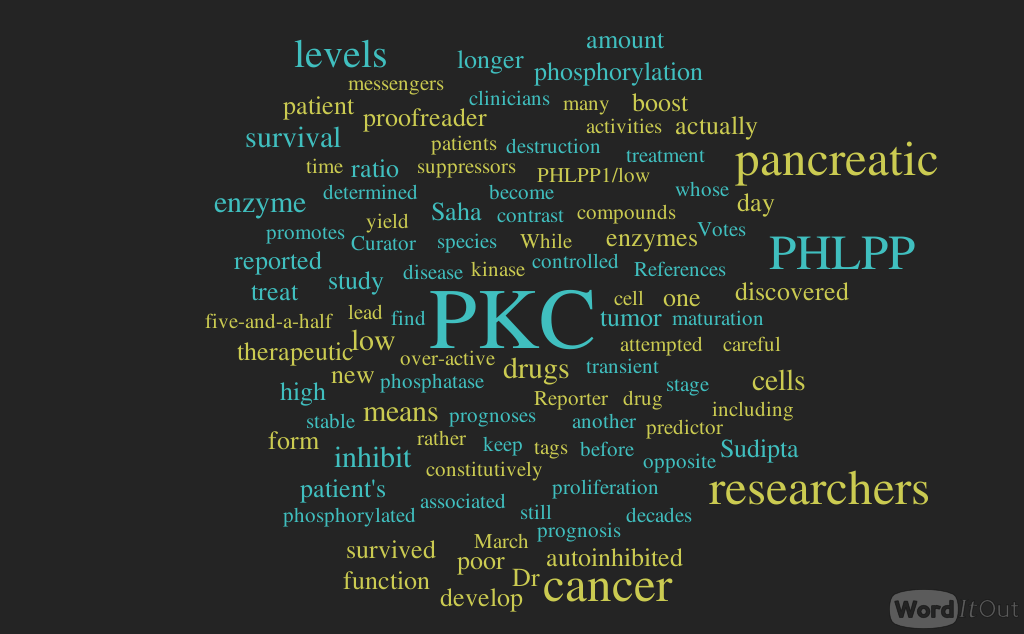
Protein kinase C (PKC) isozymes function as tumor suppressors in increasing contexts. These enzymes are crucial for a number of cellular activities, including cell survival, proliferation and migration — functions that must be carefully controlled if cells get out of control and form a tumor. In contrast to oncogenic kinases, whose function is acutely regulated by transient phosphorylation, PKC is constitutively phosphorylated following biosynthesis to yield a stable, autoinhibited enzyme that is reversibly activated by second messengers. Researchers at University of California San Diego School of Medicine found that another enzyme, called PHLPP1, acts as a “proofreader” to keep careful tabs on PKC.


The researchers discovered that in pancreatic cancer high PHLPP1 levels lead to low PKC levels, which is associated with poor patient survival. They reported that the phosphatase PHLPP1 opposes PKC phosphorylation during maturation, leading to the degradation of aberrantly active species that do not become autoinhibited. They discovered that any time an over-active PKC is inadvertently produced, the PHLPP1 “proofreader” tags it for destruction. That means the amount of PHLPP1 in patient’s cells determines his amount of PKC and it turns out those enzyme levels are especially important in pancreatic cancer.


This team of researchers reversed a 30-year paradigm when they reported evidence that PKC actually suppresses, rather than promotes, tumors. For decades before this revelation, many researchers had attempted to develop drugs that inhibit PKC as a means to treat cancer. Their study implied that anti-cancer drugs would actually need to do the opposite — boost PKC activity. This study sets the stage for clinicians to one day use a pancreatic cancer patient’s PHLPP1/PKC levels as a predictor for prognosis, and for researchers to develop new therapeutic drugs that inhibit PHLPP1 and boost PKC as a means to treat the disease.


The ratio — high PHLPP1/low PKC — correlated with poor prognoses: no pancreatic patient with low PKC in the database survived longer than five-and-a-half years. On the flip side, 50 percent of the patients with low PHLPP1/high PKC survived longer than that. While still in the earliest stages, the researchers hope that this information might one day aid pancreatic diagnostics and treatment. The researchers are next planning to screen chemical compounds to find those that inhibit PHLPP1 and restore PKC levels in low-PKC-pancreatic cancer cells in the lab. These might form the basis of a new therapeutic drug for pancreatic cancer.


References:


https://health.ucsd.edu/news/releases/Pages/2019-03-20-two-enzymes-linked-to-pancreatic-cancer-survival.aspx?elqTrackId=b6864b278958402787f61dd7b7624666


https://www.ncbi.nlm.nih.gov/pubmed/30904392


https://www.ncbi.nlm.nih.gov/pubmed/29513138


https://www.ncbi.nlm.nih.gov/pubmed/18511290


https://www.ncbi.nlm.nih.gov/pubmed/28476658


https://www.ncbi.nlm.nih.gov/pubmed/28283201


https://www.ncbi.nlm.nih.gov/pubmed/24231509


https://www.ncbi.nlm.nih.gov/pubmed/28112438


Read Full Post »

Immunoediting can be a constant defense in the cancer landscape

Immuno-editing can be a constant defense in the cancer landscape, Volume 2 (Volume Two: Latest in Genomics Methodologies for Therapeutics: Gene Editing, NGS and BioInformatics, Simulations and the Genome Ontology), Part 1: Next Generation Sequencing (NGS)

Reporter and Curator: Dr. Sudipta Saha, Ph.D.


There are many considerations in the cancer immunoediting landscape of defense and regulation in the cancer hallmark biology. The cancer hallmark biology in concert with key controls of the HLA compatibility affinity mechanisms are pivotal in architecting a unique patient-centric therapeutic application. Selection of random immune products including neoantigens, antigens, antibodies and other vital immune elements creates a high level of uncertainty and risk of undesirable immune reactions. Immunoediting is a constant process. The human innate and adaptive forces can either trigger favorable or unfavorable immunoediting features. Cancer is a multi-disease entity. There are multi-factorial initiators in a certain disease process. Namely, environmental exposures, viral and / or microbiome exposure disequilibrium, direct harm to DNA, poor immune adaptability, inherent risk and an individual’s own vibration rhythm in life.


When a human single cell is crippled (Deranged DNA) with mixed up molecular behavior that is the initiator of the problem. A once normal cell now transitioned into full threatening molecular time bomb. In the modeling and creation of a tumor it all begins with the singular molecular crisis and crippling of a normal human cell. At this point it is either chop suey (mixed bit responses) or a productive defensive and regulation response and posture of the immune system. Mixed bits of normal DNA, cancer-laden DNA, circulating tumor DNA, circulating normal cells, circulating tumor cells, circulating immune defense cells, circulating immune inflammatory cells forming a moiety of normal and a moiety of mess. The challenge is to scavenge the mess and amplify the normal.


Immunoediting is a primary push-button feature that is definitely required to be hit when it comes to initiating immune defenses against cancer and an adaptation in favor of regression. As mentioned before that the tumor microenvironment is a “mixed bit” moiety, which includes elements of the immune system that can defend against circulating cancer cells and tumor growth. Personalized (Precision-Based) cancer vaccines must become the primary form of treatment in this case. Current treatment regimens in conventional therapy destroy immune defenses and regulation and create more serious complications observed in tumor progression, metastasis and survival. Commonly resistance to chemotherapeutic agents is observed. These personalized treatments will be developed in concert with cancer hallmark analytics and immunocentrics affinity and selection mapping. This mapping will demonstrate molecular pathway interface and HLA compatibility and adaptation with patientcentricity.

References:


https://www.linkedin.com/pulse/immunoediting-cancer-landscape-john-catanzaro/


https://www.cell.com/cell/fulltext/S0092-8674(16)31609-9


https://www.researchgate.net/publication/309432057_Circulating_tumor_cell_clusters_What_we_know_and_what_we_expect_Review


https://www.ncbi.nlm.nih.gov/pmc/articles/PMC4190561/


https://www.ncbi.nlm.nih.gov/pmc/articles/PMC5840207/


https://www.ncbi.nlm.nih.gov/pmc/articles/PMC5593672/


https://www.frontiersin.org/articles/10.3389/fimmu.2018.00414/full


https://www.ncbi.nlm.nih.gov/pmc/articles/PMC5593672/


https://www.ncbi.nlm.nih.gov/pmc/articles/PMC4190561/


https://www.ncbi.nlm.nih.gov/pmc/articles/PMC4388310/


https://www.linkedin.com/pulse/cancer-hallmark-analytics-omics-data-pathway-studio-review-catanzaro/


Read Full Post »

Immunotherapy may help in glioblastoma survival

Immunotherapy may help in glioblastoma survival, Volume 2 (Volume Two: Latest in Genomics Methodologies for Therapeutics: Gene Editing, NGS and BioInformatics, Simulations and the Genome Ontology), Part 1: Next Generation Sequencing (NGS)

Reporter and Curator: Dr. Sudipta Saha, Ph.D.


Glioblastoma is the most common primary malignant brain tumor in adults and is associated with poor survival. But, in a glimmer of hope, a recent study found that a drug designed to unleash the immune system helped some patients live longer. Glioblastoma powerfully suppresses the immune system, both at the site of the cancer and throughout the body, which has made it difficult to find effective treatments. Such tumors are complex and differ widely in their behavior and characteristics.


A small randomized, multi-institution clinical trial was conducted and led by researchers at the University of California at Los Angeles involved patients who had a recurrence of glioblastoma, the most common central nervous system cancer. The aim was to evaluate immune responses and survival following neoadjuvant and/or adjuvant therapy with pembrolizumab (checkpoint inhibitor) in 35 patients with recurrent, surgically resectable glioblastoma. Patients who were randomized to receive neoadjuvant pembrolizumab, with continued adjuvant therapy following surgery, had significantly extended overall survival compared to patients that were randomized to receive adjuvant, post-surgical programmed cell death protein 1 (PD-1) blockade alone.


Neoadjuvant PD-1 blockade was associated with upregulation of T cell– and interferon-γ-related gene expression, but downregulation of cell-cycle-related gene expression within the tumor, which was not seen in patients that received adjuvant therapy alone. Focal induction of programmed death-ligand 1 in the tumor microenvironment, enhanced clonal expansion of T cells, decreased PD-1 expression on peripheral blood T cells and a decreasing monocytic population was observed more frequently in the neoadjuvant group than in patients treated only in the adjuvant setting. These findings suggest that the neoadjuvant administration of PD-1 blockade enhanced both the local and systemic antitumor immune response and may represent a more efficacious approach to the treatment of this uniformly lethal brain tumor.


Immunotherapy has not proved to be effective against glioblastoma. This small clinical trial explored the effect of PD-1 blockade on recurrent glioblastoma in relation to the timing of administration. A total of 35 patients undergoing resection of recurrent disease were randomized to either neoadjuvant or adjuvant pembrolizumab, and surgical specimens were compared between the two groups. Interestingly, the tumoral gene expression signature varied between the two groups, such that those who received neoadjuvant pembrolizumab displayed an INF-γ gene signature suggestive of T-cell activation as well as suppression of cell-cycle signaling, possibly consistent with growth arrest. Although the study was not powered for efficacy, the group found an increase in overall survival in patients receiving neoadjuvant pembrolizumab compared with adjuvant pembrolizumab of 13.7 months versus 7.5 months, respectively.


In this small pilot study, neoadjuvant PD-1 blockade followed by surgical resection was associated with intratumoral T-cell activation and inhibition of tumor growth as well as longer survival. How the drug works in glioblastoma has not been totally established. The researchers speculated that giving the drug before surgery prompted T-cells within the tumor, which had been impaired, to attack the cancer and extend lives. The drug didn’t spur such anti-cancer activity after the surgery because those T-cells were removed along with the tumor. The results are very important and very promising but would need to be validated in much larger trials.


References:


https://www.washingtonpost.com/health/2019/02/11/immunotherapy-may-help-patients-with-kind-cancer-that-killed-john-mccain/?noredirect=on&utm_term=.e1b2e6fffccc


https://www.ncbi.nlm.nih.gov/pubmed/30742122


https://www.practiceupdate.com/content/neoadjuvant-anti-pd-1-immunotherapy-promotes-immune-responses-in-recurrent-gbm/79742/37/12/1


https://www.esmo.org/Oncology-News/Neoadjuvant-PD-1-Blockade-in-Glioblastoma


https://neurosciencenews.com/immunotherapy-glioblastoma-cancer-10722/


Read Full Post »

THE 3RD STAT4ONC ANNUAL SYMPOSIUM APRIL 25-27, 2019, HILTON, HARTFORD, CONNECTICUT, 315 Trumbull St, Hartford, CT 06103

Reporter: Stephen J. Williams, Ph.D.

3.3.8

3.3.8   The 3rd STATONC Annual Symposium, April 25-27, 2019, Hilton Hartford, CT, 315 Trumbull St., Hartford, CT 06103, Volume 2 (Volume Two: Latest in Genomics Methodologies for Therapeutics: Gene Editing, NGS and BioInformatics, Simulations and the Genome Ontology), Part 2: CRISPR for Gene Editing and DNA Repair

SYMPOSIUM OBJECTIVES

The three-day symposium aims to bring oncologists and statisticians together to share new research, discuss novel ideas, ask questions and provide solutions for cancer clinical trials. In the era of big data, precision medicine, and genomics and immune-based oncology, it is crucial to provide a platform for interdisciplinary dialogues among clinical and quantitative scientists. The Stat4Onc Annual Symposium serves as a venue for oncologists and statisticians to communicate their views on trial design and conduct, drug development, and translations to patient care. To be discussed includes big data and genomics for oncology clinical trials, novel dose-finding designs, drug combinations, immune oncology clinical trials, and umbrella/basket oncology trials. An important aspect of Stat4Onc is the participation of researchers across academia, industry, and regulatory agency.

Meeting Agenda will be announced coming soon. For Updated Agenda and Program Speakers please CLICK HERE

The registration of the symposium is via NESS Society PayPal. Click here to register.

Other  2019 Conference Announcement Posts on this Open Access Journal Include:

Read Full Post »

37th Annual J.P. Morgan HEALTHCARE CONFERENCE: News at #JPM2019 for Jan. 10, 2019: Deals and Announcements

Reporter: Stephen J. Williams, Ph.D.

From Biospace.com


JP Morgan Healthcare Conference Update: Sage, Mersana, Shutdown Woes and Babies

Speaker presenting to audience at a conference

With the J.P. Morgan Healthcare Conference winding down, companies remain busy striking deals and informing investors about pipeline advances. BioSpace snagged some of the interesting news bits to come out of the conference from Wednesday.

SAGE Therapeutics – Following a positive Phase III report that its postpartum depression treatment candidate SAGE-217 hit the mark in its late-stage clinical trial, Sage Therapeutics is eying the potential to have multiple treatment options available for patients. At the start of J.P. Morgan, Sage said that patients treated with SAGE-217 had a statistically significant improvement of 17.8 points in the Hamilton Rating Scale for Depression, compared to 13.6 for placebo. The company plans to seek approval for SAGE-2017, but before that, the FDA is expected to make a decision on Zulresso in March. Zulresso already passed muster from advisory committees in November, and if approved, would be the first drug specifically for postpartum depression. In an interview with the Business Journal, Chief Business Officer Mike Cloonan said the company believes there is room in the market for both medications, particularly since the medications address different patient populations.


Mersana Therapeutics – After a breakup with Takeda Pharmaceutical and the shelving of its lead product, Cambridge, Mass.-based Mersana is making a new path. Even though a partial clinical hold was lifted following the death of a patient the company opted to shelve development of XMT-1522. During a presentation at JPM, CEO Anna Protopapas noted that many other companies are developing therapies that target the HER2 protein, which led to the decision, according to the Boston Business Journal. Protopapas said the HER2 space is highly competitive and now the company will focus on its other asset, XMT-1536, an ADC targeting NaPi2b, an antigen highly expressed in the majority of non-squamous NSCLC and epithelial ovarian cancer. XMT-1536 is currently in Phase 1 clinical trials for NaPi2b-expressing cancers, including ovarian cancer, non-small cell lung cancer and other cancers. Data on XMT-1536 is expected in the first half of 2019.

Novavax – During a JPM presentation, Stan Erck, CEO of Novavax, pointed to the company’s RSV vaccine, which is in late-stage development. The vaccine is being developed for the mother, in order to protect an infant. The mother transfers the antibodies to the infant, which will provide the baby with protection from RSV in its first six months. Erck called the program historic. He said the Phase III program is in its fourth year and the company has vaccinated 4,636 women. He said they are tracking the women and the babies. Researchers call the mothers every week through the first six months of the baby’s life to acquire data. Erck said the company anticipates announcing trial data this quarter. If approved, Erck said the market for the vaccine could be a significant revenue driver.

“You have 3.9 million birth cohorts and we expect 80 percent to 90 percent of those mothers to be vaccinated as a pediatric vaccine and in the U.S. the market rate is somewhere between $750 million and a $1 billion and then double that for worldwide market. So it’s a large market and we will be first to market in this,” Erck said, according to a transcript of the presentation.

Denali Therapeutics – Denali forged a collaboration with Germany-based SIRION Biotech to develop gene therapies for central nervous disorders. The two companies plan to develop adeno-associated virus (AAV) vectors to enable therapeutics to cross the blood-brain barrier for clinical applications in neurodegenerative diseases including Parkinson’s, Alzheimer’s disease, ALS and certain other diseases of the CNS.

AstraZeneca – Pharma giant AstraZeneca reported that in 2019 net prices on average across the portfolio will decrease versus 2018. With a backdrop of intense public and government scrutiny over pricing, Market Access head Rick Suarez said the company is increasing its pricing transparency. Additionally, he said the company is looking at new ways to price drugs, such as value-based reimbursement agreements with payers, Pink Sheet reported.

Amarin Corporation – As the company eyes a potential label expansion approval for its cardiovascular disease treatment Vascepa, Amarin Corporation has been proactively hiring hundreds of sales reps. In the fourth quarter, the company hired 265 new sales reps, giving the company a sales team of more than 400, CEO John Thero said. Thero noted that is a label expansion is granted by the FDA, “revenues will increase at least 50 percent over what we did in the prior year, which would give us revenues of approximate $350 million in 2019.”

Government Woes – As the partial government shutdown in the United States continues into its third week, biotech leaders at JPM raised concern as the FDA’s carryover funds are dwindling. With no new funding coming in, reviews of New Drug Applications won’t be able to continue past February, Pink Sheet said. While reviews are currently ongoing, no New Drug Applications are being accepted by the FDA at this time. With the halt of NDA applications, that has also caused some companies to delay plans for an initial public offering. It’s hard to raise potential investor excitement without the regulatory support of a potential drug approval. During a panel discussion, Jonathan Leff, a partner at Deerfield Management, noted that the ongoing government shutdown is a reminder of how “overwhelmingly dependent the whole industry of biotech and drug development is on government,” Pink Sheet said.

Other posts on the JP Morgan 2019 Healthcare Conference on this Open Access Journal include:

#JPM19 Conference: Lilly Announces Agreement To Acquire Loxo Oncology

36th Annual J.P. Morgan HEALTHCARE CONFERENCE January 8 – 11, 2018

37th Annual J.P. Morgan HEALTHCARE CONFERENCE: #JPM2019 for Jan. 8, 2019; Opening Videos, Novartis expands Cell Therapies, January 7 – 10, 2019, Westin St. Francis Hotel | San Francisco, California

37th Annual J.P. Morgan HEALTHCARE CONFERENCE: News at #JPM2019 for Jan. 8, 2019: Deals and Announcements


Read Full Post »

Role of Informatics in Precision Medicine: Notes from Boston Healthcare Webinar: Can It Drive the Next Cost Efficiencies in Oncology Care? Volume 2 (Volume Two: Latest in Genomics Methodologies for Therapeutics: Gene Editing, NGS and BioInformatics, Simulations and the Genome Ontology), Part 1: Next Generation Sequencing (NGS)

Role of Informatics in Precision Medicine: Notes from Boston Healthcare Webinar: Can It Drive the Next Cost Efficiencies in Oncology Care?

Reporter: Stephen J. Williams, Ph.D.


Boston Healthcare sponsored a Webinar recently entitled ” Role of Informatics in Precision Medicine: Implications for Innovators”.  The webinar focused on the different informatic needs along the Oncology Care value chain from drug discovery through clinicians, C-suite executives and payers. The presentation, by Joseph Ferrara and Mark Girardi, discussed the specific informatics needs and deficiencies experienced by all players in oncology care and how innovators in this space could create value. The final part of the webinar discussed artificial intelligence and the role in cancer informatics.


Below is the mp4 video and audio for this webinar.  Notes on each of the slides with a few representative slides are also given below:

Please click below for the mp4 of the webinar:


  • worldwide oncology related care to increase by 40% in 2020
  • big movement to participatory care: moving decision making to the patient. Need for information
  • cost components focused on clinical action
  • use informatics before clinical stage might add value to cost chain


Key unmet needs from perspectives of different players in oncology care where informatics may help in decision making


  1.   Needs of Clinicians

– informatic needs for clinical enrollment

– informatic needs for obtaining drug access/newer therapies

2.  Needs of C-suite/health system executives

– informatic needs to help focus of quality of care

– informatic needs to determine health outcomes/metrics

3.  Needs of Payers

– informatic needs to determine quality metrics and managing costs

– informatics needs to form guidelines

– informatics needs to determine if biomarkers are used consistently and properly

– population level data analytics


What are the kind of value innovations that tech entrepreneurs need to create in this space? Two areas/problems need to be solved.

  • innovations in data depth and breadth
  • need to aggregate information to inform intervention

Different players in value chains have different data needs


Data Depth: Cumulative Understanding of disease

Data Depth: Cumulative number of oncology transactions

  • technology innovators rely on LEGACY businesses (those that already have technology) and these LEGACY businesses either have data breath or data depth BUT NOT BOTH; (IS THIS WHERE THE GREATEST VALUE CAN BE INNOVATED?)
  • NEED to provide ACTIONABLE as well as PHENOTYPIC/GENOTYPIC DATA
  • data depth more important in clinical setting as it drives solutions and cost effective interventions.  For example Foundation Medicine, who supplies genotypic/phenotypic data for patient samples supplies high data depth
  • technologies are moving to data support
  • evidence will need to be tied to umbrella value propositions
  • Informatic solutions will have to prove outcome benefit


How will Machine Learning be involved in the healthcare value chain?

  • increased emphasis on real time datasets – CONSTANT UPDATES NEED TO OCCUR. THIS IS NOT HAPPENING BUT VALUED BY MANY PLAYERS IN THIS SPACE
  • Interoperability of DATABASES Important!  Many Players in this space don’t understand the complexities integrating these datasets

Other Articles on this topic of healthcare informatics, value based oncology, and healthcare IT on this OPEN ACCESS JOURNAL include:

Centers for Medicare & Medicaid Services announced that the federal healthcare program will cover the costs of cancer gene tests that have been approved by the Food and Drug Administration

Broad Institute launches Merkin Institute for Transformative Technologies in Healthcare

HealthCare focused AI Startups from the 100 Companies Leading the Way in A.I. Globally

Paradoxical Findings in HealthCare Delivery and Outcomes: Economics in MEDICINE – Original Research by Anupam “Bapu” Jena, the Ruth L. Newhouse Associate Professor of Health Care Policy at HMS

Google & Digital Healthcare Technology

Can Blockchain Technology and Artificial Intelligence Cure What Ails Biomedical Research and Healthcare

The Future of Precision Cancer Medicine, Inaugural Symposium, MIT Center for Precision Cancer Medicine, December 13, 2018, 8AM-6PM, 50 Memorial Drive, Cambridge, MA

Live Conference Coverage @Medcity Converge 2018 Philadelphia: Oncology Value Based Care and Patient Management

2016 BioIT World: Track 5 – April 5 – 7, 2016 Bioinformatics Computational Resources and Tools to Turn Big Data into Smart Data

The Need for an Informatics Solution in Translational Medicine


Read Full Post »

The Future of Precision Cancer Medicine, Inaugural Symposium, MIT Center for Precision Cancer Medicine, December 13, 2018, 8AM-6PM, 50 Memorial Drive, Cambridge, MA

Reporter: Aviva Lev-Ari, PhD, RN

#CPCM2018 @AVIVA1950 @pharma_BI


Aviva Lev-Ari, PhD, RN, Editor-in-Chief, will attend and cover this event in REAL TIME for

 http://pharmaceuticalintelligence.com 


Over the past decade, there have been major advancements in the field of precision medicine, leading to exciting new treatments for some cancer patients. Much attention has been focused on genomic profiling of tumors to identify genomic alterations that might guide selection of specific therapies for individual patients. Beyond genomics, however, there is a variety of other precision approaches that can identify and exploit cancer-specific biological mechanisms including proteomics, metabolomics, and computational modeling, resulting in the more effective use of existing cancer medicines. On Thursday, December 13, 2018, the MIT Center for Precision Cancer Medicine will hold its inaugural annual symposium in the Samberg Conference Center at MIT. This full-day event will feature leading researchers and clinicians, who will highlight recent advances in precision cancer medicine and share perspectives on the future. An industry panel will also discuss the barriers to instituting precision medicine into current and future clinical trials.


Keynote Address

Charles Sawyers

Charles Sawyers, MD

Chair, Human Oncology and Pathogenesis Program
Memorial Sloan Kettering Cancer Center

Speakers

Andrea Califano

Andrea Califano, PhD

Clyde and Helen Wu Professor of Chemical Systems Biology, Columbia University
Chair, Department of Systems Biology, Columbia University
Director, JP Sulzberger Columbia Genome Center
Associate Director, Herbert Irving Comprehensive Cancer Center

Chris Love

J. Christopher Love, PhD

Professor of Chemical Engineering, MIT
Associate Member, Ragon Institute of MGH, MIT and Harvard
Member, Koch Institute, MIT

Richard Marais

Richard Marais, PhD

Professor of Molecular Oncology
Director, CRUK Manchester Institute
The University of Manchester

Kenna Mills Shaw

Kenna Mills Shaw, PhD

Executive Director
Sheikh Khalifa Bin Zayed al Nahyan Institute for Personalized Cancer Therapy
MD Anderson Cancer Center

Alice Shaw

Alice Shaw, MD, PhD

Professor, Harvard Medical School
Director, Thoracic Cancer Program, Massachusetts General Hospital

Matt Vander Heiden

Matthew Vander Heiden, MD, PhD

Associate Professor of Biology, MIT
Associate Director, Koch Institute
Member, MIT Center for Precision Cancer Medicine

Mike Yaffe

Michael B. Yaffe, MD, PhD

David H. Koch Professor of Science, MIT
Professor of Biology and Biological Engineering, MIT
Director, MIT Center for Precision Cancer Medicine
Director, Koch Institute Clinical Investigator Program

Jean Zhao

Jean Zhao, PhD

Professor of Biological Chemistry and Molecular Pharmacology
Harvard Medical School and Dana-Farber Cancer Institute


Panelists: Barriers to Instituting Precision Medicine in Clinical Trials

Hammerman

Peter Hammerman, MD, PhD

Global Head, Translational Research
Oncology Disease Area
Novartis Institutes for BioMedical Research

Ho

Steffan N. Ho, MD, PhD

Vice President, Head of Translational Oncology
Pfizer Global Product Development

Shiva Malek

Shiva Malek, PhD

Director and Principal Scientist
Department of Discovery Oncology
Genentech Inc

Marks

Kevin Marks, PhD

VP of Biology
Agios Pharmaceuticals

Michael Rothenberg

S. Michael Rothenberg, MD, PhD

Vice-President, Research and Development
Loxo Oncology, Inc.

Angela Koehler

Moderator:

Angela Koehler, PhD

Goldblith Career Development Professor in Applied Biology, MIT
Member, Koch Institute for Integrative Cancer Research
Member, MIT Center for Precision Cancer Medicine


Speakers:

Panelists:

  • Peter Hammerman, Novartis Institutes for BioMedical Research
  • Steffan Ho, Pfizer
  • Shiva Malek, Genentech, Inc
  • Kevin Marks, Agios Pharmaceuticals
  • S. Michael Rothenberg, Loxo Oncology, Inc

Moderated by Angela Koehler, MIT’s Koch Institute

Agenda:

8:00 am Registration and continental breakfast

8:45 am Opening remarks by Michael Yaffe (MIT’s Koch Institute)

  • Season of great expectation, tumor genetics is just the beginning, beyond: science, engineering, medicine: beyond genomics: immunology, cell biology, early detection, new drug development for the undrugable, system biology, RNAi
  • Jack Tyler was the initiator to find a donor for CPCM

9:00 am Keynote Address by Charles L. Sawyers (Memorial Sloan Kettering Cancer Center)

  • developed a drug for prostate cancer
  • Clinical trained oncologist/genomics
  • Lineage Plasticity:
  1. luminal cells in histology of origin and basal cells and require androgen receptor AR) function
  2. deprive lunimal cells fro growth factor
  3. Hormonal therapy Leuprolite, degarelix [castration methastatic]
  4. after relapse 2nd generation anti-androgens abirateron
  5. PING MU ENZALUTAMIDE RESISTANCE P53/RB! DELETION CONFER
  6. TRANSCRIPTION CHANGE: ANTIADROGEN RESISTANCE
  7. Lineage shift Sox2 level goes up – prevent drug resistance, in vivo and in vitro
  8. SOX2 promotes lineage placticity and antiadrogen resistance in TP53 and RBI-deficient prostate cancer
  9. Evolution of Lineage plasticity over time
  10. AR Pathway inhibition accelerates lineage plasticity: synaptophysin-positive disease in-vivo
  11. scRNA-seq time course – modeled by diffusion map displayed in luminal and basal cells
  12. Emergence of EMT phenotype, with retention of epithelial features
  13. Use CRISPR to perturb luminal plasticity by phyeno type
  14. Genomic landscape of Primary Prostate Cancer: ERG gain drives luminal layer
  15. Different classes of FOXA1 mutations in Prostate organoid Cancer – Missense, inframe, truncated
  16. FOXA1 key in hormone receptor signaling
  17. Hypermorphic peaks – ATAC-seq neomorphic FOXA1 pioneering activity
  18. Common Prostate Cancer Genes:differentiation phenotypes: TP53 Loss, RB1 – Loss,
  19. work of Matan Hofree – four subtypes of luminal cells
  20. involution and regeneration of single cell RNAseq
  21. Transcriptional shifts in response to castration/androgen addback
  22. androgen addback: 50% of luminal cells are proliferation in 48 hours
  23. cell responsible for organ regeneration


9:45 am Alice T. Shaw (Massachusetts General Hospital)

  • evolution of drug resistance in Lung Cancer
  • oncogenic drivers in lung adenocarcenoma –
  1. EGFR – sensitizing 19.4% of all patients
  2. KRAS
  3. ALK
  4. ROS1
  5. CMET
  6. BRAF
  7. NTRK1
  8. RET

Delay and prevention of drug resistance: liquid biopsy of pleural fluids and serial blood collections

  • Crizotinib patient with ROS1 + nsclc
  • acquired mutation in ROS1 G2032R – resistance to Crizotinib – Michael Lawrence, MGH – analysis of mutation and resistance
  • Repotrectinib – for ROS1 – Resistance mediated by this mutation
  • If patient fails three antiinhibitor drugs: secondary ALK mutations mediate Crizotinib Resistance
  • 2nd generation of  ALK inhibitors are structurally Distinct molecules
  • Lorlatinib – 3rd generation –>> back to 1st generation Crizotinib
  • Clonal evolution of resistance in ALK in NSCLC
  • compound mutations in ALK mutations – Lorlatinib Resistance
  • Sequential TKI therapy foster the development of compound mutation refractory to all generations og ALK TKIs – compound mutation can’t be overcome
  • Intratumoral Heterogeneity revealed by multiregion sequencing of renal cell carcinoma and resected NSCLC
  • somatic mutations: Pre-treatment to Lorlatinib resistance
  • Clonal Analysis: Multiple Drivers of resistance underlie clinical relapse
  • genomic instability – eradicate residual disease to eliminate drug resistance and tolerance persistance


10:25 am Networking Break

10:45 am Richard Marais (Cancer Research UK, Manchester Institute)

  • Melanoma – Precision Medicin
  • Request – NOT TO PUBLISH on the INTERNET, some of the work presented is not PUBLISHED.
  • Request is honored

11:25 am Matthew Vander Heiden (MIT’s Koch Institute)

  • Targeting Metabolism is altered in cancer
  • Metabolism is glucose carbohydrates, lipids – conversion of nutrients into biomass: ATP, Protein, Nucleic acid,
  • Not -proliferating cells vs proliferating cells
  • genetic mutations, tissue of origin, lineage of cells — metabolism takes place: combination of these three facto
  • environment consists the metabolic network definers.d by cell intrinsic network
  • Assessment of nutrient levels in tumor microenvironment
  • Metabolite analysis: ion suppression vs nutrients
  • nutrients are available to cells in tumors
  • depletion of glucose vs enrichment
  • metabolite most different: Gluthamine, needed for cancer to grow
  • Lineage can contribute – tryptophane and argenine
  • gluthamine – Cyctine affect gluthamine sensitivity to gluthamine inhibitors
  • what you eat, where is the tumor locate, tissue environment — more important
  • therapeutic window: metabolism processes – cell proliferation
  • ability to make aspartate – given to mice pancreatic  — tumor grow faster
  • cellular oxidation state correlate with pyruvate oxidation — PDH Activator suppress oxidation
  • Aspartate vs NAD+/NADH – lactate TCA – form more carbon
  • PDH activation reduces Redux
  • Serine availability can limit proliferation even in cells with increase
  • Serine vs NAD regeneration
  • which cancer falls into which group : Serine pathway – increase serine synthesis: Melanoma vs Breast cancer
  • growth of breast cancer: Serine availability dependent – accelerate of inhibit growth by level of serine
  • Model for how nutrient limitation affect tumor growth, tumor size depends of serine levels


12:05 pm Box lunch

12:30 pm Industry panel: Barriers to instituting precision medicine into clinical trials

  • Long term benefits of Precision Medicine
  • What phynotype are now looked for?

Michael Rothenberg

  1. short term, identify mutations
  2. more testing is needed
  3. sequencing the therapies
  4. challenge getting tissue, doing experiments in house
  5. Industry needs Academia collaboration for accelerated innovations
  6. AI may lower the cost of drug discovery

KEVIN MARX:

  1. MECHANISM OF RESISTANCE – COMBINATORIAL DRUG DISCOVERY
  2. phynotyping, tissue acquisition immune phenotype, what drive therapeutic response?
  3. genetic drivers
  4. HR seeks Scientistist that worked in TEAMS, collaborative science

STEPHAN HO

  1. long term benefits are very important
  2. Stage III disease – technology advances
  3. advanced in the regulatory space
  4. smaller cohort size to approve a drug
  5. biologic complexity, driver oncogenes, precision to imprecision
  6. cost of risk in investment in innovations
  7. check point inhibitor – known biology and immuno-modulation, data hypothesis and moving forward
  8. Organizational culture, interaction in teams, functional behavior
  9. commit to deliverable, perfect timing contingent on work of others.

Peter Hammerman

  1. single cell tumor immunity in combination drug therapy
  2. Tumor monitoring over time
  3. Novartis is interested to collaborate with innovators in Academia and in other institutions
  4. critical thinking on DATA and on negative data
  5. Combination drug therapy: orthogonal mechanism of actions and drug classed – toxicity is an issue

Shiva Malek

  1. How to drug mutations on DATA
  2. Acquired and intrinsic mutations
  3. exposure and patient safety
  4. UCSF’s Ashkenazi’s Team and Genetech – basic biology area selection
  5. Failure are not talked about
  6. Round table for problem solvers, how you approach a problem
  7. translational work require skills beyond technical expertise
  8. learning the navigation inside an organization
  9. leadership in R&D, expected to demonstrate leadership, the Scientist needs to have command of the field and of desirable directions of research


2:00 pm J. Christopher Love (MIT’s Koch Institute)

Acceleration of the PROCESS to develop Precision Medicine products

  • design, build, test – PROCESS
  • New drugs and vaccines – the process is iterative
  • measurements, with use of smallest number of samples
  • deliver precision medical: small f patients or large population or
  • clinical samples provide rich source of information: Blood or tissue sample
  • Tissue – extract RNA, component cells, single-cell RNA sequencing,
  • Challenges of enabling scRNA-seq in clinical labs
  • Probability, scale, capture efficiencies, temporal uniformity
  • single-cell sequencing
  • Seq-Well: method for scRNA-Seq
  • New Chemistries for T-cell
  • Blood: cell, cfDNA, Exosomes
  • map cancer genome from blood
  • Tissue:
  • Single circulating Tumor cells:
  • yield genomic landscape of cancer
  • cell free DNA, vells, proteins, metabolite, Tumor is existence, draw blood
  • cfDNA Tumor Fraction is prognostic of survival in mTNBC
  • automate to 13 cancer types
  • Rs is now possible
  • reduce sample requirement
  • cost is low digital information from clinical samples
  • Keytruda – is a molecular Signature
  • low volume product, advanced preparation (mo-years) __>>> agile solutions (days to years)
  • bentchtop, on-demand manufacturing system: Production, Purification, Formulation
  • hand-free production of formulated G-CSF: comparable to licensed products.
  • Plug and play manufacturing using  InSeq
  • Novel MAbs from patients
  • Many molecules to many products


2:40 pm Andrea Califano (Columbia University, System Biology)

Mechanistic Framework for the systematic pharmacological targeting of Non-Oncogene Dependencies – Precise Precision Oncology

  • systematic elucidation od critical cancer cell dependencies
  • drug MOA
  • Tumor dependencies to Drug MOA
  • Tumor heterogeneity
  • ARACNe – regulatory targets of regulatory proteins
  • Combinational Therapy: HER@ inhibitor and JAK1/JAK2 inhibitor
  • Driver Mutations
  • ARACNe; MINDy DIGGIT; Expression VIPER: MetaVIPER
  • Aberrantly activated protein for Prioritizing treatment in patients
  • Checkpoint activity reversal – prioritize drugs based on
  • Tumor model selection: GIST
  • 260 patients, 14 untreatable cancers — N of 1 Study
  • Single cell Studies – active proteins in stem-like progenitor cells
  • Ivermectin Treatment vs Control (7d vs 14d)


3:20 pm Networking Break

3:40 pm Jean Zhao (Dana Farber Cancer Institute)

Immunotherapy and Targeted Therapy in Cancer Therapy

  • Targeting cancer with CDK4/6 inhibitors
  • CDK4/6 inhibitors causes tumor regression in breast cancer and regression of CT-26 colorectal cancer
  • CDK4/6DNMT1 inducing viral mimicry
  • PARP inhibitors  changing treatment in ovarian cancer
  • FDA approved three drugs for ovarian cancer
  • p53-null; BRCA-null; myc high – model testing


4:20 pm Kenna Mills Shaw (MD Anderson Cancer Center)

  • PM nor a Silver bullet nor a Dream Illusion
  • 2013: not all mutations are equally actionable
  • Context of Biomarkers
  • co-mutations in lung cancer identity – therapeutic vulnerability
  • NGS cost decrease leads to increases in Data generation
  • there are only 125 genes ACTIONABLE IN THE CLINIC
  • finding biomarkers beyond direct targets
  • clinical actionability:80K mutation – 32%
  • patients: No standard treatment available
  • Enrollment inGenotype Matched TRIALS
  • MUTATIONS SCREENED: LACK OF ENROLLMENT NOT DUE TO LACK OF MATCHING PROCESS
  • 69% GOT NEW REGIMEN, 17% did not come back — no one called them
  • 58% enrolled on genotrype-matched trials
  • Beyond NGS:

www.personalizedcancertherapy.org

  • DECISION SUPPORT IN REAL TIME IMPROVES “MATCHING” TO RIGHT DRUG.
  • MULTIFACTORS: CO-MOEBIDITIES, MICROBIOME, IMMUNE PHYNOTYPING, GENOMICS, MICROBIOME, ZIP CODE, INFECTION

5:00 pm Michael Yaffe (MIT)

  • AUGMENTED SYNTHETIC LETHALITY
  • CANCER CELLS ARE UNDER CONSTANT STRESS
  • inflammation
  • Therpeutics-targeted Synthetic Lethality
  • BRCA mutation seen in 10%-20% of patients
  • p53 mutations DNA demage – leads to apoptosis p38 MK2 as a pathway is taking over repair DNA and no apotosis occurs.
  • doxorubicin
  • Nanoparticle targeting of siRNAs to established tumors
  • The Concept of augmented Synthetic Lethality   —- enhance a prevosly known synthetic interaction by targeting additional pathways
  • combination of repair pathway  and checkpoint activation – lead to better therapeutic results
  • MK2 – targets hnRNP A0 (an RNA binding protein)  – Cleaved Caspase 3 – is synthetic lethal with p53 mutuant tumors, not just p53 null alleles
  • MK2 links Inflammation and Cancer – IBD –>> polyps and Colon Cancer
  • myeloid cell recruitment to inflammatory tumors in
  • MK2 KO mice: IL-4 –M2 magrophage – tumor progression; regulate the tumor microenvironment
  • IFNgamma –>M1 macrophages – tumor suppression


SOURCE

https://ki.mit.edu/news/events/cpcmsymposium-2018

https://www.eventbrite.com/e/mit-center-for-precision-cancer-medicine-inaugural-symposium-tickets-50424019600?utm_campaign=event_reminder&utm_medium=email&utm_source=eb_email&utm_term=eventname

https://www.eventbrite.com/e/mit-center-for-precision-cancer-medicine-inaugural-symposium-tickets-50424019600

Read Full Post »

« Newer Posts - Older Posts »