Feeds:
Posts
Comments

Archive for the ‘Regenerative Biology and Medicine’ Category

Complex Models of Signaling: Therapeutic Implications

Complex Models of Signaling: Therapeutic Implications

Curator: Larry H. Bernstein, MD, FCAP

Updated 6/24/2019

Fishy Business: Effect of Omega-3 Fatty Acids on Zinc Transporters and Free Zinc Availability in Human Neuronal Cells

Damitha De Mel and Cenk Suphioglu *

NeuroAllergy Research Laboratory (NARL), School of Life and Environmental Sciences, Faculty of Science, Engineering and Built Environment, Waurn Ponds, Victoria, Australia.

Nutrients 2014, 6, 3245-3258; http://dx.doi.org:/10.3390/nu6083245

Omega-3 (ω-3) fatty acids are one of the two main families of long chain polyunsaturated fatty acids (PUFA). The main omega-3 fatty acids in the mammalian body are

  • α-linolenic acid (ALA), docosahexaenoic acid (DHA) and eicosapentaenoic acid (EPA).

Central nervous tissues of vertebrates are characterized by a high concentration of omega-3 fatty acids. Moreover, in the human brain,

  • DHA is considered as the main structural omega-3 fatty acid, which comprises about 40% of the PUFAs in total.

DHA deficiency may be the cause of many disorders such as depression, inability to concentrate, excessive mood swings, anxiety, cardiovascular disease, type 2 diabetes, dry skin and so on.

On the other hand,

  • zinc is the most abundant trace metal in the human brain.

There are many scientific studies linking zinc, especially

  • excess amounts of free zinc, to cellular death.

Neurodegenerative diseases, such as Alzheimer’s disease, are characterized by altered zinc metabolism. Both animal model studies and human cell culture studies have shown a possible link between

  • omega-3 fatty acids, zinc transporter levels and
  • free zinc availability at cellular levels.

Many other studies have also suggested a possible

  • omega-3 and zinc effect on neurodegeneration and cellular death.

Therefore, in this review, we will examine

  • the effect of omega-3 fatty acids on zinc transporters and
  • the importance of free zinc for human neuronal cells.

Moreover, we will evaluate the collective understanding of

  • mechanism(s) for the interaction of these elements in neuronal research and their
  • significance for the diagnosis and treatment of neurodegeneration.

Epidemiological studies have linked high intake of fish and shellfish as part of the daily diet to

  • reduction of the incidence and/or severity of Alzheimer’s disease (AD) and senile mental decline in

Omega-3 fatty acids are one of the two main families of a broader group of fatty acids referred to as polyunsaturated fatty acids (PUFAs). The other main family of PUFAs encompasses the omega-6 fatty acids. In general, PUFAs are essential in many biochemical events, especially in early post-natal development processes such as

  • cellular differentiation,
  • photoreceptor membrane biogenesis and
  • active synaptogenesis.

Despite the significance of these

two families, mammals cannot synthesize PUFA de novo, so they must be ingested from dietary sources. Though belonging to the same family, both

  • omega-3 and omega-6 fatty acids are metabolically and functionally distinct and have
  • opposing physiological effects. In the human body,
  • high concentrations of omega-6 fatty acids are known to increase the formation of prostaglandins and
  • thereby increase inflammatory processes [10].

the reverse process can be seen with increased omega-3 fatty acids in the body.

Many other factors, such as

  1. thromboxane A2 (TXA2),
  2. leukotriene
  3. B4 (LTB4),
  4. IL-1,
  5. IL-6,
  6. tumor necrosis factor (TNF) and
  7. C-reactive protein,

which are implicated in various health conditions, have been shown to be increased with high omega-6 fatty acids but decreased with omega-3 fatty acids in the human body.

Dietary fatty acids have been identified as protective factors in coronary heart disease, and PUFA levels are known to play a critical role in

  • immune responses,
  • gene expression and
  • intercellular communications.

omega-3 fatty acids are known to be vital in

  • the prevention of fatal ventricular arrhythmias, and
  • are also known to reduce thrombus formation propensity by decreasing platelet aggregation, blood viscosity and fibrinogen levels

.Since omega-3 fatty acids are prevalent in the nervous system, it seems logical that a deficiency may result in neuronal problems, and this is indeed what has been identified and reported.

The main omega-3 fatty acids in the mammalian body are

  1. α-linolenic acid (ALA),
  2. docosahexenoic acid (DHA) and
  3. eicosapentaenoic acid (EPA).

In general, seafood is rich in omega-3 fatty acids, more specifically DHA and EPA (Table 1). Thus far, there are nine separate epidemiological studies that suggest a possible link between

  • increased fish consumption and reduced risk of AD
  • and eight out of ten studies have reported a link between higher blood omega-3 levels

Table 1. Total percentage of omega-3 fatty acids in common foods and supplements.

Food/Supplement EPA DHA ALA Total %
Fish
SalmonSardine

Anchovy

Halibut

Herring

Mackerel

Tuna

Fresh Bluefin

XX

X

X

X

X

X

X

XX

X

X

X

X

X

X

>50%>50%

>50%

>50%

>50%

>50%

>50%

>50%

Oils/Supplements
Fish oil capsulesCod liver oils

Salmon oil

Sardine oil

XX

X

X

XX

X

X

>50%>50%

>50%

>50%

Black currant oilCanola oil Mustard seed oils

Soybean oil

Walnut oil

Wheat germ oil

XX

X

X

X

X

10%–50%10%–50%

10%–50%

10%–50%

10%–50%

10%–50%

Seeds and other foods
Flaxseeds/LinseedsSpinach

Wheat germ Human milk

Peanut butter

Soybeans

Olive oil

Walnuts

XX

X

X

X

X

X

X

>50%>50%

10%–50%

10%–50%

<10%

<10%

<10%

<10%


Table adopted from Maclean C.H. et al. [18].

In another study conducted with individuals of 65 years of age or older (n = 6158), it was found that

  • only high fish consumption, but
  • not dietary omega-3 acid intake,
  • had a protective effect on cognitive decline

In 2005, based on a meta-analysis of the available epidemiology and preclinical studies, clinical trials were conducted to assess the effects of omega-3 fatty acids on cognitive protection. Four of the trials completed have shown

a protective effect of omega-3 fatty acids only among those with mild cognitive impairment conditions.

A  trial of subjects with mild memory complaints demonstrated

  • an improvement with 900 mg of DHA.

We review key findings on

  • the effect of the omega-3 fatty acid DHA on zinc transporters and the
  • importance of free zinc to human neuronal cells.

DHA is the most abundant fatty acid in neural membranes, imparting appropriate

  • fluidity and other properties,

and is thus considered as the most important fatty acid in neuronal studies. DHA is well conserved throughout the mammalian species despite their dietary differences. It is mainly concentrated

  • in membrane phospholipids at synapses and
  • in retinal photoreceptors and
  • also in the testis and sperm.

In adult rats’ brain, DHA comprises approximately

  • 17% of the total fatty acid weight, and
  • in the retina it is as high as 33%.

DHA is believed to have played a major role in the evolution of the modern human –

  • in particular the well-developed brain.

Premature babies fed on DHA-rich formula show improvements in vocabulary and motor performance.

Analysis of human cadaver brains have shown that

  • people with AD have less DHA in their frontal lobe
  • and hippocampus compared with unaffected individuals

Furthermore, studies in mice have increased support for the

  • protective role of omega-3 fatty acids.

Mice administrated with a dietary intake of DHA showed

  • an increase in DHA levels in the hippocampus.

Errors in memory were decreased in these mice and they demonstrated

  • reduced peroxide and free radical levels,
  • suggesting a role in antioxidant defense.

Another study conducted with a Tg2576 mouse model of AD demonstrated that dietary

  • DHA supplementation had a protective effect against reduction in
  • drebrin (actin associated protein), elevated oxidation, and to some extent, apoptosis via
  • decreased caspase activity.


Zinc

Zinc is a trace element, which is indispensable for life, and it is the second most abundant trace element in the body. It is known to be related to

  • growth,
  • development,
  • differentiation,
  • immune response,
  • receptor activity,
  • DNA synthesis,
  • gene expression,
  • neuro-transmission,
  • enzymatic catalysis,
  • hormonal storage and release,
  • tissue repair,
  • memory,
  • the visual process

and many other cellular functions. Moreover, the indispensability of zinc to the body can be discussed in many other aspects,  as

  • a component of over 300 different enzymes
  • an integral component of a metallothioneins
  • a gene regulatory protein.

Approximately 3% of all proteins contain

  • zinc binding motifs .

The broad biological functionality of zinc is thought to be due to its stable chemical and physical properties. Zinc is considered to have three different functions in enzymes;

  1. catalytic,
  2. coactive and

Indeed, it is the only metal found in all six different subclasses

of enzymes. The essential nature of zinc to the human body can be clearly displayed by studying the wide range of pathological effects of zinc deficiency. Anorexia, embryonic and post-natal growth retardation, alopecia, skin lesions, difficulties in wound healing, increased hemorrhage tendency and severe reproductive abnormalities, emotional instability, irritability and depression are just some of the detrimental effects of zinc deficiency.

Proper development and function of the central nervous system (CNS) is highly dependent on zinc levels. In the mammalian organs, zinc is mainly concentrated in the brain at around 150 μm. However, free zinc in the mammalian brain is calculated to be around 10 to 20 nm and the rest exists in either protein-, enzyme- or nucleotide bound form. The brain and zinc relationship is thought to be mediated

  • through glutamate receptors, and
  • it inhibits excitatory and inhibitory receptors.

Vesicular localization of zinc in pre-synaptic terminals is a characteristic feature of brain-localized zinc, and

  • its release is dependent on neural activity.

Retardation of the growth and development of CNS tissues have been linked to low zinc levels. Peripheral neuropathy, spina bifida, hydrocephalus, anencephalus, epilepsy and Pick’s disease have been linked to zinc deficiency. However, the body cannot tolerate excessive amounts of zinc.

The relationship between zinc and neurodegeneration, specifically AD, has been interpreted in several ways. One study has proposed that β-amyloid has a greater propensity to

  • form insoluble amyloid in the presence of
  • high physiological levels of zinc.

Insoluble amyloid is thought to

  • aggregate to form plaques,

which is a main pathological feature of AD. Further studies have shown that

  • chelation of zinc ions can deform and disaggregate plaques.

In AD, the most prominent injuries are found in

  • hippocampal pyramidal neurons, acetylcholine-containing neurons in the basal forebrain, and in
  • somatostatin-containing neurons in the forebrain.

All of these neurons are known to favor

  • rapid and direct entry of zinc in high concentration
  • leaving neurons frequently exposed to high dosages of zinc.

This is thought to promote neuronal cell damage through oxidative stress and mitochondrial dysfunction. Excessive levels of zinc are also capable of

  • inhibiting Ca2+ and Na+ voltage gated channels
  • and up-regulating the cellular levels of reactive oxygen species (ROS).

High levels of zinc are found in Alzheimer’s brains indicating a possible zinc related neurodegeneration. A study conducted with mouse neuronal cells has shown that even a 24-h exposure to high levels of zinc (40 μm) is sufficient to degenerate cells.

If the human diet is deficient in zinc, the body

  • efficiently conserves zinc at the tissue level by compensating other cellular mechanisms

to delay the dietary deficiency effects of zinc. These include reduction of cellular growth rate and zinc excretion levels, and

  • redistribution of available zinc to more zinc dependent cells or organs.

A novel method of measuring metallothionein (MT) levels was introduced as a biomarker for the

  • assessment of the zinc status of individuals and populations.

In humans, erythrocyte metallothionein (E-MT) levels may be considered as an indicator of zinc depletion and repletion, as E-MT levels are sensitive to dietary zinc intake. It should be noted here that MT plays an important role in zinc homeostasis by acting

  • as a target for zinc ion binding and thus
  • assisting in the trafficking of zinc ions through the cell,
  • which may be similar to that of zinc transporters

Zinc Transporters

Deficient or excess amounts of zinc in the body can be catastrophic to the integrity of cellular biochemical and biological systems. The gastrointestinal system controls the absorption, excretion and the distribution of zinc, although the hydrophilic and high-charge molecular characteristics of zinc are not favorable for passive diffusion across the cell membranes. Zinc movement is known to occur

  • via intermembrane proteins and zinc transporter (ZnT) proteins

These transporters are mainly categorized under two metal transporter families; Zip (ZRT, IRT like proteins) and CDF/ZnT (Cation Diffusion Facilitator), also known as SLC (Solute Linked Carrier) gene families: Zip (SLC-39) and ZnT (SLC-30). More than 20 zinc transporters have been identified and characterized over the last two decades (14 Zips and 8 ZnTs).

Members of the SLC39 family have been identified as the putative facilitators of zinc influx into the cytosol, either from the extracellular environment or from intracellular compartments (Figure 1).

The identification of this transporter family was a result of gene sequencing of known Zip1 protein transporters in plants, yeast and human cells. In contrast to the SLC39 family, the SLC30 family facilitates the opposite process, namely zinc efflux from the cytosol to the extracellular environment or into luminal compartments such as secretory granules, endosomes and synaptic vesicles; thus decreasing intracellular zinc availability (Figure 1). ZnT3 is the most important in the brain where

  • it is responsible for the transport of zinc into the synaptic vesicles of
  • glutamatergic neurons in the hippocampus and neocortex,


Figure 1. Putative cellular localization of some of the different human zinc transporters (i.e., Zip1- Zip4 and ZnT1- ZnT7). Arrows indicate the direction of zinc passage by the appropriate putative zinc transporters in a generalized human cell. Although there are fourteen Zips and eight ZnTs known so far, only the main zinc transporters are illustrated in this figure for clarity and brevity.

Figure 1: Subcellular localization and direction of transport of the zinc transporter families, ZnT and ZIP. Arrows show the direction of zinc mobilization for the ZnT (green) and ZIP (red) proteins. A net gain in cytosolic zinc is achieved by the transportation of zinc from the extracellular region and organelles such as the endoplasmic reticulum (ER) and Golgi apparatus by the ZIP transporters. Cytosolic zinc is mobilized into early secretory compartments such as the ER and Golgi apparatus by the ZnT transporters. Figures were produced using Servier Medical Art, http://www.servier.com/.   http://www.hindawi.com/journals/jnme/2012/173712.fig.001.jpg

zinc transporters

zinc transporters


Early zinc signaling (EZS) and late zinc signaling (LZS)

Early zinc signaling (EZS) and late zinc signaling (LZS)

http://www.hindawi.com/journals/jnme/2012/floats/173712/thumbnails/173712.fig.002_th.jpg


Figure 2: Early zinc signaling (EZS) and late zinc signaling (LZS). EZS involves transcription-independent mechanisms where an extracellular stimulus directly induces an increase in zinc levels within several minutes by releasing zinc from intracellular stores (e.g., endoplasmic reticulum). LSZ is induced several hours after an external stimulus and is dependent on transcriptional changes in zinc transporter expression. Components of this figure were produced using Servier Medical Art, http://www.servier.com/ and adapted from Fukada et al. [30].


DHA and Zinc Homeostasis

Many studies have identified possible associations between DHA levels, zinc homeostasis, neuroprotection and neurodegeneration. Dietary DHA deficiency resulted in

  • increased zinc levels in the hippocampus and
  • elevated expression of the putative zinc transporter, ZnT3, in the rat brain.

Altered zinc metabolism in neuronal cells has been linked to neurodegenerative conditions such as AD. A study conducted with transgenic mice has shown a significant link between ZnT3 transporter levels and cerebral amyloid plaque pathology. When the ZnT3 transporter was silenced in transgenic mice expressing cerebral amyloid plaque pathology,

  • a significant reduction in plaque load
  • and the presence of insoluble amyloid were observed.

In addition to the decrease in plaque load, ZnT3 silenced mice also exhibited a significant

  • reduction in free zinc availability in the hippocampus
  • and cerebral cortex.

Collectively, the findings from this study are very interesting and indicate a clear connection between

  • zinc availability and amyloid plaque formation,

thus indicating a possible link to AD.

DHA supplementation has also been reported to limit the following:

  1. amyloid presence,
  2. synaptic marker loss,
  3. hyper-phosphorylation of Tau,
  4. oxidative damage and
  5. cognitive deficits in transgenic mouse model of AD.

In addition, studies by Stoltenberg, Flinn and colleagues report on the modulation of zinc and the effect in transgenic mouse models of AD. Given that all of these are classic pathological features of AD, and considering the limiting nature of DHA in these processes, it can be argued that DHA is a key candidate in preventing or even curing this debilitating disease.

In order to better understand the possible links and pathways of zinc and DHA with neurodegeneration, we designed a study that incorporates all three of these aspects, to study their effects at the cellular level. In this study, we were able to demonstrate a possible link between omega-3 fatty acid (DHA) concentration, zinc availability and zinc transporter expression levels in cultured human neuronal cells.

When treated with DHA over 48 h, ZnT3 levels were markedly reduced in the human neuroblastoma M17 cell line. Moreover, in the same study, we were able to propose a possible

  • neuroprotective mechanism of DHA,

which we believe is exerted through

  • a reduction in cellular zinc levels (through altering zinc transporter expression levels)
  • that in turn inhibits apoptosis.

DHA supplemented M17 cells also showed a marked depletion of zinc uptake (up to 30%), and

  • free zinc levels in the cytosol were significantly low compared to the control

This reduction in free zinc availability was specific to DHA; cells treated with EPA had no significant change in free zinc levels (unpublished data). Moreover, DHA-repleted cells had

  • low levels of active caspase-3 and
  • high Bcl-2 levels compared to the control treatment.

These findings are consistent with previous published data and further strengthen the possible

  • correlation between zinc, DHA and neurodegeneration.

On the other hand, recent studies using ZnT3 knockout (ZnT3KO) mice have shown the importance of

  • ZnT3 in memory and AD pathology.

For example, Sindreu and colleagues have used ZnT3KO mice to establish the important role of

  • ZnT3 in zinc homeostasis that modulates presynaptic MAPK signaling
  • required for hippocampus-dependent memory

Results from these studies indicate a possible zinc-transporter-expression-level-dependent mechanism for DHA neuroprotection.

Collectively from these studies, the following possible mechanism can be proposed (Figure 2).

possible benefits of DHA in neuroprotection through reduction of ZnT3 transporter

possible benefits of DHA in neuroprotection through reduction of ZnT3 transporter


Figure 2. Proposed neuroprotection mechanism of docosahexaenoic acid (DHA) in reference to synaptic zinc. Schematic diagram showing possible benefits of DHA in neuroprotection through reduction of ZnT3 transporter expression levels in human neuronal cells, which results in a reduction of zinc flux and thus lowering zinc concentrations in neuronal synaptic vesicles, and therefore contributing to a lower incidence of neurodegenerative diseases (ND), such as Alzheimer’s disease (AD).

More recent data from our research group have also shown a link between the expression levels of histone H3 and H4 proteins in human neuronal cells in relation to DHA and zinc. Following DHA treatment, both H3 and H4 levels were up-regulated. In contrast, zinc treatment resulted in a down-regulation of histone levels. Both zinc and DHA have shown opposing effects on histone post-translational modifications, indicating a possible distinctive epigenetic pattern. Upon treatment with zinc, M17 cells displayed an increase in histone deacetylase (HDACs) and a reduction in histone acetylation. Conversely, with DHA treatment, HDAC levels were significantly reduced and the acetylation of histones was up-regulated. These findings also support a possible interaction between DHA and zinc availability.

Conclusions

It is possible to safely claim that there is more than one potential pathway by which DHA and zinc interact at a cellular level, at least in cultured human neuronal cells. Significance and importance of both DHA and zinc in neuronal survival is attested by the presence of these multiple mechanisms.
Most of these reported studies were conducted using human neuroblastoma cells, or similar cell types, due to the lack of live mature human neuronal cells. Thus, the results may differ from results achieved under actual human physiological conditions due to the structural and functional differences between these cells and mature human neurons. Therefore, an alternative approach that can mimic the human neuronal cells more effectively would be advantageous.

Sphingosine-1-phosphate signaling as a therapeutic target          

E Giannoudaki, DJ Swan, JA Kirby, S Ali

Applied Immunobiology and Transplantation Research Group, Institute of Cellular Medicine, Faculty of Medical Sciences, Newcastle University, Newcastle upon Tyne, UK

Cell Health and Cytoskeleton 2012; 4: 63–72

S1P is a 379Da member of the lysophospholipid family. It is the direct metabolite of sphingosine through the action of two sphingosine kinases, SphK1 and SphK2. The main metabolic pathway starts with the hydrolysis of sphingomyelin, a membrane sphingolipid, into ceramide by the enzyme sphingomyelinase and the subsequent production of sphingosine by ceramidase (Figure 1). Ceramide can also be produced de novo in the endoplasmic reticulum (ER) from serine and palmitoyl coenzyme A through multiple intermediates. S1P production is regulated by various S1P-specific and general lipid phosphatases, as well as S1P lyase, which irreversibly degrades S1P into phosphoethanolamine and hexadecanal. The balance between intracellular S1P and its metabolite ceramide can determine cellular fate. Ceramide promotes apoptosis, while S1P suppresses cell death and promotes cell survival. This creates an S1P ceramide “rheostat” inside the cells. S1P lyase expression in tissue is higher than it is in erythrocytes and platelets, the main “suppliers” of S1P in blood. This causes a tissue–blood gradient of S1P, which is important in many S1P-mediated responses, like the lymphocyte egress from lymphoid organs.

S1P signaling overview

S1P is produced inside cells; however, it can also be found extracellularly, in a variety of different tissues. It is abundant in the blood, at concentrations of 0.4–1.5 μM, where it is mainly secreted by erythrocytes and platelets. Blood S1P can be found separately, but mainly it exists in complexes with high-density lipoprotein (HDL) (∼60%).  Many of the cardioprotective effects of HDL are hypothesized to involve S1P. Before 1996, S1P was thought to act mainly intracellularly as a second messenger. However, the identification of several GPCRs that bind S1P led to the initiation of many studies on

  • extracellular S1P signaling through those receptors.

There are five receptors that have been identified currently. These can be coupled with different G-proteins. Assuming that each receptor coupling with a G protein has a slightly different function, one can recognize the complexity of S1P receptor signaling.

S1P as a second messenger

S1P is involved in many cellular processes through its GPCR signaling; studies demonstrate that S1P also acts at an intracellular level. Intracellular S1P plays a role in maintaining the balance of cell survival signal toward apoptotic signals, creating a

  • cell “rheostat” between S1P and its precursor ceramide.

Important evidence that S1P can act intracellularly as a second messenger came from yeast (Saccharomyces cerevisiae) and plant (Arabidopsis thaliana) cells. Yeast cells do not express any S1P receptors, although they can be affected by S1P during heat-shock responses. Similarly, Arabidopsis has only one GPCR-like protein, termed “GCR1,” which does not bind S1P, although S1P regulates stomata closure during drought.

Sphingosine-1-phosphate

Sphingosine-1-phosphate

In mammals, the sphingosine kinases have been found to localize in different cell compartments, being responsible for the accumulation of S1P in those compartments to give intracellular signals. In mitochondria, for instance,

  • S1P was recently found to interact with prohibitin 2,

a conserved protein that maintains mitochondria assembly and function. According to the same study,

SphK2 is the major producer of S1P in mitochondria and the knockout of its gene can cause

  • disruption of mitochondrial respiration and cytochrome c oxidase function.

SphK2 is also present in the nucleus of many cells and has been implicated to cause cell cycle arrest, and it causes S1P accumulation in the nucleus. It seems that nuclear S1P is affiliated with the histone deacetylases HDAC1 and HDAC2,

  • inhibiting their activity, thus having an indirect effect in epigenetic regulation of gene expression.

In the ER, SphK2 has been identified to translocate during stress, and promote apoptosis. It seems that S1P has specific targets in the ER that cause apoptosis, probably through calcium mobilization signals.

Sphingosine 1-phosphate (S1P) is a small bioactive lipid molecule that is involved in several processes both intracellularly and extracellularly. It acts intracellularly

  • to promote the survival and growth of the cell,

through its interaction with molecules in different compartments of the cell.

It can also exist at high concentrations extracellularly, in the blood plasma and lymph. This causes an S1P gradient important for cell migration. S1P signals through five G protein-coupled receptors, S1PR1–S1PR5, whose expression varies in different types of cells and tissue. S1P signaling can be involved in physiological and pathophysiological conditions of the cardiovascular, nervous, and immune systems and diseases such as ischemia/reperfusion injury, autoimmunity, and cancer. In this review, we discuss how it can be used to discover novel therapeutic targets.

The involvement of S1P signaling in disease

In a mouse model of myocardial ischemia-reperfusion injury (IRI), S1P and its carrier, HDL, can help protect myocardial tissue and decrease the infarct size. It seems they reduce cardiomyocyte apoptosis and neutrophil recruitment to the ischemic tissue and may decrease leukocyte adhesion to the endothelium. This effect appears to be S1PR3 mediated, since in S1PR3 knockout mice it is alleviated.

Ischemia activates SphK1, which is then translocated to the plasma membrane. This leads to an increase of intracellular S1P, helping to promote cardiomyocyte survival against apoptosis, induced by ceramide. SphK1 knockout mice cannot be preconditioned against IRI, whereas SphK1 gene induction in the heart protects it from IRI. Interestingly, a recent study shows SphK2 may also play a role, since its knockout reduces the cardioprotective effects of preconditioning. Further, administration of S1P or sphingosine during reperfusion results in better recovery and attenuation of damage to cardiomyocytes. As with preconditioning, SphK1 deficiency also affects post-conditioning of mouse hearts after ischemia reperfusion (IR).

S1P does not only protect the heart from IRI. During intestinal IR, multiple organs can be damaged, including the lungs. S1P treatment of mice during intestinal IR seems to have a protective effect on lung injury, probably due to suppression of iNOS-induced nitric oxide generation. In renal IRI, SphK1 seems to be important, since its deficiency increased the damage in kidney tissue, whereas the lentiviral overexpression of the SphK1 gene protected from injury. Another study suggests that, after IRI, apoptotic renal cells release S1P, which recruits macrophages through S1PR3 activation and might contribute to kidney regeneration and restoration of renal epithelium. However, SphK2 is negatively implicated in hepatic IRI, its inhibition helping protect hepatocytes and restoring mitochondrial function.

Further studies are implicating S1P signaling or sphingosine kinases in several kinds of cancer as well as autoimmune diseases.

Figure 2 FTY720-P causes retention of T cells in the lymph nodes.

Notes: C57BL/6 mice were injected with BALB/c splenocytes in the footpad to create an allogenic response then treated with FTY720-P or vehicle every day on days 2 to 5. On day 6, the popliteal lymph nodes were removed. Popliteal node-derived cells were mixed with BALB/c splenocytes in interferon gamma (IFN-γ) cultured enzyme-linked immunosorbent spot reactions. Bars represent the mean number of IFN-γ spot-forming cells per 1000 popliteal node-derived cells, from six mice treated with vehicle and seven with FTY720-P. **P , 0.01.  (not shown)

Fingolimod (INN, trade name Gilenya, Novartis) is an immunomodulating drug, approved for treating multiple sclerosis. It has reduced the rate of relapses in relapsing-remitting multiple sclerosis by over half. Fingolimod is a sphingosine-1-phosphate receptor modulator, which sequesters lymphocytes in lymph nodes, preventing them from contributing to an autoimmune reaction.

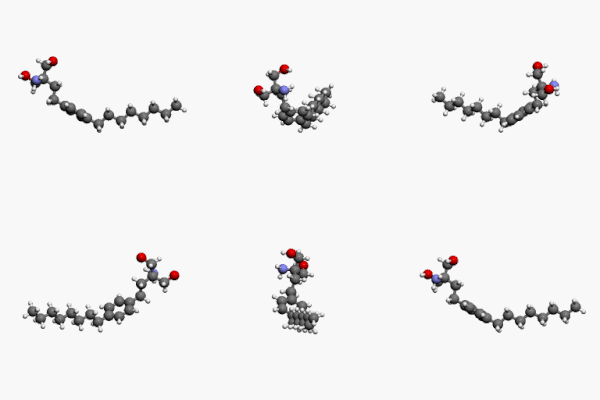
Fingolimod3Dan

Fingolimod3Dan


http://upload.wikimedia.org/wikipedia/commons/thumb/4/48/Fingolimod3Dan.gif/200px-Fingolimod3Dan.gif

The S1P antagonist FTY720 has been approved by the US Food and Drug Administration to be used as a drug against multiple sclerosis (MS). FTY720 is in fact a prodrug, since it is phosphorylated in vivo by SphK2 into FTY720-P, an S1P structural analog, which can activate S1PR1, 3, 4, and 5. FTY720-P binding to S1PR1 causes internalization of the receptor, as does S1P – but instead of recycling it back to the cell surface, it promotes its ubiquitination and degradation at the proteasome. This has a direct effect on lymphocyte trafficking through the lymph nodes, since it relies on S1PR1 signaling and S1P gradient (Figure 2). In MS, it stops migrating lymphocytes into the brain, but it may also have direct effects on the CNS through neuroprotection. FTY720 can pass the blood–brain barrier and it could be phosphorylated by local sphingosine kinases to act through S1PR1 and S1PR3 receptors that are mainly expressed in the CNS. In MS lesions, astrocytes upregulate those two receptors and it has been shown that FTY720-P treatment in vitro inhibits astrocyte production of inflammatory cytokines. A recent study confirms the importance of S1PR3 signaling on activated astrocytes, as well as SphK1, that are upregulated and promote the secretion of the potentially neuroprotective cytokine CXCL-1.

There are several studies implicating the intracellular S1P ceramide rheostat to cancer cell survival or apoptosis and resistance to chemotherapy or irradiation in vitro. Studies with SphK1 inhibition in pancreatic, prostate cancers, and leukemia, show increased ceramide/S1P ratio and induction of apoptosis. However, S1P receptor signaling plays conflicting roles in cancer cell migration and metastasis.

Modulation of S1P signaling: therapeutic potential

S1P signaling can be involved in many pathophysiological conditions. This means that we could look for therapeutic targets in all the molecules taking part in S1P signaling and production, most importantly the S1P receptors and the sphingosine kinases. S1P agonists and antagonists could also be used to modulate S1P signaling during pathological conditions.

S1P can have direct effects on the cardiovascular system. During IRI, intracellular S1P can protect the cardiomyocytes and promote their survival. Pre- or post-conditioning of the heart with S1P could be used as a treatment, but upregulation of sphingosine kinases could also increase intracellular S1P bioavailability. S1P could also have effects on endothelial cells and neutrophil trafficking. Vascular endothelial cells mainly express S1PR1 and S1PR3; only a few types express S1PR2. S1PR1 and S1PR3 activation on these cells has been shown to enhance their chemotactic migration, probably through direct phosphorylation of S1PR1 by Akt, in a phosphatidylinositol 3-kinase and Rac1-dependent signaling pathway. Moreover, it stimulates endothelial cell proliferation through an ERK pathway. S1PR2 activation, however, inhibits endothelial cell migration, morphogenesis, and angiogenesis, most likely through Rho-dependent inhibition of Rac signaling pathway, as Inoki et al showed in mouse cells with the use of S1PR1 and S1PR3 specific antagonists.

Regarding permeability of the vascular endothelium and endothelial barrier integrity, S1P receptors can have different effects. S1PR1 activation enhances endothelial barrier integrity by stimulation of cellular adhesion and upregulation of adhesion molecules. However, S1PR2 and S1PR3 have been shown to have barrier-disrupting effects in vitro, and vascular permeability increasing effects in vivo. All the effects S1P can have on vascular endothelium and smooth muscle cells suggest that activation of S1PR2, not S1PR1 and S1PR3, signaling, perhaps with the use of S1PR2 specific agonists, could be used therapeutically to inhibit angiogenesis and disrupt vasculature, suppressing tumor growth and progression.

An important aspect of S1P signaling that is being already therapeutically targeted, but could be further investigated, is immune cell trafficking. Attempts have already been made to regulate lymphocyte cell migration with the use of the drug FTY720, whose phosphorylated form can inhibit the cells S1PR1-dependent egress from the lymph nodes, causing lymphopenia. FTY720 is used as an immunosuppressant for MS but is also being investigated for other autoimmune conditions and for transplantation. Unfortunately, Phase II and III clinical trials for the prevention of kidney graft rejection have not shown an advantage over standard therapies. Moreover, FTY720 can have some adverse cardiac effects, such as bradycardia. However, there are other S1PR1 antagonists that could be considered instead, including KRP-203, AUY954, and SEW2871. KRP-203 in particular has been shown to prolong rat skin and heart allograft survival and attenuate chronic rejection without causing bradycardia, especially when combined with other immunomodulators.

There are studies that argue S1P pretreatment has a negative effect on neutrophil chemotaxis toward the chemokine CXCL-8 (interleukin-8) or the potent chemoattractant formyl-methionyl-leucyl-phenylalanine. S1P pretreatment might also inhibit trans-endothelial migration of neutrophils, without affecting their adhesion to the endothelium. S1P effects on neutrophil migration toward CXCL-8 might be the result of S1PRs cross-linking with the CXCL-8 receptors in neutrophils, CXCR-1 and CXCR-2. Indeed, there is evidence suggesting S1PR4 and S1PR3 form heterodimers with CXCR-1 in neutrophils. Another indication that S1P plays a role in neutrophil trafficking is a recent paper on S1P lyase deficiency, a deficiency that impairs neutrophil migration from blood to tissue in knockout mice.

S1P lyase and S1PRs in neutrophils may be new therapeutic targets against IRI and inflammatory conditions in general. Consistent with these results, another study has shown that inhibition of S1P lyase can have a protective effect on the heart after IRI and this effect is alleviated when pretreated with an S1PR1 and S1PR3 antagonist. Inhibition was achieved with a US Food and Drug Administration-approved food additive, 2-acetyl-4-tetrahydroxybutylimidazole, providing a possible new drug perspective. Another S1P lyase inhibitor, LX2931, a synthetic analog of 2-acetyl-4-tetrahydroxybutylimidazole, has been shown to cause peripheral lymphopenia when administered in mice, providing a potential treatment for autoimmune diseases and prevention of graft rejection in transplantation. This molecule is currently under Phase II clinical trials in rheumatoid arthritis patients.

S1P signaling research has the potential to discover novel therapeutic targets. S1P signaling is involved in many physiological and pathological processes. However, the complexity of S1P signaling makes it necessary to consider every possible pathway, either through its GPCRs, or intracellularly, with S1P as a second messenger. Where the activation of one S1P receptor may lead to the desired outcome, the simultaneous activation of another S1P receptor may lead to the opposite outcome. Thus, if we are to target a specific signaling pathway, we might need specific agonists for S1P receptors to activate one S1P receptor pathway, while, at the same time, we might need to inhibit another through S1P receptor antagonists.

Evidence of sphingolipid signaling in cancer

Biologically active lipids are important cellular signaling molecules and play a role in cell communication and cancer cell proliferation, and cancer stem cell biology.  A recent study in ovarian cancer cell lines shows that exogenous sphingosine 1 phosphate (SIP1) or overexpression of the sphingosine kinase (SPHK1) increases ovarian cancer cell proliferation, invasion and contributes to cancer stem cell like phenotype.  The diabetes drug metformin was shown to be an inhibitor of SPHK1 and reduce ovarian cancer tumor growth.

 2019 Apr;17(4):870-881. doi: 10.1158/1541-7786.MCR-18-0409. Epub 2019 Jan 17.

SPHK1 Is a Novel Target of Metformin in Ovarian Cancer.

Abstract

The role of phospholipid signaling in ovarian cancer is poorly understood. Sphingosine-1-phosphate (S1P) is a bioactive metabolite of sphingosine that has been associated with tumor progression through enhanced cell proliferation and motility. Similarly, sphingosine kinases (SPHK), which catalyze the formation of S1P and thus regulate the sphingolipid rheostat, have been reported to promote tumor growth in a variety of cancers. The findings reported here show that exogenous S1P or overexpression of SPHK1 increased proliferation, migration, invasion, and stem-like phenotypes in ovarian cancer cell lines. Likewise, overexpression of SPHK1 markedly enhanced tumor growth in a xenograft model of ovarian cancer, which was associated with elevation of key markers of proliferation and stemness. The diabetes drug, metformin, has been shown to have anticancer effects. Here, we found that ovarian cancer patients taking metformin had significantly reduced serum S1P levels, a finding that was recapitulated when ovarian cancer cells were treated with metformin and analyzed by lipidomics. These findings suggested that in cancer the sphingolipid rheostat may be a novel metabolic target of metformin. In support of this, metformin blocked hypoxia-induced SPHK1, which was associated with inhibited nuclear translocation and transcriptional activity of hypoxia-inducible factors (HIF1α and HIF2α). Further, ovarian cancer cells with high SPHK1 were found to be highly sensitive to the cytotoxic effects of metformin, whereas ovarian cancer cells with low SPHK1 were resistant. Together, the findings reported here show that hypoxia-induced SPHK1 expression and downstream S1P signaling promote ovarian cancer progression and that tumors with high expression of SPHK1 or S1P levels might have increased sensitivity to the cytotoxic effects of metformin. IMPLICATIONS: Metformin targets sphingolipid metabolism through inhibiting SPHK1, thereby impeding ovarian cancer cell migration, proliferation, and self-renewal.

Nrf2:INrf2(Keap1) Signaling in Oxidative Stress

James W. Kaspar, Suresh K. Niture, and Anil K. Jaiswal*

Department of Pharmacology, University of Maryland School of Medicine, Baltimore, MD

Free Radic Biol Med. 2009 Nov 1; 47(9): 1304–1309. http://dx.doi.org:/10.1016/j.freeradbiomed.2009.07.035

Nrf2:INrf2(Keap1) are cellular sensors of chemical and radiation induced oxidative and electrophilic stress. Nrf2 is a nuclear transcription factor that

  • controls the expression and coordinated induction of a battery of defensive genes encoding detoxifying enzymes and antioxidant proteins.

This is a mechanism of critical importance for cellular protection and cell survival. Nrf2 is retained in the cytoplasm by an inhibitor INrf2. INrf2 functions as an adapter for

  • Cul3/Rbx1 mediated degradation of Nrf2.
  • In response to oxidative/electrophilic stress,
  • Nrf2 is switched on and then off by distinct

early and delayed mechanisms.

Oxidative/electrophilic modification of INrf2cysteine151 and/or PKC phosphorylation of Nrf2serine40 results in the escape or release of Nrf2 from INrf2. Nrf2 is stabilized and translocates to the nucleus, forms heterodimers with unknown proteins, and binds antioxidant response element (ARE) that leads to coordinated activation of gene expression. It takes less than fifteen minutes from the time of exposure

  • to switch on nuclear import of Nrf2.

This is followed by activation of a delayed mechanism that controls

  • switching off of Nrf2 activation of gene expression.

GSK3β phosphorylates Fyn at unknown threonine residue(s) leading to

  • nuclear localization of Fyn.

Fyn phosphorylates Nrf2tyrosine568 resulting in

  • nuclear export of Nrf2,
  • binding with INrf2 and
  • degradation of Nrf2.

The switching on and off of Nrf2 protects cells against free radical damage, prevents apoptosis and promotes cell survival.

NPRA-mediated suppression of AngII-induced ROS production contributes to the antiproliferative effects of B-type natriuretic peptide in VSMC

Pan Gao, De-Hui Qian, Wei Li,  Lan Huang
Mol Cell Biochem (2009) 324:165–172

http://dx.doi.org/10.1007/s11010-008-9995-y

Excessive proliferation of vascular smooth cells (VSMCs) plays a critical role in the pathogenesis of diverse vascular disorders, and inhibition of VSMCs proliferation has been proved to be beneficial to these diseases.

In this study, we investigated the antiproliferative effect of

  • B-type natriuretic peptide (BNP), a natriuretic peptide with potent antioxidant capacity,

on rat aortic VSMCs, and the possible mechanisms involved. The results indicate that

  • BNP potently inhibited Angiotensin II (AngII)-induced VSMCs proliferation,

as evaluated by [3H]-thymidine incorporation assay. Consistently, BNP significantly decreased

  • AngII-induced intracellular reactive oxygen species (ROS)
  • and NAD(P)H oxidase activity.

8-Br-cGMP, a cGMP analog,

  • mimicked these effects.

To confirm its mechanism, siRNA of natriuretic peptide receptor-A(NRPA) strategy technology was used

  • to block cGMP production in VSMCs, and
  • siNPRA attenuated the inhibitory effects of BNP in VSMCs.

Taken together, these results indicate that

  • BNP was capable of inhibiting VSMCs proliferation by
  • NPRA/cGMP pathway,

which might be associated with

  • the suppression of ROS production.

These results might be related, at least partly, to the anti-oxidant property of BNP.

Cellular prion protein is required for neuritogenesis: fine-tuning of multiple signaling pathways involved in focal adhesions and actin cytoskeleton dynamics

A Alleaume-Butaux, C Dakowski, M Pietri, S Mouillet-Richard, Jean-Marie Launay, O Kellermann, B Schneider

1INSERM, UMR-S 747, 2Paris Descartes University, Sorbonne Paris, 3Public Hospital of Paris, Department of Biochemistry, Paris, France; 4Pharma Research Department, Hoffmann La Roche Ltd, Basel, Switzerland

Cell Health and Cytoskeleton 2013; 5: 1–12

Neuritogenesis is a complex morphological phenomena accompanying neuronal differentiation. Neuritogenesis relies on the initial breakage of the rather spherical symmetry of neuroblasts and the formation of buds emerging from the postmitotic neuronal soma. Buds then evolve into neurites, which later convert into an axon or dendrites. At the distal tip of neurites, the growth cone integrates extracellular signals and guides the neurite to its target. The acquisition of neuronal polarity depends on deep modifications of the neuroblast cytoskeleton characterized by the remodeling and activation of focal adhesions (FAs) and localized destabilization of the actin network in the neuronal sphere.Actin instability in unpolarized neurons allows neurite sprouting, ie, the protrusion of microtubules, and subsequent neurite outgrowth. Once the neurite is formed, actin microfilaments recover their stability and exert a sheathed action on neurites, a dynamic process necessary for the maintenance and integrity of neurites.

A combination of extrinsic and intrinsic cues pilots the architectural and functional changes in FAs and the actin network along neuritogenesis. This process includes neurotrophic factors (nerve growth factor, brain derived neurotrophic factor, neurotrophin, ciliary neurotrophic factor, glial derived neurotrophic factor) and their receptors, protein components of the extracellular matrix (ECM) (laminin, vitronectin, fibronectin), plasma membrane integrins and neural cell adhesion molecules (NCAM), and intracellular molecular protagonists such as small G proteins (RhoA, Rac, Cdc42) and their downstream targets.

Neuritogenesis is a dynamic phenomenon associated with neuronal differentiation that allows a rather spherical neuronal stem cell to develop dendrites and axon, a prerequisite for the integration and transmission of signals. The acquisition of neuronal polarity occurs in three steps:

(1) neurite sprouting, which consists of the formation of buds emerging from the postmitotic neuronal soma;

(2) neurite outgrowth, which represents the conversion of buds into neurites, their elongation and evolution into axon or dendrites; and

(3) the stability and plasticity of neuronal polarity.

In neuronal stem cells, remodeling and activation of focal adhesions (FAs) associated with deep modifications of the actin cytoskeleton is a prerequisite for neurite sprouting and subsequent neurite outgrowth. A multiple set of growth factors and interactors located in the extracellular matrix and the plasma membrane orchestrate neuritogenesis

  • by acting on intracellular signaling effectors,
  • notably small G proteins such as RhoA, Rac, and Cdc42,
  • which are involved in actin turnover and the dynamics of FAs.

The cellular prion protein (PrPC), a glycosylphosphatidylinositol

  • (GPI)-anchored membrane protein

mainly known for its role in a group of fatal

  • neurodegenerative diseases,

has emerged as a central player in neuritogenesis.

Here, we review the contribution of PrPC to neuronal polarization and detail the current knowledge on the

  • signaling pathways fine-tuned by PrPC
  • to promote neurite sprouting, outgrowth, and maintenance.

We emphasize that PrPC-dependent neurite sprouting is a process in which PrPC

  • governs the dynamics of FAs and the actin cytoskeleton
  • via β1 integrin signaling.

The presence of PrPC is necessary to render neuronal stem cells

  • competent to respond to neuronal inducers and
  • to develop neurites.

In differentiating neurons, PrPC exerts

  • a facilitator role towards neurite elongation.

This function relies on the interaction of PrPC with a set of diverse partners such as

  1. elements of the extracellular matrix,
  2. plasma membrane receptors,
  3. adhesion molecules, and
  4. soluble factors that control actin cytoskeleton turnover through Rho-GTPase signaling.

Once neurons have reached their terminal stage of differentiation and acquired their polarized morphology, PrPC also

  • takes part in the maintenance of neurites.

By acting on tissue nonspecific alkaline phosphatase, or

  • matrix metalloproteinase type 9,

PrPC stabilizes interactions between

  • neurites and the extracellular matrix.

Keywords: prion, neuronal differentiation

Read Full Post »

Summary of Lipid Metabolism


Author: Larry H. Bernstein, MD, FCAP


Lipid Classification System

The LIPID MAPS Lipid Classification System is comprised of eight lipid categories, each with its own sublassification hierarchy.

http://www.lipidmaps.org/resources/tutorials/lipid_cns.html

Each LMSD record contains an image of the

  • molecular structure,
  • common and systematic names,
  • links to external databases,
  • Wikipedia pages (where available),
  • other annotations and links to structure viewing tools.

All lipids in the LIPID MAPS Structure Database (LMSD) have been classified using this system and have been assigned LIPID MAPS ID’s (LM_ID) which reflects their position in the classification hierarchy.

The LIPID MAPS Structure Database (LMSD) is a relational database encompassing structures and annotations of biologically relevant lipids. As of May 3, 2013, LMSD contains over 37,500 unique lipid structures, making it the largest public lipid-only database in the world. Structures of lipids in the database come from several sources:

  • LIPID MAPS Consortium’s core laboratories and partners;
  • lipids identified by LIPID MAPS experiments;
  • biologically relevant lipids manually curated from LIPID BANK, LIPIDAT, Lipid Library, Cyberlipids, ChEBI and other public sources;
  • novel lipids submitted to peer-reviewed journals;
  • computationally generated structures for appropriate classes.

All the lipid structures in LMSD adhere to the structure drawing rules proposed by the LIPID MAPS consortium. A number of structure viewing options are offered: gif image (default), Chemdraw (requires Chemdraw ActiveX/Plugin), MarvinView (Java applet) and JMol (Java applet).

(as of 10/8/14)

Number of lipids per category

Fatty acyls          5869

Glycerolipids       7541

Glycerophospholipids       8002

Sphingolipids      4338

Sterol lipids         2715

Prenol lipids        1259

Sacccharolipids  1293

Polyketides         6742

TOTAL  37,759 structures

References

Sud M, Fahy E, Cotter D, Brown A, Dennis EA, Glass CK, Merrill AH Jr, Murphy RC, Raetz CR, Russell DW, Subramaniam S. LMSD: LIPID MAPS structure database Nucleic Acids Research 35: p. D527-32. PMID:17098933 [doi:10.1093/nar/gkl838] PMID: 17098933

Fahy E, Sud M, Cotter D & Subramaniam S. LIPID MAPS online tools for lipid research Nucleic Acids Research (2007) 35: p. W606-12.PMID:17584797 [doi:10.1093/nar/gkm324] PMID: 17584797 

The Recognition of Essential Fatty Acids

Dietary fat has long been recognized as an important source of energy for mammals, but in the late 1920s, researchers demonstrated the dietary requirement for particular fatty acids, which came to be called essential fatty acids. It was not until the advent of intravenous feeding, however, that the importance of essential fatty acids was widely accepted: Clinical signs of essential fatty acid deficiency are generally observed only in patients on total parenteral nutrition who received mixtures devoid of essential fatty acids or in those with malabsorption syndromes.

These signs include dermatitis and changes in visual and neural function. Over the past 40 years, an increasing number of physiological functions, such as immunomodulation, have been attributed to the essential fatty acids and their metabolites, and this area of research remains quite active.1, 2

Fatty Acid Nomenclature

The fat found in foods consists largely of a heterogeneous mixture of triacylglycerols (triglycerides)–glycerol molecules that are each combined with three fatty acids. The fatty acids can be divided into two categories, based on chemical properties: saturated fatty acids, which are usually solid at room temperature, and unsaturated fatty acids, which are liquid at room temperature. The term “saturation” refers to a chemical structure in which each carbon atom in the fatty acyl chain is bound to (saturated with) four other atoms, these carbons are linked by single bonds, and no other atoms or molecules can attach; unsaturated fatty acids contain at least one pair of carbon atoms linked by a double bond, which allows the attachment of additional atoms to those carbons (resulting in saturation). Despite their differences in structure, all fats contain approximately the same amount of energy (37 kilojoules/gram, or 9 kilocalories/gram).

The class of unsaturated fatty acids can be further divided into monounsaturated and polyunsaturated fatty acids. Monounsaturated fatty acids (the primary constituents of olive and canola oils) contain only one double bond. Polyunsaturated fatty acids (PUFAs) (the primary constituents of corn, sunflower, flax seed and many other vegetable oils) contain more than one double bond. Fatty acids are often referred to using the number of carbon atoms in the acyl chain, followed by a colon, followed by the number of double bonds in the chain (e.g., 18:1 refers to the 18-carbon monounsaturated fatty acid, oleic acid; 18:3 refers to any 18-carbon PUFA with three double bonds).

PUFAs are further categorized on the basis of the location of their double bonds. An omega or n notation indicates the number of carbon atoms from the methyl end of the acyl chain to the first double bond. Thus, for example, in the omega-3 (n-3) family of PUFAs, the first double bond is 3 carbons from the methyl end of the molecule.  Finally, PUFAs can be categorized according to their chain length. The 18-carbon n-3 and n-6 short-chain PUFAs are precursors to the longer 20- and 22-carbon PUFAs, called long-chain PUFAs (LCPUFAs).

Fatty Acid Metabolism

Mammalian cells can introduce double bonds into all positions on the fatty acid chain except the n-3 and n-6 position. Thus, the short-chain alpha- linolenic acid (ALA, chemical abbreviation: 18:3n-3) and linoleic acid (LA, chemical abbreviation: 18:2n-6) are essential fatty acids.

No other fatty acids found in food are considered ‘essential’ for humans, because they can all be synthesized from the short chain fatty acids.

Following ingestion, ALA and LA can be converted in the liver to the long chain, more unsaturated n-3 and n-6 LCPUFAs by a complex set of synthetic pathways that share several enzymes (Figure 1). LC PUFAs retain the original sites of desaturation (including n-3 or n-6). The omega-6 fatty acid LA is converted to gamma-linolenic acid (GLA, 18:3n-6), an omega- 6 fatty acid that is a positional isomer of ALA. GLA, in turn, can be converted to the longerchain omega-6 fatty acid, arachidonic acid (AA, 20:4n-6). AA is the precursor for certain classes of an important family of hormone- like substances called the eicosanoids (see below).

The omega-3 fatty acid ALA (18:3n-3) can be converted to the long-chain omega-3 fatty acid, eicosapentaenoic acid (EPA; 20:5n-3). EPA can be elongated to docosapentaenoic acid (DPA 22:5n-3), which is further desaturated to docosahexaenoic acid (DHA; 22:6n-3). EPA and DHA are also precursors of several classes of eicosanoids and are known to play several other critical roles, some of which are discussed further below.

The conversion from parent fatty acids into the LC PUFAs – EPA, DHA, and AA – appears to occur slowly in humans. In addition, the regulation of conversion is not well understood, although it is known that ALA and LA compete for entry into the metabolic pathways.

Physiological Functions of EPA and AA

As stated earlier, fatty acids play a variety of physiological roles. The specific biological functions of a fatty acid are determined by the number and position of double bonds and the length of the acyl chain.

Both EPA (20:5n-3) and AA (20:4n-6) are precursors for the formation of a family of hormone- like agents called eicosanoids. Eicosanoids are rudimentary hormones or regulating – molecules that appear to occur in most forms of life. However, unlike endocrine hormones, which travel in the blood stream to exert their effects at distant sites, the eicosanoids are autocrine or paracrine factors, which exert their effects locally – in the cells that synthesize them or adjacent cells. Processes affected include the movement of calcium and other substances into and out of cells, relaxation and contraction of muscles, inhibition and promotion of clotting, regulation of secretions including digestive juices and hormones, and control of fertility, cell division, and growth.3

The eicosanoid family includes subgroups of substances known as prostaglandins, leukotrienes, and thromboxanes, among others. As shown in Figure 1.1, the long-chain omega-6 fatty acid, AA (20:4n-6), is the precursor of a group of eicosanoids that include series-2 prostaglandins and series-4 leukotrienes. The omega-3 fatty acid, EPA (20:5n-3), is the precursor to a group of eicosanoids that includes series-3 prostaglandins and series-5 leukotrienes. The AA-derived series-2 prostaglandins and series-4 leukotrienes are often synthesized in response to some emergency such as injury or stress, whereas the EPA-derived series-3 prostaglandins and series-5 leukotrienes appear to modulate the effects of the series-2 prostaglandins and series-4 leukotrienes (usually on the same target cells). More specifically, the series-3 prostaglandins are formed at a slower rate and work to attenuate the effects of excessive levels of series-2 prostaglandins. Thus, adequate production of the series-3 prostaglandins seems to protect against heart attack and stroke as well as certain inflammatory diseases like arthritis, lupus, and asthma.3.

EPA (22:6 n-3) also affects lipoprotein metabolism and decreases the production of substances – including cytokines, interleukin 1ß (IL-1ß), and tumor necrosis factor a (TNF-a) – that have pro-inflammatory effects (such as stimulation of collagenase synthesis and the expression of adhesion molecules necessary for leukocyte extravasation [movement from the circulatory system into tissues]).2 The mechanism responsible for the suppression of cytokine production by omega-3 LC PUFAs remains unknown, although suppression of omega-6-derived eicosanoid production by omega-3 fatty acids may be involved, because the omega-3 and omega-6 fatty acids compete for a common enzyme in the eicosanoid synthetic pathway, delta-6 desaturase.

DPA (22:5n-3) (the elongation product of EPA) and its metabolite DHA (22:6n-3) are frequently referred to as very long chain n-3 fatty acids (VLCFA). Along with AA, DHA is the major PUFA found in the brain and is thought to be important for brain development and function. Recent research has focused on this role and the effect of supplementing infant formula with DHA (since DHA is naturally present in breast milk but not in formula).

Overview of Lipid Catabolism:

http://www.elmhurst.edu/~chm/vchembook/622overview.html

The major aspects of lipid metabolism are involved with

  • Fatty Acid Oxidation to produce energy or
  • the synthesis of lipids which is called Lipogenesis.

The metabolism of lipids and carbohydrates are related by the conversion of lipids from carbohydrates. This can be seen in the diagram. Notice the link through actyl-CoA, the seminal discovery of Fritz Lipmann. The metabolism of both is upset by diabetes mellitus, which results in the release of ketones (2/3 betahydroxybutyric acid) into the circulation.


fatty acid metabolism

fatty acid metabolism


http://www.elmhurst.edu/~chm/vchembook/images/590metabolism.gif

The first step in lipid metabolism is the hydrolysis of the lipid in the cytoplasm to produce glycerol and fatty acids.

Since glycerol is a three carbon alcohol, it is metabolized quite readily into an intermediate in glycolysis, dihydroxyacetone phosphate. The last reaction is readily reversible if glycerol is needed for the synthesis of a lipid.

The hydroxyacetone, obtained from glycerol is metabolized into one of two possible compounds. Dihydroxyacetone may be converted into pyruvic acid, a 3-C intermediate at the last step of glycolysis to make energy.

In addition, the dihydroxyacetone may also be used in gluconeogenesis (usually dependent on conversion of gluconeogenic amino acids) to make glucose-6-phosphate for glucose to the blood or glycogen depending upon what is required at that time.

Fatty acids are oxidized to acetyl CoA in the mitochondria using the fatty acid spiral. The acetyl CoA is then ultimately converted into ATP, CO2, and H2O using the citric acid cycle and the electron transport chain.

There are two major types of fatty acids – ω-3 and ω-6.  There are also saturated and unsaturated with respect to the existence of double bonds, and monounsaturated and polyunsatured.  Polyunsaturated fatty acids (PUFAs) are important in long term health, and it will be seen that high cardiovascular risk is most associated with a low ratio of ω-3/ω-6, the denominator being from animal fat. Ω-3 fatty acids are readily available from fish, seaweed, and flax seed. More can be said of this later.

Fatty acids are synthesized from carbohydrates and occasionally from proteins. Actually, the carbohydrates and proteins have first been catabolized into acetyl CoA. Depending upon the energy requirements, the acetyl CoA enters the citric acid cycle or is used to synthesize fatty acids in a process known as LIPOGENESIS.

The relationships between lipid and carbohydrate metabolism are
summarized in Figure 2.

fatty acid spiral


Energy Production Fatty Acid Oxidation:

Visible” ATP:

In the fatty acid spiral, there is only one reaction which directly uses ATP and that is in the initiating step. So this is a loss of ATP and must be subtracted later.

A large amount of energy is released and restored as ATP during the oxidation of fatty acids. The ATP is formed from both the fatty acid spiral and the citric acid cycle. 

Connections to Electron Transport and ATP:

One turn of the fatty acid spiral produces ATP from the interaction of the coenzymes FAD (step 1) and NAD+ (step 3) with the electron transport chain. Total ATP per turn of the fatty acid spiral is:

Electron Transport Diagram – (e.t.c.)

Step 1 – FAD into e.t.c. = 2 ATP
Step 3 – NAD+ into e.t.c. = 3 ATP
Total ATP per turn of spiral = 5 ATP

In order to calculate total ATP from the fatty acid spiral, you must calculate the number of turns that the spiral makes. Remember that the number of turns is found by subtracting one from the number of acetyl CoA produced. See the graphic on the left bottom.

Example with Palmitic Acid = 16 carbons = 8 acetyl groups

Number of turns of fatty acid spiral = 8-1 = 7 turns

ATP from fatty acid spiral = 7 turns and 5 per turn = 35 ATP.

This would be a good time to remember that single ATP that was needed to get the fatty acid spiral started. Therefore subtract it now.

NET ATP from Fatty Acid Spiral = 35 – 1 = 34 ATP

SREBPs: activators of the complete program of cholesterol and fatty acid synthesis in the liver

Jay D. Horton1,2, Joseph L. Goldstein1 and Michael S. Brown1

1Department of Molecular Genetics, and
2Department of Internal Medicine, University of Texas Southwestern Medical Center, Dallas, Texas, USA

J Clin Invest. 2002;109(9):1125–1131.
http://dx.doi.org:/10.1172/JCI15593
Lipid homeostasis in vertebrate cells is regulated by a family of membrane-bound transcription factors designated sterol regulatory element–binding proteins (SREBPs). SREBPs directly activate the expression of more than 30 genes dedicated to the synthesis and uptake of cholesterol, fatty acids, triglycerides, and phospholipids, as well as the NADPH cofactor required to synthesize these molecules (14). In the liver, three SREBPs regulate the production of lipids for export into the plasma as lipoproteins and into the bile as micelles. The complex, interdigitated roles of these three SREBPs have been dissected through the study of ten different lines of gene-manipulated mice. These studies form the subject of this review.

SREBPs: activation through proteolytic processing

SREBPs belong to the basic helix-loop-helix–leucine zipper (bHLH-Zip) family of transcription factors, but they differ from other bHLH-Zip proteins in that they are synthesized as inactive precursors bound to the endoplasmic reticulum (ER) (1, 5). Each SREBP precursor of about 1150 amino acids is organized into three domains: (a) an NH2-terminal domain of about 480 amino acids that contains the bHLH-Zip region for binding DNA; (b) two hydrophobic transmembrane–spanning segments interrupted by a short loop of about 30 amino acids that projects into the lumen of the ER; and (c) a COOH-terminal domain of about 590 amino acids that performs the essential regulatory function described below.

In order to reach the nucleus and act as a transcription factor, the NH2-terminal domain of each SREBP must be released from the membrane proteolytically (Figure1). Three proteins required for SREBP processing have been delineated in cultured cells, using the tools of somatic cell genetics (see ref. 5for review). One is an escort protein designated SREBP cleavage–activating protein (SCAP). The other two are proteases, designated Site-1 protease (S1P) and Site-2 protease (S2P). Newly synthesized SREBP is inserted into the membranes of the ER, where its COOH-terminal regulatory domain binds to the COOH-terminal domain of SCAP (Figure 1).

Figure 1

Model for the sterol-mediated proteolytic release of SREBPs from membranes JCI0215593.f1

Model for the sterol-mediated proteolytic release of SREBPs from membranes. SCAP is a sensor of sterols and an escort of SREBPs. When cells are depleted of sterols, SCAP transports SREBPs from the ER to the Golgi apparatus, where two proteases, Site-1 protease (S1P) and Site-2 protease (S2P), act sequentially to release the NH2-terminal bHLH-Zip domain from the membrane. The bHLH-Zip domain enters the nucleus and binds to a sterol response element (SRE) in the enhancer/promoter region of target genes, activating their transcription.

SCAP is both an escort for SREBPs and a sensor of sterols. When cells become depleted in cholesterol, SCAP escorts the SREBP from the ER to the Golgi apparatus, where the two proteases reside. In the Golgi apparatus, S1P, a membrane-bound serine protease, cleaves the SREBP in the luminal loop between its two membrane-spanning segments, dividing the SREBP molecule in half. (Fig 1)  The NH2-terminal bHLH-Zip domain is then released from the membrane via a second cleavage mediated by S2P, a membrane-bound zinc metalloproteinase. The NH2-terminal domain, designated nuclear SREBP (nSREBP), translocates to the nucleus, where it activates transcription by binding to nonpalindromic sterol response elements (SREs) in the promoter/enhancer regions of multiple target genes.

SREBPs: two genes, three proteins

The mammalian genome encodes three SREBP isoforms, designated SREBP-1a, SREBP-1c, and SREBP-2.

SREBP-1a is a potent activator of all SREBP-responsive genes, including those that mediate the synthesis of cholesterol, fatty acids, and triglycerides. High-level transcriptional activation is dependent on exon 1a, which encodes a longer acidic transactivation segment than does the first exon of SREBP-1c. The roles of SREBP-1c and SREBP-2 are more restricted than that of SREBP-1a. SREBP-1c preferentially enhances transcription of genes required for fatty acid synthesis but not cholesterol synthesis.

SREBP-1c and SREBP-2 activate three genes required to generate NADPH, which is consumed at multiple stages in these lipid biosynthetic pathways (8) (Figure 2).

major metabolic intermediates in the pathways for synthesis of cholesterol, fatty acids, and triglycerides

major metabolic intermediates in the pathways for synthesis of cholesterol, fatty acids, and triglycerides

Steroids

A major class of lipids, steroids, have a ring structure of three cyclohexanes and one
cyclopentane in a fused ring system as shown below. There are a variety of functional
groups that may be attached. The main feature, as in all lipids, is the large number of
carbon-hydrogens which make steroids non-polar.

Steroids include such well known compounds as cholesterol, sex hormones, birth
control pills, cortisone, and anabolic steroids.


sex hormones

sex hormones

cortisone

cortisone

Adrenocorticoid Hormones

The adrenocorticoid hormones are products of the adrenal glands.

The most important mineralcorticoid is aldosterone, which regulates the
reabsorption of sodium and chloride ions in the kidney tubules and increases
the loss of potassium ions.Aldosterone is secreted when blood sodium ion
levels are too low to cause the kidney to retain sodium ions. If sodium
levels are elevated, aldosterone is not secreted, so that some sodium
will be lost in the urine. Aldosterone also controls swelling in the tissues.

Cortisol, the most important glucocortinoid, has the function of increasing
glucose and glycogen concentrations in the body. These reactions are
completed in the liver by taking fatty acids from lipid storage cells and
amino acids from body proteins to make glucose and glycogen.

In addition, cortisol is elevated in the circulation with cytokine mediated
(IL1, IL1, TNFα) inflammatory reaction, called the systemic inflammatory
response syndrome. Its ketone derivative, cortisone, has the ability
to relieve inflammatory effects. Cortisone or similar synthetic derivatives
such as prednisolone are used to treat inflammatory diseases, rheumatoid
arthritis, and bronchial asthma. There are many side effects with the use
of cortisone drugs, such as bone resorption, so there use must be
monitored carefully.

Hormone Receptors

Steroid hormone receptors are found on the plasma membrane, in the cytosol and also in the nucleus of target cells. They are generally intracellular receptors (typically cytoplasmic) and initiate signal transduction for steroid hormones which lead to changes in gene expression over a time period of hours to days. The best studied steroid hormone receptors are members of the nuclear receptor subfamily 3 (NR3) that include receptors for estrogen (group NR3A)[1] and 3-ketosteroids (group NR3C).[2] In addition to nuclear receptors, several G protein-coupled receptors and ion channels act as cell surface receptors for certain steroid hormones.


Steroid Hormone Receptors and their Response Elements

Steroid hormone receptors are proteins that have a binding site for a particular steroid molecule. Their response elements are DNA sequences that are bound by the complex of the steroid bound to its Steroid receptor.

The response element is part of the promoter of a gene. Binding by the receptor activates or represses, as the case may be, the gene controlled by that promoter.

It is through this mechanism that steroid hormones turn genes on (or off).

steroid hormone receptor

steroid hormone receptor

http://users.rcn.com/jkimball.ma.ultranet/BiologyPages/S/Sigler.jpg

The glucocorticoid receptor, like all steroid hormone receptors, is a zinc-finger transcription factor; the zinc atoms are the four yellow spheres. Each is attached to four cysteines.

For a steroid hormone to regulate (turn on or off) gene transcription, its receptor must:

  1. bind to the hormone (cortisol in the case of the glucocorticoid receptor)
  2. bind to a second copy of itself to form a homodimer
  3. be in the nucleus, moving from the cytosol if necessary
  4. bind to its response element
  5. bind to other protein cofactors

Each of these functions depend upon a particular region of the protein (e.g., the zinc fingers for binding DNA).

Each of these functions depend upon a particular region of the protein (e.g., the zinc fingers for binding DNA). Mutations in any one region may upset the function of that region without necessarily interfering with other functions of the receptor.

Positive and Negative Response Elements

Some of the hundreds of glucocorticoid response elements in the human genome activate gene transcription when bound by the hormone/receptor complex. Others inhibit gene transcription when bound by the hormone/receptor complex.

Example: When the stress hormone cortisol — bound to its receptor — enters the nucleus of a liver cell, the complex binds to the positive response elements of the many genes needed for gluconeogenesis — the conversion of protein and fat into glucose resulting in a rise in the level of blood sugar.

the negative response element of the insulin receptor gene thus diminishing the ability of the cells to remove glucose from the blood. (This hyperglycemic effect is enhanced by the binding of the cortisol/receptor complex to a negative response element in the beta cells of the pancreas thus reducing the production of insulin.)

Note that every type of cell in the body contains the same response elements in its genome. What determines if a given cell responds to the arrival of a hormone depends on the presence of the hormone’s receptor in the cell.

The Nuclear Receptor Superfamily

Retinoids

Retinoids

http://users.rcn.com/jkimball.ma.ultranet/BiologyPages/R/Retinoids.png

 The zinc-finger proteins that serve as receptors for glucocorticoids and progesterone are members of a large family of similar proteins that serve as receptors for a variety of small, hydrophobic molecules. These include:

  1. other steroid hormones like
  2. the mineralocorticoid aldosterone
  3. estrogens
  4. the thyroid hormone, T3
  5. calcitriol, the active form of vitamin D
  6. retinoids: vitamin A (retinol) and its relatives
    1. retinal
    2. retinoic acid (tretinoin — also available as the drug Retin-A®); and its isomer
  7. isotretinoin (sold as Accutane® for the treatment of acne).
  8. bile acids
  9. fatty acids.

These bind members of the superfamily called peroxisome-proliferator-activated receptors (PPARs). They got their name from their initial discovery as the receptors for

  • drugs that increase the number and size of peroxisomes in cells.

In every case, the receptors consist of at least

  • three functional modules or domains.

From N-terminal to C-terminal, these are:

  1. a domain needed
  2. the zinc-finger domain needed for DNA binding (to the response element)
  3. the domain responsible for binding the particular hormone as well as the second unit of the dimer.
  4. for the receptor to activate the promoters of the genes being controlled

Schematic diagram of type II zinc finger proteins characteristic of the DNA-binding domain structure of members of the steroid hormone receptor superfamily. Zinc fingers are common features of many transcription factors, allowing proteins to bind to DNA. Each circle represents one amino acid. The CI zinc finger interacts specifically with five base pairs of DNA and determines the DNA sequence recognized by the particular steroid receptor. The three shaded amino acids indicated by the arrows in the knuckle of the CI zinc finger are in the “P box” that allows HRE sequence discrimination between the GR and ERα. The vertically striped aa within the knuckle of the CII zinc finger constitutes the “D box” that is important for dimerization and contacts with the DNA phosphate backbone. Adapted from Tsai M-J, O’Malley BW. Molecular mechanisms of action of steroid/thyroid receptor superfamily members. Annu Rev Biochem 1994;63:451-483; Gronemeyer H. Transcription activation by estrogen and progesterone receptors. Annu Rev Genet 1991;25:89-123.

type II zinc finger proteins

type II zinc finger proteins

Cytoskeleton and Cell Membrane Physiology

http://pharmaceuticalinnovation.com/10/28/2014/larryhbern/Cytoskeleton_
and_Cell_Membrane_Physiology

Definition and Function

The cytoskeleton is a series of intercellular proteins that help a cell with

  1. shape,
  2. support, and
  3. movement.

Cytoskeleton has three main structural components:

  1. microfilaments,
  2. intermediate filaments, and
  3. movement

The cytoskeleton mediates movement by

  • helping the cell move in its environment and
  • mediating the movement of the cell’s components.

Thereby it provides an important structural framework for the cell –

  • the framework for the movement of organelles, contiguous with the cell membrane, around the cytoplasm. By the activity of
  • the network of protein microfilaments, intermediate filaments, and microtubules.

The structural framework supports cell function as follows:

Cell shape. For cells without cell walls, the cytoskeleton determines the shape of the cell. This is one of the functions of the intermediate filaments.

Cell movement. The dynamic collection of microfilaments and microtubles can be continually in the process of assembly and disassembly, resulting in forces that move the cell. There can also be sliding motions of these structures. Audesirk and Audesirk give examples of white blood cells “crawling” and the migration and shape changes of cells during the development of multicellular organisms.

Organelle movement. Microtubules and microfilaments can help move organelles from place to place in the cell. In endocytosis a vesicle formed engulfs a particle abutting the cell. Microfilaments then attach to the vesicle and pull it into the cell. Much of the complex synthesis and distribution function of the endoplasmic reticulum and the Golgi complex makes use of transport vescicles,  associated with the cytoskeleton.

Cell division. During cell division, microtubules accomplish the movement of the chromosones to the daughter nucleus. Also, a ring of microfilaments helps divide two developing cells by constricting the central region between the cells (fission).

References:
Hickman, et al. Ch 4 Hickman, Cleveland P., Roberts, Larry S., and Larson, Allan, Integrated Principles of Zoology, 9th. Ed., Wm C. Brown, 1995.
Audesirk & Audesirk Ch 6 Audesirk, Teresa and Audesirk, Gerald, Biology, Life on Earth, 5th Ed., Prentice-Hall, 1999.
http://hyperphysics.phy-astr.gsu.edu/hbase/biology/bioref.html#c1
http://hyperphysics.phy-astr.gsu.edu/hbase/biology/cytoskel.html


Read Full Post »

This content is password-protected. To view it, please enter the password below.

Read Full Post »

Metabolic Reactions Need Just Enough

Author and Curator: Larry H Bernstein, MD, FCAP 


This is another installment of the metabolomics series that has delved into the relationship between the building blocks of life.
There would be no life without the genetic code, which has changed over the span of life in our universe, but with retention of the instructions that have selective advantage under the existing conditions, which include environmental temperature, water, metallic elements, and the most abundant elements essential for organic reactions – carbon, hydrogen, oxygen, nitrogen, sulfur, to which we would add iron, calcium, sodium, chloride, potassium, magnesium, cadmium, manganese, nickel and selenium.   Many consider it a miracle that life would evolve out of this primordial mix.  Those who are of a different mind have spent generations in human history piecing together the evidence that our existence and our improvement has elements to understand, and is subject to improvement.  This is encountered in the sciences and, to a serious extent in the humanities as well.  This is why we have gone from the most basic to the more comprehensive, if also seemingly incomprehensible because of complexities, uncertainties, and insufficient information to complete the puzzle, which may never be completed.  The pursuit has led our society from – village, to town, to city, to metropolis, with intermingling of societies, as if societies become like living organisms of another order.  If this is the case, then war and peace, and competition for resources, and barriers, and issues of control are another dimension of an intricate network.  This is what propagates the imaginings of Science Fiction noire.


Part I.  Everything works in concert

Getting metabolism right

10/08/2014 – Larry Hardesty, MIT News Office


Metabolic networks are mathematical models of chemical reactions

Metabolic networks are mathematical models of chemical reactions


Image: Jose-Luis Olivares/MIT

Metabolic networks are mathematical models of every possible sequence of chemical reactions available to an organ or organism, and they’re used to design microbes for manufacturing processes or to study disease. Based on both genetic analysis and empirical study, they can take years to assemble.

An analytic tool developed at Massachusetts Institute of Technology (MIT) suggests that many of those models may be wrong, but the same tool may make it fairly straightforward to repair them.

“They have all these models in this database at [the Univ. of California at] San Diego,” says Bonnie Berger, a professor of applied mathematics and computer science at MIT and one of the tool’s developers. Many of them have computational errors because they were calculated with floating-point arithmetic, used to increase efficiency. The MIT team has proved that you need to compute them in exact arithmetic. They found that models that were believed to be realistic don’t produce growth that is expected.

The new tool, and the analyses performed with it has been published in Nature Communications, with Leonid Chindelevitch, first author, a graduate student in Berger’s group, now a postdoctoral researcher at the Harvard School of Public Health. He and Berger are joined by Aviv Regev, an associate professor of biology at MIT, and Jason Trigg, another of Berger’s former students.

Pruning the network
Metabolic networks, Chindelevitch says, “describe the set of all reactions that are available to a particular organism that we might be interested in. So if we’re interested in yeast or E. coli or the tuberculosis bacterium, this is a way to put together everything we know about what this organism can do to transform some substances into some other substances.

  1. it gets nutrients from the environment,
  2. it will transform them by its own internal mechanisms

The network thus represents every sequence of chemical reactions catalyzed by enzymes encoded in an organism’s DNA that could

  • lead from particular nutrients
  • to particular chemical products.

Every node of the network represents an intermediary stage in some chain of reactions.

To simplify such networks enough to enable exact arithmetical analysis, Chindelevitch and Berger developed an algorithm that

  1. first identifies all the sequences of reactions that, for one reason or another, can’t occur within the context of the model;
  2. it then deletes these.
  3. it identifies clusters of reactions that always work in concert: Whatever their intermediate products may be, they effectively perform a single reaction.
  4. The algorithm then collapses those clusters into a single reaction.

Chindelevitch and Berger were able to mathematically prove that these modifications wouldn’t affect the outcome of the analysis.

“What the exact-arithmetic approach allows you to do is respect the key assumption of the model, which is that

  • at steady state, every metabolite is neither produced in excess nor depleted in excess,” Chindelevitch says. “The production balances the consumption for every substance.”

When Chindelevitch and Berger applied their analysis to 89 metabolic-network models in the San Diego database, they found that 44 of them contained errors or omissions:

  • If the products of all the reactions in the networks were in equilibrium, the organisms modeled would be unable to grow.

Patching it up
By adapting algorithms used in the field of compressed sensing, however, Chindelevitch and Berger are also able to identify

  • likely locations of network errors.

Compressed sensing exploits the observation that some complex signals—such as audio recordings or digital images—that are computationally intensive to acquire can, upon acquisition, be compressed. It performs the initial sampling in a clever way that allows it to build up the simpler representation without having to pass through a more complex representation. Chindelevitch and Berger’s algorithm can isolate just those links in a metabolic network that contribute most to its chemical imbalance.
Source: Massachusetts Institute of Technology

Researchers purified the protein and used electron microscopy to reveal its structure.

Scientists have taken pictures of the BRCA2 protein, showing how it works to repair damaged DNA, providing insight into how mutations in the gene that encodes BRCA2 would raise the risk of breast and ovarian cancers. Though the protein is known to be involved in DNA repair, its shape and mechanism have been unclear.

Researchers at Imperial College London and the Cancer Research UK London Research Institute purified the protein and used electron microscopy to reveal its structure and how it interacts with other proteins and DNA. The results are published in Nature Structural and Molecular Biology.

The lifetime risk of breast cancer for women with BRCA2 mutations is 40 to 85 per cent, depending on the mutation, compared with around 12 per cent for the general population. Many women who test positive for BRCA1 and BRCA2 mutations choose to undergo surgery to reduce their risk of breast cancer. The BRCA1 and BRCA2 genes encode proteins involved in DNA repair.

The study, led by Professor Xiaodong Zhang from the Department of Medicine at Imperial College London and Dr Stephen West at the London Research Institute, according to Professor Zhang, “is our first view of how the protein looks and how it works”. “Once we have added more detail to the picture, we can design ways to correct defects in BRCA2 and help cells repair DNA more effectively to prevent cancer”, but also think about how to make autophagy (protein repair) less effective in cancer cells, so that they die.”

The study found that BRCA2 proteins work in pairs – which the researchers found surprising since BRCA2 is one of the largest proteins in the cell.

BRCA2 works in partnership with another protein called

BRCA2 helps RAD51 molecules to

  • assemble on strands of broken DNA and form filaments.

The RAD51 filaments then search for

  • matching strands of DNA in order to repair the break.

The findings showed that

  • each pair of BRCA2 proteins binds two sets of RAD51 that run in opposite directions.

This allows it to work on strands of broken DNA that point in either direction. They also show that BRCA2’s job is to help RAD51 form short filaments at multiple sites along the DNA, presumably to increase the efficiency of establishing longer filaments required to search for matching strands.


Unlocking The Non-Coding Half of Human Genome

Texas A&M biologists unlock non-coding half of human genome with novel DNA sequencing technique.    Oct 07, 2014  http://www.technologynetworks.com/Genomics

An obscure swatch of human DNA once thought to be nothing more than biological trash may actually offer a treasure trove of insight into complex genetic-related diseases, thanks to a novel technique developed by biologists at Texas A&M University, doctoral candidate John C. Aldrich and Dr. Keith A. Maggert, an associate professor in the Department of Biology, in measuring variation in heterochromatin. This tightly packed section of the non-coding human genome, was until recently thought to have no discernable function.

Aldrich monitored the dynamics of the heterochromatic sequence in Drosophyla by modifying the quantitative polymerase chain reaction (QPCR) used to amplify specific DNA sequences, adding a fluorescent dye that allowed him to monitor the fruit-fly DNA changes and to observe any variations.

Aldrich’s findings, published in the online edition of the journal PLOS ONE, showed that differences in the heterochromatin exist, confirming that the junk DNA is not stagnant as researchers originally had believed and that mutations which could affect other parts of the genome occur in non-coding DNA.

“This work opens up the non-coding half of the genome.”  The coding regions, contain the information necessary for a cell to make proteins, but far less is known about the non-coding regions, beyond the fact that

  • they are not directly related to making proteins.

Maggert said. “In my opinion, there are about 30,000 protein-coding genes. The rest of the DNA –

  • greater than 90 percent –
  • either controls those genes and therefore is technically part of them, or
  • is within this mush that we study and, thanks to John, can now measure.

The heterochromatin that we study definitely has effects, but it’s not possible to think of it as discrete genes. So, we prefer to think of it as

  • 30,000 protein-coding genes plus this one big, complex one that can orchestrate the other 30,000.”

When human DNA was finally sequenced with the completion of the Human Genome Project in 2003, researchers determined that only two percent of the genome (about 21,000 genes) represented coding DNA. Since then, numerous other studies have emerged debating the functionality, or lack thereof, of non-coding, so-called “junk DNA.”

“There is so much talk about understanding the connection between genetics and disease and finding personalized therapies,” Maggert said. “However, this topic is incomplete unless biologists can look at the entire genome.

Breakthrough allows researchers to watch molecules “wiggle”

10/08/2014


time-resolved crystallography

time-resolved crystallography

A new crystallographic technique developed at the University of Leeds,
published in the journal Nature Methods,  describes a new way of doing time-resolved crystallography, a method that researchers use to observe changes within
the structure of molecules. Fast time-resolved crystallography (Laue crystallography) has only been available at three sites worldwide. This resulted in only a handful of proteins having been studied using the technique. The new method will allow researchers across the world to carry out dynamic crystallography.

Further, it is likely to provide a major boost to research on understanding how molecules work. Understanding how structure and dynamics are linked to function is key to designing better medicines targeted at specific states of molecules, helping to avoid unwanted side effects.

“A time-resolved structure is a bit like having a movie for crystallographers,” said Professor Arwen Pearson, who led a team of researchers in the University’s Faculty of Biological Sciences and School of Chemistry. “Life wiggles. It moves about and, to understand it,

  • you need to be able to see how biological structures move at the atomic scale. This breakthrough allows us to do that.”

Traditional x-ray crystallography fires x-rays into crystallized molecules and creates an image that allows researchers to work out the atomic structure of the molecules. A major limitation is that the picture created is the average of all the molecules in a crystal and their motions over the time of an experiment.

Dr. Briony Yorke, the lead researcher on the project, said: “A static picture is not very helpful if you want to observe how molecular structures work. ..it is hard to really understand something without seeing it in action.”

The existing method of getting around the problem could be compared to the laborious process of making an animated film. Scientists “synchronise” a set of molecules in an identical state and then activate, or “pump”, the changes in the molecules. They take a crystallographic snapshot of the structure after a set time. The researchers then have to repeat the process. This approach was first proposed by the British Nobel Prize winning chemist George Porter in the 1940s. However, there are only three x-ray generators, in the world that are capable of delivering a powerful enough beam to create a crystallographic image..

The new method uses clever mathematics (a Hadamard Transform) to open up the field to much less powerful “beamlines”, that scientists use to harness powerful synchrotron light for crystallography and other techniques. This will enable facilities, to do time-resolved crystallography.

As in Porter’s method, in the new approach researchers synchronise their molecules and activate them. However, they then make a series of crystallographic “probes” of the moving structures using a pattern of light pulses. These pulses build up a single crystallographic image—a bit like a long exposure photograph. The researchers then repeat the experiment using  different patterns of light pulses and create different “long exposure” images, repeated until all of the pulse patterns created (using a mathematical formula) have been completed. Even though  the “long exposure” images created from the pulse patterns are blurred, the differences between the pulse patterns that created them allow researchers to extract a moving picture of the molecules’ changing structures.

Professor Pearson said that this method doesn’t need the very strong light required by the Porter method, thereby overcoming many of the current limitations.” Co-author Professor Godfrey Beddard, Emeritus Professor of Chemical Physics at the University of Leeds, said: “We demonstrate this method for crystallography, but it will work for any time-resolved experiment where the probe can be encoded. This new method means that, instead of having to go to one of the three instruments in the world that can currently do time-resolved crystallography, you can go to any beamline at any synchrotron—basically it massively opens the field for these kinds of experiments.”

Co-author Dr Robin Owen, Principal Beamline Scientist at Diamond Light Source, said: “The beauty of the approach is that it uses existing equipment in a new way to facilitate new science. The novel use of the Hadamard transform, or multiple-exposure, approach helps open the door for time-resolved science at a much wider range of beamlines and synchrotron sources than is currently possible. By exploiting the approach we will be able to obtain multiple sequential images of a protein while it carries out its function, providing a much clearer understanding of the relationship between structure and function.”

Professor Paul Raithby, Chair of Inorganic Chemistry at the University of Bath, a leading expert on time-resolved crystallography, who was not one of the authors of the paper, said: “This is a very exciting development in the area of macromolecular and molecular crystallography.  The new method will allow us to “watch” chemical and biological processes as they happen in a way that has not been possible previously,…”

The research was funded by the Wellcome Trust and was conducted at the University of Leeds and the Diamond Light Source. Professor Pearson is now Professor of Experimental Biophysics at The Hamburg Centre for Ultrafast Imaging (CUI) of Universität Hamburg. Dr Yorke is now a postdoctoral research fellow, also at Universität Hamburg.

Time-resolved crystallography using the Hadamard Transform

Time-resolved crystallography and protein design: signalling photoreceptors and optogenetics

Keith Moffat
University of Chicago
Phil. Trans. R. Soc. B 17 July 2014; 369(1647): 20130568
http://dx.doi.org:/ 10.1098/rstb.2013.0568
http://rstb.royalsocietypublishing.org/content/369/1647/20130568.abstract

Time-resolved X-ray crystallography and solution scattering have been successfully conducted on proteins on time-scales down to around 100 ps, set by the duration of the hard X-ray pulses emitted by synchrotron sources. The advent of hard X-ray free-electron lasers (FELs), which emit extremely intense, very brief, coherent X-ray pulses, opens the exciting possibility of time-resolved experiments with femtosecond time resolution on macromolecular structure, in both single crystals and solution. The X-ray pulses emitted by an FEL differ greatly in many properties from those emitted by a synchrotron, in ways that at first glance make time-resolved measurements of X-ray scattering with the required accuracy extremely challenging. This opens up several questions which I consider in this brief overview. Are there likely to be chemically and biologically interesting structural changes to be revealed on the femtosecond time-scale? How shall time-resolved experiments best be designed and conducted to exploit the properties of FELs and overcome challenges that they pose? To date, fast time-resolved reactions have been initiated by a brief laser pulse, which obviously requires that the system under study be light-sensitive. Although this is true for proteins of the visual system and for signalling photoreceptors, it is not naturally the case for most interesting biological systems. To generate more biological targets for time-resolved study, can this limitation be overcome by optogenetic, chemical or other means?


Part 2. Metabolomics and Systems Biology

Metabolomics in systems biology.

Weckwerth W.
Annu Rev Plant Biol. 2003;54:669-89.   http://www.ncbi.nlm.nih.gov/pubmed/14503007
The primary aim of “omic” technologies is the non-targeted

  • identification of all gene products (transcripts, proteins, and metabolites)
  • present in a specific biological sample.

These technologies reveal unexpected properties of biological systems.

A second and more challenging aspect of omic technologies is the

  • refined analysis of quantitative dynamics in biological systems.
  • gas and liquid chromatography coupled to mass spectrometry are well suited for coping with
    1. high sample numbers in reliable measurement times with respect to both
    2. technical accuracy and
    3. the identification and quantitation of small-molecular-weight metabolites.

This potential is a prerequisite for the analysis of dynamic systems. Thus, metabolomics is a key technology for systems biology. The aim of this review is to

(a) provide an in-depth overview about metabolomic technology,
(b) explore how metabolomic networks can be connected to the underlying reaction pathway structure, and
(c) discuss the need to investigate integrative biochemical networks.     PMID:14503007

Systems Biology, Metabolomics, and Cancer Metabolism

Masaru Tomita, Kenjiro Kami
Institute for Advanced Biosciences, Keio University, Tsuruoka,  Japan; Systems Biology Program, Graduate School of Media and Governance, Keio University, Fujisawa, Japan; and Human Metabolome Technologies Inc., Tsuruoka, Japan.
Science 25 May 2012; 336(6084): 990-991   http://dx.doi.org:/10.1126/science.1223066

Recent breakthroughs in cancer metabolism include

  • the identification of an alternative glycolytic pathway in proliferative cells

(1) and an essential role for the serine synthesis pathway in breast cancer
(2). With a data-driven approach, as opposed to the conventional hypothesis-driven approach, in this issue, on page 1040, Jain et al.
(3) determined that rapidly proliferating cancer cells require large amounts of the nonessential amino acid glycine, which has clear and direct implications for cancer therapy.
Source: Univ. of Leeds

Metabolite Profiling Identifies a Key Role for Glycine in Rapid Cancer
Mohit Jain et al.
Science 336, 1040 (2012);
http://dx.doi.org:/10.1126/science.1218595

New Signaling Pathways for Hormones and Cyclic Adenosine 3′,5′-Monophosphate Action in Endocrine Cells

JoAnne S. Richards
Molec Endocrinol 1 Feb, 2001; 15(2)
http://dx.doi.org/10.1210/mend.15.2.0606

The glycoprotein hormones, ACTH, TSH, FSH, and LH

  • regulate diverse functions in endocrine cells.

Although cAMP and PKA have long been shown to mediate specific intracellular signaling events including

  • the transcription of specific genes via the CREB-CBP complex,

recent observations have indicated that

  • PKA does not account for all of the intracellular targets of cAMP.
  1. TSH stimulation of thyroid cell proliferation is not completely blocked by PKA inhibitors.
  2. TSH and FSH can stimulate PKB phosphorylation by a PKA independent but PI3-K/PDK1-dependent pathway.

An FSH inducible kinase, Sgk,

  1. has recently been shown to be a close relative of PKB.
  2. Sgk is a target of PI3-K-PDK1 pathway,

indicating that some effects previously ascribed to PKB

  • may be mediated by this inducible kinase.

The identification of novel cAMP-binding proteins

  1. exhibiting guanine nucleotide exchange (GEF) activity
    (cAMP-GEFS; Epacs)
  2. opens new doors for cAMP action that include activation of small GTPases
    1. such as Rap1a, Rap2, and possibly Ras.

These GTPases are known activators of downstream kinase cascades,

  • including p38MAPK and Erk1/2 as well as PI3-K.

Thus, FSH and TSH activation of PKB and Sgk may occur via

  • this alternative cAMP pathway that involves
  • cAMP-GEFs and
  • the activation of the PI3-K/PDK1 pathway.

Molecular Control of Immune/Inflammatory Responses: Interactions Between Nuclear Factor-κB and Steroid Receptor-Signaling Pathways

Lorraine I. McKay, and John A. Cidlowski
Endocr Rev 1 Aug, 1999; 20(4)
 http://dx.doi.org/10.1210/edrv.20.4.0375

Nuclear Factor-κB (NF-κB)

  1. NF-κB is a dimeric transcription factor
  2. The regulatory subunit IκB is an inhibitor of NF-κB
  3. Activation and function of NF-κB
  4. The transcription factor NF-κB interacts with multiple transcription factors and transcriptional co-factors
  5. Transgenic animals suggest a complex role for NF-κB family members in immunity and development

Steroid Hormones/Receptors: Glucocorticoids and the Glucocorticoid Receptor (GR)

  1. Glucocorticoid mechanism of action: the GR
  2. Glucocorticoid physiology
  3. GR/NF-κB interactions
  4. GR interacts with other transcription factors and transcriptional cofactors

NF-κB and GR Antagonism: Physiological Significance?

Interactions Between NF-κB and Other Steroid Hormone Receptors

  1. Androgen receptor (AR)
  2. Estrogen receptor (ER)
  3. Progesterone receptor (PR)

Structural Biochemistry/Cell Signaling Pathways/Endocrine System

There are many types of signaling involved in the endocrine system including: autocrine, paracrine, and juxtacrine. Autocrine hormones act on the secreting cell itself, paracrine hormones act only on neighboring cells, and juxtacrine hormones act either on the emitting cell or adjacent cells.

Relationship of Metabolomics to Traditional Metabolism

The traditional methodology of analytical biochemistry as it relates to metabolism is slowly and carefully being replaced by the newer and far more effective methods of the new field Metabolomics. This is being done simply because the old methods of classic metabolism can’t yield the type of data needed for the aims of systems biology and metabolic engineering by concentrating on

  • single pathways and only
  • minor interactions between them.

In comparison Metabolomics is far more effective for a wide variety of systems biology concerns, like

  • nutrigenomics and toxicology.

Previously all attempts had been concentrated on

  • proteomics and genomics

because keeping track of the entire metabolome was an extraordinarily difficult task. But as more cheap and effective methods of doing this were developed Metabolomics steadily became more effective than even proteomics and genomics.

The differences are strong enough to necessitate a rethinking of the experimental processes and procedures and the integrations of data sharing and acquistion. Even the nomenclature and terminology is undergoing an overhaul showing just how much of a radical change in focus and method Metabolomics is. This doesn’t mean that the reductionism method is useless by any means. Parts of the biochemical processes and the metabolic systems of organisms can be better understood through reductionism Classical analytical biochemistry for metabolism is not being replaced. It just has a brand new systems orientated partner in the new and exciting biological and biochemistry fields of study and application that are opening up even now.

The focus of this resource is specifically

  1. the description of Metabolism as a concept and
  2. partially the description of the classical methodology of investigating its function and predicting its actions
    1. normally and
    2. when perturbed.

It describes the classic methods of investigating and quantifying metabolism

  • as following a reductionist approach by focusing on single metabolic pathways or
  • on minor interactions between several pathways. see picture)

The methods used here often were

  • the tracking of radioactive tracers through a pathway or
  • the tracking of metabolic levels of certain key metabolites and biomarkers.

Slightly newer pre Metabolomics methods included using

  • genomic and proteomic data to apply holistic mathematical and statistic analysis to the metabolic systems overall. (see picture)

These methods were still less effective than Metabolomics would presumably be.


Terms

Reductionism

An approach to understanding the function and nature of a complex entity or process by reducing it to the interactions of its parts and subprocesses. wiki/Reductionism


Metabolic Network

The complete set of metabolic and physical processes that determine the physiological and biochemical properties of a cell. wiki/Metabolic_network

Radioactive Tracer

A radioactive molecule used to track the flow of molecules and atoms within a set of reactions.

Metabolic Pathway

A naming convention in biochemistry, the word pathway describes a collection of related chemical reactions that all happen in sequence. Metabolic pathways are specifically biochemical pathways of the metabolome.

Molecular Dynamics

a form of computer simulation that attempts to model the motions and interactions of atoms and molecules under the known laws of physics. In the context of this resource it was one of the methods of classical biochemistry, using the reduced aspects of chemistry to try to model the whole. wiki/Molecular_dynamics

Ontology (information science)

The representation of a set of concepts within a domain and the relationships between those concepts. wiki/Ontology_(information_science). In the context of this resource the domain is metabolic networks and the metabolome as well as the science of Metabolomics and the concepts contained within.

Controlled Vocabularies (CV’s)

Collection of terms and descriptions of concepts that are forced to follow specific rules or conventions to allow for maximum usefulness in the discourse about a field of study.

Disparate resources 

Diverse or markedly different resources. This state in resources can often be a cause of problems for data communication.

Systems Biology

The new realm of biological study that concentrates on the systematic analysis of complex interactions in biological systems. This represents a move away from reductionism in biology towards the perspective of integration.

Metabolite

The products and intermediate materials of metabolic processes.
wiki/Metabolite#Metabolites

Hypercycles (chemical) 

A self reproducing macromolecular system in which the RNAs and enzymes cooperate (see picture) The macromolecules also cooperate to provide primitive translation abilities which allows information to be translated into enzymes.
pespmc1.vub.ac.be

Metabonomics 

“The quantitative measurement of the dynamic multiparametric metabolic response of loving systems to pathophysiological stimul or genetic modification” wiki/Metabolite#Metabonomics

Nutrigenomics 

The study of the relation between nutrition and genomics with the application of boosting and monitoring human health. wiki/Nutrigenomics

Metabolic engineering

The optimization of the regulatory and genetic processes in a cell in order to produce certain substances more efficiently and faster. The entire context of this article orientates around making this sort of thing easier and more effective.
wiki/Metabolic_engineering

Holistic Approach

An approach that avoids the idea that the parts could yield an idea of what the whole would do and instead attempts to understand the function of the whole system. (gleaned from context in the article)

Hierarchical Metabolic Regulation

A set of theories that state that metabolic regulation operates in a hierarchy, that the genetic level is the first level, the protein translation level is the next level and the enzymatic regulation level is after that. It also states that complex interactions between level 2 and 3 often occur and blend the two together. (gleaned from context in the article)

Diauxic

Double growth. A description of the growth phases of a bacterial colony that is metabolizing a mixture of metabolites, usually sugars. wiki/Diauxie

Metabolomics Society Workgroups

Biological metadata workgroups are responsible for detailing the metadata of the experiments for Metabolomics and setting up the standards for running a Metabolomics experiment as detailed by the Metabolomics Society Metabolomics Society Webpage.

The chemical analysis workgroup’s job is to “identify, develop and disseminate best chemical analysis practices in all aspects of Metabolomics” CAWG. It’s not their job to determine how experiments should be run but to establish a set of minimal standards to follow.

The Data Processing workgroup concentrates on establishing standards for algorithms and data reporting DPWG.

The Ontology workgroup will concentrate on making the language of Metabolomics coherent and understandable as well as relevant to the sciences OWG.

The exchange format Workgroup concentrates on the exchange of information and the format of analysis. EFGW.
The focus of this article is to describe the impact of the expansion of traditional sciences into “–omics” a shorthand reference for a systems biology approach that expands

  • from a single function or pathway (something like genetics or metabolism) into
  • an integrated system model (like genomics and metabolomics).

It goes over specifically the advances made in each field and how those advances serve to benefit metabolic engineering overall. The article first describes

  1. the nature of the situation giving background on what we know about regulation and the hierarchy of the regulation of metabolic processes (see picture) and then
  2. goes deeper into the contributions of proteomics, systems biology, genomics and finally metabolomics (see picture).
  3. They wrap up the article discussing how this will benefit metabolic engineering more than previous techniques.

This article connects to Biochemistry


The article itself however is suggesting a move to the more systems orientated approach in Metabolomics (among other -omics) because the older methods of concentrating on single pathways and small scale integration simply does not give the knowledge necessary to achieve the aims that metabolic engineers wish to achieve. This relates to our Metabolomics projects and their contrast to the techniques and information we’ve learned that follows the more traditional approach of

  • reduction of the systems to stand alone pathways with
  • small levels of integration.

his article focuses entirely on Metabolomics and whether it will be a scientific contender in the near future. It initially describes the history of Metabolomics and how it fits into the entire scheme of biological investigation and prediction for systems biology (see picture) as well as the past difficulties in working in this relatively new field. Because the numbers of metabolites that need to be kept track of at once are so high, the sciences have put more energy into proteomics and genomics previously. However the new techniques being used are high thorough put and cheap to use. Due to this Metabolomics has easily surpassed past Metabolism investigation methods and is beginning to surpass proteomics and genomics as well.

The article describes several major success stories for Metabolomics including comparisons of silent phenotypes in yeast, a high throughput diagnosis of

  • coronary artery disease, and
  • monitoring gene therapy in Duchenne Muscular Dystrophy

among several others. These things in particular are in contrast to previous investigations of simple metabolism mostly due to their higher level of application. Metabolomics is simply capable of a far greater effect on the application of biochemistry than the original reductionist approaches of metabolism

The article also discusses the sheer volume of data that needs to be cataloged and measured before full effectiveness was reached and how

  • cross correlations between Metabolomics and other “-omics” technologies can have major mutual benefits.

Metabolomics is an effective

  • rapid phenotyping tool for mutant tracking in genomics and can
  • speed up the data acquisition in many genomics investigations
  • as well as giving a more accurate view (see picture).

The article also discusses in slightly less detail the need for powerful databases and accounts for the fact that the technology and methods already exist to create and populate these data storage and manipulation tools. The article proceedes to point out the need for new and more powerful analysis technology due to the sheer amount of data that one needs to acquire. New Software is especially needed to manipulate and analyze the data as it comes in. The article concludes by stating the great potential Metabolomics has both

  • in working with other “-omics” and
  • in revolutionizing metabolic profiling

but states that the Metabolomics needs to carefully consider a lot of different factors to get its foot in the door, especially in terms of metadata.

The focus of this article is describing the issues surrounding the previous metabolic profiling approaches that centered themselves on reductionism pathway analysis. It points out the shortcomings of attempts to draw genome scale metabolic networks using the typical pathway methods.

The article is a useful view into the methodology of traditional metabolism. For instance, it describes in the background how many biochemists would study one particular pathway, like glycolysis without taking into account other seemingly unrelated pathways that could interact with it. This article cited the usefulness of having large-scale representations of the metabolic profile and how it allowed a scientist to track perturbations of the metabolic system in multiple locations therefore boosting the efficiency and accuracy of metabolic investigation.

The article also discusses the issues with overlapping nodes and proposes a system in which concentration and focus of the metabolic profile and drawing may be chosen by the individual using it, to eliminate overlapping nodes but avoiding the loss of necessary data and context. They propose a software system using several algorithms to draw the metabolic maps in a more effective way. Several of these test maps are shown (see picture).

The article suggests using mixed bipartite graphs to model the data (see picture) and multi scale clustering in the drawing algorithm in order to help group together the drawing in a way that can be tracked visually and easily but not result in data loss. (see picture). The drawing method also draws metanodes to further enhance visualization with a recursive algorithm that draws the subgraphs from the most nested to the least nested. (see picture)

The article tested the software and methods and compared the drawing to other methodology tracking whether the drawing method was more or less accurate and whether it was easier or more difficult to read.

http://en.wikipedia.org/wiki/Metabolism#Investigation_and_manipulation

http://www.pubmedcentral.nih.gov/articlerender.fcgi?tool=pmcentrez&artid=1197421#id2593737 

http://www.pubmedcentral.nih.gov/articlerender.fcgi?tool=pmcentrez&artid=1626538

The Cinderella story of metabolic profiling: does metabolomics get to go to the functional genomics ball?

Metabolic network visualization eliminating node redundance and preserving metabolic pathways


2 Metabolites

o2.1 Metabolites and their pathways

2.1.1 KEGG Pathways

2.1.2 MetaCyc

2.1.3 The Human Metabolome Database

2.1.4 Institute for Analytical Sciences


Guanosine Monophosphate (GMP)


Guanosine monophosphate structure

Guanosine monophosphate structure

Guanosine monophosphate structure


Researchers have utilized chemical proteomics in order to identify the novel target molecules of cyclic guanosine monophosphate (cGMP), with the intention of obtaining a better understanding of the cGMP pathway. Experiments were conducted on cGMP that had been immobilized onto agarose beads with linkers directed at three different cGMP positions. The employment of agarose beads allowed for maximum accessibility of cGMP to its binding partners.

Using a pull-down assay with the beads as bait on tissue lysates, nine proteins were identified via Matrix-Assisted Laser Desorption/Ionization Time-of-Flight (MALDI-TOF) mass spectrometry. A portion of these proteins consisted of previously identified cGMP targets, which included

  • cGMP-dependent protein kinase and
  • cGMP-stimulated phosphodiesterase.

Evidence from competition binding assays determined that protein interactions occurred by

  • specific binding of cGMP
  • into the binding pockets of its target proteins,
  • and were also highly stereo-specific to cGMP

against other nucleotides. MAPK1 was confirmed

  • as one of the identified target proteins

via immunoblotting with an anti-MAPK1 antibody. Further evidence was provided by observing the

  • stimulation of mitogen-activated protein kinase 1 signaling
  • by membrane-permeable cGMP,

in the treated cells. Further research in the field of proteomics is expected to yield more efficient tools and techniques applicable to the identification and analysis of bioactive molecules and their target proteins.

cGMP binding protein isolation revealed that

  • the brain tissue samples had a higher concentration of cGMP binding proteins
  • than did the heart or liver tissue samples.

This observation implied that there is a

  • more diverse cGMP signal transduction role in the brain than in the heart or liver.

In addition, an increase of MAPK phosphorylation was discovered via immunoblotting with an anti-phospho MAPK antibody. Researchers have determined that

  • direct interactions occur between cGMP binding proteins and cGMP.

The binding proteins are also strongly believed to be regulated by the concentration of cellular cGMP. Further research in the field of proteomics is expected to yield more efficient tools and techniques applicable to the identification and analysis of bioactive molecules and their target proteins.

References:

http://www.jbmb.or.kr/fulltext/jbmb/view.php?vol=36&page=299

:

Nucleotide Metabolism

http://www.med.unibs.it/~marchesi/nucmetab.html 

This resource provides a very comprehensive overview of multiple aspects of nucleotide metabolism. These include

  • biosynthesis,
  • catabolism,
  • salvage pathways, and
  • regulation as well as
  • clinical significance of both purine and pyrimidine nucleotides.

Regulation of deoxyribonucleotides (dNTP’s) and interconversion of nucleotides are also discussed.

An advantage to this website is that mechanisms are displayed pictorially to make it easier to follow and understand the movement of electrons, bonds, charge, molecules and substituents in these complicated pathways.

When analyzing the mechanism for purine nucleotide biosynthesis, there are many common metabolic features present, which we’ve discussed throughout the quarter.
Purine nucleotides are built upon a sugar.

In the first step, catalyzed by glutamine-PRPP amidotransferase, glutamine acts as a source of ammonia and PPi (inorganic pyrophosphate) is released. The release of this PPi can lead to its cleavage to form two inorganic phosphates. The cleavage of this phosphoanhydride bond provides energy to drive reactions forward.

In the steps two, four and five, ATP, an activated molecule is used for energy. In the third and ninth step, tetrahydrofolate, a cofactor, acts to perform 1-carbon transfers at intermediate oxidation levels.

Glutamine is used again in the fourth step as a source of ammonia. Step six is a carboxylation reaction, and it’s very unusual that the cofactor biotin is not utilized. Most other carboxylation reactions are biotin dependent.

The fumarate produced in step eight can be used to replenish citric acid cycle intermediates, meaning that purine nucleotide synthesis acts as an anaplerotic reaction.

Targets of Natural Compounds Vs. Targets of Chemotherapy Drugs

http://www.e-articles.info/e/a/title/Targets-of-Natural-Compounds-VS-Targets-of-Chemotherapy-Drugs/

Cancer cells that receive a high throughput of proliferation signals keep dividing uncontrollably, but if not bombarded with these signals will enter apoptosis.

This resource discusses the differences between what natural compounds target and what chemotherapy drugs target in order to reduce the flow of information to a cell leading to cell proliferation, in order to prevent cancer These drugs specifically target the structure of nucleotides and the integrity of them within DNA as well as enzymes that participate in the synthesis phase such as DNA polymerase and topoisomerase in order to prevent completion of the cell cycle.  Chemotherapeutic agents act by inhibiting enzymes in the nucleotide biosynthesis pathway because cancer cells have a greater requirement for nucleotides as DNA precursors. Glutamine analogs such as azaserine and acivicin inhibit glutamine amidotransferase, making it impossible for glutamine to act as a nitrogen donor.

Purine and Pyrimidine Metabolism Disorders

http://www.merck.com/mmpe/sec19/ch296/ch296i.html

Under normal conditions, nucleotides act as components of cellular energy systems, signaling, and DNA and RNA production. However, when an enzyme has a defect causing it to malfunction leading to accumulation of compounds in blood, urine, or tissues, this can result in diseased states which can severely affect people and their everyday lives. This resource discusses several disorders of nucleotide metabolism; including disorders of purine salvage, purine nucleotide synthesis, purine catabolism, and pyrimidine metabolism. Not only is the nature of several deficiencies discussed, but diagnosis as well as possible treatment and diet adjustments are mentioned.

  1. Lesch-Nyhan syndrome is a disorder of purine salvage and results from a deficiency in the hypoxanthine-guanine phosphoribosyl transferase (HPRT) enzyme which normally aids in salvage pathway for hypoxanthine and guanine leading to uric acid overproduction.
  2. Adenosine deaminase deficiency is a disorder of purine catabolism, which results in accumulation of adenosine due to inability of enzyme to convert adenosine and deoxyadenosine to inosine and deoxyinosine.
  3. High levels of adenosine causes an increase in levels of ATP and dATP, and the latter inhibits ribonucleotide reductase causing underproduction of the other deoxribunucleotides compromising DNA replication. Immune cells are sensitive to this and this deficiency causes Severe Combined Immunodeficiency.
  4. Xanthine oxidase deficiency is a disorder of purine catabolism in which there is a buildup of xanthine due to the incapability of the enzyme to produce uric acid from xanthine and hypoxanthine.


Article #1: Enhanced Activity of the Purine Nucleotide Cycle of the Exercising Muscle in Patients with Hyperthyroidism

http://jcem.endojournals.org/cgi/content/full/86/5/2205


Article #2: Hypoxanthine-guanine phosophoribosyltransferase (HPRT) deficiency: Lesch-Nyhan syndrome

http://pubmedcentral.nih.gov/picrender.fcgi?tool=pmcentrez&artid=2234399&blobtype=pdf


Article #3: Anaplerotic processes in human skeletal muscle during brief dynamic exercise

http://pubmedcentral.nih.gov/picrender.fcgi?artid=1159539&blobtype=pdf


Salvage pathways of purine and pyrimidine nucleotides 

http://biocyc.org/META/NEW-IMAGE?type=PATHWAY&object=P1-PWY


Salvage pathways of pyrimidine ribonucleotides 

http://biocyc.org/META/NEW-IMAGE?type=PATHWAY&object=PWY0-163


Salvage pathways of pyrimidine deoxyribonucleotides 

http://biocyc.org/META/NEW-IMAGE?type=PATHWAY&object=PWY0-181


Read Full Post »

Whole functional organ has been grown from scratch inside an animal for the first time

Reporter: Aviva Lev-Ari, PhD, RN


A group of cells developed into a thymus – a critical part of the immune system – when transplanted into mice. The findings, published in Nature Cell Biology, could pave the way to alternatives to organ transplantation.

Experts said the research was promising, but still years away from human therapies.


The thymus is found near the heart and produces a component of the immune system, called T-cells, which fight infection. Scientists at the Medical Research Council centre for regenerative medicine at the University of Edinburgh started with cells from a mouse embryo.


These cells were genetically “reprogrammed” and started to transform into a type of cell found in the thymus. These were mixed with other support-role cells and placed inside mice.


Once inside, the bunch of cells developed into a functional thymus.

It is similar to a feat last year, when lab-grown human brains reached the same level of development as a nine-week-old fetus.


The thymus is a much simpler organ and in these experiments became fully functional. Structurally it contained the two main regions – the cortex and medulla – and it also produced T-cells.


Prof. Clare Blackburn, part of the research team, said it was “tremendously exciting” when the team realized what they had achieved. “This was a complete surprise to us, that we were really being able to generate a fully functional and fully organized organ starting with reprogrammed cells in really a very straightforward way. This is a very exciting advance and it’s also very tantalising in terms of the wider field of regenerative medicine.”


Patients who need a bone marrow transplant and children who are born without a functioning thymus could all benefit. Ways of boosting the thymus could also help elderly people. The organ shrinks with age and leads to a weaker immune system. However, there are a number of obstacles to overcome before this research moves from animal studies to hospital therapies. The current technique uses embryos. This means the developing thymus would not be a tissue match for the patient.

Source: www.bbc.com

See on Scoop.itCardiovascular and vascular imaging

Read Full Post »

Compilation of References in Leaders in Pharmaceutical Intelligence about proteomics, metabolomics, signaling pathways, and cell regulation

Compilation of References in Leaders in Pharmaceutical Intelligence about
proteomics, metabolomics, signaling pathways, and cell regulation

Curator: Larry H. Bernstein, MD, FCAP


Proteomics

  1. The Human Proteome Map Completed
    Reporter and Curator: Larry H. Bernstein, MD, FCAP
    http://pharmaceuticalintelligence.com/2014/08/28/the-human-proteome-map-completed/
  1. Proteomics – The Pathway to Understanding and Decision-making in Medicine
    Author and Curator, Larry H Bernstein, MD, FCAP
    http://pharmaceuticalintelligence.com/2014/06/24/proteomics-the-pathway-to-understanding-and-decision-making-in-medicine/
  1. Advances in Separations Technology for the “OMICs” and Clarification of Therapeutic Targets
    Author and Curator, Larry H Bernstein, MD, FCAP
    http://pharmaceuticalintelligence.com/2012/10/22/advances-in-separations-technology-for-the-omics-and-clarification-of-therapeutic-targets/
  1. Expanding the Genetic Alphabet and Linking the Genome to the Metabolome
    Author and Curator, Larry H Bernstein, MD, FCAP
    http://pharmaceuticalintelligence.com/2012/09/24/expanding-the-genetic-alphabet-and-linking-the-genome-to-the-metabolome/
  1. Synthesizing Synthetic Biology: PLOS Collections
    Reporter: Aviva Lev-Ari
    http://pharmaceuticalintelligence.com/2012/08/17/synthesizing-synthetic-biology-plos-collections/


Metabolomics

  1. Extracellular evaluation of intracellular flux in yeast cells
    Larry H. Bernstein, MD, FCAP, Reviewer and Curator
    http://pharmaceuticalintelligence.com/2014/08/25/extracellular-evaluation-of-intracellular-flux-in-yeast-cells/ 
  2. Metabolomic analysis of two leukemia cell lines. I.
    Larry H. Bernstein, MD, FCAP, Reviewer and Curator
    http://pharmaceuticalintelligence.com/2014/08/23/metabolomic-analysis-of-two-leukemia-cell-lines-_i/ 
  3. Metabolomic analysis of two leukemia cell lines. II.
    Larry H. Bernstein, MD, FCAP, Reviewer and Curator
    http://pharmaceuticalintelligence.com/2014/08/24/metabolomic-analysis-of-two-leukemia-cell-lines-ii/ 
  4. Metabolomics, Metabonomics and Functional Nutrition: the next step in nutritional metabolism and biotherapeutics
    Reviewer and Curator, Larry H. Bernstein, MD, FCAP
    http://pharmaceuticalintelligence.com/2014/08/22/metabolomics-metabonomics-and-functional-nutrition-the-next-step-in-nutritional-metabolism-and-biotherapeutics/ 
  5. Buffering of genetic modules involved in tricarboxylic acid cycle metabolism provides homeomeostatic regulation
    Larry H. Bernstein, MD, FCAP, Reviewer and curator
    http://pharmaceuticalintelligence.com/2014/08/27/buffering-of-genetic-modules-involved-in-tricarboxylic-acid-cycle-metabolism-provides-homeomeostatic-regulation/


Metabolic Pathways

  1. Pentose Shunt, Electron Transfer, Galactose, more Lipids in brief
    Reviewer and Curator: Larry H. Bernstein, MD, FCAP
    http://pharmaceuticalintelligence.com/2014/08/21/pentose-shunt-electron-transfer-galactose-more-lipids-in-brief/
  2. Mitochondria: More than just the “powerhouse of the cell”
    Reviewer and Curator: Ritu Saxena
    http://pharmaceuticalintelligence.com/2012/07/09/mitochondria-more-than-just-the-powerhouse-of-the-cell/
  3. Mitochondrial fission and fusion: potential therapeutic targets?
    Reviewer and Curator: Ritu saxena
    http://pharmaceuticalintelligence.com/2012/10/31/mitochondrial-fission-and-fusion-potential-therapeutic-target/ 
  4. Mitochondrial mutation analysis might be “1-step” away
    Reviewer and Curator: Ritu Saxena
    http://pharmaceuticalintelligence.com/2012/08/14/mitochondrial-mutation-analysis-might-be-1-step-away/
  5. Selected References to Signaling and Metabolic Pathways in PharmaceuticalIntelligence.com
    Curator: Larry H. Bernstein, MD, FCAP
    http://pharmaceuticalintelligence.com/2014/08/14/selected-references-to-signaling-and-metabolic-pathways-in-leaders-in-pharmaceutical-intelligence/
  6. Metabolic drivers in aggressive brain tumors
    Prabodh Kandal, PhD
    http://pharmaceuticalintelligence.com/2012/11/11/metabolic-drivers-in-aggressive-brain-tumors/ 
  7. Metabolite Identification Combining Genetic and Metabolic Information: Genetic association links unknown metabolites to functionally related genes
    Author and Curator: Aviva Lev-Ari, PhD, RD
    http://pharmaceuticalintelligence.com/2012/10/22/metabolite-identification-combining-genetic-and-metabolic-information-genetic-association-links-unknown-metabolites-to-functionally-related-genes/
  8. Mitochondria: Origin from oxygen free environment, role in aerobic glycolysis, metabolic adaptation
    Author and curator:Larry H Bernstein, MD, FCAP
    http://pharmaceuticalintelligence.com/2012/09/26/mitochondria-origin-from-oxygen-free-environment-role-in-aerobic-glycolysis-metabolic-adaptation/
  9. Therapeutic Targets for Diabetes and Related Metabolic Disorders
    Reporter, Aviva Lev-Ari, PhD, RD
    http://pharmaceuticalintelligence.com/2012/08/20/therapeutic-targets-for-diabetes-and-related-metabolic-disorders/
  10. Buffering of genetic modules involved in tricarboxylic acid cycle metabolism provides homeomeostatic regulation
    Larry H. Bernstein, MD, FCAP, Reviewer and curator
    http://pharmaceuticalintelligence.com/2014/08/27/buffering-of-genetic-modules-involved-in-tricarboxylic-acid-cycle-metabolism-provides-homeomeostatic-regulation/
  11. The multi-step transfer of phosphate bond and hydrogen exchange energy
    Curator:Larry H. Bernstein, MD, FCAP,
    http://pharmaceuticalintelligence.com/2014/08/19/the-multi-step-transfer-of-phosphate-bond-and-hydrogen-exchange-energy/
  12. Studies of Respiration Lead to Acetyl CoA
    Author and Curator: Larry H. Bernstein, MD, FCAP
    http://pharmaceuticalintelligence.com/2014/08/18/studies-of-respiration-lead-to-acetyl-coa/
  13. Lipid Metabolism
    Author and Curator: Larry H. Bernstein, MD, FCAP
    http://pharmaceuticalintelligence.com/2014/08/15/lipid-metabolism/
  14. Carbohydrate Metabolism
    Author and Curator: Larry H. Bernstein, MD, FCAP
    http://pharmaceuticalintelligence.com/2014/08/13/carbohydrate-metabolism/
  15. Prologue to Cancer – e-book Volume One – Where are we in this journey?
    Author and Curator: Larry H. Bernstein, MD, FCAP
    http://pharmaceuticalintelligence.com/2014/04/13/prologue-to-cancer-ebook-4-where-are-we-in-this-journey/
  16. Introduction – The Evolution of Cancer Therapy and Cancer Research: How We Got Here?
    Author and Curator: Larry H. Bernstein, MD, FCAP
    http://pharmaceuticalintelligence.com/2014/04/04/introduction-the-evolution-of-cancer-therapy-and-cancer-research-how-we-got-here/
  17. Inhibition of the Cardiomyocyte-Specific Kinase TNNI3K
    Author and Curator: Larry H. Bernstein, MD, FCAP
    http://pharmaceuticalintelligence.com/2013/11/01/inhibition-of-the-cardiomyocyte-specific-kinase-tnni3k/
  18. The Binding of Oligonucleotides in DNA and 3-D Lattice Structures
    Author and Curator: Larry H. Bernstein, MD, FCAP
    http://pharmaceuticalintelligence.com/2013/05/15/the-binding-of-oligonucleotides-in-dna-and-3-d-lattice-structures/
  19. Mitochondrial Metabolism and Cardiac Function
    Author and Curator: Larry H. Bernstein, MD, FCAP
    http://pharmaceuticalintelligence.com/2013/04/14/mitochondrial-metabolism-and-cardiac-function/
  20. How Methionine Imbalance with Sulfur-Insufficiency Leads to Hyperhomocysteinemia
    Curator: Larry H. Bernstein, MD, FCAP
    http://pharmaceuticalintelligence.com/2013/04/04/sulfur-deficiency-leads_to_hyperhomocysteinemia/
  21. AMPK Is a Negative Regulator of the Warburg Effect and Suppresses Tumor Growth In Vivo
    Author and Curator: SJ. Williams
    http://pharmaceuticalintelligence.com/2013/03/12/ampk-is-a-negative-regulator-of-the-warburg-effect-and-suppresses-tumor-growth-in-vivo/
  22. A Second Look at the Transthyretin Nutrition Inflammatory Conundrum
    Author and Curator: Larry H. Bernstein, MD, FCAP
    http://pharmaceuticalintelligence.com/2012/12/03/a-second-look-at-the-transthyretin-nutrition-inflammatory-conundrum/
  23. Overview of Posttranslational Modification (PTM)
    Writer and Curator: Larry H. Bernstein, MD, FCAP
    http://pharmaceuticalintelligence.com/2014/07/29/overview-of-posttranslational-modification-ptm/
  24. Malnutrition in India, high newborn death rate and stunting of children age under five years
    Writer and Curator: Larry H. Bernstein, MD, FCAP
    http://pharmaceuticalintelligence.com/2014/07/15/malnutrition-in-india-high-newborn-death-rate-and-stunting-of-children-age-under-five-years/
  25. Update on mitochondrial function, respiration, and associated disorders
    Writer and Curator: Larry H. Bernstein, MD, FCAP
    http://pharmaceuticalintelligence.com/2014/07/08/update-on-mitochondrial-function-respiration-and-associated-disorders/
  26. Omega-3 fatty acids, depleting the source, and protein insufficiency in renal disease
    Larry H. Bernstein, MD, FCAP, Curator
    http://pharmaceuticalintelligence.com/2014/07/06/omega-3-fatty-acids-depleting-the-source-and-protein-insufficiency-in-renal-disease/ 
  27. Late Onset of Alzheimer’s Disease and One-carbon Metabolism
    Reporter and Curator: Dr. Sudipta Saha, Ph.D.
    http://pharmaceuticalintelligence.com/2013/05/06/alzheimers-disease-and-one-carbon-metabolism/
  28. Problems of vegetarianism
    Reporter and Curator: Dr. Sudipta Saha, Ph.D.
    http://pharmaceuticalintelligence.com/2013/04/22/problems-of-vegetarianism/


Signaling Pathways

  1. Introduction to e-Series A: Cardiovascular Diseases, Volume Four Part 2: Regenerative Medicine
    Larry H. Bernstein, MD, FCAP, writer, and Aviva Lev- Ari, PhD, RN  http://pharmaceuticalintelligence.com/2014/04/27/larryhbernintroduction_to_cardiovascular_diseases-translational_medicine-part_2/
  2. Epilogue: Envisioning New Insights in Cancer Translational Biology
    Series C: e-Books on Cancer & Oncology
    Author & Curator: Larry H. Bernstein, MD, FCAP, Series C Content Consultant
    http://pharmaceuticalintelligence.com/2014/03/29/epilogue-envisioning-new-insights/
  3. Ca2+-Stimulated Exocytosis:  The Role of Calmodulin and Protein Kinase C in Ca2+ Regulation of Hormone and Neurotransmitter  Writer and Curator: Larry H Bernstein, MD, FCAP and Curator and Content Editor: Aviva Lev-Ari, PhD, RN
    http://pharmaceuticalintelligence.com/2013/12/23/calmodulin-and-protein-kinase-c-drive-the-ca2-regulation-of-hormone-and-neurotransmitter-release-that-triggers-ca2-stimulated-exocy
  4. Cardiac Contractility & Myocardial Performance: Therapeutic Implications of Ryanopathy (Calcium Release-related Contractile Dysfunction) and Catecholamine Responses
    Author, and Content Consultant to e-SERIES A: Cardiovascular Diseases: Justin Pearlman, MD, PhD, FACC
    Author and Curator: Larry H Bernstein, MD, FCAP and Article Curator: Aviva Lev-Ari, PhD, RN
    http://pharmaceuticalintelligence.com/2013/08/28/cardiac-contractility-myocardium-performance-ventricular-arrhythmias-and-non-ischemic-heart-failure-therapeutic-implications-for-cardiomyocyte-ryanopathy-calcium-release-related-contractile/
  5. Role of Calcium, the Actin Skeleton, and Lipid Structures in Signaling and Cell Motility
    Author and Curator: Larry H Bernstein, MD, FCAP Author: Stephen Williams, PhD, and Curator: Aviva Lev-Ari, PhD, RN
    http://pharmaceuticalintelligence.com/2013/08/26/role-of-calcium-the-actin-skeleton-and-lipid-structures-in-signaling-and-cell-motility/
  6. Identification of Biomarkers that are Related to the Actin Cytoskeleton
    Larry H Bernstein, MD, FCAP, Author and Curator
    http://pharmaceuticalintelligence.com/2012/12/10/identification-of-biomarkers-that-are-related-to-the-actin-cytoskeleton/
  7. Advanced Topics in Sepsis and the Cardiovascular System at its End Stage
    Author and Curator: Larry H Bernstein, MD, FCAP
    http://pharmaceuticalintelligence.com/2013/08/18/advanced-topics-in-Sepsis-and-the-Cardiovascular-System-at-its-End-Stage/
  8. The Delicate Connection: IDO (Indolamine 2, 3 dehydrogenase) and Cancer Immunology
    Demet Sag, PhD, Author and Curator
    http://pharmaceuticalintelligence.com/2013/08/04/the-delicate-connection-ido-indolamine-2-3-dehydrogenase-and-immunology/
  9. IDO for Commitment of a Life Time: The Origins and Mechanisms of IDO, indolamine 2, 3-dioxygenase
    Demet Sag, PhD, Author and Curator
    http://pharmaceuticalintelligence.com/2013/08/04/ido-for-commitment-of-a-life-time-the-origins-and-mechanisms-of-ido-indolamine-2-3-dioxygenase/
  10. Confined Indolamine 2, 3 dioxygenase (IDO) Controls the Homeostasis of Immune Responses for Good and Bad
    Author and Curator: Demet Sag, PhD, CRA, GCP
    http://pharmaceuticalintelligence.com/2013/07/31/confined-indolamine-2-3-dehydrogenase-controls-the-hemostasis-of-immune-responses-for-good-and-bad/
  11. Signaling Pathway that Makes Young Neurons Connect was discovered @ Scripps Research Institute
    Reporter: Aviva Lev-Ari, PhD, RN
    http://pharmaceuticalintelligence.com/2013/06/26/signaling-pathway-that-makes-young-neurons-connect-was-discovered-scripps-research-institute/
  12. Naked Mole Rats Cancer-Free
    Writer and Curator: Larry H. Bernstein, MD, FCAP
    http://pharmaceuticalintelligence.com/2013/06/20/naked-mole-rats-cancer-free/
  13. Amyloidosis with Cardiomyopathy
    Writer and Curator: Larry H. Bernstein, MD, FCAP
    http://pharmaceuticalintelligence.com/2013/03/31/amyloidosis-with-cardiomyopathy/
  14. Liver endoplasmic reticulum stress and hepatosteatosis
    Larry H Bernstein, MD, FACP
    http://pharmaceuticalintelligence.com/2013/03/10/liver-endoplasmic-reticulum-stress-and-hepatosteatosis/
  15. The Molecular Biology of Renal Disorders: Nitric Oxide – Part III
    Curator and Author: Larry H Bernstein, MD, FACP
    http://pharmaceuticalintelligence.com/2012/11/26/the-molecular-biology-of-renal-disorders/
  16. Nitric Oxide Function in Coagulation – Part II
    Curator and Author: Larry H. Bernstein, MD, FCAP
    http://pharmaceuticalintelligence.com/2012/11/26/nitric-oxide-function-in-coagulation/
  17. Nitric Oxide, Platelets, Endothelium and Hemostasis
    Curator and Author: Larry H Bernstein, MD, FACP
    http://pharmaceuticalintelligence.com/2012/11/08/nitric-oxide-platelets-endothelium-and-hemostasis/
  18. Interaction of Nitric Oxide and Prostacyclin in Vascular Endothelium
    Curator and Author: Larry H Bernstein, MD, FACP
    http://pharmaceuticalintelligence.com/2012/09/14/interaction-of-nitric-oxide-and-prostacyclin-in-vascular-endothelium/
  19. Nitric Oxide and Immune Responses: Part 1
    Curator and Author:  Aviral Vatsa PhD, MBBS
    http://pharmaceuticalintelligence.com/2012/10/18/nitric-oxide-and-immune-responses-part-1/
  20. Nitric Oxide and Immune Responses: Part 2
    Curator and Author:  Aviral Vatsa PhD, MBBS
    http://pharmaceuticalintelligence.com/2012/10/28/nitric-oxide-and-immune-responses-part-2/
  21. Nitric Oxide and iNOS have Key Roles in Kidney Diseases – Part II
    Curator and Author: Larry H Bernstein, MD, FACP
    http://pharmaceuticalintelligence.com/2012/11/26/nitric-oxide-and-inos-have-key-roles-in-kidney-diseases/
  22. New Insights on Nitric Oxide donors – Part IV
    Curator and Author: Larry H Bernstein, MD, FACP
    http://pharmaceuticalintelligence.com/2012/11/26/new-insights-on-no-donors/
  23. Crucial role of Nitric Oxide in Cancer
    Curator and Author: Ritu Saxena, Ph.D.
    http://pharmaceuticalintelligence.com/2012/10/16/crucial-role-of-nitric-oxide-in-cancer/
  24. Nitric Oxide has a ubiquitous role in the regulation of glycolysis -with a concomitant influence on mitochondrial function
    Curator and Author: Larry H Bernstein, MD, FACP
    http://pharmaceuticalintelligence.com/2012/09/16/nitric-oxide-has-a-ubiquitous-role-in-the-regulation-of-glycolysis-with-a-concomitant-influence-on-mitochondrial-function/
  25. Nitric Oxide and Immune Responses: Part 2
    Author and Curator: Aviral Vatsa, PhD, MBBS
    http://pharmaceuticalintelligence.com/2012/10/28/nitric-oxide-and-immune-responses-part-2/
  26. Mitochondrial Damage and Repair under Oxidative Stress
    Author and Curator: Larry H. Bernstein, MD, FCAP
    http://pharmaceuticalintelligence.com/2012/10/28/mitochondrial-damage-and-repair-under-oxidative-stress/
  27. Is the Warburg Effect the cause or the effect of cancer: A 21st Century View?
    Curator and Author: Larry H Bernstein, MD, FACP
    http://pharmaceuticalintelligence.com/2012/10/17/is-the-warburg-effect-the-cause-or-the-effect-of-cancer-a-21st-century-view/
  28. Targeting Mitochondrial-bound Hexokinase for Cancer Therapy
    Curator and Author: Ziv Raviv, PhD, RN 04/06/2013
    http://pharmaceuticalintelligence.com/2013/04/06/targeting-mitochondrial-bound-hexokinase-for-cancer-therapy/
  29. Ubiquinin-Proteosome pathway, autophagy, the mitochondrion, proteolysis and cell apoptosis
    Curator and Author: Larry H Bernstein, MD, FACP
    http://pharmaceuticalintelligence.com/2012/10/30/ubiquinin-proteosome-pathway-autophagy-the-mitochondrion-proteolysis-and-cell-apoptosis/
  30. Ubiquitin-Proteosome pathway, Autophagy, the Mitochondrion, Proteolysis and Cell Apoptosis: Part III
    Curator and Author: Larry H Bernstein, MD, FACP
    http://pharmaceuticalintelligence.com/2013/02/14/ubiquinin-proteosome-pathway-autophagy-the-mitochondrion-proteolysis-and-cell-apoptosis-reconsidered/
  31. Biochemistry of the Coagulation Cascade and Platelet Aggregation – Part I
    Curator and Author: Larry H Bernstein, MD, FACP
    http://pharmaceuticalintelligence.com/2012/11/26/biochemistry-of-the-coagulation-cascade-and-platelet-aggregation/


Genomics, Transcriptomics, and Epigenetics

  1. What is the meaning of so many RNAs?
    Writer and Curator: Larry H. Bernstein, MD, FCAP
    http://pharmaceuticalintelligence.com/2014/08/06/what-is-the-meaning-of-so-many-rnas/
  2. RNA and the transcription the genetic code
    Larry H. Bernstein, MD, FCAP, Writer and Curator
    http://pharmaceuticalintelligence.com/2014/08/02/rna-and-the-transcription-of-the-genetic-code/
  3. A Primer on DNA and DNA Replication
    Writer and Curator: Larry H. Bernstein, MD, FCAP
    http://pharmaceuticalintelligence.com/2014/07/29/a_primer_on_dna_and_dna_replication/
  4. Pathology Emergence in the 21st Century
    Author and Curator: Larry Bernstein, MD, FCAP
    http://pharmaceuticalintelligence.com/2014/08/03/pathology-emergence-in-the-21st-century/
  5. RNA and the transcription the genetic code
    Writer and Curator, Larry H. Bernstein, MD, FCAP
    http://pharmaceuticalintelligence.com/2014/08/02/rna-and-the-transcription-of-the-genetic-code/
  6. Commentary on Biomarkers for Genetics and Genomics of Cardiovascular Disease: Views by Larry H Bernstein, MD, FCAP
    Author: Larry H Bernstein, MD, FCAP
    http://pharmaceuticalintelligence.com/2014/07/16/commentary-on-biomarkers-for-genetics-and-genomics-of-cardiovascular-disease-views-by-larry-h-bernstein-md-fcap/
  7. Observations on Finding the Genetic Links in Common Disease: Whole Genomic Sequencing Studies
    Author an Curator: Larry H Bernstein, MD, FCAP
    http://pharmaceuticalintelligence.com/2013/05/18/observations-on-finding-the-genetic-links/
  8. Silencing Cancers with Synthetic siRNAs
    Larry H. Bernstein, MD, FCAP, Reviewer and Curator
    http://pharmaceuticalintelligence.com/2013/12/09/silencing-cancers-with-synthetic-sirnas/
  9. Cardiometabolic Syndrome and the Genetics of Hypertension: The Neuroendocrine Transcriptome Control Points
    Reporter: Aviva Lev-Ari, PhD, RN
    http://pharmaceuticalintelligence.com/2013/12/12/cardiometabolic-syndrome-and-the-genetics-of-hypertension-the-neuroendocrine-transcriptome-control-points/
  10. Developments in the Genomics and Proteomics of Type 2 Diabetes Mellitus and Treatment Targets
    Larry H. Bernstein, MD, FCAP, Reviewer and Curator
    http://pharmaceuticalintelligence.com/2013/12/08/developments-in-the-genomics-and-proteomics-of-type-2-diabetes-mellitus-and-treatment-targets/
  11. CT Angiography & TrueVision™ Metabolomics (Genomic Phenotyping) for new Therapeutic Targets to Atherosclerosis
    Reporter: Aviva Lev-Ari, PhD, RN
    http://pharmaceuticalintelligence.com/2013/11/15/ct-angiography-truevision-metabolomics-genomic-phenotyping-for-new-therapeutic-targets-to-atherosclerosis/
  12. CRACKING THE CODE OF HUMAN LIFE: The Birth of BioInformatics & Computational Genomics
    Genomics Curator, Larry H Bernstein, MD, FCAP
    http://pharmaceuticalintelligence.com/2014/08/30/cracking-the-code-of-human-life-the-birth-of-bioinformatics-computational-genomics/
  13. Big Data in Genomic Medicine
    Author and Curator, Larry H Bernstein, MD, FCAP
    http://pharmaceuticalintelligence.com/2012/12/17/big-data-in-genomic-medicine/
  14.  From Genomics of Microorganisms to Translational Medicine
    Author and Curator: Demet Sag, PhD
    http://pharmaceuticalintelligence.com/2014/03/20/without-the-past-no-future-but-learn-and-move-genomics-of-microorganisms-to-translational-medicine/
  15.  Summary of Genomics and Medicine: Role in Cardiovascular Diseases
    Author and Curator, Larry H Bernstein, MD, FCAP
    http://pharmaceuticalintelligence.com/2014/01/06/summary-of-genomics-and-medicine-role-in-cardiovascular-diseases/

Read Full Post »

Cell Research News – What’s to Follow?

Larry H. Bernstein, MD, FCAP, Reporter

Leaders in Pharmaceutical Intelligence

http://pharmaceuticalintelligence.com/2014/08/26/larryhbern/Cell_Research_News_-_What’s_to_Follow?


Stem Cell Research ‘Holy Grail’ Uncovered, Thanks to Zebrafish

By Estel Grace Masangkay

With help from the zebrafish, a team of Australian researchers has uncovered how
hematopoietic stem cells (HSC) renew themselves.

HSCs refers to stem cells present in the blood and bone marrow that are used 
for  the replenishment of the body’s supply of blood and immune cells – 

  • in transplants for leukemia and myeloma.
  • Stem cells have the potential to transform into vital cells

    including muscle, bone, and blood vessels.

Understanding how HSCs form and renew themselves has potential application in the
treatment of

  • spinal cord injuries
  • degenerative disorders
  • diabetes.

Professor Peter Currie, of the Australian Regen Med Institute at Victoria’s Monash
University, led a research team to discover a crucial part of HSC’s development. Using 
a high-resolution microscopy, Prof. Curie’s team 

  • caught zebrafish embyonic SCs on film as they formed. 
  • the researchers were studying muscle mutations in the aquatic animal.

“Zebrafish make ESCs in exactly the same way as humans do, but their embryos and
larvae develop free living, but the larvae are both free swimming and transparent, so one could see every cell in the body forming, including ESCs,” explained Prof. Currie.

The researchers noticed in films that a

  •  ‘buddy cell’ came along to help the ESCs form.

Called endotome cells, 

  • they aided pre-ESCs to turn into ESCs.  

Prof. Currie said that endotome cells act as helper cells for pre-ESCs , 

  • helping them progress to become fully fledged stem cells.

The team not only

  • identified some of the cells and signals 
  • required for ESC formation, but also 
  • pinpointed the genes required 
  • for endotome formation in the first place.

The next step for the researchers is to 

  • locate the signals present in the endotome cells 
  • that trigger ESC formation in the embryo. 

This may provide clues for developing

  • specific blood cells on demand for blood-related disorders. 

Professor Currie also pointed out the discovery’s potential for 

  • correcting genetic defects in the cell and 
  • transplanting them back in the body to treat disorders.

The team’s work was published in the international journal Nature.


Jell-O Like Biomaterial Could Hold Key to Cancer Cell Destruction

by Estel Grace Masangkay

Scientists from Penn State University reported that a biomaterial made of tiny 
molecules was able to attract and destroy cancer cells.

Professor Yong Wang and bioengineering faculty at Penn State, built the 
tissue-like biomaterial to accomplish what chemotherapy could not –

  • kill every cancer cell without leaving
  • the possibility of a recurrence.

Prof. Wang and team built polymers 

  • from tiny molecules called monomers. They
  • then wove the polymers into 3D networks 

called hydrogels. Hydrogel is soft and flexible, 
like Jell-O, and it contains a lot of water, and

  • can be safely put into the body, unlike 

other implants that the body often tries 

  • to get rid of through the immune response.

“We want to make sure the materials we are using are compatible in the body.”

The researchers 

  • attached aptamers to the hydrogels, 
  • which release bio-chemical signal-only molecules 
  • that draw in cancer cells. 

Once attracted, the cancer cells are entrapped in the Jell-O-like substance. 

What happens next is 

  • an oligonucleotide binds to the protein-binding site of the aptamer 
  • and triggers the release of anticancer drugs at the proper time.

“Once we trap the cancer cells, we can deliver anticancer drugs 

  • to that specific location to kill them. 

This technique would help avoid the need for systemic medications that kill not only cancer cells, but normal cells as well. Systemic chemotherapy drugs

  • make patients devastatingly sick and possibly 
  • leave behind cancer cells to wreak havoc another day

If our new technique has any side effects at all, it would be only local side 
effects and not whole-body systemic side effects,” explained Prof. Wang.

The initial results of the research were published by Prof. Wang in the 
Journal of the American Chemical Society in 2012. Prof. Wang also shared 
the latest results of his work at the Society for Biomaterials Meeting &
 Exposition in April this year.


Read Full Post »

Writer and curator: Larry H. Bernstein, MD, FCAP and
Curator: Aviva Lev-Ari, PhD, RN

http://pharmaceuticalintelligence.com/2013-01-23/larryhbern/Regulation-of-somatic-stem-cell-function/

There is an explosion of work-in-progress in applications to regenerative medicine using inducible pluripotent stem cells in both endothelial and cardiomyocyte postischemic repair, and also in post bone marrow radiation restoration, with benefits and hazards.  The following article is quite novel in that it deals with stem cell regulation by DNA methylation.  Therefore, it deals with the essentiality of methylation of DNA in epigenetic regulation.

This is the fourth discussion of a several part series leading from the genome, to protein synthesis (1), posttranslational modification of proteins (2), examples of protein effects on metabolism and signaling pathways (3), and leading to disruption of signaling pathways in disease (4), and effects leading to mutagenesis.

1.  A Primer on DNAand DNA Replication

2.  Overview of translational medicine

3.  Genes, proteomes, and their interaction

4. Regulation of somatic stem cell Function

5.  Proteomics – The Pathway to Understanding and Decision-making in Medicine

6.  Genomics, Proteomics and standards

7.  Long Non-coding RNAs Can Encode Proteins After All

8.  Proteins and cellular adaptation to stress

9.  Loss of normal growth regulation


Posttranslational modification is a step in protein biosynthesis. Proteins are created by ribosomes translating mRNA into polypeptide chains. These polypeptide chains undergo
PTM before becoming the mature protein product.

Regulation of somatic stem cell Function by DNA Methylation and Genomic Imprinting

Mo Li1, Na Young Kim1, Shigeo Masuda1 and Juan Carlos izpisua Belmonte1,2 1Salk institute for Biological Studies, 10010 N Torrey Pines Rd, La Jolla, CA 92037, USA. 2Center of Regenerative Medicine in Barcelona, Dr Aiguader, 88, 08003 Barcelona, Spain. Corresponding author email: mli@salk.edu

Cell & Tissue Transplantation & Therapy 2013:5 19–23
http://dx.doi.org/10.4137/CTTT.S12142
This article is available from http://www.la-press.com

Abstract:

Epigenetic regulation is essential for self-renewal and differentiation of somatic stem cells, including

  • hematopoietic stem cells (HSCs) and
  • neural stem cells (NSCs).

The role of DNA methylation, a key epigenetic pathway,

  • in regulating somatic stem cell function
    • under physiological conditions and during aging

has been intensively investigated.

Accumulating evidence highlights the dynamic nature of

  • the DNAmethylome
    • during lineage commitment of somatic stem cells and
  • the pivotal role of DNAmethyltransferases in
    • stem cell self-renewal and differentiation.

Recent studies on genomic imprinting have shed light on

  • the imprinted gene network (IGN) in somatic stem cells,
  1. where a subset of imprinted genes remain expressed and
  2. are important for maintaining self-renewal of these cells.

Together with emerging technologies, elucidation of the epigenetic mechanisms regulating somatic stem cells with normal or pathological functions may contribute to the development of regenerative medicine.

Keywords: somatic stem cells, epigenetics, DNA methylation, genomic imprinting, hematopoietic stem cells, neural stem cells

Introduction

In adult animals, somatic stem cells (also known as adult stem cells) are responsible for maintaining tissue homeostasis and participate in tissue regeneration under injury conditions. Self-renewal and differentiation are two important aspects of somatic stem cell function. Epigenetic mechanisms underlying these processes have been intensively investigated. With the increasing ability

  • to identify and manipulate somatic stem cell populations from diverse tissues,
  • it is possible to dissect the epigenetic pathways that are
  1. either unique for a specific tissue or
  2. universally important in regulating stemness and differentiation.

Epigenetic control of somatic stem cell function exists at various levels, including

  • DNA methylation,
  • histone modification, and
  • higher-order chromatin structure dynamics.

Here, we focus on recent progress in our understanding of how

  • DNA methylation regulates somatic stem cell function.

DNA Methylation and stem cell Function

The role of DNA methylation in somatic stem cell compartments has gained increasing attention. Recent  evidence has shown that

  • DNA methylation is dynamically regulated during somatic stem cell differentiation and aging.1

A study of methylomes of human hematopoietic stem cells (HSCs) and two mature hematopoietic lineages,

  • including B cells and neutrophils, showed that
    • hypomethylated regions of lineage-specific genes often become methylated in opposing lineages, and that
    • progenitors display an intermediate methylation pattern

that is poised for lineage-specific resolution.2

Another study compared genome-wide promoter DNA methylation in human cord blood hematopoietic progenitor cells (HPCs) with

  • that in mobilized peripheral blood HPCs from aged individuals.

It was found that aged HPCs lose DNA methylation in a subset of genes that are hypomethylated in differentiated myeloid cells and

  • gain de novo DNA methylation at polycomb repressive complex 2 (PRC2) target sites.3

It was hypothesized that such epigenetic changes contribute to age-related loss of HSC function, such as a bias toward myeloid lineages. Recently, Beerman et al. studied the global DNA methylation landscape of HSCs in the context of

  • age-associated decline of HSC function.4

Over- all, the DNA methylation landscape remains stable during HSC ontogeny. However, HSCs isolated from old mice display higher global DNA methylation. Interestingly, they observed

  • localized DNA methylation changes in genomic regions associated with hematopoietic lineage differentiation.

These methylation changes preferentially map to genes

  • that are expressed in downstream progenitor and effector cells.

For example, genes that are important for the lymphoid and erythroid lineages

  • become methylated in “old” HSCs,

which is consistent with

  • the decline of lymphopoiesis and erythropoiesis during aging.

Additionally, inducing HSC proliferation by 5-fluorouracil treatment or

  • by limiting the number of transplantedHSCs
    • recapitulates the functional decline and DNA methylation changes during physiological aging.

A closer examination of the overlapping genes with significant DNA methylation changes during aging or enforced proliferation showed

  • an enrichment of DNA hypermethylation at PRC2 target loci,

echoing the observation by Bocker et al. in human HSCs.

Interestingly, a recent report showed that epigenetic alterations such as DNA hypermethylation that are accrued during aging,

  • can be fully reset by somatic reprogramming,

raising an interesting possibility that these aging-related epigenetic defects may be reserved by small molecules.5

Methylation of cytosines at CpG dinucleotides is catalyzed by three key enzymes.

DNA (cytosine-5)- methyltransferase 1 (DNMT1) is responsible for maintaining DNA methylation patterns during DNA replication

  • by methylating the newly synthesized hemi-methylated DNA.

The other two DNA methyltransferases, DNMT3a and DNMT3b,

  • are not DNA replication-dependent and can methylate fully unmethylated DNA de novo.

They are responsible for establishing new DNA methylation patterns during development.

DNMT3a, a gene required for neurogenesis,

  • is expressed in postnatal neural stem cells (NSCs).

In NSCs, DNMT3a methylates non-proximal promoter regions, such as gene bodies and intergenic regions. Surprisingly, rather than silencing gene expression,

DNMT3a-mediated DNA methylation in gene bodies antagonizes Polycomb-dependent repression and

  • facilitates the expression of neurogenic genes.6

The role of DNMT3a in HSCs has also been investigated. Both Dnmt3a and Dnmt3b are expressed in HSCs. An earlier study did not identify any defects in HSC function when Dnmt3a or Dnmt3b was removed.  However,

  • HSCs lackingboth of these de novomethyltransferases
    • fail to self-renew, yet retain the capacity to differentiate.7

A more recent study re-examined

  • the consequences of Dnmt3a loss in HSCs and
  • uncovered a progressive defect in differentiation that is only manifested during serial transplantation.8

At the molecular level, while Dnmt3a loss results in the expected hypomethylation at some loci,

  • it counterintuitively causes hypermethylation in even more regions.8

This seemingly paradoxical result echoes the  unconventional role of Dnmt3a in transcriptional  activation in NSCs (as discussed above). Both cases suggest a more complex regulatory function of DNMT3a that is

  • beyond simply methylating DNA.

In contrast, the loss of Dnmt1 produces more dramatic and immediate phenotypes in HSCs, manifested

  • in premature HSC exhaustion and
  • block of lymphoid differentiation,

highlighting the distinct requirements for different DNA methyltransferases in HSCs.9,10

Genomic Imprinting and stemness

DNA methylation also underlies genomic imprinting, which is an

  • evolutionarily conserved epigenetic mechanism of ensuring appropriate gene dosage during development.

One allele of the imprinted genes is

  • epigenetically marked by DNA methylation to be silenced according to the parental origin.

The pattern of imprinting

  • is established in germ cells and maintained in somatic cells.

Imprinted genes are thought to play critical roles in organismal growth and are relatively downregulated after birth.11 Recently, a series of reports demonstrated that

  • a subset of imprinted genes belonging to the purported imprinted gene network (IGN)12
  • remain expressed in somatic stem cells and
  • are important for maintaining self-renewal of these cells.

Through gene expression profiling, one group identified that several members of the IGN are expressed in

  1. murine muscle,
  2. epidermal, and
  3. long-term hematopoietic stem cells
  4. as well as in human epidermal and hematopoietic stem cells.13

In particular, the paternally expressed gene 3 (Peg3) gene was shown by another group

  • to mark cycling and quiescent stem cells in a wide variety of mouse tissues.14

The role of imprinted genes in regulating somatic stem cell function has been examined in two types of tissues.

In bronchioalveolar stem cells (BASCs), a lung epithelial stem cell population,

  • expression of IGN members is required for their self-renewal.

Bmi1, a polycomb repressive  complex 1 (PRC1) subunit,

  • is essential for controlling the expression of imprinted genes in BASCs without affecting their imprinting status.15

In Bmi1 mutant BASCs,  many members of the IGN become derepressed,

  • including p57, H19, Dlk1, Peg3, Ndn, Mest, Gtl2, Grb10, Plagl1, and Igf2.

Knockdown of p57, which is the most differentially expressed imprinted gene between normal and mutant BASCs,

  • partially rescues the self-renewal defect of lung stem cells.

Interestingly, insufficient levels of p57 also inhibit self-renewal of lung stem cells. Because p57 expression

  • remains monoallelic in Bmi1 knockdown cells,
  • Bmi1 is thought to maintain an appropriate level of expression from the expressed allele of p57.15

Another IGN member- delta-like homologue 1 (Dlk1) has been shown to be important for postnatal neurogenesis. Interestingly, in this context,

  • Dlk1 loses its imprinting in postnatal neural stem cells and niche astrocytes.16

These studies suggest that modulating IGN may represent another

  • epigenetic mechanism for balancing self-renewal and differentiation in somatic stem cells.

Thus, somatic stem cells either co-opt or remodel these developmental pathways involving the IGN

  • to fulfill the needs of tissue homeostasis during the adult stage.

In summary, several factors participate in regulating the epigenome of somatic stem cells.

Perturbations in the epigenome of somatic stem cells,

  • either during organismal aging or under pathological conditions,

will tip the balance between self-renewal and differentiation of somatic stem cells (Fig. 1). A detailed understanding of the mechanisms underlying these changes will likely result in novel therapeutic approaches targeting somatic stem cells.

Figure 1. The epigenome of somatic stem cells is regulated by diverse factors.

Future perspectives The epigenetic mechanisms governing self-renewal and differentiation of somatic stem cells are likely to be complex because of the diverse needs of different tissues. It would be interesting to determine whether a common mechanism, such as the IGN, exists across different somatic stem cells. Additionally, study- ing epigenetic pathways that are specific to one type of somatic stem cell requires the isolation of these cells and their differentiated progeny, which is more practical in model organisms than in humans. Along these lines, developing robust in vitro culture methods for human somatic stem cells and protocols for differentiating these cells into specific lineages are critical for uncovering epigenetic pathways that are unique to human somatic stem cells. In recent years, the field has seen a great improvement in methods of directed differentiation of human embryonic stem cells and induced pluripotent stem cells (iPSCs). For example, it is relatively straightforward to produce high-purity cell populations that resemble neural stem cells or mesenchymal stem cells from iPSCs.17

These methodologies not only are useful for studying the normal function of somatic stem cells, but also provide an exciting opportunity for understanding the role of somatic stem cells in disease pathology and a platform to screen for drugs. A recent study under- scored the usefulness of this approach. Liu et al. studied neural stem cells derived from Parkinson’s disease human iPSCs and uncovered previously unknown defects in nuclear morphology and epigenetic regulation in these derived NSCs.18 The cellular defects only menifest in “aged” neural stem cells, which is consistent with the fact that Parkinson’s disease pri- marily manifests in old age. More  importantly, this study identified neural stem cell as a potential target of therapeutic intervention for Parkinson’s disease.

Targeted modification of the human genome is  another technological advancement that is on the horizon to greatly facilitate the dissection of epige- netic pathways in somatic stem cells. Although gene targeting in somatic stem cells has been historically challenging, there have been encouraging successful reports following development of new genome-e diting technologies, such as Helper-dependent adenovi- ral vectors, TALENs, and CAS9/CRISPR. With the development of these new technologies, it seems that the stage has been set for a new wave of discoveries in epigenetic mechanisms of somatic stem cells.

References

1. Li M, Liu GH, Izpisua Belmonte JC. Navigating the epigenetic landscape of pluripotent stem cells. Nat Rev Mol Cell Biol. 2012;13(8):524–535.

2. Hodges E, Molaro A, Dos Santos CO, et al. Directional DNA methylation changes and complex intermediate states accompany lineage specificity in the adult hematopoietic compartment. Mol Cell. 2011;44(1):17–28.

3. Bocker MT, Hellwig I, Breiling A, Eckstein V, Ho AD, Lyko F. Genome- wide promoter DNA methylation dynamics of human hematopoietic progen- itor cells during differentiation and aging. Blood. 2011;117(19):e182–e189.

4. Beerman I, Bock C, Garrison BS, et al. Proliferation-dependent alterations of the DNA methylation landscape underlie hematopoietic stem cell aging. Cell Stem Cell. 2013;12(4):413–425.

5. Wahlestedt M, Norddahl GL, Sten G, et al. An epigenetic component of hematopoietic stem cell aging amenable to reprogramming into a young state. Blood. 2013;121(21):4257–4264.

6. Wu H, Coskun V, Tao J, et al. Dnmt3a-dependent nonpromoter DNA methylation facilitates transcription of neurogenic genes. Science. 2010; 329(5990):444–448.

7. Tadokoro Y, Ema H, Okano M, Li E, Nakauchi H. De novo DNA meth- yltransferase is essential for self-renewal, but not for differentiation, in hematopoietic stem cells. J Exp Med. 2007;204(4):715–722.

8. Challen GA, Sun D, Jeong M, et al. Dnmt3a is essential for hematopoietic stem cell differentiation. Nat Genet. 2011;44(1):23–31.

9. Broske AM, Vockentanz L, Kharazi S, et al. DNA methylation protects hematopoietic stem cell multipotency from myeloerythroid restriction. Nat Genet. 2009;41(11):1207–1215.

10. Trowbridge JJ, Snow JW, Kim J, Orkin SH. DNA methyltransferase 1 is essential for and uniquely regulates hematopoietic stem and progenitor cells. Cell Stem Cell. 2009;5(4):442–449.

11. Wood AJ, Oakey RJ. Genomic imprinting in mammals: emerging themes and established theories. PLoS Genet. 2006;2(11):e147.

12. Lui JC, Finkielstain GP, Barnes KM, Baron J. An imprinted gene network that controls mammalian somatic growth is down-regulated during postna- tal growth deceleration in multiple organs. Am J Physiol Regul Integr Comp Physiol. 2008;295(1):R189–R196.

13. Berg JS, Lin KK, Sonnet C, et al. Imprinted genes that regulate early mam- malian growth are coexpressed in somatic stem cells. PLoS One. 2011; 6(10):e26410.

14. Besson V, Smeriglio P, Wegener A, et al. PW1 gene/paternally expressed gene 3 (PW1/Peg3) identifies multiple adult stem and progenitor cell popu- lations. Proc Natl Acad Sci U S A. 2011;108(28):11470–11475.

15. Zacharek SJ, Fillmore CM, Lau AN, et al. Lung stem cell self-renewal relies on BMI1-dependent control of expression at imprinted loci. Cell Stem Cell. 2011;9(3):272–281.

16. Ferron SR, Charalambous M, Radford E, et al. Postnatal loss of Dlk1 imprinting in stem cells and niche astrocytes regulates neurogenesis. Nature. 2011;475(7356):381–385.

17. Li W, Sun W, Zhang Y, et al. Rapid induction and long-term self-renewal of primitive neural precursors from human embryonic stem cells by small molecule inhibitors. Proc Natl Acad Sci U S A. 2011;108(20):8299–8304.

18. Liu GH, Qu J, Suzuki K, et al. Progressive degeneration of human neural stem cells caused by pathogenic LRRK2. Nature. 2012;491(7425):603–607.


Additional References in Leaders in Pharmaceutical Intelligence

Proteomics and Biomarker Discovery

http://pharmaceuticalintelligence.com/2012/08/21/proteomics-and-biomarker-discovery/

Developments in the Genomics and Proteomics of Type 2 Diabetes Mellitus and Treatment Targets

http://pharmaceuticalintelligence.com/2013/12/08/developments-in-the-genomics-and-proteomics-of-type-2-diabetes-mellitus-and-treatment-targets/

Immune activation, immunity, antibacterial activity

http://pharmaceuticalintelligence.com/2014/07/06/immune-activation-immunity-antibacterial-activity/

Ubiquitin-Proteosome pathway, Autophagy, the Mitochondrion, Proteolysis and Cell Apoptosis: Part III

http://pharmaceuticalintelligence.com/2013/02/14/ubiquinin-proteosome-pathway-autophagy-the-mitochondrion-proteolysis-and-cell-apoptosis-reconsidered/

Ubiquinin-Proteosome pathway, autophagy, the mitochondrion, proteolysis and cell apoptosis

http://pharmaceuticalintelligence.com/2012/10/30/ubiquinin-proteosome-pathway-autophagy-the-mitochondrion-proteolysis-and-cell-apoptosis/

Research on inflammasomes opens therapeutic ways for treatment of rheumatoid arthritis

http://pharmaceuticalintelligence.com/2014/07/12/research-on-inflammasomes-opens-therapeutic-ways-for-treatment-of-rheumatoid-arthritis/

Update on mitochondrial function, respiration, and associated disorders

http://pharmaceuticalintelligence.com/2014/07/08/update-on-mitochondrial-function-respiration-and-associated-disorders/

MIT Scientists on Proteomics: All the Proteins in the Mitochondrial Matrix identified

http://pharmaceuticalintelligence.com/2013/02/03/mit-scientists-on-proteomics-all-the-proteins-in-the-mitochondrial-matrix-identified/

Mitochondrial Damage and Repair under Oxidative Stress

http://pharmaceuticalintelligence.com/2012/10/28/mitochondrial-damage-and-repair-under-oxidative-stress/

Bzzz! Are fruitflies like us?

http://pharmaceuticalintelligence.com/2014/07/07/bzzz-are-fruitflies-like-us/

Discovery of Imigliptin, a Novel Selective DPP-4 Inhibitor for the Treatment of Type 2 Diabetes

http://pharmaceuticalintelligence.com/2014/06/25/discovery-of-imigliptin-a-novel-selective-dpp-4-inhibitor-for-the-treatment-of-type-2-diabetes/

Molecular biology mystery unravelled

http://pharmaceuticalintelligence.com/2014/06/22/molecular-biology-mystery-unravelled/

Gene Switch Takes Blood Cells to Leukemia and Back Again

http://pharmaceuticalintelligence.com/2014/06/20/gene-switch-takes-blood-cells-to-leukemia-and-back-again/

Wound-healing role for microRNAs in colon offer new insight to inflammatory bowel diseases

http://pharmaceuticalintelligence.com/2014/06/19/wound-healing-role-for-micrornas-in-colon-offer-new-insight-to-inflammatory-bowel-diseases/

Targeting a key driver of cancer

http://pharmaceuticalintelligence.com/2014/06/20/targeting-a-key-driver-of-cancer/

Tang Prize for 2014: Immunity and Cancer

http://pharmaceuticalintelligence.com/2014/06/20/tang-prize-for-2014-immunity-and-cancer/

Confined Indolamine 2, 3 dioxygenase (IDO) Controls the Hemeostasis of Immune Responses for Good and Bad                             Demet Sag, PhD

http://pharmaceuticalintelligence.com/2013/07/31/confined-indolamine-2-3-dehydrogenase-controls-the-hemostasis-of-immune-responses-for-good-and-bad/

3:45 – 4:15, 2014, Scott Lowe “Tumor suppressor and tumor maintenance genes”

12:00 – 12:30, 6/13/2014, John Maraganore “Progress in advancement of RNAi therapeutics”

9:30 – 10:00, 6/13/2014, David Bartel “MicroRNAs, poly(A) tails and post-transcriptional gene regulation.”

10:00 – 10:30, 6/13/2014, Joshua Mendell “Novel microRNA functions in mammalian physiology and cancer”

Aviva Lev-Ari, PhD, RN

http://pharmaceuticalintelligence.com/2014/06/04/koch-institute-for-integrative-cancer-research-mit-summer-symposium-2014-rna-biology-cancer-and-therapeutic-implications-june-13-2014-830am-430pm-kresge-auditorium-mit/

Targeted genome editing by lentiviral protein transduction of zinc-finger and TAL-effector nucleases          Aviva Lev-Ari, PhD, RN

http://pharmaceuticalintelligence.com/2014/06/04/targeted-genome-editing-by-lentiviral-protein-transduction-of-zinc-finger-and-tal-effector-nucleases/

Illana Gozes discovered Novel Protein Fragments that have proven Protective Properties for Cognitive Functioning

Aviva Lev-Ari, PhD, RN

http://pharmaceuticalintelligence.com/2014/06/03/prof-illana-gozes-discovered-novel-protein-fragments-that-have-proven-protective-properties-for-cognitive-functioning/


Read Full Post »

Larry H Bernstein, MD, FCAP, Curator

http://pharmaceuticalintelligence/7/8/2014/Proteins and cellular adaptation to stress

There are two recent articles that are, if not interesting, possibly important in the direction of cellular regulation, adaptation, and decline.  One deals with apoptosis, or cell death, which is synchronized with recovery of membrane and protein breakdown for reuse in synthesis and maintenance.  The other is a new perspective to Alzhemier’s Disease, for which there is no effective pharmacotherapy. In both cases, the stresses of the cell are critical to the responce to the environment.  This is not just about the classical transcriptomics story. This is a perfect followup to the just posted research on the regulatory role of a small RNA that is related to, but distinct from silencing RNA, and also the revelations about lncRNA.

Protein Helps Cells Adapt—or Die

Scientists show how cell stress both prevents and promotes cell suicide in a study that’s equally divisive.

By Ruth Williams | July 3, 2014

A cellular stress pathway called the unfolded-protein-response (UPR) both activates and degrades death receptor 5 protein (DR5), which can promote or prevent cell suicide, according to a paper published in Science today (July 3). The theory is that initial stress blocks cell suicide, or apoptosis, to give the cell a chance to adapt, but that if the stress persists, it eventually triggers apoptosis.

“This work has made the most beautiful simplification of all this big complex mess. Basically, they identified and pinpointed the specific protein involved in the switching decision and explain how the decision is made,” said Alexei Korennykh, a professor of molecular biology at Princeton University, who was not involved in the work.

But Randal Kaufman of the Sanford-Burnham Medical Research Institute in La Jolla, California, was not impressed. He questioned the physiological relevance of the experiments supporting the authors’ main conclusions about this key cellular process.

Protein folding in a cell takes place largely in the endoplasmic reticulum (ER), but if the process goes awry, unfolded proteins accumulate, stressing the ER. This triggers the UPR, which shuts down translation, degrades unfolded proteins, and increases production of protein-folding machinery. If ER stress is not resolved, however, the UPR can also induce apoptosis.

Two main factors control the UPR—IRE1a and PERK. IRE1a promotes cell survival by activating the transcription factor XBP1, which drives expression of cell-survival genes. PERK, on the other hand, activates a transcription factor called CHOP, which in turn drives expression of the proapoptotic factor DR5.

Peter Walter of the University of California, San Francisco, and his colleagues have now confirmed that CHOP activates DR5, showing that it is a cell-autonomous process. But they have also found that IRE1a suppresses DR5, directly degrading its mRNA through a process called regulated IRE1a-dependent degradation (RIDD). Inhibition of IRE1a in a human cancer cell line undergoing ER stress both prevented DR5 mRNA decay and increased apoptosis.

However, in an e-mail to The Scientist, Kaufman expressed concern that “the significance of RIDD has not been demonstrated in a physiologically-relevant context.”

Walter insisted that the evidence for RIDD’s existence is “crystal clear.” His only concession was that “the effects aren’t 100 percent,” he said, because “RIDD degrades mRNA by a few-fold,” making it difficult to measure.

This RIDD debate aside, the researchers have also sparked a rumpus with their finding that IRE1a expression switches off just 24 hours after ER stress initiation, leaving PERK to drive the cell toward apoptosis. “We and others have evidence that suggests another model,” said Scott Oakes, a professor of pathology at the University of California, San Francisco, “which is that both PERK and IRE1a under high stress will send out death signals.”

Whether IRE1a promotes or inhibits apoptosis under extreme stress “is controversial,” said Ira Tabas, a professor at Columbia University in New York City. But it’s essential that scientists figure it out. Cell death from ER stress is a pathological process in many major diseases, Tabas said, and there are IRE1a inhibitors in pharmaceutical development. “It is very important because under high stress you have two different views here,” said Oakes. “One is that you want to keep IRE1a on, the other is that you want to shut it off.”

Because ER stress is central to many diseases, “a lot of people are passionate about it,” said Tabas, explaining the polemic views. “Who’s right? . . . I think it depends on the context in which the experiments are done—one pathway may be important in some settings, and another pathway may be important in different settings,” he suggested. What might help to resolve the issues, he said, will be “in vivo causation studies using actual disease models.”

Researchers will continue to debate. So, said Walter, “we’ll have to see what holds-up five years from now.”

M. Lu et al., “Opposing unfolded-protein-response signals converge on death receptor 5 to control apoptosis,” Science, 345:98-101, 2014.

Tags stress responseprotein foldingdisease/medicinecell & molecular biology and apoptosis


Protein May Hold the Key to Who Gets Alzheimer’s


By PAM BELLUCK     MARCH 19, 2014


It is one of the big scientific mysteries of Alzheimer’s disease: Why do some people whose brains accumulate the plaques and tangles so strongly associated with Alzheimer’s not develop the disease?


Now, a series of studies by Harvard scientists suggests a possible answer, one that could lead to new treatments if confirmed by other research.


The memory and thinking problems of Alzheimer’s disease and other dementias, which affect an estimated seven million Americans, may be related to a failure in the brain’s stress response system, the new research suggests. If this system is working well, it can protect the brain from abnormal Alzheimer’s proteins; if it gets derailed, critical areas of the brain start degenerating.

“This is an extremely important study,” said Li-Huei Tsai, director of the Picower Institute for Learning and Memory at the Massachusetts Institute of Technology, who was not involved in the research but wrote a commentary accompanying the study. “This is the first study that is really starting to provide a plausible pathway to explain why some people are more vulnerable to Alzheimer’s than other people.”

An image of tau tangles in the brain, often a hallmark of Alzheimer’s disease.

An image of tau tangles in the brain, often a hallmark of Alzheimer’s disease.


The research, published on Wednesday in the journal Nature, focuses on a protein previously thought to act mostly in the brains of developing fetuses. The scientists found that the protein also appears to protect neurons in healthy older people from aging-related stresses. But in people with Alzheimer’s and other dementias, the protein is sharply depleted in key brain regions.

Experts said if other scientists could replicate and expand upon the findings, the role of the protein, called REST, could spur development of new drugs for dementia, which has so far been virtually impossible to treat. But they cautioned that much more needed to be determined, including whether the decline of REST was a cause, or an effect, of brain deterioration, and whether it was specific enough to neurological diseases that it could lead to effective therapies.

“You’re going to see a lot of papers now following up on it,” said Dr. Eric M. Reiman, executive director of the Banner Alzheimer’s Institute in Phoenix, who was not involved in the study. “While it’s a preliminary finding, it raises an avenue that hasn’t been considered before. And if this provides a handle on which to understand normal brain aging, that will be great, too.”

REST, a regulator that switches off certain genes, is primarily known to keep fetal neurons in an immature state until they develop to perform brain functions, said Dr. Bruce A. Yankner, a professor of genetics at Harvard Medical School and the lead author of the new study. By the time babies are born, REST becomes inactive, he said, except in some areas outside the brain like the colon, where it seems to suppress cancer.

While investigating how different genes in the brain change as people age, Dr. Yankner’s team was startled to find that REST was the most active gene regulator in older brains. The researchers have found that this protein, normally active in fetuses, may also protect the neurons in older people.  It is not yet possible to measure the levels of this protein that is a gene regulator called REST, in living people.

“Why should a fetal gene be coming on in an aging brain?” he wondered. He hypothesized that it was because in aging, as in birth, brains encounter great stress, threatening neurons that cannot regenerate if harmed.

His team discovered that REST appears to switch off genes that promote cell death, protecting neurons from normal aging processes like energy decrease, inflammation and oxidative stress.

Analyzing brains from brain banks and dementia studies, the researchers found that brains of young adults ages 20 to 35 contained little REST, while healthy adults between the ages of 73 and 106 had plenty. REST levels grew the older people got, so long as they did not develop dementia, suggesting that REST is related to longevity.

But in people with Alzheimer’s, mild cognitive impairment, frontotemporal dementia and Lewy body dementia, the brain areas affected by these diseases contained much less REST than healthy brains.

This was true only in people who actually had memory and thinking problems. People who remained cognitively healthy, but whose brains had the same accumulation of amyloid plaques and tau tangles as people with Alzheimer’s, had three times more REST than those suffering Alzheimer’s symptoms. About a third of people who have such plaques will not develop Alzheimer’s symptoms, studies show.

REST levels dropped as symptoms worsened, so people with mild cognitive impairment had more REST than Alzheimer’s patients. And only key brain regions were affected. In Alzheimer’s, REST steeply declined in the prefrontal cortex and hippocampus, areas critical to learning, memory and planning. Other areas of the brain not involved in Alzheimer’s showed no REST drop-off.

It is not yet possible to analyze REST levels in the brains of living people, and several Alzheimer’s experts said that fact limited what the new research could prove.

John Hardy, an Alzheimer’s researcher at University College London, cautioned in an email that information from post-mortem brains could not prove that a decline in REST caused dementia because death might produce unrelated damage to brain cells.

To investigate further, the team conducted what both Dr. Tsai and Dr. Reiman called a “tour de force” of research, examining REST in mice, roundworms and cells in the lab.

“We wanted to make sure the story was right,” Dr. Yankner said. “It was difficult to believe at first, to be honest with you.”

Especially persuasive was that mice genetically engineered to lack REST lost neurons as they aged in brain areas afflicted in Alzheimer’s.

Dr. Yankner said REST appeared to work by traveling to a neuron’s nucleus when the brain was stressed. In dementia, though, REST somehow gets diverted, traveling with toxic dementia-related proteins to another part of the neuron where it is eventually destroyed.

Experts said the research, while intriguing, left many unanswered questions. Bradley Wise of the National Institute on Aging’s neuroscience division, which helped finance the studies, said REST’s role needed further clarification. “I don’t think you can really say if it’s a cause of Alzheimer’s or a consequence of Alzheimer’s” yet, he said.

Dr. Samuel E. Gandy, an Alzheimer’s researcher at Mount Sinai Medical Center, wondered if REST figured only in neurodegenerative diseases or in other diseases, too, which could make it difficult to use REST to develop specific treatments or diagnostic tests for dementia.

“My ambivalence is, is this really a way that advances our understanding of the disease or does this just tell us this is even more complicated than we thought?” he said.

Dr. Yankner’s team is looking at REST in other neurological diseases, like Parkinson’s. He also has thoughts about a potential treatment, lithium, which he said appears to stimulate REST function, and is considered relatively safe.

But he and other experts said it was too early. “I would hesitate to start rushing into lithium treatment” unless rigorous studies showed that it could forestall dementia, said Dr. John C. Morris, an Alzheimer’s researcher at Washington University in St. Louis.

Still, Dr. Morris said, the REST research the team conducted so far is “very well done, and certainly helps support this idea that we’ve all tried to understand about why Alzheimer’s is age-associated and why, while amyloid is necessary for the development of Alzheimer’s disease, it certainly is not sufficient.”

He added, “There have to be some other processes and triggers that result in Alzheimer’s.”

Correction: March 19, 2014 
Because of an editing error, an earlier version of this article misstated the gender of Dr. Li-Huei Tsai. Dr. Tsai is a woman.

Read Full Post »

Reason in Hobby Lobby

Curator: Larry H. Bernstein, MD, FCAP


This is a Part 4 followup of the Hobby Lobby legal precedent.

  • Where has the reason gone?

http://pharmaceuticalintelligence.com/2014/07/07/where-has-reason-gone-2/

  • Justice Ginsberg written dissent – Third Part

http://pharmaceuticalintelligence.com/2014/07/08/justice-ginsberg-written-dissent/

  • The physicians’ view of Supreme Court on an issue of public health

http://pharmaceuticalintelligence.com/2014/07/08/the-physicians-view-of-supreme-court-on-an-issue-of-public-health/

  •  Reason in Hobby Lobby

http://pharmaceuticalintelligence.com/2014/07/08/reason-in-hobby-lobby/


 Reason in Hobby Lobby


Reason #1 SCOTUS Will Regret Hobby Lobby byMan from Wasichustan

After oral arguments in the Hobby Lobby case, I wrote a very misnamed but widely read diary in which I echoed Attorney and Ring of Fire radio host Mike Papantonio’s argument that the SCOTUS would never rule in favor of Hobby Lobby for a really Big Business reason: It pierces the corporate veil.  If Hobby Lobby’s owners can give their Corporation religion, their religion gives Hobby Lobby’s owners–and any other owner, shareholder, officer, whatever–liability for the actions of the corporation.  Mr. Papantonio, who happens to be one of America’s preeminent trial lawyers, sees it as an opportunity to sue owners for the company’s negligence. Some other people, it turns out, agree with his assessment and expand on what it means….

That separation is what legal and business scholars call the “corporate veil,” and it’s fundamental to the entire operation. Now, thanks to the Hobby Lobby case, it’s in question. By letting Hobby Lobby’s owners assert their personal religious rights over an entire corporation, the Supreme Court has poked a major hole in the veil. In other words, if a company is not truly separate from its owners, the owners could be made responsible for its debts and other burdens.  So says Alex Park, writing in Salon today.

“If religious shareholders can do it, why can’t creditors and government regulators pierce the corporate veil in the other direction?” Burt Neuborne, a law professor at New York University, asked in an email. That’s a question raised by 44 other law professors, who filed a friends-of-the-court brief that implored the Court to reject Hobby Lobby’s argument and hold the veil in place. Here’s what they argued: Allowing a corporation, through either shareholder vote or board resolution, to take on and assert the religious beliefs of its shareholders in order to avoid having to comply with a generally-applicable law with a secular purpose is fundamentally at odds with the entire concept of incorporation.

Creating such an unprecedented and idiosyncratic tear in the corporate veil would also carry with it unintended consequences, many of which are not easily foreseen. This is definitely going to complicate things for the religious extremists on the SCOTUS and empire wide as these lawsuits inevitably proliferate.  Putting on the popcorn….now.

George Takei’s blistering response to #HobbyLobby: Could a Muslim Corp impose Sharia Law?

byVyan   THU JUL 03, 2014 AT 09:12 AM PDT “The ruling elevates the rights of a FOR-PROFIT CORPORATION over those of its women employees and opens the door to all manner of claims that a company can refuse services based on its owner’s religion,” Takei wrote.

(O)ne wonders,” he said, “whether the case would have come out differently if a Muslim-run chain business attempted to impose Sharia law on its employees.” “Hobby Lobby is not a church. It’s a business — and a big one at that,” he continued. “Businesses must and should be required to comply with neutrally crafted laws of general applicability.

Your boss should not have a say over your healthcare. Just as Justice Ginsberg and Mr Takei have suggested, the Hyper-Religious are already attempting to capitalize on the SCOTUS new granting of the rights of an individual to a corporate entity. In this decision the SCOTUS Majority opinion claimed that they were not granting the equal legitimacy of such follow on requests, but they’ve kicked open the door. Takei – bless his soul – also pointed out the basic hypocrisy of Hobby Lobby’s business practices in regards to religion.  Noting that… …Hobby Lobby has invested in multiple companies that manufacture abortion drugs and birth control. The company receives most of its merchandise from China, a country where overpopulation has led to mandatory abortions and sterilizations for women who try to have more than one child.

What the battle over birth control is really about     byteacherken

in a 2012 piece at Alternet by Sara Robinson. Conservative bishops and Congressmen are fighting a rear-guard action against one of the most revolutionary changes in human history. Robinson suggests 500 years from now looking back, the three great achievements of the 20th Century are likely to be the invention of the integrated circuit (without which the internet does not exist), the Moon landing (which she thinks will carry the same impact as Magellan’s circumnavigation of the globe), and the mass availability of nearly 100% effective contraception.

 Free Birth Control is Emerging Standard for Women   RICARDO ALONSO-ZALDIVAR, Associated Press       07/07/2014

WASHINGTON (AP) — More than half of privately insured women are getting free birth control under President Barack Obama’s health law, a major coverage shift that’s likely to advance. This week the Supreme Court allowed some employers with religious scruples to opt out, but most companies appear to be going in the opposite direction. Recent data from the IMS Institute document a sharp change during 2013. The share of privately insured women who got their birth control pills without a copayment jumped to 56 percent, from 14 percent in 2012. The law’s requirement that most health plans cover birth control as prevention, at no additional cost to women, took full effect in 2013. The average annual saving for women was $269. “It’s a big number,” said institute director Michael Kleinrock. The institute is the research arm of IMS Health, a Connecticut-based technology company that uses pharmacy records to track prescription drug sales. The core of Obama’s law — taxpayer-subsidized coverage for the uninsured — benefits a relatively small share of Americans. But free preventive care— from flu shots to colonoscopies —is a dividend of sorts for the majority with employer coverage.

Read Full Post »

« Newer Posts - Older Posts »