Feeds:
Posts
Comments

Archive for the ‘Phosphorylase’ Category

Diet and Cholesterol

Writer and Curator: Larry H. Bernstein, MD, FCAP 


Introduction

We are all familiar with the conundrum of diet and cholesterol.  As previously described, cholesterol is made by the liver. It is the backbone for the synthesis of sex hormones, corticosteroids, bile, and vitamin D. It is also under regulatory control, and that is not fully worked out, but it has health consequences. The liver is a synthetic organ that is involved with glycolysis, gluconeogenesis, cholesterol synthesis, and unlike the heart and skeletal muscles – which are energy transducers – the liver is anabolic, largely dependent on NADPH.  The mitochondria, which are associated with aerobic metabolism, respiration, are also rich in the liver.  The other part of this story is the utilization of lipids synthesized by the liver in the vascular endothelium.  The vascular endothelium takes up and utilizes/transforms cholesterol, which is involved in the degenerative development of pathogenic plaque.  Plaque is associated with vascular rigidity, rupture and hemorrhage, essential in myocardial inmfarction. What about steroid hormones?  There is some evidence that sex hormone differences may be a factor in coronary vascular disease and cardiac dysfunction.  The evidence that exercise is beneficial is well established, but acute coronary events can occur during exercise.  WE need food, and food is at the center of the discussion – diet and cholesterol.  The utilization of food varies regionally, and is dependent on habitat.  But it is also strongly influence by culture.  We explore this further in what follows.

A high fat, high cholesterol diet leads to changes in metabolite patterns in pigs – A metabolomic study

Jianghao Sun, Maria Monagas, Saebyeol Jang, Aleksey Molokin, et al.
Food Chemistry 173 (2015) 171–178
http://dx.doi.org/10.1016/j.foodchem.2014.09.161

Non-targeted metabolite profiling can identify biological markers of dietary exposure that lead to a better understanding of interactions between diet and health. In this study, pigs were used as an animal model to discover changes in metabolic profiles between regular basal and high fat/high cholesterol diets. Extracts of plasma, fecal and urine samples from pigs fed high fat or basal regular diets for 11 weeks were analysed using ultra-high performance liquid chromatography with high-resolution mass spectrometry (UHPLC–HRMS) and chemometric analysis. Cloud plots from XCMS online were used for class separation of the most discriminatory metabolites. The major metabolites contributing to the discrimination were identified as bile acids (BAs), lipid metabolites, fatty acids, amino acids and phosphatidic acid (PAs), phosphatidylglycerol (PGs), glycerophospholipids (PI), phosphatidylcholines (PCs) and tripeptides. These results suggest the developed approach can be used to identify biomarkers associated with specific feeding diets and possible metabolic disorders related to diet.

Nutritional metabolomics is a rapidly developing sub-branch of metabolomics, used to profile small-molecules to support integration of diet and nutrition in complex bio-systems research. Recently, the concept of ‘‘food metabolome’’ was introduced and defined as all metabolites derived from food products. Chemical components in foods are absorbed either directly or after digestion, undergo extensive metabolic modification in the gastrointestinal tract and liver and then appear in the urine and feces as final metabolic products. It is well known that diet has a close relationship with the long-term health and well-being of individuals. Hence, investigation of the ‘‘food metabolome’’ in biological samples, after feeding specific diets, has the potential to give objective information about the short- and long-term dietary intake of individuals, and to identify potential biomarkers of certain dietary patterns. Previous studies have identified potential biomarkers after consumption of specific fruits, vegetables, cocoa, and juices. More metabolites were revealed by using metabolomic approaches compared with the detection of pre-defined chemicals found in those foods.

Eating a high-fat and high cholesterol diet is strongly associated with conditions of obesity, diabetes and metabolic syndrome, that are increasingly recognized as worldwide health concerns. For example, a high fat diet is a major risk factor for childhood obesity, cardiovascular diseases and hyperlipidemia. Little is known on the extent to which changes in nutrient content of the human diet elicit changes in metabolic profiles. There are several reports of metabolomic profiling studies on plasma, serum, urine and liver from high fat-diet induced obese mice, rats and humans. Several potential biomarkers of obesity and related diseases, including lysophosphatidylcholines (lysoPCs), fatty acids and branched-amino acids (BCAAs) have been reported.

To model the metabolite response to diet in humans, pigs were fed a high fat diet for 11 weeks and the metabolite profiles in plasma, urine and feces were analyzed. Non-targeted ultra high performance liquid chromatography tandem with high resolution mass spectrometry (UHPLC–MS) was utilized for metabolomics profiling. Bile acids (BAs), lipid metabolites, fatty acids, amino acids and phosphatidic acid (PAs), phosphatidylglycerol (PGs), glycerophospholipids (PI), phosphatidylcholines (PCs), tripeptides and isoflavone conjugates were found to be the final dietary metabolites that differentiated pigs fed a high-fat and high cholesterol diet versus a basal diet. The results of this study illustrate the capacity of this metabolomic profiling approach to identify new metabolites and to recognize different metabolic patterns associated with diet.

Body weight, cholesterol and triglycerides were measured for all the pigs studied. There was no significant body weight gain between pigs fed diet A and diet B after 11 weeks of treatment. The serum cholesterol and triglyceride levels were significantly higher in pigs fed with diet B compared with the control group at the end of experiment.

Plasma, urine and fecal samples were analyzed in both positive and negative ionization mode. To obtain reliable and high-quality metabolomic data, a pooled sample was used as a quality control (QC) sample to monitor the run. The QC sample (a composite of equal volume from 10 real samples) was processed as real samples and placed in the sample queue to monitor the stability of the system. All the samples were submitted in random for analysis. The quantitative variation of the ion features across the QC samples was less than 15%. The ion features from each possible metabolite were annotated by XCMS online to confirm the possible fragment ions, isotopic ions and possible adduct ions. The reproducibility of the chromatography was determined by the retention time variation profiles that were generated by XCMS. The retention time deviation was less than 0.3 min for plasma samples, less than 0.3 min for fecal samples, and less than 0.2 min for urine samples, respectively. On the basis of these results of data quality assessment, the differences between the test samples from different pigs proved more likely to reflect varied metabolite profiles rather than analytical variation. The multivariate analysis results from the QC sample showed the deviation of the analytical system was acceptable.
Good separation can be observed between pigs on the two diets, which is also reflected in the goodness of prediction (Q2), of 0.64 using data from the positive ionization mode. For negative ionization mode data, better separation appears with a Q2of 0.73.

Cloud plot is a new multidimensional data visualization method for global metabolomic data (Patti et al., 2013). Data characteristics, such as the p-value, fold change, retention time, mass-to-charge ratio and signal intensity of features, can be presented simultaneously using the cloud plot. In this study, the cloud plot was used to illustrate the ion features causing the group separation. In Fig. 2 and 82 features with p < 0.05 and fold change >2, including visualisation of the p-value, the directional fold change, the retention time and the mass to charge ratio of features, are shown. Also, the total ion chromato-grams for each sample were shown. The upper panel in (2A) shows the chromatograms of plasma samples from pigs fed the high fat diet, while the lower panel shows the chromatograms of samples from pigs fed the regular diet. Features whose intensity is increased are shown in green, whereas features whose intensity is decreased are shown in pink (2A). The size of each bubble corresponds to the log fold change of the feature: the larger the bubble, the larger the fold changes. The statistical significance of the fold change, as calculated by a Welch t-test with unequal variances, is represented by the intensity of the feature’s color where features with low p-values are brighter compared to features with high p-values. The Y coordinate for each feature corresponds to the mass-to-charge ratio of the compound, as determined by mass spectrometry. Each feature is also color coded, such as features that are shown with a black outline have database hits in METLIN, whereas features shown without a black outline do not have any database hits.

From the cloud plot (Fig. 2A), 82 discriminating ion features from positive data and 48 discriminating ions features from negative data were considered as of great importance for class separation. After filtering out the fragment ions, isotope annotations, and adduct ions, thirty-one metabolites were tentatively assigned using a Metlin library search (Table S4).

Among the assigned metabolites detected, five of the highest abundant metabolites were identified as bile acid and bile acid conjugates (Fig. 2B). This series of compounds shared the following characteristics; the unconjugated bile acids showed [M-H] ion as base peak in the negative mode.

The characteristic consistent with bile acid hyodeoxycholic acid (HDCA) was confirmed with a reference standard. For the conjugated bile acids (usually with glycine and taurine), the [M-H] and [M+H]+ are always observed as the base peaks. For example, the ion feature m/z 448.3065 at 21.18 min was identified as chenodeoxycholic acid glycine conjugate. The neutral loss of 62 amu (H2O + CO2) was considered as a characteristic fragmentation pathway for bile acid glycine conjugates. This above mentioned characteristic can easily identify a series of bile acids compounds. The five metabolite ions detected in plasma were significantly different between pigs fed the high fat diet (Fig. 2B, red bars) and regular diet (Fig. 2B, blue bars) for 11 weeks, and were identified as chenodeoxycholic acid glycine conjugate, tauroursodeoxycholic acid, hyodeoxycholic acid, deoxycholic acid glycine conjugate and glycocholic acid; chenodeoxycholic acid glycine and hyodeoxycholic acid.

Figures 1-4 , not shown.
Fig 1. The PCA score plot of plasma (A) (+)ESI data with all the ion features; (B) (+)ESI data with selected ion features; (C) (-)ESI data with all ion features; (D) (-)ESI data with selected ion features. Samples were taken from pigs fed diet A (BS, blue) and diet B (HF, red). (For interpretation of the references to color in this figure legend, the reader is referred to the web version of this article.)

Fig 2. Cloud plot showing 82 discriminatory ion features (negative ion data) in plasma, and (B) box-plot of data set of the five most abundant bile acids identified in plasma (negative ion data) samples.

Fig. 3. PCA score plot of fecal samples from pigs fed diet A (BS, blue) and diet B (HF, red) (A) week 0, (B) week 2, (C) week 4 (D) week 6, (E) week 11 for distal samples (F) week 11 for proximal colon samples. (For interpretation of the references to color in this figure legend, the reader is referred to the web version of this article.)

Fig. 4. PCA and PLS-DA score plot of urine samples from (+)ESI-data (A and C) and (-)ESI-data (B and D) taken at the end of the study (week 11) from pigs fed diet A (BS, blue) and diet B (HF, red). (For interpretation of the references to color in this figure legend, the reader is referred to the web version of this article.)

Plasma, fecal and urine metabolites from pigs fed either a high fat or regular diet were investigated using a UHPLC–HRMS based metabolomic approach. Their metabolic profiles were compared by multivariate statistical analysis.
Diet is logically believed to have a close relationship with metabolic profiles. Feeding a high fat and high cholesterol diet to pigs for 11 weeks resulted in
an increase in bile acids and their derivatives in plasma, fecal and urine samples, though at this stage, there was no significant weight gain observed.

In a previous study, a significantly higher level of muricholic acid, but not cholic acid, was found in pigs fed a high fat diet. The gut microbiota of these pigs were altered by diet and considered to regulate bile acid metabolism by reducing the levels of tauro-beta-muricholic acid. In our study, the unconjugated bile acids, hyodeoxycholic acid and deoxycholic acid were found to be significantly higher in the fecal samples of pigs fed a high-fat diet.

Chenodeoxycholic acid glycine was 8.6 times higher in pigs fed a high fat and high cholesterol diet compared to those fed a regular diet. These results confirm that feeding a high fat and high cholesterol diet leads to a changing metabolomic pattern over time, represented by excretion of certain bile acids in the feces. We also found that several metabolites associated with lipid metabolism were increased in the feces of pigs fed the high-fat diet. Feeding the high fat diet to pigs for 11 weeks did not induce any overt expression of disease, except for significantly higher levels of circulating cholesterol and triglycerides in the blood. It is likely, however, that longer periods of feeding would increase expression of metabolic syndrome disorders and features of cardiovascular disease in pigs, as have been previously demonstrated. Products of lipid metabolism that changed early in the dietary treatment could be useful as biomarkers. This may be important because the composition of the fats in the diet, used in this study, was complex and from multiple sources including lard, soybean oil and coconut oil.

In summary, a number of metabolite differences were detected in the plasma, urine and feces of pigs fed a high fat and high cholesterol diet versus a regular diet that significantly increased over time. PCA showed a clear separation of metabolites in all biological samples tested from pigs fed the different diets. This methodology could be used to associate metabolic profiles with early markers of disease expression or the responsiveness of metabolic profiles to alterations in the diet. The ability to identify metabolites from bio-fluids, feces, and tissues that change with alterations in the diet has the potential to identify new biomarkers and to better understand mechanisms related to diet and health.

Amino acid, mineral, and polyphenolic profiles of black vinegar, and its lipid lowering and antioxidant effects in vivo

Chung-Hsi Chou, Cheng-Wei Liu, Deng-Jye Yang, Yi-Hsieng S Wuf, Yi-Chen Chen
Food Chemistry 168 (2015) 63–69
http://dx.doi.org/10.1016/j.foodchem.2014.07.035

Black vinegar (BV) contains abundant essential and hydrophobic amino acids, and polyphenolic contents, especially catechin and chlorogenic acid via chemical analyses. K and Mg are the major minerals in BV, and Ca, Fe, Mn, and Se are also measured. After a 9-week experiment, high-fat/cholesterol-diet (HFCD) fed hamsters had higher (p < 0.05) weight gains, relative visceral-fat sizes, serum/liver lipids, and serum cardiac indices than low-fat/cholesterol diet (LFCD) fed ones, but BV supplementation decreased (p < 0.05) them which may resulted from the higher (p < 0.05) fecal TAG and TC contents. Serum ALT value, and hepatic thiobarbituric acid reactive substances (TBARS), and hepatic TNF-α and IL-1β contents in HFCD-fed hamsters were reduced (p < 0.05) by supplementing BV due to increased (p < 0.05) hepatic glutathione (GSH) and trolox equivalent antioxidant capacity (TEAC) levels, and catalase (CAT) and glutathione peroxidase (GPx) activities. Taken together, the component profiles of BV contributed the lipid lowering and antioxidant effects on HFCD fed hamsters.

World Health Organization (WHO) reported that more than 1.4 billion adults were overweight (WHO, 2013). As we know, imbalanced fat or excess energy intake is one of the most important environmental factors resulted in not only increased serum/liver lipids but also oxidative stress, further leading cardiovascular disorders and inflammatory responses. Food scientists strive to improve serum lipid profile and increase serum antioxidant capacity via  medical foods or functional supplementation.

Vinegar is not only used as an acidic seasoning but also is shown to have some beneficial effects, such as digestive, appetite stimulation, antioxidant, exhaustion recovering effects, lipid lowering effects, and regulations of blood pressure. Polyphenols exist in several food categories, such as vegetable, fruits, tea, wine, juice, and vinegar that have effects against lipid peroxidation, hypertension, hyperlipidemia, inflammation, DNA damage, and. Black vinegar (BV) (Kurosu) is produced from unpolished rice with rice germ and bran through a stationary surface fermentation and contains higher amounts of amino acids and organic acids than other vinegars. Black vinegar is also characterised as a health food rather than only an acidic seasoning because it was reported to own a DPPH radical scavenging ability and decrease the adipocyte size in rat models. Moreover, the extract of BV shows the highest radical scavenging activity in a DPPH radical system than rice, grain, apple, and wine vinegars. The extract suppresses increased lipid peroxidation in mouse skin treated with 12-o-tetradecanoylphorbol-13-acetate.

This study focused on the nutritional compositions in BV, and the in-vivo lipid lowering and antioxidant effects. First, the amino acid, mineral, and polyphenolic profile of BV were identified. Hypolipidemic hamsters induced by a high-fat/cholesterol diet (HFCD) were orally administered with different doses of BV. Serum lipid profile and liver damage indices liver and fecal lipid contents, as well as hepatic antioxidant capacities [thiobarbituric acid reactive substances (TBARS), glutathione (GSH), trolox equivalent antioxidant capacity (TEAC), and activities of superoxide dismutase (SOD), catalase (CAT), and glutathione peroxidase (GPx)] and hepatic cytokine levels were assayed to demonstrated physiological functions of BV.

Higher serum AST, ALT, and free fatty acids, as well as hepatic cholesterol, triacylglycerol, MDA, hydroperoxide, and cytokine (IL-1β and TNF-α) levels were easily observed in a high-fat-consumption rodent. Several reports indicated some amino acids antioxidant activities in vitro and in vivo. Acidic amino acids, such as Asp and Glu and hydrophobic amino acids, such as Ile, Leu, and Val display high antioxidant properties. Recently, an in vivo study indicated that a pepsin hydrolyzation significantly enhanced Asp, Glu, Leu, and Val contents in chicken livers; meanwhile, chicken-liver hydrolysates showed an antioxidant capacity in brain and liver of D-galactose treated mice. In addition, it was also reported that Mg and Se play important roles in SOD and GPx activities, respectively. Uzun and Kalender (2013) used chlorpyrifos, an organophosphorus insecticide, to induce hepatotoxic and hematologic changes in rats, but they observed that catechin can attenuate the chlorpyrifos-induced hepatotoxicity by increasing GPx and glutathione-S-transferase activities and decreasing MDA contents. Meanwhile, chlorogenic acid elevated SOD, CAT, and GPx activities with concomitantly decreased lipid peroxidation of liver and kidney in streptozotocin-nicotinamide induced type-2 diabetic rats. Hence, it is reasonable to assume that increased antioxidant capacities and decreased damage in livers of HFCD fed hamsters supplemented with BV should be highly related to the components, i.e. amino acid profile, mineral profile, and polyphenol contents, as well as the lowered liver lipid accumulations.

In analyses of amino acids, minerals and polyphenols, BV contained abundant essential amino acids and hydrophobic amino acids. Mg, K, Ca, Fe, Mn, and Se were measured in BV where K and Mg were major. Gallic acid, catechin, chlorogenic acid, p-hydroxybezoic acid, p-cumeric acid, ferulic acid, and sinapic acid were also identified in BV where catechin and chlorogenic acid were the majorities. Meanwhile, the lipid-lowering and antioxidant effects of BV were also investigated via a hamster model. BV supplementation apparently decreased weight gain (g and %), relative size of visceral fat, serum/liver TC levels, serum cardiac index, and hepatic TBARS values and damage indices (serum ALT and hepatic TNF-α and IL-1β) but increased fecal lipid contents and hepatic antioxidant capacities (GSH level, TEAC level, CAT activity, and GPx activity) in HFCD fed hamsters. To sum up, those benefits could be attributed to a synergetic effect of compounds in BV.

Analysis of pecan nut (Carya illinoinensis) unsaponifiable fraction – Effect of ripening stage on phytosterols and phytostanols composition

Intidhar Bouali, Hajer Trabelsi, Wahid Herchi, Lucy Martine, et al.
Food Chemistry 164 (2014) 309–316
http://dx.doi.org/10.1016/j.foodchem.2014.05.029

Changes in 4-desmethylsterol, 4-monomethylsterol, 4,4-dimethylsterol and phytostanol composition were quantitatively and qualitatively investigated during the ripening of three varieties of Tunisian grown pecan nuts. These components have many health benefits, especially in lowering LDL-cholesterol and preventing heart disease. The phytosterol composition of whole pecan kernel was quantified by Gas Chromatography–Flame Ionization Detection (GC–FID) and identified by Gas Chromatography–Mass Spectrometry (GC–MS). Fifteen phytosterols and one phytostanol were quantified. The greatest amount of phytosterols (2852.5 mg/100 g of oil) was detected in Mahan variety at 20 weeks after the flowering date (WAFD). Moore had the highest level of phytostanols (7.3 mg/100 g of oil) at 20 WAFD. Phytosterol and phytostanol contents showed a steep decrease during pecan nut development. Results from the quantitative characterization of pecan nut oils revealed that β-sitosterol, D5-avenasterol, and campesterol were the most abundant phytosterol compounds at all ripening stages.

Association between HMW adiponectin, HMW-total adiponectin ratio and early-onset coronary artery disease in Chinese population

Ying Wang, Aihua Zheng, Yunsheng Yan, Fei Song, et al.
Atherosclerosis 235 (2014) 392-397
http://dx.doi.org/10.1016/j.atherosclerosis.2014.05.910

Objective: Adiponectin is an adipose-secreting protein that shows atheroprotective property and has inverse relation with coronary artery disease (CAD). High-molecular weight (HMW) adiponectin is reported as the active form of adiponectin. In the present study, we aimed to investigate the association between total adiponectin, HMW adiponectin, HMW-total adiponectin ratio and the severity of coronary atherosclerosis, and to compare their evaluative power for the risk of CAD. Methods: Serum levels of total and HMW adiponectin were measured in 382 early-onset CAD (EOCAD) patients and 305 matched controls undergoing coronary angiography by enzyme-linked immunosorbent assay (ELISA). Gensini score was used to evaluate the severity of coronary atherosclerosis. Results: CAD onset age was positively correlated with HMW adiponectin (r = 0.383, P < 0.001) and HMW-total adiponectin ratio (r = 0.429, P < 0.001) in EOCAD patients. Total and HMW adiponectin and HMW-total adiponectin ratio were all inversely correlated with Gensini score (r=0.417, r=0.637, r=0.578, respectively; all P < 0.001). Multivariate binary logistic regression analysis demonstrated that HMW adiponectin and HMW-total adiponectin ratio were both inversely correlated with the risk of CAD (P < 0.05). ROC analysis indicated that areas under the ROC curves of HMW adiponectin and HMW-total adiponectin ratio were larger than that of total adiponectin (P < 0.05). Conclusions: Adiponectin is cardioprotective against coronary atherosclerosis onset in EOCAD patients. HMW adiponectin and HMW-total adiponectin ratio show stronger negative associations with the severity of coronary atherosclerosis than total adiponectin does. HMW adiponectin and HMW-total adiponectin ratio are effective biomarkers for the risk of CAD in Chinese population.

Gender and age were well matched between patients and controls. EOCAD patients were tended to have a history of diabetes or hypertension, more current smoking, and more use of lipid lowering drugs. Levels of total cholesterol, LDL-c, FPG, HbA1c and triglycerides were significantly higher in the patients than in controls, while HDL-cholesterol, total adiponectin, HMW adiponectin, and HMW-total adiponectin ratio were significantly lower in the patients. EOCAD patients developed different degrees of coronary atherosclerosis, and had significantly higher levels of high-sensitivity CRP and larger circumferences of waist and hip than controls.

Spearman correlation coefficients between selected cardiovascular risk factors, Gensini score and adiponectin were significant. Total and HMW adiponectin and HMW-total adiponectin ratio were all inversely correlated with Gensini score, BMI and pack years of cigarette smoking. Total and HMW adiponectin were negatively associated with triglycerides and circumference of waist and hip. LDL-cholesterol and high-sensitivity CRP were inversely correlated with HMW adiponectin and HMW-total adiponectin ratio, while HDL-cholesterol and age were positively correlated with them. FPG was only inversely associated with HMW-total adiponectin ratio.

All participants were divided into four groups according to their Gensini score, group A (control, n = 305), group B (<20, n = 154), group C (20-40, n = 121) and group D (>40, n = 105). With the increasing of Gensini score, a stepwise downward trend was observed in levels of total and HMW adiponectin and HMW-total adiponectin ratio (P < 0.001). Specifically, total adiponectin of four groups were 1.58 (0.61-4.36) mg/ml, 1.21 (0.70-2.83) mg/ml, 1.00 (0.73-1.88) mg/ml, and 0.76 (0.37-1.19) mg/ml, respectively. Except group A with B and group B with C, the differences of pairwise comparisons among all the other groups were statistically significant (all P < 0.05). HMW adiponectin of four groups were 0.91 (0.39-3.26) mg/ml, 0.55 (0.32-1.49) mg/ml, 0.46 (0.21-0.876) mg/ml, and 0.23 (0.14-0.39) mg/ml, respectively. The differences of pairwise comparisons among all the other groups were statistically significant (all P < 0.05) except group B with C. HMW-total adiponectin ratio of four groups were 0.58 (0.31-0.81), 0.47 (0.26-0.69), 0.41 (0.24-0.57), and 0.36 (0.21-0.42), respectively. The differences of pairwise comparisons among all the other groups were statistically significant (all P < 0.05) except group B with C. In the model of multivariate binary logistic regression analysis, after adjustment for conventional cardiovascular risk factors, HMW adiponectin (OR = 0.234, P < 0.011) and HMW-total adiponectin ratio (OR = 0.138, P < 0.005) remained inversely correlated with the risk of CAD, while no significant association was observed between total adiponectin and CAD

Areas under the ROC curves were compared pairwise to identify the diagnostic power for CAD among total adiponectin, HMW adiponectin, and HMW-total adiponectin ratio. HMW adiponectin and HMW-total adiponectin ratio showed greater capability for identifying CAD than total adiponectin did (0.797 vs. 0.674, 0.806 vs. 0.674; respectively, all P < 0.05); however, no significant difference was observed between HMW and HMW-total ratio (P > 0.05).

Associations between total adiponectin, HMW adiponectin, HMW-total adiponectin ratio and the severity of coronary atherosclerosis

Associations between total adiponectin, HMW adiponectin, HMW-total adiponectin ratio and the severity of coronary atherosclerosis in EOCAD patients (evaluated by Gensini score). *P < 0.05; **P < 0.001; ***P < 0.005 by Mann-Whitney U test.

Compares diagnostic power

Compares diagnostic power

Fig. Compares diagnostic power among total adiponectin, HMW adiponectin and HMW-total adiponectin ratio for CAD by ROC curves. Diagnostic power for CAD was based on discriminating patients with or without coronary atherosclerosis. The area under the curve for HMW-total adiponectin ratio (dotted black line) was larger than that for total adiponectin (fine black line) (0.806 [95%CI 0.708-0.903] vs. 0.674 [95%CI 0.552-0.797], P < 0.05) and HMW adiponectin (bold black line) (0.806 [95%CI 0.708-0.903] vs. 0.797 [95%CI 0.706-0.888], no statistically difference). Sensitivity, specificity and optimal cut off value for them were total adiponectin (57.38%, 75.86%, 1.11 mg/ml), HMW (55.74%, 93.1%, 0.49 mg/ml) and H/T (78.69%, 75.86%, 0.52), respectively.

There are two strengths in our study. One is the precise Gensini scoring system to carefully evaluate stenosis of coronary artery or branches > 0% diameter as coronary lesion, another is the specific study subjects of EOCAD in a Chinese Han population that is particularly genetically determined and not influenced by racial/ethnic disparities. The limitations of our study lie in the interference of medications such as the effect of lipid lowering drugs on the levels of adiponectin, and cardiovascular risk factors. Smoking is a conventional cardiovascular risk factor, whose interaction with HMW adiponectin level is rarely investigated, but it has been revealed to be associated with HMW adiponectin level in men according to the study from Kawamoto R et al. We did not adjust the result for the pack/year variable in the multivariate logistic regression analysis for the limitation of small sample size of male subjects in our study. The relatively small study sample also restrained our conclusion generalizable to all populations. Future researches in larger study samples and different populations are in need to validate our findings, and to explore the association of smoking with adiponectin in male subgroup analysis, and to investigate the potential mechanisms by which adiponectin affects the progression of coronary atherosclerosis.

In summary, the present study has demonstrated that adiponectin is protective against coronary atherosclerosis onset in EOCAD patients. HMW adiponectin and HMW-total adiponectin ratio show stronger negative associations with the severity of coronary atherosclerosis than total adiponectin does. HMW adiponectin and HMW-total adiponectin ratio are more effective biomarkers for the risk of CAD than total adiponectin.

Berberis aristata combined with Silybum marianum on lipid profile in patients not tolerating statins at high doses

Giuseppe Derosa, Davide Romano, Angela D’Angelo, Pamela Maffioli
Atherosclerosis 239 (2015) 87-92
http://dx.doi.org/10.1016/j.atherosclerosis.2014.12.043

Aim: To evaluate the effects of Berberis aristata combined with Silybum marianum in dyslipidemic patients intolerant to statins at high doses.
Methods: 137 euglycemic, dyslipidemic subjects, with previous adverse events to statins at high doses, were enrolled. Statins were stopped for 1 month (run-in), then they were re-introduced at the half of the previously taken dose. At randomization, patients tolerating the half dose of statin, were assigned to
add placebo or B. aristata/S. marianum 588/105 mg, 1 tablet during the lunch and 1 tablet during the dinner, for six months. We evaluated lipid profile and safety parameters variation at randomization, and after 3, and 6 months.
Results: B. aristata/S. marianum reduced fasting plasma glucose (-9 mg/dl), insulin (-0.7 mU/ml), and HOMA-index (-0.35) levels compared to baseline and also to placebo. Lipid profile did not significantly change after 6 months since the reduction of statin dosage and the introduction of B. aristata/S. marianum, while it worsened in the placebo group both compared to placebo and with active treatment (+23.4 mg/dl for total cholesterol, +19.6 mg/dl for LDL-cholesterol, +23.1 mg/dl for triglycerides with placebo compared to B. aristata/S. marianum). We did not record any variations of safety parameters
in either group. Conclusions: B. aristata/S. marianum can be considered as addition to statins in patients not tolerating high dose of these drugs.

Statins, also known as 3-hydroxy-3-methylglutaryl-coenzyme A (HMG-CoA) reductase inhibitors, are effective medications for reducing the risk of death and future cardiovascular disease. In the latest years, however, statin intolerance (including adverse effects related to quality of life, leading to decisions to decrease or stop the use of an otherwise-beneficial drug) has come to the forefront of clinical concern, whereas the safety of statins has come to be regarded as largely favorable. Statin intolerance is defined as any adverse symptoms, signs, or laboratory abnormalities attributed by the patient or physician to the statin and in most cases perceived by the patient to interfere unacceptably with activities of daily living, leading to a decision to stop or reduce statin therapy. The physician might also decide to stop or reduce statin therapy on the basis of clinical/laboratory assessment [abnormal liver function tests, creatine phosphokinase values (CPK)] suggesting undue risk. Adverse events are more common at higher doses of statins, and often contribute to patients low adherence to treatment. For this reason, researchers are testing alternative strategies for lipid treatment when statin intolerance is recognized. One strategy to reduce the risk of statin-induced adverse events includes using a low-dose of statin combined with nonstatin drugs in order to achieve the goals of therapy. Nonstatin drugs include nutraceuticals; in the latest years relatively large number of dietary supplements and nutraceuticals have been studied for their supposed or demonstrated ability to reduce cholesterolemia in humans, in particular Berberis Aristata, has been studied in randomized clinical trials and proved to be effective in improving lipid profile. In particular, B. aristata acts up-regulating LDL-receptor (LDL-R) expression independent of sterol regulatory element binding proteins, but dependent on extracellular signal-regulated kinases (ERK) and c-Jun N-terminal kinase (JNK) activation leading to total cholesterol (TC) and LDL-C reduction of about 30 and 25%, respectively. Hwever, B. aristata is a problem in terms of oral bioavailability, affected by a P-glycoprotein (P-gp) mediated gut extrusion process. P-gp seems to reduce by about 90% the amount of B. aristata able to cross the enterocytes, but the use of a potential P-gp inhibitor could ameliorate its oral poor bioavailability improving its effectiveness. Among the potential Pgp inhibitors, silymarin from S. marianum, an herbal drug used as liver protectant, could be considered a good candidate due to its high safety profile.

Analyzing the results of our study, it can appear, at a first glance, that B. aristata/S. marianum has a neutral effect of lipid profile that did not change during the study after the addition of the nutraceutical combination. This lack of effect, however, is only apparent, because, when we analyzed what happens in placebo group, we observed a worsening of lipid profile after statin dose reduction. In other words, the addition of B. aristata/S. marianum neutralized the worsening of lipid profile observed with placebo after statins dose reduction. These results are in line with what was reported by Kong et al., who evaluated the effects of a combination of berberine and simvastatin in sixty-three outpatients diagnosed with hypercholesterolemia. As compared with monotherapies, the combination showed an improved lipid lowering effect with 31.8% reduction of serum LDL-C, and similar efficacies were observed in the reduction of TC as well as Tg in patients. Considering the results of this study, B. aristata/S. marianum can be considered as addition to statins in patients not tolerating high dose of these drugs.

CETP inhibitors downregulate hepatic LDL receptor and PCSK9 expression in vitro and in vivo through a SREBP2 dependent mechanism

Bin Dong, Amar Bahadur Singh, Chin Fung, Kelvin Kan, Jingwen Liu
Atherosclerosis 235 (2014) 449-462
http://dx.doi.org/10.1016/j.atherosclerosis.2014.05.931

Background: CETP inhibitors block the transfer of cholesteryl ester from HDL-C to VLDL-C and LDL-C, thereby raising HDL-C and lowering LDL-C. In this study, we explored the effect of CETP inhibitors on hepatic LDL receptor (LDLR) and PCSK9 expression and further elucidated the underlying regulatory mechanism. Results: We first examined the effect of anacetrapib (ANA) and dalcetrapib (DAL) on LDLR and PCSK9 expression in hepatic cells in vitro. ANA exhibited a dose-dependent inhibition on both LDLR and PCSK9 expression in CETP-positive HepG2 cells and human primary hepatocytes as well as CETP-negative mouse primary hepatocytes (MPH). Moreover, the induction of LDLR protein expression by rosuvastatin in MPH was blunted by cotreatment with ANA. In both HepG2 and MPH ANA treatment reduced the amount of mature form of SREBP2 (SREBP2-M). In vivo, oral administration of ANA to dyslipidemic C57BL/6J mice at a daily dose of 50 mg/kg for 1 week elevated serum total cholesterol by approximately 24.5% (p < 0.05%) and VLDL-C by 70% (p < 0.05%) with concomitant reductions of serum PCSK9 and liver LDLR/SREBP2-M protein. Finally, we examined the in vitro effect of two other strong CETP inhibitors evacetrapib and torcetrapib on LDLR/PCSK9 expression and observed a similar inhibitory effect as ANA in a concentration range of 1-10 µM. Conclusion: Our study revealed an unexpected off-target effect of CETP inhibitors that reduce the mature form of SREBP2, leading to attenuated transcription of hepatic LDLR and PCSK9. This negative regulation of SREBP pathway by ANA manifested in mice where CETP activity was absent and affected serum cholesterol metabolism.

Effect of Eclipta prostrata on lipid metabolism in hyperlipidemic animals

Yun Zhao, Lu Peng, Wei Lu, Yiqing Wang, Xuefeng Huang, et al.
Experimental Gerontology 62 (2015) 37–44
http://dx.doi.org/10.1016/j.exger.2014.12.017

Eclipta prostrata (Linn.) Linn. is a traditional Chinese medicine and has previously been reported to have hypolipidemic effects. However, its mechanism of action is not well understood. This study was conducted to identify the active fraction of Eclipta, its toxicity, its effect on hyperlipidemia, and its mechanism of action. The ethanol extract (EP) of Eclipta and fractions EPF1–EPF4, obtained by eluting with different concentrations of ethanol from a HPD-450 macroporous resin column chromatography of the EP, were screened in hyperlipidemic mice for lipid lowering activity, and EPF3 was the most active fraction. The LD50 of EPF3 was undetectable because no mice died with administration of EPF3 at 10.4 g/kg. Then, 48 male hamsters were used and randomly assigned to normal chow diet, high-fat diet, high-fat diet with Xuezhikang (positive control) or EPF3 (75, 150 and 250 mg/kg) groups. We evaluated the effects of EPF3 on body weight gain, liver weight gain, serum lipid concentration, antioxidant enzyme activity, and the expression of genes involved in lipid metabolism in hyperlipidemic hamsters. The results showed that EPF3 significantly decreased body-weight gain and liver-weight gain and reduced the serum lipid levels in hyperlipidemic hamsters. EPF3 also increased the activities of antioxidant enzymes; upregulated the mRNA expression of peroxisome proliferator-activated receptor α (PPARα), low density lipoprotein receptor (LDLR), lecithin-cholesterol transferase (LCAT) and scavenger receptor class B type Ι receptor (SR-BI); and down-regulated the mRNA expression of 3-hydroxy-3-methyl-glutaryl-CoA reductase (HMGR) in the liver. These results indicate that EPF3 ameliorates hyperlipidemia, in part, by reducing oxidative stress and modulating the transcription of genes involved in lipid metabolism.

Although Eclipta has long been used as a food additive, no studies or reports have clearly shown any liver or kidney toxicity from its use. Therefore, E. prostrata is safe and beneficial for preventing hyperlipidemia in experimental animals and can be used as an alternative medicine for the regulation of dyslipidemia.

Effect of high fiber products on blood lipids and lipoproteins in hamsters

HE Martinez-Floresa, Y Kil Chang, F Martinez-Bustosc, V Sgarbieri
Nutrition Research 24 (2004) 85–93
http://dx.doi.org:/10.1016/S0271-5317(03)00206-9

Serum and liver lipidemic responses in hamsters fed diets containing 2% cholesterol and different dietary fiber sources were studied. The following diets were made from: a) the control diet made from extruded cassava starch (CSH) contained 9.3% cellulose, b) cassava starch extruded with 9.7% resistant starch (CS-RS), c) cassava starch extruded with 9.9% oat fiber (CS-OF), d) the reference diet contained 9.5% cellulose, and no cholesterol was added. Total cholesterol, LDLVLDL-cholesterol and triglycerides were significantly lower (P < 0.05) in serum of hamsters fed on the CS-RS (17.87%, 62.92% and 9.17%, respectively) and CS-OF (15.12%, 67.41% and 18.35%, respectively) diets, as compared to hamster fed with the CSH diet. Similar results were found in the livers of hamsters fed on the CS-RS and CS-OF diets, as compared to hamsters fed with the CSH diet. The diets containing these fibers could be used as active ingredients in human diets to improve the human health.

A new piece in the puzzling effect of n-3 fatty acids on atherosclerosis?

Wilfried Le Goff
Atherosclerosis 235 (2014) 358-362
http://dx.doi.org/10.1016/j.atherosclerosis.2014.03.038

Omega-3 fatty acids (ω-3) FA are reported to be protective against cardiovascular disease (CVD), notably through their beneficial action on atherosclerosis development. In this context dietary intake of long chain marine eicosapentaenoic acid (EPA) and docosahexaenoic acid (DHA) is recommended and randomised trials largely support that EPA and DHA intake is associated with a reduction of CVD. However, mechanisms governing the atheroprotective action of ω-3 FA are still unclear and numerous studies using mouse models conducted so far do not allow to reach a precise view of the cellular and molecular effects of ω-3 FA on atherosclerosis. In the current issue of Atherosclerosis, Chang et al. provide important new information on the anti-atherogenic properties of ω-3 FA by analyzing the incremental replacement of saturated FA by pure fish oil as a source of EPA and DHA in Ldlr -/- mice fed a high fat/high cholesterol diet.

Cardiovascular disease (CVD) is the leading causes of death in the world and is frequently associated with atherosclerosis, a pathology characterized by the accumulation of lipids, mainly cholesterol in the arterial wall. Among major risk factors for CVD, circulating levels of lipids and more especially those originating from diets are closely linked to development of atherosclerosis. In this context, not only cholesterol, but also dietary fatty acids (FA) may appear particularly deleterious in regards to atherosclerosis and associated CVD. However, although saturated fats are proatherogenic, omega-3 fatty acids (ω-3 FA), and more especially long-chain marine eicosapentaenoic acid (EPA) and docosahexaenoic acid (DHA), exert atheroprotective properties through several potential underlying mechanisms. Therefore, the intake of EPA and DHA is recommended around the world and randomised trials with ω-3 FA confirmed that EPA and DHA intake reduced risk for CVD events. However benefits of ω-3 FA intake were challenged by recent clinical trials that failed to replicate protective effects of EPA + DHA on CVD, raising the controversy on the healthy side of marine ω-3 FA.

Animal models are commonly employed in order to decipher mechanisms by which ω-3 FA exert their beneficial actions regarding lipid metabolism and atherosclerosis. Since the last past 20 years, mouse models, and more especially genetically modified mouse models, became the reference model to evaluate the effects of dietary fatty acids, especially ω-3 FA, on atherosclerosis development [7-20]. However, the use of different mouse models of atherosclerosis (Apoe-/-, Ldlr-/-, double Apoe-/- x Ldlr-/- , Ldlr-/- x hApoB mice), as well as diet composition (chow, high cholesterol, high fat, high cholesterol/high fat), source of ω-3 FA supplementation (fish oil, perilla seed oil, flaxseed, pure ALA, EPA or DHA), duration of the diet (from 4 to 32 weeks), size of atherosclerotic lesions in control animals (from 51 to 700.103 mm2) in

those studies led to heterogeneous results and therefore to a partial understanding of the effects of ω-3 FA on atherosclerosis.

Contrary to what observed in Apoe-/- mice, dietary supplementation of Ldlr-/- mice with ω-3 FA led to a reproducible reduction of aortic atherosclerosis, although to various degrees, confirming that Ldlr-/- mice constitute the most appropriate model for studying the atheroprotective effects of ω-3 FA. When evaluated, the decrease of atherosclerosis upon ω-3 FA-rich diet was accompanied by a reduction in the macrophage content as well as inflammation in aortic lesions highlighting the major impact of ω-3 FA on monocyte recruitment and subsequent macrophage accumulation in the arterial wall. However, although supplementation with ω-3 FA allows an efficacious lowering of plasma lipid levels in humans, studies in mouse models suggest that the antiatherogenic action of ω-3 FA is independent of any effects on plasma cholesterol or triglyceride levels. However, that must be asserted with caution as lipid metabolism is quite different in mouse in comparison to humans, highlighting the need to study in the future the effects of ω-3 FA on atherosclerosis in a mouse model exhibiting a more “humanized” lipid metabolism as achieved in hApoB/CETP mice.

In a previous issue of Atherosclerosis, Chang et al. reevaluate the impact of fish oil ω-3 FA on atherosclerosis development by operating an incremental replacement of saturated fats (SAT) by ω-3 FA (pure fish oil, EPA- and DHA-rich) in Ldlr-/- mice fed a high-fat (21%, w/w)/high-cholesterol (0.2%, w/w) diet for a 12-week period. This experimental approach is quite pertinent as dietary fat intake in developed countries, as in United States, derived mostly from saturated FA and is poor in ω-3 FA. Then, using this strategy the authors were able to evaluate the potential beneficial effects of a supplementation with fish oil ω-3 FA in a dietary context for which ω-3 FA intake is relevant.

Here, Chang et al. demonstrated that the progressive increase of dietary intake of fish oil ω-3 FA (EPA and DHA) abrogated the deleterious effects of a SAT diet, thereby suggesting that a dietary ω-3 FA intake on a SAT background is potentially efficient to decrease CVD in humans. Indeed, replacement of SAT by fish oil ω-3 FA markedly reduced plasma cholesterol and triglycerides levels and abolished diet-induced atherosclerosis mediated by SAT in Ldlr-/-mice. To note that in the present study, Ldlr-/- mice only developed small atherosclerosic lesions (~100.103 mm2) after 12 weeks of diet with SAT.

As previously reported, decreased atherosclerotic lesions were accompanied by a reduced content of aortic macrophages and inflammation. Based on their previous works, the authors proposed that the reduction of atherosclerosis upon ω-3 FA resulted from an impairment of cholesterol uptake by arterial macrophages consecutive to the decrease of Lipoprotein Lipase (LPL) expression in those cells. Indeed, beyond its lipolysis action on triglycerides, LPL was reported to promote lipid accumulation, in particular in macrophages, by binding to lipoproteins and cell surface proteoglycans and then acting as a bridging molecule that facilitates cellular lipid uptake. Coherent with this mechanism, macrophage LPL expression was reported to promote foam cell formation and atherosclerosis. In the present study, replacement of SAT by ω-3 FA both decreased expression and altered distribution of arterial LPL. Such a mechanism for ω-3 FA (EPA and DHA) was proposed by this group in earlier studies to favor reduction of arterial LDL-cholesterol. It is noteworthy that lipid rafts alter distribution of LPL at the cell surface and subsequently the LPL dependent accumulation of lipids in macrophages and foam cell formation. As incorporation of ω-3 FA, such as DHA, into cell membrane phospholipids disrupts lipid rafts organization, it cannot be exclude that reduction of lipid accumulation in arterial macrophages upon addition of ω-3 FA results in part from an impairment of the localization and of the anchoring function of LPL at the cell surface of macrophages. Indeed Chang et al. observed that progressive replacement of SAT by ω-3 FA affected aortic FA composition leading to a pronounced increase of arterial EPA and DHA, then suggesting that content of ω-3 FA in macrophage membrane may be equally altered. However, the implication of LPL in the atheroprotective effects of ω-3 FA need to be validated using an appropriate mouse model for which LPL expression may be controlled.

Among the various mechanisms by which ω-3 FA exert anti-inflammatory properties, EPA and DHA repressed inflammation by shutting down NF-kB activation in macrophages. Since expression of TLR-4 and NF-kB target genes, IL-6 and TNFα, in aorta from mice fed diets containing ω-3 FA were decreased when compared to SAT, those results strongly support the contention that ω-3 FA repress inflammation by inhibiting the TLR4/NF-kB signaling cascade likely through the macrophage ω-3 FA receptor GPR120.

Although further studies are needed to explore the complete spectrum of actions of ω-3 FA on atherosclerosis development and CVD, this study provides important information that supports that ω-3 FA intake is a pertinent strategy to reduce risk of CVD.

Effects of dietary hull-less barley β-glucan on the cholesterol metabolism of hypercholesterolemic hamsters

Li-Tao Tong, Kui Zhong, Liya Liu, Xianrong Zhou, Ju Qiu, Sumei Zhou
Food Chemistry 169 (2015) 344–349
http://dx.doi.org/10.1016/j.foodchem.2014.07.157

The aim of the present study is to investigate the hypocholesterolemic effects of dietary hull-less barley β-glucan (HBG) on cholesterol metabolism in hamsters which were fed a hypercholesterolemic diet. The hamsters were divided into 3 groups and fed experimental diets, containing 5‰ HBG or 5‰ oat β-glucan (OG), for 30 days. The HBG, as well as OG, lowered the concentration of plasma LDL-cholesterol significantly. The excretion of total lipids and cholesterol in feces were increased in HBG and OG groups compared with the control group. The activity of 3-hydroxy-3-methyl glutaryl-coenzyme A (HMG-CoA) reductase in liver was reduced significantly in the HBG group compared with the control and OG groups. The activity of cholesterol 7-α hydroxylase (CYP7A1) in the liver, in the HBG and OG groups, was significantly increased compared with the control group. The concentrations of acetate, propionate and total short chain fatty acids (SCFAs) were not significantly different between the HBG and control groups. These results indicate that dietary HBG reduces the concentration of plasma LDL cholesterol by promoting the excretion of fecal lipids, and regulating the activities of HMG-CoA reductase and CYP7A1 in hypercholesterolemic hamsters.

Effects of dietary wheat bran arabinoxylans on cholesterolmetabolism of hypercholesterolemic hamsters

Li-Tao Tong, Kui Zhong, Liya Liu, Ju Qiu, Lina Guo, et al.
Carbohydrate Polymers 112 (2014) 1–5
http://dx.doi.org/10.1016/j.carbpol.2014.05.061

The aim of the present study is to investigate the effects of dietary wheat bran arabinoxylans (AXs) on cholesterol metabolism in hypercholesterolemic hamsters. The hamsters were divided into 3 groups and fed the experimental diets containing AXs or oat β-glucan at a dose of 5 g/kg for 30 days. As the results,the AXs lowered plasma total cholesterol and LDL-cholesterol concentrations, and increased excretions of total lipids, cholesterol and bile acids, as well as oat β-glucan. The AXs reduced the activity of 3-hydroxy-3-methyl glutaryl-coenzyme A (HMG-CoA) reductase, and increased the activity of cholesterol 7-α hydroxylase (CYP7A1) in liver. Moreover, the AXs increased propionate and the total short-chain fatty acids (SCFAs) concentrations. These results indicated that dietary AXs reduced the plasma total cholesterol and LDL-cholesterol concentrations by promoting the excretion of fecal lipids, regulating the activities of HMG-CoA reductase and CYP7A1, and increasing colonic SCFAs in hamsters.

High-fructose feeding promotes accelerated degradation of hepatic LDL receptor and hypercholesterolemia in hamsters via elevated circulating PCSK9 levels

Bin Dong, Amar Bahadur Singh, Salman Azhar, Nabil G. Seidah, Jingwen Liu
Atherosclerosis 239 (2015) 364-374
http://dx.doi.org/10.1016/j.atherosclerosis.2015.01.013

Background: High fructose diet (HFD) induces dyslipidemia and insulin resistance in experimental animals and humans with incomplete mechanistic understanding. By utilizing mice and hamsters as in vivo models, we investigated whether high fructose consumption affects serum PCSK9 and liver LDL receptor (LDLR) protein levels. Results: Feeding mice with an HFD increased serum cholesterol and reduced serum PCSK9 levels as compared with the mice fed a normal chow diet (NCD). In contrast to the inverse relationship in mice, serum PCSK9 and cholesterol levels were co-elevated in HFD-fed hamsters. Liver tissue analysis revealed that PCSK9 mRNA and protein levels were both reduced in mice and hamsters by HFD feeding, however, liver LDLR protein levels were markedly reduced by HFD in hamsters but not in mice. We further showed that circulating PCSK9 clearance rates were significantly lower in hamsters fed an HFD as compared with the hamsters fed NCD, providing additional evidence for the reduced hepatic LDLR function by HFD consumption. The majority of PCSK9 in hamster serum was detected as a 53 kDa N-terminus cleaved protein. By conducting in vitro studies, we demonstrate that this 53 kDa truncated hamster PCSK9 is functionally active in promoting hepatic LDLR degradation. Conclusion: Our studies for the first time demonstrate that high fructose consumption increases serum PCSK9 concentrations and reduces liver LDLR protein levels in hyper-lipidemic hamsters. The positive correlation between circulating cholesterol and PCSK9 and the reduction of liver LDLR protein in HFD-fed hamsters suggest that hamster is a better animal model than mouse to study the modulation of PCSK9/LDLR pathway by atherogenic diets.

High-oleic canola oil consumption enriches LDL particle cholesteryl oleate content and reduces LDL proteoglycan binding in humans

Peter J.H. Jones, Dylan S. MacKay, Vijitha K. Senanayake, Shuaihua Pu, et al.
Atherosclerosis 238 (2015) 231-238
http://dx.doi.org/10.1016/j.atherosclerosis.2014.12.010

Oleic acid consumption is considered cardio-protective according to studies conducted examining effects of the Mediterranean diet. However, animal models have shown that oleic acid consumption increases LDL particle cholesteryl oleate content which is associated with increased LDL-proteoglycan binding and atherosclerosis. The objective was to examine effects of varying oleic, linoleic and docosahexaenoic acid consumption on human LDL-proteoglycan binding in a non-random subset of the Canola Oil Multi-center Intervention Trial (COMIT) participants. COMIT employed a randomized, double-blind, five-period, crossover trial design. Three of the treatment oil diets: 1) a blend of corn/safflower oil (25:75); 2) high oleic canola oil; and 3) DHA-enriched high oleic canola oil were selected for analysis of LDL-proteoglycan binding in 50 participants exhibiting good compliance. LDL particles were isolated from frozen plasma by gel filtration chromatography and LDL cholesteryl esters quantified by mass-spectrometry. LDL-proteoglycan binding was assessed using surface plasmon resonance. LDL particle cholesterol ester fatty acid composition was sensitive to the treatment fatty acid compositions, with the main fatty acids in the treatments increasing in the LDL cholesterol esters. The corn/safflower oil and high-oleic canola oil diets lowered LDL-proteoglycan binding relative to their baseline values (p < 0.0005 and p < 0.0012, respectively). At endpoint, high-oleic canola oil feeding resulted in lower LDL-proteoglycan binding than corn/safflower oil (p < 0.0243) and DHA-enriched high oleic canola oil (p < 0.0249), although high-oleic canola oil had the lowest binding at baseline (p < 0.0344). Our findings suggest that high-oleic canola oil consumption in humans increases cholesteryl oleate percentage in LDL, but in a manner not associated with a rise in LDL-proteoglycan binding.

Read Full Post »

The Colors of Respiration and Electron Transport

Reporter & Curator: Larry H. Bernstein, MD, FCAP 


Molecular Biology of the Cell. 4th edition

Electron-Transport Chains and Their Proton Pumps
http://www.ncbi.nlm.nih.gov/books/NBK26904/

Having considered in general terms how a mitochondrion uses electron
transport to create an electrochemical proton gradient, we need to
examine the mechanisms that underlie this membrane-based energy-conversion process. In doing so, we also accomplish a larger purpose.
As emphasized at the beginning of this chapter, very similar chemi-
osmotic mechanisms are used by mitochondria, chloroplasts, archea,
and bacteria. In fact, these mechanisms underlie the function of nearly
all living organisms— including anaerobes that derive all their energy
from electron transfers between two inorganic molecules. It is therefore
rather humbling for scientists to remind themselves that the existence
of chemiosmosis has been recognized for only about 40 years.

mitochondria

mitochondria


Overview of The Electron Transport Chain

Overview of The Electron Transport Chain

We begin with a look at some of the principles that underlie the electron-transport process, with the aim of explaining how it can pump protons
across a membrane.

Although protons resemble other positive ions such as Na+ and K+
in their movement across membranes, in some respects they are unique.
Hydrogen atoms are by far the most abundant type of atom in living
organisms; they are plentiful not only in all carbon-containing
biological molecules, but also in the water molecules that surround
them. The protons in water are highly mobile, flickering through the
hydrogen-bonded network of water molecules by rapidly
dissociating from one water molecule to associate with its neighbor,
as illustrated in Figure 14-20A. Protons are thought to move across a
protein pump embedded in a lipid bilayer in a similar way: they
transfer from one amino acid side chain to another, following a
special channel through the protein.

Protons are also special with respect to electron transport. Whenever
a molecule is reduced by acquiring an electron, the electron (e -) brings
with it a negative charge. In many cases, this charge is rapidly
neutralized by the addition of a proton (H+) from water, so that
the net effect of the reduction is to transfer an entire hydrogen atom,
H+ + e – (Figure 14-20B). Similarly, when a molecule is oxidized,
a hydrogen atom removed from it can be readily dissociated into
its constituent electron and proton—allowing the electron to
be transferred separately to a molecule that accepts electrons,
while the proton is passed to the water. Therefore, in a membrane
in which electrons are being passed along an electron-transport
chain, pumping protons from one side of the membrane to
another can be relatively simple. The electron carrier merely
needs to be arranged in the membrane in a way that causes it to
pick up a proton from one side of the membrane when it accepts
an electron, and to release the proton on the other side of the
membrane as the electron is passed to the next carrier molecule
in the chain (Figure 14-21).

protons pumped across membranes ch14f21

protons pumped across membranes ch14f21

http://www.ncbi.nlm.nih.gov/books/NBK26904/bin/ch14f21.gif

Figure 14-21

How protons can be pumped across membranes. As an electron
passes along an electron-transport chain embedded in a lipid-bilayer
membrane, it can bind and release a proton at each step.
In this diagram, electron carrier B picks up a proton (H+)
from one (more…)

e_transfer

e_transfer

The Redox Potential Is a Measure of Electron Affinities

In biochemical reactions, any electrons removed from one
molecule are always passed to another, so that whenever one
molecule is oxidized, another is reduced. Like any other chemical r
eaction, the tendency of such oxidation-reduction reactions, or
redox reactions, to proceed spontaneously depends on the free-
energy change (ΔG) for the electron transfer, which in turn
depends on the relative affinities of the two molecules for electrons.

Because electron transfers provide most of the energy for living
things, it is worth spending the time to understand them. Many
readers are already familiar with acids and bases, which donate
and accept protons (see Panel 2-2, pp. 112–113). Acids and bases
exist in conjugate acid-base pairs, in which the acid is readily
converted into the base by the loss of a proton. For example,
acetic acid (CH3COOH) is converted into its conjugate base
(CH3COO-) in the reaction:

Image ch14e3.jpg

In exactly the same way, pairs of compounds such as NADH and
NAD+ are called redox pairs, since NADH is converted to NAD+
by the loss of electrons in the reaction:

Image ch14e4.jpg

NAD+_NADH

NAD+_NADH

NADH is a strong electron donor: because its electrons are held
in a high-energy linkage, the free-energy change for passing its
electrons to many other molecules is favorable (see Figure 14-9).
It is difficult to form a high-energy linkage. Therefore its redox
partner, NAD+, is of necessity a weak electron acceptor.

The tendency to transfer electrons from any redox pair can be
measured experimentally. All that is required is the formation
of an electrical circuit linking a 1:1 (equimolar) mixture of the
redox pair to a second redox pair that has been arbitrarily selected
as a reference standard, so the voltage difference can be measured
between them (Panel 14-1, p. 784). This voltage difference is
defined as the redox potential; as defined, electrons move
spontaneously from a redox pair like NADH/NAD+ with a low
redox potential (a low affinity for electrons) to a redox pair like
O2/H2O with a high redox potential (a high affinity for electrons).
Thus, NADH is a good molecule for donating electrons to the
respiratory chain, while O2 is well suited to act as the “sink” for
electrons at the end of the pathway. As explained in Panel 14-1,
the difference in redox potential, ΔE0′, is a direct measure of
the standard free-energy change (ΔG°) for the transfer of an
electron from one molecule to another.

Proteins of inner space

Proteins of inner space

energetics-of-cellular-respiration

energetics-of-cellular-respiration

Box Icon

Panel 14-1

Redox Potentials.

Electron Transfers Release Large Amounts of Energy

As just discussed, those pairs of compounds that have the most negative
redox potentials have the weakest affinity for electrons and therefore
contain carriers with the strongest tendency to donate electrons.
Conversely, those pairs that have the most positive redox potentials
have the strongest affinity for electrons and therefore contain carriers
with the strongest tendency to accept electrons. A 1:1 mixture of NADH
and NAD+ has a redox potential of -320 mV, indicating that NADH has
a strong tendency to donate electrons; a 1:1 mixture of H2O and ½O2
has a redox potential of +820 mV, indicating that O2 has a strong
tendency to accept electrons. The difference in redox potential is
1.14 volts (1140 mV), which means that the transfer of each electron
from NADH to O2 under these standard conditions is enormously
favorable, where ΔG° = -26.2 kcal/mole (-52.4 kcal/mole for the two
electrons transferred per NADH molecule; see Panel 14-1). If we
compare this free-energy change with that for the formation of the
phosphoanhydride bonds in ATP (ΔG° = -7.3 kcal/mole, see Figure 2-75), we see that more than enough energy is released by the oxidization
of one NADH molecule to synthesize several molecules of ATP from
ADP and Pi.

 Phosphate dependence of pyruvate oxidation

Phosphate dependence of pyruvate oxidation

Living systems could certainly have evolved enzymes that would
allow NADH to donate electrons directly to O2 to make water in the reaction:

Image ch14e5.jpg

But because of the huge free-energy drop, this reaction would proceed
with almost explosive force and nearly all of the energy would be released
as heat. Cells do perform this reaction, but they make it proceed much
more gradually by passing the high-energy electrons from NADH to
O2 via the many electron carriers in the electron-transport chain.
Since each successive carrier in the chain holds its electrons more
tightly, the highly energetically favorable reaction 2H+ + 2e – + ½O2
→ H2O is made to occur in many small steps. This enables nearly half
of the released energy to be stored, instead of being lost to the
environment as heat.

Spectroscopic Methods Have Been Used to Identify Many Electron
Carriers in the Respiratory Chain

Many of the electron carriers in the respiratory chain absorb visible
light and change color when they are oxidized or reduced. In general,
each has an absorption spectrum and reactivity that are distinct enough
to allow its behavior to be traced spectroscopically, even in crude mixtures.
It was therefore possible to purify these components long before their
exact functions were known. Thus, the cytochromes were discovered
in 1925 as compounds that undergo rapid oxidation and reduction in
living organisms as disparate as bacteria, yeasts, and insects. By observing
cells and tissues with a spectroscope, three types of cytochromes were
identified by their distinctive absorption spectra and designated
cytochromes a, b, and c. This nomenclature has survived, even though
cells are now known to contain several cytochromes of each type and
the classification into types is not functionally important.

The cytochromes constitute a family of colored proteins that are
related by the presence of a bound heme group, whose iron atom
changes from the ferric oxidation state (Fe3+) to the ferrous oxidation
state (Fe2+) whenever it accepts an electron. The heme group consists
of a porphyrin ring with a tightly bound iron atom held by four nitrogen
atoms at the corners of a square (Figure 14-22). A similar porphyrin ring
is responsible for the red color of blood and for the green color of
leaves, being bound to iron in hemoglobin and to magnesium in
chlorophyll, respectively.

The structure of the heme group attached covalently to cytochrome c ch14f22

The structure of the heme group attached covalently to cytochrome c ch14f22

http://www.ncbi.nlm.nih.gov/books/NBK26904/bin/ch14f22.jpg

Figure 14-22. The structure of the heme group attached covalently
to cytochrome c.

Figure 14-22

The structure of the heme group attached covalently to cytochrome c.
The porphyrin ring is shown in blue. There are five different
cytochromes in the respiratory chain. Because the hemes in different
cytochromes have slightly different structures and (more…)

Iron-sulfur proteins are a second major family of electron carriers. In these
proteins, either two or four iron atoms are bound to an equal number of
sulfur atoms and to cysteine side chains, forming an iron-sulfur center
on the protein (Figure 14-23). There are more iron-sulfur centers than
cytochromes in the respiratory chain. But their spectroscopic detection
requires electron spin resonance (ESR) spectroscopy, and they are less
completely characterized. Like the cytochromes, these centers carry one
electron at a time.

structure of iron sulfur centers ch14f23

structure of iron sulfur centers ch14f23

http://www.ncbi.nlm.nih.gov/books/NBK26904/bin/ch14f23.jpg

Figure 14-23. The structures of two types of iron-sulfur centers.

Figure 14-23

The structures of two types of iron-sulfur centers. (A) A center of the
2Fe2S type. (B) A center of the 4Fe4S type. Although they contain
multiple iron atoms, each iron-sulfur center can carry only one
electron at a time. There are more than seven different (more…)

The simplest of the electron carriers in the respiratory chain—and
the only one that is not part of a protein—is a small hydrophobic
molecule that is freely mobile in the lipid bilayer known as ubiquinone,
or coenzyme Q. A quinone (Q) can pick up or donate either one or
two electrons; upon reduction, it picks up a proton from the medium
along with each electron it carries (Figure 14-24).

quinone electron carriers ch14f24

quinone electron carriers ch14f24

http://www.ncbi.nlm.nih.gov/books/NBK26904/bin/ch14f24.jpg

Figure 14-24. Quinone electron carriers.

Figure 14-24

Quinone electron carriers. Ubiquinone in the respiratory chain picks
up one H+ from the aqueous environment for every electron it accepts,
and it can carry either one or two electrons as part of a hydrogen atom
(yellow). When reduced ubiquinone donates (more…)

In addition to six different hemes linked to cytochromes, more than
seven iron-sulfur centers, and ubiquinone, there are also two copper
atoms and a flavin serving as electron carriers tightly bound to respiratory-chain proteins in the pathway from NADH to oxygen. This pathway
involves more than 60 different proteins in all.

As one would expect, the electron carriers have higher and higher
affinities for electrons (greater redox potentials) as one moves along
the respiratory chain. The redox potentials have been fine-tuned
during evolution by the binding of each electron carrier in a particular
protein context, which can alter its normal affinity for electrons. However,
because iron-sulfur centers have a relatively low affinity for electrons,
they predominate in the early part of the respiratory chain; in contrast,
the cytochromes predominate further down the chain, where a higher
affinity for electrons is required.

The order of the individual electron carriers in the chain was
determined by sophisticated spectroscopic measurements (Figure 14-25),
and many of the proteins were initially isolated and characterized as
individual polypeptides. A major advance in understanding the
respiratory chain, however, was the later realization that most of
the proteins are organized into three large enzyme complexes.

path of electrons ch14f25

path of electrons ch14f25

http://www.ncbi.nlm.nih.gov/books/NBK26904/bin/ch14f25.gif

Figure 14-25. The general methods used to determine the path of
electrons along an electron-transport chain.

Figure 14-25

The general methods used to determine the path of electrons along
an electron-transport chain. The extent of oxidation of electron
carriers a, b, c, and d is continuously monitored by following their
distinct spectra, which differ in their oxidized and (more…)

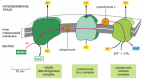
The Respiratory Chain Includes Three Large Enzyme Complexes
Embedded in the Inner Membrane

Membrane proteins are difficult to purify as intact complexes
because they are insoluble in aqueous solutions, and some of
the detergents required to solubilize them can destroy normal
protein-protein interactions. In the early 1960s, however, it
was found that relatively mild ionic detergents, such as deoxycholate,
can solubilize selected components of the inner mitochondrial
membrane in their native form. This permitted the identification
and purification of the three major membrane-bound respiratory
enzyme complexes in the pathway from NADH to oxygen (Figure 14-26).
As we shall see in this section, each of these complexes acts as an
electron-transport-driven H+ pump; however, they were
initially characterized in terms of the electron carriers that
they interact with and contain:

mitochondrial oxidative phosphorylation

mitochondrial oxidative phosphorylation

http://www.ncbi.nlm.nih.gov/books/NBK26904/bin/ch14f26.gif

Figure 14-26. The path of electrons through the three respiratory
enzyme complexes.

Figure 14-26

The path of electrons through the three respiratory enzyme complexes.
The relative size and shape of each complex are shown. During the
transfer of electrons from NADH to oxygen (red lines), ubiquinone
and cytochrome c serve as mobile carriers that ferry (more…)

The NADH dehydrogenase complex (generally known as complex I)
is the largest of the respiratory enzyme complexes, containing more
than 40 polypeptide chains. It accepts electrons from NADH and
passes them through a flavin and at least seven iron-sulfur centers
to ubiquinone. Ubiquinone then transfers its electrons to a second
respiratory enzyme complex, the cytochrome b-c1 complex.

The cytochrome b-c1 complex contains at least 11 different
polypeptide chains and functions as a dimer. Each monomer
contains three hemes bound to cytochromes and an iron-sulfur
protein. The complex accepts electrons from ubiquinone
and passes them on to cytochrome c, which carries its electron
to the cytochrome oxidase complex.

The cytochrome oxidase complex also functions as a dimer; each
monomer contains 13 different polypeptide chains, including two
cytochromes and two copper atoms. The complex accepts one electron
at a time from cytochrome c and passes them four at a time to oxygen.

The cytochromes, iron-sulfur centers, and copper atoms can carry
only one electron at a time. Yet each NADH donates two electrons,
and each O2 molecule must receive four electrons to produce water.
There are several electron-collecting and electron-dispersing points
along the electron-transport chain where these changes in electron
number are accommodated. The most obvious of these is cytochrome
oxidase.

An Iron-Copper Center in Cytochrome Oxidase Catalyzes Efficient
O2 Reduction

Because oxygen has a high affinity for electrons, it releases a
large amount of free energy when it is reduced to form water.
Thus, the evolution of cellular respiration, in which O2 is
converted to water, enabled organisms to harness much more
energy than can be derived from anaerobic metabolism. This
is presumably why all higher organisms respire. The ability of
biological systems to use O2 in this way, however, requires a
very sophisticated chemistry. We can tolerate O2 in the air we
breathe because it has trouble picking up its first electron; this
fact allows its initial reaction in cells to be controlled closely by
enzymatic catalysis. But once a molecule of O2 has picked up one
electron to form a superoxide radical (O2 -), it becomes dangerously
reactive and rapidly takes up an additional three electrons wherever
it can find them. The cell can use O2 for respiration only because
cytochrome oxidase holds onto oxygen at a special bimetallic
center, where it remains clamped between a heme-linked iron
atom and a copper atom until it has picked up a total of four electrons.
Only then can the two oxygen atoms of the oxygen molecule be
safely released as two molecules of water (Figure 14-27).

Figure 14-27. The reaction of O2 with electrons in cytochrome oxidase.

Figure 14-27

The reaction of O2 with electrons in cytochrome oxidase. As indicated,
the iron atom in heme a serves as an electron queuing point; this
heme feeds four electrons into an O2 molecule held at the bimetallic
center active site, which is formed by the other (more…)

The cytochrome oxidase reaction is estimated to account for 90%
of the total oxygen uptake in most cells. This protein complex is
therefore crucial for all aerobic life. Cyanide and azide are extremely
toxic because they bind tightly to the cell’s cytochrome oxidase
complexes to stop electron transport, thereby greatly reducing
ATP production.

Although the cytochrome oxidase in mammals contains 13
different protein subunits, most of these seem to have a subsidiary
role, helping to regulate either the activity or the assembly of the
three subunits that form the core of the enzyme. The complete
structure of this large enzyme complex has recently been determined
by x-ray crystallography, as illustrated in Figure 14-28. The atomic
resolution structures, combined with mechanistic studies of the effect
of precisely tailored mutations introduced into the enzyme by genetic
engineering of the yeast and bacterial proteins, are revealing the
detailed mechanisms of this finely tuned protein machine.

Figure 14-28. The molecular structure of cytochrome oxidase.

Figure 14-28

The molecular structure of cytochrome oxidase. This protein
is a dimer formed from a monomer with 13 different protein
subunits (monomer mass of 204,000 daltons). The three colored
subunits are encoded by the mitochondrial genome, and they
form the functional (more…)

Electron Transfers Are Mediated by Random Collisions in
the Inner Mitochondrial Membrane

The two components that carry electrons between the three
major enzyme complexes of the respiratory chain—ubiquinone
and cytochrome c—diffuse rapidly in the plane of the inner
mitochondrial membrane. The expected rate of random collisions
between these mobile carriers and the more slowly diffusing
enzyme complexes can account for the observed rates of electron
transfer (each complex donates and receives an electron about
once every 5–20 milliseconds). Thus, there is no need to postulate
a structurally ordered chain of electron-transfer proteins in the
lipid bilayer; indeed, the three enzyme complexes seem to exist as
independent entities in the plane of the inner membrane, being
present in different ratios in different mitochondria.

The ordered transfer of electrons along the respiratory chain
is due entirely to the specificity of the functional interactions
between the components of the chain: each electron carrier is
able to interact only with the carrier adjacent to it in the sequence
shown in Figure 14-26, with no short circuits.

Electrons move between the molecules that carry them in
biological systems not only by moving along covalent bonds
within a molecule, but also by jumping across a gap as large
as 2 nm. The jumps occur by electron “tunneling,” a quantum-
mechanical property that is critical for the processes we are
discussing. Insulation is needed to prevent short circuits that
would otherwise occur when an electron carrier with a low redox
potential collides with a carrier with a high redox potential. This
insulation seems to be provided by carrying an electron deep
enough inside a protein to prevent its tunneling interactions
with an inappropriate partner.

How the changes in redox potential from one electron carrier
to the next are harnessed to pump protons out of the mitochondrial
matrix is the topic we discuss next.

A Large Drop in Redox Potential Across Each of the Three Respiratory
Enzyme Complexes Provides the Energy for H+ Pumping

We have previously discussed how the redox potential reflects
electron affinities (see p. 783). An outline of the redox potentials
measured along the respiratory chain is shown in Figure 14-29.
These potentials drop in three large steps, one across each major
respiratory complex. The change in redox potential between any
two electron carriers is directly proportional to the free energy
released when an electron transfers between them. Each enzyme
complex acts as an energy-conversion device by harnessing some
of this free-energy change to pump H+ across the inner membrane,
thereby creating an electrochemical proton gradient as electrons
pass through that complex. This conversion can be demonstrated
by purifying each respiratory enzyme complex and incorporating
it separately into liposomes: when an appropriate electron donor
and acceptor are added so that electrons can pass through the complex,
H+ is translocated across the liposome membrane.

Figure 14-29. Redox potential changes along the mitochondrial
electron-transport chain.

Figure 14-29

Redox potential changes along the mitochondrial electron-transport
chain. The redox potential (designated E′0) increases as electrons
flow down the respiratory chain to oxygen. The standard free-energy
change, ΔG°, for the transfer (more…)

The Mechanism of H+ Pumping Will Soon Be Understood in
Atomic Detail

Some respiratory enzyme complexes pump one H+ per electron
across the inner mitochondrial membrane, whereas others pump
two. The detailed mechanism by which electron transport is coupled
to H+ pumping is different for the three different enzyme complexes.
In the cytochrome b-c1 complex, the quinones clearly have a role.
As mentioned previously, a quinone picks up a H+ from the aqueous
medium along with each electron it carries and liberates it when it
releases the electron (see Figure 14-24). Since ubiquinone is freely
mobile in the lipid bilayer, it could accept electrons near the inside
surface of the membrane and donate them to the cytochrome b-c1
complex near the outside surface, thereby transferring one H+
across the bilayer for every electron transported. Two protons are
pumped per electron in the cytochrome b-c1 complex, however, and
there is good evidence for a so-called Q-cycle, in which ubiquinone
is recycled through the complex in an ordered way that makes this
two-for-one transfer possible. Exactly how this occurs can now be
worked out at the atomic level, because the complete structure of
the cytochrome b-c1 complex has been determined by x-ray
crystallography (Figure 14-30).

Figure 14-30. The atomic structure of cytochrome b-c 1.

Figure 14-30

The atomic structure of cytochrome b-c 1. This protein is a dimer.
The 240,000-dalton monomer is composed of 11 different protein
molecules in mammals. The three colored proteins form the
functional core of the enzyme: cytochrome b (green), cytochrome (more…)

Allosteric changes in protein conformations driven by electron
transport can also pump H+, just as H+ is pumped when ATP
is hydrolyzed by the ATP synthase running in reverse. For both the
NADH dehydrogenase complex and the cytochrome oxidase complex,
it seems likely that electron transport drives sequential allosteric
changes in protein conformation that cause a portion of the protein
to pump H+ across the mitochondrial inner membrane. A general
mechanism for this type of H+ pumping is presented in Figure 14-31.

Figure 14-31. A general model for H+ pumping.

Figure 14-31

A general model for H+ pumping. This model for H+ pumping
by a transmembrane protein is based on mechanisms that are
thought to be used by both cytochrome oxidase and the light-driven
procaryotic proton pump, bacteriorhodopsin. The protein
is driven through (more…)

H+ Ionophores Uncouple Electron Transport from ATP Synthesis

Since the 1940s, several substances—such as 2,4-dinitrophenol—
have been known to act as uncoupling agents, uncoupling electron
transport from ATP synthesis. The addition of these low-molecular-weight organic compounds to cells stops ATP synthesis by mitochondria
without blocking their uptake of oxygen. In the presence of an
uncoupling agent, electron transport and H+ pumping continue at
a rapid rate, but no H+ gradient is generated. The explanation for
this effect is both simple and elegant: uncoupling agents are lipid-
soluble weak acids that act as H+ carriers (H+ ionophores), and
they provide a pathway for the flow of H+ across the inner mitochondrial
membrane that bypasses the ATP synthase. As a result of this short-
circuiting, the proton-motive force is dissipated completely, and
ATP can no longer be made.

Respiratory Control Normally Restrains Electron Flow
Through the Chain

When an uncoupler such as dinitrophenol is added to cells,
mitochondria increase their oxygen uptake substantially because
of an increased rate of electron transport. This increase reflects
the existence of respiratory control. The control is thought to
act via a direct inhibitory influence of the electrochemical proton
gradient on the rate of electron transport. When the gradient is
collapsed by an uncoupler, electron transport is free to run unchecked
at the maximal rate. As the gradient increases, electron transport
becomes more difficult, and the process slows. Moreover, if an
artificially large electrochemical proton gradient is experimentally
created across the inner membrane, normal electron transport
stops completely, and a reverse electron flow can be detected in
some sections of the respiratory chain. This observation suggests
that respiratory control reflects a simple balance between the
free-energy change for electron-transport-linked proton pumping
and the free-energy change for electron transport—that is, the
magnitude of the electrochemical proton gradient affects both
the rate and the direction of electron transport, just as it affects
the directionality of the ATP synthase (see Figure 14-19).

Respiratory control is just one part of an elaborate interlocking
system of feedback controls that coordinate the rates of glycolysis,
fatty acid breakdown, the citric acid cycle, and electron transport.
The rates of all of these processes are adjusted to the ATP:ADP ratio,
increasing whenever an increased utilization of ATP causes the ratio
to fall. The ATP synthase in the inner mitochondrial membrane,
for example, works faster as the concentrations of its substrates
ADP and Pi increase. As it speeds up, the enzyme lets more H+ flow
into the matrix and thereby dissipates the electrochemical proton
gradient more rapidly. The falling gradient, in turn, enhances the
rate of electron transport.

Similar controls, including feedback inhibition of several key enzymes
by ATP, act to adjust the rates of NADH production to the rate of
NADH utilization by the respiratory chain, and so on. As a result of
these many control mechanisms, the body oxidizes fats and sugars
5–10 times more rapidly during a period of strenuous exercise than
during a period of rest.

Natural Uncouplers Convert the Mitochondria in Brown Fat into
Heat-generating Machines

In some specialized fat cells, mitochondrial respiration is normally
uncoupled from ATP synthesis. In these cells, known as brown fat
cells, most of the energy of oxidation is dissipated as heat rather
than being converted into ATP. The inner membranes of the large
mitochondria in these cells contain a special transport protein that
allows protons to move down their electrochemical gradient, by-
passing ATP synthase. As a result, the cells oxidize their fat stores
at a rapid rate and produce more heat than ATP. Tissues containing
brown fat serve as “heating pads,” helping to revive hibernating animals
and to protect sensitive areas of newborn human babies from the cold.

Bacteria Also Exploit Chemiosmotic Mechanisms to Harness Energy

Bacteria use enormously diverse energy sources. Some, like animal
cells, are aerobic; they synthesize ATP from sugars they oxidize to
CO2 and H2O by glycolysis, the citric acid cycle, and a respiratory
chain in their plasma membrane that is similar to the one in the
inner mitochondrial membrane. Others are strict anaerobes, deriving
their energy either from glycolysis alone (by fermentation) or from an
electron-transport chain that employs a molecule other than oxygen
as the final electron acceptor. The alternative electron acceptor can
be a nitrogen compound (nitrate or nitrite), a sulfur compound
(sulfate or sulfite), or a carbon compound (fumarate or carbonate),
for example. The electrons are transferred to these acceptors by a
series of electron carriers in the plasma membrane that are comparable
to those in mitochondrial respiratory chains.

Despite this diversity, the plasma membrane of the vast majority of
bacteria contains an ATP synthase that is very similar to the one in
mitochondria. In bacteria that use an electron-transport chain to
harvest energy, the electron-transport pumps H+ out of the cell and
thereby establishes a proton-motive force across the plasma membrane
that drives the ATP synthase to make ATP. In other bacteria, the
ATP synthase works in reverse, using the ATP produced by glycolysis
to pump H+ and establish a proton gradient across the plasma
membrane. The ATP used for this process is generated by
fermentation processes (discussed in Chapter 2).

Thus, most bacteria, including the strict anaerobes, maintain a proton
gradient across their plasma membrane. It can be harnessed to drive
a flagellar motor, and it is used to pump Na+ out of the bacterium via
a Na+-H+ antiporter that takes the place of the Na+-K+ pump of
eucaryotic cells. This gradient is also used for the active inward transport
of nutrients, such as most amino acids and many sugars: each nutrient is
dragged into the cell along with one or more H+ through a specific symporter
(Figure 14-32). In animal cells, by contrast, most inward transport across
the plasma membrane is driven by the Na+ gradient that is established by the
Na+-K+ pump.

Figure 14-32. The importance of H+-driven transport in bacteria.

Figure 14-32

The importance of H+-driven transport in bacteria. A proton-motive force
generated across the plasma membrane pumps nutrients into the cell and
expels Na+. (A) In an aerobic bacterium, an electrochemical proton gradient
across the plasma membrane is produced (more…)

Some unusual bacteria have adapted to live in a very alkaline
environment and yet must maintain their cytoplasm at a physiological
pH. For these cells, any attempt to generate an electrochemical H+
gradient would be opposed by a large H+ concentration gradient in
the wrong direction (H+ higher inside than outside). Presumably for
this reason, some of these bacteria substitute Na+ for H+ in all of their
chemiosmotic mechanisms. The respiratory chain pumps Na+ out of
the cell, the transport systems and flagellar motor are driven by an
inward flux of Na+, and a Na+-driven ATP synthase synthesizes
ATP. The existence of such bacteria demonstrates that the principle
of chemiosmosis is more fundamental than the proton-motive force
on which it is normally based.

Summary

The respiratory chain in the inner mitochondrial membrane contains
three respiratory enzyme complexes through which electrons pass on
their way from NADH to O2.

Each of these can be purified, inserted into synthetic lipid vesicles,
and then shown to pump H+ when electrons are transported through it.
In the intact membrane, the mobile electron carriers ubiquinone and
cytochrome c complete the electron-transport chain by shuttling between
the enzyme complexes. The path of electron flow is NADH → NADH
dehydrogenase complex → ubiquinone → cytochrome b-c1 complex →
cytochrome c → cytochrome oxidase complex → molecular oxygen (O2).

The respiratory enzyme complexes couple the energetically favorable
transport of electrons to the pumping of H+ out of the matrix. The
resulting electrochemical proton gradient is harnessed to make ATP
by another transmembrane protein complex, ATP synthase, through
which H+ flows back into the matrix. The ATP synthase is a reversible
coupling device that normally converts a backflow of H+ into ATP
phosphate bond energy by catalyzing the reaction ADP + Pi → ATP,
but it can also work in the opposite direction and hydrolyze ATP to
pump H+ if the electrochemical proton gradient is sufficiently reduced.
Its universal presence in mitochondria, chloroplasts, and procaryotes
testifies to the central importance of chemiosmotic mechanisms in cells.

By agreement with the publisher, this book is accessible by the search
feature, but cannot be browsed.

Copyright © 2002, Bruce Alberts, Alexander Johnson, Julian Lewis,
Martin Raff, Keith Roberts, and Peter Walter; Copyright © 1983, 1989,
1994, Bruce Alberts, Dennis Bray, Julian Lewis, Martin Raff, Keith
Roberts, and James D. Watson .

Read Full Post »

Introduction to Protein Synthesis and Degradation

Curator: Larry H. Bernstein, MD, FCAP

Updated 8/31/2019


Introduction to Protein Synthesis and Degradation

This chapter I made to follow signaling, rather than to precede it. I had already written much of the content before reorganizing the contents. The previous chapters on carbohydrate and on lipid metabolism have already provided much material on proteins and protein function, which was persuasive of the need to introduce signaling, which entails a substantial introduction to conformational changes in proteins that direct the trafficking of metabolic pathways, but more subtly uncovers an important role for microRNAs, not divorced from transcription, but involved in a non-transcriptional role.  This is where the classic model of molecular biology lacked any integration with emerging metabolic concepts concerning regulation. Consequently, the science was bereft of understanding the ties between the multiple convergence of transcripts, the selective inhibition of transcriptions, and the relative balance of aerobic and anaerobic metabolism, the weight of the pentose phosphate shunt, and the utilization of available energy source for synthetic and catabolic adaptive responses.

The first subchapter serves to introduce the importance of transcription in translational science.  The several subtitles that follow are intended to lay out the scope of the transcriptional activity, and also to direct attention toward the huge role of proteomics in the cell construct.  As we have already seen, proteins engage with carbohydrates and with lipids in important structural and signaling processes.  They are integrasl to the composition of the cytoskeleton, and also to the extracellular matrix.  Many proteins are actually enzymes, carrying out the transformation of some substrate, a derivative of the food we ingest.  They have a catalytic site, and they function with a cofactor – either a multivalent metal or a nucleotide.

The amino acids that go into protein synthesis include “indispensable” nutrients that are not made for use, but must be derived from animal protein, although the need is partially satisfied by plant sources. The essential amino acids are classified into well established groups. There are 20 amino acids commonly found in proteins.  They are classified into the following groups based on the chemical and/or structural properties of their side chains :

  1. Aliphatic Amino Acids
  2. Cyclic Amino Acid
  3. AAs with Hydroxyl or Sulfur-containing side chains
  4. Aromatic Amino Acids
  5. Basic Amino Acids
  6. Acidic Amino Acids and their Amides

Examples include:

Alanine                  aliphatic hydrophobic neutral
Arginine                 polar hydrophilic charged (+)
Cysteine                polar hydrophobic neutral
Glutamine             polar hydrophilic neutral
Histidine                aromatic polar hydrophilic charged (+)
Lysine                   polar hydrophilic charged (+)
Methionine            hydrophobic neutral
Serine                   polar hydrophilic neutral
Tyrosine                aromatic polar hydrophobic

Transcribe and Translate a Gene

  1. For each RNA base there is a corresponding DNA base
  2. Cells use the two-step process of transcription and translation to read each gene and produce the string of amino acids that makes up a protein.
  3. mRNA is produced in the nucleus, and is transferred to the ribosome
  4. mRNA uses uracil instead of thymine
  5. the ribosome reads the RNA sequence and makes protein
  6. There is a sequence combination to fit each amino acid to a three letter RNA code
  7. The ribosome starts at AUG (start), and it reads each codon three letters at a time
  8. Stop codons are UAA, UAG and UGA


protein synthesis

protein synthesis

http://learn.genetics.utah.edu/content/molecules/transcribe/images/TandT.png

mcell-transcription-translation

mcell-transcription-translation

http://www.vcbio.science.ru.nl/images/cellcycle/mcell-transcription-translation_eng_zoom.gif

transcription_translation

transcription_translation


http://www.biologycorner.com/resources/transcription_translation.JPG


What about the purine inosine?

Inosine triphosphate pyrophosphatase – Pyrophosphatase that hydrolyzes the non-canonical purine nucleotides inosine triphosphate (ITP), deoxyinosine triphosphate (dITP) as well as 2′-deoxy-N-6-hydroxylaminopurine triposphate (dHAPTP) and xanthosine 5′-triphosphate (XTP) to their respective monophosphate derivatives. The enzyme does not distinguish between the deoxy- and ribose forms. Probably excludes non-canonical purines from RNA and DNA precursor pools, thus preventing their incorporation into RNA and DNA and avoiding chromosomal lesions.

Gastroenterology. 2011 Apr;140(4):1314-21.  http://dx.doi.org:/10.1053/j.gastro.2010.12.038. Epub 2011 Jan 1.

Inosine triphosphate protects against ribavirin-induced adenosine triphosphate loss by adenylosuccinate synthase function.

Hitomi Y1, Cirulli ET, Fellay J, McHutchison JG, Thompson AJ, Gumbs CE, Shianna KV, Urban TJ, Goldstein DB.

Genetic variation of inosine triphosphatase (ITPA) causing an accumulation of inosine triphosphate (ITP) has been shown to protect patients against ribavirin (RBV)-induced anemia during treatment for chronic hepatitis C infection by genome-wide association study (GWAS). However, the biologic mechanism by which this occurs is unknown.

Although ITP is not used directly by human erythrocyte ATPase, it can be used for ATP biosynthesis via ADSS in place of guanosine triphosphate (GTP). With RBV challenge, erythrocyte ATP reduction was more severe in the wild-type ITPA genotype than in the hemolysis protective ITPA genotype. This difference also remains after inhibiting adenosine uptake using nitrobenzylmercaptopurine riboside (NBMPR).

ITP confers protection against RBV-induced ATP reduction by substituting for erythrocyte GTP, which is depleted by RBV, in the biosynthesis of ATP. Because patients with excess ITP appear largely protected against anemia, these results confirm that RBV-induced anemia is due primarily to the effect of the drug on GTP and consequently ATP levels in erythrocytes.

Ther Drug Monit. 2012 Aug;34(4):477-80.  http://dx.doi.org:/10.1097/FTD.0b013e31825c2703.

Determination of inosine triphosphate pyrophosphatase phenotype in human red blood cells using HPLC.

Citterio-Quentin A1, Salvi JP, Boulieu R.

Thiopurine drugs, widely used in cancer chemotherapy, inflammatory bowel disease, and autoimmune hepatitis, are responsible for common adverse events. Only some of these may be explained by genetic polymorphism of thiopurine S-methyltransferase. Recent articles have reported that inosine triphosphate pyrophosphatase (ITPase) deficiency was associated with adverse drug reactions toward thiopurine drug therapy. Here, we report a weak anion exchange high-performance liquid chromatography method to determine ITPase activity in red blood cells and to investigate the relationship with the occurrence of adverse events during azathioprine therapy.

The chromatographic method reported allows the analysis of IMP, inosine diphosphate, and ITP in a single run in <12.5 minutes. The method was linear in the range 5-1500 μmole/L of IMP. Intraassay and interassay precisions were <5% for red blood cell lysates supplemented with 50, 500, and 1000 μmole/L IMP. Km and Vmax evaluated by Lineweaver-Burk plot were 677.4 μmole/L and 19.6 μmole·L·min, respectively. The frequency distribution of ITPase from 73 patients was investigated.

The method described is useful to determine the ITPase phenotype from patients on thiopurine therapy and to investigate the potential relation between ITPase deficiency and the occurrence of adverse events.


System wide analyses have underestimated protein abundances and the importance of transcription in mammals

Jingyi Jessica Li1, 2, Peter J Bickel1 and Mark D Biggin3

PeerJ 2:e270; http://dx.doi.org:/10.7717/peerj.270

Using individual measurements for 61 housekeeping proteins to rescale whole proteome data from Schwanhausser et al. (2011), we find that the median protein detected is expressed at 170,000 molecules per cell and that our corrected protein abundance estimates show a higher correlation with mRNA abundances than do the uncorrected protein data. In addition, we estimated the impact of further errors in mRNA and protein abundances using direct experimental measurements of these errors. The resulting analysis suggests that mRNA levels explain at least 56% of the differences in protein abundance for the 4,212 genes detected by Schwanhausser et al. (2011), though because one major source of error could not be estimated the true percent contribution should be higher.We also employed a second, independent strategy to determine the contribution of mRNA levels to protein expression.We show that the variance in translation rates directly measured by ribosome profiling is only 12% of that inferred by Schwanhausser et al. (2011), and that the measured and inferred translation rates correlate poorly (R2 D 0.13). Based on this, our second strategy suggests that mRNA levels explain 81% of the variance in protein levels. We also determined the percent contributions of transcription, RNA degradation, translation and protein degradation to the variance in protein abundances using both of our strategies. While the magnitudes of the two estimates vary, they both suggest that transcription plays a more important role than the earlier studies implied and translation a much smaller role. Finally, the above estimates only apply to those genes whose mRNA and protein expression was detected. Based on a detailed analysis by Hebenstreit et al. (2012), we estimat that approximately 40% of genes in a given cell within a population express no mRNA. Since there can be no translation in the ab-sence of mRNA, we argue that differences in translation rates can play no role in determining the expression levels for the 40% of genes that are non-expressed.


Related studies that reveal issues that are not part of this chapter:

  1. Ubiquitylation in relationship to tissue remodeling
  2. Post-translational modification of proteins
    1. Glycosylation
    2. Phosphorylation
    3. Methylation
    4. Nitrosylation
    5. Sulfation – sulfotransferases
      cell-matrix communication
    6. Acetylation and histone deacetylation (HDAC)
      Connecting Protein Phosphatase to 1α (PP1α)
      Acetylation complexes (such as CBP/p300 and PCAF)
      Sirtuins
      Rel/NF-kB Signal Transduction
      Homologous Recombination Pathway of Double-Strand DNA Repair
    7. Glycination
    8. cyclin dependent kinases (CDKs)
    9. lyase
    10. transferase


This year, the Lasker award for basic medical research went to Kazutoshi Mori (Kyoto University) and Peter Walter (University of California, San Francisco) for their “discoveries concerning the unfolded protein response (UPR) — an intracellular quality control system that

detects harmful misfolded proteins in the endoplasmic reticulum and signals the nucleus to carry out corrective measures.”

About UPR: Approximately a third of cellular proteins pass through the Endoplasmic Reticulum (ER) which performs stringent quality control of these proteins. All proteins need to assume the proper 3-dimensional shape in order to function properly in the harsh cellular environment. Related to this is the fact that cells are under constant stress and have to make rapid, real time decisions about survival or death.

A major indicator of stress is the accumulation of unfolded proteins within the Endoplasmic Reticulum (ER), which triggers a transcriptional cascade in order to increase the folding capacity of the ER. If the metabolic burden is too great and homeostasis cannot be achieved, the response shifts from

damage control to the induction of pro-apoptotic pathways that would ultimately cause cell death.

This response to unfolded proteins or the UPR is conserved among all eukaryotes, and dysfunction in this pathway underlies many human diseases, including Alzheimer’s, Parkinson’s, Diabetes and Cancer.


The discovery of a new class of human proteins with previously unidentified activities

In a landmark study conducted by scientists at the Scripps Research Institute, The Hong Kong University of Science and Technology, aTyr Pharma and their collaborators, a new class of human proteins has been discovered. These proteins [nearly 250], called Physiocrines belong to the aminoacyl tRNA synthetase gene family and carry out novel, diverse and distinct biological functions.

The aminoacyl tRNA synthetase gene family codes for a group of 20 ubiquitous enzymes almost all of which are part of the protein synthesis machinery. Using recombinant protein purification, deep sequencing technique, mass spectroscopy and cell based assays, the team made this discovery. The finding is significant, also because it highlights the alternate use of a gene family whose protein product normally performs catalytic activities for non-catalytic regulation of basic and complex physiological processes spanning metabolism, vascularization, stem cell biology and immunology


Muscle maintenance and regeneration – key player identified

Muscle tissue suffers from atrophy with age and its regenerative capacity also declines over time. Most molecules discovered thus far to boost tissue regeneration are also implicated in cancers.  During a quest to find safer alternatives that can regenerate tissue, scientists reported that the hormone Oxytocin is required for proper muscle tissue regeneration and homeostasis and that its levels decline with age.

Oxytocin could be an alternative to hormone replacement therapy as a way to combat aging and other organ related degeneration.

Oxytocin is an age-specific circulating hormone that is necessary for muscle maintenance and regeneration (June 2014)


Proc Natl Acad Sci U S A. 2014 Sep 30;111(39):14289-94.   http://dx.doi.org:/10.1073/pnas.1407640111. Epub 2014 Sep 15.

Role of forkhead box protein A3 in age-associated metabolic decline.

Ma X1, Xu L1, Gavrilova O2, Mueller E3.

Aging is associated with increased adiposity and diminished thermogenesis, but the critical transcription factors influencing these metabolic changes late in life are poorly understood. We recently demonstrated that the winged helix factor forkhead box protein A3 (Foxa3) regulates the expansion of visceral adipose tissue in high-fat diet regimens; however, whether Foxa3 also contributes to the increase in adiposity and the decrease in brown fat activity observed during the normal aging process is currently unknown. Here we report that during aging, levels of Foxa3 are significantly and selectively up-regulated in brown and inguinal white fat depots, and that midage Foxa3-null mice have increased white fat browning and thermogenic capacity, decreased adipose tissue expansion, improved insulin sensitivity, and increased longevity. Foxa3 gain-of-function and loss-of-function studies in inguinal adipose depots demonstrated a cell-autonomous function for Foxa3 in white fat tissue browning. Furthermore, our analysis revealed that the mechanisms of Foxa3 modulation of brown fat gene programs involve the suppression of peroxisome proliferator activated receptor γ coactivtor 1 α (PGC1α) levels through interference with cAMP responsive element binding protein 1-mediated transcriptional regulation of the PGC1α promoter.


Asymmetric mRNA localization contributes to fidelity and sensitivity of spatially localized systems

RJ Weatheritt, TJ Gibson & MM Babu
Nature Structural & Molecular Biology 24 Aug, 2014; 21: 833–839 http://dx.do.orgi:/10.1038/nsmb.2876

Although many proteins are localized after translation, asymmetric protein distribution is also achieved by translation after mRNA localization. Why are certain mRNA transported to a distal location and translated on-site? Here we undertake a systematic, genome-scale study of asymmetrically distributed protein and mRNA in mammalian cells. Our findings suggest that asymmetric protein distribution by mRNA localization enhances interaction fidelity and signaling sensitivity. Proteins synthesized at distal locations frequently contain intrinsically disordered segments. These regions are generally rich in assembly-promoting modules and are often regulated by post-translational modifications. Such proteins are tightly regulated but display distinct temporal dynamics upon stimulation with growth factors. Thus, proteins synthesized on-site may rapidly alter proteome composition and act as dynamically regulated scaffolds to promote the formation of reversible cellular assemblies. Our observations are consistent across multiple mammalian species, cell types and developmental stages, suggesting that localized translation is a recurring feature of cell signaling and regulation.


An overview of the potential advantages conferred by distal-site protein synthesis, inferred from our analysis.


An overview of the potential advantages conferred by distal-site protein synthesis

An overview of the potential advantages conferred by distal-site protein synthesis


Turquoise and red filled circle represents off-target and correct interaction partners, respectively. Wavy lines represent a disordered region within a distal site synthesis protein. Grey and red line in graphs represents profiles of t…

http://www.nature.com/nsmb/journal/v21/n9/carousel/nsmb.2876-F5.jpg


Tweaking transcriptional programming for high quality recombinant protein production

Since overexpression of recombinant proteins in E. coli often leads to the formation of inclusion bodies, producing properly folded, soluble proteins is undoubtedly the most important end goal in a protein expression campaign. Various approaches have been devised to bypass the insolubility issues during E. coli expression and in a recent report a group of researchers discuss reprogramming the E. coli proteostasis [protein homeostasis] network to achieve high yields of soluble, functional protein. The premise of their studies is that the basal E. coli proteostasis network is insufficient, and often unable, to fold overexpressed proteins, thus clogging the folding machinery.

By overexpressing a mutant, negative-feedback deficient heat shock transcription factor [σ32 I54N] before and during overexpression of the protein of interest, reprogramming can be achieved, resulting in high yields of soluble and functional recombinant target protein. The authors explain that this method is better than simply co-expressing/over-expressing chaperones, co-chaperones, foldases or other components of the proteostasis network because reprogramming readies the folding machinery and up regulates the essential folding components beforehand thus  maintaining system capability of the folding machinery.

The Heat-Shock Response Transcriptional Program Enables High-Yield and High-Quality Recombinant Protein Production in Escherichia coli (July 2014)


 Unfolded proteins collapse when exposed to heat and crowded environments

Proteins are important molecules in our body and they fulfil a broad range of functions. For instance as enzymes they help to release energy from food and as muscle proteins they assist with motion. As antibodies they are involved in immune defence and as hormone receptors in signal transduction in cells. Until only recently it was assumed that all proteins take on a clearly defined three-dimensional structure – i.e. they fold in order to be able to assume these functions. Surprisingly, it has been shown that many important proteins occur as unfolded coils. Researchers seek to establish how these disordered proteins are capable at all of assuming highly complex functions.

Ben Schuler’s research group from the Institute of Biochemistry of the University of Zurich has now established that an increase in temperature leads to folded proteins collapsing and becoming smaller. Other environmental factors can trigger the same effect.

Measurements using the “molecular ruler”

“The fact that unfolded proteins shrink at higher temperatures is an indication that cell water does indeed play an important role as to the spatial organisation eventually adopted by the molecules”, comments Schuler with regard to the impact of temperature on protein structure. For their studies the biophysicists use what is known as single-molecule spectroscopy. Small colour probes in the protein enable the observation of changes with an accuracy of more than one millionth of a millimetre. With this “molecular yardstick” it is possible to measure how molecular forces impact protein structure.

With computer simulations the researchers have mimicked the behaviour of disordered proteins.
(Courtesy of Jose EDS Roselino, PhD.


MLKL compromises plasma membrane integrity

Necroptosis is implicated in many diseases and understanding this process is essential in the search for new therapies. While mixed lineage kinase domain-like (MLKL) protein has been known to be a critical component of necroptosis induction, how MLKL transduces the death signal was not clear. In a recent finding, scientists demonstrated that the full four-helical bundle domain (4HBD) in the N-terminal region of MLKL is required and sufficient to induce its oligomerization and trigger cell death.

They also found a patch of positively charged amino acids on the surface of the 4HBD that bound to phosphatidylinositol phosphates (PIPs) and allowed the recruitment of MLKL to the plasma membrane that resulted in the formation of pores consisting of MLKL proteins, due to which cells absorbed excess water causing them to explode. Detailed knowledge about how MLKL proteins create pores offers possibilities for the development of new therapeutic interventions for tolerating or preventing cell death.

MLKL compromises plasma membrane integrity by binding to phosphatidylinositol phosphates (May 2014)


Mitochondrial and ER proteins implicated in dementia

Mitochondria and the endoplasmic reticulum (ER) form tight structural associations that facilitate a number of cellular functions. However, the molecular mechanisms of these interactions aren’t properly understood.

A group of researchers showed that the ER protein VAPB interacted with mitochondrial protein PTPIP51 to regulate ER-mitochondria associations and that TDP-43, a protein implicated in dementia, disturbs this interaction to regulate cellular Ca2+ homeostasis. These studies point to a new pathogenic mechanism for TDP-43 and may also provide a potential new target for the development of new treatments for devastating neurological conditions like dementia.

ER-mitochondria associations are regulated by the VAPB-PTPIP51 interaction and are disrupted by ALS/FTD-associated TDP-43. Nature (June 2014)


A novel strategy to improve membrane protein expression in Yeast

Membrane proteins play indispensable roles in the physiology of an organism. However, recombinant production of membrane proteins is one of the biggest hurdles facing protein biochemists today. A group of scientists in Belgium showed that,

by increasing the intracellular membrane production by interfering with a key enzymatic step of lipid synthesis,

enhanced expression of recombinant membrane proteins in yeast is achieved.

Specifically, they engineered the oleotrophic yeast, Yarrowia lipolytica, by

deleting the phosphatidic acid phosphatase, PAH1 gene,

which led to massive proliferation of endoplasmic reticulum (ER) membranes.

For all 8 tested representatives of different integral membrane protein families, they obtained enhanced protein accumulation.


An unconventional method to boost recombinant protein levels

MazF is an mRNA interferase enzyme in E.coli that functions as and degrades cellular mRNA in a targeted fashion, at the “ACA” sequence. This degradation of cellular mRNA causes a precipitous drop in cellular protein synthesis. A group of scientists at the Robert Wood Johnson Medical School in New Jersey, exploited the degeneracy of the genetic code to modify all “ACA” triplets within their gene of interest in a way that the corresponding amino acid (Threonine) remained unchanged. Consequently, induction of MazF toxin caused degradation of E.coli cellular mRNA but the recombinant gene transcription and protein synthesis continued, causing significant accumulation of high quality target protein. This expression system enables unparalleled signal to noise ratios that could dramatically simplify structural and functional studies of difficult-to-purify, biologically important proteins.


Tandem fusions and bacterial strain evolution for enhanced functional membrane protein production

Membrane protein production remains a significant challenge in its characterization and structure determination. Despite the fact that there are a variety of host cell types, E.coli remains the popular choice for producing recombinant membrane proteins. A group of scientists in Netherlands devised a robust strategy to increase the probability of functional membrane protein overexpression in E.coli.

By fusing Green Fluorescent Protein (GFP) and the Erythromycin Resistance protein (ErmC) to the C-terminus of a target membrane protein they wer e able to track the folding state of their target protein while using Erythromycin to select for increased expression. By increasing erythromycin concentration in the growth media and testing different membrane targets, they were able to identify four evolved E.coli strains, all of which carried a mutation in the hns gene, whose product is implicated in genome organization and transcriptional silencing. Through their experiments the group showed that partial removal of the transcriptional silencing mechanism was related to production of proteins that were essential for functional overexpression of membrane proteins.


The role of an anti-apoptotic factor in recombinant protein production

In a recent study, scientists at the Johns Hopkins University and Frederick National Laboratory for Cancer Research examined an alternative method of utilizing the benefits of anti-apoptotic gene expression to enhance the transient expression of biotherapeutics, specifically, through the co-transfection of Bcl-xL along with the product-coding target gene.

Chinese Hamster Ovary(CHO) cells were co-transfected with the product-coding gene and a vector containing Bcl-xL, using Polyethylenimine (PEI) reagent. They found that the cells co-transfected with Bcl-xL demonstrated reduced apoptosis, increased specific productivity, and an overall increase in product yield.

B-cell lymphoma-extra-large (Bcl-xL) is a mitochondrial transmembrane protein and a member of the Bcl-2 family of proteins which are known to act as either pro- or anti-apoptotic proteins. Bcl-xL itself acts as an anti-apoptotic molecule by preventing the release of mitochondrial contents such as cytochrome c, which would lead to caspase activation. Higher levels of Bcl-xL push a cell toward survival mode by making the membranes pores less permeable and leaky.

Introduction to Protein Synthesis and Degradation Updated 8/31/2019

N-Terminal Degradation of Proteins: The N-End Rule and N-degrons

In both prokaryotes and eukaryotes mitochondria and chloroplasts, the ribosomal synthesis of proteins is initiated with the addition of the N-formyl methionine residue.  However in eukaryotic cytosolic ribosomes, the N terminal was assumed to be devoid of the N-formyl group.  The unformylated N-terminal methionine residues of eukaryotes is then  often N-acetylated (Ac) and creates specific degradation signals, the Ac N-end rule.  These N-end rule pathways are proteolytic systems which recognize these N-degrons resulting in proteosomal degradation or autophagy.  In prokaryotes this system is stimulated by certain amino acid deficiencies and in eukaryotes is dependent on the Psh1 E3 ligase.

Two papers in the journal Science describe this N-degron in more detail.

Structured Abstract
INTRODUCTION

In both bacteria and eukaryotic mitochondria and chloroplasts, the ribosomal synthesis of proteins is initiated with the N-terminal (Nt) formyl-methionine (fMet) residue. Nt-fMet is produced pretranslationally by formyltransferases, which use 10-formyltetrahydrofolate as a cosubstrate. By contrast, proteins synthesized by cytosolic ribosomes of eukaryotes were always presumed to bear unformylated N-terminal Met (Nt-Met). The unformylated Nt-Met residue of eukaryotic proteins is often cotranslationally Nt-acetylated, a modification that creates specific degradation signals, Ac/N-degrons, which are targeted by the Ac/N-end rule pathway. The N-end rule pathways are a set of proteolytic systems whose unifying feature is their ability to recognize proteins containing N-degrons, thereby causing the degradation of these proteins by the proteasome or autophagy in eukaryotes and by the proteasome-like ClpAP protease in bacteria. The main determinant of an N‑degron is a destabilizing Nt-residue of a protein. Studies over the past three decades have shown that all 20 amino acids of the genetic code can act, in cognate sequence contexts, as destabilizing Nt‑residues. The previously known eukaryotic N-end rule pathways are the Arg/N-end rule pathway, the Ac/N-end rule pathway, and the Pro/N-end rule pathway. Regulated degradation of proteins and their natural fragments by the N-end rule pathways has been shown to mediate a broad range of biological processes.

RATIONALE

The chemical similarity of the formyl and acetyl groups and their identical locations in, respectively, Nt‑formylated and Nt-acetylated proteins led us to suggest, and later to show, that the Nt-fMet residues of nascent bacterial proteins can act as bacterial N-degrons, termed fMet/N-degrons. Here we wished to determine whether Nt-formylated proteins might also form in the cytosol of a eukaryote such as the yeast Saccharomyces cerevisiae and to determine the metabolic fates of Nt-formylated proteins if they could be produced outside mitochondria. Our approaches included molecular genetic techniques, mass spectrometric analyses of proteins’ N termini, and affinity-purified antibodies that selectively recognized Nt-formylated reporter proteins.

RESULTS

We discovered that the yeast formyltransferase Fmt1, which is imported from the cytosol into the mitochondria inner matrix, can generate Nt-formylated proteins in the cytosol, because the translocation of Fmt1 into mitochondria is not as efficacious, even under unstressful conditions, as had previously been assumed. We also found that Nt‑formylated proteins are greatly up-regulated in stationary phase or upon starvation for specific amino acids. The massive increase of Nt-formylated proteins strictly requires the Gcn2 kinase, which phosphorylates Fmt1 and mediates its retention in the cytosol. Notably, the ability of Gcn2 to retain a large fraction of Fmt1 in the cytosol of nutritionally stressed cells is confined to Fmt1, inasmuch as the Gcn2 kinase does not have such an effect, under the same conditions, on other examined nuclear DNA–encoded mitochondrial matrix proteins. The Gcn2-Fmt1 protein localization circuit is a previously unknown signal transduction pathway. A down-regulation of cytosolic Nt‑formylation was found to increase the sensitivity of cells to undernutrition stresses, to a prolonged cold stress, and to a toxic compound. We also discovered that the Nt-fMet residues of Nt‑formylated cytosolic proteins act as eukaryotic fMet/N-degrons and identified the Psh1 E3 ubiquitin ligase as the recognition component (fMet/N-recognin) of the previously unknown eukaryotic fMet/N-end rule pathway, which destroys Nt‑formylated proteins.

CONCLUSION

The Nt-formylation of proteins, a long-known pretranslational protein modification, is mediated by formyltransferases. Nt-formylation was thought to be confined to bacteria and bacteria-descended eukaryotic organelles but was found here to also occur at the start of translation by the cytosolic ribosomes of a eukaryote. The levels of Nt‑formylated eukaryotic proteins are greatly increased upon specific stresses, including undernutrition, and appear to be important for adaptation to these stresses. We also discovered that Nt-formylated cytosolic proteins are selectively destroyed by the eukaryotic fMet/N-end rule pathway, mediated by the Psh1 E3 ubiquitin ligase. This previously unknown proteolytic system is likely to be universal among eukaryotes, given strongly conserved mechanisms that mediate Nt‑formylation and degron recognition.

The eukaryotic fMet/N-end rule pathway.

(Top) Under undernutrition conditions, the Gcn2 kinase augments the cytosolic localization of the Fmt1 formyltransferase, and possibly also its enzymatic activity. Consequently, Fmt1 up-regulates the cytosolic fMet–tRNAi (initiator transfer RNA), and thereby increases the levels of cytosolic Nt-formylated proteins, which are required for the adaptation of cells to specific stressors. (Bottom) The Psh1 E3 ubiquitin ligase targets the N-terminal fMet-residues of eukaryotic cytosolic proteins, such as Cse4, Pgd1, and Rps22a, for the polyubiquitylation-mediated, proteasome-dependent degradation.

” data-icon-position=”” data-hide-link-title=”0″>

The eukaryotic fMet/N-end rule pathway.

(Top) Under undernutrition conditions, the Gcn2 kinase augments the cytosolic localization of the Fmt1 formyltransferase, and possibly also its enzymatic activity. Consequently, Fmt1 up-regulates the cytosolic fMet–tRNAi (initiator transfer RNA), and thereby increases the levels of cytosolic Nt-formylated proteins, which are required for the adaptation of cells to specific stressors. (Bottom) The Psh1 E3 ubiquitin ligase targets the N-terminal fMet-residues of eukaryotic cytosolic proteins, such as Cse4, Pgd1, and Rps22a, for the polyubiquitylation-mediated, proteasome-dependent degradation.


A glycine-specific N-degron pathway mediates the quality control of protein N-myristoylation. Richard T. Timms1,2Zhiqian Zhang1,2David Y. Rhee3J. Wade Harper3Itay Koren1,2,*,Stephen J. Elledge1,2

Science  05 Jul 2019: Vol. 365, Issue 6448

The second paper describes a glycine specific N-degron pathway in humans.  Specifically the authors set up a screen to identify specific N-terminal degron motifs in the human.  Findings included an expanded repertoire for the UBR E3 ligases to include substrates with arginine and lysine following an intact initiator methionine and a glycine at the extreme N-terminus, which is a potent degron.

Glycine N-degron regulation revealed

For more than 30 years, N-terminal sequences have been known to influence protein stability, but additional features of these N-end rule, or N-degron, pathways continue to be uncovered. Timms et al. used a global protein stability (GPS) technology to take a broader look at these pathways in human cells. Unexpectedly, glycine exposed at the N terminus could act as a potent degron; proteins bearing N-terminal glycine were targeted for proteasomal degradation by two Cullin-RING E3 ubiquitin ligases through the substrate adaptors ZYG11B and ZER1. This pathway may be important, for example, to degrade proteins that fail to localize properly to cellular membranes and to destroy protein fragments generated during cell death.

Science, this issue p. eaaw4912

Structured Abstract

INTRODUCTION

The ubiquitin-proteasome system is the major route through which the cell achieves selective protein degradation. The E3 ubiquitin ligases are the major determinants of specificity in this system, which is thought to be achieved through their selective recognition of specific degron motifs in substrate proteins. However, our ability to identify these degrons and match them to their cognate E3 ligase remains a major challenge.

RATIONALE

It has long been known that the stability of proteins is influenced by their N-terminal residue, and a large body of work over the past three decades has characterized a collection of N-end rule pathways that target proteins for degradation through N-terminal degron motifs. Recently, we developed Global Protein Stability (GPS)–peptidome technology and used it to delineate a suite of degrons that lie at the extreme C terminus of proteins. We adapted this approach to examine the stability of the human N terminome, allowing us to reevaluate our understanding of N-degron pathways in an unbiased manner.

RESULTS

Stability profiling of the human N terminome identified two major findings: an expanded repertoire for UBR family E3 ligases to include substrates that begin with arginine and lysine following an intact initiator methionine and, more notably, that glycine positioned at the extreme N terminus can act as a potent degron. We established human embryonic kidney 293T reporter cell lines in which unstable peptides that bear N-terminal glycine degrons were fused to green fluorescent protein, and we performed CRISPR screens to identify the degradative machinery involved. These screens identified two Cul2 Cullin-RING E3 ligase complexes, defined by the related substrate adaptors ZYG11B and ZER1, that act redundantly to target substrates bearing N-terminal glycine degrons for proteasomal degradation. Moreover, through the saturation mutagenesis of example substrates, we defined the composition of preferred N-terminal glycine degrons specifically recognized by ZYG11B and ZER1.

We found that preferred glycine degrons are depleted from the native N termini of metazoan proteomes, suggesting that proteins have evolved to avoid degradation through this pathway, but are strongly enriched at annotated caspase cleavage sites. Stability profiling of N-terminal peptides lying downstream of all known caspase cleavages sites confirmed that Cul2ZYG11Band Cul2ZER1 could make a substantial contribution to the removal of proteolytic cleavage products during apoptosis. Last, we identified a role for ZYG11B and ZER1 in the quality control of N-myristoylated proteins. N-myristoylation is an important posttranslational modification that occurs exclusively on N-terminal glycine. By profiling the stability of the human N-terminome in the absence of the N-myristoyltransferases NMT1 and NMT2, we found that a failure to undergo N-myristoylation exposes N-terminal glycine degrons that are otherwise obscured. Thus, conditional exposure of glycine degrons to ZYG11B and ZER1 permits the selective proteasomal degradation of aberrant proteins that have escaped N-terminal myristoylation.

CONCLUSION

These data demonstrate that an additional N-degron pathway centered on N-terminal glycine regulates the stability of metazoan proteomes. Cul2ZYG11B– and Cul2ZER1-mediated protein degradation through N-terminal glycine degrons may be particularly important in the clearance of proteolytic fragments generated by caspase cleavage during apoptosis and in the quality control of protein N-myristoylation.

The glycine N-degron pathway.

Stability profiling of the human N-terminome revealed that N-terminal glycine acts as a potent degron. CRISPR screening revealed two Cul2 complexes, defined by the related substrate adaptors ZYG11B and ZER1, that recognize N-terminal glycine degrons. This pathway may be particularly important for the degradation of caspase cleavage products during apoptosis and the removal of proteins that fail to undergo N-myristoylation.

” data-icon-position=”” data-hide-link-title=”0″>

The glycine N-degron pathway.

Stability profiling of the human N-terminome revealed that N-terminal glycine acts as a potent degron. CRISPR screening revealed two Cul2 complexes, defined by the related substrate adaptors ZYG11B and ZER1, that recognize N-terminal glycine degrons. This pathway may be particularly important for the degradation of caspase cleavage products during apoptosis and the removal of proteins that fail to undergo N-myristoylation.


Read Full Post »

Summary of Signaling and Signaling Pathways

Summary of Signaling and Signaling Pathways

Author and Curator: Larry H Bernstein, MD, FCAP

In the imtroduction to this series of discussions I pointed out JEDS Rosalino’s observation about the construction of a complex molecule of acetyl coenzyme A, and the amount of genetic coding that had to go into it.  Furthermore, he observes –  Millions of years later, or as soon as, the information of interaction leading to activity and regulation could be found in RNA, proteins like reverse transcriptase move this information to a more stable form (DNA). In this way it is easier to understand the use of CoA to make two carbon molecules more reactive.

acetylCoA

acetylCoA

In the tutorial that follows we find support for the view that mechanisms and examples from the current literature, which give insight into the developments in cell metabolism, are achieving a separation from inconsistent views introduced by the classical model of molecular biology and genomics, toward a more functional cellular dynamics that is not dependent on the classic view.  The classical view fits a rigid framework that is to genomics and metabolomics as Mendelian genetics if to multidimentional, multifactorial genetics.  The inherent difficulty lies in two places:

  1. Interactions between differently weighted determinants
  2. A large part of the genome is concerned with regulatory function, not expression of the code

The goal of the tutorial was to achieve an understanding of how cell signaling occurs in a cell.  Completion of the tutorial would provide

  1. a basic understanding signal transduction and
  2. the role of phosphorylation in signal transduction.
Regulation of the integrity of endothelial cell–cell contacts by phosphorylation of VE-cadherin

Regulation of the integrity of endothelial cell–cell contacts by phosphorylation of VE-cadherin

In addition – detailed knowledge of –

  1. the role of Tyrosine kinases and
  2. G protein-coupled receptors in cell signaling.
serine

serine

threonine

threonine

protein kinase

protein kinase

We are constantly receiving and interpreting signals from our environment, which can come

  • in the form of light, heat, odors, touch or sound.

The cells of our bodies are also

  • constantly receiving signals from other cells.

These signals are important to

  • keep cells alive and functioning as well as
  • to stimulate important events such as
  • cell division and differentiation.

Signals are most often chemicals that can be found

  • in the extracellular fluid around cells.

These chemicals can come

  • from distant locations in the body (endocrine signaling by hormones), from
  • nearby cells (paracrine signaling) or can even
  • be secreted by the same cell (autocrine signaling).

Notch-mediated juxtacrine signal between adjacent cells. 220px-Notchccr

Signaling molecules may trigger any number of cellular responses, including

  • changing the metabolism of the cell receiving the signal or
  • result in a change in gene expression (transcription) within the nucleus of the cell or both.
controlling the output of ribosomes.

controlling the output of ribosomes.

To which I would now add..

  • result in either an inhibitory or a stimulatory effect

The three stages of cell signaling are:

Cell signaling can be divided into 3 stages:

Reception: A cell detects a signaling molecule from the outside of the cell.

Transduction: When the signaling molecule binds the receptor it changes the receptor protein in some way. This change initiates the process of transduction. Signal transduction is usually a pathway of several steps. Each relay molecule in the signal transduction pathway changes the next molecule in the pathway.

Response: Finally, the signal triggers a specific cellular response.

signal transduction

signal transduction

http://www.hartnell.edu/tutorials/biology/images/signaltransduction_simple.jpg

The initiation is depicted as follows:

Signal Transduction – ligand binds to surface receptor

Membrane receptors function by binding the signal molecule (ligand) and causing the production of a second signal (also known as a second messenger) that then causes a cellular response. These types of receptors transmit information from the extracellular environment to the inside of the cell.

  • by changing shape or
  • by joining with another protein
  • once a specific ligand binds to it.

Examples of membrane receptors include

  • G Protein-Coupled Receptors and
Understanding these receptors and identifying their ligands and the resulting signal transduction pathways represent a major conceptual advance.

Understanding these receptors and identifying their ligands and the resulting signal transduction pathways represent a major conceptual advance.

  • Receptor Tyrosine Kinases.
intracellular signaling

intracellular signaling

http://www.hartnell.edu/tutorials/biology/images/membrane_receptor_tk.jpg

Intracellular receptors are found inside the cell, either in the cytopolasm or in the nucleus of the target cell (the cell receiving the signal).

Note that though change in gene expression is stated, the change in gene expression does not here imply a change in the genetic information – such as – mutation.  That does not have to be the case in the normal homeostatic case.

This point is the differentiating case between what JEDS Roselino has referred as

  1. a fast, adaptive reaction, that is the feature of protein molecules, and distinguishes this interaction from
  2. a one-to-one transcription of the genetic code.

The rate of transcription can be controlled, or it can be blocked.  This is in large part in response to the metabolites in the immediate interstitium.

This might only be

  • a change in the rate of a transcription or a suppression of expression through RNA.
  • Or through a conformational change in an enzyme
 Swinging domains in HECT E3 enzymes

Swinging domains in HECT E3 enzymes

Since signaling systems need to be

  • responsive to small concentrations of chemical signals and act quickly,
  • cells often use a multi-step pathway that transmits the signal quickly,
  • while amplifying the signal to numerous molecules at each step.

Signal transduction pathways are shown (simplified):

Signal Transduction

Signal Transduction

Signal transduction occurs when an

  1. extracellular signaling molecule activates a specific receptor located on the cell surface or inside the cell.
  2. In turn, this receptor triggers a biochemical chain of events inside the cell, creating a response.
  3. Depending on the cell, the response alters the cell’s metabolism, shape, gene expression, or ability to divide.
  4. The signal can be amplified at any step. Thus, one signaling molecule can cause many responses.

In 1970, Martin Rodbell examined the effects of glucagon on a rat’s liver cell membrane receptor. He noted that guanosine triphosphate disassociated glucagon from this receptor and stimulated the G-protein, which strongly influenced the cell’s metabolism. Thus, he deduced that the G-protein is a transducer that accepts glucagon molecules and affects the cell. For this, he shared the 1994 Nobel Prize in Physiology or Medicine with Alfred G. Gilman.

Guanosine monophosphate structure

Guanosine monophosphate structure

In 2007, a total of 48,377 scientific papers—including 11,211 e-review papers—were published on the subject. The term first appeared in a paper’s title in 1979. Widespread use of the term has been traced to a 1980 review article by Rodbell: Research papers focusing on signal transduction first appeared in large numbers in the late 1980s and early 1990s.

Signal transduction involves the binding of extracellular signaling molecules and ligands to cell-surface receptors that trigger events inside the cell. The combination of messenger with receptor causes a change in the conformation of the receptor, known as receptor activation.

This activation is always the initial step (the cause) leading to the cell’s ultimate responses (effect) to the messenger. Despite the myriad of these ultimate responses, they are all directly due to changes in particular cell proteins. Intracellular signaling cascades can be started through cell-substratum interactions; examples are the integrin that binds ligands in the extracellular matrix and steroids.

Integrin

Integrin

Most steroid hormones have receptors within the cytoplasm and act by stimulating the binding of their receptors to the promoter region of steroid-responsive genes.

steroid hormone receptor

steroid hormone receptor

Various environmental stimuli exist that initiate signal transmission processes in multicellular organisms; examples include photons hitting cells in the retina of the eye, and odorants binding to odorant receptors in the nasal epithelium. Certain microbial molecules, such as viral nucleotides and protein antigens, can elicit an immune system response against invading pathogens mediated by signal transduction processes. This may occur independent of signal transduction stimulation by other molecules, as is the case for the toll-like receptor. It may occur with help from stimulatory molecules located at the cell surface of other cells, as with T-cell receptor signaling. Receptors can be roughly divided into two major classes: intracellular receptors and extracellular receptors.

Signal transduction cascades amplify the signal output

Signal transduction cascades amplify the signal output

Signal transduction cascades amplify the signal output

G protein-coupled receptors (GPCRs) are a family of integral transmembrane proteins that possess seven transmembrane domains and are linked to a heterotrimeric G protein. Many receptors are in this family, including adrenergic receptors and chemokine receptors.

Arrestin binding to active GPCR kinase (GRK)-phosphorylated GPCRs blocks G protein coupling

signal transduction pathways

signal transduction pathways

Arrestin binding to active GPCR kinase (GRK)-phosphorylated GPCRs blocks G protein coupling

Arrestin binding to active GPCR kinase (GRK)-phosphorylated GPCRs blocks G protein coupling

Signal transduction by a GPCR begins with an inactive G protein coupled to the receptor; it exists as a heterotrimer consisting of Gα, Gβ, and Gγ. Once the GPCR recognizes a ligand, the conformation of the receptor changes to activate the G protein, causing Gα to bind a molecule of GTP and dissociate from the other two G-protein subunits.

The dissociation exposes sites on the subunits that can interact with other molecules. The activated G protein subunits detach from the receptor and initiate signaling from many downstream effector proteins such as phospholipases and ion channels, the latter permitting the release of second messenger molecules.

Receptor tyrosine kinases (RTKs) are transmembrane proteins with an intracellular kinase domain and an extracellular domain that binds ligands; examples include growth factor receptors such as the insulin receptor.

 insulin receptor and and insulin receptor signaling pathway (IRS)

insulin receptor and and insulin receptor signaling pathway (IRS)

To perform signal transduction, RTKs need to form dimers in the plasma membrane; the dimer is stabilized by ligands binding to the receptor.

RTKs

RTKs

The interaction between the cytoplasmic domains stimulates the autophosphorylation of tyrosines within the domains of the RTKs, causing conformational changes.

Allosteric_Regulation.svg

Subsequent to this, the receptors’ kinase domains are activated, initiating phosphorylation signaling cascades of downstream cytoplasmic molecules that facilitate various cellular processes such as cell differentiation and metabolism.

Signal-Transduction-Pathway

Signal-Transduction-Pathway

As is the case with GPCRs, proteins that bind GTP play a major role in signal transduction from the activated RTK into the cell. In this case, the G proteins are

  • members of the Ras, Rho, and Raf families, referred to collectively as small G proteins.

They act as molecular switches usually

  • tethered to membranes by isoprenyl groups linked to their carboxyl ends.

Upon activation, they assign proteins to specific membrane subdomains where they participate in signaling. Activated RTKs in turn activate

  • small G proteins that activate guanine nucleotide exchange factors such as SOS1.

Once activated, these exchange factors can activate more small G proteins, thus

  • amplifying the receptor’s initial signal.

The mutation of certain RTK genes, as with that of GPCRs, can result in the expression of receptors that exist in a constitutively activate state; such mutated genes may act as oncogenes.

Integrin


Integrin

Integrin

Integrin-mediated signal transduction

An overview of integrin-mediated signal transduction, adapted from Hehlgens et al. (2007).

Integrins are produced by a wide variety of cells; they play a role in

  • cell attachment to other cells and the extracellular matrix and
  • in the transduction of signals from extracellular matrix components such as fibronectin and collagen.

Ligand binding to the extracellular domain of integrins

  • changes the protein’s conformation,
  • clustering it at the cell membrane to
  • initiate signal transduction.

Integrins lack kinase activity; hence, integrin-mediated signal transduction is achieved through a variety of intracellular protein kinases and adaptor molecules, the main coordinator being integrin-linked kinase.

As shown in the picture, cooperative integrin-RTK signaling determines the

  1. timing of cellular survival,
  2. apoptosis,
  3. proliferation, and
  4. differentiation.
integrin-mediated signal transduction

integrin-mediated signal transduction

Integrin signaling

Integrin signaling

ion channel

A ligand-gated ion channel, upon binding with a ligand, changes conformation

  • to open a channel in the cell membrane
  • through which ions relaying signals can pass.

An example of this mechanism is found in the receiving cell of a neural synapse. The influx of ions that occurs in response to the opening of these channels

  1. induces action potentials, such as those that travel along nerves,
  2. by depolarizing the membrane of post-synaptic cells,
  3. resulting in the opening of voltage-gated ion channels.
RyR and Ca+ release from SR

RyR and Ca+ release from SR

An example of an ion allowed into the cell during a ligand-gated ion channel opening is Ca2+;

  • it acts as a second messenger
  • initiating signal transduction cascades and
  • altering the physiology of the responding cell.

This results in amplification of the synapse response between synaptic cells

  • by remodelling the dendritic spines involved in the synapse.

In eukaryotic cells, most intracellular proteins activated by a ligand/receptor interaction possess an enzymatic activity; examples include tyrosine kinase and phosphatases. Some of them create second messengers such as cyclic AMP and IP3,

cAMP

cAMP

Inositol_1,4,5-trisphosphate.svg

Inositol_1,4,5-trisphosphate.svg

  • the latter controlling the release of intracellular calcium stores into the cytoplasm.

Many adaptor proteins and enzymes activated as part of signal transduction possess specialized protein domains that bind to specific secondary messenger molecules. For example,

  • calcium ions bind to the EF hand domains of calmodulin,
  • allowing it to bind and activate calmodulin-dependent kinase.
calcium movement and RyR2 receptor

calcium movement and RyR2 receptor

PIP3 and other phosphoinositides do the same thing to the Pleckstrin homology domains of proteins such as the kinase protein AKT.

Signals can be generated within organelles, such as chloroplasts and mitochondria, modulating the nuclear
gene expression in a process called retrograde signaling.

Recently, integrative genomics approaches, in which correlation analysis has been applied on transcript and metabolite profiling data of Arabidopsis thaliana, revealed the identification of metabolites which are putatively acting as mediators of nuclear gene expression.

http://fpls.com/unraveling_retrograde_signaling_pathways:_finding_candidate_signaling_molecules_via_metabolomics_and_systems_biology_driven_approaches

Related articles

  1. Systems Biology Approach Reveals Genome to Phenome Correlation in Type 2 Diabetes (plosone.org)
  2. Gene Expression and Thiopurine Metabolite Profiling in Inflammatory Bowel Disease – Novel Clues to Drug Targets and Disease Mechanisms? (plosone.org)
  3. Activation of the Jasmonic Acid Plant Defence Pathway Alters the Composition of Rhizosphere

Nutrients 2014, 6, 3245-3258; http://dx.doi.org:/10.3390/nu6083245

Omega-3 (ω-3) fatty acids are one of the two main families of long chain polyunsaturated fatty acids (PUFA). The main omega-3 fatty acids in the mammalian body are

  • α-linolenic acid (ALA), docosahexaenoic acid (DHA) and eicosapentaenoic acid (EPA).

Central nervous tissues of vertebrates are characterized by a high concentration of omega-3 fatty acids. Moreover, in the human brain,

  • DHA is considered as the main structural omega-3 fatty acid, which comprises about 40% of the PUFAs in total.

DHA deficiency may be the cause of many disorders such as depression, inability to concentrate, excessive mood swings, anxiety, cardiovascular disease, type 2 diabetes, dry skin and so on.

On the other hand,

  • zinc is the most abundant trace metal in the human brain.

There are many scientific studies linking zinc, especially

  • excess amounts of free zinc, to cellular death.

Neurodegenerative diseases, such as Alzheimer’s disease, are characterized by altered zinc metabolism. Both animal model studies and human cell culture studies have shown a possible link between

  • omega-3 fatty acids, zinc transporter levels and
  • free zinc availability at cellular levels.

Many other studies have also suggested a possible

  • omega-3 and zinc effect on neurodegeneration and cellular death.

Therefore, in this review, we will examine

  • the effect of omega-3 fatty acids on zinc transporters and
  • the importance of free zinc for human neuronal cells.

Moreover, we will evaluate the collective understanding of

  • mechanism(s) for the interaction of these elements in neuronal research and their
  • significance for the diagnosis and treatment of neurodegeneration.

Epidemiological studies have linked high intake of fish and shellfish as part of the daily diet to

  • reduction of the incidence and/or severity of Alzheimer’s disease (AD) and senile mental decline in

Omega-3 fatty acids are one of the two main families of a broader group of fatty acids referred to as polyunsaturated fatty acids (PUFAs). The other main family of PUFAs encompasses the omega-6 fatty acids. In general, PUFAs are essential in many biochemical events, especially in early post-natal development processes such as

  • cellular differentiation,
  • photoreceptor membrane biogenesis and
  • active synaptogenesis.

Despite the significance of these

two families, mammals cannot synthesize PUFA de novo, so they must be ingested from dietary sources. Though belonging to the same family, both

  • omega-3 and omega-6 fatty acids are metabolically and functionally distinct and have
  • opposing physiological effects. In the human body,
  • high concentrations of omega-6 fatty acids are known to increase the formation of prostaglandins and
  • thereby increase inflammatory processes [10].

the reverse process can be seen with increased omega-3 fatty acids in the body.

Many other factors, such as

  1. thromboxane A2 (TXA2),
  2. leukotriene
  3. B4 (LTB4),
  4. IL-1,
  5. IL-6,
  6. tumor necrosis factor (TNF) and
  7. C-reactive protein,

which are implicated in various health conditions, have been shown to be increased with high omega-6 fatty acids but decreased with omega-3 fatty acids in the human body.

Dietary fatty acids have been identified as protective factors in coronary heart disease, and PUFA levels are known to play a critical role in

  • immune responses,
  • gene expression and
  • intercellular communications.

omega-3 fatty acids are known to be vital in

  • the prevention of fatal ventricular arrhythmias, and
  • are also known to reduce thrombus formation propensity by decreasing platelet aggregation, blood viscosity and fibrinogen levels

.Since omega-3 fatty acids are prevalent in the nervous system, it seems logical that a deficiency may result in neuronal problems, and this is indeed what has been identified and reported.

The main

In another study conducted with individuals of 65 years of age or older (n = 6158), it was found that

  • only high fish consumption, but
  • not dietary omega-3 acid intake,
  • had a protective effect on cognitive decline

In 2005, based on a meta-analysis of the available epidemiology and preclinical studies, clinical trials were conducted to assess the effects of omega-3 fatty acids on cognitive protection. Four of the trials completed have shown

a protective effect of omega-3 fatty acids only among those with mild cognitive impairment conditions.

A  trial of subjects with mild memory complaints demonstrated

  • an improvement with 900 mg of DHA.

We review key findings on

  • the effect of the omega-3 fatty acid DHA on zinc transporters and the
  • importance of free zinc to human neuronal cells.

DHA is the most abundant fatty acid in neural membranes, imparting appropriate

  • fluidity and other properties,

and is thus considered as the most important fatty acid in neuronal studies. DHA is well conserved throughout the mammalian species despite their dietary differences. It is mainly concentrated

  • in membrane phospholipids at synapses and
  • in retinal photoreceptors and
  • also in the testis and sperm.

In adult rats’ brain, DHA comprises approximately

  • 17% of the total fatty acid weight, and
  • in the retina it is as high as 33%.

DHA is believed to have played a major role in the evolution of the modern human –

  • in particular the well-developed brain.

Premature babies fed on DHA-rich formula show improvements in vocabulary and motor performance.

Analysis of human cadaver brains have shown that

  • people with AD have less DHA in their frontal lobe
  • and hippocampus compared with unaffected individuals

Furthermore, studies in mice have increased support for the

  • protective role of omega-3 fatty acids.

Mice administrated with a dietary intake of DHA showed

  • an increase in DHA levels in the hippocampus.

Errors in memory were decreased in these mice and they demonstrated

  • reduced peroxide and free radical levels,
  • suggesting a role in antioxidant defense.

Another study conducted with a Tg2576 mouse model of AD demonstrated that dietary

  • DHA supplementation had a protective effect against reduction in
  • drebrin (actin associated protein), elevated oxidation, and to some extent, apoptosis via
  • decreased caspase activity.


Zinc

Zinc is a trace element, which is indispensable for life, and it is the second most abundant trace element in the body. It is known to be related to

  • growth,
  • development,
  • differentiation,
  • immune response,
  • receptor activity,
  • DNA synthesis,
  • gene expression,
  • neuro-transmission,
  • enzymatic catalysis,
  • hormonal storage and release,
  • tissue repair,
  • memory,
  • the visual process

and many other cellular functions. Moreover, the indispensability of zinc to the body can be discussed in many other aspects,  as

  • a component of over 300 different enzymes
  • an integral component of a metallothioneins
  • a gene regulatory protein.

Approximately 3% of all proteins contain

  • zinc binding motifs .

The broad biological functionality of zinc is thought to be due to its stable chemical and physical properties. Zinc is considered to have three different functions in enzymes;

  1. catalytic,
  2. coactive and

Indeed, it is the only metal found in all six different subclasses

of enzymes. The essential nature of zinc to the human body can be clearly displayed by studying the wide range of pathological effects of zinc deficiency. Anorexia, embryonic and post-natal growth retardation, alopecia, skin lesions, difficulties in wound healing, increased hemorrhage tendency and severe reproductive abnormalities, emotional instability, irritability and depression are just some of the detrimental effects of zinc deficiency.

Proper development and function of the central nervous system (CNS) is highly dependent on zinc levels. In the mammalian organs, zinc is mainly concentrated in the brain at around 150 μm. However, free zinc in the mammalian brain is calculated to be around 10 to 20 nm and the rest exists in either protein-, enzyme- or nucleotide bound form. The brain and zinc relationship is thought to be mediated

  • through glutamate receptors, and
  • it inhibits excitatory and inhibitory receptors.

Vesicular localization of zinc in pre-synaptic terminals is a characteristic feature of brain-localized zinc, and

  • its release is dependent on neural activity.

Retardation of the growth and development of CNS tissues have been linked to low zinc levels. Peripheral neuropathy, spina bifida, hydrocephalus, anencephalus, epilepsy and Pick’s disease have been linked to zinc deficiency. However, the body cannot tolerate excessive amounts of zinc.

The relationship between zinc and neurodegeneration, specifically AD, has been interpreted in several ways. One study has proposed that β-amyloid has a greater propensity to

  • form insoluble amyloid in the presence of
  • high physiological levels of zinc.

Insoluble amyloid is thought to

  • aggregate to form plaques,

which is a main pathological feature of AD. Further studies have shown that

  • chelation of zinc ions can deform and disaggregate plaques.

In AD, the most prominent injuries are found in

  • hippocampal pyramidal neurons, acetylcholine-containing neurons in the basal forebrain, and in
  • somatostatin-containing neurons in the forebrain.

All of these neurons are known to favor

  • rapid and direct entry of zinc in high concentration
  • leaving neurons frequently exposed to high dosages of zinc.

This is thought to promote neuronal cell damage through oxidative stress and mitochondrial dysfunction. Excessive levels of zinc are also capable of

  • inhibiting Ca2+ and Na+ voltage gated channels
  • and up-regulating the cellular levels of reactive oxygen species (ROS).

High levels of zinc are found in Alzheimer’s brains indicating a possible zinc related neurodegeneration. A study conducted with mouse neuronal cells has shown that even a 24-h exposure to high levels of zinc (40 μm) is sufficient to degenerate cells.

If the human diet is deficient in zinc, the body

  • efficiently conserves zinc at the tissue level by compensating other cellular mechanisms

to delay the dietary deficiency effects of zinc. These include reduction of cellular growth rate and zinc excretion levels, and

  • redistribution of available zinc to more zinc dependent cells or organs.

A novel method of measuring metallothionein (MT) levels was introduced as a biomarker for the

  • assessment of the zinc status of individuals and populations.

In humans, erythrocyte metallothionein (E-MT) levels may be considered as an indicator of zinc depletion and repletion, as E-MT levels are sensitive to dietary zinc intake. It should be noted here that MT plays an important role in zinc homeostasis by acting

  • as a target for zinc ion binding and thus
  • assisting in the trafficking of zinc ions through the cell,
  • which may be similar to that of zinc transporters

Zinc Transporters

Deficient or excess amounts of zinc in the body can be catastrophic to the integrity of cellular biochemical and biological systems. The gastrointestinal system controls the absorption, excretion and the distribution of zinc, although the hydrophilic and high-charge molecular characteristics of zinc are not favorable for passive diffusion across the cell membranes. Zinc movement is known to occur

  • via intermembrane proteins and zinc transporter (ZnT) proteins

These transporters are mainly categorized under two metal transporter families; Zip (ZRT, IRT like proteins) and CDF/ZnT (Cation Diffusion Facilitator), also known as SLC (Solute Linked Carrier) gene families: Zip (SLC-39) and ZnT (SLC-30). More than 20 zinc transporters have been identified and characterized over the last two decades (14 Zips and 8 ZnTs).

Members of the SLC39 family have been identified as the putative facilitators of zinc influx into the cytosol, either from the extracellular environment or from intracellular compartments (Figure 1).

The identification of this transporter family was a result of gene sequencing of known Zip1 protein transporters in plants, yeast and human cells. In contrast to the SLC39 family, the SLC30 family facilitates the opposite process, namely zinc efflux from the cytosol to the extracellular environment or into luminal compartments such as secretory granules, endosomes and synaptic vesicles; thus decreasing intracellular zinc availability (Figure 1). ZnT3 is the most important in the brain where

  • it is responsible for the transport of zinc into the synaptic vesicles of
  • glutamatergic neurons in the hippocampus and neocortex,

Figure 1: Subcellular localization and direction of transport of the zinc transporter families, ZnT and ZIP. Arrows show the direction of zinc mobilization for the ZnT (green) and ZIP (red) proteins. A net gain in cytosolic zinc is achieved by the transportation of zinc from the extracellular region and organelles such as the endoplasmic reticulum (ER) and Golgi apparatus by the ZIP transporters. Cytosolic zinc is mobilized into early secretory compartments such as the ER and Golgi apparatus by the ZnT transporters. Figures were produced using Servier Medical Art, http://www.servier.com/.   http://www.hindawi.com/journals/jnme/2012/173712.fig.001.jpg

Figure 2: Early zinc signaling (EZS) and late zinc signaling (LZS). EZS involves transcription-independent mechanisms where an extracellular stimulus directly induces an increase in zinc levels within several minutes by releasing zinc from intracellular stores (e.g., endoplasmic reticulum). LSZ is induced several hours after an external stimulus and is dependent on transcriptional changes in zinc transporter expression. Components of this figure were produced using Servier Medical Art, http://www.servier.com/ and adapted from Fukada et al. [30].

omega-3 fatty acids in the mammalian body are

  1. α-linolenic acid (ALA),
  2. docosahexenoic acid (DHA) and
  3. eicosapentaenoic acid (EPA).

In general, seafood is rich in omega-3 fatty acids, more specifically DHA and EPA (Table 1). Thus far, there are nine separate epidemiological studies that suggest a possible link between

  • increased fish consumption and reduced risk of AD
  • and eight out of ten studies have reported a link between higher blood omega-3 levels

DHA and Zinc Homeostasis

Many studies have identified possible associations between DHA levels, zinc homeostasis, neuroprotection and neurodegeneration. Dietary DHA deficiency resulted in

  • increased zinc levels in the hippocampus and
  • elevated expression of the putative zinc transporter, ZnT3, in the rat brain.

Altered zinc metabolism in neuronal cells has been linked to neurodegenerative conditions such as AD. A study conducted with transgenic mice has shown a significant link between ZnT3 transporter levels and cerebral amyloid plaque pathology. When the ZnT3 transporter was silenced in transgenic mice expressing cerebral amyloid plaque pathology,

  • a significant reduction in plaque load
  • and the presence of insoluble amyloid were observed.

In addition to the decrease in plaque load, ZnT3 silenced mice also exhibited a significant

  • reduction in free zinc availability in the hippocampus
  • and cerebral cortex.

Collectively, the findings from this study are very interesting and indicate a clear connection between

  • zinc availability and amyloid plaque formation,

thus indicating a possible link to AD.

DHA supplementation has also been reported to limit the following:

  1. amyloid presence,
  2. synaptic marker loss,
  3. hyper-phosphorylation of Tau,
  4. oxidative damage and
  5. cognitive deficits in transgenic mouse model of AD.

In addition, studies by Stoltenberg, Flinn and colleagues report on the modulation of zinc and the effect in transgenic mouse models of AD. Given that all of these are classic pathological features of AD, and considering the limiting nature of DHA in these processes, it can be argued that DHA is a key candidate in preventing or even curing this debilitating disease.

In order to better understand the possible links and pathways of zinc and DHA with neurodegeneration, we designed a study that incorporates all three of these aspects, to study their effects at the cellular level. In this study, we were able to demonstrate a possible link between omega-3 fatty acid (DHA) concentration, zinc availability and zinc transporter expression levels in cultured human neuronal cells.

When treated with DHA over 48 h, ZnT3 levels were markedly reduced in the human neuroblastoma M17 cell line. Moreover, in the same study, we were able to propose a possible

  • neuroprotective mechanism of DHA,

which we believe is exerted through

  • a reduction in cellular zinc levels (through altering zinc transporter expression levels)
  • that in turn inhibits apoptosis.

DHA supplemented M17 cells also showed a marked depletion of zinc uptake (up to 30%), and

  • free zinc levels in the cytosol were significantly low compared to the control

This reduction in free zinc availability was specific to DHA; cells treated with EPA had no significant change in free zinc levels (unpublished data). Moreover, DHA-repleted cells had

  • low levels of active caspase-3 and
  • high Bcl-2 levels compared to the control treatment.

These findings are consistent with previous published data and further strengthen the possible

  • correlation between zinc, DHA and neurodegeneration.

On the other hand, recent studies using ZnT3 knockout (ZnT3KO) mice have shown the importance of

  • ZnT3 in memory and AD pathology.

For example, Sindreu and colleagues have used ZnT3KO mice to establish the important role of

  • ZnT3 in zinc homeostasis that modulates presynaptic MAPK signaling
  • required for hippocampus-dependent memory

Results from these studies indicate a possible zinc-transporter-expression-level-dependent mechanism for DHA neuroprotection.

Read Full Post »

Summary, Metabolic Pathways

Author: Larry H. Bernstein, MD, FCAP 


This portion of a series of chapters on metabolism, proteomics and metabolomics dealt mainly with carbohydrate metabolism. Amino acids and lipids are presented more fully in the chapters that follow. There are features on the

  • functioning of enzymes and proteins,
  • on sequential changes in a chain reaction, and
  • on conformational changes that we shall also cover.

These are critical to developing a more complete understanding of life processes.

I needed to lay out the scope of metabolic reactions and pathways, and their complementary changes. These may not appear to be adaptive, if the circumstances and the duration is not clear. The metabolic pathways map in total
is in interaction with environmental conditions – light, heat, external nutrients and minerals, and toxins – all of which give direction and strength to these reactions. A developing goal is to discover how views introduced by molecular biology and genomics don’t clarify functional cellular dynamics that are not related to the classical view.  The work is vast.

Carbohydrate metabolism denotes the various biochemical processes responsible for the formation, breakdown and interconversion of carbohydrates in living organisms. The most important carbohydrate is glucose, a simple sugar (monosaccharide) that is metabolized by nearly all known organisms. Glucose and other carbohydrates are part of a wide variety of metabolic pathways across species: plants synthesize carbohydrates from carbon dioxide and water by photosynthesis storing the absorbed energy internally, often in the form of starch or lipids. Plant components are consumed by animals and fungi, and used as fuel for cellular respiration. Oxidation of one gram of carbohydrate yields approximately 4 kcal of energy and from lipids about 9 kcal. Energy obtained from metabolism (e.g. oxidation of glucose) is usually stored temporarily within cells in the form of ATP. Organisms capable of aerobic respiration metabolize glucose and oxygen to release energy with carbon dioxide and water as byproducts.

Carbohydrates are used for short-term fuel, and even though they are simpler to metabolize than fats, they don’t produce as equivalent energy yield measured by ATP.  In animals, the concentration of glucose in the blood is linked to the pancreatic endocrine hormone, insulin. . In most organisms, excess carbohydrates are regularly catabolized to form acetyl-CoA, which is a feed stock for the fatty acid synthesis pathway; fatty acids, triglycerides, and other lipids are commonly used for long-term energy storage. The hydrophobic character of lipids makes them a much more compact form of energy storage than hydrophilic carbohydrates.

Glucose is metabolized obtaining ATP and pyruvate by way of first splitting a six-carbon into two three carbon chains, which are converted to lactic acid from pyruvate in the lactic dehydrogenase reaction. The reverse conversion is by a separate unidirectional reaction back to pyruvate after moving through pyruvate dehydrogenase complex.

Pyruvate dehydrogenase complex (PDC) is a complex of three enzymes that convert pyruvate into acetyl-CoA by a process called pyruvate decarboxylation. Acetyl-CoA may then be used in the citric acid cycle to carry out cellular respiration, and this complex links the glycolysis metabolic pathway to the citric acid cycle. This multi-enzyme complex is related structurally and functionally to the oxoglutarate dehydrogenase and branched-chain oxo-acid dehydrogenase multi-enzyme complexes. In eukaryotic cells the reaction occurs inside the mitochondria, after transport of the substrate, pyruvate, from the cytosol. The transport of pyruvate into the mitochondria is via a transport protein and is active, consuming energy. On entry to the mitochondria pyruvate decarboxylation occurs, producing acetyl CoA. This irreversible reaction traps the acetyl CoA within the mitochondria. Pyruvate dehydrogenase deficiency from mutations in any of the enzymes or cofactors results in lactic acidosis.

PDH-rxns The acetyl group is transferred to coenzyme A

PDH-rxns The acetyl group is transferred to coenzyme A

http://guweb2.gonzaga.edu/faculty/cronk/biochem/images/PDH-rxns.gif

Typically, a breakdown of one molecule of glucose by aerobic respiration (i.e. involving both glycolysis and Kreb’s cycle) is about 33-35 ATP. This is categorized as:

Glycogenolysis – the breakdown of glycogen into glucose, which provides a glucose supply for glucose-dependent tissues.

Glycogenolysis in liver provides circulating glucose short term.

Glycogenolysis in muscle is obligatory for muscle contraction.

Pyruvate from glycolysis enters the Krebs cycle, also known as the citric acid cycle, in aerobic organisms.

Anaerobic breakdown by glycolysis – yielding 8-10 ATP

Aerobic respiration by Kreb’s cycle – yielding 25 ATP

The pentose phosphate pathway (shunt) converts hexoses into pentoses and regenerates NADPH. NADPH is an essential antioxidant in cells which prevents oxidative damage and acts as precursor for production of many biomolecules.

Glycogenesis – the conversion of excess glucose into glycogen as a cellular storage mechanism; achieving low osmotic pressure.

Gluconeogenesis – de novo synthesis of glucose molecules from simple organic compounds. An example in humans is the conversion of a few amino acids in cellular protein to glucose.

Metabolic use of glucose is highly important as an energy source for muscle cells and in the brain, and red blood cells.

The hormone insulin is the primary glucose regulatory signal in animals. It mainly promotes glucose uptake by the cells, and it causes the liver to store excess glucose as glycogen. Its absence

  1. turns off glucose uptake,
  2. reverses electrolyte adjustments,
  3. begins glycogen breakdown and glucose release into the circulation by some cells,
  4. begins lipid release from lipid storage cells, etc.

The level of circulatory glucose (known informally as “blood sugar”) is the most important signal to the insulin-producing cells.

  • insulin is made by beta cells in the pancreas,
  • fat is stored n adipose tissue cells, and
  • glycogen is both stored and released as needed by liver cells.
  • no glucose is released to the blood from internal glycogen stores from muscle cells.

The hormone glucagon, on the other hand, opposes that of insulin, forcing the conversion of glycogen in liver cells to glucose, and then release into the blood. Growth hormone, cortisol, and certain catecholamines (such as epinepherine) have glucoregulatory actions similar to glucagon.  These hormones are referred to as stress hormones because they are released under the influence of catabolic proinflammatory (stress) cytokines – interleukin-1 (IL1) and tumor necrosis factor α (TNFα).

Net Yield of GlycolysisThe preparatory phase consumes 2 ATP

The pay-off phase produces 4 ATP.

The gross yield of glycolysis is therefore

4 ATP – 2 ATP = 2 ATP

The pay-off phase also produces 2 molecules of NADH + H+ which can be further converted to a total of 5 molecules of ATP* by the electron transport chain (ETC) during oxidative phosphorylation.

Thus the net yield during glycolysis is 7 molecules of ATP*
This is calculated assuming one NADH molecule gives 2.5 molecules of ATP during oxidative phosphorylation.

Cellular respiration involves 3 stages for the breakdown of glucose – glycolysis, Kreb’s cycle and the electron transport system. Kreb’s cycle produces about 60-70% of ATP for release of energy in the body. It directly or indirectly connects with all the other individual pathways in the body.

The Kreb’s Cycle occurs in two stages:

  1. Conversion of Pyruvate to Acetyl CoA
  2. Acetyl CoA Enters the Kreb’s Cycle

Each pyruvate in the presence of pyruvate dehydrogenase (PDH) complex in the mitochondria gets converted to acetyl CoA which in turn enters the Kreb’s cycle. This reaction is called as oxidative  decarboxylation as the carboxyl group is removed from the pyruvate molecule in the form of CO2 thus yielding 2-carbon acetyl group which along with the coenzyme A forms acetyl CoA.

The PDH requires the sequential action of five co-factors or co-enzymes for the combined action of dehydrogenation and decarboxylation to take place. These five are TPP (thiamine phosphate), FAD (flavin adenine dinucleotide), NAD (nicotinamide adenine dinucleotide), coenzyme A (denoted as CoA-SH at times to depict role of -SH group) and lipoamide.

Acetyl CoA condenses with oxaloacetate (4C) to form a citrate (6C) by transferring its acetyl group in the presence of enzyme citrate synthase. The CoA liberated in this reaction is ready to participate in the oxidative decarboxylation of another molecule of pyruvate by PDH complex.

Isocitrate undergoes oxidative decarboxylation by the enzyme isocitrate dehydrogenase to form oxalosuccinate (intermediate- not shown) which in turn forms α-ketoglutarate (also known as oxoglutarate) which is a five carbon compound. CO2 and NADH are released in this step. α-ketoglutarate (5C) undergoes oxidative decarboxylation once again to form succinyl CoA (4C) catalysed by the enzyme α-ketoglutarate dehydrogenase complex.

Succinyl CoA is then converted to succinate by succinate thiokinase or succinyl coA synthetase in a reversible manner. This reaction involves an intermediate step in which the enzyme gets phosphorylated and then the phosphoryl group which has a high group transfer potential is transferred to GDP to form GTP.

Succinate then gets oxidised reversibly to fumarate by succinate dehydrogenase. The enzyme contains iron-sulfur clusters and covalently bound FAD which when undergoes electron exchange in the mitochondria causes the production of FADH2.

Fumarate is then by the enzyme fumarase converted to malate by hydration(addition of H2O) in a reversible manner.

Malate is then reversibly converted to oxaloacetate by malate dehydrogenase which is NAD linked and thus produces NADH.

The oxaloacetate produced is now ready to be utilized in the next cycle by the citrate synthase reaction and thus the equilibrium of the cycle shifts to the right.

The NADH formed in the cytosol can yield variable amounts of ATP depending on the shuttle system utilized to transport them into the mitochondrial matrix. This NADH, formed in the cytosol, is impermeable to the mitochondrial inner-membrane where oxidative phosphorylation takes place. Thus to carry this NADH to the mitochondrial matrix there are special shuttle systems in the body. The most active shuttle is the malate-aspartate shuttle via which 2.5 molecules of ATP are generated for 1 NADH molecule. This shuttle is mainly used by the heart, liver and kidneys. The brain and skeletal muscles use the other shuttle known as glycerol 3-phosphate shuttle which synthesizes 1.5 molecules of ATP for 1 NADH.

Glucose-6-phosphate Dehydrogenase is the committed step of the Pentose Phosphate Pathway. This enzyme is regulated by availability of the substrate NADP+. As NADPH is utilized in reductive synthetic pathways, the increasing concentration of NADP+ stimulates the Pentose Phosphate Pathway, to replenish NADPH. The importance of this pathway can easily be underestimated.  The main source for energy in respiration was considered to be tied to the high energy phosphate bond in phosphorylation and utilizes NADPH, converting it to NADP+. The pentose phosphate shunt is essential for the generation of nucleic acids, in regeneration of red cells and lens – requiring NADPH.

NAD+ serves as electron acceptor in catabolic pathways in which metabolites are oxidized. The resultant NADH is reoxidized by the respiratory chain, producing ATP.

The pyridine nucleotide transhydrogenase reaction concerns the energy-dependent reduction of TPN by DPNH. In 1959, Klingenberg and Slenczka made the important observation that incubation of isolated liver mitochondria with DPN-specific substrates or succinate in the absence of phosphate acceptor resulted in a rapid and almost complete reduction of  the intramitochondrial TPN. These and related findings led Klingenberg and co-workers (1-3) to postulate the occurrence of a ATP-controlled transhydrogenase reaction catalyzing the reduction of TPN by DPNH.  (The role of transhydrogenase in the energy-linked reduction of TPN.  Fritz Hommes, Ronald W. Estabrook, The Wenner-Gren Institute, University of Stockholm, Stockholm, Sweden. Biochemical and Biophysical Research Communications 11, (1), 2 Apr 1963, Pp 1–6. http://dx.doi.org:/10.1016/0006-291X(63)90017-2/).

Further studies observed the coupling of TPN-specific dehydrogenases with the transhydrogenase and observing the reduction of large amounts of diphosphopyridine nucleotide (DPN) in the presence of catalytic amounts of triphosphopyridine nucleotide (TPN). The studies showed the direct interaction between TPNHz and DPN, in the presence of transhydrogenase to yield products having the properties of TPN and DPNHZ. The reaction involves a transfer of electrons (or hydrogen) rather than a phosphate. (Pyridine Nucleotide Transhydrogenase  II. Direct Evidence for and Mechanism of the Transhydrogenase Reaction* by  Nathan 0. Kaplan, Sidney P. Colowick, And Elizabeth F. Neufeld. (From The Mccollum-Pratt Institute, The Johns Hopkins University, Baltimore, Maryland) J. Biol. Chem. 1952, 195:107-119.) http://www.JBC.org/Content/195/1/107.Citation
Notation: TPN, NADP; DPN, NAD+; reduced pyridine nucleotides: TPNH (NADPH2), DPNH (NADH).

Note: In this discussion there is a detailed presentation of the activity of lactic acid conversion in the mitochondria by way of PDH. In a later section there is mention of the bidirectional reaction of lactate dehydrogenase.  However, the forward reaction is dominant (pyruvate to lactate) and is described. This is not related to the kinetics of the LD reaction with respect to the defining characteristic – Km.

Biochemical Education Jan 1977; 5(1):15. Kinetics of Lactate Dehydrogenase: A Textbook Problem.
K.L. MANCHESTER. Department of Biochemistry, University of Witwatersrand, Johannesburg South Africa.

One presupposes that determined Km values are meaningful under intracellular conditions. In relation to teaching it is a simple experiment for students to determine for themselves the Km towards pyruvate of LDH in a post-mitochondrial supernatant of rat heart and thigh muscle. The difference in Km may be a factor of 3 or 4-fold.It is pertinent then to ask what is the range of suhstrate concentrations over which a difference in Km may be expected to lead to significant differences in activity and how these concentrations compare with pyruvate concentrations in the cell. The evidence of Vesell and co-workers that inhibition by pyruvate is more readily seen at low than at high enzyme concentration is important in emphasizing that under intracellular conditions enzyme concentrations may be relatively large in relation to the substrate available. This will be particularly so in relation to [NADH] which in the cytoplasm is likely to be in the ~M range.

A final point concerns the kinetic parameters for LDH quoted by Bergmeyer for lactate estimations a pH of 9 is recommended and the Km towards lactate at that pH is likely to be appreciably different from the quoted values at pH 7 — Though still at pH 9 showing a substantially lower value for lactate with the heart preparationhttp://onlinelibrary.wiley.com/doi/10.1016/0307-4412%2877%2990013-9/pdf

Several investigators have established that epidermis converts most of the glucose it uses to lactic acid even in the presence of oxygen. This is in contrast to most tissues where lactic acid production is used for energy production only when oxygen is not available. This large amount of lactic acid being continually produced within the epidermal cell must be excreted by the cell and then carried away by the blood stream to other tissues where the lactate can be utilized. The LDH reaction with pyruvate and NADH is reversible although at physiological pH the equilibrium position for the reaction lies very far to the right, i.e., in favor of lactate production. The speed of this reaction depends not only on the amount of enzyme present but also on the concentrations of the substances involved on both sides of the equation. The net direction in which the reaction will proceed depends solely on the relative concentrations of the substances on each side of the equation.
In vivo there is net conversion of pyruvate (formed from glucose) to lactate. Measurements of the speed of lactate production by sheets of epidermis floating on a medium containing glucose indicate a rate of lactate production of approximately 0.7 rn/sm/
mm/mg of fresh epidermis.Slice incubation experiments are presumably much closer to the actual in vivo conditions than
the homogenate experiments. The discrepancy between the
two indicates that in vivo conditions are far from optimal for the conversion of pyruvate to lactate. Only 1/100th of the maximal activity of the enzyme present is being achieved. The concentrations of the various substances involved are not
optimal in vivo since pyruvate and NADH concentrations are
lower than lactate and NAD concentrations and this might explain the in vivo inhibition of LDH activity. (Lactate Production And Lactate Dehydrogenase In The Human Epidermis*. KM. Halprin, A Ohkawara. J Invest Dermat 1966; 47(3): 222-6.)
http://www.nature.com/jid/journal/v47/n3/pdf/jid1966133a.pdf

Read Full Post »

Metformin, Thyroid-Pituitary Axis, Diabetes Mellitus, and Metabolism

Metformin, Thyroid-Pituitary Axis, Diabetes Mellitus, and Metabolism

Larry H, Bernstein, MD, FCAP, Author and Curator
and Aviva Lev-Ari, PhD, RN

http://pharmaceuticalintelligence.com/9/27/2014/Metformin,_thyroid-pituitary_ axis,_diabetes_mellitus,_and_metabolism

The following article is a review of the central relationship between the action of
metformin as a diabetic medication and its relationship to AMPK, the important and
essential regulator of glucose and lipid metabolism under normal activity, stress, with
its effects on skeletal muscle, the liver, the action of T3 and more.

We start with a case study and a publication in the J Can Med Assoc.  Then we shall look
into key literature on these metabolic relationships.

Part I.  Metformin , Diabetes Mellitus, and Thyroid Function

Hypothyroidism, Insulin resistance and Metformin
May 30, 2012   By Janie Bowthorpe
The following was written by a UK hypothyroid patient’s mother –
Sarah Wilson.

My daughter’s epilepsy is triggered by unstable blood sugars. And since taking
Metformin to control her blood sugar, she has significantly reduced the number of
seizures. I have been doing research and read numerous academic medical journals,
which got me thinking about natural thyroid hormone and Hypothyroidism. My hunch
was that when patients develop hypothyroid symptoms, they are actually becoming
insulin resistant (IR). There are many symptoms in common between women with
polycystic ovaries and hypothyroidism–the hair loss, the weight gain, etc.
(http://insulinhub.hubpages.com/hub/PCOS-and-Hypothyroidism).

A hypothyroid person’s body behaves as if it’s going into starvation mode and so, to
preserve resources and prolong life, the metabolism changes. If hypothyroid is prolonged
or pronounced, then perhaps, chemical preservation mode becomes permanent even
with the reintroduction of thyroid hormones. To get back to normal, they need
a “jump-start” reinitiate a higher rate of metabolism. The kick start is initiated through
AMPK, which is known as the “master metabolic regulating enzyme.”
(http://en.wikipedia.org/wiki/AMP-activated protein kinase).

Guess what? This is exactly what happens to Diabetes patients when Metformin is
introduced. http://en.wikipedia.org/wiki/Metformin
Suggested articles: http://www.springerlink.com/content/r81606gl3r603167/  and
http://onlinelibrary.wiley.com/doi/10.1111/j.1365-2265.2011.04029.x/pdf

Note the following comments/partial statements:
“Hypothyroidism is characterized by decreased insulin responsiveness”;
“the pivotal regulatory role of T3 in major metabolic pathways”.

The community knows that T3/NTH (natural thyroid hormone [Armour]) makes
hypothyroid patients feel better – but the medical establishment is averse to T3/NTH
(treating subclinical hypoT (T3/T4 euthyroid) with natural dessicated thyroid (NDT).
The medical establishment might find an alternative view about impaired metabolism
more if shown real proof that the old NDT **was/is** having the right result –i.e., the
T3 is jump-starting the metabolism by re-activating
 AMPK.

If NDT also can be used for hypothyroidism without the surmised “dangers” of NTH,
then they should consider it. [The reality in the choice is actually recombinant TH
(Synthroid)]. Metformin is cheap, stable and has very few serious side effects. I use the
car engine metaphor, and refer to glucose as our petrol, AMPK as the spark plug and
both T3 and Metformin as the ignition switches. Sometimes if you have flat batteries in
the car, it doesn’t matter how much you turn the ignition switch or pump the petrol
pedal, all it does is flatten the battery and flood the engine.

Dr. Skinner in the UK has been treating “pre-hypothyroidism” the way that some
doctors treat “pre-diabetes”. Those hypothyroid patients who get treated early
might not have had their AMPK pathways altered and the T4-T3 conversion still works.
There seems to be no reason why thyroid hormone replacement therapy shouldn’t
logically be given to ward off a greater problem down the line.

It’s my belief that there is clear and abundant academic evidence that the AMPK/
Metformin research should branch out to also look at thyroid disease.

Point – direct T3 is kicking the closed -down metabolic process back into life,
just like Metformin does for insulin resistance.
http://www.hotthyroidology.com/editorial_79.html
There is serotonin resistance! http://www.ncbi.nlm.nih.gov/pubmed/17250776

Metformin Linked to Risk of Low Levels of Thyroid Hormone

CMAJ (Canadian Medical Association Journal) 09/22/2014

Metformin, the drug commonly for treating type 2 diabetes,

  • is linked to an increased risk of low thyroid-stimulating hormone
    (TSH) levels
  • in patients with underactive thyroids (hypothyroidism),

according to a study in CMAJ (Canadian Medical Association Journal).

Metformin is used to lower blood glucose levels

  • by reducing glucose production in the liver.

previous studies have raised concerns that

  • metformin may lower thyroid-stimulating hormone levels.

Study characteristics:

  1. Retrospective  long-term
  2. 74 300 patient who received metformin and sulfonylurea
  3. 25-year study period.
  4. 5689 had treated hypothyroidism
  5. 59 937 had normal thyroid function.

Metformin and low levels of thyroid-stimulating hormone in
patients with type 2 diabetes mellitus

Jean-Pascal Fournier,  Hui Yin, Oriana Hoi Yun Yu, Laurent Azoulay  +
Centre for Clinical Epidemiology (Fournier, Yin, Yu, Azoulay), Lady Davis Institute,
Jewish General Hospital; Department of Epidemiology, Biostatistics and Occupational
Health (Fournier), McGill University; Division of Endocrinology (Yu), Jewish General
Hospital; Department of Oncology (Azoulay), McGill University, Montréal, Que., Cananda

CMAJ Sep 22, 2014,   http://dx.doi.org:/10.1503/cmaj.140688

Background:

  • metformin may lower thyroid-stimulating hormone (TSH) levels.

Objective:

  • determine whether the use of metformin monotherapy, when compared with
    sulfonylurea monotherapy,
  • is associated with an increased risk of low TSH levels(< 0.4 mIU/L)
  • in patients with type 2 diabetes mellitus.

Methods:

  • Used the Clinical Practice Research Datalink,
  • identified patients who began receiving metformin or sulfonylurea monotherapy
    between Jan. 1, 1988, and Dec. 31, 2012.
  • 2 subcohorts of patients with treated hypothyroidism or euthyroidism,

followed them until Mar. 31, 2013.

  • Used Cox proportional hazards models to evaluate the association of low TSH
    levels with metformin monotherapy, compared with sulfonylurea monotherapy,
    in each subcohort.

Results:

  • 5689 patients with treated hypothyroidism and 59 937 euthyroid patients were
    included in the subcohorts.

For patients with treated hypothyroidism:

  1. 495 events of low TSH levels were observed (incidence rate 0.1197/person-years).
  2. 322 events of low TSH levels were observed (incidence rate 0.0045/person-years)
    in the euthyroid group.
  • metformin monotherapy was associated with a 55% increased risk of low TSH
    levels 
    in patients with treated hypothyroidism (incidence rate 0.0795/person-years
    vs.0.1252/ person-years, adjusted hazard ratio [HR] 1.55, 95% confidence
    interval [CI] 1.09– 1.20), compared with sulfonylurea monotherapy,
  • the highest risk in the 90–180 days after initiation (adjusted HR 2.30, 95% CI
    1.00–5.29).
  • No association was observed in euthyroid patients (adjusted HR 0.97, 95% CI 0.69–1.36).

Interpretation: The clinical consequences of this needs further investigation.


Crude and adjusted hazard ratios for suppressed thyroid-stimulating hormone
levels (< 0.1 mIU/L) associated with the use metformin monotherapy, compared
with sulfonylurea monotherapy, in patients with treated hypothyroidism or
euthyroidism and type 2 diabetes
Variable No. events
suppressed
TSH levels
Person-years of
exposure
Incidence rate,
per 1000 person-years (95% CI)
Crude
HR
Adjusted HR*(95% CI)
Patients with treated hypothyroidism, = 5689
Sulfonylure,
= 762
18 503 35.8
(21.2–56.6)
1.00 1.00
(reference)
Metformin,
= 4927
130 3 633 35.8
(29.9–42.5)
1.05 0.99
(0.57–1.72)
Euthyroid patients, = 59 937
Sulfonylurea,
= 7980
12 8 576 1.4
(0.7–2.4)
1.00 1.00
(reference)
Metformin,
= 51 957
75 63 047 1.2
(0.9–1.5)
0.85 1.03
(0.52–2.03)


Part II. Metabolic Underpinning 
(Source: Wikipedia, AMPK and thyroid)

5′ AMP-activated protein kinase or AMPK or 5′ adenosine monophosphate-activated protein kinase
is an enzyme that plays a role in cellular energy homeostasis.
It consists of three proteins (subunits) that

  1. together make a functional enzyme, conserved from yeast to humans.
  2. It is expressed in a number of tissues, including the liver, brain, and skeletal
    muscle.
  3. The net effect of AMPK activation is stimulation of
    1. hepatic fatty acid oxidation and ketogenesis,
    2. inhibition of cholesterol synthesis,
    3. lipogenesis, and triglyceride synthesis,
    4. inhibition of adipocyte lipolysis and lipogenesis,
    5. stimulation of skeletal muscle fatty acid oxidation and muscle
      glucose uptake, and
    6. modulation of insulin secretion by pancreatic beta-cells.

The heterotrimeric protein AMPK is formed by α, β, and γ subunits. Each of these three
subunits takes on a specific role in both the stability and activity of AMPK.

  • the γ subunit includes four particular Cystathionine beta synthase (CBS) domains
    giving AMPK its ability to sensitively detect shifts in the AMP:ATP ratio.
  • The four CBS domains create two binding sites for AMP commonly referred to as
    Bateman domains. Binding of one AMP to a Bateman domain cooperatively
    increases the binding affinity of the second AMP to the other Bateman domain.
  • As AMP binds both Bateman domains the γ subunit undergoes a conformational
    change which exposes the catalytic domain found on the α subunit.
  • It is in this catalytic domain where AMPK becomes activated when
    phosphorylation takes place at threonine-172by an upstream AMPK kinase
    (AMPKK). The α, β, and γ subunits can also be found in different isoforms.

AMPK acts as a metabolic master switch regulating several intracellular systems

  1. the cellular uptake of glucose,
  2. the β-oxidation of fatty acids and
  3. the biogenesis of glucose transporter 4 (GLUT4) and
  4. mitochondria

The energy-sensing capability of AMPK can be attributed to

  • its ability to detect and react to fluctuations in the AMP:ATP ratio that take
    place during rest and exercise (muscle stimulation).

During muscle stimulation,

  • AMP increases while ATP decreases, which changes AMPK into a good substrate
    for activation.
  • AMPK activity increases while the muscle cell experiences metabolic stress
    brought about by an extreme cellular demand for ATP.
  • Upon activation, AMPK increases cellular energy levels by
    • inhibiting anabolic energy consuming pathways (fatty acid synthesis,
      protein synthesis, etc.) and
    • stimulating energy producing, catabolic pathways (fatty acid oxidation,
      glucose transport, etc.).

A recent JBC paper on mice at Johns Hopkins has shown that when the activity of brain
AMPK was pharmacologically inhibited,

  • the mice ate less and lost weight.

When AMPK activity was pharmacologically raised (AICAR see below)

  • the mice ate more and gained weight.

Research in Britain has shown that the appetite-stimulating hormone ghrelin also
affects AMPK levels.

The antidiabetic drug metformin (Glucophage) acts by stimulating AMPK, leading to

  1. reduced glucose production in the liver and
  2. reduced insulin resistance in the muscle.

(Metformin usually causes weight loss and reduced appetite, not weight gain and
increased appetite, ..opposite of expected from the Johns Hopkins mouse study results.)

Triggering the activation of AMPK can be carried out provided two conditions are met.

First, the γ subunit of AMPK

  • must undergo a conformational change so as to
  • expose the active site(Thr-172) on the α subunit.

The conformational change of the γ subunit of AMPK can be accomplished

  • under increased concentrations of AMP.

Increased concentrations of AMP will

  • give rise to the conformational change on the γ subunit of AMPK
  • as two AMP bind the two Bateman domains located on that subunit.
  • It is this conformational change brought about by increased concentrations
    of  AMP that exposes the active site (Thr-172) on the α subunit.

This critical role of AMP is further substantiated in experiments that demonstrate

  • AMPK activation via an AMP analogue 5-amino-4-imidazolecarboxamide
    ribotide (ZMP) which is derived fromthe familiar
  • 5-amino-4-imidazolecarboxamide riboside (AICAR)

AMPK is a good substrate for activation via an upstream kinase complex, AMPKK
AMPKK is a complex of three proteins,

  1. STE-related adaptor (STRAD),
  2. mouse protein 25 (MO25), and
  3. LKB1 (a serine/threonine kinase).

The second condition that must be met is

  • the phosphorylation/activation of AMPK on its activating loop at
    Thr-172of the α subunit
  • brought about by an upstream kinase (AMPKK).

The complex formed between LKB1 (STK 11), mouse protein 25 (MO25), and the
pseudokinase STE-related adaptor protein (STRAD) has been identified as

  • the major upstream kinase responsible for phosphorylation of AMPK
    on its activating loop at Thr-172

Although AMPK must be phosphorylated by the LKB1/MO25/STRAD complex,

  • it can also be regulated by allosteric modulators which
  • directly increase general AMPK activity and
  • modify AMPK to make it a better substrate for AMPKK
  • and a worse substrate for phosphatases.

It has recently been found that 3-phosphoglycerate (glycolysis intermediate)

  • acts to further pronounce AMPK activation via AMPKK

Muscle contraction is the main method carried out by the body that can provide
the conditions mentioned above needed for AMPK activation

  • As muscles contract, ATP is hydrolyzed, forming ADP.
  • ADP then helps to replenish cellular ATP by donating a phosphate group to
    another ADP,

    • forming an ATP and an AMP.
  • As more AMP is produced during muscle contraction,
    • the AMP:ATP ratio dramatically increases,
  • leading to the allosteric activation of AMPK

For over a decade it has been known that calmodulin-dependent protein kinase
kinase-beta (CaMKKbeta) can phosphorylate and thereby activate AMPK,

  • but it was not the main AMPKK in liver.

CaMKK inhibitors had no effect on 5-aminoimidazole-4-carboxamide-1-beta-4-
ribofuranoside (AICAR) phosphorylation and activation of AMPK.

  • AICAR is taken into the celland converted to ZMP,
  • an AMP analogthat has been shown to activate AMPK.

Recent LKB1 knockout studies have shown that without LKB1,

  • electrical and AICAR stimulation of muscleresults in very little
    phosphorylation of AMPK and of ACC, providing evidence that
  • LKB1-STRAD-MO25 is the major AMPKK in muscle.

Two particular adipokines, adiponectin and leptin, have even been demonstrated
to regulate AMPK. A main functions of leptin in skeletal muscle is

  • the upregulation of fatty acid oxidation.

Leptin works by way of the AMPK signaling pathway, and adiponectin also
stimulates the oxidation of fatty acids via the AMPK pathway, and

  • Adiponectin also stimulates the uptake of glucose in skeletal muscle.

An increase in enzymes which specialize in glucose uptake in cells such as GLUT4
and hexokinase II are thought to be mediated in part by AMPK when it is activated.
Increases in AMPK activity are brought about by increases in the AMP:ATP ratio
during single bouts of exercise and long-term training.

One of the key pathways in AMPK’s regulation of fatty acid oxidation is the

  • phosphorylation and inactivation of acetyl-CoA carboxylase.
  1. Acetyl-CoA carboxylase (ACC) converts acetyl-CoA (ACA) to malonyl-CoA
    (MCA), an inhibitor of carnitine palmitoyltransferase 1 (CPT-1).
  2. CPT-1 transports fatty acids into the mitochondria for oxidation.
  3. Inactivation of ACC results in increased fatty acid transport and oxidation.
  4. the AMPK induced ACC inactivation  and reduced conversion to MCA
    may occur as a result of malonyl-CoA decarboxylase (MCD)
  5. MCD as an antagonist to ACC, decarboxylatesmalonyl-CoA to acetyl-CoA
    (reversal of ACC conversion of ACA to MCA)
  6. This resultsin decreased malonyl-CoA and increased CPT-1 and fatty acid oxidation.

AMPK also plays an important role in lipid metabolism in the liver. It has long been
known that hepatic ACC has been regulated in the liver.

  1. It phosphorylates and inactivates 3-hydroxy-3-methylglutaryl-CoA reductase (HMGCR)
  2. acetyl-CoA(ACA) is converted to mevalonic acid (MVA) by ACC
    with inhibition of CPT-1
  3. HMGR converts 3-hydroxy-3-methylglutaryl-CoA, which is made from MVA
  4. which then travels down several more metabolic steps to become cholesterol.

Insulin facilitates the uptake of glucose into cells via increased expression and
translocation of glucose transporter GLUT-4. In addition, glucose is phosphorylated
by hexokinase wheni iot enters the cell. The phosphorylated form keeps glucose from
leaving the cell,

  • The decreasedthe concentration of glucose molecules creates a gradient for more
    glucose to be transported into the cell.
AMPK and thyroid hormone regulate some similar processes. Knowing these similarities,
Winder and Hardie et al. designed an experiment to see if AMPK was influenced by thyroid
hormone. They found that all of the subunits of AMPK were increased in skeletal muscle,
especially in the soleus and red quadriceps, with thyroid hormone treatment. There was
also an increase in phospho-ACC, a marker of AMPK activity.
  •  Winder WW, Hardie DG (July 1999). “AMP-activated protein kinase,
    a metabolic master switch: possible roles in type 2 diabetes”. J. Physiol. 277
    (1 Pt 1): E1–10. PMID 10409121.
  • Winder WW, Hardie DG (February 1996). “Inactivation of acetyl-CoA
    carboxylase and activation of AMP-activated protein kinase in muscle
    during exercise”. J. Physiol. 270 (2 Pt 1): E299–304. PMID 8779952.
  • Hutber CA, Hardie DG, Winder WW (February 1997). “Electrical stimulation
    inactivates muscle acetyl-CoA carboxylase and increases AMP-activated
    protein kinase”. Am. J. Physiol. 272 (2 Pt 1): E262–6. PMID 9124333
  • Durante PE, Mustard KJ, Park SH, Winder WW, Hardie DG (July 2002).
    “Effects of endurance training on activity and expression of AMP-activated
    protein kinase isoforms in rat muscles”. Am. J. Physiol. Endocrinol.
    Metab. 283 (1): E178–86. doi:10.1152/ajpendo.00404.2001. PMID 12067859
  • Corton JM, Gillespie JG, Hardie DG (April 1994). “Role of the AMP-activated
    protein kinase in the cellular stress response”. Curr. Biol. 4 (4):
    315–24. doi:10.1016/S0960-9822(00)00070-1. PMID 7922340
  • Winder WW (September 2001). “Energy-sensing and signaling by
    AMP-activated protein kinase in skeletal muscle”. J. Appl. Physiol. 91 (3):
    1017–28. PMID 11509493
  • Suter M, Riek U, Tuerk R, Schlattner U, Wallimann T, Neumann D (October
    2006). “Dissecting the role of 5′-AMP for allosteric stimulation, activation,
    and deactivation of AMP-activated protein kinase”.  J. Biol. Chem.
    281 (43): 32207–6. doi:10.1074/jbc.M606357200. PMID 16943194


Part III. Pituitary-thyroid axis and diabetes mellitus
The Interface Between Thyroid and Diabetes Mellitus

Leonidas H. Duntas, Jacques Orgiazzi, Georg Brabant   Clin Endocrinol. 2011;75(1):1-9.
Interaction of Metformin and Thyroid Function

Metformin acts primarily by

  • suppressing hepatic gluconeogenesis via activation of AMPK
  • It has the opposite effects on hypothalamic AMPK,
    • inhibiting activity of the enzyme.
  • the metformin effects on hypothalamic AMPK activity will
    • counteractT3 effects at the hypothalamic level.
  • AMPK therefore represents a direct target for dual regulation
    • in the hypothalamic partitioning of energy homeostasis.
  • metformin crossesthe blood–brain barrier and
    • levels in the pituitary gland are substantially increased.
  • It convincinglysuppresses TSH

A recent study recruiting 66 patients with benign thyroid nodules furthermore
demonstrated that metformin significantly decreases nodule size in patients with
insulin resistance.[76] The effect of metformin, which was produced over a
6-month treatment period, parallelled a fall in TSH concentrations and achieved a
shrinkage amounting to 30% of the initial nodule size when metformin was
administered alone and up to 55% when it was added to ongoing LT4 treatment.

These studies reveal a

  • suppressive effect of metformin on TSH secretion patterns in
    hypothyroid patients, an effect that is apparently
  • independent of T4 treatment and does not alter the TH profile.
  • A rebound of TSH secretion occurs at about 3 months following metformin
    withdrawal.

It appears that recommendations for more frequent testing, on an annual to
biannual basis, seems justified in higher risk groups like patients over 50 or 55,
particularly with suggestive symptoms, raised antibody titres or dylipidaemia.
We thus would support the suggestion of an initial TSH and TPO antibody testing
which, as discussed, will help to predict the development of hypothyroidism in
patients with diabetes.

Hypothalamic AMPK and fatty acid metabolism mediate thyroid
regulation of energy 
balance
M López,  L Varela,  MJ Vázquez,  S Rodríguez-Cuenca, CR González, …, & Vidal-Puig
Nature Medicine  29 Aug 2010; 16: 1001–1008 http://dx.doi.org:/10.1038/nm.2207

Thyroid hormones have widespread cellular effects; however it is unclear whether
their effects on the central nervous system (CNS) contribute to global energy balance.
Here we demonstrate that either

  • whole-body hyperthyroidism or central administration of triiodothyronine
    (T3) decreases

    • the activity of hypothalamic AMP-activated protein kinase (AMPK),
    • increases sympathetic nervous system (SNS) activity and
    • upregulates thermogenic markers in brown adipose tissue (BAT).

Inhibition of the lipogenic pathway in the ventromedial nucleus of the hypothalamus
(VMH) prevents CNS-mediated activation of BAT by thyroid hormone and reverses
the weight loss associated with hyperthyroidism. Similarly, inhibition of thyroid
hormone receptors in the VMH reverses the weight loss associated with hyperthyroidism.

This regulatory mechanism depends on AMPK inactivation, as genetic inhibition of this
enzyme in the VMH of euthyroid rats induces feeding-independent weight loss and
increases expression of thermogenic markers in BAT. These effects are reversed by
pharmacological blockade of the SNS. Thus, thyroid hormone–induced modulation
of AMPK activity and lipid metabolism in the hypothalamus is a major regulator of
whole-body energy homeostasis.

Metabolic Basis for Thyroid Hormone Liver Preconditioning:
Upregulation of AMP-Activated Protein Kinase Signaling
  
LA Videla,1 V Fernández, P Cornejo, and R Vargas
1Molecular and Clinical Pharmacology Program, Institute of Biomedical Sciences,
Faculty of Medicine, University of Chile, 2Faculty of Medicine, Diego Portales University,
Santiago, Chile
Academic Editors: H. M. Abu-Soud and D. Benke
The Scientific World Journal 2012; 2012, ID 475675, 10 pp
http://dx.doi.org/10.1100/2012/475675

The liver is a major organ responsible for most functions of cellular metabolism and

  • a mediator between dietary and endogenous sources of energy for extrahepatic tissues.
  • In this context, adenosine-monophosphate- (AMP-) activated protein kinase (AMPK)
    constitutes an intrahepatic energy sensor
  • regulating physiological energy dynamics by limiting anabolism and stimulating
    catabolism, thus increasing ATP availability.
  • This is achieved by mechanisms involving direct allosteric activation and
    reversible phosphorylation of AMPK, in response to signals such as

    • energy status,
    • serum insulin/glucagon ratio,
    • nutritional stresses,
    • pharmacological and natural compounds, and
    • oxidative stress status.

Reactive oxygen species (ROS) lead to cellular AMPK activation and

  • downstream signaling under several experimental conditions.

Thyroid hormone (L-3,3′,5-triiodothyronine, T3) administration, a condition
that enhances liver ROS generation,

  • triggers the redox upregulation of cytoprotective proteins
    • affording preconditioning against ischemia-reperfusion (IR) liver injury.

Data discussed in this work suggest that T3-induced liver activation of AMPK

  • may be of importance in the promotion of metabolic processes
  • favouring energy supply for the induction and operation of preconditioning
    mechanisms.

These include

  1. antioxidant,
  2. antiapoptotic, and
  3. anti-inflammatory mechanisms,
  4. repair or resynthesis of altered biomolecules,
  5. induction of the homeostatic acute-phase response, and
  6. stimulation of liver cell proliferation,

which are required to cope with the damaging processes set in by IR.

The liver functions as a mediator between dietary and endogenous sources
of energy and extrahepatic organs that continuously require energy, mainly
the brain and erythrocytes, under cycling conditions between fed and fasted states.

In the fed state, where insulin action predominates, digestion-derived glucose is
converted to pyruvate via glycolysis, which is oxidized to produce energy, whereas
fatty acid oxidation is suppressed. Excess glucose can be either stored as hepatic
glycogen or channelled into de novo lipogenesis.

In the fasted state, considerable liver fuel metabolism changes occur due to decreased
serum insulin/glucagon ratio, with higher glucose production as a consequence of
stimulated glycogenolysis and gluconeogenesis (from alanine, lactate, and glycerol).

Major enhancement in fatty acid oxidation also occurs to provide energy for liver
processes and ketogenesis to supply metabolic fuels for extrahepatic tissues. For these
reasons, the liver is considered as the metabolic processing organ of the body, and
alterations in liver functioning affect whole-body metabolism and energy homeostasis.

In this context, adenosine-monophosphate- (AMP-) activated protein kinase (AMPK)
is the downstream component of a protein kinase cascade acting as an

  • intracellular energy sensor regulating physiological energy dynamics by
  • limiting anabolic pathways, to prevent excessive adenosine triphosphate (ATP)
    utilization, and
  • by stimulating catabolic processes, to increase ATP production.

Thus, the understanding of the mechanisms by which liver AMPK coordinates hepatic
energy metabolism represents a crucial point of convergence of regulatory signals
monitoring systemic and cellular energy status

Liver AMPK: Structure and Regulation

AMPK, a serine/threonine kinase, is a heterotrimeric complex comprising

  1. a catalytic subunit α and
  2. two regulatory subunits β and γ .

The α subunit has a threonine residue (Thr172) within the activation loop of the kinase
domain, with the C-terminal region being required for association with β and γ subunits.
The β subunit associates with α and γ by means of its C-terminal region , whereas

  • the γ subunit has four cystathionine β-synthase (CBS) motifs, which
  • bind AMP or ATP in a competitive manner.

75675.fig.001 (not shown)

Figure 1: Regulation of AMP-activated protein kinase (AMPK) by
(A) direct allosteric activation and
(B) reversible phosphorylation and downstream responses maintaining
intracellular energy balance.

Regulation of liver AMPK activity involves both direct allosteric activation and
reversible phosphorylation. AMPK is allosterically activated by AMP through

  • binding to the regulatory subunit-γ, which induces a conformational change in
    the kinase domain of subunit α that protects AMPK from dephosphorylation
    of Thr172, probably by protein phosphatase-2C.

Activation of AMPK requires phosphorylation of Thr172 in its α subunit, which can be
attained by either

(i) tumor suppressor LKB1 kinase following enhancement in the AMP/ATP ratio, a
kinase that plays a crucial role in AMPK-dependent control of liver glucose and
lipid metabolism;

(ii) Ca2+-calmodulin-dependent protein kinase kinase-β (CaMKKβ) that
phosphorylates AMPK in an AMP-independent, Ca2+-dependent manner;

(iii) transforming growth-factor-β-activated kinase-1 (TAK1), an important
kinase in hepatic Toll-like receptor 4 signaling in response to lipopolysaccharide.

Among these kinases, the relevance of CaMKKβ and TAK1 in liver AMPK activation
remains to be established in metabolic stress conditions. Both allosteric and
phosphorylation mechanisms are able to elicit

  • over 1000-fold increase in AMPK activity, thus allowing
  • the liver to respond to small changes in energy status in a highly sensitive fashion.

In addition to rapid AMPK regulation through allosterism and reversible phosphorylation

  • long-term effects of AMPK activation induce changes in hepatic gene expression.

This was demonstrated for

(i) the transcription factor carbohydrate-response element-binding protein (ChREBP),

  • whose Ser568 phosphorylation by activated AMPK
  • blocks its DNA binding capacity and glucose-induced gene transcription
  • under hyperlipidemic conditions;(ii) liver sterol regulatory element-binding
    protein-1c (SREBP-1c), whose mRNA and protein expression and those of
    its target gene for fatty acid synthase (FAS)
  • are reduced by metformin-induced AMPK activation,
  • decreasing lipogenesis and increasing fatty acid oxidation due to
    malonyl-CoA depletion;

(iii) transcriptional coactivator transducer of regulated CREB activity-2 (TORC2),
a crucial component of the hepatic gluconeogenic program, was reported
to be phosphorylated by activated AMPK.

This modification leads to subsequent cytoplasmatic sequestration of TORC2 and
inhibition of gluconeogenic gene expression, a mechanism underlying

  • the plasma glucose-lowering effects of adiponectin and metformin
  • through AMPK activation by upstream LKB1.

Activation of AMPK in the liver is a key regulatory mechanism controlling glucose
and lipid metabolism,

  1. inhibiting anabolic processes, and
  2. enhancing catabolic pathways in response to different signals, including
    1. energy status,
    2. serum insulin/glucagon ratio,
    3. nutritional stresses,
    4. pharmacological and natural compounds, and
    5. oxidative stress status

Reactive Oxygen Species (ROS) and AMPK Activation

The high energy demands required to cope with all the metabolic functions
of the liver are met by

  • fatty acid oxidation under conditions of both normal blood glucose levels and
    hypoglycemia, whereas
  • glucose oxidation is favoured in hyperglycemic states, with consequent
    generation of ROS.

Under normal conditions, ROS occur at relatively low levels due to their fast processing
by antioxidant mechanisms, whereas at acute or prolonged high ROS levels, severe
oxidation of biomolecules and dysregulation of signal transduction and gene expression
is achieved, with consequent cell death through necrotic and/or apoptotic-signaling
pathways.

Thyroid Hormone (L-3,3′,5-Triiodothyronine, T3), Metabolic Regulation,
and ROS Production

T3 is important for the normal function of most mammalian tissues, with major actions
on O2 consumption and metabolic rate, thus

  • determining enhancement in fuel consumption for oxidation processes
  • and ATP repletion.

T3 acts predominantly through nuclear receptors (TR) α and β, forming

  • functional complexes with retinoic X receptor that
  • bind to thyroid hormone response elements (TRE) to activate gene expression.

T3 calorigenesis is primarily due to the

  • induction of enzymes related to mitochondrial electron transport and ATP
    synthesis, catabolism, and
  • some anabolic processes via upregulation of genomic mechanisms.

The net result of T3 action is the enhancement in the rate of O2 consumption of target
tissues such as liver, which may be effected by secondary processes induced by T3

(i) energy expenditure due to higher active cation transport,

(ii) energy loss due to futile cycles coupled to increase in catabolic and anabolic pathways, and

(iii) O2 equivalents used in hepatic ROS generation both in hepatocytes and Kupffer cells

In addition, T3-induced higher rates of mitochondrial oxidative phosphorylation are
likely to induce higher levels of ATP, which are partially balanced by intrinsic uncoupling
afforded by induction of uncoupling proteins by T3. In agreement with this view, the
cytosolic ATP/ADP ratio is decreased in hyperthyroid tissues, due to simultaneous
stimulation of ATP synthesis and consumption.

Regulation of fatty acid oxidation is mainly attained by carnitine palmitoyltransferase Iα (CPT-Iα),

  • catalyzing the transport of fatty acids from cytosol to mitochondria for β-oxidation,
    and acyl-CoA oxidase (ACO),
  • catalyzing the first rate-limiting reaction of peroxisomal β-oxidation, enzymes that are
    induced by both T3 and peroxisome proliferator-activated receptor α (PPAR-α).

Furthermore, PPAR-α-mediated upregulation of CPT-Iα mRNA is enhanced by PPAR-γ
coactivator 1α (PGC-1α), which in turn

  • augments T3 induction of CPT-Iα expression.

Interestingly, PGC-1α is induced by

  1. T3,
  2. AMPK activation, and
  3. ROS,

thus establishing potential links between

  • T3 action, ROS generation, and AMPK activation

with the onset of mitochondrial biogenesis and fatty acid β-oxidation.

Liver ROS generation leads to activation of the transcription factors

  1. nuclear factor-κB (NF-κB),
  2. activating protein 1 (AP-1), and
  3. signal transducer and activator of transcription 3 (STAT3)

at the Kupffer cell level, with upregulation of cytokine expression (TNF-α, IL-1, IL-6),
which upon interaction with specific receptors in hepatocytes trigger the expression of

  1. cytoprotective proteins (Figure 3(A)).

These responses and the promotion of hepatocyte and Kupffer-cell proliferation
represent hormetic effects reestablishing

  1. redox homeostasis,
  2. promoting cell survival, and
  3. protecting the liver against ischemia-reperfusion injury.

T3 liver preconditioning also involves the activation of the

  1. Nrf2-Keap1 defense pathway
  • upregulating antioxidant proteins,
  • phase-2 detoxifying enzymes, and
  • multidrug resistance proteins, members of the ATP binding cassette (ABC)
    superfamily of transporters (Figure 3(B))

In agreement with T3-induced liver preconditioning, T3 or L-thyroxin afford
preconditioning against IR injury in the heart, in association with

  • activation of protein kinase C and
  • attenuation of p38 and
  • c-Jun-N-terminal kinase activation ,

and in the kidney, in association with

  • heme oxygenase-1 upregulation.

475675.fig.002

http://www.hindawi.com/journals/tswj/2012/floats/475675/thumbnails/475675.fig.002_th.jpg

Figure 2: Calorigenic response of thyroid hormone (T3) and its relationship with O2
consumption, reactive oxygen species (ROS) generation, and antioxidant depletion in the liver.
Abbreviations: CYP2E1, cytochrome P450 isoform 2E1; GSH, reduced glutathione; QO2, rate
of O2 consumption; SOD, superoxide dismutase.

475675.fig.003

genomic signaling in T3 calorigenesis and ROS production 475675.fig.003

genomic signaling in T3 calorigenesis and ROS production 475675.fig.003

http://www.hindawi.com/journals/tswj/2012/floats/475675/thumbnails/475675.fig.003_th.jpg

Figure 3: Genomic signaling mechanisms in T3 calorigenesis and liver reactive oxygen
species (ROS) production leading to
(A) upregulation of cytokine expression in Kupffer cells and hepatocyte activation of genes
conferring cytoprotection,
(B) Nrf2 activation controling expression of antioxidant and detoxication proteins, and
(C) activation of the AMPK cascade regulating metabolic functions.Abbreviations: AP-1, activating protein 1; ARE, antioxidant responsive element; CaMKKβ,
Ca2+-calmodulin-dependent kinase kinase-β; CBP, CREB binding protein; CRC, chromatin
remodelling complex; EH, epoxide hydrolase; HO-1, hemoxygenase-1; GC-Ligase,
glutamate cysteine ligase; GPx, glutathione peroxidase; G-S-T, glutathione-S-transferase;
HAT, histone acetyltransferase; HMT, histone arginine methyltransferase; IL1,
interleukin 1; iNOS, inducible nitric oxide synthase; LKB1, tumor suppressor LKB1 kinase;
MnSOD, manganese superoxide dismutase; MRPs, multidrug resistance proteins; NF-κB,
nuclear factor-κB; NQO1, NADPH-quinone oxidoreductase-1; NRF-1, nuclear respiratory
factor-1; Nrf2, nuclear receptor-E2-related factor 2; PCAF, p300/CBP-associated
factor; RXR, retinoic acid receptor; PGC-1, peroxisome proliferator-activated receptor-γ
coactivator-1; QO2, rate of O2 consumption; STAT3, signal transducer and activator
of transcription 3; TAK1, transforming-growth-factor-β-activated kinase-1; TNF-α, tumor
necrosis factor-α; TR, T 3 receptor; TRAP, T3-receptor-associated protein; TRE,  T3 responsive element; UCP, uncoupling proteins; (—), reported mechanisms;
(- - - -), proposed mechanisms.


T3 is a key metabolic regulator coordinating short-term and long-term energy needs,
with major actions on liver metabolism. These include promotion of

(i) gluconeogenesis and hepatic glucose production, and

(ii) fatty acid oxidation coupled to enhanced adipose tissue lipolysis, with

  • higher fatty acid flux to the liver and
  • consequent ROS production (Figure 2) and
  • redox upregulation of cytoprotective proteins

affording liver preconditioning (Figure 3).

Thyroid Hormone and AMPK Activation: Skeletal Muscle and Heart

In skeletal muscle, T3 increases the levels of numerous proteins involved in

  1. glucose uptake (GLUT4),
  2. glycolysis (enolase, pyruvate kinase, triose phosphate isomerase),
  3. fatty acid oxidation (carnitine palmitoyl transferase-1, mitochondrial thioesterase I),
    and uncoupling protein-3,

effects that are achieved through enhanced transcription of TRE-containing genes

Skeletal muscle AMPK activation is characterized by

(i) being a rapid and transient response,

(ii) upstream activation by Ca2+-induced mobilization and CaMKKβ activation,

(iii) upstream upregulation of LKB1 expression, which requires association with STRAD
and MO25 for optimal phosphorylation/activation of AMPK, and

(iv) stimulation of mitochondrial fatty acid β-oxidation.

T3-induced muscle AMPK activation was found to trigger two major downstream

signaling pathways, namely,

(i) peroxisome proliferator-activated receptor-γ coactivator-1α (PGC-1α) mRNA
expression and phosphorylation, a transcriptional regulator for genes related to

  • mitochondrial biogenesis,
  • fatty acid oxidation, and
  • gluconeogenesis and

(ii) cyclic AMP response element binding protein (CREB) phosphorylation, which

  • in turn induces PGC-1α expression in liver tissue, thus
  • reinforcing mechanism (i).

These data indicate that AMPK phosphorylation of PGC-1α initiates many of the
important gene regulatory functions of AMPK in skeletal muscle.

In heart, hyperthyroidism increased glycolysis and sarcolemmal GLUT4 levels by the
combined effects of AMPK activation and insulin stimulation, with concomitant increase
in fatty acid oxidation proportional to enhanced cardiac mass and contractile function.

Thyroid Hormone, AMPK Activation, and Liver Preconditioning

Recent studies by our group revealed that administration of a single dose of 0.1 mg T3/kg
to rats activates liver AMPK (Figure 4; unpublished work).

  1. enhancement in phosphorylated AMPK/nonphosphorylated AMPK ratios in T3-
    treated rats over control values thatis significant in the time period of 1 to 48
    hours after hormone treatment
  2. Administration of a substantially higher dose (0.4 mg T3/kg) resulted in
    decreased liver AMPK activation at 4 h to return to control values at 6 h
    after treatment

Activation of liver AMPK by T3 may be of relevance in terms of

  • promotion of fatty acid oxidation for ATP supply,
  • supporting hepatoprotection against IR injury (Figure 3(C)).

This proposal is based on the high energy demands underlying effective liver
preconditioning for full operation of hepatic

  • antioxidant, antiapoptotic, and anti-inflammatory mechanisms,
  • oxidized biomolecules repair or resynthesis,
  • induction of the homeostatic acute-phase response, and
  • promotion of hepatocyte and Kupffer cell proliferation,

mechanisms that are needed to cope with the damaging processes set in by IR.
T3 liver preconditioning , in addition to that afforded by

  • n-3 long-chain polyunsaturated fatty acids given alone or
  • combined with T3 at lower dosages, or
  • by iron supplementation,

constitutes protective strategies against hepatic IR injury.

Studies on the molecular mechanisms underlying T3-induced liver AMPK
activation (Figure 4) are currently under assessment in our laboratory.

References

Fernández and L. A. Videla, “Kupffer cell-dependent signaling in thyroid hormone
calorigenesis: possible applications for liver preconditioning,” Current Signal
Transduction Therapy 2009; 4(2): 144–151.

Viollet, B. Guigas, J. Leclerc et al., “AMP-activated protein kinase in the regulation
of  hepatic energy metabolism: from physiology to therapeutic perspectives,” Acta
Physiologica 2009; 196(1): 81–98.

Carling, “The AMP-activated protein kinase cascade – A unifying system
for energy control,” Trends in Biochemical Sciences, 2004;. 29(1): 18–24.

E. Kemp, D. Stapleton, D. J. Campbell et al., “AMP-activated protein kinase,
super 
metabolic regulator,” Biochemical Society Transactions 2003; 31(1):
162–168
.

G. Hardie, “AMP-activated protein kinase-an energy sensor that
regulates all ;aspects of cell function,” Genes and Development,
2011; 25(18): 1895–1908.

Woods, P. C. F. Cheung, F. C. Smith et al., “Characterization of AMP-activated
protein kinase βandγ subunits Assembly of the heterotrimeric complex in vitro,”
Journal of Biological Chemistry 1996;271(17): 10282–10290.

Xiao, R. Heath, P. Saiu et al., “Structural basis for AMP binding to mammalian AMP-
activated protein kinase,” Nature 2007; 449(7161): 496–500.

more…

Impact of Metformin and compound C on NIS expression and iodine uptake in vitro and in vivo: a role for CRE in AMPK modulation of thyroid function.
Abdulrahman RM1, Boon MRSips HCGuigas BRensen PCSmit JWHovens GC.
Author information 
Thyroid. 2014 Jan;24(1):78-87.  Epub 2013 Sep 25.  PMID: 23819433
http://dx.doi.org:/10.1089/thy.2013.0041.

Although adenosine monophosphate activated protein kinase (AMPK) plays a crucial role
in energy metabolism, a direct effect of AMPK modulation on thyroid function has only
recently been reported, and much of its function in the thyroid is currently unknown.

The aim of this study was

  1. to investigate the mechanism of AMPK modulation in iodide uptake.
  2. to investigate the potential of the AMPK inhibitor compound C as an enhancer of
    iodide uptake by thyrocytes.

Metformin reduced NIS promoter activity (0.6-fold of control), whereas compound C
stimulated its activity (3.4-fold) after 4 days. This largely coincides with

  • CRE activation (0.6- and 3.0-fold).

These experiments show that AMPK exerts its effects on iodide uptake, at least partly,
through the CRE element in the NIS promoter. Furthermore, we have used AMPK-alpha1
knockout mice to determine the long-term effects of AMPK inhibition without chemical compounds.
These mice have a less active thyroid, as shown by reduced colloid volume and reduced
responsiveness to thyrotropin.

NIS expression and iodine uptake in thyrocytes

  • can be modulated by metformin and compound C.

These compounds exert their effect by

  • modulation of AMPK, which, in turn, regulates
  • the activation of the CRE element in the NIS promoter.

Overall, this suggests that AMPK modulating compounds may be useful for the
enhancement of iodide uptake by thyrocytes, which could be useful for the
treatment of thyroid cancer patients with radioactive iodine.

AMPK: Master Metabolic Regulator

© 1996–2013 themedicalbiochemistrypage.org, LLC | info
@ themedicalbiochemistrypage.org

AMPK-activating drugs metformin or phenformin might provide protection against cancer 1741-7007-11-36-5

AMPK-activating drugs metformin or phenformin might provide protection against cancer 1741-7007-11-36-5


AMPK and AMPK-related kinase (ARK) family 1741-7007-11-36-4

AMPK and AMPK-related kinase (ARK) family 1741-7007-11-36-4


central role of AMPK in the regulation of metabolism


AMP-activated protein kinase (AMPK) was first discovered as an activity that

AMPK induces a cascade of events within cells in response to the ever changing energy
charge of the cell. The role of AMPK in regulating cellular energy charge places this
enzyme at a central control point in maintaining energy homeostasis.

More recent evidence has shown that AMPK activity can also be regulated by physiological stimuli, independent of the energy charge of the cell, including hormones and nutrients.


Once activated, AMPK-mediated phosphorylation events

These events are rapidly initiated and are referred to as

  • short-term regulatory processes.

The activation of AMPK also exerts

  • long-term effects at the level of both gene expression and protein synthesis.

Other important activities attributable to AMPK are

  1. regulation of insulin synthesis and
  2. secretion in pancreatic islet β-cells and
  3. modulation of hypothalamic functions involved in the regulation of satiety.

How these latter two functions impact obesity and diabetes will be discussed below.

Regulation of AMPK

In the presence of AMP the activity of AMPK is increased approximately 5-fold.
However, more importantly is the role of AMP in regulating the level of phosphorylation
of AMPK. An increased AMP to ATP ratio leads to a conformational change in the γ-subunit
leading to increased phosphorylation and decreased dephosphorylation of AMPK.

The phosphorylation of AMPK results in activation by at least 100-fold. AMPK is
phosphorylated by at least three different upstream AMPK kinases (AMPKKs).
Phosphorylation of AMPK occurs in the α subunit at threonine 172 (T172) which

  • lies in the activation loop.

One kinase activator of AMPK is

  • Ca2+-calmodulin-dependent kinase kinase β (CaMKKβ)
  • which phosphorylates and activates AMPK in response to increased calcium.

The distribution of CaMKKβ expression is primarily in the brain with detectable levels
also found in the testes, thymus, and T cells. As described for the Ca2+-mediated
regulation of glycogen metabolism,

  • increased release of intracellular stores of Ca2+ create a subsequent demand for
    ATP.

Activation of AMPK in response to Ca fluxes

  • provides a mechanism for cells to anticipate the increased demand for ATP.

Evidence has also demonstrated that the serine-threonine kinase, LKB1 (also called
serine-threonine kinase 11, STK11) which is encoded by the Peutz-Jeghers syndrome
tumor suppressor gene, is required for activation of AMPK in response to stress.

The active LKB1 kinase is actually a complex of three proteins:

  1. LKB1,
  2. Ste20-related adaptor (STRAD) and
  3. mouse protein 25 (MO25).

Thus, the enzyme complex is often referred to as LKB1-STRAD-MO25. Phosphorylation
of AMPK by LKB1 also occurs on T172. Unlike the limited distribution of CaMKKβ,

  • LKB1 is widely expressed, thus making it the primary AMPK-regulating kinase.

Loss of LKB1 activity in adult mouse liver leads to

  • near complete loss of AMPK activity and
  • is associated with hyperglycemia.

The hyperglycemia is, in part, due to an increase in the transcription of gluconeogenic
genes. Of particular significance is the increased expression of

  • the peroxisome proliferator-activated receptor-γ (PPAR-γ) coactivator 1α
    (PGC-1α), which drives gluconeogenesis.
  • Reduction in PGC-1α activity results in normalized blood glucose levels in
    LKB1-deficient mice.

The third AMPK phosphorylating kinase is transforming growth factor-β-activated
kinase 1 (TAK1). However, the normal physiological conditions under which TAK1
phosphorylates AMPK are currently unclear.

The effects of AMP are two-fold:

  1. a direct allosteric activation and making AMPK a poorer substrate for
    dephosphorylation.

Because AMP affects both
the rate of AMPK phoshorylation in the positive direction and
dephosphorylation in the negative direction,

the cascade is ultrasensitive. This means that

  1. a very small rise in AMP levels can induce a dramatic increase in the activity of
    AMPK.

The activity of adenylate kinase, catalyzing the reaction shown below, ensures that

  • AMPK is highly sensitive to small changes in the intracellular [ATP]/[ADP] ratio.

2 ADP ——> ATP + AMP

Negative allosteric regulation of AMPK also occurs and this effect is exerted by
phosphocreatine. As indicated above, the β subunits of AMPK have a glycogen-binding domain, GBD. In muscle, a high glycogen content

  • represses AMPK activity and
  • this is likely the result of interaction between the GBD and glycogen,
  • the GBD of AMPK allows association of the enzyme with the regulation of glycogen metabolism
  • by placing AMPK in close proximity to one of its substrates glycogen synthase.

AMPK has also been shown to be activated by receptors that are coupled to

  • phospholipase C-β (PLC-β) and by
  • hormones secreted by adipose tissue (termed adipokines) such as leptinand adiponectin (discussed below).

Targets of AMPK

The signaling cascades initiated by the activation of AMPK exert effects on

  • glucose and lipid metabolism,
  • gene expression and
  • protein synthesis.

These effects are most important for regulating metabolic events in the liver, skeletal
muscle, heart, adipose tissue, and pancreas.

Demonstration of the central role of AMPK in the regulation of metabolism in response
to events such as nutrient- or exercise-induced stress. Several of the known physiologic
targets for AMPK are included as well as several pathways whose flux is affected by
AMPK activation. Arrows indicate positive effects of AMPK, whereas, T-lines indicate
the resultant inhibitory effects of AMPK action.

The uptake, by skeletal muscle, accounts for >70% of the glucose removal from the
serum in humans. Therefore, it should be obvious that this event is extremely important
for overall glucose homeostasis, keeping in mind, of course, that glucose uptake by
cardiac muscle and adipocytes cannot be excluded from consideration. An important fact
related to skeletal muscle glucose uptake is that this process is markedly impaired in
individuals with type 2 diabetes.

The uptake of glucose increases dramatically in response to stress (such as ischemia) and
exercise and is stimulated by insulin-induced recruitment of glucose transporters
to the plasma membrane, primarily GLUT4. Insulin-independent recruitment of glucose
transporters also occurs in skeletal muscle in response to contraction (exercise).

The activation of AMPK plays an important, albeit not an exclusive, role in the induction of
GLUT4 recruitment to the plasma membrane. The ability of AMPK to stimulate
GLUT4 translocation to the plasma membrane in skeletal muscle is by a different mechanism
than that stimulated by insulin and insulin and AMPK effects are additive.

Under ischemic/hypoxic conditions in the heart the activation of AMPK leads to the
phosphorylation and activation of the kinase activity of phosphofructokinase-2, PFK-2
(6-phosphofructo-2-kinase). The product of the action of PFK-2 (fructose-2,6-bisphosphate,
F2,6BP) is one of the most potent regulators of the rate of flux through
glycolysis and gluconeogenesis.

In liver the PKA-mediated phosphorylation of PFK-2 results in conversion of the
enzyme from a kinase that generates F2,6BP to a phosphatase that removes the
2-phosphate thus reducing the levels of the potent allosteric activator of the glycolytic
enzyme 6-phosphfructo-1-kinase, PFK-1 and the potent allosteric inhibitor
of the gluconeogenic enzyme fructose-1,6-bisphosphatase (F1,-6BPase).

It is important to note that like many enzymes, there are multiple isoforms of PFK-2
(at least 4) and neither the liver or the skeletal muscle isoforms contain the AMPK
phosphorylation sites found in the cardiac and inducible (iPFK2) isoforms of PFK-2.

Inducible PFK-2 is expressed in the monocyte/macrophage lineage in response to pro-
inflammatory stimuli. The ability to activate the kinase activity by phosphorylation of
PFK-2 in cardiac tissue and macrophages in response to ischemic conditions allows these
cells to continue to have a source of ATP via anaerobic glycolysis. This phenomenon is
recognized as the Pasteur effect: an increased rate of glycolysis in response to hypoxia.

Of pathological significance is the fact that the inducible form of PFK-2 is commonly
expressed in many tumor cells and this may allow AMPK to play an important role in
protecting tumor cells from hypoxic stress. Indeed, techniques for depleting AMPK in
tumor cells have shown that these cells become sensitized to nutritional stress upon loss
of AMPK activity.

Whereas, stress and exercise are powerful inducers of AMPK activity in skeletal muscle,
additional regulators of its activity have been identified.

Insulin-sensitizing drugs of the thiazolidinedione family (activators of PPAR-γ, see
below) as well as the hypoglycemia drug metformin exert a portion of their effects
through regulation of the activity of AMPK.

As indicated above, the activity of the AMPK activating kinase, LKB1, is critical for
regulating gluconeogenic flux and consequent glucose homeostasis. The action of
metformin in reducing blood glucose levels

  • requires the activity of LKB1 in the liver for this function.

Also, several adipokines (hormones secreted by adipocytes) either stimulate or inhibit
AMPK activation:

  1. leptin and adiponectin have been shown to stimulate AMPK activation, whereas,
  2. resistininhibits AMPK activation.

Cardiac effects exerted by activation of AMPK also include

AMPK-mediated phosphorylation of eNOS leads to increased activity and consequent
NO production and provides a link between metabolic stresses and cardiac function.

In platelets, insulin action leads to an increase in eNOS activity that is

  • due to its phosphorylation by AMPK.

Activation of NO production in platelets leads to

  • a decrease in thrombin-induced aggregation, thereby,
  • limiting the pro-coagulant effects of platelet activation.

The response of platelets to insulin function clearly indicates why disruption in insulin
action is a major contributing factor in the development of the metabolic syndrome

Activation of AMPK leads to a reduction in the level of SREBP

  • a transcription factor &regulator of the expression of numerous
    lipogenic enzymes

Another transcription factor reduced in response to AMPK activation is

  • hepatocyte nuclear factor 4α, HNF4α
    • a member of the steroid/thyroid hormone superfamily.
    • HNF4α is known to regulate the expression of several liver and
      pancreatic β-cell genes such as GLUT2, L-PK and preproinsulin.
  • Of clinical significance is that mutations in HNF4α are responsible for
    • maturity-onset diabetes of the young, MODY-1.

Recent evidence indicates that the gene for the carbohydrate-response-element-
binding protein (ChREBP) is a target for AMPK-mediated transcriptional regulation
in the liver. ChREBP is rapidly being recognized as a master regulator of lipid
metabolism in liver, in particular in response to glucose uptake.

The target of the thiazolidinedione (TZD) class of drugs used to treat type 2 diabetes is
the peroxisome proliferator-activated receptor γPPARγ which

  • itself may be a target for the action of AMPK.

The transcription co-activator, p300, is phosphorylated by AMPK

  • which inhibits interaction of p300 with not only PPARγ but also
  • the retinoic acid receptor, retinoid X receptor, and
  • thyroid hormone receptor.

PPARγ is primarily expressed in adipose tissue and thus it was difficult to reconcile how
a drug that was apparently acting only in adipose tissue could lead to improved insulin
sensitivity of other tissues. The answer to this question came when it was discovered that the TZDs stimulated the expression and release of the adipocyte hormone (adipokine),
adiponectin. Adiponectin stimulates glucose uptake and fatty acid oxidation in skeletal
muscle. In addition, adiponectin stimulates fatty acid oxidation in liver while inhibiting
expression of gluconeogenic enzymes in this tissue.

These responses to adiponectin are exerted via activation of AMPK. Another
transcription factor target of AMPK is the forkhead protein, FKHR (now referred to as
FoxO1). FoxO1 is involved in the activation of glucose-6-phosphatase expression and,
therefore, loss of FoxO1 activity in response to AMPK activation will lead to reduced
hepatic output of glucose.

This concludes a very complicated perspective that ties together the thyroid hormone
activity, the hypophysis, diabetes mellitus, and AMPK tegulation of metabolism in the
liver, skeletal muscle, adipose tissue, and heart.  I also note at this time that there
nongenetic points to be made here:

  1. The tissue specificity of isoenzymes
  2. The modulatory role of AMP:ATP ratio in phosphorylation/dephosphorylation
    effects on metabolism tied to AMPK
  3. The tie in of stress or ROS with fast reactions to protect harm to tissues
  4. The relationship of cytokine activation and release to the above metabolic events
  5. The relationship of effective and commonly used diabetes medications to AMPK
    mediated processes
  6. The preceding presentation is notable for the importance of proteomic and
    metabolomic invetigations in elucidation common chronic and nongenetic diseases


Read Full Post »

Compilation of References in Leaders in Pharmaceutical Intelligence about proteomics, metabolomics, signaling pathways, and cell regulation

Compilation of References in Leaders in Pharmaceutical Intelligence about
proteomics, metabolomics, signaling pathways, and cell regulation

Curator: Larry H. Bernstein, MD, FCAP


Proteomics

  1. The Human Proteome Map Completed
    Reporter and Curator: Larry H. Bernstein, MD, FCAP
    http://pharmaceuticalintelligence.com/2014/08/28/the-human-proteome-map-completed/
  1. Proteomics – The Pathway to Understanding and Decision-making in Medicine
    Author and Curator, Larry H Bernstein, MD, FCAP
    http://pharmaceuticalintelligence.com/2014/06/24/proteomics-the-pathway-to-understanding-and-decision-making-in-medicine/
  1. Advances in Separations Technology for the “OMICs” and Clarification of Therapeutic Targets
    Author and Curator, Larry H Bernstein, MD, FCAP
    http://pharmaceuticalintelligence.com/2012/10/22/advances-in-separations-technology-for-the-omics-and-clarification-of-therapeutic-targets/
  1. Expanding the Genetic Alphabet and Linking the Genome to the Metabolome
    Author and Curator, Larry H Bernstein, MD, FCAP
    http://pharmaceuticalintelligence.com/2012/09/24/expanding-the-genetic-alphabet-and-linking-the-genome-to-the-metabolome/
  1. Synthesizing Synthetic Biology: PLOS Collections
    Reporter: Aviva Lev-Ari
    http://pharmaceuticalintelligence.com/2012/08/17/synthesizing-synthetic-biology-plos-collections/


Metabolomics

  1. Extracellular evaluation of intracellular flux in yeast cells
    Larry H. Bernstein, MD, FCAP, Reviewer and Curator
    http://pharmaceuticalintelligence.com/2014/08/25/extracellular-evaluation-of-intracellular-flux-in-yeast-cells/ 
  2. Metabolomic analysis of two leukemia cell lines. I.
    Larry H. Bernstein, MD, FCAP, Reviewer and Curator
    http://pharmaceuticalintelligence.com/2014/08/23/metabolomic-analysis-of-two-leukemia-cell-lines-_i/ 
  3. Metabolomic analysis of two leukemia cell lines. II.
    Larry H. Bernstein, MD, FCAP, Reviewer and Curator
    http://pharmaceuticalintelligence.com/2014/08/24/metabolomic-analysis-of-two-leukemia-cell-lines-ii/ 
  4. Metabolomics, Metabonomics and Functional Nutrition: the next step in nutritional metabolism and biotherapeutics
    Reviewer and Curator, Larry H. Bernstein, MD, FCAP
    http://pharmaceuticalintelligence.com/2014/08/22/metabolomics-metabonomics-and-functional-nutrition-the-next-step-in-nutritional-metabolism-and-biotherapeutics/ 
  5. Buffering of genetic modules involved in tricarboxylic acid cycle metabolism provides homeomeostatic regulation
    Larry H. Bernstein, MD, FCAP, Reviewer and curator
    http://pharmaceuticalintelligence.com/2014/08/27/buffering-of-genetic-modules-involved-in-tricarboxylic-acid-cycle-metabolism-provides-homeomeostatic-regulation/


Metabolic Pathways

  1. Pentose Shunt, Electron Transfer, Galactose, more Lipids in brief
    Reviewer and Curator: Larry H. Bernstein, MD, FCAP
    http://pharmaceuticalintelligence.com/2014/08/21/pentose-shunt-electron-transfer-galactose-more-lipids-in-brief/
  2. Mitochondria: More than just the “powerhouse of the cell”
    Reviewer and Curator: Ritu Saxena
    http://pharmaceuticalintelligence.com/2012/07/09/mitochondria-more-than-just-the-powerhouse-of-the-cell/
  3. Mitochondrial fission and fusion: potential therapeutic targets?
    Reviewer and Curator: Ritu saxena
    http://pharmaceuticalintelligence.com/2012/10/31/mitochondrial-fission-and-fusion-potential-therapeutic-target/ 
  4. Mitochondrial mutation analysis might be “1-step” away
    Reviewer and Curator: Ritu Saxena
    http://pharmaceuticalintelligence.com/2012/08/14/mitochondrial-mutation-analysis-might-be-1-step-away/
  5. Selected References to Signaling and Metabolic Pathways in PharmaceuticalIntelligence.com
    Curator: Larry H. Bernstein, MD, FCAP
    http://pharmaceuticalintelligence.com/2014/08/14/selected-references-to-signaling-and-metabolic-pathways-in-leaders-in-pharmaceutical-intelligence/
  6. Metabolic drivers in aggressive brain tumors
    Prabodh Kandal, PhD
    http://pharmaceuticalintelligence.com/2012/11/11/metabolic-drivers-in-aggressive-brain-tumors/ 
  7. Metabolite Identification Combining Genetic and Metabolic Information: Genetic association links unknown metabolites to functionally related genes
    Author and Curator: Aviva Lev-Ari, PhD, RD
    http://pharmaceuticalintelligence.com/2012/10/22/metabolite-identification-combining-genetic-and-metabolic-information-genetic-association-links-unknown-metabolites-to-functionally-related-genes/
  8. Mitochondria: Origin from oxygen free environment, role in aerobic glycolysis, metabolic adaptation
    Author and curator:Larry H Bernstein, MD, FCAP
    http://pharmaceuticalintelligence.com/2012/09/26/mitochondria-origin-from-oxygen-free-environment-role-in-aerobic-glycolysis-metabolic-adaptation/
  9. Therapeutic Targets for Diabetes and Related Metabolic Disorders
    Reporter, Aviva Lev-Ari, PhD, RD
    http://pharmaceuticalintelligence.com/2012/08/20/therapeutic-targets-for-diabetes-and-related-metabolic-disorders/
  10. Buffering of genetic modules involved in tricarboxylic acid cycle metabolism provides homeomeostatic regulation
    Larry H. Bernstein, MD, FCAP, Reviewer and curator
    http://pharmaceuticalintelligence.com/2014/08/27/buffering-of-genetic-modules-involved-in-tricarboxylic-acid-cycle-metabolism-provides-homeomeostatic-regulation/
  11. The multi-step transfer of phosphate bond and hydrogen exchange energy
    Curator:Larry H. Bernstein, MD, FCAP,
    http://pharmaceuticalintelligence.com/2014/08/19/the-multi-step-transfer-of-phosphate-bond-and-hydrogen-exchange-energy/
  12. Studies of Respiration Lead to Acetyl CoA
    Author and Curator: Larry H. Bernstein, MD, FCAP
    http://pharmaceuticalintelligence.com/2014/08/18/studies-of-respiration-lead-to-acetyl-coa/
  13. Lipid Metabolism
    Author and Curator: Larry H. Bernstein, MD, FCAP
    http://pharmaceuticalintelligence.com/2014/08/15/lipid-metabolism/
  14. Carbohydrate Metabolism
    Author and Curator: Larry H. Bernstein, MD, FCAP
    http://pharmaceuticalintelligence.com/2014/08/13/carbohydrate-metabolism/
  15. Prologue to Cancer – e-book Volume One – Where are we in this journey?
    Author and Curator: Larry H. Bernstein, MD, FCAP
    http://pharmaceuticalintelligence.com/2014/04/13/prologue-to-cancer-ebook-4-where-are-we-in-this-journey/
  16. Introduction – The Evolution of Cancer Therapy and Cancer Research: How We Got Here?
    Author and Curator: Larry H. Bernstein, MD, FCAP
    http://pharmaceuticalintelligence.com/2014/04/04/introduction-the-evolution-of-cancer-therapy-and-cancer-research-how-we-got-here/
  17. Inhibition of the Cardiomyocyte-Specific Kinase TNNI3K
    Author and Curator: Larry H. Bernstein, MD, FCAP
    http://pharmaceuticalintelligence.com/2013/11/01/inhibition-of-the-cardiomyocyte-specific-kinase-tnni3k/
  18. The Binding of Oligonucleotides in DNA and 3-D Lattice Structures
    Author and Curator: Larry H. Bernstein, MD, FCAP
    http://pharmaceuticalintelligence.com/2013/05/15/the-binding-of-oligonucleotides-in-dna-and-3-d-lattice-structures/
  19. Mitochondrial Metabolism and Cardiac Function
    Author and Curator: Larry H. Bernstein, MD, FCAP
    http://pharmaceuticalintelligence.com/2013/04/14/mitochondrial-metabolism-and-cardiac-function/
  20. How Methionine Imbalance with Sulfur-Insufficiency Leads to Hyperhomocysteinemia
    Curator: Larry H. Bernstein, MD, FCAP
    http://pharmaceuticalintelligence.com/2013/04/04/sulfur-deficiency-leads_to_hyperhomocysteinemia/
  21. AMPK Is a Negative Regulator of the Warburg Effect and Suppresses Tumor Growth In Vivo
    Author and Curator: SJ. Williams
    http://pharmaceuticalintelligence.com/2013/03/12/ampk-is-a-negative-regulator-of-the-warburg-effect-and-suppresses-tumor-growth-in-vivo/
  22. A Second Look at the Transthyretin Nutrition Inflammatory Conundrum
    Author and Curator: Larry H. Bernstein, MD, FCAP
    http://pharmaceuticalintelligence.com/2012/12/03/a-second-look-at-the-transthyretin-nutrition-inflammatory-conundrum/
  23. Overview of Posttranslational Modification (PTM)
    Writer and Curator: Larry H. Bernstein, MD, FCAP
    http://pharmaceuticalintelligence.com/2014/07/29/overview-of-posttranslational-modification-ptm/
  24. Malnutrition in India, high newborn death rate and stunting of children age under five years
    Writer and Curator: Larry H. Bernstein, MD, FCAP
    http://pharmaceuticalintelligence.com/2014/07/15/malnutrition-in-india-high-newborn-death-rate-and-stunting-of-children-age-under-five-years/
  25. Update on mitochondrial function, respiration, and associated disorders
    Writer and Curator: Larry H. Bernstein, MD, FCAP
    http://pharmaceuticalintelligence.com/2014/07/08/update-on-mitochondrial-function-respiration-and-associated-disorders/
  26. Omega-3 fatty acids, depleting the source, and protein insufficiency in renal disease
    Larry H. Bernstein, MD, FCAP, Curator
    http://pharmaceuticalintelligence.com/2014/07/06/omega-3-fatty-acids-depleting-the-source-and-protein-insufficiency-in-renal-disease/ 
  27. Late Onset of Alzheimer’s Disease and One-carbon Metabolism
    Reporter and Curator: Dr. Sudipta Saha, Ph.D.
    http://pharmaceuticalintelligence.com/2013/05/06/alzheimers-disease-and-one-carbon-metabolism/
  28. Problems of vegetarianism
    Reporter and Curator: Dr. Sudipta Saha, Ph.D.
    http://pharmaceuticalintelligence.com/2013/04/22/problems-of-vegetarianism/


Signaling Pathways

  1. Introduction to e-Series A: Cardiovascular Diseases, Volume Four Part 2: Regenerative Medicine
    Larry H. Bernstein, MD, FCAP, writer, and Aviva Lev- Ari, PhD, RN  http://pharmaceuticalintelligence.com/2014/04/27/larryhbernintroduction_to_cardiovascular_diseases-translational_medicine-part_2/
  2. Epilogue: Envisioning New Insights in Cancer Translational Biology
    Series C: e-Books on Cancer & Oncology
    Author & Curator: Larry H. Bernstein, MD, FCAP, Series C Content Consultant
    http://pharmaceuticalintelligence.com/2014/03/29/epilogue-envisioning-new-insights/
  3. Ca2+-Stimulated Exocytosis:  The Role of Calmodulin and Protein Kinase C in Ca2+ Regulation of Hormone and Neurotransmitter  Writer and Curator: Larry H Bernstein, MD, FCAP and Curator and Content Editor: Aviva Lev-Ari, PhD, RN
    http://pharmaceuticalintelligence.com/2013/12/23/calmodulin-and-protein-kinase-c-drive-the-ca2-regulation-of-hormone-and-neurotransmitter-release-that-triggers-ca2-stimulated-exocy
  4. Cardiac Contractility & Myocardial Performance: Therapeutic Implications of Ryanopathy (Calcium Release-related Contractile Dysfunction) and Catecholamine Responses
    Author, and Content Consultant to e-SERIES A: Cardiovascular Diseases: Justin Pearlman, MD, PhD, FACC
    Author and Curator: Larry H Bernstein, MD, FCAP and Article Curator: Aviva Lev-Ari, PhD, RN
    http://pharmaceuticalintelligence.com/2013/08/28/cardiac-contractility-myocardium-performance-ventricular-arrhythmias-and-non-ischemic-heart-failure-therapeutic-implications-for-cardiomyocyte-ryanopathy-calcium-release-related-contractile/
  5. Role of Calcium, the Actin Skeleton, and Lipid Structures in Signaling and Cell Motility
    Author and Curator: Larry H Bernstein, MD, FCAP Author: Stephen Williams, PhD, and Curator: Aviva Lev-Ari, PhD, RN
    http://pharmaceuticalintelligence.com/2013/08/26/role-of-calcium-the-actin-skeleton-and-lipid-structures-in-signaling-and-cell-motility/
  6. Identification of Biomarkers that are Related to the Actin Cytoskeleton
    Larry H Bernstein, MD, FCAP, Author and Curator
    http://pharmaceuticalintelligence.com/2012/12/10/identification-of-biomarkers-that-are-related-to-the-actin-cytoskeleton/
  7. Advanced Topics in Sepsis and the Cardiovascular System at its End Stage
    Author and Curator: Larry H Bernstein, MD, FCAP
    http://pharmaceuticalintelligence.com/2013/08/18/advanced-topics-in-Sepsis-and-the-Cardiovascular-System-at-its-End-Stage/
  8. The Delicate Connection: IDO (Indolamine 2, 3 dehydrogenase) and Cancer Immunology
    Demet Sag, PhD, Author and Curator
    http://pharmaceuticalintelligence.com/2013/08/04/the-delicate-connection-ido-indolamine-2-3-dehydrogenase-and-immunology/
  9. IDO for Commitment of a Life Time: The Origins and Mechanisms of IDO, indolamine 2, 3-dioxygenase
    Demet Sag, PhD, Author and Curator
    http://pharmaceuticalintelligence.com/2013/08/04/ido-for-commitment-of-a-life-time-the-origins-and-mechanisms-of-ido-indolamine-2-3-dioxygenase/
  10. Confined Indolamine 2, 3 dioxygenase (IDO) Controls the Homeostasis of Immune Responses for Good and Bad
    Author and Curator: Demet Sag, PhD, CRA, GCP
    http://pharmaceuticalintelligence.com/2013/07/31/confined-indolamine-2-3-dehydrogenase-controls-the-hemostasis-of-immune-responses-for-good-and-bad/
  11. Signaling Pathway that Makes Young Neurons Connect was discovered @ Scripps Research Institute
    Reporter: Aviva Lev-Ari, PhD, RN
    http://pharmaceuticalintelligence.com/2013/06/26/signaling-pathway-that-makes-young-neurons-connect-was-discovered-scripps-research-institute/
  12. Naked Mole Rats Cancer-Free
    Writer and Curator: Larry H. Bernstein, MD, FCAP
    http://pharmaceuticalintelligence.com/2013/06/20/naked-mole-rats-cancer-free/
  13. Amyloidosis with Cardiomyopathy
    Writer and Curator: Larry H. Bernstein, MD, FCAP
    http://pharmaceuticalintelligence.com/2013/03/31/amyloidosis-with-cardiomyopathy/
  14. Liver endoplasmic reticulum stress and hepatosteatosis
    Larry H Bernstein, MD, FACP
    http://pharmaceuticalintelligence.com/2013/03/10/liver-endoplasmic-reticulum-stress-and-hepatosteatosis/
  15. The Molecular Biology of Renal Disorders: Nitric Oxide – Part III
    Curator and Author: Larry H Bernstein, MD, FACP
    http://pharmaceuticalintelligence.com/2012/11/26/the-molecular-biology-of-renal-disorders/
  16. Nitric Oxide Function in Coagulation – Part II
    Curator and Author: Larry H. Bernstein, MD, FCAP
    http://pharmaceuticalintelligence.com/2012/11/26/nitric-oxide-function-in-coagulation/
  17. Nitric Oxide, Platelets, Endothelium and Hemostasis
    Curator and Author: Larry H Bernstein, MD, FACP
    http://pharmaceuticalintelligence.com/2012/11/08/nitric-oxide-platelets-endothelium-and-hemostasis/
  18. Interaction of Nitric Oxide and Prostacyclin in Vascular Endothelium
    Curator and Author: Larry H Bernstein, MD, FACP
    http://pharmaceuticalintelligence.com/2012/09/14/interaction-of-nitric-oxide-and-prostacyclin-in-vascular-endothelium/
  19. Nitric Oxide and Immune Responses: Part 1
    Curator and Author:  Aviral Vatsa PhD, MBBS
    http://pharmaceuticalintelligence.com/2012/10/18/nitric-oxide-and-immune-responses-part-1/
  20. Nitric Oxide and Immune Responses: Part 2
    Curator and Author:  Aviral Vatsa PhD, MBBS
    http://pharmaceuticalintelligence.com/2012/10/28/nitric-oxide-and-immune-responses-part-2/
  21. Nitric Oxide and iNOS have Key Roles in Kidney Diseases – Part II
    Curator and Author: Larry H Bernstein, MD, FACP
    http://pharmaceuticalintelligence.com/2012/11/26/nitric-oxide-and-inos-have-key-roles-in-kidney-diseases/
  22. New Insights on Nitric Oxide donors – Part IV
    Curator and Author: Larry H Bernstein, MD, FACP
    http://pharmaceuticalintelligence.com/2012/11/26/new-insights-on-no-donors/
  23. Crucial role of Nitric Oxide in Cancer
    Curator and Author: Ritu Saxena, Ph.D.
    http://pharmaceuticalintelligence.com/2012/10/16/crucial-role-of-nitric-oxide-in-cancer/
  24. Nitric Oxide has a ubiquitous role in the regulation of glycolysis -with a concomitant influence on mitochondrial function
    Curator and Author: Larry H Bernstein, MD, FACP
    http://pharmaceuticalintelligence.com/2012/09/16/nitric-oxide-has-a-ubiquitous-role-in-the-regulation-of-glycolysis-with-a-concomitant-influence-on-mitochondrial-function/
  25. Nitric Oxide and Immune Responses: Part 2
    Author and Curator: Aviral Vatsa, PhD, MBBS
    http://pharmaceuticalintelligence.com/2012/10/28/nitric-oxide-and-immune-responses-part-2/
  26. Mitochondrial Damage and Repair under Oxidative Stress
    Author and Curator: Larry H. Bernstein, MD, FCAP
    http://pharmaceuticalintelligence.com/2012/10/28/mitochondrial-damage-and-repair-under-oxidative-stress/
  27. Is the Warburg Effect the cause or the effect of cancer: A 21st Century View?
    Curator and Author: Larry H Bernstein, MD, FACP
    http://pharmaceuticalintelligence.com/2012/10/17/is-the-warburg-effect-the-cause-or-the-effect-of-cancer-a-21st-century-view/
  28. Targeting Mitochondrial-bound Hexokinase for Cancer Therapy
    Curator and Author: Ziv Raviv, PhD, RN 04/06/2013
    http://pharmaceuticalintelligence.com/2013/04/06/targeting-mitochondrial-bound-hexokinase-for-cancer-therapy/
  29. Ubiquinin-Proteosome pathway, autophagy, the mitochondrion, proteolysis and cell apoptosis
    Curator and Author: Larry H Bernstein, MD, FACP
    http://pharmaceuticalintelligence.com/2012/10/30/ubiquinin-proteosome-pathway-autophagy-the-mitochondrion-proteolysis-and-cell-apoptosis/
  30. Ubiquitin-Proteosome pathway, Autophagy, the Mitochondrion, Proteolysis and Cell Apoptosis: Part III
    Curator and Author: Larry H Bernstein, MD, FACP
    http://pharmaceuticalintelligence.com/2013/02/14/ubiquinin-proteosome-pathway-autophagy-the-mitochondrion-proteolysis-and-cell-apoptosis-reconsidered/
  31. Biochemistry of the Coagulation Cascade and Platelet Aggregation – Part I
    Curator and Author: Larry H Bernstein, MD, FACP
    http://pharmaceuticalintelligence.com/2012/11/26/biochemistry-of-the-coagulation-cascade-and-platelet-aggregation/


Genomics, Transcriptomics, and Epigenetics

  1. What is the meaning of so many RNAs?
    Writer and Curator: Larry H. Bernstein, MD, FCAP
    http://pharmaceuticalintelligence.com/2014/08/06/what-is-the-meaning-of-so-many-rnas/
  2. RNA and the transcription the genetic code
    Larry H. Bernstein, MD, FCAP, Writer and Curator
    http://pharmaceuticalintelligence.com/2014/08/02/rna-and-the-transcription-of-the-genetic-code/
  3. A Primer on DNA and DNA Replication
    Writer and Curator: Larry H. Bernstein, MD, FCAP
    http://pharmaceuticalintelligence.com/2014/07/29/a_primer_on_dna_and_dna_replication/
  4. Pathology Emergence in the 21st Century
    Author and Curator: Larry Bernstein, MD, FCAP
    http://pharmaceuticalintelligence.com/2014/08/03/pathology-emergence-in-the-21st-century/
  5. RNA and the transcription the genetic code
    Writer and Curator, Larry H. Bernstein, MD, FCAP
    http://pharmaceuticalintelligence.com/2014/08/02/rna-and-the-transcription-of-the-genetic-code/
  6. Commentary on Biomarkers for Genetics and Genomics of Cardiovascular Disease: Views by Larry H Bernstein, MD, FCAP
    Author: Larry H Bernstein, MD, FCAP
    http://pharmaceuticalintelligence.com/2014/07/16/commentary-on-biomarkers-for-genetics-and-genomics-of-cardiovascular-disease-views-by-larry-h-bernstein-md-fcap/
  7. Observations on Finding the Genetic Links in Common Disease: Whole Genomic Sequencing Studies
    Author an Curator: Larry H Bernstein, MD, FCAP
    http://pharmaceuticalintelligence.com/2013/05/18/observations-on-finding-the-genetic-links/
  8. Silencing Cancers with Synthetic siRNAs
    Larry H. Bernstein, MD, FCAP, Reviewer and Curator
    http://pharmaceuticalintelligence.com/2013/12/09/silencing-cancers-with-synthetic-sirnas/
  9. Cardiometabolic Syndrome and the Genetics of Hypertension: The Neuroendocrine Transcriptome Control Points
    Reporter: Aviva Lev-Ari, PhD, RN
    http://pharmaceuticalintelligence.com/2013/12/12/cardiometabolic-syndrome-and-the-genetics-of-hypertension-the-neuroendocrine-transcriptome-control-points/
  10. Developments in the Genomics and Proteomics of Type 2 Diabetes Mellitus and Treatment Targets
    Larry H. Bernstein, MD, FCAP, Reviewer and Curator
    http://pharmaceuticalintelligence.com/2013/12/08/developments-in-the-genomics-and-proteomics-of-type-2-diabetes-mellitus-and-treatment-targets/
  11. CT Angiography & TrueVision™ Metabolomics (Genomic Phenotyping) for new Therapeutic Targets to Atherosclerosis
    Reporter: Aviva Lev-Ari, PhD, RN
    http://pharmaceuticalintelligence.com/2013/11/15/ct-angiography-truevision-metabolomics-genomic-phenotyping-for-new-therapeutic-targets-to-atherosclerosis/
  12. CRACKING THE CODE OF HUMAN LIFE: The Birth of BioInformatics & Computational Genomics
    Genomics Curator, Larry H Bernstein, MD, FCAP
    http://pharmaceuticalintelligence.com/2014/08/30/cracking-the-code-of-human-life-the-birth-of-bioinformatics-computational-genomics/
  13. Big Data in Genomic Medicine
    Author and Curator, Larry H Bernstein, MD, FCAP
    http://pharmaceuticalintelligence.com/2012/12/17/big-data-in-genomic-medicine/
  14.  From Genomics of Microorganisms to Translational Medicine
    Author and Curator: Demet Sag, PhD
    http://pharmaceuticalintelligence.com/2014/03/20/without-the-past-no-future-but-learn-and-move-genomics-of-microorganisms-to-translational-medicine/
  15.  Summary of Genomics and Medicine: Role in Cardiovascular Diseases
    Author and Curator, Larry H Bernstein, MD, FCAP
    http://pharmaceuticalintelligence.com/2014/01/06/summary-of-genomics-and-medicine-role-in-cardiovascular-diseases/

Read Full Post »

Extracellular evaluation of intracellular flux in yeast cells

Larry H. Bernstein, MD, FCAP, Reviewer and Curator

Leaders in Pharmaceutical Intelligence

This is the fourth article in a series on metabolomics, which is a major development in -omics, integrating transcriptomics, proteomics,  genomics, metabolic pathways analysis, metabolic and genomic regulatory control using computational mapping.  In the previous two part presentation, flux analysis was not a topic for evaluation, but here it is the major focus.  It is a study of yeast cells, and bears some relationship to the comparison of glycemia, oxidative phosphorylation, TCA cycle, and ETC in leukemia cell lines.  In the previous study – system flux was beyond the scope of analysis, and explicitly stated.  The inferences made in comparing the two lymphocytic leukemia cells was of intracellular metabolism from extracellular measurements.  The study of yeast cells is aimed at looking at cellular effluxes, which is also an important method for studying pharmacological effects and drug resistance.

Metabolomic series

1.  Metabolomics, Metabonomics and Functional Nutrition: the next step in nutritional metabolism and biotherapeutics

http://pharmaceuticalintelligence.com/2014/08/22/metabolomics-metabonomics-and-functional-nutrition-the-next-step-in-nutritional-metabolism-and-biotherapeutics/

2.  Metabolomic analysis of two leukemia cell lines. I

http://pharmaceuticalintelligence.com/2014/08/23/metabolomic-analysis-of-two-leukemia-cell-lines-_i/

3.  Metabolomic analysis of two leukemia cell lines. II.

 http://pharmaceuticalintelligence.com/2014/08/24/metabolomic-analysis-of-two-leukemia-cell-lines-ii/

4.  Extracellular evaluation of intracellular flux in yeast cells

Q1. What is efflux?

Q2. What measurements were excluded from the previous study that would not allow inference about fluxes?

Q3. Would this study bear any relationship to the Pasteur effect?

Q4 What is a genome scale network reconstruction?

Q5 What type of information is required for a network prediction model?

Q6. Is there a difference between the metabolites profiles for yeast grown under aerobic and anaerobuc conditions – under the constrainsts?

Q7.  If there is a difference in the S metabolism, would there be an effect on ATP production?


Connecting extracellular metabolomic measurements to intracellular flux
states in yeast

Monica L Mo1Bernhard Ø Palsson1 and Markus J Herrgård12*

Author Affiliations

1 Department of Bioengineering, University of California, San Diego, La Jolla, CA 92093, USA

2 Current address: Synthetic Genomics, Inc, 11149 N Torrey Pines Rd, La Jolla, CA 92037, USA

For all author emails, please log on.

BMC Systems Biology 2009, 3:37  doi:10.1186/1752-0509-3-37


The electronic version of this article is the complete one and can be found online at: http://www.biomedcentral.com/1752-0509/3/37


Received: 15 December 2008
Accepted: 25 March 2009
Published: 25 March 2009

© 2009 Mo et al; licensee BioMed Central Ltd.

This is an Open Access article distributed under the terms of the Creative Commons Attribution License (http://creativecommons.org/licenses/by/2.0), which permits unrestricted use, distribution, and reproduction in any medium, provided the original work is properly cited.

Abstract

Background

Metabolomics has emerged as a powerful tool in the

  • quantitative identification of physiological and disease-induced biological states.

Extracellular metabolome or metabolic profiling data, in particular,

  • can provide an insightful view of intracellular physiological states in a noninvasive manner.

Results

We used an updated genome-scale

  • metabolic network model of Saccharomyces cerevisiae, iMM904, to investigate
  1. how changes in the extracellular metabolome can be used
  2. to study systemic changes in intracellular metabolic states.

The iMM904 metabolic network was reconstructed based on

  • an existing genome-scale network, iND750,
  • and includes 904 genes and 1,412 reactions.

The network model was first validated by

  • comparing 2,888 in silico single-gene deletion strain growth phenotype predictions
  • to published experimental data.

Extracellular metabolome data measured

  • of ammonium assimilation pathways 
  • in response to environmental and genetic perturbations

was then integrated with the iMM904 network

  • in the form of relative overflow secretion constraints and
  • a flux sampling approach was used to characterize candidate flux distributions allowed by these constraints.

Predicted intracellular flux changes were

  • consistent with published measurements
  • on intracellular metabolite levels and fluxes.

Patterns of predicted intracellular flux changes

  • could also be used to correctly identify the regions of
  • the metabolic network that were perturbed.

Conclusion

Our results indicate that

  • integrating quantitative extracellular metabolomic profiles
  • in a constraint-based framework
  • enables inferring changes in intracellular metabolic flux states.

Similar methods could potentially be applied

  • towards analyzing biofluid metabolome variations
  • related to human physiological and disease states.

Background

“Omics” technologies are rapidly generating high amounts of data

  • at varying levels of biological detail.

In addition, there is a rapidly growing literature and

  • accompanying databases that compile this information.

This has provided the basis for the assembly of

  • genome-scale metabolic networks for various microbial and eukaryotic organisms [111].

These network reconstructions serve

  • as manually curated knowledge bases of
  • biological information as well as
  • mathematical representations of biochemical components and
  • interactions specific to each organism.

genome-scale network reconstruction is

  • structured collection of genes, proteins, biochemical reactions, and metabolites
  • determined to exist and operate within a particular organism.

This network can be converted into a predictive model

  • that enables in silico simulations of allowable network states based on
  • governing physico-chemical and genetic constraints [12,13].

A wide range of constraint-based methods have been developed and applied

  • to analyze network metabolic capabilities under
  • different environmental and genetic conditions [13].

These methods have been extensively used to

  • study genome-scale metabolic networks and have successfully predicted, for example,
  1. optimal metabolic states,
  2. gene deletion lethality, and
  3. adaptive evolutionary endpoints [1416].

Most of these applications utilize

  • optimization-based methods such as flux balance analysis (FBA)
  • to explore the metabolic flux space.

However, the behavior of genome-scale metabolic networks can also be studied

  • using unbiased approaches such as
  • uniform random sampling of steady-state flux distributions [17].

Instead of identifying a single optimal flux distribution based on

  • a given optimization criterion (e.g. biomass production),

these methods allow statistical analysis of

  • a large range of possible alternative flux solutions determined by
  • constraints imposed on the network.

Sampling methods have been previously used to study

  1. global organization of E. coli metabolism [18] as well as
  2. to identify candidate disease states in the cardiomyocyte mitochondria [19].

Network reconstructions provide a structured framework

  • to systematically integrate and analyze disparate datasets
  • including transcriptomic, proteomic, metabolomic, and fluxomic data.

Metabolomic data is one of the more relevant data types for this type of analysis as

  1. network reconstructions define the biochemical links between metabolites, and
  2. recent advancements in analytical technologies have allowed increasingly comprehensive
  • intracellular and extracellular metabolite level measurements [20,21].

The metabolome is

  1. the set of metabolites present under a given physiological condition
  2. at a particular time and is the culminating phenotype resulting from
  • various “upstream” control mechanisms of metabolic processes.

Of particular interest to this present study are

  • the quantitative profiles of metabolites that are secreted into the extracellular environment
  • by cells under different conditions.

Recent advances in profiling the extracellular metabolome (EM) have allowed

  • obtaining insightful biological information on cellular metabolism
  • without disrupting the cell itself.

This information can be obtained through various

  • analytical detection,
  • identification, and
  • quantization techniques

for a variety of systems ranging from

  • unicellular model organisms to human biofluids [2023].

Metabolite secretion by a cell reflects its internal metabolic state, and

  • its composition varies in response to
  • genetic or experimental perturbations
  • due to changes in intracellular pathway activities
  • involved in the production and utilization of extracellular metabolites [21].

Variations in metabolic fluxes can be reflected in EM changes which can

  • provide insight into the intracellular pathway activities related to metabolite secretion.

The extracellular metabolomic approach has already shown promise

  • in a variety of applications, including
  1. capturing detailed metabolite biomarker variations related to disease and
  2. drug-induced states and
  3. characterizing gene functions in yeast [2427].

However, interpreting changes in the extracellular metabolome can be challenging

  • due to the indirect relationship between the proximal cause of the change
    (e.g. a mutation)
  • and metabolite secretion.

Since metabolic networks describe

  • mechanistic,
  • biochemical links between metabolites,

integrating such data can allow a systematic approach

  • to identifying altered pathways linked to
  • quantitative changes in secretion profiles.

Measured secretion rates of major byproduct metabolites

  • can be applied as additional exchange flux constraints
  • that define observed metabolic behavior.

For example, a recent study integrating small-scale EM data

  • with a genome-scale yeast model
  • correctly predicted oxygen consumption and ethanol production capacities
  • in mutant strains with respiratory deficiencies [28].

The respiratory deficient mutant study

  • used high accuracy measurements for a small number of
  • major byproduct secretion rates
  • together with an optimization-based method well suited for such data.

Here, we expand the application range of the model-based method used in [28]

  • to extracellular metabolome profiles,
  • which represent a temporal snapshot of the relative abundance
  • for a larger number of secreted metabolites.

Our approach is complementary to

  • statistical (i.e. “top-down”) approaches to metabolome analysis [29]
  • and can potentially be used in applications such as biofluid-based diagnostics or
  • large-scale characterization of mutants strains using metabolite profiles.

This study implements a constraint-based sampling approach on

  • an updated genome-scale network of yeast metabolism
  • to systematically determine how EM level variations

are linked to global changes in intracellular metabolic flux states.

By using a sampling-based network approach and statistical methods (Figure 1),

  • EM changes were linked to systemic intracellular flux perturbations
    in an unbiased manner
  • without relying on defining single optimal flux distributions
  • used in the previously mentioned study [28].

The inferred perturbations in intracellular reaction fluxes were further analyzed

  • using reporter metabolite and subsystem (i.e., metabolic pathway) approaches [30]
  • in order to identify dominant metabolic features that are collectively perturbed (Figure 2).

The sampling-based approach also has the additional benefit of

  • being less sensitive to inaccuracies in metabolite secretion profiles than
  • optimization-based methods and can effectively be used – in biofluid metabolome analysis.
integration of exometabolomic (EM) data

integration of exometabolomic (EM) data

Figure 1. Schematic illustrating the integration of exometabolomic (EM) data with the constraint-based framework.

(A) Cells are subjected to genetic and/or environmental perturbations to secrete metabolite patterns unique to that condition.
(B) EM is detected, identified, and quantified.
(C) EM data is integrated as required secretion flux constraints to define allowable solution space.
(D) Random sampling of solution space yields the range of feasible flux distributions for intracellular reactions.
(E) Sampled fluxes were compared to sampled fluxes of another condition to determine

  • which metabolic regions were altered between the two conditions (see Figure 2).

(F) Significantly altered metabolic regions were identified.

http://www.biomedcentral.com/content/figures/1752-0509-3-37-1.jpg


sampling and scoring analysis to determine intracellular flux changes

sampling and scoring analysis to determine intracellular flux changes

Figure 2. Schematic of sampling and scoring analysis to determine intracellular flux changes.

(A) Reaction fluxes are sampled for two conditions.
(B & C) Sample of flux differences is calculated by selecting random flux values from each condition

  • to obtain a distribution of flux differences for each reaction.

(D) Standardized reaction Z-scores are determined, which represent

  • how far the sampled flux differences deviates from a zero flux change.

Reaction scores can be used in

  1. visualizing perturbation subnetworks and
  2. analyzing reporter metabolites and subsystems.

http://www.biomedcentral.com/content/figures/1752-0509-3-37-2.jpg

This study was divided into two parts and describes:

(i) the reconstruction and validation of an expanded S. cerevisiae metabolic network, iMM904; and
(ii) the systematic inference of intracellular metabolic states from

  • two yeast EM data sets using a constraint-based sampling approach.

The first EM data set compares wild type yeast to the gdh1/GDH2 (glutamate dehydrogenase) strain [31],

  • which indicated good agreement between predicted metabolic changes
  • of intracellular metabolite levels and fluxes [31,32].

The second EM data set focused on secreted amino acid measurements

  • from a separate study of yeast cultured in different
    ammonium and potassium concentrations [33].

We analyzed the EM data to gain further insight into

  • perturbed ammonium assimilation processes as well as
  1. metabolic states relating potassium limitation and
  2. ammonium excess conditions to one another.

The model-based analysis of both

  • separately published extracellular metabolome datasets
  • suggests a relationship between
  1. glutamate,
  2. threonine and
  3. folate metabolism,
  • which are collectively perturbed when
    ammonium assimilation processes are broadly disrupted
  1. either by environmental (excess ammonia) or
  2. genetic (gene deletion/overexpression) perturbations.

The methods herein present an approach to

  • interpreting extracellular metabolome data and
  • associating these measured secreted metabolite variations
  • to changes in intracellular metabolic network states.

Additional file 1. iMM904 network content.

The data provided represent the content description of the iMM904 metabolic network and
detailed information on the expanded content.

Format: XLS Size: 2.7MB Download file

This file can be viewed with: Microsoft Excel Viewer

Additional file 2. iMM904 model files.

The data provided are the model text files of the iMM904 metabolic network
that is compatible with the available COBRA Toolbox [13]. The model structure
can be loaded into Matlab using the ‘SimPhenyPlus’ format with GPR and compound information.

Format: ZIP Size: 163KB Download file

Conversion of the network to a predictive model

The network reconstruction was converted to a constraint-based model using established procedures [13].

Network reactions and metabolites were assembled into a stoichiometric matrix 

  • containing the stoichiometric coefficients of the reactions in the network.

The steady-state solution space containing possible flux distributions

  • is determined by calculating the null space of S= 0,

where is the reaction flux vector.

Minimal media conditions were set through constraints on exchange fluxes

  • corresponding to the experimental measured substrate uptake rates.

All the model-based calculations were done using the Matlab COBRA Toolbox [13]

  • utilizing the glpk or Tomlab/CPLEX (Tomopt, Inc.) optimization solvers.

Chemostat growth simulations

The iMM904 model was initially validated by

  1. simulating wild type yeast growth in aerobic and anaerobic
    carbon-limited chemostat conditions
  2. and comparing the simulation results to published experimental data

on substrate uptake and byproduct secretion in these conditions [34].

The study was performed following the approach taken to validate the iFF708 model in a previous study [35].

The predicted glucose uptake rates were determined

  1. by setting the in silico growth rate to the measured dilution rate,
    – equivalent under continuous culture growth,
  2. and minimizing the glucose uptake rate.

The accuracy of in silico predictions of

  • substrate uptake and byproduct secretion by the iMM904 model
  • was similar to the accuracy obtained using the iFF708 model
  • and results are shown in Figure S1 [see Additional file 3].

Additional file 3. Supplemental figures. 

The file provides the supplemental figures and descriptions of S1, S2, S3, and S4.

Format: PDF Size: 513KB Download file

This file can be viewed with: Adobe Acrobat Reader

Genome-scale gene deletion phenotype predictions

The iMM904 network was further validated by

  • performing genome-scale gene lethality computations
  • following established procedures to determine growth phenotypes
  1. under minimal medium conditions and
  2. compared to published data.

A modified version of the biomass function used in previous iND750 studies

  1. was set as the objective to be maximized and
  2. gene deletions were simulated by

setting the flux through the corresponding reaction(s) to zero.

The biomass function was based on the experimentally measured

  1. composition of major cellular constituents
  2. during exponential growth of yeast cells and
  3. was reformulated to include trace amounts of
  4. additional cofactors and metabolites
  5. with the assumed fractional contribution of 10-.

These additional biomass compounds were included

according to the biomass formulation used in the iLL672 study

  • to improve lethality predictions through
  • the inclusion of additional essential biomass components [3].

The model was constrained by limiting

  1. the carbon source uptake to 10 mmol/h/gDW
  2. and oxygen uptake to 2 mmol/h/gDW.

Ammonia, phosphate, and sulfate were assumed to be non-limiting.

The experimental phenotyping data was obtained

  • using strains that were auxotrophic for
  1. methionine,
  2. leucine,
  3. histidine, and
  4. uracil.

These auxotrophies were simulated

  1. by deleting the appropriate genes from the model and
  2. supplementing the in silico strain with the appropriate supplements
  3. at non-limiting, but low levels.

Furthermore, trace amounts of essential nutrients that are present

  • in the experimental minimal media formulation
  1. 4-aminobenzoate,
  2. biotin,
  3. inositol,
  4. nicotinate,
  5. panthothenate,
  6. thiamin)
  • were supplied in the simulations [3].

Three distinct methods to simulate the outcome of gene deletions were utilized:

  1. Flux-balance analysis (FBA) [36-38],
  2. Minimization of Metabolic Adjustment (MoMA) [39], and
  3. a linear version of MoMA (linearMoMA).

In the linearMoMA method, minimization of the quadratic objective function
of the original MoMA algorithm

  • was replaced by minimization of the corresponding 1-norm objective function
    (i.e. sum of the absolute values of the differences of wild type FBA solution
    and the knockout strain flux solution).

The computed results were then compared to growth phenotype data
(viable/lethal) from a previously published experimental gene deletion study [3].

The comparison between experimental and in silico deletion phenotypes involved

  • choosing a threshold for the predicted relative growth rate of
  • a deletion strain that is considered to be viable.

We used standard ROC curve analysis

  • to assess the accuracy of different prediction methods and models
  • across the full range of the viability threshold parameter,
    results shown in Figure S2 [see Additional file 3].

The ROC curve plots the true viable rate against the false viable rate

  • allowing comparison of different models and methods
  • without requiring arbitrarily choosing this parameter a priori [40].

The optimal prediction performance corresponds to

  • the point closest to the top left corner of the ROC plot
    (i.e. 100% true viable rate, 0% false viable rate).

Table 1

Table 1 Comparison of iMM904 and iLL672 gene deletion predictions and experimental data under minimal media conditions
Media Model Method True viable False viable False lethal True lethal True viable % False viable % MCC
Glucose iMM904 full FBA 647 10 32 33 95.29 23.26 0.6
iMM904 full linMOMA 644 10 35 33 94.85 23.26 0.58
iMM904 full MOMA 644 10 35 33 94.85 23.26 0.58
iMM904 red FBA 440 9 28 33 94.02 21.43 0.61
iMM904 red linMOMA 437 9 31 33 93.38 21.43 0.6
iMM904 red MOMA 437 9 31 33 93.38 21.43 0.6
iLL672 full MOMA 433 9 35 33 92.52 21.43 0.57
Galactose iMM904 full FBA 595 32 36 59 94.29 35.16 0.58
iMM904 full linMOMA 595 32 36 59 94.29 35.16 0.58
iMM904 full MOMA 595 32 36 59 94.29 35.16 0.58
iMM904 red FBA 409 12 33 56 92.53 17.65 0.67
iMM904 red linMOMA 409 12 33 56 92.53 17.65 0.67
iMM904 red MOMA 409 12 33 56 92.53 17.65 0.67
iLL672 full MOMA 411 19 31 49 92.99 27.94 0.61
Glycerol iMM904 full FBA 596 43 36 47 94.3 47.78 0.48
iMM904 full linMOMA 595 44 37 46 94.15 48.89 0.47
iMM904 full MOMA 598 44 34 46 94.62 48.89 0.48
iMM904 red FBA 410 20 34 46 92.34 30.3 0.57
iMM904 red linMOMA 409 21 35 45 92.12 31.82 0.56
iMM904 red MOMA 412 21 32 45 92.79 31.82 0.57
iLL672 full MOMA 406 20 38 46 91.44 30.3 0.55
Ethanol iMM904 full FBA 593 45 29 55 95.34 45 0.54
iMM904 full linMOMA 592 45 30 55 95.18 45 0.54
iMM904 full MOMA 592 44 30 56 95.18 44 0.55
iMM904 red FBA 408 21 27 54 93.79 28 0.64
iMM904 red linMOMA 407 21 28 54 93.56 28 0.63
iMM904 red MOMA 407 20 28 55 93.56 26.67 0.64
iLL672 full MOMA 401 13 34 62 92.18 17.33 0.68
MCC, Matthews correlation coefficient (see Methods). Note that the iLL672 predictions were obtained directly from [3] and thus the viability threshold was not optimized using the maximum MCC approach.
Mo et al. BMC Systems Biology 2009 3:37  http://dx.doi.org:/10.1186/1752-0509-3-37


The values reported in Table 1 correspond to selecting

  • the optimal viability threshold based on this criterion.

We summarized the overall prediction accuracy of a model and method

  • using the Matthews Correlation Coefficient (MCC) [40].

The MCC ranges from -1 (all predictions incorrect) to +1 (all predictions correct) and

  • is suitable for summarizing overall prediction performance

in our case where there are substantially more viable than lethal gene deletions.

ROC plots were produced in Matlab (Mathworks, Inc.).


Table 1. Comparison of iMM904 and iLL672

  • gene deletion predictions and
  • experimental data

Inferring perturbed metabolic regions based on EM profiles

The method implemented in this study is shown schematically in Figures 1 and 2

Constraining the iMM904 network 

Relative levels of quantitative EM data were incorporated into the constraint-based framework

  • as overflow secretion exchange fluxes to simulate the required low-level production of
  • experimentally observed excreted metabolites.

The primary objective of this study is to associate

  • relative metabolite levels that are generally measured for metabonomic or biofluid analyses
  • to the quantitative ranges of intracellular reaction fluxes required to produce them.

However, without detailed kinetic information or dynamic metabolite measurements available,

  • we approximated EM datasets of relative quantitative metabolite levels
  • to be proportional to the rate in which they are secreted and detected
  • (at a steady state) – into the extracellular media.

This approach is analogous to approximating uptake rates based

  • on metabolite concentrations from a previous study performing sampling analysis
  • on a cardiomyocyte mitochondrial network
  • to identify differential flux distribution ranges

for various environmental (i.e. substrate uptake) conditions [19].

The raw data was normalized by the raw maximum value of the dataset
(thus the maximum secretion flux was 1 mmol/hr/gDW) with

  • an assumed error of 10%
  • to set the lower and upper bounds and thus
  • inherently accounting for sampling calculation sensitivity.

The gdh1/GDH2 strains were flask cultured under minimal glucose media conditions; thus,

  • glucose and oxygen uptake rates were set at 15 and 2 mmol/hr/gDW, respectively,
  • for the gdh1/GDH2 strain study.

In the anaerobic case the oxygen uptake rate was set to zero, and

  • sterols and fatty acids were provided as in silico supplements as described in [35].

For the potassium limitation/ammonium toxicity study

  • the growth rate was set at 0.17 1/h, and
  • the glucose uptake rate was minimized
  • to mimic experimental chemostat cultivation conditions.

These input constraints were constant for each perturbation and comparative wild-type condition

  • such that the calculated solution spaces between the conditions
  • differed based only on variations in the output secretion constraints.

FBA optimization of EM-constrained networks

A modified FBA method with minimization of the 1-norm objective function

  • between two optimal flux distributions was used
  • to determine optimal intracellular fluxes
  • based on the EM-constrained metabolic models.

This method determines two optimal flux distributions simultaneously

  • for two differently constrained models (e.g. wild type vs. mutant) –
  • these flux distributions maximize biomass production in each case and
  • the 1-norm distance between the distributions is as small as possible
  • given the two sets of constraints.

This approach avoids problems with

  • alternative optimal solutions when comparing two FBA-computed flux distributions
  • by assuming minimal rerouting of flux distibution between a perturbed network and its reference network.

Reaction flux changes from the FBA optimization results were determined

  • by computing the relative percentage fold change for each reaction
  • between the mutant and wild-type flux distributions.

Random sampling of the steady-state solution space

We utilized artificial centering hit-and-run (ACHR) Monte Carlo sampling [19,41]

  • to uniformly sample the metabolic flux solution space
  • defined by the constraints described above.

Reactions, and their participating metabolites, found to participate in intracellular loops [42]

  • were discarded from further analysis as these reactions can have arbitrary flux values.

The following sections describe the approaches used for the analysis of the different datasets.

Sampling approach used in the gdh1/GDH2 study

Due to the overall shape of the metabolic flux solution space,

  • most of the sampled flux distributions resided close to the minimally allowed growth rate
    (i.e. biomass production) and
  • corresponded to various futile cycles that utilized substrates but
  • did not produce significant biomass.

In order to study more physiologically relevant portions of the flux space

  • we restricted the sampling to the part of the solution space
  • where the growth rate was at least 50% of the maximum growth rate
  • for the condition as determined by FBA.

This assumes that cellular growth remains an important overall objective by the yeast cells

  • even in batch cultivation conditions, but
  • that the intracellular flux distributions
  • may not correspond to maximum biomass production [43].

To test the sensitivity of the results to the minimum growth rate threshold,

  • separate Monte Carlo samples were created for each minimum threshold
  • ranging from 50% to 100% at 5% increments.

We also tested the sensitivity of the results

  • to the relative magnitude of the extracellular metabolite secretion rates
  • by performing the sampling at three different relative levels

(0 corresponding to no extracellular metabolite secretion, maximum rate of 0.5 mmol/hr/gDW,
and maximum rate of 1.0 mmol/hr/gDW).

For each minimum growth rate threshold and extracellular metabolite secretion rate,

  • the ACHR sampler was run for 5 million steps and
  • a flux distribution was stored every 5000 steps.

The sensitivity analysis results are presented in Figures S3 and S4 [see Additional File 3], and

  • the results indicate that the reaction Z-scores (see below) are not significantly affected by
  1. either the portion of the solution space sampled or
  2. the exact scaling of secretion rates.

The final overall sample used was created by combining the samples for all minimum growth rate thresholds

  • for the highest extracellular metabolite secretion rate (maximum 1 mmol/hr/gDW).

This approach allowed biasing the sampling towards

  • physiologically relevant parts of the solution space
  • without imposing the requirement of strictly maximizing a predetermined objective function.

The samples obtained with no EM data were used as control samples

  • to filter reporter metabolites/subsystems whose scores were significantly high
  • due to only random differences between sampling runs.

Sampling approach used in the potassium limitation/ammonium toxicity study

Since the experimental data used in this study was generated in chemostat conditions, and

  • previous studies have indicated that chemostat flux patterns predicted by FBA are
  • close to the experimentally measured ones [43],
  • we assumed that sampling of the optimal solution space was appropriate for this study.

In order to sample a physiologically reasonable range of flux distributions,

  • samples for four different oxygen uptake rates
    (1, 2, 3, and 4 mmol/hr/gDW with 5 million steps each)
  • were combined in the final analysis.

Standardized scoring of flux differences between perturbation and control conditions

Z-score based approach was implemented to quantify differences in flux samples between two conditions (Figure 2).
First, two flux vectors were chosen randomly,

  • one from each of the two samples to be compared and
  • the difference between the flux vectors was computed.

This approach was repeated to create a sample of 10,000 (n) flux difference vectors

  • for each pair of conditions considered (e.g. mutant or perturbed environment vs. wild type).

Based on this flux difference sample, the sample mean (μdiff,i) and standard deviation (σdiff,i)

  • between the two conditions was calculated for each reaction i. The reaction Z-score was calculated as:


reaction Z-score

reaction Z-score

which describes the sampled mean difference deviation

  • from a population mean change of zero (i.e. no flux difference
    between perturbation and wild type).

Note that this approach allows accounting for uncertainty in the

  • flux distributions inferred based on the extracellular metabolite secretion constraints.

This is in contrast to approaches such as FBA or MoMA that would predict

  • a single flux distribution for each condition and thus potentially
  • overestimate differences between conditions.

The reaction Z-scores can then be further used in analysis

  • to identify significantly perturbed regions of the metabolic network
  • based on reporter metabolite [44] or subsystem [30] Z-scores.

These reporter regions indicate, or “report”, dominant perturbation features

  • at the metabolite and pathway levels for a particular condition.

The reporter metabolite Z-score for any metabolite can be derived from the reaction Z-scores

  • of the reactions consuming or producing j (set of reactions denoted as Rj) as:


reporter z-score for any metabolite j

reporter z-score for any metabolite j

where Nis the number of reactions in Rand mmet,is calculated as


distributional correction for m_met,j SQRT

distributional correction for m_met,j SQRT

To account and correct for background distribution, the metabolite Z-score was normalized

  • by computing μmet,Nj and σmet,,Nj corresponding to the mean mmet and
  • its standard deviation for 1,000 randomly generated reaction sets of size Nj.

Z-scores for subsystems were calculated similarly by considering the set of reactions R

  • that belongs to each subsystem k.

Hence, positive metabolite and subsystem scores indicate a significantly perturbed metabolic region

  • relative to other regions, whereas
  • a negative score indicate regions that are not perturbed
  • more significantly than what is expected by random chance.

Perturbation subnetworks of reactions and connecting metabolites were visualized using Cytoscape [45].

Results and discussion

  1. Reconstruction and validation of iMM904 network iMM904 network content 

A previously reconstructed S. cerevisiae network, iND750,

  • was used as the basis for the construction of the expanded iMM904 network.
  • Prior to its presentation here, the
    iMM904 network content was the basis for a consensus jamboree network that was recently published
  • but has not yet been adapted for FBA calculations [46].

The majority of iND750 content was carried over and

  • further expanded on to construct iMM904, which accounts for
  1. 904 genes,
  2. 1,228 individual metabolites, and
  3. 1,412 reactions of which
  •                       395 are transport reactions.

Both the number of gene-associated reactions and the number of metabolites

  • increased in iMM904 compared with the iND750 network.

Additional genes and reactions included in the network primarily expanded the

  • lipid,
  • transport, and
  • carbohydrate subsystems.

The lipid subsystem includes

  • new genes and
  • reactions involving the degradation of sphingolipids and glycerolipids.

Sterol metabolism was also expanded to include

  • the formation and degradation of steryl esters, the
  •                      storage form of sterols.

The majority of the new transport reactions were added

  • to connect network gaps between intracellular compartments
  • to enable the completion of known physiological functions.

We also added a number of new secretion pathways

  • based on experimentally observed secreted metabolites [31].

A number of gene-protein-reaction (GPR) relationships were modified

  • to include additional gene products that are required to catalyze a reaction.

For example, the protein compounds

  • thioredoxin and
  • ferricytochrome C

were explicitly represented as compounds in iND750 reactions, but

  • the genes encoding these proteins were not associated with their corresponding GPRs.

Other examples include glycogenin and NADPH cytochrome p450 reductases (CPRs),

  1. which are required in the assembly of glycogen and
  2. to sustain catalytic activity in cytochromes p450, respectively.

These additional proteins were included in iMM904 as

  • part of protein complexes to provide a more complete
  • representation of the genes and
  • their corresponding products necessary for a catalytic activity to occur.

Major modifications to existing reactions were in cofactor biosynthesis, namely in

  • quinone,
  • beta-alanine, and
  • riboflavin biosynthetic pathways.

Reactions from previous S. cerevisiae networks associated with

  • quinone,
  • beta-alanine, and
  • riboflavin biosynthetic pathways

were essentially inferred from known reaction mechanisms based on

  • reactions in previous network reconstructions of E. coli [2,47].

These pathways were manually reviewed

  • based on current literature and subsequently replaced by
  • reactions and metabolites specific to yeast.

Additional changes in other subsystems were also made, such as

  1. changes to the compartmental location of a gene and
  2. its corresponding reaction(s),
  3. changes in reaction reversibility and cofactor specificity, and
  4. the elucidation of particular transport mechanisms.

A comprehensive listing of iMM904 network contents as well as

  • a detailed list of changes between iND750 and iMM904 is included
    [see Additional file 1].

Predicting deletion growth phenotypes

The updated genome-scale iMM904 metabolic network was validated

  • by comparing in silico single-gene deletion predictions to
  • in vivo results from a previous study used
  • to analyze another S. cerevisiae metabolic model, iLL672 [3].

This network was constructed based on the iFF708 network [22],

  • which was also the starting point for
  • reconstructing the iND750 network [2].

The experimental data used to validate the iLL672 model consisted of

3,360 single-gene knockout strain phenotypes evaluated

  • under minimal media growth conditions with
  1. glucose,
  2. galactose,
  3. glycerol, and
  4. ethanol

as sole carbon sources. Growth phenotypes for the iMM904 network were predictedusing

  1. FBA [3234],
  2. MoMA [35], and
  3. linear MoMA methods

as described in Methods and subsequently compared to the experimental data (Table 1).

Each deleted gene growth prediction comparison was classified as

  1. true lethal,
  2. true viable,
  3. false lethal, or
  4. false viable.

The growth rate threshold for considering a prediction viable was chosen

  • for each condition and method separately
  • to optimize the tradeoff between true viable and false viable predictions
    (maximum Matthews correlation coefficient, see Methods).

Since iMM904 has 212 more genes than iLL672 with experimental data, we also present results

  • for the subset of iMM904 predictions with genes included in iLL672 (reduced iMM904 set).

When the same gene sets are compared, iMM904 improves gene lethality predictions under

  • glucose,
  • galactose, and
  • glycerol conditions

over iLL672 somewhat, but is less accurate

  • at predicting growth phenotypes under the ethanol condition.

It should be noted that the iLL672 predictions were obtained directly from [3]

  • thus the growth rate threshold was not optimized similarly to iMM904 predictions.

Overall, when viability cutoff is chosen

  • as indicated above for each method separately,
  • the three prediction methods perform similarly
  1. FBA,
  2. MOMA, and
  3. linear MOMA) .

While the full gene complement in iMM904 greatly increased

  • the number of true viable predictions,
  • the full model also made significantly more false viable predictions
  • compared with reduced iMM904 and iLL672 predictions.

However, it is important to note that 143 reactions involved in dead-end biosynthetic pathways were actually

  • removed from iFF708 to build the iLL672 reconstruction [3].

These dead-ends are considered “knowledge gaps” in pathways

  • that have not been fully characterized and, as a result,
  • lead to false viable predictions when determining gene essentiality
  • if the pathway is in fact required for growth under a certain condition [2,26].

As more of these pathways are elucidated and

  • included in the model to
  • fill in existing network gaps,
  • we can expect false viable prediction rates to consequently decrease.

Thus, while a larger network has a temporarily reduced capacity to accurately predict gene deletion phenotypes,

  • it captures a more complete picture of currently known metabolic functions and
  • provides a framework for network expansion as new pathways are elucidated [48].


Inferring intracellular perturbation states from metabolic profiles – Aerobic and anaerobic gdh1/GDH2 mutant behavior

The gdh1/GDH2 mutant strain was previously developed [49,50]

  • to lower NADPH consumption in ammonia assimilation, which would
  • favor the NADPH-dependent fermentation of xylose.

In this strain, the NADPH-dependent glutamate dehydrogenase, Gdh1, was

  • deleted and the NADH-dependent form of the enzyme, Gdh2,
  •                     was overexpressed.

The net effect is to allow efficient assimilation of ammonia

  • into glutamate using NADH instead of NADPH as a cofactor.

While growth characteristics remained unaffected,

  • relative quantities of secreted metabolites differed between the wild-type and mutant strain
  • under aerobic and anaerobic conditions.

We analyzed EM data for the gdh1/GDH2 and wild-type strains reported

  • in [31] under aerobic and anaerobic conditions separately using
  • both FBA optimization and
  • sampling-based approaches as described in Methods.

43 measured extracellular and intracellular metabolites from the original dataset [31],

  • primarily of central carbon and amino acid metabolism,
  • were explicitly represented in the iMM904 network [see Additional file 4].

Extracellular metabolite levels were used

  • to formulate secretion constraints and
  • differential intracellular metabolites were used
  • to compare and validate the intracellular flux predictions.

Perturbed reactions from the FBA results were

  • determined by calculating relative flux changes, and
  • reaction Z-scores were calculated from the sampling analysis
  • to quantify flux changes between the mutant and wild-type strains,
  • with Z reaction > 1.96 corresponding to a two-tailed p-value < 0.05 and
  • considered to be significantly perturbed [see Additional file 4].

Additional file 4. Gdh mutant aerobic and anaerobic analysis results. 

The data provided are the full results for the exometabolomic analysis of aerobic and anerobic gdh1/GDH2 mutant.

Format: XLS Size: 669KB Download file

This file can be viewed with: Microsoft Excel Viewer

To validate the predicted results, reaction flux changes from both FBA and sampling methods were compared to differential intracellular metabolite level data measured from the same study. Intracellular metabolites involved in highly perturbed reactions (i.e. reactants and products) predicted from FBA and sampling analyses were identified and
compared to metabolites that were experimentally identified as significantly changed (< 0.05) between mutant and wild-type. Statistical measures of recall, accuracy, and
precision were calculated and represent the predictive sensitivity, exactness, and reproducibility respectively. From the sampling analysis, a considerably larger number of
significantly perturbed reactions are predicted in the anaerobic case (505 reactions, or 70.7% of active reactions) than in aerobic (394 reactions, or 49.8% of active reactions). The top percentile of FBA flux changes equivalent to the percentage of significantly perturbed sampling reactions were compared to the intracellular data. Results from both analyses are summarized in Table 2. Sampling predictions were considerably higher in recall than FBA predictions for both conditions, with respective ranges of 0.83–1
compared to 0.48–0.96. Accuracy was also higher in sampling predictions; however, precision was slightly better in the FBA predictions as expected due to the smaller
number of predicted changes. Overall, the sampling predictions of perturbed intracellular metabolites are strongly consistent with the experimental data and significantly
outperforms that of FBA optimization predictions in accurately predicting differential metabolites involved in perturbed intracellular fluxes.

Table 2. Statistical comparison of the differential intracellular metabolite data set (< 0.05) with metabolites involved in perturbed reactions predicted by FBA optimization and sampling analyses for aerobic and anaerobic gdh1/GDH2 mutant.


Table 2 Statistical comparison of the differential intracellular metabolite data set (p < 0.05)
with metabolites involved in perturbed reactions predicted by FBA optimization and
sampling analyses for aerobic and anaerobic gdh1/GDH2 mutant.
                           Aerobic                         Anaerobic                             Overall
FBA Sampling FBA Sampling FBA
Recall 0.48 0.83 0.96 1 0.71 0.91
Accuracy 0.55 0.62 0.64 0.64 0.6 0.63
Precision 0.78 0.69 0.64 0.63 0.68 0.66
Overall statistics indicate combined results of both conditions.
Mo et al. BMC Systems Biology 2009 3:37   http://dx.doi.org:/10.1186/1752-0509-3-37


Figure 3.
 Perturbation reaction subnetwork of gdh1/GDH2 mutant under aerobic conditions.

The network illustrates a simplified subset of highly perturbedPerturbation subnetworks can be drawn to visualize predicted significantly perturbed intracellular reactions and illustrate their connection to the observed secreted metabolites in the aerobic and anaerobic gdh1/GDH2 mutants.

Perturbation reaction subnetwork of gdh1.GDH2 mutant under aerobic conditions.

Perturbation reaction subnetwork of gdh1.GDH2 mutant under aerobic conditions.

Figure 3 shows an example of a simplified aerobic perturbation subnetwork consisting primarily of proximal pathways connected directly to a subset of major secreted
metabolites

  • glutamate,
  • proline,
  • D-lactate, and
  • 2-hydroxybuturate.

Figure 4 displays anaerobic reactions with Z-scores of similar magnitude to the perturbed reactions in Figure 3. The same subset of metabolites is also present in the
larger anaerobic perturbation network and indicates that the NADPH/NADH balance perturbation induced by the gdh1/GDH2 manipulation has widespread effects
beyond just altering glutamate metabolism anaerobically.

Interestingly, it is clear that the majority of the secreted metabolite pathways involve connected perturbed reactions that broadly converge on glutamate.

Note that Figures 3 and 4 only show the subnetworks that consisted of two or more connected reactions  for a number of secreted metabolites no contiguous perturbed pathway could be identified by the sampling approach. This indicates that the secreted metabolite pattern alone is not sufficient to determine which specific
production and secretion pathways are used by the cell for these metabolites.

Reactions connected to aerobically-secreted metabolites predicted from the sampling analysis of the gdh1/GDH2 mutant strain.
The major secreted metabolites

  • glutamate,
  • proline,
  • D-lactate, and
  • 2-hydroxybuturate

were also detected in the anaerobic condition. Metabolite abbreviations are found in Additional file 1.

Figure 4.

Perturbation reaction subnetwork of gdh1/GDH2 mutant under anaerobic conditions.

Perturbation reaction subnetwork of gdh1.GDH2 mutant under anaerobic conditions

Perturbation reaction subnetwork of gdh1.GDH2 mutant under anaerobic conditions

Subnetwork illustrates the highly perturbed anaerobic reactions of similar Z-reaction magnitude to the reactions in Figure 3.

A significantly larger number of reactions indicates mutant metabolic effects are more widespread in the anaerobic environment.
The network shows that perturbed pathways converge on glutamate, the main site in which the gdh1/GDH2 modification was introduced, which
suggests that the direct genetic perturbation effects are amplified under this environment. Metabolite abbreviations are found in Additional file 1.

To further highlight metabolic regions that have been systemically affected by the gdh1/GDH2 modification, reporter metabolite and subsystem methods [30] were used to
summarize reaction scores around specific metabolites and in specific metabolic subsystems. The top ten significant scores for metabolites/subsystems associated with more
than three reactions are summarized in Tables 3 (aerobic) and 4 (anaerobic), with Z > 1.64 corresponding to < 0.05 for a one-tailed distribution. Full data for all reactions,
reporter metabolites, and reporter subsystems is included [see Additional file 4].

Table 3. List of the top ten significant reporter metabolite and subsystem scores for the gdh1/GDH2 vs. wild type comparison in aerobic conditions.

Table 3
List of the top ten significant reporter metabolite and subsystem scores for the gdh1/GDH2 vs. wild type comparison in aerobic conditions.
Reporter metabolite Z-score No of reactions*
L-proline [c] 2.71 4
Carbon dioxide [m] 2.51 15
Proton [m] 2.19 51
Glyceraldehyde 3-phosphate [c] 1.93 7
Ubiquinone-6 [m] 1.82 5
Ubiquinol-6 [m] 1.82 5
Ribulose-5-phosphate [c] 1.8 4
Uracil [c] 1.74 4
L-homoserine [c] 1.72 4
Alpha-ketoglutarate [m] 1.71 8
Reporter subsystem Z-score No of reactions
Citric Acid Cycle 4.58 7
Pentose Phosphate Pathway 3.29 12
Glycine and Serine Metabolism 2.69 17
Alanine and Aspartate Metabolism 2.65 6
Oxidative Phosphorylation 1.79 8
Thiamine Metabolism 1.54 8
Arginine and Proline Metabolism 1.44 20
Other Amino Acid Metabolism 1.28 5
Glycolysis/Gluconeogenesis 0.58 14
Anaplerotic reactions 0.19 9
*Number of reactions categorized in a subsystem or found to be neighboring each metabolite
Mo et al. BMC Systems Biology 2009 3:37   http://dx.doi.org:/10.1186/1752-0509-3-37

Table 4. List of top ten significant reporter metabolite and subsystem scores for the gdh1/GDH2 vs. wild type comparison in anaerobic conditions.


Table 4
List of top ten significant reporter metabolite and subsystem scores for the gdh1/GDH2 vs. wild type comparison in anaerobic conditions.
Reporter metabolite Z-score No of reactions
Glutamate [c] 4.52 35
Aspartate [c] 3.21 11
Alpha-ketoglutarate [c] 2.66 17
Glycine [c] 2.65 7
Pyruvate [m] 2.56 7
Ribulose-5-phosphate [c] 2.43 4
Threonine [c] 2.28 6
10-formyltetrahydrofolate [c] 2.27 5
Fumarate [c] 2.27 5
L-proline [c] 2.04 4
Reporter subsystem Z-score No of reactions
Valine, Leucine, and Isoleucine Metabolism 3.97 15
Tyrosine, Tryptophan, and Phenylalanine Metabolism 3.39 23
Pentose Phosphate Pathway 3.29 11
Purine and Pyrimidine Biosynthesis 3.08 40
Arginine and Proline Metabolism 2.96 19
Threonine and Lysine Metabolism 2.74 14
NAD Biosynthesis 2.66 7
Alanine and Aspartate Metabolism 2.65 6
Histidine Metabolism 2.24 10
Cysteine Metabolism 1.85 10
Mo et al. BMC Systems Biology 2009 3:37   http://dx.doi.org:/10.1186/1752-0509-3-37
Open Data

Perturbations under aerobic conditions largely consisted of pathways involved in mediating the NADH and NADPH balance. Among the highest scoring aerobic subsystems
are TCA cycle and pentose phosphate pathway – key pathways directly involved in the generation of NADH and NADPH. Reporter metabolites involved in these
subsystems –

  • glyceraldehyde-3-phosphate,
  • ribulose-5-phosphate, and
  • alpha-ketoglutarate – were also identified.

These results are consistent with flux and enzyme activity measurements

  • of the gdh1/GDH2 strain under aerobic conditions [32],
  1. which reported significant reduction in the pentose phosphate pathway flux
  2. with concomitant changes in other central metabolic pathways.

Levels of several TCA cycle intermediates (e.g. fumarate, succinate, malate) were also elevated

  • in the gdh1/GDH2 mutant according to the differential intracellular metabolite data.

Altered energy metabolism, as indicated by

  • reporter metabolites (i.e. ubiquinone- , ubiquinol, mitochondrial proton)
  • and subsystem (oxidative phosphorylation),

is certainly feasible as NADH is a primary reducing agent for ATP production.

Pentose phosphate pathway and NAD biosynthesis also appears

  • among the most perturbed anaerobic subsystems, further suggesting
  • perturbed cofactor balance as a common, dominant effect under both conditions.

Glutamate dehydrogenase is a critical enzyme of amino acid biosynthesis as it acts as

  • the entry point for ammonium assimilation via glutamate.

Consequently, metabolic subsystems involved in amino acid biosynthesis were broadly perturbed

  • as a result of the gdh1/GDH2 modification in both aerobic and anaerobic conditions.

For example, the proline biosynthesis pathway that uses glutamate as a precursor

  • was significantly perturbed in both conditions,
  • with significantly changed intracellular and extracellular levels.

There were differences, however, in that more amino acid related subsystems were

  • significantly affected in the anaerobic case (Table 4),
  • further highlighting that altered ammonium assimilation in the mutant
  • has a more widespread effect under anaerobic conditions.

This effect is especially pronounced for

  • threonine and nucleotide metabolism,
  • which were predicted to be significantly perturbed only in anaerobic conditions.

Intracellular threonine levels were amongst the most significantly reduced

  • relative to other differential intracellular metabolites in the anaerobically grown gdh1/GDH2 strain
    (see [31] and Additional file 4), and
  • the relationship between threonine and nucleotide biosynthesis is further supported

by threonine’s recently discovered role as a key precursor in yeast nucleotide biosynthesis [51].

Other key anaerobic reporter metabolites are

  • glycine and 10-formyltetrahydrofolate,
  • both of which are involved in the cytosolic folate cycle (one-carbon metabolism).

Folate is intimately linked to biosynthetic pathways of

  • glycine (with threonine as its precursor) and purines
  • by mediating one-carbon reaction transfers necessary in their metabolism and
  • is a key cofactor in cellular growth [52].

Thus, the anaerobic perturbations identified in the analysis emphasize the close relationship

  • between threonine, folate, and nucleotide metabolic pathways as well as
  • their potential connection to perturbed ammonium assimilation processes.

Interestingly, this association has been previously demonstrated at the transcriptional level

  • as yeast ammonium assimilation (via glutamine synthesis) was found to be
  • co-regulated with genes involved in glycine, folate, and purine synthesis [53].

In summary, the overall differences in predicted gdh1/GDH2 mutant behavior

  • under aerobic and anaerobic conditions show that changes in flux states
  • directly related to modified ammonium assimilation pathway
  1. are amplified anaerobically whereas the
  2. indirect effects through NADH/NADPH balance are more significant aerobically.

Perturbed metabolic regions under aerobic conditions were predominantly

  • in central metabolic pathways involved in responding to the changed NADH/NADPH demand
  • and did not necessarily emphasize that glutamate dehydrogenase was the site of the genetic modification.

The majority of affected anaerobic pathways were involved directly

  • in modified ammonium assimilation as evidenced by

1) significantly perturbed amino acid subsystems,

2) a broad perturbation subnetwork converging on glutamate (Figure 4), and

3) glutamate as the most significant reporter metabolite (Table 4).

Potassium-limited and excess ammonium environments

A recent study reported that potassium limitation resulted in significant

  • growth retardation effect in yeast due to excess ammonium uptake
  • when ammonium was provided as the sole nitrogen source [33].

The proposed mechanism for this effect was that ammonium

  • could to be freely transported through potassium channels
  • when potassium concentrations were low in the media environment, thereby
  • resulting in excess ammonium uptake [33].

As a result, yeast incurred a significant metabolic cost

  • in assimilating ammonia to glutamate and
  • secreting significant amounts of glutamate and other amino acids
  • in potassium-limited conditions as a means to detoxify the excess ammonium.

A similar effect was observed when yeast was grown

  • with no potassium limitation,
  • but with excess ammonia in the environment.

While the observed effect of both environments (low potassium or excess ammonia) was similar,

  • quantitatively unique amino acid secretion profiles suggested that
  • internal metabolic states in these conditions are potentially different.

In order to elucidate the differences in internal metabolic states, we utilized

  • the iMM904 model and the EM profile analysis method to analyze amino acid secretion profiles
  • for a range of low potassium and high ammonia conditions reported in [33].

As before, we utilized amino acid secretion patterns as constraints to the iMM904 model,

  1. sampled the allowable solution space,
  2. computed reaction Z-scores for changes from a reference condition (normal potassium and ammonia), and
  3. finally summarized the resulting changes using reporter metabolites.

Figure 5 shows a clustering of the most significant reporter metabolites (Z ≥ 1.96 in any of the four conditions studied)

  • obtained from this analysis across the four conditions studied.

Interestingly, the potassium-limited environment perturbed only a subset of

  • the significant reporter metabolites identified in the high ammonia environments.

Both low potassium environments shared a consistent pattern of

  • highly perturbed amino acids and related precursor biosynthesis metabolites
    (e.g. pyruvate, PRPP, alpha-ketoglutarate)
  • with high ammonium environments.

The amino acid perturbation pattern (indicated by red labels in Figure 5) was present in

  • the ammonium-toxic environments, although the pattern was
  • slightly weaker for the lower ammonium concentration.

Nevertheless, the results clearly indicate that a similar

  • ammonium detoxifying mechanism that primarily perturbs pathways
  • directly related to amino acid metabolism
  • exists under both types of media conditions.

Figure 5.

Clustergram of top reporter metabolites - y in ammonium-toxic and potassium-limited conditions

Clustergram of top reporter metabolites – y in ammonium-toxic and potassium-limited conditions

Clustergram of top reporter metabolites (i.e. in yellow) in ammonium-toxic and potassium-limited conditions.

Amino acid perturbation patterns (shown in red) were shown to be consistently scored across conditions, indicating that potassium-limited environments K1 (lowest
concentration) and K2 (low concentration) elicited a similar ammonium detoxification response as ammonium-toxic environments N1 (high concentration) and N2
(highest concentration). Metabolites associated with folate metabolism (highlighted in green) are also highly perturbed in ammonium-toxic conditions. Metabolite
abbreviations are found in Additional file 1.

In addition to perturbed amino acids, a secondary effect notably appears at high ammonia levels in which metabolic regions related to folate metabolism are significantly affected. As highlighted in green in Figure 3, we predicted significantly perturbed key metabolites involved in the cytosolic folate cycle. These include tetrahydrofolate derivatives and other metabolites connected to the folate pathway, namely glycine and the methionine-derived methylation cofactors S-adenosylmethionine and S-adenosyl-homocysteine. Additionally, threonine was identified to be a key perturbed metabolite in excess ammonium conditions. These results further illustrate the close
connection between threonine biosynthesis, folate metabolism involving glycine derived from its threonine precursor, and nucleotide biosynthesis [51] that was discussed in
conjunction with the gdh1/GDH2 strain data. Taken together with the anaerobic gdh1/GDH2 data, the results consistently suggest highly perturbed threonine and folate
metabolism when amino acid-related pathways are broadly affected.

In both ammonium-toxic and potassium-limited environments, impaired cellular growth was observed, which can be attributed to high energetic costs of increased
ammonium assimilation to synthesize and excrete amino acids. However, under high ammonium environments, reporter metabolites related to threonine and folate
metabolism indicated that their perturbation, and thus purine supply, may be an additional factor in decreasing cellular viability as there is a direct relationship between
intracellular folate levels and growth rate [54]. Based on these results, we concluded that while potassiumlimited growth in yeast indeed shares physiological features with
growth in ammonium excess, its effects are not as detrimental as actual ammonium excess. The effects on proximal amino acid metabolic pathways are similar in both
environments as indicated by the secretion of the majority of amino acids. However, when our method was applied to analyze the physiological basis behind differences in
secretion profiles between low potassium and high ammonium conditions, ammonium excess was predicted to likely disrupt physiological ammonium assimilation processes,
which in turn potentially impacts folate metabolism and associated cellular growth.

Conclusion

The method presented in this study presents an approach to connecting intracellular flux states to metabolites that are excreted under various physiological conditions. We
showed that well-curated genome-scale metabolic networks can be used to integrate and analyze quantitative EM data by systematically identifying altered intracellular
pathways related to measured changes in the extracellular metabolome. We were able to identify statistically significant metabolic regions that were altered as a result of
genetic (gdh1/GD2 mutant) and environmental (excess ammonium and limited potassium) perturbations, and the predicted intracellular metabolic changes were consistent
with previously published experimental data including measurements of intracellular metabolite levels and metabolic fluxes. Our reanalysis of previously published EM data
on ammonium assimilation-related genetic and environmental perturbations also resulted in testable hypotheses about the role of threonine and folate pathways in mediating
broad responses to changes in ammonium utilization. These studies also demonstrated that the samplingbased method can be readily applied when only partial secreted
metabolite profiles (e.g. only amino acids) are available.

With the emergence of metabolite biofluid biomarkers as a diagnostic tool in human disease [55,56] and the availability of genome-scale human metabolic networks [1],
extensions of the present method would allow identifying potential pathway changes linked to these biomarkers. Employing such a method for studying yeast metabolism was possible as the metabolomic data was measured under controllable environmental conditions where the inputs and outputs of the system were defined. Measured metabolite biomarkers in a clinical setting, however, is far from a controlled environment with significant variations in genetic, nutritional, and environmental factors between different
patients. While there are certainly limitations for clinical applications, the method introduced here is a progressive step towards applying genome-scale metabolic networks
towards analyzing biofluid metabolome data as it 1) avoids the need to only study optimal metabolic states based on a predetermined objective function, 2) allows dealing with noisy experimental data through the sampling approach, and 3) enables analysis even with limited identification of metabolites in the data. The ability to establish potential
connections between extracellular markers and intracellular pathways would be valuable in delineating the genetic and environmental factors associated with a particular
disease.

Authors’ contributions

Conceived and designed the experiments: MLM MJH BOP. Performed experiments: MLM MJH. Analyzed the data: MLM MJH. Wrote the paper: MLM MJH BOP. All authors have read and approved the final manuscript.

Acknowledgements

We thank Jens Nielsen for providing the raw metabolome data for the mutant strain, and Jan Schellenberger and Ines Thiele for valuable discussions. This work was supported by NIH grant R01 GM071808. BOP serves on the scientific advisory board of Genomatica Inc.


References

  1. Duarte NC, Becker SA, Jamshidi N, Thiele I, Mo ML, Vo TD, Srivas R, Palsson BO: Global reconstruction of the human metabolic network based on genomic and bibliomic data. 

Proc Natl Acad Sci USA 2007, 104(6):1777-1782. PubMed Abstract | Publisher Full Text | PubMed Central Full Text

  1. Duarte NC, Herrgard MJ, Palsson B: Reconstruction and Validation of Saccharomyces cerevisiae iND750, a Fully Compartmentalized Genome-Scale Metabolic Model. 

Genome Res 2004, 14(7):1298-1309. PubMed Abstract | Publisher Full Text | PubMed Central Full Text

  1. Kuepfer L, Sauer U, Blank LM: Metabolic functions of duplicate genes in Saccharomyces cerevisiae. 

Genome Res 2005, 15(10):1421-1430. PubMed Abstract | Publisher Full Text | PubMed Central Full Text

  1. Nookaew I, Jewett MC, Meechai A, Thammarongtham C, Laoteng K, Cheevadhanarak S, Nielsen J, Bhumiratana S: The genome-scale metabolic model iIN800 of Saccharomyces cerevisiae and its validation: a scaffold to query lipid metabolism. 

BMC Syst Biol 2008, 2:71. PubMed Abstract | BioMed Central Full Text | PubMed Central Full Text

  1. Edwards JS, Palsson BO: Systems properties of the Haemophilus influenzae Rd metabolic genotype. 

J biol chem 1999, 274(25):17410-17416. PubMed Abstract | Publisher Full Text

  1. Edwards JS, Palsson BO: The Escherichia coli MG1655 in silico metabolic genotype: Its definition, characteristics, and capabilities. 

Proc Natl Acad Sci USA 2000, 97(10):5528-5533. PubMed Abstract | Publisher Full Text | PubMed Central Full Text

  1. Thiele I, Vo TD, Price ND, Palsson B: An Expanded Metabolic Reconstruction of Helicobacter pylori (IT341 GSM/GPR): An in silico genome-scale characterization of single and double deletion mutants. 

J Bacteriol 2005, 187(16):5818-5830. PubMed Abstract | Publisher Full Text | PubMed Central Full Text

  1. Vo TD, Greenberg HJ, Palsson BO: Reconstruction and functional characterization of the human mitochondrial metabolic network based on proteomic and biochemical data. 

J Biol Chem 2004, 279(38):39532-39540. PubMed Abstract | Publisher Full Text

  1. Reed JL, Vo TD, Schilling CH, Palsson BO: An expanded genome-scale model of Escherichia coli K-12 (iJR904 GSM/GPR). 

Genome Biology 2003, 4(9):R54.51-R54.12. BioMed Central Full Text

  1. Feist AM, Henry CS, Reed JL, Krummenacker M, Joyce AR, Karp PD, V H, Palsson BO: A genome-scale metabolic reconstruction for Escherichia coli K-12 MG1655 that accounts for 1261 ORFs and thermodynamic information. 

Molecular Systems Biology 2007, 3:121. PubMed Abstract | Publisher Full Text | PubMed Central Full Text

  1. Suthers PF, Dasika MS, Kumar VS, Denisov G, Glass JI, Maranas CD: A genome-scale metabolic reconstruction of Mycoplasma genitalium, iPS189. 

PLos Comp Biol 2009, 5(2):e1000285. Publisher Full Text

  1. Price ND, Reed JL, Palsson BO: Genome-scale models of microbial cells: evaluating the consequences of constraints. 

Nat Rev Microbiol 2004, 2(11):886-897. PubMed Abstract | Publisher Full Text

  1. Becker SA, Feist AM, Mo ML, Hannum G, Palsson BO, Herrgard MJ: Quantitative Prediction of Cellular Metabolism with Constraint-based Models: The COBRA Toolbox. 

Nature protocols 2007, 2(3):727-738. PubMed Abstract | Publisher Full Text

  1. Reed JL, Palsson BO: Genome-Scale In Silico Models of E. coli Have Multiple Equivalent Phenotypic States: Assessment of Correlated Reaction Subsets That Comprise Network States. 

Genome Res 2004, 14(9):1797-1805. PubMed Abstract | Publisher Full Text | PubMed Central Full Text

  1. Fong SS, Palsson BO: Metabolic gene deletion strains of Escherichia coli evolve to computationally predicted growth phenotypes. 

Nature Genetics 2004, 36(10):1056-1058. PubMed Abstract | Publisher Full Text

  1. Ibarra RU, Edwards JS, Palsson BO: Escherichia coli K-12 undergoes adaptive evolution to achieve in silico predicted optimal growth. 

Nature 2002, 420(6912):186-189. PubMed Abstract | Publisher Full Text

  1. Schellenberger J, Palsson BØ: Use of randomized sampling for analysis of metabolic networks. 

J Biol Chem 2009, 284(9):5457-5461. PubMed Abstract | Publisher Full Text

  1. Almaas E, Kovács B, Vicsek T, Oltvai ZN, Barabási AL: Global organization of metabolic fluxes in the bacterium Escherichia coli. 

Nature 2004, 427(6977):839-843. PubMed Abstract | Publisher Full Text

  1. Thiele I, Price ND, Vo TD, Palsson BO: Candidate metabolic network states in human mitochondria: Impact of diabetes, ischemia, and diet. 

J Biol Chem 2005, 280(12):11683-11695. PubMed Abstract | Publisher Full Text

  1. Kell DB: Metabolomics and systems biology: making sense of the soup. 

Curr Opin Microbiol 2004, 7(3):296-307. PubMed Abstract | Publisher Full Text

  1. Kell DB, Brown M, Davey HM, Dunn WB, Spasic I, Oliver SG: Metabolic footprinting and systems biology: the medium is the message. 

Nat Rev Microbiol 2005, 3(7):557-565. PubMed Abstract | Publisher Full Text

  1. Goodacre R, Vaidyanathan S, Dunn WB, Harrigan GG, Kell DB: Metabolomics by numbers: acquiring and understanding global metabolite data. 

Trends Biotechnol 2004, 22(5):245-252. PubMed Abstract | Publisher Full Text

  1. Lenz EM, Bright J, Wilson ID, Morgan SR, Nash AF: A 1H NMR-based metabonomic study of urine and plasma samples obtained from healthy human subjects. 

J Pharm Biomed Anal 2003, 33(5):1103-1115. PubMed Abstract | Publisher Full Text

  1. Allen J, Davey HM, Broadhurst D, Heald JK, Rowland JJ, Oliver SG, Kell DB: High-throughput classification of yeast mutants for functional genomics using metabolic footprinting. 

Nat Biotech 2003, 21(6):692-696. Publisher Full Text

  1. Nicholson JK, Connelly J, Lindon JC, Holmes E: Metabonomics: a platform for studying drug toxicity and gene function. 

Nat Rev Drug Discov 2002, 1(2):153-161. PubMed Abstract | Publisher Full Text

  1. Mortishire-Smith RJ, Skiles GL, Lawrence JW, Spence S, Nicholls AW, Johnson BA, Nicholson JK: Use of metabonomics to identify impaired fatty acid metabolism as the mechanism of a drug-induced toxicity. 

Chem Res Toxicol 2004, 17(2):165-173. PubMed Abstract | Publisher Full Text

  1. Sabatine MS, Liu E, Morrow DA, Heller E, McCarroll R, Wiegand R, Berriz GF, Roth FP, Gerszten RE: Metabolomic identification of novel biomarkers of myocardial ischemia. 

Circulation 2005, 112(25):3868-3875. PubMed Abstract | Publisher Full Text

  1. Cakir T, Efe C, Dikicioglu D, Hortaçsu AKB, Oliver SG: Flux balance analysis of a genome-scale yeast model constrained by exometabolomic data allows metabolic system identification of genetically different strains. 

Biotechnol Prog 2007, 23(2):320-326. PubMed Abstract | Publisher Full Text

  1. Bang JW, Crockford DJ, Holmes E, Pazos F, Sternberg MJ, Muggleton SH, Nicholson JK: Integrative top-down system metabolic modeling in experimental disease states via data-driven Bayesian methods. 

J Proteome Res 2008, 7(2):497-503. PubMed Abstract | Publisher Full Text

  1. Oliveira AP, Patil KR, Nielsen J: Architecture of transcriptional regulatory circuits is knitted over the topology of bio-molecular interaction networks. 

BMC Syst Biol 2008, 2:17. PubMed Abstract | BioMed Central Full Text | PubMed Central Full Text

  1. Villas-Boas SG, Moxley JF, Akesson M, Stephanopoulos G, Nielsen J: High-throughput metabolic state analysis: the missing link in integrated functional genomics of yeasts. 

Biochem J 2005, 388(Pt 2):669-677. PubMed Abstract | Publisher Full Text | PubMed Central Full Text

  1. Moreira dos Santos M, Thygesen G, Kötter P, Olsson L, Nielsen J: Aerobic physiology of redox-engineered Saccharomyces cerevisiae strains modified in the ammonium assimilation for increased NADPH availability. 

FEMS Yeast Res 2003, 4(1):59-68. PubMed Abstract | Publisher Full Text

  1. Hess DC, Lu W, Rabinowitz JD, Botstein D: Ammonium toxicity and potassium limitation in yeast. 

PLoS Biol 2006, 4(11):e351. PubMed Abstract | Publisher Full Text | PubMed Central Full Text

  1. Nissen TL, Schulze U, Nielsen J, Villadsen J: Flux distributions in anaerobic, glucose-limited continuous cultures of Saccharomyces cerevisiae. 

Microbiology 1997, 143(Pt 1):203-218. PubMed Abstract | Publisher Full Text

  1. Famili I, Forster J, Nielsen J, Palsson BO: Saccharomyces cerevisiae phenotypes can be predicted by using constraint-based analysis of a genome-scale reconstructed metabolic network. 

Proc Natl Acad Sci USA 2003, 100(23):13134-13139. PubMed Abstract | Publisher Full Text | PubMed Central Full Text

  1. Bonarius HPJ, Schmid G, Tramper J: Flux analysis of underdetermined metabolic networks: The quest for the missing constraints. 

Trends in Biotechnology 1997, 15(8):308-314. Publisher Full Text

  1. Edwards JS, Palsson BO: Metabolic flux balance analysis and the in silico analysis of Escherichia coli K-12 gene deletions. 

BMC Bioinformatics 2000, 1:1. PubMed Abstract | BioMed Central Full Text | PubMed Central Full Text

  1. Varma A, Palsson BO: Metabolic Flux Balancing: Basic concepts, Scientific and Practical Use. 

Nat Biotechnol 1994, 12:994-998. Publisher Full Text

  1. Segre D, Vitkup D, Church GM: Analysis of optimality in natural and perturbed metabolic networks. 

Proc Natl Acad Sci USA 2002, 99(23):15112-15117. PubMed Abstract | Publisher Full Text | PubMed Central Full Text

  1. Baldi P, Brunak S, Chauvin Y, Andersen CA, Nielsen H: Assessing the accuracy of prediction algorithms for classification: an overview. 

Bioinformatics 2000, 16(5):412-424. PubMed Abstract | Publisher Full Text

  1. Price ND, Schellenberger J, Palsson BO: Uniform Sampling of Steady State Flux Spaces: Means to Design Experiments and to Interpret Enzymopathies. 

Biophysical Journal 2004, 87(4):2172-2186. PubMed Abstract | Publisher Full Text | PubMed Central Full Text

  1. Price ND, Thiele I, Palsson BO: Candidate states of Helicobacter pylori’s genome-scale metabolic network upon application of “loop law” thermodynamic constraints. 

Biophysical J 2006, 90(11):3919-3928. Publisher Full Text

  1. Schuetz R, Kuepfer L, Sauer U: Systematic evaluation of objective functions for predicting intracellular fluxes in Escherichia coli. 

Mol Syst Biol 2007, 3:119. PubMed Abstract | Publisher Full Text | PubMed Central Full Text

  1. Patil KR, Nielsen J: Uncovering transcriptional regulation of metabolism by using metabolic network topology. 

Proc Natl Acad Sci USA 2005, 102(8):2685-2689. PubMed Abstract | Publisher Full Text | PubMed Central Full Text

  1. Shannon P, Markiel A, Ozier O, Baliga NS, Wang JT, Ramage D, Amin N, Schwikowski B, Ideker T: Cytoscape: a software environment for integrated models of biomolecular interaction networks. 

Genome Res 2003, 13(11):2498-2504. PubMed Abstract | Publisher Full Text | PubMed Central Full Text

  1. Herrgard MJ, Swainston N, Dobson P, Dunn WB, Arga KY, Arvas M, Bluthgen N, Borger S, Costenoble R, Heinemann M, et al.: A consensus yeast metabolic network reconstruction obtained from a community approach to systems biology. 

Nat Biotech 2008, 26:1155-1160. Publisher Full Text

  1. Forster J, Famili I, Fu PC, Palsson BO, Nielsen J: Genome-Scale Reconstruction of the Saccharomyces cerevisiae Metabolic Network. 

Genome Research 2003, 13(2):244-253. PubMed Abstract | Publisher Full Text | PubMed Central Full Text

  1. Reed JL, Patel TR, Chen KH, Joyce AR, Applebee MK, Herring CD, Bui OT, Knight EM, Fong SS, Palsson BO: Systems Approach to Genome Annotation: Prediction and Validation of Metabolic Functions. 

Proc Natl Acad Sci USA 2006, 103(46):17480-17484. PubMed Abstract | Publisher Full Text | PubMed Central Full Text

  1. Nissen TL, Kielland-Brandt MC, Nielsen J, Villadsen J: Optimization of ethanol production in Saccharomyces cerevisiae by metabolic engineering of the ammonium assimilation. 

Metab Eng 2000, 2(1):69-77. PubMed Abstract | Publisher Full Text

  1. Roca C, Nielsen J, Olsson L: Metabolic engineering of ammonium assimilation in xylose-fermenting Saccharomyces cerevisiae improves ethanol production. 

Appl Environ Microbiol 2003, 69(8):4732-4736. PubMed Abstract | Publisher Full Text | PubMed Central Full Text

  1. Hartman JL IV: Buffering of deoxyribonucleotide pool homeostasis by threonine metabolism. 

Proc Natl Acad Sci USA 2007, 104(28):11700-11705. PubMed Abstract | Publisher Full Text | PubMed Central Full Text

  1. Gelling CL, Piper MD, Hong SP, Kornfeld GD, Dawes IW: Identification of a novel one-carbon metabolism regulon in Saccharomyces cerevisiae. 

J Biol Chem 2004, 279(8):7072-7081. PubMed Abstract | Publisher Full Text

  1. Denis V, Daignan-Fornier B: Synthesis of glutamine, glycine and 10-formyl tetrahydrofolate is coregulated with purine biosynthesis in Saccharomyces cerevisiae. 

Mol Gen Genet 1998, 259(3):246-255. PubMed Abstract | Publisher Full Text

  1. Hjortmo S, Patring J, Andlid T: Growth rate and medium composition strongly affect folate content in Saccharomyces cerevisiae. 

Int J Food Microbiol 2008, 123(1–2):93-100. PubMed Abstract | Publisher Full Text

  1. Kussmann MRF, Affolter M: OMICS-driven biomarker discovery in nutrition and health. 

J Biotechnol 2006, 124(4):758-787. PubMed Abstract | Publisher Full Text

  1. Serkova NJ, Niemann CU: Pattern recognition and biomarker validation using quantitative 1H-NMR-based metabolomics. 

Expert Rev Mol Diagn 2006, 6(5):717-731. PubMed Abstract | Publisher Full Text


Read Full Post »

Metabolomic analysis of two leukemia cell lines. II.

Larry H. Bernstein, MD, FCAP, Reviewer and Curator

Leaders in Pharmaceutical Intelligence


In Part I of metabolomics of two leukemia cell lines, we have established a major premise for the study, an insight into the use of an experimental model, and some insight into questions raised.

I here return to examine these before pursuing more detail in the study.

Q1. What strong metabolic pathways come into focus in this study?

Answer – The aerobic and anaerobic glycolytic pathways, with a difference measured in the extent of participation of mitochondrial oxidative phosphorylation.

Q2. Would we expect to also gain insight into the effect, on balance, played by a suppressed ubiquitin pathway?

Answer – lets look into this in Part II.

Q3. Would the synthesis of phospholipid and the maintenance of membrane structures requires availability of NADPH, which would be a reversal of the TCA cycle at the cost of delta G in catabolic energy, be consistent with increased dependence of anaerobic glycolysis  with unchecked replication?

Answer: Part II might show this, as the direction and the difference between the cell lines is consistent with a Warburg (Pasteur) effect.

Recall the observation that the model is based on experimental results from  lymphocytic leukemia cell lines in cell culture.  The internal metabolic state is inferred from measurement of external metabolites.

The classification of the lymphocytic leukemias in humans is based on T-cell and B-cell lineages, but actually uses cell differentiation (CD) markers on the cytoskeleton for recognition.  It is only a conjecture that if the cells line were highly anaplastic, they might not be sustainable in cell culture in perpetuity.
The analogue of these cells to what I would expect to see in humans is the SLL having the characteristic marking: CD5, see http://www.pathologyoutlines.com/topic/lymphomaSLL.html

Micro description
=======================================================

● Effacement of nodal architecture by pale staining pseudofollicles or proliferation centers with ill-defined borders, containing small round mature lymphocytes, prolymphocytes (larger than small lymphocytes, abundant basophilic cytoplasm, prominent nucleoli), paraimmunoblasts (larger cells with distinct nucleoli) and many smudge cells
● Pseudofollicular centers are highlighted by decreasing light through the condenser at low power; cells have pale cytoplasm but resemble soccer balls or smudge cells on peripheral smear (cytoplasm is bubbly in mantle cell lymphoma); may have plasmacytoid features
● May have marginal zone, perifollicular or interfollicular patterns, but these cases also have proliferation centers (Mod Pathol 2000;13:1161)
● Interfollicular pattern: large, reactive germinal centers; resembles follicular lymphoma but germinal centers are bcl2 negative and tumor cells resemble SLL by morphology and immunostains
(Am J Clin Path 2000;114:41)
● Paraimmunoblastic variant: diffuse proliferation of paraimmunoblasts (normally just in pseudoproliferation centers); rare, <30 reported cases; usually multiple lymphadenopathies and rapid disease progression; case report in 69 year old man (Hum Pathol 2002;33:1145); consider as mantile cell lymphoma if t(11;14)(q13;q32) is present; may also represent CD5+ diffuse large B cell lymphoma
Bone marrow: small focal aggregates of variable size with irregular, poorly circumscribed outlines; lymphocytes are well differentiated, small, round with minimal atypia; may have foci of transformation; rarely has granulomas (J Clin Pathol 2005;58:815)
● Marrow infiltrative patterns are also described as diffuse (unmutated IgH genes, ZAP-70+, more aggressive), nodular (associated with IgH hypermutation, ZAP-70 negative) or mixed (variable mutation of IgH, variable ZAP-70, Hum Pathol 2006;37:1153)


Positive stains
=======================================================

● CD5, CD19, CD20 (dim), CD23, surface Ig light chain, surface IgM (dim)
● Also CD43, CD79a, CD79b (dim in 20%, Arch Pathol Lab Med 2003;127:561), bcl2
● Variable CD11c, FMC7 (42%)
Negative stains
=======================================================

● CD10, cyclin D1
Molecular
=======================================================

● Trisomy 12 (30%, associated with atypical CLL and CD79b), deletion 13q14 (25-50%),
deletion of 11q23 (worse prognosis, 10-20%)


Results

We set up a pipeline that could be used to

  • infer intracellular metabolic states from semi-quantitative data
  • regarding metabolites exchanged between cells and their environment.

Our pipeline combined the following four steps:

  1. data acquisition,
  2. data analysis,
  3. metabolic modeling and
  4.  experimental validation of
  • the model predictions (Fig. 1A).

We demonstrated the pipeline and the predictive potential

  • to predict metabolic alternations in diseases such as cancer
  • based on two lymphoblastic leukemia cell lines.

The resulting Molt-4 and CCRF-CEM condition-specific cell line models were able

  • to explain metabolite uptake and secretion
  •  by predicting the distinct utilization of central metabolic pathways by the two cell lines.

Whereas the CCRF-CEM model

  • resembled more a glycolytic, commonly referred to as ‘Warburg’ phenotype,
  • our predictions suggested  a more respiratory phenotype for the Molt-4  model.

We found these predictions to be in agreement with measured gene expression differences

  • at key regulatory steps in the central metabolic pathways, and
  • they were also consistent with  data regarding the energy and redox states of the cells.

After a brief discussion of the data generation and analysis steps, the results

  • derived from model generation and analysis will be described in detail.


2.1 Pipeline for generation of condition-specific metabolic cell line models

2.1.1 Generation of experimental data

We monitored the growth and viability of lymphoblastic leukemia cell lines in
serum- free medium (File S2, Fig. S1). Multiple omics  data sets  were derived  from these cells.

Extracellular metabolomics (exo-metabolomic) data,

  • comprising measurements of the metabolites in the spent medium of the cell cultures
    (Paglia et al. 2012a),
  • were collected along with transcriptomic data, and
  • these data sets were used to construct the models.


2.1.4 Condition-specific models for CCRF-CEM and Molt-4 cells

To determine whether we had obtained two distinct models,

  • we evaluated the reactions, metabolites, and genes of the two models.

Both the Molt-4 and CCRF-CEM models contained approximately

  • half of the reactions and metabolites present in the global model (Fig. 1C).

They were very similar to each other in terms of their

  • reactions,
  • metabolites, and
  • genes (File S1, Table S5A–C).

The Molt– 4 model contained

  • seven reactions that were not present in the CCRF-CEM model
    (Co-A biosynthesis pathway and exchange reactions).

In contrast, the CCRF-CEM  contained

31 unique reactions

  • arginine and proline metabolism,
  • vitamin B6  metabolism,
  • fatty acid activation,
  • transport, and exchange reaction.
  • There  were 2 and 15 unique metabolites in the Molt-4 and CCRF-CEM models,  respectively
    (File S1, Table S5B).
    Approximately three quarters of the global  model  genesremained in the condition-specific cell line models  (Fig. 1C).

The Molt-4 model contained

  • 15 unique genes, and

the CCRF-CEM model had

  • 4 unique genes (File S1, Table S5C).

Both models lacked NADH dehydrogenase
(complex I of the electron transport chain—ETC),

  •  determined by  the  absence of expression of a mandatory subunit
    (NDUFB3, Entrez gene ID 4709).

The ETC was fueled by FADH2 originating from

  1. succinate dehydrogenase and
  2. from fatty acid oxidation, which
  • through flavoprotein electron transfer
  • could contribute to the same ubiquinone pool as
  • complex I and complex II (succinate dehydrogenase).

Despite their different in vitro growth rates
(which differed by 11 %, see File S2, Fig. S1) and

  • differences in exo-metabolomic data (Fig. 1B) and
  • transcriptomic data,
  • the internal networks were largely conserved
  • in the two condition-specific cell line models.


2.1.5 Condition-specific cell line models predict distinct metabolic strategies

Despite the overall similarity of the metabolic models,

  • differences in their cellular uptake and secretion patterns suggested
  • distinct metabolic states in the two cell lines
    (Fig. 1B and see “Materials and methods” section for more detail).

To interrogate the metabolic differences, we sampled the solution space

  • of each model  using an Artificial Centering Hit-and-Run (ACHR) sampler (Thiele et al. 2005).

For this  analysis, additional constraints were applied, emphasizing

  • the  quantitative differences in commonly uptaken and secreted metabolites.

The  maximum possible uptake and maximum possible secretion flux rates were

  • reduced according to the measured relative differences between the cell lines
    (Fig. 1D, see “Materials and methods” section).

We plotted the number of sample points containing a particular flux rate for each reaction. The resulting

  • binned histograms can be understood as representing the probability that
  • a particular reaction can have a certain flux value.

A comparison of the sample points obtained for the Molt-4 and CCRF-CEM models revealed

  • a  considerable shift in the distributions, suggesting
  • a higher utilization of  glycolysis by the CCRF-CEM model (File S2, Fig. S2).

This result  was further  supported by differences

  • in medians calculated from sampling points (File S1,  Table S6).

The shift persisted throughout all reactions of the pathway and

  • was  induced by the higher glucose uptake (35 %) from
  • the extracellular medium in CCRF-CEM cells.

The sampling median for glucose uptake was 34 % higher

  • in the  CCRF-CEM model than in Molt-4 model (File S2, Fig. S2).

The usage of the  TCA cycle was also distinct in the two condition-specific cell-line models (Fig. 2).

  • the models used succinate dehydrogenase differently (Figs. 23).

The Molt-4 model utilized an associated reaction to generate FADH2, whereas

  • in  the CCRF-CEM model, the histogram was shifted in the opposite direction,
  • toward  the generation of succinate.

Additionally, there was a higher efflux of  citrate toward

  • amino acid and lipid metabolism in the CCRF-CEM model (Fig. 2).

There was higher flux through anaplerotic and cataplerotic reactions

  • in the CCRF-CEM model than in the Molt-4 model (Fig. 2);
  • these reactions include the efflux  of citrate through


  1. ATP-citrate lyase,
  2. uptake of glutamine,
  3. generation of  glutamate from glutamine,
  4. transamination of pyruvate and
  5.  glutamate to alanine  and to 2-oxoglutarate,
  6. secretion of nitrogen, and
  7. secretion of alanine.

The Molt-4 model showed higher utilization of oxidative phosphorylation (Fig. 3),

  • supported by elevated median flux through ATP synthase (36 %) and other  enzymes,
  • which contributed to higher oxidative metabolism.

The sampling  analysis therefore revealed different usage of

  • central metabolic pathways by the condition-specific models.


Fig. 2

Differences in the use of the TCA cycle by the CCRF-CEM

Differences in the use of the TCA cycle by the CCRF-CEM

Differences in the use of the TCA cycle by the CCRF-CEM model (red) and the Molt-4 model (blue).
The table provides the median values of the sampling results. Negative values in histograms and Table

  • describe reversible  reactions with flux in the reverse direction.

There are multiple reversible  reactions for the transformation of

  1. isocitrate and α-ketoglutarate,
  2. malate and  fumarate, and
  3. succinyl-CoA and succinate.

These reactions are  unbounded,  and therefore histograms are not shown.
The details of participating cofactors  have been removed.

Atp ATP, cit citrate, adp ADP, pi phosphate, oaa oxaloacetate, accoa acetyl-CoAcoa coenzyme-A,
icit isocitrate, αkg α-ketoglutarate, succcoa succinyl-CoAsucc succinate, fumfumarate, mal malate,
oxa oxaloacetate,  pyr pyruvate, lac lactate, ala alanine, gln glutamine, ETC electron transport  chain.


Electronic supplementary material The online version of this article
http://dx.doi.org:/10.1007/s11306-014-0721-3 
contains supplementary material,  which  is available to authorized users.

  1.  K. Aurich _ G. Paglia _ O ´ . Rolfsson _ S. Hrafnsdo´ ttir _
  2. Magnu´sdo´ ttir _ B. Ø. Palsson _ R. M. T. Fleming _ I. Thiele. Center for Systems Biology,
    University of Iceland, Reykjavik, Iceland
  3.  K. Aurich _ R. M. T. Fleming _ I. Thiele (&). Luxembourg Centre for Systems Biomedicine,
    University of Luxembourg, Campus Belval, Esch-Sur-Alzette, Luxembourg
    e-mail: ines.thiele@uni.lu
  4. M. Stefaniak. School of Health Science, Faculty of Food Science and Nutrition,
    University of Iceland, Reykjavik, Iceland
  5. Ø. Palsson. Department of Bioengineering, University of California San Diego, La Jolla, CA, USA

http://link.springer.com/static-content/images/404/art%253A10.1007%252
Fs11306-014-0721-3/MediaObjects/11306_2014_721_Fig3_HTML.gif


Fig. 3

Fatty acid oxidation and ETC _Fig3

Fatty acid oxidation and ETC _Fig3


Sampling reveals different utilization of oxidative phosphorylation by the

  • generated models.

Different distributions are observed for the CCRF-CEM model (red) and the Molt-4 model (blue).

  • Molt-4 has higher  median  flux through ETC reactions II–IV.

The table provides the median values  of the sampling results. Negative values in the histograms and in the table describe

  • reversible reactions with flux in the reverse direction.

Both models lack Complex I of the ETC because of constraints

  • arising from the mapping of transcriptomic data.

Electron transfer flavoprotein and

  • electron transfer flavoprotein–ubiquinone oxidoreductase
  •  both also carry higher flux in the Molt-4 model


2.1.6 Experimental validation of energy and redox status of CCRF-CEM and Molt-4 cells

Cancer cells have to balance their needs

  •  for energy and biosynthetic precursors, and they have
  • to maintain redox homeostasis to proliferate (Cairns et al. 2011).

We conducted enzymatic assays of cell lysates to measure levels and/or ratios of

  • ATP,
  • NADPH + NADP,
  • NADH + NAD, and
  • glutathione.

These measurements were used to provide support for

  • the in silico predicted metabolic differences (Fig. 4).

Additionally, an Oxygen Radical Absorbance Capacity (ORAC) assay was used

  • to evaluate the cellular antioxidant status (Fig. 4B).

Total concentrations of NADH + NAD, GSH + GSSG, NADPH + NADP and ATP, were higher in Molt-4 cells  (Fig. 4A).

The higher ATP concentration in Molt-4 cells could either result from

  • high production rates, or intracellular  accumulation connected to high or
  • low reactions fluxes (Fig. 4A).

Our simplified view that oxidative Molt-4 produces less ATP and was contradicted by

  • the higher ATP concentrations measured (Fig. 4L).

Yet we want to emphasize that concentrations

  • cannot be compared to flux values,
  • since we are modeling at steady-state.

NADH/NAD+ ratios for both cell lines were shifted toward NADH (Fig. 4D, E), but

  • the shift toward NADH was more pronounced in CCRF-CEM (Fig. 4E),
  • which matched  our expectation based on the higher utilization of
  • glycolysis and 2-oxoglutarate  dehydrogenase in the CCRF-CEM model (Fig. 4L).


Fig. 4 (not shown)

A–K  Experimentally determined ATP, NADH + NAD, NADPH + NADP, and GSH + GSSG concentrations, and ROS detoxification in the CCRF-CEM and Molt-4 cells.

L Expectations for cellular energy and redox states. Expectations are based on predicted metabolic differences of the Molt-4 and CCRF-CEM models

2.1.7 Comparison of network utilization and alteration in gene expression

With the assumption that

  • differential expression of particular genes would cause reaction flux changes,

we determined how the differences in gene expression (between CCRF-CEM and Molt-4)

  • compared to the flux differences observed in the  models.

Specifically, we checked whether the reactions associated with genes upregulated
(significantly more expressed in CCRF-CEM cells compared to Molt-4  cells)

  • were indeed more utilized by the CCRF-CEM model,

and we  checked  whether downregulated genes

  • were associated with reactions more utilized by the Molt-4 model.

The set of downregulated genes was associated with 15 reactions, and

  • the set of 49 upregulated genes was associated with 113 reactions in the models.

Reactions were defined as differently utilized

  • if the difference in flux exceeded 10 % (considering only non-loop reactions).

Of the reactions associated with upregulated genes,

  • 72.57 % were more utilized by the CCRF-CEM model, and
  • 2.65 % were more utilized by the Molt-4 model (File S1, Table S7).

In contrast, all 15 reactions associated with the 12 downregulated genes

  • were more utilized in the CCRF-CEM model (File S1, Table S8).

After this initial analysis, we approached the question from a different angle, asking

  • whether the majority of the reactions associated with each individual gene
  • upregulated in CCRF-CEM were more utilized by the CCRF-CEM model.
  •  this was the case for 77.55 % of the upregulated genes.

The majority of reactions associated with two (16.67 %) downregulated genes

  • were more utilized by the Molt-4 model.

Taken together, our comparisons of the

  • direction of gene expression with the fluxes of the two cancer cell-line models
  • confirmed that reactions associated with upregulated genes in the CCRF-CEM
    cells were generally more utilized by the CCRF-CEM model.

2.1.8 Accumulation of DEGs and AS genes at key metabolic steps

After we confirmed that most reactions associated with upregulated genes

  • were more utilized by the CCRF-CEM model,

we checked the locations of DEGs within the network. In this analysis, we paid special attention to

  • the central metabolic pathways that we had found
  • to be distinctively utilized by the two models.

Several DEGs and AS events were associated with

  • glycolysis,
  • the ETC,
  • pyruvate metabolism, and
  • the PPP (Table 1).


Table 1

DEGs and AS events of central metabolic and cancer-related pathways

Full lists of DEGs and AS are provided in the supplementary material.

Upregulated significantly more expressed in CCRF-CEM compared to Molt-4 cells

PPP pentose phosphate pathway, OxPhos oxidative phosphorylation, Glycolysis/gluconglycolysis/gluconeogenesis, Pyruvate met. pyruvate metabolism

Moreover, in glycolysis, the DEGs and/or AS genes

  • were associated with all three rate-limiting steps, i.e., the steps mediated by
  1. hexokinase,
  2. pyruvate kinase, and
  3. phosphofructokinase.

Of these key enzymes,

  • hexokinase 1 (Entrez Gene ID: 3098) was alternatively spliced,
  • pyruvate kinase (PKM, Entrez gene ID: 5315) was significantly more
    expressed in the CCRF-CEM cells (Table 1),

in agreement with the higher in silico predicted flux.

However, in contrast to the observed

  • higher utilization of glycolysis in the CCRF-CEM model,
  • the gene associated with the rate-limiting glycolysis step, phosphofructokinase (Entrez Gene ID: 5213),
  • was significantly upregulated in Molt-4 cells relative to CCRF-CEM cells.

This higher expression was detected for only a single isozyme, however. Two of
the three genes associated with phosphofructokinase were also subject to
alternative splicing (Table 1). In addition to the key enzymes, fructose
bisphosphate aldolase (Entrez Gene ID: 230) was also significantly

  • upregulated in Molt-4 cells relative to CCRF-CEM cells,
  • in contrast to the predicted higher utilization of glycolysis in the CCRF-CEM model.

Additionally, glucose-6P-dehydrogenase (G6PD), which catalyzes

  • the first reaction and committed step of the PPP,
  • was an AS gene (Table 1).

A second AS gene associated with

  •  the PPP reaction of the deoxyribokinase
  • was RBKS (Entrez Gene ID: 64080).

This gene is also associated with ribokinase, but ribokinase was removed

  • because of the lack of ribose uptake or secretion.

Single AS genes were associated with different complexes of the ETC (Table 1).

Literature query revealed that at least 13 genes associated with alternative

  • splicing events were mentioned previously in connection with both alternative
    splicing and cancer (File S1, Table S14), and
  • 37 genes were associated with cancer, e.g., upregulated, downregulated at the
    level of mRNA or protein, or otherwise
  • connected to cancer metabolism and signaling.

One general observation was that there was a surprising

  • accumulation of metabolite transporters among the AS.

Overall, the high incidence of

  • differential gene expression events at metabolic control points
  • increases the plausibility of the in silico predictions.


2.1.9 Single gene deletion

Analyses of essential genes in metabolic models have been used

  • to predict candidate drug targets for cancer cells (Folger et al. 2011).

Here, we conducted an in silico gene deletion study for all model genes to identify

  • a unique set of knock-out (KO) genes
  • for each condition-specific cell line model.

The analysis yielded 63 shared lethal KO genes and

  • distinct sets of KO genes for the CCRF-CEM model (11 genes) and the Molt-4 model (3 genes).

For three of the unique CCRF-CEM KO genes,

  • the genes were only present in the CCRF-CEM model (File S1, Table S9).


The essential genes for both models were then

  • related to the cell-line-specific differences in metabolite uptake and secretion (Fig. 1B).

The CCRF-CEM model

  1. needed to generate putrescine from ornithine
    (ORNDC, Entrez Gene ID: 4953)
  2. to subsequently produce 5-methylthioadenosine for secretion (Fig. 1B).
  3. S-adenosylmethioninamine produced by adenosylmethionine decarboxylase
    (arginine and proline metabolism, associated with Entrez Gene ID: 262)
  • is a substrate required for generation of 5-methylthioadenosine.

Another example of a KO gene connected to an enforced exchange reaction was

  • glutamic-oxaloacetic transaminase 1 (GOT1, Entrez Gene ID: 2805).

Without GOT1, the CCRF-CEM model was forced to secrete

  • 4-hydroxyphenylpyruvate (Fig. 1B),
  • the second product of tyrosine transaminase,
  • which is produced only by that enzyme.


One KO gene in the Molt-4 model (Entrez Gene ID: 26227) was associated with

  • phosphoglycerate dehydrogenase (PGDH),
  • which catalyzes the conversion of 3-phospho-d-glycerate to 3-phosphohydroxypyruvate
  • while generating NADH from NAD+.

This KO gene is particularly interesting, given

  • the involvement of this reaction in a novel pathway for ATP generation in rapidly proliferating cells
    (Locasale et al. 2011; Vander Heiden 2011; Vazquez et al. 2011).

Reactions associated with unique KO genes were in many cases utilized more by the model, in which

  • the gene KO was lethal,
  • underlining the potential importance of these reactions for the models.

Thus, single gene deletion provided unique sets of lethal genes that could be

  • specifically targeted to kill these cells.


3 Discussion

In the current study, we explored the possibility of

  • semi-quantitatively integrating metabolomic data with
  • the human genome-scale reconstruction to facilitate analysis.

By constructing condition-specific cell line models

  • to provide a structured framework,
  • we derived insights that could not have been obtained from data analysis alone.

We derived condition-specific cell line models

  • for CCRF-CEM and
  • Molt-4 cells

that were able to explain the observed exo-metabolomic differences (Fig. 1B).

Despite the overall similarities between the models, the analysis revealed

  • distinct usage of central metabolic pathways (Figs. 234),
  • which we validated based on experimental data and
  • differential gene expression.

The additional data sufficiently supported

  • metabolic differences in the cell lines,
  • providing confidence in the generated models and the model-based predictions.

We used the validated models

  • to predict unique sets of lethal genes
  • to identify weak links in each model.

These weak links may represent potential drug targets.

Integrating omics data with the human genome-scale reconstruction

  • provides a structured framework (i.e., pathways)
  • that is based on careful consideration of the available biochemical literature
    (Thiele and Palsson2010).

This network context can simplify omics data analysis, and

  • it allows even non-biochemical experts
  • to gain fast and comprehensive insights
  • into the metabolic aspects of omics data sets.

Compared to transcriptomic data,

  • methods for the integration and analysis of metabolomic data
  • in the context of metabolic models are less well established,

although it is an active field of research (Li et al. 2013; Paglia et al. 2012b).
In contrast to other studies, our approach emphasizes

  • the representation of experimental conditions rather than
  • the reconstruction of a generic, cell-line-specific network,
  • which would require the combination of data sets from
  • many experimental conditions and extensive manual curation.

Rather, our way of model construction allowed us to efficiently

  • assess the metabolic characteristics of cells.

Despite the fact, that only a limited number of exchanged metabolites can be

  • measured by available metabolomics platforms and
  • at reasonable time-scale,

and that pathways of measured metabolites might still be unknown to date
(File S1, Tables S2–S3), our methods have the potential

  • to reveal metabolic characteristics of cells
  • which could be useful for biomedicine and personalized health.

The reasons why some cancers respond to certain treatments and not others
remain unclear, and choosing a treatment for a specific patient is often difficult
(Vander Heiden 2011). One potential application of our approach could be the
characterization of cancer phenotypes to explore how cancer cells or other cell
types

  • with particular metabolic characteristics respond to drugs.

The generation of our condition-specific cell line models involved

  • only limited manual curation,
  • making this approach a fast way to place metabolomic data
  • into a network context.

Model building mainly involves

  • the rigid reduction of metabolite exchanges
  • to match the observed metabolite exchange pattern
  • with as few additional metabolite exchanges as possible.

It should be noted that this reduction determines,

  • which pathways can be utilized by the model.

Our approach mostly conserved the internal network redundancy. However, a

  • more significant reduction may be achieved using different data.

Generally, a trade-off exists between the reduction of the internal network and

  • the increasing number of network gaps that need to be curated
  • by using additional omics data, such as transcriptomics and proteomics.

One way to prevent the emergence of network gaps would be

  • to use mapping algorithms that conserve network functionality,
    such as GIMME (Becker and Palsson 2008).

However, several additional methods exist for the integration of
transcriptomic data (Blazier and Papin 2012), and

  • which model-building method is best depends on the available data.

Interestingly, the lack of a significant contribution of our

  • gene expression data to the reduction of network size
  • suggests that the use of transcriptomic data is not necessary
  • to identify distinct metabolic strategies;
  • rather, the integration of exo-metabolomic data alone
    may provide sufficient insight.

However, sampling of the cell line models constrained

  • according to the exo-metabolomic profiles only, or
  • increasing the cutoff for the generation of absent and present calls (p < 0.01),
  • did not yield the same insights as presented herein (File S1, Table S18).

Only recently Gene Inactivation Moderated by Metabolism, Metabolomics and
Expression (GIM(3)E) became available, which

  • enforces minimum turnover of detected metabolites
  • based on intracellular metabolomics data as well as
  • gene expression microarray data (Schmidt et al. 2013).

In contrast to this approach, we emphasized our analysis on the

  • relative differences in the exo-metabolomic data of two cell lines.

GIM(3)E constitutes another integration method when the analysis should be

  • emphasized on intracellular metabolomics data (Schmidt et al. 2013).

The metabolic differences predicted by the models are generally plausible.
Cancers are known to be heterogeneous (Cairns et al. 2011), and

  • the contribution of oxidative phosphorylation to cellular ATP production
    may vary (Zu and Guppy 2004).

Moreover, leukemia cell lines have been shown

  • to depend on glucose, glutamine, and fatty acids to varying extents
  • to support proliferation.

Such dependence may cause the cells to adapt their metabolism

  • to the environmental conditions (Suganuma et al. 2010).

In addition to identifying supporting data in the literature, we performed

  • several analyses to validate the models and model predictions.

Our expectations regarding the levels and ratios of metabolites

  • relevant to energy and redox state were largely met (Fig. 4L).

The more pronounced shift of the NADH/NAD+ ratio

  • toward NADH in the CCRF-CEM cells
  • was in agreement with the predicted Warburg phenotype (Fig. 4),
  • and the higher lactate secretion in the CCRF-CEM cells (File S2, Fig. S2)
  • implies an increase in NADH relative to NAD+
    (Chiarugi et al. 2012; Nikiforov et al. 2011), again
  • matching the known Warburg phenotype.

ROS production is enhanced in certain types of cancer (Droge 2002; Ha et al. 2000), and

  • the generation of ROS is thought to contribute to
  1. mutagenesis,
  2. tumor promotion, and
  3. tumor progression (Dreher and Junod1996; Ha et al. 2000).

However, decreased mitochondrial glucose oxidation and

  • a transition to aerobic glycolysis
  • protect cells against ROS damage during biosynthesis and cell division
    (Brand and Hermfisse1997).

The higher ROS detoxification capability in Molt-4 cells, in combination with

  • higher spermidine dismutase utilization by the Molt-4 model (Fig. 4),
  • provided a consistent picture of the predicted respiratory phenotype (Fig. 4L).

Control of NADPH maintains the redox potential through GSH and

  • protects against oxidative stress, yet
  • changes in the NADPH ratio in response to oxidative damage
  • are not well understood (Ogasawara et al.2009).

Under stress conditions, as assumed for Molt-4 cells,

  • the NADPH/NADP+ ratio is expected to decrease because of
  • the continuous reduction of GSSG (Fig. 4L), and
  • this was confirmed in the Molt-4 cells (Fig. 4).

The higher amounts of GSH found in Molt-4 cells in vitro may demonstrate

  • an additional need for ROS scavengers because of
  • a greater reliance on oxidative metabolism.

Cancer is related to metabolic reprogramming, which results from

  • alterations of gene expression and
  • the expression of specific isoforms or
  • splice forms to support proliferation
    (Cortes-Cros et al. 2013; Marin-Hernandez et al. 2009).

The gene expression differences detected between the two cell lines in this study
supported the existence of

  • metabolic differences in these cell lines, particularly because
  • key steps of the metabolic pathways central to cancer metabolism
  • seemed to be differentially regulated (Table 1).

The detailed analysis of the respective

  • differences on the pathway fluxes exceeds the scope of this study, which was to
  • demonstrate the potential of the integration of exo-metabolomic data into the network context.

We found discrepancies between differential gene regulation and

  • the flux differences between the two models as well as
  • the utilization AS gene-associated reaction.

This is not surprising, since analysis of the detailed system is required

  • to make any further assumptions on the impact that
  • the differential regulation or splicing might have on the reaction flux,
  • given that for many of the concerned enzymes isozymes exist, or
  • only one of multiple subunits of a protein complex was concerned.

Additionally, reaction fluxes are regulated by numerous post-translational factors, e.g.,

  • protein modification,
  • inhibition through proteins or metabolites,
  • alter reaction fluxes (Lenzen 2014),

which are out of the scope of constraint-based steady-state modeling.

Rather, the results of the presented  approach

  • demonstrate how the models can be used to generate
  • informed hypothesis that can guide experimental work.

The combination of our tailored metabolic models and

  • differential gene expression analysis seems well-suited
  • to determine the potential drivers
  • involved in metabolic differences between cells.

Such information could be valuable for drug discovery, especially when more

  • peripheral metabolic pathways are considered.

Statistical comparisons of gene expression data with sampling-derived flux data

  • could be useful in future studies (Mardinoglu et al. 2013).

A single-gene-deletion analysis revealed that PGDH was

  • a lethal KO gene for the Molt-4 model only.

Differences in PGDH protein levels

  • correspond to the amount of glycolytic carbon
  • diverted into glycine biosynthesis.

Rapidly proliferating cells may use an

  • alternative glycolytic pathway for ATP generation,
  • which may provide an advantage in the case of
  • extensive oxidative phosphorylation and proliferation
    (Locasale et al.2011; Vander Heiden 2011; Vazquez et al. 2011).

For breast cancer cell lines, variable dependency on

  • the expression of PGDH has already been demonstrated
    (Locasale et al. 2011).

This example of a unique KO gene demonstrates how

  • in silico gene deletion in metabolomics-driven models
  • can identify the metabolic pathways used by cancer cells.

This approach can provide valuable information for drug discovery.

In conclusion, our contextualization method produced

  • metabolic models that agreed in many ways with the validation data sets.

The analyses described in this study have great potential to reveal

  • the mechanisms of metabolic reprogramming,
  • not only in cancer cells but also in other cells affected by diseases, and
  • for drug discovery in general.


4.3 Analysis of the extracellular metabolome

Mass spectrometry analysis of the exo-metabolome was performed by
Metabolon®, Inc. (Durham, NC, USA) using a standardized analytical platform.
In total, 75 extracellular metabolites were detected in the initial data set for at
least 1 of the 2 cell lines (Paglia et al. 2012a). Of these metabolites, 15 were not
part of our global model and were discarded. Apart from being absent in our
global model, an independent search in HMDB (Wishart et al. 2013) revealed no
pathway information was available for most of these metabolites (File S1, Tables S2–S3).
It should be noted that metabolites e.g.,

  • N-acetylisoleucine,
  • N-acetyl-methionine or pseudouridine,

constitute protein and RNA degradation products, which were out of the scope
of the metabolic network.

Thiamin (Vitamin B1) was part of the minimal medium of essential compounds
supplied to both models.Riboflavin (Vitamin B2) and Trehalose were excluded
since these compounds cannot be produced by human cells. Erythrose and
fructose were also excluded. In contrast 46 metabolites that were part of the
global model. The data set included two different time points, which allowed us
to treat the increase/decrease of a metabolite signal between time points as

  • evidence for uptake or secretion when the change was greater than 5 %
    from what was observed in the control (File S1, Tables S2–S3).

We found 12 metabolites that were taken up by both cell lines and
10 metabolites that were commonly secreted by both cell lines over
the course of the experiment.

Molt-4 cells took up three metabolites not taken up by CCRF-CEM cells, and
secreted one metabolite not secreted by CCRF-CEM cells. Two of the three
uniquely uptaken metabolites were essential amino acids:

  1. valine and
  2. methionine.

It is unlikely that these metabolites were not taken up by the CCRF-CEM cells,
and the CCRF-CEM model was allowed to take up this metabolite. Therefore,
no quantitative constraints were applied for the sampling analysis either.
CCRF-CEM cells had

  • four unique uptaken
  • and seven unique secreted metabolites
    (exchange not detected in Molt-4 cells).


4.4 Network refinement based on exo-metabolic data

Despite its comprehensiveness, the human metabolic reconstruction is

  • not complete with respect to extracellular metabolite transporters
    (Sahoo et al. 2014; Thiele et al. 2013).

Accordingly, we identified metabolite transport systems

  • from the literature for metabolites that were already part of the global model,
  • but whose extracellular transport was not yet accounted for.

Diffusion reactions were included whenever a respective transporter could not be identified.

In total, 34 reactions [11 exchange reactions, 16 transport reactions and 7 demand reactions
(File S1, Table S11)] were added to Recon 2 (Thiele et al. 2013), and 2 additional reactions
were added to the global model (File S1, Table S10).

4.5 Expression profiling

Molt-4 and CCRF-CEM cells were grown in advanced RPMI 1640 and 2 mM
GlutaMax, and the cells were resuspended in medium containing DMSO
(0.67 %) at a concentration of 5 × 105 cells/mL. The cell suspension (2 mL)
was seeded in 12-well plates in triplicate. After 48 h of growth, the cells
were collected by centrifugation at 201×g for 5 min. Cell pellets were snap-frozen
in liquid N2 and kept frozen until RNA extraction and analysis by Aros
(Aarhus, Denmark).

4.6 Analysis of transcriptomic data

We used the Affymetrix GeneChip Human Exon 1.0 ST Array to measure whole
genome exon expression. We generated detection above background (DABG) calls
using ROOT (version 22) and the XPS package for R (version 11.1), with Robust
Multi-array Analysis summarization. Calls for data mapping were assigned based
on p < 0.05 as the cutoff probability to distinguish presence versus absence for
the 1,278 model genes (File S1, Table S12).

Differential gene expression and alternative splicing analyses were performed by
using AltAnalyse software (v2.02beta) with default options on the raw data files
(CEL files). The Homo sapiens Ensemble 65 database was used, probe set filtering
was kept as DABG p < 0.05, and non-log expression < 70 was used for
constitutive probe sets to determine gene expression levels. For the comparison,
CCRF-CEM was the experimental group and Molt-4 was the baseline group. The
set of DEGs between cell lines was identified based on a p < 0.05 FDR cutoff
(File S1, Table S13A–B). Alternative splicing analysis was performed on core probe sets
with a minimum alternative exon score of 2 and a maximum absolute gene
expression change of 3 because alternative splicing is a less critical factor among
highly DEGs (File S1, Table S14). Gene expression data, complete lists of DABG p-values,
DEGs and alternative splicing events have been deposited in the Gene
Expression Omnibus
 (GEO) database (Accession number: GSE53123).


4.7 Deriving cell-type-specific subnetworks

Transcriptomic data were mapped to the model in a manual fashion (COBRA
function: deleteModelGenes). Specifically, reactions dependent on gene products
that were called as “absent” were constrained to zero, such that fluxes through
these reactions were disabled. Submodels were extracted based on the set of
reactions carrying flux (network pruning) by running fastFVA
(Gudmundsson and Thiele 2010) after mapping the metabolomic and
transcriptomic data using the COBRA toolbox (Schellenberger et al. 2011).


…..


Electronic supplementary material

Below is the link to the electronic supplementary material.

File S1. Supplementary material 1 (XLSX 915 kb)

File S2. Supplementary material 2 (DOCX 448 kb)

References

Antonucci, R., Pilloni, M. D., Atzori, L., & Fanos, V. (2012). Pharmaceutical research and metabolomics in the newborn. Journal of Maternal-Fetal and Neonatal Medicine, 25, 22–26.PubMedCrossRef

Barrett, T., Troup, D. B., Wilhite, S. E., Ledoux, P., Evangelista, C., Kim, I. F., et al. (2011). NCBI GEO: archive for functional genomics data sets—10 years on. Nucleic Acids Research, 39, D1005–D1010.PubMedCentralPubMedCrossRef

Beck, M., Schmidt, A., Malmstroem, J., Claassen, M., Ori, A., Szymborska, A., et al. (2011). The quantitative proteome of a human cell line.Molecular Systems Biology, 7, 549.PubMedCentralPubMedCrossRef

Becker, S. A., & Palsson, B. O. (2008). Context-specific metabolic networks are consistent with experiments. PLoS Computational Biology, 4, e1000082.PubMedCentralPubMedCrossRef

Blazier, A. S., & Papin, J. A. (2012). Integration of expression data in genome-scale metabolic network reconstructions. Frontiers in Physiology, 3, 299.PubMedCentralPubMedCrossRef

Bordbar, A., Lewis, N. E., Schellenberger, J., Palsson, B. O., & Jamshidi, N. (2010). Insight into human alveolar macrophage and M. tuberculosisinteractions via metabolic reconstructions. Molecular Systems Biology, 6, 422.PubMedCentralPubMedCrossRef

Bordbar, A., & Palsson, B. O. (2012). Using the reconstructed genome-scale human metabolic network to study physiology and pathology. Journal of Internal Medicine, 271, 131–141.PubMedCentralPubMedCrossRef

Brand, K. A., & Hermfisse, U. (1997). Aerobic glycolysis by proliferating cells: a protective strategy against reactive oxygen species. FASEB Journal, 11, 388–395.PubMed

Cairns, R. A., Harris, I. S., & Mak, T. W. (2011). Regulation of cancer cell metabolism. Nature Reviews Cancer, 11, 85–95.PubMedCrossRef

Chance, B., Sies, H., & Boveris, A. (1979). Hydroperoxide metabolism in mammalian organs. Physiological Reviews, 59, 527–605.PubMed

Chapman, E. H., Kurec, A. S., & Davey, F. R. (1981). Cell volumes of normal and malignant mononuclear cells. Journal of Clinical Pathology, 34, 1083–1090.PubMedCentralPubMedCrossRef

Chiarugi, A., Dolle, C., Felici, R., & Ziegler, M. (2012). The NAD metabolome—a key determinant of cancer cell biology. Nature Reviews Cancer, 12, 741–752.PubMedCrossRef

Cortes-Cros, M., Hemmerlin, C., Ferretti, S., Zhang, J., Gounarides, J. S., Yin, H., et al. (2013). M2 isoform of pyruvate kinase is dispensable for tumor maintenance and growth. Proceedings of the National Academy of Sciences of the United States of America, 110, 489–494.PubMedCentralPubMedCrossRef

Dreher, D., & Junod, A. F. (1996). Role of oxygen free radicals in cancer development. European Journal of Cancer, 32a, 30–38.PubMedCrossRef

Droge, W. (2002). Free radicals in the physiological control of cell function. Physiological Reviews, 82, 47–95.PubMed

Duarte, N. C., Becker, S. A., Jamshidi, N., Thiele, I., Mo, M. L., Vo, T. D., et al. (2007). Global reconstruction of the human metabolic network based on genomic and bibliomic data. Proceedings of the National Academy of Sciences of the United States of America, 104, 1777–1782.PubMedCentralPubMedCrossRef

Durot, M., Bourguignon, P. Y., & Schachter, V. (2009). Genome-scale models of bacterial metabolism: Reconstruction and applications. FEMS Microbiology Reviews, 33, 164–190.PubMedCentralPubMedCrossRef

Fleming, R. M., Thiele, I., & Nasheuer, H. P. (2009). Quantitative assignment of reaction directionality in constraint-based models of metabolism: Application to Escherichia coliBiophysical Chemistry, 145, 47–56.PubMedCentralPubMedCrossRef

Folger, O., Jerby, L., Frezza, C., Gottlieb, E., Ruppin, E., & Shlomi, T. (2011). Predicting selective drug targets in cancer through metabolic networks. Molecular Systems Biology, 7, 501.PubMedCentralPubMedCrossRef

Frezza, C., Zheng, L., Folger, O., Rajagopalan, K. N., MacKenzie, E. D., Jerby, L., et al. (2011). Haem oxygenase is synthetically lethal with the tumour suppressor fumarate hydratase. Nature, 477, 225–228.PubMedCrossRef

Ganske, F., & Dell, E. J. (2006). ORAC assay on the FLUOstar OPTIMA to determine antioxidant capacity. BMG LABTECH.

Gudmundsson, S., & Thiele, I. (2010). Computationally efficient flux variability analysis. BMC Bioinformatics, 11, 489.PubMedCentralPubMedCrossRef

Ha, H. C., Thiagalingam, A., Nelkin, B. D., & Casero, R. A, Jr. (2000). Reactive oxygen species are critical for the growth and differentiation of medullary thyroid carcinoma cells. Clinical Cancer Research, 6, 3783–3787.PubMed

Hyduke, D. R., Lewis, N. E., & Palsson, B. O. (2013). Analysis of omics data with genome-scale models of metabolism. Molecular BioSystems, 9, 167–174.PubMedCentralPubMedCrossRef

Jerby, L., & Ruppin, E. (2012). Predicting drug targets and biomarkers of cancer via genome-scale metabolic modeling. Clinical Cancer Research,18, 5572–5584.PubMedCrossRef

Jerby, L., Shlomi, T., & Ruppin, E. (2010). Computational reconstruction of tissue-specific metabolic models: Application to human liver metabolism.Molecular Systems Biology, 6, 401.PubMedCentralPubMedCrossRef

Jerby, L., Wolf, L., Denkert, C., Stein, G. Y., Hilvo, M., Oresic, M., et al. (2012). Metabolic associations of reduced proliferation and oxidative stress in advanced breast cancer. Cancer Research, 72, 5712–5720.PubMedCrossRef

Lenzen, S. (2014). A fresh view of glycolysis and glucokinase regulation: History and current status. Journal of Biological Chemistry, 289, 12189–12194.PubMedCrossRef

Lewis, N. E., Nagarajan, H., & Palsson, B. O. (2012). Constraining the metabolic genotype–phenotype relationship using a phylogeny of in silico methods. Nature Reviews Microbiology, 10, 291–305.PubMedCentralPubMed

Lewis, N. E., Schramm, G., Bordbar, A., Schellenberger, J., Andersen, M. P., Cheng, J. K., et al. (2010). Large-scale in silico modeling of metabolic interactions between cell types in the human brain. Nature Biotechnology, 28, 1279–1285.PubMedCentralPubMedCrossRef

Li, S., Park, Y., Duraisingham, S., Strobel, F. H., Khan, N., Soltow, Q. A., et al. (2013). Predicting network activity from high throughput metabolomics. PLoS Computational Biology, 9, e1003123.PubMedCentralPubMedCrossRef

Locasale, J. W., Grassian, A. R., Melman, T., Lyssiotis, C. A., Mattaini, K. R., Bass, A. J., et al. (2011). Phosphoglycerate dehydrogenase diverts glycolytic flux and contributes to oncogenesis. Nature Genetics, 43, 869–874.PubMedCentralPubMedCrossRef

Mardinoglu, A., Agren, R., Kampf, C., Asplund, A., Nookaew, I., Jacobson, P., et al. (2013). Integration of clinical data with a genome-scale metabolic model of the human adipocyte. Molecular Systems Biology, 9, 649.PubMedCentralPubMedCrossRef

Marin-Hernandez, A., Gallardo-Perez, J. C., Ralph, S. J., Rodriguez-Enriquez, S., & Moreno-Sanchez, R. (2009). HIF-1alpha modulates energy metabolism in cancer cells by inducing over-expression of specific glycolytic isoforms. Mini Reviews in Medicinal Chemistry, 9, 1084–1101.PubMedCrossRef

Mir, M., Wang, Z., Shen, Z., Bednarz, M., Bashir, R., Golding, I., et al. (2011). Optical measurement of cycle-dependent cell growth. Proceedings of the National Academy of Sciences of the United States of America, 108, 13124–13129.PubMedCentralPubMedCrossRef

Mo, M. L., Palsson, B. O., & Herrgard, M. J. (2009). Connecting extracellular metabolomic measurements to intracellular flux states in yeast. BMC Systems Biology, 3, 37.PubMedCentralPubMedCrossRef

Nikiforov, A., Dolle, C., Niere, M., & Ziegler, M. (2011). Pathways and subcellular compartmentation of NAD biosynthesis in human cells: From entry of extracellular precursors to mitochondrial NAD generation. The Journal of biological chemistry, 286, 21767–21778.PubMedCentralPubMedCrossRef

Ogasawara, Y., Funakoshi, M., & Ishii, K. (2009). Determination of reduced nicotinamide adenine dinucleotide phosphate concentration using high-performance liquid chromatography with fluorescence detection: Ratio of the reduced form as a biomarker of oxidative stress. Biological & Pharmaceutical Bulletin, 32, 1819–1823.CrossRef

Paglia, G., Hrafnsdottir, S., Magnusdottir, M., Fleming, R. M., Thorlacius, S., Palsson, B. O., et al. (2012a). Monitoring metabolites consumption and secretion in cultured cells using ultra-performance liquid chromatography quadrupole-time of flight mass spectrometry (UPLC-Q-ToF-MS).Analytical and Bioanalytical Chemistry, 402, 1183–1198.PubMedCrossRef

Paglia, G., Palsson, B. O., & Sigurjonsson, O. E. (2012b). Systems biology of stored blood cells: Can it help to extend the expiration date? Journal of Proteomics, 76, 163–167.PubMedCrossRef

Price, N. D., Schellenberger, J., & Palsson, B. O. (2004). Uniform sampling of steady-state flux spaces: Means to design experiments and to interpret enzymopathies. Biophysical Journal, 87, 2172–2186.PubMedCentralPubMedCrossRef

Reed, J. L., Famili, I., Thiele, I., & Palsson, B. O. (2006). Towards multidimensional genome annotation. Nature Reviews Genetics, 7, 130–141.PubMedCrossRef

Sahoo, S., Aurich, M. K., Jonsson, J. J., & Thiele, I. (2014). Membrane transporters in a human genome-scale metabolic knowledgebase and their implications for disease. Frontiers in Physiology, 5, 91.PubMedCentralPubMedCrossRef

Sahoo, S., & Thiele, I. (2013). Predicting the impact of diet and enzymopathies on human small intestinal epithelial cells. Human Molecular Genetics, 22, 2705–2722.PubMedCentralPubMedCrossRef

Schellenberger, J., & Palsson, B. O. (2009). Use of randomized sampling for analysis of metabolic networks. The Journal of biological chemistry,284, 5457–5461.PubMedCrossRef

Schellenberger, J., Que, R., Fleming, R. M., Thiele, I., Orth, J. D., Feist, A. M., et al. (2011). Quantitative prediction of cellular metabolism with constraint-based models: The COBRA Toolbox v2.0. Nature Protocols, 6, 1290–1307.PubMedCentralPubMedCrossRef

Schmidt, B. J., Ebrahim, A., Metz, T. O., Adkins, J. N., Palsson, B. O., & Hyduke, D. R. (2013). GIM3E: Condition-specific models of cellular metabolism developed from metabolomics and expression data. Bioinformatics (Oxford, England), 29, 2900–2908.CrossRef

Suganuma, K., Miwa, H., Imai, N., Shikami, M., Gotou, M., Goto, M., et al. (2010). Energy metabolism of leukemia cells: Glycolysis versus oxidative phosphorylation. Leukemia & Lymphoma, 51, 2112–2119.CrossRef

Thiele, I., & Palsson, B. O. (2010). A protocol for generating a high-quality genome-scale metabolic reconstruction. Nature Protocols, 5, 93–121.PubMedCentralPubMedCrossRef

Thiele, I., Price, N. D., Vo, T. D., & Palsson, B. O. (2005). Candidate metabolic network states in human mitochondria. Impact of diabetes, ischemia, and diet. The Journal of biological chemistry, 280, 11683–11695.PubMedCrossRef

Thiele, I., Swainston, N., Fleming, R. M., Hoppe, A., Sahoo, S., Aurich, M. K., et al. (2013). A community-driven global reconstruction of human metabolism. Nature Biotechnology, 31, 419–425.PubMedCrossRef

Uhlen, M., Oksvold, P., Fagerberg, L., Lundberg, E., Jonasson, K., Forsberg, M., et al. (2010). Towards a knowledge-based human protein Atlas.Nature Biotechnology, 28, 1248–1250.PubMedCrossRef

Vander Heiden, M. G. (2011). Targeting cancer metabolism: A therapeutic window opens. Nature Reviews Drug Discovery, 10, 671–684.PubMedCrossRef

Vazquez, A., Markert, E. K., & Oltvai, Z. N. (2011). Serine biosynthesis with one carbon catabolism and the glycine cleavage system represents a novel pathway for ATP generation. PLoS ONE, 6, e25881.PubMedCentralPubMedCrossRef

Wishart, D. S., Jewison, T., Guo, A. C., Wilson, M., Knox, C., Liu, Y., et al. (2013). HMDB 3.0—The human metabolome database in 2013. Nucleic Acids Research, 41, D801–D807.PubMedCentralPubMedCrossRef

Zu, X. L., & Guppy, M. (2004). Cancer metabolism: Facts, fantasy, and fiction. Biochemical and Biophysical Research Communications, 313, 459–465.PubMedCrossRef


Read Full Post »

Metabolomic analysis of two leukemia cell lines. I.

Larry H. Bernstein, MD, FCAP, Reviewer and Curator

Leaders in Pharmaceutical Intelligence


I have just posted a review of metabolomics.  In the last few weeks, the Human Metabolome was published.  I am hopeful that my decision has taken the right path to prepare my readers adequately if they will have read the articles that preceded this.  I pondered how I would present this massive piece of work, a study using two leukemia cell lines and mapping the features and differences that drive the carcinogenesis pathways, and identify key metabolic signatures in these differentiated cell types and subtypes.  It is a culmination of a large collaborative effort that required cell culture, enzymatic assays, mass spectrometry, the full measure of which I need not present here, and a very superb validation of the model with a description of method limitations or conflicts.  This is a beautiful piece of work carried out by a small group by today’s standards.

I shall begin this by asking a few questions that will be addressed in the article, which I need to beak up into parts, to draw the readers in more effectively.

Q 1. What metabolic pathways do you expect to have the largest role in the study about to be presented?

Q2. What are the largest metabolic differences that one expects to see in compairing the two lymphoblastic cell lines?

Q3. What methods would be used to extract the information based on external metabolites, enzymes, substrates, etc., to create the model for the cell internal metabolome?


Abstract

Metabolic models can provide a mechanistic framework to analyze information-rich omics data sets, and are increasingly being used

  • to investigate metabolic alternations in human diseases.

An expression of the altered metabolic pathway utilization is

  • the selection of metabolites consumed and released by cells.

However, methods for the inference of intracellular metabolic states from extracellular measurements in the context of metabolic models

  • remain underdeveloped compared to methods for other omics data.

Herein, we describe a workflow for such an integrative analysis

  • extracting the information from extracellular metabolomics data.

We demonstrate, using the lymphoblastic leukemia cell lines Molt-4 and CCRF-CEM, how

  • our methods can reveal differences in cell metabolism.

Our models explain metabolite uptake and secretion by

  • predicting a more glycolytic phenotype for the CCRF-CEM model and
  • a more oxidative phenotype for the Molt-4 model, which
  • was supported by our experimental data.

Gene expression analysis revealed altered expression of gene products at

  • key regulatory steps in those central metabolic pathways,

and literature query emphasized

  • the role of these genes in cancer metabolism.

Moreover, in silico gene knock-outs identified

  • unique control points for each cell line model, e.g., phosphoglycerate dehydrogenase for the Molt-4 model.

Thus, our workflow is well suited to the characterization of cellular metabolic traits based on

  • extracellular metabolomic data, and
  • it allows the integration of multiple omics data sets into a cohesive picture based on a defined model context.

Keywords Constraint-based modeling _ Metabolomics _Multi-omics _ Metabolic network _ Transcriptomics


Reviewer Summary:

  1. A model is introduced to demonstrate a lymphocytic integrated data set using to cell lines.
  2. The method is required to integrate extracted data sets from extracellular metabolites to an intracellular picture of cellular metabolism for each cell line.
  3. The method predicts a more glycolytic or a more oxidative metabolic framework for one or the othe cell line.
  4. The genetic phenotypes differ with a unique control point for each cell line.
  5. The model presents an integration of omics data sets into a cohesive picture based on the model context.

Without having seen the full presentation –

  1. Is the method a snapshot of the neoplastic processes described?
  2. Does the model give insight into the cellular metabolism of an initial cell state for either one or both cell lines?
  3. Would one be able to predict a therapeutic strategy based on the model for either or both cell lines?

Before proceeding further into the study, I would conjecture that there is no way of knowing the initial state ( consistent with what is described by Ilya Prigogine for a self-organizing system) because the model is based on the study of cultured cells that had an unknown metabolic control profile in a host proliferating bone marrow that is likely B-cell origin.  So this is a snapshot of a stable state of two incubated cell lines.  Then the question that is raised is whether there is not only a genetic-phenotypic relationship between the cells in culture and the external metabolites produced, but also whether differences can be discerned between the  internal metabolic constructions that would fit into a family tree.


Introduction

Modern high-throughput techniques

  • have increased the pace of biological data generation.

Also referred to as the ‘‘omics avalanche’’, this wealth of data

  • provides great opportunities for metabolic discovery.

Omics data sets contain a snapshot of almost the entire repertoire of

  • mRNA, protein, or metabolites at a given time point or
  • under a particular set of experimental conditions.

Because of the high complexity of the data sets,

  • computational modeling is essential for their integrative analysis.

Currently, such data analysis

  • is a bottleneck in the research process and
  • methods are needed to facilitate the use of these data sets, e.g.,
  1. through meta-analysis of data available in public databases
    [e.g., the human protein atlas (Uhlen et al. 2010)
  2. or the gene expression omnibus (Barrett  et al.  2011)], and
  3. to increase the accessibility of valuable information
    for the biomedical research community.

Constraint-based modeling and analysis (COBRA) is

  • a computational approach that has been successfully used
  • to investigate and engineer microbial metabolism through
    the prediction of steady-states (Durot et al.2009).

The basis of COBRA is network reconstruction: networks are assembled

  1. in a bottom-up fashion based on genomic data and
  2. extensive organism-specific information from the literature.

Metabolic reconstructions

  1. capture information on the known biochemical transformations
    taking place in a target organism
  2. to generate a biochemical, genetic and genomic knowledge base
    (Reed et al. 2006).

Once assembled, a metabolic reconstruction

  • can be converted into a mathematical model
    (Thiele and Palsson 2010), and
  • model properties can be interrogated using a great variety of methods
    (Schellenberger et al. 2011).

The ability of COBRA models to represent

  • genotype–phenotype and environment–phenotype relationships
  • arises through the imposition of constraints,
  • which limit the system to a subset of possible network states
    (Lewis et al. 2012).

Currently, COBRA models exist for more than 100 organisms, including humans
(Duarte et al. 2007; Thiele et al. 2013).

Since the first human metabolic reconstruction was described
[Recon 1 (Duarte et al. 2007)],

  • biomedical applications of COBRA have increased
    (Bordbar and Palsson 2012).

One way to contextualize networks is to

  • define their system boundaries
  • according to the metabolic states of the system,
    e.g., disease or dietary regimes.

The consequences of the applied constraints

  • can then be assessed for the entire network
    (Sahoo and Thiele 2013).

Additionally, omics data sets have frequently been used

  • to generate cell-type or condition-specific metabolic models.

Models exist for specific cell types, such as

  • enterocytes (Sahoo and Thiele2013),
  • macrophages (Bordbar et al. 2010), and
  • adipocytes (Mardinoglu et al. 2013), and
  • even multi-cell assemblies that represent
    the interactions of brain cells (Lewis et al. 2010).

All of these cell type specific models,

  • except the enterocyte reconstruction
  • were generated based on omics data sets.

Cell-type-specific models have been used

  • to study diverse human disease conditions.

For example, an adipocyte model was generated using

  • transcriptomic,
  • proteomic, and
  • metabolomics data.

This model was subsequently used to investigate

  • metabolic alternations in adipocytes
  • that would allow for the stratification of obese patients
    (Mardinoglu et al. 2013).

One highly active field within the biomedical applications of COBRA is

  • cancer metabolism (Jerby and Ruppin, 2012).

Omics-driven large-scale models have been used

  • to predict drug targets (Folger et al. 2011; Jerby et al. 2012).

A cancer model was generated using

  • multiple gene expression data sets and
  • subsequently used to predict synthetic lethal gene pairs
  • as potential drug targets selective for the cancer model,
  • but non-toxic to the global model (Recon 1),
  • a consequence of the reduced redundancy in the
    cancer specific model (Folger et al. 2011).

In a follow up study, lethal synergy between

  • FH and enzymes of the heme metabolic pathway
    were experimentally validated and
  • resolved the mechanism by which FH deficient cells,
    e.g., in renal-cell cancer cells
  • survive a non-functional TCA cycle (Frezza et al. 2011).

Contextualized models, which contain only 

  • the subset of reactions active in 
  • a particular tissue (or cell-) type,
  • can be generated in different ways
    (Becker and Palsson, 2008; Jerby et al. 2010).

However, the existing algorithms mainly consider

  • gene expression and proteomic data to define the reaction sets
  • that comprise the contextualized metabolic models.

These subset of reactions are usually defined based on

  • the expression or absence of expression of the genes or proteins
    (present and absent calls), or
  • inferred from expression values or differential gene expression.

Comprehensive reviews of the methods are available
(Blazier and Papin, 2012; Hyduke et al. 2013).

Only the compilation of a large set of omics data sets

  • can result in a tissue (or cell-type) specific metabolic model, whereas

the representation of one particular experimental condition is achieved through

  • the integration of omics data set generated from one experiment only
    (condition-specific cell line model).

Recently, metabolomic data sets

  • have become more comprehensive and using these data sets allow
  • direct determination of the metabolic network components (the metabolites).

Additionally, metabolomics has proven to be

  1. stable,
  2. relatively inexpensive, and
  3. highly reproducible
    (Antonucci et al. 2012).

These factors make metabolomic data sets

  •  particularly valuable for interrogation of metabolic phenotypes. 

Thus, the integration of these data sets is now an active field of research
(Li et al. 2013; Mo et al. 2009; Paglia et al. 2012b; Schmidt et al. 2013).

Generally, metabolomic data can be incorporated into metabolic networks as

  1. qualitative,
  2. quantitative, and
  3. thermodynamic constraints
    (Fleming et al. 2009; Mo et al. 2009).

Mo et al. used metabolites detected in the spent medium
of yeast cells to determine

  • intracellular flux states through a sampling analysis (Mo et al. 2009),
  • which allowed unbiased interrogation of the possible network states
    (Schellenberger and Palsson 2009)
  • and prediction of internal pathway use.

Such analyses have also been used

  • to reveal the effects of enzymopathies on red blood cells (Price et al. 2004),
  • to study effects of diet on diabetes (Thiele et al. 2005) and
  • to define macrophage metabolic states (Bordbar et al. 2010).

This type of analysis is available as a function in the COBRA toolbox
(Schellenberger et al. 2011).


In this study, we established a workflow for the generation and analysis of

  • condition-specific metabolic cell line models that
  • can facilitate the interpretation of metabolomic data.

Our modeling yields meaningful predictions regarding

  • metabolic differences between two lymphoblastic leukemia cell lines
    (Fig. 1A).
Differences in the use of the TCA cycle by the CCRF-CEM

Differences in the use of the TCA cycle by the CCRF-CEM


http://link.springer.com/static-content/images/404/art%253A10.1007%252
Fs11306-014-0721-3/MediaObjects/11306_2014_721_Fig1_HTML.gif

Fig. 1

A  Combined experimental and computational pipeline to study human metabolism.
Experimental work and omics data analysis steps precede computational modeling. Model

  • predictions are validated based on targeted experimental data.

Metabolomic and transcriptomic data are used for

  • model refinement and submodel extraction.

Functional analysis methods are used to characterize

  • the metabolism of the cell-line models and compare it to additional experimental
    data.

The validated models are subsequently 

  • used for the prediction of drug targets.

B Uptake and secretion pattern of model.
All metabolite uptakes and secretions that were mapped during model
generation are shown.
Metabolite uptakes are depicted on the left, and

  • secreted metabolites are shown on the right.

A number of metabolite exchanges mapped to the model

  • were unique to one cell line.

Differences between cell lines were used to set

  • quantitative constraints for the sampling analysis.

C Statistics about the cell line-specific network generation.

 Quantitative constraints.
For the sampling analysis, an additional

  • set of constraints was imposed on the cell line specific models,
  • emphasizing the differences in metabolite uptake and secretion between cell lines.

Higher uptake of a metabolite was allowed in the model of the cell line

  • that consumed more of the metabolite in vitro, whereas
  • the supply was restricted for the model with lower in vitro uptake.

This was done by establishing the same ratio between the models bounds as detected in vitro.
X denotes the factor(slope ratio) that

  1. distinguishes the bounds, and
  2. which was individual for each metabolite.
  • (a) The uptake of a metabolite could be x times higher in CCRF-CEM cells,
    (b) the metabolite uptake could be x times higher in Molt-4,
    (c) metabolite secretion could be x times higher in CCRF-CEM, or
    (d) metabolite secretion could be x times higher in Molt-4 cells. LOD limit of detection.

The consequence of the adjustment was, in case of uptake, that  one model

  1. was constrained to a lower metabolite uptake (A, B), and the difference
  2. depended on the ratio detected in vitro.

In case of secretion,

  • one model had to secrete more of the metabolite, and again

the difference depended on

  • the experimental difference detected between the cell lines.

Q5. What is your expectation that this type of integrative approach could be used for facilitating medical data interpretations?

The most inventive approach was made years ago by using data constructions from the medical literature by a pioneer in the medical record development, but the technology was  not what it is today, and the cost of data input was high.  Nevertheless, the data acquisition would not be uniform across institutions, except for those that belong to a consolidated network with all of the data in the cloud, and the calculations would be carried out with a separate engine.  However, whether the uniform capture of the massive amount of data needed is not possible in the near foreseeable future.  There is no accurate way of assessing the system cost, and predicting the benefits.  In carrying this model forward there has to be a minimal amount of insufficient data.  The developments in the regulatory sphere have created a high barrier.

This concludes a first portion of this presentation.


Read Full Post »

« Newer Posts - Older Posts »