Feeds:
Posts
Comments

Posts Tagged ‘genetic engineering’

Gene Editing by creation of a complement without transcription error

Larry H. Bernstein, MD, FCAP, Curator

LPBI

2.2.19

2.2.19   Gene Editing by Creation of a Complement without Transcription Error, Volume 2 (Volume Two: Latest in Genomics Methodologies for Therapeutics: Gene Editing, NGS and BioInformatics, Simulations and the Genome Ontology), Part 2: CRISPR for Gene Editing and DNA Repair

Nanoparticle-Based Artificial Transcription Factor  

NanoScript: A Nanoparticle-Based Artificial Transcription Factor for Effective Gene Regulation

Abstract Image

Transcription factor (TF) proteins are master regulators of transcriptional activity and gene expression. TF-based gene regulation is a promising approach for many biological applications; however, several limitations hinder the full potential of TFs. Herein, we developed an artificial, nanoparticle-based transcription factor, termed NanoScript, which is designed to mimic the structure and function of TFs. NanoScript was constructed by tethering functional peptides and small molecules called synthetic transcription factors, which mimic the individual TF domains, onto gold nanoparticles. We demonstrate that NanoScript localizes within the nucleus and initiates transcription of a reporter plasmid by over 15-fold. Moreover, NanoScript can effectively transcribe targeted genes on endogenous DNA in a nonviral manner. Because NanoScript is a functional replica of TF proteins and a tunable gene-regulating platform, it has great potential for various stem cell applications.

NanoScript_emulates_TF_Structure_and_Function_large.jpg

http://www.energyigert.rutgers.edu/sites/default/files/faculty/kibumlee/NanoScript_emulates_TF_Structure_and_Function_large.jpg

HIGHLIGHTS

  • Transcription Factors (TF) are proteins that regulate transcription and gene expression
  • NanoScript is an versatile, nanoparticle-based platform that mimics TF structure and biological function
  • NanoScript is stable in physiological environments and localizes within the nucleus
  • NanoScript initiates targeted gene expression by over 15-fold to 30 fold, which would be critical for stem cell differentiation and cellular reprogramming
  • NanoScript transcribes endogenous genes on native DNA in a non-viral manner

Transcription factor (TF) proteins are master regulators of transcriptional activity and gene expression. TF-based gene regulation is an essential approach for many biological applications such as stem cell differentiation and cellular programming, however, several limitations hinder the full potential of TFs.

To address this challenge, researchers in Prof. KiBum Lee’s group (Sahishnu Patel and Perry Yin) developed an artificial, nanoparticle-based transcription factor, termed NanoScript, which is designed to mimic the structure and function of TFs. NanoScript was constructed by tethering functional peptides and small molecules called synthetic transcription factors, which mimic the individual TF domains, onto gold nanoparticles. They demonstrated that NanoScript localizes within the nucleus and initiates transcription of a targeted gene with high efficiency. Moreover, NanoScript can effectively transcribe targeted genes on endogenous DNA in a non-viral manner.

NanoScript is a functional replica of TF proteins and a tunable gene-regulating platform. NanoScript has two attractive features that make this the perfect platform for stem cell-based application. First, because gene regulation by NanoScript is non-viral, it serves as an attractive alternative to current differentiation methods that use viral vectors. Second, by simply rearranging the sequence of one molecule on NanoScript, NanoScript can target any differentiation-specific genes and induce differentiation, and thus has excellent prospect for applications in stem cell biology and cellular reprogramming.

Perry To-tien Yin
PhD Candidate, Rutgers University
Prospects for graphene–nanoparticle-based hybrid sensors

PT Yin, TH Kim, JW Choi, KB Lee
Physical Chemistry Chemical Physics 15 (31), 12785-12799
31 2013
Axonal Alignment and Enhanced Neuronal Differentiation of Neural Stem Cells on Graphene‐Nanoparticle Hybrid Structures

A Solanki, STD Chueng, PT Yin, R Kappera, M Chhowalla, KB Lee
Advanced Materials 25 (38), 5477-5482
22 2013
Label‐Free Polypeptide‐Based Enzyme Detection Using a Graphene‐Nanoparticle Hybrid Sensor

S Myung, PT Yin, C Kim, J Park, A Solanki, PI Reyes, Y Lu, KS Kim, …
Advanced Materials 24 (45), 6081-6087
22 2012
Guiding Stem Cell Differentiation into Oligodendrocytes Using Graphene‐Nanofiber Hybrid Scaffolds

S Shah, PT Yin, TM Uehara, STD Chueng, L Yang, KB Lee
Advanced materials 26 (22), 3673-3680
21 2014
Design, Synthesis, and Characterization of Graphene–Nanoparticle Hybrid Materials for Bioapplications

PT Yin, S Shah, M Chhowalla, KB Lee
Chemical reviews 115 (7), 2483-2531
16 2015
Multimodal Magnetic Core–Shell Nanoparticles for Effective Stem‐Cell Differentiation and Imaging

B Shah, PT Yin, S Ghoshal, KB Lee
Angewandte Chemie 125 (24), 6310-6315
16 2013
Nanotopography-mediated reverse uptake for siRNA delivery into neural stem cells to enhance neuronal differentiation

A Solanki, S Shah, PT Yin, KB Lee
Scientific reports 3
14 2013
Combined Magnetic Nanoparticle‐based MicroRNA and Hyperthermia Therapy to Enhance Apoptosis in Brain Cancer Cells

PT Yin, BP Shah, KB Lee
small 10 (20), 4106-4112
11 2014

A highly robust, efficient nanoparticle-based platform to advance stem cell therapeutics

(Nanowerk News) Associate Professor Ki-Bum Lee has developed patent-pending technology that may overcome one of the critical barriers to harnessing the full therapeutic potential of stem cells.
One of the major challenges facing researchers interested in regenerating cells and growing new tissue to treat debilitating injuries and diseases such as Parkinson’s disease, heart disease, and spinal cord trauma, is creating an easy, effective, and non-toxic methodology to control differentiation into specific cell lineages. Lee and colleagues at Rutgers and Kyoto University in Japan have invented a platform they call NanoScript, an important breakthrough for researchers in the area of gene expression. Gene expression is the way information encoded in a gene is used to direct the assembly of a protein molecule, which is integral to the process of tissue development through stem cell therapeutics.
Stem cells hold great promise for a wide range of medical therapeutics as they have the ability to grow tissue throughout the body. In many tissues, stem cells have an almost limitless ability to divide and replenish other cells, serving as an internal repair system.
Nanoscript

Schematic representation of NanoScript’s design and function. (a) By assembling individual STF molecules, including the DBD (DNA-binding domain), AD (activation domain), and NLS (nuclear localization signal), onto a single 10 nm gold nanoparticle, we have developed the NanoScript platform to replicate the structure and function of TFs. This NanoScript penetrates the cell membrane and enters the nucleus through the nuclear receptor with the help of the NLS peptide. Once in the nucleus, NanoScript interacts with DNA to initiate transcriptional activity and induce gene expression. (b) When comparing the structure of NanoScript to representative TF proteins, the three essential domains are effectively replicated. The linker domain (LD) fuses the multidomain protein together and is replicated by the gold nanoparticle (AuNP). (c) The DBD binds to complementary DNA sequences, while the AD recruits transcriptional machinery components such as RNA polymerase II (RNA Pol II), mediator complex, and general transcription factors (GTFs). The synergistic function of the DBD and AD moieties on NanoScript initiates transcriptional activity and expression of targeted genes. (d) The AuNPs are monodisperse and uniform. The NanoScript constructs are shown to effectively localize within the nucleus, which is important because transcriptional activity occurs only in the nucleus. (Reprinted with permission y American Chemical Society) (click on image to enlarge)

Read more: Using nanotechnology to regulate gene expression at the transcriptional level

Transcription factor (TF) proteins are master regulators of gene expression. TF proteins play a pivotal role in regulating stem cell differentiation. Although some have tried to make synthetic molecules that perform the functions of natural transcription factors, NanoScript is the first nanomaterial TF protein that can interact with endogenous DNA.
ACS Nano, a publication of the American Chemical Society (ACS), has published Lee’s research on NanoScript (“NanoScript: A Nanoparticle-Based Artificial Transcription Factor for Effective Gene Regulation”). The research is supported by a grant from the National Institutes of Health (NIH).
“Our motivation was to develop a highly robust, efficient nanoparticle-based platform that can regulate gene expression and eventually stem cell differentiation,” said Lee, who leads a Rutgers research group primarily focused on developing and integrating nanotechnology with chemical biology to modulate signaling pathways in cancer and stem cells. “Because NanoScript is a functional replica of TF proteins and a tunable gene-regulating platform, it has great potential to do exactly that. The field of stem cell biology now has another platform to regulate differentiation while the field of nanotechnology has demonstrated for the first time that we can regulate gene expression at the transcriptional level.”
NanoScript was constructed by tethering functional peptides and small molecules called synthetic transcription factors, which mimic the individual TF domains, onto gold nanoparticles.
“NanoScript localizes within the nucleus and initiates transcription of a reporter plasmid by up to 30-fold,” said Sahishnu Patel, Rutgers Chemistry graduate student and co-author of the ACS Nano publication. “NanoScript can effectively transcribe targeted genes on endogenous DNA in a nonviral manner.”
Lee said the next step for his research is to study what happens to the gold nanoparticles after NanoScript is utilized, to ensure no toxic effects arise, and to ensure the effectiveness of NanoScript over long periods of time.
“Due to the unique tunable properties of NanoScript, we are highly confident this platform not only will serve as a desirable alternative to conventional gene-regulating methods,” Lee said, “but also has direct employment for applications involving gene manipulation such as stem cell differentiation, cancer therapy, and cellular reprogramming. Our research will continue to evaluate the long-term implications for the technology.”
Lee, originally from South Korea, joined the Rutgers faculty in 2008 and has earned many honors including the NIH Director’s New Innovator Award. Lee received his Ph.D. in Chemistry from Northwestern University where he studied with Professor Chad. A. Mirkin, a pioneer in the coupling of nanotechnology and biomolecules. Lee completed his postdoctoral training at The Scripps Research Institute with Professor Peter G. Schultz. Lee has served as a Visiting Scholar at both Princeton University and UCLA Medical School.
The primary interest of Lee’s group is to develop and integrate nanotechnologies and chemical functional genomics to modulate signaling pathways in mammalian cells towards specific cell lineages or behaviors. He has published more than 50 articles and filed for 17 corresponding patents.
Source: Rutgers University

Read more: A highly robust, efficient nanoparticle-based platform to advance stem cell therapeutics

Nanoparticle-based transcription factor mimics

http://nanomedicine.ucsd.edu/blog/article/nanoparticle-based-transcription-factor-mimics

Biologists have been enhancing expression of specific genes with plasmids and viruses for decades, which has been essential to uncovering the function of numerous genes and the relationships among the proteins they encode. However, tools that allow enhancement of expression of endogenous genes at the transcriptional level could be a powerful complement to these strategies. Many chemical biologists have made enormous progress developing molecular tools for this purpose; recent work by a group at Rutgers suggests how nanotechnology might allow application of this strategy in living organisms, and perhaps one day in patients.

In a paper published in ACS Nano, researchers led by KiBum Lee synthesized gold nanoparticles bearing synthetic or shortened versions of the three essential components of transcription factors (TFs), the proteins that “turn on” expression of specific genes in cells. Specifically, polyamides previously designed to bind to a specific promoter sequence, transactivation peptides, and nuclear localization peptides were conjugated to the nanoparticle surface. These nanoparticles enhanced expression of both a reporter plasmid (by ~15-fold) and several endogenous genes (by up to 65%). This enhancement is much greater than that possible using previous constructs lacking nuclear localization sequences; the team incorporated a high proportion of those peptides to ensure efficient delivery to the nucleus.

Nanoscript, a synthetic transciption factor
Diagram of the synthetic TF mimic (termed NanoScript). Decorated particles are ~35 nm in diameter. Letters are amino acid sequences; Py-Im, N-methylpyrrole-N-methylimidazole.

These nanoparticles offer an alternative to delivering protein TFs, which remains extremely challenging despite considerable effort towards the development of delivery systems that transport cargo into cells. Among other barriers to the use of native TFs, incorporating them into polymeric or lipid-based carriers often alters their shape, which would likely reduce their function.

While the group suggests future generations of these nanoparticles might one day be used to treat diseases caused by defects in TF genes, many questions remain. First, the duration of gene expression enhancement is not known; the study only assesses effects at 48 h post-administration. Further, whether gold is the best material for the core remains unclear, as its non-biodegradability means the particles would likely accumulate in the liver over time; synthetic TFs with biodegradable cores might also be considered.

Patel S et al., NanoScript: a nanoparticle-based artificial transcription factor for effective gene regulation,ACS Nano 2014; published online Sep 3.

http://www.wtec.org/bem/docs/BEM-FinalReport-Web.pdf

Biocompatibility and Toxicity of Nanobiomaterials

“Biocompatibility and Toxicity of Nanobiomaterials” is an annual special issue published in “Journal of Nanomaterials.”

http://www.hindawi.com/journals/jnm/toxicity.nanobiomaterials/

Porous Ti6Al4V Scaffold Directly Fabricated by Sintering: Preparation and In Vivo Experiment
Xuesong Zhang, Guoquan Zheng, Jiaqi Wang, Yonggang Zhang, Guoqiang Zhang, Zhongli Li, and Yan Wang
Department of Orthopaedics, Chinese People’s Liberation Army General Hospital, Beijing 100853, China AcademicEditor:XiaomingLi
The interface between the implant and host bone plays a key role in maintaining primary and long-term stability of the implants. Surface modification of implant can enhance bone in growth and increase bone formation to create firm osseo integration between the implant and host bone and reduce the risk of implant losing. This paper mainly focuses on the fabricating of 3-dimensiona interconnected porous titanium by sintering of Ti6Al4V powders, which could be processed to the surface of the implant shaft and was integrated with bone morphogenetic proteins (BMPs). The structure and mechanical property of porous Ti6Al4V was observed and tested. Implant shaft with surface of porous titanium was implanted into the femoral medullary cavity of dog after combining with BMPs. The results showed that the structure and elastic modulus of 3D interconnected porous titanium was similar to cancellous bone; porous titanium combined with BMP was found to have large amount of fibrous tissue with fibroblastic cells; bone formation was significantly greater in 6 weeks postoperatively than in 3 weeks after operation. Porous titanium fabricated by powders sintering and combined with BMPs could induce tissue formation and increase bone formation to create firm osseo integration between the implant and host bone.

Journal of Materials Chemistry B   Issue 39, 2013

Materials for biology and medicine
Synthesis of nanoparticles, their biocompatibility, and toxicity behavior for biomedical applications
J. Mater. Chem. B, 2013,1, 5186-5200    DOI: http://dx.doi.org:/10.1039/C3TB20738B

Nanomaterials research has in part been focused on their use in biomedical applications for more than several decades. However, in recent years this field has been developing to a much more advanced stage by carefully controlling the size, shape, and surface-modification of nanoparticles. This review provides an overview of two classes of nanoparticles, namely iron oxide and NaLnF4, and synthesis methods, characterization techniques, study of biocompatibility, toxicity behavior, and applications of iron oxide nanoparticles and NaLnF4nanoparticles as contrast agents in magnetic resonance imaging. Their optical properties will only briefly be mentioned. Iron oxide nanoparticles show a saturation of magnetization at low field, therefore, the focus will be MLnF4 (Ln = Dy3+, Ho3+, and Gd3+) paramagnetic nanoparticles as alternative contrast agents which can sustain their magnetization at high field. The reason is that more potent contrast agents are needed at magnetic fields higher than 7 T, where most animal MRI is being done these days. Furthermore we observe that the extent of cytotoxicity is not fully understood at present, in part because it is dependent on the size, capping materials, dose of nanoparticles, and surface chemistry, and thus needs optimization of the multidimensional phenomenon. Therefore, it needs further careful investigation before being used in clinical applications.

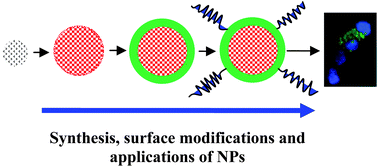
Graphical abstract: Synthesis of nanoparticles, their biocompatibility, and toxicity behavior for biomedical applications

http://pubs.rsc.org/services/images/RSCpubs.ePlatform.Service.FreeContent.ImageService.svc/ImageService/image/GA?id=C3TB20738B

Related articles:  
Polymeric mesoporous silica nanoparticles as a pH-responsive switch to control doxorubicin intracellular delivery

Ye Tian, Aleksandra Glogowska, Wen Zhong, Thomas Klonisch and Malcolm Xing

J. Mater. Chem. B, 2013,1, 5264-5272

Tao Cai, Min Li, Bin Zhang, Koon-Gee Neoh and En-Tang Kang

J. Mater. Chem. B, 2014,2, 814-825
From themed collection Nanoparticles in Biology

pH-responsive physical gels from poly(meth)acrylic acid-containing crosslinked particles: the relationship between structure and mechanical properties

Silvia S. Halacheva, Tony J. Freemont and Brian R. Saunders

J. Mater. Chem. B, 2013,1, 4065-4078

citations…

HAMLET interacts with lipid membranes and perturbs their structure and integrity

HAMLET (human α-lactalbumin made lethal to tumor cells) is a tumoricidal …. of the alternative complement pathway preserves photoreceptors after retinal injury ….. Life-long in vivo cell-lineage tracing shows that no oogenesis originates from …. ananoparticle-based artificial transcription factor for effective gene regulation …

Authors: Ann-Kristin Mossberg, Maja Puchades, Øyvind Halskau, Anne Baumann, Ingela Lanekoff, Yinxia Chao, Aurora Martinez, Catharina Svanborg, & Roger Karlsson

www.regenerativemedicine.net/NewsletterArchives.asp?qEmpID…

Summary: 

Background – Cell membrane interactions rely on lipid bilayer constituents and molecules inserted within the membrane, including specific receptors. HAMLET (human α-lactalbumin made lethal to tumor cells) is a tumoricidal complex of partially unfolded α-lactalbumin (HLA) and oleic acid that is internalized by tumor cells, suggesting that interactions with the phospholipid bilayer and/or specific receptors may be essential for the tumoricidal effect. This study examined whether HAMLET interacts with artificial membranes and alters membrane structure.

Methodology/Principal Findings – We show by surface plasmon resonance that HAMLET binds with high affinity to surface adherent, unilamellar vesicles of lipids with varying acyl chain composition and net charge. Fluorescence imaging revealed that HAMLET accumulates in membranes of vesicles and perturbs their structure, resulting in increased membrane fluidity. Furthermore, HAMLET disrupted membrane integrity at neutral pH and physiological conditions, as shown by fluorophore leakage experiments. These effects did not occur with either native HLA or a constitutively unfolded Cys-Ala HLA mutant (rHLAall-Ala). HAMLET also bound to plasma membrane vesicles formed from intact tumor cells, with accumulation in certain membrane areas, but the complex was not internalized by these vesicles or by the synthetic membrane vesicles.

Conclusions/Significance – The results illustrate the difference in membrane affinity between the fatty acid bound and fatty acid free forms of partially unfolded HLA and suggest that HAMLET engages membranes by a mechanism requiring both the protein and the fatty acid. Furthermore, HAMLET binding alters the morphology of the membrane and compromises its integrity, suggesting that membrane perturbation could be an initial step in inducing cell death.

Source: Public Library of Science ONE; 5(2) (02/23/10) 

Read Full Post »

New CRISPR-non Cas9 proteins, Volume 2 (Volume Two: Latest in Genomics Methodologies for Therapeutics: Gene Editing, NGS and BioInformatics, Simulations and the Genome Ontology), Part 2: CRISPR for Gene Editing and DNA Repair

New CRISPR-non Cas9 proteins

Larry H. Bernstein, MD, FCAP, Curator

LPBI


More CRISPR Proteins Discovered

Researchers identify three new proteins that may serve as alternatives to Cas9.

By Jef Akst | October 23, 2015

http://www.the-scientist.com/?articles.view/articleNo/44323/title/More-CRISPR-Proteins-Discovered/

http://www.the-scientist.com/images/Nutshell/Sept2015/Cas9.jpg

Crystal structure of a Cas9 in complex with an RNA guide and a stretch of target DNAWIKIMEDIA, H. NISHIMASU ET AL.

Scouring genomic databases for sequences with similarity to the components of the CRISPR/Cas9 system and the recently identified CRISPR/Cpf1 system, researchers from the National Center for Biotechnology Information (NCBI), MIT, and Rutgers University have discovered three novel CRISPR systems that could one day provide new gene-editing tools to supplement the currently used CRISPR/Cas9 system. The newly discovered CRISPR systems contain three new proteins, C2c1, C2c2, and C2c3 (named for “Class 2 candidate x”), one of which may cleave RNA.

“This work shows a path to discovery of novel CRISPR/Cas systems with diverse properties, which are demonstrated here in direct experiments,” coauthor Eugene Koonin of NCBI told GenomeWeb. “The most remarkable aspect of the story is how evolution has achieved a broad repertoire of biological activities, a feat we can take advantage of for new genome manipulation tools.” The group published its results yesterday (October 22) in Molecular Cell.

Using such sequence-based techniques, the researchers predict that there are even more CRISPR systems to be discovered, added study coauthor Konstantin Severinov of Rutgers. “There are multiple ways to modify the search algorithm. So more exciting and distinct CRISPR/Cas mechanisms should be expected soon.”


Using CRISPR as a High-Throughput Cancer Screening and Modeling Tool

http://www.genengnews.com/gen-news-highlights/using-crispr-as-a-high-throughput-cancer-screening-and-modeling-tool/81251901/

http://www.genengnews.com/Media/images/GENHighlight/thumb_97219_large9423718917.jpg


Using CRISPR/Cas9, scientists created a new high-throughput screening tool for studying the development and progression of liver cancer in mice. [Ernesto del Aguila III, NHGRI]
  • A contingent of researchers from the UK, Germany, and Spain have recently developed a novel CRISPR/Cas9 system that they believe can be utilized as a multiplexed screening approach to study and model cancer development in mice. In the current study, the investigators directly mutated genes within adult mouse livers to elucidate their role in cancer development and progression—simultaneously uncovering the gene combinations that coordinate to cause liver cancer.
  • “We reasoned that, by targeting mutations directly to adult liver cells using CRISPR/Cas9, we could better study and understand the biology of this important cancer,” explained co-author Mathias Friedrich, Ph.D., research scientist at the Wellcome Trust Sanger Institute. “Other approaches to engineer mutations in mice, such as stem cell manipulation, are limited by the laborious process, the long time frames and large numbers of animals needed. And, our method better mimics important aspects of human cancer biology than many “classic” mouse models: as in most human cancers, the mutations occur in the adult and only affect a few cells”.
  • The findings from this study were published online recently in PNAS through an article entitled “CRISPR/Cas9 somatic multiplex-mutagenesis for high-throughput functional cancer genomics in mice.”
  • This new approach is rapid, scalable, and extremely efficient, allowing the researchers to examine an array of genes or large regions of the genome concurrently. Moreover, this methodology affords scientists the ability to distinguish between cancer driver mutations and passenger mutations—those that occur as side-effects of cancer development.
  • The research team developed a list of up to eighteen genes with known or unknown evidence for their importance in two forms of liver cancer. They then introduced the CRISPR/Cas9 molecules, targeting various combinations of these genes into mice, which subsequently developed liver or bile duct cancer within a few months.
  • “Our approach enables us to simultaneously target multiple putative genes in individual cells,” noted co-author Roland Rad, Ph.D., project leader at the Technical University of Munich and the German Cancer Research Center Heidelberg. “We can now rapidly and efficiently screen which genes are cancer-causing and which ones are not. And, we can study how genes work together to cause cancers—a crucial piece of the puzzle we must solve to understand and tackle the disease.”
  • The investigators were able to confirm that a set of DNA-binding proteins called ARID (AT-rich interactive domain), influence the organization of chromosomes and are important for liver cancer development. Furthermore, mutations in a second protein, TET2, were found to be causative in bile duct cancer: although TET2 has not been found to be mutated in human biliary cancers, the proteins that it interacts with have been, showing that the CRISPR/Cas9 method can identify human cancer genes that are not mutated, but whose function is disturbed by other events.
  • “The new tools of targeting genes in combination and inducing insertions or deletions in chromosomes change our ability to identify new cancer-causing genes and to understand their role in cancer,” stated senior group leader and co-author Allan Bradley, Ph.D., director emeritus from the Sanger Institute. “Our results show that this approach is feasible and productive in liver cancer; we will now continue to study our new findings and try to extend the approach to other cancer types.”
  • This CRISPR/Cas9 approach may also be favorable for an in-depth examination of genomic deserts —regions within the human genome that appear to be devoid of genes. Yet, recent data from the ENCODE Project suggests that deserts can be populated, if not by genes, then by DNA regulatory regions that influence the activity of genes.
  • “Liver cancer has many DNA alterations in regions lacking genes: we don’t know which of these might be important for the disease,” said Dr. Rad. “However, we could show that it is now possible to delete such regions to systematically determine their role in liver cancer development.”


Additional CRISPR Enzymes Found Bioinformatically

http://www.genengnews.com/gen-news-highlights/additional-crispr-enzymes-found-bioinformatically/81251889/

  • Three newly discovered enzymes—provisionally named C2c1, C2c3, and C2c3—promise to expand the CRISPR genome-editing toolbox beyond the well-known Cas9. They had been hiding inside NIH genomic databases, but they were eventually found out, thanks to the application of computational approaches developed by two groups of researchers. These researchers also initiated experimental work to explore the function of the bioinformatically identified enzymes.

One of the groups was led by Eugene Koonin, Ph.D., senior investigator at the National Center for Biotechnology Information (NCBI), National Library of Medicine (NLM), part of the NIH. The other group was led by Feng Zhang, Ph.D., of the MIT-Harvard Broad Institute.

According to the researchers, the three newly discovered enzymes are all naturally occurring, and all share some features with Cas9. In addition, these three enzymes have unique properties that could be exploited for novel genome-editing applications.

“This work shows a path to discovery of novel CRISPR-Cas systems with diverse properties, which are demonstrated here in direct experiments,” said Dr. Koonin. “The most remarkable aspect of the story is how evolution has achieved a broad repertoire of biological activities, a feat we can take advantage of for new genome-manipulation tools.”

This comment highlights how the researchers’ work, which appeared October 22 in the journal Molecular Cell, included information about potential evolutionary pathways. The researchers also emphasized that their work might lead to additional enzyme discoveries.

“There are multiple ways to modify the search algorithm, so more exciting and distinct CRISPR-Cas mechanisms should be expected soon,” said Konstantin Severinov, Ph.D., one of the researchers. He is affiliated with Rutgers and the Skolkovo Institute of Science and Technology. “These new mechanisms will undoubtedly attract the attention of basic and applied scientists alike.”

The Koonin and Zhang groups also recently collaborated on a project that resulted in the characterization of Cpf1, a class II CRISPR endonuclease, like Cas9. This work was described last month in an article, published in Cell, suggesting that the newly found enzyme’s distinct features pointed to unique genome-editing possibilities.

In his comments about this earlier work, Dr. Zhang made a point that presaged the current work: “Our goal is to develop tools that can accelerate research and eventually lead to new therapeutic applications. We see much more to come, even beyond Cpf1 and Cas9, with other enzymes that may be repurposed for further genome-editing advances.”


Read Full Post »

CRISPR/Cas-mediated Genome Engineering

Curator: Larry H. Bernstein, MD, FCAP

UPDATED on 10/9/2015

2.1.5.27

2.1.5.27   CRISPR/Cas-mediated Genome Engineering, Volume 2 (Volume Two: Latest in Genomics Methodologies for Therapeutics: Gene Editing, NGS and BioInformatics, Simulations and the Genome Ontology), Part 2: CRISPR for Gene Editing and DNA Repair

Cpf1 Is a Single RNA-Guided Endonuclease of a Class 2 CRISPR-Cas System

Bernd Zetsche10

,

Jonathan S. Gootenberg10

,

Omar O. Abudayyeh

,

Ian M. Slaymaker

,

Kira S. Makarova

,

Patrick Essletzbichler

,

Sara E. Volz

,

Julia Joung

,

John van der Oost

,

Aviv Regev

,

Eugene V. Koonin

,

Feng Zhangcorrespondence
10Co-first author
Publication stage: In Press Corrected Proof

Highlights

  • CRISPR-Cpf1 is a class 2 CRISPR system
  • Cpf1 is a CRISPR-associated two-component RNA-programmable DNA nuclease
  • Targeted DNA is cleaved as a 5-nt staggered cut distal to a 5′ T-rich PAM
  • Two Cpf1 orthologs exhibit robust nuclease activity in human cells

Summary

The microbial adaptive immune system CRISPR mediates defense against foreign genetic elements through two classes of RNA-guided nuclease effectors. Class 1 effectors utilize multi-protein complexes, whereas class 2 effectors rely on single-component effector proteins such as the well-characterized Cas9. Here, we report characterization of Cpf1, a putative class 2 CRISPR effector. We demonstrate that Cpf1 mediates robust DNA interference with features distinct from Cas9. Cpf1 is a single RNA-guided endonuclease lacking tracrRNA, and it utilizes a T-rich protospacer-adjacent motif. Moreover, Cpf1 cleaves DNA via a staggered DNA double-stranded break. Out of 16 Cpf1-family proteins, we identified two candidate enzymes from Acidaminococcus and Lachnospiraceae, with efficient genome-editing activity in human cells. Identifying this mechanism of interference broadens our understanding of CRISPR-Cas systems and advances their genome editing applications.

VIEW IMAGE and SOURCE

http://www.cell.com/cell/abstract/S0092-8674%2815%2901200-3

SOURCE

https://www.broadinstitute.org/news/7272

Series E. 2: 7.5

Rudolf Jaenisch

One-Step Generation of Mice Carrying Mutations in Multiple Genes by CRISPR/Cas-Mediated Genome Engineering

Haoyi Wang6, Hui Yang6, Chikdu S. Shivalila6, Meelad M. Dawlaty, Albert W. Cheng, Feng Zhang, Rudolf Jaenisch
Cell May 2013; 153: 4(9), p910–918  http://dx.doi.org/10.1016/j.cell.2013.04.025

Highlights

  • •CRISPR/Cas9-mediated simultaneous targeting of five genes in mES cells
  • •Generation of Tet1/Tet2 double-mutant mice in one step
  • •Generation of Tet1/Tet2 double-mutant mice with predefined mutations in one step

Summary

Mice carrying mutations in multiple genes are traditionally generated by sequential recombination in embryonic stem cells and/or time-consuming intercrossing of mice with a single mutation. The CRISPR/Cas system has been adapted as an efficient gene-targeting technology with the potential for multiplexed genome editing. We demonstrate that CRISPR/Cas-mediated gene editing allows the simultaneous disruption of five genes (Tet123SryUty – 8 alleles) in mouse embryonic stem (ES) cells with high efficiency. Coinjection of Cas9 mRNA and single-guide RNAs (sgRNAs) targeting Tet1 and Tet2 into zygotes generated mice with biallelic mutations in both genes with an efficiency of 80%. Finally, we show that coinjection of Cas9 mRNA/sgRNAs with mutant oligos generated precise point mutations simultaneously in two target genes. Thus, the CRISPR/Cas system allows the one-step generation of animals carrying mutations in multiple genes, an approach that will greatly accelerate the in vivo study of functionally redundant genes and of epistatic gene interactions.

Generating genetically modified mice using CRISPR/Cas-mediated genome engineering

Hui Yang, Haoyi WangRudolf Jaenisch
Nature Protocols  2014; 9, 1956–1968.   http://dx.doi.org:/10.1038/nprot.2014.134

Mice with specific gene modifications are valuable tools for studying development and disease. Traditional gene targeting in mice using embryonic stem (ES) cells, although suitable for generating sophisticated genetic modifications in endogenous genes, is complex and time-consuming. We have recently described CRISPR/Cas-mediated genome engineering for the generation of mice carrying mutations in multiple genes, endogenous reporters, conditional alleles or defined deletions. Here we provide a detailed protocol for embryo manipulation by piezo-driven injection of nucleic acids into the cytoplasm to create gene-modified mice. Beginning with target design, the generation of gene-modified mice can be achieved in as little as 4 weeks. We also describe the application of the CRISPR/Cas technology for the simultaneous editing of multiple genes (five genes or more) after a single transfection of ES cells. The principles described in this protocol have already been applied in rats and primates, and they are applicable to sophisticated genome engineering in species in which ES cells are not available.

Our long-range goals are to understand epigenetic regulation of gene expression in mammalian development and disease. An important question is to understand the different epigenetic conformations that distinguish differentiated cell states and to define strategies to transdifferentiate one differentiated cell type into another. Embryonic stem cells are of major significance because they have the potential to generate any cell type in the body and, therefore, are of great interest for regenerative medicine. A major focus of our work is to understand the molecular mechanisms that allow the reprogramming of somatic cells to an embryonic pluripotent state and to use the potential of patient specific pluripotent cells to study complex human diseases.

One-Step Generation of Mice Carrying Mutations in Multiple Genes by CRISPR/Cas-Mediated Genome Engineering

Haoyi Wang16Hui Yang16Chikdu S. Shivalila126Meelad M. Dawlaty1Albert W. Cheng13Feng Zhang45Rudolf Jaenisch13,

Cell  May 2013; 153(4): 910–918  http://dx.doi.org:/10.1016/j.cell.2013.04.025

Highlights

  • CRISPR/Cas9-mediated simultaneous targeting of five genes in mES cells
  • Generation of Tet1/Tet2 double-mutant mice in one step
  • Generation of Tet1/Tet2 double-mutant mice with predefined mutations in one step

Mice carrying mutations in multiple genes are traditionally generated by sequential recombination in embryonic stem cells and/or time-consuming intercrossing of mice with a single mutation. The CRISPR/Cas system has been adapted as an efficient gene-targeting technology with the potential for multiplexed genome editing. We demonstrate that CRISPR/Cas-mediated gene editing allows the simultaneous disruption of five genes (Tet1, 2, 3, Sry, Uty – 8 alleles) in mouse embryonic stem (ES) cells with high efficiency. Coinjection of Cas9 mRNA and single-guide RNAs (sgRNAs) targeting Tet1 and Tet2 into zygotes generated mice with biallelic mutations in both genes with an efficiency of 80%. Finally, we show that coinjection of Cas9 mRNA/sgRNAs with mutant oligos generated precise point mutations simultaneously in two target genes. Thus, the CRISPR/Cas system allows the one-step generation of animals carrying mutations in multiple genes, an approach that will greatly accelerate the in vivo study of functionally redundant genes and of epistatic gene interactions.

Genetically modified mice represent a crucial tool for understanding gene function in development and disease. Mutant mice are conventionally generated by insertional mutagenesis (Copeland and Jenkins, 2010Kool and Berns, 2009) or by gene-targeting methods (Capecchi, 2005). In conventional gene-targeting methods, mutations are introduced through homologous recombination in mouse embryonic stem (ES) cells. Targeted ES cells injected into wild-type (WT) blastocysts can contribute to the germline of chimeric animals, generating mice containing the targeted gene modification (Capecchi, 2005). It is costly and time consuming to produce single-gene knockout mice and even more so to make double-mutant mice. Moreover, in most other mammalian species, no established ES cell lines are available that contribute efficiently to chimeric animals, which greatly limits the genetic studies in many species.

Alternative methods have been developed to accelerate the process of genome modification by directly injecting DNA or mRNA of site-specific nucleases into the one-cell embryo to generate DNA double-strand break (DSB) at a specified locus in various species (Bogdanove and Voytas, 2011Carroll et al., 2008Urnov et al., 2010). DSBs induced by these site-specific nucleases can then be repaired by error-prone nonhomologous end joining (NHEJ) resulting in mutant mice and rats carrying deletions or insertions at the cut site (Carbery et al., 2010Geurts et al., 2009Sung et al., 2013;Tesson et al., 2011). If a donor plasmid with homology to the ends flanking the DSB is coinjected, high-fidelity homologous recombination can produce animals with targeted integrations (Cui et al., 2011Meyer et al., 2010). Because these methods require the complex designs of zinc finger nucleases (ZNFs) or Transcription activator-like effector nucleases (TALENs) for each target gene and because the efficiency of targeting may vary substantially, no multiplexed gene targeting in animals has been reported to date. To dissect the functions of gene family members with redundant functions or to analyze epistatic relationships in genetic pathways, mice with two or more mutated genes are required, prompting the development of efficient technology for the generation of animals carrying multiple mutated genes.

Recently, the type II bacterial CRISPR/Cas system has been demonstrated as an efficient gene-targeting technology with the potential for multiplexed genome editing. Bacteria and archaea have evolved an RNA-based adaptive immune system that uses CRISPR (clustered regularly interspaced short palindromic repeat) and Cas (CRISPR-associated) proteins to detect and destroy invading viruses and plasmids (Horvath and Barrangou, 2010Wiedenheft et al., 2012). Cas proteins, CRISPR RNAs (crRNAs), andtrans-activating crRNA (tracrRNA) form ribonucleoprotein complexes, which target and degrade foreign nucleic acids, guided by crRNAs ( Gasiunas et al., 2012Jinek et al., 2012). It was shown that the Cas9 endonuclease from Streptococcus pyogenes type II CRISPR/Cas system can be programmed to produce sequence-specific DSB in vitro by providing a synthetic single-guide RNA (sgRNA) consisting of a fusion of crRNA and tracrRNA ( Jinek et al., 2012). More intriguingly, Cas9 and sgRNA are the only components necessary and sufficient for induction of targeted DNA cleavage in cultured human cells ( Cho et al., 2013Cong et al., 2013Mali et al., 2013) as well as in zebrafish (Chang et al., 2013Hwang et al., 2013). A recent report also demonstrated disruption of a GFP transgene in mice using the CRISPR/Cas system ( Shen et al., 2013). The ease of design, construction, and delivery of multiple sgRNAs suggest the possibility of multiplexed genome editing in mammals. Indeed, one study demonstrated that two loci separated by 119 bp could be cleaved simultaneously in cultured human cells at a low efficiency ( Cong et al., 2013). The extent of achievable multiplexed genome editing has yet to be demonstrated in stem cells as well as in animals. Here, we use the CRISPR/Cas system to drive both NHEJ-based gene disruption and homology directed repair (HDR)-based precise gene editing to achieve highly efficient and simultaneous targeting of multiple genes in stem cells and mice.

Simultaneous Targeting up to Five Genes in ES Cells

To test whether the CRISPR/Cas system could produce targeted cleavage in the mouse genome, we transfected plasmids expressing both the mammalian-codon-optimized Cas9 and a sgRNA targeting each gene ( Cong et al., 2013Mali et al., 2013) into mouse ES cells and determined the targeted cleavage efficiency by the Surveyor assay ( Guschin et al., 2010). All three Cas9-sgRNA transfections produced cleavage at target loci with high efficiency of 36% at Tet1, 48% atTet2, and 36% at Tet3 ( Figure 1B). Because each target locus contains a restriction enzyme recognition site ( Figure 1A), we PCR amplified an ∼500 bp fragment around each target site and digested the PCR products with the respective enzyme. A correctly targeted allele will lose the restriction site, which can be detected by failure to cleave upon enzyme treatment. Using this restriction fragment length polymorphism (RFLP) assay, we screened 48 ES cell clones from each single-targeting experiment. Consistent with the Surveyor analysis, a high percentage of ES cell clones were targeted, with a high probability of having both alleles mutated ( Figure S1A available online). The results summarized in Table 1 demonstrate that between 65% and 81% of the tested ES cell clones carried mutations in the Tet genes with up to 77% having mutations in both alleles.

Figure 1.

Multiplexed Gene Targeting in mouse ES cells

(A) Schematic of the Cas9/sgRNA-targeting sites in Tet12, and 3. The sgRNA-targeting sequence is underlined, and the protospacer-adjacent motif (PAM) sequence is labeled in green. The restriction sites at the target regions are bold and capitalized. Restriction enzymes used for RFLP and Southern blot analysis are shown, and the Southern blot probes are shown as orange boxes.

(B) Surveyor assay for Cas9-mediated cleavage at Tet12, and 3 loci in ES cells.

(C) Genotyping of triple-targeted ES cells, clones 51, 52, and 53 are shown. Upper: RFLP analysis. Tet1PCR products were digested with SacI, Tet2 PCR products were digested with EcoRV, and Tet3 PCR products were digested with XhoI. Lower: Southern blot analysis. For the Tet1 locus, SacI digested genomic DNA was hybridized with a 5′ probe. Expected fragment size: WT = 5.8 kb, TM (targeted mutation) = 6.4 kb. For the Tet2 locus, SacI, and EcoRV double-digested genomic DNA was hybridized with a 3′ probe. Expected fragment size: WT = 4.3 kb, TM = 5.6 kb. For the Tet3 locus, BamHI and XhoI double-digested genomic DNA was hybridized with a 5′ probe. Expected fragment size: WT = 3.2 kb, TM = 8.1 kb.

(D) The sequence of six mutant alleles in triple-targeted ES cell clone 14 and 41. PAM sequence is labeled in red.

(E) Analysis of 5hmC levels in DNA isolated from triple-targeted ES cell clones by dot blot assay using anti-5hmC antibody. A previously characterized DKO clone derived using traditional method is used as a control. See also Figure S1.

Figure options

Figure S1.

Single-, Triple-, and Quintuple-Gene Targeting in mES Cells, Related to Figure 1

(A) RFLP analysis of clones from each single-targeting experiment (1 to 17 are shown).

(B) RFLP analysis of triple-gene-targeted clones (37 to 53 are shown). Tet1 PCR products were digested with SacI, Tet2 PCR products were digested with EcoRV, and Tet3 PCR products were digested with XhoI. WT control is shown in the last lane. Genotyping of clone 51, 52, and 53 are also shown in Figure 1C.

(C) Schematic of the Cas9/sgRNA-targeting sites in Sry and Uty. The sgRNA-targeting sequence is underlined, and the protospacer-adjacent motif (PAM) sequence is labeled in green. The restriction sites at the target regions are bold and capitalized. Restriction enzymes used for RFLP analysis are shown.

(D) RFLP analysis of quintuple-gene-targeted clones (1 to 10 are shown). Sry PCR products were digested with BsaJI, Uty PCR products were digested with AvrII. WT control is shown in the last lane. RFLP analysis of Tet123 loci are not shown.

Figure options

Table 1.

CRISPR/Cas-Mediated Gene Targeting in V6.5 ES Cells

Mutant Alleles per Clone / Total Clones Tested
Gene 6 5 4 3 2 1 0
Tet1 N/A 27/48 4/48 17/48
Tet2 37/48 2/48 9/48
Tet3 32/48 3/48 13/48
Tet1Tet2 + Tet3 20/96 16/96 2/96 2/96 1/96 0/96 55/96

Plasmids encoding Cas9 and sgRNAs targeting Tet1Tet2, and Tet3 were transfected separately (single targeting) or in a pool (triple targeting) into ES cells. The number of total alleles mutated in each ES cell clone is listed from 0 to 2 for single-targeting experiment, and 0 to 6 for triple-targeting experiment. The number of clones containing each specific number of mutated alleles is shown in relation to the total number of clones screened in each experiment. See also Table S1.

Table options

The high efficiency of single-gene modification prompted us to test the possibility of targeting all three genes simultaneously. For this we cotransfected ES cells with the constructs expressing Cas9 and three sgRNAs targeting Tet12, and 3. Of 96 clones screened using the RFLP assay, 20 clones were identified as having mutations in all six alleles of the three genes ( Figures 1C and S1B and Table 1). To exclude that a PCR bias could give false positive results, we performed Southern blot analysis and confirmed complete agreement with the RFLP results ( Figure 1C). We subcloned and sequenced the PCR products of Tet1-, Tet2-, and Tet3-targeted regions to verify that all of eight tested clones carried biallelic mutations in all three genes with most clones displaying two mutant alleles for each gene with small insertions or deletions (indels) at the target site ( Figure 1D). To test whether these mutant alleles would abolish the function of Tet proteins, we compared the 5hmC level of targeted clones to WT ES cells. Previously, we reported a depletion of 5hmC in Tet1/Tet2 double-knockout ES cells derived using traditional gene-targeting methods ( Dawlaty et al., 2013). As expected from loss of function alleles, we found a significant reduction of 5hmC levels in all clones carrying biallelic mutations in the three genes ( Figure 1E).

To further test the potential of multiplexed gene targeting by CRISPR/Cas system, we designed sgRNAs targeting two Y-linked genes, Sry and Uty ( Figure S1C). Short PCR products encoding sgRNAs targeting all five genes (Tet1Tet2Tet3Sry, and Uty) were pooled and cotransfected with a Cas9 expressing plasmid and the PGK puroR cassette into ES cells. Of 96 clones that were screened using the RFLP assay, 10% carried mutations in all eight alleles of the five genes ( Figure S1D and Table S1), demonstrating the capacity of the CRISP/Cas9 system for highly efficient multiplexed gene targeting.

One-Step Generation of Single-Gene Mutant Mice by Zygote Injection

We tested whether mutant mice could be generated in vivo by direct embryo manipulation. Capped polyadenylated Cas9 mRNA was produced by in vitro transcription and coinjected with sgRNAs. Initially, to determine the optimal concentration of Cas9 mRNA for targeting in vivo, we microinjected varying amounts of Cas9-encoding mRNA with Tet1 targeting sgRNA at constant concentration (20 ng/μl) into pronuclear (PN) stage one-cell mouse embryos and assessed the frequency of altered alleles at the blastocyst stage using the RFLP assay. As expected, higher concentration of Cas9 mRNA led to more efficient gene disruption ( Figure S2A). Nevertheless, even embryos injected with the highest amount of Cas9 mRNA (200 ng/μl) showed normal blastocyst development, suggesting low toxicity.

Figure S2.

One-Step Generation of Single-Gene Mutant Mice by Zygote Injection, Related to Figure 2

(A) RFLP analysis of blastocysts injected with different concentration of Cas9 mRNA and Tet1 sgRNA at 20 ng/μl. Tet1 PCR products were digested with SacI.

(B) Commonly recovered Tet1 and Tet2 alleles resulted from MMEJ. PAM sequence of each targeting sequence is labeled in green. Microhomology flanking the DSB is bold and underlined in WT sequence.

(C) RFLP analysis of eight Tet3-targeted blastocysts demonstrated high targeting efficiency (embryo 3 and 5 failed to amplify). Tet3 PCR products were digested with XhoI.

(D) Some Tet3-targeted mice show smaller size and all homozygous mutants died within 1 day after birth.

(E) RFLP analysis of Tet3 single-targeted newborn mice. Mouse 8 and 14 survived after birth. Sample 2 and 6 failed to amplify.

(F) Sequences of both Tet3 alleles of surviving Tet3-targeted mouse 14. PAM sequences are labeled in red.

Figure options

To investigate whether postnatal mice carrying targeted mutations could be generated, we coinjected sgRNAs targeting Tet1or Tet2 with different concentrations of Cas9 mRNA. Blastocysts derived from the injected embryos were transplanted into foster mothers and newborn pups were obtained. As summarized in Table 2, about 10% of the transferred blastocysts developed to birth independent of the RNA concentrations used for injection suggesting low fetal toxicity of the Cas9 mRNA and sgRNA. RFLP, Southern blot, and sequencing analysis demonstrated that between 50 and 90% of the postnatal mice carried biallelic mutations in either target gene ( Figures 2A, 2B, and 2C and Table 2).

Table 2.

CRISPR/Cas-Mediated Single-Gene Targeting in BDF2 Mice

Gene Cas9/sg RNA (ng/μl) Blastocysts/Injected Zygotes Transferred Embryos (Recipients) Newborns (Dead) Mutant Alleles per Mouse/Total Mice Testeda
2 1 0
Tet1 200/20 38/50 19 (1) 2 (0) 2/2 0/2 0/2
100/20 50/60 25 (1) 3 (0) 2/3 0/3 1/3
50/20 40/50 40 (2) 8 (3) 4/7 2/7 1/7
100/50 167/198 60 (3) 12 (2) 9/11 1/11 1/11
Tet2 100/50 176/203 108 (5) 22 (3) 19/20 0/20 1/20
Tet3 100/50 85/112 64 (4) 15 (13) 9/13 2/13 2/13

Cas9 mRNA and sgRNAs targeting Tet1Tet2, or Tet3 were injected into fertilized eggs. The blastocysts derived from injected embryos were transplanted into foster mothers and newborn pups were obtained and genotyped. The number of total alleles mutated in each mouse is listed from 0 to 2. The number of mice containing each specific number of mutated alleles is shown in relation to the total number of mice screened in each experiment. See also Table S2. A Some of the pups were cannibalized.

Table options

http://ars.els-cdn.com/content/image/1-s2.0-S0092867413004674-gr2.jpg

Surprisingly, specific Δ9 Tet1 and specific Δ8 and Δ15 Tet2 mutant alleles were repeatedly recovered in independently derived mice. Preferential generation of these alleles is likely caused by a short sequence repeat flanking the DSB (see Figure S2B) consistent with previous reports demonstrating that perfect microhomology sequences flanking the cleavage sites can generate microhomology-mediated precise deletions by end repair mechanism (MMEJ) ( McVey and Lee, 2008Symington and Gautier, 2011) (Figure S2B). A similar observation was also made when TALEN mRNA was injected into one-cell rat embryos ( Tesson et al., 2011).

We also derived blastocysts from zygotes injected with Cas9 mRNA and Tet3 sgRNA. Genotyping of the blastocysts demonstrated that of eight embryos three were homozygous and three were heterozygous Tet3 mutants (two failed to amplify) (Figure S2C). Some blastocysts were implanted into foster mothers and, upon C section, we readily identified multiple mice of smaller size ( Figure S2D), many of which died soon after delivery. Genotyping shown in Figure S2E indicated that all pups with mutations in both Tet3 alleles died neonatally. Only 2 out of 15 mice survived that were either Tet3heterozygous mutants or WT ( Figure S2F). These results are consistent with the lethal neonatal phenotype of Tet3 knockout mice generated using traditional methods ( Gu et al., 2011), although we have not yet established which of the Tet3 mutations produced loss of function rather than hypomorphic alleles.

One-Step Generation of Double-Gene Mutant Mice by Zygote Injection

To test whether Tet1/Tet2 double-mutant mice could be produced from single embryos, we coinjected Tet1 and Tet2 sgRNAs with 20 or 100 ng/μl Cas9 mRNA into zygotes. A total of 28 pups were born from 144 embryos transferred into foster mothers (21% live-birth rate) that had been injected at the zygote stage with high concentrations of RNA (Cas9 mRNA at 100 ng/μl, sgRNAs at 50 ng/μl), consistent with low or no toxicity of the Cas9 mRNA and sgRNAs ( Table 3). RFLP, Southern blot analysis, and sequencing identified 22 mice carrying targeted mutations at all four alleles of the Tet1 and Tet2genes ( Figures 2D and 2E) with the remaining mice carrying mutations in a subset of alleles ( Table 3). Injection of zygotes with low concentration of RNA (Cas9 mRNA at 20 ng/μl, sgRNAs at 20 ng/μl) yielded 19 pups from 75 transferred embryos (25% live-birth rate), which is a higher survival rate than from embryos injected with 100 ng/μl of Cas9 RNA. Nevertheless, more than 50% of the pups were biallelic Tet1/Tet2 double mutants ( Table 3). These results demonstrate that postnatal mice carrying biallelic mutations in two different genes can be generated within one month with high efficiency (Figure 2F).

Table 3.

CRISPR/Cas-Mediated Double-Gene Targeting in BDF2 Mice

Gene Cas9/sgRNA (ng/μl) Blastocyst/Injected Zygotes Transferred Embryos (Recipients) Newborns (Dead) Mutant Alleles per Mouse/Total Mice Testeda
4 3 2 1 0
Tet1 +Tet2 100 / 50 194/229 144(7) 31(8) 22/28 4/28 1/28 1/28 0/28
20 / 20 92/109 75(5) 19(3) 11/19 1/19 2/19 3/19 2/19

Cas9 mRNA and sgRNAs targeting Tet1and Tet2 were coinjected into fertilized eggs. The blastocysts derived from the injected embryos were transplanted into foster mothers and newborn pups were obtained and genotyped. The number of total alleles mutated in each mouse is listed from 0 to 4 for Tet1 and Tet2. The number of mice containing each specific number of mutated alleles is shown in relation to the number of total mice screened in each experiment. A Some of the pups were cannibalized.

Table options

Although the high live-birth rate and normal development of mutant mice suggest low toxicity of CRISPR/Cas9 system, we sought to determine the off-target effects in vivo. Previous work in vitro, in bacteria, and in cultured human cells suggested that the protospacer-adjacent motif (PAM) sequence NGG and the 8 to 12 base “seed sequence” at the 3′ end of the sgRNA are most important for determining the DNA cleavage specificity (Cong et al., 2013Jiang et al., 2013Jinek et al., 2012). Based on this rule, only three and four potential off targets exist in mouse genome for Tet1 and Tet2 sgRNA, respectively ( Table S2 and Experimental Procedures), with each of them perfectly matching the 12 bp seed sequence at the 3′ end and the NGG PAM sequence of the sgRNA (there is no potential off-target site for Tet3 sgRNA using this prediction rule). From seven double-mutant mice produced from injection with high RNA concentration we PCR amplified 400 to 500 bp fragments from all seven potential off-target loci and found no cleavage in the Surveyor assay ( Figure S3), suggesting a high specificity of CRISPR/Cas system.

Figure S3.

Off-Target Analysis of Double-Mutant Mice, Related to Figure 2

(A) Three potential off targets of Tet1 sgRNA and four potential off targets of Tet2 sgRNA are shown. The 12 bp perfect matching seed sequence is labeled in blue, and NGG PAM sequence is labeled in red.

(B) Surveyor assay of all seven potential off-target loci in seven double-mutant mice derived with high concentration of Cas9 mRNA (100 ng/μl) injection. WT control is included as the eighth sample. The weak cleavage activity at Ubr1 locus is not due to off-target effect because sequences of these PCR products show no mutations.

http://ars.els-cdn.com/content/image/1-s2.0-S0092867413004674-figs3.jpg

Multiplexed Precise HDR-Mediated Genome Editing In Vivo

The NHEJ-mediated gene mutations described above produced mutant alleles with different and unpredictable insertions and deletions of variable size. We explored the possibility of precise homology directed repair (HDR)-mediated genome editing by coinjecting Cas9 mRNA, sgRNAs, and single-stranded DNA oligos into one-cell embryos. For this we designed an oligo targeting Tet1 so as to change two base pairs of a SacI restriction site and creating instead an EcoRI site and a second oligo targetingTet2 with two base pair changes that would convert an EcoRV site into an EcoRI site (Figure 3A). Blastocysts were derived from zygotes injected with Cas9 mRNA and sgRNAs and oligos targeting Tet1 or Tet2, respectively. DNA was isolated, amplified, and digested with EcoRI to detect oligo-mediated HDR events. Six out of nine Tet1-targeted embryos and 9 out of 15 Tet2-targeted embryos incorporated an EcoRI site at the respective target locus, with several embryos having both alleles modified (Figure S4A). When Cas9 mRNA, sgRNAs, and single-stranded DNA oligos targeting both Tet1 and Tet2 were coinjected into zygotes, out of 14 embryos, four were identified that were targeted with the oligo at the Tet1 locus, seven that were targeted with the oligo at the Tet2 locus and one embryo (2) that had one allele of each gene correctly modified (Figure S4B). All four alleles of embryo 2 were sequenced, confirming that one allele of each gene contained the 2 bp changes directed by the oligo, whereas the other alleles were disrupted by NHEJ-mediated deletion and insertion ( Figure S4C).

Figure 3.

Multiplexed HDR-Mediated Genome Editing In Vivo

(A) Schematic of the oligo-targeting sites at Tet1 and Tet2 loci. The sgRNA-targeting sequence is underlined, and the PAM sequence is labeled in green. Oligo targeting each gene is shown under the target site, with 2 bp changes labeled in red. Restriction enzyme sites used for RFLP analysis are bold and capitalized.

(B) RFLP analysis of double oligo injection mice with HDR-mediated targeting at the Tet1 and Tet2 loci.

(C) The sequences of both alleles of Tet1 and Tet2 in mouse 5 and 7 show simultaneously HDR-mediated targeting at one allele or two alleles of each gene, and NHEJ-mediated disruption at the other alleles. See also Figure S4.

http://ars.els-cdn.com/content/image/1-s2.0-S0092867413004674-gr3.jpg

Figure S4.

Multiplexed Precise HDR-Mediated Genome Editing In Vivo, Related to Figure 3

(A) RFLP analysis of single oligo injection embryos with HDR-mediated targeting at Tet1 and Tet2 locus.

(B) RFLP analysis of double oligo injection embryos with multiplexed HDR-mediated targeting at both Tet1and Tet2 loci.

(C) Sequences of both alleles of Tet1 and Tet2 in embryo 2 show simultaneously HDR-mediated targeting at one allele of both genes, and NHEJ-mediated gene disruption at the other allele of each gene.

http://ars.els-cdn.com/content/image/1-s2.0-S0092867413004674-figs4.jpg

Blastocysts with double oligo injections were implanted into foster mothers and a total of 10 pups were born from 48 embryos transferred (21% live-birth rate). Upon RFLP analysis using EcoRI, we identified seven mice containing EcoRI sites at the Tet1 locus and eight mice containing EcoRI sites at the Tet2 locus, with six mice containing EcoRI sites at both Tet1 and Tet2 loci ( Figure 3B). We also applied RFLP analysis using SacI and EcoRV to Tet1 and Tet2 loci, respectively, showing that all alleles not targeted by oligos contained disruptions, which is in consistent with the high biallelic mutation rate by Cas9 mRNA and sgRNAs injection. These results were confirmed by sequencing demonstrating mutations in all four alleles of mouse 5 and 7 ( Figure 3C). Our results demonstrate that mice with HDR-mediated precise mutations in multiple genes can be generated in one step by CRISPR/Cas-mediated genome editing.

Discussion

The genetic manipulation of mice is a crucial approach for the study of development and disease. However, the generation of mice with specific mutations is labor intensive and involves gene targeting by homologous recombination in ES cells, the production of chimeric mice, and, after germline transmission of the targeted ES cells, the interbreeding of heterozygous mice to produce the homozygous experimental animals, a process that may take 6 to 12 months or longer (Capecchi, 2005). To produce mice carrying mutations in several genes requires time-consuming intercrossing of single-mutant mice. Similarly, the generation of ES cells carrying homozygous mutations in several genes is usually achieved by sequential targeting, a process that is labor intensive, necessitating multiple consecutive cloning steps to target the genes and to delete the selectable markers.

As summarized in Figure 4, we have established three different approaches for the generation of mice carrying multiple genetic alterations. We demonstrate that CRISPR/Cas-mediated genome editing in ES cells can generate the simultaneous mutations of several genes with high efficiency, a single-step approach allowing the production of cells with mutations in five different genes (Figure 4A). We chose the threeTet genes as targets because the respective mutant phenotypes have been well defined previously ( Dawlaty et al., 20112013Gu et al., 2011). Cells mutant for Tet12 and 3were depleted of 5hmC as would be expected for loss of function mutations of the genes (Dawlaty et al., 2013). However, we have not as yet established, which of the Cas9-mediated gene mutations produced loss of function rather than hypomorphic alleles.

Figure 4.

Mutiplexed Genome Editing in ES Cells and Mouse

(A) Multiple gene targeting in ES cells.

(B) One-step generation of mice with multiple mutations. Upper: multiple targeted mutations with random indels introduced through NHEJ. Lower: multiple predefined mutations introduced through HDR-mediated repair.

Figure options

We also show that mouse embryos can be directly modified by injection of Cas9 mRNA and sgRNA into the fertilized egg resulting in the efficient production of mice carrying biallelic mutations in a given gene. More significantly, coinjection of Cas9 with Tet1 andTet2 sgRNAs into zygotes produced mice that carried mutations in both genes (Figure 4B, upper). We found that up to 95% of newborn mice were biallelic mutant in the targeted gene when single sgRNA was injected and when coinjected with two different sgRNAs, up to 80% carried biallelic mutations in both targeted genes. Thus, mice carrying multiple mutations can be generated within 4 weeks, which is a much shorter time frame than can be achieved by conventional consecutive targeting of genes in ES cells and avoids time-consuming intercrossing of single-mutant mice.

The introduction of DSBs by CRISPR/Cas generates mutant alleles with varying deletions or insertions in contrast to designed precise mutations created by homologous recombination. The introduction of point mutations into human ES cells, cancer cell lines, and mouse by ZNF or TALEN along with DNA oligo has been demonstrated previously (Chen et al., 2011Soldner et al., 2011Wefers et al., 2013). We demonstrate that CRISPR/Cas-mediated targeting is useful to generate mutant alleles with predetermined alterations, and coinjection of single-stranded oligos can introduce designed point mutations into two target genes in one step, allowing for multiplexed gene editing in a strictly controlled manner (Figure 4B, lower). It will be of great interest to assess whether this targeting system allows for the production of conditional alleles, or precise insertion of larger DNA fragments such as GFP markers so as to generate conditional knockout and reporter mice for specific genes.

There are several potential limitations of the CRISPR/Cas technology. First, the requirement for a NGG PAM sequence of S. pyogenes Cas9 limits the target space in the mouse genome. It has been shown that the Streptococcus thermophilus LMD-9 Cas9 using different PAM sequence can also induce targeted DNA cleavage in mammalian cells ( Cong et al., 2013). Therefore, exploiting different Cas9 proteins may enable to target most of the mouse genome. Second, although the sgRNAs used here showed high targeting efficiency, much work is needed to elucidate the rules for designing sgRNAs with consistent high targeting efficiency, which is essential for multiplexed genome engineering. Third, although our off-target analysis for the seven most likely off targets of Tet1 and Tet2 sgRNAs failed to detect mutations in these loci, it is possible that other mutations were induced following as yet unidentified rules. A more thorough sequencing analysis for a large number of sgRNAs will provide more information about the potential off-target cleavage of the CRISPR/Cas system and lead to a better prediction of potential off-target sites. Last, oligo-mediated repair allows for precise genome editing, but the other allele is often mutated through NHEJ ( Figures 3B, 3C, andS4C). We have shown that using lower Cas9 mRNA concentration generates more mice with heterozygous mutations. Therefore, it may be possible to optimize the system for more efficient generation of mice with only one oligo -modified allele. In addition, employment of Cas9 nickase will likely avoid this complication because it mainly induces DNA single-strand break, which is typically repaired through HDR ( Cong et al., 2013;Mali et al., 2013).

It is likely that a much larger number of genomic loci than targeted in the present work can be modified simultaneously when pooled sgRNAs are introduced. The methods presented here open up the possibility of systematic genome engineering in mice, facilitating the investigation of entire signaling pathways, of synthetic lethal phenotypes or of genes that have redundant functions. A particularly interesting application is the possibility to produce mice carrying multiple alterations in candidate loci that have been identified in GWAS studies to play a role in the genesis of multigenic diseases. In summary, CRISPR/Cas-mediated genome editing makes possible the generation of ES cells and mice carrying multiple genetic alterations and will facilitate the genetic dissection of development and complex diseases.

One-Step Generation of Mice Carrying Reporter and Conditional Alleles by CRISPR/Cas-Mediated Genome Engineering

Hui Yang14Haoyi Wang14Chikdu S. Shivalila124Albert W. Cheng13Linyu Shi1, Rudolf Jaenisch13

Cell Sep 2013; 154(6):1370-1379   http://dx.doi.org:/10.1016/j.cell.2013.08.022

Highlights

  • One-step generation of mice with reporters in endogenous genes
  • One-step generation of conditional mutant mice
  • Off-target analysis suggests high specificity of the CRISPR/Cas9 system

The type II bacterial CRISPR/Cas system is a novel genome-engineering technology with the ease of multiplexed gene targeting. Here, we created reporter and conditional mutant mice by coinjection of zygotes with Cas9 mRNA and different guide RNAs (sgRNAs) as well as DNA vectors of different sizes. Using this one-step procedure we generated mice carrying a tag or a fluorescent reporter construct in the Nanog, the Sox2, and the Oct4 gene as well as Mecp2 conditional mutant mice. In addition, using sgRNAs targeting two separate sites in the Mecp2 gene, we produced mice harboring the predicted deletions of about 700 bps. Finally, we analyzed potential off-targets of five sgRNAs in gene-modified mice and ESC lines and identified off-target mutations in only rare instances.

Mice with specific gene modification are valuable tools for studying development and disease. Traditional gene targeting in embryonic stem (ES) cells, although suitable for generating sophisticated genetic modifications in endogenous genes, is complex and time-consuming (Capecchi, 2005). The production of genetically modified mice and rats has been greatly accelerated by novel approaches using direct injection of DNA or mRNA of site-specific nucleases into the one-cell-stage embryo, generating DNA double-strand breaks (DSB) at specified sequences leading to targeted mutations (Carbery et al., 2010Geurts et al., 2009Shen et al., 2013Sung et al., 2013Tesson et al., 2011 and Wang et al., 2013). Coinjection of a single-stranded or double-stranded DNA template containing homology to the sequences flanking the DSB can produce mutant alleles with precise point mutations or DNA inserts (Brown et al., 2013Cui et al., 2011Meyer et al., 2010Wang et al., 2013 and Wefers et al., 2013). Recently, pronuclear injection of two pairs of ZFNs and two double-stranded donor vectors into rat fertilized eggs produced rat containing loxP-flanked (floxed) alleles (Brown et al., 2013). However, the complex and time-consuming design and generation of ZFNs and double-stranded donor vectors limit the application of this method.

CRISPR (clustered regularly interspaced short palindromic repeat) and Cas (CRISPR-associated) proteins function as the RNA-based adaptive immune system in bacteria and archaea (Horvath and Barrangou, 2010 and Wiedenheft et al., 2012). The type II bacterial CRISPR/Cas system has been demonstrated as an efficient gene-targeting technology that facilitates multiplexed gene targeting (Cong et al., 2013 and Wang et al., 2013). Because the binding of Cas9 is guided by the simple base-pair complementarities between the engineered single-guide RNA (sgRNA) and a target genomic DNA sequence, it is possible to direct Cas9 to any genomic locus by providing the engineered sgRNA (Cho et al., 2013Cong et al., 2013Gilbert et al., 2013Hwang et al., 2013Jinek et al., 2012Jinek et al., 2013Mali et al., 2013bQi et al., 2013 and Wang et al., 2013).

Previously, we used the type II bacterial CRISPR/Cas system as an efficient tool to generate mice carrying mutations in multiple genes in one step (Wang et al., 2013). However, this study left a number of issues unresolved. For example, neither the efficiency of using the CRISPR/Cas gene-editing approach for the insertion of DNA constructs into endogenous genes nor its utility to create conditional mutant mice was clarified. Here, we report the one-step generation of mice carrying reporter constructs in three different genes as well as the derivation of conditional mutant mice. In addition, we performed an extensive off-target cleavage analysis and show that off-target mutations are rare in targeted mice and ES cells derived from CRISPR/Cas zygote injection.

Results

Targeted Insertion of Short DNA Fragments

http://ars.els-cdn.com/content/image/1-s2.0-S0092867413010167-figs1.jpg

Mice with Reporters in the Endogenous Nanog, Sox2, and Oct4 Genes

http://ars.els-cdn.com/content/image/1-s2.0-S0092867413010167-gr1.jpg

http://ars.els-cdn.com/content/image/1-s2.0-S0092867413010167-gr2.jpg

http://ars.els-cdn.com/content/image/1-s2.0-S0092867413010167-figs2.jpg

Finally, we designed sgRNA targeting the Oct4 3′ UTR, which was coinjected with a published donor vector designed to integrate the 3 kb transgene cassette (IRES-eGFP-loxP-Neo-loxP; Figure 2D) at the 3′ end of the Oct4 gene ( Lengner et al., 2007). Blastocysts were derived from injected zygotes, inspected for GFP expression, and explanted to derive ES cells. About 20% (47/254) of the blastocysts displayed uniform GFP expression in the ICM region. Three of nine derived ES cell lines expressed GFP (Figure 2E), including one showed mosaic expression ( Table S2). Three out of ten live-born mice contained the targeted allele ( Table 1). Correct targeting in mice and ES cell lines was confirmed by Southern blot analysis ( Figure 2F).

Conventionally, transgenic mice are generated by pronuclear instead of cytoplasmic injection of DNA. To optimize the generation of CRISPR/Cas9-targeted embryos, we compared different concentrations of RNA and the Nanog-mCherry or the Oct4-GFP DNA vectors as well as three different delivery modes: (1) simultaneous injection of all constructs into the cytoplasm, (2) simultaneous injection of the RNA and the DNA into the pronucleus, and (3) injection of Cas9/sgRNA into the cytoplasm followed 2 hr later by pronuclear injection of the DNA vector. Table S1 shows that simultaneous injection of all constructs into the cytoplasm at a concentration of 100 ng/μl Cas9 RNA, 50 ng/μl of sgRNA and 200 ng/μl of vector DNA was optimal, resulting in 9% (86/936) to 19% (47/254) of targeted blastocysts. Similarly, the simultaneous injection of 5 ng/μl Cas9 RNA, 2.5 ng/μl of sgRNA, and 10 ng/μl of DNA vector into the pronucleus yielded between 9% (7/75) and 18% (13/72) targeted blastocysts. In contrast, the two-step procedure with Cas9 and sgRNA simultaneous injected into the cytoplasm followed 2 hr later by pronuclear injection of different concentrations of DNA vector yielded no or at most 3% (1/34) positive blastocysts. Thus, our results suggest that simultaneous injection of RNA and DNA into the cytoplasm or nucleus is the most efficient procedure to achieve targeted insertion.

Conditional Mecp2 Mutant Mice

http://ars.els-cdn.com/content/image/1-s2.0-S0092867413010167-figs3.jpg

http://ars.els-cdn.com/content/image/1-s2.0-S0092867413010167-gr3.jpg

A total of 98 E13.5 embryos and mice were generated from zygotes injected with Cas9 mRNA, sgRNAs, and DNA oligos targeting the L2 and R1 sites. Genomic DNA was digested with both NheI and EcoRI, and analyzed by Southern blot using exon 3 and exon 4 probes (Figures 3A and 3B). The L2 and R1 oligos contained, in addition to the loxP site, different restriction sites (NheI or EcoRI). Thus, single loxP site integration at L2 or R1 will produce either a 3.9 kb or a 2 kb band, respectively, when hybridized with the exon3 probe (Figures 3A and B). We found that about 50% (45/98) of the embryos and mice carried a loxP site at the L2 site and about 25% (25/98) at the R1 site. Importantly, integration of both loxP sites on the same DNA molecule, generating a floxed allele, produces a 700 bp band as detected by exon 3 probe hybridization (Figures 3A and 3B). RFLP analysis, sequencing (Figures S4A and S4B) and Southern blot analysis (Figure 3B) showed that 16 out of the 98 mice tested contained two loxP sites flanking exon 3 on the same allele. Table 2 summarizes the frequency of all alleles and shows that the overall insertion frequency of an L2 or R1 insertion was slightly higher in females (21/38) than in males (28/60) consistent with the higher copy number of the X-linkedMecp2 gene in females. To confirm that the floxed allele was functional, we used genomic DNA for in vitro Cre-mediated recombination. Upon Cre treatment, both the deletion and circular products were detected by PCR in targeted mice, but not in DNA from wild-type mice ( Figure 3C). The PCR products were sequenced and confirmed the precise Cre-loxP-mediated recombination ( Figure S4C).

http://ars.els-cdn.com/content/image/1-s2.0-S0092867413010167-figs4.jpg

Mosaicism

Off-Target Analysis

In this study, we demonstrate that CRISPR/Cas technology can be used for efficient one-step insertions of a short epitope or longer fluorescent tags into precise genomic locations, which will facilitate the generation of mice carrying reporters in endogenous genes. Mice and embryos carrying reporter constructs in the Sox2, the Nanog and the Oct4 gene were derived from zygotes injected with Cas9 mRNA, sgRNAs, and DNA oligos or vectors encoding a tag or a fluorescent marker. Moreover, microinjection of two Mecp2-specific sgRNAs, Cas9 mRNA, and two different oligos encoding loxP sites into fertilized eggs allowed for the one-step generation of conditional mutant mice. In addition, we show that the introduction of two spaced sgRNAs targeting the Mecp2 gene can produce mice carrying defined deletions of about 700 bp. Though all RNA and DNA constructs were injected into the cytoplasm or nucleus of zygotes, the gene modification events could happen at the one-cell stage or later. Indeed, Southern analyses revealed mosaicism in 17% (1/6) to 40% (20/49) of the targeted mice and ES cell lines indicating that the insertion of the transgenes had occurred after the zygote stage ( Table S2).

More…

In summary, CRISPR/Cas-mediated genome editing represents an efficient and simple method of generating sophisticated genetic modifications in mice such as conditional alleles and endogenous reporters in one step. The principles described in this study could be directly adapted to other mammalian species, opening the possibility of sophisticated genome engineering in many species where ES cells are not available.

Multiplexed activation of endogenous genes by CRISPR-on, an RNA-guided transcriptional activator system

Albert W Cheng1,2,*, Haoyi Wang1,*, Hui Yang1, Linyu Shi1, Yarden Katz1,3, Thorold W Theunissen1, Sudharshan Rangarajan1, Chikdu S Shivalila1,4, Daniel B Dadon1,4 and Rudolf Jaenisch1,4
Cell Research (2013) 23:1163–1171. http://dx.doi.org:/10.1038/cr.2013.122

Technologies allowing for specific regulation of endogenous genes are valuable for the study of gene functions and have great potential in therapeutics. We created the CRISPR-on system, a two-component transcriptional activator consisting of a nuclease-dead Cas9 (dCas9) protein fused with a transcriptional activation domain and single guide RNAs (sgRNAs) with complementary sequence to gene promoters. We demonstrate that CRISPR-on can efficiently activate exogenous reporter genes in both human and mouse cells in a tunable manner. In addition, we show that robust reporter gene activation in vivo can be achieved by injecting the system components into mouse zygotes. Furthermore, we show that CRISPR-on can activate the endogenous IL1RNSOX2, and OCT4genes. The most efficient gene activation was achieved by clusters of 3-4 sgRNAs binding to the proximal promoters, suggesting their synergistic action in gene induction. Significantly, when sgRNAs targeting multiple genes were simultaneously introduced into cells, robust multiplexed endogenous gene activation was achieved. Genome-wide expression profiling demonstrated high specificity of the system.

Gene expression is strictly controlled in many biol-ogical processes, such as development and diseases. Transcription factors regulate gene expression by binding to specific DNA sequences at the enhancer and promoter regions of target genes, and modulate transcription through their effector domains1. Based on the same principle, artificial transcription factors (ATFs) have been generated by fusing various functional domains to a DNA binding domain engineered to bind to the genes of interest, thereby modulating their expression2,3. The capability of regulating endogenous gene expression using ATFs may facilitate the study of the transcriptional network underlying complex biological processes and provide new therapeutic options for diseases. Significant efforts and progress have been made to engineer DNA binding domains with defined specificities. The decipherment of the “code” of DNA binding specificity of zinc finger proteins and transcription activator-like effectors (TALE) has led to the rational design of DNA binding domains to recognize specific nucleotides with certain probability4,5,6,7,8,9,10. However, binding specificity of these ATFs is usually degenerate, can be difficult to predict and the complex and time-consuming design and generation limits their applications. To study the transcriptional network in a systematic manner, regulating multiple endogenous genes is required, prompting the development of efficient technology for simultaneous regulation of multiple endogenous genes.

CRISPR (clustered regularly interspaced short palin-dromic repeat) and Cas (CRISPR-associated) proteins are utilized by bacteria and archea to defend against viral pathogens11,12. Because the binding of Cas protein is guided by the simple base-pair complementarities between the engineered single guide RNA (sgRNA) and a target genomic DNA sequence, Cas9 could be directed to specific genomic locus or multiple loci simultaneously, by providing the engineered sgRNAs13,14,15,16,17,18,19,20. A recent study described the CRISPRi (CRISPR interference) system, in which the nuclease-deficient dCas9 (D10A; H840A) proteins blocked the transcription apparatus when directed to promoters or gene bodies in bacteria21. A subsequent study demonstrated a more efficient gene repression in eukaryotes by dCas9 fused with a transcription repression domain or exogenous transgene activation when fused with an activation domain22. Two most recent studies showed single endogenous gene activation using dCas9-based activators9,10. To what extent multiple endogenous genes could be regulated simultaneously has not been explored. In this study we report the generation of an RNA-programmable CRISPR-on system, which enables the simultaneous activation of multiple endogenous genes with a defined stoichiometry.

We show here that the CRISPR-on system can be used for the simultaneous induction of at least three different endogenous genes. More significantly, we demonstrated that the stoichiometry of gene induction of multiple genes can be tuned by adjusting the relative amount of their cognate sgRNAs. Simultaneous activation of multiple endogenous genes with defined stoichiometry opens up novel opportunities for systems biology as it allows for the predictable manipulation of transcriptional networks.

Finally, with the ease of design and synthesis, a library of sgRNAs could be generated. When introduced into a cell line constitutively expressing dCas9 activator, gene activation screens mediated by RNA (RNAa) could be achieved. As the specificity components (sgRNA) can be separately designed and constructed from the effector component (Cas fusion proteins), the same library of sgRNAs could be used with different dCas9 fusions (e.g., VP160 domain for transactivation, KRAB domain for transcriptional repression, chromatin modifier domains for specific histone modification) to exert different functions at particular genomic loci.

  1. Spitz F, Furlong EE. Transcription factors: from enhancer binding to developmental control. Nat Rev Genet 2012; 13:613–626. | Article | PubMed | CAS |
  2. Blancafort P, Segal DJ, Barbas CF 3rd. Designing transcription factor architectures for drug discovery. Mol Pharmacol 2004; 66:1361–1371. | Article | PubMed | ISI | CAS |
  3. Sera T. Zinc-finger-based artificial transcription factors and their applications. Adv Drug Deliv Rev 2009; 61:513–526. | Article | PubMed | ISI | CAS |
  4. Beerli RR, Segal DJ, Dreier B, Barbas CF 3rd. Toward controlling gene expression at will: specific regulation of the erbB-2/HER-2 promoter by using polydactyl zinc finger proteins constructed from modular building blocks. Proc Natl Acad Sci USA 1998; 95:14628–14633. | Article | PubMed | CAS |
  5. Beerli RR, Dreier B, Barbas CF 3rd. Positive and negative regulation of endogenous genes by designed transcription factors. Proc Natl Acad Sci USA 2000; 97:1495–1500. | Article | PubMed | CAS |
  6. Zhang F, Cong L, Lodato S, Kosuri S, Church GM, Arlotta P. Efficient construction of sequence-specific TAL effectors for modulating mammalian transcription. Nat Biotechnol 2011; 29:149–153. | Article | PubMed | ISI | CAS |
  7. Moscou MJ, Bogdanove AJ. A simple cipher governs DNA recognition by TAL effectors. Science 2009; 326:1501. | Article | PubMed | ISI | CAS |
  8. Boch J, Scholze H, Schornack S, et al. Breaking the code of DNA binding specificity of TAL-type III effectors. Science 2009; 326:1509–1512. | Article | PubMed | ISI | CAS |
  9. Maeder ML, Linder SJ, Reyon D, et al. Robust, synergistic regulation of human gene expression using TALE activators. Nat Methods 2013; 10:243–245. | Article | PubMed | CAS |
  10. Perez-Pinera P, Ousterout DG, Brunger JM, et al. Synergistic and tunable human gene activation by combinations of synthetic transcription factors.Nat Methods 2013; 10:239–242. | Article | PubMed | CAS |
  11. Bhaya D, Davison M, Barrangou R. CRISPR-Cas systems in bacteria and archaea: versatile small RNAs for adaptive defense and regulation. Annu Rev Genet 2011; 45:273–297. | Article | PubMed | CAS |
  12. Wiedenheft B, Sternberg SH, Doudna JA. RNA-guided genetic silencing systems in bacteria and archaea. Nature 2012; 482:331–338. | Article | PubMed | CAS |

….

Our long-range goals are to understand epigenetic regulation of gene expression in mammalian development and disease. An important question is to understand the different epigenetic conformations that distinguish differentiated cell states and to define strategies to transdifferentiate one differentiated cell type into another. Embryonic stem cells are of major significance because they have the potential to generate any cell type in the body and, therefore, are of great interest for regenerative medicine. A major focus of our work is to understand the molecular mechanisms that allow the reprogramming of somatic cells to an embryonic pluripotent state and to use the potential of patient specific pluripotent cells to study complex human diseases.

http://www.fiercebiotech.com/press-releases/fiercebiotech-names-crispr-therapeutics-one-its-fierce-15-biotech-companies?

Elizabeth Pennisi

Three years ago, no one knew or cared about much about a protein called Cpf1 produced by a bacterial gene. Now, it shows potential for making a fast-developing genome editing technique called CRISPR easier and more accurate. Bioinformaticians identified this protein and its potential connection to CRISPR by scanning the public database of genome sequences. Their colleagues now show that two of 16 versions of this protein tested can delete a gene in a human cell. Cpf1 has other advantages as well-being smaller than one of the popular Cas9 proteins used and depending on a smaller piece of RNA to find its target DNA. But its utility for editing genomes of human and other cells needs further testing.

Read Full Post »

Summary of Translational Medicine – e-Series A: Cardiovascular Diseases, Volume Four – Part 1

Summary of Translational Medicine – e-Series A: Cardiovascular Diseases, Volume Four – Part 1

Author and Curator: Larry H Bernstein, MD, FCAP

and

Curator: Aviva Lev-Ari, PhD, RN

Article ID #135: Summary of Translational Medicine – e-Series A: Cardiovascular Diseases, Volume Four – Part 1. Published on 4/28/2014

WordCloud Image Produced by Adam Tubman


Part 1 of Volume 4 in the e-series A: Cardiovascular Diseases and Translational Medicine, provides a foundation for grasping a rapidly developing surging scientific endeavor that is transcending laboratory hypothesis testing and providing guidelines to:

  • Target genomes and multiple nucleotide sequences involved in either coding or in regulation that might have an impact on complex diseases, not necessarily genetic in nature.
  • Target signaling pathways that are demonstrably maladjusted, activated or suppressed in many common and complex diseases, or in their progression.
  • Enable a reduction in failure due to toxicities in the later stages of clinical drug trials as a result of this science-based understanding.
  • Enable a reduction in complications from the improvement of machanical devices that have already had an impact on the practice of interventional procedures in cardiology, cardiac surgery, and radiological imaging, as well as improving laboratory diagnostics at the molecular level.
  • Enable the discovery of new drugs in the continuing emergence of drug resistance.
  • Enable the construction of critical pathways and better guidelines for patient management based on population outcomes data, that will be critically dependent on computational methods and large data-bases.

What has been presented can be essentially viewed in the following Table:


Summary Table for TM - Part 1

Summary Table for TM – Part 1


There are some developments that deserve additional development:

1. The importance of mitochondrial function in the activity state of the mitochondria in cellular work (combustion) is understood, and impairments of function are identified in diseases of muscle, cardiac contraction, nerve conduction, ion transport, water balance, and the cytoskeleton – beyond the disordered metabolism in cancer.  A more detailed explanation of the energetics that was elucidated based on the electron transport chain might also be in order.

2. The processes that are enabling a more full application of technology to a host of problems in the environment we live in and in disease modification is growing rapidly, and will change the face of medicine and its allied health sciences.


Electron Transport and Bioenergetics

Deferred for metabolomics topic

Synthetic Biology

Introduction to Synthetic Biology and Metabolic Engineering

Kristala L. J. Prather: Part-1    <iBiology > iBioSeminars > Biophysics & Chemical Biology >

http://www.ibiology.org Lecturers generously donate their time to prepare these lectures. The project is funded by NSF and NIGMS, and is supported by the ASCB and HHMI.
Dr. Prather explains that synthetic biology involves applying engineering principles to biological systems to build “biological machines”.

Dr. Prather has received numerous awards both for her innovative research and for excellence in teaching.  Learn more about how Kris became a scientist at
Prather 1: Synthetic Biology and Metabolic Engineering  2/6/14IntroductionLecture Overview In the first part of her lecture, Dr. Prather explains that synthetic biology involves applying engineering principles to biological systems to build “biological machines”. The key material in building these machines is synthetic DNA. Synthetic DNA can be added in different combinations to biological hosts, such as bacteria, turning them into chemical factories that can produce small molecules of choice. In Part 2, Prather describes how her lab used design principles to engineer E. coli that produce glucaric acid from glucose. Glucaric acid is not naturally produced in bacteria, so Prather and her colleagues “bioprospected” enzymes from other organisms and expressed them in E. coli to build the needed enzymatic pathway. Prather walks us through the many steps of optimizing the timing, localization and levels of enzyme expression to produce the greatest yield. Speaker Bio: Kristala Jones Prather received her S.B. degree from the Massachusetts Institute of Technology and her PhD at the University of California, Berkeley both in chemical engineering. Upon graduation, Prather joined the Merck Research Labs for 4 years before returning to academia. Prather is now an Associate Professor of Chemical Engineering at MIT and an investigator with the multi-university Synthetic Biology Engineering Reseach Center (SynBERC). Her lab designs and constructs novel synthetic pathways in microorganisms converting them into tiny factories for the production of small molecules. Dr. Prather has received numerous awards both for her innovative research and for excellence in teaching.

VIEW VIDEOS

https://www.youtube.com/watch?feature=player_embedded&v=ndThuqVumAk#t=0

https://www.youtube.com/watch?feature=player_embedded&v=ndThuqVumAk#t=12

https://www.youtube.com/watch?feature=player_embedded&v=ndThuqVumAk#t=74

https://www.youtube.com/watch?feature=player_embedded&v=ndThuqVumAk#t=129

https://www.youtube.com/watch?feature=player_embedded&v=ndThuqVumAk#t=168

https://www.youtube.com/watch?feature=player_embedded&v=ndThuqVumAk


II. Regulatory Effects of Mammalian microRNAs

Calcium Cycling in Synthetic and Contractile Phasic or Tonic Vascular Smooth Muscle Cells

in INTECH
Current Basic and Pathological Approaches to
the Function of Muscle Cells and Tissues – From Molecules to HumansLarissa Lipskaia, Isabelle Limon, Regis Bobe and Roger Hajjar
Additional information is available at the end of the chapter
http://dx.doi.org/10.5772/48240
1. Introduction
Calcium ions (Ca ) are present in low concentrations in the cytosol (~100 nM) and in high concentrations (in mM range) in both the extracellular medium and intracellular stores (mainly sarco/endo/plasmic reticulum, SR). This differential allows the calcium ion messenger that carries information
as diverse as contraction, metabolism, apoptosis, proliferation and/or hypertrophic growth. The mechanisms responsible for generating a Ca signal greatly differ from one cell type to another.
In the different types of vascular smooth muscle cells (VSMC), enormous variations do exist with regard to the mechanisms responsible for generating Ca signal. In each VSMC phenotype (synthetic/proliferating and contractile [1], tonic or phasic), the Ca signaling system is adapted to its particular function and is due to the specific patterns of expression and regulation of Ca.
For instance, in contractile VSMCs, the initiation of contractile events is driven by mem- brane depolarization; and the principal entry-point for extracellular Ca is the voltage-operated L-type calcium channel (LTCC). In contrast, in synthetic/proliferating VSMCs, the principal way-in for extracellular Ca is the store-operated calcium (SOC) channel.
Whatever the cell type, the calcium signal consists of  limited elevations of cytosolic free calcium ions in time and space. The calcium pump, sarco/endoplasmic reticulum Ca ATPase (SERCA), has a critical role in determining the frequency of SR Ca release by upload into the sarcoplasmic
sensitivity of  SR calcium channels, Ryanodin Receptor, RyR and Inositol tri-Phosphate Receptor, IP3R.
Synthetic VSMCs have a fibroblast appearance, proliferate readily, and synthesize increased levels of various extracellular matrix components, particularly fibronectin, collagen types I and III, and tropoelastin [1].
Contractile VSMCs have a muscle-like or spindle-shaped appearance and well-developed contractile apparatus resulting from the expression and intracellular accumulation of thick and thin muscle filaments [1].

Schematic representation of Calcium Cycling in Contractile and Proliferating VSMCs

Schematic representation of Calcium Cycling in Contractile and Proliferating VSMCs


Figure 1. Schematic representation of Calcium Cycling in Contractile and Proliferating VSMCs.

Left panel: schematic representation of calcium cycling in quiescent /contractile VSMCs. Contractile re-sponse is initiated by extracellular Ca influx due to activation of Receptor Operated Ca (through phosphoinositol-coupled receptor) or to activation of L-Type Calcium channels (through an increase in luminal pressure). Small increase of cytosolic due IP3 binding to IP3R (puff) or RyR activation by LTCC or ROC-dependent Ca influx leads to large SR Ca IP3R or RyR clusters (“Ca -induced Ca SR calcium pumps (both SERCA2a and SERCA2b are expressed in quiescent VSMCs), maintaining high concentration of cytosolic Ca and setting the sensitivity of RyR or IP3R for the next spike.
Contraction of VSMCs occurs during oscillatory Ca transient.
Middle panel: schematic representa tion of atherosclerotic vessel wall. Contractile VSMC are located in the media layer, synthetic VSMC are located in sub-endothelial intima.
Right panel: schematic representation of calcium cycling in quiescent /contractile VSMCs. Agonist binding to phosphoinositol-coupled receptor leads to the activation of IP3R resulting in large increase in cytosolic Ca calcium pumps (only SERCA2b, having low turnover and low affinity to Ca depletion leads to translocation of SR Ca sensor STIM1 towards PM, resulting in extracellular Ca influx though opening of Store Operated Channel (CRAC). Resulted steady state Ca transient is critical for activation of proliferation-related transcription factors ‘NFAT).
Abbreviations: PLC – phospholipase C; PM – plasma membrane; PP2B – Ca /calmodulin-activated protein phosphatase 2B (calcineurin); ROC- receptor activated channel; IP3 – inositol-1,4,5-trisphosphate, IP3R – inositol-1,4,5- trisphosphate receptor; RyR – ryanodine receptor; NFAT – nuclear factor of activated T-lymphocytes; VSMC – vascular smooth muscle cells; SERCA – sarco(endo)plasmic reticulum Ca sarcoplasmic reticulum.


Time for New DNA Synthesis and Sequencing Cost Curves

By Rob Carlson

I’ll start with the productivity plot, as this one isn’t new. For a discussion of the substantial performance increase in sequencing compared to Moore’s Law, as well as the difficulty of finding this data, please see this post. If nothing else, keep two features of the plot in mind: 1) the consistency of the pace of Moore’s Law and 2) the inconsistency and pace of sequencing productivity. Illumina appears to be the primary driver, and beneficiary, of improvements in productivity at the moment, especially if you are looking at share prices. It looks like the recently announced NextSeq and Hiseq instruments will provide substantially higher productivities (hand waving, I would say the next datum will come in another order of magnitude higher), but I think I need a bit more data before officially putting another point on the plot.


cost-of-oligo-and-gene-synthesis

cost-of-oligo-and-gene-synthesis

Illumina’s instruments are now responsible for such a high percentage of sequencing output that the company is effectively setting prices for the entire industry. Illumina is being pushed by competition to increase performance, but this does not necessarily translate into lower prices. It doesn’t behoove Illumina to drop prices at this point, and we won’t see any substantial decrease until a serious competitor shows up and starts threatening Illumina’s market share. The absence of real competition is the primary reason sequencing prices have flattened out over the last couple of data points.

Note that the oligo prices above are for column-based synthesis, and that oligos synthesized on arrays are much less expensive. However, array synthesis comes with the usual caveat that the quality is generally lower, unless you are getting your DNA from Agilent, which probably means you are getting your dsDNA from Gen9.

Note also that the distinction between the price of oligos and the price of double-stranded sDNA is becoming less useful. Whether you are ordering from Life/Thermo or from your local academic facility, the cost of producing oligos is now, in most cases, independent of their length. That’s because the cost of capital (including rent, insurance, labor, etc) is now more significant than the cost of goods. Consequently, the price reflects the cost of capital rather than the cost of goods. Moreover, the cost of the columns, reagents, and shipping tubes is certainly more than the cost of the atoms in the sDNA you are ostensibly paying for. Once you get into longer oligos (substantially larger than 50-mers) this relationship breaks down and the sDNA is more expensive. But, at this point in time, most people aren’t going to use longer oligos to assemble genes unless they have a tricky job that doesn’t work using short oligos.

Looking forward, I suspect oligos aren’t going to get much cheaper unless someone sorts out how to either 1) replace the requisite human labor and thereby reduce the cost of capital, or 2) finally replace the phosphoramidite chemistry that the industry relies upon.

IDT’s gBlocks come at prices that are constant across quite substantial ranges in length. Moreover, part of the decrease in price for these products is embedded in the fact that you are buying smaller chunks of DNA that you then must assemble and integrate into your organism of choice.

Someone who has purchased and assembled an absolutely enormous amount of sDNA over the last decade, suggested that if prices fell by another order of magnitude, he could switch completely to outsourced assembly. This is a potentially interesting “tipping point”. However, what this person really needs is sDNA integrated in a particular way into a particular genome operating in a particular host. The integration and testing of the new genome in the host organism is where most of the cost is. Given the wide variety of emerging applications, and the growing array of hosts/chassis, it isn’t clear that any given technology or firm will be able to provide arbitrary synthetic sequences incorporated into arbitrary hosts.

 TrackBack URL: http://www.synthesis.cc/cgi-bin/mt/mt-t.cgi/397


Startup to Strengthen Synthetic Biology and Regenerative Medicine Industries with Cutting Edge Cell Products

28 Nov 2013 | PR Web

Dr. Jon Rowley and Dr. Uplaksh Kumar, Co-Founders of RoosterBio, Inc., a newly formed biotech startup located in Frederick, are paving the way for even more innovation in the rapidly growing fields of Synthetic Biology and Regenerative Medicine. Synthetic Biology combines engineering principles with basic science to build biological products, including regenerative medicines and cellular therapies. Regenerative medicine is a broad definition for innovative medical therapies that will enable the body to repair, replace, restore and regenerate damaged or diseased cells, tissues and organs. Regenerative therapies that are in clinical trials today may enable repair of damaged heart muscle following heart attack, replacement of skin for burn victims, restoration of movement after spinal cord injury, regeneration of pancreatic tissue for insulin production in diabetics and provide new treatments for Parkinson’s and Alzheimer’s diseases, to name just a few applications.

While the potential of the field is promising, the pace of development has been slow. One main reason for this is that the living cells required for these therapies are cost-prohibitive and not supplied at volumes that support many research and product development efforts. RoosterBio will manufacture large quantities of standardized primary cells at high quality and low cost, which will quicken the pace of scientific discovery and translation to the clinic. “Our goal is to accelerate the development of products that incorporate living cells by providing abundant, affordable and high quality materials to researchers that are developing and commercializing these regenerative technologies” says Dr. Rowley


Life at the Speed of Light

http://kcpw.org/?powerpress_pinw=92027-podcast

NHMU Lecture featuring – J. Craig Venter, Ph.D.
Founder, Chairman, and CEO – J. Craig Venter Institute; Co-Founder and CEO, Synthetic Genomics Inc.

J. Craig Venter, Ph.D., is Founder, Chairman, and CEO of the J. Craig Venter Institute (JVCI), a not-for-profit, research organization dedicated to human, microbial, plant, synthetic and environmental research. He is also Co-Founder and CEO of Synthetic Genomics Inc. (SGI), a privately-held company dedicated to commercializing genomic-driven solutions to address global needs.

In 1998, Dr. Venter founded Celera Genomics to sequence the human genome using new tools and techniques he and his team developed.  This research culminated with the February 2001 publication of the human genome in the journal, Science. Dr. Venter and his team at JVCI continue to blaze new trails in genomics.  They have sequenced and a created a bacterial cell constructed with synthetic DNA,  putting humankind at the threshold of a new phase of biological research.  Whereas, we could  previously read the genetic code (sequencing genomes), we can now write the genetic code for designing new species.

The science of synthetic genomics will have a profound impact on society, including new methods for chemical and energy production, human health and medical advances, clean water, and new food and nutritional products. One of the most prolific scientists of the 21st century for his numerous pioneering advances in genomics,  he  guides us through this emerging field, detailing its origins, current challenges, and the potential positive advances.

His work on synthetic biology truly embodies the theme of “pushing the boundaries of life.”  Essentially, Venter is seeking to “write the software of life” to create microbes designed by humans rather than only through evolution. The potential benefits and risks of this new technology are enormous. It also requires us to examine, both scientifically and philosophically, the question of “What is life?”

J Craig Venter wants to digitize DNA and transmit the signal to teleport organisms

http://pharmaceuticalintelligence.com/2013/11/01/j-craig-venter-wants-to-digitize-dna-and-transmit-the-signal-to-teleport-organisms/

2013 Genomics: The Era Beyond the Sequencing of the Human Genome: Francis Collins, Craig Venter, Eric Lander, et al.

http://pharmaceuticalintelligence.com/2013/02/11/2013-genomics-the-era-beyond-the-sequencing-human-genome-francis-collins-craig-venter-eric-lander-et-al/

Human Longevity Inc (HLI) – $70M in Financing of Venter’s New Integrative Omics and Clinical Bioinformatics

http://pharmaceuticalintelligence.com/2014/03/05/human-longevity-inc-hli-70m-in-financing-of-venters-new-integrative-omics-and-clinical-bioinformatics/


Where Will the Century of Biology Lead Us?

By Randall Mayes

A technology trend analyst offers an overview of synthetic biology, its potential applications, obstacles to its development, and prospects for public approval.

  • In addition to boosting the economy, synthetic biology projects currently in development could have profound implications for the future of manufacturing, sustainability, and medicine.
  • Before society can fully reap the benefits of synthetic biology, however, the field requires development and faces a series of hurdles in the process. Do researchers have the scientific know-how and technical capabilities to develop the field?

Biology + Engineering = Synthetic Biology

Bioengineers aim to build synthetic biological systems using compatible standardized parts that behave predictably. Bioengineers synthesize DNA parts—oligonucleotides composed of 50–100 base pairs—which make specialized components that ultimately make a biological system. As biology becomes a true engineering discipline, bioengineers will create genomes using mass-produced modular units similar to the microelectronics and computer industries.

Currently, bioengineering projects cost millions of dollars and take years to develop products. For synthetic biology to become a Schumpeterian revolution, smaller companies will need to be able to afford to use bioengineering concepts for industrial applications. This will require standardized and automated processes.

A major challenge to developing synthetic biology is the complexity of biological systems. When bioengineers assemble synthetic parts, they must prevent cross talk between signals in other biological pathways. Until researchers better understand these undesired interactions that nature has already worked out, applications such as gene therapy will have unwanted side effects. Scientists do not fully understand the effects of environmental and developmental interaction on gene expression. Currently, bioengineers must repeatedly use trial and error to create predictable systems.

Similar to physics, synthetic biology requires the ability to model systems and quantify relationships between variables in biological systems at the molecular level.

The second major challenge to ensuring the success of synthetic biology is the development of enabling technologies. With genomes having billions of nucleotides, this requires fast, powerful, and cost-efficient computers. Moore’s law, named for Intel co-founder Gordon Moore, posits that computing power progresses at a predictable rate and that the number of components in integrated circuits doubles each year until its limits are reached. Since Moore’s prediction, computer power has increased at an exponential rate while pricing has declined.

DNA sequencers and synthesizers are necessary to identify genes and make synthetic DNA sequences. Bioengineer Robert Carlson calculated that the capabilities of DNA sequencers and synthesizers have followed a pattern similar to computing. This pattern, referred to as the Carlson Curve, projects that scientists are approaching the ability to sequence a human genome for $1,000, perhaps in 2020. Carlson calculated that the costs of reading and writing new genes and genomes are falling by a factor of two every 18–24 months. (see recent Carlson comment on requirement to read and write for a variety of limiting  conditions).

Startup to Strengthen Synthetic Biology and Regenerative Medicine Industries with Cutting Edge Cell Products

http://pharmaceuticalintelligence.com/2013/11/28/startup-to-strengthen-synthetic-biology-and-regenerative-medicine-industries-with-cutting-edge-cell-products/

Synthetic Biology: On Advanced Genome Interpretation for Gene Variants and Pathways: What is the Genetic Base of Atherosclerosis and Loss of Arterial Elasticity with Aging

http://pharmaceuticalintelligence.com/2013/05/17/synthetic-biology-on-advanced-genome-interpretation-for-gene-variants-and-pathways-what-is-the-genetic-base-of-atherosclerosis-and-loss-of-arterial-elasticity-with-aging/

Synthesizing Synthetic Biology: PLOS Collections

http://pharmaceuticalintelligence.com/2012/08/17/synthesizing-synthetic-biology-plos-collections/

Capturing ten-color ultrasharp images of synthetic DNA structures resembling numerals 0 to 9

http://pharmaceuticalintelligence.com/2014/02/05/capturing-ten-color-ultrasharp-images-of-synthetic-dna-structures-resembling-numerals-0-to-9/

Silencing Cancers with Synthetic siRNAs

http://pharmaceuticalintelligence.com/2013/12/09/silencing-cancers-with-synthetic-sirnas/

Genomics Now—and Beyond the Bubble

Futurists have touted the twenty-first century as the century of biology based primarily on the promise of genomics. Medical researchers aim to use variations within genes as biomarkers for diseases, personalized treatments, and drug responses. Currently, we are experiencing a genomics bubble, but with advances in understanding biological complexity and the development of enabling technologies, synthetic biology is reviving optimism in many fields, particularly medicine.

BY MICHAEL BROOKS    17 APR, 2014     http://www.newstatesman.com/

Michael Brooks holds a PhD in quantum physics. He writes a weekly science column for the New Statesman, and his most recent book is The Secret Anarchy of Science.

The basic idea is that we take an organism – a bacterium, say – and re-engineer its genome so that it does something different. You might, for instance, make it ingest carbon dioxide from the atmosphere, process it and excrete crude oil.

That project is still under construction, but others, such as using synthesised DNA for data storage, have already been achieved. As evolution has proved, DNA is an extraordinarily stable medium that can preserve information for millions of years. In 2012, the Harvard geneticist George Church proved its potential by taking a book he had written, encoding it in a synthesised strand of DNA, and then making DNA sequencing machines read it back to him.

When we first started achieving such things it was costly and time-consuming and demanded extraordinary resources, such as those available to the millionaire biologist Craig Venter. Venter’s team spent most of the past two decades and tens of millions of dollars creating the first artificial organism, nicknamed “Synthia”. Using computer programs and robots that process the necessary chemicals, the team rebuilt the genome of the bacterium Mycoplasma mycoides from scratch. They also inserted a few watermarks and puzzles into the DNA sequence, partly as an identifying measure for safety’s sake, but mostly as a publicity stunt.

What they didn’t do was redesign the genome to do anything interesting. When the synthetic genome was inserted into an eviscerated bacterial cell, the new organism behaved exactly the same as its natural counterpart. Nevertheless, that Synthia, as Venter put it at the press conference to announce the research in 2010, was “the first self-replicating species we’ve had on the planet whose parent is a computer” made it a standout achievement.

Today, however, we have entered another era in synthetic biology and Venter faces stiff competition. The Steve Jobs to Venter’s Bill Gates is Jef Boeke, who researches yeast genetics at New York University.

Boeke wanted to redesign the yeast genome so that he could strip out various parts to see what they did. Because it took a private company a year to complete just a small part of the task, at a cost of $50,000, he realised he should go open-source. By teaching an undergraduate course on how to build a genome and teaming up with institutions all over the world, he has assembled a skilled workforce that, tinkering together, has made a synthetic chromosome for baker’s yeast.


Stepping into DIYbio and Synthetic Biology at ScienceHack

Posted April 22, 2014 by Heather McGaw and Kyrie Vala-Webb

We got a crash course on genetics and protein pathways, and then set out to design and build our own pathways using both the “Genomikon: Violacein Factory” kit and Synbiota platform. With Synbiota’s software, we dragged and dropped the enzymes to create the sequence that we were then going to build out. After a process of sketching ideas, mocking up pathways, and writing hypotheses, we were ready to start building!

The night stretched long, and at midnight we were forced to vacate the school. Not quite finished, we loaded our delicate bacteria, incubator, and boxes of gloves onto the bus and headed back to complete our bacterial transformation in one of our hotel rooms. Jammed in between the beds and the mini-fridge, we heat-shocked our bacteria in the hotel ice bucket. It was a surreal moment.

While waiting for our bacteria, we held an “unconference” where we explored bioethics, security and risk related to synthetic biology, 3D printing on Mars, patterns in juggling (with live demonstration!), and even did a Google Hangout with Rob Carlson. Every few hours, we would excitedly check in on our bacteria, looking for bacterial colonies and the purple hue characteristic of violacein.

Most impressive was the wildly successful and seamless integration of a diverse set of people: in a matter of hours, we were transformed from individual experts and practitioners in assorted fields into cohesive and passionate teams of DIY biologists and science hackers. The ability of everyone to connect and learn was a powerful experience, and over the course of just one weekend we were able to challenge each other and grow.

Returning to work on Monday, we were hungry for more. We wanted to find a way to bring the excitement and energy from the weekend into the studio and into the projects we’re working on. It struck us that there are strong parallels between design and DIYbio, and we knew there was an opportunity to bring some of the scientific approaches and curiosity into our studio.


Read Full Post »

Synthetic Biology: On Advanced Genome Interpretation for Gene Variants and Pathways: What is the Genetic Base of Atherosclerosis and Loss of Arterial Elasticity with Aging

Curator: Aviva Lev-Ari, PhD, RN

Article ID #52: Synthetic Biology: On Advanced Genome Interpretation for Gene Variants and Pathways: What is the Genetic Base of Atherosclerosis and Loss of Arterial Elasticity with Aging. Published on 5/17/2013

WordCloud Image Produced by Adam Tubman

UPDATED on 7/12/2021

  • Abstract. Synthetic biology is a field of scientific research that applies engineering principles to living organisms and living systems.
  • Introduction. This article is intended as a perspective on the field of synthetic biology. …
  • Genetic Manipulation—Plasmids. …
  • Genetic Manipulations—Genome. …
  • An Early Example of Synthetic Biology. …

UPDATED on 11/6/2018

Which biological systems should be engineered?

To solve real-world problems using emerging abilities in synthetic biology, research must focus on a few ambitious goals, argues Dan Fletcher, Professor of bioengineering and biophysics, and chair of the Department of Bioengineering at the University of California, Berkeley, USA. He is also a Chan Zuckerberg Biohub Investigator.
Start Quote

Artificial blood cells. Blood transfusions are crucial in treatments for everything from transplant surgery and cardiovascular procedures to car accidents, pregnancy-related complications and childhood malaria (see go.nature.com/2ozbfwt). In the United States alone, 36,000 units of red blood cells and 7,000 units of platelets are needed every day (see go.nature.com/2ycr2wo).

But maintaining an adequate supply of blood from voluntary donors can be challenging, especially in low- and middle-income countries. To complicate matters, blood from donors must be checked extensively to prevent the spread of infectious diseases, and can be kept for only a limited time — 42 days or 5 days for platelets alone. What if blood cells could be assembled from purified or synthesized components on demand?

In principle, cell-like compartments could be made that have the oxygen-carrying capacity of red blood cells or the clotting ability of platelets. The compartments would need to be built with molecules on their surfaces to protect the compartments from the immune system, resembling those on a normal blood cell. Other surface molecules would be needed to detect signals and trigger a response.

In the case of artificial platelets, that signal might be the protein collagen, to which circulating platelets are exposed when a blood vessel ruptures5. Such compartments would also need to be able to release certain molecules, such as factor V or the von Willebrand clotting factor. This could happen by building in a rudimentary form of exocytosis, for example, whereby a membrane-bound sac containing the molecule would be released by fusing with the compartment’s outer membrane.

It is already possible to encapsulate cytoplasmic components from living cells in membrane compartments6,7. Now a major challenge is developing ways to insert desired protein receptors into the lipid membrane8, along with reconstituting receptor signalling.

Red blood cells and platelets are good candidates for the first functionally useful synthetic cellular system because they lack nuclei. Complex functions such as nuclear transport, protein synthesis and protein trafficking wouldn’t have to be replicated. If successful, we might look back with horror on the current practice of bleeding one person to treat another.

Micrograph of red blood cells, 3 T-lymphocytes and activated platelets

Human blood as viewed under a scanning electron microscope.Credit: Dennis Kunkel Microscopy/SPL

Designer immune cells. Immunotherapy is currently offering new hope for people with cancer by shaping how the immune system responds to tumours. Cancer cells often turn off the immune response that would otherwise destroy them. The use of therapeutic antibodies to stop this process has drastically increased survival rates for people with multiple cancers, including those of the skin, blood and lung9. Similarly successful is the technique of adoptive T-cell transfer. In this, a patient’s T cells or those of a donor are engineered to express a receptor that targets a protein (antigen) on the surface of tumour cells, resulting in the T cells killing the cancerous cells (called CAR-T therapies)10. All of this has opened the door to cleverly rewiring the downstream signalling that results in the destruction of tumour cells by white blood cells11.

What if researchers went a step further and tried to create synthetic cells capable of moving towards, binding to and eliminating tumour cells?

In principle, untethered from evolutionary pressures, such cells could be designed to accomplish all sorts of tasks — from killing specific tumour cells and pathogens to removing brain amyloid plaques or cholesterol deposits. If mass production of artificial immune cells were possible, it might even lessen the need to tailor treatments to individuals — cutting costs and increasing accessibility.

To ensure that healthy cells are not targeted for destruction, engineers would also need to design complex signal-processing systems and safeguards. The designer immune cells would need to be capable of detecting and moving towards a chemical signal or tumour. (Reconstituting the complex process of cell motility is itself a major challenge, from the delivery of energy-generating ATP molecules to the assembly of actin and myosin motors that enable movement.)

Researchers have already made cell-like compartments that can change shape12, and have installed signalling circuits within them13. These could eventually be used to control movement and mediate responses to external signals.

Smart delivery vehicles. The relative ease of exposing cells in the lab to drugs, as well as introducing new proteins and engineering genomes, belies how hard it is to deliver molecules to specific locations inside living organisms. One of the biggest challenges in most therapies is getting molecules to the right place in the right cell at the right time.

Harnessing the natural proclivity of viruses to deliver DNA and RNA molecules into cells has been successful14. But virus size limits cargo size, and viruses don’t necessarily infect the cell types researchers and clinicians are aiming at. Antibody-targeted synthetic vesicles have improved the delivery of drugs to some tumours. But getting the drug close to the tumour generally depends on the vesicles leaking from the patient’s circulatory system, so results have been mixed.

Could ‘smart’ delivery vehicles containing therapeutic cargo be designed to sense where they are in the body and move the cargo to where it needs to go, such as across the blood–brain barrier?

This has long been a dream of those in drug delivery. The challenges are similar to those of constructing artificial blood and immune cells: encapsulating defined components in a membrane, incorporating receptors into that membrane, and designing signal-processing systems to control movement and trigger release of the vehicle’s contents.

The development of immune-cell ‘backpacks’ is an exciting step in the right direction. In this, particles containing therapeutic molecules are tethered to immune cells, exploiting the motility and targeting ability of the cells to carry the molecules to particular locations15.

A minimal chassis for expression. In each of the previous examples, the engineered cell-like system could conceivably be built to function over hours or days, without the need for additional protein production and regulation through gene expression. For many other tasks, however, such as the continuous production of insulin in the body, it will be crucial to have the ability to express proteins, upregulate or downregulate certain genes, and carry out functions for longer periods.

Engineering a ‘minimal chassis’ that is capable of sustained gene expression and functional homeostasis would be an invaluable starting point for building synthetic cells that produce proteins, form tissues and remain viable for months to years. This would require detailed understanding and incorporation of metabolic pathways, trafficking systems and nuclear import and export — an admittedly tall order.

It is already possible to synthesize DNA in the lab, whether through chemically reacting bases or using biological enzymes or large-scale assembly in a cell16. But we do not yet know how to ‘boot up’ DNA and turn a synthetic genome into a functional system in the absence of a live cell.

Since the early 2000s, biologists have achieved gene expression in synthetic compartments loaded with cytoplasmic extract17. And genetic circuits of increasing complexity (in which the expression of one protein results in the production or degradation of another) are now the subject of extensive research. Still to be accomplished are: long-lived gene expression, basic protein trafficking and energy production reminiscent of live cells.

End Quote

SOURCE

https://www.nature.com/articles/d41586-018-07291-3?utm_source=briefing-dy&utm_medium=email&utm_campaign=briefing&utm_content=20181106

UPDATED on 10/14/2013

Genetics of Atherosclerotic Plaque in Patients with Chronic Coronary Artery Disease

372/3:15 Genetic influence on LpPLA2 activity at baseline as evaluated in the exome chip-enriched GWAS study among ~13600 patients with chronic coronary artery disease in the STABILITY (STabilisation of Atherosclerotic plaque By Initiation of darapLadIb TherapY) trial. L. Warren, L. Li, D. Fraser, J. Aponte, A. Yeo, R. Davies, C. Macphee, L. Hegg, L. Tarka, C. Held, R. Stewart, L. Wallentin, H. White, M. Nelson, D. Waterworth.

Genetic influence on LpPLA2 activity at baseline as evaluated in the exome chip-enrichedGWASstudy among ~13600 patients with chronic coronary artery disease in the STABILITY (STabilisation of Atherosclerotic plaque By Initiation of darapLadIb TherapY) trial.

L. Warren1, L. Li1, D. Fraser1, J. Aponte1, A. Yeo2, R. Davies3, C. Macphee3, L. Hegg3,

L. Tarka3, C. Held4, R. Stewart5, L. Wallentin4, H. White5, M. Nelson1, D.

Waterworth3.

1) GlaxoSmithKline, Res Triangle Park, NC;

2) GlaxoSmithKline, Stevenage, UK;

3) GlaxoSmithKline, Upper Merion, Pennsylvania, USA;

4) Uppsala Clinical Research Center, Department of Medical Sciences, Uppsala University, Uppsala, Sweden;

5) 5Green Lane Cardiovascular Service, Auckland Cty Hospital, Auckland, New Zealand.

STABILITY is an ongoing phase III cardiovascular outcomes study that compares the effects of darapladib enteric coated (EC) tablets, 160 mg versus placebo, when added to the standard of care, on the incidence of major adverse cardiovascular events (MACE) in subjects with chronic coronary heart disease (CHD). Blood samples for determination of the LpPLA2 activity level in plasma and for extraction of DNA was obtained at randomization. To identify genetic variants that may predict response to darapladib, we genotyped ~900K common and low frequency coding variations using Illumina OmniExpress GWAS plus exome chip in advance of study completion. Among the 15828 Intent-to-Treat recruited subjects, 13674 (86%) provided informed consent for genetic analysis. Our pharmacogenetic (PGx) analysis group is comprised of subjects from 39 countries on five continents, including 10139 Whites of European heritage, 1682 Asians of East Asian or Japanese heritage, 414 Asians of Central/South Asian heritage, 268 Blacks, 1027 Hispanics and 144 others. Here we report association analysis of baseline levels of LpPLA2 to support future PGx analysis of drug response post trial completion. Among the 911375 variants genotyped, 213540 (23%) were rare (MAF < 0.5%).

Our analyses were focused on the drug target, LpPLA2 enzyme activity measured at baseline. GWAS analysis of LpPLA2 activity adjusting for age, gender and top 20 principle component scores identified 58 variants surpassing GWAS-significant threshold (5e-08).

Genome-wide stepwise regression analyses identified multiple independent associations from PLA2G7, CELSR2, APOB, KIF6, and APOE, reflecting the dependency of LpPLA2 on LDL-cholesterol levels. Most notably, several low frequency and rare coding variants in PLA2G7 were identified to be strongly associated with LpPLA2 activity. They are V279F (MAF=1.0%, P= 1.7e-108), a previously known association, and four novel associations due to I1317N (MAF=0.05%, P=4.9e-8), Q287X (MAF=0.05%, P=1.6e-7), T278M (MAF=0.02%, P=7.6e-5) and L389S (MAF=0.04%, P=4.3e-4).

All these variants had enzyme activity lowering effects and each appeared to be specific to certain ethnicity. Our comprehensive PGx analyses of baseline data has already provided great insight into common and rare coding genetic variants associated with drug target and related traits and this knowledge will be invaluable in facilitating future PGx investigation of darapladib response.

SOURCE

http://www.ashg.org/2013meeting/pdf/46025_Platform_bookmark%20for%20Web%20Final%20from%20AGS.pdf

Synthetic Biology: On Advanced Genome Interpretation for

  • Gene Variants and
  • Pathways,
  • Inversion Polymorphism,
  • Passenger Deletions,
  • De Novo Mutations,
  • Whole Genome Sequencing w/Linkage Analysis

What is the Genetic Base of Atherosclerosis and Loss of Arterial Elasticity with Aging?

In a recent publication by my colleague, Stephen J. Williams, Ph.D. on  5/15/2013 titled

Finding the Genetic Links in Common Disease:  Caveats of Whole Genome Sequencing Studies

http://pharmaceuticalintelligence.com/2013/05/15/finding-the-genetic-links-in-common-disease-caveats-of-whole-genome-sequencing-studies/

we learned that:

  • Groups of variants in the same gene confirmed link between APOC3 and higher risk for early-onset heart attack
  • No other significant gene variants linked with heart disease

APOC3 – apolipoprotein C-III – Potential Relevance to the Human Aging Process

Main reason for selection
Entry selected based on indirect or inconclusive evidence linking the gene product to ageing in humans or in one or more model systems
Description
APOC3 is involved in fat metabolism and may delay the catabolism of triglyceride-rich particles. Changes in APOC3 expression levels have been reported in aged mice [1754]. Results from mice suggest that FOXO1 may regulate the expression of APOC3 [1743]. Polymorphisms in the human APOC3 gene and promoter have been associated with lipoprotein profile, cardiovascular health, insulin (INS) sensitivity, and longevity [1756]. Therefore, APOC3 may impact on some age-related diseases, though its exact role in human ageing remains to be determined.

Cytogenetic information

Cytogenetic band
11q23.1-q2
Location
116,205,833 bp to 116,208,997 bp
Orientation
Plus strand

Display region using the UCSC Genome Browser

Protein information

Gene Ontology
Process: GO:0006869; lipid transport
GO:0016042; lipid catabolic process
GO:0042157; lipoprotein metabolic process
Function: GO:0005319; lipid transporter activity
Cellular component: GO:0005576; extracellular region
GO:0042627; chylomicron

Protein interactions and network

No interactions in records.

Retrieve sequences for APOC3

Promoter
Promoter
ORF
ORF
CDS
CDS

Homologues in model organisms

Bos taurus
APOC3_BOVI
Mus musculus
Apoc3
Pan troglodytes
APOC3

In other databases

AnAge
This species has an entry in AnAge

Selected references

  • [2125] Pollin et al. (2008) A null mutation in human APOC3 confers a favorable plasma lipid profile and apparent cardioprotection.PubMed
  • [1756] Atzmon et al. (2006) Lipoprotein genotype and conserved pathway for exceptional longevity in humansPubMed
  • [1755] Araki and Goto (2004) Dietary restriction in aged mice can partially restore impaired metabolism of apolipoprotein A-IV and C-IIIPubMed
  • [1743] Altomonte et al. (2004) Foxo1 mediates insulin action on apoC-III and triglyceride metabolismPubMed
  • [1754] Araki et al. (2004) Impaired lipid metabolism in aged mice as revealed by fasting-induced expression of apolipoprotein mRNAs in the liver and changes in serum lipidsPubMed
  • [1753] Panza et al. (2004) Vascular genetic factors and human longevityPubMed
  • [1752] Anisimov et al. (2001) Age-associated accumulation of the apolipoprotein C-III gene T-455C polymorphism C 

http://genomics.senescence.info/genes/entry.php?hgnc=APOC3

Apolipoprotein C-III is a protein component of very low density lipoprotein (VLDL). APOC3 inhibitslipoprotein lipase and hepatic lipase; it is thought to inhibit hepatic uptake[1] of triglyceride-rich particles. The APOA1, APOC3 and APOA4 genes are closely linked in both rat and human genomes. The A-I and A-IV genes are transcribed from the same strand, while the A-1 and C-III genes are convergently transcribed. An increase in apoC-III levels induces the development of hypertriglyceridemia.

Clinical significance

Two novel susceptibility haplotypes (specifically, P2-S2-X1 and P1-S2-X1) have been discovered in ApoAI-CIII-AIV gene cluster on chromosome 11q23; these confer approximately threefold higher risk ofcoronary heart disease in normal[2] as well as non-insulin diabetes mellitus.[3]Apo-CIII delays the catabolism of triglyceride rich particles. Elevations of Apo-CIII found in genetic variation studies may predispose patients to non-alcoholic fatty liver disease.

  1. ^ Mendivil CO, Zheng C, Furtado J, Lel J, Sacks FM (2009). “Metabolism of VLDL and LDL containing apolipoprotein C-III and not other small apolipoproteins – R2”.Arteriosclerosis, Thrombosis and Vascular Biology 30 (2): 239–45. doi:10.1161/ATVBAHA.109.197830PMC 2818784PMID 19910636.
  2. ^ Singh PP, Singh M, Kaur TP, Grewal SS (2007). “A novel haplotype in ApoAI-CIII-AIV gene region is detrimental to Northwest Indians with coronary heart disease”. Int J Cardiol 130 (3): e93–5. doi:10.1016/j.ijcard.2007.07.029PMID 17825930.
  3. ^ Singh PP, Singh M, Gaur S, Grewal SS (2007). “The ApoAI-CIII-AIV gene cluster and its relation to lipid levels in type 2 diabetes mellitus and coronary heart disease: determination of a novel susceptible haplotype”. Diab Vasc Dis Res 4 (2): 124–29. doi:10.3132/dvdr.2007.030PMID 17654446.

In 2013 we reported on the discovery that there is a

Genetic Associations with Valvular Calcification and Aortic Stenosis

N Engl J Med 2013; 368:503-512

February 7, 2013DOI: 10.1056/NEJMoa1109034

METHODS

We determined genomewide associations with the presence of aortic-valve calcification (among 6942 participants) and mitral annular calcification (among 3795 participants), as detected by computed tomographic (CT) scanning; the study population for this analysis included persons of white European ancestry from three cohorts participating in the Cohorts for Heart and Aging Research in Genomic Epidemiology consortium (discovery population). Findings were replicated in independent cohorts of persons with either CT-detected valvular calcification or clinical aortic stenosis.

CONCLUSIONS

Genetic variation in the LPA locus, mediated by Lp(a) levels, is associated with aortic-valve calcification across multiple ethnic groups and with incident clinical aortic stenosis. (Funded by the National Heart, Lung, and Blood Institute and others.)

SOURCE:

N Engl J Med 2013; 368:503-512

Related Research by Author & Curator of this article:

Artherogenesis: Predictor of CVD – the Smaller and Denser LDL Particles

Cardiovascular Biomarkers

Genetics of Conduction Disease: Atrioventricular (AV) Conduction Disease (block): Gene Mutations – Transcription, Excitability, and Energy Homeostasis

Genomics & Genetics of Cardiovascular Disease Diagnoses: A Literature Survey of AHA’s Circulation Cardiovascular Genetics, 3/2010 – 3/2013

Hypertriglyceridemia concurrent Hyperlipidemia: Vertical Density Gradient Ultracentrifugation a Better Test to Prevent Undertreatment of High-Risk Cardiac Patients

Hypertension and Vascular Compliance: 2013 Thought Frontier – An Arterial Elasticity Focus

Personalized Cardiovascular Genetic Medicine at Partners HealthCare and Harvard Medical School

Genomics Orientations for Individualized Medicine Volume One

Market Readiness Pulse for Advanced Genome Interpretation and Individualized Medicine

We present below the MARKET LEADER in Interpretation of the Genomics Computations Results in the emerging new ERA of Medicine:  Genomic Medicine, Knome.com and its home grown software power house.

A second Case study in the  Advanced Genome Interpretation and Individualized Medicine presented following the Market Leader, is the Genome-Phenome Analyzer by SimulConsult, A Simultaneous Consult On Your Patient’s Diagnosis, Chestnut Hill, MA


2012: The Year When Genomic Medicine Started Paying Off

Luke Timmerman

An excerpt of an interesting article mentioning Knome [emphasis ours]…

Remember a couple of years ago when people commemorated the 10-year anniversary of the first draft human genome sequencing? The storyline then, in 200, was that we all went off to genome camp and only came home with a lousy T-shirt. Society, we were told, invested huge scientific resources in deciphering the code of life, and there wasn’t much of a payoff in the form of customized, personalized medicine.

That was an easy conclusion to reach then, when personalized medicine advocates could only point to a couple of effective targeted cancer drugs—Genentech’s Herceptin and Novartis’ Gleevec—and a couple of diagnostics. But that’s changing. My inbox the past week has been full of analyst reports from medical meetings, which mostly alerted readers to mere “incremental” advances with a number of genomic-based medicines and diagnostics. But that’s a matter of focusing on the trees, not the forest. This past year, we witnessed some really impressive progress from the early days of “clinical genomics” or “medical genomics.” The investment in deep understanding of genomics and biology is starting to look visionary.

The movement toward clinical genomics gathered steam back in June at the American Society of Clinical Oncology annual meeting. One of the hidden gem stories from ASCO was about little companies like Cambridge, MA-based Foundation Medicine and Cambridge, MA-based Knome that started seeing a surprising surge in demand from physicians for their services to help turn genomic data into medical information. The New York Times wrote a great story a month later about a young genomics researcher at Washington University in St. Louis who got cancer, had access to incredibly rich information about his tumors, and—after some wrestling with his insurance company—ended up getting a targeted drug nobody would have thought to prescribe without that information. And last month, I checked back on Stanford University researcher Mike Snyder, who made headlines this year using a smorgasbord of “omics” tools to correctly diagnose himself early with Type 2 diabetes, and then monitor his progress back into a healthy state–read the entire article

http://www.knome.com/knome-blog/2012-the-year-when-genomic-medicine-started-paying-off/

Knome and Real Time Genomics Ink Deal to Integrate and Sell the RTG Variant Platform on knoSYS™100 System

Partnership to bring accurate and fast genome analysis to translational researchers

CAMBRIDGE, MA –  May 6, 2013 – Knome Inc., the genome interpretation company, and Real Time Genomics, Inc., the genome analytics company, today announced that the Real Time Genomics (RTG) Variant platform will be integrated into every shipment of the knoSYS™100 interpretation system. The agreement enables customers to easily purchase the RTG analytics engine as an upgrade to the system. The product will combine two world-class commercial platforms to deliver end-to-end genome analytics and interpretation with superior accuracy and speed. Financial terms of the agreement were not disclosed.

“In the past year demand for genome interpretation has surged as translational researchers and clinicians adopt sequencing for human disease discovery and diagnosis,” said Wolfgang Daum, CEO of Knome. “Concomitant with that demand is the need for accurate and easy-to-use industrial grade analysis that meets expectations of clinical accuracy. The RTG platform is both incredibly fast and truly differentiating to customers doing family studies, and we are excited to add such a powerful platform to the knoSYS ecosystem.”

The partnership simplifies the purchasing process by allowing knoSYS customers to purchase the RTG platform directly from Knome sales representatives.

“The Knome system is a perfect complementary channel to further expand our commercial effort to bring the RTG platform to market,” said Steve Lombardi, CEO of Real Time Genomics. “Knome has built a recognizable brand around human clinical genome interpretation, and by delivering the RTG platform within their system, both companies are simplifying genomics to help customers understand human disease and guide clinical actions.”

About Knome

Knome Inc. (www.knome.com) is a leading provider of human genome interpretation systems and services. We help clients in two dozen countries identify the genetic basis of disease, tumor growth, and drug response. Designed to accelerate and industrialize the process of interpreting whole genomes, Knome’s big data technologies are helping to pave the healthcare industry’s transition to molecular-based, precision medicine.

About Real Time Genomics

Real Time Genomics (www.realtimegenomics.com) has a passion for genomics.  The company offers software tools and applications for the extraction of unique value from genomes.  Its competency lies in applying the combination of its patented core technology and deep computational expertise in algorithms to solve problems in next generation genomic analysis.  Real Time Genomics is a private San Francisco based company backed by investment from Catamount Ventures, Lightspeed Venture Partners, and GeneValue Ltd.

http://www.knome.com/knome-blog/knome-and-real-time-genomics-ink-deal-to-integrate-and-sell-the-rtg-variant-platform-on-knosys100-system/

Direct-to-Consumer Genomics Reinvents Itself

Malorye Allison

An excerpt of an interesting article mentioning Knome [emphasis ours]:

Cambridge, Massachusetts–based Knome made one of the splashiest entries into the field, but has now turned entirely to contract research. The company began providing DTC whole-genome sequencing to independently wealthy individuals at a time when the price was still sky high. The company’s first client, Dan Stoicescu, was a former biotech entrepreneur who paid $350,000 to have his genome sequenced in 2008 so he could review it “like a stock portfolio” as new genetic discoveries unfolded4. About a year later, the company was auctioning off a genome, with such frills as a dinner with renowned Harvard genomics researcher George Church, at a starting price of $68,000; at the time, a full-genome sequence came at the price of $99,000, indicating that the cost of genome sequencing has been plummeting steadily.

Now, the company’s model is very different. “We stopped working with the ‘wealthy healthy’ in 2010,” says Jonas Lee, Knome’s chief marketing officer. “The model changed as sequencing changed.” The new emphasis, he says, is now on using Knome’s technology and technical expertise for genome interpretation. Knome’s customers are researchers, pharmaceutical companies and medical institutions, such as Johns Hopkins University School of Medicine in Baltimore, which in January signed the company up to interpret 1,000 genomes for a study of genetic variants underlying asthma in African American and African Caribbean populations.

Knome is trying to advance the clinical use of genomics, working with groups that “want to be prepared for what’s ahead,” Lee says. “We work with at least 50 academic institutions and 20 pharmaceutical companies looking at variants and drug response.” Cancer and idiopathic genetic diseases are the first sweet spots for genomic sequencing, he says. Although cancer genomics has been hot for a while, a recent string of discoveries of Mendelian diseases5 made by whole-genome sequencing has lit up that field, too. Lee is also confident, however, that “chronic diseases like heart disease are right behind those.” The company also provides software tools. The price for its KnomeDiscovery sequencing and analysis service starts at about $12,000 per sample–read the entire article here.

http://www.knome.com/knome-blog/direct-to-consumer-genomics-reinvents-itself/

Regenesis: How Synthetic Biology Will Reinvent Nature and Ourselves

VIEW VIDEO

http://www.colbertnation.com/the-colbert-report-videos/419824/october-04-2012/george-church


Knome Software Makes Sense of the Genome

The startup’s software takes raw genome data and creates a usable report for doctors.

DNA decoder: Knome’s software can tease out medically relevant changes in DNA that could disrupt individual gene function or even a whole molecular pathway, as is highlighted here—certain mutations in the BRCA2 gene, which affects the function of many other genes, can be associated with an increased risk of breast cancer.

A genome analysis company called Knome is introducing software that could help doctors and other medical professionals identify genetic variations within a patient’s genome that are linked to diseases or drug response. This new product, available for now only to select medical institutions, is a patient-focused spin on Knome’s existing products aimed at researchers and pharmaceutical companies. The Knome software turns a patient’s raw genome sequence into a medically relevant report on disease risks and drug metabolism. The software can be run within a clinic’s own network—rather than in the cloud, as is the case with some genome-interpretation services—which keeps the information private.

Advances in DNA sequencing technology have sharply reduced the amount of time and money required to identify all three billion base pairs of DNA in a person’s genome. But the use of genomic information for medical decisions is still limited because the process creates such large volumes of data. Less than five years ago, Knome, based in Cambridge, Massachusetts, made headlines by offering what seemed then like a low price—$350,000—for a genome sequencing and profiling package. The same service now costs just a few thousand dollars.

Today, genome profiling has two main uses in the clinic. It’s part of the search for the cause of rare genetic diseases, and it generates tumor-specific profiles to help doctors discover the weaknesses of a patient’s particular cancer. But within a few years, the technique could move beyond rare diseases and cancer. The information gleaned from a patient’s genome could explain the origin of specific disease, could help save costs by allowing doctors to pretreat future diseases, or could improve the effectiveness and safety of medications by allowing doctors to prescribe drugs that are tuned to a person’s ability to metabolize drugs.

But teasing out the relevant genetic information from a patient’s genome is not trivial. To find the particular genetic variant that causes a specific disease or drug response can require expertise from many disciplines—from genetics to statistics to software engineering—and a lot of time. In any given patient’s genome, millions of places in that genome will differ from the standard of reference. The vast majority of these differences, or variants, will be unrelated to a patient’s medical condition, but determining that can take between 20 minutes and two hours for each variant, says Heidi Rehm, a clinical geneticist who directs the Laboratory for Molecular Medicine at Partners Healthcare Center for Personalized Genetic Medicine in Boston, and who will soon serve on the clinical advisory board of Knome. “If you scale that to … millions of variants, it becomes impossible.”

A software package like Knome’s can help whittle down the list based on factors such as disease type, the pattern of inheritance in a family, and the effects of given mutations on genes. Other companies have introduced Web- or cloud-based services to perform such an analysis, but Knome’s software suite can operate within a hospital’s network, which is critically important for privacy-concerned hospitals.

The greatest benefit of the widespread adoption of genomics in the clinic will come from the “clinical intelligence” doctors gain from networks of patient data, says Martin Tolar, CEO of Knome. Information about the association between certain genetic variants and disease or drug response could be anonymized—that is, no specific patient could be tied to the data—and shared among large hospital networks. Knome’s software will make it easy to share that kind of information, says Tolar.

“In the future, you could be in the situation where your physician will be able to pull the most appropriate information for your specific case that actually leads to recommendations about drugs and so forth,” he says.

http://www.technologyreview.com/news/428179/knome-software-makes-sense-of-the-genome/

An End-to-end Human Genome Interpretation System

The knoSYS™100 seamlessly integrates an interpretation application (knoSOFT) and informatics engine (kGAP) with a high-performance grid computer. Designed for whole genome, exome, and targeted NGS data, the knoSYS™100 helps labs quickly go “from reads to reports.”


Advanced Interpretation and Reporting Software

The knoSYS™100 ships with knoSOFT, an advanced application for managing sequence data through the informatics pipeline, filtering variants, running gene panels, classifying/interpreting variants, and reporting results.

knoSOFT has powerful and scalable multi-sample comparison features–capable of performing family studies, tumor/normal studies, and large case-control comparisons of hundreds of whole genomes.

Multiple simultaneous users (10) are supported, including technicians running sequence data through informatics pipeline, developers creating next-generation gene panels, geneticists researching causal variants, and production staff processing gene panels.

http://www.knome.com/knosys-100-overview/

Publications

View our collection of journal articles and genome research papers written by Knome employees, Knome board members, and other industry experts.

Publications by Knome employees and board members

The Top Two Axes of Variation of the Combined Dataset (MS, BD, PD, and IBD)

21 Aug 2012

Discerning the Ancestry of European Americans in Genetic Association Studies

Co-authored by Dr. David Goldstein, Clinical and Scientific board member for Knome

Author summary: Genetic association studies analyze both phenotypes (such as disease status) and genotypes (at sites of DNA variation) of a given set of individuals. … more

Pedigree and genetic risk prediction workflow

20 Aug 2012

Phased Whole-Genome Genetic Risk in a Family Quartet Using a Major Allele Reference Sequence

Co-authored by Dr. George Church and Dr. Heidi Rehm, Clinical and Scientific Board Members for Knome

Author summary: An individual’s genetic profile plays an important role in determining risk for disease and response to medical therapy. The development of technologies that facilitate rapid whole-genome sequencing will provide unprecedented power in the estimation of disease risk. Here we develop methods to characterize genetic determinants of disease risk and … more

20 Aug 2012

A Genome-Wide Investigation of SNPs and CNVs in Schizophrenia

Co-authored by Dr. David Goldstein, Clinical and Scientific board member for Knome

Author summary: Schizophrenia is a highly heritable disease. While the drugs commonly used to treat schizophrenia offer important relief from some symptoms, other symptoms are not well treated, and the drugs cause serious adverse effects in many individuals. This has fueled intense interest over the years in identifying genetic contributors to … more

fetchObject

20 Aug 2012

Whole-Genome Sequencing of a Single Proband Together with Linkage Analysis Identifies a Mendelian Disease Gene

Co-authored by Dr. David Goldstein, Clinical and Scientific board member for Knome

Author summary: Metachondromatosis (MC) is an autosomal dominant condition characterized by exostoses (osteochondromas), commonly of the hands and feet, and enchondromas of long bone metaphyses and iliac crests. MC exostoses may regress or even resolve over time, and short stature … more

19 Aug 2012

Exploring Concordance and Discordance for Return of Incidental Findings from Clinical Sequencing Co-authored by Dr. Heidi Rehm, Clinical and Scientific board member for Knome

Introduction: There is an increasing consensus that whole-exome sequencing (WES) and whole-genome sequencing (WGS) will continue to improve in accuracy and decline in price and that the use of these technologies will eventually become an integral part of clinical medicine.1–7 … more

Publications by industry experts and thought-leaders

22 Aug 2012

Rate of De Novo Mutations and the Importance of Father’s Age to Disease Risk

Augustine Kong, Michael L. Frigge, Gisli Masson, Soren Besenbacher, Patrick Sulem, Gisli Magnusson, Sigurjon A. Gudjonsson, Asgeir Sigurdsson, Aslaug Jonasdottir, Adalbjorg Jonasdottir, Wendy S. W. Wong, Gunnar Sigurdsson, G. Bragi Walters, Stacy Steinberg, Hannes Helgason, Gudmar Thorleifsson, Daniel F. Gudbjartsson, Agnar Helgason, Olafur Th. Magnusson, Unnur Thorsteinsdottir, & Kari Stefansson

Abstract: Mutations generate sequence diversity and provide a substrate for selection. The rate of de novo mutations is therefore of major importance to evolution. Here we conduct a study of genome-wide mutation rates by sequencing the entire genomes of 78 … more

15 Aug 2012

Passenger Deletions Generate Therapeutic Vulnerabilities in Cancer

Florian L. Muller, Simona Colla, Elisa Aquilanti, Veronica E. Manzo, Giannicola Genovese, Jaclyn Lee, Daniel Eisenson, Rujuta Narurkar, Pingna Deng, Luigi Nezi, Michelle A. Lee, Baoli Hu, Jian Hu, Ergun Sahin, Derrick Ong, Eliot Fletcher-Sananikone, Dennis Ho, Lawrence Kwong, Cameron Brennan, Y. Alan Wang, Lynda Chin, & Ronald A. DePinho

Abstract: Inactivation of tumour-suppressor genes by homozygous deletion is a prototypic event in the cancer genome, yet such deletions often encompass neighbouring genes. We propose that homozygous deletions in such passenger genes can expose cancer-specific therapeutic vulnerabilities when the collaterally … more

1 Jul 2012

Structural Diversity and African Origin of the 17q21.31 Inversion Polymorphism

Karyn Meltz Steinberg, Francesca Antonacci, Peter H Sudmant, Jeffrey M Kidd, Catarina D Campbell, Laura Vives, Maika Malig, Laura Scheinfeldt, William Beggs, Muntaser Ibrahim, Godfrey Lema, Thomas B Nyambo, Sabah A Omar, Jean-Marie Bodo, Alain Froment, Michael P Donnelly, Kenneth K Kidd, Sarah A Tishkoff, & Evan E Eichler

Abstract: The 17q21.31 inversion polymorphism exists either as direct (H1) or inverted (H2) haplotypes with differential predispositions to disease and selection. We investigated its genetic diversity in 2,700 individuals, with an emphasis on African populations. We characterize eight structural haplotypes … more

http://www.knome.com/publications/

knome’s Systems & Software

Technical specifications

Connections and communications

Two networks: 40-Gigabit Infiniband QDR via a Mellanox Switch for storage traffic and HP ProCurve switch for network traffic

High performance computing cluster

Four nodes, each node with two 8-core/16 thread, 2.4Ghz, 64 bit Intel® Xeon® E5-2660 processor with 20MB cache, 128GB of DDR3 ECC 1600 memory; 2x2TB SATA drives (7,200RPM)

Metadata server

2x2TB 3.5″ drives with 6GB/sec SATA, RAID 1 and 2x300GB SSD (RAID 1)

Object storage server

Lustre array: Two 12x4TB arrays of 12 3.5″ drives with 6GB/sec serial SATA channels, each OSS powered by a 6-core Intel Xeon 64-bit processor running at 20GHz with 32GB RAM.

knoSYS_server

96TB total, 64TB useable storage (redundancy for failure tolerance). Expandable 384TB total.

Data sources

Reference genome GRCh37 (HG19)

dbSNP, v137

Condel (SIFT and PolyPhen-2)

HPO

OMIM

Exome Variant server, with allelisms and allele frequencies

1000 Genomes, with allelisms and allele frequencies

Human Gene Mutation db (HGMD)

Phastcons 46, mammalian conservation

PhyloP

Input/output formats

Input formats: kGAP accepts Illumina FASTQ and VCF 4.1 files as inputs

Output formats: annotated VCF files

Electrical and operating requirements

Line voltage: 110V to 120V AC, 200-240V (single phase)

Frequency: 50Hz to 60Hz

Current: 30A, RoSH compliant

Connection: NEMA L5-30

Operating temperature: 50° to 95° F

UPS included

Maximum operating altitude: 10,000 feet

Power consumption: 2,800 VA (peak)

Size and weight

Height 49.2 Inches (1250 mm)
Width 30.7 Inches (780 mm)
Depth 47.6 Inches (1210 mm)
Weight 394 lbs (179 kg)

Noise generation and heat dissipation

Enclosure provides 28dB of acoustic noise reduction; system suitable for placing in working lab environment

7200w of active heat dissipation

Included in the package

knoSYS™100 hardware

Knome software: knoSOFT, kGAP

Operating system: Linux (CentOS 6.3)

http://www.knome.com/knosys-100-specifications/

Our research services group uses a set of advanced software tools designed for whole genome and exome interpretation. These tools are also available to our clients through our knomeBASE informatics service. In addition to various scripts, libraries, and conversion utilities, these tools include knomeVARIANTS and knomePATHWAYS.

knomeVARIANTS

Genome_software_knomeVARIANTS

knome VARIANTS is a query kit that lets users search for candidate causal variants in studied genomes. It includes a query interface (see above), scripting libraries, and data conversion utilities.

Users select cases and controls, input a putative inheritance mode, and add sensible filter criteria (variant functional class, rarity/novelty, location in prior candidate regions, etc.) to automatically generate a sorted short-list of leading candidates. The application includes a SQL query interface to let users query the database as they wish, including by complex or novel sets of criteria.

In addition to querying, the application lets users export subsets of the database for viewing in MS Excel. Subsets can be output that target common research foci, including the following:

  • Sites implicated in phenotypes, regardless of subject genotypes
  • Sites where at least one studied genome mismatches the reference
  • Sites where a particular set of one or more genomes, but no other genomes, show a novel variant
  • Sites in phenotype-implicated genes
  • Sites with nonsense, frameshift, splice-site, or read-through variants, relative to reference
  • Sites where some but not all subject genome were called

knomePATHWAYS

Genome_software_knomePATHWAYS

knomePATHWAYS is a visualization tool that overlays variants found in each sample genome onto known gene interaction networks in order to help spot functional interactions between variants in distinct genes, and pathways enriched for variants in cases versus controls, differential drug responder groups, etc.

knomePATHWAYS integrates reference data from many sources, including GO, HPRD, and MsigDB (which includes KEGG and Reactome data). The application is particularly helpful in addressing higher-order questions, such as finding candidate genes and protein pathways, that are not readily addressed from tabular annotation data alone.

http://www.knome.com/interpretation-toolkit/

Genome-Phenome Analyzer by SimulConsult

A Simultaneous Consult On Your Patient’s Diagnosis

Clinicians can get a “simultaneous consult” about their patient’s diagnosis using SimulConsult’s diagnostic decision support software.

Using the free “phenome” version, medical professionals can enter patient findings into the software and get an initial differential diagnosis and suggestions about other useful findings, including tests.  The database used by the software has > 4,000 diagnoses, most complete for genetics and neurology.  It includes all genes in GeneTests and all diseases in GeneReviews.  The information about diseases is entered by clinicians, referenced to the literature and peer-reviewed by experts.  The software takes into account pertinent negatives, temporal information, and cost of tests, information ignored in other diagnostic approaches.  It transforms medical diagnosis by lowering costs, reducing errors and eliminating the medical diagnostic odysseys experienced by far too many patients and their families.

http://www.simulconsult.com/index.html

Using the “genome-phenome analyzer” version, a lab can combine a genome variant table with the phenotypic data entered by the referring clinician, thereby using the full power of genome + phenome to arrive at a diagnosis in seconds.  An innovative measure of pertinence of genes focuses attention on the genes accounting for the clinical picture, even if more than one gene is involved.  The referring clinician can use the results in the free phenome version of the software, for example adding information from confirmatory tests or adding new findings that develop over time.  For details, click here.

http://www.simulconsult.com/genome/index.html

Michael M. Segal MD, PhD, Founder,Chairman and Chief Scientist.  Dr. Segal did his undergraduate work at Harvard and his MD and PhD at Columbia, where his thesis project outlined rules for the types of chemical synapses that will form in a nervous system.  After his residency in pediatric neurology at Columbia, he moved to Harvard Medical School, where he joined the faculty and developed the microisland system for studying small numbers of brain neurons in culture.  Using this system, he developed a simplified model of epilepsy, work that won him national and international young investigator awards, and set the stage for later work on the molecular mechanism of attention deficit disorder.  Dr. Segal has a long history of interest in computers, and patterned the SimulConsult software after the way that experienced clinicians actually think about diagnosis.  He is on the Electronic Communication Committee of the Child Neurology Society and the Scientific Program Committee of the American Medical Informatics Association.

http://www.simulconsult.com/company/management.html

Read Full Post »

Targeted Nucleases

Curator: Larry H Bernstein, MD, FCAP

A REVIEW of 3 published works

Targeted nucleases: spreading the joy
Nature Methods 10, 179 (2013)   http://dx.doi.org/10.1038/nmeth.2402

Published online 27 February 2013
New RNA-guided endonucleases (RGENs) are directed to their target sites
  • by a complementary RNA molecule.
In contrast to previous tools,
  • zinc-finger nucleases (ZFNs) and
  • transcription activator–like effector nucleases (TALENs),
the RGEN nuclease component itself does not require re-engineering to
  • target a new sequence.
The ability to manipulate DNA has led to a new genetics.
Professor of Genetics at Washington University’s School of Medicine
Backgrounders – introduction to issues of current interest

Restriction Endonucleases

In 1980, geneticists used the relatively new technique of gene splicing, which we will describe in this chapter, to introduce
  • the human gene that encodes interferon into a bacterial cell’s genome.
Interferon is a rare blood protein that increases human resistance to viral infection, and medical scientists have been interested in its possible usefulness in cancer therapy. Purification of the large amounts of interferon required for clinical testing would have been prohibitively expensive at the time.   Introducing the gene responsible for its production into a bacterial cell made that possible. The cell that had
  • acquired the human interferon gene proceeded to produce interferon at a rapid rate, and to grow and divide.

The  millions of interferon-producing bacteria growing in the culture were all descendants of the cell that had originally received the human interferon gene.

The Advent of Genetic Engineering
The human insulin gene has also been cloned in bacteria, and now insulin can be manufactured at little expense. Furthermore, cloning and related molecular techniques are needed to provide basic information about how genes are put together and regulated.
The essence of genetic engineering is
  • the ability to cut DNA into recognizable pieces and rearrange those pieces in different ways.
In the interferon experiment,
  • a piece of DNA carrying the interferon gene was
  • inserted into a plasmid,which
    • carried the gene into a bacterial cell.
Most other genetic engineering approaches bring the gene of interest into the target cell by first incorporating it into a plasmid or an infective virus.
This cutting is performed
  • by enzymes that recognize and
  • cleave specific sequences of nucleotides in DNA.
Discovery of Restriction Endonucleases
Scientific discoveries often have their origins in seemingly unimportant observations that receive little attention by researchers before their general significance is appreciated. In the case of genetic engineering, the original observation was that bacteria use enzymes to defend themselves against viruses.
Most organisms eventually evolve means of defending themselves from predators and parasites, and bacteria are no exception. Among the natural enemies of bacteria are bacteriophages, viruses that infect bacteria and multiply within them. At some point, they cause the bacterial cells to burst, releasing thousands more viruses.
Some types of bacteria have acquired powerful weapons against these viruses: they contain enzymes called restriction endonucleases
  • that fragment the viral DNA as soon as it enters the bacterial cell.
Many restriction endonucleases recognize
  1. specific nucleotide sequences in a DNA strand,
  2. bind to the DNA at those sequences, and
  3. cleave the DNA at a particular place within the recognition sequence.
Why don’t restriction endonucleases cleave the bacterial cells’ own DNA as well as that of the viruses?
  • bacteria modify their own DNA, using other enzymes known as methylases to add methyl (CH3) groups
  • to some of the nucleotides in the bacterial DNA.
When nucleotides within a restriction endonuclease’s recognition sequence have been methylated,
  • the endonuclease cannot bind to that sequence.
  • the bacterial DNA is protected from being degraded at that site.
  • but viral DNA has not been methylated, and therefore
    • is not protected from enzymatic cleavage.
How Restriction Endonucleases Cut DNA
The sequences recognized by restriction endonucleases are
  • typically four to six nucleotides long, and
  • they are often palindromes.
    • the nucleotides at one end of the recognition sequence are complementary to those at the other end, so that
    • the two strands of the DNA duplex have the same nucleotide sequence running in opposite directions for the length of the recognition sequence.

Two important consequences arise from this arrangement of nucleotides to be discussed.

Biochemistry. 5th edition.
Berg JM, Tymoczko JL, Stryer L.
Section 9.3  Restriction Enzymes: Performing Highly Specific DNA-Cleavage Reactions
Bacteria and archaea have evolved mechanisms to protect themselves from viral infections so that viruses inject their DNA genomes into cells and the viral DNA hijacks the cell’s machinery A major protective strategy for the host is to use restriction endonucleases (restriction enzymes) to degrade the viral DNA. These  particular base sequences the enzymes recognize are called recognition sequences or recognition sites.
  • theycleave that DNA at defined positions.
  • The most well studied class are the so-called type II restriction enzymes.
Restriction endonucleases must show tremendous specificity at two levels.
  • First, they must cleave only DNA molecules that contain recognition sites (hereafter referred to as cognate DNA) without cleaving DNA molecules that lack these sites.
    •  endonucleases must cleave cognate DNA molecules much more than 5000 times as efficiently as they cleave nonspecific sites.
  • Second, restriction enzymes must not degrade the host DNA.

How do these enzymes manage to degrade viral DNA while sparing their own?

The restriction endonuclease EcoRV (from E. coli) cleaves double-stranded viral DNA molecules that contain the sequence 5′-GATATC-3′ but leaves intact host DNA containing hundreds of such sequences. The host DNA is protected by other enzymes called methylases, which methylate adenine bases within host recognition sequences (Figure 9.32). For each restriction endonuclease, the host cell produces a corresponding methylase that marks the host DNA and prevents its degradation.
  • These pairs of enzymes are referred to as restriction-modification systems.
Hydrolysis of a Phosphodiester Bond.
All restriction enzymes catalyze the hydrolysis of DNA phosphodiester bonds, leaving a phosphoryl group attached to the 5′ end. The bond that is cleaved is shown in red.
Mechanism Type 1 (covalent intermediate)
Mechanism Type 2 (direct hydrolysis)
Each postulates a different nucleophile to carry out the attack on the phosphorus. In either case, each reaction takes place by an in-line displacement path:
  • The incoming nucleophile attacks the phosphorus atom, and
  • a pentacoordinate transition state is formed.

This species has a trigonal bipyramidal geometry centered at the phosphorus atom, with

  • the incoming nucleophile at one apex of the two pyramids and the group that is displaced (the leaving group, L) at the other apex.
  • The two mechanisms differ in the number of times the displacement occurs in the course of the reaction.
The incoming nucleophile attacks the phosphorus atom, and
  • a pentacoordinate transition state is formed.
The analysis revealed that the stereochemical configuration at the phosphorus atom was inverted only once with cleavage. This result is consistent with a direct attack of water at phosphorus and
  • rules out the formation of any covalently bound intermediate (Figure 9.35).
Stereochemistry of Cleaved DNA.
Cleavage of DNA by EcoRV endonuclease results in overall inversion of the stereochemical configuration at the phosphorus atom.
9.3.2 Restriction Enzymes Require Magnesium for Catalytic Activity
Restriction endonucleases as well as many other enzymes that act on phosphate-containing substrates require Mg2+ or some other similar divalent cation for activity. What is the function of this metal?
It has been possible to examine the interactions of the magnesium ion when it is bound to the enzyme. Crystals have been produced of EcoRV endonuclease
  • bound to oligonucleotides that contain the appropriate recognition sequences.
These crystals are grown in the absence of magnesium to prevent cleavage; then,
  • when produced, the crystals are soaked in solutions containing the metal.
  • No cleavage takes place, allowing the location of the magnesium ion binding sites to be determined (Figure 9.36).
The magnesium ion was found to be bound to six ligands:
  1. three are water molecules,
  2. two are carboxylates of the enzyme’s aspartate residues, and
  3. one is an oxygen atom of the phosphoryl group at the site of cleavage.
The magnesium ion holds a water molecule in a position from which the water molecule can attack the phosphoryl group and,
  • in conjunction with the aspartate residues,
  • helps polarize the water molecule toward deprotonation.
Cleavage does not take place within these crystals. But a second magnesium ion must be present in an adjacent site for EcoRV endonuclease to cleave its substrate.
Magnesium Ion Binding Site in ECORV Endonuclease. The magnesium ion helps to activate a water molecule and positions it so that it can attack the phosphate.
9.3.3 The Complete Catalytic Apparatus Is Assembled Only Within Complexes of Cognate DNA Molecules, Ensuring Specificity
Specificityis the defining feature of restriction enzymes. The recognition sequences for most restriction endonucleases are inverted repeats.
This arrangement gives the three-dimensional structure of the recognition site
  • a twofold rotational symmetry (Figure 9.37).
The restriction enzymes display a corresponding symmetry to facilitate recognition:
they are dimers whose two subunits are related by twofold rotational symmetry.
  • The matching symmetry of the recognition sequence and the enzyme has been confirmed
  • by the determination of the structure of the complex between EcoRV endonuclease and DNA fragments containing its recognition sequence (Figure 9.38).

The enzyme surrounds the DNA in a tight embrace.

Structure of the Recognition Site of ECORV Endonuclease.
(A) The sequence of the recognition site, which is symmetric around the axis of rotation designated in green.
(B) The inverted repeat within the recognition sequence of EcoRV
 Structure of the ECORV – Cognate DNA Complex.
This view of the structure of EcoRV endonuclease bound to a cognate DNA fragment is down the helical axis of the DNA. The two protein subunits are in yellow and blue, and the DNA backbone is in red.
A unique set of interactions occurs between the enzyme and a cognate DNA sequence. Within the 5′-GATATC-3′ sequence,
the G and A bases at the 5′ end of each strand and their Watson-Crick partners directly contact the enzyme
  • by hydrogen bonding with residues that are located in two loops,
  • one projecting from the surface of each enzyme subunit (Figure 9.39).
The most striking feature of this complex is the distortion of the DNA, which is substantially kinked in the center (Figure 9.40). The central two TA base pairs in the recognition sequence play a key role in producing the kink. They do not make contact with the enzyme but appear to be required because of their ease of distortion. 5′-TA-3′ sequences are known to be among the most easily deformed base pairs.
The distortion of the DNA at this site has severe effects on the specificity of enzyme action.
Hydrogen Bonding Interactions between ECORV Endonuclease and Its DNA Substrate.
One of the DNA-binding loops (in green) of EcoRV endonuclease is shown interacting with the base pairs of its cognate DNA binding site. Key amino acid residues are shown.
Distortion of the Recognition Site.
The DNA is represented as a ball-and-stick model. The path of the DNA helical axis, shown in red, is substantially distorted on binding to the enzyme. For the B form of DNA, the axis is straight (not shown).
Specificity is often determined by an enzyme’s binding affinity for substrates. In regard to EcoRV endonuclease, however, binding studies performed in the absence of magnesium have demonstrated that
  • the enzyme binds to all sequences, both cognate and noncognate, with approximately equal affinity.
  • the structures of complexes formed with noncognate DNA fragments are strikingly different from those formed with cognate DNA:
    • the noncognate DNA conformation is not substantially distorted (Figure 9.41).

This lack of distortion has important consequences with regard to catalysis. No phosphate is positioned sufficiently close to the active-site aspartate residues to complete a magnesium ion binding site (see Figure 9.36). Hence, the nonspecific complexes do not bind the magnesium ion and

  • the complete catalytic apparatus is never assembled.
The distortion of the substrate and the subsequent binding of the magnesium ion account for
  • the catalytic specificity of more than 1,000,000-fold that is observed for EcoRV endonuclease
Nonspecific and Cognate DNA within ECORV Endonuclease.
A comparison of the positions of the nonspecific (orange) and the cognate DNA (red) within EcoRV reveals that,
  • in the nonspecific complex, the DNA backbone is too far from the enzyme
We can now see the role of binding energy in this strategy for attaining catalytic specificity.
In binding to the enzyme, the DNA is distorted in such a way that
  • additional contacts are made between the enzyme and the substrate, increasing the binding energy.
However, this increase is canceled by the energetic cost of distorting the DNA from its relaxed conformation (Figure 9.42). Thus, for EcoRV endonuclease,
there is little difference in binding affinity for cognate and nonspecific DNA fragments.
  • However, the distortion in the cognate complex dramatically affects catalysis by completing the magnesium ion binding site.
  • This example illustrates how enzymes can utilize available binding energy to deform substrates and poise them for chemical transformation.
  • Interactions that take place within the distorted substrate complex
    • stabilize the transition state leading to DNA hydrolysis.
Greater Binding Energy of EcoRV Endonuclease Bound to Cognate Versus Noncognate Dna.
The additional interactions between EcoRV endonuclease and cognate DNA increase the binding energy, which can be used to drive DNA distortions.
The distortion in the DNA explains how methylation blocks catalysis and protects host-cell DNA. When a methyl group is added to the amino group of the adenine nucleotide at the 5′ end of the recognition sequence,
  • the methyl group’s presence precludes the formation of a hydrogen bond between the amino group and the side-chain carbonyl group of asparagine 185 (Figure 9.43).
  • This asparagine residue is closely linked to the other amino acids that form specific contacts with the DNA.
  • The absence of the hydrogen bond disrupts other interactions between the enzyme and the DNA substrate, and
    • the distortion necessary for cleavage will not take place.
Methylation of Adenine.
The methylation of adenine blocks the formation of hydrogen bonds
  • between EcoRV endonuclease and cognate DNA molecules and
  • prevents their hydrolysis.
 9.3.4 Type II Restriction Enzymes Have a Catalytic Core in Common and Are Probably Related by Horizontal Gene Transfer
 Type II restriction enzymes are prevalent in Archaea and Eubacteria. What can we tell of the evolutionary history of these enzymes?
Comparison of the amino acid sequences of a variety of type II restriction endonucleases did not reveal significant sequence similarity between most pairs of enzymes. However, a careful examination of three-dimensional structures, taking into account the location of the active sites, revealed
  • the presence of a core structure conserved in the different enzymes.
  • This structure includes β strands that contain the aspartate (or, in some cases, glutamate) residues forming the magnesium ion binding sites (Figure 9.44).
 A Conserved Structural Core in Type II Restriction Enzymes.
Four conserved structural elements, including the active-site region (in blue), are highlighted in color in these models of a single monomer from each dimeric enzyme.
These observations indicate that many type II restriction enzymes are indeed evolutionary related. Analyses of the sequences in greater detail suggest that bacteria may have obtained genes encoding these enzymes 
  • from other species by horizontal gene transfer, the passing between species of pieces of DNA (such as plasmids) that provide
  • a selective advantage in a particular environment.
For example, EcoRI (from E. coli) and RsrI (from Rhodobacter sphaeroides) are 50% identical in sequence over 266 amino acids, clearly
  • indicative of a close evolutionary relationship.
  • these species of bacteria are not closely related,
  • as is known from sequence comparisons of other genes and other evidence.
Thus, it appears that these species obtained the gene for this restriction endonuclease from a common source
  • more recently than the time of their evolutionary divergence.
  • the gene encoding EcoRI endonuclease uses particular codons to specify given amino acids that are
  • strikingly different from the codons used by most E. coli genes, which
    • suggests that the gene did not originate in E. coli.
  • Horizontal gene transfer may be a relatively common event.
    • genes that inactivate antibiotics are often transferred, leading to the transmission of antibiotic resistance from one species to another.
For restriction-modification systems,
  • protection against viral infections may have favored horizontal gene transfer.
Biochemistry. 5th edition.
Berg JM, Tymoczko JL, Stryer L.
New York: W H Freeman; 2002.
  • Cleavage Is by In-Line Displacement of 3′ Oxygen from Phosphorus by Magnesium-Activated Water
  • Restriction Enzymes Require Magnesium for Catalytic Activity
  • The Complete Catalytic Apparatus Is Assembled Only Within Complexes of Cognate DNA Molecules, Ensuring Specificity
  • Type II Restriction Enzymes Have a Catalytic Core in Common and Are Probably Related by Horizontal Gene Transfer

By Richard Wheeler (Zephyris) 2007. Image of E...

By Richard Wheeler (Zephyris) 2007. Image of EcoRV homodimer in complex with a DNA substrate. From . (Photo credit: Wikipedia)

HindIII restriction endonuclease in complex wi...

HindIII restriction endonuclease in complex with cognate DNA (Photo credit: Wikipedia)

English: 3d surface model of HindIII dimer com...

English: 3d surface model of HindIII dimer complexed with a DNA fragment from PDB 2E52. Ref.: Watanabe, N., Sato, C., Takasaki, Y., Tanaka, I. Crystal structural analysis of HindIII restriction endonuclease in complex with cognate DNA at 2.0 angstrom resolution to be published (Photo credit: Wikipedia)

English: BglII active site containing residues...

English: BglII active site containing residues that coordinate to a metal ion and water molecules including the nucleophilic water that breaks the scissile phosphodiester bond at the recognition site. (Photo credit: Wikipedia)

Related articles


Read Full Post »

Expanding the Genetic Alphabet and Linking the Genome to the Metabolome

English: The citric acid cycle, also known as ...

English: The citric acid cycle, also known as the tricarboxylic acid cycle (TCA cycle) or the Krebs cycle. Produced at WikiPathways. (Photo credit: Wikipedia)

Expanding the Genetic Alphabet and Linking the Genome to the Metabolome


Reporter& Curator:  Larry Bernstein, MD, FCAP


Unlocking the diversity of genomic expression within tumorigenesis and “tailoring” of therapeutic options

1. Reshaping the DNA landscape between diseases and within diseases by the linking of DNA to treatments

In the NEW York Times of 9/24,2012 Gina Kolata reports on four types of breast cancer and the reshaping of breast cancer DNA treatment based on the findings of the genetically distinct types, which each have common “cluster” features that are driving many cancers.  The discoveries were published online in the journal Nature on Sunday (9/23).  The study is considered the first comprehensive genetic analysis of breast cancer and called a roadmap to future breast cancer treatments.  I consider that if this is a landmark study in cancer genomics leading to personalized drug management of patients, it is also a fitting of the treatment to measurable “combinatorial feature sets” that tie into population biodiversity with respect to known conditions.   The researchers caution that it will take years to establish transformative treatments, and this is clearly because in the genetic types, there are subsets that have a bearing on treatment “tailoring”.   In addition, there is growing evidence that the Watson-Crick model of the gene is itself being modified by an expansion of the alphabet used to construct the DNA library, which itself will open opportunities to explain some of what has been considered junk DNA, and which may carry essential information with respect to metabolic pathways and pathway regulation.  The breast cancer study is tied to the  “Cancer Genome Atlas” Project, already reported.  It is expected that this work will tie into building maps of genetic changes in common cancers, such as, breast, colon, and lung.  What is not explicit I presume is a closely related concept, that the translational challenge is closely related to the suppression of key proteomic processes tied into manipulating the metabolome.

Saha S. Impact of evolutionary selection on functional regions: The imprint of evolutionary selection on ENCODE regulatory elements is manifested between species and within human populations. 9/12/2012. PharmaceuticalIntelligence.Wordpress.com

Hawrylycz MJ, Lein ES, Guillozet-Bongaarts AL, Shen EH, Ng L, et al. An anatomically comprehensive atlas of the adult human brain transcriptome. Nature  Sept 14-20, 2012

Sarkar A. Prediction of Nucleosome Positioning and Occupancy Using a Statistical Mechanics Model. 9/12/2012. PharmaceuticalIntelligence.WordPress.com

Heijden et al.   Connecting nucleosome positions with free energy landscapes. (Proc Natl Acad Sci U S A. 2012, Aug 20 [Epub ahead of print]).  http://www.ncbi.nlm.nih.gov/pubmed/22908247

2. Fiddling with an expanded genetic alphabet – greater flexibility in design of treatment (pharmaneogenesis?)

Diagram of DNA polymerase extending a DNA stra...

Diagram of DNA polymerase extending a DNA strand and proof-reading. (Photo credit: Wikipedia)

A clear indication of this emerging remodeling of the genetic alphabet is a new
study led by scientists at The Scripps Research Institute appeared in the
June 3, 2012 issue of Nature Chemical Biology that indicates the genetic code as
we know it may be expanded to include synthetic and unnatural sequence pairing (Study Suggests Expanding the Genetic Alphabet May Be Easier than Previously Thought, Genome). They infer that the genetic instructions for living organisms
that is composed of four bases (C, G, A and T)— is open to unnatural letters. An expanded “DNA alphabet” could carry more information than natural DNA, potentially coding for a much wider range of molecules and enabling a variety of powerful applications. The implications of the application of this would further expand the translation of portions of DNA to new transciptional proteins that are heretofore unknown, but have metabolic relavence and therapeutic potential. The existence of such pairing in nature has been studied in Eukariotes for at least a decade, and may have a role in biodiversity. The investigators show how a previously identified pair of artificial DNA bases can go through the DNA replication process almost as efficiently as the four natural bases.  This could as well be translated into human diversity, and human diseases.

The Romesberg laboratory collaborated on the new study and his lab have been trying to find a way to extend the DNA alphabet since the late 1990s. In 2008, they developed the efficiently replicating bases NaM and 5SICS, which come together as a complementary base pair within the DNA helix, much as, in normal DNA, the base adenine (A) pairs with thymine (T), and cytosine (C) pairs with guanine (G). It had been clear that their chemical structures lack the ability to form the hydrogen bonds that join natural base pairs in DNA. Such bonds had been thought to be an absolute requirement for successful DNA replication, but that is not the case because other bonds can be in play.

The data strongly suggested that NaM and 5SICS do not even approximate the edge-to-edge geometry of natural base pairs—termed the Watson-Crick geometry, after the co-discoverers of the DNA double-helix. Instead, they join in a looser, overlapping, “intercalated” fashion that resembles a ‘mispair.’ In test after test, the NaM-5SICS pair was efficiently replicable even though it appeared that the DNA polymerase didn’t recognize it. Their structural data showed that the NaM-5SICS pair maintain an abnormal, intercalated structure within double-helix DNA—but remarkably adopt the normal, edge-to-edge, “Watson-Crick” positioning when gripped by the polymerase during the crucial moments of DNA replication. NaM and 5SICS, lacking hydrogen bonds, are held together in the DNA double-helix by “hydrophobic” forces, which cause certain molecular structures (like those found in oil) to be repelled by water molecules, and thus to cling together in a watery medium.

The finding suggests that NaM-5SICS and potentially other, hydrophobically bound base pairs could be used to extend the DNA alphabet and that Evolution’s choice of the existing four-letter DNA alphabet—on this planet—may have been developed allowing for life based on other genetic systems.

3.  Studies that consider a DNA triplet model that includes one or more NATURAL nucleosides and looks closely allied to the formation of the disulfide bond and oxidation reduction reaction.

This independent work is being conducted based on a similar concep. John Berger, founder of Triplex DNA has commented on this. He emphasizes Sulfur as the most important element for understanding evolution of metabolic pathways in the human transcriptome. It is a combination of sulfur 34 and sulphur 32 ATMU. S34 is element 16 + flourine, while S32 is element 16 + phosphorous. The cysteine-cystine bond is the bridge and controller between inorganic chemistry (flourine) and organic chemistry (phosphorous). He uses a dual spelling, using  sulfphur to combine the two referring to the master catalyst of oxidation-reduction reactions. Various isotopic alleles (please note the duality principle which is natures most important pattern). Sulfphur is Methionine, S adenosylmethionine, cysteine, cystine, taurine, gluthionine, acetyl Coenzyme A, Biotin, Linoic acid, H2S, H2SO4, HSO3-, cytochromes, thioredoxin, ferredoxins, purple sulfphur anerobic bacteria prokaroytes, hydrocarbons, green sulfphur bacteria, garlic, penicillin and many antibiotics; hundreds of CSN drugs for parasites and fungi antagonists. These are but a few names which come to mind. It is at the heart of the Krebs cycle of oxidative phosphorylation, i.e. ATP. It is also a second pathway to purine metabolism and nucleic acids. It literally is the key enzymes between RNA and DNA, ie, SH thiol bond oxidized to SS (dna) cysteine through thioredoxins, ferredoxins, and nitrogenase. The immune system is founded upon sulfphur compounds and processes. Photosynthesis Fe4S4 to Fe2S3 absorbs the entire electromagnetic spectrum which is filtered by the Allen belt some 75 miles above earth. Look up chromatium vinosum or allochromatium species.  There is reasonable evidence it is the first symbiotic species of sulfphur anerobic bacteria (Fe4S4) with high potential mvolts which drives photosynthesis while making glucose with H2S.
He envisions a sulfphur control map to automate human metabolism with exact timing sequences, at specific three dimensional coordinates on Bravais crystalline lattices. He proposes adding the inosine-xanthosine family to the current 5 nucleotide genetic code. Finally, he adds, the expanded genetic code is populated with “synthetic nucleosides and nucleotides” with all kinds of customized functional side groups, which often reshape nature’s allosteric and physiochemical properties. The inosine family is nature’s natural evolutionary partner with the adenosine and guanosine families in purine synthesis de novo, salvage, and catabolic degradation. Inosine has three major enzymes (IMPDH1,2&3 for purine ring closure, HPGRT for purine salvage, and xanthine oxidase and xanthine dehydrogenase.

English: DNA replication or DNA synthesis is t...

English: DNA replication or DNA synthesis is the process of copying a double-stranded DNA molecule. This process is paramount to all life as we know it. (Photo credit: Wikipedia)

3. Nutritional regulation of gene expression,  an essential role of sulfur, and metabolic control 

Finally, the research carried out for decades by Yves Ingenbleek and the late Vernon Young warrants mention. According to their work, sulfur is again tagged as essential for health. Sulfur (S) is the seventh most abundant element measurable in human tissues and its provision is mainly insured by the intake of methionine (Met) found in plant and animal proteins. Met is endowed with unique functional properties as it controls the ribosomal initiation of protein syntheses, governs a myriad of major metabolic and catalytic activities and may be subjected to reversible redox processes contributing to safeguard protein integrity.

Consuming diets with inadequate amounts of methionine (Met) are characterized by overt or subclinical protein malnutrition, and it has serious morbid consequences. The result is reduction in size of their lean body mass (LBM), best identified by the serial measurement of plasma transthyretin (TTR), which is seen with unachieved replenishment (chronic malnutrition, strict veganism) or excessive losses (trauma, burns, inflammatory diseases).  This status is accompanied by a rise in homocysteine, and a concomitant fall in methionine.  The ratio of S to N is quite invariant, but dependent on source.  The S:N ratio is typical 1:20 for plant sources and 1:14.5 for animal protein sources.  The key enzyme involved with the control of Met in man is the enzyme cystathionine-b-synthase, which declines with inadequate dietary provision of S, and the loss is not compensated by cobalamine for CH3- transfer.

As a result of the disordered metabolic state from inadequate sulfur intake (the S:N ratio is lower in plants than in animals), the transsulfuration pathway is depressed at cystathionine-β-synthase (CβS) level triggering the upstream sequestration of homocysteine (Hcy) in biological fluids and promoting its conversion to Met. They both stimulate comparable remethylation reactions from homocysteine (Hcy), indicating that Met homeostasis benefits from high metabolic priority. Maintenance of beneficial Met homeostasis is counterpoised by the drop of cysteine (Cys) and glutathione (GSH) values downstream to CβS causing reducing molecules implicated in the regulation of the 3 desulfuration pathways

4. The effect on accretion of LBM of protein malnutrition and/or the inflammatory state: in closer focus

Hepatic synthesis is influenced by nutritional and inflammatory circumstances working concomitantly and liver production of  TTR integrates the dietary and stressful components of any disease spectrum. Thus we have a depletion of visceral transport proteins made by the liver and fat-free weight loss secondary to protein catabolism. This is most accurately reflected by TTR, which is a rapid turnover protein, but it is involved in transport and is essential for thyroid function (thyroxine-binding prealbumin) and tied to retinol-binding protein. Furthermore, protein accretion is dependent on a sulfonation reaction with 2 ATP.  Consequently, Kwashiorkor is associated with thyroid goiter, as the pituitary-thyroid axis is a major sulfonation target. With this in mind, it is not surprising why TTR is the sole plasma protein whose evolutionary patterns closely follow the shape outlined by LBM fluctuations. Serial measurement of TTR therefore provides unequaled information on the alterations affecting overall protein nutritional status. Recent advances in TTR physiopathology emphasize the detecting power and preventive role played by the protein in hyper-homocysteinemic states.

Individuals submitted to N-restricted regimens are basically able to maintain N homeostasis until very late in the starvation processes. But the N balance study only provides an overall estimate of N gains and losses but fails to identify the tissue sites and specific interorgan fluxes involved. Using vastly improved methods the LBM has been measured in its components. The LBM of the reference man contains 98% of total body potassium (TBK) and the bulk of total body sulfur (TBS). TBK and TBS reach equal intracellular amounts (140 g each) and share distribution patterns (half in SM and half in the rest of cell mass). The body content of K and S largely exceeds that of magnesium (19 g), iron (4.2 g) and zinc (2.3 g).

TBN and TBK are highly correlated in healthy subjects and both parameters manifest an age-dependent curvilinear decline with an accelerated decrease after 65 years. Sulfur Methylation (SM) undergoes a 15% reduction in size per decade, an involutive process. The trend toward sarcopenia is more marked and rapid in elderly men than in elderly women decreasing strength and functional capacity. The downward SM slope may be somewhat prevented by physical training or accelerated by supranormal cytokine status as reported in apparently healthy aged persons suffering low-grade inflammation or in critically ill patients whose muscle mass undergoes proteolysis.

5.  The results of the events described are:

  • Declining generation of hydrogen sulfide (H2S) from enzymatic sources and in the non-enzymatic reduction of elemental S to H2S.
  • The biogenesis of H2S via non-enzymatic reduction is further inhibited in areas where earth’s crust is depleted in elemental sulfur (S8) and sulfate oxyanions.
  • Elemental S operates as co-factor of several (apo)enzymes critically involved in the control of oxidative processes.

Combination of protein and sulfur dietary deficiencies constitute a novel clinical entity threatening plant-eating population groups. They have a defective production of Cys, GSH and H2S reductants, explaining persistence of an oxidative burden.

6. The clinical entity increases the risk of developing:

  • cardiovascular diseases (CVD) and
  • stroke

in plant-eating populations regardless of Framingham criteria and vitamin-B status.
Met molecules supplied by dietary proteins are submitted to transmethylation processes resulting in the release of Hcy which:

  • either undergoes Hcy — Met RM pathways or
  • is committed to transsulfuration decay.

Impairment of CβS activity, as described in protein malnutrition, entails supranormal accumulation of Hcy in body fluids, stimulation of activity and maintenance of Met homeostasis. The data show that combined protein- and S-deficiencies work in concert to deplete Cys, GSH and H2S from their body reserves, hence impeding these reducing molecules to properly face the oxidative stress imposed by hyperhomocysteinemia.

Although unrecognized up to now, the nutritional disorder is one of the commonest worldwide, reaching top prevalence in populated regions of Southeastern Asia. Increased risk of hyperhomocysteinemia and oxidative stress may also affect individuals suffering from intestinal malabsorption or westernized communities having adopted vegan dietary lifestyles.

Ingenbleek Y. Hyperhomocysteinemia is a biomarker of sulfur-deficiency in human morbidities. Open Clin. Chem. J. 2009 ; 2 : 49-60.

7. The dysfunctional metabolism in transitional cell transformation

A third development is also important and possibly related. The transition a cell goes through in becoming cancerous tends to be driven by changes to the cell’s DNA. But that is not the whole story. Large-scale techniques to the study of metabolic processes going on in cancer cells is being carried out at Oxford, UK in collaboration with Japanese workers. This thread will extend our insight into the metabolome. Otto Warburg, the pioneer in respiration studies, pointed out in the early 1900s that most cancer cells get the energy they need predominantly through a high utilization of glucose with lower respiration (the metabolic process that breaks down glucose to release energy). It helps the cancer cells deal with the low oxygen levels that tend to be present in a tumor. The tissue reverts to a metabolic profile of anaerobiosis.  Studies of the genetic basis of cancer and dysfunctional metabolism in cancer cells are complementary. Tomoyoshi Soga’s large lab in Japan has been at the forefront of developing the technology for metabolomics research over the past couple of decades (metabolomics being the ugly-sounding term used to describe research that studies all metabolic processes at once, like genomics is the study of the entire genome).

Their results have led to the idea that some metabolic compounds, or metabolites, when they accumulate in cells, can cause changes to metabolic processes and set cells off on a path towards cancer. The collaborators have published a perspective article in the journal Frontiers in Molecular and Cellular Oncology that proposes fumarate as such an ‘oncometabolite’. Fumarate is a standard compound involved in cellular metabolism. The researchers summarize that shows how accumulation of fumarate when an enzyme goes wrong affects various biological pathways in the cell. It shifts the balance of metabolic processes and disrupts the cell in ways that could favor development of cancer.  This is of particular interest because “fumarate” is the intermediate in the TCA cycle that is converted to malate.

Animation of the structure of a section of DNA...

Animation of the structure of a section of DNA. The bases lie horizontally between the two spiraling strands. (Photo credit: Wikipedia)

The Keio group is able to label glucose or glutamine, basic biological sources of fuel for cells, and track the pathways cells use to burn up the fuel.  As these studies proceed, they could profile the metabolites in a cohort of tumor samples and matched normal tissue. This would produce a dataset of the concentrations of hundreds of different metabolites in each group. Statistical approaches could suggest which metabolic pathways were abnormal. These would then be the subject of experiments targeting the pathways to confirm the relationship between changed metabolism and uncontrolled growth of the cancer cells.

Related articles

Read Full Post »

« Newer Posts