Feeds:
Posts
Comments

Archive for the ‘Pharmacodynamics and Pharmacokinetics’ Category

Avoiding chemotherapy toxicities

Larry H. Bernstein, MD, FCAP, Curator

LPBI


Nanoparticle ‘cluster bombs’ destroy cancer cells

New delivery method directly penetrates tumor cells, avoiding toxic side effects of cisplatin chemotherapy drug
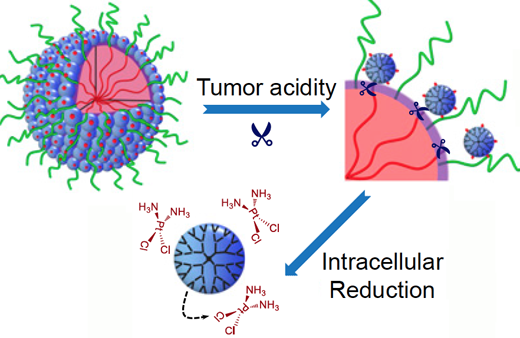
The nanoparticles start out relatively large (100 nm) (large blue circle, upper left) to enable smooth transport into the tumor through leaky blood vessels. Then, in acidic conditions found close to tumors, the particles discharge “bomblets” (right, small blue circles) just 5 nm in size. Once inside tumor cells, a second chemical step activates the platinum-based drug cisplatin (bottom) to attack the cancer directly. (credit: Emory Health Sciences)

Scientists have devised a triple-stage stealth “cluster bomb” system for delivering the anti-cancer chemotherapy drug cisplatin, using nanoparticles designed to break up when they reach a tumor:

  1. The nanoparticles start out relatively large  — 100 nanometers wide — so that they can move through the bloodstream and smoothly transport into the tumor through leaky blood vessels.
  2. As they detect acidic conditions close to tumors, the nanoparticles discharge “bomblets” just 5 nanometers in size to penetrate tumor cells.
  3. Once inside tumor cells, the bomblets release the platinum-based cisplatin, which kills by crosslinking and damaging DNA.

Doctors have used cisplatin to fight several types of cancer for decades, but toxic side effects — to the kidneys, nerves and inner ear — have limited its effectiveness. But in research with three different mouse tumor models*, the researchers have now shown that their nanoparticles can enhance cisplatin drug accumulation in tumor tissues for several types of cancer.

Details of the research — by teams led by professor Jun Wang, PhD, at the University of Science and Technology of China and by professor Shuming Nie, PhD, in the Wallace H. Coulter Department of Biomedical Engineering at Georgia Tech and Emory — were published this week in the journal PNAS.

* When mice bearing human pancreatic tumors were given the same doses of free cisplatin or cisplatin clothed in pH-sensitive nanoparticles, the level of platinum in tumor tissues was seven times higher with the nanoparticles. This suggests the possibility that nanoparticle delivery of a limited dose of cisplatin could restrain the toxic side effects during cancer treatment.

The researchers also showed that the nanoparticles were effective against a cisplatin-resistant lung cancer model and an invasive metastatic breast cancer model in mice. In the lung cancer model, a dose of free cisplatin yielded just 10 percent growth inhibition, while the same dose clothed in nanoparticles yielded 95 percent growth inhibition, the researchers report. In the metastatic breast cancer model, treating mice with cisplatin clothed in nanoparticles prolonged animal survival by weeks; 50 percent of the mice were surviving at 54 days with nanoparticles compared with 37 days for the same dose of free cisplatin.


Abstract of Stimuli-responsive clustered nanoparticles for improved tumor penetration and therapeutic efficacy

A principal goal of cancer nanomedicine is to deliver therapeutics effectively to cancer cells within solid tumors. However, there are a series of biological barriers that impede nanomedicine from reaching target cells. Here, we report a stimuli-responsive clustered nanoparticle to systematically overcome these multiple barriers by sequentially responding to the endogenous attributes of the tumor microenvironment. The smart polymeric clustered nanoparticle (iCluster) has an initial size of ∼100 nm, which is favorable for long blood circulation and high propensity of extravasation through tumor vascular fenestrations. Once iCluster accumulates at tumor sites, the intrinsic tumor extracellular acidity would trigger the discharge of platinum prodrug-conjugated poly(amidoamine) dendrimers (diameter ∼5 nm). Such a structural alteration greatly facilitates tumor penetration and cell internalization of the therapeutics. The internalized dendrimer prodrugs are further reduced intracellularly to release cisplatin to kill cancer cells. The superior in vivo antitumor activities of iCluster are validated in varying intractable tumor models including poorly permeable pancreatic cancer, drug-resistant cancer, and metastatic cancer, demonstrating its versatility and broad applicability.

The facts suggest that big pharma represents only a few companies in most fields of disease. They spend an enormous amount of money in lobbying congress and doctors to get them to do their bidding.They wouldn’t spend the money if they didn’t need to do so.The profit motive is central with patient well being only being practiced if it pays off.Cancer is a superb example, with new drugs being offered usually at astronomical prices in this country. Like wise the FDA is controlled by them and it is in their best interests to make the cost of developing new drugs outrageously expensive.Only big pharma can afford to get new drugs approved.
After the phase 3 trials are completed usually the documentation to ask for approval to market a drug is at least 100,000 pages long. The legal talent needed to compile such documents ( and this is only one of many documents produced in the process) is extremely expensive. The time taken for approval stretches into many years and then the drugs are often not approved.(only a small percentage are approved).
Antibiotics were one example of a group of drugs that really did cure many diseases. Big pharma found it didn’t pay to develop new antibiotics because the treatment was short and so successful that patients used the drugs only for a short time.
Over time, as Alexander Fleming forsaw, the bacteria would develop resistance, especially if they were extensively used indiscriminantly. Now many dangerous bacteria are resistant to many or all antibiotics and there is no treatment available. Since bacteria can pass this resistance to specific antibiotics to almost any species of bacteria, its only a matter of time before we will be back in the pre-antibiotic era.
SINCE IT DOES NOT PAY FOR BIG PHARMA TO DEVELOP NEW ANTIBIOTICS THEY ARE NOW NOT DOING SO AT ALL.
…..

“In the metastatic breast cancer model, treating mice with cisplatin clothed in nanoparticles prolonged animal survival by weeks; 50 percent of the mice were surviving at 54 days with nanoparticles compared with 37 days for the same dose of free cisplatin.”

I’m not so convinced after all. But this is perfectly in line with big pharma goals. Only an idiot would kill its main source of income.

…….

It is almost impossible to set up a conspiracy against big pharma’s abusive practices.Every avenue their high priced lawyers can think of to stop budding conspiracies has been blocked by law where possible. One possible road might be to do research and development in other countries outside US legal juristiction, however most drugs without FDA approval can and are stopped at the border and confiscated even if as in Canada the same drug produced in the US is being manufactured in Canada.Almost certainly Cisplatin is under patent in the US and the patent holder has the right to refuse the use of the drug for any reason they want, including being used in this cluster bomb drug. The manufacturer is almost certainly making huge profits from selling Cisplatin and I doubt they want to see a cheap drug cure many cancers. I guess the only way to go is to try and turn to a country like India.A number of cancer drugs were being sold by US patent holders at wholesale prices that were to high for most Indians. The government of India refused to allow these companies to patent their medicines in India and forced them to license the drugs and much cheaper prices.Most US patents are not operative in India, they can produce US style insulin pumps at a fraction of our cost as they can in China and Vietnam or Mexico. It would be difficult to send these pumps to buyers in the US from India but by shipping them from another country, say Canada or Mexico most would make it past customs. As for Cancer treatment, India and china have some very fine trained biochemist and doctors, who could easily apply many of the immunological treatments against cancer. All arms of the immune system have been used to produce miracle treatments that have cured some patients that were on their death beds.The treatments can be tested carefully in these countries, and improved by any methods including some I have suggested.By advertising in the US to cancer patients that they can inexpensively have these working treatments cheaply as a medical tourist, it is only a matter of time before they will cure the disease wholesale and break the medical industrial complex down. As far as generics that are not being produced here, by setting up a non profit corporation that produces any and all drugs that come off patent as a goal, at the cheapest price less a reasonable markup for cost of manufacture etc. one by one they will end the abuse of not producing or overpricing generics.

………

Significance

Successively overcoming a series of biological barriers that cancer nanotherapeutics would encounter upon intravenous administration is required for achieving positive treatment outcomes. A hurdle to this goal is the inherently unfavorable tumor penetration of nanoparticles due to their relatively large sizes. We developed a stimuli-responsive clustered nanoparticle (iCluster) and justified that its adaptive alterations of physicochemical properties (e.g. size, zeta potential, and drug release rate) in accordance with the endogenous stimuli of the tumor microenvironment made possible the ultimate overcoming of these barriers, especially the bottleneck of tumor penetration. Results in varying intractable tumor models demonstrated significantly improved antitumor efficacy of iCluster than its control groups, demonstrating that overcoming these delivery barriers can be achieved by innovative nanoparticle design.

http://www.pnas.org/content/early/2016/03/23/1522080113.full


  1. Engineering of self-assembled nanoparticle platform for precisely controlled combination drug therapy.
    Nagesh Kolishetti et al., Proc Natl Acad Sci U S A, 2010
  2. Enhanced anticancer activity of nanopreparation containing an MMP2-sensitive PEG-drug conjugate and cell-penetrating moiety.
    Lin Zhu et al., Proc Natl Acad Sci U S A, 2013
  3. Protein-assisted self-assembly of multifunctional nanoparticles.
    Maxim P Nikitin et al., Proc Natl Acad Sci U S A, 2010
  4. Photoswitchable nanoparticles for in vivo cancer chemotherapy.
    Rong Tong et al., Proc Natl Acad Sci U S A, 2013
  5. Investigating the optimal size of anticancer nanomedicine.
    Li Tang et al., Proc Natl Acad Sci U S A, 2014 
  6. Nanoparticles seek and destroy glioblastoma in mice
    Sanford-Burnham Medical Research Institute,ScienceDaily, 2011
  7. Nanoparticle ‘alarm clock’ tested to awaken immune systems put to sleep by cancer
    Norris Cotton Cancer CenterDartmouth-Hitchcock Medical Center, ScienceDaily, 2014
  8. Injectable nanoparticle generator could radically transform metastatic cancer treatment
    Houston Methodist, ScienceDaily, 2016
  9. Introducing the multi-tasking nanoparticle
    UC Davis Comprehensive Cancer Center,ScienceDaily, 2014
  10. First-of-its-kind self-assembled nanoparticle for targeted and triggered thermo-chemotherapy
    Brigham and Women’s Hospital, ScienceDaily, 2012
 Researchers use optogenetic light to block tumor development
Uses light-triggered bioelectric current

Tufts University biologists have demonstrated (using a frog model*) for the first time that it is possible to prevent tumors from forming (and to normalize tumors after they have formed) by using optogenetics (light) to control bioelectrical signalling among cells.

Light/bioelectric control of tumors

Virtually all healthy cells maintain a more negative voltage in the cell interior compared with the cell exterior. But the opening and closing of ion channels in the cell membrane can cause the voltage to become more positive (depolarizing the cell) or more negative (polarizing the cell). That makes it possible to detect tumors by their abnormal bioelectrical signature before they are otherwise apparent.

The study was published online in an open-access paper in Oncotarget on March 16.

The use of light to control ion channels has been a ground-breaking tool in research on the nervous system and brain, but optogenetics had not yet been applied to cancer.

The researchers first injected  cells in Xenopus laevis (frog) embryos with RNA that encoded a mutant RAS oncogene known to cause cancer-like growths.

The researchers then used blue light to activate positively charged ion channels,which induced an electric current that caused the cells to go from a cancer-like depolarized state to a normal, more negative polarized state. The did the same with a green light-activated proton pump, Archaerhodopsin (Arch). Activation of both agents significantly lowered the incidence of tumor formation and also increased the frequency with which tumors regressed into normal tissue.

“These electrical properties are not merely byproducts of oncogenic processes. They actively regulate the deviations of cells from their normal anatomical roles towards tumor growth and metastatic spread,” said senior and corresponding author Michael Levin, Ph.D., who holds the Vannevar Bush chair in biology and directs the Center for Regenerative and Developmental Biology at Tufts School of Arts and Sciences.

“Discovering new ways to specifically control this bioelectrical signaling could be an important path towards new biomedical approaches to cancer. This provides proof of principle for a novel class of therapies which use light to override the action of oncogenic mutations,” said Levin. “Using light to specifically target tumors would avoid subjecting the whole body to toxic chemotherapy or similar reagents.”

This work was supported by the G. Harold and Leila Y. Mathers Charitable Foundation.

* Frogs are a good model for basic science research into cancer because tumors in frogs and mammals share many of the same characteristics. These include rapid cell division, tissue disorganization, increased vascular growth, invasiveness and cells that have an abnormally positive internal electric voltage.


Abstract of Use of genetically encoded, light-gated ion translocators to control tumorigenesis

It has long been known that the resting potential of tumor cells is depolarized relative to their normal counterparts. More recent work has provided evidence that resting potential is not just a readout of cell state: it regulates cell behavior as well. Thus, the ability to control resting potential in vivo would provide a powerful new tool for the study and treatment of tumors, a tool capable of revealing living-state physiological information impossible to obtain using molecular tools applied to isolated cell components. Here we describe the first use of optogenetics to manipulate ion-flux mediated regulation of membrane potential specifically to prevent and cause regression of oncogene-induced tumors. Injection of mutant-KRAS mRNA induces tumor-like structures with many documented similarities to tumors, in Xenopus tadpoles. We show that expression and activation of either ChR2D156A, a blue-light activated cation channel, or Arch, a green-light activated proton pump, both of which hyperpolarize cells, significantly lowers the incidence of KRAS tumor formation. Excitingly, we also demonstrate that activation of co-expressed light-activated ion translocators after tumor formation significantly increases the frequency with which the tumors regress in a process called normalization. These data demonstrate an optogenetic approach to dissect the biophysics of cancer. Moreover, they provide proof-of-principle for a novel class of interventions, directed at regulating cell state by targeting physiological regulators that can over-ride the presence of mutations.

A biosensor that’s 1 million times more sensitive

Aims at detecting cancers earlier, improving treatment and outcomes
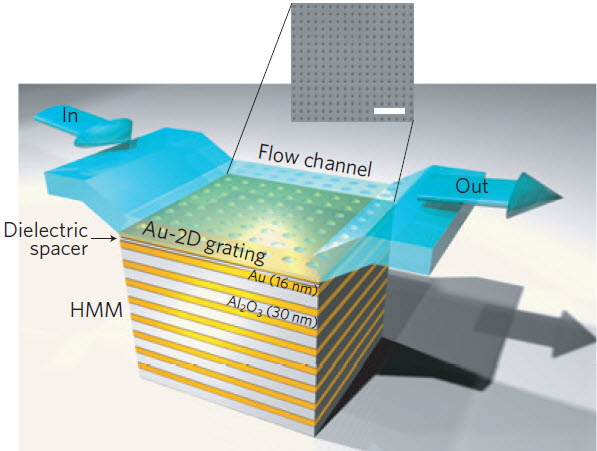
A schematic representation of the miniaturized gold-aluminum oxide hyperbolic metamaterial (HMM) sensor device with a fluid flow channel, showing a scanning electron microscope (SEM) image [gray inset] of the 2D subwavelength gold diffraction grating on top of the hyperbolic metamaterials layers (scale bar, 2 µm) (credit: Kandammathe Valiyaveedu Sreekanth et al./Nature Materials
An optical sensor that’s 1 million times more sensitive than the current best available has been developed by Case Western Reserve University researchers. Based on nanostructured metamaterials, it can identify a single lightweight molecule in a highly dilute solution.The research goal is to provide oncologists a way to detect a single molecule of an enzyme produced by circulating cancer cells. That could allow doctors to diagnose and monitor patients with certain cancers far earlier than possible today.

“The prognosis of many cancers depends on the stage of the cancer at diagnosis,” said Giuseppe “Pino” Strangi, professor of physics at Case Western Reserve and research leader. “Very early, most circulating tumor cells express proteins of a very low molecular weight, less than 500 Daltons,” Strangi explained. “These proteins are usually too small and in too low a concentration to detect with current test methods, yielding false negative results.

“With this platform, we’ve detected proteins of 244 Daltons, which should enable doctors to detect cancers earlier — we don’t know how much earlier yet,” he said. “This biosensing platform may help to unlock the next era of initial cancer detection.”

The researchers believe the sensing technology will also be useful in diagnosing and monitoring other diseases.

A biological sieve

The nanosensor, which fits in the palm of a hand, acts like a biological sieve, capable of isolating a small protein molecule weighing less than 800 quadrillionths of a nanogram from an extremely dilute solution.

To make the device so sensitive, Strangi’s team faced two long-standing barriers: Light waves cannot detect objects smaller than their own physical dimensions (about 500 nanometers, depending on wavelength). And molecules in dilute solutions float in Brownian (random) motion and are unlikely to land on the sensor’s surface.

The solution was to use a microfluidic channel to restrict the molecules’ ability to float around and a plasmon-based metamaterial made of 16 nanostructured layers of reflective and conductive gold and transparent aluminum oxide, a dielectric, each 10s of atoms thick. Light directed onto and through the layers is concentrated into a very small volume much smaller than the wavelength of light.*

“It’s extremely sensitive,” Strangi said. “When a small molecule lands on the surface, it results in a large local modification, causing the light to shift.” Depending on the size of the molecule, the reflecting light shifts different amounts. The researchers hope to learn to identify specific biomarker and other molecules for different cancers by their light shifts.

To add specificity to the sensor, the team added a layer of trap molecules — molecules that bind specifically with the molecules they hunt. In tests, the researchers used two trap molecules to catch two different biomolecules: bovine serum albumin, with a molecular weight of 66,430 Daltons, and biotin, with a molecular weight of 244 Daltons. Each produced a signature light shift.

Other researchers have reported using plasmon-based biosensors to detect biotin in solutions at concentrations ranging from more than 100 micromoles per liter to 10 micromoles per liter. This device proved 1 million times more sensitive, finding and identifying biotin at a concentration of 10 picomoles per liter.

Testing and clinical use in process

Strangi’s lab is working with other oncologists worldwide to test the device and begin moving the sensor toward clinical use.

In Cleveland, Strangi and Nima Sharifi, MD, co-leader of the Genitourinary Cancer Program for the Case Comprehensive Cancer Center, have begun testing the sensor with proteins related to prostate cancers.

“For some cancers, such as colorectal and pancreatic cancer, early detection is essential,” said Sharifi, who is also the Kendrick Family Chair for Prostate Cancer Research at Cleveland Clinic. “High sensitivity detection of cancer-specific proteins in blood should enable detection of tumors when they are at an earlier disease stage.

“This new sensing technology may help us not only detect cancers, but what subset of cancer, what’s driving its growth and spread, and what it’s sensitive to,” he said. “The sensor, for example, may help us determine markers of aggressive prostate cancers, which require treatments, or indolent forms that don’t.”

The research is published online in the journal Nature Materials.

* The top gold layer is perforated with holes, creating a grating that diffuses light shone on the surface into two dimensions. The incoming light, which is several hundreds of nanometers in wavelength, appears to be confined and concentrated in a few nanometers at the interface between the gold and the dielectric layer.  As the light strikes the sensing area, it excites free electrons causing them to oscillate and generate a highly confined propagating surface wave, called a surface plasmon polariton. This propagating surface wave will in turn excite a bulk wave propagating across the sensing platform. The presence of the waves cause deep sharp dips in the spectrum of reflecting light. The combination and the interplay of surface plasmon and bulk plasmon waves are what make the sensor so sensitive. Strangi said. By exciting these waves through the eight bilayers of the metamaterial, they create remarkably sharp resonant modes. Extremely sharp and sensitive resonances can be used to detect smaller objects.


Abstract of Extreme sensitivity biosensing platform based on hyperbolic metamaterials

Optical sensor technology offers significant opportunities in the field of medical research and clinical diagnostics, particularly for the detection of small numbers of molecules in highly diluted solutions. Several methods have been developed for this purpose, including label-free plasmonic biosensors based on metamaterials. However, the detection of lower-molecular-weight (<500 Da) biomolecules in highly diluted solutions is still a challenging issue owing to their lower polarizability. In this context, we have developed a miniaturized plasmonic biosensor platform based on a hyperbolic metamaterial that can support highly confined bulk plasmon guided modes over a broad wavelength range from visible to near infrared. By exciting these modes using a grating-coupling technique, we achieved different extreme sensitivity modes with a maximum of 30,000 nm per refractive index unit (RIU) and a record figure of merit (FOM) of 590. We report the ability of the metamaterial platform to detect ultralow-molecular-weight (244 Da) biomolecules at picomolar concentrations using a standard affinity model streptavidin–biotin.

Read Full Post »

High blood pressure can damage the retina’s blood vessels and limit the retina’s function. It can also put pressure on the optic nerve.

Sourced through Scoop.it from: www.healthline.com

See on Scoop.itCardiovascular Disease: PHARMACO-THERAPY

Read Full Post »

Applying Pharmacology to New Drug Discovery, April 22, 2016 in San Diego, CA by CHI

Reporter: Aviva Lev-Ari, PhD, RN


Applying Pharmacology to New Drug Discovery, April 22, 2016 in San Diego, CA by CHI

The system-independent quantification of molecular drug properties for prediction of therapeutic utility

April 22, 2016

Over the past 6 six years, the primary cause of new drug candidate failures (50%) has been failure of therapeutic efficacy. Put another way, drug discovery programs do everything right, get the defined candidate molecule, only to have it fail in therapeutic trials. Among the most prevalent reasons proposed for this shortcoming is the lack of translation of in vitro and recombinant drug activity to therapeutic in vivo whole systems. Drug activity in complete systems can be characterized with the application of pharmacological principles which translate drug behaviors in various organs with molecular scales of affinity and efficacy.

Pharmacological techniques are unique in that they can convert descriptive data (what we see, potency, activity in a given system) to predictive data (molecular scales of activity that can be used to predict activity in all systems including the therapeutic one, i.e. affinity, efficacy). The predicted outcome of this process is a far lower failure rate as molecules are progressed toward clinical testing.

Instructor

Terry Kenakin presently is a Professor of Pharmacology in the Department of Pharmacology, University of North Carolina School of Medicine. The course is taught from the perspective of industrial drug discovery; Dr. Kenakin has worked in drug industry for 32 years (7 at Burroughs-Wellcome, RTP, NC and 25 at GlaxoSmithKline, RTP. NC). He is Editor-in-Chief of the Journal of Receptors and Signal Transduction and Co-Editor-in-Chief of Current Opinion in Pharmacology and is on numerous journal Editorial Boards. In addition, he has authored over 200 peer reviewed papers and reviews and has written 10 books on Pharmacology.

Course Material

Summary sheets, exercises with answers, relevant papers are included as well as a pdf of all slides. The course is based on the book A Pharmacology Primer: Techniques for More Effective and Strategic Drug Discovery. 4th Edition, Elsevier/Academic Press, 2014.

This course will describe pharmacological principles and procedures to quantify affinity, efficacy, biased signaling and allostery to better screen for new drugs and characterize drug candidates in lead optimization assays.

1. Assay Formats/Experimental Design

  • Binding
  • Functional Assays
  • Null Method Assays

2. Agonism

  • Agonist Affinity/Efficacy
  • Black/Leff Operational model

3. Biased Signaling (Agonism)

  • Mechanism of Biased Signaling
  • Quantifying Biased Agonism
  • Therapeutic application(s)

4. Orthosteric Antagonism (I)

  • Competitive
  • Non-Competitive/Irreversible

5. Orthosteric Antagonism (II)

  • Partial Agonism
  • Inverse Agonism

6. Allosteric Modulation (I)

  • Functional Allosteric Model
  • Negative Allosteric Modulators (NAMs)

7. Allosteric Modulation (II)

  • Positive Allosteric Modulators (PAMs)
  • Allosteric Agonism

8. Drug-Receptor Kinetics

  • Measuring Target Coverage
  • Allosteric Proof-of-Concept
  • Application of Real-Time Kinetics

9. Drug Screening

  • Design of Screening Assays
  • Screening for Allosteric Modulators

Cambridge Healthtech Institute’s Eleventh Annual Drug Discovery Chemistry is a dynamic conference for medicinal chemists working in pharma and biotech. Focused on discovery and optimization challenges of small molecule drug candidates, this event provides many exciting opportunities for scientists to create a unique program by going back and forth between concurrent meeting tracks to hear presentations most suited to one’s personal interests. New for 2016 is the addition of three symposia on Friday covering the blood-brain barrier, biophysical approaches for drug discovery, and antivirals.

Plenary Keynotes


A New Model for Academic Translational Research

Peter G. Schultz, Ph.D., The Scripps Research Institute

Cell-Penetrating Miniproteins

Gregory L. Verdine, Ph.D., Harvard University

April 19-20

April 20-21

April 22

Inflammation Inhibitors

Kinase Inhibitor Chemistry

Brain Penetrant Inhibitors

Protein-Protein Interactions

Macrocyclics & Constrained Peptides

Biophysical Approaches

Epigenetic Inhibitor Discovery

Fragment-Based Drug Discovery

Antivirals

Short Courses

Make the most of your time in San Diego by adding on one or more short courses*. Topics include trends in physical properties, GPCRs, peptide therapeutics, immunology, phenotypic screening, crystallography, ligand-receptor molecular interactions, inhibitor design, macrocycles, FBDD, and covalent inhibitors.

* separate registration required for short courses

SOURCE

From: Deborah Shear <pete@healthtech.com>

Date: Friday, January 8, 2016 at 11:42 AM

To: Aviva Lev-Ari <AvivaLev-Ari@alum.berkeley.edu>

Subject: Training Seminar: Applying Pharmacology to New Drug Discovery

Read Full Post »

FDA Drug Approvals in 2014: Drug Indication, Approval Date, Pharma, Agent Type and Drug Name

Curator: Stephen J Williams, PhD

Summary of 2014 FDA Approvals

Small Molecules versus Biologics

Below is a summary of the 2014 FDA Approvals with respect to their classification as small molecule or biologic. Data is taken from the FDA website https://www.centerwatch.com/drug-information/fda-approved-drugs/year/2014

In molecular biology and pharmacology, a small molecule is a low molecular weight (<900 daltons) organic compound that may help regulate a biological process, with a size on the order of 10−9 m. Most drugs are small molecules.

From the FDA Biological products, or biologics, are medical products. Many biologics are made from a variety of natural sources (human, animal or microorganism). Like drugs, some biologics are intended to treat diseases and medical conditions. Other biologics are used to prevent or diagnose diseases. Examples of biological products include:
• vaccines
• blood and blood products for transfusion and/or manufacturing into other products
• allergenic extracts, which are used for both diagnosis and treatment (for example, allergy shots)
• human cells and tissues used for transplantation (for example, tendons, ligaments and bone)
• gene therapies
• cellular therapies
• tests to screen potential blood donors for infectious agents such as HIV

CONCLUSIONS:

As shown there were 106 small molecules approved and 59 biologics approved in 2014.

  • Sales figures were or their anticipated market size as well as cost/benefit analysis.   This was mentioned as a very important requirement in drug development by JNJ. The pharmacy benefit managers, insurers and the pharma companies said they were talked early in the drug development process using cost/benefit analysis as a criteria of go/ no go decision point.
  • The insurers are very cost conscious as well as the PBMs. There are some classes that had mainly biologics and this was not oncology. In addition inflammation had lots more small molecule. The breakdown seems to be more meaningful than the totals and there are many reformulations and double indications.
Cardiology/Vascular Diseases (2 small molecules)
Drug Indication Pharma drug type Drug Name Approval Date
For the treatment of severe hypertriglyceridemia AstraZeneca small molecule Epanova (omega-3-carboxylic acids) May-14
For the reduction of thrombotic cardiovascular events Merck small molecule Zontivity (vorapaxar); May-14
Dermatology 7 small molecules 2 biologics
For the treatment of acute bacterial skin and skin structure infections Durata Therapeutics synthetic small molecule Dalvance (dalbavancin); May-14
For the treatment of onychomycosis of the toenails Valeant Pharmaceuticals synthetic small molecule Jublia (efinaconazole) 10% topical gel Jun-14
For the treatment of onychomycosis of the toenails Anacor synthetic small molecule Kerydin (tavaborole) Jul-14
For the treatment of unresectable or metastatic melanoma Merck biologic Keytruda (pembrolizumab) Sep-14
For the treatment of unresectable or metastatic melanoma Bristol-Myers Squibb biologic Opdivo (nivolumab) Dec-14
For the treatment of acute bacterial skin and skin structure infections The Medicines Company semisynthetic small molecule Orbactiv (oritavancin) Aug-14
For the treatment of moderate to severe plaque psoriasis Celgene small molecule Otezla (apremilast) Sep-14
For the treatment of acute bacterial skin and skin structure infections Cubist Pharmaceuticals small molecule Sivextro (tedizolid phosphate) Jun-14
For the treatment of inflammatory lesions of rosacea Galderma Labs semisynthetic small molecule Soolantra (ivermectin) cream, 1% Dec-14
Endocrinology 6 small molecules 4 biologics
For the treatment of diabetes mellitus Mannkind biologic Afrezza (insulin human) Inhalation Powder Jun-14
For the treatment of hypogonadism Endo Pharmaceuticals small molecule Aveed (testosterone undecanoate) injection Mar-14
For the treatment of type II diabetes Bristol-Myers Squibb small molecule Farxiga (dapagliflozin) Jan-14
For the treatment of type II diabetes Boehringer Ingelheim small molecule Jardiance (empagliflozin) Aug-14
For the treatment of deficiency or absence of endogenous testosterone Trimel Pharmaceuticals small molecule Natesto, (testosterone) nasal gel May-14
For the treatment of acromegaly Novartis biologic Signifor LAR (pasireotide) Dec-14
For the treatment of type II diabetes mellitus GlaxoSmithKline biologic Tanzeum (albiglutide) Apr-14
To improve glycemic control in type II diabetics Eli Lilly biologic Trulicity (dulaglutide) Sep-14
For males with a deficiency or absence of endogenous testosterone Upsher-Smith synthetic small molecule Vogelxo (testosterone) gel Jun-14
For glycemic control in adults with type II diabetes AstraZeneca small molecule Xigduo XR (dapagliflozin + metformin hydrochloride) Oct-14
Family Medicine 21 small molecules 11 biologics
For the treatment of diabetes mellitus Mannkind biologic Afrezza (insulin human) Inhalation Powder; Jun-14
For the treatment of hemophilia B Biogen Idec biologic Alprolix [Coagulation Factor IX (Recombinant), Fc Fusion Protein] Mar-14
For the treatment of asthma, GlaxoSmithKline small molecule Arnuity Ellipta (fluticasone furoate inhalation powder) Aug-14
For the treatment of hypogonadism Endo Pharmaceuticals small molecule Aveed (testosterone undecanoate) injection; Mar-14
For the treatment of insomnia Merck small molecule Belsomra (suvorexant) Aug-14
For the maintenance treatment of opioid dependence BioDelivery Sciences small molecule Bunavail (buprenorphine and naloxone) Jun-14
For chronic weight management Takeda Pharmaceuticals U.S.A small molecule Contrave (naltrexone HCl and bupropion HCl) Sep-14
For the treatment of acute bacterial skin and skin structure infections Durata Therapeutics semisynthetic small molecule Dalvance (dalbavancin) May-14
For the management of mild, moderate or severe pain Hospira small molecule Dyloject (diclofenac sodium) Injection Dec-14
For the treatment of adults with ulcerative colitis and Crohn’s disease Millenium Pharmaceuticals biologic Entyvio (vedolizumab) May-14
For the treatment of type II diabetes Bristol-Myers Squibb small molecule Farxiga (dapagliflozin) Jan-14
For the treatment of grass pollen-induced allergic rhinitis Merck biologic Grastek (Timothy Grass Pollen Allergen Extract) Apr-14
For the treatment of type II diabetes Boehringer Ingelheim small molecule Jardiance (empagliflozin) Aug-14
For the treatment of onychomycosis of the toenails Anacor small molecule Kerydin (tavaborole) Jul-14
For the treatment of bacterial vaginosis Actavis, Inc semisynthetic small molecule Metronidazole 1.3% Vaginal Gel Apr-14
For the treatment of congenital or acquired generalized lipodystrophy Bristol-Myers Squibb biologic Myalept (metreleptin for injection) Feb-14
For the treatment of deficiency or absence of endogenous testosterone Trimel Pharmaceuticals semisynthetic small molecule Natesto, (testosterone) nasal gel; May-14
For the treatment of neurogenic orthostatic hypotension Chelsea Therapeutics synthetic small molecule Northera (droxidopa) Feb-14
For the treatment of grass pollen-induced allergic rhinitis with or without conjunctivitis, Greer Labs biologic Oralair (Sweet Vernal, Orchard, Perennial Rye, Timothy and Kentucky Blue Grass Mixed Pollens Allergen Extract) Apr-14
For the treatment of adults with active psoriatic arthritis Celgene small molecule Otezla (apremilast) Mar-14
For the treatment of moderate to severe plaque psoriasis Celgene small molecule Otezla (apremilast) Sep-14
For the treatment of relapsing multiple sclerosis Biogen Idec biologic Plegridy (peginterferon beta-1a) Aug-14
For the treatment of partial onset and primary generalized tonic-clonic seizures and Lennox-Gastaut Syndrome Upsher-Smith Laboratories small molecule Qudexy XR (topiramate) Mar-14
For the treatment of short ragweed pollen-induced allergic rhinitis Merck biologic Ragwitek (Short Ragweed Pollen Allergen Extract) Apr-14
For the treatment of acute uncomplicated influenza in adults Biocryst small molecule Rapivab (peramivir injection) Dec-14
For chronic weight management Novo Nordisk biologic Saxenda (liraglutide [rDNA origin] injection) Dec-14
For the treatment of type II diabetes mellitus GlaxoSmithKline biologic Tanzeum (albiglutide) Apr-14
For the management of severe chronic pain Purdue Pharma small molecule Targiniq ER (oxycodone hydrochloride + naloxone hydrochloride) extended-release tablets Jul-14
For the treatment of acute pain Iroko Pharmaceuticals small molecule Tivorbex (indomethacin) Feb-14
To improve glycemic control in type II diabetics Eli Lilly biologic Trulicity (dulaglutide) Sep-14
For the management of acute pain Mallinckrodt Pharmaceuticals small molecule Xartemis XR (oxycodone hydrochloride and acetaminophen) extended release Mar-14
For the treatment of acute otitis externa Alcon small molecule Xtoro (finafloxacin otic suspension) 0.3%; Dec-14
For the treatment of complicated intra-abdominal and urinary tract infections Cubist Pharmaceuticals small molecule Zerbaxa (ceftolozane + tazobactam) Dec-14
Gastroenterology 3 small molecules 2 biologics
For the prevention of chemotherapy-induced nausea and vomiting, Helsinn small molecule Akynzeo (netupitant and palonosetron) Oct-14
For the treatment of gastric cancer Eli Lilly biologic Cyramza (ramucirumab); Apr-14
For the treatment of adults with ulcerative colitis and Crohn’s disease, Millenium Pharmaceuticals biologic Entyvio (vedolizumab) May-14
For the treatment of opiod-induced constipation in adults with chronic non-cancer pain AstraZeneca small molecule Movantik (naloxegol) Sep-14
For the treatment of complicated intra-abdominal and urinary tract infections Cubist Pharmaceuticals small molecule Zerbaxa (ceftolozane + tazobactam) Dec-14
Genetic Disease 2 small molecule 2 biologic
For the treatment of hemophilia B Biogen Idec biologic Alprolix [Coagulation Factor IX (Recombinant), Fc Fusion Protein]; Mar-14
For the treatment of certain adult patients with Gaucher disease type 1 Genzyme small molecule Cerdelga (eliglustat) Aug-14
For the treatment of partial onset and primary generalized tonic-clonic seizures and Lennox-Gastaut Syndrome Upsher-Smith Laboratories small molecule Qudexy XR (topiramate) Mar-14
For the treatment of Mucopolysaccharidosis type IVA BioMarin biologic Vimizim (elosulfase alfa) Feb-14
Healthy Volunteers 1 biologic
For the treatment of grass pollen-induced allergic rhinitis with or without conjunctivitis Greer Labs biologic Oralair (Sweet Vernal, Orchard, Perennial Rye, Timothy and Kentucky Blue Grass Mixed Pollens Allergen Extract) Apr-14
Hematology 4 small molecule 6 biologics
For the treatment of hemophilia B Biogen Idec biologic Alprolix [Coagulation Factor IX (Recombinant), Fc Fusion Protein]; Mar-14
For the treatment of relapsed or refractory peripheral T-cell lymphoma Spectrum Pharmaceuticals small molecule Beleodaq (belinostat) Jul-14
For the treatment of Philadelphia chromosome-negative relapsed /refractory B cell precursor acute lymphoblastic leukemia Amgen biologic Blincyto (blinatumomab) Dec-14
For the treatment of hemophillia A Biogen Idec biologic Eloctate [Antihemophilic Factor (Recombinant), Fc Fusion Protein] ; Jun-14
For the treatment of chronic lymphocytic leukemia Pharmacyclics small molecule Imbruvica (ibrutinib) Feb-14
For the treatment of acquired hemophilia A Baxter biologic Obizur [Antihemophilic Factor (Recombinant), Porcine Sequence] Oct-14
For the treatment of hereditary angioedema Pharming Group biologic Ruconest (C1 esterase inhibitor [recombinant]) Jul-14
For the treatment of multicentric Castleman’s disease Janssen Biotech biologic Sylvant (siltuximab); Apr-14
For the reduction of thrombotic cardiovascular events Merck small molecule Zontivity (vorapaxar) May-14
For the treatment of relapsed CLL, follicular B-cell NHL and small lymphocytic lymphoma Gilead small molecule Zydelig (idelalisib) Jul-14
Immunology 3 small molecules 9 biologics
For the treatment of adults with ulcerative colitis and Crohn’s disease Millenium Pharmaceuticals biologic Entyvio (vedolizumab) May-14
For the treatment of grass pollen-induced allergic rhinitis Merck biologic Grastek (Timothy Grass Pollen Allergen Extract); Apr-14
For the treatment of Primary Immunodeficiency Baxter biologic HyQvia [Immune Globulin Infusion 10% (Human) with Recombinant Human Hyaluronidase] Sep-14
For the treatment of chronic obstructive pulmonary disease GlaxoSmithKline small molecule Incruse Ellipta (umeclidinium inhalation powder); May-14
For the treatment of congenital or acquired generalized lipodystrophy Bristol-Myers Squibb biologic Myalept (metreleptin for injection) Feb-14
For the treatment of grass pollen-induced allergic rhinitis with or without conjunctivitis Greer Labs biologic Oralair (Sweet Vernal, Orchard, Perennial Rye, Timothy and Kentucky Blue Grass Mixed Pollens Allergen Extract) Apr-14
For the treatment of adults with active psoriatic arthritis Celgene small molecule Otezla (apremilast) Mar-14
For the treatment of moderate to severe plaque psoriasis Celgene small molecule Otezla (apremilast) Sep-14
For the treatment of relapsing multiple sclerosis Biogen Idec biologic Plegridy (peginterferon beta-1a) Aug-14
For the treatment of short ragweed pollen-induced allergic rhinitis Merck biologic Ragwitek (Short Ragweed Pollen Allergen Extract) Apr-14
For the treatment of multicentric Castleman’s disease Janssen Biotech biologic Sylvant (siltuximab) Apr-14
For the treatment of HIV-1 ViiV HealthCare biologic Triumeq (abacavir, dolutegravir, and lamivudine); Aug-14
Infections and Infectious Diseases 13 small molecules 0 biologics
For the treatment of acute bacterial skin and skin structure infections Durata Therapeutics semisynthetic small molecule Dalvance (dalbavancin) May-14
For the treatment of hepatitis C, Gilead small molecule Harvoni (ledipasvir and sofosbuvir) Oct-14
For the treatment of visceral, cutaneous and mucosal leishmaniasis Knight Therapeutics small molecule Impavido (miltefosine) Mar-14
For the treatment of onychomycosis of the toenails Valeant Pharmaceuticals small molecule Jublia (efinaconazole) 10% topical gel Jun-14
For the treatment of onychomycosis of the toenails Anacor small molecule Kerydin (tavaborole) Jul-14
For the treatment of bacterial vaginosis Actavis, Inc small molecule Metronidazole 1.3% Vaginal Gel Apr-14
For the treatment of acute bacterial skin and skin structure infections The Medicines Company semisynthetic small molecule Orbactiv (oritavancin) Aug-14
For the treatment of acute uncomplicated influenza in adults Biocryst small molecule Rapivab (peramivir injection) Dec-14
For the treatment of acute bacterial skin and skin structure infections Cubist Pharmaceuticals small molecule Sivextro (tedizolid phosphate) Jun-14
For the treatment of HIV-1 ViiV HealthCare small molecule Triumeq (abacavir, dolutegravir, and lamivudine) Aug-14
; For the treatment of genotype 1 chronic hepatitis C virus Abbvie small molecule Viekira Pak (ombitasvir, paritaprevir, ritonavir and dasabuvir) tablets; Dec-14
For the treatment of acute otitis externa Alcon small molecule Xtoro (finafloxacin otic suspension) 0.3% Dec-14
For the treatment of complicated intra-abdominal and urinary tract infections Cubist Pharmaceuticals small molecule Zerbaxa (ceftolozane + tazobactam) Dec-14
Internal Medicine 1 small molecule
For the treatment of certain adult patients with Gaucher disease type 1, Genzyme small molecule Cerdelga (eliglustat); Aug-14
Musculoskeletal 2 small molecule 3 biologic
For the treatment of relapsing multiple sclerosis Genzyme biologic Lemtrada (alemtuzumab) Nov-14
For the treatment of adults with active psoriatic arthritis Celgene small molecule Otezla (apremilast) Mar-14
For the treatment of relapsing multiple sclerosis Biogen Idec biologic Plegridy (peginterferon beta-1a) Aug-14
For the management of severe chronic pain Purdue Pharma small molecule Targiniq ER (oxycodone hydrochloride + naloxone hydrochloride) extended-release tablets Jul-14
For the treatment of Mucopolysaccharidosis type IVA BioMarin biologic Vimizim (elosulfase alfa) Feb-14
Nephrology 3 small molecule
For the treatment of hyperphosphatemia in patients with chronic kidney disease Keryx Biopharma small molecule Auryxia (Ferric citrate) Sep-14
For the treatment of hepatitis C Gilead small molecule Harvoni (ledipasvir and sofosbuvir) Oct-14
For the treatment of genotype 1 chronic hepatitis C virus Abbvie small molecule Viekira Pak (ombitasvir, paritaprevir, ritonavir and dasabuvir) tablets Dec-14
Neurology 10 small molecules 2 biologics
For the treatment of insomnia Merck small molecule Belsomra (suvorexant) Aug-14
For the management of mild, moderate or severe pain Hospira small molecule Dyloject (diclofenac sodium) Injection Dec-14
For the treatment of non-24-hour sleep-wake disorder in the totally blind Vanda Pharmaceuticals small molecule Hetlioz (tasimelteon) Jan-14
For the treatment of relapsing multiple sclerosis Genzyme biologic Lemtrada (alemtuzumab) Nov-14
For the treatment of opiod-induced constipation in adults with chronic non-cancer pain AstraZeneca small molecule Movantik (naloxegol) Sep-14
For the treatment of moderate to severe dementia of the Alzheimer’s type Forest Laboratories small molecule Namzaric (memantine hydrochloride extended-release + donepezil hydrochloride) Dec-14
For the treatment of neurogenic orthostatic hypotension Chelsea Therapeutics small molecule Northera (droxidopa) Feb-14
For the treatment of relapsing multiple sclerosis Biogen IDEC biologic Plegridy (peginterferon beta-1a) Aug-14
For the treatment of partial onset and primary generalized tonic-clonic seizures and Lennox-Gastaut Syndrome Upsher-Smith Laboratories small molecule Qudexy XR (topiramate) Mar-14
For the management of severe chronic pain Purdue Pharma small molecule Targiniq ER (oxycodone hydrochloride + naloxone hydrochloride) extended-release tablets Jul-14
For the treatment of acute pain Iroko Pharmaceuticals small molecule Tivorbex (indomethacin) Feb-14
For the management of acute pain Mallinckrodt Pharmaceuticals small molecule Xartemis XR (oxycodone hydrochloride and acetaminophen) extended release Mar-14
Nutrition and Weight Loss 2 small molecule 3 biologics
For chronic weight management Takeda Pharmaceuticals U.S.A small molecule Contrave (naltrexone HCl and bupropion HCl) Sep-14
For the treatment of type II diabetes Boehringer Ingelheim small molecule Jardiance (empagliflozin) Aug-14
For chronic weight management Novo Nordisk biologic Saxenda (liraglutide [rDNA origin] injection) Dec-14
For the treatment of type II diabetes mellitus GlaxoSmithKline biologic Tanzeum (albiglutide) Apr-14
To improve glycemic control in type II diabetics Eli Lilly biologic Trulicity (dulaglutide) Sep-14
Obstetrics/Gynecology (Women’s Health) 2 small molecule
For the treatment of previously treated BRCA mutated advanced ovarian cancer, AstraZeneca small molecule Lynparza (olaparib) Dec-14
For the treatment of bacterial vaginosis Actavis, Inc small molecule Metronidazole 1.3% Vaginal Gel Apr-14
Oncology 6 small molecules 4 biologics
For the prevention of chemotherapy-induced nausea and vomiting Helsinn small molecule Akynzeo (netupitant and palonosetron) Oct-14
For the treatment of relapsed or refractory peripheral T-cell lymphoma Spectrum Pharmaceuticals small molecule Beleodaq (belinostat) Jul-14
For the treatment of Philadelphia chromosome-negative relapsed /refractory B cell precursor acute lymphoblastic leukemia Amgen biologic Blincyto (blinatumomab) Dec-14
For the treatment of gastric cancer Eli Lilly biologic Cyramza (ramucirumab) Apr-14
For the treatment of chronic lymphocytic leukemia Pharmacyclics small molecule Imbruvica (ibrutinib) Feb-14
For the treatment of unresectable or metastatic melanoma Merck biologic Keytruda (pembrolizumab) Sep-14
For the treatment of previously treated BRCA mutated advanced ovarian cancer AstraZeneca small molecule Lynparza (olaparib) Dec-14
For the treatment of unresectable or metastatic melanoma Bristol-Myers Squibb biologic Opdivo (nivolumab) Dec-15
For the treatment of relapsed CLL, follicular B-cell NHL and small lymphocytic lymphoma Gilead small molecule Zydelig (idelalisib) Jul-14
For the treatment of ALK+ metastatic non-small cell lung cancer Novartis small molecule Zykadia (ceritinib) Apr-14
Ophthalmology 2 small molecule 1 biologic
For the treatment of non-24-hour sleep-wake disorder in the totally blind Vanda Pharmaceuticals small molecule Hetlioz (tasimelteon) Jan-14
For use during eye surgery to prevent intraoperative miosis and reduce post-operative pain Omeros small molecule Omidria (phenylephrine and ketorolac injection) Jun-14
For the treatment of grass pollen-induced allergic rhinitis with or without conjunctivitis Greer Labs biologic Oralair (Sweet Vernal, Orchard, Perennial Rye, Timothy and Kentucky Blue Grass Mixed Pollens Allergen Extract) Apr-14
Orthopedics/Orthopedic Surgery 1 small molecule
For the treatment of adults with active psoriatic arthritis Celgene small molecule Otezla (apremilast) Mar-14
Otolaryngology (Ear, Nose, Throat) 1 small molecule 3 biologic
For the treatment of grass pollen-induced allergic rhinitis Merck biologic Grastek (Timothy Grass Pollen Allergen Extract) Apr-14
For the treatment of grass pollen-induced allergic rhinitis with or without conjunctivitis Greer Labs biologic Oralair (Sweet Vernal, Orchard, Perennial Rye, Timothy and Kentucky Blue Grass Mixed Pollens Allergen Extract) 14-Apr
For the treatment of short ragweed pollen-induced allergic rhinitis Merck biologic Ragwitek (Short Ragweed Pollen Allergen Extract) Apr-14
For the treatment of acute otitis externa Alcon small molecule Xtoro (finafloxacin otic suspension) 0.3% Dec-14
Pediatrics/Neonatology 2 small molecule 2 biologics
; For the treatment of hemophilia B Biogen Idec biologic Alprolix [Coagulation Factor IX (Recombinant), Fc Fusion Protein] Mar-14
For the treatment of asthma GlaxoSmithKline small molecule Arnuity Ellipta (fluticasone furoate inhalation powder) Aug-14
For the treatment of partial onset and primary generalized tonic-clonic seizures and Lennox-Gastaut Syndrome Upsher-Smith Laboratories small molecule Qudexy XR (topiramate) Mar-14
For the treatment of Mucopolysaccharidosis type IVA BioMarin biologic Vimizim (elosulfase alfa) Feb-14
Pharmacology/Toxicology 3 small molecule 1 biologic
For the prevention of chemotherapy-induced nausea and vomiting Helsinn small molecule Akynzeo (netupitant and palonosetron) Oct-14
For the maintenance treatment of opioid dependence BioDelivery Sciences small molecule Bunavail (buprenorphine and naloxone) Jun-14
For the treatment of opiod-induced constipation in adults with chronic non-cancer pain AstraZeneca small molecule Movantik (naloxegol) Sep-14
For the treatment of congenital or acquired generalized lipodystrophy Bristol-Myers Squibb biologic Myalept (metreleptin for injection) Feb-14
Psychiatry/Psychology 1 small molecule
For the maintenance treatment of opioid dependence BioDelivery Sciences small molecule Bunavail (buprenorphine and naloxone) Jun-14
Pulmonary/Respiratory Diseases 6 small molecule 3 biologic
For the treatment of asthma GlaxoSmithKline small molecule Arnuity Ellipta (fluticasone furoate inhalation powder) Aug-14
For the treatment of idiopathic pulmonary fibrosis InterMune small molecule Esbriet (pirfenidone) Oct-14
For the treatment of grass pollen-induced allergic rhinitis Merck biologic Grastek (Timothy Grass Pollen Allergen Extract) Apr-14
For the treatment of chronic obstructive pulmonary disease GlaxoSmithKline small molecule Incruse Ellipta (umeclidinium inhalation powder) May-14
For the treatment of idiopathic pulmonary fibrosis Boehringer Ingelheim small molecule Ofev (nintedanib) Oct-14
For the treatment of grass pollen-induced allergic rhinitis with or without conjunctivitis Greer Labs biologic Oralair (Sweet Vernal, Orchard, Perennial Rye, Timothy and Kentucky Blue Grass Mixed Pollens Allergen Extract) Apr-14
For the treatment of short ragweed pollen-induced allergic rhinitis Merck biologic Ragwitek (Short Ragweed Pollen Allergen Extract) Apr-14
For the treatment of chronic obstructive pulmonary disease Boehringer Ingelheim small molecule Striverdi Respimat (olodaterol) Jul-14
For the treatment of ALK+ metastatic non-small cell lung cancer Novartis small molecule Zykadia (ceritinib) Apr-14
Rheumatology 1 small molecule
For the treatment of adults with active psoriatic arthritis Celgene small molecule Otezla (apremilast) Mar-14
Sleep 1 small molecule
For the treatment of non-24-hour sleep-wake disorder in the totally blind Vanda Pharmaceuticals small molecule Hetlioz (tasimelteon) Jan-14
Urology 1 small molecule
For the treatment of complicated intra-abdominal and urinary tract infections Cubist Pharmaceuticals small molecule Zerbaxa (ceftolozane + tazobactam) Dec-14


SOURCE

https://www.centerwatch.com/drug-information/fda-approved-drugs/year/2014

Read Full Post »

Measuring generic medicine performance

Larry H. Bernstein, MD, FCAP, Curator

UPDATED 11/07/2025

The Global Generic Drugs Market in 2025. Valued at USD 437.2 billion in 2024, is set to grow at a 6.3% CAGR till 2033—and India stands at the heart of this transformation. From Sun Pharma, Aurobindo, Cipla, and Dr. Reddy’s to a new wave of biotech-driven manufacturers, India continues to power global access to affordable, high-quality medicines. With innovation in APIs, biosimilars, and complex generics, India isn’t just the “pharmacy of the world” – it’s shaping the future of equitable healthcare.


Measuring performance in off-patent drug markets

Category: Abstracted Scientific Content
Author(s):
GaBi 2015; 4(4).   http://gabi-journal.net/issues/vol-4-2015-issue-4


Generic medicines can play a role in curbing rising pharmaceutical costs, and therefore the cornerstone of key policies within Organisation for Economic Co-operation and Development (OECD) countries has been to promote the wider use of generics after patent expiry or loss of market exclusivity of originator drugs. At patent expiry however, prices and market share of different generics in different countries vary significantly [1, 2] compared with branded originator drugs. Studies examining the effect of generics entry on originator prices and market share have produced contradictory results [3, 4].

In an attempt to address the key concerns of decision makers about the performance of generic policies, Kanavos [5] has developed a methodological framework comprising five indicators (independent of policy mix) that can be used as a benchmark for evaluating generic policy in non-tendering settings once originators lose exclusivity. These indicators are: (1) generic drug availability after patent expiry; (2) delay in time to generic entry; (3) number of generic competitors; (4) price development of originators and generics after loss of exclusivity; and (5) evolution of generic volume market share.

Kanavos [5] proposes a number of metrics to assess the performance of each of the indicators over time. For generic drug availability, the metrics include: (1) the share of total molecules studied in each country, with generic entry within the first 12 and 24 months after patent expiry; (2) the proportion of total sales facing generic entry within the same time-frame; and (3) the proportion of sales facing generic entry in the top and bottom decile of each market by sales, 12 and 24 months after patent expiry.

Intercontinental Medical Statistics data (last quarter of 1998 to the last quarter of 2010) for 101 molecules that had lost patent protection in 12 EU countries were analysed to test and measure the performance of the indicators. Countries were divided into three tiers according to perceived strength of their generic policies. The aim was to understand the drivers behind generic entry and competition in each country, and to identify any associated changes in prices, sales and market share over time after the originator patent had expired.

The empirical analysis carried out by Kanavos [5] confirms the hypothesis that different regulatory policies produce diverse outcomes. Some general predictions were confirmed, and the expected effects of individual policies were questioned.

Tier 1 countries (Denmark, Germany, The Netherlands and the UK), for example, had high levels of generic prescribing and substitution, consistently less time delay to generic entry, higher numbers of generic competitors, faster price declines and higher generic volume shares compared with Tier III countries (Greece, Italy and Portugal), which showed opposite trends; these countries implemented price capping on generics and had fewer incentives for generic prescribing. Tier II countries (Austria, Finland, France, Spain and Sweden) had moderate levels of generic prescribing and used price reduction strategies.

Price reductions in some countries implementing supply-side measures, such as price capping or linking generic price to the originator price as done in Greece, Italy and France, were significantly slower over time than seen in countries that did not have these controls, such as Denmark, Germany, The Netherlands and the UK; countries with no such controls had the shortest delay in time to generic entry and the highest rate of generic penetration.

Kanavos [5] questions the extent to which reference pricing facilitates faster and more extensive generic competition after patent expiry. In Sweden and the UK, which do not have international reference pricing (IRP), delays to generics entry are shorter compared with countries that have IRP. The UK’s open-market pricing system for post-patent drugs allows price competition to be achieved quickly after patent expiry, and the decreases in the price of both generic and originator drugs 12 and 24 months after patient expiry are relatively large. Other reasons accounting for the speed of competition in the UK include implementation of attempts to teach medical students the cost-saving benefits of generic products, and implementation of mandatory International Nonproprietary Names (INN) prescribing.

Germany, in contrast, has an established IRP system but a more competitive market compared with the UK. An association, however, was identified between the use of reference pricing and a pattern of high prices for originator drugs and continually decreasing prices for originator drugs after patent expiry. The volume share for generics 24 months after originator patent expiry is large in Germany. Greece is an outlier; although it has implemented a reference pricing system, this has not been reinforced with INN prescribing or mandatory generic substitution that could increase generic uptake.

Another question addressed by Kanavos [5] is the effect of the introduction of generic drugs on the prices of originators whose patents have expired. In most cases, prices of originator drugs were found to decline in response to generic entry. Paradoxically, in Germany and Denmark, prices of originator drugs in fact increased [6, 7]. The opposite has been observed in Greece, where prices of off-patent originators that do not face generic entry generally decreased although in some cases they increased. This suggests that generic competition and availability of generics are important determinants of price reductions of off-patient originator brands, since in their absence the price of these products can increase.

Countries that have strong demand-side policies, e.g. mandatory or strongly encouraged INN prescribing, have a higher degree of generic penetration after patent expiry and lower time delays to generic entry compared with countries that do not encourage these policies. The effect of generic pricing and substitution, however, may be related to the specific components of the policies, i.e. whether physicians or patients are permitted to overrule generic substitution and whether pharmacists are offered incentives or disincentives to dispense generic over branded products, as well as the price difference between originator brand and generic.

Although the author acknowledges some limitations to the study, he suggests that the broad conclusions and specific findings have important policy implications. He believes that further research is needed to identify the most effective policy mix that will maximize generic entry and penetrations and lead to greater expenditure optimization by health insurers.

Read Full Post »

Pharmacy International Conference

Larry H. Bernstein, MD, FCAP, Curator

LPBI


3rd Nirma Institute of Pharmacy International Conference
NIPiCON – 2016
January 21 – 23, 2016 ………….http://www.nipicon.org/.

Anthony Melvin Crasto   https://www.facebook.com/groups/worlddrugtracker/permalink/1170816792946389/

The pharmaceutical sciences is a dynamic and interdisciplinary field that combines a broad range of scientific disciplines that are critical to the discovery and development of new drugs and therapies. Over the years, pharmaceutical scientists have been instrumental in discovering and developing innovative drugs that save people’s lives and improve the quality of life.

NIPiCON was initiated in a year 2013 to offer a common platform for academicians, researchers, industrialists, clinical practitioners and young budding pharmacists to share their ideas and research work and finally emerge with new concepts, innovations and novel strategies for various challenges in the pharmaceutical field.

The 3 International Conference, NIPiCON 2016 aims to provide a knowledge sharing experience in the area of “Global Challenges in Drug Discovery, Development and Regulatory Affairs”.

Pharmaceutical innovation is a complex creative process that harnesses the application of knowledge and creativity for discovering, developing and bringing to clinical use, new medicinal products that extend or improve the lives of patients.A successful pharmaceutical R&D process is one that minimizes the time and cost needed to bring a compound from the scientific ‘idea’, through discovery and clinical development, to final regulatory approval and delivery to the patient. This conference will provide an open forum for the academicians, researchers, clinicians and professionals of pharmaceutical industry to enrich their knowledge in the area of drug discovery, development and its regulatory requirements.

The conference features plenary sessions which will be delivered by eminent national and international speakers from different disciplines of pharmaceutical field. In addition, there will be invited lectures and sessions delivered by distinguished and young researchers in their respective fields during parallel technical sessions. The conference willalso provide the opportunity to scientists and research scholars from various organizations to put forth their innovative ideas and research findings by means of deliberations, discussions and poster presentations.


NIPiCON was initiated in a year 2013 to offer a common platform for academicians, researchers, industrialists, clinical practitioners and young budding pharmacists to share their ideas and research work and finally emerge with new concepts, innovations and novel strategies for various challenges in the pharmaceutical field.

The 3 International Conference, NIPiCON 2016 aims to provide a knowledge sharing experience in the area of “Global Challenges in Drug Discovery, Development and Regulatory Affairs”.

Read Full Post »

Humanized Mice May Revolutionize Cancer Drug Discovery

Curator: Stephen J. Williams, Ph.D.

Humanized Mice May Revolutionize Cancer Drug Discovery

Word Cloud by Zach Day

Decades ago cancer research and the process of oncology drug discovery was revolutionized by the development of mice deficient in their immune system, allowing for the successful implantation of human-derived tumors. The ability to implant human tumors without rejection allowed researchers to study how the kinetics of human tumor growth in its three-dimensional environment, evaluate potential human oncogenes and drivers of oncogenesis, and evaluate potential chemotherapeutic therapies. Indeed, the standard preclinical test for antitumor activity has involved the subcutaneous xenograft model in immunocompromised (SCID or nude athymic) mice. More detail is given in the follow posts in which I describe some early pioneers in this work as well as the development of large animal SCID models:

Heroes in Medical Research: Developing Models for Cancer Research

The SCID Pig: How Pigs are becoming a Great Alternate Model for Cancer Research

The SCID Pig II: Researchers Develop Another SCID Pig, And Another Great Model For Cancer Research

This strategy (putting human tumor cells into immunocompromised mice and testing therapeutic genes and /or compounds) has worked extremely well for most cytotoxic chemotherapeutics (those chemotherapeutic drugs with mechanisms of action related to cell kill, vital cell functions, and cell cycle). For example the NCI 60 panel of human tumor cell lines has proved predictive for the chemosensitivity of a wide range of compounds.

Even though the immunocompromised model has contributed greatly to the chemotherapeutic drug discovery process. using these models to develop the new line of immuno-oncology products has been met with challenges three which I highlight below with curated database of references and examples.

From a practical standpoint development of a mouse which can act as a recipient for human tumors yet have a humanized immune system allows for the preclinical evaluation of antitumoral effect of therapeutic antibodies without the need to use neutralizing antibodies to the comparable mouse epitope,   thereby reducing the complexity of the study and preventing complications related to pharmacokinetics.

Champions Oncology Files Patents for Use of PDX Platform in Immune-Oncology

Hackensack, NJ – August 17, 2015 – Champions Oncology, Inc. (OTC: CSBR), engaged in the development of advanced technology solutions and services to personalize the development and use of oncology drugs, today announced that it has filed two patent applications with the United States Patent and Trademark Office (USPTO) relating to the development and use of mice with humanized immune systems to test immune-oncology drugs and therapeutic cancer vaccines.

Dr. David Sidransky, the founder and Chairman of Champions Oncology commented, “Drug development ‎in the immune-oncology space is fundamentally changing our approach to cancer treatment. These patents represent potentially invaluable tools for developing and personalizing immune therapy based on cutting edge sequence analysis, bioinformatics and our unique in vivo models.”

Joel Ackerman, Chief Executive Officer of Champions Oncology stated, “Developing intellectual property related to our Champions TumorGraft® platform has been an important component of strategy. The filing of these patents is an important milestone in leveraging our research and development investment to expand our platform and create proprietary tools for use by our pharmaceutical partners. We continue to look for additional revenue streams to supplement our fee-for-service business and we believe these patents will help us capture more of the value we create for our customers in the future.”

The first patent filing covers the methodology used by the Company to create a mouse model, containing a humanized immune system and a human tumor xenograft, which is capable of testing the efficacy of immune-oncology agents, both as single agents and in combination with anti-neoplastic drugs. The second patent filing relates to the detection of neoantigens and their role in the development of anti-cancer vaccines.

Keren Pez, Chief Scientific Officer, explained, “In the last few years, there has been a significant increase in cancer research that focuses on exploring the power of the human immune system to attack tumors. However, it’s challenging to test immune-oncology agents in traditional animal models due to the major differences between human and murine immune systems. The Champions ImmunoGraft™ platform has the unique ability of mimicking a human adaptive immune response in the mice, which allows us to specifically evaluate a variety of cancer therapeutics that modulate human immunity.

“Therapeutic vaccines that trigger the immune system to mount a response against a growing tumor are another area of intense interest. The development of an effective vaccine remains challenging but has an outstanding curative potential. Tumors harbor mutations in DNA that result in the translation of aberrant proteins. While these proteins have the potential to provoke an immune response that destructs early-stage cancer development, often the immune response becomes insufficient. Vaccines can trigger it by proactively challenging the system with these specific mutated peptides. Nevertheless, developing anti-cancer vaccines that effectively inhibit tumor growth has been complicated, partially due to challenges in finding the critical mutations, among others difficulties. With the more recent advances in genome sequencing, it’s now possible to identify tumor-specific antigens, or neoantigens, that naturally develop as an individual’s tumor grows and mutates,” she continued.

Traumatic spinal cord injury in mice with human immune systems.

Carpenter RS, Kigerl KA, Marbourg JM, Gaudet AD, Huey D, Niewiesk S, Popovich PG.

Exp Neurol. 2015 Jul 17;271:432-444. doi: 10.1016/j.expneurol.2015.07.011. [Epub ahead of print]

Inflamm Bowel Dis. 2015 Jul;21(7):1652-73. doi: 10.1097/MIB.0000000000000446.

Use of Humanized Mice to Study the Pathogenesis of Autoimmune and Inflammatory Diseases.

Koboziev I1, Jones-Hall Y, Valentine JF, Webb CR, Furr KL, Grisham MB.

Author information

Abstract

Animal models of disease have been used extensively by the research community for the past several decades to better understand the pathogenesis of different diseases and assess the efficacy and toxicity of different therapeutic agents. Retrospective analyses of numerous preclinical intervention studies using mouse models of acute and chronic inflammatory diseases reveal a generalized failure to translate promising interventions or therapeutics into clinically effective treatments in patients. Although several possible reasons have been suggested to account for this generalized failure to translate therapeutic efficacy from the laboratory bench to the patient’s bedside, it is becoming increasingly apparent that the mouse immune system is substantially different from the human. Indeed, it is well known that >80 major differences exist between mouse and human immunology; all of which contribute to significant differences in immune system development, activation, and responses to challenges in innate and adaptive immunity. This inconvenient reality has prompted investigators to attempt to humanize the mouse immune system to address important human-specific questions that are impossible to study in patients. The successful long-term engraftment of human hematolymphoid cells in mice would provide investigators with a relatively inexpensive small animal model to study clinically relevant mechanisms and facilitate the evaluation of human-specific therapies in vivo. The discovery that targeted mutation of the IL-2 receptor common gamma chain in lymphopenic mice allows for the long-term engraftment of functional human immune cells has advanced greatly our ability to humanize the mouse immune system. The objective of this review is to present a brief overview of the recent advances that have been made in the development and use of humanized mice with special emphasis on autoimmune and chronic inflammatory diseases. In addition, we discuss the use of these unique mouse models to define the human-specific immunopathological mechanisms responsible for the induction and perpetuation of chronic gut inflammation.

J Immunother Cancer. 2015 Apr 21;3:12. doi: 10.1186/s40425-015-0056-2. eCollection 2015.

Human tumor infiltrating lymphocytes cooperatively regulate prostate tumor growth in a humanized mouse model.

Roth MD1, Harui A1.

Author information

Abstract

BACKGROUND:

The complex interactions that occur between human tumors, tumor infiltrating lymphocytes (TIL) and the systemic immune system are likely to define critical factors in the host response to cancer. While conventional animal models have identified an array of potential anti-tumor therapies, mouse models often fail to translate into effective human treatments. Our goal is to establish a humanized tumor model as a more effective pre-clinical platform for understanding and manipulating TIL.

METHODS:

The immune system in NOD/SCID/IL-2Rγnull (NSG) mice was reconstituted by the co-administration of human peripheral blood lymphocytes (PBL) or subsets (CD4+ or CD8+) and autologous human dendritic cells (DC), and animals simultaneously challenged by implanting human prostate cancer cells (PC3 line). Tumor growth was evaluated over time and the phenotype of recovered splenocytes and TIL characterized by flow cytometry and immunohistochemistry (IHC). Serum levels of circulating cytokines and chemokines were also assessed.

RESULTS:

A tumor-bearing huPBL-NSG model was established in which human leukocytes reconstituted secondary lymphoid organs and promoted the accumulation of TIL. These TIL exhibited a unique phenotype when compared to splenocytes with a predominance of CD8+ T cells that exhibited increased expression of CD69, CD56, and an effector memory phenotype. TIL from huPBL-NSG animals closely matched the features of TIL recovered from primary human prostate cancers. Human cytokines were readily detectible in the serum and exhibited a different profile in animals implanted with PBL alone, tumor alone, and those reconstituted with both. Immune reconstitution slowed but could not eliminate tumor growth and this effect required the presence of CD4+ T cell help.

CONCLUSIONS:

Simultaneous implantation of human PBL, DC and tumor results in a huPBL-NSG model that recapitulates the development of human TIL and allows an assessment of tumor and immune system interaction that cannot be carried out in humans. Furthermore, the capacity to manipulate individual features and cell populations provides an opportunity for hypothesis testing and outcome monitoring in a humanized system that may be more relevant than conventional mouse models.

Methods Mol Biol. 2014;1213:379-88. doi: 10.1007/978-1-4939-1453-1_31.

A chimeric mouse model to study immunopathogenesis of HCV infection.

Bility MT1, Curtis A, Su L.

Author information

Abstract

Several human hepatotropic pathogens including chronic hepatitis C virus (HCV) have narrow species restriction, thus hindering research and therapeutics development against these pathogens. Developing a rodent model that accurately recapitulates hepatotropic pathogens infection, human immune response, chronic hepatitis, and associated immunopathogenesis is essential for research and therapeutics development. Here, we describe the recently developed AFC8 humanized liver- and immune system-mouse model for studying chronic hepatitis C virus and associated human immune response, chronic hepatitis, and liver fibrosis.

PMID:

25173399

[PubMed – indexed for MEDLINE]

PMCID:

PMC4329723

Free PMC Article

Immune humanization of immunodeficient mice using diagnostic bone marrow aspirates from carcinoma patients.

Werner-Klein M, Proske J, Werno C, Schneider K, Hofmann HS, Rack B, Buchholz S, Ganzer R, Blana A, Seelbach-Göbel B, Nitsche U, Männel DN, Klein CA.

PLoS One. 2014 May 15;9(5):e97860. doi: 10.1371/journal.pone.0097860. eCollection 2014.

From 2015 AACR National Meeting in Philadelphia

LB-050: Patient-derived tumor xenografts in humanized NSG mice: a model to study immune responses in cancer therapy
Sunday, Apr 19, 2015, 3:20 PM – 3:35 PM
Minan Wang1, James G. Keck1, Mingshan Cheng1, Danying Cai1, Leonard Shultz2, Karolina Palucka2, Jacques Banchereau2, Carol Bult2, Rick Huntress2. 1The Jackson Laboratory, Sacramento, CA; 2The Jackson Laboratory, Bar Harbor, ME

References

  1. Paull KD, Shoemaker RH, Hodes L, Monks A, Scudiero DA, Rubinstein L, Plowman J, Boyd MR. J Natl Cancer Inst. 1989;81:1088–1092. [PubMed]
  2. Shi LM, Fan Y, Lee JK, Waltham M, Andrews DT, Scherf U, Paull KD, Weinstein JN. J Chem Inf Comput Sci. 2000;40:367–379. [PubMed]
  3. Monks A, Scudiero D, Skehan P, Shoemaker R, Paull K, Vistica D, Hose C, Langley J, Cronise P, Vaigro-Wolff A, et al. J Natl Cancer Inst. 1991;83:757–766. [PubMed]
  4. Potti A, Dressman HK, Bild A, et al. Genomic signatures to guide the use of chemotherapeutics. Nat Med. 2006;12:1294–1300. [PubMed]
  5. Baggerly KA, Coombes KR. Deriving chemosensitivity from cell lines: forensic bioinformatics and reproducible research in high-throughput biology. Ann Appl Stat. 2009;3:1309–1334.
  6. Carlson, B. Putting Oncology Patients at Risk Biotechnol Healthc. 2012 Fall; 9(3): 17–21.
  7. Salter KH, Acharya CR, Walters KS, et al. An Integrated Approach to the Prediction of Chemotherapeutic Response in Patients with Breast Cancer. Ouchi T, ed. PLoS ONE. 2008;3(4):e1908. NOTE RETRACTED PAPER

Other posts on this site on Animal Models, Disease and Cancer Include:

Heroes in Medical Research: Developing Models for Cancer Research

Guidelines for the welfare and use of animals in cancer research

Model mimicking clinical profile of patients with ovarian cancer @ Yale School of Medicine

Vaccines, Small Peptides, aptamers and Immunotherapy [9]

Immunotherapy in Cancer: A Series of Twelve Articles in the Frontier of Oncology by Larry H Bernstein, MD, FCAP

Mouse With ‘Humanized Version’ Of Human Language Gene Provides Clues To Language Development

The SCID Pig: How Pigs are becoming a Great Alternate Model for Cancer Research

The SCID Pig II: Researchers Develop Another SCID Pig, And Another Great Model For Cancer Research

Read Full Post »

CRISPR/Cas9 Finds Its Way As an Important Tool For Drug Discovery & Development

  UPDATED 6/11/2021

CRISPR Diagnostics: CRISPR-dx Comes of Age: Tool in Drug Development

The past five years has seen a rapid expansion of the ability of CRISPR based tools toward diagnostic testing. Recently, CRISPR has been used to detect SARS-CoV-2 in patients. An article in the journal Science describes the different classes of CRISPR diagnostics in use today .

Update near end of post

UPDATED 8/08/2020

Association to Causation: Using GWAS to Identify Druggable Targets

A Gen Webinar Thursday, August 6, 2020; 11:00am – 12:30pm EST

See at end of post

Curator: Stephen J. Williams, Ph.D.


2.1.2.1

CRISPR/Cas9 Finds Its Way As an Important Tool For Drug Discovery & Development, Volume 2 (Volume Two: Latest in Genomics Methodologies for Therapeutics: Gene Editing, NGS and BioInformatics, Simulations and the Genome Ontology), Part 2: CRISPR for Gene Editing and DNA Repair

The RNA-guided Cas9 nuclease from the microbial clustered regularly interspaced short palindromic repeats (CRISPR) adaptive immune system can be used to facilitate efficient genome engineering in eukaryotic cells by simply specifying a 20-nt targeting sequence within its guide RNA.

CRISPR/Cas systems are part of the adaptive immune system of bacteria and archaea, protecting them against invading nucleic acids such as viruses by cleaving the foreign DNA in a sequence-dependent manner. Although CRISPR arrays were first identified in the Escherichia coli genome in 1987 (Ishino et al., 1987), their biological function was not understood until 2005, when it was shown that the spacers were homologous to viral and plasmid sequences suggesting a role in adaptive immunity (Bolotin et al., 2005; Mojica et al., 2005; Pourcel et al., 2005). Two years later, CRISPR arrays were confirmed to provide protection against invading viruses when combined with Cas genes (Barrangou et al., 2007). The mechanism of this immune system based on RNA-mediated DNA targeting was demonstrated shortly thereafter (Brouns et al., 2008; Deltcheva et al., 2011; Garneau et al., 2010; Marraffini and Sontheimer, 2008).

Jennifer Doudna, PhD Professor of Molecular and Cell Biology and Chemistry, University of California, Berkeley Investigator, Howard Hughes Medical Institute has recently received numerous awards and accolades for the discovery of CRISPR/Cas9 as a tool for mammalian genetic manipulation as well as her primary intended research target to understand bacterial resistance to viral infection.

A good post on the matter and Dr. Doudna can be seen below:

http://pharmaceuticalintelligence.com/2014/06/13/215-245-6132014-jennifer-doudna-the-biology-of-crisprs-from-genome-defense-to-genetic-engineering/

In Delineating a Role for CRISPR-Cas9 in Pharmaceutical Targeting inheritable metabolic disorders in which may benefit from a CRISPR-Cas9 mediated therapy is discussed. However this curation is meant to focus on CRISPR/CAS9 AS A TOOL IN PRECLINICAL DRUG DEVELOPMENT.


Three Areas of Importance of CRISPR/Cas9 as a TOOL in Preclinical Drug Discovery Include:

  1. Gene-Function Studies: CRISPR/CAS9 ability to DEFINE GENETIC LESION and INSERTION SITE
  2. CRISPR/CAS9 Use in Developing Models of Disease
  3. CRISPR/CAS9 Use as a Diagnostic Tool
  • Using CRISPR/Cas9 in PRECLINICAL TOXICOLOGY STUDIES

I.     Gene-Function Studies: CRISPR/CAS9 ability to DEFINE GENETIC LESION and INSERTION SITE

The advent of the first tools for manipulating genetic material (cloning, PCR, transgenic technology, and before microarray and other’omic methods) allowed scientists to probe novel, individual gene functions as well as their variants and mutants in a “one-gene-at-a time” process. In essence, a gene (or mutant gene) was sequenced, cloned into expression vectors and transfected into recipient cells where function was evaluated.

However, some of the experimental issues with this methodology involved

  • Most transfections experiments result in NON ISOGENIC cell lines – by definition the insertion of a transgene alters the genetic makeup of a cell line. Simple transfection experiments with one transgene compared to a “null” transfectant compares non-isogenic lines, possibly confusing the interpretation of gene-function studies. Therefore a common technique is to develop cell lines with inducible gene expression, thereby allowing the investigator to compare a gene’s effect in ISOGENIC cell lines.
  1. Use of CRSPR in Highthrough-put Screening of Genetic Function

A very nice presentation and summary of CRSPR’s use in determining gene function in a high-throughput manner can be found below

www.rna.uzh.ch/events/journalclub/20140429JCCaihong.pdf

  1. Determining Off-target Effects of Gene Therapy Simplified with CRSPR

In GUIDE-seq: First genome-wide method of detecting off-target DNA breaks induced by CRISPR-Cas nucleases (from This Journal’s series on Live Meeting Coverage) at a 2014 Koch lecture

Shengdar Q Tsai and J Keith Joung describe

an approach for global detection of DNA double-stranded breaks (DSBs) introduced by RGNs and potentially other nucleases. This method, called genome-wide, unbiased identification of DSBs enabled by sequencing (GUIDE-seq), relies on capture of double-stranded oligodeoxynucleotides into DSBs. Application of GUIDE-seq to 13 RGNs in two human cell lines revealed wide variability in RGN off-target activities and unappreciated characteristics of off-target sequences. The majority of identified sites were not detected by existing computational methods or chromatin immunoprecipitation sequencing (ChIP-seq). GUIDE-seq also identified RGN-independent genomic breakpoint ‘hotspots’.

SOURCE http://www.nature.com/nbt/journal/vaop/ncurrent/full/nbt.3117.html

II. CRISPR/Cas9 Use in Developing Models of Disease


  1. Developing Animal Tumor Models

In a post this year I discussed a talk at the recent 2015 AACR National Meeting on a laboratories ability to use CRISPR gene editing in-vivo to produce a hepatocarcinoma using viral delivery. The post can be seen here: Notes from Opening Plenary Session – The Genome and Beyond from the 2015 AACR Meeting in Philadelphia PA; Sunday April 19, 2015

1) In this talk Dr. Tyler Jacks discussed his use of CRSPR to generate a mouse model of liver tumor in an immunocompetent mouse. Some notes from this talk are given below

  1. B) Engineering Cancer Genomes: Tyler Jacks, Ph.D.; Director, Koch Institute for Integrative Cancer Research
  • Cancer GEM’s (genetically engineered mouse models of cancer) had moved from transgenics to defined oncogenes
  • Observation that p53 -/- mice develop spontaneous tumors (lymphomas)
  • then GEMs moved to Cre/Lox systems to generate mice with deletions however these tumor models require lots of animals, much time to create, expensive to keep;
  • figured can use CRSPR/Cas9 as rapid, inexpensive way to generate engineered mice and tumor models
  • he used CRSPR/Cas9 vectors targeting PTEN to introduce PTEN mutations in-vivo to hepatocytes; when they also introduced p53 mutations produced hemangiosarcomas; took ONLY THREE months to produce detectable tumors
  • also produced liver tumors by using CRSPR/Cas9 to introduce gain of function mutation in β-catenin

See an article describing this study by MIT News “A New Way To Model Cancer: New gene-editing technique allows scientists to more rapidly study the role of mutations in tumor development.”

The original research article can be found in the August 6, 2014 issue of Nature[1]

And see also on the Jacks Lab site under Research

2)     In the Upcoming Meeting New Frontiers in Gene Editing multiple uses of CRISPR technology is discussed in relation to gene knockout/function studies, tumor model development and

New Frontiers in Gene Editing

Session Spotlight:
BUILDING IN VIVO MODELS FOR DRUG DISCOVERY

Genome Editing Animal Models in Drug Discovery
Myung Shin, Ph.D., Senior Principal Scientist, Biology-Discovery, Genetics and Pharmacogenomics, Merck Research Laboratories

Recent advances in genome editing have greatly accelerated and expanded the ability to generate animal models. These tools allow generating mouse models in condensed timeline compared to that of conventional gene-targeting knock-out/knock-in strategies. Moreover, the genome editing methods have expanded the ability to generate animal models beyond mice. In this talk, we will discuss the application of ZFN and CRISPR to generate various animal models for drug discovery programs.

In vivo Cancer Modeling and Genetic Screening Using CRISPR/Cas9
Sidi Chen, Ph.D., Postdoctoral Fellow, Laboratories of Dr. Phillip A. Sharp and Dr. Feng Zhang, Koch Institute for Integrative Cancer Research at MIT and Broad Institute of Harvard and MIT

Here we describe a genome-wide CRISPR-Cas9-mediated loss-of-function screen in tumor growth and metastasis. We mutagenized a non-metastatic mouse cancer cell line using a genome-scale library. The mutant cell pool rapidly generates metastases when transplanted into immunocompromised mice. Enriched sgRNAs in lung metastases and late stage primary tumors were found to target a small set of genes, suggesting specific loss-of-function mutations drive tumor growth and metastasis.

FEATURED PRESENTATION: In vivo Chromosome Engineering Using CRISPR-Cas9
Andrea Ventura, M.D., Ph.D., Assistant Member, Cancer Biology and Genetics Program, Memorial Sloan Kettering Cancer Center

We will discuss our experience using somatic genome editing to engineer oncogenic chromosomal rearrangements in vivo. More specifically, we will present the results of our ongoing efforts aimed at modeling cancers driven by chromosomal rearrangements using viral mediated delivery of Crispr-Cas9 to adult animals.

RNAi and CRISPR/Cas9-Based in vivo Models for Drug Discovery
Christof Fellmann, Ph.D., Postdoctoral Fellow, Laboratory of Dr. Jennifer Doudna, Department of Molecular and Cell Biology, The University of California, Berkeley

Genetically engineered mouse models (GEMMs) are a powerful tool to study disease initiation, treatment response and relapse. By combining CRISPR/Cas9 and “Sensor” validated, tetracycline-regulated “miR-E” shRNA technology, we have developed a fast and scalable platform to generate RNAi GEMMs with reversible gene silencing capability. The synergy of CRISPR/Cas9 and RNAi enabled us to not only model disease pathogenesis, but also mimic drug therapy in mice, providing us capability to perform preclinical studies in vivo.

In vivo Genome Editing Using Staphylococcus aureus Cas9
Fei Ann Ran, Ph.D., Post-doctoral Fellow, Laboratory of Dr. Feng Zhang, Broad Institute and Junior Fellow, Harvard Society of Fellows

The RNA-guided Cas9 nuclease from the bacterial CRISPR/Cas system has been adapted as a powerful tool for facilitating targeted genome editing in eukaryotes. Recently, we have identified an additional small Cas9 nuclease from Staphylococcus aureus that can be packaged with its guide RNA into a single adeno-associated virus (AAV) vector for in vivo applications. We demonstrate the use of this system for effective gene modification in adult animals and further expand the Cas9 toolbox for in vivo genome editing.

OriGene, Making the Right Tools for CRISPR Research
Xuan Liu, Ph.D., Senior Director, Marketing, OriGene

CRISPR technology has quickly revolutionized the scientific community. Its simplicity has democratized the genome editing technology and enabled every lab to consider its utility in gene function research. As the largest tool box for gene functional research, OriGene created a large collection of CRISPR-related tools, including various all-in-one vectors for gRNA cloning, donor vector backbones, genome-wide knockout kits, AAVS1 insertion vectors, etc. OriGene’s high quality products will accelerate CRISPR research.

  1. Transgenic Animals : Custom Mouse and Rat Model Generation Service Using CRISPR/Cas9 by AppliedStem Cell Inc. (http://www.appliedstemcell.com/)

A critical component of producing transgenic animals is the ability of each successive generations to pass on the transgene. In her post on this site, A NEW ERA OF GENETIC MANIPULATION  Dr. Demet Sag discusses the molecular biology of Cas9 systems and their efficiency to cause point mutations which can be passed on to subsequent generations

This group developed a new technology for editing genes that can be transferable change to the next generation by combining microbial immune defense mechanism, CRISPR/Cas9 that is the latest ground breaking technology for translational genomics with gene therapy-like approach.

  • In short, this so-called “mutagenic chain reaction” (MCR) introduces a recessive mutation defined by CRISPR/Cas9 that lead into a high rate of transferable information to the next generation. They reported that when they crossed the female MCR offspring to wild type flies, the yellow phenotype observed more than 95 percent efficiency.

The advantage of CRISPR/Cas9 over ZFNs or TALENs is its scalability and multiplexibility in that multiple sites within the mammalian genome can be simultaneously modified, providing a robust, high-throughput approach for gene editing in mammalian cells.

Applied StemCell, Inc. offers various services related to animal models including conventional transgenic rats, and phenotype analysis using knock-in, knock-out strategies.

Further explanation of their use of CRSPR can be found at the site below:

http://pharmaceuticalintelligence.com/2014/10/29/gene-editing-at-crispr-speed-services-and-tools/

In addition, ReproCELL Inc., a Tokyo based stem cell company, uses CRSPR to develop

· Tailored disease model cells (hiPSC-Disease Model Cells)

  • 2 types of services
  • ReproUNUS™-g:human iPS cell derived functional cells involving gene editing by CRISPR/Cas9 system
  • eproUNUS™-p:patient derived iPS cell derived functional cells

III. Using CRISPR/Cas9 in PRECLINICAL TOXICOLOGY STUDIES

As of now it is unclear as to the strategy of pharma in how to use this technology for toxicology testing however a few companies have licensed the technology to use across their R&D platforms including

A recent paper used a sister technique TALEN to generate knock-in pigs which suggest that it would be possible to generate pigs with human transgenes, especially in human liver isozymes in orer to study hepatotoxicity of drugs.

Efficient bi-allelic gene knockout and site-specific knock-in mediated by TALENs in pigs

Jing Yao, Jiaojiao Huang, Tang Hai, Xianlong Wang, Guosong Qin, Hongyong Zhang, Rong Wu, Chunwei Cao, Jianzhong Jeff Xi, Zengqiang Yuan, Jianguo Zhao

Sci Rep. 2014; 4: 6926. Published online 2014 November 5. doi: 10.1038/srep06926

UPDATED 8/08/2020

Association to Causation: Using GWAS to Identify Druggable Targets

A Gen Webinar Thursday, August 611:00am – 12:30pm

This webinar is available at https://www.genengnews.com/resources/webinars/association-to-causation-using-gwas-to-identify-druggable-target/

Speakers:

Martin Kampmann, PhD

matinkampmann ucsf

Associate Professor
UCSF
Investigator
Chan Zuckerberg Biohub

Kevin Holden, PhD

kevinholdn sythego

Head of Science
Synthego

Abhi Saharia, PhD

abhisharia sythego

VP, Commercial Development
Synthego

Human genetics provides perhaps the single best opportunity to innovate and improve clinical success rates, through the identification of novel drug targets for complex disease. Even as correlation identifies multiple genetic variants associated with disease, it is challenging to conduct requisite functional studies to identify the causal variants, especially since most association signals map to non-coding regions of the genome.

Genetic editing technologies, such as CRISPR, have enabled the modeling of associated variants at their native loci, including non-coding loci, empowering the identification of underlying biological mechanisms of disease with potential causal genes. However, genome editing is largely manual today severely limiting scale, and forcing the use of rational filters to prioritize which variants to investigate functionally.

In this GEN webinar, we will discuss several strategies enabling large-scale functional investigation of disease-associated variants in a cost- and time-effective manner, including different types of pooled CRISPR-based screens and the development of a fully automated genome engineering platform. We will also review how optimization of genome engineering on this platform enables the engineering of disease-associated variants at scale in pluripotent cells.

  • They will be presenting on use of wide scale CRSPR screens to validate druggable targets
  • The presenters will also discuss new platforms for these wide scale screens

Martin Kampmann, PhD UCSF

  • Multiple genetic variants associated with disease
  • Big gap between accumulation of genetic variant information and functions of these variants
  • CRSPRi or CRSPa (siRNA coupled or enhancer coupled CRSPR guides)
  • Arrayed screens: multiplate guide RNAs and phenotype measured (phenotype can be morphology, complex biological systems like organoids or non autonomous functions
  • Using pooled screens and use of suitable cell model critical for this strategy
  • For example in iPSC vs. neurons has different expression patterns upon same CRSPR of UBA1
  • Advantage is using CRSPR to take iPSC from diseased variant patient to make a corrected isogenic control then introduce gRNAs and use modifier screens to determine phenotypes
  • Generated a platform called CRISPRbrain.org to do bioinformatics on various experiments with different guide RNAs (CRSPRs)

Abhi Saharia, PhD Syntheco

  • Target identification with CSRSPR at Scale
  • Nature medicine paper did GWAS and found 27 SNV associated with high risk disease and a rational filter focused on 1 SNV in noncoding region but why study a single variant and if studied all 27 would they have been able to identify a more representative druggable set?
  • Goal is to reduce or eliminate these rational filters
  • HALO (scalable RNA guide), ECLIPSE platform (automated generation of modified cell lines, BIOINFORMATIC platform (integrated informatics)
  • Syntheco uses an electroporation with ribonucleic proteins (RNP) to give highest efficiency and minimizes off target as complex is only in cells for a short period of time
  • They confirm they are doing single cell cloning by using automated microscopy to confirm single cell growth in each cloning well

Kevin Holden, Head of Science at Syntheco

  • Engineering iPSc genetically modified cells at scale
  • The closer you get to your target site the more efficient your CRSPR so a big factor when making guides, especially for knock-in CRSPR
  • Adding a small molecule non homologous end joining inhibitor increases efficiency to 95%
  • Cold shocking the cells also assists in homologous repair
  • Use cleavage resistant templates

III. CRISPR/CAS9 AS A DIAGNOSTIC TOOL

     In the journal Science, Omar Abudayyeh and Jonathan Gootenberg discuss how CRISPR-based diagnostic (CRISPR-dx) tools offer a solution, and multiple CRISPR-dx products for detection of the SARS-CoV-2 RNA genome have been authorized by the US Food and Drug Administration (FDA).  In addition they discuss the work by Jiao et al. in combining this technique to develop a rapid and sensitive SARS-CoV2 diagnostic test.

Omar O. AbudayyehJonathan S. Gootenberg. Science  28 May 2021: CRISPR Diagnostics
Vol. 372, Issue 6545, pp. 914-915; DOI: 10.1126/science.abi9335

Summary

Although clinical diagnostics take many forms, nucleic acid–based testing has become the gold standard for sensitive detection of many diseases, including pathogenic infections. Quantitative polymerase chain reaction (qPCR) has been widely adopted for its ability to detect only a few DNA or RNA molecules that can unambiguously specify a particular disease. However, the complexity of this technique restricts application to laboratory settings. The severe acute respiratory syndrome coronavirus 2 (SARS-CoV-2) pandemic has underscored the need for the development and deployment of nucleic acid tests that are economical, easily scaled, and capable of being run in low-resource settings, without sacrifices in speed, sensitivity or specificity. CRISPR-based diagnostic (CRISPR-dx) tools offer a solution, and multiple CRISPR-dx products for detection of the SARS-CoV-2 RNA genome have been authorized by the US Food and Drug Administration (FDA). On page 941 of this issue, Jiao et al. (1) describe a new CRISPR-based tool to distinguish several SARS-CoV-2 variants in a single reaction.

Although clinical diagnostics take many forms, nucleic acid–based testing has become the gold standard for sensitive detection of many diseases, including pathogenic infections. Quantitative polymerase chain reaction (qPCR) has been widely adopted for its ability to detect only a few DNA or RNA molecules that can unambiguously specify a particular disease. However, the complexity of this technique restricts application to laboratory settings. The severe acute respiratory syndrome coronavirus 2 (SARS-CoV-2) pandemic has underscored the need for the development and deployment of nucleic acid tests that are economical, easily scaled, and capable of being run in low-resource settings, without sacrifices in speed, sensitivity or specificity. CRISPR-based diagnostic (CRISPR-dx) tools offer a solution, and multiple CRISPR-dx products for detection of the SARS-CoV-2 RNA genome have been authorized by the US Food and Drug Administration (FDA). On page 941 of this issue, Jiao et al. (1) describe a new CRISPR-based tool to distinguish several SARS-CoV-2 variants in a single reaction.

There are multiple types of CRISPR systems comprising basic components of a single protein or protein complex, which cuts a specific DNA or RNA target programmed by a complementary guide sequence in a CRISPR-associated RNA (crRNA). The type V and VI systems and the CRISPR-associated endonucleases Cas12 (23) and Cas13 (45) bind and cut DNA or RNA, respectively. Furthermore, upon recognizing a target DNA or RNA sequence, Cas12 and Cas13 proteins exhibit “collateral activity” whereby any DNA or RNA, respectively, in the sample is cleaved regardless of its nucleic acid sequence (46). Thus, reporter DNAs or RNAs, which allow for visual or fluorescent detection upon cleavage, can be added to a sample to infer the presence or absence of specific DNA or RNA species (48).

Initial versions of CRISPR-dx utilizing Cas13 alone were sensitive to the low picomolar range, corresponding to a limit of detection of millions of molecules in a microliter sample. To improve sensitivity, preamplification methods, such as recombinase polymerase amplification (RPA), PCR, loop-mediated isothermal amplification (LAMP), or nucleic acid sequence–based amplification (NASBA), can be used with Cas12 or Cas13 to enable a limit of detection down to a single molecule (8). This preamplification approach, applicable to both Cas12 and Cas13 (67), enabled a suite of detection methods and multiplexing up to four orthogonal targets (7). Additional developments expanded CRISPR-dx readouts beyond fluorescence, including lateral flow (7), colorimetric (9), and electronic or material responsive readouts (10), allowing for instrument-free approaches. In addition, post–collateral-cleavage amplification methods, such as the use of the CRISPR-associated enzyme Csm6, have been combined with Cas13 to further increase the speed of CRISPR-dx tests (7). As an alternative to collateral-cleavage–based detection, type III CRISPR systems, which involve large multiprotein complexes capable of targeting both DNA and RNA, have been used for SARS-CoV-2 detection through production of colorimetric or fluorometric readouts (11).

FDA-authorized CRISPR-dx tests are currently only for use in centralized labs, because the most common CRISPR detection protocols require fluid handling steps and two different incubations, precluding their immediate use at the point of care. Single-step formulations have been developed to overcome this limitation, and these “one-pot” versions of CRISPR-dx are simple to run, operate at a single temperature, and run without complex equipment, producing either fluorescence or lateral flow readouts. The programmability of CRISPR makes new diagnostic tests easier to develop, and within months of the release of the SARS-CoV-2 genome, many COVID-19–specific CRISPR tests were reported and distributed around the world.

The broader capability for Cas enzyme–enhanced nucleic acid binding or cleavage has led to several other detection modalities. Cas9-based methods for cleaving nucleic acids in solution for diagnostic purposes have been combined with other detection platforms, such as destruction of undesired amplicons for preparation of next-generation sequencing libraries (12), or selective removal of alleles for nucleotide-specific detection (13). Alternatively, the programmable cleavage event from the Cas nuclease can be used to initiate an amplification reaction (14). Cas9-based DNA targeting has also been used for nucleotide detection in combination with solid-state electronics, promising an amplification-free platform for detection. In this platform, called CRISPR-Chip, the Cas9 protein binds nucleotide targets of interest (often in the context of the native genome) to graphene transistors, where the presence of these targets alters either current or voltage (15). By utilizing additional Cas9 orthologs and specific guide designs, CRISPR-Chip approaches have been tuned for single–base-pair sensitivity (15). Because they are integrated with electronic readers, CRISPR-Chip platforms may allow facile point-of-care detection with handheld devices.


Different classes of CRISPR diagnostics. GRAPHIC: ERIN DANIEL


Jiao et al. use a distinct characteristic of type II CRISPR systems, which involve Cas9, to develop a new type of noncollateral based CRISPR detection. Unlike Cas12s and Cas13, Cas9-crRNA complex formation requires an additional RNA known as the trans-activating CRISPR RNA (tracrRNA). By sequencing RNAs bound to Cas9 from Campylobacter jejuni in its natural host, the authors identified unexpected crRNAs, called noncanonical crRNA (ncrRNA), that corresponded to endogenous transcripts. Upon investigation of this surprising observation, it became clear that the tracrRNA was capable of hybridizing to semi-complementary sequences from a variety of RNA sources, leading to biogenesis of ncrRNAs of various sizes. Recognizing that they could program tracrRNAs to target a transcript of interest, the authors generated a reprogrammed tracrRNA (Rptr) that could bind and cleave a desired transcript, converting a piece of that transcript into a functional guide RNA. By then creating fluorescent DNA sensors that would be cleaved by the Rptr and ncrRNAs, the sensing of RNA by Cas9 could be linked to a detectable readout. This platform, called LEOPARD (leveraging engineered tracrRNAs and on-target DNAs for parallel RNA detection), can be combined with gel-based readouts and enables multiplexed detection of several different sequences in a single reaction (see the figure).

Jiao et al. also combined LEOPARD with PCR in a multistep workflow to detect SARS-CoV-2 genomes from patients with COVID-19. Although more work is needed to integrate this Cas9-based detection modality into a single step with RPA or LAMP to create a portable and sensitive isothermal test, an advantage of this approach is the higher-order multiplexing that can be achieved, allowing multiple pathogens, diseases, or variants to be detected simultaneously. More work is also needed to combine this technology with extraction-free methods for better ease of use; alternative readouts to gel-based readouts, such as lateral flow and colorimetric readouts, would be beneficial for point-of-care detection.

In just 5 years, the CRISPR-dx field has rapidly expanded, growing from a set of peculiar molecular biology discoveries to multiple FDA-authorized COVID-19 tests and spanning four of the six major subtypes of CRISPR systems. Despite the tremendous promise of CRISPR-dx, substantial challenges remain to adapting these technologies for point-of-care and at-home settings. Simplification of the chemistries to operate as a single reaction in a matter of minutes would be revolutionary, especially if the reaction could be run at room temperature without any complex or expensive equipment. These improvements to CRISPR-dx assays can be achieved by identification or engineering of additional Cas enzymes with lower-temperature requirements, higher sensitivity, or faster kinetics, enabling rapid and simple amplification-free detection with single-molecule sensitivity.

Often overlooked is the necessity for a sample DNA or RNA preparation step that is simple enough to be added directly to the CRISPR reaction to maintain a simple workflow for point-of-care testing. In addition, higher-order multiplexing developments would allow for expansive testing menus and approach the possibility of testing for all known diseases. As these advancements are realized, innovative uses of CRISPR-dx will continue in areas such as surveillance, integration with biomaterials, and environmental monitoring. In future years, CRISPR-dx assays may become universal in the clinic and at home, reshaping how diseases are diagnosed.

References and Notes

Other related articles on CRISPR/Cas9 were published in this Open Access Online Scientific Journal, include the following:

Search Results for ‘CRISPR’

Where is the most promising avenue to success in Pharmaceuticals with CRISPR-Cas9?

CRISPR/Cas9 genome editing tool for Staphylococcus aureus Cas9 complex (SaCas9) @ MIT’s Broad Institute

Delineating a Role for CRISPR-Cas9 in Pharmaceutical Targeting

Using CRISPR to investigate pancreatic cancer

Simple technology makes CRISPR gene editing cheaper

RNAi, CRISPR, and Gene Editing: Discussions on How To’s and Best Practices @14th Annual World Preclinical Congress June 10-12, 2015 | Westin Boston Waterfront | Boston, MA

CRISPR/Cas9: Contributions on Endoribonuclease Structure and Function, Role in Immunity and Applications in Genome Engineering

CRISPR-CAS editing brings cloning of woolly mammoth one step closer to reality

GUIDE-seq: First genome-wide method of detecting off-target DNA breaks induced by CRISPR-Cas nucleases

The Patents for CRISPR, the DNA editing technology as the Biggest Biotech Discovery of the Century

CRISPR: Applications for Autoimmune Diseases @UCSF

Read Full Post »

The Union of Biomarkers and Drug Development

The Union of Biomarkers and Drug Development

Author and Curator: Larry H. Bernstein, MD, FCAP

There has been consolidation going on for over a decade in both thr pharmaceutical and in the diagnostics industry, and at the same time the page is being rewritten for health care delivery.  I shall try to work through a clear picture of these not coincidental events.

Key notables:

  1. A growing segment of the US population is reaching Medicare age
  2. There is also a large underserved population in both metropolitan and nonurban areas and a fragmentation of the middle class after a growth slowdown in the economy since the 2008 deep recession.
  3. The deep recession affecting worldwide economies was only buffered by availability of oil or natural gas.
  4. In addition, there was a self-destructive strategy to cut spending on national scales that withdrew the support that would bolster support for infrastrucrue renewl.
  5. There has been a dramatic success in the clinical diagnostics industry, with a long history of being viewed as a loss leader, and this has been recently followed by the pharmaceutical industry faced with inability to introduce new products, leading to more competition in off-patent medications.
  6. The introduction of the Accountable Care Act has opened the opportunities for improved care, despite political opposition, and has probably sustained opportunity in the healthcare market.

Let’s take a look at this three headed serpent. – Pharma, Diagnostics, New Entity
?  The patient  ?
?  Insurance    ?
?  Physician    ?

Part I.   The Concept

When Illumina Buys Roche: The Dawning Of The Era Of Diagnostics Dominance

Robert J. Easton, Alain J. Gilbert, Olivier Lesueur, Rachel Laing, and Mark Ratner
http://PharmaMedtechBI.com    | IN VIVO: The Business & Medicine Report Jul/Aug 2014; 32(7).

  • With current technology and resources, a well-funded IVD company can create and pursue a strategy of information gathering and informatics application to create medical knowledge, enabling it to assume the risk and manage certain segments of patients
  • We see the first step in the process as the emergence of new specialty therapy companies coming from an IVD legacy, most likely focused in cancer, infection, or critical care

When Illumina Inc. acquired the regulatory consulting firm Myraqa, a specialist in in vitro diagnostics (IVD), in July, the press release announcement characterized the deal as one that would bolster illumina’s in-house capabilities for clinical readiness and help prepare for its next growth phase in regulated markets. That’s not surprising given the US Food and Drug Administration’s (FDA) approval a year and a half ago of its MiSeq next-generation sequencer for clinical use. But the deal could also suggest illumina is beginning to move along the path toward taking on clinical risk – that is, eventually

  • advising physicians and patients, which would mean facing regulators directly

Such a move – by illumina, another life sciences tools firm, or an information specialist from the high-tech universe – is inevitable given

  • the emerging power of diagnostics and traditional health care players’ reluctance to themselves take on such risk.

Alternatively, we believe that a well-funded diagnostics company could establish this position. either way, such a champion would establish dominion over and earn higher valuation than less-aggressive players who

  • only supply compartmentalized drug and device solutions.

Diagnostics companies have long been dogged by a fundamental issue:

  1. they are viewed and valued more along the lines of a commodity business than as firms that deliver a unique product or service
  2. diagnostics companies are in position to do just that today because they are now advantaged by having access to more data points.
  3. if they were to cobble together the right capabilities, diagnostics companies would have the ability to turn information into true medical knowledge

Example: PathGEN PathChip

nucleic-acid-based platform detects 296 viruses, bacteria, fungi & parasites

http://ow.ly/d/2GvQhttp://ow.ly/DSORV

This puts the diagnostics player in an unfamiliar realm where it can ask the question of what value they offer compared with a therapeutic. The key is that diagnostics can now offer unique information and potentially unique tools to capture that information. In order to do so, it has to create information from the data it generates, and then to supply that knowledge to users who will value and act on that knowledge. Complex genomic tests, as much as physical examination, may be the first meaningful touch point for physicians’ classification of disease.

Even if lab tests are more expensive, it is a cheaper means for deciding what to do first for a patient than the trial and error of prescribing medication without adequate information. Information is gaining in value as the amount of treatment data available on genomically characterizable subpopulations increases. In such a circumstance
it is the ability to perform that advisory function that will add tremendous value above what any test provides, the leverage of being able to apply a proprietary diagnostics platform – and importantly, the data it generates. It is the ability to perform that advisory function that will add tremendous value above what any test provides.

Integrated Diagnostics Inc. and Biodesix Inc. with mass spectrometry has the tools for unraveling disease processes, and numerous players are quite visibly in or are getting into the business of providing medical knowledge and clinical decision support in pursuit of a huge payout for those who actually solve important disease mysteries. Of course one has to ask whether MS/MS is sufficient for the assigned task, and also whether the technology is ready for the kind of workload experienced in a clinical service compared to a research vehicle.  My impression (as a reviewer) is that it is not now the time to take this seriously.

Roche has not realized its intent with Ventana: failing to deliver on the promise of boosting Roche’s pipeline, which was a significant factor in the high price Roche paid. The combined company was to be “uniquely positioned to further expand Ventana’s business globally and together develop more cost-efficient, differentiated, and targeted medicines.  On the other hand,  Biodesix decided to use Veristrat to look back and analyze important trial data to try to ascertain which patients would benefit from ficlatuzumab (subset). The predictive effect for the otherwise unimpressive trial results was observed in both progression-free survival and overall survival endpoints, and encouraged the companies to conduct a proof-of-concept study of ficlatuzumab in combination with Tarceva in advanced Non Small Cell Lung Cancer Patients (NSCLC) selected using the Veristrat test.

A second phase of IVD evolution will be far more challenging to pharma, when the most accomplished companies begin to assemble and integrate much broader data
sets, thereby gaining knowledge sufficient to actually manage patients and dictate therapy, including drug selection. No individual physician has or will have access to all of this information on thousands of patients, combined with the informatics to tease out from trillions of data points the optimal personalized medical approach. When the IVD-origin knowledge integrator amasses enough data and understanding to guide therapy decisions in large categories, particularly drug choices, it will become more valuable than any of the drug suppliers.

This is an apparent reversal of fortune. The pharmaceutical industry has been considered the valued provider, while the IVD manufacturer has been the low valued cousin. Now, it is by an ability to make kore accurate the drug administration that the IVD company can control the drug bill, to the detriment of drug developers, by finding algorithms that generate equal-to-innovative-drug outcomes using generics for most of the patients, thereby limiting the margins of drug suppliers and the upsides for new drug discovery/development.

It is here that there appears to be a misunderstanding of the whole picture of the development of the healthcare industry.  The pharmaceutical industry had a high value added only insofar it could replace market leaders for treatment before or at the time of patent expiration, which largely depended either introducing a new class of drug, or by relieving the current drug in its class of undesired toxicities or “side effects”.  Otherwise, the drug armamentarium was time limited to the expiration date. In other words, the value was dependent on a window of no competition.  In addition, as the regulation of healthcare costs were tightening under managed care, the introduction of new products that were deemed to be only marginally better, could be substitued by “off-patent” drug products.

The other misunderstanding is related to the IVD sector.  Laboratory tests in the 1950’s were manual, and they could be done by “technicians” who might not have completed a specialized training in clinical laboratory sciences.  The first sign of progress was the introduction of continuous flow chemistry, with a sampling probe, tubing to bring the reacting reagents into a photocell, and the timing of the reaction controlled by a coiled glass tubing before introducing the colored product into a uv-visible photometer.  In perhaps a decade, the Technicon SMA 12 and 6 instruments were introduced that could do up to 18 tests from a single sample.

Part 2. Emergence of an IVD Clinical Automated Diagnostics Industry

Why tests are ordered

  1. Screening
  2. Diagnosis
  3. Monitoring

Historical Perspective

Case in Point 1:  Outstanding Contributions in Clinical Chemistry. 1991. Arthur Karmen.

Dr. Karmen was born in New York City in 1930. He graduated from the Bronx High School of Science in 1946 and earned an A.B. and M.D. in 1950 and 1954, respectively, from New York University. In 1952, while a medical student working on a summer project at Memorial-Sloan Kettering, he used paper chromatography of amino acids to demonstrate the presence of glutamic-oxaloacetic and glutaniic-pyruvic ransaminases (aspartate and alanine aminotransferases) in serum and blood. In 1954, he devised the spectrophotometric method for measuring aspartate aminotransferase in serum, which, with minor modifications, is still used for diagnostic testing today. When developing this assay, he studied the reaction of NADH with serum and demonstrated the presence of lactate and malate dehydrogenases, both of which were also later used in diagnosis. Using the spectrophotometric method, he found that aspartate aminotransferase increased in the period immediately after an acute myocardial infarction and did the pilot studies that showed its diagnostic utility in heart and liver diseases.  This became as important as the EKG. It was replaced in cardiology usage by the MB isoenzyme of creatine kinase, which was driven by Burton Sobel’s work on infarct size, and later by the troponins.

Case in point 2: Arterial Blood Gases.  Van Slyke. National Academy of Sciences.

The test is used to determine the pH of the blood, the partial pressure of carbon dioxide and oxygen, and the bicarbonate level. Many blood gas analyzers will also report concentrations of lactate, hemoglobin, several electrolytes, oxyhemoglobin, carboxyhemoglobin and methemoglobin. ABG testing is mainly used in pulmonology and critical care medicine to determine gas exchange which reflect gas exchange across the alveolar-capillary membrane.

DONALD DEXTER VAN SLYKE died on May 4, 1971, after a long and productive career that spanned three generations of biochemists and physicians. He left behind not only a bibliography of 317 journal publications and 5 books, but also more than 100 persons who had worked with him and distinguished themselves in biochemistry and academic medicine. His doctoral thesis, with Gomberg at University of Michigan was published in the Journal of the American Chemical Society in 1907.  Van Slyke received an invitation from Dr. Simon Flexner, Director of the Rockefeller Institute, to come to New York for an interview. In 1911 he spent a year in Berlin with Emil Fischer, who was then the leading chemist of the scientific world. He was particularly impressed by Fischer’s performing all laboratory operations quantitatively —a procedure Van followed throughout his life. Prior to going to Berlin, he published the  classic nitrous acid method for the quantitative determination of primary aliphatic amino groups,  the first of the many gasometric procedures devised by Van Slyke, and made possible the determination of amino acids. It was the primary method used to study amino acid

composition of proteins for years before chromatography. Thus, his first seven postdoctoral years were centered around the development of better methodology for protein composition and amino acid metabolism.

With his colleague G. M. Meyer, he first demonstrated that amino acids, liberated during digestion in the intestine, are absorbed into the bloodstream, that they are removed by the tissues, and that the liver alone possesses the ability to convert the amino acid nitrogen into urea.  From the study of the kinetics of urease action, Van Slyke and Cullen developed equations that depended upon two reactions: (1) the combination of enzyme and substrate in stoichiometric proportions and (2) the reaction of the combination into the end products. Published in 1914, this formulation, involving two velocity constants, was similar to that arrived at contemporaneously by Michaelis and Menten in Germany in 1913.

He transferred to the Rockefeller Institute’s Hospital in 2013, under Dr. Rufus Cole, where “Men who were studying disease clinically had the right to go as deeply into its fundamental nature as their training allowed, and in the Rockefeller Institute’s Hospital every man who was caring for patients should also be engaged in more fundamental study”.  The study of diabetes was already under way by Dr. F. M. Allen, but patients inevitably died of acidosis.  Van Slyke reasoned that if incomplete oxidation of fatty acids in the body led to the accumulation of acetoacetic and beta-hydroxybutyric acids in the blood, then a reaction would result between these acids and the bicarbonate ions that would lead to a lower than-normal bicarbonate concentration in blood plasma. The problem thus became one of devising an analytical method that would permit the quantitative determination of bicarbonate concentration in small amounts of blood plasma.  He ingeniously devised a volumetric glass apparatus that was easy to use and required less than ten minutes for the determination of the total carbon dioxide in one cubic centimeter of plasma.  It also was soon found to be an excellent apparatus by which to determine blood oxygen concentrations, thus leading to measurements of the percentage saturation of blood hemoglobin with oxygen. This found extensive application in the study of respiratory diseases, such as pneumonia and tuberculosis. It also led to the quantitative study of cyanosis and a monograph on the subject by C. Lundsgaard and Van Slyke.

In all, Van Slyke and his colleagues published twenty-one papers under the general title “Studies of Acidosis,” beginning in 1917 and ending in 1934. They included not only chemical manifestations of acidosis, but Van Slyke, in No. 17 of the series (1921), elaborated and expanded the subject to describe in chemical terms the normal and abnormal variations in the acid-base balance of the blood. This was a landmark in understanding acid-base balance pathology.  Within seven years after Van moved to the Hospital, he had published a total of fifty-three papers, thirty-three of them coauthored with clinical colleagues.

In 1920, Van Slyke and his colleagues undertook a comprehensive investigation of gas and electrolyte equilibria in blood. McLean and Henderson at Harvard had made preliminary studies of blood as a physico-chemical system, but realized that Van Slyke and his colleagues at the Rockefeller Hospital had superior techniques and the facilities necessary for such an undertaking. A collaboration thereupon began between the two laboratories, which resulted in rapid progress toward an exact physico-chemical description of the role of hemoglobin in the transport of oxygen and carbon dioxide, of the distribution of diffusible ions and water between erythrocytes and plasma,
and of factors such as degree of oxygenation of hemoglobin and hydrogen ion concentration that modified these distributions. In this Van Slyke revised his volumetric gas analysis apparatus into a manometric method.  The manometric apparatus proved to give results that were from five to ten times more accurate.

A series of papers on the CO2 titration curves of oxy- and deoxyhemoglobin, of oxygenated and reduced whole blood, and of blood subjected to different degrees of oxygenation and on the distribution of diffusible ions in blood resulted.  These developed equations that predicted the change in distribution of water and diffusible ions between blood plasma and blood cells when there was a change in pH of the oxygenated blood. A significant contribution of Van Slyke and his colleagues was the application of the Gibbs-Donnan Law to the blood—regarded as a two-phase system, in which one phase (the erythrocytes) contained a high concentration of nondiffusible negative ions, i.e., those associated with hemoglobin, and cations, which were not freely exchaThe importance of Vanngeable between cells and plasma. By changing the pH through varying the CO2 tension, the concentration of negative hemoglobin charges changed in a predictable amount. This, in turn, changed the distribution of diffusible anions such as Cl” and HCO3″ in order to restore the Gibbs-Donnan equilibrium. Redistribution of water occurred to restore osmotic equilibrium. The experimental results confirmed the predictions of the equations.

As a spin-off from the physico-chemical study of the blood, Van undertook, in 1922, to put the concept of buffer value of weak electrolytes on a mathematically exact basis.
This proved to be useful in determining buffer values of mixed, polyvalent, and amphoteric electrolytes, and put the understanding of buffering on a quantitative basis. A
monograph in Medicine entitled “Observation on the Courses of Different Types of Bright’s Disease, and on the Resultant Changes in Renal Anatomy,” was a landmark that
related the changes occurring at different stages of renal deterioration to the quantitative changes taking place in kidney function. During this period, Van Slyke and R. M. Archibald identified glutamine as the source of urinary ammonia. During World War II, Van and his colleagues documented the effect of shock on renal function and, with R. A. Phillips, developed a simple method, based on specific gravity, suitable for use in the field.

Over 100 of Van’s 300 publications were devoted to methodology. The importance of Van Slyke’s contribution to clinical chemical methodology cannot be overestimated.
These included the blood organic constituents (carbohydrates, fats, proteins, amino acids, urea, nonprotein nitrogen, and phospholipids) and the inorganic constituents (total cations, calcium, chlorides, phosphate, and the gases carbon dioxide, carbon monoxide, and nitrogen). It was said that a Van Slyke manometric apparatus was almost all the special equipment needed to perform most of the clinical chemical analyses customarily performed prior to the introduction of photocolorimeters and spectrophotometers for such determinations.

The progress made in the medical sciences in genetics, immunology, endocrinology, and antibiotics during the second half of the twentieth century obscures at times the progress that was made in basic and necessary biochemical knowledge during the first half. Methods capable of giving accurate quantitative chemical information on biological material had to be painstakingly devised; basic questions on chemical behavior and metabolism had to be answered; and, finally, those factors that adversely modified the normal chemical reactions in the body so that abnormal conditions arise that we characterize as disease states had to be identified.

Viewed in retrospect, he combined in one scientific lifetime (1) basic contributions to the chemistry of body constituents and their chemical behavior in the body, (2) a chemical understanding of physiological functions of certain organ systems (notably the respiratory and renal), and (3) how such information could be exploited in the
understanding and treatment of disease. That outstanding additions to knowledge in all three categories were possible was in large measure due to his sound and broadly based chemical preparation, his ingenuity in devising means of accurate measurements of chemical constituents, and the opportunity given him at the Hospital of the Rockefeller Institute to study disease in company with physicians.

In addition, he found time to work collaboratively with Dr. John P. Peters of Yale on the classic, two-volume Quantitative Clinical Chemistry. In 1922, John P. Peters, who had just gone to Yale from Van Slyke’s laboratory as an Associate Professor of Medicine, was asked by a publisher to write a modest handbook for clinicians describing useful chemical methods and discussing their application to clinical problems. It was originally to be called “Quantitative Chemistry in Clinical Medicine.” He soon found that it was going to be a bigger job than he could handle alone and asked Van Slyke to join him in writing it. Van agreed, and the two men proceeded to draw up an outline and divide up the writing of the first drafts of the chapters between them. They also agreed to exchange each chapter until it met the satisfaction of both.At the time it was published in 1931, it contained practically all that could be stated with confidence about those aspects of disease that could be and had been studied by chemical means. It was widely accepted throughout the medical world as the “Bible” of quantitative clinical chemistry, and to this day some of the chapters have not become outdated.

History of Laboratory Medicine at Yale University.

The roots of the Department of Laboratory Medicine at Yale can be traced back to John Peters, the head of what he called the “Chemical Division” of the Department of Internal Medicine, subsequently known as the Section of Metabolism, who co-authored with Donald Van Slyke the landmark 1931 textbook Quantitative Clinical Chemistry (2.3); and to Pauline Hald, research collaborator of Dr. Peters who subsequently served as Director of Clinical Chemistry at Yale-New Haven Hospital for many years. In 1947, Miss Hald reported the very first flame photometric measurements of sodium and potassium in serum (4). This study helped to lay the foundation for modern studies of metabolism and their application to clinical care.

The Laboratory Medicine program at Yale had its inception in 1958 as a section of Internal Medicine under the leadership of David Seligson. In 1965, Laboratory Medicine achieved autonomous section status and in 1971, became a full-fledged academic department. Dr. Seligson, who served as the first Chair, pioneered modern automation and computerized data processing in the clinical laboratory. In particular, he demonstrated the feasibility of discrete sample handling for automation that is now the basis of virtually all automated chemistry analyzers. In addition, Seligson and Zetner demonstrated the first clinical use of atomic absorption spectrophotometry. He was one of the founding members of the major Laboratory Medicine academic society, the Academy of Clinical Laboratory Physicians and Scientists.

Davenport fig 10.jpg

Case in Point 3.  Nathan Gochman.  Developer of Automated Chemistries.

Nathan Gochman, PhD, has over 40 years of experience in the clinical diagnostics industry. This includes academic teaching and research, and 30 years in the pharmaceutical and in vitro diagnostics industry. He has managed R & D, technical marketing and technical support departments. As a leader in the industry he was President of the American Association for Clinical Chemistry (AACC) and the National Committee for Clinical Laboratory Standards (NCCLS, now CLSI). He is currently a Consultant to investment firms and IVD companies.

Nathan Gochman

Nathan Gochman

The clinical laboratory has become so productive, particularly in chemistry and immunology, and the labor, instrument and reagent costs are well determined, that today a physician’s medical decisions are 80% determined by the clinical laboratory.  Medical information systems have lagged far behind.  Why is that?  Because the decision for a MIS has historical been based on billing capture.  Moreover, the historical use of chemical profiles were quite good at validating healthy dtatus in an outpatient population, but the profiles became restricted under Diagnostic Related Groups.    Thus, it came to be that the diagnostics was considered a “commodity”.  In order to be competitive, a laboratory had to provide “high complexity” tests that were drawn in by a large volume of “moderate complexity”tests.

Part 3. Biomarkers in Medical Practice

Case in Point 1.

A Solid Prognostic Biomarker

HDL-C: Target of Therapy or Fuggedaboutit?

Steven E. Nissen, MD, MACC, Peter Libby, MD

DisclosuresNovember 06, 2014

Steven E. Nissen, MD, MACC: I am Steve Nissen, chairman of the Department of Cardiovascular Medicine at the Cleveland Clinic. I am here with Dr Peter Libby, chief of cardiology at the Brigham and Women’s Hospital and professor of medicine at Harvard Medical School. We are going to discuss high-density lipoprotein cholesterol (HDL-C), a topic that has been very controversial recently. Peter, HDL-C has been a pretty good biomarker. The question is whether it is a good target.

Peter Libby, MD: Since the early days in Berkley, when they were doing ultracentrifugation, and when it was reinforced and put on the map by the Framingham Study,[1] we have known that HDL-C is an extremely good biomarker of prospective cardiovascular risk with an inverse relationship with all kinds of cardiovascular events. That is as solid a finding as you can get in observational epidemiology. It is a very reliable prospective marker. It’s natural that the pharmaceutical industry and those of us who are interested in risk reduction would focus on HDL-C as a target. That is where the controversies come in.

Dr Nissen: It has been difficult. My view is that the trials that have attempted to modulate HDL-C or the drugs they used have been flawed. Although the results have not been promising, the jury is yet out. Torcetrapib, the cholesteryl ester transfer protein (CETP) inhibitor developed by Pfizer, had anoff-target toxicity.[2] Niacin is not very effective, and there are a lot of downsides to the drug. That has been an issue, but people are still working on this. We have done some studies. We did our ApoA-1 Milano infusion study[3]about a decade ago, which showed very promising results with respect to shrinking plaques in coronary arteries. I remain open to the possibility that the right drug in the right trial will work.

Dr Libby: What do you do with the genetic data that have come out in the past couple of years? Sekar Kathiresan masterminded and organized an enormous collaboration[4] in which they looked, with contemporary genetics, at whether HDL had the genetic markers of being a causal risk factor. They came up empty-handed.

Dr Nissen: I am cautious about interpreting those data, like I am cautious about interpreting animal studies of atherosclerosis. We have both lived through this problem in which something works extremely well in animals but doesn’t work in humans, or it doesn’t work in animals but it works in humans. The genetic studies don’t seal the fate of HDL. I have an open mind about this. Drugs are complex. They work by complex mechanisms. It is my belief that what we have to do is test these hypotheses in well-designed clinical trials, which are rigorously performed with drugs that are clean—unlike torcetrapib—and don’t have off-target toxicities.

An Unmet Need: High Lp(a) Levels

Dr Nissen: I’m going to push back on that and make a couple of points. The HPS2-THRIVE study was flawed. They studied the wrong people. It was not a good study, and AIM-HIGH[8] was underpowered. I am not putting people on niacin. What do you do with a patient whose Lp(a) is 200 mg/dL?

Dr Libby: I’m waiting for the results of the PCSK9 and anacetrapib studies. You can tell me about evacetrapib.[9]Reducing Lp(a) is an unmet medical need. We both care for kindreds with high Lp(a) levels and premature coronary artery disease. We have no idea what to do with them other than to treat them with statins and lower their LDL-C levels.

Dr Nissen: I have taken a more cautious approach with respect to taking people off of niacin. If I have patients who are doing well and tolerating it (depending on why it was started), I am discontinuing niacin in some people. I am starting very few people on the drug, but I worry about the quality of the trial.

Dr Libby: So you are of the “don’t start don’t stop” school?

Dr Nissen: Yes. It’s difficult when the trial is fatally flawed. There were 11,000 patients from China in this study. I have known for years that if you give niacin to people of Asiatic ethnic descent, they have terrible flushing and they won’t continue the drug. One question is, what was the adherence? The adverse events would have been tolerable had there been efficacy. The concern here is that this study was destined to fail because they studied a low LDL/high HDL population, a group of people for whom niacin just isn’t used.

Triglycerides and HDL: Do We Have It Backwards?

Dr Libby: What about the recent genetic[10] and epidemiologic data that support triglycerides, and apolipoprotein C3 in particular as a causal risk factor? Have we been misled through all of the generations in whom we have been adjusting triglycerides for HDL-C and saying that triglycerides are not a causal risk factor because once we adjust for HDL, the risk goes away? Do you think we got it backwards?

Dr Nissen: The tricky factor here is that because of this intimate inverse relationship between triglycerides and HDL, we may be talking about the same phenomenon. That is one of the reasons that I am not certain we are not going to be able to find a therapy. What if you had a therapy that lowered triglycerides and raised HDL-C? Could that work? Could that combination be favorable? I want answers from rigorous, well-designed clinical trials that ask the right questions in the right populations. I am disappointed, just as I have been disappointed by the fibrate trials.[11,12] There is a class of drugs that raises HDL-C a little and lowers triglycerides a lot.

Dr Nissen: But the gemfibrozil studies (VA-HIT[13] and Helsinki Heart[14]) showed benefit.

The Dyslipidemia Bar Has Been Raised

Dr Libby: Those studies were from the pre-statin era. We both were involved in trials in which patients were on high-dose statins at baseline. Do you think that this is too high a bar?

Dr Nissen: The bar has been raised, and for the pharmaceutical industry, the studies that we need to find out whether lowering triglycerides or raising HDL is beneficial are going to be large. We are doing a study with evacetrapib. It has 12,000 patients. It’s fully enrolled. Evacetrapib is a very clean-looking drug. It doesn’t have such a long biological half-life as anacetrapib, so I am very encouraged that it won’t have that baggage of being around for 2-4 years. We’ve got a couple of shots on goal here. Don’t forget that we have multiple ongoing studies of HDL-C infusion therapies that are still under development. Those have some promise too. The jury is still out.

Dr Libby: We agree on the need to do rigorous, large-scale endpoint trials. Do the biomarker studies, but don’t wait to start the endpoint trial because that’s the proof in the pudding.

Dr Nissen: Exactly. We have had a little controversy about HDL-C. We often agree, but not always, and we may have a different perspective. Thanks for joining me in this interesting discussion of what will continue to be a controversial topic for the next several years until we get the results of the current ongoing trials.

Case in Point 2.

NSTEMI? Honesty in Coding and Communication?

Melissa Walton-Shirley

November 07, 2014

The complaint at ER triage: Weakness, fatigue, near syncope of several days’ duration, vomiting, and decreased sensorium.

The findings: O2sat: 88% on room air. BP: 88 systolic. Telemetry: Sinus tachycardia 120 bpm. Blood sugar: 500 mg/dL. Chest X ray: atelectasis. Urinalysis: pyuria. ECG: T-wave-inversion anterior leads. Echocardiography: normal left ventricular ejection fraction (LVEF) and wall motion. Troponin I: 0.3 ng/mL. CT angiography: negative for pulmonary embolism (PE). White blood cell count: 20K with left shift. Blood cultures: positive for Gram-negative rods.

The treatment: Intravenous fluids and IV levofloxacin—changed to ciprofloxacin.

The communication at discharge: “You had a severe urinary-tract infection and grew bacteria in your bloodstream. Also, you’ve had a slight heart attack. See your cardiologist immediately upon discharge-no more than 5 days from now.”

The diagnoses coded at discharge: Urosepsis and non-ST segment elevation MI (NSTEMI) 410.1.

One year earlier: This moderately obese patient was referred to our practice for a preoperative risk assessment. The surgery planned was a technically simple procedure, but due to the need for precise instrumentation, general endotracheal anesthesia (GETA) was being considered. The patient was diabetic, overweight, and short of air. A stress exam was equivocal for CAD due to poor exercise tolerance and suboptimal imaging. Upon further discussion, symptoms were progressive; therefore, cardiac cath was recommended, revealing angiographically normal coronaries and a predictably elevated left ventricular end diastolic pressure (LVEDP) in the mid-20s range. The patient was given a diagnosis of diastolic dysfunction, a prescription for better hypertension control, and in-depth discussion on exercise and the Mediterranean and DASH diets for weight loss. Symptoms improved with a low dose of diuretic. The surgery was completed without difficulty. Upon follow-up visit, the patient felt well, had lost a few pounds, and blood pressure was well controlled.

Five days after ER workup: While out of town, the patient developed profound weakness and went to the ER as described above. Fast forward to our office visit in the designated time frame of “no longer than 5 days’ postdischarge,” where the patient and family asked me about the “slight heart attack” that literally came on the heels of a normal coronary angiogram.

But the patient really didn’t have a “heart attack,” did they? The cardiologist aptly stated that it was likely nonspecific troponin I leak in his progress notes. Yet the hospitalist framed the diagnosis of NSTEMI as item number 2 in the final diagnoses.

The motivations on behalf of personnel who code charts are largely innocent and likely a direct result of the lack of understanding of the coding system on behalf of us as healthcare providers. I have a feeling, though, that hospitals aren’t anxious to correct this misperception, due to an opportunity for increased reimbursement. I contacted a director of a coding department for a large hospital who prefers to remain anonymous. She explained that NSTEMI ICD9 code 410.1 falls in DRG 282 with a weight of .7562. The diagnosis of “demand ischemia,” code 411.89, a slightly less inappropriate code for a nonspecific troponin I leak, falls in DRG 311 with a weight of .5662. To determine reimbursement, one must multiply the weight by the average hospital Medicare base rate of $5370. Keep in mind that each hospital’s base rate and corresponding payment will vary. The difference in reimbursement for a large hospital bill between these two choices for coding is substantial, at over $1000 difference ($4060 vs $3040).

Although hospitals that are already reeling from shrinking revenues will make more money on the front end by coding the troponin leak incorrectly as an NSTEMI, when multiple unnecessary tests are generated to follow up on a nondiagnostic troponin leak, the amount of available Centers for Medicare & Medicaid Services (CMS) reimbursement pie shrinks in the long run. Furthermore, this inappropriate categorization generates extreme concern on behalf of patients and family members that is often never laid to rest. The emotional toll of a “heart-attack” diagnosis has an impact on work fitness, quality of life, cost of medication, and the cost of future testing. If the patient lived for another 100 years, they will likely still list a “heart attack” in their medical history.

As a cardiologist, I resent the loose utilization of one of “my” heart-attack codes when it wasn’t that at all. At discharge, we need to develop a better way of communicating what exactly did happen. Equally important, we need to communicate what exactly didn’t happen as well.

Case in Point 3.

Blood Markers Predict CKD Heart Failure 

Published: Oct 3, 2014 | Updated: Oct 3, 2014

Elevated levels of high-sensitivity troponin T (hsTnT) and N-terminal pro-B-type natriuretic peptide (NT-proBNP) strongly predicted heart failure in patients with chronic kidney disease followed for a median of close to 6 years, researchers reported.

Compared with patients with the lowest blood levels of hsTnT, those with the highest had a nearly five-fold higher risk for developing heart failure and the risk was 10-fold higher in patients with the highest NT-proBNP levels compared with those with the lowest levels of the protein, researcher Nisha Bansal, MD, of the University of Washington in Seattle, and colleagues wrote online in the Journal of the American Society of Nephrology.

A separate study, published online in theJournal of the American Medical Association earlier in the week, also examined the comorbid conditions of heart and kidney disease, finding no benefit to the practice of treating cardiac surgery patients who developed acute kidney injury with infusions of the antihypertensive drug fenoldopam.

The study, reported by researcher Giovanni Landoni, MD, of the IRCCS San Raffaele Scientific Institute, Milan, Italy, and colleagues, was stopped early “for futility,” according to the authors, and the incidence of hypotension during drug infusion was significantly higher in patients infused with fenoldopam than placebo (26% vs. 15%; P=0.001).

Blood Markers Predict CKD Heart Failure

The study in patients with mild to moderate chronic kidney disease (CKD) was conducted to determine if blood markers could help identify patients at high risk for developing heart failure.

Heart failure is the most common cardiovascular complication among people with renal disease, occurring in about a quarter of CKD patients.

The two markers, hsTnT and NT-proBNP, are associated with overworked cardiac myocytes and have been shown to predict heart failure in the general population.

However, Bansal and colleagues noted, the markers have not been widely used in diagnosing heart failure among patients with CKD due to concerns that reduced renal excretion may raise levels of these markers, and therefore do not reflect an actual increase in heart muscle strain.

To better understand the importance of elevated concentrations of hsTnT and NT-proBNP in CKD patients, the researchers examined their association with incident heart failure events in 3,483 participants in the ongoing observational Chronic Renal Insufficiency Cohort (CRIC) study.

All participants were recruited from June 2003 to August 2008, and all were free of heart failure at baseline. The researchers used Cox regression to examine the association of baseline levels of hsTnT and NT-proBNP with incident heart failure after adjustment for demographic influences, traditional cardiovascular risk factors, makers of kidney disease, pertinent medication use, and mineral metabolism markers.

At baseline, hsTnT levels ranged from ≤5.0 to 378.7 pg/mL and NT-proBNP levels ranged from ≤5 to 35,000 pg/mL. Compared with patients who had undetectable hsTnT, those in the highest quartile (>26.5 ng/mL) had a significantly higher rate of heart failure (hazard ratio 4.77; 95% CI 2.49-9.14).

Compared with those in the lowest NT-proBNP quintile (<47.6 ng/mL), patients in the highest quintile (>433.0 ng/mL) experienced an almost 10-fold increase in heart failure risk (HR 9.57; 95% CI 4.40-20.83).

The researchers noted that these associations remained robust after adjustment for potential confounders and for the other biomarker, suggesting that while hsTnT and NT-proBNP are complementary, they may be indicative of distinct biological pathways for heart failure.

Even Modest Increases in NP-proBNP Linked to Heart Failure

The findings are consistent with an earlier analysis that included 8,000 patients with albuminuria in the Prevention of REnal and Vascular ENd-stage Disease (PREVEND) study, which showed that hsTnT was associated with incident cardiovascular events, even after adjustment for eGFR and severity of albuminuria.

“Among participants in the CRIC study, those with the highest quartile of detectable hsTnT had a twofold higher odds of left ventricular hypertrophy compared with those in the lowest quartile,” Bansal and colleagues wrote, adding that the findings were similar after excluding participants with any cardiovascular disease at baseline.

Even modest elevations in NT-proBNP were associated with significantly increased rates of heart failure, including in subgroups stratified by eGFR, proteinuria, and diabetic status.

“NT-proBNP regulates blood pressure and body fluid volume by its natriuretic and diuretic actions, arterial dilation, and inhibition of the renin-aldosterone-angiotensin system and increased levels of this marker likely reflect myocardial stress induced by subclinical changes in volume or pressure, even in persons without clinical disease,” the researchers wrote.

The researchers concluded that further studies are needed to develop and validate risk prediction tools for clinical heart failure in patients with CKD, and to determine the potential role of these two biomarkers in a heart failure risk prediction and prevention strategy.

Fenoldopam ‘Widely Promoted’ in AKI Cardiac Surgery Setting

The JAMA study examined whether the selective dopamine receptor D agonist fenoldopam mesylate can reduce the need for dialysis in cardiac surgery patients who develop acute kidney injury (AKI).

Fenoldopam induces vasodilation of the renal, mesenteric, peripheral, and coronary arteries, and, unlike dopamine, it has no significant affinity for D2 receptors, meaning that it theoretically induces greater vasodilation in the renal medulla than in the cortex, the researchers wrote.

“Because of these hemodynamic effects, fenoldopam has been widely promoted for the prevention and therapy of AKI in the United States and many other countries with apparent favorable results in cardiac surgery and other settings,” Landoni and colleagues wrote.

The drug was approved in 1997 by the FDA for the indication of in-hospital, short-term management of severe hypertension. It has not been approved for renal indications, but is commonly used off-label in cardiac surgery patients who develop AKI.

Although a meta analysis of randomized trials, conducted by the researchers, indicated a reduction in the incidence and progression of AKI associated with the treatment, Landoni and colleagues wrote that the absence of a definitive trial “leaves clinicians uncertain as to whether fenoldopam should be prescribed after cardiac surgery to prevent deterioration in renal function.”

To address this uncertainty, the researchers conducted a prospective, randomized, parallel-group trial in 667 patients treated at 19 hospitals in Italy from March 2008 to April 2013.

All patients had been admitted to ICUs after cardiac surgery with early acute kidney injury (≥50% increase of serum creatinine level from baseline or low output of urine for ≥6 hours). A total of 338 received fenoldopam by continuous intravenous infusion for a total of 96 hours or until ICU discharge, while 329 patients received saline infusions.

The primary end point was the rate of renal replacement therapy, and secondary end points included mortality (intensive care unit and 30-day mortality) and the rate of hypotension during study drug infusion.

Study Showed No Benefit, Was Stopped Early

Yale Lampoon – AA Liebow.   1954

Not As a Doctor
[Fourth Year]

These lyrics, sung by John Cole, Jack Gariepy and Ed Ransenhofer to music borrowed from Gilbert and Sullivan’s The Mikado, lampooned Averill Liebow, M.D., a pathologist noted for his demands on students. (CPC stands for clinical pathology conference.)

If you want to know what this is,
it’s a medical CPC
Where we give the house staff
the biz, for there’s no one so
wise as we!
We pathologists show them how,
Although it is too late now.
Our art is a sacred cow!

American physician, born 1911, Stryj in Galicia, Austria (now in Ukraine); died 1978.

Averill Abraham Liebow, born in Austria, was the “founding father” of pulmonary pathology in the United States. He started his career as a pathologist at Yale, where he remained for many years. In 1968 he moved to the University of California School of Medicine, San Diego, where he taught for 7 years as Professor and Chairman, Department of Pathology.

His studies include many classic studies of lung diseases. Best known of these is his famous classification of interstitial lung disease. He also published papers on sclerosing pneumocytoma, pulmonary alveolar proteinosis, meningothelial-like nodules, pulmonary hypertension, pulmonary veno-occlusive disease, lymphomatoid granulomatosis, pulmonary Langerhans cell histiocytosis, pulmonary epithelioid hemangioendothelioma and pulmonary hyalinizing granuloma .

As a Lieutenant Colonel in the US Army Medical Corps, He was a member of the Atomic Bomb Casualty Commission who studied the effects of the atomic bomb in Hiroshima and Nagasaki.

We thank Sanjay Mukhopadhyay, M.D., for information submitted.

As a resident at UCSD, Dr. Liebow held “Organ Recitals” every morning, including Mother’s day.  The organs had to be presented in specified order… heart, lung, and so forth.  On one occasion, we needed a heart for purification of human lactate dehydrogenase for a medical student project, so I presented the lung out of order.  Dr. Liebow asked where the heart was, and I told the group it was noprmal and I froze it for enzyme purification (smiles).  In the future show it to me first. He was generous to those who showed interest.  As I was also doing research in Nathan Kaplan’s laboratory, he made special arrangements for me to mentor Deborah Peters, the daughter of a pulmonary physician, and granddaughter of the Peters who collaborated with Van Slyke.  I mentored many students with great reward since then.  He could look at a slide and tell you what the x-ray looked like.  I didn’t encounter that again until he sent me to the Armed Forces Institute of Pathology, Washington, DC during the Vietnam War and Watergate, and I worked in Orthopedic Pathology with Lent C. Johnson.  He would not review a case without the x-ray, and he taught the radiologists.

Part 3

My Cancer Genome from Vanderbilt University: Matching Tumor Mutations to Therapies & Clinical Trials

Reporter: Aviva Lev-Ari, PhD, RN

My Cancer Genome from Vanderbilt University: Matching Tumor Mutations to Therapies & Clinical Trials


GenomOncology and Vanderbilt-Ingram Cancer Center (VICC) today announced a partnership for the exclusive commercial development of a decision support tool based on My Cancer Genome™, an online precision cancer medicine knowledge resource for physicians, patients, caregivers and researchers.

Through this collaboration, GenomOncology and VICC will enhance My Cancer Genome through the development of a new genomics content management tool. The MyCancerGenome.org website will remain free and open to the public. In addition, GenomOncology will develop a decision support tool based on My Cancer Genome™ data that will enable automated interpretation of mutations in the genome of a patient’s tumor, providing actionable results in hours versus days.

Vanderbilt-Ingram Cancer Center (VICC) launched My Cancer Genome™ in January 2011 as an integral part of their Personalized Cancer Medicine Initiative that helps physicians and researchers track the latest developments in precision cancer medicine and connect with clinical research trials. This web-based information tool is designed to quickly educate clinicians on the rapidly expanding list of genetic mutations that impact cancers and enable the research of treatment options based on specific mutations. For more information on My Cancer Genome™visit www.mycancergenome.org/about/what-is-my-cancer-genome.

Therapies based on the specific genetic alterations that underlie a patient’s cancer not only result in better outcomes but often have less adverse reactions

Up front fee

Nominal fee covers installation support, configuring the Workbench to your specification, designing and developing custom report(s) and training your team.

Per sample fee

GenomOncology is paid on signed-out clinical reports. This philosophy aligns GenomOncology with your Laboratory as we are incentivized to offer world-class support and solutions to differentiate your clinical NGS program. There is no annual license fee.

Part 4

Clinical Trial Services: Foundation Medicine & EmergingMed to Partner

Reporter: Aviva Lev-Ari, PhD, RN

Clinical Trial Services: Foundation Medicine & EmergingMed to Partner


Foundation Medicine and EmergingMed said today that they will partner to offer clinical trial navigation services for health care providers and their patients who have received one of Foundation Medicine’s tumor genomic profiling tests.

The firms will provide concierge services to help physicians

  • identify appropriate clinical trials for patients
  • based on the results of FoundationOne or FoundationOne Heme.

“By providing clinical trial navigation services, we aim to facilitate

  • timely and accurate clinical trial information and enrollment support services for physicians and patients,
  • enabling greater access to treatment options based on the unique genomic profile of a patient’s cancer

Currently, there are over 800 candidate therapies that target genomic alterations in clinical trials,

  • but “patients and physicians must identify and act on relevant options
  • when the patient’s clinical profile is aligned with the often short enrollment window for each trial.

These investigational therapies are an opportunity to engage patients with cancer whose cancer has progressed or returned following standard treatment in a most favorable second option after relapse.  The new service is unique in notifying when new clinical trials emerge that match a patient’s genomic and clinical profile.

Google signs on to Foundation Medicine cancer Dx by offering tests to employees

By Emily Wasserman

Diagnostics luminary Foundation Medicine ($FMI) is generating some upward momentum, fueled by growing revenues and the success of its clinical tests. Tech giant Google ($GOOG) has taken note and is signing onto the company’s cancer diagnostics by offering them to employees.

Foundation Medicine CEO Michael Pellini said during the company’s Q3 earnings call that Google will start covering its DNA tests for employees and their family members suffering from cancer as part of its health benefits portfolio, Reuters reports.

Both sides stand to benefit from the deal, as Google looks to keep a leg up on Silicon Valley competitors and Foundation Medicine expands its cancer diagnostics platform. Last month, Apple ($AAPL) and Facebook ($FB) announced that they would begin covering the cost of egg freezing for female employees. A diagnostics partnership and attractive health benefits could work wonders for Google’s employee retention rates and bottom line.

In the meantime, Cambridge, MA-based Foundation Medicine is charging full speed ahead with its cancer diagnostics platform after filing for an IPO in September 2013. The company chalked up 6,428 clinical tests during Q3 2014, an eye-popping 149% increase year over year, and brought in total revenue for the quarter of $16.4 million–a 100% leap from last year. Foundation Medicine credits the promising numbers in part to new diagnostic partnerships and extended coverage for its tests.

In January, the company teamed up with Novartis ($NVS) to help the drugmaker evaluate potential candidates for its cancer therapies. In April, Foundation Medicine announced that it would develop a companion diagnostic test for a Clovis Oncology ($CLVS) drug under development to treat patients with ovarian cancer, building on an ongoing collaboration between the two companies.

Foundation Medicine also has its sights set on China’s growing diagnostics market, inking a deal in October with WuXi PharmaTech ($WX) that allows the company to perform lab testing for its FoundationOne assay at WuXi’s Shanghai-based Genome Center.

a nod to the deal with Google during a corporate earnings call on Wednesday, according to a person who listened in. Pellini said Google employees were made aware of this new benefit last week.

Foundation Medicine teams with MD Anderson for new trial of cancer Dx

Second study to see if targeted therapy can change patient outcomes

August 15, 2014 | By   FierceDiagnostics

Foundation Medicine ($FMI) is teaming up with the MD Anderson Cancer Center in Texas for a new trial of the the Cambridge, MA-based company’s molecular diagnostic cancer test that targets therapies matched to individual patients.

The study is called IMPACT2 (Initiative for Molecular Profiling and Advanced Cancer Therapy) and is designed to build on results from the the first IMPACT study that found

  • 40% of the 1,144 patients enrolled had an identifiable genomic alteration.

The company said that

  • by matching specific gene alterations to therapies,
  • 27% of patients in the first study responded versus
  • 5% with an unmatched treatment, and
  • “progression-free survival” was longer in the matched group.

The FoundationOne molecular diagnostic test

  • combines genetic sequencing and data gathering
  • to help oncologists choose the best treatment for individual patients.

Costing $5,800 per test, FoundationOne’s technology can uncover a large number of genetic alterations for 200 cancer-related genes,

  • blending genomic sequencing, information and clinical practice.

“Based on the IMPACT1 data, a validated, comprehensive profiling approach has already been adopted by many academic and community-based oncology practices,” Vincent Miller, chief medical officer of Foundation Medicine, said in a release. “This study has the potential to yield sufficient evidence necessary to support broader adoption across most newly diagnosed metastatic tumors.”

The company got a boost last month when the New York State Department of Health approved Foundation Medicine’s two initial cancer tests: the FoundationOne test and FoundationOne Heme, which creates a genetic profile for blood cancers. Typically,

  • diagnostics companies struggle to win insurance approval for their tests
  • even after they gain a regulatory approval, leaving revenue growth relatively flat.

However, Foundation Medicine reported earlier this week its Q2 revenue reached $14.5 million compared to $5.9 million for the same period a year ago. Still,

  1. net losses continue to soar as the company ramps up
  2. its commercial and business development operation,
  • hitting $13.7 million versus a $10.1 million deficit in the second quarter of 2013.

Oncology

There has been a remarkable transformation in our understanding of

  • the molecular genetic basis of cancer and its treatment during the past decade or so.

In depth genetic and genomic analysis of cancers has revealed that

  • each cancer type can be sub-classified into many groups based on the genetic profiles and
  • this information can be used to develop new targeted therapies and treatment options for cancer patients.

This panel will explore the technologies that are facilitating our understanding of cancer, and

  • how this information is being used in novel approaches for clinical development and treatment.
Oncology _ Reprted by Dr. Aviva Lev-Ari, Founder, Leaders in Pharmaceutical Intelligence

Opening Speaker & Moderator:

Lynda Chin, M.D.
Department Chair, Department of Genomic Medicine
MD Anderson Cancer Center

  • Who pays for PM?
  • potential of Big data, analytics, Expert systems, so not each MD needs to see all cases, Profile disease to get same treatment
  • business model: IP, Discovery, sharing, ownership — yet accelerate therapy
  • security of healthcare data
  • segmentation of patient population
  • management of data and tracking innovations
  • platforms to be shared for innovations
  • study to be longitudinal,
  • How do we reconcile course of disease with PM
  • phinotyping the disease vs a Patient in wait for cure/treatment

Panelists:

Roy Herbst, M.D., Ph.D.
Ensign Professor of Medicine and Professor of Pharmacology;
Chief of Medical Oncology, Yale Cancer Center and Smilow Cancer Hospital

Development new drugs to match patient, disease and drug – finding the right patient for the right Clinical Trial

  • match patient to drugs
  • partnerships: out of 100 screened patients, 10 had the gene, 5 were able to attend the trial — without the biomarker — all 100 patients would participate for the WRONG drug for them (except the 5)
  • patients wants to participate in trials next to home NOT to have to travel — now it is in the protocol
  • Annotated Databases – clinical Trial informed consent – adaptive design of Clinical Trial vs protocol
  • even Academic MD can’t read the reports on Genomics
  • patients are treated in the community — more training to MDs
  • Five companies collaborating – comparison og 6 drugs in the same class
  • if drug exist and you have the patient — you must apply PM

Summary and Perspective:

The current changes in Biotechnology have been reviewed with an open question about the relationship of In Vitro Diagnostics to Biopharmaceuticals switching, with the potential, particularly in cancer and infectious diseases, to added value in targeted therapy by matching patients to the best potential treatment for a favorable outcome.

This reviewer does not see the movement of the major diagnostics leaders entering into the domain of direct patient care, even though there are signals in that direction.  The Roche example is perhaps the most interesting because Roche already became the elephant in the room after the introduction of Valium,  subsequently bought out Boehringer Mannheim Diagnostics to gain entry into the IVD market, and established a huge presence in Molecular Diagnostics early.  If it did anything to gain a foothold in the treatment realm, it would more likely forge a relationship with Foundation Medicine.  Abbott Laboratories more than a decade ago was overextended, and it had become the leader in IVD as a result of the specialty tests, but it fell into difficulties with quality control of its products in the high volume testing market, and acceeded to Olympus, Roche, and in the mid volume market to Beckman and Siemens.  Of course, Dupont and Kodak, pioneering companies in IVD, both left the market.

The biggest challenge in the long run is identified by the ability to eliminate many treatments that would be failures for a large number of patients. That has already met the proof of concept.  However, when you look at the size of the subgroups, we are not anywhere near a large scale endeavor.  In addition, there is a lot that has to be worked out that is not related to genomic expression by the “classic” model, but has to take into account the emrging knowledge and greater understanding of regulation of cell metabolism, not only in cancer, but also in chronic inflammatory diseases.

Read Full Post »

11:30AM 11/13/2014 – 10th Annual Personalized Medicine Conference at the Harvard Medical School, Boston

Reporter: Aviva Lev-Ari, PhD, RN


REAL TIME Coverage of this Conference by Dr. Aviva Lev-Ari, PhD, RN – Director and Founder of LEADERS in PHARMACEUTICAL BUSINESS INTELLIGENCE, Boston http://pharmaceuticalintelligence.com

11:30 a.m. – Keynote Speaker – Role of Genetics and Genomics in Pharmaceutical Development


Role of Genetics and Genomics in Pharmaceutical Development

There was a time when pharmaceutical companies attempted to develop drugs that could be used to treat large populations of individuals diagnosed with a particular disease. These drugs were used to treat large groups of patients and were not always effective for all patients. The paradigm of drug development is changing where highly targeted drugs that would be highly effective in specific sub populations of patients are becoming the new norm. Dr. Skovronsky will describe how the pharmaceutical industry as a whole and Lilly in particular is taking advantage of the new knowledge about the genetic basis of disease to develop highly effective therapies.

Role of Genetics and Genomics in Pharmaceutical Development

Daniel Skovronsky, M.D., Ph.D.
Vice President of Tailored Therapeutics, Lilly

@EliLillyCo

@LillyHealth

Alzheimer’s Disease

  •  early detection
  • how do drugs work in Alzheimer’s Disease (AD) – difficult to conduct Clinical Trials
  • Personalized the treatment as early on as possible: looking inside the brain and track the disease
  • images of the pathology of AD – Amyloid imaging using agents
  • diagnostics test on autopsy of AD brains after death
  • Risk of Progression
  • amyloid deposition over time – Dynamics of accumulations
  • Autopsy of brains of AD: MANY AD patients have negative scans
  • Clinical Trial definition of AD: 22% did not have amyloid — WERE TREATED WITH ANTI Amyloid DRUGS (22% Solanezumab, 16% Bapineuzumab)
  • 1/2 have DX of AD and treated with targeted drug — have negative Scans for Amyloid deposits — NOT PROGRESSING
  • those progressing are those with Positive Scans
  • 18 month and 36 month – Progression of Amyloid — Only at Positive scans
  • A4 Trial Dx Florbetapir
  • Rx solanezumab – symptomatic dementia vs AD
  • Markers o=for the disease – Neural degeneration – Tau in temporal lobe
  • Treat patient with start of Tau — avoid progression to amyloid deposition


CANCER

  • Companion Diagnostics (CD) vs Therapeutics – start to find the biomarkers at the same time: Drug and Diagnostics
  • DNA, RNA, Protein
  • Diagnostics –>> translation
  • CLIA lab at Eli Lilly for companion diagnostics
  • Biomarker Negative vs Positive ans a spectrum of results
  • Immunohistochemistry (IHC) for protein expression – simple assay, complicated test
  • two different agent at two different albs — give two different diagnostics
  • Tumor heterogeneity: Glioblastoma
  • Tissue scarce resource — it is separated in time Biopsy taken at different times
  • Detection of chromosomal – Liquid Biopsy – Exosomes
  • mRNA, miRNA
  • Summary: Prime key porters to quickly bring therapies to patients


– See more at: http://personalizedmedicine.partners.org/Education/Personalized-Medicine-Conference/Program.aspx#sthash.qGbGZXXf.dpuf


@HarvardPMConf

#PMConf

@SachsAssociates

@EliLillyCo

@LillyHealth

@FiercePharma

@PharmaNews

@medicalnews

Read Full Post »

« Newer Posts - Older Posts »