Feeds:
Posts
Comments

Archive for the ‘Population Health Management, Nutrition and Phytochemistry’ Category

Reporter and Curator: Dr. Sudipta Saha, Ph.D.


When a baby is born through its mother’s birth canal, it is bathed in a soup of microbes. Those born by caesarean section (C-section) miss out on this bacterial baptism. The differences in microbe exposure at birth and later health could be caused by other factors, such as whether a mother takes antibiotics during her surgery, and whether a baby is breastfed or has a genetic predisposition to obesity. So, the researchers are sharply split on whether or not this missing of bacterial exposure increases the risk of chronic health problems such as obesity and asthma.


Researchers found that babies delivered surgically harboured different collections of bacteria than did those born vaginally. C-section babies, which comprise more than 30% of births in the United States, are also more prone to obesity and immune diseases such as diabetes. Experiments show that mice born by C-section are more prone to obesity and have impaired immune systems. There are fewer factors that could account for these differences in the rodents, which can be studied in controlled conditions, than in people.


A wave of clinical trials now under way could help to settle the question — and feed into the debate over whether seeding babies born by C-section with their mother’s vaginal bacteria is beneficial or potentially harmful. Several groups of researchers will be swabbing hundreds of C-section babies with their mother’s microbes, while comparing them to a control group. Each team plans to monitor its study participants over several years in the hope of learning more about how the collection of microbes in their bodies might influence weight, allergy risk and other factors.


But some scientists say that the trials could expose C-section babies to infection, or encourage mothers to try do-it-yourself swabbing, without much evidence that there is a benefit or risk. Moreover, there is no evidence that differing exposure to vaginal microbes at birth can help explain variation in people’s health over time. Presently the whole concept is in very much a state of uncertainty.


Researchers in near future will compare swabbed C-section babies with a placebo group and with infants delivered vaginally. They confirmed that their protocols will not increase the risk of infection for C-section babies. Scientists will also rigorously screen mothers participating in these trials for microbes such as HIV and group B streptococcus — a common vaginal bacterium that causes respiratory problems in newborns.


References:


https://www.nature.com/articles/d41586-019-02348-3?utm_source=Nature+Briefing


https://www.ncbi.nlm.nih.gov/pubmed/31431742


https://www.ncbi.nlm.nih.gov/pubmed/20566857


https://www.ncbi.nlm.nih.gov/pubmed/25452656


https://www.ncbi.nlm.nih.gov/pubmed/22939691


https://www.ncbi.nlm.nih.gov/pubmed/24030708


https://pharmaceuticalintelligence.com/2017/02/22/babys-microbiome-changing-due-to-caesarean-birth-and-formula-feeding/

Read Full Post »

The Journey of Antibiotic Discovery

Reporter and Curator: Dr. Sudipta Saha, Ph.D.


The term ‘antibiotic’ was introduced by Selman Waksman as any small molecule, produced by a microbe, with antagonistic properties on the growth of other microbes. An antibiotic interferes with bacterial survival via a specific mode of action but more importantly, at therapeutic concentrations, it is sufficiently potent to be effective against infection and simultaneously presents minimal toxicity. Infectious diseases have been a challenge throughout the ages. From 1347 to 1350, approximately one-third of Europe’s population perished to Bubonic plague. Advances in sanitary and hygienic conditions sufficed to control further plague outbreaks. However, these persisted as a recurrent public health issue. Likewise, infectious diseases in general remained the leading cause of death up to the early 1900s. The mortality rate shrunk after the commercialization of antibiotics, which given their impact on the fate of mankind, were regarded as a ‘medical miracle’. Moreover, the non-therapeutic application of antibiotics has also greatly affected humanity, for instance those used as livestock growth promoters to increase food production after World War II.


Currently, more than 2 million North Americans acquire infections associated with antibiotic resistance every year, resulting in 23,000 deaths. In Europe, nearly 700 thousand cases of antibiotic-resistant infections directly develop into over 33,000 deaths yearly, with an estimated cost over €1.5 billion. Despite a 36% increase in human use of antibiotics from 2000 to 2010, approximately 20% of deaths worldwide are related to infectious diseases today. Future perspectives are no brighter, for instance, a government commissioned study in the United Kingdom estimated 10 million deaths per year from antibiotic resistant infections by 2050.


The increase in antibiotic-resistant bacteria, alongside the alarmingly low rate of newly approved antibiotics for clinical usage, we are on the verge of not having effective treatments for many common infectious diseases. Historically, antibiotic discovery has been crucial in outpacing resistance and success is closely related to systematic procedures – platforms – that have catalyzed the antibiotic golden age, namely the Waksman platform, followed by the platforms of semi-synthesis and fully synthetic antibiotics. Said platforms resulted in the major antibiotic classes: aminoglycosides, amphenicols, ansamycins, beta-lactams, lipopeptides, diaminopyrimidines, fosfomycins, imidazoles, macrolides, oxazolidinones, streptogramins, polymyxins, sulphonamides, glycopeptides, quinolones and tetracyclines.


The increase in drug-resistant pathogens is a consequence of multiple factors, including but not limited to high rates of antimicrobial prescriptions, antibiotic mismanagement in the form of self-medication or interruption of therapy, and large-scale antibiotic use as growth promotors in livestock farming. For example, 60% of the antibiotics sold to the USA food industry are also used as therapeutics in humans. To further complicate matters, it is estimated that $200 million is required for a molecule to reach commercialization, with the risk of antimicrobial resistance rapidly developing, crippling its clinical application, or on the opposing end, a new antibiotic might be so effective it is only used as a last resort therapeutic, thus not widely commercialized.


Besides a more efficient management of antibiotic use, there is a pressing need for new platforms capable of consistently and efficiently delivering new lead substances, which should attend their precursors impressively low rates of success, in today’s increasing drug resistance scenario. Antibiotic Discovery Platforms are aiming to screen large libraries, for instance the reservoir of untapped natural products, which is likely the next antibiotic ‘gold mine’. There is a void between phenotanypic screening (high-throughput) and omics-centered assays (high-information), where some mechanistic and molecular information complements antimicrobial activity, without the laborious and extensive application of various omics assays. The increasing need for antibiotics drives the relentless and continuous research on the foreground of antibiotic discovery. This is likely to expand our knowledge on the biological events underlying infectious diseases and, hopefully, result in better therapeutics that can swing the war on infectious diseases back in our favor.


During the genomics era came the target-based platform, mostly considered a failure due to limitations in translating drugs to the clinic. Therefore, cell-based platforms were re-instituted, and are still of the utmost importance in the fight against infectious diseases. Although the antibiotic pipeline is still lackluster, especially of new classes and novel mechanisms of action, in the post-genomic era, there is an increasingly large set of information available on microbial metabolism. The translation of such knowledge into novel platforms will hopefully result in the discovery of new and better therapeutics, which can sway the war on infectious diseases back in our favor.


References:


https://www.mdpi.com/2079-6382/8/2/45/htm


https://www.ncbi.nlm.nih.gov/pubmed/19515346


https://www.ajicjournal.org/article/S0196-6553(11)00184-2/fulltext


https://www.ncbi.nlm.nih.gov/pubmed/21700626


http://www.med.or.jp/english/journal/pdf/2009_02/103_108.pdf


Read Full Post »

Gender affects the prevalence of the cancer type, Volume 2 (Volume Two: Latest in Genomics Methodologies for Therapeutics: Gene Editing, NGS and BioInformatics, Simulations and the Genome Ontology), Part 1: Next Generation Sequencing (NGS)

Reporter and Curator: Dr. Sudipta Saha, Ph.D.


Gender of a person can affect the kinds of cancer-causing mutations they develop, according to a genomic analysis spanning nearly 2,000 tumours and 28 types of cancer. The results show striking differences in the cancer-causing mutations found in people who are biologically male versus those who are biologically female — not only in the number of mutations lurking in their tumours, but also in the kinds of mutations found there.


Liver tumours from women were more likely to carry mutations caused by a faulty system of DNA mending called mismatch repair, for instance. And men with any type of cancer were more likely to exhibit DNA changes thought to be linked to a process that the body uses to repair DNA with two broken strands. These biases could point researchers to key biological differences in how tumours develop and evolve across sexes.


The data add to a growing realization that sex is important in cancer, and not only because of lifestyle differences. Lung and liver cancer, for example, are more common in men than in women — even after researchers control for disparities in smoking or alcohol consumption. The source of that bias, however, has remained unclear.

In 2014, the US National Institutes of Health began encouraging researchers to consider sex differences in preclinical research by, for example, including female animals and cell lines from women in their studies. And some studies have since found sex-linked biases in the frequency of mutations in protein-coding genes in certain cancer types, including some brain cancers and advanced melanoma.


But the present study is the most comprehensive study of sex differences in tumour genomes so far. It looks at mutations not only in genes that code for proteins, but also in the vast expanses of DNA that have other functions, such as controlling when genes are turned on or off. The study also compares male and female genomes across many different cancers, which can allow researchers to pick up on additional patterns of DNA mutations, in part by increasing the sample sizes.


Researchers analysed full genome sequences gathered by the International Cancer Genome Consortium. They looked at differences in the frequency of 174 mutations known to drive cancer, and found that some of these mutations occurred more frequently in men than in women, and vice versa. When they looked more broadly at the loss or duplication of DNA segments in the genome, they found 4,285 sex-biased genes spread across 15 chromosomes.


There were also differences found when some mutations seemed to arise during tumour development, suggesting that some cancers follow different evolutionary paths in men and women. Researchers also looked at particular patterns of DNA changes. Such patterns can, in some cases, reflect the source of the mutation. Tobacco smoke, for example, leaves behind a particular signature in the DNA.


Taken together, the results highlight the importance of accounting for sex, not only in clinical trials but also in preclinical studies. This could eventually allow researchers to pin down the sources of many of the differences found in this study. Liver cancer is roughly three times as common in men as in women in some populations, and its incidence is increasing in some countries. A better understanding of its aetiology may turn out to be really important for prevention strategies and treatments.


References:


https://www.nature.com/articles/d41586-019-00562-7?utm_source=Nature+Briefing


https://www.nature.com/news/policy-nih-to-balance-sex-in-cell-and-animal-studies-1.15195


https://www.ncbi.nlm.nih.gov/pubmed/26296643


https://www.biorxiv.org/content/10.1101/507939v1


https://www.ncbi.nlm.nih.gov/pubmed/25985759


Read Full Post »

Pancreatic cancer survival is determined by ratio of two enzymes, Volume 2 (Volume Two: Latest in Genomics Methodologies for Therapeutics: Gene Editing, NGS and BioInformatics, Simulations and the Genome Ontology), Part 1: Next Generation Sequencing (NGS)

Reporter and Curator: Dr. Sudipta Saha, Ph.D.


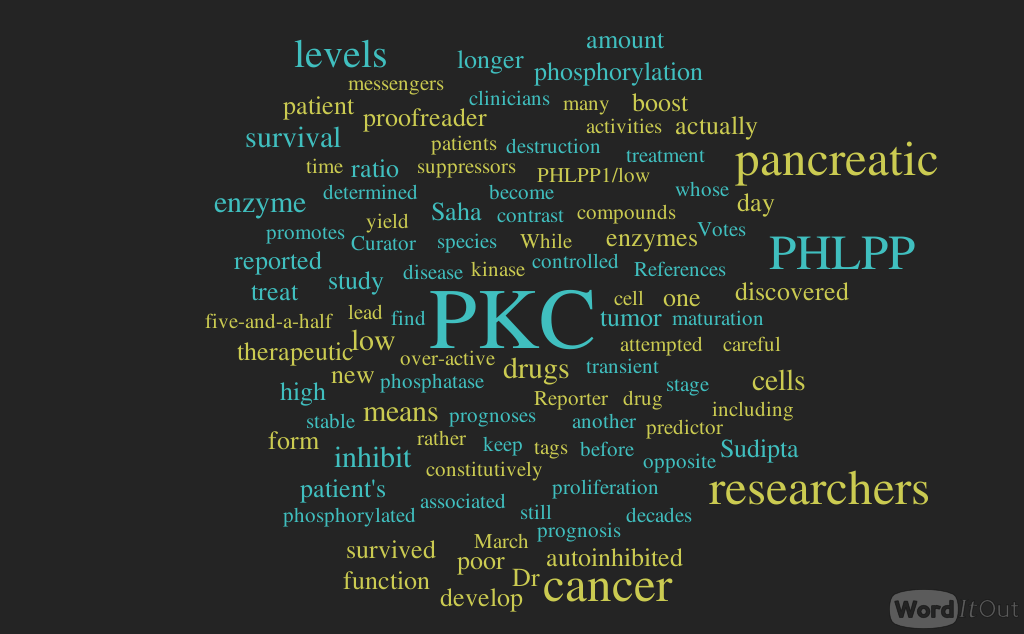
Protein kinase C (PKC) isozymes function as tumor suppressors in increasing contexts. These enzymes are crucial for a number of cellular activities, including cell survival, proliferation and migration — functions that must be carefully controlled if cells get out of control and form a tumor. In contrast to oncogenic kinases, whose function is acutely regulated by transient phosphorylation, PKC is constitutively phosphorylated following biosynthesis to yield a stable, autoinhibited enzyme that is reversibly activated by second messengers. Researchers at University of California San Diego School of Medicine found that another enzyme, called PHLPP1, acts as a “proofreader” to keep careful tabs on PKC.


The researchers discovered that in pancreatic cancer high PHLPP1 levels lead to low PKC levels, which is associated with poor patient survival. They reported that the phosphatase PHLPP1 opposes PKC phosphorylation during maturation, leading to the degradation of aberrantly active species that do not become autoinhibited. They discovered that any time an over-active PKC is inadvertently produced, the PHLPP1 “proofreader” tags it for destruction. That means the amount of PHLPP1 in patient’s cells determines his amount of PKC and it turns out those enzyme levels are especially important in pancreatic cancer.


This team of researchers reversed a 30-year paradigm when they reported evidence that PKC actually suppresses, rather than promotes, tumors. For decades before this revelation, many researchers had attempted to develop drugs that inhibit PKC as a means to treat cancer. Their study implied that anti-cancer drugs would actually need to do the opposite — boost PKC activity. This study sets the stage for clinicians to one day use a pancreatic cancer patient’s PHLPP1/PKC levels as a predictor for prognosis, and for researchers to develop new therapeutic drugs that inhibit PHLPP1 and boost PKC as a means to treat the disease.


The ratio — high PHLPP1/low PKC — correlated with poor prognoses: no pancreatic patient with low PKC in the database survived longer than five-and-a-half years. On the flip side, 50 percent of the patients with low PHLPP1/high PKC survived longer than that. While still in the earliest stages, the researchers hope that this information might one day aid pancreatic diagnostics and treatment. The researchers are next planning to screen chemical compounds to find those that inhibit PHLPP1 and restore PKC levels in low-PKC-pancreatic cancer cells in the lab. These might form the basis of a new therapeutic drug for pancreatic cancer.


References:


https://health.ucsd.edu/news/releases/Pages/2019-03-20-two-enzymes-linked-to-pancreatic-cancer-survival.aspx?elqTrackId=b6864b278958402787f61dd7b7624666


https://www.ncbi.nlm.nih.gov/pubmed/30904392


https://www.ncbi.nlm.nih.gov/pubmed/29513138


https://www.ncbi.nlm.nih.gov/pubmed/18511290


https://www.ncbi.nlm.nih.gov/pubmed/28476658


https://www.ncbi.nlm.nih.gov/pubmed/28283201


https://www.ncbi.nlm.nih.gov/pubmed/24231509


https://www.ncbi.nlm.nih.gov/pubmed/28112438


Read Full Post »

Digital Therapeutics: A Threat or Opportunity to Pharmaceuticals

Digital Therapeutics: A Threat or Opportunity to Pharmaceuticals

Reporter and Curator: Dr. Sudipta Saha, Ph.D.

3.3.7

3.3.7   Digital Therapeutics: A Threat or Opportunity to Pharmaceuticals, Volume 2 (Volume Two: Latest in Genomics Methodologies for Therapeutics: Gene Editing, NGS and BioInformatics, Simulations and the Genome Ontology), Part 2: CRISPR for Gene Editing and DNA Repair

Digital Therapeutics (DTx) have been defined by the Digital Therapeutics Alliance (DTA) as “delivering evidence based therapeutic interventions to patients, that are driven by software to prevent, manage or treat a medical disorder or disease”. They might come in the form of a smart phone or computer tablet app, or some form of a cloud-based service connected to a wearable device. DTx tend to fall into three groups. Firstly, developers and mental health researchers have built digital solutions which typically provide a form of software delivered Cognitive-Behaviour Therapies (CBT) that help patients change behaviours and develop coping strategies around their condition. Secondly there are the group of Digital Therapeutics which target lifestyle issues, such as diet, exercise and stress, that are associated with chronic conditions, and work by offering personalized support for goal setting and target achievement. Lastly, DTx can be designed to work in combination with existing medication or treatments, helping patients manage their therapies and focus on ensuring the therapy delivers the best outcomes possible.

Pharmaceutical companies are clearly trying to understand what DTx will mean for them. They want to analyze whether it will be a threat or opportunity to their business. For a long time, they have been providing additional support services to patients who take relatively expensive drugs for chronic conditions. A nurse-led service might provide visits and telephone support to diabetics for example who self-inject insulin therapies. But DTx will help broaden the scope of support services because they can be delivered cost-effectively, and importantly have the ability to capture real-world evidence on patient outcomes. They will no-longer be reserved for the most expensive drugs or therapies but could apply to a whole range of common treatments to boost their efficacy. Faced with the arrival of Digital Therapeutics either replacing drugs, or playing an important role alongside therapies, pharmaceutical firms have three options. They can either ignore DTx and focus on developing drug therapies as they have done; they can partner with a growing number of DTx companies to develop software and services complimenting their drugs; or they can start to build their own Digital Therapeutics to work with their products.

Digital Therapeutics will have knock-on effects in health industries, which may be as great as the introduction of therapeutic apps and services themselves. Together with connected health monitoring devices, DTx will offer a near constant stream of data about an individuals’ behavior, real world context around factors affecting their treatment in their everyday lives and emotional and physiological data such as blood pressure and blood sugar levels. Analysis of the resulting data will help create support services tailored to each patient. But who stores and analyses this data is an important question. Strong data governance will be paramount to maintaining trust, and the highly regulated pharmaceutical industry may not be best-placed to handle individual patient data. Meanwhile, the health sector (payers and healthcare providers) is becoming more focused on patient outcomes, and payment for value not volume. The future will say whether pharmaceutical firms enhance the effectiveness of drugs with DTx, or in some cases replace drugs with DTx.

Digital Therapeutics have the potential to change what the pharmaceutical industry sells: rather than a drug it will sell a package of drugs and digital services. But they will also alter who the industry sells to. Pharmaceutical firms have traditionally marketed drugs to doctors, pharmacists and other health professionals, based on the efficacy of a specific product. Soon it could be paid on the outcome of a bundle of digital therapies, medicines and services with a closer connection to both providers and patients. Apart from a notable few, most pharmaceutical firms have taken a cautious approach towards Digital Therapeutics. Now, it is to be observed that how the pharmaceutical companies use DTx to their benefit as well as for the benefit of the general population.

References:

https://eloqua.eyeforpharma.com/LP=23674?utm_campaign=EFP%2007MAR19%20EFP%20Database&utm_medium=email&utm_source=Eloqua&elqTrackId=73e21ae550de49ccabbf65fce72faea0&elq=818d76a54d894491b031fa8d1cc8d05c&elqaid=43259&elqat=1&elqCampaignId=24564

https://www.s3connectedhealth.com/resources/white-papers/digital-therapeutics-pharmas-threat-or-opportunity/

http://www.pharmatimes.com/web_exclusives/digital_therapeutics_will_transform_pharma_and_healthcare_industries_in_2019._heres_how._1273671

https://www.mckinsey.com/industries/pharmaceuticals-and-medical-products/our-insights/exploring-the-potential-of-digital-therapeutics

https://player.fm/series/digital-health-today-2404448/s9-081-scaling-digital-therapeutics-the-opportunities-and-challenges

Read Full Post »

Immunoediting can be a constant defense in the cancer landscape

Immuno-editing can be a constant defense in the cancer landscape, Volume 2 (Volume Two: Latest in Genomics Methodologies for Therapeutics: Gene Editing, NGS and BioInformatics, Simulations and the Genome Ontology), Part 1: Next Generation Sequencing (NGS)

Reporter and Curator: Dr. Sudipta Saha, Ph.D.


There are many considerations in the cancer immunoediting landscape of defense and regulation in the cancer hallmark biology. The cancer hallmark biology in concert with key controls of the HLA compatibility affinity mechanisms are pivotal in architecting a unique patient-centric therapeutic application. Selection of random immune products including neoantigens, antigens, antibodies and other vital immune elements creates a high level of uncertainty and risk of undesirable immune reactions. Immunoediting is a constant process. The human innate and adaptive forces can either trigger favorable or unfavorable immunoediting features. Cancer is a multi-disease entity. There are multi-factorial initiators in a certain disease process. Namely, environmental exposures, viral and / or microbiome exposure disequilibrium, direct harm to DNA, poor immune adaptability, inherent risk and an individual’s own vibration rhythm in life.


When a human single cell is crippled (Deranged DNA) with mixed up molecular behavior that is the initiator of the problem. A once normal cell now transitioned into full threatening molecular time bomb. In the modeling and creation of a tumor it all begins with the singular molecular crisis and crippling of a normal human cell. At this point it is either chop suey (mixed bit responses) or a productive defensive and regulation response and posture of the immune system. Mixed bits of normal DNA, cancer-laden DNA, circulating tumor DNA, circulating normal cells, circulating tumor cells, circulating immune defense cells, circulating immune inflammatory cells forming a moiety of normal and a moiety of mess. The challenge is to scavenge the mess and amplify the normal.


Immunoediting is a primary push-button feature that is definitely required to be hit when it comes to initiating immune defenses against cancer and an adaptation in favor of regression. As mentioned before that the tumor microenvironment is a “mixed bit” moiety, which includes elements of the immune system that can defend against circulating cancer cells and tumor growth. Personalized (Precision-Based) cancer vaccines must become the primary form of treatment in this case. Current treatment regimens in conventional therapy destroy immune defenses and regulation and create more serious complications observed in tumor progression, metastasis and survival. Commonly resistance to chemotherapeutic agents is observed. These personalized treatments will be developed in concert with cancer hallmark analytics and immunocentrics affinity and selection mapping. This mapping will demonstrate molecular pathway interface and HLA compatibility and adaptation with patientcentricity.

References:


https://www.linkedin.com/pulse/immunoediting-cancer-landscape-john-catanzaro/


https://www.cell.com/cell/fulltext/S0092-8674(16)31609-9


https://www.researchgate.net/publication/309432057_Circulating_tumor_cell_clusters_What_we_know_and_what_we_expect_Review


https://www.ncbi.nlm.nih.gov/pmc/articles/PMC4190561/


https://www.ncbi.nlm.nih.gov/pmc/articles/PMC5840207/


https://www.ncbi.nlm.nih.gov/pmc/articles/PMC5593672/


https://www.frontiersin.org/articles/10.3389/fimmu.2018.00414/full


https://www.ncbi.nlm.nih.gov/pmc/articles/PMC5593672/


https://www.ncbi.nlm.nih.gov/pmc/articles/PMC4190561/


https://www.ncbi.nlm.nih.gov/pmc/articles/PMC4388310/


https://www.linkedin.com/pulse/cancer-hallmark-analytics-omics-data-pathway-studio-review-catanzaro/


Read Full Post »

Reporter and Curator: Dr. Sudipta Saha, Ph.D.


The bacterial makeup of human milk is influenced by the mode of breastfeeding, according to a new study. Although previously considered sterile, breast milk is now known to contain a low abundance of bacteria. While the complexities of how maternal microbiota influence the infant microbiota are still unknown, this complex community of bacteria in breast milk may help to establish the infant gut microbiota. Disruptions in this process could alter the infant microbiota, causing predisposition to chronic diseases such as allergies, asthma, and obesity. While it’s unclear how the breast milk microbiome develops, there are two theories describing its origins. One theory speculates that it originates in the maternal mammary gland, while the other theory suggests that it is due to retrograde inoculation by the infant’s oral microbiome.


To address this gap in knowledge scientists carried out bacterial gene sequencing on milk samples from 393 healthy mothers three to four months after giving birth. They used this information to examine how the milk microbiota composition is affected by maternal factors, early life events, breastfeeding practices, and other milk components. Among the many factors analyzed, the mode of breastfeeding (with or without a pump) was the only consistent factor directly associated with the milk microbiota composition. Specifically, indirect breastfeeding was associated with a higher abundance of potential opportunistic pathogens, such as Stenotrophomonas and Pseudomonadaceae. By contrast, direct breastfeeding without a pump was associated with microbes typically found in the mouth, as well as higher overall bacterial richness and diversity. Taken together, the findings suggest that direct breastfeeding facilitates the acquisition of oral microbiota from infants, whereas indirect breastfeeding leads to enrichment with environmental (pump-associated) bacteria.


The researchers argued that this study supports the theory that the breast milk microbiome is due to retrograde inoculation. Their findings indicate that the act of pumping and contact with the infant oral microbiome influences the milk microbiome, though they noted more research is needed. In future studies, the researchers will further explore the composition and function of the milk microbiota. In addition to bacteria, they will profile fungi in the milk samples. They also plan to investigate how the milk microbiota influences both the gut microbiota of infants and infant development and health. Specifically, their projects will examine the association of milk microbiota with infant growth, asthma, and allergies. This work could have important implications for microbiota-based strategies for early-life prevention of chronic conditions.


References:


https://www.genomeweb.com/sequencing/human-breast-milk-microbiome-affected-mode-feeding#.XIOH0igzZPY


http://childstudy.ca/2019/02/13/breastmilk-microbiome-linked-to-method-of-feeding/


https://gizmodo.com/pumping-breast-milk-changes-its-microbiome-1832568169


https://www.sciencedaily.com/releases/2019/02/190213124445.htm


https://www.cell.com/cell-host-microbe/fulltext/S1931-3128(19)30049-6


https://www.unicef.org.uk/babyfriendly/news-and-research/baby-friendly-research/infant-health-research/epigenetics-microbiome-research/

Read Full Post »

Reporter and Curator: Dr. Sudipta Saha, Ph.D.


Research about marijuana and fertility is limited but some previous studies suggested that it might harm semen quality. Smoking of any type is also known to be a risk factor for male infertility. So, men who have smoked cannabis are expected to have worse measures of fertility but the data from a recent study suggested the opposite. The finding contradicts all conventional knowledge on how weed affects sperm. This may be because previous research typically focused on men with drug abuse history but this present study simply asked men if they had smoked more than two joints in their life.


Analysis of 1,143 semen samples from 662 men collected between 2000 and 2017 at the Fertility Clinic at Massachusetts General Hospital showed that those who had smoked weed at some point in their life had a mean sperm concentration of 62.7 million sperm per milliliter (mL) of ejaculate, while men who avoided marijuana entirely had mean concentrations of 45.4 million/mL. Added to this only 5% of weed smokers had sperm concentrations below the 15 million/mL threshold the World Health Organization has set for a “normal” sperm count, versus 12% of men who never smoked marijuana.


The study has some imperfections such as the participants are not necessarily representative of the general population. They were predominantly college educated men with a mean age of 36, and were all seeking treatment at a fertility center. Further research is needed to support the findings. Two possibilities are put forward by the researchers as the reason behind such data. The first is that low levels of marijuana could have a positive effect on the endocannabinoid system, the neurotransmitters in the nervous system that bind to cannabinoid receptors, and are known to regulate fertility. The second is that may be weed-smokers are just bigger risk takers and men with higher testosterone levels and thus have better sperm count.


But, there’s certainly no medical recommendation to smoke weed as a fertility treatment but this study, at least, suggests that a little marijuana doesn’t hurt and might benefit sperm production in some way. But, the researchers specified that their finding does not necessarily mean that smoking cannabis increases the chances of fatherhood.


References:


https://www.ncbi.nlm.nih.gov/pubmed/30726923


https://www.bloomberg.com/amp/news/articles/2019-02-06/cannabis-smoking-associated-with-higher-sperm-count-study-finds?__twitter_impression=true


https://qz.com/1543564/smoking-weed-linked-to-higher-sperm-count-in-a-harvard-study/


https://www.thestar.com.my/news/world/2019/02/06/cannabis-smoking-associated-with-higher-sperm-count-study-finds/


http://time.com/5520421/smoking-marijuana-sperm-fertility/


https://www.health.com/infertility/marijuana-sperm-count

Read Full Post »

Reporter and Curator: Dr. Sudipta Saha, Ph.D.


Stroke is a leading cause of death worldwide and the most common cause of long-term disability amongst adults, more particularly in patients with diabetes mellitus and arterial hypertension. Increasing evidence suggests that disordered physiological variables following acute ischaemic stroke, especially hyperglycaemia, adversely affect outcomes.


Post-stroke hyperglycaemia is common (up to 50% of patients) and may be rather prolonged, regardless of diabetes status. A substantial body of evidence has demonstrated that hyperglycaemia has a deleterious effect upon clinical and morphological stroke outcomes. Therefore, hyperglycaemia represents an attractive physiological target for acute stroke therapies.


However, whether intensive glycaemic manipulation positively influences the fate of ischaemic tissue remains unknown. One major adverse event of management of hyperglycaemia with insulin (either glucose-potassium-insulin infusions or intensive insulin therapy) is the occurrence of hypoglycaemia, which can also induce cerebral damage.


Doctors all over the world have debated whether intensive glucose management, which requires the use of IV insulin to bring blood sugar levels down to 80-130 mg/dL, or standard glucose control using insulin shots, which aims to get glucose below 180 mg/dL, lead to better outcomes after stroke.


A period of hyperglycemia is common, with elevated blood glucose in the periinfarct period consistently linked with poor outcome in patients with and without diabetes. The mechanisms that underlie this deleterious effect of dysglycemia on ischemic neuronal tissue remain to be established, although in vitro research, functional imaging, and animal work have provided clues.


While prompt correction of hyperglycemia can be achieved, trials of acute insulin administration in stroke and other critical care populations have been equivocal. Diabetes mellitus and hyperglycemia per se are associated with poor cerebrovascular health, both in terms of stroke risk and outcome thereafter.


Interventions to control blood sugar are available but evidence of cerebrovascular efficacy are lacking. In diabetes, glycemic control should be part of a global approach to vascular risk while in acute stroke, theoretical data suggest intervention to lower markedly elevated blood glucose may be of benefit, especially if thrombolysis is administered.


Both hypoglycaemia and hyperglycaemia may lead to further brain injury and clinical deterioration; that is the reason these conditions should be avoided after stroke. Yet, when correcting hyperglycaemia, great care should be taken not to switch the patient into hypoglycaemia, and subsequently aggressive insulin administration treatment should be avoided.


Early identification and prompt management of hyperglycaemia, especially in acute ischaemic stroke, is recommended. Although the appropriate level of blood glucose during acute stroke is still debated, a reasonable approach is to keep the patient in a mildly hyperglycaemic state, rather than risking hypoglycaemia, using continuous glucose monitoring.


The primary results from the Stroke Hyperglycemia Insulin Network Effort (SHINE) study, a large, multisite clinical study showed that intensive glucose management did not improve functional outcomes at 90 days after stroke compared to standard glucose therapy. In addition, intense glucose therapy increased the risk of very low blood glucose (hypoglycemia) and required a higher level of care such as increased supervision from nursing staff, compared to standard treatment.


References:


https://www.nih.gov/news-events/news-releases/nih-study-provides-answer-long-held-debate-blood-sugar-control-after-stroke


https://www.ncbi.nlm.nih.gov/pubmed/27873213


https://www.ncbi.nlm.nih.gov/pubmed/19342845


https://www.ncbi.nlm.nih.gov/pubmed/20491782


https://www.ncbi.nlm.nih.gov/pubmed/21211743


https://www.ncbi.nlm.nih.gov/pubmed/18690907


Read Full Post »

Morbid Obesity linked to socioeconomic status was in a Twin Pairs Research on effects of genes and environment in 560 common conditions – Disease and Health by ZIP code (Environment) and genetic code (Human Genome)

Reporter: Aviva Lev-Ari, PhD, RN


  • Senior study author Chirag Patel, assistant professor of biomedical informatics in the Blavatnik Institute at HMS.
  • Co-investigators were Braden Tierney and Arjun Manrai of Harvard Medical School, and
  • Jian Yang and Peter Visscher of the University of Queensland, Australia.

Data sets for the study were provided by Aetna insurance company. Aetna had no funding role in the study. The research was supported by the Australian National Health and Medical Research Council (grants 1078037 and 1113400), National Science Foundation (grant 1636870), and Sylvia and Charles Viertel Charitable Foundation.


Detailed study results available here: http://apps.chiragjpgroup.org/catch/

Conclusions 

Nearly 40 percent of the diseases in the study (225 of 560) had a genetic component, while 25 percent (138) were driven at least in part by factors stemming from sharing the same household, social influences, and the like. Cognitive disorders demonstrated the greatest degree of heritability — four out of five diseases showed a genetic component — while connective tissue diseases had the lowest degree of genetic influence. Of all disease categories, eye disorders carried the highest degree of environmental influence, with 27 of 42 diseases showing such effect. They were followed by respiratory diseases, with 34 out of 48 conditions showing an effect from sharing a household. The disease category with lowest environmental influence was reproductive illnesses, with three of 18 conditions showing such effect, and cognitive conditions, with two out of five showing an influence.

Overall, socioeconomic status, climate conditions, and air quality in each twin pair’s ZIP code had a far weaker effect on disease than genes and shared environment — a composite measure of external, nongenetic influences including family and lifestyle, household, and neighborhood.

In total, 145 of 560 diseases were modestly influenced by socio-economic status derived by ZIP code. Thirty-six diseases were influenced at least in part by air quality, and 117 were affected by changes in temperature. The condition with the strongest potential link to socioeconomic status was morbid obesity. While obesity undoubtedly has a genetic component, the researchers said, the findings raise an important question about the influence of environment on genetic predispositions.

“This finding opens up a whole slew of questions, including whether and how a change in socioeconomic status and lifestyle might compare against genetic predisposition to obesity,” Patel said.

Lead poisoning was, not surprisingly, entirely driven by environment. Conditions such as flu and Lyme disease were, again unsurprisingly, affected by differences in climate.

When researchers looked at classes of diseases by monthly health care spending, they found that both genes and environment significantly contributed to cost of care, with the two being nearly equal drivers of spending. Almost 60 percent of monthly health spending could be predicted by analyzing genetic and environmental factors.

Large-scale analysis like this study can help forecast long-term spending for various conditions and inform resource allocation and policy decisions, the researchers said.

Detailed study results available here: http://apps.chiragjpgroup.org/catch/

SOURCE

http://apps.chiragjpgroup.org/catch/

https://news.harvard.edu/gazette/story/2019/01/researchers-able-to-determine-the-effects-of-genes-and-environment-in-560-common-conditions/?utm_source=SilverpopMailing&utm_medium=email&utm_campaign=Daily%20Gazette%202%20stories%201%20event%20(no%20Seen%20or%20Heard)%20(1)

Read Full Post »

« Newer Posts - Older Posts »