Feeds:
Posts
Comments

Archive for the ‘Personalized and Precision Medicine & Genomic Research’ Category

Summary and Perspectives: Impairments in Pathological States: Endocrine Disorders, Stress Hypermetabolism and Cancer

Summary and Perspectives: Impairments in Pathological States: Endocrine Disorders, Stress Hypermetabolism and Cancer

Author and Curator: Larry H. Bernstein, MD, FCAP

Article ID #160: Summary and Perspectives: Impairments in Pathological States: Endocrine Disorders, Stress Hypermetabolism and Cancer. Published on 11/9/2014

WordCloud Image Produced by Adam Tubman

This summary is the last of a series on the impact of transcriptomics, proteomics, and metabolomics on disease investigation, and the sorting and integration of genomic signatures and metabolic signatures to explain phenotypic relationships in variability and individuality of response to disease expression and how this leads to  pharmaceutical discovery and personalized medicine.  We have unquestionably better tools at our disposal than has ever existed in the history of mankind, and an enormous knowledge-base that has to be accessed.  I shall conclude here these discussions with the powerful contribution to and current knowledge pertaining to biochemistry, metabolism, protein-interactions, signaling, and the application of the -OMICS to diseases and drug discovery at this time.

The Ever-Transcendent Cell

Deriving physiologic first principles By John S. Torday | The Scientist Nov 1, 2014
http://www.the-scientist.com/?articles.view/articleNo/41282/title/The-Ever-Transcendent-Cell/

Both the developmental and phylogenetic histories of an organism describe the evolution of physiology—the complex of metabolic pathways that govern the function of an organism as a whole. The necessity of establishing and maintaining homeostatic mechanisms began at the cellular level, with the very first cells, and homeostasis provides the underlying selection pressure fueling evolution.

While the events leading to the formation of the first functioning cell are debatable, a critical one was certainly the formation of simple lipid-enclosed vesicles, which provided a protected space for the evolution of metabolic pathways. Protocells evolved from a common ancestor that experienced environmental stresses early in the history of cellular development, such as acidic ocean conditions and low atmospheric oxygen levels, which shaped the evolution of metabolism.

The reduction of evolution to cell biology may answer the perennially unresolved question of why organisms return to their unicellular origins during the life cycle.

As primitive protocells evolved to form prokaryotes and, much later, eukaryotes, changes to the cell membrane occurred that were critical to the maintenance of chemiosmosis, the generation of bioenergy through the partitioning of ions. The incorporation of cholesterol into the plasma membrane surrounding primitive eukaryotic cells marked the beginning of their differentiation from prokaryotes. Cholesterol imparted more fluidity to eukaryotic cell membranes, enhancing functionality by increasing motility and endocytosis. Membrane deformability also allowed for increased gas exchange.

Acidification of the oceans by atmospheric carbon dioxide generated high intracellular calcium ion concentrations in primitive aquatic eukaryotes, which had to be lowered to prevent toxic effects, namely the aggregation of nucleotides, proteins, and lipids. The early cells achieved this by the evolution of calcium channels composed of cholesterol embedded within the cell’s plasma membrane, and of internal membranes, such as that of the endoplasmic reticulum, peroxisomes, and other cytoplasmic organelles, which hosted intracellular chemiosmosis and helped regulate calcium.

As eukaryotes thrived, they experienced increasingly competitive pressure for metabolic efficiency. Engulfed bacteria, assimilated as mitochondria, provided more bioenergy. As the evolution of eukaryotic organisms progressed, metabolic cooperation evolved, perhaps to enable competition with biofilm-forming, quorum-sensing prokaryotes. The subsequent appearance of multicellular eukaryotes expressing cellular growth factors and their respective receptors facilitated cell-cell signaling, forming the basis for an explosion of multicellular eukaryote evolution, culminating in the metazoans.

Casting a cellular perspective on evolution highlights the integration of genotype and phenotype. Starting from the protocell membrane, the functional homolog for all complex metazoan organs, it offers a way of experimentally determining the role of genes that fostered evolution based on the ontogeny and phylogeny of cellular processes that can be traced back, in some cases, to our last universal common ancestor.  ….

As eukaryotes thrived, they experienced increasingly competitive pressure for metabolic efficiency. Engulfed bacteria, assimilated as mitochondria, provided more bioenergy. As the evolution of eukaryotic organisms progressed, metabolic cooperation evolved, perhaps to enable competition with biofilm-forming, quorum-sensing prokaryotes. The subsequent appearance of multicellular eukaryotes expressing cellular growth factors and their respective receptors facilitated cell-cell signaling, forming the basis for an explosion of multicellular eukaryote evolution, culminating in the metazoans.

Casting a cellular perspective on evolution highlights the integration of genotype and phenotype. Starting from the protocell membrane, the functional homolog for all complex metazoan organs, it offers a way of experimentally determining the role of genes that fostered evolution based on the ontogeny and phylogeny of cellular processes that can be traced back, in some cases, to our last universal common ancestor.

Given that the unicellular toolkit is complete with all the traits necessary for forming multicellular organisms (Science, 301:361-63, 2003), it is distinctly possible that metazoans are merely permutations of the unicellular body plan. That scenario would clarify a lot of puzzling biology: molecular commonalities between the skin, lung, gut, and brain that affect physiology and pathophysiology exist because the cell membranes of unicellular organisms perform the equivalents of these tissue functions, and the existence of pleiotropy—one gene affecting many phenotypes—may be a consequence of the common unicellular source for all complex biologic traits.  …

The cell-molecular homeostatic model for evolution and stability addresses how the external environment generates homeostasis developmentally at the cellular level. It also determines homeostatic set points in adaptation to the environment through specific effectors, such as growth factors and their receptors, second messengers, inflammatory mediators, crossover mutations, and gene duplications. This is a highly mechanistic, heritable, plastic process that lends itself to understanding evolution at the cellular, tissue, organ, system, and population levels, mediated by physiologically linked mechanisms throughout, without having to invoke random, chance mechanisms to bridge different scales of evolutionary change. In other words, it is an integrated mechanism that can often be traced all the way back to its unicellular origins.

The switch from swim bladder to lung as vertebrates moved from water to land is proof of principle that stress-induced evolution in metazoans can be understood from changes at the cellular level.

http://www.the-scientist.com/Nov2014/TE_21.jpg

A MECHANISTIC BASIS FOR LUNG DEVELOPMENT: Stress from periodic atmospheric hypoxia (1) during vertebrate adaptation to land enhances positive selection of the stretch-regulated parathyroid hormone-related protein (PTHrP) in the pituitary and adrenal glands. In the pituitary (2), PTHrP signaling upregulates the release of adrenocorticotropic hormone (ACTH) (3), which stimulates the release of glucocorticoids (GC) by the adrenal gland (4). In the adrenal gland, PTHrP signaling also stimulates glucocorticoid production of adrenaline (5), which in turn affects the secretion of lung surfactant, the distension of alveoli, and the perfusion of alveolar capillaries (6). PTHrP signaling integrates the inflation and deflation of the alveoli with surfactant production and capillary perfusion.  THE SCIENTIST STAFF

From a cell-cell signaling perspective, two critical duplications in genes coding for cell-surface receptors occurred during this period of water-to-land transition—in the stretch-regulated parathyroid hormone-related protein (PTHrP) receptor gene and the β adrenergic (βA) receptor gene. These gene duplications can be disassembled by following their effects on vertebrate physiology backwards over phylogeny. PTHrP signaling is necessary for traits specifically relevant to land adaptation: calcification of bone, skin barrier formation, and the inflation and distention of lung alveoli. Microvascular shear stress in PTHrP-expressing organs such as bone, skin, kidney, and lung would have favored duplication of the PTHrP receptor, since sheer stress generates radical oxygen species (ROS) known to have this effect and PTHrP is a potent vasodilator, acting as an epistatic balancing selection for this constraint.

Positive selection for PTHrP signaling also evolved in the pituitary and adrenal cortex (see figure on this page), stimulating the secretion of ACTH and corticoids, respectively, in response to the stress of land adaptation. This cascade amplified adrenaline production by the adrenal medulla, since corticoids passing through it enzymatically stimulate adrenaline synthesis. Positive selection for this functional trait may have resulted from hypoxic stress that arose during global episodes of atmospheric hypoxia over geologic time. Since hypoxia is the most potent physiologic stressor, such transient oxygen deficiencies would have been acutely alleviated by increasing adrenaline levels, which would have stimulated alveolar surfactant production, increasing gas exchange by facilitating the distension of the alveoli. Over time, increased alveolar distension would have generated more alveoli by stimulating PTHrP secretion, impelling evolution of the alveolar bed of the lung.

This scenario similarly explains βA receptor gene duplication, since increased density of the βA receptor within the alveolar walls was necessary for relieving another constraint during the evolution of the lung in adaptation to land: the bottleneck created by the existence of a common mechanism for blood pressure control in both the lung alveoli and the systemic blood pressure. The pulmonary vasculature was constrained by its ability to withstand the swings in pressure caused by the systemic perfusion necessary to sustain all the other vital organs. PTHrP is a potent vasodilator, subserving the blood pressure constraint, but eventually the βA receptors evolved to coordinate blood pressure in both the lung and the periphery.

Gut Microbiome Heritability

Analyzing data from a large twin study, researchers have homed in on how host genetics can shape the gut microbiome.
By Tracy Vence | The Scientist Nov 6, 2014

Previous research suggested host genetic variation can influence microbial phenotype, but an analysis of data from a large twin study published in Cell today (November 6) solidifies the connection between human genotype and the composition of the gut microbiome. Studying more than 1,000 fecal samples from 416 monozygotic and dizygotic twin pairs, Cornell University’s Ruth Ley and her colleagues have homed in on one bacterial taxon, the family Christensenellaceae, as the most highly heritable group of microbes in the human gut. The researchers also found that Christensenellaceae—which was first described just two years ago—is central to a network of co-occurring heritable microbes that is associated with lean body mass index (BMI).  …

Of particular interest was the family Christensenellaceae, which was the most heritable taxon among those identified in the team’s analysis of fecal samples obtained from the TwinsUK study population.

While microbiologists had previously detected 16S rRNA sequences belonging to Christensenellaceae in the human microbiome, the family wasn’t named until 2012. “People hadn’t looked into it, partly because it didn’t have a name . . . it sort of flew under the radar,” said Ley.

Ley and her colleagues discovered that Christensenellaceae appears to be the hub in a network of co-occurring heritable taxa, which—among TwinsUK participants—was associated with low BMI. The researchers also found that Christensenellaceae had been found at greater abundance in low-BMI twins in older studies.

To interrogate the effects of Christensenellaceae on host metabolic phenotype, the Ley’s team introduced lean and obese human fecal samples into germ-free mice. They found animals that received lean fecal samples containing more Christensenellaceae showed reduced weight gain compared with their counterparts. And treatment of mice that had obesity-associated microbiomes with one member of the Christensenellaceae family, Christensenella minuta, led to reduced weight gain.   …

Ley and her colleagues are now focusing on the host alleles underlying the heritability of the gut microbiome. “We’re running a genome-wide association analysis to try to find genes—particular variants of genes—that might associate with higher levels of these highly heritable microbiota.  . . . Hopefully that will point us to possible reasons they’re heritable,” she said. “The genes will guide us toward understanding how these relationships are maintained between host genotype and microbiome composition.”

J.K. Goodrich et al., “Human genetics shape the gut microbiome,” Cell,  http://dx.doi.org:/10.1016/j.cell.2014.09.053, 2014.

Light-Operated Drugs

Scientists create a photosensitive pharmaceutical to target a glutamate receptor.
By Ruth Williams | The Scentist Nov 1, 2014
http://www.the-scientist.com/?articles.view/articleNo/41279/title/Light-Operated-Drugs/

light operated drugs MO1

light operated drugs MO1

http://www.the-scientist.com/Nov2014/MO1.jpg

The desire for temporal and spatial control of medications to minimize side effects and maximize benefits has inspired the development of light-controllable drugs, or optopharmacology. Early versions of such drugs have manipulated ion channels or protein-protein interactions, “but never, to my knowledge, G protein–coupled receptors [GPCRs], which are one of the most important pharmacological targets,” says Pau Gorostiza of the Institute for Bioengineering of Catalonia, in Barcelona.

Gorostiza has taken the first step toward filling that gap, creating a photosensitive inhibitor of the metabotropic glutamate 5 (mGlu5) receptor—a GPCR expressed in neurons and implicated in a number of neurological and psychiatric disorders. The new mGlu5 inhibitor—called alloswitch-1—is based on a known mGlu receptor inhibitor, but the simple addition of a light-responsive appendage, as had been done for other photosensitive drugs, wasn’t an option. The binding site on mGlu5 is “extremely tight,” explains Gorostiza, and would not accommodate a differently shaped molecule. Instead, alloswitch-1 has an intrinsic light-responsive element.

In a human cell line, the drug was active under dim light conditions, switched off by exposure to violet light, and switched back on by green light. When Gorostiza’s team administered alloswitch-1 to tadpoles, switching between violet and green light made the animals stop and start swimming, respectively.

The fact that alloswitch-1 is constitutively active and switched off by light is not ideal, says Gorostiza. “If you are thinking of therapy, then in principle you would prefer the opposite,” an “on” switch. Indeed, tweaks are required before alloswitch-1 could be a useful drug or research tool, says Stefan Herlitze, who studies ion channels at Ruhr-Universität Bochum in Germany. But, he adds, “as a proof of principle it is great.” (Nat Chem Biol, http://dx.doi.org:/10.1038/nchembio.1612, 2014)

Enhanced Enhancers

The recent discovery of super-enhancers may offer new drug targets for a range of diseases.
By Eric Olson | The Scientist Nov 1, 2014
http://www.the-scientist.com/?articles.view/articleNo/41281/title/Enhanced-Enhancers/

To understand disease processes, scientists often focus on unraveling how gene expression in disease-associated cells is altered. Increases or decreases in transcription—as dictated by a regulatory stretch of DNA called an enhancer, which serves as a binding site for transcription factors and associated proteins—can produce an aberrant composition of proteins, metabolites, and signaling molecules that drives pathologic states. Identifying the root causes of these changes may lead to new therapeutic approaches for many different diseases.

Although few therapies for human diseases aim to alter gene expression, the outstanding examples—including antiestrogens for hormone-positive breast cancer, antiandrogens for prostate cancer, and PPAR-γ agonists for type 2 diabetes—demonstrate the benefits that can be achieved through targeting gene-control mechanisms.  Now, thanks to recent papers from laboratories at MIT, Harvard, and the National Institutes of Health, researchers have a new, much bigger transcriptional target: large DNA regions known as super-enhancers or stretch-enhancers. Already, work on super-enhancers is providing insights into how gene-expression programs are established and maintained, and how they may go awry in disease.  Such research promises to open new avenues for discovering medicines for diseases where novel approaches are sorely needed.

Super-enhancers cover stretches of DNA that are 10- to 100-fold longer and about 10-fold less abundant in the genome than typical enhancer regions (Cell, 153:307-19, 2013). They also appear to bind a large percentage of the transcriptional machinery compared to typical enhancers, allowing them to better establish and enforce cell-type specific transcriptional programs (Cell, 153:320-34, 2013).

Super-enhancers are closely associated with genes that dictate cell identity, including those for cell-type–specific master regulatory transcription factors. This observation led to the intriguing hypothesis that cells with a pathologic identity, such as cancer cells, have an altered gene expression program driven by the loss, gain, or altered function of super-enhancers.

Sure enough, by mapping the genome-wide location of super-enhancers in several cancer cell lines and from patients’ tumor cells, we and others have demonstrated that genes located near super-enhancers are involved in processes that underlie tumorigenesis, such as cell proliferation, signaling, and apoptosis.

Super-enhancers cover stretches of DNA that are 10- to 100-fold longer and about 10-fold less abundant in the genome than typical enhancer regions.

Genome-wide association studies (GWAS) have found that disease- and trait-associated genetic variants often occur in greater numbers in super-enhancers (compared to typical enhancers) in cell types involved in the disease or trait of interest (Cell, 155:934-47, 2013). For example, an enrichment of fasting glucose–associated single nucleotide polymorphisms (SNPs) was found in the stretch-enhancers of pancreatic islet cells (PNAS, 110:17921-26, 2013). Given that some 90 percent of reported disease-associated SNPs are located in noncoding regions, super-enhancer maps may be extremely valuable in assigning functional significance to GWAS variants and identifying target pathways.

Because only 1 to 2 percent of active genes are physically linked to a super-enhancer, mapping the locations of super-enhancers can be used to pinpoint the small number of genes that may drive the biology of that cell. Differential super-enhancer maps that compare normal cells to diseased cells can be used to unravel the gene-control circuitry and identify new molecular targets, in much the same way that somatic mutations in tumor cells can point to oncogenic drivers in cancer. This approach is especially attractive in diseases for which an incomplete understanding of the pathogenic mechanisms has been a barrier to discovering effective new therapies.

Another therapeutic approach could be to disrupt the formation or function of super-enhancers by interfering with their associated protein components. This strategy could make it possible to downregulate multiple disease-associated genes through a single molecular intervention. A group of Boston-area researchers recently published support for this concept when they described inhibited expression of cancer-specific genes, leading to a decrease in cancer cell growth, by using a small molecule inhibitor to knock down a super-enhancer component called BRD4 (Cancer Cell, 24:777-90, 2013).  More recently, another group showed that expression of the RUNX1 transcription factor, involved in a form of T-cell leukemia, can be diminished by treating cells with an inhibitor of a transcriptional kinase that is present at the RUNX1 super-enhancer (Nature, 511:616-20, 2014).

Fungal effector Ecp6 outcompetes host immune receptor for chitin binding through intrachain LysM dimerization 
Andrea Sánchez-Vallet, et al.   eLife 2013;2:e00790 http://elifesciences.org/content/2/e00790#sthash.LnqVMJ9p.dpuf

LysM effector

LysM effector

http://img.scoop.it/ZniCRKQSvJOG18fHbb4p0Tl72eJkfbmt4t8yenImKBVvK0kTmF0xjctABnaLJIm9

While host immune receptors

  • detect pathogen-associated molecular patterns to activate immunity,
  • pathogens attempt to deregulate host immunity through secreted effectors.

Fungi employ LysM effectors to prevent

  • recognition of cell wall-derived chitin by host immune receptors

Structural analysis of the LysM effector Ecp6 of

  • the fungal tomato pathogen Cladosporium fulvum reveals
  • a novel mechanism for chitin binding,
  • mediated by intrachain LysM dimerization,

leading to a chitin-binding groove that is deeply buried in the effector protein.

This composite binding site involves

  • two of the three LysMs of Ecp6 and
  • mediates chitin binding with ultra-high (pM) affinity.

The remaining singular LysM domain of Ecp6 binds chitin with

  • low micromolar affinity but can nevertheless still perturb chitin-triggered immunity.

Conceivably, the perturbation by this LysM domain is not established through chitin sequestration but possibly through interference with the host immune receptor complex.

Mutated Genes in Schizophrenia Map to Brain Networks
From www.nih.gov –  Sep 3, 2013

Previous studies have shown that many people with schizophrenia have de novo, or new, genetic mutations. These misspellings in a gene’s DNA sequence

  • occur spontaneously and so aren’t shared by their close relatives.

Dr. Mary-Claire King of the University of Washington in Seattle and colleagues set out to

  • identify spontaneous genetic mutations in people with schizophrenia and
  • to assess where and when in the brain these misspelled genes are turned on, or expressed.

The study was funded in part by NIH’s National Institute of Mental Health (NIMH). The results were published in the August 1, 2013, issue of Cell.

The researchers sequenced the exomes (protein-coding DNA regions) of 399 people—105 with schizophrenia plus their unaffected parents and siblings. Gene variations
that were found in a person with schizophrenia but not in either parent were considered spontaneous.

The likelihood of having a spontaneous mutation was associated with

  • the age of the father in both affected and unaffected siblings.

Significantly more mutations were found in people

  • whose fathers were 33-45 years at the time of conception compared to 19-28 years.

Among people with schizophrenia, the scientists identified

  • 54 genes with spontaneous mutations
  • predicted to cause damage to the function of the protein they encode.

The researchers used newly available database resources that show

  • where in the brain and when during development genes are expressed.

The genes form an interconnected expression network with many more connections than

  • that of the genes with spontaneous damaging mutations in unaffected siblings.

The spontaneously mutated genes in people with schizophrenia

  • were expressed in the prefrontal cortex, a region in the front of the brain.

The genes are known to be involved in important pathways in brain development. Fifty of these genes were active

  • mainly during the period of fetal development.

“Processes critical for the brain’s development can be revealed by the mutations that disrupt them,” King says. “Mutations can lead to loss of integrity of a whole pathway,
not just of a single gene.”

These findings support the concept that schizophrenia may result, in part, from

  • disruptions in development in the prefrontal cortex during fetal development.

James E. Darnell’s “Reflections”

A brief history of the discovery of RNA and its role in transcription — peppered with career advice
By Joseph P. Tiano

James Darnell begins his Journal of Biological Chemistry “Reflections” article by saying, “graduate students these days

  • have to swim in a sea virtually turgid with the daily avalanche of new information and
  • may be momentarily too overwhelmed to listen to the aging.

I firmly believe how we learned what we know can provide useful guidance for how and what a newcomer will learn.” Considering his remarkable discoveries in

  • RNA processing and eukaryotic transcriptional regulation

spanning 60 years of research, Darnell’s advice should be cherished. In his second year at medical school at Washington University School of Medicine in St. Louis, while
studying streptococcal disease in Robert J. Glaser’s laboratory, Darnell realized he “loved doing the experiments” and had his first “career advancement event.”
He and technician Barbara Pesch discovered that in vivo penicillin treatment killed streptococci only in the exponential growth phase and not in the stationary phase. These
results were published in the Journal of Clinical Investigation and earned Darnell an interview with Harry Eagle at the National Institutes of Health.

Darnell arrived at the NIH in 1956, shortly after Eagle  shifted his research interest to developing his minimal essential cell culture medium, still used. Eagle, then studying cell metabolism, suggested that Darnell take up a side project on poliovirus replication in mammalian cells in collaboration with Robert I. DeMars. DeMars’ Ph.D.
adviser was also James  Watson’s mentor, so Darnell met Watson, who invited him to give a talk at Harvard University, which led to an assistant professor position
at the MIT under Salvador Luria. A take-home message is to embrace side projects, because you never know where they may lead: this project helped to shape
his career.

Darnell arrived in Boston in 1961. Following the discovery of DNA’s structure in 1953, the world of molecular biology was turning to RNA in an effort to understand how
proteins are made. Darnell’s background in virology (it was discovered in 1960 that viruses used RNA to replicate) was ideal for the aim of his first independent lab:
exploring mRNA in animal cells grown in culture. While at MIT, he developed a new technique for purifying RNA along with making other observations

  • suggesting that nonribosomal cytoplasmic RNA may be involved in protein synthesis.

When Darnell moved to Albert Einstein College of Medicine for full professorship in 1964,  it was hypothesized that heterogenous nuclear RNA was a precursor to mRNA.
At Einstein, Darnell discovered RNA processing of pre-tRNAs and demonstrated for the first time

  • that a specific nuclear RNA could represent a possible specific mRNA precursor.

In 1967 Darnell took a position at Columbia University, and it was there that he discovered (simultaneously with two other labs) that

  • mRNA contained a polyadenosine tail.

The three groups all published their results together in the Proceedings of the National Academy of Sciences in 1971. Shortly afterward, Darnell made his final career move
four short miles down the street to Rockefeller University in 1974.

Over the next 35-plus years at Rockefeller, Darnell never strayed from his original research question: How do mammalian cells make and control the making of different
mRNAs? His work was instrumental in the collaborative discovery of

  • splicing in the late 1970s and
  • in identifying and cloning many transcriptional activators.

Perhaps his greatest contribution during this time, with the help of Ernest Knight, was

  • the discovery and cloning of the signal transducers and activators of transcription (STAT) proteins.

And with George Stark, Andy Wilks and John Krowlewski, he described

  • cytokine signaling via the JAK-STAT pathway.

Darnell closes his “Reflections” with perhaps his best advice: Do not get too wrapped up in your own work, because “we are all needed and we are all in this together.”

Darnell Reflections - James_Darnell

Darnell Reflections – James_Darnell

http://www.asbmb.org/assets/0/366/418/428/85528/85529/85530/8758cb87-84ff-42d6-8aea-96fda4031a1b.jpg

Recent findings on presenilins and signal peptide peptidase

By Dinu-Valantin Bălănescu

γ-secretase and SPP

γ-secretase and SPP

Fig. 1 from the minireview shows a schematic depiction of γ-secretase and SPP

http://www.asbmb.org/assets/0/366/418/428/85528/85529/85530/c2de032a-daad-41e5-ba19-87a17bd26362.png

GxGD proteases are a family of intramembranous enzymes capable of hydrolyzing

  • the transmembrane domain of some integral membrane proteins.

The GxGD family is one of the three families of

  • intramembrane-cleaving proteases discovered so far (along with the rhomboid and site-2 protease) and
  • includes the γ-secretase and the signal peptide peptidase.

Although only recently discovered, a number of functions in human pathology and in numerous other biological processes

  • have been attributed to γ-secretase and SPP.

Taisuke Tomita and Takeshi Iwatsubo of the University of Tokyo highlighted the latest findings on the structure and function of γ-secretase and SPP
in a recent minireview in The Journal of Biological Chemistry.

  • γ-secretase is involved in cleaving the amyloid-β precursor protein, thus producing amyloid-β peptide,

the main component of senile plaques in Alzheimer’s disease patients’ brains. The complete structure of mammalian γ-secretase is not yet known; however,
Tomita and Iwatsubo note that biochemical analyses have revealed it to be a multisubunit protein complex.

  • Its catalytic subunit is presenilin, an aspartyl protease.

In vitro and in vivo functional and chemical biology analyses have revealed that

  • presenilin is a modulator and mandatory component of the γ-secretase–mediated cleavage of APP.

Genetic studies have identified three other components required for γ-secretase activity:

  1. nicastrin,
  2. anterior pharynx defective 1 and
  3. presenilin enhancer 2.

By coexpression of presenilin with the other three components, the authors managed to

  • reconstitute γ-secretase activity.

Tomita and Iwatsubo determined using the substituted cysteine accessibility method and by topological analyses, that

  • the catalytic aspartates are located at the center of the nine transmembrane domains of presenilin,
  • by revealing the exact location of the enzyme’s catalytic site.

The minireview also describes in detail the formerly enigmatic mechanism of γ-secretase mediated cleavage.

SPP, an enzyme that cleaves remnant signal peptides in the membrane

  • during the biogenesis of membrane proteins and
  • signal peptides from major histocompatibility complex type I,
  • also is involved in the maturation of proteins of the hepatitis C virus and GB virus B.

Bioinformatics methods have revealed in fruit flies and mammals four SPP-like proteins,

  • two of which are involved in immunological processes.

By using γ-secretase inhibitors and modulators, it has been confirmed

  • that SPP shares a similar GxGD active site and proteolytic activity with γ-secretase.

Upon purification of the human SPP protein with the baculovirus/Sf9 cell system,

  • single-particle analysis revealed further structural and functional details.

HLA targeting efficiency correlates with human T-cell response magnitude and with mortality from influenza A infection

From www.pnas.org –  Sep 3, 2013 4:24 PM

Experimental and computational evidence suggests that

  • HLAs preferentially bind conserved regions of viral proteins, a concept we term “targeting efficiency,” and that
  • this preference may provide improved clearance of infection in several viral systems.

To test this hypothesis, T-cell responses to A/H1N1 (2009) were measured from peripheral blood mononuclear cells obtained from a household cohort study
performed during the 2009–2010 influenza season. We found that HLA targeting efficiency scores significantly correlated with

  • IFN-γ enzyme-linked immunosorbent spot responses (P = 0.042, multiple regression).

A further population-based analysis found that the carriage frequencies of the alleles with the lowest targeting efficiencies, A*24,

  • were associated with pH1N1 mortality (r = 0.37, P = 0.031) and
  • are common in certain indigenous populations in which increased pH1N1 morbidity has been reported.

HLA efficiency scores and HLA use are associated with CD8 T-cell magnitude in humans after influenza infection.
The computational tools used in this study may be useful predictors of potential morbidity and

  • identify immunologic differences of new variant influenza strains
  • more accurately than evolutionary sequence comparisons.

Population-based studies of the relative frequency of these alleles in severe vs. mild influenza cases

  • might advance clinical practices for severe H1N1 infections among genetically susceptible populations.

Metabolomics in drug target discovery

J D Rabinowitz et al.

Lewis-Sigler Institute for Integrative Genomics, Princeton University, Princeton, NJ.
Cold Spring Harbor Symposia on Quantitative Biology 11/2011; 76:235-46.
http://dx.doi.org:/10.1101/sqb.2011.76.010694 

Most diseases result in metabolic changes. In many cases, these changes play a causative role in disease progression. By identifying pathological metabolic changes,

  • metabolomics can point to potential new sites for therapeutic intervention.

Particularly promising enzymatic targets are those that

  • carry increased flux in the disease state.

Definitive assessment of flux requires the use of isotope tracers. Here we present techniques for

  • finding new drug targets using metabolomics and isotope tracers.

The utility of these methods is exemplified in the study of three different viral pathogens. For influenza A and herpes simplex virus,

  • metabolomic analysis of infected versus mock-infected cells revealed
  • dramatic concentration changes around the current antiviral target enzymes.

Similar analysis of human-cytomegalovirus-infected cells, however, found the greatest changes

  • in a region of metabolism unrelated to the current antiviral target.

Instead, it pointed to the tricarboxylic acid (TCA) cycle and

  • its efflux to feed fatty acid biosynthesis as a potential preferred target.

Isotope tracer studies revealed that cytomegalovirus greatly increases flux through

  • the key fatty acid metabolic enzyme acetyl-coenzyme A carboxylase.
  • Inhibition of this enzyme blocks human cytomegalovirus replication.

Examples where metabolomics has contributed to identification of anticancer drug targets are also discussed. Eventual proof of the value of

  • metabolomics as a drug target discovery strategy will be
  • successful clinical development of therapeutics hitting these new targets.

 Related References

Use of metabolic pathway flux information in targeted cancer drug design. Drug Discovery Today: Therapeutic Strategies 1:435-443, 2004.

Detection of resistance to imatinib by metabolic profiling: clinical and drug development implications. Am J Pharmacogenomics. 2005;5(5):293-302. Review. PMID: 16196499

Medicinal chemistry, metabolic profiling and drug target discovery: a role for metabolic profiling in reverse pharmacology and chemical genetics.
Mini Rev Med Chem.  2005 Jan;5(1):13-20. Review. PMID: 15638788 [PubMed – indexed for MEDLINE] Related citations

Development of Tracer-Based Metabolomics and its Implications for the Pharmaceutical Industry. Int J Pharm Med 2007; 21 (3): 217-224.

Use of metabolic pathway flux information in anticancer drug design. Ernst Schering Found Symp Proc. 2007;(4):189-203. Review. PMID: 18811058

Pharmacological targeting of glucagon and glucagon-like peptide 1 receptors has different effects on energy state and glucose homeostasis in diet-induced obese mice. J Pharmacol Exp Ther. 2011 Jul;338(1):70-81. http://dx.doi.org:/10.1124/jpet.111.179986. PMID: 21471191

Single valproic acid treatment inhibits glycogen and RNA ribose turnover while disrupting glucose-derived cholesterol synthesis in liver as revealed by the
[U-C(6)]-d-glucose tracer in mice. Metabolomics. 2009 Sep;5(3):336-345. PMID: 19718458

Metabolic Pathways as Targets for Drug Screening, Metabolomics, Dr Ute Roessner (Ed.), ISBN: 978-953-51-0046-1, InTech, Available from: http://www.intechopen.com/books/metabolomics/metabolic-pathways-as-targets-for-drug-screening

Iron regulates glucose homeostasis in liver and muscle via AMP-activated protein kinase in mice. FASEB J. 2013 Jul;27(7):2845-54.
http://dx.doi.org:/10.1096/fj.12-216929. PMID: 23515442

Metabolomics and systems pharmacology: why and how to model the human metabolic network for drug discovery

Drug Discov. Today 19 (2014), 171–182     http://dx.doi.org:/10.1016/j.drudis.2013.07.014

Highlights

  • We now have metabolic network models; the metabolome is represented by their nodes.
  • Metabolite levels are sensitive to changes in enzyme activities.
  • Drugs hitchhike on metabolite transporters to get into and out of cells.
  • The consensus network Recon2 represents the present state of the art, and has predictive power.
  • Constraint-based modelling relates network structure to metabolic fluxes.

Metabolism represents the ‘sharp end’ of systems biology, because changes in metabolite concentrations are

  • necessarily amplified relative to changes in the transcriptome, proteome and enzyme activities, which can be modulated by drugs.

To understand such behaviour, we therefore need (and increasingly have) reliable consensus (community) models of

  • the human metabolic network that include the important transporters.

Small molecule ‘drug’ transporters are in fact metabolite transporters, because

  • drugs bear structural similarities to metabolites known from the network reconstructions and
  • from measurements of the metabolome.

Recon2 represents the present state-of-the-art human metabolic network reconstruction; it can predict inter alia:

(i) the effects of inborn errors of metabolism;

(ii) which metabolites are exometabolites, and

(iii) how metabolism varies between tissues and cellular compartments.

However, even these qualitative network models are not yet complete. As our understanding improves

  • so do we recognise more clearly the need for a systems (poly)pharmacology.

Introduction – a systems biology approach to drug discovery

It is clearly not news that the productivity of the pharmaceutical industry has declined significantly during recent years

  • following an ‘inverse Moore’s Law’, Eroom’s Law, or
  • that many commentators, consider that the main cause of this is
  • because of an excessive focus on individual molecular target discovery rather than a more sensible strategy
  • based on a systems-level approach (Fig. 1).
drug discovery science

drug discovery science

Figure 1.

The change in drug discovery strategy from ‘classical’ function-first approaches (in which the assay of drug function was at the tissue or organism level),
with mechanistic studies potentially coming later, to more-recent target-based approaches where initial assays usually involve assessing the interactions
of drugs with specified (and often cloned, recombinant) proteins in vitro. In the latter cases, effects in vivo are assessed later, with concomitantly high levels of attrition.

Arguably the two chief hallmarks of the systems biology approach are:

(i) that we seek to make mathematical models of our systems iteratively or in parallel with well-designed ‘wet’ experiments, and
(ii) that we do not necessarily start with a hypothesis but measure as many things as possible (the ’omes) and

  • let the data tell us the hypothesis that best fits and describes them.

Although metabolism was once seen as something of a Cinderella subject,

  • there are fundamental reasons to do with the organisation of biochemical networks as
  • to why the metabol(om)ic level – now in fact seen as the ‘apogee’ of the ’omics trilogy –
  •  is indeed likely to be far more discriminating than are
  • changes in the transcriptome or proteome.

The next two subsections deal with these points and Fig. 2 summarises the paper in the form of a Mind Map.

metabolomics and systems pharmacology

metabolomics and systems pharmacology

http://ars.els-cdn.com/content/image/1-s2.0-S1359644613002481-gr2.jpg

Metabolic Disease Drug Discovery— “Hitting the Target” Is Easier Said Than Done

David E. Moller, et al.   http://dx.doi.org:/10.1016/j.cmet.2011.10.012

Despite the advent of new drug classes, the global epidemic of cardiometabolic disease has not abated. Continuing

  • unmet medical needs remain a major driver for new research.

Drug discovery approaches in this field have mirrored industry trends, leading to a recent

  • increase in the number of molecules entering development.

However, worrisome trends and newer hurdles are also apparent. The history of two newer drug classes—

  1. glucagon-like peptide-1 receptor agonists and
  2. dipeptidyl peptidase-4 inhibitors—

illustrates both progress and challenges. Future success requires that researchers learn from these experiences and

  • continue to explore and apply new technology platforms and research paradigms.

The global epidemic of obesity and diabetes continues to progress relentlessly. The International Diabetes Federation predicts an even greater diabetes burden (>430 million people afflicted) by 2030, which will disproportionately affect developing nations (International Diabetes Federation, 2011). Yet

  • existing drug classes for diabetes, obesity, and comorbid cardiovascular (CV) conditions have substantial limitations.

Currently available prescription drugs for treatment of hyperglycemia in patients with type 2 diabetes (Table 1) have notable shortcomings. In general,

Therefore, clinicians must often use combination therapy, adding additional agents over time. Ultimately many patients will need to use insulin—a therapeutic class first introduced in 1922. Most existing agents also have

  • issues around safety and tolerability as well as dosing convenience (which can impact patient compliance).

Pharmacometabolomics, also known as pharmacometabonomics, is a field which stems from metabolomics,

  • the quantification and analysis of metabolites produced by the body.

It refers to the direct measurement of metabolites in an individual’s bodily fluids, in order to

  • predict or evaluate the metabolism of pharmaceutical compounds, and
  • to better understand the pharmacokinetic profile of a drug.

Alternatively, pharmacometabolomics can be applied to measure metabolite levels

  • following the administration of a pharmaceutical compound, in order to
  • monitor the effects of the compound on certain metabolic pathways(pharmacodynamics).

This provides detailed mapping of drug effects on metabolism and

  • the pathways that are implicated in mechanism of variation of response to treatment.

In addition, the metabolic profile of an individual at baseline (metabotype) provides information about

  • how individuals respond to treatment and highlights heterogeneity within a disease state.

All three approaches require the quantification of metabolites found

relationship between -OMICS

relationship between -OMICS

http://upload.wikimedia.org/wikipedia/commons/thumb/e/eb/OMICS.png/350px-OMICS.png

Pharmacometabolomics is thought to provide information that

Looking at the characteristics of an individual down through these different levels of detail, there is an

  • increasingly more accurate prediction of a person’s ability to respond to a pharmaceutical compound.
  1. the genome, made up of 25 000 genes, can indicate possible errors in drug metabolism;
  2. the transcriptome, made up of 85,000 transcripts, can provide information about which genes important in metabolism are being actively transcribed;
  3. and the proteome, >10,000,000 members, depicts which proteins are active in the body to carry out these functions.

Pharmacometabolomics complements the omics with

  • direct measurement of the products of all of these reactions, but with perhaps a relatively
  • smaller number of members: that was initially projected to be approximately 2200 metabolites,

but could be a larger number when gut derived metabolites and xenobiotics are added to the list. Overall, the goal of pharmacometabolomics is

  • to more closely predict or assess the response of an individual to a pharmaceutical compound,
  • permitting continued treatment with the right drug or dosage
  • depending on the variations in their metabolism and ability to respond to treatment.

Pharmacometabolomic analyses, through the use of a metabolomics approach,

  • can provide a comprehensive and detailed metabolic profile or “metabolic fingerprint” for an individual patient.

Such metabolic profiles can provide a complete overview of individual metabolite or pathway alterations,

This approach can then be applied to the prediction of response to a pharmaceutical compound

  • by patients with a particular metabolic profile.

Pharmacometabolomic analyses of drug response are

Pharmacogenetics focuses on the identification of genetic variations (e.g. single-nucleotide polymorphisms)

  • within patients that may contribute to altered drug responses and overall outcome of a certain treatment.

The results of pharmacometabolomics analyses can act to “inform” or “direct”

  • pharmacogenetic analyses by correlating aberrant metabolite concentrations or metabolic pathways to potential alterations at the genetic level.

This concept has been established with two seminal publications from studies of antidepressants serotonin reuptake inhibitors

  • where metabolic signatures were able to define a pathway implicated in response to the antidepressant and
  • that lead to identification of genetic variants within a key gene
  • within the highlighted pathway as being implicated in variation in response.

These genetic variants were not identified through genetic analysis alone and hence

  • illustrated how metabolomics can guide and inform genetic data.

en.wikipedia.org/wiki/Pharmacometabolomics

Benznidazole Biotransformation and Multiple Targets in Trypanosoma cruzi Revealed by Metabolomics

Andrea Trochine, Darren J. Creek, Paula Faral-Tello, Michael P. Barrett, Carlos Robello
Published: May 22, 2014   http://dx.doi.org:/10.1371/journal.pntd.0002844

The first line treatment for Chagas disease, a neglected tropical disease caused by the protozoan parasite Trypanosoma cruzi,

  • involves administration of benznidazole (Bzn).

Bzn is a 2-nitroimidazole pro-drug which requires nitroreduction to become active. We used a

  • non-targeted MS-based metabolomics approach to study the metabolic response of T. cruzi to Bzn.

Parasites treated with Bzn were minimally altered compared to untreated trypanosomes, although the redox active thiols

  1. trypanothione,
  2. homotrypanothione and
  3. cysteine

were significantly diminished in abundance post-treatment. In addition, multiple Bzn-derived metabolites were detected after treatment.

These metabolites included reduction products, fragments and covalent adducts of reduced Bzn

  • linked to each of the major low molecular weight thiols:
  1. trypanothione,
  2. glutathione,
  3. g-glutamylcysteine,
  4. glutathionylspermidine,
  5. cysteine and
  6. ovothiol A.

Bzn products known to be generated in vitro by the unusual trypanosomal nitroreductase, TcNTRI,

  • were found within the parasites,
  • but low molecular weight adducts of glyoxal, a proposed toxic end-product of NTRI Bzn metabolism, were not detected.

Our data is indicative of a major role of the

  • thiol binding capacity of Bzn reduction products
  • in the mechanism of Bzn toxicity against T. cruzi.


Read Full Post »

Introduction to Impairments in Pathological States: Endocrine Disorders, Stress Hypermetabolism and Cancer

Author and Curator: Larry H. Bernstein, MD, FCAP 


This leads into a series of presentations and the metabolic imbalance central to findings of endocrine, metabolic, inflammatory, immune diseases and cancer.  All of this has been a result of discoveries based on the methods of study of genomiocs, proteomics, transcriptomics, and metabolomics that have preceded this.  In some cases there has been the use of knockout methods. The completion of the human genomic and other catalogues have been instrumental in the past few years.  In all cases there has been a thorough guidance by a biological concept of mechanism based on gene expression, metabolic disturbance, signaling pathways, and up- or down- regulation of metabolic circuits.  It is interesting to recall that a concept of metabolic circuits was not yet formulated at the time of the mid 20th century physiology, except perhaps with respect to the coagulation pathways, and to some extent, glycolysis, gluconeogenesis, the hexose monophosphate shunt, and mitochondrial respiration, which were linear strings of enzyme substrate reactions that intersected and that had flow restraints not then understood as to the complexity we now appreciate.  We did know the importance of cytochrome c, the adenine and pyridine nucleotides, and the energy balance.  Electron microscopy had opened the door to understanding the mechanism of contraction of skeletal muscle and myocardium, but it also opened the door to understanding kidney structure and function, explaining the “mesangium”.  The first cardiac maker was discovered by Arthur Karmen in the serum alanine and aspartate aminotransferases, with a consequent differentiation between hepatic and myocardial damage.  This was followed by lactic dehydrogenase and the H- and M-type isoenzymes in the 1960s, and in the next decade, by the MB-isoenzyme of creatine kinase.  Troponins T and then I would not be introduced until the mid 1980s, and they have become a gold standard for the diagnosis of myocardial infarction.

In the 1980s we also saw the development of antiplatelet therapy that rapidly advanced interventional cardiology.  But advances in surgical as well as medical intervention also proceeded as the understanding of the lipid metabolism was opened by the work of Brown and Goldstein, and UTSW Medical Campus, and major advances in treatment came at Baylor and UT Medical Center in Houston, and at the Cleveland Clinic.  The next important advance came with the discovery of nitric oxide synthase role in endothelium and oxidative stress.  The field of endocrinology saw advances as well for a solid period of 30 years in a comparable period for the adrenals, thyroid, and pituitary glands, and for the understanding of the male and female sex hormones, and discoveries in breast, ovarian, and prostate cancer.  There were cancer markers, such as, CA125 and CA15-3, and PSA.  This had more of an impact on timely surgical intervention, and if not that, post surgical followup.  Despite a long time into the war on cancer, introduced by President Lynden Johnson, the fundamental knowledge needed was not sufficient.  In the meantime, there were advances in the treatment of diabetes, with eventual introduction of the insulin pump for type I diabetes.  The problem of Type 2 DM increased in prevalence, reaching into the childhood age group, with ascendent obesity.  An epidemiological pattern of disease comorbidities was emergent.  Our population has aged out, and with it we are seeing an increase in dementias, especially Alzheimer’s disease.  But the knowledge of the brain has lagged far behind.

What follows is a series of chapters that address what has currently been advanced with repect to the alignment of our knowledge of the last decade and pharmacetical discovery.  Pharmaceuticals were suitable for bacterial infections until the 1990s, when we saw the rise of resistance to penicillins and Vancomycin, and we had issues with gram negative enterobacter, salmonella, and E. coli strains.  That has been and is a significant challenge.  The elucidation of the gut microbiome in recent years will help to relieve this problem.  The problem of the variety and different aggressive types of cancer has been another challenge.  The door has been opened to better diagnostic tools with respsct to imaging and targeted biomarkers for localization.  I am not dealing with imaging, which is not the subject here.

HLA targeting efficiency correlates with human T-cell response magnitude and with mortality from influenza A infection

From http://www.pnas.org –      Sep 3, 2013 4:24 PM

Experimental and computational evidence suggests that HLAs preferentially bind

  • conserved regions of viral proteins, a concept we term “targeting efficiency,” and
  • that this preference may provide improved clearance of infection in several viral systems.

To test this hypothesis, T-cell responses to A/H1N1 (2009)

  • were measured from peripheral blood mononuclear cells
  • obtained from a household cohort study performed during the 2009–2010 influenza season.

We found that HLA targeting efficiency scores

  • significantly correlated with IFN-γ
    enzyme-linked immunosorbent spot responses (P = 0.042, multiple regression).

A further population-based analysis found that

  • the carriage frequencies of the alleles with the lowest targeting efficiencies, A*24,
  • were associated with pH1N1 mortality (r = 0.37, P = 0.031) and
  • are common in certain indigenous populations in which
  • increased pH1N1 morbidity has been reported.

HLA efficiency scores and HLA use are associated with

  • CD8 T-cell magnitude in humans after influenza infection.

The computational tools used in this study may be useful predictors of

  • potential morbidity and identify immunologic differences of new variant influenza strains
  • more accurately than evolutionary sequence comparisons.

Population-based studies of the relative frequency of these alleles

  • in severe vs. mild influenza cases might advance clinical practices
  • for severe H1N1 infections among genetically susceptible populations.

A deeper look into cholesterol synthesis

By Swathi Parasuraman

The human body needs cholesterol to maintain membrane fluidity, and

  • it acts as a precursor molecule for several important biochemical pathways.

Its regulation requires strict control, as it can cause problems if it’s produced in excess. In 1964, Konrad Bloch received a Nobel Prize for his work elucidating the mechanisms of cholesterol synthesis. His work

  • eventually contributed to the discovery of statins, drugs used today to lower blood cholesterol levels.

The biosynthesis of cholesterol is a complex process with more than 20 steps. One of the first enzymes is

  • 3-hydroxy-3-methylglutaryl-CoA reductase, also known as HMGCR, the main target of statins.

As links between intermediates in cholesterol synthesis and various diseases are being discovered continually, more information about the regulatory role of the post-HMGCR pathway is needed.

In a recent minireview in The Journal of Biological Chemistry, Laura Sharpe and Andrew Brown of the University of New South Wales describe

  • multiple ways various enzymes other than HMGCR
  • are implicated in the modulation of cholesterol synthesis.

One such enzyme is squalene monooxygenase, which, like HMGCR, can be destroyed

  • by the proteasome when cholesterol levels are high.

The minireview also explains how pathway intermediates

  • can have functions distinct from those of cholesterol.

For example, intermediate 7-dehydrocholesterol usually is converted to cholesterol by the enzyme DHCR7

  • but is also a vitamin D precursor.

To synthesize the enzymes necessary to make cholesterol,

  • SREBPs, short for sterol regulatory element binding proteins, have special functions.

Along with transcriptional cofactors, they activate gene expression

  1. in response to low sterol levels and, conversely,
  2. are suppressed when there is enough cholesterol around.

Additionally, SREBPs control production of

  • nicotinamide adenine dinucleotide phosphate, or NADPH,
  • which is the reducing agent required to carry out the different steps in the pathway.

Lipid carrier proteins also can facilitate cholesterol synthesis. One example is SPF, or supernatant protein factor,

  1. which transfers substrate from an inactive to an active pool or
  2. from one enzyme site to another.

Furthermore, translocation of several cholesterogenic enzymes

  • from the endoplasmic reticulum to other cell compartments can occur under various conditions,
  • thereby regulating levels and sites of intracellular cholesterol accumulation.

Immunology in the gut mucosa:

20 Feb 2013 by Kausik Datta, posted in Immunology, Science (Nature)

The human gut can be the scene for devastating conditions such as inflammatory bowel disease,

  • which arises through an improperly controlled immune response.

The gut is often the body’s first point of contact with microbes; every mouthful of food is accompanied by a cargo of micro-organisms that go on to encounter the mucosa, the innermost layer of the gut. Most microbes are destroyed by the harsh acidic environment in the stomach, but a hardy few make it through to the intestines.

The intestinal surface is covered with finger-like protrusions called villi,

whose primary function is the absorption of nutrients.

These structures and the underlying tissues

  • host the body’s largest population of immune cells.

Scattered along the intestinal mucosa are

  • dome-like structures called Peyer’s Patches.

These are enriched in lymphoid tissue, making them key sites for

  • coordinating immune responses to pathogens,
  • whilst promoting tolerance to harmless microbes and food.

The villi contain a network of blood vessels to transport nutrients from food to the rest of the body. Lymphatics

  • from both the Peyer’s Patches and the villi
  • drain into the mesenteric lymph nodes.

Within the villi is a network of loose connective tissue called the lamina propria, and

  • at the base of the villi are the crypts which host the stem cells that replenish the epithelium.

The epithelium together with its overlying mucus forms

  • a barrier against microbial invasion.

A mix of immune cells including T- and B-lymphocytes, macrophages, and dendritic cells are

  • embedded within the matrix of the Peyer’s Patches, .

A key function of the Peyer’s Patch is the sampling of antigens present in the gut. The Peyer’s Patch has a thin mucous layer and specialized phagocytic cells, called M-cells, which

  • transport material across the epithelial barrier via a process called transcytosis.

Dendritic cells extend dendrites between epithelial cells to sample antigens that are then

  • broken down and used for presenting to lymphocytes.

Sampling antigens in this way typically results in so-called tolerogenic activation, where

  • the immune system initiates an anti-inflammatory response.

With their cargo of antigens, these Dendritic Cells then

  • traffic to the T-cell zones of the Peyer’s Patch.

Upon encounter with specific T-cells, the Dendritic Cells

  • convert them into an immunomodulatory cell called regulatory T-cell or T-reg.

Defects in the function of these cells are associated with

  • inflammatory bowel disease in both animals and humans.

These T-regs migrate to lamina propria of the villi via the lymphatics. Here, the T-regs

  • secrete a molecule called Interleukin (IL)-10,
  • which exerts a suppressive action on immune cells within the lamina propria
  • and upon the epithelial layer itself.

IL10 is, therefore, critical in maintaining immune quiescence

  • and preventing unnecessary inflammation.

However, a breakdown in this process of immune homeostasis results in gut pathology and

  • when this occurs over a prolonged period and in an uncontrolled manner,
  • it can lead to inflammatory bowel disease.

Chemical, mechanical or pathogen-triggered barrier disruption

  • coupled with particular genetic susceptibilities may all combine to set off inflammation.

Epithelium coming into contact with bacteria

  • is activated, leading to bacterial influx.

Alarm molecules released by the epithelium

  • activates immune cells, and T-regs in the vicinity
  • scale down their IL10 secretion to enable an immune response to proceed.

Dendritic cells are also activated by this environment, and

  • start to release key inflammatory molecules,
  • such as IL6, IL12, and IL23.

Effector T-cells also appear on the scene and

  • these coordinate an escalation of the immune response
  • by secreting their own inflammatory molecules,
  • Tumor Necrosis Factor (TNF)-α, Interferon (IFN)-γ and IL17.

Soon after the effector T-cells are arrived, a voracious phagocyte called a neutrophil is recruited. Neutrophils are critical for the clearance of the bacteria. One weapon in the neutrophil armory is

  • the ability to undergo self-destruction.

This leaves behind a jumble of DNA saturated with enzymes, called the Neutrophil Extracellular Trap.

Although this can effectively destroy the bacterial invaders

  • and plug any breaches in the epithelial wall,
  • it also causes collateral damage to tissues.

Slowly the tide begins to turn and the bacterial invasion is repulsed. Any remaining neutrophils die off,

  • and are cleared by macrophages.

Epithelial integrity is restored by replacement of damaged cells with new ones from the intestinal crypts. Finally T-regs are recruited once again to calm the immune response.

Targeting the molecules involved in gut pathology is leading to

  • effective therapies for inflammatory bowel disease.

Notes:

T- and B-lymphocytes, Macrophages, and Dendritic Cells: These are all important immune effector cells. Macrophages and Dendritic cells are primary defence cells that can eat up (‘phagocytosis’) microbes and destroy them; they also can present parts of these microbes to lymphocytes. T-lymphocytes or T-cells help B-lymphocytes or B-cells recognize the antigen and form antibodies against it. Other types of T-cells can themselves kill microbes. All these cells also secrete various chemical substances, called cytokines and chemokines, which act as molecular messengers in recruiting various immune cells, coordinating and fine-tuning the immune response. Some of these cytokines are called Interleukins, shortened to IL.

Anti-inflammatory response: A type of immune response in which molecular messengers are used to scale down heavy-handed immune cell activity and switch off processes that recruit immune cells. This helps the body recognize and selectively tolerate beneficial substances such as commensalic microbes that live in the gut.

Neutrophils: These are highly versatile immune effector cells. Usually, they are one of the first cells recruited to the site of infection or tissue damage via message spread by molecular messengers. Neutrophils can themselves elaborate cytokines and chemokines, and have the ability to directly kill microbes.

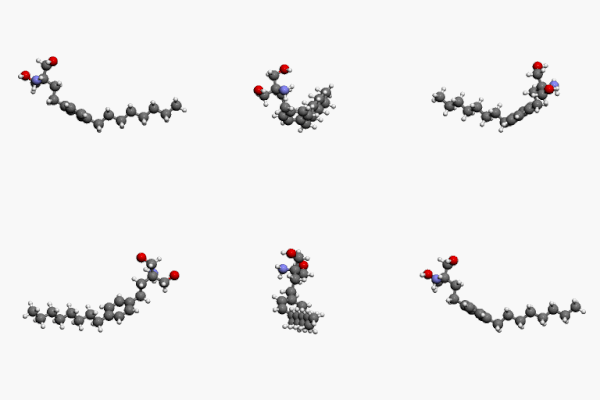
Oxazoloisoindolinones with in vitro antitumor activity selectively activate a p53-pathway through potential inhibition of the p53-MDM2 interaction.

J Soares, et al. Eur J Pharm Sci 10/2014; http://dx.doi.org:/10.1016/j.ejps.2014.10.006

An appealing target for anticancer treatment is

  • the p53 tumor suppressor protein.

This protein is inactivated in half of human tumors

  • due to endogenous negative regulators such as MDM2.

Therefore, restoring the p53 activity through

  • the inhibition of its interaction with MDM2
  • is considered a valuable therapeutic strategy
  • against cancers with a wild-type p53 status.

We report the synthesis of nine enantiopure phenylalaninol-derived oxazolopyrrolidone lactams

  • and the evaluation of their biological effects as p53-MDM2 interaction inhibitors.

Using a yeast-based screening assay, two oxazoloisoindolinones,

  • were identified as potential p53-MDM2 inhibitors.

The molecular mechanism of oxazoloisoindolinone 3a validated

  • in human colon adenocarcinoma HCT116 cells with wild-type p53 (HCT116 p53(+/+)) and
  • in its isogenic derivative without p53 (HCT116 p53(-/-)).

we demonstrated that oxazoloisoindolinone 3a exhibited

  • a p53-dependent in vitro antitumor activity through
  • induction of G0/G1-phase cell cycle arrest and apoptosis.

The selective activation of a p53-apoptotic pathway by oxazoloisoindolinone 3a was further supported

  • by the occurrence of PARP cleavage only in p53-expressing HCT116 cells.

Oxazoloisoindolinone 3a led

  • to p53 protein stabilization
  • to the up-regulation of p53 transcriptional activity &
  • increased expression levels of several p53 target genes,
  • as p21, MDM2, BAX and PUMA,
  • in p53(+/+) but not in p53(-/-) HCT116 cells.

the ability of oxazoloisoindolinone 3a to block the p53-MDM2 interaction in HCT116 p53(+/+) cells was confirmed by co-immunoprecipitation.

molecular docking analysis of the interactions

  • between the compounds and MDM2 revealed that
  • oxazoloisoindolinone 3a binds to MDM2.

this work adds the oxazoloisoindolinone scaffold to the activators of a wild-type p53-pathway with promising antitumor activity.

it may open the way to the development of

  • a new class of p53-MDM2 interaction inhibitors.

TrypanoCyc: a community-led biochemical pathways database for Trypanosoma brucei.

Sanu Shameer, et al. Nucleic Acids Research10/2014;
http://dx.doi.org/10.1093/nar/gku944

The metabolic network of a cell represents the catabolic and anabolic reactions that interconvert small molecules (metabolites) through the activity of enzymes, transporters and non-catalyzed chemical reactions. Our understanding of individual metabolic networks is increasing as we learn more about the enzymes that are active in particular cells under particular conditions and as technologies advance to allow detailed measurements of the cellular metabolome.

Metabolic network databases are important in allowing us to

  • contextualise data sets emerging from transcriptomic, proteomic and metabolomic experiments.

Here we present a dynamic database, TrypanoCyc (http://www.metexplore.fr/trypanocyc/), which describes

  • the generic and condition-specific metabolic network of Trypanosoma brucei, a parasitic protozoan
  • responsible for human and animal African trypanosomiasis.

In addition to enabling navigation through the BioCyc-based TrypanoCyc interface, we have implemented a network

  • representation of the information through MetExplore,

yielding a novel environment in which to visualise the metabolism of this important parasite.

Read Full Post »

Summary of Metabolomics

Author and Curator: Larry H. Bernstein, MD, FCAP 

This concludes the series on metabolomics, a rapidly developing science that is interconnected with a group termed – OMICS: proteomics, transcriptomics, genomics, and metabolomics.  This chapter is most representative of the many important studies being done in the field, which ranges most widely because it has opened doors into nutrition and nutritional supplements, plant biochemistry, agricultural crops and breeding, animal breeding, worldwide malnutrition, diabetes, cancer, neurosciences, circulatory, respiratory, and musculosletal disorders, infectious diseases and immune system disorders.  Obviously, it is not possible to cover the full range of activity, but metabolomics is most comprehensive in exploring the full range of metabolic changes that occur in health during the full age range from development to the geriatric years.  It can be integrated well with gene expression, proteomics studies, and epidemiological investigations.

The subchapters are given here:

7.1   Extracellular evaluation of intracellular flux in yeast cells  

 http://pharmaceuticalintelligence.com/2014/08/25/extracellular-evaluation-of-intracellular-flux-in-yeast-cells/

 7.2    Metabolomic analysis of two leukemia cell lines. I.  

         http://pharmaceuticalintelligence.com/2014/08/23/metabolomic-analysis-of-two-leukemia-cell-lines-_i/

  7.3   Metabolomic analysis of two leukemia cell lines. II.

           http://pharmaceuticalintelligence.com/2014/08/24/metabolomic-analysis-of-two-leukemia-cell-lines-ii/

  7.4   Buffering of genetic modules involved in tricarboxylic acid cycle metabolism provides homeostatic
regulation
  

           http://pharmaceuticalintelligence.com/2014/08/27/buffering-of-genetic-modules-involved-in-tricarboxylic-acid-cycle-metabolism-provides-homeomeostatic-regulation/

  7.5   Metabolomics, Metabonomics and Functional Nutrition: the next step in nutritional metabolism and
biotherapeutics

 http://pharmaceuticalintelligence.com/2014/08/22/metabolomics-metabonomics-and-functional-nutrition-the-next-step-in-nutritional-metabolism-and-biotherapeutics/

    7.6    Isoenzymes in cell metabolic pathways

 http://pharmaceuticalintelligence.com/2014/10/06/isoenzymes-in-cell-metabolic-pathways/

7.7   A Brief Curation of Proteomics, Metabolomics, and Metabolism

http://pharmaceuticalintelligence.com/2014/10/03/a-brief-curation-of-proteomics-metabolomics-and-metabolism/

   7.8   Metabolomics is about Metabolic Systems Integration

     http://pharmaceuticalintelligence.com/2014/10/13/metabolomics-is-about-metabolic-systems-integration/

 7.9  Mechanisms of Drug Resistance

   http://pharmaceuticalintelligence.com/2014/10/09/mechanisms-of-drug-resistance/

7.10  Development Of Super-Resolved Fluorescence Microscopy

    http://pharmaceuticalintelligence.com/2014/10/12/development-of-super-resolved-fluorescence-microscopy  

7.11  Metabolic Reactions Need Just Enough

 http://pharmaceuticalintelligence.com/2014/10/14/metabolic-reactions-need-just-enough/

7.12  Metabolomics Summary and Perspective

   This chapter will be followed by an exploration of disease and pharmaceutical directed studies using these methods  8. Impairments in pathological states: endocrine disorders; stress
hypermetabolism; cancer.

Networking metabolites and diseases

P Braun, E Rietman, and M Vidal
Center for Cancer Systems Biology and Department of Cancer Biology, Dana-Farber Cancer Institute, and Department of Genetics, Harvard Medical School,  Boston, MA; and Physical Sciences Inc., Andover, MA 01810
PNAS July 22, 2008; 105(29): 9849–9850.    http://pnas.org/cgi/doi/10.1073/pnas.0805644105

Biological systems are increasingly viewed and analyzed as

  • highly complex networks of interlinked macromolecules and metabolites.

Network analysis has been applied to

  • interactome maps of protein–protein, protein–DNA, and protein–RNA interactions
  • as well as transcriptional, metabolic, and genetic data.

Such network views of biological systems should facilitate the detection of

  • nonlinear long-range effects of perturbations, for example, by mutations, and
  • help identification of unanticipated indirect causal connections.

Diseasome and Drug-Target Network

Recently, Goh et al. (1) constructed a ‘‘diseasome’’ network in which

  • two diseases are linked to each other if
  • they share at least one gene, in which mutations are associated with both diseases.

In the resulting network, related disease families cluster tightly together, thus

  • phenotypically defining functional modules.

Importantly, for the first time this study applied concepts from network biology to human diseases,

  • thus opening the door for discovering causal relationships between
  • disregulated networks and resulting ailments.

Subsequently Yilderim et al. (2) linked drugs to protein targets in a drug–target network,

  • which could then be overlaid with the diseasome network.

One notable finding was the recent trend toward the development of

  • new compounds directly targeted at disease gene products, whereas previous drugs,
  • often found by trial and error, appear to target proteins only indirectly related to
  • the actual disease molecular mechanisms.

An important question that remains in this emerging field of network analysis consists of

  • investigating the extent to which directly targeting the product of mutated genes is an efficient approach or
  • whether targeting network properties instead, and
  • thereby accounting for indirect nonlinear effects of system perturbations by drugs, may prove more fruitful.

However, to answer such questions it is important to have a good understanding of the various influences that can lead to diseases.

Metabolic Connections

One group of diseases that was very poorly connected in the original diseasome network was the family of metabolic diseases.

In this issue of PNAS, Lee et al. (3) hypothesize that metabolic diseases may instead be connected

  • via metabolites and common reactions.

To investigate this hypothesis Lee et al. first constructed a metabolic network from data available in

  • two manually curated databases detailing well known
  1. metabolic reactions,
  2. the involved metabolites, and
  3. catalyzing enzymes.

In addition, gene–disease associations were identified by using the Online Mendelian Inheritance in Man (OMIM) database (http://ncbi.nlm.nih.gov/sites/
entrez?dbomim&itooltoolbar). In a last step,

  • a metabolic disease network (MDN) was constructed by connecting
  • two diseases if their associated genes are linked in the metabolic network
  • by a common metabolite or metabolites used in a common reaction.

Metabolites are not only linked by common reactions, but

  • on a larger scale by coupled fluxes within a metabolic network,
  • which may also influence disease phenotypes.

An increase in the concentration of one metabolite may increase several fluxes

  • across reaction pathways that use this compound, which
  • may lead to diverse phenotypes and distinct diseases.

The fluxes within the metabolic network are calculated by using

  • the Flux Coupling Finder method described by Nikolaev et al. (4) and Burgard et al. (5),
  • which is based on the assumption that pools of metabolites are conserved.

To functionally validate the network, coexpression correlations are measured for genes

  • linked by adjacent reactions and those linked by fluxes.

Interestingly, the average coexpression correlation for flux-coupled genes (0.31)

  • is higher than that for genes simply catalyzing adjacent reactions (0.24)
    (compared with 0.10 for all gene pairs in the network).

If the links between diseases identified in the MDN are functionally and causally relevant

  • it should be expected that linked diseases occur more frequently in the same individual.

To test this hypothesis, Lee et al. (3) measured the co-occurrence of diseases in patients by using detailed Medicare information

  • of 13 million patients and 32 million hospital visits within a 3-year period.

A comorbidity index was computed to measure the degree to which one disease

  • will increase the likelihood of a second disease in the same patient.

The average comorbidity for all genes is 0.0008 (Pearson correlation coefficient),

  • which increases 3-fold to 0.0027 when disease pairs that are metabolically linked are analyzed,
  • which is highly statistically significant (P 108).

When diseases are analyzed that are directionally coupled by a flux (see ref. 3 for details),

  • the correlation increases to 0.0062.

Thus, whereas 17% of all diseases in the network show significant comorbidity, this fraction

  • nearly doubles to 31% for metabolically linked diseases.

Further analysis reveals that comorbidity effects can be detected up to three links (metabolites, reactions)

  • apart from each other with statistical significance, but not farther away.

In the MDN, several highly connected hubs, e.g., hypertension and hemolytic anemia, are

  • linked to many different co-occurring diseases not unexpected for such complex diseases
  • that can result from many different genetic alterations or variants.

Importantly, though, most of the connections to the different linked diseases

  • are mediated by diverse connections in the metabolic network.

Thus, in the future such insights may be helpful for finer classification of the complex hub disease.

Furthermore, depending on the onset of the complex (hub) disease in relation to the associated diseases,

  • such relationships may potentially be used to systematically
  • stratify patients and develop targeted treatments acting on
  • the underlying metabolic links.

Returning to the starting point of their study, Lee et al. (3) next investigated

  • whether metabolic diseases are better linked through the metabolic network
  • than they are in the previously described gene–disease network.

When purely metabolic diseases are considered, the comorbidity is, in fact,

  • best predicted by metabolic links.

Interestingly, when all diseases linked to metabolic enzymes are considered,

  • which involves many diseases that are merely related to metabolic diseases through multifunctional enzymes,
  • the gene and metabolic networks are nearly equally predictive of comorbidity,
  • indicating that as a general approach information from
  • many different biological dimensions should be integrated to identify the most relevant connections.

Together, all these findings support the initial hypothesis that metabolic diseases are linked by metabolic networks.

Practically, alteration of one metabolite or one reaction can have numerous repercussions in the network,

  • each of which can manifest as different diseases that frequently occur together in affected patients.

Radoslav Bozov

  1. Glycine, as the only amino acid having no isomer driven central carbon allowing for hing occupancy of ‘free’
    motifs, where quark (proton) ‘fluxes’ play at, is a one – step away observable (1) from synthesis of pyrimidines
    to glyoxylate mitochondrial ‘shunt’ entangling at least two differential compartments longly objected by
    Japanese metabolomics study groups.
  2. One carbon systems emerge out of a glycoprotein ‘complex’, pyrimidine synthase pathway, that possesses
    significant similarity to  BRCA2 and most other transcription factors suggesting that protein allocation is
    coorchestrated by modifications and spatially transforming construes as an outcome of energy processing.
    Directly deduced by TCS, life cannot exist without mutations, as mutations and chromatin states appear to
    be a sort of energy hold and release ‘gates’.
  3. Phosphorylations and small molecules as such as cGMP, cAMP play a role of decompression machinery
    for amplifying bio signal processing C-S, C-N, C-O, interference open systems.  By decompression
    of one relative discrete space, another one becomes compressed, which gets uncertainty of absolute energy
    processing within space scalar wise into vector objected space represented by chromatin remodeling processes,
    possibly seen as network identities information.
  4. Unifying network and quantum theory possess implications to relativity concepts and energy relevant computational methodology.
 translational medicine

translational medicine

Shifts in steady-state profiles caused by kinetic perturbations

Shifts in steady-state profiles caused by kinetic perturbations

mapping metabolomic data using three different approaches

mapping metabolomic data using three different approaches

network genetics metabotypes -  integrated metabolome and interactome mapping (iMIM)

network genetics metabotypes – integrated metabolome and interactome mapping (iMIM)

metabol leukem cell lines

metabol leukem cell lines

Metabolome Informatics Research

Metabolome Informatics Research

Read Full Post »

Summary to Metabolomics

Summary to Metabolomics

Author and Curator: Larry H. Bernstein, MD, FCAP 

This concludes a long step-by-step journey into rediscovering biological processes from the genome as a framework to the remodeled and reconstituted cell through a number of posttranscription and posttranslation processes that modify the proteome and determine the metabolome.  The remodeling process continues over a lifetime. The process requires a balance between nutrient intake, energy utilization for work in the lean body mass, energy reserves, endocrine, paracrine and autocrine mechanisms, and autophagy.  It is true when we look at this in its full scope – What a creature is man?

http://masspec.scripps.edu/metabo_science/recommended_readings.php
 Recommended Readings and Historical Perspectives

Metabolomics is the scientific study of chemical processes involving metabolites. Specifically, metabolomics is the “systematic study of the unique chemical fingerprints that specific cellular processes leave behind”, the study of their small-molecule metabolite profiles.[1] The metabolome represents the collection of all metabolites in a biological cell, tissue, organ or organism, which are the end products of cellular processes.[2] mRNA gene expression data and proteomic analyses reveal the set of gene products being produced in the cell, data that represents one aspect of cellular function. Conversely, metabolic profiling can give an instantaneous snapshot of the physiology of that cell. One of the challenges of systems biology and functional genomics is to integrate proteomic, transcriptomic, and metabolomic information to provide a better understanding of cellular biology.

The term “metabolic profile” was introduced by Horning, et al. in 1971 after they demonstrated that gas chromatography-mass spectrometry (GC-MS) could be used to measure compounds present in human urine and tissue extracts. The Horning group, along with that of Linus Pauling and Arthur B. Robinson led the development of GC-MS methods to monitor the metabolites present in urine through the 1970s.

Concurrently, NMR spectroscopy, which was discovered in the 1940s, was also undergoing rapid advances. In 1974, Seeley et al. demonstrated the utility of using NMR to detect metabolites in unmodified biological samples.This first study on muscle highlighted the value of NMR in that it was determined that 90% of cellular ATP is complexed with magnesium. As sensitivity has improved with the evolution of higher magnetic field strengths and magic angle spinning, NMR continues to be a leading analytical tool to investigate metabolism. Efforts to utilize NMR for metabolomics have been influenced by the laboratory of Dr. Jeremy Nicholson at Birkbeck College, University of London and later at Imperial College London. In 1984, Nicholson showed 1H NMR spectroscopy could potentially be used to diagnose diabetes mellitus, and later pioneered the application of pattern recognition methods to NMR spectroscopic data.

In 2005, the first metabolomics web database, METLIN, for characterizing human metabolites was developed in the Siuzdak laboratory at The Scripps Research Institute and contained over 10,000 metabolites and tandem mass spectral data. As of September 2012, METLIN contains over 60,000 metabolites as well as the largest repository of tandem mass spectrometry data in metabolomics.

On 23 January 2007, the Human Metabolome Project, led by Dr. David Wishart of the University of Alberta, Canada, completed the first draft of the human metabolome, consisting of a database of approximately 2500 metabolites, 1200 drugs and 3500 food components. Similar projects have been underway in several plant species, most notably Medicago truncatula and Arabidopsis thaliana for several years.

As late as mid-2010, metabolomics was still considered an “emerging field”. Further, it was noted that further progress in the field depended in large part, through addressing otherwise “irresolvable technical challenges”, by technical evolution of mass spectrometry instrumentation.

Metabolome refers to the complete set of small-molecule metabolites (such as metabolic intermediates, hormones and other signaling molecules, and secondary metabolites) to be found within a biological sample, such as a single organism. The word was coined in analogy with transcriptomics and proteomics; like the transcriptome and the proteome, the metabolome is dynamic, changing from second to second. Although the metabolome can be defined readily enough, it is not currently possible to analyse the entire range of metabolites by a single analytical method. The first metabolite database(called METLIN) for searching m/z values from mass spectrometry data was developed by scientists at The Scripps Research Institute in 2005. In January 2007, scientists at the University of Alberta and the University of Calgary completed the first draft of the human metabolome. They catalogued approximately 2500 metabolites, 1200 drugs and 3500 food components that can be found in the human body, as reported in the literature. This information, available at the Human Metabolome Database (www.hmdb.ca) and based on analysis of information available in the current scientific literature, is far from complete.

Each type of cell and tissue has a unique metabolic ‘fingerprint’ that can elucidate organ or tissue-specific information, while the study of biofluids can give more generalized though less specialized information. Commonly used biofluids are urine and plasma, as they can be obtained non-invasively or relatively non-invasively, respectively. The ease of collection facilitates high temporal resolution, and because they are always at dynamic equilibrium with the body, they can describe the host as a whole.

Metabolites are the intermediates and products of metabolism. Within the context of metabolomics, a metabolite is usually defined as any molecule less than 1 kDa in size.
A primary metabolite is directly involved in the normal growth, development, and reproduction. A secondary metabolite is not directly involved in those processes.  By contrast, in human-based metabolomics, it is more common to describe metabolites as being either endogenous (produced by the host organism) or exogenous. Metabolites of foreign substances such as drugs are termed xenometabolites. The metabolome forms a large network of metabolic reactions, where outputs from one enzymatic chemical reaction are inputs to other chemical reactions.

Metabonomics is defined as “the quantitative measurement of the dynamic multiparametric metabolic response of living systems to pathophysiological stimuli or genetic modification”. The word origin is from the Greek μεταβολή meaning change and nomos meaning a rule set or set of laws. This approach was pioneered by Jeremy Nicholson at Imperial College London and has been used in toxicology, disease diagnosis and a number of other fields. Historically, the metabonomics approach was one of the first methods to apply the scope of systems biology to studies of metabolism.

There is a growing consensus that ‘metabolomics’ places a greater emphasis on metabolic profiling at a cellular or organ level and is primarily concerned with normal endogenous metabolism. ‘Metabonomics’ extends metabolic profiling to include information about perturbations of metabolism caused by environmental factors (including diet and toxins), disease processes, and the involvement of extragenomic influences, such as gut microflora. This is not a trivial difference; metabolomic studies should, by definition, exclude metabolic contributions from extragenomic sources, because these are external to the system being studied.

Toxicity assessment/toxicology. Metabolic profiling (especially of urine or blood plasma samples) detects the physiological changes caused by toxic insult of a chemical (or mixture of chemicals).

Functional genomics. Metabolomics can be an excellent tool for determining the phenotype caused by a genetic manipulation, such as gene deletion or insertion. Sometimes this can be a sufficient goal in itself—for instance, to detect any phenotypic changes in a genetically-modified plant intended for human or animal consumption. More exciting is the prospect of predicting the function of unknown genes by comparison with the metabolic perturbations caused by deletion/insertion of known genes.

Nutrigenomics is a generalised term which links genomics, transcriptomics, proteomics and metabolomics to human nutrition. In general a metabolome in a given body fluid is influenced by endogenous factors such as age, sex, body composition and genetics as well as underlying pathologies. The large bowel microflora are also a very significant potential confounder of metabolic profiles and could be classified as either an endogenous or exogenous factor. The main exogenous factors are diet and drugs. Diet can then be broken down to nutrients and non- nutrients.

http://en.wikipedia.org/wiki/Metabolomics

Jose Eduardo des Salles Roselino

The problem with genomics was it was set as explanation for everything. In fact, when something is genetic in nature the genomic reasoning works fine. However, this means whenever an inborn error is found and only in this case the genomic knowledge afterwards may indicate what is wrong and not the completely way to put biology upside down by reading everything in the DNA genetic as well as non-genetic problems.

Coordination of the transcriptome and metabolome by the circadian clock PNAS 2012

Coordination of the transcriptome and metabolome by the circadian clock PNAS 2012

analysis of metabolomic data and differential metabolic regulation for fetal lungs, and maternal blood plasma

conformational changes leading to substrate efflux.img

conformational changes leading to substrate efflux.img

The cellular response is defined by a network of chemogenomic response signatures.

The cellular response is defined by a network of chemogenomic response signatures.

Dynamic Construct of the –Omics

Dynamic Construct of the –Omics

 genome cartoon

genome cartoon

central dogma phenotype

central dogma phenotype

Read Full Post »

Complex Models of Signaling: Therapeutic Implications

Complex Models of Signaling: Therapeutic Implications

Curator: Larry H. Bernstein, MD, FCAP

Updated 6/24/2019

Fishy Business: Effect of Omega-3 Fatty Acids on Zinc Transporters and Free Zinc Availability in Human Neuronal Cells

Damitha De Mel and Cenk Suphioglu *

NeuroAllergy Research Laboratory (NARL), School of Life and Environmental Sciences, Faculty of Science, Engineering and Built Environment, Waurn Ponds, Victoria, Australia.

Nutrients 2014, 6, 3245-3258; http://dx.doi.org:/10.3390/nu6083245

Omega-3 (ω-3) fatty acids are one of the two main families of long chain polyunsaturated fatty acids (PUFA). The main omega-3 fatty acids in the mammalian body are

  • α-linolenic acid (ALA), docosahexaenoic acid (DHA) and eicosapentaenoic acid (EPA).

Central nervous tissues of vertebrates are characterized by a high concentration of omega-3 fatty acids. Moreover, in the human brain,

  • DHA is considered as the main structural omega-3 fatty acid, which comprises about 40% of the PUFAs in total.

DHA deficiency may be the cause of many disorders such as depression, inability to concentrate, excessive mood swings, anxiety, cardiovascular disease, type 2 diabetes, dry skin and so on.

On the other hand,

  • zinc is the most abundant trace metal in the human brain.

There are many scientific studies linking zinc, especially

  • excess amounts of free zinc, to cellular death.

Neurodegenerative diseases, such as Alzheimer’s disease, are characterized by altered zinc metabolism. Both animal model studies and human cell culture studies have shown a possible link between

  • omega-3 fatty acids, zinc transporter levels and
  • free zinc availability at cellular levels.

Many other studies have also suggested a possible

  • omega-3 and zinc effect on neurodegeneration and cellular death.

Therefore, in this review, we will examine

  • the effect of omega-3 fatty acids on zinc transporters and
  • the importance of free zinc for human neuronal cells.

Moreover, we will evaluate the collective understanding of

  • mechanism(s) for the interaction of these elements in neuronal research and their
  • significance for the diagnosis and treatment of neurodegeneration.

Epidemiological studies have linked high intake of fish and shellfish as part of the daily diet to

  • reduction of the incidence and/or severity of Alzheimer’s disease (AD) and senile mental decline in

Omega-3 fatty acids are one of the two main families of a broader group of fatty acids referred to as polyunsaturated fatty acids (PUFAs). The other main family of PUFAs encompasses the omega-6 fatty acids. In general, PUFAs are essential in many biochemical events, especially in early post-natal development processes such as

  • cellular differentiation,
  • photoreceptor membrane biogenesis and
  • active synaptogenesis.

Despite the significance of these

two families, mammals cannot synthesize PUFA de novo, so they must be ingested from dietary sources. Though belonging to the same family, both

  • omega-3 and omega-6 fatty acids are metabolically and functionally distinct and have
  • opposing physiological effects. In the human body,
  • high concentrations of omega-6 fatty acids are known to increase the formation of prostaglandins and
  • thereby increase inflammatory processes [10].

the reverse process can be seen with increased omega-3 fatty acids in the body.

Many other factors, such as

  1. thromboxane A2 (TXA2),
  2. leukotriene
  3. B4 (LTB4),
  4. IL-1,
  5. IL-6,
  6. tumor necrosis factor (TNF) and
  7. C-reactive protein,

which are implicated in various health conditions, have been shown to be increased with high omega-6 fatty acids but decreased with omega-3 fatty acids in the human body.

Dietary fatty acids have been identified as protective factors in coronary heart disease, and PUFA levels are known to play a critical role in

  • immune responses,
  • gene expression and
  • intercellular communications.

omega-3 fatty acids are known to be vital in

  • the prevention of fatal ventricular arrhythmias, and
  • are also known to reduce thrombus formation propensity by decreasing platelet aggregation, blood viscosity and fibrinogen levels

.Since omega-3 fatty acids are prevalent in the nervous system, it seems logical that a deficiency may result in neuronal problems, and this is indeed what has been identified and reported.

The main omega-3 fatty acids in the mammalian body are

  1. α-linolenic acid (ALA),
  2. docosahexenoic acid (DHA) and
  3. eicosapentaenoic acid (EPA).

In general, seafood is rich in omega-3 fatty acids, more specifically DHA and EPA (Table 1). Thus far, there are nine separate epidemiological studies that suggest a possible link between

  • increased fish consumption and reduced risk of AD
  • and eight out of ten studies have reported a link between higher blood omega-3 levels

Table 1. Total percentage of omega-3 fatty acids in common foods and supplements.

Food/Supplement EPA DHA ALA Total %
Fish
SalmonSardine

Anchovy

Halibut

Herring

Mackerel

Tuna

Fresh Bluefin

XX

X

X

X

X

X

X

XX

X

X

X

X

X

X

>50%>50%

>50%

>50%

>50%

>50%

>50%

>50%

Oils/Supplements
Fish oil capsulesCod liver oils

Salmon oil

Sardine oil

XX

X

X

XX

X

X

>50%>50%

>50%

>50%

Black currant oilCanola oil Mustard seed oils

Soybean oil

Walnut oil

Wheat germ oil

XX

X

X

X

X

10%–50%10%–50%

10%–50%

10%–50%

10%–50%

10%–50%

Seeds and other foods
Flaxseeds/LinseedsSpinach

Wheat germ Human milk

Peanut butter

Soybeans

Olive oil

Walnuts

XX

X

X

X

X

X

X

>50%>50%

10%–50%

10%–50%

<10%

<10%

<10%

<10%


Table adopted from Maclean C.H. et al. [18].

In another study conducted with individuals of 65 years of age or older (n = 6158), it was found that

  • only high fish consumption, but
  • not dietary omega-3 acid intake,
  • had a protective effect on cognitive decline

In 2005, based on a meta-analysis of the available epidemiology and preclinical studies, clinical trials were conducted to assess the effects of omega-3 fatty acids on cognitive protection. Four of the trials completed have shown

a protective effect of omega-3 fatty acids only among those with mild cognitive impairment conditions.

A  trial of subjects with mild memory complaints demonstrated

  • an improvement with 900 mg of DHA.

We review key findings on

  • the effect of the omega-3 fatty acid DHA on zinc transporters and the
  • importance of free zinc to human neuronal cells.

DHA is the most abundant fatty acid in neural membranes, imparting appropriate

  • fluidity and other properties,

and is thus considered as the most important fatty acid in neuronal studies. DHA is well conserved throughout the mammalian species despite their dietary differences. It is mainly concentrated

  • in membrane phospholipids at synapses and
  • in retinal photoreceptors and
  • also in the testis and sperm.

In adult rats’ brain, DHA comprises approximately

  • 17% of the total fatty acid weight, and
  • in the retina it is as high as 33%.

DHA is believed to have played a major role in the evolution of the modern human –

  • in particular the well-developed brain.

Premature babies fed on DHA-rich formula show improvements in vocabulary and motor performance.

Analysis of human cadaver brains have shown that

  • people with AD have less DHA in their frontal lobe
  • and hippocampus compared with unaffected individuals

Furthermore, studies in mice have increased support for the

  • protective role of omega-3 fatty acids.

Mice administrated with a dietary intake of DHA showed

  • an increase in DHA levels in the hippocampus.

Errors in memory were decreased in these mice and they demonstrated

  • reduced peroxide and free radical levels,
  • suggesting a role in antioxidant defense.

Another study conducted with a Tg2576 mouse model of AD demonstrated that dietary

  • DHA supplementation had a protective effect against reduction in
  • drebrin (actin associated protein), elevated oxidation, and to some extent, apoptosis via
  • decreased caspase activity.


Zinc

Zinc is a trace element, which is indispensable for life, and it is the second most abundant trace element in the body. It is known to be related to

  • growth,
  • development,
  • differentiation,
  • immune response,
  • receptor activity,
  • DNA synthesis,
  • gene expression,
  • neuro-transmission,
  • enzymatic catalysis,
  • hormonal storage and release,
  • tissue repair,
  • memory,
  • the visual process

and many other cellular functions. Moreover, the indispensability of zinc to the body can be discussed in many other aspects,  as

  • a component of over 300 different enzymes
  • an integral component of a metallothioneins
  • a gene regulatory protein.

Approximately 3% of all proteins contain

  • zinc binding motifs .

The broad biological functionality of zinc is thought to be due to its stable chemical and physical properties. Zinc is considered to have three different functions in enzymes;

  1. catalytic,
  2. coactive and

Indeed, it is the only metal found in all six different subclasses

of enzymes. The essential nature of zinc to the human body can be clearly displayed by studying the wide range of pathological effects of zinc deficiency. Anorexia, embryonic and post-natal growth retardation, alopecia, skin lesions, difficulties in wound healing, increased hemorrhage tendency and severe reproductive abnormalities, emotional instability, irritability and depression are just some of the detrimental effects of zinc deficiency.

Proper development and function of the central nervous system (CNS) is highly dependent on zinc levels. In the mammalian organs, zinc is mainly concentrated in the brain at around 150 μm. However, free zinc in the mammalian brain is calculated to be around 10 to 20 nm and the rest exists in either protein-, enzyme- or nucleotide bound form. The brain and zinc relationship is thought to be mediated

  • through glutamate receptors, and
  • it inhibits excitatory and inhibitory receptors.

Vesicular localization of zinc in pre-synaptic terminals is a characteristic feature of brain-localized zinc, and

  • its release is dependent on neural activity.

Retardation of the growth and development of CNS tissues have been linked to low zinc levels. Peripheral neuropathy, spina bifida, hydrocephalus, anencephalus, epilepsy and Pick’s disease have been linked to zinc deficiency. However, the body cannot tolerate excessive amounts of zinc.

The relationship between zinc and neurodegeneration, specifically AD, has been interpreted in several ways. One study has proposed that β-amyloid has a greater propensity to

  • form insoluble amyloid in the presence of
  • high physiological levels of zinc.

Insoluble amyloid is thought to

  • aggregate to form plaques,

which is a main pathological feature of AD. Further studies have shown that

  • chelation of zinc ions can deform and disaggregate plaques.

In AD, the most prominent injuries are found in

  • hippocampal pyramidal neurons, acetylcholine-containing neurons in the basal forebrain, and in
  • somatostatin-containing neurons in the forebrain.

All of these neurons are known to favor

  • rapid and direct entry of zinc in high concentration
  • leaving neurons frequently exposed to high dosages of zinc.

This is thought to promote neuronal cell damage through oxidative stress and mitochondrial dysfunction. Excessive levels of zinc are also capable of

  • inhibiting Ca2+ and Na+ voltage gated channels
  • and up-regulating the cellular levels of reactive oxygen species (ROS).

High levels of zinc are found in Alzheimer’s brains indicating a possible zinc related neurodegeneration. A study conducted with mouse neuronal cells has shown that even a 24-h exposure to high levels of zinc (40 μm) is sufficient to degenerate cells.

If the human diet is deficient in zinc, the body

  • efficiently conserves zinc at the tissue level by compensating other cellular mechanisms

to delay the dietary deficiency effects of zinc. These include reduction of cellular growth rate and zinc excretion levels, and

  • redistribution of available zinc to more zinc dependent cells or organs.

A novel method of measuring metallothionein (MT) levels was introduced as a biomarker for the

  • assessment of the zinc status of individuals and populations.

In humans, erythrocyte metallothionein (E-MT) levels may be considered as an indicator of zinc depletion and repletion, as E-MT levels are sensitive to dietary zinc intake. It should be noted here that MT plays an important role in zinc homeostasis by acting

  • as a target for zinc ion binding and thus
  • assisting in the trafficking of zinc ions through the cell,
  • which may be similar to that of zinc transporters

Zinc Transporters

Deficient or excess amounts of zinc in the body can be catastrophic to the integrity of cellular biochemical and biological systems. The gastrointestinal system controls the absorption, excretion and the distribution of zinc, although the hydrophilic and high-charge molecular characteristics of zinc are not favorable for passive diffusion across the cell membranes. Zinc movement is known to occur

  • via intermembrane proteins and zinc transporter (ZnT) proteins

These transporters are mainly categorized under two metal transporter families; Zip (ZRT, IRT like proteins) and CDF/ZnT (Cation Diffusion Facilitator), also known as SLC (Solute Linked Carrier) gene families: Zip (SLC-39) and ZnT (SLC-30). More than 20 zinc transporters have been identified and characterized over the last two decades (14 Zips and 8 ZnTs).

Members of the SLC39 family have been identified as the putative facilitators of zinc influx into the cytosol, either from the extracellular environment or from intracellular compartments (Figure 1).

The identification of this transporter family was a result of gene sequencing of known Zip1 protein transporters in plants, yeast and human cells. In contrast to the SLC39 family, the SLC30 family facilitates the opposite process, namely zinc efflux from the cytosol to the extracellular environment or into luminal compartments such as secretory granules, endosomes and synaptic vesicles; thus decreasing intracellular zinc availability (Figure 1). ZnT3 is the most important in the brain where

  • it is responsible for the transport of zinc into the synaptic vesicles of
  • glutamatergic neurons in the hippocampus and neocortex,


Figure 1. Putative cellular localization of some of the different human zinc transporters (i.e., Zip1- Zip4 and ZnT1- ZnT7). Arrows indicate the direction of zinc passage by the appropriate putative zinc transporters in a generalized human cell. Although there are fourteen Zips and eight ZnTs known so far, only the main zinc transporters are illustrated in this figure for clarity and brevity.

Figure 1: Subcellular localization and direction of transport of the zinc transporter families, ZnT and ZIP. Arrows show the direction of zinc mobilization for the ZnT (green) and ZIP (red) proteins. A net gain in cytosolic zinc is achieved by the transportation of zinc from the extracellular region and organelles such as the endoplasmic reticulum (ER) and Golgi apparatus by the ZIP transporters. Cytosolic zinc is mobilized into early secretory compartments such as the ER and Golgi apparatus by the ZnT transporters. Figures were produced using Servier Medical Art, http://www.servier.com/.   http://www.hindawi.com/journals/jnme/2012/173712.fig.001.jpg

zinc transporters

zinc transporters


Early zinc signaling (EZS) and late zinc signaling (LZS)

Early zinc signaling (EZS) and late zinc signaling (LZS)

http://www.hindawi.com/journals/jnme/2012/floats/173712/thumbnails/173712.fig.002_th.jpg


Figure 2: Early zinc signaling (EZS) and late zinc signaling (LZS). EZS involves transcription-independent mechanisms where an extracellular stimulus directly induces an increase in zinc levels within several minutes by releasing zinc from intracellular stores (e.g., endoplasmic reticulum). LSZ is induced several hours after an external stimulus and is dependent on transcriptional changes in zinc transporter expression. Components of this figure were produced using Servier Medical Art, http://www.servier.com/ and adapted from Fukada et al. [30].


DHA and Zinc Homeostasis

Many studies have identified possible associations between DHA levels, zinc homeostasis, neuroprotection and neurodegeneration. Dietary DHA deficiency resulted in

  • increased zinc levels in the hippocampus and
  • elevated expression of the putative zinc transporter, ZnT3, in the rat brain.

Altered zinc metabolism in neuronal cells has been linked to neurodegenerative conditions such as AD. A study conducted with transgenic mice has shown a significant link between ZnT3 transporter levels and cerebral amyloid plaque pathology. When the ZnT3 transporter was silenced in transgenic mice expressing cerebral amyloid plaque pathology,

  • a significant reduction in plaque load
  • and the presence of insoluble amyloid were observed.

In addition to the decrease in plaque load, ZnT3 silenced mice also exhibited a significant

  • reduction in free zinc availability in the hippocampus
  • and cerebral cortex.

Collectively, the findings from this study are very interesting and indicate a clear connection between

  • zinc availability and amyloid plaque formation,

thus indicating a possible link to AD.

DHA supplementation has also been reported to limit the following:

  1. amyloid presence,
  2. synaptic marker loss,
  3. hyper-phosphorylation of Tau,
  4. oxidative damage and
  5. cognitive deficits in transgenic mouse model of AD.

In addition, studies by Stoltenberg, Flinn and colleagues report on the modulation of zinc and the effect in transgenic mouse models of AD. Given that all of these are classic pathological features of AD, and considering the limiting nature of DHA in these processes, it can be argued that DHA is a key candidate in preventing or even curing this debilitating disease.

In order to better understand the possible links and pathways of zinc and DHA with neurodegeneration, we designed a study that incorporates all three of these aspects, to study their effects at the cellular level. In this study, we were able to demonstrate a possible link between omega-3 fatty acid (DHA) concentration, zinc availability and zinc transporter expression levels in cultured human neuronal cells.

When treated with DHA over 48 h, ZnT3 levels were markedly reduced in the human neuroblastoma M17 cell line. Moreover, in the same study, we were able to propose a possible

  • neuroprotective mechanism of DHA,

which we believe is exerted through

  • a reduction in cellular zinc levels (through altering zinc transporter expression levels)
  • that in turn inhibits apoptosis.

DHA supplemented M17 cells also showed a marked depletion of zinc uptake (up to 30%), and

  • free zinc levels in the cytosol were significantly low compared to the control

This reduction in free zinc availability was specific to DHA; cells treated with EPA had no significant change in free zinc levels (unpublished data). Moreover, DHA-repleted cells had

  • low levels of active caspase-3 and
  • high Bcl-2 levels compared to the control treatment.

These findings are consistent with previous published data and further strengthen the possible

  • correlation between zinc, DHA and neurodegeneration.

On the other hand, recent studies using ZnT3 knockout (ZnT3KO) mice have shown the importance of

  • ZnT3 in memory and AD pathology.

For example, Sindreu and colleagues have used ZnT3KO mice to establish the important role of

  • ZnT3 in zinc homeostasis that modulates presynaptic MAPK signaling
  • required for hippocampus-dependent memory

Results from these studies indicate a possible zinc-transporter-expression-level-dependent mechanism for DHA neuroprotection.

Collectively from these studies, the following possible mechanism can be proposed (Figure 2).

possible benefits of DHA in neuroprotection through reduction of ZnT3 transporter

possible benefits of DHA in neuroprotection through reduction of ZnT3 transporter


Figure 2. Proposed neuroprotection mechanism of docosahexaenoic acid (DHA) in reference to synaptic zinc. Schematic diagram showing possible benefits of DHA in neuroprotection through reduction of ZnT3 transporter expression levels in human neuronal cells, which results in a reduction of zinc flux and thus lowering zinc concentrations in neuronal synaptic vesicles, and therefore contributing to a lower incidence of neurodegenerative diseases (ND), such as Alzheimer’s disease (AD).

More recent data from our research group have also shown a link between the expression levels of histone H3 and H4 proteins in human neuronal cells in relation to DHA and zinc. Following DHA treatment, both H3 and H4 levels were up-regulated. In contrast, zinc treatment resulted in a down-regulation of histone levels. Both zinc and DHA have shown opposing effects on histone post-translational modifications, indicating a possible distinctive epigenetic pattern. Upon treatment with zinc, M17 cells displayed an increase in histone deacetylase (HDACs) and a reduction in histone acetylation. Conversely, with DHA treatment, HDAC levels were significantly reduced and the acetylation of histones was up-regulated. These findings also support a possible interaction between DHA and zinc availability.

Conclusions

It is possible to safely claim that there is more than one potential pathway by which DHA and zinc interact at a cellular level, at least in cultured human neuronal cells. Significance and importance of both DHA and zinc in neuronal survival is attested by the presence of these multiple mechanisms.
Most of these reported studies were conducted using human neuroblastoma cells, or similar cell types, due to the lack of live mature human neuronal cells. Thus, the results may differ from results achieved under actual human physiological conditions due to the structural and functional differences between these cells and mature human neurons. Therefore, an alternative approach that can mimic the human neuronal cells more effectively would be advantageous.

Sphingosine-1-phosphate signaling as a therapeutic target          

E Giannoudaki, DJ Swan, JA Kirby, S Ali

Applied Immunobiology and Transplantation Research Group, Institute of Cellular Medicine, Faculty of Medical Sciences, Newcastle University, Newcastle upon Tyne, UK

Cell Health and Cytoskeleton 2012; 4: 63–72

S1P is a 379Da member of the lysophospholipid family. It is the direct metabolite of sphingosine through the action of two sphingosine kinases, SphK1 and SphK2. The main metabolic pathway starts with the hydrolysis of sphingomyelin, a membrane sphingolipid, into ceramide by the enzyme sphingomyelinase and the subsequent production of sphingosine by ceramidase (Figure 1). Ceramide can also be produced de novo in the endoplasmic reticulum (ER) from serine and palmitoyl coenzyme A through multiple intermediates. S1P production is regulated by various S1P-specific and general lipid phosphatases, as well as S1P lyase, which irreversibly degrades S1P into phosphoethanolamine and hexadecanal. The balance between intracellular S1P and its metabolite ceramide can determine cellular fate. Ceramide promotes apoptosis, while S1P suppresses cell death and promotes cell survival. This creates an S1P ceramide “rheostat” inside the cells. S1P lyase expression in tissue is higher than it is in erythrocytes and platelets, the main “suppliers” of S1P in blood. This causes a tissue–blood gradient of S1P, which is important in many S1P-mediated responses, like the lymphocyte egress from lymphoid organs.

S1P signaling overview

S1P is produced inside cells; however, it can also be found extracellularly, in a variety of different tissues. It is abundant in the blood, at concentrations of 0.4–1.5 μM, where it is mainly secreted by erythrocytes and platelets. Blood S1P can be found separately, but mainly it exists in complexes with high-density lipoprotein (HDL) (∼60%).  Many of the cardioprotective effects of HDL are hypothesized to involve S1P. Before 1996, S1P was thought to act mainly intracellularly as a second messenger. However, the identification of several GPCRs that bind S1P led to the initiation of many studies on

  • extracellular S1P signaling through those receptors.

There are five receptors that have been identified currently. These can be coupled with different G-proteins. Assuming that each receptor coupling with a G protein has a slightly different function, one can recognize the complexity of S1P receptor signaling.

S1P as a second messenger

S1P is involved in many cellular processes through its GPCR signaling; studies demonstrate that S1P also acts at an intracellular level. Intracellular S1P plays a role in maintaining the balance of cell survival signal toward apoptotic signals, creating a

  • cell “rheostat” between S1P and its precursor ceramide.

Important evidence that S1P can act intracellularly as a second messenger came from yeast (Saccharomyces cerevisiae) and plant (Arabidopsis thaliana) cells. Yeast cells do not express any S1P receptors, although they can be affected by S1P during heat-shock responses. Similarly, Arabidopsis has only one GPCR-like protein, termed “GCR1,” which does not bind S1P, although S1P regulates stomata closure during drought.

Sphingosine-1-phosphate

Sphingosine-1-phosphate

In mammals, the sphingosine kinases have been found to localize in different cell compartments, being responsible for the accumulation of S1P in those compartments to give intracellular signals. In mitochondria, for instance,

  • S1P was recently found to interact with prohibitin 2,

a conserved protein that maintains mitochondria assembly and function. According to the same study,

SphK2 is the major producer of S1P in mitochondria and the knockout of its gene can cause

  • disruption of mitochondrial respiration and cytochrome c oxidase function.

SphK2 is also present in the nucleus of many cells and has been implicated to cause cell cycle arrest, and it causes S1P accumulation in the nucleus. It seems that nuclear S1P is affiliated with the histone deacetylases HDAC1 and HDAC2,

  • inhibiting their activity, thus having an indirect effect in epigenetic regulation of gene expression.

In the ER, SphK2 has been identified to translocate during stress, and promote apoptosis. It seems that S1P has specific targets in the ER that cause apoptosis, probably through calcium mobilization signals.

Sphingosine 1-phosphate (S1P) is a small bioactive lipid molecule that is involved in several processes both intracellularly and extracellularly. It acts intracellularly

  • to promote the survival and growth of the cell,

through its interaction with molecules in different compartments of the cell.

It can also exist at high concentrations extracellularly, in the blood plasma and lymph. This causes an S1P gradient important for cell migration. S1P signals through five G protein-coupled receptors, S1PR1–S1PR5, whose expression varies in different types of cells and tissue. S1P signaling can be involved in physiological and pathophysiological conditions of the cardiovascular, nervous, and immune systems and diseases such as ischemia/reperfusion injury, autoimmunity, and cancer. In this review, we discuss how it can be used to discover novel therapeutic targets.

The involvement of S1P signaling in disease

In a mouse model of myocardial ischemia-reperfusion injury (IRI), S1P and its carrier, HDL, can help protect myocardial tissue and decrease the infarct size. It seems they reduce cardiomyocyte apoptosis and neutrophil recruitment to the ischemic tissue and may decrease leukocyte adhesion to the endothelium. This effect appears to be S1PR3 mediated, since in S1PR3 knockout mice it is alleviated.

Ischemia activates SphK1, which is then translocated to the plasma membrane. This leads to an increase of intracellular S1P, helping to promote cardiomyocyte survival against apoptosis, induced by ceramide. SphK1 knockout mice cannot be preconditioned against IRI, whereas SphK1 gene induction in the heart protects it from IRI. Interestingly, a recent study shows SphK2 may also play a role, since its knockout reduces the cardioprotective effects of preconditioning. Further, administration of S1P or sphingosine during reperfusion results in better recovery and attenuation of damage to cardiomyocytes. As with preconditioning, SphK1 deficiency also affects post-conditioning of mouse hearts after ischemia reperfusion (IR).

S1P does not only protect the heart from IRI. During intestinal IR, multiple organs can be damaged, including the lungs. S1P treatment of mice during intestinal IR seems to have a protective effect on lung injury, probably due to suppression of iNOS-induced nitric oxide generation. In renal IRI, SphK1 seems to be important, since its deficiency increased the damage in kidney tissue, whereas the lentiviral overexpression of the SphK1 gene protected from injury. Another study suggests that, after IRI, apoptotic renal cells release S1P, which recruits macrophages through S1PR3 activation and might contribute to kidney regeneration and restoration of renal epithelium. However, SphK2 is negatively implicated in hepatic IRI, its inhibition helping protect hepatocytes and restoring mitochondrial function.

Further studies are implicating S1P signaling or sphingosine kinases in several kinds of cancer as well as autoimmune diseases.

Figure 2 FTY720-P causes retention of T cells in the lymph nodes.

Notes: C57BL/6 mice were injected with BALB/c splenocytes in the footpad to create an allogenic response then treated with FTY720-P or vehicle every day on days 2 to 5. On day 6, the popliteal lymph nodes were removed. Popliteal node-derived cells were mixed with BALB/c splenocytes in interferon gamma (IFN-γ) cultured enzyme-linked immunosorbent spot reactions. Bars represent the mean number of IFN-γ spot-forming cells per 1000 popliteal node-derived cells, from six mice treated with vehicle and seven with FTY720-P. **P , 0.01.  (not shown)

Fingolimod (INN, trade name Gilenya, Novartis) is an immunomodulating drug, approved for treating multiple sclerosis. It has reduced the rate of relapses in relapsing-remitting multiple sclerosis by over half. Fingolimod is a sphingosine-1-phosphate receptor modulator, which sequesters lymphocytes in lymph nodes, preventing them from contributing to an autoimmune reaction.

Fingolimod3Dan

Fingolimod3Dan


http://upload.wikimedia.org/wikipedia/commons/thumb/4/48/Fingolimod3Dan.gif/200px-Fingolimod3Dan.gif

The S1P antagonist FTY720 has been approved by the US Food and Drug Administration to be used as a drug against multiple sclerosis (MS). FTY720 is in fact a prodrug, since it is phosphorylated in vivo by SphK2 into FTY720-P, an S1P structural analog, which can activate S1PR1, 3, 4, and 5. FTY720-P binding to S1PR1 causes internalization of the receptor, as does S1P – but instead of recycling it back to the cell surface, it promotes its ubiquitination and degradation at the proteasome. This has a direct effect on lymphocyte trafficking through the lymph nodes, since it relies on S1PR1 signaling and S1P gradient (Figure 2). In MS, it stops migrating lymphocytes into the brain, but it may also have direct effects on the CNS through neuroprotection. FTY720 can pass the blood–brain barrier and it could be phosphorylated by local sphingosine kinases to act through S1PR1 and S1PR3 receptors that are mainly expressed in the CNS. In MS lesions, astrocytes upregulate those two receptors and it has been shown that FTY720-P treatment in vitro inhibits astrocyte production of inflammatory cytokines. A recent study confirms the importance of S1PR3 signaling on activated astrocytes, as well as SphK1, that are upregulated and promote the secretion of the potentially neuroprotective cytokine CXCL-1.

There are several studies implicating the intracellular S1P ceramide rheostat to cancer cell survival or apoptosis and resistance to chemotherapy or irradiation in vitro. Studies with SphK1 inhibition in pancreatic, prostate cancers, and leukemia, show increased ceramide/S1P ratio and induction of apoptosis. However, S1P receptor signaling plays conflicting roles in cancer cell migration and metastasis.

Modulation of S1P signaling: therapeutic potential

S1P signaling can be involved in many pathophysiological conditions. This means that we could look for therapeutic targets in all the molecules taking part in S1P signaling and production, most importantly the S1P receptors and the sphingosine kinases. S1P agonists and antagonists could also be used to modulate S1P signaling during pathological conditions.

S1P can have direct effects on the cardiovascular system. During IRI, intracellular S1P can protect the cardiomyocytes and promote their survival. Pre- or post-conditioning of the heart with S1P could be used as a treatment, but upregulation of sphingosine kinases could also increase intracellular S1P bioavailability. S1P could also have effects on endothelial cells and neutrophil trafficking. Vascular endothelial cells mainly express S1PR1 and S1PR3; only a few types express S1PR2. S1PR1 and S1PR3 activation on these cells has been shown to enhance their chemotactic migration, probably through direct phosphorylation of S1PR1 by Akt, in a phosphatidylinositol 3-kinase and Rac1-dependent signaling pathway. Moreover, it stimulates endothelial cell proliferation through an ERK pathway. S1PR2 activation, however, inhibits endothelial cell migration, morphogenesis, and angiogenesis, most likely through Rho-dependent inhibition of Rac signaling pathway, as Inoki et al showed in mouse cells with the use of S1PR1 and S1PR3 specific antagonists.

Regarding permeability of the vascular endothelium and endothelial barrier integrity, S1P receptors can have different effects. S1PR1 activation enhances endothelial barrier integrity by stimulation of cellular adhesion and upregulation of adhesion molecules. However, S1PR2 and S1PR3 have been shown to have barrier-disrupting effects in vitro, and vascular permeability increasing effects in vivo. All the effects S1P can have on vascular endothelium and smooth muscle cells suggest that activation of S1PR2, not S1PR1 and S1PR3, signaling, perhaps with the use of S1PR2 specific agonists, could be used therapeutically to inhibit angiogenesis and disrupt vasculature, suppressing tumor growth and progression.

An important aspect of S1P signaling that is being already therapeutically targeted, but could be further investigated, is immune cell trafficking. Attempts have already been made to regulate lymphocyte cell migration with the use of the drug FTY720, whose phosphorylated form can inhibit the cells S1PR1-dependent egress from the lymph nodes, causing lymphopenia. FTY720 is used as an immunosuppressant for MS but is also being investigated for other autoimmune conditions and for transplantation. Unfortunately, Phase II and III clinical trials for the prevention of kidney graft rejection have not shown an advantage over standard therapies. Moreover, FTY720 can have some adverse cardiac effects, such as bradycardia. However, there are other S1PR1 antagonists that could be considered instead, including KRP-203, AUY954, and SEW2871. KRP-203 in particular has been shown to prolong rat skin and heart allograft survival and attenuate chronic rejection without causing bradycardia, especially when combined with other immunomodulators.

There are studies that argue S1P pretreatment has a negative effect on neutrophil chemotaxis toward the chemokine CXCL-8 (interleukin-8) or the potent chemoattractant formyl-methionyl-leucyl-phenylalanine. S1P pretreatment might also inhibit trans-endothelial migration of neutrophils, without affecting their adhesion to the endothelium. S1P effects on neutrophil migration toward CXCL-8 might be the result of S1PRs cross-linking with the CXCL-8 receptors in neutrophils, CXCR-1 and CXCR-2. Indeed, there is evidence suggesting S1PR4 and S1PR3 form heterodimers with CXCR-1 in neutrophils. Another indication that S1P plays a role in neutrophil trafficking is a recent paper on S1P lyase deficiency, a deficiency that impairs neutrophil migration from blood to tissue in knockout mice.

S1P lyase and S1PRs in neutrophils may be new therapeutic targets against IRI and inflammatory conditions in general. Consistent with these results, another study has shown that inhibition of S1P lyase can have a protective effect on the heart after IRI and this effect is alleviated when pretreated with an S1PR1 and S1PR3 antagonist. Inhibition was achieved with a US Food and Drug Administration-approved food additive, 2-acetyl-4-tetrahydroxybutylimidazole, providing a possible new drug perspective. Another S1P lyase inhibitor, LX2931, a synthetic analog of 2-acetyl-4-tetrahydroxybutylimidazole, has been shown to cause peripheral lymphopenia when administered in mice, providing a potential treatment for autoimmune diseases and prevention of graft rejection in transplantation. This molecule is currently under Phase II clinical trials in rheumatoid arthritis patients.

S1P signaling research has the potential to discover novel therapeutic targets. S1P signaling is involved in many physiological and pathological processes. However, the complexity of S1P signaling makes it necessary to consider every possible pathway, either through its GPCRs, or intracellularly, with S1P as a second messenger. Where the activation of one S1P receptor may lead to the desired outcome, the simultaneous activation of another S1P receptor may lead to the opposite outcome. Thus, if we are to target a specific signaling pathway, we might need specific agonists for S1P receptors to activate one S1P receptor pathway, while, at the same time, we might need to inhibit another through S1P receptor antagonists.

Evidence of sphingolipid signaling in cancer

Biologically active lipids are important cellular signaling molecules and play a role in cell communication and cancer cell proliferation, and cancer stem cell biology.  A recent study in ovarian cancer cell lines shows that exogenous sphingosine 1 phosphate (SIP1) or overexpression of the sphingosine kinase (SPHK1) increases ovarian cancer cell proliferation, invasion and contributes to cancer stem cell like phenotype.  The diabetes drug metformin was shown to be an inhibitor of SPHK1 and reduce ovarian cancer tumor growth.

 2019 Apr;17(4):870-881. doi: 10.1158/1541-7786.MCR-18-0409. Epub 2019 Jan 17.

SPHK1 Is a Novel Target of Metformin in Ovarian Cancer.

Abstract

The role of phospholipid signaling in ovarian cancer is poorly understood. Sphingosine-1-phosphate (S1P) is a bioactive metabolite of sphingosine that has been associated with tumor progression through enhanced cell proliferation and motility. Similarly, sphingosine kinases (SPHK), which catalyze the formation of S1P and thus regulate the sphingolipid rheostat, have been reported to promote tumor growth in a variety of cancers. The findings reported here show that exogenous S1P or overexpression of SPHK1 increased proliferation, migration, invasion, and stem-like phenotypes in ovarian cancer cell lines. Likewise, overexpression of SPHK1 markedly enhanced tumor growth in a xenograft model of ovarian cancer, which was associated with elevation of key markers of proliferation and stemness. The diabetes drug, metformin, has been shown to have anticancer effects. Here, we found that ovarian cancer patients taking metformin had significantly reduced serum S1P levels, a finding that was recapitulated when ovarian cancer cells were treated with metformin and analyzed by lipidomics. These findings suggested that in cancer the sphingolipid rheostat may be a novel metabolic target of metformin. In support of this, metformin blocked hypoxia-induced SPHK1, which was associated with inhibited nuclear translocation and transcriptional activity of hypoxia-inducible factors (HIF1α and HIF2α). Further, ovarian cancer cells with high SPHK1 were found to be highly sensitive to the cytotoxic effects of metformin, whereas ovarian cancer cells with low SPHK1 were resistant. Together, the findings reported here show that hypoxia-induced SPHK1 expression and downstream S1P signaling promote ovarian cancer progression and that tumors with high expression of SPHK1 or S1P levels might have increased sensitivity to the cytotoxic effects of metformin. IMPLICATIONS: Metformin targets sphingolipid metabolism through inhibiting SPHK1, thereby impeding ovarian cancer cell migration, proliferation, and self-renewal.

Nrf2:INrf2(Keap1) Signaling in Oxidative Stress

James W. Kaspar, Suresh K. Niture, and Anil K. Jaiswal*

Department of Pharmacology, University of Maryland School of Medicine, Baltimore, MD

Free Radic Biol Med. 2009 Nov 1; 47(9): 1304–1309. http://dx.doi.org:/10.1016/j.freeradbiomed.2009.07.035

Nrf2:INrf2(Keap1) are cellular sensors of chemical and radiation induced oxidative and electrophilic stress. Nrf2 is a nuclear transcription factor that

  • controls the expression and coordinated induction of a battery of defensive genes encoding detoxifying enzymes and antioxidant proteins.

This is a mechanism of critical importance for cellular protection and cell survival. Nrf2 is retained in the cytoplasm by an inhibitor INrf2. INrf2 functions as an adapter for

  • Cul3/Rbx1 mediated degradation of Nrf2.
  • In response to oxidative/electrophilic stress,
  • Nrf2 is switched on and then off by distinct

early and delayed mechanisms.

Oxidative/electrophilic modification of INrf2cysteine151 and/or PKC phosphorylation of Nrf2serine40 results in the escape or release of Nrf2 from INrf2. Nrf2 is stabilized and translocates to the nucleus, forms heterodimers with unknown proteins, and binds antioxidant response element (ARE) that leads to coordinated activation of gene expression. It takes less than fifteen minutes from the time of exposure

  • to switch on nuclear import of Nrf2.

This is followed by activation of a delayed mechanism that controls

  • switching off of Nrf2 activation of gene expression.

GSK3β phosphorylates Fyn at unknown threonine residue(s) leading to

  • nuclear localization of Fyn.

Fyn phosphorylates Nrf2tyrosine568 resulting in

  • nuclear export of Nrf2,
  • binding with INrf2 and
  • degradation of Nrf2.

The switching on and off of Nrf2 protects cells against free radical damage, prevents apoptosis and promotes cell survival.

NPRA-mediated suppression of AngII-induced ROS production contributes to the antiproliferative effects of B-type natriuretic peptide in VSMC

Pan Gao, De-Hui Qian, Wei Li,  Lan Huang
Mol Cell Biochem (2009) 324:165–172

http://dx.doi.org/10.1007/s11010-008-9995-y

Excessive proliferation of vascular smooth cells (VSMCs) plays a critical role in the pathogenesis of diverse vascular disorders, and inhibition of VSMCs proliferation has been proved to be beneficial to these diseases.

In this study, we investigated the antiproliferative effect of

  • B-type natriuretic peptide (BNP), a natriuretic peptide with potent antioxidant capacity,

on rat aortic VSMCs, and the possible mechanisms involved. The results indicate that

  • BNP potently inhibited Angiotensin II (AngII)-induced VSMCs proliferation,

as evaluated by [3H]-thymidine incorporation assay. Consistently, BNP significantly decreased

  • AngII-induced intracellular reactive oxygen species (ROS)
  • and NAD(P)H oxidase activity.

8-Br-cGMP, a cGMP analog,

  • mimicked these effects.

To confirm its mechanism, siRNA of natriuretic peptide receptor-A(NRPA) strategy technology was used

  • to block cGMP production in VSMCs, and
  • siNPRA attenuated the inhibitory effects of BNP in VSMCs.

Taken together, these results indicate that

  • BNP was capable of inhibiting VSMCs proliferation by
  • NPRA/cGMP pathway,

which might be associated with

  • the suppression of ROS production.

These results might be related, at least partly, to the anti-oxidant property of BNP.

Cellular prion protein is required for neuritogenesis: fine-tuning of multiple signaling pathways involved in focal adhesions and actin cytoskeleton dynamics

A Alleaume-Butaux, C Dakowski, M Pietri, S Mouillet-Richard, Jean-Marie Launay, O Kellermann, B Schneider

1INSERM, UMR-S 747, 2Paris Descartes University, Sorbonne Paris, 3Public Hospital of Paris, Department of Biochemistry, Paris, France; 4Pharma Research Department, Hoffmann La Roche Ltd, Basel, Switzerland

Cell Health and Cytoskeleton 2013; 5: 1–12

Neuritogenesis is a complex morphological phenomena accompanying neuronal differentiation. Neuritogenesis relies on the initial breakage of the rather spherical symmetry of neuroblasts and the formation of buds emerging from the postmitotic neuronal soma. Buds then evolve into neurites, which later convert into an axon or dendrites. At the distal tip of neurites, the growth cone integrates extracellular signals and guides the neurite to its target. The acquisition of neuronal polarity depends on deep modifications of the neuroblast cytoskeleton characterized by the remodeling and activation of focal adhesions (FAs) and localized destabilization of the actin network in the neuronal sphere.Actin instability in unpolarized neurons allows neurite sprouting, ie, the protrusion of microtubules, and subsequent neurite outgrowth. Once the neurite is formed, actin microfilaments recover their stability and exert a sheathed action on neurites, a dynamic process necessary for the maintenance and integrity of neurites.

A combination of extrinsic and intrinsic cues pilots the architectural and functional changes in FAs and the actin network along neuritogenesis. This process includes neurotrophic factors (nerve growth factor, brain derived neurotrophic factor, neurotrophin, ciliary neurotrophic factor, glial derived neurotrophic factor) and their receptors, protein components of the extracellular matrix (ECM) (laminin, vitronectin, fibronectin), plasma membrane integrins and neural cell adhesion molecules (NCAM), and intracellular molecular protagonists such as small G proteins (RhoA, Rac, Cdc42) and their downstream targets.

Neuritogenesis is a dynamic phenomenon associated with neuronal differentiation that allows a rather spherical neuronal stem cell to develop dendrites and axon, a prerequisite for the integration and transmission of signals. The acquisition of neuronal polarity occurs in three steps:

(1) neurite sprouting, which consists of the formation of buds emerging from the postmitotic neuronal soma;

(2) neurite outgrowth, which represents the conversion of buds into neurites, their elongation and evolution into axon or dendrites; and

(3) the stability and plasticity of neuronal polarity.

In neuronal stem cells, remodeling and activation of focal adhesions (FAs) associated with deep modifications of the actin cytoskeleton is a prerequisite for neurite sprouting and subsequent neurite outgrowth. A multiple set of growth factors and interactors located in the extracellular matrix and the plasma membrane orchestrate neuritogenesis

  • by acting on intracellular signaling effectors,
  • notably small G proteins such as RhoA, Rac, and Cdc42,
  • which are involved in actin turnover and the dynamics of FAs.

The cellular prion protein (PrPC), a glycosylphosphatidylinositol

  • (GPI)-anchored membrane protein

mainly known for its role in a group of fatal

  • neurodegenerative diseases,

has emerged as a central player in neuritogenesis.

Here, we review the contribution of PrPC to neuronal polarization and detail the current knowledge on the

  • signaling pathways fine-tuned by PrPC
  • to promote neurite sprouting, outgrowth, and maintenance.

We emphasize that PrPC-dependent neurite sprouting is a process in which PrPC

  • governs the dynamics of FAs and the actin cytoskeleton
  • via β1 integrin signaling.

The presence of PrPC is necessary to render neuronal stem cells

  • competent to respond to neuronal inducers and
  • to develop neurites.

In differentiating neurons, PrPC exerts

  • a facilitator role towards neurite elongation.

This function relies on the interaction of PrPC with a set of diverse partners such as

  1. elements of the extracellular matrix,
  2. plasma membrane receptors,
  3. adhesion molecules, and
  4. soluble factors that control actin cytoskeleton turnover through Rho-GTPase signaling.

Once neurons have reached their terminal stage of differentiation and acquired their polarized morphology, PrPC also

  • takes part in the maintenance of neurites.

By acting on tissue nonspecific alkaline phosphatase, or

  • matrix metalloproteinase type 9,

PrPC stabilizes interactions between

  • neurites and the extracellular matrix.

Keywords: prion, neuronal differentiation

Read Full Post »

Integrins, Cadherins, Signaling and the Cytoskeleton

Curator: Larry H. Bernstein, MD, FCAP 


We have reviewed the cytoskeleton, cytoskeleton pores and ionic translocation under lipids. We shall now look at this again, with specific attention to proteins, transporters and signaling.

Integrins and extracellular matrix in mechanotransduction

Lindsay Ramage
Queen’s Medical Research Institute, University of Edinburgh,

Edinburgh, UK
Cell Health and Cytoskeleton 2012; 4: 1–9

https://s3.amazonaws.com/academia.edu.documents/37116869/CHC-21829-integrins-and-extracellular-matrix-in-mechanotransduction_122311.pdf?response-content-disposition=inline%3B%20filename%3DCell_Health_and_Cytoskeleton_Integrins_a.pdf&X-Amz-Algorithm=AWS4-HMAC-SHA256&X-Amz-Credential=AKIAIWOWYYGZ2Y53UL3A%2F20191231%2Fus-east-1%2Fs3%2Faws4_request&X-Amz-Date=20191231T021009Z&X-Amz-Expires=3600&X-Amz-SignedHeaders=host&X-Amz-Signature=b376084e0e1c31c399ee7fe96eb81b1b65d3346d647192e9ebeff96f577e117d

Integrins are a family of cell surface receptors which

  • mediate cell–matrix and cell–cell adhesions.

Among other functions they provide an important

  • mechanical link between the cells external and intracellular environments while
  • the adhesions that they form also have critical roles in cellular signal-transduction.

Cell–matrix contacts occur at zones in the cell surface where

  • adhesion receptors cluster and when activated
  • the receptors bind to ligands in the extracellular matrix.

The extracellular matrix surrounds the cells of tissues and forms the

  • structural support of tissue which is particularly important in connective tissues.

Cells attach to the extracellular matrix through

  • specific cell-surface receptors and molecules
  • including integrins and transmembrane proteoglycans.

Integrins work alongside other proteins such as

  • cadherins,
  • immunoglobulin superfamily
  • cell adhesion molecules,
  • selectins, and
  • syndecans

to mediate

  • cell–cell and
  • cell–matrix interactions and communication.

Activation of adhesion receptors triggers the formation of matrix contacts in which

  • bound matrix components,
  • adhesion receptors,
  • and associated intracellular cytoskeletal and signaling molecules

form large functional, localized multiprotein complexes.

Cell–matrix contacts are important in a variety of different cell and

tissue properties including

  1. embryonic development,
  2. inflammatory responses,
  3. wound healing,
  4. and adult tissue homeostasis.

This review summarizes the roles and functions of integrins and extracellular matrix proteins in mechanotransduction.

Integrins are a family of αβ heterodimeric receptors which act as

  • cell adhesion molecules
  • connecting the ECM to the actin cytoskeleton.

The actin cytoskeleton is involved in the regulation of

  1. cell motility,
  2. cell polarity,
  3. cell growth, and
  4. cell survival.

The integrin family consists of around 25 members which are composed of differing

  • combinations of α and β subunits.

The combination of αβ subunits determines

  • binding specificity and
  • signaling properties.

In mammals around 19 α and eight β subunits have been characterized.

Both α and β integrin subunits contain two separate tails, which

  • penetrate the plasma membrane and possess small cytoplasmic domains which facilitate
  • the signaling functions of the receptor.

There is some evidence that the β subunit is the principal

site for

  • binding of cytoskeletal and signaling molecules,

whereas the α subunit has a regulatory role. The integrin

tails

  • link the ECM to the actin cytoskeleton within the cell and with cytoplasmic proteins,

such as talin, tensin, and filamin. The extracellular domains of integrin receptors bind the ECM ligands.

The ECM is a complex mixture of matrix molecules, including -glycoproteins, collagens, laminins, glycosaminoglycans, proteoglycans,
and nonmatrix proteins, – including growth factors.
These can be categorized as insoluble molecules within the ECM, soluble molecules, and/or matrix-associated biochemicals, such as systemic hormones or growth factors and cytokines that act locally.

The integrin receptor formed from the binding of α and β subunits is shaped like a globular head supported by two rod-like legs (Figure 1). Most of the contact between the two subunits occurs in the head region, with the intracellular tails of the subunits forming the legs of the receptor.6 Integrin recognition of ligands is not constitutive but is regulated by alteration of integrin affinity for ligand binding. For integrin binding to ligands to occur the integrin must be primed and activated, both of which involve conformational changes to the receptor.

The integrins are composed of well-defined domains used for protein–protein interactions. The α-I domains of α integrin subunits comprise the ligand binding sites. X-ray crystallography has identified an α-I domain within the β subunit and a β propeller domain within the α subunit which complex to form the ligand-binding head of the integrin.

The use of activating and conformation-specific antibodies also suggests that the β chain is extended in the active integrin. It has since been identified that the hybrid domain in the β chain is critical for integrin activation, and a swing-out movement of this leg activates integrins.

http://www.ks.uiuc.edu/Publications/Stories/tcbg_ytt/pdfs/dbp6.pdf

DBP6: Integrin

Integrin

Integrin

Integrin.large

Integrin.large

Linking integrin conformation to function

Figure  Integrin binding to extracellular matrix (ECM). Conformational changes to integrin structure and clustering of subunits which allow enhanced function of the receptor.

integrin coupled to F-actin via linker

integrin coupled to F-actin via linker

http://dx.dio.org:/integrin-coupled-to-f-actin-via-linker-nrm3896-f4.jpg

Integrin extracellular binding activity is regulated from inside the cell and binding to the ECM induces signals that are transmitted into the cell.15 This bidirectional signaling requires

  • dynamic,
  • spatially, and
  • temporally regulated formation and
  • disassembly of multiprotein complexes that
    form around the short cytoplasmic tails of integrins.

Ligand binding to integrin family members leads to clustering of integrin molecules in the plasma membrane and recruitment of actin filaments and intracellular signaling molecules to the cytoplasmic domain of the integrins. This forms focal adhesion complexes which are able to maintain

  • not only adhesion to the ECM
  • but are involved in complex signaling pathways

which include establishing

  1. cell polarity,
  2. directed cell migration, and
  3. maintaining cell growth and survival.

Initial activation through integrin adhesion to matrix recruits up to around 50 diverse signaling molecules

  • to assemble the focal adhesion complex
  • which is capable of responding to environmental stimuli efficiently.

Mapping of the integrin

  • adhesome binding and signaling interactions

identified a network of 156 components linked together which can be modified by 690 interactions.

The binding of the adaptor protein talin to the β subunit cytoplasmic tail is known to have a key role in integrin activation. This is thought to occur through the disruption of

  • inhibitory interactions between α and β subunit cytoplasmic tails.

Talin also binds

  • to actin and to cytoskeletal and signaling proteins.

This allows talin to directly link activated integrins

to signaling events and the cytoskeleton.


Genetic programming occurs with the binding of integrins to the ECM

Signal transduction pathway activation arising from integrin-

ECM binding results in changes in gene expression of cells

and leads to alterations in cell and tissue function. Various

different effects can arise depending on the

  1. cell type,
  2. matrix composition, and
  3. integrins activated.

One way in which integrin expression is important in genetic programming is in the fate and differentiation of stem cells.
Osteoblast differentiation occurs through ECM interactions

with specific integrins

  • to initiate intracellular signaling pathways leading to osteoblast-specific gene expression
  • disruption of interactions between integrins and collagen;
  • fibronectin blocks osteoblast differentiation and

Disruption of α2 integrin prevents osteoblast differentiation, and activation of the transcription factor

  • osteoblast-specific factor 2/core-binding factor α1.

It was found that the ECM-integrin interaction induces osteoblast-specific factor 2/core-binding factor α1 to

  • increase its activity as a transcriptional enhancer
  • rather than increasing protein levels.

It was also found that modification of α2 integrin alters

  • induction of the osteocalcin promoter;
  • inhibition of α2 prevents activation of the osteocalcin promoter,
  • overexpression enhanced osteocalcin promoter activity.

It has been suggested that integrin-type I collagen interaction is necessary for the phosphorylation and activation of osteoblast-specific transcription factors present in committed osteoprogenitor cells.

A variety of growth factors and cytokines have been shown to be important in the regulation of integrin expression and function in chondrocytes. Mechanotransduction in chondrocytes occurs through several different receptors and ion channels including integrins. During osteoarthritis the expression of integrins by chondrocytes is altered, resulting in different cellular transduction pathways which contribute to tissue pathology.

In normal adult cartilage, chondrocytes express α1β1, α10β1 (collagen receptors), α5β1, and αvβ5 (fibronectin) receptors. During mechanical loading/stimulation of chondrocytes there is an influx of ions across the cell membrane resulting from activation of mechanosensitive ion channels which can be inhibited by subunit-specific anti-integrin blocking antibodies or RGD peptides. Using these strategies it was identified that α5β1 integrin is a major mechanoreceptor in articular chondrocyte responses to mechanical loading/stimulation.

Osteoarthritic chondrocytes show a depolarization response to 0.33 Hz stimulation in contrast to the hyperpolarization response of normal chondrocytes. The mechanotransduction pathway in chondrocytes derived from normal and osteoarthritic cartilage both involve recognition of the mechanical stimulus by integrin receptors resulting in the activation of integrin signaling pathways leading to the generation of a cytokine loop. Normal and osteoarthritic chondrocytes show differences at multiple stages of the mechanotransduction cascade (Figure 3). Early events are similar; α5β1 integrin and stretch activated ion channels are activated and result in rapid tyrosine phosphorylation events. The actin cytoskeleton is required for the integrin-dependent Mechanotransduction leading to changes in membrane potential in normal but not osteoarthritic chondrocytes.

Cell–matrix interactions are essential for maintaining the integrity of tissues. An intact matrix is essential for cell survival and proliferation and to allow efficient mechanotransduction and tissue homeostasis. Cell–matrix interactions have been extensively studied in many tissues and this knowledge is being used to develop strategies to treat pathology. This is particularly important in tissues subject to abnormal mechanical loading, such as musculoskeletal tissues. Integrin-ECM interactions are being used to enhance tissue repair mechanisms in these tissues through differentiation of progenitor cells for in vitro and in vivo use. Knowledge of how signaling cascades are differentially regulated in response to physiological and pathological external stimuli (including ECM availability and mechanical loading/stimulation) will enable future strategies to be developed to prevent and treat the progression of pathology associated with integrin-ECM interactions.

Cellular adaptation to mechanical stress: role of integrins, Rho, cytoskeletal tension and mechanosensitive ion channels

  1. Matthews, DR. Overby, R Mannix and DE. Ingber
    1Vascular Biology Program, Departments of Pathology and Surgery, Children’s Hospital, and 2Department of Pediatrics, Massachusetts General Hospital, Harvard Medical School, Boston, MA J Cell Sci 2006; 119: 508-518. http://dx.doi.org:/10.1242/jcs.02760

To understand how cells sense and adapt to mechanical stress, we applied tensional forces to magnetic microbeads bound to cell-surface integrin receptors and measured changes in bead isplacement with sub-micrometer resolution using optical microscopy. Cells exhibited four types of mechanical responses: (1) an immediate viscoelastic response;

(2) early adaptive behavior characterized by pulse-to-pulse attenuation in response to oscillatory forces;

(3) later adaptive cell stiffening with sustained (>15 second) static stresses; and

(4) a large-scale repositioning response with prolonged (>1 minute) stress.

Importantly, these adaptation responses differed biochemically. The immediate and early responses were affected by

  • chemically dissipating cytoskeletal prestress (isometric tension), whereas
  • the later adaptive response was not.

The repositioning response was prevented by

  • inhibiting tension through interference with Rho signaling,

similar to the case of the immediate and early responses, but it was also prevented by

  • blocking mechanosensitive ion channels or
  • by inhibiting Src tyrosine kinases.

All adaptive responses were suppressed by cooling cells to 4°C to slow biochemical remodeling. Thus, cells use multiple mechanisms to sense and respond to static and dynamic changes in the level of mechanical stress applied to integrins.

Microtubule-Stimulated ADP Release, ATP Binding, and Force Generation In Transport Kinesins

J Atherton, I Farabella, I-Mei Yu, SS Rosenfeld, A Houdusse, M Topf, CA Moores

1Institute of Structural and Molecular Biology, Department of Biological Sciences, Birkbeck College, University of London, London, United Kingdom; 2Structural Motility, Institut Curie, Centre National de la Recherche Scientifique, Paris, France; 3Department of Cancer Biology, Lerner Research Institute, Cleveland Clinic, Cleveland, United States
eLife 2014;3:e03680. http://dx.doi.org:/10.7554/eLife.03680

Kinesins are a large family of microtubule (MT)-based motors that play important roles in many cellular activities including

  • mitosis,
  • motility, and
  • intracellular transport

Their involvement in a range of pathological processes also highlights their significance as therapeutic targets and the importance of understanding the molecular basis of their function They are defined by their motor domains that contain both the microtubule (MT) and ATP binding sites. Three ATP binding motifs—the P-loop, switch I, switch II–are highly conserved among kinesins, myosin motors, and small GTPases. They share a conserved mode of MT binding such that MT binding, ATP binding, and hydrolysis are functionally coupled for efficient MT-based work.

The interior of a cell is a hive of activity, filled with proteins and other items moving from one location to another. A network of filaments called microtubules forms tracks along which so-called motor proteins carry these items. Kinesins are one group of motor proteins, and a typical kinesin protein has one end (called the ‘motor domain’) that can attach itself to the microtubules.

The other end links to the cargo being carried, and a ‘neck’ connects the two. When two of these proteins work together, flexible regions of the neck allow the two motor domains to move past one another, which enable the kinesin to essentially walk along a microtubule in a stepwise manner.

Atherton et al. use a technique called cryo-electron microscopy to study—in more detail than previously seen—the structure of the motor domains of two types of kinesin called kinesin-1 and kinesin-3. Images were taken at different stages of the cycle used by the motor domains to extract the energy from ATP molecules. Although the two kinesins have been thought to move along the microtubule tracks in different ways, Atherton et al. find that the core mechanism used by their motor domains is the same.

When a motor domain binds to the microtubule, its shape changes, first stimulating release of the breakdown products of ATP from the previous cycle. This release makes room for a new ATP molecule to bind. The structural changes caused by ATP binding are relatively small but produce larger changes in the flexible neck region that enable individual motor domains within a kinesin pair to co-ordinate their movement and move in a consistent direction. This mechanism involves tight coupling between track binding and fuel usage and makes kinesins highly efficient motors.

A number of kinesins drive long distance transport of cellular cargo with dimerisation allowing them to take multiple 8 nm ATP-driven steps toward MT plus ends. Their processivity depends on communication between the two motor domains, which is achieved via the neck linker that connects each motor domain to the dimer-forming coiled-coil

Kinesins are a superfamily of microtubule-based

  • ATP-powered motors, important for multiple, essential cellular functions.

How microtubule binding stimulates their ATPase and controls force generation is not understood. To address this fundamental question, we visualized microtubule-bound kinesin-1 and kinesin-3 motor domains at multiple steps in their ATPase cycles—including their nucleotide-free states—at ∼7 Å resolution using cryo-electron microscopy.

All our reconstructions have, as their asymmetric unit, a triangle-shaped motor domain bound to an αβ-tubulin dimer within the MT lattice (Figure 1). The structural comparisons below are made with respect to the MT surface, which, at the resolution of our structures (∼7 Å, Table 1), is the same (CCC > 0.98 for all). As is well established across the superfamily, the major and largely invariant point of contact between kinesin motor domains and the MT is helix-α4, which lies at the tubulin intradimer interface (Figure 1C, Kikkawa et al., 2001).

However, multiple conformational changes are seen throughout the rest of each domain in response to bound nucleotide (Figure 1D). Below, we describe the conformational changes in functionally important regions of each motor domain starting with the nucleotide-binding site, from which all other conformational changes emanate.

The nucleotide-binding site (Figure 2) has three major elements: (1) the P-loop (brown) is visible in all our reconstructions;

(2) loop9 (yellow, contains switch I) undergoes major conformational changes through the ATPase cycle; and

(3) loop11 (red, contains switch II) that connects strand-β7 to helix-α4,

the conformation and flexibility of which is determined by MT binding and motor nucleotide state.

Movement and extension of helix-α6 controls neck linker docking

the N-terminus of helix-α6 is closely associated with elements of the nucleotide binding site suggesting that its conformation alters in response to different nucleotide states. In addition, because the orientation of helix-α6 with respect to helix-α4 controls neck linker docking and because helix-α4 is held against the MT during the ATPase cycle,

  • conformational changes in helix-α6 control movement of the neck linker.

Mechanical amplification and force generation involves conformational changes across the motor domain

A key conformational change in the motor domain following Mg-ATP binding is peeling of the central β-sheet from the C-terminus of helix-α4 increasing their separation (Figure 3—figure supplement 2); this is required to accommodate rotation of helix-α6 and consequent neck linker docking (Figure 3B–E).

Peeling of the central β-sheet has previously been proposed to arise from tilting of the entire motor domain relative to static MT contacts, pivoting around helix-α4 (the so-called ‘seesaw’ model; Sindelar, 2011). Specifically, this model predicts that the major difference in the motor before and after Mg-ATP binding would be the orientation of the motor domain with respect to helix-α4.

Kinesin mechanochemistry and the extent of mechanistic conservation within the motor superfamily are open questions, critical to explain how MT binding, and ATP binding and hydrolysis drive motor activity. Our structural characterisation of two transport motors now allows us to propose a model that describes the roles of mechanochemical elements that together drive conserved MT-based motor function.

Model of conserved MT-bound kinesin mechanochemistry. Loop11/N-terminus of helix-α4 is flexible in ADP-bound kinesin in solution, the neck linker is also flexible while loop9 chelates ADP. MT binding is sensed by loop11/helix-α4 N-terminus, biasing them towards more ordered conformations.

We propose that this favours crosstalk between loop11 and loop9, stimulating ADP release. In the NN conformation, both loop11 and loop9 are well ordered and primed to favour ATP binding, while helix-α6—which is required for mechanical amplification–is closely associated with the MT on the other side of the motor domain. ATP binding draws loop11 and loop9 closer together; causing

(1) tilting of most of the motor domain not contacting the MT towards the nucleotide-binding site,

(2) rotation, translation, and extension of helix-α6 which we propose contributes to force generation, and

(3) allows neck linker docking and biases movement of the 2nd head towards the MT plus end.

In both motors, microtubule binding promotes

  • ordered conformations of conserved loops that
  • stimulate ADP release,
  • enhance microtubule affinity and
  • prime the catalytic site for ATP binding.

ATP binding causes only small shifts of these nucleotide-coordinating loops but induces

  • large conformational changes elsewhere that
  • allow force generation and
  • neck linker docking towards the microtubule plus end.

Family-specific differences across the kinesin–microtubule interface account for the

  • distinctive properties of each motor.

Our data thus provide evidence for a

conserved ATP-driven

  • mechanism for kinesins and
  • reveal the critical mechanistic contribution of the microtubule interface.

Phosphorylation at endothelial cell–cell junctions: Implications for VE-cadherin function

I Timmerman, PL Hordijk, JD van Buul

Cell Health and Cytoskeleton 2010; 2: 23–31
Endothelial cell–cell junctions are strictly regulated in order to

  • control the barrier function of endothelium.

Vascular endothelial (VE)-cadherin is one of the proteins that is crucial in this process. It has been reported that

  • phosphorylation events control the function of VE-cadherin.

This review summarizes the role of VE-cadherin phosphorylation in the regulation of endothelial cell–cell junctions and highlights how this affects vascular permeability and leukocyte extravasation.

The vascular endothelium is the inner lining of blood vessels and

  • forms a physical barrier between the vessel lumen and surrounding tissue;
  • controlling the extravasation of fluids,
  • plasma proteins and leukocytes.

Changes in the permeability of the endothelium are tightly regulated. Under basal physiological conditions, there is a continuous transfer of substances across the capillary beds. In addition the endothelium can mediate inducible,

  • transient hyperpermeability
  • in response to stimulation with inflammatory mediators,
  • which takes place primarily in postcapillary venules.

However, when severe, inflammation may result in dysfunction of the endothelial barrier in various parts of the vascular tree, including large veins, arterioles and capillaries. Dysregulated permeability is observed in various pathological conditions, such as tumor-induced angiogenesis, cerebrovascular accident and atherosclerosis.

Two fundamentally different pathways regulate endothelial permeability,

  • the transcellular and paracellular pathways.

Solutes and cells can pass through the body of endothelial cells via the transcellular pathway, which includes

  • vesicular transport systems, fenestrae, and biochemical transporters.

The paracellular route is controlled by

  • the coordinated opening and closing of endothelial junctions and
  • thereby regulates traffic across the intercellular spaces between endothelial cells.

Endothelial cells are connected by

  • tight, gap and
  • adherens junctions,

of which the latter, and particularly the adherens junction component,

  • vascular endothelial (VE)-cadherin,
  • are of central importance for the initiation and stabilization of cell–cell contacts.

Although multiple adhesion molecules are localized at endothelial junctions, blocking the adhesive function of VE-cadherin using antibodies is sufficient to disrupt endothelial junctions and to increase endothelial monolayer permeability both in vitro and in vivo. Like other cadherins, VE-cadherin mediates adhesion via homophilic, calcium-dependent interactions.

This cell–cell adhesion

  • is strengthened by binding of cytoplasmic proteins, the catenins,
  • to the C-terminus of VE-cadherin.

VE-cadherin can directly bind β-catenin and plakoglobin, which

  • both associate with the actin binding protein α-catenin.

Initially, α-catenin was thought to directly anchor cadherins to the actin cytoskeleton, but recently it became clear that

  • α-catenin cannot bind to both β-catenin and actin simultaneously.

Data using purified proteins show that

  • monomeric α-catenin binds strongly to cadherin-bound β-catenin;
  • in contrast to the dimer which has a higher affinity for actin filaments,
  • indicating that α-catenin might function as a molecular switch regulating cadherin-mediated cell–cell adhesion and actin assembly.

Thus, interactions between the cadherin complex and the actin cytoskeleton are more complex than previously thought. Recently, Takeichi and colleagues reported that

  • the actin binding protein EPLIN (epithelial protein lost in neoplasm)
  • can associate with α-catenin and thereby
  • link the E-cadherin–catenin complex to the actin cytoskeleton.

Although this study was performed in epithelial cells,

  • an EPLIN-like molecule might serve as
  • a bridge between the cadherin–catenin complex and
  • the actin cytoskeleton in endothelial cells.

Next to β-catenin and plakoglobin, p120-catenin also binds directly to the intracellular tail of VE-cadherin.

Numerous lines of evidence indicate that

  • p120-catenin promotes VE-cadherin surface expression and stability at the plasma membrane.

Different models are proposed that describe how p120-catenin regulates cadherin membrane dynamics, including the hypothesis

  • that p120-catenin functions as a ‘cap’ that prevents the interaction of VE-cadherin
  • with the endocytic membrane trafficking machinery.

In addition, p120-catenin might regulate VE-cadherin internalization through interactions with small GTPases. Cytoplasmic p120-catenin, which is not bound to VE-cadherin, has been shown to

  • decrease RhoA activity,
  • elevate active Rac1 and Cdc42, and thereby is thought
  • to regulate actin cytoskeleton organization and membrane trafficking.

The intact cadherin-catenin complex is required for proper functioning of the adherens junction. Mutant forms of VE-cadherin which

  • lack either the β-catenin, plakoglobin or p120 binding regions reduce the strength of cell–cell adhesion.

Moreover, our own results showed that

  • interfering with the interaction between α-catenin and β-catenin,
  • using a cell-permeable peptide which encodes the binding site in α-catenin for β-catenin,
  • resulted in an increased permeability of the endothelial monolayer.

Several mechanisms may be involved in the regulation of the organization and function of the cadherin–catenin complex, including endocytosis of the complex, VE-cadherin cleavage and actin cytoskeleton reorganization. The remainder of this review primarily focuses on the

  • role of tyrosine phosphorylation in the control of VE-cadherin-mediated cell–cell adhesion.

Regulation of the adhesive function of VE-cadherin by tyrosine phosphorylation

It is a widely accepted concept that tyrosine phosphorylation of components of the VE–cadherin-catenin complex

  • Correlates with the weakening of cell–cell adhesion.

One of the first reports that supported this idea showed that the level of phosphorylation of VE-cadherin was

  • high in loosely confluent endothelial cells, but
  • low in tightly confluent monolayers,

when intercellular junctions are stabilized.

In addition, several conditions that induce tyrosine phosphorylation

of adherens junction components, like

  • v-Src transformation
  • and inhibition of phosphatase activity by pervanadate,

have been shown to shift cell–cell adhesion from a strong to a weak state. More physiologically relevant;

permeability-increasing agents such as

  • histamine,
  • tumor necrosis factor-α (TNF-α),
  • thrombin,
  • platelet-activating factor (PAF) and
  • vascular endothelial growth factor (VEGF)

increase tyrosine phosphorylation of various components of the cadherin–catenin complex.

A general idea has emerged that

  • tyrosine phosphorylation of the VE-cadherin complex
  • leads to the uncoupling of VE-cadherin from the actin cytoskeleton
  • through dissociation of catenins from the cadherin.

However, tyrosine phosphorylation of VE-cadherin is required for efficient transmigration of leukocytes.

This suggests that VE-cadherin-mediated cell–cell contacts

  1. are not just pushed open by the migrating leukocytes, but play
  2. a more active role in the transmigration process.

A schematic overview of leukocyte adhesion-induced signals leading to VE-cadherin phosphorylation

Regulation of the integrity of endothelial cell–cell contacts by phosphorylation of VE-cadherin

Regulation of the integrity of endothelial cell–cell contacts by phosphorylation of VE-cadherin

Regulation of the integrity of endothelial cell–cell contacts by phosphorylation of VE-cadherin.

Notes: A) Permeability-inducing agents such as thrombin, histamine and VEGF, induce tyrosine phosphorylation (pY) of VE-cadherin and the associated catenins. Although the specific consequences of catenin tyrosine phosphorylation in endothelial cells are still unknown, VE-cadherin tyrosine phosphorylation results in opening of the cell–cell junctions (indicated by arrows) and enhanced vascular permeability. How tyrosine phosphorylation affects VE-cadherin adhesiveness is not yet well understood; disrupted binding of catenins, which link the cadherin to the actin cytoskeleton, may be involved. VEGF induces phosphorylation of VE-cadherin at specific residues, Y658 and Y731, which have been reported to regulate p120-catenin and β-catenin binding, respectively. Moreover, VEGF stimulation results in serine phosphorylation (pSer) of VE-cadherin, specifically at residue S665, which leads to its endocytosis. B) Adhesion of leukocytes to endothelial cells via ICAM-1 increases endothelial permeability by inducing phosphorylation of VE-cadherin on tyrosine residues. Essential mediators, such as the kinases Pyk2 and Src, and signaling routes involving reactive oxygen species (ROS) and Rho, have been shown to act downstream of ICAM-1. Different tyrosine residues within the cytoplasmic domain of VE-cadherin are involved in the extravasation of neutrophils and lymphocytes, including Y658 and Y731. (β: β-catenin, α: α-catenin, γ: γ-catenin/plakoglobin).

N-glycosylation status of E-cadherin controls cytoskeletal dynamics through the organization of distinct β-catenin- and γ-catenin-containing AJs

BT Jamal, MN Nita-Lazar, Z Gao, B Amin, J Walker, MA Kukuruzinska
Cell Health and Cytoskeleton 2009; 1: 67–80

N-glycosylation of E-cadherin has been shown to inhibit cell–cell adhesion. Specifically, our recent studies have provided evidence that the reduction of E-cadherin N-glycosylation promoted the recruitment of stabilizing components, vinculin and serine/ threonine protein phosphatase 2A (PP2A), to adherens junctions (AJs) and enhanced the association of AJs with the actin cytoskeleton. Here, we examined the details of how

  • N-glycosylation of E-cadherin affected the molecular organization of AJs and their cytoskeletal interactions.

Using the hypoglycosylated E-cadherin variant, V13, we show that

  • V13/β-catenin complexes preferentially interacted with PP2A and with the microtubule motor protein dynein.

This correlated with dephosphorylation of the microtubule-associated protein tau, suggesting that

  • increased association of PP2A with V13-containing AJs promoted their tethering to microtubules.

On the other hand, V13/γ-catenin complexes associated more with vinculin, suggesting that they

  • mediated the interaction of AJs with the actin cytoskeleton.
  • N-glycosylation driven changes in the molecular organization of AJs were physiologically significant because transfection of V13 into A253 cancer cells, lacking both mature AJs and tight junctions (TJs), promoted the formation of stable AJs and enhanced the function of TJs to a greater extent than wild-type E-cadherin.

These studies provide the first mechanistic insights into how N-glycosylation of E-cadherin drives changes in AJ composition through

  • the assembly of distinct β-catenin- and γ-catenin-containing scaffolds that impact the interaction with different cytoskeletal components.

Cytoskeletal Basis of Ion Channel Function in Cardiac Muscle

Matteo Vatta, and Georgine Faulkner,

1 Departments of Pediatrics (Cardiology), Baylor College of Medicine, Houston, TX 2 Department of Reproductive and Developmental Sciences, University of Trieste, Trieste, Italy
3 Muscular Molecular Biology Unit, International Centre for Genetic Engineering and Biotechnology, Padriciano, Trieste, Italy

Future Cardiol. 2006 July 1; 2(4): 467–476. http://dx.doi.org:/10.2217/14796678.2.4.467

The heart is a force-generating organ that responds to

  • self-generated electrical stimuli from specialized cardiomyocytes.

This function is modulated

  • by sympathetic and parasympathetic activity.

In order to contract and accommodate the repetitive morphological changes induced by the cardiac cycle, cardiomyocytes

  • depend on their highly evolved and specialized cytoskeletal apparatus.

Defects in components of the cytoskeleton, in the long term,

  • affect the ability of the cell to compensate at both functional and structural levels.

In addition to the structural remodeling,

  • the myocardium becomes increasingly susceptible to altered electrical activity leading to arrhythmogenesis.

The development of arrhythmias secondary to structural remodeling defects has been noted, although the detailed molecular mechanisms are still elusive. Here I will review

  • the current knowledge of the molecular and functional relationships between the cytoskeleton and ion channels

and, I will discuss the future impact of new data on molecular cardiology research and clinical practice.

Myocardial dysfunction in the end-stage failing heart is very often associated with increasing

  • susceptibility to ventricular tachycardia (VT) and ventricular fibrillation (VF),

both of which are common causes of sudden cardiac death (SCD).

Among the various forms of HF,

myocardial remodeling due to ischemic cardiomyopathy (ICM) or dilated cardiomyopathy (DCM)

  • is characterized by alterations in baseline ECG,

which includes the

  • prolongation of the QT interval,
  • as well as QT dispersion,
  • ST-segment elevation, and
  • T-wave abnormalities,

especially during exercise. In particular, subjects with

severe left ventricular chamber dilation such as in DCM can have left bundle branch block (LBBB), while right bundle branch block (RBBB) is more characteristic of right ventricular failure.  LBBB and RBBB have both been repeatedly associated with AV block in heart failure.

The impact of volume overload on structural and electro-cardiographic alterations has been noted in cardiomyopathy patients treated with left ventricular assist device (LVAD) therapy, which puts the heart at mechanical rest. In LVAD-treated subjects,

  • QRS- and both QT- and QTc duration decreased,
  • suggesting that QRS- and QT-duration are significantly influenced by mechanical load and
  • that the shortening of the action potential duration contributes to the improved contractile performance after LVAD support.

Despite the increasing use of LVAD supporting either continuous or pulsatile blood flow in patients with severe HF, the benefit of this treatment in dealing with the risk of arrhythmias is still controversial.

Large epidemiological studies, such as the REMATCH study, demonstrated that the

  • employment of LVAD significantly improved survival rate and the quality of life, in comparison to optimal medical management.

An early postoperative period study after cardiac unloading therapy in 17 HF patients showed that in the first two weeks after LVAD implantation,

  • HF was associated with a relatively high incidence of ventricular arrhythmias associated with QTc interval prolongation.

In addition, a recent retrospective study of 100 adult patients with advanced HF, treated with an axial-flow HeartMate LVAD suggested that

  • the rate of new-onset monomorphic ventricular tachycardia (MVT) was increased in LVAD treated patients compared to patients given only medical treatment,

while no effect was observed on the development of polymorphic ventricular tachycardia (PVT)/ventricular fibrillation (VF).

The sarcomere

The myocardium is exposed to severe and continuous biomechanical stress during each contraction-relaxation cycle. When fiber tension remains uncompensated or simply unbalanced,

  • it may represent a trigger for arrhythmogenesis caused by cytoskeletal stretching,
  • which ultimately leads to altered ion channel localization, and subsequent action potential and conduction alterations.

Cytoskeletal proteins not only provide the backbone of the cellular structure, but they also

  • maintain the shape and flexibility of the different sub-cellular compartments, including the
  1. plasma membrane,
  2. the double lipid layer, which defines the boundaries of the cell and where
  • ion channels are mainly localized.

The interaction between the sarcomere, which is the basic for the passive force during diastole and for the restoring force during systole. Titin connects

  • the Z-line to the M-line of the sarcomeric structure
    (Figure 1).

In addition to the strategic

  • localization and mechanical spring function,
  • titin is a length-dependent sensor during
  • stretch and promotes actin-myosin interaction

Titin is stabilized by the cross-linking protein

  • telethonin (T-Cap), which localizes at the Z-line and is also part of titin sensor machinery (Figure 1).

The complex protein interactions in the sarcomere entwine telethonin to other

  • Z-line components through the family of the telethonin-binding proteins of the Z-disc, FATZ, also known as calsarcin and myozenin.

FATZ binds to

  1. calcineurin,
  2. γ-filamin as well as the
  3. spectrin-like repeats (R3–R4) of α-actinin-2,

the major component of the Z-line and a pivotal

  • F-actin cross-linker (Figure 1).contractile unit of striated muscles, and
  • the sarcolemma,

the plasma membrane surrendering the muscle fibers in skeletal muscle and the muscle cell of the cardiomyocyte,

  • determines the mechanical plasticity of the cell, enabling it to complete and re-initiate each contraction-relaxation cycle.

At the level of the sarcomere,

  • actin (thin) and myosin (thick) filaments generate the contractile force,

while other components such as titin, the largest protein known to date, are responsible for

  • the passive force during diastole and for the restoring force during systole, and (titin).
  • the Z-line to the M-line of the sarcomeric structure
    (Figure 1).

In addition to the strategic

  • localization and mechanical spring function,
  • it acts as a length-dependent sensor during stretch and
  • promotes actin-myosin interaction.

Stabilized by the cross-linking protein telethonin (T-Cap),

  • titin localizes at the Z-line and is
  • part of titin sensor machinery

Another cross-linker of α-actinin-2 in the complex Z-line scaffold is

  • the Z-band alternatively spliced PDZ motif protein (ZASP),
  • which has an important role in maintaining Z-disc stability

in skeletal and cardiac muscle (Figure 1).

ZASP contains a PDZ motif at its N-terminus,

  • which interacts with C-terminus of α-actinin-2,
  • and a conserved sequence called the ZASP like motif (ZM)
  • found in the alternatively spliced exons 4 and 6.

It has also been reported

  • to bind to the FATZ (calsarcin) family of Z-disc proteins (Figure 1).

The complex protein interactions in the sarcomere entwine telethonin to other Z-line components through the family of the telethonin-binding proteins of the

  1. Z-disc,
  2. FATZ, also known as calsarcin and
  3. myozenin

FATZ binds to calcineurin,

  1. γ-filamin as well as the
  2. spectrin-like repeats (R3–R4) of α-actinin-2, the major component of the Z-line and a pivotal F-actin cross-linker (Figure 1).
sarcomere structure

sarcomere structure

Figure 1. Sarcomere structure

The diagram illustrates the sarcomeric structure. The Z-line determines the boundaries of the contractile unit, while Titin connects the Z-line to the M-line and acts as a functional spring during contraction/relaxation cycles.

Sarcomeric Proteins and Ion Channels

In addition to systolic dysfunction characteristic of dilated cardiomyopathy (DCM) and diastolic dysfunction featuring hypertrophic cardiomyopathy (HCM), the clinical phenotype of patients with severe cardiomyopathy is very often associated with a high incidence of cardiac arrhythmias. Therefore, besides fiber stretch associated with mechanical and hemodynamic impairment, cytoskeletal alterations due to primary genetic defects or indirectly to alterations in response to cellular injury can potentially

  1. affect ion channel anchoring, and trafficking, as well as
  2. functional regulation by second messenger pathways,
  3. causing an imbalance in cardiac ionic homeostasis that will trigger arrhythmogenesis.

Intense investigation of

  • the sarcomeric actin network,
  • the Z-line structure, and
  • chaperone molecules docking in the plasma membrane,

has shed new light on the molecular basis of

  • cytoskeletal interactions in regulating ion channels.

In 1991, Cantiello et al., demonstrated that

  • although the epithelial sodium channel and F-actin are in close proximity,
  • they do not co-localize.

Actin disruption using cytochalasin D, an agent that interferes with actin polymerization, increased Na+ channel activity in 90% of excised patches tested within 2 min, which indicated that

  • the integrity of the filamentous actin (F-actin) network was essential
  • for the maintenance of normal Na+ channel function.

Later, the group of Dr. Jonathan Makielski demonstrated that

  • actin disruption induced a dramatic reduction in Na+ peak current and
  • slowed current decay without affecting steady-state voltage-dependent availability or recovery from inactivation.

These data were the first to support a role for the cytoskeleton in cardiac arrhythmias.

F-actin is intertwined in a multi-protein complex that includes

  • the composite Z-line structure.

Further, there is a direct binding between

  • the major protein of the Z-line, α-actinin-2 and
  • the voltage-gated K+ channel 1.5 (Kv1.5), (Figure 2).

The latter is expressed in human cardiomyocytes and localizes to

  • the intercalated disk of the cardiomyocyte
  • in association with connexin and N-cadherin.

Maruoka et al. treated HEK293 cells stably expressing Kv1.5 with cytochalasin D, which led to

  • a massive increase in ionic and gating IK+ currents.

This was prevented by pre-incubation with phalloidin, an F-actin stabilizing agent. In addition, the Z-line protein telethonin binds to the cytoplasmic domain of minK, the beta subunit of the potassium channel KCNQ1 (Figure 2).

Molecular interactions between the cytoskeleton and ion channels

Molecular interactions between the cytoskeleton and ion channels

Figure 2. Molecular interactions between the cytoskeleton and ion channels

The figure illustrates the interactions between the ion channels on the sarcolemma, and the sarcomere in cardiac myocytes. Note that the Z-line is connected to the cardiac T-tubules. The diagram illustrates the complex protein-protein interactions that occur between structural components of the cytoskeleton and ion channels. The cytoskeleton is involved in regulating the metabolism of ion channels, modifying their expression, localization, and electrical properties. The cardiac sodium channel Nav1.5 associates with the DGC, while potassium channels such as Kv1.5, associate with the Z-line.

Ion Channel Subunits and Trafficking

Correct localization is essential for ion channel function and this is dependent upon the ability of auxiliary proteins to

  • shuttle ion channels from the cytoplasm to their final destination such as
  • the plasma membrane or other sub-cellular compartments.

In this regard, Kvβ-subunits are

  • cytoplasmic components known to assemble with the α-subunits of voltage-dependent K+ (Kv) channels
  • at their N-terminus to form stable Kvα/β hetero-oligomeric channels.

When Kvβ is co-expressed with Kv1.4 or Kv1.5, it enhances Kv1.x channel trafficking to the cell membrane without changing the overall protein channel content. The regulatory Kvβ subunits, which are also expressed in cardiomyocytes, directly decrease K+ current by

  • accelerating Kv1.x channel inactivation.

Therefore, altered expression or mutations in Kvβ subunits could cause abnormal ion channel transport to the cell surface, thereby increasing the risk of cardiac arrhythmias.

Ion Channel Protein Motifs and Trafficking

Cell membrane trafficking in the Kv1.x family may occur in a Kvβ subunit-independent manner through specific motifs in their C-terminus. Mutagenesis of the final asparagine (N) in the Kv1.2 motif restores the leucine (L) of the Kv1.4 motif

  • re-establishing high expression levels at the plasma membrane in a Kvβ-independent manner

Cytoskeletal Proteins and Ion Channel Trafficking

Until recently, primary arrhythmias such as LQTS have been almost exclusively regarded as ion channelopathies. Other mutations have been identified with regard to channelopathies. However, the conviction that primary mutations in ion channels were solely responsible for

  • the electrical defects associated with arrhythmias

has been shaken by the identification of mutations in the

  • ANK2 gene encoding the cytoskeletal protein ankyrin-B

that is associated with LQTS in animal models and humans.

Ankyrin-B acts as a chaperone protein, which shuttles the cardiac sodium channel from the cytoplasm to the membrane. Immunohistochemical analysis has localized ankyrin-B to the Zlines/T-tubules on the plasma membrane in the myocardium. Mutations in ankyrin-B associated with LQTS

  • alter sodium channel trafficking due to loss of ankyrin-B localization at the Z-line/transverse (T)-tubules.

Reduced levels of ankyrin-B at cardiac Z-lines/T-tubules were associated with the deficiency of ankyrin-B-associated proteins such as Na/K-ATPase, Na/Ca exchanger (NCX) and inositol-1, 4, 5-trisphosphate receptors (InsP3R).

Dystrophin component of the Dystrophin Glycoprotien Complex (DGC)

Synchronized contraction is essential for cardiomyocytes, which are connected to each other via the extracellular matrix (ECM) through the DGC. The N-terminus domain of dystrophin

  • binds F-actin, and connects it to the sarcomere, while
  • the cysteine-rich (CR) C-terminus domain ensures its connection to the sarcolemma (Figure 2).

The central portion of dystrophin, the rod domain, is composed of

  • rigid spectrin-like repeats and four hinge portions (H1–H4) that determine the flexibility of the protein.

Dystrophin possesses another F-actin binding domain in the Rod domain region, between the basic repeats 11- 17 (DysN-R17).

Dystrophin, originally identified as the gene responsible for Duchenne and Becker muscular dystrophies (DMD/BMD), and later for the X-linked form of dilated cardiomyopathy (XLCM), exerts a major function in physical force transmission in striated muscle. In addition to its structural significance, dystrophin and other DGC proteins such as syntrophins are required for the

  • correct localization,
  • clustering and
  • regulation of ion channel function.

Syntrophins have been implicated in ion channel regulation.  Syntrophins contain two pleckstrin homology (PH) domains, a PDZ domain, and a syntrophin-unique (SU) C-terminal region. The interaction between syntrophins and dystrophin occurs at the PH domain distal to the syntrophin N-terminus and through the highly conserved SU domain. Conversely, the PH domain proximal to the N-terminal portion of the protein and the PDZ domain interact with other membrane components such as

  1. phosphatidyl inositol-4, 5-bisphosphate,
  2. neuronal NOS (nNOS),
  3. aquaporin-4,
  4. stress-activated protein kinase-3, and
  5. 5,

thereby linking all these molecules to the dystrophin complex (Figure 2).

Among the five known isoforms of syntrophin, the 59 KDa α1-syntrophin isoform is the most highly represented in human heart, whereas in skeletal muscle it is only present on the

  • sarcolemma of fast type II fibers.

In addition, the skeletal muscle γ2-syntrophin was found at high levels only at the

  • postsynaptic membrane of the neuromuscular junctions.

In addition to syntrophin, other scaffolding proteins such as caveolin-3 (CAV3), which is present in the caveolae, flask-shaped plasma membrane microdomains, are involved

  • in signal transduction and vesicle trafficking in myocytes,
  • modulating cardiac remodeling during heart failure.

CAV3 and α1-syntrophin, localizes at the T-tubule and are part of the DGC. In addition, α1-syntrophin binds Nav1.5, while

  • caveolin-3 binds the Na+/Ca2+ exchanger, Nav1.5 and the L-type Ca2+ channel as well as nNOS and the DGC (Figure 2).

Although ankyrin-B is the only protein found mutated in patients with primary arrhythmias, other proteins such as caveolin-3 and the syntrophins if mutated may alter ion channel function.

Conclusions

It is important to be aware of the enormous variety of clinical presentations that derive from distinct variants in the same pool of genetic factors. Knowledge of these variants could facilitate tailoring the therapy of choice for each patient. In particular, the recent findings of structural and functional links between

  • the cytoskeleton and ion channels

could expand the therapeutic interventions in

  • arrhythmia management in structurally abnormal myocardium, where aberrant binding
  • between cytoskeletal proteins can directly or indirectly alter ion channel function.

Executive Summary

Arrhythmogenesis and myocardial structure

  • Rhythm alterations can develop as a secondary consequence of myocardial structural abnormalities or as a result of a primary defect in the cardiac electric machinery.
  • Until recently, no molecular mechanism has been able to fully explain the occurrence of arrhythmogenesis in heart failure, however genetic defects that are found almost exclusively in ion channel genes account for the majority of primary arrhythmias such as long QT syndromes and Brugada syndrome. The contractile apparatus is linked to ion channels
  • The sarcomere, which represents the contractile unit of the myocardium not only generates the mechanical force necessary to exert the pump function, but also provides localization and anchorage to ion channels.
  • Alpha-actinin-2, and telethonin, two members of the Z-line scaffolding protein complex in the striated muscle associate with the potassium voltage-gated channel alpha subunit Kv1.5 and the beta subunit KCNE1 respectively.
  • Mutations in KCNE1 have previously been associated with the development of arrhythmias in LQTS subjects.
  • Mutations in both alpha-actinin-2, and telethonin were identified in individuals with cardiomyopathy. The primary defect is structural leading to ventricular dysfunction, but the secondary consequence is arrhythmia.

Ion channel trafficking and sub-cellular compartments

  • Ion channel trafficking from the endoplasmic reticulum (ER) to the Golgi complex is an important check-point for regulating the functional channel molecules on the plasma membrane. Several molecules acting as chaperones bind to and shuttle the channel proteins to their final localization on the cell surface
  • Ion channel subunits such as Kvβ enhance Kv1.x ion channel presentation on the sarcolemma. The α subunits of the Kv1.x potassium channels can be shuttled in a Kvβ-independent manner through specific sequence motif at Kv1.x protein level.
  • In addition, cytoskeletal proteins such as ankyrin-G bind Nav1.5 and are involved in the sodium channel trafficking. Another member of the ankyrin family, ankyrin-B was found mutated in patients with LQTS but the pathological mechanism of ankyrin-B mutations is still obscure, although the sodium current intensity is dramatically reduced.

The sarcolemma and ion channels

  • The sarcolemma contains a wide range of ion channels, which are responsible for the electrical propagating force in the myocardium.
  • The DGC is a protein complex, which forms a scaffold for cytoskeletal components and ion channels.
  • Dystrophin is the major component of the DGC and mutations in dystrophin and DGC cause muscular dystrophies and X-linked cardiomyopathies (XLCM) in humans. Cardiomyopathies are associated with arrhythmias
  • Caveolin-3 and syntrophins associate with Nav1.5, and are part of the DGC. Syntrophins can directly modulate Nav1.5 channel function.

Conclusions

  • The role of the cytoskeleton in ion channel function has been hypothesized in the past, but only recently the mechanism underlying the development of arrhythmias in structurally impaired myocardium has become clearer.
  • The recently acknowledged role of the cytoskeleton in ion channel function suggests that genes encoding cytoskeletal proteins should be regarded as potential candidates for variants involved in the susceptibility to arrhythmias, as well as the primary target of genetic mutations in patients with arrhythmogenic syndromes such as LQTS and Brugada syndrome.
  • Studies of genotype-phenotype correlation and and patient risk stratification for mutations in cytoskeletal proteins will help to tailor the therapy and management of patients with arrhythmias.

Read Full Post »

February 19-20, 2015 | The InterContinental San Francisco | San Francisco, CA

Reporter: Aviva Lev-Ari, PhD, RN

New Frontiers in Gene Editing

Transitioning From the Lab to the Clinic

February 19-20, 2015 | The InterContinental San Francisco | San Francisco, CA
Part of the 22nd International Molecular Medicine Tri-Conference


Gene editing is rapidly progressing from being a research/screening tool to one that promises important applications downstream in drug development and cell therapy. Cambridge Healthtech Institute’s inaugural symposium on New Frontiers in Gene Editing will bring together experts from all aspects of basic science and clinical research to talk about how and where gene editing can be best applied. What are the different tools that can be used for gene editing, and what are their strengths and limitations? How does the CRISPR (Clustered Regularly Interspaced Short Palindromic Repeats)/Cas system, compare to Transcription Activator-like Effector Nucleases (TALENs), zinc finger nucleases (ZFNs) and other systems and where are they being used? Scientists and clinicians from pharma/biotech as well as from academic and government labs will share their experiences leveraging the utility of gene editing for functional screening, creating cell lines and knock-outs for disease modeling, and for cell therapy.


Day 1 | Day 2 | Download Brochure

Thursday, February 19

7:30 am Registration and Morning Coffee


USING GENE EDITING FOR FUNCTIONAL SCREENS

9:00 Chairperson’s Opening Remarks

Joseph C. Wu, M.D., Ph.D., Director, Stanford Cardiovascular Institute and Professor, Department of Medicine/Cardiology & Radiology, Stanford University School of Medicine


9:10 KEYNOTE PRESENTATION:

Genome Edited Induced Pluripotent Stem Cells (iPSCs) for Drug Screening

Joseph C. Wu, M.D., Ph.D., Director, Stanford Cardiovascular Institute and Professor, Department of Medicine/Cardiology & Radiology, Stanford University School of Medicine

Dr. Wu’s lab is focusing on human iPSCs for cardiac disease modeling, drug discovery, and regenerative medicine. We have been using ZFN, TALEN, and CRISPR to create isogenic iPSC lines that carry various cardiovascular diseases (e.g., LQT, HCM, DCM) as well as reporter genes for in vitro and in vivo tracking. We are also using this approach for improving the efficiency of high throughput drug screening.


9:40 Exploration of Cellular Stress and Trafficking Pathways Using shRNA and CRISPR/Cas9-Based Systems

Michael Bassik, Ph.D., Assistant Professor, Department of Genetics, Stanford University

We have developed high-complexity shRNA libraries (25 shRNAs/gene) that greatly reduce false negatives/false positives for RNAi screens, and have adapted these libraries to knock down gene pairs to perform systematic genetic interaction maps in mammalian cells. We have used these maps to study ER-trafficking toxins, identify novel protein complexes, and gain insights into retrograde trafficking. We are using this strategy together with the CRISPR/Cas9 system for functional genomics efforts and identification of novel drug targets.

10:10 Gene Editing in Patient-Derived Stem Cells for in vitro Modeling of Parkinson’s Disease

Birgitt Schuele, M.D., Associate Professor and Director of Gene Discovery and Stem Cell Modeling, The Parkinson’s Institute

Recent development of “genome editing” technologies to introduce site-specific genome modifications in disease relevant genes lay the foundation for new approaches to understand direct genotype-phenotype correlations at the molecular level in human disease. With the introduction of next-generation sequencing, many new genetic variants have been identified in Parkinson’s related genes; however, it is currently challenging to interrogate their functional relevance. Human-derived genome edited cell lines will be a way to analyze variants in a high-throughput format.

10:40 Coffee Break with Exhibit and Poster Viewing


INNOVATIVE TOOLS FOR SCREENING & DELIVERY

11:15 Massively Parallel Combinatorial Genetics to Overcome Drug Resistance in Bacterial Infections and Cancer

Timothy K. Lu, M.D., Ph.D., Associate Professor, Synthetic Biology Group, Department of Electrical Engineering and Computer Science and Department of Biological Engineering, Synthetic Biology Center, Massachusetts Institute of Technology

Complex biological phenotypes can result from the interplay of multiple genetic factors but deciphering the multifactorial genotypes that underlie these phenotypes is challenging. We have developed technologies for the scalable and barcoded assembly of high-order combinatorial genetic libraries. These strategies enable multiplexed tracking of individual genetic combinations with next-generation sequencing in pooled screens. We have used these technologies to perform massively parallel combinatorial genetics in bacteria and human cells and to modulate relevant phenotype.

11:45 Nucleic Acid Delivery Systems for RNA Therapy and Gene Editing

Daniel G. Anderson, Ph.D., Professor, Department of Chemical Engineering, Institute for Medical Engineering & Science, Harvard-MIT Division of Health Sciences & Technology and David H. Koch Institute for Integrative Cancer Research, Massachusetts Institute of Technology

High throughput, combinatorial approaches have revolutionized small molecule drug discovery. Here we describe our work on high throughput methods for developing and characterizing RNA delivery and gene editing systems. Libraries of degradable polymers and lipid-like materials have been synthesized, formulated and screened for their ability to delivery RNA, both in vitro and in vivo. A number of delivery formulations have been developed with in vivo efficacy, and show potential therapeutic application for the treatment of genetic disease, viral infection, and cancer.

12:15 pm Sponsored Presentation (Opportunity Available)

12:30 Session Break

Cellecta12:40 Luncheon Presentation

Speaker to be Announced

1:15 Session Break


TRANSLATING GENE EDITING IN VIVO

1:50 Chairperson’s Remarks

Eric N. Olson, Ph.D., Professor and Chairman, Department of Molecular Biology, The University of Texas Southwestern Medical Center.


2:00 KEYNOTE PRESENTATION:

Preventing Muscle Disease by Genomic Editing

Eric N. Olson, Ph.D., Professor and Chairman, Department of Molecular Biology, The University of Texas Southwestern Medical Center

Duchenne muscular dystrophy (DMD) is a fatal muscle disease caused by mutations in the gene encoding dystrophin, a protein required for muscle fiber integrity. We used CRISPR/Cas9-mediated genome editing to correct the dystrophin gene (Dmd) mutation in the germline of mdx mice, a model for DMD. The degree of muscle phenotypic rescue in mosaic mice exceeded the efficiency of gene correction, likely reflecting the progressive contribution of corrected cells to regenerating muscle. Progress toward the correction of DMD in adult myofibers will be discussed.


2:30 CRISPR-Cas: Tools and Applications for Genome Editing

Fei Ann Ran, Ph.D., Post-Doctoral Fellow, Laboratory of Dr. Feng Zhang, Broad Institute and Junior Fellow, Harvard Society of Fellows

Recently, the Cas9 nuclease from the bacterial CRISPR (clustered regularly interspaced short palindromic repeats) adaptive immune system has been adapted for targeted genome editing in a number of plant and animal species. Cas9 can be programmed by short guide RNAs to induce multiplexed gene knockout or homology-directed repair with robust efficiency. We have further identified additional small Cas9 orthologs that can be delivered by adeno-associated virus for effective gene modification of somatic tissues in vivo.

3:00 Refreshment Break with Exhibit and Poster Viewing

3:30 Anti-HIV Therapies: Genome Engineering the Virus and the Host

Paula M. Cannon Ph.D., Associate Professor, Molecular Microbiology & Immunology, Biochemistry, and Pediatrics, Keck School of Medicine, University of Southern California

By taking advantage of cellular repair pathways, targeted nucleases such as, zinc finger nucleases (ZFNs) can be used to achieve precise gene knockout, gene editing, or gene addition. For anti-HIV applications, nucleases can disrupt the CCR5 co-receptor gene, be used to insert anti-HIV genes at a designated site, or inactivate the viral genome that persists in infected cells. We use humanized mouse models to help us evaluate the translational potential of these different applications of targeted nuclease technologies.

4:00 Nuclease-Based Gene Correction for Treating Single Gene Disorders

Gang Bao, Ph.D., Robert A. Milton Chair Professor in Biomedical Engineering, Department of Biomedical Engineering, Georgia Institute of Technology and Emory University

We have developed a clinically applicable gene correction technology to treat sickle cell disease (SCD), which is caused by a single (A-T) mutation in the beta-globin gene. To treat SCD, we constructed TALENs and CRISPR/Cas9 systems that specifically target beta-globin gene and systematically evaluated their on- and off-target cleavage in different cells. We also quantified the nuclease-induced gene modification rates due to homologous recombination and non-homologous end joining. These studies significantly facilitated our pre-clinical investigation using mouse models.

4:30 Genome Editing for Genetic Diseases of the Blood

Matthew Porteus, M.D., Ph.D., Associate Professor, Pediatrics, Stanford University School of Medicine

A potentially ideal approach to the curative treatment of genetic blood diseases is to directly modify the hematopoietic stem cell in a precise fashion using genome editing. With the development of multiple different nuclease platforms, including zinc finger nucleases, TAL effector nucleases, and RNA-guided endonucleaes of the CRISPR/Cas9 family this can now be approached in a variety of different ways. We have focused on using this strategy for a number of different diseases and in this presentation will focus on our progress for severe combined immunodeficiency.

5:00 Close of Day


Day 1 | Day 2 | Download Brochure

Friday, February 20

8:00 am Morning Coffee


EXPLORING GENE EDITING FOR THERAPEUTIC USES

8:25 Chairperson’s Remarks

Charles A. Gersbach, Ph.D., Assistant Professor, Department of Biomedical Engineering, Center for Genomic and Computational Biology, Duke University

8:30 Genome Engineering Tools for Gene Therapy and Regenerative Medicine

Charles A. Gersbach, Ph.D., Assistant Professor, Department of Biomedical Engineering, Center for Genomic and Computational Biology, Duke University

Genome engineering tools, including zinc finger proteins, TALEs, and the CRISPR/Cas9 system, can be used to both edit gene sequences and control the expression of endogenous genes for applications in medicine and basic science. For example, we have used each of these tools for gene editing to restore the expression of the dystrophin protein that is mutated in cells from Duchenne muscular dystrophy patients. In other studies, we have developed gene regulation tools that can be applied to cell reprogramming for disease modeling and regenerative medicine.

9:00 Preventing Transmission of Mitochondrial Diseases by Germline Heteroplasmic Shift Using Transcription Activator-like Effector Nucleases (TALENs)

Juan Carlos Izpisua Belmonte, Ph.D., Roger Guillemin Chair Professor, Gene Expression Laboratory, The Salk Institute for Biological Studies

Mitochondrial diseases include a group of maternally inherited genetic disorders caused by mutations in the mitochondrial DNA (mtDNA). In most of these patients, mutant mtDNA coexists with wild type mtDNA, a situation known as mtDNA heteroplasmy. Pre-implantation genetic diagnosis can only help to reduce, but not fully prevent, the transmission of mitochondrial diseases. We will report a novel strategy towards preventing germline transmission of mitochondrial diseases by induction of mtDNAheteroplasmy shift.


9:30 KEYNOTE PRESENTATION:

Precise Single-base Genome Engineering for Human Diagnostics and Therapy

Bruce R. Conklin M.D., Investigator, Roddenberry Center for Stem Cell Biology and Medicine, Gladstone Institutes and Professor, Division of Genomic Medicine University of California, San Francisco

Dr. Conklin’s research focuses using genome engineering to find therapies for life threatening human genetic diseases. Current projects us human induced pluripotent stem cells (iPSCs) to model cardiac, hepatic and neurological diseases. The Conklin lab has recently developed a method that significantly increases the ability to perform scarless single-base genome editing to induce or revert disease mutations. These studies allow the construction of robust in vitro human disease models, and also provide a path to cell therapy with gene corrected cells.


Sigma Logo10:00 Sponsored Presentation

Speaker to be Announced

10:30 Coffee Break with Exhibit and Poster Viewing


THERAPEUTIC LANDSCAPE:
OPPORTUNITIES & CONCERNS

11:00 Gene Editing on the Cusp of Exciting Opportunities for Human Therapeutics

Rodger Novak, M.D., CEO, CRISPR Therapeutics

Within less than two years after its inception the CRISPR-Cas system has truly democratized genome editing with many areas of research being transformed due to ease of use and broad applicability of the technology. With such an enormous impact on many areas of life science the translation of the CRISRP-Cas technology into human therapeutics seems to be a logical consequence. However, besides many exciting opportunities a number of challenges will have to be addressed; some of them more obvious than others.

11:30 Advancing the CRISPR/Cas9 Technology Platform for Therapeutic Applications

Alexandra Glucksmann., Ph.D., COO, Editas Medicine

Genome editing technologies, including the CRISPR/Cas9 system, allow for precise and corrective molecular modifications to treat the underlying cause of genetic diseases.Key to the successful translation of CRISPR/Cas9 systems to the clinic is the optimization of the technology within the context of specific therapeutic applications. This presentation will focus on Editas Medicine’s approach to improving both activity and specificity of CRISPR/Cas9-mediated gene editing in parallel with the development of delivery solutions for therapeutic applications.

12:00 pm CRISPR/Cas-9: Navigating Intellectual Property (IP) Challenges in Gene Editing

Chelsea Loughran, Associate, Litigation Group, Wolf, Greenfield and Sacks, P.C.

Given the relative simplicity and widespread applicability of the CRISPR/Cas-9 genomic editing platform, scientists and university technology licensing officers need to be aware of the evolving IP landscape for this technology—and how it may impact research today and looking forward. We have been following the latest IP developments closely, and will discuss the IP landscape for this exciting new technology, as well as, possible impacts on scientists’ ability to carry out research, and technology licensing officers’ ability to license the CRISPR/Cas-9 technology.

12:30 Close of Symposium


Read Full Post »

AGENDA – Personalized Diagnostics, February 16-18, 2015 | Moscone North Convention Center | San Francisco, CA Part of the 22nd Annual Molecular Medicine Tri-Conference

Reporter: Aviva Lev–Ari, PhD, RN

Organized by Cambridge Healthtech Institute

SOURCE

http://www.triconference.com/Personalized-Diagnostics/

Personalized Diagnostics

Impacting Care and Improving Outcomes

February 16-18, 2015 | Moscone North Convention Center | San Francisco, CA
Part of the 22nd Annual Molecular Medicine Tri-Conference


Now that the goal of moving NGS to the clinic has been accomplished, the next step is to ensure proper usage and adoption. Developing standards, protocols, robustness, cost-effectiveness and reimbursement of assays are all of prime importance. This year’s Personalized Diagnostics conference will review recent progress for building an infrastructure to incorporate the use of NGS and circulating biomarkers in the clinic for cancer, prenatal, cardiovascular, pediatric and genetic disease applications and illustrate value-added testing using case studies.

Scientific Advisory Board

Paul R. Billings, M.D., Ph.D., Chief Medical Officer, Thermo Fisher Scientific
Allan T. Bombard, M.D., MBA, Chief Medical Officer, Progenity, Inc.
German Pihan, M.D., Director, Hematopathology Lab, Pathology, Beth Israel Deaconess Medical Center and Harvard Medical School
Karl V. Voelkerding, M.D., Professor of Pathology, University of Utah; Medical Director for Genomics and Bioinformatics, ARUP Laboratories


Day 1 | Day 2 | Day 3 | Download Brochure

Monday, February 16

10:30 am Conference Program Registration


KEYNOTE FORUM

11:50 Moderator’s Opening Remarks

Elaine Lyon, Ph.D., Medical Director, Molecular Genetics, ARUP (AMP 2014 President and Member, AMP Professional Relations Committee)

12:00 pm PANEL DISCUSSION: The Value of Molecular Diagnostics: A Discussion on Clinical Utility

The number and complexity of clinical molecular diagnostic tests (MDx) are increasing at a rapid rate. The health care professional asks: When does MDx make sense for my patient? What scientific evidence is needed to establish the clinical utility of a particular MDx? This keynote session will focus on the clinical utility of MDx in cancer and inherited disease. It is an outgrowth of ongoing discussions on this issue among members of the Association for Molecular Pathology. We will address the contribution of MDx to the care of patients at the present time, and anticipated progress in the near future.

  • Defining and measuring clinical utility from the point of view of both the clinician and the patient
  • MDx of malignancies to offer prognostic and predictive information useful for selecting the optimal therapy
  • Halting the “diagnostic odyssey” by selecting the appropriate genomic MDx for people, often children, with diseases that are difficult or sometimes seemingly impossible to diagnose
  • Establishing the value of MDx as a modality that will not only improve health-care, but do so in a way that will lower costs in the long run

Panelists:

Loren Joseph, M.D., Medical Director, Molecular Diagnostics & Cancer Genetics, Pathology, Laboratory Medicine, Beth Israel Deaconess Medical Center and Harvard Medical School (2014 Chair, AMP Clinical Practice Committee)

Paul G. Rothberg, Ph.D., Professor, Pathology & Lab Medicine, University of Rochester Medical Center (AMP Clinical Practice Committee, Genetics Subdivision Representative)


1:00 Session Break

1:15 Luncheon Presentation I

Speaker to be Announced

1:45 Luncheon Presentation II (Sponsorship Opportunity Available)

2:15 Session Break


CASE STUDIES IN PRENATAL DIAGNOSTICS

2:30 Chairperson’s Remarks

Allan T. Bombard, M.D., MBA, Chief Medical Officer, Progenity, Inc.

2:40 History Before NIPT

Mark I. Evans, M.D., Professor, Obstetrics & Gynecology, Mount Sinai School of Medicine; Director, Comprehensive Genetics PLLC

The past 50 years have seen a pendulum of screening and testing for prenatal diagnosis with increasing rounds of sophistication, better statistics, and increasing acceptance. The “goal posts” have kept moving rendering sweeping conclusions as to primacy of any approach having a very short shelf life. The economics and science are intertwined in trying to determine optimal protocols and standards.

3:10 Case Studies in Prenatal Diagnostics; End-User of Prenatal Testing in Clinical Practice

Edward Wolf, M.D., President, New Jersey Perinatal Associates

To review the impact that rapid changes in prenatal testing options have had on the delivery of healthcare to pregnant women, from screening tests, ultrasound and cell free fetal DNA in maternal serum to invasive needle based testing options.

3:40 Lessons from NIPT: Interesting Cases, Complex Issues

Nicole Teed, MS, CGC, CEO, Integrity Genomics

In the few years since NIPT emerged as an advanced prenatal screening technology, a number of lessons have been learned, both biological and ethical. This presentation will use case studies to illustrate considerations for NIPT, with broader applications for other NGS technologies making their way into routine medical practice.

Premaitha Health4:10 Sponsored Presentation

Speaker to be Announced

4:25 Sponsored Presentation (Opportunity Available)

5:00 Plenary Session

6:00 Grand Opening Reception in the Exhibit Hall with Poster Viewing

7:30 Close of Day


Day 1 | Day 2 | Day 3 | Download Brochure

Tuesday, February 17

7:00 am Registration and Morning Coffee

8:00 Plenary Session

 9:00 Refreshment Break in the Exhibit Hall with Poster Viewing


CASE STUDIES OF AN INTEGRATED APPROACH TO PATIENT CARE

10:05 Chairperson’s Remarks

Karl V. Voelkerding, M.D., Professor, Pathology, University of Utah; Medical Director, Genomics and Bioinformatics, ARUP Laboratories

10:15 Clinical Exome Sequencing for the Diagnosis of Neurodegenerative Disorders.

Rong Mao, M.D., Associate Professor, Pathology, University of Utah; Medical Director, Molecular Genetics, ARUP Laboratories

Clinical exome sequencing is a new genome-based technology for demystifying undiagnosed illnesses – particularly rare childhood diseases. It has proven remarkably successful in identifying the causes of Mendelian diseases with a reported detection rate for deleterious mutations ranged from 25 to 30%. Herein I will present exome cases, and illustrate exome sequencing as an efficient diagnostic tool for complex neurodegenerative disorders.

10:45 Clinical Utility of Multiple-Gene Sequencing Panels for Hereditary Cancer Risk Assessment

James M. Ford, M.D., Associate Professor, Medicine & Genetics, Division of Oncology, Stanford University School of Medicine

Panels assaying multiple hereditary cancer risk genes are entering clinical use, however little is known about their yield or effect on clinical management of patients. We sequenced germline DNA samples from 400 patients with personal and family histories of breast and/ovarian cancer, but without BRCA1/2 mutations, and found ~10% carry potentially pathogenic mutations in other cancer susceptibility genes.

11:15 Applying Next-Generation Sequencing to Mutation Detection in Hematologic Malignancies with an Emphasis on Value Added to Patient Care

Jennifer J.D. Morrissette, Ph.D., FACMG, Scientific Director, Clinical Cancer Cytogenetics; Clinical Director, Center for Personalized Diagnostics; Pathology, University of Pennsylvania

Genomic testing in hematologic malignancies reliably detects somatic mutations and can provide insight into disease development, prognosis and therapeutic options. This talk will discuss our approach to mutation detection in hematological malignancies, including capture of difficult to sequence regions (e.g. CEBPA and large FLT3-ITDs), and mutation profiles with respect to conventional cytogenetic findings. An overview of clinical impact of testing and case studies where our NGS-heme panel influenced treatment will be discussed.

11:45 Metagenomic Next-Generation Sequencing for Clinical Diagnosis of Infectious Diseases

Charles Chiu, M.D., Ph.D., Assistant Professor, Laboratory Medicine and Medicine/Infectious Diseases; Director, UCSF-Abbott Viral Diagnostics and Discovery Center; Associate Director, UCSF Clinical Microbiology Laboratory, UCSF School of Medicine

Metagenomic next-generation sequencing (NGS) is a powerful approach to diagnose infectious diseases by comprehensively detecting all potential pathogens in a single assay. We have validated an NGS assay for infectious diseases in a CLIA-certified laboratory setting that leverages a rapid, cloud-compatible bioinformatics pipeline for pathogen identification. We will discuss case studies applying this assay for diagnosis of challenging clinical cases in infectious disease.

12:15 pm Session Break

12:25 Luncheon Presentation l: Information Innovation for Clinical Implementation of Next-Generation Sequencing

Shelly Gunn, M.D., Ph.D, CMO, MolecularHealth, Inc.

David Jackson, Ph.D, CSO, MolecularHealth, Inc.

In-depth discussion of innovative clinico-molecular informatics platform that applies proprietary text analytics, biomedical curation, genome and proteome informatics and chemoinformatics methodologies to the analysis of patient-specific clinical and molecular information to identify the safest and most effective cancer treatment options. Case studies will be presented that demonstrate the translation of genetic tumor data to actionable information using HER2 positive early stage breast cancer cases.

12:55 Luncheon Presentation ll (Opportunity Available)

1:25 Refreshment Break in the Exhibit Hall with Poster Viewing


TAKING A SNAPSHOT OF BLOOD/PLASMA/SERUM TO LEARN ABOUT THE HEALTH OF THE PATIENT

2:00 Chairperson’s Remarks

Daniel H. Farkas, Ph.D., HCLD, FACB, Laboratory Director, Sequenom Center for Molecular Medicine

2:10 Translating a Trillion Points of Data into Therapies, Diagnostics, and New Insights into Disease

Atul Butte, M.D., Ph.D., Division Chief and Associate Professor, Stanford University School of Medicine; Director, Center for Pediatric Bioinformatics, Lucile Packard Children’s Hospital; Co-Founder, Personalis and NuMedi.

Dr. Butte’s lab at Stanford builds and applies tools to translate more than a trillion points of molecular, clinical, and epidemiological data — measured by researchers and clinicians over the past decade and now commonly called “big data”– into diagnostics, therapeutics, and new insights into disease. Dr. Butte will highlight his lab’s work on using publicly-available molecular measurements to discover new diagnostics and treatment mechanisms for type 2 diabetes and the evaluation of patients presenting with whole genomes sequenced.

2:40 Adventitious Maternal Cancer Detection during Non-Invasive Prenatal Testing of Circulating Fetal DNA

Juan-Sebastian Saldivar, M.D., FACMG, Vice President, Clinical Services and Medical Affairs, Sequenom Laboratories

Non-invasive prenatal testing of cell free DNA (cfDNA) provides a novel tool to detect chromosomal abnormalities prenatally. Maternal cfDNA is also sequenced, and therefore, we may learn about the mother’s genome or other medical conditions. Here, we provide an overview of cfDNA aneuploidy testing and present clinical cases where testing serendipitously detected cell free tumor DNA, resulting in an earlier diagnosis of a neoplastic process.

3:10 Liquid Biopsy Approaches For Detecting And Characterizing Human Cancer

Victor Velculescu, M.D., Ph.D., Associate Professor, Oncology, Johns Hopkins Sidney Kimmel Cancer Center

Analyses of cancer genomes have revealed mechanisms underlying tumorigenesis and new avenues for therapeutic intervention. In this presentation, I will discuss lessons learned through the characterization of cancer genome landscapes, challenges in translating these analyses to the clinic, and new technologies that have emerged to analyze molecular alterations in the circulation of cancer patients as cell-free tumor DNA. These approaches have important implications for non-invasive detection and monitoring of human cancer, therapeutic stratification, and identification of mechanisms of resistance to targeted therapies..

3:40 The Hunt for Blood-Based Biomarkers for Diagnosis of Neurodegenerative Diseases

Robert M. Umek, Meso-Scale Diagnostics

While cerebrospinal fluid biomarkers and brain imaging have advanced our understanding of neurodegenerative diseases, there is considerable demand for blood-based biomarkers for diagnostics and use in clinical trials owing to the ease of sample acquisition and cost.  The status of the field as well as the challenges remaining will be considered.

3:55 Innovative Targeted RNA-Seq Method for Identifying Known and Novel Gene Fusion Events in Tumor Cells

Jonathan Scolnick, Ph.D., Scientist, Research, NuGEN Technologies

We have developed a targeted RNA-Seq assay for identification of any gene fusion. This customizable assay provides an easy-to-use workflow for detection of fusion transcripts. Data from a 500 gene panel derived from the Welcome Trust databases will be presented.

4:10 Mardi Gras Celebration in the Exhibit Hall with Poster Viewing

5:00 Breakout Discussions in the Exhibit Hall

This interactive session provides attendees an opportunity to choose a specific discussion group to join. Each group has a moderator to ensure focused discussions around key issues within the topic. This format allows participants to meet potential collaborators, share examples from their work, vet ideas with peers, and be part of a group problem-solving endeavor. The discussions provide an informal exchange of ideas and are not meant to be a corporate or specific product discussion.

Relevance of Somatic Tumor DNA profiles to Germline DNA

James M. Ford, M.D., Associate Professor, Medicine & Genetics, Division of Oncology, Stanford University School of Medicine

• Incidence of hereditary genetic changes in tumor genomes
• How to interpret and follow-up somatic tumor profiles with germline DNA testing

Additional Roundtables to be Announced

6:00 Close of Day


Day 1 | Day 2 | Day 3 | Download Brochure

Wednesday, February 18

7:00 am Breakfast Presentation (Sponsorship Opportunity Available) or Morning Coffee

8:00 Plenary Session PANEL

9:45 Refreshment Break and Poster Competition Winner Announced in the Exhibit Hall


STRATEGIC ISSUES IN NGS-ENABLED CANCER CARE

10:35 Chairperson’s Remarks

German Pihan, M.D., Director, Hematopathology Lab, Pathology, Beth Israel Deaconess Medical Center & Harvard Medical School

10:45 Advancing Clinical Outcomes with Targeted Therapies for Patients with Solid Tumors Using the Next Generation Sequencing Assay

Jo-Anne Vergilio, M.D., Associate Medical Director, Foundation Medicine, Inc.

The FoundationOneTM assay for solid tumors has been validated as a sensitive comprehensive next generation sequencing assay that can detect all classes of genomic alterations at extremely low mutant allele frequencies. This presentation will highlight clinical applications of FoundationOne that have impacted disease outcomes in a variety of common and rare solid tumors.

11:15 High-Impact Applications of Liquid Biopsies

Luis A. Diaz, M.D., Associate Professor, Oncology, Johns Hopkins Sidney Kimmel Comprehensive Cancer Center

Novel technologies to evaluate tumor burden in blood have opened the doors for several new clinical applications that will address unmet clinical needs in Oncology. This lecture will discuss these high-impact applications in the context of the most recent technologies.

11:45 The NGS Cost Equation in Cancer Care: Are We at the Tipping Point?

German Pihan, M.D., Staff Pathologist & Director, Hematopathology Lab, Pathology, Beth Israel Deaconess Medical Center

The cost-effectiveness of exome sequencing (WES) in the diagnosis, risk assessment and, particularly, therapy of cancer remains undetermined. This talk will address this very important issue and propose guidelines for the development of data-driven algorithms predicting cost-effective implementation of WES.

12:15 pm Session Break

12:25 Luncheon Presentation (Sponsorship Opportunity Available) or Lunch on Your Own

1:00 Refreshment Break in the Exhibit Hall and Last Chance for Poster Viewing


WHAT IS NEEDED FOR TRANSLATION IN THE CLINICAL SETTING?

1:40 Chairperson’s Remarks

Paul R. Billings, M.D., Ph.D., CMO (Consulting)


1:50 Keynote Presentation:

Challenges Encountered Using NGS in Common Clinical Settings

Paul R. Billings, M.D., Ph.D., CMO (Consulting)

NGS is evolving to become a common part of oncology and obstetric practices as well as in the evaluation of pediatric and adult cases that are difficult to diagnose. A variety of challenges have been encountered in the high quality implementation of NGS in these settings. What do doctors and patients understand is the value of these tests and how does this impact consent for testing? What types of tests are ordered? What results are reported? What services optimize delivery? What interpretative support is required immediately and over time? Consultees will increasingly bring already captured NGS data to routine clinical encounters. This talk will discuss these issues as NGS is standardized and integrates in to professional medical practice.


2:20 Precision Prevention

Dietrich A. Stephan, Ph.D., Professor & Chairman, Human Genetics, University of Pittsburgh; Associate Director, Population Genetics and Translational Acceleration, Institute for Personalized Medicine of UPMC & University of Pittsburgh Health

New molecular diagnostics are allowing us not only stratify individuals for therapies when sick (personalized medicine), but also now to allow pre-symptomatic molecular diagnosis. Precision prevention promises to significantly impact individual outcomes and improve public health.

2:50 Delivering Diagnostic and Predispositional Genomic Findings in the Clinic

Robert C. Green, M.D., MPH, Associate Professor, Medicine & Genetics, Brigham & Women’s Hospital and Harvard Medical School

This talk will describe empirical efforts to use genomic information from germline sequencing in the clinical practice of medicine. Evidence will be presented emphasizing distinctions between sequencing for diagnosis and predispositional or predictive testing. New data will be presented supporting the penetrance of incidental findings in unselected populations.

3:20 Sponsored Presentations (Opportunities Available)

3:50 Refreshment Break


TRANSLATING DATA TO PATIENT CARE

4:00 Chairperson’s Remark.

Corrado Priami, Ph.D., Computer Science, The Microsoft Research – University of Trento Centre for Computational and Systems Biology (COSBI)


4:10 KEYNOTE PRESENTATION:

Global Exchange of Human Genetic Data for Medicine and Research

David Haussler, Ph.D., Distinguished Professor and Director, Center for Biomolecular Science & Engineering, University of California Santa Cruz

Every human disease is a rare disease at the molecular level. No single institute has enough patients to understand any particular molecular subtype. For genomics to benefit medicine and science, we must share data. This presentation outlines the data standards and Application Programming Interfaces developed by the Global Alliance for Genomics and Health that are intended to address this issue, and highlight a few global genomics projects that use them.


4:40 Ranking Omics Data to Discover Diagnostic Biomarkers

Professor Corrado Priami, Ph.D., Computer Science, The Microsoft Research, University of Trento Centre for Computational and Systems Biology (COSBI)

An approach based on ranking of measurements is presented to identify patient signatures. The signature can be used to define biomarkers with respect to diseases, stratification of patients with respect to interventions or even toxicology of drugs with respect to doses and number of deliveries. This talk presents the approach and application examples..

5:10 XPRIZE: Transforming Science Fiction into Science Reality through Incentivized Competition

Grant Campany, Senior Director, XPRIZE

Imagine a portable, wireless device in the palm of your hand that monitors and diagnoses your health conditions. That’s the technology envisioned by the $10 million Qualcomm Tricorder XPRIZE competition, and it will allow unprecedented access to personal health metrics. The end result: Radical innovation in healthcare that will give individuals far greater choices in when, where, and how they receive care.

5:40 Close of Conference Program


Read Full Post »

“Gene Editing at CRISPR Speed”: Services and Tools

Reporter: Aviva Lev-Ari, PhD, RN


SOURCE

 http://www.appliedstemcell.com/services/cell-line-models/cell-line-modification/

CRISPR Cell Line Knock-Out, Knock-in, Point Mutation

  • Overview
  • Technical Details
  • Literature
  • Ordering

CRISPR Service / Cas9

The CRISPR/Cas9 system uses the Cas9 nuclease to facilitate RNA-guided site-specific DNA cleavage. The system consists of two components:

(1) Mammalian codon-optimized version of the Cas9 protein carrying a nuclear localization signal to ensure nuclear compartmentalization in mammalian cells

(2) Guide RNAs (gRNAs) to direct Cas9 protein to sequence-specifically cleave the targeted DNA

The advantage of CRISPR/Cas9 over ZFNs or TALENs is its scalability and multiplexibility in that multiple sites within the mammalian genome can be simultaneously modified, providing a robust, high-throughput approach for gene editing in mammalian cells.

CRISPR Service (Point mutation, Deletion, Small DNA insertion)

crispr

We are experts in CRISPR Service! Applied StemCell is in Nature Biotechnology as one of the select companies for CRISPR-Cas9 tools! Monya Baker, “Gene Editing at CRISPR Speed,” Nature Biotechnology, 32: 309-312, April 2014.

Since Applied Stem Cell started out as a company focused on induced pluripotent stem cells (iPSCs), we have excellent capabilities of correcting mutations in disease-model iPSCs using CRISPR/ Cas9.

Other Related articles published in this Open Access Online Scientific Journal, include the following:

Licensing CRISPR-Cas9 Technology from Broad Institute: Clontech, Horizon Discovery, Sage Labs

http://pharmaceuticalintelligence.com/2014/10/28/licenses-crispr-cas9-technology-from-broad-institute-clontech-horizon-discovery-sage-labs/

CRISPR-Cas9 Foundational Technology originated at UC, Berkeley & UCSF, Broad Institute is developing Biotech Applications — Intellectual Property emerging as Legal Potential Dispute


http://pharmaceuticalintelligence.com/2014/06/18/crispr-cas9-foundational-technology-originated-at-uc-berkeley-ucsf-broad-institute-is-developing-biotech-applications-intellectual-property-emerging-as-legal-potential-dispute/

Read Full Post »

Licensing CRISPR-Cas9 Technology from Broad Institute: Clontech, Horizon Discovery, Sage Labs

Reporter: Aviva Lev-Ari, PhD, RN

Clontech Licenses CRISPR-Cas9 Technology from Broad Institute

NEW YORK (GenomeWeb) – Clontech Laboratories today announced a non-exclusive licensing deal with the Broad Institute for its CRISPR-Cas9 technology.

The deal provides Clontech, a wholly owned subsidiary of Takara Bio, access to the intellectual property surrounding the technology. The US Patent and Trademark Office granted the Broad the first patent for the CRISPR-Cas9 technology earlier this year.

“We believe that CRISPR-Cas9 technology represents a significant improvement over existing genome editing tools, reaching a new level of targeting, efficiency, and in particular ease of use,” Clontech General Manager Carol Lou said in a statement. “It is destined to become as valuable and widely utilized as RNAi — perhaps more so.”

SOURCE

http://www.genomeweb.com/clontech-licenses-crispr-cas9-technology-broad-institute


Horizon Discovery Licenses CRISPR-Cas9 Technology

NEW YORK (GenomeWeb) – Horizon Discovery today announced it has licensed technology from ERS Genomics related to the CRISRP-Cas9 gene editing system.

Under the terms of the non-exclusive agreement, Horizon can use the technology for research applications, such as the development and sale of research tools, kits, and reagents; performance of research services; development of genetically modified disease model cell lines; development and production of reference standard materials for molecular diagnostics; and internal target identification and validation research.

The Cambridge, UK-based firm said that the deal strengthens its position in the market for the CRISPR-Cas9 technology and will allow Horizon to deploy it across the company’s products, services, and R&D and to “enhance the attractiveness” of the Horizon Genesis offering to customers. The Genesis platform consists of gene editing tools to alter endogenous gene sequences of human or mammalian cell lines.

“Horizon Discovery’s ambition is to be the market leader in CRISPR technology, and by expanding our portfolio of intellectual property rights in this area, we aim to ensure that our customers, both now and in the future, will have unencumbered access to this innovative new gene editing technology,” Horizon CEO Darrin Disley said in a statement.

The CRISPR technology licensed from ERS Genomics was developed by Emmanuelle Charpentier from Hannover Medical School in Germany and Umea University in Sweden and her colleagues. Recently a firm called CRISPR Therapeutics launched in Switzerland based on Charpentier’s work, as Gene Silencing News reported.

A patent application for Charpentier’s work has been filed with the World Intellectual Property Organization under the Patent Cooperation Treaty. Last month, the US Patent and Trademark Office granted the first patent for an engineered CRISPR-Cas9 system to the Broad Institute.

SOURCE 

http://www.genomeweb.com/horizon-discovery-licenses-crispr-cas9-technology


Sage Licenses CRISPR-Cas9 Technology from Broad Institute

NEW YORK (GenomeWeb) – Sage Labs today announced it has licensed CRISPR-Cas9 genome editing technology from the Broad Institute.

The license provides Sage the ability to use the technology — for which Broad recently was awarded the first US patent covering the CRISPR-Cas9 technology — to engineer cell and animal models for its clients. Sage will also be able to distribute validated CRISPR reagents, it said. The St. Louis-based company previously licensed CRISPR-Cas9 technology from Caribou Biosciences.

Financial and other terms of the deal were not disclosed.

Sage provides gene editing tools, research models, and support services. While the Broad received the first CRISPR-Cas9 patent, the IP landscape surrounding the technology is becoming increasingly murky, and in a statement Sage CEO David Smoller said that it is crucial that the firm’s clients “receive the freedom to operate with their research models, and we’re committed to obtaining the necessary licenses.”

SOURCE

http://www.genomeweb.com/sage-licenses-crispr-cas9-technology-broad-institute

Horizon Expands CRISPR-Cas9 Portfolio with Broad Institute Licensing Deal

NEW YORK (GenomeWeb) – Horizon Discovery today announced it has reached a non-exclusive licensing agreement with the Broad Institute for intellectual property related to the CRISPR-Cas9 gene editing system.

Horizon has gained the rights for the commercial use of the technology for applications such as the development of reagents and tools, as well as the provision of services that use CRISPR. Those services include Horizon’s Genassist offering, which encompasses products and services for CRISPR and rAAV gene editing.

Access to the Broad technology, Horizon said, will allow it to be extensively deployed across the company’s products, services, and leveraged R&D. The US Patent and Trademark Office issued the first patent for the CRISPR-Cas9 system in April to the Broad.

Last month, Horizon licensed another CRISPR-Cas9 technology from ERS Genomics developed by Emmanuelle Charpentier from the Hannover Medical School in Germany and Umea University in Sweden.

In a statement today, Horizon CEO Darrin Disley said that the firm is “committed to gaining access to the widest range of CRISPR IP as possible,” so that its customers and partners can be “secure in the knowledge that they have the freedom to pursue their research and commercial goals when they choose to work with us.”

Financial and other terms of the deal with the Broad were not disclosed.

Read Full Post »

« Newer Posts - Older Posts »