Healthcare analytics, AI solutions for biological big data, providing an AI platform for the biotech, life sciences, medical and pharmaceutical industries, as well as for related technological approaches, i.e., curation and text analysis with machine learning and other activities related to AI applications to these industries.
AACR 2023 Meeting Highlights: Reports from Plenary Sessions and Major Symposium Talks
Reporter: Stephen J. Williams, Ph.D.
Highlights from Sunday April 16,2023
Nobel Laureate will discuss her work investigating the glycobiology of cancer
Carolyn R. Bertozzi, PhD, shared the Nobel Prize in Chemistry in 2022 for her invention of bioorthogonal chemistry, which is a class of chemical reactions that are compatible with living systems. These chemistries allow researchers to explore molecular imaging and drug targeting without interfering with natural biological processes. Bertozzi’s AACR Award for Outstanding Achievement in Chemistry in Cancer Research, and her lecture, focus on the glycobiology of cancer.
Carolyn R. Bertozzi, PhD
“There is a family of receptors on immune cells that bind carbohydrates,” said Bertozzi, Baker Family Director of the Sarafan ChEM-H Institute and Anne T. and Robert M. Bass Professor of Chemistry at Stanford University. “Called the ‘sialic acid-binding immunoglobulin-like lectins’ — abbreviated Siglecs — these receptors bind carbohydrates that possess the sugar sialic acid. There are 14 Siglec family members in humans and they are found in various combinations on every type of immune cell — T cells, macrophages, neutrophils, NK cells, all of the immune cell types that are important in anti-cancer immunity. As tumors progress, they often overexpress sialoglycan ligands for Siglecs, which allows them to engage these receptors and suppress immune-cell reactivity. We have focused on developing immune therapies that disrupt Siglec-ligand interactions.”
Bertozzi will discuss this area of her research during her award lecture, Targeting the Glycocalyx for Cancer Immune Therapy, at 4:30 p.m. ET Sunday in Tangerine Ballroom 3-4 (WF3-4) at the convention center.
“The signaling biochemistry of the Siglec family of checkpoint receptors is similar to the signaling biochemistry that PD-1 participates in,” Bertozzi explained. “They are like PD-1 except that they bind sugars rather than proteins, and they are present on every type of immune cell, including activated T cells, but also myeloid-derived cell types.”
“Glycobiology is an important area to become more familiar with if you want to truly be able to move the needle,” she said. “The science we have uncovered has led to the identification of exciting new targets, which has enabled us to invent new therapeutic modalities.”
Familiar small molecules and antibodies are of marginal use in targeting sugars, Bertozzi explained. Because carbohydrates are different types of molecules than traditional cancer targets, they need nontraditional mechanisms of action.A new class of targeted enzymes can edit the cell surface glycocalyx (or sugar coating) and deprive cancers of their ability to engage Siglec receptors. Without the broad inhibitory activity of Siglecs, the immune system remains free to engage and, hopefully, destroy tumors. At least one investigative agent is in phase I human trials and is poised to move into phase II.
“Glycobiology might explain why so many patients don’t respond to anti-PD-1 and anti-PD-L1 antibodies,” Bertozzi said. “We think a large fraction of tumors suppress the immune response through Siglec engagement.”
Other Articles on Real Time Coverage of AACR Meetings on this Open Access Scientific Journal Include:
Named for ACGT co-founder, Edward Netter, the award recognizes a researcher who has made unparalleled and groundbreaking contributions to the field of cell and gene therapy for cancer. Dr. Mackall is a leader in advancing cell and gene therapies for the treatment of solid tumors, with a major focus on children’s cancers.
In addition to being an ACGT research fellow and a member of ACGT’s Scientific Advisory Council, Dr. Mackall is the Ernest and Amelia Gallo Family professor of Pediatrics and Medicine at Stanford University, the founding director of the Stanford Center for Cancer Cell Therapy, associate director of the Stanford Cancer Institute, leader of the Cancer Immunotherapy Program and director of the Parker Institute for Cancer Immunotherapy. She has led numerous groundbreaking clinical trials to treat children with sarcomas and brain cancers.
“There is exciting progress happening in the field of cancer cell and gene therapy,” said Kevin Honeycutt, CEO and president of ACGT. “We continue to see the FDA approve cell and gene therapy treatments for blood cancers, while research for solid tumors is now progressing to clinical trials. These successes are linked to the funding of ACGT, and Dr. Crystal Mackall is one of the best examples of a researcher who refused to accept the status-quo of standard cancer treatment and committed to developing novel cell and gene therapies for children with difficult-to-treat tumors. ACGT is proud that Dr. Mackall is an ACGT Research Fellow, a member of ACGT’s Scientific Advisory Council, and the newest recipient of the Edward Netter Leadership Award.”
The ACGT Awards Luncheon will celebrate the non-profit organization’s 20th anniversary and usher in a new decade as the only nonprofit dedicated exclusively to funding cancer cell and gene therapy research. ACGT funds innovative scientists and biotechnology companies working to harness the power of cell and gene therapy to transform how cancer is treated and to drive momentum toward a cure.
The Edward Netter Leadership Award will be presented to Dr. Mackall by Carl June, MD, of the University of Pennsylvania, who received the honor at ACGT’s 2019 Awards Gala. ACGT grant funding enabled Dr. June to research and develop cell and gene therapies that led to the first FDA approvals of CAR T-cell therapies for cancer.
For more than 20 years, Alliance for Cancer Gene Therapy has funded research that is bringing innovative treatment options to people living with deadly cancers – treatments that save lives and offer new hope to all cancer patients. Alliance for Cancer Gene Therapy funds researchers who are pioneering the potential of cancer cell and gene therapy – talented visionaries whose scientific advancements are driving the development of groundbreaking treatments for ovarian, prostate, sarcoma, glioblastoma, melanoma and pancreatic cancers. One hundred percent of all public funds raised by Alliance for Cancer Gene Therapy directly support research and programs. For more information, visit acgtfoundation.org, call (203) 358-5055, or join the Alliance for Cancer Gene Therapy community on Facebook, Twitter, LinkedIn, Instagram and YouTube @acgtfoundation.
# # #
Other Related Articles in this Open Access Scientific Journal Include
Renal tumor macrophages linked to recurrence are identified using single-cell protein activity analysis
Curator and Reporter: Dr. Premalata Pati, Ph.D., Postdoc
When malignancy returns after a period of remission, it is called a cancerrecurrence. After the initial or primary cancer has been treated, this can happen weeks, months, or even years later. The possibility of recurrence is determined by the type of primary cancer. Because small patches of cancer cells might stay in the body after treatment, cancer might reoccur. These cells may multiply and develop large enough to cause symptoms or cause cancer over time. The type of cancer determines when and where cancer recurs. Some malignancies have a predictable recurrence pattern.
Even if primary cancer recurs in a different place of the body, recurrent cancer is designated for the area where it first appeared. If breast cancer recurs distantly in the liver, for example, it is still referred to as breast cancer rather than liver cancer. It’s referred to as metastatic breast cancer by doctors. Despite treatment, many people with kidney cancer eventually develop cancer recurrence and incurable metastatic illness.
The most frequent type of kidney cancer is Renal Cell Carcinoma (RCC). RCC is responsible for over 90% of all kidney malignancies. The appearance of cancer cells when viewed under a microscope helps to recognize the various forms of RCC. Knowing the RCC subtype can help the doctor assess if the cancer is caused by an inherited genetic condition and help to choose the best treatment option. The three most prevalent RCC subtypes are as follows:
Clear cell RCC
Papillary RCC
Chromophobe RCC
Clear Cell RCC (ccRCC) is the most prevalent subtype of RCC. The cells are clear or pale in appearance and are referred to as the clear cell or conventional RCC. Around 70% of people with renal cell cancer have ccRCC. The rate of growth of these cells might be sluggish or rapid. According to the American Society of Clinical Oncology (ASCO), clear cell RCC responds favorably to treatments like immunotherapy and treatments that target specific proteins or genes.
the findings imply that the existence of these cells could be used to identify individuals at high risk of disease recurrence following surgery who may be candidates for more aggressive therapy.
it’s like looking down over Manhattan and seeing that enormous numbers of people from all over travel into the city every morning. We need deeper details to understand how these different commuters engage with Manhattan residents: who are they, what do they enjoy, where do they go, and what are they doing?
To learn more about the immune cells that invade kidney cancers, the researchers employed single-cell RNA sequencing. Obradovic remarked,
In many investigations, single-cell RNA sequencing misses up to 90% of gene activity, a phenomenon known as gene dropout.
The researchers next tackled gene dropout by designing a prediction algorithm that can identify which genes are active based on the expression of other genes in the same family. “Even when a lot of data is absent owing to dropout, we have enough evidence to estimate the activity of the upstream regulator gene,” Obradovic explained. “It’s like when playing ‘Wheel of Fortune,’ because I can generally figure out what’s on the board even if most of the letters are missing.”
The meta-VIPER algorithm is based on the VIPER algorithm, which was developed in Andrea Califano’s group. Califano is the head of Herbert Irving Comprehensive Cancer Center’s JP Sulzberger Columbia Genome Center and the Clyde and Helen Wu professor of chemistry and systems biology. The researchers believe that by including meta-VIPER, they will be able to reliably detect the activity of 70% to 80% of all regulatory genes in each cell, eliminating cell-to-cell dropout.
Using these two methods, the researchers were able to examine 200,000 tumor cells and normal cells in surrounding tissues from eleven patients with ccRCC who underwent surgery at Columbia’s urology department.
The researchers discovered a unique subpopulation of immune cells that can only be found in tumors and is linked to disease relapse after initial treatment. The top genes that control the activity of these immune cells were discovered through the VIPER analysis. This “signature” was validated in the second set of patient data obtained through a collaboration with Vanderbilt University researchers; in this second set of over 150 patients, the signature strongly predicted recurrence.
These findings raise the intriguing possibility that these macrophages are not only markers of more risky disease, but may also be responsible for the disease’s recurrence and progression,” Obradovic said, adding that targeting these cells could improve clinical outcomes
Drake said,
Our research shows that when the two techniques are combined, they are extremely effective at characterizing cells within a tumor and in surrounding tissues, and they should have a wide range of applications, even beyond cancer research.
Main Source
Single-cell protein activity analysis identifies recurrence-associated renal tumor macrophages
Inhibitory CD161 receptor recognized as a potential immunotherapy target in glioma-infiltrating T cells by single-cell analysis
Reporter: Dr. Premalata Pati, Ph.D., Postdoc
Brain tumors, especially the diffused Gliomas are of the most devastating forms of cancer and have so-far been resistant to immunotherapy. It is comprehended that T cells can penetrate the glioma cells, but it still remains unknown why infiltrating cells miscarry to mount a resistant reaction or stop the tumor development.
Gliomas are brain tumors that begin from neuroglial begetter cells. The conventional therapeutic methods including, surgery, chemotherapy, and radiotherapy, have accomplished restricted changes inside glioma patients. Immunotherapy, a compliance in cancer treatment, has introduced a promising strategy with the capacity to penetrate the blood-brain barrier. This has been recognized since the spearheading revelation of lymphatics within the central nervous system. Glioma is not generally carcinogenic. As observed in a number of cases, the tumor cells viably reproduce and assault the adjoining tissues, by and large, gliomas are malignant in nature and tend to metastasize. There are four grades in glioma, and each grade has distinctive cell features and different treatment strategies. Glioblastoma is a grade IV glioma, which is the crucial aggravated form. This infers that all glioblastomas are gliomas, however, not all gliomas are glioblastomas.
Decades of investigations on infiltrating gliomas still take off vital questions with respect to the etiology, cellular lineage, and function of various cell types inside glial malignancies. In spite of the available treatment options such as surgical resection, radiotherapy, and chemotherapy, the average survival rate for high-grade glioma patients remains 1–3 years (1).
A recent in vitro study performed by the researchers of Dana-Farber Cancer Institute, Massachusetts General Hospital, and the Broad Institute of MIT and Harvard, USA, has recognized that CD161 is identified as a potential new target for immunotherapy of malignant brain tumors. The scientific team depicted their work in the Cell Journal, in a paper entitled, “Inhibitory CD161 receptor recognized in glioma-infiltrating T cells by single-cell analysis.” on 15th February 2021.
To further expand their research and findings, Dr. Kai Wucherpfennig, MD, PhD, Chief of the Center for Cancer Immunotherapy, at Dana-Farber stated that their research is additionally important in a number of other major human cancer types such as
melanoma,
lung,
colon, and
liver cancer.
Dr. Wucherpfennig has praised the other authors of the report Mario Suva, MD, PhD, of Massachusetts Common Clinic; Aviv Regev, PhD, of the Klarman Cell Observatory at Broad Institute of MIT and Harvard, and David Reardon, MD, clinical executive of the Center for Neuro-Oncology at Dana-Farber.
Hence, this new study elaborates the effectiveness of the potential effectors of anti-tumor immunity in subsets of T cells that co-express cytotoxic programs and several natural killer (NK) cell genes.
The Study-
IMAGE SOURCE: Experimental Strategy (Mathewson et al., 2021)
The group utilized single-cell RNA sequencing (RNA-seq) to mull over gene expression and the clonal picture of tumor-infiltrating T cells. It involved the participation of 31 patients suffering from diffused gliomas and glioblastoma. Their work illustrated that the ligand molecule CLEC2D activates CD161, which is an immune cell surface receptor that restrains the development of cancer combating activity of immune T cells and tumor cells in the brain. The study reveals that the activation of CD161 weakens the T cell response against tumor cells.
Based on the study, the facts suggest that the analysis of clonally expanded tumor-infiltrating T cells further identifies the NK gene KLRB1 that codes for CD161 as a candidate inhibitory receptor. This was followed by the use of
CRISPR/Cas9 gene-editing technology to inactivate the KLRB1 gene in T cells and showed that CD161 inhibits the tumor cell-killing function of T cells. Accordingly,
genetic inactivation of KLRB1 or
antibody-mediated CD161 blockade
enhances T cell-mediated killing of glioma cells in vitro and their anti-tumor function in vivo. KLRB1 and its associated transcriptional program are also expressed by substantial T cell populations in other forms of human cancers. The work provides an atlas of T cells in gliomas and highlights CD161 and other NK cell receptors as immune checkpoint targets.
Further, it has been identified that many cancer patients are being treated with immunotherapy drugs that disable their “immune checkpoints” and their molecular brakes are exploited by the cancer cells to suppress the body’s defensive response induced by T cells against tumors. Disabling these checkpoints lead the immune system to attack the cancer cells. One of the most frequently targeted checkpoints is PD-1. However, recent trials of drugs that target PD-1 in glioblastomas have failed to benefit the patients.
In the current study, the researchers found that fewer T cells from gliomas contained PD-1 than CD161. As a result, they said, “CD161 may represent an attractive target, as it is a cell surface molecule expressed by both CD8 and CD4 T cell subsets [the two types of T cells engaged in response against tumor cells] and a larger fraction of T cells express CD161 than the PD-1 protein.”
However, potential side effects of antibody-mediated blockade of the CLEC2D-CD161 pathway remain unknown and will need to be examined in a non-human primate model. The group hopes to use this finding in their future work by
utilizing their outline by expression of KLRB1 gene in tumor-infiltrating T cells in diffuse gliomas to make a remarkable contribution in therapeutics related to immunosuppression in brain tumors along with four other common human cancers ( Viz. melanoma, non-small cell lung cancer (NSCLC), hepatocellular carcinoma, and colorectal cancer) and how this may be manipulated for prevalent survival of the patients.
References
(1) Anders I. Persson, QiWen Fan, Joanna J. Phillips, William A. Weiss, 39 – Glioma, Editor(s): Sid Gilman, Neurobiology of Disease, Academic Press, 2007, Pages 433-444, ISBN 9780120885923, https://doi.org/10.1016/B978-012088592-3/50041-4.
4.1.3 Single-cell Genomics: Directions in Computational and Systems Biology – Contributions of Prof. Aviv Regev @Broad Institute of MIT and Harvard, Cochair, the Human Cell Atlas Organizing Committee with Sarah Teichmann of the Wellcome Trust Sanger Institute
4.1.7 Norwich Single-Cell Symposium 2019, Earlham Institute, single-cell genomics technologies and their application in microbial, plant, animal and human health and disease, October 16-17, 2019, 10AM-5PM
Positron Emission Tomography (PET) and Near-Infrared Fluorescence Imaging: Noninvasive Imaging of Cancer Stem Cells (CSCs) monitoring of AC133+ glioblastoma in subcutaneous and intracerebral xenograft tumors
Immunotherapy may help in glioblastoma survival, Volume 2 (Volume Two: Latest in Genomics Methodologies for Therapeutics: Gene Editing, NGS and BioInformatics, Simulations and the Genome Ontology), Part 1: Next Generation Sequencing (NGS)
Reporter and Curator: Dr. Sudipta Saha, Ph.D.
Glioblastoma is the most common primary malignant brain tumor in adults and is associated with poor survival. But, in a glimmer of hope, a recent study found that a drug designed to unleash the immune system helped some patients live longer. Glioblastoma powerfully suppresses the immune system, both at the site of the cancer and throughout the body, which has made it difficult to find effective treatments. Such tumors are complex and differ widely in their behavior and characteristics.
A small randomized, multi-institution clinical trial was conducted and led by researchers at the University of California at Los Angeles involved patients who had a recurrence of glioblastoma, the most common central nervous system cancer. The aim was to evaluate immune responses and survival following neoadjuvant and/or adjuvant therapy with pembrolizumab (checkpoint inhibitor) in 35 patients with recurrent, surgically resectable glioblastoma. Patients who were randomized to receive neoadjuvant pembrolizumab, with continued adjuvant therapy following surgery, had significantly extended overall survival compared to patients that were randomized to receive adjuvant, post-surgical programmed cell death protein 1 (PD-1) blockade alone.
Neoadjuvant PD-1 blockade was associated with upregulation of T cell– and interferon-γ-related gene expression, but downregulation of cell-cycle-related gene expression within the tumor, which was not seen in patients that received adjuvant therapy alone. Focal induction of programmed death-ligand 1 in the tumor microenvironment, enhanced clonal expansion of T cells, decreased PD-1 expression on peripheral blood T cells and a decreasing monocytic population was observed more frequently in the neoadjuvant group than in patients treated only in the adjuvant setting. These findings suggest that the neoadjuvant administration of PD-1 blockade enhanced both the local and systemic antitumor immune response and may represent a more efficacious approach to the treatment of this uniformly lethal brain tumor.
Immunotherapy has not proved to be effective against glioblastoma. This small clinical trial explored the effect of PD-1 blockade on recurrent glioblastoma in relation to the timing of administration. A total of 35 patients undergoing resection of recurrent disease were randomized to either neoadjuvant or adjuvant pembrolizumab, and surgical specimens were compared between the two groups. Interestingly, the tumoral gene expression signature varied between the two groups, such that those who received neoadjuvant pembrolizumab displayed an INF-γ gene signature suggestive of T-cell activation as well as suppression of cell-cycle signaling, possibly consistent with growth arrest. Although the study was not powered for efficacy, the group found an increase in overall survival in patients receiving neoadjuvant pembrolizumab compared with adjuvant pembrolizumab of 13.7 months versus 7.5 months, respectively.
In this small pilot study, neoadjuvant PD-1 blockade followed by surgical resection was associated with intratumoral T-cell activation and inhibition of tumor growth as well as longer survival. How the drug works in glioblastoma has not been totally established. The researchers speculated that giving the drug before surgery prompted T-cells within the tumor, which had been impaired, to attack the cancer and extend lives. The drug didn’t spur such anti-cancer activity after the surgery because those T-cells were removed along with the tumor. The results are very important and very promising but would need to be validated in much larger trials.
Lesson 5 Cell Signaling And Motility: Cytoskeleton & Actin: Curations and Articles of reference as supplemental information: #TUBiol3373
Curator: Stephen J. Williams, Ph.D.
Cell motility or migration is an essential cellular process for a variety of biological events. In embryonic development, cells migrate to appropriate locations for the morphogenesis of tissues and organs. Cells need to migrate to heal the wound in repairing damaged tissue. Vascular endothelial cells (ECs) migrate to form new capillaries during angiogenesis. White blood cells migrate to the sites of inflammation to kill bacteria. Cancer cell metastasis involves their migration through the blood vessel wall to invade surrounding tissues.
Please Click on the Following Powerpoint Presentation for Lesson 4 on the Cytoskeleton, Actin, and Filaments
This article, constitutes a broad, but not complete review of the emerging discoveries of the critical role of calcium signaling on cell motility and, by extension, embryonic development, cancer metastasis, changes in vascular compliance at the junction between the endothelium and the underlying interstitial layer. The effect of calcium signaling on the heart in arrhtmogenesis and heart failure will be a third in this series, while the binding of calcium to troponin C in the synchronous contraction of the myocardium had been discussed by Dr. Lev-Ari in Part I.
Universal MOTIFs essential to skeletal muscle, smooth muscle, cardiac syncytial muscle, endothelium, neovascularization, atherosclerosis and hypertension, cell division, embryogenesis, and cancer metastasis. The discussion will be presented in several parts:
1. Biochemical and signaling cascades in cell motility
2. Extracellular matrix and cell-ECM adhesions
3. Actin dynamics in cell-cell adhesion
4. Effect of intracellular Ca++ action on cell motility
5. Regulation of the cytoskeleton
6. Role of thymosin in actin-sequestration
7. T-lymphocyte signaling and the actin cytoskeleton
(This article has a great 3D visualization of a microtuble structure as well as description of genetic diseases which result from mutations in tubulin and effects on intracellular trafficking of proteins.
A latticework of tiny tubes called microtubules gives your cells their shape and also acts like a railroad track that essential proteins travel on. But if there is a glitch in the connection between train and track, diseases can occur. In the November 24, 2015 issue of PNAS, Tatyana Polenova, Ph.D., Professor of Chemistry and Biochemistry, and her team at the University of Delaware (UD), together with John C. Williams, Ph.D., Associate Professor at the Beckman Research Institute of City of Hope in Duarte, California, reveal for the first time — atom by atom — the structure of a protein bound to a microtubule. The protein of focus, CAP-Gly, short for “cytoskeleton-associated protein-glycine-rich domains,” is a component of dynactin, which binds with the motor protein dynein to move cargoes of essential proteins along the microtubule tracks. Mutations in CAP-Gly have been linked to such neurological diseases and disorders as Perry syndrome and distal spinal bulbar muscular dystrophy.
The Puzzle of Stem Cells and Cancer Stem Cells: The MIT Stem Cell Initiative
Reporter: Irina Robu, PhD
The MIT Stem Cell Initiative is looking to research fundamental biological questions about normal adult stem cells and their malignant counterparts, cancer stem cells. The MIT Stem Cell Initiative is applying new technologies and approaches in pursuit of this goal. In particular, the MIT Stem Cell Initiative has focused on the breast and colon, as these tissues are quite different from each other, yet each constitutes a major portion of cancer occurrence. The program purposes are to
(a) identify the stem cells and cancer stem cells in various tissues and tumor types,
(b) control how these cells change during aging or with disease progression and
(c) determine the similarities and differences between
normal cells, and
cancer stem cells,
with the goal of finding weaknesses in cancer stem cells that can be feasible and exact targets for treatment.
In due course, the ability to identify, purify, and establish several populations of stem cells and cancer stem cells could aid researchers to understand the biology of these cells, and learn how to exploit them more efficiently in regenerative medicine applications and target them in cancer.
Normal adult stem cells are undifferentiated cells within a tissue that divide to produce two daughter cells and divide periodically to replenish or repair the tissue. One of the two daughter cells remain in the stem cell state and the other adopts a partially differentiated state, then goes on to divide and differentiate further to harvest multiple cell types that form that tissue. The division process is through a precise process to ensure that tissues are restricted to the appropriate size and cell content.
Cancer stem cells perform the same division but, rather than differentiating, the additional cells produced by the second daughter cell amass to form the bulk of the tumor.
Cancer stem cells can regrow the tumor, and
are frequently resistant to chemotherapy.
This exclusive ability of normal and cancer stem cells to both self-renew and form a tissue or tumor is referred to by researchers as “stemness,” and has important implications for biomedical applications.
As a result, cancer stem cells are thought to be responsible for
tumor recurrence after remission, and also for the
formation of metastases, which account for the majority of cancer-associated deaths.
Accordingly, an anti-cancer stem cell therapy that can target and kill cancer stem cells is one of the holy grail of cancer treatment as means to suppress both tumor recurrence and metastatic disease. One of the important tasks to studying normal and cancer stem cells, and to ultimately harnessing that knowledge is developing the ability to identify, purify, and propagate these cells.Accordingly, the main goal in stem cell and cancer stem cell research is discovering ways to distinguish them, preferably by identifying unique surface markers that can be used to cleanse stem cell and cancer stem cell populations and enable their study.
New technologies are permitting the researchers to make significant headway in these investigations, progress that was not possible just a few years ago. Explicitly, they are using
a mixture of specially cultured cells,
highly controllable mouse models of cancer, and s
ingle-cell RNA sequencing and
computational analysis techniques that are extremely matched to extracting an excessive deal of information from the moderately small number of stem cells.
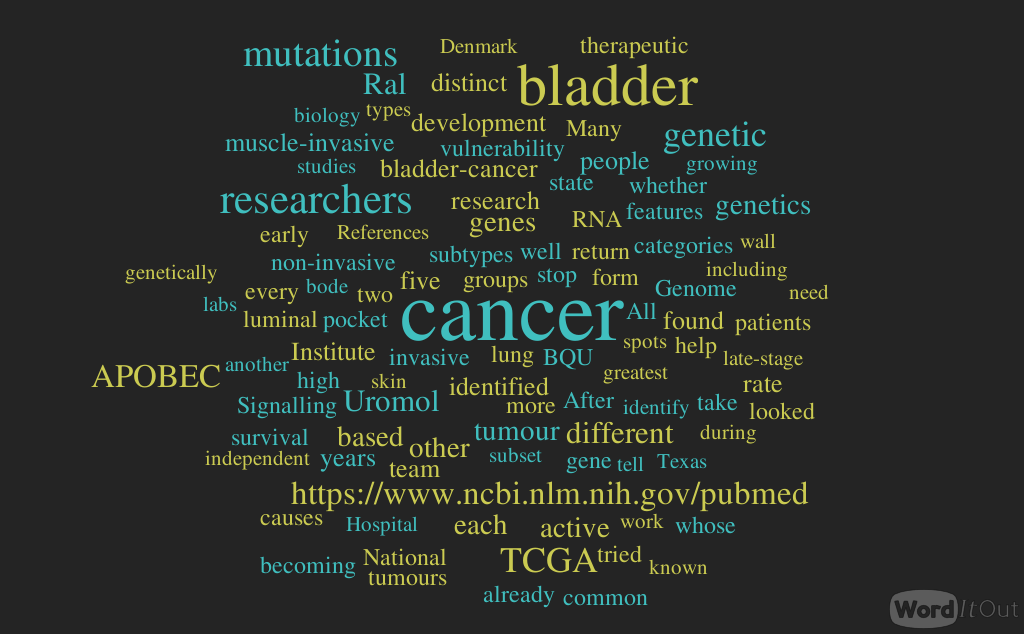
Knowing the genetic vulnerability of bladder cancer for therapeutic intervention, Volume 2 (Volume Two: Latest in Genomics Methodologies for Therapeutics: Gene Editing, NGS and BioInformatics, Simulations and the Genome Ontology), Part 1: Next Generation Sequencing (NGS)
Knowing the genetic vulnerability of bladder cancer for therapeutic intervention
Reporter and Curator: Dr. Sudipta Saha, Ph.D.
A mutated gene called RAS gives rise to a signalling protein Ral which is involved in tumour growth in the bladder. Many researchers tried and failed to target and stop this wayward gene. Signalling proteins such as Ral usually shift between active and inactive states.
So, researchers next tried to stop Ral to get into active state. In inacvtive state Ral exposes a pocket which gets closed when active. After five years, the researchers found a small molecule dubbed BQU57 that can wedge itself into the pocket to prevent Ral from closing and becoming active. Now, BQU57 has been licensed for further development.
Researchers have a growing genetic data on bladder cancer, some of which threaten to overturn the supposed causes of bladder cancer. Genetics has also allowed bladder cancer to be reclassified from two categories into five distinct subtypes, each with different characteristics and weak spots. All these advances bode well for drug development and for improved diagnosis and prognosis.
Among the groups studying the genetics of bladder cancer are two large international teams: Uromol (named for urology and molecular biology), which is based at Aarhus University Hospital in Denmark, and The Cancer Genome Atlas (TCGA), based at institutions in Texas and Boston. Each team tackled a different type of cancer, based on the traditional classification of whether or not a tumour has grown into the muscle wall of the bladder. Uromol worked on the more common, earlier form, non-muscle-invasive bladder cancer, whereas TCGA is looking at muscle-invasive bladder cancer, which has a lower survival rate.
The Uromol team sought to identify people whose non-invasive tumours might return after treatment, becoming invasive or even metastatic. Bladder cancer has a high risk of recurrence, so people whose non-invasive cancer has been treated need to be monitored for many years, undergoing cystoscopy every few months. They looked for predictive genetic footprints in the transcriptome of the cancer, which contains all of a cell’s RNA and can tell researchers which genes are turned on or off.
They found three subgroups with distinct basal and luminal features, as proposed by other groups, each with different clinical outcomes in early-stage bladder cancer. These features sort bladder cancer into genetic categories that can help predict whether the cancer will return. The researchers also identified mutations that are linked to tumour progression. Mutations in the so-called APOBEC genes, which code for enzymes that modify RNA or DNA molecules. This effect could lead to cancer and cause it to be aggressive.
The second major research group, TCGA, led by the National Cancer Institute and the National Human Genome Research Institute, that involves thousands of researchers across USA. The project has already mapped genomic changes in 33 cancer types, including breast, skin and lung cancers. The TCGA researchers, who study muscle-invasive bladder cancer, have looked at tumours that were already identified as fast-growing and invasive.
The work by Uromol, TCGA and other labs has provided a clearer view of the genetic landscape of early- and late-stage bladder cancer. There are five subtypes for the muscle-invasive form: luminal, luminal–papillary, luminal–infiltrated, basal–squamous, and neuronal, each of which is genetically distinct and might require different therapeutic approaches.
Bladder cancer has the third-highest mutation rate of any cancer, behind only lung cancer and melanoma. The TCGA team has confirmed Uromol research showing that most bladder-cancer mutations occur in the APOBEC genes. It is not yet clear why APOBEC mutations are so common in bladder cancer, but studies of the mutations have yielded one startling implication. The APOBEC enzyme causes mutations early during the development of bladder cancer, and independent of cigarette smoke or other known exposures.
The TCGA researchers found a subset of bladder-cancer patients, those with the greatest number of APOBEC mutations, had an extremely high five-year survival rate of about 75%. Other patients with fewer APOBEC mutations fared less well which is pretty surprising.
This detailed knowledge of bladder-cancer genetics may help to pinpoint the specific vulnerabilities of cancer cells in different people. Over the past decade, Broad Institute researchers have identified more than 760 genes that cancer needs to grow and survive. Their genetic map might take another ten years to finish, but it will list every genetic vulnerability that can be exploited. The goal of cancer precision medicine is to take the patient’s tumour and decode the genetics, so the clinician can make a decision based on that information.
Pioneers of Cancer Cell Therapy: Turbocharging the Immune System to Battle Cancer Cells — Success in Hematological Cancers vs. Solid Tumors
Curator: Aviva Lev-Ari, PhD, RN
Article ID #209: Pioneers of Cancer Cell Therapy: Turbocharging the Immune System to Battle Cancer Cells — Success in Hematological Cancers vs. Solid Tumors. Published on 8/19/2016
WordCloud Image Produced by Adam Tubman
Chimeric Antigen Receptor T-Cell Therapy: Players in Basic & Translational Research and Biotech/Pharma
The companies are teamed with academic pioneers:
Novartis with University of Pennsylvania;
Kite Pharma with the National Cancer Institute;
Juno Therapeutics with Sloan Kettering,
the Fred Hutchinson Cancer Research Center in Seattle and Seattle Children’s Hospital.
IMAGE SOURCE: National Cancer Institute
“CAR-T cell immunotherapy” – genetically modified T cells that are engineered to target specific tumor antigens and/or genes that are involved in survival, proliferation, and the enhancement of effector functions have been under intense research.
CAR technology was originally reported by Zelig Eshhar in 1993.
Prof. Zelig Eshhar, Ph.D., served as Chairman of the Department of Immunology at the Weizmann Institute. Prof. Eshhar has been Chair of Scientific Advisory Board at TxCell S.A. since April 2016. Prof. Eshhar has been a Member of Scientific Advisory Board at Kite Pharma, Inc. since August 8, 2013. Prof. Eshhar served as a Member of Scientific Advisory Board at Intellect Neurosciences, Inc. since April 2006.
Prof. Eshhar pioneered the CAR approach (or T-Body as he termed it) to redirect T cells to recognize, engage and kill patient’s tumor cells by engineering them with a construct that combines the anti-target specificity of an antibody with T cell activation domains. Prof. Eshhar serves on several editorial boards, including Cancer Gene Therapy, Human Gene Therapy, Gene Therapy, Expert Opinion on Therapeutics, European Journal of Immunology and the Journal of Gene Medicine. He was a Research Fellow in the Department of Pathology at Harvard Medical School and in the Department of Chemical Immunology at the Weizmann Institute in Israel. His achievements were recognized by several international awards, most recently the CAR Pioneering award by the ATTACK European Consortium. Prof. Eshhar obtained his B.Sc. in Biochemistry and Microbiology and his M.Sc. in Biochemistry from the Hebrew University, and his Ph.D. in the Department of Immunology from the Weizmann Institute of Science.
Zelig Eshhar and Carl H. June honored for research on T cell engineering for cancer immunotherapy
New Rochelle, NY, November 11, 2014–Zelig Eshhar, PhD, The Weizmann Institute of Science and Sourasky Medical Center, and Carl H. June, MD, PhD, Perelman School of Medicine, University of Pennsylvania, are co-recipients of the Pioneer Award, recognized for lentiviral gene therapy clinical trials and for their leadership and contributions in engineering T-cells capable of targeting tumors with antibody-like specificity through the development of chimeric antigen receptors (CARs). Human Gene Therapy, a peer-reviewed journal from Mary Ann Liebert, Inc., publishers, is commemorating its 25th anniversary by bestowing this honor on the leading Pioneers in the field of cell and gene therapy selected by a blue ribbon panel* and publishing a Pioneer Perspective by the award recipients. The Perspectives by Dr. Eshhar and Dr. June are available free on the Human Gene Therapy website at http://www.liebertpub.com/hgt until December 11, 2014.
In his Pioneer Perspective entitled “From the Mouse Cage to Human Therapy: A Personal Perspective of the Emergence of T-bodies/Chimeric Antigen Receptor T Cells” Professor Eshhar chronicles his team’s groundbreaking contributions to the development of the CAR T-cell immunotherapeutic approach to treating cancer. He describes the method’s conceptual development including initial proof-of-concept, and the years of experimentation in mouse models of cancer. They first tested the CAR T-cells on tumors transplanted into mice then progressed to spontaneously developing cancers in immune-competent mice, which Dr. Eshhar describes as “a more suitable model that faithfully mimics cancer patients.” He recounts successful antitumor effects in mice with CAR modified T-cells injected directly into tumors, with effects seen at the injection site and at sites of metastasis, and even the potential of the CAR T-cells to prevent tumor development.
Dr. Carl H. June has led one of the clinical groups that has taken the CAR therapeutic strategy from the laboratory to the patients’ bedside, pioneering the use of CD19-specific CAR T-cells to treat patients with leukemia. In his Pioneer Perspective, “Toward Synthetic Biology with Engineered T Cells: A Long Journey Just Begun” Dr. June looks back on his long, multi-faceted career and describes how he combined his knowledge and research on immunology, cancer, and HIV to develop successful T-cell based immunotherapies. Among the lessons Dr. June has embraced throughout his career are to follow one’s passions. He also says that “accidents can be good: embrace the unexpected results and follow up on these as they are often times more scientifically interesting than predictable responses from less imaginative experiments.”
“These two extraordinary scientists made seminal contributions at key steps of the journey from bench to bedside for CAR T-cells,” says James M. Wilson, MD, PhD, Editor-in-Chief of Human Gene Therapy, and Director of the Gene Therapy Program, Department of Pathology and Laboratory Medicine, University of Pennsylvania Perelman School of Medicine, Philadelphia.
First publication on Adoptive transfer of genetically modified T cells is an attractive approach for generating antitumor immune responses
Eradication of B-lineage cells and regression of lymphoma in a patient treated with autologous T cells genetically engineered to recognize CD19
James N.Kochenderfer, Wyndham H.Wilson, John E.Janik, Mark E.Dudley, MaryaliceStetler-Stevenson, Steven A.Feldman, IrinaMaric, MarkRaffeld, Debbie-Ann N.Nathan, Brock J.Lanier, Richard A.Morgan, Steven A.Rosenberg
Adoptive transfer of genetically modified T cells is an attractive approach for generating antitumor immune responses. We treated a patient with advanced follicular lymphoma by administering a preparative chemotherapy regimen followed by autologous T cells genetically engineered to express a chimeric antigen receptor (CAR) that recognized the B-cell antigen CD19. The patient’s lymphoma underwent a dramatic regression, and B-cell precursors were selectively eliminated from the patient’s bone marrow after infusion of anti–CD19-CAR-transduced T cells. Blood B cells were absent for at least 39 weeks after anti–CD19-CAR-transduced T-cell infusion despite prompt recovery of other blood cell counts. Consistent with eradication of B-lineage cells, serum immunoglobulins decreased to very low levels after treatment. The prolonged and selective elimination of B-lineage cells could not be attributed to the chemotherapy that the patient received and indicated antigen-specific eradication of B-lineage cells. Adoptive transfer of anti–CD19-CAR-expressing T cells is a promising new approach for treating B-cell malignancies. This study is registered at www.clinicaltrials.gov as #NCT00924326.
According to Setting the Body’s ‘Serial Killers’ Loose on Cancer
After a long, intense pursuit, researchers are close to bringing to market a daring new treatment: cell therapy that turbocharges the immune system to fight cancer.
Dr. June’s 2011 publications did not cite Dr. Rosenberg’s paper [Blood, 2010] from the previous year, prompting Dr. Rosenberg to write a letter to The New England Journal of Medicine. Dr. June’s publications also did not acknowledge that the genetic construct he had used was the one he had obtained from Dr. Campana of St. Jude.
St. Jude sued the University of Pennsylvania. Novartis sided with Penn, and Juno Therapeutics with St. Jude.
The suit was settled last year, with Novartis agreeing to pay $12.25 million plus possible future payments and royalties. Within days, Dr. June sent a correction and letter of regret to The New England Journal of Medicine, acknowledging that the CAR used in his groundbreaking 2011 study, and in treating Emily Whitehead, was “designed, developed and provided” by St. Jude.
Dr. Sadelain was not alone in this work. Zelig Eshhar, an Israeli scientist, is credited with developing one of the first crude CARs around 1989. Dr. Rosenberg, always on the lookout for new types of immunotherapy, invited Dr. Eshhar to be a visiting scientist in his laboratory at the National Cancer Institute.
Another early developer was Dr. Dario Campana of St. Jude Children’s Research Hospital.
Douglas Green, who was one of Dr. Sadelain’s doctoral thesis advisers and is now chairman of immunology at St. Jude Children’s Research Hospital.
But Dr. Sadelain, he continued, “believed in his approach and he pursued it relentlessly.”
After earning his Ph.D., Dr. Sadelain headed for the Whitehead Institute for Biomedical Research in Cambridge, Mass., to learn how to do gene therapy, using disabled viruses that could not cause disease to deliver genes into cells. By 1992, he had demonstrated that he could genetically engineer mouse T-cells.
He then moved to Sloan Kettering. In 2003, he and his colleagues — including his partner and now wife, Isabelle Rivière — showed that genetically engineered T-cells could eradicate certain cancers in mice.
From the Lab to the bedside to the Out Patient Clinic




 2012pharmaceutical
 sjwilliamspa