Feeds:
Posts
Comments

Archive for the ‘Drug Delivery Platform Technology’ Category

Walking DNA Nanorobot

Reporter: Irina Robu, PhD

New research from California Institute of Technology headed by Anupama Thubagere and Lulu Qian built robots from DNA and programmed them to sort and deliver molecules to a specified location. These robots can potentially transform the drug delivery field to how body fights infections to how microscopic measurements are made. The dominant premise of DNA robots is that rather than creating molecular devices from scratch, we can use the power of molecular machinery by building microscopic-size robots and send them to places that are then impossible to reach, such as a cell or a hard-to-reach cancerous tumor. These robots demonstrated the ability to perform simple tasks, however this latest effort ramped up a path by programming DNA robots to perform a cargo‐sorting task and possibly many other tasks.

Each robot was built from a single-stranded DNA molecule of just 53 nucleotides equipped with “legs” for walking and “arms” for picking up objects. The robot are 20 nanometers tall and their walking strides measures six nanometers long, where one nanometer is a billionth of a meter. For the cargo, the researchers used two types of molecules, each being a distinct single-stranded piece of DNA. For the tests, the researchers placed the cargo onto a random location along the surface of a two-dimensional origami DNA test platform. The walking DNA robots moved in parallel along this surface, hunting for their cargo.

To see if a robot successfully picked up and dropped off the right cargo at the right location, the researchers used two fluorescent dyes to differentiate the molecules.

The researchers guess that each DNA robot took around 300 steps to complete its task, or roughly ten times more than in previous efforts. Though, more work is needed to figure out how these DNA robots perform under different environmental conditions. This new study suggests a worthwhile methodology for scientists to continue pursuing.

SOURCE

http://science.sciencemag.org/content/357/6356/eaan6558


Read Full Post »

Novartis’ Kymriah (tisagenlecleucel), FDA approved genetically engineered immune cells, would charge $475,000 per patient, will use Programs that Payers will pay only for Responding Patients

Curator: Aviva Lev-Ari, PhD, RN


UPDATED on 9/1/2017:

This Pioneering $475,000 Cancer Drug Comes With A Money-Back Guarantee

Novartis defends the eye-popping price of its pioneering gene therapy with arguments about its $1 billion expenditure—and novel “value-based” pricing.

https://www.fastcompany.com/40461214/how-novartis-is-defending-the-record-475000-price-of-its-pioneering-gene-therapy-cancer-drug-car-t-kymriah


On 8/30/2017 we wrote:

FDA has approved the world’s first CAR-T therapy, Novartis for Kymriah (tisagenlecleucel) and Gilead’s $12 billion buy of KitePharma, no approved drug and Canakinumab for Lung Cancer (may be?)

Curator: Aviva Lev-Ari, PhD, RN

https://pharmaceuticalintelligence.com/2017/08/30/fda-has-approved-the-worlds-first-car-t-therapy-novartis-for-kymriah-tisagenlecleucel-and-gileads-12-billion-buy-of-kite-pharma-no-approved-drug-and-canakinumab-for-lung-cancer-may-be/


The Price for the Treatment was published on 8/31/2017, a Value-based Pricing Payment Model of a $475,000 per patient charge for the responding patients after ONE month of treatment. Novartis says it takes an average of 22 days to create the therapy, from the time a patient’s cells are removed to when they are infused back into the patient. Kymriah will initially be available at 20 U.S. hospitals within a month, Novartis says. Eventually, 32 total sites will offer the therapy. 

CAR-T gained national attention three years ago when Carl June, a researcher at the University of Pennsylvania, used to put a young girl’s acute lymphoblastic leukemia. Genetically altering the girl’s immune cells had made her deathly ill, but June had used a Roche drug, Actemra, to treat the side effects. She lived, and the results were published in The New England Journal of Medicine. Novartis bought the rights to the Penn treatment for just $20 million up front.

Pharma Buying the right to use from an Academic Institution is a known route to leap frog the R&D lengthy process of Drug discovery.

“I’ve told the team that resources are not an issue. Speed is the issue,” says Novartis’ Chief Executive Joseph Jimenez, told Forbes in a cover story about the work then.

The FDA calls this CAR-T therapy treatment, made by Novartis, the “first gene therapy” in the U.S. The therapy is designed to treat an often-lethal type of blood and bone marrow cancer that affects children and young adults. The FDA defines gene therapy as a medicine that “introduces genetic material into a person’s DNA to replace faulty or missing genetic material” to treat a disease or medical condition. This is the first such therapy to be available in the U.S., according to the FDA.

Two gene therapies for rare, inherited diseases have already been approved in Europe.

To further evaluate the long-term safety, Novartis is also required to conduct a post-marketing observational study involving patients treated with Kymriah.

The FDA granted Kymriah Priority Review and Breakthrough Therapy designations. The Kymriah application was reviewed using a coordinated, cross-agency approach. The clinical review was coordinated by the FDA’s Oncology Center of Excellence, while CBER conducted all other aspects of review and made the final product approval determination.

The FDA granted approval of Kymriah to Novartis Pharmaceuticals Corp. The FDA granted the expanded approval of Actemra to Genentech Inc.

FDA commissioner Scott Gottlieb in a statement.

“We’re entering a new frontier in medical innovation with the ability to reprogram a patient’s own cells to attack a deadly cancer,” 

“Kymriah is a first-of-its-kind treatment approach that fills an important unmet need for children and young adults with this serious disease,” said Peter Marks, M.D., Ph.D., director of the FDA’s Center for Biologics Evaluation and Research (CBER). “Not only does Kymriah provide these patients with a new treatment option where very limited options existed, but a treatment option that has shown promising remission and survival rates in clinical trials.”

https://www.fda.gov/NewsEvents/Newsroom/PressAnnouncements/ucm574058.htm

The Protocol

A patient’s T cells are extracted and cryogenically frozen so that they can be transported to Novartis’s manufacturing center in New Jersey. There, the cells are genetically altered to have a new gene that codes for a protein—called a chimeric antigen receptor, or CAR. This protein directs the T cells to target and kill leukemia cells with a specific antigen on their surface. The genetically modified cells are then infused back into the patient.

In a clinical trial of 63 children and young adults with a type of acute lymphoblastic leukemia, 83 percent of patients that received the CAR-T therapy had their cancers go into remission within three months. At six months, 89 percent of patients who received the therapy were still living, and at 12 months, 79 percent had survived.

https://www.technologyreview.com/s/608771/the-fda-has-approved-the-first-gene-therapy-for-cancer/?utm_campaign=add_this&utm_source=email&utm_medium=post

CAR-T Therapies: Product/Molecules/MOA under Development:

  • Similar CAR-T treatments were being developed at other institutions including
  • Memorial Sloan-Kettering Cancer Center,
  • Seattle Children’s Hospital, and
  • The National Cancer Institute.
  • The Memorial and Seattle work was spun off into a startup called Juno Therapeutics, which has fallen behind. Juno Therapeutics ended a CAR-T study earlier this year after patients died from cerebral edema, or swelling in the brain.
  • The NCI work became the basis for the product being developed by Kite Pharma. Kite Pharma, which is awaiting FDA approval for its CAR-T therapy to treat a form of blood cancer in adults, was this week bought out by Gilead in a deal worth $11.9 billion.

On Cambridge Healthtech Institute’s 4th Annual Adoptive T Cell Therapy, Delivering CAR, TCR, and TIL from Research to Reality, August 29 – 30, 2017 | Sheraton Boston | Boston, MA

TUESDAY, AUGUST 29 – I covered in Real Time the talk on Juno Therapeutics: Building Better T Cell Therapies: The Power of Molecular Profiling by Mark Bonyhadi, Ph.D., Head, Research and Academic Affairs, Juno Therapeutics

https://pharmaceuticalintelligence.com/2017/08/29/live-829-chis-oncolytic-virus-immunotherapy-and-adoptive-cell-therapy-august-28-29-2017-sheraton-boston-hotel-boston-ma/


Precision Medicine is Costly and not a Rapid manufacturing process

All of the CAR-T products are expensive to make, and must be manufactured on an individual basis for each new patient from the patient’s own T-cells, a type of white blood cells, a process that takes weeks.

  • How quickly companies can speed up manufacturing.
  • Kymriah will be manufactured at a facility in Morris Plains, N.J.
  • CAR-T technology, which has so far been used only in patients with blood cancers that have not been cured by other treatments, can be used earlier in the disease or for solid tumors: Breast, Prostate, Melanomas.

https://www.forbes.com/sites/matthewherper/2017/08/30/fda-approves-novartis-treatment-that-alters-patients-cells-to-fight-cancer/#2aecb25b4400

Prediction How Patients will Far Well – Researchers use a big-data approach to find links between different genes and patient survival.

https://www.technologyreview.com/s/608666/a-cancer-atlas-to-predict-how-patients-will-fare/?set=

A pathology atlas of the human cancer transcriptome

+ See all authors and affiliations

Science  18 Aug 2017:
Vol. 357, Issue 6352, eaan2507
DOI: 10.1126/science.aan2507

Modeling the cancer transcriptome

Recent initiatives such as The Cancer Genome Atlas have mapped the genome-wide effect of individual genes on tumor growth. By unraveling genomic alterations in tumors, molecular subtypes of cancers have been identified, which is improving patient diagnostics and treatment. Uhlen et al. developed a computer-based modeling approach to examine different cancer types in nearly 8000 patients. They provide an open-access resource for exploring how the expression of specific genes influences patient survival in 17 different types of cancer. More than 900,000 patient survival profiles are available, including for tumors of colon, prostate, lung, and breast origin. This interactive data set can also be used to generate personalized patient models to predict how metabolic changes can influence tumor growth.

Read Full Post »

Pharmacotyping Pancreatic Cancer Patients in the Future: Two Approaches – ORGANOIDS by David Tuveson and Hans Clevers and/or MICRODOSING Devices by Robert Langer

Curator: Aviva Lev-Ari, PhD, RN


UPDATED on 4/5/2018

Featured video: Magical Bob

A fascination with magic leads Institute Professor Robert Langer to solve world problems using the marvels of chemical engineering.Watch Video

MIT News Office
March 27, 2018

http://news.mit.edu/2018/featured-video-magical-bob-langer-0327


This curation provides the resources for edification on Pharmacotyping Pancreatic Cancer Patients in the Future


  • Professor Hans Clevers at Clevers Group, Hubrecht University

https://www.hubrecht.eu/onderzoekers/clevers-group/

  • Prof. Robert Langer, MIT

http://web.mit.edu/langerlab/langer.html

Langer’s articles on Drug Delivery

https://scholar.google.com/scholar?q=Langer+on+Drug+Delivery&hl=en&as_sdt=0&as_vis=1&oi=scholart&sa=X&ved=0ahUKEwixsd2w88TTAhVG4iYKHRaIAvEQgQMIJDAA

organoids, which I know you’re pretty involved in with Hans Clevers. What are your plans for organoids of pancreatic cancer?

Organoids are a really terrific model of a patient’s tumour that you generate from tissue that is either removed at the time of surgery or when they get a small needle biopsy. Culturing the tissue and observing an outgrowth of it is usually successful and when you have the cells, you can perform molecular diagnostics of any type. With a patient-derived organoid, you can sequence the exome and the RNA, and you can perform drug testing, which I call ‘pharmacotyping’, where you’re evaluating compounds that by themselves or in combination show potency against the cells. A major goal of our lab is to work towards being able to use organoids to choose therapies that will work for an individual patient – personalized medicine.

Organoids could be made moot by implantable microdevices for drug delivery into tumors, developed by Bob Langer. These devices are the size of a pencil lead and contain reservoirs that release microdoses of different drugs; the device can be injected into the tumor to deliver drugs, and can then be carefully dissected out and analyzed to gain insight into the sensitivity of cancer cells to different anticancer agents. Bob and I are kind of engaged in a friendly contest to see whether organoids or microdosing devices are going to come out on top. I suspect that both approaches will be important for pharmacotyping cancer patients in the future.

From the science side, we use organoids to discover things about pancreatic cancer. They’re great models, probably the best that I know of to rapidly discover new things about cancer because you can grow normal tissue as well as malignant tissue. So, from the same patient you can do a comparison easily to find out what’s different in the tumor. Organoids are crazy interesting, and when I see other people in the pancreatic cancer field I tell them, you should stop what you’re doing and work on these because it’s the faster way of studying this disease.

SOURCE

Other related articles on Pancreatic Cancer and Drug Delivery published in this Open Access Online Scientific Journal include the following:


Pancreatic Cancer: Articles of Note @PharmaceuticalIntelligence.com

Curator: Aviva Lev-Ari, PhD, RN

https://pharmaceuticalintelligence.com/2016/05/26/pancreatic-cancer-articles-of-note-pharmaceuticalintelligence-com/

Keyword Search: “Pancreatic Cancer” – 275 Article Titles

https://pharmaceuticalintelligence.com/wp-admin/edit.php?s=Pancreatic+Cancer&post_status=all&post_type=post&action=-1&m=0&cat=0&paged=1&action2=-1

Keyword Search: Drug Delivery: 542 Articles Titles

https://pharmaceuticalintelligence.com/wp-admin/edit.php?s=Drug+Delivery&post_status=all&post_type=post&action=-1&m=0&cat=0&paged=1&action2=-1

Keyword Search: Personalized Medicine: 597 Article Titles

https://pharmaceuticalintelligence.com/wp-admin/edit.php?s=Personalized+Medicine&post_status=all&post_type=post&action=-1&m=0&cat=0&paged=1&action2=-1

  • Cancer Biology & Genomics for Disease Diagnosis, on Amazon since 8/11/2015

http://www.amazon.com/dp/B013RVYR2K


VOLUME TWO WILL BE AVAILABLE ON AMAZON.COM ON MAY 1, 2017

Read Full Post »

Exosomes: Natural Carriers for siRNA Delivery using extracellular vesicles through endocytic pathway.

Reporter: Aviva Lev-Ari, PhD, RN


Exosomes: Natural Carriers for siRNA Delivery

Author(s): Lalit Kumar, Shivani Verma, Bhuvaneshwar Vaidya, Vivek Gupta.

Abstract:

Various cells of the human physiological system have the capability to release extracellular vesicles (EVs) involved in intercellular transport of proteins and nucleic acids. Exosomes are a subtype of extracellular vesicles having their origin through endocytic pathway. While being involved in intercellular transport of macromolecules, exosomes, due to their presence in several body fluids, can also be utilized as a system to commute RNA molecules and proteins in the body. Recent advances in gene therapy have provided a new outlook in disease therapeutics by modulation of gene expression using oligonucleotide based approach and exosomes have been reported a potential carrier for nucleic acid based therapeutic moieties. In recent years, small interfering RNA (siRNA) has emerged as promising therapeutic alternative for diseases with gene-based pathophysiology, however poor bioavailability limits its therapeutic potential. For effective delivery and enhancement of bioavailability of siRNA, several carriers including dendrimers, liposomes, siRNA conjugates, and siRNA aptamer chimeras, to name a few, have been explored. Exosomes can be considered a promising carrier for effective delivery of siRNA due to their existence in body’s endogenous system and high tolerance. The present review focuses on delivering knowledge about exosomes, siRNA, and capability of exosomes to act as natural carriers for siRNA delivery.

Keywords: Extracellular vesicles, endogenous, exosomes, oligonucleotide, small interfering RNA.

Order Reprints Order Eprints Rights & PermissionsPrintExport

Article Details

VOLUME: 21
ISSUE: 31
Year: 2015
Page: [4556 – 4565]
Pages: 10
DOI: 10.2174/138161282131151013190112
Price: $58

SOURCE

http://www.eurekaselect.com/135748/article

Read Full Post »

Real Time Coverage and eProceedings of Presentations on 9/19-9/21 @CHI’s 14th Discovery On Target, 9/19 – 9/22/2016, Westin Boston Waterfront, Boston

Curator: Aviva Lev-Ari, PhD, RN

2.1.5.11

2.1.5.11   Real Time Coverage and eProceedings of Presentations on 9/19-9/21 @CHI’s 14th Discovery On Target, 9/19 – 9/22/2016, Westin Boston Waterfront, Boston, Volume 2 (Volume Two: Latest in Genomics Methodologies for Therapeutics: Gene Editing, NGS and BioInformatics, Simulations and the Genome Ontology), Part 2: CRISPR for Gene Editing and DNA Repair

LIVE 9/19 8AM – 10AM USING CRISPR/Cas9 FOR FUNCTIONAL SCREENING at CHI’s 2nd Annual Symposium CRISPR: Mechanisms and Applications @CHI’s 14th Discovery On Target, 9/19 – 9/22/2016, Westin Boston Waterfront, Boston

https://pharmaceuticalintelligence.com/2016/09/19/live-919-8am-10am-using-crisprcas9-for-functional-screening-at-chis-2nd-annual-symposium-crispr-mechanisms-and-applications-chis-14th-discovery-on-target-919-9222/

LIVE 9/19 9:40 – noon CRISPR Engineering Lymphoma Lines & Will Interference from CRISPR Silence RNAi? CHI’s 2nd Annual Symposium CRISPR: Mechanisms and Applications @ CHI’s 14th Discovery On Target, 9/19 – 9/22/2016, Westin Boston Waterfront, Boston

https://pharmaceuticalintelligence.com/2016/09/19/live-919-940-noon-crispr-engineering-lymphoma-lines-will-interference-from-crispr-silence-rnai-chis-2nd-annual-symposium-crispr-mechanisms-and-applications-chis-14th/

LIVE 9/19 1:40 – 3:20 EMERGING APPLICATIONS OF CRISPR/CAS9 at CHI’s 2nd Annual Symposium CRISPR: Mechanisms and Applications @ CHI’s 14th Discovery On Target, 9/19 – 9/22/2016, Westin Boston Waterfront, Boston

https://pharmaceuticalintelligence.com/2016/09/19/live-919-140-320-emerging-applications-of-crisprcas9-at-chis-2nd-annual-symposium-crispr-mechanisms-and-applications-chis-14th-discovery-on-target-919-9222016/

LIVE 9/19 4PM – 5:30PM NK CELL-BASED CANCER IMMUNOTHERAPY @CHI’s 14th Discovery On Target, 9/19 – 9/22/2016, Westin Boston Waterfront, Boston

https://pharmaceuticalintelligence.com/2016/09/19/live-919-4pm-530pm-nk-cell-based-cancer-immunotherapy-chis-14th-discovery-on-target-919-9222016-westin-boston-waterfront-boston/

LIVE 9/20 8AM to noon GENE THERAPIES BREAKTHROUGHS at CHI’s 14th Discovery On Target, 9/19 – 9/22/2016, Westin Boston Waterfront, Boston

https://pharmaceuticalintelligence.com/2016/09/20/live-920-8am-to-noon-gene-therapies-breakthroughs-at-chis-14th-discovery-on-target-919-9222016-westin-boston-waterfront-boston/

LIVE 9/20 2PM to 5:30PM New Viruses for Therapeutic Gene Delivery at CHI’s 14th Discovery On Target, 9/19 – 9/22/2016, Westin Boston Waterfront, Boston

https://pharmaceuticalintelligence.com/2016/09/20/live-920-2pm-to-530pm-new-viruses-for-therapeutic-gene-delivery-at-chis-14th-discovery-on-target-919-9222016-westin-boston-waterfront-boston/

LIVE 9/21 8AM to 10:55 AM Expoloring the Versatility of CRISPR/Cas9 at CHI’s 14th Discovery On Target, 9/19 – 9/22/2016, Westin Boston Waterfront, Boston

https://pharmaceuticalintelligence.com/2016/09/21/live-921-8am-to-1055-am-expoloring-the-versatility-of-crisprcas9-at-chis-14th-discovery-on-target-919-9222016-westin-boston-waterfront-boston/

LIVE 9/21 8AM to 2:40PM Targeting Cardio-Metabolic Diseases: A focus on Liver Fibrosis and NASH Targets at CHI’s 14th Discovery On Target, 9/19 – 9/22/2016, Westin Boston Waterfront, Boston

https://pharmaceuticalintelligence.com/2016/09/21/live-921-8am-to-240pm-targeting-cardio-metabolic-diseases-a-focus-on-liver-fibrosis-and-nash-targets-at-chis-14th-discovery-on-target-919-9222016-westin-boston-waterfront-b/

LIVE 9/21 12:50 pm Plenary Keynote Program at CHI’s 14th Discovery On Target, 9/19 – 9/22/2016, Westin Boston Waterfront, Boston

https://pharmaceuticalintelligence.com/2016/09/21/live-921-1250-pm-plenary-keynote-program-at-chis-14th-discovery-on-target-919-9222016-westin-boston-waterfront-boston/

LIVE 9/21 3:20PM to 6:40PM KINASE INHIBITORS FOR CANCER IMMUNOTHERAPY COMBINATIONS & KINASE INHIBITORS FOR AUTOIMMUNE AND INFLAMMATORY DISEASES at CHI’s 14th Discovery On Target, 9/19 – 9/22/2016, Westin Boston Waterfront, Boston

https://pharmaceuticalintelligence.com/2016/09/21/live-921-320pm-to-640pm-kinase-inhibitors-for-cancer-immunotherapy-combinations-kinase-inhibitors-for-autoimmune-and-inflammatory-diseases-at-chis-14th-discovery-on-target-919/

Read Full Post »

Hashtags and Handles for CHI’s 14th Annual Discovery on Target, September 19 – 22, 2016 in Boston, Westin Boston Waterfront

Curator: Stephen J Williams, PhD


CAMBRIDGE HEALTHTECH INSTITUTE’S 2016 Discovery on Target

attend

http://www.DiscoveryOnTarget.com

DOT-150x150

  • CHI’s Discovery on Target in Boston, September 19-22, 2016,

  • CRISPR: Mechanisms to Applications on 9/19/2016


To Follow LIVE CONFERENCE COVERAGE PLEASE FOLLOW ON TWITTER USING

Meeting #: #BostonDOT16

Meeting @: @BostonDOT


Overall good meeting #s:

#personalizedmedicine

#innovation

#cancer

#immunology

#immunooncology

#pharmanews

#CRSPR

#geneediting

#crisper

#biotech


AND FOLLOW these @

@pharma_BI

@AVIVA_1950

@BiotechNews

@CHI

@FierceBiotech


TALK SPECIFIC # and @


Monday Sept. 19th Understanding CRISPR: Mechanisms and Applications


Day Time Talk Title # @
Monday Sept. 19, 2016 8:00 AM 8:00 Chairperson’s Opening Remarks

Scott Martin, Ph.D., Group Lead, Functional Genomics, Genentech Inc


#BostonDOT16

#personalizedmedicine

#oncology

#Boston

#immunology

#biotech

#CRSPR

#geneediting

#genomics

@BostonDOT

@CHI

@genentech

@Boston

@BiotechNews

@pharma_BI

@AVIVA_1950

@GeneEditing

@Genomeresearch


  8:10 AM 8:10 Comparing Arrayed siRNA and CRISPR Approaches Towards Functional Genomics Screening

Scott Martin, Ph.D., Group Lead, Functional Genomics, Genentech Inc.


#Crisper

#CRSPR

#Cas9

#geneediting

#genomics


@genentech


  8:40 AM 8:40 Getting from Alpha to Omega: Successfully Conceptualizing, Starting and Finishing CRISPR/Cas Screens

Ralph Garippa, Ph.D., Director, RNAi & Gene Editing Core Facility, Sloan-Kettering Institute, Memorial Sloan-Kettering Cancer Center


#Crisper

#CRSPR

#Cas9

#geneediting

#genomics

@CHI

@Boston

@BiotechNews

@pharma_BI

@AVIVA_1950


  9:10 AM 9:10 Genome Editing-Enabled HTS Assays for Genetically Inherited Disease Drug Discovery

James Inglese, Ph.D., Head Assay Development & Screening Technologies, National Center for Advancing Translational Sciences, National Institutes of Health


#geneediting

#raredisease

#genetics

#AssayDevelopment

#NIH

#CMT

#drugdiscovery


@BostonDOT

@NIH

@BiotechNews

@PharmaNews

@pharma_BI

@AVIVA_1950

@DrugDiscover365


  9:40 AM


10:40


11:40

9:40 Use of CRISPR and Other Genomic Technologies to Advance Drug Discovery

Namjin Chung, Ph.D., Head, Functional Genomics Platform, Discovery Research, AbbVie, Inc.

10:40 Vignettes From the Bench: CRISPR Engineering Lymphoma Lines

Arthur L. Shaffer, III, Ph.D., Staff Scientist, Laboratory of Dr. Louis Staudt, Lymphoid Malignancies Branch, Center for Cancer Research, National Cancer Institute, National Institutes of Health


11:10 PANEL DISCUSSION: Will Interference from CRISPR Silence RNAi?

Moderator: Scott Martin, Ph.D., Group Lead, Functional Genomics, Genentech Inc.


#geneediting

#CRISPR

#Cas9

#NIH

#CMT

#drugdiscovery

#pharmanews

#CRSPR

#genomics

@BostonDOT

@abbvie

@BiotechNews

@PharmaNews

@pharma_BI

@AVIVA_1950

@DrugDiscover365


  1:40 PM


1:50 PM


2:20


2:50

EMERGING APPLICATIONS OF CRISPR/CAS9

1:40 Chairperson’s Opening Remarks

James Inglese, Ph.D., Head Assay Development & Screening Technologies, National Center for Advancing Translational Sciences, National Institutes of Health


1:50 MicroRNA Target Site Editing of Chondrocyte Master-Regulators in Primary Human Cells Using CRISPR-Cas9

Christine Seidl, Ph.D., Post-Doctoral Research Associate, Cell Signaling, Kennedy Institute of Rheumatology, Oxford University


2:20 Massively Parallel Combinatorial Genetic Perturbation Screening with CRISPR-Cas9 in Human Cells

Cheryl H. Cui, Ph.D. Candidate, Harvard-MIT Division of Health Science and Technology, MIT


2:50 The Scientist’s Guide to CRISPR Law

Paul Enríquez, J.D., LL.M., Ph.D. Candidate, Structural and Molecular Biochemistry, North Carolina State University


note use above hashtags including these specific ones


#CMT


#inflammation


#systembiology

#genetics


note use above @ and these talk specific ones


@NIH


@UniofOxford


@MIT

@Harvard


@NCarolinaSt


12-3:00 PM


3:30-6 PM

Special Conference Short Courses

SC7: Using IP Landscape Studies to Improve Your Confidence While Navigating a Crowded IP and Technology Space – Detailed Agenda


Instructors:

David Berry, M.D., Ph.D., General Partner, Flagship Ventures

Ananda Chakrabarty, Ph.D., Department of Microbiology & Immunology, University of Illinois College of Medicine

Anu Daniel, Ph.D., Licensing Manager, Innovation, Partners Healthcare

Drew Lowery, Ph.D., Director of Life Sciences and Group Leader, Biotechnology Pharmaceuticals Group, Global Prior Art, Inc.

Amy Mendel, J.D., SVP, Intellectual Property, Evelo Biosciences

Daniel Neuman, Ph.D., Group Leader, Chemistry & Materials, Global Prior Art, Inc.


SC12: Introduction to Gene Editing – Detailed Agenda

Instructors:

Stephanie Mohr, Ph.D., Lecturer, Genetics & Director, Drosophila RNAi Screening Center at Harvard Medical School

Claire Yanhui Hu, Ph.D., Senior Bioinformatician, Drosophila RNAi Screening Center, Department of Genetics, Harvard Medical School

Paul Enríquez, J.D., LL.M., Ph.D. Candidate, Structural and Molecular Biochemistry, North Carolina State University


#IP

#patent

#partnership

#innovation

#biotech


#genetics

#CRSPR

#Cas9

#molecularscreen


@FlagshipVenture

@PartnersNews

@GlobalArtAgency


@harvardmed

@NCarolinaSt


Tuesday Sept. 21   Advances in Gene Editing and Gene Silencing   Conference Part 1


    KEYNOTE SESSION:

GENOME EDITING FOR IN VIVO APPLICATIONS


  8:05 AM 8:05 Chairperson’s Opening Remarks

Bryan R. Cullen, Ph.D., James B. Duke Professor of Molecular Genetics and Microbiology and Director, Center for Virology, Duke University


#genetherapy

#virology

#adenovirus


@Duke


  8:20 AM


10:35 AM


11:05 AM


11:35 AM


8:20 AAV for Gene Therapy and Genome Editing

James Wilson, M.D., Ph.D., Professor, Department of Pathology and Laboratory Medicine, Perelman School of Medicine; Director, Orphan Disease Center and Director, Gene Therapy Program, University of Pennsylvania


10:35 Targeted Endonucleases as Antiviral Agents: Promises and Pitfalls

Keith R. Jerome, M.D., Ph.D., Member, Vaccine and Infectious Disease Division, Fred Hutchinson Cancer Research Center; Professor and Head, Virology Division, Department of Laboratory Medicine, University of Washington


11:05 Nucleic Acid Delivery Systems for RNA Therapy and Gene Editing

Daniel Anderson, Ph.D., Professor, Department of Chemical Engineering, Institute for Medical Engineering & Science, Harvard-MIT Division of Health Sciences & Technology and David H. Koch Institute for Integrative Cancer Research, Massachusetts Institute of Technology


11:35 PANEL DISCUSSION: CRISPR/Cas: A Realistic and Practical Look at What the Future Could Hold

Moderator: Bryan R. Cullen, Ph.D., James B. Duke Professor of Molecular Genetics and Microbiology and Director, Center for Virology, Duke University

Participants: Session Speakers


#genetherapy

#virology


#drugdelivery

#genedelivery

#cancer


@PennMedicine


@UW


@MIT

@kochinstitute

@Duke


  12:05 PM


12:45 PM


12:05 pm CRISPR/Cas9 for the Screening of the Human Kinome – A Pilot Study in an Aggressive Pediatric Cancer Cell Line

Simone T. Sredni, M.D., Ph.D., Research Assistant Professor, Neurological Surgery, Northwestern University Feinberg School of Medicine, Ann and Robert H. Lurie Children’s Hospital of Chicago


12:45 Luncheon Presentation: Building a Better Research Story: Screening with shRNA and CRISPR

Ryan Raver, Ph.D., Global Product Manager, Functional Genomics, MilliporeSigma


#cancer

#kinome

#brain

#ChildhoodCancerAwareness


#genomics


@NorthwesternMed


@MilliporeSigma


COMPLEMENTING THE USE CRISPR & RNAi FOR DISEASE MODELING


  2:05 PM


2:15 PM


2:45 PM


3:15 PM


4:25 PM


4:55 PM

2:05 Chairperson’s Remarks

Ralph Garippa, Ph.D., Director, RNAi Core Facility, Sloan-Kettering Institute, Memorial Sloan-Kettering Cancer Center


2:15 Comparing Arrayed siRNA and CRISPR Approaches Towards Functional Genomics Screening

Scott Martin, Ph.D., Group Lead, Functional Genomics, Genentech Inc.


2:45 Use of CRISPR/Cas9-Based Gene Editing to Model and Treat Retinal Degenerative Disease

Donald Zack, M.D., Ph.D., Guerrieri Professor of Genetic Engineering and Molecular Ophthalmology, Johns Hopkins University


3:15 HP Inkjet Technology for Enhancing Gene Editing Experiments

Erica Squires, Ph.D., Senior Applications Scientist, HP Inc.


4:25 Harnessing the Versatile CRISPR-Cas9 Systems for Cancer Modeling Platforms

Geoffrey Bartholomeusz, Ph.D., Associate Professor and Director, Target Identification and Validation Program, Department of Experimental Therapeutics, Division of Cancer Medicine, The University of Texas MD Anderson Cancer Center


4:55 Technology Panel: Trends in CRISPR & RNAi Technologies

Moderator: Ralph Garippa, Ph.D., Director, RNAi Core Facility, Sloan-Kettering Institute, Memorial Sloan-Kettering Cancer Center

Panelists:

Louise Baskin, Senior Product Manager, Dharmacon, GE Healthcare

Paul Diehl, Ph.D., Director, Business Development, Cellecta Inc.


#eyedisease


#bioprinting

#3D_printing

#tech

#innovation

#geneediting


#endcancer

#cancer

#drugdiscovery


@sloan_kettering

@MSKCC_OncoNotes


@genentech


@MacularHope

@HopkinsMedicine


@HP

@My3DPrinting


@MDAndersonNews


@MMSK

@sloan_kettering


@CELLECTA


Wednesday Sept. 21 2016   EXPLORING THE VERSATILITY OF CRISPR/Cas9    
   

8:00 AM


8:10 AM


8:40 AM


9:10 AM


10:25 AM


10:55 AM

8:00 Chairperson’s Opening Remarks

TJ Cradick , Ph.D., Head of Genome Editing, CRISPR Therapeutics


8:10 Functional Genomics Using CRISPR-Cas9: Technology and Applications

Neville Sanjana, Ph.D., Core Faculty Member, New York Genome Center and Assistant Professor, Department of Biology & Center for Genomics and Systems Biology, New York University


8:40 Therapeutic Gene Editing With CRISPR/Cas9

TJ Cradick , Ph.D., Head of Genome Editing, CRISPR Therapeutics


9:10 Towards Combinatorial Drug Discovery: Mining Heterogenous Phenotypes from Large Scale RNAi/Drug Perturbations

Arvind Rao, Ph.D., Assistant Professor, Department of Bioinformatics and Computational Biology, The University of Texas MD Anderson Cancer Center


10:25 CRISPR in Stem Cell Models of Eye Disease

Alexander Bassuk, M.D., Ph.D., Associate Professor of Pediatrics, Department of Molecular and Cellular Biology, University of Iowa


10:55 CRISPR in Mouse Models of Eye Disease

Vinit Mahajan, M.D., Ph.D., Assistant Professor of Ophthalmology and Visual Sciences, University of Iowa College of Medicine


  @CRISPRTX


@nyuniversity


@CRISPRTX


@MDAndersonNews


@uiowa


Wednesday 21, 2016 12:55 – 2:40 Plenary Keynote Sessions


  12:55 PM


1:15 PM


2:00 PM

12:55 Event Chairperson’s Opening Remarks

Cindy Crowninshield, RDN, LDN, Conference Director, Cambridge Healthtech Institute


1:15 Open Innovation Partnerships to Bridge the Gap from GWAS to Drug Targets Jeffrey Barrett, D.Phil., Founding Director, Open Targets; Group Leader, Wellcome Trust Sanger Institute


Aaron Day-Williams, Ph.D., Biogen Scientific Lead, Open Targets; Associate Director and Head, Statistical Genetics, Biogen


2:00 Cell-Penetrating Mini-Proteins Gregory L. Verdine, Ph.D., Erving Professor, Chemistry, Departments of Stem Cell and Regenerative Biology, Chemistry and Chemical Biology, and Molecular and Cellular Biology, Harvard University and Harvard Medical School


#openinnovation

#openscience

#bioinformatics


#openinnovation


@CHI


@Biogen


@HarvardMed


Thursday September 22,2016 Part 2 USING CRISPR/RNAi FOR TARGET DISCOVERY & PATHWAY ANALYSIS    
   

8:30 AM

8:30 Chairperson’s Remarks

John Doench, Ph.D., Associate Director, Genetic Perturbation Platform, Broad Institute of Harvard and MIT


8:45 Strategies and Applications Using shRNA and CRISPR Technology for Identification of New Druggable Targets

Donald Apanovitch, Ph.D., Director, Functional Genomics (Oncology), Pfizer Research

9:15 High Throughput Phenotypic Screening in Drug Discovery Using the CRISPR-Cas9 System

Greg Hoffman, Ph.D., Investigator III, Developmental & Molecular Pathways Department, Novartis Institutes for Biomedical Research


9:45 CRISPR Libraries for Functional Genomics: Optimizing On-Target Activity and Avoiding Off-Target Effects

John Doench, Ph.D., Associate Director, Genetic Perturbation Platform, Broad Institute of Harvard and MIT


11:10 A High Throughput Functional Genomics Screening Approach to Identify Modulators of Nonsense-Mediated mRNA Decay to Treat Mendelian Disorders

Madhu Lal-Nag, Ph.D., Group Leader, Trans-NIH RNAi Facility, National Center for Advancing Translational Sciences, National Institutes of Health


11:40 Fas-Mediated Apoptosis Overcomes Resistance to Kras-Silencing in Lung Cancer Cells

Haiwei Mou, Ph.D., Postdoctoral Fellow, Laboratory of Dr. Wen Xue, RNA Therapeutics Institute and Program in Molecular Medicine, University of Massachusetts Medical School


12:10 pm Arrayed CRISPR Screening with Synthetic crRNA Libraries for High-Throughput Loss-of-Function Studies

Louise Baskin, Senior Product Manager, Dharmacon, GE Healthcare


Thursday

Sept. 22 2016

12:50 PM 12:50 Luncheon Presentation: Optimizing CRISPR for in vitro and in vivo Pooled Functional Genetic Screens

Paul Diehl, Ph.D., Director, Business Development, Cellecta, Inc.


    CRISPR-BASED FUNCTIONAL SCREENING FOR ONCOLOGY    
  2:15 PM


2:20 PM


2:50 PM


3:30 PM


4:00 PM


2:15 Chairperson’s Remarks

Roderick Beijersbergen, Ph.D., Group Leader, Netherlands Cancer Institute and Head, NKI Robotics and Screening Center


2:20 Large Scale CRISPR Screens for Discovery of Genotype Specific Combination Therapies

Roderick Beijersbergen, Ph.D., Group Leader, Netherlands Cancer Institute and Head, NKI Robotics and Screening Center


2:50 GPCR-Mediated cAMP as an Immune Checkpoint in Cancer Identified by RNAi Screening

Tillmann Michels, Head of Research Group, Immune Checkpoint Inhibitors, Department of Interventional Immunology, Regensburg Center for Interventional Immunology; Member, Department of Translational Immunology, German Cancer Research Center


3:30 CRISPR-Based Mutagenesis Approach for Cancer Drug Target Identification

Junwei Shi, Ph.D., Assistant Professor, Department of Cancer Biology, University of Pennsylvania School of Medicine


4:00 Applying Functional Genomics in Mouse Models of Human Cancer

Yejing Ge, Ph.D., Postdoctoral Fellow, Laboratory of Dr. Elaine Fuchs, Department of Mammalian Cell Biology and Development, Rockefeller University


4:30 A CRISPR/Cas9 System to Increase Homologous Recombination Repair

Ciro Bonetti, Ph.D., Postdoctoral Scientist, Laboratory of Dr. Andrea Ventura, Memorial Sloan-Kettering Cancer Center


Read Full Post »

Milestones in Physiology & Discoveries in Medicine and Genomics: Request for Book Review Writing on Amazon.com

physiology-cover-seriese-vol-3individualsaddlebrown-page2

Milestones in Physiology

Discoveries in Medicine, Genomics and Therapeutics

Patient-centric Perspective 

http://www.amazon.com/dp/B019VH97LU 

2015


Author, Curator and Editor

Larry H Bernstein, MD, FCAP

Chief Scientific Officer

Leaders in Pharmaceutical Business Intelligence

Larry.bernstein@gmail.com

Preface

Introduction 

Chapter 1: Evolution of the Foundation for Diagnostics and Pharmaceuticals Industries

1.1  Outline of Medical Discoveries between 1880 and 1980

1.2 The History of Infectious Diseases and Epidemiology in the late 19th and 20th Century

1.3 The Classification of Microbiota

1.4 Selected Contributions to Chemistry from 1880 to 1980

1.5 The Evolution of Clinical Chemistry in the 20th Century

1.6 Milestones in the Evolution of Diagnostics in the US HealthCare System: 1920s to Pre-Genomics


Chapter 2. The search for the evolution of function of proteins, enzymes and metal catalysts in life processes

2.1 The life and work of Allan Wilson
2.2  The  evolution of myoglobin and hemoglobin
2.3  More complexity in proteins evolution
2.4  Life on earth is traced to oxygen binding
2.5  The colors of life function
2.6  The colors of respiration and electron transport
2.7  Highlights of a green evolution


Chapter 3. Evolution of New Relationships in Neuroendocrine States
3.1 Pituitary endocrine axis
3.2 Thyroid function
3.3 Sex hormones
3.4 Adrenal Cortex
3.5 Pancreatic Islets
3.6 Parathyroids
3.7 Gastointestinal hormones
3.8 Endocrine action on midbrain
3.9 Neural activity regulating endocrine response

3.10 Genomic Promise for Neurodegenerative Diseases, Dementias, Autism Spectrum, Schizophrenia, and Serious Depression


Chapter 4.  Problems of the Circulation, Altitude, and Immunity

4.1 Innervation of Heart and Heart Rate
4.2 Action of hormones on the circulation
4.3 Allogeneic Transfusion Reactions
4.4 Graft-versus Host reaction
4.5 Unique problems of perinatal period
4.6. High altitude sickness
4.7 Deep water adaptation
4.8 Heart-Lung-and Kidney
4.9 Acute Lung Injury

4.10 Reconstruction of Life Processes requires both Genomics and Metabolomics to explain Phenotypes and Phylogenetics


Chapter 5. Problems of Diets and Lifestyle Changes

5.1 Anorexia nervosa
5.2 Voluntary and Involuntary S-insufficiency
5.3 Diarrheas – bacterial and nonbacterial
5.4 Gluten-free diets
5.5 Diet and cholesterol
5.6 Diet and Type 2 diabetes mellitus
5.7 Diet and exercise
5.8 Anxiety and quality of Life
5.9 Nutritional Supplements


Chapter 6. Advances in Genomics, Therapeutics and Pharmacogenomics

6.1 Natural Products Chemistry

6.2 The Challenge of Antimicrobial Resistance

6.3 Viruses, Vaccines and immunotherapy

6.4 Genomics and Metabolomics Advances in Cancer

6.5 Proteomics – Protein Interaction

6.6 Pharmacogenomics

6.7 Biomarker Guided Therapy

6.8 The Emergence of a Pharmaceutical Industry in the 20th Century: Diagnostics Industry and Drug Development in the Genomics Era: Mid 80s to Present

6.09 The Union of Biomarkers and Drug Development

6.10 Proteomics and Biomarker Discovery

6.11 Epigenomics and Companion Diagnostics


Chapter  7

Integration of Physiology, Genomics and Pharmacotherapy

7.1 Richard Lifton, MD, PhD of Yale University and Howard Hughes Medical Institute: Recipient of 2014 Breakthrough Prizes Awarded in Life Sciences for the Discovery of Genes and Biochemical Mechanisms that cause Hypertension

7.2 Calcium Cycling (ATPase Pump) in Cardiac Gene Therapy: Inhalable Gene Therapy for Pulmonary Arterial Hypertension and Percutaneous Intra-coronary Artery Infusion for Heart Failure: Contributions by Roger J. Hajjar, MD

7.3 Diagnostics and Biomarkers: Novel Genomics Industry Trends vs Present Market Conditions and Historical Scientific Leaders Memoirs

7.4 Synthetic Biology: On Advanced Genome Interpretation for Gene Variants and Pathways: What is the Genetic Base of Atherosclerosis and Loss of Arterial Elasticity with Aging

7.5 Diagnosing Diseases & Gene Therapy: Precision Genome Editing and Cost-effective microRNA Profiling

7.6 Imaging Biomarker for Arterial Stiffness: Pathways in Pharmacotherapy for Hypertension and Hypercholesterolemia Management

7.7 Neuroprotective Therapies: Pharmacogenomics vs Psychotropic drugs and Cholinesterase Inhibitors

7.8 Metabolite Identification Combining Genetic and Metabolic Information: Genetic association links unknown metabolites to functionally related genes

7.9 Preserved vs Reduced Ejection Fraction: Available and Needed Therapies

7.10 Biosimilars: Intellectual Property Creation and Protection by Pioneer and by

7.11 Demonstrate Biosimilarity: New FDA Biosimilar Guidelines


Chapter 7.  Biopharma Today

8.1 A Great University engaged in Drug Discovery: University of Pittsburgh

8.2 Introduction – The Evolution of Cancer Therapy and Cancer Research: How We Got Here?

8.3 Predicting Tumor Response, Progression, and Time to Recurrence

8.4 Targeting Untargetable Proto-Oncogenes

8.5 Innovation: Drug Discovery, Medical Devices and Digital Health

8.6 Cardiotoxicity and Cardiomyopathy Related to Drugs Adverse Effects

8.7 Nanotechnology and Ocular Drug Delivery: Part I

8.8 Transdermal drug delivery (TDD) system and nanotechnology: Part II

8.9 The Delicate Connection: IDO (Indolamine 2, 3 dehydrogenase) and Cancer Immunology

8.10 Natural Drug Target Discovery and Translational Medicine in Human Microbiome

8.11 From Genomics of Microorganisms to Translational Medicine

8.12 Confined Indolamine 2, 3 dioxygenase (IDO) Controls the Homeostasis of Immune Responses for Good and Bad


Chapter 9. BioPharma – Future Trends

9.1 Artificial Intelligence Versus the Scientist: Who Will Win?

9.2 The Vibrant Philly Biotech Scene: Focus on KannaLife Sciences and the Discipline and Potential of Pharmacognosy

9.3 The Vibrant Philly Biotech Scene: Focus on Computer-Aided Drug Design and Gfree Bio, LLC

9.4 Heroes in Medical Research: The Postdoctoral Fellow

9.5 NIH Considers Guidelines for CAR-T therapy: Report from Recombinant DNA Advisory Committee

9.6 1st Pitch Life Science- Philadelphia- What VCs Really Think of your Pitch

9.7 Multiple Lung Cancer Genomic Projects Suggest New Targets, Research Directions for Non-Small Cell Lung Cancer

9.8 Heroes in Medical Research: Green Fluorescent Protein and the Rough Road in Science

9.9 Issues in Personalized Medicine in Cancer: Intratumor Heterogeneity and Branched Evolution Revealed by Multiregion Sequencing

9.10 The SCID Pig II: Researchers Develop Another SCID Pig, And Another Great Model For Cancer Research

Epilogue

Read Full Post »

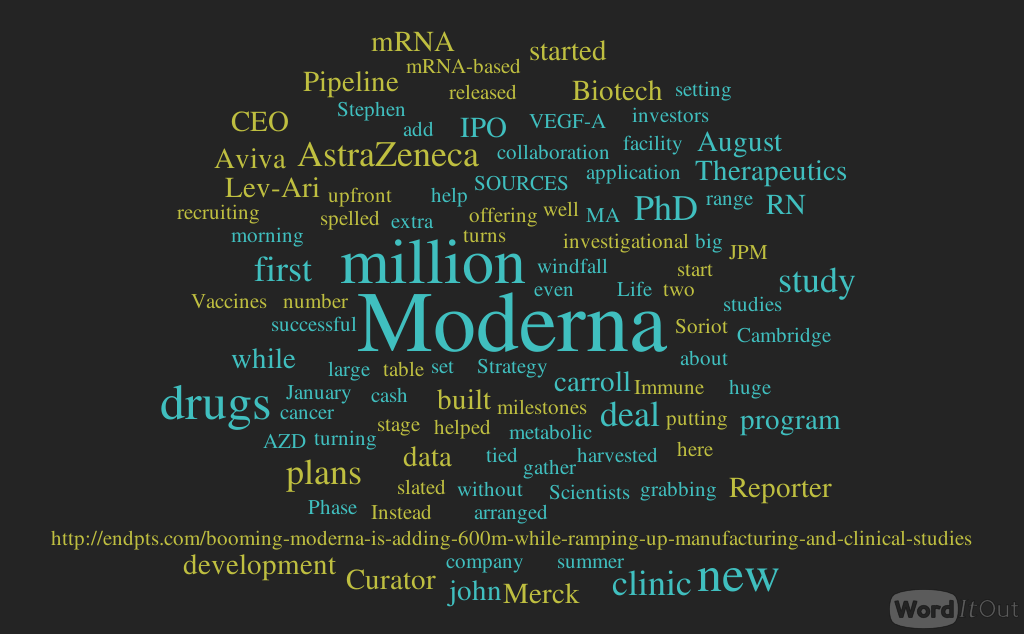
On its way for an IPO: mRNA platform, Moderna, Immune Oncology is recruiting 100 new Life Scientists in Cambridge, MA, Volume 2 (Volume Two: Latest in Genomics Methodologies for Therapeutics: Gene Editing, NGS and BioInformatics, Simulations and the Genome Ontology), Part 1: Next Generation Sequencing (NGS)

On its way for an IPO: mRNA platform, Moderna, Immune Oncology is recruiting 100 new Life Scientists in Cambridge, MA

Curator: Aviva Lev-Ari, PhD, RN


Deals:

Moderna has now raised $1.9 billion from investors like AstraZeneca – 9% stack [AstraZeneca’s Pascal Soriot helped get that all started with a whopping $240 million upfront in its 2013 deal, which was tied to $180 million in milestones.], with another $230 million on the table from grants. In addition to the financing announcement this morning, Moderna is also unveiling a pact to develop a new Zika vaccine, with BARDA putting up $8 million to get the program started while offering an option on $117 million more to get through a successful development program.

Novel Strategy in Biotech:

in biotech. Instead of grabbing one or two new drugs and setting out to gather proof-of-concept data to help establish its scientific credibility, the company has harvested a huge windfall of cash and built a large organization before even entering the clinic. And it did that without turning to an IPO.

Pipeline include:

  • The deal with AstraZeneca covers new drugs for cardiovascular, metabolic and renal diseases as well as cancer.
  • partners filed a European application to start a Phase I study of AZD8601, an investigational mRNA-based therapy that encodes for vascular endothelial growth factor-A (VEGF-A)
  • Moderna CEO spelled out plans to get the first 6 new drugs in the clinic by the end of 2016.
  • The first human study was arranged for the infectious disease drug mRNA 1440, which began an early stage study in 2015.
  • Moderna built up a range of big preclinical partnerships.
  • CEO Bancel says the number of drugs in development has swelled to 11, with the first set of data slated to be released in 2017.
  • Moderna also plans to add about 10 drugs to the clinic by next summer,


SOURCES

UPDATED: Booming Moderna is raising $600M while ramping up manufacturing and clinical studies

$1.9B in: Moderna blueprints $100M facility, plans to double the pipeline after a $474M megaround

http://endpts.com/moderna-blueprints-100m-facility-plans-to-double-the-pipeline-after-a-474m-megaround/?utm_source=Sailthru&utm_medium=email&utm_campaign=Issue:%202016-09-07%20BioPharma%20Dive%20%5Bissue:7155%5D&utm_term=BioPharma%20Dive


Moderna Therapeutics Deal with Merck: Are Personalized Vaccines here?

Curator & Reporter: Stephen J. Williams, PhD – August 11, 2016

https://pharmaceuticalintelligence.com/2016/08/11/moderna-therapeutics-deal-with-merck-are-personalized-vaccines-here/


at #JPM16 – Moderna Therapeutics turns away an extra $200 million: with AstraZeneca (collaboration) & with Merck ($100 million investment)

Reporter: Aviva Lev-Ari, PhD, RN – January 13, 2016

https://pharmaceuticalintelligence.com/2016/01/13/at-jpm16-moderna-therapeutics-turns-away-an-extra-200-million-with-astrazeneca-collaboration-with-merck-100-million-investment/

Read Full Post »

Topical Solution for Combination Oncology Drug Therapy: Patch that delivers Drug, Gene, and Light-based Therapy to Tumor, Volume 2 (Volume Two: Latest in Genomics Methodologies for Therapeutics: Gene Editing, NGS and BioInformatics, Simulations and the Genome Ontology), Part 1: Next Generation Sequencing (NGS)

Topical Solution for Combination Oncology Drug Therapy: Patch that delivers Drug, Gene, and Light-based Therapy to Tumor

Reporter: Aviva Lev-Ari, PhD, RN


Self-assembled RNA-triple-helix hydrogel scaffold for microRNA modulation in the tumour microenvironment

Affiliations

  1. Massachusetts Institute of Technology, Institute for Medical Engineering and Science, Harvard-MIT Division for Health Sciences and Technology, Cambridge, Massachusetts 02139, USA
    • João Conde,
    • Nuria Oliva,
    • Mariana Atilano,
    • Hyun Seok Song &
    • Natalie Artzi
  2. School of Engineering and Materials Science, Queen Mary University of London, London E1 4NS, UK
    • João Conde
  3. Grup dEnginyeria de Materials, Institut Químic de Sarrià-Universitat Ramon Llull, Barcelona 08017, Spain
    • Mariana Atilano
  4. Division of Bioconvergence Analysis, Korea Basic Science Institute, Yuseong, Daejeon 169-148, Republic of Korea
    • Hyun Seok Song
  5. Broad Institute of MIT and Harvard, Cambridge, Massachusetts 02142, USA
    • Natalie Artzi
  6. Department of Medicine, Biomedical Engineering Division, Brigham and Womens Hospital, Harvard Medical School, Boston, Massachusetts 02115, USA
    • Natalie Artzi

Contributions

J.C. and N.A. conceived the project and designed the experiments. J.C., N.O., H.S.S. and M.A. performed the experiments, collected and analysed the data. J.C. and N.A. co-wrote the manuscript. All authors discussed the results and reviewed the manuscript.

Nature Materials
15,
353–363
(2016)
doi:10.1038/nmat4497
Received
22 April 2015
Accepted
26 October 2015
Published online
07 December 2015

The therapeutic potential of miRNA (miR) in cancer is limited by the lack of efficient delivery vehicles. Here, we show that a self-assembled dual-colour RNA-triple-helix structure comprising two miRNAs—a miR mimic (tumour suppressor miRNA) and an antagomiR (oncomiR inhibitor)—provides outstanding capability to synergistically abrogate tumours. Conjugation of RNA triple helices to dendrimers allows the formation of stable triplex nanoparticles, which form an RNA-triple-helix adhesive scaffold upon interaction with dextran aldehyde, the latter able to chemically interact and adhere to natural tissue amines in the tumour. We also show that the self-assembled RNA-triple-helix conjugates remain functional in vitro and in vivo, and that they lead to nearly 90% levels of tumour shrinkage two weeks post-gel implantation in a triple-negative breast cancer mouse model. Our findings suggest that the RNA-triple-helix hydrogels can be used as an efficient anticancer platform to locally modulate the expression of endogenous miRs in cancer.

SOURCE

http://www.nature.com/nmat/journal/v15/n3/abs/nmat4497.html#author-information


Patch that delivers drug, gene, and light-based therapy to tumor sites shows promising results

In mice, device destroyed colorectal tumors and prevented remission after surgery.

Helen Knight | MIT News Office
July 25, 2016

Approximately one in 20 people will develop colorectal cancer in their lifetime, making it the third-most prevalent form of the disease in the U.S. In Europe, it is the second-most common form of cancer.

The most widely used first line of treatment is surgery, but this can result in incomplete removal of the tumor. Cancer cells can be left behind, potentially leading to recurrence and increased risk of metastasis. Indeed, while many patients remain cancer-free for months or even years after surgery, tumors are known to recur in up to 50 percent of cases.

Conventional therapies used to prevent tumors recurring after surgery do not sufficiently differentiate between healthy and cancerous cells, leading to serious side effects.

In a paper published today in the journal Nature Materials, researchers at MIT describe an adhesive patch that can stick to the tumor site, either before or after surgery, to deliver a triple-combination of drug, gene, and photo (light-based) therapy.

Releasing this triple combination therapy locally, at the tumor site, may increase the efficacy of the treatment, according to Natalie Artzi, a principal research scientist at MIT’s Institute for Medical Engineering and Science (IMES) and an assistant professor of medicine at Brigham and Women’s Hospital, who led the research.

The general approach to cancer treatment today is the use of systemic, or whole-body, therapies such as chemotherapy drugs. But the lack of specificity of anticancer drugs means they produce undesired side effects when systemically administered.

What’s more, only a small portion of the drug reaches the tumor site itself, meaning the primary tumor is not treated as effectively as it should be.

Indeed, recent research in mice has found that only 0.7 percent of nanoparticles administered systemically actually found their way to the target tumor.

“This means that we are treating both the source of the cancer — the tumor — and the metastases resulting from that source, in a suboptimal manner,” Artzi says. “That is what prompted us to think a little bit differently, to look at how we can leverage advancements in materials science, and in particular nanotechnology, to treat the primary tumor in a local and sustained manner.”

The researchers have developed a triple-therapy hydrogel patch, which can be used to treat tumors locally. This is particularly effective as it can treat not only the tumor itself but any cells left at the site after surgery, preventing the cancer from recurring or metastasizing in the future.

Firstly, the patch contains gold nanorods, which heat up when near-infrared radiation is applied to the local area. This is used to thermally ablate, or destroy, the tumor.

These nanorods are also equipped with a chemotherapy drug, which is released when they are heated, to target the tumor and its surrounding cells.

Finally, gold nanospheres that do not heat up in response to the near-infrared radiation are used to deliver RNA, or gene therapy to the site, in order to silence an important oncogene in colorectal cancer. Oncogenes are genes that can cause healthy cells to transform into tumor cells.

The researchers envision that a clinician could remove the tumor, and then apply the patch to the inner surface of the colon, to ensure that no cells that are likely to cause cancer recurrence remain at the site. As the patch degrades, it will gradually release the various therapies.

The patch can also serve as a neoadjuvant, a therapy designed to shrink tumors prior to their resection, Artzi says.

When the researchers tested the treatment in mice, they found that in 40 percent of cases where the patch was not applied after tumor removal, the cancer returned.

But when the patch was applied after surgery, the treatment resulted in complete remission.

Indeed, even when the tumor was not removed, the triple-combination therapy alone was enough to destroy it.

The technology is an extraordinary and unprecedented synergy of three concurrent modalities of treatment, according to Mauro Ferrari, president and CEO of the Houston Methodist Research Institute, who was not involved in the research.

“What is particularly intriguing is that by delivering the treatment locally, multimodal therapy may be better than systemic therapy, at least in certain clinical situations,” Ferrari says.

Unlike existing colorectal cancer surgery, this treatment can also be applied in a minimally invasive manner. In the next phase of their work, the researchers hope to move to experiments in larger models, in order to use colonoscopy equipment not only for cancer diagnosis but also to inject the patch to the site of a tumor, when detected.

“This administration modality would enable, at least in early-stage cancer patients, the avoidance of open field surgery and colon resection,” Artzi says. “Local application of the triple therapy could thus improve patients’ quality of life and therapeutic outcome.”

Artzi is joined on the paper by João Conde, Nuria Oliva, and Yi Zhang, of IMES. Conde is also at Queen Mary University in London.

SOURCE

http://news.mit.edu/2016/patch-delivers-drug-gene-light-based-therapy-tumor-0725

Other related articles published in thie Open Access Online Scientific Journal include the following:

The Development of siRNA-Based Therapies for Cancer

Author: Ziv Raviv, PhD

https://pharmaceuticalintelligence.com/2013/05/09/the-development-of-sirna-based-therapies-for-cancer/


Targeted Liposome Based Delivery System to Present HLA Class I Antigens to Tumor Cells: Two papers

Reporter: Stephen J. Williams, Ph.D.

https://pharmaceuticalintelligence.com/2016/07/20/targeted-liposome-based-delivery-system-to-present-hla-class-i-antigens-to-tumor-cells-two-papers/


Blast Crisis in Myeloid Leukemia and the Activation of a microRNA-editing Enzyme called ADAR1

Curator: Larry H. Bernstein, MD, FCAP

https://pharmaceuticalintelligence.com/2016/06/10/blast-crisis-in-myeloid-leukemia-and-the-activation-of-a-microrna-editing-enzyme-called-adar1/


First challenge to make use of the new NCI Cloud Pilots – Somatic Mutation Challenge – RNA: Best algorithms for detecting all of the abnormal RNA molecules in a cancer cell

Reporter: Aviva Lev-Ari, PhD, RN

https://pharmaceuticalintelligence.com/2016/07/17/first-challenge-to-make-use-of-the-new-nci-cloud-pilots-somatic-mutation-challenge-rna-best-algorithms-for-detecting-all-of-the-abnormal-rna-molecules-in-a-cancer-cell/


miRNA Therapeutic Promise

Curator: Larry H. Bernstein, MD, FCAP

https://pharmaceuticalintelligence.com/2016/05/01/mirna-therapeutic-promise/

Read Full Post »

Oncolytic Virotherapy for Pancreatic Cancer: Overcoming Obstacles in Oncolytic Virus Delivery

Reporter: Aviva Lev-Ari, PhD, RN


We covered MGH’s Innovation on Tumor targeted therapy in Pancreatic Cancer in

Pancreatic Cancer Targeted Treatment?

Curator: Larry H. Bernstein, MD, FCAP

https://pharmaceuticalintelligence.com/2016/05/18/pancreatic-cancer-targeted-treatment/


Below, we report on the State of the Science for Overcoming Obstacles in Oncolytic Virus Delivery and provide the source for all the references used


ONCOLYTIC VIROTHERAPY FOR PANCREATIC CANCER

Adenovirus

ONYX-015 was the first TOV used in a clinical trial for pancreatic cancer. ONYX-015 was administered intratumourally under endoscopic ultrasound-guidance into patients with locally advanced adenocarcinoma of the pancreas or metastatic disease in phase I/II trials[132]. The treatment was well-tolerated in most patients, however no objective responses were seen with ONYX-015 as a single agent and only 2/21 patients experienced mild responses when combined with gemcitabine[132]. A second adenovirus vector carries a deletion in the E1A gene[133]. E1A normally binds to the retinoblastoma protein, forcing cells to prematurely enter the S phase of the cell cycle. Since most pancreatic cancers harbor a mutation in CDKN2A[134], the E1A protein is unnecessary for entry of the TOV into cancer cells. Furthermore a double-deleted (E1A and E1B19) adenovirus demonstrated increase potency and selectivity in pancreatic cancer models[135,136]. This demonstrates that TOVs can be genetically engineered to increase selectivity and efficacy while maintaining their potency. Adenovirus selectivity has also been improved by engineering tumour-specific promoters such as a human CEA promoter[137] or by substituting the adenovirus serotype 5 fiber knob with the fiber knob from serotype 3[138]. The potency of TOVs can also be improved further by engineering them with therapeutic genes that stimulate the immune system and/or improve direct oncolysis. Adenovirus ZD55-IL-24 expressing IL-24 locally in pancreatic tumours in immune competent mice inhibited tumour growth and induced a stronger T cell response compared to its backbone virus, as measured by IL-6 and IFN-γ levels[139].

HSV

Two oncolytic HSV-1 vectors are currently in clinical trials for the treatment of pancreatic cancer. HF10 is a non-engineered, naturally occurring oncolytic HSV that demonstrated regression in 1/6 of the patients treated[140,141]. OncoVex GM-CSF is a ∆34.5 and ICP47-deleted mutant expressing GM-CSF, whereby the deletions allow for tumour-selective replication and inhibition of protein-kinase R activation, respectively[142]. Phase I/II trials in various solid tumours demonstrated OncoVex GM-CSF to be well-tolerated at high and repeated doses[143,144]. A phase I clinical trial with OncoVex GM-CSF in patients with unresectable pancreatic cancer is underway.

Poxviruses

The most widely studied poxvirus is VV, which is highly immunogenic and produces a strong cytotoxic T cell response[145] and circulating neutralizing antibodies which can be detected decades later[146]. For its crucial role in the eradication of smallpox, much has been learned about its potential role in immunotherapy today. The Lister strain of vaccinia remarkably showed no replication degradation even under the hypoxic conditions of PDAC[147]. A second Lister strain, thymidine kinase-deleted replicating VV armed with IL-10 demonstrated superior and long-lasting antitumour immunity in both a subcutaneous pancreatic cancer model and a Kras-p53 mutant-transgenic pancreatic cancer model after systemic delivery compared to its unarmed backbone virus[148]. Myxoma virus, a rabbit-specific poxvirus combined with gemcitabine resulted in 100% long-term survival in Pan02-engrafted immunocompetent intraperitoneal dissemination models of pancreatic cancer[149]. The only poxvirus to be tested in clinical trials is a non-replicative VV that expresses the pancreatic TAAs CEA and MUC-2[150]. The vaccine also includes a triad of costimulatory molecules, B7.1 (CD80), ICAM-1 (intra-cellular adhesion molecule-1) and LFA-3 (leukocyte function-associated antigen-3) (TRICOM) (PANVAC-VF)[150]. GM-CSF was also used as an adjuvant following each vaccination of PANVAC-VF. Phase I trials demonstrated antigen-specific antitumour responses in 62.5% of patients enrolled and antibody responses against VV was observed in all ten patients, which was associated with an increase in survival (15.1 mo vs 3.9 mo)[48]. A phase III clinical trial for the treatment of metastatic pancreatic cancer after failing treatment with gemcitabine, however, was terminated after failing to reach its primary efficacy endpoint[151].

Other pre-clinical TOVs for pancreatic cancer therapy

Parvovirus, measles virus and reovirus have also demonstrated pre-clinical activity in pancreatic cancer models. Parvoviruses particularly demonstrated enhanced IL-2-activated NK responses against PDAC cells[152,153]. An armed measles virus (MV), MV-purine nucleoside phosphorylase (PNP)-anti-prostate stem cell antigen, that expresses the prodrug convertase PNP, which then activates the prodrug fludarabine, was shown to enhance the oncolytic efficacy of the virus in gemcitabine-resistant PDAC cells[154]. Reovirus is another promising TOV for pancreatic cancer therapy, particularly because its selectivity depends on the cellular activity of Ras, which is constitutively active in pancreatic cancer[155]. Reolysin® (Oncolytics Biotech Inc., Calgary, AB, Canada) a reovirus administered intraportally resulted in decreased metastatic tumour volumes in the liver of immunocompetent animal models[156,157]. A phase II study of Reolysin® in combination with gemcitabine in patients with advanced PDAC has been completed (clinicaltrials.gov: NCT00998322). A two-armed randomized phase II study of carboplatin and paclitaxel plus Reolysin® vs carboplatin and paclitaxel alone in recurrent or metastatic pancreatic cancer is currently being conducted by the United States National Cancer Institute (NCI-8601/OSU-10045).

RATIONALIZING VIRO-IMMUNE-CHECKPOINT COMBINATION THERAPY

A understanding how antitumour immunity is regulated allows us to recognize barriers against effective immunotherapy delivery and furthermore, allow for the development of rational combination therapies aiming targeting these mechanisms[108,158,159]. This approach allows therapies to work synergistically and also has the potential to benefit a broader patient population[108]. Tumours have evolved to avoid immune recognition and/or destruction at every stage in the antitumour response, therefore targeting more than one immune resistance mechanism will enhance antitumour immunity.

An important immunological barrier in cancer immunotherapy is the tolerance towards self-antigens. Tumours downregulate their antigenicity through various mechanisms in response to selective pressure by the immune system, a process called “immunoediting”[37]. Therefore, in order to raise an effective antitumour response, the immunological tolerance must be broken to allow tumour antigen-specific cytotoxic T cell responses[158]. This can be achieved by increasing the tumour load and/or enhance antigen presentation[108]. TOVs can initiate selective infection and replication in the tumour bed, exposing TAA, disrupting the immunotolerance employed by the tumour while re-engaging adaptive immune effector responses[39]. Combining an agent that can cause disruption to the tumour bed i.e., an oncolytic virus, with a novel antitumour immunomodulating agent such as anti-PD-1/PD-L1 antibodies can maximize immune-stimulating and immune-recruiting inflammatory responses[39]. Specifically, TOV lysis induces the release of tumour antigens into the microenvironment, which are then cross-presented to T cells in the draining lymph nodes by APCs[159] (Figure (Figure1).1). This allows T cell infiltration to the tumour bed. Next, T cell dysfunction must be reversed[108,158]. Immune checkpoint inhibitors alleviate immunosuppression, allowing the elimination of the tumour by the adaptive immune system[70]. TOVs in combination with immune checkpoint inhibitors can therefore potentiate and activate the immune system synergistically, ultimately creating a pro-inflammatory environment. Pre-existing TILs are strong prognostic predictors in cancer[106]. This is extremely relevant for tumours with poor immune-cell infiltration, such as pancreatic cancer, which would depend on TOV-infection mediated lymphocyte infiltration for an enhanced response to immune checkpoint blockade. Zamarin et al[160] demonstrated constrained replication of an intratumoural-injected Newcastle disease virus in a B16 melanoma model. Lymphocytic infiltrates, however, were detected in both TOV-injected and non-TOV-injected tumours, and rendered the tumours sensitive to CTLA-4 blockade. The antitumour activity was dependent on CD8+ T cells, NK cells and type I and II IFNs[160]. Ipilimumab with or without talimogene laherparapvec, is in early clinical testing in patients with unresected melanoma (clinicaltrials.org: NCT01740297). Interestingly, an MV engineered to express CTLA-4 or PD-L1 antibodies delayed tumour progression and prolonged median OS in B16 melanoma models[161]. Finally, TOVs have demonstrated a tolerable toxicity profile, whereby flu-like symptoms are the most common adverse events, and in fact, most of the side effects seen so far in the combination regiment are related to the immune checkpoint blockade inhibitor[162]. Dias et al[163] suggested an oncolytic adenovirus expressing CTLA-4 locally might reduce systemic side effects normally induced with anti-CTLA-4 antibodies alone.

OVERCOMING OBSTACLES IN ONCOLYTIC VIRUS DELIVERY

The main issue with virotherapy is systemic delivery for targeting metastatic cancer cells. Intravenous administration is more practical, especially for treatment of a tumour in a hard-to-reach location such as the pancreas, and with the majority of patients presenting with advanced or metastatic disease. However, nonimmune human serum and existing anti-TOV antibodies may neutralize the TOV in the bloodstream. Furthermore, non-specific hepatic and splenic sequestration of the TOV and ineffective extravasation into the tumours are important issues[164]. Currently, studies in pre-clinical models aim to overcome these obstacles. These include chemical modification of viral coat proteins by conjugation of biocompatible polymers e.g. polyethylene glycosylation[165,166], using mesenchymal stem cell carrier systems to deliver the TOV to the tumour bed[167169], and increasing vessel permeabilization[170,171].

In PDAC, however, the biggest hurdle may not be the host immune system, but the TME. The TME has played a significant role in not only acting as a physical barrier to deliver treatments, but it also in the development of resistance to conventional drugs. The TME remains a problem for successful TOV treatment. The TOV must be able to spread in the hypoxic and densely stromal-rich TME in order to attract enough attention to induce antitumour immunity[172]. Breaching the stromal barrier in PDAC is needed for TOVs to access the cancer cells[173]. Paradoxically, a recent study by Ilkow et al[174] demonstrated that the cross-talk between CAFs and cancer cells actually lead to increased permissibility of TOV-based therapeutics. Tumour cells producing TGF-α reprogrammed CAFs, dampening levels of anti-viral transcripts. This allowed the cells to be more sensitive to VV, vesicular stomatitis virus and maraba MG1 TOVs. The reprogrammed CAFs produced fibroblast growth factor (FGF)-2 which suppressed levels of retinoic acid-inducible gene I and increased the susceptibility of the tumour cells to virus[175]. This study also demonstrated that an FGF2-expressing TOV has improved therapeutic efficacy by sensitizing the tumour cells to virotherapy and is particularly relevant to pancreatic cancers, where CAFs are a major component of the tumour stroma[175]. It is important to note that not only the patient’s existing immune system may impede successful TOV therapy, but that the enhanced antitumour response by combinatory approaches (e.g., the inclusion of immune-checkpoint inhibitors) may also impede successful TOV infection, spread and engagement of the immune system. This stresses the importance of determining strategic combinations, dosing and timing schedules in future studies.

CONCLUSION

The poor prognosis of pancreatic cancer due in part to the limited efficacy of conventional and targeted therapies, appeals for a novel strategy to treat this disease. It has become very clear that the immune system has the greatest potential to selectively destroy tumours, and when it is strategically induced, a durable benefit can be achieved. Past and present studies have defined means for tumour escape from immune surveillance and have developed immunotherapies to counteract these mechanisms. However, with the various escape strategies leading to low immunogenicity and highly immunosuppressive tumour beds, a successful control of tumour growth by immunotherapy does not come without various obstacles and challenges. Future steps include the development of immune-monitoring strategies for the identification of biomarkers, to establishment guidelines to assess clinical end points of immunotherapy and finally to evaluate combination therapeutic strategies to maximize clinical benefit[176]. The ability of TOVs to stimulate inflammation, deliver genes and immunomodulatory agents as well as reduce tumour burden by direct cell lysis, allows them to be important therapeutic vectors for a highly immunosuppressed tumour such as PDAC. Immune checkpoint blockade agents can then reverse T cell anergy and further boost OV-induced responses. As this combinatory approach may exist as a double-edged sword, it is crucial to determine appropriate timing, dosing and sequence schedules of each agent.

SOURCE & REFERENCES

Read Full Post »

« Newer Posts - Older Posts »