Feeds:
Posts
Comments

See on Scoop.itCardiovascular and vascular imaging

Stress CT perfusion imaging using regadenoson resulted in a similar ability to detect or rule out myocardial ischemia, compared with the reference method, single-photon-emission CT imaging, in a phase 2 trial.

See on cardiology.hcsm.in

See on Scoop.itCardiovascular and vascular imaging

Cardiac ischemia occurs frequently in critically ill patients, and is associated with increased mortality. Given that most critically ill patients cannot communicate symptoms, the diagnosis of cardiac ischemia can be challenging …

See on critcare08.blogspot.com

Pacemakers, Implantable Cardioverter Defibrillators (ICD) and Cardiac Resynchronization Therapy (CRT)

Curators: Justin D Pearlman, MD, PhD, FACC and Aviva Lev-Ari, PhD, RN

Updated on 2/16/2015

Mild, non-ischemic heart failure might be more deadly than thought, an Austrian group found, calling for broader ICD use.

SOURCE

http://www.medpagetoday.com/Cardiology/Strokes/50048?isalert=1&uun=g99985d3527R5099207u&utm_source=breaking-news&utm_medium=email&utm_campaign=breaking-news&xid=NL_breakingnews_2015-02-16


The voice of our Series A Content Consultant: Justin D Pearlman, MD, PhD, FACC

Pacemakers place one or more wires into heart muscle to trigger electro-mechanically coupled contraction. A single wire to the right atrium is called an AAI pacemaker (atrial sensing, atrial triggering, inhibit triggering if sensed). A single wire to the right ventricle is called a VVI pacemaker (ventricular sensing, ventricular triggering, inhibit if sensed). With two wires to the heart more combinations are possible, including atrial-ventricular sequential activation, a closer mimic to normal function (DDDR pacemaker: dual sensing, dual triggering, dual functions, and rate-responsive to mimic exercise adjustment of heart rate). Three wires are used for synchronization: one to the right atrium, one to the right ventricle apex, and a third lead into a distal branch of the coronary sinus to activate the far side of the left ventricle. Resynchronization is used to compensate for a dilated ventricle, especially one with conduction delays, where the timing of activation is so unbalanced that the heart contraction approaches a wobbling motion rather than a well coordinated contraction. Adjusting timing of activation of the right ventricle and left ventricle can offset dysynchrony (unbalanced timing) and thereby increase the amount of blood ejected by each heart beat contraction (ejection fraction). Patients with dilated cardiomyopathy and significant conduction delays can improve the ejection fraction by 10 or more percentage points, which offers a significant improvement in exertion tolerance and heart failure symptoms.

Patients with ejection fraction below 35%, among others, have an elevated risk of life-ending arrhythmias such as ventricular tachycardia. Ventricular tachycardia is an extreme example of a wobbling heart in which the electrical activation sequence circles around the heart sequentially activating a portion and blocking its ability to respond until the electric signal comes around again. Whenever a portion of the heart is activated, ions shift location, and further activation of that region is not possible until sufficient time passes so that the compartmentalized ion concentrations can be restored (repolarization). Pacing can interrupt ventricular tachycardia by depolarizing a region that supported the circular activation pattern. Failing that, an electric shock can stop an ineffective rhythm. After all regions stop activation, they will generally reactivate in the normal pulsatile synchronous manner. An implanted cardiac defibrillator is a device designed to apply an internal electric shock to pause all activation and thereby interrupt ventricular tachycardia.
UPDATED on 12/31/2013

Published on Friday, 27 December 2013

S-ICD – Subcutaneous Implantable Cardioverter Defibrillator – Boston Scientific

Boston Scientific Subcutaneous Implantable Cardiodefibrillator Device S-ICD

S-ICD – Subcutaneous Implantable Cardioverter Defibrillator – Boston Scientific

Boston Scientific Subcutaneous Implantable Cardiodefibrillator Device S-ICD

‘Regular’ Pacemaker/ICD with Leads and a ‘Can’
When we think of Pacemakers and ICD’s we naturally think of a ‘Can’ and Leads that track down into the heart. Whilst these devices work fantastically well and will continue to do so. Unfortunately the ‘lead’ part of the device opens the door for a few complications to possibly arise. Those who have a Pacemaker or ICD will probably be familiar with concerns over;
  1. Systemic Infection – Infections travelling down the Leads into the Heart
  2. Lead Displacement – The Lead moving away from the heart tissue and thus becoming pretty useless.
  3. Vascular/Organ Injury – Damage to the blood vessels being used for access or perforation of heart wall.
  4. Pneumothorax (damage to the lining around the Lung), Haemothorax (build up of blood in the chest cavity), and air embolism (air bubble trapped in a blood vessel).
These complications are one of the key motivations behind developing ‘leadless’ devices the first of which the St Jude Nanostim, a small VVI Pacemaker that fits directly into the heart.
Another device to address these issues is the Boston Scientific S-ICD

What is the Boston Scientific S-ICD?

The S-ICD is what is sometimes referred to as a ‘shock box’ it does not have the pacemaker functionality that many other ICD’s do have. It is ONLY there to terminate dangerous Arrhythmias.
*It does not have the pacing functionality of traditional ICD‘s because it DOES NOT HAVE A LEAD THAT ENTERS THE HEART.*
It is not a Pacemaker!
 
Without the lead(s) ENTERING the heart via a blood vessel there is a reduction in the risks mentioned previously that are associated traditional device. Another of the benefits is that the S-ICD is positioned and implanted using anatomical landmarks (visible parts of your body) and not Fluoroscopy (video X-Ray) which reduces radiation exposure to the patient.

Positioning of the S-ICD.

Boston Scientific Subcutaneous Implantable Cardiodefibrillator Device S-ICD

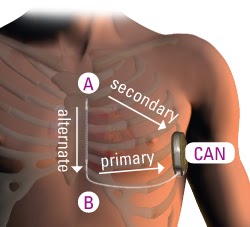
The ‘Can‘ (metal box that contains all the circuitry and battery), is buried under the skin on the outside of the ribs. Put your arms down by your sides, the device would go where your ribs meet the middle of your bicep. A lead is then run under the skin to the centre of your chest where its is anchored and then north, under the skin again until the tip of the lead is roughly at the top of the sternum.
For you physicians out there the ‘can’ is positioned at the mid-axillary line between the 5th and 6th intercostal spaces, the lead is then tunnelled to a small Xiphoid incision and then tunnelled north to a superior incision.

How is an S-ICD Implanted?

VIEW VIDEO
Having spoken to Boston Scientific it is becoming more apparent that the superior incision (cut at the top of the chest) may actually be removed from the procedure guidance as simply tunnelling the lead and ‘wedging’ the tip at that point is satisfactory – THIS IS NOT CONFIRMED AT THE MOMENT AND IS THEREFORE NOT PROCEDURE ADVICE.
Boston Scientific Subcutaneous Implantable Cardiodefibrillator Device S-ICD
Image Courtesy of
http://www.bostonscientific.com/

How does the S-ICD Work?

A ‘Shock Box’ basically needs to do 2 things. Firstly be able to SENSE if the heart has entered a Dangerous Arrhythmia and Secondly, be able to treat it.
The treatment part of the functionality is the easy bit – it delivers an electric shock across a ‘circuit’ that involves a large amount of the tissue in the heart. The lead has two ‘electrodes’ and the ‘Can’ is a third electrode allowing you different shocking ‘vectors’. By vectors we mean directions and area through which the electricity travels during a shock. This gives us extra options when implanting a device as some vectors will work better than others for the treatment of dangerous arrhythmias.

Shocking Vectors?

This is a concept you are familiar with without even thinking about it… when you are watching ER or another TV program and they Defibrillate the patient using the metal paddles, where do they position them? One either side of the heart? Precisely!! this is creating a ‘vector’ across the heart to involve the cardiac tissue. The paddles would be a lot less effective if you put one on the knee and one on the foot!

Boston Scientific Subcutaneous Implantable Cardiodefibrillator Device S-ICD

Now because the ‘Vectors’ used by the S-ICD are over a larger area than those with a traditional device – more energy has to be delivered to have the same desired affect. The upshot of this is that a larger battery is required to deliver the 80J! Bigger Battery = Bigger Box. This image shows a demo device but this is the exact size compared to a One Pound Coin! Now yes it is big but because of the extra room where they place the device it is pretty discrete and hidden in even slender patients.
STAT ATTACK!
The S-ICD System delivers up to 5 shocks per episode at 80 J with up to 128 seconds of ECG storage per episode and storage of up to 45 episodes.
The heart rate that the S-ICD is told to deliver therapy is programable between 170 and 250 bpm. Quite cleverly the device is able to also deliver a small amount of ‘pacing’ after a shock, when the heart can often run slowly. This is external pacing and will be felt!! It can run for 30s.

Sensing in an S-ICD.

 
The S-ICD uses its electrodes to produce an ECG similar to a surface ECG. 
 
Now the Sensing functionality is the devices ability to determine what Rhythm the heart is in! Without a lead in the heart to give us really accurate information the device is using a large area of heart, ribs and muscle. This means there is more potential for ‘artefact’. Artefact is the electrical interference and confusion – that could potentially lead to a patient being shocked when they do not require it – or not being shocked when they do…
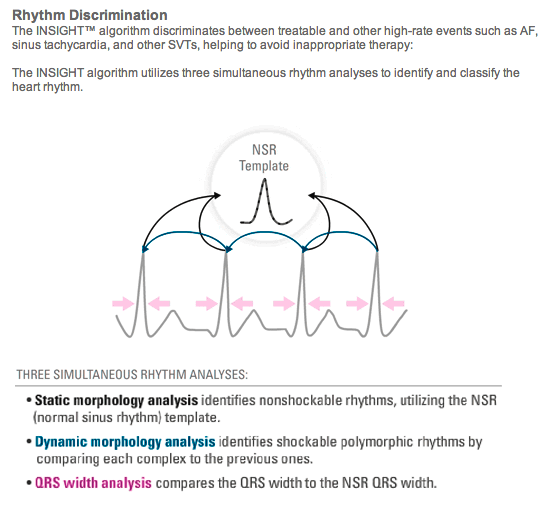
Boston Scientific have come up with a very clever software/algorithm called ‘Insight’. Insight uses 3 separate methods to determine the nature of a heart rhythm.
  • Normal Sinus Rhythm Template (Do your heart beats look as they should)
  • Dynamic Morphology Analysis (A live comparison of heart beat to previous heart beat, do they all look the same or do they keep changing?)
  • QRS Width analysis (Are the tall ‘peaks’ on your ECG, the QRS’, wider than they normally are?)
These questions (with some very complex maths) and the rate of a rhythm are used to decide whether to ‘shock’ or not.
Insight Algorithm S-ICD

Image Courtesy of  http://www.bostonscientific.com/

How does Insight and the S-ICD compare to other ICD Devices?

The statistics for treatment success and inappropriate shocks (an electrocuted patient that did not need to be) actually compare very similarly if not favourably compared to other devices on the market – these two studies are well worth a read if you have the time 🙂
1. Burke M, et al. Safety and Efficacy of a Subcutaneous Implantable-Debrillator (S-ICD System US IDE Study). Late-Breaking Abstract Session. HRS 2012.
2. Lambiase PD, et al. International Experience with a Subcutaneous ICD; Preliminary Results of the EFFORTLESS S-ICD Registry. Cardiostim 2012.
3. Gold MR, et al. Head-to-head comparison of arrhythmia discrimination performance of subcutaneous and transvenous ICD arrhythmia detection algorithms: the START study. J Cardiovasc Electrophysiol. 2012;23;4:359-366.
Who qualifies?
Template S-ICD Eligibility

Template used to assess eligibility!
Image Courtesy of
http://www.bostonscientific.com/
Well essentially anyone who qualifies for a normal ‘shock box’ ICD but with one other requirement. The Insight Software requires that a person has certain characteristics on their ECG. This is essentially showing that they have tall enough and narrow enough complexes to allow the algorithm to perform effectively. A simple 12 lead ECG Laying and Standing will be obtained and then a ‘Stencil’ is passed over the Print out – If the complexes fit within the boundaries marked on the ‘stencil’ then you potentially qualify. If your ECG does not meet requirements then it will not be recommended for you to have the S-ICD.

There you have it a quick overview of the Boston Scientific S-ICD.

Thanks for Reading

Cardiac Technician

SOURCE

http://www.thepad.pm/2013/12/boston-scientific-s-icd.html#!

UPDATED on 10/15/2013

Frequency and Determinants of Implantable Cardioverter Defibrillator Deployment Among Primary Prevention Candidates With Subsequent Sudden Cardiac Arrest in the Community

  1. Kumar Narayanan, MD;
  2. Kyndaron Reinier, PhD;
  3. Audrey Uy-Evanado, MD;
  4. Carmen Teodorescu, MD, PhD;
  5. Harpriya Chugh, BS;
  6. Eloi Marijon, MD;
  7. Karen Gunson, MD;
  8. Jonathan Jui, MD, MPH;
  9. Sumeet S. Chugh, MD

+Author Affiliations


  1. From The Heart Institute, Cedars-Sinai Medical Center, Los Angeles, CA (K.N., K.R., A.U.-E., C.T., H.C., E.M., S.S.C.); and Departments of Pathology (K.G.) and Emergency Medicine (J.J.), Oregon Health and Science University, Portland, OR.
  1. Correspondence to Sumeet S. Chugh, MD, Cedars-Sinai Medical Center, The Heart Institute, AHSP Suite A3100, 127 S. San Vicente Blvd., Los Angeles, CA 90048, Los Angeles, CA 90048. E-mail sumeet.chugh@cshs.org

Abstract

Background—The prevalence rates and influencing factors for deployment of primary prevention implantable cardioverter defibrillators (ICDs) among subjects who eventually experience sudden cardiac arrest in the general population have not been evaluated.

Methods and Results—Cases of adult sudden cardiac arrest with echocardiographic evaluation before the event were identified from the ongoing Oregon Sudden Unexpected Death Study (population approximately 1 million). Eligibility for primary ICD implantation was determined from medical records based on established guidelines. The frequency of prior primary ICD implantation in eligible subjects was evaluated, and ICD nonrecipients were characterized. Of 2093 cases (2003–2012), 448 had appropriate pre– sudden cardiac arrest left ventricular ejection fraction information available. Of these, 92 (20.5%) were eligible for primary ICD implantation, 304 (67.9%) were ineligible because of left ventricular ejection fraction >35%, and the remainder (52, 11.6%) had left ventricular ejection fraction ≤35% but were ineligible on the basis of clinical guideline criteria. Among eligible subjects, only 12 (13.0%; 95% confidence interval, 6.1%–19.9%) received a primary ICD. Compared with recipients, primary ICD nonrecipients were older (age at ejection fraction assessment, 67.1±13.6 versus 58.5±14.8 years, P=0.05), with 20% aged ≥80 years (versus 0% among recipients, P=0.11). Additionally, a subgroup (26%) had either a clinical history of dementia or were undergoing chronic dialysis.

Conclusions—Only one fifth of the sudden cardiac arrest cases in the community were eligible for a primary prevention ICD before the event, but among these, a small proportion (13%) were actually implanted. Although older age and comorbidity may explain nondeployment in a subgroup of these cases, other determinants such as socioeconomic factors, health insurance, patient preference, and clinical practice patterns warrant further detailed investigation.

Key Words:

  • Received March 11, 2013.
  • Accepted August 21, 2013

http://circ.ahajournals.org/content/128/16/1733.abstract

UPDATED on 9/15/2013

based on 9/6/2013 Trials and Fibrillations — The Heart.org

http://www.theheart.org/columns/trials-and-fibrillations-with-dr-john-mandrola/new-post-39.do#!

Echo-CRT trial: Most important study released at ESC 2013

Cardiac resynchronization therapy (CRT) is a multilead pacing device that can extend lives and improve the quality of life of selected patients who suffer from reduced performance of the heart due to adverse timing of contraction (wobbling motion from conduction delays that cause asynchrony or  delayed activation of one portion of the left ventricle compared to others reducing net blood ejection).

The degree of benefit in CRT responders depends not only on the degree of asynchrony, but also on the delayed activity location in relation to the available locations for lead placement. CRT is an adjustment in the timing of muscle activiation to improve the concerted impact on blood ejection. Only patients likely to improve should be exposed to the risks and costs of CRT.

The Echo-CRT trial, presented September 3, 2013 at the European Society of Cardiology (ESC) 2013 Congressand simultaneously published in the New England Journal of Medicine, helps identify which patients may benefit from CRT devices. (See Steve Stiles’ report on heartwire),

Echo-CRT trial summary

Background is important

Previous CRT studies enrolled patients with QRS duration >120 or >130 ms for synchronizing biventricular pacing. Additional work confirmed the greatest benefit occurred in patients with QRS durations >150 ms and typical left bundle branch block (LBBB). Conflicting observational and small randomized trials were less clear for patients with shorter QRS durations—the majority of heart-failure patients. What’s more, most cardiologists have seen patients with “modest” QRS durations respond to CRT. In theory, wide QRS is only expected if the axis of significant delay projects onto the standard ECG views, whereas significant opportunity for benefit can be missed if the axis of significant delay is not wide in the standard views. CRT implanters have heard of patients with normal-duration QRS where echo shows marked dyssynchrony. This raised the  question: Are there CHF patients with mechanical dyssynchrony (determined by echo) but no electrical delay (as measured by the ECG) benefit from CRT?Unfortunately, echo does not resolve the issue either. Thus there is the residual question of who should be evaluated by a true 3D syncrhony assessment by cardiac MRI.

Echocardiographic techniques held promise to identify mechanical dyssynchrony, but like the standard 12 lead ECG, they also utilize limited orientations of views of the heart and hence the directions in which delays can be detected. Cardiac MRI Research (not limited in view angle) by JDPearlman showed that the axis of maximal delay in patients with asynchrony is within 30 degrees of the ECG and echo views in a majority of patients with asynchrony, but it can be 70-110 degrees away from the views used by echocardiography and by ECG in 20% of cases. Hence some patients who may benefit can be missed by ECG or Echo criteria.

Methodology

Echo-CRT was an industry-sponsored (Biotronik) investigator-initiated prospective international randomized controlled trial. All patients had mechanical dyssynchrony by echo, QRS <130 ms, and an ICD indication. CRT-D devices were implanted in all patients. Blinded randomization to CRT-on (404 patients) vs CRT-off (405 patients) was performed after implantation. Programming in the CRT-off group was set to minimize RV pacing. The primary outcome was a composite of all-cause mortality or hospitalization.

Six key findings

1. Although entry criteria for the trial was a QRS duration <130 ms, the mean QRS duration of both groups was 105 ms.

2. The data safety monitoring board terminated the trial prematurely because of an increased death rate in the CRT group.

3. No differences were noted in the primary outcome.

4. More patients died in the CRT group (hazard ratio=1.8).

5. The higher death rate in the CRT group was driven by cardiovascular death.

6. More patients in the CRT group were hospitalized, due primarily to device-related issues.

These findings send clear and simple messages to all involved with treating patients with heart failure. My interpretation of Echo-CRT is as follows:

Do not implant CRT devices in patients with “narrow” QRS complexes.

The signal of increased death was strong. A hazard ratio of 1.8 translates to an almost doubling of the risk of death. This finding is unlikely to be a statistical anomaly, as it was driven by CV death. The risks of CRT in nonresponders are well-known and include: increased RV pacing, possible proarrhythmia from LV pacing, and the need for more device-related surgery. Patients who do not respond to CRT get none of the benefits but all the potential harms—an unfavorable ratio indeed.

Echo is not useful for assessing dyssynchrony in patients with narrow QRS complexes.

Dr Samuel Asirvatham explains the concept of electropathy in a review article in the Journal of Cardiovascular Electrophysiology. He teaches us that the later the LV lateral wall is activated relative to the RV, the more the benefit of preexciting the lateral wall with an LV lead. That’s why the benefit from CRT in many cases increases with QRS duration, because—in a majority—a wide QRS means late activation of the lateral LV.

Simple triumphs over complicated—CRT response best estimated with the old-fashioned ECG.

In a right bundle branch block, the left ventricle is activated first; in LBBB, the LV lateral wall is last, and with a nonspecific ICD, there’s delayed conduction in either the His-Purkinje system or in ventricular muscle. What does a normal QRS say? It says the wave front of activation as projected onto the electric views obtained activates the LV and RV simultaneously. If those views capture the worst delay then they can eliminate the  need for resynchrony.

CRT benefit with mild-moderate QRS prolongation still not settled

Dr Robert Myerburg (here and here) teaches us to make a distinction between trial entry criteria and the actual values of the cohort.

Consider how this applies to QRS duration:  COMPANION and CARE-HF are clinical trials that showed definitive CRT benefit. Entry required a QRS duration >120 ms (130 ms in CARE-HF). But the actual mean QRS duration of enrolled patients was 160 ms. A meta-analysis of CRT trials confirmed benefit at longer QRS durations and questioned it below 150 ms. CRT guideline recommendations incorporate study entry criteria, not the mean values of actual patients in the trial. Patients enrolled in Echo-CRT had very narrow QRS complexes (105 ms). What to recommend in the common situation when a patient with a typical LBBB has a QRS duration straddling 130 ms is not entirely clear. The results of Echo-CRT might have been different had the actual QRS duration values been closer to 130 ms.

Conclusion

Echo-CRT study reinforces expectations based on cardiac physiology. In the practice of medicine, it’s quite useful to know when not to do something.

The trial should not dampen enthusiasm for CRT. Rather, it should focus our attention to patient selection—and the value of the 12-lead ECG.

 References

Rethinking QRS Duration as an Indication for CRT

SMITA MEHTA M.D.1 and SAMUEL J. ASIRVATHAM M.D., F.A.C.C.2,3

Author Information

  1. Department of Pediatric Cardiology, Cleveland Clinic, Cleveland, Ohio, USA
  2. Division of Cardiovascular Diseases, Department of Medicine, Mayo Clinic, Rochester, Minnesota, USA
  3. Department of Pediatrics and Adolescent Medicine, Mayo Clinic, Rochester, Minnesota, USA

*Samuel J. Asirvatham, M.D., Division of Cardiovascular Diseases, Department of Internal Medicine and Division of Pediatric Cardiology, Department of Pediatric and Adolescent Medicine, Mayo Clinic College of Medicine, 200 First Street SW, Rochester, MN 55905, USA. E-mail: asirvatham.samuel@mayo.edu

J Cardiovasc Electrophysiol, Vol. 23, pp. 169-171, February 2012.

http://onlinelibrary.wiley.com/doi/10.1111/j.1540-8167.2011.02163.x/full

Indications for Implantable Cardioverter-Defibrillators Based on Evidence and Judgment FREE

Robert J. Myerburg, MD; Vivek Reddy, MD; Agustin Castellanos, MD
J Am Coll Cardiol. 2009;54(9):747-763. doi:10.1016/j.jacc.2009.03.078

Implantable Cardioverter–Defibrillators after Myocardial Infarction

Robert J. Myerburg, M.D.

Division of Cardiology, University of Miami Miller School of Medicine, Miami.

N Engl J Med 2008; 359:2245-2253 November 20, 2008DOI: 10.1056/NEJMra0803409

END OF UPDATE

Electrical conduction of the Human Heart

  • Physiology and
  • Genetics

were explained by us in the following articles:

Genetics of Conduction Disease: Atrioventricular (AV) Conduction Disease (block): Gene Mutations – Transcription, Excitability, and Energy Homeostasis

On Devices and On Algorithms: Prediction of Arrhythmia after Cardiac Surgery and ECG Prediction of an Onset of Paroxysmal Atrial Fibrillation

Dilated Cardiomyopathy: Decisions on implantable cardioverter-defibrillators (ICDs) using left ventricular ejection fraction (LVEF)

Reduction in Inappropriate Therapy and Mortality through ICD Programming

Below, we present the following complementary topics:

Options for Cardiac Resynchronization Therapy (CRT) to Arrhythmias:

  • Implantable Pacemaker
  • Insertable Programmable Cardioverter Defibrillator (ICD)

UPDATED 8/6/2013

Medtronic Pacemaker Recall


17/07/2013

Australia’s regulatory authority, the Therapeutic Goods Administration (TGA) has issued a hazard alert pertaining to one of Medtronic’s pacing devices, the Consulta® Cardiac Resynchronization Therapy Pacemaker (CRT-P). The alert coincides somewhat with Medtronic’s own issuance of a field safety notice concerning Consulta and Syncra® CRT-P devices.

Background

Consulta and Syncra CRT-Ps are implantable medical devices used to treat heart failure. The devices provide pacing to help coordinate the heart’s pumping action and improve blood flow.

The two devices are the subject of a global manufacturer recall after Medtronic had identified an issue with a subset of both during production, although as yet there had been no reported or confirmed device failures. However, because of the potential for malfunction, Medtronic is requiring the return of non-implanted devices manufactured between April 1 and May 13, 2013 for re-inspection.

Seemingly this manufacturing issue could compromise the sealing of the device. Should an out-of-spec weld fail this could result in body fluids entering the device, which could cause it to malfunction leading to loss of pacing output. This could potentially see the return of symptoms including

  • fainting or lightheadedness,
  • dyspnoea (shortness of breath),
  • fatigue and
  • oedema.

Medtronic’s recall is thought to relate to 265 devices, 44 of which have been implanted in the US.

The Australian warning letter, issued by the TGA states that only one “at risk” Consulta CRT-P device has been implanted in the country and there have been no reports of device failures or patient injuries relating to this issue.

Neither Medtronic nor the TGA are suggesting any specific patient management measures other than routine follow-up in accordance with labelling instructions.

Pacemaker/Implantable Cardioverter Defibrillator (ICD) Insertion

Procedure Overview

What is a pacemaker/implantable cardioverter defibrillator (ICD) insertion?

A pacemaker/implantable cardioverter defibrillator (ICD) insertion is a procedure in which a pacemaker and/or an ICD is inserted to assist in regulating problems with the heart rate (pacemaker) or heart rhythm (ICD).

Pacemaker

When a problem develops with the heart’s rhythm, such as a slow rhythm, a pacemaker may be selected for treatment. A pacemaker is a small electronic device composed of three parts: a generator, one or more leads, and an electrode on each lead. A pacemaker signals the heart to beat when the heartbeat is too slow.

Illustration of a single-chamber pacemaker
Click Image to Enlarge

A generator is the “brain” of the pacemaker device. It is a small metal case that contains electronic circuitry and a battery. The lead (or leads) is an insulated wire that is connected to the generator on one end, with the other end placed inside one of the heart’s chambers.

The electrode on the end of the lead touches the heart wall. In most pacemakers, the lead senses the heart’s electrical activity. This information is relayed to the generator by the lead.

If the heart’s rate is slower than the programmed limit, an electrical impulse is sent through the lead to the electrode and the pacemaker’s electrical impulse causes the heart to beat at a faster rate.

When the heart is beating at a rate faster than the programmed limit, the pacemaker will monitor the heart rate, but will not pace. No electrical impulses will be sent to the heart unless the heart’s natural rate falls below the pacemaker’s low limit.

Pacemaker leads may be positioned in the atrium or ventricle or both, depending on the condition requiring the pacemaker to be inserted. An atrial dysrhythmia/arrhythmia (an abnormal heart rhythm caused by a dysfunction of the sinus node or the development of another atrial pacemaker within the heart tissue that takes over the function of the sinus node) may be treated with an atrial pacemaker.

Illustration of a dual-chamber pacemaker
Click Image to Enlarge

A ventricular dysrhythmia/arrhythmia (an abnormal heart rhythm caused by a dysfunction of the sinus node, an interruption in the conduction pathways, or the development of another pacemaker within the heart tissue that takes over the function of the sinus node) may be treated with a ventricular pacemaker whose lead wire is located in the ventricle.

It is possible to have both atrial and ventricular dysrhythmias, and there are pacemakers that have lead wires positioned in both the atrium and the ventricle. There may be one lead wire for each chamber, or one lead wire may be capable of sensing and pacing both chambers.

A new type of pacemaker, called a biventricular pacemaker, is currently used in the treatment of congestive heart failure. Sometimes in heart failure, the two ventricles (lower heart chambers) do not pump together in a normal manner. When this happens, less blood is pumped by the heart.

A biventricular pacemaker paces both ventricles at the same time, increasing the amount of blood pumped by the heart. This type of treatment is called cardiac resynchronization therapy.

Implantable cardioverter defibrillator (ICD)

An implantable cardioverter defibrillator (ICD) looks very similar to a pacemaker, except that it is slightly larger. It has a generator, one or more leads, and an electrode for each lead. These components work very much like a pacemaker. However, the ICD is designed to deliver an electrical shock to the heart when the heart rate becomes dangerously fast, or €œfibrillates.”

An ICD senses when the heart is beating too fast and delivers an electrical shock to convert the fast rhythm to a normal rhythm. Some devices combine a pacemaker and ICD in one unit for persons who need both functions.

The ICD has another type of treatment for certain fast rhythms called anti-tachycardia pacing (ATP). When ATP is used, a fast pacing impulse is sent to correct the rhythm. After the shock is delivered, a “back-up” pacing mode is used if needed for a short while.

The procedure for inserting a pacemaker or an ICD is the same. The procedure generally is performed in an electrophysiology (EP) lab or a cardiac catheterization lab.

Other related procedures that may be used to assess the heart include resting and exercise electrocardiogram (ECG), Holter monitor, signal-averaged ECG, cardiac catheterization, chest x-ray, computed tomography (CT scan) of the chest, echocardiography, electrophysiology studies, magnetic resonance imaging (MRI) of the heart, myocardial perfusion scans, radionuclide angiography, and ultrafast CT scan.

The heart’s electrical conduction system

Illustration of the anatomy of the heart, view of the electrical system
Click Image to Enlarge

The heart is, in the simplest terms, a pump made up of muscle tissue. Like all pumps, the heart requires a source of energy in order to function. The heart’s pumping energy comes from an indwelling electrical conduction system.

An electrical stimulus is generated by the sinus node (also called the sinoatrial node, or SA node), which is a small mass of specialized tissue located in the right atrium (right upper chamber) of the heart.

The sinus node generates an electrical stimulus regularly at 60 to 100 times per minute under normal conditions. This electrical stimulus travels down through the conduction pathways (similar to the way electricity flows through power lines from the power plant to your house) and causes the heart’s chambers to contract and pump out blood.

The right and left atria (the two upper chambers of the heart) are stimulated first and contract a short period of time before the right and left ventricles (the two lower chambers of the heart).

The electrical impulse travels from the sinus node to the atrioventricular (AV) node, where it stops for a very short period, then continues down the conduction pathways via the “bundle of His” into the ventricles. The bundle of His divides into right and left pathways to provide electrical stimulation to both ventricles.

What is an ECG?

This electrical activity of the heart is measured by an electrocardiogram (ECG or EKG). By placing electrodes at specific locations on the body (chest, arms, and legs), a tracing of the electrical activity can be obtained. Changes in an ECG from the normal tracing can indicate one or more of several heart-related conditions.

Dysrhythmias/arrhythmias (abnormal heart rhythms) are diagnosed by methods such as EKG, Holter monitoring, signal-average EKG, or electrophysiological studies. These symptoms may be treated with medication or procedures such as a cardiac ablation (removal of a location in the heart that is causing a dysrhythmia by freezing or radiofrequency).

Reasons for the Procedure

A pacemaker may be inserted in order to provide stimulation for a faster heart rate when the heart is beating too slowly, and when other treatment methods, such as medication, have not improved the heart rate.

An ICD may be inserted in order to provide fast pacing (ATP), cardioversion (small shock), or defibrillation (larger shock) when the heart beats too fast.

Problems with the heart rhythm may cause difficulties because the heart is unable to pump an adequate amount of blood to the body. If the heart rate is too slow, the blood is pumped too slowly.

If the heart rate is too fast or too irregular, the heart chambers are unable to fill up with enough blood to pump out with each beat. When the body does not receive enough blood, symptoms such as fatigue, dizziness, fainting, and/or chest pain may occur.

Some examples of rhythm problems for which a pacemaker or ICD might be inserted include:

  • atrial fibrillation – occurs when the atria beat irregularly and too fast
  • ventricular fibrillation – occurs when the ventricles beat irregularly and too fast
  • bradycardia – occurs when the heart beats too slow
  • tachycardia – occurs when the heart beats too fast
  • heart block – occurs when the electrical signal is delayed after leaving the SA node; there are several types of heart blocks, and each one has a distinctive ECG tracing

There may be other reasons for your physician to recommend a pacemaker or ICD insertion.

Risks of the Procedure

Possible risks of pacemaker or ICD insertion include, but are not limited to, the following:

  • bleeding from the incision or catheter insertion site
  • damage to the vessel at the catheter insertion site
  • infection of the incision or catheter site
  • pneumothorax – air becomes trapped in the pleural space causing the lung to collapse

If you are pregnant or suspect that you may be pregnant, you should notify your physician. If you are lactating, or breastfeeding, you should notify your physician.

Patients who are allergic to or sensitive to medications or latex should notify their physician.

For some patients, having to lie still on the procedure table for the length of the procedure may cause some discomfort or pain.

There may be other risks depending upon your specific medical condition. Be sure to discuss any concerns with your physician prior to the procedure.

Before the Procedure

  • Your physician will explain the procedure to you and offer you the opportunity to ask any questions that you might have about the procedure.
  • You will be asked to sign a consent form that gives your permission to do the test. Read the form carefully and ask questions if something is not clear.
  • You will need to fast for a certain period of time prior to the procedure. Your physician will notify you how long to fast, usually overnight.
  • If you are pregnant or suspect that you are pregnant, you should notify your physician.
  • Notify your physician if you are sensitive to or are allergic to any medications, iodine, latex, tape, or anesthetic agents (local and general).
  • Notify your physician of all medications (prescription and over-the-counter) and herbal supplements that you are taking.
  • Notify your physician if you have heart valve disease, as you may need to receive an antibiotic prior to the procedure.
  • Notify your physician if you have a history of bleeding disorders or if you are taking any anticoagulant (blood-thinning) medications, aspirin, or other medications that affect blood clotting. It may be necessary for you to stop some of these medications prior to the procedure.
  • Your physician may request a blood test prior to the procedure to determine how long it takes your blood to clot. Other blood tests may be done as well.
  • You may receive a sedative prior to the procedure to help you relax. If a sedative is given, you will need someone to drive you home afterwards.
  • The upper chest may be shaved or clipped prior to the procedure.
  • Based upon your medical condition, your physician may request other specific preparation.

During the Procedure

Picture of a chest X-ray, showing a single-chamber implanted pacemaker
Chest X-ray with Implanted Pacemaker

A pacemaker or implanted cardioverter defibrillator may be performed on an outpatient basis or as part of your stay in a hospital. Procedures may vary depending on your condition and your physician’s practices.

Generally, a pacemaker or ICD insertion follows this process:

  1. You will be asked to remove any jewelry or other objects that may interfere with the procedure.
  2. You will be asked to remove your clothing and will be given a gown to wear.
  3. You will be asked to empty your bladder prior to the procedure.
  4. An intravenous (IV) line will be started in your hand or arm prior to the procedure for injection of medication and to administer IV fluids, if needed.
  5. You will be placed in a supine (on your back) position on the procedure table.
  6. You will be connected to an electrocardiogram (ECG or EKG) monitor that records the electrical activity of the heart and monitors the heart during the procedure using small, adhesive electrodes. Your vital signs (heart rate, blood pressure, breathing rate, and oxygenation level) will be monitored during the procedure.
  7. Large electrode pads will be placed on the front and back of the chest.
  8. You will receive a sedative medication in your IV before the procedure to help you relax. However, you will likely remain awake during the procedure.
  9. The pacemaker or ICD insertion site will be cleansed with antiseptic soap.
  10. Sterile towels and a sheet will be placed around this area.
  11. A local anesthetic will be injected into the skin at the insertion site.
  12. Once the anesthetic has taken effect, the physician will make a small incision at the insertion site.
  13. A sheath, or introducer, is inserted into a blood vessel, usually under the collarbone. The sheath is a plastic tube through which the pacer/ICD lead wire will be inserted into the blood vessel and advanced into the heart.
  14. It will be very important for you to remain still during the procedure so that the catheter placement will not be disturbed and to prevent damage to the insertion site.
  15. The lead wire will be inserted through the introducer into the blood vessel. The physician will advance the lead wire through the blood vessel into the heart.
  16. Once the lead wire is inside the heart, it will be tested to verify proper location and that it works. There may be one, two, or three lead wires inserted, depending on the type of device your physician has chosen for your condition. Fluoroscopy, (a special type of x-ray that will be displayed on a TV monitor), may be used to assist in testing the location of the leads.
  17. Once the lead wire has been tested, an incision will be made close to the location of the catheter insertion (just under the collarbone). You will receive local anesthetic medication before the incision is made.
  18. The pacemaker/ICD generator will be slipped under the skin through the incision after the lead wire is attached to the generator. Generally, the generator will be placed on the non-dominant side. (If you are right-handed, the device will be placed in your upper left chest. If you are left-handed, the device will be placed in your upper right chest).
  19. The ECG will be observed to ensure that the pacer is working correctly.
  20. The skin incision will be closed with sutures, adhesive strips, or a special glue.
  21. A sterile bandage/dressing will be applied.

After the Procedure

In the hospital

After the procedure, you may be taken to the recovery room for observation or returned to your hospital room. A nurse will monitor your vital signs for a specified period of time.

You should immediately inform your nurse if you feel any chest pain or tightness, or any other pain at the incision site.

After the specified period of bed rest has been completed, you may get out of bed. The nurse will assist you the first time you get up, and will check your blood pressure while you are lying in bed, sitting, and standing. You should move slowly when getting up from the bed to avoid any dizziness from the period of bedrest.

You will be able to eat or drink once you are completely awake.

The insertion site may be sore or painful, but pain medication may be administered if needed.

Your physician will visit with you in your room while you are recovering. The physician will give you specific instructions and answer any questions you may have.

Once your blood pressure, pulse, and breathing are stable and you are alert, you will be taken to your hospital room or discharged home.

If the procedure is performed on an outpatient basis, you may be allowed to leave after you have completed the recovery process. However, if there are concerns or problems with your ECG, you may stay in the hospital for an additional day (or longer) for monitoring of the ECG.

You should arrange to have someone drive you home from the hospital following your procedure.

At home

You should be able to return to your daily routine within a few days. Your physician will tell you if you will need to take more time in returning to your normal activities. In addition, you should not do any lifting or pulling on anything for a few weeks. You may be instructed not to lift your arms above your head for a period of time.

You will most likely be able to resume your usual diet, unless your physician instructs you differently.

It will be important to keep the insertion site clean and dry. Your physician will give you specific bathing instructions.

Your physician will give you specific instructions about driving. If you had an ICD, you will not be able to drive until your physician gives you approval. Your physician will explain these limitations to you, if they are applicable to your situation.

You will be given specific instructions about what to do if your ICD discharges a shock. For example, you may be instructed to dial 911 or go to the nearest emergency room in the event of a shock from the ICD.

Ask your physician when you will be able to return to work. The nature of your occupation, your overall health status, and your progress will determine how soon you may return to work.

Notify your physician to report any of the following:

  • fever and/or chills
  • increased pain, redness, swelling, or bleeding or other drainage from the insertion site
  • chest pain/pressure, nausea and/or vomiting, profuse sweating, dizziness and/or fainting
  • palpitations

Your physician may give you additional or alternate instructions after the procedure, depending on your particular situation.

Pacemaker/ICD precautions

The following precautions should always be considered. Discuss the following in detail with your physician, or call the company that made your device:

  • Always carry an ID card that states you are wearing a pacemaker or an ICD. In addition, you should wear a medical identification bracelet that states you have a pacemaker or ICD.
  • Use caution when going through airport security detectors. Check with your physician about the safety of going through such detectors with your type of pacemaker. In particular, you may need to avoid being screened by hand-held detector devices, as these devices may affect your pacemaker.
  • You may not have a magnetic resonance imaging (MRI) procedure. You should also avoid large magnetic fields.
  • Abstain from diathermy (the use of heat in physical therapy to treat muscles).
  • Turn off large motors, such as cars or boats, when working on them (they may temporarily €œconfuse” your device).
  • Avoid certain high-voltage or radar machinery, such as radio or television transmitters, electric arc welders, high-tension wires, radar installations, or smelting furnaces.
  • If you are having a surgical procedure performed by a surgeon or dentist, tell your surgeon or dentist that you have a pacemaker or ICD, so that electrocautery will not be used to control bleeding (the electrocautery device can change the pacemaker settings).
  • You may have to take antibiotic medication before any medically invasive procedure to prevent infections that may affect the pacemaker.
  • Always consult your physician if you have any questions concerning the use of certain equipment near your pacemaker.
  • When involved in a physical, recreational, or sporting activity, you should avoid receiving a blow to the skin over the pacemaker or ICD. A blow to the chest near the pacemaker or ICD can affect its functioning. If you do receive a blow to that area, see your physician.
  • Always consult your physician when you feel ill after an activity, or when you have questions about beginning a new activity.

SOURCE

http://stanfordhospital.org/healthLib/greystone/heartCenter/heartProcedures/pacemakerImplantableCardioverterDefibrillatorICDInsertion.html

In Summary: Who Needs a Pacemaker?

Doctors recommend pacemakers for many reasons. The most common reasons are bradycardia and heart block.

Bradycardia is a heartbeat that is slower than normal. Heart block is a disorder that occurs if an electrical signal is slowed or disrupted as it moves through the heart.

Heart block can happen as a result of aging, damage to the heart from a heart attack, or other conditions that disrupt the heart’s electrical activity. Some nerve and muscle disorders also can cause heart block, including muscular dystrophy.

Your doctor also may recommend a pacemaker if:

  • Aging or heart disease damages your sinus node’s ability to set the correct pace for your heartbeat. Such damage can cause slower than normal heartbeats or long pauses between heartbeats. The damage also can cause your heart to switch between slow and fast rhythms. This condition is called sick sinus syndrome.
  • You’ve had a medical procedure to treat an arrhythmia called atrial fibrillation. A pacemaker can help regulate your heartbeat after the procedure.
  • You need to take certain heart medicines, such as beta blockers. These medicines can slow your heartbeat too much.
  • You faint or have other symptoms of a slow heartbeat. For example, this may happen if the main artery in your neck that supplies your brain with blood is sensitive to pressure. Just quickly turning your neck can cause your heart to beat slower than normal. As a result, your brain might not get enough blood flow, causing you to feel faint or collapse.
  • You have heart muscle problems that cause electrical signals to travel too slowly through your heart muscle. Your pacemaker may provide cardiac resynchronization therapy (CRT) for this problem. CRT devices coordinate electrical signaling between the heart’s lower chambers.
  • You have long QT syndrome, which puts you at risk for dangerous arrhythmias.

Doctors also may recommend pacemakers for people who have certain types ofcongenital heart disease or for people who have had heart transplants. Children, teens, and adults can use pacemakers.

Before recommending a pacemaker, your doctor will consider any arrhythmia symptoms you have, such as dizziness, unexplained fainting, or shortness of breath. He or she also will consider whether you have a history of heart disease, what medicines you’re currently taking, and the results of heart tests.

Diagnostic Tests

Many tests are used to detect arrhythmias. You may have one or more of the following tests.

EKG (Electrocardiogram)

An EKG is a simple, painless test that detects and records the heart’s electrical activity. The test shows how fast your heart is beating and its rhythm (steady or irregular).

An EKG also records the strength and timing of electrical signals as they pass through your heart. The test can help diagnose bradycardia and heart block (the most common reasons for needing a pacemaker).

A standard EKG only records the heartbeat for a few seconds. It won’t detect arrhythmias that don’t happen during the test.

To diagnose heart rhythm problems that come and go, your doctor may have you wear a portable EKG monitor. The two most common types of portable EKGs are Holter and event monitors.

Holter and Event Monitors

A Holter monitor records the heart’s electrical activity for a full 24- or 48-hour period. You wear one while you do your normal daily activities. This allows the monitor to record your heart for a longer time than a standard EKG.

An event monitor is similar to a Holter monitor. You wear an event monitor while doing your normal activities. However, an event monitor only records your heart’s electrical activity at certain times while you’re wearing it.

For many event monitors, you push a button to start the monitor when you feel symptoms. Other event monitors start automatically when they sense abnormal heart rhythms.

You can wear an event monitor for weeks or until symptoms occur.

Echocardiography

Echocardiography (echo) uses sound waves to create a moving picture of your heart. The test shows the size and shape of your heart and how well your heart chambers and valves are working.

Echo also can show areas of poor blood flow to the heart, areas of heart muscle that aren’t contracting normally, and injury to the heart muscle caused by poor blood flow.

Electrophysiology Study

For this test, a thin, flexible wire is passed through a vein in your groin (upper thigh) or arm to your heart. The wire records the heart’s electrical signals.

Your doctor uses the wire to electrically stimulate your heart. This allows him or her to see how your heart’s electrical system responds. This test helps pinpoint where the heart’s electrical system is damaged.

Stress Test

Some heart problems are easier to diagnose when your heart is working hard and beating fast.

During stress testing, you exercise to make your heart work hard and beat fast while heart tests, such as an EKG or echo, are done. If you can’t exercise, you may be given medicine to raise your heart rate.

SOURCE

http://www.nhlbi.nih.gov/health/health-topics/topics/pace/whoneeds.html

What Are the Risks of Pacemaker Surgery?

Pacemaker surgery generally is safe. If problems do occur, they may include:

  • Swelling, bleeding, bruising, or infection in the area where the pacemaker was placed
  • Blood vessel or nerve damage
  • A collapsed lung
  • A bad reaction to the medicine used during the procedure

Talk with your doctor about the benefits and risks of pacemaker surgery.

How Does a Pacemaker Work?

A pacemaker consists of a battery, a computerized generator, and wires with sensors at their tips. (The sensors are called electrodes.) The battery powers the generator, and both are surrounded by a thin metal box. The wires connect the generator to the heart.

A pacemaker helps monitor and control your heartbeat. The electrodes detect your heart’s electrical activity and send data through the wires to the computer in the generator.

If your heart rhythm is abnormal, the computer will direct the generator to send electrical pulses to your heart. The pulses travel through the wires to reach your heart.

Newer pacemakers can monitor your blood temperature, breathing, and other factors. They also can adjust your heart rate to changes in your activity.

The pacemaker’s computer also records your heart’s electrical activity and heart rhythm. Your doctor will use these recordings to adjust your pacemaker so it works better for you.

Your doctor can program the pacemaker’s computer with an external device. He or she doesn’t have to use needles or have direct contact with the pacemaker.

Pacemakers have one to three wires that are each placed in different chambers of the heart.

  • The wires in a single-chamber pacemaker usually carry pulses from the generator to the right ventricle (the lower right chamber of your heart).
  • The wires in a dual-chamber pacemaker carry pulses from the generator to the right atrium (the upper right chamber of your heart) and the right ventricle. The pulses help coordinate the timing of these two chambers’ contractions.
  • The wires in a biventricular pacemaker carry pulses from the generator to an atrium and both ventricles. The pulses help coordinate electrical signaling between the two ventricles. This type of pacemaker also is called a cardiac resynchronization therapy (CRT) device.

Cross-Section of a Chest With a Pacemaker

The image shows a cross-section of a chest with a pacemaker. Figure A shows the location and general size of a double-lead, or dual-chamber, pacemaker in the upper chest. The wires with electrodes are inserted into the heart's right atrium and ventricle through a vein in the upper chest. Figure B shows an electrode electrically stimulating the heart muscle. Figure C shows the location and general size of a single-lead, or single-chamber, pacemaker in the upper chest.

The image shows a cross-section of a chest with a pacemaker. Figure A shows the location and general size of a double-lead, or dual-chamber, pacemaker in the upper chest. The wires with electrodes are inserted into the heart’s right atrium and ventricle through a vein in the upper chest. Figure B shows an electrode electrically stimulating the heart muscle. Figure C shows the location and general size of a single-lead, or single-chamber, pacemaker in the upper chest.

Types of Pacemaker Programming

The two main types of programming for pacemakers are

  • demand pacing and
  • rate-responsive pacing.

A demand pacemaker monitors your heart rhythm. It only sends electrical pulses to your heart if your heart is beating too slow or if it misses a beat.

A rate-responsive pacemaker will speed up or slow down your heart rate depending on how active you are. To do this, the device monitors your

  • sinus node rate,
  • breathing,
  • blood temperature, and
  • other factors to determine your activity level.

Your doctor will work with you to decide which type of pacemaker is best for you.

SOURCE

http://www.nhlbi.nih.gov/health/health-topics/topics/pace/howdoes.html

What To Expect During Pacemaker Surgery

Placing a pacemaker requires minor surgery. The surgery usually is done in a hospital or special heart treatment laboratory.

Before the surgery, an intravenous (IV) line will be inserted into one of your veins. You will receive medicine through the IV line to help you relax. The medicine also might make you sleepy.

Your doctor will numb the area where he or she will put the pacemaker so you don’t feel any pain. Your doctor also may give you antibiotics to prevent infection.

First, your doctor will insert a needle into a large vein, usually near the shoulder opposite your dominant hand. Your doctor will then use the needle to thread the pacemaker wires into the vein and to correctly place them in your heart.

An x-ray “movie” of the wires as they pass through your vein and into your heart will help your doctor place them. Once the wires are in place, your doctor will make a small cut into the skin of your chest or abdomen.

He or she will slip the pacemaker’s small metal box through the cut, place it just under your skin, and connect it to the wires that lead to your heart. The box contains the pacemaker’s battery and generator.

Once the pacemaker is in place, your doctor will test it to make sure it works properly. He or she will then sew up the cut. The entire surgery takes a few hours.

SOURCE

http://www.nhlbi.nih.gov/health/health-topics/topics/pace/during.html

What To Expect After Pacemaker Surgery

Expect to stay in the hospital overnight so your health care team can check your heartbeat and make sure your pacemaker is working well. You’ll likely have to arrange for a ride to and from the hospital because your doctor may not want you to drive yourself.

For a few days to weeks after surgery, you may have pain, swelling, or tenderness in the area where your pacemaker was placed. The pain usually is mild; over-the-counter medicines often can relieve it. Talk to your doctor before taking any pain medicines.

Your doctor may ask you to avoid vigorous activities and heavy lifting for about a month after pacemaker surgery. Most people return to their normal activities within a few days of having the surgery.

SOURCE

http://www.nhlbi.nih.gov/health/health-topics/topics/pace/after.html

How Will a Pacemaker Affect My Lifestyle?

Once you have a pacemaker, you have to avoid close or prolonged contact with electrical devices or devices that have strong magnetic fields. Devices that can interfere with a pacemaker include:

  • Cell phones and MP3 players (for example, iPods)
  • Household appliances, such as microwave ovens
  • High-tension wires
  • Metal detectors
  • Industrial welders
  • Electrical generators

These devices can disrupt the electrical signaling of your pacemaker and stop it from working properly. You may not be able to tell whether your pacemaker has been affected.

How likely a device is to disrupt your pacemaker depends on how long you’re exposed to it and how close it is to your pacemaker.

To be safe, some experts recommend not putting your cell phone or MP3 player in a shirt pocket over your pacemaker (if the devices are turned on).

You may want to hold your cell phone up to the ear that’s opposite the site where your pacemaker is implanted. If you strap your MP3 player to your arm while listening to it, put it on the arm that’s farther from your pacemaker.

You can still use household appliances, but avoid close and prolonged exposure, as it may interfere with your pacemaker.

You can walk through security system metal detectors at your normal pace. Security staff can check you with a metal detector wand as long as it isn’t held for too long over your pacemaker site. You should avoid sitting or standing close to a security system metal detector. Notify security staff if you have a pacemaker.

Also, stay at least 2 feet away from industrial welders and electrical generators.

Some medical procedures can disrupt your pacemaker. These procedures include:

  • Magnetic resonance imaging, or MRI
  • Shock-wave lithotripsy to get rid of kidney stones
  • Electrocauterization to stop bleeding during surgery

Let all of your doctors, dentists, and medical technicians know that you have a pacemaker. Your doctor can give you a card that states what kind of pacemaker you have. Carry this card in your wallet. You may want to wear a medical ID bracelet or necklace that states that you have a pacemaker.

Physical Activity

In most cases, having a pacemaker won’t limit you from doing sports and exercise, including strenuous activities.

You may need to avoid full-contact sports, such as football. Such contact could damage your pacemaker or shake loose the wires in your heart. Ask your doctor how much and what kinds of physical activity are safe for you.

Ongoing Care

Your doctor will want to check your pacemaker regularly (about every 3 months). Over time, a pacemaker can stop working properly because:

  • Its wires get dislodged or broken
  • Its battery gets weak or fails
  • Your heart disease progresses
  • Other devices have disrupted its electrical signaling

To check your pacemaker, your doctor may ask you to come in for an office visit several times a year. Some pacemaker functions can be checked remotely using a phone or the Internet.

Your doctor also may ask you to have an EKG (electrocardiogram) to check for changes in your heart’s electrical activity.

Battery Replacement

Pacemaker batteries last between 5 and 15 years (average 6 to 7 years), depending on how active the pacemaker is. Your doctor will replace the generator along with the battery before the battery starts to run down.

Replacing the generator and battery is less-involved surgery than the original surgery to implant the pacemaker. Your pacemaker wires also may need to be replaced eventually.

Your doctor can tell you whether your pacemaker or its wires need to be replaced when you see him or her for followup visits.

SOURCE

http://www.nhlbi.nih.gov/health/health-topics/topics/pace/lifestyle.html

Clinical Trial on Pace Makers

clinical trials related to pacemakers, talk with your doctor. You also can visit the following Web sites to learn more about clinical research and to search for clinical trials:

For more information about clinical trials for children, visit the NHLBI’s Children and Clinical Studies Web page.

SOURCE

http://www.nhlbi.nih.gov/health/health-topics/topics/pace/trials.html

RESOUCES on PaceMakers

Links to Other Information About Pacemakers

NHLBI Resources

Non-NHLBI Resources

Clinical Trials

SOURCE


Reporter: Aviva Lev-Ari, PhD, RN


Nature Genetics (2013) doi:10.1038/ng.2705

Independent specialization of the human and mouse X chromosomes for the male germ line

  1. Whitehead Institute, Cambridge, Massachusetts, USA.

    • Jacob L Mueller,
    • Helen Skaletsky,
    • Laura G Brown,
    • Sara Zaghlul &
    • David C Page
  2. Howard Hughes Medical Institute, Massachusetts Institute of Technology, Cambridge, Massachusetts, USA.

    • Helen Skaletsky,
    • Laura G Brown &
    • David C Page
  3. The Genome Institute, Washington University School of Medicine, St. Louis, Missouri, USA.

    • Susan Rock,
    • Tina Graves,
    • Wesley C Warren &
    • Richard K Wilson
  4. The Wellcome Trust Sanger Institute, Wellcome Trust Genome Campus, Hinxton, Cambridge, UK.

    • Katherine Auger
  5. Department of Biology, Massachusetts Institute of Technology, Cambridge, Massachusetts, USA.

    • David C Page

Contributions

J.L.M., H.S., W.C.W., R.K.W. and D.C.P. planned the project. J.L.M. and L.G.B. performed BAC mapping. J.L.M. performed RNA deep sequencing. T.G., S.R., K.A. and S.Z. were responsible for finished BAC sequencing. J.L.M. and H.S. performed sequence analyses. J.L.M. and D.C.P. wrote the manuscript.

Competing financial interests

The authors declare no competing financial interests.

Corresponding author

Correspondence to:

Nature Genetics (2013) doi:10.1038/ng.2705

Received

 11 February 2013 Accepted

20 June 2013 Published online

21 July 2013

We compared the human and mouse X chromosomes to systematically test Ohno’s law, which states that the gene content of X chromosomes is conserved across placental mammals1. First, we improved the accuracy of the human X-chromosome reference sequence through single-haplotype sequencing of ampliconic regions. The new sequence closed gaps in the reference sequence, corrected previously misassembled regions and identified new palindromic amplicons. Our subsequent analysis led us to conclude that the evolution of human and mouse X chromosomes was bimodal. In accord with Ohno’s law, 94–95% of X-linked single-copy genes are shared by humans and mice; most are expressed in both sexes. Notably, most X-ampliconic genes are exceptions to Ohno’s law: only 31% of human and 22% of mouse X-ampliconic genes had orthologs in the other species. X-ampliconic genes are expressed predominantly in testicular germ cells, and many were independently acquired since divergence from the common ancestor of humans and mice, specializing portions of their X chromosomes for sperm production.

Refined X Chromosome Assembly Hints at Possible Role in Sperm Production

July 22, 2013

NEW YORK (GenomeWeb News) – A US and UK team that delved into previously untapped stretches of sequence on the mammalian X chromosome has uncovered clues that sequences on the female sex chromosome may play a previously unappreciated role in sperm production.

The work, published online yesterday in Nature Genetics, also indicated such portions of the X chromosome may be prone to genetic changes that are more rapid than those described over other, better-characterized X chromosome sequences.

“We view this as the double life of the X chromosome,” senior author David Page, director of the Whitehead Institute, said in a statement.

“[T]he story of the X has been the story of X-linked recessive diseases, such as color blindness, hemophilia, and Duchenne’s muscular dystrophy,” he said. “But there’s another side to the X, a side that is rapidly evolving and seems to be attuned to the reproductive needs of males.”

As part of a mouse and human X chromosome comparison intended to assess the sex chromosome’s similarities across placental mammals, Page and his colleagues used a technique called single-haplotype iterative mapping and sequencing, or SHIMS, to scrutinize human X chromosome sequence and structure in more detail than was available previously.

With the refined human X chromosome assembly and existing mouse data, the team did see cross-mammal conservation for many X-linked genes, particularly those present in single copies. But that was not the case for a few hundred species-specific genes, many of which fell in segmentally duplicated, or “ampliconic,” parts of the X chromosome. Moreover, those genes were prone to expression by germ cells in male testes tissue, pointing to a potential role in sperm production-related processes.

“X-ampliconic genes are expressed predominantly in testicular germ cells,” the study authors noted, “and many were independently acquired since divergence from the common ancestor of humans and mice, specializing portions of their X chromosomes for sperm production.”

The work was part of a larger effort to look at a theory known as Ohno’s law, which predicts extensive X-linked gene similarities from one placental mammal to the next, Page and company turned to the same SHIMS method they used to get a more comprehensive view of the Y chromosome for previous studies.

Using that sequencing method, the group resequenced portions of the human X chromosome, originally assembled from a mishmash of sequence from the 16 or more individuals whose DNA was used to sequence the human X chromosome reference.

Their goal: to track down sections of segmental duplication, called ampliconic regions, that may have been missed or assembled incorrectly in the mosaic human X chromosome sequence.

“Ampliconic regions assembled from multiple haplotypes may have expansions, contractions, or inversions that do not accurately reflect the structure of any extant haplotype,” the study’s authors explained.

“To thoroughly test Ohno’s law,” they wrote, “we constructed a more accurate assembly of the human X chromosome’s ampliconic regions to compare the gene contents of the human and mouse X chromosomes.”

The team focused their attention on 29 predicted ampliconic regions of the human X chromosome, using SHIMS to generate millions of bases of non-overlapping X chromosome sequence.

With that sequence in hand, they went on to refine the human X chromosome assembly before comparing it with the reference sequence for the mouse X chromosome, which already represented just one mouse haplotype.

The analysis indicated that 144 of the genes on the human X chromosome don’t have orthologs in mice, while 197 X-linked mouse genes lack human orthologs.

A minority of those species-specific genes arose as the result of gene duplication or gene loss events since the human and mouse lineages split from one around 80 million years ago, researchers determined. But most appear to have resulted from retrotransposition or transposition events involving sequences from autosomal chromosomes.

And when the team used RNA sequencing and existing gene expression data to look at which mouse and human tissues flip on particular genes, it found that many of the species-specific genes on the X chromosome showed preferential expression in testicular cells known for their role in sperm production.

Based on such findings, the study’s authors concluded that “the gene repertoires of the human and mouse X chromosomes are products of two complementary evolutionary processes: conservation of single-copy genes that serve in functions shared by the sexes and ongoing gene acquisition, usually involving the formation of amplicons, which leads to the differentiation and specialization of X chromosomes for functions in male gametogenesis.”

The group plans to incorporate results of its SHIMS-based assembly into the X chromosome portion of the human reference genome.

“This is a collection of genes that has largely eluded medical geneticists,” the study’s first author Jacob Mueller, a post-doctoral researcher in Page’s Whitehead lab, said in a statement. “Now that we’re confident of the assembly and gene content of these highly repetitive regions on the X chromosome, we can start to dissect their biological significance.”

Related Stories

SOURCE

http://www.genomeweb.com//node/1256251?utm_source=SilverpopMailing&utm_medium=email&utm_campaign=X%20Chromosome’s%20Possible%20New%20Role;%20NanoString%20Coverage%20Initiated;%20SynapDx%20Raises%20Funds;%20More%20-%2007/22/2013%2010:50:00%20AM


REFERENCES in the Nature Genetics

  • Ohno, S. Sex Chromosomes and Sex-Linked Genes (Springer, Berlin, 1967).
  1. Kuroiwa, A. et al. Conservation of the rat X chromosome gene order in rodent species.Chromosome Res. 9, 61–67 (2001).
  2. Delgado, C.L., Waters, P.D., Gilbert, C., Robinson, T.J. & Graves, J.A. Physical mapping of the elephant X chromosome: conservation of gene order over 105 million years.Chromosome Res. 17, 917–926 (2009).
  3. Prakash, B., Kuosku, V., Olsaker, I., Gustavsson, I. & Chowdhary, B.P. Comparative FISH mapping of bovine cosmids to reindeer chromosomes demonstrates conservation of the X-chromosome. Chromosome Res. 4, 214–217 (1996).
  4. Ross, M.T. et al. The DNA sequence of the human X chromosome. Nature 434, 325–337(2005).
  5. Veyrunes, F. et al. Bird-like sex chromosomes of platypus imply recent origin of mammal sex chromosomes. Genome Res. 18, 965–973 (2008).
  6. Watanabe, T.K. et al. A radiation hybrid map of the rat genome containing 5,255 markers.Nat. Genet. 22, 27–36 (1999).
  7. Raudsepp, T. et al. Exceptional conservation of horse-human gene order on X chromosome revealed by high-resolution radiation hybrid mapping. Proc. Natl. Acad. Sci. USA 101,2386–2391 (2004).
  8. Band, M.R. et al. An ordered comparative map of the cattle and human genomes. Genome Res. 10, 1359–1368 (2000).
  9. Murphy, W.J., Sun, S., Chen, Z.Q., Pecon-Slattery, J. & O’Brien, S.J. Extensive conservation of sex chromosome organization between cat and human revealed by parallel radiation hybrid mapping. Genome Res. 9, 1223–1230 (1999).
  10. Spriggs, H.F. et al. Construction and integration of radiation-hybrid and cytogenetic maps of dog chromosome X. Mamm. Genome 14, 214–221 (2003).
  11. Palmer, S., Perry, J. & Ashworth, A. A contravention of Ohno’s law in mice. Nat. Genet. 10,472–476 (1995).
  12. Rugarli, E.I. et al. Different chromosomal localization of the Clcn4 gene in Mus spretus and C57BL/6J mice. Nat. Genet. 10, 466–471 (1995).
  13. She, X. et al. Shotgun sequence assembly and recent segmental duplications within the human genome. Nature 431, 927–930 (2004).
  14. Olivier, M. et al. A high-resolution radiation hybrid map of the human genome draft sequence. Science 291, 1298–1302 (2001).
  15. Dietrich, W.F. et al. A comprehensive genetic map of the mouse genome. Nature 380,149–152 (1996).
  16. Church, D.M. et al. Lineage-specific biology revealed by a finished genome assembly of the mouse. PLoS Biol. 7, e1000112 (2009).
  17. Tishkoff, S.A. & Kidd, K.K. Implications of biogeography of human populations for ‘race’ and medicine. Nat. Genet. 36, S21–S27 (2004).
  18. Bovee, D. et al. Closing gaps in the human genome with fosmid resources generated from multiple individuals. Nat. Genet. 40, 96–101 (2008).
  19. Kidd, J.M. et al. Mapping and sequencing of structural variation from eight human genomes.Nature 453, 56–64 (2008).
  20. Skaletsky, H. et al. The male-specific region of the human Y chromosome is a mosaic of discrete sequence classes. Nature 423, 825–837 (2003).
  21. Hughes, J.F. et al. Chimpanzee and human Y chromosomes are remarkably divergent in structure and gene content. Nature 463, 536–539 (2010).
  22. Kuroda-Kawaguchi, T. et al. The AZFc region of the Y chromosome features massive palindromes and uniform recurrent deletions in infertile men. Nat. Genet. 29, 279–286(2001).
  23. Bellott, D.W. et al. Convergent evolution of chicken Z and human X chromosomes by expansion and gene acquisition. Nature 466, 612–616 (2010).
  24. Lindblad-Toh, K. et al. Genome sequence, comparative analysis and haplotype structure of the domestic dog. Nature 438, 803–819 (2005).
  25. Wade, C.M. et al. Genome sequence, comparative analysis, and population genetics of the domestic horse. Science 326, 865–867 (2009).
  26. International Chicken Genome Sequencing Consortium. Sequence and comparative analysis of the chicken genome provide unique perspectives on vertebrate evolution. Nature 432,695–716 (2004).
  27. Wang, E.T. et al. Alternative isoform regulation in human tissue transcriptomes. Nature 456,470–476 (2008).
  28. Mortazavi, A., Williams, B.A., McCue, K., Schaeffer, L. & Wold, B. Mapping and quantifying mammalian transcriptomes by RNA-Seq. Nat. Methods 5, 621–628 (2008).
  29. Bradley, R.K., Merkin, J., Lambert, N.J. & Burge, C.B. Alternative splicing of RNA triplets is often regulated and accelerates proteome evolution. PLoS Biol. 10, e1001229 (2012).
  30. Handel, M.A. & Eppig, J.J. Sertoli cell differentiation in the testes of mice genetically deficient in germ cells. Biol. Reprod. 20, 1031–1038 (1979).
  31. Mueller, J.L. et al. The mouse X chromosome is enriched for multicopy testis genes showing postmeiotic expression. Nat. Genet. 40, 794–799 (2008).
  32. Coyne, J.A. & Orr, H.A. Speciation (Sinauer Associates, Sunderland, MA, 2004).
  33. Elliott, R.W. et al. Genetic analysis of testis weight and fertility in an interspecies hybrid congenic strain for chromosome X. Mamm. Genome 12, 45–51 (2001).
  34. Elliott, R.W., Poslinski, D., Tabaczynski, D., Hohman, C. & Pazik, J. Loci affecting male fertility in hybrids between Mus macedonicus and C57BL/6. Mamm. Genome 15, 704–710(2004).
  35. Storchová, R. et al. Genetic analysis of X-linked hybrid sterility in the house mouse. Mamm. Genome 15, 515–524 (2004).
  36. Fujita, P.A. et al. The UCSC Genome Browser database: update 2011. Nucleic Acids Res.39, D876–D882 (2011).
  37. Schwartz, S. et al. Human-mouse alignments with BLASTZ. Genome Res. 13, 103–107(2003).
  38. Bailey, J.A. et al. Recent segmental duplications in the human genome. Science 297,1003–1007 (2002).
  39. Osoegawa, K. et al. A bacterial artificial chromosome library for sequencing the complete human genome. Genome Res. 11, 483–496 (2001).
  40. Salido, E.C. et al. Cloning and expression of the mouse pseudoautosomal steroid sulphatase gene (Sts). Nat. Genet. 13, 83–86 (1996).
  41. Yeh, R.F., Lim, L.P. & Burge, C.B. Computational inference of homologous gene structures in the human genome. Genome Res. 11, 803–816 (2001).
  42. Altschul, S.F., Gish, W., Miller, W., Myers, E.W. & Lipman, D.J. Basic local alignment search tool. J. Mol. Biol. 215, 403–410 (1990).
  43. Thornton, K. & Long, M. Rapid divergence of gene duplicates on the Drosophila melanogaster X chromosome. Mol. Biol. Evol. 19, 918–925 (2002).
  44. Trapnell, C., Pachter, L. & Salzberg, S.L. TopHat: discovering splice junctions with RNA-Seq.Bioinformatics 25, 1105–1111 (2009).
  45. Trapnell, C. et al. Transcript assembly and quantification by RNA-Seq reveals unannotated transcripts and isoform switching during cell differentiation. Nat. Biotechnol. 28, 511–515(2010).
  46. Brawand, D. et al. The evolution of gene expression levels in mammalian organs. Nature478, 343–348 (2011).
  47. Deng, X. et al. Evidence for compensatory upregulation of expressed X-linked genes in mammals, Caenorhabditis elegans and Drosophila melanogaster. Nat. Genet. 43,1179–1185 (2011).


Reporter and Curator: Dr. Sudipta Saha, Ph.D.

Hepatocellular carcinoma is one of the most common malignancies worldwide, and it has a poor prognosis due to its rapid development and early metastasis. An understanding of tumor metabolism would be helpful for the clinical diagnosis and therapy of hepatocellular carcinoma. Chronic hepatitis B virus infection is the primary risk factor for hepatocellular carcinoma, and the majority of hepatocellular carcinoma cases develop from hepatitis infections and subsequent cirrhosis. Rapid development and early metastasis are the typical characteristics of hepatocellular carcinoma, which always results in a poor prognosis. Therefore, investigating the hepatocarcinogenesis mechanism is very important for decreasing the incidence and mortality of hepatocellular carcinoma. The abnormal metabolism of cancer has been considered an important characteristic of tumors, which could clarify the pathogenesis and provide potential therapeutic targets for clinical treatments. According to the Warburg effect, the deregulated energy metabolism of cancer cells may also modify many related metabolic pathways that influence various biological processes, such as cell proliferation and apoptosis. As a common characteristic of cancer cells, modified metabolism has been the focus of cancer research.

Because of its asymptomatic nature, hepatocellular carcinoma is usually diagnosed at late and advanced stages, for which there are no effective therapies. Thus, biomarkers for early detection and molecular targets for treating hepatocellular carcinoma are urgently needed. Emerging high-throughput metabolomics technologies have been widely applied, aiming at the discovery of candidate biomarkers for cancer staging, prediction of recurrence and prognosis, and treatment selection. Tissue metabolomics is a useful tool for studying the abnormal metabolisms of diseases, and it can provide information about the metabolic modifications and the upstream regulative mechanism in diseases. More importantly, the systemic metabolic characteristics of tissues could provide opportunities for exploring novel diagnostic markers or therapeutic targets for clinical applications. Tissue metabolomics is conducted using a pairwise comparison of different parts of tissue from each patient, which can remove individual differences, such as age, sex, region, etc. The differences between the tumor cells and their surrounding host cells may reflect the interactions of the tumor and the host, which are important clues for studying the invasion and metastasis of tumors. Metabolic profiles, which are affected by many physiological and pathological processes, may provide further insight into the metabolic consequences of this severe liver disease. Small-molecule metabolites have an important role in biological systems and represent attractive candidates to understand hepatocellular carcinoma phenotypes. The power of metabolomics allows an unparalleled opportunity to query the molecular mechanisms of hepatocellular carcinoma.

Source References:

http://www.ncbi.nlm.nih.gov/pubmed/23824744

http://www.ncbi.nlm.nih.gov/pubmed/23150189

http://onlinelibrary.wiley.com/doi/10.1002/hep.26350/abstract

http://www.ncbi.nlm.nih.gov/pubmed/21114800

http://www.ncbi.nlm.nih.gov/pubmed/19305372

Ultrasound in Radiology – Results of a European Survey

Reporter and Curator; Dror Nir, PhD

Ultrasound is by far, the most frequently used imaging modality in patient’s pathway being used by office-based clinicians and in most of hospitals’ departments. This is also true for cancer patients. As the contribution of imaging to the clinical assessment of patients becomes more substantial, the argument around “who is qualified” to perform such assessment is becoming louder and definitely more relevant!

Both the European and the North America Radiology societies are pushing towards establishment of centralized ultrasound services within the hospitals radiology department, still most ultrasound machines are spread between the different departments and being used by all practitioners. ESR’s working group on ultrasound published a report on the status of ultrasound-practice in European hospitals. Quite a shame; only 13% of the hospital addressed for participation in the survey reacted positively. I would like to highlight the most relevant conclusion from this survey, which is valid no matter which hand is holding the probe: Technique-oriented teaching, time and examinations are necessary to learn how to use Ultrasound properly within the framework of organ-oriented and disease training. Personally, I would support the idea that when it comes to management of cancer patients, this will become a “quality requirement” by law, similar to rules applicable to using radio-active substances.

 Here below is the full report:

Organisation and practice of radiological ultrasound in Europe: a survey by the ESR Working Group on Ultrasound

European Society of Radiology (ESR) 

Neutorgasse 9/2, AT-1010 Vienna, Austria

European Society of Radiology (ESR)

Email: communications@myesr.org

URL: http://www.myESR.org

Received: 25 April 2013Accepted: 26 April 2013Published online: 29 May 2013

Abstract

Objectives

To gather information from radiological departments in Europe assessing the organisation and practice of radiological ultrasound and the diagnostic practice and training in ultrasound.

Methods

A survey containing 38 questions and divided into four groups was developed and made available online. The questionnaire was sent to over 1,000 heads of radiology departments in Europe.

Results

Of the 1,038 radiologists asked to participate in this survey, 123 responded. Excluding the 125 invitations to the survey that could not be delivered, the response rate was 13 %.

Conclusion

Although there was a low response rate, the results of this survey show that ultrasound still plays a major role in radiology departments in Europe: most departments have the technical capabilities to provide patients with up-to-date ultrasound examinations. Although having a centralised ultrasound laboratory seems to be the way forward, most ultrasound machines are spread between different departments. Ninety-one per cent of answers came from teaching hospitals reporting that training is regarded as an art and is needed in order to learn the basics of scanning techniques, after which working in an organ-oriented manner is the best way to learn how to integrate diagnostic US within the clinical context and with all other imaging techniques.

Main Messages

• Hospitals should introduce centralised ultrasound laboratories to allow for different competencies in US under the same roof, share human and technological resources and reduce the amount of equipment needed within the hospital.

• Technique-oriented teaching, time and examinations are necessary to learn how to use US properly within the framework of organ-oriented training.

• A time period of about 6 months dedicated solely to learning US scanning techniques is deemed sufficient in most cases.

INTRODUCTION

The Working Group on ultrasound (US) of the European Society of Radiology was founded in 2009 with the aim of supporting increased quality and visibility of US within radiological departments as well as strengthening the position of US within the radiology community.

Among the many practical goals assigned to the group, one of the most important has been to gather information about the organisation and practice of radiological US in Europe.

This article reports the results of a survey assessing how diagnostic US is practiced and how training in US is organised in radiological departments of European hospitals. Questions were also aimed at evaluating the practice of US within both radiology and other hospital departments in order to understand the relationships among the different users of this technique. A comparison with the results of a previous survey on the US activities within 17 academic radiological departments throughout Europe published in 1999 by Schnyder et al. [1] was also attempted.

MATERIALS AND METHODS

A questionnaire was developed to obtain data about the practice of diagnostic US within radiology departments in Europe.

The survey contained 38 questions that were divided into four groups:

(1)

Related to the hospital: location; dimensions; presence or absence of teaching duties.

(2)

Related to the workload of US: number of US examinations/year, amount of US equipment available; state of available technology; types of most frequent examinations; organisation of the US laboratory; presence of sonographers; methods of reporting and archiving US examinations.

(3)

Related to the teaching of US to radiology residents: organisation and duration of training programmes; number of examinations to be performed before completion of the training period; presence of training programmes dedicated to sonographers or other non-radiology residents.

(4)

Related to the US examinations performed outside radiology in each hospital; clinical specialists most often involved in performing directly US; availability of special techniques, such as contrast-enhanced ultrasound (CEUS); methods of reporting and archiving US examinations.

The questionnaire was made available online and an invitation to fill it in was sent to all 1,038 heads of radiology departments throughout Europe within the database of the European Society of Radiology. The invitation was repeated three times over a period of 3 months, between June and August 2011.

RESULTS

There were 123 responses to the questionnaire. Considering that 125/1,038 e-mail messages were reported as “undelivered”, the response rate to the invitation was 13 %. Many responders did not answer all the questions presented in the questionnaire, and some answers and comments were somewhat difficult to understand and evaluate.

First group of questions

Answers were gathered from different parts of Europe; 63.4 % were from five nations (Germany, Austria, France, Spain and Italy). The distribution according to countries is presented in Table 1.

Table 1

Nationality of responders

Germany (DE)

19

Austria (AT)

18

France (FR)

16

Spain (ES)

14

Italy (IT)

11

Hungary (HU)

7

Switzerland (CH)

5

The Netherlands (NL)

4

Turkey (TR)

3

UUK

3

Czech Rep (CZ)

3

Poland (PL)

2

Denmark (DK)

2

Romania (RO)

2

Norway (NO)

2

Croatia (HR)

2

Portugal (PT)

2

Belgium (BE)

2

Greece (GR)

1

Montenegro (ME)

1

Lithuania (LT)

1

Ireland (IE)

1

Serbia (RS)

1

Sweden (SE)

1

There were 25 responses (20.3 %) from hospitals with fewer than 400 beds, 52 (42.3 %) from hospitals with between 400 and 1,000 beds and 46 (37.4 %) from hospitals with more than 1,000 beds. Most answers were from teaching hospitals (91.1 %).

Second group of questions

Most radiology departments (77 %) have fewer than 10 working US units; 22 % have between 10 and 20 US machines; only 0.8 % have more than 20 machines. Small, portable units are available in 64.5 % of departments, 3D/4D capabilities are present in 52 % and elastography in 48.2 %, and 67.3 % have the possibility to perform CEUS examinations.

Up to 57.6 % of radiology departments perform more than 10,000 examinations per year; between 3,000 and 10,000 examinations per year are performed in 33.1 % of cases; only 9.3 % of departments perform fewer than 3,000 examinations.

Abdominal US is the most frequent exam (51.51 %), followed by breast (14.46 %), musculoskeletal (11.59 %), pelvic (10.88 %) and vascular (10.42 %) US examinations. Contrast-enhanced US (CEUS) studies constitute about 4.39 %. US is used by radiologists in emergency in 96.6 % of cases and in paediatrics in 74.6 %. Comments indicate that most of those who answered “no” did not have a paediatric section in their hospital.

Transvaginal US is used in obstetric examinations by 15.8 % of responders and in gynaecological studies by 50.7 %. Endoscopic US is used by radiologists in 13.4 % and intravascular US in 14.6 %; radiologists are called by surgeons for intraoperative US in 64.2 % of cases.

There were 49 responders who indicated the actual number of US examinations performed/year. The characteristics of hospitals in which the radiology department performs more than 20,000 ultrasound examinations/year are presented in Table 2.

Table 2

Characteristics of the hospitals in which the radiology department performs more than 20,000 US examinations/year (nationality, presence/absence of teaching duties, number of inpatients, number of US machines available, ratio between number of US examinations performed by non-radiology specialists vs. radiologists)

t2

Those who reported fewer than 5,000 US examinations/year are reported in Table 3.

Table 3

Characteristics of the hospitals in which the radiology department performs less than 5,000 US examinations/year (nationality, presence/absence of teaching duties, number of inpatients, number of US machines available, ratio between number of US examinations performed by non-radiology specialists vs. radiologists)

t3

Third group of questions

The first question in this group was whether the hospital was organised with a centralised US laboratory where physicians from all specialties work together.

There were 13/110 positive answers (11.8 %) from Germany (5), Spain (3), Austria (2), Hungary (2) and Croatia (1). All other hospitals have US machines scattered throughout the different radiological and non-radiological departments. The centralised US laboratory is organised together by the radiology and the internal medicine departments in three cases; it is truly multidisciplinary, with all specialties concurring, in three others; it is run by radiology in two. The remaining two positive answers did not provide further detail about their organisation.

The second question related to the role of sonographers. Only 15/110 (13.6 %) department heads stated they work with sonographers. They are located in Spain (3), Germany (2), UK (2), The Netherlands (2), Austria (1), Belgium (1), Ireland (1), Lithuania (1) and Montenegro (1). In all others, US examinations are done directly by the radiologists. There were 12 comments describing how the work of sonographers is organised. Sonographers do both the examination and the report, with the radiologist checking difficult cases only in four hospitals; sonographers do the studies and the radiologist takes a final look and writes the reports in six; two departments state they use sonographers for vascular examinations only.

The third question related to the organisation of training programmes in US. Radiology residents are trained in 91.1 % of responders. Some centres organise a theoretical course on basic principles of US before starting practical activity. Then, clinical practice is usually performed according to organ/systems training schemes. Residents work under close supervision of a senior radiologist: they approach the patient, perform a preliminary examination and issue a first report, which is then checked by the expert. The aim is to obtain progressive growth of competences: from scanning capabilities, to reporting capabilities, to complete independence.

The length of the period of training within the US laboratory in the various teaching hospitals and the minimum number of US examinations required before the end of the residency period are summarised in Tables 4 and5.

Table 4

Length of the period of training within the US laboratory in the 84 teaching hospitals that reported it

No. of teaching hospitals

Length of training

13

<4 months

38

4–6 months

26

6–12 months

7

>1 year

Table 5

Minimum number of US examinations to be performed before the end of the residency period in the 75 teaching hospitals that reported it

No. of teaching hospitals

Minimum no. of US examination

20

<500

16

500–1,000

17

1,000–2,000

22

>2,000

There was a direct correlation between the number of US exams performed in the department and the depth of US involvement during training: training programmes in the two hospitals where the lowest number of US examinations/year is performed indicate a period of 3 months and 250 and 500 examinations. However, a hospital with a workload of 45,000 US studies per year (in which, however, the examinations are performed by sonographers) suggested only 2–3 months of training and 100 exams before the end of the residency period.

Training is also provided for non-radiology residents in 37 hospitals. It is most frequently offered to internal medicine, gastroenterology, surgery, anesthesiology, vascular surgery and paediatrics. Comments indicate that these radiology courses allow only theoretical teaching, since observation, but not direct contact with patient, is provided for non-radiologists.

All 15 departments working with sonographers provide, or are planning to provide, starting in 2012, training courses for these professionals. These include both theory and practice; the theoretical part is done, in some cases, together with radiology residents.

As an important technical point, it must be noted that US images performed by radiologists are recorded into PACS systems in 85.6 % of cases. Comments on this question indicated that not all equipment is linked to PACS and that only selected images or videos are often archived; furthermore, technical problems in archiving videos have been reported.

A final group of questions pertained to the US examinations performed outside the radiology department in each hospital.

One question asked about the proportion of US examinations performed by radiologists vs. those performed by non-radiologists. European radiologists, as a whole, still perform a higher number of examinations (61.27 %) than non-radiologists (38.32 %). Differences in the percentage of studies performed in the different hospitals are presented in Table 6.

Table 6

Proportion of US examinations performed by radiologists vs. non-radiologists. Although radiologists, as a whole, perform more US examinations than non-radiologists, the table shows there are differences among different departments, with slightly more than 50 % performing more than 70 % of the studies

% of hospital US exams performed by radiologists

No. of radiology departments

≥90 %

25 (20.32 %)

70–90 %

37 (30.08 %)

10–70 %

57 (46.35 %)

<10 %

4 (3.25 %)

Comments indicate that most OB/GYN, neurology, vascular, urology, internal medicine, anaesthesiology and gastroenterology departments run their own US units in their wards. CEUS is used in 35.1 % of gastroenterology departments, in 15.1 % of internal medicine, in 10.6 % of transplant units and in 10.4 % of nephrology departments.

The examinations performed out of the radiology department are formally reported in 64.4 % of cases only. Comments indicate that reports are fully stored within the Hospital Information System (HIS) in 31 cases; storage is only partial in 24; no HIS storage is used in 5 cases.

US images obtained outside of the radiology department are recorded into the PACS system of the hospital in 18.3 % of cases only.

DISCUSSION

Several considerations are raised from the results of this survey.

First, there was a low response rate to the survey itself. There were only 123 answers to the 913 received messages asking for information from radiology department heads (a mere 13 %). It is hoped that this low response rate relates to the many committments on their side and not to low interest in the role of US within radiology [23].

Second, most responders indicated that US is still an important part of the activities of the radiology department. Only 9.3 % report fewer than 3,000 examinations/year. It must be noted that there may be a bias in these figures, since it is conceivable that responders were more interested in US than those who did not answer the questionnaire (even if there were responders who indicated that, in their hospital, US is done mostly outside of the radiology department). Most of the workload is due to abdomino-pelvic exams, followed by breast, musculoskeletal and vascular applications. Furthermore, state-of-the-art equipment is used in about 50 % and CEUS can be performed in 64.2 %. Portable machines are available in 64.5 %, transvaginal US examinations of the pelvis are used in 50.7 %, and radiologists are still involved in intraoperative US examinations in 64.2 % of cases. Most departments still have the technical capabilities to provide up-to-date US answers to the requests they receive.

Another consideration relates to the organisation of US within the hospital. In most cases US machines are scattered throughout the different departments, and only 13 hospitals have organised a centralised US laboratory where all physicians from different specialities come to examine their patients. Although centralisation seems the best way to run a US service, there are several factors that can explain why this is not the case, many of which stem from tradition. US laboratories, in fact, commonly arose separately from one another, following the initiatives of the different specialists who started introducing this technique in their practice. Then, there is a disposition to maintain independence and separate departmental income from the activities as well as the desire to control all aspects of patients’ care.

Only 15 departments reported they are working with sonographers. Although it is known that in Europe most radiologists perform US examinations directly, it is believed that this figure underestimates the real contribution of these professionals. A possible explanation is that only three hospitals from the UK answered the questionnaire; in the UK sonographers play a major role in dealing with the US workload.

Most answers to the questionnaire came from teaching hospitals (91.1 %). Comments on how training is organised state that US scanning is commonly regarded as an art, taught from maestro to pupil, with progressive growth in scanning and reporting capabilities. In addition, most report that US is taught within an organ-/system-oriented training system. The “art” of US is highly dependent on the operator’s dedication and technical ability, and this has to be properly taught. Additionally, a period of training within a dedicated US laboratory is probably needed to learn the basics of scanning techniques. After learning the technique, working in an organ-oriented manner is surely the best way to learn how to integrate diagnostic US within the clinical context and with all other imaging techniques.

There were 13 teaching hospitals in which fewer than 4 months is deemed sufficient, and in 20 cases having fewer than 500 examinations before the end of the residency is regarded as complete training.

The low number of US examinations performed in some training centres can jeopardise teaching. The recruitment of patients for adequate training can be impossibile to obtain in low-volume practices, leading to a further decrease of radiological US for future generations of radiologists. Furthermore, the use of sonographers can make teaching the practical skills of US scanning difficult. In a hospital with high-volume US practice (45,000 cases/year) in which the examinations are performed by sonographers, residents are asked to remain in the US laboratory only for 2–3 months and to perform only 100 examinations before the end of training. When in clinical practice in a hospital without sonographers, these radiologists would not be able to carry out even routine diagnostic US examinations. On the contrary, the role of expert sonographers as a resource to provide practical training to radiology residents has not been considered and can be explored.

The results of this survey show a large heterogeneity in the use of US within radiology throughout Europe. There are hospitals in which the majority of US examinations are still performed by radiologists, and others in which radiologists are left with only a small proportions of studies.

Similar findings were observed by Schnyder et al. in 1999 [1]. From their survey in 17 academic radiology departments throughout Europe, these authors reported that in some nations radiologists had full control of US, while this was not the case in Germany, Austria and Switzerland. The situation seems somewhat worse today, since there are 22 hospitals (18.2 %) in different nations (Austria, Poland, Germany, France, UK, Norway, Switzerland and Italy) in which radiologists perform less than 70 % of all US examinations and 5 (4 %) who answered they do less than 10 % of the studies. Since the answers to the questionnaire were provided by radiology departments, the figures for radiological activity can be considered as precise. On the contrary, it is possible that those answers on the US activities out of radiology can be regarded as an estimate. However, to the best of our knowledge, the data in the survey of Schnyder et al. were also obtained in a similar way, and a comparison can thus be made.

The percent decrease in the number of US examinations done in radiology vs. those performed outside radiology is probably related to a marked increase of the use of US by non-radiology clinicians rather than to a decreased attention to this technique by radiologists. In fact, new specialists, such as emergency physicians and anesthesiologists, are now using this technique as a complement to their visit or as a guide to therapeutic manoeuvres, and the so-called “point-of-care US” philosophy, in which US equipment accompanies the physician at the patient’s bedside to guide his/her therapeutic decision making, is gaining popularity.

An additional point to be considered relates to the recording of US reports and images into the hospital informations system and PACS. US examinations performed by radiologists are archived within the PACS system in 85.6 %, while those performed by non-radiologists are stored in only 18.3 % of cases. Furthermore, radiologists provide a formal report in virtually all cases, while examinations performed out of radiology are formally reported in 64.4 %. Costs and technical difficulties in connecting all equipment to PACS and RIS are described as reasons for not recording US images, and this is especially the case for recording of video clips. The use of “point-of-care US” is a further difficulty for connecting equipment to PACS, and, within this framework, the US exam is not regarded as a separate study but as part of the physician visit. However, to have all US images and reports of the patient recorded and available for consultation could greatly help during subsequent studies, and efforts have to be made to develop consensus with clinical colleagues to increase connectivity and to report all US studies, at least as a description within the patients’ charts. Within the framework of the relationships established by the ESR WG in US with the European Federation of Societies for Ultrasound in Medicine and Biology (EFSUMB), it has been agreed to prepare and publish a recommendation about the necessity, for all US examinations, of a formal report and proper archiving of both report and images.

ACTION POINTS

Two points of action can be suggested.

The first relates to the centralisation of the US laboratory. Although at the moment only a small number of hospitals are working according to this model, radiologists should take the lead in proposing such organisation [4]. This would allow the gathering of all the different competencies in US under the same roof, to share human and technological resources and to reduce the amount of equipment needed within the hospital. In an era of cost containments, a centralised US laboratory can allow each US scanner operate for longer hours and with higher numbers of examinations, resulting in an optimisation of resources. Furthermore, requests to upgrade and/or renovate equipment would possibly be easier if coming from a large laboratory and shared by different hospital departments. Another advantage would be having people with different backgrounds work in the same environment, thus promoting exchange and integration of their knowledge and possibly resulting in better patient care. It would be easier, in this respect, to prepare institutional guidelines and protocols that place US in the correct perspective towards all other imaging modalities and, most importantly, towards patients’ needs. It is not clear from the survey how this way of working is organised on a day-to-day basis, and especially how emergency services are provided (i.e. if all specialists concur in the emergency or if this is left to radiologists only), but an integrated management and organisational infrastructure bears numerous advantages for cost containment, quality standards and efficiency.

The second point of action relates to training in US within radiology residency programmes. In the opinion of the ESR Working Group on US, radiologists need to develop consensus on how many examinations under tutorship residents have to perform and on how much time they have to spend in ultrasound before the end of the training period. The results of the survey vary widely. However, out of 75 training centres that reported on the number of examinations, there were 39 (52 %) providing figures between 1,000 and 2,000 or higher. Therefore, approximately 2,000 seems to be a figure on which consensus can be reached. This figure also complies with what is suggested by the EFSUMB [5]. This federation provides recommendations about the number of examinations for training in the different subspeciality areas of US: the sum of studies for abdomen, breast, musculoskeletal and vascular training is 1,500, while figures for head and neck are not provided. The length of training is more complex to decide. A distinction has to be made here between the time needed to learn the technique of US scanning and the time needed to learn how to use US properly, to integrate it with other imaging techniques and to provide useful reports. In order to perform US, both approaches are needed. Technique-oriented teaching is necessary to learn how to perform the studies and to identify anatomy and pathology. Time and exams are needed to learn how to use US properly within the framework of organ-oriented training. A period of time of about 6 months dedicated solely to learning the US scanning technique can possibly be considered sufficient, as suggested by 76.2 % of responders. The capabilities of residents to perform US examinations have to be assessed during the training period, especially during and at the end of the technique-oriented part. It is known that the learning curve can vary widely among trainees, and longer times and higher numbers of examinations may be needed in some cases [6]. Additional time should be spent, and exams taken, during organ-oriented training. It must be underlined that organ-oriented teaching needs to include the proper role of US in each subspeciality and also take into account technical advances such as CEUS, 3D/4D and elastography and to use them when needed.

Acknowledgment

This article was kindly prepared by the ESR Working Group on US (M. Bachmann-Nielsen, M. Claudon, L. E. Derchi, S. Elliott, G. Mostbeck, C. Nicolau, S. Yarmenitis, A. Zubarev, Y. Menu–Chair of the ESR Professional Organisation Committee and J.A. Reekers–Chair of the ESR Subspecialty Societies Committee) on behalf of the European Society of Radiology. It was approved by the ESR Executive Council in April 2013.

Open Access This article is distributed under the terms of the Creative Commons Attribution License which permits any use, distribution, and reproduction in any medium, provided the original author(s) and the source are credited.

References

1.

Schnyder P, Capasso P, Meuwly I-Y (1999) Turf battles in radiology: how to avoid/how to fight/how to win. Eur Radiol 9:741–748PubMedCrossRef

2.

Lockhart ME (2008) The role of radiology in the future of sonography. AJR 190:841–842PubMedCrossRef

3.

Derchi LE, Claudon M (2009) Ultrasound: a strategic issue for radiology? Eur Radiol 19:1–6PubMedCrossRef

4.

Krestin GP (2009) Maintaining identity in a changing environment: the professional and organizational future of radiology. Radiology 250:612–617PubMedCrossRef

5.

Minimum training recommendations for the practice of medical ultrasond in Europe. http://www.org/guidelines/guidelines01.asp

6.

Hertzberg BS, Kliewer MA, Bowie JD, Carroll BA, DeLong DH, Gray L, Nelson RC (2000) Physician training requirements in sonography: how many cases are needed for competence? AJR 174:1221–1227PubMedCrossRef

Topical Bovine Thrombin Induces Vascular Cell Proliferation

Demet Sağ, Kamran Baig*, Steven Hanish*, Jeffrey Lawson


Running Foot:

Use of bovine thrombin induces the cell proliferation at anastomosis

Department of Surgery

Duke University Medical Center

Durham, NC 27710

United States of America

* Equally worked

Review Profs and correspondence should be addressed to:

Dr. Jeffrey Lawson

Duke University Medical Center

Room 481 MSRB/ Box 2622

Research Drive

Durham, NC 27710

Phone (919) 681-6432

Fax      (919) 681-1094

Email: lawso717@duke.edu

demet.sag@gmail.com

Topical Bovine Thrombin Induces Vascular Cell Proliferation

Abstract:

Specific Aim:  The main goal of this study is to determine how the addition of thrombin alters the proliferative response of vascular tissue leading to early anastomotic failure through G protein coupled receptor signaling.

Methods and Results:  Porcine external jugular veins were harvested at 24h and 1 week after exposed to 5,000 units of topical bovine thrombin during surgery.    Changes in mitogen activated protein kinases (MAPK), pERK, p-p38, pJNK, were analyzed by immunocytochemistry and immunoblotting.  Expression of PAR  (PAR1, PAR2, PAR3, PAR4) was evaluated using RT-PCR.  All thrombin treated vessels showed increased expression of MAPKs, and PAR receptors compared to control veins, which were not treated with topical thrombin.  These data suggest that proliferation of vascular tissues following thrombin exposure is at least in part due to elevated levels of pERK.  Elevated levels of p38 and pJNK may also be associated with an inflammatory on stress response of the tissue follow thrombin exposure.

Conclusion:  Bovine thrombin is a mitogen, which may significantly increase vascular smooth muscle cell proliferation following surgery and repair.  Therefore, we suggest that bovine thrombin use on vascular tissues seriously reconsidered.

Abbreviations: ERK, extracellular regulated kinase; ES, embryonic stem cells; JIP, JNK-interacting protein; JNK, c-Jun NH2-terminal kinase; JNKK, JNK kinase; JNKBP, JNK binding protein; MAPK, mitogen-activated protein kinase; MAPKK, MAPK kinase; MAPKKK, MAPKK kinase; MEK, MAPK/ERK kinase; MEKK, MEK kinase; MKK, MAPK kinase.

Keywords: Hemostatics, Signal transduction; Thrombin, PTGF

————————————————————————————————————

Topical thrombin preparations have been used as haemostatic agents during cardiovascular surgery for over 60 years [1-3] and may be applied as a spray, paste, or as a component of fibrin glue [4].  It is currently estimated that over 500,000 patients per year are exposed to topical bovine thrombin (TBT) or commercially known as JMI  during various surgical procedures.  Thrombin is used in an extensive array of procedures including, but not limited to, neuro, orthopedic, general, cardiac, thoracic, vascular, gynecologic, head and neck, and dental surgeries [5, 6].  Furthermore, its use in the treatment of pseudoaneurysms in vascular radiology [7, 8] and topical applications on bleeding cannulation sites of vascular access grafts in dialysis units is widespread [6].

Thrombin is part of a superfamily of serine protease enzymes that perform limited proteolysis on a number of plasma and cell bound proteins and has been extensively characterized regarding its proteolytic cleavage of fibrinogen to fibrin.  It is this process that underlies the therapeutic use of thrombin as a hemostatic agent. However, thrombin also leads to the activation of natural anticoagulant pathways via the activation of protein C when bound to thrombomodulin and also alters fibrinolytic pathways via its cleavage of thrombin- activateable fibrinolytic inhibitor (TAFI) [9].  Furthermore, thrombin is also a potent platelet activator, mitogen, chemoattractant, and vasoconstrictor [10].  Regulatory mechanisms controlling the proliferation, differentiation, or apoptosis of cells involve intracellular protein kinases that can transduce signals detected on the cell’s surface into changes in gene expression.

Through the activation of protease-activated receptors (PARs, a family of G-protein-coupled receptors), thrombin acts as a hormone, eliciting a variety of cellular responses [11, 12]. Protease activated receptor 1 (PAR1) is the prototype of this family and is activated when thrombin cleaves its amino-terminal extracellular domain. This cleavage produces a new N-terminus that serves as a tethered ligand which binds to the body of the receptor to effect transmembrane signaling. Synthetic peptides that mimic the tethered ligand of PAR activate the receptor independent of PAR1 cleavage. The diversity of PAR’s effects can be attributed to the ability of activated PAR1 to couple to G12/13, Gq or Gi [13]. Importantly, thrombin can elicit at least some cellular responses even after proteolytic inactivation, indicating possible action through receptors other than PARs.  Thrombin has been shown to affect a vast number of cell types, including platelets, endothelial cells, smooth muscle cells, cardiomyocytes, fibroblasts, mast cells, neurons, keratinocytes, monocytes, macrophages and a variety of lymphocytes, including B-cells and T-cells [12, 14-21].

Most prominent amongst the known signal transduction pathways that control these events are the mitogen-activated protein kinase (MAPK) cascades, whose components are evolutionarily highly conserved in structure and organization. Each consisting of a module of three cytoplasmic kinases: a mitogen-activated protein (MAP) kinase kinase kinase (MAPKKK), an MAP kinase kinase (MAPKK), and the MAP kinase (MAPK) itself.  There are three welldefined MAPK pathways: extracellular signal-protein regulated protein kinase (ERK1/ERK2, or p42/p44MAPKs) the p38 kinases [22, 23]; and the c-JunNH2-terminal kinases/stress-activated protein kinases (JNK/SAPKs)   [24-27].

Though thrombin is most often considered as a haemostatic protein, its roles as mitogen and chemoattractant are well described [29-33].  To date, no evidence has been presented demonstrating a possible direct and long-term effect that thrombin preparations may have on anastomotic patency and vein graft failure.  We had tested the impact of topical bovine thrombin affect at the anastomosis.

Materials and Methods:

Surgical Procedure:  We have developed a porcine arteriovenous (AV) graft model that used to investigate the proliferative response and aid in the development of new therapies to prevent intimal-medial hyperplasia and improve graft patency.  Left carotid artery to right external jugular vein fistulas were made using standard 6mm PTFE (Atrium Medical) in the necks of swine.  Immediately following completion of the vascular anastomosis, flow rate were recorded in the venous outflow tract and again after 7 days.  In one group of animals (n=4), the venous outflow tract was developed a significant proliferative response. For each set of test groups 5,000 units of thrombin JMI versus saline control on the vascular anastomosis at the completion of the surgical procedure used.   Porcine external jugular veins were harvested at 24h and 1 week to characterize the molecular nature of signaling process at the anastomosis.

Ki67 Immunostaining:  The harvested vein grafts were fixed in formalin for 24h at 25C before transferred into 70%ETOH if necessary, then the samples were cut and placed in paraffin blocks.  The veins were dewaxed, blocked the endogenous peroxidase activity in 3% hydrogen peroxide in methanol, and followed by the antigen retrieval in 1M-citrate buffer (pH 6.0).  The samples were cooled, rinsed with PBS before blocking the sections with 5% goat serum.  The sections were immunoblotted for Ki67 clone MSB-1 (DakoCode# M7240) in one to fifty dilution for an hour at room temperature, visualized through biotinylated secondary antibody conjugation (Zymed, Cat # 85-8943) to the tertiary HRP-Streptavidin enzyme conjugate, colored by the enzyme substrate, DAB (dinitro amino benzamidine) as a chromogen, and counterstained with nuclear fast.  As a result, positive tissues became brown and negatives were red.

MAPKs Immunostaining:  The staining of MAPKs differs at the antigen retrieval, completed with Ficin from Zymed and rinsed. The immunoblotting, primary antibody incubation, done at 4 C overnight with total and activated forms of each MAPKs, which are being rabbit polyclonal antibodies used at 1/100 dilution (Cell Signaling) ERK, pERK, JNK, pJNK, p38, and except pp38 which was a mouse monoclonal antibody.  The chromogen exposure accomplished by Vectastain ABC system (Vector Laboratories) and completed with DAB/Ni.

Immunoblotting:  Protein extracts were homogenized in 1g/10ml (w/v) tissue to RIPA (50mM Tris-Cl (pH 8.0), 5 mM EDTA, 150 mM NaCl, 1% Nonidet P-40, 0.5% sodium deoxycholate, 0.1% SDS). Before running the samples on the 4-20% SDS-PAGE, protein concentration were measured by Bradford Assay (BioRad) and adjusted. Following the transfer onto 0.45mM nitrocellulose membrane, blocked in 5% skim milk phosphate buffered saline at 4oC for 4h.  Immunoblotted for activated MAPKs and washed the membranes in 0.1% Tween-20 in PBS.  The pERK (42/44 kDA), pp38 (43kDA), and pJNK (46, 54 kDa) protein visualized with the polyclonal antibody roused against each in rabbit (1:5000 dilution from 200mg/ml, Cell Signaling) and chemiluminescent detection of anti-rabbit IgG conjugated with horseradish peroxidase (ECL, Amersham Corp).

RNA isolation and RT-PCR: The harvested vessels were kept in RNAlater (Ambion, Austin, TX).   The total RNA was isolated by RNeasy mini kit (Qiagen, Cat#74104) fibrous animal tissue protocol, using proteinase K as recommended.

The two-step protocol had been applied to amplify cDNA by Prostar Ultra HF RT PCR kit (Stratagene Cat# 600166).  At first step, cDNA from the total RNA had been synthesized. After denaturing the RNA at 65 oC for 5 min, the Pfu Turbo added at room temperature to the reaction with random primers, then incubated at 42oC for 15min for cDNA amplification.   At the second step, hot start PCR reaction had been designed. The reaction conditions were one cycle at 95oC for 1 min, 40 cycles for denatured at 95oC for 1 min, annealed at 50 oC 1min, amplified at 68 oC for 3min, finally one cycle of extension at 68 oC for 10 min in robotic arm thermocycler.  The gene specific primers were for PAR1 5’CTG ACG CTC TTC ATG CCC TCC GTG 3’(forward), 5’GAC AGG AAC AAA GCC CGC GAC TTC 3’ (reverse); PAR2 5’GGT CTT TCT TCC GGT CGT CTA CAT 3’ (forward), 5’CCA TAG CAG AAG AGC GGA GCG TCT 3’ (reverse); PAR3 5’ GAG TCC CTG CCC ACA CAG TC 3’ (forward), 5’ TCG CCA AAT ACC CAG TTG TT  3’(reverse), PAR4 5’ GAG CCG AAG TCC TCA GAC AA 3’ (forward), 5’ AGG CCA AAC AGA GTC CA 3’ (reverse).

CTGF and Cyr61:  The same method we used for the early expression genes cysteine rich gene (Cyr61) and CTGF by use of the gene specific primers.  For CTGF the primers were  forward and reverse respectively The primers CTGF-(forward) 5′- GGAGCGAGACACCAACC -3′ and CTGF-(reverse) CCAGTCATAATCAAAGAAGCAGC ; Cyr61- (forward)  GGAAGCCTTGCT CATTCTTGA  and Cyr61- (reverse) TCC AAT CGT GGC TGC ATT AGT were used for RT-PCR.  The conditions were hot start at 95C for 1 min, fourty cycles of denaturing for 45 sec at 95C, annealing for 45 sec at 55C and amplifying for 2min at 68C, followed by extension cycle for 10 minutes at 68C.

RESULTS:

First we had shown the presence of PAR receptors, PAR1, PAR2, PAR3, and PAR4, on the cell membrane by RT-PCR (Figure 1, Figure 1- PAR expression on veins after 24hr) on the vein tissues treated or not treated with thrombin.   Figure 1 illustrates RT-PCR analysis of harvested control and thrombin treated veins 24hr after AV graft placement using primers for PARs.   We had showed that (Figure 1) there was an increased expression of PAR receptors after the thrombin treatment.    These data demonstrate that all the PAR mRNA can be detected in test veins with the elevation of expression after 24 hr  treatment with BT.  This data  the hypothesis for the function of PAR receptors in vascular tissues that  they serve not only as sensors to protease activity in the local environment towards coagulation but also reactivity to protease reagents may increase due to inflammatory or proliferative stimuli.


TBT cause elevation of DNA synthesis at the anastomosis observed by Ki67 immunostaining:

Next question was to make linear correlation between the expressions of PARs  to elevation of DNA synthesis. We analyzed the cell proliferation mechanism by cell cycle specific antibody, Ki67, and displayed its presence on gross histology sections of vein tissues.   Ki67 proteins with some other proteins form a layer around the chromosomes during mitosis, except for the centromers and telemores where there are no genes.  Further, Ki67 functions to protect the DNA of the genes from abnormal activation by cytoplasmic activators during the period of mitosis when the nuclear membrane has disappeared.  If a cell leaves the cell cycle, all the Ki67 proteins disappear within about 20min.  Therefore, measurement of the Ki67 is a very sensitive method to determine the state of the cell behavior after thrombin stimuli.  The expressions of Ki67 on the tissues were highly discrete in thrombin applied veins compare to in saline controls.    Hence, we concluded that the elevation of DNA synthesis was increased due to TBT activity (Figure 2- Ki67 Proliferation, Fig. 2) and there was a defined cellular proliferation not the enlargement of the cells if TBT used.

Proliferation of the tissue depends on pERK

PARs are GPCRs activate downstream MAPKs, and thrombin was a mitogen.   Changes in mitogen activated protein kinases (MAPK), pERK, p-p38, pJNK through both immunocytochemistry and western Immunoblotting were measured.   As a result, we had processed the treated veins and controls with total and activated MAPKs to detect presumed change in their activities due to thrombin application.

First, ERK was examined in these tissues (in Figure 3, Figure 3-The expression of ERK after thrombin treatment in the tissues).  We found that there was a phosphorylation of ERK (Figure3A) compared to paired staining of total protein expression in the experimental column whereas there was no difference between the total and activated staining of control veins.  The western blots showed that the activation of pERK in the TBT treated samples 76% T higher than the controls.  This data suggest that the proliferation of the vein gained by activation of ERK, which detects proliferation, differentiation and development response to extracellular signals as its role in MAPK pathway.

The next target was JNK that plays a role in the inflammation, stress, and differentiation.    In figure 4, Figure 4-The expression of JNK after thrombin treatment in the tissues, there was an activation of JNK when its pair expression was compared suggesting that there should be an inflammatory response after the thrombin application.  This piece supports the previous studies done in Lawson lab for autoimmune response mechanism due to ectopical thrombin use in the patients.   The application of thrombin elevated the activation of JNK almost two fold compare to without TBT in western blots.  Among the other MAPKs we had tested it has the weakest expression towards thrombin treatment.

Finally, we had tested p38 as shown in Figure 5,Figure5-The expression of p38 after thrombin treatment in the tissues.  The expression of p38 was higher than JNK but much lower than ERK.  Unlike JNK it was not showed pockets of expression around the tissue but it was dispersed. If TBT used on the veins the expression of activated p-p38 was almost twice more than the without ectopic thrombin vein tissues.

In general, all MAPKs showed increased in their phosphorylation level.  The level of activated MAPK expression was increased 200% in the tested animal.  The order of expression from high to low would be  ERK, JNK, and p38.

The genetic expression change

The application of thrombin during surgeries may seem helping to place the graft but later even it may even affect to change the genetic expression towards angiogenesis, as a result occluding the vein for replacement.   Overall data about vascularization and angiogenesis show that the cystein rich family genes take place during normal development of the blood vessels as well as during the attack towards the system for protection.  The application of thrombin to stop bleeding ignite the expression of the connective tissue growth factor (CTGF) and cystein rich protein (Cyr61), which are two of the CCN family genes, as we shown in Figure 6, Figure 6- The Expression of CTGF and Cyr61 after Thrombin Treatment.  Cyr61 was expressed at after 24h and 7 days, but CTGF had started to expressed after 7 days of thrombin application on the extrajugular vein.

DISCUSSION:

The ectopical application of thrombin during surgeries should be revised before it used, since according to our data, the application would trigger the expression of PARs in access  that leads to the cell proliferation and inflammation  through MAPKs  as well as  downstream gene activation, such as CGTF and Cyr61 towards angiogenesis. As a result, there would be a very fast occlusion in the replaced vessels that will require another transplant in very short time.

From cell membrane to the nucleus we had checked the affects of thrombin application on the vein tissues.  We had determined that the thrombin is also mitogenic if it is used during surgeries to stop bleeding.  This activity results in elevating the expression of PARs that tip the balance of the cells due to following cellular events.

It has been established by previous studies that, the thrombin regulates coagulation, platelet aggregation, endothelial cell activation, proliferation of smooth muscle cells, inflammation, wound healing, and other important biological functions.  In concert with the coagulation cascade, PARs provide an elegant mechanism that links mechanical information in the form of tissue injury, change of environmental condition, or vascular leak to the cellular responses as if it is a hormonal element function related to time and dose dependent.   Consequently, the protein with so many roles needs to be used with cautions if it is really necessary.

The first line of evidence was visual since we had observed the thickening of the vessel shortly after TBT used.  The histological was established from the evidence of DNA synthesis at S phase by the elevated expression of the Ki67 proteins. These proteins accumulate in cells during cell cycle but their distribution varies within the nucleus at different stages of the cycle.  In the daughter cells following mitosis, the Ki67 proteins are present in the perinuclear bodies, which then fuse to give the early nucleoli, so that their number decreases during the growth1 (G1) phase up to the G1-S transition, giving 1-3 large-round-nucleoli in synthesis (S) phase.  During the S phase, the nucleoli increase in size up to the S-G2 transition, when the nucleoli assume an irregular outline.

Next, level of evidence was the signaling pathway analysis from membrane to the nucleus.  As a result of the application the PAR receptors were increased to respond thrombin, therefore, the MAPKs protein expression was increased (fig 3,4,5). Even though PAR2 does not directly response to thrombin, it is activated indirectly. The elevated levels of MAPKs, pERK,  pJNK and p-p38 in bovine thrombin treated vessels suggested the change of gene expression. These MAPKKs and MAPKs can create independent signaling modules that may function in parallel.  Each module contains three kinases (MAPKKK, MAP kinase kinase, MAPKK, MAPK kinase, and MAPK).  The Raf (MAPKKK) -> Mek (MAPKK) -> Erk (MAPK) pathway is activated by mitotic stimuli, and regulates cell proliferation.  In our data we had detected the elvation of ERK more than the other MAPKs.   In contrast, the JNK and p-38 pathways are activated by cellular stress including telomere shortening, oncogenic activation, environmental stress, reactive oxygen species, UV light, X-rays, and inflammatory cytokines, and regulate cellular processes such as apoptosis.

Finally, the stimuli received from MAPKs cause differentiation of the downstream gene expression, this results in the activation of development mechanism toward angiogenesis.  The hemostasis of the cells needs to be protected very well to preserve the continuity of actions in the adult life.  

Conclusion: Bovine thrombin is a mitogen, which may significantly increased vascular smooth muscle cell proliferation following surgery and repair.  Therefore, we suggest that bovine thrombin use on vascular tissues seriously reconsidered  thinking that there is a diverse response mechanism developed and possibly triggers many other target resulting in a disease according to the condition of the person who receives the care. In long term, understanding these mechanisms will be our future direction to elucidate the function of thrombin from diverse responses such as in transplantation, development and arterosclorosis. In our immediate step, we will elucidate the specific cell type and its cellular response against JMI compared to purified human, purified bovine and topical human thrombin, since veins are made of two kinds of cell populations, endothelial and smooth muscle cells.


REFERENCES:

1.         Seegers, W.H., et al., The use of purified thrombin as a hemostatic agent. Science, 1939. 89: p. 86.

2.         Warner ED, B.K., Seegers WH, Smith HP, Further experience with the use of thrombin as a hemostatic agent. Proceedings of the Society for Experimental Biology, 1939. 41: p. 655-77.

3.         TidrickRT, S.W., Warner ED, Clinical experience with thrombin as an Hemostatic Agent. Surgery, 1943. 14: p. 191-16.

4.         Alving, B.M., et al., Fibrin sealant: summary of a conference on characteristics and clinical uses [see comments]. Transfusion, 1995. 35(9): p. 783-90.

5.         Machovich, R., Clinical use of thrombin., in In the thrombin, R. Machovich, Editor. 1984, CRC Press: Boca Raton, FL. p. 105-106.

6.         Vaziri, N.D., Topical thrombin and control of bleeding from the fistula puncture sites in dialyzed patients. Nephron., 1979. 24(5): p. 254-6.

7.         Reeder, S.B., D.M. Widlus, and M. Lazinger, Low-dose thrombin injection to treat iatrogenic femoral artery pseudoaneurysms. AJR. American Journal of Roentgenology., 2001. 177(3): p. 595-8.

8.         Ferguson, J.D., et al., Ultrasound guided percutaneous thrombin injection of iatrogenic femoral artery pseudoaneurysms after coronary angiography and intervention. Heart (British Cardiac Society)., 2001. 85(4): p. E5.

9.         Dahlback, B., Blood coagulation. Lancet, 2000. 355(9215): p. 1627-32.

10.       Bar-Shavit, R., et al., Thrombin chemotactic stimulation of HL-60 cells: studies on thrombin responsiveness as a function of differentiation. Journal of Cellular Physiology., 1987. 131(2): p. 255-61.

11.       Coughlin, S.R., Thrombin receptor structure and function. Thrombosis & Haemostasis, 1993. 70(1): p. 184-7.

12.       Coughlin, S.R., Thrombin Signaling and Protease-Activated-Receptors. Nature, 2000. 407: p. 258-264.

13.       Coughlin, S.R., How the protease thrombin talks to cells. Proceedings of the National Academy of Sciences of the United States of America, 1999. 96(20): p. 11023-7.

14.       Apostolidis, A. and R.H. Weiss, Divergence in the G-protein-coupled receptor mitogenic signalling pathway at the level of Raf kinase. Cellular Signalling, 1997. 9(6): p. 439-45.

15.       Capers, Q.t., et al., Vascular thrombin receptor regulation in hypertensive rats. Circulation Research, 1997. 80(6): p. 838-44.

16.       Nerem, R.M., Alexander, R.W., Chappell, D.C., Medford, R.M., Varner, S.E., Taylor, W.R., The study of the influence of flow on vascular endothelial biology. American Journal of the Medical Sciences, 1998. 316: p. 169-175.

17.       Maulon, L., et al., T-Cell receptor signaling pathway exerts a negative control on thrombin-mediated increase in [Ca2+]i and p38 MAPK activation in Jurkat T cells: implication of the tyrosine kinase p56Lck. Blood, 1998. 91(11): p. 4232-41.

18.       Rudroff, C., et al., Characterization of functional thrombin receptors in human pancreatic tumor cells (MIA PACA-2). Pancreas, 1998. 16(2): p. 189-94.

19.       Hirschi, K.K., Rohovsky, S.A., Beck, L.H., D’Amore, P.A., Endothelial cells modulate the proliferation of mural cell precursors via PDGF-BB and heterotypic cell contact. Circulation Research (in press), 1999.

20.       Lockwood, C.J., Heritable coagulopathies in pregnancy. Obstetrical & Gynecological Survey, 1999. 54(12): p. 754-65.

21.       Tsopanoglou, N.E. and M.E. Maragoudakis, On the mechanism of thrombin-induced angiogenesis. Potentiation of vascular endothelial growth factor activity on endothelial cells by up-regulation of its receptors. Journal of Biological Chemistry, 1999. 274(34): p. 23969-76.

22.       Hadcock, J.R. and C.C. Malbon, Agonist regulation of gene expression of adrenergic receptors and G proteins. Journal of Neurochemistry, 1993. 60(1): p. 1-9.

23.       Hadcock, J.R., et al., Cross-talk between tyrosine kinase and G-protein-linked receptors. Phosphorylation of beta 2-adrenergic receptors in response to insulin. Journal of Biological Chemistry, 1992. 267(36): p. 26017-22.

24.       Sanchez, I., et al., Role of SAPK/ERK kinase-1 in the stress-activated pathway regulating transcription factor c-Jun. Nature, 1994. 372(6508): p. 794-8.

25.       Derijard, B., et al., JNK1: a protein kinase stimulated by UV light and Ha-Ras that binds and phosphorylates the c-Jun activation domain. Cell, 1994. 76(6): p. 1025-37.

26.       Kallunki, T., et al., JNK2 contains a specificity-determining region responsible for efficient c-Jun binding and phosphorylation. Genes & Development, 1994. 8(24): p. 2996-3007.

27.       Kyriakis, J.M., et al., The stress-activated protein kinase subfamily of c-Jun kinases. Nature, 1994. 369(6476): p. 156-60.

28.       Gerwins, P., J.L. Blank, and G.L. Johnson, Cloning of a novel mitogen-activated protein kinase kinase kinase, MEKK4, that selectively regulates the c-Jun amino terminal kinase pathway. Journal of Biological Chemistry, 1997. 272(13): p. 8288-95.

29.       Weiss, R.H. and R. Nuccitelli, Inhibition of tyrosine phosphorylation prevents thrombin-induced mitogenesis, but not intracellular free calcium release, in vascular smooth muscle cells. Journal of Biological Chemistry., 1992. 267(8): p. 5608-13.

30.       Naldini, A., et al., Thrombin enhances T cell proliferative responses and cytokine production. Cellular Immunology., 1993. 147(2): p. 367-77.

31.       Clohisy, D.R., J.M. Erdmann, and G.D. Wilner, Thrombin binds to murine bone marrow-derived macrophages and enhances colony-stimulating factor-1-driven mitogenesis. Journal of Biological Chemistry., 1990. 265(14): p. 7729-32.

32.       Herbert, J.M., I. Lamarche, and F. Dol, Induction of vascular smooth muscle cell growth by selective activation of the thrombin receptor. Effect of heparin. FEBS Letters, 1992. 301(2): p. 155-8.

33.       McNamara, C.A., et al., Thrombin stimulates proliferation of cultured rat aortic smooth muscle cells by a proteolytically activated receptor [see comments]. Journal of Clinical Investigation, 1993. 91(1): p. 94-8.

34.       Bardwell, L. and J. Thorner, A conserved motif at the amino termini of MEKs might mediate high-affinity interaction with the cognate MAPKs. Trends in Biochemical Sciences, 1996. 21(10): p. 373-4.

35.       Enslen, H. and R.J. Davis, Regulation of MAP kinases by docking domains. Biology of the Cell, 2001. 93(1-2): p. 5-14.

36.       Kyriakis, J.M. and J. Avruch, Mammalian mitogen-activated protein kinase signal transduction pathways activated by stress and inflammation. Physiological Reviews, 2001. 81(2): p. 807-69.

37.       Grandaliano, G., et al., Mitogenic signaling of thrombin in mesangial cells: role of tyrosine phosphorylation. American Journal of Physiology, 1994. 267(4 Pt 2): p. F528-36.

38.       Grandaliano, G., A.J. Valente, and H.E. Abboud, A novel biologic activity of thrombin: stimulation of monocyte chemotactic protein production. Journal of Experimental Medicine, 1994. 179(5): p. 1737-41.

39.       Stouffer, G.A. and M.S. Runge, The role of secondary growth factor production in thrombin-induced proliferation of vascular smooth muscle cells. Seminars in Thrombosis & Hemostasis, 1998. 24(2): p. 145-50.

40.       Weiss, R.H. and M. Maduri, The mitogenic effect of thrombin in vascular smooth muscle cells is largely due to basic fibroblast growth factor. Journal of Biological Chemistry, 1993. 268(8): p. 5724-7.

41.       Alexandropoulos, K., et al., Evidence that a G-protein transduces signals initiated by the protein-tyrosine kinase v-Fps. Journal of Biological Chemistry, 1991. 266(24): p. 15583-6.

Figure Legends:

Figure 1: The mRNA level expression of PARs have been shown by sensitive RT-PCR.        PAR1 (lanes 1, 5), PAR2 (lanes 2, 6), PAR3 (lanes 3, 7), and PAR4 (Lanes 4, 8) from veins treated with BT for 7 days or control veins. Figure 1- PAR expression on veins after 24hr

Figure 2: The proliferation of the veins shown by Ki67 immunocytochemistry. Treated panel A, and B, untreated Panel C and D, at 4X and 20X magnification respectively.Figure 2- Ki67 Proliferation

Figure 3 : The activity of ERK. (A) Immunostaining of total and activated ERK, Panel A and C for activated ERK, panel B and D for total ERK experiment vs. control respectively; (B)Western immunoblot of pERK, treated vs. untreated veins, (C) Scaled Graph for western immunoblot (C) treated and un-treated with TBT veins.Figure 3-The expression of ERK after thrombin treatment in the tissues

Figure 4: The activity of JNK. (A) Immunostaining of total and activated JNK, Panel A and C for activated JNK, panel B and D for total JNK experiment vs. control respectively; (B)Western immunoblot of pJNK; (C) Scaled Graph for western immunoblot treated and un-treated with TBT veins.Figure 4-The expression of JNK after thrombin treatment in the tissues

Figure 5: The activity of p38. (A) Immunostaining of total and activated p38.  Panel A and C for pp38, panel B and D for p38 experiment vs. control respectively; (B) Western immunoblot of p38 treated vs. untreated veins; (C) Scaled Graph for western immunoblot treated and un-treated with TBT veins.Figure5-The expression of p38 after thrombin treatment in the tissues

Figure 6: The Expression of CTGF and Cyr61 after Thrombin Treatment. (A)CTGF            (B) Cyr61 expressions of treated and un-treated with TBT veins at 24h and 7 days.Figure 6- The Expression of CTGF and Cyr61 after Thrombin Treatment

The Effects of Bovine Thrombin on HUVEC and AoSMC

Curators: Demet Sağ, 1,* and Jeffrey Harold Lawson 1,2

From the Department of Surgery1 and PathologyDuke University Medical Center Durham, NC-USA

Running Foot:

Thrombin induces vascular cell proliferation


crystal structure of thrombin.

crystal structure of thrombin. (Photo credit: Wikipedia)

Review Profs and correspondence should be addressed to:

Dr. Jeffrey Lawson

Duke University Medical Center

Room 481 MSRB/ Boxes 2622

Research Drive

Durham, NC 27710

Phone (919) 681-6432

Fax      (919) 681-1094

Email: lawso717@duke.edu, demet.sag@gmail.com

*Current Address:  TransGenomics Consulting, Principal, 3830 Valley Center Drive, Suite 705-223 San Diego, CA 92130


Abstract: 

Thrombin is a serine protease with multiple cellular functions that acts through protease activated receptor kinases (PARs) and responds to trauma at the endothelial cells of vein resulting in coagulation.  In this study, we had analyzed the activity of thrombin on the vein by using human umbilical vein endothelial (HUVEC) and human aorta smooth muscle (AoSMC) cells.  Ectopic thrombin increases the expression of PARs, cAMP concentration, and Gi signaling as a result the proliferation events in the smooth muscle cells achieved by the elevation of activated ERK leading to gene activation through c-AMP binding elements responsive transcription factors such as CREB, NFkB50, c-fos, ATF-2.  We had observed activation of p38 as well as JNK but they were related to stress and inflammation. In the nucleus, ATF-2 activity is the start point of IL-2 proliferation through T cell activation creating APC and B-cell memory leading to autoimmune reaction as a result of ectopic thrombin.  These changes in the gene activation increased connective tissue growth factor as well as cysteine rich protein expression at the mRNA level, which proven to involve in vascularization and angiogenesis in several studies.  Consequently, when ectopic thrombin used during the graft transplant surgeries, it causes occlusion of the veins so that transplant needs to be replaced within six months due to thrombin’s proliferative function as mitogen in the smooth muscle cells.

WORD COUNT OF ABSTRACT: 221


The Effect of Thrombin(s) on Smooth Muscle and Endothelial Cells

Thrombin is a multifunctional serine protease that plays a major role in the highly regulated series of biochemical reactions leading to the formation of fibrin (1, 2).  Thrombin has been shown to affect a vast number of cell types, including platelets, endothelial cells, smooth muscle cells, cardiomyocytes, fibroblasts, mast cells, neurons, keratinocytes, monocytes, macrophages and a variety of lymphocytes, including B-cells and T-cells, and stimulate smooth muscle and endothelial cell proliferation (3-13).

Induction of thrombin results in cells response as immune response and proliferation by affecting transcriptional control of gene expression through series of signaling mechanisms (14).  First, protease activated receptor kinases (PAR), which are seven membrane spanning receptors called G protein coupled receptors (GPCR) are initiate the line of mechanism by thrombin resulting in variety of cellular responses. These receptorsare activated by a unique mechanism in which the protease createsa new extracellular amino-terminus functioning as a tetheredligand, results in intermolecular activation.  PARs are ‘single-use’ receptors: activation is irreversible and the cleaved receptors are degraded in lysosomes, as they play important roles in ’emergency situations’, such as trauma and inflammation.  Protease activated receptor 1 (PAR1) is the prototype of this family and is activated when thrombin cleaves its amino-terminal extracellular domain.  PAR1, PAR3, and PAR4 are activated by thrombin. Whereas PAR2 is activated by trypsin, factor VIIa, tissue factor, factor Xa, thrombin cleaved PAR1.

Second, the activated PAR by the thrombin stimulates downstream signaling events by G protein dependent or independent pathways.  Although each of the PAR respond to thrombin undoubtedly mediates different thrombin responses, most of what is known about thrombin signaling downstream of the receptors themselves has derived from studies of PAR1.  PAR couples with at least three G protein families Gq, Gi, and G12/13.  With G protein activation: Gi/q leads InsP3 induced Ca release and/or Rac induced membrane ruffling.  Gi dependent signaling activates Ras, p42/44, Src/Fak, p42.  Rho related proteins and phospholipase C results in mitogenesis and actin cytoskeletal rearrangements. G protein independent activation happens either through tyrosine kinase trans-activation results in mitogenesis and stress-fibre formation, neurite retraction by Rho path, or activation of choline for Rap association with newly systhesized actin.  These events are tightly regulated to support diverse cellular responses of thrombin. (15-17).

Treatment of veins with topical bovine thrombin showed early occlusion of the veins result in proliferation of smooth muscle cells (18-24) due to change of gene expression transcription.  The change of Ca++ and cAMP concentrations influence cAMP response element binding protein (25-30) carrying transcription factors such as CREB, ATF-2, c-jun, c-fos, c-Rel.  Activation of angiogenesis and vascularization affects cysteine rich gene family (CCN) genes such as connective tissue factor (CTGF) and cysteine rich gene (Cyr61) according to performed studies and microarray analysis by (31-36).   Currently the most common topical products approved by FDA are bovine originated.   Although bovine thrombin is very similar to human (37, 38), it has a species specific activity, shown to cause autoimmune-response (39-42), which results in repeated surgeries (40, 43, 44), and renal failures that cost to health of individuals as well as to the economy.

In this report we had evaluated the effect of topically applied bovine thrombin to human umbilical endothelial cells (HUVECs) and human aorta smooth muscle cells (AoSMCs).  We had showed that use of bovine thrombin cause adverse affects on the cellular physiology of human vein towards proliferation of smooth muscle tissue.   Collectively, thrombin usage should be assessed before and after surgery because it is a very potent substance.

MATERIALS AND METHODS:

Thrombins:  Bovine thrombin and human thrombin ((Haematologic Technologies Inc, VT); topical bovine thrombin (JMI, King’s Pharmaceutical, KS); topical human thrombin (Baxter, NC human thrombin sealant).

Cell Culture:  The pooled cells were received from Clonetics. Human endothelial cells  (HUVEC) were grown in EGM-2MV bullet kit (refinements to basal medium CCMD130 and the growth factors, 5% FBS, 0.04% hydrocortisone, 2.5% hFGF, 0.1% of each VEGF, IGF-1, Ascorbic acid, hEGF, GA-1000) and human aorta smooth muscle cells (AoSMC) were grown in SmGM-2 medium (5% FBS, 0.1% Insulin, 1.25% hFGF, 0.1% GA-1000, and 0.1% hEGF).     The cells were grown to confluence (2-3 days for HUVEC and 4-5 days for HOSMC) before splitted, and only used from passage 3 to 5.  Before stimulating the confluent cells, they had been starved with starvation media containing 0.1% bovine serum albumin (BSA) EGM-2 or SmBM basal media.

RNA isolation and RT-PCR:  The total RNA was isolated by RNeasy mini kit (Qiagen, Cat#74104) fibrous animal tissue protocol.  The two-step protocol had been applied to amplify cDNA by Prostar Ultra HF RT PCR kit (Stratagene Cat# 600166).  At first step, cDNA from the total RNA had been synthesized. After denaturing the RNA at 65 oC for 5 min, the Pfu Turbo added at room temperature to the reaction with random primers, then incubated at 42oC for 15min for cDNA amplification.   At the second step, hot start PCR reaction had been designed by use of gene specific primers for PAR1, PAR2, PAR3, and PAR4 to amplify DNA with robotic arm PCR. The reaction conditions were one cycle at 95oC for 1 min, 40 cycles for denatured at 95oC for 1 min, annealed at 50 oC 1min, amplified at 68 oC for 3min, finally one cycle of extension at 68 oC for 10 min.  The cDNA products were then usedas PCR templates for the amplification of a 614 bp PAR-1 fragment(PAR-1 sense: 5′-CTGACGCTCTTCATCCCCTCCGTG, PAR-1 antisense:5′-GACAGGAACAAAGCCCGCGACTTC), a 599 bp PAR-2 fragment (PAR-2sense: 5′-GGTCTTTCTTCCGGTCGTCTACAT, PAR-2 antisense: 5′-GCAGTTATGCAGTCAGGC),a 601 bp PAR-3 fragment (PAR-3 sense: 5′-GAGTCCCTGCCCACACAGTC,PAR-3 antisense: 5′-TCGCCAAATACCCAGTTGTT), a 492 bp PAR-4 fragment(PAR-4 sense: 5′-GAGCCGAAGTCCTCAGACAA, PAR-4 antisense: 5′-AGGCCACCAAACAGAGTCCA). The PCR consistedof 25 to 40 cycles between 95°C (15 seconds) and 55°C(45 seconds). Controls included reactions without template,without reverse transcriptase, and water alone. Primers forglyceraldehydes phosphate dehydrogenase (GAPDH; sense: 5′-GACCCCTTCATTGACCTCAAC,antisense: 5′-CTTCTCCATGGTGGTGAAGA) were used as controls. Reactionproducts were resolved on a 1.2% agarose gel and visualizedusing ethidium bromide.

The primers CTGF-(forward) 5′- GGAGCGAGACACCAACC -3′ and CTGF-(reverse) CCAGTCATAATCAAAGAAGCAGC ; Cyr61- (forward)  GGAAGCCTTGCT CATTCTTGA  and Cyr61- (reverse) TCC AAT CGT GGC TGC ATT AGT were used for RT-PCR.  The conditions were hot start at 95C for 1 min, fourty cycles of denaturing for 45 sec at 95C, annealing for 45 sec at 55C and amplifying for 2min at 68C, followed by 10 minutes at 68C extension.


Cell Proliferation Assay with WST-1—Cell proliferation assays were performed using the cell proliferation reagent 3-(4,5 dimethylthiazaol-2-y1)-2,5-dimethyltetrazolium bromide (WST-1, Roche Cat# 1-644-807) via indirect mechanism.   This non-radioactive colorimetric assay is based on the cleavage of the tetrazolium salt WST-1 by mitocondrial dehydrogenases in viable cells forming colored reaction product.   HUVECs were grown in 96 well plates (starting from 250, 500, and 1000 cells/well) for 1 day and then incubated the medium without FBS and growth factors for 24 h.  The cells were then treated with WST-1 and four types of thrombins, 100 units of each BIIa, HIIa, TBIIa, and THIIa.  The reaction was stopped by H2SO4 and absorbance (450 nm) of the formazan product was measured as an index of cell proliferation. The standard error of mean had been calculated.

BrDu incorporation:  This method being chosen to determine the cellular proliferation with a direct non-radioactive measurement of DNA synthesis based on the incorporation of the pyridine analogous 5 bromo-2’-deoxyuridine (BrDu) instead of thymidine into the DNA of proliferating cells. The antibody conjugate reacts with BrDu and with BrDu incorporated into DNA.  The antibody does not cross-react with endogenous cellular components such as thymidine, uridine, or DNA.  The cells were seeded, next day starved for 24h, and were stimulated at time intervals 3h, 24h, and 72h with 100 units of each BIIa, HIIa, TBIIa, and THIIa, and BrDu (Roche).  Cells were fixed for 15 min with fixation-denature solution and incubated with primary antibody (anti-BrDu) prior to incubation with the secondary antibody.  The cells were then fixed in 3.7% formaldehyde for 10 min at room temperature, rinsed in PBS and the chromatin was rendered accessible by a 10 min treatment with HCI (2 M), then measured the activity at A450nm.

Nuclear Extract Preparation:  The nuclear extracts were prepared by the protocol suggested in the ELISA inflammation kit (BD).   For each treatment one 100mm plate were used per cell line.

EMSA:  The 96 well-plates were blocked at room temperature before incubating with the 50 ul of prepared nuclear extracts from each treated cell line were placed for one hour at 25C.  The washed plates were incubated with primary antibodies of each transcription factors for another hour at 25C and repeat the wash step with transfactor/blocking buffer prior to secondary antibody addition for 30 min at 25C, wash again with transfactor buffer, which was followed by development of the blue color for ten minutes and the reaction was stopped with 1M sulfuric acid, and the absorbance readings were taking at 450nm by multiple well plate reader.

Immunoblotting:  The activated level of pERK, Gi, Gq, and PAR1 had been immunoblotted to observe the mitogenic effect of bovine thrombin on both HUVEC and AoSMCs.   The cells were lysed in sample buffer (0.25M Tris-HCl, pH 6.8, 10% glycerol, 5%SDS, 5% b-mercaptoethanol, 0.02%bromophenol blue).  The samples were run on the 16% SDS-PAGE for 1 hour at 30mA per gel. Following the completion of transfer onto 0.45micro molar nitrocellulose membrane for 1 hour at 250mA, the membranes were blocked in 5% skim milk phosphate buffered saline at 4C for 4 hours. The membranes were washed three times for 10 minutes each in 0.1% Tween-20 in PBS after both primary and secondary antibody incubations.  The pERK (42/44 kD), Gi (40kDa), Gq (40kDa) and PAR1 (55kDa) visualized with the polyclonal antibody raised against each in rabbit (1:5000 dilution from g/ml, Cell Signaling) and chemiluminescent detection of anti-rabbit IgG 1/200 conjugated with horseradish peroxidase (ECL, Amersham Corp).

RESULTS:

The expression of PARs differs for the types  of  vascular cells. 

Figure 1 shows PAR 1 and PAR3 expression on HUVECs and AoSMCs. The expression was evaluated consisted with prior work PAR1 and PAR3 express on AoSMC but PAR2 and PAR4 are not.  The level of PAR1 expression is significantly greater on AoSMC (3:1) then HUVECs.  We determine the PAR2 in vitro in HUVECs or AoSMCs, PAR2, does not respond to thrombin however according to reports, has function in inflammation. PAR4 is not detected in either cell types. However, PAR3 responding to thrombin at low concentration showed minute amount in AoSMC compare to weak presence in HUVECs. The origin of the thrombin may influence the difference in expression of PAR4 in HUVECs, since BIIa caused higher PAR4 expression than HIIA, but THIIa had almost none (not shown).

The expression of the PARs, G proteins, and pERK use different signaling dynamics. The application of thrombin triggers the extracellular signaling mechanism through the PARs on the membrane; next, the signal travels through cytoplasm by Gi and Gq to MAPKs. Gi was activated   more on AoSMC than HUVECs (Figure 2 and Figure 3).

In Figure 2 demonstrates the expression of Gi on HUVEC starts at 20minutes and continues to be expressed until 5.5h time interval, but Gq/11 expression is almost same between non-stimulated and stimulated samples from 20min to 5.5 h period.  The difference of expression between the two kinds of G proteins is subtle, Gi is at least five fold more than Gi expression on AoSMC. 

In Figure 3, there is a difference between Gi and Gq/11 expression on HUVEC. The linear  increase from 0 to 30 minutes was detected, at 1hour the expression decreased by 50%, then the expression became un-detectable.   Both Gi and Gq/11 showed the same pattern of expression but only Gi had again showed five times stronger signal than Gq/11.  This brings the possibility that Gi had been activated due to thrombin and this signal pass onto AoSMC and remain there long period of time.

Next, the proliferation through MAPK signaling had been tested by ERK activation.  Figure 4 represents this activation data that both HUVECs and AoSMCs express activated ERK, but the activity dynamics is different as expected from G protein signaling pattern.   Both AoSMC and HUVECs starts to express the activated ERK around 20min time and reach to the plato at 3.5hr.  AoSMCs get phosphorylated at least 5 times more than HUVECs.   This might be related to dynamics of each PARs as it had been suggested previously (by Coughlin group PAR1 vs. PAR4).

Activation of DNA synthesis in AoSMCs.  As it had been shown the serine proteases, thrombin and trypsin are among many factors that malignant cells secrete into the extracellular space to mediate metastatic processes such as cellular invasion, extracellular matrix degradation, angiogenesis, and tissue remodeling. We want to examine whether the types of thrombin had any specificity on proliferation on either cell types. Moreover, if there was a correlation between the number of cells and origin of thrombin, it can be use as reference to predict the response from the patient that may be valuable in patient’s recovery. As a result, we had investigated the proliferation of HUVECs and AoSMCs by WST-1 and BrDu.

DNA synthesis experiments for HUVECs with WST-1and BrDu showed no mitogenic response to thrombins we used with WST-1 or BrDu.   All together, in our data showed that there is no significant proliferation in HUVECs due to thrombins we used (data not shown).

DNA synthesis for AoSMCs With WST-1: After the starvation of the cells hours by depleting the cells were treated with WST-1 and readings were collected at time intervals of 0, 3.5, 25, and 45hours.  The measured WST-1 reaction increased 20% between each time points from 0 to 25 h and stop at 45 h except THIIa continue 20% increase (not shown). 

DNA synthesis at AoSMCs With BrDu: We had observed 2.5 fold increase of DNA synthesis of AoSMC after 72 hr in response to thrombin treatments, that resulted in cell proliferation according to Figure 5.  The plates were seeded with 500 cells and the proliferation was measured at time intervals 3h, 24h, and 72h.  At 3h time interval no difference between non-stimulated and  stimulated by topical bovine thrombin AoSMC.  At 24h the cells proliferate 20% by favor of treated cells, finally at 72h the ectopical bovine thrombin cause 253% more cell proliferationthan baseline. On the same token, TBIIa had 100% more mitogenic than THIIa but there was almost no difference between the HIIa and BIIa on proliferation (not shown).  This predicts that as well as the origin of the product the purity of the preparation is important.

Effects of thrombin and TRAPS (thrombin receptor activated peptides) on the HUVECs

Figure 6A (Figure 6) presents how TRAP stimulated cells change their transcription factor expression.  PAR1 effects CREB and c-Rel, but PAR3 affects ATF-2 and c-Rel. The proliferation signals eventually affect the gene expression and activation of downstream genes.  HUVECs were treated all four known TRAPs directly, before treating them with types of ectopical thrombins.  As a result, it is important to find how direct application of specific peptides for each PAR receptor will change the gene expression in the nucleus of ECs as well as their phenotype to activate SMCs.  PAR1 caused 175% increase on 200% on c-rel, 175% CREB, 90% on ATF2, 80% on c-fos, 70% on NfkB 50 and 60% on NFkB65. On the other hand, PAR3 affected the ATF2 by 200%.  PAR3 increased the c-Rel by 160%, and NfkB50, NFkB65, and c-fos by 60%.  These factors have CREs (cAMP response elements) in their transcriptional sequence and they bind to p300/CREB either creating homodimers or heterodimers to trigger transcriptional control mechanism of a cell, e.g. T cell activation by IL2 proliferation activated by ATF dimers or choosing between controlled versus un-controlled cellular proliferation. These decisions determine what downstream genes are going to be on and when.  This data confirms the increased of activated ERK, p38 and JNK protein expression in vivo study (Sag et al., 2013)

The effects of thrombins on the transcription factors.  Figure 7 demonstrates the comparison between HUVECs and AoSMC after topical bovine thrombin (JMI) stimulation to detect a difference on transcription activation. First, Figure 7A shows in HUVECs  topical bovine thrombin causes elevation of ATF2 activation by  50% and c-Rel by 30%.  Figure 7B represents in AoSMC thrombin affects CREB specifically since no change on HUVECs.  As a result, the transcription factors are activated differently, therefore, CREB 40%, ATF2 80%, and c-Rel 10% elevated by TBII treatment compare to baseline.

Gene Interaction changes after the thrombin treatment both in vivo and in vitro:  Figure 8 shows RT-PCR for two of the cysteine rich family proteins in vitro (this study) as well as in vivo (Sag et al manuscript 2006).  These genes have a  predicted function in angiogenesis, connective tissue growth factor (CTGF) and cystein rich protein 61 (Cyr61).  In our in vivo study, CTGF was only expressed if the veins are treated with thrombin and Cys61 expression is also elevated but both controls and bovine thrombin treated veins showed expression.  The total RNA from the cells was purified and testes against controls, the negative controls by water or by no reverse transcriptase and positive controls by internal gene, expression of beta actin.  The expression of beta actin is  at least two-three times abundant in HUVECs than that of AoSMC.  The CTGF is higher in AoSMCs  than HUVEC.  Simply the fact that the concentration of RNA is lower along with low internal expression positive control gene, but the CTGF expression was even 1 fold higher than HUVEC.  In perfect picture this theoretically adds up to 4 times difference between the cell types in favor of AoSMCs.  However, the Cyr61 expression adds up to the equal level of cDNA expression.

Consequently, the overall use of topical thrombins changed the fate of the cells plus when they were in their very fragile state under the surgical trauma and inflammation caused by the operation.  As a result, the cells may not be able make cohesive decision to avoid these extra signals, depending on the age and types of operations but eventually they lead to complications.

DISCUSSION:

In this study, we had shown the molecular pathway(s) affected by using ectopic thrombin during/after surgery on pig animal model that causing differentiation in the gene interactions for proliferation. In our study the mechanism for ectopic thrombins to investigate whether there was a difference in cell stimulation and gene interactions. Starting from the cell surface to the nucleus we had tested the mechanisms for thrombin affect on cells.  We had found that there were differences between endothelial cells and smooth muscle cell responses depending on the type of thrombin origin.  For example, PAR1 expressed heavily on HUVECs, but PAR1 and PAR3 on the AoSMCs.   Activated PARs couples to signaling cascades affect cell shape, secretion, integrin activation, metabolic responses, transcriptional responses and cell motility. Moreover, according to the literature these diverse functions differ depending on the cell type and time that adds another dimension.

Presence of PARs on different cell types have been studied by many groups for different reasons development, coagulation, inflammation and immune response. For example, PAR1 is the predominant thrombin receptor expressed in HUVECs and cleavage of PAR1 is required for EC responses to thrombin.  As a result, PAR2 may activate PAR1 for action in addition to transactivation between PAR3 and PAR4 observed. PAR4 is not expressed on HUVEC; and transactivation of PAR2 by cleaved PAR1 can contribute to endothelial cell responses to thrombin, particularly when signaling through PAR1 is blocked.

Next, the measurement of G protein expression shows that Gi and Gq have function at both cell types in terms of ectopical response to cAMP; therefore, Gi was heavily expressed. However Gi was stated to be function in development and growth therefore activates MAPKs most.  As it was expected from previous studies and our hands in vivo, observation of elevated ERK phosphorylation in vitro at time intervals relay us to determine simply what molecular genetics and development players cause the thickening in the vessel.  Analysis between the cell types resulted in proliferation of AoSMC, which was enough to occlude a vessel.

The ability of the immune system to distinguish between benignand harmful antigens is central to maintaining the overall healthof an organism. Fields and Shoenecker (2003) from our lab showed that proteases, namely those that can activate the PAR-2 transmembraneprotein, can up-regulate costimulatory molecules on DC and initiatean immune response (45).  Once activated, PAR-2 initiates a numberof intracellular events, including G and Gß signaling. Here, we show the PAR protein expression for PAR1 and PAR3 but not for PAR2.  Yet we had seen mRNA expression of PAR2 in vitro. We had also detected Gi and Gq but no expression of Ga or Gbg.   However, we did detect the difference of transcription factor activation by EMSA that correlates well with danger signal creation by thrombin.  In this report with the highlights of our data it seems that it is possibly an indirect response.

The bovine thrombin also affected the gene activation, measured by EMSA ELISA by direct treatment of the cells with thrombin response activation peptides (TRAPs) for PAR1, PAR2, PAR3, PAR4 on HUVECs since the endothelial cells directly exposed to ectopical thrombin treatment on vascular system and smooth muscle cells are inside of the vein.  Therefore, plausibly ECs transfer the signals received from their surface to the smooth muscle cells.  Second, we applied ectopical thrombins on AoSMCs as well as HUVECs by the same technique for the analysis of change same transcription factors previously with HUVEC for response to TRAPs.  These factors were ATF-2, CREB, c-rel, NFkB p50, NFkB p65, and c-fos.   In HUVECs, NFkB 50 increased the most by PAR2 oligo and PAR4 oligo, CREB as inflammatory response by PAR1 oligo, and ATF2 for PAR3 and PAR4 oligos, and c-fos with PAR4 oligo  The cellular response for thrombin in AoSMC differs from HUVEC since the at AoSMC not only proliferation by CREB  but also T cell activation by ATF-2 observed.

CREB (CRE-binding protein, Cyclic AMP Responsive DNA Binding Protein) protein has been shown to function as calcium regulated transcription factor as well as a substrate for depolarization-activated calcium calmodulin-dependent protein kinases II and I.   Some growth control genes, such as FOS have CRE, in their transcriptional regulatory region and their expression is induced by increase in the intracellular cAMP levels. This data goes very well with our finding of highly elevated Gi expression compare to Gq/11.  The CREB, or ATF (activating transcription factor, CRBP1, cAMP response element-binding protein 2, formerly; (CREB2) are also interacting with p300/CBP.  Transcriptional activation of CREB is controlled through phosphorylation at Ser133 by p90Rsk and the p44/42 MAP kinase (pERK, phosphorylated ERK). The transcriptional activity of the proto-oncogene c-Fos has been implicated in cell growth, differentiation, and development. Like CREB, c-Fos is regulated by p90Rsk.   NFKB has been detected in numerous cell types that express cytokines, chemokines, growth factors, cell adhesion molecules, and some acute phase proteins in health and in various disease states. In sum, our data is coherent from cellular membrane to nucleus as well as from nucleus to cellular membrane.

The origin of the thrombin is proven to be important, and required to be used very defined and clear concentrations.  It is not an old dog trick since ectopical thrombins have been used to control bleeding very widely without much required regulations not only in the surgeries but also in many other common applications.

In our experiments we observe MAPKs activities showed that pERK is active in AoSMCs more than HUVECs. The underlying mechanism how MAPKs connects to the cell cycle agree with our data that the mitogen-dependent induction of cyclin D1 expression, one of the earliest cell cycle-related events to occur during the G0/G1 to S-phase transition, is a potential target of MAPK regulation.  Activation of this signaling pathway by thrombin cause similar affects as expression of a constitutively active MKK1 mutant (46) does which results in dramatically increased cyclin D1 promoter activity and cyclin D1 protein expression.  In marked contrast, the p38 (MAPK) cascade showed an opposite effect on the regulation of cyclin D1 expression, which means that using unconcerned use of ectopic bovine thrombin will lead to more catastrophic affects then it was thought.  Since the p38 also is responsible for immune response mechanism, the system will be alarmed by the danger signal created by bovine thrombin.  The minute amount of well balanced mechanism will start against itself as it was observed previously (39-43, 47).

Finally, according to the lead from the literature tested the cysteine rich gene expression of CTGF and Cyr61 showing elevation of CTGF in AoSMCs also  make our argument stronger that the use of bovine thrombin does affect the cells beyond the proliferation but as system.

All together, both in vivo and in vitro studies confirms that choosing the right kind of ectopic product for the proper “hemostasis” to be resumed at an unexpected situation in the operation room is critical, therefore, this decision should require careful considiration to avoid long term health problems.

References:

1.         Kalafatis, M., Egan, J. O., van ‘t Veer, C., Cawthern, K. M., and Mann, K. G. The regulation of clotting factors. Crit Rev Eukaryot Gene Expr. 7: 241-280, 1997.

2.         Mann, K. G., Brummel-Ziedins, K., Orfeo, T., and Butenas, S. Models of blood coagulation. Blood Cells Mol Dis, 2006.

3.         Mann, K. G., Butenas, S., and Brummel, K. The dynamics of thrombin formation. Arterioscler Thromb Vasc Biol. 23: 17-25, 2003.

4.         Brummel, K. E., Butenas, S., and Mann, K. G. An integrated study of fibrinogen during blood coagulation. J Biol Chem. 274: 22862-22870, 1999.

5.         Kalafatis, M., Swords, N. A., Rand, M. D., and Mann, K. G. Membrane-dependent reactions in blood coagulation: role of the vitamin K-dependent enzyme complexes. Biochim Biophys Acta. 1227: 113-129, 1994.

6.         Lawson, J. H., and Mann, K. G. Cooperative activation of human factor IX by the human extrinsic pathway of blood coagulation. J Biol Chem. 266: 11317-11327, 1991.

7.         Mann, K. G., Nesheim, M. E., Church, W. R., Haley, P., and Krishnaswamy, S. Surface-dependent reactions of the vitamin K-dependent enzyme complexes. Blood. 76: 1-16, 1990.

8.         Hanisch, U. K., van Rossum, D., Xie, Y., Gast, K., Misselwitz, R., Auriola, S., Goldsteins, G., Koistinaho, J., Kettenmann, H., and Moller, T. The microglia-activating potential of thrombin: the protease is not involved in the induction of proinflammatory cytokines and chemokines. J Biol Chem. 279: 51880-51887, 2004.

9.         Zakharov, S. I., Smani, T., Dobrydneva, Y., Monje, F., Fichandler, C., Blackmore, P. F., and Bolotina, V. M. Diethylstilbestrol is a potent inhibitor of store-operated channels and capacitative Ca(2+) influx. Mol Pharmacol. 66: 702-707, 2004.

10.       Park, S. M., Jung, H. Y., Kim, H. O., Rhim, H., Paik, S. R., Chung, K. C., Park, J. H., and Kim, J. Evidence that alpha-synuclein functions as a negative regulator of Ca(++)-dependent alpha-granule release from human platelets. Blood. 100: 2506-2514, 2002.

11.       Naldini, A., Carney, D. H., Pucci, A., and Carraro, F. Human alpha-thrombin stimulates proliferation of interferon-gamma differentiated, growth-arrested U937 cells, overcoming differentiation-related changes in expression of p21CIP1/WAF1 and cyclin D1. J Cell Physiol. 191: 290-297, 2002.

12.       Xi, G., Keep, R. F., Hua, Y., and Hoff, J. T. Thrombin preconditioning, heat shock proteins and thrombin-induced brain edema. Acta Neurochir Suppl. 76: 511-515, 2000.

13.       Ballermann, B. J., and Marsden, P. A. Endothelium-derived vasoactive mediators and renal glomerular function. Clin Invest Med. 14: 508-517, 1991.

14.       Coughlin, S. R. Protease-activated receptors in hemostasis, thrombosis and vascular biology. J Thromb Haemost. 3: 1800-1814, 2005.

15.       Blaukat, A., Barac, A., Cross, M. J., Offermanns, S., and Dikic, I. G protein-coupled receptor-mediated mitogen-activated protein kinase activation through cooperation of Galpha(q) and Galpha(i) signals. Mol Cell Biol. 20: 6837-6848, 2000.

16.       Grand, R. J., Turnell, A. S., and Grabham, P. W. Cellular consequences of thrombin-receptor activation. Biochem J. 313 ( Pt 2): 353-368, 1996.

17.       Hagemann, C., and Blank, J. L. The ups and downs of MEK kinase interactions. Cell Signal. 13: 863-875, 2001.

18.       Fager, G. Thrombin and proliferation of vascular smooth muscle cells. Circ Res. 77: 645-650, 1995.

19.       Gospodarowicz, D., Brown, K. D., Birdwell, C. R., and Zetter, B. R. Control of proliferation of human vascular endothelial cells. Characterization of the response of human umbilical vein endothelial cells to fibroblast growth factor, epidermal growth factor, and thrombin. J Cell Biol. 77: 774-788, 1978.

20.       Kanthou, C., Kanse, S. M., Kakkar, V. V., and Benzakour, O. Involvement of pertussis toxin-sensitive and -insensitive G proteins in alpha-thrombin signalling on cultured human vascular smooth muscle cells. Cell Signal. 8: 59-66, 1996.

21.       Kanthou, C., Kanse, S. M., Newman, P., Kakkar, V. V., and Benzakour, O. Variability in the proliferative responsiveness of cultured human vascular smooth muscle cells to alpha-thrombin. Blood Coagul Fibrinolysis. 6: 753-760, 1995.

22.       Maragoudakis, M. E., Tsopanoglou, N. E., and Andriopoulou, P. Mechanism of thrombin-induced angiogenesis. Biochem Soc Trans. 30: 173-177, 2002.

23.       McNamara, C. A., Sarembock, I. J., Bachhuber, B. G., Stouffer, G. A., Ragosta, M., Barry, W., Gimple, L. W., Powers, E. R., and Owens, G. K. Thrombin and vascular smooth muscle cell proliferation: implications for atherosclerosis and restenosis. Semin Thromb Hemost. 22: 139-144, 1996.

24.       Tsopanoglou, N. E., and Maragoudakis, M. E. Role of thrombin in angiogenesis and tumor progression. Semin Thromb Hemost. 30: 63-69, 2004.

25.       Lau, L. F., and Lam, S. C. The CCN family of angiogenic regulators: the integrin connection. Exp Cell Res. 248: 44-57, 1999.

26.       Fimia, G. M., De Cesare, D., and Sassone-Corsi, P. Mechanisms of activation by CREB and CREM: phosphorylation, CBP, and a novel coactivator, ACT. Cold Spring Harb Symp Quant Biol. 63: 631-642, 1998.

27.       De Cesare, D., and Sassone-Corsi, P. Transcriptional regulation by cyclic AMP-responsive factors. Prog Nucleic Acid Res Mol Biol. 64: 343-369, 2000.

28.       De Cesare, D., Fimia, G. M., and Sassone-Corsi, P. CREM, a master-switch of the transcriptional cascade in male germ cells. J Endocrinol Invest. 23: 592-596, 2000.

29.       De Cesare, D., Fimia, G. M., and Sassone-Corsi, P. Signaling routes to CREM and CREB: plasticity in transcriptional activation. Trends Biochem Sci. 24: 281-285, 1999.

30.       Bonovich, M., Olive, M., Reed, E., O’Connell, B., and Vinson, C. Adenoviral delivery of A-FOS, an AP-1 dominant negative, selectively inhibits drug resistance in two human cancer cell lines. Cancer Gene Ther. 9: 62-70, 2002.

31.       Mo, F. E., Muntean, A. G., Chen, C. C., Stolz, D. B., Watkins, S. C., and Lau, L. F. CYR61 (CCN1) is essential for placental development and vascular integrity. Mol Cell Biol. 22: 8709-8720, 2002.

32.       O’Brien, T. P., Yang, G. P., Sanders, L., and Lau, L. F. Expression of cyr61, a growth factor-inducible immediate-early gene. Mol Cell Biol. 10: 3569-3577, 1990.

33.       Sampath, D., Winneker, R. C., and Zhang, Z. Cyr61, a member of the CCN family, is required for MCF-7 cell proliferation: regulation by 17beta-estradiol and overexpression in human breast cancer. Endocrinology. 142: 2540-2548, 2001.

34.       Pendurthi, U. R., Allen, K. E., Ezban, M., and Rao, L. V. Factor VIIa and thrombin induce the expression of Cyr61 and connective tissue growth factor, extracellular matrix signaling proteins that could act as possible downstream mediators in factor VIIa x tissue factor-induced signal transduction. J Biol Chem. 275: 14632-14641, 2000.

35.       Chen, C. C., Chen, N., and Lau, L. F. The angiogenic factors Cyr61 and connective tissue growth factor induce adhesive signaling in primary human skin fibroblasts. J Biol Chem. 276: 10443-10452, 2001.

36.       Liu, B., Yu, J., Taylor, L., Zhou, X., and Polgar, P. Microarray and phosphokinase screenings leading to studies on ERK and JNK regulation of connective tissue growth factor expression by angiotensin II 1a and bradykinin B2 receptors in Rat1 fibroblasts. J Cell Biochem. 97: 1104-1120, 2006.

37.       Bode, W., Turk, D., and Karshikov, A. The refined 1.9-A X-ray crystal structure of D-Phe-Pro-Arg chloromethylketone-inhibited human alpha-thrombin: structure analysis, overall structure, electrostatic properties, detailed active-site geometry, and structure-function relationships. Protein Sci. 1: 426-471, 1992.

38.       Bode, W., Turk, D., and Sturzebecher, J. Geometry of binding of the benzamidine- and arginine-based inhibitors N alpha-(2-naphthyl-sulphonyl-glycyl)-DL-p-amidinophenylalanyl-pipe ridine (NAPAP) and (2R,4R)-4-methyl-1-[N alpha-(3-methyl-1,2,3,4-tetrahydro-8- quinolinesulphonyl)-L-arginyl]-2-piperidine carboxylic acid (MQPA) to human alpha-thrombin. X-ray crystallographic determination of the NAPAP-trypsin complex and modeling of NAPAP-thrombin and MQPA-thrombin. Eur J Biochem. 193: 175-182, 1990.

39.       Lawson, J. H., Lynn, K. A., Vanmatre, R. M., Domzalski, T., Klemp, K. F., Ortel, T. L., Niklason, L. E., and Parker, W. Antihuman factor V antibodies after use of relatively pure bovine thrombin. Ann Thorac Surg. 79: 1037-1038, 2005.

40.       Lawson, J. H., and Murphy, M. P. Challenges for providing effective hemostasis in surgery and trauma. Semin Hematol. 41: 55-64, 2004.

41.       Schoenecker, J. G., Johnson, R. K., Lesher, A. P., Day, J. D., Love, S. D., Hoffman, M. R., Ortel, T. L., Parker, W., and Lawson, J. H. Exposure of mice to topical bovine thrombin induces systemic autoimmunity. Am J Pathol. 159: 1957-1969, 2001.

42.       Su, Z., Izumi, T., Thames, E. H., Lawson, J. H., and Ortel, T. L. Antiphospholipid antibodies after surgical exposure to topical bovine thrombin. J Lab Clin Med. 139: 349-356, 2002.

43.       Lawson, J. H., Pennell, B. J., Olson, J. D., and Mann, K. G. Isolation and characterization of an acquired antithrombin antibody. Blood. 76: 2249-2257, 1990.

44.       Lundblad, R. L., Bradshaw, R. A., Gabriel, D., Ortel, T. L., Lawson, J., and Mann, K. G. A review of the therapeutic uses of thrombin. Thromb Haemost. 91: 851-860, 2004.

45.       Fields, R. C., Schoenecker, J. G., Hart, J. P., Hoffman, M. R., Pizzo, S. V., and Lawson, J. H. Protease-activated receptor-2 signaling triggers dendritic cell development. Am J Pathol. 162: 1817-1822, 2003.

46.       Lavoie, L., Roy, D., Ramlal, T., Dombrowski, L., Martin-Vasallo, P., Marette, A., Carpentier, J. L., and Klip, A. Insulin-induced translocation of Na+-K+-ATPase subunits to the plasma membrane is muscle fiber type specific. Am J Physiol. 270: C1421-1429, 1996.

47.       O’Shea S, I., Lawson, J. H., Reddan, D., Murphy, M., and Ortel, T. L. Hypercoagulable states and antithrombotic strategies in recurrent vascular access site thrombosis. J Vasc Surg. 38: 541-548, 2003.

Figure Legends:

Figure 1: PAR signaling in HUVEC AND AoSMC by western blotting. Figure 1

Figure 2: The Effects of TBIIa on G Protein signaling of AoSMCs. (a) Gi (B) Gq/11 Figure 2

Figure 3:  The Effects of TBIIa on G Protein signaling of HUVECs (a) Gi (B) Gq/11  Figure 3

Figure 4:  The effects of TBIIa on AoSMC and HUVEC ERK activation. Figure 4

Figure 5:  AoSMC proliferation after BrDu treatment. Figure 5

Figure 6:  Affects of TRAPs, thrombin responsive activation peptides, for the transcription factors on HUVEC Figure 6

Figure 7:  The ectopical thrombin effects the transcription factors differently on HUVECs and AoSMCs.  Figure 7

Figure 8:  Gene interactions differ after ectopic IIa. (A) in the AoSMC,  (B) In the HUVEC. Figure 8


aprotinin-sequence.Par.0001.Image.260

aprotinin-sequence.Par.0001.Image.260 (Photo credit: redondoself)

English: Protein folding: amino-acid sequence ...

Protein folding: amino-acid sequence of bovine BPTI (basic pancreatic trypsin inhibitor) in one-letter code, with its folded 3D structure represented by a stick model of the mainchain and sidechains (in gray), and the backbone and secondary structure by a ribbon colored blue to red from N- to C-terminus. 3D structure from PDB file 1BPI, visualized in Mage and rendered in Raster3D. (Photo credit: Wikipedia)

The Effects of Aprotinin on Endothelial Cell Coagulant Biology

Author: Demet Sag, PhD


The Effects of Aprotinin on Endothelial Cell Coagulant Biology

Demet Sag, PhD*†, Kamran Baig, MBBS, MRCS; James Jaggers, MD, Jeffrey H. Lawson, MD, PhD

Departments of Surgery and Pathology (J.H.L.) Duke University Medical Center Durham, NC  27710

Correspondence and Reprints:

                             Jeffrey H. Lawson, M.D., Ph.D.

                              Departments of Surgery & Pathology

                              DUMC Box 2622

                              Durham, NC  27710

                              (919) 681-6432 – voice

                              (919) 681-1094 – fax

                              lawso006@mc.duke.edu

*Current Address: Demet SAG, PhD

                          3830 Valley Centre Drive Suite 705-223, San Diego, CA 92130

Support:

Word Count: 4101 Journal Subject Heads:  CV surgery, endothelial cell activationAprotinin, Protease activated receptors,

Potential Conflict of Interest:         None

Abstract

Introduction:  Cardiopulmonary bypass is associated with a systemic inflammatory response syndrome, which is responsible for excessive bleeding and multisystem dysfunction. Endothelial cell activation is a key pathophysiological process that underlies this response. Aprotinin, a serine protease inhibitor has been shown to be anti-inflammatory and also have significant hemostatic effects in patients undergoing CPB. We sought to investigate the effects of aprotinin at the endothelial cell level in terms of cytokine release (IL-6), tPA release, tissue factor expression, PAR1 + PAR2 expression and calcium mobilization. Methods:  Cultured Human Umbilical Vein Endothelial Cells (HUVECS) were stimulated with TNFa for 24 hours and treated with and without aprotinin (200KIU/ml + 1600KIU/ml). IL-6 and tPA production was measured using ELISA. Cellular expression of Tissue Factor, PAR1 and PAR2 was measured using flow cytometry. Intracellular calcium mobilization following stimulation with PAR specific peptides and agonists (trypsin, thrombin, Human Factor VIIa, factor Xa) was measured using fluorometry with Fluo-3AM. Results: Aprotinin at the high dose (1600kIU/mL), 183.95 ± 13.06mg/mL but not low dose (200kIU/mL) significantly reduced IL-6 production from TNFa stimulated HUVECS (p=0.043). Aprotinin treatment of TNFa activated endothelial cells significantly reduce the amount of tPA released in a dose dependent manner (A200 p=0.0018, A1600 p=0.033). Aprotinin resulted in a significant downregulation of TF expression to baseline levels. At 24 hours, we found that aprotinin treatment of TNFa stimulated cells resulted in a significant downregulation of PAR-1 expression. Aprotinin significantly inhibited the effects of the protease thrombin upon PAR1 mediated calcium release. The effects of PAR2 stimulatory proteases such as human factor Xa, human factor VIIa and trypsin on calcium release was also inhibited by aprotinin. Conclusion:  We have shown that aprotinin has direct anti-inflammatory effects on endothelial cell activation and these effects may be mediated through inhibition of proteolytic activation of PAR1 and PAR2. Abstract word count: 297

INTRODUCTION   Each year it is estimated that 350,000 patients in the United States, and 650,000 worldwide undergo cardiopulmonary bypass (CPB). Despite advances in surgical techniques and perioperative management the morbidity and mortality of cardiac surgery related to the systemic inflammatory response syndrome(SIRS), especially in neonates is devastatingly significant. Cardiopulmonary bypass exerts an extreme challenge upon the haemostatic system as part of the systemic inflammatory syndrome predisposing to excessive bleeding as well as other multisystem dysfunction (1). Over the past decade major strides have been made in the understanding of the pathophysiology of the inflammatory response following CPB and the role of the vascular endothelium has emerged as critical in maintaining cardiovascular homeostasis (2).

CPB results in endothelial cell activation and initiation of coagulation via the Tissue Factor dependent pathway and consumption of important clotting factors. The major stimulus for thrombin generation during CPB has been shown to be through the tissue factor dependent pathway. As well as its effects on the fibrin and platelets thrombin has been found to play a role in a host of inflammatory responses in the vascular endothelium. The recent discovery of the Protease-Activated Receptors (PAR), one of which through which thrombin acts (PAR-1) has stimulated interest that they may provide a vital link between inflammation and coagulation (3).

Aprotinin is a nonspecific serine protease inhibitor that has been used for its ability to reduce blood loss and preserve platelet function during cardiac surgery procedures requiring cardiopulmonary bypass and thus the need for subsequent blood and blood product transfusions. However there have been concerns that aprotinin may be pro-thrombotic, especially in the context of coronary artery bypass grafting, which has limited its clinical use. These reservations are underlined by the fact that the mechanism of action of aprotinin has not been fully understood. Recently aprotinin has been shown to exert anti-thrombotic effects mediated by blocking the PAR-1 (4). Much less is known about its effects on endothelial cell activation, especially in terms of Tissue Factor but it has been proposed that aprotinin may also exert protective effects at the endothelial level via protease-activated receptors (PAR1 and PAR2). In this study we simulated in vitro the effects of endothelial cell activation during CPB by stimulating Human Umbilical Vein Endothelial Cells (HUVECs) with a proinflammatory cytokine released during CPB, Tumor Necrosis Factor (TNF-a) and characterize the effects of aprotinin treatment on TF expression, PAR1 and PAR2 expression, cytokine release IL-6 and tPA secretion.  In order to investigate the mechanism of action of aprotinin we studied its effects on PAR activation by various agonists and ligands.

These experiments provide insight into the effects of aprotinin on endothelial related coagulation mechanisms in terms of Tissue Factor expression and indicate it effects are mediated through Protease-Activated Receptors (PAR), which are seven membrane spanning proteins called G-protein coupled receptors (GPCR), that link coagulant and inflammatory pathways. Therefore, in this study we examine the effects of aprotinin on the human endothelial cell coagulation biology by different-dose aprotinin, 200 and 1600units.  The data demonstrates that aprotinin appears to directly alter endothelial expression of inflammatory cytokines, tPA and PAR receptor expression following treatment with TNF.  The direct mechanism of action is unknown but may act via local protease inhibition directly on endothelial cells.  It is hoped that with improved understanding of the mechanisms of action of aprotinin, especially an antithrombotic effect at the endothelial level the fears of prothrombotic tendency may be lessened and its use will become more routine.  

METHODS Human Umbilical Vein Endothelial Cells (HUVECS) used as our model to study the effects of endothelial cell activation on coagulant biology. In order to simulate the effects of cardiopulmonary bypass at the endothelial cell interface we stimulated the cells with the proinflammatory cytokine TNFa. In the study group the HUVECs were pretreated with low (200kIU/mL) and high (1600kIU/mL) dosages of aprotinin prior to stimulation with TNFa and complement activation fragments. The effects of TNFa stimulation upon endothelial Tissue Factor expression, PAR1 and PAR2 expression, and tPA and IL6 secretion were determined and compared between control and aprotinin treated cells. In order to delineate whether aprotinin blocks PAR activation via its protease inhibition properties we directly activated PAR1 and PAR2 using specific agonist ligands such thrombin (PAR1), trypsin, Factor VIIa, Factor Xa (PAR2) in the absence and presence of aprotinin.

Endothelial Cell Culture HUVECs were supplied from Clonetics. The cells were grown in EBM-2 containing 2MV bullet kit, including 5% FBS, 100-IU/ml penicillin, 0.1mg/mL streptomycin, 2mmol/L L-glutamine, 10 U/ml heparin, 30µg/mL EC growth supplement (ECGS). Before the stimulation cells were starved in 0.1%BSA depleted with FBS and growth factors for 24 hours. Cells were sedimented at 210g for 10 minutes at 4C and then resuspended in culture media. The HUVECs to be used will be between 3 and 5 passages.

Assay of IL-6 and tPA production Levels of IL-6 were measured with an ELISA based kit (RDI, MN) according to the manufacturers instructions. tPA was measured using a similar kit (American Diagnostica).

  Flow Cytometry The expression of transmembrane proteins PAR1, PAR2 and tissue factor were measured by single color assay as FITC labeling agent. Prepared suspension of cells disassociated trypsin free cell disassociation solution (Gibco) to be labeled. First well washed, and resuspended into “labeling buffer”, phosphate buffered saline (PBS) containing 0.5% BSA plus 0.1% NaN3, and 5% fetal bovine serum to block Fc and non-specific Ig binding sites. Followed by addition of 5mcl of antibody to approx. 1 million cells in 100µl labeling buffer and incubate at 4C for 1 hour. After washing the cells with 200µl with wash buffer, PBS + 0.1% BSA + 0.1% NaN3, the cells were pelletted at 1000rpm for 2 mins. Since the PAR1 and PAR2 were directly labeled with FITC these cells were fixed for later analysis by flow cytometry in 500µl PBS containing 1%BSA + 0.1% NaN3, then add equal volume of 4% formalin in PBS. For tissue factor raised in mouse as monoclonal primary antibody, the pellet resuspended and washed twice more as before, and incubated at 4C for 1 hour addition of 5µl donkey anti-mouse conjugated with FITC secondary antibody directly to the cell pellets at appropriate dilution in labeling buffer. After the final wash three times, the cell pellets were resuspended thoroughly in fixing solution. These fixed and labeled cells were then stored in the dark at 4C until there were analyzed. On analysis, scatter gating was used to avoid collecting data from debris and any dead cells. Logarithmic amplifiers for the fluorescence signal were used as this minimizes the effects of different sensitivities between machines for this type of data collection.  

Intracellular Calcium Measurement

Measured the intracellular calcium mobilization by Fluo-3AM. HUVECs were grown in calcium and phenol free EBM basal media containing 2MV bullet kit. Then the cell cultures were starved with the same media by 0.1% BSA without FBS for 24 hour with or without TNFa stimulation presence or absence of aprotinin (200 and 1600KIU/ml). Next the cells were loaded with Fluo-3AM 5µg/ml containing agonists, PAR1 specific peptide SFLLRN-PAR1 inhibitor, PAR2 specific peptide SLIGKV-PAR2 inhibitor, human alpha thrombin, trypsin, factor VIIa, factor Xa for an hour at 37C in the incubation chamber. Finally the media was replaced by Flou-3AM free media and incubated for another 30 minutes in the incubation chamber. The readings were taken at fluoromatic bioplate reader. For comparison purposes readings were taken before and during Fluo-3AM loading as well.  

RESULTS Aprotinin reduces IL-6 production from activated/stimulated HUVECS The effects of aprotinin analyzed on HUVEC for the anti-inflammatory effects of aprotinin at cultured HUVECS with high and low doses.  Figure 1 shows that TNF-a stimulated a considerable increase in IL-6 production, 370.95 ± 109.9 mg/mL.   If the drug is used alone the decrease of IL-6 at the low dose is 50% that is 183.95 ng/ml and with the high dose of 20% that is 338.92 from 370.95ng/ml being compared value.  TNFa-aprotinin results in reduction of the IL-6 expression from 370.95ng/ml to 58.6 (6.4fold) fro A200 and 75.85 (4.9 fold) ng/ml, for A1600.  After the treatment the cells reach to the below baseline limit of IL-6 expression. Aprotinin at the high dose (1600kIU/mL), 183.95 ± 13.06mg/mL but not low dose (200kIU/mL) significantly reduced IL-6 production from TNF-a stimulated HUVECS (p=0.043).  Therefore, the aprotinin prevents inflammation as well as loss of blood.  

Aprotinin reduces tPA production from stimulated HUVECS Whether aprotinin exerted part of its fibrinolytic effects through inhibition of tPA mediated plasmin generation examined by the effects on TNFa stimulated HUVECS. Figure 2 also demonstrates that the amount of tPA released from HUVECS under resting, non-stimulated conditions incubated with aprotinin are significantly different. Figure 2 represents that the resting level of tPA released from non-stimulated cells significantly, by 100%, increase following TNF-a stimulation for 24 hours.  After application of aprotinin alone at two doses the tPA level goes down 25% of TNFa stimulated cells.  However, aprotinin treatment of TNF-a activated endothelial cells significantly lower the amount of tPA release in a dose dependent manner that is low dose decreased 25 but high dose causes 50% decrease of tPA expression (A200 p=0.0018, A1600 p=0.033) This finding suggests that aprotinin exerts a direct inhibitory effect on endothelial cell tPA production.

Aprotinin and receptor expression on activated HUVECS

TF is expressed when the cell in under stress such as TNFa treatments. The stimulated HUVECs with TNF-a tested for the expression of PAR1, PAR2, and tissue factor by single color flow cytometry through FITC labeled detection antibodies at 1, 3, and 24hs.


Tissue Factor expression is reduced:

Figure 3 demonstrates that there is a fluctuation of TF expression from 1 h to 24h that the TF decreases at first hour after aprotinin application 50% and 25%, A1600 and A200 respectively.  Then at 3 h the expression come back up 50% more than the baseline.  Finally, at 24h the expression of TF becomes almost as same as baseline.  Moreover, TNFa stimulated cells remains 45% higher than baseline after at 3h as well as at 24h.

PAR1 decreased:
Figure 4 demonstrates that aprotinin reduces the PAR1 expression 80% at 24h but there is no affect at 1 and 3 h intervals for both doses.

During the treatment with aprotinin only high dose at 1 hour time interval decreases the PAR1 expression on the cells. This data explains that ECCB is affected due to the expression of PAR1 is lowered by the high dose of aprotinin.

PAR2 is decreased by aprotinin:

  Figure 5 shows the high dose of aprotinin reduces the PAR2 expression close to 25% at 1h, 50% at 3h and none at 24h.  This pattern is exact opposite of PAR1 expression.  Figure 5 demonstrates the 50% decrease at 3h interval only.  Does that mean aprotinin affecting the inflammation first and then coagulation?

This suggests that aprotinin may affect the PAR2 expression at early and switched to PAR1 reduction later time intervals.  This fluctuation can be normal because aprotinin is not a specific inhibitor for proteases.  This approach make the aprotinin work better the control bleeding and preventing the inflammation causing cytokine such as IL-6.

Aprotinin inhibits Calcium fluxes induced by PAR1/2 specific agonists

  The specificity of aprotinin’s actions upon PAR studied the effects of the agent on calcium release following proteolytic and non-proteolytic stimulation of PAR1 and PAR2. Figure 6A (Figure 6) shows the stimulation of the cells with the PAR1 specific peptide (SFLLRN) results in release of calcium from the cells. Pretreatment of the cells with aprotinin has no significant effect on PAR1 peptide stimulated calcium release. This suggests that aprotinin has no effect upon the non-proteolytic direct activation of the PAR 1 receptor. Yet, Figure 6B (Figure 6) demonstrates human alpha thrombin does interact with the drug as a result the calcium release drops below base line after high dose (A1600) aprotinin used to zero but low dose does not show significant effect on calcium influx. Figure 7 demonstrates the direct PAR2 and indirect PAR2 stimulation by hFVIIa, hFXa, and trypsin of cells.  Similarly, at Figure 7A aprotinin has no effect upon PAR2 peptide stimulated calcium release, however, at figures 7B, C, and D shows that PAR2 stimulatory proteases Human Factor Xa, Human Factor VIIa and Trypsin decreases calcium release. These findings indicate that aprotinin’s mechanism of action is directed towards inhibiting proteolytic cleavage and hence subsequent activation of the PAR1 and PAR2 receptor complexes.  The binding site of the aprotinin on thrombin possibly is not the peptide sequence interacting with receptors.

Measurement of calcium concentration is essential to understand the mechanism of aprotinin on endothelial cell coagulation and inflammation because these mechanisms are tightly controlled by presence of calcium.  For example, activation of PAR receptors cause activation of G protein q subunit that leads to phosphoinositol to secrete calcium from endoplasmic reticulum into cytoplasm or activation of DAG to affect Phospho Lipase C (PLC). In turn, certain calcium concentration will start the serial formation of chain reaction for coagulation.  Therefore, treatment of the cells with specific factors, thrombin receptor activating peptides (TRAPs), human alpha thrombin, trypsin, human factor VIIa, and human factor Xa, would shed light into the effect of aprotinin on the formation of complexes for pro-coagulant activity.    DISCUSSION   There are two fold of outcomes to be overcome during cardiopulmonary bypass (CPB):  mechanical stress and the contact of blood with artificial surfaces results in the activation of pro- and anticoagulant systems as well as the immune response leading to inflammation and systemic organ failure.  This phenomenon causes the “postperfusion-syndrome”, with leukocytosis, increased capillary permeability, accumulation of interstitial fluid, and organ dysfunction.  CPB is also associated with a significant inflammatory reaction, which has been related to complement activation, and release of various inflammatory mediators and proteolytic enzymes. CPB induces an inflammatory state characterized by tumor necrosis factor-alpha release. Aprotinin, a low molecular-weight peptide inhibitor of trypsin, kallikrein and plasmin has been proposed to influence whole body inflammatory response inhibiting kallikrein formation, complement activation and neutrophil activation (5, 6). But shown that aprotinin has no significant influence on the inflammatory reaction to CPB in men.  Understanding the endothelial cell responses to injury is therefore central to appreciating the role that dysfunction plays in the preoperative, operative, and postoperative course of nearly all cardiovascular surgery patients.  Whether aprotinin increases the risk of thrombotic complications remains controversial.   The anti-inflammatory properties of aprotinin in attenuating the clinical manifestations of the systemic inflammatory response following cardiopulmonary bypass are well known(15) 16)  However its mechanisms and targets of action are not fully understood. In this study we have investigated the actions of aprotinin at the endothelial cell level. Our experiments showed that aprotinin reduced TNF-a induced IL-6 release from cultured HUVECS. Thrombin mediates its effects through PAR-1 receptor and we found that aprotinin reduced the expression of PAR-1 on the surface of HUVECS after 24 hours incubation. We then demonstrated that aprotinin inhibited endothelial cell PAR proteolytic activation by thrombin (PAR-1), trypsin, factor VII and factor X (PAR-2) in terms of less release of Ca preventing the activation of coagulation.  So aprotinin made cells produce less receptor, PAR1, PAR2, and TF as a result there would be less Ca++ release.    Our findings provide evidence for anti-inflammatory as well as anti-coagulant properties of aprotinin at the endothelial cell level, which may be mediated through its inhibitory effects on proteolytic activation of PARs.   IL6   Elevated levels of IL-6 have been shown to correlate with adverse outcomes following cardiac surgery in terms of cardiac dysfunction and impaired lung function(Hennein et al 1992). Cardiopulmonary bypass is associated with the release of the pro-inflammatory cytokines IL-6, IL-8 and TNF-a.  IL-6 is produced by T-cells, endothelial cells as a result monocytes and plasma levels of this cytokine tend to increase during CPB (21, 22). In some studies aprotinin has been shown to reduce levels of IL-6 post CPB(23) Hill(5). Others have failed to demonstrate an inhibitory effect of aprotinin upon pro-inflammatory cytokines following CPB(24) (25).  Our experiments showed that aprotinin significantly reduced the release of IL-6 from TNF-a stimulated endothelial cells, which may represent an important target of its anti-inflammatory properties. Its has been shown recently that activation of HUVEC by PAR-1 and PAR-2 agonists stimulates the production of IL-6(26). Hence it is possible that the effects of aprotinin in reducing IL-6 may be through targeting activation of such receptors.   TPA   Tissue Plasminogen activator is stored, ready made, in endothelial cells and it is released at its highest levels just after commencing CPB and again after protamine administration. The increased fibrinolytic activity associated with the release of tPA can be correlated to the excessive bleeding postoperatively. Thrombin is thought to be the major stimulus for release of t-PA from endothelial cells. Aprotinin’s haemostatic properties are due to direct inhibition of plasmin, thereby reducing fibrinolytic activity as well as inhibiting fibrin degradation.  Aprotinin has not been shown to have any significant effect upon t-PA levels in patients post CPB(27), which would suggest that aprotinin reduced fibrinolytic effects are not the result of inhibition of t-PA mediated plasmin generation. Our study, however demonstrates that aprotinin inhibits the release of t-PA from activated endothelial cells, which may represent a further haemostatic mechanism at the endothelial cell level.   TF   Resting endothelial cells do not normally express tissue factor on their cell surface. Inflammatory mediators released during CPB such as complement (C5a), lipopolysaccharide, IL-6, IL-1, TNF-a, mitogens, adhesion molecules and hypoxia may induce the expression of tissue factor on endothelial cells and monocytes. The expression of TF on activated endothelial cells activates the extrinsic pathway of coagulation, ultimately resulting in the generation of thrombin and fibrin. Aprotinin has been shown to reduce the expression of TF on monocytes in a simulated cardiopulmonary bypass circuit (28).

We found that treatment of activated endothelial cells with aprotinin significantly reduced the expression of TF after 24 hours. This would be expected to result in reduced thrombin generation and represent an additional possible anticoagulant effect of aprotinin. In a previous study from our laboratory we demonstrated that there were two peaks of inducible TF activity on endothelial cells, one immediately post CPB and the second at 24 hours (29). The latter peak is thought to be responsible for a shift from the initial fibrinolytic state into a procoagulant state.  In addition to its established early haemostatic and coagulant effect, aprotinin may also have a delayed anti-coagulant effect through its inhibition of TF mediated coagulation pathway. Hence its effects may counterbalance the haemostatic derangements, i.e. first bleeding then thrombosis caused by CPB. The anti-inflammatory effects of aprotinin may also be related to inhibition of TF and thrombin generation. PARs  

It has been suggested that aprotinin may target PAR on other cells types, especially endothelial cells. We investigated the role of PARs in endothelial cell activation and whether they can be the targets for aprotinin.  In recent study by Day group(30) demonstrated that endothelial cell activation by thrombin and downstream inflammatory responses can be inhibited by aprotinin in vitro through blockade of protease-activated receptor 1. Our results provide a new molecular basis to help explain the anti-inflammatory properties of aprotinin reported clinically.    The finding that PAR-2 can also be activated by the coagulation enzymes factor VII and factor X indicates that PAR may represent the link between inflammation and coagulation.  PAR-2 is believed to play an important role in inflammatory response. PAR-2 are widely expressed in the gastrointestinal tract, pancreas, kidney, liver, airway, prostrate, ovary, eye of endothelial, epithelial, smooth muscle cells, T-cells and neutrophils. Activation of PAR-2 in vivo has been shown to be involved in early inflammatory processes of leucocyte recruitment, rolling, and adherence, possibly through a mechanism involving platelet-activating factor (PAF)   We investigated the effects of TNFa stimulation on PAR-1 and PAR-2 expression on endothelial cells. Through functional analysis of PAR-1 and PAR-2 by measuring intracellular calcium influx we have demonstrated that aprotinin blocks proteolytic cleavage of PAR-1 by thrombin and activation of PAR-2 by the proteases trypsin, factor VII and factor X.  This confirms the previous findings on platelets of an endothelial anti-thrombotic effect through inhibition of proteolysis of PAR-1. In addition, part of aprotinin’s anti-inflammatory effects may be mediated by the inhibition of serine proteases that activate PAR-2. There have been conflicting reports regarding the regulation of PAR-1 expression by inflammatory mediators in cultured human endothelial cells. Poullis et al first showed that thrombin induced platelet aggregation was mediated by via the PAR-1(4) and demonstrated that aprotinin inhibited the serine protease thrombin and trypsin induced platelet aggregation. Aprotinin did not block PAR-1 activation by the non-proteolytic agonist peptide, SFLLRN indicating that the mechanism of action was directed towards inhibiting proteolytic cleavage of the receptor. Nysted et al showed that TNF did not affect mRNA and cell surface protein expression of PAR-1 (35), whereas Yan et al showed downregulation of PAR-1 mRNA levels (36). Once activated PAR1 and PAR2 are rapidly internalized and then transferred to lysosomes for degradation.

Endothelial cells contain large intracellular pools of preformed receptors that can replace the cleaved receptors over a period of approximately 2 hours, thus restoring the capacity of the cells to respond to thrombin. In this study we found that after 1-hour stimulation with TNF there was a significant upregulation in PAR-1 expression. However after 3 hours and 24 hours there was no significant change in PAR-1 expression suggesting that cleaved receptors had been internalized and replenished. Aprotinin was interestingly shown to downregulate PAR-1 expression on endothelial cells at 1 hour and increasingly more so after 24 hours TNF stimulation. These findings may suggest an effect of aprotinin on inhibiting intracellular cycling and synthesis of PAR-1.    

Conclusions   Our study has identified the anti-inflammatory and coagulant effects of aprotinin at the endothelial cell level. All together aprotinin affects the ECCB by reducing the t-PA, IL-6, PAR1, PAR 2, TF expressions. Our data correlates with the previous foundlings in production of tPA (7, (8) 9) 10), and  decreased IL-6 levels (11) during coronary artery bypass graft surgery (12-14). We have importantly demonstrated that aprotinin may target proteolytic activation of endothelial cell associated PAR-1 to exert a possible anti-inflammatory effect. This evidence should lessen the concerns of a possible prothrombotic effect and increased incidence of graft occlusion in coronary artery bypass patients treated with aprotinin. Aprotinin may also inhibit PAR-2 proteolytic activation, which may represent a key mechanism for attenuating the inflammatory response at the critical endothelial cell level. Although aprotinin has always been known as a non-specific protease inhibitor we would suggest that there is growing evidence for a PAR-ticular mechanism of action.  

REFERENCES

1.         Levy, J. H., and Tanaka, K. A. Inflammatory response to cardiopulmonary bypass. Ann Thorac Surg. 75: S715-720, 2003.

2.         Verrier, E. D., and Morgan, E. N. Endothelial response to cardiopulmonary bypass surgery. Ann Thorac Surg. 66: S17-19; discussion S25-18, 1998.

3.         Cirino, G., Napoli, C., Bucci, M., and Cicala, C. Inflammation-coagulation network: are serine protease receptors the knot? Trends Pharmacol Sci. 21: 170-172, 2000. 4.         Poullis, M., Manning, R., Laffan, M., Haskard, D. O., Taylor, K. M., and Landis, R. C. The antithrombotic effect of aprotinin: actions mediated via the proteaseactivated receptor 1. J Thorac Cardiovasc Surg. 120: 370-378, 2000.

5.         Hill, G. E., Alonso, A., Spurzem, J. R., Stammers, A. H., and Robbins, R. A. Aprotinin and methylprednisolone equally blunt cardiopulmonary bypass-induced inflammation in humans. J Thorac Cardiovasc Surg. 110: 1658-1662, 1995.

6.         Hill, G. E., Pohorecki, R., Alonso, A., Rennard, S. I., and Robbins, R. A. Aprotinin reduces interleukin-8 production and lung neutrophil accumulation after cardiopulmonary bypass. Anesth Analg. 83: 696-700, 1996. 7.         Lu, H., Du Buit, C., Soria, J., Touchot, B., Chollet, B., Commin, P. L., Conseiller, C., Echter, E., and Soria, C. Postoperative hemostasis and fibrinolysis in patients undergoing cardiopulmonary bypass with or without aprotinin therapy. Thromb Haemost. 72: 438-443, 1994.

8.         de Haan, J., and van Oeveren, W. Platelets and soluble fibrin promote plasminogen activation causing downregulation of platelet glycoprotein Ib/IX complexes: protection by aprotinin. Thromb Res. 92: 171-179, 1998.

9.         Erhardtsen, E., Bregengaard, C., Hedner, U., Diness, V., Halkjaer, E., and Petersen, L. C. The effect of recombinant aprotinin on t-PA-induced bleeding in rats. Blood Coagul Fibrinolysis. 5: 707-712, 1994.

10.       Orchard, M. A., Goodchild, C. S., Prentice, C. R., Davies, J. A., Benoit, S. E., Creighton-Kemsford, L. J., Gaffney, P. J., and Michelson, A. D. Aprotinin reduces cardiopulmonary bypass-induced blood loss and inhibits fibrinolysis without influencing platelets. Br J Haematol. 85: 533-541, 1993.

11.       Tassani, P., Augustin, N., Barankay, A., Braun, S. L., Zaccaria, F., and Richter, J. A. High-dose aprotinin modulates the balance between proinflammatory and anti-inflammatory responses during coronary artery bypass graft surgery. J Cardiothorac Vasc Anesth.14: 682-686, 2000.

12.       Asehnoune, K., Dehoux, M., Lecon-Malas, V., Toueg, M. L., Gonieaux, M. H., Omnes, L., Desmonts, J. M., Durand, G., and Philip, I. Differential effects of aprotinin and tranexamic acid on endotoxin desensitization of blood cells induced by circulation through an isolated extracorporeal circuit. J Cardiothorac Vasc Anesth. 16: 447-451, 2002.

13.       Dehoux, M. S., Hernot, S., Asehnoune, K., Boutten, A., Paquin, S., Lecon-Malas, V., Toueg, M. L., Desmonts, J. M., Durand, G., and Philip, I. Cardiopulmonary bypass decreases cytokine production in lipopolysaccharide-stimulated whole blood cells: roles of interleukin-10 and the extracorporeal circuit. Crit Care Med. 28: 1721-1727, 2000.

14.       Greilich, P. E., Brouse, C. F., Rinder, C. S., Smith, B. R., Sandoval, B. A., Rinder, H. M., Eberhart, R. C., and Jessen, M. E. Effects of epsilon-aminocaproic acid and aprotinin on leukocyte-platelet adhesion in patients undergoing cardiac surgery. Anesthesiology. 100: 225-233, 2004.

15.       Mojcik, C. F., and Levy, J. H. Aprotinin and the systemic inflammatory response after cardiopulmonary bypass. Ann Thorac Surg. 71: 745-754, 2001.

16.       Landis, R. C., Asimakopoulos, G., Poullis, M., Haskard, D. O., and Taylor, K. M. The antithrombotic and antiinflammatory mechanisms of action of aprotinin. Ann Thorac Surg. 72: 2169-2175, 2001.

17.       Asimakopoulos, G., Kohn, A., Stefanou, D. C., Haskard, D. O., Landis, R. C., and Taylor, K. M. Leukocyte integrin expression in patients undergoing cardiopulmonary bypass. Ann Thorac Surg. 69: 1192-1197, 2000.

18.       Landis, R. C., Asimakopoulos, G., Poullis, M., Thompson, R., Nourshargh, S., Haskard, D. O., and Taylor, K. M. Effect of aprotinin (trasylol) on the inflammatory and thrombotic complications of conventional cardiopulmonary bypass surgery. Heart Surg Forum. 4 Suppl 1: S35-39, 2001.

19.       Asimakopoulos, G., Thompson, R., Nourshargh, S., Lidington, E. A., Mason, J. C., Ratnatunga, C. P., Haskard, D. O., Taylor, K. M., and Landis, R. C. An anti-inflammatory property of aprotinin detected at the level of leukocyte extravasation. J Thorac Cardiovasc Surg. 120: 361-369, 2000.

20.       Asimakopoulos, G., Lidington, E. A., Mason, J., Haskard, D. O., Taylor, K. M., and Landis, R. C. Effect of aprotinin on endothelial cell activation. J Thorac Cardiovasc Surg. 122: 123-128, 2001.

21.       Butler, J., Chong, G. L., Baigrie, R. J., Pillai, R., Westaby, S., and Rocker, G. M. Cytokine responses to cardiopulmonary bypass with membrane and bubble oxygenation. Ann Thorac Surg. 53: 833-838, 1992.

22.       Hennein, H. A., Ebba, H., Rodriguez, J. L., Merrick, S. H., Keith, F. M., Bronstein, M. H., Leung, J. M., Mangano, D. T., Greenfield, L. J., and Rankin, J. S. Relationship of the proinflammatory cytokines to myocardial ischemia and dysfunction after uncomplicated coronary revascularization. J Thorac Cardiovasc Surg. 108: 626-635, 1994.

23.       Diego, R. P., Mihalakakos, P. J., Hexum, T. D., and Hill, G. E. Methylprednisolone and full-dose aprotinin reduce reperfusion injury after cardiopulmonary bypass. J Cardiothorac Vasc Anesth. 11: 29-31, 1997.

24.       Ashraf, S., Tian, Y., Cowan, D., Nair, U., Chatrath, R., Saunders, N. R., Watterson, K. G., and Martin, P. G. “Low-dose” aprotinin modifies hemostasis but not proinflammatory cytokine release. Ann Thorac Surg. 63: 68-73, 1997.

25.       Schmartz, D., Tabardel, Y., Preiser, J. C., Barvais, L., d’Hollander, A., Duchateau, J., and Vincent, J. L. Does aprotinin influence the inflammatory response to cardiopulmonary bypass in patients? J Thorac Cardiovasc Surg. 125: 184-190, 2003.

26.       Chi, L., Li, Y., Stehno-Bittel, L., Gao, J., Morrison, D. C., Stechschulte, D. J., and Dileepan, K. N. Interleukin-6 production by endothelial cells via stimulation of protease-activated receptors is amplified by endotoxin and tumor necrosis factor-alpha. J Interferon Cytokine Res. 21: 231-240, 2001.

27.       Ray, M. J., and Marsh, N. A. Aprotinin reduces blood loss after cardiopulmonary bypass by direct inhibition of plasmin. Thromb Haemost. 78: 1021-1026, 1997.

28.       Khan, M. M., Gikakis, N., Miyamoto, S., Rao, A. K., Cooper, S. L., Edmunds, L. H., Jr., and Colman, R. W. Aprotinin inhibits thrombin formation and monocyte tissue factor in simulated cardiopulmonary bypass. Ann Thorac Surg. 68: 473-478, 1999.

29.       Jaggers, J. J., Neal, M. C., Smith, P. K., Ungerleider, R. M., and Lawson, J. H. Infant cardiopulmonary bypass: a procoagulant state. Ann Thorac Surg. 68: 513-520, 1999.

30.       Day, J. R., Taylor, K. M., Lidington, E. A., Mason, J. C., Haskard, D. O., Randi, A. M., and Landis, R. C. Aprotinin inhibits proinflammatory activation of endothelial cells by thrombin through the protease-activated receptor 1. J Thorac Cardiovasc Surg. 131: 21-27, 2006.

31.       Vergnolle, N. Proteinase-activated receptor-2-activating peptides induce leukocyte rolling, adhesion, and extravasation in vivo. J Immunol. 163: 5064-5069, 1999.

32.       Vergnolle, N., Hollenberg, M. D., Sharkey, K. A., and Wallace, J. L. Characterization of the inflammatory response to proteinase-activated receptor-2 (PAR2)-activating peptides in the rat paw. Br J Pharmacol. 127: 1083-1090, 1999.

33.       McLean, P. G., Aston, D., Sarkar, D., and Ahluwalia, A. Protease-activated receptor-2 activation causes EDHF-like coronary vasodilation: selective preservation in ischemia/reperfusion injury: involvement of lipoxygenase products, VR1 receptors, and C-fibers. Circ Res. 90: 465-472, 2002.

34.       Maree, A., and Fitzgerald, D. PAR2 is partout and now in the heart. Circ Res. 90: 366-368, 2002.

35.       Nystedt, S., Ramakrishnan, V., and Sundelin, J. The proteinase-activated receptor 2 is induced by inflammatory mediators in human endothelial cells. Comparison with the thrombin receptor. J Biol Chem. 271: 14910-14915, 1996.

36.       Yan, W., Tiruppathi, C., Lum, H., Qiao, R., and Malik, A. B. Protein kinase C beta regulates heterologous desensitization of thrombin receptor (PAR-1) in endothelial cells. Am J Physiol. 274: C387-395, 1998.

37.       Shinohara, T., Suzuki, K., Takada, K., Okada, M., and Ohsuzu, F. Regulation of proteinase-activated receptor 1 by inflammatory mediators in human vascular endothelial cells. Cytokine. 19: 66-75, 2002.

FIGURES

Figure 1: IL-6 production following TNF-a stimulation Figure 1

Figure 2:  tPA production following TNF-a stimulation Figure 2

Figure 3:  Tissue Factor Expression on TNF-a stimulated HUVECS Figure 3

Figure 4:  PAR-1 Expression on TNF-a stimulated HUVECS Figure 4

Figure 5:  PAR-2 Expression on TNF-a stimulated HUVECS Figure 5

Figure 6:  Calcium Fluxes following PAR1 Activation Figure 6

Figure 7:  Calcium Fluxes following PAR2 Activation Figure 7


Understanding of OVO-like proteins (OVOL), which are members of the zinc finger protein family, serve as transcription factors to regulate gene expression in various differentiation processes and are involved in epithelial development and differentiation in a wide variety of organisms. Thus, comparative genomic analysis among three different OVOL genes (OVOL1-3) in vertebrates may shed a light onto this crucial gene for development of molecular diagnostics and targeted therapies.

The Figure is from:

Genomics. Author manuscript; available in PMC 2010 June 29.

Published in final edited form as: Genomics. 2002 September; 80(3): 319–325.

Analysis of mouse and human OVOL2 gene products. (A) The 5′ end sequences of the mouse Ovol2B cDNA and the deduced OVOL2B protein. The “#” symbol indicates the position of an internal methionine previously mistaken as the initiation codon [14]. (B) Deduced amino acid sequences of OVOL2A proteins in mouse (mOvol2A) and human (hOvol2A). The “*” symbol indicates amino acid identity. The four C2H2 zinc fingers are underlined. The predicted NLS sequences are boxed. Sequences common to mouse OVOL2A and OVOL2B start at the brackets in (A) and (B). Human OVOL2B starts at the internal methionine (bold). Shown in bold and italics are positions where our predicted sequence differs from the previously reported sequence [14]. (C) Phylogenetic analysis of OVO proteins. cOvo, C. elegans OVO (GenBank acc. no. AF134806); dOvo, Drosophila OVO (GenBank acc. no. X59772); mOvol1, mouse OVOL1 (GenBank acc. no. AF134804); hOvol1, human OVOL1 (GenBank acc. no. AF016045); mOvol2, mouse OVOL2 (GenBank acc. no.AY090537); hOvol2, human OVOL2 (GenBank acc. no. AK022284); mOvol3, mouse OVOL3 (GenBank acc. no. BF714064); hOvol3, human OVOL3 (GenBank acc. no. AD001527).

The Ovo gene family encodes evolutionarily conserved proteins contain four DNA-binding C2H2 zinc fingers at the C termini and possess transcriptional regulatory activities in diverse array of organisms from Caenorhabditis elegansDrosophilaZebrafish, chick, and mammals.  Drosophila ovo, the founding member of the family, acts genetically downstream of Wg (fly Wnt homolog) and DER (fly epidermal growth factor receptor homolog) signaling pathways and is required for epidermal denticle formation and oogenesis.

OVOL proteins are characterized by the presence of hypervariable ID regions.

A. Mouse OVOL1 has ID residues in the first 100 amino acids. B. Mouse OVOL2 possesses ID residues in the first 50 amino acids with a glycine-rich and serine rich region as marked in red color. C. Mouse OVOL3 has ID segments within the N-terminal 100 residues. DDrosophila OVO is intrinsically disordered with large patches of residue biasness as indicated by the red color. We used DISOPRED2 software [47] for the prediction of ID regions. The horizontal line indicates the ordered/disordered threshold for the default false positive rate of 5%. The ‘filter’ curve represents the outputs from DISOPRED2 and the ‘output’ curve represents the outputs from a linear support vector machine (SVM) classifier (DISOPREDsvm). The outputs from DISOPREDsvm are included to indicate shorter as low confidence predictions of disorder.

doi:10.1371/journal.pone.0039399.g001, http://www.plosone.org/article/info%3Adoi%2F10.1371%2Fjournal.pone.0039399)

This gene family is identified as mammalian Ovol (Ovo-like) genes, including Ovol1(movo1), Ovol2 (movo2), and Ovol3 (movo3) in mice and OVOL1OVOL2, andOVOL3 in humans. Ovol1 is the most studied compared to Ovol2 and Ovol3.

Kumar A, Bhandari A, Sinha R, Sardar P, et al. (2012) Molecular Phylogeny of OVOL Genes Illustrates a Conserved C2H2 Zinc Finger Domain Coupled by Hypervariable Unstructured Regions. PLoS ONE 7(6): e39399. doi:10.1371/journal.pone.0039399

http://www.plosone.org/article/info:doi/10.1371/journal.pone.0039399

Phylogenetic history of OVOL proteins using the Bayesian method. A. Full-length OVOL proteins. B. Selected region of OVOL proteins.

Posterior probabilities scores are depicted by various color balls. The placozoan OVOL protein (e_gw1.4.509.1) was used as the outgroup in this phylogenetic tree. Red x indicates sequence position, which did not accord with species phylogeny. BFL: B. floridae (lancelet), SPU: S. purpuratus (sea urchin), NVE: N. vectensis (sea anemone), HRO: H. robusta (annelids), LGI: L. gigantean (molluscs) and TAD: T. adhaerens(placozoan). Trees in figures 7A and 7B are generated using the MrBayes 3.2 [53] from alignments supplied in supplementary Files S1 and S2, respectively. (Figure 7 of doi:10.1371/journal.pone.0039399.g007, http://www.plosone.org/article/info%3Adoi%2F10.1371%2Fjournal.pone.0039399)

Fine scale analysis of gene expression in Drosophila melanogaster gonads reveals Programmed cell death 4 promotes the differentiation of female germline stem cells” Amy C Cash and Justen Andrews* BMC Developmental Biology 2012, 12:4 doi:10.1186/1471-213X-12-4 

”Regulatory and functional interactions between ovarian tumor and ovo during Drosophila oogenesis. “ Shannon Hinson, Janette Pettus, Rod N Nagoshi Mechanisms of Development Volume 88, Issue 1, 1 October 1999, Pages 3–14  http://www.sciencedirect.com/science/article/pii/S0925477399001677

Molecular phylogeny of OVOL genes illustrates a conserved C2H2 zinc finger domain coupled by hypervariable unstructured regions.” Kumar ABhandari ASinha RSardar PSushma MGoyal PGoswami CGrapputo A. PLoS One. 2012;7(6):e39399. doi: 10.1371/journal.pone.0039399. Epub 2012 Jun 21.

Gapped BLAST and PSI-BLAST: a new generation of protein database search programs.” Altschul SF, Madden TL, Schäffer AA, Zhang J, Zhang Z, Miller W, Lipman DJ.

Nucleic Acids Res. 1997 Sep 1; 25(17):3389-402.

Ovol1:


Chromosomal localization of OVOL1 gene from selected vertebrates, flanked by a set of conserved marker genes.   SIPA1: signal-induced proliferation-associated 1; RELA: v-rel reticuloendotheliosis viral oncogene homolog A (avian); KAT5: K (lysine) acetyltransferase; SNX32: sorting nexin 32; MUS81: MUS81 endonuclease homolog (S. cerevisiae); BANF1: barrier to autointegration factor 1; EXOC6B: exocyst complex component 6B; DYSF: dysferlin, limb girdle muscular dystrophy 2B; COL4A5: collagen, type IV, alpha 5; DAK: dihydroxyacetone kinase 2 S. cerevisiae homolog.   doi:10.1371/journal.pone.0039399.g003, http://www.plosone.org/article/info%3Adoi%2F10.1371%2Fjournal.pone.0039399)


Drosophila ovo/svb (dovo) is required for epidermal cuticle/denticle differentiation and is genetically downstream of the wg signaling pathway, so does a mouse homolog of dovomovo1.  Also, Li group showed that movo1 promoter is activated by the lymphoid enhancer factor 1 (LEF1)/β-catenin complex, a transducer of wnt signaling. Simply these data showed movo1 is a developmental target of wnt signaling during hair morphogenesis in mice, and there is a conserved regulatory pathway at wg/wnt-ovolink in epidermal appendage. human OVOL1 has been identified as a gene that is responsive to TGF-β1/BMP7 treatment via a Smad4-dependent pathway (Kowanetz et al., 2004).

Ovo1 li“Characterization of a human homolog (OVOL1) of the Drosophila ovo gene, which maps to chromosome 11q13.” Chidambaram A, Allikmets R, Chandrasekarappa S, Guru SC, Modi W, Gerrard B, Dean M. Mamm Genome. 1997 Dec;8(12):950-1.nks Wnt signaling with N-cadherin localization during neural crest migrationDevelopment 2010 137 (12) 1981-1990.

“Id2 and Id3 define the potency of cell proliferation and differentiation responses to transforming growth factor beta and bone morphogenetic protein.” Marcin Kowanetz

Ulrich ValcourtRosita Bergström,Carl-Henrik Heldin and Aristidis Moustakas*

. Mol. Cell. Biol., 24 (2004), pp. 4241–4254 http://mcb.asm.org/content/24/10/4241

“The LEF1/β-catenin complex activates movo1, a mouse homolog of Drosophila ovo required for epidermal appendage differentiation” Baoan LiDouglas R. MackayQian DaiTony W. H. LiMahalakshmi NairMagid Fallahi, Christopher P. SchonbaumJudith FantesAnthony P. MahowaldMarian L. Waterman,Elaine Fuchs, and Xing DaiPNAS  vol. 99 no. 9  Baoan Li,  6064–6069. http://www.pnas.org/content/99/9/6064.abstract?ijkey=a7d2985635ef09ca63982ae4397ef325aa46252b&keytype2=tf_ipsecsha


“Expression of murine novel zinc finger proteins highly homologous to Drosophila ovo gene product in testis.” Masu Y, Ikeda S, Okuda-Ashitaka E, Sato E, Ito S. FEBS Lett. 1998 Jan 16;421(3):224-8.

The ovo gene required for cuticle formation and oogenesis in flies is involved in hair formation and spermatogenesis in mice” Xing Dai, Christopher Schonbaum, Linda Degenstein, Wenyu Bai,Anthony Mahowald, and Elaine Fuchs. (1998) Genes Dev. 12, 3452–3463 http://www.ncbi.nlm.nih.gov/pubmed/9808631


OvoL2 at the Junction of Decisions:


Brain development is fascinating and complex since cranial neurulation is an integral component of brain morphogenesis  and there are factors present outside of the neuroepithelium can also affect the morphogenesis of the cranial neural tube.  Previous studies revealed Ovol2 expression in brain, testis, and epithelial tissues such as skin and intestine of adult mice (Li et al., 2002a).


OVOL2 orthologs identified in vertebrates by comparing chromosomal localization.

RRBP1: ribosome binding protein 1 homolog; BANF2: barrier to autointegration factor 2; SNX5: sorting nexin 5; CSRP2BP: CSRP2 binding protein; SEC23B: protein transport protein Sec23B; POLR3F: polymerase (RNA) III (DNA directed) polypeptide F; RBBP9: Retinoblastoma-binding  protein 9; DTD1: D-tyrosyl-tRNA deacylase 1. doi:10.1371/journal.pone.0039399.g004, http://www.plosone.org/article/info%3Adoi%2F10.1371%2Fjournal.pone.0039399)


Neural/non-neural cell fate decisions is carried by bone morphogenetic protein (BMP) signaling, which inhibits precocious neural differentiation and allows for proper differentiation of mesoderm, endoderm, and epidermis, during early embryonic development. There are many unknown in this mechanism yet the expression of Ovol2, which encodes an evolutionarily conserved zinc finger transcription factor, is down-regulated during neural differentiation of mouse embryonic stem cells since null Ovol2 in embryonic stem cells facilitates neural conversion and inhibits mesendodermal differentiation, whereas Ovol2 overexpression gives rise to the opposite phenotype. Furthermore, the studies also prove BMP4 and ovo2 interacted to rescue these changes. If BMP4 is provided,  Ovol2 knockdown partially rescues the neural inhibition.  Mechanism studies show the regulation pattern between these BMP and Ovol2.  BMP4 directly regulates Ovol2 expression through the binding of Smad1/5/8 to the second intron of the Ovol2 gene. Thus, Ovol2 acts downstream of BMP pathway.  In addition, in vivo chick studies presented that when Ovol2 is ectopically expressed the prospective neural plate represses the expression of the definitive neural plate marker cSox2In the chick embryo.  Also, lack of Ovol2 prevented increase BMP4 expression.  During early germ layer development there is an important comment between neuroectoderm and mesendoderm provided by Ovol2.

In addition, Ovol2 acts in downstream of key developmental signaling pathways including Wg/Wnt and BMP/TGF-β.  Based on findings from chromatin immunoprecipitation, luciferase reporter, and functional rescue assays, Wells group demonstrated that Ovol2 directly represses two critical downstream targets, c-Mycand Notch1.  Hence, this action suppresses keratinocyte transient proliferation and terminal differentiation.  Like a twilight zone to choose when to proliferate and when to resist differentiation.

Ovol

Ovol2, a Mammalian Homolog of Drosophila ovo: Gene Structure, Chromosomal Mapping, and Aberrant Expression in Blind-Sterile Mice.” Baoan Li, Qian Dai, Ling Li, Mahalakshmi Nair, Douglas R. Mackay, Xing DaiGenomics Volume 80, Issue 3, September 2002, Pages 319–325.

Ovol2 directly represses two critical downstream targets, c-Myc and Notch1, thereby suppressing keratinocyte transient proliferation and terminal differentiation, respectively

Wells JLee BCai AQKarapetyan ALee WJRugg ESinha SNie QDai X.

J Biol Chem. 2009 Oct 16;284(42):29125-35. doi: 10.1074/jbc.M109.008847. Epub 2009 Aug 21.

The zinc finger transcription factor Ovol2 acts downstream of the bone morphogenetic protein pathway to regulate the cell fate decision between neuroectoderm and mesendoderm.” Zhang T, Zhu Q, Xie Z, Chen Y, Qiao Y, Li L, Jing N. J Biol Chem. 2013 Mar 1;288(9):6166-77. doi: 10.1074/jbc.M112.418376. Epub 2013 Jan 14.

The mouse Ovol2 gene is required for cranial neural tube development”  Douglas R. MackayaMing Hua,   Baoan LiaCatherine RhéaumeaXing Dai.l Developmental Biology Volume 291, Issue 1, 1 March 2006, Pages 38–52. 

Ovol3

While tracing the OVOL genes, we identified a third OVOL gene, OVOL3, in a wide array of mammals including humans (chromosome 19), chimpanzees (chromosome 19), mice (chromosome 7), rats (chromosome 1), cows (chromosome 18), pigs (chromosome 6), and opossums (chromosome 4) with a conserved synteny. The conserved synteny comprises an octet of genes, LIN37-PRODH2-KIRREL2-APLP11-NKF3ID-LPFN3​-SDHAF1-CLIF3,on one side and POLR2L-CAPSN1-COX7A1 on the other side of OVOL3 in a region of about 400 kb (Figure 5 of http://www.plosone.org/article/info%3Adoi%2F10.1371%2Fjournal.pone.0039399).

Synteny analysis of OVOL3 genes illustrates the loss of OVOL3a after duplication event and maintenance of paralogous OVOL3b in fishes.

LIN37: lin-37 homolog (C. elegans); PRODH2: proline dehydrogenase (oxidase) 2; KIRREL2: kin of IRRE like 2 (Drosophila); APLP1: amyloid beta (A4) precursor-like protein 1; NFKBID: nuclear factor of kappa light polypeptide gene enhancer in B-cells inhibitor, delta; LRFN3: leucine rich repeat and fibronectin type III domain containing 3; SDHAF1: succinate dehydrogenase complex assembly factor 1; CLIP3: CAP-GLY domain containing linker protein 3; POLR2I: polymerase (RNA) II (DNA directed) polypeptide I, 14.5 kDa; CAPNS1: calpain, small subunit 1; COX7A1: cytochrome c oxidase subunit VIIa polypeptide 1 (muscle); DMPK: dystrophia myotonica-protein kinase; HLCS: holocarboxylase synthetase; AMOT: angiomotin; REXO2: REX2 RNA exonuclease 2 homolog (S. cerevisiae). (Reference from doi:10.1371/journal.pone.0039399.g005 , http://www.plosone.org/article/info%3Adoi%2F10.1371%2Fjournal.pone.0039399)

There are not many studies on Ovol 3but my interest in this region lies on Chromosome 19 since “it has the highest gene density of all human chromosomes and the large clustered gene families, corresponding high G + C content, CpG islands and density of repetitive DNA indicate a chromosome rich in biological and evolutionary significance.”

The DNA sequence and biology of human chromosome 19.” Grimwood J, et al.  Nature. 2004 Apr 1;428(6982):529-35.