Feeds:
Posts
Comments

Archive for the ‘Epigenetics and Cardiovascular Risks’ Category

Summary of Translational Medicine – e-Series A: Cardiovascular Diseases, Volume Four – Part 1

Summary of Translational Medicine – e-Series A: Cardiovascular Diseases, Volume Four – Part 1

Author and Curator: Larry H Bernstein, MD, FCAP

and

Curator: Aviva Lev-Ari, PhD, RN

Article ID #135: Summary of Translational Medicine – e-Series A: Cardiovascular Diseases, Volume Four – Part 1. Published on 4/28/2014

WordCloud Image Produced by Adam Tubman


Part 1 of Volume 4 in the e-series A: Cardiovascular Diseases and Translational Medicine, provides a foundation for grasping a rapidly developing surging scientific endeavor that is transcending laboratory hypothesis testing and providing guidelines to:

  • Target genomes and multiple nucleotide sequences involved in either coding or in regulation that might have an impact on complex diseases, not necessarily genetic in nature.
  • Target signaling pathways that are demonstrably maladjusted, activated or suppressed in many common and complex diseases, or in their progression.
  • Enable a reduction in failure due to toxicities in the later stages of clinical drug trials as a result of this science-based understanding.
  • Enable a reduction in complications from the improvement of machanical devices that have already had an impact on the practice of interventional procedures in cardiology, cardiac surgery, and radiological imaging, as well as improving laboratory diagnostics at the molecular level.
  • Enable the discovery of new drugs in the continuing emergence of drug resistance.
  • Enable the construction of critical pathways and better guidelines for patient management based on population outcomes data, that will be critically dependent on computational methods and large data-bases.

What has been presented can be essentially viewed in the following Table:


Summary Table for TM - Part 1

Summary Table for TM – Part 1


There are some developments that deserve additional development:

1. The importance of mitochondrial function in the activity state of the mitochondria in cellular work (combustion) is understood, and impairments of function are identified in diseases of muscle, cardiac contraction, nerve conduction, ion transport, water balance, and the cytoskeleton – beyond the disordered metabolism in cancer.  A more detailed explanation of the energetics that was elucidated based on the electron transport chain might also be in order.

2. The processes that are enabling a more full application of technology to a host of problems in the environment we live in and in disease modification is growing rapidly, and will change the face of medicine and its allied health sciences.


Electron Transport and Bioenergetics

Deferred for metabolomics topic

Synthetic Biology

Introduction to Synthetic Biology and Metabolic Engineering

Kristala L. J. Prather: Part-1    <iBiology > iBioSeminars > Biophysics & Chemical Biology >

http://www.ibiology.org Lecturers generously donate their time to prepare these lectures. The project is funded by NSF and NIGMS, and is supported by the ASCB and HHMI.
Dr. Prather explains that synthetic biology involves applying engineering principles to biological systems to build “biological machines”.

Dr. Prather has received numerous awards both for her innovative research and for excellence in teaching.  Learn more about how Kris became a scientist at
Prather 1: Synthetic Biology and Metabolic Engineering  2/6/14IntroductionLecture Overview In the first part of her lecture, Dr. Prather explains that synthetic biology involves applying engineering principles to biological systems to build “biological machines”. The key material in building these machines is synthetic DNA. Synthetic DNA can be added in different combinations to biological hosts, such as bacteria, turning them into chemical factories that can produce small molecules of choice. In Part 2, Prather describes how her lab used design principles to engineer E. coli that produce glucaric acid from glucose. Glucaric acid is not naturally produced in bacteria, so Prather and her colleagues “bioprospected” enzymes from other organisms and expressed them in E. coli to build the needed enzymatic pathway. Prather walks us through the many steps of optimizing the timing, localization and levels of enzyme expression to produce the greatest yield. Speaker Bio: Kristala Jones Prather received her S.B. degree from the Massachusetts Institute of Technology and her PhD at the University of California, Berkeley both in chemical engineering. Upon graduation, Prather joined the Merck Research Labs for 4 years before returning to academia. Prather is now an Associate Professor of Chemical Engineering at MIT and an investigator with the multi-university Synthetic Biology Engineering Reseach Center (SynBERC). Her lab designs and constructs novel synthetic pathways in microorganisms converting them into tiny factories for the production of small molecules. Dr. Prather has received numerous awards both for her innovative research and for excellence in teaching.

VIEW VIDEOS

https://www.youtube.com/watch?feature=player_embedded&v=ndThuqVumAk#t=0

https://www.youtube.com/watch?feature=player_embedded&v=ndThuqVumAk#t=12

https://www.youtube.com/watch?feature=player_embedded&v=ndThuqVumAk#t=74

https://www.youtube.com/watch?feature=player_embedded&v=ndThuqVumAk#t=129

https://www.youtube.com/watch?feature=player_embedded&v=ndThuqVumAk#t=168

https://www.youtube.com/watch?feature=player_embedded&v=ndThuqVumAk


II. Regulatory Effects of Mammalian microRNAs

Calcium Cycling in Synthetic and Contractile Phasic or Tonic Vascular Smooth Muscle Cells

in INTECH
Current Basic and Pathological Approaches to
the Function of Muscle Cells and Tissues – From Molecules to HumansLarissa Lipskaia, Isabelle Limon, Regis Bobe and Roger Hajjar
Additional information is available at the end of the chapter
http://dx.doi.org/10.5772/48240
1. Introduction
Calcium ions (Ca ) are present in low concentrations in the cytosol (~100 nM) and in high concentrations (in mM range) in both the extracellular medium and intracellular stores (mainly sarco/endo/plasmic reticulum, SR). This differential allows the calcium ion messenger that carries information
as diverse as contraction, metabolism, apoptosis, proliferation and/or hypertrophic growth. The mechanisms responsible for generating a Ca signal greatly differ from one cell type to another.
In the different types of vascular smooth muscle cells (VSMC), enormous variations do exist with regard to the mechanisms responsible for generating Ca signal. In each VSMC phenotype (synthetic/proliferating and contractile [1], tonic or phasic), the Ca signaling system is adapted to its particular function and is due to the specific patterns of expression and regulation of Ca.
For instance, in contractile VSMCs, the initiation of contractile events is driven by mem- brane depolarization; and the principal entry-point for extracellular Ca is the voltage-operated L-type calcium channel (LTCC). In contrast, in synthetic/proliferating VSMCs, the principal way-in for extracellular Ca is the store-operated calcium (SOC) channel.
Whatever the cell type, the calcium signal consists of  limited elevations of cytosolic free calcium ions in time and space. The calcium pump, sarco/endoplasmic reticulum Ca ATPase (SERCA), has a critical role in determining the frequency of SR Ca release by upload into the sarcoplasmic
sensitivity of  SR calcium channels, Ryanodin Receptor, RyR and Inositol tri-Phosphate Receptor, IP3R.
Synthetic VSMCs have a fibroblast appearance, proliferate readily, and synthesize increased levels of various extracellular matrix components, particularly fibronectin, collagen types I and III, and tropoelastin [1].
Contractile VSMCs have a muscle-like or spindle-shaped appearance and well-developed contractile apparatus resulting from the expression and intracellular accumulation of thick and thin muscle filaments [1].
Schematic representation of Calcium Cycling in Contractile and Proliferating VSMCs

Schematic representation of Calcium Cycling in Contractile and Proliferating VSMCs


Figure 1. Schematic representation of Calcium Cycling in Contractile and Proliferating VSMCs.

Left panel: schematic representation of calcium cycling in quiescent /contractile VSMCs. Contractile re-sponse is initiated by extracellular Ca influx due to activation of Receptor Operated Ca (through phosphoinositol-coupled receptor) or to activation of L-Type Calcium channels (through an increase in luminal pressure). Small increase of cytosolic due IP3 binding to IP3R (puff) or RyR activation by LTCC or ROC-dependent Ca influx leads to large SR Ca IP3R or RyR clusters (“Ca -induced Ca SR calcium pumps (both SERCA2a and SERCA2b are expressed in quiescent VSMCs), maintaining high concentration of cytosolic Ca and setting the sensitivity of RyR or IP3R for the next spike.
Contraction of VSMCs occurs during oscillatory Ca transient.
Middle panel: schematic representa tion of atherosclerotic vessel wall. Contractile VSMC are located in the media layer, synthetic VSMC are located in sub-endothelial intima.
Right panel: schematic representation of calcium cycling in quiescent /contractile VSMCs. Agonist binding to phosphoinositol-coupled receptor leads to the activation of IP3R resulting in large increase in cytosolic Ca calcium pumps (only SERCA2b, having low turnover and low affinity to Ca depletion leads to translocation of SR Ca sensor STIM1 towards PM, resulting in extracellular Ca influx though opening of Store Operated Channel (CRAC). Resulted steady state Ca transient is critical for activation of proliferation-related transcription factors ‘NFAT).
Abbreviations: PLC – phospholipase C; PM – plasma membrane; PP2B – Ca /calmodulin-activated protein phosphatase 2B (calcineurin); ROC- receptor activated channel; IP3 – inositol-1,4,5-trisphosphate, IP3R – inositol-1,4,5- trisphosphate receptor; RyR – ryanodine receptor; NFAT – nuclear factor of activated T-lymphocytes; VSMC – vascular smooth muscle cells; SERCA – sarco(endo)plasmic reticulum Ca sarcoplasmic reticulum.


Time for New DNA Synthesis and Sequencing Cost Curves

By Rob Carlson

I’ll start with the productivity plot, as this one isn’t new. For a discussion of the substantial performance increase in sequencing compared to Moore’s Law, as well as the difficulty of finding this data, please see this post. If nothing else, keep two features of the plot in mind: 1) the consistency of the pace of Moore’s Law and 2) the inconsistency and pace of sequencing productivity. Illumina appears to be the primary driver, and beneficiary, of improvements in productivity at the moment, especially if you are looking at share prices. It looks like the recently announced NextSeq and Hiseq instruments will provide substantially higher productivities (hand waving, I would say the next datum will come in another order of magnitude higher), but I think I need a bit more data before officially putting another point on the plot.


cost-of-oligo-and-gene-synthesis

cost-of-oligo-and-gene-synthesis

Illumina’s instruments are now responsible for such a high percentage of sequencing output that the company is effectively setting prices for the entire industry. Illumina is being pushed by competition to increase performance, but this does not necessarily translate into lower prices. It doesn’t behoove Illumina to drop prices at this point, and we won’t see any substantial decrease until a serious competitor shows up and starts threatening Illumina’s market share. The absence of real competition is the primary reason sequencing prices have flattened out over the last couple of data points.

Note that the oligo prices above are for column-based synthesis, and that oligos synthesized on arrays are much less expensive. However, array synthesis comes with the usual caveat that the quality is generally lower, unless you are getting your DNA from Agilent, which probably means you are getting your dsDNA from Gen9.

Note also that the distinction between the price of oligos and the price of double-stranded sDNA is becoming less useful. Whether you are ordering from Life/Thermo or from your local academic facility, the cost of producing oligos is now, in most cases, independent of their length. That’s because the cost of capital (including rent, insurance, labor, etc) is now more significant than the cost of goods. Consequently, the price reflects the cost of capital rather than the cost of goods. Moreover, the cost of the columns, reagents, and shipping tubes is certainly more than the cost of the atoms in the sDNA you are ostensibly paying for. Once you get into longer oligos (substantially larger than 50-mers) this relationship breaks down and the sDNA is more expensive. But, at this point in time, most people aren’t going to use longer oligos to assemble genes unless they have a tricky job that doesn’t work using short oligos.

Looking forward, I suspect oligos aren’t going to get much cheaper unless someone sorts out how to either 1) replace the requisite human labor and thereby reduce the cost of capital, or 2) finally replace the phosphoramidite chemistry that the industry relies upon.

IDT’s gBlocks come at prices that are constant across quite substantial ranges in length. Moreover, part of the decrease in price for these products is embedded in the fact that you are buying smaller chunks of DNA that you then must assemble and integrate into your organism of choice.

Someone who has purchased and assembled an absolutely enormous amount of sDNA over the last decade, suggested that if prices fell by another order of magnitude, he could switch completely to outsourced assembly. This is a potentially interesting “tipping point”. However, what this person really needs is sDNA integrated in a particular way into a particular genome operating in a particular host. The integration and testing of the new genome in the host organism is where most of the cost is. Given the wide variety of emerging applications, and the growing array of hosts/chassis, it isn’t clear that any given technology or firm will be able to provide arbitrary synthetic sequences incorporated into arbitrary hosts.

 TrackBack URL: http://www.synthesis.cc/cgi-bin/mt/mt-t.cgi/397


Startup to Strengthen Synthetic Biology and Regenerative Medicine Industries with Cutting Edge Cell Products

28 Nov 2013 | PR Web

Dr. Jon Rowley and Dr. Uplaksh Kumar, Co-Founders of RoosterBio, Inc., a newly formed biotech startup located in Frederick, are paving the way for even more innovation in the rapidly growing fields of Synthetic Biology and Regenerative Medicine. Synthetic Biology combines engineering principles with basic science to build biological products, including regenerative medicines and cellular therapies. Regenerative medicine is a broad definition for innovative medical therapies that will enable the body to repair, replace, restore and regenerate damaged or diseased cells, tissues and organs. Regenerative therapies that are in clinical trials today may enable repair of damaged heart muscle following heart attack, replacement of skin for burn victims, restoration of movement after spinal cord injury, regeneration of pancreatic tissue for insulin production in diabetics and provide new treatments for Parkinson’s and Alzheimer’s diseases, to name just a few applications.

While the potential of the field is promising, the pace of development has been slow. One main reason for this is that the living cells required for these therapies are cost-prohibitive and not supplied at volumes that support many research and product development efforts. RoosterBio will manufacture large quantities of standardized primary cells at high quality and low cost, which will quicken the pace of scientific discovery and translation to the clinic. “Our goal is to accelerate the development of products that incorporate living cells by providing abundant, affordable and high quality materials to researchers that are developing and commercializing these regenerative technologies” says Dr. Rowley


Life at the Speed of Light

http://kcpw.org/?powerpress_pinw=92027-podcast

NHMU Lecture featuring – J. Craig Venter, Ph.D.
Founder, Chairman, and CEO – J. Craig Venter Institute; Co-Founder and CEO, Synthetic Genomics Inc.

J. Craig Venter, Ph.D., is Founder, Chairman, and CEO of the J. Craig Venter Institute (JVCI), a not-for-profit, research organization dedicated to human, microbial, plant, synthetic and environmental research. He is also Co-Founder and CEO of Synthetic Genomics Inc. (SGI), a privately-held company dedicated to commercializing genomic-driven solutions to address global needs.

In 1998, Dr. Venter founded Celera Genomics to sequence the human genome using new tools and techniques he and his team developed.  This research culminated with the February 2001 publication of the human genome in the journal, Science. Dr. Venter and his team at JVCI continue to blaze new trails in genomics.  They have sequenced and a created a bacterial cell constructed with synthetic DNA,  putting humankind at the threshold of a new phase of biological research.  Whereas, we could  previously read the genetic code (sequencing genomes), we can now write the genetic code for designing new species.

The science of synthetic genomics will have a profound impact on society, including new methods for chemical and energy production, human health and medical advances, clean water, and new food and nutritional products. One of the most prolific scientists of the 21st century for his numerous pioneering advances in genomics,  he  guides us through this emerging field, detailing its origins, current challenges, and the potential positive advances.

His work on synthetic biology truly embodies the theme of “pushing the boundaries of life.”  Essentially, Venter is seeking to “write the software of life” to create microbes designed by humans rather than only through evolution. The potential benefits and risks of this new technology are enormous. It also requires us to examine, both scientifically and philosophically, the question of “What is life?”

J Craig Venter wants to digitize DNA and transmit the signal to teleport organisms

http://pharmaceuticalintelligence.com/2013/11/01/j-craig-venter-wants-to-digitize-dna-and-transmit-the-signal-to-teleport-organisms/

2013 Genomics: The Era Beyond the Sequencing of the Human Genome: Francis Collins, Craig Venter, Eric Lander, et al.

http://pharmaceuticalintelligence.com/2013/02/11/2013-genomics-the-era-beyond-the-sequencing-human-genome-francis-collins-craig-venter-eric-lander-et-al/

Human Longevity Inc (HLI) – $70M in Financing of Venter’s New Integrative Omics and Clinical Bioinformatics

http://pharmaceuticalintelligence.com/2014/03/05/human-longevity-inc-hli-70m-in-financing-of-venters-new-integrative-omics-and-clinical-bioinformatics/


Where Will the Century of Biology Lead Us?

By Randall Mayes

A technology trend analyst offers an overview of synthetic biology, its potential applications, obstacles to its development, and prospects for public approval.

  • In addition to boosting the economy, synthetic biology projects currently in development could have profound implications for the future of manufacturing, sustainability, and medicine.
  • Before society can fully reap the benefits of synthetic biology, however, the field requires development and faces a series of hurdles in the process. Do researchers have the scientific know-how and technical capabilities to develop the field?

Biology + Engineering = Synthetic Biology

Bioengineers aim to build synthetic biological systems using compatible standardized parts that behave predictably. Bioengineers synthesize DNA parts—oligonucleotides composed of 50–100 base pairs—which make specialized components that ultimately make a biological system. As biology becomes a true engineering discipline, bioengineers will create genomes using mass-produced modular units similar to the microelectronics and computer industries.

Currently, bioengineering projects cost millions of dollars and take years to develop products. For synthetic biology to become a Schumpeterian revolution, smaller companies will need to be able to afford to use bioengineering concepts for industrial applications. This will require standardized and automated processes.

A major challenge to developing synthetic biology is the complexity of biological systems. When bioengineers assemble synthetic parts, they must prevent cross talk between signals in other biological pathways. Until researchers better understand these undesired interactions that nature has already worked out, applications such as gene therapy will have unwanted side effects. Scientists do not fully understand the effects of environmental and developmental interaction on gene expression. Currently, bioengineers must repeatedly use trial and error to create predictable systems.

Similar to physics, synthetic biology requires the ability to model systems and quantify relationships between variables in biological systems at the molecular level.

The second major challenge to ensuring the success of synthetic biology is the development of enabling technologies. With genomes having billions of nucleotides, this requires fast, powerful, and cost-efficient computers. Moore’s law, named for Intel co-founder Gordon Moore, posits that computing power progresses at a predictable rate and that the number of components in integrated circuits doubles each year until its limits are reached. Since Moore’s prediction, computer power has increased at an exponential rate while pricing has declined.

DNA sequencers and synthesizers are necessary to identify genes and make synthetic DNA sequences. Bioengineer Robert Carlson calculated that the capabilities of DNA sequencers and synthesizers have followed a pattern similar to computing. This pattern, referred to as the Carlson Curve, projects that scientists are approaching the ability to sequence a human genome for $1,000, perhaps in 2020. Carlson calculated that the costs of reading and writing new genes and genomes are falling by a factor of two every 18–24 months. (see recent Carlson comment on requirement to read and write for a variety of limiting  conditions).

Startup to Strengthen Synthetic Biology and Regenerative Medicine Industries with Cutting Edge Cell Products

http://pharmaceuticalintelligence.com/2013/11/28/startup-to-strengthen-synthetic-biology-and-regenerative-medicine-industries-with-cutting-edge-cell-products/

Synthetic Biology: On Advanced Genome Interpretation for Gene Variants and Pathways: What is the Genetic Base of Atherosclerosis and Loss of Arterial Elasticity with Aging

http://pharmaceuticalintelligence.com/2013/05/17/synthetic-biology-on-advanced-genome-interpretation-for-gene-variants-and-pathways-what-is-the-genetic-base-of-atherosclerosis-and-loss-of-arterial-elasticity-with-aging/

Synthesizing Synthetic Biology: PLOS Collections

http://pharmaceuticalintelligence.com/2012/08/17/synthesizing-synthetic-biology-plos-collections/

Capturing ten-color ultrasharp images of synthetic DNA structures resembling numerals 0 to 9

http://pharmaceuticalintelligence.com/2014/02/05/capturing-ten-color-ultrasharp-images-of-synthetic-dna-structures-resembling-numerals-0-to-9/

Silencing Cancers with Synthetic siRNAs

http://pharmaceuticalintelligence.com/2013/12/09/silencing-cancers-with-synthetic-sirnas/

Genomics Now—and Beyond the Bubble

Futurists have touted the twenty-first century as the century of biology based primarily on the promise of genomics. Medical researchers aim to use variations within genes as biomarkers for diseases, personalized treatments, and drug responses. Currently, we are experiencing a genomics bubble, but with advances in understanding biological complexity and the development of enabling technologies, synthetic biology is reviving optimism in many fields, particularly medicine.

BY MICHAEL BROOKS    17 APR, 2014     http://www.newstatesman.com/

Michael Brooks holds a PhD in quantum physics. He writes a weekly science column for the New Statesman, and his most recent book is The Secret Anarchy of Science.

The basic idea is that we take an organism – a bacterium, say – and re-engineer its genome so that it does something different. You might, for instance, make it ingest carbon dioxide from the atmosphere, process it and excrete crude oil.

That project is still under construction, but others, such as using synthesised DNA for data storage, have already been achieved. As evolution has proved, DNA is an extraordinarily stable medium that can preserve information for millions of years. In 2012, the Harvard geneticist George Church proved its potential by taking a book he had written, encoding it in a synthesised strand of DNA, and then making DNA sequencing machines read it back to him.

When we first started achieving such things it was costly and time-consuming and demanded extraordinary resources, such as those available to the millionaire biologist Craig Venter. Venter’s team spent most of the past two decades and tens of millions of dollars creating the first artificial organism, nicknamed “Synthia”. Using computer programs and robots that process the necessary chemicals, the team rebuilt the genome of the bacterium Mycoplasma mycoides from scratch. They also inserted a few watermarks and puzzles into the DNA sequence, partly as an identifying measure for safety’s sake, but mostly as a publicity stunt.

What they didn’t do was redesign the genome to do anything interesting. When the synthetic genome was inserted into an eviscerated bacterial cell, the new organism behaved exactly the same as its natural counterpart. Nevertheless, that Synthia, as Venter put it at the press conference to announce the research in 2010, was “the first self-replicating species we’ve had on the planet whose parent is a computer” made it a standout achievement.

Today, however, we have entered another era in synthetic biology and Venter faces stiff competition. The Steve Jobs to Venter’s Bill Gates is Jef Boeke, who researches yeast genetics at New York University.

Boeke wanted to redesign the yeast genome so that he could strip out various parts to see what they did. Because it took a private company a year to complete just a small part of the task, at a cost of $50,000, he realised he should go open-source. By teaching an undergraduate course on how to build a genome and teaming up with institutions all over the world, he has assembled a skilled workforce that, tinkering together, has made a synthetic chromosome for baker’s yeast.


Stepping into DIYbio and Synthetic Biology at ScienceHack

Posted April 22, 2014 by Heather McGaw and Kyrie Vala-Webb

We got a crash course on genetics and protein pathways, and then set out to design and build our own pathways using both the “Genomikon: Violacein Factory” kit and Synbiota platform. With Synbiota’s software, we dragged and dropped the enzymes to create the sequence that we were then going to build out. After a process of sketching ideas, mocking up pathways, and writing hypotheses, we were ready to start building!

The night stretched long, and at midnight we were forced to vacate the school. Not quite finished, we loaded our delicate bacteria, incubator, and boxes of gloves onto the bus and headed back to complete our bacterial transformation in one of our hotel rooms. Jammed in between the beds and the mini-fridge, we heat-shocked our bacteria in the hotel ice bucket. It was a surreal moment.

While waiting for our bacteria, we held an “unconference” where we explored bioethics, security and risk related to synthetic biology, 3D printing on Mars, patterns in juggling (with live demonstration!), and even did a Google Hangout with Rob Carlson. Every few hours, we would excitedly check in on our bacteria, looking for bacterial colonies and the purple hue characteristic of violacein.

Most impressive was the wildly successful and seamless integration of a diverse set of people: in a matter of hours, we were transformed from individual experts and practitioners in assorted fields into cohesive and passionate teams of DIY biologists and science hackers. The ability of everyone to connect and learn was a powerful experience, and over the course of just one weekend we were able to challenge each other and grow.

Returning to work on Monday, we were hungry for more. We wanted to find a way to bring the excitement and energy from the weekend into the studio and into the projects we’re working on. It struck us that there are strong parallels between design and DIYbio, and we knew there was an opportunity to bring some of the scientific approaches and curiosity into our studio.


Read Full Post »

Introduction to e-Series A: Cardiovascular Diseases, Volume Four Part 2: Regenerative Medicine

Introduction to e-Series A: Cardiovascular Diseases, Volume Four Part 2: Regenerative Medicine

Author and Curator: Larry H Bernstein, MD, FCAP

and

Curator: Aviva Lev-Ari, PhD, RN

This document is entirely devoted to medical and surgical therapies that have made huge strides in

  • simplification of interventional procedures,
  • reduced complexity, resulting in procedures previously requiring surgery are now done, circumstances permitting, by medical intervention.

This revolution in cardiovascular interventional therapy is regenerative medicine.  It is regenerative because it is largely driven by

  • the introduction into the impaired vasculature of an induced pleuripotent cell, called a stem cell, although
  • the level of differentiation may not be a most primitive cell line.

There is also a very closely aligned development in cell biology that extends beyond and including vascular regeneration that is called synthetic biology.  These developments have occurred at an accelerated rate in the last 15 years. The methods of interventional cardiology were already well developed in the mid 1980s.  This was at the peak of cardiothoracic bypass surgery.

Research on the endothelial cell,

  • endothelial cell proliferation,
  • shear flow in small arteries, especially at branch points, and
  • endothelial-platelet interactions

led to insights about plaque formation and vessel thrombosis.

Much was learned in biomechanics about the shear flow stresses on the luminal surface of the vasculature, and there was also

  • the concomitant discovery of nitric oxide,
  • oxidative stress, and
  • the isoenzymes of nitric oxide synthase (eNOS, iNOS, and nNOS).

It became a fundamental tenet of vascular biology that

  • atherogenesis is a maladjustment to oxidative stress not only through genetic, but also
  • non-genetic nutritional factors that could be related to the balance of omega (ω)-3 and omega (ω)-6 fatty acids,
  • a pro-inflammatory state that elicits inflammatory cytokines, such as, interleukin-6 (IL6) and c-reactive protein(CRP),
  • insulin resistance with excess carbohydrate associated with type 2 diabetes and beta (β) cell stress,
  • excess trans- and saturated fats, and perhaps
  • the now plausible colonic microbial population of the gastrointestinal tract (GIT).

There is also an association of abdominal adiposity,

  • including the visceral peritoneum, with both T2DM and with arteriosclerotic vessel disease,
  • which is presenting at a young age, and has ties to
  • the effects of an adipokine, adiponectin.

Much important work has already been discussed in the domain of cardiac catheterization and research done to

  • prevent atheroembolization.and beyond that,
  • research done to implant an endothelial growth matrix.

Even then, dramatic work had already been done on

  • the platelet structure and metabolism, and
  • this has transformed our knowledge of platelet biology.

The coagulation process has been discussed in detailed in a previous document.  The result was the development of a

  • new class of platelet aggregation inhibitors designed to block the activation of protein on the platelet surface that
  • is critical in the coagulation cascade.

In addition, the term long used to describe atherosclerosis, atheroma notwithstanding, is “hardening of the arteries”.  This is particularly notable with respect to mid-size arteries and arterioles that feed the heart and kidneys. Whether it is preceded by or develops concurrently with chronic renal insufficiency and lowered glomerular filtration rate is perhaps arguable.  However, there is now a body of evidence that points to

  • a change in the vascular muscularis and vessel stiffness, in addition to the endothelial features already mentioned.

This has provided a basis for

  • targeted pharmaceutical intervention, and
  • reduction in salt intake.

So we have a  group of metabolic disorders, which may alone or in combination,

  • lead to and be associated with the long term effects of cardiovascular disease, including
  • congestive heart failure.

This has been classically broken down into forward and backward failure,

  • depending on decrease outflow through the aorta (ejection fraction), or
  • decreased venous return through the vena cava,

which involves increased pulmonary vascular resistance and decreased return into the left atrium.

This also has ties to several causes, which may be cardiac or vascular. This document, as the previous, has four pats.  They are broadly:

  1. Stem Cells in Cardiovascular Diseases
  2. Regenerative Cell and Molecular Biology
  3. Therapeutics Levels In Molecular Cardiology
  4. Research Proposals for Endogenous Augmentation of circulating Endothelial Progenitor Cells (cEPCs)

As in the previous section, we start with the biology of the stem cell and the degeneration in cardiovascular diseases, then proceed to regeneration, then therapeutics, and finally – proposals for augmenting therapy with circulating endogenous endothelial progenitor cells (cEPCs).


context

stem cells


theme

regeneration


theme

Therapeutics


theme

augmentation


Key pathways involving NO

Key pathways involving NO


stem cell lin28

stem cellLlin28

1479-5876-10-175-1-l  translational research with feedback loops

Tranlational Research -Lab to Bedside


Read Full Post »

Introduction to Translational Medicine (TM) – Part 1: Translational Medicine

Introduction to Translational Medicine (TM) – Part 1: Translational Medicine

Author and Curator: Larry H Bernstein, MD, FCAP

and

Curator: Aviva Lev-Ari, PhD, RN 

Article ID #134: Introduction to Translational Medicine (TM) – Part 1: Translational Medicine. Published on 4/25/2014

WordCloud Image Produced by Adam Tubman


This document in the Series A: Cardiovascular Diseases e-Series Volume 4: Translational and Regenerative Medicine,  is a measure of the postgenomic and proteomic advances in the laboratory to the practice of clinical medicine.  The Chapters are preceded by several videos by prominent figures in the emergence of this transformative change.  When I was a medical student, a large body of the current language and technology that has extended the practice of medicine did not exist, but a new foundation, predicated on the principles of modern medical education set forth by Abraham Flexner, was sprouting.  The highlights of this evolution were:

  • Requirement for premedical education in biology, organic chemistry, physics, and genetics.
  • Medical education included two years of basic science education in anatomy, physiology, pharmacology, and pathology prior to introduction into the clinical course sequence of the last two years.
  • Post medical graduate education was an internship year followed by residency in pediatrics, OBGyn, internal medicine, general surgery, psychiatry, neurology, neurosurgery, pathology, radiology, and anesthesiology, emergency medicine.
  • Academic teaching centers were developing subspecialty centers in ophthalmology, ENT and head and neck surgery, cardiology and cardiothoracic surgery, and hematology, hematology/oncology, and neurology.
  • The expansion of postgraduate medical programs included significant postgraduate funding for programs by the National Institutes of Health, and the NIH had faculty development support in a system of peer-reviewed research grant programs in medical and allied sciences.

The period after the late 1980s saw a rapid expansion of research in genomics and drug development to treat emerging threats of infectious diseases as US had a large worldwide involvement after the end of the Vietnam War, and drug resistance was increasingly encountered (malaria, tick borne diseases, salmonellosis, pseudomonas aeruginosa, staphylococcus aureus, etc.).

Moreover, the post-millenium found a large, dwindling population of veterans who had served in WWII and Vietnam, and cardiovascular, musculoskeletal,  dementias, and cancer were now more common.  The Human Genome Project was undertaken to realign the existing knowledge of gene structure and genetic regulation with the needs for drug development, which was languishing in development failures due to unexpected toxicities.

A substantial disconnect existed between diagnostics and pharmaceutical development, which had been over-reliant on modification of known organic structures to increase potency and reduce toxicity.  This was about to change with changes in medical curricula, changes in residency programs and physicians cross-training in disciplines, and the emergence of bio-pharma, based on the emerging knowledge of the cell function, and at the same time, the medical profession was developing an evidence-base for therapeutics, and more pressure was placed on informed decision-making.

The great improvement in proteomics came from GCLC/MS-MS and is described in the video interview with Dr. Gyorgy Marko-Varga, Sweden, in video 1 of 3 (Advancing Translational Medicine).  This is a discussion that is focused on functional proteomics role in future diagnostics and therapy, involving a greater degree of accuracy in mass spectrometry (MS) than can be obtained by antibody-ligand binding, and is illustrated below, the last emphasizing the importance of information technology and predictive analytics

Thermo ScientificImmunoassays and LC–MS/MS have emerged as the two main approaches for quantifying peptides and proteins in biological samples. ELISA kits are available for quantification, but inherently lack the discriminative power to resolve isoforms and PTMs.

To address this issue we have developed and applied a mass spectrometry immunoassay–selected reaction monitoring (Thermo Scientific™ MSIA™ SRM technology) research method to quantify PCSK9 (and PTMs), a key player in the regulation of circulating low density lipoprotein cholesterol (LDL-C).

A Day in the (Future) Life of a Predictive Analytics Scientist


By Lars Rinnan, CEO, NextBridge   April 22, 2014

A look into a normal day in the near future, where predictive analytics is everywhere, incorporated in everything from household appliances to wearable computing devices.

During the test drive (of an automobile), the extreme acceleration makes your heart beat so fast that your personal health data sensor triggers an alarm. The health data sensor is integrated into the strap of your wrist watch. This data is transferred to your health insurance company, so you say a prayer that their data scientists are clever enough to exclude these abnormal values from your otherwise impressive health data. Based on such data, your health insurance company’s consulting unit regularly gives you advice about diet, exercise, and sleep. You have followed their advice in the past, and your performance has increased, which automatically reduced your insurance premiums. Win-win, you think to yourself, as you park the car, and decide to buy it.

In the clinical presentation at Harlan Krumholtz’ Yale Symposium, Prof. Robert Califf, Director of the Duke University Translational medicine Clinical Research Institute, defines translational medicine as effective translation of science to clinical medicine in two segments:

  1. Adherence to current standards
  2. Improving the enterprise by translating knowledge

He says that discrepancies between outcomes and medical science will bridge a gap in translation by traversing two parallel systems.

  1. Physician-health organization
  2. Personalized medicine

He emphasizes that the new basis for physician standards will be legitimized in the following:

  1. Comparative effectiveness (Krumholtz)
  2. Accountability

Some of these points are repeated below:

WATCH VIDEOS ON YOUTUBE

https://www.youtube.com/watch?v=JFdJRh9ZPps#t=678  Harlan Krumholtz

https://www.youtube.com/watch?v=JFdJRh9ZPps#t=678  complexity

https://www.youtube.com/watch?v=JFdJRh9ZPps#t=678  integration map

https://www.youtube.com/watch?v=JFdJRh9ZPps#t=678  progression

https://www.youtube.com/watch?v=JFdJRh9ZPps#t=678  informatics

An interesting sidebar to the scientific medical advances is the huge shift in pressure on an insurance system that has coexisted with a public system in Medicare and Medicaid, initially introduced by the health insurance industry for worker benefits (Kaiser, IBM, Rockefeller), and we are undertaking a formidable change in the ACA.

The current reality is that actuarially, the twin system that has existed was unsustainable in the long term because it is necessary to have a very large pool of the population to spread the costs, and in addition, the cost of pharmaceutical development has driven consolidation in the industry, and has relied on the successes from public and privately funded research.

https://www.youtube.com/watch?v=X6J_7PvWoMw#t=57  Corbett Report Nov 2013

(1979 ER Brown)  UCPress  Rockefeller Medicine Men

https://www.youtube.com/watch?v=X6J_7PvWoMw#t=57   Liz Fowler VP of Wellpoint (designed ACA)

I shall digress for a moment and insert a video history of DNA, that hits the high points very well, and is quite explanatory of the genomic revolution in medical science, biology, infectious disease and microbial antibiotic resistance, virology, stem cell biology, and the undeniability of evolution.

DNA History

https://www.youtube.com/watch?v=UUDzN4w8mKI&list=UUoHRSQ0ahscV14hlmPabkVQ

As I have noted above, genomics is necessary, but not sufficient.  The story began as replication of the genetic code, which accounted for variation, but the accounting for regulation of the cell and for metabolic processes was, and remains in the domain of an essential library of proteins. Moreover, the functional activity of proteins, at least but not only if they are catalytic, shows structural variants that is characterized by small differences in some amino acids that allow for separation by net charge and have an effect on protein-protein and other interactions.

Protein chemistry is so different from DNA chemistry that it is quite safe to consider that DNA in the nucleotide sequence does no more than establish the order of amino acids in proteins. On the other hand, proteins that we know so little about their function and regulation, do everything that matters including to set what and when to read something in the DNA.

Jose Eduardo de Salles Roselino

Chapters 2, 3, and 4 sequentially examine:

  • The causes and etiologies of cardiovascular diseases
  • The diagnosis, prognosis and risks determined by – biomarkers in serum, circulating cells, and solid tissue by contrast radiography
  • Treatment of cardiovascular diseases by translation of science from bench to bedside, including interventional cardiology and surgical repair

These are systematically examined within a framework of:

  • Genomics
  • Proteomics
  • Cardiac and Vascular Signaling
  • Platelet and Endothelial Signaling
  • Cell-protein interactions
  • Protein-protein interactions
  • Post-Translational Modifications (PTMs)
  • Epigenetics
  • Noncoding RNAs and regulatory considerations
  • Metabolomics (the metabolome)
  • Mitochondria and oxidative stress


Read Full Post »

PostTranslational Modification of Proteins


Author and Curator: Larry H Bernstein, MD, FCAP 


Posttranslational modification of proteins: expanding nature’s inventory.

Walsh, Christopher T.
Roberts & Company Publishers   2006
Englewood, Colo.: xxi, 490

For students of protein structure, metabolism, and cellular signaling, Walsh (biological chemistry, molecular pharmacology, Harvard Medical School), a leading enzymologist, examines major classes of posttranslational modifications (PTMs) that account for the diversity of protein structure and function in living cells. He contributes to emerging knowledge,
relevant to pharmaceutical intervention,

of the enzymes involved in generating PTMs, i.e.,

changes that occur after messenger RNA code has been translated into the amino acid sequence code of nascent proteins.

The text contains numerous examples of the role PTMs play in signal transduction and metabolism, and crisp color illustrations.

The Quarterly Review of Biology, Vol. 83, No. 4. (1 December 2008), pp. 403-403,    http://dx.doi.org/10.1086/596250        Key: citeulike:3682226


Peptidylglycine alpha-amidating monooxygenase: A multifunctional protein with catalytic, processing, and routing domains

by Betty A. Eipper, Sharon L. Milgram, E. Jean Husten, Hye-Young Yun, Richard E. Mains

Protein Science 1993; 2(4): pp. 489-497,    http://dx.doi.org10.1002/pro.5560020401

Overview of Post-Translational Modifications (PTMs) Analysis:

PTMs(hereafter): Phosphorylation (pS/T, pY), Methylation, Deamidation, Oxidation, Nitration, N-glycosylation, Amino acid mutation, Unnatural amino acid, Chemical modifications, Palmitoylation, Glycosylation, Ubiquitination, SUMOylation, Dimethylation, Acetylation, Decarboxylation, etc..

Protein post-translational modification (PTM) increases the functional diversity of the proteome by the covalent addition of functional groups or proteins, proteolytic cleavage of regulatory subunits or degradation of entire proteins. These modifications include phosphorylation, glycosylation, ubiquitination, nitrosylation, methylation, acetylation, lipidation and proteolysis and influence almost all aspects of normal cell biology and pathogenesis. Therefore, identifying and understanding PTMs is critical in the study of cell biology and disease treatment and prevention.


1) Significance:

Protein post-translational modifications play a key role in many cellular processes such as cellular differentiation (Grotenbreg and Ploegh, 2007), protein degradation (Geiss-Friedlander and Melchior, 2007), signaling and regulatory processes (Morrison, et al 2002), regulation of gene expression, and protein-protein interactions. These modifications include phosphorylation, glycosylation, ubiquitination, nitrosylation, methylation, acetylation, lipidation and proteolysis and influence almost all aspects of normal cell biology and pathogenesis. Therefore, identifying and understanding PTMs is critical in the study of cell biology and disease treatment and prevention.

PTM modifications

PTM modifications


2) Post-translational modifications are key mechanisms to increase proteomic diversity

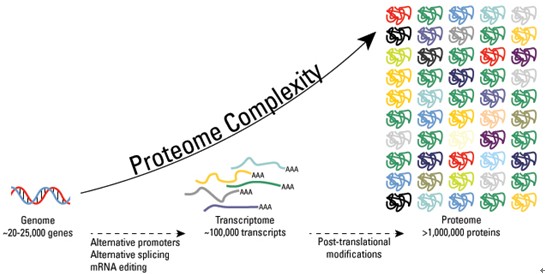
While the human genome comprises 20-25,000 genes, the proteome is estimated to encompass over 1 million proteins. Changes at the transcriptional and mRNA levels increase the size of the transcriptome relative to the genome, and the myriad of different post-translational modifications exponentially increases the complexity of the proteome relative to both the transcriptome and genome.

a)       Some Modifications (Phosphorylations, etc.) are easier to find than others. We can look for specific modifications or unknown modifications.

b)       As a general rule, any post-translational modification (PTM) could be searched for in your protein as long as we know the mass added by the modification and the potentially modified amino acid (e.g. in the case of phosphorylation: +80 Da on a Serine, Threonine or Tyrosine).

PTM (Post-Translational Modification) Analysis  http://www.creative-proteomics.com/protein-post-translational-modification-analysis.htm#1._Overview_of_Post-Translational_Modifications_%28PTMs%29_Analysis


Jose Eduardo de Salles Roselino:

The easy way to look at protein is to present it as a by-product of DNA. However, protein must be viewed as central macromolecule in biology since; even DNA is made from building blocks by protein activity. DNA are the reservoir of genetic information that establishes amino acid in proteins.
In normal living beings, normality defined by general health parameters whose values are inside an acceptable range of variation. Normal here is a statistical idea, as it must be and not as presented in recent years, as a living being that has a genome that does not have “glitches”, or a genome that would be defined as an ideal or a perfect genome.
In line with this idea, protein receives the information that determines its amino acid sequence from DNA but have its conformation, activity and function derived from its ability to change its conformation in response to changes in its microenvironment and environment. These changes in conformation are in a form adequate to keep those parameters mentioned above inside the range that define the idea of normality in accordance with the condition in which the living being is, both in time (development) as well as in space.
Therefore, post-translational must indicate a clear cut in the domain of DNA influence and not something, which is also derived from this DNA-centric view. This distortion of biochemistry has led to the never-ending genetics of non-genetic diseases. Genetics appears in inborn errors that are not acquired and show its effects in defects of proteins that could be established by a change in the DNA. Normality, or lack of abnormal genetic defect are perceived in all genomes that are able to maintain inside the normality range those parameters that define normal under defined circumstances. When this view is taken into account, DNA is take into account only when genetic diseases are considered. For the majority of the cases the scheme here presented must be made for each kind of cell, in each organ or system and the posttranslational changes thus, presented as function of development and/or a required fast regulatory change necessary to keep a cell and the organisms in general inside the normal range.

Read Full Post »

Cardiovascular Diseases and Pharmacological Therapy: Curations by Aviva Lev-Ari, PhD, RN

Cardiovascular Diseases and Pharmacological Therapy: Curations by Aviva Lev-Ari, PhD, RN, 2006 – 4/2018


+120 articles listed below cover the following topics:

  • National Trends: Cardiovascular-related Hospital stay, Cost of Treatment & Societal Burden
  • Introduction to Drug Types: De Novo Brand, Generic, Biologics, Biosimsilars
  • Anti-Inflammatory & Systemic Inflammatory
  • Anti-thrombotic Drug Class & Novel Oral Anticoagulants (NOACs)
  • Pharmaco-Genetics response to Congenital and Spontaneous Mutations: new drugs and new biomarkers for Atherosclerosis, Genetic-related Novel Anti-Cholesterol, Lipids, LDL, HDL, Hypertriglyceridemia Hyperlipidemia
  • Epigenetics, Gender differences and Life Style: DM, Obesity, Hormonal Markers, Diets, Chrono-therapeutics
  • BP Management: Genetics & Human Adaptive Immunity
  • Anti-arrhythmic Drugs – Atrial Fibrillation (AF) & Silent Cerebral Infarctions
  • MI, Acute Coronary Syndrome (ACS) and Heart Failure (HF)
  • Calcium &Cardiovascular Diseases: Contractile Dysfunction, Calcium as Neurotransmitter Sensor
  • Regeneration: Cardiac System (cardiomyogenesis) and Vasculature (angiogenesis)
  • Vascular Biology, Atherosclerosis and Molecular Cardiology


A new mechanism of action to attack in the treatment of coronary artery disease (CAD), Novartis developed Ilaris (canakinumab), a human monoclonal antibody targeting the interleukin-1beta innate immunity pathway

Reporter: Aviva Lev-Ari, PhD, RN

https://pharmaceuticalintelligence.com/2018/04/06/a-new-mechanism-of-action-to-attack-in-the-treatment-of-coronary-artery-disease-cad-novartis-developed-ilaris-canakinumab-a-human-monoclonal-antibody-targeting-the-interleukin-1beta-innate-i/


Advantages and Disadvantages of Novel Oral Anticoagulants (NOACs)

Reporter: Aviva Lev-Ari, PhD, RN

https://pharmaceuticalintelligence.com/2018/03/20/advantages-and-disadvantages-of-novel-oral-anticoagulants-noacs/


Acute Coronary Syndrome (ACS): Strategies in Anticoagulant Selection: Diagnostics Approaches – Genetic Testing Aids vs. Biomarkers (Troponin types and BNP)

Curator: Aviva Lev-Ari, PhD, RN

https://pharmaceuticalintelligence.com/2018/03/13/acute-coronary-syndrome-acs-strategies-in-anticoagulant-selection-diagnostics-approaches-genetic-testing-aids-vs-biomarkers-troponin-types-and-bnp/


Cholesterol Lowering Novel PCSK9 drugs: Praluent [Sanofi and Regeneron] vs Repatha [Amgen] – which drug cuts CV risks enough to make it cost-effective?

Reporter: Aviva Lev-Ari, PhD, RN

https://pharmaceuticalintelligence.com/2018/03/12/cholesterol-lowering-novel-pcsk9-drugs-praluent-sanofi-and-regeneron-vs-repatha-amgen-which-drug-cuts-cv-risks-enough-to-make-it-cost-effective/


Higher BMI (Obesity Marker): Earlier onset of incident CVD followed by Shorter overall Survival – Men and women of all ages

Reporter: Aviva Lev-Ari, PhD, RN

https://pharmaceuticalintelligence.com/2018/03/05/higher-bmi-obesity-marker-earlier-onset-of-incident-cvd-followed-by-shorter-overall-survival-men-and-women-of-all-ages/


ODYSSEY Outcomes trial evaluating the effects of a PCSK9 inhibitor, alirocumab, on major cardiovascular events in patients with an acute coronary syndrome to be presented at the American College of Cardiology meeting on March 10.

Reporter: Aviva Lev-Ari, PhD, RN

https://pharmaceuticalintelligence.com/2018/02/28/odyssey-outcomes-trial-evaluating-the-effects-of-a-pcsk9-inhibitor-alirocumab-on-major-cardiovascular-events-in-patients-with-an-acute-coronary-syndrome-to-be-presented-at-the-america/


Sex and Gender Connections: Heart and Brain Disease in Women

Reporter: Aviva Lev-Ari, PhD, RN

https://pharmaceuticalintelligence.com/2018/02/28/sex-and-gender-connections-heart-and-brain-disease-in-women/


In 2018 Cardiovascular PharmacoTherapy Market: Anti-thrombotic Drug Class Segment will continue to bring in the biggest profit and dominate production

Reporter: Aviva Lev-Ari, PhD, RN

https://pharmaceuticalintelligence.com/2018/02/27/in-2018-cardiovascular-pharmacotherapy-market-anti-thrombotic-drug-class-segment-will-continue-to-bring-in-the-biggest-profit-and-dominate-production/


Cost per Inpatient Hospital Stay: Five cardiovascular issues ranked in the top 10 – #1 Heart valve disorders, #2 Acute myocardial infarction (heart attack), #4 Coronary atherosclerosis, #7 Septicemia, #10 Acute cerebrovascular disease

Reporter: Aviva Lev-Ari, PhD, RN

https://pharmaceuticalintelligence.com/2018/02/27/cost-per-inpatient-hospital-stay-five-cardiovascular-issues-ranked-in-the-top-10-1-heart-valve-disorders-2-acute-myocardial-infarction-heart-attack-4-coronary-atherosclerosis/


There may be a genetic basis to CAD and that CXCL5 may be of therapeutic interest

Reporter: Aviva Lev-Ari, PhD, RN

https://pharmaceuticalintelligence.com/2018/02/09/there-may-be-a-genetic-basis-to-cad-and-that-cxcl5-may-be-of-therapeutic-interest/


FDA Approval marks first presentation of bivalirudin in frozen, premixed, ready-to-use formulation

Reporter: Aviva Lev-Ari, PhD, RN

https://pharmaceuticalintelligence.com/2018/01/24/fda-approval-marks-first-presentation-of-bivalirudin-in-frozen-premixed-ready-to-use-formulation/


What Level of Blood Pressure (BP) should be Treated? Comments on the New Guidelines

Reporter: Aviva Lev-Ari, PhD, RN

https://pharmaceuticalintelligence.com/2018/01/24/what-level-of-blood-pressure-bp-should-be-treated-comments-on-the-new-guidelines/


FDA approval on 12/1/2017 of Amgen’s evolocumb (Repatha) a PCSK9 inhibitor for the prevention of heart attacks, strokes, and coronary revascularizations in patients with established cardiovascular disease

Reporter: Aviva Lev-Ari, PhD, RN

https://pharmaceuticalintelligence.com/2017/12/01/fda-approval-on-12-1-2017-of-amgens-evolocumb-repatha-a-pcsk9-inhibitor-for-the-prevention-of-heart-attacks-strokes-and-coronary-revascularizations-in-patients-with-established-cardiovascular-di/


Long-term Canakinumab Treatment Lowering Inflammation Independent of Lipid Levels for Residual Inflammatory Risk Benefit – Personalized Medicine for Recurrent MI, Strokes and Cardiovascular Death

Reporter: Aviva Lev-Ari, PhD, RN

https://pharmaceuticalintelligence.com/2017/11/21/long-term-canakinumab-treatment-lowering-inflammation-independent-of-lipid-levels-for-residual-inflammatory-risk-benefit-personalized-medicine-for-recurrent-mi-strokes-and-cardiovascular-death/


Daily Highlights at 2017 American Heart Association Annual Meeting Scientific Sessions

Reporter: Aviva Lev-Ari, PhD, RN

https://pharmaceuticalintelligence.com/2017/11/14/daily-highlights-at-2017-american-heart-association-annual-meeting-scientific-sessions/


2017 Guideline for the Prevention, Detection, Evaluation and Management of High Blood Pressure in Adults – A REPORT OF THE American College of Cardiology/ American Heart Association Task Force on Clinical Practice Guidelines

Reporter: Aviva Lev-Ari, PhD, RN

https://pharmaceuticalintelligence.com/2017/11/14/2017-guideline-for-the-prevention-detection-evaluation-and-management-of-high-blood-pressure-in-adults-a-report-of-the-american-college-of-cardiology-american-heart-association-task-force-on-clin/


2017 American Heart Association Annual Meeting: Sunday’s Science at #AHA17 – Presidential Address

Reporter: Aviva Lev-Ari, PhD, RN

https://pharmaceuticalintelligence.com/2017/11/13/2017-american-heart-association-annual-meeting-sundays-science-at-aha17-presidential-address/


Systemic Inflammatory Diseases as Crohn’s disease, Rheumatoid Arthritis and Longer Psoriasis Duration May Mean Higher CVD Risk

Reporter: Aviva Lev-Ari, PhD, RN

https://pharmaceuticalintelligence.com/2017/10/09/systemic-inflammatory-diseases-as-crohns-disease-rheumatoid-arthritis-and-longer-psoriasis-duration-may-mean-higher-cvd-risk/


Shaun Coughlin from UCSF Cardiovascular Research Center to cardio group for the Novartis Institute for Biomedical Research in Cambridge, MA

Reporter: Aviva Lev-Ari, PhD, RN

https://pharmaceuticalintelligence.com/2017/08/17/shaun-coughlin-from-ucsf-cardiovascular-research-center-to-cardio-group-for-the-novartis-institute-for-biomedical-research-in-cambridge-ma/


In Europe, BigData@Heart aim to improve patient outcomes and reduce societal burden of atrial fibrillation (AF), heart failure (HF) and acute coronary syndrome (ACS).

Reporter: Aviva Lev-Ari, PhD, RN

https://pharmaceuticalintelligence.com/2017/07/10/in-europe-bigdataheart-aim-to-improve-patient-outcomes-and-reduce-societal-burden-of-atrial-fibrillation-af-heart-failure-hf-and-acute-coronary-syndrome-acs/


SNP-based Study on high BMI exposure confirms CVD and DM Risks – no associations with Stroke

Reporter: Aviva Lev-Ari, PhD, RN

https://pharmaceuticalintelligence.com/2017/07/10/snp-based-study-on-high-bmi-exposure-confirms-cvd-and-dm-risks-no-associations-with-stroke/


Tweets by @pharma_BI and @AVIVA1950 at World Medical Innovation Forum – CARDIOVASCULAR • MAY 1-3, 2017, BOSTON, MA

Curator: Aviva Lev-Ari, PhD, RN

https://pharmaceuticalintelligence.com/2017/05/05/tweets-by-pharma_bi-and-aviva1950-at-world-medical-innovation-forum-cardiovascular-%E2%80%A2-may-1-3-2017-boston-ma/


e-Proceedings for Day 1,2,3: World Medical Innovation Forum – CARDIOVASCULAR • MAY 1-3, 2017, BOSTON, MA

Curator and Reporter: Aviva Lev-Ari, PhD, RN

https://pharmaceuticalintelligence.com/2017/05/05/e-proceedings-for-day-123-world-medical-innovation-forum-cardiovascular-%E2%80%A2-may-1-3-2017-boston-ma/

REAL TIME Highlights and Tweets: Day 1,2,3: World Medical Innovation Forum – CARDIOVASCULAR • MAY 1-3, 2017, BOSTON, MA

Author and Curator: Aviva Lev-Ari, PhD, RN

https://pharmaceuticalintelligence.com/2017/05/03/deliverables-day-123-world-medical-innovation-forum-cardiovascular-%E2%80%A2-may-1-3-2017-boston-ma-httpsworldmedicalinnovation-orgagenda-highlights-of-live-day-1-world-medical/


Expedite Use of Agents in Clinical Trials: New Drug Formulary Created – The NCI Formulary is a public-private partnership between NCI, part of the National Institutes of Health, and pharmaceutical and biotechnology companies

Reporter: Aviva Lev-Ari, PhD, RN

https://pharmaceuticalintelligence.com/2017/01/12/expedite-use-of-agents-in-clinical-trials-new-drug-formulary-created-the-nci-formulary-is-a-public-private-partnership-between-nci-part-of-the-national-institutes-of-health-and-pharmaceutical-and/


Reversing Heart Disease: Combination of PCSK9 Inhibitors and Statins – Opinion by Steven Nissen, MD, Chairman of Cardiovascular Medicine at Cleveland Clinic

Reporter: Aviva Lev-Ari, PhD, RN

https://pharmaceuticalintelligence.com/2016/12/29/reversing-heart-disease-combination-of-pcsk9-inhibitors-and-statins-opinion-by-steven-nissen-md-chairman-of-cardiovascular-medicine-at-cleveland-clinicopinion-on-reversing-heart-disease-combinat/


Coronary Heart Disease Research: Sugar Industry influenced national conversation on heart disease – Adoption of Low Fat Diet vs Low Carbohydrates Diet

Reporter: Aviva Lev-Ari, PhD, RN

https://pharmaceuticalintelligence.com/2016/09/17/coronary-heart-disease-research-sugar-industry-influenced-national-conversation-on-heart-disease-adoption-of-low-fat-diet-vs-low-carbohydrates-diet/


Pathophysiology in Hypertension: Opposing Roles of Human Adaptive Immunity

Reporter: Aviva Lev-Ari, PhD, RN

https://pharmaceuticalintelligence.com/2016/08/19/pathophysiology-in-hypertension-opposing-roles-of-human-adaptive-immunity/


PCSK9 inhibitors: Reducing annual drug prices from more than $14 000 to $4536 would be necessary to meet a $100 000 per QALY threshold per JAMA

Curator: Aviva Lev-Ari, PhD, RN

https://pharmaceuticalintelligence.com/2016/08/17/pcsk9-inhibitors-reducing-annual-drug-prices-from-more-than-14%E2%80%AF000-to-4536-would-be-necessary-to-meet-a-100%E2%80%AF000-per-qaly-threshold-per-jama/


The presence of any Valvular Heart Disease (VHD) did not influence the comparison of Dabigatran [Pradaxa, Boehringer Ingelheim] with Warfarin

Reporter: Aviva Lev-Ari, PhD, RN

https://pharmaceuticalintelligence.com/2016/08/16/the-presence-of-any-valvular-heart-disease-vhd-did-not-influence-the-comparison-of-dabigatran-pradaxa-boehringer-ingelheim-with-warfarin/


Resveratrol, an antioxidant found in red wine presented since 2003 presented for its potential to lower risk for cardiovascular disease and neurodegeneration by increasing cell survival and slowing aging: 2014 Study – Diet rich in resveratrol offers no health boost

Reporter: Aviva Lev-Ari, PhD, RN

https://pharmaceuticalintelligence.com/2016/07/25/resveratrol-an-antioxidant-found-in-red-wine-2014-study-resveratrol-offers-no-health-boost/


Amgen’s Corlanor® can help Reduce the Risk of Hospitalization for Patients with worsening Heart Failure

Reporter: Aviva Lev-Ari, PhD, RN

https://pharmaceuticalintelligence.com/2016/05/04/amgens-corlanor-can-help-reduce-the-risk-of-hospitalization-for-patients-with-worsening-heart-failure/


Effectiveness of Anti-arrhythmic Drugs: Amiodarone and Lidocaine, for treating sudden cardiac arrest, increasing likelihood of Patients Surviving Emergency Transport to Hospital

Curator: Aviva Lev-Ari, PhD, RN

https://pharmaceuticalintelligence.com/2016/04/04/effectiveness-of-anti-arrhythmic-drugs-amiodarone-and-lidocaine-for-treating-sudden-cardiac-arrest-increasing-likelihood-of-patients-surviving-emergency-transport-to-hospital/


Efficacy and Tolerability of PCSK9 Inhibitors by Patients with Muscle-related Statin Intolerance – New Cleveland Clinic study published in JAMA 4/2016

Curators: Larry H. Bernstein, MD, FCAP and Aviva Lev-Ari, PhD, RN

https://pharmaceuticalintelligence.com/2016/04/03/efficacy-and-tolerability-of-pcsk9-inhibitors-by-patients-with-muscle-related-statin-intolerance-new-cleveland-clinic-study-published-in-jama-42016/


Triglycerides: Is it a Risk Factor or a Risk Marker for Atherosclerosis and Cardiovascular Disease ? The Impact of Genetic Mutations on (ANGPTL4) Gene, encoder of (angiopoietin-like 4) Protein, inhibitor of Lipoprotein Lipase

Reporters, Curators and Authors: Aviva Lev-Ari, PhD, RN and Larry H. Bernstein, MD, FCAP

https://pharmaceuticalintelligence.com/2016/03/13/triglycerides-is-it-a-risk-factor-or-a-risk-marker-for-atherosclerosis-and-cardiovascular-disease-the-impact-of-genetic-mutations-on-angptl4-gene-encoder-of-angiopoietin-like-4-protein-that-in/


In One-Hour: A Diagnosis of Heart Attack made possible by one Blood Test

Reporter: Larry H Bernstein, MD, FCAP

https://pharmaceuticalintelligence.com/2016/01/14/in-one-hour-a-diagnosis-of-heart-attack-made-possible-by-one-blood-test/


Heart-Failure–Related Mortality Rate: CDC Reports comparison of 2000, 2012, 2014  – the decease is steadily reversed

Reporter: Aviva Lev-Ari, PhD, RN

https://pharmaceuticalintelligence.com/2016/01/05/heart-failure-related-mortality-rate-cdc-reports-comparison-of-2000-2012-2014-the-decease-is-steadily-reversed/


PCSK9: A Recent Discovery in Understanding Cholesterol Regulation @ AMGEN Cardiovascular

Reporter: Aviva Lev-Ari, PhD, RN

https://pharmaceuticalintelligence.com/2015/08/04/pcsk9-a-recent-discovery-in-understanding-cholesterol-regulation-amgen-cardiovascular/


Praluent – FDA approved as Cholesterol-lowering Medicine for Patient non responsive to Statin due to Genetic origin of Hypercholesterolemia

Reporter: Aviva Lev-Ari, PhD, RN

https://pharmaceuticalintelligence.com/2015/07/27/praluent-fda-approved-as-cholesterol-lowering-medicine-for-patient-non-responsive-to-statin-due-to-genetic-origin-of-hypercholesterolemia/


Atherosclerosis: What is New in Biomarker Discovery

Reporter: Aviva Lev-Ari, PhD, RN

https://pharmaceuticalintelligence.com/2015/07/01/atherosclerosis-what-is-new-in-biomarker-discovery/


Cangrelor wins Clopidogrel (Plavix): reduction of Risk of a composite of all-cause mortality, myocardial infarction, ischemia driven revascularization, and stent thrombosis

Reporter: Aviva Lev-Ari, PhD, RN

https://pharmaceuticalintelligence.com/2015/04/16/cangrelor-wins-clopidogrel-plavix-reduction-of-risk-of-a-composite-of-all-cause-mortality-myocardial-infarction-ischemia-driven-revascularization-and-stent-thrombosis/


Sets of co-expressed Genes influence Blood Pressure Regulation: Genome-wide Association and mRNA expression @US National Heart, Lung, and Blood Institute

Reporter: Aviva Lev-Ari, PhD, RN

https://pharmaceuticalintelligence.com/2015/04/16/sets-of-co-expressed-genes-influence-blood-pressure-regulation-genome-wide-association-and-mrna-expression-us-national-heart-lung-and-blood-institute/


HDL-C: Target of Therapy – Steven E. Nissen, MD, MACC, Cleveland Clinic vs Peter Libby, MD, BWH

Reporter: Aviva Lev-Ari, PhD, RN

https://pharmaceuticalintelligence.com/2014/11/07/hdl-c-target-of-therapy-steven-e-nissen-md-macc-cleveland-clinic-vs-peter-libby-md-bwh/


Atrial Fibrillation and Silent Cerebral Infarctions: A Meta Analysis Study and Literature Review

Reporter: Aviva Lev-Ari, PhD, RN

https://pharmaceuticalintelligence.com/2014/11/04/atrial-fibrillation-and-silent-cerebral-infarctions-a-meta-analysis-study-and-literature-review/


Intracranial Vascular Stenosis: Comparison of Clinical Trials: Percutaneous Transluminal Angioplasty and Stenting (PTAS) vs. Clot-inhibiting Drugs: Aspirin and Clopidogrel (dual antiplatelet therapy) – more Strokes if Stenting

Reporter: Aviva Lev-Ari, PhD, RN

https://pharmaceuticalintelligence.com/2014/10/15/intracranial-vascular-stenosis-comparison-of-clinical-trials-percutaneous-transluminal-angioplasty-and-stenting-ptas-vs-clot-inhibiting-drugs-aspirin-and-clopidogrel-dual-antiplatelet-therapy/


Hypertension: It is Autoimmunity that Underlies its Development in Humans

Reporter: Aviva Lev-Ari, PhD, RN

https://pharmaceuticalintelligence.com/2014/10/08/hypertension-it-is-autoimmunity-that-underlies-its-development-in-humans/


OPINION LEADERSHIP on Cardiovascular Diseases

Cardiovascular Original Research: Cases in Methodology Design for Content Co-Curation

  • Cardiovascular Diseases, Volume Two: Cardiovascular Original Research: Cases in Methodology Design for Content Co-Curation. On Amazon.com since 11/30/2015

http://www.amazon.com/dp/B018Q5MCN8

 Epilogue to Volume Two

Author and Curator: Aviva Lev-Ari, PhD, RN, Editor-in-Chief, BioMed e-Series of e-Books

https://pharmaceuticalintelligence.com/2014/07/31/opinion-leadership-on-cardiovascular-diseases/


Risk of Major Cardiovascular Events by LDL-Cholesterol Level (mg/dL): Among those treated with high-dose statin therapy, more than 40% of patients failed to achieve an LDL-cholesterol target of less than 70 mg/dL.

Reporter: Aviva Lev-Ari, PhD, RN

https://pharmaceuticalintelligence.com/2014/07/29/risk-of-major-cardiovascular-events-by-ldl-cholesterol-level-mgdl-among-those-treated-with-high-dose-statin-therapy-more-than-40-of-patients-failed-to-achieve-an-ldl-cholesterol-target-of-less-th/


Commentary on Biomarkers for Genetics and Genomics of Cardiovascular Disease: Views by Larry H Bernstein, MD, FCAP

Commissioned article, Author: Larry H Bernstein, MD, FCAP

https://pharmaceuticalintelligence.com/2014/07/16/commentary-on-biomarkers-for-genetics-and-genomics-of-cardiovascular-disease-views-by-larry-h-bernstein-md-fcap/


Coagulation Therapy: Leading New Drugs – Efficacy Comparison

Curator: Aviva Lev-Ari, PhD, RN

https://pharmaceuticalintelligence.com/2014/05/10/coagulation-therapy-leading-new-drugs-efficacy-comparison/


Apixaban (Eliquis): Mechanism of Action, Drug Comparison and Additional Indications

Curator: Aviva Lev-Ari, PhD, RN

https://pharmaceuticalintelligence.com/2014/05/10/apixaban-eliquis-mechanism-of-action-drug-comparison-and-additional-indications/


Boston Heart Diagnostics (BHD) offers Statin Induced Myopathy (SLCO1B1) Genotype test and genetic tests targeting ApoE, Factor V Leiden, prothrombin (Factor II), and CYP2C19

Reporter: Aviva Lev-Ari, PhD, RN

https://pharmaceuticalintelligence.com/2014/04/17/boston-heart-diagnostics-bhd-offers-statin-induced-myopathy-slco1b1-genotype-test-and-genetic-tests-targeting-apoe-factor-v-leiden-prothrombin-factor-ii-and-cyp2c19/


@@@ Cardiovascular Diseases and Pharmacological Therapy: Curations by Aviva Lev-Ari, PhD, RN

Curator: Aviva Leve-Ari, PhD, RN

https://pharmaceuticalintelligence.com/2014/04/17/cardiovascular-diseases-and-pharmacological-therapy-curations-by-aviva-lev-ari-phd-rn/


Richard Lifton, MD, PhD of Yale University & Howard Hughes Medical Institute: Recipient of 2014 Breakthrough Prizes Awarded in Life Sciences for the Discovery of Genes and Biochemical Mechanisms that cause Hypertension

Curator: Aviva Lev-Ari, PhD, RN

https://pharmaceuticalintelligence.com/2014/03/03/richard-lifton-md-phd-of-yale-university-and-howard-hughes-medical-institute-recipient-of-2014-breakthrough-prizes-awarded-in-life-sciences-for-the-discovery-of-genes-and-biochemical-mechanisms-tha/


Differences in Health Services Utilization and Costs between Antihypertensive Medication Users Versus Nonusers in Adults with Diabetes and Concomitant Hypertension from Medical Expenditure Panel Su…

Reporter: Aviva Lev-Ari, PhD, RN

https://pharmaceuticalintelligence.com/2014/02/28/differences-in-health-services-utilization-and-costs-between-antihypertensive-medication-users-versus-nonusers-in-adults-with-diabetes-and-concomitant-hypertension-from-medical-expenditure-panel-su-2/


2014 Epidemiology and Prevention, Nutrition, Physical Activity and Metabolism Conference: San Francisco, Ca. Conference Dates: San Francisco, CA 3/18-21, 2014

Reporter: Aviva Lev-Ari, PhD, RN

https://pharmaceuticalintelligence.com/2014/02/26/2014-epidemiology-and-prevention-nutrition-physical-activity-and-metabolism-conference-san-francisco-ca-conference-dates-san-francisco-ca-318-21-2014/


2014 High Blood Pressure Research Conference, 9/9 – 9/12, 2014 — Hilton SF Union Square, San Francisco, CA

Reporter: Aviva Lev-Ari, PhD, RN

https://pharmaceuticalintelligence.com/2014/02/24/2014-high-blood-pressure-research-conference-99-912-2014-hilton-sf-union-square-san-francisco-ca/


Females and Non-Atherosclerotic Plaque: Spontaneous Coronary Artery Dissection – New Insights from Research and DNA Ongoing Study

Reporter: Aviva Lev-Ari, PhD, RN

https://pharmaceuticalintelligence.com/2014/02/12/female-and-non-atherosclerotic-plaque-spontaneous-coronary-artery-dissection-new-insights-from-research-and-dna-ongoing-study/


Hypertension – JNC 8 Guideline: Henry R. Black, MD, Michael A. Weber, MD and Raymond R. Townsend, MD

Reporter: Aviva Lev-Ari, PhD, RN

https://pharmaceuticalintelligence.com/2014/02/12/hypertension-jnc-8-guideline-henry-r-black-md-michael-a-weber-md-and-raymond-r-townsend-md/


Why Don’t You Trust Generic Drugs as Much as Brand Name …

Reporter: Aviva Lev-Ari, PhD, RN

https://pharmaceuticalintelligence.com/2014/02/10/why-dont-you-trust-generic-drugs-as-much-as-brand-name/


National Trends, 2005 – 2011: Adverse-event Rates Declined among Patients Hospitalized for Acute Myocardial Infarction or Congestive Heart Failure

Reporter: Aviva Lev-Ari, PhD, RN

https://pharmaceuticalintelligence.com/2014/02/04/national-trends-2005-2011-adverse-event-rates-declined-among-patients-hospitalized-for-acute-myocardial-infarction-or-congestive-heart-failure/


Is Pharmacogenetic-based Dosing of Warfarin Superior for Anticoagulation Control?

Curator: Aviva Lev-Ari, PhD, RN

https://pharmaceuticalintelligence.com/2014/02/04/is-pharmacogenetic-based-dosing-of-warfarin-superior-for-anticoagulation-control/


Prolonged Wakefulness: Lack of Sufficient Duration of Sleep as a Risk Factor for Cardiovascular Diseases – Indications for Cardiovascular Chrono-therapeutics

Curator: Aviva Lev-Ari, PhD, RN

https://pharmaceuticalintelligence.com/2014/02/02/prolonged-wakefulness-lack-of-sufficient-duration-of-sleep-as-a-risk-factor-for-cardiovascular-diseases-indications-for-cardiovascular-chrono-therapeutics/


Testosterone Therapy for Idiopathic Hypogonadotrophic Hypogonadism has Beneficial and Deleterious Effects on Cardiovascular Risk Factors

Curator: Aviva Lev-Ari, PhD, RN

https://pharmaceuticalintelligence.com/2014/01/30/testosterone-therapy-for-idiopathic-hypogonadotrophic-hypogonadism-has-beneficial-and-deleterious-effects-on-cardiovascular-risk-factors/


Calcium and Cardiovascular Diseases: A Series of Twelve Articles in Advanced Cardiology

Curator: Aviva Lev-Ari, PhD, RN

https://pharmaceuticalintelligence.com/2014/01/28/calcium-and-cardiovascular-diseases-a-series-of-twelve-articles-in-advanced-cardiology/


Acute Myocardial Infarction: Curations of Cardiovascular Original Research – A Bibliography

Curator: Aviva Lev-Ari, PhD, RN

https://pharmaceuticalintelligence.com/2014/01/22/acute-myocardial-infarction-curations-of-cardiovascular-original-research-a-bibliography/


On-Hours vs Off-Hours: Presentation to ER with Acute Myocardial Infarction – Lower Survival Rate if Off-Hours

Reporter: Aviva Lev-Ari, PhD, RN

https://pharmaceuticalintelligence.com/2014/01/22/on-hours-vs-off-hours-presentation-to-er-with-acute-myocardial-infarction-lower-survival-rate-if-off-hours/


2014 Winter in New England: The Effect of Record Cold Temperatures on Cardiovascular Diseases

Curator: Aviva Lev-Ari, PhD, RN

https://pharmaceuticalintelligence.com/2014/01/21/2014-winter-in-new-england-the-effect-of-record-cold-temperatures-on-cardiovascular-diseases/


Voices from the Cleveland Clinic: On the New Lipid Guidelines and On the ACC/AHA Risk Calculator

Reporter: Aviva Lev-Ari, PhD, RN

https://pharmaceuticalintelligence.com/2014/01/21/voices-from-the-cleveland-clinic-on-the-new-lipid-guidelines-and-on-the-accaha-risk-calculator/


Is it Hypertension or Physical Inactivity: Cardiovascular Risk and Mortality – New results in 3/2013

Reporter: Aviva Lev-Ari, PhD, RN

https://pharmaceuticalintelligence.com/2014/01/19/is-it-hypertension-or-physical-inactivity-cardiovascular-risk-and-mortality-new-results-in-32013/


Regeneration: Cardiac System (cardiomyogenesis) and Vasculature (angiogenesis)

Curator: Aviva Lev-Ari, PhD, RN

https://pharmaceuticalintelligence.com/2014/01/15/regeneration-cardiac-system-and-vasculature


Conceived: NEW Definition for Co-Curation in Medical Research

Curator: Aviva Lev-Ari, PhD, RN

https://pharmaceuticalintelligence.com/2014/01/04/conceived-new-definition-for-co-curation-in-medical-research/


The Young Surgeon and The Retired Pathologist: On Science, Medicine and HealthCare Policy – The Best Writers Among the WRITERS

Curator: Aviva Lev-Ari, PhD, RN

https://pharmaceuticalintelligence.com/2013/12/10/the-young-surgeon-and-the-retired-pathologist-on-science-medicine-and-healthcare-policy-best-writers-among-the-writers/


Diabetes-risk Forecasts: Serum Calcium in Upper-Normal Range (>2.5 mmol/L) as a New Biomarker

Curator: Aviva Lev-Ari, PhD, RN 

https://pharmaceuticalintelligence.com/2013/09/25/diabetes-risk-forecasts-serum-calcium-in-upper-normal-range-2-5-mmoll-as-a-new-biomarker/


Do Novel Anticoagulants Affect the PT/INR? The Cases of XARELTO (rivaroxaban) or PRADAXA (dabigatran)

Curators: Lal, V., Justin D. Pearlman, MD, PhD, FACC and Aviva Lev-Ari, PhD, RN

https://pharmaceuticalintelligence.com/2013/09/23/do-novel-anticoagulants-affect-the-ptinr-the-cases-of-xarelto-rivaroxaban-and-pradaxa-dabigatran/


Calcium-Channel Blocker, Calcium Release-related Contractile Dysfunction (Ryanopathy) and Calcium as Neurotransmitter Sensor

Curators: Justin D. Pearlman, MD, PhD, FACC, Larry H. Bernstein, MD FCAP and Aviva Lev-Ari, PhD, RN

https://pharmaceuticalintelligence.com/2013/09/16/calcium-channel-blocker-calcium-as-neurotransmitter-sensor-and-calcium-release-related-contractile-dysfunction-ryanopathy/


Disruption of Calcium HomeostasisCardiomyocytes and Vascular Smooth Muscle Cells: The Cardiac and Cardiovascular Calcium Signaling Mechanism

Curators: Larry H. Bernstein, MD FCAP, Justin D. Pearlman, MD, PhD, FACC, and Aviva Lev-Ari, PhD, RN

https://pharmaceuticalintelligence.com/2013/09/12/disruption-of-calcium-homeostasis-cardiomyocytes-and-vascular-smooth-muscle-cells-the-cardiac-and-cardiovascular-calcium-signaling-mechanism/


Synaptotagmin functions as a Calcium Sensor: How Calcium Ions Regulate the fusion of vesicles with cell membranes during Neurotransmission

Curators:  Larry H. Bernstein, MD FCAP and Aviva Lev-Ari, PhD, RN

https://pharmaceuticalintelligence.com/2013/09/10/synaptotagmin-functions-as-a-calcium-sensor-how-calcium-ions-regulate-the-fusion-of-vesicles-with-cell-membranes-during-neurotransmission/


Cardiac Contractility & Myocardium Performance: Ventricular Arrhythmias and Non-ischemic Heart Failure – Therapeutic Implications for Cardiomyocyte Ryanopathy (Calcium Release-related Contractile Dysfunction) and Catecholamine Responses

Curators: Justin D. Pearlman, MD, PhD, FACC, Larry H. Bernstein, MD FCAP and Aviva Lev-Ari, PhD, RN

https://pharmaceuticalintelligence.com/2013/08/28/cardiac-contractility-myocardium-performance-ventricular-arrhythmias-and-non-ischemic-heart-failure-therapeutic-implications-for-cardiomyocyte-ryanopathy-calcium-release-related-contractile/


Cardiovascular Original Research: Cases in Methodology Design for Content Curation and Co-Curation

Curator: Aviva Lev-Ari, PhD, RN

https://pharmaceuticalintelligence.com/2013/07/29/cardiovascular-original-research-cases-in-methodology-design-for-content-curation-and-co-curation/


Heart Transplant (HT) Indication for Heart Failure (HF): Procedure Outcomes and Research on HF, HT @ Two Nation’s Leading HF & HT Centers

Curator: Aviva Lev-Ari, PhD, RN 

https://pharmaceuticalintelligence.com/2013/07/09/research-programs-george-m-linda-h-kaufman-center-for-heart-failure-cleveland-clinic/


Congenital Heart Disease (CHD) at Birth and into Adulthood: The Role of Spontaneous Mutations

Curator: Aviva Lev-Ari, PhD, RN 

https://pharmaceuticalintelligence.com/2013/06/09/congenital-heart-disease-at-birth-and-into-adulthood-the-role-of-spontaneous-mutations-the-genes-and-the-pathways/


Clinical Indications for Use of Inhaled Nitric Oxide (iNO) in the Adult Patient Market: Clinical Outcomes after Use, Therapy Demand and Cost of Care

Curator: Aviva Lev-Ari, PhD, RN 

https://pharmaceuticalintelligence.com/2013/06/03/clinical-indications-for-use-of-inhaled-nitric-oxide-ino-in-the-adult-patient-market-clinical-outcomes-after-use-therapy-demand-and-cost-of-care/


Inhaled Nitric Oxide in Adults: Clinical Trials and Meta Analysis Studies – Recent Findings

Curator: Aviva Lev-Ari, PhD, RN 

https://pharmaceuticalintelligence.com/2013/06/02/inhaled-nitric-oxide-in-adults-with-acute-respiratory-distress-syndrome/


Imaging Biomarker for Arterial Stiffness: Pathways in Pharmacotherapy for Hypertension and Hypercholesterolemia Management

Curators: Justin D. Pearlman, MD, PhD, FACC and Aviva Lev-Ari, PhD, RN 

https://pharmaceuticalintelligence.com/2013/05/24/imaging-biomarker-for-arterial-stiffness-pathways-in-pharmacotherapy-for-hypertension-and-hypercholesterolemia-management/


Synthetic Biology: On Advanced Genome Interpretation for Gene Variants and Pathways: What is the Genetic Base of Atherosclerosis and Loss of Arterial Elasticity with Aging

Curator: Aviva Lev-Ari, PhD, RN 

https://pharmaceuticalintelligence.com/2013/05/17/synthetic-biology-on-advanced-genome-interpretation-for-gene-variants-and-pathways-what-is-the-genetic-base-of-atherosclerosis-and-loss-of-arterial-elasticity-with-aging/


Diagnosis of Cardiovascular Disease, Treatment and Prevention: Current & Predicted Cost of Care and the Promise of Individualized Medicine Using Clinical Decision Support Systems

Curators: Justin D. Pearlman, MD, PhD, FACC, Larry H. Bernstein, MD, FCAP and Aviva Lev-Ari, PhD, RN

https://pharmaceuticalintelligence.com/2013/05/15/diagnosis-of-cardiovascular-disease-treatment-and-prevention-current-predicted-cost-of-care-and-the-promise-of-individualized-medicine-using-clinical-decision-support-systems-2/


Gene, Meis1, Regulates the Heart’s Ability to Regenerate after Injuries.

Curator: Aviva Lev-Ari, PhD, RN 

https://pharmaceuticalintelligence.com/2013/05/03/gene-meis1-regulates-the-hearts-ability-to-regenerate-after-injuries/


Prostacyclin and Nitric Oxide: Adventures in Vascular Biology – A Tale of Two Mediators

Curator: Aviva Lev-Ari, PhD, RN 

https://pharmaceuticalintelligence.com/2013/04/30/prostacyclin-and-nitric-oxide-adventures-in-vascular-biology-a-tale-of-two-mediators/


Genetics of Conduction Disease: Atrioventricular (AV) Conduction Disease (block): Gene Mutations – Transcription, Excitability, and Energy Homeostasis

Curator: Aviva Lev-Ari, PhD, RN 

https://pharmaceuticalintelligence.com/2013/04/28/genetics-of-conduction-disease-atrioventricular-av-conduction-disease-block-gene-mutations-transcription-excitability-and-energy-homeostasis/


Economic Toll of Heart Failure in the US: Forecasting the Impact of Heart Failure in the United States – A Policy Statement From the American Heart Association

Curator: Aviva Lev-Ari, PhD, RN 

https://pharmaceuticalintelligence.com/2013/04/25/economic-toll-of-heart-failure-in-the-us-forecasting-the-impact-of-heart-failure-in-the-united-states-a-policy-statement-from-the-american-heart-association/


Harnessing New Players in Atherosclerosis to Treat Heart Disease

Curator: Aviva Lev-Ari, PhD, RN 

https://pharmaceuticalintelligence.com/2013/04/25/harnessing-new-players-in-atherosclerosis-to-treat-heart-disease/


Cholesteryl Ester Transfer Protein (CETP) Inhibitor: Potential of Anacetrapib to treat Atherosclerosis and CAD

Curator: Aviva Lev-Ari, PhD, RN 

https://pharmaceuticalintelligence.com/2013/04/07/cholesteryl-ester-transfer-protein-cetp-inhibitor-potential-of-anacetrapib-to-treat-atherosclerosis-and-cad/


Hypertriglyceridemia concurrent Hyperlipidemia: Vertical Density Gradient Ultracentrifugation a Better Test to Prevent Undertreatment of High-Risk Cardiac Patients

Curator: Aviva Lev-Ari, PhD, RN 

https://pharmaceuticalintelligence.com/2013/04/04/hypertriglyceridemia-concurrent-hyperlipidemia-vertical-density-gradient-ultracentrifugation-a-better-test-to-prevent-undertreatment-of-high-risk-cardiac-patients/


Fight against Atherosclerotic Cardiovascular Disease: A Biologics not a Small Molecule – Recombinant Human lecithin-cholesterol acyltransferase (rhLCAT) attracted AstraZeneca to acquire AlphaCore

Curator: Aviva Lev-Ari, PhD, RN 

https://pharmaceuticalintelligence.com/2013/04/03/fight-against-atherosclerotic-cardiovascular-disease-a-biologics-not-a-small-molecule-recombinant-human-lecithin-cholesterol-acyltransferase-rhlcat-attracted-astrazeneca-to-acquire-alphacore/


High-Density Lipoprotein (HDL): An Independent Predictor of Endothelial Function & Atherosclerosis, A Modulator, An Agonist, A Biomarker for Cardiovascular Risk

Curator: Aviva Lev-Ari, PhD, RN 

https://pharmaceuticalintelligence.com/2013/03/31/high-density-lipoprotein-hdl-an-independent-predictor-of-endothelial-function-artherosclerosis-a-modulator-an-agonist-a-biomarker-for-cardiovascular-risk/ 


Genomics & Genetics of Cardiovascular Disease Diagnoses: A Literature Survey of AHA’s Circulation Cardiovascular Genetics, 3/2010 – 3/2013

Curators: Aviva Lev-Ari, PhD, RN and Larry H. Bernstein, MD, FCAP

https://pharmaceuticalintelligence.com/2013/03/07/genomics-genetics-of-cardiovascular-disease-diagnoses-a-literature-survey-of-ahas-circulation-cardiovascular-genetics-32010-32013/


The Heart: Vasculature Protection – A Concept-based Pharmacological Therapy including THYMOSIN

Curator: Aviva Lev-Ari, PhD, RN 

https://pharmaceuticalintelligence.com/2013/02/28/the-heart-vasculature-protection-a-concept-based-pharmacological-therapy-including-thymosin/


Thymosin References

Curator: Aviva Lev-Ari, PhD, RN

https://pharmaceuticalintelligence.com/2013/02/27/thymosin-references/


Arteriogenesis and Cardiac Repair: Two Biomaterials – Injectable Thymosin beta4 and Myocardial Matrix Hydrogel

Curator: Aviva Lev-Ari, PhD, RN 

https://pharmaceuticalintelligence.com/2013/02/27/arteriogenesis-and-cardiac-repair-two-biomaterials-injectable-thymosin-beta4-and-myocardial-matrix-hydrogel/


PCI Outcomes, Increased Ischemic Risk associated with Elevated Plasma Fibrinogen not Platelet Reactivity

Reporter: Aviva Lev-Ari, PhD, RN

https://pharmaceuticalintelligence.com/2013/01/10/pci-outcomes-increased-ischemic-risk-associated-with-elevated-plasma-fibrinogen-not-platelet-reactivity/


Heart Renewal by pre-existing Cardiomyocytes: Source of New Heart Cell Growth Discovered

Reporter: Aviva Lev-Ari, PhD, RN

https://pharmaceuticalintelligence.com/2012/12/23/heart-renewal-by-pre-existing-cardiomyocytes-source-of-new-heart-cell-growth-discovered/


Special Considerations in Blood Lipoproteins, Viscosity, Assessment and Treatment

Curators: Larry H. Bernstein and Aviva Lev-Ari, PhD, RN

https://pharmaceuticalintelligence.com/2012/11/28/special-considerations-in-blood-lipoproteins-viscosity-assessment-and-treatment/


Peroxisome proliferator-activated receptor (PPAR-gamma) Receptors Activation: PPARγ transrepression for Angiogenesis in Cardiovascular Disease and PPARγ transactivation for Treatment of Diabetes

Curator: Aviva Lev-Ari, PhD, RN 

https://pharmaceuticalintelligence.com/2012/11/13/peroxisome-proliferator-activated-receptor-ppar-gamma-receptors-activation-pparγ-transrepression-for-angiogenesis-in-cardiovascular-disease-and-pparγ-transactivation-for-treatment-of-dia/


Cardiovascular Risk Inflammatory Marker: Risk Assessment for Coronary Heart Disease and Ischemic Stroke – Atherosclerosis.

Reporter: Aviva Lev-Ari, PhD, RN

https://pharmaceuticalintelligence.com/2012/10/30/cardiovascular-risk-inflammatory-marker-risk-assessment-for-coronary-heart-disease-and-ischemic-stroke-atherosclerosis/


Clinical Trials Results for Endothelin System: Pathophysiological role in Chronic Heart Failure, Acute Coronary Syndromes and MI – Marker of Disease Severity or Genetic Determination?

Curator: Aviva Lev-Ari, PhD, RN 

https://pharmaceuticalintelligence.com/2012/10/19/clinical-trials-results-for-endothelin-system-pathophysiological-role-in-chronic-heart-failure-acute-coronary-syndromes-and-mi-marker-of-disease-severity-or-genetic-determination/


Sustained Cardiac Atrial Fibrillation: Management Strategies by Director of the Arrhythmia Service and Electrophysiology Lab at The Johns Hopkins Hospital

Reporter: Aviva Lev-Ari, PhD, RN

https://pharmaceuticalintelligence.com/2012/10/16/sustained-cardiac-atrial-fibrillation-management-strategies-by-director-of-the-arrhythmia-service-and-electrophysiology-lab-at-the-johns-hopkins-hospital/


Endothelin Receptors in Cardiovascular Diseases: The Role of eNOS Stimulation

Curator: Aviva Lev-Ari, PhD, RN 

https://pharmaceuticalintelligence.com/2012/10/04/endothelin-receptors-in-cardiovascular-diseases-the-role-of-enos-stimulation/


Inhibition of ET-1, ETA and ETA-ETB, Induction of NO production, stimulation of eNOS and Treatment Regime with PPAR-gamma agonists (TZD): cEPCs Endogenous Augmentation for Cardiovascular Risk Reduction – A Bibliography

Curator: Aviva Lev-Ari, PhD, RN 

https://pharmaceuticalintelligence.com/2012/10/04/inhibition-of-et-1-eta-and-eta-etb-induction-of-no-production-and-stimulation-of-enos-and-treatment-regime-with-ppar-gamma-agonists-tzd-cepcs-endogenous-augmentation-for-cardiovascular-risk-reduc/

Positioning a Therapeutic Concept for Endogenous Augmentation of cEPCs — Therapeutic Indications for Macrovascular Disease: Coronary, Cerebrovascular and Peripheral

Curator: Aviva Lev-Ari, PhD, RN

https://pharmaceuticalintelligence.com/2012/08/29/positioning-a-therapeutic-concept-for-endogenous-augmentation-of-cepcs-therapeutic-indications-for-macrovascular-disease-coronary-cerebrovascular-and-peripheral/ 


Cardiovascular Outcomes: Function of circulating Endothelial Progenitor Cells (cEPCs): Exploring Pharmaco-therapy targeted at Endogenous Augmentation of cEPCs

Curator: Aviva Lev-Ari, PhD, RN 

https://pharmaceuticalintelligence.com/2012/08/28/cardiovascular-outcomes-function-of-circulating-endothelial-progenitor-cells-cepcs-exploring-pharmaco-therapy-targeted-at-endogenous-augmentation-of-cepcs/


Endothelial Dysfunction, Diminished Availability of cEPCs, Increasing CVD Risk for Macrovascular Disease – Therapeutic Potential of cEPCs

Curator: Aviva Lev-Ari, PhD, RN 

https://pharmaceuticalintelligence.com/2012/08/27/endothelial-dysfunction-diminished-availability-of-cepcs-increasing-cvd-risk-for-macrovascular-disease-therapeutic-potential-of-cepcs/


Vascular Medicine and Biology: Classification of Fast Acting Therapy for Patients at High Risk for Macrovascular Events – Macrovascular Disease – Therapeutic Potential of cEPCs

Curator: Aviva Lev-Ari, PhD, RN

https://pharmaceuticalintelligence.com/2012/08/24/vascular-medicine-and-biology-classification-of-fast-acting-therapy-for-patients-at-high-risk-for-macrovascular-events-macrovascular-disease-therapeutic-potential-of-cepcs/


Ethical Considerations in Studying Drug Safety — The Institute of Medicine Report

Reporter: Aviva Lev-Ari, PhD, RN

https://pharmaceuticalintelligence.com/2012/08/23/ethical-considerations-in-studying-drug-safety-the-institute-of-medicine-report/


Cardiac Arrhythmias: A Risk for Extreme Performance Athletes

Reporter: Aviva Lev-Ari, PhD, RN

https://pharmaceuticalintelligence.com/2012/08/08/cardiac-arrhythmias-a-risk-for-extreme-performance-athletes/


Biosimilars: Intellectual Property Creation and Protection by Pioneer and by Biosimilar Manufacturers

Curator: Aviva Lev-Ari, PhD, RN 

https://pharmaceuticalintelligence.com/2012/07/30/biosimilars-intellectual-property-creation-and-protection-by-pioneer-and-by-biosimilar-manufacturers/


Biosimilars: Financials 2012 vs. 2008

Curator: Aviva Lev-Ari, PhD, RN 

https://pharmaceuticalintelligence.com/2012/07/30/biosimilars-financials-2012-vs-2008/


Biosimilars: CMC Issues and Regulatory Requirements

Curator: Aviva Lev-Ari, PhD, RN 

https://pharmaceuticalintelligence.com/2012/07/29/biosimilars-cmc-issues-and-regulatory-requirements/


Cardiovascular Disease (CVD) and the Role of agent alternatives in endothelial Nitric Oxide Synthase (eNOS) Activation and Nitric Oxide Production

Curator: Aviva Lev-Ari, PhD, RN 

https://pharmaceuticalintelligence.com/2012/07/19/cardiovascular-disease-cvd-and-the-role-of-agent-alternatives-in-endothelial-nitric-oxide-synthase-enos-activation-and-nitric-oxide-production/


Resident-cell-based Therapy in Human Ischaemic Heart Disease: Evolution in the PROMISE of Thymosin beta4 for Cardiac Repair

Curator: Aviva Lev-Ari, PhD, RN 

https://pharmaceuticalintelligence.com/2012/04/30/93/


Triple Antihypertensive Combination Therapy Significantly Lowers Blood Pressure in Hard-to-Treat Patients with Hypertension and Diabetes

Curator: Aviva Lev-Ari, PhD, RN 

https://pharmaceuticalintelligence.com/2012/05/29/445/


Macrovascular Disease – Therapeutic Potential of cEPCs: Reduction Methods for CV Risk

Curator: Aviva Lev-Ari, PhD, RN 

https://pharmaceuticalintelligence.com/2012/07/02/macrovascular-disease-therapeutic-potential-of-cepcs-reduction-methods-for-cv-risk/


Mitochondria Dysfunction and Cardiovascular Disease – Mitochondria: More than just the “powerhouse of the cell”

Curator: Aviva Lev-Ari, PhD, RN 

https://pharmaceuticalintelligence.com/2012/07/09/mitochondria-more-than-just-the-powerhouse-of-the-cell/


Bystolic’s generic Nebivolol – positive effect on circulating Endothelial Progenitor Cells endogenous augmentation

Curator: Aviva Lev-Ari, PhD, RN 

https://pharmaceuticalintelligence.com/2012/07/16/bystolics-generic-nebivolol-positive-effect-on-circulating-endothilial-progrnetor-cells-endogenous-augmentation/

Lev-Ari, A. Heart Vasculature (2007) Regeneration and Protection of Coronary Artery Endothelium and Smooth Muscle: A Concept-based Pharmacological Therapy of a Combined Three Drug Regimen.

Bouve College of Health Sciences, Northeastern University, Boston, MA 02115


Lev-Ari, A. & Abourjaily, P. (2006a) “An Investigation of the Potential of circulating Endothelial Progenitor Cells (cEPC) as a Therapeutic Target for Pharmacologic Therapy Design for Cardiovascular Risk Reduction.”

  • Part IMacrovascular Disease – Therapeutic Potential of cEPCs – Reduction methods for CV risk.
  • Part II:(2006b) Therapeutic Strategy for cEPCs Endogenous Augmentation: A Concept-based Treatment Protocol for a Combined Three Drug Regimen.
  • Part III: (2006c)Biomarker for Therapeutic Targets of Cardiovascular Risk Reduction by cEPCs Endogenous Augmentation using New Combination Drug Therapy of Three Drug Classes and Several Drug Indications.

Northeastern University, Boston, MA 02115


Curator: Medical Research – 557 articles in Books

Editorial & Publication of Articles in e-Books by Leaders in Pharmaceutical Business Intelligence: Contributions of Aviva Lev-Ari, PhD, RN

https://pharmaceuticalintelligence.com/2014/10/16/editorial-publication-of-articles-in-e-books-by-leaders-in-pharmaceutical-business-intelligence-contributions-of-aviva-lev-ari-phd-rn/


Read Full Post »

2014 Epidemiology and Prevention, Nutrition, Physical Activity and Metabolism Conference: San Francisco, Ca.   Conference Dates:  San Francisco, CA 3/18-21, 2014

Location:
Hilton San Francisco Union Square
San Francisco, CA

Conference Dates:
Mar. 18-21, 2014

Reporter: Aviva Lev-Ari, PhD, RN

A Scientific Statement for Public Health Practitioners, Healthcare Providers, and Health Policy Makers


  1. Thomas A. Pearson, MD, PhD, FAHA, Co-Chair;
  2. Latha P. Palaniappan, MD, MS, FAHA, Co-Chair;
  3. Nancy T. Artinian, PhD, RN, FAHA;
  4. Mercedes R. Carnethon, PhD, FAHA;
  5. Michael H. Criqui, MD, MPH, FAHA;
  6. Stephen R. Daniels, MD, PhD, FAHA;
  7. Gregg C. Fonarow, MD, PhD, FAHA;
  8. Stephen P. Fortmann, MD;
  9. Barry A. Franklin, PhD, FAHA;
  10. James M. Galloway, MD, FAHA;
  11. David C. Goff Jr., MD, PhD, FAHA;
  12. Gregory W. Heath, DHSc, MPH, FAHA;
  13. Ariel T. Holland Frank;
  14. Penny M. Kris-Etherton, PhD, RD;
  15. Darwin R. Labarthe, MD, MPH, PhD, FAHA;
  16. Joanne M. Murabito, MD, ScM;
  17. Ralph L. Sacco, MD, MS, FAHA;
  18. Comilla Sasson, MD, MS;
  19. Melanie B. Turner, MPH;
  20. on behalf of the American Heart Association Council on Epidemiology and Prevention


Key Words:

Introduction

The goal of this American Heart Association Guide for Improving Cardiovascular Health at the Community Level (AHA Community Guide) is to provide a comprehensive inventory of evidence-based goals, strategies, and recommendations for cardiovascular disease (CVD) and stroke prevention that can be implemented on a community level. This guide advances the 2003 AHA Community Guide1 and the 2005 AHA statement on guidance for implementation2 by incorporating new evidence for community interventions gained over the past decade, expanding the target audience to include a broader range of community advocates, aligning with the concepts and terminology of the AHA 2020 Impact Goals, and recognizing the contributions of new public and private sector programs involving community interventions.

In recent years, expanding arrays of programs and policies have been implemented in increasingly diverse communities to provide tools, strategies, and other best practices to potentially reduce the incidence of initial and recurrent cardiovascular events. The AHA Community Guide complements the AHA statement entitled “Population Approaches to Improve Diet, Physical Activity, and Smoking Habits”3 and supports the AHA 2020 goal4to “improve the cardiovascular health of all Americans by 20%, while reducing deaths from CVDs and stroke by 20%.” The present AHA Community Guide supports the AHA 2020 goal by identifying exemplary regional or national programs that encourage cardiovascular health behaviors and health factors (formerly addressing risk behaviors and risk factors) from which communities might acquire proven strategies, expertise, and technical assistance for improving cardiovascular health.

The AHA Community Guide Complements Existing CVD and Community Guidelines

The AHA Community Guide seeks to prevent …

SOURCE


Nov. 6, 2013 Registration Opens
Jan. 8, 2014 Deadline to Become a Member and Save Up to $300 Off Early Registration
Jan. 22, 2014 Early Bird Registration Deadline
Feb. 5, 2014* Deadline to Become a Member and Save Up to $300 Off Advanced Registration
Feb. 19, 2014 Advanced Registration Deadline
Mar. 18-21, 2014 EPI/NPAM Scientific Sessions
*If you become a member after this date, you will be required to register under the nonmember rate.
Prevention and Cardiovascular Health Scientific Sessions

EPI/NPAM Program Information

Program Description


The EPI/NPAM Spring 2014 Scientific Sessions are unique in content and format. The primary goal is to promote the development and application of translational and population science strategies related to the prevention of heart disease and stroke and promotion of cardiovascular health. Global cardiovascular public health needs and the reduction of health disparities related to cardiovascular risk will be emphasized this year.

The Councils on Epidemiology & Prevention (EPI) and Lifestyle and Cardiometabolic Health (formerly Nutrition, Physical Activity & Metabolism)  jointly plan the EPI/NPAM Spring 2014 Scientific Sessions.  The sessions focus on risk factors, obesity, nutrition, physical activity, genetics, metabolism, biomarkers, subclinical disease, clinical disease, healthy populations, global health, and prevention-oriented clinical trials.

The program is designed to present new findings on:

  • results of cardiovascular disease prevention trials.
  • causes and mechanisms of health factors, subclinical, and clinical cardiovascular diseases.
  • relationships of nutrition (diet) and physical activity (fitness) with cardiometabolic health.
  • relationships of obesity, diabetes, and renal disease with cardiometabolic health.
  • genetic and environmental epidemiology of cardiometabolic health.
  • effects of lifestyle interventions on cardiometabolic disease and its health factors.
  • population trends in cardiovascular diseases and their health factors.
  • global cardiovascular health

The program also will provide participants with the opportunity to learn current information about:

  • advances in measuring diet and physical activity.
  • advances in techniques in preventive cardiology.
  • behavioral strategies to promote and sustain lifestyle modifications.
  • clinical, population, and global health strategies to promote cardiometabolic health.
  • outcomes research in cardiovascular health.
  • guideline development related to cardiovascular health
  • advances in techniques relevant to observational studies and clinical trials.
  • methods of population surveillance for cardiovascular health and health factors.

The program includes presentations of new high-quality, high-impact research; and, it is organized around oral, moderated poster, and poster abstract presentations, with special translational science lectures and debates on current issues relevant to cardiometabolic health and preventive cardiology.  This format is intended to maximize the opportunities for thought-provoking interaction across a wide spectrum of scientists, including junior investigators as well as senior researchers.  The sessions are designed to enhance the careers of young and early mid-career investigators and practitioners committed to the promotion of cardiometabolic health.  The sessions emphasize 1) translational science, 2) population science, and 3) interdisciplinary approaches to the development and application of knowledge related to the promotion of cardiometabolic health.


Tuesday, March 19

  • Mortality Due to SSB Consumption: A Global, Regional and National Comparative Risk Assessment
  • REGARDS Study: Specific Dietary Patterns are Associated with Risk of Acute Coronary Heart Disease in the REasons for Geographic and Racial Differences in Stroke

Wednesday, March 20

  • Independent Effect of 1.5 ounces/day of almonds on lipids, lipoproteins and apolipoproteins in mildly hypercholesterolemic adults.
  • CARDIA: Nonalcoholic Fatty Liver Disease and Subclinical Atherosclerosis: Analyses from the Coronary Artery Risk Development in Young Adults (CARDIA) Study
  • Pedometer Feedback: Superior for Increasing Daily PA in Cardiac Rehabiliation Patients.
  • KickinKitchen.TV: A Multimedia Nutrition Education Curriculum Builds Knowledge, Skills and Self-Efficacy for Healthy Eating among School-aged Children
  • VIDEO: HCHS/SOL: What’s Good for the Heart is Good for the Mind: Neurocognitive Function and American Heart Association (AHA) Life’s Simple 7’s: Results from the Hispanic Community Health Study/Study of Latinos

Thursday, March 21

Friday, March 22

EPI-NPAM 2013 News-on-the-Go

Download the below MP3 files and listen to each interview on your mobile, in your own time.

Audio Icon Independent Effect of 1.5 ounces/day of almonds on lipids, lipoproteins and apolipoproteins
Download MP3
Audio Icon CARDIA Study: Nonalcoholic Fatty Liver Disease and Subclinical Atherosclerosis
Download MP3
Audio Icon KickinKitchen.TV A Multimedia Nutrition Education Curriculum 
Download MP3
Audio Icon HCHS/SOL: What’s Good for the Heart is Good for the Mind
MP3 (English)  | MP3 (español)
Audio Icon REGARDS MI: Racial Disparities in CHD Mortality
Download MP3
Audio Icon The Cardiovascular Health Study: A Comparison of Novel and Traditional Risk Factors
Download MP3
Audio Icon Ideal Cardiovascular Health and Abdominal Obesity in a Biracial Sample of Children
Download MP3
Audio Icon Excessive gain in BMI between age 7-16 is Related to CVD in Adulthood: A Longitudinal Study
Download MP3
Audio Icon Derivation and Validation of a Lifestyle CVD Risk Score for the Prediction of CVD Among Middle-aged Women and Men
Download MP3

Connect with AHA Science News

twitter_FollowAHAScience
fb_LikeAHAScienceNews


SOURCE

http://my.americanheart.org/professional/Sessions/EPINPAM/EPINPAM_UCM_316904_SubHomePage.jsp

Related Conference:

2014 High Blood Pressure Research Conference, 9/9 – 9/12, 2014 — Hilton SF Union Square, San Francisco, CA

Read Full Post »

Topical Antispasmodics conducive for Uninterrupted Sleep – A Potential Cardiovascular Chrono-therapeutics

Reporter: Aviva Lev-Ari, PhD, RN

In a recent article Prolonged Wakefulness: Lack of Sufficient Duration of Sleep as a Risk Factor for Cardiovascular Diseases – – Indications for Cardiovascular Chrono-therapeutics we described the Cardiovascular risks of Interrupted Sleep and Prolonged Wakefulness, as well as the need for Cardiovascular Chrono-therapeutics.

Mr. Dill commented on the article on 2/10/2014

Nocturia (the frequent need to urinate at night) is a major cause of sleep loss that afflicts 2.2 billion people, most of whom are elderly and least able to tolerate its damaging effects. It leads to high rates of insomnia, fatigue, depression, and lower quality of life. It is also associated with higher rates of heart disease and stroke, as well as deadly falls. According to a document published by Dr. Leibovitch of the Meir Medical Center, low nocturnal bladder capacity is a key factor for 76% of those who suffer from nocturia. Fortunately, Wellesley Pharmaceuticals has invented a drug that is a simple safe solution for this problem. It will be available throughout Europe, at least, in the 4th quarter of this year.

On 2/13/2014, Mr. Dill added:
Oxytrol patch for women –  My understanding is that it reduces weekly bathroom visits by 10-15%. We (Wellesley Pharmaceuticals product under development) will deliver 33-100% overnight reduction in bathroom visits.

We present here the Only OTC Topical Antispasmodics conducive for achieving an Uninterrupted Sleep, thus, it represents a potential Cardiovascular Chrono-therapeutics.

Oxy1

Oxytrol for Women Oxybutynin Transdermal System Patches, 3.9 mg/day, 8 count

Oxybutynin is used to treat an overactive bladder. By relaxing the muscles in thebladder, oxybutynin improves symptoms such as the inability to control urination (incontinence), feeling that one has to urinate (urgency), and having to go to the bathroom often (frequency). This medication belongs to the class of drugs known as antispasmodics.

This medication is not recommended for use in children younger than 5 years of age. Consult your doctor for more information.

Unless otherwise directed by your doctor, the over-the-counter product should only be used by adult women who have symptoms of overactive bladder for at least 2 months.

For over-the-counter products, carefully read the package instructions to make sure the product is right for you. Check the ingredients on the label even if you have used the product before. The manufacturer may have changed the ingredients. Also, products with similar names may contain different ingredients meant for different purposes. Taking the wrong product could harm you.

How to use Oxytrol TD

If you are taking the over-the-counter product to self treat, read all directions on the product package before taking this medication. If your doctor has prescribed this medication, read the Patient Information Leaflet if available from your pharmacist before you start using oxybutynin and each time you get a refill. If your doctor has prescribed this medication, take it as directed. If you have any questions, consult your doctor or pharmacist.

Apply one patch to your skin as directed by your doctor, usually every 3 to 4 days. If you are self-treating, apply one patch to your skin every 4 days. Follow the dosing schedule carefully.

Remember to remove the old patch before applying a new patch.

Apply the new patch to a different area of skin to prevent skin irritation. Do not apply a patch to the same area within 7 days.

Before applying the patch, wash the area you will be using for the patch gently and thoroughly with soap and water. Rinse and dry with a clean dry towel.

Do not open the sealed pouch container until you are ready to apply the patch. Open the pouch and remove the protective liner from the patch to expose the adhesive. Apply the patch to an area of clean, dry, smooth skin on the stomach (abdomen), hips, or buttocks. Press firmly to be sure the patch stays on. Apply to an area of skin that is under clothing and protected from sunlight. Avoid applying the patch on your waistline, since tight clothing may rub the patch off, or on areas where sitting may loosen it. Do not apply the patch to oily/red/cut/irritated/broken skin or skin covered with lotion or powder. Do not cut the patch into smaller sizes unless otherwise directed.

Contact with water (such as swimming, bathing) will not change the way the patch works. Avoid rubbing the patch area during these activities.

If the area around the patch becomes red, itchy, or irritated, try a new site. If irritation continues or becomes worse, tell your doctor promptly.

If the patch falls off, reapply it or apply a new patch to a new area and continue on your same schedule.

When it is time to apply a new patch, remove the old one and dispose of it properly in the trash. Fold the sticky sides of the patch together and throw it away where it cannot be accidentally worn or swallowed by others, especially a child or pet.

The length of treatment is determined by your doctor, who may have you stop using the medication sometimes to see if you still need to use it.

Use this medication regularly to get the most benefit from it. To help you remember, try to always change the patch on the same 2 days of the week. Do not increase your dose or use this drug more often or for longer than prescribed. Your condition will not improve any faster, and your risk of side effects will increase.

Tell your doctor if your condition persists or worsens. If you are self-treating, tell your doctor if your condition does not improve after 2 weeks. If you think you may have a serious medical problem, get medical help right away.

Side Effects:

Skin redness/itching/irritation at the application site, dry mouth, drowsiness, dizziness, blurred visionheadache, weakness, nausea or constipation may occur. If any of these effects persist or worsen, tell your doctor or pharmacist promptly.

To relieve dry mouth, suck (sugarless) hard candy or ice chips, chew (sugarless) gum, drink water or use a saliva substitute.

To prevent constipation, eat a diet adequate in fiber, drink plenty of water, andexercise. If you become constipated while using this drug, consult your pharmacist for help in selecting a laxative.

If your doctor has directed you to use this medication, remember that he or she has judged that the benefit to you is greater than the risk of side effects. Many people using this medication do not have serious side effects.

Tell your doctor right away if you have any serious side effects, including: vision problems, difficulty urinating, signs of kidney infection (such as burning/painful/frequent urinationlower back pain), fast/irregular heartbeat, mental/mood changes, fever, flushed/hot/dry skin.

Get medical help right away if you have any very serious side effects, including: eye pain, signs of stomach/intestinal blockage (such as severe stomach pain, persistent nausea/vomiting, severe constipation).

A very serious allergic reaction to this drug is rare. However, get medical help right away if you notice any symptoms of a serious allergic reaction, including: rash, itching/swelling (especially of the face/tongue/throat), severe dizziness, trouble breathing.

This is not a complete list of possible side effects. If you notice other effects not listed above, contact your doctor or pharmacist.

In the US –

Call your doctor for medical advice about side effects. You may report side effects to FDA at 1-800-FDA-1088.

In Canada – Call your doctor for medical advice about side effects. You may report side effects to Health Canada at 1-866-234-2345.

Precautions

Before using oxybutynin, tell your doctor or pharmacist if you are allergic to it; or if you have any other allergies. This product may contain inactive ingredients, which can cause allergic reactions or other problems. Talk to your pharmacist for more details.

Before using this medication, tell your doctor or pharmacist your medical history, especially of: active internal bleeding, blockage/slowed movement of the stomach/intestines (such as gastric retention, paralytic ileus), certain bladder problems (urinary retention, bladder outflow obstruction, stress incontinence),glaucoma (narrow-angle), a certain muscle disease (myasthenia gravis), liverdisease, high blood pressureheart problems (such as coronary artery disease,congestive heart failure, arrhythmias), stomach/intestinal disease (such as acid reflux, hiatal hernia, ulcerative colitis, intestinal atony), kidney disease, loss of mental abilities (dementia), enlarged prostateoveractive thyroid (hyperthyroidism), a certainnervous system disorder (autonomic neuropathy).

In addition, before you self treat with this medication, tell your doctor if you have any of these signs of a more serious condition: signs of a bladder/kidney infection (such as burning/pain when you urinate, fever, pink/bloody urine), signs of diabetes (such as increased thirst, dizziness/fainting, vision changes, change in the amount of urine, wounds that are slow to heal).

This drug may make you dizzy or drowsy or cause blurred vision. Do not drive, use machinery, or do any activity that requires alertness or clear vision until you are sure you can perform such activities safely. Limit alcoholic beverages.

Before having surgery, tell your doctor or dentist about all the products you use (including prescription drugs, nonprescription drugs, and herbal products).

This medication may decrease your ability to sweat, making you more likely to get heat stroke. Avoid activities that may cause you to overheat (such as doing strenuous work/exercise in hot weather, using hot tubs). When the weather is hot, drink plenty of fluids and dress lightly. If you become overheated, promptly seek cooler shelter and stop exercising. Get medical help right away if you develop a fever, mental/mood changes, headache, or dizziness.

If you are going to have an MRI test, tell testing personnel that you are using this patch. Some patches may contain metals that can cause serious burns during an MRI. Ask your doctor whether you will need to remove your patch before the test and apply a new patch afterward, and how to do so properly.

Tell your doctor if you are pregnant before using this medication.

It is unknown if this medication passes into breast milk. Consult your doctor before breast-feeding.

Drug interactions

Drug interactions may change how your medications work or increase your risk for serious side effects. This document does not contain all possible drug interactions. Keep a list of all the products you use (including prescription/nonprescription drugs and herbal products) and share it with your doctor and pharmacist. Do not start, stop, or change the dosage of any medicines without your doctor’s approval.

Some products that may interact with this drug include: anticholinergic drugs (such as atropine, scopolamine), certain anti-Parkinson’s drugs (such as benztropine, trihexyphenidyl), other antispasmodic drugs (such as dicyclomine, propantheline), belladonna alkaloids, potassium tablets/capsules, pramlintide, oral bisphosphonates (such as alendronate, etidronate).

Tell your doctor or pharmacist if you are taking other products that cause drowsiness including alcohol, antihistamines (such as cetirizine, diphenhydramine), drugs for sleep or anxiety (such as alprazolam, diazepam, zolpidem), muscle relaxants, and narcotic pain relievers (such as codeine).

Check the labels on all your medicines (such as allergy or cough-and-cold products) because they may contain ingredients that cause drowsiness. Ask your pharmacist about using those products safely.

 OVERDOSE

This medication patch may be harmful if chewed or swallowed. If overdose or swallowing is suspected, remove the patch if possible, and contact a poison control center or emergency room immediately. US residents can call their local poison control center at 1-800-222-1222. Canada residents can call a provincial poison control center. Symptoms of overdose may include unusual excitement, agitation, fast/irregular heartbeat.NOTES:If your doctor has prescribed this medication for you, do not share it with others.Keep all regular medical and laboratory appointments.

MISSED DOSE:If you are using this product on a regular schedule and forget to change the patch on the right day, remove the old patch and apply a new one as soon as you remember. Continue to follow your original schedule for changing the patch. Do not double the dose to catch up.

STORAGE:Store at room temperature in the original sealed pouch away from heat, light, and moisture. Different brands of this medication have different storage needs. Check the product package for instructions on how to store your brand, or ask your pharmacist. Keep all medications away from children and pets.

Do not flush medications down the toilet or pour them into a drain unless instructed to do so. Properly discard this product when it is expired or no longer needed (See also How to Use section). Consult your pharmacist or local waste disposal company.

Information last revised September 2013. Copyright(c) 2013 First Databank, Inc.

SOURCE

http://www.webmd.com/drugs/drug-75024-oxytrol+td.aspx

Read Full Post »

« Newer Posts