Feeds:
Posts
Comments

Archive for the ‘HealthCare IT’ Category

Thriving Three Groups on LinkedIn

Reporter: Aviva Lev-Ari, PhD, RN

Article ID #206: Thriving Three Groups on LinkedIn. Published on 7/20/2016

WordCloud Image Produced by Adam Tubman

Groups Launcher and Group Manager: Aviva Lev-Ari, PhD, RN

Cardiovascular Biotech & Pharma UK & US Networking Group

954 members

https://www.linkedin.com/groups/4357927

Leaders in Pharmaceutical Business Intelligence

350 members

https://www.linkedin.com/groups/4346921

Innovation in Israel

205 members

https://www.linkedin.com/groups/2987122

Read Full Post »

The Role of Big Data in Medicine, Volume 2 (Volume Two: Latest in Genomics Methodologies for Therapeutics: Gene Editing, NGS and BioInformatics, Simulations and the Genome Ontology), Part 1: Next Generation Sequencing (NGS)

The Role of Big Data in Medicine

Author: Gail S. Thornton, M.A.

In order to meet the increasing demands placed on the health care system due to increases in longevity and chronic disease awareness levels, delivery systems for health care are changing rapidly and a large portion of the decisions behind these changes are driven by data (Marr, 2015). Practitioners are now attempting to understand as much as possible about patients as early as possible in their lives, so that they can pick up on the warning signs of serious illness at an early stage and thereby possibly prevent or lessen the severity of illness as its onset.

Big-Data_Shutterstock_image_132470879

Image SOURCE: Big-Data_Shutterstock_image_132470879

Over the course of the past several decades, rapid advancements have been made in an evolving field, called Big Data, which takes extremely large volumes of data that are analyzed to reveal patterns, trends and associations as well as comprehend their meaning and significance. Big Data also enables business throughout every industry to achieve increases in both efficiency and production (Marr, 2015). The data which are analyzed can originate from business transactions, both financial and nonfinancial (Perry, 2016). This is, particularly true in health care, where Big Data is making great inroads to predict epidemics, help researchers  find cures for disease, improve quality of life and decrease the number of preventable deaths (Marr, 2015).

Mobile Technology Is Rapidly Growing

Millions of people throughout the world now use mobile technology to develop and live a healthier lifestyle. Mobile technology, such as smartphones and tablets, enables individuals to undertake self-care measures to help achieve and preserve health. For example, there are applications that measures the distance individuals walk each day, as well as provides calorie counters to plan their diet. Current examples of wearable devices that are specifically designed to achieve this purpose, include Fitbit, Jawbone and Samsung Gear Fit (Marr, 2015). Using this technology, users have the ability to track their progress and upload their data (Marr, 2015). Soon, it will also be possible for users to share their data with their doctors, which allows primary care providers to consider this information when addressing their patients’ care. This technology gives the public access to large, rapidly growing data bases of information, all which leads to achieving and maintaining optimum health.

In the near future, an individual’s data won’t be treated in isolation. It will be compared and analyzed alongside thousands of others, highlighting specific threats and issues through patterns that emerge during the comparison. This enables sophisticated predictive modeling to take place – a doctor will be able to assess the likely result of whichever treatment he or she is considering prescribing, backed up by the data from other patients with the same condition, genetic factors and lifestyle. Programs such as this are the industry’s attempt to tackle one of the biggest hurdles in the quest for data-driven healthcare: The medical industry collects a huge amount of data but it is stored in archives controlled by different doctors’ surgeries, hospitals, clinics and administrative departments (Marr, 2015).

Barriers of Technical Expertise and Integrated Security

The majority of health systems continue to handle their analytics and reporting needs without using Big Data (Adamson, 2016). Yet, at present, the majority of healthcare institutions are overwhelmed with the ordinary problems of regulatory reporting and difficulties with operational dashboards. Two of the primary barriers that impede healthcare facilities from addressing these problems using Big Data are lack of technical expertise and sufficient integrated security (Adamson, 2016). These deficiencies limit the use of Big Data and confine it, for the most part, to research applications because it requires a highly specialized skill set.

Within healthcare settings, HIPAA compliance is an absolute, non-negotiable necessity. No other considerations are understood to take precedence over ensuring the primacy and security of patient data. This is also a problem for Big Data, as experts indicate that there are not many good, integrated methods for managing security (Adamson, 2016). It is recommended that healthcare organizations purchase well-supported, commercial security distribution systems (Adamson, 2016).

Evidence-Based Medicine (EBM) As Gold Standard

Over the course of the past several decades, Evidence-Based Medicine (EBM) has become the gold standard for evaluating the efficacy of new methods and technology (Sim, 2016). EBM and Big Data can be understood as two distinctly different ways for addressing the information produced by empirical research.

The EBM approach is to pose a hypothesis, collect data by implementing a research study, and then analyze findings using biostatistics, which determines whether or not findings support the hypothesis (Sim, 2016). In contrast to this paradigm, the thinking of data science practitioners is derived from a computational tradition that is driven by data, rather than from hypothesis testing (Sim, 2016). Their deductions are based on raw observation and do not encompass context knowledge into consideration of evident production (Sim, 2016). Consequently, use of an algorithm has the potential to detect patterns in the database, without recognizing whether these patterns are “true, spurious or affected by bias” (Sim, 2016).

EBM prioritizes having explicit control of bias, while Big Data approaches seldom incorporate protocol-directed data collection, but rather focus on maximizing precision and external validity through use of the dictum “more data are better than better data” (Sim, 2016).

Both of these methods for understanding knowledge offer advantages and, therefore, experts consider these two methods to be complementary. The advantages of EBM are well-known and Big Data methods offer the potential inherent in expanded research power, particularly, in analytics studies that focus on “classification, prediction, modeling, and simulation” objectives (Sim, 2016).

REFERENCE/SOURCE

Adamson, D. (2016). Big data in healthcare made simple: Where it stands today and where it’s going. Health Catalyst. Retrieved from https://www.healthcatalyst.com/big-data-in-healthcare-made-simple

Marr, B. (2015). How big data is changing healthcare. Forbes Magazine. Retrieved from http://www.forbes.com/sites/bernardmarr/2015/04/21/how-big-data-is-changing-healthcare/#5b3a37a32d91

Perry, P. M. (2016). Harnessing the power of big data and data analysis to improve healthcare entities. Hfm (Healthcare Financial Management), 70(1), 74. http://search.ebscohost.com/

Sim, I. (2016). Two Ways of Knowing: Big Data and Evidence-Based Medicine. Annals Of Internal Medicine, 164(8), 562-563. doi:10.7326/M15-2970

Other related articles:

http://www.mckinsey.com/industries/healthcare-systems-and-services/our-insights/the-big-data-revolution-in-us-health-care

http://www.realworldhealthcare.org/category/big-data/

http://content.healthaffairs.org/content/33/7/1123.abstract

https://hbr.org/2014/12/why-health-care-may-finally-be-ready-for-big-data

Other related articles published in this Open Access Online Scientific Journal include the following:

2016

10 Most Successful Big Data Technologies

10 Most Successful Big Data Technologies

Big Data Self-Delusion

Big Data Self-Delusion

Top 100 Big Data Experts to Follow

Top 100 Big Data Experts to Follow

Healthcare conglomeration to access Big Data and lower costs

Healthcare conglomeration to access Big Data and lower costs

2015

Future of Big Data for Societal Transformation

Future of Big Data for Societal Transformation


Read Full Post »

Problem of Science Doctorate Programs

Larry H. Bernstein, MD, FCAP, Curator

LPBI

Article ID #203: Problem of Science Doctorate Programs. Published on 4/12/2016

WordCloud Image Produced by Adam Tubman

The Problem in Biomedical Education​


Henry Bourne (UCSF)

Dr. Henry Bourne has trained graduate students and postdocs at UCSF for over 40 years. In his iBiology talk, he discusses the imminent need for change in graduate education. With time to degrees getting longer, the biomedical community needs to create experimental graduate programs to find more effective and low cost ways to train future scientists and run successful laboratories. If we don’t start looking for solutions, the future of the biomedical enterprise will grow increasingly unstable.

Watch Henry Bourne’s iBioMagazine: The Problem in Biomedical Education

Henry Bourne is Professor Emeritus and former chair of the Department of Pharmacology at the University of California – San Francisco. His research focused on trimeric G-proteins, G-protein coupled receptors, and the cellular signals responsible for polarity and direction-finding of human leukocytes. He is the author of several books including a memoir, Ambition and Delight, and has written extensively about graduate training and biomedical workforce issues. Now Dr. Bourne’s research focuses on the organization and founding of US biomedical research in the early 20th century.

Related Talks

Read Full Post »

Middleware

Larry H. Bernstein, MD, FCAP, Curator

LPBI


Broadening the productivity spectrum with middleware

Anne Paxton

March 2016—As James Beck, MT(ASCP), remembers it, middleware was introduced at his institution about the same time that the nursing department decided connectivity should be the province of the laboratory.

When the concept of docking and interfacing glucose testing devices came on the scene around the turn of the millennium, that was a turning point, says Beck, who is point-of-care testing coordinator for the University of Pittsburgh Medical Center–St. Margaret, which uses the Telcor middleware solution QML. “What had previously been a nursing-run program turned into a lab-run program just because of their unfamiliarity with the electronics and connectivity issues. Our nursing department, at least, felt, okay, this is the end of line for us—you take it on.”

At that point, middleware was considered revolutionary in its ability just to handle getting point-of-care data to the laboratory information system, never mind to the hospital information system. But between its beginnings a couple of decades ago and today, middleware has charted a more multidimensional role. It is increasingly being called upon as an agile and resourceful productivity manager, software vendors and users say.

It was about 2006–2007 that middleware’s role started to evolve from connectivity to more “productivity opportunities,” Maureen Marentette recalls. Middleware vendor Data Innovations (DI), where Marentette is director of North American sales, started in 1989 with the interfacing of instruments to the LIS as its focus. Now, products like DI’s Instrument Manager take the information that instruments provide plus what the LIS provides, and “they combine those two pieces to provide powerful management of results at a completely different level.”

With drivers available from more than 1,000 different instruments in anatomic pathology, molecular, microbiology, immunoassay, and more, DI has vastly multiplied the number of parameters it can manage, Marentette says. “We’ve got over 473 data fields that we can use to create very specific rules that are patient- and physician-specific as well as specimen-specific.”

For example, if an instrument is giving a bilirubin result, depending on the hospital, it might be a result on a newborn, a 10-year-old child, or an adult. “Whereas most LISs only handle reference ranges in years, using a middleware product you’re able to drill down to a reference range based on number of hours old, because that parameter can be significant for a newborn from a diagnostic perspective.”

Some LIS companies still use DI for their interface engine for point-to-point interfaces from each new instrument a hospital purchases into their LIS. But when a laboratory purchases Instrument Manager, Marentette notes, “if you switch from, say, a Beckman to a Sysmex hematology instrument, you can simply repurpose the connection you had for the first instrument and move it over to the new one, then just do the editing needed to recognize the codes that are unique to each instrument. It’s really just a tweaking rather than having to recreate the entire interface. So we’ve evolved from connectivity to being able to help labs with productivity and optimizing their workflow.”

These capabilities become particularly important for laboratories dealing with staffing constraints. Some Instrument Manager clients, for example, have 95 percent autoverification of their core chemistry lab results, she says, so those tests go straight into the LIS once released, and then into the HIS for interpretation by the physician.
Many labs are still using LIS autoverification protocols only about 40 percent of the time but could be doing much more, Marentette believes. “People kind of look at it over the short term. There is change management that goes into moving into a middleware product initially. It’s a cost thing, and there’s a knowledge piece, and it takes time to implement and get people to understand how much better off they would be with middleware.”

Focused specialization is what Sysmex’s middleware product WAM (Work Area Management) offers for hematology labs, says Anne Tate, MT(ASCP), IT/automation group manager at Sysmex America. “We concentrate on managing everything around the lavender top.” As a best-of-breed solution, WAM provides hematology-specific rules honed over the past 10 years and now used by more than 300 hematology labs serving 1,100 hospital sites, Tate says.
Sixty percent of Sysmex WAM clients are large integrated health networks, many of which use Sysmex instruments such as the DI-60 and its slidemaker/stainers and sorters, as well as Bio-Rad and Cellavision instruments. “We have instrument lines with one or two instruments on them, up to large systems with two automation lines. So we support both complex and the high-end markets.”

Multisite capability is one of WAM’s key features. “It’s a server-based system, so whatever results you have on site A, you’ll be able to see them on site B. So you can get delta checking and previous results and be able to correlate data from one site to another, but also apply the same standard rules. Doctors and other professionals are assured predictability in how the results are looked at and managed between sites,” Tate says.

She considers middleware as the “production floor” of the lab. “We manage all the results coming out of the instruments, applying rules and logic to either autovalidate to the LIS, or hold up results to do something further such as rerun, reflex, review, or maybe move to another Work Area Manager.”

More and more customers are demanding middleware when they purchase automation, Tate points out, and middleware is increasingly becoming an essential part of the lab. “We’ve always been important. But the LIS really depends on us to manage these combinations and multiple sites because that’s where our expertise is.”

Tate believes LISs have to concentrate on other issues. “LIS vendors really can’t know everything about vendors’ automation and all the changes and parts that go with it. LISs are concentrating their dollars on interfacing more with the EMR and medical necessity and other modules, but they depend on us for decision logic to process results for small to large automation.”

Keeping track of operator competency is another WAM capability. “With our management reports, you can search by user and track almost everything users are doing on the system, with competency based on whatever your criteria are.”

What Sysmex customers most like about the WAM middleware is “they don’t have to look at every result. It automates the process so they are assured that all the logic they would have done manually is being done consistently without a verification.”

At Dartmouth-Hitchcock Medical Center in Lebanon, NH, which includes a main hospital, several clinics, and a network of regional lab partners, Sysmex’s WAM is what allowed the laboratory to bring on the clinics and increase its volume in 2009, says Dorothy Martin, MT(ASCP), hematology supervisor.


The facility started with the Sysmex WAM 3.0, which communicates to Dartmouth-Hitchcock’s Cerner LIS and its Epic HIS. After upgrading to WAM 5.0 in November 2015, “we’ve increased our autovalidation to 87.5 percent, so that’s another 2.5 percent that we can autovalidate. Not only that, but we decreased our manual differential rate. Before, it was a little over four percent, then we brought it down to two percent. Because those manual diffs take longer, that’s less tech time we’re spending at the scope.”
“Originally we were sending many tests out to a reference lab because we could not handle the volume, but Sysmex allowed us to expand and then bring on the regional partners. This is helping us to drive cost out of the system for our patients.” Her lab also has middleware for urinalysis and is exploring use of middleware in coagulation testing as a 2017 goal.

The 5.0 version also offers manager reports. “Before, in order to know my autoverification rate, I had to use my Cerner system and pull a number of different reports and export that data into Excel spreadsheets. Now, with a click of a button or two, I can mine all of that data out of my WAM system. We can create reports based on rules, based on our turnaround time, based on technologist. So it’s great. It’s quite amazing.”

Martin works with database coordinator Kari Agan who does the “rules building” and integration work with Cerner. “We actually work with Sysmex to create our rules so they do exactly what we want. We want them customized to be based on critical values in our facility.” For example, “I have different platforms in the main lab than we have in the smaller facilities. I have rules for our hematology-oncology population that are different than rules we would have for a patient who comes in for their primary care visit. WAM allows us that flexibility.”

The WAM has been a key contributor to Dartmouth-Hitchcock’s reputation as an innovator, Martin believes. “We’ve been on this Lean Six Sigma journey for a number of years, and I think that middleware and automation have helped us get to those Lean processes.” The distance among the Lebanon, Nashua, and Manchester laboratories has been a non-issue. “All the labs, even though they are as much as 70 miles apart, are tied into the same middleware on the same server and perform the same way. There’s no issue with networking at long distances and it’s done through the Dartmouth-Hitchcock secure network, so all the patient data is protected.”

With the standardization the middleware has allowed among the technologists, and the growth of the network and technical staff that it has facilitated, “we are really proud of how much Sysmex has helped us improve the processes in our lab,” Martin says.

Kerstin Halverson, point-of-care coordinator for Children’s Hospitals and Clinics of Minnesota, uses Telcor’s QML Data Management and Connectivity Solution to interface five instruments and seven manual device types for the roughly 120,000 POC tests per year, encompassing glucose, hemoglobin, rapid strep, pregnancy, blood gases, and urine dipsticks. “We have Sunquest as our LIS and Cerner as our HIS, and everything point of care flows through Telcor from either a device or via Telcor’s offshoot product called WebMRE for manual result entry.”

She handles most every issue involving the connection between point of care, middleware, and the LIS. “I’m the point person when we have to upgrade servers or add devices. I work pretty specifically with the vendors to make sure everything gets established and connected properly.” Over the years, her lab has gone from having only glucoses and blood gases interfaced to having five device types interfaced, and manual testing is electronically entered now too.

Halverson

Halverson

Children’s Hospitals and Clinics, with its 2,200 credentialed operators, was the first of Telcor’s customers to go live with an e-learning interface between Telcor and the hospital’s e-learning software, PeopleSoft. “As a piece of this interface, tracking attendance at the annual competency fair that all staff must attend is now done electronically. This allows us to monitor point-of-care testing competency efficiently in one spot,” Halverson says.

This project required considerable lead time. “It was not something we switched on one day. It was probably a three-and-a-half-year project with Telcor to get all my POC courses in a table and then on a daily basis, using PeopleSoft, have that information be updated with all the additions, deletions, department changes, course passing and failing, and so on.” The whole process is now automatic, Halverson says, which is useful for dealing with so many operators over 11 different device types.

In her previous job, more than 13 years ago, “we did not have any middleware,” she notes. “At that time, we had glucometers connected through fax machines, not on the hospital’s network. But results weren’t electronically transferred to charts yet; the nurses would just see results on the device and chart them. There was still a lot of discussion about whether to bill for point of care back then, so some institutions probably did not worry about interfacing and getting things electronically recorded the way things have evolved now.” These days, “IT is one of my major focuses. I can’t do point of care without it.”

In her work as POC coordinator, competency takes a huge chunk of her time—for example, keeping records of diplomas for anyone who is doing moderately complex testing. She says Telcor is working on a way to store those records centrally in its database. “After competency, I would say I spend the most time making sure we’re meeting all the regulations on a daily basis, and by that I mean monitoring QC, making sure the instrumentation is up and functioning properly, and troubleshooting issues.”

A change she has greatly appreciated was moving the Telcor software from a single PC at her desk to a server. “I had two different campuses to travel between, and as much as I try to clone myself, I can’t. So having it moved to a server and having access to the server if I’m somewhere else has been a huge jump forward. I can do troubleshooting pretty much anywhere I need to go now.”

Halverson likens POC to a spiderweb with middleware at the center. “For me, the Telcor middleware ends up being the center of the web to help pull everything into one place where I can manage it. It passes everything along to the LIS, then eventually to the HIS, but it helps cut down on a lot of potential problems by locking people out who aren’t trained and keeping the interfaces up. It’s a one-stop shop.”

Today, some POC devices have their own data-management systems and others don’t, but Telcor is able to interface with them either way, says UPMC’s James Beck. “I can’t say that Telcor makes those systems obsolete. But from my perspective, the fewer systems I need to get into, the easier it is to do what I need to do. Which is basically oversee what’s going on in the system, make sure quality checks are being done, and make sure data is moving through the system and getting to the end users. The fewer systems there are for that data, the more likely the data is going to end up on the chart so that clinical decisions can be made on it.”

Most devices, he has found, are interfaceable through Telcor, which is installed in about 1,900 U.S. and Canadian hospitals. UPMC uses Abbott’s Precision Xceed Pro for glucose, and has seen unprecedented growth in the number of tests it conducts using Abbott i-Stat in the past nine months. The connectivity issues have been for the most part already resolved—“we have just been adding a lot more tests to the menu.”

The ABL blood gas analyzers, Beck says, are considered by many to be laboratory instruments, not point-of-care devices, because they are tabletops. But “this is another example of Telcor flexibility, because before, many of the instruments were being run by respiratory therapists and they had a hard time internalizing how to use that lab interface. They didn’t get enough repeat experience with it, the way a lab person would, and the standard lab interface was really failing them. They could not seem to get the hang of it as far as the flow of data.”Siemens’ Clinitek automatically uploads standard urinalysis dipstick and urine hCG testing results to Telcor and in turn to the EMR, Beck says. “So a person who is multitasking does not have to stay there. They can load up a device and walk away and know that the result is going to automatically upload.” Similarly, Accriva’s Hemochron Signature Elite is used for activated clotting time, and Avoximeter 1000E, another Accriva device, is used for co-oximetry testing and cardiac catheterization labs. Both also connect to Telcor.

Beck approached Telcor about taking over the interface, and the company appointed a dedicated analyst to work it out. “Then our next hurdle was actually to convince the LIS folks to allow us to do it. I said, ‘I can make life so much easier for these respiratory therapists if we can send the information through a middleware system like Telcor as opposed to a standard lab interface, which is full of rules and things to remember. I can cut 20-plus steps and mouse clicks and verifications out of their process.’ So it took a lot of convincing but finally they said, okay, go ahead and try it. And that actually got us a patient safety award for our facility improvement process. It was copied at other hospitals within our health system because they had the same dilemmas and we had a proven model that worked.”

There has been downtime, he says, but not due to the middleware. “Recently, our centralized information support actually disconnected our Telcor server so it stopped transmission unexpectedly. It ended up getting reported by our ED where a nurse was doing a urine dip and knew it should have crossed by a certain amount of time.” So temporarily, no data were moving.

But, he says, “The beauty of the computer age is that everything is basically held in a buffer so there’s no data loss. Everything performed during a downtime does get captured ultimately.” However, with one system processing information from 19 hospitals, catching up can take quite a while. “In fact, one of the things we requested was that they expand memory so the catch-up is quicker when there is some backlog of processing that needs to be done.”

Some operators are actually physicians—typically anesthesiologists—and Beck has found there is better appreciation among physicians generally about middleware. “Definitely five or 10 years ago, they could afford to be more distant from middleware awareness, but now they are aware in making sure the data gets to the chart.”

It’s a good thing, too, because point of care is growing. In fact, “we’re seeing explosions in point of care that are often exceeding the ability of one person to oversee.” For this reason, Beck is pleased that his middleware vendor is able to keep pace with the state of technology and even stay one step ahead. Middleware capability like that has become necessary, he says.

The potential customer base for middleware is wide-ranging, says Data Innovations’ Marentette. DI has diverse customers that include the Department of Defense and Department of Veterans Affairs, large academic health science centers, and reference labs. But the company is finding a market as well in smaller and midrange hospitals, which are increasingly looking at DI’s productivity and quality suite modules and its “management through metrics” data mining.

On the quality assurance side, Marentette points to Instrument Manager’s “moving averages” program which helps monitor how instruments are performing between quality control challenges. “If there is a problem when the moving averages go out, you can first of all stop testing and prevent those results from being released to the LIS. Therefore you have fewer edited reports. That really helps on the quality side. And using our specimen management workspace for autoverification, you can put in instructions on what to do when a particular value comes up.”The data mining involves pulling data out of the specimen management database to conduct population or research studies. “We’ve now added our laboratory intelligence, which enables real-time metrics monitoring, so you can look at what’s going on in your lab five minutes ago, identify issues, and drill down to what the challenge is.”

Middleware’s return on investment is twofold, Marentette believes. “It’s not just within the lab itself, but also what it means to the rest of the hospital organization and the ability to enhance the patient experience. For example, quicker turnaround time on tests for the emergency department lets physicians make faster patient diagnostic decisions, bringing better patient experience and contributing to the overall revenue of the organization. Then, within the lab itself, if you are using the autoverification, you can redeploy your staff and take on more work by bringing on new tests or doing some of the centralized testing you maybe sent to another lab before.”

Through its JResultNet software, which DI purchased from Dawning Technologies more than two years ago, the same middleware benefits are available to physician office labs, and Laboratory Production Manager is DI’s parallel product in the European marketplace. DI itself was acquired in 2015 by Roper Technologies, which also owns LIS giant Sunquest Information Systems. But DI is still a standalone company, Marentette emphasizes, noting that a range of LISs (including Epic’s Beaker) as well as IVD manufacturers use Instrument Manager as their connectivity and middleware solution.

Instrument Manager’s usefulness also becomes apparent when hospitals or integrated delivery networks do acquisitions. “We have the ability to interface multiple LISs into the same IM database, so if a hospital acquires another hospital and wants to put things together on the same system, you can do that seamlessly through one of our interfaces. The middleware is able to keep orders and results reporting management straight between systems. So it does make consolidation much simpler and streamlined.”

With the changing configuration of IT in health care, Sysmex’s Anne Tate sees a changing role for middleware ahead. “WAM provides everything the LIS needs to report immediately to the EMR. In some instances, we’re seeing where the WAM can go into clinics or small labs that don’t have an LIS, so eventually we may have to connect the WAM directly to the EMR. We’ve never done it yet, but we’re seeing movement in that respect.” She doesn’t expect it in the hospital environment. “But in standalone clinics, in nontraditional or non-hospital–supported environments, I do see it happening. We’ve already had requests for that.”

Middleware does come with a cost, but customers understand middleware’s value, Tate says. “We don’t get much pushback anymore on the cost of middleware because they see the value and return on investment: They’ll get vastly improved turnaround time, they can reallocate FTEs, and they get standardized results and less error.”

Read Full Post »

ER User for Heart Failure: A Different Reality for Pennsylvania’s Geisinger Health System – A Record of Care Integration and Coordination

Reporter: Aviva Lev-Ari, PhD, RN


3. Geisinger’s integrated approach slashes ER use for heart failure

Thursday, March 24, 2016 | By Zack Budryk

Fully-integrated care is the wave of the future in healthcare, and one health system has used it to cut emergency room visits and improve medication management for heart failure patients, according to a blog post at NEJM Catalyst.

Leaders at Danville, Pennsylvania’s Geisinger Health System sought to build on the system’s record of care integration and coordination to address emergency and inpatient care for heart failure patients, write Geisinger’s Sanjay Doddamani, M.D., Janet F. Tomcavage, R.N., and John B. Bulger. Nearly 5 million patients in the United States have heart failure and it costs the healthcare system $32 billion per year, according to the article. 

The organization began to consider every unplanned admission for acute heart failure that required only diuretic therapy for treatment as a sentinel event. From there, system leaders developed a central urgent heart failure clinic, offering onsite review of each patient’s care plan, coordination between nurse navigators and community nurse case managers, and medication management.

Each team member coordinates care according to a methodical assessment and care algorithm, communicating face-to-face, through electronic medical records, by phone and in monthly meetings. When team members communicate with this kind of regularity, it lessens the risk of care and communication gaps, according to the post. These multidisciplinary teams include nurse navigators, nurse case managers and pharmacists, all of whom operate in their distinct spheres while each serving the broader aim of integrated care.

Preliminary metrics indicate Geisinger’s approach is bearing fruit, according to the post. Last year, it saved the system $240,000 in ED visits, with 28 percent of hospitalized heart failure patients avoiding emergency care. The system is still crunching the numbers on medication management, but thus far, monitoring of renal function and potassium is up from 41 percent to 80 percent.

To learn more:

– read the post

Related Articles:

Why Geisinger’s care coordination strategies are a model for the US

4 steps to an integrated approach to population health management

Geisinger researchers share framework for putting a learning health system into practice

Geisinger’s Nicholas Marko: Early EMR adoption has propelled innovation [Q&A]

Health systems move to solve data exchange problems on their own

Lack of standard data model poses hindrance to PCORI ‘network of networks’

Why a learning health system is important for patient care

ONC unveils Interoperability Roadmap for public comment

PCORI announces $150.7 million in Phase II funding for ‘network of networks’

SOURCE

From: FierceHealthcare <editors@fiercehealthcare.com>

Reply-To: <editors@fiercehealthcare.com>

Date: Thursday, March 24, 2016 at 2:53 PM

To: Aviva Lev-Ari <AvivaLev-Ari@alum.berkeley.edu>

Subject: | 03.24.16 | Geisinger’s integrated care model slashes ER use

Read Full Post »

Healthcare conglomeration to access Big Data and lower costs, Volume 2 (Volume Two: Latest in Genomics Methodologies for Therapeutics: Gene Editing, NGS and BioInformatics, Simulations and the Genome Ontology), Part 1: Next Generation Sequencing (NGS)

Healthcare conglomeration to access Big Data and lower costs

Curator: Larry H. Bernstein, MD, FCAP 


UPDATED on 3/17/2019

https://www.medpagetoday.com/cardiology/prevention/78202?xid=nl_mpt_SRCardiology_2019-02-25&eun=g99985d0r&utm_source=Sailthru&utm_medium=email&utm_campaign=CardioUpdate_022519&utm_term=NL_Spec_Cardiology_Update_Active

Medicare Advantage plans may be driving up quality of care in terms of preventive treatment for coronary artery disease patients, but that has had little impact on outcomes compared with fee-for-service Medicare, researchers reported in JAMA Cardiology.


The expected benefits are not as easily realized as anticipated.   The problem of access to data sources is not as difficult as the content needed for evaluation.


Healthcare Big Data Drives a New Round of Collaborations between Hospitals, Health Systems, and Care Management Companies

DARK DAILY   DARK DAILY info@darkreport.com


January 13, 2016

Recently-announced partnerships want to use big data to improve patient outcomes and lower costs; clinical laboratory test data will have a major role in these efforts

In the race to use healthcare big data to improve patient outcomes, several companies are using acquisitions and joint ventures to beef up and gain access to bigger pools of data. Pathologists and clinical laboratory managers have an interest in this trend, because medical laboratory test data will be a large proportion of the information that resides in these huge healthcare databases.

For health systems that want to be players in the healthcare big data market, one strategy is to do arisk-sharing venture with third-party care-management companies. This allows the health systems to leverage their extensive amounts of patient data while benefiting from the expertise of their venture partners.

Cardinal Health Acquires 71% Interest in naviHealth

One company that wants to work with hospitals and health systems in these types of arrangements is Cardinal Health. It recently acquired a 71% interest in Nashville-based naviHealth. This company partners with health plans, health systems, physicians, and post-acute providers to manage the entire continuum of post-acute care (PAC), according to a news release on the naviHealth website. NaviHealth’s business model involves sharing the financial risk with its clients and leveraging big data to predict best outcomes and lower costs.

“We created an economic model to take on the entire post-acute-care episode,” declared naviHealth CEO and President Clay Richards in a company news release. “It’s leveraging the technology and analytics to create individual care protocols.”

Click here to see image

“The most basic, and the most important, thing is … they [Cardinal Health] share the same core values as we do, which is to be on the right side of healthcare,” naviHealth CEO Clay Richards told The Tennessean. “It’s about how you deliver better outcomes for patients with lower costs: How do you solve the problems [with growing costs]? That’s what we and Cardinal define as being on the right side of healthcare.” (Caption and image copyright: The Tennessean.)

Provider Investments Signal Continuation of Trend

Cardinal Health intends to combine its ability to reduce costs while providing effective care with naviHealth’s evidence-based, personalized post-acute-care plans. This is one approach to harness the power of big data to improve patient care. One goal is focus this expertise on post-acute care, which is one of Medicare’s quality measures.

Patients and their families often are unsure of what to expect after being discharged. And, according to an article published in Kaiser Health News, a 2013 Institutes of Medicine (IOM) report noted a link between the quality of post-acute care and healthcare spending following the discharge of Medicare patients.

However, maximizing the use of healthcare big data requires the participation of multiple stakeholders. Information scientists, hospital administrators, software developers, insurers, clinicians, and patients themselves must all perform a role in order for big data to reach its full potential. No single sector will be able to bring the benefits of big data to fruition; rather collaboration and partnerships will be necessary.

Other Collaborations and Alliances Target Healthcare Big Data

Two other organizations engaged in a similar collaboration are the Mayo Clinic andOptum360, a revenue management services company that focuses on simplifying and streamlining the revenue cycle process. In a press release, the companies announced that they were partnering to “develop new revenue management services capabilities aimed at improving patient experiences and satisfaction while reducing administrative costs for healthcare providers.” (See Dark Daily, “When It Comes to Mining Healthcare Big Data, Including Medical Laboratory Test Results, Optum Labs Is the Company to Watch,” December 14, 2015.)

In order to accomplish this, Mayo will have to share its revenue cycle management (RCM) data with Optum360, which will use the data to devise improved revenue cycle processes and systems.

“What we’re trying to find out, if we can, is what does healthcare cost, and what of that spend really adds value to a patient’s outcome over time, especially with these high-impact diseases,” stated Mayo Clinic President and CEO John Noseworthy, MD, in a story published by the Star Tribune. He was referencing another big data project Mayo is engaged in with UnitedHealth Group. “Ultimately, we as a country have to figure this out, so people can have access to high-quality care and it doesn’t bankrupt them or the country.”

Click here to see image

Mayo Clinic President and CEO John Noseworthy, MD, believes big data may be the key to transforming healthcare costs by informing clinical decision-making and altering patient outcomes. (Photo copyright: Mayo Clinic.)

Another interesting healthcare big data partnership is the Pittsburgh Health Data Alliance (The Alliance). It involves a collaboration between Carnegie Mellon University (CMU), the University of Pittsburgh (PITT), and the University of Pittsburgh Medical Center (UPMC). The aim of The Alliance is to take raw data from wearable devices, insurance records, medical appointments, as well as other common sources, and develop ways to improve the health of individuals and the wider community.

The common thread among all these collaborative efforts is a desire to improve outcomes while reducing costs. This is the promise of healthcare big data. And no matter which direction the effort takes, clinical laboratories, which generate a vast amount of critical health data, are in a good position to play important roles involving the contribution of lab test data and identifying ways to use healthcare big data projects to improve patient care.
—Dava Stewart

Read Full Post »

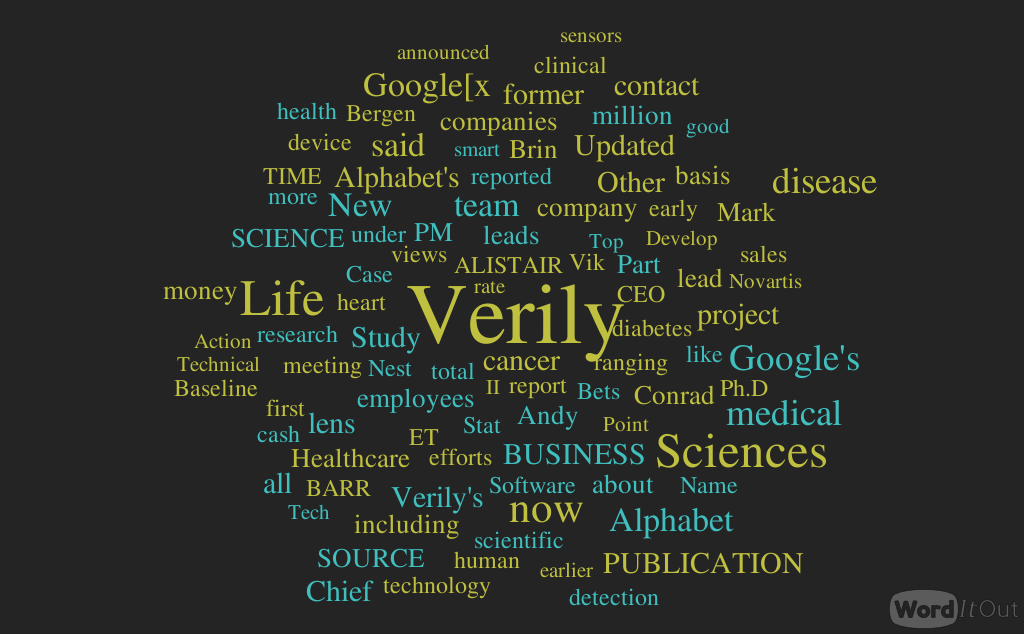
TSUNAMI in HealthCare under the New Name Verily.com, Volume 2 (Volume Two: Latest in Genomics Methodologies for Therapeutics: Gene Editing, NGS and BioInformatics, Simulations and the Genome Ontology), Part 1: Next Generation Sequencing (NGS)

TSUNAMI in HealthCare under the New Name Verily.com

Curator: Aviva Lev-Ari, PhD, RN


UPDATED on 6/8/2016

The Tricorder project was announced only 3 months after Google entered the life sciences field, according to the report, and came from the same incubator which rolled out the company’s self-driving car and recently cancelled Google Glass.

Verily CEO Andrew Conrad said the scientific basis for the device was proven upon unveiling in 2014, but experts have presented conflicting views on the reality of such a device, STAT Newsreports.

“What (Verily is) really good at is physical measurements — things like temperature, pulse rate, activity level. They are not particularly good at … the chemical and the biological stuff,” Walt toldSTAT news.

Four former Verily employees said the Tricorder “has been seen internally more as a way to generate buzz than as a viable project,” according to the report.

SOURCE

http://www.massdevice.com/googles-star-trek-tricorder-bid-flops/?spMailingID=9031578&spUserID=MTI2MTQxNTczMjM5S0&spJobID=940786327&spReportId=OTQwNzg2MzI3S0


UPDATED on 4/16/2016

SOURCE

http://recode.net/2016/04/13/verily-alphabet-profitable/

Verily, Alphabet’s medical business, is profitable, Sergey Brin tells Googlers

20160413-verily-google-life-sciences

Verily | YouTube

SCIENCE

Publicly, Alphabet has said very little about its assortment of companies not named Google.

But internally, Alphabet is a little more forthcoming.

As we reported earlier, Nest CEO Tony Fadell appeared before Google’s all-hands meeting two weeks ago to address recent criticism of his company. During that meeting, Google co-founder and Alphabet exec Sergey Brin also defended another company under the holding conglomerate: Verily, the medical tech unit previously called Google Life Sciences.

Lumped together, Alphabet’s moonshots aren’t making money yet — but Verily is, Brin said.

Verily was the target of a scathing article — in Stat, a medical publication from the Boston Globe — scrutinizing its CEO, Andy Conrad. Several former employees told Stat that Verily suffered a talent exodus due to “derisive and impulsive” leadership by Conrad.

Here’s what Brin said in response at Google’s TGIF meeting:

I have seen a smattering of articles. And, you know, it’s actually sad to see sometimes where it appeared that … former employees or soon-to-be former employees talked to the press. But, anyhow, I can tell you what’s going on with these companies, fortunately. So in Verily’s case, despite a handful of examples, their attrition rate is below Google’s and Alphabet’s as a whole. And also, there are articles that have generally said we are blowing a lot of money and so forth. It’s true that, you know, as whole our Other Bets are not yet profitable, but some of them are, including Verily on a cash basis and increasingly so. So we’re pretty excited about these efforts.

Verily makes money through

  • partnerships with pharmaceutical companies — such as Novartis, which is licensing and planning to sell Verily’s smart contact lens — and
  • medical institutions.

It is one of three units contributing to the Other Bets total revenue ($448 million) in 2015, along with

  • Google Fiber and
  • Nest.

As we reported earlier, Nest likely brought in around $340 million of that and Fiber pulled close to $100 million, meaning that Verily’s sales were somewhere around $10 million. During the year, all the moonshot units combined reported operating losses of $3.6 billion.

Note Brin’s stipulation that Verily’s profit comes on a “cash basis.” That probably means that it’s not making profit on the normal basis, meaning when you take into account total sales minus total costs. But “cash positive” suggests they’re booking sales faster than they’re spending money, which is a positive sign. Companies normally report financials accounting for all costs. And that’s how Alphabet will next week, when it shares first-quarter results for Google and the Other Bets — although we almost certainly won’t see figures on Verily’s profitability.

We reached out to Alphabet and Verily reps for more clarity, but didn’t get any.

SOURCE

http://recode.net/2016/04/13/verily-alphabet-profitable/


Original Curation dated 12/14/2015

  1. Part 1: Verily in Action
  2. Part II: Innovations at a Different Scale: GDE Enterprises – A Case in Point of Healthcare in Focus – Work-in-Progress

12/31/2015 – All time

  1. Following this Journal by e-mail subscription: along with X other amazing people
  2. views
  3. comments
  4. Top Post and Pages
  5. Click Summaries
  6. Posts
  7. Categories
  8. Tags
  9. Top Authors Views


Part 1: Verily in Action

They write @ https://verily.com/

When Google[x] embarked on a project in 2012 to put computing inside a contact lens — an immensely challenging technical problem with an important application to health — we could not have imagined where it would lead us. As a life sciences team within Google[x], we were able to combine the best of our technology heritage with expertise from across many fields. Now, as an independent company, Verily is focused on using technology to better understand health, as well as prevent, detect, and manage disease.

Andy Conrad, Ph.D.

Chief Executive OfficerFormerly the chief scientific officer of LabCorp, Andy is a cell biologist with a doctorate from UCLA. He has always been passionate about early detection and prevention of disease: Andy co-founded the National Genetics Institute, which developed the first cost-effective test to screen for HIV in blood supply.

Brian Otis, Ph.D.

Chief Technical OfficerBrian’s team focuses on end-to-end innovation ranging from integrated circuits to biocompatible materials to sensors. He joined Google[x] as founder of the smart contact lens project and now leads our efforts across all hardware and device projects, including wearables, implanted devices, and technology like Liftware.

Jessica Mega, M.D., MPH

Chief Medical OfficerJessica leads the clinical strategy and research team at Verily. She is a board-certified cardiologist who trained and practiced at Massachusetts General Hospital and Brigham and Women’s Hospital. As a faculty member at Harvard Medical School and a senior investigator with the TIMI Study Group, Jessica directed large, international trials evaluating novel cardiovascular therapies.

Linus Upson

Head of EngineeringA long-time Google software engineer, Linus has been a team lead in developing products that now help billions of people worldwide find the information they need on the Internet, including Chrome and Chrome OS. He now oversees our engineering teams.

Tom Stanis

Head of SoftwareTom spent nine years working on core Google products before joining Google[x] in 2014 to work on the Baseline Study. He now leads all our Software projects, including the development of machine learning algorithms for applications ranging from robotic-assisted surgery to diabetes management.

Vikram (Vik) Bajaj, Ph.D.

Chief Scientific OfficerVik’s broad research interests in industry and as a former academic principal investigator have included structural and systems biology, molecular imaging, nanoscience, and bioinformatics. Vik now leads the Science team in research directions related to our mission.

What are the Dimensions of the Tsumani in Healthcare?

  • prevention,
  • detection,
  • management of disease


Hardware

  • contact lens with an embedded glucose sensor for measuring the glucose in human tears.

Software

  • multiple sclerosis, for example, combines wearable sensors with traditional clinical tests
  • signals that could lead to new knowledge about the disease and why it progresses differently among individuals.

Clinical

  • Constituencies industry, hospitals, government, academic centers, medical societies, and patient advocacy groups
  • The Baseline Study is one of these dedicated efforts, a multi-year initiative that aims to identify the traits of a healthy human by closely observing the transition to disease.

Science

  • Understand processes that lead to conditions like cancer, heart disease, and diabetes
  • computational systems biology platforms and life sciences tools
  • bio-molecular nanotechnology for precision diagnostics and therapeutic delivery
  • advanced imaging methods for applications ranging from early diagnosis to surgical robotics.


FOLLOW the LEADER of Parish in the Tsunami


Google[x] searches for ways to boost cancer immunotherapy | Science/AAAS | News

http://news.sciencemag.org/math/2015/01/googlex-searches-ways-boost-cancer-immunotherapy


Google Life Sciences and American Heart Association commit $50M to study heart disease | VentureBeat

http://venturebeat.com/2015/11/08/google-life-sciences-and-american-heart-association-commit-50m-to-study-heart-disease/


Google Life Sciences Division Is Now Called… Verily?

http://gizmodo.com/google-life-sciences-division-is-now-called-verily-1746729894


WIRED: Google’s Verily Is Spinning Off ‘Verb,’ a Secretive Robot-Surgery Startup

Alphabet’s Verily, née Google Life Sciences, has announced its first spinoff, a brand new robot-assisted surgery company.

http://www.wired.com/2015/12/googles-verily-is-spinning-off-verb-a-secretive-robot-surgery-startup/


Google Life Sciences Rebrands as Verily under Alphabet – Fortune

Vik Bajaj, CSO

http://fortune.com/2015/12/08/google-alphabet-verily/

Verily, I Swear, Google Life Sciences debuts a New Name

By CHARLES PILLER  DECEMBER 7, 2015

http://www.statnews.com/2015/12/07/verily-google-life-sciences-name/


Why biomedical superstars are signing on with Google Tech firm’s ambitious goals and abundant resources attract life scientists.

Erika Check Hayden 21 October 2015

http://www.nature.com/news/why-biomedical-superstars-are-signing-on-with-google-1.18600


GOOGLE LIFE SCIENCES MAKES DIABETES ITS FIRST BIG TARGET

http://www.wired.com/2015/08/google-life-sciences-makes-diabetes-first-big-target/


GOOGLE WON THE INTERNET. NOW IT WANTS TO CURE DISEASES

http://www.wired.com/2015/08/google-won-internet-now-wants-cure-diseases/


Google Reveals Health-Tracking Wristband

Caroline Chen and Brian Womack

June 23, 2015 — 9:30 AM EDT

http://www.bloomberg.com/news/articles/2015-06-23/google-developing-health-tracking-wristband-for-health-research


Google Moves to the Operating Room in Robotics Deal With J&J

ALISTAIR BARR and JOSEPH WALKER

http://blogs.wsj.com/digits/2015/03/27/google-moves-to-the-operating-room-in-robotics-deal-with-jj/


Google, Biogen Seek Reasons for Advance of Multiple Sclerosis

Caroline Chen

January 27, 2015 — 9:00 AM EST

http://www.bloomberg.com/news/articles/2015-01-27/google-biogen-seek-reasons-for-advance-of-multiple-sclerosis


Google’s Newest Search: Cancer Cells

Google X Team Hopes to Develop Nanoparticles to Provide Early Detection of Cancer, Other Diseases

ALISTAIR BARR and RON WINSLOW

Updated Oct. 29, 2014 11:17 a.m. ET

http://www.wsj.com/articles/google-designing-nanoparticles-to-patrol-human-body-for-disease-1414515602


A Spoon That Shakes To Counteract Hand Tremors

Updated May 14, 201411:43 AM ET

INA JAFFE

http://www.npr.org/sections/health-shots/2014/05/13/310399325/a-spoon-that-shakes-to-counteract-hand-tremors


Google’s New Moonshot Project: the Human Body

Baseline Study to Try to Create Picture From the Project’s Findings

ALISTAIR BARR

Updated July 27, 2014 7:24 p.m. ET

http://www.wsj.com/articles/google-to-collect-data-to-define-healthy-human-1406246214


Novartis Joins With Google to Develop Contact Lens That Monitors Blood Sugar

MARK SCOTT JULY 15, 2014

http://www.nytimes.com/2014/07/16/business/international/novartis-joins-with-google-to-develop-contact-lens-to-monitor-blood-sugar.html


Google[x] searches for ways to boost cancer immunotherapy

Jon Cohen

15 January 2015 6:25 am

http://news.sciencemag.org/math/2015/01/googlex-searches-ways-boost-cancer-immunotherapy


SOURCE

https://verily.com/

Part II: Innovations at a Different Scale: GDE Enterprises

A Case in Point of Healthcare in Focus –

Work-in-Progress


Read Full Post »


Horizon Discovery Group plc In-licenses Oncology Programme from Servier and Enters Option Agreement

Reporter: Aviva-Lev Ari, Ph.D., R.N.; Stephen J. Williams, Ph.D.

Press release

7 October 2015


Horizon Discovery Group plc In-licenses Oncology Programme from Servier and Enters Option Agreement


  • License programme with milestone payments of up to £50 million plus royalties on product sales
  • Horizon to in-license novel kinase inhibitor programme from Servier
  • Horizon will exploit its translational genomics and combination sciences platform to define optimum approaches to treatment and identify cancer patient populations most likely to respond


Cambridge, UK, 7 October 2015: Horizon Discovery Group plc (LSE: HZD) (“Horizon” or “the Company”), the international life science company supplying research tools and services that power genomics research and the development of personalised medicines, announces today that its leveraged business unit has signed a programme in-licensing and option agreement with Servier, the independent French research-based pharmaceutical company. The agreement is potentially worth over £50 million to Horizon in preclinical and clinical milestones, payments linked to net sales, and tiered royalties on future product sales.


Horizon has in-licensed novel kinase inhibitors from Servier that exhibit great promise based on pre-clinical data for treatment of a range of cancer types but do not currently have a biomarker to define a sensitive patient population. Horizon will use its world-leading platform, comprising isogenic cell lines and in vivo models, CRISPR-Cas9 mediated gene editing technology and ultra-high-throughput combination screening, to identify the population of cancer patients most likely to respond to the in-licensed compounds, whether as single agents or in combinations with other drugs. Horizon also has the option to explore the use of the inhibitors in other therapeutic indications.


Under the terms of the agreement, Servier has a first option to license back the assets. Should Servier take up this option, Horizon would receive up to £50 million in milestone payments plus royalties on product sales. If Servier does not take up its option, Horizon will be free to seek another pharma partner and Horizon and Servier would then share in the success of the progression of the programme as it advances into the clinic and registration.


Horizon will evaluate the mechanism of action of the candidate compounds, and will verify the patient stratification hypothesis by both in vitro and in vivo preclinical experiments. Horizon will also define a path towards the development of biomarkers for both patient stratification and drug efficacy.


Dr. Darrin M. Disley, Chief Executive Officer of Horizon Discovery Group plc, said: “The in-license of assets with a strong pre-clinical pedigree but do not yet have a clear clinical development strategy, represents a great opportunity for companies like Horizon. Demonstrating our scientific leadership through our translational genomics, drug combination and biomarker discovery platforms; we seek to identify genetic markers that predict drug sensitivity enabling programmes like this one to be progressed rapidly into the clinic for defined patient populations. This innovative deal, as part of our strategy to drive accelerated growth, offers significant upside potential for our investors built upon the leverage of our intellectual property, technology platforms and know-how.”


Mr Jean Pierre Abastado, Director of Oncology Innovation, Servier, commented: “The long standing collaboration between Servier and Vernalis has led to the discovery of novel kinase inhibitors. Horizon’s technology portfolio and expertise makes them ideally positioned to progress these drug candidates into the clinic and to investigate their potential for therapeutic efficacy both alone and in combination therapies. Servier is committed to driving therapeutic progress for the benefit of patients, with partnerships such as this playing a key role.”

ENDS


For further information from Horizon Discovery Group plc, please contact:


Zyme Communications (Trade and Regional Media)

Katie Odgaard

Tel: +44 (0)7787 502 947

Email: katie.odgaard@zymecommunications.com


Consilium Strategic Communications (Financial Media and Investor Relations)

Amber Fennell / Jessica Hodgson / Matthew Neal / Laura Thornton

Tel: +44 (0) 20 3709 5701

Email: horizon@consilium-comms.com


Panmure Gordon & Co. (NOMAD)

Corporate Finance: Freddy Crossley / Duncan Monteith / Fabien Holler

Broking: Tom Salvesen

Tel: +44 20 7886 2500


Notes for Editors


About Horizon Discovery Group plc www.horizondiscovery.com/

Horizon is a revenue-generating life science group supplying research tools to organisations engaged in genomics research and the development of personalised medicines. Horizon has a diverse and international customer base of over 1,200 organisations across more than 50 countries, including major pharmaceutical, biotechnology and diagnostic companies as well as leading academic research centers. The Group supplies its products and services into multiple markets, estimated to total in excess of £29 billion by 2015.


Horizon’s core capabilities are built around its proprietary translational genomics platform, a high-precision and flexible suite of gene editing tools able to alter almost any endogenous gene sequence of human or mammalian cell-lines. Horizon offers over 20,000 catalogue products, almost all of which are based on the application of gene editing to generate cell lines that accurately model the disease-causing mutations found in genetically based diseases. These ‘patients-in-a-test-tube’ are being used by customers to identify the effect of individual or compound genetic mutations on drug activity, patient responsiveness, and resistance, which may lead to the successful prediction of which patient sub-groups will respond to currently available and future drug treatments.

In addition, Horizon provides custom cell line and in vivo model generation services for research and bioproduction applications, quantitative molecular reference standards, in vivo disease models, and contract research and custom screening services.


Horizon is headquartered in Cambridge, UK, and is listed on the London Stock Exchange’s AIM market under the ticker “HZD”, for further information please visit: www.horizondiscovery.com.


About Servier

Servier is an independent French research-based pharmaceutical company. Its development is driven by the pursuit of innovation in the therapeutic areas of cardiovascular, metabolic, central nervous system, psychiatric, bone, muscle and joint diseases, as well as cancer.

  • In 2014, the company recorded a turnover of 4 billion euros.
  • 92% of Servier medicines are prescribed outside of France.
  • 28% of turnover from Servier drugs was reinvested in Research and Development in 2014.

With a strong international presence in 146 countries, Servier employs more than 21,400 people worldwide.


Oncology is one of the key priorities of Servier in terms of research and development with currently 8 new molecular entities in clinical development in breast cancer, lung cancer, other solid tumours and various types of lymphomas and leukaemias. This portfolio of innovative cancer treatments is being developed with various partners worldwide, and covers different hallmarks of cancer including cytotoxics, pro-apoptotic, targeted, immune and cellular therapies. Hence, Servier aims at delivering a significant and positive impact on cancer patients’ lives.

Read Full Post »

From Turing to Watson

Larry H Bernstein, MD, FCAP, Curator

LPBI

From Turing to Watson: The Long-Burning Hype of Machine Learning

Thomas Slowe, Founder & CEO, Nervve

http://www.rdmag.com/articles/2015/10/turing-watson-long-burning-hype-machine-learning?

http://www.rdmag.com/sites/rdmag.com/files/MachineLearning_Infographicx500.jpg

Each year, technology industry watchers anxiously await the release of Gartner’s Hype Cycle to see what’s rising, what’s falling and what’s completely fizzled when it comes to emerging technologies. Many observers specifically look for the “peak of inflated expectations” to see which technologies have hit their high point when it comes to media saturation, but still need several years before reaching their true potential. While there are many well-known categories on this year’s list, including 3-D printing, virtual reality and wearables, they’re joined by one that comes with a bit more mystery—machine learning.

For people in technology, the definition of machine learning is relatively simple. Machine learning is a form of artificial intelligence (AI) that provides computers with the ability to learn without being explicitly programmed. Machine learning focuses on the development of computer programs that can teach themselves to grow and change when exposed to new data.

However, if you ask someone on the street, you’re likely to get a blank stare. Some may be able to connect the dots to AI, or perhaps they can reference the technology’s most famous example to date, IBM Watson, thanks to its ability to defeat Jeopardy champions. In reality, machine learning plays a larger role in our everyday lives than people realize. From Siri and Cortana, to our Bluetooth car entertainment systems, to visual technology that can be trained to spot a specific piece of clothing on fuzzy surveillance video, these automated technologies many take for granted have been developed thanks to a machine’s ability to “learn” from prior interactions.

While it may seem machine learning has developed overnight thanks to huge investments and breakthroughs from major players in Silicon Valley, it has, in fact, gone through a long and meandering history over the past 80 plus years. It has morphed from the research focus of a few dozen engineers to the power behind some of today’s most widespread consumer technologies.

In the beginning
While AT&T Bell Labs’ development of the electronic speech synthesizer in 1936 may have been the first major breakthrough for machine learning, the more well-known achievement from this early era was the Turing Test in 1950. Alan Turing introduced the test in a paper he opened with the simple words “I propose to consider the question, ‘Can machines think?’” By proving that humans couldn’t always differentiate between a real person and a machine in basic textual conversations, Turing laid the groundwork for societal acceptance of the concept that machines can learn.

Major advancements in early machine learning weren’t limited to solely voice and text recognition. From the Rosenblatt Preceptron in 1957, to Larry Roberts Computer Visions dissertation in 1963, image also played a major role in molding future research within the artificial intelligence community.

Relatable examples
So when did machine learning truly evolve into a real-world technology? A few major breakthroughs occurred in the 1970s that made the concept much more relatable. In 1976, a license plate recognition system was invented in the U.K. at the Police Scientific Development Branch. While license plate software didn’t become more widely used until a couple of decades later, this type of computer vision technology was the basis for the more high-tech versions used by law enforcement and intelligence agencies today.

Machine learning and robotics collided when the Stanford Cart successfully crossed a chair-filled room without human intervention in 1979. The process took more than five hours, thanks to many pauses so the cart could process what it was seeing and plan a new route. While Google’s self-driving cars certainly don’t take that long to navigate the streets of San Francisco or Austin, machine learning technology brings us closer than ever before to realizing technology that was previously only imagined in movies.

The modern era
The past two decades of AI and machine learning have seen the technology grow. The power of neural networks was initially appreciated in mid-1980s, but computers were too weak to tap the value at a practical level. Geoffrey Hinton revived interest in neural networks in 2006 under the name of “Deep Learning” when he demonstrated a system that learned to classify handwritten digits with high accuracy. Even more impressive was the system’s ability to generate novel handwritten examples that it hadn’t been shown before.

IBM's Watson computer system, powered by IBM POWER7, competes against Jeopardy!'s two most successful and celebrated contestants: Ken Jennings and Brad Rutter. Image: IBM Newsroom
IBM’s Watson computer system, powered by IBM POWER7, competes against Jeopardy!’s two most successful and celebrated contestants: Ken Jennings and Brad Rutter. Image: IBM Newsroom

This work started a wave of major Silicon Valley investment in the technology that now powers many of the consumer-focused technology we see today. From virtual assistants like Siri and Cortana, to virtual online chat agents and even to our GPS systems, machine learning-based technology influences almost every aspect of our daily interactions.However, one legacy company has made an outstanding and lasting impact when it comes to how the public perceives the topic of machine technology—IBM. From Deep Blue’s defeat of world chess champion Garry Kasparov in 1997, to Watson’s take down of legendary Ken Jennings on Jeopardy in 2011, one could argue IBM has done more to raise public awareness of a machine’s ability to learn than any other company. Watson’s achievements were particularly impressive, because it wasn’t just about its deep knowledge of questions and answers, but the ability to use natural language processing to understand Alex Trebek’s questions and signal its answer more quickly than humans.

The future
As we look into the future of machine learning, some may have visions of machine overlords eventually taking over the world. However, we believe we’re still several decades away from contemplating this scenario. What we can choose to focus on instead is where the technology will generate value in the next five to 10 years.

While entirely autonomous machines are unfeasible in the near future, “person-in-the-loop” approaches have shown enormous value. From digital services like learning how to beat video games, to physical world applications (like visually identifying possible infrastructure failures and helping doctors perform complicated surgeries), the societal possibilities for machine learning are endless. And when in doubt just ask Siri!

• CONFERENCE AGENDA ANNOUNCED:

The highly-anticipated educational tracks for the 2015 R&D 100 Awards & Technology Conference feature 28 sessions, plus keynote speakers Dean Kamen and Oak Ridge National Laboratory Director Thom Mason.  Learn more.

Read Full Post »

NIMHD welcomes nine new members to the National Advisory Council on Minority Health and Health Disparities

Reporter: Stephen J. Williams, Ph.D.

The National Institute on Minority Health and Health Disparities (NIMHD) has announced the appointment of nine new members to the National Advisory Council on Minority Health and Health Disparities (NACMHD), NIMHD’s principal advisory board. Members of the council are drawn from the scientific, medical, and lay communities, so they offer diverse perspectives on minority health and health disparities.

The NACMHD, which meets three times a year on the National Institutes of Health campus, Bethesda, Maryland, advises the secretary of Health and Human Services and the directors of NIH and NIMHD on matters related to NIMHD’s mission. The council also conducts the second level of review of grant applications and cooperative agreements for research and training and recommends approval for projects that show promise of making valuable contributions to human knowledge.

The next meeting of the NACMHD will be held on Thursday, Sept. 10, 8:30 a.m.-5:00 p.m. on the NIH campus. The meeting will be available on videocast at http://www.videocast.nih.gov.

NIMHD Director Eliseo J. Pérez-Stable, M.D., is pleased to welcome the following new members

Margarita Alegría, Ph.D., is the director of the Center for Multicultural Mental Health Research at Cambridge Health Alliance and a professor in the department of psychiatry at Harvard Medical School, Boston. She has devoted her career to researching disparities in mental health and substance abuse services, with the goal of improving access to and equity and quality of these services for disadvantaged and minority populations.

Maria Araneta, Ph.D., a perinatal epidemiologist, is a professor in the Department of Family and Preventive Medicine at the University of California, San Diego. Her research interests include maternal/pediatric HIV/AIDS, birth defects, and ethnic health disparities in type 2 diabetes, regional fat distribution, cardiovascular disease, and metabolic abnormalities.

Judith Bradford, Ph.D., is director of the Center for Population Research in LGBT Health and she co-chairs The Fenway Institute, Boston. Dr. Bradford has participated in health research since 1984, working with public health programs and community-based organizations to conduct studies on lesbian, gay, bisexual, and transgender people and racial minority communities and to translate the results into programs to reduce health disparities.

Linda Burhansstipanov, Dr.P.H., has worked in public health since 1971, primarily with Native American issues. She is a nationally recognized educator on cancer prevention, community-based participatory research, navigation programs, cultural competency, evaluation, and other topics. Dr. Burhansstipanov worked with the Anschutz Medical Center Cancer Research Center — now the University of Colorado Cancer Research Center — in Denver for five years before founding Native American Cancer Initiatives, Inc., and the Native American Cancer Research Corporation.

Sandro Galea, M.D., a physician and epidemiologist, is the dean and a professor at the Boston University School of Public Health. Prior to his appointment at Boston University, Dr. Galea served as the Anna Cheskis Gelman and Murray Charles Gelman Professor and chair of the Department of Epidemiology at the Columbia University Mailman School of Public Health, New York City. His research focuses on the causes of brain disorders, particularly common mood and anxiety disorders, and substance abuse.

Linda Greene, J.D., is Evjue Bascom Professor of Law at the University of Wisconsin–Madison Law School. Her teaching and academic scholarship include constitutional law, civil procedure, legislation, civil rights, and sports law. Most recently, she was the vice chancellor for equity, diversity, and inclusion at the University of California, San Diego.

Ross A. Hammond, Ph.D., a senior fellow in the Economic Studies Program at the Brookings Institution, Washington, D.C., is also director of the Center on Social Dynamics and Policy. His primary area of expertise is using mathematical and computational methods from complex systems science to model complex dynamics in economic, social, and public health systems. His current research topics include obesity etiology and prevention, tobacco control, and behavioral epidemiology.

Hilton Hudson, II, M.D., is chief of cardiothoracic surgery at Franciscan Healthcare, Munster, Indiana and a national ambassador for the American Heart Association. He also is the founder of Hilton Publishing, Inc., a national publisher dedicated to producing content on solutions related to health, wellness, and education for people in underserved communities. Dr. Hilton’s book, “The Heart of the Matter: The African American Guide to Heart Disease, Heart Treatment and Heart Wellness” has impacted at-risk patients nationwide.

Brian M. Rivers, Ph.D., M.P.H., currently serves on the research faculty at the H. Lee Moffitt Cancer Center and Research Institute, Tampa, Florida. He is also an assistant professor in the Department of Oncologic Sciences at the University of South Florida College of Medicine, Tampa. Dr. Rivers’ research efforts include examination of unmet educational and psychosocial needs and the development of communication tools, couple-centered interventions, and evidence-based methods to convey complex information to at-risk populations across the cancer continuum.

NIMHD is one of NIH’s 27 Institutes and Centers. It leads scientific research to improve minority health and eliminate health disparities by conducting and supporting research; planning, reviewing, coordinating, and evaluating all minority health and health disparities research at NIH; promoting and supporting the training of a diverse research workforce; translating and disseminating research information; and fostering collaborations and partnerships. For more information about NIMHD, visit http://www.nimhd.nih.gov.

About the National Institutes of Health (NIH): NIH, the nation’s medical research agency, includes 27 Institutes and Centers and is a component of the U.S. Department of Health and Human Services. NIH is the primary federal agency conducting and supporting basic, clinical, and translational medical research, and is investigating the causes, treatments, and cures for both common and rare diseases. For more information about NIH and its programs, visit www.nih.gov.

Read Full Post »

« Newer Posts - Older Posts »