Feeds:
Posts
Comments

Archive for the ‘Biological Networks, Gene Regulation and Evolution’ Category

TSUNAMI in HealthCare under the New Name Verily.com, Volume 2 (Volume Two: Latest in Genomics Methodologies for Therapeutics: Gene Editing, NGS and BioInformatics, Simulations and the Genome Ontology), Part 1: Next Generation Sequencing (NGS)

TSUNAMI in HealthCare under the New Name Verily.com

Curator: Aviva Lev-Ari, PhD, RN


UPDATED on 6/8/2016

The Tricorder project was announced only 3 months after Google entered the life sciences field, according to the report, and came from the same incubator which rolled out the company’s self-driving car and recently cancelled Google Glass.

Verily CEO Andrew Conrad said the scientific basis for the device was proven upon unveiling in 2014, but experts have presented conflicting views on the reality of such a device, STAT Newsreports.

“What (Verily is) really good at is physical measurements — things like temperature, pulse rate, activity level. They are not particularly good at … the chemical and the biological stuff,” Walt toldSTAT news.

Four former Verily employees said the Tricorder “has been seen internally more as a way to generate buzz than as a viable project,” according to the report.

SOURCE

http://www.massdevice.com/googles-star-trek-tricorder-bid-flops/?spMailingID=9031578&spUserID=MTI2MTQxNTczMjM5S0&spJobID=940786327&spReportId=OTQwNzg2MzI3S0


UPDATED on 4/16/2016

SOURCE

http://recode.net/2016/04/13/verily-alphabet-profitable/

Verily, Alphabet’s medical business, is profitable, Sergey Brin tells Googlers

20160413-verily-google-life-sciences

Verily | YouTube

SCIENCE

Publicly, Alphabet has said very little about its assortment of companies not named Google.

But internally, Alphabet is a little more forthcoming.

As we reported earlier, Nest CEO Tony Fadell appeared before Google’s all-hands meeting two weeks ago to address recent criticism of his company. During that meeting, Google co-founder and Alphabet exec Sergey Brin also defended another company under the holding conglomerate: Verily, the medical tech unit previously called Google Life Sciences.

Lumped together, Alphabet’s moonshots aren’t making money yet — but Verily is, Brin said.

Verily was the target of a scathing article — in Stat, a medical publication from the Boston Globe — scrutinizing its CEO, Andy Conrad. Several former employees told Stat that Verily suffered a talent exodus due to “derisive and impulsive” leadership by Conrad.

Here’s what Brin said in response at Google’s TGIF meeting:

I have seen a smattering of articles. And, you know, it’s actually sad to see sometimes where it appeared that … former employees or soon-to-be former employees talked to the press. But, anyhow, I can tell you what’s going on with these companies, fortunately. So in Verily’s case, despite a handful of examples, their attrition rate is below Google’s and Alphabet’s as a whole. And also, there are articles that have generally said we are blowing a lot of money and so forth. It’s true that, you know, as whole our Other Bets are not yet profitable, but some of them are, including Verily on a cash basis and increasingly so. So we’re pretty excited about these efforts.

Verily makes money through

  • partnerships with pharmaceutical companies — such as Novartis, which is licensing and planning to sell Verily’s smart contact lens — and
  • medical institutions.

It is one of three units contributing to the Other Bets total revenue ($448 million) in 2015, along with

  • Google Fiber and
  • Nest.

As we reported earlier, Nest likely brought in around $340 million of that and Fiber pulled close to $100 million, meaning that Verily’s sales were somewhere around $10 million. During the year, all the moonshot units combined reported operating losses of $3.6 billion.

Note Brin’s stipulation that Verily’s profit comes on a “cash basis.” That probably means that it’s not making profit on the normal basis, meaning when you take into account total sales minus total costs. But “cash positive” suggests they’re booking sales faster than they’re spending money, which is a positive sign. Companies normally report financials accounting for all costs. And that’s how Alphabet will next week, when it shares first-quarter results for Google and the Other Bets — although we almost certainly won’t see figures on Verily’s profitability.

We reached out to Alphabet and Verily reps for more clarity, but didn’t get any.

SOURCE

http://recode.net/2016/04/13/verily-alphabet-profitable/


Original Curation dated 12/14/2015

  1. Part 1: Verily in Action
  2. Part II: Innovations at a Different Scale: GDE Enterprises – A Case in Point of Healthcare in Focus – Work-in-Progress

12/31/2015 – All time

  1. Following this Journal by e-mail subscription: along with X other amazing people
  2. views
  3. comments
  4. Top Post and Pages
  5. Click Summaries
  6. Posts
  7. Categories
  8. Tags
  9. Top Authors Views


Part 1: Verily in Action

They write @ https://verily.com/

When Google[x] embarked on a project in 2012 to put computing inside a contact lens — an immensely challenging technical problem with an important application to health — we could not have imagined where it would lead us. As a life sciences team within Google[x], we were able to combine the best of our technology heritage with expertise from across many fields. Now, as an independent company, Verily is focused on using technology to better understand health, as well as prevent, detect, and manage disease.

Andy Conrad, Ph.D.

Chief Executive OfficerFormerly the chief scientific officer of LabCorp, Andy is a cell biologist with a doctorate from UCLA. He has always been passionate about early detection and prevention of disease: Andy co-founded the National Genetics Institute, which developed the first cost-effective test to screen for HIV in blood supply.

Brian Otis, Ph.D.

Chief Technical OfficerBrian’s team focuses on end-to-end innovation ranging from integrated circuits to biocompatible materials to sensors. He joined Google[x] as founder of the smart contact lens project and now leads our efforts across all hardware and device projects, including wearables, implanted devices, and technology like Liftware.

Jessica Mega, M.D., MPH

Chief Medical OfficerJessica leads the clinical strategy and research team at Verily. She is a board-certified cardiologist who trained and practiced at Massachusetts General Hospital and Brigham and Women’s Hospital. As a faculty member at Harvard Medical School and a senior investigator with the TIMI Study Group, Jessica directed large, international trials evaluating novel cardiovascular therapies.

Linus Upson

Head of EngineeringA long-time Google software engineer, Linus has been a team lead in developing products that now help billions of people worldwide find the information they need on the Internet, including Chrome and Chrome OS. He now oversees our engineering teams.

Tom Stanis

Head of SoftwareTom spent nine years working on core Google products before joining Google[x] in 2014 to work on the Baseline Study. He now leads all our Software projects, including the development of machine learning algorithms for applications ranging from robotic-assisted surgery to diabetes management.

Vikram (Vik) Bajaj, Ph.D.

Chief Scientific OfficerVik’s broad research interests in industry and as a former academic principal investigator have included structural and systems biology, molecular imaging, nanoscience, and bioinformatics. Vik now leads the Science team in research directions related to our mission.

What are the Dimensions of the Tsumani in Healthcare?

  • prevention,
  • detection,
  • management of disease


Hardware

  • contact lens with an embedded glucose sensor for measuring the glucose in human tears.

Software

  • multiple sclerosis, for example, combines wearable sensors with traditional clinical tests
  • signals that could lead to new knowledge about the disease and why it progresses differently among individuals.

Clinical

  • Constituencies industry, hospitals, government, academic centers, medical societies, and patient advocacy groups
  • The Baseline Study is one of these dedicated efforts, a multi-year initiative that aims to identify the traits of a healthy human by closely observing the transition to disease.

Science

  • Understand processes that lead to conditions like cancer, heart disease, and diabetes
  • computational systems biology platforms and life sciences tools
  • bio-molecular nanotechnology for precision diagnostics and therapeutic delivery
  • advanced imaging methods for applications ranging from early diagnosis to surgical robotics.


FOLLOW the LEADER of Parish in the Tsunami


Google[x] searches for ways to boost cancer immunotherapy | Science/AAAS | News

http://news.sciencemag.org/math/2015/01/googlex-searches-ways-boost-cancer-immunotherapy


Google Life Sciences and American Heart Association commit $50M to study heart disease | VentureBeat

http://venturebeat.com/2015/11/08/google-life-sciences-and-american-heart-association-commit-50m-to-study-heart-disease/


Google Life Sciences Division Is Now Called… Verily?

http://gizmodo.com/google-life-sciences-division-is-now-called-verily-1746729894


WIRED: Google’s Verily Is Spinning Off ‘Verb,’ a Secretive Robot-Surgery Startup

Alphabet’s Verily, née Google Life Sciences, has announced its first spinoff, a brand new robot-assisted surgery company.

http://www.wired.com/2015/12/googles-verily-is-spinning-off-verb-a-secretive-robot-surgery-startup/


Google Life Sciences Rebrands as Verily under Alphabet – Fortune

Vik Bajaj, CSO

http://fortune.com/2015/12/08/google-alphabet-verily/

Verily, I Swear, Google Life Sciences debuts a New Name

By CHARLES PILLER  DECEMBER 7, 2015

http://www.statnews.com/2015/12/07/verily-google-life-sciences-name/


Why biomedical superstars are signing on with Google Tech firm’s ambitious goals and abundant resources attract life scientists.

Erika Check Hayden 21 October 2015

http://www.nature.com/news/why-biomedical-superstars-are-signing-on-with-google-1.18600


GOOGLE LIFE SCIENCES MAKES DIABETES ITS FIRST BIG TARGET

http://www.wired.com/2015/08/google-life-sciences-makes-diabetes-first-big-target/


GOOGLE WON THE INTERNET. NOW IT WANTS TO CURE DISEASES

http://www.wired.com/2015/08/google-won-internet-now-wants-cure-diseases/


Google Reveals Health-Tracking Wristband

Caroline Chen and Brian Womack

June 23, 2015 — 9:30 AM EDT

http://www.bloomberg.com/news/articles/2015-06-23/google-developing-health-tracking-wristband-for-health-research


Google Moves to the Operating Room in Robotics Deal With J&J

ALISTAIR BARR and JOSEPH WALKER

http://blogs.wsj.com/digits/2015/03/27/google-moves-to-the-operating-room-in-robotics-deal-with-jj/


Google, Biogen Seek Reasons for Advance of Multiple Sclerosis

Caroline Chen

January 27, 2015 — 9:00 AM EST

http://www.bloomberg.com/news/articles/2015-01-27/google-biogen-seek-reasons-for-advance-of-multiple-sclerosis


Google’s Newest Search: Cancer Cells

Google X Team Hopes to Develop Nanoparticles to Provide Early Detection of Cancer, Other Diseases

ALISTAIR BARR and RON WINSLOW

Updated Oct. 29, 2014 11:17 a.m. ET

http://www.wsj.com/articles/google-designing-nanoparticles-to-patrol-human-body-for-disease-1414515602


A Spoon That Shakes To Counteract Hand Tremors

Updated May 14, 201411:43 AM ET

INA JAFFE

http://www.npr.org/sections/health-shots/2014/05/13/310399325/a-spoon-that-shakes-to-counteract-hand-tremors


Google’s New Moonshot Project: the Human Body

Baseline Study to Try to Create Picture From the Project’s Findings

ALISTAIR BARR

Updated July 27, 2014 7:24 p.m. ET

http://www.wsj.com/articles/google-to-collect-data-to-define-healthy-human-1406246214


Novartis Joins With Google to Develop Contact Lens That Monitors Blood Sugar

MARK SCOTT JULY 15, 2014

http://www.nytimes.com/2014/07/16/business/international/novartis-joins-with-google-to-develop-contact-lens-to-monitor-blood-sugar.html


Google[x] searches for ways to boost cancer immunotherapy

Jon Cohen

15 January 2015 6:25 am

http://news.sciencemag.org/math/2015/01/googlex-searches-ways-boost-cancer-immunotherapy


SOURCE

https://verily.com/

Part II: Innovations at a Different Scale: GDE Enterprises

A Case in Point of Healthcare in Focus –

Work-in-Progress


Read Full Post »

Pfizer bets $1 billion on BioAtla Conditionally Active Biologics | BioAcceleration™ for Protein Therapeutics

Reporter: Aviva Lev-Ari, PhD, RN


SAN DIEGO, CA – December 8, 2015 – BioAtla® LLC, a biotechnology company focused on the development of Conditionally Active Biologic (CAB) antibody therapeutics, today announced that it has entered into a license and option agreement with Pfizer Inc. (NYSE: PFE) to advance the development and commercialization of a new class of antibody therapeutics based on BioAtla’s CAB platform and utilizing Pfizer’s proprietary antibody drug conjugate (ADC) payloads.

Under the agreement, BioAtla and Pfizer will each have a license to the other’s respective technology to pursue the development and commercialization of several CAB-ADC antibodies. Pfizer also gains an exclusive option to develop and commercialize BioAtla CAB antibodies that target CTLA4, a validated immuno-oncology target in humans. If successful, BioAtla’s technology would allow the selective targeting of CTLA4 expressed on immune cells localized in the tumor microenvironment. BioAtla and Pfizer are both eligible to receive milestone payments and royalties based on individual CAB-ADC antibody candidates developed and commercialized by the other party. Including the CTLA4 option and license, BioAtla is eligible to receive a potential total of more than $1.0 billion in up-front, regulatory and sales milestone payments as well as tiered marginal royalties reaching double digits on potential future product sales.

CAB-ADC antibodies aim to address the inherent limitations of current ADC antibody technology by actively binding to antigens expressed on tumor tissue-resident cancer cells, but not to the same antigens expressed on normal cells in non-diseased tissues. If successful, this approach would allow the preferential targeting of tumor tissues by ADCs, thereby increasing the efficacy-safety ratios of CAB-ADCs relative to their conventional counterparts. The use of CAB antibodies as payload delivery vehicles could dramatically increase the number of tumor-associated antigens that are addressable with ADC technology.

Sourced through Scoop.it from: bioatla.com

See on Scoop.itCardiovascular Disease: PHARMACO-THERAPY

Read Full Post »

 AGENDA for Oligonucleotide Therapeutics and Delivery, April 4-5, 2016, HYATT Hotel, Cambridge, MA, Volume 2 (Volume Two: Latest in Genomics Methodologies for Therapeutics: Gene Editing, NGS and BioInformatics, Simulations and the Genome Ontology), Part 1: Next Generation Sequencing (NGS)

AGENDA for Oligonucleotide Therapeutics and Delivery, April 4-5, 2016, HYATT Hotel, Cambridge, MA

Reporter: Aviva Lev-Ari, PhD, RN


Oligonucleotide Therapeutics and Delivery


http://www.healthtech.com/oligonucleotide/


Register by January 8 and save up to $350

Oligonucleotide–based therapeutics have long formed the third major drug development platform, specifically focused on modulating gene expression by targeting RNA or the genome itself. A key distinguishing attribute of nucleic acids as therapeutic agents is their ability to access the “undruggable” space left by small molecules and biologics, allowing drug developers to address a wider range of diseases, and particularly those with limited or no therapeutic options. This has generated significant interest in this field; however, first generation molecules exhibiting potency and safety issues have hindered the potential of oligonucleotide therapies dramatically impacting the drug development landscape. Recent advances in nucleic acid chemistry and delivery to improve stability, bioavailability, specificity and potency are now driving the rapid development and clinical evaluation of a new generation of therapies poised for success.

The Oligonucleotide Therapeutics and Delivery conference, April 4-5, in Cambridge, MA will gather leading drug developers and discovery scientists to discuss technological and scientific advances in oligonucleotide-based therapeutics.

FINAL AGENDA

Monday, April 4th

7:00am Registration and Morning Coffee

ADVANCES IN OLIGONUCLEOTIDE THERAPEUTICS

8:10 Chairperson’s Opening Remarks

Dmitry Samarsky, Ph.D., Senior Vice President, Technology Development, RiboBio Co, China

8:15 Keynote Presentation: GalNAc-Conjugated siRNAs as a New Paradigm in Oligonucleotide Therapeutics

Muthiah (Mano) Manoharan, Ph.D., Senior Vice President, Drug Discovery, Alnylam Pharmaceuticals, Inc.

During this presentation, I will discuss the progress in the advancement of RNAi therapeutics and review delivery of RNAi and where the field is going. I will also discuss conjugated delivery of oligonucleotides to the liver and combining novel chemical modifications with conjugation strategies.

8:45 Development of Stereopure Nucleic Acid Therapeutics

Chandra Vargeese, Ph.D., Senior Vice President and Head, Drug Discovery, WAVE Life Sciences

WAVE Life Sciences is utilizing its innovative and proprietary synthetic chemistry drug development platform to design, develop and commercialize stereopure nucleic acid therapeutics that precisely target the underlying cause of rare genetic diseases, delivering exceptional treatment options for patients. Given the unique versatility of its chemistry platform, WAVE’s pipeline will span multiple oligonucleotide modalities including antisense, exon-skipping and single-stranded RNAi.

9:15 Novel Phosphorodiamidate Oligomers (PMOs) for the Treatment of Genetic and Infectious Diseases

Bruce Wentworth, Ph.D., Vice President, Biology, Sarepta Therapeutics

PMOs are being tested in advanced clinical trials for the treatment of patients with Duchenne muscular dystrophy (DMD), a rare, X-linked disease that results in progressive muscle loss and premature death. Research has shown that for other disorders, including viral and bacterial infection as well as rare diseases such as Pompe disease, modified PMOs may be more appropriate due to their potential for enhanced delivery and tissue targeting. The PMO-based technology has the potential to be a versatile, modifiable, and widely applicable treatment in any number of disease states.

9:45 Sponsored Presentation (Opportunity Available)

10:15 Coffee Break in the Exhibit Hall with Poster Viewing

SYNTHESIS AND MEDICINAL CHEMISTRY

10:45 Featured Presentation: Structure Activity Relationships of Trivalent GalNAc Conjugated Antisense Oligonucleotides

Punit Seth, Ph.D., Executive Director, Medicinal Chemistry, Isis Pharmaceuticals

Trivalent GalNAc, a high affinity ligand for the hepatocyte-specific Asialoglycoprotein receptor (ASGR), enhances the potency of antisense oligonucleotides (ASOs) for inhibiting gene targets expressed in hepatocytes. We undertook a comprehensive structure-activity relationship study to determine the optimal structural requirements for enhancing ASO potency via ASGR mediated delivery to hepatocytes. As part of this effort, GalNAc clusters assembled from six distinct branched or amino acid scaffolds were synthesized and attached to ASOs using simplified solution-phase or phosphoramidite based methods. Within each cluster, the length and hydrophobicity of the linker attaching the GalNAc sugar to the branching point on the scaffold was varied. The effect of reducing backbone phosphorothioate content (PS) and changing the linker moiety between the GalNAc cluster and the ASO was also evaluated. Details from this work which resulted in the selection of a simplified trivalent GalNAc ASO conjugate for evaluation in human trials will be presented.

11:15 Phosphorodithioate RNA for RNA-Based Therapeutics

Xianbin Yang, Ph.D., Director, R&D, AM Biotechnologies

During this presentation I will discuss the chemistry for synthesizing phosphorodithioate (PS2)-modified siRNAs, aptamer, and anti-miRNAs; crystal structures of PS2-modified siRNAs and protein-RNA complexes; therapeutic aptamers with remarkably improved binding affinity (from nM to pM) with a single PS2 substitution; and in vitro and in vivo gene silencing activity of PS2-substituted RNA.

Lipid Modification of c-MYC Promoter Targeted Oligonucleotide Stabilizes G-Quadruplex Formation and Enhances Its Growth Inhibitory Activity in Leukemia Cells

Gilles Tapolsky, Ph.D., CSO, Advanced Cancer Therapeutics

We have shown that Pu27 reduces c-MYC transcription in leukemia cell lines and consequently inhibits cell growth and promotes apoptosis. In this study, we evaluated the effect of Pu27 modification using polyethylene glycol (PEG), tocopherol (Toco) and the lipid palmitate in order to increase G-quadruplex stability and lessen blood clearance. Our finding suggests that modification of the c-MYC targeted oligonucleotide by addition of lipids stabilizes the 3D structure (G-quadruplex) and improve its function at inhibiting cell growth most likely by down-regulating c-MYC.

Luncheon Presentation (Sponsorship Opportunity Available) or Lunch On Your Own

CANCER IMMUNOTHERAPY AND COMBINATIONS

1:25 Chairperson’s Remarks

Art Krieg, M.D., Founder and CEO, Checkmate Pharma

1:30 Featured Presentation: Prospects for Increasing the Response Rates to Checkpoint Inhibition: The Role of TLR9

Art Krieg, M.D., Founder and CEO, Checkmate Pharma

Many immunologists have speculated that combining a strong Th1 immune activator known to be capable of inducing multifunctional anti-tumor CD8+ T cell responses in cancer patients together with anti-PD-1/PD-L1 would greatly increase the response rates to therapy compared to either agent alone. Checkmate’s TLR9 agonist program has shown such a response in humans with excellent safety, and will be moving into clinical development in combination with an anti-PD-1 antibody in advanced cancer patients in early 2016.

2:00 Modulation of Tumor Microenvironment with Use of Intratumoral Imo-2125, a TLR9 Agonist, for Effective Therapy in Combination with Checkpoint Inhibitors

Sudhir Agrawal, D.Phil., President, Research, Idera Pharmaceuticals

2:30 CureVac’s Sequence-Optimized mRNA – En Route to the Next Generation Biologicals

Mariola Fotin-Mleczek, Ph.D., CSO, CureVac

Recent advances strongly suggest that mRNA is the basis for a new class of vaccines and drugs. RNActive®, one of CureVac’s technologies has been developed on this basis and provides potent prophylactic vaccines and novel immunotherapies against cancer. These successes could be extended preclinically to mRNA protein and gene replacement therapy. The production of mRNA-based vaccines and drugs is highly flexible, scalable and cost competitive, and eliminates the requirement of a cold chain. Furthermore CureVac’s proprietary optimization process allows the generation of sequence optimized yet natural mRNA that provides a safe and efficient method for enabling the human body to produce its own medicine.

3:00 Refreshment Break in the Exhibit Hall with Poster Viewing

3:30 Silencing Immune Checkpoints Using RNAi

Alexey Wolfson, Ph.D., Founder and CSO, MirImmune

4:00 Immunomodulatory Spherical Nucleic Acids

David Giljohann, Ph.D., CEO, Exicure

Immunomodulatory nucleic acids act by agonizing or antagonizing endosomal toll-like receptors (TLR3, TLR7/8, and TLR9), proteins involved in innate immune signaling. Immunomodulatory spherical nucleic acids (SNAs) that stimulate (immunostimulatory, IS-SNA) or regulate (immunoregulatory, IR-SNA) immunity by engaging TLRs have been designed, synthesized, and characterized. IR-SNAs exhibit up to eightfold increases in potency and 30% greater reduction in fibrosis score in mice with nonalcoholic steatohepatitis (NASH). Given the clinical potential of SNAs due to their potency, defined chemical nature, and good tolerability, SNAs are attractive new modalities for developing immunotherapies.

4:30 Sponsored Presentation (Opportunity Available)

5:00 Welcome Reception in the Exhibit Hall with Poster Viewing

6:00 End of Day

Tuesday, April 5th

7:30am Roundtable Discussions with Continental Breakfast

ANTIVIRAL DEVELOPMENT

8:25 Chairperson’s Remarks

Andrew Vaillant, Ph.D., CSO, Replicor Inc.

8:30 Nucleic Acid Polymers: Antiviral Mechanisms and Application in the Treatment of Chronic HBV and HBV / HDV Infection

Andrew Vaillant, Ph.D., CSO, Replicor Inc.

Nucleic acid polymers (NAPs) are a newly emerging antiviral technology for the treatment of chronic HBV infection and HBV / HDV co-infection. NAPs have the unique ability to clear HBsAg from the blood of human patients, a critical step in achieving a functional cure in HBV and HBV / HDV infection. Replicor will present its current mechanistic data underlying the basis for this unique antiviral effect of NAPs as well as updated clinical data showing Replicor’s progress in using NAP-based combination therapy in patients with chronic HBV infection and HBV / HDV co-infection towards achieving functional cure for these infections.

9:00 Using DPC Technology in RNAi Therapeutics for Chronic HBV Infection and Factor 12-Mediated Diseases

David Lewis, Ph.D., CSO, Arrowhead Research Corporation

9:30 Sponsored Presentation (Opportunity Available)

9:45 Coffee Break in the Exhibit Hall with Poster Viewing

ADVANCES IN RNA THERAPEUTICS AND DELIVERY

10:25 Chairperson’s Remarks

Balkrishen (Bal) Bhat, Ph.D., Vice President, Chemistry, RaNA Therapeutics

10:30 Long Non-Coding RNAs (lncRNAs): A New Frontier for Drug Development

Balkrishen (Bal) Bhat, Ph.D., Vice President, Chemistry, RaNA Therapeutics

The ss-siRNA activity in vivo requires a metabolically stable 5’-phosphate analog. Here, we used crystal structure of the 5’-phosphate binding pocket of Ago-2 bound with guide strand to design and synthesize ss-siRNAs containing various 5’-phosphate analogs. Chemically modified ss-siRNA targeting human apoC III mRNA demonstrated good potency for inhibiting ApoC III mRNA and protein in transgenic mice. Moreover, ApoC III ss-siRNAs were able to reduce the triglyceride and LDL cholesterol in transgenic mice demonstrating pharmacological effect of ss-siRNA.

12:00 Development of Novel Breakthrough Cancer Therapies Based on the Unique Functions of Proprietary miRNAs

Roel Q.J. Schaapveld, Ph.D., MBA, CEO, InteRNA Technologies BV

To explore miRNAs as therapeutic angiogenesis-inhibitors, we performed a functional screen to identify miRNAs that are able to decrease EC viability. We identified miRNA-7 (miR-7) as a potent negative regulator of angiogenesis. This study provides a comprehensive validation of miR-7 as novel anti-angiogenic therapeutic miRNA that can be systemically delivered to both EC and tumor cells and offers promise for miR-7 as novel anti-tumor therapeutic.

11:30 Development of Lipid-Based Oligonucleotide Delivery Systems

Volker Fehring, Ph.D., Director, Formulation Development, Silence Therapeutics GmbH

Posttranscriptional gene silencing by RNA interference can be therapeutically exploited to inhibit pathophysiological gene expression. However, in contrast to the established effectiveness of RNAi in vitro, safe and effective delivery of siRNAs to specific organs and cell types in vivo remains the major hurdle. Here, we report the development and in vivo characterization of a novel siRNA delivery system (DACC lipoplex) suitable for modulating target gene expression.

12:00pm Luncheon Presentation (Sponsorship Opportunity Available) or Lunch On Your Own

DELIVERY TO THE CNS

1:00 Chairperson’s Remarks

Dong-ki Lee, Ph.D., Professor, Sungkyunkwan University, South Korea; CEO, OliX Pharmaceuticals

1:05 Therapeutic Antidepressant Potential of a Conjugated siRNA Silencing the Serotonin Transporter after Intranasal Administration

Andres Montefeltro, Ph.D., CEO, nLife Therapeutics, S.L.

nLife Therapeutics has developed different nucleic acid chemical modifications with the aim to optimize cell specific delivery capabilities to neurons. We have combined siRNAs and antisense oligonucleotides (ASOs) with some specific and potent small molecule ligands to neuronal receptors or transporters, named nOligos (neuronal specific oligonucleotides). These combinations proved to deliver the nucleic acid to the target neuron in an effective way. Also, the intranasal administration of the modified nucleic acids reached the targeted brain area and neurons in mice and monkeys.

1:35 Exosome Mediated Delivery of Therapeutic Oligonucleotides for Treatment of Neurodegenerative Disorders

Anastasia Khvorova, Ph.D., Professor, Molecular Medicine, RNA Therapeutics Institute, University of Massachusetts Medical School

Oligonucleotide therapeutics is a new class of drugs, the clinical utility of which has been limited by inefficient tissue distribution and cellular uptake. Through our research, we have developed a novel methodology that enables the loading of hydrophobically modified oligonucleotides (hsiRNA) into exosomes. These hsiRNAs show efficient cellular uptake in vitro as well as broad brain distribution and in vivo efficacy. Exosome-formulated oligonucleotide therapeutics might be a solution for the development of novel therapeutics for the treatment of neurodegenerative disorders.

NOVEL AND EMERGING APPROACHES FOR IN VIVO DELIVERY

2:05 Featured Presentation: Therapeutic Development Using the Second Generation RNAi Triggers

Dong-ki Lee, Ph.D., Professor, Sungkyunkwan University, South Korea; CEO, OliX Pharmaceuticals

Recent studies came up with novel RNAi triggering molecular structures with unique structural features and functional advantages compared with the conventional siRNA. During this presentation I will introduce novel RNAi triggers developed in my laboratory, with improved features over conventional siRNA, such as reduced off-target effects, enhanced cellular delivery when complexed with cationic delivery vehicles, and specific target gene silencing combined with immunostimulation. One of these second generation RNAi triggers, asymmetric siRNAs (asiRNAs), were combined with specific set of chemical modifications to generate cell-penetrating asiRNAs (cp-asiRNAs), which can execute gene silencing without delivery vehicle both in vitro and in vivo. I will introduce current therapeutic development programs based on the cp-asiRNA structures.

2:35 A Novel Nano-Medicine Platform for Oligonucleotide Discovery and Delivery

Art Levin, Ph.D., Executive Vice President, Research and Development, Avidity NanoMedicines

Despite the considerable promise, delivery has proven to be one of the central challenges of oligonucleotide-based therapeutics. Oligonucleotides are large, hydrophilic and highly negatively charged, so they don’t cross cell membranes. We have pioneered the development of Precision NanoMedicines, which are targeted, polymeric nanoparticles encapsulating siRNA drug payloads for delivery to specific tumor types. These self-assembling nanoparticles can be decorated with antibodies, proteins, peptides and small molecules to bind to extracellular receptors and facilitate cellular uptake.

3:05 Refreshment Break in the Exhibit Hall with Poster Viewing

3:45 Delivery of Dicer-Substrate siRNAs (DsiRNAs) to Multiple Patient-Derived Xenograft Tumors

Bob Brown, Ph.D., CSO, Dicerna Pharmaceuticals

Lipid Nanoparticle (LNP) technology is an elegant solution for delivery of RNAi triggers, since it enables both bioavailability to target organs as well as the ability to transfect target cells. However, while LNPs are well characterized for delivery of RNA oligonucleotides to the normal liver, much remains to be explored regarding the mechanisms of LNP-mediated delivery to tumors. In this study, we investigated the ability of Dicerna’s unique LNP platform, termed EnCore, to deliver Dicer- substrate siRNAs (DsiRNAs) to xenograft tumors of diverse origin.

4:15 Translation of Messenger RNA Therapeutics from Preclinical Research into Clinical Studies

Pad Chivukula, Ph.D., CSO & COO, Arcturus Therapeutics

Arcturus has developed a novel, potent and safe RNA Therapeutics platform called LUNAR™, a proprietary lipid-enabled delivery system for RNA medicines including small interfering RNA, messenger RNA, antisense and microRNA oligotherapeutics. In addition, we incorporate Unlocked Nucleic Acid (UNA) chemistry into the oligonucleotide drug candidate enabling the targeting of any gene in the human genome. This presentation will provide an update on our lead asset, an UNA-modified, LUNAR-formulated siRNA targeting transthyretin (TTR) for the treatment of TTR-mediated amyloidosis.

4:45 Clinical Development of RXI-109 to Reduce the Formation of Scars

Pamela Pavco, Ph.D., Chief Development Officer, RXi Pharmaceuticals Corp‬.

RXI-109 is a self-delivering RNAi compound (sd-rxRNA®) in development as a therapeutic to target and reduce connective tissue growth factor (CTGF) in order to impede the fibrotic pathway. Preliminary results from Phase 2a dermal clinical trials indicate a better outcome (reduced scar formation) following hypertrophic scar revision surgery when the incision site is treated by intradermal injections of RXI-109. A summary of the ongoing dermal trials and an overview of a Phase 1/2 trial to prevent subretinal fibrosis in subjects with neovascular age-related macular degeneration will be discussed.

5:15 Small Molecules that Enhance the Pharmacological Effects of Oligonucleotides

Rudolph L. Juliano, Ph.D., Boshamer Distinguished Professor, Department of Pharmacology, University of North Carolina

Endosomal trapping is a key impediment to the effective use of oligonucleotides in therapy. We have used high throughput screening to identify small molecules that selectively release oligonucleotides from the late endosome compartment thus increasing access to the cytosol and nucleus. These compounds substantially enhance pharmacological effects of several types of oligonucleotides both in cell culture and in mouse models.

5:45 Close of Conference


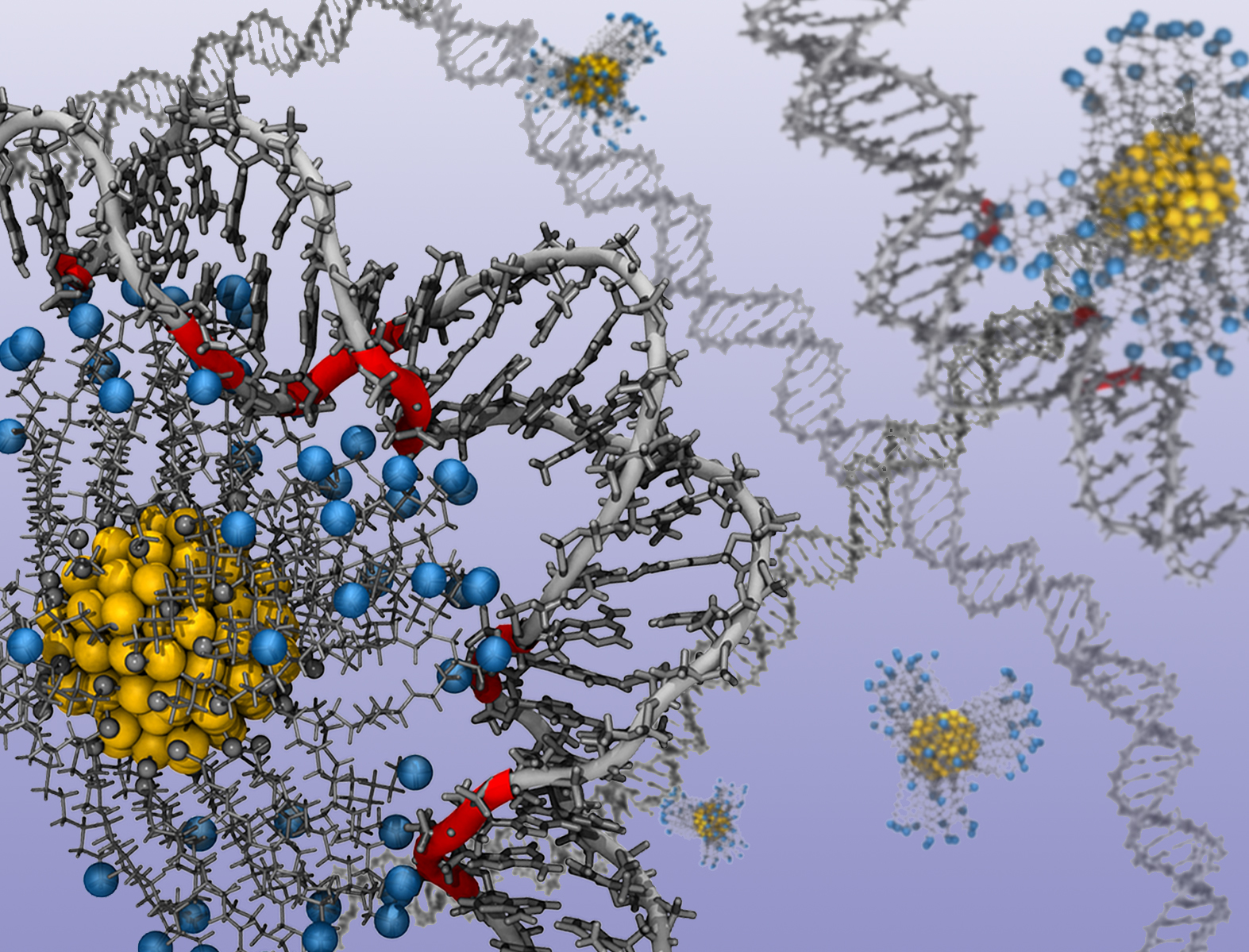
Image Credit: Luminous BioSciences

Luminous BioSciences offers high quality custom DNA oligos that are sunthesized according to your needs. We provide DNA oligo synthesis from 10 base to 200 bases.
www.luminousbio.com

SOURCE

http://www.healthtech.com/oligonucleotide/

From: Oligonucleotide Therapeutics and Delivery Conference <richh@healthtech.com>

Date: Thursday, December 3, 2015 at 1:38 PM

To: Aviva Lev-Ari <AvivaLev-Ari@alum.berkeley.edu>

Subject: Final agenda now available – Download brochure today

Read Full Post »

Optical Neurons

Larry H. Bernstein, MD, FCAP, Curator

LPBI


Umbilical Cells Help Eye’s Neurons Connect

Factor released by cells helps connections, not longevity

“By learning more about how these cells work, we are one step closer to understanding the disease states in which these cells should be studied,” said Cagla Eroglu, an assistant professor of cell biology and neurobiology at the Duke University Medical Center, who led the research.
Umbilical cord tissue-derived cells (hUTC) differ from umbilical cord blood cells in that they are isolated from cord tissue itself, rather than the blood. The Duke
team used an established cell culture system to determine whether and how the hUTCs might affect the growth of neurons isolated from the retinas of rat eyes.
In an experimental setup that allowed the two types of cells to bathe in the same fluid without coming into physical contact, retinal neurons in a bath with hUTCs formed new connections between neurons called synapses, and they sprouted new ‘neurites’ — tiny branches that lead to additional connections.
These cells also survived longer than rat neurons placed in a bath lacking the umbilical cord tissue-derived cells.
Something present in the fluid surrounding the neurons in the bath with the hUTCs was apparently affecting the neurons. Through a series of experiments, the researchers determined that relatively large molecules, thrombospondin 1, 2 and 4, were primarily responsible for the effect.
Blocking thrombospondins was found to reduce new connections among neurons. By genetically inhibiting the individual members of the thrombospondin family, the researchers found that TSP1, TSP2, and TSP4 in particular were required to create both neurites and new connections.
“It’s exciting that thrombospondins had a really strong effect on neurite outgrowth,” said Eroglu, who is also a member of the Duke Institute for Brain Sciences (DIBS). She added that making neurites and forming new connections between them are crucial for helping neurons grow when faced with injury and neurodegenerative diseases.
However, blocking TSP1, 2 and 4 did not affect neuron survival, suggesting that there is some other factor in the UTC cells that promotes cell longevity. Her group is now searching for those molecules.
Eroglu’s earlier work has shown that thrombospondins are released by brain cells called astrocytes and boost new synapse formation between neurons in the brain.
Eroglu said there may be deficiencies in thrombospondin signaling in neurodegenerative disease, and the group is actively pursuing this hypothesis in animal studies.
Postdoctoral fellow Sehwon Koh is the lead author of this study and a member of the Eroglu lab. Other authors include Namsoo Kim and Henry H. Yin from Duke’s department of psychology and neuroscience. This research was supported by a research agreement with Janssen Research & Development, LLC.
CITATION: “Human Umbilical Tissue-Derived Cells (hUTC) Promote Synapse Formation and Neurite Outgrowth via Thrombospondin Family Proteins,” Sehwon Koh, Namsoo Kim, Henry H. Yin, Ian R. Harris, Nadine S. Dejneka, and Cagla Eroglu. Journal of Neuroscience, November 25, 2015.    http://dx.doi.org:/10.1523/JNEUROSCI.1364-15.2015
ScienceDaily
Cells isolated from the human umbilical cord have been shown to produce molecules that help retinal neurons from the eyes of rats grow, connect and survive. The findings implicate one family of molecules in particular — thrombospondins – that may have therapeutic potential for the treatment of degenerative eye diseases.

The findings, which appear Nov. 25 in the Journal of Neuroscience, implicate one family of molecules in particular — thrombospondins — that may have therapeutic potential for the treatment of degenerative eye diseases.

“By learning more about how these cells work, we are one step closer to understanding the disease states in which these cells should be studied,” said Cagla Eroglu, an assistant professor of cell biology and neurobiology at the Duke University Medical Center, who led the research.

Umbilical cord tissue-derived cells (hUTC) differ from umbilical cord blood cells in that they are isolated from cord tissue itself, rather than the blood. The Duke team used an established cell culture system to determine whether and how the hUTCs might affect the growth of neurons isolated from the retinas of rat eyes.

Something present in the fluid surrounding the neurons in the bath with the hUTCs was apparently affecting the neurons. Through a series of experiments, the researchers determined that relatively large molecules, thrombospondin 1, 2 and 4, were primarily responsible for the effect.

Blocking thrombospondins was found to reduce new connections among neurons. By genetically inhibiting the individual members of the thrombospondin family, the researchers found that TSP1, TSP2, and TSP4 in particular were required to create both neurites and new connections.

However, blocking TSP1, 2 and 4 did not affect neuron survival, suggesting that there is some other factor in the UTC cells that promotes cell longevity. Her group is now searching for those molecules.

Golgi Cells Have Active Dendrites
Stephanie Rudolph, Court Hull, and Wade G. Regehr
The Journal of Neuroscience, Nov 25, 2015 • 35(47):i • i    (see pages 15492–15504)
The cerebellum coordinates multijoint movements and contributes to motor learning. These functions require precise spike timing in Purkinje cells, the cerebellar output neurons. Purkinje cell spiking is driven partly by granule cells, which receive information about ongoing movements from mossy fibers, and the timing and spatial extent of granule cell output is determined largely by inhibitory input from spontaneously active interneurons called Golgi cells.
Golgi cell spiking is modulated by excitatory input from both mossy fibers and granule cells. How these inputs are integrated in Golgi cell dendrites remains poorly understood. Finding no evidence for active conductances in Golgi cell dendrites, Vervaeke et al. (2012, Science 30: 1624) hypothesized that dendritic gap junctions enable granule cell inputs to influence Golgi cell activity. Although gap junctions likely do contribute to dendritic processing in Golgi cells, Rudolph et al. now show that Golgi cell dendrites also express voltage-gated channels.
If dendrites lacked active conductances, one would expect signals to decay with distance from the soma. But calcium imaging in rat cerebellar slices revealed that action potentials caused uniform calcium elevation throughout Golgi cell dendrites. Moreover, applying a voltage-gated sodium channel (VGSC) blocker selectively to dendrites reduced spike-associated calcium elevation in distal dendrites. In addition, blocking T- and R-type voltage-gated calcium channels (VGCCs) attenuated calcium elevation selectivelyin distal dendrites,while blocking N-type channels reduced calcium elevation only in proximal dendrites.
Blocking voltage-gated channels also had functional consequences. Blocking N-type channels decreased the amplitude of the spike afterhyperpolarization and increased the spike rate of Golgi cells. In contrast, T-type channel blockers had little effect on baseline firing frequency. Nonetheless, blocking T-type channels attenuated rebound spiking after hyperpolarization and reduced the amplitude of EPSPs evoked by stimulation of granule cell axons.
These experiments suggest that VGSCs help depolarize distal dendrites to enhance activation of T-type VGCCs, which in turn amplify responses to granule cells and promote rebound bursting. Meanwhile, N-type VGCCs located near the soma appear to be tightly coupled to calcium-activated potassium channels, which regulate the spontaneous spike rate of Golgi cells. Thus, Golgi cell dendrites have multiple types of voltage-sensitive channels that are differently distributed and serve distinct roles in ensuring the precise timing of cerebellar output.

Read Full Post »

Biochemistry and Dysmetabolism of Aging and Serious Illness, Volume 2 (Volume Two: Latest in Genomics Methodologies for Therapeutics: Gene Editing, NGS and BioInformatics, Simulations and the Genome Ontology), Part 1: Next Generation Sequencing (NGS)

Biochemistry and Dysmetabolism of Aging and Serious Illness

Curator: Larry H. Bernstein, MD, FCAP


White Matter Lipids as a Ketogenic Fuel Supply in Aging Female Brain: Implications for Alzheimer’s Disease

Lauren P. Klosinski, Jia Yao, Fei Yin, Alfred N. Fonteh, Michael G. Harrington, Trace A. Christensen, Eugenia Trushina, Roberta Diaz Brinton
http://www.ebiomedicine.com/article/S2352-3964(15)30192-4/abstract      DOI: http://dx.doi.org/10.1016/j.ebiom.2015.11.002
Highlights
  • Mitochondrial dysfunction activates mechanisms for catabolism of myelin lipids to generate ketone bodies for ATP production.
  • Mechanisms leading to ketone body driven energy production in brain coincide with stages of reproductive aging in females.
  • Sequential activation of myelin catabolism pathway during aging provides multiple therapeutic targets and windows of efficacy.

The mechanisms underlying white matter degeneration, a hallmark of multiple neurodegenerative diseases including Alzheimer’s, remain unclear. Herein we provide a mechanistic pathway, spanning multiple transitions of aging, that links mitochondrial dysfunction early in aging with later age white matter degeneration. Catabolism of myelin lipids to generate ketone bodies can be viewed as an adaptive survival response to address brain fuel and energy demand. Women are at greatest risk of late-onset-AD, thus, our analyses in female brain address mechanisms of AD pathology and therapeutic targets to prevent, delay and treat AD in the sex most affected with potential relevance to men.


White matter degeneration is a pathological hallmark of neurodegenerative diseases including Alzheimer’s. Age remains the greatest risk factor for Alzheimer’s and the prevalence of age-related late onset Alzheimer’s is greatest in females. We investigated mechanisms underlying white matter degeneration in an animal model consistent with the sex at greatest Alzheimer’s risk. Results of these analyses demonstrated decline in mitochondrial respiration, increased mitochondrial hydrogen peroxide production and cytosolic-phospholipase-A2 sphingomyelinase pathway activation during female brain aging. Electron microscopic and lipidomic analyses confirmed myelin degeneration. An increase in fatty acids and mitochondrial fatty acid metabolism machinery was coincident with a rise in brain ketone bodies and decline in plasma ketone bodies. This mechanistic pathway and its chronologically phased activation, links mitochondrial dysfunction early in aging with later age development of white matter degeneration. The catabolism of myelin lipids to generate ketone bodies can be viewed as a systems level adaptive response to address brain fuel and energy demand. Elucidation of the initiating factors and the mechanistic pathway leading to white matter catabolism in the aging female brain provides potential therapeutic targets to prevent and treat demyelinating diseases such as Alzheimer’s and multiple sclerosis. Targeting stages of disease and associated mechanisms will be critical.

3. Results

  1. 3.1. Pathway of Mitochondrial Deficits, H2O2 Production and cPLA2 Activation in the Aging Female Brain
  2. 3.2. cPLA2-sphingomyelinase Pathway Activation in White Matter Astrocytes During Reproductive Senescence
  3. 3.3. Investigation of White Matter Gene Expression Profile During Reproductive Senescence
  4. 3.4. Ultra Structural Analysis of Myelin Sheath During Reproductive Senescence
  5. 3.5. Analysis of the Lipid Profile of Brain During the Transition to Reproductive Senescence
  6. 3.6. Fatty Acid Metabolism and Ketone Generation Following the Transition to Reproductive Senescence


4. Discussion

Age remains the greatest risk factor for developing AD (Hansson et al., 2006, Alzheimer’s, 2015). Thus, investigation of transitions in the aging brain is a reasoned strategy for elucidating mechanisms and pathways of vulnerability for developing AD. Aging, while typically perceived as a linear process, is likely composed of dynamic transition states, which can protect against or exacerbate vulnerability to AD (Brinton et al., 2015). An aging transition unique to the female is the perimenopausal to menopausal conversion (Brinton et al., 2015). The bioenergetic similarities between the menopausal transition in women and the early appearance of hypometabolism in persons at risk for AD make the aging female a rational model to investigate mechanisms underlying risk of late onset AD.

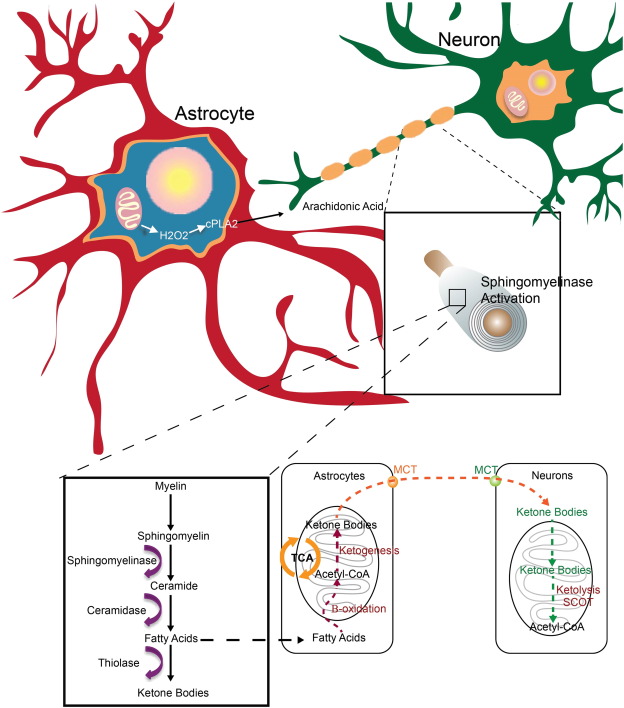
Findings from this study replicate our earlier findings that age of reproductive senescence is associated with decline in mitochondrial respiration, increased H2O2 production and shift to ketogenic metabolism in brain (Yao et al., 2010, Ding et al., 2013, Yin et al., 2015). These well established early age-related changes in mitochondrial function and shift to ketone body utilization in brain, are now linked to a mechanistic pathway that connects early decline in mitochondrial respiration and H2O2 production to activation of the cPLA2-sphingomyelinase pathway to catabolize myelin lipids resulting in WM degeneration (Fig. 12). These lipids are sequestered in lipid droplets for subsequent use as a local source of ketone body generation via astrocyte mediated beta-oxidation of fatty acids. Astrocyte derived ketone bodies can then be transported to neurons where they undergo ketolysis to generate acetyl-CoA for TCA derived ATP generation required for synaptic and cell function (Fig. 12).

Thumbnail image of Fig. 12. Opens large image

http://www.ebiomedicine.com/cms/attachment/2040395791/2053874721/gr12.sml

Fig. 12

Schematic model of mitochondrial H2O2 activation of cPLA2-sphingomyelinase pathway as an adaptive response to provide myelin derived fatty acids as a substrate for ketone body generation: The cPLA2-sphingomyelinase pathway is proposed as a mechanistic pathway that links an early event, mitochondrial dysfunction and H2O2, in the prodromal/preclinical phase of Alzheimer’s with later stage development of pathology, white matter degeneration. Our findings demonstrate that an age dependent deficit in mitochondrial respiration and a concomitant rise in oxidative stress activate an adaptive cPLA2-sphingomyelinase pathway to provide myelin derived fatty acids as a substrate for ketone body generation to fuel an energetically compromised brain.

Biochemical evidence obtained from isolated whole brain mitochondria confirms that during reproductive senescence and in response to estrogen deprivation brain mitochondria decline in respiratory capacity (Yao et al., 2009, Yao et al., 2010, Brinton, 2008a, Brinton, 2008b, Swerdlow and Khan, 2009). A well-documented consequence of mitochondrial dysfunction is increased production of reactive oxygen species (ROS), specifically H2O2 (Boveris and Chance, 1973, Beal, 2005, Yin et al., 2014, Yap et al., 2009). While most research focuses on the damage generated by free radicals, in this case H2O2 functions as a signaling molecule to activate cPLA2, the initiating enzyme in the cPLA2-sphingomyelinase pathway (Farooqui and Horrocks, 2006, Han et al., 2003, Sun et al., 2004). In AD brain, increased cPLA2 immunoreactivity is detected almost exclusively in astrocytes suggesting that activation of the cPLA2-sphingomyelinase pathway is localized to astrocytes in AD, as opposed to the neuronal or oligodendroglial localization that is observed during apoptosis (Sun et al., 2004, Malaplate-Armand et al., 2006, Di Paolo and Kim, 2011, Stephenson et al., 1996,Stephenson et al., 1999). In our analysis, cPLA2 (Sanchez-Mejia and Mucke, 2010) activation followed the age-dependent rise in H2O2 production and was sustained at an elevated level.

Direct and robust activation of astrocytic cPLA2 by physiologically relevant concentrations of H2O2 was confirmed in vitro. Astrocytic involvement in the cPLA2-sphingomyelinase pathway was also indicated by an increase in cPLA2 positive astrocyte reactivity in WM tracts of reproductively incompetent mice. These data are consistent with findings from brains of persons with AD that demonstrate the same striking localization of cPLA2immunoreactivity within astrocytes, specifically in the hippocampal formation (Farooqui and Horrocks, 2004). While neurons and astrocytes contain endogenous levels of cPLA2, neuronal cPLA2 is activated by an influx of intracellular calcium, whereas astrocytic cPLA2 is directly activated by excessive generation of H2O2 (Sun et al., 2004, Xu et al., 2003, Tournier et al., 1997). Evidence of this cell type specific activation was confirmed by the activation of cPLA2 in astrocytes by H2O2 and the lack of activation in neurons. These data support that astrocytic, not neuronal, cPLA2 is the cellular mediator of the H2O2 dependent cPLA2-sphingomyelinase pathway activation and provide associative evidence supporting a role of astrocytic mitochondrial H2O2 in age-related WM catabolism.

The pattern of gene expression during the shift to reproductive senescence in the female mouse hippocampus recapitulates key observations in human AD brain tissue, specifically elevation in cPLA2, sphingomyelinase and ceramidase (Schaeffer et al., 2010, He et al., 2010, Li et al., 2014). Further, up-regulation of myelin synthesis, lipid metabolism and inflammatory genes in reproductively incompetent female mice is consistent with the gene expression pattern previously reported from aged male rodent hippocampus, aged female non-human primate hippocampus and human AD hippocampus (Blalock et al., 2003, Blalock et al., 2004, Blalock et al., 2010, Blalock et al., 2011, Kadish et al., 2009, Rowe et al., 2007). In these analyses of gene expression in aged male rodent hippocampus, aged female non-human primate hippocampus and human AD hippocampus down regulation of genes related to mitochondrial function, and up-regulation in multiple genes encoding for enzymes involved in ketone body metabolism occurred (Blalock et al., 2003, Blalock et al., 2004, Blalock et al., 2010, Blalock et al., 2011, Kadish et al., 2009, Rowe et al., 2007). The comparability across data derived from aging female mouse hippocampus reported herein and those derived from male rodent brain, female nonhuman brain and human AD brain strongly suggest that cPLA2-sphingomyelinase pathway activation, myelin sheath degeneration and fatty acid metabolism leading to ketone body generation is a metabolic adaptation that is generalizable across these naturally aging models and are evident in aged human AD brain. Collectively, these data support the translational relevance of findings reported herein.

Data obtained via immunohistochemistry, electron microscopy and MBP protein analyses demonstrated an age-related loss in myelin sheath integrity. Evidence for a loss of myelin structural integrity emerged in reproductively incompetent mice following activation of the cPLA2-sphingomyelinase pathway. The unraveling myelin phenotype observed following reproductive senescence and aging reported herein is consistent with the degenerative phenotype that emerges following exposure to the chemotherapy drug bortezomib which induces mitochondrial dysfunction and increased ROS generation (Carozzi et al., 2010, Cavaletti et al., 2007,Ling et al., 2003). In parallel to the decline in myelin integrity, lipid droplet density increased. In aged mice, accumulation of lipid droplets declined in parallel to the rise in ketone bodies consistent with the utilization of myelin-derived fatty acids to generate ketone bodies. Due to the sequential relationship between WM degeneration and lipid droplet formation, we posit that lipid droplets serve as a temporary storage site for myelin-derived fatty acids prior to undergoing β-oxidation in astrocytes to generate ketone bodies.

Microstructural alterations in myelin integrity were associated with alterations in the lipid profile of brain, indicative of WM degeneration resulting in release of myelin lipids. Sphingomyelin and galactocerebroside are two main lipids that compose the myelin sheath (Baumann and Pham-Dinh, 2001). Ceramide is common to both galactocerebroside and sphingomyelin and is composed of sphingosine coupled to a fatty acid. Ceramide levels increase in aging, in states of ketosis and in neurodegeneration (Filippov et al., 2012, Blazquez et al., 1999, Costantini et al., 2005). Specifically, ceramide levels are elevated at the earliest clinically recognizable stage of AD, indicating a degree of WM degeneration early in disease progression (Di Paolo and Kim, 2011,Han et al., 2002, Costantini et al., 2005). Sphingosine is statistically significantly elevated in the brains of AD patients compared to healthy controls; a rise that was significantly correlated with acid sphingomyelinase activity, Aβ levels and tau hyperphosphorylation (He et al., 2010). In our analyses, a rise in ceramides was first observed early in the aging process in reproductively incompetent mice. The rise in ceramides was coincident with the emergence of loss of myelin integrity consistent with the release of myelin ceramides from sphingomyelin via sphingomyelinase activation. Following the rise in ceramides, sphingosine and fatty acid levels increased. The temporal sequence of the lipid profile was consistent with gene expression indicating activation of ceramidase for catabolism of ceramide into sphingosine and fatty acid during reproductive senescence. Once released from ceramide, fatty acids can be transported into the mitochondrial matrix of astrocytes via CPT-1, where β-oxidation of fatty acids leads to the generation of acetyl-CoA (Glatz et al., 2010). It is well documented that acetyl-CoA cannot cross the inner mitochondrial membrane, thus posing a barrier to direct transport of acetyl-CoA generated by β-oxidation into neurons. In response, the newly generated acetyl-CoA undergoes ketogenesis to generate ketone bodies to fuel energy demands of neurons (Morris, 2005,Guzman and Blazquez, 2004, Stacpoole, 2012). Because astrocytes serve as the primary location of β-oxidation in brain they are critical to maintaining neuronal metabolic viability during periods of reduced glucose utilization (Panov et al., 2014, Ebert et al., 2003, Guzman and Blazquez, 2004).

Once fatty acids are released from myelin ceramides, they are transported into astrocytic mitochondria by CPT1 to undergo β-oxidation. The mitochondrial trifunctional protein HADHA catalyzes the last three steps of mitochondrial β-oxidation of long chain fatty acids, while mitochondrial ABAD (aka SCHAD—short chain fatty acid dehydrogenase) metabolizes short chain fatty acids. Concurrent with the release of myelin fatty acids in aged female mice, CPT1, HADHA and ABAD protein expression as well as ketone body generation increased significantly. These findings indicate that astrocytes play a pivotal role in the response to bioenergetic crisis in brain to activate an adaptive compensatory system that activates catabolism of myelin lipids and the metabolism of those lipids into fatty acids to generate ketone bodies necessary to fuel neuronal demand for acetyl-CoA and ATP.

Collectively, these findings provide a mechanistic pathway that links mitochondrial dysfunction and H2O2generation in brain early in the aging process to later stage white matter degeneration. Astrocytes play a pivotal role in providing a mechanistic strategy to address the bioenergetic demand of neurons in the aging female brain. While this pathway is coincident with reproductive aging in the female brain, it is likely to have mechanistic translatability to the aging male brain. Further, the mechanistic link between bioenergetic decline and WM degeneration has potential relevance to other neurological diseases involving white matter in which postmenopausal women are at greater risk, such as multiple sclerosis. The mechanistic pathway reported herein spans time and is characterized by a progression of early adaptive changes in the bioenergetic system of the brain leading to WM degeneration and ketone body production. Translationally, effective therapeutics to prevent, delay and treat WM degeneration during aging and Alzheimer’s disease will need to specifically target stages within the mechanistic pathway described herein. The fundamental initiating event is a bioenergetic switch from being a glucose dependent brain to a glucose and ketone body dependent brain. It remains to be determined whether it is possible to prevent conversion to or reversal of a ketone dependent brain. Effective therapeutic strategies to intervene in this process require biomarkers of bioenergetic phenotype of the brain and stage of mechanistic progression. The mechanistic pathway reported herein may have relevance to other age-related neurodegenerative diseases characterized by white matter degeneration such as multiple sclerosis.

Blood. 2015 Oct 15;126(16):1925-9.    http://dx.doi.org:/10.1182/blood-2014-12-617498. Epub 2015 Aug 14.
Targeting the leukemia cell metabolism by the CPT1a inhibition: functional preclinical effects in leukemias.
Cancer cells are characterized by perturbations of their metabolic processes. Recent observations demonstrated that the fatty acid oxidation (FAO) pathway may represent an alternative carbon source for anabolic processes in different tumors, therefore appearing particularly promising for therapeutic purposes. Because the carnitine palmitoyl transferase 1a (CPT1a) is a protein that catalyzes the rate-limiting step of FAO, here we investigated the in vitro antileukemic activity of the novel CPT1a inhibitor ST1326 on leukemia cell lines and primary cells obtained from patients with hematologic malignancies. By real-time metabolic analysis, we documented that ST1326 inhibited FAO in leukemia cell lines associated with a dose- and time-dependent cell growth arrest, mitochondrial damage, and apoptosis induction. Data obtained on primary hematopoietic malignant cells confirmed the FAO inhibition and cytotoxic activity of ST1326, particularly on acute myeloid leukemia cells. These data suggest that leukemia treatment may be carried out by targeting metabolic processes.
Oncogene. 2015 Oct 12.   http://dx.doi.org:/10.1038/onc.2015.394. [Epub ahead of print]
Tumour-suppression function of KLF12 through regulation of anoikis.
Suppression of detachment-induced cell death, known as anoikis, is an essential step for cancer metastasis to occur. We report here that expression of KLF12, a member of the Kruppel-like family of transcription factors, is downregulated in lung cancer cell lines that have been selected to grow in the absence of cell adhesion. Knockdown of KLF12 in parental cells results in decreased apoptosis following cell detachment from matrix. KLF12 regulates anoikis by promoting the cell cycle transition through S phase and therefore cell proliferation. Reduced expression levels of KLF12 results in increased ability of lung cancer cells to form tumours in vivo and is associated with poorer survival in lung cancer patients. We therefore identify KLF12 as a novel metastasis-suppressor gene whose loss of function is associated with anoikis resistance through control of the cell cycle.
Mol Cell. 2015 Oct 14. pii: S1097-2765(15)00764-9. doi: 10.1016/j.molcel.2015.09.025. [Epub ahead of print]
PEPCK Coordinates the Regulation of Central Carbon Metabolism to Promote Cancer Cell Growth.
Phosphoenolpyruvate carboxykinase (PEPCK) is well known for its role in gluconeogenesis. However, PEPCK is also a key regulator of TCA cycle flux. The TCA cycle integrates glucose, amino acid, and lipid metabolism depending on cellular needs. In addition, biosynthetic pathways crucial to tumor growth require the TCA cycle for the processing of glucose and glutamine derived carbons. We show here an unexpected role for PEPCK in promoting cancer cell proliferation in vitro and in vivo by increasing glucose and glutamine utilization toward anabolic metabolism. Unexpectedly, PEPCK also increased the synthesis of ribose from non-carbohydrate sources, such as glutamine, a phenomenon not previously described. Finally, we show that the effects of PEPCK on glucose metabolism and cell proliferation are in part mediated via activation of mTORC1. Taken together, these data demonstrate a role for PEPCK that links metabolic flux and anabolic pathways to cancer cell proliferation.
Mol Cancer Res. 2015 Oct;13(10):1408-20.   http://dx.doi.org:/10.1158/1541-7786.MCR-15-0048. Epub 2015 Jun 16.
Disruption of Proline Synthesis in Melanoma Inhibits Protein Production Mediated by the GCN2 Pathway.
Many processes are deregulated in melanoma cells and one of those is protein production. Although much is known about protein synthesis in cancer cells, effective ways of therapeutically targeting this process remain an understudied area of research. A process that is upregulated in melanoma compared with normal melanocytes is proline biosynthesis, which has been linked to both oncogene and tumor suppressor pathways, suggesting an important convergent point for therapeutic intervention. Therefore, an RNAi screen of a kinase library was undertaken, identifying aldehyde dehydrogenase 18 family, member A1 (ALDH18A1) as a critically important gene in regulating melanoma cell growth through proline biosynthesis. Inhibition of ALDH18A1, the gene encoding pyrroline-5-carboxylate synthase (P5CS), significantly decreased cultured melanoma cell viability and tumor growth. Knockdown of P5CS using siRNA had no effect on apoptosis, autophagy, or the cell cycle but cell-doubling time increased dramatically suggesting that there was a general slowdown in cellular metabolism. Mechanistically, targeting ALDH18A1 activated the serine/threonine protein kinase GCN2 (general control nonderepressible 2) to inhibit protein synthesis, which could be reversed with proline supplementation. Thus, targeting ALDH18A1 in melanoma can be used to disrupt proline biosynthesis to limit cell metabolism thereby increasing the cellular doubling time mediated through the GCN2 pathway.  This study demonstrates that melanoma cells are sensitive to disruption of proline synthesis and provides a proof-of-concept that the proline synthesis pathway can be therapeutically targeted in melanoma tumors for tumor inhibitory efficacy. Mol Cancer Res; 13(10); 1408-20. ©2015 AACR.
SDHB-Deficient Cancers: The Role of Mutations That Impair Iron Sulfur Cluster Delivery.
BACKGROUND:  Mutations in the Fe-S cluster-containing SDHB subunit of succinate dehydrogenase cause familial cancer syndromes. Recently the tripeptide motif L(I)YR was identified in the Fe-S recipient protein SDHB, to which the cochaperone HSC20 binds.
METHODS:   In order to characterize the metabolic basis of SDH-deficient cancers we performed stable isotope-resolved metabolomics in a novel SDHB-deficient renal cell carcinoma cell line and conducted bioinformatics and biochemical screening to analyze Fe-S cluster acquisition and assembly of SDH in the presence of other cancer-causing SDHB mutations.

RESULTS:

We found that the SDHB(R46Q) mutation in UOK269 cells disrupted binding of HSC20, causing rapid degradation of SDHB. In the absence of SDHB, respiration was undetectable in UOK269 cells, succinate was elevated to 351.4±63.2 nmol/mg cellular protein, and glutamine became the main source of TCA cycle metabolites through reductive carboxylation. Furthermore, HIF1α, but not HIF2α, increased markedly and the cells showed a strong DNA CpG island methylator phenotype (CIMP). Biochemical and bioinformatic screening revealed that 37% of disease-causing missense mutations in SDHB were located in either the L(I)YR Fe-S transfer motifs or in the 11 Fe-S cluster-ligating cysteines.

CONCLUSIONS:

These findings provide a conceptual framework for understanding how particular mutations disproportionately cause the loss of SDH activity, resulting in accumulation of succinate and metabolic remodeling in SDHB cancer syndromes.


SR4 Uncouples Mitochondrial Oxidative Phosphorylation, Modulates AMPK-mTOR Signaling, and Inhibits Proliferation of HepG2 Hepatocarcinoma Cells

  1. L. Figarola, J. Singhal, J. D. Tompkins, G. W. Rogers, C. Warden, D. Horne, A. D. Riggs, S. Awasthi and S. S. Singhal.

J Biol Chem. 2015 Nov 3, [epub ahead of print]


CD47 Receptor Globally Regulates Metabolic Pathways That Control Resistance to Ionizing Radiation

  1. W. Miller, D. R. Soto-Pantoja, A. L. Schwartz, J. M. Sipes, W. G. DeGraff, L. A. Ridnour, D. A. Wink and D. D. Roberts.

J Biol Chem. 2015 Oct 9, 290 (41): 24858-74.


Knockdown of PKM2 Suppresses Tumor Growth and Invasion in Lung Adenocarcinoma

  1. Sun, A. Zhu, L. Zhang, J. Zhang, Z. Zhong and F. Wang.

Int J Mol Sci. 2015 Oct 15, 16 (10): 24574-87.


EglN2 associates with the NRF1-PGC1alpha complex and controls mitochondrial function in breast cancer

  1. Zhang, C. Wang, X. Chen, M. Takada, C. Fan, X. Zheng, H. Wen, Y. Liu, C. Wang, R. G. Pestell, K. M. Aird, W. G. Kaelin, Jr., X. S. Liu and Q. Zhang.

EMBO J. 2015 Oct 22, [epub ahead of print]


Mitochondrial Genetics Regulate Breast Cancer Tumorigenicity and Metastatic Potential.

Current paradigms of carcinogenic risk suggest that genetic, hormonal, and environmental factors influence an individual’s predilection for developing metastatic breast cancer. Investigations of tumor latency and metastasis in mice have illustrated differences between inbred strains, but the possibility that mitochondrial genetic inheritance may contribute to such differences in vivo has not been directly tested. In this study, we tested this hypothesis in mitochondrial-nuclear exchange mice we generated, where cohorts shared identical nuclear backgrounds but different mtDNA genomes on the background of the PyMT transgenic mouse model of spontaneous mammary carcinoma. In this setting, we found that primary tumor latency and metastasis segregated with mtDNA, suggesting that mtDNA influences disease progression to a far greater extent than previously appreciated. Our findings prompt further investigation into metabolic differences controlled by mitochondrial process as a basis for understanding tumor development and metastasis in individual subjects. Importantly, differences in mitochondrial DNA are sufficient to fundamentally alter disease course in the PyMT mouse mammary tumor model, suggesting that functional metabolic differences direct early tumor growth and metastatic efficiency. Cancer Res; 75(20); 4429-36. ©2015 AACR.


Cancer Lett. 2015 Oct 29. pii: S0304-3835(15)00656-4.    http://dx.doi.org:/10.1016/j.canlet.2015.10.025. [Epub ahead of print]
Carboxyamidotriazole inhibits oxidative phosphorylation in cancer cells and exerts synergistic anti-cancer effect with glycolysis inhibition.

Targeting cancer cell metabolism is a promising strategy against cancer. Here, we confirmed that the anti-cancer drug carboxyamidotriazole (CAI) inhibited mitochondrial respiration in cancer cells for the first time and found a way to enhance its anti-cancer activity by further disturbing the energy metabolism. CAI promoted glucose uptake and lactate production when incubated with cancer cells. The oxidative phosphorylation (OXPHOS) in cancer cells was inhibited by CAI, and the decrease in the activity of the respiratory chain complex I could be one explanation. The anti-cancer effect of CAI was greatly potentiated when being combined with 2-deoxyglucose (2-DG). The cancer cells treated with the combination of CAI and 2-DG were arrested in G2/M phase. The apoptosis and necrosis rates were also increased. In a mouse xenograft model, this combination was well tolerated and retarded the tumor growth. The impairment of cancer cell survival was associated with significant cellular ATP decrease, suggesting that the combination of CAI and 2-DG could be one of the strategies to cause dual inhibition of energy pathways, which might be an effective therapeutic approach for a broad spectrum of tumors.


Cancer Immunol Res. 2015 Nov;3(11):1236-47.    http://dx.doi.org:/10.1158/2326-6066.CIR-15-0036. Epub 2015 May 29.
Inhibition of Fatty Acid Oxidation Modulates Immunosuppressive Functions of Myeloid-Derived Suppressor Cells and Enhances Cancer Therapies.

Myeloid-derived suppressor cells (MDSC) promote tumor growth by inhibiting T-cell immunity and promoting malignant cell proliferation and migration. The therapeutic potential of blocking MDSC in tumors has been limited by their heterogeneity, plasticity, and resistance to various chemotherapy agents. Recent studies have highlighted the role of energy metabolic pathways in the differentiation and function of immune cells; however, the metabolic characteristics regulating MDSC remain unclear. We aimed to determine the energy metabolic pathway(s) used by MDSC, establish its impact on their immunosuppressive function, and test whether its inhibition blocks MDSC and enhances antitumor therapies. Using several murine tumor models, we found that tumor-infiltrating MDSC (T-MDSC) increased fatty acid uptake and activated fatty acid oxidation (FAO). This was accompanied by an increased mitochondrial mass, upregulation of key FAO enzymes, and increased oxygen consumption rate. Pharmacologic inhibition of FAO blocked immune inhibitory pathways and functions in T-MDSC and decreased their production of inhibitory cytokines. FAO inhibition alone significantly delayed tumor growth in a T-cell-dependent manner and enhanced the antitumor effect of adoptive T-cell therapy. Furthermore, FAO inhibition combined with low-dose chemotherapy completely inhibited T-MDSC immunosuppressive effects and induced a significant antitumor effect. Interestingly, a similar increase in fatty acid uptake and expression of FAO-related enzymes was found in human MDSC in peripheral blood and tumors. These results support the possibility of testing FAO inhibition as a novel approach to block MDSC and enhance various cancer therapies. Cancer Immunol Res; 3(11); 1236-47. ©2015 AACR.


Ionizing radiation induces myofibroblast differentiation via lactate dehydrogenase

  1. L. Judge, K. M. Owens, S. J. Pollock, C. F. Woeller, T. H. Thatcher, J. P. Williams, R. P. Phipps, P. J. Sime and R. M. Kottmann.

Am J Physiol Lung Cell Mol Physiol. 2015 Oct 15, 309 (8): L879-87.


Vitamin C selectively kills KRAS and BRAF mutant colorectal cancer cells by targeting GAPDH

  1. Yun, E. Mullarky, C. Lu, K. N. Bosch, A. Kavalier, K. Rivera, J. Roper, Chio, II, E. G. Giannopoulou, C. Rago, A. Muley, J. M. Asara, J. Paik, O. Elemento, Z. Chen, D. J. Pappin, L. E. Dow, N. Papadopoulos, S. S. Gross and L. C. Cantley.

Science. 2015 Nov 5, [epub ahead of print]


Down-regulation of FBP1 by ZEB1-mediated repression confers to growth and invasion in lung cancer cells

  1. Zhang, J. Wang, H. Xing, Q. Li, Q. Zhao and J. Li.

Mol Cell Biochem. 2015 Nov 6, [epub ahead of print]


J Mol Cell Cardiol. 2015 Oct 23. pii: S0022-2828(15)30073-0.     http://dx.doi.org:/10.1016/j.yjmcc.2015.10.002. [Epub ahead of print]
GRK2 compromises cardiomyocyte mitochondrial function by diminishing fatty acid-mediated oxygen consumption and increasing superoxide levels.

The G protein-coupled receptor kinase-2 (GRK2) is upregulated in the injured heart and contributes to heart failure pathogenesis. GRK2 was recently shown to associate with mitochondria but its functional impact in myocytes due to this localization is unclear. This study was undertaken to determine the effect of elevated GRK2 on mitochondrial respiration in cardiomyocytes. Sub-fractionation of purified cardiac mitochondria revealed that basally GRK2 is found in multiple compartments. Overexpression of GRK2 in mouse cardiomyocytes resulted in an increased amount of mitochondrial-based superoxide. Inhibition of GRK2 increased oxygen consumption rates and ATP production. Moreover, fatty acid oxidation was found to be significantly impaired when GRK2 was elevated and was dependent on the catalytic activity and mitochondrial localization of this kinase. Our study shows that independent of cardiac injury, GRK2 is localized in the mitochondria and its kinase activity negatively impacts the function of this organelle by increasing superoxide levels and altering substrate utilization for energy production.


Br J Pharmacol. 2015 Oct 27. doi: 10.1111/bph.13377. [Epub ahead of print]
All-trans retinoic acid protects against doxorubicin-induced cardiotoxicity by activating the Erk2 signalling pathway.
BACKGROUND AND PURPOSE:

Doxorubicin (Dox) is a powerful antineoplastic agent for treating a wide range of cancers. However, doxorubicin cardiotoxicity of the heart has largely limited its clinical use. It is known that all-trans retinoic acid (ATRA) plays important roles in many cardiac biological processes, however, the protective effects of ATRA on doxorubicin cardiotoxicity remain unknown. Here, we studied the effect of ATRA on doxorubicin cardiotoxicity and underlying mechanisms.

EXPERIMENTAL APPROACHES:

Cellular viability assays, western blotting and mitochondrial respiration analyses were employed to evaluate the cellular response to ATRA in H9c2 cells and primary cardiomyocytes. Quantitative PCR (Polymerase Chain Reaction) and gene knockdown were performed to investigate the underlying molecular mechanisms of ATRA’s effects on doxorubicin cardiotoxicity.

KEY RESULTS:

ATRA significantly inhibited doxorubicin-induced apoptosis in H9c2 cells and primary cardiomyocytes. ATRA was more effective against doxorubicin cardiotoxicity than resveratrol and dexrazoxane. ATRA also suppressed reactive oxygen species (ROS) generation, and restored the expression level of mRNA and proteins in phase II detoxifying enzyme system: Nrf2 (nuclear factor-E2-related factor 2), MnSOD (manganese superoxide dismutase), HO-1 (heme oxygenase1) as well as mitochondrial function (mitochondrial membrane integrity, mitochondrial DNA copy numbers, mitochondrial respiration capacity, biogenesis and dynamics). Both Erk1/2 (extracellular signal-regulated kinase1/2) inhibitor (U0126) and Erk2 siRNA, but not Erk1 siRNA, abolished the protective effect of ATRA against doxorubicin-induced toxicity in H9c2 cells. Remarkably, ATRA did not compromise the anticancer efficacy of doxorubicin in gastric carcinoma cells.

CONCLUSION AND IMPLICATION:

ATRA protected cardiomyocytes against doxorubicin-induced toxicity by activating the Erk2 pathway without compromising the anticancer efficacy of doxorubicin. Therefore, ATRA may be a promising candidate as a cardioprotective agent against doxorubicin cardiotoxicity.


Proteomic and Biochemical Studies of Lysine Malonylation Suggest Its Malonic Aciduria-associated Regulatory Role in Mitochondrial Function and Fatty Acid Oxidation

  1. Colak, O. Pougovkina, L. Dai, M. Tan, H. Te Brinke, H. Huang, Z. Cheng, J. Park, X. Wan, X. Liu, W. W. Yue, R. J. Wanders, J. W. Locasale, D. B. Lombard, V. C. de Boer and Y. Zhao.

Mol Cell Proteomics. 2015 Nov 1, 14 (11): 3056-71.


Foxg1 localizes to mitochondria and coordinates cell differentiation and bioenergetics

  1. Pancrazi, G. Di Benedetto, L. Colombaioni, G. Della Sala, G. Testa, F. Olimpico, A. Reyes, M. Zeviani, T. Pozzan and M. Costa.

Proc Natl Acad Sci U S A. 2015 Oct 27, 112(45): 13910-5.


Evidence of Mitochondrial Dysfunction within the Complex Genetic Etiology of Schizophrenia

  1. E. Hjelm, B. Rollins, F. Mamdani, J. C. Lauterborn, G. Kirov, G. Lynch, C. M. Gall, A. Sequeira and M. P. Vawter.

Mol Neuropsychiatry. 2015 Nov 1, 1 (4): 201-219.


Metabolic Reprogramming Is Required for Myofibroblast Contractility and Differentiation

  1. Bernard, N. J. Logsdon, S. Ravi, N. Xie, B. P. Persons, S. Rangarajan, J. W. Zmijewski, K. Mitra, G. Liu, V. M. Darley-Usmar and V. J. Thannickal.

J Biol Chem. 2015 Oct 16, 290 (42): 25427-38.


J Biol Chem. 2015 Oct 23;290(43):25834-46.    http://dx.doi.org:/10.1074/jbc.M115.658815. Epub 2015 Sep 4.
Kinome Screen Identifies PFKFB3 and Glucose Metabolism as Important Regulators of the Insulin/Insulin-like Growth Factor (IGF)-1 Signaling Pathway.

The insulin/insulin-like growth factor (IGF)-1 signaling pathway (ISP) plays a fundamental role in long term health in a range of organisms. Protein kinases including Akt and ERK are intimately involved in the ISP. To identify other kinases that may participate in this pathway or intersect with it in a regulatory manner, we performed a whole kinome (779 kinases) siRNA screen for positive or negative regulators of the ISP, using GLUT4 translocation to the cell surface as an output for pathway activity. We identified PFKFB3, a positive regulator of glycolysis that is highly expressed in cancer cells and adipocytes, as a positive ISP regulator. Pharmacological inhibition of PFKFB3 suppressed insulin-stimulated glucose uptake, GLUT4 translocation, and Akt signaling in 3T3-L1 adipocytes. In contrast, overexpression of PFKFB3 in HEK293 cells potentiated insulin-dependent phosphorylation of Akt and Akt substrates. Furthermore, pharmacological modulation of glycolysis in 3T3-L1 adipocytes affected Akt phosphorylation. These data add to an emerging body of evidence that metabolism plays a central role in regulating numerous biological processes including the ISP. Our findings have important implications for diseases such as type 2 diabetes and cancer that are characterized by marked disruption of both metabolism and growth factor signaling.


FASEB J. 2015 Oct 19.    http://dx.doi.org:/pii: fj.15-276360. [Epub ahead of print]
Perm1 enhances mitochondrial biogenesis, oxidative capacity, and fatigue resistance in adult skeletal muscle.

Skeletal muscle mitochondrial content and oxidative capacity are important determinants of muscle function and whole-body health. Mitochondrial content and function are enhanced by endurance exercise and impaired in states or diseases where muscle function is compromised, such as myopathies, muscular dystrophies, neuromuscular diseases, and age-related muscle atrophy. Hence, elucidating the mechanisms that control muscle mitochondrial content and oxidative function can provide new insights into states and diseases that affect muscle health. In past studies, we identified Perm1 (PPARGC1- and ESRR-induced regulator, muscle 1) as a gene induced by endurance exercise in skeletal muscle, and regulating mitochondrial oxidative function in cultured myotubes. The capacity of Perm1 to regulate muscle mitochondrial content and function in vivo is not yet known. In this study, we use adeno-associated viral (AAV) vectors to increase Perm1 expression in skeletal muscles of 4-wk-old mice. Compared to control vector, AAV1-Perm1 leads to significant increases in mitochondrial content and oxidative capacity (by 40-80%). Moreover, AAV1-Perm1-transduced muscles show increased capillary density and resistance to fatigue (by 33 and 31%, respectively), without prominent changes in fiber-type composition. These findings suggest that Perm1 selectively regulates mitochondrial biogenesis and oxidative function, and implicate Perm1 in muscle adaptations that also occur in response to endurance exercise.-Cho, Y., Hazen, B. C., Gandra, P. G., Ward, S. R., Schenk, S., Russell, A. P., Kralli, A. Perm1 enhances mitochondrial biogenesis, oxidative capacity, and fatigue resistance in adult skeletal muscle.


A conserved MADS-box phosphorylation motif regulates differentiation and mitochondrial function in skeletal, cardiac, and smooth muscle cells.
Exposure to metabolic disease during fetal development alters cellular differentiation and perturbs metabolic homeostasis, but the underlying molecular regulators of this phenomenon in muscle cells are not completely understood. To address this, we undertook a computational approach to identify cooperating partners of the myocyte enhancer factor-2 (MEF2) family of transcription factors, known regulators of muscle differentiation and metabolic function. We demonstrate that MEF2 and the serum response factor (SRF) collaboratively regulate the expression of numerous muscle-specific genes, including microRNA-133a (miR-133a). Using tandem mass spectrometry techniques, we identify a conserved phosphorylation motif within the MEF2 and SRF Mcm1 Agamous Deficiens SRF (MADS)-box that regulates miR-133a expression and mitochondrial function in response to a lipotoxic signal. Furthermore, reconstitution of MEF2 function by expression of a neutralizing mutation in this identified phosphorylation motif restores miR-133a expression and mitochondrial membrane potential during lipotoxicity. Mechanistically, we demonstrate that miR-133a regulates mitochondrial function through translational inhibition of a mitophagy and cell death modulating protein, called Nix. Finally, we show that rodents exposed to gestational diabetes during fetal development display muscle diacylglycerol accumulation, concurrent with insulin resistance, reduced miR-133a, and elevated Nix expression, as young adult rats. Given the diverse roles of miR-133a and Nix in regulating mitochondrial function, and proliferation in certain cancers, dysregulation of this genetic pathway may have broad implications involving insulin resistance, cardiovascular disease, and cancer biology.


Read Full Post »

Brain Development

Larry H. Bernstein, MD, FCAP, Curator

LPBI

Updated 11/22/2015

Single Gene Found to Play Huge Role in Brain Development

http://www.genengnews.com/gen-news-highlights/single-gene-found-to-play-huge-role-in-brain-development/81251997/


Single Gene Found to Play Huge Role in Brain Development

Figure 1: Cells in which NeuroD1 is turned on are reprogrammed to become neurons. Cell nuclei are shown in blue (Höchst stain) and neurons are shown in red (stained with neuronal marker TUJ1). [A. Pataskar,J. Jung, V. Tiwari]


Researchers at the Institute of Molecular Biology (IMB) in Mainz, Germany say they have unraveled a complex regulatory mechanism that explains how a single gene can drive the formation of brain cells. Their study (“NeuroD1 reprograms chromatin and transcription factor landscapes to induce the neuronal program”), published in The EMBO Journal, is an important step toward a better understanding of how the brain develops. It also harbors potential for regenerative medicine, according to the scientists.

Neurodegenerative disorders, such as Parkinson’s disease, are often characterized by an irreversible loss neurons. Unlike many other cell types in the body, neurons are generally not able to regenerate by themselves, so if the brain is damaged, it stays damaged. One hope of developing treatments for this kind of damage is to understand how the brain develops in the first place, and then try to imitate the process. However, the brain is also one of the most complex organs in the body, and very little is understood about the molecular pathways that guide its development.


Figure 2: Diagram showing how NeuroD1 influences the development of neurons. During brain development, expression of NeuroD1 marks the onset of neurogenesis. NeuroD1 accomplishes this via epigenetic reprogramming: neuronal genes are switched on, and the cells develop into neurons. TF: transcription factor; V: ventricle; P: pial surface. [A. Pataskar, J. Jung, V. Tiwari]


ijay Tiwari, Ph.D, and his group have been investigating a central gene in brain development, NeuroD1. This gene is expressed in the developing brain and marks the onset of neurogenesis.

In their research article, Dr. Tiwari and his colleagues have shown that during brain development NeuroD1 is not only expressed in brain stem cells but acts as a master regulator of a large number of genes that cause these cells to develop into neurons. They used a combination of neurobiology, epigenetics, and computational biology approaches to show that these genes are normally turned off in development, but NeuroD1 activity changes their epigenetic state in order to turn them on. Strikingly, the researchers show that these genes remain switched on even after NeuroD1 is later switched off. They further show that this is because NeuroD1 activity leaves permanent epigenetic marks on these genes that keep them turned on, in other words it creates an epigenetic memory of neuronal differentiation in the cell.

“Our research has shown how a single factor, NeuroD1, has the capacity to change the epigenetic landscape of the cell, resulting in a gene expression program that directs the generation of neurons,” wrote the screenplay investigators.

“This is a significant step toward understanding the relationship between DNA sequence, epigenetic changes and cell fate. It not only sheds new light on the formation of the brain during embryonic development but also opens up novel avenues for regenerative therapy,” says Dr. Tiwari.


NEUROD1 neuronal differentiation 1 [ Homo sapiens (human) ]

Official Symbol NEUROD1 provided by HGNC 

Official Full Name neuronal differentiation 1 provided by HGNC

Primary source HGNC:HGNC:7762 See related Ensembl:ENSG00000162992; HPRD:03428; MIM:601724; Vega:OTTHUMG00000132583

Gene type protein coding

RefSeq status REVIEWED

OrganismHomo sapiens

Lineage Eukaryota; Metazoa; Chordata; Craniata; Vertebrata; Euteleostomi; Mammalia; Eutheria; Euarchontoglires; Primates; Haplorrhini; Catarrhini; Hominidae; Homo

Also known asBETA2; BHF-1; MODY6; NEUROD; bHLHa3

Summary This gene encodes a member of the NeuroD family of basic helix-loop-helix (bHLH) transcription factors. The protein forms heterodimers with other bHLH proteins and activates transcription of genes that contain a specific DNA sequence known as the E-box. It regulates expression of the insulin gene, and mutations in this gene result in type II diabetes mellitus. [provided by RefSeq, Jul 2008]

Orthologs mouse all


https://en.wikipedia.org/wiki/NEUROD1

Neurogenic differentiation 1 (NeuroD1), also called β2,[1] is a transcription factor of the NeuroD-type. It is encoded by the human gene NEUROD1.

It is a member of the NeuroD family of basic helix-loop-helix (bHLH) transcription factors. The protein forms heterodimers with other bHLH proteins and activates transcription of genes that contain a specific DNA sequence known as the E-box. It regulates expression of the insulin gene, and mutations in this gene result in type II diabetes mellitus.[2]

Contents  [hide

1Interactions

2References

3Further reading

4External links


NeuroD1 induces terminal neuronal differentiation in olfactory neurogenesis

Camille BoutinOlaf HardtAntoine de ChevignyNathalie CoréSandra GoebbelsRalph SeidenfadenAndreas Bosio and Harold Cremer

PNAS Jan 19, 2010; 107(3):   1201–1206.   http://dx.doi.org:/10.1073/pnas.0909015107

After their generation and specification in periventricular regions, neuronal precursors maintain an immature and migratory state until their arrival in the respective target structures. Only here are terminal differentiation and synaptic integration induced. Although the molecular control of neuronal specification has started to be elucidated, little is known about the factors that control the latest maturation steps. We aimed at identifying factors that induce terminal differentiation during postnatal and adult neurogenesis, thereby focusing on the generation of periglomerular interneurons in the olfactory bulb. We isolated neuronal precursors and mature neurons from the periglomerular neuron lineage and analyzed their gene expression by microarray. We found that expression of the bHLH transcription factor NeuroD1 strikingly coincides with terminal differentiation. Using brain electroporation, we show that overexpression of NeuroD1 in the periventricular region in vivo leads to the rapid appearance of cells with morphological and molecular characteristics of mature neurons in the subventricular zone and rostral migratory stream. Conversely, shRNA-induced knockdown of NeuroD1 inhibits terminal neuronal differentiation. Thus, expression of a single transcription factor is sufficient to induce neuronal differentiation of neural progenitors in regions that normally do not show addition of new neurons. These results suggest a considerable potential of NeuroD1 for use in cell-therapeutic approaches in the nervous system.


Determination of neuronal subtypes is an early event that coincides with cell cycle exit (1, 2). However, after their generation, new neurons have to remain immature for prolonged periods, allowing their migration to final destinations where terminal differentiation occurs (3). Little is known about the factors that maintain the precursor state or induce terminal differentiation.

Olfactory neurogenesis is particularly suited to approach these late steps in neuronal differentiation. Here, stem cell populations first located in the ventricular zone and after the establishment of an ependymal layer positioned in subventricular zone (SVZ) generate migratory neuroblasts throughout life (4). These perform long-distance chain migration via the rostral migratory stream (RMS) into the olfactory bulb (OB), where they migrate into the granule cell layer (GCL) and the glomerular layer (GL) to differentiate into GABA- and dopaminergic neurons (4, 5). Thus, in this system, generation of neurons is permanent and the consecutive steps in the neurogenic sequence are spatially separated.

Determination of newly generated neurons has been studied intensively over the past years. For example, it has been demonstrated that defined areas surrounding the lateral ventricle contain predetermined stem cells that give rise to defined subsets of interneurons (6, 7). Several transcription factors have been implicated in the specification of the different neuronal populations. The zinc finger transcription factor sp8, for instance, appears to be involved in the generation of interneurons expressing calretinin (8), and analysis of Sall3 mutant mice (9) points to a role of this factor in the dopaminergic, tyrosine hydroxylase–positive lineage (10). Furthermore, it appears that interneuron diversity relies on the combinatorial expression of such transcription factors. This is exemplified by Pax6 and Dlx2, which have been shown to interact in the determination of adult generated neuronal precursors toward a dopaminergic fate (9, 11, 12). All of these transcriptional regulators are expressed early during the neurogenic process and remain present until terminal differentiation occurs.

We aimed at the identification of transcription factors that induce terminal differentiation of postnatal generated neurons in the OB. To do so we isolated neuronal precursors and differentiated interneurons from the periglomerular lineage of the OB and compared their gene expression by microarray. We established that the expression of NeuroD1, a bHLH transcription factor that has been implicated in neuronal differentiation in several experimental systems (1317), coincides with the passage from neuronal precursor to mature interneurons. Functionally, we show that premature expression of NeuroD1 in vitro and in vivo induced highly efficiently the differentiation of forebrain progenitors. In vivo, this leads to the transitory appearance of ectopic neurons in the SVZ, RMS and striatum. Conversely, knockdown of NeuroD1 specifically inhibits terminal maturation of periglomerular neurons in the OB. Thus, NeuroD1 is both necessary and sufficient to induce key steps in terminal neuronal differentiation.


NeuroD1 Is Specifically Expressed in Mature GL Interneurons.

Subpopulations of neuronal precursors destined for the GCL and GL of the OB are generated by regionally defined stem cell populations in the periventricular region but migrate intermingled in the RMS to the OB. Once there, cells resegregate: granule cell precursors terminate their migration in the GCL, whereas the smaller population of periglomerular neuron precursors traverses this layer and the mitral cell layer (MCL) to invade the peripherally located GL (Fig. 1A). Thus, at a given time point, the GL contains both mature periglomerular neurons and their specific progenitors. Based on this spatial organization we isolated these two populations, concurrently depleting glial cells.

We devised a three-step strategy based on the following: (i) microdissection followed by enzymatic dissociation of the postnatal GL, (ii) depletion of contaminating glial cells by magnetic activated cell sorting (MACS) using an A2B5 specific antibody (18), (iii) separation of PSA-NCAM expressing cells (19) from the remaining fraction containing the mature neurons (Fig. 1B). The same purification strategy was applied to tissue microdissected from the P2 periventricular region (18). Characterization of the different cell population after sorting was performed via immunocytochemistry using the markers used for sorting (A2B5 and PSA-NCAM) as well as the differentiation marker Gad65 (18) (Fig. S1). Thus, as starting material we obtained highly enriched mature OB periglomerular interneurons (PGN), their immature progenitors (PGP), as well as a mixed population of generic progenitors (GP) from the SVZ/RMS.


Fig. 1.

Fig. 1.

Expression of NeuroD1 in the olfactory neurogenic system (A) DAPI-stained coronal section through the olfactory bulb of P5. (B) Strategy to isolate neuronal populations at different steps of their maturation. (C) Relative changes in gene expression for selected genes. Expression in GP was considered baseline, and changes are expressed as fold difference. (D–F) NeuroD1 in situ hybridization on sections from P5 mouse brain. No signal was detected along the lateral ventricle or in the RMS (D). In the olfactory bulb, individual NeuroD1+ cells were present in the GCL, whereas the MCL and the GL contained higher amounts (E, high magnification in F). A similar expression pattern was found after β-gal reaction on NeuroD1-lacZ-knockin tissue (G). (Scale bar: 200 μm in A; 100 μm inD and E; 20 μm in F and G).


Based on the purified and characterized cell populations, we performed microarray analyses to gain insight into the changes in gene expression during the neurogenic process. Investigation of expression dynamics of genes associated with either the precursor status or neuronal differentiation (Fig. S2 A and B) were used to validate the approach. Furthermore, these data were compared with those from an already available Serial Analysis of Gene Expression (SAGE) study (20).

Serial Analysis of Microarray (SAM) demonstrated the presence of groups of genes with comparable expression patterns (Fig. S2 C–E). Interestingly, only a relatively small fraction of genes were absent in the immature cell populations GP and PGP but highly represented in mature PGN (Fig. S2E). One of the genes showing such a pattern was NeuroD1, which was expressed more than 50-fold higher in PGN than in the immature populations (Fig. 1C). This was in agreement with the above-cited SAGE data, showing that NeuroD1 expression was below the detection level in neuronal precursors of the adult SVZ (20). Thus, expression of NeuroD1 was absent from precursors but coincided with terminal neuronal differentiation.

This late expression of NeuroD1 was in contrast to that of factors that have been functionally implicated in the specification of PGN, including Pax6, Sp8 and Sall3, which were expressed in both the immature populations and in the mature neurons (Fig. 1C; in situ hybridization for Pax6 in Fig. S3). Only Dlx2 showed a moderate increase in the PGN lineage outgoing, however, from an already considerable baseline level in migrating precursors (12) (Fig. 1C).

Next we analyzed the expression of NeuroD1 using in situ hybridization on P5 forebrain sections. Strong expression was found in the GL, whereas weaker expression was observed in the GCL and MCL (Fig. 1 Eand F). The transcript was undetectable in the periventricular region and the RMS (Fig. 1D). This staining was confirmed using NeuroD1-lacZ knockin mice (21) (Fig. 1G). In conclusion, these data demonstrated the absence of NeuroD1 from immature cells of the system and its strong expression in mature PGN. This pattern was coherent with a function in terminal neuronal differentiation.

NeuroD1 Induces Neuronal Differentiation in Vitro.

We studied the neurogenic potential of NeuroD1 in primary cultured neural stem cells using the neurosphere assay. In parallel to NeuroD1, we performed all experiments under the same conditions using the transcription factor Pax6, a well-described neurogenic signal in the system (9, 11, 12), to control for specificity of the observed effects. Neurosphere cells were coelectroporated with NeuroD1 or Pax6 expression vectors and GFP immediately before plating in differentiation conditions. One week after transfection, in the control condition, 14 ± 1% of the GFP-positive cells coexpressed the early neuronal marker Tuj1 (Fig. S4 A and D) whereas NeuroD1 induced Tuj1 expression in virtually all cells (98.0 ± 2%, Fig. S4 B and D). Pax6 gain-of-function led to an intermediate value (60.0 ± 3%, Fig. S4 C and D). NeuN, a later neuronal marker (22), was expressed by 21.1 ± 1% of the Tuj1-positive cells in the control situation (Fig. S4 E and H) but induced by NeuroD1 in almost all cells (93.9 ± 2%; Fig. S4 F and H). Surprisingly, Pax6 expression led to nearly complete disappearance of NeuN (1.7 ± 0.3%; Fig. S4 G and H). We investigated the induction of subtype specific markers by NeuroD1. Whereas tyrosine hydroxylase showed no augmentation, we found a 20% increase in calretinin labeling, in agreement with previous findings (23).

Next we investigated morphological parameters like process length as well as density and length of filopodia. Both NeuroD1 and Pax6 induced a significant, greater than 2-fold increase in process length (Fig. S4 I and L). We analyzed dendritic filopodia, structures that are believed to be precursors of dendritic spines (24). Expression of NeuroD1 induced a doubling in density and length of filopodia (Fig. S4 N, P, and Q). Interestingly, Pax6 reduced filopodia density to a level significantly below that of controls (Fig. S4 O and P), whereas length of the few remaining filopodia was not affected (7.0 ± 0.4 μm; Fig. S4Q).

Thus, the expression of NeuroD1 in neurosphere amplified neural stem cells induced neuronal commitment as well as morphological characteristics of mature neurons. Like NeuroD1, Pax6 favored neuronal commitment but appeared to actively suppress certain characteristics of terminal neuronal differentiation.

NeuroD1 Induces Ectopic Neurons in Vivo.

We asked whether NeuroD1 was also sufficient to induce neuronal differentiation in vivo. We used postnatal forebrain electroporation, an approach that allows efficient genetic manipulation of neural stem cells along the lateral ventricles and, consequently, of all transitory or permanent cell populations that are generated in the olfactory neurogenic process (25). The NeuroD1 expression vector or empty control plasmids were coelectroporated together with a GFP-containing vector that allowed visualization of transfected cells and their progeny at high resolution. Consequences of NeuroD1 gain-of-function were analyzed at 2, 4, 6, 8, and 15 days postelectroporation (dpe). As for the in vitro studies, results were compared with the effects of Pax6 gain-of-function.

At 2 dpe of a control vector into the lateral wall of the forebrain ventricle, 9.8 ± 1.3% (Fig. 2 A and K) of the GFP-expressing cells were localized in the VZ and had the morphology of radial glia (RG) (25). The majority of the GFP + cells, representing mainly neuronal precursors, were localized in the SVZ. Electroporation of a NeuroD1 expression vector induced a loss of GFP-positive RG cells (3.7 ± 0.5%; Fig. 2 B and K). The remaining cells in the VZ showed lower GFP levels than in controls (Fig. 2 A and B asterisks).

Fig. 2.

Fig. 2.

NeuroD1 induces neuronal morphology in vivo. Effect of NeuroD1 gain-of-function at different time points postelectroporation. (A and B) Coronal forebrain sections at the level of the lateral ventricle at 2 dpe. In the control condition, strongly GFP labeled RG are present in the VZ (A, asterisk). Expression of NeuroD1 induced a relative loss of radial glia and fainter GFP label (B, asterisk). (C and D) Coronal sections at the level of the lateral ventricle at 4 dpe. NeuroD1 expression induced an accumulation of transfected cells in the SVZ (D) and the almost total disappearance of radial glia (D). (E–F′) Sagittal sections of the RMS at 4 dpe. In the control situation, cells migrated toward the OB and presented the bipolar morphology specific of migrating precursors (E, E′, arrowheads). NeuroD1 electroporation induced loss of tangential orientation, induction of complex branching (F, F′, arrowhead), and invasion of the surrounding tissues (F, arrowheads). (G and H) Coronal section at the level of the olfactory bulb at 4 dpe. Although the majority of cells have reached the OB in the control situation (G), only a few cells were located in the center of the OB in the presence of NeuroD1 (H). (I and I′) Examples of cells presenting neuronal morphology in the SVZ at 4 dpe. (J) High magnification showing the presence of filopodia covering NeuroD1-expressing cells (arrowheads). (K) Quantification of GFP-positive cells presenting radial glia cell morphology along the lateral ventricle at 2 and 4 dpe. Control: 9.8 ± 1.3% (n= 6) at 2 dpe; 24 ± 11.8% at 4 dpe (n = 3); NeuroD1: 3.7 ± 0.5% at 2 dpe (n = 6); 1.6 ± 0.7% at 4 dpe (n = 3). (l) Distribution of the GFP-positive cells along the rostrocaudal axis. NeuroD1 expressing cells accumulated in proximal parts of the system. (M) Morphological analysis of cells in the SVZ/RMS. Three different classes were defined: (i) bipolar cells presenting tangential orientation, (ii) spherical cells, and (iii) branched cells presenting multiple processes in various directions (compare I). NeuroD1-expressing cells presented a highly branched morphology. Control: bipolar, 80.4%; spherical, 19.5%; branched, 0% (n = 133 cells). NeuroD1: bipolar, 5%; spherical, 16.8%; branched, 78% (n = 119 cells). Statistics: Mann-Whitney test. ns, not significant. **P < 0.01; ***P < 0.005. (Scale bar: 100 μm in E, F, G,and H; 25 μm in A, B, C, D,E, and F’; 10 μm in I; 5 μm in J.)


At 4 dpe, in the control situation, considerable amounts of strongly GFP+ RG cells were still present in the VZ (Fig. 2C asterisks), whereas NeuroD1 expression induced an almost complete loss of RG cells (Fig. 2 Dand K). At this time point, control cells were found along the entire SVZ and RMS. They showed generally tangential orientation and the typical morphology of migratory neuronal precursors. Large amounts of such cells were also found in the center of the OB (Fig. 2 G and L). NeuroD1 expression induced an accumulation of GFP-labeled cells in the SVZ (Fig. 2 D and L) at the expense of cells in the RMS (Fig. 2H,quantified in Fig. 2L). The accumulating cells did not have the appearance of migrating precursors but displayed complex multibranched morphologies (Fig. 2 F and F, examples in Fig. 2 I and I, quantified inFig. 2M). All principal processes of these cells were covered with small protrusions resembling filopodia (Fig. 2J). Such morphologically complex cells, strongly resembling neurons, were also predominant in and along proximal parts of the RMS (Fig. 2F). Interestingly, considerable amounts of multibranched cells were found outside of the periventricular region and the RMS, invading neighboring structures such as the striatum (Fig. 2F, arrows). There was a clear correlation between the quantity of transgene expression, as visualized by GFP fluorescence, and the above parameters. Thus, NeuroD1 induced dose-dependently a neuron-like morphology in cells in the SVZ, RMS, and surrounding tissues.

We characterized the NeuroD1 induced neuron-like cell population in the periventricular region using neuronal and glial markers (Fig. 3; examples in Fig. S5). Doublecortin (DCX), a microtubule-associated protein expressed in migratory neuronal precursors (26), was seen in 75.2 ± 4.5% of the cells in the control situation but showed a significant increase after expression of NeuroD1 (91.7 ± 2.2%). NeuN, a marker for most mature neuronal cell types in the brain (22) was low in controls (5.2 ± 1.4%, n = 8) but strongly induced by NeuroD1 (65.9 ± 4.5%, n = 9). Map2, a later generic neuronal marker (27), was also rare in control cells (14.1 ± 1.4%, n = 3) but highly expressed in the NeuroD1 condition (61.9 ± 2.7%, n = 3). GFAP and Olig2 did not show significant alterations due to NeuroD1 expression. Thus, the NeuroD1-induced ectopic cells with neuronal morphology in the SVZ and RMS showed molecular characteristics of neurons.


Fig. 3.

Fig. 3.

NeuroD1 induces generic neuronal markers in vivo Molecular phenotype of the cells located in the periventricular region (level 4 in Fig. 2l). Quantification representing the percentage of GFP-positive cells expressing the respective markers. DCX: control, 75.2 ± 4.5%, n = 5; NeuroD1, 91.7 ± 2.2%, n = 5. NeuN: control, 5.2 ± 1.4%, n = 8; NeuroD1, 65.9 ± 4.5%, n = 9. Map2: control, 14.1 ± 1.4%, n = 3; NeuroD1, 61.9 ± 2.7%, n = 3. Olig2: control, 6.8 ± 5%, n = 3; NeuroD1, 2.5 ± 0.5%, n = 3. GFAP: control, 0%, n = 3; NeuroD1, 0%, n = 2. Errors bars indicate SEM. Statistics: DCX and Map2, unpaired ttest; NeuN, Mann-Whitney test. ns, not significant. *P < 0.05; **P < 0.01; ***P < 0.005.

HighWire Press-hosted articles citing this article

  • ……..

    NeuroD1 Is Necessary For OB Interneuron Differentiation in Vivo.

    Next we asked whether NeuroD1 is essential for the generation of PGN. Given that NeuroD1 deficiency in mice is generally associated with perinatal lethality (14, 15, 21), we used a strategy based on RNAi in concert with postnatal in vivo electroporation to knock down NeuroD1 in the olfactory bulb neurogenic system. For validation, three different NeuroD1 specific shRNA vectors were cotransfected with a NeuroD1 expression construct into COS-7 cells. Western blot analysis demonstrated that two of the shRNAs, sh775 and sh776, efficiently inhibited production of the NeuroD1 protein, whereas sh777 induced a less efficient downregulation (sh775, 94.6%; sh776, 96.9%; sh777, 78.4%; corrected for loading against αtubulin; Fig. 4A). All three shRNAs were used for further in vivo studies.

    Fig. 4.

Fig. 4.

In vivo terminal neuronal differentiation of PGC is impaired in absence of NeuroD1. (A) Western blot analysis of protein extracts from cos-7 cells transfected with NeuroD1 or in combination with different NeuroD1 specific shRNAs. sh775 and sh776 strongly repressed NeuroD1 protein expression (94.6% and 96.9%, respectively), whereas sh777 repressed NeuroD1 by 74.8%. (B–H′′) Consequences of loss-of-function of NeuroD1 via in vivo postnatal electroporation at 4 and 15 dpe. (B–E) No differences were observed at the level of the lateral ventricle or in the RMS at 4 dpe. (F) Cell distribution along the rostro-caudal axis was normal (definition of levels in Fig. 2l). (G and H′′) Consequences of NeuroD1 knockdown on PGN morphology at 15 dpe. (G) Whereas shRNAs showing a strong effect on NeuroD1 expression strongly inhibited morphological differentiation, the weakly active shRNA 777 had only a minor effect compared with control. (H) Examples of cells that served for classification of PGN. Class1 cells present primary and secondary branching. Dendritic spines (arrowheads) indicate their synaptic integration in OB circuitry. Class 2 cells present a single primary branch. Class 3 cells present a spherical morphology and no branching. Errors bars indicate SEM. Statistics, unpaired t test. ns, not significant. **P < 0.01; ***P < 0.005. (Scale bar: 100 μm in B–E; 20 μm in H.

………

When the two highly active NeuroD1-specific shRNAs sh775 and sh776 were electroporated, the vast majority of cells in the GL showed simple morphologies with few or no processes (classes 2 and 3), whereas cells with complex neuronal morphologies were sparse (Fig. 4G). When the less-efficient shRNA sh777 was expressed, an intermediate degree of neuronal maturation was observed (Fig. 4G), suggesting a dose-dependent action of NeuroD1 under these conditions. Comparable results were obtained for the GCL. As in the PGL, knockdown of NeuroD1 induced a dose-dependent inhibition of terminal neuronal differentiation (Fig. S9 A and B).

Thus, knockdown of NeuroD1 did not notably interfere with early steps of interneuron generation, but induced a specific defect in the acquisition of the differentiated neuronal phenotype in the OB.


Discussion

Although considerable information is available concerning the generation, specification, and migration of neurons, little is known concerning the factors and regulatory cascades that maintain the immature neuronal precursor status or induce the exit from this state and trigger terminal differentiation. Using a systematic approach, we identified NeuroD1 as a candidate for the latter function and validated this role using gain- and loss-of function approaches.

In Xenopus, a late function of NeuroD1 has been suggested based on two lines of evidence (13). First, NeuroD1 is transitorily expressed in territories where neuronal differentiation occurs. Second, misexpression of NeuroD1 causes the premature differentiation of neuronal precursors into neurons. However, the observation that NeuroD1 could also convert presumptive epidermal cells into neurons pointed toward a determination function. Therefore, a doubtless discrimination between a proneural and a terminal differentiation function was not possible.

The above-cited pioneering work in the frog has been extended through the analysis of mice with mutations in the NeuroD1 gene (14, 15, 21). In the hippocampal dentate gyrus of such animals, granule cell precursors are generated correctly in the neuroepithelium and invade the hippocampal anlage. However, in the target structure, precursors show a severe deficit in proliferation, and a defined dentate gryus is not formed (15). In the mutant cerebellum, generation and migration of early precursors appear not to be affected. Nevertheless, once these cells become postmitotic, massive cell death is observed and the cerebellum is severely affected (14). Thus, in these systems a late function of NeuroD1 is already suggested. However, because of the complexity of the models and the relatively low level of resolution, the available information is still fragmentary.

We attempted to clarify the role of NeuroD1 in neuronal differentiation by analyzing its function during olfactory neurogenesis. Using SAGE, microarray, in situ hybridization, and lacZ knockin into the NeuroD1 locus, we have demonstrated that NeuroD1 is expressed in mature neurons of the OB but is absent from immature stages. These findings are in contrast to recent expression data based on a NeuroD1 antibody, suggesting expression of the transcription factor already in the SVZ and RMS (23, 29). However, our loss-of-function approach based on RNAi shows that NeuroD1 is dispensable for generation and migration of precursors but is necessary for their transition into neurons in the target layer. These findings are in agreement with those of a recent study based on conditional NeuroD1 mutants, which showed a comparable defect in the OB (29).

……

This work demonstrates that expression of a single transcription factor can induce massive ectopic neuronal differentiation of neural stem cells in the vertebrate forebrain. The existence of postnatal and adult neurogenesis holds potential for the treatment of neurodegenerative diseases (34). However, in many experimental paradigms, transplanted or recruited cells fail to undergo differentiation into neurons and either transdifferentiate into glia or remain immature precursors (18, 35). It appears conceivable to combine such approaches with the strong neuronal differentiation inducing activity of NeuroD1.

Scientists Unveil Critical Mechanism of Memory Formation

In a new study that could have implications for future drug discovery efforts for a number of neurodegenerative diseases, scientists from the Florida campus of The Scripps Research Institute (TSRI) have found that the interaction between a pair of brain proteins has a substantial and previously unrecognized effect on memory formation.
The study, which was published November 19, 2015 by the journal Cell, focuses on two receptors previously believed to be unrelated—one for the neurotransmitter dopamine, which is involved in learning and memory, reward-motivated behavior, motor control and other functions, and the other for the hormone ghrelin, which is known for regulating appetite as well as the distribution and use of energy.
“Our immediate question was, what is the ghrelin receptor doing in the brain since the natural ligand—ghrelin—for it is missing? What is it’s functional role?” said Roy Smith, chair of TSRI’s Department of Metabolism and Aging. “We found in animal models that when these two receptors interact, the ghrelin receptor changes the structure of the dopamine receptor and alters its signaling pathway.”
“This concept has potentially profound therapeutic implications,” said Andras Kern, the first author of the study and a staff scientist in the Smith lab, “pointing to a possible strategy for selective fine-tuning of dopamine signaling in neurons related to memory. By using small molecules binding to the ghrelin receptor we can enhance or inhibit dopamine signaling.”
Challenging the current theory, which involves canonical dopamine signaling in neurons, the new study shows that the biologically active ghrelin-dopamine receptor complex produces synaptic plasticity, the ability of the brain’s synapses (parts of nerve cells that communicate with other nerve cells) to grow and expand, the biological process underpinning long-term memory formation.
In addition, when the researchers blocked the ghrelin receptor, dopamine-dependent memory formation was inhibited in animal models, demonstrating the mechanism is essential to that process.
Combined with conclusions from earlier studies that showed a significant role for the ghrelin receptor in neurons that regulate food intake, insulin release and immune system deterioration due to aging, the new study further expands the ghrelin receptor’s importance. In animal models, ghrelin inhibits neuronal loss associated with Parkinson’s disease, and stroke, Smith noted, and the new study underlines its possible role in treating memory loss, age related or otherwise.
“All in all, it’s a pretty amazing receptor,” he said.
In addition to Smith and Kern, other authors of the study, “Hippocampal Dopamine/DRD1 Signaling Dependent on the Ghrelin Receptor,” are Maria Mavrikaki, Celine Ullrich, Rosie Albarran-Zeckler and Alicia Faruzzi Brantley of TSRI.
This work was supported by the National Institutes of Health (grant R01AG019230).
Hippocampal Dopamine/DRD1 Signaling Dependent on the Ghrelin Receptor
Andras Kern, Maria Mavrikaki3, Celine Ullrich4, Rosie Albarran-Zeckler, Alicia Faruzzi Brantley, Roy G. Smith
Figure thumbnail fx1
  • In hippocampal neurons GHSR1a and DRD1 forms heteromers in a complex with Gαq
  • DRD1-induced hippocampal synaptic plasticity is dependent on GHSR1a and Gαq
  • DRD1 mediated learning and memory is dependent on Gαq-PLC rather than Gαs signaling
  • DRD1-induced hippocampal memory is regulated by allosteric DRD1:GHSR1a interactions

The ghrelin receptor (GHSR1a) and dopamine receptor-1 (DRD1) are coexpressed in hippocampal neurons, yet ghrelin is undetectable in the hippocampus; therefore, we sought a function for apo-GHSR1a. Real-time single-molecule analysis on hippocampal neurons revealed dimerization between apo-GHSR1a and DRD1 that is enhanced by DRD1 agonism. In addition, proximity measurements support formation of preassembled apo-GHSR1a:DRD1:Gαqheteromeric complexes in hippocampal neurons. Activation by a DRD1 agonist produced non-canonical signal transduction via Gαq-PLC-IP3-Ca2+ at the expense of canonical DRD1 GαscAMP signaling to result in CaMKII activation, glutamate receptor exocytosis, synaptic reorganization, and expression of early markers of hippocampal synaptic plasticity. Remarkably, this pathway is blocked by genetic or pharmacological inactivation of GHSR1a. In mice, GHSR1a inactivation inhibits DRD1-mediated hippocampal behavior and memory. Our findings identify a previously unrecognized mechanism essential for DRD1 initiation of hippocampal synaptic plasticity that is dependent on GHSR1a, and independent of cAMP signaling.


Read Full Post »

Antibiotic Resistance

Larry H. Bernstein, MD, FCAP, Curator

LPBI


Resistance Gene to Last Line of Antibiotic Defense Has Emerged

http://www.genengnews.com/gen-news-highlights/resistance-gene-to-last-line-of-antibiotic-defense-has-emerged/81252000/

Drug resistance can often emerge due to the selective pressure of antibiotic use on a microbial population. [NIAID]


Until recently, resistance to the polymyxin class of antibiotics—the last line of microbial defense—was thought to be highly improbable. However now, Chinese scientists have discovered a new gene, called mcr-1 that is widespread among Enterobacteriaceae, a large family of Gram-negative bacteria that include a variety of human pathogens, after taking samples from pigs and patients in South China.

“These are extremely worrying results. The polymyxins (colistin and polymyxin B) were the last class of antibiotics in which resistance was incapable of spreading from cell to cell. Until now, colistin resistance resulted from chromosomal mutations, making the resistance mechanism unstable and incapable of spreading to other bacteria,” explained co-author Jian-Hua Liu, Ph.D., a professor at the South China Agricultural University in Guangzhou, China. “Our results reveal the emergence of the first polymyxin resistance gene that is readily passed between common bacteria such as Escherichia coli and Klebsiella pneumoniae, suggesting that the progression from extensive drug resistance to pandrug resistance is inevitable.”

The investigators found the mcr-1 gene on plasmids within various bacterial strains, suggesting an alarming potential to spread and differentiate between diverse microbial populations.

The findings from this study were published recently in The Lancet Infectious Diseases through an article entitled “Emergence of plasmid-mediated colistin resistance mechanism MCR-1 in animals and human beings in China: a microbiological and molecular biological study.”

The researchers stumbled across the mcr-1 gene while performing routine testing of livestock for antimicrobial resistance on a pig farm in Shanghai. This prompted the researchers to collect bacteria samples from pigs at slaughter across four provinces, and from pork and chicken sold in 30 open markets and 27 supermarkets across Guangzhou between 2011 and 2014. Additionally, the scientists analyzed bacteria samples from patients presenting with infections at two hospitals in Guangdong and Zhejiang provinces.

What they found was troubling to say the least, as a high prevalence of the mcr-1 gene in E. coli was observed in isolates from animal (166 of 804) and raw meat samples (78 of 523). Moreover, the proportion of positive samples has been observed to be increasing from year to year.

The scientists also found that the transfer rate of the mcr-1 gene was very high between E. coli strains and that it has a strong potential to spread into other epidemic pathogenic bacterial species such asK. pneumoniae and Pseudomonas aeruginosa—making the rapid dissemination into humans very likely.

“Because of the relatively low proportion of positive samples taken from humans compared with animals, it is likely that mcr-1 mediated colistin resistance originated in animals and subsequently spread to humans,” noted senior author Jianzhong Shen, Ph.D., professor at the China Agricultural University in Beijing, China. “The selective pressure imposed by increasingly heavy use of colistin in agriculture in China could have led to the acquisition of mcr-1 by E. coli.”

The importance of selective pressure on this resistance gene becomes even more evident when considering the fact that China is one of the world’s largest users and producers of colistin for agriculture and veterinary use. Worldwide, the demand for colistin in agriculture is expected to reach almost 12,000 tons per year by the end of 2015, rising to 16,500 tons by 2021.

“The emergence of mcr-1 heralds the breach of the last group of antibiotics,” the authors stated. “Although currently confined to China, mcr-1 is likely to emulate other resistance genes such as blaNDM-1 and spread worldwide. There is a critical need to re-evaluate the use of polymyxins in animals and for very close international monitoring and surveillance of mcr-1 in human and veterinary medicine.”


Emergence of plasmid-mediated colistin resistance mechanism MCR-1 in animals and human beings in China: a microbiological and molecular biological study  

Yi-Yun Liu, Yang Wang, Timothy R Walsh, Ling-Xian Yi, Rong Zhang, James Spencer, et al.

DOI: http://dx.doi.org/10.1016/S1473-3099(15)00424-7      http://www.thelancet.com/journals/laninf/article/PIIS1473-3099(15)00424-7/abstract

Background

Until now, polymyxin resistance has involved chromosomal mutations but has never been reported via horizontal gene transfer. During a routine surveillance project on antimicrobial resistance in commensal Escherichia coli from food animals in China, a major increase of colistin resistance was observed. When an E coli strain, SHP45, possessing colistin resistance that could be transferred to another strain, was isolated from a pig, we conducted further analysis of possible plasmid-mediated polymyxin resistance. Herein, we report the emergence of the first plasmid-mediated polymyxin resistance mechanism, MCR-1, in Enterobacteriaceae.

Methods

The mcr-1 gene in E coli strain SHP45 was identified by whole plasmid sequencing and subcloning. MCR-1 mechanistic studies were done with sequence comparisons, homology modelling, and electrospray ionisation mass spectrometry. The prevalence of mcr-1 was investigated in E coli andKlebsiella pneumoniae strains collected from five provinces between April, 2011, and November, 2014. The ability of MCR-1 to confer polymyxin resistance in vivo was examined in a murine thigh model.

Findings

Polymyxin resistance was shown to be singularly due to the plasmid-mediated mcr-1 gene. The plasmid carrying mcr-1 was mobilised to an E coli recipient at a frequency of 10−1 to 10−3 cells per recipient cell by conjugation, and maintained in K pneumoniae and Pseudomonas aeruginosa. In an in-vivo model, production of MCR-1 negated the efficacy of colistin. MCR-1 is a member of the phosphoethanolamine transferase enzyme family, with expression in E coli resulting in the addition of phosphoethanolamine to lipid A. We observed mcr-1 carriage in E coli isolates collected from 78 (15%) of 523 samples of raw meat and 166 (21%) of 804 animals during 2011–14, and 16 (1%) of 1322 samples from inpatients with infection.

Interpretation

The emergence of MCR-1 heralds the breach of the last group of antibiotics, polymyxins, by plasmid-mediated resistance. Although currently confined to China, MCR-1 is likely to emulate other global resistance mechanisms such as
NDM-1. Our findings emphasise the urgent need for coordinated global action in the fight against pan-drug-resistant Gram-negative bacteria.


Colistin resistance: a major breach in our last line of defence

In hospital practice, clinicians have been buoyed by the recent development of new antibiotics active against multidrug resistant Gram-negative bacilli. However, recently approved antibiotics like ceftazidime-avibactam or ceftolozane-tazobactam do not provide activity against all Gram-negative bacilli, with notable gaps in their coverage, including the notorious New Delhi metallo-β-lactamase 1-producing organisms and many strains of carbapenem resistant Acinetobacter baumannii. For this reason, the polymyxins (colistin and polymyxin B) remain the last line of defence against many Gram-negative bacilli.
References
  1. The White House Office of the Press Secretary. FACT SHEET: Obama Administration Releases National Action Plan to Combat Antibiotic-Resistant Bacteria. https://www.whitehouse.gov/the-press-office/2015/03/27/fact-sheet-obama-administration-releases-national-action-plan-combat-ant. ((accessed Oct 20, 2015).)
  2. Walsh, F. Antibiotic resistance: Cameron warns of medical ‘dark ages’.http://www.bbc.co.uk/news/health-28098838. ((accessed Oct 20, 2015).)
  3. WHO. Antimicrobial resistance: global report on surveillance 2014. Wolrd Health Organization,Geneva; 2014http://www.who.int/drugresistance/documents/surveillancereport/en/. ((accessed Oct 20, 2015).)
  4. McKenna, M. CDC Threat Report: We will soon be in a post-antibiotic era. Wired. Sept 16, 2013;http://www.wired.com/2013/09/cdc-amr-rpt1/. ((accessed Oct 20, 2015).)
  5. Kumarasamy, KK, Toleman, MA, Walsh, TR et al. Emergence of a new antibiotic resistance mechanism in India, Pakistan, and the UK: a molecular, biological, and epidemiological study.Lancet Infect Dis. 2010; 10: 597–602
  6. Munoz-Price, LS, Poirel, L, Bonomo, RA et al. Clinical epidemiology of the global expansion ofKlebsiella pneumoniae carbapenemases. Lancet Infect Dis. 2013; 13: 785–796
  7. Falagas, ME, Karageorgopoulos, DE, and Nordmann, P. Therapeutic options for infections with Enterobacteriaceae producing carbapenem-hydrolyzing enzymes. Future Microbiol. 2011; 6: 653–666
  8. Halaby, T, Al Naiemi, N, Kluytmans, J, van der Palen, J, and Vandenbroucke-Grauls, CM.Emergence of colistin resistance in Enterobacteriaceae after the introduction of selective digestive tract decontamination in an intensive care unit. Antimicrob Agents Chemother. 2013; 57: 3224–3229


https://www.reddit.com/r/science/comments/3tdyaz/emergence_of_plasmidmediated_colistin_resistance/

This is my second attempt at my first time contributing a link so hopefully this is the correct subreddit. This really highlights why research focused on discovery of novel antibiotics and resistance modifying agents is so important.  The article is summarized in the BBC: http://www.bbc.com/news/health-34857015


What a shame this isn’t getting any more attention in the news, antibiotic resistance is becoming more and more of a problem, and nobody is giving a fuck it seems. Colistin is used as a last defense against extensive resistant Gram-negative bacteria, and if resistance against it now also comes in a plasmid flavor, implications could be big.


Yes, the gene has been known for a fair amount of time but the fact it is now in plasmids that can easily transfect other bacteria is a bit disconcerting. Hopefully some of the new soil cultured classes of antibiotics make it into clinical settings soon.

Read Full Post »

Rheumatoid arthritis update

Larry H. Bernstein, MD, FCAP, Curator

LPBI


Innovation update: Advancing the standard of care in rheumatoid arthritis 

Old innovation makes way for new innovation

Twenty years ago, the standard of care for RA was some combination of basic NSAIDS, along with methotrexate. Caregivers focused on symptom relief, and it was widely understood that many patients would fail to achieve remission. As the disease developed, patients would eventually develop severely life-limiting disabilities as their disease progressed.

During this period, researchers presenting at conferences grew excited about data on a new class of drugs known as anti-tumor necrosis factor (TNF) antibodies. In an article published in Acta Orthopaedica Scandinavica in 1995, two physician-researchers wrote the following:

“Primary results have recently been published on the use of anti-TNF monoclonal antibodies. In a controlled trial these antibodies were able to significantly influence a number of disease-activity variables in RA. An important observation was that the clinical effect lasted from weeks to, in some cases, months.  Although the potential of these agents for clinical use is still uncertain, these observations suggest that interfering with certain targets of the immune-inflammatory process is possible, effective and so far without side effects.”

About four years after Drs. Van de Putte and Van Riel extolled the virtues of disease-modifying biologics in clinical trials, the first anti-TNF antibody, Remicade (infliximab) was approved in 1999. At that point, the standard of care for RA improved significantly, forever changing the treatment paradigm for patients with RA.


The expanding class of JAK inhibitors

At this year’s ACR meeting, researchers  focused on  anti-inflammatory antibodies and a relatively new class of oral drugs known as janus kinase (JAK) inhibitors.  Interest in JAK inhibitors has spiked since the approval of Pfizer’s oral medication Xeljanz (tofacitinib) —the first, and currently the only, JAK inhibitor approved for the treatment of moderate-to-severe RA.JAK inhibitors have garnered interest because of the role they can play in expanding a treatment area dominated by synthetic and biologic disease-modifying anti-rheumatic drugs (DMARDs). Could JAK inhibitors provide the breakthrough in RA that the anti-TNF antibodies provided almost 20 years ago?

Currently, Eli Lilly and Incyte are in late-stage development of baricitinib, a JAK1/JAK2 inhibitor for treatment of RA. Until last December, Johnson & Johnson (J&J) and Astellas were working jointly on another JAK inhibitor, known as ASPO15K, but J&J exercised its opt-out option and left the partnership. Astellas vowed to go it alone or look for a new partner, but there have not been many updates on ASPO15K within the last year.


Innovation means understanding and responding to unmet needs

Like many other therapeutic areas, RA treatments are often used in combination. For some patients, the combination of methotrexate and a powerful biologic, such as Remicade (infliximab), will help a patient achieve remission Yet others will either not respond to methotrexate and Remicade, or will have a negative reaction. Understanding how to help nonresponders achieve relief has become a key area of research in RA.

According to Terence Rooney, MD, Medical Director at Lilly Bio-Medicines, “A substantial proportion of patients treated with methotrexate – commonly used across the disease continuum for 25 years – do not achieve satisfactory disease control, signaling a need for more effective RA treatment options. In addition, studies have shown that some patients who initially respond to biologics lose response over time, and approximately 40 percent of patients with high disease activity never respond adequately to TNF antagonist biologics.”


Innovative clinical trial design

As Lilly and Incyte approach the end of the development process for baricitinib, they have been collecting results from clinical trials designed to both establish basic efficacy and safety in placebo-controlled and comparator trials, and to obtain data on targeted patient populations.

According to Rooney, “The baricitinib phase three program investigated the benefit of baricitinib across the spectrum of patients with rheumatoid arthritis, including newly diagnosed patients, patients who had failed to respond to conventional DMARDs, and patients who had failed multiple injectable biologic DMARD therapies.”

“In addition, the phase 3 program included two 52-week studies that incorporated either methotrexate or adalimumab as active comparators to provide useful information for therapeutic positioning of baricitinib. In these studies, baricitinib was statistically superior to methotrexate and to adalimumab in improving signs and symptoms, physical function, and important patient-reported outcomes including pain, fatigue and stiffness.”

Rooney also pointed out that there is additional data establishing baricitinib as a DMARD that significantly inhibits progressive radiographic joint damage.


Experience plus evidence equals more innovation

As has become the norm, companies at ACR often highlight new data confirming the efficacy and safety of already approved drugs in larger patient populations and in real-world settings..

Lilly currently has data on more than 40,000 patients worldwide, reflecting its global ambitions. Assuming that baricitinib is approved next year (the goal is to file at the end of the year), Lilly will continue to present data at ACR in the coming years highlighting the results of its long-term extension study, RA-BEYOND.


Pfizer’s up-to-date Xeljanz data presentation at ACR

Although Xeljanz has been on the market for three years in more than 40 countries, Pfizer continues to focus on collecting new data and using it to expand use of Xeljanz. In fact, Pfizer had 20 abstracts focused solely on Xeljanz at ACR 2015.

According to Rory O’Connor, MD, Senior Vice President and Head of Global Medical Affairs, Global Innovative Pharmaceuticals Business, Pfizer, “Ongoing clinical trials and long-term extension studies provide important information about the safety and efficacy of Xeljanz in RA. We are focused on continuing to build on our knowledge of the clinical application of Xeljanz in real-world settings.”

Pfizer was also able to highlight new data that supports their recent NDA for Xeljanz XR, a once-daily formulation of Xeljanz, which is currently approved as a twice-daily dosing formulation.


JAK inhibition beyond RA

One of the most exciting things about the progress with JAK inhibitors is the possibility to innovate treatments beyond RA. Lilly has been exploring the role of JAK-dependent cytokines in the pathogenesis of numerous inflammatory and autoimmune diseases. The company also plans to meet with regulatory authorities to develop a pediatric program for juvenile RA and idiopathic arthritis.

Meanwhile, Pfizer has developed a broad portfolio of various JAK inhibitors and therapies with new modes of action. Already, Pfizer researchers have completed two phase three studies in ulcerative colitis and the top-line results have been positive.

Medical meetings are exciting, because they provide a forum for discussing breakthroughs and portending a future in which the standard of care improves. For companies like Lilly, Incyte, and Pfizer, continual development of more novel approaches to serious diseasesis like a call-response echo chamber in which innovation drives more innovation, resulting in better long-term outcomes for patients.


The JAK/STAT signaling pathway
, ,

http://d1dvw62tmnyoft.cloudfront.net/content/joces/117/8/1281/F1.large.jpg


In addition to the principal components of the pathway, other effector proteins have been identified that contribute to at least a subset of JAK/STAT signaling events. STAMs (signal-transducing adapter molecules) are adapter molecules with conserved VHS and SH3 domains (Lohi and Lehto, 2001). STAM1 and STAM2A can be phosphorylated by JAK1-JAK3 in a manner that is dependent on a third domain present in some STAMs, the ITAM (inducible tyrosine-based activation motif). Through a poorly understood mechanism, the STAMs facilitate the transcriptional activation of specific target genes, including MYC. A second adapter that facilitates JAK/STAT pathway activation is StIP (stat-interacting protein), a WD40 protein. StIPs can associate with both JAKs and unphosphorylated STATs, perhaps serving as a scaffold to facilitate the phosphorylation of STATs by JAKs. A third class of adapter with function in JAK/STAT signaling is the SH2B/Lnk/APS family. These proteins contain both pleckstrin homology and SH2 domains and are also substrates for JAK phosphorylation. Both SH2-Bβ and APS associate with JAKs, but the former facilitates JAK/STAT signaling while the latter inhibits it. The degree to which each of these adapter families contributes to JAK/STAT signaling is not yet well understood, but it is clear that various proteins outside the basic pathway machinery influence JAK/STAT signaling.

In addition to JAK/STAT pathway effectors, there are three major classes of negative regulator: SOCS (suppressors of cytokine signaling), PIAS (protein inhibitors of activated stats) and PTPs (protein tyrosine phosphatases) (reviewed by Greenhalgh and Hilton, 2001). Perhaps the simplest are the tyrosine phosphatases, which reverse the activity of the JAKs. The best characterized of these is SHP-1, the product of the mouse motheaten gene. SHP-1 contains two SH2 domains and can bind to either phosphorylated JAKs or phosphorylated receptors to facilitate dephosphorylation of these activated signaling molecules. Other tyrosine phosphatases, such as CD45, appear to have a role in regulating JAK/STAT signaling through a subset of receptors.

SOCS proteins are a family of at least eight members containing an SH2 domain and a SOCS box at the C-terminus (reviewed by Alexander, 2002). In addition, a small kinase inhibitory region located N-terminal to the SH2 domain has been identified for SOCS1 and SOCS3. The SOCS complete a simple negative feedback loop in the JAK/STAT circuitry: activated STATs stimulate transcription of the SOCS genes and the resulting SOCS proteins bind phosphorylated JAKs and their receptors to turn off the pathway. The SOCS can affect their negative regulation by three means. First, by binding phosphotyrosines on the receptors, SOCS physically block the recruitment of signal transducers, such as STATs, to the receptor. Second, SOCS proteins can bind directly to JAKs or to the receptors to specifically inhibit JAK kinase activity. Third, SOCS interact with the elongin BC complex and cullin 2, facilitating the ubiquitination of JAKs and, presumably, the receptors. Ubiquitination of these targets decreases their stability by targeting them for proteasomal degradation.

The third class of negative regulator is the PIAS proteins: PIAS1, PIAS3, PIASx and PIASy. These proteins have a Zn-binding RING-finger domain in the central portion, a well-conserved SAP (SAF-A/Acinus/PIAS) domain at the N-terminus, and a less-well-conserved carboxyl domain. The latter domains are involved in target protein binding. The PIAS proteins bind to activated STAT dimers and prevent them from binding DNA. The mechanism by which PIAS proteins act remains unclear. However, PIAS proteins have recently been demonstrated to associate with the E2 conjugase Ubc9 and to have E3 conjugase activity for sumoylation that is mediated by the RING finger domain (reviewed by Jackson, 2001). Although there is evidence that STATs can be modified by sumoylation (Rogers et al., 2003), the function of that modification in negative regulation is not yet known.

Although the mechanism of JAK/STAT signaling is relatively simple in theory, the biological consequences of pathway activation are complicated by interactions with other signaling pathways (reviewed by Heinrich et al., 2003; Rane and Reddy, 2000; Shuai, 2000). An understanding of this cross-talk is only beginning to emerge, but the best characterized interactions of the JAK/STAT pathway are with the receptor tyrosine kinase (RTK)/Ras/MAPK (mitogen-activated protein kinase) pathway. The relationship between these cascades is complex and their paths cross at multiple levels, each enhancing activation of the other. First, activated JAKs can phosphorylate tyrosines on their associated receptors that can serve as docking sites for SH2-containing adapter proteins from other signaling pathways. These include SHP-2 and Shc, which recruit the GRB2 adapter and stimulate the Ras cascade. The same mechanism stimulates other cascades, such as the recruitment and JAK phosphorylation of insulin receptor substrate (IRS) and p85, which results in the activation of the phosphoinositide 3-kinase (PI3K) pathway [for more on PI3K signaling, see Foster et al. (Foster et al., 2003)]. JAK/STAT signaling also indirectly promotes Ras signaling through the transcriptional activation of SOCS3. SOCS3 binds RasGAP, a negative regulator of Ras signaling, and reduces its activity, thereby promoting activation of the Ras pathway. Reciprocally, RTK pathway activity promotes JAK/STAT signaling by at least two mechanisms. First, the activation of some RTKs, including EGFR and PDGFR, results in the JAK-independent tyrosine phosphorylation of STATs, probably by the Src kinase. Second, RTK/Ras pathway stimulation causes the downstream activation of MAPK. MAPK specifically phosphorylates a serine near the C-terminus of most STATs. While not absolutely necessary for STAT activity, this serine phosphorylation dramatically enhances transcriptional activation by STAT. In addition to RTK and PI3K interactions with JAK/STAT signaling, multiple levels of cross-talk with the TGF-β signaling pathway have been recently reported [for a review of TGF-β, see (Moustakas, 2002)]. Furthermore, the functions of activated STATs can be altered through association with other transcription factors and cofactors that are regulated by other signaling pathways. Thus the integration of input from many signaling pathways must be considered if we are to understand the biological consequences of cytokine stimulation.

References

…..


https://youtu.be/9JHBHSHaBeI

Published on 27 Feb 2014

The JAK/STAT secondary messenger signaliing pathway..
Presented by: Joseph Farahany, M.D


Jak/Stat Signaling Pathway


Jaks and Stats are critical components of many cytokine receptor systems; regulating growth, survival, differentiation, and pathogen resistance. An example of these pathways is shown for the IL-6 (or gp130) family of receptors, which coregulate B cell differentiation, plasmacytogenesis, and the acute phase reaction. Cytokine binding induces receptor dimerization, activating the associated Jaks, which phosphorylate themselves and the receptor. The phosphorylated sites on the receptor and Jaks serve as docking sites for the SH2-containing Stats, such as Stat3, and for SH2-containing proteins and adaptors that link the receptor to MAP kinase, PI3K/Akt, and other cellular pathways.

Phosphorylated Stats dimerize and translocate into the nucleus to regulate target gene transcription. Members of the suppressor of cytokine signaling (SOCS) family dampen receptor signaling via homologous or heterologous feedback regulation. Jaks or Stats can also participate in signaling through other receptor classes, as outlined in the Jak/Stat Utilization Table. Researchers have found Stat3 and Stat5 to be constitutively activated by tyrosine kinases other than Jaks in several solid tumors

The Jak/Stat pathway mediates the effects of cytokines, like erythropoietin, thrombopoietin, and G-CSF, which are protein drugs for the treatment of anemia, thrombocytopenia, and neutropenia, respectively. The pathway also mediates signaling by interferons, which are used as antiviral and antiproliferative agents. Researchers have found that dysregulated cytokine signaling contributes to cancer. Aberrant IL-6 signaling contributes to the pathogenesis of autoimmune diseases, inflammation, and cancers such as prostate cancer and multiple myeloma. Jak inhibitors currently are being tested in models of multiple myeloma. Stat3 can act as an oncogene and is constitutively active in many tumors. Crosstalk between cytokine signaling and EGFR family members is seen in some cancer cells. Research has shown that in glioblastoma cells overexpressing EGFR, resistance to EGFR kinase inhibitors is induced by Jak2 binding to EGFR via the FERM domain of the former [Sci. Signal. (2013) 6, ra55].

Activating Jak mutations are major molecular events in human hematological malignancies. Researchers have found a unique somatic mutation in the Jak2 pseudokinase domain (V617F) that commonly occurs in polycythemia vera, essential thrombocythemia, and idiopathic myelofibrosis. This mutation results in the pathologic activation Jak2, associated with receptors for erythropoietin, thrombopoietin, and G-CSF, which control erythroid, megakaryocytic, and granulocytic proliferation and differentiation. Researchers have also shown that somatic acquired gain-of-function mutations of Jak1 are found in adult T cell acute lymphoblastic leukemia. Somatic activating mutations in Jak1, Jak2, and Jak3 have also been identified in pediatric acute lymphoblastic leukemia (ALL). Furthermore, Jak2 mutations have been detected around pseudokinase domain R683 (R683G or DIREED) in Down syndrome childhood B-ALL and pediatric B-ALL.

Selected Reviews:

– See more at: http://www.cellsignal.com/contents/science-pathway-research-immunology-and-inflammation/jak-stat-signaling-pathway/pathways-il6#sthash.8SVwSWXw.dpuf


The JAK-STAT Signaling Pathway: Input and Output Integration1

  1. Peter J. Murray

The Journal of Immunology Mar 1, 2007;  178(5): 2623-2629    http://dx.doi.org:/10.4049/​jimmunol.178.5.2623

Universal and essential to cytokine receptor signaling, the JAK-STAT pathway is one of the best understood signal transduction cascades. Almost 40 cytokine receptors signal through combinations of four JAK and seven STAT family members, suggesting commonality across the JAK-STAT signaling system. Despite intense study, there remain substantial gaps in understanding how the cascades are activated and regulated. Using the examples of the IL-6 and IL-10 receptors, I will discuss how diverse outcomes in gene expression result from regulatory events that effect the JAK1-STAT3 pathway, common to both receptors. I also consider receptor preferences by different STATs and interpretive problems in the use of STAT-deficient cells and mice. Finally, I consider how the suppressor of cytokine signaling (SOCS) proteins regulate the quality and quantity of STAT signals from cytokine receptors. New data suggests that SOCS proteins introduce additional diversity into the JAK-STAT pathway by adjusting the output of activated STATs that alters downstream gene activation.


The mammalian JAK and STAT family members have been extensively, and seemingly exhaustively, analyzed in the mouse and human systems. All four JAK and seven STAT family members have been deleted in the mouse, in addition to the creation of conditional alleles for genes whose loss of function leads to embryonic or perinatal lethality (Stat3, combined deficiency of Stat5a and Stat5b, and Jak2). In humans, detailed genetic studies have been performed in people bearing mutant Jak or Stat genes. Specific Abs to phospho-forms of each protein are used to study how the JAK-STAT cascade is activated by cytokine receptors. Crystallographic studies have illuminated structural information for multiple STAT family members in different forms. Pharmacological inhibitors have been developed for clinical use where JAK-STAT signaling is implicated in disease pathology and progression. Finally, in most cases, a specific JAK-STAT combination has been paired with each cytokine receptor, and this information translated into cell-type specific patterns of cytokine responsiveness and gene expression.

Major questions remain concerning how the JAK-STAT cascade functions to control specific gene expression patterns, and how the cascades are regulated. I will describe three elements of JAK-STAT signaling that require experimental investigation. First, I will address an unexpected experimental complication that arises from the analysis of mice and cells that lack one or more STAT family member. Second, I will use JAK1-STAT3 signaling from the IL-10R and IL-6R systems to illustrate that we lack detailed understanding of how specificity in gene expression is generated by receptors that use identical JAK-STAT members. Third, we have yet to explain how STAT activation is negatively regulated. Although the suppressor of cytokine signaling (SOCS)3 proteins are the best understood negative regulators of the JAK-STAT pathway, the biochemical mechanism of SOCS-mediated inhibition is unexplained. Moreover, additional inhibitory pathways have also been proposed to block the production of activated STATs. Collectively, I will argue that our understanding of the pathway from cytokine receptor to gene expression profile is in its infancy, but remains one of the best opportunities to dissect signal transduction.

Overview of the proximal JAK-STAT activation mechanism

The current model of JAK-STAT signaling holds that cytokine receptor engagement activates the associated JAK combination, which in turn phosphorylates the receptor cytoplasmic domain to allow recruitment of a STAT, which in turn is phosphorylated, dimerizes and moves to the nucleus to bind specific sequences in the genome and activate gene expression. Cytoplasmic domains of cytokine receptors associate with JAKs via JAK binding sites located close to the membrane (1). The postulated role of JAKs in trafficking or chaperoning the receptors to the cell surface is debated (2, 3, 4, 5, 6). Regardless of the when and where cytokine receptors and JAKs associate, their close apposition at the membrane is required to stimulate the kinase activity of the JAK following cytokine binding. At this stage in the activation of the pathway, we understand next to nothing about the structural basis of the JAK-receptor interaction, how receptor intracellular domains reorient upon cytokine binding and physically contact the JAK to receive the phosphorylation modification.

JAK-mediated phosphorylation of the receptor creates binding sites for the Src homology 2 (SH2) domains of the STATs. STAT recruitment is followed by tyrosine, and in some cases, serine phosphorylation on key residues (by the JAKs and other closely associated kinases) that leads to transit into the nucleus. This brief summary of the activation of the JAK-STAT pathway omits numerous unresolved details: the STAT monomer to dimer transition has been questioned, as has the role of phosphorylation in dimerization and nuclear transit (7). Furthermore, it is unclear how many configurations of STAT homo- and heterocomplexes are present in cells before, during, and after cytokine stimulation (8, 9,10). We do not understand the detailed structural basis for the preference of one SH2 domain for a given receptor, and we have little knowledge of how other non-JAK kinases are recruited to the receptors and phosphorylate the STATs.

Many receptors signal through a small number of JAKs

Cytokine receptors signal through two types of pathways: the JAK-STAT pathway and other pathways that usually involve the activation of the MAP kinase cascade. Although the latter will not be discussed here, it is worth noting that elegant genetic studies have demonstrated the importance of these pathways in various pathological systems (11, 12,13, 14). There are now ∼36 cytokine receptor combinations that respond to ∼38 cytokines (counting the type I IFNs as one because they all signal through the IFN-αβR). Different cells and tissues express distinct receptor combinations that respond to cytokine combinations unique to the microenvironment or systemic response of the organism. Hence, at any given time, a single cell may integrate signals from multiple cytokine receptors. Genetic studies have established that the cytokine receptor system is restrictive in that different classes of receptors preferentially use one JAK or JAK combination (7): receptors required for hemopoietic cell development and proliferation use JAK2, common γ-chain receptors use JAK1 and JAK3 whereas other receptors use only JAK1 (Fig. 1). Unexplained is the selective use of these combinations: why the IFN-γR rigidly uses the JAK1, JAK2 combination is unknown as is the restricted use of TYK2. Compared with JAK1–3, TYK2 is unusual in that loss of function mutations in the mouse have shown obligate, but not absolute, requirements in IFN-αβR and IL-12R signaling (15, 16). In contrast, human TYK2 seems to be essential for signaling through a broader range of cytokine receptors (17).


FIGURE 1.

FIGURE 1.

The majority of cytokine receptors use three JAK combinations. Shown are well-studied cases where JAK usage by each cytokine receptor has been established by genetic and biochemical studies. Exceptions shown are the G-CSFR (∗) where it is currently unclear whether both JAK1 and JAK2 are required together. Additionally, the IL-12R (†) and IL-23R (†) require TYK2 but the requirement for JAK2 has not been definitively determined. Receptors that use JAK2 and JAK3, JAK3 alone, TYK2 alone, or JAK3 and TYK2 have not been described.

The preferential association of JAKs to certain receptor classes raises several issues. First, how did the JAK-receptor combinations evolve? Because the number of receptors is relatively large, why has the number of JAKs remained small? Why have the combinations of JAK pairs also remained small given that there are 10 possible combinations that can be used (Fig. 1)? Second, how flexible is the cytokine receptor-JAK pair? That is, can receptors be engineered for interchangeable JAK use, or is a given JAK combination fixed for a specific receptor class? For example, can JAK1, JAK3, or TYK2 activate erythropoietin receptor (EpoR) signaling (if so engineered) or is JAK2 obligatory for signaling? These questions allude to a fundamental issue that concerns the function of the JAK in cytokine receptor activation: if the only function of the JAKs is to phosphorylate tyrosine resides on the cytoplasmic domain of the receptors, then it should be possible to trade JAK-receptor pairs. If these receptors retain identical downstream gene expression profiles, then the signal generated by the JAK is generic and functions primarily to activate the receptor (6). Conversely, it is also possible that each receptor-JAK combination retains crucial specificity functions and swapping, for example, JAK1 for JAK2 on the EpoR will modify or destroy a specific function in erythrogenesis. These questions can be addressed experimentally by replacing one preferred JAK binding site for another in genes encoding different receptors. The EpoR is a good test example because the activity of the receptor and its signaling pathway is essential for life and erythropoiesis is readily assayed.

Core versus cell-type specific STAT signaling

Microarray experiments designed to monitor changes in gene expression induced by JAK-STAT signaling have revealed that both cell-type specific transcription and core, or stereotypic, mRNA profiles are induced by activated cytokine receptors in different cell types (Fig. 2). For example, IFN-γ, via STAT1, induces the expression of a similar cohort of genes regardless of the cell type tested (18). These genes are often termed the “IFN signature” and overlap with the gene expression pattern induced by IFN-αβ signaling that also involves STAT1, in cooperation with STAT2 and IRF9. The IFN signature is readily observed in microarray experiments and is indicative of STAT1 activity. The STAT6 pathway activated by IL-4 or IL-13 provides an example of a cell-type specific response. IL-4-regulated genes in T cells have a distinct signature compared with IL-4/IL-13 signaling in macrophages or other non-lymphocytes (19, 20, 21, 22). In the latter, genes such as Arg1(encoding arginase 1) are often induced >100-fold but are silent in T cells (23, 24, 25, 26,27). Collectively these data argue that STATs activate defined gene sets, depending on their genomic accessibility, and possibly on cofactors that further refine gene expression profiles. STAT3 signaling illustrates a more complex system and will be discussed below to illustrate the distinctions between IL-6 and IL-10 signaling.


FIGURE 2.

FIGURE 2.

Core signaling by STATs. Representative examples of gene expression induced by STAT signaling in different tissues. The examples were extracted and edited from numerous microarray and empirical studies.

Interpreting experiments using STAT loss-of-function systems

Experiments with the different STAT knockout mice, and cells derived from these animals, have been critical for understanding specific requirements of individual STATs in gene expression following cytokine receptor signaling. The interpretation of these experiments is generally straightforward. For example, STAT5a and STAT5b are essential for the expression of genes that promote hemopoietic survival (28, 29, 30) whereas STAT1 is required for the expression of IFN-regulated genes that are involved in the protection against pathogens (18). However, by EMSA and immunoblotting experiments, most cytokines have been shown to activate multiple STATs, prompting experiments to determine transcriptional responses that can be activated in the absence of a given STAT. An initial example of this type of approach was performed by Schreiber and colleagues who interrogated gene expression profiles induced by IFN-γ signaling in the absence of STAT1 (31, 32). In these experiments, IFN-γ was used to stimulate STAT1-deficient bone marrow-derived macrophages and fibroblasts. Numerous genes were induced by IFN-γ in the absence of STAT1, leading to the conclusion that the IFN-γR activates a STAT1-independent gene expression program. However, inspection of the genes induced by IFN-γ signaling in STAT1-deficient cells shows many to be STAT3-regulated genes such asSocs3, Gadd45, and Cebpb. STAT3 phosphorylation is normally induced by IFN-γ in wild-type cells but in the absence of STAT1, STAT3 signaling is dominant. What is the mechanism of this effect? We now know from experiments using STAT-deficient cells that receptor occupancy, or lack of occupancy by the dominant STAT that binds the receptor, causes a switch from one activated STAT to another (33). A converse example is the conversion of IL-6R signaling to a dominant STAT1 activation in STAT3-deficient cells (34). This switch causes the downstream induction of the IFN gene expression pathway just as IFN-γ would cause in wild-type cells.

A related example is observed when IL-6 signaling is tested in the absence of SOCS3. SOCS3 is induced by STAT signaling from different cytokine receptors and functions as a feedback inhibitor of the IL-6R (and the G-CSFR, LIFR, and leptinR) by binding to phosphorylated Y757 on the gp130 cytoplasmic domain (see below). However in the absence of SOCS3, STAT3 phosphorylation is greatly increased (35, 36, 37). At the same time however, STAT1 phosphorylation is also induced, leading to a dominant IFN-like gene expression signature (35, 36). Thus SOCS3 regulates both the quantity and type of STAT signal generated from the IL-6R. Although the mechanism of the SOCS3 effect is unclear, the promiscuity of different receptors for different STATs argues that loss-of-function experiments must be carefully examined for the activation of other STAT molecules that fill the “hole” created by the loss of one STAT. These data also suggest that different cytokine receptors have evolved selectivity for different classes of STATs. Although STAT1 and STAT3 can apparently interchangeably bind the IL-6R or IFN-γR when either molecule is missing, signaling in wild-type cells shows a strong preference for one STAT over the other. Likewise, other receptors may have evolved to bind only one STAT, and in the absence of the key STAT, the other STATs cannot bind and/or be activated by the receptor.

The above examples primarily describe experiments using STAT1–STAT3-activating receptors but these are not isolated cases. In T cells stimulated by IL-12, STAT4 is activated and drives IFN-γ production. This pathway is a central regulatory event in the development of the Th1 type T cell responses. IFN-αβ, via the IFN-αβR, also activates STAT4 (in addition to STAT1 and STAT2 that forms a complex with IRF-9 to mediate anti-viral gene expression) but cannot activate strong IFN-γ production and therefore cannot drive Th1 development (38). However, in the absence of STAT1, IFN-αβ causes a large increase in IFN-γ production, especially in vivo during viral infection (39, 40). These data were originally interpreted to mean that STAT1 normally suppressed IFN-γ production. However, the data can just as easily be resolved when we consider that STAT4 activation from the IFN-αβR is increased in the absence of STAT1. Recent data confirm this interpretation but also show that STAT4 activation by the IFN-αβR, although increased, cannot sustain IFN-γ production from T cells when compared with IL-12 (38). This is probably because of the stronger differential activity of SOCS1 on the IFN-αβR versus the IL-12R (discussed below). I would predict that an IFN-αβR that is refractory to SOCS1 (or active in a Socs1−/− background) would behave identically to the IL-12R in the absence of STAT1.

Although loss of gene expression may be observed in a given STAT knockout, a corresponding increase in the ectopic activation of another STAT pathway may confound the interpretation of results in both in vitro and in vivo systems. Because specific Abs are available for each tyrosine-phosphorylated STAT molecule, a simple solution is to first measure which other STATs are activated by a given receptor in the absence of the STAT of interest. Experiments using STAT knockout systems should also be supported by additional data that uses complimentary mutations in the receptor that ablate STAT recruitment, or complete loss of the receptor. Finally, it is worth noting that the loss of a STAT pathway from a receptor signaling system can cause additional loss of key negative regulatory systems including feedback loops such as SOCS induction as presently debated for G-CSFR signaling and receptor systems discussed below (41, 42, 43, 44, 45).

  1. Negative regulation of the JAK-STAT signal
  2. Is there functional equivalence in signaling from receptors using the same JAK-STAT combination in the same cell?
  3. Future directions


FIGURE 3.

FIGURE 3.

Proposed differential STAT activation by IL-10 or IL-6. Shown are three classes of genes activated by STAT3 where Socs3 is a representative “common” gene induced by both receptors. In the absence of SOCS3, the IL-6R can activate the anti-inflammatory genes in the same way as the IL-10R. The mechanism of this effect remains to be established.


JAK/STAT Activation Inhibitors

The JAK/STAT pathway plays an important role in cytokine receptor-mediated signal transduction via activation of downstream signal transducers and activators of transcription (STAT), phosphatidylinositol 3-kinase (PI3K), and mitogen-activated protein kinase (MAPK) pathways.
These inhibitors are useful tools for exploring the contribution of JAK/STAT-mediated signaling.

Pathways of inhibition of JAK/STAT activation

JAK/STAT Activation Inhibitors

AG490 JAK2 inhibitor 10 mg
AZD1480 NEW! JAK1 & JAK2 inhibitor 5 mg
CP-690550 JAK3 Inhibitor 5 mg
CYT387 NEW! JAK1/JAK2 & TBK1/IKK-ε inhibitor 10 mg
Ruxolitinib JAK1 & JAK2 Inhibitor 5 mg


Methotrexate Is a JAK/STAT Pathway Inhibitor

Sally Thomas, Katherine H. Fisher, John A. Snowden, Sarah J. Danson, Stephen Brown, Martin P. Zeidler

PLOS   Published: July 1, 2015
DOI: http://dx.doi.org:/10.1371/journal.pone.0130078
Background 

The JAK/STAT pathway transduces signals from multiple cytokines and controls haematopoiesis, immunity and inflammation. In addition, pathological activation is seen in multiple malignancies including the myeloproliferative neoplasms (MPNs). Given this, drug development efforts have targeted the pathway with JAK inhibitors such as ruxolitinib. Although effective, high costs and side effects have limited its adoption. Thus, a need for effective low cost treatments remains.

Methods & Findings        

We used the low-complexity Drosophila melanogaster pathway to screen for small molecules that modulate JAK/STAT signalling. This screen identified methotrexate and the closely related aminopterin as potent suppressors of STAT activation. We show that methotrexate suppresses human JAK/STAT signalling without affecting other phosphorylation-dependent pathways. Furthermore, methotrexate significantly reduces STAT5 phosphorylation in cells expressing JAK2 V617F, a mutation associated with most human MPNs. Methotrexate acts independently of dihydrofolate reductase (DHFR) and is comparable to the JAK1/2 inhibitor ruxolitinib. However, cells treated with methotrexate still retain their ability to respond to physiological levels of the ligand erythropoietin.

Conclusions

Aminopterin and methotrexate represent the first chemotherapy agents developed and act as competitive inhibitors of DHFR. Methotrexate is also widely used at low doses to treat inflammatory and immune-mediated conditions including rheumatoid arthritis. In this low-dose regime, folate supplements are given to mitigate side effects by bypassing the biochemical requirement for DHFR. Although independent of DHFR, the mechanism-of-action underlying the low-dose effects of methotrexate is unknown. Given that multiple pro-inflammatory cytokines signal through the pathway, we suggest that suppression of the JAK/STAT pathway is likely to be the principal anti-inflammatory and immunosuppressive mechanism-of-action of low-dose methotrexate. In addition, we suggest that patients with JAK/STAT-associated haematological malignancies may benefit from low-dose methotrexate treatments. While the JAK1/2 inhibitor ruxolitinib is effective, a £43,200 annual cost precludes widespread adoption. With an annual methotrexate cost of around £32, our findings represent an important development with significant future potential.

Citation: Thomas S, Fisher KH, Snowden JA, Danson SJ, Brown S, Zeidler MP (2015) Methotrexate Is a JAK/STAT Pathway Inhibitor. PLoS ONE 10(7): e0130078.   http://dx.doi.org:/10.1371/journal.pone.0130078


Read Full Post »

Blocking Differentiation to Produce Stem Cells

Larry H. Bernstein, MD, FCAP, Curator

LPBI


Blocking Differentiation is Enough to Turn Mature Cells into Stem Cells


ID3 inhibitor of DNA binding 3, dominant negative helix-loop-helix protein [ Homo sapiens (human) ]

Gene ID: 3399, updated on 15-Nov-2015

http://www.ncbi.nlm.nih.gov/gene?Db=gene


Official Symbol ID3 provided by HGNC 

Official Full Name inhibitor of DNA binding 3, dominant negative helix-loop-helix protein provided by HGNC

Primary source HGNC:HGNC:5362 See related Ensembl:ENSG00000117318; HPRD:02608; MIM:600277; Vega:OTTHUMG00000003229

Gene type protein coding

RefSeq status REVIEWED

OrganismHomo sapiens

LineageEukaryota; Metazoa; Chordata; Craniata; Vertebrata; Euteleostomi; Mammalia; Eutheria; Euarchontoglires; Primates; Haplorrhini; Catarrhini; Hominidae; Homo

Also known as HEIR-1; bHLHb25

Summary The protein encoded by this gene is a helix-loop-helix (HLH) protein that can form heterodimers with other HLH proteins. However, the encoded protein lacks a basic DNA-binding domain and therefore inhibits the DNA binding of any HLH protein with which it interacts. [provided by RefSeq, Aug 2011]

Orthologs mouse all


Location:
1p36.13-p36.12
Exon count:
3
Annotation release Status Assembly Chr Location
107 current GRCh38.p2 (GCF_000001405.28) 1 NC_000001.11 (23557930..23559794, complement)
105 previous assembly GRCh37.p13 (GCF_000001405.25) 1 NC_000001.10 (23884421..23886285, complement)

Chromosome 1 – NC_000001.11Genomic Context describing neighboring genes

Related articles in PubMed


Induced Developmental Arrest of Early Hematopoietic Progenitors Leads to the Generation of Leukocyte Stem Cells

Tomokatsu Ikawa, Kyoko Masuda, Mirelle J.A.J. Huijskens, Rumi Satoh, Kiyokazu Kakugawa, Yasutoshi Agata, Tomohiro Miyai, Wilfred T.V. Germeraad, Yoshimoto Katsura, Hiroshi Kawamoto
Stem Cell Reports Nov 10, 2015; Volume 5, Issue 5, 716–727.   DOI: http://dx.doi.org/10.1016/j.stemcr.2015.09.012
Highlights
  • Overexpression of ID3 endows hematopoietic progenitors with self-renewal activity
  • A simple block of cell differentiation is sufficient to induce stem cells
  • Induced leukocyte stem (iLS) cells exhibit robust multi-lineage reconstitution
  • Equivalent progenitors were produced from human cord blood hematopoietic stem cells

Self-renewal potential and multipotency are hallmarks of a stem cell. It is generally accepted that acquisition of such stemness requires rejuvenation of somatic cells through reprogramming of their genetic and epigenetic status. We show here that a simple block of cell differentiation is sufficient to induce and maintain stem cells. By overexpression of the transcriptional inhibitor ID3 in murine hematopoietic progenitor cells and cultivation under B cell induction conditions, the cells undergo developmental arrest and enter a self-renewal cycle. These cells can be maintained in vitro almost indefinitely, and the long-term cultured cells exhibit robust multi-lineage reconstitution when transferred into irradiated mice. These cells can be cloned and re-expanded with 50% plating efficiency, indicating that virtually all cells are self-renewing. Equivalent progenitors were produced from human cord blood stem cells, and these will ultimately be useful as a source of cells for immune cell therapy.

Figure thumbnail fx1

http://www.cell.com/cms/attachment/2040173852/2053709392/fx1.jpg


Somatic tissues with high turnover rates, such as skin, intestinal epithelium, and hematopoietic cells, are maintained by the activity of self-renewing stem cells, which are present in only limited numbers in each organ (Barker et al., 2012,Copley et al., 2012, Fuchs and Chen, 2013). For example, the frequency of hematopoietic stem cells (HSCs) in the mouse is about 1 in 105 of total bone marrow (BM) cells (Spangrude et al., 1988). Once HSCs begin the differentiation process, their progeny cells have hardly any self-renewal capacity, indicating that self-renewal is a special feature endowed only to stem cells.

Cells such as embryonic stem (ES) cells that retain self-renewal potential and multipotency only in vitro can also be included in the category of stem cells. Such stemness of ES cells is thought to be maintained by formation of a core transcriptional network and an epigenetic status unique to ES cells (Lund et al., 2012, Meissner, 2010, Ng and Surani, 2011). A stem cell equivalent to ES cells, called induced pluripotent stem (iPS) cells, can be produced from somatic cells by overexpression of only a few specific transcription factors (OCT3/4, SOX2, KLF4, and C-MYC), which are thought to be the essential components in forming the core network of transcriptional factors that define the status of ES cells (Takahashi et al., 2007, Takahashi and Yamanaka, 2006, Yamanaka, 2012). It is thus generally conceived that acquisition of such a network for a somatic cell depends on the reprogramming of the epigenetic status of that cell.

On the other hand, it could be envisioned that the self-renewing status of cells represents a state in which their further differentiation is inhibited. It is known, for example, that to maintain ES/iPS cells, factors such as leukemia inhibitory factor and basic fibroblast growth factor, for mouse and human cultures, respectively (Williams et al., 1988, Xu et al., 2005), are required, and these factors are thought to block further differentiation of the cells. In this context, it has previously been shown that systemic disruption of transcription factors essential for the B cell lineage, such as PAX5, E2A, and EBF1, leads to the emergence of self-renewing multipotent hematopoietic progenitors, which can be maintained under specific culture conditions (Ikawa et al., 2004a, Nutt et al., 1999, Pongubala et al., 2008). It has recently been shown that the suppression of lymphoid lineage priming promotes the expansion of both mouse and human hematopoietic progenitors (Mercer et al., 2011, van Galen et al., 2014). Therefore, it would seem theoretically possible to make a stem cell by inducing inactivation of these factors at particular developmental stages. Conditional depletion of PAX5 in B cell lineage committed progenitors, as well as mature B cells, resulted in the generation of T cells from the B lineage cells (Cobaleda et al., 2007, Nutt et al., 1999, Rolink et al., 1999). These studies, however, were mainly focused on the occurrence of cell-fate conversion by de-differentiation of target cells. Therefore, the minimal requirement for the acquisition of self-renewal potential remains undetermined.

Our ultimate goal is to obtain sufficient number of stem cells by expansion to overcome the limitation of cell numbers for immune therapies. We hypothesize that stem cells can be produced by simply blocking differentiation. As mentioned earlier, self-renewing multipotent progenitors (MPPs) can be produced by culturing E2A-deficient hematopoietic progenitors in B cell-inducing conditions (Ikawa et al., 2004a). Because it remains unclear at which developmental stage the acquisition of self-renewing potential has occurred in the case of such a systemic deletion, we thought to develop a method in which E2A function could be inactivated and reactivated in an inducible manner. We decided to use the ID3 protein for this purpose, because it is known that ID proteins serve as dominant-negative inhibitors of E proteins (Norton et al., 1998, Sayegh et al., 2003). Here we show that the overexpression of ID3 into HSCs or hematopoietic progenitor cells (HPCs) in both mouse and human induces the stemness of the progenitors and that the cells acquire the self-renewal activity. The ID3-expressing cells can be maintained in vitro as MPPs with T, B, and myeloid lineage potentials.


Results

Jump to Section
Introduction
Results
  Generation of ID3-Transduced Hematopoietic Progenitors
  IdHP Cells Are Multipotent, Maintaining T, B, and Myeloid Lineage Potentials
  IdHP Cells Are Multipotent at a Clonal Level
  Generation of IdHP Cells from Mouse BM
  Generation of Inducible IdHP Cells Using ID3-ER Retrovirus
  Generation of IdHP Cells from Human Cord Blood Hematopoietic Progenitors
Discussion
Experimental Procedures
  Mice
  Antibodies
  Growth Factors
  Isolation of Hematopoietic Progenitors
  Retroviral Constructs, Viral Supernatants, and Transduction
  In Vitro Differentiation Culture System
  Cloning of mIdHP Cells
  Colony-Forming Unit in Culture Assay
  Cell Cycle Assay
  Adoptive Transfer of mIdHP and hIdHP Cells
  PCR Analysis of Igh Gene Rearrangement
  RNA Extraction and qRT-PCR
  Microarray Analysis
Author Contributions
Supplemental Information
References

Generation of ID3-Transduced Hematopoietic Progenitors

IdHP Cells Are Multipotent, Maintaining T, B, and Myeloid Lineage Potentials

IdHP Cells Are Multipotent at a Clonal Level

Generation of IdHP Cells from Mouse BM

Generation of Inducible IdHP Cells Using ID3-ER Retrovirus

Generation of IdHP Cells from Human Cord Blood Hematopoietic Progenitors

Thumbnail image of Figure 1. Opens large image

http://www.cell.com/cms/attachment/2040173852/2053709390/gr1.jpg


Identification of cellular and molecular events regulating self-renewal or differentiation of the cells is a fundamental issue in the stem cell biology or developmental biology field. In the present study, we revealed that the simple inhibition of differentiation in HSCs or HPCs by overexpressing ID proteins and culturing them in suitable conditions induced the self-renewal of hematopoietic progenitors and allowed the extensive expansion of the multipotent cells. The reduction of ID proteins in MPPs resulted in the differentiation of the cells into lymphoid and myeloid lineage cells. Thus, it is possible to manipulate the cell fate by regulating E-protein or ID-protein activities. This inducible system will be a useful tool to figure out the genetic and epigenetic program controlling the self-renewal activity of multipotent stem cells.

Previous studies have shown that hematopoietic progenitors deficient for E2A, EBF1, and PAX5 maintain multilineage differentiation potential without losing their self-renewing capacity (Ikawa et al., 2004a, Nutt et al., 1999, Pongubala et al., 2008), indicating that the inhibition of the differentiation pathway at certain developmental stages leads to the expansion of multipotent stem cells. However, the MPPs were not able to differentiate into B cells because they lacked the activities of transcription factors essential for the initiation of the B lineage program. In addition, a restriction point regulating the lineage-specific patterns of gene expression during B cell specification remained to be determined because of the lack of an inducible system that regulates B cell differentiation. Here we have established the multipotent iLS cells using ID3-ER retrovirus, which can be maintained and differentiated into B cells in an inducible manner by simply adding or withdrawing 4-OHT. The data indicated the essential role of E2A for initiation of the B cell program that restricts other lineage potentials, because the depletion of 4-OHT from the culture immediately leads to the activation of E proteins, such as E2A, HEB, and E2-2, that promote B cell differentiation. This strategy is useful in understanding the cues regulating the self-renewal or differentiation of uncommitted progenitors to the B cell pathway. Analysis of genome-wide gene expression patterns and histone modifications will determine the exact mechanisms that underlie the B cell commitment process.

The iLS cells can also be generated from human CB hematopoietic progenitors. Human iLS cells exhibited differentiation potential and self-renewal activity similar to those of murine iLS cells, suggesting a similar developmental program during human B cell fate specification. Our data are consistent with a study demonstrating the critical role of the activity of ID and E proteins for controlling the status of human HSCs and progenitors (van Galen et al., 2014). This study reported that the overexpression of ID2 in human CB HSCs enhanced the myeloid and stem cell program at the expense of lymphoid commitment. Specifically, ID2 overexpression resulted in a 10-fold expansion of HSCs, suggesting that the inhibition of E-protein activities promotes the self-renewal of HSCs by antagonizing the differentiation. This raises a question about the functional differences between ID2 and ID3. Id3 seems to suppress the B cell program and promote the myeloid program more efficiently than does ID2, because the ID2-expressing HPCs appear to retain more B cell potential than ID3-expressing iLS cells (Mercer et al., 2011, van Galen et al., 2014). The self-renewal activity and differentiation potential of ID2-HPCs derived from murine HSCs in the BM seemed to be limited both in vivo and in vitro analysis (Mercer et al., 2011). In our study, the iLS cells retained more myeloid potential and self-renewal capacity during the culture. Strikingly, the multipotent iLS cells enormously proliferated (>103-fold in 1 month) as long as the cells were cultured in undifferentiated conditions. This could be due to the functional differences among Id family genes. Alternatively, combination with additional environmental signals, such as cytokines or chemokines, may affect the functional differences of ID proteins, although any ID proteins can repress the activation of the E2A targets, such as Ebf1 and Foxo1, that are essential for B cell differentiation. ID1 and ID3, but not ID2, are demonstrated to be negative regulators of the generation of hematopoietic progenitors from human pluripotent stem cells (Hong et al., 2011). Further analysis is required to determine the physiological role of ID proteins in regulating hematopoietic cell fate. It also remains to be determined whether the ID3-ER system can be applied to human progenitors. It would be informative to compare the regulatory networks that control B cell differentiation in mouse and human.

Immune cell therapy has become a major field of interest in the last two decades. However, the required high cell numbers restrain the application and success of immune reconstitution or anti-cancer treatment. For example, DCs are already being used in cell therapy against tumors. One of the major limitations of DC vaccine therapy is the difficulty in obtaining sufficient cell numbers, because DCs do not proliferate in the currently used systems. The method of making iLS cells could be applied to such cell therapies. Taken together, the simplicity of this method and the high expansion rate and retention of multilineage potential of the cells make this cell source appealing for regenerative medicine or immune cell therapy.

In summary, we showed that an artificially induced block of differentiation in uncommitted progenitors is sufficient to produce multipotent stem cells that retain self-renewal activity. Once the differentiation block is released, the cells start differentiating into mature cells both in vivo and in vitro. Thus, this method could be applicable for establishing somatic stem cells from other organs in a similar manner, which would be quite useful for regenerative medicine. The relative ease of making stem cells leads us to conceive that a block in differentiation is essential not only in other types of artificially engineered stem cells, such as ES cells and iPS cells, but also in any type of physiological somatic stem cell. In this context, it is tempting to speculate that it could have been easy for a multicellular organism to establish somatic stem cells by this mechanism during evolution.

Read Full Post »

charged gold nanoparticles influence the structure of DNA and RNA

Larry H. Bernstein, MD, FCAP, Curator

LPBI


How to Control Shape, Structure of DNA and RNA

http://www.technologynetworks.com/news.aspx?ID=185126


Researchers have used computational modelling to shed light on precisely how charged gold nanoparticles influence the structure of DNA and RNA.


The work holds promise for developing applications that can store and transport genetic information, create custom scaffolds for bioelectronics and create new drug delivery technologies.

“In nature, meters of DNA are packed tightly into every living cell,” says Jessica Nash, a Ph.D. student at NC State and lead author of a paper on the work. “This is possible because the DNA is wrapped tightly around a positively charged protein called a histone. We’d like to be able to shape DNA using a similar approach that replaces the histone with a charged gold nanoparticle. So we used computational techniques to determine exactly how different charges influence the curvature of nucleic acids – DNA and RNA.”

In their model, the researchers manipulated the charge of the gold nanoparticles by adding or removing positively charged ligands – organic molecules attached to the surface of the nanoparticle. This allowed them to determine how the nucleic acid responded to each level of charge. An animation of a nanoparticle and ligands shaping a strand of DNA is available on the further information link below.

“This will let researchers know what to expect – how much charge they need in order to get the desired curvature in the nucleic acid,” says Yaroslava Yingling, an associate professor of materials science and engineering at NC State and corresponding author of the paper.

“We used ligands in the model, but there are other ways to manipulate the charge of the nanoparticles,” says Abhishek Singh, a postdoctoral researcher at NC State and co-author of the paper. “For example, if the nanoparticles and nucleic acid are in solution, you can change the charge by changing the pH of the solution.”

The work is also significant because it highlights how far computational research has come in materials science.

“Our large-scale models account for every atom involved in the process,” says Nan Li, a Ph.D. student at NC State and co-author of the paper. “This is an example of how we can use advanced computational hardware, such as the GPUs – or graphics processing units – developed for use in videogames, to conduct state-of-the-art scientific simulations.”

The research team is now building on these findings to design new nanoparticles with different shapes and surface chemistries to get even more control over the shape and structure of nucleic acids.

“No one has come close to matching nature’s efficiency when it comes to wrapping and unwrapping nucleic acids,” Yingling says. “We’re trying to advance our understanding of precisely how that works.”


Researchers Detail How to Control Shape, Structure of DNA and RNA 

Yaroslava YinglingMatt Shipman

https://news.ncsu.edu/2015/11/yingling-shaping-dna-2015/

https://news.ncsu.edu/wp-content/uploads/2015/11/Yingling-histone-mimic-FULL.jpg

Researchers used a computer model of gold nanoparticles and ligands to determine how nucleic acids respond to various charges. In technical language, the image shows the binding of alkyl ligand functionalized gold nanoparticles with protonated amine end groups (the blue spheres) to double stranded DNA. Image credit: Jessica Nash. Click to enlarge.

Researchers at North Carolina State University have used computational modelling to shed light on precisely how charged gold nanoparticles influence the structure of DNA and RNA – which may lead to new techniques for manipulating these genetic materials.

The work holds promise for developing applications that can store and transport genetic information, create custom scaffolds for bioelectronics and create new drug delivery technologies.

“In nature, meters of DNA are packed tightly into every living cell,” says Jessica Nash, a Ph.D. student at NC State and lead author of a paper on the work. “This is possible because the DNA is wrapped tightly around a positively charged protein called a histone. We’d like to be able to shape DNA using a similar approach that replaces the histone with a charged gold nanoparticle. So we used computational techniques to determine exactly how different charges influence the curvature of nucleic acids – DNA and RNA.”

In their model, the researchers manipulated the charge of the gold nanoparticles by adding or removing positively charged ligands – organic molecules attached to the surface of the nanoparticle. This allowed them to determine how the nucleic acid responded to each level of charge. An animation of a nanoparticle and ligands shaping a strand of DNA is available at https://www.youtube.com/watch?v=kNpvPyc2bmc&feature=youtu.be.

https://youtu.be/kNpvPyc2bmc

Published on 22 Mar 2015

Explains what is meant by specific and non-specific binding and how they are measured in a radioligand binding assay.

“This will let researchers know what to expect – how much charge they need in order to get the desired curvature in the nucleic acid,” says Yaroslava Yingling, an associate professor of materials science and engineering at NC State and corresponding author of the paper.

“We used ligands in the model, but there are other ways to manipulate the charge of the nanoparticles,” says Abhishek Singh, a postdoctoral researcher at NC State and co-author of the paper. “For example, if the nanoparticles and nucleic acid are in solution, you can change the charge by changing the pH of the solution.”

The work is also significant because it highlights how far computational research has come in materials science.

“Our large-scale models account for every atom involved in the process,” says Nan Li, a Ph.D. student at NC State and co-author of the paper. “This is an example of how we can use advanced computational hardware, such as the GPUs – or graphics processing units – developed for use in videogames, to conduct state-of-the-art scientific simulations.”


Chromosomes

http://www.nature.com/scitable/topicpage/chromosomes-14121320

Cells package their DNA not only to protect it, but also to regulate which genes are accessed and when. Cellular genes are therefore similar to valuable files stored in a file cabinet — but in this case, the cabinet’s drawers are constantly opening and closing; various files are continually being located, pulled, and copied; and the original files are always returned to the correct location.

Of course, just as file drawers help conserve space in an office, DNA packaging helps conserve space in cells. Packaging is the reason why the approximately two meters of human DNA can fit into a cell that is only a few micrometers wide. But how, exactly, is DNA compacted to fit within eukaryotic and prokaryotic cells? And what mechanisms do cells use to access this highly compacted genetic material?

A circular cell-cycle diagram shows the degree to which chromatin is condensed inside a cell during the five stages of mitosis. Each stage is labeled and numbered beside an illustration of a cell. At the center of each cell is a nucleus containing chromatin. The illustration for stages 1 (interphase), 2 (prophase), and 3 (metaphase) show only a single cell. Stage 4 (anaphase) shows a cell in the process of dividing: two distinct cell shapes with two developing nuclei are shown. In stage 5 (telophase), two separate cells are shown, each with its own nuclei and chromatin.

http://www.nature.com/scitable/content/ne0000/ne0000/ne0000/ne0000/113367985/1_2.jpg

In the first stage of mitosis, an illustration of chromatin looks like a loosely packed clump of thread contained inside a cell’s nucleus (early interphase). In late interphase, the chromatin appears tightly packed into two chromosome-like structures within the nucleus. The structures look like two hockey sticks. In the 2ndstage of mitosis (prophase), true chromosomes have formed inside the nucleus: each chromosome pair looks like two hockey sticks connected to one another where they bend to form an “X” shape. There are two pairs of chromosomes, so the nucleus contains two “X” shaped structures. In stage 3 (metaphase), each chromosome has separated from its partner in each pair, so that four individual chromosomes are visible inside the nucleus. In stage 4 (anaphase), two separate cells are forming, and each contains its own developing nucleus. Inside each nucleus are two chromosomes. In stage 5 (telophase), two individual cells are shown. Inside each cell’s nucleus are two chromosomes. An arrow connects each stage to the one succeeding it. Between telophase and interphase an arrow completes the cycle.


Eukaryotes typically possess multiple pairs of linear chromosomes, all of which are contained in the cellular nucleus, and these chromosomes have characteristic and changeable forms. During cell division, for example, they become more tightly packed, and their condensed form can be visualized with a light microscope. This condensed form is approximately 10,000 times shorter than the linear DNA strand would be if it was devoid of proteins and pulled taut. However, when eukaryotic cells are not dividing — a stage called interphase — the chromatin within their chromosomes is less tightly packed. This looser configuration is important because it permits transcription to take place (Figure 1, Figure 2).

Two photomicrographs and an illustration show DNA during interphase and mitosis. On the left-hand side are two greyscale photomicrographs of fluorescently labeled DNA in mouse cells during interphase and mitosis. On the right-hand side are illustrations of a cell in interphase and a cell in mitosis. The pericentric heterochromatin is labeled in the illustrations.

http://www.nature.com/scitable/content/ne0000/ne0000/ne0000/ne0000/14668934/U2.cp2.1_nrm1355-f1.jpg

During interphase, the cell’s DNA is not condensed and is loosely distributed. A stain for heterochromatin (which indicates the position of chromosomes) shows this broad distribution of chromatin in a mouse cell (upper left). The same stain also shows the organized, aligned structure of the chromosomes during mitosis. Scale bars = 10 microns.
© 2004 Nature Publishing Group Maison, C. & Almouzni, G. HP1 and the dynamics of heterochromatin maintenance. Nature Reviews Molecular Cell Biology 5, 296-305 (2004)
Two photomicrographs, which are labeled “a,” show fluorescently labeled heterochromatin in a mouse nucleus during interphase (top) and in a mouse cell during mitosis (bottom). In the interphase photomicrograph, the nucleus appears as a circle filled with dark grey, light grey, and white spots of different sizes. These spots are found scattered throughout the nucleus, because the chromosomes are not condensed. The brighter spots are regions where pericentric heterochromatin has clustered. Everything outside the nucleus appears black. In the photomicrograph of the mitotic cell, the heterochromatin staining is not spotty, and the chromosomes are condensed and distinct. The chromosomes are being pulled to opposite sides of the cell, so the cell is in anaphase. The chromosomes resemble fingers reaching towards the cell’s center from either end. In the mitotic cell, the staining is more even than the interphase cell, but the portions of the chromosomes that are being pulled to the sides of the cell (the pericentric regions) stain brighter than the ends of the chromosomes, which lie toward the center of the cell. The background is black. In the illustrations, which are labeled “b,” an interphase cell is shown at the top, and a mitotic cell is shown at the bottom. The interphase cell is depicted as a blue circle containing a large nucleus, which is shown as a light blue circle. There are six heterochromatin aggregates distributed throughout the nucleus. Each aggregate is made up of a vertical, orange, oval structure that contains three horizontal, smaller, orange oval structures. An arrow indicates that these aggregates are pericentric heterochromatin. The illustration of the mitotic cell has a mitotic spindle, which is depicted as dark green lines radiating from two poles. Twelve chromosomes are being segregated into two groups; six chromosomes are being pulled to each pole of the spindle. Each chromosome looks like two light grey ovals oriented in a V-shaped pattern and attached to an orange oval in the middle. The orange oval is the pericentric heterochromatin, and this is the part of the chromosome that is being pulled toward the spindle poles first.
Eukaryotic chromosomes consist of repeated units of chromatin called nucleosomes, which were discovered by chemically digesting cellular nuclei and stripping away as much of the outer protein packaging from the DNA as possible. The chromatin that resisted digestion had the appearance of “beads on a string” in electron micrographs — with the “beads” being nucleosomes positioned at intervals along the length of the DNA molecule (Figure 3).Nucleosomes are made up of double-stranded DNA that has complexed with small proteins called histones. The core particle of each nucleosome consists of eight histone molecules, two each of four different histone types: H2A, H2B, H3, and H4. The structure of histones has been strongly conserved across evolution, suggesting that their DNA packaging function is crucially important to all eukaryotic cells (Figure 4).

Histones carry positive charges and bind negatively charged DNA in a specific conformation. In particular, a segment of the DNA double helix wraps around each histone core particle a little less than twice. The exact length of the DNA segment associated with each histone core varies from species to species, but most such segments are approximately 150 base pairs in length. Furthermore, each histone molecule within the core particle has one end that sticks out from the particle. These ends are called N-terminal tails, and they play an important role in higher-order chromatin structure and gene expression.

…….

Chromatin

Getting a Lot of Information into a Small Package

http://modencode.sciencemag.org/chromatin/introduction

P. J. Horn and C. L. Peterson, Science 297, 1824-1827 (2002)

  • Learn how the cell packs six feet of DNA into a nucleus 5 micrometers in length, through the amazing structure known as chromatin.
  • Begin to decipher the “histone code” and the mechanisms, beyond transcription, by which the expression of genes is regulated.
  • Explore how the modENCODE project has expanded our understanding of how chromatin states affect gene expression, in a Vignette.

Compared to prokaryotes, eukaryotes have enormous genomes. For example, inside each of your cells is a genome containing more than 3 billion base pairs. Lined up, that’s more thansix feet (~2 meters) of DNA.

Fitting that much DNA in a cell nucleus (average width: 5 micrometers) is like fitting a string the length of the Empire State building underneath your fingernail! How do our cells store these extremely long, information-packed molecules?

The answer, in one word: Chromatin.

Chromatin — found only in the cells of eukaryotic organisms — is the complex of DNA and a specialized suite of of proteins that are organized in beads, wrapped with DNA, and the string folded, at multiple scales, to allow the DNA to be packaged into the neat nuclear structures called chromosomes that we see through the microscope. But chromatin is about more than just solving a storage problem. In the past few decades, scientists have come to increasingly appreciate the role of chromatin, and of modifications to the histone proteins central to chromatin structure, in regulating gene expression. The packaging is even as a mechanism for heritable changes in phenotype that don’t involve actual changes to the genome sequence. The study of such mechanisms makes up an exciting, and rapidly growing, branch of biology called epigenetics.

In this section of the site, we’ll take a brief look at chromatin as a regulator of gene expression in some ways complementary to transcription factors. And we’ll see how the techniques used in the modENCODE project have helped to broaden our understanding of the system.

Strings, Beads, and Nucleosomes

Image Source: Reprinted by perimisson from Macmillan Publishers Ltd:Nature 421, 448-453 (23 January 2003), copyright 2003.

To fit our genomes into a tiny cell, the DNA of each chromosome is coiled, compacted, and coiled up some more. At the primary level of compaction, the DNA is wrapped around a group of special proteins called histones. When DNA wraps around a group of histones, it forms a nucleosome. You can think of the system as DNA “thread” wound around a protein “spool”. The first scientists who saw nucleosomes with an electron microscope remarked that they looked like “beads on a string,” though we now know that nucleosomes are more like “string wrapped around beads.”

Each nucleosome is made of four different histones — H2A, H2B, H3, and H4. Two molecules of each histone come together to form an octamer. (Note the prefix “octa” — an octamer is just a complex made of eight proteins.) The DNA string wraps around the histone octamer bead to create the nucleosome.

So the process of fitting all of that DNA into a tiny cell nucleus begins with wrapping the DNA around histones into a nucleosome. But it doesn’t end there — the chain of nucleosomes coils around a central axis to get even more compact. As depicted in the diagram at the right, the packaging actually takes place at a number of scales:

  • The DNA wraps around histone octamers to form a “beads on string” fiber approximately 10nanometers (nm) in width.
  • The beads-on-string structure in turn coils into a 30-nm-diameter fiber that packs the nucleosomes more closely together.
  • During cellular interphase — the period in which the cell is not actively dividing — “scaffold” proteins fold the 30-nm fibers into a somewhat more compact structure to fit within the nucleus.
  • During cell division, the chromatin, through the action of additional scaffold proteins, is radically packed and condensed to form the metaphase chromosome that divides and passes the DNA carrying the genetic code to the two daughter cells.

You might be starting to see a problem here. You already know that the genome contains important information — the instructions for making all of the proteins of your cells. If the DNA is all twisted up on itself, how can the cell access that information so it can make proteins?

Getting at the Data: Histone Modification

Image Source: Richard Wheeler/Wikimedia Commons (Creative Commons Attribution Share Alike)

At the end of the holiday season, you may store your holiday decorations away in a closet or garage. You don’t need them immediately at hand in the house, since you don’t use them regularly — but you know where they are in storage, and can find them when you need them.

Something very similar is happening in your cells. Cells have ways of opening up the DNA to be read — or of hiding it so that it isn’t read by mistake. And different types of cells have different sets of genes that are accessible for transcription, and other sets of genes that they have closed up and stored away. That’s why your nerve cells are so different from your muscle cells, even though both types of cells contain exactly the same genome with exactly the same DNA code. And, just as you can push or slide boxes out of the way in your garage or closet to get at the holiday decorations when you need them, the cell can remove or slide nucleosomes so that RNA polymerase can get to a gene it needs to transcribe.

One way that cells can open or close a certain gene is by modifying the histones around which the DNA is wrapped. The ends of histone proteins form so-called “tails”, and certain chemical groups can attach to those tails, changing their chemical properties and affecting how the tails interact with the DNA. Sometimes, chemical modification of histones makes a whole region of the genome easier to access –- sort of like putting the boxes you use most often on a lower shelf, or at the front of the closet. Other times, these chemical markers are labels that can be read by other proteins, as you might label a box with a marker to make it easier to find what you need.

Image Source: Reprinted by perimisson from Macmillan Publishers Ltd: Nature Reviews Neuroscience 8, 355-367 (May 2007), copyright 2007.

Examples of chemical modifications to histones are methylation, acetylation, orphosphorylation (the names just refer to the types of chemical group that is attached – methyl, acetyl, phosphate, etc.). These modifications can be added and removed by special enzymes, so that each type of cell can organize its genome to make it easier to synthesize the proteins that cell type uses most often. These enzymes can also change the modifications as the organism develops, or in response to the environment — for example, in response to a hormone signal or temperature change.

These histone modifications can directly affect how tightly DNA binds to histones. In unmodified histones, the positively charged (basic) histone tails bind very tightly to the negatively charged (acidic) DNA. Some modifications, like the acetylation of a lysine, help neutralize the positive charge of the histone tails. This means the tails bind the DNA less tightly, and the chromatin is more open. Acetylation is thus a histone modification that is associated with genes that are very active, and expressed at high levels. (Check out an animation that illustrates how acetylation weakens the binding between DNA and the histone octamer, making it easier to disassemble the nucleosome.)

As already noted, other histone modifications work differently — instead of directly affecting how tightly the tails bind to DNA, they are instead interpreted by other proteins. These modifications are believed to be part of a histone code, which is “read” by proteins that respond by making the chromatin either more open or more compact, depending on the specific histone modification.

Vignette: modENCODE, the Fly, and Chromatin States

Image source: Mr.checker/Wikimedia Commons (Creative Commons Attribution Share Alike)

The modENCODE scientists worked hard to understand how chromatin functions in model organisms like flies and worms. This has uncovered a lot of important and useful information about how chromatin is structured in general, which can be applied to other organisms, including humans. It’s time to drill down into some of this work. Click on the image to the right to explore what detailed work in the fly has taught us about chromatin.


Thought Questions

  1. Why would modifications like acetylation, that make histones bind to DNA less tightly, affect how active a gene is?
  2. Imagine a gene that encodes a protein important for developing the axons of neurons. There are histones binding your DNA coding for this gene in every cell. Do you think these histones are more likely to be acetylated in your skin cells, brain cells, or the cells of your immune system?
  3. What effect do you think histone deacetylases have on gene expression, in general?
  4. Why would we study chromatin in flies and worms? Can you think of living organisms that might not be helpful for studying chromatin structure?

Read Full Post »

« Newer Posts - Older Posts »