Feeds:
Posts
Comments

Archive for the ‘Bio Instrumentation in Experimental Life Sciences Research’ Category

Reporter: Larry H Bernstein, MD, FCAP

Big Data in Genomic Medicine

Image Source: Created by Noam Steiner Tomer 7/31/2020

Pathologists May Be Healthcare’s Rock Stars of Big Data in Genomic Medicine’s ’Third Wave’

Published: December 17 2012

Pathologists are positioned to be the primary interpreters of big data as genomic medicine further evolves

Pathologists and clinical laboratory managers may be surprised to learn that at least one data scientist has proclaimed pathologists the real big data rock stars of healthcare. The reason has to do with the shift in focus of genomic medicine from therapeutics and presymptomatic disease assessment to big data analytics.

In a recent posting published at Forbes.com, data scientist Jim Golden heralded the pronouncement of Harvard pathologist Mark S. Boguski, M.D., Ph.D., FACM. He declared that “The time of the $1,000 genome meme is over!”

DNA Sequencing Systems and the $1,000 Genome

Golden has designed, built, and programmed DNA sequencing devices. He apprenticed under the Human Genome program and spent 15 years working towards the $1,000 genome. “I’m a believer,” he blogged. “[That’s] why I was so intrigued [by Boguski’s remarks].

Boguski is Associate Professor of Pathology at the Center for Biomedical Informatics at Harvard Medical School and the Department of Pathology at Beth Israel Deaconess Medical Center. It was in a presentation at a healthcare conference in Boston that Boguski pronounced that it is time for the $1,000 genome to go.

“Big data analytics” will be required for translational medicine to succeed in the Third Wave of Genetic Medicine. That’s the opinion of Mark S. Boguski, M.D., Ph.D., who is a pathologist-informatist at Harvard Medical School and Beth Israel Deaconess Medical Center. Boguski predicts that pathologists are positioned to become the “rock stars” of big data analytics. For pathologists and clinical laboratory administrators, that means that big computer power will become increasingly important for all medical laboratories. (Photo by Medicine20Congress.com.)

Both Golden and Boguski acknowledged the benefits generated by the race to the $1,000 genome. Competition to be first to achieve this milestone motivated scientists and engineers to swiftly drive down the cost of decoding DNA. The result was a series of advances in instrumentation, chemistry, and biology.

Pathologists and Big Data Analytics

“Our notions about how genome science and technology would improve health and healthcare have changed,” Boguski wrote in an editorial published at Future Medicine. He then noted that the focus has shifted to big data analytics.

In the editorial, Boguski described the phases of development of genomic medicine as “waves.” The first wave occurred during the mid- to late-1990s. It focused on single- nucleotide polymorphisms (SNP) and therapeutics.

Medical Laboratories Have Opportunity to Perform Presymptomatic Testing

The second wave focused on presymptomatic testing for disease risk assessment and Genome Wide Association Studies (GWAS). Researchers expected this data to help manage common diseases.

The first two waves of medical genomics were conducted largely by the pharmaceutical industry, as well as with  primary care and public health communities, according to Boguski. Considerable optimism accompanied each wave of medical genomics.

“Despite the earlier optimism, progress in improving human health has been modest and incremental, rather than paradigm-shifting,” noted Boguski, who wrote that,to date, only a handful of genome-derived drugs have reached the market. He further observed that products such as direct-to-consumer genomic testing have proved more educational and recreational than medical.

“Third Wave” of Genomic Medicine

It was rapid declines in the cost of next-generation DNA sequencing technologies that now has triggered the third wave of genomic medicine. Its focus is postsymptomatic genotyping for individualized and optimized disease management.

“This is where genomics is likely to bring the most direct and sustained impact on healthcare for several reasons,” stated Boguski. “Genomics technologies enable disease diagnosis of sufficient precision to drive both cost-effective [patient] management and better patient outcomes. Thus, they are an essential part of the prescription for disruptive healthcare reform.”

Boguski reiterated the case for the value of laboratory medicine. He stated the following critical—but often overlooked—points, each of which is familiar to pathologists and clinical laboratory managers:

1. Pathologist-directed, licensed clinical laboratory testing has a major effect on clinical decision-making.

2. Medical laboratory testing services account for only about 2% of healthcare expenditures in the United States.

3. Medical laboratory services strongly influence the remaining 98% of costs through the information they provide on the prevention, diagnosis, treatment, and management of disease.

Molecular Diagnostics Reaching Maturity for Clinical Laboratory Testing

“Genome analytics are just another technology in the evolution of molecular diagnostics,” Boguski declared in his editorial.

Read more: Pathologists May Be Healthcare’s Rock Stars of Big Data in Genomic Medicine’s ’Third Wave’ | Dark Daily http://www.darkdaily.com/pathologists-may-be-healthcare%e2%80%99s-rock-stars-of-big-data-in-genomic-medicines-third-wave-1217#ixzz2FL24IRAA

English: Created by Abizar Lakdawalla.

English: Created by Abizar Lakdawalla. (Photo credit: Wikipedia)

English: Workflow for DNA nanoball sequencing

English: Workflow for DNA nanoball sequencing (Photo credit: Wikipedia)

DNA sequence

DNA sequence (Photo credit: Wikipedia)

Big Data: water wordscape

Big Data: water wordscape (Photo credit: Marius B)

Comment & Response

Right now the cost of the testing and the turnaround times are not favorable. It is going to take a decade or more for clinical labs to catch up. For some time it will be send out tests to Quest, LabCorp, and State or University lab consortia.

The power of the research technology is pushing this along, but for Personalized Medicine the testing should be coincident with the patient visit, and the best list of probable issues should be accessible on the report screen. The EHR industry is dominated by 2 companies that I see have no interest in meeting the needs of the physicians. The payback has to be on efficient workflow, accurate assessment of the record, and timely information. The focus for 25 years has been on billing structure. But even the revised billing codes (ICD10) can’t be less than 5 years out-of-date because of improvements in the knowledge base and improvements in applied math algorithms.

The medical record still may have information buried min a word heap, and the laboratory work is a go-to-you know where sheet with perhaps 15 variables on a page, with chemistry and hematology, immunology, blood bank, and microbiology on separate pages. The ability of the physician to fully digest the information with “errorless” discrimination is tested, and the stress imposed by the time for each patient compromises performance. There is work going on in moving proteomics along to a high throughput system for improved commercial viability, that was reported by Leigh Anderson a few years ago. The genomics is more difficult, but the genomics is partly moving to rapid micropanel tools.

In summary, there are 3 factors:

1. Automation and interpretation
2. Integration into the EHR in real time and usable by a physician.
3. The sorting out of the highest feature “predictors” and classifying them into clinically meaningful sets and subsets.

When this is done, then the next generation of recoding will be in demand.
The Automated Malnutrition Assessment
Gil David1, Larry Bernstein2, Ronald R. Coifman1

1Department of Mathematics, Program in Applied Mathematics,
Yale University, New Haven, CT 06510, USA,
2Triplex Consulting, Trumbull, CT 06611

Abstract

Introduction: We propose an automated nutritional assessment (ANA) algorithm that provides a method for malnutrition risk prediction with high accuracy and reliability.

Materials and Methods: The database used for this study is a file of 432 patients, where each patient is described by 4 laboratory parameters and 11 clinical parameters. A malnutrition risk assessment of low (1), moderate (2) or high (3) was assigned by a dietitian for each patient. An algorithm for data organization and classification via characteristic metrics is proposed. For each patient, the algorithm characterizes its unique profile and builds a characteristic metric to identify similar patients who are mapped into a classification.

Results: The algorithm assigned a malnutrition risk level for each patient based on different training sizes that were taken out of the data.

Our method resulted in an average error (distance between the automated score and the real score) of 0.386, 0.3507, 0.3454, 0.34 and 0.2907 for 10%, 30%, 50%, 70% and 90% training sizes, respectively.

Our method outperformed the compared method even when our method used a smaller training set then the compared method. In addition, we show that the laboratory parameters themselves are sufficient for the automated risk prediction and organize the patients into clusters that correspond to low, low-moderate, moderate, moderate-high and high risk areas.

Discussion: The problem of rapidly identifying risk and severity of malnutrition is crucial for minimizing medical and surgical complications. These are not easily performed or adequately expedited. We characterize for each patient a unique profile and map similar patients into a classification. We also find that the laboratory parameters themselves are sufficient for the automated risk prediction.

Keywords: Network Algorithm, unsupervised classification, malnutrition screening, protein energy malnutrition (PEM), malnutrition risk, characteristic metric, characteristic profile, data characterization, non-linear differential diagnosis.

Read Full Post »

New clinical results supports Imaging-guidance for targeted prostate biopsy

Author and Curator: Dror Nir, PhD

Last week, I came across an interesting abstract related to work that is carried-out in UCLA for several years now by Prof. Lenny Marks. Lenny participated to the development of “Artemis”. Artemis is a system that is adjunct to ultrasound and performs 3D Imaging and Navigation for Prostate Biopsy by Eigen. I thought that this deserves a complementary post to Imaging-guided biopsies: Is there a preferred strategy to choose? which I posted few weeks ago

Artemis

When men present with risk parameters for harboring prostate cancer, they are advised to undergo a transrectal ultrasound guided prostate biopsy (TRUS biopsy). Over one million biopsies are carried out in the USA ever year.

The indications for a prostate biopsy in the USA are:

·         Raised PSA above 2.5ng/ml

·         Raised age-specific PSA

·         Family history of prostate cancer

·         High PSA density > 0.15ng/ml/cc

·         High PSA velocity> 0.75 ng/ml/year or doubling time <3 years

·         Abnormal digital rectal examination

Overall, men undergoing systematic trans-rectal ultrasound (TRUS) guided biopsy of 12 cores of prostatic tissue have approximately 1 in 4 probability of being diagnosed with prostate cancer. Of these, about half are diagnosed with low risk disease. A known problem with the current practice of TRUS biopsy, is that it is performed blind – the operator does not know where the cancer is. Therefore, many low risk cancers that do not need treating are detected and many high risk cancers are missed or incorrectly classified.

The abstract below is reporting the results of a clinical study, aimed to evaluate the potential added value in using Artemis and ultrasound-MRI image fusion when performing TRUS biopsies, as a method and system to allow urologists to progress from blind biopsies to biopsies, which are mapped, targeted and tracked.

Image fusion is the process of combining multiple images from various sources into a single representative image. Ultrasound is the imaging modality used to guide Artemis in performing the biopsies. In this study MRI is used to overcome the “blindness” regarding tumor location. More on MRI’s cancer detection reliability  can be found in my posts Imaging-guided biopsies: Is there a preferred strategy to choose? and Today’s fundamental challenge in Prostate cancer screening.

Source

Curr Opin Urol. 2013 Jan;23(1):43-50. doi: 10.1097/MOU.0b013e32835ad3ee.

MRI-ultrasound fusion for guidance of targeted prostate biopsy.

Marks LYoung SNatarajan S.  Department of Urology, David Geffen School of Medicine bCenter for Advanced Surgical and Interventional Technology, University of California, Los Angeles, Los Angeles, California, USA.


Abstract

PURPOSE OF REVIEW:

Prostate cancer (CaP) may be detected on MRI. Fusion of MRI with ultrasound allows urologists to progress from blind, systematic biopsies to biopsies, which are mapped, targeted and tracked. We herein review the current status of prostate biopsy via MRI/ultrasound fusion.

RECENT FINDINGS:

Three methods of fusing MRI for targeted biopsy have been recently described: MRI-ultrasound fusion, MRI-MRI fusion (‘in-bore’ biopsy) and cognitive fusion. Supportive data are emerging for the fusion devices, two of which received US Food and Drug Administration approval in the past 5 years: Artemis (Eigen, USA) and Urostation (Koelis, France). Working with the Artemis device in more than 600 individuals, we found that targeted biopsies are two to three times more sensitive for detection of CaP than nontargeted systematic biopsies; nearly 40% of men with Gleason score of at least 7 CaP are diagnosed only by targeted biopsy; nearly 100% of men with highly suspicious MRI lesions are diagnosed with CaP; ability to return to a prior biopsy site is highly accurate (within 1.2 ± 1.1 mm); and targeted and systematic biopsies are twice as accurate as systematic biopsies alone in predicting whole-organ disease.

SUMMARY:

In the future, MRI-ultrasound fusion for lesion targeting is likely to result in fewer and more accurate prostate biopsies than the present use of systematic biopsies with ultrasound guidance alone.

Written by: Dror Nir, PhD.

Read Full Post »

Nitric Oxide and it’s impact on Cardiothoracic Surgery

Author, curator: Tilda Barliya PhD


In the past few weeks we’ve had extensive in-depth series about nitric oxide (NO) and it’s role in renal function and donors in renal disorders, coagulation, endothelium and hemostasis. This inspired this new post regarding the impact of NO on cardiothoratic surgery.  You can read and follow up on these posts here: http://pharmaceuticalintelligence.com/category/nitric-oxide-in-health-and-disease/

Atherosclerosis in the form of peripheral arterial disease (PAD) affects approximately eight million Americans, which includes 12 to 20% of individuals over the age of 65.  Approximately 20% of patients with PAD have typical symptoms of lower extremity claudication, rest pain, ulceration, or gangrene, and one-third have atypical exertional symptoms. Persons with PAD have impaired function and quality of life even if they do not report symptoms and experience a decline in lower extremity function over time. Cardiovascular disease is the major cause of death in patients with intermittent claudication; the annual rate of cardiovascular events (myocardial infarction, stroke, or death from cardiovascular causes) is 5 to 7%.  Thus, PAD represents a significant source of morbidity and mortality. (1) (http://www.medscape.com/viewarticle/569812).

Several options exist for treating atherosclerotic lesions, including:

  • percutaneous transluminal angioplasty with and without stenting,
  • endarterectomy
  • bypass grafting

Unfortunately, patency rates for each of these procedures continue to be suboptimal secondary to the development of neointimal hyperplasia. A universal feature of all vascular surgical procedures is the removal of or damage to the endothelial cell monolayer that occurs whether the procedure performed is endovascular or open. This endothelial damage leads to a decreased or absent production of nitric oxide (NO) at the site of injury.

noendoschematic

he relationship between NO and the cardiovascular system has proven to be a landmark discovery, and the scientists credited for its discovery were awarded the Nobel Prize in Medicine in 1998. Since its discovery, NO has proven to be one of the most important molecules in vascular homeostasis. In fact, the term endothelial dysfunction has now become synonymous with the reduced biologic activity of NO.

NO produced by endothelial cells has been shown to have many beneficial effects on the vasculature.

As described above,

  • NO stimulates vascular smooth muscle cells (VSMC) relaxation, which leads to vessel vasodilatation.  
  • NO has opposite beneficial affects on endothelial cells compared with VSMCs.
  • Whereas NO stimulates endothelial cell proliferation and prevents endothelial cell apoptosis,  it inhibits VSMC growth and migration  and stimulates VSMC apoptosis.  
  • NO also has many thromboresistant properties, such as inhibition of platelet aggregation, adhesion, and activation;  inhibition of leukocyte adhesion and migration;  and inhibition of matrix formation

 As stated before, the endothelial cell monolayer is often removed or damaged during the time of vascular procedures, which leads to a local decrease in the production of NO. It is now understood that this loss of local NO synthesis by endothelial cells at the site of vascular injury is one of the inciting events that allows platelet aggregation, inflammatory cell infiltration, and VSMC proliferation and migration to occur in excess, which, taken together, leads to neointimal hyperplasia.

Reendothelialization of the injured artery can restore proper function to the artery and potentially halt the restenotic process. Many studies have attempted to improve the patency of bypass grafts and stents by coating them with endothelial cells in the hope that this would restore the thromboresistant nature of native blood vessels.

Unfortunately, although it has been possible to coat these devices with endothelial cells, these cells do not behave like normal endothelial cells and their NO production is often diminished or absent. Because the vasoprotective properties of endothelial cells are largely carried out by NO alone, investigators are engaged in research to improve the bioavailability of NO at the site of vascular injury in an attempt to reduce the risk of thrombosis and restenosis after successful revascularization. The overall goal of using a NO-based approach is to reproduce the same thromboresistive moiety observed with normal NO production.

Why of delivering NO to the injured site:

  • Systemic delivery
  • Local delivery

Systemic Delivery

One simple mechanism by which to deliver NO to the body is via inhalational therapy. Inhaled NO has been used clinically in the past to selectively reduce pulmonary vascular resistance in patients with pulmonary hypertension, as well as a potential therapy for patients with acute respiratory distress syndrome. Because the gas is delivered only to the pulmonary system and has a very short half-life, it was thought that there would be no systemic effects of the drug. Subsequently, studies in the mid- to late 1990s suggested that inhaled NO had beneficial antiplatelet and antileukocyte properties without adverse systemic side effects (2,3)

To test if inhaled NO had any beneficial systemic properties specifically on the vasculature, Lee and colleagues evaluated the effect of inhaled NO on neointimal hyperplasia in rats undergoing carotid balloon injury, Unfortunately, the treatment was required for the full 2 weeks to see any difference between the treatment and the control group, thereby limiting its clinical utility.

Despite some of the early animal studies, investigations with healthy human volunteers failed to reproduce these findings.I t was speculated that despite the obvious effects of inhaled NO on the pulmonary vasculature, systemic bioavailability could not be reliably achieved because of the immediate binding and depletion of NO by hemoglobin as soon as it entered the systemic circulation.

Hamon and colleagues tested the ability of orally supplementing l-arginine (2.25%), the precursor to NO, in the drinking water of rabbits to reduce the formation of neointimal hyperplasia after injuring the iliac arteries with a balloon.  This amount of l-arginine is approximately sixfold higher than normal daily intake. When the arteries were studied 4 weeks after injury, the l-arginine-fed group exhibited less neointimal hyperplasia and greater acetylcholine-induced relaxation compared with the control animals. The authors speculated that the improved outcomes were due to increased bioavailability of NO secondary to the l-arginine-supplemented diets. To test the ability of this supplemented diet to reduce neointimal hyperplasia in a vein bypass graft model, Davies and colleagues fed rabbits l-arginine (2.25%) 7 days prior to and 28 days after common carotid vein bypass grafts. A 51% decrease in the formation of neointimal hyperplasia was demonstrated in the l-arginine-fed groups, and their vein grafts exhibited preserved NO-mediated relaxation.

Despite some of the positive findings in animals, similar studies in humans have failed to show any benefit with l-arginine supplementation. Shiraki and colleagues studied the effects of short-term high-dose l-arginine on restenosis after PTCA.  Thirty-four patients undergoing cardiac catheterization and PTCA for angina pectoris received 500 mg of l-arginine administered through the cardiac catheter immediately prior to PTCA and 30 g per day of l-arginine administered via the peripheral vein for 5 days after PTCA. No significant statistical differences in restenosis were observed between the two groups (34% vs 44%). The authors speculated that the lack of effect was secondary to the fact that although the levels of l-arginine in the plasma increased significantly, NO and cyclic guanosine monophosphate (cGMP) did not. (4)

Table 1.  Comparison of Different Nitric Oxide Donor Drugs Currently Used for Clinical or Research Purposes
Drug Mechanism of NO Release Unique Properties
Diazeniumdiolates Spontaneous when in contact with physiologic fluidsNO release follows first-order kinetics Stable as solidsVarious reliable half-lives depending on the structure of the nucleophile it is attached to
Nitrosamines can form as by-products
S-Nitrosothiols Copper ion-mediated decomposition Stable as a solid
Direct reaction with ascorbate Must be protected from light
Homeolytic cleavage by light Present in circulating blood
Potential for unlimited NO release
Sydnonimines Requires enzymatic cleavage by liver esterases to form active metabolite Stable as a solidMust be protected from light
Requires molecular oxygen as an electron acceptor Requires alkaline pHReleases superoxide as a by-product, which may have negative effects
l-Arginine Substrate for NOS genes Stable as a solid
Ease of administration
Dependent on presence of NOS for NO production
Sodium nitroprusside Requires a one-electron reduction to release NO Stable as a solid
Must be protected from light
Light can induce NO release Must be given intravenously
Releases cyanide as a by-product
Organic nitrates Either by enzymatic cleavage or nonenzymatic bioactivation with sulfhydryl or thiol groups Stable as a solid
Must be protected from light
Ease of administration
Development of tolerance limits efficacy
NO-releasing aspirin Require enzymatic cleavage to break the covalent bond between the aspirin and the NO moiety Stable as a solid
Ease of administration
Inherent benefits of aspirin also
Does not affect systemic blood pressure

Despite the ease of administration, the reliability of drug delivery, and the relative safety of these NO-donating drugs, there are limitations associated with systemic administration. One such limitation is that NO is rapidly inactivated by hemoglobin in the circulating blood, resulting in limited bioavailability. Furthermore, in attempts to increase the amount of drug delivered to obtain the desired clinical effect, unwanted systemic circulatory effects (eg, vasodilation) and unwanted hemostatic effects (eg, bleeding) often preclude administration of biologically effective doses of NO.

Because NO produces systemic side effects, lower doses of NO have been used in many of the human studies. One of the reasons for the differences observed between the animal studies and the human studies was the 10- to 50-fold lower doses of drugs used in the human studies compared with the animal studies. Thus, local delivery of NO may achieve improved results.

Local Delivery

The local delivery of drugs allows for the administration of the maximally effective dose of a drug without the unwanted systemic side effects. Because the target vessels are easily accessible during most vascular procedures, a local pharmacologic approach to administer a drug during the intervention can be easily performed.

Suzuki and colleagues performed a prospective, randomized, single-center clinical trial. (7)

The study population consisted of patients with symptomatic ischemic heart disease who were undergoing coronary artery stent placement. After stent deployment, l-arginine (600 mg/6 mL) or saline (6 mL) was locally delivered via a catheter over 15 minutes. The patients were followed with serial angiography and intravascular ultrasonography to assess for neointimal thickness for up to 6 months. The authors found that in the l-arginine-treated groups, there was slightly less neointimal volume, but this was not statistically significant.

Because it was not known if the addition of l-arginine actually translated to increased NO production, several studies have focused on the addition of NO donors directly to the site of injury.However, Critics of some of the highlighted animal studies point out that the evaluation of neointimal hyperplasia was performed radiographically, which could be subjectively biased. Furthermore, infusing the drug through a catheter for an extended period of time during the procedure to achieve an effect is not clinically feasible. Because of this, other studies have aimed to develop a clinically applicable approach to deliver NO locally to the site of injury.

  • Hydrogels
  • Vascular grafts
  • Gene therapy

represents another method by which to locally increase the level of NO at the site of vascular injury, tested in different multiple creative animal models. Thought, most of this studies shown great preliminary results, only the gene therapy moved forward into randomized clinical trial in humans using gene therapy to reduce neointimal hyperplasia.

In December 2000, the Recombinant DNA Advisory Committee at the National Institutes of Health voted unanimously to proceed with the first phase of clinical evaluation of iNOS lipoplex-mediated gene transfer, called REGENT-1: Restenosis Gene Therapy Trial. (8). The primary objective of this multicenter, prospective, single-blind, dose escalation study was to obtain safety and tolerability information of iNOS-lipoplex gene therapy for reducing restenosis following coronary angioplasty. As of 2002, 27 patients had been enrolled overseas and the process had been determined to be safe. To date, no results have been published as it appears that this trial lost its funding and closed. On April 5, 2002, a notification was issued that the trial had been closed without enrolling any individuals in the United States.

Unfortunately, despite the promising findings shown with NOS therapy, the field of gene therapy has been mottled by two widely known complications. One case occurred as the result of administering a large viral load that led to the death of a patient. In addition, in France, there were at least two cases of malignancy following retroviral gene therapy.  (9)

Summary

Atherosclerosis in the form of coronary artery disease and peripheral vascular disease continues to be a major source of morbidity and mortality. Unfortunately, the procedures and materials that are currently used to alleviate these disease states are temporary at best because of the inevitable injury to the native endothelium and the subsequent impairment of NO release. Since the discovery of NO and its role in vascular biology, a main focus in vascular research has been to create novel mechanisms to use NO to combat neointimal hyperplasia. To date, numerous animal studies have restored NO production to the vasculature and have shown that this inhibits neointimal hyperplasia, improves patency rates, and is safe to the animal. Clinical studies using these novel NO-releasing compounds in humans are on the horizon.

Ref:

1. Daniel A. Popowich, Vinit Varu, Melina R. Kibbe. Nitric Oxide: What a Vascular Surgeon Needs to Know. Vascular. 2007;15(6):324-335. (http://www.medscape.com/viewarticle/569812).

2.  Gries A, Bode C, Peter K, et al. Inhaled nitric oxide inhibits human platelet aggregation, P-selectin expression, and fibrinogen binding in vitro and in vivo Circulation 1998;97:1481-7.

3.  Lee JS, Adrie C, Jacob HJ, et al. Chronic inhalation of nitric oxide inhibits neointimal formation after balloon-induced arterial injury Circ Res 1996;78:337-42.

4.  Shiraki T, Takamura T, Kajiyama A, et al. Effect of short-term administration of high dose l-arginine on restenosis after percutaneous transluminal coronary angioplasty J Cardiol 2004;44:13-20.

5. David A. Fullerton, MD, Robert C. McIntyre, Jr, MD. Inhaled Nitric Oxide: Therapeutic Applications in Cardiothoracic Surgery. Ann Thorac Surg 1996;61:1856-1864. http://ats.ctsnetjournals.org/cgi/content/abstract/61/6/1856

6. Owen I.Miller,Swee Fong Tang, Anthony Keech,Nicholas B.Pigott, Elaine Beller and David S. Celemajer.  Inhaled nitric oxide and prevention of pulmonary hypertension after congenital heart surgery: a randomised double-blind study. The Lancet,2000:356; 9240 Pages 1464 – 1469,  http://www.thelancet.com/journals/lancet/article/PIIS0140-6736(00)02869-5/abstract

7. Suzuki T, Hayase M, Hibi K, et al. Effect of local delivery of l-arginine on in-stent restenosis in humans Am J Cardiol 2002;89:363-7.

8. von der Leyen HE, Chew N. Nitric oxide synthase gene transfer and treatment of restenosis: from bench to bedside Eur J Clin Pharmacol 2006;62:83-89

9.  Barbato JE, Tzeng E. iNOS gene transfer for graft disease Trends Cardiovasc Med 2004;14:267-72.

10. E. Matevossian, A. Novotny, C. Knebel, T. Brill, M. Werner, I. Sinicina, M. Kriner, M. Stangl, S. Thorban, and N. Hüser. The Effect of Selective Inhibition of Inducible Nitric Oxide Synthase on Cytochrome P450 After Liver Transplantation in a Rat Model. Transplantation Proceedings 2008, 40, 983–985. http://211.144.68.84:9998/91keshi/Public/File/29/40-4/pdf/1-s2.0-S0041134508004181-main.pdf

Read Full Post »

Breakthrough Digestive Disorders Research: Conditions affecting the Gastrointestinal Tract.

Reporter: Aviva Lev-Ari, PhD, RN


Forthcoming Electronic Book on

Metabolism and MetabolOMICS, 2013

Larry H. Bernstein, MD, FCAP and Ritu Saxena, Ph.D., Editors

Book will cover innovations in

  • Digestive Disorders GENOMICS,
  • Pharmaco-Therapy for gut infalmmation,
  • Genetic Immunology,
  • Enzymatic-therapy,
  • Bacterial infection in the gut and pharmaco-therapies
  • Cancer Biology and Therapy

of the following most common digestive disorders today

In the meantime, we are sharing the encouraging news, that is, that the symptoms of digestive disorders can be alleviated, and often completely eliminated, with the right combination of medication, dietary changes, exercise, weight loss, stress reduction and surgery.

It’s all detailed in an important new research report from Johns Hopkins — rated #1 of America’s best hospitals for 21 consecutive years 1991-2011 by U.S. News & World Report.

The 2013 Johns Hopkins Digestive Disorders White Paper

Johns Hopkins Digestive Disorders White Paper

Your Digestive Expert, H. Franklin Herlong, M.D. Adjunct Professor of MedicineJohns Hopkins University School of Medicine

The expertise you need, in language you can understand and use

In The 2013 Johns Hopkins Digestive Disorders White Paper, you will discover exciting advances and the most useful, current information to help you prevent or treat conditions affecting the digestive tract.

You’ll find a thorough overview of what the medical field knows about upper and lower digestive tract disorders (including everything from gastroesophageal reflux disease [GERD] to peptic ulcers, and irritable bowel syndrome to colorectal polyps) and conditions that affect the liver, gallbladder and pancreas.

You will learn how to prevent these diseases and, when symptoms arise, the best ways for you and your doctor to diagnose and treat them. The Johns Hopkins White Papers redefine the term “informed consumer.” In The 2013 Johns Hopkins Digestive Disorders White Paper, specialists from Johns Hopkins University School of Medicine report in depth on the latest digestive disorders prevention strategies and treatments. Thousands of Americans rely on Johns Hopkins expertise to help them manage their digestive disorders.

In The 2013 Johns Hopkins Digestive Disorders White Paper you’ll get a thorough overview of what the medical field knows about the most common digestive disorders today. You’ll find a wealth of news you can use about:

  • Celiac disease
  • Constipation
  • Crohn’s disease
  • Diarrhea
  • Diverticulosis and diverticulitis
  • Gallstones
  • Gastritis
  • GERD
  • Hiatal hernia
  • Irritable bowel syndrome
  • Ulcerative colitis
  • Ulcers

and more…

Timely Information Backed by Johns Hopkins Resources and Expertise

The symptoms of digestive disorders can be alleviated, and often completely eliminated, with the right combination of medication, dietary changes, exercise, weight loss, stress reduction and, as a last resort, surgery.

Learning as much as possible about the causes, effects and treatments for your digestive disorder is the first step toward living a fuller life with minimal discomfort and physical limitations.

The 2013 Johns Hopkins Digestive Disorders White Paper is designed to help you ensure the best outcome. Use what you learn to help you:

  • Recognize and respond to symptoms and changes as they occur.
  • Communicate effectively with your doctor, ask informed questions and understand the answers.
  • Make the right decisions, based on an understanding of the newest drugs, the latest treatments and the most promising research.
  • Take control over your condition and act out of knowledge rather than fear.

Tips for optimal digestive health

  • Maybe It’s Not “Just Heartburn”: Occasional heartburn can be treated with over-the-counter antacids. But if you have any of these symptoms, talk to your doctor to rule out more serious problems.
  • Should You Try Probiotics? Evidence is mounting that these “friendly bacteria” can help treat many digestive problems, such as IBS and Crohn’s disease. See how they work and are used, and whether they might relieve your gastrointestinal issues.
  • New Ways to Look Inside: The benefits and drawbacks of patient-friendly imaging tools including the “video pill” and virtual colonoscopy. How do state-of-the-art tools compare with established diagnostic exams?
  • Making Friends with Fiber: Getting enough dietary fiber is an easy way to prevent or treat a wide variety of digestive complaints. See which foods deliver the most fiber.
  • How to Avoid a Foodborne Illness: Follow these guidelines to choose, store, prepare and serve food in ways that minimize the health risks that result in 76 million infections and 325,000 hospitalizations annually.

SOURCE:

http://www.johnshopkinshealthalerts.com/contact_us/

Read Full Post »

Identification of Biomarkers that are Related to the Actin Cytoskeleton

Curator and Writer: Larry H Bernstein, MD, FCAP

Article I Identification of Biomarkers that are Related to the Actin Cytoskeleton

This is Part I in a series of articles on Calcium and Cell motility.

The Series consists of the following articles:

Part I: Identification of Biomarkers that are Related to the Actin Cytoskeleton

Larry H Bernstein, MD, FCAP

http://pharmaceuticalintelligence.com/2012/12/10/identification-of-biomarkers-that-are-related-to-the-actin-cytoskeleton/

Part II: Role of Calcium, the Actin Skeleton, and Lipid Structures in Signaling and Cell Motility

Larry H. Bernstein, MD, FCAP, Stephen Williams, PhD and Aviva Lev-Ari, PhD, RN

http://pharmaceuticalintelligence.com/2013/08/26/role-of-calcium-the-actin-skeleton-and-lipid-structures-in-signaling-and-cell-motility/

Part III: Renal Distal Tubular Ca2+ Exchange Mechanism in Health and Disease

Larry H. Bernstein, MD, FCAP, Stephen J. Williams, PhD
 and Aviva Lev-Ari, PhD, RN

http://pharmaceuticalintelligence.com/2013/09/02/renal-distal-tubular-ca2-exchange-mechanism-in-health-and-disease/

Part IV: The Centrality of Ca(2+) Signaling and Cytoskeleton Involving Calmodulin Kinases and Ryanodine Receptors in Cardiac Failure, Arterial Smooth Muscle, Post-ischemic Arrhythmia, Similarities and Differences, and Pharmaceutical Targets

Larry H Bernstein, MD, FCAP, Justin Pearlman, MD, PhD, FACC and Aviva Lev-Ari, PhD, RN

http://pharmaceuticalintelligence.com/2013/09/08/the-centrality-of-ca2-signaling-and-cytoskeleton-involving-calmodulin-kinases-and-ryanodine-receptors-in-cardiac-failure-arterial-smooth-muscle-post-ischemic-arrhythmia-similarities-and-differen/

Part V: Ca2+-Stimulated Exocytosis:  The Role of Calmodulin and Protein Kinase C in Ca2+ Regulation of Hormone and Neurotransmitter

Larry H Bernstein, MD, FCAP
and
Aviva Lev-Ari, PhD, RN

http://pharmaceuticalintelligence.com/2013/12/23/calmodulin-and-protein-kinase-c-drive-the-ca2-regulation-of-hormone-and-neurotransmitter-release-that-triggers-ca2-stimulated-exocytosis/

Part VI: Calcium Cycling (ATPase Pump) in Cardiac Gene Therapy: Inhalable Gene Therapy for Pulmonary Arterial Hypertension and Percutaneous Intra-coronary Artery Infusion for Heart Failure: Contributions by Roger J. Hajjar, MD

Aviva Lev-Ari, PhD, RN

http://pharmaceuticalintelligence.com/2013/08/01/calcium-molecule-in-cardiac-gene-therapy-inhalable-gene-therapy-for-pulmonary-arterial-hypertension-and-percutaneous-intra-coronary-artery-infusion-for-heart-failure-contributions-by-roger-j-hajjar/

Part VII: Cardiac Contractility & Myocardium Performance: Ventricular Arrhythmias and Non-ischemic Heart Failure – Therapeutic Implications for Cardiomyocyte Ryanopathy (Calcium Release-related Contractile Dysfunction) and Catecholamine Responses

Justin Pearlman, MD, PhD, FACC, Larry H Bernstein, MD, FCAP and Aviva Lev-Ari, PhD, RN

http://pharmaceuticalintelligence.com/2013/08/28/cardiac-contractility-myocardium-performance-ventricular-arrhythmias-and-non-ischemic-heart-failure-therapeutic-implications-for-cardiomyocyte-ryanopathy-calcium-release-related-contractile/

Part VIII: Disruption of Calcium Homeostasis: Cardiomyocytes and Vascular Smooth Muscle Cells: The Cardiac and Cardiovascular Calcium Signaling Mechanism

Justin Pearlman, MD, PhD, FACC, Larry H Bernstein, MD, FCAP and Aviva Lev-Ari, PhD, RN

http://pharmaceuticalintelligence.com/2013/09/12/disruption-of-calcium-homeostasis-cardiomyocytes-and-vascular-smooth-muscle-cells-the-cardiac-and-cardiovascular-calcium-signaling-mechanism/

Part IXCalcium-Channel Blockers, Calcium Release-related Contractile Dysfunction (Ryanopathy) and Calcium as Neurotransmitter Sensor

Justin Pearlman, MD, PhD, FACC, Larry H Bernstein, MD, FCAP and Aviva Lev-Ari, PhD, RN

Part X: Synaptotagmin functions as a Calcium Sensor: How Calcium Ions Regulate the fusion of vesicles with cell membranes during Neurotransmission

Larry H Bernstein, MD, FCAP and Aviva Lev-Ari, PhD, RN

http://pharmaceuticalintelligence.com/2013/09/10/synaptotagmin-functions-as-a-calcium-sensor-how-calcium-ions-regulate-the-fusion-of-vesicles-with-cell-membranes-during-neurotransmission/

Part XI: Sensors and Signaling in Oxidative Stress

Larry H. Bernstein, MD, FCAP

http://pharmaceuticalintelligence.com/2013/11/01/sensors-and-signaling-in-oxidative-stress/

Part XII: Atherosclerosis Independence: Genetic Polymorphisms of Ion Channels Role in the Pathogenesis of Coronary Microvascular Dysfunction and Myocardial Ischemia (Coronary Artery Disease (CAD))

Larry H Bernstein, MD, FCAP and Aviva Lev-Ari, PhD, RN

http://pharmaceuticalintelligence.com/2013/12/21/genetic-polymorphisms-of-ion-channels-have-a-role-in-the-pathogenesis-of-coronary-microvascular-dysfunction-and-ischemic-heart-disease/

In this article the Author will cover two types of biomarker on the function of actin in cytoskeleton mobility in situ.

  • First, is an application in developing the actin or other component, for a biotarget and then, to be able to follow it as

(a) a biomarker either for diagnosis, or

(b) for the potential treatment prediction of disease free survival.

  • Second, is mostly in the context of MI, for which there is an abundance of work to reference, and a substantial body of knowledge about

(a) treatment and long term effects of diet, exercise, and

(b) underlying effects of therapeutic drugs.

1.  Cell Membrane (cytoskeletal) Plasticity

Refer to … Squeezing Ovarian Cancer Cells to Predict Metastatic Potential: Cell Stiffness as Possible Biomarker

Reporter/curator: Prabodh Kandala, PhD

New Georgia Tech research shows that cell stiffness could be a valuable clue for doctors as they search for and treat cancerous cells before they’re able to spread. The findings, which are published in the journal PLoS One, found that highly metastatic ovarian cancer cells are several times softer than less metastatic ovarian cancer cells. This study used atomic force microscopy (AFM) to study the mechanical properties of various ovarian cell lines. A soft mechanical probe “tapped” healthy, malignant and metastatic ovarian cells to measure their stiffness. In order to spread, metastatic cells must push themselves into the bloodstream. As a result, they must be highly deformable and softer. This study results indicate that cell stiffness may be a useful biomarker to evaluate the relative metastatic potential of ovarian and perhaps other types of cancer cells.

Comparative gene expression analyses indicate that the reduced stiffness of highly metastatic HEY A8 cells is associated with actin cytoskeleton remodeling and microscopic examination of actin fiber structure in these cell lines is consistent with this prediction.   The results suggest either of two approaches. Atomic Force Microscopy is not normally used by pathologists in diagnostics. Electron microscopy requires space for making and cutting the embedded specimen, and a separate room for the instrument. The instrument is large and the technique was not suitable for anything other than research initially until EM gained importance in Renal Pathology. It has not otherwise been used.  This new method looks like it might be more justified over a spectrum of cases.

A.  Atomic Force Microscopy

So the first point related to microscopy is whether AFM has feasibility for routine clinical use in the pathologists’ hands. This requires:

  1. suitable size of equipment
  2.  suitable manipulation of the specimen
  3. The question of whether you are using overnight fixed specimen, or whether the material is used unfixed
  4. Nothing is said about staining of cells for identification.
  5. Then there is the question about whether this will increase the number of Pathologist Assistants used across the country, which I am not against.   This would be the end of “house” trained PAs, and gives more credence to the too few PA programs across the country. The PA programs have to be reviewed and accredited by NAACLS (I served 8 years on the Board). A PA is represented on the Board, and programs are inspected by qualified peers.   There is no academic recognition given to this for tenure and promotion in Pathology Departments, and a pathologist is selected for a medical advisory role by the ASCP, and must be a Medical Advisor to a MLS accredited Program.   The fact is that PAs do gross anatomic dictation of selected specimens, and they do autopsies under the guidance of a pathologist. This is the reality of the profession today. The pathologist has to be in attendance at a variety of quality review conferences, for surgical morbidity and mortality to obstetrics review, and the Cancer Review. Cytopathology and cytogenetics are in the pathology domain.   In the case of tumors of the throat, cervix, and accessible orifices, it seems plausible to receive a swab for preparation. However, sampling error is greater than for a biopsy. A directed needle biopsy or a MIS specimen is needed for the ovary.

B.  identification of biomarkers that are related to the actin cytoskeleton

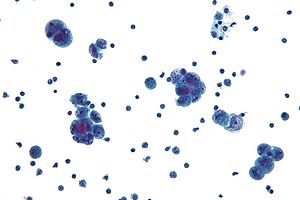
The alternative to the first approach is the identification of biomarkers that are related to the actin cytoskeleton, perhaps in the nature of the lipid or apoprotein isoform that gives the cell membrane deformability. The method measuring by Atomic Force Microscopy is shown with the current method of cytological screening, and I call attention to cells clustered together that have a scant cytoplasm surrounding nuclei occupying 1/2 to 3/4 of the cell radius.  The cells are not anaplastic, but the clumps are suggestive of glnad forming epithelium.
English: Animation showing 3-D nature of clust...

English: Animation showing 3-D nature of cluster. Image:Serous carcinoma 2a – cytology.jpg (Photo credit: Wikipedia)
The cell membrane, also called the plasma memb...

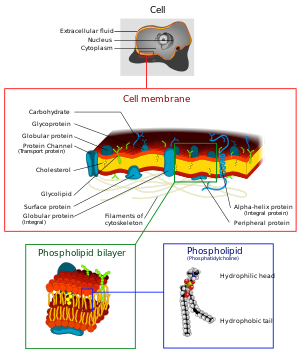
The cell membrane, also called the plasma membrane or plasmalemma, is a semipermeable lipid bilayer common to all living cells. It contains a variety of biological molecules, primarily proteins and lipids, which are involved in a vast array of cellular processes. It also serves as the attachment point for both the intracellular cytoskeleton and, if present, the cell wall. (Photo credit: Wikipedia)

English: AFM bema detection

AFM non contact mode

AFM non contact mode (Photo credit: Wikipedia)

C.  The diagnosis of ovarian cancer can be problematic because it can have a long period of growth undetected.

On the other hand, it is easily accessible once there is reason to suspect it. They are terrible to deal with because they metastasize along the abdominal peritoneum and form a solid cake. It is a problem of location and silence until it is late. Once they do announce a presence on the abdominal wall, there is probably a serous effusion. It was not possible to rely on a single marker, but when CA125 was introduced, Dr. Marguerite Pinto, Chief of Cytology at Bridgeport Hospital-Yale New Haven Health came to the immnunochemistry lab and we worked out a method for analyzing effusions, as we had already done with carcinoembryonic antigen.       The use of CEA and CA125 was published by Pinto and Bernstein as a first that had an impact.  This was followed by a study with the Chief of Oncology, Dr. Martin Rosman, that showed that the 30 month survival of patients post treatment is predicted by the half-life of disappearance of CA125 in serum.  At the time of this writing, I am not sure of the extent of its use 20 years later. History has taught us that adoption can be slow, depending very much on dissemination from major academic medical centers.  On the other hand, concepts can also be stuck at academic medical centers because of a rigid and unprepared mindset in the professional community.  The best example of this is the story of Ignaz Semmelweis, the best student of Rokitansky in Vienna for discovering the cause and prevention of childbirth fever at a time that nursemaids had far better results at obstetrical delivery than physicians.  Contrary to this, Edward Jenner, the best student of John Hunter (anatomist, surgeon, and physician to James Hume), discovered vaccination from the observation that milkmaids did not get smallpox (cowpox was a better alternative).
Only this year a Nobel Prize in Physics was awarded to an Israeli scientist who, working in the US, was unable to convince his associates of his discovery of PSEUDOCRYSTALS. – Diagnostic efficiency of carcinoembryonic antigen and CA125 in the cytological evaluation of effusions. M M Pinto, L H Bernstein, R A Rudolph, D A Brogan, M Rosman Arch Pathol Lab Med 1992; 116(6):626-631 ICID: 825503 Article type: Review article – Immunoradiometric assay of CA 125 in effusions. Comparison with carcinoembryonic antigen. M M Pinto, L H Bernstein, D A Brogan, E Criscuolo Cancer 1987; 59(2):218-222 ICID: 825555 Article type: Review article – Carcinoembryonic antigen in effusions. A diagnostic adjunct to cytology. M M Pinto, L H Bernstein, D A Brogan, E M Criscuolo Acta Cytologica 1987; 31(2):113-118 ICID: 825557

Predictive Modeling

Ovarian Cancer a plot of the CA125 elimination half-life vs the Kullback-Liebler distance

Ca125 half-life vs Kullback Entropy                                                          HL vs Survival KM plot 

Troponin(s) T, I, C  and the contractile apparatus  (contributed by Aviva Lev-Ari, PhD, RN)


For 2012 – 2013 Frontier Contribution in Cardiology on Gene Therapy Solutions for Improving Myocardial Contractility, see

Lev-Ari, A. 8/1/2013 Calcium Cycling (ATPase Pump) in Cardiac Gene Therapy: Inhalable Gene Therapy for Pulmonary Arterial Hypertension and Percutaneous Intra-coronary Artery Infusion for Heart Failure: Contributions by Roger J. Hajjar, MD

http://pharmaceuticalintelligence.com/2013/08/01/calcium-molecule-in-cardiac-gene-therapy-inhalable-gene-therapy-for-pulmonary-arterial-hypertension-and-percutaneous-intra-coronary-artery-infusion-for-heart-failure-contributions-by-roger-j-hajjar/

For explanation of Conduction prior to Myocardial Contractility, see

Lev-Ari, A. 4/28/2013 Genetics of Conduction Disease: Atrioventricular (AV) Conduction Disease (block): Gene Mutations – Transcription, Excitability, and Energy Homeostasis

http://pharmaceuticalintelligence.com/2013/04/28/genetics-of-conduction-disease-atrioventricular-av-conduction-disease-block-gene-mutations-transcription-excitability-and-energy-homeostasis/

The contraction of skeletal muscle is triggered by nerve impulses, which stimulate the release of Ca2+ from the sarcoplasmic reticulum—a specialized network of internal membranes, similar to the endoplasmic reticulum, that stores high concentrations of Ca2+ ions. The release of Ca2+ from the sarcoplasmic reticulum increases the concentration of Ca2+ in the cytosol from approximately 10-7 to 10-5 M. The increased Ca2+ concentration signals muscle contraction via the action of two accessory proteins bound to the actin filaments: tropomyosin and troponin (Figure 11.25). Tropomyosin is a fibrous protein that binds lengthwise along the groove of actin filaments. In striated muscle, each tropomyosin molecule is bound to troponin, which is a complex of three polypeptides: troponin C (Ca2+-binding), troponin I (inhibitory), and troponin T (tropomyosin-binding).

  • When the concentration of Ca2+ is low, the complex of the troponins with tropomyosin blocks the interaction of actin and myosin, so the muscle does not contract.
  • At high concentrations, Ca2+ binding to troponin C shifts the position of the complex, relieving this inhibition and allowing contraction to proceed.

Figure 11.25

Association of tropomyosin and troponins with actin filaments. (A) Tropomyosin binds lengthwise along actin filaments and, in striated muscle, is associated with a complex of three troponins: troponin I (TnI), troponin C (TnC), and troponin T (TnT). In (more…)
Contractile Assemblies of Actin and Myosin in Nonmuscle Cells

Contractile assemblies of actin and myosin, resembling small-scale versions of muscle fibers, are present also in nonmuscle cells. As in muscle, the actin filaments in these contractile assemblies are interdigitated with bipolar filaments of myosin II, consisting of 15 to 20 myosin II molecules, which produce contraction by sliding the actin filaments relative to one another (Figure 11.26). The actin filaments in contractile bundles in nonmuscle cells are also associated with tropomyosin, which facilitates their interaction with myosin II, probably by competing with filamin for binding sites on actin.

Figure 11.26

Contractile assemblies in nonmuscle cells. Bipolar filaments of myosin II produce contraction by sliding actin filaments in opposite directions.

Two examples of contractile assemblies in nonmuscle cells, stress fibers and adhesion belts, were discussed earlier with respect to attachment of the actin cytoskeleton to regions of cell-substrate and cell-cell contacts (see Figures 11.13 and 11.14). The contraction of stress fibers produces tension across the cell, allowing the cell to pull on a substrate (e.g., the extracellular matrix) to which it is anchored. The contraction of adhesion belts alters the shape of epithelial cell sheets: a process that is particularly important during embryonic development, when sheets of epithelial cells fold into structures such as tubes.

The most dramatic example of actin-myosin contraction in nonmuscle cells, however, is provided by cytokinesis—the division of a cell into two following mitosis (Figure 11.27). Toward the end of mitosis in animal cells, a contractile ring consisting of actin filaments and myosin II assembles just underneath the plasma membrane. Its contraction pulls the plasma membrane progressively inward, constricting the center of the cell and pinching it in two. Interestingly, the thickness of the contractile ring remains constant as it contracts, implying that actin filaments disassemble as contraction proceeds. The ring then disperses completely following cell division.

Figure 11.27

Cytokinesis. Following completion of mitosis (nuclear division), a contractile ring consisting of actin filaments and myosin II divides the cell in two.

http://www.ncbi.nlm.nih.gov/books/NBK9961/

2.  Use of Troponin(s) in Diagnosis

Troponins T and I are released into the circulation at the time of an acute coronary syndrome (ACS).  Troponin T was first introduced by Roche (developed in Germany) for the Roche platform as a superior biomarker for identifying acute myocardial infarction (AMI), because of a monoclonal specificity to the cardiac troponin T.  It could not be measured on any other platform (limited license patent), so the Washington University Clinical Chemistry group developed a myocardiocyte specific troponin I that quickly became widely available to Beckman, and was adapted to other instruments.  This was intended to replace the CK isoenzyme MB, that is highly elevated in rhabdomyolysis associated with sepsis or with anesthesia in special cases.

The troponins I and T had a tenfold scale difference, and the Receiver Operator Curve Generated cutoff was accurate for AMI, but had significant elevation with end-stage renal disease.  The industry worked in concert to develop a high sensitivity assay for each because there were some missed AMIs just below the ROC cutoff, which could be interpreted as Plaque Rupture.  However, the concept of plaque rupture had to be reconsidered, and we are left with type1 and type 2 AMI (disregarding the case of post PCI or CABG related).   This led to the current establishment of 3 standard deviations above the lowest measureable level at 10% coefficient of variation.  This has been discussed sufficiently elsewhere.  It did introduce a problem in the use of the test as a “silver bullet” once the finer distinctions aqnd the interest in using the test for prognosis as well as diagnosis.   This is where the use of another protein associated with heart failure came into play – either the B type natriuretic peptide, or its propeptide, N-terminal pro BNP.  The prognostic value of using these markers, secreted by the HEART and acting on the kidneys (sodium reabsorption) has proved useful.  But there has not been a multivariate refinement of the use of a two biomarker approach.  In the following part D, I illustrate what can be done with an algorithmic approach to multiple markers.

Software Agent for Diagnosis of AMI

Isaac E. Mayzlin, Ph.D., David Mayzlin, Larry H. Bernstein, M.D. The so called gold standard of proof of a method is considered the Receiver-Operating Characteristic Curve, developed for detecting “enemy planes or missiles”, and adopted first by radiologists in medicine.  This matches the correct “hits” to the actual calssification and it is generally taught as a plot of sensitivity vs (1 – specifity).  But what if you had no “training” variable?  Work inspired by Eugene Rypka’s bacterial classification led to Rosser Rudolph’s application of the Entropy of Shannon and Weaver to identify meaningful information, referring to what was Kullback-Liebler distance as “effective information”.  This allowed Rudolph and Bernstein to classify using disease biomarkers obtaing the same results as the ROC curve using an apl program.  The same data set was used by Bernstein, Adan et al. previously, and was again used by Izaak Mayzlin from University of Moscow with a new wrinkle.  Dr. Mayzlin created a neural network (Maynet), and then did a traditional NN with training on the data, and also clustered the data using geometric distance clustering and trained on the clusters.  It was interesting to see that the optimum cluster separation was closely related to the number of classes and the accuracy of classification.  An earlier simpler model using the slope of the MB isoenzyme increase and percent of total CK activity was perhaps related to Burton Sobel’s work on CK-MB disappearance rate for infarct size. The main process consists of three successive steps: (1)       clustering performed on training data set, (2)       neural network’s training on clusters from previous step, and (3)       classifier’s accuracy evaluation on testing data. The classifier in this research will be the ANN, created on step 2, with output in the range [0,1], that provides binary result (1 – AMI, 0 – not AMI), using decision point 0.5. Table  1.  Effect  of  selection  of  maximum  distance  on  the  number  of  classes  formed  and  on  the accuracy of recognition by ANN

Clustering Distance Factor F(D = F * R) Number ofClasses Number of Nodes in The Hidden Layers Number of Misrecognized Patterns inThe TestingSet of 43 Percent ofMisrecognized
10.90.80.7 2414135 1,  02,  03,  01,  02,  03,  0 3,  2 3,  2 121121 1 1 2.34.62.32.34.62.3 2.3 2.3

Creatine kinase B-subunit activity in serum in cases of suspected myocardial infarction: a prediction model based on the slope of MB increase and percentage CK-MB activity. L H Bernstein, G Reynoso Clin Chem 1983; 29(3):590-592 ICID: 825549 Diagnosis of acute myocardial infarction from two measurements of creatine kinase isoenzyme MB with use of nonparametric probability estimation. L H Bernstein, I J Good, G I Holtzman, M L Deaton, J Babb.  Clin Chem 1989; 35(3):444-447 ICID: 825570 – Information induction for predicting acute myocardial infarction. R A Rudolph, L H Bernstein, J Babb. Clin Chem 1988; 34(10):2031-2038 ICID: 825568

Related articles

Related articles published on this Open Access Online Scientific Journal, include the following:

Calcium Cycling (ATPase Pump) in Cardiac Gene Therapy: Inhalable Gene Therapy for Pulmonary Arterial Hypertension and Percutaneous Intra-coronary Artery Infusion for Heart Failure: Contributions by Roger J. Hajjar, MD

Aviva Lev-Ari, PhD, RN 8/1/2013

http://pharmaceuticalintelligence.com/2013/08/01/calcium-molecule-in-cardiac-gene-therapy-inhalable-gene-therapy-for-pulmonary-arterial-hypertension-and-percutaneous-intra-coronary-artery-infusion-for-heart-failure-contributions-by-roger-j-hajjar/

High-Sensitivity Cardiac Troponin Assays- Preparing the United States for High-Sensitivity Cardiac Troponin Assays

Larry Bernstein, MD, FCAP 6/13/2013

http://pharmaceuticalintelligence.com/2013/06/13/high-sensitivity-cardiac-troponin-assays/

Dealing with the Use of the High Sensitivity Troponin (hs cTn) Assays

Larry Bernstein and Aviva Lev-Ari  5/18/2013

http://pharmaceuticalintelligence.com/2013/05/18/dealing-with-the-use-of-the-hs-ctn-assays/

Acute Chest Pain/ER Admission: Three Emerging Alternatives to Angiography and PCI – Corus CAD, hs cTn, CCTA

Aviva Lev-Ari  3/10/2013

http://pharmaceuticalintelligence.com/2013/03/10/acute-chest-painer-admission-three-emerging-alternatives-to-angiography-and-pci/

  • Redberg’s conclusions are correct for the initial screening. The issue has been whether to do further testing for low or intermediate risk patients.
  • The most intriguing finding that is not at all surprising is that the CCTA added very little in the suspect group with small or moderate risk.
  • The ultra sensitive troponin threw the ROC out the window
  • The improved assay does pick up minor elevations of troponin in the absence of MI.

Critical Care | Abstract | Cardiac ischemia in patients with septic …
Aviva Lev-Ari  6/26/2013
http://pharmaceuticalintelligence.com/2013/06/26/critical-care-abstract-cardiac-ischemia-in-patients-with-septic/

  • refer to:  Cardiac ischemia in patients with septic shock randomized to vasopressin or norepinephrine

Mehta S, Granton J,  Gordon AC, Cook DJ, et al.
Critical Care 2013, 17:R117   http://dx.doi.org/10.1186/cc12789
Troponin and CK levels, and rates of ischemic ECG changes were similar in the VP and NE groups. In multivariable analysis

  • only APACHE II was associated with 28-day mortality (OR 1.07, 95% CI 1.01-1.14, p=0.033).

Assessing Cardiovascular Disease with Biomarkers

Larry H Bernstein, MD, FCAP 12/25/2012

http://pharmaceuticalintelligence.com/2012/12/25/assessing-cardiovascular-disease-with-biomarkers/

Vascular Medicine and Biology: CLASSIFICATION OF FAST ACTING THERAPY FOR PATIENTS AT HIGH RISK FOR MACROVASCULAR EVENTS Macrovascular Disease – Therapeutic Potential of cEPCs

Aviva Lev-Ari, PhD, RN 8/24/2012

http://pharmaceuticalintelligence.com/2012/08/24/vascular-medicine-and-biology-classification-of-fast-acting-therapy-for-patients-at-high-risk-for-macrovascular-events-macrovascular-disease-therapeutic-potential-of-cepcs/

 PENDING Integration

  • ‘Ryanopathy’: causes and manifestations of RyR2 dysfunction in heart failureCardiovasc Res. 2013;98:240-247,
  • Up-regulation of sarcoplasmic reticulum Ca2+ uptake leads to cardiac hypertrophy, contractile dysfunction and early mortality in mice deficient in CASQ2Cardiovasc Res. 2013;98:297-306,
  • Myocardial Delivery of Stromal Cell-Derived Factor 1 in Patients With Ischemic Heart Disease: Safe and PromisingCirc. Res.. 2013;112:746-747,
  • Circulation Research Thematic Synopsis: Cardiovascular GeneticsCirc. Res.. 2013;112:e34-e50,
  • Gene and cytokine therapy for heart failure: molecular mechanisms in the improvement of cardiac functionAm. J. Physiol. Heart Circ. Physiol.. 2012;303:H501-H512,
  • Ryanodine Receptor Phosphorylation and Heart Failure: Phasing Out S2808 and “Criminalizing” S2814Circ. Res.. 2012;110:1398-1402,

http://circres.ahajournals.org/content/110/5/777.figures-only

Read Full Post »

Telling NO to Cardiac Risk

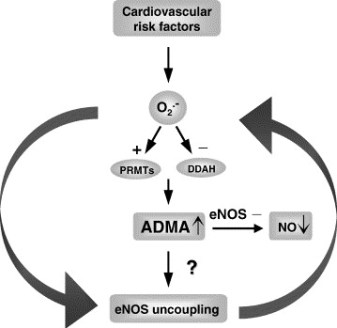
DDAH Says NO to ADMA(1); The DDAH/ADMA/NOS Pathway(2)

Author-Writer-Reporter:  Stephen J. Williams, PhD

Endothelium-derived nitric oxide (NO) has been shown to be vasoprotective.  Nitric oxide enhances endothelial cell survival, inhibits excessive proliferation of vascular smooth muscle cells, regulates vascular smooth muscle tone, and prevents platelets from sticking to the endothelial wall.  Together with evidence from preclinical and human studies, it is clear that impairment of the NOS pathway increases risk of cardiovascular disease (3-5).

This post contains two articles on the physiological regulation of nitric oxide (NO) by an endogenous NO synthase inhibitor asymmetrical dimethylarginine (ADMA) and ADMA metabolism by the enzyme DDAH(1,2).  Previous posts on nitric oxide, referenced at the bottom of the page, provides excellent background and further insight for this posting. In summary plasma ADMA levels are elevated in patients with cardiovascular disease and several large studies have shown that plasma ADMA is an independent biomarker for cardiovascular-related morbidity and mortality(6-8).

admacardiacrisk

admaeffects

Figure 1 A. Cardiac risks of ADMA B. Effects of ADMA (Photo credit: Wikipedia)

ADMA Production and Metabolism

Nuclear proteins such as histones can be methylated on arginine residues by protein-arginine methyltransferases, enzymes which use S-adenosylmethionine as methyl groups.  This methylation event is thought to regulate protein function, much in the way of protein acetylation and phosphorylation (9).  And much like phosphorylation, these modifications are reversible through methylesterases.   The proteolysis of these arginine-methyl modifications lead to the liberation of free guanidine-methylated arginine residues such as L-NMMA, asymmetric dimethylarginine (ADMA) and symmetrical methylarginine (SDMA).

The first two, L-NMMA and ADMA, have been shown to inhibit the activity of the endothelial NOS.  This protein turnover is substantial: for instance the authors note that each day 40% of constitutive protein in adult liver is newly synthesized protein. And in several diseases, such as muscular dystrophy, ischemic heart disease, and diabetes, it has been known since the 1970’s that protein catabolism rates are very high, with corresponding increased urinary excretion of ADMA(10-13).  Methylarginines are excreted in the urine by cationic transport.  However, the majority of ADMA and L-NMMA are degraded within the cell by dimethylaminohydrolase (DDAH), first cloned and purified in rat(14).

endogenous NO inhibitors from pubchem

Figure 2.  Endogenous inhibitors of NO synthase.  Chemical structures generated from PubChem.

DDAH

DDAH specifically hydrolyzes ADMA and L-NMMA to yield citruline and demethylamine and usually shows co-localization with NOS. Pharmacologic inhibition of DDAH activity causes accumulation of ADMA and can reverse the NO-mediated bradykinin-induced relaxation of human saphenous vein.

Two isoforms have been found in human:

  • DDAH1 (found in brain and kidney and associated with nNOS) and
  • DDAH2 (highly expressed in heart, placenta, and kidney and associated with eNOS).

DDAH2 can be upregulated by all-trans retinoic acid (atRA can increase NO production).  Increased reactive oxygen species and possibly homocysteine, a risk factor for cardiovascular disease, can decrease DDAH activity(15,16).

  • The importance of DDAH activity can also be seen in transgenic mice which overexpress DDAH, exhibiting increased NO production, increased insulin sensitivity, and reduced vascular resistance  (17).  Likewise,
  • Transgenic mice, null for the DDAH1, showed increase in blood pressure, decreased NO production, and significant increase in tissue and plasma ADMA and L-NMMA.

amdanosfigure

Figure 3.  The DDAH/ADMA/NOS cycle. Figure adapted from Cooke and Ghebremarian (1).

As mentioned in the article by Cooke and Ghebremariam, the authors state: the weight of the evidence indicates that DDAH is a worthy therapeutic target. Agents that increase DDAH expression are known, and 1 of these, a farnesoid X receptor agonist, is in clinical trials

http://www.interceptpharma.com

An alternate approach is to

  • develop an allosteric activator of the enzyme.  Although
  • development of an allosteric activator is not a typical pharmaceutical approach, recent studies indicate that this may be achievable aim(18).

References:

1.            Cooke, J. P., and Ghebremariam, Y. T. : DDAH says NO to ADMA.(2011) Arteriosclerosis, thrombosis, and vascular biology 31, 1462-1464

2.            Tran, C. T., Leiper, J. M., and Vallance, P. : The DDAH/ADMA/NOS pathway.(2003) Atherosclerosis. Supplements 4, 33-40

3.            Niebauer, J., Maxwell, A. J., Lin, P. S., Wang, D., Tsao, P. S., and Cooke, J. P.: NOS inhibition accelerates atherogenesis: reversal by exercise. (2003) American journal of physiology. Heart and circulatory physiology 285, H535-540

4.            Miyazaki, H., Matsuoka, H., Cooke, J. P., Usui, M., Ueda, S., Okuda, S., and Imaizumi, T. : Endogenous nitric oxide synthase inhibitor: a novel marker of atherosclerosis.(1999) Circulation 99, 1141-1146

5.            Wilson, A. M., Shin, D. S., Weatherby, C., Harada, R. K., Ng, M. K., Nair, N., Kielstein, J., and Cooke, J. P. (2010): Asymmetric dimethylarginine correlates with measures of disease severity, major adverse cardiovascular events and all-cause mortality in patients with peripheral arterial disease. Vasc Med 15, 267-274

6.            Kielstein, J. T., Impraim, B., Simmel, S., Bode-Boger, S. M., Tsikas, D., Frolich, J. C., Hoeper, M. M., Haller, H., and Fliser, D. : Cardiovascular effects of systemic nitric oxide synthase inhibition with asymmetrical dimethylarginine in humans.(2004) Circulation 109, 172-177

7.            Kielstein, J. T., Donnerstag, F., Gasper, S., Menne, J., Kielstein, A., Martens-Lobenhoffer, J., Scalera, F., Cooke, J. P., Fliser, D., and Bode-Boger, S. M. : ADMA increases arterial stiffness and decreases cerebral blood flow in humans.(2006) Stroke; a journal of cerebral circulation 37, 2024-2029

8.            Mittermayer, F., Krzyzanowska, K., Exner, M., Mlekusch, W., Amighi, J., Sabeti, S., Minar, E., Muller, M., Wolzt, M., and Schillinger, M. : Asymmetric dimethylarginine predicts major adverse cardiovascular events in patients with advanced peripheral artery disease.(2006) Arteriosclerosis, thrombosis, and vascular biology 26, 2536-2540

9.            Kakimoto, Y., and Akazawa, S.: Isolation and identification of N-G,N-G- and N-G,N’-G-dimethyl-arginine, N-epsilon-mono-, di-, and trimethyllysine, and glucosylgalactosyl- and galactosyl-delta-hydroxylysine from human urine. (1970) The Journal of biological chemistry 245, 5751-5758

10.          Inoue, R., Miyake, M., Kanazawa, A., Sato, M., and Kakimoto, Y.: Decrease of 3-methylhistidine and increase of NG,NG-dimethylarginine in the urine of patients with muscular dystrophy. (1979) Metabolism: clinical and experimental 28, 801-804

11.          Millward, D. J.: Protein turnover in skeletal muscle. II. The effect of starvation and a protein-free diet on the synthesis and catabolism of skeletal muscle proteins in comparison to liver. (1970) Clinical science 39, 591-603

12.          Goldberg, A. L., and St John, A. C.: Intracellular protein degradation in mammalian and bacterial cells: Part 2. (1976) Annual review of biochemistry 45, 747-803

13.          Dice, J. F., and Walker, C. D.: Protein degradation in metabolic and nutritional disorders. (1979) Ciba Foundation symposium, 331-350

14.          Ogawa, T., Kimoto, M., and Sasaoka, K.: Purification and properties of a new enzyme, NG,NG-dimethylarginine dimethylaminohydrolase, from rat kidney. (1989) The Journal of biological chemistry 264, 10205-10209

15.          Ito, A., Tsao, P. S., Adimoolam, S., Kimoto, M., Ogawa, T., and Cooke, J. P.: Novel mechanism for endothelial dysfunction: dysregulation of dimethylarginine dimethylaminohydrolase. (1999) Circulation 99, 3092-3095

16.          Stuhlinger, M. C., Tsao, P. S., Her, J. H., Kimoto, M., Balint, R. F., and Cooke, J. P. : Homocysteine impairs the nitric oxide synthase pathway: role of asymmetric dimethylarginine.(2001) Circulation 104, 2569-2575

17.          Sydow, K., Mondon, C. E., Schrader, J., Konishi, H., and Cooke, J. P.: Dimethylarginine dimethylaminohydrolase overexpression enhances insulin sensitivity. (2008) Arteriosclerosis, thrombosis, and vascular biology 28, 692-697

18.          Zorn, J. A., and Wells, J. A.: Turning enzymes ON with small molecules. (2010) Nature chemical biology 6, 179-188

Other research papers on Nitric Oxide and Cardiac Risk  were published on this Scientific Web site as follows:

The Nitric Oxide and Renal is presented in FOUR parts:

Part I: The Amazing Structure and Adaptive Functioning of the Kidneys: Nitric Oxide

Part II: Nitric Oxide and iNOS have Key Roles in Kidney Diseases

Part III: The Molecular Biology of Renal Disorders: Nitric Oxide

Part IV: New Insights on Nitric Oxide donors

Cardiac Arrhythmias: A Risk for Extreme Performance Athletes

What is the role of plasma viscosity in hemostasis and vascular disease risk?

Cardiovascular Risk Inflammatory Marker: Risk Assessment for Coronary Heart Disease and Ischemic Stroke – Atherosclerosis.

Endothelial Dysfunction, Diminished Availability of cEPCs, Increasing CVD Risk for Macrovascular Disease – Therapeutic Potential of cEPCs

Biochemistry of the Coagulation Cascade and Platelet Aggregation – Part I

Nitric Oxide Function in Coagulation

Read Full Post »

Reporter: Ritu Saxena, Ph.D.

On December 4, 2012, molecular diagnostic firm Invivoscribe Technologies launched a personalized medicine company. Genection is offering both routine and esoteric genetic tests, exome and whole-genome sequencing, cancer somatic mutation testing, and pharmacogenomics.

Image

Because the Genection model is not payor-driven, it said, it can provide doctors access to genetic tests that are currently unavailable, overlooked, or inaccessible through their patients’ health plans and healthcare institutions.

The privately held company added that it has agreements in place with several CLIA- and CAP-certified laboratories, including ARUP Laboratories, Foundation Medicine, Cypher Genomics, Invivoscribe’s wholly owned subsidiary the Laboratory for Personalized Molecular Medicine and LPMM’s laboratory in Martinsried, Germany. It also has relationships with Illumina and Ambry Genetics and agreements with “a consortium” of genetic counselors.

“In order to make personalized molecular medicine a clinical reality, new platforms need to be developed for the delivery of healthcare. Genection’s mission seeks to accelerate this adoption process,” Genection Chief Medical Officer Bradley Patay said in a statement. “The combination of CLIA-validated genetic testing, whole-exome or whole-genome sequencing, and broad targeted assays, along with critical bioinformatics, analytic tools, and interpretative guidelines will contribute to timely definitive diagnoses for patients with rare, unexplained diseases or complex diseases; in essence, this integration will speed delivery of genomic test results and improve patient care.”

The company profile states that because the cost of genomic sequencing has declined steeply, utilizing deep sequencing of tumors, doctors can now offer targeted treatments to the specific type of cancer for each patient. This personalized approach may offer better treatment options that are tailored for each individual versus conventional approaches.  For example, The Cancer Genome Atlas Research Network found a potential therapeutic target in most squamous cell lung cancers. Genetic testing would also be able to provide insight on drug’s effectiveness and help a physician tailor the dosage and/or select another drug if it’s determined that you have a genetic variant that could affect the drug’s efficacy.

Source:

http://www.genomeweb.com//node/1159221?hq_e=el&hq_m=1425051&hq_l=3&hq_v=e618131fd2

Invivoscribe Technologies: http://www.invivoscribe.com/

Genection: http://www.genection.com/

Read Full Post »

Reporter: Aviva Lev-Ari, PhD, RN

International Consortium Finds 15 Novel Risk Loci for Coronary Artery Disease

“lipid metabolism and inflammation as key biological pathways involved in the genetic pathogenesis of CAD”

Themistocles Assimes from Stanford University Medical Center said in a statement that these findings begin to clear up its role. “Our network analysis of the top approximately 240 genetic signals in this study seems to provide evidence that genetic defects in some pathways related to inflammation are a cause,” he said.

On this Open Access Online Scientific Journal, lipid metabolism and inflammation were researched and exposed in the following entries.

However, it is ONLY,  these 15 Novel Risk Loci for Coronary Artery Disease published on 12/3/2012 that provides the genomics loci and the genetic explanation for the following empirical results obtained in the recent research on Cardiovascular diseases, as present in the second half of this post, below.

Special Considerations in Blood Lipoproteins, Viscosity, Assessment and Treatment

http://pharmaceuticalintelligence.com/2012/11/28/special-considerations-in-blood-lipoproteins-viscosity-assessment-and-treatment/

What is the role of plasma viscosity in hemostasis and vascular disease risk?

http://pharmaceuticalintelligence.com/2012/11/28/what-is-the-role-of-plasma-viscosity-in-hemostasis-and-vascular-disease-risk/

PIK3CA mutation in Colorectal Cancer may serve as a Predictive Molecular Biomarker for adjuvant Aspirin therapy

http://pharmaceuticalintelligence.com/2012/11/28/pik3ca-mutation-in-colorectal-cancer-may-serve-as-a-predictive-molecular-biomarker-for-adjuvant-aspirin-therapy/

Peroxisome proliferator-activated receptor (PPAR-gamma) Receptors Activation: PPARγ transrepression for Angiogenesis in Cardiovascular Disease and PPARγ transactivation for Treatment of Diabetes

http://pharmaceuticalintelligence.com/2012/11/13/peroxisome-proliferator-activated-receptor-ppar-gamma-receptors-activation-pparγ-transrepression-for-angiogenesis-in-cardiovascular-disease-and-pparγ-transactivation-for-treatment-of-dia/

Positioning a Therapeutic Concept for Endogenous Augmentation of cEPCs — Therapeutic Indications for Macrovascular Disease: Coronary, Cerebrovascular and Peripheral

http://pharmaceuticalintelligence.com/2012/08/29/positioning-a-therapeutic-concept-for-endogenous-augmentation-of-cepcs-therapeutic-indications-for-macrovascular-disease-coronary-cerebrovascular-and-peripheral/

Cardiovascular Risk Inflammatory Marker: Risk Assessment for Coronary Heart Disease and Ischemic Stroke – Atherosclerosis.

http://pharmaceuticalintelligence.com/2012/10/30/cardiovascular-risk-inflammatory-marker-risk-assessment-for-coronary-heart-disease-and-ischemic-stroke-atherosclerosis/

The Essential Role of Nitric Oxide and Therapeutic NO Donor Targets in Renal Pharmacotherapy

http://pharmaceuticalintelligence.com/2012/11/26/the-essential-role-of-nitric-oxide-and-therapeutic-no-donor-targets-in-renal-pharmacotherapy/

Nitric Oxide Function in Coagulation

http://pharmaceuticalintelligence.com/2012/11/26/nitric-oxide-function-in-coagulation/Nitric Oxide Function in Coagulation

15 Novel Risk Loci for Coronary Artery Disease

December 03, 2012

NEW YORK (GenomeWeb News) – A large-scale association analysis of coronary artery disease has detected 15 new loci associated with risk of the disease, bringing the total number of known risk alleles to 46. As the international CARDIoGRAMplusC4D Consortium reported in Nature Genetics yesterday, the study also found that lipid metabolism and inflammation pathways may play a part in coronary artery disease pathogenesis.

“The number of genetic variations that contribute to heart disease continues to grow with the publication of each new study,” Peter Weissberg from the British Heart Foundation, a co-sponsor of the study, said in a statement. “This latest research further confirms that blood lipids and inflammation are at the heart of the development of atherosclerosis, the process that leads to heart attacks and strokes.”

For its study, the consortium, which was comprised of more than 180 researchers, performed a meta-analysis of data from the 22,233 cases and 64,762 controls of the CARDIoGRAM genome-wide association study and of the 41,513 cases and 65,919 controls from 34 additional studies of people of European and South Asian descent. Using the custom Metabochip array from Illumina, the team tested SNPs for disease association in those populations. The SNPs that reached significance in that stage of the study were then replicated using data from a further four studies.

From this, the team identified 15 new loci with genome-wide significance for risk of coronary artery disease, in addition to known risk loci.

The consortium also reported an additional 104 SNPs that appeared to be associated with coronary artery disease but did not meet the cut-off for genome-wide significance.

Then looking to other known risk factors for coronary artery disease, like blood pressure and diabetes, the researchers assessed whether any of those risk factors were associated with the risk loci. Of the 45 known risk loci, 12 were associated with blood lipid content and five with blood pressure. And while people with type 2 diabetes have a higher risk of developing coronary artery disease, none of the known risk loci were linked to diabetic traits.

An analysis of the pathways that SNPs linked to coronary artery disease fall in revealed that many of them are involved in lipid metabolism and inflammation pathways — 10 risk loci were found to be involved in lipid metabolism. “Our network analysis identified lipid metabolism and inflammation as key biological pathways involved in the genetic pathogenesis of CAD,” the researchers wrote in the paper. “Indeed, there was significant crosstalk between the lipid metabolism and inflammation pathways identified.”

The role of inflammation in coronary artery disease has been up for debate — a debate centering on whether it is a cause or a consequence of the disease — and study author Themistocles Assimes from Stanford University Medical Center said in a statement that these findings begin to clear up its role. “Our network analysis of the top approximately 240 genetic signals in this study seems to provide evidence that genetic defects in some pathways related to inflammation are a cause,” he said.

Related Stories

SOURCE:

http://www.genomeweb.com//node/1159041?hq_e=el&hq_m=1424172&hq_l=3&hq_v=09187c3305


GWAS, Meta-Analyses Uncover New Coronary Artery Disease Risk Loci

March 07, 2011

By a GenomeWeb staff reporter

NEW YORK (GenomeWeb News) – Three new studies — including the largest meta-analysis yet of coronary artery disease — have identified dozens of coronary artery disease risk loci in European, South Asian, and Han Chinese populations. All three papers appeared online yesterday in Nature Genetics.

For the first meta-analysis, members of a large international consortium known as the Coronary Artery Disease Genome-wide Replication and Meta-Analysis study, or CARDIoGRAM, sifted through data on more than 135,000 individuals from the UK, US, Europe, Iceland, and Canada. In so doing, they tracked down nearly two-dozen new and previously reported coronary artery disease risk loci.

Because only a few of these loci have been linked to other heart disease-related risk factors such as high blood pressure, those involved say the work points to yet unexplored heart disease pathways.

“[W]e have discovered several new genes not previously known to be involved in the development of coronary heart disease, which is the main cause of heart attacks,” co-corresponding author Nilesh Samani, a cardiology researcher affiliated with the University of Leicester and Glenfield Hospital, said in a statement. “Understanding how these genes work, which is the next step, will vastly improve our knowledge of how the disease develops, and could ultimately help to develop new treatments.”

Samani and his co-workers identified the loci by bringing together data on 22,233 individuals with coronary artery disease and 64,762 unaffected controls. The participants, all of European descent, had been sampled through 14 previous genome-wide association studies and genotyped at an average of about 2.5 million SNPs each. The team then assessed the top candidate SNPs found in this initial analysis in another 56,582 individuals (roughly half of whom had coronary artery disease).

The search not only confirmed associations between coronary artery disease and 10 known loci, but also uncovered associations with 13 other loci. All but three of these were distinct from loci previously implicated in other heart disease risk factors such as hypertension or cholesterol levels, researchers noted.

Consequently, those involved in the study say that exploring the biological functions of the newly detected genes could offer biological clues about how heart disease develops — along with strategies for preventing and treating it.

The genetic complexity of coronary artery disease being revealed by such studies has diagnostic implications as well, according to some.

“Each new gene identified brings us a small step closer to understanding the biological mechanisms of cardiovascular disease development and potential new treatments,” British Heart Foundation Medical Director Peter Weissberg, who was not directly involved in the new studies, said in a statement. “However, as the number of genes grows, it takes us further away from the likelihood that a simple genetic test will identify those most of risk of suffering a heart attack or a stroke.”

Meanwhile, researchers involved with Coronary Artery Disease Genetics Consortium did their own meta-analysis using data collected from four GWAS to find five coronary artery-associated loci in European and South Asian populations.

The group initially looked at 15,420 individuals with coronary artery disease — including 6,996 individuals from South Asia and 8,424 from Europe — and 15,062 unaffected controls. Participants were genotyped at nearly 575,000 SNPs using Illumina BeadChips. Most South Asian individuals tested came from India and Pakistan, researchers noted, while European samples came from the UK, Italy, Sweden, and Germany.

For the validation phase of the study, the team focused in on 59 SNPs at 50 loci from the discovery group that seemed most likely to yield authentic new disease associations. These variants were assessed in 10 replication groups comprised of 21,408 individuals with coronary artery disease and 19,185 individuals without coronary artery disease.

All told, researchers found five loci that seem to influence coronary artery disease risk in the European and South Asian populations: one locus each on chromosomes 7, 11, and 15, along with a pair of loci on chromosome 10.

The team didn’t see significant differences in the frequency or effect sizes of these newly identified variants between the European and South Asian populations, though they emphasized that their approach may have missed some potential risk variants, particularly in those of South Asian descent.

“[C]urrent genome-wide arrays may not capture all important variants in South Asians,” they explained, “Nevertheless, all of the known and new variants were significantly associated with [coronary artery disease] risk in both the European and South Asian populations in the current study, indicating the importance of genes associated with [coronary artery disease] beyond the European ancestry groups in which they were first defined.”

Finally, using a three-stage discovery, validation, and replication GWAS approach, Chinese researchers identified a single coronary artery disease risk variant in the Han Chinese population.

In this first phase of that study, researchers tested samples from 230 cases and 230 controls from populations in Beijing and in China’s Hubei province that were genotyped at Genentech and CapitalBio using Affymetrix Human SNP5.0 arrays.

From the nearly three-dozen SNPs identified in the first stage of the study, they narrowed in on nine suspect variants. After finding linkage disequilibrium between two of the variants, they did validation testing on eight of these in 572 individuals with coronary artery disease and 436 unaffected controls, all from Hubei province.

That analysis implicated a single chromosome 6 SNP called rs6903956 in coronary artery disease — a finding the team ultimately replicated in another group of 2,668 coronary artery disease cases and 3,917 controls from three independent populations in Hubei, Shandong province, and northern China.

The team’s subsequent experiments suggest that the newly detected polymorphism, which falls within a putative gene called C6orf105 on chromosome 6, curbs the expression of this gene. The functional consequences of this shift in expression, if any, are yet to be determined.

Because C6orf105 shares some identity and homology with an androgen hormone inducible gene known as AIG1, those involved in the study argue that it may be worthwhile to investigate possible ties between C6orf105 expression, androgen signaling, and coronary artery disease.

“Androgen has previously been reported to be associated the pathogenesis of atherosclerosis,” they wrote. “Future studies are needed to explore whether C6orf105 expression can be induced by androgen and to further determine the potential mechanism of [coronary artery disease] associated with decreased C6orf105 expression.”

 SOURCE:

Read Full Post »

Abdominal Aortic Aneurysm: Endovascular repair and open repair resulted in similar long-term survival

Reporter: Aviva Lev-Ari, PhD, RN


Long-Term Comparison of Endovascular and Open Repair of Abdominal Aortic Aneurysm

Frank A. Lederle, M.D., Julie A. Freischlag, M.D., Tassos C. Kyriakides, Ph.D., Jon S. Matsumura, M.D., Frank T. Padberg, Jr., M.D., Ted R. Kohler, M.D., Panagiotis Kougias, M.D., Jessie M. Jean-Claude, M.D., Dolores F. Cikrit, M.D., and Kathleen M. Swanson, M.S., R.Ph. for the OVER Veterans Affairs Cooperative Study Group

N Engl J Med 2012; 367:1988-1997  November 22, 2012DOI: 10.1056/NEJMoa1207481

BACKGROUND

Whether elective endovascular repair of abdominal aortic aneurysm reduces long-term morbidity and mortality, as compared with traditional open repair, remains uncertain.

METHODS

We randomly assigned 881 patients with asymptomatic abdominal aortic aneurysms who were candidates for both procedures to either endovascular repair (444) or open repair (437) and followed them for up to 9 years (mean, 5.2). Patients were selected from 42 Veterans Affairs medical centers and were 49 years of age or older at the time of registration.

RESULTS

More than 95% of the patients underwent the assigned repair. For the primary outcome of all-cause mortality, 146 deaths occurred in each group (hazard ratio with endovascular repair versus open repair, 0.97; 95% confidence interval [CI], 0.77 to 1.22; P=0.81). The previously reported reduction in perioperative mortality with endovascular repair was sustained at 2 years (hazard ratio, 0.63; 95% CI, 0.40 to 0.98; P=0.04) and at 3 years (hazard ratio, 0.72; 95% CI, 0.51 to 1.00; P=0.05) but not thereafter. There were 10 aneurysm-related deaths in the endovascular-repair group (2.3%) versus 16 in the open-repair group (3.7%) (P=0.22). Six aneurysm ruptures were confirmed in the endovascular-repair group versus none in the open-repair group (P=0.03). A significant interaction was observed between age and type of treatment (P=0.006); survival was increased among patients under 70 years of age in the endovascular-repair group but tended to be better among those 70 years of age or older in the open-repair group.

CONCLUSIONS

Endovascular repair and open repair resulted in similar long-term survival. The perioperative survival advantage with endovascular repair was sustained for several years, but rupture after repair remained a concern. Endovascular repair led to increased long-term survival among younger patients but not among older patients, for whom a greater benefit from the endovascular approach had been expected. (Funded by the Department of Veterans Affairs Office of Research and Development; OVER ClinicalTrials.gov number,NCT00094575.)

Supported by the Cooperative Studies Program of the Department of Veterans Affairs Office of Research and Development.

Disclosure forms provided by the authors are available with the full text of this article at NEJM.org.

SOURCE INFORMATION

From the Veterans Affairs Medical Centers in Minneapolis (F.A.L.), Baltimore (J.A.F.), West Haven, CT (T.C.K.), Madison, WI (J.S.M.), East Orange, NJ (F.T.P.), Seattle (T.R.K.), Houston (P.K.), Cleveland (J.M.J.-C.), Indianapolis (D.F.C.), and Albuquerque, NM (K.M.S.).

Address reprint requests to Dr. Lederle at the Department of Medicine (III-0), Veterans Affairs Medical Center, 1 Veterans Dr., Minneapolis, MN 55417, or at frank.lederle@va.gov.

The members of the Open versus Endovascular Repair Trial (OVER) study group are listed in the Supplementary Appendix, available at NEJM.org.


Read Full Post »

Diagnosing Lung Cancer in Exhaled Breath using Gold Nanoparticles

Reporter-curator: Tilda Barliya PhD

Authors: Gang Peng, Ulrike Tisch, Orna Adams1, Meggie Hakim, Nisrean Shehada, Yoav Y. Broza, Salem Billan, Roxolyana Abdah-Bortnyak, Abraham Kuten & Hossam Haick. (NATURE NANOTECHNOLOGY | VOL 4 | OCTOBER 2009 |)

Abstract:

Conventional diagnostic methods for lung cancer1,2 are unsuitable for widespread screening, because they are expensive and occasionally miss tumours. Gas chromatography/mass spectrometry studies have shown that several volatile organic compounds, which normally appear at levels of 1–20 ppb in healthy human breath, are elevated to levels between 10 and 100 ppb in lung cancer patients. Here we show that an array of sensors based on gold nanoparticles can rapidly distinguish the breath of lung cancer patients from the breath of healthy individuals in an atmosphere of high humidity. In combination with solidphase microextraction, gas chromatography/mass spectrometry was used to identify 42 volatile organic compounds that represent lung cancer biomarkers. Four of these were used to train and optimize the sensors, demonstrating good agreement between patient and simulated breath samples. Our results show that sensors based on gold nanoparticles could form the basis of an inexpensive and non-invasive diagnostic tool for lung cancer. (http://www.nature.com/nnano/journal/v4/n10/abs/nnano.2009.235.html) (lnbd.technion.ac.il/NanoChemistry/SendFile.asp?DBID=1…1…) Nanosensors Detect Cancer Breath

Introduction:

Lung cancer accounts for 28% of cancer-related deaths. Approximately 1.3 million people die worldwide every year. Breath testing is a fast, non-invasive diagnostic method that links specific volatile organic compounds (VOCs) in exhaled breath to medical conditions. Gas chromatography/mass spectrometry (GC-MS), ion flow tube mass spectrometry10, laser absorption spectrometry,infrared spectroscopy, polymer-coated surface acoustic wave sensors and coated quartz crystal microbalance sensors have been used for this purpose. However, these techniques are expensive, slow, require complex instruments and, furthermore, require pre-concentration of the biomarkers (that is, treating the biomarkers by a process to increase the relative concentration of the biomarkers to a level that can be detected by the specific technique) to improve detection.

Here, we report a simple, inexpensive, portable sensing technology to distinguish the breath of lung cancer patients from healthy subjects without the need to pre-treat the exhaled breath in any way (see also refs 14–16 for the diagnosis of lung cancer by sensing technology that is based on arrays of polymer/carbon black sensors). Our study consisted of four phases and included volunteers aged 28–60 years. Samples were collected from 56 healthy controls and 40 lung cancer patients after clinical diagnosis using conventional methods and before chemotherapy or other treatment.

In the first phase, we collected exhaled alveolar breath of lung cancer patients and healthy subjects using an ‘offline’ method. This method was designed to avoid potential errors arising from the failure to distinguish endogenous compounds from exogenous ones in the breath and to exclude nasal entrainment of the gas. Exogenous VOCs can be either directly absorbed through the lung via the inhaled breath or indirectly through the blood or skin. Endogenous VOCs are generated by cellular biochemical processes in the body and may provide insight into the body’s function

In the second phase, we identified the VOCs that can serve as biomarkers for lung cancer in the breath samples and determined their relative compositions, using GC-MS in combination with solidphase microextraction (SPME). GC-MS analysis identified over 300–400 different VOCs per breath sample, with .87% reproducibility for a specific volunteer examined multiple times over a period of six months. Forward stepwise discriminant analysis identified 33 common VOCs that appear in at least 83% of the patients but in fewer than 83% of the healthy subjects

The compounds that were observed in both healthy breath and lung cancer breath were presented not only at different concentrations but also in distinctively different mixture compositions.

Further forward stepwise discriminant analysis revealed nine uncommon VOCs that appear in at least 83% of the patients but not in the majority (83%) of healthy subjects. This additional class of VOCs has not been recognized in earlier GC-MS studies.

In spite of these advances in the GC-MS analysis, these data certainly do not account for all the VOCs present in the exhaled breath samples, because the pre-concentration technique can be thought of as a solid phase that extracts only part of the analytes present in the examined phase and, subsequently, releases only part of the extracted analytes.

So, it is likely that the actual mixture of VOCs to which, for example, an array of gold nanoparticle sensors would be responding  is different from that obtained by GC-MS.

In the third phase of this study we designed an array of nine crossreactive chemiresistors, in which each sensor was widely responsive to a variety of odorants for the detection of lung cancer by means of breath testing. We used chemiresistors based on assemblies of 5-nm gold nanoparticles  with different organic functionalities (dodecanethiol, decanethiol, 1-butanethiol, 2-ethylhexanethiol, hexanethiol, tert-dodecanethiol, 4-methoxy-toluenethiol, 2-mercaptobenzoxazole and 11-mercapto-1-undecanol).Diagnosing lung cancer in exhaled breath

Chemiresistors based on functionalized gold nanoparticles combine the advantages of organic specificity with the robustness and processability of inorganic materials.

The response of the nine-sensor array to both healthy and lung cancer breath samples was analysed using principal component analysis . It can be seen that there is no overlap of the lung cancer and healthy patterns.

The PCA of the healthy control group revealed that the set of gold nanoparticles sensors was not influenced by characteristics such as gender, age or smoking habits, thus strengthening the ability of the sensors to discriminate between healthy and cancerous breath. Experiments with a wider population of volunteers to thoroughly probe the influence of diet, alcohol consumption,metabolic state and genetics are under way and will be published elsewhere.

Summary:

To summarize, we have demonstrated that an array of chemiresistors based on functionalized gold nanoparticles in combination with pattern recognition methods can distinguish between the breath of lung cancer patients and healthy controls, without the need for dehumidification or pre-concentration of the lung cancer biomarkers. Our results show great promise for fast, easy and cost-effective diagnosis and screening of lung cancer. The developed devices are expected to be relatively inexpensive, portable and amenable to use in widespread screening, making them potentially valuable in saving millions of lives every year. Given the impact of the rising incidence of cancer on health budgets worldwide, the proposed technology will be a significant saving for both private and public health expenditures. The potential exists for using the proposed technology to diagnose other conditions and diseases, which could mean additional cost reductions and enhanced opportunities to save lives.

Ref:

1. Gang Peng, Ulrike Tisch, Orna Adams, Meggie Hakim, Nisrean Shehada, Yoav Y. Broza, Salem Billan, Roxolyana Abdah-Bortnyak, Abraham Kuten& Hossam Haick. Diagnosing lung cancer in exhaled breath using gold nanoparticles. Nature Nanotechnology 4, 669 – 673 (2009) http://www.nature.com/nnano/journal/v4/n10/abs/nnano.2009.235.html

2. http://lungcancer.about.com/od/diagnosisoflungcancer/a/diagnosislungca.htm

3. http://metabolomx.com/2011/12/15/metabolomx-test-detects-lung-cancer-from-breath/

4. http://www.chestnet.org/accp/pccsu/medical-applications-exhaled-breath-analysis-and-testing?page=0,3


Read Full Post »

« Newer Posts - Older Posts »