Feeds:
Posts
Comments

Posts Tagged ‘genomics’

Cardiology, Genomics and Individualized Heart Care: Framingham Heart Study (65 y-o study) & Jackson Heart Study (15 y-o study)

Cardiology, Genomics and Individualized Heart Care

Curator: Aviva Lev-Ari, PhD, RN

Article ID #90: Cardiology, Genomics and Individualized Heart Care: Framingham Heart Study (65 y-o study) & Jackson Heart Study (15 y-o study). Published on 12/1/2014

WordCloud Image Produced by Adam Tubman


The topic of Cardiology, Genomics and Individualized Heart Care is been developed in the following forthcoming e-Book on a related subject matter:

Curators: Larry H Bernstein, MD, FCAP and Aviva Lev-Ari, PhD, RN

This e-Book has the following Parts:

PART 1
Genomics and Medicine

Introduction to Volume Three
1.1: Genomics and Medicine: The Physician’s View
1.2: Ribozymes and RNA Machines – Work of Jennifer A. Doudn
1.3: Genomics and Medicine: The Geneticist’s View
1.4: Genomics in Medicine – Establishing a Patient-Centric View of Genomic Data

PART 2
Epigenetics- Modifiable Factors Causing Cardiovascular Diseases

2.1 Diseases Etiology

2.1.1 Environmental Contributors Implicated as Causing Cardiovascular Diseases
2.1.2 Diet: Solids and Fluid Intake
2.1.3 Physical Activity and Prevention of Cardiovascular Diseases
2.1.4 Psychological Stress and Mental Health: Risk for Cardiovascular Diseases
2.1.5 Correlation between Cancer and Cardiovascular Diseases
2.1.6 Medical Etiologies for Cardiovascular Diseases: Evidence-based Medicine – Leading DIAGNOSES of Cardiovascular Diseases, Risk Biomarkers and Therapies
2.1.7 Signaling Pathways
2.1.8 Proteomics and Metabolomics

2.2 Assessing Cardiovascular Disease with Biomarkers

2.2.1 Issues in Genomics of Cardiovascular Diseases
2.2.2 Endothelium, Angiogenesis, and Disordered Coagulation
2.2.3 Hypertension BioMarkers
2.2.4 Inflammatory, Atherosclerotic and Heart Failure Markers
2.2.5 Myocardial Markers

2.3  Therapeutic Implications: Focus on Ca(2+) signaling, platelets, endothelium

2.3.1 The Centrality of Ca(2+) Signaling and Cytoskeleton Involving Calmodulin Kinases and Ryanodine Receptors

2.3.2 Platelets in Translational Research ­ 2

2.3.3 The Final Considerations of the Role of Platelets and Platelet Endothelial Reactions in Atherosclerosis

2.3.4 Nitric Oxide Synthase Inhibitors (NOS-I)

2.3.5 Resistance to Receptor of Tyrosine Kinase

2.3.6 Oxidized Calcium Calmodulin Kinase and Atrial Fibrillation

2.3.7 Advanced Topics in Sepsis and the Cardiovascular System at its End Stage

2.4 Comorbidity of Diabetes and Aging

PART 3
Determinants of Cardiovascular Diseases
Genetics, Heredity and Genomics Discoveries

Introduction
3.1 Why cancer cells contain abnormal numbers of chromosomes (Aneuploidy)
3.2 Functional Characterization of Cardiovascular Genomics: Disease Case Studies @ 2013 ASHG
3.3 Leading DIAGNOSES of Cardiovascular Diseases covered in Circulation: Cardiovascular Genetics, 3/2010 – 3/2013
3.4  Commentary on Biomarkers for Genetics and Genomics of Cardiovascular Disease

PART 4
Individualized Medicine Guided by Genetics and Genomics Discoveries

4.1 Preventive Medicine: Cardiovascular Diseases
4.2 Gene-Therapy for Cardiovascular Diseases
4.3 Congenital Heart Disease/Defects
4.4 Pharmacogenomics for Cardiovascular Diseases

SOURCE

http://pharmaceuticalintelligence.com/biomed-e-books/series-a-e-books-on-cardiovascular-diseases/volume-three-etiologies-of-cardiovascular-diseases-epigenetics-genetics-genomics/

The Next Frontier in Heart Care

Research Aims to Personalize Treatment With Genetics

Nov. 25, 2013 7:18 p.m. ET

VIEW VIDEO

http://online.wsj.com/news/articles/SB10001424052702304281004579220373600912930#!

Two influential heart studies are joining forces to bring the power of genetics and other 21st century tools to battle against heart disease and stroke. Ron Winslow and study co-director Dr. Vasan Ramachandran explain. Photo: Shubhangi Ganeshrao Kene/Corbis.

Scientists from two landmark heart-disease studies are joining forces to wield the power of genetics in battling the leading cause of death in the U.S.

Cardiologists have struggled in recent years to score major advances against heart disease and stroke. Although death rates have been dropping steadily since the 1960s, progress combating the twin diseases has plateaued by other measures.

Genetics has had a profound impact on cancer treatment in recent years. Now, heart-disease specialists hope genetics will reveal fresh insight into the interaction between a

  • person’s biology,
  • living habits and
  • medications

that can better predict who is at risk of a heart attack or stroke.

“There’s a promise of new treatments with this research,” said Daniel Jones, chancellor of the University of Mississippi and former principal investigator of the 15-year-old Jackson Heart Study, a co-collaborator in the new genetics initiative.

Scienc e Source /Photo Researchers Inc. (hearts); below, l-r: Boston University; Robert Jordan/Univ. of Miss.; Jay Ferchaud/Univ. of Miss Medical Center

Prevention efforts also could improve with the help of genetics research, Dr. Jones said. For example, an estimated 75 million Americans currently have high blood pressure, or hypertension, but only about half of those are able to control it with medication. It can take months of trial-and-error for a doctor to get the right dose or combination of pills for a patient. Researchers hope genetic and other information might enable doctors to identify subgroups of hypertension that respond to specific treatments and target patients with an appropriate therapy.

Also collaborating on the genetics project is the 65-year-old Framingham Heart Study. Its breakthrough findings decades ago linked heart disease to such factors as smoking, high blood pressure and high cholesterol. Framingham findings have been a foundation of cardiovascular disease prevention policy for a half-century.

More than 15,000 people have participated in the Framingham study. The Jackson study, with more than 5,000 participants, was launched in 1998 to better understand risk factors in African-Americans, who were underrepresented in Framingham and who bear a higher burden of cardiovascular disease than the rest of the population. Both studies are funded by the National Heart, Lung, and Blood Institute, part of the National Institutes of Health.

Exactly how the collaboration, announced last week, will proceed hasn’t been determined. One promising area is the “biobank,” the collection of more than one million blood and other biological samples gathered during biennial checkups of Framingham study participants going back more than a half century.

The samples are stored in freezers in an underground earthquake-proof facility in Massachusetts, said Vasan Ramachandran, a Boston University scientist who takes over at the beginning of next year as principal investigator of the Framingham Heart Study. Another 40,000 samples from the Jackson study are kept in freezers in Vermont. By subjecting samples to DNA sequencing and other tests, researchers say they may be able to identify variations linked to progression of cardiovascular disease—or protection from it.

Each study is likely to enroll new participants as part of the collaboration to allow tracking of risk factors and diet and exercise habits, for instance, in real time instead of only during infrequent checkups.

Heart disease is linked to about 800,000 deaths a year in the U.S. In 2010, some 200,000 of those deaths could have been avoided, including more than 112,300 deaths among people younger than 65, according to a recent analysis by the Centers for Disease Control and Prevention. But those avoidable deaths reflected a 3.8% per year decline in mortality rates during the previous 10 years.

Now, widespread prevalence of obesity and diabetes threatens to undermine such gains. And a large gap remains between how white patients and minorities—especially African-Americans—benefit from effective strategies.

There have been few new transformative cardiovascular treatments since the mid-1980s to early 1990s, when a stream of large-scale trials of new agents ranging from clot-busters to treat heart attacks to the mega class of statins electrified the cardiology field with evidence of significant improvements in survival from the disease. One reason: Some of those remedies have proven tough to beat with new treatments.

What’s more, use of the current menu of medicines for reducing heart risk remains an imprecise art. Besides

  • blood pressure drugs,
  • cholesterol-lowering statins

also are widely prescribed. Drug-trial statistics show that to prevent a single first heart attack in otherwise healthy patients can require prescribing a statin to scores of patients, but no one knows for sure who actually benefits and who doesn’t.

“It would be great if we could make some more paradigm-shifting discoveries,” said Michael Lauer, director of cardiovascular sciences at the NHLBI, which is a part of the National Institutes of Health.

Finding new treatments isn’t the only aim of the new project. “You could use existing therapies smarter,” said Joseph Loscalzo, chairman of medicine at Brigham and Women’s Hospital in Boston.

The American Heart Association launched the initiative and has committed $30 million to it over the next five years. The AHA sees the project as critical to its goal to achieve a 20% improvement in cardiovascular health in the U.S. while also reducing deaths from heart disease and stroke by 20% for the decade ending in 2020, said Nancy Brown, the nonprofit organization’s chief executive.

The Jackson study has already identified characteristics of cardiovascular risk among African-American patients “that may have promise for new insights” in a collaborative effort, said Adolfo Correa, professor of medicine and pediatrics at University of Mississippi Medical Center and interim director of the Jackson study.

For instance, there is a higher prevalence of obesity among Jackson participants than seen in the Framingham cohorts. Obesity is associated with high blood pressure, diabetes and cardiovascular risk. Diabetes is also more prevalent among blacks than whites.

But African-Americans of normal weight appear to have higher rates of hypertension and diabetes than whites of normal weight. “The question is, should [measures] for defining diabetes be different or the same for the [different] populations and are they associated with the same risk of cardiovascular disease?” said Dr. Correa. The collaboration, he said, may provide better comparisons.

Researchers, who plan to use tools other than genetics, think more might be learned about blood pressure and heart and stroke risk by monitoring patients in real time using mobile devices rather than taking readings only in periodic office visits. For example, high blood pressure during sleep or spikes during exercise could indicate risks that don’t show up in a routine measurement in the doctors’ office.

A big challenge is making sense of the huge amounts of data involved in sequencing DNA and linking it to

  • medical records,
  • diet and
  • exercise habits and other variables that influence risk.

“The analytical methods for sorting out these complex relationships are still in evolution,” said Dr. Loscalzo, of Brigham and Women’s Hospital. “The cost of sequencing is getting cheaper and cheaper. The hard part is analyzing the data.”

Write to Ron Winslow at ron.winslow@wsj.com

SOURCE

http://online.wsj.com/news/articles/SB10001424052702304281004579220373600912930#!

The e-Reader is advised to to review tightly related articles in

http://pharmaceuticalintelligence.com/biomed-e-books/series-a-e-books-on-cardiovascular-diseases/volume-three-etiologies-of-cardiovascular-diseases-epigenetics-genetics-genomics/

Read Full Post »

Life Sciences Circle Event: Next omics – Personalized Medicine beyond Genomics, December 11, 2013 5:30-8:30PM, The Broad Institute, Cambridge

Reporter: Aviva Lev-Ari, PhD, RN

December 11, 2013: 5:30pm – 8:30pm

 Over the past decade, the genomics revolution has led to the creation of numerous groundbreaking personalized therapies as well as multiple diagnostic and therapeutic targets.  But what will the next field of biology be similar to that which created the genomics revolution? Join us to learn from thought leaders of several Cambridge-based “’omics” companies and institutions as they discuss their role in improving therapeutic effectiveness, realizing potential reductions in adverse effects,  and the related promises of cost-effectiveness and efficiencies associated with these advances.  We will gain insight from viewing the unique application of epigenetics, metabolomics, microbiomics, proteomics and more from these players to address our individual targeted medical needs and challenges.  What are the challenges of commercializing new technologies and new areas of basic biological research?   Will the next group of ‘omics contribute to the future of personalized therapies and ultimately improve healthcare outcomes and cost-effectiveness in our complex, expensive healthcare system?
Register

Panelists:

Clary Clish, PhD, Director of Metabolite Profiling, Broad Institute

Bernat Olle, PhD, Principal, PureTech

Robert Copeland, PhD, Executive Vice President and Chief Scientific Officer, Epizyme, Inc.

Edward Driggers, PhD, Senior Director, Cell Metabolism, Agios Pharmaceuticals, Inc.

http://www.mitforumcambridge.org/events/life-sciences-circle-event-next-omics-personalized-medicine-beyond-genomics/


Read Full Post »

Landscape of Cardiac Biomarkers for Improved Clinical Utilization

Curator and Author: Larry H Bernstein, MD, FCAP

Curation

This reviewer has been engaged in the development, the application, and the validation of cardiac biomarkers for over 30 years. There has been a nonlinear introduction of new biomarkers in that period, with an explosion of methods discovery and large studies to validate them in concert with clinical trials. The improvement of interventional methods, imaging methods, and the unraveling of patient characteristics associated with emerging cardiovascular disease is both cause for alarm (technology costs) and for raised expectations for both prevention, risk reduction, and treatment. What is strikingly missing is the kind of data analyses on the population database that could alleviate the burden of physician overload. It is an urgent requirement for the EHR, and it needs to be put in place to facilitate patient care.

Introduction

This is a journey through the current status of biochemical markers in cardiac evaluation. 

In the traditional use of cardiac biomarkers, the is a timed blood sampling from the decubital fossa. This was the case with alanine aminotransferase (AST, then SGOT), creatine kinase (CK) or its isoenzyme MB, and lactic dehydrogenase (or the isoenzyme-1). The time of sampling was based on time to appearance from time of damage, and the release of the biomarker is a stochastic process. The earliest studies of CK-MB appearance, peak height, and disappearance was by Burton Sobel and associates related to measuring the extent of damage, and determined that reperfusion had an effect. A significant reason for using a combination of CK-MB and LD-1 was that a patient who is a late arrival might have a CK-MB on the decline (peak at 18 h) while the LD-1 is rising (peak at 48 h).

The introduction of the troponins was accompanied by a serial 4 h measurement, usually for 4 draws (0, 4, 8, 12 h). The computational power of laboratory information systems was limited until recently, so it is somewhat surprising, given what we have seen – in addition to published work in the 1980’s – that this capability is not in use today, when regression and nonparametric classification algorithms are now so advanced that would enable much improved and effective communication to the physician needing the information.

J Adan, LH Bernstein, J Babb. Can peak CK-MB segregate patients with acute myocardial infarction into different outcome classes? Clin Chem 1985; 31(2):996-997. ICID: 844986.

RA Rudolph, LH Bernstein, J Babb. Information induction for predicting acute myocardial infarction. Clin Chem 1988; 34(10):2031-2038. ICID: 825568.

LH Bernstein, IJ Good, GI Holtzman, ML Deaton, J Babb. Diagnosis of acute myocardial infarction from two measurements of creatine kinase isoenzyme MB with use of nonparametric probability estimation. Clin Chem 1989; 35(3):444-447. ICID: 825570.

L H Bernstein, A Qamar, C McPherson, S Zarich, R Rudolph. Diagnosis of myocardial infarction: integration of serum markers and clinical descriptors using information theory. Clin Chem 1999; 72(1):5-13. ICID: 825618

Vermunt, J.K. & Magidson, J. (2000a). “Latent Class Cluster Analysis”, chapter 3 in J.A. Hagenaars and A.L. McCutcheon (eds.), Advances in Latent Class AnalysisCambridge University Press.

Vermunt, J.K. & Magidson, J. (2000b). Latent GOLD 2.0 User’s Guide. Belmont, MA: Statistical Innovations Inc.

LH Bernstein, A Qamar, C McPherson, S Zarich. Evaluating a new graphical ordinal logit method (GOLDminer) in the diagnosis of myocardial infarction utilizing clinical features and laboratory data. Yale J Biol Med. 1999; 72(4):259-268. ICID: 825617.

L Bernstein, K Bradley, S Zarich. GOLDmineR: improving models for classifying patients with chest pain.
Yale J Biol Med. 2002; 75(4):183-198. ICID: 825624

SA Haq, M Tavakol, LH Bernstein, J Kneifati-Hayek, M Schlefer, et al. The ACC/ESC Recommendation for 99th Percentile of the Reference NormalTroponin I Overestimates the Risk of an Acute Myocardial Infarction: a novel enhancement in the diagnostic performance of troponins. “6th Scientific Forum on Quality of Care and Outcomes Research in Cardiovascular Disease and Stroke.” Circulation 2005; 111(20):e313-313. ICID: 939931.

LH Bernstein, MY Zions, SA Haq, S Zarich, J Rucinski, B Seamonds, …., John F Heitner. Effect of renal function loss on NT-proBNP level variations. Clin Biochem 2009; 42(10-11):1091-1098. ICID: 937529

SA Haq, M Tavakol, S Silber, L Bernstein, J Kneifati-Hayek, et al. Enhancing the diagnostic performance of troponins in the acute care setting. J Emerg Med 2008; ICID: 937619

Gil David, LarryH Bernstein, Ronald Coifman. Generating Evidence Based Interpretation of Hematology Screens via Anomaly Characterization. OCCJ 2011; 4(1):10-16. ICID: 939928

The use and limitations of high-sensitivity cardiac troponin and natriuretic peptide concentrations in at risk populations

Background: High-sensitivity cardiac troponin (hs-cTn) assays are now available that can detect measurable troponin in significantly more individuals in the general population than conventional assays. The clinical use of these hs-cTn assays depends on the development of proper reference values. However, even with a univariate biomarker for risk and/or severity of ischemic heart disease, a single reference value for the cardiac biomarker does not discriminate the probabilities between 2 or 3 different cardiac disorders, or identify any combination of these, such as, heart failure or renal disease > stage 2 and acute coronary syndrome. True, the physician has a knowledge of the history and presentation as a guide. Do we know how adequate the information is in a patient who has an atypical presentation? Again, the same problem arises with the use of the natriuretic peptides, but the value of these tests is improved over the previous generation tests. Let us parse through the components of this diagnostic problem, which is critical for reaching the best decisions under the circumstances.

Issue 1. The use of the clinical information, such as, patient age, gender, past medical history, known medical illness, CHEST PAIN, ECG, medications, are the basis of longstanding clinical practice. These may be sufficient in a patient who presents with acute coronary syndrome and a Q-wave not previously seen, or with ST-elevation, ST-depression, T-wave inversion, or rhythm abnormality. Many patients don’t present that way.

Issue 2. The use of a single ‘decision-value’ for critical situations decribed, leaves us with a yes-no answer. If you use a receiver-operator characteristic curve, all of the patients used to construct the sensitivity/specificity analysis have to be decisively known for identification. Otherwise, one might just take the median of a very large population, and the median represents the best value for a data set that is not normal distribution. However, the ROC method may inform about an acute event, if that is the purpose, but with a single value for a single variable, it can’t identify a likelihood of an event in the next six months.

Issue 3. There are several quantitative biomarkers that are considerably better than were available 15 years prior to this discussion. These can be used alone, but preferably in combination for diagnostic evaluation, for predictiong prognosis, and for therapeutic decision-making. What is now available was unimagined 20 years ago, both in test selection and in treatment selection.

Cardiac troponin assays were recently reviewed in Clin Chem by Fred Apple and Amy Seenger. (The State of Cardiac Troponin Assays: Looking Bright and Moving in the Right Direction).

Cardiac troponin assays have evolved substantially over 20 years, owing to the efforts of manufacturers to make them more precise and sensitive. These enhancements have led to high-sensitivity cardiac troponin assays, which ideally would give measureable values above the limit of detection (LoD) for 100% of healthy individuals and demonstrate an imprecision (CV) of ≤10% at the 99th percentile.

As laboratorians, we wish to comment on the recently published “ACCF 2012 Expert Consensus Document on Practical Clinical Considerations in the Implementation of Troponin Elevations”. Our purpose is to address 8 analytical issues that we believe have the potential to cause confusion and that therefore deserve clarification.

Since the initial publications by the National Academy of Clinical Biochemistry (NACB) in 1999 and by the European Society of Cardiology/American College of Cardiology in 2000, when both organizations endorsed cardiac troponin I (cTnI) or cTnT as the preferred biomarker for the detection of myocardial infaction, numerous other organizations have followed suit and promoted the sole use of cardiac troponin in this clinical application. The American College of Cardiology Foundation (ACCF) 2012 Expert Consensus Document summarizes the recently published 2012 Third Universal Definition of Myocardial Infarction by the Global Task Force, thus providing some practical recommendations on the use and interpretation of cardiac troponin in clinical practice.

This commentator has already expressed the view that there is no ‘silver bullet’, and the potential for confusion is not yet going to be resolved. The potential for greater accuracy in diagnosis is bolstered by currently available imaging.

Current strength of cardiac biomarker opportunities:

A recent study measured hs-tnI in 1716 (93%) of the community-based study cohort and 499 (88%) of the healthy reference cohort. Parameters that significantly contributed to higher hs-cTnI concentrations in the healthy reference cohort included age, male sex, systolic blood pressure, and left ventricular mass. Glomerular filtration rate and body mass index were not independently associated with hs-cTnI in the healthy reference cohort. Individuals with diastolic and systolic dysfunction, hypertension, and coronary artery disease (but not impaired renal function) had significantly higher hs-cTnI values than the healthy reference cohort.

The authors concluded that hs-cTnI assay with the aid of echocardiographic imaging in a large, well-characterized community-based cohort demonstrated hs-cTnI to be remarkably sensitive in the general population, and there are important sex and age differences among healthy reference individuals. Even though the results have important implications for defining hs-cTnI reference values and identifying disease, the reference value is not presented, and the question remains about how many subjects in the 88% (499) healthy reference consort had elevated systolic blood pressure or left ventricular hypertrophy (LVH) measured by imaging. Furthermore, while impaired renal function dropped out as an independent predictor of associated hs-cTnI, one would expect it to have a strong association with LVH.

Defining High-Sensitivity Cardiac Troponin Concentrations in the Community.
PM McKie, DM Heublein, CG. Scott, ML Gantzer, …and AS Jaffe.
Depart Med & Lab Med and Pathology, Mayo Clinic and Foundation, Rochester, MN; Siemens Diagnostics, Newark, DE. Clin Chem 2013.

hsTnI with NSTEMI

Another study looks at the prognostic performance of hs-TnI assay with non-STEMI. High-sensitivity assays for cardiac troponin enable more precise measurement of very low concentrations and improved diagnostic accuracy. However, the prognostic value of these measurements, particularly at low concentrations, is less well defined. (This is the sensitivity vs specificity dilemma raised with regard to the impoved hs-cTn assays.) But the value of low measured values is a matter for prognostic evaluation, based on the hypothesis that any cTnI that is measured in serum is leaked from cardiomyocytes. This assay evaluation used the Abbott ARCHITECT. The data were 4695 patients with non–ST-segment elevation acute coronary syndromes (NSTE-ACS) from the EARLY-ACS (Early Glycoprotein IIb/IIIa Inhibition in NSTE-ACS) and SEPIA-ACS1-TIMI 42 (Otamixaban for the Treatment of Patients with NSTE-ACS–Thrombolysis in Myocardial Infarction 42) trials. The primary endpoint was cardiovascular death or new myocardial infarction (MI) at 30 days. Baseline cardiac troponin was categorized at the 99th percentile reference limit (26 ng/L for hs-cTnI; 10 ng/L for cTnT) and at sex-specific 99th percentiles for hs-cTnI.

All patients at baseline had detectable hs-cTnI compared with 94.5% with detectable cTnT. With adjustment for all other elements of the TIMI risk score, patients with hs-cTnI ≥99th percentile had a 3.7-fold higher adjusted risk of cardiovascular death or MI at 30 days relative to patients with hs-cTnI <99th percentile (9.7% vs 3.0%; odds ratio, 3.7; 95% CI, 2.3–5.7; P < 0.001). Similarly, when stratified by categories of hs-cTnI, very low concentrations demonstrated a graded association with cardiovascular death or MI (P-trend < 0.001). Thus, Application of this hs-cTnI assay identified a clinically relevant higher risk of recurrent events among patients with NSTE-ACS, even at very low troponin concentrations.

Prognostic Performance of a High-Sensitivity Cardiac Troponin I Assay in Patients with Non–ST-Elevation Acute Coronary Syndrome. EA Bohula May, MP Bonaca, P Jarolim, EM Antman, …and DA Morrow. Clin Chem 2013.

Combination test with cTnI and a troponin

The next study looks at the value of a combination of cTnT and N-Terminal pro-B-type-natriuretic-peptide (NT proBNP) to predict heart failure risk. Recall that NT proBNP has been a stabd-alone biomarker for CHF. The study was done with the consideration that heart failure (HF) is projected to have the largest increases in incidence over the coming decades. Therefore, would cardiac troponin T (cTnT) measured with a high-sensitivity assay and N-terminal pro-B–type natriuretic peptide (NT-proBNP), biomarkers strongly associated with incident HF, improve HF risk prediction in the Atherosclerosis Risk in Communities (ARIC) study?

Using sex-specific models, we added cTnT and NT-proBNP to age and race (“laboratory report” model) and to the ARIC HF model (includes age, race, systolic blood pressure, antihypertensive medication use, current/former smoking, diabetes, body mass index, prevalent coronary heart disease, and heart rate) in 9868 participants without prevalent HF; area under the receiver operating characteristic curve (AUC), integrated discrimination improvement, net reclassification improvement (NRI), and model fit were described.

Over a mean follow-up of 10.4 years, 970 participants developed incident HF. Adding cTnT and NT-proBNP to the ARIC HF model significantly improved all statistical parameters (AUCs increased by 0.040 and 0.057; the continuous NRIs were 50.7% and 54.7% in women and men, respectively). Interestingly, the simpler laboratory report model was statistically no different than the ARIC HF model.

Troponin T and N-Terminal Pro-B–Type Natriuretic Peptide: A Biomarker Approach to Predict Heart Failure Risk: The Atherosclerosis Risk in Communities Study. V Nambi, X Liu, LE Chambless, JA de Lemos, SS Virani, et al.
Clin Chem 2013.

BCM Researchers Discover Simpler, Improved Biomarkers to Predict Heart Failure As Accurate As Complex Models     Posted by: Anna Ishibashi Sep 17, 2013

Biomarkers for heart failure Researchers at the Baylor College of Medicine and the Michael E. DeBakey Veterans Affairs hospital discovered two improved biomarkers in the bloodstream that predict who is at higher risk of having heart failure in 10 years. The study was published in the journal Clinical Chemistry.

In the Atherosclerosis Risk in Communities (ARIC) clinical study, researchers measured the blood concentration of troponin T and N-terminal-pro-B-type natriuretic peptide (NT-proBNP) in the models, while also collecting age and race data. The important point taken from the study was that researchers did not find any difference in the accuracy of heart failure risk prediction statistically between this simpler test and the traditional, more complex one, which includes information of age, race, systolic blood pressure, antihypertensive medication use, smoking status, diabetes, body-mass index, prevalent coronary heart disease and heart rate.

Troponin T is an indicator of damaged heart muscle and can be detected in low levels even in individuals with no symptoms through this simpler, improved testing method. Similarly, NT-proBNP is a by-product of brain natriuretic peptide (BNP), which is a small neuropeptide hormone that has been shown to be effective in diagnosing congestive heart failure.

The critical issues that we must now address is what lifestyle and drug therapies can prevent the development of heart failures for individuals who are at high risk – according to Dr. Christie Ballantyne, professor of medicine and section chief of cardiology and cardiovascular research at BCM and the Houston Methodist Center for Cardiovascular Disease Prevention.

Although chest pain is widely considered a key symptom in the diagnosis of myocardial infarction (MI), not all patients with MI present with chest pain. This study was done the frequency with which patients with MI present without chest pain and to examine their subsequent management and outcome. A total of 434,877 patients with confirmed MI enrolled June 1994 to March 1998 in the National Registry of Myocardial Infarction, which includes 1674 hospitals in the United States. Outcome measures were prevalence of presentation without chest pain; clinical characteristics, treatment, and mortality among MI patients without chest pain vs those with chest pain.

Of all patients diagnosed as having MI, 142,445 (33%) did not have chest pain on presentation to the hospital. This group of MI patients was, on average, 7 years older than those with chest pain (74.2 vs 66.9 years), with a higher proportion of women (49.0% vs 38.0%) and patients with diabetes mellitus (32.6% vs 25.4%) or prior heart failure (26.4% vs 12.3%). Also, MI patients without chest pain had a longer delay before hospital presentation (mean, 7.9 vs 5.3 hours), were less likely to be diagnosed as having confirmed MI at the time of admission (22.2% vs 50.3%), and were less likely to receive thrombolysis or primary angioplasty (25.3% vs 74.0%), aspirin (60.4% vs 84.5%), β-blockers (28.0% vs 48.0%), or heparin (53.4% vs 83.2%). Myocardial infarction patients without chest pain had a 23.3% in-hospital mortality rate compared with 9.3% among patients with chest pain (adjusted odds ratio for mortality, 2.21 [95% confidence interval, 2.17-2.26]).

We tested the hypotheses that MI patients without chest pain compared with those with chest pain would present later for medical attention, would be less likely to be diagnosed as having acute MI on initial evaluation, and would receive fewer appropriate medical treatments within the first 24 hours. We also evaluated the association between the presence of atypical presenting symptoms and hospital mortality related to MI.

Our results suggest that patients without chest pain on presentation represent a large segment of the MI population and are at increased risk for delays in seeking medical attention, less aggressive treatments, and in-hospital mortality.

Prevalence, Clinical Characteristics, and Mortality Among Patients With Myocardial Infarction Presenting Without Chest Pain. JG Canto, MG Shlipak, WJ Rogers, JA Malmgren, PD Frederick, et al. JAMA 2013; 283(24):3223-3229. http://dx.doi.org/10.1001/jama.283.24.3223

cTnT degraded forms in circulation

This recent study questions whether degraded cTnT forms circulate in the patient’s blood. Separation of cTnT forms by gel filtration chromatography (GFC) was performed in sera from 13 AMI patients to examine cTnT degradation. The GFC eluates were subjected to Western blot analysis with the original antibodies from the Roche immunoassay used to mimic the clinical cTnT assay. GFC analysis of AMI patients’ sera revealed 2 cTnT peaks with retention volumes of 5 and 21 mL. Western blot analysis identified these peaks as cTnT fragments of 29 and 14–18 kDa, respectively. Furthermore, the performance of direct Western blots on standardized serum samples demonstrated a time-dependent degradation pattern of cTnT, with fragments ranging between 14 and 40 kDa. Intact cTnT (40 kDa) was present in only 3 patients within the first 8 h after hospital admission.

Time-Dependent Degradation Pattern of Cardiac Troponin T Following Myocardial Infarction. EPM Cardinaels, AMA Mingels T van Rooij, PO Collinson, FW Prinzen and MP van Dieijen-Visser. Clin Chem 2013.

Older patients with higher cTNI

One of the problems of interpretation of cTnI is the age relationship to the 99th percentile of the elderly. cTnI was measured using a high-sensitivity assay (Abbott Diagnostics) in 814 community-dwelling individuals at both 70 and 75 years of age. The cTnI 99th percentiles were determined separately using nonparametric methods in the total sample, in men and women, and in individuals with and without CVD.

The cTnI 99th percentile at baseline was 55.2 ng/L for the total cohort. Higher 99th percentiles were noted in men (69.3 ng/L) and individuals with CVD (74.5 ng/L). The cTnI 99th percentile in individuals free from CVD at baseline (n = 498) increased by 51% from 38.4 to 58.0 ng/L during the 5-year observation period. Relative increases ranging from 44% to 83% were noted across all subgroups. Male sex [odds ratio, 5.3 (95% CI, 1.5–18.3)], log-transformed N-terminal pro-B-type natriuretic peptide [odds ratio, 1.9 (95% CI, 1.2–3.0)], and left-ventricular mass index [odds ratio, 1.3 (95% CI, 1.1–1.5)] predicted increases in cTnI concentrations from below the 99th percentile (i.e., 38.4 ng/L) at baseline to concentrations above the 99th percentile at the age of 75 years.

cTnI concentration and its 99th percentile threshold depend strongly on the characteristics of the population being assessed. Among elderly community dwellers, higher concentrations were seen in men and individuals with prevalent CVD. Aging contributes to increasing concentrations, given the pronounced changes seen with increasing age across all subgroups. These findings should be taken into consideration when applying cTnI decision thresholds in clinical settings.

KM Eggers, Lars Lind, Per Venge and Bertil Lindahl. Factors Influencing the 99th Percentile of Cardiac Troponin I Evaluated in Community-Dwelling Individuals at 70 and 75 Years of Age/. Clin Chem 2013.

Background: Atrial natriuretic peptide (ANP) has antihypertrophic and antifibrotic properties that are relevant to AF substrates. The −G664C and rs5065 ANP single nucleotide polymorphisms (SNP) have been described in association with clinical phenotypes, including hypertension and left ventricular hypertrophy. A recent study assessed the association of early AF and rs5065 SNPs in low-risk subjects. In a Caucasian population with moderate-to-high cardiovascular risk profile and structural AF, we conducted a case-control study to assess whether the ANP −G664C and rs5065 SNP associate with nonfamilial structural AF.
Methods: 168 patients with nonfamilial structural AF and 168 age- and sex-matched controls were recruited. The rs5065 and −G664C ANP SNPs were genotyped.
Results: The study population had a moderate-to-high cardiovascular risk profile with 86% having hypertension, 23% diabetes, 26% previous myocardial infarction, and 23% left ventricular systolic dysfunction. Patients with AF had greater left atrial diameter (44 ± 7 vs. 39 ± 5 mm; P , 0.001) and higher plasma NTproANP levels (6240 ± 5317 vs. 3649 ± 2946 pmol/mL; P , 0.01). Odds ratios (ORs) for rs5065 and −G664C gene variants were 1.1 (95% confidence interval [CI], 0.7–1.8; P = 0.71) and 1.2 (95% CI, 0.3–3.2; P = 0.79), respectively, indicating no association with AF. There were no differences in baseline clinical characteristics among carriers and noncarriers of the −664C and rs5065 minor allele variants.
Conclusions: We report lack of association between the rs5065 and −G664C ANP gene SNPs and AF in a Caucasian population of patients with structural AF. Further studies will clarify whether these or other ANP gene variants affect the risk of different subphenotypes of AF driven by distinct pathophysiological mechanisms.

P Francia, A Ricotta, A Frattari, R Stanzione, A Modestino, et al.
Atrial Natriuretic Peptide Single Nucleotide Polymorphisms in Patients with Nonfamilial Structural Atrial Fibrillation.
Clinical Medicine Insights: Cardiology 2013:7 153–159   http://dx.doi.org/10.4137/CMC.S12239  http://www.la-press.com/atrial-natriuretic-peptide-single-nucleotide-polymorphisms-in-patients-article-a3882

Cystatin C and eGFR predict AMI or CVD mortality

BACKGROUND: The estimated glomerular filtration rate (eGFR) independently predicts cardiovascular death or myocardial infarction (MI) and can be estimated by creatinine and cystatin C concentrations. We evaluated 2 different cystatin C assays, alone or combined with creatinine, in patients with acute coronary syndrome.
METHODS: We analyzed plasma cystatin C, measured with assays from Gentian and Roche, and serum creatinine in 16 279 patients from the PLATelet Inhibition and Patient Outcomes (PLATO) trial. We evaluated Pearson correlation and agreement (Bland–Altman) between methods, as well as prognostic value in relation to cardiovascular death or MI during 1 year of follow up by multivariable logistic regression analysis including clinical variables, biomarkers, c-statistics, and relative integrated discrimination improvement (IDI).
RESULTS: Median cystatin C concentrations (interquartile intervals) were 0.83 (0.68–1.01) mg/L (Gentian) and 0.94 (0.80–1.14) mg/L (Roche). Overall correlation was 0.86 (95% CI 0.85–0.86). The level of agreement was within 0.39 mg/L (2 SD) (n = 16 279).
The areas under the curve (AUCs) in the multivariable risk prediction model with cystatin C (Gentian, Roche) or Chronic Kidney Disease Epidemiology Collaboration eGFR (CKD-EPI) added were 0.6914, 0.6913, and 0.6932. Corresponding relative IDI values were 2.96%, 3.86%, and 4.68% (n = 13 050). Addition of eGFR by the combined creatinine–cystatin C equation yielded AUCs of 0.6923 (Gentian) and 0.6924 (Roche) with relative IDI values of 3.54% and 3.24%.
CONCLUSIONS: Despite differences in cystatin C concentrations, overall correlation between the Gentian and Roche assays was good, while agreement was moderate. The combined creatinine–cystatin C equation did not outperform risk prediction by CKD-EPI.
A Åkerblom, L Wallentin, A Larsson, A Siegbahn, et al.
Cystatin C– and Creatinine-Based Estimates of Renal Function and Their Value for Risk Prediction in Patients with Acute Coronary Syndrome: Results from the PLATelet Inhibition and Patient Outcomes (PLATO) Study.
 

T2Dm has many subphenotypes in the prediabetic phase

For decades, glucose, hemoglobin A1c, insulin, and C peptide have been the laboratory tests of choice to detect and monitor diabetes. However, these tests do not identify individuals at risk for developing type 2 diabetes (T2Dm) (so-called prediabetic individuals and the subphenotypes therein), which would be a prerequisite for individualized prevention. Nor are these parameters suitable to identify T2Dm subphenotypes, a prerequisite for individualized therapeutic interventions. The oral glucose tolerance test (oGTT) is still the only means for the early and reliable identification of people in the prediabetic phase with impaired glucose tolerance (IGT). This procedure, however, is very time-consuming and expensive and is unsuitable as a screening method in a doctor′s office. Hence, there is an urgent need for innovative laboratory tests to simplify the early detection of alterations in glucose metabolism.
The search for diabetic risk genes was the first and most intensively pursued approach for individualized diabetes prevention and treatment. Over the last 20 years cohorts of tens of thousands of people have been analyzed, and more than 70 susceptibility loci associated with T2Dm and related metabolic traits have been identified. But despite extensive replication, no susceptibility loci or combinations of loci have proven suitable for diagnostic purposes.
Why did the genomic studies fail? One reason might be that T2Dm is a polygenetic disease, but there is another more important reason. The large diabetes cohorts investigated in these studies were very heterogeneous, consisting of poorly characterized individuals who were usually selected because they had an increase in blood glucose. Subsequently it has become clear that many different subphenotypes already exist in the prediabetic phase.
Metabolomics represents a new potential approach to move the diagnosis of diabetes beyond the application of the classical diabetic laboratory tests.
Rainer Lehmann. Diabetes Subphenotypes and Metabolomics: The Key to Discovering Laboratory Markers for Personalized Medicine?
 

Ca2+/calmodulin-dependent protein kinase II (CaMKII) has recently emerged as a ROS activated proarrhythmic signal

Background—Atrial fibrillation is a growing public health problem without adequate therapies. Angiotensin II (Ang II) and reactive oxygen species (ROS) are validated risk factors for atrial fibrillation (AF) in patients, but the molecular pathway(s) connecting ROS and AF is unknown. The Ca2+/calmodulin-dependent protein kinase II (CaMKII) has recently emerged as a ROS activated proarrhythmic signal, so we hypothesized that oxidized CaMKII􀄯(ox-CaMKII) could contribute to AF.
Methods and Results—We found ox-CaMKII was increased in atria from AF patients compared to patients in sinus rhythm and from mice infused with Ang II compared with saline. Ang II treated mice had increased susceptibility to AF compared to saline treated WT mice, establishing Ang II as a risk factor for AF in mice. Knock in mice lacking critical oxidation sites in CaMKII􀄯 (MM-VV) and mice with myocardial-restricted transgenic over-expression of methionine sulfoxide reductase A (MsrA TG), an enzyme that reduces ox-CaMKII, were resistant to AF induction after Ang II infusion.
 
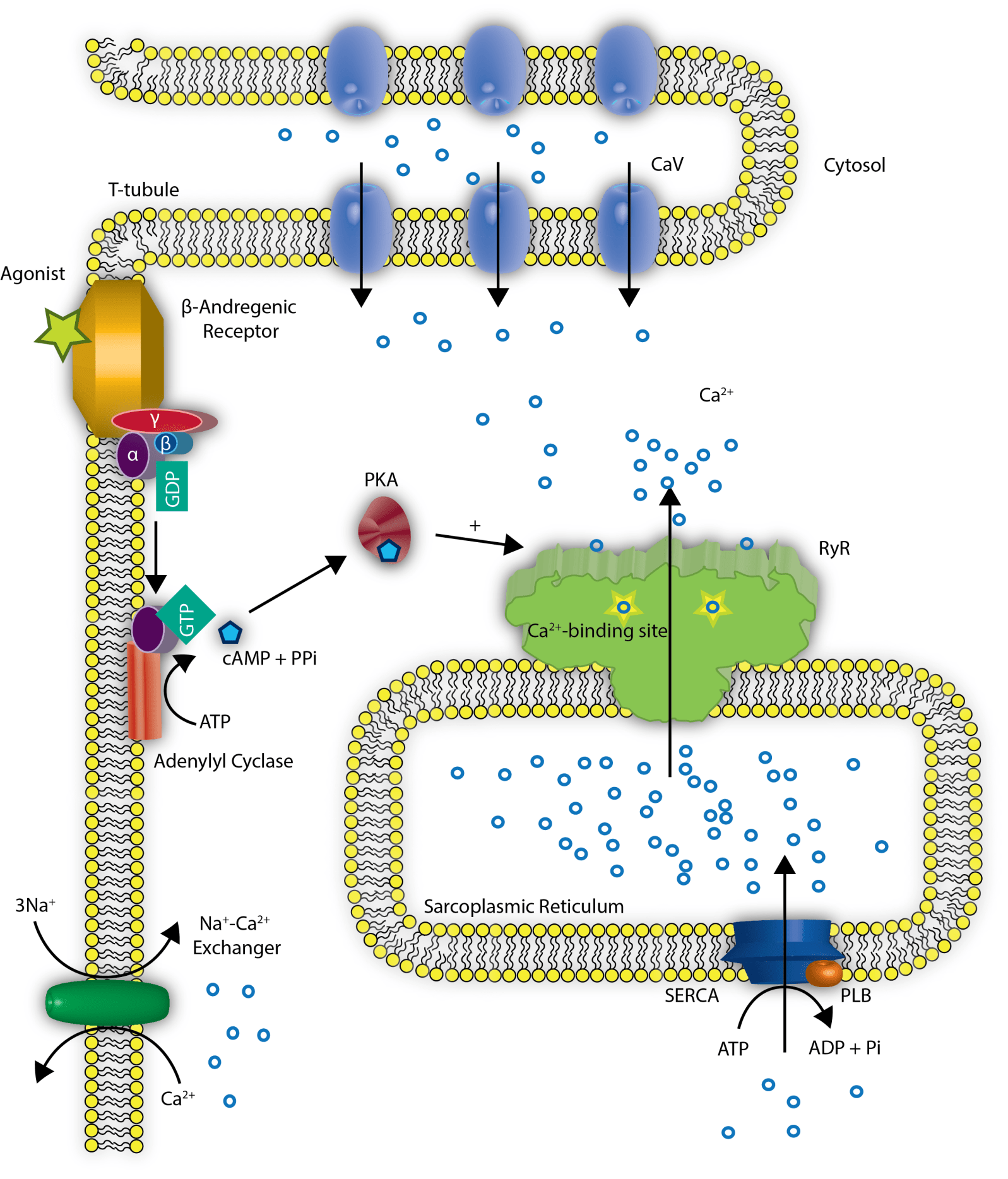
RyR and Ca+ release from SR
 
ANS-   autonomic innervation of heart
 
 
mongillo_fig1  regulation of cardiac Ca++ cycling by ANS
 
jce561317.fig3    cardiac contraction


serum levels of MAA differentiated stable CAD from MI. For IgM antibodies to MAA, results were consistent with IgGantibodies to MAA


Conclusions—Our studies suggest that CaMKII is a molecular signal that couples increased ROS with AF and that therapeutic strategies to decrease ox-CaMKII may prevent or reduce AF.
Key words: atrial fibrillation, calcium/calmodulin-dependent protein kinase II, angiotensin II, reactive oxygen species, arrhythmia (mechanisms)
A Purohit, AG Rokita, X Guan, B Chen, et al.  Oxidized CaMKII Triggers Atrial Fibrillation.  Circulation. Sep 12, 2013;
 

Microparticles (MP)s give clues about vascular endothelial injury

BACKGROUND: Endothelial dysfunction is an early event in the development and progression of a wide range of cardiovascular diseases. Various human studies have identified that measures of endothelial dysfunction may offer prognostic information with respect to vascular events. Microparticles (MPs) are a heterogeneous population of small membrane fragments shed from various cell types. The endothelium is one of the primary targets of circulating MPs, and MPs isolated from blood have been considered biomarkers of vascular injury and inflammation.
CONTENT: This review summarizes current knowledge of the potential functional role of circulating MPs in promoting endothelial dysfunction. Cells exposed to different stimuli such as shear stress, physiological agonists, proapoptotic stimulation, or damage release MPs, which contribute to endothelial dysfunction and the development of cardiovascular diseases. Numerous studies indicate that MPs may trigger endothelial dysfunction by disrupting production of nitric oxide release from vascular endothelial cells and subsequently modifying vascular tone. Circulating MPs affect both proinflammatory and proatherosclerotic processes in endothelial cells. In addition, MPs can promote coagulation and inflammation or alter angiogenesis and apoptosis in endothelial cells.
SUMMARY: MPs play an important role in promoting endothelial dysfunction and may prove to be true biomarkers of disease state and progression.
Fina Lovren and Subodh Verma.  Evolving Role of Microparticles in the Pathophysiology of Endothelial Dysfunction.
 
Outcomes of STEMI and NSTEMI different predicted by NPs after MI
Patients with increased blood concentrations of natriuretic peptides (NPs) have poor cardiovascular outcomes after myocardial infarction (MI). Data from 41 683 patients with non–ST-segment elevation MI (NSTEMI) and 27 860 patients with ST-segment elevation MI (STEMI) at 309 US hospitals were collected as part of the ACTION Registry®–GWTG™ (Acute Coronary Treatment and Intervention Outcomes Network Registry–Get with the Guidelines) (AR-G) between July 2008 and September 2009.

B-type natriuretic peptide (BNP) or N-terminal pro-BNP (NT-proBNP) was measured in 19 528 (47%) of NSTEMI and 9220 (33%) of STEMI patients. Patients in whom NPs were measured were older and had more comorbidities, including prior heart failure or MI. There was a stepwise increase in the risk of in-hospital mortality with increasing BNP quartiles for both NSTEMI (1.3% vs 3.2% vs 5.8% vs 11.1%) and STEMI (1.9% vs 3.9% vs 8.2% vs 17.9%). The addition of BNP to the AR-G clinical model improved the C statistic from 0.796 to 0.807 (P < 0.001) for NSTEMI and from 0.848 to 0.855 (P = 0.003) for STEMI. The relationship between NPs and mortality was similar in patients without a history of heart failure or cardiogenic shock on presentation and in patients with preserved left ventricular function.

NPs are measured in almost 50% of patients in the US admitted with MI and appear to be used in patients with more comorbidities. Higher NP concentrations were strongly and independently associated with in-hospital mortality in the almost 30 000 patients in whom NPs were assessed, including patients without heart failure.

BM Scirica, MB Kadakia, JA de Lemos, MT Roe, DA Morrow, et al. Association between Natriuretic Peptides and Mortality among Patients Admitted with Myocardial Infarction: A Report from the ACTION Registry®–GWTG™.

Predictive value of processed forms of BNP in circulation

B-type natriuretic peptide (BNP) is secreted in response to pathologic stress from the heart. Its use as a biomarker of heart failure is well known; however, its diagnostic potential in ischemic heart disease is less explored. Recently, it has been reported that processed forms of BNP exist in the circulation. We characterized processed forms of BNP by a newly developed mass spectrometry–based detection method combined with immunocapture using commercial anti-BNP antibodies.

Measurements of processed forms of BNP by this assay were found to be strongly associated with presence of restenosis. Reduced concentrations of the amino-terminal processed peptide BNP(5–32) relative to BNP(3–32) [as the index parameter BNP(5–32)/BNP(3–32) ratio] were seen in patients with restenosis [median (interquartile range) 1.19 (1.11–1.34), n = 22] vs without restenosis [1.43 (1.22–1.61), n = 83; P < 0.001] in a cross-sectional study of 105 patients undergoing follow-up coronary angiography. A sensitivity of 100% to rule out the presence of restenosis was attained at a ratio of 1.52. Processed forms of BNP may serve as viable potential biomarkers to rule out restenosis.

H Fujimoto, T Suzuki, K Aizawa, D Sawaki, J Ishida, et al. Processed B-Type Natriuretic Peptide Is a Biomarker of Postinterventional Restenosis in Ischemic Heart Disease. Clin Chem 2013.

Circulating proteins from patients requiring revascularization

More than a million diagnostic cardiac catheterizations are performed annually in the US for evaluation of coronary artery anatomy and the presence of atherosclerosis. Nearly half of these patients have no significant coronary lesions or do not require mechanical or surgical revascularization. Consequently, the ability to rule out clinically significant coronary artery disease (CAD) using low cost, low risk tests of serum biomarkers in even a small percentage of patients with normal coronary arteries could be highly beneficial. METHODS: Serum from 359 symptomatic subjects referred for catheterization was interrogated for proteins involved in atherogenesis, atherosclerosis, and plaque vulnerability. Coronary angiography classified 150 patients without flow-limiting CAD who did not require percutaneous intervention (PCI) while 209 required coronary revascularization (stents, angioplasty, or coronary artery bypass graft surgery). Continuous variables were compared across the two patient groups for each analyte including calculation of false discovery rate (FDR [less than or equal to]1%) and Q value (P value for statistical significance adjusted to [less than or equal to]0.01).

Significant differences were detected in circulating proteins from patients requiring revascularization including increased apolipoprotein B100 (APO-B100), C-reactive protein (CRP), fibrinogen, vascular cell adhesion molecule 1 (VCAM-1), myeloperoxidase (MPO), resistin, osteopontin, interleukin (IL)-1beta, IL-6, IL-10 and N-terminal fragment protein precursor brain natriuretic peptide (NT-pBNP) and decreased apolipoprotein A1 (APO-A1). Biomarker classification signatures comprising up to 5 analytes were identified using a tunable scoring function trained against 239 samples and validated with 120 additional samples. A total of 14 overlapping signatures classified patients without significant coronary disease (38% to 59% specificity) while maintaining 95% sensitivity for patients requiring revascularization. Osteopontin (14 times) and resistin (10 times) were most frequently represented among these diagnostic signatures. The most efficacious protein signature in validation studies comprised osteopontin (OPN), resistin, matrix metalloproteinase 7 (MMP7) and interferon gamma (IFNgamma) as a four-marker panel while the addition of either CRP or adiponectin (ACRP-30) yielded comparable results in five protein signatures.

Proteins in the serum of CAD patients predominantly reflected

  1. a positive acute phase, inflammatory response and

  2. alterations in lipid metabolism, transport, peroxidation and accumulation.

    There were surprisingly few indicators of growth factor activation or extracellular matrix remodeling in the serum of CAD patients except for elevated OPN. These data suggest that many symptomatic patients without significant CAD could be identified by a targeted multiplex serum protein test without cardiac catheterization thereby eliminating exposure to ionizing radiation and decreasing the economic burden of angiographic testing for these patients.

WA Laframboise, R Dhir, LA Kelly, P Petrosko, JM Krill-Burger, et al. Serum protein profiles predict coronary artery disease in symptomatic patients referred for coronary angiography.
BMC Medicine (impact factor: 6.03). 12/2012; 10(1):157. http://dx.doi.org/10.1186/1741-7015-10-157

miRNAs in CAD

MicroRNAs are small RNAs that control gene expression. Besides their cell intrinsic function, recent studies reported that microRNAs are released by cultured cells and can be detected in the blood. To address the regulation of circulating microRNAs in patients with stable coronary artery disease. To determine the regulation of microRNAs, we performed a microRNA profile using RNA isolated from n=8 healthy volunteers and n=8 patients with stable coronary artery disease that received state-of-the-art pharmacological treatment. Interestingly, most of the highly expressed microRNAs that were lower in the blood of patients with coronary artery disease are known to be expressed in endothelial cells (eg, miR-126 and members of the miR-17 approximately 92 cluster). To prospectively confirm these data, we detected selected microRNAs in plasma of 36 patients with coronary artery disease and 17 healthy volunteers by quantitative PCR. Consistent with the data obtained by the profile, circulating levels of miR-126, miR-17, miR-92a, and the inflammation-associated miR-155 were significantly reduced in patients with coronary artery disease compared with healthy controls. Likewise, the smooth muscle-enriched miR-145 was significantly reduced. In contrast, cardiac muscle-enriched microRNAs (miR-133a, miR-208a) tend to be higher in patients with coronary artery disease. These results were validated in a second cohort of 31 patients with documented coronary artery disease and 14 controls. Circulating levels of vascular and inflammation-associated microRNAs are significantly downregulated in patients with coronary artery disease.

S Fichtlscherer, S De Rosa, H Fox, T Schwietz, A Fischer, et al. Circulating microRNAs in patients with coronary artery disease. Circulation Research 09/2010; 107(5):677-84.

Imaging modalities compared

This review compares the noninvasive anatomical imaging modalities of coronary artery calcium scoring and coronary CT angiography to the functional assessment modality of MPI in the diagnosis and prognostication of significant CAD in symptomatic patients. A large number of studies investigating this subject are analyzed with a critical look on the evidence, underlying the strengths and limitations. Although the overall findings of the presented studies are favoring the use of CT-based anatomical imaging modalities over MPI in the diagnosis and prognosticating of CAD, the lack of a high number of large- scale, multicenter randomized controlled studies limits the generalizability of this early evidence. Further studies comparing the short- and long-term clinical outcomes and cost-effectiveness of these tests are required to determine their optimal role in the management of symptomatic patients with suspected CAD.

Y Hacioglu, M Gupta, Matthew J Budoff. Noninvasive anatomical coronary artery imaging versus myocardial perfusion imaging: which confers superior diagnostic and prognostic information?
Journal of computer assisted tomography 34(5):637-44.

Three Dimensional In-Room Imaging (3DCA) in PCI

Introduction: Coronary angiography is a two-dimensional (2D) imaging modality and thus is limited in its ability to represent complex three-dimensional (3D) vascular anatomy. Lesion length, bifurcation angles/lesions, and tortuosity are often inadequately assessed using 2D angiography due to vessel overlap and foreshortening. 3D Rotational Angiography (3DRA) with subsequent reconstruction generates models of the coronary vasculature from which lesion length measurements and Optimal View Maps (OVM) defining the amount of vessel foreshortening for each gantry angle can be derived. This study sought to determine if 3DRA-assisted percutaneous coronary interventions resulted in improved procedural results by minimizing foreshortening and optimizing stent selection.
 Rotational angiographic acquisitions were performed and a 3D model was generated from two images greater than 30° apart. An optimal view map identifying the least amount of vessel foreshortening and overlap was derived from the 3D model.
The clinical validation of in-room image-processing tools such as 3DCA and optimal view maps is important since FDA approval of these tools does not require the presentation of any data on clinical experience and impact on clinical outcomes. While the technology of 3DRA and optimal view calculations has been well validated by the work of Chen and colleagues, this study is important in demonstrating how clinical care may be impacted [4,5,7]. This study was biased toward minimizing the impact of these tools on clinical decision-making since the study site, cardiologists, and staff have extensive experience in rotational angiography, 3-D modeling and reconstruction, and the impact of foreshortening on the assessment of lesion length and choice of stent size.
3DRA assistance significantly reduced target vessel foreshortening when compared to operator’s choice of working view for PCI (2.99% ± 2.96 vs. 9.48% ± 7.56, p=0.0001). The operators concluded that 3DRA recommended better optimal view selection for PCI in 14 of 26 (54%) total cases. In 9 (35%) of 26 cases 3DRA assistance facilitated stent positioning. 3DRA based imaging prompted stent length changes in 4/26 patients (15%).
MH. Eng, PA Hudson, AJ Klein, SYJ Chen, … , JA Garcia. Impact of Three Dimensional In-Room Imaging (3DCA) in the Facilitation of Percutaneous Coronary Interventions. J Cardio Vasc Med 2013; 1: 1-5.


Related References from PharmaceuticalIntelligence.com:

Genomics & Genetics of Cardiovascular Disease Diagnoses: A Literature Survey of AHA’s Circulation Cardiovascular Genetics, 3/2010 – 3/2013
Curators: Aviva Lev-Ari, PhD, RN and Larry H. Bernstein, MD, FCAP
http://pharmaceuticalintelligence.com/2013/03/07/genomics-genet…cs-32010-32013/
http://wp.me/p2kEDv-2Jp

Prognostic Marker Importance of Troponin I in Acute Decompensated Heart Failure (ADHF)
Larry H Bernstein and  Aviva Lev-Ari
http://pharmaceuticalintelligence.com/2013/06/30/troponin-i-in-…-heart-failure
http://wp.me/p2kEDv-41S

A Changing expectation from cardiac biomarkers.
Larry H Bernstein
http://pharmaceuticalintelligence.com/2012/12/25/assessing-card…ith-biomarkers/
http://wp.me/p2kEDv-1DN

Dealing with the Use of the High Sensitivity Troponin (hs cTn) Assays
Larry H Bernstein and Aviva Lev-Ari
http://pharmaceuticalintelligence.com/2013/05/18/dealing-with-t…-hs-ctn-assays/
http://pharmaceuticalintelligence.com/wp-admin/post.php?post=13255
http://wp.me/p2kEDv-3rN

For Disruption of Calcium Homeostasis in Cardiomyocyte Cells, see

Part VI: Calcium Cycling (ATPase Pump) in Cardiac Gene Therapy: Inhalable Gene Therapy for Pulmonary Arterial Hypertension and Percutaneous Intra-coronary Artery Infusion for Heart Failure: Contributions by Roger J. Hajjar, MD

Aviva Lev-Ari, PhD, RN

http://pharmaceuticalintelligence.com/2013/08/01/calcium-molecule-in-cardiac-gene-therapy-inhalable-gene-therapy-for-pulmonary-arterial-hypertension-and-percutaneous-intra-coronary-artery-infusion-for-heart-failure-contributions-by-roger-j-hajjar/

Part VII: Cardiac Contractility & Myocardium Performance: Ventricular Arrhythmias and Non-ischemic Heart Failure – Therapeutic Implications for Cardiomyocyte Ryanopathy (Calcium Release-related Contractile Dysfunction) and Catecholamine Responses

Justin Pearlman, MD, PhD, FACC, Larry H Bernstein, MD, FCAP and Aviva Lev-Ari, PhD, RN

http://pharmaceuticalintelligence.com/2013/08/28/cardiac-contractility-myocardium-performance-ventricular-arrhythmias-and-non-ischemic-heart-failure-therapeutic-implications-for-cardiomyocyte-ryanopathy-calcium-release-related-contractile/

Part VIII: Disruption of Calcium Homeostasis: Cardiomyocytes and Vascular Smooth Muscle Cells: The Cardiac and Cardiovascular Calcium Signaling Mechanism

Justin Pearlman, MD, PhD, FACC, Larry H Bernstein, MD, FCAP and Aviva Lev-Ari, PhD, RN

http://pharmaceuticalintelligence.com/2013/09/12/disruption-of-calcium-homeostasis-cardiomyocytes-and-vascular-smooth-muscle-cells-the-cardiac-and-cardiovascular-calcium-signaling-mechanism/

Read Full Post »


Abstract:

The immune response mechanism is the holy grail of the human defense system for health.   IDO, indolamine 2, 3-dioxygenase, is a key gene for homeostasis of immune responses and producing an enzyme catabolizing the first rate-limiting step in tryptophan degradation metabolism. The hemostasis of immune system is complicated.  In this review, the  properties of IDO such as basic molecular genetics, biochemistry and genesis will be discussed.

IDO belongs to globin gene family to carry oxygen and heme.  The main function and genesis of IDO comes from the immune responses during host-microbial invasion and choice between tolerance and immunegenity.  In human there are three kinds of IDOs, which are IDO1, IDO2, and TDO, with distinguished mechanisms and expression profiles. , IDO mechanism includes three distinguished pathways: enzymatic acts through IFNgamma, non-enzymatic acts through TGFbeta-IFNalpha/IFNbeta and moonlighting acts through AhR/Kyn.

The well understood functional genomics and mechanisms is important to translate basic science for clinical interventions of human health needs. In conclusion, overall purpose is to find a method to manipulate IDO to correct/fix/modulate immune responses for clinical applications.

The first part of the review concerns the basic science information gained overall several years that lay the foundation where translational research scientist should familiar to develop a new technology for clinic. The first connection of IDO and human health came from a very natural event that is protection of pregnancy in human. The focus of the translational medicine is treatment of cancer or prevention/delay cancer by stem cell based Dendritic Cell Vaccine (DCvax) development.

Table of Contents:

  • Abstract

1         Introduction: IDO gene encodes a heme enzyme

2        Location, location, location

3        Molecular genetics

4        Types of IDO:

4.1       IDO1,

4.2       IDO2,

4.3       IDO-like proteins

5        Working mechanisms of IDO

6        Infection Diseases and IDO

7. Conclusion

  1. 1.     Indoleamine 2, 3-dioxygenase (IDO) gene encodes a heme enzyme

IDO is a key homeostatic regulator and confined in immune system mechanism for the balance between tolerance and immunity.  This gene encodes indoleamine 2, 3-dioxygenase (IDO) – a heme enzyme (EC=1.13.11.52) that catalyzes the first rate-limiting step in tryptophan catabolism to N-formyl-kynurenine and acts on multiple tryptophan substrates including D-tryptophan, L-tryptophan, 5-hydroxy-tryptophan, tryptamine, and serotonin.

The basic genetic information describes indoleamine 2, 3-dioxygenase 1 (IDO1, IDO, INDO) as an enzyme located at Chromosome 8p12-p11 (5; 6) that active at the first step of the Tryptophan catabolism.    The cloned gene structure showed that IDO contains 10 exons ad 9 introns (7; 8) producing 9 transcripts.

After alternative splicing only five of the transcripts encode a protein but the other four does not make protein products, three of transcripts retain intron and one of them create a nonsense code (7).  Based on IDO related studies 15 phenotypes of IDO is identified, of which, twelve in cancer tumor models of lung, kidney, endometrium, intestine, two in nervous system, and one HGMD- deletion.

  1. 2.     Location, Location and Location

The specific cellular location of IDO is in cytosol, smooth muscle contractile fibers and stereocilium bundle. The expression specificity shows that IDO is present very widely in all cell types but there is an elevation of expression in placenta, pancreas, pancreas islets, including dendritic cells (DCs) according to gene atlas of transcriptome (9).  Expression of IDO is common in antigen presenting cells (APCs), monocytes (MO), macrophages (MQs), DCs, T-cells, and some B-cells. IDO present in APCs (10; 11), due to magnitude of role play hierarchy and level of expression DCs are the better choice but including MOs during establishment of three DC cell subset, CD14+CD25+, CD14++CD25+ and CD14+CD25++ may increase the longevity and efficacy of the interventions.

IDO is strictly regulated and confined to immune system with diverse functions based on either positive or negative stimulations. The positive stimulations are T cell tolerance induction, apoptotic process, and chronic inflammatory response, type 2 immune response, interleukin-12 production (12).  The negative stimulations are interleukin-10 production, activated T cell proliferation, T cell apoptotic process.  Furthermore, there are more functions allocating fetus during female pregnancy; changing behavior, responding to lipopolysaccharide or multicellular organismal response to stress possible due to degradation of tryptophan, kynurenic acid biosynthetic process, cellular nitrogen compound metabolic process, small molecule metabolic process, producing kynurenine process (13; 14; 15).

IDO plays a role in a variety of pathophysiological processes such as antimicrobial and antitumor defense, neuropathology, immunoregulation, and antioxidant activity (16; 17; 18; 19).


 3.     Molecular Genetics of IDO:

A: Structure of human IDO2 gene and transcripts. Complete coding region is 1260 bps encoding a 420 aa polypeptide. Alternate splice isoforms lacking the exons indicated are noted. Hatch boxes represent a frameshift in the coding region to an alternate reading frame leading to termination. Black boxes represent 3' untranslated regions. Nucleotide numbers, intron sizes, and positioning are based on IDO sequence files NW_923907.1 and GI:89028628 in the Genbank database. (reference: http://atlasgeneticsoncology.org/Genes/IDO2ID44387ch8p11.html)

A: Structure of human IDO2 gene and transcripts. Complete coding region is 1260 bps encoding a 420 aa polypeptide. Alternate splice isoforms lacking the exons indicated are noted. Hatch boxes represent a frameshift in the coding region to an alternate reading frame leading to termination. Black boxes represent 3′ untranslated regions. Nucleotide numbers, intron sizes, and positioning are based on IDO sequence files NW_923907.1 and GI:89028628 in the Genbank database.
(reference: http://atlasgeneticsoncology.org/Genes/IDO2ID44387ch8p11.html)

Molecular genetics data from earlier findings based on reporter assay results showed that IDO promoter is regulated by ISRE-like elements and GAS-sequence at -1126 and -1083 region (20).  Two cis-acting elements are ISRE1 (interferon sequence response element 1) and interferon sequence response element 2 (ISRE2).

Analyses of site directed and deletion mutation with transfected cells demonstrated that introduction of point mutations at these elements decreases the IDO expression. Removing ISRE1 decreases the effects of IFNgamma induction 50 fold and deleting ISRE1 at -1126 reduced by 25 fold (3). Introducing point mutations in conserved t residues at -1124 and -1122 (from T to C or G) in ISRE consensus sequence NAGtttCA/tntttNCC of IFNa/b inducible gene ISG4 eliminates the promoter activity by 24 fold (21).

ISRE2 have two boxes, X box (-114/1104) and Y Box 9-144/-135), which are essential part of the IFNgamma response region of major histocompatibility complex class II promoters (22; 23).  When these were removed from ISRE2 or introducing point mutations at two A residues of ISRE2 at -111 showed a sharp decrease after IFNgamma treatment by 4 fold (3).

The lack of responses related to truncated or deleted IRF-1 interactions whereas IRF-2, Jak2 and STAT91 levels were similar in the cells, HEPg2 and ME180 (3). Furthermore, 748 bp deleted between these elements did not affect the IDO expression, thus the distance between ISRE1 and ISRE2 elements have no function or influence on IDO (3; 24)

B: Amino acid alignment of IDO and IDO2. Amino acids determined by mutagenesis and the crystal structure of IDO that are critical for catalytic activity are positioned below the human IDO sequence. Two commonly occurring SNPs identified in the coding region of human IDO2 are shown above the sequence which alter a critical amino acid (R248W) or introduce a premature termination codon (Y359stop).

B: Amino acid alignment of IDO and IDO2. Amino acids determined by mutagenesis and the crystal structure of IDO that are critical for catalytic activity are positioned below the human IDO sequence. Two commonly occurring SNPs identified in the coding region of human IDO2 are shown above the sequence which alter a critical amino acid (R248W) or introduce a premature termination codon (Y359stop).

4.     There are three types of IDO in human genome:

IDO was originally discovered in 1967 in rabbit intestine (25). Later, in 1990 the human IDO gene is cloned and sequenced (7).  However, its importance and relevance in immunology was not created until prevention of allocation of fetal rejection and founding expression in wide range of human cancers (26; 27).

There are three types of IDO, pro-IDO like, IDO1, and IDO2.  In addition, another enzyme called TDO, tryptophan 2, 3, dehydrogenase solely degrade L-Trp at first-rate limiting mechanism in liver and brain.

4.1.  IDO1:

IDO1 mechanism is the target for immunotherapy applications. The initial discovery of IDO in human physiology is protection of pregnancy (1) since lack of IDO results in premature recurrent abortion (28; 26; 29).   The initial rate-limiting step of tryptophan metabolism is catalyzed by either IDO or tryptophan 2, 3-dioxygenase (TDO).

Structural studies of IDO versus TDO presenting active site environments, conserved Arg 117 and Tyr113, found both in TDO and IDO for the Tyr-Glu motif, but His55 in TDO replaced by Ser167b in IDO (30; 2). As a result, they are regulated with different mechanisms (1; 2) (30).  The short-lived TDO, about 2h, responds to level of tryptophan and its expression regulated by glucorticoids (31; 32).  Thus, it is a useful target for regulation and induced by tryptophan so that increasing tryptophan induces NAD biosynthesis. Whereas, IDO is not activated by the level of Trp presence but inflammatory agents with its interferon stimulated response elements (ISRE1 and ISRE2) in its (33; 34; 35; 36; 3; 10) promoter.

TDO promoter contains glucorticoid response elements (37; 38) and regulated by glucocorticoids and other available amino acids for gluconeogenesis. This is how IDO binds to only immune response cells and TDO relates to NAD biosynthesis mechanisms. Furthermore, TDO is express solely in liver and brain (36).  NAD synthesis (39) showed increased IDO ubiquitous and TDO in liver and causing NAD level increase in rat with neuronal degeneration (40; 41).  NAM has protective function in beta-cells could be used to cure Type1 diabetes (40; 42; 43). In addition, knowledge on NADH/NAD, Kyn/Trp or Trp/Kyn ratios as well as Th1/Th2, CD4/CD8 or Th17/Threg are equally important (44; 40).

Active site of IDO–PI complex. (A) Stereoview of the residues around the heme of IDO viewed from the side of heme plane. The proximal ligand H346 is H-bonded to wa1. The 6-propionate of the heme contacts with wa2 and R343 Nε. The wa2 is H-bonded to wa1, L388 O, and 6-propionate. Mutations of F226, F227, and R231 do not lose the substrate affinity but produce the inactive enzyme. Two CHES molecules are bound in the distal pocket. The cyclohexan ring of CHES-1 (green) contacts with F226 and R231. The 7-propionate of the heme interacts with the amino group of CHES-1 and side chain of Ser-263. The mutational analyses for these distal residues are shown in Table 1. (B) Top view of A by a rotation of 90°. The proximal residues are omitted. (http://www.pnas.org/content/103/8/2611/F3.expansion.html)

Active site of IDO–PI complex. (A) Stereoview of the residues around the heme of IDO viewed from the side of heme plane. The proximal ligand H346 is H-bonded to wa1. The 6-propionate of the heme contacts with wa2 and R343 Nε. The wa2 is H-bonded to wa1, L388 O, and 6-propionate. Mutations of F226, F227, and R231 do not lose the substrate affinity but produce the inactive enzyme. Two CHES molecules are bound in the distal pocket. The cyclohexan ring of CHES-1 (green) contacts with F226 and R231. The 7-propionate of the heme interacts with the amino group of CHES-1 and side chain of Ser-263. The mutational analyses for these distal residues are shown in Table 1. (B) Top view of A by a rotation of 90°. The proximal residues are omitted. (http://www.pnas.org/content/103/8/2611/F3.expansion.html)

4.2. IDO2:

The third type of IDO, called IDO2 exists in lower vertebrates like chicken, fish and frogs (45) and in human with differential expression properties. The expression of IDO2 is only in DCs, unlike IDO1 expresses on both tumors and DCs in human tissues.  Yet, in lower invertebrates IDO2 is not inhibited by general inhibitor of IDO, D-1-methyl-tryptophan (1MT) (46).   Recently, two structurally unusual natural inhibitors of IDO molecules, EXIGUAMINES A and B, are synthesized (47).  LIP mechanism cannot be switch back to activation after its induction in IDO2 (46).

Crucial cancer progression can continue with production of IL6, IL10 and TGF-beta1 to help invasion and metastasis.  Inclusion of two common SNPs affects the function of IDO2 in certain populations.  SNP1 reduces 90% of IDO2 catalytic activity in 50% of European and Asian descent and SNP2 produce premature protein through inclusion of stop-codon in 25% of African descent lack functional IDO2 (Uniport).

4.3. IDO-like proteins: The Origin of IDO:

Knowing the evolutionary steps will helps us to identify how we can manage the regulator function to protect human health in cancer, immune disorders, diabetes, and infectious diseases.

Bacterial IDO has two types of IDOs that are group I and group II IDO (48).  These are the earliest version of the IDO, pro-IDO like, proteins with a quite complicated function.  Each microorganism recognized by a specific set of receptors, called Toll-Like Receptors (TLR), to activate the IDO-like protein expression based on the origin of the bacteria or virus (49; 35).   Thus, the genesis of human IDO originates from gene duplication of these early bacterial versions of IDO-like proteins after their invasion interactions with human host.  IDO1 only exists in mammals and fungi.

Fungi also has three types of IDO; IDOa, IDO beta, and IDO gamma (50) with different properties than human IDOs, perhaps multiple IDO is necessary for the world’s decomposers.

All globins, haemoglobins and myoglobins are destined to evolve from a common ancestor, which  is only 14-16kDa (51) length. Binding of a heme and being oxygen carrier are central to the enzyme mechanism of this family.  Globins are classified under three distinct origins; a universal globin, a compact globin, and IDO-like globin (52) IDO like globin widely distributed among gastropodic mollusks (53; 51).  The indoleamine 2, 3-dioxygenase 1–like “myoglobin” (Myb) was discovered in 1989 in the buccal mass of the abalone Sulculus diversicolor (54).

The conserved region between Myb and IDO-like Myb existed for at least 600 million years (53) Even though the splice junction of seven introns was kept intact, the overall homolog region between Myb and IDO is only about 35%.

No significant evolutionary relationship is found between them after their amino acid sequence of each exon is compared to usual globin sequences. This led the hint that molluscan IDO-like protein must have other functions besides carrying oxygen, like myoglobin.   Alignment of S. cerevisiae cDNA, mollusk and vertebrate IDO–like globins show the key regions for controlling IDO or myoglobin function (55). These data suggest that there is an alternative pathways of myoglobin evolution.  In addition, understanding the diversity of globin may help to design better protocols for interventions of diseases.

Mechanisms of IDO:

The dichotomy of IDO mechanism lead the discovery that IDO is more than an enzyme as a versatile regulator of innate and adaptive immune responses in DCs (66; 67; 68). Meantime IDO also involve with Th2 response and B cell mediated autoimmunity showing that it has three paths, short term (acute) based on enzymatic actions, long term (chronic) based on non-enzymatic role, and moonlighting relies of downstream metabolites of tryptophan metabolism (69; 70).

IFNgamma produced by DC, MQ, NK, NKT, CD4+ T cells and CD8+ T cells, after stimulation with IL12 and IL8.  Inflammatory cytokine(s) expressed by DCs produce IFNgamma to stimulate IDO’s enzymatic reactions in acute response.  Then, TDO in liver and tryptophan catabolites act through Aryl hydrocarbon receptor induction for prevention of T cell proliferation. This mechanism is common among IDO, IDO2 (expresses in brain and liver) and TDO expresses in liver) provide an acute response for an innate immunity (30). When the pDCs are stimulated with IFNgamma, activation of IDO is go through Jak, STAT signaling pathway to degrade Trp to Kyn causing Trp depletion. The starvation of tryptophan in microenvironment inhibits generation of T cells by un-read t-RNAs and induce apoptosis through myc pathway.  In sum, lack of tryptophan halts T cell proliferation and put the T cells in apoptosis at S1 phase of cell division (71; 62).

The intermediary enzymes, functioning during Tryptophan degradation in Kynurenine (Kyn) pathway like kynurenine 3-hydroxylase and kynureninase, are also induced after stimulation with liposaccaride and proinflammatory cytokines (72). They exhibit their function in homeostasis through aryl-hydrocarbon receptor (AhR) induction by kynurenine as an endogenous signal (73; 74).  The endogenous tumor-promoting ligand of AhR are usually activated by environmental stress or xenobiotic toxic chemicals in several cellular processes like tumorigenesis, inflammation, transformation, and embryogenesis (Opitz ET. Al, 2011).

Human tumor cells constitutively produce TDO also contributes to production of Kyn as an endogenous ligand of the AhR (75; 27).  Degradation of tryptophan by IDO1/2 in tumors and tumor-draining lymph nodes occur. As a result, there are animal studies and Phase I/II clinical trials to inhibit the IDO1/2 to prevent cancer and poor prognosis (NewLink Genetics Corp. NCT00739609, 2007).

 IDO mechanism for immune response

Systemic inflammation (like in sepsis, cerebral malaria and brain tumor) creates hypotension and IDO expression has the central role on vascular tone control (63).  Moreover, inflammation activates the endothelial coagulation activation system causing coagulopathies on patients.  This reaction is namely endothelial cell activation of IDO by IFNgamma inducing Trp to Kyn conversion. After infection with malaria the blood vessel tone has decreases, inflammation induce IDO expression in endothelial cells producing Kyn causing decreased trp, lower arterial relaxation, and develop hypotension (Wang, Y. et. al 2010).  Furthermore, existing hypotension in knock out Ido mice point out a secondary mechanism driven by Kyn as an endogenous ligand to activate non-canonical NfKB pathway (63).

Another study also hints this “back –up” mechanism by a significant outcome with a differential response in pDCs against IMT treatment.  Unlike IFN gamma conditioned pDC blocks T cell proliferation and apoptosis, methyl tryptophan fails to inhibit IDO activity for activating naïve T cells to make Tregs at TGF-b1 conditioned pDCs (77; 78).

 Indoleamine-Pyrrole 2,3,-Dioxygenase; IDO dioxygenase; Indeolamine-2,3

The second role of the IDO relies on non-enzymatic action as being a signal molecule. Yet, IDO2 and TDO are devoid of this function. This role mainly for maintenance of microenvironment condition. DCs response to TGFbeta-1 exposure starts the kinase Fyn induce phosphorylation of IDO-associated immunoreceptor tyrosine–based inhibitory motifs (ITIMs) for propagation of the downstream signals involving non-canonical (anti-inflammatory) NF-kB pathway for a long term response. When the pDCs are conditioned with TGF-beta1 the signaling (68; 77; 78) Phospho Inositol Kinase3 (PIK-3)-dependent and Smad independent pathways (79; 80; 81; 82; 83) induce Fyn-dependent phosphorylation of IDO ITIMs.  A prototypic ITIM has the I/V/L/SxYxxL/V/F sequence (84), where x in place of an amino acid and Y is phosphorylation sites of tyrosines (85; 86).

Smad independent pathway stimulates SHP and PIK3 induce both SHP and IDO phosphorylation. Then, formed SHP-IDO complex can induce non-canonical (non-inflammatory) NF-kB pathway (64; 79; 80; 82) by phosphorylation of kinase IKKa to induce nuclear translocation of p52-Relb towards their targets.  Furthermore, the SHP-IDO complex also may inhibit IRAK1 (68). SHP-IDO complex activates genes through Nf-KB for production of Ido1 and Tgfb1 genes and secretion of IFNalpha/IFNbeta.  IFNa/IFNb establishes a second short positive feedback loop towards p52-RelB for continuous gene expression of IDO, TGFb1, IFNa and IFNb (87; 68).  However, SHP-IDO inhibited IRAK1 also activates p52-RelB.  Nf-KB induction at three path, one main and two positive feedback loops, is also critical.  Finally, based on TGF-beta1 induction (76) cellular differentiation occurs to stimulate naïve CD4+ T cell differentiation to regulatory T cells (Tregs).  In sum, TGF-b1 and IFNalpha/IFNbeta stimulate pDCs to keep inducing naïve T cells for generation of Treg cells at various stages, initiate, maintain, differentiate, infect, amplify, during long-term immune responses (67; 66).

Moonlighting function of Kyn/AhR is an adaptation mechanism after the catalytic (enzymatic) role of IDO depletes tryptophan and produce high concentration of Kyn induce Treg and Tr1 cell expansion leading Tregs to use TGFbeta for maintaining this environment (67; 76). In this role, Kyn pathway has positive-feedback-loop function to induce IDO expression.

In T cells, tryptophan starvation induces Gcn2-dependent stress signaling pathway, which initiates uncharged Trp-tRNA binding onto ribosomes. Elevated GCN2 expression stimulates elF2alfa phosphorylation to stop translation initiation (88). Therefore, most genes downregulated and LIP, an alternatively initiated isoform of the b/ZIP transcription factor NF-IL6/CEBP-beta (89).

This mechanism happens in tumor cells based on Prendergast group observations. As a result, not only IDO1 propagates itself while producing IFNalpha/IFNbeta, but also demonstrates homeostasis choosing between immunegenity by production of TH17or tolerance by Tregs. This mechanism acts like a see-saw. Yet, tolerance also can be broken by IL6 induction so reversal mechanism by SOC-3 dependent proteosomal degradation of the enzyme (90).  All proper responses require functional peripheral DCs to generate mature DCs for T cells to avoid autoimmunity (91).

Niacin (vitamin B3) is the final product of tryptophan catabolism and first molecule at Nicotinomic acid (NDA) Biosynthesis.  The function of IDO in tryptophan and NDA metabolism has a great importance to develop new clinical applications (40; 42; 41).  NAD+, biosynthesis and tryptophan metabolisms regulate several steps that can be utilize pharmacologically for reformation of healthy physiology (40).

IDO for protection in Microbial Infection with Toll-like Receptors

The mechanism of microbial response and infectious tolerance are complex and the origination of IDO based on duplication of microbial IDO (49).  During microbial responses, Toll-like receptors (TLRs) play a role to differentiate and determine the microbial structures as a ligand to initiate production of cytokines and pro-inflammatory agents to activate specific T helper cells (92; 93; 94; 95). Uniqueness of TLR comes from four major characteristics of each individual TLR by ligand specificity, signal transduction pathways, expression profiles and cellular localization (96). Thus, TLRs are important part of the immune response signaling mechanism to initiate and design adoptive responses from innate (naïve) immune system to defend the host.

TLRs are expressed cell type specific patterns and present themselves on APCs (DCs, MQs, monocytes) with a rich expression levels (96; 97; 98; 99; 93; 100; 101; 102; 87). Induction signals originate from microbial stimuli for the genesis of mature immune response cells.  Co-stimulation mechanisms stimulate immature DCs to travel from lymphoid organs to blood stream for proliferation of specific T cells (96).  After the induction of iDCs by microbial stimuli, they produce proinflammatory cytokines such as TNF and IL-12, which can activate differentiation of T cells into T helper cell, type one (Th1) cells. (103).

Utilizing specific TLR stimulation to link between innate and acquired responses can be possible through simple recognition of pathogen-associated molecular patterns (PAMPs) or co-stimulation of PAMPs with other TLR or non-TLR receptors, or even better with proinflammatory cytokines.   Some examples of ligand- TLR specificity shown in Table1, which are bacterial lipopeptides, Pam3Cys through TLR2 (92; 104; 105).  Double stranded (ds) RNAs through TLR3 (106; 107), Lipopolysaccharide (LPS) through TLR4, bacterial flagellin through TLR5 (108; 109), single stranded RNAs through TLR7/8 (97; 98), synthetic anti-viral compounds imiquinod through TLR 7 and resiquimod through TLR8, unmethylated CpG DNA motifs through TLR9 (Krieg, 2000).

IDO action

Then, the specificity is established by correct pairing of a TLR with its proinflammatory cytokines, so that these permutations influence creation and maintenance of cell differentiation. For example, leading the T cell response toward a preferred Th1 or Th2 response possible if the cytokines TLR-2 mediated signals induce a Th2 profile when combined with IL-2 but TLR4 mediated signals lean towards Th1 if it is combined with IL-10 or Il-12, (110; 111)  (112).

TLR ligand TLR Reference
Lipopolysaccharide, LPS TLR4 (96).  (112).
Lipopeptides, Pam3Cys TLR2 (92; 104; 105)
Double stranded (ds) RNAs TLR3 (106; 107)
Bacterial flagellin TLR5 (108; 109)
Single stranded RNAs TLR7/8 (97; 98)
Unmethylated CpG DNA motifs TLR9 (Krieg, 2000)
Synthetic anti-viral compounds imiquinod and resiquimod TLR7 and TLR8 (Lee J, 2003)

Furthermore, if the DCs are stimulated with IL-6, DCs relieve the suppression of effector T cells by regulatory T cells (113).

The modification of IDO+ monocytes manage towards specific subset of T cell activation with specific TLRs are significantly important (94).

The type of cell with correct TLR and stimuli improves or decreases the effectiveness of stimuli. Induction of IDO in monocytes by synthetic viral RNAs (isRNA) and CMV was possible, but not in monocyte derived DCs or TLR2 ligand lipopeptide Pam3Cys since single- stranded RNA ligands target TLR7/8 in monocytes derive DCs only (Lee J, 2003).  These data show that TLRs has ligand specificity, signal transduction pathways, expression profiles and cellular localization so design of experiments should follow these rules.

Conclusion:

Overall our purpose of this information is to find a method to manipulate IDO to correct/fix/modulate immune responses for clinical applications.  This first part of the review concerns the basic science information gained overall several years that lay the foundation that translational research scientist should familiar to develop a new technology for clinic. The first connection of IDO and human health came from a very natural event that is protection of pregnancy in human. The focus of the translational medicine is treatment of cancer or prevention/delay cancer by stem cell based Dendritic Cell Vaccine (DCvax) development.

References

1. Biochemistry of tryptophan in health and disease. BenderDA. 1983, Mol Aspects Med , pp. 6:101–197.

2. Molecular insights into substrate recognition and catalysis by indolamine 2,3-dioxygenase. Forouhar, F., Anderson, R., Mowat, C.F, et al. 2006, PNAS, pp. vol. 104, no:2, 473-478.

3. Importance of the Two Interferon-stimulated Response Element. Konan KV, Taylor, MW. 1996, J. Biol. Chem.-, pp. 19140-5.

4. induction of indolamine 2,3 dioxygenase: A mechanism of the anti-tumor activity of interferon gamma. Ozaki, Y., Edelstein, M.P., Duch, D.S. 1998, PNAS USA., pp. vol:85, 1242-1246.

5. Localization of the human indoleamine 2,3-dioxygenase (IDO) gene to the pericentromeric region of human chromosome 8. . Burkin, D. J., Kimbro, K. S., Barr, B. L., Jones, C., Taylor, M. W., Gupta, S. L. 1993, Genomics , pp. 17: 262-263.

6. Localization of indoleamine 2,3-dioxygenase gene (INDO) to chromosome 8p12-p11 by fluorescent in situ hybridization. Najfeld, V., Menninger, J., Muhleman, D., Comings, D. E., Gupta, S. L. 1993, Cytogenet. Cell Genet. , pp. 64: 231-232.

7. Molecular cloning, sequencing and expression of human interferon-gamma-inducible indoleamine 2,3-dioxygenase cDNA. . Dai, W., Gupta, S. L. 1990, Biochem. Biophys. Res. Commun. , pp. 168: 1-8.

8. Gene structure of human indoleamine 2,3-dioxygenase. Kadoya, A., Tone, S., Maeda, H., Minatogawa, Y., Kido, R. 1992, Biochem. Biophys. Res. Commun. , pp. 189: 530-536.

9. A gene atlas of th emouse and human protein-encoding transcriptomes. Andrew I. Su, Tim Wiltshire, Serge Batalov , Hilmar Lapp , Keith A. Ching , David Block, Jie Zhang , Richard Soden , Mimi Hayakawa , Gabriel Kreiman , Michael P. Cooke , John R. Walker , and John B. Hogenesch. 2004, PNAS, pp. vol. 101, no. 166062-6067 (10.1073/pnas.0400782101).

10. Indoleamine 2,3-dioxygenase production by human dendritic cells results in the inhibition of T cell proliferation. Hwu P, Du MX, Lapointe R, Do M, Taylor MW, Young HA. 2000, J. Immunol, pp. 164:3596–3599.

11. Inhibition of T cell proliferation by acrophage tryptophan catabolism. Munn, D.H. et al. 1999, J. Exp. Med., p. 189:1363.

12. HeLa cells cocultured with peripheral blood lymphocytes acquire an immuno-inhibitory phenotype through up-regulation of indoleamine 2,3-dioxygenase activity. Logan, G. J., Smyth, C. M. F., Earl, J. W., Zaikina, I., Rowe, P. B., Smythe, J. A., Alexander, I. E. 2002, Immunology, pp. 105:478-487.

13. Indoleamine 2,3-Dioxygenase – Is It an Immun Suppressor? Soliman H, Mediaville-Varela M, Antonia S. 2010, Cancer J. , pp. 16:354-359.

14. Targeting the immunoregulatory indoleamine 2,3-dioxygenase pathway in immunotherapy. Johnson BA, III, Baban B, Mellor AL. 2009, Immunotherapy. , pp. 645–661.

15. Indoleamine 2,3-dioxygenase and regulation of T cell immunity. AL., Mellor. 2005, Biochem Biophys Res Commun. , pp. 338(1):20–24.

16. Fallarino, F., Grohmann, U., Hwang, K. W., Orabona, C., Vacca, C., Bianchi, R., Belladonna, M. L., Fioretti, M. C.Modulation of tryptophan catabolism by regulatory T cells. Fallarino, F., Grohmann, U., Hwang, K. W., Orabona, C., Vacca, C., Bianchi, R., Belladonna, M. L., Fioretti, M. C., Alegre, M.-L., Puccetti, P. 2003, Nature Immun., pp. 4: 1206-1212.

17. CTLA-4-Ig regulates tryptophan catabolism in vivo. Grohmann, U., Orabona, C., Fallarino, F., Vacca, C., Calcinaro, F., Falorni, A., Candeloro, P., Belladonna, M. L., Bianchi, R., Fioretti, M. C., Puccetti, P. 2002, Nature Immun. , pp. 3: 1097-1101.

18. Reverse signaling through GITR ligand enables dexamethasone to activate IDO in allergy. Grohmann, U., Volpi, C., Fallarino, F., Bozza, S., Bianchi, R., Vacca, C., Orabona, C., Belladonna, M. L., Ayroldi, E., Nocentini, G., Boon, L., Bistoni, F., Fioretti, M. C., Romani, L., Riccardi, C., Puccetti, P. 2007, Nature Med., pp. 13:579-586.

19. Cells expressing indoleamine 2,3-dioxygenase inhibit T cell responses. Mellor, A. L., Keskin, D. B., Johnson, T., Chandler, P., Munn, D. H. 2002, J. Immun. , pp. 168: 3771-3776.

20. Chon, SY, Hassanain, HH, Piine, R., and Gupta, SL. 1995, J. Interferon Cytokine Res. , pp. 15, 517-526.

21. Levy, ED, KEsler, DS, Pine, R., Reich, N, and Darnell, JE.Jr et al. 1988, Genes Dev, pp. 2,383-393.

22. Benoist, C. and Manthis, D. 1990, Annu. Rev of Immunol., pp. 8, 681-715.

23. Dorn, A, Durand, B., Marling, C., Meur, M.L., Beoist, C., and Mathis, D. 1987, PNAS USA, pp. 34, 6249-6253.

24. Konan, K.V. Ph.D. Thesis. Transcriptional Regulation of the Indolamine 2,3-oxygenase Gene. s.l. : Indiana University, Bloominigton, 1995.

25. Tryptophan pyrrolase of rabbit intestine: D- and L–tryptophan cleaving enzyme or enzymes. Yamamoto, S., and Hayashi, O. 1967, J Biol Chem, pp. 242: 5260-5266.

26. Prevention of allogeneic fetal rejection by tryptophan catabolism. Munn, DH, Zhou M, Attwood JT, Bondarev I, Conway SJ, Marshall B, Brown C, Mellor AL. 1998, Science, pp. 281:1191–3.

27. Evidence for a tumoral immune resistance mechanismbased on tryptophan degradation by indoleamine 2,3-dioxygenase. Uyttenhove, C. et al. 2003, Nature Med. 9,, pp. 1269–1274 .

28. Pregnancy: success and failure within the Th1/Th2/Th3 paradigm. Raghupathy, R. 2001., Seminars in Immunology, pp. Volume 13, Issue 4, Pages 219–227.

29. Why is the fetal allograft not rejected? Davies, C. J. March 2007 , J ANIM SCI , pp. vol. 85 no. 13 suppl E32-E35 .

30. Exploring the mechanism of tryptoophan 2,3-dioxygenase. Thackray, S., Mowat, C.G., Chapman, K. 2008, Biochem. Society Transaction., pp. 36, 1120-1123.

31. The new life of a centenarian: signalling functions of NAD(P). Berger F, Ramírez-Hernández MH, Ziegler M. 2004, Trends Biochem Sci , pp. 29:111–118 .

32. Biochemistry of tryptophan in health and disease. DA, Bender. 1983, Mol Aspects Med, pp. 6:101–197.

33. Poliovirus induces indoleamine-2,3-dioxygenase and quinolinic acid synthesis in macaque brain. Heyes MP, Saito K, Jacobowitz D, Markey SP, Takikawa O, Vickers JH. 1992, FASEB J., pp. 6:2977–2989.

34. Sanni LA, Thomas SR, Tattam BN, Moore DE, Chaudhri G, Stocker R, Hunt NH 1998Dramatic changes in oxidative tryptophan metabolism along the kynurenine pathway in experimental cerebral and noncerebral malaria. . Sanni LA, Thomas SR, Tattam BN, Moore DE, Chaudhri G, Stocker R, Hunt NH. 1998, Am J Pathol, pp. 152:611–619.

35. Induction of pulmonary indoleamine 2,3-dioxygenase by intraperitoneal injection of bacterial lipopolysaccharide. . Yoshida R, Hayaishi O. 1978, Proc Natl Acad Sci USA , pp. 75:3998–4000.

36. Induction of indoleamine 2,3-dioxygenase in mouse lung during virus infection. . Yoshida R, Urade Y, Tokuda M, Hayaishi O. 1979, Proc Natl Acad Sci USA , pp. 76:4084–4086.

37. Induction of pulmonary indoleamine 2,3-dioxygenase by intraperitoneal injection of bacterial lipopolysaccharide. Yoshida R, Hayaishi. 1978, PNAS USA, pp. 3998-4000.

38. Sequence of human 2,3-dioxygenase (TDO2): presence of a glucorticoid response-like element composed of a GTT repeat and intronic CCCCT repeat. Comings DE, Muhleman D, Dietz G, Sherman M, Forest. 1995, Genomics, pp. 29:390-396165.

39. Studies on the biosynthesis of Nicotinamide adenine inucleotide. II.Arole of picolinic carboxylase in the Biosynthesisofnicotinamideadeninedinucleotidefromtryptophan in mammals. Ikeda M, Tsuji H, Nakamura S, Ichiyama A, Nishizuka Y, HayaishiO. 1965, J. Biol. Chem. , pp. 240: 1395-1401.

40. The Secret Life of NAD+: An Old Metabolite Controlling New Metabolic Signaling Pathways. Houtkooper R.H., Carles Cantó C. , Wanders, R.J. and Auwerx, J. 2010, Endocrine Reviews , pp. vol. 31 no. 2 194-223, doi: 10.1210/er.2009-0026.

41. Stimulation of Nicotinamide adenine dinucleotide biosynthetic pathways delays axonal degeneration after axotomy. Sasaki Y, Araki T, Milbrandt J. 2006, J Neurosci , pp. 26: 8484–8491.

42. European Nicotinamide Diabetes Intervention Trial (ENDIT): a randomised controlled trial of intervention before the onset of type 1 diabetes. Gale EA, Bingley PJ, Emmett CL, CollierT. 2004, Lancet., pp. 363:925–931.

43. Safety of high-dose nicotinamide: a review. Knip M, Douek IF, Moore WP, Gillmor HA, McLean AE, Bingley PJ, Gale EA. 2000, Diabetologia, pp. 43:1337–1345.

44. Large supplements of nicotinic acid and nicotinamide increase tissue NAD and poly(ADP-ribose) levels but do not affect diethylnitrosamine-induced altered hepatic foci in Fischer-344 rats. JacksonTM, Rawling JM, Roebuck BD, Kirkland JB. 1995, J Nutr , p. 125:1455.

45. Characterization and evolution of vertebrate indelamine 2,3-dihydrogenases IDOs from monotremes and marsupials. Yuasa, HJ, Ball, HJ, Ho, YF, Austin, CJ, et al. 2009, Comp. Biochem. Physiol. B. Biochem.. Mol. Biol., pp. 153 (2): 137-144.

46. Novel tryptophan catabolic enzyme IDO2 is the preferred biochemical target of the antitumor indolamine 2,3-dihydrogenase inhibitor compound D-1 methyl-tryptophan. Metz, R., Duhadaway, JB, Kamasani, U, Laury-Kleintop, L., Muller, AJ, Prendergast, GC. 2007, Cancer Res., pp. 67 (15): 7082-7087.

47. Total synthesis of exiguamines A and B inspired by catechollamine chemistry. Sofiyev, V, Lumb, JP, Volgraf, M., Trauner, D. 2012, Chemistry., pp. 18 (16): 4999-5005.

48. Molecular evolution of bacterial indolamine 2,3-dioxygenase. Yuasa, H J, Ushigoe, A, Ball, HJ. 2011, Gene., pp. 484 (1) : 22-31.

49. Infectious tolerance and the long-term acceptance of transplant tissue. Waldman, H., Adams, E., Fairchild, P., and Cobbold, S. 2006, J. Immunol., pp. 212:301-313.

50. Molecular evolution and characterizationof fungal indolamine 2,3-dioxygenases. Yuasa, HJ and Ball, HJ. 2012, J. Mol. Eval., pp. 72 (2): 160-168.

51. convergent evolution. The gene structure of Sulculus 41 kDa myoglobin is homologous with tht of human indolamine dioxygenase. Suzuki, T, Imai, K. 1996, Biochim. Biophys. Acta., pp. 1308(1):41-48.

52. Evolutionof myoglobin. Suzuki, T., Imai, K. 1998, Cell Mol Life Sci, pp. 54(9):979-1004.

53. A myoglobin evolved from indolamine 2,3-dioxygenase, trtptophan-degrading enzyme. Suzuki, T., Kawamichi, H., Imai, K. 1998, Comp Biochem Phisiol. Mol. Biol., pp. 121(2):117-128.

54. Do molluscs possess indolamine 2,3-dioxygenase? Yuasa, HJ and Suzuki, T. 2005, Comp. Biochem. Physiol. B. Biochem. Mol. Biol. , pp. (3) 445-454.

55. Comparison studies of the indolamine dioxygenase-like myoglobin from the abalone Sulculus diversicolor. Suzuki, T., Imai, K. 1997, Comp. Biohem. Phsiol B Biochem Mol Biol, pp. 117 (4)599-604.

56. Orchestration of the immune response by dendritic cells. Buckwalter MR, Albert ML. 2009, Curr Biol., pp. 19(9):355–361.

57. Dendritic cells and the control of immunity. Banchereau J, Steinman RM. 1998, Nature., pp. 245–52.

58. IDO expression by dendritic cells: tolerance and tryptophan catabolism. . Munn DH, Mellor AL. 2004, Nat Rev Immunol. , pp. 762–74.

59. Monocyte and Macrophage. Gordon, S. and Taylor, P.R. 2005, NATURE REVIEWS | IMMUNOLOGY , pp. vol:5, 953-964.

60. Blood monocytes consist of two principal subsets with distinct migratory properties. Geissmann F, Jung S, Littman DR. 2003, Immunity. , pp. 19:71–82.

61. Identification of a novel cell type in peripheral lymphoid organs of mice. I Morphology, quantitation, tissue distribution. . Steinman RM, Cohn ZA. 1973, J Exp Med., pp. 137(5):1142–1162.

62. T cell apoptosis by tryptophan catabolism. Fallarino F, Grohmann U, Vacca C, Bianchi R, Orabona C, Spreca A, Fioretti MC, Puccetti P. 2002, Cell Death Differ , pp. 9:1069–1077.

63. Kynurenine is a novel endothelium derived relaxing factor produced during inflammation. Wang, et al. 2010, Nat. Med., pp. 16(3): 279-285.

64. Activation of the noncanonical NF-kB pathway by HIV controls a Dendritic cell immunoregulatory phenotype. Manches, O. Fernandez, V.M.,, Plumas, J., Chaperot, L., and Bhardwaj, N. 2012, PNAS, pp. vol: 109, 14122-14127.

65. B cells inhibit induction of T cell-dependent tumor immunity. Qin, Z., Richter, G., Schuler, T., Ibe, S., Cao, X, Blakenstein, T. 1998, Nat. Med, p. 4:627.

66. Different partners, Opposite Outcmes: A new perspective of immunobiology of Indolamine 2,3 dioxygenase. Orabona, C., Pallotta, M.T., Grohman, U. 2012, Molecular Medicine., pp. 18:834-842.

67. Indolamine 2,3-dioxygenase: From catalyst to signaling function. Fallarino, F., Grohman, U., and Puccetti, P. 2012, Eurepean J. of Immunol. , pp. 42:1932-1937.

68. IDO: more than an enzyme. Chen, W. 2011, Nature Immonology, pp. 809-811.

69. Indolamine2,3-dehydrogenase in lung dendritic cells promotes Th2 responses and allergic inflammation. Xu, H., Oriss, T.B., Fei, M., Henry, A.C., Melgert, B.N., Chen, L., Mellor, A.L. 2008, PNAS USA, pp. 105: 6690-6695.

70. The immunoregulatory enzyme IDO paradoxically drives B-cellmediated autoimmunity. Scott, G.N., DuHadaway, J., Pigott, E., Ridge, N., Prendergast, G.C., Muller, A.J., Mandik-Nayak, L. 2009, J. Immunol., pp. 182:7509-7517.

71. Tryptophan deprivation sensitizes activated T cells to apoptosis prior to cell division. Lee GK, Park HJ, Macleod M, Chandler P, Munn DH, Mellor AL. 2002, Immunology , pp. 107:452–460.

72. Enzymology of NAD+ homeostasis in man. . Magni G, Amici A, Emanuelli M, Orsomando G, Raffaelli N, Ruggieri S. 2004, Cell Mol Life Sci , pp. 61:19–34.

73. Kynurenine pathway enzymes in dendritic cells initiate tolerogenesis in the absence of functional IDO. . Belladonna ML, Grohmann U, Guidetti P, Volpi C, Bianchi R, Fioretti MC, Schwarcz R, Fallarino F, Puccetti P. 2006, J Immunol. , pp. ;177:130–7.

74. An indogenous tumour promoting ligand of the human aryl hydrocarbon receptor. Opitz, et. al. 2011, pp. doi: 10.1038/nature10491,.

75. Inhibition of indoleamine 2,3-dioxygenase, animmunoregulatorytarget of the cancer suppression gene Bin1, potentiates cancer chemotherapy. Muller, A. J. et al. 2005, Nature Med. , pp. 11, 312–319 .

76. TGF-b; a master of all T cell trades. Li, M.O., Fravell, R.A. 2008, Cell. , pp. 134: 392-404.

77. Palotta, M.T. et al. 2011, Nat. Immunol., pp. 12:870-878.

78. Chen, W. et al. 2003, J. Exp. Immunol., p. 198: 1875.

79. Smads: transcriptional activators of TGF-beta responses. . Derynck R, Zhang Y, Feng XH. 1998, Cell , pp. 95 (6): 737–40. doi:10.1016/S0092-8674(00)81696-7.PMID 9865691. .

80. Smad transcription factors. Massagué J, Seoane J, Wotton D. 2005, Genes Dev, pp. 19 (23): 2783–810. doi:10.1101/gad.1350705. PMID .

81. A structural basis for mutational inactivation of the tumour suppressor Smad4. Shi Y, Hata A, Lo RS, Massagué J, Pavletich NP. 1997, Nature., pp. 388 (6637): 87–93.doi:10.1038/40431. PMID 9214508.

82. Promoting bone morphogenetic protein signaling through negative regulation of inhibitory Smads. Itoh F, Asao H, Sugamura K, Heldin CH, ten Dijke P, Itoh S. 2001, EMBO J., pp. 20 (15): 4132– doi:10.1093/emboj/20.15.4132. PMC 149146. PMID 11483516.

83. SMAD_Signaling_Network. http://www.sabiosciences.com. [Online] 2013. http://www.sabiosciences.com/pathway.php?sn=SMAD_Signaling_Network.

84. Immune inhibitory receptors. Revetch, J.V., and Lanier, L.L. 2000, Science., pp. 290:84-89.

85. Soc3 drives proteasomal degradation of indolamine 2,3-dioxygenase (IDO) and antagonizes IDO-dependent tolerogenesis. Orabona, C., Pallotta, M., Volpi, C., et al. 2008, PNAS USA, pp. 105: 20828-20833.

86. Cutting edge; silencing supressor of cytokine signaling3 expression in dendritic cells turns CD28-Ig from immune adjuvant to supressant. Orabona, C.,, Belladonna, M.L., et all. 2005, J. Immunol., pp. 174: 6582-6586.

87. Molecular signatures of T-cell inhibition in HIV-1 infection. Larsson, M., Shankar. E.M, Che, K.F., Ellegard, R., Barathan, M., Velu, V., and Kamarulzaman, A. 2013, Retrovirology, p. 10:31.

88. TGF-beta and CD4+CD25+ regulatory cells. Huber, S. and Schramn, C. 2006, Front. Bioscie., pp. 11:1014-1023.

89. Immune Escape as a fundemental trait of cancer; focus on IDO. Prendergast, G.C. 2008, Oncogene., pp. 27, 3889-3900.

90. Il-6 inhibits the tolerogenic functionof CD8+ dendritic cells expressing indolamine 2,3-dioxygenase. Grohman, U., Fallarino, F., et al. 2001, J. Immunol., pp. 167:708-714.

91. Avoiding horror autotoxicus: Th eimportance of dentritic cells in peripheral T cell tolerance. Steinman, R.M., and Nussenzweig, M.C. 2002, PNAS, pp. no:1, 351-358.

92. Dendritic-cell function in Toll-like receptor- and MyD88-knockout mice . Kaisho, T., Akira, S. 2001, Trends Immunol , pp. 22,78-83.

93. Innate sensing of self and non-self RNAs by Toll-like receptors. Sioud, M. 2006., Trends Mol Med., pp. 12:67–76.

94. Impaired expression of indoleamine 2, 3-dioxygenase in monocyte-derived dendritic cells in response to Toll-like receptor-7/8 ligands. Furset, G., Fløisand, Y. and Sioud, M. 2008, Immunology., pp. 123(2): 263–271, doi: 10.1111/j.1365-2567.2007.02695.x.

95. Toll-;ike receptor 9 mediated induction of the immunorepressor pathway of tryptophan metabolism. Fallarino, F., and Puccetti, P. 2006, Eur. J. of Imm., pp. 36:8-11.

96. Toll-like receptors and host defense against microbial pathogens: bringing specificity to the innate immune system. . Netea MG, der Graaf C, Van der Meer JWM, Kullberg BJ. 2004, J Leukoc Biol. , pp. 75:749–55.

97. Species-specific recognition of single-stranded RNA via toll-like receptor 7 and 8. . Heil F, Hemmi H, Hochrein H, et al. 2004, Science. , pp. 303:1526–9.

98. Innate antiviral responses by means of TLR7-mediated recognition of single-stranded RNA. . Diebold SS, Kaisho T, Hemmi H, Akira S, Reis e Sousa C. 2004., Science. , pp. 303:1529–31. .

99. The role of CpG motifs in innate immunity. Krieg, A.M. 2000., Curr Opin Immunol., pp. 12:35–43.

100. Anendogenous tumour-promoting ligand of the human aryl hydrocarbon receptor. Opitz, C.A., Litzenburger, U.M., Sahm, F., Ott,M., Tritschler, I., Trump, S. 2011, Nature, pp. vol 478; 197-203.

101. Impaired impression of Indolamine 2,3-deoxygenase in monocyte derived DCs in response to TLR-7/8. Furset, G., Floisand, Y., Sioud, M. 2007, Immunology, pp. 263-271.

102. Activationof the noncanonical NF-kB pathway by HIV controls a Dendritic cell immunoregulatory phenotype. Manches, O. Fernandez, V.M.,, Plumas, J., Chaperot, L., and Bhardwaj, N. 2012, PNAS, pp. vol: 109, 14122-14127.

103. Regulation of dendritic cell numbers and maturation by lipopolysaccharide in vivo . de Smedt, T., Pajak, B., Muraille, E., Lespagnard, L., Heinen, E., De Baetselier, P., Urbain, J., Leo, O., Moser, M. 1996, J. Exp. Med., pp. 184,1413-1424.

104. Subsets of dendritic cell precursors express different Toll-like receptors and respond to different microbial antigens . Kadowaki, N., Ho, S., Antonenko, S., de Waal Malefyt, R., Kastelein, R. A., Bazan, F., Liu, Y-J. 2001, J. Exp. Med., pp. 194,863-869 .

105. TRAF6 is a critical factor for dendritic cell maturation and development . Kobayashi, T., Walsh, P. T., Walsh, M. C., Speirs, K. M., Chiffoleau, E., King, C. G., Hancock, W. W., Caamano, J. H., Hunter, C. A., Scott, P., Turka, L. A., Choi, Y. 2003, Immunity , pp. 19,353-363 .

106. Activation of interferon regulatory factor-3 via toll-like receptor 3 and immunomodulatory functions detected in A549 lung epithelial cells exposed to misplaced U1-snRNA. Sadik CD, Bachmann M, Pfeilschifter J, Mühl H. 2009, Nucleic Acids Res. , pp. 37(15):5041-56. doi: 10.1093/nar/gkp525. Epub 2009 Jun 18.

107. Triggering of the dsRNA sensors TLR3, MDA5, and RIG-I induces CD55 expression in synovial fibroblasts. Karpus ON, Heutinck KM, Wijnker PJ, Tak PP, Hamann J. 2012, PLoS One., p. 7(5):e35606. doi: 10.1371/journal.pone.0035606. Epub 2012 May 10.

108. The structure of the TLR5-flagellin complex: a new mode of pathogen detection, conserved receptor dimerization for signaling. Lu J, Sun PD. 2012, Sci Signal., p. 5(216):pe11. doi: 10.1126/scisignal.2002963. .

109. Flagellin/Toll-like receptor 5 response was specifically attenuated by keratan sulfate disaccharide via decreased EGFR phosphorylation in normal human bronchial epithelial cells. Shirato K, Gao C, Ota F, Angata T, Shogomori H, Ohtsubo K, Yoshida K, Lepenies B, Taniguchi N. 2013, Biochem Biophys Res Commun., pp. doi:pii: S0006-291X(13)00779-1. 10.1016/j.bbrc.2013.05.009. [Epub ahead of print].

110. Differential induction of interleukin-10 and interleukin-12 in dendritic cells by microbial Toll-like receptor activators and skewing of T-cell cytokine profiles Infect. Qi, H., Denning, T. L., Soong, L. 2003, Immun. , pp. 71,3337-3342 .

111. Thoma-Uszynski, S., Kiertscher, S. M., Ochoa, M. T., Bouis, D. A., Norgard, M. V., Miyake, K., Godowski, P. J., Roth, M. D.Activation of Toll-like receptor 2 on human dendritic cells triggers induction of IL-12, but not IL-10 . Thoma-Uszynski, S., Kiertscher, S. M., Ochoa, M. T., Bouis, D. A., Norgard, M. V., Miyake, K., Godowski, P. J., Roth, M. D., Modlin, R. L. 2000, J. Immunol. , pp. 165,3804-3810.

112. Toll-like receptor 2 (TLR2) and TLR4 differentially activate human dendritic cells . Re, F., Strominger, J. L. 2001, J. Biol. Chem. , pp. 276,37692-37699.

113. Pasare, C., Medzhitov, R. (2003) Toll pathway-dependent blockade of CD4+CD25+ T cell-mediated suppression by dendritic cells. Pasare, C., Medzhitov, R. 2003, Science , pp. 299,1033-1036 .


Read Full Post »

Cardiovascular Original Research: Cases in Methodology Design for Content Curation and Co-Curation

Author: Aviva Lev-Ari, PhD, RN

Article ID #71: Cardiovascular Original Research: Cases in Methodology Design for Content Curation and Co-Curation. Published on 7/29/2013

WordCloud Image Produced by Adam Tubman

For a general article on Science and Curation, go to

Science and Curation: the New Practice of Web 2.0

Since 4/2012, Leaders in Pharmaceutical Business Intelligence, is developing an innovative methodology for the facilitation of Global access to Biomedical knowledge rather than the access to sheer search results on Scientific subject matters in the Life Sciences and Medicine. For the methodology to attain this complex goal it is to be dealing with popularization of ORIGINAL Scientific Research via Content Curation of Scientific Research Results by Experts, Authors, Writers using the critical  thinking process of expert interpretation of the original research results. We demonstrate in this article two approaches to the process of reaching that goal successfully.

Editorial Team Members and Five Series of e-Bookd in BioMed

Series A: e-Books on Cardiovascular Diseases

Content Consultant: Justin D Pearlman, MD, PhD, FACC

Volume One: Perspectives on Nitric Oxide

Sr. Editor: Larry Bernstein

Editor: Aviral Vatsa

Content Consultant: Stephen J Williams

available on Kindle Store @ Amazon.com

http://www.amazon.com/dp/B00DINFFYC

Volume Two: Cardiovascular Original Research: Cases in Methodology Design for Content Co-Curation

Curators: Justin D Pearlman, Larry H Bernstein, Aviva Lev-Ari

  • Causes
  • Risks and Biomarkers
  • Therapeutic Implications

Volume Three: Etiologies of CVD: Epigenetics, Genetics & Genomics

Curators: Larry H Bernstein and Aviva Lev-Ari

  • Causes
  • Risks and Biomarkers
  • Therapeutic Implications

Chapter 1: Genomics and Medicine by Marcus Feldman

Volume Four: Therapeutic Promise: CVD, Regenerative & Translational Medicine

Curators: Larry H Bernstein and Aviva Lev-Ari

  • Causes
  • Risks and Biomarkers
  • Therapeutic Implications

Volume Five: Pharmaco-Therapies for CVD

Curators: Vivek Lal, Larry H Bernstein and Aviva Lev-Ari

  • Causes
  • Risks and Biomarkers
  • Therapeutic Implications

Volume Six: Interventional Cardiology and Cardiac Surgery

Curators: Justin D Pearlman, Larry H Bernstein, Aviva Lev-Ari

  • Causes
  • Risks and Biomarkers
  • Therapeutic Implications

Volume Seven: CVD Imaging for Disease Diagnosis and Guidance of Treatment

Curators: Justin D Pearlman and Aviva Lev-Ari

  • Causes
  • Risks and Biomarkers
  • Therapeutic Implications

Series B: e-Books on Genomics & Medicine

Content Consultant: Larry H Bernstein, MD, FCAP

Volume 1: Genomics and Individualized Medicine

Sr. Editor: Stephen J Williams

Editors: Larry H Bernstein and Aviva Lev-Ari

Volume 2: Methodological Breakthroughs in NGS

Editor: Marcus Feldman

Volume 3: Institutional Leadership in Genomics

Editors: Marcus Feldman and Aviva Lev-Ari 

Series C: e-Books on Cancer & Oncology

Content Consultant: Larry H Bernstein, MD, FCAP

Volume 1: Cancer and Genomics

Sr. Editor: Stephen J Williams

Editors: Ritu Saxena, Tilda Barliya

Volume 2: Immunotherapy in Oncology

Sr. Editor: Stephen J Williams

Editors: Tilda Barliya and Demet Sag

Volume 3: Nanotechnology and Drug Delivery

Editor and Author: Tilda Barliya

Series D: e-Books on BioMedicine

Volume 1: Metabolomics

Sr. Editors: Larry H Bernstein and

Editor: Ritu Saxena 

Volume 2: Infectious Diseases

Editor: TBA

Volume 3: Immunology and Therapeutics

Editor: TBA

Series E: Titles in the Strategic Plan for 2014 – 2015

Volume 1: The Patient’s Voice: Personal Experience with Invasive Medical Procedures

Editor: TBA 

Volume 2: Interviews with Scientific Leaders

Editor: TBA

Volume 3: Infectious Milestones in Physiology – Discoveries in Medicine

Editor: TBA

[affiliate] Dr. Pnina G. Abir-Am, Belmont, MA – Independent AUTHOR, History of Molecular Biology

Dr. Aviva Lev-Ari, Boston, MA – Editor-in-Chief, BioMed Series, Editor – Genomics Volume One

Site Statistics

Date

Views to Date

# of articles

NIH Clicks

Nature Clicks

6/24/2013

199,857

1,034

1,275

661

7/29/2013  217,356  1,138  1,389  705
9/11/2013   238,937  1,202  1,495  735
9/26/2013  249,535  1,221  1,570  759

Date

Views to Date

# of articles

NIH Clicks

Nature Clicks

10/14/2013

260,043

1,252

1,593

781


This article has two parts:

Part I: The Curator as a Scientific Content Critique for the Architecture of Knowledge, its meaning and its societal implications.

Part II: Cases in Co-Curation and Scientific Content Critique

In Part I, one curator edifies the e-Reader via his/hers OWN creative mental processes of knowledge synthesis following the creative mental process of analytical critique. The outcome is a new FORM of writing Science and of writing about Science, as well as, a new FORM of framework been created for the organization of the interrelations exposed in the analytical phase of a dialectically generated original synthesis, the process of which is manifold: the structure of the knowledge presented, culling in the midst of inclusion/exclusion dialectics and finally the Curator’s own original synthetic statements of the new Art, a new conceptual perspective on Science.

  • For our VISION, See

http://pharmaceuticalintelligence.com/vision/

  • For periodic updates to the List of Cases developed by this Author/Curator, see

http://pharmaceuticalintelligence.com/contributors-biographies/aviva-lev-ari/

  • For a complete contribution to the Open Access Online Scientific Journal by the Author/Curator, see

http://pharmaceuticalintelligence.com — Search by Author/Curator’s Last Name, 567 articles on 7/30/2013

  • For the BioMed e-Books Series in Production, see

http://pharmaceuticalintelligence.com/biomed-e-books/

  • FIRST book of their BioMedical E-Book Series, Perspectives on Nitric Oxide in Disease Mechanisms, now available on Amazon.com Kindle Store

http://www.amazon.com/dp/B00DINFFYC

  • For CV of our entire Team of Experts, Authors, Writers, see

http://pharmaceuticalintelligence.com/contributors-biographies/

In part Part II: Cases in Co-Curation and Scientific Content Critique, are presented. A similar process to the one in Part I, is been applied. However, the Co-Curation, brings on stage several players. The Actors in the Scientific Writers Theater,  all own scientific knowledge and master the process of creation of a new Synthesis for most writing engagements. Since the Co-curators are educated in different disciplines, they are skillfully providing interpretations for others’ and their own new conception of ideas. Thus, they are developing new views of the original scientific results presented in peer reviewed journals, just the leading ones in every field. The Co-Curators, their creation is a new layer of comprehension for the processes at hand.

Example #1:

Action Potential, a well define concept in Physiology. For us,  Action Potential was a conceptual creation for the process of Co-Curation. Dr. Lev-Ari, requesting Dr. Bernstein to elaborate creatively, on the function of actin in cytoskeleton mobility, he did,  THEN a new conceptual creation process emerged and had YIELDED the following article:

Identification of Biomarkers that are Related to the Actin Cytoskeleton

Curator: Larry H Bernstein, MD, FCAP

http://pharmaceuticalintelligence.com/2012/12/10/identification-of-biomarkers-that-are-related-to-the-actin-cytoskeleton/

Example #2:

The e-Reader reads first

High Serum Calcium Linked to Developing Diabetes: IRAS Study

 Sep 24, 2013

http://www.medscape.com/viewarticle/811536

The e-Reader reads second the curation of that Source Interview

Diabetes-risk Forecasts: Serum Calcium in Upper-Normal Range (>2.5 mmol/L) as a New Biomarker

http://pharmaceuticalintelligence.com/2013/09/25/diabetes-risk-forecasts-serum-calcium-in-upper-normal-range-2-5-mmoll-as-a-new-biomarker/

The e-Reader will compare which of the two is more beneficial for the e-Reader.

We believe that the curation of the Source Interview has remarkable value added analysis that the Reader can benefit from.

The unique process as described for Part I and for Part II, above, will be demonstrated, below,  in concrete cases, as we applied the methodology of curation by one or by several Experts, Authors, Writers in the field of Cardiovascular Diseases.

The Process: We culled the scene for Cardiovascular Original Research in +24 Journals, we pre-select domains of research to cover: The Etiology of the Disease, the Risks of dysfunction at cellular, tissue, organelle, organ, anatomy, physiology, pathophysiology and diagnostics for all of the above. We interpret the Disease Management Options in a comprehensive fashion, exposing the e-Reader to an integrative approach for the treatment of Cardiovascular Disease.

Below,  the e-Reader finds selective cases exemplifying the methodology described, making

the one and only on the Internet and in e-Book Stores, to date.


Part I       

The Curator as a Scientific Content Critique for the Architecture of Knowledge

Lev-Ari, A. 8/6/2013 Stent Design and Thrombosis:  Bifurcation Intervention, Drug Eluting Stents (DES) and Biodegrable Stents

http://pharmaceuticalintelligence.com/2013/08/06/stent-design-and-thrombosis-bifurcation-intervention-drug-eluting-stents-des-and-biodegrable-stents/

Lev-Ari, A. 8/1/2013 Calcium Cycling (ATPase Pump) in Cardiac Gene Therapy: Inhalable Gene Therapy for Pulmonary Arterial Hypertension and Percutaneous Intra-coronary Artery Infusion for Heart Failure: Contributions by Roger J. Hajjar, MD

http://pharmaceuticalintelligence.com/2013/08/01/calcium-molecule-in-cardiac-gene-therapy-inhalable-gene-therapy-for-pulmonary-arterial-hypertension-and-percutaneous-intra-coronary-artery-infusion-for-heart-failure-contributions-by-roger-j-hajjar/

Lev-Ari, A. 7/19/2013 3D Cardiovascular Theater – Hybrid Cath Lab/OR Suite, Hybrid Surgery, Complications Post PCI and Repeat Sternotomy

http://pharmaceuticalintelligence.com/2013/07/19/3d-cardiovascular-theater-hybrid-cath-labor-suite-hybrid-surgery-complications-post-pci-and-repeat-sternotomy/

Lev-Ari, A. 7/14/2013 Vascular Surgery: International, Multispecialty Position Statement on Carotid Stenting, 2013 and Contributions of a Vascular Surgeon at Peak Career – Richard Paul Cambria, MD

http://pharmaceuticalintelligence.com/2013/07/14/vascular-surgery-position-statement-in-2013-and-contributions-of-a-vascular-surgeon-at-peak-career-richard-paul-cambria-md-chief-division-of-vascular-and-endovascular-surgery-co-director-thoracic/

Lev-Ari, A. 7/9/2013 Heart Transplant (HT) Indication for Heart Failure (HF): Procedure Outcomes and Research on HF, HT @ Two Nation’s Leading HF & HT Centers

http://pharmaceuticalintelligence.com/2013/07/09/research-programs-george-m-linda-h-kaufman-center-for-heart-failure-cleveland-clinic/

Lev-Ari, A. 7/8/2013 Becoming a Cardiothoracic Surgeon: An Emerging Profile in the Surgery Theater and through Scientific Publications

http://pharmaceuticalintelligence.com/2013/07/08/becoming-a-cardiothoracic-surgeon-an-emerging-profile-in-the-surgery-theater-and-through-scientific-publications/

Lev-Ari, A. 7/1/22013 Endovascular Lower-extremity Revascularization Effectiveness: Vascular Surgeons (VSs), Interventional Cardiologists (ICs) and Interventional Radiologists (IRs)

http://pharmaceuticalintelligence.com/2013/07/01/endovascular-lower-extremity-revascularization-effectiveness-vascular-surgeons-vss-interventional-cardiologists-ics-and-interventional-radiologists-irs/

Lev-Ari, A. 6/10/2013 No Early Symptoms – An Aortic Aneurysm Before It Ruptures – Is There A Way To Know If I Have it?

http://pharmaceuticalintelligence.com/2013/06/10/no-early-symptoms-an-aortic-aneurysm-before-it-ruptures-is-there-a-way-to-know-if-i-have-it/

Lev-Ari, A. 6/9/2013 Congenital Heart Disease (CHD) at Birth and into Adulthood: The Role of Spontaneous Mutations

http://pharmaceuticalintelligence.com/2013/06/09/congenital-heart-disease-at-birth-and-into-adulthood-the-role-of-spontaneous-mutations-the-genes-and-the-pathways/

Lev-Ari, A. 6/3/2013 Clinical Indications for Use of Inhaled Nitric Oxide (iNO) in the Adult Patient Market: Clinical Outcomes after Use, Therapy Demand and Cost of Care

http://pharmaceuticalintelligence.com/2013/06/03/clinical-indications-for-use-of-inhaled-nitric-oxide-ino-in-the-adult-patient-market-clinical-outcomes-after-use-therapy-demand-and-cost-of-care/

Lev-Ari, A. 6/2/2013 Inhaled Nitric Oxide in Adults: Clinical Trials and Meta Analysis Studies – Recent Findings

http://pharmaceuticalintelligence.com/2013/06/02/inhaled-nitric-oxide-in-adults-with-acute-respiratory-distress-syndrome/

Lev-Ari, A. 5/17/2013 Synthetic Biology: On Advanced Genome Interpretation for Gene Variants and Pathways: What is the Genetic Base of Atherosclerosis and Loss of Arterial Elasticity with Aging

http://pharmaceuticalintelligence.com/2013/05/17/synthetic-biology-on-advanced-genome-interpretation-for-gene-variants-and-pathways-what-is-the-genetic-base-of-atherosclerosis-and-loss-of-arterial-elasticity-with-aging/

Lev-Ari, A. 4/28/2013 Genetics of Conduction Disease: Atrioventricular (AV) Conduction Disease (block): Gene Mutations – Transcription, Excitability, and Energy Homeostasis

http://pharmaceuticalintelligence.com/2013/04/28/genetics-of-conduction-disease-atrioventricular-av-conduction-disease-block-gene-mutations-transcription-excitability-and-energy-homeostasis/

Lev-Ari, A. 2/28/2013 The Heart: Vasculature Protection – A Concept-based Pharmacological Therapy including THYMOSIN

http://pharmaceuticalintelligence.com/2013/02/28/the-heart-vasculature-protection-a-concept-based-pharmacological-therapy-including-thymosin/

Part II         

Cases in Co-Curation and Scientific Content Critique

Pearlman, JD, and A.  Lev-Ari, 9/30/2013

State of Cardiology on Wall Stress, Ventricular Workload and Myocardial Contractile Reserve: Aspects of Translational Medicine(TM)

http://pharmaceuticalintelligence.com/2013/09/30/state-of-cardiology-on-wall-stress-ventricular-workload-and-myocardial-contractile-reserve-aspects-of-translational-medicine/

Lal, V, Pearlman JD, and A. Lev-Ari, 9/23/2013

Do Novel Anticoagulants Affect the PT/INR? The Cases of  XARELTO (rivaroxaban) or PRADAXA (dabigatran)

http://pharmaceuticalintelligence.com/2013/09/23/do-novel-anticoagulants-affect-the-ptinr-the-cases-of-xarelto-rivaroxaban-and-pradaxa-dabigatran/

Bernstein LH, SJ Williams and A. Lev-Ari, 8/26/2013

Part II: Role of Calcium, the Actin Skeleton, and Lipid Structures in Signaling and Cell Motility

http://pharmaceuticalintelligence.com/2013/08/26/role-of-calcium-the-actin-skeleton-and-lipid-structures-in-signaling-and-cell-motility/

Bernstein LH, SJ Williams and A. Lev-Ari,  9/2/2013

Part III: Renal Distal Tubular Ca2+ Exchange Mechanism in Health and Disease

http://pharmaceuticalintelligence.com/2013/09/02/renal-distal-tubular-ca2-exchange-mechanism-in-health-and-disease/

Bernstein LH, Pearlman JD and A. Lev-Ari, 9/8/2013

Part IV: The Centrality of Ca(2+) Signaling and Cytoskeleton Involving Calmodulin Kinases and Ryanodine Receptors in Cardiac Failure, Arterial Smooth Muscle, Post-ischemic Arrhythmia, Similarities and Differences, and Pharmaceutical Targets

http://pharmaceuticalintelligence.com/2013/09/08/the-centrality-of-ca2-signaling-and-cytoskeleton-involving-calmodulin-kinases-and-ryanodine-receptors-in-cardiac-failure-arterial-smooth-muscle-post-ischemic-arrhythmia-similarities-and-differen/

Bernstein LH, Pearlman JD and A. Lev-Ari, 8/26/2013

Part V: Heart, Vascular Smooth Muscle, Excitation-Contraction Coupling (E-CC), Cytoskeleton, Cellular Dynamics and Ca2 Signaling

http://pharmaceuticalintelligence.com/2013/08/26/heart-smooth-muscle-excitation-contraction-coupling-cytoskeleton-cellular-dynamics-and-ca2-signaling/

Pearlman, JD, Bernstein, HL and A. Lev-Ari 8/28/2013

Part VII: Cardiac Contractility & Myocardium Performance: Ventricular Arrhythmias and Non-ischemic Heart Failure – Therapeutic Implications for Cardiomyocyte Ryanopathy (Calcium Release-related Contractile Dysfunction) and Catecholamine Responses

http://pharmaceuticalintelligence.com/2013/08/28/cardiac-contractility-myocardium-performance-ventricular-arrhythmias-and-non-ischemic-heart-failure-therapeutic-implications-for-cardiomyocyte-ryanopathy-calcium-release-related-contractile/

Pearlman, JD, Bernstein, LH and A. Lev-Ari, 9/12/2013

Part VIII: Disruption of Calcium Homeostasis: Cardiomyocytes and Vascular Smooth Muscle Cells: The Cardiac and Cardiovascular Calcium Signaling Mechanism

http://pharmaceuticalintelligence.com/2013/09/12/disruption-of-calcium-homeostasis-cardiomyocytes-and-vascular-smooth-muscle-cells-the-cardiac-and-cardiovascular-calcium-signaling-mechanism/

Pearlman, JD, Bernstein, LH and A. Lev-Ari, 9/16/2013

Part IX: Calcium-Channel Blockers, Calcium Release-related Contractile Dysfunction (Ryanopathy) and Calcium as Neurotransmitter Sensor

http://pharmaceuticalintelligence.com/2013/09/16/calcium-channel-blocker-calcium-as-neurotransmitter-sensor-and-calcium-release-related-contractile-dysfunction-ryanopathy/

Bernstein, LH and A. Lev-Ari, 9/10/2013

Part X: Synaptotagmin functions as a Calcium Sensor: How Calcium Ions Regulate the fusion of vesicles with cell membranes during Neurotransmission

http://pharmaceuticalintelligence.com/2013/09/10/synaptotagmin-functions-as-a-calcium-sensor-how-calcium-ions-regulate-the-fusion-of-vesicles-with-cell-membranes-during-neurotransmission/

Pearlman JD and A. Lev-Ari 8/25/2013

Coronary Circulation Combined Assessment: Optical Coherence Tomography (OCT), Near-Infrared Spectroscopy (NIRS) and Intravascular Ultrasound (IVUS) – Detection of Lipid-Rich Plaque and Prevention of Acute Coronary Syndrome (ACS)

http://pharmaceuticalintelligence.com/2013/08/25/coronary-circulation-combined-assessment-optical-coherence-tomography-oct-near-infrared-spectroscopy-nirs-and-intravascular-ultrasound-ivus-detection-of-lipid-rich-plaque-and-prevention-of-a/

Pearlman, JD, Bernstein, LH and A. Lev-Ari 8/5/2013

Alternative Designs for the Human Artificial Heart: The Patients in Heart Failure – Outcomes of Transplant (donor)/Implantation (artificial) and Monitoring Technologies for the Transplant/Implant Patient in the Community. To be submitted to Heart Failure Society of America (HFSA)

http://pharmaceuticalintelligence.com/2013/08/05/alternative-designs-for-the-human-artificial-heart-the-patients-in-heart-failure-outcomes-of-transplant-donorimplantation-artificial-and-monitoring-technologies-for-the-transplantimplant-pat/

Pearlman, JD and A. Lev-Ari 7/23/2013

Cardiovascular Complications: Death from Reoperative Sternotomy after prior CABG, MVR, AVR, or Radiation; Complications of PCI; Sepsis from Cardiovascular Interventions

http://pharmaceuticalintelligence.com/2013/07/23/cardiovascular-complications-of-multiple-etiologies-repeat-sternotomy-post-cabg-or-avr-post-pci-pad-endoscopy-andor-resultant-of-systemic-sepsis/

Pearlman, JD and A. Lev-Ari 7/22/2013

Cardiac Resynchronization Therapy (CRT) to Arrhythmias: Pacemaker/Implantable Cardioverter Defibrillator (ICD) Insertion

http://pharmaceuticalintelligence.com/2013/07/22/cardiac-resynchronization-therapy-crt-to-arrhythmias-pacemakerimplantable-cardioverter-defibrillator-icd-insertion

Pearlman, JD and A. Lev-Ari 7/17/2013

Emerging Clinical Applications for Cardiac CT: Plaque Characterization, SPECT Functionality, Angiogram’s and Non-Invasive FFR

http://pharmaceuticalintelligence.com/2013/07/17/emerging-clinical-applications-for-cardiac-ct-plaque-characterization-spect-functionality-angiograms-and-non-invasive-ffr/

Pearlman, JD and A. Lev-Ari 7/4/2013

Fractional Flow Reserve (FFR) & Instantaneous wave-free ratio (iFR): An Evaluation of Catheterization Lab Tools for Ischemic Assessment

http://pharmaceuticalintelligence.com/2013/07/04/fractional-flow-reserve-ffr-instantaneous-wave-free-rario-ifr-an-evaluation-of-catheterization-lab-tools-for-ischemic-assessment/

Pearlman, JD and A. Lev-Ari 5/24/2013

Imaging Biomarker for Arterial Stiffness: Pathways in Pharmacotherapy for Hypertension and Hypercholesterolemia Management

http://pharmaceuticalintelligence.com/2013/05/24/imaging-biomarker-for-arterial-stiffness-pathways-in-pharmacotherapy-for-hypertension-and-hypercholesterolemia-management/

Pearlman, JD and A. Lev-Ari 5/22/2013

Acute and Chronic Myocardial Infarction: Quantification of Myocardial Perfusion Viability – FDG-PET/MRI vs. MRI or PET alone

http://pharmaceuticalintelligence.com/2013/05/22/acute-and-chronic-myocardial-infarction-quantification-of-myocardial-viability-fdg-petmri-vs-mri-or-pet-alone/

Pearlman JD, LH Bernstein and A. Lev-Ari 5/15/2013

Diagnosis of Cardiovascular Disease, Treatment and Prevention: Current & Predicted Cost of Care and the Promise of Individualized Medicine Using Clinical Decision Support Systems

http://pharmaceuticalintelligence.com/2013/05/15/diagnosis-of-cardiovascular-disease-treatment-and-prevention-current-predicted-cost-of-care-and-the-promise-of-individualized-medicine-using-clinical-decision-support-systems-2/

Pearlman, JD and A. Lev-Ari 5/11/2013

Hypertension and Vascular Compliance: 2013 Thought Frontier – An Arterial Elasticity Focus

http://pharmaceuticalintelligence.com/2013/05/11/arterial-elasticity-in-quest-for-a-drug-stabilizer-isolated-systolic-hypertension-caused-by-arterial-stiffening-ineffectively-treated-by-vasodilatation-antihypertensives/

Pearlman, JD and A. Lev-Ari 5/7/2013

On Devices and On Algorithms: Arrhythmia after Cardiac Surgery Prediction and ECG Prediction of Paroxysmal Atrial Fibrillation Onset

http://pharmaceuticalintelligence.com/2013/05/07/on-devices-and-on-algorithms-arrhythmia-after-cardiac-surgery-prediction-and-ecg-prediction-of-paroxysmal-atrial-fibrillation-onset/

Pearlman, JD and A. Lev-Ari 5/4/2013

Clinical Decision Support Systems for Management Decision Making of Cardiovascular Diseases

http://pharmaceuticalintelligence.com/2013/05/04/cardiovascular-diseases-decision-support-systems-for-disease-management-decision-making/

Lev-Ari, A. and LH Bernstein 3/7/2013

Genomics & Genetics of Cardiovascular Disease Diagnoses: A Literature Survey of AHA’s Circulation Cardiovascular Genetics, 3/2010 – 3/2013

http://pharmaceuticalintelligence.com/2013/03/07/genomics-genetics-of-cardiovascular-disease-diagnoses-a-literature-survey-of-ahas-circulation-cardiovascular-genetics-32010-32013/

Find out more:

« Curation is the new research, »… et le nouveau média, Benoit Raphael, 2011http://benoitraphael.com/2011/01/17/curation-is-the-new-search/

La curation : la révolution du webjournalisme?, non-fiction.fr http://www.nonfiction.fr/article-4158-la_curation__la_revolution_du_webjournalisme_.htm

La curation : les 10 raisons de s’y intéresser, Pierre Tran http://pro.01net.com/editorial/529947/la-curation-les-10-raisons-de-sy-interesser/

Curation : quelle valeur pour les entreprises, les médias, et sa « marque personnelle »?, Marie-Laure Vie http://marilor.posterous.com/curation-et-marketing-de-linformation

Cracking Open the Scientific Process, Thomas Lin, New York Timeshttp://www.nytimes.com/2012/01/17/science/open-science-challenges-journal-tradition-with-web-collaboration.html?_r=4&pagewanted=1

La « massification » du web transforme les relations sociales, Valérie Varandat, INRIAhttp://www.inria.fr/actualite/actualites-inria/internet-du-futur

Internet a révolutionné le métier de chercheur, AgoraVoxhttp://www.agoravox.fr/actualites/technologies/article/internet-a-revolutionne-le-metier-103514

Gérer ses références numériques, Université de Genèvehttp://www.unige.ch/medecine/udrem/Unit/actualites/biblioManager.html

Notre liste Scoop-it : Scientific Social Network, MyScienceWork

SOURCE on Curation and Science

Share this:


Read Full Post »

Understanding of OVO-like proteins (OVOL), which are members of the zinc finger protein family, serve as transcription factors to regulate gene expression in various differentiation processes and are involved in epithelial development and differentiation in a wide variety of organisms. Thus, comparative genomic analysis among three different OVOL genes (OVOL1-3) in vertebrates may shed a light onto this crucial gene for development of molecular diagnostics and targeted therapies.

The Figure is from:

Genomics. Author manuscript; available in PMC 2010 June 29.

Published in final edited form as: Genomics. 2002 September; 80(3): 319–325.

Analysis of mouse and human OVOL2 gene products. (A) The 5′ end sequences of the mouse Ovol2B cDNA and the deduced OVOL2B protein. The “#” symbol indicates the position of an internal methionine previously mistaken as the initiation codon [14]. (B) Deduced amino acid sequences of OVOL2A proteins in mouse (mOvol2A) and human (hOvol2A). The “*” symbol indicates amino acid identity. The four C2H2 zinc fingers are underlined. The predicted NLS sequences are boxed. Sequences common to mouse OVOL2A and OVOL2B start at the brackets in (A) and (B). Human OVOL2B starts at the internal methionine (bold). Shown in bold and italics are positions where our predicted sequence differs from the previously reported sequence [14]. (C) Phylogenetic analysis of OVO proteins. cOvo, C. elegans OVO (GenBank acc. no. AF134806); dOvo, Drosophila OVO (GenBank acc. no. X59772); mOvol1, mouse OVOL1 (GenBank acc. no. AF134804); hOvol1, human OVOL1 (GenBank acc. no. AF016045); mOvol2, mouse OVOL2 (GenBank acc. no.AY090537); hOvol2, human OVOL2 (GenBank acc. no. AK022284); mOvol3, mouse OVOL3 (GenBank acc. no. BF714064); hOvol3, human OVOL3 (GenBank acc. no. AD001527).

The Ovo gene family encodes evolutionarily conserved proteins contain four DNA-binding C2H2 zinc fingers at the C termini and possess transcriptional regulatory activities in diverse array of organisms from Caenorhabditis elegansDrosophilaZebrafish, chick, and mammals.  Drosophila ovo, the founding member of the family, acts genetically downstream of Wg (fly Wnt homolog) and DER (fly epidermal growth factor receptor homolog) signaling pathways and is required for epidermal denticle formation and oogenesis.

OVOL proteins are characterized by the presence of hypervariable ID regions.

A. Mouse OVOL1 has ID residues in the first 100 amino acids. B. Mouse OVOL2 possesses ID residues in the first 50 amino acids with a glycine-rich and serine rich region as marked in red color. C. Mouse OVOL3 has ID segments within the N-terminal 100 residues. DDrosophila OVO is intrinsically disordered with large patches of residue biasness as indicated by the red color. We used DISOPRED2 software [47] for the prediction of ID regions. The horizontal line indicates the ordered/disordered threshold for the default false positive rate of 5%. The ‘filter’ curve represents the outputs from DISOPRED2 and the ‘output’ curve represents the outputs from a linear support vector machine (SVM) classifier (DISOPREDsvm). The outputs from DISOPREDsvm are included to indicate shorter as low confidence predictions of disorder.

doi:10.1371/journal.pone.0039399.g001, http://www.plosone.org/article/info%3Adoi%2F10.1371%2Fjournal.pone.0039399)

This gene family is identified as mammalian Ovol (Ovo-like) genes, including Ovol1(movo1), Ovol2 (movo2), and Ovol3 (movo3) in mice and OVOL1OVOL2, andOVOL3 in humans. Ovol1 is the most studied compared to Ovol2 and Ovol3.

Kumar A, Bhandari A, Sinha R, Sardar P, et al. (2012) Molecular Phylogeny of OVOL Genes Illustrates a Conserved C2H2 Zinc Finger Domain Coupled by Hypervariable Unstructured Regions. PLoS ONE 7(6): e39399. doi:10.1371/journal.pone.0039399

http://www.plosone.org/article/info:doi/10.1371/journal.pone.0039399

Phylogenetic history of OVOL proteins using the Bayesian method. A. Full-length OVOL proteins. B. Selected region of OVOL proteins.

Posterior probabilities scores are depicted by various color balls. The placozoan OVOL protein (e_gw1.4.509.1) was used as the outgroup in this phylogenetic tree. Red x indicates sequence position, which did not accord with species phylogeny. BFL: B. floridae (lancelet), SPU: S. purpuratus (sea urchin), NVE: N. vectensis (sea anemone), HRO: H. robusta (annelids), LGI: L. gigantean (molluscs) and TAD: T. adhaerens(placozoan). Trees in figures 7A and 7B are generated using the MrBayes 3.2 [53] from alignments supplied in supplementary Files S1 and S2, respectively. (Figure 7 of doi:10.1371/journal.pone.0039399.g007, http://www.plosone.org/article/info%3Adoi%2F10.1371%2Fjournal.pone.0039399)

Fine scale analysis of gene expression in Drosophila melanogaster gonads reveals Programmed cell death 4 promotes the differentiation of female germline stem cells” Amy C Cash and Justen Andrews* BMC Developmental Biology 2012, 12:4 doi:10.1186/1471-213X-12-4 

”Regulatory and functional interactions between ovarian tumor and ovo during Drosophila oogenesis. “ Shannon Hinson, Janette Pettus, Rod N Nagoshi Mechanisms of Development Volume 88, Issue 1, 1 October 1999, Pages 3–14  http://www.sciencedirect.com/science/article/pii/S0925477399001677

Molecular phylogeny of OVOL genes illustrates a conserved C2H2 zinc finger domain coupled by hypervariable unstructured regions.” Kumar ABhandari ASinha RSardar PSushma MGoyal PGoswami CGrapputo A. PLoS One. 2012;7(6):e39399. doi: 10.1371/journal.pone.0039399. Epub 2012 Jun 21.

Gapped BLAST and PSI-BLAST: a new generation of protein database search programs.” Altschul SF, Madden TL, Schäffer AA, Zhang J, Zhang Z, Miller W, Lipman DJ.

Nucleic Acids Res. 1997 Sep 1; 25(17):3389-402.

Ovol1:


Chromosomal localization of OVOL1 gene from selected vertebrates, flanked by a set of conserved marker genes.   SIPA1: signal-induced proliferation-associated 1; RELA: v-rel reticuloendotheliosis viral oncogene homolog A (avian); KAT5: K (lysine) acetyltransferase; SNX32: sorting nexin 32; MUS81: MUS81 endonuclease homolog (S. cerevisiae); BANF1: barrier to autointegration factor 1; EXOC6B: exocyst complex component 6B; DYSF: dysferlin, limb girdle muscular dystrophy 2B; COL4A5: collagen, type IV, alpha 5; DAK: dihydroxyacetone kinase 2 S. cerevisiae homolog.   doi:10.1371/journal.pone.0039399.g003, http://www.plosone.org/article/info%3Adoi%2F10.1371%2Fjournal.pone.0039399)


Drosophila ovo/svb (dovo) is required for epidermal cuticle/denticle differentiation and is genetically downstream of the wg signaling pathway, so does a mouse homolog of dovomovo1.  Also, Li group showed that movo1 promoter is activated by the lymphoid enhancer factor 1 (LEF1)/β-catenin complex, a transducer of wnt signaling. Simply these data showed movo1 is a developmental target of wnt signaling during hair morphogenesis in mice, and there is a conserved regulatory pathway at wg/wnt-ovolink in epidermal appendage. human OVOL1 has been identified as a gene that is responsive to TGF-β1/BMP7 treatment via a Smad4-dependent pathway (Kowanetz et al., 2004).

Ovo1 li“Characterization of a human homolog (OVOL1) of the Drosophila ovo gene, which maps to chromosome 11q13.” Chidambaram A, Allikmets R, Chandrasekarappa S, Guru SC, Modi W, Gerrard B, Dean M. Mamm Genome. 1997 Dec;8(12):950-1.nks Wnt signaling with N-cadherin localization during neural crest migrationDevelopment 2010 137 (12) 1981-1990.

“Id2 and Id3 define the potency of cell proliferation and differentiation responses to transforming growth factor beta and bone morphogenetic protein.” Marcin Kowanetz

Ulrich ValcourtRosita Bergström,Carl-Henrik Heldin and Aristidis Moustakas*

. Mol. Cell. Biol., 24 (2004), pp. 4241–4254 http://mcb.asm.org/content/24/10/4241

“The LEF1/β-catenin complex activates movo1, a mouse homolog of Drosophila ovo required for epidermal appendage differentiation” Baoan LiDouglas R. MackayQian DaiTony W. H. LiMahalakshmi NairMagid Fallahi, Christopher P. SchonbaumJudith FantesAnthony P. MahowaldMarian L. Waterman,Elaine Fuchs, and Xing DaiPNAS  vol. 99 no. 9  Baoan Li,  6064–6069. http://www.pnas.org/content/99/9/6064.abstract?ijkey=a7d2985635ef09ca63982ae4397ef325aa46252b&keytype2=tf_ipsecsha


“Expression of murine novel zinc finger proteins highly homologous to Drosophila ovo gene product in testis.” Masu Y, Ikeda S, Okuda-Ashitaka E, Sato E, Ito S. FEBS Lett. 1998 Jan 16;421(3):224-8.

The ovo gene required for cuticle formation and oogenesis in flies is involved in hair formation and spermatogenesis in mice” Xing Dai, Christopher Schonbaum, Linda Degenstein, Wenyu Bai,Anthony Mahowald, and Elaine Fuchs. (1998) Genes Dev. 12, 3452–3463 http://www.ncbi.nlm.nih.gov/pubmed/9808631


OvoL2 at the Junction of Decisions:


Brain development is fascinating and complex since cranial neurulation is an integral component of brain morphogenesis  and there are factors present outside of the neuroepithelium can also affect the morphogenesis of the cranial neural tube.  Previous studies revealed Ovol2 expression in brain, testis, and epithelial tissues such as skin and intestine of adult mice (Li et al., 2002a).


OVOL2 orthologs identified in vertebrates by comparing chromosomal localization.

RRBP1: ribosome binding protein 1 homolog; BANF2: barrier to autointegration factor 2; SNX5: sorting nexin 5; CSRP2BP: CSRP2 binding protein; SEC23B: protein transport protein Sec23B; POLR3F: polymerase (RNA) III (DNA directed) polypeptide F; RBBP9: Retinoblastoma-binding  protein 9; DTD1: D-tyrosyl-tRNA deacylase 1. doi:10.1371/journal.pone.0039399.g004, http://www.plosone.org/article/info%3Adoi%2F10.1371%2Fjournal.pone.0039399)


Neural/non-neural cell fate decisions is carried by bone morphogenetic protein (BMP) signaling, which inhibits precocious neural differentiation and allows for proper differentiation of mesoderm, endoderm, and epidermis, during early embryonic development. There are many unknown in this mechanism yet the expression of Ovol2, which encodes an evolutionarily conserved zinc finger transcription factor, is down-regulated during neural differentiation of mouse embryonic stem cells since null Ovol2 in embryonic stem cells facilitates neural conversion and inhibits mesendodermal differentiation, whereas Ovol2 overexpression gives rise to the opposite phenotype. Furthermore, the studies also prove BMP4 and ovo2 interacted to rescue these changes. If BMP4 is provided,  Ovol2 knockdown partially rescues the neural inhibition.  Mechanism studies show the regulation pattern between these BMP and Ovol2.  BMP4 directly regulates Ovol2 expression through the binding of Smad1/5/8 to the second intron of the Ovol2 gene. Thus, Ovol2 acts downstream of BMP pathway.  In addition, in vivo chick studies presented that when Ovol2 is ectopically expressed the prospective neural plate represses the expression of the definitive neural plate marker cSox2In the chick embryo.  Also, lack of Ovol2 prevented increase BMP4 expression.  During early germ layer development there is an important comment between neuroectoderm and mesendoderm provided by Ovol2.

In addition, Ovol2 acts in downstream of key developmental signaling pathways including Wg/Wnt and BMP/TGF-β.  Based on findings from chromatin immunoprecipitation, luciferase reporter, and functional rescue assays, Wells group demonstrated that Ovol2 directly represses two critical downstream targets, c-Mycand Notch1.  Hence, this action suppresses keratinocyte transient proliferation and terminal differentiation.  Like a twilight zone to choose when to proliferate and when to resist differentiation.

Ovol

Ovol2, a Mammalian Homolog of Drosophila ovo: Gene Structure, Chromosomal Mapping, and Aberrant Expression in Blind-Sterile Mice.” Baoan Li, Qian Dai, Ling Li, Mahalakshmi Nair, Douglas R. Mackay, Xing DaiGenomics Volume 80, Issue 3, September 2002, Pages 319–325.

Ovol2 directly represses two critical downstream targets, c-Myc and Notch1, thereby suppressing keratinocyte transient proliferation and terminal differentiation, respectively

Wells JLee BCai AQKarapetyan ALee WJRugg ESinha SNie QDai X.

J Biol Chem. 2009 Oct 16;284(42):29125-35. doi: 10.1074/jbc.M109.008847. Epub 2009 Aug 21.

The zinc finger transcription factor Ovol2 acts downstream of the bone morphogenetic protein pathway to regulate the cell fate decision between neuroectoderm and mesendoderm.” Zhang T, Zhu Q, Xie Z, Chen Y, Qiao Y, Li L, Jing N. J Biol Chem. 2013 Mar 1;288(9):6166-77. doi: 10.1074/jbc.M112.418376. Epub 2013 Jan 14.

The mouse Ovol2 gene is required for cranial neural tube development”  Douglas R. MackayaMing Hua,   Baoan LiaCatherine RhéaumeaXing Dai.l Developmental Biology Volume 291, Issue 1, 1 March 2006, Pages 38–52. 

Ovol3

While tracing the OVOL genes, we identified a third OVOL gene, OVOL3, in a wide array of mammals including humans (chromosome 19), chimpanzees (chromosome 19), mice (chromosome 7), rats (chromosome 1), cows (chromosome 18), pigs (chromosome 6), and opossums (chromosome 4) with a conserved synteny. The conserved synteny comprises an octet of genes, LIN37-PRODH2-KIRREL2-APLP11-NKF3ID-LPFN3​-SDHAF1-CLIF3,on one side and POLR2L-CAPSN1-COX7A1 on the other side of OVOL3 in a region of about 400 kb (Figure 5 of http://www.plosone.org/article/info%3Adoi%2F10.1371%2Fjournal.pone.0039399).

Synteny analysis of OVOL3 genes illustrates the loss of OVOL3a after duplication event and maintenance of paralogous OVOL3b in fishes.

LIN37: lin-37 homolog (C. elegans); PRODH2: proline dehydrogenase (oxidase) 2; KIRREL2: kin of IRRE like 2 (Drosophila); APLP1: amyloid beta (A4) precursor-like protein 1; NFKBID: nuclear factor of kappa light polypeptide gene enhancer in B-cells inhibitor, delta; LRFN3: leucine rich repeat and fibronectin type III domain containing 3; SDHAF1: succinate dehydrogenase complex assembly factor 1; CLIP3: CAP-GLY domain containing linker protein 3; POLR2I: polymerase (RNA) II (DNA directed) polypeptide I, 14.5 kDa; CAPNS1: calpain, small subunit 1; COX7A1: cytochrome c oxidase subunit VIIa polypeptide 1 (muscle); DMPK: dystrophia myotonica-protein kinase; HLCS: holocarboxylase synthetase; AMOT: angiomotin; REXO2: REX2 RNA exonuclease 2 homolog (S. cerevisiae). (Reference from doi:10.1371/journal.pone.0039399.g005 , http://www.plosone.org/article/info%3Adoi%2F10.1371%2Fjournal.pone.0039399)

There are not many studies on Ovol 3but my interest in this region lies on Chromosome 19 since “it has the highest gene density of all human chromosomes and the large clustered gene families, corresponding high G + C content, CpG islands and density of repetitive DNA indicate a chromosome rich in biological and evolutionary significance.”

The DNA sequence and biology of human chromosome 19.” Grimwood J, et al.  Nature. 2004 Apr 1;428(6982):529-35.

Read Full Post »

Reporter: Aviva Lev-Ari, PhD,RN


Functional Genomics Screening Strategies: Part One

Utilizing RNA Interference (RNAi) Screens

to Explore Drug Targets and Cellular Pathways

Boston, MA | September 24-25, 2013

Dr. Scott Martin, Team Leader for RNAi Screening at NIH’s Chemical Genomics Center, to Present “Swimming in the Deep End – Sources Leading to a False Sense of Security in RNAi Screen Data” at Functional Genomics Screening Strategies Conference

There has been a growing skepticism surrounding RNAi data and the validity of hits arising from largescale RNAi screens. Much of this comes from a lack of agreement between screens conducted in similar biological systems and difficulty in validating published screen hits. In light of these realities, we must rethink some widely held beliefs about screening and validation strategies. These issues and relevant data will be discussed.


Functional Genomics Screening Strategies: Part Two

Exploring Novel Screening Platforms and Cellular

Models for Next-Generation Screens

Boston, MA | September 25-26, 2013

The second half of Functional Genomics Screening Strategies will explore the use of chemical genomics screens, microRNA (miRNA) and long non-coding RNA (lncRNA) screens and the transition into advanced cellular models such as, 3D cell cultures, co-cultures and stem cells that will launch the next generation of functional screens. Screening experts from pharma/biotech as well as from academic and government labs will share their experiences leveraging the utility of such diverse screening platforms and models for a wide range of applications.

 SOURCE


Read Full Post »

DNA Sequencing Technology

Reporter: Larry H Bernstein, MD, FCAP

Focus on DNA Sequencing Technology
Nature Biotechnology  feb 2013; 31: 2.

 Editorial
Knocking on the clinic door  Nature Biotechnology 2012; 1009  http://dx.doi.org/10.1038/nbt.2428
The New York Genome Center – pp1021 – 1022  http://dx.doi.org/10.1038/nbt.2429
Direct-to-consumer genomics reinvents itself – pp1027 – 1029
Malorye Allison  By putting its foot in the door at the FDA, can 23andMe reinvigorate direct-to-consumer genomics?
Genomic DNA is fragmented into random pieces a...

Genomic DNA is fragmented into random pieces and cloned as a bacterial library. DNA from individual bacterial clones is sequenced and the sequence is assembled by using overlapping DNA regions.(click to expand) (Photo credit: Wikipedia)

Science Fellows

Science Fellows (Photo credit: AlphachimpStudio)

English: Created by Abizar Lakdawalla.

English: Created by Abizar Lakdawalla. (Photo credit: Wikipedia)

Related articles


Read Full Post »

Genomics in Medicine – Tomorrow’s Promise

Reporter: Larry H Bernstein, MD, FCAP

Genomics in Medicine: Today’s Issues, Tomorrow’s Promise

KM Beima-Sofie, EH Dorfman, JM Kocarnik, MY Laurino
Feb 13, 2013 Medscape Genomic Medicine

What do you think about these issues before reading this piece?

The Broader Implications of Genetic Sciences
The 62nd annual meeting of the American Society of Human Genetics (ASHG), which was held in San Francisco, California, in November 2012, featured a diverse array of research in basic, clinical, and population science contributed by human geneticists across the globe.
Genetic Sequencing Moves Beyond the Laboratory
Several presentations at the meeting focused on the lessons learned from the National Heart, Lung, and Blood Institute (NHLBI) Exome Sequencing Project. The goal of the project was to
  • develop and validate a cost-effective and high-throughput sequencing technology
  • capable of analyzing the DNA sequence in the exome, which
  • consists of all protein-coding regions in the human genome.
At previous ASHG meetings, presentations and discussions largely focused on
  • the development of sequencing technology and on applications of this technology for research.
Now that sequencing is an increasing reality, this year’s conference featured presentations on
  • what to do with the resulting information, in both research and clinical settings.
Issues discussed include the challenges of
  • interpreting sequence data,
  • determining which results should be returned to various parties, and
  • the potential impacts of different testing techniques.
Results from the NHLBI Exome Sequencing Project and other projects are fueling the discussion on
legal issues surrounding gene patenting, a hotly debated topic that is currently under consideration by the US Supreme Court. During a plenary session on gene discovery and patent law,
Of particular focus was the lawsuit brought by the American Civil Liberties Union against Myriad Genetics,
  • contesting the company’s patent of the BRCA1 and BRCA2 genes for hereditary breast and ovarian cancer.
At present, Myriad has exclusive rights to offer clinical genetic testing for these genes; one of the main arguments of the lawsuit is
  • that gene patents hinder the pursuit of confirmatory tests and limit the testing options available to women.
DNAPrint Genomics

DNAPrint Genomics (Photo credit: Wikipedia)

English: Exome sequencing workflow: Part 2. Ta...

English: Exome sequencing workflow: Part 2. Target exons are enriched, eluted and then amplified by ligation-mediated PCR. Amplified target DNA is then ready for high-throughput sequencing. (Photo credit: Wikipedia)

Cost per Megabase of DNA Sequence (Why biologi...

Cost per Megabase of DNA Sequence (Why biologists panic about compute) (Photo credit: dullhunk)

Read Full Post »

Genomic Promise for Neurodegenerative Diseases, Dementias, Autism Spectrum, Schizophrenia, and Serious Depression

Reporter and writer: Larry H Bernstein, MD, FCAP

There has been an considerable success in the current state of expanding our knowledge in genomics and therapeutic targets in cancer (although clinical remission targets and relapse are a concern), cardiovascular disease, and infectious disease.  Our knowledge of  prenatal and perinatal events is still at an early stage.  The neurology front is by no means unattended.  Here there are two prominent drivers of progress –

  • genomic control of cellular apoptosis by ubiquitin pathways, and
  • epigenetic investigations,

among a complex sea of sequence-changes.  I indicate some of the current status in this.  However, as much as we have know, there is an incredible barrier to formulate working models because:

  1. ligand binding between DNA short-sequences is not predictable over time
  2. binding between proteins and DNA is still largely unknown
  3. specific regulatory roles between nucleotide-sequences and histone proeins are still unclear
  4. the relationship between intracellular as well as extracellular cations and the equilibria between cations and anions in intertitial fluid that bathes the cell and between organelles is virgin territory

Consequently, it is quite an accomplishment to have come as far as we have come, and yet, even with the huge compuational power at our disposal, there is insuficient data to unravel the complexity.  This may be especially true in the pathway to understanding of neurological and behavioral disorders.

Broad Map of Brain

John Markoff reports in the Feb 18 front-page of New York Times (Project would construct a broad map of the brain) that the Obama administration envisions a decade-long effort to examine the workings of the human brain and construct a map, comparable to what the Human Genome Project did for genetics.  It will be a collaboration between universities, the federal government, private foundations, and teams of scientists (neuro-, nano- and whoever else).  The goal is to break through the barrier to understanding the brain’s billions of neurons and gain greater insight into

  • perception
  • actions
  • and consciousness.

Essentially, it holds great promise for understanding

Alzheimer’s disease and Parkinson’s, as well as finding therapies for a variety of mental illnesses.  An open-ended question is whether it will also advance artificial intelligence research.  It is termed the Brain Activity Map project.
http://NYTimes/broad-map-of-brain/

Schizophrenia Genomics

Scientists Reveal Genomic Explanation for Schizophrenia

July 11, 2011 

http://GenWeb.com/Exome Sequences Reveal Role for De Novo Mutations in Schizophrenia/
h
ttp://NatureGenetics.com/Exome Sequences Reveal Role for De Novo Mutations in Schizophrenia/
http://SchizophreniaResearch.com/INFS integrates diverse neurological signals that control the development of embryonic stem cell and neural progenitor cells/

Buffalo, NY (Scicast) (GenomeWeb News) –

Two new studies, published in Schizophrenia Research and in Nature Genetics, propose hypotheses in a new mouse model of schizophrenia that demonstrates how gestational brain changes cause behavioural problems later in life.  

The first study implicates

A fibroblast growth factor receptor protein, (FGFR1), targets diverse genes implicated in schizophrenia.  The research demonstrates how defects in an important neurological pathway in early development

  • may be responsible for the onset of schizophrenia later in life.

Individuals with sporadic schizophrenia tend to carry more deleterious genetic changes than found in the general population, according to an exome sequencing study  that appeared online in Nature Genetics yesterday.  “The occurrence of de novo mutations may in part explain the high worldwide incidence of schizophrenia,”  according to co-senior author Guy Rouleau, CHU Sainte-Justine Research Center of University of Montreal.
Researchers from Canada and France did exome sequencing on individuals from 14 parent-child trios, each comprised of an individual with schizophrenia and his or her unaffected parents. In the process, they found

  • 15 de novo mutations in coding sequences from eight individuals with the psychiatric condition, including
  • four nonsense mutations predicted to abbreviate protein sequences.

“They surmise that [de novo mutations] may account for some of the heritability reported for schizophrenia.  Recent exome sequencing studies involving parent-child trios have implicated de novo mutations in other brain-related conditions, including

  • autism spectrum disorder and
  • mental retardation.

To detect de novo genetic changes specific to schizophrenia, the team compared coding sequences from affected individuals with

  • the human reference genome, with
  • both of his or her parents, and
  • with 26 unrelated control individuals.

Of the 15 de-novo mutations verified by Sager sequencing,

  • 11 were missense mutations predicted to alter the amino acid sequence of the resulting protein and
  • four were nonsense mutations predicted to truncate it.

Among the genes containing nonsense mutations were the zinc finger protein-coding gene ZNF480, the karyopherin alpha 1 gene KPNA1, the low-density lipoprotein receptor-related gene LRP1, and the ALS-like protein-coding gene ALS2CL.

The 15 mutations were found in coding sequences from eight of the individuals with schizophrenia,

  • hinting at a higher de novo mutation rate in individuals with sporadic schizophrenia than is predicted in the population overall.

This difference seems to be specific to exomes, and the researchers noted that

  • de novo mutation rates across the entire genome are likely comparable in those with or without schizophrenia.

They conclude that the enrichment of [de novo mutations] within the coding sequence of individuals with schizophrenia may underlie the pathogenesis of many of these individual.  Most of the genes identified in this study have not been previously linked to schizophrenia, thereby providing new potential therapeutic targets.

The second study

  • identifies the Integrative Nuclear FGFR 1 Signaling (INFS) as a central intersection point for multiple pathways of
  • as many as 160 different genes believed to be involved in the disorder.

The lead author Dr. Michal Stachowiakthis (UB School of Medicine and Biomedical Sciences) suggests this  is the first model that explains schizophrenia

  1. from genes
  2. to development
  3. to brain structure and
  4. finally to behaviour .

A key challenge has been that patients with schizophrenia exhibit mutations in different genes. It is  possible to have 100 patients with schizophrenia and each one has a different genetic mutation that causes the disorder. The explanation is possibly because INFS integrates diverse neurological signals that control the development of embryonic stem cell and neural progenitor cells, and

  • links pathways involving schizophrenia-linked genes.

“INFS functions like the conductor of an orchestra,” explains Stachowiak. “It doesn’t matter which musician is playing the wrong note,

  • it brings down the conductor and the whole orchestra.

With INFS, we propose that

  • when there is an alteration or mutation in a single schizophrenia-linked gene,
  • the INFS system that controls development of the whole brain becomes untuned.

Using embryonic stem cells, Stachowiak and colleagues at UB and other institutions found that

  • some of the genes implicated in schizophrenia bind the FGFR1 (fibroblast growth factor receptor) protein,
  • which in turn, has a cascading effect on the entire INFS.

“We believe that FGFR1 is the conductor that physically interacts with all genes that affect schizophrenia,” he says. “We think that schizophrenia occurs

  • when there is a malfunction in the transition from stem cell to neuron, particularly with dopamine neurons.”

The researchers tested their hypothesis by creating an FGFR1 mutation in mice, which produced the hallmarks of the human disease: altered brain anatomy,

  • behavioural impacts and
  • overloaded sensory processes.

The researchers would like to devise ways to arrest development of the disease before it presents fully in adolescence or adulthood. The UB work adds to existing evidence that nicotinic agonists, might  help improve cognitive function in schizophrenics by acting on the INFS.

childhood-schizophrenia-symptoms

childhood-schizophrenia-symptoms (Photo credit: Life Mental Health)

English: Types of point mutations. With examples.

English: Types of point mutations. With examples. (Photo credit: Wikipedia)

Parkinson’s Disease

http:// CMEcorner.com/file:///G:/neurodegenerative_disease/Parkinson’s_disease.htm

PINK1 and Parkin and Parkinson’s Disease

Studies of the familial Parkinson disease-related proteins PINK1 and Parkin have demonstrated that these factors promote the fragmentation and turnover of mitochondria following treatment of cultured cells with mitochondrial depolarizing agents. Whether PINK1 or Parkin influence mitochondrial quality control under normal physiological conditions in dopaminergic neurons, a principal cell type that degenerates in Parkinson disease, remains unclear. To address this matter, we developed a method to purify and characterize neural subtypes of interest from the adult Drosophila brain.

Using this method, we find that dopaminergic neurons from Drosophila parkin mutants accumulate enlarged, depolarized mitochondria, and that genetic perturbations that promote mitochondrial fragmentation and turnover rescue the mitochondrial depolarization and neurodegenerative phenotypes of parkin mutants. In contrast, cholinergic neurons from parkin mutants accumulate enlarged depolarized mitochondria to a lesser extent than dopaminergic neurons, suggesting that a higher rate of mitochondrial damage, or a deficiency in alternative mechanisms to repair or eliminate damaged mitochondria explains the selective vulnerability of dopaminergic neurons in Parkinson disease.

Our study validates key tenets of the model that PINK1 and Parkin promote the fragmentation and turnover of depolarized mitochondria in dopaminergic neurons. Moreover, our neural purification method provides a foundation to further explore the pathogenesis of Parkinson disease, and to address other neurobiological questions requiring the analysis of defined neural cell types.

Burmana JL, Yua S, Poole AC, Decala RB , Pallanck L. Analysis of neural subtypes reveals selective mitochondrial dysfunction in dopaminergic neurons from parkin mutants.

http://Burmana JL, Yua S, Poole AC, Decala RB , Pallanck L. Analysis of neural subtypes reveals selective mitochondrial dysfunction in dopaminergic neurons from parkin mutants./

Autophagy in Parkinson’s Disease.

Parkinson’s disease is a common neurodegenerative disease in the elderly. To explore the specific role of autophagy and the ubiquitin-proteasome pathway in apoptosis,

  • a specific proteasome inhibitor and macroautophagy inhibitor and stimulator were selected to investigate
  1. pheochromocytoma (PC12) cell lines
  2. transfected with human mutant (A30P) and wildtype (WT) -synuclein.
  • The apoptosis ratio was assessed by flow cytometry.
  • LC3heat shock protein 70 (hsp70) and caspase-3 expression in cell culture were determined by Western blot.
  • The hallmarks of apoptosis and autophagy were assessed with transmission electron microscopy.

Compared to the control group or the rapamycin (autophagy stimulator) group, the apoptosis ratio in A30P and WT cells was significantly higher after treatment with inhibitors of the proteasome and macroautophagy.

  1. The results of Western blots for caspase-3 expression were similar to those of flow cytometry;
  2. hsp70 protein was significantly higher in the proteasome inhibitor group than in control, but
  3. in the autophagy inhibitor and stimulator groups, hsp70 was similar to control.

These findings show that

  1. inhibition of the proteasome and autophagy promotes apoptosis, and
  2. the macroautophagy stimulator rapamycin reduces the apoptosis ratio.
  3. And inhibiting or stimulating autophagy has less impact on hsp70 than the proteasome pathway.

In conclusion,

  • either stimulation or inhibition of macroautophagy, has less impact on hsp70 than on the proteasome pathway.
  • rapamycin decreased apoptotic cells in A30P cells independent of caspase-3 activity.

Although several lines of evidence recently demonstrated crosstalk between autophagy and caspase-independent apoptosis, we could not confirm that

  • autophagy activation protects cells from caspase-independent cell death.

Undoubtedly, there are multiple connections between the apoptotic and autophagic processes. Inhibition of autophagy may

  • subvert the capacity of cells to remove
  • damaged organelles or to remove misfolded proteins, which
  • would favor apoptosis.

However, proteasome inhibition activated macroautophagy and accelerated apoptosis. A likely explanation is inhibition of the proteasome favors oxidative reactions that trigger apoptosis, presumably through

  • a direct effect on mitochondria, and
  • the absence of NADPH2 and ATP which may
  • deinhibit the activation of caspase-2 or MOMP.

Another possibility is that aggregated proteins induced by proteasome inhibition increase apoptosis.

Yang F, Yanga YP, Maoa CJ, Caoa BY, et al. Role of autophagy and proteasome degradation pathways in apoptosis of PC12 cells overexpressing human -synuclein. Neuroscience Letters 2009; 454:203–208. doi:10.1016/j.neulet.2009.03.027. www.elsevier.com/locate/neulet   http://neurosciletters.com/ Role_of_autophagy_and_proteasome_degradation_pathways_in_apoptosis_of_PC12_cells_overexpressing_human –synuclein/

Parkin-dependent Ubiquitination of Endogenous Bax

Autosomal recessive loss-of-function mutations within the PARK2 gene functionally inactivate the E3 ubiquitin ligase parkin, resulting

  • in neurodegeneration of catecholaminergic neurons and a familial form of Parkinson disease.

Current evidence suggests both

  • a mitochondrial function for parkin and
  • a neuroprotective role, which may in fact be interrelated.

The antiapoptotic effects of Parkin have been widely reported, and may involve

fundamental changes in the threshold for apoptotic cytochrome c release, but the substrate(s) involved in Parkin dependent protection had not been identified. This study demonstrates

  • the Parkin-dependent ubiquitination of endogenous Bax
  • comparing primary cultured neurons from WT and Parkin KO mice and
  • using multiple Parkin-overexpressing cell culture systems.

The direct ubiquitination of purified Bax was also observed in vitro following incubation with recombinant parkin.

  1. Parkin prevented basal and apoptotic stress induced translocation of Bax to the mitochondria.
  2. an engineered ubiquitination-resistant form of Bax retained its apoptotic function,
  3. but Bax KO cells complemented with lysine-mutant Bax
  • did not manifest the antiapoptotic effects of Parkin that were observed in cells expressing WT Bax.

The conclusion is that Bax is the primary substrate responsible for the antiapoptotic effects of Parkin, and provides mechanistic insight into at least a subset of the mitochondrial effects of Parkin.

Johnson BN, Berger AK, Cortese GP, and LaVoie MJ. The ubiquitin E3 ligase Parkin regulates the proapoptotic function of Bax. PNAS 2012, pp 6. www.pnas.org/cgi/doi/10.1073/pnas.1113248109
http://
PNAS.org/ The_ubiquitin_E3_ligase_Parkin_regulates_the_proapoptotic_function_of_Bax

                                                                                                                           nature10774-f3.2   ubiquitin structures  Rn1  Rn2

Ubiquitin is a small, compact protein characterized by a b-grasp fold.

Parkin Promotes Mitochondrial Loss in Autophagy

Parkin, an E3 ubiquitin ligase implicated in Parkinson’s disease,

  • promotes degradation of dysfunctional mitochondria by autophagy.

upon translocation to mitochondria, Parkin activates the ubiquitin–proteasome system (UPS) for

  • widespread degradation of outer membrane proteins.

We observe

  1. an increase in K48-linked polyubiquitin on mitochondria,
  2. recruitment of the 26S proteasome and
  3. rapid degradation of multiple outer membrane proteins.

The degradation of proteins by the UPS occurs independently of the autophagy pathway, and

  • inhibition of the 26S proteasome completely abrogates Parkin-mediated mitophagy in HeLa, SH-SY5Y and mouse cells.

Although the mitofusins Mfn1 and Mfn2 are rapid degradation targets of Parkin, degradation of additional targets is essential for mitophagy.

It appears that remodeling of the mitochondrial outer membrane proteome is important for mitophagy, and reveal

  • a causal link between the UPS and autophagy, the major pathways for degradation of intracellular substrates.

Chan NC, Salazar AM, Pham AH, Sweredoski MJ, et al. Broad activation of the ubiquitin–proteasome system by Parkin is critical for mitophagy. Human Molecular Genetics 2011; 20(9): 1726–1737. doi:10.1093/hmg/ddr048.  http://HumMolecGenetics.com/ Broad_activation_of_the_ubiquitin–proteasome_system_by_Parkin_is_critical_for_mitophagy/

Autophagy impairment: a crossroad

Nassif M and Hetz C.  Autophagy impairment: a crossroad between neurodegeneration and tauopathies.  BMC Biology 2012; 10:78. http://www.biomedcentral.com/1741-7007/10/78

http://BMC.com/Biology/Autophagy impairment: a crossroad between neurodegeneration and tauopathies/
http://
Molecular Neurodegeneration/Nassif M and Hetz C/

Impairment of protein degradation pathways such as autophagy is emerging as

  • a consistent and transversal pathological phenomenon in neurodegenerative diseases, including Alzheimer´s, Huntington´s, and Parkinson´s disease.

Genetic inactivation of autophagy in mice has demonstrated a key role of the pathway in maintaining protein homeostasis in the brain,

  • triggering massive neuronal loss and
  • the accumulation of abnormal protein inclusions.

This paper in Molecular Neurodegeneration from Abeliovich´s group now suggests a role for

  • phosphorylation of Tau and
  • the activation of glycogen synthase kinase 3β (GSK3β)
  • in driving neurodegeneration in autophagy-deficient neurons.

This study illuminatess the factors driving neurofibrillary tangle formation in Alzheimer´s disease and tauopathies.

autophagy & apoptosis          stem cell reprogramming     lysosomes.jpeg   exosomes.jpeg   Epigenetics

images: autophagy, stem cell remodeling, lysosome, exosome, epigenetics,

Alzheimer’s Disease

Alzheimer’s Linked To Rare Gene Mutation That Affects Immune System

Article Date: 15 Nov 2012 –
Two international studies published this week point to a link between Alzheimer’s disease and a rare gene mutation that affects the immune system’s inflammation response. The discovery supports an emerging theory about the role of the immune system in the development of Alzheimer’s disease.  Both studies were published online this week in the New England Journal of Medicine, one led by John Hardy of University College London, and the other led by the Iceland-based global company deCode Genetics.
Alzheimer’s is a form of distressing brain-wasting disease that gradually robs people of their memories and their ability to lead independent lives. Its main characteristic is the build up of
  • protein tangles and
  • plaques inside and between brain cells, which eventually
  • disrupts their ability to communicate with each other.
Both teams conclude that a rare mutation in a gene called TREM2, which helps trigger immune system responses, raises the risk for developing Alzheimer’s disease. One study suggests it raises it three-fold, the other, four-fold.  The UCL-led study included researchers from 44 institutions around the world and data on a total of 25,000 people.
After homing in on the TREM2 gene using new sequencing techniques, they carried out further sequencing that identified a set of
  • rare mutations that occurred more often in 1,092 Alzheimer’s disease patients than in a group of 1,107 healthy controls.
They evaluated the most common mutation, R47H, and confirmed that this variant of TREM2 substantially increases the risk for Alzheimer’s disease.  R47H mutation was present in 1.9 percent of the Alzheimer’s patients and in only 0.37 percent of the controls.  The researchers on the study led by deCode Genetics indicate that this strong effect is on a par with that of the well-established gene variant known as APOE4. Not all people who have  the R47H variant will develop Alzheimer’s and in those who do, other genes and environmental factors will also play a role — but like APOE 4 it does substantially increase risk,” Carrasquillo explains.
The study led by deCode Genetics involved collaborators from Iceland, Holland, Germany and the US, not only found a strong link between the R47H variant and Alzheimer’s disease, but the variant also

  • predicts poorer cognitive function in older people without Alzheimer’s.
 In a statement, lead author Kari Stefánsson, CEO and co-founder of deCODE Genetics says:
The discovery of variant TREM2 is important because
  • it confers high risk for Alzheimer’s and
  • because the gene’s normal biological function has been shown to reduce immune response
 He surmises that the  combined factors make TREM2 an attractive target for drug development.
Using deCode’s genome sequencing and genotyping technology, Stefánsson and colleagues identified
  • approximately 41 million markers, including 191,777 functional variants, from
  • 2,261 Icelandic samples.
They further analyzed these variants against the genomes of
  • 3,550 people with Alzheimer’s disease and
  • a control group of over-85s who did not have a diagnosis of Alzheimer’s.
This led to them finding the TREM2 variant, and to make sure this was not just a feature of Icelandic people,
  • they replicated the findings against other control populations in the United States, Germany, the Netherlands and Norway.
Stefánsson says that the results were enabled by having
  • sophisticated research tools,
  • access to expanded and high quality genomic data sets, and
  • investigators with profound analytic skills,
Researching into genetic causes of disease can, thereby,  be carried out using an approach that combines sequence data and biological knowledge to find new drug targets.

R47H Variant of TREM2 and Immune Response

 Preclinical studies have found that
  • TREM2 is important for clearing away cell debris and amyloid protein, the protein that is associated with the brain plaques
  • that are characteristic of Alzheimer’s disease.
 The gene helps control the
  • inflammation response associated with Alzheimer’s and cognitive decline.
Rosa Rademakers, a co-author in the UCL-led study, runs a lab at the Mayo Clinic in Florida that helped to pinpoint the R47H variant of TREM2.  Other studies also link the immune system to Alzheimer’s disease, but
  • studies are needed to establish that R47H  acts by altering immune function.

EPIGENETICS, HISTONE PROTEINS, AND ALZHEIMER’S DISEASE

12/10/12 · Emily Humphreys
Epigenetic effects were first described by Conrad Waddington in 1942 as phenotypic changes resulting from an organism interacting with its environment.1 Today, epigenetics is
  • heritable effects in gene expression that are
  • not based on the genetic sequence.
One known epigenetic mechanism includes posttranslational modifications of histones that are
  • found in the nuclei of nearly all eukaryotes and
  • function to package DNA into nucleosomes.
Histone proteins can be heavily decorated with posttranslational modifications (PTMs), such as
  • acetyl-,
  • methyl-, and
  • phosphoryl- groups at distinct amino acid residues.
These modifications are mainly
  • located in the N-terminal tails of the histone and
  • protrude from the core nucleosome structure.
Gene regulation, and the downstream epigenetic effects, can also
  • depend on the cis or trans orientation of the PTMs.2
One PTM, acetylation, is an important determinant of cell replication, differentiation, and death.3  Zhang, et al. investigated the acetylation of histone proteins in Alzheimer’s disease (AD) pathology found in postmortem human brain tissue compared to neurological controls. To study histone acetylation,
  • histones were isolated from frozen temporal lobe samples of patients with advanced AD.
Histones were quantified using Selected-reaction-monitoring (SRM)-based targeted proteomics, an LC-MS/MS-based technique demonstrated by the Zhang lab.4  Histones were also analyzed using western blot analysis and LC-MS/MS-TMT (tandem-mass-tagging) quantitative proteomics. The results of these three experimental strategies agreed, further validating the specificity and sensitivity of the targeted proteomics methods. Histone acetylation was  reduced throughout in the AD temporal lobe compared to matched controls.
  • the histone H3 K18/K23 acetylation was significantly reduced.
Alzheimer’s disease and aging have also been associated with loss of histone acetylation in mouse model studies.5 In addition, Francis et al. found
  • cognitively impaired mice had a 50% reduced H4 acetylation in APP/PS1 mice than wild-type littermates.6
In mice, histone deacetylase inhibitors heve restored histone acetylation and improved memory in mice with age-related impairments or in models for other neurodegenerative diseases.7
Further studies of histone acetylation in AD could lead to target therapies in the disease pathology of neurodegenerative diseases, and
  • increase our understanding of how epigenetic mechanisms, such as histone acetylation, alter gene regulation.
References
1. Waddington, C.H., (1942). ‘The epigenotype‘, Endeavour, 1942 (1), (pp. 18-20)
2. Sidoli, S., Cheng, L., and Jensen O.N. (2012) ‘Proteomics in chromatin biology and epigenetics: Elucidation of post-translational modifications of histone proteins by mass spectrometry‘, Journal of Proteomics, 75 (12), (pp. 3419-3433)
3. Zhang. K., et al. (2012) ‘Targeted proteomics for quantification of histone acetylation in Alzheimer’s disease‘, Proteomics, 12 (8), (pp. 1261-1268)
4. Darwanto, A., et al., (2010) ‘A modified “cross-talk” between histone H2B Lys-120 ubiquitination and H3 Lys-K79 methylation‘, The Journal of Biological Chemistry, 285 (28), (pp. 21868-21876)
5. Govindarajan, N., et al. (2011) ‘Sodium butyrate improves memory function in an Alzheimer’s disease model when administered at an advanced stage of disease progression‘, Journal of Alzheimer’s Disease, 26 (1), (pp.187-197)
6. Francis, Y.I., et al., (2009) ‘Dysregulation of histone acetylation in the APP/PS1 mouse model of Alzheimer’s disease‘, Journal of Alzheimer’s Disease, 18 (1), (pp. 131-139)
7. Kilgore, M., et al., (2010) ‘Inhibitors of class 1 histone deacetylases reverse contextual memory deficits in a mouse model of Alzheimer’s disease‘, Neuropsychopharmacology, 35 (4), (pp. 870-880)
Tags: acetylation, alzheimers disease, epigenetics, histone, targeted proteomics

Tau amyloid

An Outcast Among Peers Gains Traction on Alzheimer’s Cure

By JEANNE WHALEN   jeanne.whalen@wsj.com
Gareth Phillips for The Wall Street Journal
 November 10, 2012, on page A1 in the U.S. edition of The Wall Street Journal
After years of effort, researcher Dr. Claude Wischik is awaiting the results of new clinical trials that will test his theory on the cause of Alzheimer’s.
Dr. Wischik, an Australian in his early 30s in the 1980s, was attempting to answer a riddle: What causes Alzheimer’s disease? He needed to examine brain tissue from Alzheimer’s patients soon after death, which required getting family approvals and enlisting mortuary technicians to extract the brains. He collected more than 300 over about a dozen years.
Alzheimer’s researcher Claude Wischik had a view that a brain protein called tau-not plaque is largely responsible. WSJ’s Shirley Wang spoke with Dr. Wischik about his work on a new drug to treat the devastating disease.
The 63-year-old researcher believes that a protein called tau
  • forms twisted fibers known as tangles inside the brain cells of Alzheimer’s patients and is largely responsible for driving the disease.
For 20 years, billions of dollars of pharmaceutical investment has placed chief blame on a different protein, beta amyloid, which
  • forms sticky plaques in the brains of sufferers.
A string of experimental drugs designed to attack beta amyloid have failed recently in clinical trials.

Wherefore Tau thy go?

Dr. Wischik, who now lives in Scotland, sees this as tau’s big moment. The company he co-founded 10 years ago, TauRx Pharmaceuticals Ltd., has developed an experimental Alzheimer’s drug that it will begin testing in the coming weeks in two large clinical trials. Other companies are also investing in tau research. Roche Holding bought the rights to a type of experimental tau drug from Switzerland’s closely held AC Immune SA.

Wischik is a scientist who has struggled against a prevailing orthodoxy. In 1854, British doctor John Snow traced a cholera outbreak in London to a contaminated water supply, but his discovery was rejected. A very infamous example is the discovery of the cause of child-bed fever in Rokitanski’s University of Vienna by Ignaz Semmelweis. In 1982, two Australian scientists declared that bacteria (H. pylori) caused peptic ulcers, later to be awarded the 2005 Nobel Prize in medicine for their discovery.
Dr. Wischik says he and other tau-focused scientists have been shouted down over the years by what he calls the “amyloid orthodoxy.”  But Dr. Wischik has been hampered by inconclusive research. A small clinical trial of TauRx’s drug in 2008 produced  mixed, results. Of course, influential scientists still think that beta amyloid plays a central role. Although Roche is investing in tau, Richard Scheller, head of drug research at Roche’s biotech unit, Genentech, says the company still has a strong interest in beta amyloid (hedging the bet).  He thinks amyloid drugs may have better results if  testing on Alzheimer’s patients occurs much earlier in the disease to prove effective; Roche recently announced plans to conduct such a trial.  Simply put -“Drugs tied to conventional theories on Alzheimer’s causes haven’t so far been effective.” Scientists Dr. Wischik accuses of wrongly fixating on beta amyloid argue that the evidence for pursuing amyloid is strong. One view expressed is that drugs to attack both beta amyloid and tau will be necessary.
Alzheimer’s disease is the leading cause of dementia in the elderly, and according to the World Health Organization, the cost of caring for dementia sufferers totals about $600 billion each year world-wide. The disease was first identified in 1906 by German physician Alois Alzheimer, who found in the brain of a deceased woman who had suffered from dementia the plaques and tangles that riddled the tissue. In the 1960s, Dr. Martin Roth and colleagues showed that
  • the degree of clinical dementia was worse for patients with more tangles in the brain.
In the 1980s, Dr. Wischik joined Dr. Roth’s research group at Cambridge University as a Ph.D student, and was quickly assigned the task of
  • determining what tangles were made of, which launched his brain-collecting mission, and years of examining tissue.
Finally, in 1988, he and colleagues at Cambridge published a paper demonstrating for the first time that
  • the tangles first observed by Alzheimer were made at least in part of the protein tau, which was supported by later research.
Like all of the body’s proteins, tau has a normal, helpful function—working inside neurons to help
  • stabilize the fibers that connect nerve cells.
When it misfires, tau clumps together to form harmful tangles that kill brain cells.
Dr. Wischik’s discovery was important news in the Alzheimer’s field:
  • identifying the makeup of tangles made it possible to start developing ways to stop their formation. But by the early 1990s, tau was overtaken by another protein: beta amyloid.

Signs of Decline

Several pieces of evidence convinced an influential group of scientists that beta amyloid was the primary cause of Alzheimer’s.
  •  the discovery of several genetic mutations that all but guaranteed a person would develop a hereditary type of the disease.
  • these appeared to increase the production or accumulation of beta amyloid in the brain,
  • which led scientists to believe that amyloid deposits were the main cause of the disease.
 Athena Neurosciences, a biotech company whose founders included Harvard’s Dr. Selkoe, focused in earnest on developing drugs to attack amyloid. Meanwhile, tau researchers say they found it hard to get research funding or to publish papers in medical journals. It became difficult to have a good publication on tau, because the amyloid cascade was like a dogma. It became the case that if you were not working in the amyloid field you were not working on Alzheimer’s disease. Dr. Wischik and his colleagues fought to keep funding from the UK’s Medical Research Council for the repository of brain tissue they maintained at Cambridge, he says. The brain bank became an important tool. In the early 1990s, Dr. Wischik and his colleagues compared the postmortem brains of Alzheimer’s sufferers against those of people who had died without dementia, to see how their levels of amyloid and tau differed. They found that both healthy brains and Alzheimer’s brains could be filled with amyloid plaque, but only Alzheimer’s brains contained aggregated tau.
  • as the levels of aggregated tau in a brain increased, so did the severity of dementia.
In the mid-1990s, Dr. Wischik discovered that
  • a drug sometimes used to treat psychosis dissolved tangles
Nevertheless, American and British venture capitalists wanted to invest in amyloid projects, not tau.
By 2002, Dr. Wischik scraped together about $5 million from Asian investors with the help of a Singaporean physician who was the father of a classmate of Dr. Wischik’s son in Cambridge. TauRx is based in Singapore but conducts most of its research in Aberdeen, Scotland. As his tau effort launched, early tests of drugs designed to attack amyloid plaques were disappointing. To better understand these results, a team of British scientists largely unaffiliated with Athena or the failed clinical trial decided to examine the brains of patients who had participated in the study. They waited for the patients to die, and then, after probing the brains, concluded that
  • the vaccine had indeed cleared amyloid plaque but hadn’t prevented further neurodegeneration.

Peter Davies, an Alzheimer’s researcher at the Feinstein Institute for Medical Research in Manhasset, NY, recalls hearing a researcher at a conference in the early 2000s concede that his amyloid research results “don’t fit the hypothesis, but we’ll continue until they do! “I just sat there with my mouth open,” he recalls.

In 2004, TauRx began a clinical trial of its drug, called methylene blue, in 332 Alzheimer’s patients. Around the same time, a drug maker called Elan Corp., which had bought Athena Neurosciences, began a trial of an amyloid-targeted drug called bapineuzumab in 234 patients. A key moment came in 2008, when Dr. Wischik and Elan presented results of their studies at an Alzheimer’s conference in Chicago. The Elan drug
  • failed to improve cognition any better than a placebo pill, causing Elan shares to plummet by more than 60% over the next few days.
The TauRx results Dr. Wischik presented were more positive, though not unequivocal. The study showed that,
  • after 50 weeks of treatment, Alzheimer’s patients taking a placebo had fallen 7.8 points on a test of cognitive function,
  • while people taking 60 mg of TauRx’s drug three times a day had fallen one point—
  • translating into an 87% reduction in the rate of decline for people taking the TauRx drug.
But TauRx didn’t publish a full set of data from the trial, causing some skepticism among researchers. (Dr. Wischik says it didn’t to protect the company’s commercial interests). What’s more,
  • a higher, 100-mg dose of the drug didn’t produce the same positive effects in patients;
Dr. Wischik blames this on the way the 100-mg dose was formulated, and says the company is testing a tweaked version of the drug in its new clinical trials, which will begin enrolling patients late this year.
This summer, a trio of companies that now own the rights to bapineuzumab—Elan, Pfizer and Johnson & Johnson—
  • scrapped development of the drug after it failed to work in two large clinical trials.
Then in August, Eli Lilly & Co. said its experimental medicine targeting beta amyloid,
  • solanezumab, failed to slow the loss of memory or basic skills like bathing and dressing in two trials
  • involving 2,050 patients with mild or moderate Alzheimer’s.
Lilly has disclosed that in one of the trials, when moderate patients were stripped away,
  • the drug slowed cognitive decline only in patients with mild forms of the disease.
Still fervent believers assert that beta amyloid needs to be attacked very early in the disease cycle—
  • perhaps before symptoms begin.
This spring, the U.S. government said it would help fund a $100 million trial of Roche’s amyloid-targeted drug, crenezumab, in 300 people
  • who are genetically predisposed to develop early-onset Alzheimer’s but who don’t yet have symptoms.
This trial should help provide a “definitive” answer about the theory.
Scientists and investors are giving more attention to tau. Roche this year said it would pay Switzerland’s AC Immune an undisclosed upfront fee for the rights to a new type of tau-targeted drug, and up to CHF400 million in additional payments if any drugs make it to market.
Dr. Buee, the longtime tau researcher in France, says Johnson & Johnson asked him to provide advice on tau last year, and that he’s currently discussing a tau research contract with a big pharmaceutical company. (A Johnson & Johnson spokeswoman says the company invited Dr. Buee and other scientists to a meeting to discuss a range of approaches to fighting Alzheimer’s.)
With its new clinical trial program under way, TauRx is the first company to test a tau-targeted drug against Alzheimer’s in a large human study, known in the industry as a phase 3 trial.  Dr. Wischik

  • In the end…it’s down to the phase 3 trial.

Protein Degradation in Neurodegenerative Diseases

Cebollero E , Reggiori F  and Kraft C.  Ribophagy: Regulated Degradation of Protein Production Factories. Int J Cell Biol. 2012; 2012: 182834. doi:  10.1155/2012/182834 (online).

During autophagy, cytosol, protein aggregates, and organelles

  • are sequestered into double-membrane vesicles called autophagosomes and delivered to the lysosome/vacuole for breakdown and recycling of their basic components.

In all eukaryotes this pathway is important for

  • adaptation to stress conditions such as nutrient deprivation, as well as
  • to regulate intracellular homeostasis by adjusting organelle number and clearing damaged structures.

Starvation-induced autophagy has been viewed as a nonselective transport pathway; but recent studies have revealed that

  • autophagy is able to selectively engulf specific structures, ranging from proteins to entire organelles.

In this paper, we discuss recent findings on the mechanisms and physiological implications of two selective types of autophagy:

  • ribophagy, the specific degradation of ribosomes, and
  • reticulophagy, the selective elimination of portions of the ER.

Lee JH, Yu WH,…, Nixon RA.  Lysosomal Proteolysis and Autophagy Require Presenilin 1 and Are Disrupted by Alzheimer-Related PS1 Mutations. Cell 2010; 141, 1146–1158. DOI 10.1016/j.cell.2010.05.008.

Macroautophagy is a lysosomal degradative pathway essential for neuron survival. Here, we show

  • that macroautophagy requires the Alzheimer’s disease (AD)-related protein presenilin-1 (PS1).

In PS1 null blastocysts, neurons from mice hypomorphic for PS1 or conditionally depleted of PS1,

  • substrate proteolysis and autophagosome clearance during macroautophagy are prevented
  • as a result of a selective impairment of autolysosome acidification and cathepsin activation.

These deficits are caused by failed PS1-dependent targeting of the v-ATPase V0a1 subunit to lysosomes. N-glycosylation of the V0a1 subunit,

  • essential for its efficient ER-to-lysosome delivery,
  • requires the selective binding of PS1 holoprotein to the unglycosylated subunit and the  sec61alpha/ oligosaccharyltransferase complex.

PS1 mutations causing early-onset AD produce a similar lysosomal/autophagy phenotype in fibroblasts from AD patients. PS1 is therefore essential for v-ATPase targeting to lysosomes, lysosome acidification, and proteolysis during autophagy. Defective lysosomal proteolysis represents a basis for pathogenic protein accumulations and neuronal cell death in AD and suggests previously unidentified therapeutic targets.

Hanai JI, Cao P, Tanksale P, Imamura S, et al. The muscle-specific ubiquitin ligase atrogin-1/MAFbx mediates statin-induced muscle toxicity. The Journal of Clinical Investigation  2007; 117(12):3930-3951.    http://www.jci.org

Gene Wars Span Eons

Transposons have been barging into genomes and crossing species boundaries throughout evolution. Rapidly evolving bacterial species often use them to transmit antibiotic resistance to one another.  Nearly half of the DNA in the human genome consists of transposons, and the percentage can potentially creep upward with every generation. That’s because nearly 20 percent of transposons are capable of replicating in a way that is unconstrained by the normal rules of DNA replication during cell division ― although through generations over time, most have become inactivated and no longer pose a threat.

While humans are riddled with transposons, compared to some organisms, they’ve gotten off easy, according to Madhani, a professor of biochemistry and biophysics at UCSF. The water lily’s genome is 99 percent derived from transposons. The lowly salamander has about the same number of genes as humans, but in some species the genome is nearly 40 times bigger, due to all the inserted, replicating transposons.

The scientists’ discovery of SCANR and how it targets transposons in the yeast Cryptococcus neoformans builds upon the Nobel-Prize-winning discovery of jumping genes by maize geneticist Barbara McClintock, and the Nobel-prize-winning discovery by molecular biologists Richard Roberts and Phillip Sharp that parts of a single gene may be separated along chromosomes by intervening bits of DNA, called introns. Introns are transcribed into RNA from DNA but then are spliced out of the instructions for building proteins.

In the current study, the researchers discovered that the cell’s splicing machinery stalls when it gets to transposon introns. SCANR recognizes this glitch and

  • prevents transposon replication by
  • triggering the production of “small interfering RNA” molecules, which
  • neutralize the transposon RNA.

The earlier discovery by biologists Andrew Fire and Craig Mello of the phenomenon of RNA interference, a feature of this newly identified transposon targeting, also led to a Nobel Prize. “Scientists might find that many of the peculiar ways in which genes are expressed differently in higher organisms are, like

  • intron splicing in the case of SCANR, useful
  • in distinguishing and defending ‘self’ genes from ‘non-self’ genes,” Madhani said.

Researchers  at UCSF ( Phillip Dumesic, an MD/PhD student and first author of the study, graduate students Prashanthi Natarajan and Benjamin Schiller, and postdoctoral fellow Changbin Chen, PhD.) and collaborators at the Whitehead Institute of Medical Research in Cambridge, Mass., and from the Scripps Research Institute in La Jolla, Calif., contributed to the research.

Researchers Discover Gene Invaders Are Stymied by a Cell’s Genome Defense

If unrestrained, transposons replicate and insert themselves randomly throughout the genome.

San Francisco, CA  (Scicasts) – Gene wars rage inside our cells, with invading DNA regularly threatening to subvert our human blueprint. Now, building on Nobel-Prize-winning findings, UC San Francisco researchers have discovered a molecular machine that helps protect a cell’s genes against these DNA interlopers.

The machine, named SCANR, recognizes and targets foreign DNA. The UCSF team identified it in yeast, but comparable mechanisms might also be found in humans. The targets of SCANR are

  • small stretches of DNA called transposons, a name that conjures images of alien scourges.

But transposons are real, and to some newborns, life threatening. Found inside the genomes

  • of organisms as simple as bacteria and
  • as complex as humans,

they are in a way alien ― at some point,

  • each was imported into its host’s genome from another species.

Unlike an organism’s native genes, which are reproduced a single time during cell division, transposons ― also called jumping genes ― replicate multiple times, and

  • insert themselves at random places within the DNA of the host cell.

When transposons insert themselves in the middle of an important gene, they may cause malfunction, disease or birth defects.

But just as the immune system has ways of distinguishing what is part of the body and what is foreign and does not belong, researchers led by UCSF’s Dr. Hiten Madhani, discovered in

  • SCANR a novel way through which the genetic machinery within a cell’s nucleus recognizes and targets transposons.

“We’ve known that only a fraction of human-inherited diseases are caused by these mobile genetic elements,” Madhani said. “Now we’ve found that cells use a step in gene expression to distinguish ‘self’ from ‘non-self’ and to halt the spread of transposons.” The study was published online Feb. 13 in the journal Cell (http://www.cell.com/abstract/S0092-8674%2813%2900138-4).

Epigenetics of brain and brawn

Study Shows Epigenetics Shapes Fate of Brain vs. Brawn Castes in Carpenter Ants

Philadelphia, PA (Scicasts) – The recently published genome sequences of seven well-studied ant species are opening up new vistas for biology and medicine.  A detailed look at molecular mechanisms that underlie the complex behavioural differences in two worker castes in the Florida carpenter ant, Camponotus floridanus, has revealed a link to epigenetics. This is the study of how the expression or suppression of particular genes by chemical modifications affects an organism’s

  • physical characteristics,
  • development, and
  • behaviour.

Epigenetic processes not only play a significant role in many diseases, but are also involved in longevity and aging. Interdisciplinary research teams led by Dr. Shelley Berger, from the Perelman School of Medicine at the University of Pennsylvania, in collaboration with teams led by Danny Reinberg from New York University and Juergen Liebig from Arizona State University, describe their work in Genome Research. The group found that epigenetic regulation is key to

  • distinguishing one caste, the “majors”, as brawny Amazons of the carpenter ant colony,
  • compared to the “minors”, their smaller, brainier sisters.

These two castes have the same genes, but strikingly distinct behaviours and shape.

Ants, as well as termites and some bees and wasps, are eusocial species that organize themselves into rigid caste-based societies, or colonies, in which only one queen and a small contingent of male ants are usually fertile and reproduce. The rest of a colony is composed of functionally sterile females that are divided into worker castes that perform specialized roles such as

  • foragers,
  • soldiers, and
  • caretakers.

In Camponotus floridanus, there are two worker castes that are physically and behaviourally different, yet genetically very similar.  “For all intents and purposes, those two castes are identical when it comes to their gene sequences,” notes senior author Berger, professor of Cell and Developmental Biology. “The two castes are a perfect situation to understand

  • how epigenetics,
  • how regulation ‘above’ genes,

plays a role in establishing these dramatic differences in a whole organism.”

To understand how caste differences arise, the team examined the role of modifications of histones throughout the genome. They produced the first genome-wide epigenetic maps of genome structure in a social insect. Histones can be altered by the addition of small chemical groups, which affect the expression of genes. Therefore, specific histone modifications can create dramatic differences between genetically similar individuals, such as the physical and behavioural differences between ant castes. “These chemical modifications of histones alter how compact the genome is in a certain region,” Simola explains. “Certain modifications allow DNA to open up more, and some of them to close DNA more. This, in turn, affects how genes get expressed, or turned on, to make proteins.

In examining several different histone modifications, the team found a number of distinct differences between the major and minor castes. Simola states that the most notable modification,

  • discriminates the two castes from each other and
  • correlates well with the expression levels of different genes between the castes.

And if you look at which genes are being expressed between these two castes, these genes correspond very nicely to the brainy versus brawny idea. In the majors we find that genes that are involved in muscle development are expressed at a higher level, whereas in the minors, many genes involved in brain development and neurotransmission are expressed at a higher level.”

These changes in histone modifications between ant castes are likely caused by a regulator gene, called CBP, that has “already been implicated in aspects of learning and behaviour by genetic studies in mice and in certain human diseases,” Berger says. “The idea is that the same CBP regulator and histone modification are involved in a learned behaviour in ants – foraging – mainly in the brainy minor caste, to establish a pattern of gene regulation that leads to neuronal patterning for figuring out where food is and being able to bring the food back to the nest.”  Simola notes that “we know from mouse studies that if you inactivate or delete the CBP regulator, it actually leads to significant learning deficits in addition to craniofacial muscular malformations.  So from mammalian studies, it’s clear this is an important protein involved in learning and memory.”

The research team is looking ahead to expand the work by manipulating the expression of the CBP regulator in ants to observe effects on caste development and behaviour. Berger observes that all of the genes known to be major epigenetic regulators in mammals are conserved in ants, which makes them a  good model for studying behaviour and longevity.

Research Reveals Mechanism of Epigenetic Reprogramming

Cambridge, UK (Scicasts) – New research reveals a potential way for how parents’ experiences could be passed to their offspring’s genes.

Epigenetics is a system that turns our genes on and off. The process works by chemical tags, known as epigenetic marks, attaching to DNA and telling a cell to either use or ignore a particular gene. The most common epigenetic mark is a methyl group.

  • When these groups fasten to DNA through a process called methylation
  • they block the attachment of proteins which normally turn the genes on.

As a result, the gene is turned off.

Scientists have witnessed epigenetic inheritance, the observation that offspring may inherit altered traits due to their parents’ past experiences. For example, historical incidences of famine have resulted in health effects on the children and grandchildren of individuals who had restricted diets,

  • possibly because of inheritance of altered epigenetic marks caused by a restricted diet.

However, it is thought that between each generation

  • the epigenetic marks are erased in cells called primordial gene cells (PGC), the precursors to sperm and eggs.

This ‘reprogramming’ allows all genes to be read afresh for each new person – leaving scientists to question how epigenetic inheritance could occur.

The new Cambridge study initially discovered how the DNA methylation marks are erased in PGCs. The methylation marks are converted to hydroxymethylation which is then

  • progressively diluted out as the cells divide.

This process turns out to be remarkably efficient and seems to reset the genes for each new generation.

The researchers,  also found that some rare methylation can ‘escape’ the reprogramming process and can thus be passed on to offspring – revealing how epigenetic inheritance could occur. This is important because aberrant methylation could accumulate at genes during a lifetime in response to environmental factors, such as chemical exposure or nutrition, and can cause abnormal use of genes, leading to disease. If these marks are then inherited by offspring, their genes could also be affected. The  research demonstrates how genes could retain some memory of their past experiences, indicating that the idea that epigenetic information is erased between generations – should be reassessed.  The precursors to sperm and eggs are very effective in erasing most methylation marks, but they are fallible and at a low frequency may allow some epigenetic information to be transmitted to subsequent generations.

Professor Azim Surani from the University of Cambridge, principal investigator of the research, said: “The new study has the potential to be exploited in two distinct ways.

  1. how to erase aberrant epigenetic marks that may underlie some diseases in adults.
  2. address whether germ cells can acquire new epigenetic marks through environmental or dietary influences on parents that may evade erasure and be transmitted to subsequent generations

The research was published 25 January, in the journal Science. Story adapted from the University of Cambridge.

Study Suggests Expanding the Genetic Alphabet May Be Easier than Previously Thought

Featured In: Academia News | Genomics

Monday, June 4, 2012

A new study led by scientists at The Scripps Research Institute suggests that the replication process for DNA—the genetic instructions for living organisms that is composed of four bases (C, G, A and T)—is more open to unnatural letters than had previously been thought. An expanded “DNA alphabet” could carry more information than natural DNA, potentially coding for a much wider range of molecules and enabling a variety of powerful applications, from precise molecular probes and nanomachines to useful new life forms.

The new study, which appears in the June 3, 2012 issue of Nature Chemical Biology, solves the mystery of how a previously identified pair of artificial DNA bases can go through the DNA replication process almost as efficiently as the four natural bases.

“We now know that the efficient replication of our unnatural base pair isn’t a fluke, and also that the replication process is more flexible than had been assumed,” said Floyd E. Romesberg, associate professor at Scripps Research, principal developer of the new DNA bases, and a senior author of the new study. The Romesberg laboratory collaborated on the new study with the laboratory of co-senior author Andreas Marx at the University of Konstanz in Germany, and the laboratory of Tammy J. Dwyer at the University of San Diego.

Adding to the DNA Alphabet

Romesberg and his lab have been trying to find a way to extend the DNA alphabet since the late 1990s. In 2008, they developed the efficiently replicating bases NaM and 5SICS, which come together as a complementary base pair within the DNA helix, much as, in normal DNA, the base adenine (A) pairs with thymine (T), and cytosine (C) pairs with guanine (G).

The following year, Romesberg and colleagues showed that NaM and 5SICS could be efficiently transcribed into RNA in the lab dish. But these bases’ success in mimicking the functionality of natural bases was a bit mysterious. They had been found simply by screening thousands of synthetic nucleotide-like molecules for the ones that were replicated most efficiently. And it had been clear immediately that their chemical structures lack the ability to form the hydrogen bonds that join natural base pairs in DNA. Such bonds had been thought to be an absolute requirement for successful DNA replication‑—a process in which a large enzyme, DNA polymerase, moves along a single, unwrapped DNA strand and stitches together the opposing strand, one complementary base at a time.

An early structural study of a very similar base pair in double-helix DNA added to Romesberg’s concerns. The data strongly suggested that NaM and 5SICS do not even approximate the edge-to-edge geometry of natural base pairs—termed the Watson-Crick geometry, after the co-discoverers of the DNA double-helix. Instead, they join in a looser, overlapping, “intercalated” fashion. “Their pairing resembles a ‘mispair,’ such as two identical bases together, which normally wouldn’t be recognized as a valid base pair by the DNA polymerase,” said Denis Malyshev, a graduate student in Romesberg’s lab who was lead author along with Karin Betz of Marx’s lab.

Yet in test after test, the NaM-5SICS pair was efficiently replicable. “We wondered whether we were somehow tricking the DNA polymerase into recognizing it,” said Romesberg. “I didn’t want to pursue the development of applications until we had a clearer picture of what was going on during replication.”

Edge to Edge

To get that clearer picture, Romesberg and his lab turned to Dwyer’s and Marx’s laboratories, which have expertise in finding the atomic structures of DNA in complex with DNA polymerase. Their structural data showed plainly that the NaM-5SICS pair maintain an abnormal, intercalated structure within double-helix DNA—but remarkably adopt the normal, edge-to-edge, “Watson-Crick” positioning when gripped by the polymerase during the crucial moments of DNA replication.

“The DNA polymerase apparently induces this unnatural base pair to form a structure that’s virtually indistinguishable from that of a natural base pair,” said Malyshev.

NaM and 5SICS, lacking hydrogen bonds, are held together in the DNA double-helix by “hydrophobic” forces, which cause certain molecular structures (like those found in oil) to be repelled by water molecules, and thus to cling together in a watery medium. “It’s very possible that these hydrophobic forces have characteristics that enable the flexibility and thus the replicability of the NaM-5SICS base pair,” said Romesberg. “Certainly if their aberrant structure in the double helix were held together by more rigid covalent bonds, they wouldn’t have been able to pop into the correct structure during DNA replication.”

An Arbitrary Choice?

The finding suggests that NaM-5SICS and potentially other, hydrophobically bound base pairs could some day be used to extend the DNA alphabet. It also hints that Evolution’s choice of the existing four-letter DNA alphabet—on this planet—may have been somewhat arbitrary. “It seems that life could have been based on many other genetic systems,” said Romesberg.

He and his laboratory colleagues are now trying to optimize the basic functionality of NaM and 5SICS, and to show that these new bases can work alongside natural bases in the DNA of a living cell.

“If we can get this new base pair to replicate with high efficiency and fidelity in vivo, we’ll have a semi-synthetic organism,” Romesberg said. “The things that one could do with that are pretty mind blowing.”

The other contributors to the paper, “KlenTaq polymerase replicates unnatural base pairs by inducing a Watson-Crick geometry,” are Thomas Lavergne of the Romesberg lab, Wolfram Welte and Kay Diederichs of the Marx lab, and Phillip Ordoukhanian of the Center for Protein and Nucleic Acid Research at The Scripps Research Institute.

Source: The Scripps Research Institute


Read Full Post »

« Newer Posts - Older Posts »