Feeds:
Posts
Comments

Archive for the ‘Curation’ Category

Myc and Cancer Resistance

Curator: Larry H. Bernstein, MD, FCAP


Myc (c-Myc) is a regulator gene that codes for atranscription factor. The protein encoded by this gene is a multifunctional, nuclear phosphoprotein that plays a role in cell cycle progression, apoptosis and cellular transformation.[1]

Myc gene was first discovered in Burkitt lymphoma patients. In Burkitt lymphoma, cancer cells showchromosomal translocations, in which Chromosome 8 is frequently involved. Cloning the break-point of the fusion chromosomes revealed a gene that was similar to myelocytomatosis viral oncogene (v-Myc). Thus, the newfound cellular gene was named c-Myc.

http://www.ncbi.nlm.nih.gov/gene/17869


Protein increases signals that protect cancer cells

Researchers have identified a link between the expression of a cancer-related gene and cell-surface molecules that protect tumors from the immune system

http://med.stanford.edu/news/all-news/2016/03/protein-increases-signals-that-protect-cancer-cells.html

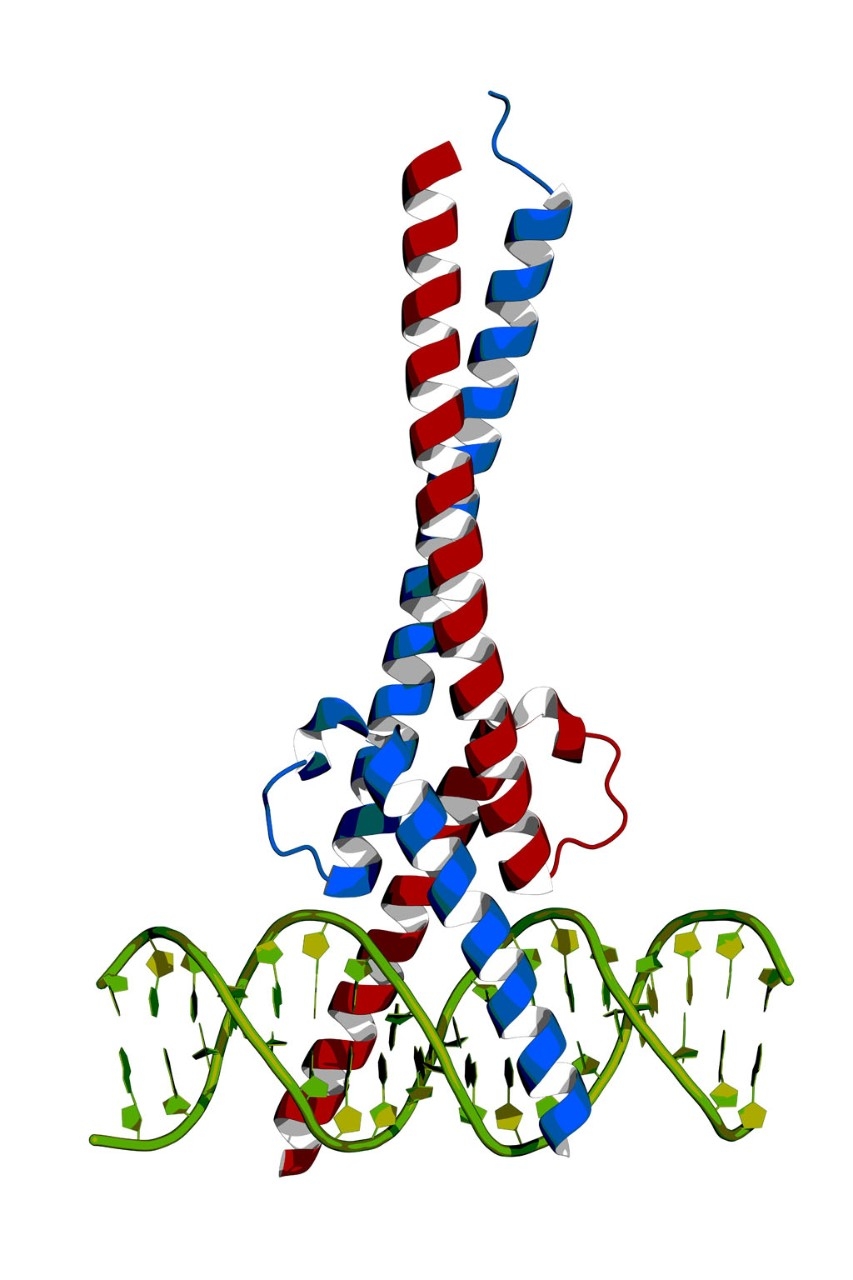
Depiction of the Myc protein

http://med.stanford.edu/news/all-news/2016/03/protein-increases-signals-that-protect-cancer-cells/_jcr_content/main/image.img.full.high.jpg

The Myc protein, depicted here, is mutated in more than half of all human cancers.   Petarg/Shutterstock


A cancer-associated protein called Myc directly controls the expression of two molecules known to protect tumor cells from the host’s immune system, according to a study by researchers at the Stanford University School of Medicine.

The finding is the first to link two critical steps in the development of a successful tumor: uncontrolled cell growth — when mutated or misregulated, Myc causes an increase in the levels of proteins that promote cell division — and an ability to outwit the immune molecules meant to stop it.

The study was published online March 10 inScience. Dean Felsher, MD, PhD, a professor of oncology and of pathology, is the senior author. The lead author is postdoctoral scholar Stephanie Casey, PhD. The work was conducted in collaboration with researchers at the University of Wurzburg.

“Our findings describe an intimate, causal connection between how oncogenes like Myc cause cancer and how those cancer cells manage to evade the immune system,” Felsher said.

‘Don’t eat me’ and ‘don’t find me’

One of the molecules is the CD47 protein, which researchers in the Stanford laboratory of Irving Weissman, MD, have discovered serves as a “don’t eat me” signal to ward off cancer-gobbling immune cells called macrophages. Weissman is the Virginia and D.K. Ludwig Professor for Clinical Investigation in Cancer Research and the director of Stanford’s Institute for Stem Cell Biology and Regenerative Medicine.

Nearly all human cancers express high levels of CD47 on their surfaces, and an antibody targeting the CD47 protein is currently in phase-1 clinical trials for a variety of human cancers.

The other molecule is a “don’t find me” protein called PD-L1, known to suppress the immune system during cancer and autoimmune diseases but also in normal pregnancy. It’s often overexpressed on human tumor cells. An antibody that binds to PD-L1 has been approved by the U.S. Food and Drug Administration to treat bladder and non-small-cell lung cancer, but it has been shown to be effective in the treatment of many cancers.

Dean Felsher

Programmed death-ligand 1 (PD-L1): an inhibitory immune pathway exploited by cancer

Image of PD-L1 binding to B7.1 and PD-1, deactivating T cell]

http://www.researchcancerimmunotherapy.com/images/pathways/pd-l1-hero.jpg

In cancer, Myc a usual suspect

Researchers in Felsher’s laboratory have been studying the Myc protein for more than a decade. It is encoded by a type of gene known as an oncogene. Oncogenes normally perform vital cellular functions, but when mutated or expressed incorrectly they become powerful cancer promoters. The Myc oncogene is mutated or misregulated in over half of all human cancers.

In particular, Felsher’s lab studies a phenomenon known as oncogene addiction, in which tumor cells are completely dependent on the expression of the oncogene. Blocking the expression of the Myc gene in these cases causes the complete regression of tumors in animals.

In 2010, Felsher and his colleagues showed that this regression could only occur in animals with an intact immune system, but it wasn’t clear why.

“Since then, I’ve had it in the back of my mind that there must be a relationship between Myc and the immune system,” said Felsher.

Turning off Myc expression

Casey and Felsher decided to see if there was a link between Myc expression and the levels of CD47 and PD-L1 proteins on the surface of cancer cells. To do so, they investigated what would happen if they actively turned off Myc expression in tumor cells from mice or humans. They found that a reduction in Myc caused a similar reduction in the levels of CD47 and PD-L1 proteins on the surface of mouse and human acute lymphoblastic leukemia cells, mouse and human liver cancer cells, human skin cancer cells, and human non-small-cell lung cancer cells. In contrast, levels of other immune regulatory molecules found on the surface of the cells were unaffected.

I’ve had it in the back of my mind that there must be a relationship between Myc and the immune system.

In publicly available gene expression data on tumor samples from hundreds of patients, they found that the levels of Myc expression correlated strongly with expression levels of CD47 and PD-L1 genes in liver, kidney and colorectal tumors.

The researchers then looked directly at the regulatory regions in the CD47 and PD-L1 genes. They found high levels of the Myc protein bound directly to the promoter regions of both CD47 and PD-L1 in mouse leukemia cells, as well as in a human bone cancer cell line. They were also able to verify that this binding increased the expression of the CD47 gene in a human blood cell line.

Possible treatment synergy

Finally, Casey and Felsher engineered mouse leukemia cells to constantly express CD47 or PD-L1 genes regardless of Myc expression status. These cells were better able than control cells to evade the detection of immune cells like macrophages and T cells, and, unlike in previous experiments from Felsher’s laboratory, tumors arising from these cells did not regress when Myc expression was deactivated.

“What we’re learning is that if CD47 and PD-L1 are present on the surfaces of cancer cells, even if you shut down a cancer gene, the animal doesn’t mount an adequate immune response, and the tumors don’t regress,” said Felsher.

The work suggests that a combination of therapies targeting the expression of both Myc and CD47 or PD-L1 could possibly have a synergistic effect by slowing or stopping tumor growth, and also waving a red flag at the immune system, Felsher said.

“There is a growing sense of tremendous excitement in the field of cancer immunotherapy,” said Felsher. “In many cases, it’s working. But it’s not been clear why some cancers are more sensitive than others. Our work highlights a direct link between oncogene expression and immune regulation that could be exploited to help patients.”

The research is an example of Stanford Medicine’s focus on precision health, the goal of which is to anticipate and prevent disease in the healthy and precisely diagnose and treat disease in the ill.

Other Stanford co-authors of the paper are oncology instructor Yulin Li, MD, PhD; postdoctoral scholars Ling Tong, PhD, Arvin Gouw, PhD, and Virginie Baylot, PhD; former research assistant Kelly Fitzgerald; and undergraduate student Rachel Do.

The research was supported by the National Institutes of Health (grants RO1CA089305, CA170378, CA184384, CA105102, P50 CA114747, U56CA112973, U01CA188383, 1F32CA177139 and 5T32AI07290).


The PD-L1 pathway downregulates cytotoxic T-cell activity to maintain immune homeostasis

Under normal conditions, the inhibitory ligands PD-L1 and PD-L2 play an important role in maintaining immune homeostasis.1 PD-L1 and PD-L2 bind to specific receptors on T cells. When bound to their receptors, cytotoxic T-cell activity is downregulated, thereby protecting normal cells from collateral damage.1,2

Image showing PD-L1 binding to B7.1 and PD-1 to deactivate T cells during immune response]

PD-L1

Broadly expressed in multiple tissue types, including hematopoietic, endothelial, and epithelial cells1,4

B7.1

Receptor expressed on activated T cells and dendritic cells3

PD-1

Receptor expressed primarily on activated T cells3

CONVERSELY, PD-L2 BINDS PRIMARILY TO PD-13

Image showing PD-L1 binding to B7.1 and PD-1 to deactivate T cells during immune response]

PD-L2

Restricted expression on immune cells and in some organs, such as the lung and colon1,4,5

PD-1

Receptor expressed primarily on activated T cells3


Many tumors can exploit the PD-L1 pathway to inhibit the antitumor response

In cancer, the PD-L1/B7.1 and PD-L1/PD-1 pathways can protect tumors from cytotoxic T cells, ultimately inhibiting the antitumor immune response in 2 ways.1-3

  • Deactivating cytotoxic T cells in the tumor microenvironment
  • Preventing priming and activation of new T cells in the lymph nodes and subsequent recruitment to the tumor


PD-L1 MAY INHIBIT CYTOTOXIC T-CELL ACTIVITY IN THE TUMOR MICROENVIRONMENT

Upregulation of PD-L1 can inhibit the last stages of the cancer immunity cycle by deactivating cytotoxic T cells in the tumor microenvironment.1

Activated T cells in the tumor microenvironment release interferon gamma.2

As a result, tumor cells and tumor-infiltrating immune cells overexpress PD-L1.2

PD-L1 binds to T-cell receptors B7.1 and PD-1, deactivating cytotoxic T cells. Once deactivated, T cells remain inhibited in the tumor microenvironment.1,2

PD-L1 MAY INHIBIT CANCER IMMUNITY CYCLE PROPAGATION IN THE LYMPH NODES

PD-L1 overexpression can also inhibit propagation of the cancer immunity cycle by preventing the priming and activation of T cells in the lymph nodes.1-3

PD-L1 expression is upregulated on dendritic cells within the tumor microenvironment.2,3

PD-L1–expressing dendritic cells travel from the tumor site to the lymph node.4

PD-L1 binds to B7.1 and PD-1 receptors on cytotoxic T cells, leading to their deactivation.3

http://www.researchcancerimmunotherapy.com/pathways/pd-l1-immune-evasion


The cancer immunity cycle characterizes the complex interactions between the immune system and cancer

The cancer immunity cycle describes a process of how one’s own immune system can protect the body against cancer. When performing optimally, the cycle is self-sustaining. With subsequent revolutions of the cycle, the breadth and depth of the immune response can be increased.1


STEPS 1-3: INITIATING AND PROPAGATING ANTICANCER IMMUNITY1

  • Oncogenesis leads to the expression of neoantigens that can be captured by dendritic cells
  • Dendritic cells can present antigens to T cells, priming and activating cytotoxic T cells to attack the cancer cells

STEPS 4-5: ACCESSING THE TUMOR1

  • Activated T cells travel to the tumor and infiltrate the tumor microenvironment

STEPS 6-7: CANCER-CELL RECOGNITION AND INITIATION OF CYTOTOXICITY1

  • Activated T cells can recognize and kill target cancer cells
  • Dying cancer cells release additional cancer antigens, propagating the cancer immunity cycle


Image of immunity cycle; explore Genentech cancer immunotherapy research on the cancer immunity cycle

http://www.researchcancerimmunotherapy.com/pathways/pd-l1


REFERENCES

  1. Chen DS, Mellman I. Oncology meets immunology: the cancer-immunity cycle. Immunity. 2013;39:1-10. PMID: 23890059
  2. Chen DS, Irving BA, Hodi FS. Molecular pathways: next-generation immunotherapy—inhibiting programmed death-ligand 1 and programmed death-1. Clin Cancer Res. 2012;18:6580-6587. PMID: 23087408
  3. Keir ME, Butte MJ, Freeman GJ, Sharpe AH. PD-1 and its ligands in tolerance and immunity. Annu Rev Immunol. 2008;26:677-704. PMID: 18173375
  4. Motz GT, Coukos G. Deciphering and reversing tumor immune suppression. Immunity. 2013;39:61-73. PMID: 23890064


MYC regulates the antitumor immune response through CD47 and PD-L1

The clinical efficacy of monoclonal antibodies as cancer therapeutics is largely dependent upon their ability to target the tumor and induce a functional antitumor immune response. This two-step process of ADCC utilizes the response of innate immune cells to provide antitumor cytotoxicity triggered by the interaction of the Fc portion of the antibody with the Fc receptor on the immune cell. Immunotherapeutics that target NK cells, γδ T cells, macrophages and dendritic cells can, by augmenting the function of the immune response, enhance the antitumor activity of the antibodies. Advantages of such combination strategies include: the application to multiple existing antibodies (even across multiple diseases), the feasibility (from a regulatory perspective) of combining with previously approved agents and the assurance (to physicians and trial participants) that one of the ingredients – the antitumor antibody – has proven efficacy on its own. Here we discuss current strategies, including biologic rationale and clinical results, which enhance ADCC in the following ways: strategies that increase total target–monoclonal antibody–effector binding, strategies that trigger effector cell ‘activating’ signals and strategies that block effector cell ‘inhibitory’ signals.

Keywords: γδ T cells, ADCC, cancer, cytokines, IMiD, immunocytokines, immunomodulators, interleukins, monoclonal antibodies, NK cells, passive immunotherapy

Monoclonal antibodies (mAbs) can target tumor antigens on the surface of cancer cells and have a favorable toxicity profile in comparison with cytotoxic chemotherapy. Expression of tumor antigens is dynamic and inducible through agents such as Toll-like receptor (TLR) agonists, immunomodulatory drugs (IMiDs) and hypomethylating agents [1]. Following binding of the mAb to the tumor antigen, the Fc portion of the mAb interacts with the Fc receptor (FcR) on the surface of effector cells (i.e., NK cells, γδ T cells and macrophages), leading to antitumor cytotoxicity and/or phagocytosis of the tumor cell. FcR interactions can be stimulatory or inhibitory to the killer cell, depending on which FcR is triggered and on which cell. Stimulatory effects are mediated through FcγRI on macrophages, dendritic cells (DCs) and neutrophils, and FcγRIIIa on NK cells, DCs and macrophages. In murine models, the cytotoxicity resulting from FcR activation on a NK cell, γδ T cell and macrophage is responsible for antitumor activity [2]. The role of DCs should be noted: although not considered to be primary ADCC effector cells, they can respond to mAb-bound tumor cells via their own FcR-mediated activation and probably play a significant role in activating effector cells. Preclinical models have shown that, although not the effector cell, DCs are critical to the efficacy of mAb-mediated tumor elimination [3]. Equally, mAb-activated ADCC effector cells can induce DC activation [4] and the importance of this crosstalk is an increasing focus of study [5].

The antitumor effects of mAbs are caused by multiple mechanisms of action, including cell signaling agonism/antagonism, complement activation and ligand sequestration, although ADCC probably plays a predominant role in the efficacy of some mAbs. In a clinical series, a correlation between the affinity of the receptor FcγRIIIa (determined by inherited FcR polymorphisms) and the clinical response to mAb therapy, supporting the significance of the innate immune response [610]. Several strategies could potentially improve the innate response following FcR activation by a mAb (Figure 1):

Quantitatively increasing the density of the bound target, mAb or the effector cells;

Stimulation of the effector cell by targeting the NK cell, γδ T cell and/or macrophage with small molecules, cytokines or agonistic antibodies;

Blocking an inhibitory interaction between the NK cell or macrophage and the tumor cell.


An external file that holds a picture, illustration, etc. Object name is nihms384451f1.jpg

http://www.ncbi.nlm.nih.gov/pmc/articles/PMC3386352/bin/nihms384451f1.jpg

Enhancing ADCC

FcR: Fc receptor; HDACi: Histone deacetylase inhibitor; IMiD: Immunomodulator; KIR: Killer immunoglobulin-like receptor;

The ability of the combination approaches to enhance ADCC is largely determined by the capacity of the mAb to induce ADCC. Since the approval of the first mAb for the treatment of non-Hodgkin’s lymphoma, rituximab (RTX), in 1997, several mAbs have become standard of care for the treatment of both solid tumors and hematologic malignancies, including trastuzumab (TRAST), alemtuzumab, cetuximab, panitumumab and ofatumumab [11]. As noted above, clinical series among lymphoma patients treated with an anti-CD20 mAb (RTX) [6,7], HER2-expressing breast cancer receiving anti-HER2 mAb therapy (TRAST) [8] or colorectal cancer patients treated with an anti-EGFR mAb (cetuximab) [9,10] observed a correlation between clinical benefit and FcγRIIIa genotype, with patients who have higher-affinity polymorphisms demonstrating superior clinical outcomes. By contrast, the anti-EGFR mAb panitumumab does not induce ADCC, owing to a different Fc isotype that does not bind to the FcγRIIIa. Therefore, when considering enhancement of ADCC, such approaches are limited to combinations with mAbs that activate the FcR. Nonetheless, an advantage of this dual therapy strategy is that mAbs yet to be discovered against currently unknown tumor antigens may be combined with the therapeutics discussed herein.

Increasing target–mAb–effector binding

As the central element in the target–mAb–effector cell unit, the mAb seems to be a probable candidate for improvements, either in its antigen-binding or its Fc-binding domains. This approach has been heavily pursued with some degree of success [1215]. Antibody engineering to improve interaction between the target or FcR requires that each new antibody be individually developed and tested as a new entity.

Increasing the antigen target

Tumor cells with a lower density of antigen targets are less responsive to mAbs than higher antigen-expressing diseases [16]. Therefore, it seems logical to try to increase the expression of the target on tumor cells. Antigen expression can be upregulated by cytokines [17], ionizing radiation [18], natural metabolites [19] and hypomethylating agents such as decitabine [20]. In addition, the family of TLR9 agonists known as CpG oligodeoxynucleotides (CpG ODN) can induce CD20 expression on malignant B cells [2123]. Taken together with data showing the activating effect of CpG ODN on effector cells (discussed below), it seems reasonable that the combination of CpG ODN with mAb might have synergistic efficacy. Clinical series, however, have tested CpG ODN administered intravenously or subcutaneously and have observed little efficacy in Phase I and II studies [2426] in low-grade lymphoma. One possible limitation of these studies has been their application to diseases (primarily follicular and mantle cell lymphoma) known to already have high expression of the relevant antigen (CD20). It is plausible that increasing antigen expression on low antigen-expressing diseases such as chronic lymphocytic leukemia could have a greater increase in relative efficacy. To this end, monotherapy studies have recently been undertaken [27,301] and should lead to combination trials.

……

Effector cells: γδ T cells

The role of NK cells and macrophages in mediating ADCC has been well established; however, only recently have γδ T cells been found to play a role as ADCC effectors. Typically, this population is considered as a minor subset (<5% of circulating T cells), although they may infiltrate tumors of epithelial origin preferentially and constitute a large portion of the tumor-infiltrating lymphocytes in cancers such as breast carcinoma. The combination of HLA-unrestricted cytotoxicity against multiple tumor cell lines of various histologies, secretion of cytolytic granules and proinflammatory cytokines such as TNF-α, IL-17 and IFN-γ make γδ T cells potentially potent antitumor effectors [32,33].

……

TLR agonists    

In addition to its aforementioned induction of CD20, CpG ODN also indirectly augments innate immune function. TLRs are specialized to recognize pathogen-associated molecular patterns; they stimulate plasmacytoid DCs and B cells [53], and one of many plasmacytoid DC responses to stimulation by CpG ODNs is activation of local NK cells, thus improving spontaneous cytotoxicity and ADCC [54]. CpG ODN effects on NK cells appeared to be indirect and IFN-γ production by T cells (possibly in response to plasmacytoid DC activation) has been hypothesized as the intermediary of NK cell activation.

…..

Immunomodulatory drugs

IMiDs have shown clinical activity in multiple hematologic malignancies despite their primary mechanism of action being unclear. Among their biologic effects (particularly lenalidomide) there are demonstrable and pleiotropic effects on immune cells and signaling molecules. These include enhancement of in vitro NK cell- and monocyte-mediated ADCC on RTX-coated [68] as well as TRAST- and cetuximab-coated tumor cells [69]. In vivo studies in a human lymphoma severe combined immune deficiency mouse model demonstrated significant increases in NK cell recruitment to tumors mediated via microenvironment cytokine changes and augmented RTX-associated ADCC [70]. Studies suggest that IMiD activation of NK cells occurs indirectly; partly via IL-2 induction by T cells [71]. Clinically, a recent study noted significant increases in peripheral blood NK cells, NK cell cytotoxicity and serum IL-2, IL-15 and GM-CSF [72], the potential ADCC-promoting effects of which are discussed below.

…..

PD-1

PD-1 is a negative regulatory member of the CD28 superfamily expressed on the surface of activated T cells, B cells, NK cells and macrophages, similar to but more broadly regulatory than CTLA-4. Its two known ligands, PD-L1 and PD-L2, are both expressed on a variety of tumor cell lines. The PD-1–PD-L1 axis modulates the NK cell versus multiple myeloma effect, as seen by its blockade enhancing NK cell function against autologous primary myeloma cells, seemingly through effects on NK cell trafficking, immune complex formation with myeloma cells and cytotoxicity specifically toward PD-L1(+) tumor cells [179]. Two anti-PD-1 mAbs (BMS-936558 and CT-011) are currently in clinical trials, the latter in a combination study with RTX for patients with low-grade follicular lymphoma [314].

ConclusionThe recent approval of an anti-CTLA4 mAb has demonstrated that modulating the immune response can improve patient survival [180,181]. As the immune response is a major determinant of mAb efficacy, the opportunity now exists to combine mAb therapy with IMiDs to enhance their antitumor efficacy. Remarkable advances in the basic science of cellular immunology have increased our understanding of the effector mechanisms of mAb antitumor efficacy. Whereas the earliest iterations of such combinations, for example IL-2 and GM-CSF, may have augmented both effector and suppressive cells, newer approaches such as IL-15 and TLR agonists may more efficiently activate effector cells while minimizing the influence of suppressive cells. Despite these encouraging rationale and preliminary data, clinical evidence is still required to demonstrate whether combination therapies will increase the antitumor effects of mAb.

Still, this approach is unique in combining a tumor-targeting therapy, the mAb, with an immune-enhancing therapy. If successful, these therapies may be combined with multiple mAbs in routine practice, as well as novel mAbs yet to be developed. Various approaches including augmenting antigen expression, stimulating the innate response and blocking inhibitory signals are being explored to determine the optimal synergy with mAb therapies. Therapies targeting NK cells, γδ T cells, macrophages and DCs may ultimately be used in combination to further augment ADCC. Encouraging preclinical studies have led to a number of promising therapeutics, and the results of proof-of-concept clinical trials are eagerly awaited.

PD-L1, other targeted therapies await more standardized IHC

February 2016—Immunohistochemistry is heading down a path toward more standardization, and that’s essential as it plays an increasing role in rapidly expanding immunotherapy, says David L. Rimm, MD, PhD, professor of pathology and of medicine (oncology) and director of translational pathology at Yale University School of Medicine. As a co-presenter of a webinar produced by CAP TODAY in collaboration with Horizon Diagnostics, titled “Immunohistochemistry Through the Lens of Companion Diagnostics” (http://j.mp/ihclens_webinar), he analyzes the core challenges of IHC’s adaptation to the needs of precision medicine: binary versus continuous IHC, measuring as opposed to counting or viewing by the pathologist, automation, and assay performance versus protein measurement.

“Immunohistochemistry is 99 percent binary already,” Dr. Rimm points out. “There are only a few assays in our labs—ER, PR, HER2, Ki-67, and maybe a few more—where we really are looking at a continuous curve or a level of expression.”

Two criteria in the 2010 ASCO/CAP guidelines on ER and PR testing in breast cancer patients are key, he says: 1) the percentage of cells staining and 2) any immunoreactivity. “The first is hard to estimate, but the guidelines recommend the use of greater than or equal to one percent of cells that are immunoreactive. That means they could have a tiny bit of signal or they could have a huge amount of signal and they would be considered immunoreactive, which thereby makes this a binary test.”

Having the test be binary can be a problem for companion diagnostic purposes because any immunoreactivity is dependent on the laboratory threshold and counterstain. For example, if two of the same spots, serial sections on a tissue microarray, were shown side by side, one with and one without the hematoxylin counterstain, “you might see the counterstain make this positive test into a negative by eye, which is a potential problem with IHC when you have a binary stain.” (Fig. 1).

Fig1

http://www.captodayonline.com/wordpress/wp-content/uploads/2016/02/Fig1.jpg

Dr. Rimm describes a small study done with three different CLIA-certified labs, each using a different FDA-approved antibody and measuring about 500 breast cancer cases on a tissue microarray. The study showed there can be fairly significant discordance between labs—between 18 and 30 percent discordance—in terms of the cases that were positive. “In fact, if we look at outcome, 18 percent of the cases were called positive in Lab Two but were negative in Lab Three. Lab Three showed outcomes similar to the double positives whereas Lab Two had false-negatives.” This is an important problem that occurs when we try to binarize our immunohistochemistry, he says.

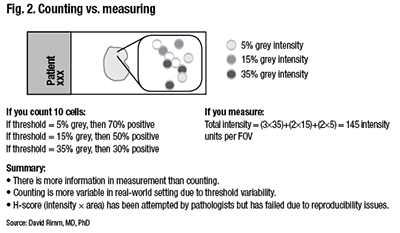
Counting is more variable in a real-world setting due to the variability of the threshold for considering a case positive. “You can easily calculate that if your threshold was five percent, then you’d have 70 percent positive cells. And you would easily call this positive. But if you added more hematoxylin because that’s how your pathologist liked it, then perhaps you’d only have 30 percent positive. So this is the risk of using thresholds.” (Fig. 2).

Fig2

http://www.captodayonline.com/wordpress/wp-content/uploads/2016/02/Fig2.gif

Although this is done in all of immunohistochemistry today, Dr. Rimm thinks it is an important consideration as IHC transitions to more standardized form. “An H score—intensity times area, which has been attempted many times, can’t be done by human beings. Pathologists try but have failed.”

“We can’t do those intensities by eye. We have to measure them with a machine. But we get a very different piece of information content when we measure intensity, as opposed to measuring the percentage of cells above a threshold. In sum, more information is present in a measurement than in counting.”

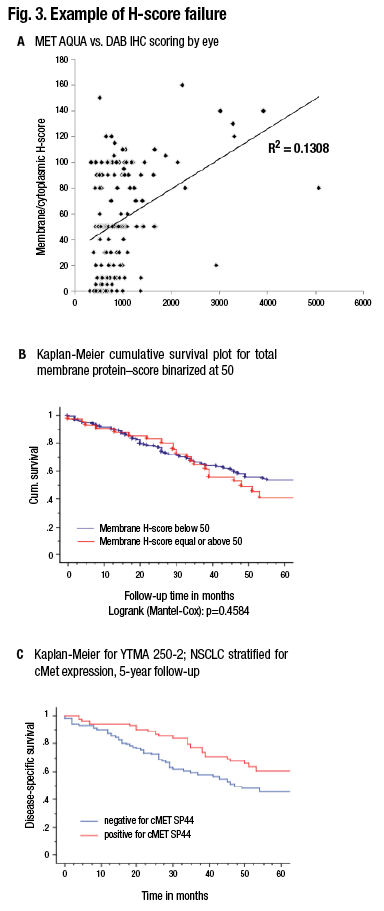
Pathologists read slides for a living, so it’s uncomfortable to think about giving that up in order to use a machine to measure the slides. “But I think if we want to serve our clients and our patients, we really owe them the accuracy of the 21st century as opposed to the methods of the 20th century.” (Fig. 3).

A shows comparison of a quantitative fluorescence score on the x axis versus an H-score on the y axis. Note the noncontinuous nature of human estimation of intensity times area (H-score). B) The survival curve in a population of lung cancer cases using the H-score. C) The survival curve in the same population using the quantitative score. (Source: David Rimm, MD, PhD)

http://www.captodayonline.com/wordpress/wp-content/uploads/2016/02/Fig3.gif

A shows comparison of a quantitative fluorescence score on the x axis versus an H-score on the y axis. Note the noncontinuous nature of human estimation of intensity times area (H-score). B) The survival curve in a population of lung cancer cases using the H-score. C) The survival curve in the same population using the quantitative score. (Source: David Rimm, MD, PhD)

Among the currently available quantitative measuring devices are the Visiopharm, VIAS (Ventana), Aperio (Leica), InForm (Perkin-Elmer), and Definiens platforms. “We use the platform invented in my lab, called Aqua [Automated Quantitative Analysis], but this is now owned by Genoptix/Novartis. Genoptix intends to provide commercial tests using Aqua internally,” Dr. Rimm says, “as well as enable platform and commercial testing through partnership with additional reference lab providers.

“There are many quantification platforms,” he adds, “and I believe that any of them, used properly, can be effective in measurement.”

(Of the 265 participants in the CAP PM2 Survey, 2015 B mailing, who reported using an imaging system for quantification, 4.6 percent use VIAS, 4.1 percent use ACIS, 0.8 use Applied Imaging, and 10 percent use “other” imaging systems. Of the 1,359 Survey participants who responded to the question about use of an imaging system to analyze hormone receptor slides, 1,094, or 80.5 percent, reported not using any imaging system for quantification.)

Says Dr. Rimm: “The first platform we used to try to quantitate some DAB stain slides was actually the Aperio Nuclear Image Analysis algorithm. But the problem with DAB is that you can’t see through it. And so inherently it’s physically flawed as a method for accurate measurement.” He compares DAB to looking at stacks of pennies from above, where their height and quantity can’t be surmised, as opposed to from the side, where their numbers can be accurately estimated. “This is why I don’t use, in general, DAB-type technologies or any chromogen.”

Fluorescence doesn’t have this problem, and that is the reason Dr. Rimm began using fluorescence as a quantitative method. “We try to be entirely quantitative without any feature extraction. So we define epithelial tumors using a mask of cytokeratin. We define a mask by bleeding and dilating, filling some holes, and then ultimately measure the intensity of each cell, or of each target we’re looking for. In this case, in a molecularly defined compartment.”

Compartments can be defined by any type of molecular interactions. “We defined DAPI-positive pixels as nuclei, and we measure the intensity of the estrogen receptor within the compartment. And that gives us an intensity over an area or the equivalent of a concentration.” Many other fluorescent tools can be used in this same manner, but he cautions against use of fluorescent tools that group and count. “That’s a second approach that can be used, but the result gives you a count instead of a measurement.”

When comparing a pathologist’s reading versus a quantitative immunofluorescence score, he notes, pathologists actually don’t generate a continuous score. Instead, pathologists tend to use groups. “We tend to use a 100 or a 200 or an even number. We never say, ‘Well, it’s 37 percent positive.’ We say, ‘It’s 40 percent positive,’ because we know we can’t reproducibly tell 37 from 38 from 40 percent positive.”

The result of that is a noncontinuous scoring result, which doesn’t give the information content of quantitative measurement. A comparison between the two methods shows that at times, where quantitative measurement shows a significant difference in outcome, nonquantitative measure or an H-score difference may not show a difference in outcome. (Fig. 3 illustrates this concept.)

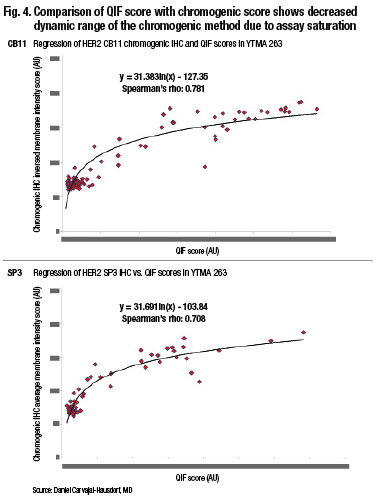
“Pathologists tend to group things, and we also tend to overestimate. It’s not that pathologists are bad readers. It’s just the tendency of the human eye because of our ability to distinguish different intensities and the subtle difference between intensities. But even if you compare two quantitative methods, you can see that the method where light absorbance occurs—that is the percent positive nuclei by Aperio, which is a chromogen-based method—tends to saturate. This is, in fact, amplified dramatically when you look at something with a wide dynamic range like HER2.” (Fig. 4).

Fig4

http://www.captodayonline.com/wordpress/wp-content/uploads/2016/02/Fig4.gif

In one study, researchers found less than one percent discordance—essentially no discordance—between two antibodies (Dekker TJ, et al. Breast Cancer Res. 2012;14[3]:R93). But looking at these results graphed quantitatively, you would see a very different result, Dr. Rimm says. “You can see a whole group of cases down below where there’s very low extracellular domain and very high cytoplasmic domain. In fact, some of these cases have essentially no extracellular domain, but high levels of cytoplasmic domain, and other cases have roughly equal levels of each” (Carvajal-Hausdorf DE, et al. J Natl Cancer Inst.2015;107[8]:pii:djv136).

Recent studies by Dr. Rimm’s group have shown this to have clinical implications. He looked at patients treated with trastuzumab in the absence of chemotherapy, in an unusual study called the HeCOG (Hellenic Cooperative Oncology Group) trial.

“We found that patients who had high levels of both extracellular and intracellular domain have much more benefit than patients who are missing the extracellular domain and thereby missing the trastuzumab binding site.” Follow-up studies are being done to validate this finding in larger cohorts.

Preanalytical variables, Dr. Rimm emphasizes, can have significant effects on IHC results, and more than 175 of them have been identified. “These are basically all the things we can’t control, which is the ultimate argument for standardization.”

In a surprising study by Flory Nkoy, et al., he says, it was shown that breast cancer specimens were more likely to be ER negative if the patient’s surgery was on a Friday because there was a higher ER-negative rate on Friday than on Monday. “So how could that be? Well, it was clearly the fact that the tissue was sitting over the weekend. And when it sat over the weekend, the ER positivity rate was going down” (Arch Pathol Lab Med. 2010;134:606–612).

Another study showed that after one hour, four hours, and eight hours of storage at room temperature, you lose significant amounts of staining, Dr. Rimm says. “And perhaps the best nonquantitative study or H-score-based study of this phenomenon was done by Isil Yildiz-Aktas, et al., where a significant decrease in the estrogen receptor score was found after only three hours in delay to fixation” (Mod Pathol. 2012;25:1098–1105).

How long the slide is left to sit after it is cut is another preanalytical variable to be concerned with. “In the clinical lab, that’s not often a problem since we cut them, then stain them right away. But in a research setting, a fresh-cut slide can look very different from a slide that’s two days old, six days old, or 30 days old, where a 2+ spot on a breast cancer patient becomes negative after 30 days sitting on a lab bench. So those are both key variables to be mindful of.”

One solution for those preanalytic variables is trying to prevent delayed time to fixation. “And probably time to fixation is one of the main preanalytic variables, although it’s only one of the many hundreds of variables. The method we use to try to get around this problem is to use core biopsies or allow rapid and complete fixation, and then other things can be done.”

Finally, he warns, don’t cut your tissue until right before you stain it. “If you’re asked to send a tissue out to a collaborator or someone who is going to use it for research purposes later, we recommend coring and re-embedding the core, or sending the whole block. Unstained sections, when not properly stored in a vacuum, will ultimately be damaged by hydration or oxidation, both of which lead to loss of antigenicity.”

The crux of the matter is assay performance versus protein measurement, Dr. Rimm says. “In the last six to nine months, we really are faced with this problem in spades, as PD-L1 has become a very important companion diagnostic.”

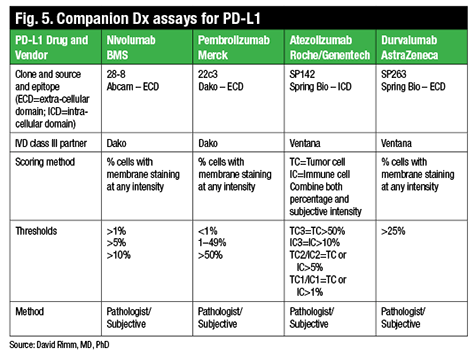
There are now four PD-L1 drugs with complementary or companion diagnostic tests (Fig. 5). One of the FDA-approved drugs, nivolumab (Opdivo, Bristol-Myers Squibb), for example, uses a clone called 28-8, which is provided by Dako in an assay, a complementary diagnostic assay, and with the following suggested scoring system: one percent, five percent, or 10 percent. In contrast, pembrolizumab (Keytruda, Merck) is also now FDA-approved but requires a companion diagnostic test that uses a different antibody, although the same Dako Link 48 platform. This diagnostic has a different scoring system of less than one percent, one to 49 percent, and 50 percent and over.

http://www.captodayonline.com/wordpress/wp-content/uploads/2016/02/Fig5.gif

Two other companies, Roche/Genentech and AstraZeneca, also have drugs in trials that may or may not have companion diagnostic testing, though both have already identified a partner and a unique antibody (neither of those listed above) and companion diagnostic testing scores used in their clinical trials.

“So what’s a pathologist to do?” Dr. Rimm says. “Well, there are a few problems with this. First of all, what we really should be doing is measuring PD-L1. That’s the target and that’s what should ultimately predict response. But instead what we’re stuck with, through the intricacies of the way our field has grown and our legacy, is closed-system assays. While these probably do measure PD-L1, we do not know how these compare to each other.” Two parallel large multi-institutional studies are addressing this issue now, he says.

There are solutions for managing these closed-system assays to be sure the assay is working in your lab and that you can get the right answer, Dr. Rimm says. His laboratory uses a closed-system assay for PD-L1, relying not on the defined system but rather on a test system it has developed in doing a study with different investigators.

Sample runs by these different investigators show the potentially high variability, he says. “In a scan of results, no one would deny which spots are the positive spots and which are the negative.” But the difference in staining prevents accurate measurement of these things and shows the variability inherent even in a closed-box system.

A comparison of two closed-box systems, the SP1 run on the Discovery Ultra on Ventana, and the SP1, same antibody, run on the Dako closed-box system, also shows that, in fact, there’s not 100 percent agreement using same-day, same-FDA-cleared antibody staining and different autostainers. So automation may not solve the problem, Dr. Rimm notes (Fig. 6).
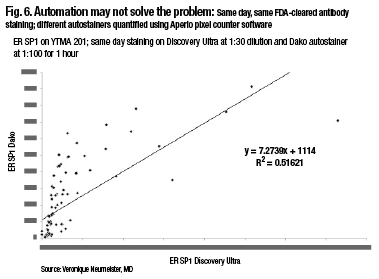
Fig6

“When running these in a quantitative fashion and measuring them quantitatively, there are actually differences in the way these closed-box systems run. And so you, as the pathologist, have to be the one who makes sure your assays are correct, your thresholds are correct, and your measurements are accurate.”

The way to do that, he believes, is to use standardization or index arrays. An index array of HER2 that his laboratory developed has 3+ amplified, 2+ amplified, not amplified, and so on from 80 cases in the lab’s archive, shown stained with immunofluorescence and quantitative and DAB stain. “It was only with this standardization array, run every time we ran our stainer, that we were able to draw the conclusions in the previous study about extracellular versus cytoplasmic domain.”

Companies have realized the importance of this, and specifically companies like NantOmics (formerly OncoPlexDx) have realized they can exactly quantitate the amount of tissue on a slide using a specialized mass spectrometry method, he says. “They can actually give you amol/µg of total protein.”

He and colleagues are working with NantOmics now to try to convert from amols to protein to average quantitative fluorescent scores to help build these standards and make standard arrays more accurate. “This is still a work in progress, but I believe this is ultimately the kind of accuracy that can standardize all of our labs. We have shown that the quantitative fluorescence system is truly linear and quantitative for EGFR measurements when using mass spectrometry as a gold standard.” They are preparing to submit a manuscript with this data.

In the interim, Dr. Rimm’s laboratory has begun working also with Horizon Diagnostics, employing Horizon’s experimental 15-spot positive-control array. “When you use this array and quantitate it with quantitative fluorescence, you get a very interesting profile. If a cut point is set at one point, you would see three clearly positive cells or spots and 12 clearly negative spots with two different antibodies. But is that the threshold?”

“In fact, using a little higher score and a very quantitative test, you might find that the threshold may, in fact, be a little bit lower than that.” It turns out that only three of these 12 spots are true negatives. The others at least have some level of RNA, and some have a lot. “So how do we handle these? And are these behaving the same way with multiple antibodies?” Parallel results, finding nearly the same threshold case, have been found using SP142 from Ventana, E1L3N from Cell Signaling, and SP263 from Ventana.

Studies to address those issues are still in the early stage, he says. He cautions that there is variance in these assays, and more work is being done to reproduce the data. “But I think the important point is that, using these kinds of arrays, you can definitively determine whether your lab has the same cut point as every other lab. And were we to quantitate this with mass spectrometry, we would know exactly the break point for use in the future.”

Dr. Rimm’s laboratory has also built its own PD-L1 index tissue microarray with a number of its own tumor slides ranging from very low to very high expressors, a series of cell lines, and including some placenta-positive controls on normal tumor. He has found that generating an index array has advantages, and he encourages other laboratories to prepare their own index arrays to increase the accuracy and reproducibility of their laboratory-developed tests. “You can produce these in your own lab so that you can be sure you can standardize your tests run in your clinical lab from day to day and week to week as part of an LDT.”

“If we think about it, there really are no clinical antibodies today that are truly quantitative,” Dr. Rimm says. “And when there are, new protocols will be required, but I believe those protocols are now in existence. We just await the clinical trials that require truly quantitative protein measurement or in situ proteomics.”

In that process of moving toward in situ proteomics, suggests web-inar co-presenter Clive Taylor, MD, DPhil, professor of pathology in the Keck School of Medicine at the University of Southern California, FDA approval, per se, will not solve any of the problems discussed in the webinar. (See the January 2016 issue for the full report of Dr. Taylor’s presentation.) “I think what the FDA approval will do is demand that we find solutions to these problems ourselves. The FDA’s attitude is, to a large degree, dependent on the claim. So if we just use immunohistochemistry as a simple stain, then the FDA classes that as sort of class I, level 1. And we can do that [IHC stain] without having to get preapproval by the FDA.

“On the other hand, if we take something like the well-established HercepTest, where based on the result of that test alone, it’s decided whether or not the patient gets treatment, treatment that’s very expensive and treatment that has benefits and…side effects. That claim is, in fact, a very high-level claim. And for that, the FDA is demanding high-level data, which I think is entirely appropriate,” Dr. Taylor says.

Most of these upcoming companion diagnostics, if not all, he says, will be regarded by the FDA as class III, high level or high complexity. They will require a premarket approval study in conjunction with a clinical trial. And the FDA will demand high standards of control and performance, eventually. “There are not many labs that can produce those high standards as in-house or lab-developed tests today. And even the companies currently in trials are not producing the improved performance level for these tests that we are talking about today, as being required for high-quality quantitative and reproducible companion diagnostics. Eventually, I am convinced we will have to do that. It’s just that it will take time to get there.”

The FDA can only approve what is brought to it, Dr. Rimm points out. And so a true, fully quantitative IHC-based assay has presumably never been submitted, or at least never been approved by the FDA. “What we’re seeing instead are the assays that the FDA has approved, which are well defined and rigorously submitted. However, the result is a closed system that we use, which may or may not accurately measure PD-L1 on the slide, depending upon preanalytic variables and individual laboratories’ methods.”

“So questions keep popping up. And I can only say that we, as pathologists, have the final responsibility to our patients. And while it may not be recommended and it may change in the future, right now lab-derived tests or LDTs may be more accurate than FDA-approved platforms.”

“If you think about it, in molecular diagnostics where I’m familiar with EFGR and BRAF and KRAS tests, in that testing setting, less than 25 percent of the labs that do that test actually use the FDA-approved test,” Dr. Rimm says. “The remainder of the labs do their own LDTs, including our labs here at Yale.”

It wouldn’t surprise him if the same thing happens for PD-L1. “I’m aware of at least two labs—and we probably will be the third—that devise our own LDT for PD-L1 testing using the standards I’ve discussed, using array-type controls to be sure that our levels are correct, and then using a scoring system that we derived.”

“We aren’t really in a position to know at the time that we receive a piece of lung cancer tissue whether the oncologist is going to use pembrolizumab, which requires a companion diagnostic, or nivolumab, or the other drugs, which may or may not require a companion diagnostic. So in that sense, we’re almost bound to use an LDT,” Dr. Rimm says, since his lab can’t actually run four different potentially incongruent, though FDA-approved, tests for PD-L1.

Until a truly quantitative approach is developed and submitted to the FDA and approved, Dr. Taylor believes we won’t see things changing. “The algorithms that currently are approved have been approved on the basis that they can produce a similar result to a consensus group of pathologists. So they’re only as good as the pathologists.”

“As Dr. Rimm has discussed, I actually believe we can get a much better result than the pathologists can get with their naked eye. We have to get away from comparing it to what we currently can do and start to try to construct a proper test, just like we did in the clinical lab 30 years ago when we automated the clinical lab,” Dr. Taylor says. “We need to automate anatomic pathology, including the sample preparation, the assay process, and the reading, all three together in a closed system. And we’re nibbling away at the edges of it. We’ll get there, but it’ll take some time.”

Dr. Rimm is skeptical that the diagnostics field has learned any lessons from HercepTest and the companion diagnostics world of almost 20 years ago. “The submissions to the FDA for PD-L1 look very similar to what was submitted in 1998 for the HercepTest, the companion diagnostic test for trastuzumab [Herceptin]. And that’s disappointing. I think that is 20-year-old technology and we can do better. But even if we want to use the 20- or 40-year-old DAB-based technology, we should still be standardizing it and having a mechanism for standardization and having defined thresholds.”

As future FDA submissions come in, Dr. Rimm hopes that “even if they’re not quantitated, they can be standardized as to where the thresholds occur, so that we can be sure we deliver the best possible care to patients. And in the interim, I think we, as pathologists, will have to do that standardization with an LDT to be sure we’re giving our best results.”

Dr. Taylor warns that there is only a limited number of labs in the country and in the world that will be able to produce these LDTs, because of the complexity. “The FDA has already said in a position paper that it believes it may have to regulate LDTs to some extent. And what that will mean is that in the validation process, your own LDT will start to approach what is required for an FDA-approved test. And most labs are in no position to be able to do that.”

“So I think we’re going to come to a blending here, all forced by companion diagnostics. This is in situ proteomics,” Dr. Taylor says. “It’s a new test, essentially. It’s not straightforward immunohistochemistry, but a new test. And I think the fluorescence approach that Dr. Rimm has used has a lot of advantages in relating signal to target in terms of figure out what the best test is and stop comparing it to the pathologists. We should compare it to the best assay we can produce.”

With respect to the PD-L1 problem, Dr. Rimm notes, “I would point out that there is a so-called ‘Blueprint’ for comparison of the different antibodies and the different FDA assays, or potentially FDA-submitted tests anyway, to see how equivalent they are.” Similarly, he adds, the National Comprehensive Cancer Network recently issued a press release describing a multi-institutional study to assess the FDA-approved assay but also including an LDT (the Cell Signaling antibody E1L3N using the Leica Bond staining platform).

He points to a newly published study by his group (McLaughlin J, et al. JAMA Oncol. 2016;2[1]:46–54), finding that objective determination of PD-L1 protein levels in non-small cell lung cancer reveals heterogeneity within tumors and prominent interassay variability or discordance. The authors concluded that future studies measuring PD-L1 quantitatively in patients treated with anti-PD-1 and anti PD-L1 therapies may better address the prognostic or predictive value of these biomarkers. With future rigorous studies, including tissues with known responses to anti-PD-1 and anti-PD-L1 therapies, researchers could determine the optimal assay, PD-L1 antibody, and the best cut point for PD-L1 positivity.

Other work that will probably come out in mid-2016 from Dr. Rimm’s group has shown that expression of PD-L1 is largely bimodal, he says. “That is, there’s a group of patients that express a lot, and then there’s another group of patients that expresses a little or none.”

So time will tell how PD-L1 will be scored. “But if you look at the data from the Merck study and their cut point of greater than 50 percent, or even the cut point from the AstraZeneca studies of greater than 25 percent, you’re really dichotomizing the population into patients who are truly PD-LI positive from patients who are negative or almost negative.”

“Of course, we don’t want to miss patients in that negative to almost-negative group who will respond,” Dr. Rimm says. “On the other hand, we probably will have fairly good specificity and sensitivity with the assay defined by Merck and Dako with 22C3 as was recently published” (Robert C, et al. N Engl J Med. 2015;372[26]:2521–2532).

Many difficulties lie ahead, as researchers try to weigh the merits of different drugs with different approved tests on different platforms, involving different antibodies, Dr. Taylor says. “Does the lab try to set up four different PD-L1s, and if we only have one platform and not another, what do we do about that?” He thinks the tests may often be sent out to larger reference labs or academic centers as a result.

Dr. Rimm confirms that his own lab’s LDT—although literally thousands of PD-L1 tests have been conducted using it—is not yet up and running in the Yale CLIA laboratory, and in the meantime the IHC slides are being sent out to a commercial vendor.

Eventually, Dr. Taylor believes, the pressure of these dilemmas will lead the diagnostics field to develop an immunoassay on tissue sections. “We’ve never been forced to do that before, but once we are, that will produce a huge change in diagnostic capability and research capability.”

Anti–PD-1/PD-L1 therapy of human cancer: past, present, and future

Lieping Chen and  http://www.jci.org/articles/view/80011

The cDNA of programmed cell death 1 (PD-1) was isolated in 1992 from a murine T cell hybridoma and a hematopoietic progenitor cell line undergoing apoptosis (1). Genetic ablation studies showed that deficiencies in PD-1 resulted in different autoimmune phenotypes in various mouse strains (2, 3). PD-1–deficient allogeneic T cells with transgenic T cell receptors exhibited augmented responses to alloantigens, indicating that the PD-1 on T cells plays a negative regulatory role in response to antigen (2).

Several studies contributed to the discovery of the molecules that interact with PD-1. In 1999, the B7 homolog 1 (B7-H1, also called programmed death ligand-1 [PD-L1]) was identified independently from PD-1 using molecular cloning and human expressed-sequence tag database searches based on its homology with B7 family molecules, and it was shown that PD-L1 acts as an inhibitor of human T cell responses in vitro (4). These two independent lines of study merged one year later when Freeman, Wood, and Honjo’s laboratories showed that PD-L1 is a binding and functional partner of PD-1 (5). Next, it was determined that PD-L1–deficient mice (Pdl1 KO mice) were prone to autoimmune diseases, although this strain of mice did not spontaneously develop such diseases (6). It became clear later that the PD-L1/PD-1 interaction plays a dominant role in the suppression of T cell responses in vivo, especially in the tumor microenvironment (7, 8).

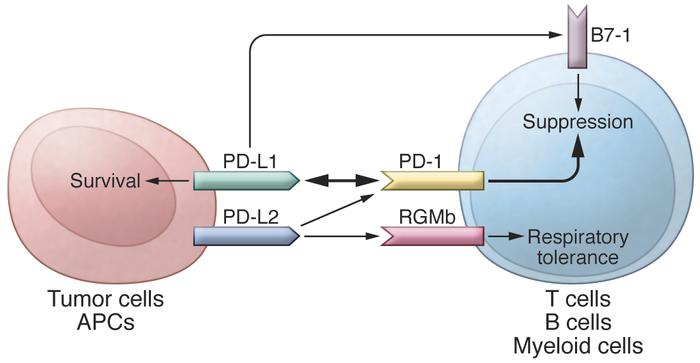
In addition to PD-L1, another PD-1 ligand called B7-DC (also known as PD-L2) was also identified by the laboratories of Pardoll (9) and Freeman (10). This PD-1 ligand was found to be selectively expressed on DCs and delivered its suppressive signal by binding PD-1. Mutagenesis studies of PD-L1 and PD-L2 molecules guided by molecular modeling revealed that both PD-L1 and PD-L2 could interact with other molecules in addition to PD-1 and suggested that these interactions had distinct functions (11). The functional predictions from these mutagenesis studies were later confirmed when PD-L1 was found to interact with CD80 on activated T cells to mediate an inhibitory signal (12, 13). This finding came as a surprise because CD80 had been previously identified as a functional ligand for CD28 and cytotoxic T lymphocyte antigen-4 (CTLA-4) (14, 15). PD-L2 was also found to interact with repulsive guidance molecule family member b (RGMb), a molecule that is highly enriched in lung macrophages and may be required for induction of respiratory tolerance (16). With at least five interacting molecules in the PD-1/PD-L1 pathway (referred to as the PD pathway) (Figure 1), further studies will be required to understand the relative contributions of these molecules during activation or suppression of T cells.
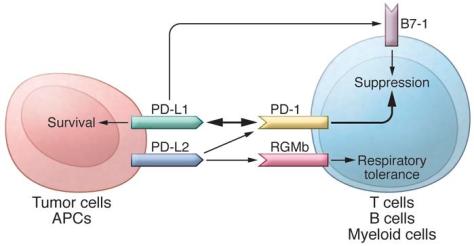
The PD pathway. The PD pathway has at least 5 interacting molecules. PD-...

http://dm5migu4zj3pb.cloudfront.net/manuscripts/80000/80011/medium/JCI80011.f1.jpg

The PD pathway.

The PD pathway has at least 5 interacting molecules. PD-L1 and PD-L2, with different expression patterns, were identified as ligands of PD-1, and the interaction of PD-L1 or PD-L2 with PD-1 may induce T cell suppression. PD-L1 was found to interact with B7-1 (CD80) on activated T cells and inhibit T cell activity. PD-L2 has a second receptor, RGMb; initially, this interaction activates T cells, but it subsequently induces respiratory tolerance. PD-L1 on tumor cells can also act as a receptor, and the signal delivered from PD-1 on T cells can protect tumor cells from cytotoxic lysis.

The discovery of the PD pathway did not automatically justify its application to cancer therapy, especially after the initial PD-1–deficient mouse studies, which suggested that PD-1 deficiency increases the incidence of autoimmune diseases (2, 3). In our initial work to characterize PD-L1 and its function, PDL1 mRNA was found to be broadly expressed in various tissues (17). However, normal human tissues seldom express PD-L1 protein on their cell surface, with the exception of tonsil (17), placenta (18), and a small fraction of macrophage-like cells in lung and liver (17), suggesting that, under normal physiological conditions, PDL1 mRNA is under tight posttranscriptional regulation. In sharp contrast, PD-L1 protein is abundantly expressed on the cell surface in various human cancers, as indicated by immunohistochemistry in frozen human tumor sections. Additionally, the pattern of PD-L1 expression was found to be focal rather than diffuse in most human cancers (17). In fact, the majority of in vitro–cultured tumor lines of both human and mouse origin are PD-L1–negative on the cell surface, despite overwhelming PD-L1 signal in specimens that are freshly isolated from patients with cancer (17, 19). This discrepancy was explained by the finding that IFN-γ upregulates PD-L1 on the cell surface of normal tissues and in various tumor lines (7, 17, 19). It was widely thought that IFN-γ typically promotes, rather than suppresses, T cell responses by stimulating antigen processing and presentation machinery (20, 21); therefore, the role of IFN-γ in downregulating immune responses in the tumor microenvironment via induction of PD-L1 was not well accepted until more recently. This finding is vital to our current understanding of the unique immunology that takes place in the tumor microenvironment and provided an important clue that led to the “adaptive resistance” hypothesis (see below) that explains this pathway’s mechanism of action to evade tumor immunity.

Due to the lack of cell surface expression of PD-L1 on most cultured tumor lines, it is necessary to reexpress PD-L1 on the surface using transfection to recapitulate the effects of cell surface PD-L1 in human cancers and to create models to study how tumor-associated PD-L1 interacts with immune cells. We now know that cancer cells and other cells in the tumor microenvironment can upregulate the expression of PD-L1 after encountering T cells, mostly via IFN-γ, which may make the transfection-mediated expression of PD-L1 unnecessary in some tumor models. Nevertheless, our results demonstrated that PD-L1+ human tumor cells could eliminate activated effector T cells (Teffs) via apoptosis in coculture systems, and this effect could be blocked by inclusion of an anti-human PD-L1 mAb (clone 2H1). Next, we generated a hamster mAb (clone 10B5) against mouse PD-L1 to block its interaction with T cells and test its role in tumor immunity in vitro and in vivo. We demonstrated that progressive growth of PD-L1+ murine P815 tumors in syngeneic mice could be suppressed using anti–PD-L1 mAb (17). Altogether, these studies represented the initial attempt at using mAb to block the PD pathway as an approach for cancer therapy. These proof-of-concept studies (17) were confirmed by several subsequent studies. A study from Nagahiro Minato’s laboratory showed that the J558L mouse myeloma line constitutively expressed high levels of cell surface PD-L1 and the growth of these cells in syngeneic BALB/c mice could be partially suppressed by administering anti–PD-L1 mAb (22). Our laboratory showed that regression of progressively growing squamous cell carcinomas in syngeneic mice could also be suppressed using a combination of adoptively transferred tumor-draining lymphocytes and anti–PD-L1 mAb (23). Furthermore, the Zou laboratory demonstrated that ovarian cancer–infiltrating human T cells could be activated in vitro using DCs, which showed enhanced activity in the presence of anti–PD-L1 mAb; upon transfer, these cells could eliminate established human ovarian cancers in immune-deficient mice (24). These early studies established the concept that the PD pathway could be used by tumors to escape immune attack in the tumor microenvironment. More importantly, these studies built a solid foundation for the development of anti-PD therapy for the treatment of human cancers.  …..

Anti-PD therapy has taken center stage in immunotherapies for human cancer, especially for solid tumors. This therapy is distinct from the prior immune therapeutic agents, which primarily boost systemic immune responses or generate de novo immunity against cancer; instead, anti-PD therapy modulates immune responses at the tumor site, targets tumor-induced immune defects, and repairs ongoing immune responses. While the clinical success of anti-PD therapy for the treatment of a variety of human cancers has validated this approach, we are still learning from this pathway and the associated immune responses, which will aid in the discovery and design of new clinically applicable approaches in cancer immunotherapy.


PD-1 Pathway Inhibitors: Changing the Landscape of Cancer Immunotherapy

Dawn E. Dolan, PharmD, and Shilpa Gupta, MD

Background: Immunotherapeutic approaches to treating cancer have been evaluated during the last few decades with limited success. An understanding of the checkpoint signaling pathway involving the programmed death 1 (PD-1) receptor and its ligands (PD-L1/2) has clarified the role of these approaches in tumor-induced immune suppression and has been a critical advancement in immunotherapeutic drug development. Methods: A comprehensive literature review was performed to identify the available data on checkpoint inhibitors, with a focus on anti–PD-1 and anti–PD-L1 agents being tested in oncology. The search included Medline, PubMed, the ClinicalTrials.gov registry, and abstracts from the American Society of Clinical Oncology meetings through April 2014. The effectiveness and safety of the available anti–PD-1 and anti–PD-L1 drugs are reviewed. Results: Tumors that express PD-L1 can often be aggressive and carry a poor prognosis. The anti–PD-1 and anti–PD-L1 agents have a good safety profile and have resulted in durable responses in a variety of cancers, including melanoma, kidney cancer, and lung cancer, even after stopping treatment. The scope of these agents is being evaluated in various other solid tumors and hematological malignancies, alone or in combination with other therapies, including other checkpoint inhibitors and targeted therapies, as well as cytotoxic chemotherapy. Conclusions: The PD-1/PD-L1 pathway in cancer is implicated in tumors escaping immune destruction and is a promising therapeutic target. The development of anti–PD-1 and anti–PD-L1 agents marks a new era in the treatment of cancer with immunotherapies. Early clinical experience has shown encouraging activity of these agents in a variety of tumors, and further results are eagerly awaited from completed and ongoing studies.

……

Role of PD-1/PD-L1 Pathway PD-1 is an immunoinhibitory receptor that belongs to the CD28 family and is expressed on T cells, B cells, monocytes, natural killer cells, and many tumor-infiltrating lymphocytes (TILs)10; it has 2 ligands that have been described (PD-L1 [B7H1] and PD-L2 [B7-DC]).11 Although PD-L1 is expressed on resting T cells, B cells, dendritic cells, macrophages, vascular endothelial cells, and pancreatic islet cells, PD-L2 expression is seen on macrophages and dendritic cells alone.10 Certain tumors have a higher expression of PD-L1.12 PD-L1 and L2 inhibit T-cell proliferation, cytokine production, and cell adhesion.13 PD-L2 controls immune T-cell activation in lymphoid organs, whereas PD-L1 appears to dampen T-cell function in peripheral tissues.14 PD-1 induction on activated T cells occurs in response to PD-L1 or L2 engagement and limits effector T-cell activity in peripheral organs and tissues during inflammation, thus preventing autoimmunity. This is a crucial step to protect against tissue damage when the immune system is activated in response to infection.15-17 Blocking this pathway in cancer can augment the antitumor immune response.18 Like the CTLA-4, the PD-1 pathway down-modulates Tcell responses by regulating overlapping signaling proteins that are part of the immune checkpoint pathway; however, they function slightly differently.14,16 Although the CTLA-4 focuses on regulating the activation of T cells, PD-1 regulates effector T-cell activity in peripheral tissues in response to infection or tumor progression.16 High levels of CTLA-4 and PD-1 are expressed on regulatory T cells and these regulatory T cells and have been shown to have immune inhibitory activity; thus, they are important for maintaining self-tolerance.16 The role of the PD-1 pathway in the interaction of tumor cells with the host immune response and the PD-L1 tumor cell expression may provide the basis for enhancing immune response through a blockade of this pathway.16 Drugs targeting the PD-1 pathway may provide antitumor immunity, especially in PD-L1 positive tumors. Various cancers, such as melanoma, hepatocellular carcinoma, glioblastoma, lung, kidney, breast, ovarian, pancreatic, and esophageal cancers, as well as hematological malignancies, have positive PD-L1 expression, and this expression has been correlated with poor prognosis.8,19 Melanoma and kidney cancer are prototypes of immunogenic tumors that have historically been known to respond to immunotherapeutic approaches with interferon alfa and interleukin 2. The CTLA-4 antibody ipilimumab is approved by the US Food and Drug Administration for use in melanoma. Clinical activity of drugs blocking the PD-1/PD-L1 pathway has been demonstrated in melanoma and kidney cancer.20-24 In patients with kidney cancer, tumor, TIL-associated PD-L1 expression, or both were associated with a 4.5-fold increased risk of mortality and lower cancer-specific survival rate, even after adjusting for stage, grade, and performance status.18,19,25,26 A correlation between PD-L1 expression and tumor growth has been described in patients with melanoma, providing the rationale for using drugs that block the PD-1/PD-L1 pathway.19,27 Historically, immunotherapy has been ineffective in cases of non–small-cell lung cancer (NSCLC), which has been thought to be a type of nonimmunogenic cancer; nevertheless, lung cancer can evade the immune system through various complex mechanisms.28 In patients with advanced lung cancer, the peripheral and tumor lymphocyte counts are decreased, while levels of regulatory T cells (CD4+), which help suppress tumor immune surveillance, have been found at higher levels.29-32 Immune checkpoint pathways involving the CTLA-4 or the PD-1/PD-L1 are involved in regulating T-cell responses, providing the rationale for blocking this pathway in NSCLC with antibodies against CTLA-4 and the PD-1/PD-L1 pathway.32 Triple negative breast cancer (TNBC) is an aggressive subset of breast cancer with limited treatment options. PD-L1 expression has been reported in patients with TNBC. When PD-L1 expression was evaluated in TILs, it correlated with higher grade and larger-sized tumors.33 Tumor PD-L1 expression also correlates with the infiltration of T-regulatory cells in TNBC, findings that suggest the role of PD-L1–expressing tumors and the PD-1/PD-L1–expressing TILs in regulating immune response in TNBC.34

…….

Preclinical evidence exists for the complementary roles of CTLA-4 and PD-1 in regulating adaptive immunity, and this provides rationale for combining drugs targeting these pathways.44-46 Paradoxically and originally believed to be immunosuppressive, new data allow us to recognize that cytotoxic agents can antagonize immunosuppression in the tumor microenvironment, thus promoting immunity based on the concept that tumor cells die in multiple ways and that some forms of apoptosis may lead to an enhanced immune response.8,15 For example, nivolumab was combined with ipilimumab in a phase 1 trial of patients with advanced melanoma.46 The combination had a manageable safety profile and produced clinical activity in the majority of patients, with rapid and deep tumor regression seen in a large proportion of patients. Based on the results of this study, a phase 3 study is being undertaken to evaluate whether this combination is better than nivolumab alone in melanoma (NCT01844505). Several other early-phase studies are underway to explore combinations of various anti–PD-1/PD-L1 drugs with other therapies across a variety of tumor types (see Tables 1 and 2), possibly paving the way for future combination studies.


Development of PD-1/PD-L1 Pathway in Tumor Immune Microenvironment and Treatment for Non-Small Cell Lung Cancer

Jiabei He, Ying Hu, Mingming Hu & Baolan Li

Lung cancer is currently the leading cause of cancer-related death in worldwide, non-small cell lung cancer (NSCLC) accounts for about 85% of all lung cancers. Surgery, platinum-based chemotherapy, molecular targeted agents and radiotherapy are the main treatment of NSCLC. With the strategies of treatment constantly improving, the prognosis of NSCLC patients is not as good as before, new sort of treatments are needed to be exploited. Programmed death 1 (PD-1) and its ligand PD-L1 play a key role in tumor immune escape and the formation of tumor microenvironment, closely related with tumor generation and development. Blockading the PD-1/PD-L1 pathway could reverse the tumor microenvironment and enhance the endogenous antitumor immune responses. Utilizing the PD-1 and/or PD-L1 inhibitors has shown benefits in clinical trials of NSCLC. In this review, we discuss the basic principle of PD-1/PD-L1 pathway and its role in the tumorigenesis and development of NSCLC. The clinical development of PD-1/PD-L1 pathway inhibitors and the main problems in the present studies and the research direction in the future will also be discussed.

Lung cancer is currently the leading cause of cancer-related death in the worldwide. In China, the incidence and mortality of lung cancer is 5.357/10000, 4.557/10000 respectively, with nearly 600,000 new cases every year1. Non-small cell lung cancer (NSCLC) accounts for about 85% of all lung cancers, the early symptoms of patients with NSCLC are not very obvious, especially the peripheral lung cancer. Though the development of clinic diagnostic techniques, the majority of patients with NSCLC have been at advanced stage already as they are diagnosed. Surgery is the standard treatment in the early stages of NSCLC, for the advanced NSCLC, the first-line therapy is platinum-based chemotherapy. In recent years, patients with specific mutations may effectively be treated with molecular targeted agents initially. The prognosis of NSCLC patients is still not optimistic even though the projects of chemotherapy as well as radiotherapy are continuously ameliorating and the launch of new molecular targeted agents is never suspended, the five-year survival rate of NSCLC patients is barely more than 15%2, the new treatment is needed to be opened up.

During the last few decades, significant efforts of the interaction between immune system and immunotherapy to NSCLC have been acquired. Recent data have indicated that the lack of immunologic control is recognized as a hallmark of cancer currently. Programmed death-1 (PD-1) and its ligand PD-L1 play a key role in tumor immune escape and the formation of tumor microenvironment, closely related with tumor generation and development. Blockading the PD-1/PD-L1 pathway could reverse the tumor microenvironment and enhance the endogenous antitumor immune responses.

In this review, we will discuss the PD-1/PD-L1 pathway from the following aspects: the basic principle of PD-1/PD-L1 pathway and its role in the tumorigenesis and development of NSCLC, the clinical development of several anti-PD-1 and anti-PD-L1 drugs, including efficacy, toxicity, and application as single agent, or in combination with other therapies, the main problems in the present studies and the research direction in the future.


Cancer as a chronic, polygene and often inflammation-provoking disease, the mechanism of its emergence and progression is very complicated. There are many factors which impacted the development of the disease, such as: environmental factors, living habits, genetic mutations, dysfunction of the immune system and so on. At present, increasing evidence has revealed that the development and progression of tumor are accompanied by the formation of special tumor immune microenvironment. Tumor cells can escape the immune surveillance and disrupt immune checkpoint of host in several methods, therefore, to avoid the elimination from the host immune system. Human cancers contain a number of genetic and epigenetic changes, which can produce neoantigens that are potentially recognizable by the immune system3, thus trigger the body’s T cells immune response. The T cells of immune system recognize cancer cells as abnormal primarily, generate a population of cytotoxic T lymphocytes (CTLs) that can traffic to and infiltrate cancers wherever they reside, and specifically bind to and then kill cancer cells. Effective protective immunity against cancer depends on the coordination of CTLs4. Under normal physiological conditions, there is a balance status in the immune checkpoint molecule which makes the immune response of T cells keep a proper intensity and scope in order to minimize the damage to the surrounding normal tissue and avoid autoimmune reaction. However, numerous pathways are utilized by cancers to up-regulate the negative signals through cell surface molecules, thus inhibit T-cell activation or induce apoptosis and promote the progression and metastasis of cancers5. Increasing experiments and clinical trails show that immunotherapeutic approaches utilizing antagonistic antibodies to block checkpoint pathways, can release cancer inhibition and facilitate antitumor activity, so as to achieve the purpose of treating cancer.

The present research of immune checkpoint molecules are mainly focus on cytotoxic T lymphocyte-associated antigen 4 (CLTA-4), Programmed death-1 (PD-1) and its ligands PD-L1 (B7H1) and PD-L2 (B7-DC). CTLA-4 regulates T cell activity in the early stage predominantly, and PD-1 mainly limits the activity of T-cell in the tumor microenvironment at later stage of tumor growth6. Utilizing the immune checkpoint blockers to block the interactions between PD-1 and its ligands has shown benefits in clinical trials, including the NSCLC patients. PD-1 and its ligands have been rapidly established as the currently most important breakthrough targets in the development of effective immunotherapy.

PD-1/PD-L1 pathway and its expression, regulation

PD-1 is a type 1 trans-membrane protein that encoded by the PDCD1 gene7. It is a member of the extended CD28/CTLA-4 immunoglobulin family and one of the most important inhibitory co-receptors expressed by T cells. The structure of the PD-1 includes an extracellular IgV domain, a hydrophobic trans-membrane region and an intracellular domain. The intracellular tail includes separate potential phosphorylation sites that are located in the immune receptor tyrosine-based inhibitory motif (ITIM) and in the immunoreceptor tyrosine-based switch motif (ITSM). Mutagenetic researches indicated that the activated ITSM is essential for the PD-1 inhibitory effect on T cells8. PD-1 is expressed on T cells, B cells, monocytes, natural killer cells, dendritic cells and many tumor-infiltrating lymphocytes (TILs)9. In addition, the research of Francisoet et al. showed that PD-1 was also expressed on regulatory T cells (Treg) and able to facilitate the proliferation of Treg and restrain immune response10.

PD-1 has two ligands: PD-L1 (also named B7-H1; CD274) and PD-L2 (B7-DC; CD273), that are both coinhibitory. PD-L1 is expressed on resting T cells, B cells, dendritic cells, macrophage, vascular endothelial cells and pancreatic islet cells. PD-L2 expression is seen on macrophages and dendritic cells alone and is far less prevalent than PD-L1 across tumor types. It shows much more restricted expression because of its more restricted tissue distribution. Differences in expression patterns suggest distinct functions in immune regulation across distinct cell types. The restricted expression of PD-L2, largely to antigen-presenting cells, is consistent with a role in regulating T-cell priming or polarization, whereas broad distribution of PD-L1 suggests a more general role in protecting peripheral tissues from excessive inflammation.

PD-L1 is expressed in various types of cancers, especially in NSCLC11,12, melanoma, renal cell carcinoma, gastric cancer, hepatocellular as well as cutaneous and various leukemias, multiple myeloma and so on13,14,15. It is present in the cytoplasm and plasma membrane of cancer cells, but not all cancers or all cells within a cancer express PD-L116,17. The expression of PD-L1 is induced by multiple proinflammatory molecules, including types I and II IFN-γ, TNF-α, LPS, GM-CSF and VEGF, as well as the cytokines IL-10 and IL-4, with IFN-γ being the most potent inducer18,19. IFN-γ and TNF-α are produced by activated type 1 T cells, and GM-CSF and VEGF are produced by a variety of cancer stromal cells, the tumor microenvironment upregulates PD-L1 expression, thereby, promotes immune suppression. This latter effect is called “adaptive immune resistance”, because the tumor protects itself by inducing PD-L1 in response to IFN-γ produced by activated T cells17. PD-L1 is regulated by oncogenes, also known as the inherent immune resistance. PD-L1 expression is suppressed by the tumor suppressor gene: PTEN (phosphatase and tension homolog deleted on chromosome ten) gene. Cancer cells frequently contain mutated PTEN, which can activate the S6K1 gene, thus results in PD-L1 mRNA to polysomes increase greatly20, hence increases the translation of PD-L1 mRNA and plasma membrane expression of PD-L1. Parsa et al.’s research also demonstrated that neuroglioma with PTEN gene deletion regulate PD-L1 expression at the translational level by activating the PI3K/AKT downstream mTOR-S6K1signal pathway and, hence increase the PD-L1 expression21. Micro-RNAs also translationally regulate PD-L1 expression. MiRNA-513 is complementary to the 3′ untranslated region of PD-L1 and prevents PD-L1 mRNA translation22. In addition, a later literature reported that in the model of melanoma, the up-regulation of PD-L1 is closely related to the CD8 T cell, independent of regulation by oncogenes13. Noteworthily, the PD-L1 can bind to T cell expressed CD80, and at this point CD80 is a receptor instead of ligand to transmit negative regulated signals23.


PD-1/PD-L1 mediate immune suppression by multiple mechanisms

Like the CTLA-4, the PD-1/PD-L1 pathway down-modulates T-cell response by regulating overlapping signal proteins in the immune checkpoint pathway. However, their functions are slightly different24. The CTLA-4 focuses on regulating the activation of T cells, while PD-1 regulates effector T-cell activity in peripheral tissues in response to infection or tumor progression25. Tregs that high-level expression of PD-1 have been shown to have immune inhibitory activity, thus, they are important for maintaining self-tolerance. In normal human bodies, this is a crucial step to protect against tissue damage when the immune system is activated in response to infection26. However, in response to immune attack, cancer cells overexpress PD-L1 and PD-L2. They bind to PD-1 receptor on T cells, inhibiting the activation of T-cells, thus suppressing T-cell attack and inducing tumor immune escape. Thus tumor cells effectively form a suitable tumor microenvironment and continue to proliferate27. PD-1/PD-L1 pathway regulates immune suppression by multiple mechanisms, specific performance of the following: Induce apoptosis of activated T cells: PD-1 reduces T cell survival by impacting apoptotic genes. During T cell activation, CD28 ligation sustains T cell survival by driving expression of the antiapoptotic gene Bcl-xL. PD-1 prevents Bcl-xL expression by inhibiting PI3K activation, which is essential for upregulation of Bcl-xL. Early studies demonstrated that PD-L1+ murine and human tumor cells induce apoptosis of activated T cells and that antibody blocking of PD-L1 can decrease the apoptosis of T cells and facilitate antitumor immunity28,16. Facilitate T cell anergy and exhaustion: A research shown that the occurrence of tumor is associated with chronic infection29. According to the study of chronic infection, PD-1 overexpressed on the function exhausted T cells, blocking the PD-1/PD-L1 pathway can restore the proliferation, secretion and cytotoxicity30. In addition, later research demonstrated that the exhaustion of TILs in the tumor microenvironment is closely related to the PD-L1 expression of tumor cells, myeloid cells derived from tumor31. Enhance the function of regulatory T cells: PD-L1 can promote the generation of induced Tregs by down-regulating the mTOR, AKT, S6 and the phosphorylation of ERK2 and increasing PTEN, thus restrain the activity of effector T-cell32. Blocking the PD-1/PD-L1 pathway can increase the function of effector CD8 T-cell and inhibt the function of Tregs, bone marrow derived inhibition cells, thus enhance the anti-tumor response. Inhibit the proliferation of T cells: PD-1 ligation also prevents phosphorylation of PKC-theta, which is essential for IL-2 production33, and arrests T cells in the G1 phase, blocking proliferation. PD-1 mediates this effect by activating Smad3, a factor that arrests cycling34. Restrain impaired T cell activation and IL-2 production: PD-1/PD-L1 blocks the downstream signaling events triggered by Ag/MHC engagement of the TCR and co-stimulation through CD28, resulting in impaired T cell activation and IL-2 production. Signaling through the TCR requires phosphorylation of the tyrosine kinase ZAP70. PD-1 engagement reduces the phosphorylation of ZAP70 and, hence, inhibits downstream signaling events. In addition, signaling through PD-1 also prevents the conversion of functional CD8+ T effector memory cells into CD8+ central memory cells35 and, thus, reduces long-term immune memory that might protect against future metastatic disease. PD-L1 also promotes tumor progression by reversing signaling through CD80 into T cells. CD80-PD-L1 interactions restrain self-reactive T cells in an autoimmune setting36, therefore, their inhibition may facilitate antitumor immunity.

Researches on the mechanism of PD-1/PD-L1 pathway mediating immune escape are still ongoing, especially the mechanism of PD-L2 is still unclear. These researches provide the theoretical basis and research direction for the further immunotherapy targets research.


Anti-PD-1 antibodies

Nivolumab

Nivolumab (BMS-936558, Brand name: Opdivo) is a human monoclonal IgG4 antibody that essentially lacks detectable antibody-dependent cellular cytotoxicity (ADCC). Inhibition by monoclonal antibody of PD-1 on CD8+ TILs within lung cancers can restore cytokine secretion and T-cell proliferation48. Results of a larger phase I study in 296 patients (236 patients evaluated) reported that the objective response (complete or partial responses) of patients with NSCLC was 18%. A total of 65% of responders had durable responses lasting for more than 1 year. Stable disease lasting 24 weeks was seen in patients with NSCLC. PD-L1expression was tested in 42 patients: 9 of 25(36%) patients whose PD-L1 expression positive were objectively response to PD-1 blockade treatment, while the remaining 17 nonresponsive patients were negative45.

In another early phase I trial of nivolumab49, an objective response was observed in 22 patients (17%; 95% CI, 11%–25%) in a dose-expansion cohort of 129 previously treated patients with advanced NSCLC. Six additional patients who had an unconventional immune-related response were not included. Moreover, the median duration of response was exceptional for 17 months. Although the median PFS in the cohort was 2.3 months and the median overall survival was 9.9 months, it seemed clear that those who responded had sustained benefit. Specifically, the 2-year overall survival rate was 24%, and many remained in remission after completing 96 weeks of continuous therapy.

Single-agent trials of nivolumab are planning or ongoing on NSCLC (NCT01721759, NCT02066636). In addition, there are clinical randomized trials which focus on the comparison of nivolumab and plain-based combination chemotherapy (NCT02041533, NCT01673867). In March 4, 2015, nivolumab was approved by the US Food and Drug Administration for treatment of patients with metastatic NSCLC (squamous cell carcinoma), when progression of their diseases during or after chemotherapy with platinum-based drugs.

Pembrolizumab

Pembrolizumab (MK-3475) is a highly selective, humanized monoclonal antibody with activity against PD-1 that contains a mutation at C228P designed to prevent Fc-mediated ADCC. It is now in the clinical research phases for patients with advanced solid tumors. Its safety and efficacy were evaluated in a phase I clinical trial of KEYNOTE-001. The best response according of 38 cases of patients which initially accepted pembrolizumab 10 mg/kg q3wwas 21% (based on RECIST1.1 evaluation) and the median PFS of responder still has not reached until 62 weeks. The researchers also found that the antitumor activity of pembrolizumab was associated with the PD-L1expression44,50. The critical values of the expression of PD-L1 will be validated in 300 cases of patients which will soon been rolled into the study.

Clinical trial of pembrolizumab monotherapy is ongoing for patients with NSCLC (NCT01840579). Randomized trials comparing pembrolizumab to combination chemotherapy (NCT02142738) or single-agent docetaxel (NCT01905657) are ongoing in PD-L1 positive patients with NSCLC.

Pidilizumab (CT-011)

Pidilizumab is a humanized IgG-1K recombinant anti-PD-1 monoclonal antibody that has demonstrated antitumor activity in mouse cancer models. In a first-in-human phase I dose-escalation study in patients with only advanced hematologic cancers, there is no clinical trials of NSCLC presently51.


Anti-PD-L1 antibodies

Another therapeutic method based on the PD-1/PD-L1 pathway is by specific binding between antibody and PD-L1, thus preventing its activity. It was speculated that utilizing PD-L1 as therapeutic target maybe accompanied by less toxicity in part by modulating the immune response selectively in the tumor microenvironment. However, since PD-L2 expressed by tumor cells or some other tumor-associated molecules may play a role in mediating PD-1-expressing lymphocytes, it is conceivable that the magnitude of the anti-tumor immune response could also be blunted.

BMS-936559

BMS-936559/MDX1105 is a fully humanized, high affinity, IgG4 monoclonal antibody that react specifically with PD-L1, thus inhibiting the binding of PD-L1 and PD-1, CD80 (which binds not only PD-L1 but also CTLA-4 and CD28). Initial results from a multicenter and dose-escalation phase I trial of 207 patients(including 75 cases of patients with NSCLC) showed durable tumor regression (objective response rate of 6%–17%) and prolonged stabilization of disease (12%–41% at 24weeks) in patients with advanced cancers, including NSCLC, melanoma and kidney cancer. In patients with NSCLC, there were five objective responses (in 4 patients with the nonsquamous subtype and 1 with the squamous subtype) at doses of 3 mg/kg and 10 mg/kg, with response rates of 8% and 16%, respectively. Six additional patients with NSCLC had stable disease lasting at least 24 weeks52.

MPDL3280A

MPDL3280A is a human IgG1 antibody that targets PD-L1. Its Fc component has been engineered to not activate antibody-dependent cell cytotoxicity. In a recently reported phase I study, a 21% response rate was noted in patients with metastatic melanoma, RCC or NSCLC53, including several patients who demonstrated shrinkage of tumor within a few days of initiating treatment.

Fifty-two patients were enrolled in an expansion cohort of the phase I trial of MPDL3280A, 62% of them were heavily pretreated NSCLC (≥3 lines of systemic therapy) and the ORR was 22%54. Analysis of biomarker data from archival tumor samples demonstrated a correlation between PD-L1 status and response and lack of progressive disease55.

MEDI4736

MEDI4736 is a human IgG1 antibody that binds specifically to PD-L1, thus preventing PD-L1 binding to PD-1 and CD80. Interim results from a phase I trial reported no colitis or pneumonitis of any grade, with several durable remissions, including NSCLC patients56. An ongoing phase I dose-escalation study (NCT01693562) of MEDI-4736 in 26 patients, 4 partial responses (3 in patients with NSCLC and 1 with melanoma) were observed and 5 additional patients exhibited lesser degrees of tumor shrinkage. The disease control rate at 12 weeks was 46%57. Expansion cohorts was opened in Sep 2013, 10 mg/kg q2w dose. 151 patients was enrolled so far in the expansion cohorts, tumor shrinkage was reported as early as the first assessment at 6 weeks and among the 13 patients with NSCLC, responses were sustained at 10 or more to 14.9 or more months58. In the NSCLC expansion cohort, the response rate was 16% in 58 evaluable patients and the disease control rate at 12 weeks was 35% with responses seen in all histologic subtypes as well as in a smaller proportion of PD-L1- tumors.

On the basis of the favorable toxicity profile and promising activity in a heavily pretreated NSCLC population, a global Phase III placebo controlled trial using the 10 mg/kg biweekly dose has been launched in Stage III patients who have not progressed following chemo-radiation (NCT02125461). The primary outcome measures are overall survival and progression-free survival.

AMP-224

AMP-224 was a B7-DC-Fc fusion protein which can block the PD-1 receptor competitively59. Some NSCLC patients were included in a first-in-man phase I trial of this fusion protein drug. A dose-dependent reduction in PD-1-high TILs was observed at 4 hours and 2 weeks after drug administration60.


A variety of approaches for combining PD-1/PD-L1 pathway inhibitors with other therapeutic methods have been explored over the past few years in an effort to offer more feasible therapeutic options for clinic to improve treatment outcomes. Approaches have included combinations with other immune checkpoint inhibitors, immunostimulatory cytokines (e.g. IFN-y) cytotoxic chemotherapy, platinum-based chemotherapy, radiotherapy, anti-angiogenic inhibitors, tumor vaccine and small-molecule molecularly targeted therapies many with promising results61,62. Studies indicated that PD-1/PD-L1 pathway inhibitors were most effective when combined with treatments that activating the immune system63.

Preclinical evidence exists for the complementary roles of CTLA-4 and PD-1 in regulating adaptive immunity, and this provides rationale for combining drugs targeting these pathways. In a Phase I study in 46 chemotherapy-naive patients with NSCLC, four cohorts of patients received ipilimumab (3 mg/kg) plus nivolumab for four cycles followed by nivolumab 3 mg/kg intravenously every 2 weeks. The ORR was 22% and did not correlate with PD-L1 status64.

In another Phase I study, 56 patients with advanced NSCLC were assigned based on histology to four cohorts to receive nivolumab (5–10 mg/kg) intravenously every 3 weeks plus one of four concurrent standard “platinum doublet” chemotherapy regimens. No dose de-escalation was required for dose-limiting toxicity. The ORR was 33–50% across arms and the 1-year OS rates were promising at 59–87%65.

…..

The research of cancer immunotherapy provides a new wide space for cancer treatment (including NSCLC), and compared with other therapeutic method, immunotherapy has its unique advantages, such as: relative safety, effectivity, less and low grade side effect and so on. Especially with the discovery and continued in-depth study of PD-1/PD-L1 pathway in the immune regulation mechanism, many significative conclusions were reported. Data from many clinical trails suggest that some patients with NSCLC have been benefited from the drugs of anti-PD-1 and anti-PD-L1 already. However, summarized what have been discussed above, only a small fraction of patients benefit from PD-1 or PD-L1 inhibitors treatment. But with the continuous studies on biomarker and combined treatment in PD-1/PD-L1 pathway, new research progress will be acquired as well. We will make significant progress on treatment and in control of NSCLC.


Prospects for Targeting PD-1 and PD-L1 in Various Tumor Types     

Table 1: Selected Anti–PD-1 and Anti–PD-L1 Antibodies
Table 2: Selected Adverse Events
Table 3: Selected Clinical Trials for Metastatic Melanoma
Table: 4 Selected Trials for Metastatic Renal Cell Carcinoma
Table 5: Selected Trials for Non–Small-Cell Lung Cancer (NSCLC )
Table 6: Selected Trials for Other Tumor Types

Immune checkpoints, such as programmed death ligand 1 (PD-L1) or its receptor, programmed death 1 (PD-1), appear to be Achilles’ heels for multiple tumor types. PD-L1 not only provides immune escape for tumor cells but also turns on the apoptosis switch on activated T cells. Therapies that block this interaction have demonstrated promising clinical activity in several tumor types. In this review, we will discuss the current status of several anti–PD-1 and anti–PD-L1 antibodies in clinical development and their direction for the future.

Several PD-1 and PD-L1 antibodies are in clinical development (Table 1). Overall, they are very well tolerated; most did not reach dose-limiting toxicity in their phase I studies. As listed in Table 2, no clinically significant difference in adverse event profiles has been seen between anti–PD-1 and anti–PD-L1 antibodies. Slightly higher rates of infusion reactions (11%) were observed with BMS-936559 (anti–PD-L1) than with BMS-96558 (nivolumab). In an early stage of a nivolumab phase I study, there was concern about fatal pneumonitis.[7] It has been hypothesized that PD-1 interaction with PD-L2 expressed on the normal parenchymal cells of lung and kidney provides unique negative signaling that prevents autoimmunity.[8] Thus, anti–PD-1 antibody blockage of such an interaction may remove this inhibition, allowing autoimmune pneumonitis or nephritis. Anti–PD-L1 antibody, however, would theoretically leave PD-1–PD-L2 interaction intact, preventing the autoimmunity caused by PD-L2 blockade. With implementation of an algorithm to detect early signs of pneumonitis and other immune-related adverse events, many of these side effects have become manageable. However, it does require discerning clinical attention to detect potentially fatal side effects. In terms of antitumor activity, both anti–PD-1 and anti–PD-L1 antibodies have shown responses in overlapping multiple tumor types. Although limited to a fraction of patients, most responses, when observed, were rapid and durable.

– See more at: http://www.cancernetwork.com/oncology-journal/prospects-targeting-pd-1-and-pd-l1-various-tumor-types#sthash.an8uOYLi.dpuf


Immune Checkpoint Blockade in Cancer Therapy

Michael A. PostowMargaret K. Callahan and Jedd D. Wolchok
http://jco.ascopubs.org/content/early/2015/01/20/JCO.2014.59.4358.full
 http://dx.doi.org:/10.1200/JCO.2014.59.4358

Immunologic checkpoint blockade with antibodies that target cytotoxic T lymphocyte–associated antigen 4 (CTLA-4) and the programmed cell death protein 1 pathway (PD-1/PD-L1) have demonstrated promise in a variety of malignancies. Ipilimumab (CTLA-4) and pembrolizumab (PD-1) are approved by the US Food and Drug Administration for the treatment of advanced melanoma, and additional regulatory approvals are expected across the oncologic spectrum for a variety of other agents that target these pathways. Treatment with both CTLA-4 and PD-1/PD-L1 blockade is associated with a unique pattern of adverse events called immune-related adverse events, and occasionally, unusual kinetics of tumor response are seen. Combination approaches involving CTLA-4 and PD-1/PD-L1 blockade are being investigated to determine whether they enhance the efficacy of either approach alone. Principles learned during the development of CTLA-4 and PD-1/PD-L1 approaches will likely be used as new immunologic checkpoint blocking antibodies begin clinical investigation.

CTLA-4 was the first immune checkpoint receptor to be clinically targeted (Fig 1) Normally, after T-cell activation, CTLA-4 is upregulated on the plasma membrane where it functions to downregulate T-cell function through a variety of mechanisms, including preventing costimulation by outcompeting CD28 for its ligand, B7, and also by inducing T-cell cycle arrest.15 Through these mechanisms and others, CTLA-4 has an essential role in maintaining normal immunologic homeostasis, as evidenced by the fact that mice deficient in CTLA-4 die from fatal lymphoproliferation.6,7 Recognizing the role of CTLA-4 as a negative regulator of immunity, investigators led studies demonstrating that antibody blockade of CTLA-4 could result in antitumor immunity in preclinical models.8,9

Fig 1.

IMAGE SOURCE:

http://ascopubs.org/doi/figure/10.1200/JCO.2014.59.4358

Article SOURCE:

http://jco.ascopubs.org/content/early/2015/01/20/JCO.2014.59.4358/F1.medium.gif

Fig 1.

The cytotoxic T lymphocyte–associated antigen 4 (CTLA-4) immunologic checkpoint. T-cell activation requires antigen presentation in the context of a major histocompatibility complex (MHC) molecule in addition to the costimulatory signal achieved when B7 on an antigen-presenting cell (dendritic cell shown) interacts with CD28 on a T cell. Early after activation, to maintain immunologic homeostasis, CTLA-4 is translocated to the plasma membrane where it downregulates the function of T cells.

On the basis of this preclinical rationale, two antibodies targeting CTLA-4, ipilimumab (Bristol-Myers Squibb, Princeton, NJ) and tremelimumab (formerly Pfizer, currently MedImmune/AstraZeneca, Wilmington, DE), entered clinical development. Early reports of both agents showed durable clinical responses in some patients.1012Unfortunately, despite a proportion of patients experiencing a durable response, tremelimumab did not statistically significantly improve overall survival, which led to a negative phase III study comparing tremelimumab to dacarbazine/temozolomide in patients with advanced melanoma.13 It is possible that the lack of an overall survival benefit was a result of the crossover of patients treated with chemotherapy to an expanded access ipilimumab program or a result of the dosing or scheduling considerations of tremelimumab.

Ipilimumab, however, was successful in improving overall survival in two phase III studies involving patients with advanced melanoma.14,15 Although the median overall survival was only improved by several months in each of these studies, landmark survival after treatment initiation favored ipilimumab; in the first phase III study, 18% of patients were alive after 2 years compared with 5% of patients who received the control treatment of gp100 vaccination.14 More recently reported pooled data from clinical trials of ipilimumab confirm that approximately 20% of patients will have long-term survival of at least 3 years after ipilimumab therapy, with the longest reported survival reaching 10 years.1618

For patients with other malignancies, CTLA-4 antibody therapy has also shown some benefits. Ipilimumab, in combination with carboplatin and paclitaxel in a phased treatment schedule, showed improved progression-free survival compared with carboplatin and paclitaxel alone for patients with non–small-cell lung cancer.19Several patients with pancreatic cancer had declines in CA 19-9 when ipilimumab was given with GVAX (Aduro, Berkeley, CA),20and ipilimumab has also resulted in responses in patients with prostate cancer.21 Unfortunately, a phase III study in patients with castrate-resistant prostate cancer who experienced progression on docetaxel chemotherapy demonstrated that after radiotherapy, ipilimumab did not improve overall survival compared with placebo.22 Although this study is felt to have been a negative study, ipilimumab may have conferred a benefit to patients with favorable prognostic features, such as the absence of visceral metastases, but this requires further study. Another CTLA-4–blocking antibody, tremelimumab, has shown responses in patients with mesothelioma, and ongoing trials are under way.23

CTLA-4 blockade has also been administered together with other immunologic agents, such as the indoleamine 2,3-dioxygenase inhibitor INCB024360,106 the oncolytic virus talimogene laherparepvec,107 and granulocyte-macrophage colony-stimulating factor,108 with encouraging early results. We expect subsequent studies involving engineered T-cell–based therapies and checkpoint blockade.

Other promising data involve CTLA-4 combinations with PD-1 blockade. A phase I study of ipilimumab and nivolumab in patients with melanoma resulted in a high durable response rate and impressive overall survival compared with historical data.109,110Although the most recently reported grade 3 or 4 toxicity rate in patients with melanoma was 64%, which is higher than either ipilimumab or nivolumab individually,111 the vast majority of these irAEs were asymptomatic laboratory abnormalities of unclear clinical consequence. For example, elevations in amylase or lipase were reported in 21% of patients, none of whom met clinical criteria for a diagnosis of pancreatitis. The rate of grade 3 or 4 diarrhea was 7%, which is approximately similar to the rate of grade 3 or 4 diarrhea with ipilimumab monotherapy at 3 mg/kg. Whether ipilimumab and nivolumab improve overall survival compared with either nivolumab or ipilimumab alone remains the subject of an ongoing phase III randomized trial, and investigations of the combination of ipilimumab and nivolumab (and tremelimumab and MEDI4736) are ongoing in many other cancers.

Immunotherapy with checkpoint-blocking antibodies targeting CTLA-4 and PD-1/PD-L1 has improved the outlook for patients with a variety of malignancies. Despite the promise of this approach, many questions remain, such as the optimal management of irAEs and how best to evaluate combination approaches to determine whether they will increase the efficacy of CTLA-4 or PD-1/PD-L1 blockade alone. Themes from the experience with CTLA-4 and PD-1/PD-L1 will likely be relevant for investigations of novel immunologic checkpoints in the future.

This is a very important article, Dr. Larry.

It fits so beautiful with our work on Molecules in Development Table.

Thank you


This image depicts the process of metastasis in a mouse tumor, where tumor cells (green) have helped to reorganize the collagen into aligned fibers (blue) that provide the structural support for motility. This helps the tumor cells to enter blood vessels (red), ultimately leading to the formation of metastases in other organs.

http://news.mit.edu/sites/mit.edu.newsoffice/files/styles/news_article_image_top_slideshow/public/images/2016/MIT-Cancer-Migration-1_0.jpg?itok=aEOCRQpn

This image depicts the process of metastasis in a mouse tumor, where tumor cells (green) have helped to reorganize the collagen into aligned fibers (blue) that provide the structural support for motility. This helps the tumor cells to enter blood vessels (red), ultimately leading to the formation of metastases in other organs.  Image: Madeleine Oudin and Jeff Wyckoff

Paving the way for metastasis

Cancer cells remodel their environment to make it easier to reach nearby blood vessels.

Anne Trafton | MIT News Office     March 15, 2016


A new study from MIT reveals how cancer cells take some of their first steps away from their original tumor sites. This spread, known as metastasis, is responsible for 90 percent of cancer deaths.

Studying mice, the researchers found that cancer cells with a particular version of the Mena protein, called MenaINV (invasive), are able to remodel their environment to make it easier for them to migrate into blood vessels and spread through the body. They also showed that high levels of this protein are correlated with metastasis and earlier deaths among breast cancer patients.

Finding a way to block this protein could help to prevent metastasis, says Frank Gertler, an MIT professor of biology and a member of the Koch Institute for Integrative Cancer Research.

“That’s something that I think would be very promising, because we know that when we genetically remove MenaINV, the tumors become nonmetastatic,” says Gertler, who is the senior author of a paper describing the findings in the journal Cancer Discovery.

Madeleine Oudin, a postdoc at the Koch Institute, is the paper’s lead author.

On the move

For cancer cells to metastasize, they must first become mobile and then crawl through the surrounding tissue to reach a blood vessel. In the new study, the MIT team found that cancer cells follow the trail of fibronectin, a protein that is part of the “extracellular matrix” that provides support for surrounding cells. Fibronectin is found in particularly high concentrations around the edges of tumors and near blood vessels.

“Cancer cells within a tumor environment are constantly faced with differences in fibronectin concentrations, and they need to be able to move from low to high concentrations to reach the blood vessels,” Oudin says.

MenaINV, an alternative form of the normal Mena protein, is key to this process. MenaINV includes a segment not found in the normal version, and this makes it bind more strongly to a receptor known as alpha-5 integrin, which is found on the surfaces of tumor cells and nearby supporting cells, and recognizes fibronectin.

When MenaINV attaches to this receptor, it promotes the binding of fibronectin to the same receptors. Fibronectin is normally a tangled protein, but when it binds to cell surfaces, it gets stretched out into long bundles. This stimulates the organization of collagen, another extracellular matrix protein, into stiff fibrils that radiate from the edges of the tumor.

This pattern, which is typically seen in tumors that are more aggressive, essentially paves the way for tumor cells to move toward blood vessels.

“If you have curly, coiled collagen, that’s associated with a good outcome, but if it gets realigned into these really straight long fibers, that provides highways for these cells to migrate on,” Oudin says.

In studies of mice, cells with the invasive form of Mena were better able to recognize and crawl toward higher concentrations of fibronectin, moving along the collagen pathways, while cells without MenaINV did not move toward the higher concentrations.

Predicting metastasis

The researchers also looked at data from breast cancer patients and found that high levels of MenaINV and fibronectin are associated with metastasis and earlier death. However, there was no link between the normal version of Mena and earlier death.

Gertler’s lab had previously developed antibodies that can detect the normal and invasive forms of Mena, which are now being developed for testing patient biopsy samples. Such tests could help doctors to determine whether a patient’s tumor is likely to spread or not, and possibly to guide the patient’s treatment. In addition, scientists may be able to develop drugs that inhibit MenaINV, which could be useful for treating cancer or preventing it from metastasizing.

The researchers now hope to study how MenaINV may contribute to other types of cancers. Preliminary studies suggest that it plays a similar role in lung and colon cancers as that seen in breast cancer. They are also investigating how the choice between the two forms of the Mena protein is regulated, and how other proteins found in the extracellular matrix might contribute to cancer cell migration.

Facilitating Tumor Cell Migration

Researchers identify a modified form of a migration-regulating protein in cancer cells that remodels the tumor microenvironment to promote metastasis.
By Catherine Offord | March 16, 2016

Emerging evidence suggests that metastasis—the spread of cancer from one organ or tissue to another—is aided by a significant remodeling of the cancer cells’ surroundings. Now, researchers at MIT have made progress toward understanding the mechanisms involved in this process by highlighting the role of a protein that reorganizes the tumor’s extracellular matrix to facilitate cellular migration into blood vessels. The findings were published yesterday (March 15) in Cancer Discovery.

Using a mouse model, the team showed that a cancer-cell-expressed protein called MenaINV—a mutated, “invasive” form of the cell-migration-modulator Mena—binds more strongly than its normal equivalent to a receptor on tumor and nearby support cells. The binding rearranges fibronectin in the tumor microenvironment, which in turn triggers the reorganization of collagen in the extracellular matrix into linear fibers radiating from the tumor.

This collagen restructuring is key in facilitating the migration of tumor cells to the blood vessels, from where they can disseminate throughout the body.

Tumor cell-driven extracellular matrix remodeling enables haptotaxis during metastatic progression

Madeleine J. Oudin1Oliver Jonas1Tatsiana Kosciuk1Liliane C. Broye1Bruna C. Guido1Jeff Wyckoff1, …., James E. Bear2 and Frank B. Gertler1,*
Cancer Discov CD-15-1183  Jan 25, 2016  http://dx.doi.org:/10.1158/2159-8290.CD-15-1183

Fibronectin (FN) is a major component of the tumor microenvironment, but its role in promoting metastasis is incompletely understood. Here we show that FN gradients elicit directional movement of breast cancer cells, in vitro and in vivo. Haptotaxis on FN gradients requires direct interaction between α5β1 integrin and Mena, an actin regulator, and involves increases in focal complex signaling and tumor-cell-mediated extracellular matrix (ECM) remodeling. Compared to Mena, higher levels of the pro-metastatic MenaINV isoform associate with α5, which enables 3D haptotaxis of tumor cells towards the high FN concentrations typically present in perivascular space and in the periphery of breast tumor tissue. MenaINV and FN levels were correlated in two breast cancer cohorts, and high levels of MenaINV were significantly associated with increased tumor recurrence as well as decreased patient survival. Our results identify a novel tumor-cell-intrinsic mechanism that promotes metastasis through ECM remodeling and ECM guided directional migration.


Researchers Find Link Between Death of Tumor-support Cells and Cancer Metastasis       Fri, 02/19/2016
http://www.dddmag.com/news/2016/02/researchers-find-link-between-death-tumor-support-cells-and-cancer-metastasis#.VuatbTol_kI.linkedin

The images show tumors that have metastasized to the lungs (image b) and bones (image d) in mice that had CAFs eliminated after 10 days. (Credit: Biju Parekkadan, Massachusetts General Hospital)

http://www.dddmag.com/sites/dddmag.com/files/20160219-metastasized-cells%20%281%29.jpg

The images show tumors that have metastasized to the lungs (image b) and bones (image d) in mice that had CAFs eliminated after 10 days. (Credit: Biju Parekkadan, Massachusetts General Hospital)

Researchers have discovered that eliminating cells thought to aid tumor growth did not slow or halt the growth of cancer tumors. In fact, when the cancer-associated fibroblasts (CAFs), were eliminated after 10 days, the risk of metastasis of the primary tumor to the lungs and bones of mice increased dramatically. Scientists used bioengineered CAFs equipped with genes that caused those cells to self-destruct at defined moments in tumor progression. The study, published in Scientific Reports on Feb. 19, was conducted by researchers funded by the National Institute of Biomedical Imaging and Bioengineering (NIBIB) at Massachusetts General Hospital (MGH). NIBIB is part of the National Institutes of Health.

What causes cancer to grow and metastasize is not well understood by scientists. CAFs are thought to be fibroblast cells native to the body that cancer cells hijacks and use to sustain their growth. However, because fibroblasts are found throughout the human body, it can be difficult to follow and study cancer effects on these cells.

“This work underscores two important things in solving the puzzle that is cancer,” said Rosemarie Hunziker, Ph.D., program director for Tissue Engineering at NIBIB. “First, we are dealing with a complex disease with so many dimensions that we are really only just beginning to describe it.  Second, this approach shows the power of cell engineering — manipulating a key cell in the cancer environment has led to a significant new understanding of how cancer grows and how it might be controlled in the future.”

Biju Parekkadan, Ph.D., assistant professor of surgery and bioengineering at MGH, and his team designed an experiment with the goal of better understanding the cellular environment in which tumors exist (called tumor microenvironment or TME), and the role of CAFs in tumor growth. In an effort to understand whether targeting CAFs could limit the growth of breast cancer tumors implanted in mice, they bioengineered CAFs with a genetic “kill switch.” The cells were designed to die when exposed to a compound that was not toxic to the surrounding cells.

Parekkadan and his team chose two different stages of tumor growth in which the CAFs were killed off after the tumor was implanted. When the CAFs were eliminated on the third or fourth day, they found no major difference in tumor growth or risk of metastasis compared with the tumors where the CAFs remained. However, there was an increase in tumor-associated macrophages — cells that have been associated with metastasis — in this early stage.

When the team waited to eliminate the CAFs until the 10th or 11th day, they discovered that in addition to the increase in macrophages, the cancer was more likely to spread to the lungs and bones of the mice. The unexpected results from this experiment could spur more research into the role of CAFs in cancer growth and metastasis.

More research may reveal whether or not there is a scientific basis for targeting CAFs for destruction — and if so, the awareness that timing matters when it comes to the response of the tumor. While neither treatment affected the growth of the initial tumor, it is important to understand that most cancer deaths result from metastases to vital organs rather than from the direct effects of the primary tumor.


Read Full Post »

Tracking protein expression

Larry H. Bernstein, MD, FCAP, Curator

LPBI


Protein Counting in Single Cancer Cells

Stephanie M. Schubert, Stephanie R. Walter, Mael Manesse, and David R. Walt*
Analytical Chemistry  Anal. Chem., 2016, 88 (5), pp 2952–2957   http://dx.doi.org:/10.1021/acs.analchem.6b00146


Abstract Image


The cell is the basic unit of biology and protein expression drives cellular function. Tracking protein expression in single cells enables the study of cellular pathways and behavior, but requires methodologies sensitive enough to detect low numbers of protein molecules with a wide dynamic range to distinguish unique cells and quantify population distributions. This study presents an ultrasensitive and automated approach for quantifying phenotypic responses with single cell resolution using single molecule array (Simoa) technology. We demonstrate how prostate specific antigen (PSA) expression varies over several orders of magnitude between single prostate cancer cells, and how PSA expression shifts with genetic drift. Single cell Simoa intduces a straightforward process that is capable of detecting both high and low protein expression levels. This technique could be useful for understanding fundamental biology and may eventually enable both earlier disease detection and targeted therapy.


Quanterix’s proprietary Simoa™ technology (named for single molecule array) is based upon the isolation of individual immunocomplexes on paramagnetic beads using standard ELISA reagents. The main difference between Simoa and conventional immunoassays lies in the ability to trap single molecules in femtoliter-sized wells, allowing for a “digital” readout of each individual bead to determine if it is bound to the target analyte or not.

The digital nature of the technique allows an average of 1000x sensitivity increase over conventional assays with CVs <10%.


A. Single protein molecules are captured and labeled on beads using standard ELISA reagents.


B. Tens of thousands of beads – with or without immunoconjugate – are mixed with enzyme substrate and loaded into individual femtoliter-sized wells.


C. The microwells are sealed with oil.


D. Fluorophore concentration in the small sample volume of wells containing the target analyte rapidly reach detectable limits using conventional fluorescence imaging and can be digitally counted.

E. The percentage of beads containing labelled immunocomplexes can be computed at low concentration because they follow a Poisson distribution; at higher concentrations the intensity of the aggregate signal provides an analog measurement.


Clin Chem Lab Med. 2015 Oct 23. pii: /j/cclm.ahead-of-print/cclm-2015-0733/cclm-2015-0733.xml. http://dx.doi.org:/10.1515/cclm-2015-0733. [Epub ahead of print]
Assessing the commutability of reference material formats for the harmonization of amyloid beta measurements.

The cerebrospinal fluid (CSF) amyloid-β (Aβ42) peptide is an important biomarker for Alzheimer’s disease (AD). Variability in measured Aβ42 concentrations at different laboratories may be overcome by standardization and establishing traceability to a reference system. Candidate certified reference materials (CRMs) are validated herein for this purpose.

METHODS:

Commutability of 16 candidate CRM formats was assessed across five CSF Aβ42 immunoassays and one mass spectrometry (MS) method in a set of 48 individual clinical CSF samples. Promising candidate CRM formats (neat CSF and CSF spiked with Aβ42) were identified and subjected to validation across eight (Elecsys, EUROIMMUN, IBL, INNO-BIA AlzBio3, INNOTEST, MSD, Simoa, and Saladax) immunoassays and the MS method in 32 individual CSF samples. Commutability was evaluated by Passing-Bablok regression and the candidate CRM termed commutable when found within the prediction interval (PI). The relative distance to the regression line was assessed.

RESULTS:

The neat CSF candidate CRM format was commutable for almost all method comparisons, except for the Simoa/MSD, Simoa/MS and MS/IBL where it was found just outside the 95% PI. However, the neat CSF was found within 5% relative distance to the regression line for MS/IBL, between 5% and 10% for Simoa/MS and between 10% and 15% for Simoa/MSD comparisons.

CONCLUSIONS:

The neat CSF candidate CRM format was commutable for 33 of 36 method comparisons, only one comparison more than expected given the 95% PI acceptance limit. We conclude that the neat CSF candidate CRM can be used for value assignment of the kit calibrators for the different Aβ42 methods.


Nature Neuroscience18, 1559–1561(2015)    http://dx.doi.org:/10.1038/nn.4117

Cerebral β-amyloidosis is induced by inoculation of Aβ seeds into APP transgenic mice, but not into App−/− (APP null) mice. We found that brain extracts from APP null mice that had been inoculated with Aβ seeds up to 6 months previously still induced β-amyloidosis in APP transgenic hosts following secondary transmission. Thus, Aβ seeds can persist in the brain for months, and they regain propagative and pathogenic activity in the presence of host Aβ.


Induced amyloid lesions are partly congophilic and surrounded by activated microglia and dystrophic boutons.

Induced amyloid lesions are partly congophilic and surrounded by activated microglia and dystrophic boutons.

(a) Congo red-positive amyloid deposits induced in the dentate gyrus were surrounded by Iba1-positive microglia (black). (b) Congo red-positive plaque with surrounding hypertrophic microglial cell bodies and processes at higher magnification


Glial fibrillary acidic protein is a body fluid biomarker for glial pathology in human disease

Brain Research  Volume 1600, 10 March 2015, Pages 17–31    doi:10.1016/j.brainres.2014.12.027

Highlights

• Reviewing 45 years of Glial fibrillary acidic protein (Gfap).
•Gfap discovered in multiple sclerosis brain tissue.
•From Gfap genetics to post-translational modifications.
•Ninety-nine ways to quantify Gfap and related immune phenomena.
•Emergence of Gfap as a body fluid biomarker in human disease.

This review on the role of glial fibrillary acidic protein (GFAP) as a biomarker for astroglial pathology in neurological diseases provides background to protein synthesis, assembly, function and degeneration. Qualitative and quantitative analytical techniques for the investigation of human tissue and biological fluid samples are discussed including partial lack of parallelism and multiplexing capabilities. Pathological implications are reviewed in view of immunocytochemical, cell-culture and genetic findings. Particular emphasis is given to neurodegeneration related to autoimmune astrocytopathies and to genetic gain of function mutations. The current literature on body fluid levels of GFAP in human disease is summarised and illustrated by disease specific meta-analyses. In addition to the role of GFAP as a diagnostic biomarker for chronic disease, there are important data on the prognostic value for acute conditions. The published evidence permits to classify the dominant GFAP signatures in biological fluids. This classification may serve as a template for supporting diagnostic criteria of autoimmune astrocytopathies, monitoring disease progression in toxic gain of function mutations, clinical treatment trials (secondary outcome and toxicity biomarker) and provide prognostic information in neurocritical care if used within well defined time-frames.


The GFAP isoforms. A schematic drawing of the protein structures of the GFAP ...


Modelled structure of GFAP. Reprinted with permission from Biswas et al. (2011).


CSF and Plasma Amyloid-b Temporal Profiles and Relationships with Neurological Status and Mortality after Severe Traumatic Brain Injury

http://www.quanterix.com/literature/publications/neurology/item/482-csf-and-plasma-amyloid-b-temporal-profiles-and-relationships-with-neurological-status-and-mortality-after-severe-traumatic-brain-injury

by Stefania Mondello, Andras Burk, Pal Barzo, Jeff Randall, Gail Provuncher, David Hanlon, David Wilson, Firas Kobeissy & Andreas Jeromin


The role of amyloid-b (Ab) neuropathology and its significant changes in biofluids after traumatic braininjury (TBI) is still debated. We used ultrasensitive digital  ELISA approach to assess amyloid-b1-42 (Ab42) concentrations and time-course in cerebrospinal fluid (CSF) and in plasma of patients with severe TBI and
investigated their relationship to injury characteristics, neurological status and clinical outcome. We found decreased CSF Ab42 levels in TBI patients acutely after injury with lower levels in patients who died 6 months post-injury than in survivors. Conversely, plasma Ab42 levels were significantly increased in TBI
with lower levels in patients who survived. A trend analysis showed that both CSF and plasma Ab42 levels strongly correlated with mortality. A positive correlation between changes in CSF Ab42 concentrations and neurological status as assessed by Glasgow Coma Scale (GCS) was identified. Our results suggest that determination of Ab42 may be valuable to obtain prognostic information in patients with severe TBI as well as in monitoring the response of the brain to injury.
Plasma tau levels in Alzheimer’s disease
Henrik Zetterberg, David Wilson, Ulf Andreasson, Lennart Minthon, Kaj Blennow, Jeffrey Randall and Oskar Hansson
Alzheimer’s Research & Therapy 2013; 5:9   http://dx.doi.org:/10.1186/alzrt163

Efforts to find reliable blood biomarkers for Alzheimer’s disease (AD) in a highly warranted clinical laboratory test have met with little success. There is no clear change in plasma β-amyloid in AD, and assays for the axonal injury marker tau have been hampered by a lack of analytical sensitivity for accurate measurement in blood samples [1]. Here, the results of a novel ultra-sensitive assay for tau in peripheral blood are reported.

We have developed an ultra-sensitive assay for tau in peripheral blood [2]. In brief, the assay is based on digital array technology [3] and uses the Tau5 monoclonal antibody for capture (Covance, Princeton, NJ, USA) and HT7 and BT2 monoclonal antibodies for detection (Pierce, now part of Thermo Fisher Scientific Inc., Waltham, MA, USA). This combination reacts with both normal and phosphorylated tau with epitopes in the mid-region of the molecule, making the assay sensitive to all known tau isoforms. The calibrator was recombinant tau 381 (EMD Millipore Corporation, Billerica, MA, USA). To minimize matrix effects, all samples were diluted 1:4 in phosphate-buffered saline with 2% bovine serum albumin diluent prior to assay. The limit of detection of the assay, which requires 30 μL of plasma, is 0.02 pg/mL [2], which is more than 1,000-fold more sensitive than conventional immunoassays.

Here, we assess the association of plasma tau levels with AD in a cross-sectional study of 54 patients with AD dementia [4], 75 patients with mild cognitive impairment (MCI) [5], and 25 cognitively normal controls (Table 1). All participants were recruited at the specialized memory clinic at Skåne University Hospital in Malmö, Sweden, and underwent extensive clinical evaluation, including cerebrospinal fluid (CSF) sampling by lumbar puncture, in addition to venipuncture and collection of blood in ethylenediaminetetraacetic acid (EDTA) tubes for plasma preparation by centrifugation within 15 minutes from sampling. Plasma samples were aliquoted into cryo tubes and stored at -80°C pending analysis, which was performed on one occasion by using one batch of reagents with an average coefficient of variation of 9.7% for triplicate measurements of each sample. The patients with MCI were cognitively stable for an average of 101 months (n = 36) or developed AD dementia (n = 35) or other types of dementias – vascular dementia (n = 3) and semantic dementia (n = 1) – during follow-up. The study was approved by the regional ethics committee at Lund University and complied with the Declaration of Helsinki. Informed consent was obtained from all study participants.
Tau levels in plasma were significantly higher in AD patients compared with both controls and MCI patients (Figure 1a). MCI patients who developed AD during follow-up had tau levels similar to those of patients with stable MCI and cognitively normal controls (Figure 1b). There was no correlation between tau levels in plasma and CSF in any diagnostic group (Figure 1c).
https://static-content.springer.com/image/art%3A10.1186%2Falzrt163/MediaObjects/13195_2013_Article_139_Fig1_HTML.jpg

Figure 1

Elevated tau levels in plasma from patients with Alzheimer’s disease (AD). (a) Plasma levels of tau are elevated in patients with AD compared with cognitively normal controls and patients with mild cognitive impairment (MCI). (b) MCI patients who developed AD (MCI-AD) during follow-up had baseline tau levels similar to those of patients with stable MCI (SMCI). (c) There was no correlation between tau levels in plasma and cerebrospinal fluid (CSF) in any diagnostic group. Thin horizontal lines in panels (a) and (b) indicate medians. A nonparametric Kruskal-Wallis test followed by Mann-Whitney was performed to test for statistical significance. Spearman’s rank correlation coefficient was used to assess the relationship between plasma and CSF tau concentrations in panel (c), where open circles, gray squares, and black triangles represent AD, MCI, and controls, respectively.

The results of this study have several important implications. First, plasma tau levels are elevated in AD but with overlapping ranges across diagnostic groups. This overlap diminishes the utility of plasma tau as a diagnostic test. However, further studies are needed to evaluate plasma tau as a first-in-line screening tool (for example, in the primary care setting and perhaps together with other markers in a biomarker panel). Second, normal plasma tau levels in the MCI stage of AD suggest that plasma tau is a late marker, requiring substantial axonal injury before increasing to abnormal levels. In this context, other neurodegenerative diseases (for example, Creutzfeldt-Jakob disease) as well as acute conditions (for example, stroke and brain trauma) should be tested. Third, the lack of correlation of tau levels in plasma and CSF suggests that steady-state concentrations of tau in these two body fluids are differentially regulated. In our earlier study of patients with hypoxic brain injury following cardiac arrest, tau was rapidly (within 24 hours) cleared from blood in patients with good neurological outcome [2], indicating potent clearance mechanisms for this marker in the bloodstream. This may obscure any correlation with CSF tau levels, which stay elevated for weeks following an acute neurological insult [6].

Researchers Use CRISPR-based Method to Track RNA In Vivo

A research team led by researchers from the University of California has modified the CRISPR/Cas9 system to demonstrate the ability to track specific RNA sequences and processes in vivo.

As described in a paper published today in Cell, the investigators were able to use their system to visualize specific RNA molecules accumulating in stress granules — dense aggregations of proteins and RNA that form in the cytosol in response to cellular stress and have been linked to neurodegenerative disorders such as amyotrophic lateral sclerosis.

They also found that they could use Cas9 to target an mRNA without altering mRNA abundance or the amount of translated protein.

“We are just beginning to see the implications of genome engineering using the CRISPR technology, but many diseases, including cancer and autism, are linked to problems with another fundamental biological molecule: RNA,” Gene Yeo, senior study author and an associate professor at the University of California, San Diego, said in a statement.

The researchers began their project based on a modification attempted in the lab of co-author Jennifer Doudna from the University of California, Berkeley. Inthat study, the researchers found that it was possible to design a protospacer adjacent motif (PAM) as part of an oligonucleotide (PAMmer) which binds to the single-stranded RNA, allowing Cas9 to efficiently recognize and cleave RNA rather than DNA (RCas9). The researchers determined that with a few further modifications, they could use this method to not only recognize RNA instead of DNA but actually track its movements through cells.

Previously, researchers have attempted to use molecular beacons to track RNA sequences, however, these are limited to imaging applications and are difficult to deliver into cells. Researchers have also attempted to use aptamers to enable RNA tracking in living cells, but these are limited in the number of RNA sequences that they can recognize.

CRISPR/Cas9, however, has thus far proved extremely useful in the genome engineering field and the research team thought that it would be an ideal base to create a better RNA tracking tool.

To prove their concept, the team tested whether a dead Cas9 (dCas9) that was tagged with the fluorescent protein mCherry and contained a nuclear localization signal could be co-exported from the nucleus with a messenger RNA in the presence of a single-guide RNA (sgRNA) and PAMmer designed to recognize that specific mRNA.

The experiment succeeded and the researchers were also able to observe accumulation of ACTB, CCNA2, and TFRC mRNAs in RNA granules that correlated with fluorescence in situ hybridization visualization using image analysis software.

Once they had established that their method was effective, the researchers showed that they could use the sgRNA and PAMmer targeting sequences to track mRNA trafficking to stress granules.

The researchers demonstrated that they could take time-resolved measurements of ACTB mRNA trafficking to stress granules over a period of 30 minutes. They noted in the paper that RCas9 was capable of measuring the association of CCNA2 and TFRC mRNA trafficking to stress granules, as well.

Based on their results, the investigators believe they have established RCas9 as a means to track RNA in living cells in a programmable manner that doesn’t require genetically encoded tags.

“One potential application of this technique is to track RNA transport in diseased neurons over time in order to identify the molecular features of these diseases and support the developments of therapies,” David Nelles, first author on the study and a researcher at the University of California, San Diego, said in a statement. “Just as CRISPR-Cas9 is making genetic engineering accessible to any scientists with access to basic equipment, RNA-targeted Cas9 may support countless other efforts for studying the role of RNA processing in disease or for identifying drugs that reverse defects in RNA processing.”


Programmable RNA Tracking in Live Cells with CRISPR/Cas9

David A. Nelles, Mark Y. Fang, Mitchell R. O’Connell, Jia L. Xu, Sebastian J. Markmiller, Jennifer A. Doudna, Gene W. Yeo
Publication stage: In Press Corrected Proof
Figure thumbnail fx1

Clustered regularly-interspaced short palindromic repeats (CRISPRs) form the basis of adaptive immune systems in bacteria and archaea by encoding CRISPR RNAs that guide CRISPR-associated (Cas) nucleases to invading genetic material (Wiedenheft et al., 2012). Cas9 from the type II CRISPR system ofS. pyogenes has been repurposed for genome engineering in eukaryotic organisms (Hwang et al., 2013, Li et al., 2013a, Mali et al., 2013, Nakayama et al., 2013, Sander and Joung, 2014, Yang et al., 2014) and is rapidly proving to be an efficient means of DNA targeting for other applications such as gene expression modulation (Qi et al., 2013) and imaging (Chen et al., 2013). Cas9 and its associated single-guide RNA (sgRNA) require two critical features to target DNA: a short DNA sequence of the form 5′-NGG-3′ (where “N” = any nucleotide) known as the protospacer adjacent motif (PAM) and an adjacent sequence on the opposite DNA strand that is antisense to the sgRNA. By supporting DNA recognition with specificity determined entirely by a short spacer sequence within the sgRNA, CRISPR/Cas9 provides uniquely flexible and accessible manipulation of the genome. Manipulating cellular RNA content, in contrast, remains problematic. Whereas there exist robust means of attenuating gene expression via RNAi and antisense oligonucleotides, other critical aspects of post-transcriptional gene expression regulation such as subcellular trafficking, alternative splicing or polyadenylation, and spatiotemporally restricted translation are difficult to measure in living cells and are largely intractable.

Analogous to the assembly of zinc finger nucleases (Urnov et al., 2010) and transcription activator-like effector nucleases (TALEN) to recognize specific DNA sequences, efforts to recognize specific RNA sequences have focused on engineered RNA-binding domains. Pumilio and FBF homology (PUF) proteins carry well-defined modules capable of recognizing a single base each and have supported successful targeting of a handful of transcripts for imaging and other manipulations (Filipovska et al., 2011, Ozawa et al., 2007, Wang et al., 2009). PUF proteins can be fused to arbitrary effector domains to alter or tag target RNAs, but PUFs must be redesigned and validated for each RNA target and can only recognize eight contiguous bases, which does not allow unique discrimination in the transcriptome. Molecular beacons are self-quenched synthetic oligonucleotides that fluoresce upon binding to target RNAs and allow RNA detection without construction of a target-specific protein (Sokol et al., 1998). But molecular beacons must be microinjected to avoid the generation of excessive background signal associated with endosome-trapped probes and are limited to imaging applications. An alternative approach to recognition of RNA substrates is to introduce RNA aptamers into target RNAs, enabling specific and strong association of cognate aptamer-binding proteins such as the MS2 coat protein (Fouts et al., 1997). This approach has enabled tracking of RNA localization in living cells over time with high sensitivity (Bertrand et al., 1998) but relies upon laborious genetic manipulation of the target RNA and is not suitable for recognition of arbitrary RNA sequences. Furthermore, insertion of exogenous aptamer sequence has the potential to interfere with endogenous RNA functions. Analogous to CRISPR/Cas9-based recognition of DNA, programmable RNA recognition based on nucleic acid specificity alone without the need for genetic manipulation or libraries of RNA-binding proteins would greatly expand researchers’ ability to modify the mammalian transcriptome and enable transcriptome engineering.

Although the CRISPR/Cas9 system has evolved to recognize double-stranded DNA, recent in vitro work has demonstrated that programmable targeting of RNAs with Cas9 is possible by providing the PAM as part of an oligonucleotide (PAMmer) that hybridizes to the target RNA (O’Connell et al., 2014). By taking advantage of the Cas9 target search mechanism that relies on PAM sequences (Sternberg et al., 2014), a mismatched PAM sequence in the PAMmer/RNA hybrid allows exclusive targeting of RNA and not the encoding DNA. The high affinity and specificity of RNA recognition by Cas9 in cell-free extracts and the success of genome targeting with Cas9 indicate the potential of CRISPR/Cas9 to support programmable RNA targeting in living cells.

To assess the potential of Cas9 as a programmable RNA-binding protein in live cells, we used a modified sgRNA scaffold with improved expression and Cas9 association (Chen et al., 2013) with a stabilized PAMmer oligonucleotide that does not form a substrate for RNase H. We measured the degree of nuclear export of a nuclear localization signal-tagged nuclease-deficient Cas9-GFP fusion and demonstrate that the sgRNA alone is sufficient to promote nuclear export of Cas9 without influencing the abundance of the targeted mRNA or encoded protein. In order to evaluate whether RNA-targeting Cas9 (RCas9) signal patterns correspond with an established untagged RNA-labeling method, we compared distributions of RCas9 and fluorescence in situ hybridization (FISH) targeting ACTB mRNA. We observed high correlation among FISH and RCas9 signal that was dependent on the presence of a PAMmer, indicating the importance of the PAM for efficient RNA targeting. RNA trafficking and subcellular localization are critical to gene expression regulation and reaction to stimuli such as cellular stress. To address whether RCas9 allows tracking of RNA to oxidative stress-induced RNA/protein accumulations called stress granules, we measured ACTB, TFRC, and CCNA2 mRNA association with stress granules in cells subjected to sodium arsenite. Finally, we demonstrated the ability of RCas9 to track trafficking of ACTB mRNA to stress granules over time in living cells. This work establishes the ability of RCas9 to bind RNA in live cells and sets the foundation for manipulation of the transcriptome in addition to the genome by CRISPR/Cas9.

Thumbnail image of Figure 1. Opens large image

http://www.cell.com/cms/attachment/2050893021/2059121638/gr1.jpg

Figure 1

Targeting mRNA in Living Cells with RCas9

(A) Components required for RNA-targeting Cas9 (RCas9) recognition of mRNA include a nuclear localization signal-tagged nuclease-inactive Cas9 fused to a fluorescent protein such as GFP, a modified sgRNA with expression driven by the U6 polymerase III promoter, and a PAMmer composed of DNA and 2′-O-methyl RNA bases with a phosphodiester backbone. The sgRNA and PAMmer are antisense to adjacent regions of the target mRNA whose encoding DNA does not carry a PAM sequence. After formation of the RCas9/mRNA complex in the nucleus, the complex is exported to the cytoplasm.

(B) RCas9 nuclear co-export with GAPDH mRNA. The RCas9 system was delivered to U2OS cells with a sgRNA and PAMmer targeting the 3′ UTR of GAPDH or sgRNA and PAMmer targeting a sequence from λ bacteriophage that should not be present in human cells (“N/A”). Cellular nuclei are outlined with a dashed white line. Scale bars represent 5 microns.

(C) Fraction of cells with cytoplasmic RCas9 signal. Mean values ± SD (n = 50).

(D) A plasmid carrying the Renilla luciferase open reading frame with a β-globin 3′ UTR containing a target site for RCas9 and MS2 aptamer. A PEST protein degradation signal was appended to luciferase to reveal any translational effects of RCas9 binding to the mRNA.

(E) RNA immunoprecipitation of EGFP after transient transfection of the RCas9 system in HEK293T cells targeting the luciferase mRNA compared to non-targeting sgRNA and PAMmer or EGFP alone. Mean values ± SD (n = 3).

(F and G) Renilla luciferase mRNA (F) and protein (G) abundances were compared among the targeting and non-targeting conditions. Mean values ± SD (n = 4).

p values are calculated by Student’s t test, and one, two, and three asterisks represent p values less than 0.05, 0.01, and 0.001, respectively. See also Figure S1.

Correlation of RNA-Targeting Cas9 Signal Distributions with an Established Untagged RNA Localization Measurement

 Tracking RNA Trafficking to Stress Granules over Time
Effective RNA recognition by Cas9 in living cells while avoiding perturbation of the target transcript relies on careful design of the PAMmer and delivery of Cas9 and its cognate guide RNA to the appropriate cellular compartments. Binding of Cas9 to nucleic acids requires two critical features: a PAM DNA sequence and an adjacent spacer sequence antisense to the Cas9-associated sgRNA. By separating the PAM and sgRNA target among two molecules (the PAMmer oligonucleotide and the target mRNA) that only associate in the presence of a target mRNA, RCas9 allows recognition of RNA while avoiding the encoding DNA. To avoid unwanted degradation of the target RNA, the PAMmer is composed of a mixed 2′OMe RNA and DNA that does not form a substrate for RNase H. Further, the sgRNA features a modified scaffold that removes partial transcription termination sequences and a modified structure that promotes association with Cas9 (Chen et al., 2013). Other CRISPR/Cas systems have demonstrated RNA binding in bacteria (Hale et al., 2009, Sampson et al., 2013) or eukaryotes (Price et al., 2015), although these systems cannot discriminate RNA from DNA targets, feature RNA-targeting rules that remain unclear, or rely on large protein complexes that may be difficult to reconstitute in mammalian cells.

In this work, we demonstrate RCas9-based recognition of GAPDH, ACTB,CCNA2, and TFRC mRNAs in live cells. Because the U6-driven sgRNA is largely restricted to the nucleus, the NLS-tagged dCas9 allows association with its sgRNA and subsequent interaction with the target mRNA before nuclear co-export with the target mRNA. As an initial experiment, we evaluated the potential of RNA recognition with Cas9 by targeting GAPDH mRNA and evaluating degree of nuclear export of dCas9-mCherry (Figure 1B). Robust cytoplasmic localization of dCas9-mCherry in the presence of a sgRNA-targeting GAPDH mRNA compared to nuclear retention in the presence of a non-targeting sgRNA indicated that Cas9 association with the mRNA was sufficiently stable to support co-export from the nucleus.

RCas9 as an RNA-imaging reagent requires that RNA recognition by RCas9 does not interfere with normal RNA metabolism. Here, we show that RCas9 binding within the 3′ UTR of Renilla luciferase does not affect its mRNA abundance and translation (Figures 1F and 1G). The utility of RCas9 for imaging and other applications hinges on the recognition of endogenous transcripts, so we evaluated the influence of RCas9 targeting on GAPDH and ACTB mRNAs and observed no significant differences among the mRNA and protein abundances by western blot analysis and qRT-PCR (Figure S1). These results indicate that RCas9 targeting these 3′ UTRs does not perturb the levels of mRNA or encoded protein.

We also evaluated the ability of RCas9 to reveal RNA localization by comparing RCas9 signal patterns to FISH. We utilized a FISH probe set composed of tens of singly labeled probes targeting ACTB mRNA and compared FISH signal distributions to a single dCas9-GFP/sgRNA/PAMmer that recognizes the ACTBmRNA. Our findings indicate that the sgRNA primarily determines the degree of overlap among the FISH and RCas9 signals whereas the PAMmer plays a significant but secondary role. Importantly, in contrast to other untagged RNA localization determination methods such as FISH and molecular beacons, RCas9 is compatible with tracking untagged RNA localization in living cells and can be delivered rapidly to cells using established transfection methods. We also note that the distribution of ACTB mRNA was visualized using a single EGFP tag per transcript, and higher-sensitivity RNA tracking or single endogenous RNA molecule visualization may be possible in the future with RCas9 targeting multiple sites in a transcript or with a multiply tagged dCas9 protein.

Stress granules are translationally silent mRNA and protein accumulations that form in response to cellular stress and are increasingly thought to be involved with neurodegeneration (Li et al., 2013b). There are limited means that can track the movement of endogenous RNA to these structures in live cells (Bertrand et al., 1998). In addition to ACTB mRNA, we demonstrate that RCas9 is capable of measuring association of CCNA2 and TFRC mRNA trafficking to stress granules (Figure 3A). Upon stress induction with sodium arsenite, we observed that 50%, 39%, and 23% of stress granules featured overlapping RCas9 foci when targeting ACTB, TFRC, and CCNA2 mRNAs, respectively (Figure 3C). This result correlates with the expression levels of these transcripts (Figure S3) asACTB is expressed about 8 and 11 times more highly than CCNA2 and TFRC, respectively. We also observed that RCas9 is capable of tracking RNA localization over time as ACTB mRNA is trafficked to stress granules over a period of 30 min (Figure 3B). We noted a dependence of RCas9 signal accumulation in stress granules on stressor concentration (Figure 3D). This approach for live-cell RNA tracking stands in contrast to molecular beacons and aptamer-based RNA-tracking methods, which suffer from delivery issues and/or require alteration of the target RNA sequence via incorporation of RNA tags.

Future applications of RCas9 could allow the measurement or alteration of RNA splicing via recruitment of split fluorescent proteins or splicing factors adjacent to alternatively spliced exons. Further, the nucleic-acid-programmable nature of RCas9 lends itself to multiplexed targeting (Cong et al., 2013) and the use of Cas9 proteins that bind orthogonal sgRNAs (Esvelt et al., 2013) could support distinct activities on multiple target RNAs simultaneously. It is possible that the simple RNA targeting afforded by RCas9 could support the development of sensors that recognize specific healthy or disease-related gene expression patterns and reprogram cell behavior via alteration of gene expression or concatenation of enzymes on a target RNA (Delebecque et al., 2011, Sachdeva et al., 2014). Efforts toward Cas9 delivery in vivo are underway (Dow et al., 2015,Swiech et al., 2015, Zuris et al., 2015), and these efforts combined with existing oligonucleotide chemistries (Bennett and Swayze, 2010) could support in vivo delivery of the RCas9 system for targeted modulation of many features of RNA processing in living organisms.

RNA is subject to processing steps that include alternative splicing, nuclear export, subcellular transport, and base or backbone modifications that work in concert to regulate gene expression. The development of a programmable means of RNA recognition in order to measure and manipulate these processes has been sought after in biotechnology for decades. This work is, to our knowledge, the first demonstration of nucleic-acid-programmed RNA recognition in living cells with CRISPR/Cas9. By relying upon a sgRNA and PAMmer to determine target specificity, RCas9 supports versatile and unambiguous RNA recognition analogous to DNA recognition afforded by CRISPR/Cas9. The diverse applications supported by DNA-targeted CRISPR/Cas9 range from directed cleavage, imaging, transcription modulation, and targeted methylation, indicating the utility of both the native nucleolytic activity of Cas9 as well as the range of activities supported by Cas9-fused effectors. In addition to providing a flexible means to track this RNA in live cells, future developments of RCas9 could include effectors that modulate a variety of RNA-processing steps with applications in synthetic biology and disease modeling or treatment.

Study Unlocks Multiple Functions of CRISPR/Cas9 by Varying Guide RNAs

https://www.genomeweb.com/genetic-research/study-unlocks-multiple-functions-crisprcas9-varying-guide-rnas

Read Full Post »

Success in Psoriasis Treatment

Larry H. Bernstein, MD, FCAP, Curator

LPBI


Anti-IL17A Tx Clears Most Cases of Psoriasis

Durable long-term responses with ixekizumab, secukinumab

http://www.medpagetoday.com/MeetingCoverage/AAD/56597?xid=nl_mpt_guptaguide_2016-03-07

  • Note that these studies were published as abstracts and presented at a conference.
  • These data and conclusions should be considered to be preliminary until published in a peer-reviewed journal.
  • More than half of patients with moderate-to-severe plaque psoriasis remained clear of lesions after a year of treatment with the interleukin-17A inhibitor ixekizumab.
  • Note that in another study, comparing two monoclonal antibodies for secukinumab (Cosentyx) or ustekinumab (Stelara) in patients with moderate to severe plaque psoriasis. showed sustained superiority for secukinumab (Cosentyx) over ustekinumab (Stelara).

More than half of patients with moderate-to-severe plaque psoriasis remained clear of lesions after a year of treatment with the interleukin-17A inhibitor ixekzumab, according to data reported here.

The 60-week follow-up data showed that 54% of patients treated with either of two doses of ixekizumab had 100% improvement in the Psoriasis Area and Severity Index (PASI 100). More than 70% achieved PASI 90, and more than 80% met criteria for PASI 75 response.

In general, the monoclonal antibody demonstrated good tolerability, associated with a discontinuation rate of about 5%, Andrew Blauvelt, MD, of Oregon Medical Research Center in Portland, reported at the American Academy of Dermatology meeting.

“Izekizumab treatment led to high clinical response rates and sustained efficacy in a majority of patients,” Blauvelt said. “More than half of ixekizumab-treated patients achieved complete resolution of psoriatic plaques at week 60. The safety profile for ixekizumab was similar to what was observed during the 12-week induction period.”

Ixekizumab is a specific inhibitor of the IL-17A receptor. The antibody was compared against placebo and etanercept (Enbrel) in two phase III trials that evaluated two ixekizumab dosing schedules (administration every 2 or 4 weeks). More than 1,200 patients were randomized 1:2:2:2 to placebo, etanercept (Enbrel) or one of the ixekizumab schedules.

As previously reported, the antibody demonstrated superior efficacy after a 12-week induction period. PASI 75 response rates were 7.3% with placebo, 53.4% with etanercept, and 84.2% and 87.3% with the two ixekizumab regimens. PASI 90 rates were 3.1%, 25.7%, 65.3%, and 68.1%. PASI 100 responses were attained by 0%, 73%, 35%, and 37.7%.

Upon completion of the induction phase, all patients transitioned to open-label ixekizumab, administered every 4 weeks. Blauvelt reported findings for patients who received only ixekizumab for the entire 60-week follow-up period.

The data showed that response rates attained at 12 weeks with ixekizumab held up through the 60-week follow-up period. The intention-to-treat analysis (n=771) showed response rates of 82%, 72%, and 54% for PASI 75, PASI 90, and PASI 100. A per-protocol analysis (n=722) showed a PASI 75 response rate of 87%, PASI 90 response rate of 77%, and PASI 100 response rate of 57%.

Cosentyx Versus Stelara

In another study reported here, long-term follow-up from a randomized trial comparing two other biologic drugs showed sustained superiority for secukinumab (Cosentyx) over ustekinumab (Stelara) in patients with moderate to severe plaque psoriasis.

The randomized comparison of secukinumab (Cosentyx) and ustekinumab involved almost 700 patients who had a baseline mean PASI score ≥12, an investigator global assessment score ≥3, and body surface area involvement ≥10%. They were randomized to the monclonal antibodies, and the primary endpoint was PASO 90 response at 16 weeks. As reported last year, secukinumab resulted in a PASI 90 rate of 80.1% versus 59.0% for ustekinumab (P<0.0001). PASI 100 rates were 45% and 29.2% (P<0.0001).

Follow-up in both groups continued to week 52, during which time patients treated with secukinumab continued to have better psoriasis clearance rates compared with those treated with ustekinumab, said Diamant Thaci, MD, of the University of Lubeck in Germany. The secukinumab group had a PASI 90 rate of 76.2% compared with 60.6% for the ustekinumab group (P<0.0001). PASI 100 rates (a secondary endpoint) were 45.9% and 35.8% with secukinumab and ustekinumab, respectively (P<0.05).

Investigators in the trial collected quality of life data by means of the Dermatology Qualty of Life Index (DLQI). A secondary endpoint was the proportion of patients with a DLQI score of 0 or 1 at week 52 (responder). Response rates were 71.6% with secukinumab and 59.2% with ustekinumab (P=0.0008). A significant between-group difference emerged at 4 weeks and persisted throughout the 52-week follow-up period, Thaci said.

Secukinumab and ustekinumab had similar and favorable safety profiles. No new or unexpected adverse events or toxicities occurred in either group. No patient developed tuberculosis, Crohn’s disease, or ulcerative colitis. The only notable difference was a higher incidence of candida infection with secukinumab (6.4% versus 1.6%). Thaci said none of the infections were serious.


The ixekizumab trial was supported by Eli Lilly.

Blauvelt disclosed relevant relationships with AbbVie, Amgen, Boehringer Ingelheim, Celgene, Dermira, Genentech, Janssen Ortho Biotech, Eli Lilly, Merck, Novartis, Pfizer, Regeneron, and Sandoz.

The secukinumab trial was supported by Novartis.

Thaci disclosed relevant relationships with AbbVie, Almiral, Amgen, Astellas, Biogen-Idec, Boehringer Ingelheim, Celgene, Dignity, Eli Lilly, Forward Pharma, GlaxoSmithKline, LEO Pharma, Janssen-Cilag, Maruho, Merck Sharp & Dohme, Mitsubishi Pharema, Novartis, Pfizer, Roche, Sandoz, Galapagos, Xenoport, Roche, and Mundipharma.


Lancet. 2015 Aug 8;386(9993):541-51. http://dx.doi.org:/10.1016/S0140-6736(15)60125-8. Epub 2015 Jun 10.
Comparison of ixekizumab with etanercept or placebo in moderate-to-severe psoriasis (UNCOVER-2 and UNCOVER-3): results from two phase 3 randomised trials.

BACKGROUND:

Ixekizumab is a humanised monoclonal antibody against the proinflammatory cytokine interleukin 17A. We report two studies of ixekizumab compared with placebo or etanercept to assess the safety and efficacy of specifically targeting interleukin 17A in patients with widespread moderate-to-severe psoriasis.

METHODS:

In two prospective, double-blind, multicentre, phase 3 studies (UNCOVER-2 and UNCOVER-3), eligible patients were aged 18 years or older, had a confirmed diagnosis of chronic plaque psoriasis at least 6 months before baseline (randomisation), 10% or greater body-surface area involvement at both screening and baseline visits, at least a moderate clinical severity as measured by a static physician global assessment (sPGA) score of 3 or more, and a psoriasis area and severity index (PASI) score of 12. Participants were randomly assigned (1:2:2:2) by computer-generated random sequence with an interactive voice response system to receive subcutaneous placebo, etanercept (50 mg twice weekly), or one injection of 80 mg ixekizumab every 2 weeks, or every 4 weeks after a 160 mg starting dose. Blinding was maintained with a double-dummy design. Coprimary efficacy endpoints were proportions of patients achieving sPGA score 0 or 1 and 75% or greater improvement in PASI at week 12. Analysis was by intention to treat. These trials are registered with ClinicalTrials.gov, numbers NCT01597245 and NCT01646177.

FINDINGS:

Between May 30, 2012, and Dec 30, 2013, 1224 patients in UNCOVER-2 were randomly assigned to receive subcutaneous placebo (n=168), etanercept (n=358), or ixekizumab every 2 weeks (n=351) or every 4 weeks (n=347); between Aug 11, 2012, and Feb 27, 2014, 1346 patients in UNCOVER-3 were randomly assigned to receive placebo (n=193), etanercept (n=382), ixekizumab every 2 weeks (n=385), or ixekizumab every 4 weeks (n=386). At week 12, both primary endpoints were met in both studies. For UNCOVER-2 and UNCOVER-3 respectively, in the ixekizumab every 2 weeks group, PASI 75 was achieved by 315 (response rate 89·7%; [effect size 87·4% (97·5% CI 82·9-91·8) vs placebo; 48·1% (41·2-55·0) vs etanercept]) and 336 (87·3%; [80·0% (74·4-85·7) vs placebo; 33·9% (27·0-40·7) vs etanercept]) patients; in the ixekizumab every 4 weeks group, by 269 (77·5%; [75·1% (69·5-80·8) vs placebo; 35·9% (28·2-43·6) vs etanercept]) and 325 (84·2%; [76·9% (71·0-82·8) vs placebo; 30·8% (23·7-37·9) vs etanercept]) patients; in the placebo group, by four (2·4%) and 14 (7·3%) patients; and in the etanercept group by 149 (41·6%) and 204 (53·4%) patients (all p<0·0001 vs placebo or etanercept). In the ixekizumab every 2 weeks group, sPGA 0/1 was achieved by 292 (response rate 83·2%; [effect size 80·8% (97·5% CI 75·6-86·0) vs placebo; 47·2% (39·9-54·4) vs etanercept]) and 310 (80·5%; [73·8% (67·7-79·9) vs placebo; 38·9% (31·7-46·1) vs etanercept]) patients; in the ixekizumab every 4 weeks group by 253 (72·9%; [70·5% (64·6-76·5) vs placebo; 36·9% (29·1-44·7) vs etanercept]) and 291 (75·4%; [68·7% (62·3-75·0) vs placebo; 33·8% (26·3-41·3) vs etanercept]) patients; in the placebo group by four (2·4%) and 13 (6·7%) patients; and in the etanercept group by 129 (36·0%) and 159 (41·6%) patients (all p<0·0001 vs placebo or etanercept). In combined studies, serious adverse events were reported in 14 (1·9%) of 734 patients given ixekizumab every 2 weeks, 14 (1·9%) of 729 given ixekizumab every 4 weeks, seven (1·9%) of 360 given placebo, and 14 (1·9%) of 739 given etanercept; no deaths were noted.

INTERPRETATION:

Both ixekizumab dose regimens had greater efficacy than placebo and etanercept over 12 weeks in two independent studies. These studies show that selectively neutralising interleukin 17A with a high affinity antibody potentially gives patients with psoriasis a new and effective biological therapy option.

FUNDING:

Eli Lilly and Co.

Copyright © 2015 Elsevier Ltd. All rights reserved.

Read Full Post »

Brain Cancer Vaccine in Development and other considerations

Larry H. Bernstein, MD, FCAP, Curator

LPBI


GEN News Highlights   Mar 3, 2016

Advanced Immunotherapeutic Method Shows Promise against Brain Cancer

http://www.genengnews.com/gen-news-highlights/advanced-immunotherapeutic-method-shows-promise-against-brain-cancer/81252433/


http://www.genengnews.com/Media/images/GENHighlight/Mar3_2016_LeuvenLab_CellDeathMouseBrain6232214015.jpg

The researchers induced a specific type of cell death in brain cancer cells from mice. The dying cancer cells were then incubated together with dendritic cells, which play a vital role in the immune system. The researchers discovered that this type of cancer cell killing releases “danger signals” that fully activate the dendritic cells. “We re-injected the activated dendritic cells into the mice as a therapeutic vaccine,” Professor Patrizia Agostinis explains. “That vaccine alerted the immune system to the presence of dangerous cancer cells in the body. As a result, the immune system could recognize them and start attacking the brain tumor.” [©KU Leuven Laboratory of Cell Death Research & Therapy, Dr. Abhishek D. Garg]


Scientists from KU Leuven in Belgium say they have shown that next-generation cell-based immunotherapy may offer new hope in the fight against brain cancer.

Cell-based immunotherapy involves the injection of a therapeutic anticancer vaccine that stimulates the patient’s immune system to attack the tumor. Thus far, the results of this type of immunotherapy have been mildly promising. However, Abhishek D. Garg and Professor Patrizia Agostinis from the KU Leuven department of cellular and molecular medicine believe they have found a novel way to produce more effective cell-based anticancer vaccines.

The researchers induced a specific type of cell death in brain cancer cells from mice. The dying cancer cells were then incubated together with dendritic cells, which play a vital role in the immune system. The investigators discovered that this type of cancer cell killing releases “danger signals” that fully activate the dendritic cells.

“We re-injected the activated dendritic cells into the mice as a therapeutic vaccine,” explains Prof. Agostinis. “That vaccine alerted the immune system to the presence of dangerous cancer cells in the body. As a result, the immune system could recognize them and start attacking the brain tumor.”

Combined with chemotherapy, this novel cell-based immunotherapy drastically increased the survival rates of mice afflicted with brain tumors. Almost 50% of the mice were completely cured. None of the mice treated with chemotherapy alone became long-term survivors.

“The major goal of any anticancer treatment is to kill all cancer cells and prevent any remaining malignant cells from growing or spreading again,” says Professor Agostinis. “This goal, however, is rarely achieved with current chemotherapies, and many patients relapse. That’s why the co-stimulation of the immune system is so important for cancer treatments. Scientists have to look for ways to kill cancer cells in a manner that stimulates the immune system. With an eye on clinical studies, our findings offer a feasible way to improve the production of vaccines against brain tumors.”

The team published its study (“Dendritic Cell Vaccines Based on Immunogenic Cell Death Elicit Danger Signals and T Cell–Driven Rejection of High-Grade Glioma”) in Science Translational Medicine.


Dendritic cell vaccines based on immunogenic cell death elicit danger signals and T cell–driven rejection of high-grade glioma


SLC7A11 expression is associated with seizures and predicts poor survival in patients with malignant glioma


Cortical GABAergic excitation contributes to epileptic activities around human glioma


Spherical Nucleic Acid Nanoparticle Conjugates as an RNAi-Based Therapy for Glioblastoma

Glioblastoma multiforme (GBM) is a neurologically debilitating disease that culminates in death 14 to 16 months after diagnosis. An incomplete understanding of how cataloged genetic aberrations promote therapy resistance, combined with ineffective drug delivery to the central nervous system, has rendered GBM incurable. Functional genomics efforts have implicated several oncogenes in GBM pathogenesis but have rarely led to the implementation of targeted therapies. This is partly because many “undruggable” oncogenes cannot be targeted by small molecules or antibodies. We preclinically evaluate an RNA interference (RNAi)–based nanomedicine platform, based on spherical nucleic acid (SNA) nanoparticle conjugates, to neutralize oncogene expression in GBM. SNAs consist of gold nanoparticles covalently functionalized with densely packed, highly oriented small interfering RNA duplexes. In the absence of auxiliary transfection strategies or chemical modifications, SNAs efficiently entered primary and transformed glial cells in vitro. In vivo, the SNAs penetrated the blood-brain barrier and blood-tumor barrier to disseminate throughout xenogeneic glioma explants. SNAs targeting the oncoprotein Bcl2Like12 (Bcl2L12)—an effector caspase and p53 inhibitor overexpressed in GBM relative to normal brain and low-grade astrocytomas—were effective in knocking down endogenous Bcl2L12 mRNA and protein levels, and sensitized glioma cells toward therapy-induced apoptosis by enhancing effector caspase and p53 activity. Further, systemically delivered SNAs reduced Bcl2L12 expression in intracerebral GBM, increased intratumoral apoptosis, and reduced tumor burden and progression in xenografted mice, without adverse side effects. Thus, silencing antiapoptotic signaling using SNAs represents a new approach for systemic RNAi therapy for GBM and possibly other lethal malignancies.


Rapid, Label-Free Detection of Brain Tumors with Stimulated Raman Scattering Microscopy

Surgery is an essential component in the treatment of brain tumors. However, delineating tumor from normal brain remains a major challenge. We describe the use of stimulated Raman scattering (SRS) microscopy for differentiating healthy human and mouse brain tissue from tumor-infiltrated brain based on histoarchitectural and biochemical differences. Unlike traditional histopathology, SRS is a label-free technique that can be rapidly performed in situ. SRS microscopy was able to differentiate tumor from nonneoplastic tissue in an infiltrative human glioblastoma xenograft mouse model based on their different Raman spectra. We further demonstrated a correlation between SRS and hematoxylin and eosin microscopy for detection of glioma infiltration (κ = 0.98). Finally, we applied SRS microscopy in vivo in mice during surgery to reveal tumor margins that were undetectable under standard operative conditions. By providing rapid intraoperative assessment of brain tissue, SRS microscopy may ultimately improve the safety and accuracy of surgeries where tumor boundaries are visually indistinct.


Neural Stem Cell–Mediated Enzyme/Prodrug Therapy for Glioma: Preclinical Studies


Magnetic Resonance Metabolic Imaging of Glioma


Exploiting the Immunogenic Potential of Cancer Cells for Improved Dendritic Cell Vaccines

Cancer immunotherapy is currently the hottest topic in the oncology field, owing predominantly to the discovery of immune checkpoint blockers. These promising antibodies and their attractive combinatorial features have initiated the revival of other effective immunotherapies, such as dendritic cell (DC) vaccinations. Although DC-based immunotherapy can induce objective clinical and immunological responses in several tumor types, the immunogenic potential of this monotherapy is still considered suboptimal. Hence, focus should be directed on potentiating its immunogenicity by making step-by-step protocol innovations to obtain next-generation Th1-driving DC vaccines. We review some of the latest developments in the DC vaccination field, with a special emphasis on strategies that are applied to obtain a highly immunogenic tumor cell cargo to load and to activate the DCs. To this end, we discuss the effects of three immunogenic treatment modalities (ultraviolet light, oxidizing treatments, and heat shock) and five potent inducers of immunogenic cell death [radiotherapy, shikonin, high-hydrostatic pressure, oncolytic viruses, and (hypericin-based) photodynamic therapy] on DC biology and their application in DC-based immunotherapy in preclinical as well as clinical settings.

Cancer immunotherapy has gained considerable momentum over the past 5 years, owing predominantly to the discovery of immune checkpoint inhibitors. These inhibitors are designed to release the brakes of the immune system that under physiological conditions prevent auto-immunity by negatively regulating cytotoxic T lymphocyte (CTL) function. Following the FDA approval of the anti-cytotoxic T lymphocyte-associated antigen-4 (CTLA-4) monoclonal antibody (mAb) ipilimumab (Yervoy) in 2011 for the treatment of metastatic melanoma patients (1), two mAbs targeting programed death (PD)-1 receptor signaling (nivolumab and pembrolizumab) have very recently joined the list of FDA-approved checkpoint blockers (respectively, for the treatment of metastatic squamous non-small cell lung cancer and relapsed/refractory melanoma patients) (2, 3).

However, the primary goal of cancer immunotherapy is to activate the immune system in cancer patients. This requires the induction of tumor-specific T-cell-mediated antitumor immunity. Checkpoint blockers are only able to abrogate the brakes of a functioning antitumoral immune response, implying that only patients who have pre-existing tumor-specific T cells will benefit most from checkpoint blockade. This is evidenced by the observation that ipilimumab may be more effective in patients who have pre-existing, albeit ineffective, antitumor immune responses (4). Hence, combining immune checkpoint blockade with immunotherapeutic strategies that prime tumor-specific T cell responses might be an attractive and even synergistic approach. This relatively new paradigm has lead to the revival of existing, and to date disappointing (as monotherapies), active immunotherapeutic treatment modalities. One promising strategy to induce priming of tumor-specific T cells is dendritic cell (DC)-based immunotherapy.

Dendritic cells are positioned at the crucial interface between the innate and adaptive immune system as powerful antigen-presenting cells capable of inducing antigen-specific T cell responses (5). Therefore, they are the most frequently used cellular adjuvant in clinical trials. Since the publication of the first DC vaccination trial in melanoma patients in 1995, the promise of DC immunotherapy is underlined by numerous clinical trials, frequently showing survival benefit in comparison to non-DC control groups (68). Despite the fact that most DC vaccination trials differ in several vaccine parameters (i.e., site and frequency of injection, nature of the DCs, choice of antigen), DC vaccination as a monotherapy is considered safe and rarely associates with immune-related toxicity. This is in sharp contrast with the use of mAbs or cytokine therapies. Ipilumumab has, for instance, been shown to induce immune-related serious adverse events in up to one-third of treated melanoma patients (1). The FDA approval of Sipuleucel-T (Provenge), an autologous DC-enriched vaccine for hormone-resistant metastatic prostate cancer, in 2010 is really considered as a milestone in the vaccination community (9). After 15 years of extensive clinical research, Sipileucel-T became the first cellular immunotherapy ever that received FDA approval, providing compelling evidence for the substantial socio-economic impact of DC-based immunotherapy. DC vaccinations have most often been applied in patients with melanoma, prostate cancer, high-grade glioma, and renal cell cancer. Although promising objective responses and tumor-specific T cell responses have been observed in all these cancer-types (providing proof-of-principle for DC-based immunotherapy), the clinical success of this treatment is still considered suboptimal (6). This poor clinical efficacy can in part be attributed to the severe tumor-induced immune suppression and the selection of patients with advanced disease status and poor survival prognostics (6, 1012).

There is a consensus in the field that step-by-step optimization and standardization of the production process of DC vaccines, to obtain a Th1-driven immune response, might enhance their clinical efficacy (13). In this review, we address some recent DC vaccine adaptations that impact DC biology. Combining these novel insights might bring us closer to an ideal DC vaccine product that can trigger potent CTL- and Th1-driven antitumor immunity.

One factor requiring more attention in this production process is the immunogenicity of the dying or dead cancer cells used to load the DCs. It has been shown in multiple preclinical cancer models that the methodology used to prepare the tumor cell cargo can influence the in vivo immunogenic potential of loaded DC vaccines (1419). Different treatment modalities have been described to enhance the immunogenicity of cancer cells in the context of DC vaccines. These treatments can potentiate antitumor immunity by inducing immune responses against tumor neo-antigens and/or by selectively increasing the exposure/release of particular damage-associated molecular patterns (DAMPs) that can trigger the innate immune system (14, 1719). The emergence of the concept of immunogenic cell death (ICD) might even further improve the immunogenic potential of DC vaccines. Cancer cells undergoing ICD have been shown to exhibit excellent immunostimulatory capacity owing to the spatiotemporally defined emission of a series of critical DAMPs acting as potent danger signals (20, 21). Thus far, three DAMPs have been attributed a crucial role in the immunogenic potential of nearly all ICD inducers: the surface-exposed “eat me” signal calreticulin (ecto-CRT), the “find me” signal ATP and passively released high-mobility group box 1 (HMGB1) (21). Moreover, ICD-experiencing cancer cells have been shown in various mouse models to act as very potent Th1-driving anticancer vaccines, already in the absence of any adjuvants (21, 22). The ability to reject tumors in syngeneic mice after vaccination with cancer cells (of the same type) undergoing ICD is a crucial hallmark of ICD, in addition to the molecular DAMP signature (21).

Here, we review the effects of three frequently used immunogenic modalities and four potent ICD inducers on DC biology and their application in DC vaccines in preclinical as well as clinical settings (Tables (Tables11 and and2).2). Moreover, we discuss the rationale for combining different cell death-inducing regimens to enhance the immunogenic potential of DC vaccines and to ensure the clinical relevance of the vaccine product.

A list of prominent enhancers of immunogenicity and ICD inducers applied in DC vaccine setups and their associations with DAMPs and DC biology.
A list of preclinical tumor models and clinical studies for evaluation of the in vivo potency of DC vaccines loaded with immunogenically killed tumor cells.
The Impact of DC Biology on the Efficacy of DC Vaccines

Over the past years, different DC vaccine parameters have been shown to impact the clinical effectiveness of DC vaccinations. In the next section, we will elaborate on some promising adaptations of the DC preparation protocol.

Given the labor-intensive ex vivo culturing protocol of monocyte-derived DCs and inspired by the results of the Provenge study, several groups are currently exploiting the use of blood-isolated naturally circulating DCs (7678). In this context, De Vries et al. evaluated the use of antigen-loaded purified plasmacytoid DCs for intranodal injection in melanoma patients (79). This strategy was feasible and induced only very mild side effects. In addition, the overall survival of vaccinated patients was greatly enhanced as compared to historical control patients. However, it still remains to be determined whether this strategy is more efficacious than monocyte-derived DC vaccine approaches (78). By contrast, experiments in the preclinical GL261 high-grade glioma model recently showed that vaccination with tumor antigen-loaded myeloid DCs resulted in more robust Th1 responses and a stronger survival benefit as compared to mice vaccinated with their plasmacytoid counterparts (80).

In view of their strong potential to stimulate cytotoxic T cell responses, several groups are currently exploring the use of Langerhans cell-like DCs as sources for DC vaccines (8183). These so-called IL-15 DCs can be derived from CD14+monocytes by culturing them with IL-15 (instead of the standard IL-4). Recently, it has been shown that in comparison to IL-4 DCs, these cells have an increased capacity to stimulate antitumor natural killer (NK) cell cytotoxicity in a contact- and IL-15-dependent manner (84). NK cells are increasingly being recognized as crucial contributors to antitumor immunity, especially in DC vaccination setups (85, 86). Three clinical trials are currently evaluating these Langerhans cell-type DCs in melanoma patients (NCT00700167, NCT 01456104, and NCT01189383).

Targeting cancer stem cells is another promising development, particularly in the setting of glioma (87). Glioma stem cells can foster tumor growth, radio- and chemotherapy-resistance, and local immunosuppression in the tumor microenvironment (87, 88). Furthermore, glioma stem cells may express higher levels of tumor-associated antigens and MHC complex molecules as compared to non-stem cells (89, 90). A preclinical study in a rodent orthotopic glioblastoma model has shown that DC vaccines loaded with neuropsheres enriched in cancer stem cells could induce more immunoreactivity and survival benefit as compared to DCs loaded with GL261 cells grown under standard conditions (91). Currently there are four clinical trials ongoing in high-grade glioma patients evaluating this approach (NCT00890032, NCT00846456, NCT01171469, and NCT01567202).

With regard to the DC maturation status of the vaccine product, a phase I/II clinical trial in metastatic melanoma patients has confirmed the superiority of mature antigen-loaded DCs to elicit immunological responses as compared to their immature counterparts (92). This finding was further substantiated in patients diagnosed with prostate cancer and recurrent high-grade glioma (93, 94). Hence, DCs need to express potent costimulatory molecules and lymph node homing receptors in order to generate a strong T cell response. In view of this finding, the route of administration is another vaccine parameter that can influence the homing of the injected DCs to the lymph nodes. In the context of prostate cancer and renal cell carcinoma it has been shown that vaccination routes with access to the draining lymph nodes (intradermal/intranodal/intralymphatic/subcutaneous) resulted in better clinical response rates as compared to intravenous injection (93). In melanoma patients, a direct comparison between intradermal vaccination and intranodal vaccination concluded that, although more DCs reached the lymph nodes after intranodal vaccination, the melanoma-specific T cells induced by intradermal vaccination were more functional (95). Furthermore, the frequency of vaccination can also influence the vaccine’s immunogenicity. Our group has shown in a cohort-comparison trial involving relapsed high-grade glioma patients that shortening the interval between the four inducer DC vaccines improved the progression-free survival curves (58, 96).

Another variable that has been systematically studied is the cytokine cocktail that is applied to mature the DCs. The current gold standard cocktail for DC maturation contains TNF-α, IL-1β, IL-6, and PGE2 (97, 98). Although this cocktail upregulates DC maturation markers and the lymph node homing receptor CCR7, IL-12 production by DCs could not be evoked (97, 98). Nevertheless, IL-12 is a critical Th1-driving cytokine and DC-derived IL-12 has been shown to associate with improved survival in DC vaccinated high-grade glioma and melanoma patients (99, 100). Recently, a novel cytokine cocktail, including TNF-α, IL-1β, poly-I:C, IFN-α, and IFN-γ, was introduced (101, 102). The type 1-polarized DCs obtained with this cocktail produced high levels of IL-12 and could induce strong tumor-antigen-specific CTL responses through enhanced induction of CXCL10 (99). In addition, CD40-ligand (CD40L) stimulation of DCs has been used to mature DCs in clinical trials (100, 103). Binding of CD40 on DCs to CD40L on CD4+ helper T cells licenses DCs and enables them to prime CD8+ effector T cells.

A final major determinant of the vaccine immunogenicity is the choice of antigen to load the DCs. Two main approaches can be applied: loading with selected tumor antigens (tumor-associated antigens or tumor-specific antigens) and loading with whole tumor cell preparations (13). The former strategy enables easier immune monitoring, has a lower risk of inducing auto-immunity, and can provide “off-the-shelf” availability of the antigenic cargo. Whole tumor cell-based DC vaccines, on the other hand, are not HLA-type dependent, have a reduced risk of inducing immune-escape variants, and can elicit immunity against multiple tumor antigens. Meta-analytical data provided by Neller et al. have demonstrated enhanced clinical efficacy in several tumor types of DCs loaded with whole tumor lysate as compared to DCs pulsed with defined tumor antigens (104). This finding was recently also substantiated in high-grade glioma patients, although this study was not set-up to compare survival parameters (105).

Toward a More Immunogenic Tumor Cell Cargo

The majority of clinical trials that apply autologous whole tumor lysate to load DC vaccines report the straightforward use of multiple freeze–thaw cycles to induce primary necrosis of cancer cells (8, 93). Freeze–thaw induced necrosis is, however, considered non-immunogenic and has even been shown to inhibit toll-like receptor (TLR)-induced maturation and function of DCs (16). To this end, many research groups have focused on tackling this roadblock by applying immunogenic modalities to induce cell death.

Immunogenic Treatment Modalities

Tables Tables11 and and22 list some frequently applied treatment methods to enhance the immunogenic potential of the tumor cell cargo that is used to load DC vaccines in an ICD-independent manner (i.e., these treatments do not meet the molecular and/or cellular determinants of ICD). Immunogenic treatment modalities can positively impact DC biology by inducing particular DAMPs in the dying cancer cells (Table (Table1).1). Table Table22 lists the preclinical and clinical studies that investigated their in vivo potential. Figure Figure11 schematically represents the application and the putative modes of action of these immunogenic enhancers in the setting of DC vaccines.

An external file that holds a picture, illustration, etc.
Object name is fimmu-06-00663-g001.jpg

http://www.ncbi.nlm.nih.gov/pmc/articles/PMC4712296/bin/fimmu-06-00663-g001.jpg

A schematic representation of immunogenic DC vaccines. Cancer cells show enhanced immunogenicity upon treatment with UV irradiation, oxidizing treaments, and heat shock, characterized by the release of particular danger signals and the (increased) production of tumor (neo-)antigens. Upon loading onto DCs, DCs undergo enhanced phagocytosis and antigen uptake and show phenotypic and partial functional maturation. Upon in vivo immunization, these DC vaccines elicit Th1- and cytotoxic T lymphocyte (CTL)-driven tumor rejection.

Ultraviolet Irradiation ….

Oxidation-Inducing Modalities

In recent years, an increasing number of data were published concerning the ability of oxidative stress to induce oxidation-associate molecular patterns (OAMPs), such as reactive protein carbonyls and peroxidized phospholipids, which can act as DAMPs (28, 29) (Table (Table1).1). Protein carbonylation, a surrogate indicator of irreversible protein oxidation, has for instance been shown to improve cancer cell immunogenicity and to facilitate the formation of immunogenic neo-antigens (30, 31).

One prototypical enhancer of oxidation-based immunogenicity is radiotherapy (21,23). In certain tumor types, such as high-grade glioma and melanoma, clinical trials that apply autologous whole tumor lysate to load DC vaccines report the random use of freeze–thaw cycles (to induce necrosis of cancer cells) or a combination of freeze–thaw cycles and subsequent high-dose γ-irradiation (8, 18) (Table (Table2).2). However, from the available clinical evidence, it is unclear which of both methodologies has superior immunogenic potential. In light of the oxidation-based immunogenicity that is associated with radiotherapy, we recently demonstrated the superiority of DC vaccines loaded with irradiated freeze–thaw lysate (in comparison to freeze–thaw lysate) in terms of survival advantage in a preclinical high-grade glioma model (18) (Table (Table2).2). ….

Heat Shock Treatment

Heat shock is a term that is applied when a cell is subjected to a temperature that is higher than that of the ideal body temperature of the organisms of which the cell is derived. Heat shock can induce apoptosis (41–43°C) or necrosis (>43°C) depending on the temperature that is applied (110). The immunogenicity of heat shock treated cancer cells largely resides within their ability to produce HSPs, such as HSP60, HSP70, and HSP90 (17, 32) (Table (Table1).1). …

An external file that holds a picture, illustration, etc.
Object name is fimmu-06-00663-g002.jpg

http://www.ncbi.nlm.nih.gov/core/lw/2.0/html/tileshop_pmc/tileshop_pmc_inline.html?title=Click%20on%20image%20to%20zoom&p=PMC3&id=4712296_fimmu-06-00663-g002.jpg

Figure 2

A schematic representation of immunogenic cell death (ICD)-based DC vaccines. ICD causes cancer cells to emit a spatiotemporally defined pattern of danger signals. Upon loading of these ICD-undergoing cancer cells onto DCs, they induce extensive phagocytosis and antigen uptake. Loaded DCs show enhanced phenotypic and functional maturation and immunization with these ICD-based DC vaccines instigates Th1-, Th17-, and cytotoxic T lymphocyte (CTL)-driven antitumor immunity in vivo.
Inducers of Immunogenic Cell Death

Immunogenic cell death is a cell death regimen that is associated with the spatiotemporally defined emission of immunogenic DAMPs that can trigger the immune system (20, 21, 113). ICD has been found to depend on the concomitant induction of reactive oxygen species (ROS) and activation of endoplasmatic reticulum (ER) stress (111). Besides the three DAMPs that are most crucial for ICD (ecto-CRT, ATP, and HMGB1), other DAMPs such as surface-exposed or released HSPs (notably HSP70 and HSP90) have also been shown to contribute to the immunogenic capacity of ICD inducers (20, 21). The binding of these DAMPs to their respective immune receptors (CD91 for HSPs/CRT, P2RX7/P2RY2 for ATP, and TLR2/4 for HMGB1/HSP70) leads to the recruitment and/or activation of innate immune cells and facilitates the uptake of tumor antigens by antigen-presenting cells and their cross-presentation to T cells eventually leading to IL-1β-, IL-17-, and IFN-γ-dependent tumor eradiation (22). This in vivo tumor rejecting capacity induced by dying cancer cells in the absence of any adjuvant, is considered as a prerequisite for an agent to be termed an ICD inducer. …

Although the list of ICD inducers is constantly growing (113), only few of these immunogenic modalities have been tested in order to generate an immunogenic tumor cell cargo to load DC vaccines (Tables (Tables11 and and2).2). Figure Figure22 schematically represents the preparation of ICD-based DC vaccines and their putative modes of action.

Radiotherapy

Ionizing X-ray or γ-ray irradiation exerts its anticancer effect predominantly via its capacity to induce DNA double-strand breaks leading to intrinsic cancer cell apoptosis (114). The idea that radiotherapy could also impact the immune system was derived from the observation that radiotherapy could induce T-cell-mediated delay of tumor growth in a non-irradiated lesion (115). This abscopal (ab-scopus, away from the target) effect of radiotherapy was later explained by the ICD-inducing capacity (116). Together with anthracyclines, γ-irradiation was one of the first treatment modalities identified to induce ICD. …

Shikonin

The phytochemical shikonin, a major component of Chinese herbal medicine, is known to inhibit proteasome activity. It serves multiple biological roles and can be applied as an antibacterial, antiviral, anti-inflammatory, and anticancer treatment. …

High-hydrostatic pressure

High-hydrostatic pressure (HHP) is an established method to sterilize pharmaceuticals, human transplants, and food. HHP between 100 and 250 megapascal (MPa) has been shown to induce apoptosis of murine and human (cancer) cells (121123). While DNA damage does not seem to be induced by HHP <1000 MPa, HHP can inhibit enzymatic functions and the synthesis of cellular proteins (122). Increased ROS production was detected in HHP-treated cancer cell lines and ER stress was evidenced by the rapid phosphorylation of eIF2α (42).  …

Oncolytic Viruses

Oncolytic viruses are self-replicating, tumor selective virus strains that can directly lyse tumor cells. Over the past few years, a new oncolytic paradigm has risen; entailing that, rather than utilizing oncolytic viruses solely for direct tumor eradication, the cell death they induce should be accompanied by the elicitation of antitumor immune responses to maximize their therapeutic efficacy (128). One way in which these oncolytic viruses can fulfill this oncolytic paradigm is by inducing ICD (128).

Thus far, three oncolytic virus strains can meet the molecular requirements of ICD; coxsackievirus B3 (CVB3), oncolytic adenovirus and Newcastle disease virus (NDV) (Table (Table1)1) (113). Infection of tumor cells with these viruses causes the production of viral envelop proteins that induce ER stress by overloading the ER. Hence, all three virus strains can be considered type II ICD inducers (113). …

Photodynamic therapy

Photodynamic therapy (PDT) is an established, minimally invasive anticancer treatment modality. It has a two-step mode of action involving the selective uptake of a photosensitizer by the tumor tissue, followed by its activation by light of a specific wavelength. This activation results in the photochemical production of ROS in the presence of oxygen (129131). One attractive feature of PDT is that the ROS-based oxidative stress originates in the particular subcellular location where the photosensitizer tends to accumulate, ultimately leading to the destruction of the tumor cell (132). …

Combinatorial Regimens

In DC vaccine settings, cancer cells are often not killed by a single treatment strategy but rather by a combination of treatments. In some cases, the underlying rationale lies within the additive or even synergistic value of combining several moderately immunogenic modalities. The combination of radiotherapy and heat shock has, for instance, been shown to induce higher levels of HSP70 in B16 melanoma cells than either therapy alone (16). In addition, a combination therapy consisting of heat shock, γ-irradiation, and UV irradiation has been shown to induce higher levels of ecto-CRT, ecto-HSP90, HMGB1, and ATP in comparison to either therapy alone or doxorubicin, a well-recognized inducer of ICD (57). ….

Triggering antitumor immune responses is an absolute requirement to tackle metastatic and diffusely infiltrating cancer cells that are resistant to standard-of-care therapeutic regimens. ICD-inducing modalities, such as PDT and radiotherapy, have been shown to be able to act as in situ vaccines capable of inducing immune responses that caused regression of distal untreated tumors. Exploiting these ICD inducers and other immunogenic modalities to obtain a highly immunogenic antigenic tumor cell cargo for loading DC vaccines is a highly promising application. In case of the two prominent ICD inducers, Hyp-PDT and HHP, preclinical studies evaluating this relatively new approach are underway and HHP-based DC vaccines are already undergoing clinical testing. In the preclinical testing phase, more attention should be paid to some clinically driven considerations. First, one should consider the requirement of 100% mortality of the tumor cells before in vivo application. A second consideration from clinical practice (especially in multi-center clinical trials) is the fact that most tumor specimens arrive in the lab in a frozen state. This implies that a significant number of cells have already undergone non-immunogenic necrosis before the experimental cell killing strategies are applied. ….


Read Full Post »

Retroviruses and Immunity

Larry H. Bernstein, MD, FCAP, Curator

LPBI


Viral Remnants Help Regulate Human Immunity

Endogenous retroviruses in the human genome can regulate genes involved in innate immune responses.

By Jyoti Madhusoodanan | March 3, 2016
http://www.the-scientist.com//?articles.view/articleNo/45503/title/Viral-Remnants-Help-Regulate-Human-Immunity/

http://www.the-scientist.com/images/News/March2016/310ERVs.png

Dendrogram of various classes of endogenous retroviruses WIKIMEDIA, FGRAMMEN

Remnants of retroviruses that entered the human genome millions of years ago can regulate some innate immune responses. These viral sequences have previously been linked to controlling early mammalian development and formation of the placenta, among other things. A study published today (March 3) in Science establishes that one such endogenous retrovirus in human cells can also regulate the interferon response, which helps organisms quickly respond to infections. The work is one of the first reports to show that human cells could have adopted retroviral sequences to regulate their genes.

“Before we started this project . . . we knew our genomes were full of these elements and many of them are activated during normal development in cells,” said study coauthor Edward Chuong, a postdoc at the University of Utah in Salt Lake City. “Our motivation was: How can we take the next step and figure out their potential biological consequences?”

Chuong and his University of Utah mentors Nels Eldeand Cédric Feschotte began by scanning the sequences around interferon-induced genes, finding at least 27 transposable elements that likely originated from the long repeats at the ends of retroviral sequences. One such element, known as MER41, comes from a virus that invaded the genome approximately 45 million to 60 million years ago; the team found that its sequence in present-day human cells contained interferon-inducible binding sites.

The group then focused on a MER41 sequence that occurs 220 base pairs upstream of an interferon-induced gene called AIM2, which activates an inflammatory response in cells. When the researchers deleted this MER41 element in a cell line using CRISPR/Cas9 gene editing, interferon treatment could not trigger the AIM2 gene. Without the interferon-mediated response, these cells were more susceptible to viral infections, the team found.

“This is a really strong paper,” said Dixie Mager of the University of British Columbia who was not involved with the study. Although previous studies have considered the regulatory functions of endogenous retroviruses, most have been genome-wide correlations, Mager added. “[Here] they go in and delete the specific endogenous retroviruses and show an effect. That’s one of the things that sets this study apart.”

In addition to AIM2, the group found MER41 elements helped regulate at least three other interferon-inducible genes involved in human immunity. Looking across the genomes of other mammals, the researchers also found MER41-like regulatory elements in lemurs, bats, and other species.

The work is “simple and elegant,” said Todd Macfarlan of the Eunice Kennedy Shriver National Institute of Child Health and Human Development who was not involved with the study. “The novelty here is that it extends this idea that retroviruses are continually being coopted for things—not just for placental or early development, but also for other types of gene regulatory pathways. In the future the question might be: Are there any pathways where retroviruses don’t play a role?”

Whether host cells coopted the viral sequences for their regulatory needs or if ancient viruses used their regulatory abilities to control host immunity during invasion is still unknown, according to Feschotte. “We can only speculate why ancient viruses might have carried these regulatory switches to begin with, but data suggest they had these systems built into their sequence already,” he told The Scientist.

Endogenous retroviral elements make up about 8 percent of the human genome, and similar regulatory effects might be found on other mammalian gene functions, said Mager. “What’s cool about endogenous retroviruses is that their ends, known as LTRs, are optimized to have all these regulatory sequences in just 300 to 400 base pairs of DNA,” she said. “These units are powerhouses of regulatory potential.”

Future studies are needed to establish that these regulatory mechanisms are functional in animals, said Macfarlan. In subsequent work, Feschotte and his colleagues aim to extend their studies to a mouse model and immune cell lines.

To Feschotte’s mind, understanding how these sequences regulate human genes could shed light on previously unknown mechanisms of many diseases. While studies of cancer, autoimmune diseases, and other conditions have reported that endogenous retroviruses are reactivated in disease, the reasons for reactivation— and its consequences—are still unclear.

“What has plagued this field is that we don’t the consequences or molecular mechanisms by which these endogenous retroviruses contribute to disease,” he said.

E.B. Chuong et al., “Regulatory evolution of innate immunity through co-option of endogenous retroviruses,” Science, doi:10.1126/science.aad5497, 2016.


Regulatory evolution of innate immunity through co-option of endogenous retroviruses


Researchers Trace Spread of Ancient Viruses

Wed, 03/09/2016    Greg Watry, Digital Reporter    http://www.dddmag.com/articles/2016/03/researchers-trace-spread-ancient-viruses

Viruses have been present for billions of years, affecting the gamut of life from single celled to multicellular organisms. But these diminutive infectious agents don’t leave behind fossils. Therefore, understanding their origin and evolution has proven difficult.

However, researchers from Boston College have traced the spread of an ancient group of retroviruses—known as ERV-Fc—that affected 28 of 50 studied mammalian ancestors between 15 and 30 million years ago.

“Over the course of millions of years, genetic sequences from the viruses accumulate in the DNA genomes of living organisms (including humans),” the researchers wrote in their paper appearing in eLife. “These sequences can serve as molecular ‘fossils’ for exploring the natural history of viruses and their hosts.”

Retroviruses affect various populations, and included in that group are immunodeficiency viruses, such as HIV-1 and HIV-2, and T-cell leukemia viruses.

The ancient viruses studied “affected a diverse range of hosts, including carnivores, rodents and primates,” the researchers wrote. “The distribution of ERV-Fc among different mammals indicates that the viruses spread to every continent except Antarctica and Australia, and that they jumped between species more than 20 times.”

The ERV-Fc virus was traced to the beginning of the Oligocene Epoch, which was marked by the first appearance of elephants with trunks, early horses, and extensive grasslands, according to the Univ. of California Museum of Paleontology.

In order to trace the virus group, the researchers searched mammalian genome sequence databases for ERV-Fc loci, and then “reconstructed the sequences of proteins representing the virus that colonized the ancestors of that particular species,” according to eLife.

The researchers also followed the changing patterns in the ERV-Fc viruses’ genes as it adapted to various hosts.

“As part of this process, the viruses often exchanged genes with each other and with other types of viruses,” the researchers wrote. “Such genetic recombination is likely to have played a significant role in the evolutionary success of the ERV-Fc viruses.”

According to study co-author William E. Diehl, the research may help humanity predict the long-term effects of viral infections, and the future evolution of such organisms.


Read Full Post »

Christopher J. Lynch, MD, PhD, the New Office of Nutrition Research, Director

Curator: Larry H. Bernstein, MD, FCAP


Christopher J. Lynch to direct Office of Nutrition Research

National Institute of Diabetes and Digestive and Kidney Diseases (NIDDK)

http://www.nih.gov/news-events/news-releases/christopher-j-lynch-direct-office-nutrition-research


Christopher J. Lynch, Ph.D., has been named the new director of the Office of Nutrition Research (ONR) and chief of the Nutrition Research Branch within the National Institute of Diabetes and Digestive and Kidney Diseases (NIDDK). Lynch officially assumed his new roles on Feb. 21, 2016. NIDDK is part of the National Institutes of Health.

Lynch will facilitate nutrition research within NIDDK and — through ONR — across NIH, in part by forming and leading a trans-NIH strategic working group. He will also continue and extend ongoing efforts at NIDDK to collaborate widely to advance nutrition research.

“Dr. Lynch is a leader in the nutrition community and his expertise will be vital to guiding the NIH strategic plan for nutrition research,” said NIH Director Francis S. Collins, M.D., Ph.D.  “As NIH works to expand nutrition knowledge, Dr. Lynch’s understanding of the field will help identify information gaps and create a framework to support future discoveries to ultimately improve human health.”

NIH supports a broad range of nutrition research, including studies on the effects of nutrient and dietary intake on human growth and disease, genetic influences on human nutrition and metabolism and other scientific areas. ONR was established in August 2015 to help NIH develop a strategic plan to expand mission-specific nutrition research.

NARRATIVE:
Our laboratory is dedicated to developing cures for metabolic diseases like Obesity, Diabetes and MSUD. We have several projects:
Project 1: How Antipsychotic Drugs Exert Obesity and Metabolic Disease Side effects
Project 2: Impact of Branched Chain Amino Acid (BCAA) signaling and metabolism in obesity and diabetes.
Project 3: Adipose tissue transplant as a treatment for Maple Syrup Urine Disease.
Project 4: How Gastric Bypass Surgery Provides A Rapid Cure For Diabetes And Other Obesity Co-Morbidities Like Hypertension
Project 5: Novel Mechanism Of Action Of Cannabinoid Receptor 1 Blockers For Improvement Of Diabetes

Timeline

  1. Klingerman CM, Stipanovic ME, Hajnal A, Lynch CJ. Acute Metabolic Effects of Olanzapine Depend on Dose and Injection Site. Dose Response. 2015 Oct-Dec; 13(4):1559325815618915.

View in: PubMed

  1. Lynch CJ, Kimball SR, Xu Y, Salzberg AC, Kawasawa YI. Global deletion of BCATm increases expression of skeletal muscle genes associated with protein turnover. Physiol Genomics. 2015 Nov; 47(11):569-80.

View in: PubMed

  1. Lynch CJ, Xu Y, Hajnal A, Salzberg AC, Kawasawa YI. RNA sequencing reveals a slow to fast muscle fiber type transition after olanzapine infusion in rats. PLoS One. 2015; 10(4):e0123966.

View in: PubMed

  1. Shin AC, Fasshauer M, Filatova N, Grundell LA, Zielinski E, Zhou JY, Scherer T, Lindtner C, White PJ, Lapworth AL, Ilkayeva O, Knippschild U, Wolf AM, Scheja L, Grove KL, Smith RD, Qian WJ, Lynch CJ, Newgard CB, Buettner C. Brain Insulin Lowers Circulating BCAA Levels by Inducing Hepatic BCAA Catabolism. Cell Metab. 2014 Nov 4; 20(5):898-909.

View in: PubMed

  1. Lynch CJ, Adams SH. Branched-chain amino acids in metabolic signalling and insulin resistance. Nat Rev Endocrinol. 2014 Dec; 10(12):723-36.

View in: PubMed

  1. Olson KC, Chen G, Xu Y, Hajnal A, Lynch CJ. Alloisoleucine differentiates the branched-chain aminoacidemia of Zucker and dietary obese rats. Obesity (Silver Spring). 2014 May; 22(5):1212-5.

View in: PubMed

  1. Zimmerman HA, Olson KC, Chen G, Lynch CJ. Adipose transplant for inborn errors of branched chain amino acid metabolism in mice. Mol Genet Metab. 2013 Aug; 109(4):345-53.

View in: PubMed

  1. Olson KC, Chen G, Lynch CJ. Quantification of branched-chain keto acids in tissue by ultra fast liquid chromatography-mass spectrometry. Anal Biochem. 2013 Aug 15; 439(2):116-22.

View in: PubMed

  1. She P, Olson KC, Kadota Y, Inukai A, Shimomura Y, Hoppel CL, Adams SH, Kawamata Y, Matsumoto H, Sakai R, Lang CH, Lynch CJ. Leucine and protein metabolism in obese Zucker rats. PLoS One. 2013; 8(3):e59443.

View in: PubMed

  1. Lackey DE, Lynch CJ, Olson KC, Mostaedi R, Ali M, Smith WH, Karpe F, Humphreys S, Bedinger DH, Dunn TN, Thomas AP, Oort PJ, Kieffer DA, Amin R, Bettaieb A, Haj FG, Permana P, Anthony TG, Adams SH. Regulation of adipose branched-chain amino acid catabolism enzyme expression and cross-adipose amino acid flux in human obesity. Am J Physiol Endocrinol Metab. 2013 Jun 1; 304(11):E1175-87.

View in: PubMed

  1. Klingerman CM, Stipanovic ME, Bader M, Lynch CJ. Second-generation antipsychotics cause a rapid switch to fat oxidation that is required for survival in C57BL/6J mice. Schizophr Bull. 2014 Mar; 40(2):327-40.

View in: PubMed

  1. Carr TD, DiGiovanni J, Lynch CJ, Shantz LM. Inhibition of mTOR suppresses UVB-induced keratinocyte proliferation and survival. Cancer Prev Res (Phila). 2012 Dec; 5(12):1394-404.

View in: PubMed

  1. Lynch CJ, Zhou Q, Shyng SL, Heal DJ, Cheetham SC, Dickinson K, Gregory P, Firnges M, Nordheim U, Goshorn S, Reiche D, Turski L, Antel J. Some cannabinoid receptor ligands and their distomers are direct-acting openers of SUR1 K(ATP) channels. Am J Physiol Endocrinol Metab. 2012 Mar 1; 302(5):E540-51.

View in: PubMed

  1. Albaugh VL, Singareddy R, Mauger D, Lynch CJ. A double blind, placebo-controlled, randomized crossover study of the acute metabolic effects of olanzapine in healthy volunteers. PLoS One. 2011; 6(8):e22662.

View in: PubMed

  1. She P, Zhang Z, Marchionini D, Diaz WC, Jetton TJ, Kimball SR, Vary TC, Lang CH, Lynch CJ. Molecular characterization of skeletal muscle atrophy in the R6/2 mouse model of Huntington’s disease. Am J Physiol Endocrinol Metab. 2011 Jul; 301(1):E49-61.

View in: PubMed

  1. Fogle RL, Hollenbeak CS, Stanley BA, Vary TC, Kimball SR, Lynch CJ. Functional proteomic analysis reveals sex-dependent differences in structural and energy-producing myocardial proteins in rat model of alcoholic cardiomyopathy. Physiol Genomics. 2011 Apr 12; 43(7):346-56.

View in: PubMed

  1. Zhou Y, Jetton TL, Goshorn S, Lynch CJ, She P. Transamination is required for {alpha}-ketoisocaproate but not leucine to stimulate insulin secretion. J Biol Chem. 2010 Oct 29; 285(44):33718-26.

View in: PubMed

  1. Agostino NM, Chinchilli VM, Lynch CJ, Koszyk-Szewczyk A, Gingrich R, Sivik J, Drabick JJ. Effect of the tyrosine kinase inhibitors (sunitinib, sorafenib, dasatinib, and imatinib) on blood glucose levels in diabetic and nondiabetic patients in general clinical practice. J Oncol Pharm Pract. 2011 Sep; 17(3):197-202.

View in: PubMed

  1. Li J, Romestaing C, Han X, Li Y, Hao X, Wu Y, Sun C, Liu X, Jefferson LS, Xiong J, Lanoue KF, Chang Z, Lynch CJ, Wang H, Shi Y. Cardiolipin remodeling by ALCAT1 links oxidative stress and mitochondrial dysfunction to obesity. Cell Metab. 2010 Aug 4; 12(2):154-65.

View in: PubMed

  1. Culnan DM, Albaugh V, Sun M, Lynch CJ, Lang CH, Cooney RN. Ileal interposition improves glucose tolerance and insulin sensitivity in the obese Zucker rat. Am J Physiol Gastrointest Liver Physiol. 2010 Sep; 299(3):G751-60.

View in: PubMed

  1. Hajnal A, Kovacs P, Ahmed T, Meirelles K, Lynch CJ, Cooney RN. Gastric bypass surgery alters behavioral and neural taste functions for sweet taste in obese rats. Am J Physiol Gastrointest Liver Physiol. 2010 Oct; 299(4):G967-79.

View in: PubMed

  1. Lang CH, Lynch CJ, Vary TC. BCATm deficiency ameliorates endotoxin-induced decrease in muscle protein synthesis and improves survival in septic mice. Am J Physiol Regul Integr Comp Physiol. 2010 Sep; 299(3):R935-44.

View in: PubMed

  1. Albaugh VL, Vary TC, Ilkayeva O, Wenner BR, Maresca KP, Joyal JL, Breazeale S, Elich TD, Lang CH, Lynch CJ. Atypical antipsychotics rapidly and inappropriately switch peripheral fuel utilization to lipids, impairing metabolic flexibility in rodents. Schizophr Bull. 2012 Jan; 38(1):153-66.

View in: PubMed

  1. Fogle RL, Lynch CJ, Palopoli M, Deiter G, Stanley BA, Vary TC. Impact of chronic alcohol ingestion on cardiac muscle protein expression. Alcohol Clin Exp Res. 2010 Jul; 34(7):1226-34.

View in: PubMed

  1. Lang CH, Frost RA, Bronson SK, Lynch CJ, Vary TC. Skeletal muscle protein balance in mTOR heterozygous mice in response to inflammation and leucine. Am J Physiol Endocrinol Metab. 2010 Jun; 298(6):E1283-94.

View in: PubMed

  1. Albaugh VL, Judson JG, She P, Lang CH, Maresca KP, Joyal JL, Lynch CJ. Olanzapine promotes fat accumulation in male rats by decreasing physical activity, repartitioning energy and increasing adipose tissue lipogenesis while impairing lipolysis. Mol Psychiatry. 2011 May; 16(5):569-81.

View in: PubMed

  1. Lang CH, Lynch CJ, Vary TC. Alcohol-induced IGF-I resistance is ameliorated in mice deficient for mitochondrial branched-chain aminotransferase. J Nutr. 2010 May; 140(5):932-8.

View in: PubMed

  1. She P, Zhou Y, Zhang Z, Griffin K, Gowda K, Lynch CJ. Disruption of BCAA metabolism in mice impairs exercise metabolism and endurance. J Appl Physiol (1985). 2010 Apr; 108(4):941-9.

View in: PubMed

  1. Herman MA, She P, Peroni OD, Lynch CJ, Kahn BB. Adipose tissue branched chain amino acid (BCAA) metabolism modulates circulating BCAA levels. J Biol Chem. 2010 Apr 9; 285(15):11348-56.

View in: PubMed

  1. Li P, Knabe DA, Kim SW, Lynch CJ, Hutson SM, Wu G. Lactating porcine mammary tissue catabolizes branched-chain amino acids for glutamine and aspartate synthesis. J Nutr. 2009 Aug; 139(8):1502-9.

View in: PubMed

  1. Lu G, Sun H, She P, Youn JY, Warburton S, Ping P, Vondriska TM, Cai H, Lynch CJ, Wang Y. Protein phosphatase 2Cm is a critical regulator of branched-chain amino acid catabolism in mice and cultured cells. J Clin Invest. 2009 Jun; 119(6):1678-87.

View in: PubMed

  1. Nairizi A, She P, Vary TC, Lynch CJ. Leucine supplementation of drinking water does not alter susceptibility to diet-induced obesity in mice. J Nutr. 2009 Apr; 139(4):715-9.

View in: PubMed

  1. Meirelles K, Ahmed T, Culnan DM, Lynch CJ, Lang CH, Cooney RN. Mechanisms of glucose homeostasis after Roux-en-Y gastric bypass surgery in the obese, insulin-resistant Zucker rat. Ann Surg. 2009 Feb; 249(2):277-85.

View in: PubMed

  1. Culnan DM, Cooney RN, Stanley B, Lynch CJ. Apolipoprotein A-IV, a putative satiety/antiatherogenic factor, rises after gastric bypass. Obesity (Silver Spring). 2009 Jan; 17(1):46-52.

View in: PubMed

  1. She P, Van Horn C, Reid T, Hutson SM, Cooney RN, Lynch CJ. Obesity-related elevations in plasma leucine are associated with alterations in enzymes involved in branched-chain amino acid metabolism. Am J Physiol Endocrinol Metab. 2007 Dec; 293(6):E1552-63.

View in: PubMed

  1. She P, Reid TM, Bronson SK, Vary TC, Hajnal A, Lynch CJ, Hutson SM. Disruption of BCATm in mice leads to increased energy expenditure associated with the activation of a futile protein turnover cycle. Cell Metab. 2007 Sep; 6(3):181-94.

View in: PubMed

  1. Vary TC, Lynch CJ. Nutrient signaling components controlling protein synthesis in striated muscle. J Nutr. 2007 Aug; 137(8):1835-43.

View in: PubMed

  1. Vary TC, Deiter G, Lynch CJ. Rapamycin limits formation of active eukaryotic initiation factor 4F complex following meal feeding in rat hearts. J Nutr. 2007 Aug; 137(8):1857-62.

View in: PubMed

  1. Vary TC, Anthony JC, Jefferson LS, Kimball SR, Lynch CJ. Rapamycin blunts nutrient stimulation of eIF4G, but not PKCepsilon phosphorylation, in skeletal muscle. Am J Physiol Endocrinol Metab. 2007 Jul; 293(1):E188-96.

View in: PubMed

  1. Vary TC, Lynch CJ. Meal feeding stimulates phosphorylation of multiple effector proteins regulating protein synthetic processes in rat hearts. J Nutr. 2006 Sep; 136(9):2284-90.

View in: PubMed

  1. Lynch CJ, Gern B, Lloyd C, Hutson SM, Eicher R, Vary TC. Leucine in food mediates some of the postprandial rise in plasma leptin concentrations. Am J Physiol Endocrinol Metab. 2006 Sep; 291(3):E621-30.

View in: PubMed

  1. Albaugh VL, Henry CR, Bello NT, Hajnal A, Lynch SL, Halle B, Lynch CJ. Hormonal and metabolic effects of olanzapine and clozapine related to body weight in rodents. Obesity (Silver Spring). 2006 Jan; 14(1):36-51.

View in: PubMed

  1. Vary TC, Lynch CJ. Meal feeding enhances formation of eIF4F in skeletal muscle: role of increased eIF4E availability and eIF4G phosphorylation. Am J Physiol Endocrinol Metab. 2006 Apr; 290(4):E631-42.

View in: PubMed

  1. Vary TC, Goodman S, Kilpatrick LE, Lynch CJ. Nutrient regulation of PKCepsilon is mediated by leucine, not insulin, in skeletal muscle. Am J Physiol Endocrinol Metab. 2005 Oct; 289(4):E684-94.

View in: PubMed

  1. Vary TC, Lynch CJ. Biochemical approaches for nutritional support of skeletal muscle protein metabolism during sepsis. Nutr Res Rev. 2004 Jun; 17(1):77-88.

View in: PubMed

  1. Lynch CJ, Halle B, Fujii H, Vary TC, Wallin R, Damuni Z, Hutson SM. Potential role of leucine metabolism in the leucine-signaling pathway involving mTOR. Am J Physiol Endocrinol Metab. 2003 Oct; 285(4):E854-63.

View in: PubMed

  1. Lynch CJ, Hutson SM, Patson BJ, Vaval A, Vary TC. Tissue-specific effects of chronic dietary leucine and norleucine supplementation on protein synthesis in rats. Am J Physiol Endocrinol Metab. 2002 Oct; 283(4):E824-35.

View in: PubMed

  1. Lynch CJ, Patson BJ, Anthony J, Vaval A, Jefferson LS, Vary TC. Leucine is a direct-acting nutrient signal that regulates protein synthesis in adipose tissue. Am J Physiol Endocrinol Metab. 2002 Sep; 283(3):E503-13.

View in: PubMed

  1. Vary TC, Lynch CJ, Lang CH. Effects of chronic alcohol consumption on regulation of myocardial protein synthesis. Am J Physiol Heart Circ Physiol. 2001 Sep; 281(3):H1242-51.

View in: PubMed

  1. Lynch CJ, Patson BJ, Goodman SA, Trapolsi D, Kimball SR. Zinc stimulates the activity of the insulin- and nutrient-regulated protein kinase mTOR. Am J Physiol Endocrinol Metab. 2001 Jul; 281(1):E25-34.

View in: PubMed


Global deletion of BCATm increases expression of skeletal muscle genes associated with protein turnover.

Lynch CJ1Kimball SR2Xu Y2Salzberg AC3Kawasawa YI4.   Author information
Physiol Genomics. 2015 Nov;47(11):569-80.  http://dx.doi.org:/10.1152/physiolgenomics.00055.2015

Consumption of a protein-containing meal by a fasted animal promotes protein accretion in skeletal muscle, in part through leucine stimulation of protein synthesis and indirectly through repression of protein degradation mediated by its metabolite, α-ketoisocaproate. Mice lacking the mitochondrial branched-chain aminotransferase (BCATm/Bcat2), which interconverts leucine and α-ketoisocaproate, exhibit elevated protein turnover. Here, the transcriptomes of gastrocnemius muscle from BCATm knockout (KO) and wild-type mice were compared by next-generation RNA sequencing (RNA-Seq) to identify potential adaptations associated with their persistently altered nutrient signaling. Statistically significant changes in the abundance of 1,486/∼39,010 genes were identified. Bioinformatics analysis of the RNA-Seq data indicated that pathways involved in protein synthesis [eukaryotic initiation factor (eIF)-2, mammalian target of rapamycin, eIF4, and p70S6K pathways including 40S and 60S ribosomal proteins], protein breakdown (e.g., ubiquitin mediated), and muscle degeneration (apoptosis, atrophy, myopathy, and cell death) were upregulated. Also in agreement with our previous observations, the abundance of mRNAs associated with reduced body size, glycemia, plasma insulin, and lipid signaling pathways was altered in BCATm KO mice. Consistently, genes encoding anaerobic and/or oxidative metabolism of carbohydrate, fatty acids, and branched chain amino acids were modestly but systematically reduced. Although there was no indication that muscle fiber type was different between KO and wild-type mice, a difference in the abundance of mRNAs associated with a muscular dystrophy phenotype was observed, consistent with the published exercise intolerance of these mice. The results suggest transcriptional adaptations occur in BCATm KO mice that along with altered nutrient signaling may contribute to their previously reported protein turnover, metabolic and exercise phenotypes.


RNA sequencing reveals a slow to fast muscle fiber type transition after olanzapine infusion in rats.

Lynch CJ1Xu Y1Hajnal A2Salzberg AC3Kawasawa YI4. Author information
PLoS One. 2015 Apr 20;10(4):e0123966. http://dx.doi.org:/10.1371/journal.pone.0123966. eCollection 2015.

Second generation antipsychotics (SGAs), like olanzapine, exhibit acute metabolic side effects leading to metabolic inflexibility, hyperglycemia, adiposity and diabetes. Understanding how SGAs affect the skeletal muscle transcriptome could elucidate approaches for mitigating these side effects. Male Sprague-Dawley rats were infused intravenously with vehicle or olanzapine for 24h using a dose leading to a mild hyperglycemia. RNA-Seq was performed on gastrocnemius muscle, followed by alignment of the data with the Rat Genome Assembly 5.0. Olanzapine altered expression of 1347 out of 26407 genes. Genes encoding skeletal muscle fiber-type specific sarcomeric, ion channel, glycolytic, O2- and Ca2+-handling, TCA cycle, vascularization and lipid oxidation proteins and pathways, along with NADH shuttles and LDH isoforms were affected. Bioinformatics analyses indicate that olanzapine decreased the expression of slower and more oxidative fiber type genes (e.g., type 1), while up regulating those for the most glycolytic and least metabolically flexible, fast twitch fiber type, IIb. Protein turnover genes, necessary to bring about transition, were also up regulated. Potential upstream regulators were also identified. Olanzapine appears to be rapidly affecting the muscle transcriptome to bring about a change to a fast-glycolytic fiber type. Such fiber types are more susceptible than slow muscle to atrophy, and such transitions are observed in chronic metabolic diseases. Thus these effects could contribute to the altered body composition and metabolic disease olanzapine causes. A potential interventional strategy is implicated because aerobic exercise, in contrast to resistance exercise, can oppose such slow to fast fiber transitions.


Brain insulin lowers circulating BCAA levels by inducing hepatic BCAA catabolism.

Shin AC1Fasshauer M1Filatova N1Grundell LA1Zielinski E1Zhou JY2Scherer T1Lindtner C1White PJ3Lapworth AL3,Ilkayeva O3Knippschild U4Wolf AM4Scheja L5Grove KL6Smith RD2Qian WJ2Lynch CJ7Newgard CB3Buettner C8. Author information
Cell Metab. 2014 Nov 4;20(5):898-909. http://dx.doi.org:/10.1016/j.cmet.2014.09.003   Epub 2014 Oct 9

Circulating branched-chain amino acid (BCAA) levels are elevated in obesity/diabetes and are a sensitive predictor for type 2 diabetes. Here we show in rats that insulin dose-dependently lowers plasma BCAA levels through induction of hepatic protein expression and activity of branched-chain α-keto acid dehydrogenase (BCKDH), the rate-limiting enzyme in the BCAA degradation pathway. Selective induction of hypothalamic insulin signaling in rats and genetic modulation of brain insulin receptors in mice demonstrate that brain insulin signaling is a major regulator of BCAA metabolism by inducing hepatic BCKDH. Short-term overfeeding impairs the ability of brain insulin to lower BCAAs in rats. High-fat feeding in nonhuman primates and obesity and/or diabetes in humans is associated with reduced BCKDH protein in liver. These findings support the concept that decreased hepatic BCKDH is a major cause of increased plasma BCAAs and that hypothalamic insulin resistance may account for impaired BCAA metabolism in obesity and diabetes.


Branched-chain amino acids in metabolic signalling and insulin resistance.

Lynch CJ1Adams SH2Author information
Nat Rev Endocrinol. 2014 Dec; 10(12):723-36. http://dx.doi.org:/10.1038/nrendo.2014.171

Branched-chain amino acids (BCAAs) are important nutrient signals that have direct and indirect effects. Frequently, BCAAs have been reported to mediate antiobesity effects, especially in rodent models. However, circulating levels of BCAAs tend to be increased in individuals with obesity and are associated with worse metabolic health and future insulin resistance or type 2 diabetes mellitus (T2DM). A hypothesized mechanism linking increased levels of BCAAs and T2DM involves leucine-mediated activation of the mammalian target of rapamycin complex 1 (mTORC1), which results in uncoupling of insulin signalling at an early stage. A BCAA dysmetabolism model proposes that the accumulation of mitotoxic metabolites (and not BCAAs per se) promotes β-cell mitochondrial dysfunction, stress signalling and apoptosis associated with T2DM. Alternatively, insulin resistance might promote aminoacidaemia by increasing the protein degradation that insulin normally suppresses, and/or by eliciting an impairment of efficient BCAA oxidative metabolism in some tissues. Whether and how impaired BCAA metabolism might occur in obesity is discussed in this Review. Research on the role of individual and model-dependent differences in BCAA metabolism is needed, as several genes (BCKDHA, PPM1K, IVD and KLF15) have been designated as candidate genes for obesity and/or T2DM in humans, and distinct phenotypes of tissue-specific branched chain ketoacid dehydrogenase complex activity have been detected in animal models of obesity and T2DM.


Leucine and protein metabolism in obese Zucker rats.

She P1Olson KCKadota YInukai AShimomura YHoppel CLAdams SHKawamata YMatsumoto HSakai RLang CHLynch CJAuthor information
PLoS One. 2013;8(3):e59443. http://dx.doi.org:/10.1371/journal.pone.0059443   Epub 2013 Mar 20.

Branched-chain amino acids (BCAAs) are circulating nutrient signals for protein accretion, however, they increase in obesity and elevations appear to be prognostic of diabetes. To understand the mechanisms whereby obesity affects BCAAs and protein metabolism, we employed metabolomics and measured rates of [1-(14)C]-leucine metabolism, tissue-specific protein synthesis and branched-chain keto-acid (BCKA) dehydrogenase complex (BCKDC) activities. Male obese Zucker rats (11-weeks old) had increased body weight (BW, 53%), liver (107%) and fat (∼300%), but lower plantaris and gastrocnemius masses (-21-24%). Plasma BCAAs and BCKAs were elevated 45-69% and ∼100%, respectively, in obese rats. Processes facilitating these rises appeared to include increased dietary intake (23%), leucine (Leu) turnover and proteolysis [35% per g fat free mass (FFM), urinary markers of proteolysis: 3-methylhistidine (183%) and 4-hydroxyproline (766%)] and decreased BCKDC per g kidney, heart, gastrocnemius and liver (-47-66%). A process disposing of circulating BCAAs, protein synthesis, was increased 23-29% by obesity in whole-body (FFM corrected), gastrocnemius and liver. Despite the observed decreases in BCKDC activities per gm tissue, rates of whole-body Leu oxidation in obese rats were 22% and 59% higher normalized to BW and FFM, respectively. Consistently, urinary concentrations of eight BCAA catabolism-derived acylcarnitines were also elevated. The unexpected increase in BCAA oxidation may be due to a substrate effect in liver. Supporting this idea, BCKAs were elevated more in liver (193-418%) than plasma or muscle, and per g losses of hepatic BCKDC activities were completely offset by increased liver mass, in contrast to other tissues. In summary, our results indicate that plasma BCKAs may represent a more sensitive metabolic signature for obesity than BCAAs. Processes supporting elevated BCAA]BCKAs in the obese Zucker rat include increased dietary intake, Leu and protein turnover along with impaired BCKDC activity. Elevated BCAAs/BCKAs may contribute to observed elevations in protein synthesis and BCAA oxidation.


Regulation of adipose branched-chain amino acid catabolism enzyme expression and cross-adipose amino acid flux in human obesity.

Lackey DE1Lynch CJOlson KCMostaedi RAli MSmith WHKarpe FHumphreys SBedinger DHDunn TNThomas APOort PJKieffer DAAmin RBettaieb AHaj FGPermana PAnthony TGAdams SH.
Am J Physiol Endocrinol Metab. 2013 Jun 1; 304(11):E1175-87. http://dx.doi.org:/10.1152/ajpendo.00630.2012

Elevated blood branched-chain amino acids (BCAA) are often associated with insulin resistance and type 2 diabetes, which might result from a reduced cellular utilization and/or incomplete BCAA oxidation. White adipose tissue (WAT) has become appreciated as a potential player in whole body BCAA metabolism. We tested if expression of the mitochondrial BCAA oxidation checkpoint, branched-chain α-ketoacid dehydrogenase (BCKD) complex, is reduced in obese WAT and regulated by metabolic signals. WAT BCKD protein (E1α subunit) was significantly reduced by 35-50% in various obesity models (fa/fa rats, db/db mice, diet-induced obese mice), and BCKD component transcripts significantly lower in subcutaneous (SC) adipocytes from obese vs. lean Pima Indians. Treatment of 3T3-L1 adipocytes or mice with peroxisome proliferator-activated receptor-γ agonists increased WAT BCAA catabolism enzyme mRNAs, whereas the nonmetabolizable glucose analog 2-deoxy-d-glucose had the opposite effect. The results support the hypothesis that suboptimal insulin action and/or perturbed metabolic signals in WAT, as would be seen with insulin resistance/type 2 diabetes, could impair WAT BCAA utilization. However, cross-tissue flux studies comparing lean vs. insulin-sensitive or insulin-resistant obese subjects revealed an unexpected negligible uptake of BCAA from human abdominal SC WAT. This suggests that SC WAT may not be an important contributor to blood BCAA phenotypes associated with insulin resistance in the overnight-fasted state. mRNA abundances for BCAA catabolic enzymes were markedly reduced in omental (but not SC) WAT of obese persons with metabolic syndrome compared with weight-matched healthy obese subjects, raising the possibility that visceral WAT contributes to the BCAA metabolic phenotype of metabolically compromised individuals.


Some cannabinoid receptor ligands and their distomers are direct-acting openers of SUR1 K(ATP) channels.

Lynch CJ1Zhou QShyng SLHeal DJCheetham SCDickinson KGregory PFirnges MNordheim UGoshorn SReiche D,Turski LAntel J.   Author information
Am J Physiol Endocrinol Metab. 2012 Mar 1;302(5):E540-51.
http://dx.doi.org:/10.1152/ajpendo.00258.2011

Here, we examined the chronic effects of two cannabinoid receptor-1 (CB1) inverse agonists, rimonabant and ibipinabant, in hyperinsulinemic Zucker rats to determine their chronic effects on insulinemia. Rimonabant and ibipinabant (10 mg·kg⁻¹·day⁻¹) elicited body weight-independent improvements in insulinemia and glycemia during 10 wk of chronic treatment. To elucidate the mechanism of insulin lowering, acute in vivo and in vitro studies were then performed. Surprisingly, chronic treatment was not required for insulin lowering. In acute in vivo and in vitro studies, the CB1 inverse agonists exhibited acute K channel opener (KCO; e.g., diazoxide and NN414)-like effects on glucose tolerance and glucose-stimulated insulin secretion (GSIS) with approximately fivefold better potency than diazoxide. Followup studies implied that these effects were inconsistent with a CB1-mediated mechanism. Thus effects of several CB1 agonists, inverse agonists, and distomers during GTTs or GSIS studies using perifused rat islets were unpredictable from their known CB1 activities. In vivo rimonabant and ibipinabant caused glucose intolerance in CB1 but not SUR1-KO mice. Electrophysiological studies indicated that, compared with diazoxide, 3 μM rimonabant and ibipinabant are partial agonists for K channel opening. Partial agonism was consistent with data from radioligand binding assays designed to detect SUR1 K(ATP) KCOs where rimonabant and ibipinabant allosterically regulated ³H-glibenclamide-specific binding in the presence of MgATP, as did diazoxide and NN414. Our findings indicate that some CB1 ligands may directly bind and allosterically regulate Kir6.2/SUR1 K(ATP) channels like other KCOs. This mechanism appears to be compatible with and may contribute to their acute and chronic effects on GSIS and insulinemia.


Transamination is required for {alpha}-ketoisocaproate but not leucine to stimulate insulin secretion.

Zhou Y1Jetton TLGoshorn SLynch CJShe PAuthor information
J Biol Chem. 2010 Oct 29;285(44):33718-26. http://dx.doi.org:/10.1074/jbc.M110.136846

It remains unclear how α-ketoisocaproate (KIC) and leucine are metabolized to stimulate insulin secretion. Mitochondrial BCATm (branched-chain aminotransferase) catalyzes reversible transamination of leucine and α-ketoglutarate to KIC and glutamate, the first step of leucine catabolism. We investigated the biochemical mechanisms of KIC and leucine-stimulated insulin secretion (KICSIS and LSIS, respectively) using BCATm(-/-) mice. In static incubation, BCATm disruption abolished insulin secretion by KIC, D,L-α-keto-β-methylvalerate, and α-ketocaproate without altering stimulation by glucose, leucine, or α-ketoglutarate. Similarly, during pancreas perfusions in BCATm(-/-) mice, glucose and arginine stimulated insulin release, whereas KICSIS was largely abolished. During islet perifusions, KIC and 2 mM glutamine caused robust dose-dependent insulin secretion in BCATm(+/+) not BCATm(-/-) islets, whereas LSIS was unaffected. Consistently, in contrast to BCATm(+/+) islets, the increases of the ATP concentration and NADPH/NADP(+) ratio in response to KIC were largely blunted in BCATm(-/-) islets. Compared with nontreated islets, the combination of KIC/glutamine (10/2 mM) did not influence α-ketoglutarate concentrations but caused 120 and 33% increases in malate in BCATm(+/+) and BCATm(-/-) islets, respectively. Although leucine oxidation and KIC transamination were blocked in BCATm(-/-) islets, KIC oxidation was unaltered. These data indicate that KICSIS requires transamination of KIC and glutamate to leucine and α-ketoglutarate, respectively. LSIS does not require leucine catabolism and may be through leucine activation of glutamate dehydrogenase. Thus, KICSIS and LSIS occur by enhancing the metabolism of glutamine/glutamate to α-ketoglutarate, which, in turn, is metabolized to produce the intracellular signals such as ATP and NADPH for insulin secretion.


Effect of the tyrosine kinase inhibitors (sunitinib, sorafenib, dasatinib, and imatinib) on blood glucose levels in diabetic and nondiabetic patients in general clinical practice.

Agostino NM1Chinchilli VMLynch CJKoszyk-Szewczyk AGingrich RSivik JDrabick JJ.
J Oncol Pharm Pract. 2011 Sep; 17(3):197-202. http://dx.doi.org:/10.1177/1078155210378913

Tyrosine kinase is a key enzyme activity utilized in many intracellular messaging pathways. Understanding the role of particular tyrosine kinases in malignancies has allowed for the design of tyrosine kinase inhibitors (TKIs), which can target these enzymes and interfere with downstream signaling. TKIs have proven to be successful in the treatment of chronic myeloid leukemia, renal cell carcinoma and gastrointestinal stromal tumor, and other malignancies. Scattered reports have suggested that these agents appear to affect blood glucose (BG). We retrospectively studied the BG concentrations in diabetic (17) and nondiabetic (61) patients treated with dasatinib (8), imatinib (39), sorafenib (23), and sunitinib (30) in our clinical practice. Mean declines of BG were dasatinib (53 mg/dL), imatinib (9 mg/dL), sorafenib (12 mg/dL), and sunitinib (14 mg/dL). All these declines in BG were statistically significant. Of note, 47% (8/17) of the patients with diabetes were able to discontinue their medications, including insulin in some patients. Only one diabetic patient developed symptomatic hypoglycemia while on sunitinib. The mechanism for the hypoglycemic effect of these drugs is unclear, but of the four agents tested, c-kit and PDGFRβ are the common target kinases. Clinicians should keep the potential hypoglycemic effects of these agents in mind; modification of hypoglycemic agents may be required in diabetic patients. These results also suggest that inhibition of a tyrosine kinase, be it c-kit, PDGFRβ or some other undefined target, may improve diabetes mellitus BG control and it deserves further study as a potential novel therapeutic option.


Cardiolipin remodeling by ALCAT1 links oxidative stress and mitochondrial dysfunction to obesity.

Li J1Romestaing CHan XLi YHao XWu YSun CLiu XJefferson LSXiong JLanoue KFChang ZLynch CJWang HShi Y.    Author information
Cell Metab. 2010 Aug 4;12(2):154-65. http://dx.doi.org:/10.1016/j.cmet.2010.07.003

Oxidative stress causes mitochondrial dysfunction and metabolic complications through unknown mechanisms. Cardiolipin (CL) is a key mitochondrial phospholipid required for oxidative phosphorylation. Oxidative damage to CL from pathological remodeling is implicated in the etiology of mitochondrial dysfunction commonly associated with diabetes, obesity, and other metabolic diseases. Here, we show that ALCAT1, a lyso-CL acyltransferase upregulated by oxidative stress and diet-induced obesity (DIO), catalyzes the synthesis of CL species that are highly sensitive to oxidative damage, leading to mitochondrial dysfunction, ROS production, and insulin resistance. These metabolic disorders were reminiscent of those observed in type 2 diabetes and were reversed by rosiglitazone treatment. Consequently, ALCAT1 deficiency prevented the onset of DIO and significantly improved mitochondrial complex I activity, lipid oxidation, and insulin signaling in ALCAT1(-/-) mice. Collectively, these findings identify a key role of ALCAT1 in regulating CL remodeling, mitochondrial dysfunction, and susceptibility to DIO.


BCATm deficiency ameliorates endotoxin-induced decrease in muscle protein synthesis and improves survival in septic mice.

Lang CH1Lynch CJVary TC.   Author information
Am J Physiol Regul Integr Comp Physiol. 2010 Sep; 299(3):R935-44.
http://dx.doi.org:/10.1152/ajpregu.00297.2010

Endotoxin (LPS) and sepsis decrease mammalian target of rapamycin (mTOR) activity in skeletal muscle, thereby reducing protein synthesis. Our study tests the hypothesis that inhibition of branched-chain amino acid (BCAA) catabolism, which elevates circulating BCAA and stimulates mTOR, will blunt the LPS-induced decrease in muscle protein synthesis. Wild-type (WT) and mitochondrial branched-chain aminotransferase (BCATm) knockout mice were studied 4 h after Escherichia coli LPS or saline. Basal skeletal muscle protein synthesis was increased in knockout mice compared with WT, and this change was associated with increased eukaryotic initiation factor (eIF)-4E binding protein-1 (4E-BP1) phosphorylation, eIF4E.eIF4G binding, 4E-BP1.raptor binding, and eIF3.raptor binding without a change in the mTOR.raptor complex in muscle. LPS decreased muscle protein synthesis in WT mice, a change associated with decreased 4E-BP1 phosphorylation as well as decreased formation of eIF4E.eIF4G, 4E-BP1.raptor, and eIF3.raptor complexes. In BCATm knockout mice given LPS, muscle protein synthesis only decreased to values found in vehicle-treated WT control mice, and this ameliorated LPS effect was associated with a coordinate increase in 4E-BP1.raptor, eIF3.raptor, and 4E-BP1 phosphorylation. Additionally, the LPS-induced increase in muscle cytokines was blunted in BCATm knockout mice, compared with WT animals. In a separate study, 7-day survival and muscle mass were increased in BCATm knockout vs. WT mice after polymicrobial peritonitis. These data suggest that elevating blood BCAA is sufficient to ameliorate the catabolic effect of LPS on skeletal muscle protein synthesis via alterations in protein-protein interactions within mTOR complex-1, and this may provide a survival advantage in response to bacterial infection.


Alcohol-induced IGF-I resistance is ameliorated in mice deficient for mitochondrial branched-chain aminotransferase.

Lang CH1Lynch CJVary TCAuthor information
J Nutr. 2010 May;140(5):932-8. http://dx.doi.org:/10.3945/jn.109.120501

Acute alcohol intoxication decreases skeletal muscle protein synthesis by impairing mammalian target of rapamycin (mTOR). In 2 studies, we determined whether inhibition of branched-chain amino acid (BCAA) catabolism ameliorates the inhibitory effect of alcohol on muscle protein synthesis by raising the plasma BCAA concentrations and/or by improving the anabolic response to insulin-like growth factor (IGF)-I. In the first study, 4 groups of mice were used: wild-type (WT) and mitochondrial branched-chain aminotransferase (BCATm) knockout (KO) mice orally administered saline or alcohol (5 g/kg, 1 h). Protein synthesis was greater in KO mice compared with WT controls and was associated with greater phosphorylation of eukaryotic initiation factor (eIF)-4E binding protein-1 (4EBP1), eIF4E-eIF4G binding, and 4EBP1-regulatory associated protein of mTOR (raptor) binding, but not mTOR-raptor binding. Alcohol decreased protein synthesis in WT mice, a change associated with less 4EBP1 phosphorylation, eIF4E-eIF4G binding, and raptor-4EBP1 binding, but greater mTOR-raptor complex formation. Comparable alcohol effects on protein synthesis and signal transduction were detected in BCATm KO mice. The second study used the same 4 groups, but all mice were injected with IGF-I (25 microg/mouse, 30 min). Alcohol impaired the ability of IGF-I to increase muscle protein synthesis, 4EBP1 and 70-kilodalton ribosomal protein S6 kinase-1 phosphorylation, eIF4E-eIF4G binding, and 4EBP1-raptor binding in WT mice. However, in alcohol-treated BCATm KO mice, this IGF-I resistance was not manifested. These data suggest that whereas the sustained elevation in plasma BCAA is not sufficient to ameliorate the catabolic effect of acute alcohol intoxication on muscle protein synthesis, it does improve the anabolic effect of IGF-I.


Impact of chronic alcohol ingestion on cardiac muscle protein expression.

Fogle RL1Lynch CJPalopoli MDeiter GStanley BAVary TCAuthor information
Alcohol Clin Exp Res. 2010 Jul;34(7):1226-34. http://dx.doi.org:/10.1111/j.1530-0277.2010.01200.x

BACKGROUND:

Chronic alcohol abuse contributes not only to an increased risk of health-related complications, but also to a premature mortality in adults. Myocardial dysfunction, including the development of a syndrome referred to as alcoholic cardiomyopathy, appears to be a major contributing factor. One mechanism to account for the pathogenesis of alcoholic cardiomyopathy involves alterations in protein expression secondary to an inhibition of protein synthesis. However, the full extent to which myocardial proteins are affected by chronic alcohol consumption remains unresolved.

METHODS:

The purpose of this study was to examine the effect of chronic alcohol consumption on the expression of cardiac proteins. Male rats were maintained for 16 weeks on a 40% ethanol-containing diet in which alcohol was provided both in drinking water and agar blocks. Control animals were pair-fed to consume the same caloric intake. Heart homogenates from control- and ethanol-fed rats were labeled with the cleavable isotope coded affinity tags (ICAT). Following the reaction with the ICAT reagent, we applied one-dimensional gel electrophoresis with in-gel trypsin digestion of proteins and subsequent MALDI-TOF-TOF mass spectrometric techniques for identification of peptides. Differences in the expression of cardiac proteins from control- and ethanol-fed rats were determined by mass spectrometry approaches.

RESULTS:

Initial proteomic analysis identified and quantified hundreds of cardiac proteins. Major decreases in the expression of specific myocardial proteins were observed. Proteins were grouped depending on their contribution to multiple activities of cardiac function and metabolism, including mitochondrial-, glycolytic-, myofibrillar-, membrane-associated, and plasma proteins. Another group contained identified proteins that could not be properly categorized under the aforementioned classification system.

CONCLUSIONS:

Based on the changes in proteins, we speculate modulation of cardiac muscle protein expression represents a fundamental alteration induced by chronic alcohol consumption, consistent with changes in myocardial wall thickness measured under the same conditions.


Read Full Post »

3-D Printed Liver

Curator: Larry H. Bernstein, MD, FCAP


3D-printing a new lifelike liver tissue for drug screening

Could let pharmaceutical companies quickly do pilot studies on new drugs
February 15, 2016    http://www.kurzweilai.net/3d-printing-a-new-lifelike-liver-tissue-for-drug-screening

Images of the 3D-printed parts of the biomimetic liver tissue: liver cells derived from human induced pluripotent stem cells (left), endothelial and mesenchymal supporing cells (center), and the resulting organized combination of multiple cell types (right). (credit: Chen Laboratory, UC San Diego)


University of California, San Diego researchers have 3D-printed a tissue that closely mimics the human liver’s sophisticated structure and function. The new model could be used for patient-specific drug screening and disease modeling and could help pharmaceutical companies save time and money when developing new drugs, according to the researchers.

The liver plays a critical role in how the body metabolizes drugs and produces key proteins, so liver models are increasingly being developed in the lab as platforms for drug screening. However, so far, the models lack both the complex micro-architecture and diverse cell makeup of a real liver. For example, the liver receives a dual blood supply with different pressures and chemical constituents.

So the team employed a novel bioprinting technology that can rapidly produce complex 3D microstructures that mimic the sophisticated features found in biological tissues.

The liver tissue was printed in two steps.

  • The team printed a honeycomb pattern of 900-micrometer-sized hexagons, each containing liver cells derived from human induced pluripotent stem cells. An advantage of human induced pluripotent stem cells is that they are patient-specific, which makes them ideal materials for building patient-specific drug screening platforms. And since these cells are derived from a patient’s own skin cells, researchers don’t need to extract any cells from the liver to build liver tissue.
  • Then, endothelial and mesenchymal supporting cells were printed in the spaces between the stem-cell-containing hexagons.

The entire structure — a 3 × 3 millimeter square, 200 micrometers thick — takes just seconds to print. The researchers say this is a vast improvement over other methods to print liver models, which typically take hours. Their printed model was able to maintain essential functions over a longer time period than other liver models. It also expressed a relatively higher level of a key enzyme that’s considered to be involved in metabolizing many of the drugs administered to patients.

“It typically takes about 12 years and $1.8 billion to produce one FDA-approved drug,” said Shaochen Chen, NanoEngineering professor at the UC San Diego Jacobs School of Engineering. “That’s because over 90 percent of drugs don’t pass animal tests or human clinical trials. We’ve made a tool that pharmaceutical companies could use to do pilot studies on their new drugs, and they won’t have to wait until animal or human trials to test a drug’s safety and efficacy on patients. This would let them focus on the most promising drug candidates earlier on in the process.”

The work was published the week of Feb. 8 in the online early edition of Proceedings of the National Academy of Sciences.


Abstract of Deterministically patterned biomimetic human iPSC-derived hepatic model via rapid 3D bioprinting

The functional maturation and preservation of hepatic cells derived from human induced pluripotent stem cells (hiPSCs) are essential to personalized in vitro drug screening and disease study. Major liver functions are tightly linked to the 3D assembly of hepatocytes, with the supporting cell types from both endodermal and mesodermal origins in a hexagonal lobule unit. Although there are many reports on functional 2D cell differentiation, few studies have demonstrated the in vitro maturation of hiPSC-derived hepatic progenitor cells (hiPSC-HPCs) in a 3D environment that depicts the physiologically relevant cell combination and microarchitecture. The application of rapid, digital 3D bioprinting to tissue engineering has allowed 3D patterning of multiple cell types in a predefined biomimetic manner. Here we present a 3D hydrogel-based triculture model that embeds hiPSC-HPCs with human umbilical vein endothelial cells and adipose-derived stem cells in a microscale hexagonal architecture. In comparison with 2D monolayer culture and a 3D HPC-only model, our 3D triculture model shows both phenotypic and functional enhancements in the hiPSC-HPCs over weeks of in vitro culture. Specifically, we find improved morphological organization, higher liver-specific gene expression levels, increased metabolic product secretion, and enhanced cytochrome P450 induction. The application of bioprinting technology in tissue engineering enables the development of a 3D biomimetic liver model that recapitulates the native liver module architecture and could be used for various applications such as early drug screening and disease modeling.

Fernando

I wonder how equivalent are these hepatic cells derived from human induced pluripotent stem cells (hiPSCs) compared with the real hepatic cell populations.
All cells in our organism share the same DNA info, but every tissue is special for what genes are expressed and also because of the specific localization in our body (which would mean different surrounding environment for each tissue). I am not sure about how much of a step forward this is. Induced hepatic cells are known, but this 3-D print does not have liver shape or the different cell sub-types you would find in the liver.

I agree with your observation that having the same DNA information doesn’t account for variability of cell function within an organ. The regulation of expression is in RNA translation, and that is subject to regulatory factors related to noncoding RNAs and to structural factors in protein folding. The result is that chronic diseases that are affected by the synthetic capabilities of the liver are still problematic – toxicology, diabetes, and the inflammatory response, and amino acid metabolism as well. Nevertheless, this is a very significant step for the testing of pharmaceuticals. When we look at the double circulation of the liver, hypoxia is less of an issue than for heart or skeletal muscle, or mesothelial tissues. I call your attention to the outstanding work by Nathan O. Kaplan on the transhydrogenases, and his stipulation that there are significant differences between organs that are anabolic and those that are catabolic in TPNH/DPNH, that has been ignored for over 40 years. Nothing is quite as simple as we would like.

Fernando commented on 3-D printed liver

3-D printed liver Larry H. Bernstein, MD, FCAP, Curator LPBI 3D-printing a new lifelike liver tissue for drug …

I wonder how equivalent are these hepatic cells derived from human induced pluripotent stem cells (hiPSCs) compared with the real hepatic cell populations.
All cells in our organism share the same DNA info, but every tissue is special for what genes are expressed and also because of the specific localization in our body (which would mean different surrounding environment for each tissue). I am not sure about how much of a step forward this is. Induced hepatic cells are known, but this 3-D print does not have liver shape or the different cell sub-types you would find in the liver.


Read Full Post »

3-D molecular structures, Volume 2 (Volume Two: Latest in Genomics Methodologies for Therapeutics: Gene Editing, NGS and BioInformatics, Simulations and the Genome Ontology), Part 1: Next Generation Sequencing (NGS)

3-D molecular structures

Larry H. Bernstein, MD, FCAP, Curator

LPBI


New method enables discovery of 3D structures for molecules important to medicine

February 19, 2016  http://www.kurzweilai.net/new-method-enables-discovery-of-3d-structures-for-molecules-important-to-medicine


If you zap a crystal (green, left) containing highly ordered protein molecules with X-rays, the X-rays scatter and produce useful regular patterns of spots known as Bragg peaks (red dots). But if the protein in the crystal is less ordered or disordered (right), the X-rays produce some spots along with patterns of light and shade known as a continuous diffraction pattern that’s not useful. (credit: Eberhard Reimann/DESY)

Researchers have overcome a long-standing technical barrier to imaging 3D structures of thousands of molecules important to medicine and biology.

The 3D structures of many protein molecules have been discovered using a technique called X-ray crystallography, but the method relies on scientists being able to produce highly ordered crystals containing the protein molecules in a regular arrangement. When X-rays are shone on highly ordered crystals, the X-rays scatter and produce regular patterns of spots called Bragg peaks (see figure above, left). High-quality Bragg peaks contain the information to produce high-resolution 3D structures of proteins.

Unfortunately, many important and complex biomolecules do not form highly ordered crystals; instead, the protein arrangements are slightly disordered. When X-rays are shone on these more disordered crystals, a smaller number of Bragg peaks are produced, along with a vague pattern of light and shadow known as a continuous diffraction pattern (right).

In the past, scientists discarded these less-than-perfect crystals. Unfortunately, many of the molecules forming disordered crystals are important molecular complexes such as those that span cell membranes.

X-raying crystal patterns to detect hidden protein structures

Analysis of Bragg peaks alone (top) reveals far less details than analysis of the high-res continuous diffraction pattern (bottom). Magnifying glasses show actual data. (credit: DESY, Eberhard Reimann)

So a team led by Professor Henry Chapman from the Center for Free-Electron Laser Science at DESY in Hamburg, Germany turned to the world’s most powerful X-ray laser: the SLAC LCLS at Stanford University.

Kartik Ayyer, PhD., lead author of the article in Nature, explains that the method uses an approach similar to that used to image a single molecule.

“If you would shoot X-rays on a single molecule, it would produce a continuous diffraction pattern free of any Bragg spots,” he says. “The pattern would be extremely weak, however, and very difficult to measure. But the ‘background’ in our crystal analysis is like accumulating many shots from individually aligned single molecules. We essentially just use the crystal as a way to get a lot of single molecules, aligned in common orientations, into the beam.”

As the model protein, the researchers crystallized photosystem II (PSII), a large membrane–protein complex of photosynthesis that plants use to produce oxygen for life on Earth.

After exposing the crystal to X-rays, the researchers first analyzed the Bragg peaks of PSII to produce a low-resolution outline of the 3D structure (figure above, top). They then improved this data, using an algorithm, to analyze the continuous diffraction pattern and produced a higher-resolution 3D structure (figure, bottom).

This novel method means that imperfect crystals containing a slightly disordered protein arrangement can now be used to “directly view large protein complexes in atomic detail,” says Chapman. “This kind of continuous diffraction has actually been seen for a long time from many different poorly diffracting crystals,” says Chapman. “It wasn’t understood that you can get structural information from it and so analysis techniques suppressed it.

“We’re going to be busy to see if we can solve [additional] structures of molecules from old discarded data.”


Abstract of Macromolecular diffractive imaging using imperfect crystals

The three-dimensional structures of macromolecules and their complexes are mainly elucidated by X-ray protein crystallography. A major limitation of this method is access to high-quality crystals, which is necessary to ensure X-ray diffraction extends to sufficiently large scattering angles and hence yields information of sufficiently high resolution with which to solve the crystal structure. The observation that crystals with reduced unit-cell volumes and tighter macromolecular packing often produce higher-resolution Bragg peaks suggests that crystallographic resolution for some macromolecules may be limited not by their heterogeneity, but by a deviation of strict positional ordering of the crystalline lattice. Such displacements of molecules from the ideal lattice give rise to a continuous diffraction pattern that is equal to the incoherent sum of diffraction from rigid individual molecular complexes aligned along several discrete crystallographic orientations and that, consequently, contains more information than Bragg peaks alone. Although such continuous diffraction patterns have long been observed—and are of interest as a source of information about the dynamics of proteins—they have not been used for structure determination. Here we show for crystals of the integral membrane protein complex photosystem II that lattice disorder increases the information content and the resolution of the diffraction pattern well beyond the 4.5-ångström limit of measurable Bragg peaks, which allows us to phase the pattern directly. Using the molecular envelope conventionally determined at 4.5 ångströms as a constraint, we obtain a static image of the photosystem II dimer at a resolution of 3.5 ångströms. This result shows that continuous diffraction can be used to overcome what have long been supposed to be the resolution limits of macromolecular crystallography, using a method that exploits commonly encountered imperfect crystals and enables model-free phasing.

Read Full Post »

A Reconstructed View of Personalized Medicine

Author: Larry H. Bernstein, MD, FCAP


There has always been Personalized Medicine if you consider the time a physician spends with a patient, which has dwindled. But the current recognition of personalized medicine refers to breakthrough advances in technological innovation in diagnostics and treatment that differentiates subclasses within diagnoses that are amenable to relapse eluding therapies.  There are just a few highlights to consider:

  1. We live in a world with other living beings that are adapting to a changing environmental stresses.
  2. Nutritional resources that have been available and made plentiful over generations are not abundant in some climates.
  3. Despite the huge impact that genomics has had on biological progress over the last century, there is a huge contribution not to be overlooked in epigenetics, metabolomics, and pathways analysis.

A Reconstructed View of Personalized Medicine

There has been much interest in ‘junk DNA’, non-coding areas of our DNA are far from being without function. DNA has two basic categories of nitrogenous bases: the purines (adenine [A] and guanine [G]), and the pyrimidines (cytosine [C], thymine [T], and  no uracil [U]),  while RNA contains only A, G, C, and U (no T).  The Watson-Crick proposal set the path of molecular biology for decades into the 21st century, culminating in the Human Genome Project.

There is no uncertainty about the importance of “Junk DNA”.  It is both an evolutionary remnant, and it has a role in cell regulation.  Further, the role of histones in their relationship the oligonucleotide sequences is not understood.  We now have a large output of research on noncoding RNA, including siRNA, miRNA, and others with roles other than transcription. This requires major revision of our model of cell regulatory processes.  The classic model is solely transcriptional.

  • DNA-> RNA-> Amino Acid in a protein.

Redrawn we have

  • DNA-> RNA-> DNA and
  • DNA->RNA-> protein-> DNA.

Neverthess, there were unrelated discoveries that took on huge importance.  For example, since the 1920s, the work of Warburg and Meyerhoff, followed by that of Krebs, Kaplan, Chance, and others built a solid foundation in the knowledge of enzymes, coenzymes, adenine and pyridine nucleotides, and metabolic pathways, not to mention the importance of Fe3+, Cu2+, Zn2+, and other metal cofactors.  Of huge importance was the work of Jacob, Monod and Changeux, and the effects of cooperativity in allosteric systems and of repulsion in tertiary structure of proteins related to hydrophobic and hydrophilic interactions, which involves the effect of one ligand on the binding or catalysis of another,  demonstrated by the end-product inhibition of the enzyme, L-threonine deaminase (Changeux 1961), L-isoleucine, which differs sterically from the reactant, L-threonine whereby the former could inhibit the enzyme without competing with the latter. The current view based on a variety of measurements (e.g., NMR, FRET, and single molecule studies) is a ‘‘dynamic’’ proposal by Cooper and Dryden (1984) that the distribution around the average structure changes in allostery affects the subsequent (binding) affinity at a distant site.

What else do we have to consider?  The measurement of free radicals has increased awareness of radical-induced impairment of the oxidative/antioxidative balance, essential for an understanding of disease progression.  Metal-mediated formation of free radicals causes various modifications to DNA bases, enhanced lipid peroxidation, and altered calcium and sulfhydryl homeostasis. Lipid peroxides, formed by the attack of radicals on polyunsaturated fatty acid residues of phospholipids, can further react with redox metals finally producing mutagenic and carcinogenic malondialdehyde, 4-hydroxynonenal and other exocyclic DNA adducts (etheno and/or propano adducts). The unifying factor in determining toxicity and carcinogenicity for all these metals is the generation of reactive oxygen and nitrogen species. Various studies have confirmed that metals activate signaling pathways and the carcinogenic effect of metals has been related to activation of mainly redox sensitive transcription factors, involving NF-kappaB, AP-1 and p53.

I have provided mechanisms explanatory for regulation of the cell that go beyond the classic model of metabolic pathways associated with the cytoplasm, mitochondria, endoplasmic reticulum, and lysosome, such as, the cell death pathways, expressed in apoptosis and repair.  Nevertheless, there is still a missing part of this discussion that considers the time and space interactions of the cell, cellular cytoskeleton and extracellular and intracellular substrate interactions in the immediate environment.

There is heterogeneity among cancer cells of expected identical type, which would be consistent with differences in phenotypic expression, aligned with epigenetics.  There is also heterogeneity in the immediate interstices between cancer cells.  Integration with genome-wide profiling data identified losses of specific genes on 4p14 and 5q13 that were enriched in grade 3 tumors with high microenvironmental diversity that also substratified patients into poor prognostic groups. In the case of breast cancer, there is interaction with estrogen , and we refer to an androgen-unresponsive prostate cancer.

Finally,  the interaction between enzyme and substrates may be conditionally unidirectional in defining the activity within the cell.  The activity of the cell is dynamically interacting and at high rates of activity.  In a study of the pyruvate kinase (PK) reaction the catalytic activity of the PK reaction was reversed to the thermodynamically unfavorable direction in a muscle preparation by a specific inhibitor. Experiments found that in there were differences in the active form of pyruvate kinase that were clearly related to the environmental condition of the assay – glycolitic or glyconeogenic. The conformational changes indicated by differential regulatory response were used to present a dynamic conformational model functioning at the active site of the enzyme. In the model, the interaction of the enzyme active site with its substrates is described concluding that induced increase in the vibrational energy levels of the active site decreases the energetic barrier for substrate induced changes at the site. Another example is the inhibition of H4 lactate dehydrogenase, but not the M4, by high concentrations of pyruvate. An investigation of the inhibition revealed that a covalent bond was formed between the nicotinamide ring of the NAD+ and the enol form of pyruvate.  The isoenzymes of isocitrate dehydrogenase, IDH1 and IDH2 mutations occur in gliomas and in acute myeloid leukemias with normal karyotype. IDH1 and IDH2 mutations are remarkably specific to codons that encode conserved functionally important arginines in the active site of each enzyme. In this case, there is steric hindrance by Asp279 where the isocitrate substrate normally forms hydrogen bonds with Ser94.

Personalized medicine has been largely viewed from a lens of genomics.  But genomics is only the reading frame.  The living activities of cell processes are dynamic and occur at rapid rates.  We have to keep in mind that personalized in reference to genotype is not complete without reconciliation of phenotype, which is the reference to expressed differences in outcomes.


Read Full Post »

High blood pressure can damage the retina’s blood vessels and limit the retina’s function. It can also put pressure on the optic nerve.

Sourced through Scoop.it from: www.healthline.com

See on Scoop.itCardiovascular Disease: PHARMACO-THERAPY

Read Full Post »

« Newer Posts - Older Posts »