Feeds:
Posts
Comments

Archive for the ‘Population Health Management, Nutrition and Phytochemistry’ Category

Benefits of Functional Foods in Nutrient Imbalance of Vulnerable Populations

Reporter and Curator: Dr. Sudipta Saha, Ph.D.

There are clear distinctions between a food and a drug. Nutraceuticals, however, occupy a place between the two. Nutraceuticals are naturally derived phytochemicals with potential health benefits and without the characteristics of being essential nutrients. Foods that contain these non-essential substances with potential health benefits may qualify as “functional foods.” As defined by the Food and Nutrition Board of the National Academy of Sciences, the term functional food refers to foods that provide health benefits beyond basic nutrition. Examples of these are

  • psyllium seeds (soluble fiber),
  • soy foods (isoflavones),
  • cranberry juice (proanthocyanidins),
  • purple grape juice (resveratrol),
  • tomatoes (lycopene), and
  • green tea (catechins).

The bioactive components of functional foods:

  • flavonols,
  • monomeric and polymeric flavan-3-ols,
  • highly coloured anthocyanins, and
  • phenolic acids

may be increased in or added to traditional foods. An example is a genetically modified tomato high in lycopene, which has potent antioxidant capabilities.

The risk of nutrient imbalance is highest in vulnerable populations unable to access essential or conditionally essential nutrients. To a large extent, the

  • very young and the
  • frail elderly

are the select groups who might benefit most from alleviating this risk. The lack of adequate nutrition may be due to seasonal and unexpected losses of agricultural produce; however, poverty is a factor on a global scale as a result of growing economic disparities. The question then becomes what role functional foods offer to improve recognized population nutritional deficiencies. The range of work being done on functional foods is impressive, from

  • modified oils that contain heart-healthy ω-3 fatty acids to
  • cassava plants developed with an increased protein content to help counter malnutrition in developing nations.

However, the nutraceutical industry has responded to and relies on the untested expectations of the healthiest members of the world’s population rather than its more vulnerable ones. Due largely to economic causes, those in need are less likely to receive the benefits of nutraceuticals from whole foods or from manufactured foods or supplements. This is particularly striking where the source is locally available and extracted for commerce but is unaffordable or unavailable to the native population.

The rapid advances in biotechnology and functional foods confront us with a need to address the benefits of these with regard to improving health and managing or decreasing disease risks. Conventional dietary recommendations have focused on the consumption of fruits, vegetables, legumes, and whole grains, a decreased sugar intake, and an emphasis on plant oils, recommendations that have unproved benefits for the prevention of chronic diseases and that have complexities involving individual, environmental, and genetic influences.

Although the potential benefits of phytochemicals could have an impact on health status for vulnerable populations, the recommendations focused on plant foods do not address the primary concerns of the undernutrition associated with a poor quality of protein intake. Taken individually, plant sources do not provide a balanced amino acid profile necessary for protein synthesis, being deficient in lysine and/or methionine. Animal sources of protein, specifically meat and fish, also provide essential fatty acids not found in plant sources of protein and that may be otherwise limited. In addition, plants may contain antinutritional factors (wheat, cassava roots, cabbages, soy beans), and plant-based diets may be deficient in important essential nutrients.

Programs must focus on the sustainable production and local processing of indigenous products that can be used by needy populations to improve their nutritional intake and enhance economic stability. In addition, dietary recommendations must not exclude important sources of nutrition for more vulnerable populations by focusing primarily on plant-based sources of food, decreasing saturated fat, and de-emphasizing the importance of high-value biologic protein. The global economic crisis has touched the lives of 80% of the population in most developing countries with a threat to the development of a generation of children (approximately 250 million) who are most vulnerable in the first 2 years of life. An investment in nutrition in this circumstance has a high value, and the use of complementary food supplements to increase a meal’s nutrient content is warranted.

A recent proposal has concluded there are health benefits for foods and food constituents put together in a synergic diet pattern, suggesting that the interrelation between constituents within whole foods is significant, and has recommended dietary variety and the selection of nutrient-rich foods. Providing vulnerable populations with an adequate supply of whole foods should take precedence over the recommendation of food products in supplying not only essential macro- and micronutrients and energy but also phytochemicals whose value to the human diet is still to be determined.

Source References:

http://www.sciencedirect.com/science/article/pii/S0899900711003133


Read Full Post »

How Might Sleep Apnea Lead to Serious Health Concerns like Cardiac and Cancer?

Author: Larry H Bernstein, MD, FCAP

3.3.16

3.3.16   How Might Sleep Apnea Lead to Serious Health Concerns like Cardiac and Cancer?, Volume 2 (Volume Two: Latest in Genomics Methodologies for Therapeutics: Gene Editing, NGS and BioInformatics, Simulations and the Genome Ontology), Part 2: CRISPR for Gene Editing and DNA Repair

UPDATED on 7/23/2019

Israel-led research team develops AI-based model to detect sleep apnea | The Times of Israel

https://www.timesofisrael.com/israel-led-research-team-develops-ai-based-model-to-detect-sleep-apnea/?utm_source=dlvr.it

What is the link between sleep apnea and cardiovascular disease and is the treatment of obstructive sleep apnea (OSA) by continuous positive airway pressure in patients (CPAP) with heart failure to improve left ventricular systolic function sufficient?  There are statistics incicating the benefit of CPAP and improvement of LVSF in those patients on CPAP with CHF.  But that observation does not get at why the patients benefit, or whether the OSA is sufficient.  Don’t expect a randomized clinical trial of any design to be brought to bear on the subject, considering the ethical issues involved.  We’ll return to that in a moment.
In a recent study researchers in Spain followed thousands of patients at sleep clinics and found that those with the most severe forms of sleep apnea had a 65 percent greater risk of developing cancer of any kind. The second study, of about 1,500 government workers in Wisconsin, showed that those with the most disordered sleep had five times the rate of dying from cancer as people without the sleep disorder (apnea not specified). Both research teams only looked at cancer diagnoses and outcomes in general.  If I lump the two studies, assuming that all patients with the most disordered sleep had OSA and were on CPAP, what does this tell us?  The heart and lung function together as a cardiopulmonary oxygenation unit!  A problem disrupting oxygenation, such as autonomically controlled sleep disruption or, oronasal obstruction (ASSOCIATED WITH SNORING), would be expected to have an effect on alertness during the day, predisposition to CHF from strain on the CP circulation as well as ventilatory impairment and peripheral oxygenation.  It appears that an association with ANY cancer, unspecified, is a long reach.
In both studies the researchers ruled out the possibility that the usual risk factors for cancer, like
  1. age
  2. smoking
  3. alcohol use
  4. physical activity
  5. weight
The association between cancer and disordered breathing at night remained
  • even after they adjusted for confounding variables.
This led to the conclusion that cancer might be linked to (intermittent) lack of oxygen supply interrupting aerobic cell activity over long periods of time.  The conclusion is drawn that from two associations
  • the research on positive outcome from CPAP in OSA and
  • a possible link between breathing and cardiac and cancer clearly
demonstrates the importance of regular breathing exercises (other wise known as ‘Pranayama’ in India) as part of our every day life.
This answers the first observation I posed. That is, the use of CPAP, while enormously important, is not sufficient.  Regular breathing exercises would seem to be helpful, although not a standard part of current treatment. This would be especially important if the movement of the abdominal muscles and diaphragm were synchronized with the expansion of the nthorax for maximum air flow.  This observation is familiar from working with a certified exercise physiologist.   The other part of this is an optimum time for walking and carrying out basic muscle and flexibility exercises several times a week, which has been shown repeatedly by studies on health benefits.
It is not my place to raise some questions about the way the studies were carried out.  The patients who have sleep apnea would be expected to have an increased body mass index (BMI), and while not sarcopenic, more likely to have excess body fat, abdominal distribution in males, and hip distribution in females, amd more importantly, unseen fat in the abdominal peritoneum.  This is related to type 2 diabetes with a metabolic syndrome, a separate indicator of CVD risk.   The metabolic syndrome involves TNF-alpha (once also known as cachexin), IL-1, IL-6, C-reactive protein, and in the case of fat signaling, adipokines, as well as insulin resistance and, as a result, some counter-regulatory secretion of glucocorticosteroids.  This metabolic picture would result in the following:
  1. impaired glucose utilization
  2. some excess and uncompensated gluconeogenesis
  3. the impaired lactate reentry at the end of glycolysis
  4. an effect on allosteric PFK
Features 1-4 look like what Warburg called a Pasteur Effect, not at the clellular level, but in the whole individual.   While obesity and type 2 diabetes are occuring in the young and adolescent population, the consequences might not be seen until years later.  The consequences could be in a middle aged person falling asleep at a meeting, or a series of automabile accidents related to falling asleep at the wheel.
At a time that clinical laboratory measurements are so accurate, and
  • the associations between type 2 diabetes,
  • measurement of wt/ht^2,
  • arm strength,
  • skin fold thickness,

are common measures of fitness, they don’t appear to have any place in these studies. If that is the case, then how is it possible to make sense of a relationship between SEVERITY of sleep disturbance and health outcome.

English: The Cycle of Obstructive Sleep Apnea ...

English: The Cycle of Obstructive Sleep Apnea – OSA (Photo credit: Wikipedia)

English: The graph shows the correlation betwe...

English: The graph shows the correlation between body mass index (BMI) and percent body fat (%BF) for men in NCHS’ NHANES III 1994 data. The body fat percent shown uses the method from Romero-Corral et al. to convert NHANES BIA to %BF (June 2008). “Accuracy of body mass index in diagnosing obesity in the adult general population”. International Journal of Obesity 32 (6) : 959–956. DOI:10.1038/ijo.2008.11. PMID 18283284. (Photo credit: Wikipedia)

English: Body mass index, BMI, body size, body...

English: Body mass index, BMI, body size, body weight, mortality Italiano: indice di massa corporea, IMC, altezza corporea, peso corporeo, mortalità (Photo credit: Wikipedia)

Italiano: biometria, epidemiologia, rischio, p...

Italiano: biometria, epidemiologia, rischio, peso corporeo umano, mortalità, indice di massa corporea, IMC, body mass index, BMI, prospective studies collaboration (Photo credit: Wikipedia)

Read Full Post »

Accurate Identification and Treatment of Emergent Cardiac Events

Accurate Identification and Treatment of Emergent Cardiac Events

Author: Larry H Bernstein, MD, FCAP
In the immediately preceding article, I discussed the difficulties in predicting long-term safety for developing drugs, and the cost of failure in early identification.

It is not the same scale of issue as for the patient emergently presenting to the ED. Despite enormous efforts to reduce the development of and the complications of acute ischemia related cardiac events, the accurate diagnosis of the patient presenting to the emergency room is still, as always, reliant on clinical history, physical examination, effective use of the laboratory, and increasingly helpful imaging technology. The main issue that we have a consensus agreement that PLAQUE RUPTURE is not the only basis for a cardiac ischemic event. The introduction of  high sensitivity troponin tests has made it no less difficult after throwing out the receiver-operator characteristic curve (ROC) and assuming that any amount of cardiac troponin released from the heart is pathognomonic of an acute ischemic event.  This has resulted in a consensus agreement that

  • ctn measurement at a coefficient of variant (CV) measurement in excess of 2 Std dev of the upper limit of normal is a “red flag”
  • signaling AMI? or other cardiomyopathic disorder

This is the catch.  The ROC curve established AMI in ctn(s) that were accurate for NSTEMI – (and probably not needed with STEMI or new Q-wave, not previously seen) –

  1. ST-depression
  2. T-wave inversion
    • in the presence of other findings
    • suspicious for AMI

Wouldn’t it be nice if it was like seeing a robin on your lawn after a harsh winter?  Life isn’t like that.  When acute illness hits the patient may well present with ambiguous findings.   We are accustomed to relying on

  1. clinical history
  2. family history
  3. co-morbidities, eg., diabetes, obesity, limited activity?, diet?
    1. stroke and/or peripheral vascular disease
    2. hypertension and/or renal vascular disease
    3. aortic atherosclerosis or valvular heart disease
      • these are evidence, and they make up syndromic classes
  4. Electrocardiogram – 12 lead EKG (as above)
  5. Laboratory tests
    1. isoenzyme MB of creatine kinase (CK)… which declines after 12-18 hours
    2. isoenzyme-1 of LD if the time of appearance is > day-1 after initial symptoms (no longer used)
    3. cardiac troponin cTnI or cTnT
      • genome testing
      • advanced analysis of EKG

This may result in more consults for cardiologists, but it lays the ground for better evaluation of the patient, in the long run.  When you look at the amount of information that has to be presented to the physician, there is serious need for improvement in the electronic medical record to benefit the patient and the caregivers.  Recently, we have a publication on a new test that has been evaluated, closely related to the C-reactive protein (CRP), a test that has generated much discussion over the effect of treatment for patients who have elevated CRP in the absence of increased LDL cholesterol, diabetes, or obvious atherosclerotic comorbidities.  The serum pentraxin 3 test is related to cell mediated immunity, and an evaluation has been published in the Journal of Investigative Medicine.

Journal of Investigative Medicine Feb 2013; 61 (2): 278–285.
http://dx.doi.org/10.231/JIM.0b013e31827c2971

Serum Pentraxin 3 Levels Are Associated With the Complexity and Severity of Coronary Artery Disease in Patients With Stable Angina Pectoris
Karakas, Mehmet Fatih MD*; Buyukkaya, Eyup MD*; Kurt, Mustafa MD*; et al.
From the Departments of Cardiology and,Clinical Biochemistry, Mustafa Kemal University, Tayfur Ata Sokmen Medical School, Hatay, Turkey.
Reprints: Mehmet Fatih Karakas, MD, Antakya 31005, Turkey. E-mail: mfkarakas@hotmail.com.

Abstract
Background: Atherosclerosis is a complex inflammatory process. Although pentraxin 3 (PTX-3), a newly identified inflammatory marker, was associated with adverse outcomes in stable angina pectoris,

  • an association between PTX-3 and the complexity of coronary artery disease (CAD) has not been reported.

The aim of the present study is to assess

  • the association between the level of PTX-3 and
  • the complexity and severity of CAD assessed with
  • SYNTAX and Gensini scores in patients with stable angina pectoris.

Methods: The study population is 2 groups:

  • 161 patients with anginal symptoms and evidence of ischemia
    • who underwent coronary angiography and
  • 50 age- and sex- matched control subjects without evidence of ischemia .

Patients were grouped into 3 groups according to the complexity and severity of coronary lesions

  • assessed by the SYNTAX score (30 patients with a SYNTAX score of 0 were excluded).

Serum PTX-3 and high-sensitivity C-reactive protein (hs-CRP) levels were measured in both groups.

Results: The PTX-3 levels demonstrated

  • an increase from low to high SYNTAX groups (r = 0.72, P < 0.001).

Whereas the low SYNTAX group had statistically significantly higher PTX-3 levels when compared with the control group (0.50 ± 0.01 vs 0.24 ± 0.01 ng/mL, P < 0.001),

  • the hs-CRP levels were not different (0.81 ± 0.42 vs 0.86 ± 0.53 mg/dL, P = 0.96).
  • but  the intermediate SYNTAX group had higher hs-CRP levels compared with the low SYNTAX group (1.3 ± 0.66 vs 0.86 ± 0.53 mg/dL, P = 0.002).

Serum PTX-3 levels and hs-CRP levels were both correlated with the SYNTAX scores and Gensini scores (for SYNTAX: r = 0.87 [P < 0.001] and r = 0.36 [P = 0.01]; for Gensini: r = 0.75 [P < 0.001] and r = 0.27 [P = 0.002], respectively), and

  • according to the results of univariate and multivariate analyses, for “intermediate and high” SYNTAX scores, age, diabetes mellitus, low-density lipoprotein cholesterol, hs-CRP, and PTX-3
  • were found to be independent predictors, whereas
  • for the presence of “high” SYNTAX score only PTX-3 was found to be an independent predictor.
  • The receiver operating characteristic curve analysis further revealed that the PTX-3 level was
    • a strong indicator of high SYNTAX score with an area under the curve of 0.91 (95% confidence interval, 0.86–0.96).

Conclusions: Pentraxin 3, a novel inflammatory marker, was more tightly associated with the complexity and severity of CAD than hs-CRP and

    • it was found to be an independent predictor for high SYNTAX score.

The association between atherosclerosis and inflammation has been more understood during recent years. Currently, atherosclerosis is considered as a complex inflammatory process in which

    • leukocytes and inflammatory markers are involved.1

Several inflammatory markers

  1.  high-sensitivity C-reactive protein (hs-CRP),
  2. fibrinogen, and
  3. complement C3…. are associated with cardiovascular events.1–5

Pentraxin 3 (PTX-3), that resembles CRP both in structure and function,1 is produced both by

  • hematopoietic cells such as macrophages, dendritic cells, neutrophils, and by
  • nonhematopoietic cells such as fibroblasts and vascular endothelial cells.2

Plasma PTX-3 levels may be elevated in patients with

  1. vasculitis,6
  2. acute myocardial infarction,7,8 and
  3. systemic inflammation or sepsis,9
  4. psoriasis,
  5. unstable angina pectoris, and
  6. heart failure.10–13

Dubin et al14 reported that PTX-3 levels are associated with with adverse outcomes in stable angina pectoris (SAP). Despite reports about the association of PTX-3 and coronary artery disease (CAD),

an association between the level of PTX-3 and the complexity and severity of CAD is not established.15,16 Thus, the aim of this study was

  • to assess the association between the level of PTX-3 and the complexity and severity of CAD assessed with SYNTAX and Gensini scores in SAP patients.

MATERIALS AND METHODS

Of 211 patients were prospectively recruited,  161 SAP patients with evidence of ischemia (positive treadmill or myocardial perfusion scan) underwent coronary angiography for suspected CAD, and 50 age- and sex- matched outpatient subjects with a negative treadmill or myocardial perfusion scan test were taken as the control group. Patients were excluded if they had

  •  acute coronary syndrome
  • history of previous myocardial infarction;
  • coronary artery bypass grafting or percutaneous coronary intervention;
  • secondary hypertension (HT);
  • renal failure;
  • hepatic failure;
  • chronic obstructive lung disease and/or
  • manifest heart disease, such as
    • cardiac failure (left ventricular ejection fraction <50%),
    • atrial fibrillation, and
    • moderate to severe cardiac valve disease; and
    • SYNTAX score of zero

Similarly, patients were excluded with

  • infection,
  • acute stress, or chronic systemic inflammatory disease and
  • those who had been receiving medications affecting the number of leukocytes .

Thirty patients were excluded from the study because the coronary angiograms revealed normal coronary arteries (SYNTAX score of 0). All the participants included in the study were informed about the study, and they voluntarily consented to participate. The Serum PTX-3 level was measured on blood samples collected after 12-hour fast just prior to coronary angiography and kept at −80°C until the assays were performed. PTX3 was measured by enzyme immunoassay (EIA) using quantitative kit (human PTX-3/TSG-14 immunoassay, DPTX30; R&D Systems, Inc, Minneapolis, MN). The intra-assay and interassay coefficients of variation ranged from 3.8% to 4.4% and 4.1% to 6.1%, respectively (minimum detectable concentration, 0.025 ng/mL). High-sensitivity CRP was measured in serum by EIA (Immage hs-CRP EIA Kit; Beckman Coulter Inc, Brea, CA). Transthoracic echocardiography was performed, and biplane Simpson’s ejection fraction (%) was calculated before coronary angiography. Hypertension was defined as having at least 2 blood pressure measurements greater than 140/90 mm Hg or using antihypertensive drugs, whereas diabetes mellitus (DM) was defined as having at least 2 fasting blood sugar measurements greater than 126 mg/dL or using antidiabetic drugs. Smoking was categorized into current smokers and nonsmokers. Nonsmokers included ex-smokers who had quit smoking for at least 6 months before the study. Body mass index (BMI) values were calculated based on the height and weight of each patient. Medications used before the coronary angiography were noted. The study was approved by the local ethics committee.
SYNTAX and Gensini Scores
To grade the complexity of CAD, the SYNTAX score was used. Each coronary lesion with a stenosis diameter of 50% or greater in vessels of 1.5 mm or greater was scored. Parameters used in the SYNTAX scoring are shown in Table 1. The latest online updated version (2.11) was used in the calculation of the SYNTAX scores (www.syntaxscore.com).17 The SYNTAX score was classified as follows:

  1. low SYNTAX score (≤22),
  2. intermediate SYNTAX score (23–32)
  3. high SYNTAX score (≥33).

Table 1   http://images.journals.lww.com/jinvestigativemed/LargeThumb.00042871-201302000-00007.TT1.jpeg

The severity of CAD was determined by the Gensini score, which

  • measures the extent of coronary stenosis according to degree and location.18

In the Gensini scoring system,

  • larger segments are more heavily weighted ranging from 0.5 to 5.0
    • left main coronary artery × 5;
    • proximal segment of the left anterior descending coronary artery [LAD] × 2.5;
    • proximal segment of the circumflex artery × 2.5;
    • midsegment of the LAD × 1.5;
    • right coronary artery distal segment of the LAD,
    • posterolateral artery, and obtuse marginal artery × 1;
    • and others × 0.5.

The narrowing of the coronary artery lumen is rated

  1. 2 for 0% to 25% stenosis,
  2. 4 for 26% to 50%,
  3. 8 for 51% to 75%,
  4. 16 for 76% to 90%,
  5. 32 for 91% to 99%,
  6. 64 for 100%.

The Gensini index is the sum of the total weights for each segment. All angiographic variables of the SYNTAX and Gensini score were computed by

  • 2 experienced cardiologists who were blinded to the procedural data and clinical outcomes.

The final decision was reached by consensus when a conflict occurred.The number of diseased vessels with

  • greater than 50% luminal stenosis was scored from 1 to 3 (namely, 1-, 2-, or 3-vessel disease), and
  • a lesion greater than 50% in the left main coronary artery was regarded as a 2-vessel disease.

Statistical Analyses

Statistical analyses were conducted with SPSS 17 (SPSS Inc, Chicago, IL) software package program.
Continuous variables were expressed as mean ± SD or median ± interquartile range values, whereas categorical variables were presented as percentages.
The differences between normally distributed numeric variables were evaluated by Student t test or 1-way analysis of variance, whereas

  • non–normally distributed variables were analyzed by Mann-Whitney U test or Kruskal-Wallis variance analysis as appropriate.

χ2 Test was used for the comparison of categorical variables. Pearson test was used for correlation analysis.
To determine the independent predictors of “intermediate and high” SYNTAX scores and only “high” SYNTAX scores,

  • 2 different sets of univariate and multivariate analyses were performed
    • (in the first model SYNTAX cutoff was 22, whereas
    • in the second model SYNTAX cutoff was 33).

The standardized parameters that were found to have a significance (P < 0.10) in the univariate analysis were evaluated by stepwise logistic regression analysis.
Ninety-five percent confidence interval (CI) and odds ratio (OR) per SD increase were presented together. Interobserver and intraobserver variability for SYNTAX scores

  • was done by Bland-Altman analysis.

An exploratory evaluation of additional cut points was performed using the receiver operating characteristic (ROC) curve analysis.
All the P values were 2-sided, and a P < 0.05 was considered as statistically significant.
RESULTS
Baseline Characteristics
In total, 181 patients (50.2 ± 6.5 years, 52.5% were composed of males) were included in the study. Baseline clinical, angiographic, and laboratory characteristics of the patients
relative to SYNTAX score groups are shown in Table 2. Age, sex, HT, DM, BMI, and medication were not different between the groups. Baseline clinical and laboratory characteristics
of patients according to PTX-3 quartiles are shown in Table 3. The Bland-Altman analysis revealed that the degrees of intraobserver and interobserver variability for SYNTAX score
and Gensini score readings were 5% and 6% for SYNTAX and 8% and 9% for Gensini,
respectively.
Table 2   http://images.journals.lww.com/jinvestigativemed/Original.00042871-201302000-00007.TT2.jpeg
Table 3   http://images.journals.lww.com/jinvestigativemed/Original.00042871-201302000-00007.TT3.jpeg

The PTX-3 levels demonstrated an increase from the low SYNTAX group to the high SYNTAX group (r = 0.87, P < 0.001).
The low SYNTAX group had statistically significantly higher PTX-3 levels when compared with the control group (0.50 ± 0.01 vs 0.24 ± 0.01 ng/mL, P < 0.001); similarly,
the PTX-3 levels were higher in the high SYNTAX group than in both

  • the intermediate SYNTAX group (0.84 ± 0.08 vs 0.55 ± 0.01 ng/mL, P < 0.001) and
  • the low SYNTAX group (0.84 ± 0.08 vs 0.50 ± 0.01 ng/mL, P < 0.001).
  • there was no difference in levels of PTX-3 between the low and the intermediate SYNTAX group (0.50 ± 0.01 vs 0.55 ± 0.01 ng/mL, P = 0.09).

On the other hand, there was no difference in levels of hs-CRP between the control and the low SYNTAX group (0.81 ± 0.42 vs 0.86 ± 0.53 mg/dL, P = 0.96).
The intermediate SYNTAX group had statistically significantly higher hs-CRP levels

  • compared with the low SYNTAX group (1.3 ± 0.66 vs 0.86 ± 0.53 mg/dL, P = 0.002);
  • the hs-CRP levels were not different between the high SYNTAX group
    • and the intermediate SYNTAX group. (1.3 ± 0.66 vs 1.3 ± 0.43 mg/dL, P = 0.99).

Univariate correlation analysis revealed a positive correlation between serum PTX-3 levels and hs-CRP levels with

  • the SYNTAX and Gensini scores
    • for SYNTAX: r = 0.87 [P < 0.001] and r = 0.36 [P = 0.01];
    • for Gensini: r = 0.75 [P < 0.001] and r = 0.27 [P = 0.002],  (Fig. 1).

In addition to that, the Gensini and SYNTAX scores are found to be well correlated with each other (r = 0.80, P < 0.001).
When the SYNTAX score was taken as continuous variable, multivariate linear regression analysis revealed that

  • the SYNTAX score was correlated with PTX-3 and hs-CRP (for PTX-3: β = 0.84 [P < 0.001]; hs-CRP: β =0.08 [P = 0.032]).

Figure 1   http://images.journals.lww.com/jinvestigativemed/Original.00042871-201302000-00007.FF1.jpeg

For determining the predictors of intermediate and high SYNTAX scores and only-high SYNTAX scores,

  • 2 different sets of univariate and multivariate analyses were performed among the patients who underwent coronary angiography.

For predicting the intermediate and high SYNTAX scores, the SYNTAX score was dichotomized into

  • high (score ≥22) and
  • low (<22) groups,

whereas for predicting the only-high SYNTAX scores, the SYNTAX score was dichotomized into

  • 2 groups with a score of 33 or greater and a score of less than 33.

In the first multivariate analysis (where SYNTAX cutoff was 22), the parameters showing significance in the univariate analysis

  • age,
  • sex,
  • HT,
  • DM,
  • low-density lipoprotein cholesterol [LDL-C],
  • hs-CRP,
  • PTX-3

were evaluated by multivariate analysis to determine the

  • independent predictors of intermediate and high SYNTAX scores.

In the univariate analysis, higher values of

  • age (OR, 1.5 [95% CI, 1.1–2.0]; P = 0.01),
  • LDL-C (OR, 1.3 [95% CI, 0.98–1.8]; P = 0.068),
  • hs-CRP (OR, 2.6 [95% CI, 1.8–3.8]; P < 0.001), and
  • PTX-3 (OR, 13.6 [95% CI, 6.4–28.9]; P < 0.001)
    • were associated with higher SYNTAX scores,
  • HT (OR, 0.44 [95% CI, 0.24–0.80]; P = 0.008) and
  • DM (OR, 0.48 [95% CI, 0.25–0.91]; P = 0.02)
    • were associated with lower SYNTAX scores.

In the multivariate analysis – age, DM, LDL-C, hs-CRP, and PTX-3 – were found to be

  • independent predictors of “intermediate to high” SYNTAX score (Table 4).

Increased

  • age (OR, 2.5 [95% CI, 1.3–4.8]; P = 0.007),
  • LDL-C (OR, 2.8 [95% CI, 1.5–5.2]; P = 0.001),
  • hs-CRP (OR, 3.3 [95% CI, 1.8–6.1]; P < 0.001), and
  • PTX-3 (OR, 35.4 [95% CI, 10.1–123.6]; P < 0.001)
    • were associated with increased SYNTAX scores,

whereas DM (OR, 0.08 [95% CI, 0.02–0.33]; P < 0.001) was associated with lower SYNTAX score (Table 4).

In the second univariate and multivariate analyses (where SYNTAX cutoff was 33),

  • the parameters that showed significance in the univariate analysis were age, LDL-C, glucose, hs-CRP, and PTX-3.
  • In the univariate analysis, increased
    • age (OR, 1.5 [95% CI, 1.0–2.3]; P = 0.05),
    • LDL-C (OR, 1.5 [95% CI, 0.97–2.2]; P = 0.07),
    • hs-CRP (OR, 1.4 [95% CI, 0.97–2.1]; P = 0.072), and
    • PTX-3 (OR, 18.5 [95% CI, 6.6–51.8]; P < 0.001)
      • were found to be associated with increased SYNTAX scores.

When these parameters were evaluated with multivariate analysis, only PTX-3 (OR, 18.4 [95% CI, 6.2–54.2]; P < 0.001)

    • was found to be an independent predictor for high SYNTAX score (Table 4).

Table 4   http://images.journals.lww.com/jinvestigativemed/Original.00042871-201302000-00007.TT4.jpeg

The ROC curve analysis further revealed that the PTX-3 level was a strong indicator of high SYNTAX score with

  • an area under the curve (AUC) of 0.91 (95% CI, 0.86–0.96) (Fig. 2).

The optimal cutoff of PTX-3 for the high SYNTAX score was 0.75 ng/mL.
Sensitivity, specificity, positive predictive value, and negative predictive value to identify high SYNTAX score for the PTX-3 level

  • were 90%, 84%, 97%, and 60%, respectively.
  • the ROC curve analysis of PTX-3 for intermediate-high SYNTAX score revealed that the AUC value was 0.82 (95% CI, 0.75–0.89).

The optimal threshold of PTX-3 level that

  • maximized the combined specificity and sensitivity to predict
    • intermediate to high SYNTAX score was 0.73 ng/mL.

For the cutoff value of 0.73 ng/mL, sensitivity, specificity, positive predictive value, and negative predictive value

  • to identify intermediate-high SYNTAX score were 56%, 98%, 97%, and 56%, respectively.

Figure 2   http://images.journals.lww.com/jinvestigativemed/Original.00042871-201302000-00007.FF2.jpeg

In the ROC analysis of hs-CRP for high SYNTAX scores, the AUC value was found to be 0.68 (95% CI, 0.59–0.77; P < 0.001).
The optimal threshold of hs-CRP that maximized the combined specificity and sensitivity to predict for high SYNTAX scores was 0.89 mg/dL.
Similarly, the ROC analysis of hs-CRP for the intermediate-high SYNTAX scores revealed an AUC of 0.74 (95% CI, 0.65–0.83; P = 0.001).
The cutoff value of hs-CRP to predict the intermediate-high SYNTAX scores with a maximized sensitivity and specificity was 0.66 mg/dL.
DISCUSSION
In this particular study, we investigated the relationship between the serum PTX-3 level and the severity of CAD

  • assessed by SYNTAX and Gensini scores in patients with SAP.

The PTX-3, was significantly higher than control group in the patients with CAD, and the serum PTX-3 levels

  • were associated with the SYNTAX and Gensini scores.

When compared with the hs-CRP, the PTX-3 was found to be more tightly associated with the complexity and severity of CAD in the patients with SAP.
Pentraxin 3, an acute-phase reactant that is functionally and structurally similar to CRP,1 is produced both by different kinds of cells such as

  • macrophages, dendritic cells, neutrophils, fibroblasts, and vascular endothelial cells.2
  • Pentraxin 3 is released following the inflammatory stimuli19; therefore, it may reflect the local inflammatory status in tissues.20

Serum PTX-3 levels were shown to be elevated in patients with

  • vasculitis,6 acute myocardial infarction,7,8 and systemic inflammation or sepsis,9 psoriasis, unstable angina pectoris, and heart failure.10–13

Higher PTX3 levels were reported to be associated with worse cardiovascular outcomes

  1. after acute coronary syndromes,8,21
  2. in the elderly people without known cardiovascular disease22 and
  3. associated with overall mortality in patients with stable coronary disease,
  4. independent of systemic inflammation.14

There are 2 reports investigating the association of PTX-3 level and the atherosclerotic burden.15,16 In one of these reports,

  • Knoflach et al.15 took B-mode ultrasonography as the atherosclerosis index.

They did not provide any information about coronary anatomy, and in the other report, Soeki et al.16 evaluated 40 patients who

  • underwent coronary angiography and measured their Gensini scores.

However, in none of the studies were the SYNTAX score and Gensini score used together to assess the degree of coronary atherosclerotic burden.
To our knowledge, this is the first report that showed the association of PTX-3 levels with the complexity and severity of CAD assessed by

  • SYNTAX and Gensini scores in patients with stable coronary disease.

Chronic low-grade inflammation has been thought to play a major role in the pathogenesis of atherosclerosis.23,24 Previous studies have reported that

  • levels of inflammatory markers such as hs-CRP, interleukin 6, and so on were increased in atherosclerosis.25

In the present study, both the SYNTAX and the Gensini scores were found to be correlated with serum PTX-3 and hs-CRP levels,

  • which in turn might reflect the degree of inflammation.

The SYNTAX score is an important tool in the classification of complex CAD26 and can give predictive information about short- and long-term outcomes

  • in patients with stable CAD who undergo percutaneous coronary intervention.27–30

Although the SYNTAX score is currently used for assessing the angiographic complexity of CAD rather than the severity of coronary atherosclerotic burden,

  • because more complex lesions tend to have more atherosclerotic burden,
  • the SYNTAX scores may also reflect the severity of coronary atherosclerotic burden.

The Gensini score, a well-known and widely used scoring system to evaluate the severity of CAD,18 was measured and

  • found to be well correlated with the SYNTAX score,
    • which supports the idea that angiographically more complex lesions tend to have more atherosclerotic burden.

When compared with the hs-CRP,

  • the PTX-3 seems to be more tightly associated with coronary disease burden (r = 0.36 vs r = 0.87).

We found out that the serum PTX-3 levels were higher than those in the control group, even in the low SYNTAX group.
On the other side, the serum hs-CRP levels were not different in the control and the low SYNTAX groups.
It was reported that the leukocytes mainly found in the coronary artery lumen are the neutrophils.31
It is also known that PTX-3 is stored in specific granules of neutrophils and released in response to inflammatory signals.32
The reason why serum PTX-3 levels seem more tightly associated with the coronary disease burden

  • when compared with serum hs-CRP levels may be the association of the
  • on-site presence of neutrophils and local inflammatory signal–triggered release of  PTX-3.

On the other hand, some human studies revealed that PTX-3 was produced more in areas of atherosclerosis and may contribute to its pathogenesis.31
Some other studies suggested that PTX-3 may be part of a protective mechanism in

  • vascular repair via inhibiting fibroblast growth factor 2 or some other growth factors responsible for smooth muscle proliferation.33,34

But still, the exact role of PTX-3 in the pathophysiology of atherosclerosis seems to be obscure for the time being. It is well established that atherosclerosis
has an inflammatory background in most of the cases. In addition to that, high blood CRP level is known as an indicator of future cardiovascular disease risk
even in healthy individuals.35 According to the results of univariate and multivariate analyses, for intermediate and high SYNTAX scores,

  1. age, DM, LDL-C, hs-CRP, and PTX-3 were found to be independent predictors, whereas for the presence of
  2. high SYNTAX score, only PTX-3 was found to be an independent predictor.

Because of the tighter association with atherosclerotic burden and the on-site vascular presence,

    • PTX-3 may be a promising candidate marker for vascular inflammation and future cardiovascular events.

LIMITATIONS
The major limitation of the current study is the number of patients included. It would be better to include more patients to increase the statistical power.

Besides, the SYNTAX and Gensini scores give us an idea about the complexity and severity of coronary atherosclerosis; however,
with coronary angiography alone, it is not possible to understand the extent of coronary plaque. In addition to that, the coronary anatomy of the
control group was not known, which was another limitation. Our selected population was free of other confounders of systemic inflammation, and
we did not have data about inflammatory markers other than hs-CRP, such as interleukin 6, tumor necrosis factor α, and so on, which may be accepted
as a limitation. Another limitation of the current study is that because there was no long-term follow-up of the patients, it did not provide any prognostic
data in terms of future cardiovascular events.
CONCLUSIONS
Pentraxin 3, a novel inflammatory marker, is associated with the complexity and severity of the CAD assessed by the SYNTAX and the Gensini scores in patients with SAP and seems to be more tightly associated with coronary atherosclerotic burden than hs-CRP.

REFERENCES

1. Hansson GK. Inflammation, atherosclerosis, and coronary artery disease. N Engl J Med. 2005; 352: 1685–1695.
2. Brown DW, Giles WH, Croft JB. White blood cell count: an independent predictor of coronary heart disease mortality among a national cohort. J Clin Epidemiol. 2001; 54: 316–322.
3. Kannel WB, Anderson K, Wilson PW. White blood cell count and cardiovascular disease. Insights from the Framingham Study. JAMA. 1992; 267: 1253–1256.
4. Muscari A, Bozzoli C, Puddu GM, et al.. Association of serum C3 levels with the risk of myocardial infarction. Am J Med. 1995; 98: 357–364.
5. Ridker PM, Cushman M, Stampfer MJ, et al.. Inflammation, aspirin, and the risk of cardiovascular disease in apparently healthy men. N Engl J Med. 1997; 336: 973–979.
6. Fazzini F, Peri G, Doni A, et al.. PTX3 in small-vessel vasculitides: an independent indicator of disease activity produced at sites of inflammation. Arthritis Rheum. 2001; 44: 2841–2850.
7. Peri G, Introna M, Corradi D, et al.. PTX3, A prototypical long pentraxin, is an early indicator of acute myocardial infarction in humans. Circulation. 2000; 102: 636–641.
8. Latini R, Maggioni AP, Peri G, et al.. Prognostic significance of the long pentraxin PTX3 in acute myocardial infarction. Circulation. 2004; 110: 2349–2354.
9. Muller B, Peri G, Doni A, et al.. Circulating levels of the long pentraxin PTX3 correlate with severity of infection in critically ill patients. Crit Care Med. 2001; 29: 1404–1407.
10. Bevelacqua V, Libra M, Mazzarino MC, et al.. Long pentraxin 3: a marker of inflammation in untreated psoriatic patients. Int J Mol Med. 2006; 18: 415–423.
11. Inoue K, Sugiyama A, Reid PC, et al.. Establishment of a high sensitivity plasma assay for human pentraxin3 as a marker for unstable angina pectoris. Arterioscler Thromb Vasc Biol. 2007; 27: 161–167.
12. Suzuki S, Takeishi Y, Niizeki T, et al.. Pentraxin 3, a new marker for vascular inflammation, predicts adverse clinical outcomes in patients with heart failure. Am Heart J. 2008; 155: 75–81.
13. Matsubara J, Sugiyama S, Nozaki T, et al.. Pentraxin 3 is a new inflammatory marker correlated with left ventricular diastolic dysfunction and heart failure with normal ejection fraction. J Am Coll Cardiol. 2011; 57: 861–869.
14. Dubin R, Li Y, Ix JH, et al.. Associations of pentraxin-3 with cardiovascular events, incident heart failure, and mortality among persons with coronary heart disease: data from the Heart and Soul Study. Am Heart J. 2012; 163: 274–279.
16. Soeki T, Niki T, Kusunose K, et al.. Elevated concentrations of pentraxin 3 are associated with coronary plaque vulnerability. J Cardiol. 2011; 58: 151–157.
17. SYNTAX working group. SYNTAX score calculator. Available at http://www.syntaxscore.com. Accessed May 20, 2012.
18. Gensini GG. A more meaningful scoring system for determining the severity of coronary heart disease. Am J Cardiol. 1983; 51: 606.
20. Mantovani A, Garlanda C, Bottazzi B, et al.. The long pentraxin PTX3 in vascular pathology. Vascul Pharmacol. 2006; 45: 326–330.
21. Matsui S, Ishii J, Kitagawa F, et al.. Pentraxin 3 in unstable angina and non-ST-segment elevation myocardial infarction. Atherosclerosis. 2010; 210: 220–225.
22. Jenny NS, Arnold AM, Kuller LH, et al.. Associations of pentraxin 3 with cardiovascular disease and all-cause death: the Cardiovascular Health Study. Arterioscler Thromb Vasc Biol. 2009; 29: 594–599.
26. Serruys PW, Morice MC, Kappetein AP, et al.. Percutaneous coronary intervention versus coronary-artery bypass grafting for severe coronary artery disease. N Engl J Med. 2009; 360: 961–972.
27. van Gaal WJ, Ponnuthurai FA, Selvanayagam J, et al.. The SYNTAX score predicts peri-procedural myocardial necrosis during percutaneous coronary intervention. Int J Cardiol. 2009; 135: 60–65.
28. Lemesle G, Bonello L, de Labriolle A, et al.. Prognostic value of the SYNTAX score in patients undergoing coronary artery bypass grafting for three-vessel coronary artery disease. Catheter Cardiovasc Interv. 2009; 73: 612–617.
29. Capodanno D, Di Salvo ME, Cincotta G, et al.. Usefulness of the SYNTAX score for predicting clinical outcome after percutaneous coronary intervention of unprotected left main coronary artery disease. Circ Cardiovasc Interv. 2009; 2: 302–308.
30. Kim YH, Park DW, Kim WJ, et al.. Validation of SYNTAX (Synergy between PCI with Taxus and Cardiac Surgery) score for prediction of outcomes after unprotected left main coronary revascularization. JACC Cardiovasc Interv. 2010; 3: 612–623.
32. Jaillon S, Peri G, Delneste Y, et al.. The humoral pattern recognition receptor PTX3 is stored in neutrophil granules and localizes in extracellular traps. J Exp Med. 2007; 204: 793–804.
33. Inforzato A, Baldock C, Jowitt TA, et al.. The angiogenic inhibitor long pentraxin PTX3 forms an asymmetric octamer with two binding sites for FGF2. J Biol Chem. 2010; 285: 17681–17692.
34. Camozzi M, Zacchigna S, Rusnati M, et al.. Pentraxin 3 inhibits fibroblast growth factor 2–dependent activation of smooth muscle cells in vitro and neointima formation in vivo. Arterioscler Thromb Vasc Biol. 2005; 25: 1837–1842.
35. Koenig W, Sund M, Frohlich M, et al.. C-Reactive protein, a sensitive marker of inflammation, predicts future risk of coronary heart disease in initially healthy middle-aged men: results from the MONICA (Monitoring Trends and Determinants in Cardiovascular Disease) Augsburg Cohort Study, 1984 to 1992. Circulation. 1999; 99: 237–242.
Keywords:  pentraxin 3; coronary artery disease; SYNTAX score; hs-CRP; inflammation

This is not the only recent finding that adds to the ability to evaluate these patients.  An as yet unpublished paper, expected to be published soon reports on

QRS fragmentation as a Prognostic test in Acute Coronary Syndrome,  and this reviewer expects the work to have a high impact.  The authors state that
QRS complex fragmentation is a promising bed-side test for assessment of prognosis in those patients.  Presence of fragmented QRS in surface ECG during ACS

  • represents myocardial scar or fibrosis and reflect severity of coronary lesions and a correlation between fQRS and depression of Lv function is established.

There are still other indicators that need to be considered, such as the mean arterial blood pressure.

There has been review and revisions of the guidelines for treatment of UA/NSTEMI within the last year, with differences being resolved among the Europeans and US.

Guidelines Updated for Unstable Angina/Non-ST Elevation Myocardial Infarction
According to the current study by Jneid and colleagues, new evidence is available on the management of unstable angina. This report replaces the 2007 American College of Cardiology Foundation/American Heart Association (ACC/AHA) Guidelines for the Management of Patients With Unstable Angina/Non–ST-Elevation Myocardial Infarction (UA/NSTEMI) that were updated by the 2011 guidelines.

This guideline was reviewed by

  • 2 official reviewers each nominated by the ACCF and the AHA, as well as
  • 1 or 2 reviewers each from the American College of Emergency Physicians; the Society for Cardiovascular Angiography and Interventions; and the Society of Thoracic Surgeons; and
  • 29 individual content reviewers, including members of the ACCF Interventional Scientific Council.

The recommendations in this focused update are considered current

  • until they are superseded in another focused update or the full-text guideline is revised, and are official policy of both the ACCF and the AHA.

STUDY SYNOPSIS AND PERSPECTIVE
American cardiology societies have caught up with the European Society of Cardiology by

  • issuing their second update to the UA/NSTEMI guidelines in 18 months,
  • with the 2012 focused update replacing the 2011 guidelines [1].

The new recommendations include ticagrelor (Brilinta) as one of the options for antiplatelet therapy alongside prasugrel (Effient) and clopidogrel, bringing them in line with European.
The European guidance, however, gave precedence to the new antiplatelets over clopidogrel, whereas the American update “places ticagrelor on an equal footing with the other two antiplatelets available
this is the main reason for the update,” lead author Dr Hani Jneid (Baylor College of Medicine, Houston, TX), told heartwire . “Doctors now have a choice for second-line therapy after aspirin, depending on

  • the patient’s clinical scenario,
  • physician preference, and cost,”
    • now that clopidogrel is available generically.

The US decision to recommend

  • first prasugrel–in its 2011 update to the UA/NSTEMI guidelines–and
  • now ticagrelor as equivalent antiplatelet therapy choices to clopidogrel after aspirin
    • puts it somewhat at odds with the Europeans,
    • who reserve clopidogrel use for those who cannot take the newer agents.

The reason for the Americans differing stance is that because while they are faster acting and more potent–

  • the cost-effectiveness of the new agents is not known.
  • it isn’t clear how the efficacy observed in pivotal clinical trials of these agents is going to translate into real-world benefit,
  • and issues such as bleeding with prasugrel and compliance with a twice-daily drug such as ticagrelor remain concerns.

Bulk of 2012 Update on How to Use Ticagrelor
The 2012 ACCF/AHA focused update for the management of UA/NSTEMI stresses that

  • all patients at medium/high risk should receive dual antiplatelet therapy on admission,
  • with aspirin being first-line, indefinite therapy.

The bulk of the update centers on how to use ticagrelor which–

  • like prasugrel or clopidogrel–
  • can be added to aspirin for up to 12 months (or longer, at the discretion of the treating clinician).

Jneid notes it’s important to remember that prasugrel can only be used in the cath lab

  • in patients undergoing percutaneous coronary intervention (PCI),
  • whereas ticagrelor, like clopidogrel, can be used in medically managed or PCI patients.

And he emphasizes that, in line with the FDA’s black-box warning on ticagrelor,

The 81-mg aspirin dose is also considered a reasonable option in preference to a higher maintenance dose of 325 mg in

  • any acute coronary syndrome (ACS) patient following PCI, he adds, as
  • this strategy is believed to result in equal efficacy and lower bleeding risk.

With regard to how long antiplatelet therapy should be stopped before planned cardiac surgery, the recommendation is

  • five days for ticagrelor–the same as that advised for clopidogrel.
  • and seven days prior to surgery for prasugrel.

Jneid also highlights other important recommendations from the 2011 focused update carried over to 2012:

It is “reasonable” to proceed with cardiac catheterization and revascularization within

  • 12–24 hours of admission in initially stable, very high-risk patients with ACS.

An invasive strategy is “reasonable” in patients with

  • mild and moderate chronic kidney disease.

In those with diabetes hospitalized with ACS, insulin use should target glucose levels <180 mg/dL,

  • a less-intensive reduction than previously recommended.

Platelet function or genotype testing for clopidogrel resistance are both considered “reasonable”

  • if clinicians think the results will alter management,
  • but Jneid acknowledged that “there is not much evidence to support these assays” .

Committee Encourages Participation in Registries
Jneid observes that unstable angina and NSTEMI are “very common” conditions that carry a high risk of death and recurrent heart attacks,

  • which is why “the AHA and ACCF constantly update their guidelines so that physicians can provide patients with
  • the most appropriate, aggressive therapy with the goal of improving health and survival.”

To this end, he notes that the writing panel encourages

  • clinicians and hospitals to participate in quality-of-care registries designed
  • to track and measure outcomes, complications, and
  • adherence to evidence-based medicines.

Conflicts of interest for the writing committee are listed in the paper.

References

Jneid H, Anderson JL, Wright SR, et al. 2012 ACCF/AHA focused update on the guideline for the management of patients with unstable angina/non-ST elevation myocardial infarction (Updating the 2007 guideline and replacing the 2011 focused update): A report of the ACCF/AHA.
Circulation 2012;      Available at: http://circ.ahajournals.org/  http://dx.doi.org/10.1161/CIR0b013e3182566fleo
source   http://www.medscape.org

Related articles
Obstructive Coronary Artery Disease diagnosed by RNA levels of 23 genes – CardioDx, a Pioneer in the Field of Cardiovascular Genomic Diagnostics
FDA Pending 510(k) for The Latest Cardiovascular Imaging Technology
New Definition of MI Unveiled, Fractional Flow Reserve (FFR)CT for Tagging Ischemia
Assessing Cardiovascular Disease with Biomarkers
Coronary CT Angiography versus Standard Evaluation in Acute Chest Pain
Dilated Cardiomyopathy: Decisions on implantable cardioverter-defibrillators (ICDs) using left ventricular ejection fraction (LVEF) and Midwall Fibrosis: Decisions on Replacement using late gadolinium enhancement cardiovascular MR (LGE-CMR)
The potential contribution of informatics to healthcare is more than currently estimated
PCI Outcomes, Increased Ischemic Risk associated with Elevated Plasma Fibrinogen not Platelet Reactivity
Amplifying Information Using S-Clustering and Relationship to Kullback-Liebler Distance: An Application to Myocardial Infarction
Percutaneous Endocardial Ablation of Scar-Related Ventricular Tachycardia
Vascular Medicine and Biology: CLASSIFICATION OF FAST ACTING THERAPY FOR PATIENTS AT HIGH RISK FOR MACROVASCULAR EVENTS Macrovascular Disease – Therapeutic Potential of cEPCs
Ablation Devices Market to 2016 – Global Market Forecast and Trends Analysis by Technology, Devices & Applications
Endothelial Dysfunction, Diminished Availability of cEPCs, Increasing CVD Risk for Macrovascular Disease – Therapeutic Potential of cEPCs
Positioning a Therapeutic Concept for Endogenous Augmentation of cEPCs — Therapeutic Indications for Macrovascular Disease: Coronary, Cerebrovascular and Peripheral
Cardiovascular Outcomes: Function of circulating Endothelial Progenitor Cells (cEPCs): Exploring Pharmaco-therapy targeted at Endogenous Augmentation of cEPCs
Competition in the Ecosystem of Medical Devices in Cardiac and Vascular Repair: Heart Valves, Stents, Catheterization Tools and Kits for Open Heart and Minimally Invasive Surgery (MIS)
Age-standardised disability-adjusted life year...

Age-standardised disability-adjusted life year (DALY) rates from Cardiovascular diseases by country (per 100,000 inhabitants). (Photo credit: Wikipedia)

English: Cardiovascular disease: PAD therapy w...

English: Cardiovascular disease: PAD therapy with stenting Deutsch: PAVK Therapie: Kathetertherapie mit stenting (Photo credit: Wikipedia)

Micrograph of an artery that supplies the hear...

Micrograph of an artery that supplies the heart with significant atherosclerosis and marked luminal narrowing. Tissue has been stained using Masson’s trichrome. (Photo credit: Wikipedia)

Read Full Post »

Liver Endoplasmic Reticulum Stress and Hepatosteatosis

Larry H Bernstein, MD, FCAP


1. Absence of adipose triglyceride lipase protects from hepatic endoplasmic reticulum stress in mice.

Fuchs CD, Claudel T, Kumari P, Haemmerle G, et al.
LabExpMol Hepatology, Medical Univ of Graz, Austria.
Hepatology. 2012 Jul;56(1):270-80.   http://dx.doi.org/10.1002/hep.25601. Epub 2012 May 29.

Nonalcoholic fatty liver disease (NAFLD) is characterized by

  • triglyceride (TG) accumulation and
  • endoplasmic reticulum (ER) stress.

Fatty acids (FAs) may trigger ER stress, therefore,

  •  the absence of adipose triglyceride lipase (ATGL/PNPLA2)-
    • the main enzyme for intracellular lipolysis,
  • releasing FAs, and
  • closest homolog to adiponutrin (PNPLA3)

recently implicated in the pathogenesis of NAFLD-

  • could protect against hepatic ER stress.

Wild-type (WT) and ATGL knockout (KO) mice

  •  were challenged with tunicamycin (TM) to induce ER stress.

Markers of hepatic

  •  lipid metabolism,
  • ER stress, and
  • inflammation were explored
    • for gene expression by
    •  serum biochemistry,
    • hepatic TG and FA profiles,
    • liver histology,
    • cell-culture experiments were performed in Hepa1.6 cells
  • after the knockdown of ATGL before FA and TM treatment.

TM increased hepatic TG accumulation in ATGL KO, but not in WT mice. Lipogenesis and β-oxidation
were repressed at the gene-expression level
(sterol regulatory element-binding transcription factor 1c,
fatty acid synthase, acetyl coenzyme A carboxylase 2, and carnitine palmitoyltransferase 1 alpha) in
both WT and ATGL KO mice. Genes for very-low-density lipoprotein (VLDL) synthesis (microsomal
triglyceride transfer protein and apolipoprotein B)

  •  were down-regulated by TM in WT
  • and even more in ATGL KO mice,
  • which displayed strongly reduced serum VLDL cholesterol levels.

ER stress markers were induced exclusively in TM-treated WT, but not ATGL KO, mice:

  •  glucose-regulated protein,
  • C/EBP homolog protein,
  • spliced X-box-binding protein,
  • endoplasmic-reticulum-localized DnaJ homolog 4, and
  • inflammatory markers Tnfα and iNos.

Total hepatic FA profiling revealed a higher palmitic acid/oleic acid (PA/OA) ratio in WT mice.
Phosphoinositide-3-kinase inhibitor-

  • known to be involved in FA-derived ER stress and
  • blocked by OA-
  • was increased in TM-treated WT mice only.

In line with this, in vitro OA protected hepatocytes from TM-induced ER stress. Lack of ATGL may protect from
hepatic ER stress through alterations in FA composition. ATGL could constitute a new therapeutic strategy
to target ER stress in NAFLD.
PMID: 22271167 Diabetes Obes Metab. 2010 Oct;12 Suppl 2:83-92.
http://dx.doi.org/10.1111/j.1463-1326.2010.01275.x.

2. Hepatic steatosis: a role for de novo lipogenesis and the transcription factor SREBP-1c.
Ferré P, Foufelle F. INSERM, and Université Pierre et Marie Curie-Paris, Paris, France.    PMID: 21029304

Excessive availability of plasma fatty acids and lipid synthesis from glucose (lipogenesis) are important determinants of steatosis.
Lipogenesis is an insulin- and glucose-dependent process that is under the control of specific transcription factors,

Insulin induces the maturation of SREBP-1c in the endoplasmic reticulum (ER).

  • SREBP-1c in turn activates glycolytic gene expression,
    • allowing glucose metabolism, and
    • lipogenic genes in conjunction with ChREBP.

Lipogenesis activation in the liver of obese markedly insulin-resistant steatotic rodents is then paradoxical.
It appears the activation of SREBP-1c and thus of lipogenesis is

  •  secondary in the steatotic liver to an ER stress.

The ER stress activates the

  •  cleavage of SREBP-1c independent of insulin,
  • explaining the paradoxical stimulation of lipogenesis
  • in an insulin-resistant liver.

Inhibition of the ER stress in obese rodents

  •  decreases SREBP-1c activation and lipogenesis and
  • improves markedly hepatic steatosis and insulin sensitivity.
  • ER is thus worth considering as a potential therapeutic target for steatosis and metabolic syndrome.

3. SREBP-1c transcription factor and lipid homeostasis: clinical perspective
Ferré P, Foufelle F
Inserm, Centre de Recherches Biomédicales des Cordeliers, Paris, France.
Horm Res. 2007;68(2):72-82. Epub 2007 Mar 5. PMID:17344645

Insulin has long-term effects on glucose and lipid metabolism through its control on the expression of specific genes.
In insulin sensitive tissues and particularly in the liver,

  •  the transcription factor sterol regulatory element binding protein-1c (SREBP-1c) transduces the insulin signal, which is
  • synthetized as a precursor in the membranes of the endoplasmic reticulum
  • which requires post-translational modification to yield its transcriptionally active nuclear form.

Insulin activates the transcription and the proteolytic maturation of SREBP-1c, which induces the

  •  expression of a family of genes
  • involved in glucose utilization and fatty acid synthesis and
  • can be considered as a thrifty gene.

Since a high lipid availability is

  •  deleterious for insulin sensitivity and secretion,
  • a role for SREBP-1c in dyslipidaemia and type 2 diabetes
  • has been considered in genetic studies.

SREBP-1c could also participate in

  •  hepatic steatosis observed in humans
  • related to alcohol consumption and
  • hyperhomocysteinemia
  • concomitant with a ER-stress and
  • insulin-independent SREBP-1c activation.

4. Hepatic steatosis: a role for de novo lipogenesis and the transcription factor SREBP-1c
Ferré P, Foufelle F
INSERM, Centre de Recherches des Cordeliers and Université Pierre et Marie Curie-Paris, Paris, France.
Diabetes Obes Metab. 2010 Oct;12 Suppl 2:83-92. PMID: 21029304
http://dx.doiorg/10.1111/j.1463-1326.2010.01275.x.

Lipogenesis in liver steatosis is

  •  an insulin- and glucose-dependent process
  • under the control of specific transcription factors,
  • sterol regulatory element binding protein 1c (SREBP-1c),
  • activated by insulin and carbohydrate response element binding protein (ChREBP)

Insulin induces the maturation of SREBP-1c in the endoplasmic reticulum (ER).
SREBP-1c in turn activates glycolytic gene expression, allowing –

  •  glucose metabolism in conjunction with ChREBP.

activation of SREBP-1c and lipogenesis is secondary in the steatotic liver to ER stress, which

  •  activates the cleavage of SREBP-1c independent of insulin,
  • explaining the stimulation of lipogenesis in an insulin-resistant liver.
  • Inhibition of the ER stress in obese rodents decreases SREBP-1c activation and improves
  • hepatic steatosis and insulin sensitivity.

ER is thus a new partner in steatosis and metabolic syndrome

5. Pharmacologic ER stress induces non-alcoholic steatohepatitis in an animal model
Jin-Sook Leea, Ze Zhenga, R Mendeza, Seung-Wook Hac, et al.
Wayne State University SOM, Detroit, MI
Toxicology Letters 20 May 2012; 211(1):29–38      http://dx.doi.org/10.1016/j.toxlet.2012.02.017

Endoplasmic reticulum (ER) stress refers to a condition of

  •  accumulation of unfolded or misfolded proteins in the ER lumen, which is known to
  • activate an intracellular stress signaling termed
  • Unfolded Protein Response (UPR).

A number of pharmacologic reagents or pathophysiologic stimuli

  •  can induce ER stress and activation of the UPR signaling,
  • leading to alteration of cell physiology that is
  • associated with the initiation and progression of a variety of diseases.

Non-alcoholic steatohepatitis (NASH), characterized by hepatic steatosis and inflammation, has been considered the
precursor or the hepatic manifestation of metabolic disease. In this study, we delineated the

  • toxic effect and molecular basis
  • by which pharmacologic ER stress,
  • induced by a bacterial nucleoside antibiotic tunicamycin (TM),
  • promotes NASH in an animal model.

Mice of C57BL/6J strain background were challenged with pharmacologic ER stress by intraperitoneal injection of TM. Upon TM injection,

  •  mice exhibited a quick NASH state characterized by
  • hepatic steatosis and inflammation.

TM-treated mice exhibited an increase in –

  •  hepatic triglycerides (TG) and a –
  • decrease in plasma lipids, including
  • plasma TG,
  • plasma cholesterol,
  • high-density lipoprotein (HDL), and
  • low-density lipoprotein (LDL),

In response to TM challenge,

  •  cleavage of sterol responsive binding protein (SREBP)-1a and SREBP-1c,
  •  the key trans-activators for lipid and sterol biosynthesis,
  • was dramatically increased in the liver.

Consistent with the hepatic steatosis phenotype, expression of

  •  some key regulators and enzymes in de novo lipogenesis and lipid droplet formation was up-regulated,
  • while expression of those involved in lipolysis and fatty acid oxidation was down-regulated
  • in the liver of mice challenged with TM.

TM treatment also increased phosphorylation of NF-κB inhibitors (IκB),

  •  leading to the activation of NF-κB-mediated inflammatory pathway in the liver.

Our study not only confirmed that pharmacologic ER stress is a strong “hit” that triggers NASH, but also demonstrated

  •  crucial molecular links between ER stress,
  • lipid metabolism, and
  • inflammation in the liver in vivo.

Highlights
► Pharmacologic ER stress induced by tunicamycin (TM) induces a quick NASH state in vivo.
► TM leads to dramatic increase in cleavage of sterol regulatory element-binding protein in the liver.
► TM up-regulates lipogenic genes, but down-regulates the genes in lipolysis and FA oxidation.
► TM activates NF-κB and expression of genes encoding pro-inflammatory cytokines in the liver.
Abbreviations
ER, endoplasmic reticulum; TM, tunicamycin; NASH, non-alcoholic steatohepatitis; NAFLD,
non-alcoholic fatty liver disease; TG, triglycerides; SREBP, sterol responsive binding protein;
NF-κB, activation of nuclear factor-kappa B; IκB, NF-κB inhibitor
Keywords: ER stress; Non-alcoholic steatohepatitis; Tunicamycin; Lipid metabolism; Hepatic inflammation
Figures and tables from this article:

Fig. 1. TM challenge alters lipid profiles and causes hepatic steatosis in mice. (A) Quantitative real-time RT-PCR analysis of liver mRNA isolated from mice challenged with TM or vehicle control. Total liver mRNA was isolated at 8 h or 30 h after injection with vehicle or TM (2 μg/g body weight) for real-time RT-PCR analysis. Expression values were normalized to β-actin mRNA levels. Fold changes of mRNA are shown by comparing to one of the control mice. Each bar denotes the mean ± SEM (n = 4 mice per group); **P < 0.01. Edem1, ER degradation enhancing, mannosidase alpha-like 1. (B) Oil-red O staining of lipid droplets in the livers of the mice challenged with TM or vehicle control (magnification: 200×). (C) Levels of TG in the liver tissues of the mice challenged with TM or vehicle control. (D) Levels of plasma lipids in the mice challenged with TM or vehicle control. TG, triglycerides; TC, total plasma cholesterol; HDL, high-density lipoproteins; VLDL/LDL, very low and low density lipoproteins. For C and D, each bar denotes mean ± SEM (n = 4 mice per group); *P < 0.05; **P < 0.01.

 Fhttp://ars.els-cdn.com/content/image/1-s2.0-S0378427412000732-gr1.jpgigure options

Fig. 2. TM challenge leads to a quick NASH state in mice. (A) Histological examination of liver tissue sections of the mice challenged with TM (2 μg/g body weight) or vehicle control. Upper panel, hematoxylin–eosin (H&E) staining of liver tissue sections; the lower panel, Sirius staining of collagen deposition of liver tissue sections (magnification: 200×). (B) Histological scoring for NASH activities in the livers of the mice treated with TM or vehicle control. The grade scores were calculated based on the scores of steatosis, hepatocyte ballooning, lobular and portal inflammation, and Mallory bodies. The stage scores were based on the liver fibrosis. Number of mice examined is given in parentheses. Mean ± SEM values are shown. P-values were calculated by Mann–Whitney U-test.

 http://ars.els-cdn.com/content/image/1-s2.0-S0378427412000732-gr2.jpg

Fig. 3. TM challenge significantly increases levels of cleaved/activated forms of SREBP1a and SREBP1c in the liver. Western blot analysis of protein levels of SREBP1a (A) and SREBP1c (B) in the liver tissues from the mice challenged with TM (2 μg/g body weight) or vehicle control. Levels of GAPDH were included as internal controls. For A and B, the values below the gels represent the ratios of mature/cleaved SREBP signal intensities to that of SREBP precursors. The graph beside the images showed the ratios of mature/cleaved SREBP to precursor SREBP in the liver of mice challenged with TM or vehicle. The protein signal intensities shown by Western blot analysis were quantified by NIH imageJ software. Each bar represents the mean ± SEM (n = 3 mice per group); **P < 0.01. SREBP-p, SREBP precursor; SREBP-m, mature/cleaved SREBP.

 http://ars.els-cdn.com/content/image/1-s2.0-S0378427412000732-gr3.jpg

Fig. 4. TM challenge up-regulates expression of genes involved in lipogenesis but down-regulates expression of genes involved in lipolysis and FA oxidation. Quantitative real-time RT-PCR analysis of liver mRNAs isolated from the mice challenged with TM (2 μg/g body weight) or vehicle control, which encode regulators or enzymes in: (A) de novo lipogenesis: PGC1α, PGC1β, DGAT1 and DGAT2; (B) lipid droplet production: ADRP, FIT2, and FSP27; (C) lipolysis: ApoC2, Acox1, and LSR; and (D) FA oxidation: PPARα. Expression values were normalized to β-actin mRNA levels. Fold changes of mRNA are shown by comparing to one of the control mice. Each bar denotes the mean ± SEM (n = 4 mice per group); **P < 0.01. (E and F) Isotope tracing analysis of hepatic de novo lipogenesis. Huh7 cells were incubated with [1-14C] acetic acid for 6 h (E) or 12 h (F) in the presence or absence of TM (20 μg/ml). The rates of de novo lipogenesis were quantified by determining the amounts of [1-14C]-labeled acetic acid incorporated into total cellular lipids after normalization to cell numbers.

 http://ars.els-cdn.com/content/image/1-s2.0-S0378427412000732-gr4.jpg

Fig. 5. TM activates the inflammatory pathway through NF-κB, but not JNK, in the liver. Western blot analysis of phosphorylated Iκ-B, total Iκ-B, phosphorylated JNK, and total JNK in the liver tissues from the mice challenged with TM (2 μg/g body weight) or vehicle control. Levels of GAPDH were included as internal controls. The values below the gels represent the ratios of phosphorylated protein signal intensities to that of total proteins.

 http://ars.els-cdn.com/content/image/1-s2.0-S0378427412000732-gr5.jpg

Fig. 6. TM induces expression of pro-inflammatory cytokines and acute-phase responsive proteins in the liver. Quantitative real-time RT-PCR analyses of liver mRNAs isolated from the mice challenged with TM (2 μg/g body weight) or vehicle control, which encode: (A) pro-inflammatory cytokine TNFα and IL6; and (B) acute-phase protein SAP and SAA3. Expression values were normalized to β-actin mRNA levels. Fold changes of mRNA are shown by comparing to one of the control mice. (C–E) ELISA analyses of serum levels of TNFα, IL6, and SAP in the mice challenged with TM or vehicle control for 8 h ELISA. Each bar denotes the mean ± SEM (n = 4 mice per group); *P < 0.05, **P < 0.01.

http://ars.els-cdn.com/content/image/1-s2.0-S0378427412000732-gr6.jpg

Corresponding author at: Center for Molecular Medicine and Genetics, Wayne State University School of Medicine, 540 E. Canfield Avenue, Detroit, MI 48201, USA. Tel.: +1 313 577 2669; fax: +1 313 577 5218.

The SREBP regulatory pathway. Brown MS, Goldst...

The SREBP regulatory pathway. Brown MS, Goldstein JL (1997). “The SREBP pathway: regulation of cholesterol metabolism by proteolysis of a membrane-bound transcription factor”. Cell 89 (3) : 331–340. doi:10.1016/S0092-8674(00)80213-5. PMID 9150132. (Photo credit: Wikipedia)

English: Structure of the SREBF1 protein. Base...

English: Structure of the SREBF1 protein. Based on PyMOL rendering of PDB 1am9. (Photo credit: Wikipedia)

The SREBP regulatory pathway

The SREBP regulatory pathway (Photo credit: Wikipedia)

English: Diagram of rough endoplasmic reticulu...

English: Diagram of rough endoplasmic reticulum by Ruth Lawson, Otago Polytechnic. (Photo credit: Wikipedia)

Micrograph demonstrating marked (macrovesicula...

Micrograph demonstrating marked (macrovesicular) steatosis in non-alcoholic fatty liver disease. Masson’s trichrome stain. (Photo credit: Wikipedia)


Read Full Post »

Breast Cancer and Mitochondrial Mutations

Author: Larry H Bernstein, MD, FCAP

Screen Shot 2021-07-19 at 7.22.43 PM

Word Cloud By Danielle Smolyar

How Aggressive Breast Tumors and Mitochondrial Mutations Are Linked

Feb 18, 2013  Brunhilde H. Felding, Ph.D., Scripps Research Institute (TSRI)
Mitochondrial complex I critically determines the energy output of cellular respiration. The Felding team discovered that the balance of key metabolic cofactors processed by complex I—specifically,
the form it takes after accepting a key electron in the energy production cycle—

The team altered genes tied to NAD+ production. The resulting shift again showed that

  • higher NADH levels meant more aggressive tumors,
  • while increased NAD+ had the opposite effect.
The scientists found that enhancing the NAD+/NADH balance through the nicotinamide treatment inhibited metastasis, and the mice lived longer.
Reduction and oxidation of the NAD. Created us...

Reduction and oxidation of the NAD. Created using ACD/ChemSketch 10.0 and . (Photo credit: Wikipedia)

Comparison of the absorbance spectra of NAD+ a...

Comparison of the absorbance spectra of NAD+ and NADH (Photo credit: Wikipedia)

English: By Richard Wheeler (Zephyris) 2006. T...

English: By Richard Wheeler (Zephyris) 2006. The structure of the peripheral domain of an NADH dehydrogenase (mitochondrial complex I) related protein; bacterial FMN dehygrogenase PDB 2FUG. (Photo credit: Wikipedia)

Related articles

Read Full Post »

Mechanism of Variegation in Immutans

Reporter: Larry H. Bernstein, MD, FCAP


The mechanism of variegation in immutans provides insight into chloroplast biogenesis.

  • immutans,
  • PTOX,
  • variegation,
  • photosynthesis,
  • signaling,
  • leave colors,
  • biogenesis

Foudree A, Putarjunan A, Kambakam S, Nolan T, et al. Front. Plant Sci. 3:260.   htp://dx.doi.org/10.3389/fpls.2012.00260 http://FrontPlantSci.com/The_mechanism_of_variegation_in_immutans_provides_insight_into_chloroplast_biogenesis/

variegated four o clock, with dew, enhanced an...

variegated four o clock, with dew, enhanced and cropped (Photo credit: Martin LaBar (going on hiatus))

A vectorised version of File:Chloroplast-new.j...

A vectorised version of File:Chloroplast-new.jpg. A diagram showing the simple structure of a chloroplast (Photo credit: Wikipedia)

Chloroplast ribosome + Predicted Location of C...

Chloroplast ribosome + Predicted Location of Chloroplast-Unique Structures and Their Proximity to Functionally Important Regions of the Small Ribosomal Subunit (Photo credit: Wikipedia)

Read Full Post »

Genomic Promise for Neurodegenerative Diseases, Dementias, Autism Spectrum, Schizophrenia, and Serious Depression

Reporter and writer: Larry H Bernstein, MD, FCAP

There has been an considerable success in the current state of expanding our knowledge in genomics and therapeutic targets in cancer (although clinical remission targets and relapse are a concern), cardiovascular disease, and infectious disease.  Our knowledge of  prenatal and perinatal events is still at an early stage.  The neurology front is by no means unattended.  Here there are two prominent drivers of progress –

  • genomic control of cellular apoptosis by ubiquitin pathways, and
  • epigenetic investigations,

among a complex sea of sequence-changes.  I indicate some of the current status in this.  However, as much as we have know, there is an incredible barrier to formulate working models because:

  1. ligand binding between DNA short-sequences is not predictable over time
  2. binding between proteins and DNA is still largely unknown
  3. specific regulatory roles between nucleotide-sequences and histone proeins are still unclear
  4. the relationship between intracellular as well as extracellular cations and the equilibria between cations and anions in intertitial fluid that bathes the cell and between organelles is virgin territory

Consequently, it is quite an accomplishment to have come as far as we have come, and yet, even with the huge compuational power at our disposal, there is insuficient data to unravel the complexity.  This may be especially true in the pathway to understanding of neurological and behavioral disorders.

Broad Map of Brain

John Markoff reports in the Feb 18 front-page of New York Times (Project would construct a broad map of the brain) that the Obama administration envisions a decade-long effort to examine the workings of the human brain and construct a map, comparable to what the Human Genome Project did for genetics.  It will be a collaboration between universities, the federal government, private foundations, and teams of scientists (neuro-, nano- and whoever else).  The goal is to break through the barrier to understanding the brain’s billions of neurons and gain greater insight into

  • perception
  • actions
  • and consciousness.

Essentially, it holds great promise for understanding

Alzheimer’s disease and Parkinson’s, as well as finding therapies for a variety of mental illnesses.  An open-ended question is whether it will also advance artificial intelligence research.  It is termed the Brain Activity Map project.
http://NYTimes/broad-map-of-brain/

Schizophrenia Genomics

Scientists Reveal Genomic Explanation for Schizophrenia

July 11, 2011 

http://GenWeb.com/Exome Sequences Reveal Role for De Novo Mutations in Schizophrenia/
h
ttp://NatureGenetics.com/Exome Sequences Reveal Role for De Novo Mutations in Schizophrenia/
http://SchizophreniaResearch.com/INFS integrates diverse neurological signals that control the development of embryonic stem cell and neural progenitor cells/

Buffalo, NY (Scicast) (GenomeWeb News) –

Two new studies, published in Schizophrenia Research and in Nature Genetics, propose hypotheses in a new mouse model of schizophrenia that demonstrates how gestational brain changes cause behavioural problems later in life.  

The first study implicates

A fibroblast growth factor receptor protein, (FGFR1), targets diverse genes implicated in schizophrenia.  The research demonstrates how defects in an important neurological pathway in early development

  • may be responsible for the onset of schizophrenia later in life.

Individuals with sporadic schizophrenia tend to carry more deleterious genetic changes than found in the general population, according to an exome sequencing study  that appeared online in Nature Genetics yesterday.  “The occurrence of de novo mutations may in part explain the high worldwide incidence of schizophrenia,”  according to co-senior author Guy Rouleau, CHU Sainte-Justine Research Center of University of Montreal.
Researchers from Canada and France did exome sequencing on individuals from 14 parent-child trios, each comprised of an individual with schizophrenia and his or her unaffected parents. In the process, they found

  • 15 de novo mutations in coding sequences from eight individuals with the psychiatric condition, including
  • four nonsense mutations predicted to abbreviate protein sequences.

“They surmise that [de novo mutations] may account for some of the heritability reported for schizophrenia.  Recent exome sequencing studies involving parent-child trios have implicated de novo mutations in other brain-related conditions, including

  • autism spectrum disorder and
  • mental retardation.

To detect de novo genetic changes specific to schizophrenia, the team compared coding sequences from affected individuals with

  • the human reference genome, with
  • both of his or her parents, and
  • with 26 unrelated control individuals.

Of the 15 de-novo mutations verified by Sager sequencing,

  • 11 were missense mutations predicted to alter the amino acid sequence of the resulting protein and
  • four were nonsense mutations predicted to truncate it.

Among the genes containing nonsense mutations were the zinc finger protein-coding gene ZNF480, the karyopherin alpha 1 gene KPNA1, the low-density lipoprotein receptor-related gene LRP1, and the ALS-like protein-coding gene ALS2CL.

The 15 mutations were found in coding sequences from eight of the individuals with schizophrenia,

  • hinting at a higher de novo mutation rate in individuals with sporadic schizophrenia than is predicted in the population overall.

This difference seems to be specific to exomes, and the researchers noted that

  • de novo mutation rates across the entire genome are likely comparable in those with or without schizophrenia.

They conclude that the enrichment of [de novo mutations] within the coding sequence of individuals with schizophrenia may underlie the pathogenesis of many of these individual.  Most of the genes identified in this study have not been previously linked to schizophrenia, thereby providing new potential therapeutic targets.

The second study

  • identifies the Integrative Nuclear FGFR 1 Signaling (INFS) as a central intersection point for multiple pathways of
  • as many as 160 different genes believed to be involved in the disorder.

The lead author Dr. Michal Stachowiakthis (UB School of Medicine and Biomedical Sciences) suggests this  is the first model that explains schizophrenia

  1. from genes
  2. to development
  3. to brain structure and
  4. finally to behaviour .

A key challenge has been that patients with schizophrenia exhibit mutations in different genes. It is  possible to have 100 patients with schizophrenia and each one has a different genetic mutation that causes the disorder. The explanation is possibly because INFS integrates diverse neurological signals that control the development of embryonic stem cell and neural progenitor cells, and

  • links pathways involving schizophrenia-linked genes.

“INFS functions like the conductor of an orchestra,” explains Stachowiak. “It doesn’t matter which musician is playing the wrong note,

  • it brings down the conductor and the whole orchestra.

With INFS, we propose that

  • when there is an alteration or mutation in a single schizophrenia-linked gene,
  • the INFS system that controls development of the whole brain becomes untuned.

Using embryonic stem cells, Stachowiak and colleagues at UB and other institutions found that

  • some of the genes implicated in schizophrenia bind the FGFR1 (fibroblast growth factor receptor) protein,
  • which in turn, has a cascading effect on the entire INFS.

“We believe that FGFR1 is the conductor that physically interacts with all genes that affect schizophrenia,” he says. “We think that schizophrenia occurs

  • when there is a malfunction in the transition from stem cell to neuron, particularly with dopamine neurons.”

The researchers tested their hypothesis by creating an FGFR1 mutation in mice, which produced the hallmarks of the human disease: altered brain anatomy,

  • behavioural impacts and
  • overloaded sensory processes.

The researchers would like to devise ways to arrest development of the disease before it presents fully in adolescence or adulthood. The UB work adds to existing evidence that nicotinic agonists, might  help improve cognitive function in schizophrenics by acting on the INFS.

childhood-schizophrenia-symptoms

childhood-schizophrenia-symptoms (Photo credit: Life Mental Health)

English: Types of point mutations. With examples.

English: Types of point mutations. With examples. (Photo credit: Wikipedia)

Parkinson’s Disease

http:// CMEcorner.com/file:///G:/neurodegenerative_disease/Parkinson’s_disease.htm

PINK1 and Parkin and Parkinson’s Disease

Studies of the familial Parkinson disease-related proteins PINK1 and Parkin have demonstrated that these factors promote the fragmentation and turnover of mitochondria following treatment of cultured cells with mitochondrial depolarizing agents. Whether PINK1 or Parkin influence mitochondrial quality control under normal physiological conditions in dopaminergic neurons, a principal cell type that degenerates in Parkinson disease, remains unclear. To address this matter, we developed a method to purify and characterize neural subtypes of interest from the adult Drosophila brain.

Using this method, we find that dopaminergic neurons from Drosophila parkin mutants accumulate enlarged, depolarized mitochondria, and that genetic perturbations that promote mitochondrial fragmentation and turnover rescue the mitochondrial depolarization and neurodegenerative phenotypes of parkin mutants. In contrast, cholinergic neurons from parkin mutants accumulate enlarged depolarized mitochondria to a lesser extent than dopaminergic neurons, suggesting that a higher rate of mitochondrial damage, or a deficiency in alternative mechanisms to repair or eliminate damaged mitochondria explains the selective vulnerability of dopaminergic neurons in Parkinson disease.

Our study validates key tenets of the model that PINK1 and Parkin promote the fragmentation and turnover of depolarized mitochondria in dopaminergic neurons. Moreover, our neural purification method provides a foundation to further explore the pathogenesis of Parkinson disease, and to address other neurobiological questions requiring the analysis of defined neural cell types.

Burmana JL, Yua S, Poole AC, Decala RB , Pallanck L. Analysis of neural subtypes reveals selective mitochondrial dysfunction in dopaminergic neurons from parkin mutants.

http://Burmana JL, Yua S, Poole AC, Decala RB , Pallanck L. Analysis of neural subtypes reveals selective mitochondrial dysfunction in dopaminergic neurons from parkin mutants./

Autophagy in Parkinson’s Disease.

Parkinson’s disease is a common neurodegenerative disease in the elderly. To explore the specific role of autophagy and the ubiquitin-proteasome pathway in apoptosis,

  • a specific proteasome inhibitor and macroautophagy inhibitor and stimulator were selected to investigate
  1. pheochromocytoma (PC12) cell lines
  2. transfected with human mutant (A30P) and wildtype (WT) -synuclein.
  • The apoptosis ratio was assessed by flow cytometry.
  • LC3heat shock protein 70 (hsp70) and caspase-3 expression in cell culture were determined by Western blot.
  • The hallmarks of apoptosis and autophagy were assessed with transmission electron microscopy.

Compared to the control group or the rapamycin (autophagy stimulator) group, the apoptosis ratio in A30P and WT cells was significantly higher after treatment with inhibitors of the proteasome and macroautophagy.

  1. The results of Western blots for caspase-3 expression were similar to those of flow cytometry;
  2. hsp70 protein was significantly higher in the proteasome inhibitor group than in control, but
  3. in the autophagy inhibitor and stimulator groups, hsp70 was similar to control.

These findings show that

  1. inhibition of the proteasome and autophagy promotes apoptosis, and
  2. the macroautophagy stimulator rapamycin reduces the apoptosis ratio.
  3. And inhibiting or stimulating autophagy has less impact on hsp70 than the proteasome pathway.

In conclusion,

  • either stimulation or inhibition of macroautophagy, has less impact on hsp70 than on the proteasome pathway.
  • rapamycin decreased apoptotic cells in A30P cells independent of caspase-3 activity.

Although several lines of evidence recently demonstrated crosstalk between autophagy and caspase-independent apoptosis, we could not confirm that

  • autophagy activation protects cells from caspase-independent cell death.

Undoubtedly, there are multiple connections between the apoptotic and autophagic processes. Inhibition of autophagy may

  • subvert the capacity of cells to remove
  • damaged organelles or to remove misfolded proteins, which
  • would favor apoptosis.

However, proteasome inhibition activated macroautophagy and accelerated apoptosis. A likely explanation is inhibition of the proteasome favors oxidative reactions that trigger apoptosis, presumably through

  • a direct effect on mitochondria, and
  • the absence of NADPH2 and ATP which may
  • deinhibit the activation of caspase-2 or MOMP.

Another possibility is that aggregated proteins induced by proteasome inhibition increase apoptosis.

Yang F, Yanga YP, Maoa CJ, Caoa BY, et al. Role of autophagy and proteasome degradation pathways in apoptosis of PC12 cells overexpressing human -synuclein. Neuroscience Letters 2009; 454:203–208. doi:10.1016/j.neulet.2009.03.027. www.elsevier.com/locate/neulet   http://neurosciletters.com/ Role_of_autophagy_and_proteasome_degradation_pathways_in_apoptosis_of_PC12_cells_overexpressing_human –synuclein/

Parkin-dependent Ubiquitination of Endogenous Bax

Autosomal recessive loss-of-function mutations within the PARK2 gene functionally inactivate the E3 ubiquitin ligase parkin, resulting

  • in neurodegeneration of catecholaminergic neurons and a familial form of Parkinson disease.

Current evidence suggests both

  • a mitochondrial function for parkin and
  • a neuroprotective role, which may in fact be interrelated.

The antiapoptotic effects of Parkin have been widely reported, and may involve

fundamental changes in the threshold for apoptotic cytochrome c release, but the substrate(s) involved in Parkin dependent protection had not been identified. This study demonstrates

  • the Parkin-dependent ubiquitination of endogenous Bax
  • comparing primary cultured neurons from WT and Parkin KO mice and
  • using multiple Parkin-overexpressing cell culture systems.

The direct ubiquitination of purified Bax was also observed in vitro following incubation with recombinant parkin.

  1. Parkin prevented basal and apoptotic stress induced translocation of Bax to the mitochondria.
  2. an engineered ubiquitination-resistant form of Bax retained its apoptotic function,
  3. but Bax KO cells complemented with lysine-mutant Bax
  • did not manifest the antiapoptotic effects of Parkin that were observed in cells expressing WT Bax.

The conclusion is that Bax is the primary substrate responsible for the antiapoptotic effects of Parkin, and provides mechanistic insight into at least a subset of the mitochondrial effects of Parkin.

Johnson BN, Berger AK, Cortese GP, and LaVoie MJ. The ubiquitin E3 ligase Parkin regulates the proapoptotic function of Bax. PNAS 2012, pp 6. www.pnas.org/cgi/doi/10.1073/pnas.1113248109
http://
PNAS.org/ The_ubiquitin_E3_ligase_Parkin_regulates_the_proapoptotic_function_of_Bax

                                                                                                                           nature10774-f3.2   ubiquitin structures  Rn1  Rn2

Ubiquitin is a small, compact protein characterized by a b-grasp fold.

Parkin Promotes Mitochondrial Loss in Autophagy

Parkin, an E3 ubiquitin ligase implicated in Parkinson’s disease,

  • promotes degradation of dysfunctional mitochondria by autophagy.

upon translocation to mitochondria, Parkin activates the ubiquitin–proteasome system (UPS) for

  • widespread degradation of outer membrane proteins.

We observe

  1. an increase in K48-linked polyubiquitin on mitochondria,
  2. recruitment of the 26S proteasome and
  3. rapid degradation of multiple outer membrane proteins.

The degradation of proteins by the UPS occurs independently of the autophagy pathway, and

  • inhibition of the 26S proteasome completely abrogates Parkin-mediated mitophagy in HeLa, SH-SY5Y and mouse cells.

Although the mitofusins Mfn1 and Mfn2 are rapid degradation targets of Parkin, degradation of additional targets is essential for mitophagy.

It appears that remodeling of the mitochondrial outer membrane proteome is important for mitophagy, and reveal

  • a causal link between the UPS and autophagy, the major pathways for degradation of intracellular substrates.

Chan NC, Salazar AM, Pham AH, Sweredoski MJ, et al. Broad activation of the ubiquitin–proteasome system by Parkin is critical for mitophagy. Human Molecular Genetics 2011; 20(9): 1726–1737. doi:10.1093/hmg/ddr048.  http://HumMolecGenetics.com/ Broad_activation_of_the_ubiquitin–proteasome_system_by_Parkin_is_critical_for_mitophagy/

Autophagy impairment: a crossroad

Nassif M and Hetz C.  Autophagy impairment: a crossroad between neurodegeneration and tauopathies.  BMC Biology 2012; 10:78. http://www.biomedcentral.com/1741-7007/10/78

http://BMC.com/Biology/Autophagy impairment: a crossroad between neurodegeneration and tauopathies/
http://
Molecular Neurodegeneration/Nassif M and Hetz C/

Impairment of protein degradation pathways such as autophagy is emerging as

  • a consistent and transversal pathological phenomenon in neurodegenerative diseases, including Alzheimer´s, Huntington´s, and Parkinson´s disease.

Genetic inactivation of autophagy in mice has demonstrated a key role of the pathway in maintaining protein homeostasis in the brain,

  • triggering massive neuronal loss and
  • the accumulation of abnormal protein inclusions.

This paper in Molecular Neurodegeneration from Abeliovich´s group now suggests a role for

  • phosphorylation of Tau and
  • the activation of glycogen synthase kinase 3β (GSK3β)
  • in driving neurodegeneration in autophagy-deficient neurons.

This study illuminatess the factors driving neurofibrillary tangle formation in Alzheimer´s disease and tauopathies.

autophagy & apoptosis          stem cell reprogramming     lysosomes.jpeg   exosomes.jpeg   Epigenetics

images: autophagy, stem cell remodeling, lysosome, exosome, epigenetics,

Alzheimer’s Disease

Alzheimer’s Linked To Rare Gene Mutation That Affects Immune System

Article Date: 15 Nov 2012 –
Two international studies published this week point to a link between Alzheimer’s disease and a rare gene mutation that affects the immune system’s inflammation response. The discovery supports an emerging theory about the role of the immune system in the development of Alzheimer’s disease.  Both studies were published online this week in the New England Journal of Medicine, one led by John Hardy of University College London, and the other led by the Iceland-based global company deCode Genetics.
Alzheimer’s is a form of distressing brain-wasting disease that gradually robs people of their memories and their ability to lead independent lives. Its main characteristic is the build up of
  • protein tangles and
  • plaques inside and between brain cells, which eventually
  • disrupts their ability to communicate with each other.
Both teams conclude that a rare mutation in a gene called TREM2, which helps trigger immune system responses, raises the risk for developing Alzheimer’s disease. One study suggests it raises it three-fold, the other, four-fold.  The UCL-led study included researchers from 44 institutions around the world and data on a total of 25,000 people.
After homing in on the TREM2 gene using new sequencing techniques, they carried out further sequencing that identified a set of
  • rare mutations that occurred more often in 1,092 Alzheimer’s disease patients than in a group of 1,107 healthy controls.
They evaluated the most common mutation, R47H, and confirmed that this variant of TREM2 substantially increases the risk for Alzheimer’s disease.  R47H mutation was present in 1.9 percent of the Alzheimer’s patients and in only 0.37 percent of the controls.  The researchers on the study led by deCode Genetics indicate that this strong effect is on a par with that of the well-established gene variant known as APOE4. Not all people who have  the R47H variant will develop Alzheimer’s and in those who do, other genes and environmental factors will also play a role — but like APOE 4 it does substantially increase risk,” Carrasquillo explains.
The study led by deCode Genetics involved collaborators from Iceland, Holland, Germany and the US, not only found a strong link between the R47H variant and Alzheimer’s disease, but the variant also

  • predicts poorer cognitive function in older people without Alzheimer’s.
 In a statement, lead author Kari Stefánsson, CEO and co-founder of deCODE Genetics says:
The discovery of variant TREM2 is important because
  • it confers high risk for Alzheimer’s and
  • because the gene’s normal biological function has been shown to reduce immune response
 He surmises that the  combined factors make TREM2 an attractive target for drug development.
Using deCode’s genome sequencing and genotyping technology, Stefánsson and colleagues identified
  • approximately 41 million markers, including 191,777 functional variants, from
  • 2,261 Icelandic samples.
They further analyzed these variants against the genomes of
  • 3,550 people with Alzheimer’s disease and
  • a control group of over-85s who did not have a diagnosis of Alzheimer’s.
This led to them finding the TREM2 variant, and to make sure this was not just a feature of Icelandic people,
  • they replicated the findings against other control populations in the United States, Germany, the Netherlands and Norway.
Stefánsson says that the results were enabled by having
  • sophisticated research tools,
  • access to expanded and high quality genomic data sets, and
  • investigators with profound analytic skills,
Researching into genetic causes of disease can, thereby,  be carried out using an approach that combines sequence data and biological knowledge to find new drug targets.

R47H Variant of TREM2 and Immune Response

 Preclinical studies have found that
  • TREM2 is important for clearing away cell debris and amyloid protein, the protein that is associated with the brain plaques
  • that are characteristic of Alzheimer’s disease.
 The gene helps control the
  • inflammation response associated with Alzheimer’s and cognitive decline.
Rosa Rademakers, a co-author in the UCL-led study, runs a lab at the Mayo Clinic in Florida that helped to pinpoint the R47H variant of TREM2.  Other studies also link the immune system to Alzheimer’s disease, but
  • studies are needed to establish that R47H  acts by altering immune function.

EPIGENETICS, HISTONE PROTEINS, AND ALZHEIMER’S DISEASE

12/10/12 · Emily Humphreys
Epigenetic effects were first described by Conrad Waddington in 1942 as phenotypic changes resulting from an organism interacting with its environment.1 Today, epigenetics is
  • heritable effects in gene expression that are
  • not based on the genetic sequence.
One known epigenetic mechanism includes posttranslational modifications of histones that are
  • found in the nuclei of nearly all eukaryotes and
  • function to package DNA into nucleosomes.
Histone proteins can be heavily decorated with posttranslational modifications (PTMs), such as
  • acetyl-,
  • methyl-, and
  • phosphoryl- groups at distinct amino acid residues.
These modifications are mainly
  • located in the N-terminal tails of the histone and
  • protrude from the core nucleosome structure.
Gene regulation, and the downstream epigenetic effects, can also
  • depend on the cis or trans orientation of the PTMs.2
One PTM, acetylation, is an important determinant of cell replication, differentiation, and death.3  Zhang, et al. investigated the acetylation of histone proteins in Alzheimer’s disease (AD) pathology found in postmortem human brain tissue compared to neurological controls. To study histone acetylation,
  • histones were isolated from frozen temporal lobe samples of patients with advanced AD.
Histones were quantified using Selected-reaction-monitoring (SRM)-based targeted proteomics, an LC-MS/MS-based technique demonstrated by the Zhang lab.4  Histones were also analyzed using western blot analysis and LC-MS/MS-TMT (tandem-mass-tagging) quantitative proteomics. The results of these three experimental strategies agreed, further validating the specificity and sensitivity of the targeted proteomics methods. Histone acetylation was  reduced throughout in the AD temporal lobe compared to matched controls.
  • the histone H3 K18/K23 acetylation was significantly reduced.
Alzheimer’s disease and aging have also been associated with loss of histone acetylation in mouse model studies.5 In addition, Francis et al. found
  • cognitively impaired mice had a 50% reduced H4 acetylation in APP/PS1 mice than wild-type littermates.6
In mice, histone deacetylase inhibitors heve restored histone acetylation and improved memory in mice with age-related impairments or in models for other neurodegenerative diseases.7
Further studies of histone acetylation in AD could lead to target therapies in the disease pathology of neurodegenerative diseases, and
  • increase our understanding of how epigenetic mechanisms, such as histone acetylation, alter gene regulation.
References
1. Waddington, C.H., (1942). ‘The epigenotype‘, Endeavour, 1942 (1), (pp. 18-20)
2. Sidoli, S., Cheng, L., and Jensen O.N. (2012) ‘Proteomics in chromatin biology and epigenetics: Elucidation of post-translational modifications of histone proteins by mass spectrometry‘, Journal of Proteomics, 75 (12), (pp. 3419-3433)
3. Zhang. K., et al. (2012) ‘Targeted proteomics for quantification of histone acetylation in Alzheimer’s disease‘, Proteomics, 12 (8), (pp. 1261-1268)
4. Darwanto, A., et al., (2010) ‘A modified “cross-talk” between histone H2B Lys-120 ubiquitination and H3 Lys-K79 methylation‘, The Journal of Biological Chemistry, 285 (28), (pp. 21868-21876)
5. Govindarajan, N., et al. (2011) ‘Sodium butyrate improves memory function in an Alzheimer’s disease model when administered at an advanced stage of disease progression‘, Journal of Alzheimer’s Disease, 26 (1), (pp.187-197)
6. Francis, Y.I., et al., (2009) ‘Dysregulation of histone acetylation in the APP/PS1 mouse model of Alzheimer’s disease‘, Journal of Alzheimer’s Disease, 18 (1), (pp. 131-139)
7. Kilgore, M., et al., (2010) ‘Inhibitors of class 1 histone deacetylases reverse contextual memory deficits in a mouse model of Alzheimer’s disease‘, Neuropsychopharmacology, 35 (4), (pp. 870-880)
Tags: acetylation, alzheimers disease, epigenetics, histone, targeted proteomics

Tau amyloid

An Outcast Among Peers Gains Traction on Alzheimer’s Cure

By JEANNE WHALEN   jeanne.whalen@wsj.com
Gareth Phillips for The Wall Street Journal
 November 10, 2012, on page A1 in the U.S. edition of The Wall Street Journal
After years of effort, researcher Dr. Claude Wischik is awaiting the results of new clinical trials that will test his theory on the cause of Alzheimer’s.
Dr. Wischik, an Australian in his early 30s in the 1980s, was attempting to answer a riddle: What causes Alzheimer’s disease? He needed to examine brain tissue from Alzheimer’s patients soon after death, which required getting family approvals and enlisting mortuary technicians to extract the brains. He collected more than 300 over about a dozen years.
Alzheimer’s researcher Claude Wischik had a view that a brain protein called tau-not plaque is largely responsible. WSJ’s Shirley Wang spoke with Dr. Wischik about his work on a new drug to treat the devastating disease.
The 63-year-old researcher believes that a protein called tau
  • forms twisted fibers known as tangles inside the brain cells of Alzheimer’s patients and is largely responsible for driving the disease.
For 20 years, billions of dollars of pharmaceutical investment has placed chief blame on a different protein, beta amyloid, which
  • forms sticky plaques in the brains of sufferers.
A string of experimental drugs designed to attack beta amyloid have failed recently in clinical trials.

Wherefore Tau thy go?

Dr. Wischik, who now lives in Scotland, sees this as tau’s big moment. The company he co-founded 10 years ago, TauRx Pharmaceuticals Ltd., has developed an experimental Alzheimer’s drug that it will begin testing in the coming weeks in two large clinical trials. Other companies are also investing in tau research. Roche Holding bought the rights to a type of experimental tau drug from Switzerland’s closely held AC Immune SA.

Wischik is a scientist who has struggled against a prevailing orthodoxy. In 1854, British doctor John Snow traced a cholera outbreak in London to a contaminated water supply, but his discovery was rejected. A very infamous example is the discovery of the cause of child-bed fever in Rokitanski’s University of Vienna by Ignaz Semmelweis. In 1982, two Australian scientists declared that bacteria (H. pylori) caused peptic ulcers, later to be awarded the 2005 Nobel Prize in medicine for their discovery.
Dr. Wischik says he and other tau-focused scientists have been shouted down over the years by what he calls the “amyloid orthodoxy.”  But Dr. Wischik has been hampered by inconclusive research. A small clinical trial of TauRx’s drug in 2008 produced  mixed, results. Of course, influential scientists still think that beta amyloid plays a central role. Although Roche is investing in tau, Richard Scheller, head of drug research at Roche’s biotech unit, Genentech, says the company still has a strong interest in beta amyloid (hedging the bet).  He thinks amyloid drugs may have better results if  testing on Alzheimer’s patients occurs much earlier in the disease to prove effective; Roche recently announced plans to conduct such a trial.  Simply put -“Drugs tied to conventional theories on Alzheimer’s causes haven’t so far been effective.” Scientists Dr. Wischik accuses of wrongly fixating on beta amyloid argue that the evidence for pursuing amyloid is strong. One view expressed is that drugs to attack both beta amyloid and tau will be necessary.
Alzheimer’s disease is the leading cause of dementia in the elderly, and according to the World Health Organization, the cost of caring for dementia sufferers totals about $600 billion each year world-wide. The disease was first identified in 1906 by German physician Alois Alzheimer, who found in the brain of a deceased woman who had suffered from dementia the plaques and tangles that riddled the tissue. In the 1960s, Dr. Martin Roth and colleagues showed that
  • the degree of clinical dementia was worse for patients with more tangles in the brain.
In the 1980s, Dr. Wischik joined Dr. Roth’s research group at Cambridge University as a Ph.D student, and was quickly assigned the task of
  • determining what tangles were made of, which launched his brain-collecting mission, and years of examining tissue.
Finally, in 1988, he and colleagues at Cambridge published a paper demonstrating for the first time that
  • the tangles first observed by Alzheimer were made at least in part of the protein tau, which was supported by later research.
Like all of the body’s proteins, tau has a normal, helpful function—working inside neurons to help
  • stabilize the fibers that connect nerve cells.
When it misfires, tau clumps together to form harmful tangles that kill brain cells.
Dr. Wischik’s discovery was important news in the Alzheimer’s field:
  • identifying the makeup of tangles made it possible to start developing ways to stop their formation. But by the early 1990s, tau was overtaken by another protein: beta amyloid.

Signs of Decline

Several pieces of evidence convinced an influential group of scientists that beta amyloid was the primary cause of Alzheimer’s.
  •  the discovery of several genetic mutations that all but guaranteed a person would develop a hereditary type of the disease.
  • these appeared to increase the production or accumulation of beta amyloid in the brain,
  • which led scientists to believe that amyloid deposits were the main cause of the disease.
 Athena Neurosciences, a biotech company whose founders included Harvard’s Dr. Selkoe, focused in earnest on developing drugs to attack amyloid. Meanwhile, tau researchers say they found it hard to get research funding or to publish papers in medical journals. It became difficult to have a good publication on tau, because the amyloid cascade was like a dogma. It became the case that if you were not working in the amyloid field you were not working on Alzheimer’s disease. Dr. Wischik and his colleagues fought to keep funding from the UK’s Medical Research Council for the repository of brain tissue they maintained at Cambridge, he says. The brain bank became an important tool. In the early 1990s, Dr. Wischik and his colleagues compared the postmortem brains of Alzheimer’s sufferers against those of people who had died without dementia, to see how their levels of amyloid and tau differed. They found that both healthy brains and Alzheimer’s brains could be filled with amyloid plaque, but only Alzheimer’s brains contained aggregated tau.
  • as the levels of aggregated tau in a brain increased, so did the severity of dementia.
In the mid-1990s, Dr. Wischik discovered that
  • a drug sometimes used to treat psychosis dissolved tangles
Nevertheless, American and British venture capitalists wanted to invest in amyloid projects, not tau.
By 2002, Dr. Wischik scraped together about $5 million from Asian investors with the help of a Singaporean physician who was the father of a classmate of Dr. Wischik’s son in Cambridge. TauRx is based in Singapore but conducts most of its research in Aberdeen, Scotland. As his tau effort launched, early tests of drugs designed to attack amyloid plaques were disappointing. To better understand these results, a team of British scientists largely unaffiliated with Athena or the failed clinical trial decided to examine the brains of patients who had participated in the study. They waited for the patients to die, and then, after probing the brains, concluded that
  • the vaccine had indeed cleared amyloid plaque but hadn’t prevented further neurodegeneration.

Peter Davies, an Alzheimer’s researcher at the Feinstein Institute for Medical Research in Manhasset, NY, recalls hearing a researcher at a conference in the early 2000s concede that his amyloid research results “don’t fit the hypothesis, but we’ll continue until they do! “I just sat there with my mouth open,” he recalls.

In 2004, TauRx began a clinical trial of its drug, called methylene blue, in 332 Alzheimer’s patients. Around the same time, a drug maker called Elan Corp., which had bought Athena Neurosciences, began a trial of an amyloid-targeted drug called bapineuzumab in 234 patients. A key moment came in 2008, when Dr. Wischik and Elan presented results of their studies at an Alzheimer’s conference in Chicago. The Elan drug
  • failed to improve cognition any better than a placebo pill, causing Elan shares to plummet by more than 60% over the next few days.
The TauRx results Dr. Wischik presented were more positive, though not unequivocal. The study showed that,
  • after 50 weeks of treatment, Alzheimer’s patients taking a placebo had fallen 7.8 points on a test of cognitive function,
  • while people taking 60 mg of TauRx’s drug three times a day had fallen one point—
  • translating into an 87% reduction in the rate of decline for people taking the TauRx drug.
But TauRx didn’t publish a full set of data from the trial, causing some skepticism among researchers. (Dr. Wischik says it didn’t to protect the company’s commercial interests). What’s more,
  • a higher, 100-mg dose of the drug didn’t produce the same positive effects in patients;
Dr. Wischik blames this on the way the 100-mg dose was formulated, and says the company is testing a tweaked version of the drug in its new clinical trials, which will begin enrolling patients late this year.
This summer, a trio of companies that now own the rights to bapineuzumab—Elan, Pfizer and Johnson & Johnson—
  • scrapped development of the drug after it failed to work in two large clinical trials.
Then in August, Eli Lilly & Co. said its experimental medicine targeting beta amyloid,
  • solanezumab, failed to slow the loss of memory or basic skills like bathing and dressing in two trials
  • involving 2,050 patients with mild or moderate Alzheimer’s.
Lilly has disclosed that in one of the trials, when moderate patients were stripped away,
  • the drug slowed cognitive decline only in patients with mild forms of the disease.
Still fervent believers assert that beta amyloid needs to be attacked very early in the disease cycle—
  • perhaps before symptoms begin.
This spring, the U.S. government said it would help fund a $100 million trial of Roche’s amyloid-targeted drug, crenezumab, in 300 people
  • who are genetically predisposed to develop early-onset Alzheimer’s but who don’t yet have symptoms.
This trial should help provide a “definitive” answer about the theory.
Scientists and investors are giving more attention to tau. Roche this year said it would pay Switzerland’s AC Immune an undisclosed upfront fee for the rights to a new type of tau-targeted drug, and up to CHF400 million in additional payments if any drugs make it to market.
Dr. Buee, the longtime tau researcher in France, says Johnson & Johnson asked him to provide advice on tau last year, and that he’s currently discussing a tau research contract with a big pharmaceutical company. (A Johnson & Johnson spokeswoman says the company invited Dr. Buee and other scientists to a meeting to discuss a range of approaches to fighting Alzheimer’s.)
With its new clinical trial program under way, TauRx is the first company to test a tau-targeted drug against Alzheimer’s in a large human study, known in the industry as a phase 3 trial.  Dr. Wischik

  • In the end…it’s down to the phase 3 trial.

Protein Degradation in Neurodegenerative Diseases

Cebollero E , Reggiori F  and Kraft C.  Ribophagy: Regulated Degradation of Protein Production Factories. Int J Cell Biol. 2012; 2012: 182834. doi:  10.1155/2012/182834 (online).

During autophagy, cytosol, protein aggregates, and organelles

  • are sequestered into double-membrane vesicles called autophagosomes and delivered to the lysosome/vacuole for breakdown and recycling of their basic components.

In all eukaryotes this pathway is important for

  • adaptation to stress conditions such as nutrient deprivation, as well as
  • to regulate intracellular homeostasis by adjusting organelle number and clearing damaged structures.

Starvation-induced autophagy has been viewed as a nonselective transport pathway; but recent studies have revealed that

  • autophagy is able to selectively engulf specific structures, ranging from proteins to entire organelles.

In this paper, we discuss recent findings on the mechanisms and physiological implications of two selective types of autophagy:

  • ribophagy, the specific degradation of ribosomes, and
  • reticulophagy, the selective elimination of portions of the ER.

Lee JH, Yu WH,…, Nixon RA.  Lysosomal Proteolysis and Autophagy Require Presenilin 1 and Are Disrupted by Alzheimer-Related PS1 Mutations. Cell 2010; 141, 1146–1158. DOI 10.1016/j.cell.2010.05.008.

Macroautophagy is a lysosomal degradative pathway essential for neuron survival. Here, we show

  • that macroautophagy requires the Alzheimer’s disease (AD)-related protein presenilin-1 (PS1).

In PS1 null blastocysts, neurons from mice hypomorphic for PS1 or conditionally depleted of PS1,

  • substrate proteolysis and autophagosome clearance during macroautophagy are prevented
  • as a result of a selective impairment of autolysosome acidification and cathepsin activation.

These deficits are caused by failed PS1-dependent targeting of the v-ATPase V0a1 subunit to lysosomes. N-glycosylation of the V0a1 subunit,

  • essential for its efficient ER-to-lysosome delivery,
  • requires the selective binding of PS1 holoprotein to the unglycosylated subunit and the  sec61alpha/ oligosaccharyltransferase complex.

PS1 mutations causing early-onset AD produce a similar lysosomal/autophagy phenotype in fibroblasts from AD patients. PS1 is therefore essential for v-ATPase targeting to lysosomes, lysosome acidification, and proteolysis during autophagy. Defective lysosomal proteolysis represents a basis for pathogenic protein accumulations and neuronal cell death in AD and suggests previously unidentified therapeutic targets.

Hanai JI, Cao P, Tanksale P, Imamura S, et al. The muscle-specific ubiquitin ligase atrogin-1/MAFbx mediates statin-induced muscle toxicity. The Journal of Clinical Investigation  2007; 117(12):3930-3951.    http://www.jci.org

Gene Wars Span Eons

Transposons have been barging into genomes and crossing species boundaries throughout evolution. Rapidly evolving bacterial species often use them to transmit antibiotic resistance to one another.  Nearly half of the DNA in the human genome consists of transposons, and the percentage can potentially creep upward with every generation. That’s because nearly 20 percent of transposons are capable of replicating in a way that is unconstrained by the normal rules of DNA replication during cell division ― although through generations over time, most have become inactivated and no longer pose a threat.

While humans are riddled with transposons, compared to some organisms, they’ve gotten off easy, according to Madhani, a professor of biochemistry and biophysics at UCSF. The water lily’s genome is 99 percent derived from transposons. The lowly salamander has about the same number of genes as humans, but in some species the genome is nearly 40 times bigger, due to all the inserted, replicating transposons.

The scientists’ discovery of SCANR and how it targets transposons in the yeast Cryptococcus neoformans builds upon the Nobel-Prize-winning discovery of jumping genes by maize geneticist Barbara McClintock, and the Nobel-prize-winning discovery by molecular biologists Richard Roberts and Phillip Sharp that parts of a single gene may be separated along chromosomes by intervening bits of DNA, called introns. Introns are transcribed into RNA from DNA but then are spliced out of the instructions for building proteins.

In the current study, the researchers discovered that the cell’s splicing machinery stalls when it gets to transposon introns. SCANR recognizes this glitch and

  • prevents transposon replication by
  • triggering the production of “small interfering RNA” molecules, which
  • neutralize the transposon RNA.

The earlier discovery by biologists Andrew Fire and Craig Mello of the phenomenon of RNA interference, a feature of this newly identified transposon targeting, also led to a Nobel Prize. “Scientists might find that many of the peculiar ways in which genes are expressed differently in higher organisms are, like

  • intron splicing in the case of SCANR, useful
  • in distinguishing and defending ‘self’ genes from ‘non-self’ genes,” Madhani said.

Researchers  at UCSF ( Phillip Dumesic, an MD/PhD student and first author of the study, graduate students Prashanthi Natarajan and Benjamin Schiller, and postdoctoral fellow Changbin Chen, PhD.) and collaborators at the Whitehead Institute of Medical Research in Cambridge, Mass., and from the Scripps Research Institute in La Jolla, Calif., contributed to the research.

Researchers Discover Gene Invaders Are Stymied by a Cell’s Genome Defense

If unrestrained, transposons replicate and insert themselves randomly throughout the genome.

San Francisco, CA  (Scicasts) – Gene wars rage inside our cells, with invading DNA regularly threatening to subvert our human blueprint. Now, building on Nobel-Prize-winning findings, UC San Francisco researchers have discovered a molecular machine that helps protect a cell’s genes against these DNA interlopers.

The machine, named SCANR, recognizes and targets foreign DNA. The UCSF team identified it in yeast, but comparable mechanisms might also be found in humans. The targets of SCANR are

  • small stretches of DNA called transposons, a name that conjures images of alien scourges.

But transposons are real, and to some newborns, life threatening. Found inside the genomes

  • of organisms as simple as bacteria and
  • as complex as humans,

they are in a way alien ― at some point,

  • each was imported into its host’s genome from another species.

Unlike an organism’s native genes, which are reproduced a single time during cell division, transposons ― also called jumping genes ― replicate multiple times, and

  • insert themselves at random places within the DNA of the host cell.

When transposons insert themselves in the middle of an important gene, they may cause malfunction, disease or birth defects.

But just as the immune system has ways of distinguishing what is part of the body and what is foreign and does not belong, researchers led by UCSF’s Dr. Hiten Madhani, discovered in

  • SCANR a novel way through which the genetic machinery within a cell’s nucleus recognizes and targets transposons.

“We’ve known that only a fraction of human-inherited diseases are caused by these mobile genetic elements,” Madhani said. “Now we’ve found that cells use a step in gene expression to distinguish ‘self’ from ‘non-self’ and to halt the spread of transposons.” The study was published online Feb. 13 in the journal Cell (http://www.cell.com/abstract/S0092-8674%2813%2900138-4).

Epigenetics of brain and brawn

Study Shows Epigenetics Shapes Fate of Brain vs. Brawn Castes in Carpenter Ants

Philadelphia, PA (Scicasts) – The recently published genome sequences of seven well-studied ant species are opening up new vistas for biology and medicine.  A detailed look at molecular mechanisms that underlie the complex behavioural differences in two worker castes in the Florida carpenter ant, Camponotus floridanus, has revealed a link to epigenetics. This is the study of how the expression or suppression of particular genes by chemical modifications affects an organism’s

  • physical characteristics,
  • development, and
  • behaviour.

Epigenetic processes not only play a significant role in many diseases, but are also involved in longevity and aging. Interdisciplinary research teams led by Dr. Shelley Berger, from the Perelman School of Medicine at the University of Pennsylvania, in collaboration with teams led by Danny Reinberg from New York University and Juergen Liebig from Arizona State University, describe their work in Genome Research. The group found that epigenetic regulation is key to

  • distinguishing one caste, the “majors”, as brawny Amazons of the carpenter ant colony,
  • compared to the “minors”, their smaller, brainier sisters.

These two castes have the same genes, but strikingly distinct behaviours and shape.

Ants, as well as termites and some bees and wasps, are eusocial species that organize themselves into rigid caste-based societies, or colonies, in which only one queen and a small contingent of male ants are usually fertile and reproduce. The rest of a colony is composed of functionally sterile females that are divided into worker castes that perform specialized roles such as

  • foragers,
  • soldiers, and
  • caretakers.

In Camponotus floridanus, there are two worker castes that are physically and behaviourally different, yet genetically very similar.  “For all intents and purposes, those two castes are identical when it comes to their gene sequences,” notes senior author Berger, professor of Cell and Developmental Biology. “The two castes are a perfect situation to understand

  • how epigenetics,
  • how regulation ‘above’ genes,

plays a role in establishing these dramatic differences in a whole organism.”

To understand how caste differences arise, the team examined the role of modifications of histones throughout the genome. They produced the first genome-wide epigenetic maps of genome structure in a social insect. Histones can be altered by the addition of small chemical groups, which affect the expression of genes. Therefore, specific histone modifications can create dramatic differences between genetically similar individuals, such as the physical and behavioural differences between ant castes. “These chemical modifications of histones alter how compact the genome is in a certain region,” Simola explains. “Certain modifications allow DNA to open up more, and some of them to close DNA more. This, in turn, affects how genes get expressed, or turned on, to make proteins.

In examining several different histone modifications, the team found a number of distinct differences between the major and minor castes. Simola states that the most notable modification,

  • discriminates the two castes from each other and
  • correlates well with the expression levels of different genes between the castes.

And if you look at which genes are being expressed between these two castes, these genes correspond very nicely to the brainy versus brawny idea. In the majors we find that genes that are involved in muscle development are expressed at a higher level, whereas in the minors, many genes involved in brain development and neurotransmission are expressed at a higher level.”

These changes in histone modifications between ant castes are likely caused by a regulator gene, called CBP, that has “already been implicated in aspects of learning and behaviour by genetic studies in mice and in certain human diseases,” Berger says. “The idea is that the same CBP regulator and histone modification are involved in a learned behaviour in ants – foraging – mainly in the brainy minor caste, to establish a pattern of gene regulation that leads to neuronal patterning for figuring out where food is and being able to bring the food back to the nest.”  Simola notes that “we know from mouse studies that if you inactivate or delete the CBP regulator, it actually leads to significant learning deficits in addition to craniofacial muscular malformations.  So from mammalian studies, it’s clear this is an important protein involved in learning and memory.”

The research team is looking ahead to expand the work by manipulating the expression of the CBP regulator in ants to observe effects on caste development and behaviour. Berger observes that all of the genes known to be major epigenetic regulators in mammals are conserved in ants, which makes them a  good model for studying behaviour and longevity.

Research Reveals Mechanism of Epigenetic Reprogramming

Cambridge, UK (Scicasts) – New research reveals a potential way for how parents’ experiences could be passed to their offspring’s genes.

Epigenetics is a system that turns our genes on and off. The process works by chemical tags, known as epigenetic marks, attaching to DNA and telling a cell to either use or ignore a particular gene. The most common epigenetic mark is a methyl group.

  • When these groups fasten to DNA through a process called methylation
  • they block the attachment of proteins which normally turn the genes on.

As a result, the gene is turned off.

Scientists have witnessed epigenetic inheritance, the observation that offspring may inherit altered traits due to their parents’ past experiences. For example, historical incidences of famine have resulted in health effects on the children and grandchildren of individuals who had restricted diets,

  • possibly because of inheritance of altered epigenetic marks caused by a restricted diet.

However, it is thought that between each generation

  • the epigenetic marks are erased in cells called primordial gene cells (PGC), the precursors to sperm and eggs.

This ‘reprogramming’ allows all genes to be read afresh for each new person – leaving scientists to question how epigenetic inheritance could occur.

The new Cambridge study initially discovered how the DNA methylation marks are erased in PGCs. The methylation marks are converted to hydroxymethylation which is then

  • progressively diluted out as the cells divide.

This process turns out to be remarkably efficient and seems to reset the genes for each new generation.

The researchers,  also found that some rare methylation can ‘escape’ the reprogramming process and can thus be passed on to offspring – revealing how epigenetic inheritance could occur. This is important because aberrant methylation could accumulate at genes during a lifetime in response to environmental factors, such as chemical exposure or nutrition, and can cause abnormal use of genes, leading to disease. If these marks are then inherited by offspring, their genes could also be affected. The  research demonstrates how genes could retain some memory of their past experiences, indicating that the idea that epigenetic information is erased between generations – should be reassessed.  The precursors to sperm and eggs are very effective in erasing most methylation marks, but they are fallible and at a low frequency may allow some epigenetic information to be transmitted to subsequent generations.

Professor Azim Surani from the University of Cambridge, principal investigator of the research, said: “The new study has the potential to be exploited in two distinct ways.

  1. how to erase aberrant epigenetic marks that may underlie some diseases in adults.
  2. address whether germ cells can acquire new epigenetic marks through environmental or dietary influences on parents that may evade erasure and be transmitted to subsequent generations

The research was published 25 January, in the journal Science. Story adapted from the University of Cambridge.

Study Suggests Expanding the Genetic Alphabet May Be Easier than Previously Thought

Featured In: Academia News | Genomics

Monday, June 4, 2012

A new study led by scientists at The Scripps Research Institute suggests that the replication process for DNA—the genetic instructions for living organisms that is composed of four bases (C, G, A and T)—is more open to unnatural letters than had previously been thought. An expanded “DNA alphabet” could carry more information than natural DNA, potentially coding for a much wider range of molecules and enabling a variety of powerful applications, from precise molecular probes and nanomachines to useful new life forms.

The new study, which appears in the June 3, 2012 issue of Nature Chemical Biology, solves the mystery of how a previously identified pair of artificial DNA bases can go through the DNA replication process almost as efficiently as the four natural bases.

“We now know that the efficient replication of our unnatural base pair isn’t a fluke, and also that the replication process is more flexible than had been assumed,” said Floyd E. Romesberg, associate professor at Scripps Research, principal developer of the new DNA bases, and a senior author of the new study. The Romesberg laboratory collaborated on the new study with the laboratory of co-senior author Andreas Marx at the University of Konstanz in Germany, and the laboratory of Tammy J. Dwyer at the University of San Diego.

Adding to the DNA Alphabet

Romesberg and his lab have been trying to find a way to extend the DNA alphabet since the late 1990s. In 2008, they developed the efficiently replicating bases NaM and 5SICS, which come together as a complementary base pair within the DNA helix, much as, in normal DNA, the base adenine (A) pairs with thymine (T), and cytosine (C) pairs with guanine (G).

The following year, Romesberg and colleagues showed that NaM and 5SICS could be efficiently transcribed into RNA in the lab dish. But these bases’ success in mimicking the functionality of natural bases was a bit mysterious. They had been found simply by screening thousands of synthetic nucleotide-like molecules for the ones that were replicated most efficiently. And it had been clear immediately that their chemical structures lack the ability to form the hydrogen bonds that join natural base pairs in DNA. Such bonds had been thought to be an absolute requirement for successful DNA replication‑—a process in which a large enzyme, DNA polymerase, moves along a single, unwrapped DNA strand and stitches together the opposing strand, one complementary base at a time.

An early structural study of a very similar base pair in double-helix DNA added to Romesberg’s concerns. The data strongly suggested that NaM and 5SICS do not even approximate the edge-to-edge geometry of natural base pairs—termed the Watson-Crick geometry, after the co-discoverers of the DNA double-helix. Instead, they join in a looser, overlapping, “intercalated” fashion. “Their pairing resembles a ‘mispair,’ such as two identical bases together, which normally wouldn’t be recognized as a valid base pair by the DNA polymerase,” said Denis Malyshev, a graduate student in Romesberg’s lab who was lead author along with Karin Betz of Marx’s lab.

Yet in test after test, the NaM-5SICS pair was efficiently replicable. “We wondered whether we were somehow tricking the DNA polymerase into recognizing it,” said Romesberg. “I didn’t want to pursue the development of applications until we had a clearer picture of what was going on during replication.”

Edge to Edge

To get that clearer picture, Romesberg and his lab turned to Dwyer’s and Marx’s laboratories, which have expertise in finding the atomic structures of DNA in complex with DNA polymerase. Their structural data showed plainly that the NaM-5SICS pair maintain an abnormal, intercalated structure within double-helix DNA—but remarkably adopt the normal, edge-to-edge, “Watson-Crick” positioning when gripped by the polymerase during the crucial moments of DNA replication.

“The DNA polymerase apparently induces this unnatural base pair to form a structure that’s virtually indistinguishable from that of a natural base pair,” said Malyshev.

NaM and 5SICS, lacking hydrogen bonds, are held together in the DNA double-helix by “hydrophobic” forces, which cause certain molecular structures (like those found in oil) to be repelled by water molecules, and thus to cling together in a watery medium. “It’s very possible that these hydrophobic forces have characteristics that enable the flexibility and thus the replicability of the NaM-5SICS base pair,” said Romesberg. “Certainly if their aberrant structure in the double helix were held together by more rigid covalent bonds, they wouldn’t have been able to pop into the correct structure during DNA replication.”

An Arbitrary Choice?

The finding suggests that NaM-5SICS and potentially other, hydrophobically bound base pairs could some day be used to extend the DNA alphabet. It also hints that Evolution’s choice of the existing four-letter DNA alphabet—on this planet—may have been somewhat arbitrary. “It seems that life could have been based on many other genetic systems,” said Romesberg.

He and his laboratory colleagues are now trying to optimize the basic functionality of NaM and 5SICS, and to show that these new bases can work alongside natural bases in the DNA of a living cell.

“If we can get this new base pair to replicate with high efficiency and fidelity in vivo, we’ll have a semi-synthetic organism,” Romesberg said. “The things that one could do with that are pretty mind blowing.”

The other contributors to the paper, “KlenTaq polymerase replicates unnatural base pairs by inducing a Watson-Crick geometry,” are Thomas Lavergne of the Romesberg lab, Wolfram Welte and Kay Diederichs of the Marx lab, and Phillip Ordoukhanian of the Center for Protein and Nucleic Acid Research at The Scripps Research Institute.

Source: The Scripps Research Institute


Read Full Post »

Reporters: Aviva Lev-Ari, PhD, RN and Pnina Abir-Am, PhD
Screen Shot 2021-07-19 at 6.13.15 PM
Word Cloud By Danielle Smolyar
Jeffrey L. Sturchio

Senior Partner, Rabin Martin

Jeffrey L. Sturchio is senior partner at Rabin Martin, a global health strategy firm in New York. Prior to joining the firm, he served as president and CEO of the Global Health Council. Before joining the Council, Dr. Sturchio was vice president of Corporate Responsibility at Merck & Co. Inc., president of the Merck Company Foundation and chairman of the U. S. Corporate Council on Africa, whose 150 member companies represent some 85 percent of total US private sector investment in Africa. He is a visiting scholar at the Institute for Applied Economics and the Study of Business Enterprise at Johns Hopkins University, a Fellow of the American Association for the Advancement of Science and a member of the Council on Foreign Relations. He received an AB in history from Princeton University and a PhD in the history and sociology of science from the University of Pennsylvania.

World Cancer Day: Treatment Should Not Be a Luxury
Posted: 02/04/2013 10:20 am
Huffington Post IMPACT
Author: Jeffrey L. Sturchio, Senior Partner, Rabin Martin

co-authored by Cary Adams.

All of us have been touched by cancer, whether personally or through the experience of our families and friends. For those of us living in the developed world, many types of cancer have ceased to be the “dread disease” they once were: Given the remarkable advances in basic science and oncology, it’s more a question of what the best course of treatment is, rather than one of availability or affordability. But for most of the world, access to cancer screening, detection, diagnosis and oncology care is still an unattainable luxury. Considering that nearly half of cancer cases — and 55 percent of the deaths — occur in less developed countries, we need to make progress now.

If left unchecked, the annual economic burden of cancer will be an estimated $458 billion by 2030, according to a study by the World Economic Forum and Harvard School of Public Health. But the human cost of 21.4 million new cases per year by 2030 is, quite simply, unacceptable. In commemoration of World Cancer Day (Today, February 4), we call for the global community to step-up its efforts to address cancer and other NCDs.

Cancers, along with other non-communicable diseases (NCDs) such as diabetes, upper respiratory infections and cardiovascular disease, are the leading causes of mortality around the world. Indeed, the number of cancer deaths alone surpasses those attributed to AIDS, tuberculosis and malaria combined. Once considered illnesses of the wealthy, 80 percent of the estimated 36 million NCD-related deaths actually occur in low- to middle- income countries, according to the World Health Organization. And while a global movement for action on NCDs has been gathering momentum in recent years, much remains to be done.

The Institute for Applied Economics, Global Health and the Study of Business Enterprise at Johns Hopkins University recently released a set of policy briefs that present recommendations for Addressing the Gaps in Global Policy and Research for Non-Communicable Disease. The publication compiles the findings of a Working Group of leading experts in the field and offers a road map of actionable recommendations for reducing the global burden of these diseases.

The report echoes many of the themes put forth by the global cancer community for achieving the goals articulated in the World Cancer Declaration. For starters, there needs to be a multi-sectoral approach to cancer. Governments, civil society, academe and the private sector must work together to leverage strengths and efficiencies to advance efforts to reduce the burden of cancer.

Greater participation by the private sector in a transparent and open way will improve efforts against the disease in coming years. Certainly, private-public partnerships to tackle cancer exist, but greater collaboration among stakeholders is needed. One suggestion may be to develop a knowledge exchange network for oncology researchers in industry and academe to accelerate the rate of progress in discovering and developing new vaccines, personalized medicines, pharmaceuticals and other essential medical technologies. While their most significant role is — and will continue to be — in R&D, the private sector can also lend considerable expertise in systems efficiencies, human resource development and supply chain management, to name just a few areas in which their capabilities can improve the global response to cancer.

Governments need to play a more active role in actively reducing and raising awareness about risk factors for cancer and other NCDs. They need to work with civil society and industry to reduce tobacco and excessive alcohol use, while promoting healthier diets and physical activity at the national and community levels. Again the private sector can play a lead role in improving the health impacts of their products to reduce the global growth in NCDs.

Countries need to make greater investments in building the capacity of local health workers so they are more capable of educating patients about reducing their cancer risk through behavior modification as well as immunization against human papilloma virus (HPV) and hepatitis B (HBV) infections (which can lead to cervical cancer and primary liver cancer, respectively). Health workers are the first line of defense, detecting hallmarks of disease and providing cancer screening, treatment and, when necessary, long-term care. Moreover, countries need to re-evaluate how they can retain health workers who are trained in cancer care. Without them, all interventions become impossible.

Finally, there needs to be greater focus on providing equitable access to screening, early diagnosis and treatment. Self-exams and visual inspection with acetic acid for breast cancer and cervical cancer screening respectively, are two excellent examples of effective, inexpensive, life-saving innovations that can be implemented even in low-resource settings. Integrating these methods into existing primary, reproductive and maternal health service models would help reduce the 750,000 deaths from cervical and breast cancer each year.

It’s a lot of work, but for many of us, cancer hits very close to home. By working together to combat cancer, each doing our part, we can begin to make a difference in the lives of millions — making cancer care and treatment not a luxury, but a reality.

Cary Adams is CEO of the Union for International Cancer Control (UICC), which helps the global health community accelerate the fight against cancer. Its growing membership of over 700 organisations in 155 countries features the world’s major cancer societies, ministries of health and patient groups and includes influential policy makers, researchers and experts in cancer prevention and control. Adams and his team focus on global advocacy to deliver the World Cancer Declaration targets by 2020, running global programs that address key cancer issues and use their membership reach to bring about the exchange of best practice globally. He recently became Chair of the NCD Alliance, a coalition of around 2,000 NGOs working on non-communicable diseases.

 SOURCE:
Jeffrey L. Sturchio
Doug Ulman

The Global Burden of Cancer

Posted: 02/04/2011 11:44 am
Most of us in developed countries have dwelled in the shadow of cancer. We’ve anxiously awaited a test result, become intimate with chemotherapy for ourselves or a loved one or held vigil at a bedside.

During those intense and often tragic periods, we usually have options — education, treatment, pain relief and sometimes, blessedly, remission and recovery — that is, if we happen to reside in a wealthy country. Not so for millions of others, adults and children alike, in poorer countries where more than 70 percent of all cancer deaths occur yet five percent or less of cancer resources are allocated to the people living there, despite the growing cancer burden.

Cancer is a growing cause of death worldwide. The cancer burden in low- and middle-income countries is increasingly disproportionate. Globally in 2009, there were an estimated 12.9 million cases of cancer, a number expected to double by 2020, with 60 percent of new cases occurring in low- and middle-income countries.

Not only do these countries carry more than half the disease burden, they lack the resources for cancer awareness and prevention, early detection, treatment or palliative options to relieve the staggering pain and human suffering if the disease is untreated — an unthinkable outcome for people who have cancer in rich nations.

Cancer also has the most devastating economic impact of any cause of death in the world, according to the recent landmark report, “The Global Economic Cost of Cancer,” released by the American Cancer Society and Livestrong. Premature deaths and disability from cancer cost the global economy nearly 1 trillion dollars a year. The data from this study provides compelling evidence that balancing the world’s global health agenda to address cancer more effectively will save not only millions of lives, but also billions of dollars.

By making cancer a global priority, as with many other non-communicable diseases, cancer deaths can be prevented an estimated 40 percent or more. This goal is a particular focus of this year’s World Cancer Day(today, February 4). But prevention can only be achieved through investments in awareness and education. Neglect of prevention leads to unaffordable treatment.

Even though tobacco use is the most preventable cause of cancer, lung cancer still kills more people worldwide than any other — a trend likely to surge unless efforts for global tobacco control are greatly accelerated. Tobacco use is responsible for 1.8 million cancer deaths per year, 60 percent in low- and middle-income nations, thanks to the tobacco industry’s unrelenting country-by-country approach to marketing their addictive product, including to youth. Last year, the Australian Broadcasting Corporation won a Global Health Council Excellence in Media Award for its hard-hitting and poignant exposé of tobacco marketing in Indonesia, “80 Million a Day: Big Tobacco’s New Frontier.” We need to cast more light on this invisible killer.

Other preventable risk factors for all cancers are unhealthy lifestyles (including alcohol abuse, inadequate diet and physical inactivity), exposure to occupational (e.g., asbestos) or environmental carcinogens (e.g., indoor air pollution), radiation (e.g., ultraviolet and ionizing radiation) and infections.

Cancers due to infectious diseases account for 8-10 percent of cases in high income countries, but 20-26 percent in developing countries. The human-to-human spread of viruses and bacteria can lead to liver and stomach cancers, lymphomas and leukemia. In addition to infections, many reproductive health diseases are linked to cancer. Strengthening the health systems of developing countries will pave the way for improved vaccine delivery and wider coverage of immunizations that will save lives and protect people’s health.

The Global Health Council and Livestrong call on global partners, allies, donors, policymakers, communities and individuals to work collaboratively to address the treatment expenditure gap and change the trajectory of this tidal wave of cancer. We have a choice – invest now or pay later with significant government spending and the loss of millions of lives and lessened productivity.

Capacity building is essential. Ministries of health, education and finance need to be engaged in developing and supporting plans that include both training of personnel to diagnose and treat cancer patients and strategies to reduce costs and strengthen health systems.

We need to focus on cancer surveillance to set standards to understand better the burden of cancer and the impacts of interventions. We need to implement relevant interventions at scale, including those that draw on successful models that address other diseases. We must rapidly expand information and awareness campaigns on a global scale to reach deeply into affected communities of developing countries. And we need continued investments in research and development for improved knowledge of the science of cancer and better drugs, vaccines and new tools for cancer prevention and control.

Starting today, advocates, governments, non-profits and the private sector must drive new and effective policies, programs and investments. Patients and survivors around the world cannot wait a moment longer for us to advance the global fight against cancer. Failing to act is indefensible — the human and economic costs are too high.

See more information at “Cancer in Developing Countries,” Global Health Council.

 SOURCE:

Around the globe, from Cape Town to Kathmandu, from Manila to Mexico City, millions will be celebrating the 100th anniversary of International Women’s Day on March 8 — a day to honor the achievements made by and for women. Looking at this milestone through a global health lens, we see an increasingly positive picture, but the view is far from perfect. In fact, we stand at a crossroads.

Globally, we’ve seen a notable decline in maternal deaths from half a million women to 342,000 annually. This is still far too many, but it is an important step in the right direction. Yet this progress is at risk, with mounting efforts underway to deny access to one of the best investments in women’s health: family planning.

In Bangladesh, just last month, a national survey showed a 40 percent drop in maternal deaths during the last decade. One of the contributing factors? Family planning. That is an unprecedented step forward.

Tanzania achieved a 21.5 percent drop in maternal deaths during the last five years, precipitated in part by increased access to and enthusiastic use of modern contraception. Another step forward.

In places like Ghana and Ethiopia, women every day have access to more contraceptive options — another step forward — as they endeavor to plan their families and define their futures. Women like Ayera Kabele, an ambitious 30-year old in Addis Ababa. She married in her early 20s and had a child soon thereafter. But she was also a student who wanted to finish college — a dream achieved because she was able to delay having another child by using an IUD. Four years later, degree in hand, Ayera and her husband were ready for their second child — another dream achieved. Yet another step forward.

This scenario between couples plays out every day around the world — including here in the United States. These are universal conversations about when to start a family and how many children to have. Anyone who has been a party to one can appreciate how vital they are to the health and well-being not only of women, but also of their families as well.

Why is that? In addition to saving women from death and injury during pregnancy or childbirth, saving mothers’ lives saves babies’ lives. Family planning also boosts women’s economic empowerment and creates an environment where children have a better chance not only to survive, but also to thrive. Strong and healthy families lead to stronger and more stable communities, in a virtuous cycle toward prosperity for nations.

We know that up to one-third of maternal deaths could be prevented if every woman who wanted to use contraception to limit or space her births was able to do so. In part, this is due to fewer unwanted pregnancies — especially when women have no other options — and thus to fewer women seeking abortion to end them. Mostly, though, it’s because every pregnancy and childbirth poses risks, especially where medical care is inadequate, if it exists at all. This is how family planning saves lives — and more.

Yet flying in the face of mounting evidence, there is a real risk that the United States foreign assistance budget will include drastic cuts to international family planning — the catalyst to so much good in countless communities worldwide. Indeed, at a moment when every budget dollar must be used as efficiently and effectively as possible, few investments pay better long-term dividends than family planning.

Just four years remain until the deadline for achieving the Millennium Development Goals (MDGs) set by the United Nations. A report released last year rated access to reproductive health care as low or moderate in 70 percent of the regions surveyed. This is not acceptable.

There have been strong policy and funding commitments made in the United States’ Global Health Initiative as well as at the United Nations (U.N.) to bolster access to and support for family planning as vital investments to improve the lives of women and families worldwide. The year 2010 also saw the launch of the first-ever U.N.’s Global Strategy for Women’s and Children’s Health and ongoing efforts by the State Department’s Office on Global Women’s Issues to link foreign policy with women’s rights. There is much reason for optimism.

As we mark the centennial of International Women’s Day, supporters of women’s health worldwide must continue to advocate for family planning and reproductive health services, which have done so much for women and girls in the U.S. and in so many countries around the world.

See the Global Health Council position paper on Maternal, Newborn, Child and Reproductive Health.

 Follow Jeffrey L. Sturchio on Twitter: www.twitter.com/globalhealthorg
SOURCE:

Read Full Post »

English: Amino acid sequence of the molecule o...

English: Amino acid sequence of the molecule of the brain natriuretic peptide (BNP) 32 (functional). Português: Sequência de aminoácidos da molécula de BNP 32 (funcional). (Photo credit: Wikipedia)

Assessing Cardiovascular Disease with Biomarker

Author and Curator: Larry H Bernstein, MD, FCAP


A Changing expectation from cardiac biomarkers.

This article on Assessing Cardiovascular Disease with Biomarkers will demonstrate the unique role in the discipline evolution that each of the following biomarkers has played in our understanding of CVD risk:

The article is introduced with an entire section on the evolution of our knowledge of cardiac biomarkers and how concepts from thermodynamics have transformed
the way we investigate biochemical mechanisms, and how we have gone from a macro- to a micro- landscape of high complexity.  The same concepts from physics
have also transformed the mathematical stage upon which we model data.  BIG Data is not just about business!  We have entered a new domain of knowledge enabling.

(1)  Enzymes and Isoenzymes

  • AST, ALT, LD, alkaline phosphatase
  • Isoenzymes evolution and genomic loci for polypeptides
  • Emergence of pathway divergence and regulation from gene-loci peptide changes
  • A reflection to implications for biomarkers and therapeutic development based on critical links

(2)  Natriuretic Peptides

  •       Cause of Death: silent cardiac target organ damage (cTOD) (no so sign of cardiac disease)
  •       B Type natriuretic peptide in evolution of CHF
  •       2D and Doppler echocardiography and BNP serum level
  •       Amino terminal pro B-type Natriuretic Peptide
  •       Renal Effect on NT-proBNP
  •       pro-atrial natriuretic peptide

(3)     CRP as Biomarker, theory that lowering the C-reactive protein (CRP) level with statin therapy is predictive of cardiovascular outcomes independent of lowering the low-density lipoprotein (LDL) cholesterol level

(4)     CRP as an Inflammatory Agent

Acute phase reaction is a systemic response: physiological condition  in the beginning of an inflammatory process.

(5)     troponins and hs-troponins (I, T)

(6)     New Candidate  Biomarkers for NSTEMI

(7)    Guidelines for Cardiovascular Risk Assessment

(8)     Statistical Issues to be Resolved

Historical perspective

The use of cardiac markers emerged in the late 1950s, when the physician was faced with the problem of a patient with recent onset of squeezing, crushing, or heaviness in the chest, with or without a Q-wave or definitive ST elevation (acute injury), and perhaps a non specific elevation of the neutrophil count.   A medical student at Albert Einstein Medical school at the time, Arthur Karmen identified the first enzymatic test for acute myocardial infarct (MI), serum glutamic oxaloacetic acid transaminase (SGOT), which is renamed Aspartate Aminotransferase (AST) in a seminal study with Wroblewski and LaDue[1].  The enzyme is ubiquitous, and the authors published another observation that the SGPT, now referred to as Alanine Aminotransferase, has a greater specific activity in liver and myocardial infarct can be distinguished from necrotizing liver disease by using AST and ALT.  These two enzymes were among the three enzymes,with lactate dehydrogenase (LD) and alkaline phosphatase that appeared on the original Technicon (later Siemens) SMA-12 profile, prior to the designated panels used today.  At that time it was common for the pathologist to stain the heart lesion at autopsy in identifying the “ischemic necrosis” postmortem.

In 1957 Hunter and Markert described the five isoenzymes of lactate dehydrogenase, the most anodal migrating pattern was associated with heart and the most cathodal isoenzymes with liver, the five bands being combinations of two subunits.  These were described as different variants of the same enzyme having identical functions, but different tissue specific patterns, such that,  enzyme variants have altered gene loci that results in an amino acid change but catalyze the same reaction.  When mutation modifies the enzymatic catalysis, or its pattern of gene expression, then any of two (or more) variants may be favoured by natural selection and become specialized to different cell environments.  His group suggested that a single gene might somehow encode an array of isozymes differing in “structural variations,” a concept that seems to presage our current understanding of alternative mRNA splicing and post-translational protein modification. A former student of George beadle, he transformed the “concept of one gene one enzyme”  to “one gene one polypeptide”. By treating the enzyme with denaturing agents it was learned that LDH is a tetramer of two types of polypeptide chains (Appella and Markert, 1961). Thus the multiple-gene hypothesis was partially correct: Two different LDH subunits, each encoded by a distinct gene, re-sort themselves in various tetrameric combinations to give rise to five different isozymes (Markert, 1963). During the succeeding years Markert and his students and postdocs elucidated how the study of isozymes could contribute to our understanding of the biochemical variation that underlies cell differentiation and evolution, culminating in the new perspective presented in a Science paper (Markert et al., 1975) entitled “Evolution of a Gene.”

In the early 1960’s Nathan Kaplan postulated that the major LD-isoenzyme types were associated with fundamental differences in the metabolism of the tissue of origin, either catabolic (heart) or anabolic (liver), and skeletal muscle would appear to be in the same class as liver (ignore the ratio of fast and slow twitch), which was elaborated on further by studies of the flight wing patterns of birds.   These isoenzymes not only had different migration in an electrophoretic field and could be separated chromatographically, but they also had different kinetic properties. They all have the same Km, but the purified heart LD is inhibited by a ternary complex of the enzyme, the NAD, and pyruvate that forms, slowing the reaction in the forward direction (pyruvate to lactate).

At about the same time, Masahiro Chiga discovered that adenylate kinase, the enzyme that converts ATP to ADP, from skeletal muscle can be inhibited by inorganic S (myokinase), which led Bernstein and Russell to publish on the identification of adenylate kinase from heart in myocardial infarction using sulfhydryl inhibition in J Molec Cellular Cardiology.  Burton Sobel in the early 1970s showed that CK and the MB isoenzyme of CK, which has a more rapid increase and disappearance than the AST or LD ,  could be used to estimate the amount of cardiac damage in MI.   This meant that a test could be done at any time of day or night with a result in less than an hour.  He applied this to determining whether the extent of infarction was an important determinant of prognosis after myocardial infarction and furthermore, whether the extent of infarction could be modified by interventions that reduce myocardial oxygen requirements or increase myocardial oxygen supply. This work has had a major impact on how patients with acute myocardial infarction are treated and led to a reduction of mortality secondary to treatments, such as thrombolysis, that were validated initially with the methods developed. This led to an immunoassay for CK isoenzyme MB that was offered by Roche on the Cobas analyzer, and by Dupont on the ‘aca’. What emerged is a new imperative to reduce infarct size under the rubrick – “Time is Muscle”.

References

  1. Karmen Arthur, Wróblewski Felix, LaDue John S. TRANSAMINASE ACTIVITY IN HUMAN BLOOD. J Clin Invest. 1955; 34(1):126–133.
  2. LADUE JS, WROBLEWSKI F, KARMEN A. Serum glutamic oxaloacetic transaminase activity in human acute transmural myocardial infarction. Science 1956; 75(11).
  3. Hunter, R. L. and C.L. Merkert. (1957) Histochemical demonstration of enzymes separated by zone electrophoresis in starch gels. Science 125: 1294-1295.
  4. Bernstein L, Kerrigan M, Maisel H. Lactic dehydrogenase isoenzymes in lens and cornea. Exp Eye Res 1965; 5(3):999-1005. ICID: 844979
  5. Nathan O. Kaplan Papers. MSS 0099. UC San Diego::Mandeville Special Collections Library.

Enzyme-coenzyme-substrate complex. of pyridine nucleotide depend. dehydrogenases 1958.  box 39, folder 5.
Enzymatic studies with analogues of diphosphopyridine nucleotide 1959. box 39, folder 12.
Heterogeneity of the lactic dehydrogenases of new-born and adult rat heart as determined with enzyme analogs 1961. box 39, folder 37.
Regulatory effects of enzyme action 1961. box 39, folder 38.
Inhibition of dehydrogenase reactions by a substance formed from reduced dpn 1961. box 39, folder 40.
Lactic dehydrogenases: functions of the two types 1964. box 39, folder 67.
Lactate dehydrogenase – structure and function. 1964. box 40, folder 4.
Role of the two types of lactic dehydrogenases 1964. Box 40, folder 9.
Structural and functional properties of h and m subunits of lactic dehydrogenase 1965. Box 40, folder 12.

  • Bernstein LH, Everse J, Shioura N, Russell PJ. Detection of cardiac damage using a steady state assay for lactate dehydrogenase isoenzymes in serum. J Mol Cell Cardiol 1974; 6(4):297-315. ICID: 825597
  • Bernstein LH, Everse J.  Determination of the isoenzyme levels of lactate dehydrogenase. Methods Enzymol 1975; 41 47-52.
  • Bernstein LH. Automated kinetic determination of lactate dehydrogenase isoenzymes in serum. Clin Chem 1977; 23(10):1928-1930. ICID: 825616
  • Bernstein LH, Scinto P. Two methods compared for measuring LD-1/total LD activity in serum. Clin Chem 1986; 32(5):792-796. ICID: 825581
  1. Shell WE, Kjekshus JK, Sobel BE: Quantitative assessment of the extent of myocardial infarction in the conscious dog by means of analysis of serial changes in serum creatine phosphokinase activity. J Clin Invest 50:2614-2626, 1971.
  2. Bergmann SR, Fox KAA, Ter-Pogossian MM, Sobel BE (Washington University), Collen D (University of Leuven): Clot-selective coronary thrombolysis with tissue-type plasminogen activator. Science 220:1181-1183, 1983.
  3. Van de Werf F, Ludbrook PA, Bergmann SR, Tiefenbrunn AJ, Fox KAA, de Geest H, Verstraete M, Collen D, Sobel BE: Coronary thrombolysis with tissue-type plasminogen activator in patients with evolving myocardial infarction. N Engl J Med 310:609-613, 1984.
  • Adan J, Bernstein LH, Babb J. Can peak CK-MB segregate patients with acute myocardial infarction into different outcome classes?  Clin Chem 1985; 31(2):996-997. ICID: 844986
  • Bernstein LH, Reynoso G.  Creatine kinase B-subunit activity in serum in cases of suspected myocardial infarction: a prediction model based on the slope of MB increase and percentage CK-MB activity. Clin Chem 1983; 29(3):590-592. ICID: 825549
  • Bernstein LH, Horenstein JM, Sybers HB, Russell PJ.  Adenylate kinase in human tissue. II. Serum adenylate kinase and myocardial infarction. J Mol Cell Cardiol 1973; 5(1):71-85. ICID: 825590

A Metabolic Functional Meaning of Existence of Isoenzymes

There are many examples of  isozymes, such as glucokinase, a variant of hexokinase which is not inhibited by glucose 6-phosphate. It has different regulatory features and lower affinity for glucose (compared to other hexokinases). Alkaline and acid phosphatase isoenzymes were used briefly for a time in clinical diagnostics.  These isoenzymes are oligomeric proteins that have distinct subunits that affect their binding with substrate.  A distinctive type of protein that can form two or more different homo-oligomers, comes apart and changes shape to convert between forms is called a morpheein. The alternate shape may reassemble to a different oligomer, and the shape of the subunit dictates which oligomer is formed. Morpheeins can interconvert between forms under physiological conditions and can exist as an equilibrium of different oligomers. Features of morpheeins can be exploited for drug discovery. A small molecule compound can shift the equilibrium either by blocking or favoring formation of one of the oligomers. The equilibrium can be shifted using a small molecule that has a preferential binding affinity for only one of the alternate morpheein forms. This introduces the concept of allostericity.  Most allosteric effects can be explained by a model put forth by Monod, Wyman, and Changeux, and also by a model described by Koshland, Nemethy, and Filmer. Both postulate that enzyme subunits exist in one of two conformations, tensed (T) or relaxed (R), and that relaxed subunits bind substrate more readily than those in the tense state.  This concept provides a foundation for another generation of biomarkers than was the focus of the 20th century, and only has been investigated since the 1980’s, and takes another dimension after the completion of the Human Genome Project, opening a “Pandora’s box”. This moved biomedical science forward into an emerging field of ‘OMICs’, which tied small molecules into regulatory processes, transcription, and the possibility of identifying new biomarkers and developing new biomolecules that could modify disease progression.

References

  1. Bu Z, Callaway DJ. “Proteins MOVE! Protein dynamics and long-range allostery in cell signaling”. Adv in Protein Chemistry and Structural Biology 2011; 83: 163–221. doi:10.1016/B978-0-12-381262-9.00005-7. PMID 21570668.
  2.  Monod J, Wyman J, Changeux JP. On the nature of allosteric transitions:A plausible model. J Mol Biol, May 1965; 12:88-118.
  3.   Koshland DE, Némethy G, Filmer D. Comparison of experimental binding data and theoretical models in proteins containing subunits. Biochemistry. Jan 1966; 5(1):365-8
  4.  Jaffe EK. “Morpheeins – a new structural paradigm for allosteric regulation”. Trends Biochem Sci 2005; 30(9): 490–497. doi:10.1016/j.tibs.2005.07.003. PMID 16023348.
  5.  Huang Z, Zhu L, Cao Y, Wu G, Liu X, et al.  ASD: a comprehensive database of allosteric proteins and modulators. Nucleic Acids Res 2011; 39: D663-669

Fundamental Transformative Concepts Carried Over from Physics to Biomolecular Processes.

A colleague once noted that we are learning more and more about less and less.  This is the remarkable evolution of our thinking from macrostates to microstates and segmentation of processes, further leading us to exploration of interactions between states.  This has required a breakdown and a repeated remodeling or resynthesis of ideas based on new findings in science.  It has gradually driven medicial science to a greater dependence on chemistry and physics in underlying principle.  We can better envision the mechanism of evolution from the concepts put forth.

In 1824 Sadi Carnot published the concept that heat is lost in the conversion into work, using the term “caloric”, equivalent to entropy in the second law of thermodynamics.  Clausius then develops the concepts of interior work in 1854, i.e. that “which the atoms of the body exert upon each other”, and exterior work, i.e. that “which arise from foreign influences [to] which the body may be exposed”, anticipating the concept of entropy. He enunciated the passage of the quantity of heat Q from the temperature T1 to the temperature T2 has the equivalence-value entropy, symbolized by S :  dS = Q (1/T2 – 1/T1), which led to his 1865 statement on irreversible heat loss: I propose to name the quantity S the entropy of the system, after the Greek word [τροπη trope], the transformation. I have deliberately chosen the word entropy to be as similar as possible to the word energy.”  In 1876, physicist J. Willard Gibbs, building on the work of Clausius, Hermann von Helmholtz and others, proposed that the measurement of “available energy” ΔG in a thermodynamic system could be mathematically accounted for by subtracting the “energy loss” TΔS from total energy change of the system ΔH, and in 1877, Ludwig Boltzmann formulated the alternative definition of entropy S defined as:

S = kBlnΩ

where

kB is Boltzmann’s constant and

Ω is the number of microstates consistent with the given macrostate.

An analog to thermodynamic entropy is information entropy. Claude Shannon set out to mathematically quantify the statistical nature of “lost information” in phone-line signals  and developed  a concept of information entropy, a fundamental cornerstone of information theory. The close similarity between his new quantity and earlier work in thermodynamics is attributed to a visit and discussion with Jon von Neumann in 1949. Shannon then called the “measure of uncertainty” or attenuation in phone-line signals with reference to his new information theory.  This led to the elucidation of a signal (as opposed to noise, by Solomon Kullback, which became the basis for the measure of an optimum diagnostic decision point of a laboratory test by Bernstein and Rudolph, related to Eugene Rypka’s “Syndromic Clustering”.  The loop was closed by the Japanese mathematician Akaike, who brought Fisher’s statistical formulations and Kullback-Liebler distance into alignment.   This is not a digression because it has been central to underlying principles in resolution in spectroscopy, and to classification of biochemical molecular features.

Although Boltzmann first linked entropy and probability in 1877, it seems the relation was never expressed with a specific constant until Max Planck first introduced k, and gave an accurate value for it (1.346×10⁻²³ J/K, about 2.5% lower than today’s figure), in his derivation of the law of black body radiation in 1900–1901. Before 1900, equations involving Boltzmann factors were not written using the energies per molecule and the Boltzmann constant, but rather using a form of the gas constant R, and macroscopic energies for macroscopic quantities of the substance. The iconic terse form of the equation S = k log W on Boltzmann’s tombstone is in fact due to Planck, not Boltzmann. Planck actually introduced it in the same work as his h. Planck noted in his 1920 Nobel Prize acceptance : “:This constant is often referred to as Boltzmann’s constant, although, to my knowledge, Boltzmann himself never introduced it — a peculiar state of affairs.”  The Kullback–Leibler divergence (also information divergence, information gain, relative entropy, or KLIC) is a non-symmetric measure of the difference between two probability distributions P and Q, was  introduced by Solomon Kullback and Richard Leibler in 1951. KL-divergence of a model from reality may be estimated, to within a constant additive term, by a function (like the squares summed) of the deviations observed between data and the model’s predictions. When trying to fit parametrized models to data there are various estimators which attempt to minimize Kullback–Leibler divergence, such as, the familiar maximum likelihood  estimator.

References

  1. Planck, Max (2 June 1920), The Genesis and Present State of Development of the Quantum Theory (Nobel Lecture)
  2. Kalinin M, Kononogov S. “Boltzmann’s Constant, the Energy Meaning of Temperature, and Thermodynamic Irreversibility”, Measurement Techniques 2005; 48 (7): 632–36, doi:10.1007/s11018-005-0195-9
  3. Kullback S, Leibler RA “On Information and Sufficiency”. Annals of Mathematical Statistics 1951; 22 (1): 79–86. doi:10.1214/aoms/1177729694. MR 39968.
  4. Kullback S (1959) Information theory and statistics (John Wiley and Sons, NY).
  5. Jaynes ET(1957) Information theory and statistical mechanics, Physical Review 106:620
  6. Jaynes ET(1957) Information theory and statistical mechanics II, Physical Review 108:171
  7. Burnham KP and Anderson DR. (2002) Model Selection and Multimodel Inference: A Practical Information-Theoretic Approach, Second Edition (Springer Science, New York) ISBN 978-0-387-95364-9.
  8. Rudolph RA, Bernstein LH, Babb J.  Information induction for predicting acute myocardial infarction. Clin Chem 1988; 34(10):2031-2038. ICID: 825568

A New Imperative

Cardiovascular Biomarkers

I. BNP:

[A] Aids in the Prevention of Cardiac Events by Detecting Silent Ischemic Lesions and Selecting Patients for Imaging

12/17/12 · Emily Humphreys

Physicians use risk factors, such as history, exercise level, diabetes, blood pressure, lipid profiles, and other laboratory measurements to ascertain risk for cardiac events, which are not foolproof in predicting all cardiac events. Nonetheless, 40% to 50% of sudden cardiac deaths (SCD) occur before risk factors are able to predict cardiac events.2,3 Those who die suddenly with no so sign of cardiac disease often have silent cardiac target organ damage (cTOD).  While patients with silent ischemia have a 21-fold increase in risk of a coronary event.4 It has also been shown that cTODs such as left ventricular hypertrophy (LVH), left ventricular systolic dysfunction (LVSD), left ventricular diastolic dysfunction (LVDD), and left atrial enlargement (LAE) each independently predict cardiovascular events5,6,7,8 Nadir et al. hypothesized that identification of silent cTOD would aid in the prevention of cardiovascular events, including SCDs.9 To identify cTOD present, The Nadir group evaluated several known cardiac biomarkers including: B-type natriuretic peptide (BNP), high-sensitivity cardiac troponin T (hs-cTnT), microalbuminuria, the estimated glomerular filtration rate, and uric acid.  The lab results of 300 asymptomatic individuals recruited for the study were compared with primary screening using transthoracic echocardiography, stress echocardiography, and/or myocardial perfusion imaging.
  • 34% of study volunteers had evidence of a cTOD. Out of all biomarkers analyzed, BNP levels were significantly higher in those with cTOD compared with those without. BNP levels were also higher in those who had more than one form of cTOD compared with those who had a single form of cTOD.
  • Hs-cTnT also performed well, but BNP levels had the highest correlation to imaging data. The gold standard diagnostic tool for cardiovascular disease is imaging studies, such as echocardiography.
  • It is not standard practice to investigate healthy individuals for possible cTOD and would be costly and time consuming to perform imaging on these individuals.
  • Biomarkers like BNP could be used as a primary screening tool with follow-up image studies performed, if necessary.

The eventual hope is to reduce the mortality of cardiovascular diseases and prevent silent cTOD from leading to more serious and potentially life-threatening cardiac events.

References

1. Roger, V.L. (2012) ‘AHA statistical update: Heart disease and stroke statistics-2012 update. A report from the american heart association‘, Circulation, 125 (2012), (pp. e2-e220)

2. Chiuve, S.E., et al., (2006) ‘Healthy lifestyle factors in the primary prevention of coronary heart disease among men: Benefits among users and nonusers of lipid-lowering and antihypertensive medications‘ Circulation, 114 (2006), (pp. 160-167)

3.De Vreede-Swagemakers, J.J., et al. (1997) ‘Out-of-hospital cardiac arrest in the 1990s: A population-based study in the Maastricht area on incidence, characteristics and survival‘, Journal of the American College of Cardiology, 30 (1997), (pp. 1500-1505)

4. Rutter, M.K., et al. (2002) ‘Significance of silent ischemia and microalbuminuria in predicting coronary events in asymptomatic patients with type 2 diabetes‘, Journal of the American College of Cardiology, 40 (2002), (pp. 56-61)

5. Tsang, T.S., et al. (2003) Prediction of risk for first age-related cardiovascular events in an elderly population: The incremental value of echocardiography‘, Journal of the American College of Cardiology, 42 (2003), (pp. 1199-1205)

6. Gosse, P., (2005) ‘Left ventricular hypertrophy—the problem and possible solutions‘,The Journal of International Medical Research, 33 (Suppl 1) (2005), (pp. 3A-11A)

7. Benjamin, E.J., et al. (1995) ‘Left atrial size and the risk of stroke and death‘ The Framingham Heart Study Circulation, 92 (4), (pp. 835-41)

8. Redfield, M.M., et al. (2003) ‘Burden of systolic and diastolic ventricular dysfunction in the community: Appreciating the scope of the heart failure epidemic‘, JAMA, 289 (2003), (pp. 194-202)

9. Nadir, M.A., et al., (2012) ‘Improving the primary prevention of cardiovascular events by using biomarkers to identify individuals with silent heart disease‘, Journal of American College of Cardiology, 60 (11), (pp. 960-968) Tags: 

[B] Evaluating CHF patients in the emergency department

The role of B-type natriuretic peptide in the evaluation of congestive heart failure patients in emergency department

Congestive heart failure (CHF) is a severe cardiovascular disorder seen in the Emergency Department (ED). B-type Natriuretic Peptide (BNP) is usually ordered to evaluate the CHF severity.

However, it is difficult to interpret serum BNP level when different clinical entities existed.

The aim of this study is to illustrate the correlation between serum BNP level and

  • relevant clinical variables and
  • further determine the role of serum BNP in different CHF patients.

High variability of serum BNP levels exists in CHF patients with weak-to-moderate correlation effects particularly on obesity and diastolic/systolic HF.

Physicians should be cautious on interpreting BNP in different CHF populations.

[C]   NT-proBNP compared with ECHO

Comparison of N-Terminal Pro B-Natriuretic Peptide and Echocardiographic Indices in Patients with Mitral Regurgitation.  Shokoufeh Hajsadeghi1, Niloufar Samiei2, Masoud Moradi3, Maleki Majid2, et al. Corresponding author email: masoud_moradi65@yahoo.com

Abstract

Introduction: Echocardiographic indices can form the basis of the diagnosis of systolic and diastolic left ventricular (LV) dysfunction in patients with Mitral regurgitation (MR). However, using echocardiography alone may bring us to a diagnostic dead-end. The aim of this study was to compare N-Terminal pro B-natriuretic peptide (BNP) and echocardiographic indices in patients with mitral regurgitation.

Methods: 2D and Doppler echocardiography and BNP serum level were obtained from 54 patients with organic mild, moderate and severe MR.

Results: BNP levels were increased with symptoms in patients with mitral regurgitation (NYHAI: 5.7 ± 1.1, NYHAII: 6.9 ± 1.5, NYHAIII: 8.3 ± 2 pg/ml, P , 0.001). BNP plasma level were significantly correlated with MPI (myocardial performance index)(r = 0.399, P = 0.004), and following echocardiographic indices: LVEDV (r = 0.45, P , 0.001), LVESV (r = 0.54, P , 0.001), LVEDD (r = 0.48, P , 0.001), LVESD (r = 0.54, P , 0.001), dp/dt (r = −0.32, P = 0.019) and SPAP (r = 0.4, P = 0.006).

Conclusion: The present study showed that BNP may be useful in patients with MR and may confirm echocardiographic indices.

Keywords: mitral regurgitation, N-Terminal pro-B natriuretic peptide, echocardiographic indices.

The hypothesis assumes that there is a linear sequence of most effective screening that comes out of this study, from a b-type natriuretic peptide to the imaging.  It’s not clear that that is the case, and moreover, silent myocardial infarct is taken and lumped with other serious conditions affecting the myocardium, presumably through compromise of the end-artery circulation to the heart (R, L, and circumflex coronaries).  There is no mention of whether the patients were screened out for peripheral, carotid, or other associated artery disease (superior mesenteric).

I’ll assume that that is the case.  I see a problem with a linear, monothetic, “gold standard” approach, when the disease and the diagnosis of it is multivariate and requires a method that uses a classificatory approach.  We’ll return to that.

English: A Wiggers diagram, showing the cardia...

English: A Wiggers diagram, showing the cardiac cycle events occuring in the left ventricle. (Photo credit: Wikipedia)

[D]  reference normal for NT-proBNP

ABSTRACT

Background: The natriuretic peptides, B-type natriuretic peptide (BNP) and NT-proBNP that have emerged as tools for diagnosing congestive heart failure (CHF) are affected by age and renal insufficiency (RI).This study evaluates the reference value for interpreting NT-proBNP concentrations. Increasing concentrations of NT-proBNP are associated with co-morbidities, not merely CHF, resulting in altered volume status or myocardial filling pressures.

Methods: NT-proBNP was measured in a population with normal trans-thoracic echocardiograms (TTE) and free of anemia or renal impairment.

Selection of Patients: Study participants were seen in acute care for symptoms of shortness of breath suspicious for CHF.

Results: The median NT-proBNP for patients under 50 years is 27.6 pg/ml with an upper limit of 445 pg/ml, and for patients over 50 years the median was 142.3 pg/ml with an upper limit of 475.3 pg/ml. We introduce a transformed NT-proBNP that normalizes for decrease in glomerular filtration rate and eliminates the age factor.

Conclusion: We suggest that NT-proBNP levels can be more accurately interpreted only after removal of the major co-morbidities that affect an increase in this peptide in serum. The PRIDE study guidelines should be applied until presence or absence of comorbidities is diagnosed. With no comorbidities, the reference range for normal over 50 years of age can be reduced below 800 pg/ml. The effect shown in previous papers likely is due to increasing concurrent comorbidity with age.

Key Words: Congestive Heart Failure, Natriuretic peptides, Anemia, Chronic renal insufficiency

Statistical treatment:

The combined acute and blood donor study sets were kept separate and each analyzed for central tendency, distribution and variability. The two were combined after the comorbidities described above were extracted from the acute care study group. This resulted in a population that should be representative of an unaffected study population that could be used to establish a most representative reference range. The database was replicated several times and then patient rows were randomly deleted until there was an expanded combined and mixed data set with 6,700 entries. All of the database sets were used for analyses.

The results are reported in means with p < 0.05 as the measure of significance for difference between means. Independent Student’s t-tests were applied comparing NT-proBNP and anemia. Univariate ANOVAs were used to compare NT-proBNP levels with varying ranges of hemoglobin and age using SPSS 15.0 (SPSS, Chicago, IL). A linear regression analysis with linear fitting and confidence interval was performed using SYSTAT 12 (SYSTAT, San Jose, CA). The results are reported in means with p < 0.05 as the measure of significance for difference between means. Linear regression analysis, Independent Student’s t and Mann-Whitney tests were applied comparing NT-proBNP for age intervals. Reference range was determined using MedCalc 9.2.0.0 (Mariakerke, Belgium).

We observe the following changes with respect to NT-proBNP and age:
  • Sharp increase in NT-proBNP at over age 50
  • Increase in NT-proBNP at 7 percent per decade over 50
  • Decrease in eGFR at 4 percent per decade over 50
  • Slope of NT-proBNP increase with age is related to proportion of patients with eGFR less than 90
  •  NT-proBNP increase can be delayed or accelerated based on disease comorbidities
Adjustment of the NT-proBNP for eGFR and for age over 50 difference

We have carried out a normalization to adjust for both eGFR and for age over 50:

  • Take Log of NT-proBNP and multiply by 1000
  • Divide the result by eGFR (using MDRD[9] or Cockroft Gault[10])
  • Compare results for age under 50, 50-70, and over 70 years
  • Adjust to age under 50 years by multiplying by 0.66 and 0.56.

GFR (mL/min/1.73 m2) = 186 x (Scr)-1.154 x (Age)-0.203 x (0.742 if female) x (1.210 if African-American) (conventional units)

The equation does not require weight because the results are reported normalized to 1.73 m2 body surface area, which is an accepted average adult surface area.

Comparison of the mean + standard deviation of 607 blood donors and NYMH inpatients for the MDRD and Cockroft Gault (eCG), respectively gave 114.3, 43.7(MDRD); 105.0, 40.1 (eCG). The eCG is predicted by the regression: eCG = 0.059 + 0.918*MDRD. The mean + standard deviation for the age under 50 years and 50 or older is 106.5 + 14.7, 100.9 + 14.5 (MDRD); and 102.5 + 18.5, 98.4 + 20.8 (eCG). These differences are significant at < 0.0001, and 0.010, respectively.

The means comparison of the normalized NT-proBNP (NKLog[NT-proBNP]/eGFR) results in 23.4 and 18.7 for 307 non-donors and 300 donors, significant at p < 0.0001, assuming unequal variance). The difference is not significant for the MDRD normalized NT-proBNP (16.5, 6.6). The normalized by eCG result for 324 under age under 50 years and 283 age 50 years and older is 17.7 versus 18.2, significant at p = 0.0001. The MDRD calculated adjustment is 16.8 vs 16.9, which is not significant. The relationship between these is NKLog(NT-proBNP)/eCG = 4.47 + 0.948*NKLog(NT-proBNP)/MDRD. Figure 4 is a plot of the regression of NKLog(NTproBNP)/MDRD vs NKLog(NTproBNP)/eCG predicted over the full study population.

The reference range for the normalized Klog(NT-proBNP)/MDRD is described by a mean 13.99, median 13.12, and standard deviation 6.14 with a nonparametric upper limit of 24.7. A ROC curve is constructed comparing the NT-proBNP, the NKLog(NTproBNP)/MDRD and the ratio NTproBNP to NKLog(NTproBNP)/MDRD in the expanded full database. The area under the curve is 0.944 (0.938-0.950) for NKLog(NTproBNP)/MDRD with a base of 571 patients with early CHF and 6115 patients without. The reference range for NKLog(proBNP)/MDRD can be referenced to the percentiles as follows: 20, 8.78; 40, 11.92; 60, 14.85; 90, 21.10; 95, 24.73; 97.5, 29.54.

Conclusion: We suggest that NT-proBNP levels can be accurately assessed only after removal of the major confounding co-morbidities that increase this peptide in serum. We established our new range after establishing absence of co-morbidities. The value of this approach for screening purposes is an allowance for a considerably lower reference normal with a higher specificity based on the donor studies and the mixture model. This study finds that the reference range for NT-proBNP is age-dependent past age 50 years, mainly as the change relates to eGFR, and we introduce an age adjusted alternative measure, the normalized NT-proBNP using the MDRD transformation described.

NT-pro BNP reference range with blood donors and patients

Measure                                            NT-proBNP (pg/ml)                         After trimming extremes

Highest                                                    1110                                                                   599.4

Arithmetic mean                                   179.6                                                                   118.2

Geometric mean                                        68.7                                                                      54.4

Median                                                          52.6                                                                     42.6

Standard deviation                                250.5                                                                  150.6

D’Agostino-Pearson                          P = 0.0026                                                    P = 0.0091

97.5%

< 50 years                                                  526.9                                                                 445.0

> 50 years                                                1000                                                                    565.0

Upper Limit of Normal                           772.9                                                                475.3

95% confidence interval                   637.1 – 873.73                                      442.7 – 531.0

Bernstein LH, Zions MY, Alam ME, Haq SA, Heitner JF, et al.  What is the best approximation of reference normal for NT-proBNP? Clinical Levels for Enhanced Assessment of NT-proBNP (CLEAN)

Renal Effect on NT-proBNP

NT-proBNP is excreted by the kidney.  Therefore, GFR has to be taken into account in adjusting the reference range.  BNP, unlike the propeptide, is eliminated 80% by vascular endothelium.  What would be the effect of vascular endothelium erosion?  We don’t know.

The Cockroft Gault equation is widely used in hospitals for adjusting medication doses in hospital patients. The MDRD equation was developed for patients with renal insufficiency and has been shown to be comparable to CG for the population the MDRD is applied. However, the MDRD is only reported to a CLCR of only 60 ml/min and is not validated for age over 65 years. On the other hand, the body weight and BMI, necessary for calculating the CG formula are not routinely done for all patients or in all hospitals. We used 307 inpatients and calculated the MDRD up to 100 ml/min/m2, then used the results to predict the CG. The regression for MDRD versus the CG resulted in an r = 0.884, and a regression equation: CG = -21.1 + 1.172*(MDRD). The initial prediction of CG from MDRDe from 198 of the patients is defined by the regression: CGe = -64.6 + 1.866*MDRDe. (Deming)(95% CI: Intercept -84.5 to -42.8; slope 1.40 to 2.33).  The means, medians, standard deviations, and 97.5th percentiles, respectively, of the age, MDRDe and CGe (calculated from weight data) for the 307 patients are: age- 61.2, 62.0, 17.4, 91.3; MDRD – 121.5, 107.5, 55.9, 212.3; CG – 111.7, 98.7, 51.4, 195.0.

The NT-proBNP was adjusted using a log transform and the estimated GFR (glomerular filtration rate by the original method of Levey et al.  The result for reference corrected Nt proBNP is shown in Table 2.

Table 2.

Kruskal-Wallis test

Data KLOGNTPR
Factor codes MDRD60
Sample size

440

Factor

n

Average Rank

0

344

174.11

1

96

386.73

Test statistic

209.8311

Corrected for ties  Ht

209.8313

Degrees of Freedom (DF)

1

Significance level

P < 0.0001

[E]   Mid-region proANP in Emergency Room

Mid-region pro-hormone markers for diagnosis and prognosis in acute dyspnea: results from the BACH (Biomarkers in Acute Heart Failure) trial.
J Am Coll Cardiol 2010 May 11;55(19):2062-76 (ISSN: 1558-3597)
Maisel A; Mueller C; Nowak R; Peacock WF; Landsberg JW; Ponikowski P; Mockel M; Hogan C; Wu AH; Richards M; Clopton P; Filippatos GS; Di Somma S; Anand I; Ng L; Daniels LB; Neath SX; Christenson R; Potocki M; McCord J; Terracciano G; Kremastinos D; Hartmann O; von Haehling S; Bergmann A; Morgenthaler NG; Anker SD
VA San Diego Healthcare System, San Diego, California 92161, USA. amaisel@ucsd.edu.
OBJECTIVES: Our purpose was to assess the diagnostic utility of midregional pro-atrial natriuretic peptide (MR-proANP) for the diagnosis of acute heart failure (AHF) and the prognostic value of midregional pro-adrenomedullin (MR-proADM) in patients with AHF. BACKGROUND: There are some caveats and limitations to natriuretic peptide testing in the acute dyspneic patient. METHODS: The BACH (Biomarkers in Acute Heart Failure) trial was a prospective, 15-center, international study of 1,641 patients presenting to the emergency department with dyspnea. A noninferiority test of MR-proANP versus B-type natriuretic peptide (BNP) for diagnosis of AHF and a superiority test of MR-proADM versus BNP for 90-day survival were conducted. Other end points were exploratory. RESULTS: MR-proANP (> or =120 pmol/l) proved noninferior to BNP (> or =100 pg/ml) for the diagnosis of AHF (accuracy difference 0.9%). In tests of secondary diagnostic objectives, MR-proANP levels added to the utility of BNP levels in patients with intermediate BNP values and with obesity but not in renal insufficiency, the elderly, or patients with edema. Using cut-off values from receiver-operating characteristic analysis, the accuracy to predict 90-day survival of heart failure patients was 73% (95% confidence interval: 70% to 77%) for MR-proADM and 62% (95% confidence interval: 58% to 66%) for BNP (difference p < 0.001). In adjusted multivariable Cox regression, MR-proADM, but not BNP, carried independent prognostic value (p < 0.001). Results were consistent using NT-proBNP instead of BNP (p < 0.001). None of the biomarkers was able to predict rehospitalization or visits to the emergency department with clinical relevance. CONCLUSIONS: MR-proANP is as useful as BNP for AHF diagnosis in dyspneic patients and may provide additional clinical utility when BNP is difficult to interpret. MR-proADM identifies patients with high 90-day mortality risk and adds prognostic value to BNP. (Biomarkers in Acute Heart Failure [BACH]; NCT00537628). [Copyright 2010 American College of Cardiology Foundation. Published by Elsevier Inc. All rights reserved.].
Comment In: RefSource:J Am Coll Cardiol. 2010 May 11; 55(19):2077-9/PMID:20447529

II. CRP

[A] Predictor of benefit of lowering CRP with statin

Sever PS, Poulter NR, Chang CL, et al; ASCOT Investigators. Evaluation of C-reactive protein prior to and on-treatment as a predictor of benefit from atorvastatin: observations from the Anglo-Scandinavian Cardiac Outcomes Trial. Eur Heart J. 2012;33:486-494

The theory that lowering the C-reactive protein (CRP) level with statin therapy is predictive of cardiovascular outcomes independent of lowering the low-density lipoprotein (LDL) cholesterol level was first advanced by the JUPITER investigators.[1]

  • This study further fueled the debate on whether CRP measurement should be routine for monitoring cardiovascular disease risk. The ASCOT investigators entered this debate when they analyzed data from their trial to determine whether on-statin C-reactive protein level was associated with cardiovascular outcomes.[4]
  • The data in the nested case-control study were from persons recruited to ASCOT in the United Kingdom and Ireland, 9098 of whom were randomly assigned in the blood pressure-lowering arm to receive either amlodipine with or without perindopril or atenolol with or without bendroflumethiazide.[5] Within the whole blood-pressure-lowering group, 4853 persons with a total cholesterol level of 6.5 mmol/L or less (≤ 250 mg/dL) were further randomized to receive atorvastatin or placebo as part of the lipid-lowering arm.[6]
  • For the case-control study, 485 cardiovascular cases were age- and sex-matched with 1367 controls. As expected, the investigators found that baseline LDL cholesterol and CRP levels both predicted cardiovascular events.
  • However, neither the baseline nor the on-treatment CRP level was related to the magnitude of statin efficacy in the prevention of cardiovascular events, whereas the on-treatment LDL cholesterol level was strongly predictive. Including CRP in the Framingham model resulted in a “modest” (2.1%) improvement in risk prediction overall.

The investigators noted that this finding was in line with other prospective studies that showed statistically significant, but modest, absolute improvements with the use of CRP in clinical risk prediction.[7,8] They concluded that “in this hypertensive population selected on the basis of traditional, common coexisting risk factors, CRP did not usefully improve the prediction of cardiovascular events and, critically, reduction in CRP associated with statin therapy was not a predictor of cardiovascular outcome alone or in combination with LDL-cholesterol.”

Eugene Braunwald downplayed the ASCOT investigators’ conclusions in observing “the ASCOT results, albeit quite limited in size, are in fact remarkably similar to those of the [CARE, AFCAPS/TexCAPS, REVERSAL, A to Z], and JUPITER trials, especially in light of the fact that the dose of atorvastatin [in ASCOT] was only 10 mg, while some of the other trials used considerably larger equivalent doses of statins.”

My own take on this is that for at least two decades, there was a belief that the LDL lowering was the main effect of statins, until the (deep frozen) specimens were reexamined from the Framingham study using a hs CRP assay.  The investigation was to determine whether there is a predictor of CVD that is present when the traditional features are not present (which would have to include diabetes and hypertension).  The basis for the use of hsCRP became to identify patients who had sufficient risk to be treated with a statin.  The essential focus seemed to turn on whether statin treatment has efficacy in view of the differential between the LDL or the CRP on the magnitude of the effect.  The muscular effect of a statin then comes into view with the size dose and length of treatment.  However, the CRP measurement identified a relationship between development of the vascular disease and the inflammatory process independently of the STATIN treatment benefit.

Prof. Sever (Medscape): The key result that we found in the initial paper was that CRP, although an independent predictor of cardiovascular events in the hypertensive population, was really only a weak predictor, which is confirmed by the meta-analyses. Furthermore, when you incorporate CRP into a Framingham-style model, it really does not add any benefit or give any more information than if it had not been included in the model. LDL cholesterol is a much more important biomarker. Our second important conclusion addressed the question of whether, after starting a patient on statin therapy, the magnitude of lowering CRP by the statin and the level to which CRP has been reduced predicts cardiovascular outcome. The simple answer from our analyses was that it did not and that the benefits were all related to lowering LDL cholesterol. Our population comprised patients with stable hypertension and no history of coronary disease; likewise, the diabetes population in CARDS had no history of coronary heart disease. Oddly, PROVE IT-TIMI 22 involved persons who were selected from a high-risk coronary heart disease population simply because they had a high level of an inflammatory marker. So, to a certain extent, this is like comparing apples and oranges, and to find some unifying hypothesis on the basis of widely heterogeneous patient populations seems to be a little naive.

[B] Predictor of cardiovascular disease

Acute Phase Reactants as Novel Predictors of Cardiovascular Disease  M. S. AhmedA. B. JadhavA. Hassan, and Qing H. Meng SRN Inflammation 2012; Article ID 953461, 18 pages. doi:10.5402/2012/953461

  • Acute phase reaction is a systemic response which usually follows a physiological condition that takes place in the beginning of an inflammatory process.
  • This physiological change usually lasts 1-2 days. However, the systemic acute phase response usually lasts longer.
  • The aim of this systemic response is to restore homeostasis.
  1. These events are accompanied by upregulation of some proteins (positive acute phase reactants) and
  2. downregulation of others (negative acute phase reactants) during inflammatory reactions.

Cardiovascular diseases are accompanied by the elevation of several positive acute phase reactants such as

  • C-reactive protein (CRP),
  • serum amyloid A (SAA),
  • fibrinogen,
  • white blood cell count,
  • secretory nonpancreatic phospholipase 2-II (sPLA2-II),
  • ferritin, and
  • ceruloplasmin.

Cardiovascular disease is also accompanied by the reduction of important transport proteins such as

  • albumin, transferrin,
  • transthyretin,
  • retinol-binding protein,
  • antithrombin, and
  • transcortin.

In this paper, we will be discussing the biological activity and diagnostic and prognostic values of acute phase reactants with cardiovascular importance.

The potential therapeutic targets of these reactants will be also discussed.

.

[C] CRP as an Inflammatory Biomarker

CRP is an acute phase protein [78] produced in the liver in response to interleukin- (IL-) 6 which is stimulated, in turn, by tumour necrosis factor-α (TNF-α) and IL-1 [89].

Recent studies suggest that CRP plays a pivotal role in many aspects of atherogenesis including

  • LDL uptake by macrophage,
  • release of proinflammatory cytokines,
  • expression of monocyte chemotactic protein-1,
  • intercellular adhesion molecule-1, and vascular cellular adhesion molecule-1 [1012].

Activation of inflammation and the acute phase reaction appear to play an important role, not only in the pathogenesis of atherosclerosis, but also in the initiation of the acute coronary syndrome (ACS) [13,14]. Cesari et al. suggested that the inflammatory markers CRP, IL-6, and TNF-α are independent predictors of cardiovascular events in older persons [14].

Diagnostic Value

CRP is also an early ischemic marker and elevated CRP is predictive of future adverse events [2223]. High-sensitivity CRP (hs-CRP) rises acutely after tissue injury, including myocardial infarction (MI). Intense cytokine production and inflammatory cell infiltration occur in the area of ischemia and necrosis. This increase of hs-CRP levels, in part, correlates with infarct size [2425]

CRP can be also used for patients screening in the primary prevention population [36]. Ockene et al. indicated that CRP is generally expressed at low levels (<1 mg/L) in healthy adults and levels remain relatively stable in the absence of an acute inflammatory stimulus [37].

Patients with unstable angina and CRP >3 mg/L at discharge are more likely to be readmitted for recurrent cardiovascular instability or MI within 1 year [38].

Pietilä et al. indicated that hs-CRP measurement is the strongest correlative factor for future clinical events due to arterial inflammation, myocardial infarction, unstable angina, stroke, and peripheral vascular disease in both diseased and apparently healthy asymptomatic patients [40].

The CRP plasma level also is the best risk assessment in patients with

  • either stable or unstable angina,
  • long term after myocardial infarction, and
  • in patients undergoing revascularization therapies [41].
  • One study showed the only independent cardiovascular risk indicators using multivariate, age adjusted and traditional risk analysis were CRP and Total/HDL cholesterol ratio.
  • If CRP, IL-6, and ICAM-1 levels are added to lipid levels, risk assessment can be improved over lipids alone.
  • Moreover, serum CRP may indicate the vulnerability of the plaque [40].

Prognostic Value

  • elevation of hs-CRP levels predicts a poor cardiovascular prognosis [42].
  • The extent of the inflammatory response to injury appears to have prognostic significance, which is independent of the extent of myocardial injury.
  • hs-CRP response after MI has been shown to predict future CHD morbidity and mortality independent of infarct size [43].
  • CRP is also a predictor of incident type 2 diabetes. As well, it adds a prognostic information on vascular risk at all levels of the metabolic syndrome [44].

__________________________________________________________________________________________________________________________

III.  Troponin(s) and hs-TnI/cTnT

Comparison of diagnostic accuracy between three different rules of interpreting high sensitivity troponin T results. Francesco Buccelletti; Leonarda Galiuto; Davide Marsiliani; Paolo Iacomini; et al. Intern Emerg Med 2012; 7, 365

Abstract

With the introduction of high sensitivity troponin-T (hs-TnT) assay, clinicians face more patients with ‘positive’ results but without myocardial infarction. Repeated hs-TnT determinations are warranted to improve specificity. The aim of this study was to compare diagnostic accuracy of three different interpretation rules for two hs-TnT results taken 6 h apart. After adjusting for clinical differences, hs-TnT results were recoded according to the three rules.

  • Rule1: hs-TnT >13 ng/L in at least one determination.
  • Rule2: change of >20 % between the two measures.
  • Rule3: change >50 % if baseline hs-TnT 14-53 ng/L and >20 % if baseline >54 ng/L.

The sensitivity, specificity and ROC curves were compared. The sensitivity analysis was used to generate post-test probability for any test result. Primary outcome was the evidence of coronary critical stenosis (CCS) on coronary angiography in patients with high-risk chest pain.

183 patients were analyzed (38.3 %) among all patients presenting with chest pain during the study period. CCS was found in 80 (43.7 %) cases.

The specificity was 0.62 (0.52-0.71), 0.76 (0.66-0.84) and 0.83 (0.74-0.89) for rules 1, 2 and 3, respectively (P < 0.01). Sensitivity decreased with increasing specificity (P < 0.01).

Overall diagnostic accuracy did not differ among the three rules (AUC curves difference P = 0.12). Sensitivity analysis showed a 25 % relative gain in predicting CCS using rule 3 compared to rule 1. Changes between two determinations of hs-TnT 6 h apart effectively improved specificity for CCS presence in high-risk chest pain patients.

There was a parallel loss in sensitivity that discouraged any use of such changes as a unique way to interpret the new hs-TnT results.

Advances in identifying NSTEMI biomarkers [Published 31 August 2012 | Article by Excerpta Medica | Tags: elderly, ami, biomarkers, diagnosis]

In the run-up to the ESC conference at the end of August, we review some recently published research on the hot topic of biomarkers for NSTEMI.

Prompt and accurate diagnosis of acute non-ST elevation myocardial infarction (NSTEMI) can be particularly challenging in elderly patients, as they often present with

  • atypical symptoms and/or have an inconclusive ECG.
  • the diagnostic value of cardiac troponin T (cTnT), an established marker of cardiac injury, is often limited as there is often non-coronary troponin elevation caused by concomitant conditions such as acute congestive heart failure.
  • Identifying new sensitive and specific biomarkers of NSTEMI in elderly patients is therefore important, and circulating microRNAs (miRs) are emerging as good candidates.

researchers evaluated the diagnostic potential of plasma levels of various miRs in elderly patients enrolled at presentation:

  • 92 acute NSTEMI patients (complicated by congestive heart failure in three-quarters of cases),
  • 81 patients with acute congestive heart failure without acute MI, and
  • 99 age-matched healthy people (the control group).

The researchers, from centers in Italy, found that levels of miR-1, miR-21, miR-133a, and miR-423-5p were 3-10 times higher in the patients with NSTEMI, compared with controls. Levels of miR-499-5p, meanwhile, were more than 80 times higher in the NSTEMI patients compared with the patients in the control group.

  • Levels of miR-499-5p and miR-21 were also significantly higher in the NSTEMI group compared with the group of patients with acute congestive heart failure without acute MI.
  • The researchers also found that miR-499-5p was similar to cTnT in being able to distinguish NSTEMI patients from the other two groups.
  • Also, a subgroup analysis of patients with a modest elevation in cTnT level at presentation (0.03-0.10 ng/mL) revealed that miR-499-5p had a diagnostic accuracy superior both to cTnT and to high sensitivity cTnT in differentiating NSTEMI from acute congestive heart failure.

International Journal of Cardiology

________________________________________________________________________________________________________________________________________________________________________

IV. Predicting cardiovascular mortality in NSTEMI patients

[A]  Japanese researchers studied 258 consecutive patients hospitalized for unstable angina and NSTEMI within 24 hours of the onset of chest symptoms, and followed them up for a median period of 49 months after admission. During this period there were 38 cardiovascular deaths (14.7%).

They reported that high-mobility group- box 1 (HMGB1), a nuclear protein and signaller of tissue damage, was “a potential and independent predictor of cardiovascular mortality in patients hospitalized for unstable angina and NSTEMI.

  • HMGB1,
  • cardiac troponin I,
  • Killip class greater than 1, and
  • age

were each independently and significantly associated with cardiovascular mortality.

……………………………………………………………………………………………………………………………………………………………………………………………………………………………………………………………………………………………………

[B]  William LaFramboise et al.       BMC Med. 2012 Dec 5;10(1):157)
see Report by Aviva Lev-Ari (pharmaceuticalintelligence.com)  Coronary artery disease in symptomatic patients referred for coronary angiography: Predicted by Serum Protein Profiles

Significant differences were detected in circulating proteins from patients requiring revascularization including increased apolipoprotein B100 (APO-B100), C-reactive protein (CRP), fibrinogen, vascular cell adhesion molecule 1 (VCAM-1), myeloperoxidase (MPO), resistin, osteopontin, interleukin (IL)-1beta, IL-6, IL-10 and N-terminal fragment protein precursor brain natriuretic peptide (NT-pBNP) and decreased apolipoprotein A1 (APO-A1). Biomarker classification signatures comprising up to 5 analytes were identified using a tunable scoring function trained against 239 samples and validated with 120 additional samples. A total of 14 overlapping signatures classified patients without significant coronary disease (38% to 59% specificity) while maintaining 95% sensitivity for patients requiring revascularization. Osteopontin (14 times) and resistin (10 times) were most frequently represented among these diagnostic signatures. The most efficacious protein signature in validation studies comprised osteopontin (OPN), resistin, matrix metalloproteinase 7 (MMP7) and interferon gamma (IFNgamma) as a four-marker panel while the addition of either CRP or adiponectin (ACRP-30) yielded comparable results in five protein signatures.

______________________________________________________________________________________________________________________________________________________

V.  Assessing Cardiovascular Risk

Agency for Healthcare Research and Quality (AHRQ)

Assessing Cardiovascular Risk: Guideline Synthesis

Agency for Healthcare Research and Quality (AHRQ) Authors and Disclosures Posted: 03/01/2012

…………………………………………………………………………………………………………………………………………………………………………………………………………………………………………………………………………………………………………..

The Third MI Definition: An Expert Interview With Joseph Alpert In the new definition, the diagnosis of acute MI remains unchanged: That is, it applies where there is evidence of myocardial necrosis in a clinical setting consistent with acute myocardial ischemia. However, the criteria for diagnosis have been updated, with an emphasis on the biomarker cardiac troponin.

  1. The first essential criterion for diagnosis of MI is detection of a rise or fall in cardiac troponin, or CKMB if troponin is not available, with at least 1 value above the 99th percentile upper reference limit, plus at least 1 the following criteria:
  2. Symptoms of ischemia;
  3. ECG changes of new or presumed new ischemia (significant ST-segment T-wave changes or new left bundle branch block);
  4. Development of pathologic Q waves on ECG; or
  5. Imaging evidence of new loss of viable myocardium or new regional wall-motion abnormality.Other criteria include those for MI in sudden unexpected cardiac death and for MI during percutaneous coronary intervention (PCI) and coronary artery bypass graft surgery (CABG).

The guidance document supports the use of high-sensitivity cardiac troponin assays, especially for distinguishing myocardial injury not related to myocardial ischemia, such as that associated with heart failure or renal failure. These assays are available in Europe, and not in the United States. MI is designated as ST-segment elevation MI or non- ST-segment elevation MI, and as in the 2007 version, it is classified into 5 types on the basis of pathologic, clinical, and prognostic differences. These types have been updated in the latest version.

  1. Type 1 MI (spontaneous MI) is related to atherosclerotic plaque rupture or other event leading to thrombus formation in ≥ 1 of the coronary arteries, leading to decreased myocardial blood flow with ensuing necrosis;
  2.  Type 2 MI arises from a condition other than CAD;
  3.  Type 3 MI is deemed to have occurred when cardiac death occurs with symptoms suggestive of myocardial ischemia, but without biomarker values having been obtained; and
  4. Type 4 and 5 MIs are related to PCI and CABG, respectively, and have been redefined since 2007.

The new document also describes situations in which troponin levels are elevated in conditions where myocardial injury with necrosis is associated with predominantly nonischemic myocardial injury, such as heart failure, renal failure, myocarditis, arrhythmias, or pulmonary embolism.

__________________________________________________________________________________________________________________________________________________________________________

VI Statistical Problems

The normal or “bell shaped” curve is a plot of numerical values along the x-axis and the frequency of the occurrence on the y-axis.  If the set of measurements occurs as a random and independent event, we refer to this as parametric, and the distribution of the values is a bell shaped curve with all but 2.5% of the values included within both ends, with the mean or arithmetic average at the center, and with 67% of the sample contained within 1 standard deviation of the mean.  We view a reference range in terms of a homogeneous population.  This means that while all values might not be the same, the values are scattered within a distance from the mean that becomes less frequent as the distance is larger so that we can describe a mean and a 95% confidence interval around the mean.  In the problem we are discussing, the classic reference value could be determined with outliers removed, and it would most likely fit to a Receiver Operator Characteristic curve.  This became blurred when the high sensitivity assay was introduced, which included NOISE, which is really not noise but heterogeneous elements related to [a] vascular events that are not caused by plaque rupture, or [b] ischemia related to “piecemeal necrosis” which continued might predict a serious future event.  Hidden variables include – age, diurnal variation, racial factors, and disease (hypertension, CHF, type 2 diabetes, renal failure).

A majority have no ST elevation on EKG, considered definitive for AMI.  This makes the finding of elevated and increasing cardiac specific enzyme or protein in serum of paramount importance for specifying damaged cardiac muscle in a context of insufficient circulation.   We examine the classification of AMI using a combination of features of chest pain, EKG, and a sensitive cardiac marker, derived from the cardiac muscle filament.   An optimum value for a test cutoff is, such as cTnT, can be derived without using a prior determination of disease status. This is an alternative to first carrying out a study with a training set, and then repeating it with a validation set, provided there is sufficient information for classifying the data..  We have to construct a self-classifying table of ordered classes that have assigned measurable risks.   Haberman (4) discusses the underlying assumptions used by Magidson for association models of cross-classified data in calculating the maximum likelihood estimates (MLE) by using the log-likelihood ratio and a sum of squares representing deviations of parameters from their constraints. The Latent Class Analysis (LCA) developed by Magidson and Vermunt allows use of a traditional LCA or a regression model (Statistical Innovation. Belmont, MA).  .  The LCA model uses the variables – chest pain, EKG, and troponin T – to classify the data and to test the underlying structure using powerful fit measures, such as L2.  Chest pain has the value of “typical” or “other”.   EKG has the value ST depression or any other (for a non Q-wave study).  “cTnT” has the value  assigned by rank in the scaling intervals.   The results of such an analysis are displayed in Table 1.

Table 1. This LCA classification was constructed using the troponin T before hsTnT was available.

CTnT (mg/L) MI (6%)  Not MI (94%)
0-0.03 0.0008 0.8485
0.031-0.055 0.0009 0.0791
0.056-0.080 0.0009 0.0369
0.081-0.099 0.0010 0.0106
0.10-0.199 0.2026 0.0238
> 0.20 0.7939 0.0012

Eugene Rypka. Syndromic classification: A process for amplifying information using S-Clustering.  Nutrition 1996; 14(12: 827-829.

Stuart W Zarich, Keith Bradley, Inder Dip Mayall, Larry H Bernstein. Minor elevations in troponin T values enhance risk assessment in emergency department patients with suspected myocardial ischemia: analysis of novel troponin T cut-off values. Clin Chim Acta 2004; 343(1-2):223-229

Haberman SJ. Computation of maximum likelihood estimates in association models. J Am Stat Assoc 1995;90:1438-1446

Rudolph RA, Bernstein LH, Babb J.  Information Induction for the Diagnosis of  Myocardial Infarction. Clin Chem 1988; 34: 2031-8.

Vermoent JK, and Magidson J. Latent class cluster analysis. JA Hagenaars and AL McCutcheon (eds.), Advanced Latent Class Analysis. Cambridge, Cambridge University Press, 2000.

Bernstein LH, Qamar A, McPherson C, Zarich S. Evaluating a new graphical ordinal logit method (GOLDminer) in the diagnosis of myocardial infarction utilizing clinical features and laboratory data.   Yale J Biol Med 1999; 72: 259-268.

__________________________________________________________________________________________________________________________________________________________________________

VII. Conclusions I have made a number of comments to follow up on.  The diagnosis of myocardial infarct has been extended as a result of the emergence of the high sensitivity troponins, but the laboratory methods have not caught up with the technology as the identification of myocardial ischemia is broken down with fine granularity in order to

  • identify the high risk patients early
  • and manage them effectively at the earliest stage of disease evolution

We no longer ponder over

  1. ECG findings of new Q-qave, not previously seen
  2. ST elevation
  3. T-wave inversion

These are an indication of plaque rupture. There are strong associations between CRP, hyperhomocysteinemia, and then add the troponins and b-type natriuretic  and the pro b-type peptides.  These associations have to be analyzed by “syndromic classification”, described by Eugene Rypka. The study first described found great value in the BNP and proBNP.  Despite having the creatinine clearance, the NT-proBNP can’t be adequately interpreted without adjusting for the estimated glomerular filtration rate, and using a log transform for the high fold-increase with age.

There is much more to be done with capturing the information from the data we are generating.  The problem of classification requires accurate data measurement, but it also requires that features in scaled data are combined in meaningful ways.  That job is far from completed.

…………………………………………………………………………………………………………………………………………………………………………………………………………………………………………………………………………………………………………….
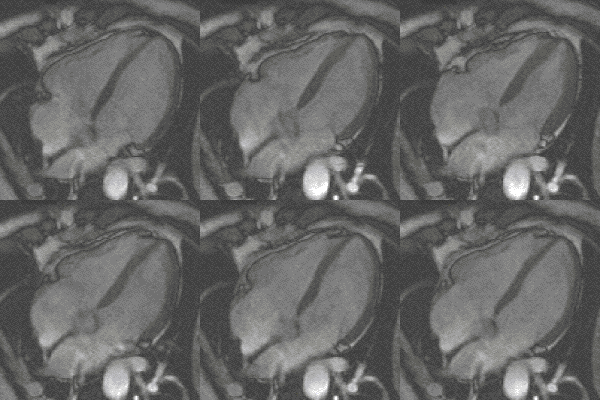
Below I paste all discussions on this post that are taking place on LinkedIn Group: Innovations in Cardiology:

Kathy Dowd, AuD • I am an audiologist representing the Academy of Doctors of Audiology for an initiative of early identification of hearing loss in adults with chronic diseases, including cardiovascular disease, thyroid disease, diabetes, etc. I am working on a new product that will automatically screen hearing of patients with these conditions and route them to audiologists for evaluation, treatment and counseling. Hearing loss is unidentified for most adults for 7-10. The psychological impact of hearing loss includes depression, isolation, confusion and poor job performance. We are focused on educating healthcare professionals on the need to identify this ‘silent epidemic’ as a co morbidity with most major illnesses.

Aviva Lev-Ari, PhD, RN • Dr. William LaFramboise

Thank you for your comment above and the reference to your most recent publication. It is very helpful. We are on the same page on this topic.

May I bring to the attention of the readers three sources which are shading additional light on that matter.

To Stent or Not? A Critical Decision

To Stent or Not? A Critical Decision

Obstructive coronary artery disease diagnosed by RNA levels of 23 genes – CardioDx heart disease test wins Medicare coverage

http://pharmaceuticalintelligence.com/2012/08/14/obstructive-coronary-artery-disease-diagnosed-by-rna-levels-of-23-genes-cardiodx-heart-disease-test-wins-medicare-coverage/http://pharmaceuticalintelligence.com/?s=PCI

Follow William
William LaFramboise • Thank you Aviva. The CardioDx approach is promising with heavy commercial support for use in a primary care practitioner’s office. However, RNA acquisition, purification and qRT-PCR expression analysis takes 2-3 days, is performed off-site, derives from a small subset of circulating inflammatory cells and is not yet directly correlated with functional proteomics. So its value in the Emergency Room and Chest Clinic is currently limited. The proteomics test we published revealed systemic serum changes in a small number of proteins known to be involved in atherosclerosis. It has a faster turnaround time (minutes to hours) that could be implemented in an emergency room or chest clinic. We are predominantly interested in using our test to “rule out” symptomatic patients who currently undergo coronary angiography but do NOT have clinically significant CAD. Our goal is to eliminate unecessary catheterizations while catching all patients that should undergo coronary angiography with a high probability of percutaneous intervention. Currently, the patients we are targeting all undergo catheterization; our test will hopefully allow us to identify at least some of these patients who do not have CAD and eliminate this expensive and risky procedure. However, we are in the pioneering stages of developing our test so there are miles to go before we establish and validate clinical efficacy.

Larry

Larry Bernstein • What you have indicated is practical proteomics. There is more to be done in line with what Dr Lev-Ari has indicated based on additional voluminous literature. What you have done with a not so large data set, and probably underpowered looks very interesting.

I f you were willing to share the data, now that it is publihed, I think that we can sharpen the results using a method of “identifying anomalies”, and even come up with estimated probabilities for meaningful classes. I think that the best you can get is defined by Kullback-Liebler distance.

Larry H Bernstein, MD
larry.bernstein@gmail.com

Biomarker classification signatures comprising up to 5 analytes were identified using a tunable scoring function trained against 239 samples and validated with 120 additional samples. A total of 14 overlapping signatures classified patients without significant coronary disease (38% to 59% specificity) while maintaining 95% sensitivity for patients requiring revascularization. Osteopontin (14 times) and resistin (10 times) were most frequently represented among these diagnostic signatures. The most efficacious protein signature in validation studies comprised osteopontin (OPN), resistin, matrix metalloproteinase 7 (MMP7) and interferon gamma (IFNgamma) as a four-marker panel while the addition of either CRP or adiponectin (ACRP-30) yielded comparable results in five protein signatures.

Proteins in the serum of CAD patients predominantly reflected (1) a positive acute phase, inflammatory response and (2) alterations in lipid metabolism, transport, peroxidation and accumulation.

Follow William
William LaFramboise • Our study (http://www.ncbi.nlm.nih.gov/pubmed/23216991) comprised discovery research using targeted immunochemical screening of retrospective patient samples using both Luminex and Aushon platforms as opposed to shotgun proteomics. Hence the costs constrained sample numbers. Nevertheless, our ability to predict outcome substantially exceeded available methods:

DISCUSSION
The Framingham CHD scores were statistically different between groups (P <0.001, unpaired Student’s t test) but they classified only 16% of the subjects without significant CAD (10 of 63) at a 95% sensitivity for patients with CAD. In contrast, our algorithm incorporating serum values for OPN, RES, CRP, MMP7 and IFNγ identified 63% of the subjects without significant CAD (40 of 63) at 95% sensitivity for patients with CAD. Thus, our multiplex serum protein classifier correctly identified four times as many patients as the Framingham index.

The addition of clinical variables to our scoring system should improve the acuity of our test as we move into the next phase. I appreciate your input and will contact you directly for further insights

Larry Bernstein • Bill La Fram..

our algorithm incorporating serum values for OPN, RES, CRP, MMP7 and IFNγ identified 63% of the subjects without significant CAD (40 of 63) at 95% sensitivity for patients with CAD

I think you can improve the algorithm with strong clinical features. The Goldman algorithm is stronger than the Framingham Index. Maybe its because the FI is epidemiological and is a measure of long term risk being present and does not indicate significant features at the time of presenting. The best features of the Goldman algorithm (without lab work) are – ECG (which may be arguable with NSEMI), but the presence of Afib or tachyarrhythmia could be added to that in weighting, and radiation actually should include symptoms of gall bladder (vagal nerve branch), and onset, characteristic and duration of pain, and SOB.

In your algorithm there isn’t any assessment of the hypercoagulable state, blood flow or Viscosity. There is a strong relationship between hyperhomocysteinemia and CVD, and the HHCys has ties to impaired methyl group transfers that maybe proinflammatory through more than one interaction: countering eNOS, related to Lp(a), un unknown relationship to iNOS (which becomes a counterpoise to eNOS), an effect on blood flow and viscosity, and a relationship to platelet aggregation.

Lp(a) was originally considered of less weight, except that it occurred in thin people from Asian Indian descent. The relationship to apo(B) and to dense LDL particles is now a factor. Sam Filligane uses Lp(a) in his ambulatory practice, and he also uses the PLAC test that Aviva has posted on.

The biggest problem we have is the amount of variability in the data physicians use. It makes metaanalysis a poor solution to the problem. The standardization of laboratory “panels” set up after CLIA 88 puts a real burden on the physician for unsubstantiated “cost benefits” in the light of today’s knowledge.

…………………………………………………………………………………………………………………………………………………………………………………………………………………………………………………………………………………………………………….

English: Four chamber view on cardiovascular m...

English: Four chamber view on cardiovascular magnetic resonance imaging. (Photo credit: Wikipedia)

Other related articles on Assessing Cardiovascular Disease with Biomarkers published on this Open Access Online Scientific Journal, include the following:


Dr. Lev-Ari’s research on Assessing Cardiovascular Disease with Biomarkers includes

  • Biomarkers in vascular biology,
  • Biomarkers in molecular cardiology and
  • circulating Endothelial Progenitor Cells (cEPCs) as a Biomarker for cardiovascular marcovascular disease risk


Lev-Ari, A., (2012U). Cardiovascular Outcomes: Function of circulating Endothelial Progenitor Cells (cEPCs): Exploring Pharmaco-therapy targeted at Endogenous Augmentation of cEPCs

http://pharmaceuticalintelligence.com/2012/08/28/cardiovascular-outcomes-function-of-circulating-endothelial-progenitor-cells-cepcs-exploring-pharmaco-therapy-targeted-at-endogenous-augmentation-of-cepcs/

Lev-Ari, A., (2012T). Endothelial Dysfunction, Diminished Availability of cEPCs, Increasing CVD Risk for Macrovascular Disease – Therapeutic Potential of cEPCs

http://pharmaceuticalintelligence.com/2012/08/27/endothelial-dysfunction-diminished-availability-of-cepcs-increasing-cvd-risk-for-macrovascular-disease-therapeutic-potential-of-cepcs/

Lev-Ari, A., (2012S). Vascular Medicine and Biology: CLASSIFICATION OF FAST ACTING THERAPY FOR PATIENTS AT HIGH RISK FOR MACROVASCULAR EVENTS Macrovascular Disease – Therapeutic Potential of cEPCs

http://pharmaceuticalintelligence.com/2012/08/24/vascular-medicine-and-biology-classification-of-fast-acting-therapy-for-patients-at-high-risk-for-macrovascular-events-macrovascular-disease-therapeutic-potential-of-cepcs/

Lev-Ari, A. (2012a). Resident-cell-based Therapy in Human Ischaemic Heart Disease: Evolution in the PROMISE of Thymosin beta4 for Cardiac Repair

http://pharmaceuticalintelligence.com/2012/04/30/93/

Lev-Ari, A. (2012b). Triple Antihypertensive Combination Therapy Significantly Lowers Blood Pressure in Hard-to-Treat Patients with Hypertension and Diabetes

http://pharmaceuticalintelligence.com/2012/05/29/445/

Lev-Ari, A. (2012h). Macrovascular Disease – Therapeutic Potential of cEPCs: Reduction Methods for CV Risk

http://pharmaceuticalintelligence.com/2012/07/02/macrovascular-disease-therapeutic-potential-of-cepcs-reduction-methods-for-cv-risk/

Lev-Ari, A. (2012xx). Coronary artery disease in symptomatic patients referred for coronary angiography: Predicted by Serum Protein Profiles

http://pharmaceuticalintelligence.com/2012/12/29/coronary-artery-disease-in-symptomatic-patients-referred-for-coronary-angiography-predicted-by-serum-protein-profiles/

Lev-Ari, A. (2013a) forthcoming, based on:

Part III: (2006c) Biomarker for Therapeutic Targets of Cardiovascular Risk Reduction by cEPCs Endogenous Augmentation using New Combination Drug Therapy of Three Drug Classes and Several Drug Indications. Northeastern University, Boston, MA 02115

Special Considerations in Blood Lipoproteins, Viscosity, Assessment and Treatment                                    Larry Bernstein

New Insights on Nitric Oxide donors – Part IV                Larry Bernstein

The Essential Role of Nitric Oxide and Therapeutic NO Donor Targets in Renal Pharmacotherapy             Larry Bernstein

A second look at the transthyretin nutrition inflammatory conundrum                                                                  Larry Bernstein

What is the role of plasma viscosity in hemostasis and vascular disease risk?                                                        Larry Bernstein

Biochemistry of the Coagulation Cascade and Platelet Aggregation – Part I                                                            Larry Bernstein

Laboratory, Innovative Technology, Therapeutics                                                                                                            Larry Bernstein

Ubiquinin-Proteosome pathway, autophagy, the mitochondrion, proteolysis and cell apoptosis                 Larry Bernstein

Overview of new strategy for treatment of T2DM: SGLT2 inhibiting oral antidiabetic agents                             aviralvatsa

Mitochondrial dynamics and cardiovascular diseases          ritusaxena

Nitric Oxide and it’s impact on Cardiothoracic Surgery        tildabarliya

Telling NO to Cardiac Risk                                                                  sjwilliamspa

Read Full Post »

Breakthrough Digestive Disorders Research: Conditions affecting the Gastrointestinal Tract.

Reporter: Aviva Lev-Ari, PhD, RN


Forthcoming Electronic Book on

Metabolism and MetabolOMICS, 2013

Larry H. Bernstein, MD, FCAP and Ritu Saxena, Ph.D., Editors

Book will cover innovations in

  • Digestive Disorders GENOMICS,
  • Pharmaco-Therapy for gut infalmmation,
  • Genetic Immunology,
  • Enzymatic-therapy,
  • Bacterial infection in the gut and pharmaco-therapies
  • Cancer Biology and Therapy

of the following most common digestive disorders today

In the meantime, we are sharing the encouraging news, that is, that the symptoms of digestive disorders can be alleviated, and often completely eliminated, with the right combination of medication, dietary changes, exercise, weight loss, stress reduction and surgery.

It’s all detailed in an important new research report from Johns Hopkins — rated #1 of America’s best hospitals for 21 consecutive years 1991-2011 by U.S. News & World Report.

The 2013 Johns Hopkins Digestive Disorders White Paper

Johns Hopkins Digestive Disorders White Paper

Your Digestive Expert, H. Franklin Herlong, M.D. Adjunct Professor of MedicineJohns Hopkins University School of Medicine

The expertise you need, in language you can understand and use

In The 2013 Johns Hopkins Digestive Disorders White Paper, you will discover exciting advances and the most useful, current information to help you prevent or treat conditions affecting the digestive tract.

You’ll find a thorough overview of what the medical field knows about upper and lower digestive tract disorders (including everything from gastroesophageal reflux disease [GERD] to peptic ulcers, and irritable bowel syndrome to colorectal polyps) and conditions that affect the liver, gallbladder and pancreas.

You will learn how to prevent these diseases and, when symptoms arise, the best ways for you and your doctor to diagnose and treat them. The Johns Hopkins White Papers redefine the term “informed consumer.” In The 2013 Johns Hopkins Digestive Disorders White Paper, specialists from Johns Hopkins University School of Medicine report in depth on the latest digestive disorders prevention strategies and treatments. Thousands of Americans rely on Johns Hopkins expertise to help them manage their digestive disorders.

In The 2013 Johns Hopkins Digestive Disorders White Paper you’ll get a thorough overview of what the medical field knows about the most common digestive disorders today. You’ll find a wealth of news you can use about:

  • Celiac disease
  • Constipation
  • Crohn’s disease
  • Diarrhea
  • Diverticulosis and diverticulitis
  • Gallstones
  • Gastritis
  • GERD
  • Hiatal hernia
  • Irritable bowel syndrome
  • Ulcerative colitis
  • Ulcers

and more…

Timely Information Backed by Johns Hopkins Resources and Expertise

The symptoms of digestive disorders can be alleviated, and often completely eliminated, with the right combination of medication, dietary changes, exercise, weight loss, stress reduction and, as a last resort, surgery.

Learning as much as possible about the causes, effects and treatments for your digestive disorder is the first step toward living a fuller life with minimal discomfort and physical limitations.

The 2013 Johns Hopkins Digestive Disorders White Paper is designed to help you ensure the best outcome. Use what you learn to help you:

  • Recognize and respond to symptoms and changes as they occur.
  • Communicate effectively with your doctor, ask informed questions and understand the answers.
  • Make the right decisions, based on an understanding of the newest drugs, the latest treatments and the most promising research.
  • Take control over your condition and act out of knowledge rather than fear.

Tips for optimal digestive health

  • Maybe It’s Not “Just Heartburn”: Occasional heartburn can be treated with over-the-counter antacids. But if you have any of these symptoms, talk to your doctor to rule out more serious problems.
  • Should You Try Probiotics? Evidence is mounting that these “friendly bacteria” can help treat many digestive problems, such as IBS and Crohn’s disease. See how they work and are used, and whether they might relieve your gastrointestinal issues.
  • New Ways to Look Inside: The benefits and drawbacks of patient-friendly imaging tools including the “video pill” and virtual colonoscopy. How do state-of-the-art tools compare with established diagnostic exams?
  • Making Friends with Fiber: Getting enough dietary fiber is an easy way to prevent or treat a wide variety of digestive complaints. See which foods deliver the most fiber.
  • How to Avoid a Foodborne Illness: Follow these guidelines to choose, store, prepare and serve food in ways that minimize the health risks that result in 76 million infections and 325,000 hospitalizations annually.

SOURCE:

http://www.johnshopkinshealthalerts.com/contact_us/

Read Full Post »

« Newer Posts - Older Posts »