Feeds:
Posts
Comments

Archive for the ‘RNA Biology’ Category

Best in Precision Medicine: RNA May Surpass DNA in Precision Medicine

Curator: Larry H. Bernstein, MD, FCAP

2.1.5.21

2.1.5.21   Best in Precision Medicine: RNA May Surpass DNA in Precision Medicine, Volume 2 (Volume Two: Latest in Genomics Methodologies for Therapeutics: Gene Editing, NGS and BioInformatics, Simulations and the Genome Ontology), Part 2: CRISPR for Gene Editing and DNA Repair

  • “A more complicated application of CRISPR technology is to use it for gene activation,” adds Dr. Tedesco. “Cellecta plans to optimize this application to bring forth highly efficient, inexpensive, high-throughput genetic screens based on their pooled libraries.

RNA May Surpass DNA in Precision Medicine

http://www.genengnews.com/gen-news-highlights/rna-may-surpass-dna-in-precision-medicine/81252507/

http://www.genengnews.com/Media/images/GENHighlight/thumb_Mar22_2016_Rgocs_RNASeqAlignment1872484040.jpg

Scientists based at the Translational Genomics Research Institute have published a review heralding the promise of RNA sequencing (RNA-seq) for precision medicine. The scientists also note that progress will be needed on analytical, bioinformatics, and regulatory fronts, particularly in light of the transcriptome’s variety, dynamism, and wealth of detail. In this image, one aspect of RNA-seq is shown, the alignment with intron-split short reads. It reflects the alignment of mRNA sequence obtained via high-throughput sequencing and the expected behavior of the alignment to the reference genome when the read falls in an exon–exon junction. [Rgocs, Wikipedia]

It’s not an either/or situation. Both DNA sequencing and RNA sequencing hold clinical promise—diagnostically, prognostically, and therapeutically. It must be said, however, that RNA sequencing reflects the dynamic nature of gene expression, shifting with the vagaries of health and disease. Also, RNA sequencing captures more biochemical complexity, in the sense that it allows for the detection of a wide variety of RNA species, including mRNA, noncoding RNA, pathogen RNA, chimeric gene fusions, transcript isoforms, and splice variants, and provides the capability to quantify known, predefined RNA species and rare RNA transcript variants within a sample.

All these potential advantages were cited in a paper that appeared March 21 in Nature Reviews Genetics, in an article entitled, “Translating RNA Sequencing into Clinical Diagnostics: Opportunities and Challenges.” The paper, contributed by scientists based at the Translational Genomics Research Institute (TGen), was definitely optimistic about the clinical utility of RNA sequencing, but it also highlighted the advances that would have to occur if RNA sequencing is to achieve its promise.

In general, the very things that make RNA sequencing so interesting are the same things that make it so challenging. RNA sequencing would take the measure of a world—the transcriptome—that is incredibly rich. To capture all the relevant subtleties of the transcriptome, scientists will have to develop sensitive, precise, and trustworthy analytical techniques. What’s more, scientists will need to find efficient and reliable means of processing and interpreting all of the transcriptome data they will collect. Finally, they will need to continue integrating RNA-based knowledge with DNA-based knowledge. That is, RNA sequencing results can be used to guide the interpretation of DNA sequencing results.

In their Nature Reviews Genetics paper, the TGen scientists review the state of RNA sequencing and offer specific recommendations to enhance its clinical utility. The TGen scientists make a special point about the promise held by extracellular RNA (exRNA). Because exRNA can be monitored by simply taking a blood sample, as opposed to taking a tumor biopsy, it could serve as a noninvasive diagnostic indicator of disease.

“Detection of gene fusions and differential expression of known disease-causing transcripts by RNA-seq represent some of the most immediate opportunities,” wrote the authors. “However, it is the diversity of RNA species detected through RNA-seq that holds new promise for the multi-faceted clinical applicability of RNA-based measures, including the potential of extracellular RNAs as non-invasive diagnostic indicators of disease.”

The first test measuring exRNA was released earlier this year, the paper said, for use measuring specific exRNAs in lung cancer patients. And, the potential for using RNA-seq in cancer is expanding rapidly. Commercial RNA-seq tests are now available, and they provide the opportunity for clinicians to profile cancer more comprehensively and use this information to guide treatment selection for their patients.

In addition, the authors reported on several recent applications for RNA-seq in the diagnosis and management of infectious diseases, such as monitoring for drug-resistant populations during therapy and tracking the origin and spread of the Ebola virus.

Despite these advances, the authors also sounded a few cautionary notes. “There are currently few agreed upon methods for isolation or quantitative measurements and a current lack of quality controls that can be used to test platform accuracy and sample preparation quality,” they wrote. “Analytical, bioinformatics, and regulatory challenges exist, and ongoing efforts toward the establishment of benchmark standards, assay optimization for clinical conditions and demonstration of assay reproducibility are required to expand the clinical utility of RNA-seq.”

Overall, the authors remain hopeful that precision medicine will embrace RNA sequencing. For example, lead author Sara Byron, research assistant professor in TGen’s Center for Translational Innovation, said, “RNA is a dynamic and diverse biomolecule with an essential role in numerous biological processes. From a molecular diagnostic standpoint, RNA-based measurements have the potential for broad application across diverse areas of human health, including disease diagnosis, prognosis, and therapeutic selection.”

Gene Editing Casts a Wide Net   

With CRISPR, Gene Editing Can Trawl the Murk, Catching Elusive Phenotypes amidst the Epigenetic Ebb and Flow

http://www.genengnews.com/gen-articles/gene-editing-casts-a-wide-net/5713/

http://www.genengnews.com/Media/images/Article/thumb_Marusina_iStock_52289586_GeneticCodeDNA1830871003.jpg

Gene-editing advances will not only open new avenues toward curing genetic diseases but will also rapidly increase the pace of new scientific discoveries about human and other types of genomes. [iStock/adventtr]

  • Genome editing, a much-desired means of accomplishing gene knockout, gene activation, and other tasks, once seemed just beyond the reach of most research scientists and drug developers. But that was before the advent of CRISPR technology, an easy, versatile, and dependable means of implementing genetic modifications. It is in the process of democratizing genome editing.

    CRISPR stands for “clustered, regularly interspaced, short palindromic repeats,” segments of DNA that occur naturally in many types of bacteria. These segments function as part of an ancient immune system. Each segment precedes “spacer DNA,” a short base sequence that is derived from a fragment of foreign DNA. Spacers serve as reminders of past encounters with phages or plasmids.

    The CRISPR-based immune system encompasses several mechanisms, including one in which CRISPR loci are transcribed into small RNAs that may complex with a nuclease called CRISPR-associated protein (Cas). Then the RNA guides Cas, which cleaves invading DNA on the basis of sequence complementarity.

    In the laboratory, CRISPR sequences are combined with a short RNA complementary to a target gene site. The result is a complex in which the RNA guides Cas to a preselected target.

    Cas produces precise site-specific DNA breaks, which, with imperfect repair, cause gene mutagenesis. In more recent applications, Cas can serve as an anchor for other proteins, such as transcriptional factors and epigenetic enzymes. This system, it seems, has almost limitless versatility.

  • Edited Stem Cells

    The Sanger Institute Mouse Genetic Program, along with other academic institutions around the world, provides access to thousands of genetically modified mouse strains. “Genetic engineering of mouse embryonic stem (ES) cells by homologous recombination is a powerful technique that has been around since the 1980s,” says William Skarnes, Ph.D., senior group leader at the Wellcome Trust Sanger Institute.

    “A significant drawback of the ES technology is the time required to achieve a germline transmission of the modified genetic locus,” he continues. “While we have an exhaustive collection of modified ES cells, only about 5,000 knockout mice, or a quarter of mouse genome, were derived on the basis of this methodology.”

    The dominant position of the mouse ES cell engineering is now effectively challenged by the CRISPR technology. Compared with very low rates of homologous recombination in fertilized eggs, CRISPR generates high levels of mutations, and off-target effects may be so few as to be undetectable.

    “We used the whole-genome sequencing to thoroughly assess off-target mutations in the offspring of CRISPR-engineered founder animals,” informs Dr. Skarnes. “A mutated Cas9 nuclease was deployed to increase specificity, resulting in nearly perfect targeting.”

    Dr. Skarnes explains that the major mouse genome centers are now switching to CRISPR to complete the creation of the world-wide repository of mouse knockouts. His own research is now focused on genetically engineered induced pluripotent stem cells (iPSCs). These cells are adult cells that have been reprogrammed to an embryonic stem cell–like state, and are thus devoid of ethical issues associated with research on human embryonic stem cells. The ultimate goal is to establish a world-wide panel of reference iPSCs created by high-throughput genetic editing of every single human gene.

    “We are poised to begin a large-scale phenotypic analysis of human genes,” declares Dr. Skarnes. His lab is releasing the first set of functional data on 100 DNA repair genes. “By knocking out individual proteins involved in DNA repair and sequencing the genomes of mutant cells,” declares Dr. Skarnes, “we hope to better understand the mutational signatures that occur in cancer.”

  • Pooled CRISPR Libraries

    Researchers hope to gain a better understanding of the mutational signatures found in cancers by using CRISPR techniques to knock out individual proteins involved in DNA repair and then sequencing the genomes of mutant cells. [iStock/zmeel]

    Connecting a phenotype to the underlying genomics requires an unbiased screening of multiple genes at once. “Pooled CRISPR libraries provide an opportunity to cast a wide net at a reasonably low cost,” says Donato Tedesco, Ph.D., lead research scientist at Cellecta. “Screening one gene at a time on genome scale is a significant investment of time and money that not everyone can afford, especially when looking for common genetic drivers across many cell models.”

    Building on years of experience with shRNA libraries, Cellecta is uniquely positioned to prepare pooled CRISPR libraries for genome-wide or targeted screens of gene families. While shRNA interferes with gene translation, CRISPR disrupts a gene and the genomic level due to imperfections in the DNA repair mechanism.

    To determine if these different mechanisms for inactivating genes affect the results of genetic screens, the team conducted a side-by-side comparison of Cellecta’s Human Genome-Wide Module 1 shRNA Library, which expresses 50,000 shRNA targeting 6,300 human genes, with the library of 50,000 gRNA targeting the same gene set. The concordance between approaches was very high, suggesting that these technologies may be complementary and used for cross-confirmation of results.

    Also, a recently completed Phase I NIH SBIR Grant was used to create and test guiding strand RNA (sgRNA) structures to drastically improve efficiency of gene targeting. For this work, Cellecta used a pool library strategy to simultaneously test multiple sgRNA structures for their efficiency and specificity. An early customized Cellecta pooled gRNA library was successfully utilized for screening for epigenetic genes. This particular screen is highly dependent on a complete loss of function, and could not have been accomplished by shRNA inhibition.

    Scientists from Epizyme interrogated 600 genes in a panel of 100 cell lines and, in addition to finding many epigenetic genes required for proliferation in nearly all cell lines, were able to identify validate several essential epigenetic genes required only in subsets of cells with specific genetic lesions. In other words, pooled cell line screening was able to distinguish targets that are likely to produce toxic side effects in certain types of cancer cells from gene targets that are essential in most cells.

    “A more complicated application of CRISPR technology is to use it for gene activation,” adds Dr. Tedesco. “Cellecta plans to optimize this application to bring forth highly efficient, inexpensive, high-throughput genetic screens based on their pooled libraries.

  • Chemically Modified sgRNA

    Scientists based at Agilent Research Laboratories and Stanford University worked together to demonstrate that chemically modified single guide RNA can be used to enhance the genome editing of primary hepatopoietic stem cells and T cells. This image, which is from the Stanford laboratory of Matthew Porteus, M.D., Ph.D., shows CD34+ human hematopoietic stem cells that were edited to turn green. Editing involved inserting a construct for green fluorescent protein. About 1,000 cells are pictured here.

    Researchers at Agilent Technologies applied their considerable experience in DNA and RNA synthesis to develop a novel chemical synthesis method that can generate long RNAs of 100 nucleotides or more, such as single guide RNAs (sgRNAs) for CRISPR genome editing. “We have used this capability to design and test numerous chemical modifications at different positions of the RNA molecule,” said Laurakay Bruhn, Ph.D., section manager, biological chemistry, Agilent.

    Agilent Research Laboratories worked closely with the laboratory of Matthew Porteus, M.D., Ph.D., an associate professor of pediatrics and stem cell transplantation at Stanford University. The Agilent and Stanford researchers collaborated to further explore the benefits of chemically modified sgRNAs in genome editing of primary hematopoetic stem cells and T cells.

    Dr. Porteus’ lab chose three key target genes implicated in the development of severe combined immunodeficiency (SCID), sickle cell anemia, and HIV transmission. Editing these genes in the patient-derived cells offers an opportunity for novel precision therapies, as the edited cells can renew, expand, and colonize the donor’s bone marrow.

    Dr. Bruhn emphasized the importance of editing specificity, so that no other cellular function is affected by the change. The collaborators focused on three chemical modifications strategically placed at each end of sgRNAs that Agilent had previously tested to show they maintained sgRNA function. A number of other optimization strategies in cell culturing and transfection were explored to ensure high editing yields.

    “Primary cells are difficult to manipulate and edit in comparison with cell lines already adapted to cell culture,” maintains Dr. Bruhn. Widely varied cellular properties of primary cells may require experimental adaptation of editing techniques for each primary cell type.

    The resulting data showed that chemical modifications can greatly enhance efficiency of gene editing. The next step would translate these findings into animal models. Another advantage of chemical synthesis of RNA is that it can potentially be used to make large enough quantities for therapeutics.

    “We are working with Agilent’s Nucleic Acid Solution Division—a business focused on GMP manufacturing of oligonucleotides for therapeutics—to engage with customers interested in this capability and better understand how we might be able to help them accomplish their goals,” says Dr. Bruhn.

  • Customized Animal Models

    “Given their gene-knockout capabilities, zinc-finger-based technologies and CRISPR-based technologies opened the doors for creation of animal models that more closely resemble human disease than mouse models,” says Myung Shin, Ph.D., senior principal scientist, Merck & Co. Dr. Shin’s team supports Merck’s drug discovery and development program by creating animal models mimicking human genetics.

    For example, Dr. Shin’s team has worked with the Dahl salt-sensitive strain of rats, a widely studied model of hypertension. “We used zinc-finger nucleases to generate a homozygous knockout of a renal outer medullary potassium channel (ROMK) gene,” elaborates Dr. Shin. “The resulting model represents a major advance in elucidating the role of ROMK gene.”

    According to Dr. Shin, the model may also provide a bridge between genetics and physiology, particularly in studies of renal regulation and blood pressure. In one study, the model generated animal data that suggest ROMK plays a key role in kidney development and sodium absorption. Work along these lines may lead to a pharmacological strategy to manage hypertension.

    In another study, the team applied zinc-finger nuclease strategy to knockout the coagulation Factor XII, and thoroughly characterize them in thrombosis and hemostasis studies. Results confirmed and extended previous literature findings suggesting Factor XII as a potential target for antithrombotic therapies that carry minimal bleeding risk. The model can be further utilized to study safety profiles and off-target effects of such novel Factor XII inhibitors.

    “We use one-cell embryos to conduct genome editing with zinc-fingers and CRISPR,” continues Dr. Shin. “The ease of this genetic manipulation speeds up generation of animal models for testing of various hypotheses.”

    A zinc finger–generated knockout of the multidrug resistance protein MDR 1a P-glycoprotein became an invaluable tool for evaluating drug candidates for targets located in the central nervous system. For example, it demonstrated utility in pharmacological analyses.

    Dr. Shin’s future research is directed toward preclinical animal models that would contain specific nucleotide changes corresponding to those of humans. “CRISPR technology,” insists Dr. Shin, “brings an unprecedented power to manipulate genome at the level of a single nucleotide, to create gain- or loss-of-function genetic alterations, and to deeply understand the biology of a disease.”

  • Transcriptionally Active dCas9

    “Epigenome editing is important for several reasons,” says Charles Gersbach, Ph.D., an associate professor of biomedical engineering at Duke University. “It is a tool that helps us answer fundamental questions about biology. It advances disease modeling and drug screening. And it may, in the future, serve as mode of genetic therapy.”

    “One part of our research focuses on studying the function of epigenetic marks,” Dr. Gersback continues. “While many of these marks are catalogued, and some have been associated with the certain gene-expression states, the exact causal link between these marks and their effect on gene expression is not known. CRISPR technology can potentially allow for targeted direct manipulation of each epigenetic mark, one at a time.”

    Dr. Gersback’s team mutated the Cas9 nuclease to create deactivated Cas9 (dCas9), which is devoid of endonuclease activity. Although the dCas9 protein lacks catalytic activity, it may still serve as an anchor for a plethora of other important proteins, such as transcription factors and methyltransferases.

    In an elegant study, Dr. Gersbach and colleagues demonstrated that recruitment of a histone acetyltransferase by dCas9 to a genomic site activates nearby gene expression. Moreover, the activation occurred even when the acetyltransferase domain was targeted to a distal enhancer. Similarly, recruitment of KRAB repressor to a distant site silenced the target gene in a very specific manner. These findings support the important role of three-dimensional chromatin structures in gene activation.

    “Genome regulation by epigenetic markers is not static,” maintains Dr. Gersbach. “It responds to changes in the environment and other stimuli. It also changes during cell differentiation. We designed an inducible system providing us with an ability to execute dynamic control over the target genes.”

    In a light-activated CRISPR-Cas9 effector (LACE) system, blue light may be used to control the recruitment of the transcriptional factor VP64 to target DNA sequences. The system has been used to provide robust activation of four target genes with only minimal background activity. Selective illumination of culture plates created a pattern of gene expression in a population of cells, which could be used to mimic what is observed in natural tissues.

    Together with collaborators at Duke University, Dr. Gersbach intends to carry out the high-throughput analysis of all currently identified regulatory elements in the genome. “Our ultimate goal,” he declares, “is to assign function to all of these elements.”

Read Full Post »

The late Cambridge Mayor Alfred Vellucci welcomed Life Sciences Labs to Cambridge, MA – June 1976

Reporter: Aviva Lev-Ari, PhD, RN

How Cambridge became the Life Sciences Capital

Worth watching is the video below, which captures the initial Cambridge City Council hearing on recombinant DNA research from June 1976. The first speaker is the late Cambridge mayor Alfred Vellucci.

Vellucci hoped to pass a two-year moratorium on gene splicing in Cambridge. Instead, the council passed a three-month moratorium, and created a board of nine Cambridge citizens — including a nun and a nurse — to explore whether the work should be allowed, and if so, what safeguards would be necessary. A few days after the board was created, the pro and con tables showed up at the Kendall Square marketplace.

At the time, says Phillip Sharp, an MIT professor, Cambridge felt like a manufacturing town that had seen better days. He recalls being surrounded by candy, textile, and leather factories. Sharp hosted the citizens review committee at MIT, explaining what the research scientists there planned to do. “I think we built a relationship,” he says.

By early 1977, the citizens committee had proposed a framework to ensure that any DNA-related experiments were done under fairly stringent safety controls, and Cambridge became the first city in the world to regulate research using genetic material.


WATCH VIDEO

http://www.betaboston.com/news/2016/03/17/how-cambridge-became-the-life-sciences-capital/

Scott Kirsner can be reached at kirsner@pobox.com. Follow him on Twitter@ScottKirsner and on betaboston.com.

SOURCE

How Cambridge became the life sciences capital

http://www.betaboston.com/news/2016/03/17/how-cambridge-became-the-life-sciences-capital/

Read Full Post »

A Reconstructed View of Personalized Medicine

Author: Larry H. Bernstein, MD, FCAP


There has always been Personalized Medicine if you consider the time a physician spends with a patient, which has dwindled. But the current recognition of personalized medicine refers to breakthrough advances in technological innovation in diagnostics and treatment that differentiates subclasses within diagnoses that are amenable to relapse eluding therapies.  There are just a few highlights to consider:

  1. We live in a world with other living beings that are adapting to a changing environmental stresses.
  2. Nutritional resources that have been available and made plentiful over generations are not abundant in some climates.
  3. Despite the huge impact that genomics has had on biological progress over the last century, there is a huge contribution not to be overlooked in epigenetics, metabolomics, and pathways analysis.

A Reconstructed View of Personalized Medicine

There has been much interest in ‘junk DNA’, non-coding areas of our DNA are far from being without function. DNA has two basic categories of nitrogenous bases: the purines (adenine [A] and guanine [G]), and the pyrimidines (cytosine [C], thymine [T], and  no uracil [U]),  while RNA contains only A, G, C, and U (no T).  The Watson-Crick proposal set the path of molecular biology for decades into the 21st century, culminating in the Human Genome Project.

There is no uncertainty about the importance of “Junk DNA”.  It is both an evolutionary remnant, and it has a role in cell regulation.  Further, the role of histones in their relationship the oligonucleotide sequences is not understood.  We now have a large output of research on noncoding RNA, including siRNA, miRNA, and others with roles other than transcription. This requires major revision of our model of cell regulatory processes.  The classic model is solely transcriptional.

  • DNA-> RNA-> Amino Acid in a protein.

Redrawn we have

  • DNA-> RNA-> DNA and
  • DNA->RNA-> protein-> DNA.

Neverthess, there were unrelated discoveries that took on huge importance.  For example, since the 1920s, the work of Warburg and Meyerhoff, followed by that of Krebs, Kaplan, Chance, and others built a solid foundation in the knowledge of enzymes, coenzymes, adenine and pyridine nucleotides, and metabolic pathways, not to mention the importance of Fe3+, Cu2+, Zn2+, and other metal cofactors.  Of huge importance was the work of Jacob, Monod and Changeux, and the effects of cooperativity in allosteric systems and of repulsion in tertiary structure of proteins related to hydrophobic and hydrophilic interactions, which involves the effect of one ligand on the binding or catalysis of another,  demonstrated by the end-product inhibition of the enzyme, L-threonine deaminase (Changeux 1961), L-isoleucine, which differs sterically from the reactant, L-threonine whereby the former could inhibit the enzyme without competing with the latter. The current view based on a variety of measurements (e.g., NMR, FRET, and single molecule studies) is a ‘‘dynamic’’ proposal by Cooper and Dryden (1984) that the distribution around the average structure changes in allostery affects the subsequent (binding) affinity at a distant site.

What else do we have to consider?  The measurement of free radicals has increased awareness of radical-induced impairment of the oxidative/antioxidative balance, essential for an understanding of disease progression.  Metal-mediated formation of free radicals causes various modifications to DNA bases, enhanced lipid peroxidation, and altered calcium and sulfhydryl homeostasis. Lipid peroxides, formed by the attack of radicals on polyunsaturated fatty acid residues of phospholipids, can further react with redox metals finally producing mutagenic and carcinogenic malondialdehyde, 4-hydroxynonenal and other exocyclic DNA adducts (etheno and/or propano adducts). The unifying factor in determining toxicity and carcinogenicity for all these metals is the generation of reactive oxygen and nitrogen species. Various studies have confirmed that metals activate signaling pathways and the carcinogenic effect of metals has been related to activation of mainly redox sensitive transcription factors, involving NF-kappaB, AP-1 and p53.

I have provided mechanisms explanatory for regulation of the cell that go beyond the classic model of metabolic pathways associated with the cytoplasm, mitochondria, endoplasmic reticulum, and lysosome, such as, the cell death pathways, expressed in apoptosis and repair.  Nevertheless, there is still a missing part of this discussion that considers the time and space interactions of the cell, cellular cytoskeleton and extracellular and intracellular substrate interactions in the immediate environment.

There is heterogeneity among cancer cells of expected identical type, which would be consistent with differences in phenotypic expression, aligned with epigenetics.  There is also heterogeneity in the immediate interstices between cancer cells.  Integration with genome-wide profiling data identified losses of specific genes on 4p14 and 5q13 that were enriched in grade 3 tumors with high microenvironmental diversity that also substratified patients into poor prognostic groups. In the case of breast cancer, there is interaction with estrogen , and we refer to an androgen-unresponsive prostate cancer.

Finally,  the interaction between enzyme and substrates may be conditionally unidirectional in defining the activity within the cell.  The activity of the cell is dynamically interacting and at high rates of activity.  In a study of the pyruvate kinase (PK) reaction the catalytic activity of the PK reaction was reversed to the thermodynamically unfavorable direction in a muscle preparation by a specific inhibitor. Experiments found that in there were differences in the active form of pyruvate kinase that were clearly related to the environmental condition of the assay – glycolitic or glyconeogenic. The conformational changes indicated by differential regulatory response were used to present a dynamic conformational model functioning at the active site of the enzyme. In the model, the interaction of the enzyme active site with its substrates is described concluding that induced increase in the vibrational energy levels of the active site decreases the energetic barrier for substrate induced changes at the site. Another example is the inhibition of H4 lactate dehydrogenase, but not the M4, by high concentrations of pyruvate. An investigation of the inhibition revealed that a covalent bond was formed between the nicotinamide ring of the NAD+ and the enol form of pyruvate.  The isoenzymes of isocitrate dehydrogenase, IDH1 and IDH2 mutations occur in gliomas and in acute myeloid leukemias with normal karyotype. IDH1 and IDH2 mutations are remarkably specific to codons that encode conserved functionally important arginines in the active site of each enzyme. In this case, there is steric hindrance by Asp279 where the isocitrate substrate normally forms hydrogen bonds with Ser94.

Personalized medicine has been largely viewed from a lens of genomics.  But genomics is only the reading frame.  The living activities of cell processes are dynamic and occur at rapid rates.  We have to keep in mind that personalized in reference to genotype is not complete without reconciliation of phenotype, which is the reference to expressed differences in outcomes.


Read Full Post »

IsomicroRNA

Larry H. Bernstein, MD, FCAP, Curator

LPBI


GEN Feb 15, 2016 (Vol. 36, No. 4)

MicroRNAs Rise from Trash to Treasure  

MicroRNAs Are More Plentiful and More Subtle In Action Than Was Once Suspected

Richard A. Stein, M.D., Ph.D.


One of the unexpected findings of the Human Genome Project was that over 98% of the human genome does not encode for proteins. Once dismissed as “junk” genomic material, non-protein-coding DNA is now appraised more highly.

Or to be more precise, at least some portions of non-protein-coding DNA are thought to serve important biological functions.

For example, some stretches of DNA give rise to a noncoding but still functional kind of RNA called microRNA. MicroRNAs have increasingly emerged in recent years as key regulators of biological processes and pathways.

During the years since their discovery, a key question in the biology of microRNAs has focused on the number of microRNAs encoded in the genome. Between 1993 and 2015, approximately 1,900 human genome loci were discovered to produce microRNAs and were added to miRBbase, the public database that catalogues and annotates microRNA molecules.

The cataloguing of microRNAs work has been pursued with extra urgency since 2004, the year the connection between microRNAs and human disease was first demonstrated. “When this connection was made, it launched a whole new field,” says Isidore Rigoutsos, Ph.D., professor of pathology, anatomy, and cell biology and director of the Computational Medicine Center at Thomas Jefferson University.


Another Set of MicroRNAs Emerge

“We wanted to know how many microRNA-producing loci really exist in humans,” recalls Dr. Rigoutsos. In a study published in 2015, Dr. Rigoutsos and colleagues analyzed datasets from 1,323 individuals that represented 13 different tissues and identified an additional 3,356 such genomic loci that produce (at least) 3,707 novel microRNs

“We basically tripled the number of locations in the human genome that are now known to encode microRNAs,” asserts Dr. Rigoutsos. Considering that each microRNA regulates up to hundreds of different mRNAs, and that each mRNA is regulated by tens of microRNAs, this finding adds a new layer of complexity to the regulatory dynamics of the human transcriptome.

The newly unveiled microRNAs and previously characterized microRNAs have distinct expression patterns. While 50–60% of the microRNAs previously deposited into the miRBase are expressed in multiple tissues, only about 10% of the newly discovered microRNAs are shared across multiple tissue types. Also, most of the newly found microRNAs show tissue-specific expression.

Using Argonaute CLIP-seq data, Dr. Rigoutsos and colleagues showed that similar percentages of the two sets of microRNAs were in complex with Argonaute proteins. “This shows that these novel microRNAs participate in RNA interference just as frequently as the miRBase microRNAs,” contends Dr. Rigoutsos.

In a comparative analysis between the human microRNA datasets and the chimpanzee, gorilla, orangutan, macaque, mouse, fruit fly, and mouse genomes, Dr. Rigoutsos and colleagues discovered that almost 95% of the newly unveiled microRNAs were primate-specific, and over 56% of them were found only in humans.

“We are seeing many human microRNAs that do not exist in the mouse,” states Dr. Rigoutsos. “This means that the mouse models engineered to capture human disease cannot recapitulate the interactions mediated by these microRNAs.


  • Interest in IsomiRs Grows

  • In the years since the biology of microRNAs started receiving increasing attention, the conventional view has been that one microRNA locus generates one microRNA. However, once deep sequencing became widely available, microRNA variants that showed differences at their 5′- or 3′-termini have been described.

    “It was initially presumed that these variants were likely the result of the enzyme Dicer not being sufficiently accurate when processing microRNA precursors,” notes Dr. Rigoutsos. Subsequent research revealed that microRNAs are more dynamic than previously thought, with each precursor being able to generate multiple mature microRNA species known as isomiRs.

    To gain insight into the biology of isomiRs, Dr. Rigoutsos and colleagues analyzed genomic datasets from 452 individuals participating in the 1000 Genomes Project. The datasets comprised five different populations and two races. In addition, each population was represented by an even number of men and women.

    This collection allowed the abundance of microRNA isoforms to be examined with respect to population, gender, and race. “We found that isomiRs have expression profiles that are population-, race-, and gender-dependent,” informs Dr. Rigoutsos.

    All the transcriptome data that this analysis was based on came from immortalized B cells. “These are cells that normally are not associated with gender differences, but molecularly we found, in these cells, differences between men and women of the same population and race,” explains Dr. Rigoutsos.

  • Expanding these observations to disease states, Dr. Rigoutsos and colleagues collected isomiR profiles from tissue affected by breast cancer, and compared them with isomiR profiles from control breast tissue. The investigators found that the isomiR profiles also depend on tissue state (healthy vs. diseased), on disease subtype, and on the patient’s race.

    For example, their analysis identified several miR-183-5p isoforms that were upregulated in white triple-negative breast cancer patients compared to control breast samples, but not in black/African-American triple-negative breast cancer patients. In an in vitro phase of this study, three isoforms of this microRNA species were overexpressed in human breast cancer cell lines.

    “We found very little overlap in the gene sets that were affected by each of these isoforms,” emphasizes Dr. Rigoutsos. Despite being generated simultaneously by the same locus, each of the three isoforms affected distinct groups of genes, thus exerting different effects on the transcriptome.

    “As the relative abundance of these isoforms changes ever so slightly from patient to patient, it will affect the corresponding gene groups slightly differently,” concludes Dr. Rigoutsos. “In the process, it creates a new molecular background in each patient.”

    MicroRNAs Point to Therapeutic Strategies against Colorectal Cancer

  • “We are using microRNAs as modulators to overcome chemotherapy resistance in colorectal cancer,” says Jingfang Ju, Ph.D., associate professor of pathology and co-director of translational research at Stony Brook University School of Medicine. Resistance to chemotherapy is one of the major challenges in the clinical management of malignancies, including colorectal cancer. Chemotherapy is usually unable to eliminate cancer stem cells, which may become even more resistant over time, and several microRNAs have been implicated in this process.  “We reasoned that we could provide new modulatory approaches to target this small cell population and allow chemotherapy, radiotherapy, or immunotherapy to eliminate resistant populations or at least prolong long-term survival,”  Dr. Ju said.
  • http://www.genengnews.com/Media/images/Article/StonyBrookUniv_JingfangJu5310853233.jpg

    This image shows how miR-129 may function as a tumor suppressor in colorectal cancer. In this model, which has been proposed by researchers at Stony Brook University’s Translational Research Laboratory, miR-129 suppresses the protein expression of three critical targets—BCL2, TS, and E2F3. Downregulation of BCL2 activates the intrinsic apoptosis pathway by cleaving caspase-9 and caspase-3. Downregulation of TS and E2F3 inhibits cell proliferation by impacting the cell cycle. Consequently, miR-129 exerts a strong antitumor phenotype by induction of apoptosis and impairment of proliferation in tumor cells. [Mihriban Karaayvaz, Haiyan Zhai, Jingfang Ju]


    In a retrospective study in which colorectal patient samples were used, Dr. Ju and colleagues revealed that hsa-miR-140-5p expression progressively decreases from normal tissues to primary colorectal cancer tissue, and that it shows a further decrease in liver and lymph node metastases. The experimental overexpression of hsa-miR-140-5p inhibited colorectal cancer stem cell growth by disrupting autophagy, and in a mouse model of disease it abolished tumor formation and metastasis.

    In addition to hsa-miR-140-5p, Dr. Ju and colleagues recently identified hsa-miR-129 and found that it, too, has therapeutic potential. Specifically, they showed that hsa-miR-129 enhanced the sensitivity of colorectal cancer cells to 5-fluorouracil, pointing toward its ability to function as a tumor suppressor.

    One of the mechanisms implicated in this process was the ability of miR-192 to inhibit protein translation of several important targets. These include Bcl-2 (B-cell lymphoma 2), a key anti-apoptotic protein; E2F3, a major cell cycle regulator; and thymidylate synthase, an enzyme that is inhibited by 5-fluorouracil.

    The NIH recently awarded a $3 million grant to establish the Long Island Bioscience Hub (LIBH), which is part of the NIH’s Research Evaluation and Commercialization Hub (REACH) program and represents a partnership between the Center for Biotechnology, Stony Brook University, Cold Spring Harbor Laboratory, and Brookhaven National Laboratory. One of the technology development grants, as part of the first funding cycle of this initiative, will support a feasibility investigation of hsa-miR-129-based therapeutics in colon cancer, an effort led by Dr. Ju. “We are further exploring this novel mechanism,” states Dr. Ju. “We anticipate conducting pharmacokinetic studies and moving to a clinical trial in the future.”

    MicroRNA Insights Gleaned from Host-Virus Interactions

    http://www.genengnews.com/Media/images/Article/MtSinaiHosp_Benjamin_tenOever1664523413.jpg

    At Mount Sinai Hospital’s Icahn School of Medicine, researchers used a codon-optimized version of VP55 produced from an adenovirus-based vector to study the impact of microRNA deletion on the response to virus infection. This image shows RNA in situ hybridization of fibroblasts expressing VP55 (top left), and that of mock-treated fibroblasts (bottom right). Ribosomal RNA, DNA, and microRNAs (miR-26) are depicted by red, blue (DAPI), and green fluorophores, respectively.

    “We observed that when a poxvirus is artificially engineered to encode a microRNA, the microRNA is destroyed along with all the microRNAs from the host cell,” says Benjamin R. tenOever, Ph.D., professor of microbiology at the Icahn School of Medicine, Mount Sinai Hospital. Previously, Dr. tenOever’s group reported that a single vaccinia virus-encoded gene product, VP55, is sufficient to achieve this effect. The group also found that the protein adds nontemplate adenosines to the 3′-end of microRNAs associated with the RNA-induced silencing complex.

    biology,” asserts Dr. tenOever.

    In a recent study, Dr. tenOever and colleagues used a codon-optimized version of VP55 produced from an adenovirus-based vector to study the impact microRNA deletion would have on our normal response to virus infection. “We found that after administration of the vector and rapid ablation of microRNA expression, there is very little that happens over the first one to two days,” informs Dr. tenOever. During the first 24–48 hours after VP55 delivery, the elimination of cellular microRNAs impacted less than 0.35% of the over 11,000 genes expressed in the cell. After 9 days, however, almost 20% of the genes showed significant changes in expression.

    “MicroRNAs are very powerful and influential in controlling the biology of the cell but they do so over the long term,” declares Dr. tenOever. These findings are in agreement with knowledge that has accumulated over the years about microRNA biology, which established that microRNAs play a central role in determining how cells differentiate during development.

    “While microRNAs can act on hundreds of mRNAs, their action requires several days of fine-tuning to have long-term consequences,” adds Dr. tenOever. This finding suggests miRNAs are unable to significantly contribute to the acute response to virus infection.

    The one exception to this observation was that, even though very few genes were affected in the first 48 hours after VP55 delivery, several genes encoding chemokines were impacted. These included chemokines responsible for recruiting antigen-presenting cells, neutrophils, and other immune cells.

    An in vivo analysis of mouse lung tissue 48 hours after vector administration confirmed that several cytokines were specifically upregulated, resulting in immune cell infiltration following the degradation of all microRNAs. These results indicate that the acute viral infection is largely independent of microRNAs, and that microRNAs are primarily involved in the adaptive response to infection and other longer term processes.

    • MicroRNA Biomarkers Reveal Molecular Pathways of Kidney Damage

      “Our approach involves looking at microRNAs from the perspective of biomarkers as a readout for kidney damage,” says Vishal S. Vaidya, Ph.D., associate professor of medicine and environmental health at Brigham and Women’s Hospital, Harvard Medical School, and Harvard T.H. Chan School of Public Health. “At the same time, we are exploring their utility as therapeutics.”

      A large number of medications and occupational toxins cause kidney damage, but many tests to assess kidney function and damage are not sufficiently sensitive or specific, opening the need for novel diagnostic strategies. MicroRNAs, which are differentially expressed between healthy and diseased states, are promising as early biomarkers for impaired renal function.

      “MicroRNAs can also provide information about which pathways are active and which targets can be druggable,” points out Dr. Vaidya.

      In a study that used microRNAs and proteins to provide a combined biomarker signature, Dr. Vaidya and colleagues examined two patient cohorts, one presenting with acetaminophen-induced kidney injury and the other one with cisplatin-induced kidney damage. “Protein biomarkers provide sensitivity, and microRNAs offer mechanistic insight,” explains Dr. Vaidya.

      This approach helped visualize metabolic pathways that are altered in the kidney during toxic injury. “The biggest challenge, from a therapeutic perspective, is that microRNAs regulate many mRNAs and, therefore, impact many proteins,” concludes Dr. Vaidya.

Read Full Post »

Nanosensors for Protein Recognition and Gene Proteome Interaction

Larry H Bernstein, MD, FCAP, Curator

LPBI


Synthetic Antibody Detects Proteins

http://www.technologynetworks.com/Proteomics/news.aspx?ID=187242

Research could lead to nanosensors that recognize fibrinogen, insulin, or other biomarkers

Using carbon nanotubes, MIT chemical engineers have devised a new method for detecting proteins, including fibrinogen, one of the coagulation factors critical to the blood-clotting cascade.

This approach, if developed into an implantable sensor, could be useful for monitoring patients who are taking blood thinners, allowing doctors to make sure the drugs aren’t interfering too much with blood clotting.

The new method is the first to create synthetic recognition sites (similar to natural antibodies) for proteins and to couple them directly to a powerful nanosensor such as a carbon nanotube. The researchers have also made significant progress on a similar recognition site for insulin, which could enable better monitoring of patients with diabetes. It may also be possible to use this approach to detect proteins associated with cancer or heart disease, says Michael Strano, the Carbon P. Dubbs Professor in Chemical Engineering at MIT.

A targeted search

The new sensor is the latest example of a method developed in Strano’s lab, known asCorona Phase Molecular Recognition (CoPhMoRe).

This technique takes advantage of the interactions between a given polymer and a nanoparticle surface such as that of a fluorescent single-walled carbon nanotube, when the polymer is wrapped around the nanotube.

Certain regions of the polymers latch onto the nanoparticle surface like anchors, while other regions extend outwards into their environment. This outward-facing region, also known as the adsorbed phase or corona, has a 3-D structure that depends on the composition of the polymer.

CoPhMoRe works when a specific polymer adsorbs to the nanoparticle surface and creates a corona that recognizes the target molecule. These interactions are very specific, just like the binding between an antibody and its target. Binding of the target alters the carbon nanotubes’ natural fluorescence, allowing the researchers to measure how much of the target molecule is present.

Strano’s lab has previously used this approach to find recognition sites and develop nansensors for estradiol and riboflavin, among other molecules. The new paper represents their first attempt to identify corona phases that can detect proteins, which are larger, more complex, and more fragile than the molecules identified by their previous sensors.

For this study, Bisker began by screening carbon nanotubes wrapped in 20 different polymers including DNA, RNA, and polyethylene glycol (PEG), a polymer often added to drugs to increase their longevity in the bloodstream.

On their own, none of the polymers had any affinity for the 14 proteins tested, all taken from human blood. However, when the researchers tested polymer-wrapped nanotubes against the same proteins, they turned up a match between one of the modified nanotubes and fibrinogen.

“A chemist or a biologist would not be able to predict ahead of time that there should be any kind of affinity between fibrinogen and this corona phase,” Strano says. “It really is a new kind of molecular recognition.”

Fibrinogen, one of the most abundant proteins in human blood, is part of the blood-clotting cascade. When a blood vessel is damaged, an enzyme called thrombin converts fibrinogen into fibrin, a stringy protein that forms clots to seal the wound.

A sensor for fibrinogen could help doctors determine if patients who are taking blood thinners still have enough clotting capability to protect them from injury, and could allow doctors to calculate more finely tuned dosages. It could also be used to test patients’ blood clotting before they go into surgery, or to monitor wound healing, Bisker says.

Synthetic antibodies

The researchers believe their synthetic molecular recognition agents are an improvement over existing natural systems based on antibodies or DNA sequences known as aptamers, which are more fragile and tend to degrade over time.

“One of the advantages of this is that it’s a completely synthetic system that can have a much longer lifetime within the body,” Bisker says.

In 2013, researchers in Strano’s lab demonstrated that carbon nanotube sensors can remain active in mice for more than a year after being embedded in a polymer gel and surgically implanted under the skin.

In addition to insulin, the researchers are also interested in detecting troponin, a protein that is released by dying heart cells, or detecting proteins associated with cancer, which would be useful for monitoring the success of chemotherapy. These and other protein sensors could become critical components of devices that deliver drugs in response to a sign of illness.

“By measuring therapeutic markers in the human body in real time, we can enable drug delivery systems that are much smarter, and release drugs in precise quantities,” Strano says. “However, measurement of those biomarkers is the first step.”


New Device Uses Carbon Nanotubes to Snag Molecules
Nanotube “forest” in a microfluidic channel may help detect rare proteins and viruses.
Tuesday, December 22, 2015

Nanotube “forest” in a microfluidic channel may help detect rare proteins and viruses.

Engineers at MIT have devised a new technique for trapping hard-to-detect molecules, using forests of carbon nanotubes.

The team modified a simple microfluidic channel with an array of vertically aligned carbon nanotubes — rolled lattices of carbon atoms that resemble tiny tubes of chicken wire. The researchers had previously devised a method for standing carbon nanotubes on their ends, like trees in a forest. With this method, they created a three-dimensional array of permeable carbon nanotubes within a microfluidic device, through which fluid can flow.

Now the researchers have given the nanotube array the ability to trap certain particles. To do this, the team coated the array, layer by layer, with polymers of alternating electric charge.

“You can think of each nanotube in the forest as being concentrically coated with different layers of polymer,” says Brian Wardle, professor of aeronautics and astronautics at MIT. “If you drew it in cross-section, it would be like rings on a tree.”

Depending on the number of layers deposited, the researchers can create thicker or thinner nanotubes and thereby tailor the porosity of the forest to capture larger or smaller particles of interest.

The nanotubes’ polymer coating may also be chemically manipulated to bind specific bioparticles flowing through the forest. To test this idea, the researchers applied an established technique to treat the surface of the nanotubes with antibodies that bind to prostate specific antigen (PSA), a common experimental target. The polymer-coated arrays captured 40 percent more antigens, compared with arrays lacking the polymer coating.

Wardle says the combination of carbon nanotubes and multilayer coatings may help finely tune microfluidic devices to capture extremely small and rare particles, such as certain viruses and proteins.

“There are smaller bioparticles that contain very rich amounts of information that we don’t currently have the ability to access in point-of-care [medical testing] devices like microfluidic chips,” says Wardle, who is a co-author on the paper. “Carbon nanotube arrays could actually be a platform that could target that size of bioparticle.”

The paper’s lead author is Allison Yost, a former graduate student who is currently an engineer at Accion Systems. Others on the paper include graduate student Setareh Shahsavari; postdoc Roberta Polak; School of Engineering Professor of Teaching Innovation Gareth McKinley; professor of materials science and engineering Michael Rubner, and Raymond A. And Helen E. St. Laurent Professor of Chemical Engineering Robert Cohen.

A porous forest

Carbon nanotubes have been a subject of intense scientific study, as they possess exceptional electrical, mechanical, and optical properties. While their use in microfluidics has not been well explored, Wardle says carbon nanotubes are an ideal platform because their properties may be manipulated to attract certain nanometer-sized molecules. Additionally, carbon nanotubes are 99 percent porous, meaning a nanotube is about 1 percent carbon and 99 percent air.

“Which is what you need,” Wardle says. “You need to flow quantities of fluid through this material to shed all the millions of particles you don’t want to find and grab the one you do want to find.”

What’s more, Wardle says, a three-dimensional forest of carbon nanotubes would provide much more surface area on which target molecules may interact, compared with the two-dimensional surfaces in conventional microfluidics.

“The capture efficiency would scale with surface area,” Wardle notes.

A versatile array

The team integrated a three-dimensional array of carbon nanotubes into a microfluidic device by using chemical vapor deposition and photolithography to grow and pattern carbon nanotubes onto silicon wafers. They then grouped the nanotubes into a cylinder-shaped forest, measuring about 50 micrometers tall and 1 millimeter wide, and centered the array within a 3 millimeter-wide, 7-millimeter long microfluidic channel.

The researchers coated the nanotubes in successive layers of alternately charged polymer solutions in order to create distinct, binding layers around each nanotube. To do so, they flowed each solution through the channel and found they were able to create a more uniform coating with a gap between the top of the nanotube forest and the roof of the channel. Such a gap allowed solutions to flow over, then down into the forest, coating each individual nanotube. In the absence of a gap, solutions simply flowed around the forest, coating only the outer nanotubes.

After coating the nanotube array in layers of polymer solution, the researchers demonstrated that the array could be primed to detect a given molecule, by treating it with antibodies that typically bind to prostate specific antigen (PSA). They pumped in a solution containing small amounts of PSA and found that the array captured the antigen effectively, throughout the forest, rather than just on the outer surface of a typical microfluidic element.

Wardle says that the nanotube array is extremely versatile, as the carbon nanotubes may be manipulated mechanically, electrically, and optically, while the polymer coatings may be chemically altered to capture a wide range of particles. He says an immediate target may be biomarkers called exosomes, which are less than 100 nanometers wide and can be important signals of a disease’s progression.

“Science is really picking up on how much information these particles contain, and they’re sort of everywhere, but really hard to find, even with large-scale equipment,” Wardle says. “This type of device actually has all the characteristics and functionality that would allow you to go after bioparticles like exosomes and things that really truly are nanometer scale.”

This research was funded, in part, by the National Science Foundation.


A Natural Light Switch

MIT scientists identify and map the protein behind a light-sensing mechanism.

MIT scientists, working with colleagues in Spain, have discovered and mapped a light-sensing protein that uses vitamin B12 to perform key functions, including gene regulation.

The result, derived from studying proteins from the bacterium Thermus thermophilus, involves at least two findings of broad interest. First, it expands our knowledge of the biological role of vitamin B12, which was already understood to help convert fat into energy, and to be involved in brain formation, but has now been identified as a key part of photoreceptor proteins — the structures that allow organisms to sense and respond to light.

Second, the research describes a new mode of gene regulation, in which the light-sensing proteins play a key role. In so doing, the scientists observe, the bacteria have repurposed existing protein structures that use vitamin B12, and put them to work in new ways.

MIT-Proteins-Light-1_0.jpg

http://www.technologynetworks.com/images/videos/News%20Images/CR/MIT-Proteins-Light-1_0.jpg

“Nature borrowed not just the vitamin, but really the whole enzyme unit, and modified it … and made it a light sensor,” says Catherine Drennan, a professor of chemistry and biology at MIT


The paper describes the photoreceptors in three different states: in the dark, bound to DNA, and after being exposed to light.

“It’s wonderful that we’ve been able to get all the series of structures, to understand how it works at each stage,” Drennan says.

The paper has nine co-authors, including Drennan; graduate students Percival Yang-Ting Chen, Marco Jost, and Gyunghoon Kang of MIT; Jesus Fernandez-Zapata and S. Padmanabhan of the Institute of Physical Chemistry Rocasolano, in Madrid; and Monserrat Elias-Arnanz, Juan Manuel Ortiz-Guerreo, and Maria Carmen Polanco, of the University of Murcia, in Murcia, Spain.

The researchers used a combination of X-ray crystallography techniques and in-vitro analysis to study the bacteria. Drennan, who has studied enzymes that employ vitamin B12 since she was a graduate student, emphasizes that key elements of the research were performed by all the co-authors.

Jost performed crystallography to establish the shapes of the structures, while the Spanish researchers, Drennan notes, “did all of the control experiments to show that we were really thinking about this right,” among other things.

MIT-Proteins-Light-2.jpg

By studying the structures of the photoreceptor proteins in their three states, the scientists developed a more thorough understanding of the structures, and their functions, than they would have by viewing the proteins in just one state.

Microbes, like many other organisms, benefit from knowing whether they are in light or darkness. The photoreceptors bind to the DNA in the dark, and prevent activity pertaining to the genes of Thermus thermophilus. When light hits the microbes, the photoreceptor structures cleave and “fall apart,” as Drennan puts it, and the bacteria start producing carotenoids, which protect the organisms from negative effects of sunlight, such as DNA damage.

The research also shows that the exact manner in which the photoreceptors bind to the DNA is novel. The structures contain tetramers, four subunits of the protein, of which exactly three are bound to the genetic material — something Drennan says surprised her.

“That’s the best part about science,” Drennan says. “You see something novel, then you think it’s not really going to be that novel, but you do the experiments [and it is].”

Other scientists say the findings are significant. “It’s a very exciting development,” says Rowena Matthews, a professor emerita of biological chemistry at the University of Michigan, who has read the paper. Of the newly discovered use of vitamin B12 and a derivative of it, adenosylcobalamin, Matthews adds, “There was very limited knowledge of its versatility.”

Drennan adds that in the long run, the finding could have practical applications, such as the engineering of light-directed control of DNA transcription, or the development of controlled interactions between proteins.

“I would be very interested in … thinking about whether there could be practical applications of this,” Drennan says.


HIV Protein Manipulates Hundreds of Human Genes

Findings search for new or improved treatments for patients with AIDS.

UT Southwestern Medical Center researchers have deciphered how a small protein made by the human immunodeficiency virus (HIV) that causes AIDS manipulates human genes to further its deadly agenda.

The findings, published in the online journal eLife, could aid in the search for new or improved treatments for patients with AIDS, or to the development of preventive strategies.

“We have identified the molecular mechanisms by which the Tat protein made by HIV interacts with the host cell to activate or repress several hundred human genes,” said Dr. Iván D’Orso, Assistant Professor of Microbiology at UT Southwestern and senior author of the study. “The findings clearly suggest that blocking Tat activity may be of therapeutic value to HIV patients.”

It has long been known that HIV causes AIDS by hijacking the body’s immune cells, transforming them into HIV factories and killing other immune cells that normally fight disease. HIV also hides in cells and continues to undermine the host’s immune system despite antiretroviral therapy that has improved the outlook of those with AIDS.

The latest data from the Centers for Disease Control and Prevention (CDC), in 2012, estimated 1.2 million Americans were living with HIV, including 156,300 whose infections had not been diagnosed. About 50,000 people in the U.S. are newly infected with HIV annually, the CDC projects. In 2013, the CDC estimated that over 26,000 Americans had the advanced form of HIV infection, AIDS.

Like all retroviruses, HIV has very few genes of its own and must take over the host’s cellular machinery in order to propagate and spread throughout the body. Although the broad aspects of that cellular hijacking were known, the nuances remain to be explored, Dr. D’Orso said.

“We observed that HIV methodically and precisely manipulates the host’s genes and cellular machinery. We also observed that HIV rewires cellular defensive pathways to benefit survival of the virus,” he added.

The study provides insights into HIV’s ability to survive despite antiretroviral therapy, findings that could lead to new therapeutic targets or ways to make current therapies more effective, he said.

“Our study indicates that this small viral protein, Tat, directly binds to about 400 human genes to generate an environment in which HIV can thrive. Then, this protein precisely turns off the body’s immune defense. It is striking that such a small viral protein has such a large impact,” Dr. D’Orso said. “The human genes and pathways that Tat manipulates correlate well with symptoms observed in these patients, such as immune system hyperactivation, then weakening, and accelerated aging,” Dr. D’Orso said, describing the situation in which HIV infection leads to AIDS.

Italy’s National Institute of Health in Rome recently completed a phase II clinical trial of an experimental vaccine that targets the Tat protein. That trial, which followed 87 HIV-positive patients for up to three years, reported that the vaccine was well-tolerated without significant side effects. However, it will take several years to determine if the vaccine works, Dr. D’Orso said.

Although someone can have HIV for years without showing symptoms, AIDS occurs when HIV blocks the body’s ability to fight off illness. The person then becomes overrun by the opportunistic infections and specific cancers that are hallmarks of AIDS.


New Light Shed on Genetic Regulation

A team of scientists has uncovered greater intricacy in protein signaling than was previously understood, shedding new light on the nature of genetic production.

Christine Vogel, an assistant professor in New York University’s Department of Biology and one of the study’s senior authors, explains that “to make a protein, we need to make a messenger RNA molecule from the gene encoded in the DNA, and then, in a second process, make proteins from these RNA molecules. Both processes are highly regulated and coupled.”

This coupling is similar to the coupling between a moving escalator and a person walking on it at the same time.

The research takes a closer look at how the two coupled processes change in the cell responding to an outside stimulus.

“Until recently, it has been very difficult to study these systems and researchers have thought that the movement of the escalator is most important during the cellular response,” Vogel explains. “We now show that is not necessarily the case, and under some circumstances, the person’s walking determines the overall outcome.”

In biology, this means that both of the processes—to make RNAs and proteins—play important roles, but with different patterns.

In their study, the scientists, who also included researchers from National University Singapore and Berlin’s Max Delbruck Center, took a closer look at how the two processes exactly respond over time.

Their results showed notable distinctions between DNA and mRNA in the nature of their signaling. Notably, the process of making RNA from DNA was pulse-like—a brief messaging over the studied period that returned to the normal levels by the end of the measurements. By contrast, the process of making a protein from RNA was akin to an on/off switch: once started, levels remained constant for consistent periods before reverting back to long stretches of dormancy.

While the reasons for these differences in cell behavior remain unknown, the researchers believe the answer may lie in the nature of the two tasks.

“It is very costly for the cell to make proteins, but making RNA messages from DNA is a relatively low-energy and simple process, so it makes sense that we see frequent, or pulsating, signaling at this stage,” observes Vogel. “By contrast, creating proteins is an intricate undertaking, requiring a great deal of time and energy. This may be why, once you decided to stop production of proteins, you do not turn it back on that easily—and the other way around.”


Where Cancer Cells May Begin

Scientists use fruit fly genetics to understand how things could go wrong in cancer.

Cancer cells are normal cells that go awry by making bad developmental decisions during their lives. In a study involving the fruit fly equivalent of an oncogene implicated in many human leukemias, Northwestern University researchers have gained insight into how developing cells normally switch to a restricted, or specialized, state and how that process might go wrong in cancer.

The fruit fly’s eye is an intricate pattern of many different specialized cells, such as light-sensing neurons and cone cells. Because flies share with humans many of the same cancer-causing genes, scientists use the precisely made compound eye of Drosophila melanogaster (the common fruit fly) as a workhorse to study what goes wrong in human cancer.

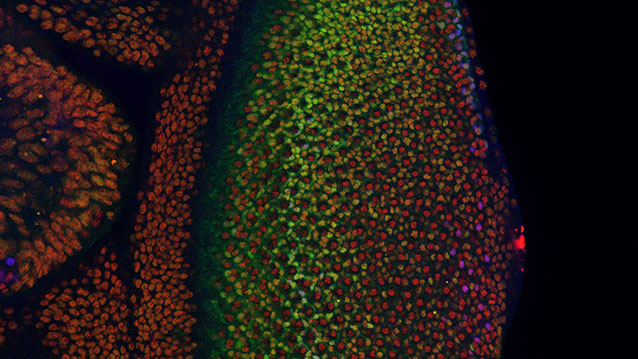
retina638.jpg

http://www.technologynetworks.com/images/videos/News%20Images/GT/retina638.jpg

A multidisciplinary team co-led by biologist Richard W. Carthew and engineer Luís A.N. Amaral studied normal cell behavior in the developing eye. The researchers were surprised to discover that the levels of an important protein called Yan start fluctuating wildly when the cell is switching from a more primitive, stem-like state to a more specialized state. If the levels don’t or can’t fluctuate, the cell doesn’t switch and move forward.

“This mad fluctuation, or noise, happens at the time of cell transition,” said Carthew, professor of molecular biosciences in Northwestern’s Weinberg College of Arts and Sciences. “For the first time, we see there is a brief time period as the developing cell goes from point A to point B. The noise is a state of ‘in between’ and is important for cells to switch to a more specialized state. This limbo might be where normal cells take a cancerous path.”

The researchers also found that a molecular signal received by a cell receptor called EGFR is important for turning the noise off. If that signal is not received, the cell remains in an uncontrolled state.

By pinpointing this noise and its “off” switch as important points in the normal process of cell differentiation, the Northwestern researchers provide targets for scientists studying how cells can go out of control and transform into cancer cells.

The “noisy” protein the Northwestern researchers studied is called Yan in the fly and Tel-1 in humans. (The protein is a transcription factor.) The Tel-1 protein instructs cells to turn into white blood cells; the gene that produces the protein, oncogene Tel-1, is frequently mutated in leukemia.

The EGFR protein that turns off the noise in flies is called Her-2 in humans. Her-2 is an oncogene that plays an important role in human breast cancer.

“On the surface, flies and humans are very different, but we share a remarkable amount of infrastructure,” said Carthew, a member of the Robert H. Lurie Comprehensive Cancer Center of Northwestern University. “We can use fruit fly genetics to understand how humans work and how things go wrong in cancer and other diseases.”

Fruit fly cells are small and closely packed together, making study of them challenging. Carthew and Amaral’s team of biologists, chemical and biological engineers, computer scientists and chemists together figured out how to identify and analyze thousands and thousands of individual cells in the flies’ eyes.

“In the past, people have built models of regulatory networks that control cell differentiation mostly by genetically perturbing one or two components of the network at a time and then compiling those results into models,” said Amaral, professor of chemical and biological engineering at the McCormick School of Engineering. “We instead measured the retina as it developed and found the unexpected behavior of the key regulatory factors Yan and EGFR.”

Nicolás Peláez, first author of the study and a Ph.D. candidate in interdisciplinary biological sciences working with Amaral and Carthew, built new tools to study this strange feature of noise in developing flies. His methods enabled the researchers to easily measure both the concentration of the Yan protein and its fluctuation (noise).

It takes 15 to 20 hours for a fruit fly cell to go from being an unrestricted cell to a restricted cell, Carthew said. Peláez determined the Yan protein is noisy, or fluctuating, for six to eight of those hours.

“Studying the dynamics of molecules regulating fly-eye patterning can inform us about human disease,” Peláez said. “Using model organisms such as fruit flies will help us understand quantitatively the basic biological principles governing differentiation in complex animals.”


Mechanism of Tumor Suppressing Gene Uncovered

The most commonly mutated gene in cancer,p53, works to prevent tumor formation by keeping mobile elements in check that otherwise lead to genomic instability, UT Southwestern Medical Center researchers have found.

The p53 gene long has been known to suppress tumor formation, but the mechanisms behind this function – and why disabling the gene allows tumors to form – were not fully understood.

Findings from the study answer some of these questions and could one day lead to new ways of diagnosing and treating cancer, said the study’s senior author, Dr. John Abrams, Professor of Cell Biology at UT Southwestern.

The investigators found that normal p53 gene action restrains transposons, mobile genetic elements called retroelements that can make copies of themselves and move to different positions on chromosomes. But, they discovered, when p53 is disabled by mutation, dramatic eruptions of these mobile elements occur. The study revealed that in mice with cancer and in human samples of two types of cancer (Wilms’ tumors and colon tumors) disabled for p53, transposons became very active.

In a healthy state, certain mechanisms work to keep these retroelements quiet and inactive, explained Dr. Abrams. One of those mechanisms is p53 action. Conversely, when p53 is mutated, retroelements can erupt.

“If you take the gene away, transposons can wreak havoc throughout the genome by causing it to become highly dysregulated, which can lead to disease,” Dr. Abrams said. “Our findings help explain why cancer genomes are so much more fluid and destabilized than normal genomes. They also provide a novel framework for understanding how normal cells become tumors.”

Although much more research is needed, Dr. Abrams said, the potential clinical implications of the team’s findings are significant.

“Understanding how p53 prevents tumors raises the prospect of therapeutic interventions to correct cases in which p53 is disabled,” Dr. Abrams said. “If retroelements are at the heart of certain p53-driven cancers, finding ways to suppress them could potentially allow us to prevent those cancers or intervene to keep them from progressing.”

This understanding also could lead to advances in diagnosing some cancers through biomarkers related to p53 and transposon activity.

“One possibility is that perhaps blood or urine tests could detect dysregulated retroelements that could be indicative of certain types of cancer,” Dr. Abrams said.

Read Full Post »

Deciphering the Epigenome

Curator: Larry H. Bernstein, MD, FCAP

UPDATED on 1/29/2016

2.2.10

2.2.10   Deciphering the Epigenome, Volume 2 (Volume Two: Latest in Genomics Methodologies for Therapeutics: Gene Editing, NGS and BioInformatics, Simulations and the Genome Ontology), Part 2: CRISPR for Gene Editing and DNA Repair

RNA Epigenetics

DNA isn’t the only decorated nucleic acid in the cell. Modifications to RNA molecules are much more common and are critical for regulating diverse biological processes.

By Dan Dominissini, Chuan He and Gidi Rechavi | January 1, 2016

RNA SOUP: Newly transcribed messenger RNA exiting the nucleus via nuclear pores
© BENJAMIN CAMPILLO/SCIENCE SOURCE
http://www.the-scientist.com/January2016/feature2.jpg

For years, researchers described DNA and RNA as linear chains of four building blocks—the nucleotides A, G, C, and T for DNA; and A, G, C, and U for RNA. But these information molecules are much more than their core sequences. A variety of chemical modifications decorate the nucleic acids, increasing the alphabet of DNA to about a dozen known nucleotide variants. The alphabet of RNA is even more impressive, consisting of at least 140 alternative nucleotide forms. The different building blocks can affect the complementarity of the RNA molecules, alter their structure, and enable the binding of specific proteins that mediate various biochemical and cellular outcomes.

The large size of RNA’s vocabulary relative to that of DNA’s is not surprising. DNA is involved mainly with genetic information storage, while RNA molecules—mRNA, rRNA, tRNA, miRNA, and others—are engaged in diverse structural, catalytic, and regulatory activities, in addition to translating genes into proteins. RNA’s multitasking prowess, at the heart of the RNA World hypothesis implicating RNA as the first molecule of life, likely spurred the evolution of numerous modified nucleotides. This enabled the diversified complementarity and secondary structures that allow RNA species to specifically interact with other components of the cellular machinery such as DNA and proteins.

Methylating RNA

The nucleotide building blocks of RNA contain pyrimidine or purine rings, and each position of these rings can be chemically altered by the addition of various chemical groups. Most frequently, a methyl (–CH3) group is tacked on to the outside of the ring. Other chemical additions such as acetyl, isopentenyl, and threonylcarbamoyl are also found added to RNA bases.

Among the 140 modified RNA nucleotide variants identified, methylation of adenosine at the N6 position (m6A) is the most prevalent epigenetic mark in eukaryotic mRNA. Identified in bacterial rRNAs and tRNAs as early as the 1950s, this type of methylation was subsequently found in other RNA molecules, including mRNA, in animal and plant cells as well. In 1984, researchers identified a site that was specifically methylated—the 3′ untranslated region (UTR) of bovine prolactin mRNA.1 As more sites of m6A modification were identified, a consistent pattern emerged: the methylated A is preceded by A or G and followed by C (A/G—methylated A—C).

The alphabet of RNA consists of at least 140 alternative nucleotide forms.

Although the identification of m6A in RNA is 40 years old, until recently researchers lacked efficient molecular mapping and quantification methods to fully understand the functional implications of the modification. In 2012, we (D.D. and G.R.) combined the power of next-generation sequencing (NGS) with traditional antibody-mediated capture techniques to perform high-resolution transcriptome-wide mapping of m6A, an approach we termed m6A-seq.2 Briefly, the transcriptome is randomly fragmented and an anti-m6A antibody is used to fish out the methylated RNA fragments; the m6A-containing fragments are then sequenced and aligned to the genome, thus allowing us to locate the positions of methylation marks.

Analyzing the human transcriptome in this way, we identified more than 12,000 methylated sites in mRNA molecules derived from approximately 7,000 protein-coding genes. The transcripts of most expressed genes, in a variety of cell types, were shown to be methylated, indicating that m6A modifications are widespread. In addition, about 250 noncoding RNA sequences—including well-characterized long noncoding RNAs (lncRNAs), such as the XIST transcripts that have a key role in X-chromosome inactivation—are decorated by m6A. In almost all cases, the epigenetic mark was found on adenosines embedded in the predicted A/G—methylated A—C sequence. We found that this pattern was consistently preceded by an additional purine (A or G) and followed by a uracil (U), extending the known consensus sequence to A/G—A/G—methylated A—C—U.2

At the macro level, we found that m6A methylation sites were enriched at two distinct landmarks. The highest relative representation of m6A was found in the stop codon–3′ UTR segment of the RNA, with nearly a third of such methylation found in this sequence just beyond a gene’s coding region. Within the coding regions of the RNA molecules, m6A enrichment mapped to unusually long internal exons; 87 percent of the exonic methylation peaks were found in exons longer than 400 nucleotides. (The average human exon is only 145 nucleotides in length). This pattern of decoration of transcribed RNA suggests that m6A is involved in the mediation of splicing of long-exon transcripts. RNAs transcribed from single­-isoform genes were found to be relatively undermethylated, while transcripts that are known to have multiple isoforms, determined by alternative splicing patterns, were hypermethylated.2 Moreover, specific alternative splicing types, such as intron retention, exon skipping, and alternative first or last exon usage, were highly correlated with m6A decoration. And silencing the m6A methylating protein METTL3 affected global gene expression and alternative splicing patterns in both human and mouse cells.2

These findings clearly indicate the importance of m6A decoration in regulating the expression of diverse transcripts. Moreover, our parallel study of the human and mouse methylome by m6A-seq has uncovered a remarkable degree of conservation in both consensus sequence and areas of enrichment, further supporting the importance of m6A function.2 But research into understanding how m6A marks themselves are regulated, and how this affects various cellular processes, is only just beginning.

Writers, erasers, and readers

The accumulating findings regarding the cellular consequences of m6A transcriptome decoration led to the search for the mediators that enable m6A to exert its influence. Epigenetic marks are introduced by enzymes and cofactors known as “writers,” and m6A is no exception. This mark is added to RNA by a large protein complex that includes three well-characterized components: METTL3, METTL14, and WTAP.3,4 (See illustration on opposite page.)

The transcripts of most expressed genes, in a variety of cell types, were shown to be methylated.

The reverse process of RNA demethylation is performed by “erasers.” In 2011, one of us (C.H.) and an international group of colleagues identified the first m6A eraser: the fat mass and obesity–associated protein (FTO).5 Four years earlier, three independent studies had discovered that a single-nucleotide polymorphism in the first intron of Fto was strongly associated with body mass index and obesity risk, and studies of mouse models where Fto was deleted or overexpressed further demonstrated its link with altered body weight. The research from the C.H. group showed that silencing the Fto gene or protein increased total m6A levels, while overexpression decreased levels of the epigenetic mark.5 C.H.’s group later discovered that another protein from the same protein family as FTO, ALKBH5, behaves as an active m6A demethylase.6 In contrast to the ubiquitous expression of Fto in all tissues, the highest expression level of Alkbh5 was demonstrated in mouse testes. Indeed, Alkbh5-null male mice exhibit aberrant spermatogenesis, probably a result of m6A-mediated altered expression of spermatogenesis-related genes.6

RNA METHYLATION DYNAMICS: At least 140 alternative RNA nucleotide forms exist. On mRNA, the most common is the methylation of adenosine on the N6 position (m6A). This epigenetic mark is laid down by a “writer” protein complex that includes three well-characterized components: METTL3, METTL14, and WTAP. The reverse process of RNA demethylation is performed by “erasers,” such as the enzymes FTO and ALKBH5.

http://www.the-scientist.com/January2016/methylation2.jpg

See full infographic: WEB | PDF THE SCIENTIST STAFF
These writers and erasers facilitate the dynamic nature of m6A methylation, which was shown when we (D.D. and G.R.) demonstrated changes in response to environmental stimuli, such as UV irradiation, heat shock, and exposure to interferon gamma or hepatocyte growth factor.2 Once RNA epigenetic modifications are laid down, they are recognized by specific “reader” proteins that bind to the modified nucleotide and mediate enhancement or inhibition of gene expression. In 2012, the G.R. group used methylated and nonmethylated versions of synthetic RNA baits that include the m6A consensus sequence to identify such readers of m6A.2 By preferential binding to the methylated bait, we isolated several specific m6A-binding proteins, including members of the RNA-binding YTH domain family, whose function was previously unknown.2

The finding of the first m6A-binding reader proteins has accelerated the deciphering of the various molecular and cellular processes mediated by m6A marking. In 2014, for example, we (C.H. and colleagues) showed that the human YTH domain family 2 (YTHDF2) reader protein selectively recognizes m6A and mediates mRNA degradation.7 We identified more than 3,000 cellular RNA targets of YTHDF2, most of which are mRNAs. Binding of YTHDF2 to m6A in mRNA results in the translocation of bound mRNA from the translatable pool to mRNA decay sites, such as processing bodies in the cytoplasm where mRNA turnover is regulated.

Recently, C.H. and colleagues identified another m6A reader protein, YTHDF1, with a very different function—stimulating protein synthesis by ramping up the efficiency of translation machinery.8 The dueling functions of YTHDF2 and YTHDF1 provide a mechanism by which cells can adjust gene expression promptly and precisely to environmental stimuli. Finally, G.R. and his group have identified an additional reader protein, the RNA-binding protein heterogeneous nuclear ribonucleoprotein A2B1 (HNRNPA2B1),2 which directly binds a set of m6A decorated transcripts and mediates alternative splicing.9

Clearly, m6A plays diverse roles in regulating cellular function, starting with basic processes such as gene expression, translation, and alternative splicing. As work on this epigenetic mark continues, we will undoubtedly link m6A to numerous phenotypes, and its dysregulation may undergird various diseases and syndromes.

RNA epigenetics in action

Understanding the molecular mechanisms by which m6A regulation controls RNA stability, translation efficiency, and alternative splicing is helping researchers decipher the importance of this new epigenetic mark in physiological and pathological processes. For example, researchers recently showed that translation increases in stressed mice thanks to m6A decoration. In 2015, two studies from Cornell University and Weill Cornell Medical College found increased m6A methylation of specific 5′ UTR adenosines in newly transcribed mRNAs as a result of stress-induced nuclear localization of the m6A YTHDF2 reader. The researchers suggested that the nuclear YTHDF2 preserves the unique 5′ UTR m6A methylation of stress-induced transcripts by limiting the demethylation activity of the FTO eraser. Increased 5′ UTR m6A methylation in turn promotes translation of specific transcripts, such as those for the heat shock protein Hsp70. While conventional mRNA translation starts by binding of the ribosome components to a region of the 5′ UTR marked by the unusual nucleotide 7meG (the “cap”), under stress conditions initiation of translation can start farther downstream.10

DECIDING CELL FATE: Among its many roles in the cell, m6A methylation helps regulate the expression of RNA transcripts that mediate the transition from pluripotency to differentiation. The presence of m6A appears to decrease the stability of transcripts important for maintaining pluripotency, priming the cells for future differentiation. The loss of METTL3, an m6A methlyase component, in mouse embryonic stem cells leads to the cells’ inability to exit the pluripotent state, a lethal outcome in the early embryos.
http://www.the-scientist.com/January2016/feature2_21.jpg

See full infographic: WEB THE SCIENTIST STAFF

In a second study, Weill Cornell Medical College’s Samie Jaffrey, who collaborated on the previous study, led a team that showed m6A-methylated mRNAs can be translated in a cap-independent manner. The researchers showed that a specific 5′ UTR m6A binds the eukaryotic initiation factor 3 (eIF3), which recruits the ribosomal 43S complex and initiates cap-independent translation. This study also demonstrated increased m6A levels in the Hsp70 mRNA that enhanced its cap-independent translation following heat-shock stress.11

Other work has hinted at m6A’s role in the regulation of circadian rhythms. Researchers identified m6A sites on many transcripts of genes involved in the regulation of daily cycles. Inhibition of m6A methylation by silencing of the METTL3 writer led to circadian period elongation, with altered distribution and processing of the transcripts of the clock genes Per2 and Arntl.12

It’s quickly becoming clear that m6A decoration has diverse cellular and physiological functions. But perhaps the best illustration of its critical ability to precisely control processes at the cellular level is its involvement in early embryogenesis. Cell-fate decisions are coordinated by alterations in global gene expression, which are orchestrated by epigenetic regulation. Well-established epigenetic marks, such as DNA methylation and histone modifications, are known to mediate embryonic stem cell (ESC) cell-fate decisions, and it turns out that m6A modification is no different.

Dynamic m6A RNA markings, the new kid on the epigenetic block, herald the era of tripartite epigenetics where modifications of DNA, RNA, and proteins join hands to fine-tune gene expression and to execute prompt and precise responses to environmental stimuli and stresses.

We (G.R. and collaborators) and other groups recently demonstrated that the m6A writer METTL3 is also an essential regulator for termination of mouse embryonic stem cell pluripotency. Knocking out Mettl3 in preimplantation murine epiblasts and in undifferentiated ESCs led to depletion of m6A in mRNAs. Cell viability was not affected, suggesting that m6A decoration is not essential for the maintenance of the ESC naive state, but m6A marks were critical for early differentiation. The loss of this modification led to aberrant and restricted lineage priming at the post-implantation stage, resulting in early embryonic lethality.13 The presence of m6A also decreased mRNA stability, including in those transcripts important for maintaining pluripotency. These findings demonstrated, for the first time, an essential function for an mRNA modification in vivo.14

Beyond mRNA

While m6A methylation is most prevalent on mRNAs, this mark also decorates other RNA species. It is well established, for example, that m6A is abundant on rRNAs, tRNAs, and small nuclear RNAs (snRNAs), which mediate splicing and other RNA processing and protein synthesis reactions.

More recently, researchers found that the reader protein HNRNPA2B1 binds to m6A marks in a subset of primary microRNA (miRNA) transcripts, recruiting the miRNA-microprocessor complex and promoting primary miRNA processing that is essential for mature miRNA biogenesis.9 Not only is the biogenesis of miRNA regulated by m6A marking and recruitment of HNRNPA2B1, miRNAs themselves appear to play a role in the placement of the m6A epigenetic marks. MiRNAs regulate m6A modification in specific transcript sites using a sequence-pairing mechanism where the “seed” sequence of a specific miRNA binds a complementary target sequence in the 3′ UTR of mRNA and directs methylation.15 The interaction is bidirectional: manipulation of miRNA sequence or expression affects m6A modification also by reducing binding of the METTL3 writer to the target mRNA sites.

Similarly, m6A appears to be involved in structural alterations of mRNAs and lncRNAs to facilitate binding of heterogeneous nuclear ribonucleoprotein C (HNRNPC), an abundant RNA-binding protein responsible for mRNA processing. This novel mechanism, termed m6A-switch, was shown to affect alternative splicing and abundance of multiple target mRNAs.16 Taken together, these results demonstrate that m6A is an important mark on diverse RNA species.

Dynamic m6A RNA markings, the new kid on the epigenetic block, herald the era of tripartite epigenetics where modifications of DNA, RNA, and proteins join hands to fine-tune gene expression and to execute prompt and precise responses to environmental stimuli and stresses. Indeed, m6A is just one of 140 modified RNA nucleotides that likely affect the function of the nucleic acid messenger and key cellular actor in diverse ways. Molecular approaches are paving the way for the study of additional RNA modifications.

As the list of RNA epigenetic marks continues to expand, researchers will gain a clearer picture of how diverse cellular processes are regulated. The extremely large repertoire of such modifications is expected to reveal various RNA marks analogous to the known DNA and histone epigenetic marks, and the various modifications of DNA, RNA, and proteins can enrich the language that allows the development, adaptation, and diversity of complex organisms.

Dan Dominissini is a postdoctoral fellow in Chuan He’s group at the University of Chicago. Gidi Rechavi is a pediatric hematologist-oncologist and a researcher in genetics and genomics at the Chaim Sheba Medical Center in Tel Hashomer, Israel, and a Professor of Hematology at the Sackler School of Medicine at Tel Aviv University. Sharon Moshitch-Moshkovitz, a senior researcher in RNA biology at the Chaim Sheba Medical Center, also contributed to this article.

References

  1. S. Horowitz et al., “Mapping of N6-methyladenosine residues in bovine prolactin mRNA,” PNAS, 81:5667-71, 1984.
  2. D. Dominissini et al., “Topology of the human and mouse m6A RNA methylomes revealed by m6A-seq,” Nature, 485:201-06, 2012.
  3. Y. Fu et al., “Gene expression regulation mediated through reversible m6A RNA methylation,” Nat Rev Genet, 15:293-306, 2014.
  4. K.D. Meyer, S.R. Jaffrey, “The dynamic epitranscriptome: N6-methyladenosine and gene expression control,” Nat Rev Mol Cell Biol, 15:313-26, 2014.
  5. G. Jia et al., “N6-methyladenosine in nuclear RNA is a major substrate of the obesity-associated FTO,” Nat Chem Biol, 7:885-87, 2011.
  6. G. Zheng et al., “ALKBH5 is a mammalian RNA demethylase that impacts RNA metabolism and mouse fertility,” Mol Cell, 49:18-29, 2013.
  7. X. Wang et al., “N6-methyladenosine-dependent regulation of messenger RNA stability,” Nature, 505:117-20, 2014.
  8. X. Wang et al., “N6-methyladenosine modulates messenger RNA translation efficiency,” Cell, 161:1388-99, 2015.
  9. C.R. Alarcón et al., “HNRNPA2B1 is a mediator of m6A-dependent nuclear RNA processing events,”Cell, 162:1299-308, 2015.
  10. J. Zhou et al., “Dynamic m6A mRNA methylation directs translational control of heat shock response,” Nature, 526:591-94, 2015.
  11. K.D. Meyer et al. “5′ UTR m6A promotes cap-independent translation,” Cell, 163:999-1010, 2015.
  12. J.-M. Fustin et al., “RNA-methylation-dependent RNA processing controls the speed of the circadian clock,” Cell, 155:793-806, 2013.
  13. S. Geula et al., “m6A mRNA methylation facilitates resolution of naive pluripotency toward differentiation,” Science, 347:1002-06, 2015.
  14. P.J. Batista et al., “m6A RNA modification controls cell fate transition in mammalian embryonic stem cells,” Cell Stem Cell, 15:707-19, 2014.
  15. T. Chen et al., “m6A RNA methylation is regulated by microRNAs and promotes reprogramming to pluripotency,” Cell Stem Cell, 16:289-301, 2015.
  16. N. Liu et al., “N6-methyladenosine-dependent RNA structural switches regulate RNA-protein interactions,” Nature, 518:560-64, 2015.

Tags

RNA methylationRNA epigeneticsrnamethylationepigenetics and epigenetic regulation

Telomerase Overdrive

Two mutations in a gene involved in telomere extension reverse the gene’s epigenetic silencing.

By Ashley P. Taylor | January 1, 2016

http://www.the-scientist.com//?articles.view/articleNo/44768/title/Telomerase-Overdrive/

EPIGENETIC ACTIVATION: A single base-pair mutation (lower allele) leads to epigenetic changes that promote expression of a telomerase gene.COURTESY OF JOSH STERN
http://www.the-scientist.com/January2016/shortlit2.jpg

EDITOR’S CHOICE IN GENETICS & GENOMICS

The paper
J.L. Stern et al., “Mutation of the TERT promoter, switch to active chromatin, and monoallelic TERTexpression in multiple cancers,” Genes Dev, doi:10.1101/gad.269498, 2015.

The foundation
Chromosome ends are slightly shortened with each DNA replication. Terminal repetitive sequences called telomeres buffer coding DNA from this fate. In stem cells, telomerase extends the telomeres so that cell division can continue, perhaps indefinitely. In somatic cells, telomerase is inactive in part because the gene encoding telomerase’s catalytic sub­unit, telomerase reverse transcriptase (TERT), is epigenetically silenced. In most cancers, however, telomerase is again turned on and aids proliferation.

The mutations
In 2013, researchers found two mutations in the TERT promoter that occur frequently in cancer cell lines and are tied with TERT expression.

Regulation
To probe the mechanism of TERT activation, Josh Stern, a postdoctoral fellow in the lab of Thomas Cech at the University of Colorado Boulder, studied cancer cell lines that were heterozygous for one of these TERTmutations. Stern and his colleagues determined that the mutant TERT allele had histone methylation marks associated with gene activation and was transcribed, whereas the wild-type allele bore other histone methylation marks characteristic of gene silencing and was not transcribed.
“It’s very nice biochemical work to show that a single-base-pair mutation in the cancer genome activates the expression of the telomerase gene,” says Dana-Farber Cancer Institute’s Franklin Huang.

Application
“Telomerase is a fantastic therapeutic target for cancers because so many cancers are absolutely reliant on telomerase,” says Stern. “These TERT promoter mutations only occur in cancer, so if we can understand the mechanism, then we can potentially develop a highly specific cancer therapeutic.”

Tags

transcriptiontelomerestelomerasemutationliteraturegenetics & genomicsepigenetics and cancer

CRISPR Fixes Stem Cells Harboring Blindness-Causing Defect

http://www.genengnews.com/gen-news-highlights/crispr-fixes-stem-cells-harboring-blindness-causing-defect/81252293/

Marking yet another CRISPR-related first, scientists have replaced a defective gene associated with a sensory disease in stem cells that were derived from a patient’s tissue. The disease, retinitis pigmentosa (RP), is an inherited condition that degrades the retina and leads to blindness. A patient with the disease supplied a skin sample that was used to generate the stem cells, which were manipulated by means of the CRISPR/Cas9 gene-editing system.

CRISPR/Cas9, which zeroed in on a single disease-causing mutation in the RGPR gene, was able to make the necessary correction in 13% of the stem cells. This correction rate, according to the Columbia University and University of Iowa scientists who announced the results, is indicative of a practical approach—albeit one that still needs work. The Columbia/Iowa team added that they are working to show that their technique does not introduce any unintended genetic modifications in human cells, and that the corrected cells are safe for transplantation.

While the scientists freely acknowledge that their technique needs additional development before any cures are possible, they basked in the success of having accomplished a difficult genetic fix. The RGPR mutation that needed to be repaired sits in a highly repetitive sequence of the gene where it can be tricky to discriminate one region from another. In fact, it was not clear that CRISPR/Cas9 would be able to home in on and correct the point mutation.

The scientists described their work January 27 in the journal Scientific Reports in an article entitled “Precision Medicine: Genetic Repair of Retinitis Pigmentosa in Patient-Derived Stem Cells.”

“Fibroblasts cultured from a skin-punch biopsy of an XLRP patient were transduced to produce [induced pluripotent stem cells (iPSCs)] carrying the patient’s c.3070G > T mutation,” the authors wrote. “The iPSCs were transduced with CRISPR guide RNAs, Cas9 endonuclease, and a donor homology template. Despite the gene’s repetitive and GC-rich sequences, 13% of RPGR gene copies showed mutation correction and conversion to the wild-type allele.”

The authors asserted that theirs was the first report of CRISPR/Cas9 being used to correct a pathogenic mutation in iPSCs derived from a patient with photoreceptor degeneration. This proof-of-concept finding, they added, supports the development of personalized iPSC-based transplantation therapies for retinal disease.

The authors also emphasized that because the corrections are made in cells derived from the patient’s own tissue, doctors can retransplant the cells with fewer fears of rejection by the immune system. Previous clinical trials have shown that generating retinal cells from embryonic stem cells and using them for transplantation is a safe and potentially effective procedure.

Recently, another group has used CRISPR to ablate a disease-causing mutation in rats with retinitis pigmentosa. Going forward, the first clinical use of CRISPR could be for treating an eye disease because compared to other body parts, the eye is easy to access for surgery, readily accepts new tissue, and can be noninvasively monitored.

Edited stem cells offer hope of precision therapy for blindness

http://www.rdmag.com/news/2016/01/edited-stem-cells-offer-hope-precision-therapy-blindness

http://www.rdmag.com/sites/rdmag.com/files/newsletter-ads/RD_stemcells.jpg

Skin cells from a patient with X-linked Retinitis Pigmentosa were transformed into induced pluripotent stem cells and the blindness-causing point mutation in the RPGR gene was corrected using CRISPR/Cas9. Credit: Vinit Mahajan, Univ.of Iowa Health Care

Using a new technology for repairing disease genes–the much-talked-about CRISPR/Cas9 gene editing–Univ. of Iowa researchers working together with Columbia Univ. Medical Center ophthalmologists have corrected a blindness-causing gene mutation in stem cells derived from a patient. The result offers hope that eye diseases might one day be treated by personalized, precision medicine in which patients’ own cells are used to grow replacement tissue.

With the aim of repairing the deteriorating retina in patients with an inherited blinding disease, X-linked Retinitis Pigmentosa (XLRP), Alexander Bassuk, MD, PhD, and Vinit Mahajan, MD, PhD, led a team of researchers who generated stem cells from patient skin cells and then repaired the damaged gene. The editing technique is so precise it corrected a single DNA change that had damaged the RPGR gene. More importantly, the corrected tissue had been derived from the patient’s own stem cells, and so could potentially be transplanted without the need for harmful drugs to prevent tissue rejection. The research was published Jan. 27 in the journal Scientific Reports.

“With CRISPR gene editing of human stem cells, we can theoretically transplant healthy new cells that come from the patient after having fixed their specific gene mutation, ” says Mahajan, clinical assistant professor of ophthalmology and visual sciences in the UI Carver College of Medicine. “And retinal diseases are a perfect model for stem cell therapy, because we have the advanced surgical techniques to implant cells exactly where they are needed.”

The study was a “proof-of-concept” experiment showing it is possible not only to repair a rare gene mutation, but that it can be done in patient stem cells. Use of stem cells is key because they can be re-programmed into retinal cells.

The CRISPR technology was able to correct the RPGR mutation in 13 percent of the stem cells, which is a practically workable correction rate.

Bassuk notes this result is particularly encouraging because the gene mutation sits in a highly repetitive sequence of the RPGR gene where it can be tricky to discriminate one region from another. In fact, initially determining the DNA sequence in this part of the gene was challenging. It was not clear that CRISPR/Cas9 would be able to home in on and correct the “point mutation.”

“We didn’t know before we started if we were going to be able to fix the mutation,” says Bassuk, associate professor in the Stead Family Department of Pediatrics at University of Iowa Children’s Hospital.

Epigenetics Research Reveals a Range of Clinical Possibilities

Advantageously Epigenetic Analyses Can Capture both Genetic Factors and Environmental Exposures

Richard A. Stein, M.D., Ph.D.

http://www.genengnews.com/gen-articles/epigenetics-research-reveals-a-range-of-clinical-possibilities/5650/

  • Over half a century ago, Conrad Hal Waddington introduced his model of the epigenetic landscape. He depicted a differentiating cell as a ball rolling down a landscape of bifurcating valleys and ridges, with each valley representing an alternative developmental path. Just as a ball may roll from valley to valley until it reaches the bottom of the landscape, a cell may progress from one developmental alternative to another until it reaches its fully differentiated state.

The model’s original purpose was to integrate concepts from genetics and developmental biology and to describe mechanisms that connect the genotype to the phenotype. Today, the model remains a compelling metaphor for epigenetics, which has developed into one of the most vibrant biomedical fields. Epigenetics has become indispensable for exploring development, differentiation, homeostasis, and diseases that span virtually every clinical discipline.

  • Analyzing Methylation Patterns

“Modern efforts toward explaining human disease purely based upon sequencing cannot possibly succeed in isolation,” says Andrew P. Feinberg, M.D., professor of medicine and director of the Center for Epigenetics at Johns Hopkins University School of Medicine. “At least half of human disease is caused by exposure to the environment.”

While the contribution of genetic factors to disease is more predictable and easier to study in the case of highly penetrant Mendelian disorders, most medical conditions involve multiple genes that may interact with one another and with environmental factors. Particularly for these conditions, capturing epigenetic changes becomes a crucial aspect of understanding pathogenesis and designing prophylactic and therapeutic interventions.

“In these cases,” notes Dr. Feinberg, “an approach not including epigenetics will be severely limited in what it can accomplish.”

In a recent study, Dr. Feinberg and colleagues reported that large blocks of the human genome are hypomethylated in the epidermis as a result of sun exposure, which together with aging represents a known risk factor for skin cancer. These hypomethylated regions overlap with regions that have methylation changes in patients with squamous cell carcinoma.

This overlap could explain the causal link between sun exposure and the increased risk of malignancy found in many epidemiological studies. Most of the methylation changes were observed in the epidermis, not in the dermis, pointing toward the combination between the genotype and exposure, acting on specific cell types, as a key factor in shaping disease.

“One of the advantages of epigenetic analyses is that they capture both genetic factors and environmental exposures,” explains Dr. Feinberg. In the study of complex diseases, the existence of many distinct genetic variants identified in different individuals makes it challenging to understand their roles in pathogenesis. “But if genetic variants converge on gene regulatory loci, then measuring methylation can still be informative about these variants,” continues Dr. Feinberg, “even if genetic changes are inconsistent across the patients.”

In combining data from genome-wide association analysis and epigenome-wide analysis, Dr. Feinberg and colleagues revealed that two single-nucleotide polymorphisms on human chromosome 11, located 100 kb apart and involved in different aspects of lipid metabolism, controlled DNA methylation at two CpG sites in a bidirectional promoter situated between two genes encoding the fatty acid desaturases FADS1 and FADS2. Genome-wide association studies alone would not capture the convergence of these two single-nucleotide polymorphisms as they regulate DNA methylation in the shared promoter region.

“Measuring DNA methylation,” concludes Dr. Feinberg, “can pick up the fact that these single nucleotide polymorphisms act through DNA methylation to regulate the genes.”

The image shows a cleavage-stage human embryo. This is around the same stage that DNA methylation is ‘set’ at metastable epialleles. [Instituto Bernabeu]

http://www.genengnews.com/Media/images/Article/Jan15_2016_RobertWaterland_CleavageStageHumanEmbryo3202193100.jpg

Identifying Metastable Epialleles

Over the years, genome-wide association studies provided opportunities to establish links between genetic variation and phenotypic changes. For these analyses, genetic material from any of an individual’s cells, such as a peripheral white blood cell, is informative about the individual’s genotype. However, for epigenetic changes, which vary across tissues and within the same tissue among different cells, it is much more challenging to examine associations with disease.

Robert A. Waterland, Ph.D., associate professor of pediatrics and molecular and human genetics at Baylor College of Medicine, thinks that identifying human metastable epialleles will help circumvent some of these challenges. “Getting investigators and the field interested in metastable epialleles is going to be an important first step in helping us understand how epigenetic dysregulation contributes to human disease,” says Dr. Waterland.

The term metastable epialleles refers to genomic loci with differential epigenetic regulation that are variably expressed in genetically identical individuals, and where the epigenetic state is established stochastically in the very early embryo, before gastrulation, and subsequently maintained. This leads to systemic (non-tissue-specific) interindividual epigenetic differences that are not genetically mediated.

The fact that DNA methylation at metastable epialleles is particularly sensitive to environmental influences makes these loci valuable in mechanistically exploring the developmental origins hypothesis, the concept that environmental exposures during critical periods of prenatal and early postnatal development can have long-term implications in the risk of disease. Previous studies have implicated epigenetic modifications as a mechanism by which environmental changes during pregnancy may lead to epigenetic changes that influence health later in life.

In the most recent genome-wide screen meant to identify metastable epialleles in humans, Dr. Waterland teamed up with Dr. Andrew Prentice and colleagues at the London School of Hygiene and Tropical Medicine and used two independent and complementary experimental approaches to identify DNA methylation changes that occur in the cleavage-stage embryo (shortly after the time of conception). The first approach involved a genome-wide screen for DNA methylation in multiple tissues from two healthy Caucasian adults. In parallel, genome-wide DNA methylation profiling was performed in a rural population from The Gambia to examine the link between the season of conception (a proxy for maternal nutritional status) and DNA methylation in the offspring and sought to capture the effect of maternal nutritional status on the epigenetic profile of the offspring.

“We identified the same genomic locus as the top hit in both screens, suggesting that this is likely to be a key indicator of early environmental influences on the epigenome,” explains Dr. Waterland. Both approaches identified VTRNA2-1 as the lead candidate for an environmentally-responsive epiallele.

VTRNA2-1, a genomically imprinted small noncoding RNA and a putative tumor suppressor gene, is preferentially methylated on the maternally inherited allele, and loss of imprinting at this locus promises to link the early embryonic environment to epigenetic changes that shape disease risk later in life. Besides VTRNA2-1, over 100 metastable epialleles were identified in the study.

“At metastable epialleles such as VTRNA2-1, DNA methylation in peripheral blood or in any easily accessible tissue can give an indication about the epigenetic regulation throughout the body,” concludes Dr. Waterland. “That is what is really different.”

http://www.genengnews.com/Media/images/Article/thumb_Jan15_2016_DavidBazettJones_ElectronSpectroscopic1381311078.jpg

Electron spectroscopic image of a region of the nucleus of a mouse embryonic fibroblast. Phosphorus and nitrogen maps allow chromatin (yellow) to be distinguished from protein-based structures (cyan). The arrow indicates the nuclear envelope. The large structure in the middle of the field, a chromocentre, is an accumulation of pericentric heterochromatin. It is surrounded by dispersed chromatin fibers. The heterochromatin mark, trimethlated H3K9, is immunolabelled and visualized with gold tags (white foci). [David Bazett-Jones]

Mapping Heterochromatin Domains

Electron spectroscopic image of a region of the nucleus of a mouse embryonic fibroblast. Phosphorus and nitrogen maps allow chromatin (yellow) to be distinguished from protein-based structures (cyan). The arrow indicates the nuclear envelope. The large structure in the middle of the field, a chromocentre, is an accumulation of pericentric heterochromatin. It is surrounded by dispersed chromatin fibers. The heterochromatin mark, trimethlated H3K9, is immunolabelled and visualized with gold tags (white foci). [David Bazett-Jones]

“For the first time, we found that a histone chaperone is implicated in organizing chromatin at a large scale,” says David Bazett-Jones, Ph.D., professor of biochemistry at the University of Toronto and senior scientist at the Hospital for Sick Children. The discovery and characterization of histone variants has been a vital facet of understanding chromatin organization and dynamics.

One of the most extensively studied histone variants is H3.3. Although H3.3 is 96% identical at the amino acid level to histone H3.1, histones H3.3 and H3.1 are functionally distinct. Histone H3.3 is expressed throughout the cell cycle, and it is enriched in transcriptionally active chromatin and in certain types of post-translational modifications. The death domain-associated protein DAXX, one of the proteins associated with histone H3.3 deposition, was recently identified as its chaperone.

Dr. Bazett-Jones and colleagues, including his graduate student Lindsy Rapkin, revealed that the loss of DAXX led to a global structural change in the chromatin landscape, characterized by genomic regions enriched in the trimethylated H3K9 epigenetic mark that were juxtaposed to large chromatin domains devoid of this modification.

“These major changes probably occur because the boundaries between heterochromatin domains and other regions were not being respected, leading to the inappropriate insertions of histone H3.3, and this exerted quite profound effects,” explains Dr. Bazett-Jones. The loss of DAXX led to the uncoupling of the epigenetic marks from the global chromatin architecture. “This shows that a major global reorganization of the chromatin was taking place,” Dr. Bazett-Jones continues.

To visualize chromatin changes that result from the loss of DAXX, Dr. Bazett-Jones and colleagues used electron spectroscopic imaging, an experimental approach that is based on the principle of electron energy loss spectroscopy. When a biological specimen is targeted with electrons and its atoms become ionized, the ionization energy is equal to the energy that is lost by the incident electrons that generated the event.

The electron microscope technique generates nitrogen and phosphorus maps, which are used to discriminate between nucleic-acid-rich and protein-rich cellular structures. These maps offer high-contrast images of chromatin and its three-dimensional organization in intact cells.

Another component of the DAXX deletion phenotype included the loss of nucleolar structural integrity, resulting in an increased number of cells containing mini-nucleoli, and the dispersal of ribosomal DNA genes outside the nucleolus. Collectively, these findings pointed toward a novel role that DAXX plays in the subnuclear organization of chromatin and in maintaining nucleolar structural integrity.

“Historically, we thought that the well-known epigenetic modifications dictate the compact character of heterochromatin,” notes Dr. Bazett-Jones. “But our findings, and those from other groups, reveal that a heterochromatin domain epigenetically marked with H3K9 trimethylation, for example, can be found in a structurally ‘open’ state, similar to euchromatin.”

This indicates that the boundaries between heterochromatin and euchromatin are much more fluid than previously envisioned, a concept that is crucial for understanding factors that dynamically shape the three-dimensional interaction between epigenetic changes. A key implication of these findings is that the epigenetic marks at a specific genomic locus depend on both the local environment and the three-dimensional context.

“We need to look at what loci come together in specific regions of the nucleus in three dimensions and how they affect each other,” concludes Dr. Bazett-Jones. “This is on top of capturing epigenetic marks, which are on top of the genomic sequences that we need to explore.”

Identifying Druggable Epigenetic Processes

“There is a big gap in understanding the biology of epigenetics,” says Chris J. Burns, Ph.D., laboratory head, Division of Chemical Biology, Walter and Eliza Hall Institute of Medical Research, Melbourne. “And this goes hand in hand with the need to learn how to generate small molecule probes or drugs.”

When interrogating epigenetic processes, researchers find it useful to integrate biological and chemical perspectives. For example, researchers have generated a large body of literature demonstrating that many epigenetic processes involve highly complicated protein complexes.

Historically, genetics studies have typically relied on knocking down or knocking out a gene and its protein product to examine the resulting phenotype. “In contrast, knocking down a protein that is part of a protein complex fundamentally alters that complex, and the phenotype could be quite different from the one that can be seen with a small molecule inhibition of a catalytic component of the protein complex,” notes Dr. Burns. This opens an acute need to identify small molecules that can selectively impact just one particular aspect of these protein complexes.

A major effort in Dr. Burns’ lab is focusing on identifying therapeutic agents that could target epigenetic processes. “Epigenetics in terms of drug discovery and development is still in an early stage,” explains Dr. Burns. While several drugs that target epigenetic processes have become available in recent years—drugs such as HDAC inhibitors and DNA methyl transferase inhibitors—many other drugs are still at early stages of development.

“Some epigenetic processes have not yet been drugged,” Dr. Burns points out. “For some of them, there may not be any therapeutic agents that are particularly good.”

Dr. Burns’ lab has collaborated with investigators led by Carl Walkley, Ph.D., joint head, Stem Cell Regulation Unit, St. Vincent’s Institute of Medical Research, Melbourne. Together, the research teams revealed that several bromodomain inhibitors exert powerful antitumor activity in human osteosarcoma cell lines and in osteosarcoma primary cells from mouse models of the disease.

The researchers’ findings were surprising. JQ1, one the bromodomain inhibitors tested, exerted its antiproliferative activity by inducing apoptosis, and not by mediating cell cycle arrest, as expected. Moreover, even though previous studies identified MYC as an oncogenic driver in osteosarcoma, the activity of JQ1 was exerted independently of MYC downregulation.

At the same time, this work revealed that downregulation of FOSL1, a gene previously implicated in osteoblast differentiation, is an important contributor to the effects of JQ1, marking the first time when this gene was implicated in osteosarcoma.

“Because we used primary cell from animals, these findings reflect the disease process better than cell lines, which may take on a number of other mutations,” concludes Dr. Burns. “This explains why our findings are contrary to previous reports in the literature.”

“We have shown that epigenetic drugs may work not only on protein-coding genes but also on the noncoding part of the genome,” says Claes Wahlestedt, M.D., Ph.D., professor and associate dean for therapeutic innovation at the University of Miami Miller School of Medicine.

A therapeutically promising class of epigenetic compounds consists of bromodomain inhibitors. These compounds have received increasing attention in recent years, and several leads have entered clinical trials for malignancies, atherosclerosis, and type 2 diabetes.

”One of our interests is to see if bromodomain inhibitors could be used for diseases of the nervous system,” notes Dr. Wahlestedt.

Using in vitro and in vivo approaches, investigators in Dr. Wahlestedt’s group, in collaboration with investigators led by Nagi Ayad, Ph.D., found that BET bromodomain inhibitors can inhibit glioblastoma cell proliferation by inducing a cyclin-dependent kinase inhibitor. These findings set the stage for subsequent experiments that used single molecule sequencing to profile long noncoding RNAs (lncRNAs) differentially expressed in glioblastoma multiforme. This helped identify a set of transcripts that are specific for this malignancy and could be regulated by bromodomain inhibitors.

In glioblastoma multiforme cells, the I-BET151 bromodomain inhibitor localized to the promoter of HOTAIR, a tumor-promoting lncRNA that acts as an epigenetic silencer and has been implicated in several cancers, decreased its expression, and restored the expression of several lncRNA species that are downregulated in this malignancy.

In another collaborative endeavor, Dr. Wahlestedt and colleagues conducted a semi-high-throughput gene-expression-based screen to identify small molecules that could increase the expression of C9ORF72. A GGGGCC hexanucleotide repeat expansion in the noncoding region of the C9ORF72 gene is the most common genetic cause for amyotrophic lateral sclerosis. Individuals without this condition harbor 2 to 25 of these repeats, but their number can reach up to several hundreds in ALS patients, reducing C9ORF72 expression, which has been implicated in the pathogenesis of this condition.

The gene-expression-based screen identified, in fibroblasts from affected and unaffected individuals, small interfering RNAs against the BRD3 bromodomain protein and several small molecule bromodomain inhibitors that were able to increase C9ORF72 expression. This effect occurred without changes in promoter CpG hypermethylation and trimethylated H3K9 marks, which are heterochromatin markers of the expanded C9ORF72 alleles.

“The mechanism of action of these compounds is probably broader than we thought before,” concludes Dr. Wahlestedt.

CRISPR Works Well but Needs Upgrades

More Effective and Reliable CRISPR Tools Will Have To Be Developed

MaryAnn Labant

http://www.genengnews.com/gen-articles/crispr-works-well-but-needs-upgrades/5652/

http://www.genengnews.com/Media/images/Article/thumb_UnivIllinois_Cas9DSB1921455173.jpg

In this image, which comes from the University of Illinois at Urbana-Champaign, Cas9 (green) is shown cutting DNA (white and brown) at the target sequence specified by the single guide RNA (red). The image was created from the Protein Data Bank file 4un3.pdb using Pymol, and it was enhanced using Photoshop.

The gene-editing technology known as CRISPR-Cas9 went through a disruptive phase when it first took the research world by storm.

Now, thousands of research articles later, it is starting to raise expectations in the therapeutic realm. In fact, CRISPR-Cas9 and other CRISPR systems are moving so close to therapeutic uses that the technology’s ethical implications are starting to attract notice. For example, people worry that CRISPR could be used to alter human germline cells, introducing genomic changes that could impact future generations.

Before any of that can happen, however, CRISPR will have to overcome a number of practical obstacles. If CRISPR is to be harnessed effectively and leveraged to its full potential, it will have to be better understood. Also, more effective and reliable CRISPR tools will have to be developed.

For example, little progress has been made in the area of targeted integration. “We effectively have the tools to cut, yet we lack efficient tools to paste. How the cells repair the double-strand break created by the RNA-guided nucleases, or RGNs, depends almost exclusively on the cells themselves in that there is no control over the repair mechanism. In addition to the RGNs, we deliver a vector that can function as a repair template, and hope the cells will use it,” explained Pablo Perez-Pinera, M.D., Ph.D., assistant professor, department of bioengineering, University of Illinois at Urbana-Champaign.

Fun with Lego (molecules)

http://www.rdmag.com/news/2016/01/fun-lego-molecules

http://www.rdmag.com/sites/rdmag.com/files/newsletter-ads/RD_legos.jpg

Depending on the relative amounts of different building-block molecules, it is possible to create different sandwich and wheel topologies (shown above in micrographs and below as models). Credit: American Chemical Society. Copyright 2016

A great childhood pleasure is playing with Legos and marveling at the variety of structures you can create from a small number of basic elements. Such control and variety of superstructures is a goal of polymer chemists, but it is hard to regulate their specific size and how the pieces fit together. This week in ACS Central Science, researchers report a simple system to make different nano-architectures with precision.

Using a variety of highly efficient chemical transformations and other techniques to ensure high yields and purity, Stephen Z. D. Cheng, Yiwen Li, Wen-Bin Zhang and coworkers designed systems to create giant molecules with ‘orthogonal’ ends, meaning that they only fit together with a specific partner just like Legos. Depending on the relative amounts of different building-block molecules, these molecules come together in different superstructures — ranging from cubes to wheels and sandwiches. Eventually, they could be employed in device-creation, where it is crucial to have precise control over the positions of the components.

Protein Expression Systems Proliferate

Bioprocessing Assembly Lines Are Being Retooled, Often At the Genomic Scale

Angelo DePalma, Ph.D.

http://www.genengnews.com/Media/images/Article/thumb_iStock_32784234_eColi1930160883.jpg

Despite some bells and whistles, most E. coli production systems have been the same. Now, new systems are being introduced that purport to express proteins more efficiently. [iStock/Scharvik]

Biomanufacturers enjoy a host of tools to optimize the production of therapeutic proteins, including expression systems, media, feeds, and gene-editing tools. Suffice it to say that protein expression is a growth industry.

Industry research firm Future Market Insights (FMI) breaks down the protein expression market into four product areas: competent cells, expression vectors, instruments, and reagents serving demand for research-grade and therapeutic proteins.

FMI has identified noteworthy growth drivers: the rising significance of biologics; innovations in proteomics; and patent expirations among small-molecule drugs. “These demands will boost the overall protein expression market in the coming future,” FMI literature states. “However, [attempts to contain rising costs] in various R&D activities in the fields of biotechnology and pharmaceutical industry as well as market consolidation of a high degree are some restraining factors for this market.”

The largest market for protein expression is expected to emerge in North America, given this region’s “well-established healthcare infrastructure.” North America is followed by Europe, and the Asia-Pacific region shows the highest growth. This information was derived from an FMI report (“Protein Expression Market: Global Industry Analysis and Opportunity Assessment 2015–2025”) that was issued last December.

Landmark Year

Through the efforts of scientists at Thermo Fisher Scientific, 2015 was a landmark year for transient protein production in CHO cells. The company’s ExpiCHO™ transient expression system achieved multiple g/L levels of protein expression previously thought possible only in stable cell lines, according to Jonathan Zmuda, Ph.D., associate director of cell biology at Thermo Fisher Scientific’s Gibco business unit.

“ExpiCHO allows drug developers to obtain meaningful quantities of protein from CHO cells at the very earliest stages of biologics development,” Dr. Zmuda asserts. “It allows CHO-derived protein to be used from discovery day one through the transition to stable cell lines, bioproduction, clinical trials, and product licensing.”

This has had the effect of streamlining drug development by eliminating the risk of starting a program with HEK 293-derived drug candidates, while also providing an alternative high-expressing system for proteins that are difficult to express in HEK 293.

New E. Coli Expression System

http://www.genengnews.com/Media/images/Article/NewEnglandBiolabsFigure28614117612.jpg

New England BioLabs says that its SHuffle T7 E. coli expression system is able to express non-di-sulfide bonded proteins more efficiently than wild-type E. coli. The actual SHuffle strain expressing GFP is shown here.

Since E. coli was recruited for service around 1950, hundreds of thousands of publications have sung the praises of this bedrock expression system. But Mehmet Berkmen, Ph.D., staff scientist at New England BioLabs, notes that no more than a dozen distinct protein production strains exist. When production strains are examined closely, all are found to belong to just two basic strains, E. coli K-12 and E. coli B.

“Some strains have ‘bells and whistles,’ but the basic platform is the same,” Dr. Berkmen points out. “People are still looking for engineered lines that express protein more efficiently.”

Most expression systems are based on E. coli B, but that strain is not engineered specifically for protein production. The B strain is somewhat less domesticated than K-12, which has gone through numerous generations of selection for DNA manipulation. “E. coli B is more wild and tends to make protein better,” Dr. Berkmen notes. “But if you ask people why that is the case, they can’t provide an answer.”

New England BioLabs claims that its SHuffle® T7 E. coli expression system represents a breakthrough for microbial fermentation. The bacteria, which are chemically competent E. coli K-12 cells engineered to form proteins containing disulfide bonds in the cytoplasm, are suitable for T7-promoter-driven protein expression. The company has recently produced full-length antibodies, complete with disulfide bonds, in SHuffle organisms, which Dr. Berkmen calls “a significant step toward engineering and developing novel antibody formats and tools.”

New England BioLabs manufactures more than 500 proteins, 98% of them in E. coli. Perhaps even more interesting is the SHuffle system’s ability to express non-disulfide-bonded proteins more efficiently than wild-type E. coli. “SHuffle,” insists Dr. Berkmen, “represents a new chassis for protein production.”

The E. coli bacterium does not form disulfide bonds in its cytoplasm because two reducing pathways maintain the cytoplasmic proteome in its reduced state. Dr. Berkmen’s group knocked out those pathways and inserted a gene for a disulfide bond isomerase that increases fidelity of disulfide bond formation.

In addition to benefits already mentioned, SHuffle has a greatly diminished reducing capacity, permitting the formation of disulfide bonds for proteins that require it for folding and activity. Additionally, the cells, which are under oxidative stress, produce chaperones that also improve folding. For example, the activity of green fluorescent protein (GFP) expressed in SHuffle is much higher than protein produced in wild-type E. coli B.

It should be noted that a lack of glycosylation machinery persists in SHuffle cells. This problem, however, can be circumvented, as demonstrated in a seminal study carried out by Dr. Berkmen and colleagues. This study, which appeared last year in Nature Communications, described how IgG could be produced in SHuffle cells. Specifically, the investigators introduced mutations into the Fc portion of IgG. This resulted in efficient binding of aglycosylated IgG to its cognate receptor FcγRI.

Even in the absence of such ingenuity, E. coli remains a valuable expression system. It can be used to produce diagnostic and reagent proteins, or proteins for which glycosylation is noncritical.

“A Matter of Trying”

The principal advantages of using E. coli. are time and cost. “It takes basically one day, more or less, to obtain enough protein to suit many applications,” says David Chereau, Ph.D., CSO at Biozilla, a biotechnology contract research organization. As previously noted, the main disadvantages are lack of glycosylation apparatus and inability to support disulfide bond formation.

Workaround strategies can achieve stable disulfide bonds for some proteins. One strategy involves the following steps: Express the protein as an inclusion body, in insoluble form. Isolate the insoluble fraction. Solubilize this fraction with urea or some other suitable agent. Refold the protein.

“The process is relatively straightforward,” observes Dr. Chereau. “It’s much more difficult to find refolding conditions, which are normally determined empirically.” Refolding requires just the right buffer, salt concentrations, and additives. Also, refolding must be done in an oxidizing environment if disulfide bonds are to be achieved or maintained.

Dr. Chereau is philosophical about CHO cells’ inability to glycosylate: “Lack of glycosylation can be seen as an advantage or an inconvenience, depending.” E. coli is definitely out where glycosylation is a sine qua non. “But for the many applications where glycosylation isn’t needed, E. coli can be advantageous,” comments Dr. Chereau. Diagnostics and reagents are two such products. Additionally, obtaining a crystal structure during protein characterization is easier with glycans absent.

As part of its proof-of-concept services, Biozilla performs rapid screens to determine if E. coli is the right expression system for a particular product. Screening resembles design-of-experiment for mammalian cells, varying plasmids and vectors, as well as expression conditions.

Due to the success of CHO cells, bioprocessors tend to dismiss microbial fermentation, particularly for large proteins. “A lot of people think that expressing large proteins in E coli is difficult,” Dr. Chereau states, “but it’s often just a matter of trying. We have recently expressed a protein of 215 kDa in E. coli, which most people will tell you cannot be done. And we achieved it in very high yield.”

Rapid Prototyping

In June 2015, Invenra, a preclinical stage biotech company specializing in next-generation antibodies and antibody derivatives, entered an agreement with Oxford BioTherapeutics (OBT) to identify and characterize fully human therapeutic monoclonal antibodies (mAbs) against a novel cancer target that OBT has identified.

Invenra’s protein expression platform, through which it is capable of producing hundreds of thousands of full-length antibodies, uses cell-free expression to multiplex up to 10,000 protein variants simultaneously.

“We think of our technology as a rapid prototyping tool for proteins,” says Bryan Glaser, Ph.D., Invenra’s R&D director. “Once we have DNA, we can get protein in less than a day.” Invenra’s expression platform is suitable mainly for discovery and rapid protein prototyping. Yields are quite good: up to 500 μg/mL.

Other firms, such as Sutro Biopharma, are working on cell-free expression at much larger scales. Sutro claims that its Express CF™ technology can produce g/L yields in eight hours.

Cell-free expression involves E. coli extracts, typically S30 (used by most cell-free expression systems) and S12. The numbers reflect centrifugation speed. “Our system is based on S12, which is spun at lower speed than S30,” informs Dr. Glaser. “Our extract also does not undergo dialysis. We think of it as a ‘whole grain’ version.”

In addition to E. coli extracts, additives contain varying quantities of supplemental energy sources, nucleotides, and other small molecules that facilitate in vitro transcription and translation. Every vendor has its own unique blend.

Invenra’s standard mix, which is similar to off-the-shelf products from most commercial sources, is optimized for less complex molecules that don’t require disulfide bonds. Another mix has been optimized to include chaperones formulated to help expression and folding of IgGs and IgG-like molecules.

The upshot: fully functional, correctly folded IgGs and some bispecific antibodies, scFvs, and Fabs. More complex molecules are also possible, but each must be investigated independently. It is possible those could be made, but they would need to be optimized structure by structure. Dr. Glaser says expression capability depends to a large extent on amino acid sequence.

“We can fine-tune expression and folding conditions better than is possible in E. coli,” Dr. Glaser asserts. “We have better control over redox environment to facilitate disulfide bond formation, and we can add chaperones that are not present in E. coli organisms.” Still, the more disulfides the more complex the structure, and the lower the yield.

Dr. Glaser adds that antibody frameworks that express well in E. coli express well in cell-free systems, and ones that don’t express well in bacteria or mammalian cells tend not to express well cell-free. “It could be a framework sequence dependency,” he speculates. “It could be how well that framework folds. Perhaps the best-expressing molecules are those that do not require as much assistance from various chaperones and isomerases.”

Invenra’s expression system lends itself well to large-scale parallelism. The company has developed a credit-card-sized nanowell platform that expresses up to 10,000 unique antibodies per nanowell array. Cell-free expression of IgG using the Invenra nanowell platform system enables the incorporation of functional screening very early into the discovery process.

The ability to screen in excess of 100,000 IgG molecules can reduce the antibody display selection steps and preserve a larger diversity of epitope coverage. In addition, large combinations of binding partners can be empirically tested in various bispecific formats with relevant functional assays to identify the best pair and format for activity.

Getting the Bugs Out

Interest is growing for insect cell expression systems transiently transfected through the baculovirus expression vector system (BEVS). More and more clinical candidates are being generated in insect cells, including development-stage products for respiratory syncytial virus, Ebola virus, and norovirus.

A good deal of BEVS’ success is the ability of insect cells to produce multivalent, multisubunit vaccines through virus-like particles. These proteins can be made at large scale with BEVS for structural studies or to elucidate protein function.

Additionally, insect cells are ideal for making proteins that are toxic to mammalian or E. coli expression systems. BEVS shows its flexibility by providing rapid development cycles for treatments like seasonal influenza or pandemic infection vaccines. Because it is a transient system, BEVS allows for rapid turnaround times compared with mammalian cells, from identification of vaccine candidates to production.

Progress toward Therapeutic Epigenetics    

Epigenetic Targets Are Plentiful but Well Camouflaged

Angelo DePalma, Ph.D.

GEN  Jan 15, 2016 (Vol. 36, No. 2)   http://www.genengnews.com/gen-articles/progress-toward-therapeutic-epigenetics/5664/

  • Epigenetics is poised to become a cornerstone of drug development in oncology, diabetes, inflammation, developmental and metabolic disorders, cardiovascular and autoimmune diseases, pain, and neurological disorders.

    According to citations from PubMed Epigenetics, 40% year-on-year increases in epigenetics-related scientific publications occurred during the last decade, accompanied by a substantial increase in research funding. Data from ClinicalTrials.gov indicate that more than 40 different epigenetics-related drugs are undergoing clinical trials. Epigenetics will also likely affect developments in animal, plant, and environmental health.

    Jim Corbett, president of the human health business at PerkinElmer, notes that epigenetics research is currently limited by the number and availability of fully validated targets and preclinical disease models. “Another limitation stems from the relative dearth of fully selective antibodies for some of the writer and eraser targets to elucidate these complex signaling and modification events,” he points out. “Epigenetics research also suffers from a lack of a translational continuum for specific applications and for solutions from bench to bedside.”

    Nevertheless, the field is characterized by a high level of optimism. Research by Mordor Intelligence (“North America and Europe Epigenetics Market Growth, Trends and Forecasts, 2014–2020”) estimates that epigenetics will grow in market reach from approximately $2.9 billion in 2012 to about $12 billion in 2018.

    “I anticipate the development of second-generation epigenetic inhibitors with increased selectivity and targeting potential, standardization of epigenetic assays, and the validation of preclinical disease models leading to an improved understanding of epigenetic targets and mechanisms,” Corbett ventures. “The emergence of selective genome-editing technologies such as CRISPR will also apply in epigenetics and epigenome editing. I envision the future the emergence of personalized epigenetic profiles in patients.”

  • Computer Analogy

    Randy L. Jirtle, Ph.D., professor of epigenetics at North Carolina State University, describes epigenetics as a type of biological software. He explains an embryo’s combination of paternal and maternal genetic information, and eventual differentiation into 200–300 cell types, on the basis of cells running different programs.

    “The cell can be thought of as a programmable computer where the hardware is DNA and the software is the epigenome,” says Dr. Jirtle. “Very shortly after fertilization, this computer tells the cell how to work. And as with actual computers, things can go wrong because of viruses or—in the case of cells—mutations.”

    Dr. Jirtle demonstrated in 2003 that epigenetic modifications in utero may determine adult disease susceptibility, a notion that was not welcomed enthusiastically. “If you think of life as hardware, no known mechanism would explain this [connection],” asserts Dr. Jirtle. “But when you consider the ‘software,’ it becomes understandable.”

    Epigenetics can bring about positive effects as well. Through a process known as hormesis, low doses of a toxic agent or low doses of radiation can be administered strategically to improve an organism’s subsequent health. For example, mice exposed to low levels of ionizing radiation experienced a positive adaptive effect, which flies in the face of prevailing “no safe dosage” logic.

    In one strain of an experimental mouse bred to develop human-like diseases, 1 cGy of exposure—about the dose received from five X-rays—resulted in a decidedly positive hypermethylation of the epigenome. Exposed mice developed obesity, diabetes, and cancer at significantly lower rates than nonexposed mice. Negative effects occur at significantly higher doses as expected.

    Similarly positive epigenetic effects have been observed in plants exposed to very low doses of herbicides.

    Dr. Jirtle believes that the characterization of the repertoire of genes imprinted in humans, and their regulatory elements, the imprintome, will guide epigenome-based therapies. Imprinting is the process by which one parental copy of a gene is silenced. Thus, depending on the effectiveness of silencing, one could have two copies of a gene or none, either of which could potentially be deadly. In some cancers, for example, the inability to silence one parental gene for IGF2, which influences apoptosis, allows cancer cells to grow out of control.

    “There are probably around 150–500 disease-influencing genes that are regulated this way,” Dr. Jirtle points out.

  • Implementation Hurdles

    The connection between dysregulated DNA methylation and cancer is well established. Keith Booher, Ph.D., epigenetic service projects manager at Zymo Research, believes that modifying how methylation patterns change could allow a reset. Essentially, cells destined to become cancerous could be returned to a normal state.

    But significant hurdles block straightforward implementation. For example, getting drugs into cells, particularly solid tumors, is not easy. “It’s no coincidence that DNA methylation inhibitors have proved most successful for blood-based cancers, which are easier to target,” Dr. Booher tells GEN.

    Another hurdle is drug resistance, an issue with nearly all oncology agents. Moreover, drugs that alter the activity of the ubiquitous DNA methyl transferase will have broad activity on normal as well as abnormal cell processes.

    “Normal cells show low and high methylation levels,” Dr. Booher explains. “DNA methylation tends to limit gene expression, so you want to shut down those genes. And where DNA methylation is absent, genes tend to be expressed.

    “Methylation will change across the genome at different development stages, but in adult cells or developing blood cell you want methylation patterns to change in a regulated way. It’s difficult to limit the effect to diseased cells.”

    Finally, the way methylation inhibitors interact with DNA is in itself harmful. The original epigenetics-based drugs tested as broad chemotherapeutics, but their toxicology was high. It was only later, after the understanding the relationship between DNA methylation and carcinogenesis was better established, that the potential to use these agents at much lower doses became possible.

    Diagnostic Relevance

    This Circos plot from Swift Biosciences represents the methylation status of 1 Mb bins across chromo­somes 1–22 for Sample 8 (Metastatic colorectal adenocarcinoma with liver metastasis, 2 cm primary).

    One of the most important advances in epigenetic research is the ability to obtain comprehensive, per-base methylation status of the methylome using next-generation sequencing (NGS). The significant drop in sequencing costs enables both whole-genome bisulfite sequencing and hybridization capture for targeted enrichment of the methylome.

    Initially, notes Laurie Kurihara, Ph.D., director of R&D at Swift Biosciences, these techniques were developed for microgram inputs of genomic DNA that undergo standard NGS library preparation followed by bisulfite conversion, a chemical process that converts nonmethylated cytosines to uracil. Subsequently, the polymerase chain reaction (PCR) process can be used to convert uracil to thymidine. “But the methylated cytosines are protected, thus demarcating methylation status when the DNA sequence is determined,” Dr. Kurihara observes. “The drawback is that bisulfite-induced DNA fragmentation destroys the bulk of the prepared NGS library. Hence the requirement for microgram DNA inputs.”

    To enable lower DNA inputs and improved methylome coverage and uniformity, Swift Biosciences has developed an NGS library preparation performed on bisulfite-converted DNA fragments. The underlying technology, Adaptase, is a proprietary NGS adapter attachment chemistry for single-stranded DNA.

    “By significantly improving sample recovery from bisulfite-converted DNA,” explains Dr. Kurihara, “more complete analysis of clinical samples is possible, particularly cell-free DNA from plasma that is limited to low-nanogram quantities of DNA.”

    Dr. Kurihara cites an example provided by Dennis Lo, M.D., Ph.D., professor of chemical pathology at the Chinese University of Hong Kong. Dr. Lo developed a noninvasive test for cancer by detection of genome-wide hypomethylation of cell-free DNA from patient plasma. Although this “liquid biopsy” does not uncover actionable cancer mutations, it may prove to be a sensitive blood test for early cancer detection as well as treatment monitoring.

    More recently, Dr. Lo’s group mapped the tissue of origin for cell-free plasma DNA using genome-wide bisulfite sequencing after mapping tissue-specific methylation patterns. Such noninvasive testing from blood may identify tissue- or organ-specific pathologies, including cancer, stroke, myocardial infarction, autoimmune disorders, and transplant rejection.

    “Given that advances in epigenetic technologies have enabled per-base methylation status from low DNA input clinical samples, proof of concept has been established that ‘liquid biopsy’ testing of patient blood may be a universal screen for a variety of diseases that may be pinpointed to individual organs or tissues,” Dr. Kurihara tells GEN. “Such universal testing could be particularly advantageous for early detection of cancer and other diseases where noninvasive screening has not previously been possible.”

  • NGS: An Enabling Technology

    The widespread adoption of next-generation genomic sequencing means that for the first time scientists can sequence large numbers of cancer patient genomes. Thus far, these studies have demonstrated that a large proportion of mutated cancer genes may be classified as epigenetic modifying factors.

    “Chromatin remodeling and modifying factors are involved in the regulation of gene expression,” says Ali Shilatifard, Ph.D., chairman of the department of biochemistry and molecular genetics at Northwestern University’s Feinberg School of Medicine. “The DNA methylation factors are highly mutated in most cancers characterized thus far.”

    Dr. Shilatifard provides the example of a family of mixed-lineage leukemia genes within the complexes known as COMPASS (complex proteins associated with Set1), which are highly mutated in a large number of cancers. “We’ve shown that MLL3/4, two members of the COMPASS family, modify regulatory elements known as enhancers,” notes Dr. Shilatifard. “The job of this COMPASS family member is to regulate these cis-regulatory elements during development.”

    It has been shown that MLL3/4 and another component of COMPASS, UTX, are some of the most mutated genes in cancer. “We propose that perhaps these mutations function through enhancer malfunction,” Dr. Shilatifard continues. “And enhancer malfunction through these family members could result in miscommunication of the regulatory elements and promoters and mis-regulation of the expression pattern, resulting in tissue-specific cancers. It’s now very clear that epigenetic regulation and enhancer malfunction are key events in cancer pathogenesis.”

    Dr. Shilatifard believes that over the next several years, academic labs and pharmaceutical companies will increasingly rely on agents that intervene epigenetically. For example, a recent study indicated that approximately 75% of patients with diffuse intrinsic pontine glioma (DIPG), a rare brain cancer in children, carried a single point mutation on histone H3, transforming lysine 27 into methionine. Many copies of histone H3 exist in these patients, but mutation in just one copy is sufficient to cause DIPG.

    After modeling this mutation in Drosophila, Dr. Shilatifard’s laboratory discovered that a single point mutation on one histone was associated with a global loss of histone methylation and an increase in histone acetylation.

    “Epigenetic regulators could be central for treating this disease,” comments Dr. Shilatifard. “Numerous examples in the literature suggest that inhibition of epigenetic regulators and interactors could be very important for treating cancer, and this may work for the treatment of DIPG through the inhibition of factors that bind to hyper-acetylated histones.”

Read Full Post »

RNAi Discovery

Larry H. Bernstein, MD, FCAP, Curator

LPBI


RETURN TO THE RNAi WORLD: RETHINKING GENE EXPRESSION AND EVOLUTION

Nobel Lecture, December 8, 2006 by Craig C. Mello

Abstracted


It’s wonderful to be here today, I would like to start with the most important part, by saying thank you. First of all, I want to thank Andy Fire for being such a tremendous colleague, friend and collaborator going back over the years. Without Andy I definitely wouldn’t be here today. I need to thank the University of Massachusetts for providing for my laboratory, for believing in me and for giving me not only a place and money, but great colleagues with whom to pursue my research.

I want to get down to the theme of my talk today, which really is, in part, about how we continually underestimate the complexity of life. It’s the correction of these underestimations that is quite often what this prize is really recognizing. As science progresses, our knowledge expands, we think we understand, and too often we become overconfident. The fact is, I think we almost always underestimate the complexity of life and of nature. Today has been a true celebration of that beauty and complexity.

If one looks carefully, the complexity of living things becomes strikingly clear. Consider for example the natural environment of C. elegans. Figure 3 is an electron micrograph taken by George Barron, who works on nematophagous fungi. The unfortunate worm shown here has become ensnared in a trap set by a fungus that preys on nematodes….These fungi can sense the motion or contact of a worm and, after the worm has entered its lariat, the fungus inflates it to constrict the snare around the animal, trapping it.

In Roger Kornberg’s talk, we heard about an RNA polymerase that can transcribe the DNA to produce RNA copies of the genetic information. These copies provide templates for the polymerization of the proteins through another elaborate and really beautiful process, called translation.

Does the DNA sequence information control all of the events in the cell? Cells are constantly responding to their environment and to surrounding cells, and these external influences can alter the cell in heritable ways that do not require changes in the primary sequence information in the DNA. Consider the early C. elegans embryo. During these early divisions, maternal mRNA and protein products that are stored in the egg direct numerous cellcell signaling and differentiation events that give rise to the multicellular organism. These are exemplified by the distribution of the PIE-1 protein (Figure 4). PIE-1 tracks with, and is essential for, germline specification…..two daughter cells differ with respect to their content of maternally provided products, like PIE-1. These products, in turn, can direct the subsequent development of these cells such that, once differentiated in this way, these cells remain committed to their specific tasks in the animal through numerous rounds of cell division. These remarkably stable differentation events can be maintained for the entire life of an organism without any underlying changes in the DNA sequence.

How do developing cells, all with the same DNA content, lock in different programs of gene expression that are stable through so many rounds of cell division? One possibility, as I will discuss below, is that mechanisms related to those that mediate RNA interference have a role in this process. It has been suggested that the origin of life on Earth may have begun with selfreplica­ting nucleic acid polymers that were more similar chemically to RNA than to DNA, a classic hypothesis referred to as the “RNA World” hypothesis.

….primordial germ cells in the common metazoan (probably worm-like) ancestor of worms and humans, and going even farther back are direct descendants of the hypothetical self-replicating RNA molecules that gave rise to all life on Earth some 3.5 billion years ago….. RNAi itself is at least one billion years old. Biological mechanisms are far more constant than the positions of continents on our planet. That fact and the implicit concept of deep time are among the most profound discoveries of science.

1) there is a particle, containing siRNAs, for some traits; 2) these siRNAs can grow and multiply independent of cell division; 3) both the nucleus and the cytoplasm can contain the siRNAs; 4) a given siRNA may be represented by many replicas; and 5) that during cell division the daughter cells may receive different kinds and numbers of siRNAs through unequal cell division.

…here’s what CBS Evening News came up with (Figure 5). In the movie, the double stranded RNA flies onto the scene then opens at one end and begins to open and close as though it’s chewing. Defective genes, shaped like colored cheese puffs, then begin to fly into the mouth of the RNA from the left. The RNA is literally eating the DNA for lunch. Now, Andy and I knew that RNA interference was something incredible when we started working on it, but we really didn’t have any idea that it was this incredible.

Public broadcasting has the luxury of an audience that tends to have a bit more patience, and they came up with a 15 minute segment and another strategy, “the cop”, to explain RNAi (Figure 6). They describe a little policeman who looks out for viruses and other misbehavior in the cell. When he sees double-stranded RNA he realizes something is not right. He then goes on to use “enzymatic kung fu” to destroy not only the dsRNA with that sequence, but all RNAs with that sequence that he encounters in the cell.

I like both of these movies because they illustrate a really important concept; that is, that RNAi is an active process, that there is an organismal response to the dsRNA [4]. We realized this at an early stage, because, first of all, as Andy mentioned, the silencing was heritable. RNA injected into an animal resulted in silencing that was transmitted to progeny and even transmitted through crosses for multiple generations via the egg or the sperm. So, the interference mechanism can be initiated in one generation and then transmitted in the germline.

The inheritance properties and systemic nature of RNAi, along with its remarkable potency in C. elegans, all pointed toward an active organismal response to the double-stranded RNA. What we wanted to do immediately, upon realizing that there was an active response in the organism, was to find the genes in the animal that encode that response. Therefore, we set out to use the powerful genetics of C. elegans to look for mutant strains defective in RNAi. We imagined that these mutants would define genes required for the recognition of the foreign double-stranded RNA, genes required for the transport of the silencing signal from cell to cell, genes required for the amplification of silencing, and genes required for the silencing apparatus itself.

Hiroaki was able to identify numerous mutants. Some of these lacked the RNAi response and had no other obvious phenotypes, like rde-1 and rde-4. However, some of his mutants had additional defects, including a very striking phenotype in which the transposons, which are selfreplicating DNA elements present in the genomes of all organisms, became hyperactive, causing mutations by jumping from place to place in the genome. In addition, these same mutants had a reduced tendency to silence transgenes in the germline (transgenes are genes that are experimentally introduced into the organism). In normal worms, transgenes have the vexing property of becoming silent after introduction into the animal experimentally. The same mutants with activated transposons also exhibited activation of transgenes in the germline. These observations suggested that the normal physiological function of RNAi might be to defend cells against the potentially damaging effects of transposons and other foreign genetic elements (perhaps including viruses)…..The rde- 1 and rde-4 mutants, as I indicated earlier, had no other phenotypes. They Figure 7. Hiroaki Tabara 249 were strongly deficient in RNAi in response to double-stranded RNA, but the transposon silencing and the transgene silencing mechanisms were still functioning in these mutant strains. These observations indicated to us, even at that very early stage of our analysis, the existence of some additional, very interesting complexity.

Hiroaki cloned the rde-1 gene and showed that it encodes a highly conserved protein that we now refer to as an Argonaute protein [6]. RDE-1 was an interesting protein for a couple of reasons. It had highly conserved domains found in related genes in organisms as diverse as plants and humans, and yet nothing was known about the enzymatic activities or the biological functions of these domains. This was a very exciting time in the laboratory. We at last had a gene that we knew was involved in the mechanism. Furthermore, previous work on one gene closely related to RDE-1 from Drosophila had linked this gene family to an epigenetic silencing pathway in the fruit fly [7, 8], and work in plants had linked a member of the family to the control of development [9]. Very shortly after our paper was published, Carlo Cogoni and Giuseppe Macino [10] published a very nice paper implicating an RDE-1 family member in silencing triggered by the introduction of a transgene in the fungus Neurospora. So from these findings in other organisms, and from Hiroaki’s genetics, we hypothesized that there may be other types of triggers that initiate related silencing pathways either through natural developmental mechanisms or in response to transposons and transgenes.

…, the lin-4 gene appeared to encode two RNA products: an ~70 nucleotide-long RNA capable of forming a double-stranded RNA molecule with a hairpin-like structure, and a single-stranded 22 nucleotide RNA that appeared to be derived from this longer RNA (Figure 10). This short RNA was capable of binding directly to sites in the transcript of the lin-14 gene, a gene that is negatively regulated by lin-4 during the normal course of worm development.

Even before we identified RDE-1, we were interested in the possibility of a relationship between the RNAi pathway and the lin-4 pathway. Indeed, Hiroaki had raised the concern that RNAi-defective mutants could be hard to recover as viable strains since they might also cause disruption of the lin-4 pathway. Making all of these possibilities even more exciting – while we were conducting genetic screens for RNAi deficient strains, beautiful work was published by Hamilton and Baulcombe [12], linking small RNAs of ~21 nucleotides to viral gene silencing in plants, and by Gary Ruvkun’s lab, identifying a second lin-4- like worm gene, let-7 [13]. Whereas lin-4 was a worm-specific gene, it turned out that the let-7 gene had homologs in every animal, including humans. Remarkably, e­ve­ry single nucleotide in the twenty-one nucleotide mature let-7 RNA products from the worm and human were identical to each other. The conservation of let-7 initiated a gold rush to find small RNA encoding genes, now referred to as micro-RNA genes, in the genomes of numerous organisms.

….activities present in Drosophila cells could process double-stranded RNA into tiny RNAs approximately 21 nucleotides long. Tom Tuschl and colleagues were the first to show that these small RNAs could silence gene expression in vertebrate cells [16]. Thus genetic studies in worms had identified small RNAs as silencing agents beginning in 1993, experimental studies of virus infections in plants identified small RNAs accumulating in infected plants, biochemical studies in fly extracts identified small RNAs in extracts, and finally experimental studies identified silencing activity in cellular assays with vertebrate cells. But were these small RNA molecules only similar in size, or did their similarity extend to mechanism?

Alla’s work provided an answer. When Alla knocked out alg-1 and alg-2, she observed a phenotype that was very similar to that observed when you knock out let-7. To confirm this connection we collaborated with Gary Ruvkun and Amy Pasquinelli, who had recently developed probes for following the processing of the lin-4 and let-7 precursor RNAs into their mature 21 nucleotide RNAs. In wild-type animals, the precursor forms are barely detectable. However, we found that, after inactivation of alg-1 and -2, this precursor accumulates to high levels while the product, the mature twenty-one nucleotide RNA, is greatly diminished [17] (Figure 11).

We also looked at the involvement of Dicer in this process. Dicer was identified by Greg Hannon’s lab as a nuclease required for processing long do­uble-stranded RNA into approximately 21-nucleotide fragments in Drosophila cells. We were able to show, as did several other groups [18, 19], that when you knock out Dicer you also see defects in the processing of these micro­RNAs (Figure 11). With these findings, the first link was established between RNA interference and a natural developmental mechanism for regulating gene expression. This was extremely exciting, and we envisioned a model (Figure 12), in which the RNAi and microRNA pathways utilized different members of the RDE-1 family and converged on Dicer. Downstream of Dicer these pathways appeared to diverge again, through the action of unknown effectors that direct different types of silencing, including mRNA destruction, transcriptional silencing and inhibition of translation. And yet, we still had not identified the RDE-1 family member involved in transposon and transgene silencing.

At that time we thought of the RDE-1 family members (also known as Argonaute proteins) as initiators of the silencing pathways. Genetic stu­dies had placed RDE-1 at an upstream step in the pathway and, as I showed you, ALG-1 and -2 are required for processing the microRNA precursors. However, there was mounting evidence that these proteins might also function downstream in the silencing step. Definitive support for this idea came from Greg Hannon’s group through a collaboration with Ji-Joon Song and Leemor Joshua-Tor at Cold Spring Harbor [20]. They showed that Argonaute proteins have structural similarity to an enzyme domain that can cut RNA, and they presented a model for how Argonaute proteins can bind the ends of the short RNAs and utilize the sequence information to find and destroy target mRNAs in the cell. These studies demonstrated that Argonaute proteins represent the long sought “slicer” activity (or the cop) that lies at the heart of the RNA-induced silencing pathway. We were surprised to learn that RDE-1 was probably the slicer enzyme because our genetic studies had placed RDE-1 activity at an upstream step in the pathway. However, we realized that this observation could be explained if Argonautes function more than once during RNAi in C. elegans. For example (Figure 13), we imagined that RDE-1 could function along with small RNAs derived from processing of the trigger dsRNA in an initial round of target mRNA cleavage. The cleaved target mRNA could then serve as a template for an RNA-dependent RNA polymerase that produces new siRNAs that could, in turn, interact with other Argonautes to mediate efficient silencing of the gene.

The last concept I want to discuss relates to the question of how RNAi can interact with chromatin to silence genes, and the potential importance of this mechanism for gene regulation during both development and evolution. As indicated earlier in my talk, many of the genes involved in RNAi are also required for the silencing of transgenes in the germline.

….Beautiful direct evidence for a link between RNAi and chromatin silencing has more recently come from work in the fission yeast S. pombe, where a complex containing an Argonaute protein and known chromatin interacting factors has been shown to interact directly with silenced genes in the nucleus [24]. To explain how RNAi could regulate DNA directly, I have to tell you a little bit about the physiological nature of DNA inside cells. Your DNA isn’t just lying around by itself. The unit of packaging for DNA is a protein structure called the nucleosome. The DNA wraps around the nucleosome twice, and the nucleosomes are in turn wrapped up and packaged into even thicker fibers. Chromosomes are composed of these protein/DNA fibers, also referred to as chromatin. Partly, what’s achieved by packaging the DNA into chromatin is a silencing effect. Structural stu­dies of the nucleosome core suggest that short protein tails stick out past the DNA in such a way that they are readily accessible for modification [25].


Read Full Post »

Decipher Units of Brain

Larry H. Bernstein, MD, FCAP, Curator

LPBI


Can Big Genomic Data Reveal the Fundamental Units of the Brain?

Aaron Krol   http://www.bio-itworld.com/2016/1/20/can-big-genomic-data-reveal-fundamental-units-brain.html


January 20, 2016 | An adult mouse’s brain, an object not much bigger than the last joint of your pinky finger, contains around 75 million neurons. At the Allen Institute for Brain Science in Seattle, the Mouse Cell Types program, led by Hongkui Zeng, is trying to figure out just how many varieties of neurons make up this vast complex, and what makes each one unique.

Zeng’s research focuses on the primary visual cortex, a tiny sliver of the brain where signals from the eyes are processed and interpreted. Because vision is a relatively well-defined process, it’s thought to be a good model for connecting the behavior of individual neurons to larger brain functions.

“You really can’t understand a system until you understand its parts,” says Bosiljka Tasic, a founding member of the Mouse Cell Types program.

To a shocking extent, those parts are still a mystery. Many supposed cell types are based on little more than what you can see through a microscope: a neuron’s shape, or the pattern of rootlike dendrites extending from its body. These morphological traits, though important, are hard to see in full, and even harder to track methodically across thousands or millions of cells.

This month, Zeng’s team published a study in Nature Neuroscience that takes advantage of new technological developments to get a fine-grained look at the molecular toolkits of single neurons. Using newly refined methods to isolate single cells, Zeng’s lab collected over 1,600 brain cells from the visual cortexes of adult mice, intact and in good shape for sequencing. With advances in highly parallel, unbiased RNA sequencing, the group was able to measure each cell’s entire “transcriptome”―the array of RNA molecules that indicate which genes are actively producing proteins―at a depth that reveals even the scarcest RNA traces.

“We think this is probably the most comprehensive survey of a cortical area,” says Tasic, who co-led the study with her colleague Vilas Menon. “Many studies that are coming out now do very shallow sequencing… We wanted to go deeper.” With a median of 8.7 million sequencing reads per cell, the authors discovered a wealth of new RNA markers that define discrete groups of neurons. Some of these markers suggest that known cell types in the brain can be split into smaller sub-categories. A few even stake out rare types of neurons that may be new to science.

Yet the data collected for this study also confirms that the brain’s biology is neither tidy nor easy to unravel.

“There is this obsession in the field, and in many other areas of biology, that people always want cleanliness and discreteness,” Tasic says. Instead, her efforts to classify neurons have shown that “types” can be slippery, and many cells straddle the line between closely related groups. As projects like this one seek to redefine cell types for the genomics age, scientists will have to face these ambiguities and consider what they can tell us about the nature of the brain.

Patterns within Patterns

Whole transcriptomes provide an impressive amount of data with which to organize cells, but that data is hard to interpret in an unbiased way. “We’re trying, in some sense, to solve two problems simultaneously,” says Vilas Menon, co-lead author of the paper. “We’re trying to cluster the genes, and also to cluster the cells.”

To disentangle these problems, the team performed an iterative analysis. First, their software looked for RNA markers that diverged most widely between different cells, using those markers to sort all the cells in the study into large clusters. Then, they wiped the slate clean, looking for brand-new markers within each cluster to split the cells step by step into smaller groups. The smallest possible divisions, in which no new RNA markers could strongly distinguish cells from one another, became the group’s proposed “cell types.”

The researchers used two different computational methods to define clusters, but both revealed the same basic hierarchy of types. “In general, the higher level splits correspond to what’s already known for these broad classes of neurons,” says Menon. For instance, the first split simply divided all the neurons in their data from a handful of other cell types present in the brain, like the glial cells that support the brain’s physical structure. The second split separated GABAergic cells, which mostly damp down chemical signals in the brain, from glutamatergic cells, which mostly spark and amplify signals.

Beyond this point, the patterns became more revealing. Within the glutamatergic cells, for example, later clustering tended to split neurons according to how deeply they were embedded in the cortex. A mouse’s primary visual cortex is organized in six layers, and the Allen Institute’s transcriptome data suggests that the neurons in each layer may be closely related to one another, or have similar functions that require the same genes to be activated. Yet the GABAergic cells did not split out so naturally by layer, implying that their development may follow very different rules.

At the narrowest levels of clustering, the genes that defined cell types sometimes came as complete surprises. Within a group of GABAergic neurons known for producing high levels of the hormone somatostatin, the authors found a subtype of cells expressing an additional gene called Chodl. “Nobody has ever heard of this marker Chodl,” says Tasic. “But it’s the most beautiful pattern you’ve ever seen, because it’s only in that cell type. This is the beauty of transcriptomics.”

With luck, genes like Chodl will provide new clues to the roles of specific cell types. If no other neurons make use of this gene, it’s reasonable to think it may have a very specialized function. But even if that’s not the case, highly unique markers like Chodl are invaluable for studying neurons more closely, letting scientists design new molecular and genetic tools to target single cell types for follow-up research.

“I see this as a first step in allowing us to selectively manipulate cell types,” says Tasic. “And then you can do all sorts of things to those cells. You can label them specifically, and study their morphology. You can perturb them. You can inactivate them. I think this will be the way to truly understand what these different cells do.”

Mountains and Ridges

“Technically, this is a very impressive achievement,” says Joshua Sanes, a neurobiologist at the Harvard Center for Brain Science. “It’s using a really nice combination of state-of-the-art methods to address what, to me, is a big problem in neurobiology.”

Like the researchers at the Allen Institute, Sanes is interested in the problem of defining cell types. (Both his group and Hongkui Zeng’s receive funding from the national BRAIN Initiative, which has provided grants for big data-gathering projects to attack this question.) It’s a vexing issue, both because it requires such an immense amount of data to address, and because biology again and again rejects easy categories.

To Sanes, one of the most interesting aspects of Tasic and Menon’s paper is their decision to point out neurons with traits of more than one cell type. Unlike other groups that may exclude ambiguous data from analysis, the Allen Institute accepted cells with “intermediate” transcriptomes as important findings of their study. In some cases―most notably, a class of glutamatergic neurons in layer four of the cortex―these intermediate cells are so abundant that two or more supposedly separate “types” almost seem to merge together.

“That could mean that, although some cells are in types, there’s a certain amount of slipperiness,” says Sanes. “It’s been pretty hard to define neurons in a way that will help research move forward.”

It’s possible that some classes of neurons don’t exist in discrete types at all, but include a spectrum of cells expressing different mixes of the same genes. Or transcriptomes may just not be the best way to define cell types―because neurons of the same type change their RNA arsenals depending on their stage of development, or the chemical signals they’re responding to.

“Some parts of the overall phenotypic landscape may have features of a continuum,” says Tasic, but that doesn’t mean that her group’s proposed cell types are not useful ways of thinking about neurobiology. “If there are two mountains that are connected by a ridge, there are still two mountains. The fact that you have a ridge is fine. Maybe that’s biology.”

From Rosetta Stones to Searchable Databases

Tasic, Menon, and their colleagues identified 49 cell types altogether, but the number is less important than the process that produced it. Almost certainly, there are still new cell types to discover, and perhaps further divisions within the types the Allen Institute has identified.

“I think it’s extremely unlikely they’ve gotten all the types,” says Sanes. “It’s terrific, but it’s not like you should think of this as a complete catalogue.” To isolate single neurons, the Allen Institute used a method called FACS, which relies on sampling many different strains of transgenic mice to collect both abundant and rare cell types. The authors agree that this approach leaves open the possibility that some rare types were not sampled, and future studies will use different methods of capturing single cells, adding yet more data to the mix. (At his lab, Sanes is working with a new method called Drop-seq, which the Allen Institute also plans to adopt.)

For work like this to be meaningful, it’s not necessary for the Allen Institute to come up with a complete encyclopedia of cell types on its own. What is essential is that the data be made easily available to neuroscientists everywhere, to compare with their own studies and gradually refine with new discoveries.

Today, this is far from assured. A lot of research on cell types is only available through journal articles, and there are few standards for formatting data so it can be shared and understood across institutions. This is apparent in some of the detective work that Zeng’s team did to see if their proposed cell types matched any previously identified types. Tasic, Menon, and colleagues trawled through the scientific literature looking for what they called “Rosetta stones,” unique molecular features that could clearly be seen in their own transcriptome data.

In the future, this work could be made almost automatic, especially as objective data types like RNA sequencing information become more common. Just a few weeks ago, many of the first recipients of BRAIN Initiative grants―including both Zeng and Sanes―met in Bethesda, Md., to discuss plans for sharing neurobiological data, and ways to make that data more uniform and searchable.

“I think the BRAIN Initiative has been helpful in drawing attention and funding,” says Sanes. “The NIH is doing everything it can to ensure data sharing, and I think the community is going along with that well.”

In the meantime, Zeng’s group has released their raw transcriptome data to GEO, an NIH-supported database of RNA information, and made an annotated version of their data available online on the Allen Institute website. Tasic and Menon hope that outside researchers will use these resources to design more detailed studies of specific neuron types. Neuroscience is still in the earliest stages of data gathering, but to truly understand the brain, scientists will eventually have to make the leap into exploring function, cell type by cell type.

“We can find genes that are differentially expressed at the level of the whole brain, but we really don’t know what these genes do,” Tasic says. “Once you see that this gene is expressed in a specific type, you can formulate a hypothesis.”


Adult mouse cortical cell taxonomy revealed by single cell transcriptomics

Bosiljka Tasic, et al.       Nature Neuroscience(2016)       http://dx.doi.org:/10.1038/nn.4216

Nervous systems are composed of various cell types, but the extent of cell type diversity is poorly understood. We constructed a cellular taxonomy of one cortical region, primary visual cortex, in adult mice on the basis of single-cell RNA sequencing. We identified 49 transcriptomic cell types, including 23 GABAergic, 19 glutamatergic and 7 non-neuronal types. We also analyzed cell type–specific mRNA processing and characterized genetic access to these transcriptomic types by many transgenic Cre lines. Finally, we found that some of our transcriptomic cell types displayed specific and differential electrophysiological and axon projection properties, thereby confirming that the single-cell transcriptomic signatures can be associated with specific cellular properties.


Cell types summary and relationships.close

Cell types summary and relationships.

(ac) Constellation diagrams showing core and intermediate cells for all cell types. Core cells (N = 1,424 total, 664 GABAergic, 609 glutamatergic, 151 non-neuronal) are represented by colored disks


Read Full Post »

at #JPM16 – Moderna Therapeutics turns away an extra $200 million: with AstraZeneca (collaboration) & with Merck ($100 million investment)

Reporter: Aviva Lev-Ari, PhD, RN


per SOURCES quoted:


AstraZeneca, for one, has sent an important validating signal to outsiders by continuing to invest in 29 Moderna drug candidates at last count. The financial community can’t get enough. As ambitious as Moderna has been with a dream to disrupt conventional small molecule drugs and protein therapies, it recognizes it can only do so much. Moderna turned away an extra $200 million of investment that would have made its $500 million round a $700 million round. The company didn’t need that much. “It’s bizarre,” Bancel said. “I used to spend my time begging for money. Now I had to go to my board and say ‘We’re going to turn down $200 million.”

READ MORE @SOURCE

http://www.forbes.com/sites/luketimmerman/2015/01/13/merck-joins-messenger-rna-frenzy-betting-100m-on-moderna-therapeutics/#2715e4857a0b3c845e263de9


AstraZeneca and Moderna Therapeutics announce new collaboration to co-develop and co-commercialise immuno-oncology mRNA therapeutics™

PUBLISHED 11 January 2016

Moderna to lead preclinical development; AstraZeneca to lead clinical development; Moderna to co-commercialise and share profits on resulting products in the US

11 January 2016

AstraZeneca, along with its global biologics research and development arm, MedImmune, and Moderna Therapeutics today announced a new collaboration to discover, co-develop and co-commercialise messenger RNA (mRNA) therapeutic candidates for the treatment of a range of cancers. The collaboration is in addition to the agreement announced by the companies in 2013 to develop mRNA Therapeutics™ for the treatment of cardiovascular, metabolic and renal diseases as well as selected targets in oncology.

The collaboration will combine MedImmune’s protein engineering and cancer biology expertise with Moderna’s mRNA platform. mRNA-based therapies are an innovative treatment approach that enables the body to produce therapeutic protein in vivo, opening up new treatment options for a wide range of diseases that cannot be addressed today using existing technologies.

READ MORE @SOURCE

https://www.astrazeneca.com/our-company/media-centre/press-releases/2016/AstraZeneca-and-Moderna-Therapeutics-announce-new-collaboration-to-co-develop-and-co-commercialise-immuno-oncology-mRNA-therapeutics-11012016.html


Merck Joins Messenger RNA Frenzy, Betting $100M On Moderna Therapeutics

I’m the founder and editor of Timmerman Report.

Read Full Post »

Gene-Silencing and Gene-Disabling in Pharmaceutical Development

Larry H. Bernstein, MD, FCAP, Curator

LPBI

2.1.2.8

Gene-Silencing and Gene-Disabling in Pharmaceutical Development, Volume 2 (Volume Two: Latest in Genomics Methodologies for Therapeutics: Gene Editing, NGS and BioInformatics, Simulations and the Genome Ontology), Part 2: CRISPR for Gene Editing and DNA Repair

Down and Out with RNAi and CRISPR

http://www.genengnews.com/gen-articles/down-and-out-with-rnai-and-crispr/5619/

RNA interference (RNAi) silences, or knocks down, the translation of a gene by inducing degradation of a gene target’s transcript. To advance RNAi applications, Thermo Fisher Scientific has developed two types of small RNA molecules: short interfering RNAs and microRNAs. The company also offers products for RNAi analysis in vitro and in vivo, including libraries for high-throughput applications.

Genes can be knocked down with RNA interference (RNAi) or knocked out with CRISPR-Cas9. RNAi, the screening workhorse, knocks down the translation of genes by inducing rapid degradation of a gene target’s transcript.

CRISPR-Cas9, the new but already celebrated genome-editing technology, cleaves specific DNA sequences to render genes inoperative. Although mechanistically different, the two techniques complement one another, and when used together facilitate discovery and validation of scientific findings.

RNAi technologies along with other developments in functional genomics screening were discussed by industry leaders at the recent Discovery on Target conference. The conference, which emphasized the identification and validation of novel drug targets and the exploration of unknown cellular pathways, included a symposium on the development of CRISPR-based therapies.

RNAi screening can be performed in either pooled or arrayed formats. Pooled screening provides an affordable benchtop option, but requires back-end deconvolution and deep sequencing to identify the shRNA causing the specific phenotype. Targets are much easier to identify using the arrayed format since each shRNA clone is in an individual well.

“CRISPR complements RNAi screens,” commented Ryan Raver, Ph.D., global product manager of functional genomics at Sigma-Aldrich. “You can do a whole genome screen with either small interfering RNA (siRNA) or small hairpin RNA (shRNA), then validate with individual CRISPRs to ensure it is a true result.”

A powerful and useful validation method for knockdown or knockout studies is to use lentiviral open reading frames (ORFs) for gene re-expression, for rescue experiments, or to detect whether the wild-type phenotype is restored. However, the ORF randomly integrates into the genome. Also, with this validation technique, gene expression is not acting under the endogenous promoter. Accordingly, physiologically relevant levels of the gene may not be expressed unless controlled for via an inducible system.

In the future, CRISPR activators may provide more efficient ways to express not only wild-type but also mutant forms of genes under the endogenous promoter.

Choice of screening technique depends on the researcher and the research question. Whole gene knockout may be necessary to observe a phenotype, while partial knockdown might be required to investigate functions of essential or lethal genes. Use of both techniques is recommended to identify all potential targets.

For example, recently, a whole genome siRNA screen on a human glioblastoma cell line identified a gene, known as FAT1, as a negative regulator of apoptosis. A CRISPR-mediated knockout of the gene also conferred sensitivity to death receptor–induced apoptosis with an even stronger phenotype, thereby validating FAT1’s new role and link to extrinsic apoptosis, a new model system.

Dr. Raver indicated that next-generation RNAi libraries that are microRNA-adapted might have a more robust knockdown of gene expression, up to 90–95% in some cases. Ultracomplex shRNA libraries help to minimize both false-negative and false-positive rates by targeting each gene with ~25 independent shRNAs and by including thousands of negative-control shRNAs.

Recently, a relevant paper emerged from the laboratory of Jonathan Weissman, Ph.D., a professor of cellular and molecular pharmacology at the University of California, San Francisco. The paper described how a new ultracomplex pooled shRNA library was optimized by means of a microRNA-adapted system. This system, which was able to achieve high specificity in the detection of hit genes, produced robust results. In fact, they were comparable to results obtained with a CRISPR pooled screen. Members of the Weissman group systematically optimized the promoter and microRNA contexts for shRNA expression along with a selection of guide strands.

Using a sublibrary of proteostasis genes (targeting 2,933 genes), the investigators compared CRISPR and RNAi pooled screens. Data showed 48 hits unique to RNAi, 40 unique to CRISPR, and an overlap of 21 hits (with a 5% false discovery rate cut-off). Together, the technologies provided a more complete research story.

“RNA screens are well accepted and will continue to be used, but it is important biologically that researchers step away from the RNA mechanism to further study and validate their hits to eliminate potential bias,” explained Louise Baskin, senior product manager, Dharmacon, part of GE Healthcare. “The natural progression is to adopt CRISPR in the later stages.”

RNAi uses the cell’s endogenous mechanism. All of the components required for gene knockdown are already within the cell, and the delivery of the siRNA starts the process. With the CRISPR gene-editing system, which is derived from a bacterial immune defense system, delivery of both the guide RNA and the Cas9 nuclease, often the rate limiter in terms of knockout efficiency, are required.

Arrayed CRISPR Screens

Synthetic crRNA:tracrRNA reagents can be used in a similar manner to siRNA reagents for assessment of phenotypes in a cell population. Top row: A reporter cell line stably expressing Cas9 nuclease was transfected with GE Dharmacon’s Edit-R synthetic crRNA:tracrRNA system, which was used to target three positive control genes (PSMD7, PSMD14, and VCP) and a negative control gene (PPIB). Green cells indicate EGFP signaling occuring as a result of proteasome pathway disruption. Bottom row: A siGENOME siRNA pool targeting the same genes was used in the same reporter cell line.

In pooled approaches, the cell has to either drop out or overexpress so that it is sortable, limiting the types of addressable biological questions. A CRISPR-arrayed approach opens up the door for use of other analytical tools, such as high-content imaging, to identify hits of interest.

To facilitate use of CRISPR, GE recently introduced Dharmacon Edit-R synthetic CRISPR RNA (crRNA) libraries that can be used to carry out high-throughput arrayed analysis of multiple genes. Rather than a vector- or plasmid-based gRNA to guide the targeting of the Cas9 cleavage, a synthetic crRNA and tracrRNA are used. These algorithm-designed crRNA reagents can be delivered into the cells very much like siRNA, opening up the capability to screen multiple target regions for many different genes simultaneously.

GE showed a very strong overlap between CRISPR and RNAi using this arrayed approach to validate RNAi screen hits with synthetic crRNA. The data concluded that CRISPR can be used for medium- or high-throughput validation of knockdown studies.

“We will continue to see a lot of cooperation between RNAi and gene editing,” declared Baskin. “Using the CRISPR mechanism to knockin could introduce mutations to help understand gene function at a much deeper level, including a more thorough functional analysis of noncoding genes.

“These regulatory RNAs often act in the nucleus to control translation and transcription, so to knockdown these genes with RNAi would require export to the cytoplasm. Precision gene editing, which takes place in the nucleus, will help us understand the noncoding transcriptome and dive deeper into how those genes regulate disease progression, cellular development and other aspects of human health and biology.”

Tool Selection

The functional genomics tool should fit the specific biology; the biology should not be forced to fit the tool. Points to consider include the regulation of expression, the cell line or model system, as well as assay scale and design. For example, there may be a need for regulatable expression. There may be limitations around the cell line or model system. And assay scale and design may include delivery conditions and timing to optimally complete perturbation and reporting.

“Both RNAi- and CRISPR-based gene modulation strategies have pros and cons that should be considered based on the biology of the genes being studied,” commented Gwen Fewell, Ph.D., chief commercial officer, Transomic Technologies.

RNAi reagents, which can produce hypomorphic or transient gene-suppression states, are well known for their use in probing drug targets. In addition, these reagents are enriching studies of gene function. CRISPR-Cas9 reagents, which produce clean heterozygous and null mutations, are important for studying tumor suppressors and other genes where complete loss of function is desired.

Schematic of a pooled shRNA screening workflow developed by Transomic Technologies. Cells are transduced, and positive or negative selection screens are performed. PCR amplification and sequencing of the shRNA integrated into the target cell genome allows the determination of shRNA representation in the population.

Timing to readout the effects of gene perturbation must be considered to ensure that the biological assay is feasible. RNAi gene knockdown effects can be seen in as little as 24–72 hours, and inducible and reversible gene knockdown can be realized. CRISPR-based gene knockout effects may become complete and permanent only after 10 days.

Both RNAi and CRISPR reagents work well for pooled positive selection screens; however, for negative selection screens, RNAi is the more mature tool. Current versions of CRISPR pooled reagents can produce mixed populations containing a fraction of non-null mutations, which can reduce the overall accuracy of the readout.

To meet the needs of varied and complex biological questions, Transomic Technologies has developed both RNAi and CRISPR tools with options for optimal expression, selection, and assay scale. For example, the company’s shERWOOD-UltramiR shRNA reagents incorporate advances in design and small RNA processing to produce increased potency and specificity of knockdown, particularly important for pooled screens.

Sequence-verified pooled shRNA screening libraries provide flexibility in promoter choice, in vitro formats, in vivo formats, and a choice of viral vectors for optimal delivery and expression in biologically relevant cell lines, primary cells or in vivo.

The company’s line of lentiviral-based CRISPR-Cas9 reagents has variable selectable markers such that guide RNA- and Cas9-expressing vectors, including inducible Cas9, can be co-delivered and selected for in the same cell to increase editing efficiency. Promoter options are available to ensure expression across a range of cell types.

“Researchers are using RNAi and CRISPR reagents individually and in combination as cross-validation tools, or to engineer CRISPR-based models to perform RNAi-based assays,” informs Dr. Fewell. “Most exciting are parallel CRISPR and RNAi screens that have tremendous potential to uncover novel biology.”

Converging Technologies

The convergence of RNAi technology with genome-editing tools, such as CRISPR-Cas9 and transcription activator-like effector nucleases, combined with next-generation sequencing will allow researchers to dissect biological systems in a way not previously possible.

“From a purely technical standpoint, the challenges for traditional RNAi screens come down to efficient delivery of the RNAi reagents and having those reagents provide significant, consistent, and lasting knockdown of the target mRNAs,” states Ross Whittaker, Ph.D., a product manager for genome editing products at Thermo Fisher Scientific. “We have approached these challenges with a series of reagents and siRNA libraries designed to increase the success of RNAi screens.”

Thermo Fisher’ provides lipid-transfection RNAiMax reagents, which effectively deliver siRNA. In addition, the company’s Silencer and Silencer Select siRNA libraries provide consistent and significant knockdown of the target mRNAs. These siRNA libraries utilize highly stringent bioinformatic designs that ensure accurate and potent targeting for gene-silencing studies. The Silencer Select technology adds a higher level of efficacy and specificity due to chemical modifications with locked nucleic acid (LNA) chemistry.

The libraries alleviate concerns for false-positive or false-negative data. The high potency allows less reagent use; thus, more screens or validations can be conducted per library.

Dr. Whittaker believes that researchers will migrate regularly between RNAi and CRISPR-Cas9 technology in the future. CRISPR-Cas9 will be used to create engineered cell lines not only to validate RNAi hits but also to follow up on the underlying mechanisms. Cell lines engineered with CRISPR-Cas9 will be utilized in RNAi screens. In the long term, CRISPR-Cas9 screening will likely replace RNAi screening in many cases, especially with the introduction of arrayed CRISPR libraries.

Validating Antibodies with RNAi

Unreliable antibody specificity is a widespread problem for researchers, but RNAi is assuaging scientists’ concerns as a validation method.

The procedure introduces short hairpin RNAs (shRNAs) to reduce expression levels of a targeted protein. The associated antibody follows. With its protein knocked down, a truly specific antibody shows dramatically reduced or no signal on a Western blot. Short of knockout animal models, RNAi is arguably the most effective method of validating research antibodies.

The method is not common among antibody suppliers—time and cost being the chief barriers to its adoption, although some companies are beginning to embrace RNAi validation.

“In the interest of fostering better science, Proteintech felt it was necessary to implement this practice,” said Jason Li, Ph.D., founder and CEO of Proteintech Group, which made RNAi standard protocol in February 2015. “When researchers can depend on reproducibility, they execute more thorough experiments and advance the treatment of human diseases and conditions.”

Down and Out with RNAi and CRISPR

Genes can be knocked down with RNA interference (RNAi) or knocked out with CRISPR-Cas9. RNAi, the screening workhorse, knocks down the translation of genes by inducing rapid degradation of a gene target’s transcript.

RNA-Based Therapeutics and Vaccines

RNA-based biopharmaceuticals, which includes therapeutics and vaccines, is a relatively new class of treatment and prophylactic for a number of chronic and rare diseases, including cancer, diabetes, tuberculosis, and certain cardiovascular conditions. The field holds great promise in the prevention and treatment of these diseases as demonstrated by early-phase clinical trials as well as significant investment by the drug development community.

Ready, Aim, CRISPR (or RNAi)

Recent progress in probing gene function via the RNAi and CRISPR methods were a strong theme of the Discovery On Target conference. Both methods enable researchers to impair the function of a targeted gene.

Masked RNAi Drug Slips through Membrane, Sheds Guise within Cell

For small interfering RNA, approaching a cell is like walking up to the door of an old speakeasy. Such doors were heavily reinforced and had a narrow, built-in sliding panel at eye level, and if the eyes peering out though the open panel didn’t like the look of you, well, you were not getting inside. Failing to gain entry is something that happens all too frequently to small interfering RNAs, which admittedly are anything but “life of the party” types.

Read Full Post »

« Newer Posts - Older Posts »