Feeds:
Posts
Comments

Archive for the ‘Pharmaceutical Discovery’ Category

Protein Switches: The Programmable Future of Bio-therapeutics

Curator: Dr. Sudipta Saha, Ph. D.


A PNAS paper entitled “A protein therapeutic modality founded on molecular regulation” presents a pioneering approach to creating protein switches—engineered enzymes that activate only in specific molecular environments. This design introduces a new class of context-dependent therapeutics for precision medicine.

Using domain-insertion techniques, researchers inserted ligand-binding domains into scaffold proteins like β-lactamase. These proteins remain inactive until encountering a specific small molecule, which triggers a conformational change and restores enzymatic activity. This offers precise spatiotemporal control—ideal for minimizing off-target effects.

One key innovation is the systematic insertional mutagenesis that identifies functional switch sites across the protein scaffold. This enables the construction of vast protein libraries, increasing the likelihood of finding optimal switch configurations. Furthermore, the approach is modular—different binding domains and enzymes can be combined to create switches tailored to specific clinical contexts.

These smart proteins can be programmed to respond to cancer biomarkers, metabolite levels, or disease-specific molecular cues. By activating only under disease conditions, they provide a blueprint for next-generation bio-therapeutics—potent, selective, and safer.

The method also opens avenues for drug delivery systems, diagnostics, and biosensors, where conditional activation is critical. Overall, this work represents a conceptual leap in synthetic biology and bioengineering, with implications spanning oncology, infectious disease, and regenerative medicine.

References:

https://www.pnas.org/doi/10.1073/pnas.1102803108

https://pubmed.ncbi.nlm.nih.gov/21646539

https://www.nature.com/articles/nchembio.581

https://pubs.acs.org/doi/10.1021/acs.biochem.8b00392

https://www.nature.com/articles/s41587-020-0585-5

https://www.frontiersin.org/articles/10.3389/fbioe.2022.870310/full

Read Full Post »

Bridging the Gender Gap in Healthcare: Unlocking Biopharma’s Potential in Women’s Health

Curator: Dr. Sudipta Saha, Ph.D.

Nearly half of the global population—and 80 percent of patients in therapeutic areas such as immunology—are women. Yet, treatments are frequently developed without tailored insights for female patients, often ignoring critical biological differences such as hormonal impacts, genetic factors, and cellular sex. Historically, women’s health has been narrowly defined through the lens of reproductive organs, while for non-reproductive conditions, women were treated as “small men.” This lack of focus on sex-specific biology has contributed to significant gaps in healthcare.

A recent analysis found that women spend 25 percent more of their lives in poor health compared with men due to the absence of sex-based treatments. Addressing this disparity could not only improve women’s quality of life but also unlock over $1 trillion in annual global GDP by 2040.

Four key factors contribute to the women’s health gap: limited understanding of sex-based biological differences, healthcare systems designed around male physiology, incomplete data that underestimates women’s disease burden, and chronic underfunding of female-focused research. For instance, despite women representing 78 percent of U.S. rheumatoid arthritis patients, only 7 percent of related NIH funding in 2019 targeted female-specific studies.

However, change is happening. Companies have demonstrated how targeted R&D can drive better outcomes for women. These therapies achieved expanded FDA approvals after clinical trials revealed their unique benefits for female patients. Similarly, addressing sex-based treatment gaps in asthma, atrial fibrillation, and tuberculosis could prevent millions of disability-adjusted life years.

By closing the women’s health gap, biopharma companies can drive innovation, improve therapeutic outcomes, and build high-growth markets while addressing long-standing inequities. This untapped opportunity holds the potential to transform global health outcomes for women and create a more equitable future.

References

https://www.mckinsey.com/industries/life-sciences/our-insights/closing-the-womens-health-gap-biopharmas-untapped-opportunity?stcr=97136BA6BDD64C2396A57E9487438CC6

https://www.weforum.org

https://www.nih.gov

https://www.fda.gov

https://www.who.int

Read Full Post »

Live Notes from JP Morgan Healthcare Conference Virtual Endpoints Preview: January 8-9 2024

Reporter: Stephen J. Williams, Ph.D.

Endpoints at #JPM24 | Primed to unlock biopharma’s next dealmaking wave
Endpoints at JP Morgan Healthcare Conference
January 8-9 | San Francisco, CA80 Mission St, San Francisco, CA

An oasis has emerged in the biopharma money desert as backers look to replenish capital — still, uncertainty remains on whether it’s a mirage or the much needed dealmaking bump the industry needs. Yet spirits run high as JPM24 marks the triumphant return of inking strategic alliances and peering into the industry crystal ball — while keeping an eye out for some major M&A.

We’re back live from San Francisco for JPM Monday and Tuesday — our calendar of can’t-miss panels and fireside chats will feature prominent biopharma leaders to watch. The Endpoints Hub provides the ultimate coworking space with everything you need — 1:1 and group meeting spots plus guest pass capabilities and more. Join us in-person at the Endpoints Hub or watch online to stay plugged into all the action.

8 JAN
Welcome remarks
8:05 AM – 8:25 AM PST
Pfizer vet Mikael Dolsten has some thoughts on Big Pharma R&D

Endpoints News founding editor John Carroll will sit down with longtime Pfizer CSO Mikael Dolsten to talk about Pfizer’s pipeline, what he’s learned on the job about preclinical research and development and what’s ahead for the pharma giant in drug development and deals.

Mikael Dolsten

Chief Scientific Officer, President, Pfizer Research & Development

Pfizer

Pfizer Mikael Dolsten: Pfizer produced a series of AI generated molecules with new properties. Sees rapid adoption of AI in the area of drug discovery and molecular design.


8:25 AM – 9:05 AM PST
What pharma wants: The industry’s dealmakers look ahead at 2024

The drug industry’s appetite for new assets hasn’t slowed down. Top business development execs will give their outlook on the year, what they’re looking for and how they see the market.

Glenn Hunzinger

Pharmaceutical & Life Sciences Consulting Solutions Leader

PwC US

Rachna Khosla

SVP, Head of Business Development

Amgen

James Sabry

Global Head of Pharma Partnering

Roche

Devang Bhuva

SVP, Corporate Development

Gilead Sciences, Inc.

Endpoints News

Dealmaking panel

Glenn Hunzinger: if you do not have a GLP1 will have a tough time getting a good market price for your company; capital markets are not where they want to be; sees a tough deal making climate like last year.  The problem with many biotech companies are they are coming earlier to the venture capital because of greater funding needs and so it is imperative that they articulate the potential of their company in scientific detail

Rachna Khosla:  Make sure your investors are not just CAPITAL PARTNERS but use their expertise and involve them in development issues you may have, especially ones that a young firm will face.  The problem is most investments assume what the future looks like (for example how antibody drug conjugates, once a field left for dead, has been rejuvenated because of advances in chemistry). 

James Sabry: noted that cardiac and metabolic drugs are now at the focus of many investors, especially with the new anti-obesity drugs on market

Devang Bhuva: Most deals we see start as collaborations or partnerships.  You want to involve an alliance management team early in the deal making process.  This process could take years.

 
9:05 AM – 9:20 AM PST
The IPO: How Apogee Therapeutics went public in the most challenging market in years

Not many biotechs went public in 2023. And of those that did, not many have had a great time of it. Apogee is the exception and our panel will offer a behind-the-scenes look at their decision to enter the market and what life is like as a young public company.

Michael Henderson

CEO

Apogee Therapeutics

Kyle LaHucik

MODERATOR

Senior Reporter

Endpoints News

Michael Henderson:  Not many biotech IPOs deals happened in 2023.  Michael feels it is because too many biotechs focused on building platforms, which was a hard sell in 2023.  He felt not many biotechs had clear milestones and investors wanted a clear primary validated target.  He said many biotech startups are in a funding crunch and most need at least $440M on their balance sheet to get to 2026.

9:50 AM – 10:10 AM PST
Top predictions for biotech in 2024

Catalent CEO Alessandro Maselli will be back at the big JPM healthcare confab to talk with Endpoints News founder John Carroll about their top predictions of what’s coming up for the biotech industry in 2024. The stakes couldn’t be higher as the industry grapples with headwinds and new opportunities in a gale of market forces. Two top observers share their thoughts on the year ahead.

Alessandro Maselli

President & CEO

Catalent

10:15 AM – 10:35 AM PST
Innovation at a crossroads: Keys to unlocking the value of science and technology

The industry has long discussed the promise of technology and the acceleration it provides in scientific advancement and across the industry value chain. However, the promise of its impact has yet to fully be realized. This discussion will outline the keys to unleashing this promise and the implications and actions to be taken by the biopharmaceutical companies across the industry.

Ray Pressburger

North America Life Sciences Industry Lead & Global Life Sciences Strategy Lead

Accenture

SPONSORED BY

10:35 AM – 11:05 AM PST
Activism and Investing: In conversation with Elliott Investment Management’s Marc Steinberg

Elliott has been behind many of 2023’s highest-profile healthcare investments, including multiple activist engagements and taking Syneos Health private. What has made large healthcare companies such interesting investment opportunities for firms like Elliott? What’s Elliott’s investing strategy in healthcare? And what should companies expect when an activist calls?

Marc Steinberg

Senior Portfolio Manager

Elliott Investment Management

Andrew Dunn

MODERATOR

Biopharma Correspondent

Endpoints News

11:05 AM – 11:35 AM PST
Creating ROI from AI

AI is predicted to transform the way drugs are made, from discovery to clinical trials to market. But beyond the initial hype and early adoption, where has AI made meaningful contributions to R&D? How does it help drug developers advance science? Endpoints publisher Arsalan Arif is convening a panel of leading experts to discuss the state of AI in the pharmaceutical landscape and the outlook for 2024. How does AI impact the drug pipeline, from the early steps of discovery to reducing trial failure rate?

Thomas Clozel

Co-Founder & CEO

Owkin

Venkat Sethuraman

SVP, Global Biometrics & Data Sciences

Bristol Myers Squibb

Frank O. Nestle

Global Head of Research & Chief Scientific Officer

Sanofi

Matthias Evers

Chief Business Officer

Evotec

Arsalan Arif

MODERATOR

Founder & Publisher

Endpoints News

SPONSORED BY

11:35 AM – 12:00 PM PST
Biopharma’s dealmaker: Behind the scenes with Centerview Partners co-president Eric Tokat

Almost every major biopharma deal in 2023 had Centerview’s name attached to it. And much of the time, Eric Tokat was the banker making those deals happen. Hear his outlook for 2024, how transactions are getting done and what’s placed his firm at the center of so much action.

E. Eric Tokat

Co-President, Investment Banking

Centerview Partners

CenterView Partners Eric Tokat feels dealmaking will improve in 2024, given the recent flurry of dealmaking at end of last year and right before main JPM Healthcare Conference.  He says Centerview wants to help the biotechs they invest in on their strategic path.  This may translate into buyers more actively involved (more than startups want) and buyers now are in the drivers seat as far as the timeline of deals and development.

Is the megamerger dead for this year?  He says it is very hard to see two major mergers happening but there will be many smaller and mid size biotech deals happening, but these deals will be more speculative in nature..  The focus for large pharma is top line growth.  Most of the buyers have an infrastructure and value is more of buying and dropping it in their business so there is now a huge emphasis on due diligence on whether synergies exist or not

 
12:00 PM – 12:30 PM PST
Founder, legend, leader: In conversation with Nobel laureate Carolyn Bertozzi

Carolyn Bertozzi’s discoveries around bioorthogonal chemistry won the Nobel Prize in Chemistry in 2022 and are at the heart of new therapies being tested in patients. Join us as we discuss what inspires her and where she sees the next big advances.

Carolyn Bertozzi

Prof. of Chemistry, Stanford University and Baker Family Director of Sarafan ChEM-H

Stanford University

Nicole DeFeudis

MODERATOR

Editor

Endpoints News

Bioorthogonal chemistry: class of high yielding chemical reactions that proceed rapidly and selectively in biological environments without side reactions toward endogenous functions.  This is also a type of ‘click chemistry’ in biological system where only specifically alter the biomolecule of interest.

Orthogonal: two chemicals not interacting with each other

Dr. Bertozzi noted she has started a new Antibody-Drug-Conjugate (ADC) company which involves designing with biorthogonal chemistry to make new functional molecules with varying properties

She noted hardly any biologists knew anything about glycobiology when she first started.  However now she feels pharma and academia are working very well with each other

Bioorthogonal and Click Chemistry
Curated by Prof. Carolyn R. Bertozzi, 2022 winner of the Nobel Prize in Chemistry

Source: https://pubs.acs.org/page/vi/bioorthogonal-click-chemistry

The 2022 Nobel Prize in Chemistry has been awarded jointly to ACS Central Science Editor-in-Chief, Carolyn R. Bertozzi of Stanford University, Morten Meldal of the University of Copenhagen, and K. Barry Sharpless of Scripps Research, for the development of click chemistry and bioorthogonal chemistry.

To celebrate this remarkable achievement, 2022 Nobel Prize winner Professor Carolyn R. Bertozzi has curated this Bioorthogonal and Click Chemistry Virtual Issue, highlighting papers published across ACS journals that have built upon the foundational work in this exciting area of chemistry.

From Mechanism to Mouse: A Tale of Two Bioorthogonal Reactions

Ellen M. Sletten and Carolyn R. Bertozzi* Acc. Chem. Res. 2011, 44, 9, 666-676 August 15, 2011

Abstract

Bioorthogonal reactions are chemical reactions that neither interact with nor interfere with a biological system. The participating functional groups must be inert to biological moieties, must selectively reactive with each other under biocompatible conditions, and, for in vivo applications, must be nontoxic to cells and organisms. Additionally, it is helpful if one reactive group is small and therefore minimally perturbing of a biomolecule into which it has been introduced either chemically or biosynthetically. Examples from the past decade suggest that a promising strategy for bioorthogonal reaction development begins with an analysis of functional group and reactivity space outside those defined by nature. Issues such as stability of reactants and products (particularly in water), kinetics, and unwanted side reactivity with biofunctionalities must be addressed, ideally guided by detailed mechanistic studies. Finally, the reaction must be tested in a variety of environments, escalating from aqueous media to biomolecule solutions to cultured cells and, for the most optimized transformations, to live organisms.

9 JAN

9:40 AM – 10:10 AM PST

Biotech downturn survival school

Our panelists have seen the worst, and made it through to the other side. Join us for downturn survival school as our panelists talk about what sets apart the ones who make it through tough times.

These panalists think it will be specialist capital year to shine while the general capital is still sitting on the sidelines

JJ Kang

CEO

Appia Bio

“2023 was a tough year while 2020 was a boon year to start a company.  We will continue to see these cycles; many of these new CEOs have never seen a biotech downturn yet and may not know how to preserve capital for the downturn”.

“Doing a partnership with Kite Pharmaceuticals early in our startp allowed us to get work done without risking a lot of capital, even if it means equity and asset dilution.  That makes sense. However even if you are small insist on being an equal partner.”

“There are many investors we talk to who do not want to invest in cell therapy.  Too risky now”

Carl Gordon

Managing Partner

OrbiMed Advisors

There are many macroeconomic factors affecting investment and capital today which will carry on through 2024.   Not raising money when you do not need money is a bad philosophy.  Always bbe raising captial.  This is especially true when you have to rely on hedge funds.  Parnerships howeve are sometimes the only way for small biotechs to leverage their strengths.

Joshua Boger

Executive Chair

Alkeus Pharmaceuticals, Inc.

Boger: Expect volatility for 2024.  This environment feels very different than past downturns.

Even in downturns there is still lots of capital; remember access to human capital is better in a downturn and is easier to access;  however it has become harder to get drug approvals

The panelists agree that access to capital and funding will be as tricky in 2024 than 2023.  They did

suggest that a new funding avenue, private credit, may be a source of capital.  This is discussed below:

When thinking about a private alternative investment asset class, the first thing that springs to mind is private equity. But there’s one more asset class with the word private in its name that has recently gained much attention. We’re talking about private credit

Indeed, this once little-known investment strategy is now growing rapidly in popularity, offering private investors worldwide an exciting opportunity to diversify their portfolio with, in theory, less risky investments that yield significant returns. 

  • Private credit investments refer to investors lending money to companies who then repay the loan at a given interest rate within the predetermined period.
  • The private credit market has grown significantly over the past years, rising from $875 million in 2020 to $1.4 trillion at the beginning of 2023. 

Please WATCH VIDEO BY GOLDMAN SACHS ON PRIVATE CREDIT


10:50 AM – 11:20 AM PST

The New Molecule: How breakthrough technologies are actually changing pharma R&D

Join us for a look at how AI, machine learning and generative technologies are actually being applied inside drugmakers’ labs. We’ll explore how new technologies are being used, their implications, how they intersect with regulatory and IP issues and how this fast-changing field is likely to evolve.

Kailash Swarna

Managing Director & Global Life Sciences Clinical Development Lead

Accenture

Artificial Intelligence is making impact in a grand way on biology in three aspects:

  1. Speeding up target validation: now we can get through 300 molecules a day
  2. Predicition like AlphaFold is doing; molecular simulations
  3. Document submission especially with regulatory and IND submissions

Pamela Carroll

COO

Isomorphic Labs formerly of AlphaFold

We were first with Novartis at last year JPM and was one year old but parnering with them in that initial year was very important for sealing the deal.

They are looking now at neurologic diseases like ALS.  She wondered whether ALS is actually multiple diseases and we need to stratify patients like we do in oncology trials.  Their main competion is the whole tech world like Amazon, Google and other Machine Learning companies so being a tech player in the biotech world means you are not just competing with other biotechs but large tech companies as well.

Jorge Conde

General Partner

Andreessen Horowitz

Need is still great for drug discovery; early adopters show AI tools can be used in big pharma. There are lots of applications of AI in managing care; a lot of back office applications including patient triaging.  He does not see big AI mergers with pharma companies –  this will be mainly partnerships not M&A deals

Alicyn Campbell

Chief Scientific Officer

Evinova, a Healthtech Subsidiary of the AstraZeneca Group

There is a need to turn AI for real world example.  For example AI tools were used in clinical trials to determine patient cohorts with pneumonitis.  At Evinova they are determining how AI can hel[p show clinical benefit with respect to efficacy and safety

Joshua Boger at #JPM24 (Brian Benton Photography)

  January 12, 2024 09:06 AM ESTUpdated 10:00 AM PeopleStartups

Vertex founder Joshua Boger on surviving downturns, ‘painful’ partnerships, and the importance of culture: #JPM24

Andrew Dunn

Biopharma Correspondent

Source: https://endpts.com/jpm24-vertex-founder-joshua-boger-on-surviving-downturns-painful-partnerships-and-the-importance-of-culture/

While the JP Morgan Healthcare Conference was full of voices of measured optimism, rooting for the market to bounce back in 2024, one longtime biotech leader warned against setting any firm expectations.

Instead of predicting when the downturn may end, Vertex Pharmaceuticals founder Joshua Boger said he advises biotech leaders to expect — and plan for — volatility. Speaking Tuesday on an Endpoints News panel alongside OrbiMed’s Carl Gordon and Appia Bio CEO JJ Kang, Boger shared lessons learned on surviving downturns, striking pharma deals, and the importance of keeping a company’s culture based on his two decades of founding and leading Vertex as CEO from 1989 to 2009. The 72-year-old is now serving as executive chairman of Alkeus Pharmaceuticals, a startup developing a rare disease drug.

“I never experienced a straight line up,” Boger said. “Everything had its cycles, and it was how you respond to the cycle, not by predicting when the end is going to be, but just by responding to the present situation.”

At Boger’s first appearance at the JP Morgan conference in 1991, he said the conference’s theme was the end of biotech financing. Just a few months later, Regeneron successfully went public, rapidly changing the outlook for the whole field.

“We had no idea we were ever going to take public money,” he said. “When Regeneron did their IPO, we went, ‘Whoa, there’s something happening here,’ and we pivoted quickly.”

Vertex went public later that year. Throughout his 20-year tenure, Boger said no pharma company ever made an acquisition offer for Vertex, which now commands a market value of $110 billion and recently won the first FDA approval for a CRISPR gene editing therapy.

“We had an uber corporate policy to always make ourselves more expensive than anyone would stomach,” Boger said.

However, Vertex did strike a range of partnerships with Big Pharmas, which Boger described as a painful but necessary part of running a biotech startup.

“It’s impossible for a partnership not to slow you down,” he said. “You can and should try as hard as you can not to do that, but just count on it. They’ll slow you down.”

Boger said startups should insist on being equal partners in pharma deals, at least making sure they have a seat at a partner’s development meetings.

“Realize they’re going to be painful, it’s going to be horrible, and you need to do it,” Boger said.

While Vertex suffered through layoffs, stock price plunges, and trial failures, Boger credited a focus on culture as key to its long-term success.

“It’s the most important ingredient for a successful company,” he said. “Technology is acquirable. Culture is not acquirable. There are 10 companies that will fail because of culture for every one that succeeds, and the successful companies in retrospect will almost always have special cultural aspects that kept them through those downtimes.”

JPM24 opens with ADCs the hottest ticket in San Francisco

By Annalee ArmstrongJan 8, 2024 6:30am

Source: https://www.fiercebiotech.com/biotech/jpm24-opens-adcs-hottest-ticket-san-francisco

The overall deal flow in biopharma tapered off in 2023 but the big companies sure know what they want (what they really, really want), according to a new report from J.P. Morgan.

And that’s antibody-drug conjugates, which drove a fourth-quarter spike in licensing deal proceeds and provided a glimmer of hope to an industry battered by outside forces and grim financing prospects.

J.P. Morgan’s annual 2023 Biopharma Licensing and Venture Report arrived on the eve of the firm’s famous conference, which is set to welcome thousands of attendees in San Francisco today—East Coast weather permitting.

2023 was tough, but clinical biotechs still had a lot of opportunities to wheel and deal, according to J.P. Morgan. While licensing deals, venture investments, M&A and IPOs were down overall in the fourth quarter, deal values stayed fairly high thanks to a flurry of late-stage tie ups.

Follow the Fierce team’s coverage of the 2024 J.P. Morgan Healthcare Conference here

Biopharma licensing partnerships accounted for $63 billion in total value during the fourth quarter from 108 deals. Just one deal—Merck’s ADC partnership with Daiichi Sankyo—accounted for $22 billion of that. Another huge one was another ADC bet, with Bristol Myers Squibb signing on to work with SystImmune for a total value of $8.4 billion. If you exclude the Merck deal, the total value of these partnerships is still higher than the previous quarter, which ended with $32.1 billion.

The total number of licensing deals compares to 149 in the same quarter a year earlier, 195 for Q4 2021 and 223 for Q4 2022.

As for venture investments, the year closed out with $17 billion total across 250 rounds, thanks to $3.5 billion earned through 79 rounds in the last quarter. Aiolos Bio snagged the title of largest venture round of the quarter with $245 million, which also proved to be the largest series A, too.

There was just one IPO in all of the fourth quarter—Cargo Therapeutics making the plunge for $300 million—and 13 overall for the year. It’s a far cry from the heyday of 2021 and experts are still unsure what 2024 will hold. J.P. Morgan reported $2.5 billion raised from 12 completed biopharma IPOs for the year on Nasdaq and NYSE. Nine out of the 12 companies had clinical programs when they took the leap to the public markets. As of December 13, five of the companies were trading above their IPO price.

As for M&A, December saw a rush of Big Pharmas snapping up companies around Christmas. J.P. Morgan tallied the fourth quarter at $37.6 billion and $128.8 billion across 112 total acquisitions for all of 2023.

AbbVie was the top buyer of the quarter with the two largest acquisitions thanks to the $10 billion outlay for ImmunoGen and $8.7 billion buy of Cerevel Therapeutics.

All of this adds up to 270 total deals in the fourth quarter total, which is lower than the third quarter which exceeded 300.

J.P. Morgan sees some big potential for smaller biopharmas looking for licensing partners, as Big Pharmas have been handing out larger upfront payments for the deals they really want.

Cancer was once again the most in-demand therapeutic areas, reaching a new height of $86.1 billion in 2023. Followed by $21.1 billion for neurological disorders.

For More Articles on Real Time Conference Coverage in this Open Access Scientific Journal see:

Part One: The Process of Real Time Coverage using Social Media

Part Two: List of BioTech Conferences 2013 to Present

https://worldmedicalinnovation.org/

https://pharmaceuticalintelligence.com/2022/05/01/2022-world-medical-innovation-forum-gene-cell-therapy-may-2-4-2022-boston-in-person/


https://event.technologyreview.com/emtech-digital-2022/agenda-overview


Read Full Post »


The Vibrant Philly Biotech Scene: Recent Happenings & Deals

Curator: Stephen J. Williams, Ph.D.


As the office and retail commercial real estate market has been drying up since the COVID pandemic, commercial real estate developers in the Philadelphia area have been turning to the health science industry to suit their lab space needs.  This includes refurbishing old office space as well as new construction.

Gattuso secures $290M construction loan for life sciences building on Drexel campus

Source: https://www.bizjournals.com/philadelphia/news/2022/12/19/construction-loan-gattuso-drexel-life-sciences.html?utm_source=st&utm_medium=en&utm_campaign=BN&utm_content=pl&ana=e_pl_BN&j=30034971&senddate=2022-12-20


By Ryan Mulligan  –  Reporter, Philadelphia Business Journal

Dec 19, 2022

Gattuso Development Partners and Vigilant Holdings of New York have secured a $290 million construction loan for a major life sciences building set to be developed on Drexel University’s campus.

The funding comes from Houston-based Corebridge Financial, with an additional equity commitment from Boston-based Baupost Group, which is also a partner on the project. JLL’s Capital Markets group arranged the loan.

Plans for the University City project at 3201 Cuthbert St. carry a price tag of $400 million. The 11-story building will total some 520,000 square feet, making it the largest life sciences research and lab space in the city when it comes online.

The building at 3201 Cuthbert will rise on what had served as a recreation field used by Drexel and is located next to the Armory. Gattuso Development, which will lease the parcel from Drexel, expects to to complete the project by fall 2024. Robert A.M. Stern Architects designed the building.


A rendering of a $400 million lab and research facility Drexel University and Gattuso Development Partners plan to build at 3201 Cuthbert St. in Philadelphia.

Enlarge

A rendering of a $400 million lab and research facility Drexel University and Gattuso Development Partners plan to build at 3201 Cuthbert St. in Philadelphia.

The building is 45% leased by Drexel and SmartLabs, an operator of life sciences labs. Drexel plans to occupy about 60,000 square feet, while SmartLabs will lease two floors totaling 117,000 square feet.

“We believe the project validates Philadelphia’s emergence as a global hub for life sciences research, and we are excited to begin construction,” said John Gattuso, the co-founder and president of Philadelphia-based Gattuso Development.

Ryan Ade, Brett Segal and Christopher Peck of JLL arranged the financing.

The project is another play in what amounts to an arms race for life sciences space and tenants in University City. Spark Therapeutics plans to build a $575 million, 500,000-square-foot gene therapy manufacturing plant on Drexel’s campus. One uCity Square, a $280 million, 400,000-square-foot life sciences building, was recently completed at 38th and Market streets. At 3151 Market St., a $307 million, 417,000-square-foot life sciences building is proposed as part of the Schuylkill Yards development.

Tmunity CEO Usman Azam departing to lead ‘stealth’ NYC biotech firm


By John George  –  Senior Reporter, Philadelphia Business Journal

Feb 7, 2022

The CEO of one of Philadelphia’s oldest cell therapy companies is departing to take a new job in the New York City area.

Usman “Oz” Azam, who has been CEO of Tmunity Therapeutics since 2016, will lead an unnamed biotechnology company currently operating in stealth mode.

In a posting on his LinkedIn page, Azam said, “After a decade immersed in cell therapies and immuno-oncology, I am now turning my attention to a new opportunity, and will be going back to where I started my life sciences career in neurosciences.”

Tmunity, a University of Pennsylvania spinout, is looking to apply CAR T-cell therapy, which has proved to be successful in treating liquid cancers, for the treatment of solid tumors.

Last summer, Tmunity suspended clinical testing of its lead cell therapy candidate targeting prostate cancer after two patients in the study died. Azam, in an interview with the Business Journal in June, said the company, which had grown to about 50 employees since its launch in 2015, laid off an undisclosed number of employees as a result of the setback.

Azam said on LinkedIn he is still a big believer in CAR T-cell therapy, noting Tmunity co-founder Dr. Carl June and his colleagues at Penn just published in Nature the 10-year landmark clinical outcomes study with the first CD19 CAR-T patients and programs.

“It’s just the beginning,” he stated. “I’m excited about the prospect of so many new cell- and gene-based therapies emerging in the next five to 10 years to tackle many solid and liquid tumors, and I hope we all continue to see the remarkable impact this makes on patients and families around the world.”

Azam could not be reached for comment Monday. Tmunity has engaged a search firm to identify his successor.

Tmunity, which is based in Philadelphia, has its own manufacturing operations in East Norriton. Tmunity’s founders include June and fellow Penn cell therapy pioneer Bruce Levine, who led the development of a CAR T-cell therapy now marketed by Novartis as Kymriah, a treatment for certain types of blood cancers.

In therapy using CAR-T cells, a patient’s T cells — part of their immune system — are removed and genetically modified in the laboratory. After they are re-injected into a patient, the T cells are better able to attack and destroy tumors. CAR is an acronym for chimeric antigen receptor. Chimeric antigen receptors are receptor proteins that have been engineered to give T cells their improved ability to target tumors.

Source: https://www.bizjournals.com/philadelphia/news/2022/02/07/tmunity-therapeutics-philadelphia-cell-azam-oz.html?utm_source=st&utm_medium=en&utm_campaign=BN&utm_content=pl&ana=e_pl_BN&j=30034971&senddate=2022-12-20


PIDC names U.S. Department of Treasury veteran, Philadelphia native as next president

 
By   –  Reporter, Philadelphia Business Journal


The Philadelphia Industrial Development Corp. has tapped U.S. Department of Treasury veteran Jodie Harris to be its next president.

Harris succeeds Anne Bovaird Nevins, who spent 15 years in the organization and took over as president in January 2020 before stepping down at the end of last year. Executive Vice President Sam Rhoads has been interim president.

Harris, a Philadelphia native who currently serves as director of the Community Development Financial Institutions Fund for the Department of Treasury, was picked after a regional and national search and will begin her tenure as president on June 1. She becomes the 12th head of PIDC and the first African-American woman to lead the organization.

PIDC is a public-private economic development corporation founded by the city and the Chamber of Commerce for Greater Philadelphia in 1958. It mainly uses industrial and commercial real estate projects to attract jobs, foster business opportunities and spur overall community growth. The organization has spurred over $18.5 billion in financing across its 65 years.

PIDC has its hand in development projects spanning the city, including master planning roles in expansive campuses like the Philadelphia Navy Yard and the Lower Schuylkill Biotech Campus in Southwest Philadelphia.

In a statement, Harris said that it is “a critical time for Philadelphia’s economy.”

“I’m especially excited for the opportunity to lead such an important and impactful organization in my hometown of Philadelphia,” Harris said. “As head of the CDFI Fund, I know first-hand what it takes to drive meaningful, sustainable, and equitable economic growth, especially in historically underserved communities.”

Harris is a graduate of the University of Maryland and received an MBA and master of public administration from New York University. In the Treasury Department, Harris’ most recent work aligns with PIDC’s economic development mission. At the Community Development Financial Institutions Fund, she oversaw a $331 million budget, mainly comprised of grant and administrative funding for various economic programs. Under Harris’ watch, the fund distributed over $3 billion in pandemic recovery funding, its highest level of appropriated grants ever.

Harris has been a part of the Treasury Department for 15 years, including as director of community and economic development policy.

In addition to government work, Harris has previously spent time in the private, academia and nonprofit sectors. In the beginning of her career, Harris worked at Meridian Bank and Accenture before turning to become a social and education policy researcher at New York University. She also spent two years as president of the Urban Business Assistance Corporation in New York.

Mayor Jim Kenney said that Philadelphia is “poised for long-term growth” and Harris will help drive it.

Source: https://www.bizjournals.com/philadelphia/news/2023/02/23/pidc-names-next-president-treasury.html 

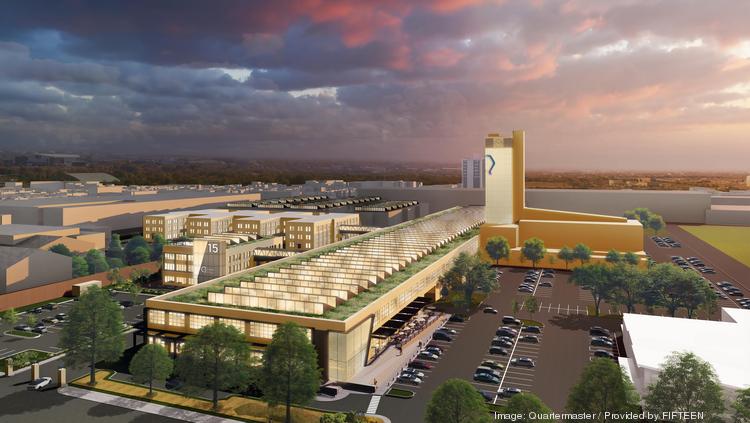
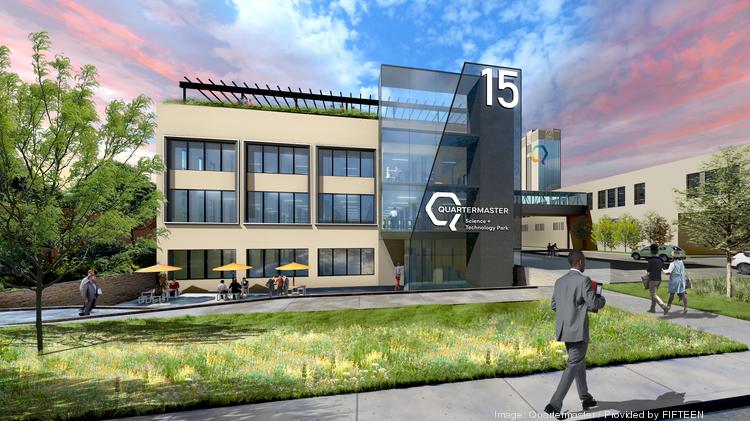
$250M life sciences conversion planned for Philadelphia’s historic Quartermaster site

 
By   –  Reporter, Philadelphia Business Journal

Listen to this article     3 min

Real estate company SkyREM plans to spend $250 million converting the historic Quartermaster site in South Philadelphia to a life sciences campus with restaurants and a hotel.

The redevelopment would feature wet and dry lab space for research, development and bio-manufacturing.

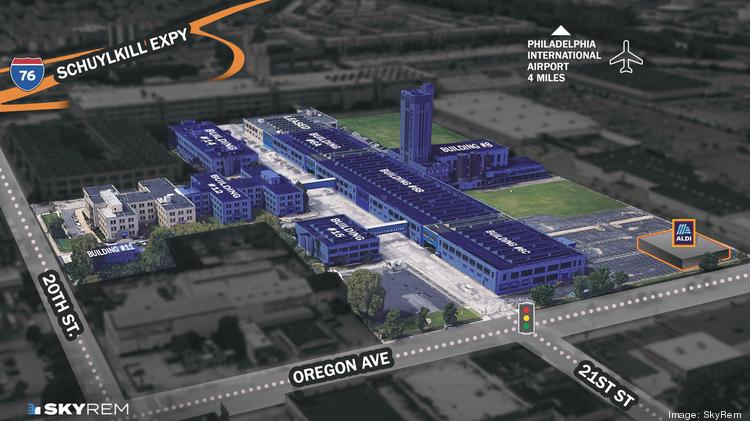
The renamed Quartermaster Science + Technology Park is near the southwest corner of Oregon Avenue and South 20th Street in the city’s Girard Estates neighborhood. It’s east of the Quartermaster Plaza retail center, which sold last year for $100 million.

The 24-acre campus is planned to have six acres of green space, an Aldi grocery store opening by March and already is the headquarters for Indego, the bicycle share program in Philadelphia.

Six buildings totaling 1 million square feet of space would be used for research and development labs. There’s 500,000 square feet of vacant space available for life sciences and high technology companies with availabilities as small as 1,000 square feet up to 250,000 square feet contiguous. There’s also 150,000 square feet of retail space available.

The office park has 200,000 square feet already occupied by tenants. The Philadelphia Job Corps Center and Delaware Valley Intelligence Center are tenants at the site.

The campus was previously used by the military as a place to produce clothing, footwear and personal equipment during World War I and II. The clothing factory closed in 1994. The Philadelphia Quartermaster Depot was listed on the National Register of Historic Places in 2010.

“We had a vision to preserve the legacy of this built-to-last historic Philadelphia landmark and transform it to create a vibrant space where the best and brightest want to innovate, collaborate, and work,” SkyREM CEO and Founder Alex Dembitzer said in a statement.

SkyREM, a real estate investor and developer, has corporate offices in New York and Philadelphia. The company acquired the site in 2001.

Vered Nohi, SkyREM’s regional executive director of new business development, called the redevelopment “transformational” for Philadelphia.


Quartermaster would join a wave of new life sciences projects being developed in the surrounding area and across the region.

The site is near both interstates 76 and 95 and is about 2 miles north of the Philadelphia Navy Yard, which has undergone a similar transformation from a military hub to a major life sciences and mixed-use redevelopment project. The Philadelphia Industrial Development Corp. is also in the process of selecting a developer to create a massive cell and gene therapy manufacturing complex across two sites totaling about 40 acres on Southwest Philadelphia’s Lower Schuylkill riverfront.

At 34th Street and Grays Ferry Avenue, the University of Pennsylvania is teaming with Longfellow Real Estate Partners on proposed a $365 million, 455,000-square-foot life sciences and biomanufacturing building at Pennovation Works.


SkyREM is working with Maryland real estate firm Scheer Partners to lease the science and technology space. Philadelphia’s MPN Realty will handle leasing of the retail space. Architecture firm Fifteen is working on the project’s design.

Scheer Partners Senior Vice President Tim Conrey said the Quartermaster conversion will help companies solve for “speed to market” as demand for life science space in the region has been strong.

Brandywine pauses new spec office development, continues to bet big on life sciences

By   –  Reporter, Philadelphia Business Journal


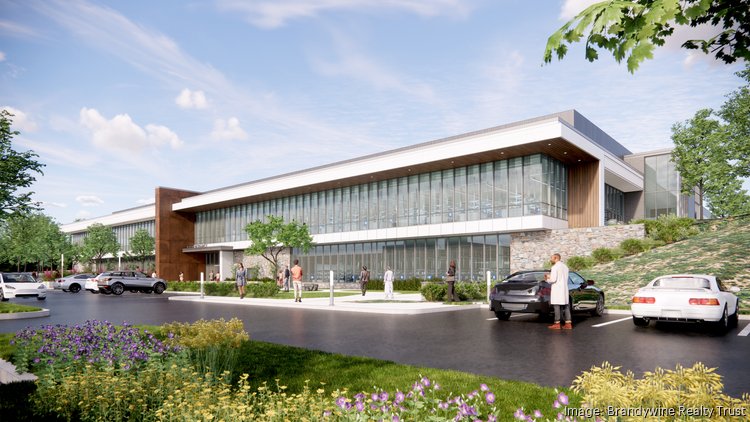
Brandywine Realty Trust originally planned to redevelop a Radnor medical office into lab and office space, split 50-50 between the two uses.

After changes in demand for lab and office space, Brandywine (NYSE: BDN) recently completed the 168,000-square-foot, four-story building at 250 King of Prussia Road in Radnor fully for life sciences.

“The pipeline is now 100% life sciences, which, while requiring more capital, is also generating longer term leases at a higher return on cost,” Brandywine CEO Jerry Sweeney of the project said during the company’s fourth-quarter earnings call on Thursday.

At the same time, Brandywine is holding off on developing new office buildings unless it has a tenant lined up in advance.

The shift reflects how Philadelphia-based Brandywine continues to lean into — and bet big — on life sciences.

Brandywine is the city’s largest owner of trophy office buildings and has several major development projects in the works. The company is planning to eventually develop 3 million square feet of life sciences space. For now, 800,000 square feet of life sciences space is under development, including a 12-story, 417,000-square-foot life sciences building at 3151 Market St. and a 29-story building with 200,000 square feet of life sciences space at 3025 John F. Kennedy Blvd. Both are part of the multi-phase Schuylkill Yards project underway near 30th Street Station in University City.

Once its existing projects are completed, Brandywine would have 800,000 square feet of life sciences space, making up 8% of its portfolio.Sweeney said the company wants to grow that figure to 21%.

Brandywine is developing a 145,000-square-foot, build-to-suit office building at 155 King of Prussia Road in Radnor for Arkema, a France-based global supplier of specialty materials. The building will be Arkema’s North American headquarters. Construction began in January and is scheduled to be completed in late 2024.

Brandywine reported that since November it raised over $705 million through fourth-quarter asset sales, an unsecured bond transaction and a secured loan. The company has “complete availability” on its $600 million unsecured line of credit, Sweeney said.

Brandywine sold a 95% leased, 86,000-square-foot office building at 200 Barr Harbor Drive in West Conshohocken for $30.5 million. The company also sold its 50% ownership interest in the 1919 Market joint venture for $83.2 million to an undisclosed buyer. 1919 Market St. is a 29-story building with apartments, office and commercial space. Brandywine co-developed the property with LCOR and the California State Teacher’s Retirement System.

Brandywine declined to comment and LCOR could not be reached.

Brandywine’s core portfolio is 91% leased.

The project at 250 King of Prussia Road cost $103.7 million and was recently completed. The renovation included 12-foot high floor-to-ceiling glass on the second floor, a new roof, lobby, elevator core, common area with a skylight and an added structured parking deck.

Located in the Radnor Life Science Center, a new campus with nearly 1 million square feet of lab, research and office space, Sweeney said it’s a “magnet” for biotech companies. Avantor, a global manufacturer and distributor of life sciences products, is headquartered in the complex.


Sweeney said Brandywine is “very confident” demand will stay strong for life sciences in Radnor. The building at 250 King of Prussia Road is projected to be fully leased by early 2024.

“Larger users we’re talking to, they just tend to take a little bit more time than we would like as they go through technical requirements and space planning requirements,” Sweeney said.

While Brandywine is aiming to increase its life sciences footprint, the company is being selective about what it builds next. The company may steer away from developments other than life sciences. The Schuylkill Yards project, for example, features a significant life sciences portion in University City.

“Other than fully leased build-to-suit opportunities, our future development starts are on hold,” Sweeney said, “pending more leasing on the existing joint venture pipeline and more clarity on the cost of debt capital and cap rates.”


Brandywine said about 70% to 75%of suburban tenants have returned to offices while that number has been around 50% in Philadelphia. At this point, though, it hasn’t yet affected demand when leasing space. Some tenants, for example, have moved out of the city while others have moved in.

In the fourth quarter, Brandywine had $55.7 million funds from operations, or 32 cents per share. That’s down from $60.4 million, or 35 cents per share, in the fourth quarter of 2021. Brandywine generated $129 million in revenue in the fourth quarter, up slightly from $125.5 in the year-ago period.

Brandywine stock is up 6.4% since the start of the year to $6.70 per share on Monday afternoon.

Many of Brandywine’s properties are in desirable locations, which have seen demand remain strong despite challenges facing offices, on par with industry trends.

Brandywine’s 12-story, 417,000-square-foot building at 3151 Market St. is on budget for $308 million and on schedule to be completed in the second quarter of 2024. Sweeney said Brandywine anticipates entering a construction loan in the second half of 2023, which would help complete the project. The building, being developed along with a global institutional investor,would be used for life sciences, innovation and office space as part of the larger Schuylkill Yards development in University City.

The company’s 29-story building at 3025 John F. Kennedy Blvd. with 200,000 square feet of life sciences space and 326 luxury apartments, is also on budget, costing $287.3 million, and on time, eyeing completion in the third quarter of this year.

Source: https://www.bizjournals.com/philadelphia/news/2023/02/06/brandywine-realty-life-sciences-development.html

Read Full Post »

2022 FDA Drug Approval List, 2022 Biological Approvals and Approved Cellular and Gene Therapy Products


Reporter: Aviva Lev-Ari, PhD, RN

SOURCE

Tal Bahar’s post on LinkedIn on 1/17/2023

Novel Drug Approvals for 2022

FDA’s Center for Drug Evaluation and Research (CDER)

New Molecular Entities (“NMEs”)

  • Some of these products have never been used in clinical practice. Below is a listing of new molecular entities and new therapeutic biological products that CDER approved in 2022. This listing does not contain vaccines, allergenic products, blood and blood products, plasma derivatives, cellular and gene therapy products, or other products that the Center for Biologics Evaluation and Research approved in 2022. 
  • Others are the same as, or related to, previously approved products, and they will compete with those products in the marketplace. See Drugs@FDA for information about all of CDER’s approved drugs and biological products. 

Certain drugs are classified as new molecular entities (“NMEs”) for purposes of FDA review. Many of these products contain active moieties that FDA had not previously approved, either as a single ingredient drug or as part of a combination product. These products frequently provide important new therapies for patients. Some drugs are characterized as NMEs for administrative purposes, but nonetheless contain active moieties that are closely related to active moieties in products that FDA has previously approved. FDA’s classification of a drug as an “NME” for review purposes is distinct from FDA’s determination of whether a drug product is a “new chemical entity” or “NCE” within the meaning of the Federal Food, Drug, and Cosmetic Act. 

INNOVATION   PREDICTABILITY   ACCESS FDA’s Center for Drug Evaluation and Research

January 2023

Table of Contents

 SOURCE

2022 Biological Approvals

The Center for Biologics Evaluation and Research (CBER) regulates products under a variety of regulatory authorities.  See the Development & Approval Process page for a description of what products are approved as Biologics License Applications (BLAs), Premarket Approvals (PMAs), New Drug Applications (NDAs) or 510Ks.

Biologics License Applications and Supplements

New BLAs (except those for blood banking), and BLA supplements that are expected to significantly enhance the public health (e.g., for new/expanded indications, new routes of administration, new dosage formulations and improved safety).

Other Applications Approved or Cleared by the Center for Biologics Evaluation and Research (CBER)

Medical devices involved in the collection, processing, testing, manufacture and administration of licensed blood, blood components and cellular products.

Key Resources

SOURCE

https://www.fda.gov/vaccines-blood-biologics/development-approval-process-cber/2022-biological-approvals


Approved Cellular and Gene Therapy Products

Below is a list of licensed products from the Office of Tissues and Advanced Therapies (OTAT).


Approved Products


Resources For You


SOURCE

https://www.fda.gov/vaccines-blood-biologics/cellular-gene-therapy-products/approved-cellular-and-gene-therapy-products


2022 forecast: Cell, gene therapy makers push past regulatory, payer hurdles to set up high hopes for next year

There are five FDA-approved CAR-T treatments for blood cancers and two gene therapies to treat rare diseases now on the market in the U.S. The late-stage pipeline could produce several more cancer CAR-Ts and gene therapies to treat a range of diseases.

RELATED: ASH: Bristol Myers’ Breyanzi, Gilead’s Yescarta lock horns in race to move CAR-T therapy to earlier lymphoma

One of the biggest races to watch in the cell therapy space will be that between Gilead Sciences’ Yescarta and Bristol Myers Squibb’s Breyanzi, both of which are gunning to move their CAR-Ts into earlier lines of treatment in large B-cell lymphoma (LBCL). At ASH, both companies rolled out impressive data from their trials in the second-line setting, but Gilead could have the upper hand by virtue of its three-year head start in the market, analysts said. Gilead expects to hear from the FDA on a label expansion in the second-line setting in April.

Read Full Post »

A laboratory for the use of AI for drug development has been launched in collaboration with Pfizer, Teva, AstraZeneca, Mark and Amazon

Reporter: Aviva Lev-Ari, PhD, RN

AION Labs unites pharma, technology and funds companies including IBF to invest in startups to integrate developments in cloud computing and artificial intelligence to improve drug development capabilities. An alliance of four leading pharmaceutical companies –  
AION Labs
 , the first innovation lab of its kind in the world and a pioneer in the process of adopting cloud technologies, artificial intelligence and computer science to solve the R&D challenges of the pharma industry, today announces its launch.
AstraZeneca ,  
Mark ,  
Pfizer  and 
Teva  – and two leading companies in the field of high-tech and biotech investments, respectively – AWS ( 
Amazon Web Services Inc ) and the Israeli investment fund IBF ( 
Israel Biotech Fund ) – which joined together to establish groundbreaking ventures Through artificial intelligence and computer science to change the way new therapies are discovered and developed.  “We are excited to launch the new innovation lab in favor of discoveries of drugs and medical devices using groundbreaking computational tools,” said Matti Gil, CEO of AION Labs. We are prepared and ready to make a difference in the process of therapeutic discoveries and their development. 
With a strong pool of talent from Israel and the world, cloud technology and artificial intelligence at the heart of our activities and a significant commitment by the State of Israel, we are ready to contribute to the health and well-being of the human race and promote industry in Israel. 
I thank the partners for the trust, and it is an honor for me to lead such a significant initiative. ” 
In addition, AION Labs has announced a strategic partnership with X  
BioMed  , an independent biomedical research institute operating in Heidelberg, Germany. 
BioMed X has a proven track record in advancing research innovations in the field of biomedicine at the interface between academic research and the pharmaceutical industry. 
BioMed X’s innovation model, based on global mass sourcing and incubators to cultivate the most brilliant talent and ideas, will serve as the R & D engine to drive AION Labs’ enterprise model.

SOURCE

Read Full Post »

A Platform called VirtualFlow: Discovery of Pan-coronavirus Drugs help prepare the US for the Next Coronavirus Pandemic

Reporter: Aviva Lev-Ari, PhD, RN


ARTICLE|ONLINE NOW, 102021

A multi-pronged approach targeting SARS-CoV-2 proteins using ultra-large virtual screening

Open AccessPublished:January 04, 2021DOI:https://doi.org/10.1016/j.isci.2020.102021


The work was made possible in large part by about $1 million in cloud computing hours awarded by Google through a COVID-19 research grant program.

The work reported, below was sponsored by

  • a Google Cloud COVID-19 research grant. Funding was also provided by the
  • Fondation Aclon,
  • National Institutes of Health (GM136859),
  • Claudia Adams Barr Program for Innovative Basic Cancer Research,
  • Math+ Berlin Mathematics Research Center,
  • Templeton Religion Trust (TRT 0159),
  • U.S. Army Research Office (W911NF1910302), and
  • Chleck Family Foundation


Harvard University, AbbVie form research alliance to address emergent viral diseases

This article is part of Harvard Medical School’s continuing coverage of medicine, biomedical research, medical education and policy related to the SARS-CoV-2 pandemic and the disease COVID-19.

Harvard University and AbbVie today announced a $30 million collaborative research alliance, launching a multi-pronged effort at Harvard Medical School to study and develop therapies against emergent viral infections, with a focus on those caused by coronaviruses and by viruses that lead to hemorrhagic fever.

The collaboration aims to rapidly integrate fundamental biology into the preclinical and clinical development of new therapies for viral diseases that address a variety of therapeutic modalities. HMS has led several large-scale, coordinated research efforts launched at the beginning of the COVID-19 pandemic.

“A key element of having a strong R&D organization is collaboration with top academic institutions, like Harvard Medical School, to develop therapies for patients who need them most,” said Michael Severino, vice chairman and president of AbbVie. “There is much to learn about viral diseases and the best way to treat them. By harnessing the power of collaboration, we can develop new therapeutics sooner to ensure the world is better prepared for future potential outbreaks.”

“The cataclysmic nature of the COVID-19 pandemic reminds us how vital it is to be prepared for the next public health crisis and how critical collaboration is on every level—across disciplines, across institutions and across national boundaries,” said George Q. Daley, dean of Harvard Medical School. “Harvard Medical School, as the nucleus of an ecosystem of fundamental discovery and therapeutic translation, is uniquely positioned to propel this transformative research alongside allies like AbbVie.”

AbbVie will provide $30 million over three years and additional in-kind support leveraging AbbVie’s scientists, expertise and facilities to advance collaborative research and early-stage development efforts across five program areas that address a variety of therapeutic modalities:

  • Immunity and immunopathology—Study of the fundamental processes that impact the body’s critical immune responses to viruses and identification of opportunities for therapeutic intervention.

Led by Ulirich Von Andrian, the Edward Mallinckrodt Jr. Professor of Immunopathology in the Blavatnik Institute at HMS and program leader of basic immunology at the Ragon Institute of MGH, MIT and Harvard, and Jochen Salfeld, vice president of immunology and virology discovery at AbbVie.

  • Host targeting for antiviral therapies—Development of approaches that modulate host proteins in an effort to disrupt the life cycle of emergent viral pathogens.

Led by Pamela Silver, the Elliot T. and Onie H. Adams Professor of Biochemistry and Systems Biology in the Blavatnik Institute at HMS, and Steve Elmore, vice president of drug discovery science and technology at AbbVie.

  • Antibody therapeutics—Rapid development of therapeutic antibodies or biologics against emergent pathogens, including SARS-CoV-2, to a preclinical or early clinical stage.

Led by Jonathan Abraham, assistant professor of microbiology in the Blavatnik Institute at HMS, and by Jochen Salfeld, vice president of immunology and virology discovery at AbbVie.

  • Small molecules—Discovery and early-stage development of small-molecule drugs that would act to prevent replication of known coronaviruses and emergent pathogens.

Led by Mark Namchuk, executive director of therapeutics translation at HMS and senior lecturer on biological chemistry and molecular pharmacology in the Blavatnik Institute at HMS, and Steve Elmore, vice president of drug discovery science and technology at AbbVie.

  • Translational development—Preclinical validation, pharmacological testing, and optimization of leading approaches, in collaboration with Harvard-affiliated hospitals, with program leads to be determined.

SOURCE

https://hms.harvard.edu/news/joining-forces


A Screen Door Opens

Virtual screen finds compounds that could combat SARS-CoV-2

This article is part of Harvard Medical School’s continuing coverage of medicine, biomedical research, medical education, and policy related to the SARS-CoV-2 pandemic and the disease COVID-19.

Less than a year ago, Harvard Medical School researchers and international colleagues unveiled a platform called VirtualFlow that could swiftly sift through more than 1 billion chemical compounds and identify those with the greatest promise to become disease-specific treatments, providing researchers with invaluable guidance before they embark on expensive and time-consuming lab experiments and clinical trials.

Propelled by the urgent needs of the pandemic, the team has now pushed VirtualFlow even further, conducting 45 screens of more than 1 billion compounds each and ranking the compounds with the greatest potential for fighting COVID-19—including some that are already approved by the FDA for other diseases.

“This was the largest virtual screening effort ever done,” said VirtualFlow co-developer Christoph Gorgulla, research fellow in biological chemistry and molecular pharmacology in the labs of Haribabu Arthanari and Gerhard Wagner in the Blavatnik Institute at HMS.

The results were published in January in the open-access journal iScience.

The team searched for compounds that bind to any of 15 proteins on SARS-CoV-2 or two human proteins, ACE2 and TMPRSS2, known to interact with the virus and enable infection.

Researchers can now explore on an interactive website the 1,000 most promising compounds from each screen and start testing in the lab any ones they choose.

The urgency of the pandemic and the sheer number of candidate compounds inspired the team to release the early results to the scientific community.

“No one group can validate all the compounds as quickly as the pandemic demands,” said Gorgulla, who is also an associate of the Department of Physics at Harvard University. “We hope that our colleagues can collectively use our results to identify potent inhibitors of SARS-CoV-2.

In most cases, it will take years to find out whether a compound is safe and effective in humans. For some of the compounds, however, researchers have a head start.

Hundreds of the most promising compounds that VirtualFlow flagged are already FDA approved or being studied in clinical or preclinical trials for other diseases. If researchers find that one of those compounds proves effective against SARS-CoV-2 in lab experiments, the data their colleagues have already collected could save time establishing safety in humans.

Other compounds among VirtualFlow’s top hits are currently being assessed in clinical trials for COVID-19, including several drugs in the steroid family. In those cases, researchers could build on the software findings to investigate how those drug candidates work at the molecular level—something that’s not always clear even when a drug works well.

It shows what we’re capable of computationally during a pandemic.

Hari Arthanari

SOURCE

https://hms.harvard.edu/news/screen-door-opens?utm_source=Silverpop&utm_medium=email&utm_term=field_news_item_1&utm_content=HMNews02012021

Read Full Post »

Global Tert-Amylbenzene Market Size by Application (Pharmaceuticals, Chemical Intermediaries, Batteries), Industry Analysis Report, Regional Outlook, Application Development Potential, Price Trend, Competitive Market Share & Forecast, 2020 – 2026

Published Date: Dec 2020  |  Report ID: GMI4883  |  Authors: Kunal Ahuja, Harneet Mehar

Report Format:  PDF   |   Pages: 140   |   Base Year: 2019

https://www.gminsights.com/toc/detail/tert-amylbenzene-market


Guest Authors: Kunal Ahuja, Harneet Mehar


From: Devesh Billore <devesh.b@gminsights.com>

Date: Tuesday, January 5, 2021 at 11:22 AM

To: “Aviva Lev-Ari, PhD, RN” <AvivaLev-Ari@alum.berkeley.edu>

Subject: RE: Editorial Inquiry For Exclusive Content on Tert-Amylbenzene Market


Hello,


Thanks for your response. Yes you can publish the TABLE of CONTENTS of Tert-Amylbenzene Market. Please provide report hyperlink also.


Report link: https://www.gminsights.com/industry-analysis/tert-amylbenzene-market


It would be great if you can share the URL of the article once you publish it on the website.

Regards,

Devesh Billore

Global Market Insights

E-mail:devesh.b@gminsights.com| Web: www.gminsights.com 


Report Content

Chapter 1   Methodology & Scope

1.1    Market definitions

1.2    Base estimates & calculations

1.3    Forecast calculations

1.4    Data Sources

1.4.1    Primary

1.4.2    Secondary

1.4.2.1    Paid Sources

1.4.2.2    Public Sources

Chapter 2   Executive Summary

2.1    Global Tert-Amylbenzene Industry 3600 synopsis, 2020-2026

2.1.1    Business trends

2.1.2    Regional trends

2.1.3    Application trends

Chapter 3   Global Tert-Amylbenzene Industry Insights

3.1    Industry segmentation

3.2    COVID-19 overview of the world economy

3.3    Industry ecosystem analysis

3.3.1    Distribution channel analysis

3.3.1.1    Distributors

3.3.1.2    Technology Providers

3.3.2    Vendor matrix

3.3.3    Impact of COVID-19 on industry value chain

3.4    Raw Material Analysis

3.4.1    Benzene

3.4.2    Tertiary Amylalcohol

3.4.3    Cumene

3.4.4    Propene

3.5    Regulatory landscape

3.5.1    U.S.

3.5.1.1    Toxic Substances Control Act (TSCA) Inventory

3.5.1.1.1    OSHA 1910.1200

3.5.2    Europe

3.5.2.1    REACH (EC 1907/2006)

3.5.3    Product purity certification analysis

3.6    Industry impact forces

3.6.1    Growth drivers

3.6.1.1    Rising demand from electronics industry

3.6.1.2    Pharmaceutical industry growth

3.6.2    Industry pitfalls & challenges

3.6.2.1    High health and environmental effects

3.7    Technology landscape

3.8    Innovation & Sustainability

3.9    Growth potential analysis, 2019

3.9.1    Emerging business models

3.9.1.1    Collaboration/Joint ventures

3.9.1.2    Distribution partnership

3.9.1.3    Digital platform

3.10    Cost structure analysis, 2019

3.11    Porter’s analysis

3.11.1    Bargaining power of suppliers

3.11.2    Bargaining power of buyers

3.11.3    Threat of new entrants

3.11.4    Threat of substitutes

3.12    Pricing Analysis, 2015-2026

3.12.1    North America

3.12.2    Europe

3.12.3    Asia Pacific

3.12.4    Latin America

3.12.5    Middle East & Africa

3.13    Competitive landscape, 2019

3.13.1    Company market share analysis, 2019

3.13.2    Strategy dashboard

3.13.3    List of potential customers/end-users

3.14    PESTEL analysis

3.15    Impact of COVID-19 on tert-amylbenzene demand, by application

3.15.1    Pharmaceuticals

3.15.2    Chemical Intermediates

3.15.3    Battery

Chapter 4   Global Tert-Amylbenzene Market, By Application

4.1    Key application trends

4.2    Pharmaceuticals

4.2.1    Global Tert-Amylbenzene market from pharmaceuticals application, 2015 – 2026

4.2.2    Global Tert-Amylbenzene market from pharmaceuticals application, by region, 2015 – 2026

4.3    Chemical intermediaries

4.3.1    Global Tert-Amylbenzene market from chemical intermediaries application, 2015 – 2026

4.3.2    Global Tert-Amylbenzene market from chemical intermediaries application, by region, 2015 – 2026

4.4    Batteries

4.4.1    Global Tert-Amylbenzene market from batteries application, 2015 – 2026

4.4.2    Global Tert-Amylbenzene market from batteries application, by region, 2015 – 2026

Chapter 5   Global Tert-Amylbenzene Market, By Region

5.1    Key regional trends

5.2    North America

5.2.1    North America Tert-Amylbenzene market, 2015 – 2026, (Tons) (USD Thousand)

5.2.2    North America Tert-Amylbenzene market, by application, 2015 – 2026, (Tons) (USD Thousand)

5.2.3    U.S.

5.2.3.1    U.S. Tert-Amylbenzene market, 2015 – 2026, (Tons) (USD Thousand)

5.2.3.2    U.S. Tert-Amylbenzene market, by application, 2015 – 2026, (Tons) (USD Thousand)

5.2.4    Canada

5.2.4.1    Canada Tert-Amylbenzene market, 2015 – 2026, (Tons) (USD Thousand)

5.2.4.2    Canada Tert-Amylbenzene market, by application, 2015 – 2026, (Tons) (USD Thousand)

5.2.5    Mexico

5.2.5.1    Mexico Tert-Amylbenzene market, 2015 – 2026, (Tons) (USD Thousand)

5.2.5.2    Mexico Tert-Amylbenzene market, by application, 2015 – 2026, (Tons) (USD Thousand)

5.3    Europe

5.3.1    Europe Tert-Amylbenzene market, 2015 – 2026, (Tons) (USD Thousand)

5.3.2    Europe Tert-Amylbenzene market, by application, 2015 – 2026, (Tons) (USD Thousand)

5.3.3    Germany

5.3.3.1    Germany Tert-Amylbenzene market, 2015 – 2026, (Tons) (USD Thousand)

5.3.3.2    Germany Tert-Amylbenzene market, by application, 2015 – 2026, (Tons) (USD Thousand)

5.3.4    UK

5.3.4.1    UK Tert-Amylbenzene market, 2015 – 2026, (Tons) (USD Thousand)

5.3.4.2    UK Tert-Amylbenzene market, by application, 2015 – 2026, (Tons) (USD Thousand)

5.3.5    France

5.3.5.1    France Tert-Amylbenzene market, 2015 – 2026, (Tons) (USD Thousand)

5.3.5.2    France Tert-Amylbenzene market, by application, 2015 – 2026, (Tons) (USD Thousand)

5.3.6    Italy

5.3.6.1    Italy Tert-Amylbenzene market, 2015 – 2026, (Tons) (USD Thousand)

5.3.6.2    Italy Tert-Amylbenzene market, by application, 2015 – 2026, (Tons) (USD Thousand)

5.3.7    Spain

5.3.7.1    Spain Tert-Amylbenzene market, 2015 – 2026, (Tons) (USD Thousand)

5.3.7.2    Spain Tert-Amylbenzene market, by application, 2015 – 2026, (Tons) (USD Thousand)

5.3.8    Russia

5.3.8.1    Russia Tert-Amylbenzene market, 2015 – 2026, (Tons) (USD Thousand)

5.3.8.2    Russia Tert-Amylbenzene market, by application, 2015 – 2026, (Tons) (USD Thousand)

5.4    Asia Pacific

5.4.1    Asia Pacific Tert-Amylbenzene market, 2015 – 2026, (Tons) (USD Thousand)

5.4.2    Asia Pacific Tert-Amylbenzene market, by application, 2015 – 2026, (Tons) (USD Thousand)

5.4.3    China

5.4.3.1    China Tert-Amylbenzene market, 2015 – 2026, (Tons) (USD Thousand)

5.4.3.2    China Tert-Amylbenzene market, by application, 2015 – 2026, (Tons) (USD Thousand)

5.4.4    India

5.4.4.1    India Tert-Amylbenzene market, 2015 – 2026, (Tons) (USD Thousand)

5.4.4.2    India Tert-Amylbenzene market, by application, 2015 – 2026, (Tons) (USD Thousand)

5.4.5    Japan

5.4.5.1    Japan Tert-Amylbenzene market, 2015 – 2026, (Tons) (USD Thousand)

5.4.5.2    Japan Tert-Amylbenzene market, by application, 2015 – 2026, (Tons) (USD Thousand)

5.4.6    South Korea

5.4.6.1    South Korea Tert-Amylbenzene market, 2015 – 2026, (Tons) (USD Thousand)

5.4.6.2    South Korea Tert-Amylbenzene market, by application, 2015 – 2026, (Tons) (USD Thousand)

5.4.7    Australia

5.4.7.1    Australia Tert-Amylbenzene market, 2015 – 2026, (Tons) (USD Thousand)

5.4.7.2    Australia Tert-Amylbenzene market, by application, 2015 – 2026, (Tons) (USD Thousand)

5.4.8    Malaysia

5.4.8.1    Malaysia Tert-Amylbenzene market, 2015 – 2026, (Tons) (USD Thousand)

5.4.8.2    Malaysia Tert-Amylbenzene market, by application, 2015 – 2026, (Tons) (USD Thousand)

5.5    LATAM

5.5.1    LATAM Tert-Amylbenzene market, 2015 – 2026, (Tons) (USD Thousand)

5.5.2    LATAM Tert-Amylbenzene market, by application, 2015 – 2026, (Tons) (USD Thousand)

5.5.3    Brazil

5.5.3.1    Brazil Tert-Amylbenzene market, 2015 – 2026, (Tons) (USD Thousand)

5.5.3.2    Brazil Tert-Amylbenzene market, by application, 2015 – 2026, (Tons) (USD Thousand)

5.6    MEA

5.6.1    MEA Tert-Amylbenzene market, 2015 – 2026, (Tons) (USD Thousand)

5.6.2    MEA Tert-Amylbenzene market, by application, 2015 – 2026, (Tons) (USD Thousand)

5.6.3    Saudi Arabia

5.6.3.1    Saudi Arabia Tert-Amylbenzene market, 2015 – 2026, (Tons) (USD Thousand)

5.6.3.2    Saudi Arabia Tert-Amylbenzene market, by application, 2015 – 2026, (Tons) (USD Thousand)

5.6.4    UAE

5.6.4.1    UAE Tert-Amylbenzene market, 2015 – 2026, (Tons) (USD Thousand)

5.6.4.2    UAE Tert-Amylbenzene market, by application, 2015 – 2026, (Tons) (USD Thousand)

5.6.5    South Africa

5.6.5.1    South Africa Tert-Amylbenzene market, 2015 – 2026, (Tons) (USD Thousand)

5.6.5.2    South Africa Tert-Amylbenzene market, by application, 2015 – 2026, (Tons) (USD Thousand)

Chapter 6   Company Profiles

6.1    Jiujiang Pro High Technology Materials Co., Ltd.

6.1.1    Business Overview

6.1.2    Financial Data

6.1.3    Product Landscape

6.1.4    Swot Analysis

6.2    Hunan Jinxi Chemical Co. Ltd.

6.2.1    Business Overview

6.2.2    Financial Data

6.2.3    Product Landscape

6.2.4    Swot Analysis

6.3    Zhenjiang Haitong Chemical industry Co., Ltd.

6.3.1    Business Overview

6.3.2    Financial Data

6.3.3    Product Landscape

6.3.4    Swot Analysis

6.4    Solvay

6.4.1    Business Overview

6.4.2    Financial Data

6.4.3    Product Landscape

6.4.4    Strategic Outlook

6.4.5    Swot Analysis

6.5    Sigma Aldrich

6.5.1    Business Overview

6.5.2    Financial Data

6.5.3    Product Landscape

6.5.4    Swot Analysis

6.6    Frontier Scientific, Inc.

6.6.1    Business Overview

6.6.2    Financial Data

6.6.3    Product Landscape

6.6.4    Swot Analysis

6.7    Alfa Chemistry

6.7.1    Business Overview

6.7.2    Financial Data

6.7.3    Product Landscape

6.7.4    Swot Analysis

6.8    TCI Chemical Trading

6.8.1    Business Overview

6.8.2    Financial Data

6.8.3    Product Landscape

6.8.4    Swot Analysis

6.9    Alfa Aesar (part of Thermo Fisher Scientific)

6.9.1    Business Overview

6.9.2    Financial Data

6.9.3    Product Landscape

6.9.4    Swot Analysis
Data Tables

TABLE 1      Global Tert-Amylbenzene market, 2015 – 2026, (Tons)  (USD Thousand)

TABLE 2      Global  Tert-Amylbenzene market volume, by region, 2015 – 2026 (Tons)

TABLE 3      Global  Tert-Amylbenzene market revenue, by region, 2015 – 2026 (USD thousand)

TABLE 4      Global  Tert-Amylbenzene market volume, by application, 2015 – 2026 (Tons)

TABLE 5      Global  Tert-Amylbenzene market revenue, by application, 2015 – 2026 (USD Thousand)

TABLE 6      Projections of GDP growth (%) in 2020 based on three scenarios

TABLE 7      Global tert amyl benzene distribution channel analysis

TABLE 8      Vendor matrix

TABLE 9      Purity of tert-amylbenzene offered by global companies

TABLE 10     Industry impact forces

TABLE 11     Cost elements

TABLE 12     List of potential customers/end-users

TABLE 13     Global  Tert-Amylbenzene demand, by region, 2015 – 2026 (Tons)

TABLE 14     Global  Tert-Amylbenzene supply, by region, 2015 – 2026 (Tons)

TABLE 15     Global  Tert-Amylbenzene  market from pharmaceuticals application, 2015 – 2026 (Tons)  (USD Thousand)

TABLE 16     Global  Tert-Amylbenzene market volume from pharmaceuticals application, by region, 2015 – 2026 (Tons)

TABLE 17     Global  Tert-Amylbenzene market revenue from pharmaceuticals application, by region, 2015 – 2026 (USD thousand)

TABLE 18     Global  Tert-Amylbenzene  market from chemical intermediaries application, 2015 – 2026 (Tons)  (USD Thousand)

TABLE 19     Global  Tert-Amylbenzene market volume from chemical intermediaries application, by region, 2015 – 2026 (Tons)

TABLE 20     Global  Tert-Amylbenzene market revenue from chemical intermediaries application, by region, 2015 – 2026 (USD thousand)

TABLE 21     Global  Tert-Amylbenzene  market from batteries application, 2015 – 2026 (Tons)  (USD Thousand)

TABLE 22     Global  Tert-Amylbenzene market volume from batteries application, by region, 2015 – 2026 (Tons)

TABLE 23     Global  Tert-Amylbenzene market revenue from batteries application, by region, 2015 – 2026 (USD thousand)

TABLE 24     North America Tert-Amylbenzene market, 2015 – 2026, (Tons)  (USD Thousand)

TABLE 25     North America  Tert-Amylbenzene market volume, by application, 2015 – 2026 (Tons)

TABLE 26     North America  Tert-Amylbenzene market revenue, by application, 2015 – 2026 (USD Thousand)

TABLE 27     U.S.  Tert-Amylbenzene market, 2015 – 2026, (Tons)  (USD Thousand)

TABLE 28     U.S.   Tert-Amylbenzene market volume, by application, 2015 – 2026 (Tons)

TABLE 29     U.S.   Tert-Amylbenzene market revenue, by application, 2015 – 2026 (USD Thousand)

TABLE 30     Canada   Tert-Amylbenzene market, 2015 – 2026, (Tons)  (USD Thousand)

TABLE 31     Canada    Tert-Amylbenzene market volume, by application, 2015 – 2026 (Tons)

TABLE 32     Canada Tert-Amylbenzene market revenue, by application, 2015 – 2026 (USD Thousand)

TABLE 33     Mexico Tert-Amylbenzene market, 2015 – 2026, (Tons)  (USD Thousand)

TABLE 34     Mexico  Tert-Amylbenzene market volume, by application, 2015 – 2026 (Tons)

TABLE 35     Mexico  Tert-Amylbenzene market revenue, by application, 2015 – 2026 (USD Thousand)

TABLE 36     Europe  Tert-Amylbenzene market, 2015 – 2026, (Tons)  (USD Thousand)

TABLE 37     Europe  Tert-Amylbenzene market volume, by application, 2015 – 2026 (Tons)

TABLE 38     Europe  Tert-Amylbenzene market revenue, by application, 2015 – 2026 (USD Thousand)

TABLE 39     Germany     Tert-Amylbenzene market, 2015 – 2026, (Tons)  (USD Thousand)

TABLE 40     Germany Tert-Amylbenzene market volume, by application, 2015 – 2026 (Tons)

TABLE 41     Germany Tert-Amylbenzene market revenue, by application, 2015 – 2026 (USD Thousand)

TABLE 42     UK   Tert-Amylbenzene market, 2015 – 2026, (Tons)  (USD Thousand)

TABLE 43     UK Tert-Amylbenzene market volume, by application, 2015 – 2026 (Tons)

TABLE 44     UK Tert-Amylbenzene market revenue, by application, 2015 – 2026 (USD Thousand)

TABLE 45     France     Tert-Amylbenzene market, 2015 – 2026, (Tons)  (USD Thousand)

TABLE 46     France Tert-Amylbenzene market volume, by application, 2015 – 2026 (Tons)

TABLE 47     France Tert-Amylbenzene market revenue, by application, 2015 – 2026 (USD Thousand)

TABLE 48     Italy Tert-Amylbenzene market, 2015 – 2026, (Tons)  (USD Thousand)

TABLE 49     Italy Tert-Amylbenzene  market volume, by application, 2015 – 2026 (Tons)

TABLE 50     Italy Tert-Amylbenzene  market revenue, by application, 2015 – 2026 (USD Thousand)

TABLE 51     Spain Tert-Amylbenzene market, 2015 – 2026, (Tons)  (USD Thousand)

TABLE 52     Spain Tert-Amylbenzene  market volume, by application, 2015 – 2026 (Tons)

TABLE 53     Spain Tert-Amylbenzene  market revenue, by application, 2015 – 2026 (USD Thousand)

TABLE 54     Russia Tert-Amylbenzene  market, 2015 – 2026, (Tons)  (USD Thousand)

TABLE 55     Russia  Tert-Amylbenzene  market volume, by application, 2015 – 2026 (Tons)

TABLE 56     Russia  Tert-Amylbenzene  market revenue, by application, 2015 – 2026 (USD Thousand)

TABLE 57     Asia Pacific  Tert-Amylbenzene market, 2015 – 2026, (Tons)  (USD Thousand)

TABLE 58     Asia Pacific   Tert-Amylbenzene market volume, by application, 2015 – 2026 (Tons)

TABLE 59     Asia Pacific   Tert-Amylbenzene market revenue, by application, 2015 – 2026 (USD Thousand)

TABLE 60     China Tert-Amylbenzene  market, 2015 – 2026, (Tons)  (USD Thousand)

TABLE 61     China  Tert-Amylbenzene  market volume, by application, 2015 – 2026 (Tons)

TABLE 62     China  Tert-Amylbenzene  market revenue, by application, 2015 – 2026 (USD Thousand)

TABLE 63     India  Tert-Amylbenzene  market, 2015 – 2026, (Tons)  (USD Thousand)

TABLE 64     India Tert-Amylbenzene market volume, by application, 2015 – 2026 (Tons)

TABLE 65     India Tert-Amylbenzene market revenue, by application, 2015 – 2026 (USD Thousand)

TABLE 66     Japan  Tert-Amylbenzene  market, 2015 – 2026, (Tons)  (USD Thousand)

TABLE 67     Japan Tert-Amylbenzene market volume, by application, 2015 – 2026 (Tons)

TABLE 68     Japan Tert-Amylbenzene market revenue, by application, 2015 – 2026 (USD Thousand)

TABLE 69     South Korea  Tert-Amylbenzene  market, 2015 – 2026, (Tons)  (USD Thousand)

TABLE 70     South Korea Tert-Amylbenzene market volume, by application, 2015 – 2026 (Tons)

TABLE 71     South Korea Tert-Amylbenzene market revenue, by application, 2015 – 2026 (USD Thousand)

TABLE 72     Australia  Tert-Amylbenzene  market, 2015 – 2026, (Tons)  (USD Thousand)

TABLE 73     Australia Tert-Amylbenzene market volume, by application, 2015 – 2026 (Tons)

TABLE 74     Australia Tert-Amylbenzene market revenue, by application, 2015 – 2026 (USD Thousand)

TABLE 75     Malaysia  Tert-Amylbenzene  market, 2015 – 2026, (Tons)  (USD Thousand)

TABLE 76     Malaysia Tert-Amylbenzene market volume, by application, 2015 – 2026 (Tons)

TABLE 77     Malaysia Tert-Amylbenzene market revenue, by application, 2015 – 2026 (USD Thousand)

TABLE 78     LATAM  Tert-Amylbenzene market, 2015 – 2026, (Tons)  (USD Thousand)

TABLE 79     LATAM   Tert-Amylbenzene market volume, by application, 2015 – 2026 (Tons)

TABLE 80     LATAM   Tert-Amylbenzene market revenue, by application, 2015 – 2026 (USD Thousand)

TABLE 81     Brazil  Tert-Amylbenzene  market, 2015 – 2026, (Tons)  (USD Thousand)

TABLE 82     Brazil Tert-Amylbenzene market volume, by application, 2015 – 2026 (Tons)

TABLE 83     Brazil Tert-Amylbenzene market revenue, by application, 2015 – 2026 (USD Thousand)

TABLE 84     MEA  Tert-Amylbenzene market, 2015 – 2026, (Tons)  (USD Thousand)

TABLE 85     MEA   Tert-Amylbenzene market volume, by application, 2015 – 2026 (Tons)

TABLE 86     MEA   Tert-Amylbenzene market revenue, by application, 2015 – 2026 (USD Thousand)

TABLE 87     Saudi Arabia  Tert-Amylbenzene  market, 2015 – 2026, (Tons)  (USD Thousand)

TABLE 88     Saudi Arabia Tert-Amylbenzene market volume, by application, 2015 – 2026 (Tons)

TABLE 89     Saudi Arabia Tert-Amylbenzene market revenue, by application, 2015 – 2026 (USD Thousand)

TABLE 90     UAE  Tert-Amylbenzene  market, 2015 – 2026, (Tons)  (USD Thousand)

TABLE 91     UAE Tert-Amylbenzene market volume, by application, 2015 – 2026 (Tons)

TABLE 92     UAE Tert-Amylbenzene market revenue, by application, 2015 – 2026 (USD Thousand)

TABLE 93     South Africa Tert-Amylbenzene market, 2015 – 2026, (Tons)  (USD Thousand)

TABLE 94     South Africa Tert-Amylbenzene market volume, by application, 2015 – 2026 (Tons)

TABLE 95     South Africa Tert-Amylbenzene market revenue, by application, 2015 – 2026 (USD Thousand)


Charts & Figures

FIG. 1     Global Tert-Amylbenzene industry 3600 synopsis

FIG. 2     Europe Pulp & Paper Industry Revenue, 2015 – 2019 (USD Billion)

FIG. 3     Confirmed COVID-19 cases in Europe, by cases, as of 30 November 2020 (Number of cases)

FIG. 4     Demand for Lithium-ion batteries from Electric Vehicles, 2015-2030 (Gwh)

FIG. 5     Industry segmentation

FIG. 6     Industry ecosystem analysis

FIG. 7     Global Benzene Production, 2015-2022, (Million Metric Tons)

FIG. 8     China Benzene Production Capacities, 2015-2025 (Million Metric Tons)

FIG. 9     U.S. Benzene Production, 2016-2019, (Thousand Metric Tons)

FIG. 10    Global Cumene Consumption, By Region, 2019, (%)

FIG. 11    U.S. Cumene Prices, 2017-2020, (USD/barrel)

FIG. 12    Global Propylene Production and Consumption, 2018, (Mn MT)

FIG. 13    U.S. Propene Demand, 2016-2019, (Mn MT)

FIG. 14    Consumer electronics revenue in Western Europe, Q4 2015 – Q1 2020 (USD Billion)

FIG. 15    Growth of the middle class population, by region,  2015 – 2030 (Million persons)

FIG. 16    Global pharmaceutical industry revenue, 2014-19, (USD Billion)

FIG. 17    Share of population aged 65 years and above in Europe, major countries, 2019, (%)

FIG. 18    Production Technique of Tert.-Amylbenzene

FIG. 19    Growth Potential Analysis, 2019

FIG. 20    Cost structure analysis, 2019

FIG. 21    Porter’s analysis

FIG. 22    Company market share analysis, 2019

FIG. 23    PESTEL analysis


Read Full Post »

Danny Bar-Zohar, MD –  New R&D Leader for new pipelines at Merck KGaA as Luciano Rossetti steps out

Reporter: Aviva Lev-Ari, PhD, RN


Danny Bar-Zohar, MD – A Pharmaceutical Executive Profile in R&D: Ex-Novastis, Ex-Teva

Experience

Education

SOURCE

https://www.linkedin.com/in/danny-bar-zohar-513904a/


Novartis vet Danny Bar-Zohar leaps back into R&D, taking over the development team at Merck KGaA as Luciano Rossetti steps out

John Carroll
Editor & Founder

After a brief stint as a biotech investor at Syncona, Novartis vet Danny Bar-Zohar is back in R&D, and he’s taking the lead position at Merck KGaA’s drug division.

Bar-Zohar had led late-stage clinical development across a variety of areas — neuroscience, immunology, oncology and ophthalmology, among others — before joining the migration of talent out of the Basel-based multinational. He had been at Novartis for 7 years, which followed an earlier chapter in research at Teva.

Luciano Rossetti
The scientist is taking the lead on development at Merck KGaA, in place of Luciano Rossetti, who had a mixed record in R&D that nevertheless marked a big improvement over the dismal run the company had endured earlier. Joern-Peter Halle will continue on as global head of research. Rossetti is retiring after 6 years of running the research group, which has extensive operations in Germany as well as Massachusetts.

Their PD-L1 Bavencio — allied with Pfizer — has had a few successes, and a whole slate of failures. Sprifermin was touted as a big potential advance in osteoarthritis, but Merck KGaA is now auctioning off that part of the portfolio. One of the few late-stage bright spots has been their MET inhibitor tepotinib, which won breakthrough status and now is under priority review. That drug faces a rival at Novartis — capmatinib — that won an accelerated OK at the FDA in May.

advertisement

advertisement
There’s also a BTK inhibitor, evobrutinib, that’s being developed for MS. But that’s a very crowded field, and Sanofi has been bullish about its prospects in the same research niche after buying out Principia.

Moving back into mid-stage development, there’s a major program underway for bintrafusp alfa, a bifunctional fusion protein targeting TGF-β and PD-L1, which Merck KGaA has high hopes for.

That all marks some bright, though limited, prospects for Merck KGaA, highlighting the need to find something new to beef up the pipeline. Bar-Zohar will get a say in that.

AUTHOR
John Carroll

SOURCE

https://endpts.com/novartis-vet-danny-bar-zohar-leaps-back-into-rd-taking-over-the-team-at-merck-kgaa-as-luciano-rossetti-steps-out/

Read Full Post »

Tweet Collection by @pharma_BI and @AVIVA1950 and Re-Tweets for e-Proceedings 14th Annual BioPharma &amp; Healthcare Summit, Friday, September 4, 2020, 8 AM EST to 3-30 PM EST – Virtual Edition

Reporter: Aviva Lev-Ari, PhD, RN

Real Time Press Coverage: Aviva Lev-Ari, PhD, RN


e-Proceedings 14th Annual BioPharma & Healthcare Summit, Friday, September 4, 2020, 8 AM EST to 3-30 PM EST – Virtual Edition

Real Time Press Coverage: Aviva Lev-Ari, PhD, RN

Founder & Director, LPBI Group

https://pharmaceuticalintelligence.com/2020/07/28/14th-annual-biopharma-healthcare-summit-friday-september-4-2020-8-am-est-to-3-30-pm-est-virtual-edition/


Aviva Lev-Ari
@AVIVA1950

#USAIC20 Dr. Hal Barron, Chief Scientific Officer and President R&D, GlaxoSmithKline GWAS not easy to find which gene drives the association  Functional Genomics gene by gene with phenotypes using machine learning significant help

Aviva Lev-Ari
@AVIVA1950

#USAIC20 Dr. Hal Barron, Chief Scientific Officer and President R&D, GSK GWAS not easy to find which gene drives the association  Functional Genomics gene by gene with phenotypes using machine learning significant help

Srihari Gopal
@sgopal2

Enjoyed hearing enthusiasm for Neuroscience R&D by Roy Vagelos at #USAIC20. Wonderful interview by Mathai Mammen

Image

1
2
Show this thread

Aviva Lev-Ari
@AVIVA1950

#USAIC20 Nina Kjellson, General Partner, Canaan Data science is a winner in Healthcare Women – Data Science is an excellent match

Aviva Lev-Ari
@AVIVA1950

#USAIC20 Arpa Garay, President, Global Pharmaceuticals, Commercial Analytics, Merck & Co. Data on Patients and identification who will benefit fro which therapy  cultural bias risk aversion

Aviva Lev-Ari
@AVIVA1950

#USAIC20 Dr. Najat Khan, Chief Operating Officer, Janssen R&D Data Sciences, Johnson & Johnson Data Validation  Deployment of algorithms embed data by type early on in the crisis to understand the disease

Aviva Lev-Ari
@AVIVA1950

#USAIC20 Sastry Chilukuri, President, Acorn AI- Medidata Opportunities in Data Science in Paharma COVID-19 and Data Science

Aviva Lev-Ari
@AVIVA1950

#USAIC20 Dr. Maya Said, Chief Executive Officer, Outcomes4Me Cancer patients taking change of their care Digital Health – consumerization of Health, patient demand to be part of the decision, part the information FDA launched a Program Project Patient Voice

USAIC
@USAIC

We’re taking a quick break at #USAIC20 before our next panel on rare diseases starts at 12:20pm EDT. USAIC would like to thank our Sponsors and Partners for supporting this year’s digital event.

Image

Aviva Lev-Ari
@AVIVA1950

#USAIC20 Dr. Roy Vagelos, Chairman of the Board, Regeneron HIV-AIDS: reverse transcriptase converted a lethal disease to a chronic disease, tried hard to make vaccine – the science was not there

Aviva Lev-Ari
@AVIVA1950

#USAIC20 Dr. Roy Vagelos, Chairman of the Board, Regeneron Pharmaceuticals Congratulates Big Pharma for taking the challenge on COVID-19 Vaccine, Antibody and anti-viral Government funding Merck was independent from Government – to be able to set the price

1

Dr Kapil Khambholja
@kapilmk

Christopher Viehbacher, Gurnet Point Capital touches very sensitive topic at #USAIC20 He claims that we are never going to have real innovation out of big pharma! Well this isn’t new but not entirely true either… any more thoughts?
1
1
Show this thread

Aviva Lev-Ari
@AVIVA1950

#USAIC20 Daphne Zohar, Founder & CEO, PureTech Health Disease focus, best science is the decision factors

1

Aviva Lev-Ari
@AVIVA1950

#USAIC20 Christopher Viehbacher, Managing Partner, Gurnet Point Capital Dream of every Biotech – get Big Pharma coming to acquire and pay a lot Morph and adapt

anju ghangurde
@scripanjug

Biogen’s chair Papadopoulos big co mergers is an attempt to solve problems; typically driven by patent expirations.. #usaic20

2

anju ghangurde
@scripanjug

Chris Viehbacher/Gurnet Point Capital on US election: industry will work with whoever wins; we’ll have to ‘morph & adapt’ #usaic20

1

Dr Kapil Khambholja
@kapilmk

of

talks about various philosophies and key reasons why certain projects/molecules are killed early. My counter questions- What are chances of losing hope little early? Do small #biopharma publish negative results to aid to the knowledge pool? #USAIC20

Image

2
2
Show this thread

Aviva Lev-Ari
@AVIVA1950

#USAIC20 Dr. Laurie Glimcher, President & CEO, Dana-Farber Cancer Institute DNA repair and epignetics are the future of medicine

Aviva Lev-Ari
@AVIVA1950

#USAIC20 Dr. Laurie Glimcher, President & CEO, Dana-Farber Cancer Institute COlonorectal cancer is increasing immuno therapy 5 drugs marketed 30% cancer patients are treated early detection key vs metastatic 10% of cancer are inherited treatment early

Aviva Lev-Ari
@AVIVA1950

#USAIC20 Rehan Verjee, President, EMD Serono Charities funding cancer research – were impacted and resources will come later and in decreased amount New opportunities support access to Medicine improve investment across the board

Aviva Lev-Ari
@AVIVA1950

#USAIC20 Dr. Philip Larsen, Global Head of Research, Bayer AG Repurposing drugs as antiviral from drug screening innovating methods Cytokine storm in OCVID-19 – kinase inhibitors may be antiviral data of tested positive allows research of pathway in new ways

Aviva Lev-Ari
@AVIVA1950

#USAIC20 Dr. Laurie Glimcher, President & CEO, Dana-Farber 3,000 Telemedicine session in the first week of the Pandemic vs 300 before – patient come back visits patient happy with Telemedicine team virtually need be reimbursed same rate working remotely

Aviva Lev-Ari
@AVIVA1950

#USAIC20 Dr. Raju Kucherlapati, Professor of Genetics, Harvard Medical School New normal as a result of the pandemic role of personalized medicine

Aviva Lev-Ari
@AVIVA1950

#USAIC20 Rehan Verjee, President, EMD Serono entire volume of clinical trials at Roche went down same at EMD delay of 6 month, some were to be initiated but was put on hold Charities funding cancer research were impacted and resources will come later smaller

Aviva Lev-Ari
@AVIVA1950

#USAIC20 Dr. Laurie Glimcher, President & CEO, Dana-Farber Cancer Institute Dana Farber saw impact of COVID-19 on immunosuppressed patients coming in for Cancer Tx – switch from IV Tx to Oral 96% decrease in screenings due to Pandemic – increase with Cancer

Aviva Lev-Ari
@AVIVA1950

#USAIC20 Kenneth Frazier, Chairman of the Board and Chief Executive Officer, Merck & Co. Pharma’s obligation for next generations requires investment in R&D vs Politicians running for 4 years Patients must come first vs shareholders vs R&D investment in 2011

Aviva Lev-Ari
@AVIVA1950

#USAIC20 Kenneth Frazier, Chairman of the Board and Chief Executive Officer, Merck & Co. Antibiotic research at Merck – no market incentives on pricing for Merck to invest in antibiotics people will die from bacterial resistance next pandemic be bacterial

Aviva Lev-Ari
@AVIVA1950

#USAIC20 Kenneth Frazier, Chairman of the Board and Chief Executive Officer, Merck & Co. Strategies of Merck = “Medicine is for the People not for Profit” – Ketruda in India is not reembureable in India and million are in need it Partnership are encouraged

Dr Kapil Khambholja
@kapilmk

Chairman Stelios Papadopoulos asks #KennethFrazier if wealthy nations will try to secure large proportion of #COVID19 drugs/vaccines. #KennethFrazie rightly mentions: pharma industry’s responsibility to balance the access to diff countries during pandemic. #USAIC20

1
3
Show this thread

Dr Kapil Khambholja
@kapilmk

Almost 60% participants at #USAIC20 feel that MNCs are more likely to run their #clinicalTrials in #INDIA seeing changing environment here, reveals the poll. Exciting time ahead for scientific fraternity as this can substantially increase the speed of #DrugDevelopment globally

Clapping hands sign

Image

1
1
Show this thread

Aviva Lev-Ari
@AVIVA1950

#USAIC20 Dr. Barry Bloom, Professor & former Dean, Harvard School of Public Health Vaccine in clinical trials, public need to return for 2nd shot, hesitancy Who will get the Vaccine first in the US  most vulnerable of those causing transmission Pharma’s risk

4

Aviva Lev-Ari
@AVIVA1950

#USAIC20 Dr. Barry Bloom, Professor & former Dean, Harvard School of Public Health Testing – PCR expensive does not enable quick testing is expensive result come transmission occurred Antibody testing CRISPR test based Vaccine in clinical trials

1

Aviva Lev-Ari
@AVIVA1950

#USAIC20 Dr Andrew Plump, President of R&D, Takeda Pharmaceuticals COllaboration effort around the Globe in the Pandemic therapy solutions including Vaccines

Read Full Post »

Older Posts »