Feeds:
Posts
Comments

Archive for the ‘Gastroenterology’ Category

Role of Inflammation in Disease

Larry H. Bernstein, MD, FCAP, Curator

LPBI


Inflamed  

The debate over the latest cure-all craze.

BY

Medical Dispatch NOVEMBER 30, 2015 ISSUE     http://www.newyorker.com/magazine/2015/11/30/inflamed


The National Institutes of Health recently designated inflammation a priority.


The National Institutes of Health recently designated inflammation a priority.
CREDIT ILLUSTRATION BY CHAD HAGEN


Several years ago, I fell at the gym and ripped two tendons in my wrist. The pain was excruciating, and within minutes my hand had swollen grotesquely and become hot to the touch. I was reminded of a patient I’d seen early in medical school, whose bacterial infection extended from his knee to his toes. Latin was long absent from the teaching curriculum, but, as my instructor examined the leg, he cited the four classic symptoms of inflammation articulated by the Roman medical writer Celsus in the first century: rubor, redness; tumor, swelling; calor, heat; and dolor, pain. In Latin, inflammatio means “setting on fire,” and as I considered the searing pain in my injured hand I understood how the condition earned its name.

Inflammation occurs when the body rallies to defend itself against invading microbes or to heal damaged tissue. The walls of the capillaries dilate and grow more porous, enabling white blood cells to flood the damaged site. As blood flows in and fluid leaks out, the region swells, which can put pressure on surrounding nerves, causing pain; inflammatory molecules may also activate pain fibres. The heat most likely results from the increase in blood flow.
The key white blood cell in inflammation is called a macrophage, and for decades it has been a subject of study in my hematology laboratory and in many others. Macrophages were once cast as humble handmaidens of the immune system, responsible for recognizing microbes or debris and gobbling them up. But in recent years researchers have come to understand that macrophages are able to assemble, within themselves, specialized platforms that pump out the dozens of molecules that promote inflammation. These platforms, called inflammasomes, are like pop-up factories—quickly assembled when needed and quickly dismantled when the crisis has passed.

For centuries, scientists have debated whether inflammation is good or bad for us. Now we believe that it’s both: too little, and microbes fester and spread in the body, or wounds fail to heal; too much, and nearby healthy tissue can be degraded or destroyed. The fire of inflammation must be tightly controlled—turned on at the right moment and, just as critically, turned off. Lately, however, several lines of research have revealed that low-level inflammation can simmer quietly in the body, in the absence of overt trauma or infection, with profound implications for our health. Using advanced technologies, scientists have discovered that heart attacks, diabetes, and Alzheimer’s disease may be linked to smoldering inflammation, and some researchers have even speculated about its role in psychiatric conditions.

As a result, understanding and controlling inflammation has become a central goal of modern medical investigation. The internal research arm of the National Institutes of Health recently designated inflammation a priority, mobilizing several hundred scientists and hundreds of millions of dollars to better define its role in health and disease; in 2013, the journal Science devoted an entire issue to the subject. This explosion in activity has captured the public imagination. In best-selling books and on television and radio talk shows, threads of research are woven into cure-all tales in which inflammation is responsible for nearly every malady, and its defeat is the secret to health and longevity. New diets will counter the inflammation simmering in your gut and restore your mental equilibrium. Anti-inflammatory supplements will lift your depression and ameliorate autism. Certain drugs will tamp down the silent inflammation that degrades your tissues, improving your health and extending your life. Everything, and everyone, is inflamed.

Such claims aside, there is genuine evidence that inflammation plays a role in certain health conditions. In atherosclerosis, blood flow to the heart or the brain is blocked, resulting in a heart attack or a stroke. For a long time, atherosclerosis was thought to result mainly from eating fatty foods, which clogged the arteries. “Atherosclerosis was all about fats and grease,” Peter Libby, a professor at Harvard Medical School and a cardiologist at Brigham and Women’s Hospital, in Boston, told me recently. “Most physicians saw atherosclerosis as a straight plumbing problem.”

During his cardiology training, Libby studied immunology, and he became fascinated with the work of Rudolf Virchow, a nineteenth-century German pathologist. Virchow speculated that atherosclerosis might be an active process, caused by inflamed blood vessels, not one caused simply by the accumulation of fat. In the mid-nineteen-nineties, in studies with mice, Libby, working in parallel with other groups of scientists, found that low-density lipoproteins—LDLs, those particles of “bad” cholesterol—can work their way into the lining of arteries. There, they sometimes trigger an inflammatory response, which can cause blood clots that block the artery. Libby and others began to understand that atherosclerosis wasn’t a mere plumbing problem but also an immune disease—“our body’s defenses turned against ourselves,” he told me.

Paul Ridker, a cardiovascular expert and a colleague of Libby’s at Harvard and Brigham and Women’s, moved the research beyond the laboratory. He found that many patients who’d had heart attacks, despite lacking factors such as high blood pressure, high cholesterol, and a history of smoking, had an elevated level of C-reactive protein, a molecule produced in response to inflammation, in their blood. After demonstrating, in a separate study, that cholesterol-reducing statins could also reduce C-reactive-protein levels, Ridker launched the Jupiter trial, in which people with elevated levels of C-reactive protein but normal cholesterol levels were given a placebo or a statin medication. In 2008, the published results showed that the subjects who received the statin saw their levels of C-reactive protein drop and were less likely three and a half years later to suffer a heart attack. This suggested that elevated cholesterol isn’t the only factor at work in cardiovascular disease, and that in some cases statins, acting as anti-inflammatory agents, could be used to treat the condition.
The benefit was modest: the statin treatment reduced the risk of heart attack in only about one per cent of the patients. Still, that figure is statistically significant, and for one in every hundred patients—a hundred in every ten thousand—it’s meaningful. An independent safety-monitoring board ended the study early, saying that it was unethical to continue once it was clear that statins provided a benefit not available to the subjects on the placebo. (Critics argue that shortening the trial, which was funded by a drug company, exaggerated the potential benefits and underestimated long-term harm, but the researchers strongly disagree.) The N.I.H. and other scientific groups are funding new studies to further explore whether anti-inflammatory drugs—for example, low doses of immunomodulatory agents that are used for treating severe arthritis—can help prevent cardiovascular disease.
Another chronic condition that has been linked to inflammation is Type II diabetes. People with this condition can’t adequately use insulin, a molecule that enables the body’s cells to take glucose out of the bloodstream and derive energy from it. Their organs fail and glucose builds to dangerous levels in the blood. Recently, researchers have found macrophages in the pancreases of people with Type II diabetes. The macrophages release inflammatory molecules that are thought to impair insulin activity. One of these inflammatory molecules is called interleukin-1, and in 2007 the New England Journal of Medicine reported on a clinical trial in which an interleukin-1 blocker proved to be modestly effective at lowering blood-sugar levels in Type II diabetics. This suggests that, by blocking inflammation, it might be possible to restore insulin activity and alleviate some of the symptoms of diabetes.

Alzheimer’s disease, too, seems to show a link to inflammation. Alzheimer’s results from the buildup of amyloid and tau proteins in the brain; specialized cells called glial cells, which are related to macrophages, recognize these proteins as debris and release inflammatory molecules to get rid of them. This inflammation is thought to further impair the working of neurons, worsening Alzheimer’s. The connection is tantalizing, but it’s important to note that it doesn’t mean that inflammation causes Alzheimer’s. Nor is there strong evidence that inflammation contributes to other forms of dementia where the brain isn’t filled with protein debris. And in clinical trials anti-inflammatory drugs like naproxen and ibuprofen have failed to ameliorate or prevent Alzheimer’s.


On September 18, 2015, scientists at the N.I.H. convened a meeting to publicly present their research priorities, one of which is to decipher the consequences of inflammation. It’s increasingly apparent that inflammation plays some role in many health conditions, but scientists are far from grasping the nature of that relationship, the mechanisms involved, or the extent to which treating inflammation is helpful.

“We really don’t know how much inflammation contributes to diabetes, Alzheimer’s, depression, and other disorders,” Michael Gottesman, a director of research at the N.I.H., told me. “We know a lot about the mouse and its immune response. Much, much less is understood in humans. As we learn more, we see how much more we need to learn.” Gottesman pointed out that, of the thousand or so proteins circulating in our bloodstream, about a third are involved in inflammation and in our immune response, so simply detecting their presence doesn’t reveal much about their potential involvement in any particular disease. “Correlation is not causation,” he emphasized. “Because you find an inflammatory protein in a certain disorder, it doesn’t mean that it is causing that disorder.”
This lack of certainty hasn’t dampened the enthusiasm of a growing number of doctors who believe that inflammation is the source of a wide range of conditions, including dementia, depression, autism, A.D.H.D., and even aging. One of the most prominent such voices is that of Mark Hyman, whose books—including “The Blood Sugar Solution 10-Day Detox Diet”—are best-sellers. Hyman serves as a personal health adviser to Bill and Hillary Clinton and to the King and Queen of Jordan. Recently, he was recruited by the Cleveland Clinic with millions of dollars in funding to establish a center based on his ideas. Trained in family medicine, Hyman told me that he considers himself a new type of doctor. “I am a doctor who treats root causes and addresses the body as a dynamic system,” he wrote in an e-mail. “Being an inflammalogist is part of that.”

Studies with human subjects clearly indicate that, in cases where inflammation underlies a chronic condition, the inflammation is local: in the arteries (heart disease); or in the brain (Alzheimer’s); or in the pancreas (diabetes). And though there are associations between various forms of inflammatory disease—for example, people with psoriasis or periodontal disease have a somewhat higher risk of heart disease—it has not been proved that there is a causal connection. Hyman and other doctors, such as the neurologist David Perlmutter, promote a more radical idea: that certain foods and environmental toxins cause smoldering inflammation, which somehow spreads to other areas of the body, including the brain, degrading one’s health, mental acuity, and life span.

The notion of a gut-brain connection seems to derive from studies with mice, including one that showed that introducing a bacterium into a mouse’s gastrointestinal tract led to behavioral changes, such as a reluctance to navigate mazes. But there’s scant evidence that anything similar happens in people, or any rigorous study to show that “anti-inflammatory diets” reduce depression. Earlier this year, the journal Brain, Behavior, and Immunity published a meta-analysis of more than fifty clinical studies that found inflammatory molecules in patients with depression. The paper revealed that there was little consistency from study to study about which molecules correlated to the condition. Steven Hyman, a former director of the National Institute of Mental Health and now the head of the Stanley Center at the Broad Institute (and no relation to Mark Hyman), in Cambridge, Massachusetts, noted that depression is “one of those topics where exuberant theorization vastly outstrips the data.”

Nonetheless, Mark Hyman holds fast to his view. “Inflammation is the final common pathway for pretty much all chronic diseases,” he told me. His recommended solution is an “anti-inflammatory diet”—omitting sugar, caffeine, beans, dairy, gluten, and processed foods, as well as taking a variety of supplements, including probiotics, fish oil, Vitamins C and D, and curcumin, a key molecule in turmeric. Hyman introduced me to one of the patients he had treated with his anti-inflammatory diet and supplements, a forty-seven-year-old hedge-fund manager in Cambridge named Jim Silverman. Two decades ago, Silverman began noticing blood in his stool. A colonoscopy resulted in a diagnosis of ulcerative colitis. In the ensuing years, Silverman was treated by gastroenterologists with aspirin-based medication, anti-inflammatory suppositories, and even corticosteroids, but the problem persisted. Then, five years ago, on a flight home from a business conference, he happened to sit next to Hyman, who told him that he could cure colitis.
“I thought, What a bullshitter,” Silverman said. He travelled anyway to Hyman’s UltraWellness Center, in Lenox, Massachusetts, to consult with him. Hyman told him that dairy was inflaming his bowel. Silverman was skeptical, but he kept track of his diet and bleeding episodes, and ultimately concluded that restricting dairy products resulted in long periods without bleeding. He now thinks that he could be suffering from a dairy allergy. In addition to avoiding dairy products, he continues to follow the anti-inflammatory regimen of supplements prescribed by Hyman. “I’m just taking it because I’m doing well,” he said. “I have no idea if it’s doing anything, but I don’t want to rock the boat.”

I asked Gary Wu, a professor of gastroenterology at the Perelman School of Medicine, at the University of Pennsylvania, and one of the world’s experts on the gut microbiome, about the alleged value of treating inflammatory bowel disease by restricting specific foods. Recently, in the journal Gastroenterology, Wu and his colleagues published a comprehensive review of scientific studies on diet and inflammatory bowel disease. They found only two dietary interventions that had been proved to reduce inflammation: an “elemental diet,” which is a liquid mixture of amino acids, simple sugars, and triglycerides, and a slightly more complex liquid diet. The liquid mixtures are typically administered with a tube placed through the nose. “The diet is not palatable,” Wu said. “And you don’t eat during the day. There is no intake of whole foods at all.”

David Agus, a cancer specialist and a professor of medicine and engineering at the University of Southern California, is equally skeptical of Hyman’s claims for the anti-inflammation diet. Agus, who is perhaps best known for being the doctor on “CBS This Morning,” recently received a multimillion-dollar grant from the National Cancer Institute to study how inflammation may spur the growth of tumors. “This notion that foods cause inflammation and foods can block inflammation, there’s zero data that it changes clinical outcomes,” he told me. “If the idea gets people to eat fruits and vegetables, I love it, but it’s not real.” Agus noted that vitamins don’t counter inflammation, and that it’s been shown, in rigorous clinical trials, that they may increase one’s risk of developing cancer.
Still, Agus views inflammation as a component not only of cancer but also of chronic diseases like diabetes and dementia. Rather than special diets, he supports preventively taking approved anti-inflammatory medications, such as aspirin and statins, and scrupulously scheduling the standard vaccinations in order to prevent infections. In “The End of Illness,” Agus encourages the reader to “reduce your daily dose of inflammation” by, among other things, not wearing high heels, since these can inflame your feet and the inflammation could possibly affect your vital organs. When I pressed him on that suggestion, he told me, “What I meant is that if your feet hurt all day it’s probably not a good thing. The downside is you just wear a different pair of shoes. The upside is it gave you an understanding of inflammation and its role in disease.”

Mark Hyman, at times, acknowledges the possible limits of his paradigm. When I asked him about the alleged link among gut inflammation, diet, and psychological disorders, he conceded that some of his evidence was anecdotal, derived from his own clinical practice. He mentioned the case of a child with asthma, eczema, and A.D.H.D., whom he treated with “an elimination diet, taking him off processed foods, and giving him supplements.” The child’s allergic problems improved and his behavior was markedly better, Hyman said: “It was a light-bulb moment. I saw secondary effects on the brain that came out of treating physical problems.”

He also cited studies of patients with rheumatoid arthritis, a painful and debilitating auto-immune condition that inflames and erodes the joints, who became less depressed after being treated with inflammatory blockers. But had the anti-inflammatory treatment directly lifted their depression, or had their mood improved simply because they were more mobile and in less pain? I told Hyman that it was hard to connect the dots. “For sure,” he said.


Connecting the dots is a challenge even for scientists who are actively involved in inflammation research. One afternoon, I visited Ramnik Xavier, the chair of gastroenterology at Massachusetts General Hospital and an expert in Crohn’s disease and ulcerative colitis. The bowel is inflamed in both conditions: ulcerative colitis affects the colon, whereas Crohn’s disease can affect any part of the digestive system. But the nature of inflammation varies almost from person to person and involves interactions among DNA, many kinds of gastrointestinal cells, and the peculiarities of the gut microbiome. “Lots of cells, lots of genes, lots of bugs,” Xavier said.

Xavier, a compact man with a laconic manner and thick black hair marked by streaks of gray, initially studied the role of specialized white blood cells, known as T-cells and B-cells, in defending the body against the development of colitis. Eventually, with Mark Daly, a geneticist at the Broad Institute, Xavier began to search for genes that predispose people to inflammatory bowel disease and for genes that might protect them against it. The two scientists, as part of an international consortium, have identified at least a hundred and sixty areas of DNA that are associated with an increased risk of inflammatory bowel disease; Xavier’s lab has zeroed in on about two dozen genes within these regions of DNA.
One of the frustrations of treating inflammation is that our weapons against it are so imprecise. Drugs like naproxen and ibuprofen are the equivalent of peashooters. At the other extreme, cannon-like steroids shut down the immune system, raising the risk of infection, eroding the bones, predisposing the patient to diabetes, and causing mood swings. Even the peashooters can cause collateral damage: aspirin may help to protect against colon cancer, heart attack, and stroke, but it also raises the risk of gastrointestinal bleeding. Ibuprofen, naproxen, and similar drugs were labelled by the F.D.A. as increasing the risk of heart attack and stroke in people who’ve never suffered either condition, and clinical trials failed to show that they prevent or ameliorate dementia. (Although these drugs reduce inflammation, they may also alter the lining of blood vessels and increase the risk of clots.) Statins lower the chance of a heart attack, but there is growing concern not only about the side effect of muscle pain but also about increasing the likelihood of diabetes. And the absolute benefits of these preventive medications is slight, measured in single digits.

In the lab at the Broad Institute, Xavier and his team were trying to discover new treatments that can block inflammation in a targeted manner. The day I visited, they were assessing molecules associated with colitis, especially one called interleukin-10, or IL-10, which is known to decrease inflammation. In a cavernous room, I watched as a robotic arm moved among racks of plastic plates, each containing hundreds of small wells in which chemical compounds were being tested. Some people with Crohn’s disease have genetic mutations that disable the salubrious effects of IL-10. Xavier is trying to identify molecules that can compensate for this deficiency, in the hope that such molecules might eventually be turned into drugs to treat this subset of patients.

But other patients suffer from a different manifestation of Crohn’s—they can’t fully clear debris from cells in their gut, so it builds up, triggering inflammation. In a neighboring lab, members of Xavier’s research team were trying to develop drugs for that condition, too. A robotic arm was handling plates that contained genetically engineered cells and moving them under a fluorescent microscope. The images appeared on a computer screen—fields of cells studded with yellow and green dots, like the sky in van Gogh’s “Starry Night.”

On another visit, Xavier took me to his clinic at Mass General. Patients, ranging from the very young to the elderly, were reclining in Barcaloungers as nurses and physicians intravenously administered potent anti-inflammatory drugs. Later, I spoke by phone to one of Xavier’s patients, a forty-nine-year-old woman named Maria Ray, who received a diagnosis of colitis in 1998. She was treated with sulfa drugs and corticosteroids, which controlled the problem for several years, but in 2004, after a series of flare-ups, she underwent surgery to remove her colon. Soon after, she developed ulcers on her skin, arthritis of her knees and elbows, and inflammation in both eyes. Xavier prescribed other drugs, and for two years her condition improved, but lately her skin lesions and eye inflammation have returned. “We hoped surgery would cure her ulcerative colitis,” Xavier said. “But we don’t really understand why there is such an overactive immune system now inflaming these other parts of her body.”
At the very least, the fact that Ray has symptoms in many organs, despite the removal of her colon, complicates the simplistic view that treating the gut will suppress inflammation elsewhere. Moreover, there’s no evidence that patients with Crohn’s or colitis are more likely than average to develop dementia and other cognitive disorders. “What we see in mice is not always reproduced in people,” Xavier said.


Perhaps no aspect of inflammation is more compelling, or illusory, than the idea that it may be responsible for aging. An internist friend in Manhattan told me that healthy patients occasionally come in to her office carrying Mark Hyman’s books, eager to live longer by following his anti-inflammation life style. When I asked Hyman if he could introduce me to someone who follows his longevity regimen, he readily offered himself. “I’m aiming to live to a hundred and twenty,” he said.

The notion stems from grains of evidence, such as studies that have shown an increase in inflammation with age. The genesis of aging is still a mystery. It may occur for a host of reasons—a waning of the energy generated by the mitochondria within cells, the tendency of DNA to grow fragile and more mutation-prone over time—and it’s much too simplistic to attribute the process to inflammation alone. Luigi Ferrucci, the scientific director of the National Institute on Aging, conducted some of the early research on inflammation and aging, and for a while, he told me, he believed the avenue held promise. On the morning we spoke, he had just finished his daily six-mile run. Sixty-one years old, born in Livorno, on the coast of Tuscany, Ferrucci is an animated man with a stubbly beard who favors crew-neck sweaters. In the past four decades, he has studied thousands of people in order to identify the biological processes that result in aging. He measured scores of molecules in the blood, hoping to find clues that would lead him to the cause of aging’s hallmarks, particularly sarcopenia, or loss of muscle mass, and cognitive decline.

His most illuminating studies involved people in late middle age who showed no sign of heart disease, diabetes, dementia, or other conditions that might be associated with inflammation. He found that a single inflammatory molecule, called interleukin-6, was the most powerful predictor of who would eventually become disabled. Healthy patients with high levels of the IL-6 molecule aged more quickly and grew sicker than those without the inflammatory molecule. “I thought I had discovered the cause of aging and was going to win the Nobel Prize,” Ferrucci said, laughing.
But then he found other subjects with no evidence of inflammation, and without elevated levels of IL-6 or other inflammatory molecules, whose bodies nevertheless began to decline. “We are looking at the layer, not at the core of the problem,” he said. “Inflammation may accelerate aging in some people—but it is a manifestation of something that is occurring underneath.” He reiterated the point that correlation is not causation. “If you have the curiosity of the scientist, you can’t stop there, because you want to know why,” he said. “You want to break the toy so you can see how it’s working inside.”

Toward that end, Ferrucci recently organized a large team of collaborators and launched a new clinical study, GESTALT, which stands for Genetic and Epigenetic Signatures of Translational Aging Laboratory Testing. Groups of healthy people will be studied intensively as they age, with detailed analyses of their DNA, RNA, proteins, metabolic capacity, and other sophisticated parameters, every two years for at least a decade. “Then we can say what mechanisms account for increased inflammation with aging, and the loss of muscle mass, or the loss of memory, or the loss of energy capacity or fitness,” Ferrucci said. “These have never really been addressed on a deep level in humans.”

In the meantime, he sticks to a Mediterranean diet, mainly out of fealty to his heritage. (Ferrucci is known among his N.I.H. colleagues as a gourmet Italian cook.) The media recently gave much attention to a study, published in 2013 in the New England Journal of Medicine, on the benefits of a Mediterranean diet in preventing heart attack or stroke. But, as Ferrucci noted, the benefits weren’t clearly related to inflammation and they accrued to a very small percentage of the subjects on the diet. “Believe me, if there were a diet that prevented aging, I would be on it,” he said.

We’d all like a simple solution for complex medical problems. We’re desperate to feel in command of our lives, particularly as we age and see friends and family afflicted by Alzheimer’s, stroke, and heart failure. “My patients, understandably, are very focussed on the foods they eat, wanting control, hoping they won’t have to take immune-suppressive treatments,” Gary Wu, the University of Pennsylvania gastroenterologist, told me.

Some years ago, I became obsessed with a restrictive diet—no bread, cheese, ice cream, cookies—in an attempt to lower my cholesterol levels. (My father died of a heart attack in his fifties, and I was haunted by his fate.) After nearly six months, I’d lost some fifteen pounds, but my cholesterol level had hardly budged, and I’d become so vigilant about everything I ate that I stopped enjoying meals. Gradually, I resumed a balanced and more reasonable diet and regained an appreciation for one of life’s fundamental pleasures.

Scientists may yet discover that inflammation contributes to disease in unexpected ways. But it’s important to remember, too, that inflammation serves a vital role in the body. “We are playing with one of the primary mechanisms selected by nature to maintain the integrity of our body against the thousand environmental attacks that we receive every day,” Ferrucci said. “Inflammation is part of our maintenance and repair system. Without it, we can’t heal.”

Read Full Post »

Glucokinase target for type 2 diabetes

Larry H. Bernstein, MD, FCAP, Curator

LPBI


Pfizer’s PF 04991532 a Hepatoselective Glucokinase Activator Clinical Candidate for Treating Type 2 Diabetes Mellitus
DR ANTHONY MELVIN CRASTO, WORLD DRUG TRACKER
http://newdrugapprovals.org/2015/11/27/pfizers-pf-04991532-a-hepatoselective-glucokinase-activator-clinical-candidate-for-treating-type-2-diabetes-mellitus/


PF 04991532

GKA PF-04991532

(S)-6-{3-cyclopentyl-2-[4-(trifluoromethyl)-1H-imidazol-1-yl]propanamido}nicotinic acid

(S)-6-(3-Cyclopentyl-2-(4-(trifluoromethyl)-1H-imidazol-1-yl)propanamido)nicotinic Acid

(S)-6-(3-cyclopentyl-2-(4-(trifluoromethyl)-1H-imidazol-1-yl)propanamido)nicotinic acid

MW 396.36, MF C18 H19 F3 N4 O3

CAS 1215197-37-7

3-​Pyridinecarboxylic acid, 6-​[[(2S)​-​3-​cyclopentyl-​1-​oxo-​2-​[4-​(trifluoromethyl)​-​1H-​imidazol-​1-​yl]​propyl]​amino]​-

http://www.biochemj.org/content/441/3/881


Type 2 diabetes mellitus (T2DM) is a rapidly expanding public epidemic affecting over 300 million people worldwide. This disease is characterized by elevated fasting plasma glucose (FPG), insulin resistance, abnormally elevated hepatic glucose production (HGP), and reduced glucose-stimulated insulin secretion (GSIS). Moreover, long-term lack of glycemic control increases risk of complications from neuropathic, microvascular, and macrovascular diseases.

The standard of care for T2DM is metformin followed by sulfonylureas, dipeptidyl peptidase-4 (DPP-IV) inhibitors, and thiazolidinediones (TZD) as second line oral therapies. As disease progression continues, patients typically require injectable agents such as glucagon-like peptide-1 (GLP-1) analogues and, ultimately, insulin to help maintain glycemic control. Despite these current therapies, many patients still remain unable to safely achieve and maintain tight glycemic control, placing them at risk of diabetic complications and highlighting the need for novel therapeutic options.


Glucokinase (hexokinase IV) continues to be a compelling target for the treatment of type 2 diabetes given the wealth of supporting human genetics data and numerous reports of robust clinical glucose lowering in patients treated with small molecule allosteric activators. Recent work has demonstrated the ability of hepatoselective activators to deliver glucose lowering efficacy with minimal risk of hypoglycemia.

While orally administered agents require a considerable degree of passive permeability to promote suitable exposures, there is no such restriction on intravenously delivered drugs. Therefore, minimization of membrane diffusion in the context of an intravenously agent should ensure optimal hepatic targeting and therapeutic index.


Diabetes is a major public health concern because of its increasing prevalence and associated health risks. The disease is characterized by metabolic defects in the production and utilization of carbohydrates which result in the failure to maintain appropriate blood glucose levels. Two major forms of diabetes are recognized. Type I diabetes, or insulin-dependent diabetes mellitus (IDDM), is the result of an absolute deficiency of insulin. Type II diabetes, or non-insulin dependent diabetes mellitus (NIDDM), often occurs with normal, or even elevated levels of insulin and appears to be the result of the inability of tissues and cells to respond appropriately to insulin. Aggressive control of NIDDM with medication is essential; otherwise it can progress into IDDM.

As blood glucose increases, it is transported into pancreatic beta cells via a glucose transporter. Intracellular mammalian glucokinase (GK) senses the rise in glucose and activates cellular glycolysis, i.e. the conversion of glucose to glucose-6-phosphate, and subsequent insulin release. Glucokinase is found principally in pancreatic β-cells and liver parenchymal cells. Because transfer of glucose from the blood into muscle and fatty tissue is insulin dependent, diabetics lack the ability to utilize glucose adequately which leads to undesired accumulation of blood glucose (hyperglycemia). Chronic hyperglycemia leads to decreases in insulin secretion and contributes to increased insulin resistance. Glucokinase also acts as a sensor in hepatic parenchymal cells which induces glycogen synthesis, thus preventing the release of glucose into the blood. The GK processes are thus critical for the maintenance of whole body glucose homeostasis.

It is expected that an agent that activates cellular GK will facilitate glucose-dependent secretion from pancreatic beta cells, correct postprandial hyperglycemia, increase hepatic glucose utilization and potentially inhibit hepatic glucose release. Consequently, a GK activator may provide therapeutic treatment for NIDDM and associated complications, inter alia, hyperglycemia, dyslipidemia, insulin resistance syndrome, hyperinsulinemia, hypertension, and obesity.

Several drugs in five major categories, each acting by different mechanisms, are available for treating hyperglycemia and subsequently, NIDDM (Moller, D. E., “New drug targets for Type II diabetes and the metabolic syndrome” Nature414; 821-827, (2001)): (A) Insulin secretogogues, including sulphonyl-ureas (e.g., glipizide, glimepiride, glyburide) and meglitinides (e.g., nateglidine and repaglinide) enhance secretion of insulin by acting on the pancreatic beta-cells. While this therapy can decrease blood glucose level, it has limited efficacy and tolerability, causes weight gain and often induces hypoglycemia. (B) Biguanides (e.g., metformin) are thought to act primarily by decreasing hepatic glucose production. Biguanides often cause gastrointestinal disturbances and lactic acidosis, further limiting their use. (C) Inhibitors of alpha-glucosidase (e.g., acarbose) decrease intestinal glucose absorption. These agents often cause gastrointestinal disturbances. (D) Thiazolidinediones (e.g., pioglitazone, rosiglitazone) act on a specific receptor (peroxisome proliferator-activated receptor-gamma) in the liver, muscle and fat tissues. They regulate lipid metabolism subsequently enhancing the response of these tissues to the actions of insulin. Frequent use of these drugs may lead to weight gain and may induce edema and anemia. (E) Insulin is used in more severe cases, either alone or in combination with the above agents.

Ideally, an effective new treatment for NIDDM would meet the following criteria: (a) it would not have significant side effects including induction of hypoglycemia; (b) it would not cause weight gain; (c) it would at least partially replace insulin by acting via mechanism(s) that are independent from the actions of insulin; (d) it would desirably be metabolically stable to allow less frequent usage; and (e) it would be usable in combination with tolerable amounts of any of the categories of drugs listed herein.

Substituted heteroaryls, particularly pyridones, have been implicated in mediating GK and may play a significant role in the treatment of NIDDM. For example, U.S. Patent publication No. 2006/0058353 and PCT publication Nos. WO2007/043638, WO2007/043638, and WO2007/117995 recite certain heterocyclic derivatives with utility for the treatment of diabetes. Although investigations are on-going, there still exists a need for a more effective and safe therapeutic treatment for diabetes, particularly NIDDM.


s1

s1


s1


PATENT

US 20100063063

http://www.google.com/patents/US20100063063

SYNTHESIS CONSTRUCTION

6-aminonicotinic acid


BENZYL BROMIDE


Figure US20100063063A1-20100311-C00076

FIRST KEY INTERMEDIATE


SECOND SERIES FOR NEXT INTERMEDIATE

CONDENSED WITH

4-Trifluoromethyl-1H-imidazole

TO  GIVE PRODUCT SHOWN BELOW


Figure US20100063063A1-20100311-C00025

(S)-methyl 3-cyclopentyl-2-(4-(trifluoromethyl)-1H-imidazol-1-yl)propanoate (I-8a)


CONVERTED TO ACID CHLORIDE, (S)-3-cyclopentyl-2-(4-(trifluoromethyl)-1H-imidazol-1-yl)propanoyl chloride (I-8c)

AND CONDENSED WITH

Figure US20100063063A1-20100311-C00076

WILL GIVE BENZYL DERIVATIVE

THEN DEBENZYLATION TO FINAL PRODUCT


1H NMR (400 MHz, DMSO-d6) δ 13.10-13.25 (1H), 11.44 (1H), 8.83 (1H), 8.23-8.26 (1H), 8.09-8.12 (1H), 7.94-7.95 (2H), 5.22-5.26 (1H), 2.06-2.17 (2H), 1.29-1.64 (8H), 1.04-1.07 (1H); m/z 397.3 (M+H)+.


Organic Process Research & Development (2012), 16(10), 1635-1645

http://pubs.acs.org/doi/abs/10.1021/op300194c

Abstract Image

This work describes the process development and manufacture of early-stage clinical supplies of a hepatoselective glucokinase activator, a potential therapy for type 2 diabetes mellitus. Critical issues centered on challenges associated with the synthesis of intermediates and API bearing a particularly racemization-prone α-aryl carboxylate functionality. In particular, a T3P-mediated amidation process was optimized for the coupling of a racemization-prone acid substrate and a relatively non-nucleophilic amine. Furthermore, an unusually hydrolytically-labile amide in the API also complicated the synthesis and isolation of drug substance. The evolution of the process over multiple campaigns is presented, resulting in the preparation of over 110 kg of glucokinase activator.

(S)-6-(3-Cyclopentyl-2-(4-(trifluoromethyl)-1H-imidazol-1-yl)propanamido)nicotinic Acid (1)


Journal of Medicinal Chemistry (2012), 55(3), 1318-1333

http://pubs.acs.org/doi/abs/10.1021/jm2014887

Abstract Image

Glucokinase is a key regulator of glucose homeostasis, and small molecule allosteric activators of this enzyme represent a promising opportunity for the treatment of type 2 diabetes. Systemically acting glucokinase activators (liver and pancreas) have been reported to be efficacious but in many cases present hypoglycaemia risk due to activation of the enzyme at low glucose levels in the pancreas, leading to inappropriately excessive insulin secretion. It was therefore postulated that a liver selective activator may offer effective glycemic control with reduced hypoglycemia risk. Herein, we report structure–activity studies on a carboxylic acid containing series of glucokinase activators with preferential activity in hepatocytes versus pancreatic β-cells. These activators were designed to have low passive permeability thereby minimizing distribution into extrahepatic tissues; concurrently, they were also optimized as substrates for active liver uptake via members of the organic anion transporting polypeptide (OATP) family. These studies lead to the identification of 19 as a potent glucokinase activator with a greater than 50-fold liver-to-pancreas ratio of tissue distribution in rodent and non-rodent species. In preclinical diabetic animals, 19 was found to robustly lower fasting and postprandial glucose with no hypoglycemia, leading to its selection as a clinical development candidate for treating type 2 diabetes.

Bioorganic & Medicinal Chemistry Letters (2013), 23(24), 6588-6592

http://www.sciencedirect.com/science/article/pii/S0960894X13012638

Image for unlabelled figure


Structure of Hepatoselective GKA PF-04991532 (1).

Figure 1.

Structure of Hepatoselective GKA PF-04991532 (1).


Pfizer’s PF 04937319 glucokinase activators for the treatment of Type 2 diabetes
DR ANTHONY MELVIN CRASTO, WORLD DRUG TRACKER
http://newdrugapprovals.org/2015/11/27/pfizers-pf-04937319-glucokinase-activators-for-the-treatment-of-type-2-diabetes/

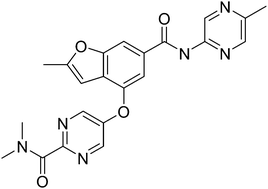
Graphical abstract: Designing glucokinase activators with reduced hypoglycemia risk: discovery of N,N-dimethyl-5-(2-methyl-6-((5-methylpyrazin-2-yl)-carbamoyl)benzofuran-4-yloxy)pyrimidine-2-carboxamide as a clinical candidate for the treatment of type 2 diabetes mellitus

PF 04937319

N,N-dimethyl-5-(2-methyl-6-((5-methylpyrazin-2-yl)-carbamoyl)benzofuran-4-yloxy)pyrimidine-2-carboxamide

MW 432.43

MF C22 H20 N6 O4
CAS 1245603-92-2
2-​Pyrimidinecarboxamid​e, N,​N-​dimethyl-​5-​[[2-​methyl-​6-​[[(5-​methyl-​2-​pyrazinyl)​amino]​carbonyl]​-​4-​benzofuranyl]​oxy]​-
N,N-Dimethyl-5-(2-methyl-6-((5-methylpyrazin-2-yl)carbamoyl)-benzofuran-4- yloxy)pyrimidine-2-carboxamide
Pfizer Inc. clinical candidate currently in Phase 2 development.
CLINICAL TRIALS

A trial to assess the safety, tolerability, pharmacokinetics, and pharmacodynamics of single doses of PF-04937319 in subjects with type 2 diabetes mellitus (NCT01044537)

Multiple dose study of PF-04937319 in patients with type 2 diabetes (NCT01272804)
Phase 2 study to evaluate safety and efficacy of investigational drug – PF04937319 in patients with type 2 diabetes (NCT01475461)


SYNTHESIS

PF 319 SYN

Glucokinase is a key regulator of glucose homeostasis and small molecule activators of this enzyme represent a promising opportunity for the treatment of Type 2 diabetes. Several glucokinase activators have advanced to clinical studies and demonstrated promising efficacy; however, many of these early candidates also revealed hypoglycemia as a key risk. In an effort to mitigate this hypoglycemia risk while maintaining the promising efficacy of this mechanism, we have investigated a series of substituted 2-methylbenzofurans as “partial activators” of the glucokinase enzyme leading to the identification ofN,N-dimethyl-5-(2-methyl-6-((5-methylpyrazin-2-yl)-carbamoyl)benzofuran-4-yloxy)pyrimidine-2-carboxamide as an early development candidate.


It is expected that an agent that activates cellular GK will facilitate glucose-dependent secretion from pancreatic beta cells, correct postprandial hyperglycemia, increase hepatic glucose utilization and potentially inhibit hepatic glucose release. Consequently, a GK activator may provide therapeutic treatment for NIDDM and associated complications, inter alia, hyperglycemia, dyslipidemia, insulin resistance syndrome, hyperinsulinemia, hypertension, and obesity. Several drugs in five major categories, each acting by different mechanisms, are available for treating hyperglycemia and subsequently, NIDDM (Moller, D. E., “New drug targets for Type 2 diabetes and the metabolic syndrome” Nature 414; 821 -827, (2001 )): (A) Insulin secretogogues, including sulphonyl-ureas (e.g., glipizide, glimepiride, glyburide) and meglitinides (e.g., nateglidine and repaglinide) enhance secretion of insulin by acting on the pancreatic beta-cells. While this therapy can decrease blood glucose level, it has limited efficacy and tolerability, causes weight gain and often induces hypoglycemia. (B) Biguanides (e.g., metformin) are thought to act primarily by decreasing hepatic glucose production. Biguanides often cause gastrointestinal disturbances and lactic acidosis, further limiting their use. (C) Inhibitors of alpha-glucosidase (e.g., acarbose) decrease intestinal glucose absorption. These agents often cause gastrointestinal disturbances. (D) Thiazolidinediones (e.g., pioglitazone, rosiglitazone) act on a specific receptor (peroxisome proliferator-activated receptor-gamma) in the liver, muscle and fat tissues. They regulate lipid metabolism subsequently enhancing the response of these tissues to the actions of insulin. Frequent use of these drugs may lead to weight gain and may induce edema and anemia. (E) Insulin is used in more severe cases, either alone or in combination with the above agents. Ideally, an effective new treatment for NIDDM would meet the following criteria: (a) it would not have significant side effects including induction of hypoglycemia; (b) it would not cause weight gain; (c) it would at least partially replace insulin by acting via mechanism(s) that are independent from the actions of insulin; (d) it would desirably be metabolically stable to allow less frequent usage; and (e) it would be usable in combination with tolerable amounts of any of the categories of drugs listed herein.

Substituted heteroaryls, particularly pyridones, have been implicated in mediating GK and may play a significant role in the treatment of NIDDM. For example, U.S. Patent publication No. 2006/0058353 and PCT publication No’s. WO2007/043638, WO2007/043638, and WO2007/117995 recite certain heterocyclic derivatives with utility for the treatment of diabetes. Although investigations are on-going, there still exists a need for a more effective and safe therapeutic treatment for diabetes, particularly NIDDM.


Designing glucokinase activators with reduced hypoglycemia risk: discovery of N,N-dimethyl-5-(2-methyl-6-((5-methylpyrazin-2-yl)-carbamoyl)benzofuran-4-yloxy)pyrimidine-2-carboxamide as a clinical candidate for the treatment of type 2 diabetes mellitus

*Corresponding authors
aPfizer Worldwide Research & Development, Eastern Point Road, Groton
E-mail: jeffrey.a.pfefferkorn@pfizer.com
Tel: +860 686 3421
Med. Chem. Commun., 2011,2, 828-839

DOI: 10.1039/C1MD00116G

http://pubs.rsc.org/en/content/articlelanding/2011/md/c1md00116g/unauth#!divAbstract

http://www.rsc.org/suppdata/md/c1/c1md00116g/c1md00116g.pdf

Glucokinase is a key regulator of glucose homeostasis and small molecule activators of this enzyme represent a promising opportunity for the treatment of Type 2 diabetes. Several glucokinase activators have advanced to clinical studies and demonstrated promising efficacy; however, many of these early candidates also revealed hypoglycemia as a key risk. In an effort to mitigate this hypoglycemia risk while maintaining the promising efficacy of this mechanism, we have investigated a series of substituted 2-methylbenzofurans as “partial activators” of the glucokinase enzyme leading to the identification ofN,N-dimethyl-5-(2-methyl-6-((5-methylpyrazin-2-yl)-carbamoyl)benzofuran-4-yloxy)pyrimidine-2-carboxamide as an early development candidate.

Graphical abstract: Designing glucokinase activators with reduced hypoglycemia risk: discovery of N,N-dimethyl-5-(2-methyl-6-((5-methylpyrazin-2-yl)-carbamoyl)benzofuran-4-yloxy)pyrimidine-2-carboxamide as a clinical candidate for the treatment of type 2 diabetes mellitus

N,N-Dimethyl-5-(2-methyl-6-((5-methylpyrazin-2-yl)carbamoyl)-benzofuran-4- yloxy)pyrimidine-2-carboxamide (28).


PAPER


http://pubs.rsc.org/en/content/articlelanding/2013/md/c2md20317k#!divAbstract


PAPER

Bioorganic & Medicinal Chemistry Letters (2013), 23(16), 4571-4578

http://www.sciencedirect.com/science/article/pii/S0960894X13007452

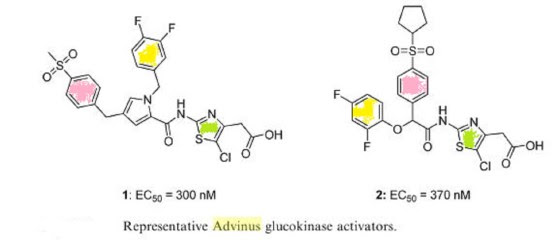
Glucokinase activators 1 and 2.

Figure 1.

Glucokinase activators 1 and 2.


PATENT

Pfizer Inc.

WO 2010103437

https://www.google.co.in/patents/WO2010103437A1?cl=en

Scheme I outlines the general procedures one could use to provide compounds of the present invention having Formula (I).

Figure imgf000011_0001
PF 319 SYN

Preparations of Starting Materials and Key Intermediates


Beebe, D.A.; Ross, T.T.; Rolph, T.P.; Pfefferkorn, J.A.; Esler, W.P.
The glucokinase activator PF-04937319 improves glycemic control in combination with exercise without causing hypoglycemia in diabetic rats
74th Annu Meet Sci Sess Am Diabetes Assoc (ADA) (June 13-17, San Francisco) 2014, Abst 1113-P


Amin, N.B.; Aggarwal, N.; Pall, D.; Paragh, G.; Denney, W.S.; Le, V.; Riggs, M.; Calle, R.A.
Two dose-ranging studies with PF-04937319, a systemic partial activator of glucokinase, as add-on therapy to metformin in adults with type 2 diabetes
Diabetes Obes Metab 2015, 17(8): 751


Study to compare single dose of three modified release formulations of PF-04937319 with immediate release material-sparing-tablet (IR MST) formulation previously studied in adults with type 2 diabetes mellitus (NCT02206607)

Read Full Post »

Clinical Laboratory Challenges

Larry H. Bernstein, MD, FCAP, Curator

LPBI


CLINICAL LABORATORY NEWS   

The Lab and CJD: Safe Handling of Infectious Prion Proteins

Body fluids from individuals with possible Creutzfeldt-Jakob disease (CJD) present distinctive safety challenges for clinical laboratories. Sporadic, iatrogenic, and familial CJD (known collectively as classic CJD), along with variant CJD, kuru, Gerstmann-Sträussler-Scheinker, and fatal familial insomnia, are prion diseases, also known as transmissible spongiform encephalopathies. Prion diseases affect the central nervous system, and from the onset of symptoms follow a typically rapid progressive neurological decline. While prion diseases are rare, it is not uncommon for the most prevalent form—sporadic CJD—to be included in the differential diagnosis of individuals presenting with rapid cognitive decline. Thus, laboratories may deal with a significant number of possible CJD cases, and should have protocols in place to process specimens, even if a confirmatory diagnosis of CJD is made in only a fraction of these cases.

The Lab’s Role in Diagnosis

Laboratory protocols for handling specimens from individuals with possible, probable, and definitive cases of CJD are important to ensure timely and appropriate patient management. When the differential includes CJD, an attempt should be made to rule-in or out other causes of rapid neurological decline. Laboratories should be prepared to process blood and cerebrospinal fluid (CSF) specimens in such cases for routine analyses.

Definitive diagnosis requires identification of prion aggregates in brain tissue, which can be achieved by immunohistochemistry, a Western blot for proteinase K-resistant prions, and/or by the presence of prion fibrils. Thus, confirmatory diagnosis is typically achieved at autopsy. A probable diagnosis of CJD is supported by elevated concentration of 14-3-3 protein in CSF (a non-specific marker of neurodegeneration), EEG, and MRI findings. Thus, the laboratory may be required to process and send CSF samples to a prion surveillance center for 14-3-3 testing, as well as blood samples for sequencing of the PRNP gene (in inherited cases).

Processing Biofluids

Laboratories should follow standard protective measures when working with biofluids potentially containing abnormally folded prions, such as donning standard personal protective equipment (PPE); avoiding or minimizing the use of sharps; using single-use disposable items; and processing specimens to minimize formation of aerosols and droplets. An additional safety consideration is the use of single-use disposal PPE; otherwise, re-usable items must be either cleaned using prion-specific decontamination methods, or destroyed.

Blood. In experimental models, infectivity has been detected in the blood; however, there have been no cases of secondary transmission of classical CJD via blood product transfusions in humans. As such, blood has been classified, on epidemiological evidence by the World Health Organization (WHO), as containing “no detectible infectivity,” which means it can be processed by routine methods. Similarly, except for CSF, all other body fluids contain no infectivity and can be processed following standard procedures.

In contrast to classic CJD, there have been four cases of suspected secondary transmission of variant CJD via transfused blood products in the United Kingdom. Variant CJD, the prion disease associated with mad cow disease, is unique in its distribution of prion aggregates outside of the central nervous system, including the lymph nodes, spleen, and tonsils. For regions where variant CJD is a concern, laboratories should consult their regulatory agencies for further guidance.

CSF. Relative to highly infectious tissues of the brain, spinal cord, and eye, infectivity has been identified less often in CSF and is considered to have “low infectivity,” along with kidney, liver, and lung tissue. Since CSF can contain infectious material, WHO has recommended that analyses not be performed on automated equipment due to challenges associated with decontamination. Laboratories should perform a risk assessment of their CSF processes, and, if deemed necessary, consider using manual methods as an alternative to automated systems.

Decontamination

The infectious agent in prion disease is unlike any other infectious pathogen encountered in the laboratory; it is formed of misfolded and aggregated prion proteins. This aggregated proteinacious material forms the infectious unit, which is incredibly resilient to degradation. Moreover, in vitro studies have demonstrated that disrupting large aggregates into smaller aggregates increases cytotoxicity. Thus, if the aim is to abolish infectivity, all aggregates must be destroyed. Disinfectant procedures used for viral, bacterial, and fungal pathogens such as alcohol, boiling, formalin, dry heat (<300°C), autoclaving at 121°C for 15 minutes, and ionizing, ultraviolet, or microwave radiation, are either ineffective or variably effective against aggregated prions.

The only means to ensure no risk of residual infectious prions is to use disposable materials. This is not always practical, as, for instance, a biosafety cabinet cannot be discarded if there is a CSF spill in the hood. Fortunately, there are several protocols considered sufficient for decontamination. For surfaces and heat-sensitive instruments, such as a biosafety cabinet, WHO recommends flooding the surface with 2N NaOH or undiluted NaClO, letting stand for 1 hour, mopping up, and rinsing with water. If the surface cannot tolerate NaOH or NaClO, thorough cleaning will remove most infectivity by dilution. Laboratories may derive some additional benefit by using one of the partially effective methods discussed previously. Non-disposable heat-resistant items preferably should be immersed in 1N NaOH, heated in a gravity displacement autoclave at 121°C for 30 min, cleaned and rinsed in water, then sterilized by routine methods. WHO has outlined several alternate decontamination methods. Using disposable cover sheets is one simple solution to avoid contaminating work surfaces and associated lengthy decontamination procedures.

With standard PPE—augmented by a few additional safety measures and prion-specific decontamination procedures—laboratories can safely manage biofluid testing in cases of prion disease.


The Microscopic World Inside Us  

Emerging Research Points to Microbiome’s Role in Health and Disease

Thousands of species of microbes—bacteria, viruses, fungi, and protozoa—inhabit every internal and external surface of the human body. Collectively, these microbes, known as the microbiome, outnumber the body’s human cells by about 10 to 1 and include more than 1,000 species of microorganisms and several million genes residing in the skin, respiratory system, urogenital, and gastrointestinal tracts. The microbiome’s complicated relationship with its human host is increasingly considered so crucial to health that researchers sometimes call it “the forgotten organ.”

Disturbances to the microbiome can arise from nutritional deficiencies, antibiotic use, and antiseptic modern life. Imbalances in the microbiome’s diverse microbial communities, which interact constantly with cells in the human body, may contribute to chronic health conditions, including diabetes, asthma and allergies, obesity and the metabolic syndrome, digestive disorders including irritable bowel syndrome (IBS), and autoimmune disorders like multiple sclerosis and rheumatoid arthritis, research shows.

While study of the microbiome is a growing research enterprise that has attracted enthusiastic media attention and venture capital, its findings are largely preliminary. But some laboratorians are already developing a greater appreciation for the microbiome’s contributions to human biochemistry and are considering a future in which they expect to measure changes in the microbiome to monitor disease and inform clinical practice.

Pivot Toward the Microbiome

Following the National Institutes of Health (NIH) Human Genome Project, many scientists noted the considerable genetic signal from microbes in the body and the existence of technology to analyze these microorganisms. That realization led NIH to establish the Human Microbiome Project in 2007, said Lita Proctor, PhD, its program director. In the project’s first phase, researchers studied healthy adults to produce a reference set of microbiomes and a resource of metagenomic sequences of bacteria in the airways, skin, oral cavities, and the gastrointestinal and vaginal tracts, plus a catalog of microbial genome sequences of reference strains. Researchers also evaluated specific diseases associated with disturbances in the microbiome, including gastrointestinal diseases such as Crohn’s disease, ulcerative colitis, IBS, and obesity, as well as urogenital conditions, those that involve the reproductive system, and skin diseases like eczema, psoriasis, and acne.

Phase 1 studies determined the composition of many parts of the microbiome, but did not define how that composition affects health or specific disease. The project’s second phase aims to “answer the question of what microbes actually do,” explained Proctor. Researchers are now examining properties of the microbiome including gene expression, protein, and human and microbial metabolite profiles in studies of pregnant women at risk for preterm birth, the gut hormones of patients at risk for IBS, and nasal microbiomes of patients at risk for type 2 diabetes.

Promising Lines of Research

Cystic fibrosis and microbiology investigator Michael Surette, PhD, sees promising microbiome research not just in terms of evidence of its effects on specific diseases, but also in what drives changes in the microbiome. Surette is Canada research chair in interdisciplinary microbiome research in the Farncombe Family Digestive Health Research Institute at McMaster University
in Hamilton, Ontario.

One type of study on factors driving microbiome change examines how alterations in composition and imbalances in individual patients relate to improving or worsening disease. “IBS, cystic fibrosis, and chronic obstructive pulmonary disease all have periods of instability or exacerbation,” he noted. Surette hopes that one day, tests will provide clinicians the ability to monitor changes in microbial composition over time and even predict when a patient’s condition is about to deteriorate. Monitoring perturbations to the gut microbiome might also help minimize collateral damage to the microbiome during aggressive antibiotic therapy for hospitalized patients, he added.

Monitoring changes to the microbiome also might be helpful for “culture negative” patients, who now may receive multiple, unsuccessful courses of different antibiotics that drive antibiotic resistance. Frustration with standard clinical biology diagnosis of lung infections in cystic fibrosis patients first sparked Surette’s investigations into the microbiome. He hopes that future tests involving the microbiome might also help asthma patients with neutrophilia, community-acquired pneumonia patients who harbor complex microbial lung communities lacking obvious pathogens, and hospitalized patients with pneumonia or sepsis. He envisions microbiome testing that would look for short-term changes indicating whether or not a drug is effective.

Companion Diagnostics

Daniel Peterson, MD, PhD, an assistant professor of pathology at Johns Hopkins University School of Medicine in Baltimore, believes the future of clinical testing involving the microbiome lies in companion diagnostics for novel treatments, and points to companies that are already developing and marketing tests that will require such assays.

Examples of microbiome-focused enterprises abound, including Genetic Analysis, based in Oslo, Norway, with its high-throughput test that uses 54 probes targeted to specific bacteria to measure intestinal gut flora imbalances in inflammatory bowel disease and irritable bowel syndrome patients. Paris, France-based Enterome is developing both novel drugs and companion diagnostics for microbiome-related diseases such as IBS and some metabolic diseases. Second Genome, based in South San Francisco, has developed an experimental drug, SGM-1019, that the company says blocks damaging activity of the microbiome in the intestine. Cambridge, Massachusetts-based Seres Therapeutics has received Food and Drug Administration orphan drug designation for SER-109, an oral therapeutic intended to correct microbial imbalances to prevent recurrent Clostridium difficile infection in adults.

One promising clinical use of the microbiome is fecal transplantation, which both prospective and retrospective studies have shown to be effective in patients with C. difficile infections who do not respond to front-line therapies, said James Versalovic, MD, PhD, director of Texas Children’s Hospital Microbiome Center and professor of pathology at Baylor College of Medicine in Houston. “Fecal transplants and other microbiome replacement strategies can radically change the composition of the microbiome in hours to days,” he explained.

But NIH’s Proctor discourages too much enthusiasm about fecal transplant. “Natural products like stool can have [side] effects,” she pointed out. “The [microbiome research] field needs to mature and we need to verify outcomes before anything becomes routine.”

Hurdles for Lab Testing

While he is hopeful that labs someday will use the microbiome to produce clinically useful information, Surette pointed to several problems that must be solved beforehand. First, molecular methods commonly used right now should be more quantitative and accurate. Additionally, research on the microbiome encompasses a wide variety of protocols, some of which are better at extracting particular types of bacteria and therefore can give biased views of communities living in the body. Also, tests may need to distinguish between dead and live microbes. Another hurdle is that labs using varied bioinfomatic methods may produce different results from the same sample, a problem that Surette sees as ripe for a solution from clinical laboratorians, who have expertise in standardizing robust protocols and in automating tests.

One way laboratorians can prepare for future, routine microbiome testing is to expand their notion of clinical chemistry to include both microbial and human biochemistry. “The line between microbiome science and clinical science is blurring,” said Versalovic. “When developing future assays to detect biochemical changes in disease states, we must consider the contributions of microbial metabolites and proteins and how to tailor tests to detect them.” In the future, clinical labs may test for uniquely microbial metabolites in various disease states, he predicted.


Automated Review of Mass Spectrometry Results  

Can We Achieve Autoverification?

Author: Katherine Alexander and Andrea R. Terrell, PhD  // Date: NOV.1.2015  // Source:Clinical Laboratory News

https://www.aacc.org/publications/cln/articles/2015/november/automated-review-of-mass-spectrometry-results-can-we-achieve-autoverification


Paralleling the upswing in prescription drug misuse, clinical laboratories are receiving more requests for mass spectrometry (MS) testing as physicians rely on its specificity to monitor patient compliance with prescription regimens. However, as volume has increased, reimbursement has declined, forcing toxicology laboratories both to increase capacity and lower their operational costs—without sacrificing quality or turnaround time. Now, new solutions are available enabling laboratories to bring automation to MS testing and helping them with the growing demand for toxicology and other testing.

What is the typical MS workflow?

A typical workflow includes a long list of manual steps. By the time a sample is loaded onto the mass spectrometer, it has been collected, logged into the lab information management system (LIMS), and prepared for analysis using a variety of wet chemistry techniques.

Most commercial clinical laboratories receive enough samples for MS analysis to batch analyze those samples. A batch consists of a calibrator(s), quality control (QC) samples, and patient/donor samples. Historically, the method would be selected (i.e. “analysis of opiates”), sample identification information would be entered manually into the MS software, and the instrument would begin analyzing each sample. Upon successful completion of the batch, the MS operator would view all of the analytical data, ensure the QC results were acceptable, and review each patient/donor specimen, looking at characteristics such as peak shape, ion ratios, retention time, and calculated concentration.

The operator would then post acceptable results into the LIMS manually or through an interface, and unacceptable results would be rescheduled or dealt with according to lab-specific protocols. In our laboratory we perform a final certification step for quality assurance by reviewing all information about the batch again, prior to releasing results for final reporting through the LIMS.

What problems are associated with this workflow?

The workflow described above results in too many highly trained chemists performing manual data entry and reviewing perfectly acceptable analytical results. Lab managers would prefer that MS operators and certifying scientists focus on troubleshooting problem samples rather than reviewing mounds of good data. Not only is the current process inefficient, it is mundane work prone to user errors. This risks fatigue, disengagement, and complacency by our highly skilled scientists.

Importantly, manual processes also take time. In most clinical lab environments, turnaround time is critical for patient care and industry competitiveness. Lab directors and managers are looking for solutions to automate mundane, error-prone tasks to save time and costs, reduce staff burnout, and maintain high levels of quality.

How can software automate data transfer from MS systems to LIMS?

Automation is not a new concept in the clinical lab. Labs have automated processes in shipping and receiving, sample preparation, liquid handling, and data delivery to the end user. As more labs implement MS, companies have begun to develop special software to automate data analysis and review workflows.

In July 2011, AIT Labs incorporated ASCENT into our workflow, eliminating the initial manual peak review step. ASCENT is an algorithm-based peak picking and data review system designed specifically for chromatographic data. The software employs robust statistical and modeling approaches to the raw instrument data to present the true signal, which often can be obscured by noise or matrix components.

The system also uses an exponentially modified Gaussian (EMG) equation to apply a best-fit model to integrated peaks through what is often a noisy signal. In our experience, applying the EMG results in cleaner data from what might appear to be poor chromatography ultimately allows us to reduce the number of samples we might otherwise rerun.

How do you validate the quality of results?

We’ve developed a robust validation protocol to ensure that results are, at minimum, equivalent to results from our manual review. We begin by building the assay in ASCENT, entering assay-specific information from our internal standard operating procedure (SOP). Once the assay is configured, validation proceeds with parallel batch processing to compare results between software-reviewed data and staff-reviewed data. For new implementations we run eight to nine batches of 30–40 samples each; when we are modifying or upgrading an existing implementation we run a smaller number of batches. The parallel batches should contain multiple positive and negative results for all analytes in the method, preferably spanning the analytical measurement range of the assay.

The next step is to compare the results and calculate the percent difference between the data review methods. We require that two-thirds of the automated results fall within 20% of the manually reviewed result. In addition to validating patient sample correlation, we also test numerous quality assurance rules that should initiate a flag for further review.

What are the biggest challenges during implementation and continual improvement initiatives?

On the technological side, our largest hurdle was loading the sequence files into ASCENT. We had created an in-house mechanism for our chemists to upload the 96-well plate map for their batch into the MS software. We had some difficulty transferring this information to ASCENT, but once we resolved this issue, the technical workflow proceeded fairly smoothly.

The greater challenge was changing our employees’ mindset from one of fear that automation would displace them, to a realization that learning this new technology would actually make them more valuable. Automating a non-mechanical process can be a difficult concept for hands-on scientists, so managers must be patient and help their employees understand that this kind of technology leverages the best attributes of software and people to create a powerful partnership.

We recommend that labs considering automated data analysis engage staff in the validation and implementation to spread the workload and the knowledge. As is true with most technology, it is best not to rely on just one or two super users. We also found it critical to add supervisor level controls on data file manipulation, such as removing a sample that wasn’t run from the sequence table. This can prevent inadvertent deletion of a file, requiring reinjection of the entire batch!


Understanding Fibroblast Growth Factor 23

Author: Damien Gruson, PhD  // Date: OCT.1.2015  // Source: Clinical Laboratory News

https://www.aacc.org/publications/cln/articles/2015/october/understanding-fibroblast-growth-factor-23

What is the relationship of FGF-23 to heart failure?

A Heart failure (HF) is an increasingly common syndrome associated with high morbidity, elevated hospital readmission rates, and high mortality. Improving diagnosis, prognosis, and treatment of HF requires a better understanding of its different sub-phenotypes. As researchers gained a comprehensive understanding of neurohormonal activation—one of the hallmarks of HF—they discovered several biomarkers, including natriuretic peptides, which now are playing an important role in sub-phenotyping HF and in driving more personalized management of this chronic condition.

Like the natriuretic peptides, fibroblast growth factor 23 (FGF-23) could become important in risk-stratifying and managing HF patients. Produced by osteocytes, FGF-23 is a key regulator of phosphorus homeostasis. It binds to renal and parathyroid FGF-Klotho receptor heterodimers, resulting in phosphate excretion, decreased 1-α-hydroxylation of 25-hydroxyvitamin D, and decreased parathyroid hormone (PTH) secretion. The relationship to PTH is important because impaired homeostasis of cations and decreased glomerular filtration rate might contribute to the rise of FGF-23. The amino-terminal portion of FGF-23 (amino acids 1-24) serves as a signal peptide allowing secretion into the blood, and the carboxyl-terminal portion (aa 180-251) participates in its biological action.

How might FGF-23 improve HF risk assessment?

Studies have shown that FGF-23 is related to the risk of cardiovascular diseases and mortality. It was first demonstrated that FGF-23 levels were independently associated with left ventricular mass index and hypertrophy as well as mortality in patients with chronic kidney disease (CKD). FGF-23 also has been associated with left ventricular dysfunction and atrial fibrillation in coronary artery disease subjects, even in the absence of impaired renal function.

FGF-23 and FGF receptors are both expressed in the myocardium. It is possible that FGF-23 has direct effects on the heart and participates in the physiopathology of cardiovascular diseases and HF. Experiments have shown that for in vitro cultured rat cardiomyocytes, FGF-23 stimulates pathological hypertrophy by activating the calcineurin-NFAT pathway—and in wild-type mice—the intra-myocardial or intravenous injection of FGF-23 resulted in left ventricular hypertrophy. As such, FGF-23 appears to be a potential stimulus of myocardial hypertrophy, and increased levels may contribute to the worsening of heart failure and long-term cardiovascular death.

Researchers have documented that HF patients have elevated FGF-23 circulating levels. They have also found a significant correlation between plasma levels of FGF-23 and B-type natriuretic peptide, a biomarker related to ventricular stretch and cardiac hypertrophy, in patients with left ventricular hypertrophy. As such, measuring FGF-23 levels might be a useful tool to predict long-term adverse cardiovascular events in HF patients.

Interestingly, researchers have documented a significant relationship between FGF-23 and PTH in both CKD and HF patients. As PTH stimulates FGF-23 expression, it could be that in HF patients, increased PTH levels increase the bone expression of FGF-23, which enhances its effects on the heart.


The Past, Present, and Future of Western Blotting in the Clinical Laboratory

Author: Curtis Balmer, PhD  // Date: OCT.1.2015  // Source: Clinical Laboratory News

https://www.aacc.org/publications/cln/articles/2015/october/the-past-present-and-future-of-western-blotting-in-the-clinical-laboratory

Much of the discussion about Western blotting centers around its performance as a biological research tool. This isn’t surprising. Since its introduction in the late 1970s, the Western blot has been adopted by biology labs of virtually every stripe, and become one of the most widely used techniques in the research armamentarium. However, Western blotting has also been employed in clinical laboratories to aid in the diagnosis of various diseases and disorders—an equally important and valuable application. Yet there has been relatively little discussion of its use in this context, or of how advances in Western blotting might affect its future clinical use.

Highlighting the clinical value of Western blotting, Stanley Naides, MD, medical director of Immunology at Quest Diagnostics observed that, “Western blotting has been a very powerful tool in the laboratory and for clinical diagnosis. It’s one of many various methods that the laboratorian brings to aid the clinician in the diagnosis of disease, and the selection and monitoring of therapy.” Indeed, Western blotting has been used at one time or the other to aid in the diagnosis of infectious diseases including hepatitis C (HCV), HIV, Lyme disease, and syphilis, as well as autoimmune disorders such as paraneoplastic disease and myositis conditions.

However, Naides was quick to point out that the choice of assays to use clinically is based on their demonstrated sensitivity and performance, and that the search for something better is never-ending. “We’re constantly looking for methods that improve detection of our target [protein],” Naides said. “There have been a number of instances where we’ve moved away from Western blotting because another method proves to be more sensitive.” But this search can also lead back to Western blotting. “We’ve gone away from other methods because there’s been a Western blot that’s been developed that’s more sensitive and specific. There’s that constant movement between methods as new tests are developed.”

In recent years, this quest has been leading clinical laboratories away from Western blotting toward more sensitive and specific diagnostic assays, at least for some diseases. Using confirmatory diagnosis of HCV infection as an example, Sai Patibandla, PhD, director of the immunoassay group at Siemens Healthcare Diagnostics, explained that movement away from Western blotting for confirmatory diagnosis of HCV infection began with a technical modification called Recombinant Immunoblotting Assay (RIBA). RIBA streamlines the conventional Western blot protocol by spotting recombinant antigen onto strips which are used to screen patient samples for antibodies against HCV. This approach eliminates the need to separate proteins and transfer them onto a membrane.

The RIBA HCV assay was initially manufactured by Chiron Corporation (acquired by Novartics Vaccines and Diagnostics in 2006). It received Food and Drug Administration (FDA) approval in 1999, and was marketed as Chiron RIBA HCV 3.0 Strip Immunoblot Assay. Patibandla explained that, at the time, the Chiron assay “…was the only FDA-approved confirmatory testing for HCV.” In 2013 the assay was discontinued and withdrawn from the market due to reports that it was producing false-positive results.

Since then, clinical laboratories have continued to move away from Western blot-based assays for confirmation of HCV in favor of the more sensitive technique of nucleic acid testing (NAT). “The migration is toward NAT for confirmation of HCV [diagnosis]. We don’t use immunoblots anymore. We don’t even have a blot now to confirm HCV,” Patibandla said.

Confirming HIV infection has followed a similar path. Indeed, in 2014 the Centers for Disease Control and Prevention issued updated recommendations for HIV testing that, in part, replaced Western blotting with NAT. This change was in response to the recognition that the HIV-1 Western blot assay was producing false-negative or indeterminable results early in the course of HIV infection.

At this juncture it is difficult to predict if this trend away from Western blotting in clinical laboratories will continue. One thing that is certain, however, is that clinicians and laboratorians are infinitely pragmatic, and will eagerly replace current techniques with ones shown to be more sensitive, specific, and effective. This raises the question of whether any of the many efforts currently underway to improve Western blotting will produce an assay that exceeds the sensitivity of currently employed techniques such as NAT.

Some of the most exciting and groundbreaking work in this area is being done by Amy Herr, PhD, a professor of bioengineering at University of California, Berkeley. Herr’s group has taken on some of the most challenging limitations of Western blotting, and is developing techniques that could revolutionize the assay. For example, the Western blot is semi-quantitative at best. This weakness dramatically limits the types of answers it can provide about changes in protein concentrations under various conditions.

To make Western blotting more quantitative, Herr’s group is, among other things, identifying losses of protein sample mass during the assay protocol. About this, Herr explains that the conventional Western blot is an “open system” that involves lots of handling of assay materials, buffers, and reagents that makes it difficult to account for protein losses. Or, as Kevin Lowitz, a senior product manager at Thermo Fisher Scientific, described it, “Western blot is a [simple] technique, but a really laborious one, and there are just so many steps and so many opportunities to mess it up.”

Herr’s approach is to reduce the open aspects of Western blot. “We’ve been developing these more closed systems that allow us at each stage of the assay to account for [protein mass] losses. We can’t do this exactly for every target of interest, but it gives us a really good handle [on protein mass losses],” she said. One of the major mechanisms Herr’s lab is using to accomplish this is to secure proteins to the blot matrix with covalent bonding rather than with the much weaker hydrophobic interactions that typically keep the proteins in place on the membrane.

Herr’s group also has been developing microfluidic platforms that allow Western blotting to be done on single cells, “In our system we’re doing thousands of independent Westerns on single cells in four hours. And, hopefully, we’ll cut that down to one hour over the next couple years.”

Other exciting modifications that stand to dramatically increase the sensitivity, quantitation, and through-put of Western blotting also are being developed and explored. For example, the use of capillary electrophoresis—in which proteins are conveyed through a small electrolyte-filled tube and separated according to size and charge before being dropped onto a blotting membrane—dramatically reduces the amount of protein required for Western blot analysis, and thereby allows Westerns to be run on proteins from rare cells or for which quantities of sample are extremely limited.

Jillian Silva, PhD, an associate specialist at the University of California, San Francisco Helen Diller Family Comprehensive Cancer Center, explained that advances in detection are also extending the capabilities of Western blotting. “With the advent of fluorescence detection we have a way to quantitate Westerns, and it is now more quantitative than it’s ever been,” said Silva.

Whether or not these advances produce an assay that is adopted by clinical laboratories remains to be seen. The emphasis on Western blotting as a research rather than a clinical tool may bias advances in favor of the needs and priorities of researchers rather than clinicians, and as Patibandla pointed out, “In the research world Western blotting has a certain purpose. [Researchers] are always coming up with new things, and are trying to nail down new proteins, so you cannot take Western blotting away.” In contrast, she suggested that for now, clinical uses of Western blotting remain “limited.”


Adapting Next Generation Technologies to Clinical Molecular Oncology Service

Author: Ronald Carter, PhD, DVM  // Date: OCT.1.2015  // Source: Clinical Laboratory News

https://www.aacc.org/publications/cln/articles/2015/october/adapting-next-generation-technologies-to-clinical-molecular-oncology-service

Next generation technologies (NGT) deliver huge improvements in cost efficiency, accuracy, robustness, and in the amount of information they provide. Microarrays, high-throughput sequencing platforms, digital droplet PCR, and other technologies all offer unique combinations of desirable performance.

As stronger evidence of genetic testing’s clinical utility influences patterns of patient care, demand for NGT testing is increasing. This presents several challenges to clinical laboratories, including increased urgency, clinical importance, and breadth of application in molecular oncology, as well as more integration of genetic tests into synoptic reporting. Laboratories need to add NGT-based protocols while still providing old tests, and the pace of change is increasing.What follows is one viewpoint on the major challenges in adopting NGTs into diagnostic molecular oncology service.

Choosing a Platform

Instrument selection is a critical decision that has to align with intended test applications, sequencing chemistries, and analytical software. Although multiple platforms are available, a mainstream standard has not emerged. Depending on their goals, laboratories might set up NGTs for improved accuracy of mutation detection, massively higher sequencing capacity per test, massively more targets combined in one test (multiplexing), greater range in sequencing read length, much lower cost per base pair assessed, and economy of specimen volume.

When high-throughput instruments first made their appearance, laboratories paid more attention to the accuracy of base-reading: Less accurate sequencing meant more data cleaning and resequencing (1). Now, new instrument designs have narrowed the differences, and test chemistry can have a comparatively large impact on analytical accuracy (Figure 1). The robustness of technical performance can also vary significantly depending upon specimen type. For example, LifeTechnologies’ sequencing platforms appear to be comparatively more tolerant of low DNA quality and concentration, which is an important consideration for fixed and processed tissues.

https://www.aacc.org/~/media/images/cln/articles/2015/october/carter_fig1_cln_oct15_ed.jpg

Figure 1 Comparison of Sequencing Chemistries

Sequence pile-ups of the same target sequence (2 large genes), all performed on the same analytical instrument. Results from 4 different chemistries, as designed and supplied by reagent manufacturers prior to optimization in the laboratory. Red lines represent limits of exons. Height of blue columns proportional to depth of coverage. In this case, the intent of the test design was to provide high depth of coverage so that reflex Sanger sequencing would not be necessary. Courtesy B. Sadikovic, U. of Western Ontario.


In addition, batching, robotics, workload volume patterns, maintenance contracts, software licenses, and platform lifetime affect the cost per analyte and per specimen considerably. Royalties and reagent contracts also factor into the cost of operating NGT: In some applications, fees for intellectual property can represent more than 50% of the bench cost of performing a given test, and increase substantially without warning.

Laboratories must also deal with the problem of obsolescence. Investing in a new platform brings the angst of knowing that better machines and chemistries are just around the corner. Laboratories are buying bigger pieces of equipment with shorter service lives. Before NGTs, major instruments could confidently be expected to remain current for at least 6 to 8 years. Now, a major instrument is obsolete much sooner, often within 2 to 3 years. This means that keeping it in service might cost more than investing in a new platform. Lease-purchase arrangements help mitigate year-to-year fluctuations in capital equipment costs, and maximize the value of old equipment at resale.

One Size Still Does Not Fit All

Laboratories face numerous technical considerations to optimize sequencing protocols, but the test has to be matched to the performance criteria needed for the clinical indication (2). For example, measuring response to treatment depends first upon the diagnostic recognition of mutation(s) in the tumor clone; the marker(s) then have to be quantifiable and indicative of tumor volume throughout the course of disease (Table 1).

As a result, diagnostic tests need to cover many different potential mutations, yet accurately identify any clinically relevant mutations actually present. On the other hand, tests for residual disease need to provide standardized, sensitive, and accurate quantification of a selected marker mutation against the normal background. A diagnostic panel might need 1% to 3% sensitivity across many different mutations. But quantifying early response to induction—and later assessment of minimal residual disease—needs a test that is reliably accurate to the 10-4 or 10-5 range for a specific analyte.

Covering all types of mutations in one diagnostic test is not yet possible. For example, subtyping of acute myeloid leukemia is both old school (karyotype, fluorescent in situ hybridization, and/or PCR-based or array-based testing for fusion rearrangements, deletions, and segmental gains) and new school (NGT-based panel testing for molecular mutations).

Chemistries that cover both structural variants and copy number variants are not yet in general use, but the advantages of NGTs compared to traditional methods are becoming clearer, such as in colorectal cancer (3). Researchers are also using cell-free DNA (cfDNA) to quantify residual disease and detect resistance mutations (4). Once a clinically significant clone is identified, enrichment techniques help enable extremely sensitive quantification of residual disease (5).

Validation and Quality Assurance

Beyond choosing a platform, two distinct challenges arise in bringing NGTs into the lab. The first is assembling the resources for validation and quality assurance. The second is keeping tests up-to-date as new analytes are needed. Even if a given test chemistry has the flexibility to add analytes without revalidating the entire panel, keeping up with clinical advances is a constant priority.

Due to their throughput and multiplexing capacities, NGT platforms typically require considerable upfront investment to adopt, and training staff to perform testing takes even more time. Proper validation is harder to document: Assembling positive controls, documenting test performance criteria, developing quality assurance protocols, and conducting proficiency testing are all demanding. Labs meet these challenges in different ways. Laboratory-developed tests (LDTs) allow self-determined choice in design, innovation, and control of the test protocol, but can be very expensive to set up.

Food and Drug Administration (FDA)-approved methods are attractive but not always an option. More FDA-approved methods will be marketed, but FDA approval itself brings other trade-offs. There is a cost premium compared to LDTs, and the test methodologies are locked down and not modifiable. This is particularly frustrating for NGTs, which have the specific attraction of extensive multiplexing capacity and accommodating new analytes.

IT and the Evolution of Molecular Oncology Reporting Standards

The options for information technology (IT) pipelines for NGTs are improving rapidly. At the same time, recent studies still show significant inconsistencies and lack of reproducibility when it comes to interpreting variants in array comparative genomic hybridization, panel testing, tumor expression profiling, and tumor genome sequencing. It can be difficult to duplicate published performances in clinical studies because of a lack of sufficient information about the protocol (chemistry) and software. Building bioinformatics capacity is a key requirement, yet skilled people are in short supply and the qualifications needed to work as a bioinformatician in a clinical service are not yet clearly defined.

Tumor biology brings another level of complexity. Bioinformatic analysis must distinguish tumor-specific­ variants from genomic variants. Sequencing of paired normal tissue is often performed as a control, but virtual normal controls may have intriguing advantages (6). One of the biggest challenges is to reproducibly interpret the clinical significance of interactions between different mutations, even with commonly known, well-defined mutations (7). For multiple analyte panels, such as predictive testing for breast cancer, only the performance of the whole panel in a population of patients can be compared; individual patients may be scored into different risk categories by different tests, all for the same test indication.

In large scale sequencing of tumor genomes, which types of mutations are most informative in detecting, quantifying, and predicting the behavior of the tumor over time? The amount and complexity of mutation varies considerably across different tumor types, and while some mutations are more common, stable, and clinically informative than others, the utility of a given tumor marker varies in different clinical situations. And, for a given tumor, treatment effect and metastasis leads to retesting for changes in drug sensitivities.

These complexities mean that IT must be designed into the process from the beginning. Like robotics, IT represents a major ancillary decision. One approach many labs choose is licensed technologies with shared databases that are updated in real time. These are attractive, despite their cost and licensing fees. New tests that incorporate proprietary IT with NGT platforms link the genetic signatures of tumors to clinically significant considerations like tumor classification, recommended methodologies for monitoring response, predicted drug sensitivities, eligible clinical trials, and prognostic classifications. In-house development of such solutions will be difficult, so licensing platforms from commercial partners is more likely to be the norm.

The Commercial Value of Health Records and Test Data

The future of cancer management likely rests on large-scale databases that link hereditary and somatic tumor testing with clinical outcomes. Multiple centers have such large studies underway, and data extraction and analysis is providing increasingly refined interpretations of clinical significance.

Extracting health outcomes to correlate with molecular test results is commercially valuable, as the pharmaceutical, insurance, and healthcare sectors focus on companion diagnostics, precision medicine, and evidence-based health technology assessment. Laboratories that can develop tests based on large-scale integration of test results to clinical utility will have an advantage.

NGTs do offer opportunities for net reductions in the cost of healthcare. But the lag between availability of a test and peer-evaluated demon­stration of clinical utility can be considerable. Technical developments arise faster than evidence of clinical utility. For example, immuno­histochemistry, estrogen receptor/progesterone receptor status, HER2/neu, and histology are still the major pathological criteria for prognostic evaluation of breast cancer at diagnosis, even though multiple analyte tumor profiling has been described for more than 15 years. Healthcare systems need a more concerted assessment of clinical utility if they are to take advantage of the promises of NGTs in cancer care.

Disruptive Advances

Without a doubt, “disruptive” is an appropriate buzzword in molecular oncology, and new technical advances are about to change how, where, and for whom testing is performed.

• Predictive Testing

Besides cost per analyte, one of the drivers for taking up new technologies is that they enable multiplexing many more analytes with less biopsy material. Single-analyte sequential testing for epidermal growth factor receptor (EGFR), anaplastic lymphoma kinase, and other targets on small biopsies is not sustainable when many more analytes are needed, and even now, a significant proportion of test requests cannot be completed due to lack of suitable biopsy material. Large panels incorporating all the mutations needed to cover multiple tumor types are replacing individual tests in companion diagnostics.

• Cell-Free Tumor DNA

Challenges of cfDNA include standardizing the collection and processing methodologies, timing sampling to minimize the effect of therapeutic toxicity on analytical accuracy, and identifying the most informative sample (DNA, RNA, or protein). But for more and more tumor types, it will be possible to differentiate benign versus malignant lesions, perform molecular subtyping, predict response, monitor treatment, or screen for early detection—all without a surgical biopsy.

cfDNA technologies can also be integrated into core laboratory instrumentation. For example, blood-based EGFR analysis for lung cancer is being developed on the Roche cobas 4800 platform, which will be a significant change from the current standard of testing based upon single tests of DNA extracted from formalin-fixed, paraffin-embedded sections selected by a pathologist (8).

• Whole Genome and Whole Exome Sequencing

Whole genome and whole exome tumor sequencing approaches provide a wealth of biologically important information, and will replace individual or multiple gene test panels as the technical cost of sequencing declines and interpretive accuracy improves (9). Laboratories can apply informatics selectively or broadly to extract much more information at relatively little increase in cost, and the interpretation of individual analytes will be improved by the context of the whole sequence.

• Minimal Residual Disease Testing

Massive resequencing and enrichment techniques can be used to detect minimal residual disease, and will provide an alternative to flow cytometry as costs decline. The challenge is to develop robust analytical platforms that can reliably produce results in a high proportion of patients with a given tumor type, despite using post-treatment specimens with therapy-induced degradation, and a very low proportion of target (tumor) sequence to benign background sequence.

The tumor markers should remain informative for the burden of disease despite clonal evolution over the course of multiple samples taken during progression of the clinical course and treatment. Quantification needs to be accurate and sensitive down to the 10-5 range, and cost competitive with flow cytometry.

• Point-of-Care Test Methodologies

Small, rapid, cheap, and single use point-of-care (POC) sequencing devices are coming. Some can multiplex with analytical times as short as 20 minutes. Accurate and timely testing will be possible in places like pharmacies, oncology clinics, patient service centers, and outreach programs. Whether physicians will trust and act on POC results alone, or will require confirmation by traditional laboratory-based testing, remains to be seen. However, in the simplest type of application, such as a patient known to have a particular mutation, the advantages of POC-based testing to quantify residual tumor burden are clear.

Conclusion

Molecular oncology is moving rapidly from an esoteric niche of diagnostics to a mainstream, required component of integrated clinical laboratory services. While NGTs are markedly reducing the cost per analyte and per specimen, and will certainly broaden the scope and volume of testing performed, the resources required to choose, install, and validate these new technologies are daunting for smaller labs. More rapid obsolescence and increased regulatory scrutiny for LDTs also present significant challenges. Aligning test capacity with approved clinical indications will require careful and constant attention to ensure competitiveness.

References

1. Liu L, Li Y, Li S, et al. Comparison of next-generation sequencing systems. J Biomed Biotechnol 2012; doi:10.1155/2012/251364.

2. Brownstein CA, Beggs AH, Homer N, et al. An international effort towards developing standards for best practices in analysis, interpretation and reporting of clinical genome sequencing results in the CLARITY Challenge. Genome Biol 2014;15:R53.

3. Haley L, Tseng LH, Zheng G, et al. Performance characteristics of next-generation sequencing in clinical mutation detection of colorectal ­cancers. [Epub ahead of print] Modern Pathol July 31, 2015 as doi:10.1038/modpathol.2015.86.

4. Butler TM, Johnson-Camacho K, Peto M, et al. Exome sequencing of cell-free DNA from metastatic cancer patients identifies clinically actionable mutations distinct from primary ­disease. PLoS One 2015;10:e0136407.

5. Castellanos-Rizaldos E, Milbury CA, Guha M, et al. COLD-PCR enriches low-level variant DNA sequences and increases the sensitivity of genetic testing. Methods Mol Biol 2014;1102:623–39.

6. Hiltemann S, Jenster G, Trapman J, et al. Discriminating somatic and germline mutations in tumor DNA samples without matching normals. Genome Res 2015;25:1382–90.

7. Lammers PE, Lovly CM, Horn L. A patient with metastatic lung adenocarcinoma harboring concurrent EGFR L858R, EGFR germline T790M, and PIK3CA mutations: The challenge of interpreting results of comprehensive mutational testing in lung cancer. J Natl Compr Canc Netw 2015;12:6–11.

8. Weber B, Meldgaard P, Hager H, et al. Detection of EGFR mutations in plasma and biopsies from non-small cell lung cancer patients by allele-specific PCR assays. BMC Cancer 2014;14:294.

9. Vogelstein B, Papadopoulos N, Velculescu VE, et al. Cancer genome landscapes. Science 2013;339:1546–58.

10. Heitzer E, Auer M, Gasch C, et al. Complex tumor genomes inferred from single circulating tumor cells by array-CGH and next-generation sequencing. Cancer Res 2013;73:2965–75.

11. Healy B. BRCA genes — Bookmaking, fortunetelling, and medical care. N Engl J Med 1997;336:1448–9.


Read Full Post »

Blood-Gut Barrier

Larry H Bernstein, MD, FCAP, Curator

PLBI


Blood-Gut Barrier

Scientists identify a barrier in mice between the intestine and its blood supply, and suggest how Salmonella sneaks through it.

By Ruth Williams | November 12, 2015

Salmonella invading an immune cell   WIKIMEDIA, NIAID

http://www.the-scientist.com/images/News/Nov2015/Salmonella.jpg

A person’s gut is full of microbes—some beneficial, some not. Friend or foe, these bacteria must be prevented from accessing the rest of the body, where they could cause harm. In a paper published in Science today (November 12), researchers describe a barrier in mice between the intestine and the adjacent blood vessels that restricts the size of particles that can pass through. The team also shows, however, that Salmonella bacteria can suppress a chemical pathway critical to barrier function, enabling the bugs to invade.

“First of all, [the authors] are really defining and showing the existence of this barrier and in what way it resembles the brain [barrier],” said immunologist Bana Jabri of the University of Chicago who was not involved in the study. “Then they show a pathogen that apparently has evolved to modulate that barrier to its own favor.”

The intestine is lined with epithelial cells covered in mucus. These cells provide both a physical barrier against microbial intrusion—they are tightly packed together—as well as biochemical one—they secrete antimicrobial proteins. In addition, the mucus itself “acts like a rip tide,” continuously washing the bacteria away from the epithelial shore, said gastroenterologist and immunologist Andrew Macpherson of the University of Bern in Switzerland who also did not participate in the work.

Aside from keeping the bacteria at bay, the epithelial cells’ job is to absorb digested food molecules. These nutrients enter the blood vessels adjacent to the intestine and ultimately reach the liver via the hepatic portal vein. What puzzled Maria Rescigno of the European Institute of Oncology in Milan, however, was why commensal bacteria, if they did beat the odds and enter the body, tended to end up in the nearby lymph nodes but were not found in the liver.

“Why would bacteria get to the lymphatics but not into the blood vessels which are very close to the epithelium?” she asked. And she began wondering: “is there something else other than just the epithelial barrier?”

For clues, Rescigno and her colleagues turned to probably the best-characterized barrier in the body: the blood-brain barrier. “We wondered whether the endothelium of the blood vessels [in the gut] would resemble the endothelium of the blood vessels in the brain,” she said.

There were indeed similarities. Endothelial cells of the blood-brain barrier have characteristically strong connections, called tight junctions and adherens junctions, and are surrounded by astrocytes—essential for barrier function. Endothelial cells of mouse intestinal blood vessels on the other hand had their own distinctive tight and adherens junctions, and were surrounded by enteric glial cells, “similar to the astrocytes” said Rescigno. These features also appeared to be present in human intestinal blood vessels, Rescigno’s team showed.

Furthermore the intestinal blood vessels of mice exhibited barrier function: while 4 kilodalton particles injected into the vessels could pass across the endothelium freely, 70 kilodalton particles could not. The blood-brain barrier by comparison prevents passage of any particles bigger than 500 Daltons.

Although this barrier appears to prevent most bacteria from entering the bloodstream, certain pathogenic species—including some Salmonella—are capable of establishing infections in the blood, liver and other organs. Rescigno and colleagues therefore investigated how Salmonella bacteria manage to squeeze through.

It turned out that infection of cultured endothelium with Salmonella suppressed the cells’ Wnt/β-catenin signaling pathway—known to be essential for blood-brain barrier function. Furthermore, the forced overexpression of β-catenin in endothelial cells of live mice, prevented Salmonella bacteria present in the animals’ guts from propagating around their bodies.

Prior to this study, the gut epithelium was considered the extent of the intestinal boundary, explained Macpherson, so “highlighting this vascular barrier is actually a rather important step forward.”

Depending on the species and serotype of Salmonella as well as on the health of the patient, some infections will lead to an acute illness limited to the gastrointestinal tract, while others will disseminate systemically and become chronic. If it were possible to develop treatments that close the vascular barrier, suggested Jabri, it might be possible to give such a drug alongside antibiotics. “In people who get acute infection one could address this barrier problem immediately,” she said, “so that [the infection] could not become chronic.”

I. Spadoni et al., “A gut-vascular barrier controls the systemic dissemination of bacteria,”Science, 350:830-34, 2015.


Read Full Post »

blocking copper transport in cancer cells

Larry H. Bernstein, MD, FCAP, Curator

LPBI


DC_AC50, selective way of blocking copper transport in cancer cells

http://newdrugapprovals.org/2015/11/11/dc_ac50-selective-way-of-blocking-copper-transport-in-cancer-cells/

Dr. Melvin Crasto, World Drug Tracker

Jing Chen of Emory University School of Medicine, Hualiang Jiang of the Shanghai Institute of Materia Medica of the Chinese Academy of Sciences, Chuan He of the University of Chicago, and coworkers have now developed a selective way of blocking copper transport in cancer cells (Nat. Chem. 2015, DOI: 10.1038/nchem.2381). By screening a database of 200,000 druglike small molecules, the researchers discovered a promising compound, DC_AC50, for cancer treatment. They zeroed in on the compound by testing how well database hits inhibited a protein-protein interaction leading to copper transport and reduced proliferation of cancer cells.


Figure imgf000094_0001

DC_AC50

3-amino-N-(2-bromo-4,6-difluorophenyl)-6,7-dihydro-5H- cyclopenta [b] thieno [3,2-e] pyridine-2-carboxamide

licensed DC_AC50 to Suring Therapeutics, in Suzhou, China

INNOVATORS  Jing Chen of Emory University School of Medicine, Hualiang Jiang of the Shanghai Institute of Materia Medica of the Chinese Academy of Sciences, Chuan He of the University of Chicago, and coworkers


Developing small molecules that specifically inhibit human copper-trafficking proteins and an overview of the screening process.

http://www.nature.com/nchem/journal/vaop/ncurrent/images/nchem.2381-f1.jpg


COPPER TRANSPORT
Chaperone proteins (green) transfer copper ions to copper-dependent proteins (lilac) via ligand exchange between two cysteines (-SH groups) on each protein. DC_AC50 binds the chaperone and inhibits this interaction.
Credit: Nat. Chem.

Jing Chen of Emory University School of Medicine, Hualiang Jiang of the Shanghai Institute of Materia Medica of the Chinese Academy of Sciences,Chuan He of the University of Chicago, and coworkers have now developed a selective way of blocking copper transport in cancer cells (Nat. Chem. 2015, DOI: 10.1038/nchem.2381). By screening a database of 200,000 druglike small molecules, the researchers discovered a promising compound, DC_AC50, for cancer treatment. They zeroed in on the compound by testing how well database hits inhibited a protein-protein interaction leading to copper transport and reduced proliferation of cancer cells.

20151109lnp1-dca

http://cen.acs.org/content/cen/articles/93/web/2015/11/Agent-Fight-Cancer-Inhibiting-Copper/_jcr_content/articlebody/subpar/articlemedia_0.img.jpg/1447092911801.jpg


Scientists had already found a molecule, tetrathiomolybdate, that interferes with copper trafficking and have tested it in clinical trials against cancer. But tetrathiomolybdate is a copper chelator: It inhibits copper transport in cells by nonselectively sequestering copper ions. Sometimes, the chelator snags too much copper, inhibiting essential copper-based processes in normal cells and causing side effects.

In contrast, DC_AC50 works by inhibiting interactions between proteins in the copper-trafficking pathway: It prevents chaperone proteins, called Atox1 and CCS, from passing copper ions to enzymes that use them to run vital cellular processes. Cancer cells are heavy users of Atox1 and CCS, so DC_AC50 affects cancer cells selectively.

The team has licensed DC_AC50 to Suring Therapeutics, in Suzhou, China, for developing anticancer therapies. The group also plans to further tweak DC_AC50 to develop more-potent versions.

Thomas O’Halloran of Northwestern University, who has studied tetrathiomolybdate, comments that “the challenge in drug design is hitting one of these copper-dependent processes without messing with housekeeping functions that normal cells depend upon. DC_AC50 appears to block the function of copper metallochaperone proteins without interacting directly with their cargo, copper ions. As the first member of a new class of inhibitors, it provides a new way to interrogate the physiology of copper trafficking disorders and possibly intervene.”

PATENT

http://www.google.com/patents/WO2014116859A1?cl=en


Figure imgf000053_0003

COMPD IS LC-1 COMPD 50


NMR and mass spectral data: LC-1 (Compound 50)- 3-amino-N-(2-bromo-4,6-difluorophenyl)-6,7-dihydro-5H- cyclopenta [b] thieno [3,2-e] pyridine-2-carboxamide

Figure imgf000075_0001

1H NMR (CDCI3, 400 MHz) δ 9.15 (s, 1H), 7.61 (s, 1H), 7.13(m, 1H), 6.60 (m, 1H), 6.27 (s, 2H), 3.20 (t, 2H), 2.98 (t, 2H), 2.39 (m, 2H); ESI-MS (EI) m/z 422 (M+)


Read Full Post »

Phase I/II Hepato-specific Glucokinase Activator

Larry H. Bernstein, MD, FCAP, Curator

LPBI

Advinus Therapeutics announced that it has successfully completed a 14-day POC study in 60 Type II diabetic patients on its lead molecule, GKM-001, a glucokinase activator. The results of the trial show effective glucose lowering across all doses tested without any incidence of hypoglycemia or any other clinically relevant adverse events.

GKM-001 is differentiated from most other GK molecules that are in development, or have been discontinued, due to its novel liver selective mechanism of action.

GKM-001 belongs to a novel class of molecules for treatment of type II diabetes. It is an activator of Glucokinase (GK), a glucose-sensing enzyme found mainly in the liver and pancreas. Being liver selective, GKM-001 mostly activates GK in the liver and not in pancreas, which is its key differentiation from most competitor molecules that activate GK in pancreas as well.

GKM 001 in pipeline for Diabetes by Advinus

by DR ANTHONY MELVIN CRASTO Ph.D

ad 1
GKM 001

Advinus Therapeutics Private L,

A glucokinase activator for treatment of type II diabetes, currently in PI. Advinus is actively exploring partnership options to expedite further development and WW marketing of GKM-001.

Company Advinus Therapeutics Ltd.
Description Activator of glucokinase (GCK; GK)
Molecular Target Glucokinase (GCK) (GK)
Mechanism of Action Glucokinase activator
Therapeutic Modality Small molecule
Latest Stage of Development Phase I/II
Standard Indication Diabetes
Indication Details Treat Type II diabetes

PATENT

https://www.google.co.in/patents/WO2009047798A2?cl=en

Example Cl : (-)-{5-ChIoro-2-[2-(4-cyclopropanesulfonylphenyI)-2-(2,4- difluorophenoxy)acetylamino]thiazol-4-yl}-acetic acid, ethyl ester
1H NMR(400 MHz, CDCl3): δ 1.06-1.08 (m, 2H), 1.30 (t, J=7.2 Hz, 3H), 1.33-1.38 (m, 2H), 2.42-2.50 (m, IH), 3.73 (d, J=2 Hz, 2H), 4.22 (q, J=7.2 Hz ,2H), 5.75 (s, IH), 6.76- 6.77 (m, IH), 6.83-6.86 (m, IH), 6.90-6.98 (m, IH), 7.73 (d, J=8.4 Hz, 2H), 7.96 (d, J=8.4 Hz, 2H), 9.96 (bs, IH). MS (EI) m/z: 571.1 and 573.1 (M+ 1; for 35Cl and 37Cl respectively).

Examples C2 and C3 were prepared in analogues manner of example (Cl) from the appropriate chiral intermediate:

Figure imgf000044_0002

Example Dl : (+)-{5-Chloro-2-[2-(4-cyclopropanesulfonylphenyl)-2-(2,4- difluorophenoxy)acetylamino]thiazol-4-yl}acetic acid, ethyl ester

Advinus’ GK-activator Achieves Early POC for Diabetes

November 29 2011

Partnership Dialog Actively Underway

Advinus Therapeutics, a research-based pharmaceutical company founded by globally experienced industry executives and promoted by the TATA Group, announced that it has successfully completed a 14-day POC study in 60 Type II diabetic patients on its lead molecule, GKM-001, a glucokinase activator. The results of the trial show effective glucose lowering across all doses tested without any incidence of hypoglycemia or any other clinically relevant adverse events.

The clinical trials on GKM-001 validate the company’s pre-clinical hypothesis that a liver selective Glucokinase activator would not cause hypoglycemia (very low blood sugar), while showing robust efficacy.

“GKM-001 is differentiated from most other GK molecules that are in development, or have been discontinued, due to its novel liver selective mechanism of action. GKM-001 has a prolonged pharmacological effect and a half-life that should support a once a day dosing as both mono and combination therapy.” said Dr. Rashmi Barbhaiya, MD & CEO, Advinus Therapeutics. He added that Advinus is actively exploring partnership options to expedite further development and global marketing of GKM-001.

GKM-001 belongs to a novel class of molecules for treatment of type II diabetes. It is an activator of Glucokinase (GK), a glucose-sensing enzyme found mainly in the liver and pancreas. Being liver selective, GKM-001 mostly activates GK in the liver and not in pancreas, which is its key differentiation from most competitor molecules that activate GK in pancreas as well. The resulting increase in insulin secretion creates a potential for hypoglycemia-a risk GKM-001 is designed to avoid. Advinus has the composition of matter patent on GKM-001 for all major markets globally. Both the Single Ascending Dose data, in healthy and type II diabetics, and the Multiple Ascending Dose Study in Type II diabetics has shown that the molecule shows effective glucose lowering in a dose dependent manner and has excellent safety and tolerability profile over a 40-fold dose range. The pharmacokinetic properties of the molecule support once a day dosing. GKM-001 has the potential to be “First-in-Class” drug to address this large, growing and yet poorly addressed market.

Advinus also has identified a clinical candidate as a back-up to GKM-001, which is structurally different. In its portfolio, the company has a growing pipeline for COPD, sickle cell disease, inflammatory bowel disease, type 2 diabetes, acute and chronic pain and rheumatoid arthritis in various stages of late discovery and pre-clinical development.

Advinus Therapeutics team discovers novel molecule for treatment of diabetes

  • The first glucokinase modulator discovered and developed in India 
  • A new concept for the management of diabetes for patients, globally 
  • 100 per cent ‘made in India’ molecule for the treatment of diabetes 
  • IND approved by DGCI, Phase I clinical trial shows excellent safety and tolerance profiles with efficacy

Bangalore: Advinus Therapeutics (Advinus), the research-based pharmaceutical company founded by leading global pharmaceutical executives and promoted by the Tata group, today, announced the discovery of a novel molecule for the treatment of type II diabetes — GKM-001.The molecule is an activator of glucokinase; an enzyme that regulates glucose balance and insulin secretion in the body.

GKM-001 is a completely indigenously developed molecule and the initial clinical trials have shown excellent results for both safety and efficacy.

“Considering past failures of other companies on this target, our discovery programme primarily focused on identifying a molecule that would be efficacious without causing hypoglycaemia; a side effect associated with most compounds developed for this target.

“Recently completed Phase I data indicate that Advinus’ GKM–001 is a liver selective molecule that has overcome the biggest clinical challenge of hypoglycaemia. GKM-001 is differentiated from most other GK molecules in development due to this novel mechanism of action,” said Dr Rashmi Barbhaiya, MD and CEO, Advinus Therapeutics.

He further added, “We are very proud that GKM-001 is 100 per cent Indian. Advinus’s discovery team in Pune discovered the molecule and entire preclinical development was carried out at our centre in Bangalore. The Investigational New Drug (IND) application was filed with the DGCI for approval to initiate clinical trials in India within 34 months of initiation of the discovery programme. Subsequent to the approval of the IND, we have completed the Phase I Single Ascending Dose study in India within two months.”

GKM-001 is a novel molecule for the treatment of type II diabetes. It is the first glucokinase modulator discovered and developed in India and has potential to be both first or best in class. The success in discovering GKM-001 is attributed to the science-driven efforts in Advinus laboratories and ‘breaking the conventional mold’ for selection of a drug candidate. Advinus has ‘composition of matter’ patent on the molecule for all major markets globally. Glucokinase as a class of target is considered to be novel as currently there is no product in the market or in late clinical trials. The strategy for early clinical development revolved around assessing safety (particularly hypoglycaemia) and early assessment of therapeutic activity (glucose lowering and other biomarkers) in type II diabetics. The Phase I data, in both healthy and type II diabetics, shows excellent safety and tolerability over a 40-fold dose range and desirable pharmacokinetic properties consistent with ‘once a day’ dosing. The next wave of clinical studies planned continues on this strategy of early testing in type II diabetics.

Right behind the lead candidate GKM-001, Advinus has a rich pipeline of back up compounds on the same target. These include several structurally different compounds with diverse potency, unique pharmacology and tissue selectivity. Having discovered the molecule with early indication of wide safety margins, desired efficacy and pharmacokinetic profiles, the company now seeks to out-licence GKM-001 and its discovery portfolio.

Kasim A. Mookhtiar, , Debnath Bhuniya, Siddhartha De, Anita Chugh, Jayasagar
Gundu, Venkata Palle, Dhananjay Umrani, Nimish Vachharajani, Vikram
Ramanathan and Rashmi H. Barbhaiya
Advinus Therapeutics Ltd, Hinjewadi, Pune – 411057, and Peenya Industrial Area,
Bangalore – 560058, India
REFERENCES

patent

wo 2008104994

wo 2008 149382

wo 2009047798
WO2008104994A2* 25 Feb 2008 4 Sep 2008 Advinus Therapeutics Private L 2,2,2-tri-substituted acetamide derivatives as glucokinase activators, their process and pharmaceutical application

///////GKM 001, pipeline, Diabetes, Advinus, type II diabetes, glucokinase modulator, Rashmi Barbhaiya

Comment    See all comments    Like

Read Full Post »

Huge Data Network Bites into Cancer Genomics

Larry H. Bernstein, MD, FCAP, Curator

LPBI


Closer to a Cure for Gastrointestinal Cancer

Suzanne Tracy, Editor-in-Chief, Scientific Computing and HPC Source
http://www.scientificcomputing.com/news/2015/11/closer-cure-gastrointestinal-cancer

In order to streamline workflows and keep pace with data-intensive discovery demands, CCS integrated its HPC environment with data capture and analytics capabilities, allowing data to move transparently between research steps, and driving discoveries such as a link between certain viruses and gastrointestinal cancers.


SANTA CLARA, CA — At the University of Miami’s Center for Computational Science (CCS), more than 2,000 internal researchers and a dozen expert collaborators across academic and industry sectors worldwide are working together in workflow management, data management, data mining, decision support, visualization and cloud computing. CCS maintains one of the largest centralized academic cyberinfrastructures in the country, which fuels vital and critical discoveries in Alzheimer’s, Parkinson’s, gastrointestinal cancer, paralysis and climate modeling, as well as marine and atmospheric science research.

In order to streamline workflows and keep pace with data-intensive discovery demands, CCS integrated its high performance computing (HPC) environment with data capture and analytics capabilities, allowing data to move transparently between research steps. To speed scientific discoveries and boost collaboration with researchers around the world, the center deployed high-performance DataDirect Networks (DDN) GS12K scale-out file storage. CCS now relies on GS12K storage to handle bandwidth-driven workloads while serving very high IOPS demand resulting from intense user interaction, which simplifies data capture and analysis. As a result, the center is able to capture, store and distribute massive amounts of data generated from multiple scientific models running different simulations on 15 Illumina HiSeq sequencers simultaneously on DDN storage. Moreover, number-crunching time for genome mapping and SNP calling has been reduced from 72 to 17 hours.

“DDN enabled us to analyze thousands of samples for the Cancer Genome Atlas, which amounts to nearly a petabyte of data,” explained Dr. Nicholas Tsinoremas, director of the Center for Computational Sciences at the University of Miami. “Having a robust storage platform like DDN is essential to driving discoveries, such as our recent study that revealed a link between certain viruses and gastrointestinal cancers. Previously, we couldn’t have done that level of computation.”

In addition to providing significant storage processing power to meet both high I/O and interactive processing requirements, CCS needed a flexible file system that could support large parallel and short serial jobs. The center also needed to address “data in flight” challenges that result from major data surges during analysis, and which often cause a 10x spike in storage. The system’s performance for genomics assembly, alignment and mapping is enabling CCS to support all its application needs, including the use of BWA and Bowtie for initial mapping, as well as SamTools and GATK for variant analysis and SNP calling.

“Our arrangement is to share data or make it available to anyone asking, anywhere in the world,” added Tsinoremas. “Now, we have the storage versatility to attract researchers from both within and outside the HPC community … we’re well-positioned to generate, analyze and integrate all types of research data to drive major scientific discoveries and breakthroughs.”

About DDN

DataDirect Networks is a big data storage supplier to data-intensive, global organizations. For more than 15 years, the company has designed, developed, deployed and optimized systems, software and solutions that enable enterprises, service providers, universities and government agencies to generate more value and to accelerate time to insight from their data and information, on premise and in the cloud. Organizations leverage DDN technology and the technical expertise of its team to capture, store, process, analyze, collaborate and distribute data, information and content at largest scale in the most efficient, reliable and cost effective manner. DDN customers include financial services firms and banks, healthcare and life science organizations, manufacturing and energy companies, government and research facilities, and web and cloud service providers.


“Where DDN really stood out is in the ability to adapt to whatever we would need. We have both IOPS-centric storage and the deep, slower I/O pool at full bandwidth. No one else could do that.”

Joel P. Zysman

Director of High Performance Computing

Center for Computational Science at the University of Miami

The University of Miami maintains one of the largest centralized, academic, cyber infrastructures in the US, which is integral to addressing and solving major scientific challenges. At its Center for Computational Science (CCS), more than 2,000 researchers, faculty, staff and students across multiple disciplines collaborate on diverse and interdisciplinary projects requiring HPC resources.

With 50% of the center’s users come from University of Miami’s Miller School of Medicine with ongoing projects at the Hussman Institute for Human Genomics, the explosion of next-generation sequencing has had a major impact on compute and storage demands. At CCS, the heavy I/O required to create four billion reads from one genome in a couple of days only intensifies when the data from the reads needs to be managed and analyzed

Aside from providing sufficient storage power to meet both high I/O and interactive processing demands, CCS needed a powerful file system that was flexible enough to handle very large parallel jobs as well as smaller, shorter serial jobs. CCS also needed to address as much as 10X spikes in storage, so it was critical to scale and support petabytes of machine-generated data without adding a layer of complexity or creating inefficiencies.

Read their success story to learn how high-performance DDN® Storage I/O has helped the University of Miami:

  • Establish links between certain viruses and gastrointestinal cancers discovered with computation that were not possible before
  • Reduce genomics compute and analysis time from 72 to 17 hours
CHALLENGES

  • Diverse, interdisciplinary research projects required massive compute and storage power as well as integrated data lifecycle movement and management
  • Highly demanding I/O and heavy interactivity requirements from next-gen sequencing intensified data generation, analysis and management
  • Handle large parallel jobs and smaller, shorter serial jobs
  • Data surges during analysis created “data-in-flight” challenges

SOLUTION

An end-to-end, high performance DDN GRIDScaler® solution featuring a GS12K™ scale-out appliance with an embedded IBM® GPFS™ parallel file system

TECHNICAL BENEFITS

  • Centralized storage with an embedded file system makes it easy to add storage where needed—in the high-performance, high-transaction or slower storage pools—and then manage it all through a single pane of glass
  • DDN’s transparent data movement enables using one platform for data capture, download, analysis and retention
  • The ability to maintain an active archive of storage lets the center accommodate different types of analytics with varied I/O needs

Read Full Post »

Glypican-1 identifies cancer exosomes

Larry H. Bernstein, MD, FCAP, Curator

LPBI

Glypican-1 identifies cancer exosomes and detects early pancreatic cancer

Sonia A. MeloLinda B. LueckeChristoph KahlertAgustin F. FernandezSeth T. GammonJudith Kaye, et al.

Nature (09 July 2015); 523: 177–182     http://dx.doi.org:/10.1038/nature14581

Most cells shed so-called extracellular vesicles or exosomes consisting of proteins and nucleic acids enclosed in phospholipid bilayers. Exosomes derived from cancer cells can be isolated.

Exosomes are lipid-bilayer-enclosed extracellular vesicles that contain proteins and nucleic acids. They are secreted by all cells and circulate in the blood. Specific detection and isolation of cancer-cell-derived exosomes in the circulation is currently lacking. Using mass spectrometry analyses, we identify a cell surface proteoglycan, glypican-1 (GPC1), specifically enriched on cancer-cell-derived exosomes. GPC1+ circulating exosomes (crExos) were monitored and isolated using flow cytometry from the serum of patients and mice with cancer. GPC1+ crExos were detected in the serum of patients with pancreatic cancer with absolute specificity and sensitivity, distinguishing healthy subjects and patients with a benign pancreatic disease from patients with early- and late-stage pancreatic cancer. Levels of GPC1+ crExos correlate with tumour burden and the survival of pre- and post-surgical patients. GPC1+ crExos from patients and from mice with spontaneous pancreatic tumours carry specific KRAS mutations, and reliably detect pancreatic intraepithelial lesions in mice despite negative signals by magnetic resonance imaging. GPC1+ crExos may serve as a potential non-invasive diagnostic and screening tool to detect early stages of pancreatic cancer to facilitate possible curative surgical therapy.

Figure 1: GPC1 is present on cancer exosomes.

GPC1 is present on cancer exosomes.

a, Venn diagram of proteins from NIH/3T3 (blue), MCF10A (red), HDF (green), E10 (yellow) and MDA-MB-231 (purple) exosomes. In total, 48 proteins were exclusively detected in MDA-MB-231 exosomes (n = 3 protein samples,…

Figure 2: GPC1+ crExos are a non-invasive biomarker for pancreatic cancer.

GPC1+ crExos are a non-invasive biomarker for pancreatic cancer.

a, Percentage of GPC1+crExo beads in healthy donors, patients with breast cancer and patients with PDAC (analysis of variance (ANOVA), post-hoc Tamhane T2, ****P < 0.0001). b, Frequency ofKRAS mutation in 47 tumours…

Figure 3: Levels of circulating GPC1+exosomes inform pancreatic cancer resection outcome.

Levels of circulating GPC1+ exosomes inform pancreatic cancer resection outcome.

a, Longitudinal blood collection pre- and post-operatively (day 7). b, Percentage of GPC1+crExo beads from patients with BPD (n = 4), PCPL (n = 4) or PDAC (n = 29) (paired two-tailed Student’s t-test, **P < 0.01, ****P < 0.0001). Data a…

Cancer: Diagnosis by extracellular vesicles

Nature (09 July 2015); 523: 161–162.   http://dx.doi.org:/10.1038/nature14626

The detection of a single molecule anchored to circulating extracellular vesicles allows late-stage pancreatic cancer to be identified from just one drop of a patient’s blood. See Article p.177

ReferencesAuthor information

  1. Melo, S. A. et al. Nature 523, 177182 (2015).    Article
  2. Kleeff, J. et al. J. Clin. Invest. 102, 16621673 (1998).

3.   Aikawa, T. et al. J. Clin. Invest. 118, 8999 (2008).

4.  Whipple, C. A., Young, A. L. & Korc, M. Oncogene 31, 25352544 (2012).

  • Kim, J. W. et al. Clin. Cancer Res. 11, 10101020 (2005).
  • Zhou, H. et al. Kidney Int. 70, 18471857 (2006).
  • Skog, J. et al. Nature Cell Biol. 10, 14701476 (2008).
  • Peinado, H. et al. Nature Med. 18, 883891 (2012).
  • Logozzi, M. et al. PLoS ONE 4, e5219 (2009).
  • Jakobsen, K. R. et al. J. Extracell. Vesicles 4, 26659 (2015).
  • Madhavan, B. et al. Int. J. Cancer 136, 26162627 (2015).
  • Trams, E. G., Lauter, C. J., Salem, N. Jr & Heine, U. Biochim. Biophys. Acta 645, 6370(1981).
  • Johnstone, R. M., Adam, M., Hammond, J. R., Orr, L. & Turbide, C. J. Biol. Chem. 262,94129420 (1987).
  • Gould, S. J. & Raposo, G. J. Extracell. Vesicles 2, 20389 (2013).

Oxidative stress inhibits distant metastasis by human melanoma cells

Elena PiskounovaMichalis AgathocleousMalea M. MurphyZeping HuSara E. HuddlestunZhiyu Zhao, et al.

Nature 14 Oct 2015      http://dx.doi.org:/10.1038/nature15726

Solid cancer cells commonly enter the blood and disseminate systemically, but are highly inefficient at forming distant metastases for poorly understood reasons. Here we studied human melanomas that differed in their metastasis histories in patients and in their capacity to metastasize in NOD-SCID-Il2rg−/− (NSG) mice. We show that melanomas had high frequencies of cells that formed subcutaneous tumours, but much lower percentages of cells that formed tumours after intravenous or intrasplenic transplantation, particularly among inefficiently metastasizing melanomas. Melanoma cells in the blood and visceral organs experienced oxidative stress not observed in established subcutaneous tumours. Successfully metastasizing melanomas underwent reversible metabolic changes during metastasis that increased their capacity to withstand oxidative stress, including increased dependence on NADPH-generating enzymes in the folate pathway. Antioxidants promoted distant metastasis in NSG mice. Folate pathway inhibition using low-dose methotrexate, ALDH1L2 knockdown, or MTHFD1 knockdown inhibited distant metastasis without significantly affecting the growth of subcutaneous tumours in the same mice. Oxidative stress thus limits distant metastasis by melanoma cells in vivo.

Lymph node-independent liver metastasis in a model of metastatic colorectal cancer

Ida B. EnquistZinaida GoodAdrian M. JubbGermaine FuhXi WangMelissa R. JunttilaErica L. Jackson & Kevin G. Leong

Nature Communications  26 Mar 2014; 3530(5)    http://dx.doi.org:/10.1038/ncomms4530

Deciphering metastatic routes is critically important as metastasis is a primary cause of cancer mortality. In colorectal cancer (CRC), it is unknown whether liver metastases derive from cancer cells that first colonize intestinal lymph nodes, or whether such metastases can form without prior lymph node involvement. A lack of relevant metastatic CRC models has precluded investigations into metastatic routes. Here we describe a metastatic CRC mouse model and show that liver metastases can manifest without a lymph node metastatic intermediary. Colorectal tumours transplanted onto the colonic mucosa invade and metastasize to specific target organs including the intestinal lymph nodes, liver and lungs. Importantly, this metastatic pattern differs from that observed following caecum implantation, which invariably involves peritoneal carcinomatosis. Anti-angiogenesis inhibits liver metastasis, yet anti-lymphangiogenesis does not impact liver metastasis despite abrogating lymph node metastasis. Our data demonstrate direct hematogenous spread as a dissemination route that contributes to CRC liver malignancy.

Comprehensive models of human primary and metastatic colorectal tumors in immunodeficient and immunocompetent mice by chemokine targeting

Huanhuan Joyce ChenJian SunZhiliang HuangHarry Hou JrMyra ArcillaNikolai RakhilinDaniel J JoeJiahn ChoiPoornima GadamsettyJeff MilsomGovind NandakumarRandy LongmanXi Kathy Zhou, et al.

Nature Biotechnology (2015);  33:656–660    http://dx.doi.org:/10.1038/nbt.3239

Current orthotopic xenograft models of human colorectal cancer (CRC) require surgery and do not robustly form metastases in the liver, the most common site clinically. CCR9 traffics lymphocytes to intestine and colorectum. We engineered use of the chemokine receptor CCR9 in CRC cell lines and patient-derived cells to create primary gastrointestinal (GI) tumors in immunodeficient mice by tail-vein injection rather than surgery. The tumors metastasize inducibly and robustly to the liver. Metastases have higher DKK4 and NOTCH signaling levels and are more chemoresistant than paired subcutaneous xenografts. Using this approach, we generated 17 chemokine-targeted mouse models (CTMMs) that recapitulate the majority of common human somatic CRC mutations. We also show that primary tumors can be modeled in immunocompetent mice by microinjecting CCR9-expressing cancer cell lines into early-stage mouse blastocysts, which induces central immune tolerance. We expect that CTMMs will facilitate investigation of the biology of CRC metastasis and drug screening.

Induction of the intestinal stem cell signature gene SMOC-2 is required for L1-mediated colon cancer progression

A Shvab, G Haase, A Ben-Shmuel, N Gavert, T Brabletz, S Dedhar and A Ben-Ze’ev

Oncogene , (27 April 2015) |       http://dx.doi.org:/10.1038/onc.2015.127

Overactivation of Wnt-β-catenin signaling, including β-catenin-TCF target gene expression, is a hallmark of colorectal cancer (CRC) development. We identified the immunoglobulin family of cell-adhesion receptors member L1 as a β-catenin-TCF target gene preferentially expressed at the invasive edge of human CRC tissue. L1 can confer enhanced motility and liver metastasis when expressed in CRC cells. This ability of L1-mediated metastasis is exerted by a mechanism involving ezrin and the activation of NF-κB target genes. In this study, we identified the secreted modular calcium-binding matricellular protein-2 (SMOC-2) as a gene activated by L1-ezrin-NF-κB signaling. SMOC-2 is also known as an intestinal stem cell signature gene in mice expressing Lgr5 in cells at the bottom of intestinal crypts. The induction of SMOC-2 expression in L1-expressing CRC cells was necessary for the increase in cell motility, proliferation under stress and liver metastasis conferred by L1. SMOC-2 expression induced a more mesenchymal like phenotype in CRC cells, a decrease in E-cadherin and an increase in Snail by signaling that involves integrin-linked kinase (ILK). SMOC-2 was localized at the bottom of normal human colonic crypts and at increased levels in CRC tissue with preferential expression in invasive areas of the tumor. We found an increase in Lgr5 levels in CRC cells overexpressing L1, p65 or SMOC-2, suggesting that L1-mediated CRC progression involves the acquisition of a stem cell-like phenotype, and that SMOC-2 elevation is necessary for L1-mediated induction of more aggressive/invasive CRC properties.

Global analysis of L1-transcriptomes identified IGFBP-2 as a target of ezrin and NF-κB signaling that promotes colon cancer progression

A Ben-Shmuel, A Shvab, N Gavert, T Brabletz and A Ben-Ze’ev

Oncogene 06 Aug 2012; Oncogene  (04 July 2013); 32: 3220-3230 |  http://dx.doi.org:/10.1038/onc.2012.340

L1, a neuronal cell adhesion receptor of the immunoglobulin-like protein family is expressed in invading colorectal cancer (CRC) cells as a target gene of Wnt/β-catenin signaling. Overexpression of L1 in CRC cells enhances cell motility and proliferation, and confers liver metastasis. We recently identified ezrin and the IκB-NF-κB pathway as essential for the biological properties conferred by L1 in CRC cells. Here, we studied the underlying molecular mechanisms and found that L1 enhances ezrin phosphorylation, via Rho-associated protein kinase (ROCK), and is required for L1–ezrin co-localization at the juxtamembrane domain and for enhancing cell motility. Global transcriptomes from L1-expressing CRC cells were compared with transcriptomes from the same cells expressing small hairpin RNA (shRNA) to ezrin. Among the genes whose expression was elevated by L1 and ezrin we identified insulin-like growth factor-binding protein 2 (IGFBP-2) and showed that its increased expression is mediated by an NF-κB-mediated transactivation of the IGFBP-2 gene promoter. Expression of a constitutively activated mutant ezrin (Ezrin567D) could also increase IGFBP-2 levels in CRC cells. Overexpression of IGFBP-2 in CRC cells lacking L1-enhanced cell proliferation (in the absence of serum), cell motility, tumorigenesis and induced liver metastasis, similar to L1 overexpression. Suppression of endogenous IGFBP-2 in L1-transfected cells inhibited these properties conferred by L1. We detected IGFBP-2 in a unique organization at the bottom of human colonic crypts in normal mucosa and at increased levels throughout human CRC tissue samples co-localizing with the phosphorylated p65 subunit of NF-κB. Finally, we found that IGFBP-2 and L1 can form a molecular complex suggesting that L1-mediated signaling by the L1–ezrin–NF-κB pathway, that induces IGFBP-2 expression, has an important role in CRC progression.


Exosome Scouts Help Tumors Populate Distant Organs

  • Click Image To Enlarge +
    This image shows exosomes (green) that have infiltrated the whole lung. [Ayuko Hoshino, David Lyden, Weill Cornell Medicine

    When certain types of cancer spread, they seem to prefer particular organs in the body, a choosiness that led Stephen Paget to propose the “seed and soil” hypothesis. This hypothesis, now more than 100 years old, suggests that different organs are somehow more receptive to certain types of cancer, just as different soils seem to allow some seeds, but not others, to find purchase.

    While this hypothesis is as expressive as ever, it still lacks detail. It doesn’t suggest what mechanisms might drive organ-specific metastasis, or organotropic metastasis. The hypothesis, however, is being taken farther by researchers based at Weill Cornell Medicine. These researchers suggest that the old seed-and-soil idea, which sounds as haphazard as the dispersal of seeds by uncultivated plants, could be updated to describe a process that is more directed.

    Essentially, a tumor metastasis may proceed the way settlers cultivate new land. First, scouts and pioneers are dispatched to identify fertile spots and develop basic infrastructure. Then, once the ground is prepared, settlers establish new communities.

    In this scenario, the scouts are tumor exosomes. These exosomes are released by tumors in the millions, and they carry samples of the tumors’ proteins and genetic content. They fuse preferentially with cells at specific locations, and they ensure that recipient organs are prepared to host the tumor cells they represent.

    Most important, this updated view of organotropic metastasis includes a mechanism to explain how exosomes are directed to specific organs. The exosomes, it turns out, are outfitted with particular sets of integrins, proteins that serve as a kind of destination label.

    Supportive findings appeared October 28 in the journal Nature, in an article entitled, “Tumour exosome integrins determine organotropic metastasis.” This article described how the Weill Cornell researchers, in collaboration with scientists from the Memorial Sloan Kettering Cancer center and the Spanish National Cancer Research Centre (CNIO), examined exosomes from mouse and human lung-, liver-, and brain-tropic tumor cells. These exosomes were seen to fuse preferentially with resident cells at their predicted destinations, namely, lung fibroblasts and epithelial cells, liver Kupffer cells, and brain endothelial cells.

    “Exosome proteomics revealed distinct integrin expression patterns, in which the exosomal integrins α6β4 and α6β1 were associated with lung metastasis, while exosomal integrin αvβ5 was linked to liver metastasis,” wrote the authors. “Targeting the integrins α6β4 and αvβ5 decreased exosome uptake, as well as lung and liver metastasis, respectively.”

    In other words, the study demonstrated the importance of integrins in metastatic nesting by blocking specific integrins in tumors that metastasize to specific organs. For example, when integrins were blocked in breast cancer, metastasis to lungs was reduced. Similarly, when integrins were blocked in pancreatic cancer, metastasis to liver was reduced.

    In addition, the study showed that a tumor could be “tricked” by changing the integrin destination code of its exosomes. For example, a tumor that would normally go to the bones could be directed to the lungs instead.

    “The integrin-specific signature that we identified may have significant value clinically, serving as a prognostic indicator for metastasis to specific organ sites,” said senior author David Lyden, M.D., Ph.D., the Stavros S. Niarchos Professor in Pediatric Cardiology and a professor of pediatrics and of cell and developmental biology at Weill Cornell Medicine. “Instead of waiting for late-stage metastasis, we can now initiate preventative strategies at an earlier point of disease progression with the hope of preventing its spread. This really changes the treatment paradigm.”


  • Using CRISPR as a High-Throughput Cancer Screening and Modeling Tool
  • Click Image To Enlarge +
    Using CRISPR/Cas9, scientists created a new high-throughput screening tool for studying the development and progression of liver cancer in mice. [Ernesto del Aguila III, NHGRI]

    A contingent of researchers from the UK, Germany, and Spain have recently developed a novel CRISPR/Cas9 system that they believe can be utilized as a multiplexed screening approach to study and model cancer development in mice. In the current study, the investigators directly mutated genes within adult mouse livers to elucidate their role in cancer development and progression—simultaneously uncovering the gene combinations that coordinate to cause liver cancer.

    “We reasoned that, by targeting mutations directly to adult liver cells using CRISPR/Cas9, we could better study and understand the biology of this important cancer,” explained co-author Mathias Friedrich, Ph.D., research scientist at the Wellcome Trust Sanger Institute. “Other approaches to engineer mutations in mice, such as stem cell manipulation, are limited by the laborious process, the long time frames and large numbers of animals needed. And, our method better mimics important aspects of human cancer biology than many “classic” mouse models: as in most human cancers, the mutations occur in the adult and only affect a few cells”.

    The findings from this study were published online recently in PNAS through an article entitled “CRISPR/Cas9 somatic multiplex-mutagenesis for high-throughput functional cancer genomics in mice.”

    This new approach is rapid, scalable, and extremely efficient, allowing the researchers to examine an array of genes or large regions of the genome concurrently. Moreover, this methodology affords scientists the ability to distinguish between cancer driver mutations and passenger mutations—those that occur as side-effects of cancer development.

    The research team developed a list of up to eighteen genes with known or unknown evidence for their importance in two forms of liver cancer. They then introduced the CRISPR/Cas9 molecules, targeting various combinations of these genes into mice, which subsequently developed liver or bile duct cancer within a few months.

    “Our approach enables us to simultaneously target multiple putative genes in individual cells,” noted co-author Roland Rad, Ph.D., project leader at the Technical University of Munich and the German Cancer Research Center Heidelberg. “We can now rapidly and efficiently screen which genes are cancer-causing and which ones are not. And, we can study how genes work together to cause cancers—a crucial piece of the puzzle we must solve to understand and tackle the disease.”

    The investigators were able to confirm that a set of DNA-binding proteins called ARID (AT-rich interactive domain), influence the organization of chromosomes and are important for liver cancer development. Furthermore, mutations in a second protein, TET2, were found to be causative in bile duct cancer: although TET2 has not been found to be mutated in human biliary cancers, the proteins that it interacts with have been, showing that the CRISPR/Cas9 method can identify human cancer genes that are not mutated, but whose function is disturbed by other events.

    “The new tools of targeting genes in combination and inducing insertions or deletions in chromosomes change our ability to identify new cancer-causing genes and to understand their role in cancer,” stated senior group leader and co-author Allan Bradley, Ph.D., director emeritus from the Sanger Institute. “Our results show that this approach is feasible and productive in liver cancer; we will now continue to study our new findings and try to extend the approach to other cancer types.”

    This CRISPR/Cas9 approach may also be favorable for an in-depth examination of genomic deserts —regions within the human genome that appear to be devoid of genes. Yet, recent data from the ENCODE Project suggests that deserts can be populated, if not by genes, then by DNA regulatory regions that influence the activity of genes.

    “Liver cancer has many DNA alterations in regions lacking genes: we don’t know which of these might be important for the disease,” said Dr. Rad. “However, we could show that it is now possible to delete such regions to systematically determine their role in liver cancer development.”


CRISPR Used to Create Mouse Models of Cancer

  • When scientists study the genetics of cancer, they often breed mice strains that carry selected cancer-associated mutations. But cultivating such strains, usually via transgenesis or gene targeting in embryonic stem cells, is often time-consuming and expensive. Could there be a better way—a faster, cheaper way—to create mice strains that carry particular genetic flaws?

    An alternative has been proposed by researchers from MIT. They have shown that the CRISPR gene editing system can introduce cancer-causing mutations into the livers of adult mice. The researchers anticipate that their method will allow for more rapid testing of any single genes or gene combinations that are suspected of being capable of initiating tumor formation in the liver.

    “The sequencing of human tumors has revealed hundreds of oncogenes and tumor suppressor genes in different combinations. The flexibility of this technology, as delivery gets better in the future, will give you a way to pretty rapidly test those combinations,” said Phillip Sharp, Ph.D., a professor at MIT’s Koch Institute for Integrative Cancer Research.

    Dr. Sharp was part of the MIT research team, which was led by Koch Institute director Tyler Jacks, Ph.D. Dr. Jacks noted that the CRISPR technique, which not only provides the ability to delete genes, but also to replace them with altered versions, “really opens up all sorts of new possibilities when you think about the kinds of genes that you would want to mutate in the future.” Both loss of function and gain of function, he explained, are possible.

    The MIT researchers presented their results August 6 in Nature, in an article entitled, “CRISPR-mediated direct mutation of cancer genes in the mouse liver.” It described how cancer models were generated using the CRISPR/Cas (clustered regularly interspaced short palindromic repeats/CRISPR-associated proteins) system in vivo in wild-type mice.

    “We used hydrodynamic injection to deliver a CRISPR plasmid DNA expressing Cas9 and single guide RNAs (sgRNAs) to the liver that directly target the tumor suppressor genes Pten and p53 (also known as TP53 and Trp53), alone and in combination,” wrote the authors. “CRISPR-mediated Pten mutation led to elevated Akt phosphorylation and lipid accumulation in hepatocytes, phenocopying the effects of deletion of the gene using Cre–LoxP technology. Simultaneous targeting of Pten and p53 induced liver tumors that mimicked those caused by Cre–loxP-mediated deletion of Pten and p53.”

    Studies of such genetically engineered mice have yielded many important discoveries, but the process, which requires introducing mutations into embryonic stem cells, can take more than a year and costs hundreds of thousands of dollars. Using Cas enzymes targeted to cut snippets of p53 and Pten, the researchers were able to disrupt those two genes in about 3% of liver cells, enough to produce liver tumors within three months.

    With traditional techniques, genetically engineering such models is “a very long process,” commented Dr. Jacks. “And the more genes you’re working with, the longer and more complicated it becomes.

    The researchers also used CRISPR to create a mouse model with an oncogene called beta catenin, which makes cells more likely to become cancerous if additional mutations occur later on. To create this model, the researchers had to cut out the normal version of the gene and replace it with an overactive form, which was successful in about 0.5% of hepatocytes.

    In the Nature article, the authors emphasized that simplified methods of testing the oncogenic properties of candidates in vivo are critical. In particular, they cited the need to somehow evaluate the thousands of candidate cancer genes that are being discovered through next-generation sequencing efforts.

    Already looking forward to refining their method of generating cancer models, the authors suggested that it could attain greater sensitivity if CRISPR/Cas9-mediated mutagenesis could be performed on a “sensitized” background carrying constitutive or conditional mutations in a tumor suppressor gene such as p53. “More efficient delivery techniques, such as adenovirus or adeno-associated virus, more potent sgRNAs, and longer homologous recombination templates,” they wrote, “might also improve the overall efficiency of this method and expand the range of tissue that could be targeted.”


Bioinformatics beyond Genome Crunching  

Flow Cytometry, Workflow Development, and Other Information Stores Can Become Treasure Troves If You Use the Right IT Tools and Services

  • Click Image To Enlarge +
    Shown here is the FlowJo platform’s visualization of surface activation marker expression (CD38) on live lymphocyte CD8+ T cells. Colors represent all combinations of subsets positive and negative for interferon gamma (IFN?), perforin (Perf), and phosphorylated ERK (pERK).

    Advances in bioinformatics are no longer limited to just crunching through genomic and exosomic data. Bioinformatics, a discipline at the interface between biotechnology and information technology, also has lessons for flow cytometry and experimental design, as well as database searches, for both internal and external content.

    One company offering variations on traditional genome crunching is DNAnexus. With the advent of the $1,000 genome, researchers find themselves drowning in data. To analyze the terabytes of information, they must contract with an organization to provide the computing power, or they must perform the necessary server installation and maintenance work in house.

Read Full Post »

What’s new with CRISPR-Cas9?

Larry H. Bernstein, MD, FCAP, Curator

LPBI

Where is the most promising avenue to success in Pharmaceuticals with CRISPR-Cas9?

Author: Larry H. Bernstein, MD, FCAP

2.2.18

2.2.18   CRISPR-Cas9 and Regenerative Medicine, Volume 2 (Volume Two: Latest in Genomics Methodologies for Therapeutics: Gene Editing, NGS and BioInformatics, Simulations and the Genome Ontology), Part 2: CRISPR for Gene Editing and DNA Repair

http://pharmaceuticalintelligence.com/2015/09/01/where-is-the-most-promising-avenue-to-success-in-pharmaceuticals-with-crispr-cas9/

There has been a rapid development of methods for genetic engineering that is based on an initial work on bacterial resistance to viral invasion.  The engineering called RNA inhibition (RNAi) has gone through several stages leading to a more rapid and more specific application with minimal error.

It is a different issue to consider this application with respect to bacterial, viral, fungal, or parasitic invasion than it would be for complex human metabolic conditions and human cancer. The difference is that humans and multi-organ species are well differentiated systems with organ specific genome translation to function.

I would expect to see the use of genomic alteration as most promising in the near term for the enormous battle against antimicrobial, antifungal, and antiparasitic drug resistance.  This could well be expected to be a long-term battle because of the invading organisms innate propensity to develop resistance.

A CRISPR/Cas system mediates bacterial innate immune evasion and virulence

Timothy R. Sampson, Sunil D. Saroj, Anna C. Llewellyn, Yih-Ling Tzeng David S. Weiss

Affiliations, Contributions, Corresponding author

Nature 497, 254–257 (09 May 2013),  http://dx.doi.org:/10.1038/nature12048

CRISPR/Cas (clustered regularly interspaced palindromic repeats/CRISPR-associated) systems are a bacterial defence against invading foreign nucleic acids derived from bacteriophages or exogenous plasmids1234. These systems use an array of small CRISPR RNAs (crRNAs) consisting of repetitive sequences flanking unique spacers to recognize their targets, and conserved Cas proteins to mediate target degradation5678. Recent studies have suggested that these systems may have broader functions in bacterial physiology, and it is unknown if they regulate expression of endogenous genes910. Here we demonstrate that the Cas protein Cas9 of Francisella novicida uses a unique, small, CRISPR/Cas-associated RNA (scaRNA) to repress an endogenous transcript encoding a bacterial lipoprotein. As bacterial lipoproteins trigger a proinflammatory innate immune response aimed at combating pathogens1112, CRISPR/Cas-mediated repression of bacterial lipoprotein expression is critical for F. novicida to dampen this host response and promote virulence. Because Cas9 proteins are highly enriched in pathogenic and commensal bacteria, our work indicates that CRISPR/Cas-mediated gene regulation may broadly contribute to the regulation of endogenous bacterial genes, particularly during the interaction of such bacteria with eukaryotic hosts.

http://www.nature.com/nature/journal/v497/n7448/carousel/nature12048-f1.2.jpg

http://www.nature.com/nature/journal/v497/n7448/carousel/nature12048-f2.2.jpg

http://www.nature.com/nature/journal/v497/n7448/carousel/nature12048-f4.2.jpg

Zhang lab unlocks crystal structure of new CRISPR/Cas9 genome editing tool

Paul Goldsmith,  2015 Aug

In a paper published today in Cell researchers from the Broad Institute and University of Tokyo revealed the crystal structure of theStaphylococcus aureus Cas9 complex (SaCas9)—a highly efficient enzyme that overcomes one of the primary challenges to in vivo mammalian genome editing.

First identified as a potential genome-editing tool by Broad Institute core member Feng Zhang and his colleagues (and published by Zhang lab in April 2015), SaCas9 is expected to expand scientists’ ability to edit genomes in vivo. This new structural study will help researchers refine and further engineer this promising tool to accelerate genomic research and bring the technology closer to use in the treatment of human genetic disease.

“SaCas9 is the latest addition to our Cas9 toolbox, and the crystal shows us its blueprint,” said co-senior author Feng Zhang, who in addition to his Broad role, is also an investigator at the McGovern Institute for Brain Research, and an assistant professor at MIT.

The engineered CRISPR-Cas9 system adapts a naturally-occurring system that bacteria use as a defense mechanism against viral infection. The Zhang lab first harnessed this system as an effective genome-editing tool in mammalian cells using the Cas9 enzymes from Streptococcus thermophilus (StCas9) andStreptococcus pyogenes (SpCas9). Now, Zhang and colleagues have detailed the molecular structure of SaCas9, providing scientists with a high-resolution map of this enzyme. By comparing the crystal structure of SaCas9 to the crystal structure of the more commonly-used SpCas9 (published by the Zhang lab in February 2014), the team was able to focus on aspects important to Cas9 function— potentially paving the way to further develop the experimental and therapeutic potential of the CRISPR-Cas9 system.

Paper cited: Nishimasu H et al. “Crystal Structure of Staphylococcus aureus Cas9.” Cell, http://dx.doi.org:/10.1016/j.cell.2015.08.007

Advances in CRISPR-Cas9 genome engineering: lessons learned from RNA interference

Rodolphe Barrangou1,†, Amanda Birmingham2,†, Stefan Wiemann3, Roderick L. Beijersbergen4, Veit Hornung5 and Anja van Brabant Smith2
Nucleic Acids Research, 2015 Mar 23.  http:dx.doi.org:/10.1093/nar/gkv226

RNAi and CRISPR-Cas9 have many clear similarities. Indeed, the mechanisms of both use small RNAs with an on-target specificity of ∼18–20 nt. Both methods have been extensively reviewed recently (3–5) so we only highlight their main features here. RNAi operates by piggybacking on the endogenous eukaryotic pathway for microRNA-based gene regulation (Figure 1A). microRNAs (miRNAs) are small, ∼22-nt-long molecules that cause cleavage, degradation and/or translational repression of RNAs with adequate complementarity to them(6).RNAi reagentsfor research aim to exploit the cleavage pathway using perfect complementarity to their targets to produce robust downregulation of only the intended target gene. The CRISPRCas9 system, on the other hand, originates from the bacterial CRISPR-Cas system, which provides adaptive immunity against invading genetic elements (7). Generally, CRISPR-Cas systems provide DNA-encoded (7), RNAmediated (8), DNA- (9) or RNA-targeting(10) sequencespecific targeting. Cas9 is the signature protein for Type II CRISPR-Cas systems (11).

…….

Both RNAi and CRISPR-Cas9 have experienced significant milestones in their technological development, as highlighted in Figure 2 (7–14,16–22,24–51) (highlighted topics have been detailed in recent reviews (2,4,52–58)). The CRISPR-Cas9 milestones to date have mimicked a compressed version of those for RNAi, underlining the practical benefit of leveraging similarities to this well-trodden research path. While RNAi has already influenced many advances in the CRISPR-Cas9 field, other applications of CRISPR-Cas9 have not yet been attained but will likely continue to be inspired by the corresponding advances in the RNAi field (Table 1). Of particular interest are the potential parallels in efficiency, specificity, screening and in vivo/therapeutic applications, which we discuss further below.

Figure2. Timeline of milestones for RNAi and CRISPR-Cas9. Milestones in the RNAi field are noted above the line and milestones in the CRISPR-Cas9 field are noted below the line. These milestones have been covered in depth in recent reviews (2,4,52–29).
Table 1. Summary of improvements in the CRISPR-Cas9 field that can be anticipated by corresponding RNAi advances

more….  see at  http://pharmaceuticalintelligence.com/2015/09/01/where-is-the-most-promising-avenue-to-success-in-pharmaceuticals-with-crispr-cas9/

Early Diagnosis

http://pharmaceuticalintelligence.com/tag/research/

Reporter: Stephen J. Williams, Ph.D.

This post contains a curation of all Early Diagnosis posts on this site as well as a curation of the Early Detection Research Network.

Highlights of the accomplishments of the Early Detection Research Network.

A brief list of major EDRN-developed assays that have been adapted for clinical use is described in the table below:

Detection/Biomarker Assay Discovery Refine/Adapt for Clin Use Clinical Validation Clinical Translation
Blood proPSA FDA approved
Urine PCA3 FDA approved
OVA1™ for Ovarian Cancer FDA approved
ROMA Algorithm for CA125 and HE4 Tests for Pelvic Mass Malignancies FDA approved
Blood/DCP and AFP-L3 for Hepatocellular Carcinoma FDA approved
Blood GP73 Together with AFP-L3 used  for monitoring cirrhotic patients for HCC in China
MiPS (Mi Prostate Score Urine test), Multiplex analysis of T2-ERG gene fusion, PCA3 and serum PSA In CLIA Lab
FISH to detect T2S:Erg fusion for Prostate Cancer In CLIA Lab
GSTP1 methylation for repeat biopsies in prostate cancer In CLIA Lab
Mitochondrial deletion for detection of prostate cancer In CLIA Lab
Somalogic 12-marker panel for Lung Cancer In CLIA Lab
80-gene panel for Lung Cancer In CLIA Lab
Vimentin Methylation Marker for Colon Cancer In CLIA Lab
Galectin-3 ligand for detection of adenomas and colon cancer In CLIA Lab
8-gene panel for Barrett’s Esophagus In CLIA Lab
SOPs for Blood (Serum, Plasma), Urine, Stool Frequently used by biomarker research community
EDRN Pre/Validation Specimen Reference Sets (specimens from well characterized and matched cases and controls from specific disease spectra) Frequently used by biomarker research community

Since its inception in 1999 EDRN has achieved several key milestones, summarized below:

1998 through 2000: Inception and Inauguration of EDRN

……

The European Society for Gene and Cell Therapy and the Spanish Society for Gene and Cell Therapy Collaborative Congress 2013

HUMAN GENE THERAPY XX:A2–A172 (XXXX 2013) ª Mary Ann Liebert, Inc.   http://dx.doi.org:/10.1089/hum.2013.2513

Bases of gene therapy in leukemias
C. Bonini Experimental Hematology Unit, Division of Regenerative Medicine, Gene Therapy and Stem Cells,
Program of Immunology, Gene Therapy and Bio-Immunotherapy of Cancer, Leukemia Unit, San Raffaele Scientific Institute, Milan, Italy

Hematopoietic stem cell transplantation from a healthy donor (allo-HSCT) represents the most potent form of cellular adoptive immunotherapy to treat leukemias. During the past decades, allo-HSCT has developed from being an experimental therapy offered to patients with end-stage leukemia into a wellestablished therapeutic option for patients affected by several hematological malignancies. In allo-HSCT, donor T cells are double edge-swords, highly potent against residual tumor cells, but potentially highly toxic, and responsible of the graft versus host disease (GVHD), a major clinical complication of transplantation. Gene transfer technologies can improve the safety (ie: use of suicide genes), and the efficacy (ie: TCR gene transfer, TCR gene editing, CAR gene transfer) of adoptive T-cell therapy in the context of allo-HSCT. The encouraging preclinical and clinical results obtained in these years with genetically engineered T lymphocytes in the treatment of leukemias will be discussed.

Recent developments in gene therapy of solid tumors
R. Hernandez Division of Gene Therapy and Hepatology,
Universidad de Navarra, Madrid, Spain

Treatment of cancer has been one of the earliest and most frequent applications of gene therapy in experimental medicine. However, this indication entails unique difficulties, especially in the case of solid tumors. Pioneering strategies were aimed to reverse the malignant phenotype or to induce the death of cancer cells by transferring tumor-suppressor genes, inhibiting oncogenes or selectively expressing toxic genes. Proof of principle has been generated in abundant pre-clinical models and in humans. However, clinical efficacy is hampered by the diffi- culty in delivering therapeutic genes to a significant proportion of cancer cells in solid tumors using the currently available vectors. Therefore, current work aims to extend the effect to non-transduced cancer cells. This can be achieved by local or systemic expression of secreted proteins with the ability to block key pathways involved in angiogenesis, cell proliferation and invasion. Recent advances in gene therapy vectors allow sustained expression of transgenes and make these strategies feasible in the clinic. Another attractive option is the stimulation of immune reactions against cancer cells using gene transfer. In this case the therapeutic genes are antigens, cytokines or proteins capable of blocking the immunosuppressive microenvironment of tumors. Adaptation of replication-competent (oncolytic) viruses as vectors for these genes combines the intrinsic immunogenicity of viruses, their capacity to amplify gene expression and their direct lytic effect on cancer cells. In general, the ‘‘immunogene therapy’’ strategies offer the opportunity to destroy primary and distant lesions, especially if they are combined with other treatments that reduce tumor burden. More importantly, vaccination against cancer cells could prevent cancer relapse. Finally, gene and cell therapies are joining forces to improve the efficacy of adoptive cell therapy. Ex vivo gene transfer of natural or chimeric tumor-specific receptors in T lymphocytes enhances the cytotoxic potency of the cells and is expanding the applicability of this promising approach to different tumor types.

Production of vector and genetically modified stem cells
A. Galy and E. de Barbeyrac Genethon, 1
bis rue de l’Internationale, F91002 Evry, France

Hematopoietic gene therapy is currently used to treat a variety of genetic disorders of the blood and immune systems, or metabolic diseases, with promising results. The approach currently relies on the infusion of patient-autologous hematopoietic stem cells that have been subjected to gene-transfer ex vivo with a viral vector of clinical grade, during a short period of culture. The manufacture of such advanced therapy medicinal products for clinical trials should comply with the clinical trials EC directive. Requirements for gene and cell-based medicinal products both apply, therefore a high level of complexity is involved in the development of such products. Hematopoietic cell and gene therapy has many potential indications based on encouraging preclinical and early-phase clinical results. However, somatic cell and gene therapy medicinal products are still in early phases of development and no such product has been registered yet. The standardization of the manufacturing process and characterization of the drug product (i.e. geneticallymodified cells) are important but present challenges. Many aspects, and in particular limited available patient material, complicate a precise characterization of the drug product. On the other hand, clinical-grade gene transfer retroviral vectors are well-characterized starting materials that are described in a pharmacopeia monograph and can be robustly manufactured in successive campaigns of production under GMP conditions. Examples obtained in preclinical and ongoing clinical studies to treat Wiskott Aldrich Syndrome illustrate the vast differences in the level of characterization between the viral vector starting material and the drug product used in hematopoietic gene therapy. Characterization of the products and standardization/ validation of the manufacturing process are the next challenges in the field.

Gammaretro and lentiviral vectors for the gene therapy of X-linked chronic Granulomatous disease
M. Grez Institute for Biomedical Research,
Georg-Speyer-Haus, Frankfurt, Germany

Gene therapy of inherited diseases has provided convincing evidence of therapeutic benefits for many treated patients. In particular, treatment of primary severe congenital immunodeficiencies by gene transfer into hematopoietic stem cells (HSCs) has proven in some cases to be as beneficial as allogeneic stem cell transplantation, the treatment of choice for these diseases if HLA-matched donors are available. We conducted a Phase I clinical trial aimed at the correction of X-CGD, a rare inherited immunodeficiency characterized by severe and life threatening bacterial and fungal infections as well as widespread tissue granuloma formation. Phagocytic cells of CGD patients fail to kill ingested microbes due to a defect in the nicotinamide dinucleotide phosphate (NADPH) oxidase complex resulting in compromised antimicrobial activity. In this clinical trial we used a gammaretroviral vector with strong enhancer-promoter sequences in the long terminal repeats (LTRs) to genetically modify CD34 + cells in two X-CGD patients. After successful reconstitution of phagocytic functions, both patients experienced a clonal outgrowth of gene marked cells caused by vector-mediated insertional activation of proto-oncogenes leading to the development of myeloid malignancies. Moreover, functional correction of gene transduced cells decreased with time, due to epigenetic inactivation of the vector promoter within the LTR, resulting in the accumulation of nonfunctional gene transduced cells. The understanding of the molecular basis of insertional mutagenesis has motivated the development of advanced integrating vectors with equal therapeutic potency but reduced genotoxicity. In particular, the deletion of the enhancer elements within the viral LTR U3 regions has significantly contributed to the reduction of genotoxic effects associated with LTR-driven gammaretroviral vectors. Moreover, the use of tissue specific promoters, which are inactive in stem/progenitor cells but active in terminally differentiated cells, should further increase the safety level of SIN vectors. Based on the aforementioned advancements, we developed SIN gammaretroviral and lentiviral vectors for the safe and effective gene therapy of X-linked CGD. We combined the SIN configuration with an internal promoter, with preferential expression in myeloid cells. However, the introduction of a new vector into the clinic demands a series of sophisticated pre-clinical studies, which are quite challenging in particular within an academic environment. In this presentation we will report on the comprehensive and thorough preclinical efficacy and safety testing of both SIN vectors assessing dosage requirements, therapeutic efficacy, resistance to transgene silencing and genotoxic potential.

Progress and challenges of in vivo gene transfer with AAV vectors
F. Mingozzi1,2 1 Genethon, Evry, France; 2
University Pierre and Marie Curie, Paris, France

In vivo gene replacement for the treatment of an inherited disease is one of the most compelling concepts in modern medicine. Adeno-associated virus (AAV) vectors have been extensively used for this purpose and have shown therapeutic efficacy in a range of animal models. The translation of preclinical results to the clinic was initially slow, but early studies in humans helped defining the roadblocks to successful therapeutic gene transfer in vivo, which are highly depending on the target tissue, the route of vector delivery, and the specific disease. The development of strategies to overcome these limitations allowed achieving long-term expression of donated genes at therapeutic levels in patients with inherited retinal disorders, hemophilia B and other diseases. The recent market approval of Glybera, an AAV vector-based gene therapy product for lipoprotein lipase deficiency, further con- firmed the potential of AAV vectors as a therapeutic platform, raising hopes for the development of in vivo gene transfer treatments for many additional inherited and acquired diseases.

Glybera approval: a road map for advanced therapies in the orphan space
H. Petry
uniQure, Amsterdam, Netherlands

Glybera, is a gene therapy product based on the use of recombinant adeno-associated virus for gene delivery. It is designed for patients with Lipoprotein Lipase Deficiency (LPLD). On November 2, 2012, the European Commission approved the marketing authorisation for Glybera as a treatment for LPLD, under exceptional circumstances, in all 27 EU member states. Glybera is intended to treat patients with lipoprotein lipase deficiency. LPLD is caused by errors in the gene that codes for the protein lipoprotein lipase (LPL). LPL has a central role in fat metabolism. Non-functional LPL can lead to pancreatitis attacks, the most sever phenotype of this disease. The presentation will cover a summary of the clinical development, as well as a summary of the regulatory process. In addition post approval commitments will be discussed and their importance to follow up on the long term safety and efficacy of the this gene therapy product.

Phase Ib/IIa, escalating dose, single blind, clinical trial to assess the safety of the intravenous administration of expanded allogeneic adipose-derived mesenchymal stem cells (eASCs) to refractory rheumatoid arthritis (RA) patients
L. Dorrego
Tigenix, Madrid, Spain

Advanced therapies are emerging and fast-growing biotechnology sector paves the way for new, highly promising treatment opportunities for European patients. TiGenix is a leading European cell therapy company a marketed product for cartilage repair, and a strong pipeline with advanced clinical stage allogeneic adult stem cell programs for the treatment of autoimmune and inflammatory diseases. TiGenix has developed an innovative trial design in the stem cell area for treating refractory rheumatoid arthritis (RA) using expanded allogeneic adipose-derived mesenchymal stem cells (eASCS). The multicenter, randomized, double blind, placebocontrolled Phase IIa trial enrolled 53 patients with active refractory rheumatoid arthritis (mean time since diagnosis 15 years), who failed to respond to at least two biologics (mean previous treatment with 3 or more disease-modifying antirheumatic drugs and 3 or more biologics). The study design was based on a threecohort dose-escalating protocol. For both the low and medium dose regimens 20 patients received active treatment versus 3 patients on placebo; for the high dose regimen 6 patients received active treatment versus 1 on placebo. Patients were dosed at day 1, 8, and 15 and were followed up monthly over a six-month period. Follow-up consisted of a detailed monthly workup of all patients measuring all pre-defined parameters. The aim was to evaluate the safety, tolerability and optimal dosing over the full 6 months of the trial, as well as exploring therapeutic activity. Twenty five Spanish sites participated in this clinical trial. Coordinating Investigator: Dr. Jose´ Marı´a Alvaro-Gracia

Induction of multi-, pluri- and totipotency
H.R. Scho¨ler
Department Cell and Developmental Biology, Max Planck Institute for Molecular Biomedicine, Muenster, 48149, Germany

The pluripotent and multipotent states of stem cells are governed by the expression of few, specific transcription factors forming a highly interconnected regulatory network with more numerous, widely expressed transcription factors. When the set of master transcription factors comprising Oct4, Sox2, Klf4, and Myc is expressed ectopically in somatic cells, this network organizes itself to support a pluripotent cell state. But when Oct4 is replaced by Brn4, another POU transcription factor, fibroblasts are converted into multipotent neural stem cells. These two transcription factors appear to play distinct but interdependent roles in remodelling gene expression by influencing the local chromatin status during reprogramming. Furthermore, structural analysis of Oct4 bound to DNA shows that the Oct4 linker—a region connecting the two POU domains of Oct4—is exposed to the surface, and we therefore postulate that it recruits key epigenetic players onto Oct4 target genes during reprogramming. The role of Oct4 in defining totipotency and inducing pluripotency during embryonic development remains unclear, however. We genetically eliminated maternal Oct4 using a Cre/ lox approach and found no effect on the establishment of totipotency, as shown by the generation of live pups. After complete inactivation of both maternal and zygotic Oct4 expression, the embryos still formed Oct4-GFP– and Nanog–expressing inner cell masses, albeit nonpluripotent, indicating that Oct4 is not a determinant for the pluripotent cell lineage separation. Interestingly, Oct4-deficient oocytes were able to reprogram fibroblasts into pluripotent cells. Our results indicate that, in contrast to its crucial role in the maintenance of pluripotency, maternal Oct4 is crucial for neither the establishment of totipotency in embryos, nor the induction of pluripotency in somatic cells using oocytes.

Reprogramming in vivo is possible and generates a new type of iPS
M. Serrano
Spanish National Cancer Research Center (CNIO), Madrid, Spain

Reprogramming into induced pluripotent stem cells (iPSCs) has opened new therapeutic opportunities, however, little is known about the possibility of in vivo reprogramming within tissues. We have generated transgenic mice with inducible expression of the four Yamanaka factors. Interestingly, transitory induction of the reprogramming factors results in teratomas emerging from multiple organs, thereby, implying that full reprogramming can occur in vivo. Analyses of the stomach, intestine, pancreas and kidney reveal groups of dedifferentiated cells that express the pluripotency marker NANOG, indicative of in situ reprogramming. Also, by bone marrow transplantation, we demonstrate that hematopoietic cells can also be reprogrammed in vivo. Remarkably, induced reprogrammable mice also present circulating iPSCs in the blood. These in vivo-generated iPSCs can be purified and grown (in the absence of further induction of the reprogramming factors). Strikingly, at the transcriptome level, the in vivo-generated iPSCs are closer to embryonic stem cells (ESCs) than to standard in vitro-generated iPSCs. Moreover, in vivo-iPSCs efficiently contribute to the trophectoderm lineage, suggesting that they achieve a more plastic or primitive state than ESCs. Finally, in vivo-iPSCs show an unprecedented capacity to form embryo-like structures upon intraperitoneal injection, including the three germ layers of the proper embryo and extraembryonic tissues, such as extraembryonic ectoderm and yolk sac-like with associated embryonic erythropoiesis. These capacities are absent in ESCs or in standard in vitro-iPSCs. In summary, in vivo-iPSCs represent a more primitive or plastic state than ESCs or in vitro-iPSCs. These discoveries could be relevant for future applications of reprogramming in regenerative medicine.

Sleeping Beauty transpsons for molecular medicine
J.C. Izpisua
Belmonte Salk Institute for Biological Studies, La Jolla, CA, USA

The development of gene-editing technologies in combination with the generation of patient-specific induced pluripotent stem cells (iPSCs) represents the merge of both the stem cell and gene therapy fields. Novel gene-editing technologies in combination with iPSCs derivation methodologies open the possibility not only for direct gene therapy but also for the replenishment of loss and/or defective cell populations with gene-corrected cells. We will present recent examples developed in our laboratory to illustrate some of the different approaches being undertaken in these fields.

The Sleeping Beauty transposon system for molecular medicine
Z. Ivics
Paul Ehrlich Institute, Langen, Germany

Non-viral gene transfer approaches typically result in only short-lived transgene expression in primary cells, due to the lack of nuclear maintenance of the vector over time and cell division. The development of efficient and safe non-viral vectors armed with an integrating feature would thus greatly facilitate clinical gene therapy studies. The latest generation transposon technology based on the Sleeping Beauty (SB) transposon may potentially overcome some of these limitations. SB was recently shown to provide efficient stable gene transfer and sustained transgene expression in primary cell types, including human hematopoietic progenitors, mesenchymal stem cells, muscle stem/progenitor cells (myoblasts), iPSCs and T cells. The first-in-man clinical trial has been launched to use redirected T cells engineered with SB for gene therapy of B cell lymphoma. In addition, an EU FP7 project was recently initiated with the aim of replacing degenerated retinal pigment epithelial cells with cells that have been genetically modified by SB gene vectors ex vivo to produce an anti-angiogenic and neuroprotective factor for the potential treatment of patients suffering from age-related macular degeneration.

X-reactivation impacts human iPSC differentiation potential towards blood
N-B. Woods
Lund’s Stem Cell Center, Lund University, Sweden

To determine novel key regulators that direct ES/iPS cell differentiation to hematopoietic lineages, we compared the gene expression profiles of multiple iPS cell lines with differential blood forming capacity. We generated multiple iPS cell lines from amniotic fluid derived mesenchymal stromal cells (AFiPS) which differentiated towards hematopoietic lineages using our standardized and highly reproducible differentiation protocol. Of the 9 AF-iPS cell lines derived from an individual female patient, the average efficiency of CD45 + hematopoietic cells was 14.2 + / – 9% (range 1.6 to 26.3%). To elucidate the possible reasons for this diversity in efficiency, we grouped the AF-iPS cell lines on the basis of lowest and highest blood differentiation capacity and compared their gene expression pro- files by microarray. We found very few changes above 1.5-fold, but interestingly, among the 11 genes that were over-expressed in the AF-iPSC lines with poor blood differentiation efficiency, 10 were located on X chromosome, and the remaining one reported to be involved in Notch signalling. A combination of cumulative sum analysis and the location of differentially expressed genes on the X chromosome identified putative regions of reactivation at multiple, but distinct locations. The possibility of X-reactivation in these female lines was reinforced further where lower levels of XIST were seen in AF-iPSC lines shown to have low blood forming potential, however only half of the iPS cell lines with high blood differentiation capacity showed normal XIST expression when compared to the amniotic fluid mesenchymal starting cell material. To determine whether the block in differentiation was tissue specific we tested the differentiation capacity of the AF-iPSC lines towards neuronal lineages. Intriguingly, we found neural cell differentiation was not hampered within all lines with poor blood potential suggesting that the over-expression of genes as a consequence of X-reactivation can impart a specific negative effect on differentiation towards the blood lineages from pluripotency stage, while not having an effect on neuronal cell development. To further define the source of this block, we have begun working knocking down the overexpressed genes on X chromosome in lines with poor blood differentiation potential to determine whether the efficiency can be increased (or fully rescued) with one, or a combination of these 11 candidate genes. These results have implications for the identification and selection of female iPS lines suitable for therapeutic purposes. I will also discuss the identification of three new factors for improving blood lineage potential of iPS cells lines.

DLL4/Notch1 signaling is required for endothelial-tohematopoietic transition in a hESC model of human embryonic hematopoiesis
V. Ayllon1 , V. Ramos-Mejı´a1 , P.J. Real1 , O. Navarro-Montero1 , T. Romero1 , C. Bueno1,2, P. Menendez1,2,3 1
GENyO, Centre for Genomics & Oncological Research: Pfizer/ University of Granada / Andalusian Government, Granada, Spain; 2 Josep Carreras Leukemia Research Institute and Cell Therapy Program of University of Barcelona, Barcelona, Spain; 3 ICREA: Institucio´ Catalana de Reserca i Estudis Avanc¸ats, Catalunya Government, Spain

Notch signaling is essential for definitive embryonic hematopoiesis, but little is known on how Notch regulates hematopoiesis in early human embryonic development. Here we analyzed the contribution of Notch signaling to human embryonic hematopoietic differentiation using hESCs. We determined the expression of Notch receptors and ligands during hematopoietic differentiation of hESCs and found that expression of the Notch ligand DLL4 strongly parallels the emergence of bipotent hematoendothelial progenitors (HEPs). Co-cultures of hESCs with OP9-DLL4 cells demonstrated that DLL4 has a dual role in hematopoietic differentiation: during HEPs specification untimely DLL4-mediated Notch activation is detrimental for HEPs generation; however, once HEPs are specified, activation of Notch by DLL4 enhances hematopoietic commitment of these HEPs. We determined by flow cytometry that in hESCs differentiation, DLL4 is only expressed in a subpopulation of HEPs. Gene expression profiling of DLL4high and DLL4low/- HEPs showed that these two subpopulations already exhibit a distinct transcriptome program which determines their differentiation commitment: DLL4high HEPs are highly enriched in endothelial genes, while DLL4low/- HEPs display a clear hematopoietic transcriptional signature. Single cell cloning analysis of these two populations confirmed that DLL4high HEPs are enriched in committed endothelial precursors, while DLL4low/- HEPs contain committed hematopoietic progenitors. Confocal microscopy analysis of whole embryoid bodies revealed that DLL4high HEPs are located in close proximity to DLL4low/- HEPs, and at the base of clusters of CD45 + cells forming structures that resemble AGM hematopoietic clusters found in mouse embryos. Moreover, we found active Notch1 in clusters of emerging CD45 + cells. Overall, our data indicate that DLL4 regulates blood formation from hESCs, with DLL4high HEPs enriched in endothelial potential, whereas DLL4low/- HEPs are transcriptional and functionally committed to hematopoietic development. We propose a model for human embryonic hematopoiesis in which DLL4low/- HEPs receive a signal from DLL4high HEPs to activate Notch1, to undergo an endothelial-to-hematopoietic transition and differentiate into CD45 + hematopoietic cells, resembling what occurs in mouse AGM hematopoietic clusters.

Researchers Investigate Importance of STAT1 Phosphorylation in NK Cells

“If we can stop CDK8 from inactivating STAT1 in NK cells, we could stimulate tumor surveillance and thus possibly have a new handle on treating cancer, harnessing the body’s own weapons against malignant cells.” –Dr. Eva Maria Putz.


http://www.regenerativemedicine.net/NewsletterArchives.asp?qEmpID=8422&qCat=WN

http://www.regenerativemedicine.net/images/Newsletter/uvmpic%20rs.jpg

Mammals contain cells whose primary function is to kill other cells in the body. The so-called Natural Killer (NK) cells are highly important in defending our bodies against viruses or even cancer. Scientists at the University of Veterinary Medicine, Vienna (Vetmeduni Vienna) provide evidence that NK cell activity can be influenced by phosphorylating a protein (STAT1) in NK cells. The results, which could be of immediate therapeutic relevance, were recently published.

Since its discovery in the early 1990s, the protein STAT1 (Signal Transducer and Activator of Transcription 1) has been found to be central in passing signals across immune cells, ensuring that our bodies react quickly and appropriately to threats from viruses or other pathogens. Animals without STAT1 are also prone to develop cancer, suggesting that STAT1 is somehow involved in protection against malignant cells. The STAT1 protein is known to be phosphorylated on at least two positions: phosphorylation of a particular tyrosine (tyr-701) is required for the protein to enter the cell nucleus (where it exerts its effects), while subsequent phosphorylation of a serine residue alters the way it interacts with other proteins, thereby affecting its function.

Natural Killer (NK) cells are among the first cells to respond to infections by viruses or to attack malignant cells when tumors develop. When they detect cells to be targeted, they produce a number of proteins, such as granzyme B and perforin, which enter infected cells and destroy them from within. Clearly, the lethal activity must be tightly controlled to prevent NK cells from running wild and destroying healthy cells or tissues. How is this done?

Eva Maria Putz and colleagues at the Institute of Pharmacology and Toxicology of the University of Veterinary Medicine, Vienna (Vetmeduni) have now investigated the importance of STAT1 phosphorylation in NK cells. The researchers found that when a particular serine residue (ser-727) in the STAT1 protein is mutated, NK cells produce far higher amounts of granzyme B and perforin and are far more effective at killing a wide range of tumor cells. Mice with the correspondingly mutated Stat1 gene are far less likely to develop melanoma, leukemia, or metastasizing breast cancer. On the other hand, when the same serine residue is phosphorylated, the NK cells are less able to kill infected or cancerous cells.

The Vetmeduni researchers have accumulated a body of evidence to suggest that the cyclin-dependent kinase CDK8 phosphorylates STAT1 on serine 727. Surprisingly, this phosphorylation does not require prior phosphorylation of the activating tyrosine residue, at least in NK cells. Instead, it seems to represent a way in which the lethal activity of the NK cells is kept in check. Putz is keen to note the potential significance of the finding. As she says, “If we can stop CDK8 from inactivating STAT1 in NK cells, we could stimulate tumor surveillance and thus possibly have a new handle on treating cancer, harnessing the body’s own weapons against malignant cells.”

Illustration: Inhibition of NK cells by phosphorylation of STAT1-Serin 727 mediated by CDK8. –Eva-Maria Putz/Vetmeduni Vienna.

Read more…

University of Veterinary Medicine, Vienna News Release (09/06/13)

Important Step in Development of Artificial Nerves via Regenerative Medicine  

The new cells successfully regenerated axons and extended their growth farther across nerve cell gaps toward damaged nerve stumps, with healthier vascularity.

http://www.regenerativemedicine.net/NewsletterArchives.asp?qEmpID=277&qCat=WN

http://www.regenerativemedicine.net/images/Newsletter/schwann%20cell2.jpg

A study carried out by researchers at the Kyoto University School of Medicine has shown that when transplanted bone marrow cells (BMCs) containing adult stem cells are protected by a 15mm silicon tube and nourished with bio-engineered materials, they successfully help regenerate damaged nerves. The research may provide an important step in developing artificial nerves.

“We focused on the vascular and neurochemical environment within the tube,” said Tomoyuki Yamakawa, MD, the study’s lead author. “We thought that BMCs containing adult stem cells, with the potential to differentiate into bone, cartilage, fat, muscle, or neuronal cells, could survive by obtaining oxygen and nutrients, with the result that rates of cell differentiation and regeneration would improve.”

Nourished with bioengineered additives, such as growth factors and cell adhesion molecules, the BMCs after 24 weeks differentiated into cells with characteristics of Schwann cells – a variety of neural cell that provides the insulating myelin around the axons of peripheral nerve cells. The new cells successfully regenerated axons and extended their growth farther across nerve cell gaps toward damaged nerve stumps, with healthier vascularity.

“The differentiated cells, similar to Schwann cells, contributed significantly to the promotion of axon regeneration through the tube,” explained Yamakawa. “This success may be a further step in developing artificial nerves.”

Grafting self-donated (autologous) nerve cells to damaged nerves has been widely practiced and considered the “gold standard.” However, autologous cells for transplant are in limited supply. Allologous cells, donated by other individuals, require the host to take heavy immunosuppressant drugs.

Translating dosage compensation to trisomy 21

Authors: Jun Jiang, Yuanchun Jing, Gregory J. Cost, Jen-Chieh Chiang, Heather J. Kolpa, Allison M. Cotton, Dawn M. Carone, Benjamin R. Carone, David A. Shivak, Dmitry Y. Guschin, Jocelynn R. Pearl, Edward J. Rebar, Meg Byron, Philip D. Gregory, Carolyn J. Brown, Fyodor D. Urnov, Lisa L. Hall, & Jeanne B. Lawrence

Down’s syndrome is a common disorder with enormous medical and social costs, caused by trisomy for chromosome 21. We tested the concept that gene imbalance across an extra chromosome can be de facto corrected by manipulating a single gene, XIST (the X-inactivation gene). Using genome editing with zinc finger nucleases, we inserted a large, inducible XIST transgene into the DYRK1A locus on chromosome 21, in Down’s syndrome pluripotent stem cells. The XIST non-coding RNA coats chromosome 21 and triggers stable heterochromatin modifications, chromosome-wide transcriptional silencing and DNA methylation to form a ‘chromosome 21 Barr body’. This provides a model to study human chromosome inactivation and creates a system to investigate genomic expression changes and cellular pathologies of trisomy 21, free from genetic and epigenetic noise. Notably, deficits in proliferation and neural rosette formation are rapidly reversed upon silencing one chromosome 21. Successful trisomy silencing in vitro also surmounts the major first step towards potential development of ‘chromosome therapy’.

Source: Nature; (07/17/13) 

New article reviews latest advances in magnetic particle tracking in cell therapy

http://www.news-medical.net/news/20151027/New-article-reviews-latest-advances-in-magnetic-particle-tracking-in-cell-therapy.aspx

A new article published in Regenerative Medicine reviews the latest advances in magnetic particle tracking in cell therapy, a potentially groundbreaking strategy in disease treatment and regenerative medicine.

Cell therapy is one of the most promising avenues for regenerative medicine, however, its success is restricted by a number of limitations, such as inefficient delivery and retention of the therapeutic cells at the target organ, difficulties in monitoring the safety and efficacy of the therapy, in addition to issues obtaining and maintaining therapeutic cell phenotypes.

In a review by a group from the UCL Centre for Advanced Biomedical Imaging team (London, UK), emerging and established magnetic particle-based techniques for targeting, imaging and stimulating cells in vivo are discussed, in addition to potential benefits of their application in cell-based regenerative medicine therapies the clinic.

“The magnetic control of stem cells inside the body is a fascinating and promising concept for treatment of a vast range of diseases” commented Mark Lythgoe, director of the Centre for Advanced Biomedical Imaging at UCL. “Using microscopic nanomagnets we now have the potential to image, guide and activate therapeutic cells, combining therapy and diagnosis – theranostics – creating a novel type of dual imaging/therapy’

Commissioning Editor for Regenerative Medicine, Elena Conroy, added: “This timely review provides a much needed update on the different methods by which researchers can track cells with magnetic particles and how these can be used for cell therapy. I strongly believe that this will be of great use to cell biologists in both regenerative medicine and other research areas.”

Read Full Post »

Current Advances in Medical Technology

Larry H. Bernstein, MD, FCAP, Curator

LPBI

Pumpkin-Shaped Molecule Enables 100-Fold Improved MRI Contrast

Tue, 10/13/2015 – 9:16amby Forschungsverbund Berlin e.V. (FVB)

http://www.mdtmag.com/news/2015/10/pumpkin-shaped-molecule-enables-100-fold-improved-mri-contrast

Assuming that we could visualize pathological processes such as cancer at a very early stage and additionally distinguish the various different cell types, this would represent a giant step for personalized medicine. Xenon magnetic resonance imaging has the potential to fulfil this promise – if suitable contrast media are found that react sensitively enough to the “exposure”. Researchers at the Leibniz-Institut für Molekulare Pharmakologie in Berlin have now found that a class of pumpkin-shaped molecules called cucurbiturils together with the inert gas xenon, enables particularly good image contrast – namely around 100 times better than has been possible up to now. This finding published in the November issue cover article of Chemical Science by the Royal Society of Chemistry points the way to the tailoring of new contrast agents to different cell types and has the potential to enable molecular diagnostics even without tissue samples in the future.

Personalized medicine instead of one treatment for all – especially in cancer medicine, this approach has led to a paradigm shift. Molecular diagnostics is the key that will give patients access to tailor-made therapy. However, if tumors are located in poorly accessible areas of the body or several tumor foci are already present, this often fails due to a lack of sufficient sensitivity of the diagnostic imaging. But such sensitivity is needed to determine the different cell types, which differ considerably even within a tumor. Although even the smallest of tumor foci and other pathological changes can be detected using the PET-CT, a differentiation according to cell type is usually not possible.

Scientists from the FMP are therefore focusing on xenon magnetic resonance imaging: The further development of standard magnetic resonance imaging makes use of the “illuminating power” of the inert gas xenon, which can provide a 10,000-fold enhanced signal in the MRI. To do this, it must be temporarily captured by so-called “cage molecules” in the diseased tissue. This has been more or less successful with the molecules used to date, but the experimental approach is still far from a medical application.

Cucurbituril Provides Stunning Image Contrasts
The research group led by Dr. Leif Schröder at the Leibniz-Institut für Molekulare Pharmakologie (FMP) has now discovered a molecule class for this purpose that eclipses all of the molecules used to date. Cucurbituril exchanges around 100 times more xenon per unit of time than its fellow molecules, which leads to a much better image contrast. “It very quickly became clear that cucurbituril might be suitable as a contrast medium,” reports Leif Schröder. “However, it was surprising that areas marked with it were imaged with a much better contrast than previously.” The explanation is to be found in the speed. Upon exposure, so to speak, cucurbituril generates contrast more rapidly than all molecules used to date, as it only binds the xenon very briefly and thus transmits the radio waves to detect the inert gas to very many xenon atoms within a fraction of a second. In this way, the inert gas is passed through the molecule much more efficiently.

In the study, which appeared in the specialist journal “Chemical Science”, the world’s first MRI images with cucurbituril have been achieved. With the aid of a powerful laser and a vaporized alkali metal, the researchers initially greatly strengthened the magnetic properties of normal xenon. The hyperpolarized gas was then introduced into a test solution with the cage molecules. A subsequent MRI image showed the distribution of the xenon in the object. In a second image, the curcurbituril together with radio waves destroyed the magnetization of the xenon, leading to dark spots on the images.

“Comparison of the two images demonstrates that only the xenon in the cages has the right resonance frequency to produce a dark area,” explains Schröder. “This blackening is possible to a much better degree with cucurbituril than with previous cage molecules, for it works like a very light-sensitive photographic paper. The contrast is around 100 times stronger.”

Time-of-Flight IC Revolutionizes Object Detection and Distance Measurement

Tue, 10/13/2015 – 9:07amby Intersil

New ISL29501 signal processing IC detects objects up to two meters

http://www.mdtmag.com/product-release/2015/10/time-flight-ic-revolutionizes-object-detection-and-distance-measurement
Intersil Corporation has introduced an innovative time-of-flight (ToF) signal processing IC that provides a complete object detection and distance measurement solution when combined with an external emitter (LED or laser) and photodiode. The ISL29501 ToF device offers one-of-a-kind functionality, including ultra-small size, low-power consumption and superior performance ideal for connected devices that make up the Internet of Things (IoT), as well as consumer mobile devices and the emerging commercial drone market.

The ISL29501 overcomes the shortcomings of traditional amplitude-based proximity sensors and other ToF solutions that perform poorly in lighting conditions above 2,000 lux, or cannot provide distance information unless the object is perpendicular to the sensor.

The ISL29501 applies Intersil’s power management expertise to save power and extend battery life through several innovations.

“Prior to Intersil’s time-of-flight technology breakthrough, there was no practical way to measure distance up to two meters in a small form factor,” said Andrew Cowell, senior vice president of Mobile Power Products at Intersil. “The innovative ISL29501 provides customers a cost-effective, small footprint solution that also gives them the flexibility to use multiple devices to increase the field of view to a full 360 degrees for enhanced object detection capabilities.”

Key Features and Specifications

  • On-chip DSP calculates ToF for accurate proximity detection and distance measurement up to two meters
  • Modulation frequency of 4.5MHz prevents interference with other consumer products such as IR TV remote controls that operate at 40kHzOn-chip emitter DAC with programmable current up to 255mA
  • Allows designers to choose the desired current level to optimize distance measurement and power budget
  • Operates in single shot mode for initial object detection and approximate distance measurement, while continuous mode improve distance accuracy
  • On-chip active ambient light rejection minimizes or eliminates the influence of ambient light during distance measurement
  • Programmable distance zones: allows the user to define three ToF distance zones for determining interrupt alerts
  • Interrupt controller generates interrupt alerts using distance measurements and user defined thresholds
  • Automatic gain control sets optimum analog signal levels to achieve best SNR response
  • Supply voltage range of 2.7V to 3.3V
  • I2C interface supports 1.8V and 3.3V bus

The ISL29501 can be combined with the ISL9120 buck-boost regulator to further reduce power consumption and extend battery life in consumer and home automation applications.

Optoelectronic Implantable Could Enable Two-Way Communication with Brain

Mon, 10/12/2015 – 4:04pmby Brown University

http://www.mdtmag.com/news/2015/10/optoelectronic-implantable-could-enable-two-way-communication-brain

Brown University researchers have created a new type of optoelectronic implantable device to access brain microcircuits, synergizing a technique that enables scientists to control the activity of brains cells using pulses of light. The invention, described in the journal Nature Methods, is a cortical microprobe that can stimulate multiple neuronal targets optically by specific patterns on micrometer scale while simultaneously recording the effects of that stimulation in the underlying neural microcircuits of interest with millisecond precision.

“We think this is a window-opener,” said Joonhee Lee, a senior research associate in Professor Arto Nurmikko’s lab in the School of Engineering at Brown and one of the lead authors of the new paper. “The ability to rapidly perturb neural circuits according specific spatial patterns and at the same time reconstruct how the circuits involved are perturbed, is in our view a substantial advance.”

First introduced around 2005, optogenetics has enriched ability of scientists seeking to understand brain function at the neuronal level. The technique involves genetically engineering neurons to express light-sensitive proteins on their membranes. With those proteins expressed, pulses of light can be used to either promote or suppress activity in those particular cells. The method gives researchers in principle unprecedented ability to control specific brain cells at specific times.

But until now, simultaneous optogenetic stimulation and recording of brain activity rapidly across multiple points within a brain microcircuit of interest has proven difficult. Doing it requires a device that can both generate a spatial pattern of light pulses and detect the dynamical patterns of electrical reverberations generated by excited cellular activity. Previous attempts to do this involved devices that cobbled together separate components for light emission and electrical sensing. Such probes were physically bulky, not ideal for insertion into a brain. And because the emitters and the sensors were necessarily a hundreds of micrometers apart, a sizable distance, the link between stimulation and recorded signal was ambiguous.

The new compact, integrated device developed by Nurmikko’s lab begins with the unique advantages endowed by a so-called wide bandgap semiconductor called zinc oxide. It is optically transparent yet able readily to conduct an electrical current.

“Very few materials have that pair of physical properties,” Lee said. “The combination makes it possible to both stimulate and detect with the same material.”

Joonhee Lee, with Assistant Research Professor Ilker Ozden and Professor Yoon-Kyu Song at Seoul National University in Korea, co-developed a novel microfabrication method with Nurmikko to shape the material into a monolithic chip just a few millimeters square with sixteen micrometer sized pin-like “optoelectrodes,” each capable of both delivering light pulses and sensing electrical current. The array of optoelectrodes enables the device to couple to neural microcircuits composed of many neurons rather than single neurons.

Such ability to stimulate and record at the network level on spatial and time scales at which they operate is key, Nurmikko says. Brain functions are driven by neural circuits rather than single neurons.

“For example, when I move my hand, that’s an example of action driven by specific network-level activity in the brain,” he said. “Our new device approach gives scientists and engineers a tool in applying the full power of optogenetics as a means of neural stimulation, while providing the means to read activity of perturbed networks at multiple points at high spatial precision and time resolution.”

Ozden led the initial testing of the device in rodent models. The researchers looked at the extent to which different light intensities could stimulate network activity. The tests showed that increasing optical power led to distinct recruitment of neuronal circuits revealing functional connectivity in the targeted network.

“We went over a range of optical power that was large–over three orders of magnitude–and in so doing we got a range of network-related responses, in particular we could replicate an activity pattern naturally occurring in the brain.” Ozden said. “It gave us a new insight into how optogenetics operates on the network level. This gives us encouragement to go ahead and extend the repertoire and application of the device technology.”

Nurmikko’s group together with the Song lab in Seoul plan to continue further development of the device, ultimately include an access via wireless means. Their next steps anticipate the use of the new device technology as chronic implant in non-human primates at potentially hundreds of points and, depending on progress in worldwide research on optogenetics ahead, perhaps even one day in humans.

“At least, the initial building blocks are here,” Nurmikko said, who conceived the idea with his Korean colleague Song.

Study Advances Possibility of Mind-Controlled Devices

Mon, 10/12/2015 – 10:50amby Ryan Bushey, Associate Editor, R&D

A study published in the journal Nature Medicine has shown a possible path to creating effective neural prosthetics.

http://www.mdtmag.com/blog/2015/10/study-advances-possibility-mind-controlled-devices

The study’s subjects, only listed as T6 and T7, have Amyotropic Lateral Sclerosis (ALS). The scientists performed surgery on them one year ago to place a “neural recording device” in the part of the brain in charge of controlling hand function, notes Bloomberg.

The test documented in the study required T6 and T7 to perform a variety of tasks, such as moving a cursor to hit different targets on a computer screen. The device receives electrical impulses from the brain and morphs them into a computer signal to operate the cursor.

Both test subjects had the highest published performance so far, and even doubled the results of the previous clinical trial participant, according to the study.

The hope is that these devices can improve quality of life for people suffering from paralysis.

You can watch how T6 performed in her test below.

https://youtu.be/9P-qsiIORVU

Removing 62 Barriers to Pig–to–Human Organ Transplant in One Fell Swoop

Mon, 10/12/2015 – 9:09amby Wyss Institute for Biologically Inspired Engineering

The largest number of simultaneous gene edits ever accomplished in the genome could help bridge the gap between organ transplant scarcity and the countless patients who need them

http://www.mdtmag.com/news/2015/10/removing-62-barriers-pig%E2%80%93%E2%80%93human-organ-transplant-one-fell-swoop

Never before have scientists been able to make scores of simultaneous genetic edits to an organism’s genome. But now in a landmark study by George Church, Ph.D., and his team at the Wyss Institute for Biologically Inspired Engineering at Harvard University and Harvard Medical School, the gene editing system known as “CRISPR–Cas9” has been used to genetically engineer pig DNA in 62 locations – an explosive leap forward in CRISPR’s capability when compared to its previous record maximum of just six simultaneous edits. The 62 edits were executed by the team to inactivate retroviruses found natively in the pig genome that have so far inhibited pig organs from being suitable for transplant in human patients. With the retroviruses safely removed via genetic engineering, however, the road is now open toward the possibility that humans could one day receive life–saving organ transplants from pigs.

Church is a Wyss Core Faculty member, the Robert Winthrop Professor of Genetics at Harvard Medical School (HMS) and Professor of Health Sciences and Technology at Harvard and MIT. The advance, reported by Church and his team including the study’s lead author Luhan Yang, Ph.D., a Postdoctoral Fellow at HMS and the Wyss Institute, was published in the October 11 issue of Science.

The concept of xenotransplantation, which is the transplant of an organ from one species to another, is nothing new. Researchers and clinicians have long hoped that one of the major challenges facing patients suffering from organ failure – which is the lack of available organs in the United States and worldwide – could be alleviated through the availability of suitable animal organs for transplant. Pigs in particular have been especially promising candidates due to their similar size and physiology to humans. In fact, pig heart valves are already commonly sterilized and de–cellularized for use repairing or replacing human heart valves.

This artistic rendering shows pig chromosomes (background) which reside in the nucleus of pig cells and contain a single strand of RNA, and the Cas9 protein targeting DNA (foreground). The CRISPR–Cas9 gene editing system works like molecular scissors to precisely edit genes of interest. A new advance reported in Science by Wyss Core Faculty member George Church and his team used Cas9 to make 62 edits to the pig genome to remove latent retroviruses, presenting a solution to one of the largest safety concerns that has so far blocked progress in making pig organs compatible for xenotransplant in humans. (Credit: Wyss Institute at Harvard University)

But the transplant of whole, functional organs comprised of living cells and tissue constructs has presented a unique set of challenges for scientists. One of the primary problems has been the fact that most mammals including pigs contain repetitive, latent retrovirus fragments in their genomes – present in all their living cells – that are harmless to their native hosts but can cause disease in other species.

“The presence of this type of virus found in pigs – known as porcine endogenous retroviruses or PERVs – brought over a billion of dollars of pharmaceutical industry investments into developing xenotransplant methods to a standstill by the early 2000s,” said Church. “PERVs and the lack of ability to remove them from pig DNA was a real showstopper on what had been a promising stage set for xenotransplantation.”

Now – using CRISPR–Cas9 like a pair of molecular scissors – Church and his team have inactivated all 62 repetitive genes containing a PERV in pig DNA, surpassing a significant obstacle on the path to bringing xenotransplantation to clinical reality. With more than 120,000 patients currently in the United States awaiting transplant and less than 30,000 transplants on average occurring annually, xenotransplantation could give patients and clinicians an alternative in the future.

“Pig kidneys can already function experimentally for months in baboons, but concern about the potential risks of PERVs has posed a problem for the field of xenotransplantation for many years,” said David H. Sachs, M.D., Director of the TBRC Laboratories at Massachusetts General Hospital, Paul S. Russell Professor of Surgery Emeritus at Harvard Medical School, and Professor of Surgical Sciences at Columbia University’s Center for Translational Immunology. Sachs has been developing special pigs for xenotransplantation for more than 30 years and is currently collaborating with Church on further genetic modifications of his pigs. “If Church and his team are able to produce pigs from genetically engineered embryos lacking PERVs by the use of CRISPR-Cas9, they would eliminate an important potential safety concern facing this field.”

Yang says the team hopes eventually they can completely eliminate the risk that PERVs could cause disease in clinical xenotransplantation by using modified pig cells to clone a line of pigs that would have their PERV genes inactivated.

“This advance overcomes a major hurdle that has until now halted the progress of xenotransplantation research and development,” said Wyss Institute Founding Director Donald Ingber, M.D., Ph.D., who is also the Judah Folkman Professor of Vascular Biology at Harvard Medical School and Professor of Bioengineering at the Harvard John A. Paulson School of Engineering and Applied Sciences. “The real value and potential impact is in the number of lives that could be saved if we can one day use xenotransplants to close the huge gap between the number of available functional organs and the number of people who desperately need them.”

The remarkable and newly demonstrated capability for CRISPR to edit tens of repetitive genes such as PERVs will also unlock new ways for scientists to study and understand repetitive regions in the genome, which has been estimated to comprise more than two–thirds of our own human genome.

Contributors to the work also included: co–lead authors Marc Güell of the Wyss Institute and Harvard Medical School Department of Genetics, Dong Niu of HMS Dept. of Genetics and Zhejiang University’s College of Animal Sciences, and Haydy George of HMS Dept. of Genetics; and co–authors Emal Lesha, Dennis Grishin, Jürgen Poci, Ellen Shrock, and Rebeca Cortazio of HMS Dept. of Genetics, Weihong Xu of Massachusetts General Hospital Department of Surgery, and Robert Wilkinson and Jay Fishman of MGH’s Transplant Infection Disease & Compromised Host Program.

Novel Gut-on-a-Chip Nearly Indistinguishable from Human GI Tract

Fri, 10/09/2015 – 1:17pmby University of North Carolina Healthcare

http://www.mdtmag.com/news/2015/10/novel-gut-chip-nearly-indistinguishable-human-gi-tract?et_cid=4876632&et_rid=535648082

A team of researchers from the University of North Carolina at Chapel Hill and NC State University has received a $5.3 million, five-year Transformative Research (R01) Award from the National Institutes of Health (NIH) to create fully functioning versions of the human gut that fit on a chip the size of a dime.

Such “organs-on-a-chip” have become vital for biomedical research, as researchers seek alternatives to animal models for drug discovery and testing. The new grant will fund a technology that represents a major step forward for the field, overcoming limitations that have mired other efforts.

The technology will use primary cells derived directly from human biopsies, which are known to provide more relevant results than the immortalized cell lines used in current approaches. In addition, the device will sculpt these cells into the sophisticated architecture of the gut, rather than the disorganized ball of cells that are created in other miniature organ systems.

This is a picture of a schematic of colonic epithelial tissue. Crypt units are pointed down, flat surface faces center of the gut tube. Stem cells are red, progenitor cells are pink, differentiated cells are grey, blue and green. Yellow cells are stem cell niche cells. Lumenal surface is above crypts. (Credit: Scott Magness, PhD, UNC School of Medicine)

“We are building a device that goes far beyond the organ-on-a-chip,” said Nancy L. Allbritton, MD, PhD, professor and chair of the UNC-NC State joint department of biomedical engineering and one of four principle investigators on the NIH grant. “We call it a ‘simulacrum,’ a term used in science fiction to describe a duplicate. The idea is to create something that is indistinguishable from your own gut.”

Allbritton is an expert at microfabrication and microengineering. Also on the team are intestinal stem cell expert Scott T. Magness, PhD, associate professor of medicine, biomedical engineering, and cell and molecular physiology in the UNC School of Medicine; microbiome expert Scott Bultman, PhD, associate professor of genetics in the UNC School of Medicine; and bioinformatics expert Shawn Gomez, associate professor of biomedical engineering at UNC-Chapel Hill and NC State.

The impetus for the “organ-on-chip” movement comes largely from the failings of the pharmaceutical industry. For just a single drug to go through the discovery, testing, and approval process can take as many as 15 years and as much as $5 billion dollars. Animal models are expensive to work with and often don’t respond to drugs and diseases the same way humans do. Human cells grown in flat sheets on Petri dishes are also a poor proxy. Three-dimensional “organoids” are an improvement, but these hollow balls are made of a mishmash of cells that doesn’t accurately mimic the structure and function of the real organ.

Basically, the human gut is a 30-foot long hollow tube made up of a continuous single-layer of specialized cells. Regenerative stem cells reside deep inside millions of small pits or “crypts” along the tube, and mature differentiated cells are linked to the pits and live further out toward the surface. The gut also contains trillions of microbes, which are estimated to outnumber human cells by ten to one. These diverse microbial communities — collectively known as the microbiota — process toxins and pharmaceuticals, stimulate immunity, and even release hormones to impact behavior.

These are fluorescent images of the side view of two synthetic crypts. Blue: nuclei of the cells. Red: proliferating stem cells in similar location to those in the human colon. (Credit: Scott Magness, PhD, UNC School of Medicine)

To create a dime-sized version of this complex microenvironment, the UNC-NC State team borrowed fabrication technologies from the electronics and microfluidics world. The device is composed of a polymer base containing an array of imprinted or shaped “hydrogels,” a mesh of molecules that can absorb water like a sponge. These hydrogels are specifically engineered to provide the structural support and biochemical cues for growing cells from the gut. Plugged into the device will be various kinds of plumbing that bring in chemicals, fluids, and gases to provide cues that tell the cells how and where to differentiate and grow. For example, the researchers will engineer a steep oxygen gradient into the device that will enable oxygen-loving human cells and anaerobic microbes to coexist in close proximity.

“The underlying concept — to simply grow a piece of human tissue in a dish — doesn’t seem that groundbreaking,” said Magness. “We have been doing that for a long time with cancer cells, but those efforts do not replicate human physiology. Using native stem cells from the small intestine or colon, we can now develop gut tissue layers in a dish that contains stem cells and all the differentiated cells of the gut. That is the thing stem cell biologists and engineers have been shooting for, to make real tissue behave properly in a dish to create better models for drug screening and cell-based therapies. With this work, we made a big leap toward that goal.”

Right now, the team has a working prototype that can physically and chemically guide mouse intestinal stem cells into the appropriate structure and function of the gut. For several years, Magness has been isolating and banking human stem cells from samples from patients undergoing routine colonoscopies at UNC Hospitals. As part of the grant, he will work with the rest of the team to apply these stem cells to the new device and create “simulacra” that are representative of each patient’s individual gut. The approach will enable researchers to explore in a personalized way how both the human and microbial cells of the gut behave during healthy and diseased states.

“Having a system like this will advance microbiota research tremendously,” said Bultman. “Right now microbiota studies involve taking samples, doing sequencing, and then compiling an inventory of all the microbes in the disease cases and healthy controls. These studies just draw associations, so it is difficult to glean cause and effect. This device will enable us to probe the microbiota, and gain a better understanding of whether changes in these microbial communities are the cause or the consequence of disease.”

On-Chip Optical Sensing Technique Detects Multiple Flu Strains

Tue, 10/06/2015 – 10:11amby University of California – Santa Cruz

http://www.mdtmag.com/news/2015/10/chip-optical-sensing-technique-detects-multiple-flu-strains?et_cid=4876632&et_rid=535648082

A schematic view shows the optical waveguide intersecting a fluidic microchannel containing target particles. Targets are optically excited as they flow past well-defined excitation spots created by multi-mode interference; fluorescence is collected by the liquid-core waveguide channel and routed into solid-core waveguides (red). (Credit: Ozcelik et al., PNAS 2015)

New chip-based optical sensing technologies developed by researchers at UC Santa Cruz and Brigham Young University enable the rapid detection and identification of multiple biomarkers. In a paper published October 5 in Proceedings of the National Academy of Sciences, researchers describe a novel method to perform diagnostic assays for multiple strains of flu virus on a small, dedicated chip.

“A standard flu test checks for about ten different flu strains, so it’s important to have an assay that can look at ten to 15 things at once. We showed a completely new way to do that on an optofluidic chip,” said senior author Holger Schmidt, the Kapany Professor of Optoelectronics in the Baskin School of Engineering at UC Santa Cruz.

Over the past decade, Schmidt and his collaborators at BYU have developed chip-based technology to optically detect single molecules without the need for high-end laboratory equipment. Diagnostic instruments based on their optofluidic chips could provide a rapid, low-cost, and portable option for identifying specific disease-related molecules or virus particles.

In the new study, Schmidt demonstrated a novel application of a principle called wavelength division multiplexing, which is widely used in fiber-optic communications. By superimposing multiple wavelengths of light in an optical waveguide on a chip, he was able to create wavelength-dependent spot patterns in an intersecting fluidic channel. Virus particles labeled with fluorescent markers give distinctive signals as they pass through the fluidic channel depending on which wavelength of light the markers absorb.

“Each color of light produces a different spot pattern in the channel, so if the virus particle is labeled to respond to blue light, for example, it will light up nine times as it goes through the channel, if it’s labeled for red it lights up seven times, and so on,” Schmidt explained.

The researchers tested the device using three different influenza subtypes labeled with different fluorescent markers. Initially, each strain of the virus was labeled with a single dye color, and three wavelengths of light were used to detect them in a mixed sample. In a second test, one strain was labeled with a combination of the colors used to label the other two strains. Again, the detector could distinguish among the viruses based on the distinctive signals from each combination of markers. This combinatorial approach is important because it increases the number of different targets that can be detected with a given number of wavelengths of light.

For these tests, each viral subtype was separately labeled with fluorescent dye. For an actual diagnostic assay, fluorescently labeled antibodies could be used to selectively attach distinctive fluorescent markers to different strains of the flu virus.

While previous studies have shown the sensitivity of Schmidt’s optofluidic chips for detection of single molecules or particles, the demonstration of multiplexing adds another important feature for on-chip bioanalysis. Compact instruments based on the chip could provide a versatile tool for diagnostic assays targeting a variety of biological particles and molecular markers.

The optofluidic chip was fabricated by Schmidt’s collaborators at Brigham Young University led by Aaron Hawkins. The joint first authors of the PNAS paper are Damla Ozcelik and Joshua Parks, both graduate students in Schmidt’s lab at UC Santa Cruz. Other coauthors include Hong Cai and Joseph Parks at UC Santa Cruz and Thomas Wall and Matthew Stott at BYU.

In another recent paper, published September 25 in Nature Scientific Reports, Schmidt’s team reported the development of a hybrid device that integrates an optofluidic chip for virus detection with a microfluidic chip for sample preparation.

“These two papers represent important milestones for us. Our goal has always been to use this technology to analyze clinically relevant samples, and now we are doing it,” Schmidt said.

Boom in Gene-Editing Studies amid Ethics Debate over Its Use

Mon, 10/12/2015 – 1:54pmby Lauran Neergaard, AP Medical Writer

http://www.mdtmag.com/news/2015/10/boom-gene-editing-studies-amid-ethics-debate-over-its-use-0

The hottest tool in biology has scientists using words like revolutionary as they describe the long-term potential: wiping out certain mosquitoes that carry malaria, treating genetic diseases like sickle cell, preventing babies from inheriting a life-threatening disorder.

It may sound like sci-fi, but research into genome editing is booming. So is a debate about its boundaries, what’s safe and what’s ethical to try in the quest to fight disease.

Does the promise warrant experimenting with human embryos? Researchers in China already have, and they’re poised to in Britain.

Should we change people’s genes in a way that passes traits to future generations? Beyond medicine, what about the environmental effects if, say, altered mosquitoes escape before we know how to use them?

“We need to try to get the balance right,” said Jennifer Doudna, a biochemist at the University of California, Berkeley. She helped develop new gene-editing technology and hears from desperate families, but urges caution in how it’s eventually used in people.

The U.S. National Academies of Science, Engineering and Medicine will bring international scientists, ethicists and regulators together in December to start determining that balance. The biggest debate is whether it ever will be appropriate to alter human heredity by editing an embryo’s genes.

“This isn’t a conversation on a cloud,” but something that families battling devastating rare diseases may want, Dr. George Daley of Boston Children’s Hospital told specialists meeting this week to plan the ethics summit. “There will be a drive to move this forward.”

Laboratories worldwide are embracing a technology to precisely edit genes inside living cells — turning them off or on, repairing or modifying them — like a biological version of cut-and-paste software. Researchers are building stronger immune cells, fighting muscular dystrophy in mice and growing human-like organs in pigs for possible transplant. Biotech companies have raised millions to develop therapies for sickle cell disease and other disorders.

The technique has a wonky name — CRISPR-Cas9 — and a humble beginning.

Doudna was studying how bacteria recognize and disable viral invaders, using a protein she calls “a genetic scalpel” to slice DNA. That system turned out to be programmable, she reported in 2012, letting scientists target virtually any gene in many species using a tailored CRISPR recipe.

There are older methods to edit genes, including one that led to an experimental treatment for the AIDS virus, but the CRISPR technique is faster and cheaper and allows altering of multiple genes simultaneously.

“It’s transforming almost every aspect of biology right now,” said National Institutes of Health genomics specialist Shawn Burgess.

In this photo provided by UC Berkeley Public Affairs, taken June 20, 2014 Jennifer Doudna, right, and her lab manager, Kai Hong, work in her laboratory in Berkeley, Calif. The hottest tool in biology has scientists using words like revolutionary as they describe the long-term potential: wiping out certain mosquitoes that carry malaria, treating genetic diseases like sickle-cell, preventing babies from inheriting a life-threatening disorder. “We need to try to get the balance right,” said Doudna. She helped develop new gene-editing technology and hears from desperate families, but urges caution in how it’s eventually used in people. (Cailey Cotner/UC Berkeley via AP)

CRISPR’s biggest use has nothing to do with human embryos. Scientists are engineering animals with human-like disorders more easily than ever before, to learn to fix genes gone awry and test potential drugs.

Engineering rodents to harbor autism-related genes once took a year. It takes weeks with CRISPR, said bioengineer Feng Zhang of the Broad Institute at MIT and Harvard, who also helped develop and patented the CRISPR technique. (Doudna’s university is challenging the patent.)

A peek inside an NIH lab shows how it works. Researchers inject a CRISPR-guided molecule into microscopic mouse embryos, to cause a gene mutation that a doctor suspects of causing a patient’s mysterious disorder. The embryos will be implanted into female mice that wake up from the procedure in warm blankets to a treat of fresh oranges. How the resulting mouse babies fare will help determine the gene defect’s role.

Experts predict the first attempt to treat people will be for blood-related diseases such as sickle cell, caused by a single gene defect that’s easy to reach. The idea is to use CRISPR in a way similar to a bone marrow transplant, but to correct someone’s own blood-producing cells rather than implanting donated ones.

“It’s like a race. Will the research provide a cure while we’re still alive?” asked Robert Rosen of Chicago, who has one of a group of rare bone marrow abnormalities that can lead to leukemia or other life-threatening conditions. He co-founded the MPN Research Foundation, which has begun funding some CRISPR-related studies.

So why the controversy? CRISPR made headlines last spring when Chinese scientists reported the first-known attempt to edit human embryos, working with unusable fertility clinic leftovers. They aimed to correct a deadly disease-causing gene but it worked in only a few embryos and others developed unintended mutations, raising fears of fixing one disease only to cause another.

If ever deemed safe enough to try in pregnancy, that type of gene change could be passed on to later generations. Then there are questions about designer babies, altered for other reasons than preventing disease.

In the U.S., the NIH has said it won’t fund such research in human embryos.

In Britain, regulators are considering researchers’ request to gene-edit human embryos — in lab dishes only — for a very different reason, to study early development.

Medicine aside, another issue is environmental: altering insects or plants in a way that ensures they pass genetic changes through wild populations as they reproduce. These engineered “gene drives” are in very early stage research, too, but one day might be used to eliminate invasive plants, make it harder for mosquitoes to carry malaria or even spread a defect that gradually kills off the main malaria-carrying species, said Kevin Esvelt of Harvard’s Wyss Institute for Biologically Inspired Engineering.

No one knows how that might also affect habitats, Esvelt said. His team is calling for the public to weigh in and for scientists to take special precautions. For example, Esvelt said colleagues are researching a tropical mosquito species unlikely to survive cold Boston even if one escaped locked labs.

“There is no societal precedent whatsoever for a widely accessible and inexpensive technology capable of altering the shared environment,” Esvelt told a recent National Academy of Sciences hearing.

Researchers Use ‘Avatar’ Experiments to Get Leg Up On Locomotion

Mon, 10/12/2015 – 5:09pmby North Carolina State University

North Carolina State University scientists take a giant leap closer to understanding locomotion from the leg up

http://www.mdtmag.com/news/2015/10/researchers-use-avatar-experiments-get-leg-locomotion

Simple mechanical descriptions of the way people and animals walk, run, jump and hop liken whole leg behavior to a spring or pogo stick.

But until now, no one has mapped the body’s complex physiology – which in locomotion includes multiple leg muscle-tendons crossing the hip, knee and ankle joints, the weight of a body, and control signals from the brain – with the rather simple physics of spring-like limb behavior.

Using an “Avatar”-like bio-robotic motor system that integrates a real muscle and tendon along with a computer controlled nerve stimulator acting as the avatar’s spinal cord, North Carolina State University researchers have taken a giant leap closer to understanding locomotion from the leg up. The findings could help create robotic devices that begin to merge human and machine in order to assist human locomotion.

Despite the complicated physiology involved, NC State biomedical engineer Greg Sawicki and Temple University post-doctoral researcher Ben Robertson show that if you know the mass, the stiffness and the leverage of the ankle’s primary muscle-tendon unit, you can predict neural control strategies that will result in spring-like behavior.

“We tried to build locomotion from the bottom up by starting with a single muscle-tendon unit, the basic power source for locomotion in all things that move,” said Greg Sawicki, associate professor in the NC State and UNC-Chapel Hill Joint Department of Biomedical Engineering and co-author of a paper published in Proceedings of the National Academy of Sciences that describes the work. “We connected that muscle-tendon unit to a motor inside a custom robotic interface designed to simulate what the muscle-tendon unit ‘feels’ inside the leg, and then electrically stimulated the muscle to get contractions going on the benchtop.”

The researchers showed that resonance tuning is a likely mechanism behind springy leg behavior during locomotion. That is, the electrical system – in this case the body’s nervous system – drives the mechanical system – the leg’s muscle-tendon unit – at a frequency which provides maximum ‘bang for the buck’ in terms of efficient power output.

Sawicki likened resonance tuning to interacting with a slinky toy. “When you get it oscillating well, you hardly have to move your hand – it’s the timing of the interaction forces that matters.

“In locomotion, resonance comes from tuning the interaction between the nervous system and the leg so they work together,” Sawicki said. “It turns out that if I know the mass, leverage and stiffness of a muscle-tendon unit, I can tell you exactly how often I should stimulate it to get resonance in the form of spring-like, elastic behavior.”

The findings have design implications relevant to designing exoskeletons for able-bodied individuals, as well as exoskeleton or prosthetic systems for people with mobility impairments.

“In the end, we found that the same simple underlying principles that govern resonance in simple mechanical systems also apply to these extraordinarily complicated physiological systems,” said Robertson, the corresponding author of the paper.

Read Full Post »

« Newer Posts - Older Posts »