Feeds:
Posts
Comments

Archive for the ‘Bio Instrumentation in Experimental Life Sciences Research’ Category

Causes and imaging features of false positives and false negatives on 18F-PET/CT in oncologic imaging

Author and Curator: Dror Nir, PhD

Early this year I have posted on: Whole-body imaging as cancer screening tool; answering an unmet clinical need? F-PET/CT was discussed in this post as a leading modality in that respect. Here I report on an article dedicated to the sources for misdiagnosis; i.e. false negatives and false positives when applying this technology:

Causes and imaging features of false positives and false negatives on 18F-PET/CT in oncologic imaging, Niamh M. Long and Clare S. Smith /Insights into Imaging© European Society of Radiology 201010.1007/s13244-010-0062-3

Abstract

Background

18F-FDG is a glucose analogue that is taken up by a wide range of malignancies. 18F-FDG PET-CT is now firmly established as an accurate method for the staging and restaging of various cancers. However, 18F-FDG also accumulates in normal tissue and other non-malignant conditions, and some malignancies do not take up F18-FDG or have a low affinity for the tracer, leading to false-positive and false-negative interpretations.

Methods

PET-CT allows for the correlation of two separate imaging modalities, combining both morphological and metabolic information. We should use the CT to help interpret the PET findings. In this article we will highlight specific false-negative and false-positive findings that one should be aware of when interpreting oncology scans.

Results

We aim to highlight post-treatment conditions that are encountered routinely on restaging scans that can lead to false-positive interpretations. We will emphasise the importance of using the CT component to help recognise these entities to allow improved diagnostic accuracy.

Conclusion

In light of the increased use of PET-CT, it is important that nuclear medicine physicians and radiologists be aware of these conditions and correlate the PET and CT components to avoid misdiagnosis, over staging of disease and unnecessary biopsies.

Introduction

[18F] 2-fluoro-2deoxy-D-glucose (18F-FDG) PET-CT imaging has become firmly established as an excellent clinical tool in the diagnosis, staging and restaging of cancer. 18F-FDG (a glucose analog) is taken up by cells via glucose transporter proteins. The glucose analog then undergoes phosphorylation by hexokinase to FDG-6 phosphate. Unlike glucose, FDG-phosphate does not undergo further metabolism and so becomes trapped in the cell as the cell membrane is impermeable to FDG-6 phosphate following phosphorylation [1].

Malignant tumors have a higher metabolic rate and generally express higher numbers of specific membrane transporter proteins than normal cells. This results in increased uptake of 18F-FDG by tumor cells and forms the basis of FDG-PET imaging [2]. Glucose however acts as a basic energy substrate for many tissues, and so 18F-FDG activity can be seen both physiologically and in benign conditions. In addition, not all tumors take up FDG [35]. The challenge for the interpreting physician is to recognize these entities and avoid the many pitfalls associated with 18F-FDG PET-CT imaging.

In this article we discuss false-positive and false-negative 18F-FDG PET-CT findings, common and atypical physiological sites of FDG uptake, and benign pathological causes of FDG uptake. We will focus on post-treatment conditions that can result in false-positive findings. We will highlight the importance of utilizing the CT component of the study, not only for attenuation correction but also in the interpretation of the study. The CT component of 18F-FDG PET-CT imaging can provide high-resolution anatomical information, which enables more accurate staging and assessment. For the purposes of this article, we refer to the descriptive terms “false-positive” and “false-negative” findings in the context of oncology imaging.

The authors acknowledge that there are recognized causes of FDG uptake that are not related to malignancy; however in this paper we refer to false-positive findings as FDG uptake that is not tumor related.

Patient preparation

Tumor uptake of FDG is reduced in the presence of raised serum glucose as glucose competes with FDG for uptake by the membrane transporter proteins. In order to prevent false-negative results, it is necessary for the patient to fast for at least 4–6 h prior to the procedure [6]. Induction of a euglycamic hypoinsulinaemic state also serves to reduce the uptake of glucose by the myocardium and skeletal muscle. In the fasting state, the decreased availability of glucose results in predominant metabolism of fatty acids by the myocardium. This reduces the intensity of myocardial uptake and prevents masking of metastatic disease within the mediastinum [6].

The radiotracer is administered intravenously (dose dependent on both the count rate capability of the system used and the patient’s weight), and the patient is left resting in a comfortable position during the uptake phase (60–90 min). Patient discomfort and anxiety can result in increased uptake in skeletal muscles of the neck and paravertebral regions. Muscular contraction immediately prior to or following injection can result in increased FDG activity in major muscle groups [6].

Patients are placed in a warm, quiet room with little stimulation, as speech during the uptake phase is associated with increased FDG uptake in the laryngeal muscles [7].

At our institution we perform the CT component with arms up except for head and neck studies where the arms are placed down by the side. This minimizes artifacts on CT. Depending on the type of cancer, oral contrast to label the bowel and intravenous contrast may also be given. The CT is performed with a full dose similar to a diagnostic CT, and lungs are analyzed following reconstruction with a lung algorithm. The PET scan is performed with 3–4 min per bed position; however the time per bed position will vary in different centers depending on both the dose of FDG administered and the specifications of the camera used for image acquisition. It is beyond the scope of this article to provide detailed procedure guidelines for 18F-FDG PET-CT imaging, and for this purpose we refer the reader to a comprehensive paper by Boellaard et al. [8].

Technical causes of false positives

Misregistration artifact

The evaluation of pulmonary nodules provides a unique challenge for combined PET-CT scanning due to differences in breathing patterns between CT and PET acquisition periods. CT imaging of the thorax is classically performed during a breath-hold; however PET images are acquired during tidal breathing, and this can contribute significantly to misregistration of pulmonary nodules on fused PET-CT images. Misregistration is particularly evident at the lung bases, which can lead to difficulty differentiating pulmonary nodules from focal liver lesions (Fig. 1) [9].

f1

Fig. 1

18F-FDG PET-CT performed in a 65-year-old male with colorectal cancer. On the coronal PET images, a focus of increased FDG uptake is seen at the right lung base (black arrow). Contrast CT does not show any pulmonary nodules but does demonstrate a liver metastasis in the superior aspect of the right lobe of the liver (yellow arrow)

Acquiring CT imaging of the thorax during quiet respiration can help to minimize misregistration artifacts. It is also important to correlate your PET and CT findings by scrolling up and down to make sure that lesions match.

Injected clot

A further diagnostic pitfall in staging of intrathoracic disease can be caused by injected clot. Injection of radioactive clot following blood withdrawal into the syringe at the time of radiotracer administration can result in pulmonary hotspots [10]. The absence of a CT correlate for a pulmonary hotspot should raise the possibility of injected clot; however this is a diagnosis of exclusion, and it is important to carefully evaluate the adjacent slices to ensure the increased radiotracer activity does not relate to misregistration of a pulmonary nodule or hilar lymph node. The area of abnormal radiotracer uptake should also be closely evaluated on subsequent restaging CT to ensure there has been no interval development of an anatomical abnormality in the region of previously diagnosed injected clot (Fig. 2) [11].

f2

Fig. 2

18F-FDG PET-CT performed in a 28-year-old male with an osteosarcoma of the femur. A focus of increased FDG uptake (yellow arrow) is identified in the left lower lobe with no CT correlate (a). A 3-month follow-up CT thorax again does not demonstrate any pulmonary nodules confirming that the uptake seen originally on the PET-CT was due to injected clot (b)

Injection artifact

Leakage of radiotracer into the subcutaneous tissues at the injection site or tissued injection can result in subcutaneous tracking of FDG along lymphatic channels in the arm. This can result in spurious uptake in axillary nodes distal to the injection site [12]. Careful attention must be paid to the technical aspects of the study to ensure accurate staging. Injection at the side contralateral to the site of disease is advised where feasible to allow differentiation between artifactual and metastatic uptake, particularly in breast cancer patients. The side of injection should also be clearly documented during administration of radiotracer, and this information should be available to the reader in order to ensure pathological FDG uptake is not spuriously attributed to injection artifact (Fig. 3).

f3

Fig. 3

18F-FDG PET-CT performed in a 56-year-old woman with colorectal cancer. Some low grade FDG uptake is identified in non-enlarged right axillary nodes (yellow arrow) consistent with injection artifact

Imaging of metallic implants

The use of CT for attenuation correction negates the need for traditional transmission attenuation correction, reducing scanning time. There are however technical factors relating to the use of CT imaging for attenuation correction, which lead to artefacts when imaging metal [9]. The presence of metal implants in the body produces streak artifact on CT imaging and degrades image quality. When CT images are used for attenuation correction, the presence of metal results in over attenuation of PET activity in this region and can result in artifactual ‘hot spots.’ Metal prostheses, dental fillings, indwelling ports and breast expanders and sometimes contrast media are common causes of streak artifact secondary to high photon absorption and can cause attenuation correction artifacts [9]. In order to avoid false positives, particularly when imaging metallic implants careful attenuation should be paid to the nonattenuation corrected images, which do not produce this artifact.

Sites of physiological FDG uptake

Physiological uptake in a number of organs is readily recognized and rarely confused with malignancy. These include cerebral tissue, the urinary system, liver and spleen. Approximately 20% of administered activity is renally excreted in the 2 h post-injection resulting in intense radiotracer activity in the renal collecting systems, ureters and bladder [13]. In order to minimize the intensity of renal activity, patients are advised to void prior to imaging. Moderate physiological FDG uptake is noted in the liver, spleen, GI tract and salivary glands. Uptake in the cecum and right colon tends to be higher than in the remainder of the colon due to the presence of glucose-avid lymphocytes [14].

Other sites of physiological FDG activity can be confused with malignancy. Examples include activity within brown fat, adrenal activity, uterus and ovaries.

Brown fat

FDG uptake in hyper-metabolic brown adipose tissue is well recognized as a potential source of false positive in 18F-FDG PET-CT imaging. The incidence of FDG uptake in brown fat has been reported as between 2.5–4% [1516].

Hypermetabolic brown fat is more commonly identified in children than in adults and is more prevalent in females than in males. It occurs more frequently in patients with low body mass index and in cold weather [15].

Glucose accumulation within brown fat is increased by sympathetic stimulation as brown fat is innervated by the sympathetic nervous system. In view of this, administration of oral propranolol is advised by some authors as it has been shown to reduce the uptake of FDG by brown fat [17]. This is not performed at our institution; however, attempts are made to reduce FDG uptake in brown fat by maintaining a warm ambient temperature and providing patients with blankets during the uptake phase.

The typical distribution of brown fat in a bilateral symmetric pattern in the supraclavicular and neck regions is rarely confused with malignancy. In cases where hypermetabolic brown fat is seen to surround lymph nodes, the CT images should be separately evaluated to allow morphological assessment of the lymph nodes. The classical CT features of pathological replacement of lymph nodes should be sought, namely increased short axis diameter, loss of the fatty hilum and loss of the normal concavity of the lymph node. If the morphology of the lymph node is entirely normal, malignancy can be confidently excluded and the increased uptake attributed to brown fat [18].

Atypical brown fat in the mediastinum can be misinterpreted as nodal metastases and has been identified in the paratracheal, paraoesophageal, prevascular regions, along the pericardium and in the interatrial septum. Extramediastinal sites of brown fat uptake include the paravertebral regions, perinephric, perihepatic and subdiaphragmatic regions and in the intraatrial septum [16].

The absence of an anatomical lesion on CT imaging in areas of FDG uptake should raise the possibility of brown fat to the reader. Careful evaluation of the CT images must be performed to confirm the presence of adipose tissue in the anatomical region correlating to the increased FDG activity on 18F-FDG PET before this activity be attributed to brown fat.

An awareness of the possibility of brown fat in atypical locations is vital to avoid overstaging, and correlation with CT imaging increases reader confidence in differentiating brown fat from malignancy (Fig. 4).

f4

Fig. 4

18F-FDG PET-CT surveillance scan performed in a 36-year-old male with a history of seminoma. Symmetrical uptake is noted in the neck, supraclavicular fossa and paravertebral regions consistent with typical appearance of brown fat activity (black arrow). Brown fat uptake is also seen in the left supradiaphragmatic region and left paraoesophageal region (yellow arrow) (a). 18F-FDG PET-CT performed in a 48-year-old male with a history of colorectal cancer. Increased FDG uptake is noted within brown fat associated with lipomatous hypertrophy of the intra-atrial septum (b)

Uterine and ovarian uptake

In premenopausal women endometrial uptake of FDG varies cyclically and is increased both at ovulation and during the menstrual phase of the cycle with mean SUV values of 3.5–5 [19]. Endometrial uptake in postmenopausal women is abnormal and warrants further investigation; however benign explanations for increased FDG uptake include recent curettage, uterine fibroids and endometrial polyps [19].

Benign ovarian uptake of FDG in premenopausal women can be associated with ovulation. In postmenopausal women, ovarian uptake of FDG should be further investigated (Fig. 5).

f5

Fig. 5

18F-FDG PET-CT performed in a 42-year-old premenopausal female with breast cancer. She was scanned during menstruation. FDG uptake is noted within metastatic right axillary nodes (black arrow). Increased FDG uptake is also noted within the endometrial canal of the uterus (yellow arrow), which is thickened on CT, consistent with active menstruation (a). 18F-FDG PET-CT performed in the same 42-year-old woman at a different stage in her menstrual cycle showing resolution of the previously identified uterine uptake (yellow arrow) (b)

Adrenal uptake

18F-FDG PET imaging is commonly used for evaluation of adrenal masses in patients with diagnosed malignancies. Similarly incidental adrenal lesions are commonly identified on staging 18F-FDG PET-CT imaging. The positive predictive value of 18F-FDG PET-CT evaluation of adrenal lesions has been reported as high as 95% with a similarly high negative predictive value of 94% [20].

Causes of false-positive adrenal lesions include angiomyolipoma, adrenal hyperplasia and adrenal adenomas (up to 5%) [2124]. FDG activity greater than that of the liver is generally associated with malignancy; however benign lesions have been reported with greater activity than liver [21].

Evaluation of the CT component can provide additional diagnostic information with identification of HU attenuation values of <10 on noncontrast CT for adrenal adenomas or fat-containing myelolipomata [21].

Symmetrical intense FDG activity with no identifiable abnormality on CT is associated with benign physiological FDG uptake (Fig. 6).

f6 f6-b

Fig. 6

18F-FDG PET-CT performed in a 50-year-old woman with inflammatory breast cancer. Diffuse increased FDG uptake is noted within the right breast (yellow arrow) and in a right axillary node (black arrow), consistent with malignancy (a). Increased symmetrical uptake is also noted within both adrenal glands with no abnormal correlate on CT (yellow arrow) (b). Post-chemotherapy PET-CT performed 5 months later demonstrates resolution of the activity within the breast, increased uptake in the bone marrow consistent with post treatment effect (black arrow) and persistent increased uptake in the adrenal glands (yellow arrow), confirming benign physiological activity (c)

Thyroid uptake

Thyroid uptake is incidentally identified on 18F-FDG PET imaging with a frequency of almost 4%, with a diffuse uptake pattern in roughly half of cases and a focal pattern in the remainder [22]. The majority of diffuse uptake represents chronic thyroiditis, multinodular goiter or Graves’ disease, whereas focal uptake is associated with a risk of malignancy that ranges from 30.9–63.6% in published studies [2223]. Focal thyroid uptake requires further investigation with ultrasound and tissue biopsy.

Uptake in the gastrointestinal tract

The pattern of physiological uptake within the GI tract is highly variable. Low-grade linear uptake is likely related to smooth muscle activity and swallowed secretions. More focal increased uptake in the distal esophagus is sometimes seen with Barrett’s esophagus. In view of this, referral for OGD may be reasonable in cases of increased uptake in the distal esophagus [1424].

The typical pattern of FDG uptake in the stomach is of low-grade activity in a J-shaped configuration. Small bowel typically demonstrates mild heterogeneous uptake throughout. Common pitfalls of small bowel evaluation relate to spuriously high uptake in underdistened or overlapping loops of bowel [1425].

Within the colon, FDG uptake is highly variable, however can be quite avid particularly in the cecum, right colon and rectosigmoid regions. Focal areas of FDG activity within the colon that are of greater intensity than background liver uptake should raise the suspicion of a colonic neoplasm (Fig. 7) [2526].

f7

Fig. 7

18F-FDG PET-CT restaging scan performed in a 65-year-old female with a history of breast cancer. Incidental focal uptake is identified in the ascending colon where some abnormal thickening is seen on the CT component (yellow arrow). Colonoscopy confirmed the presence of a T3 adenocarcinoma

In a review of over 3,000 patients’ focal areas of abnormal FDG uptake within the gastrointestinal tract (GIT) were identified in 3% of cases of staging 18F-FDG PET-CT studies.

Incidental malignant lesions were identified in 19% of these patients with pre-malignant lesions including adenomas in 42% of the patients [27]. In view of this endoscopy referral is recommended in the absence of a clear benign correlate for focal areas of avid uptake on CT imaging.

Treatment-related causes of false-positive uptake

There are a number of conditions that can occur in patients undergoing treatment for cancer. When imaging these patients to assess for response, we often see these treatment-related conditions. It is important to recognize the imaging features to avoid misdiagnosis.

Thymus/thymic hyperplasia

Thymic hyperplasia post-chemotherapy is a well-described phenomenon. It is generally seen in children and young adults at a median of 12 months post chemotherapy [28]. The presence of increased FDG uptake in the anterior mediastinum can be attributed to thymic hyperplasia by identification of a triangular soft tissue density seen retrosternally on CT with a characteristic bilobed anatomical appearance [29]. In the presence of thymic hyperplasia, there is generally preservation of the normal shape of the gland despite an increase in size [30].

Superior mediastinal extension of thymic tissue is an anatomical variant that has been described in children and young adults (Fig. 8).

f8

Fig. 8

A 3.5-year-old boy with abdominal Burkitt’s lymphoma. Coronal 18F-FDG PET scan obtained 5 months after completion of treatment shows increased activity in the thymus in an inverted V configuration and in superior thymic extension (white arrow). Note physiologic activity within the right neck in the sternocleidomastoid muscle (a). Axial CT image from the same 18F-FDG PET-CT study performed 5 months after treatment shows a nodule (white arrow) anteromedial to the left brachiocephalic vein (b). Axial fusion image shows that the FDG activity in the superior mediastinum corresponds to this enlarged nodule anteromedial to left brachiocephalic vein (white arrow) (c). Axial fusion image shows increased activity in an enlarged thymus consistent with thymic hyperplasia (white arrow; standardized uptake value 3.0) of similar intensity to activity in superior mediastinum (d)

It presents as a soft tissue nodule anteromedial to the left brachiocephalic vein and represents a remnant of thymic tissue along the path of migration in fetal life. In patients with thymic hyperplasia, a superior mediastinal nodule in this location may represent accessory thymic tissue. An awareness of this physiological variant is necessary to prevent misdiagnosis [28].

G-CSF changes

Granulocyte colony-stimulating factor is a glycoprotein hormone that regulates proliferation and differentiation of granulocyte precursors. It is used to accelerate recovery from chemotherapy-related neutropaenia in cancer patients. Intense increased FDG uptake is commonly observed in the bone marrow and spleen following GCSF therapy; however the bone marrow response to GCSF can be differentiated from pathological infiltration by its intense homogeneous nature without focally increased areas of FDG uptake. Increased FDG uptake attributable to GCSF uptake rapidly decreases following completion of therapy and generally resolves within a month (Fig. 9).

f9

Fig. 9

18F-FDG PET-CT performed in a 46-year-old male post four cycles of chemotherapy for lymphoma and 2 weeks post administration of G-CSF. Note the diffuse homogeneous increased uptake throughout the bone marrow and the increased uptake in the spleen (yellow arrow)

Marked uptake in the bone marrow can also be seen following chemotherapy, reflecting marrow activation [3132].

Radiation pneumonitis

Inflammatory morphological changes in the radiation field post-irradiation of primary or metastatic lung tumor can result in false-positive diagnosis. Radiation pneumonitis typically occurs following high doses of external beam radiotherapy (>40 Gy). In the acute phase (1–8 weeks) radiation pneumonitis is characterized by ground-glass opacities and patchy consolidation. This can commonly lead to a misdiagnosis of infection. Chronic CT appearances of fibrosis and traction bronchiectasis in the radiation field allow correct interpretation of increased FDG uptake as radiation pneumonitis as opposed to disease recurrence [3334]. Other organs are also sensitive to radiation, and persistent uptake due to inflammatory change can persist for up to 1 year. It is important to elicit a history of radiation from the patient and to correlate the increased uptake with the CT findings to avoid missing a disease recurrence (Fig. 10).

f 10

Fig. 10

18F18-FDG PET-CT performed in a 52-year-old male with newly diagnosed esophageal carcinoma. Increased FDG uptake is identified within the esophagus (black arrow) and an upper abdominal lymph node (yellow arrow), consistent with malignancy (a). 18F18-FDG PET-CT performed 6 weeks post-completion of radiotherapy for esophageal carcinoma. Linear increased uptake is identified along the mediastinum in the radiation port (black arrow). This corresponds to areas of ground-glass change on CT (yellow arrow) consistent with acute radiation change (b)

Infection

Bone marrow suppression places chemotherapy patients at increased risk of infection.

Inflammatory cells such as neutrophils and activated macrophages at the site of infection or inflammation actively accumulate FDG [35].

In the post-therapy setting it has been reported that up to 40% of FDG uptake occurs in non-tumor tissue [12]. Infection is one of the most common causes of false-positive 18F-FDG PET-CT findings post-chemotherapy. Chemotherapy patients are susceptible to a wide variety of infections, including upper respiratory chest infections, pneumonia, colitis and cholecystitis. Reactivation of tuberculous infection can occur in immunocompromised patients post,chemotherapy, and correlation with CT imaging can prevent misdiagnosis in suspected cases.

Atypical infections such as cryptococcosis and pneumocystis can also present as false-positives on FDG imaging (Fig. 11) [36].

f 11

Fig. 11

18F-FDG PET-CT performed in a 57-year-old male 2 weeks following chemotherapy for lung cancer. Increased FDG uptake is noted within the cecum (black arrow). On CT there is some thickening of the cecal wall and stranding of the pericecal fat (yellow arrow) consistent with typhilits

Surgery and radiotherapy

There are inherent challenges in the interpretation of 18F-FDG PET-CT imaging in the postoperative patient. Non-tumor-related uptake of FDG is frequently identified in post-operative wound sites, at colostomy sites or at the site of post-radiation inflammatory change. 18F-FDG PET-CT imaging during the early postoperative/post-radiotherapy period may result in overstaging of patients because of non-neoplastic uptake of FDG [12]. Careful evaluation of the CT component in this setting is vital as CT imaging can provide valuable additional information regarding benign inflammatory conditions commonly encountered in the postoperative setting such as abscesses or wound infection. These conditions are often readily apparent on CT, particularly when oral and/or IV contrast CT is administered.

The reader should also bear in mind that avid uptake of FDG at postoperative/post radiotherapy sites may mask malignant FDG uptake in neighboring structures. In order to minimize non-tumoral uptake of FDG, it is advisable to allow at least 6 weeks post-surgery or completion of radiotherapy prior to performing staging 18F-FDG PET-CT [24].

Talc pleurodesis

Talc pleurodesis is a commonly performed procedure for the treatment of persistent pneumothorax or pleural effusion. The fibrotic/inflammatory reaction results in increased FDG uptake on 18F-FDG PET imaging with corresponding high-density areas of pleural thickening on CT. SUV values of between 2–16.3 have been seen years after the procedure [37].

When increased FDG uptake is indentified in the pleural space in a patient with a known history of pleurodesis, correlation with CT is recommended to detect pleural thickening of increased attenuation that suggests talc rather than tumor.

It is extremely important that a comprehensive history with relevant surgical interventions is available to the reader in order to ensure accurate diagnosis and staging (Fig. 12).

f 12

Fig. 12

18F-FDG PET-CT performed in a 69-year-old male with a history of non-Hodgkin’s lymphoma. The patient had a previous talc pleurodesis for a persistent left pleural effusion. Increased FDG activity is identified within the left pleura (black arrow). CT demonstrates a pleural effusion with high density material along the left pleural surface consistent with talc (yellow arrow)

Flare phenomenon

Bone healing is mediated by osteoblasts, and an early increase in osteoblast activity on successful treatment of metastatic disease has been described [38]. “Bone flare” refers to a disproportionate increase in bone lesion activity on isotope bone scan despite evidence of a therapeutic response to treatment in other lesions and has been well described in breast, prostate and lung tumors. ‘Flare phenomenon’ has also been described on 18F-FDG PET-CT in patients with lung and breast cancer who are receiving chemotherapy [39].

Differentiating between increased FDG uptake due to flare response and true disease progression may not be possible in the early post-treatment studies. While it is recognized that bone flare is a rare phenomenon, an increase in baseline skeletal activity and appearance of new bone lesions despite apparent response or stable disease elsewhere should be interpreted with caution to avoid erroneously suggesting progressive disease.

Osteonecrosis

Osteonecrosis or avascular necrosis has been well described as a complication of combination chemotherapy treatment, especially where it includes intermittent high-dose corticosteroids (e.g., lymphoma patients) [40]. Commonly encountered sites include the hip and less frequently the proximal humerus. Occasionally we can see a discrete entity known as jaw osteonecrosis. Patients receiving IV bisphosphonates for the management of bone metastases are at an increased risk of developing this [41]. The development of osteonecrosis in the mandible is frequently preceded by tooth extraction. Radiographic findings that may be visualized on CT include osteosclerosis, dense woven bone, thickened lamina dura and sub-periosteal bone deposition [42]. FDG uptake can be seen in areas of osteonecrosis (Fig. 13).

f 13

Fig. 13

18F-FDG PET-CT performed in a 46-year-old gentleman with a history of non-Hodgkin’s lymphoma. Increased FDG uptake is identified in the right proximal humerus (black arrow). CT of the area demonstrates a corresponding vague area of sclerosis (yellow arrow). Biopsy of the area yielded osteonecrosis with no evidence of metastatic disease

Insufficiency fractures

Pelvic insufficiency fractures have been described following irradiation for gynecological, colorectal, anal and prostate cancer. They commonly occur within 3–12 months post-radiation treatment, and osteoporosis is often a precipitating factor. FDG uptake in insufficiency fractures ranges from mild and diffuse to intense and heterogeneous. The maximum SUV values are variable with reported values of between 2.4–7.2 [43]. Differentiating insufficiency fractures from bone metastases can prove challenging; however they are often bilateral and occur in characteristic locations within the radiation field—sacral ala, pubic rami and iliac bones. Biopsy of insufficiency fractures can lead to irreparable damage and so careful correlation of 18F-FDG PET imaging with the CT component along with radiation history is vital for correct diagnosis. CT allows evaluation of the bone cortex and adjacent soft tissues, which can confirm the diagnosis of a pathological fracture or a metastatic deposit.

Follow-up of suspected insufficiency fractures demonstrates a reduction in FDG uptake over time (Fig. 14) [43].

f 14

Fig. 14

18F-FDG PET-CT performed in a 46-year-old female, 3 years post-chemo-radiation for cervical carcinoma. Low grade FDG uptake is identified in the left acetabulum and right pubic bone (black arrow). CT demonstrates pathological fractures in these areas consistent with insufficiency fractures (yellow arrow)

Sarcoidosis

Sarcoidosis is a chronic multisystem disorder characterized by non-caseating granulomas and derangement of normal tissue architecture [36]. Sarcoidosis has been reported in association with a variety of malignancies either synchronously or post-chemotherapy. Aggregation of inflammatory cells post-chemotherapy is associated with accumulation of FDG, and the intensity of FDG uptake may correlate with disease activity [36].

When suspected disease recurrence presents with signs and symptoms compatible with sarcoidosis (i.e., mediastinal and bihilar lymphadenopathy), this must be excluded by clinical, radiological and pathological correlation to prevent mistreatment (Fig. 15).

f 15

Fig. 15

18F-FDG PET-CT performed in a 67-year-old male for restaging of laryngeal carcinoma. Increased FDG uptake is noted in the left lower neck and left mediastinum (black arrow). CT demonstrates lymphadenopathy in these areas (yellow arrow), some of which are calcified. Biopsy of the left lower neck node confirmed sarcoidosis

FDG-PET negative tumors

There are a number of malignancies that can be FDG-PET negative. Examples include bronchoalveolar carcinoma and carcinoid tumors in the lung, renal cell carcinomas and hepatomas, mucinous tumors of the GIT and colon, and low grade lymphomas [34448]. Careful evaluation of the CT component of the study however will prevent a misdiagnosis (Fig. 16).

f 16

Fig. 16

18F-FDG PET-CT performed in a 52-year-old female with breast cancer and chronic hepatitis. On the CT component a hyper-enhancing mass is identified in segment 4 of the liver (yellow arrow). No increased FDG activity is identified in this area on the PET component. Biopsy of the mass confirmed the diagnosis of a hepatocellular carcinoma

Osteoblastic metastases

Bone metastases are diagnosed in up to 85% of patients with advanced breast cancer, leading to significant morbidity and mortality. Sclerotic bone metastases are commonly associated with breast carcinoma [49].18F-FDG PET imaging is superior to nuclear bone scan in detection of osteolytic breast metastases; however it commonly fails to diagnose osteoblastic or sclerotic metastases [50]. Review of bony windows on CT imaging allows identification of sclerotic metastases and ensures accurate staging of metastatic bone disease (Fig. 17).

f 17

Fig. 17

Staging 18F-FDG PET-CT performed in a 45-year-old female with newly diagnosed breast cancer. CT demonstrates multiple small sclerotic foci in the spine and pelvis (yellow arrow), consistent with bony metastases. These are FDG negative on the PET component of the study

Discussion/conclusion

18F-FDG PET imaging has dramatically changed cancer staging, and findings of restaging studies commonly effect changes in treatment protocols. 18F-FDG however is not tumor specific. As interpreting physicians we need to be aware of these false positives and false negatives. In this review we have outlined atypical physiological sites of FDG uptake along with common causes of FDG uptake in benign pathological conditions, many of which are treatment related. With 18F-FDG PET-CT we have the advantage of two imaging modalities. The PET component gives us functional information and the CT, anatomical data. We have discussed the importance of dual-modality imaging and correlation with CT imaging of the above conditions. Furthermore CT imaging provides important diagnostic information in evaluation of tumors that poorly concentrate FDG. In light of the increased reliance of 18F-FDG PET-CT for cancer staging, it is vital that radiologists and nuclear medicine physicians be aware of pitfalls in 18F-FDG PET-CT imaging and correlate PET and CT components to avoid misdiagnosis, overstaging of disease and unnecessary biopsies.


Other research papers related to the use of 18F-PET in management of cancer were published on this Scientific Web site:

State of the art in oncologic imaging of Lymphoma.

State of the art in oncologic imaging of Colorectal cancers.

State of the art in oncologic imaging of Prostate.

State of the art in oncologic imaging of lungs.

State of the art in oncologic imaging of breast.

Whole-body imaging as cancer screening tool; answering an unmet clinical need?


References

1.

Pauwels EK, Ribeiro MJ, Stoot JH et al (1998) FDG accumulation and tumor biology. Nucl Med Biol 25:317–322PubMedCrossRef

2.

Wahl RL (1996) Targeting glucose transporters for tumor imaging: “sweet” idea, “sour” result. J Nucl Med 37(6):1038–1041PubMed

3.

Kim BT, Kim Y, Lee KS, Yoon SB, Cheon EM, Kwon OJ, Rhee CH, Han J, Shin MH (1998) Localized form of bronchioalveolar carcinoma: FDG PET findings. AJR 170(4):935–939PubMed

4.

Hoh CK, Hawkins RA, Glaspy JA, Dahlbom M, Tse NY, Hoffman EJ, Schiepers C, Choi Y, Rege S, Nitzsche E (1993) Cancer detection with whole-body PET using 2-[18F]fluoro-2-deoxy-D-glucose. J Comput Assist Tomogr 17(4):582–589PubMedCrossRef

5.

Fenchel S, Grab D, Nuessle K, Kotzerke J, Rieber A, Kreienberg R, Brambs HJ, Reske SN (2002) Asymptomatic adnexal masses: correlation of FDG PET and histopathologic findings. Radiology 223(3):780–788PubMedCrossRef

6.

Shreve PD, Anzai Y, Wahl RL (1999) Pitfalls in oncologic diagnosis with FDG PET imaging: physiologic and benign variants. Radiographics 19(1):61–77, quiz 150–151PubMed

7.

Abouzied MM, Crawford ES, Nabi HA (2005) 18 F-FDG imaging: pitfalls and artifacts. J Nucl Med Technol 33(3):145–155PubMed

8.

Boellaard R, O’Doherty MJ, Weber WA, Mottaghy FM, Lonsdale MN, Stroobants SG, Oyen WJ, Kotzerke J, Hoekstra OS, Pruim J, Marsden PK, Tatsch K, Hoekstra CJ, Visser EP, Arends B, Verzijlbergen FJ, Zijlstra JM, Comans EF, Lammertsma AA, Paans AM, Willemsen AT, Beyer T, Bockisch A, Schaefer-Prokop C, Delbeke D, Baum RP, Chiti A, Krause BJ (2010) FDG PET and PET/CT: EANM procedure guidelines for tumour PET imaging: version 1.0. Eur J Nucl Med Mol Imaging 37(1):181–200PubMedCrossRef

9.

Sureshbabu W, Mawlawi O (2005) PET/CT imaging artifacts. J Nucl Med Technol 33(3):156–161, quiz 163–164PubMed

10.

Lin E, Alavi A (2009) PET and PET/CT: A Clinical Guide: 2nd Edn. Thieme New York p 145

11.

Hany TF, Heuberger J, von Schulthess GK (2003) Iatrogenic FDG foci in the lungs: a pitfall of PET image interpretation. Eur Radiol 13(9):2122–2127, Epub 2002 Oct 17PubMedCrossRef

12.

Kazama T, Faria SC, Varavithya V, Phongkitkarun S, Ito H, Macapinlac HA (2005) FDG PET in the evaluation of treatment for lymphoma: clinical usefulness and pitfalls. Radiographics 25(1):191–207PubMedCrossRef

13.

Swanson DP, Chilton HM, Thrall JH (1990) Pharmaceuticals in medical imaging. Macmillan, New York

14.

Prabhakar HB, Sahani DV, Fischman AJ, Mueller PR, Blake MA (2007) Bowel hot spots at PET-CT. Radiographics 27(1):145–159PubMedCrossRef

15.

Yeung HW, Grewal RK, Gonen M, Schöder H, Larson SM (2003) Patterns of (18)F-FDG uptake in adipose tissue and muscle: a potential source of false-positives for PET. J Nucl Med 44(11):1789–1796PubMed

16.

Truong MT, Erasmus JJ, Munden RF, Marom EM, Sabloff BS, Gladish GW, Podoloff DA, Macapinlac HA (2004) Focal FDG uptake in mediastinal brown fat mimicking malignancy: a potential pitfall resolved on PET/CT. Am J Roentgenol 183(4):1127–1132

17.

Söderlund V, Larsson SA, Jacobsson H (2007) Reduction of FDG uptake in brown adipose tissue in clinical patients by a single dose of propranolol. Eur J Nucl Med Mol Imaging 34(7):1018–1022PubMedCrossRef

18.

Sumi M, Ohki M, Nakamura T (2001) Comparison of sonography and CT for differentiating benign from malignant cervical lymph nodes in patients with squamous cell carcinoma of the head and neck. AJR 176(4):1019–1024PubMed

19.

Lerman H, Metser U, Grisaru D, Fishman A, Lievshitz G, Even-Sapir E (2004) Normal and abnormal 18 F-FDG endometrial and ovarian uptake in pre- and postmenopausal patients: assessment by PET/CT. J Nucl Med 45(2):266–271PubMed

20.

Lu Y, Xie D, Huang W, Gong H, Yu J (2010) 18 F-FDG PET/CT in the evaluation of adrenal masses in lung cancer patients. Neoplasma 57(2):129–134PubMedCrossRef

21.

Boland GW, Blake MA, Holalkere NS, Hahn PF (2009) PET/CT for the characterization of adrenal masses in patients with cancer: qualitative versus quantitative accuracy in 150 consecutive patients. AJR Am J Roentgenol 192(4):956–962PubMedCrossRef

22.

Chen W, Parsons M, Torigian DA, Zhuang H, Alavi A (2009) Evaluation of thyroid FDG uptake incidentally identified on FDG-PET/CT imaging. Nucl Med Commun 30(3):240–244PubMedCrossRef

23.

Choi JY, Lee KS, Kim HJ, Shim YM, Kwon OJ, Park K, Baek CH, Chung JH, Lee KH, Kim BT (2006) Focal thyroid lesions incidentally identified by integrated 18 F-FDG PET/CT: clinical significance and improved characterization. J Nucl Med 47(4):609–615PubMed

24.

Blake MA, Slattery J, Sahani DV, Kalra MK (2005) Practical issues in abdominal PET/CT. Appl Radiol 34(11):8–18

25.

Kei PL, Vikram R, Yeung HW, Stroehlein JR, Macapinlac HA (2010) Incidental finding of focal FDG uptake in the bowel during PET/CT: CT features and correlation with histopathologic results. AJR Am J Roentgenol 194(5):W401–W406PubMedCrossRef

26.

Pandit-Taskar N, Schöder H, Gonen M, Larson SM, Yeung HW (2004) Clinical significance of unexplained abnormal focal FDG uptake in the abdomen during whole-body PET. AJR Am J Roentgenol 183(4):1143–1147PubMed

27.

Kamel EM, Thumshirn M, Truninger K, Schiesser M, Fried M, Padberg B, Schneiter D, Stoeckli SJ, von Schulthess GK, Stumpe KD (2004) Significance of incidental 18 F-FDG accumulations in the gastrointestinal tract in PET/CT: correlation with endoscopic and histopathologic results. J Nucl Med 45(11):1804–1810PubMed

28.

Smith CS, Schöder H, Yeung HW (2007) Thymic extension in the superior mediastinum in patients with thymic hyperplasia: potential cause of false-positive findings on 18 F-FDG PET/CT. AJR Am J Roentgenol 188(6):1716–1721PubMedCrossRef

29.

Ferdinand B, Gupta P, Kramer EL (2004) Spectrum of thymic uptake at 18 F-FDG PET. Radiographics 24(6):1611–1616PubMedCrossRef

30.

Baron RL, Lee JK, Sagel SS, Levitt RG (1982) Computed tomography of the abnormal thymus. Radiology 142(1):127–134PubMed

31.

Hollinger EF, Alibazoglu H, Ali A, Green A, Lamonica G (1998) Hematopoietic cytokine-mediated FDG uptake simulates the appearance of diffuse metastatic disease on whole-body PET imaging. Clin Nucl Med 23(2):93–98PubMedCrossRef

32.

Kazama T, Swanston N, Podoloff DA, Macapinlac HA (2005) Effect of colony-stimulating factor and conventional- or high-dose chemotherapy on FDG uptake in bone marrow. Eur J Nucl Med Mol Imaging 32(12):1406–1411PubMedCrossRef

33.

Claude L, Pérol D, Ginestet C, Falchero L, Arpin D, Vincent M, Martel I, Hominal S, Cordier JF, Carrie C (2004) A prospective study on radiation pneumonitis following conformal radiation therapy in non-small-cell lung cancer: clinical and dosimetric factors analysis. Radiother Oncol 71(2):175–181PubMedCrossRef

34.

Frank A, Lefkowitz D, Jaeger S, Gobar L, Sunderland J, Gupta N, Scott W, Mailliard J, Lynch H, Bishop J et al (1995) Decision logic for retreatment of asymptomatic lung cancer recurrence based on positron emission tomography findings. Int J Radiat Oncol Biol Phys 32(5):1495–1512PubMedCrossRef

35.

Love C, Tomas MB, Tronco GG, Palestro CJ (2005) FDG PET of infection and inflammation. Radiographics 25(5):1357–1368PubMedCrossRef

36.

Chang JM, Lee HJ, Goo JM, Lee HY, Lee JJ, Chung JK, Im JG (2006) False positive and false negative FDG-PET scans in various thoracic diseases. Korean J Radiol 7(1):57–69PubMedCrossRef

37.

Kwek BH, Aquino SL, Fischman AJ (2004) Fluorodeoxyglucose positron emission tomography and CT after talc pleurodesis. Chest 125(6):2356–2360PubMedCrossRef

38.

Coleman RE, Mashiter G, Whitaker KB, Moss DW, Rubens RD, Fogelman I (1988) Bone scan flare predicts successful systemic therapy for bone metastases. J Nucl Med 29(8):1354–1359PubMed

39.

Krupitskaya Y, Eslamy HK, Nguyen DD, Kumar A, Wakelee HA (2009) Osteoblastic Bone Flare on F18-FDG PET in Non-small Cell Lung Cancer (NSCLC) Patients Receiving Bevacizumab in addition to standard Chemotherapy. J Thorac Oncol 4(3):429–431PubMedCrossRef

40.

Talamo G, Angtuaco E, Walker RC, Dong L, Miceli MH, Zangari M, Tricot G, Barlogie B, Anaissie E (2005) Avascular necrosis of femoral and/or humeral heads in multiple myeloma: results of a prospective study of patients treated with dexamethasone-based regimens and high-dose chemotherapy. J Clin Oncol 23(22):5217–5223PubMedCrossRef

41.

Catalano L, Del Vecchio S, Petruzziello F, Fonti R, Salvatore B, Martorelli C, Califano C, Caparrotti G, Segreto S, Pace L, Rotoli B (2007) Sestamibi and FDG-PET scans to support diagnosis of jaw osteonecrosis. Ann Hematol 86(6):415–423PubMedCrossRef

42.

Arce K, Assael LA, Weissman JL, Markiewicz MR (2009) MR imaging findings in bisphosphonate-related osteonecrosis of jaws. J Oral Maxillofac Surg 67(5 Suppl):75–84PubMedCrossRef

43.

Oh D, Huh SJ, Lee SJ, Kwon JW (2009) Variation in FDG uptake on PET in patients with radiation-induced pelvic insufficiency fractures: a review of 10 cases. Ann Nucl Med 23(6):511–516PubMedCrossRef

44.

Erasmus JJ, McAdams HP, Patz EF Jr, Coleman RE, Ahuja V, Goodman PC (1998) Evaluation of primary pulmonary carcinoid tumors using FDG PET. AJR Am J Roentgenol 170(5):1369–1373PubMed

45.

Kang DE, White RL Jr, Zuger JH, Sasser HC, Teigland CM (2004) Clinical use of fluorodeoxyglucose F 18 positron emission tomography for detection of renal cell carcinoma. J Urol 171(5):1806–1809PubMedCrossRef

46.

Khan MA, Combs CS, Brunt EM, Lowe VJ, Wolverson MK, Solomon H, Collins BT, Di Bisceglie AM (2000) Positron emission tomography scanning in the evaluation of hepatocellular carcinoma. J Hepatol 32(5):792–797PubMedCrossRef

47.

Berger KL, Nicholson SA, Dehdashti F, Siegel BA (2000) FDG PET evaluation of mucinous neoplasms: correlation of FDG uptake with histopathologic features. AJR Am J Roentgenol 174(4):1005–1008PubMed

48.

Jerusalem G, Beguin Y, Najjar F, Hustinx R, Fassotte MF, Rigo P, Fillet G (2001) Positron emission tomography (PET) with 18 F-fluorodeoxyglucose (18 F-FDG) for the staging of low-grade non-Hodgkin’s lymphoma (NHL). Ann Oncol 12(6):825–830PubMedCrossRef

49.

Tateishi U, Gamez C, Dawood S, Yeung HW, Cristofanilli M, Macapinlac HA (2008) Bone metastases in patients with metastatic breast cancer: morphologic and metabolic monitoring of response to systemic therapy with integrated PET/CT. Radiology 247(1):189–196PubMedCrossRef

50.

Huyge V, Garcia C, Vanderstappen A, Alexiou J, Gil T, Flamen P (2009) Progressive osteoblastic bone metastases in breast cancer negative on FDG-PET. Clin Nucl Med 34(7):417–420PubMedCrossRef

Read Full Post »

CT Angiography (CCTA) Reduced Medical Resource Utilization compared to Standard Care reported in JACC

Reporter: Aviva Lev-Ari, PhD, RN

Updated on 10/24/2022

CCTA Effective in Pre-procedural Planning of Myocardial Revascularization Interventions

Image showing a co-registration of invasive coronary angiography (A), coronary CTA and straight MPR (panel B and C) with CTA cross sections (panel D), corresponding OCT cross sections and longitudinal OCT view (E).

September 13, 2022 — The latest expert consensus document from the Society of Cardiovascular Computed Tomography (SCCT), co-published with EuroIntervention, describes Coronary CT Angiography (CCTA) as an effective tool for interventional cardiologists to prepare and optimize the coronary procedure.

Pre-procedural Planning of Coronary Revascularization by Cardiac Computed Tomography,” published in Journal of Cardiovascular Computed Tomography (JCCT), states that CCTA combined with fractional flow reserve (CT-FFR) or stress CT myocardial perfusion imaging (CT-MPI) can provide a comprehensive anatomical and physiological roadmap for coronary revascularization.

The expert consensus document explains that CCT may emerge in the field of interventional cardiology as no longer “a mere diagnostic tool,” as it was when first introduced into clinical practice more than 15 years ago.

According to the writing group, led by Daniele Andreini, MD, PhD, FSCCT of Centro Cardiologico Monzino in Milan, Italy, the potential value of CCTA to plan and guide interventional procedures lies in the wide information it can provide, including its accuracy for plaque and calcium characterization.

Andreini and his co-authors explain that, with its 3-dimensional nature and physiological assessment, CCTA is the only non-invasive imaging modality to assess Syntax Score and Syntax Score II, which enable the Heart Team to select the mode of revascularization (PCI or CABG) for patients with complex disease based on long-term mortality.

Additionally, CCTA may help in identifying anatomical characteristics of chronic total occlusions (CTO) that are associated with increased complexity of CTO percutaneous coronary intervention (PCI).

Before PCI, CCTA has the potential to be used to overcome some limitations of conventional invasive coronary angiography (ICA), including vessel foreshortening and difficulties in selecting optimal projections, with particular importance in bifurcation and ostial lesions.

For more information: www.scct.org

CT Scanner Delivers Less Radiation

Faster, more sensitive scans and better image processing may reduce the risk of x-ray-related cancers.

 WHY IT MATTERS

A new CT scanner exposes patients to less radiation while providing doctors with clearer images to help with diagnoses, according to researchers at the National Institutes of Health.

“CT” stands for Computerized Tomography, which involves combining lots of x-ray images taken from different angles into a three-dimensional view of what’s inside the body. The technology can be especially useful for diagnoses in emergency situations, and the number of CT scans in recent years has increased dramatically, says Marcus Chen, a cardiovascular imager at the National Heart, Lung and Blood Institute, in Bethesda, Maryland.  But the increase in the use of CT scans raises concerns about the amount of radiation to which patients are exposed, says Chen.

The risk of developing cancer from the radiation delivered by one CT scan is low, but the large number of scans performed each year—more than 70 million—translates to a significant risk. Researchers at the National Cancer Institute estimated that the 72 million CT scans performed in the U.S. in 2007 could lead to 29,000 new cancers. On average, the organ studied in a CT scan of an adult receives around 15 millisieverts of radiation, compared with roughly 3.1 millisieverts of radiation exposurefrom natural sources each year.

This concern has led researchers to seek ways to reduce the amount of radiation exposure a patient receives in a scan. They are working to improve both hardware, to make the scans go faster and need less repetition, and software, to process the x-ray data better (see “Clear CT Scans with Less Radiation”).

The new CT scanning system, from Toshiba Medical, combines several improvements to reduce radiation exposure. The overall body of a CT scanner is shaped like a large ring. An x-ray tube and a detector spin separately in the ring, opposite one another, and a patient lies in the center.  X-rays travel through the patient as they are delivered by the tube and captured by the detectors. The new Toshiba machine has five times as many detectors as most machines, which means that more of an organ can be captured at a time, decreasing the number of passes of the scanner required.

The x-ray components in the new system also spin faster—it takes only 275 milliseconds for them to complete a rotation, instead of 350 millisesconds—which means a patient gets irradiated for less time. In cases where doctors are looking at a moving organ such as the heart, the faster spinning also reduces the number of times a doctor may need to try to get a good image. “It’s like having faster film in your camera,” says Chen.  Changes to the way the system generates x-rays and computes the images also mean patients spend less time getting hit with radiation.

Chen and colleagues at the National Heart Lung and Blood Institute used the Toshiba system to examine 107 adult patients of different ages and sizes for plaque buildup and cardiovascular problems. Patient size matters because more x-rays are required to image a larger person. “A lot of imaging centers will use one setting for all patients,” says Chen. “You get beautiful image quality on everybody, but the downside is that some patients get more radiation than they probably should.” In his study, the system takes a quick preliminary scan that uses low-dose x-rays to figure out how big a patient is and how much radiation will be needed for the diagnostic image.

Most patients who got a scan in the new Toshiba machine received 0.93 millisieverts of radiation, and almost every patient received less than 4 millisieverts. Radiation exposure was decreased by as much as 95 percent relative to other CT scanners currently in use.

http://www.linkedin.com/profile/view?id=87597&trk=tab_pro

The reader is advised to review Alternative #3 in the following article, published on 3/10/2013, including the Editorial in NEJM by Dr. Redberg, UCSF, included in the article, prior to reading the content, below — as background on this important topic having the potential to change best practice and standard of care in the ER/ED.

Acute Chest Pain/ER Admission: Three Emerging Alternatives to Angiography and PCI – Corus CAD, hs cTn, CCTA

CCTA for Chest Pain Cuts Costs, Admissions

By Eric Barnes, AuntMinnie.com staff writer

May 14, 2013 — One of the largest studies yet comparing medical resource use and outcomes among chest pain patients found that coronary CT angiography (CCTA) reduced medical resource utilization compared to standard care, generating fewer hospital admissions and shorter emergency room stays, researchers reported in the Journal of the American College of Cardiology.

The retrospective study compared matched cohorts of nearly 1,000 patients presenting with chest pain before and after implementation of routine CCTA evaluation. The study team from Stony Brook, NY, and two other institutions found that patients receiving the standard workup for chest pain — which is to say, mostly observation — were admitted to the hospital almost five times as frequently as patients receiving CT. The standard workup patients also had significantly longer stays when admitted.

The rates of invasive angiography without revascularization and recidivism were also much higher for patients receiving standard care (JACC, May 14, 2013).

“I think the take-home message is that CT done correctly by experts with the resources to do it correctly on a routine basis is not only safe and feasible, but reduces healthcare resource utilization,” said lead author Dr. Michael Poon, from Stony Brook Medical Center, in an interview with AuntMinnie.com.

More than $10 billion in costs

Caring for chest pain is an expensive proposition in the U.S., costing upward of $10 billion a year for some 6 million emergency department (ED) visits. To reduce the problem of overcrowded emergency rooms, some hospitals have implemented chest pain evaluation units, but the care isn’t comprehensive or necessarily all that helpful, Poon said.

“It has been a problem and a major dilemma for emergency rooms because for most patients, it’s a false alarm,” he said. “I would say nine out of 10 are false alarms, but how to pick out that one is very tricky and costly. So what most hospitals tend to do is a one-size-fits-all policy where everybody gets blood tests and an electrocardiogram, and they keep patients in the ED for an extended period of time. So if you come in Friday, you may stay until Monday.”

Coronary CTA has been shown to be safe and cost-effective for acute chest pain evaluation in several smaller studies and in three smaller multicenter trials, but those studies have been limited by a lack of CT availability outside of weekdays and office hours, while EDs must operate 24/7, Poon said.

“All of those studies were done in a randomized, controlled fashion and in an artificial environment,” where each patient was randomized to either a stress test or CT during weekday office hours, Poon said. “But in real life, there is no such thing; it cannot be done.”

More often, chest pain patients get a couple of tests and several hours of observation before they are sent home.

Poon and colleagues from Stony Brook, William Beaumont Hospital, and the University of Toronto wanted to do a “real-world” observational study to show that CT remained cost-effective and efficient for triaging chest pain patients.

The study sought to compare the overall impact of CT on clinical outcomes and efficacy, when comparing CCTA and the hospital’s standard evaluation for the triage of chest pain patients, with CCTA available 12 hours a day, seven days a week.

From a total of 9,308 patients with a chest pain diagnosis upon admission, the study used a matched sample of 894 patients without a history of coronary artery disease and without positive troponin or ischemic changes on an electrocardiogram.

Patients undergoing CT were scanned on a 64-detector-row scanner (LightSpeed VCT, GE Healthcare) following administration of iodinated contrast and metoprolol as a beta-blocker for those with heart rates faster than 65 beats per minute (bpm).

Those with a body mass index (BMI) less than 30 were scanned at 100 kV, while those with a BMI between 30 and 50 were scanned at 120 kV. Retrospective gating was reserved for patients whose heart rates remained above 65 bpm. Obstructive stenosis was defined as 50% or greater lumen narrowing.

CT choice faster, more efficient

The results showed a lower overall admission rate of 14% for CCTA, compared with 40% for the standard of care (p < 0.001). In fact, patients undergoing standard evaluation were 5.5 times more likely to be admitted (p < 0.001) than CCTA patients.

The length of stay in the ED was 1.6 times longer for standard care (p < 0.001) than for CCTA. For patients undergoing CCTA, the median radiation dose was 5.88 mSv.

“We also showed that the recidivism rate is higher for standard of care, meaning that they come back within one month with recurrent chest pain,” Poon said. The odds of returning to the ED within 30 days were five times greater for patients in the standard evaluation group (odds ratio, 5.06; p = 0.022).

“In the era of Obamacare, this is a penalty to the hospital; you don’t want the patient returning within one month with the same diagnosis,” he said. When that happens, “you’re not only not getting paid, you have to pay a penalty. It’s a double whammy. We also show that downstream invasive coronary angiography is significantly less in the CCTA arm.”

More invasive angiography

Patients receiving standard care were seven times more likely to undergo invasive coronary angiography without revascularization (odds ratio, 7.17; p ≤ 0.001), while neither patient group was significantly more likely to undergo revascularization.

“Many physicians use [catheterization] as a way of getting patients in and out of the hospital,” Poon said. However, the cost is more than $10,000 per procedure.

The high rate of angiography without revascularization in the standard care group was not seen in the Rule Out Myocardial Infarction/Ischemia Using Computer Assisted Tomography (ROMICAT) I and II trials, where all patients in the standard care group underwent stress testing before angiography was considered, he said.

Poon credited the ROMICAT trials’ routine use of stress tests with diminishing CT’s relative advantage in resource use. “In the real world, that is not available,” he said. The present study, in which only about 20% of the standard care patients underwent stress tests, is more realistic.

Finally, Poon and colleagues showed no difference in rates of myocardial infarction between CT and the standard of care within the first 30 days of follow up. However, that is changing as patients are followed for longer time periods, he noted.

“We see a trend starting to diverge in our next report, which follows [patients] for six months,” he said. “You see a lot more acute myocardial infarction in the standard care arm, and we’re going to extend it for a year.”

The authors concluded that using CCTA to rule out acute coronary syndromes in low-risk chest pain patients is likely to improve doctors’ ability to triage patients with the common presentation of chest pain. The result of this approach appears to be fewer hospital admissions, shorter stays, less recidivism, less invasive angiography, and better patient outcomes.

In any case, Poon said, the study method is permanent at Stony Brook University, where the standard of care now incorporates CCTA.

“We didn’t stop doing it after the study,” he said. “If you look at some of the randomized, controlled studies, they actually went back to the standard of care.” They had to because those kinds of protocols are only practical with a grant.

Related Reading

CORE 320 study evaluates CCTA and SPECT for CAD diagnosis, March 25, 2013

Study affirms CCTA’s value to rule out myocardial infarction, March 19, 2013

CCTA predicts heart attack in people without risk factors, February 19, 2013

Study: Use CCTA 1st for lower-risk chest pain patients, February 4, 2013

2010 CCTA appropriateness criteria yield mixed results, January 31, 2013
Copyright © 2013 AuntMinnie.com

http://www.auntminnie.com/index.aspx?sec=sup&sub=cto&pag=dis&ItemID=103419&wf=5447

Other related articles on this Open Access Online Scientific Journal include the following:

Economic Toll of Heart Failure in the US: Forecasting the Impact of Heart Failure in the United States – A Policy Statement From the American Heart Association

Aviva Lev-Ari, PhD, RN, 4/25/2013

http://pharmaceuticalintelligence.com/2013/04/25/economic-toll-of-heart-failure-in-the-us-forecasting-the-impact-of-heart-failure-in-the-united-states-a-policy-statement-from-the-american-heart-association/

Diagnosis of Cardiovascular Disease, Treatment and Prevention: Current & Predicted Cost of Care and the Promise of Individualized Medicine Using Clinical Decision Support Systems

Larry H Bernstein, MD, FACP and Aviva Lev-Ari, PhD, RN, Curator, 5/15/2013

http://pharmaceuticalintelligence.com/2013/05/15/diagnosis-of-cardiovascular-disease-treatment-and-prevention-current-predicted-cost-of-care-and-the-promise-of-individualized-medicine-using-clinical-decision-support-systems-2/

Read Full Post »

New device can extract human DNA with full genetic data in minutes

Reporter: Aviva Lev-Ari, PhD, RN


See on Scoop.itAmazing Science

Take a swab of saliva from your mouth and within minutes your DNA could be ready for analysis and genome sequencing with the help of a new device.


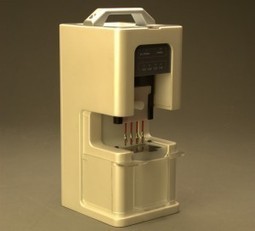
University of Washington engineers and NanoFacture, a Bellevue, Wash., company, have created a device that can extract human DNA from fluid samples in a simpler, more efficient and environmentally friendly way than conventional methods.


The device will give hospitals and research labs a much easier way to separate DNA from human fluid samples, which will help with genome sequencing, disease diagnosis and forensic investigations.


“It’s very complex to extract DNA,” said Jae-Hyun Chung, a UW associate professor of mechanical engineering who led the research. “When you think of the current procedure, the equivalent is like collecting human hairs using a construction crane.”


This technology aims to clear those hurdles. The small, box-shaped kit now is ready for manufacturing, then eventual distribution to hospitals and clinics. NanoFacture, a UW spinout company, signed a contract with Korean manufacturer KNR Systems last month at aceremony in Olympia, Wash.


The UW, led by Chung, spearheaded the research and invention of the technology, and still manages the intellectual property. Separating DNA from bodily fluids is a cumbersome process that’s become a bottleneck as scientists make advances in genome sequencing, particularly for disease prevention and treatment. The market for DNA preparation alone is about $3 billion each year.


Conventional methods use a centrifuge to spin and separate DNA molecules or strain them from a fluid sample with a micro-filter, but these processes take 20 to 30 minutes to complete and can require excessive toxic chemicals.


UW engineers designed microscopic probes that dip into a fluid sample – saliva, sputum or blood – and apply an electric field within the liquid. That draws particles to concentrate around the surface of the tiny probe. Larger particles hit the tip and swerve away, but DNA-sized molecules stick to the probe and are trapped on the surface. It takes two or three minutes to separate and purify DNA using this technology.

See on www.washington.edu

Read Full Post »

DNA Nanotechnology

Author: Tilda Barliya PhD

The field of DNA and RNA nanotechnologies  are considered one of the most dynamic research areas in the field of drug delivery in molecular medicine. Both DNA and RNA have a wide aspect of medical application including: drug deliveries, for genetic immunization, for metabolite and nucleic acid detection, gene regulation, siRNA delivery for cancer treatment (I), and even analytical and therapeutic applications.

Seeman (6,7) pioneered the concept 30 years ago of using DNA as a material for creating nanostructures; this has led to an explosion of knowledge in the now well-established field of DNA nanotechnology. The unique properties in terms of free energy, folding, noncanonical base-pairing, base-stacking, in vivo transcription and processing that distinguish RNA from DNA provides sufficient rationale to regard RNA nanotechnology as its own technological discipline. Herein, we will discuss the advantages of DNA nanotechnology and it’s use in medicine.

So What is the rational of using DNA nanotechnology(3)?

  • Genetic studies – its application in various biological fields like biomedicine, cancer research, medical devices  and genetic engineering.
  • Its unique properties of structural stability, programmability of sequences, and predictable self-assembly.
DNA origami

Structures made from DNA using the DNA-origami method (Rothemund, 2006)

Structural DNA nanotechnology rests on three pillars: [1] Hybridization; [2] Stably branched DNA; and [3] Convenient synthesis of designed sequences.

Hybridization

Hybridization. The self-association (self=assembly) of complementary nucleic acid molecules or parts of molecules, is implicit in all aspects of structural DNA nanotechnology. Individual motifs are formed by the hybridization of strands designed to produce particular topological species. A key aspect of hybridization is the use of sticky ended cohesion to combine pieces of linear duplex DNA; this has been a fundamental component of genetic engineering for over 35 years (7). Not only is hybridization critical to the formation of structure, but it is deeply involved in almost all the sequence-dependent nanomechanical devices that have been constructed, and it is central to many attempts to build structural motifs in a sequential fashion (7,8 ).

Stably Branched DNA

branched DNA molecules are central to DNA nanotechnology. It is the combination of in vitro hybridization and synthetic branched DNA that leads to the ability to use DNA as a construction material. Such branched DNA is thought to be intermediates in genetic recombination (such as Holliday junctions).

Convenient Synthesis of Designed Sequences

Biologically derived branched DNA molecules, such as Holliday junctions, are inherently unstable, because they exhibit sequence symmetry; i.e., the four strands actually consist of two pairs of strands with the same sequence. This symmetry enables an isomerization known as branch migration that allows the branch point to relocate.  DNA nanotechnology entailed sequence design that attempted to minimize sequence symmetry in every way possible.

One of the most remarkable innovations in structural DNA-nanotechnology in recent years is DNA origami, which was invented in 2006 by Paul Rothemund (1) (see Fig above). DNA origami utilizes the genome from a virus together with a large number of shorter DNA strands to enable the creation of numerous DNA-based structures (Figure 1). The shorter DNA strands forces the long viral DNA to fold into a pattern that is defined by the interaction between the long and the short DNA strands (1,2).

Rothemund believes that an  application of patterned DNA origami would be the creation of a ‘nanobreadboard’, to which diverse components could be added. The attachment of proteins23, for example, might allow novel biological experiments aimed at modelling complex protein assemblies and examining the effects of spatial organization, whereas molecular electronic or plasmonic circuits might be created by attaching nanowires, carbon nanotubes or gold nanoparticles (1).

DNA nanotechnology and Biological Application

The physical and chemical properties of nanomaterials such as polymers, semiconductors, and metals present diverse advantages for various in vivo applications (3,9 ). For example:

  • Therapeutics – In cancer for example, nanosystems that are designed from biological materials such as DNA and RNA are ‘programmed’ to be able to evade most, if not all, drug-resistance mechanisms. Based on these properties, most nanosystems are able to deliver high concentrations of drugs to cancer cells while curtailing damage to surrounding healthy cells (2b, 3, 9, 11, 15).
  • Biosensors – capable of picking up very specific biological signals and converting them into electrical outputs that can be analyzed for identification. Biosensors are efficient as they have a high ratio of surface area to volume as well as adjustable electronic, magnetic, optical, and biological properties (3, 12, 13, 14).
  • **Amin and colleagues have developed a biotinylated DNA thin film-coated fiber optic reflectance biosensor for the detection of streptavidin aerosols. DNA thin films were prepared by dropping DNA samples into a polymer optical fiber which responded quickly to the specific biomolecules in the atmosphere. This approach of coating optical fibers with DNA nanostructures could be very useful in the future for detecting atmospheric bio-aerosols with high sensitivity and specificity (3, 14)
  • Computing – Another aspect uses the programmability of DNA to create devices that are capable of computing. Here, the structure of the assembled DNA is not of primary interest. Instead, control of the DNA sequence is used in the creation of computational algorithms, like e.g. artificial neural networks. Qian et al for example, built on the richness of DNA computing and strand displacement circuitry, they showed how molecular systems can exhibit autonomous brain-like behaviours. Using a simple DNA gate architecture that allows experimental scale-up of multilayer digital circuits, they systematically transform arbitrary linear threshold circuits (an artificial neural network model) into DNA strand displacement cascades that function as small neural networks (3, 10).
  • Additional features: 3rd generation DNA sequencers (II), Biomimetic systems, Energy transfer and photonics etc

Summary:

DNA nanotechnology is an evolving field that affects medicine, computation, material sciences, and physics. DNA nanostructures offer unprecedented control over shape, size, mechanical flexibility and anisotropic surface  modification. Clearly, proper control over these aspects can increase  circulation times by orders of magnitude, as can be seen for longcirculating particles such as erythrocytes and various pathogenic particles evolved to overcome this issue.  The use of DNA in DNA/protein-based matrices makes these structures inherently amenable to structural tunability. More research in this direction  will certainly be developed, making DNA a promising biomaterial  in tissue engineering. future development of novel ways in which DNA would be utilized to have a much more comprehensive role in biological computation and data storage is envisaged.

REFERENCES

1. Paul W. K. Rothemund. Folding DNA to create nanoscale shapes and patterns. NATURE 2006 (March 16)|Vol 440: 297-302. http://www.nature.com/nature/journal/v440/n7082/full/nature04586.html

http://www.dna.caltech.edu/Papers/DNAorigami-nature.pdf

2. Andre V. Pinheiro, Dongran Han, William M. Shih and Hao Yan. Challenges and opportunities for structural DNA nanotechnology. Nature Nanotechnology 2011 Dec | VOL 6: 763-772.  http://www.nature.com/nnano/journal/v6/n12/pdf/nnano.2011.187.pdf

2b. Thi Huyen La, Thi Thu Thuy Nguyen, Van Phuc Pham, Thi Minh Huyen Nguyen and Quang Huan Le.  Using DNA nanotechnology to produce a drug delivery system. Adv. Nat. Sci.: Nanosci. Nanotechnol. 4 (2013) 015002 (7pp). http://iopscience.iop.org/2043-6262/4/1/015002http://iopscience.iop.org/2043-6262/4/1/015002/pdf/2043-6262_4_1_015002.pdf

3. Muniza Zahid, Byeonghoon Kim, Rafaqat Hussain, Rashid Amin and Sung H Park. DNA nanotechnology: a future perspective. Nanoscale Research Letters 2013, 8:119. http://www.nanoscalereslett.com/content/8/1/119

4.By: Cientifica Ltd 2007. The Nanotech Revolution in Drug Delivery.  http://www.cientifica.com/WhitePapers/054_Drug%20Delivery%20White%20Paper.pdf

5. Gemma Campbell. Nanotechnology and its implications for the health of the E.U citizen: Diagnostics, drug discovery and drug delivery. Institute of Nanotechnology and Nanoforum. http://www.nano.org.uk/nanomednet/images/stories/Reports/diagnostics,%20drug%20discovery%20and%20drug%20delivery.pdf

6.Peixuan Guo., Haque F., Brent Hallahan, Randall Reif and Hui Li. Uniqueness, Advantages, Challenges, Solutions, and Perspectives in Therapeutics Applying RNA Nanotechnology. Nucleic Acid Ther. 2012 August; 22(4): 226–245. http://www.ncbi.nlm.nih.gov/pmc/articles/PMC3426230/

7. SEEMAN N.C. Nanomaterials based on DNA. Annu. Rev. Biochem. 2010;79:65–87. http://www.ncbi.nlm.nih.gov/pmc/articles/PMC3454582/

8. Yin P, Choi HMT, Calvert CR, Pierce NA. Programming biomolecular self-assembly pathways. Nature.2008;451:318–323.  http://www.ncbi.nlm.nih.gov/pubmed/18202654

9. Yan Lee P, Wong KY: Nanomedicine: a new frontier in cancer therapeutics. Curr Drug Deliv 2011, 8(3):245-253. OpenURLhttp://www.eurekaselect.com/73728/article

10. Qian, L.L., Winfree, E., and Bruck, J. Neural Network Computation with DNA Strand Displacement Cascades. Nature 2011 475, 368-372.  http://www.nature.com/nature/journal/v475/n7356/full/nature10262.html

11. Acharya S, Dilnawaz F, Sahoo SK: Targeted epidermal growth factor receptor nanoparticle bioconjugates for breast cancer therapy. Biomaterials 2009, 30(29):5737-5750. http://www.sciencedirect.com/science/article/pii/S0142961209006929

12. Bohunicky B, Mousa SA: Biosensors: the new wave in cancer diagnosisNanotechnology, Science and Applications 2011, 4:1-10. http://www.dovepress.com/biosensors-the-new-wave-in-cancer-diagnosis-peer-reviewed-article-NSA-recommendation1

13. Sanvicens N, Mannelli I, Salvador J, Valera E, Marco M: Biosensors for pharmaceuticals based on novel technologyTrends Anal Chem 2011, 30:541-553. http://www.sciencedirect.com/science/article/pii/S016599361100015X

14. Amin R, Kulkarni A, Kim T, Park SH: DNA thin film coated optical fiber biosensorCurr Appl Phys 2011, 12(3):841-845. http://www.sciencedirect.com/science/article/pii/S1567173911005888

15. Choi, Y.; Baker, J. R. Targeting Cancer Cells with DNA Assembled Dendrimers: A Mix and Match Strategy for Cancer. Cell Cycle 2005, 4, 669–671. http://www.ncbi.nlm.nih.gov/pubmed/15846063  http://www.landesbioscience.com/journals/cc/article/1684/

Other related articles on this Open Access Online Scientific Journal include the following

I. By: Ziv Raviv PhD. The Development of siRNA-Based Therapies for Cancer. http://pharmaceuticalintelligence.com/2013/05/09/the-development-of-sirna-based-therapies-for-cancer/

II. By: Tilda Barliya PhD. Nanotechnology, personalized medicine and DNA sequencing. http://pharmaceuticalintelligence.com/2013/01/09/nanotechnology-personalized-medicine-and-dna-sequencing/

III. By: Larry Bernstein MD FACP. DNA Sequencing Technology. http://pharmaceuticalintelligence.com/2013/03/03/dna-sequencing-technology/

IV. By: Venkat S Karra PhD. Measuring glucose without needle pricks: nano-sized biosensors made the test easy. http://pharmaceuticalintelligence.com/2012/09/04/measuring-glucose-without-needle-pricks-nano-sized-biosensors-made-the-test-easy/

Read Full Post »

Pros and Cons of Drug Stabilizers for Arterial  Elasticity as an Alternative or Adjunct to Diuretics and Vasodilators in the Management of Hypertension.

Author, and Content Consultant to e-SERIES A: Cardiovascular Diseases: Justin Pearlman, MD, PhD, FACC

and

Article Curator: Aviva Lev-Ari, PhD, RN

This article presents the 2013 Thought Frontier on Hypertension and Vascular Compliance.

Conceptual development of the subject is presented in the following nine parts:

1.        Physiology of Circulation and Role of Arterial Elasticity

2.      Isolated Systolic Hypertension caused by Arterial Stiffening may be inadequately treated by Diuretics or Vasodilatation Antihypertensive Medications

3.         Physiology of Circulation and Compensatory Mechanism of Arterial Elasticity

4.         Vascular Compliance – The Potential for Novel Therapies

  • Novel Mechanism for Disease Etiology: Modulation of Nuclear and Cytoskeletal Actin Polymerization.
  • Genetic Therapy targeting Vascular Conductivity 
  • Regenerative Medicine for Vasculature Function Protection

5.        In addition to curtailing high pressures, stabilizing BP variability is a potential target for management of hypertension

6.        Mathematical Modeling: Arterial stiffening  explains much of primary hypertension

7.         Classification of Blood Pressure and Hypertensive Treatment Best Practice of Care in the US

8.         Genetic Risk for High Blood Pressure

9.         Is it Hypertension or Physical Inactivity: Cardiovascular Risk and Mortality – New results in 3/2013.

Summary By Justin D. Pearlman MD ME PhD MA FACC

1.       Physiology of Circulation and Role of Arterial Elasticity

  • Simplistically, high blood pressure stems from too much volume (salt water) for the vascular space, or conversely, too little space for the volume. Biological signals, such as endothelin, hypoxia, acidosis, nitric oxide, can modify vascular volume by constricting muscles in blood vessel walls. Less simplistically the physics of circulation are governed by numerous factors, with essentials detailed below.
  • The vascular space has two major circuits: pulmonary (lungs) and systemic (body).
  • Compliance (C)  relates change in volume (ΔV) to change in pressure (ΔP) as a measure of the strength of elasticity, where elasticity summarizes the intrinsic forces that  return to original shape after deformation: C = ΔV/ΔP . Those values can be estimated by ultrasound imaging with Doppler blood velocity estimation, by MRI, or invasively. Related properties can also be measured, such as wave propagation time or fractional flow reserve.
  • The vascular system is dynamic, with frequency components and reactive elements. The fundamental frequency is governed by the heart rate delivering a stroke volume forward into the vasculature; a heart rate of 60/minute corresponds to the frequency of 1 Hertz (1 cycle/second). The pressure rise due to the ejection of stroke volume is called the pulse pressure.
  • Numerous factors affect blood flow, including blood composition (affected by anemia or blood dilution), leakiness of vessels, elasticity, wave propagation, streamlines, viscosity, osmotic pressure (affected by protein deficiency and other factors),
  • In a static system, the driving force relates linearly flow by way of resistance (R  in units of dyn·s·cm−5): V=IR (Ohm’s law).
    • Pulmonary:\frac {80 \cdot (mean\ pulmonary\ arterial\ pressure - mean \ pulmonary \ artery \ wedge \ pressure)} {cardiac\ output}
    • Systemic:\frac {80 \cdot (mean\ arterial\ pressure - mean \ right \ atrial \ pressure)} {cardiac\ output}
  • In a dynamic, reactive system, the relation between the driving potential (pressure gradient), and current (blood flow) is governed by a differential equation. However, use of complex numbers and exponentials recovers simplicity similar to Ohm’s law:
    • Variables take the form Ae^{st}, where t is time, s is a complex parameter, and A is a complex scalar. Complex values simply mean two dimensional, e.g., magnitude (as in resistance) plus phase shift (to account for reactive components).
    • Complex version of Ohm’s law: \boldsymbol{V} = \boldsymbol{I} \cdot \boldsymbol{Z} where V and I are the complex scalars in the voltage and current respectively and Z is the complex impedance.
    • Frequency dependent “resistance” is captured by the term impedance.
  • Breathing in increases the return of blood to the heart, adding to pulse variation.
  • Dynamic elastance  (Eadyn relates volume variation (VVS) to pressure variation (PPV): Eadyn=PPV/SVV
    • PPV(%) = 100% × (PPmax − PPmin)/[(PPmax + PPmin)/2)]
      • where PPmax and PPmin are the maximum and minimum pulse pressures determined during a single  respiratory cycle
    • SVV(%) = 100% × [(SVmax − SVmin)/SVmean]
      • where SVmax and SVmin  are the maximum and minimum standard deviation of arterial pressure about the mean arterial pressure during a single respiratory cycle
  • The nervous system provides both stimulants and inhibitors (sympathetic and vagal nerves) to regulate blood vessel wall muscle tone and also heart rate. Many medications, and anesthetic agents in particular, reduce those responses to stimuli, so the vessels dilate, vascular impedance lowers, pressures drop, and autoregulation is impaired.
  • Diuretics aim to decrease volume of circulating fluid, vasodilators aim to increase the vascular space, and elasticity treatments will aim to preserve or improve the ability to accommodate changes in volume of fluid.
    • Vessel dilation near the skin promotes heat loss.
  • Vascular elasticity is impaired by atherosclerosis, menopause, and endothelial dysfunction (impaired nitric oxide signals  response, impaired endothelin response).
  • Elastance in a cyclic pressure system of systole-diastole (contraction-dilation) presents impedance as a pulsatile load on the heart. Inotropy describes the generation of pressure by cardiac contraction, lusiotropy the compliance of the heart to accept filling with minimal back pressure to the lungs. Chronic exposure to elevated vascular impedance leads to impairment of lusiotropy (diastolic failure, stiff heart) and inotropy (systolic failure, weak heart).

2.      Isolated Systolic Hypertension caused by Arterial Stiffening may be inadequately treated by Diuretics or Vasodilatation Antihypertensive Medications

3. Physiology of Circulation and Compensatory Mechanism of Arterial Elasticity

Antihypertensive agents have focused on the following approaches:

  1. The most common prescriptions, a mild diuretic, hydrochlorothiazide (HCTZ), is known to improve blood vessel compliance by reducing cell turgor, which explains why its full onset of benefit as well as its slow offset when stopped can take more than one month.
  2. Chlorthalidone  – Some evidence suggests that chlorthalidone may be superior to hydrochlorothiazide for the treatment of hypertension. However, a recent study concluded: chlorthalidone in older adults was not associated with fewer adverse cardiovascular events or deaths than hydrochlorothiazide. However, it was associated with a greater incidence of electrolyte abnormalities, particularly hypokalemia.
  • Increased vascular space (vasodilation)

    • Alternatively, the pressure can be lowered by increasing the vascular space for a given vascular volume. Examples of mediators for arterial tone (degree of dilation) include nitric oxide, prostacyclin and endothelin.


Class

Description

Hyperpolarization mediated (Calcium channel blocker) Changes in the resting membrane potential of thecell affects the level of intracellular calciumthrough modulation of voltage sensitive calcium channelsin the plasma membrane.
cAMP mediated Adrenergic stimulation results in elevated levelsof cAMP and protein kinase A, which results inincreasing calcium removal from the cytoplasm.
cGMP mediated (Nitrovasodilator) Through stimulation of protein kinase G.Until 2002, the enzyme for this conversion wasdiscovered to be mitochondrial aldehyde dehydrogenase.Proc. Natl. Acad. Sci. USA 102 (34): 12159–12164. doi:10.1073/pnas.0503723102http://www.pnas.org/content/102/34/12159.long

Class

Example

Hyperpolarization mediated (Calcium channel blocker) adenosineamlodipine (Norvasc),diltiazem (Cardizem,Dilacor XR) andnifedipine (Adalat, Procardia).
cAMP mediated prostacyclin
cGMP mediated (Nitrovasodilator) nitric oxide
  • Reduced pulsatile force (beta blockers)

These work by blocking certain nerve and hormonal signals to the heart and blood vessels, thus lowering blood pressure. Frequently prescribed beta blockers include

  • metoprolol (Lopressor, Toprol XL)
  • carvedilol (Coreg)
  • nadolol (Corgard)
  • penbutolol (Levatol).
  • Metabolized nebivolol increases vascular NO production, involves endothelial ß2-adrenergic receptor ligation, with a subsequent rise in endothelial free [Ca2+]i and endothelial NO synthase–dependent NO production
  • Angiotensin-converting enzyme (ACE) inhibitors

These allow blood vessels to widen by preventing the hormone angiotensin from affecting blood vessels. Frequently prescribed ACE inhibitors include captopril (Capoten), lisinopril (Prinivil, Zestril) and ramipril (Altace).

  • Angiotensin II receptor blockers

These help blood vessels relax by blocking the action of angiotensin. Frequently prescribed angiotensin II receptor blockers include losartan (Cozaar), olmesartan (Benicar) and valsartan (Diovan).
Another very commonly prescribed drug class of medication counteracts hardening of arteries.

Atheroma lipids have enzyme systems that explicitly disassemble cholesterol esters and reconstruct them inside blood vessel walls,e.g.,  Anacetrapib, Genetic variants that improve cholesterol levels are stimulating development of additional medications.

We can propose that atheroma build up in arterial blood vessel walls constitutes a maladaptive defense against aneurysm and risk of vessel rupture from hypertension.

Arguably, HMG-CoA reductase inhibitors,  statin therapy is a second example of a medication that helps protect vascular elasticity, both by its lipid effects and its anti-inflammatory effects.

The best-selling statin is atorvastatin, marketed as Lipitor (manufactured by Pfizer) and Torvast. By 2003, atorvastatin became the best-selling pharmaceutical in history,[4] with Pfizer reporting sales of US$12.4 billion in 2008.[5] As of 2010, a number of statinsare on the market: atorvastatin (Lipitor and Torvast), fluvastatin (Lescol), lovastatin (Mevacor, Altocor, Altoprev), pitavastatin(Livalo, Pitava), pravastatin (Pravachol, Selektine, Lipostat), rosuvastatin (Crestor) and simvastatin (Zocor, Lipex).[6] Several combination preparations of a statin and another agent, such as ezetimibe/simvastatin, are also available.

References for Statins from:

http://en.wikipedia.org/wiki/Statin

Clinical Considerations of Statin Therapy’s manifold effects, in

http://pharmaceuticalintelligence.com/2012/10/08/statins-nonlipid-effects-on-vascular-endothelium-through-enos-activation/

Compensatory Effects in the Physiology of Circulation

Before declaring vessel elasticity a new and highly desirable treatment target, consider that it is not firmly established that hardening of arteries (loss of elasticity) is entirely maladaptive.

In parallel with any focus on increasing vascular elasticity or compliance, each of the issues discussed, below merits scrutiny and investigation.

Cardiac Circulation Dynamics

Endothelium morphology, rheological properties of intra vasculature fluid dynamics and blood viscosity provided explanation for shear stress of vessels under arterial pressure

http://pharmaceuticalintelligence.com/2012/11/28/special-considerations-in-blood-lipoproteins-viscosity-assessment-and-treatment/

and

http://pharmaceuticalintelligence.com/2012/11/28/what-is-the-role-of-plasma-viscosity-in-hemostasis-and-vascular-disease-risk/

Aging and Vasculature Diminished Elasticity

While among other reasons for Hypertension increasing prevalence with aging, arterial stiffening is one.

Yet, stiffer vessels are more efficient at transmitting pressure to distal targets. With aging, muscle mass diminishes markedly and the contribution to circulation from skeletal muscle tissue compressions combined with competent venous valves fades.

http://pharmaceuticalintelligence.com/2012/08/27/endothelial-dysfunction-diminished-availability-of-cepcs-increasing-cvd-risk-for-macrovascular-disease-therapeutic-potential-of-cepcs/

and

http://pharmaceuticalintelligence.com/2012/10/19/clinical-trials-results-for-endothelin-system-pathophysiological-role-in-chronic-heart-failure-acute-coronary-syndromes-and-mi-marker-of-disease-severity-or-genetic-determination/

and

http://pharmaceuticalintelligence.com/2012/11/13/peroxisome-proliferator-activated-receptor-ppar-gamma-receptors-activation-pparγ-transrepression-for-angiogenesis-in-cardiovascular-disease-and-pparγ-transactivation-for-treatment-of-dia/

Aging and Myocardial Diminished Contractility and Ejection Fraction

With aging heart contractility diminishes. These issues can cause under perfusion of tissues, inadequate nutrient blood delivery (ischemia), lactic acidosis, tissue dysfunction and multi-organ failure. Hardened arteries may compensate. Thus, pharmacotherapy to increase Arterial Elasticity may be counterindicated for patients with mild to progressive CHF.

http://pharmaceuticalintelligence.com/2013/05/05/bioengineering-of-vascular-and-tissue-models/

and

http://pharmaceuticalintelligence.com/2012/10/20/nitric-oxide-and-sepsis-hemodynamic-collapse-and-the-search-for-therapeutic-options/

and

http://pharmaceuticalintelligence.com/2012/10/17/chronic-heart-failure-personalized-medicine-two-gene-test-predicts-response-to-beta-blocker-bucindolol/
Our biosystems are highly interdependent, and we cannot leap to conclusions without careful thorough evidence. Increasing arterial elastance will lower vascular impedance and change the frequency components of our pulsatile perfusion system.

MOST comprehensive review of the Human Cardiac Conduction System presented to date:

http://pharmaceuticalintelligence.com/2013/04/28/genetics-of-conduction-disease-atrioventricular-av-conduction-disease-block-gene-mutations-transcription-excitability-and-energy-homeostasis/

Diminished contractility will increase the amount of energy needed to maintain circulation. It will change efficiency dramatically – consider the difference between periodically pushing someone sitting on a swing at the resonance frequency if the pendulum versus significantly off resonance.

http://pharmaceuticalintelligence.com/2013/04/14/mitochondrial-metabolism-and-cardiac-function/

and

http://pharmaceuticalintelligence.com/2012/10/28/mitochondrial-damage-and-repair-under-oxidative-stress/

Increased Arterial Elasticity – Potential Risk to Myocardium

The hypothesis that we should focus on cellular therapies to increase vascular compliance may decrease the circulation efficiency and result in worsening of cardiac right ventricular morphology and development of Dilated cardiomyopathy and hypertrophic cardiomyopathy (muscle thickening and diastolic failure), an undesirable outcome resulting from an attempt to treat the hypertension.

4. Vascular Compliance – The Potential of Noval Therapies

  • Novel Mechanism for Disease Etiology for the Cardiac Phenotype: Modulation of Nuclear and Cytoskeletal Actin Polymerization.

Lamin A/C and emerin regulate MKL1–SRF activity by modulating actin dynamics

Chin Yee Ho,

Diana E. Jaalouk,

Maria K. Vartiainen

Jan Lammerding

Nature (2013) doi:10.1038/nature12105

Published online 05 May 2013

Affiliations

Cornell University, Weill Institute for Cell and Molecular Biology/Department of Biomedical Engineering, Ithaca, New York 14853, USA

Chin Yee Ho &

Jan Lammerding

Brigham and Women’s Hospital/Harvard Medical School, Department of Medicine, Boston 02115, Massachusetts, USA

Chin Yee Ho,

Diana E. Jaalouk &

Jan Lammerding

Institute of Biotechnology, University of Helsinki, 00014 Helsinki, Finland

Maria K. Vartiainen

Present address: American University of Beirut, Department of Biology, Beirut 1107 2020, Lebanon.

Diana E. Jaalouk

Contributions

C.Y.H., D.E.J. and J.L. conceived and designed the overall project, with valuable help from M.K.V. C.Y.H. and D.E.J. performed the experiments. C.Y.H., D.E.J. and J.L. analysed data. C.Y.H. and J.L. wrote the paper.

Corresponding author Jan Lammerding

Laminopathies, caused by mutations in the LMNA gene encoding the nuclear envelope proteins lamins A and C, represent a diverse group of diseases that include Emery–Dreifuss muscular dystrophy (EDMD), dilated cardiomyopathy (DCM), limb-girdle muscular dystrophy, and Hutchison–Gilford progeria syndrome1. Most LMNA mutations affect skeletal and cardiac muscle by mechanisms that remain incompletely understood. Loss of structural function and altered interaction of mutant lamins with (tissue-specific) transcription factors have been proposed to explain the tissue-specific phenotypes1. Here we report in mice that lamin-A/C-deficient (Lmna/) and LmnaN195K/N195K mutant cells have impaired nuclear translocation and downstream signalling of the mechanosensitive transcription factor megakaryoblastic leukaemia 1 (MKL1), a myocardin family member that is pivotal in cardiac development and function2. Altered nucleo-cytoplasmic shuttling of MKL1 was caused by altered actin dynamics in Lmna/ and LmnaN195K/N195K mutant cells. Ectopic expression of the nuclear envelope protein emerin, which is mislocalized in Lmnamutant cells and also linked to EDMD and DCM, restored MKL1 nuclear translocation and rescued actin dynamics in mutant cells. These findings present a novel mechanism that could provide insight into the disease aetiology for the cardiac phenotype in many laminopathies, whereby lamin A/C and emerin regulate gene expression through modulation of nuclear and cytoskeletal actin polymerization.

 http://www.nature.com/nature/journal/vaop/ncurrent/full/nature12105.html

  • Genetic Therapy to Conductivity Disease

http://pharmaceuticalintelligence.com/2012/10/01/ngs-cardiovascular-diagnostics-long-qt-genes-sequenced-a-potential-replacement-for-molecular-pathology/

  • Regenerative Medicine for Vasculature Function Protection

http://pharmaceuticalintelligence.com/2012/08/29/positioning-a-therapeutic-concept-for-endogenous-augmentation-of-cepcs-therapeutic-indications-for-macrovascular-disease-coronary-cerebrovascular-and-peripheral/

and

http://pharmaceuticalintelligence.com/2012/08/28/cardiovascular-outcomes-function-of-circulating-endothelial-progenitor-cells-cepcs-exploring-pharmaco-therapy-targeted-at-endogenous-augmentation-of-cepcs/

and

http://pharmaceuticalintelligence.com/2013/02/28/the-heart-vasculature-protection-a-concept-based-pharmacological-therapy-including-thymosin/

5. Stabilizing BP Variability is the next Big Target in Hypertension Management

Hypertension caused by Arterial Stiffening is Ineffectively Treated by Diuretics and Vasodilatation Antihypertensives

Barcelona, Spain – An aging population grappling with rising rates of hypertension and other cardiometabolic risk factors should prompt an overhaul of how hypertension is diagnosed and monitored and should spur development of drugs with entirely new mechanisms of action, one expert says. Speaking here at the 2013 International Conference on Prehypertension and Cardiometabolic Syndrome, meeting cochair Dr Reuven Zimlichman (Tel Aviv University, Israel) argued that the definitions of hypertension, as well as the risk-factor tables used to guide treatment, are no longer appropriate for a growing number of patients.

Most antihypertensives today work by producing vasodilation or decreasing blood volume and so are ineffective treatments in ISH patients. In the future, he predicts, “we will have to start looking for a totally different medication that will aim to improve or at least to stabilize arterial elasticity: medication that might affect factors that determine the stiffness of the arteries, like collagen, like fibroblasts. Those are not the aim of any group of antihypertensive medications today.”

Zimlichman believes existing databases could be used to develop algorithms that take this progression of disease into account, in order to better guide hypertension management. He also points out that new ambulatory blood-pressure-monitoring devices also measure arterial elasticity. “Unquestionably, these will improve our ability to diagnose both the status of the arteries and the changes of the arteries with time as a result of our treatment. So if we treat the patient and we see no improvement in arterial elasticity, or the patient is worse, something is wrong, something is not working—either the patient is not taking the medication, or our choice of medication is not appropriate, or the dose is insufficient, etc.”

http://www.theheart.org/article/1502067.do

Oslo, Norway – New research that is only just starting to be digested by the hypertension community indicates that visit-to-visit variability in blood-pressure readings will likely become another way of looking for “at-risk” hypertensive patients and in fact is likely to be more reliable as an indicator of cardiovascular risk than the currently used mean BP.

The Goal of Stabilizing BP variability 

June 29, 2010  

Discussing the importance of this issue for guidelines and clinical practice, Dr Tony Heagerty (University of Manchester, UK) told the recent European Society of Hypertension (ESH) European Meeting on Hypertension 2010: “We are poking around in the dark, offering treatment blankly across a large community, and probably treating a lot of people who don’t need to be treated, while not necessarily treating the highest-risk patients. We should stop being reassured by ‘occasional’ normal BPs. The whole game now is, can we improve the identification of our ‘at-risk’ individuals?”

Heagerty was speaking at a special plenary session on late-breaking research discussing BP variability as a risk factor. This issue has emerged following new analyses reported at the ACC meeting and published in a number of papers in the Lancet and Lancet Neurology earlier this year, which showed that variability in blood pressure is a much stronger determinant of both stroke and coronary disease outcome than average blood pressure.

http://www.theheart.org/article/1093553.do

Three years later, 2/1/2013, Zimlichman also argued that definitions of essential and secondary hypertension have changed very little over the past few decades and have typically only been tweaked up or down related to other CV risk factors. Diastolic hypertension has been the primary goal of treatment, and treatment goals have not adequately taken patient age into account (in whom arterial stiffening plays a larger role), and they have typically relied too heavily on threshold cutoffs, rather than the “linear progression” of risk factors and their impact on organ damage.

6. Mathematical Modeling: Arterial stiffening provides sufficient explanation for primary hypertension

Klas H. PettersenScott M. BugenhagenJavaid NaumanDaniel A. BeardStig W. Omholt

(Submitted on 3 May 2013 (v1), last revised 6 May 2013 (this version, v2))

Hypertension is one of the most common age-related chronic diseases and by predisposing individuals for heart failure, stroke and kidney disease, it is a major source of morbidity and mortality. Its etiology remains enigmatic despite intense research efforts over many decades. By use of empirically well-constrained computer models describing the coupled function of the baroreceptor reflex and mechanics of the circulatory system, we demonstrate quantitatively that arterial stiffening seems sufficient to explain age-related emergence of hypertension. Specifically, the empirically observed chronic changes in pulse pressure with age, and the impaired capacity of hypertensive individuals to regulate short-term changes in blood pressure, arise as emergent properties of the integrated system. Results are consistent with available experimental data from chemical and surgical manipulation of the cardio-vascular system. In contrast to widely held opinions, the results suggest that primary hypertension can be attributed to a mechanogenic etiology without challenging current conceptions of renal and sympathetic nervous system function. The results support the view that a major target for treating chronic hypertension in the elderly is the reestablishment of a proper baroreflex response.

Klas H. Pettersen1, Scott M. Bugenhagen2, Javaid Nauman3, Daniel A. Beard2 & Stig W. Omholt3

1Department of Mathematical and Technological Sciences, Norwegian University of Life Science, Norway

2Department of Physiology, Medical College of Wisconsin, Milwaukee, Wisconsin, USA

3NTNU Norwegian University of Science and Technology, Department of Circulation and Medical Imaging, Cardiac Exercise Research Group, Trondheim, Norway

Correspondence should be addressed to: KHP (klas.pettersen@gmail.com)

Keywords: hypertension, mechanogenic, baroreceptor signaling, cardiovascular model, arterial stiffening

Author contributions: K.H.P. and S.W.O. designed the study. K.H.P. constructed the

integrated model and performed the numerical experiments with contributions from

D.A.B. and S.M.B.. J.N. extracted and compiled empirical test data from the HUNT2

Survey. S.W.O, K.H.P. and D.A.B. wrote the paper.

http://arxiv.org/abs/1305.0727v2

http://arxiv.org/pdf/1305.0727v2.pdf


7. Classification of Blood Pressure and Hypertensive Treatment:

Best Practice of Care in the US

8. Genetic Risk for High Blood Pressure

Hypertension.2013; 61: 931doi: 10.1161/​HYP.0b013e31829399b2

Blood Pressure Single-Nucleotide Polymorphisms and Coronary Artery Sisease (page 995)

Blood pressure (BP) is considered a major cardiovascular risk factor that is influenced by multiple genetic and environmental factors. However, the precise genetic underpinning influencing interindividual BP variation is not well characterized; and it is unclear whether BP-associated genetic variants also predispose to clinically apparent cardiovascular disease. Such an association of BP-related variants with cardiovascular disease would strengthen the concept of BP as a causal risk factor for cardiovascular disease. In this issue of Hypertension, analyses within the Coronary ARtery DIsease Genome-Wide Replication And Meta-Analysis consortium indicate that common genetic variants associated with BP in the population, indeed, contribute to the susceptibility for coronary artery disease (CAD). Lieb et al tested 30 single-nucleotide polymorphisms—that based on prior studies were known to affect BP—for their association with CAD. In total, data from 22 233 CAD cases and 64 762 controls were analyzed. The vast majority (88%) of BP-related single-nucleotide polymorphisms were also shown to increase the risk of CAD (as defined by an odds ratio for CAD >1; Figure). On average, each of the multiple BP-raising alleles was associated with a 3% (95% confidence interval, 1.8%–4.3%) risk increase for CAD.

Masked Hypertension in Diabetes Mellitus (page 964)

The first important finding in the IDACO study of masked hypertension (MH) in the population with diabetes mellitus and non–diabetes mellitus was that antihypertensive treatment converted some sustained hypertensives into sustained normotensives; this resulted in an increased cardiovascular disease risk in the treated versus untreated normotensive comparator group (Figure). Not surprisingly, normalization of blood pressure (BP) with treatment did not eliminate the lifetime cardiovascular disease burden associated with prior elevated BP nor did it correct other cardiometabolic risk factors that clustered with the hypertensive state.

The second important IDACO finding was that treatment increased the prevalence of MH by decreasing conventional BP versus daytime ambulatory BP (ABP) by a ratio of ≈3 to 2. The clinical implication of increased prevalence of MH with therapy in the population of both diabetes mellitus and non–diabetes mellitus was that these subjects did not receive sufficient antihypertensive therapy to convert MH into normalized ABP (ie, treated, normalized ABP being the gold standard for minimizing cardiovascular disease risk). Indeed, there is a transformation-continuum from sustained hypertension to MH and finally to sustained normotension with increasing antihypertensive therapy. These IDACO findings strongly suggest that many physicians mistakenly have their primary focus on normalizing in-office rather than out-of-office home BP and/or 24-hour ABP values and this results in an increased prevalence of MH. However, what constitutes optimal normalized ABP will remain empirical until established in randomized controlled trials.

Genetic Risk Score for Blood Pressure (page 987)

Elevated blood pressure (BP) is a strong, independent, and modifiable risk factor for stroke and heart disease. BP is a heritable trait, and genome-wide association studies have identified several genetic loci that are associated with systolic BP, diastolic BP, or both. Although the variants have modest effects on BP, typically 0.5 to 1.0 mm Hg, their presence may act over the entire life course and, therefore, lead to substantial increase in risk of cardiovascular disease (CVD). However, the independent impact of these variants on CVD risk has not been established in a prospective setting. Havulinna et al genotyped 32 common single-nucleotide polymorphisms in several Finnish cohorts, with up to 32 669 individuals after exclusion of prevalent CVD cases. The median follow-up was 9.8 years, during which 2295 incident CVD events occurred. Genetic risk scores were created for systolic BP and diastolic BP by multiplying the risk allele count of each single-nucleotide polymorphism by the effect size estimated in published genome-wide association studies on BP traits. The GRSs were strongly associated with baseline systolic BP, diastolic BP, and hypertension (all P<10–62). Hazard ratios for incident CVD increased roughly linearly by quintile of systolic BP or diastolic BP GRS (Figure). GRSs remained significant predictors of CVD risk after adjustment for traditional risk factors, even including BP and use of antihypertensive medication. These findings are consistent with a lifelong effect of these variants on BP and CVD risk.

Related Articles on Genetics and Blood Pressure

Genetic Predisposition to Higher Blood Pressure Increases Coronary Artery Disease Risk

  • Wolfgang Lieb,
  • Henning Jansen,
  • Christina Loley,
  • Michael J. Pencina,
  • Christopher P. Nelson,
  • Christopher Newton-Cheh,
  • Sekar Kathiresan,
  • Muredach P. Reilly,
  • Themistocles L. Assimes,
  • Eric Boerwinkle,
  • Alistair S. Hall,
  • Christian Hengstenberg,
  • Reijo Laaksonen,
  • Ruth McPherson,
  • Unnur Thorsteinsdottir,
  • Andreas Ziegler,
  • Annette Peters,
  • John R. Thompson,
  • Inke R. König,
  • Jeanette Erdmann,
  • Nilesh J. Samani,
  • Ramachandran S. Vasan,
  • andHeribert Schunkert
  • , on behalf of CARDIoGRAM

Hypertension. 2013;61:995-1001, published online before print March 11 2013,doi:10.1161/HYPERTENSIONAHA.111.00275

Masked Hypertension in Diabetes Mellitus: Treatment Implications for Clinical Practice

  • Stanley S. Franklin,
  • Lutgarde Thijs,
  • Yan Li,
  • Tine W. Hansen,
  • José Boggia,
  • Yanping Liu,
  • Kei Asayama,
  • Kristina Björklund-Bodegård,
  • Takayoshi Ohkubo,
  • Jørgen Jeppesen,
  • Christian Torp-Pedersen,
  • Eamon Dolan,
  • Tatiana Kuznetsova,
  • Katarzyna Stolarz-Skrzypek,
  • Valérie Tikhonoff,
  • Sofia Malyutina,
  • Edoardo Casiglia,
  • Yuri Nikitin,
  • Lars Lind,
  • Edgardo Sandoya,
  • Kalina Kawecka-Jaszcz,
  • Jan Filipovský,
  • Yutaka Imai,
  • Jiguang Wang,
  • Hans Ibsen,
  • Eoin O’Brien,
  • and Jan A. Staessen
  • , on behalf of the International Database on Ambulatory blood pressure in relation to Cardiovascular Outcomes (IDACO) Investigators

Hypertension. 2013;61:964-971, published online before print March 11 2013,doi:10.1161/HYPERTENSIONAHA.111.00289

A Blood Pressure Genetic Risk Score Is a Significant Predictor of Incident Cardiovascular Events in 32 669 Individuals

  • Aki S. Havulinna,
  • Johannes Kettunen,
  • Olavi Ukkola,
  • Clive Osmond,
  • Johan G. Eriksson,
  • Y. Antero Kesäniemi,
  • Antti Jula,
  • Leena Peltonen,
  • Kimmo Kontula,
  • Veikko Salomaa,
  • and Christopher Newton-Cheh

Hypertension. 2013;61:987-994, published online before print March 18 2013,doi:10.1161/HYPERTENSIONAHA.111.00649

9. Is it Hypertension or Physical Inactivity: Cardiovascular Risk and Mortality – New results in 3/2013.

Heart doi:10.1136/heartjnl-2012-303461

  • Epidemiology
  • Original article

Estimating the effect of long-term physical activity on cardiovascular disease and mortality: evidence from the Framingham Heart Study

  1. Susan M Shortreed1,2,
  2. Anna Peeters1,3,
  3. Andrew B Forbes1

+Author Affiliations


  1. 1Department of Epidemiology and Preventive Medicine, Monash University, Melbourne, Australia

  2. 2Biostatistics Unit, Group Health Research Institute, Seattle, Washington, USA

  3. 3Obesity and Population Health Unit, Baker IDI Heart and Diabetes Institute, Melbourne, Australia

Correspondence toDr Susan M Shortreed, Biostatistics Unit, Group Health Research Institute, 1730 Minor Avenue, Suite 1600, Seattle, WA 98101, USA; shortreed.s@ghc.org

  • Published Online First 8 March 2013

Abstract

Objective In the majority of studies, the effect of physical activity (PA) on cardiovascular disease (CVD) and mortality is estimated at a single time point. The impact of long-term PA is likely to differ. Our study objective was to estimate the effect of long-term adult-life PA compared with long-term inactivity on the risk of incident CVD, all-cause mortality and CVD-attributable mortality.

Design Observational cohort study.

Setting Framingham, MA, USA.

Patients 4729 Framingham Heart Study participants who were alive and CVD-free in 1956.

Exposures PA was measured at three visits over 30 years along with a variety of risk factors for CVD. Cumulative PA was defined as long-term active versus long-term inactive.

Main outcome measures Incident CVD, all-cause mortality and CVD-attributable mortality.

Results During 40 years of follow-up there were 2594 cases of incident CVD, 1313 CVD-attributable deaths and 3521 deaths. Compared with long-term physical inactivity, the rate ratio of long-term PA was 0.95 (95% CI 0.84 to 1.07) for CVD, 0.81 (0.71 to 0.93) for all-cause mortality and 0.83 (0.72 to 0.97) for CVD-attributable mortality. Assessment of effect modification by sex suggests greater protective effect of long-term PA on CVD incidence (p value for interaction=0.004) in men (0.79 (0.66 to 0.93)) than in women (1.15 (0.97 to 1.37)).

Conclusions

  • Cumulative long-term PA has a protective effect on incidence of all-cause and CVD-attributable mortality compared with long-term physical inactivity.
  • In men, but not women, long-term PA also appears to have a protective effect on incidence of CVD.

Summary – PENDING

REFERENCES
1. Kannel WB, Gordan T (1978) Evaluation of cardiovascular risk in the elderly: the Framingham study. Bull N Y Acad Med 54:573–591.
2. Franklin SS, Khan SA, Wong ND, Larson MG, Levy D (1999) Is pulse pressure useful in predicting risk for coronary heart disease?: The Framingham Heart Study. Circulation 100:354–360.
3. Mitchell GF et al. (2010) Hemodynamic Correlates of Blood Pressure Across the Adult Age Spectrum: Noninvasive Evaluation in the Framingham Heart Study. Circulation 122:1379–1386.
4. Khattar RS, Swales JD, Dore C, Senior R, Lahiri A (2001) Effect of Aging on the Prognostic Significance of Ambulatory Systolic, Diastolic, and Pulse Pressure in Essential Hypertension. Circulation 104:783–789.
5. Franklin SS et al. (1997) Hemodynamic patterns of age-related changes in blood pressure: the Framingham Heart Study. Circulation 96:308.
6. Guyenet PG (2006) The sympathetic control of blood pressure. Nat Rev Neurosci 7:335–346.
7. Monahan KD (2007) Effect of aging on baroreflex function in humans. Am J Physiol Regul Integr Comp Physiol 293:R3–R12.
8. Zieman SJ (2005) Mechanisms, Pathophysiology, and Therapy of Arterial Stiffness. Arterioscler Thromb Vasc Biol 25:932–943.
9. McVeigh GE, Bank AJ, Cohn JN (2007) Arterial compliance. Cardiovasc Med:1811–1831.
10. Guyton AC (1991) Blood pressure control–special role of the kidneys and body fluids. Science 252:1813–1816.
11. Smith BW, Chase JG, Nokes RI, Shaw GM, Wake G (2004) Minimal haemodynamic system model including ventricular interaction and valve dynamics. Med Eng Phys 26:131–139.
12. Smith BW, Geoffrey Chase J, Shaw GM, Nokes RI (2005) Experimentally verified minimal cardiovascular system model for rapid diagnostic assistance. Control Eng Pract 13:1183–1193.13. Bugenhagen SM, Cowley AW, Beard DA (2010) Identifying physiological origins of baroreflex dysfunction in salt-sensitive hypertension in the Dahl SS rat. Physiol Genomics 42:23–41.14. Beard DA et al. (2012) Multiscale Modeling and Data Integration in the Virtual Physiological Rat Project. Ann Biomed Eng.15. King AL (1946) Pressure-Volume Relation for Cylindrical Tubes with Elastomeric Walls: The Human Aorta. J Appl Phys 17:501.16. Dayan P, Abbott LF (2001) Theoretical Neuroscience: Computational and Mathematical Modeling of Neural Systems (Computational Neuroscience) (The MIT Press). 1st Ed.17. Andresen MC, Krauhs JM, Brown AM (1978) Relationship of aortic wall and baroreceptor properties during development in normotensive and spontaneously hypertensive rats. Circ Res 43:728–738.18. Hallock P, Benson IC (1937) Studies on the elastic properties of human isolated aorta. J Clin Invest 16:595–602.19. Coffman TM (2011) Under pressure: the search for the essential mechanisms of hypertension. Nat Med 17:1402–1409.20. Proctor DN et al. (1998) Influence of age and gender on cardiac output-V O 2 relationships during submaximal cycle ergometry. J Appl Physiol 84:599–605.21. Fagard R, Thijs L, AMERY A (1993) Age and the Hemodynamic Response to Posture and Exercise. Am J Geriatr Cardiol 2:23–40.22. Stratton JR, Levy WC, Cerqueira MD, Schwartz RS, Abrass IB (1994) Cardiovascular responses to exercise. Effects of aging and exercise training in healthy men. Circulation 89:1648–1655.23. Holmen J et al. (2003) The Nord-Trøndelag Health Study 1995–97 (HUNT 2): objectives, contents, methods and participation. Norsk epidemiologi 13:19–32.24. Chobanian AV et al. (2003) The Seventh Report of the Joint National Committee on Prevention, Detection, Evaluation, and Treatment of High Blood Pressure: the JNC 7 report. JAMA 289:2560–2572.25. Cowley AW, LIARD JF, Guyton AC (1973) Role of the Baroreceptor Reflex in Daily Control of Arterial Blood Pressure and Other Variables in Dogs. Circ Res 32:564–576.26. Schreihofer AM, Sved AF (1992) Nucleus tractus solitarius and control of blood pressure in chronic sinoaortic denervated rats. Am J Physiol 263:R258–66.27. Ito S, Sved AF (1997) Influence of GABA in the nucleus of the solitary tract on blood pressure in baroreceptor-denervated rats. Am J Physiol Regul Integr Comp Physiol 273:R1657–R1662.28. Thrasher TN (2004) Baroreceptors, baroreceptor unloading, and the long-term control of blood pressure. Am J Physiol Regul Integr Comp Physiol 288:R819– R827.29. Monahan KD et al. (2001) Age-associated changes in cardiovagal baroreflex sensitivity are related to central arterial compliance. Am J Physiol Heart Circ Physiol 281:H284–H289.30. Malpas S (2009) Editorial comment: Montani versus Osborn exchange of views. Experimental Physiology 94:381–382.31. Mori T et al. (2008) High Perfusion Pressure Accelerates Renal Injury in Salt-Sensitive Hypertension. Journal of the American Society of Nephrology 19:1472–1482.32. Beard DA, Mescam M (2012) Mechanisms of pressure-diuresis and pressurenatriuresis in Dahl salt-resistant and Dahl salt-sensitive rats. BMC Physiol 12:6.33. Iliescu R, Irwin ED, Georgakopoulos D, Lohmeier TE (2012) Renal Responses to Chronic Suppression of Central Sympathetic Outflow. Hypertension 60:749–756.34. Krum H et al. (2009) Catheter-based renal sympathetic denervation for resistant hypertension: a multicentre safety and proof-of-principle cohort study. Lancet 373:1275–1281.35. Mahfoud F et al. (2012) Renal Hemodynamics and Renal Function After Catheter-Based Renal Sympathetic Denervation in Patients With Resistant Hypertension. Hypertension 60:419–424.36. Vink EE, Blankestijn PJ (2012) Evidence and Consequences of the Central Role of the Kidneys in the Pathophysiology of Sympathetic Hyperactivity. Front Physio 3.37. Cowley A Jr (1992) Long-term control of arterial blood pressure. Physiol Rev 72:231–300.38. Mancia G, Ludbrook J, Ferrari A, Gregorini L, Zanchetti A (1978) Baroreceptor reflexes in human hypertension. Circ Res 43:170–177.39. Kaess BM et al. (2012) Aortic stiffness, blood pressure progression, and incident hypertension. JAMA 308:875–881.

40. Kirkwood TBL (1977) Evolution of ageing. Nature 270:301–304.

41. Nakayama Y et al. (2001) Heart Rate-Independent Vagal Effect on End-Systolic Elastance of the Canine Left Ventricle Under Various Levels of Sympathetic Tone. Circulation 104:2277–2279.

42. Cohen A (1991) A Padé approximant to the inverse Langevin function. Rheologic Acta 30:270–273.

43. Brown AM, Saum WR, Tuley FH (1976) A comparison of aortic baroreceptor discharge in normotensive and spontaneously hypertensive rats. Circ Res 39:488–496.

44. Smith H (2011) in Texts in Applied Mathematics, Texts in Applied Mathematics. (Springer New York, New York, NY), pp 119–130.

Other related articles were published on this Open Access Online Scientific Journal including the following:

Pearlman, JD and A. Lev-Ari 5/24/2013 Imaging Biomarker for Arterial Stiffness: Pathways in Pharmacotherapy for Hypertension and Hypercholesterolemia Management

http://pharmaceuticalintelligence.com/2013/05/24/imaging-biomarker-for-arterial-stiffness-pathways-in-pharmacotherapy-for-hypertension-and-hypercholesterolemia-management/

Lev-Ari, A. 5/17/2013 Synthetic Biology: On Advanced Genome Interpretation for Gene Variants and Pathways: What is the Genetic Base of Atherosclerosis and Loss of Arterial Elasticity with Aging

http://pharmaceuticalintelligence.com/2013/05/17/synthetic-biology-on-advanced-genome-interpretation-for-gene-variants-and-pathways-what-is-the-genetic-base-of-atherosclerosis-and-loss-of-arterial-elasticity-with-aging/

Bernstein, HL and A. Lev-Ari 5/15/2013 Diagnosis of Cardiovascular Disease, Treatment and Prevention: Current & Predicted Cost of Care and the Promise of Individualized Medicine Using Clinical Decision Support Systems

http://pharmaceuticalintelligence.com/2013/05/15/diagnosis-of-cardiovascular-disease-treatment-and-prevention-current-predicted-cost-of-care-and-the-promise-of-individualized-medicine-using-clinical-decision-support-systems-2/

Pearlman, JD and A. Lev-Ari 5/7/2013 On Devices and On Algorithms: Arrhythmia after Cardiac Surgery Prediction and ECG Prediction of Paroxysmal Atrial Fibrillation Onset

http://pharmaceuticalintelligence.com/2013/05/07/on-devices-and-on-algorithms-arrhythmia-after-cardiac-surgery-prediction-and-ecg-prediction-of-paroxysmal-atrial-fibrillation-onset/

Pearlman, JD and A. Lev-Ari 5/4/2013 Cardiovascular Diseases: Decision Support Systems for Disease Management Decision Making

http://pharmaceuticalintelligence.com/2013/05/04/cardiovascular-diseases-decision-support-systems-for-disease-management-decision-making/

Larry H Bernstein, MD, FACP, 12/10/2012

Genomics & Genetics of Cardiovascular DiseaseDiagnoses: A Literature Survey of AHA’s Circulation Cardiovascular Genetics, 3/2010 – 3/2013

Aviva Lev-Ari, PhD, RN and Larry H. Bernstein, MD, FACP, 3/7/2013

Mitochondrial Dysfunction and Cardiac Disorders

Curator: Larry H Bernstein, MD, FACP

Aviva Lev-Ari, PhD, RN, 4/7/2013


Read Full Post »

On Devices and On Algorithms: Arrhythmia after Cardiac Surgery Prediction and ECG Prediction of Paroxysmal Atrial Fibrillation Onset

Author, and Content Consultant to e-SERIES A: Cardiovascular Diseases: Justin Pearlman, MD, PhD, FACC

and

Article Curator: Aviva Lev-Ari, PhD, RN

Cleveland Clinic research spurs a device that could predict arrhythmia after cardiac surgery

April 30, 2013 9:03 am by  |

ECG

Heart doctors at the Cleveland Clinic  hope to give doctors a way to tell which patients might develop arrhythmia after cardiac surgery.

Atrial fibrillation (AFIB) is one of the most common complications of heart surgeries, and also occurs as a complication of elevated alcohol use, high blood pressure, valve disease or thyroid disease. Atrial fibrillation consists of the round parts of the Valentine heart (the atria) shivering chaotically instead of beating rhythmically. Atrial fibrillation is a common arrhythmia, eventually affecting 20% of adults. There are 3 varieties: paroxysmal (intermittent), persistent (continual) and permanent (unremitting).  When AFIB lasts longer than 24-48 hours the risk of forming a blood clot in the atria rises, which in turn can cause a stroke or a heart attack. AFIB often results in fast heart rates which may cause low blood pressure and its possible consequences (organ injury, heart attack). Also, prolonged fast rates weaken the heart (reversible rate-related cardiomyopathy), which can persist for months after regaining target ranges for the heart rates (target for rate control is 60-80/minute instead of the fast rates of 100-180/min that are common with untreated AFIB).

A scoring system (CHADS2) can predict who may suffer from a stroke due to AFIB that lasts >24-48 hours, and in particular, who may benefit from longterm anticoagulation (blood thinners to interfere with clot formation). A pill-in-the-pocket can stop AFIB within hours.  Amiodarone, a highly toxic medication (10% long-term uses face side effects of serious damage to liver, lung, thyroid or eyes), is often prescribed “off-label” (without FDA endorsement) because it is 70% effective in preventing AFIB recurrence, and it has less anticontractility (weakening of the strength of heart beats) than most other rhythm medications. Then next most effective medication for suppression of AFIB long-term is sotalol, which reduces the strength of heart contraction (may not be tolerated by patients with severe heart failure) and it prolongs QT interval of repolarization after each heartbeat, a risk factor for a deadly rhythm called torsades de pointes. Interventional cures (“AFIB ablation”) have been developed to prevent recurrences.

Predicting AFIB may have several benefits: (1) potentially, earlier use of pill-in-the-pocket could prevent episodes rather that wait for them to occur, get noticed, and then treated, as only ~50% of AFIB episodes are noticed by the patient, according to electrographic monitor reports; (2) surrogate endpoint (prediction of onset) may offer useful guidance as to sufficiency of a suppressive therapy to enable lower dosing of toxic treatments; (3)  surrogate endpoint (prediction of onset) may offer useful guidance as to sufficient lowering of alohol intake, sufficient control of blood pressure, sufficient control of thyroid abnormalities, and other prevention opportunities; (4) surrogate endpoints may facilitate AFIB ablation.

Work done in the lab of Dr. C. Allen Bashour indicated that most patients who experience atrial fibrillation after heart surgery show clues beforehand in the form of subtle changes in their ECG readings that aren’t detected with the way they’re monitored now.

Rindex Medical is commercializing a tool that would enable physicians to predict which patients will experience AF so they can receive prophylactic treatment before it occurs.

“Right now they basically guess, or treat everyone prophylactically,” said co-founder Alex Arrow. “Some clinicians say they have an intuition about who will get it, but it’s mostly guesswork.”

Rindex’s A-50 AF Prediction System uses algorithms developed at the Clinic to analyze a patient’s ECG signals through 17 steps and produce a score, from 1 to 100, of how likely that patient is to experience AF. Arrow said the final product will be a touch-screen monitor that displays a score and tracks the score over a nine-hour period.

The Redwood City, California, company has been issued the first of its patents for the device and the exclusive license from Cleveland Clinic to develop the technology. Self-funded by Arrow and co-founders Denis Hickey and Lucas Fairfield, Rindex has a working prototype and is making progress on preparations for its 510(k) application. Arrow said the company shouldn’t need to raise a series A until it’s ready for a clinical trial.

Many other research groups have explored ways to predict AF in its various forms from natriuretic peptides to ECG changes, but no method has been established as reliably for this purpose.

Read more: http://medcitynews.com/2013/04/cleveland-clinic-research-spurs-a-device-that-could-predict-arrhythmias-after-cardiac-surgery/#ixzz2ScbxIyW0

http://medcitynews.com/2013/04/cleveland-clinic-research-spurs-a-device-that-could-predict-arrhythmias-after-cardiac-surgery/?goback=%2Egde_1503357_member_237204073

Dec 13, 2012

ECG predicts atrial fibrillation onset

Atrial fibrillation (AF), the most common cardiac arrhythmia, is categorized by different forms. One sub-type is paroxysmal AF (PAF), which refers to episodes of arrhythmia that generally terminate spontaneously after no more than a few days. Although the underlying causes of PAF are still unknown, it’s clear that predicting the onset of PAF would be hugely beneficial, not least because it would enable the application of treatments to prevent the loss of sinus rhythm.

Many research groups are tackling the issue of predicting the onset of PAF. Now, however, researchers in Spain have developed a method that assesses the risk of PAF at least one hour before its onset. To date, the approach has not only successfully discriminated healthy individuals and PAF patients, but also distinguished patients far from and close to PAF onset (Physiol. Meas. 33 1959).

“The ability to assess the risk of arrhythmia at least one hour before its onset is clinically relevant,” Arturo Martinez from the University of Castilla-La Mancha told medicalphysicsweb. “Our method assesses the P-wave feature time course from single-lead long-term ECG recordings. Using a single ECG lead reduces the computational burden, paving the way for a real-time system in future.”

Analysing sinus rhythm

If the heart is beating normally, the sinus rhythm observed on an ECG will contain certain generic features, such as a P-wave that reflects the atrial depolarization and a large characteristic R peak flanked by two minima representing the depolarization of the heart’s right and left ventricles. If an irregular heart beat is suspected, an ECG will be used and typical findings include the absence of a P-wave.

“We hypothesized that different stages of AF could be identified when analysing long-term recordings extracted from patients prone to AF,” commented Martinez. “Our method differs to others in that we also use just one single lead to detect small differences in features from the P-wave time course.”

P for paroxysmal

Martinez and his collaborators, Raul Alcaraz and Jose Rieta, studied 24-hour Holter ECG recordings from 24 patients in whom PAF had been detected for the first time. For each patient, the longest sinus rhythm interval in the recording was selected, and the two hours preceding the onset of PAF were analysed. These readings were compared with those from 28 healthy individuals. In all cases, only the trace from the V1 ECG lead was considered.

A major challenge for the researchers was to extract the P-wave from the baseline noise. To overcome this, they used an automatic delineator algorithm based on a phasor transform that determines the precise time point relating to the onset, peak and offset of the P-wave. The authors described this algorithm in a previous research paper (Physiol. Meas. 31 1467).

“All of the recordings in our study were visually supervised by expert cardiologists who corrected the P-wave fiducial points when needed,” said Martinez. “Even in the presence of noise, which generated an incredible amount of P-wave distortion, our delineator provided location errors lower than 8 ms.”

In order to assess which time course features might be useful to predict the onset of PAF, the researchers analysed a number of variables. First, they examined factors representing the duration of the P-wave (Pdur), such as the distance between the P-wave onset and peak (Pini) and the distance between the P-wave peak and its offset (Pter). They then studied factors relating P- to R-waves, such as the distance between the two waves’ peaks (PRk) and, finally, beat-to-beat P-wave factors, such as the distance between two consecutive P-wave onset points (PPon).

“The most remarkable trends were provided by the features measuring P-wave duration,” report the authors in their paper. “Pduridentified appropriately 84.21% of all the analysed patients, obtaining a discriminant accuracy of 90.79% and 83.33% between healthy subjects and PAF patients far from PAF and close to PAF, respectively. The metrics related to the PR interval showed the most limited ability to identify patient groups.”

About the author

Jacqueline Hewett is a freelance science and technology journalist based in Bristol, UK.

http://medicalphysicsweb.org/cws/article/research/51820

Original Article

Physiol Meas. 2010 Nov;31(11):1467-85. doi: 10.1088/0967-3334/31/11/005. Epub 2010 Sep 24.

Application of the phasor transform for automatic delineation of single-lead ECG fiducial points.

Martínez AAlcaraz RRieta JJ.

Source

Innovation in Bioengineering Research Group, University of Castilla La Mancha, Spain. arturo.martinez@uclm.es

Abstract

This work introduces a new single-lead ECG delineator based on phasor transform. The method is characterized by its robustness, low computational cost and mathematical simplicity. It converts each instantaneous ECG sample into a phasor, and can precisely manage P and T waves, which are of notably lower amplitude than the QRS complex. The method has been validated making use of synthesized and real ECG sets, including the MIT-BIH arrhythmia, QT, European ST-T and TWA Challenge 2008 databases. Experiments with the synthesized recordings reported precise detection and delineation performances in a wide variety of ECGs, with signal-to-noise ratios of 10 dB and above. For real ECGs, the QRS detection was characterized by an average sensitivity of 99.81% and positive predictivity of 99.89%, for all the analyzed databases (more than one million beats). Regarding delineation, the maximum localization error between automatic and manual annotations was lower than 6 ms and its standard deviation was in agreement with the accepted tolerances for expert physicians in the onset and offset identification for QRS, P and T waves. Furthermore, after revising and reannotating some ECG recordings by expert cardiologists, the delineation error decreased notably, becoming lower than 3.5 ms, on average, and reducing by a half its standard deviation. This new proposed strategy outperforms the results provided by other well-known delineation algorithms and, moreover, presents a notably lower computational cost.

SOURCES:

Original Database

MIT-BIH Polysomnographic Database

This database is described in

Ichimaru Y, Moody GB. Development of the polysomnographic database on CD-ROM. Psychiatry and Clinical Neurosciences 53:175-177 (April 1999).

Please cite this publication when referencing this material, and also include the standard citation for PhysioNet:

Goldberger AL, Amaral LAN, Glass L, Hausdorff JM, Ivanov PCh, Mark RG, Mietus JE, Moody GB, Peng C-K, Stanley HE. PhysioBank, PhysioToolkit, and PhysioNet: Components of a New Research Resource for Complex Physiologic Signals. Circulation 101(23):e215-e220 [Circulation Electronic Pages; http://circ.ahajournals.org/cgi/content/full/101/23/e215]; 2000 (June 13).

The MIT-BIH Polysomnographic Database is a collection of recordings of multiple physiologic signals during sleep. Subjects were monitored in Boston’s Beth Israel Hospital Sleep Laboratory for evaluation of chronic obstructive sleep apnea syndrome, and to test the effects of constant positive airway pressure (CPAP), a standard therapeutic intervention that usually prevents or substantially reduces airway obstruction in these subjects. The database contains over 80 hours’ worth of four-, six-, and seven-channel polysomnographic recordings, each with an ECG signal annotated beat-by-beat, and EEG and respiration signals annotated with respect to sleep stages and apnea. For further information, see Signals and Annotations.

The database consists of 18 records, each of which includes 4 files:

Sleep/apneaannotations Beatannotations Signals Header View waveforms *
slp01a.st slp01a.ecg slp01a.dat slp01a.hea
slp01b.st slp01b.ecg slp01b.dat slp01b.hea
slp02a.st slp02a.ecg slp02a.dat slp02a.hea
slp02b.st slp02b.ecg slp02b.dat slp02b.hea
slp03.st slp03.ecg slp03.dat slp03.hea
slp04.st slp04.ecg slp04.dat slp04.hea
slp14.st slp14.ecg slp14.dat slp14.hea
slp16.st slp16.ecg slp16.dat slp16.hea
slp32.st slp32.ecg slp32.dat slp32.hea
slp37.st slp37.ecg slp37.dat slp37.hea
slp41.st slp41.ecg slp41.dat slp41.hea
slp45.st slp45.ecg slp45.dat slp45.hea
slp48.st slp48.ecg slp48.dat slp48.hea
slp59.st slp59.ecg slp59.dat slp59.hea
slp60.st slp60.ecg slp60.dat slp60.hea
slp61.st slp61.ecg slp61.dat slp61.hea
slp66.st slp66.ecg slp66.dat slp66.hea
slp67x.st slp67x.ecg slp67x.dat slp67x.hea

(*) You may follow these links to view the signals and st annotations using either WAVE (under Linux, SunOS, or Solaris) or WVIEW (under MS-Windows). To do so successfully, you must have configured your browser to use wavescript (for WAVE) or wvscript (for WVIEW) as a helper application, as described in the WAVE User’s Guide(see the section titled WAVE and the Web) and in Setting up WVSCRIPT.

Andrew Walsh observed that the calibration originally provided for the BP signal of record slp37 is incorrect (since it yielded negative BPs). slp37.hea now contains an estimated BP calibration that yields more plausible BPs; these should not be regarded as accurate, however, since there is no independent calibration standard available for this recording.

SOURCE:
Original Article
Proc Inst Mech Eng H. 2010;224(1):27-42.

Finding events of electrocardiogram and arterial blood pressure signals via discrete wavelet transform with modified scales.

Ghaffari AHomaeinezhad MRAkraminia MDavaeeha M.

Source

Cardiovascular Research Group, Department of Mechanical Engineering, K. N. Toosi University of Technology, Tehran, Iran.

Abstract

A robust electrocardiogram (ECG) wave detection-delineation algorithm that can be applied to all ECG leads is developed in this study on the basis of discrete wavelet transform (DWT). By applying a new simple approach to a selected scale obtained from DWT, this method is capable of detecting the QRS complex, P-wave, and T-wave as well as determining parameters such as start time, end time, and wave sign (upward or downward). In the proposed method, the selected scale is processed by a sliding rectangular window of length n and the curve length in each window is multiplied by the area under the absolute value of the curve. In the next step, an adaptive thresholding criterion is conducted on the resulted signal. The presented algorithm is applied to various databases including the MIT-BIH arrhythmia database, European ST-T database, QT database, CinC Challenge 2008 database as well as high-resolution Holter data gathered in the DAY Hospital. As a result, the average values of sensitivity and positive prediction Se = 99.84 per cent and P+ = 99.80 per cent were obtained for the detection of QRS complexes with an average maximum delineation error of 13.7, 11.3, and 14.0 ms for the P-wave, QRS complex, and T-wave respectively. The presented algorithm has considerable capability in cases of a low signal-to-noise ratio, high baseline wander, and in cases where QRS complexes and T-waves appear with abnormal morphologies. Especially, the high capability of the algorithm in the detection of the critical points of the ECG signal, i.e. the beginning and end of the T-wave and the end of the QRS complex was validated by the cardiologist and the maximum values of 16.4 and 15.9 ms were recognized as absolute offset error of localization respectively. Finally, in order to illustrate an alternative capability of the algorithm, it is applied to all 18 subjects of the MIT-BIH polysomnographic database and the end-systolic and end-diastolic points of the blood pressure waveform were extracted and values of sensitivity and positive prediction Se = 99.80 per cent and P+ = 99.86 per cent were obtained for the detection of end-systolic, end-diastolic pulses.

http://www.ncbi.nlm.nih.gov/pubmed/20225455

Original Article

A robust wavelet-based multi-lead electrocardiogram delineation algorithm

  • a Department of Mechanical Engineering, K.N. Toosi University of Technology, Tehran, Iran
  • b CardioVascular Research Group (CVRG), Iran
  • c Non-invasive Cardiac Electrophysiology Laboratory, DAY Hospital, Tehran, Iran

Abstract

A robust multi-lead ECG wave detection-delineation algorithm is developed in this study on the basis of discrete wavelet transform (DWT). By applying a new simple approach to a selected scale obtained from DWT, this method is capable of detecting QRS complex, P-wave and T-wave as well as determining parameters such as start time, end time, and wave sign (upward or downward). First, a window with a specific length is slid sample to sample on the selected scale and the curve length in each window is multiplied by the area under the absolute value of the curve. In the next step, a variable thresholding criterion is designed for the resulted signal. The presented algorithm is applied to various databases including MIT-BIH arrhythmia database, European ST-T Database, QT Database, CinC Challenge 2008 Database as well as high resolution Holter data of DAY Hospital. As a result, the average values of sensitivity and positive predictivity Se = 99.84% and P+ = 99.80% were obtained for the detection of QRS complexes, with the average maximum delineation error of 13.7 ms, 11.3 ms and 14.0 ms for P-wave, QRS complex and T-wave, respectively. The presented algorithm has considerable capability in cases of low signal-to-noise ratio, high baseline wander, and abnormal morphologies. Especially, the high capability of the algorithm in the detection of the critical points of the ECG signal, i.e. the beginning and end of T-wave and the end of the QRS complex was validated by cardiologists in DAY hospital and the maximum values of 16.4 ms and 15.9 ms were achieved as absolute offset error of localization, respectively.

Abbreviations

  • ACL, area-curve length;
  • ECG, electrocardiogram;
  • DWT, discrete wavelet transform;
  • QTDB, QT database;
  • MITDB, MIT-BIH arrhythmia database; 
  • TWADB, T-wave alternans database;
  • CSEDB, common standards for electrocardiography database;
  • EDB, European ST-T database;
  • P+, positive predictivity (%);
  • Se,sensitivity (%);
  • FIR, finite-duration impulse response;
  • LE, location error;
  • CHECK#0, procedure of evaluating obtained results using MIT annotation files;
  • CHECK#1, procedure of evaluating obtained results consulting with a control cardiologist;
  • CHECK#2, procedure of evaluating obtained results consulting with a control cardiologist and also at least with 3 residents

Keywords

  • ECG delineation;
  • Discrete wavelet transform;
  • Variable threshold;
  • Validation

Figures and tables from this article:

Full-size image (14 K)
Fig. 1. FIR filter-bank implementation to generate discrete wavelet transform based on à trous algorithm.
Full-size image (12 K)
Fig. 2. Graphical representation of the logic of the proposed simple transformation for detecting onset and offset edges. In case I, both area and curve length are minimum, (ACLI < ACLII ≤ ACLIII).
Full-size image (58 K)
Fig. 3. The flow-chart of the proposed wavelet-aided electrocardiogram delineation algorithm (rectangle: operation, ellipse: result).
Full-size image (113 K)
Fig. 4. An excerpted segment from a total delineated ECG. Delineated (a) P-waves, (b) QRS complexes and (c) T-waves. (Circles: edges of event, triangles: peak of events, Partition A: lead I, Partition B: lead II).
Full-size image (76 K)
Fig. 5. Procedure of detecting and delineating of P and T-waves using ACL signal between two successive QRS complexes. (a) Simultaneously depiction of ACL, original ECG and the corresponding selected DWT scale, (b) QRS delineation, and (c) P and T-waves delineation.
SOURCE:

Volume 31, Issue 10, December 2009, Pages 1219–1227

http://www.sciencedirect.com/science/article/pii/S1350453309001647

Other related articles published on this Open Access Online Scientific Journal include the following:

Sustained Cardiac Atrial Fibrillation: Management Strategies by Director of the Arrhythmia Service and Electrophysiology Lab at The Johns Hopkins Hospital   http://pharmaceuticalintelligence.com/2012/10/16/sustained-cardiac-atrial-fibrillation-management-strategies-by-director-of-the-arrhythmia-service-and-electrophysiology-lab-at-the-johns-hopkins-hospital/

Cardiac Arrhythmias: A Risk for Extreme Performance Athletes                                                                                                                                                       http://pharmaceuticalintelligence.com/2012/08/08/cardiac-arrhythmias-a-risk-for-extreme-performance-athletes/

Acute Chest Pain/ER Admission: Three Emerging Alternatives to Angiography and PCI    http://pharmaceuticalintelligence.com/2013/03/10/acute-chest-painer-admission-three-emerging-alternatives-to-angiography-and-pci/

Dilated Cardiomyopathy: Decisions on implantable cardioverter-defibrillators (ICDs) using left ventricular ejection fraction (LVEF) and Midwall Fibrosis: Decisions on Replacement using late gadolinium enhancement cardiovascular MR (LGE-CMR)
http://pharmaceuticalintelligence.com/2013/03/10/dilated-cardiomyopathy-decisions-on-implantable-cardioverter-defibrillators-icds-using-left-ventricular-ejection-fraction-lvef-and-midwall-fibrosis-decisions-on-replacement-using-late-gadolinium/

Ablation Devices Market to 2016 – Global Market Forecast and Trends Analysis by Technology, Devices & Applications
http://pharmaceuticalintelligence.com/2012/12/23/ablation-devices-market-to-2016-global-market-forecast-and-trends-analysis-by-technology-devices-applications/

Read Full Post »

Biomaterials Technology: Models of Tissue Engineering for Reperfusion and Implantable Devices for Revascularization

Author and Curator: Larry H Bernstein, MD, FACP

and

Curator: Aviva Lev-Ari, PhD, RN

http://pharmaceuticalintelligence.com/5_04_2013/bernstein_lev-ari/Bioengineering_of_Vascular_and_Tissue_Models

This is the THIRD of a three part series on the evolution of vascular biology and the studies of the effects of biomaterials
in vascular reconstruction and on drug delivery, which has embraced a collaboration of cardiologists at Harvard Medical School , Affiliated Hospitals, and MIT,
requiring cardiovascular scientists at the PhD and MD level, physicists, and computational biologists working in concert, and
an exploration of the depth of the contributions by a distinguished physician, scientist, and thinker.

The FIRST part – Vascular Biology and Disease – covered the advances in the research on

Drug Eluting Stents: On MIT’s Edelman Lab’s Contributions to Vascular Biology and its Pioneering Research on DES

  • vascular biology,
  • signaling pathways,
  • drug diffusion across the endothelium and
  • the interactions with the underlying muscularis (media),
  • with additional considerations for type 2 diabetes mellitus.

The SECOND part – Stents and Drug Delivery – covered the

Vascular Repair: Stents and Biologically Active Implants

  • purposes,
  • properties and
  • evolution of stent technology with
  • the acquired knowledge of the pharmacodynamics of drug interactions and drug distribution.

In this THIRD part, on Problems and Promise of Biomaterials Technology, we cover the biomaterials used and the design of the cardiovascular devices, extension of uses, and opportunities for improvement

Biomaterials Technology: Tissue Engineering and Vascular Models –

Problems and Promise

We have thus far elaborated on developments in the last 15 years that have led to significant improvements in cardiovascular health.

First, there has been development of smaller sized catheters that can be introduced into

  • not only coronary arteries, but into the carotid and peripheral vasculature;

Second, there has been specific design of coated-stents that can be placed into an artery

  • for delivery of a therapeutic drug.

This began with a focus on restenosis, a serious problem after vascular repair, beginning
with the difficult problem of  control of heparin activity given intravenously, and was
extended to modifying the heparan-sulfate molecular structure

  • to diminish vascular endothelial hyperplasia,
  • concurrent with restriction of the anticoagulant activity.

Third, the ability to place stents with medicated biomaterials locally has extended to

  • the realm of chemotherapy, and we shall see where this progresses.

The Engineered Arterial Blood Flow Models

Biomedical engineers, in collaboration with physicians, biologists, chemists, physicists, and
mathematicians, have developed models to predict vascular repair by knowledge of

  • the impact of interventions on blood flow.

These models have become increasingly sophisticated and precise, and they propel us
toward optimization of cardiovascular therapeutics in general and personalizing treatments
for patients with cardiovascular disease. (1)
The science of vascular biology has been primarily stimulated by the clinical imperative to

  • combat complications that ensue from vascular interventions.

Thus, when a novel vascular biological finding or cardiovascular medical/surgical technique
is presented, we are required to ask the 2-fold question:

  • what have we learned about the biology of the blood vessel?
  • how might this knowledge be used to enhance clinical perspective and treatment?

The innovative method of engineering arterial conduits presented by Campbell et al. in
Circulation Research presents us with just such a challenge, and we deal with it’s biological and clinical ramifications.

Each of four pivotal studies in vascular tissue engineering has been an important advance
in the progression to a tissue-engineered blood vessel that can serve as a

  • living graft, responsive to the biological environment as
  • a self-renewing tissue with an inherent healing potential.
  • Weinberg and Bell taught us that a tissue-engineered graft could be constructed
  • and could be composed of human cells.

L’heureux et al demonstrated that the mechanical strength of such a material

  • derived in major part from the extracellular matrix and
  • production of matrix and integrity of cellular sheets
  • could be enhanced by alterations in culture conditions.

Niklason et al. noted that grafts are optimally formed

  • when incubated within environmental conditions that they will confront in vivo
  • or would have experienced if formed naturally.

Campbell et al. now demonstrate that it is possible to remove

  • the immune reaction and acute rejection that may follow cell-based grafting
  • by culturing tissues in the anticipated host and
  • address a fundamental issue of whether cell source or site of cell placement
  • dictates function after cell implantation.

It appears that the vascular matrix can be remodeled by the body according to the needs of the environment. It may
very well be that the ultimate configuration of autologous cell-based vascular graft need not be determined at
outset by the cells that comprise the device, but rather

  • by a dynamics that is established by environmental needs, wherein the body molds
  • tissue-engineered constructs to meet
    • local flow,
    • metabolic, and
    • inflammatory requirements.

In other words, cell source for tissue reconstruction may be secondary to
cell pliability to environmental influence.

Endothelial and smooth muscle cells from many, perhaps any,

  • vascular bed can be used to create new grafts and will then
  • achieve secondary function once in place in the artery.

The environmental remodeling observed after implantation

  • may modify limitations of grafts that are composed of nonvascular peritoneal cells whose initial structure
    is not either venous or arterial. (2)
  • The trilaminate vascular architecture provides biochemical regulation and mechanical integrity.
  • Yet regulatory control can be regained after injury without recapitulating tertiary structure.

Tissue-engineered (TE) endothelium controls repair even when

  • placed in the perivascular space of injured vessels.

It remains unclear from vascular repair studies whether endothelial implants recapitulate the vascular
epithelial lining
or expose injured tissues to endothelial cells (ECs) with unique healing potential because

  • ECs line the vascular epithelium and the vasa vasorum.

Authors examined this issue in a nonvascular tubular system, asking whether airway repair is controlled by

  • bronchial epithelial cells (EPs) or by
  • Endothelial Cells (ECs) of the perfusing bronchial vasculature.

Localized bronchial denuding injury

  • damaged epithelium, narrowed bronchial lumen, and led to
  • mesenchymal cell hyperplasia, hypervascularity, and inflammatory
  • cell infiltration. Peribronchial TE constructs embedded with

EPs or ECs limited airway injury, although optimum repair was obtained

  • when both cells were present in TE matrices.

EC and EP expression of

  • PGE2, TGF1, TGF2, GM-CSF, IL-8, MCP-1, and soluble VCAM-1
  • and ICAM-1 was altered by matrix embedding,

but expression was altered most significantly when both,

  • EC and EP,  cells were present simultaneously.

EPs may provide for functional control of organ injury and fibrous response, and

ECs may provide for preservation of tissue perfusion and the epithelium in particular.

Together the two cells

  • optimize functional restoration and healing, suggesting that
  • multiple cells of a tissue contribute to the differentiated biochemical function and repair
    of a tissue, but 
    need not assume
  • a fixed, ordered architectural relationship, as in intact tissues, to achieve these effects. (3)

Matrix-embedded Endothelial Cells (MEECs) Implants

The implantation of matrix-embedded endothelial cells (MEECs)

  • is considered to have therapeutic potential in controlling the vascular response to injury and
  • maintaining patency in arteriovenous anastomoses.

Authors considered the 3-dimensional microarchitecture of the tissue engineering scaffold to be
a key regulator of endothelial behavior in MEEC constructs.

Notably, Authors found that

  • ECs in porous collagen scaffold had a markedly altered cytoskeletal structure with oriented actin
    fibers
    and rearranged focal adhesion proteins, in comparison to cells grown on 2D surfaces.

Examining the immunomodulatory capabilities of MEECs revealed, MEECs were able to reduce the recruitment
of monocytes
to an inflamed endothelial monolayer by 5-fold compared to EC on 2D surfaces.

An analysis of secreted factors from the cells revealed

  • an 8-fold lower release of Monocyte Chemotactic Protein-1 (MCP-1) from MEECs.

Differences between 3D and 2D cultured cells were abolished in the presence of

  • inhibitors to the focal adhesion associated signaling molecule Src, suggesting that
  • adhesion-mediated signaling is essential in controlling the potent immunomodulatory
    effects of MEEC. (4)

Cardiogenesis is regulated by a complex interplay between transcription factors. How do these interactions
regulate the transition from mesodermal precursors to cardiac progenitor cells (CPCs)?

Yin Yang 1 (YY1), a member of the GLI-Kruppel

  • family of DNA-binding zinc finger transcription factor (TF), can
  • activate or inhibit transcription in a context-dependent manner.

Bioinformatic-based Transcription Factor Genome-wide Sequencing Analysis

These investigators performed a bioinformatic-based transcription factor genome-wide sequencing analysis

  • binding  site analysis on upstream promoter regions of genes that are enriched in embryonic stem cell–derived CPCs
  • to identify novel regulators of mesodermal cardiac lineage

From 32 candidate transcription factors screened, they found that

  • Yin Yang 1 (YY1), a repressor of sarcomeric gene expression, is present in CPCs.

They uncovered the ability of YY1 to transcriptionally activate Nkx2.5,

  • Nkx2.5 as a key marker of early cardiogenic commitment.
  • YY1 regulates Nkx2.5 expression via a 2.1-kb cardiac-specific enhancer as demonstrated by in vitro
  1. luciferase-based assays,
  2. in vivo chromatin immunoprecipitation,
  3. and genome-wide sequencing analysis.

Furthermore, the ability of YY1 to activate Nkx2.5 expression depends on its cooperative interaction with Gata4.

Cardiac mesoderm–specific loss-of-function of YY1 resulted in early embryonic lethality.

This was corroborated in vitro by embryonic stem cell–based assays which showed the

  • overexpression of YY1 enhanced the cardiogenic differentiation of embryonic stem cells into CPCs.

The results indicate an essential and unexpected role for YY1

  • to promote cardiogenesis as a transcriptional activator of Nkx2.5
  • and other CPC-enriched genes. (5)

Proportional Hazards Models to Analyze First-onset of Major
Cardiovascular Disease Events

Various measures of arterial stiffness and wave reflection are considered to be cardiovascular risk markers.

Prior studies have not assessed relations of a comprehensive panel of stiffness measures to prognosis

Authors used Proportional Hazards Models to analyze first-onset of major cardiovascular disease events 

  • myocardial infarction,
  • unstable angina,
  • heart failure, or
  • stroke

In relation to arterial stiffness measured by

  • pulse wave velocity [PWV]
  • wave reflection
  • augmentation index [AI]
  • carotid-brachial pressure amplification [PPA]
  • and central pulse pressure [CPP]

in 2232 participants (mean age, 63 years; 58% women) in the Framingham Heart Study.

During median follow-up of 7.8 (range, 0.2 to 8.9) years,

  • 151 of 2232 participants (6.8%) experienced an event.

In multivariable models adjusted for

  • age,
  • sex,
  • systolic blood pressure,
  • use of antihypertensive therapy,
  • total and high-density lipoprotein cholesterol concentrations,
  • smoking, and
  • presence of diabetes mellitus,

Higher aortic PWV was associated with a 48% increase in

  • cardiovascular disease risk
    (95% confidence interval, 1.16 to 1.91 per SD; P0.002).

After PWV was added to a standard risk factor model,

  • integrated discrimination improvement was 0.7%
    (95% confidence interval, 0.05% to 1.3%; P < 0.05).

In contrast, AI, CPP, and PPA were not related to

  • cardiovascular disease outcomes in multivariable models.

(1) Higher aortic stiffness assessed by PWV is associated with

  • increased risk for a first cardiovascular event.

(2) Aortic PWV improves risk prediction when added to standard risk factors

  • and may represent a valuable biomarker of CVD risk in the community. (6)

1. Engineered arterial models to correlate blood flow to tissue biological response. J Martorell, P Santoma, JJ Molins,
AA Garcıa-Granada, JA Bea, et al.  Ann NY Acad Sci 2012: 1254:51–56. (Issue: Evolving Challenges in Promoting
Cardiovascular Health)    http://dx.doi.org/10.1111/j.1749-6632.2012.06518.x

2.  Vascular Tissue Engineering. Designer Arteries. Elazer R. Edelman. Circ Res. 1999; 85:1115-1117
http://www.circresaha.org  http://dx.doi.org/10.1161/01.RES.85.12

3.  Tissue-engineered endothelial and epithelial implants differentially and synergistically regulate airway repair.
BG Zani, K Kojima, CA Vacanti, and ER Edelman.   PNAS 13, 2008; 105(19):7046–7051.
http://www.pnas.org/cgi/doi/10.1073/pnas.0802463105

4.  The role of scaffold microarchitecture in engineering endothelial cell immunomodulation.
L Indolfi, AB Baker, ER Edelman. Biomaterials 2012; http://dx.doi.org/10.1016/j.biomaterials.2012.06.052

5.  Essential and Unexpected Role of Yin Yang 1 to Promote Mesodermal Cardiac Differentiation. S Gregoire, R Karra,
D Passer, Marcus-André Deutsch, et al.  Circ Res. 2013;112:900-910. http://dx.doi.org/10.1161/CIRCRESAHA.113.259259
http://circres.ahajournals.org/doi:10.1161/CIRCRESAHA.113.259259

6.  Arterial Stiffness and Cardiovascular Events. The Framingham Heart Study.
GF Mitchell, Shih-Jen Hwang, RS Vasan, MG Larson, et al.  Circulation. 2010;121:505-511.
http://circ.ahajournals.org/doi/10.1161/CIRCULATIONAHA.109.886655

Cardiology Diagnosis of ACS and Stents – 2012

The Year in Cardiology 2012: Acute Coronary Syndromes.

Nick E.J. West      http://www.medscape.com/viewarticle/779039

The European Society of Cardiology (ESC) produced updated guidance on management of STEMI in 2012.
It also produced a third version of the Universal Definition of Myocardial Infarction.
The importance of early diagnosis is stressed, with first ECG in patients

  • with suspected STEMI recommended within 10 min of first medical contact (FMC)
  • and primary percutaneous coronary intervention (PPCI) for STEMI
  • ideally within 90 min (rated ‘acceptable’ out to a maximum of 120 min).

The guidance highlights the importance of collaborative networks

  • to facilitate achievement of such targets.
  • the importance of prompt assessment
  • management of atypical presentations not always considered under the umbrella of STEMI, including
    • left bundle branch block (LBBB),
    • paced rhythms, and
    • isolated ST-segment elevation in lead aVR,

especially when accompanied by symptoms consistent with myocardial ischaemia.

Therapeutic hypothermia is now recommended for

  • all resuscitated patients with STEMI complicated by cardiac arrest
  •  immediate coronary angiography with a view to follow-on PPCI
  • when the ECG demonstrates persistent ST-segment elevation.

In the light of recently published studies and meta-analyses,

  • including that of Kalesan et al., drug-eluting stents (DES) are
  • now routinely preferred to bare metal stents (BMS) in view of
  • the reduced need for repeat revascularization and the lack of
  • previously perceived hazard for stent thrombosis.

The more potent antiplatelet agents prasugrel and ticagrelor are also preferred

  • to clopidogrel for all STEMI cases, with duration of dual antiplatelet therapy (DAPT)
  • ideally for 1 year, but reduced to a strict
  • minimum of 6 months for patients receiving DES.

The Third Universal Definition of Myocardial Infarction was published
simultaneously with the STEMI guidance. This guideline endorses

  • cardiac troponin as the biomarker of choice to detect myocardial necrosis
  • with spontaneously occurring myocardial infarction (MI) defined as an
  • elevation above the 99th percentile upper reference value for the assay.

There is further development and clarification of MI in different settings

  • to allow standardization across trials and registries

in particular after revascularization procedures: after CABG with normal baseline troponin

  • MI is defined as a rise to a value 10 times greater than baseline in the first 48 h, and
  • a rise to 5 times greater than 99th percentile upper reference after PCI

in patients with a normal baseline level (or a 20% rise when troponin is elevated and stable or falling pre-procedure).

ACCF/AHA  updated guidance on the management of unstable angina/non-STEMI:

angiography with a view to revascularization

  • is now recommended within 12–24 h of presentation, with
  • DAPT pre-loading prior to PCI procedures also now advocated.

Ticagrelor and prasugrel are cited as acceptable alternatives to clopidogrel.
The maintenance dose of aspirin recommended for the majority of cases is 81 mg daily.
This guideline brings about transatlantic agreement in most areas.

Risk Stratification

Identification and appropriate triage of patients presenting to emergency departments
with acute chest pain remains a difficult dilemma:

  • many are low-risk and have a non-cardiac origin
  • a significant minority with coronary artery disease may not be picked up
    on clinical grounds even when accompanied by appropriate tests,

    • including ECG and biomarker estimation used in conjunction
    • with a clinical risk score (e.g. GRACE, TIMI).

As endorsed in ESC guidance, there has been increasing interest in

  • non-typical ECG patterns for the diagnosis of STEMI; although LBBB is
  • an accepted surrogate

Widimsky et al.  retrospectively analysed 6742 patients admitted to hospital with acute MI

  • in patients presenting with right bundle branch block, a blocked epicardial vessel was
  • more common (51.7 vs. 39.4%; P < 0.001) and incidence of both shock and mortality
  • comparable with LBBB (14.3 vs. 13.1%; P = NS; and 15.8 vs. 15.4%; P = NS, respectively).

Wong et al. demonstrated the importance of ST-elevation in lead aVR,

  • often viewed as indicative of left main stem occlusion, having increased mortality
  • in patients presenting with both inferior and anterior infarction.

Perhaps the most important data regarding the ECG in 2012 were also the most simple:

  • Antoni et al. highlighted a powerful and very simple method of risk stratification;
  •  heart rate measured on a 12-lead ECG at discharge after Primary PCI (PPCI) is an
  • independent predictor of mortality at 1 and 4 years of follow-up.

Patients with a discharge heart rate of ≥70 b.p.m. had a two-fold higher mortality at both follow-up
time points, with every increase of 5 b.p.m. in heart rate

  • equating to a 29% increase in mortality at 1 year and 24% at 5 years.

These findings have important implications for the optimization of patient therapies after MI (including the use of
rate-limiting agents such as beta-blockers, calcium channel-blockers, and ivabradine), although large randomized
trials are needed to confirm that

  • interventions to reduce heart rate will replicate the benefits observed in this study.

http://img.medscape.com/article/779/039/779039-thumb1.png

Figure 1.  Kaplan–Meier time-to-event plots for heart rate at discharge divided by quartiles and all-cause mortality
(A and C) and cardiovascular mortality (B and D) at 1-year (A and B) and 4-year (C and D) follow-up,
demonstrating relationship between discharge heart rate and mortality after PPCI for STEMI.
Modified from Antoni et al.

Coronary Intervention and Cardioprotection in Acute Coronary Syndromes

Microvascular obstruction during PCI for ACS/STEMI is associated with increased infarct size and adverse prognosis;
its pathophysiology is thought to be a combination of

  • mechanical distal embolization of thrombus and plaque constituents during PCI,  coupled with
  • enhanced constriction/hyperreactivity of the distal vascular bed.

The most novel Strategy to Reduce Infarct Size

is the use of a Bare Metal Stent (BMS) covered on its outer surface with a mesh micronet designed to
trap and hold potentially friable material that might embolize distally at the time of PCI.

The MASTER study randomized 433 STEMI patients to PPCI

  • with conventional BMS or DES at the operator’s discretion vs.
  • the novel MGuard stent (InspireMD, Tel Aviv, Israel);

the primary endpoint of complete ST-segment resolution was better

  • in patients receiving MGuard (57.85 vs. 44.7%; P = 0.008), as was
  • the achievement of TIMI grade 3 flow in the treated vessel (91.7 vs. 82.9%; P = 0.006).

Nevertheless, median ST-segment resolution did not differ

  • between treatment groups,
  • myocardial blush grade was no different, and
  • safety outcomes at 30 days (death, adverse events) as well as
  • overall MRI-determined infarct mass.

Higher TVR rates may accrue with a BMS platform when compared with

  • current-generation DES (as now endorsed for PPCI in ESC guidance).

In comparing the four studies in cardioprotection, there remains little to choose between strategies as evidenced by

  • the relatively minor differences between surrogate endpoints employed regardless of
  • therapeutic intervention chosen (Figure 2).

http://img.medscape.com/article/779/039/779039-fig2.jpg

Figure 2.  Comparison of study endpoints for reduction in infarct size in STEMI.
Study endpoints listed on the x-axis. STR, ST-segment resolution; TIMI 3, thrombolysis in
myocardial infarction grade 3 antegrade flow; myocardial blush grade 2/3 (MBG 2/3).

Recent advances in

  • PCI equipment,
  • peri-procedural pharmacology,
  • technique, and safety, as well as
  • convergence of national guidance,

are leading to the point where

  • even in the highest risk patients such as those presenting with ACS, small improvements
  • may be difficult to discern despite large well-designed and -conducted studies.

References

  1. a. The Task Force on the management of ST-segment elevation acute myocardial infarction
    of the European Society of Cardiology. ESC guidelines for the management of acute
    myocardial infarction in patients presenting with ST-segment elevation. Eur Heart J
    2012;33:2569–2619.  b. Management of acute myocardial infarction in patients presenting
    with ST-segment elevation. The Task Force on the Management of Acute Myocardial
    Infarction of the European Society of Cardiology.  Eur Heart J 2003; 24 (1): 28-66.
    http://dx.doi.org/10.1093/eurheartj/ehs215
  2. ESC Guidelines for the management of acute coronary syndromes in patients presenting
    without persistent ST-segment elevation: The Task Force for the management of acute
    coronary syndromes (ACS) in patients presenting without persistent ST-segment elevation
    of the European Society of Cardiology (ESC).  http://dx.doi.org/10.1093/eurheartj/ehr236
  3. Thygesen K, Alpert JS, Jaffe AS, Simoons ML, Chaitman BS, White HD. The Writing Group on
    behalf of the Joint ESC/ACCF/AHA/WHF Task Force for the Universal Definition of
    Myocardial Infarction. Third universal definition of myocardial infarction.
    Eur Heart J 2012;33:2551–2567.  http://dx.doi.org/10.1093/eurheartj/ehm355
  4. Kalesan B, Pilgrim T, Heinimann K, Raber L, Stefanini GG, et al. Comparison of drug-eluting
    stents with bare metal stents in patients with ST-segment elevation myocardial infarction.
    Eur Heart 2012;33:977–987.
  5. Jneid H, Anderson JL, Wright RS, Adams CS, et al. 2012 ACCF/AHA Focused Update of the
    Guideline for the Management of Patients with Unstable Angina/Non-ST-Elevation Myocardial
    Infraction (Updating the 2007 Guideline and Replacing the 2011 Focused Update). A Report
    of the American College of CardiologyFoundation/American Heart Association Task Force
    on Practice Guidelines. J Am Coll Cardiol 2012;60:645–681.
  6. Widimsky P, Rohác F, Stásek J, Kala P, Rokyta R, et al. Primary angioplasty in acute myocardial
    infarction with right bundle branch block: should new onset right bundle branch block be added
    to future guidelines as an indication for reperfusion therapy? Eur HeartJ 2012;33:86–95.
  7. Wong CK, Gao W, Stewart RA, French JK, and the HERO-2 Investigators. The prognostic meaning of
    the full spectrum of aVR ST-segment changes in acute myocardial infarction.
    Eur Heart J 2012;33:384–392.
  8. Antoni L, Boden H, Delgado V, Boersma E, et al. Relationship between discharge heart rate and mortality
    in patients after myocardial infarction treated with primary percutaneous coronary intervention.
    Eur Heart J 2012;33:96–102.
  9. Stone GW, Abizaid A, Silber S, Dizon JM, Merkely B, et al. Prospective, randomised, multicenter evaluation
    of a polyethylene terephthalate micronet mesh-covered stent (MGuard) in ST-segment elevation myocardial
    infarction. The MASTER Trial. J Am Coll Cardiol. doi:pii:S0735-1097(12)04506-8. 10.1016/j.jacc.2012.09.004. 
  10. Zhou C, Yao Y, Zheng Z, Gong J, Wang W, Hu S, Li L. Stenting technique, gender, and age are associated with
    cardioprotection by ischaemic postconditioning in primary coronary intervention: a systematic review of
    10 randomized trials. Eur Heart J 2012;33:3070–3077.

Resistant Hypertension.

Robert M. Carey.
Hypertension. 2013;61:746-750.  http://dx.doi.org/10.1161/HYPERTENSIONAHA.111.00601

Resistant hypertension is defined as failure to achieve goal blood pressure (BP) <140/90 mm Hg
(or <130/80 mm Hg in patients with diabetes mellitus or chronic kidney disease) in patients with

  • hypertension who are compliant with maximum tolerated doses of an appropriate antihypertensive drug regimen consisting of a minimum of 3 agents of different classes, including a diuretic.
  • Patients who meet the criteria for resistant hypertension but whose BP can be controlled on maximum tolerated
    doses of ≥4 antihypertensive agents are classified as having controlled resistant hypertension.

Although the number of failed antihypertensive drugs required for the classification of resistant hypertension is arbitrary,

  • this diagnosis identifies patients at high risk for having a potentially curable form of hypertension, and
  • those who may benefit from specific therapeutic approaches to lower BP.

Summary

The first portion of this document shows the impact that ER Edelman and his peers have had in the development
of interventional cardiology, and in carrying out studies to test, validate, or reject assumptions about the interaction of
biomaterials with

  • vascular and smooth muscle tissue in the repair of injured vessels, by
  1. trauma
  2. inflammatory injury
  3. stent placement.

In the second portion of this discussion, I introduce current views about complications in implanted devices, evolving
standards, and the current definitions of stable, unstable, and previously unclassified ACS risk.

Pushing Drug-Eluting Stents Into Uncharted Territory

Simpler Than You Think—More Complex Than You Imagine

Campbell Rogers, MD; Elazer R. Edelman, MD, PhD.  Circulation 2006; 113: 2262-2265.
http://dx.doi.org/10.1161/​CIRCULATIONAHA.106.623470

Mechanical failure is a characteristic of a material or a device and not necessarily an indication of inadequacy. All devices
will fail under some specific stress. It is only failure at the lowest levels of stress that may represent inadequacy. Stress on
a material, for example, rises with strain until a critical load is exceeded, at which point the material fatigues and loses
mechanical integrity. Failure analysis, the science by which these conditions are rigorously defined, is an important
component of device design, development, and use. Once the transition point to failure is identified, material use can be
restricted to the zone of safety or modified so as to have this zone expanded. Just as the characterization of a material is
incomplete unless pushed to the limits of load bearing, characterization of an implantable device is incomplete unlesspreclinical and clinical environments test the limits of device functionality. It was in this light in 1999 that the Authors noted the impossibility of defining the functional limits of novel bare metal stents in head-to-head trials, which, by necessity, could only include lesions into which the predicate device (the Palmaz-Schatz stent, Cordis, Warren, NJ) could have be placed.

New School Percutaneous Interventions

Over the past 5 years, the number of percutaneous interventions has grown by 40%. This expansion derives from an
increased breadth of cases, as percutaneous interventions are now routinely performed in diabetic, small-vessel, multilesion,diffuse disease, and acute coronary syndrome settings. Contemporaneously, widespread adoption of drug-eluting stents has emboldened clinicians and provided greater security in the use of these devices in lesions or patients previously thought to

Head-to-head randomized trial data have accumulated so that analysis may demonstrate differences among drug-eluting stents. The playing field for prospective randomized trials could enhance the weight of evidence to unanswered questions about what underlying factors determine device failure.

Complexity Simplified

Drug-eluting stent “failure” can be defined operationally in the same way as material failure:

  • inadequate function in the setting of a given load or strain.

The inability to withstand stress may take many forms that can change over time. Failure may be manifest acutely as

  • the inability to deliver a stent to the desired location,
  • subacutely as stent thrombosis or
  • postprocedural myonecrosis, and later as
  • restenosis

“Simple lesions” are those in which few devices should fail;“Complex” lesions have a heightened risk of failure. To be of value, each scale of advancing complexity must provoke higher failure rates.  For any device may fail sooner than another along one such “complexity” scale and later along another. As advanced drug-eluting stent designs have enhanced deliverability and reduced restenosis rates, 7 randomized trials comparing directly the two Food and Drug Administration (FDA)-approved drug-eluting stents, Cypher (Cordis-Johnson and Johnson) and Taxus (Boston Scientific, Boston, Mass), have been reported.  These trials report a broad range of restenotic failure as evidenced by the need for revascularization. Across these trials, driven by a variety of factors, revascularization rates vary quite widely.

The clinical end point of target lesion revascularization (TLR) becomes

  • a single measure of device failure.

When the 7 trials are depicted in order of increasing TLR, the rate of failure increases more slowly with 1 device than
the other.  This gives two regression plots for Taxus vs Cypher with different slopes, as complexity increases, and the

  • separation between the failure rates of the two devices broadens plotted against “degree of complexity” assigned by the  slopes of the lines.

Finally, the correlation between TLR rates for Taxus and Cypher stents indicates that trial-specific events and conditions determined TLR (with a sharp slope of Taxus vs Cypher (r-sq = 0.85).  The ratio of TLR (the slope) wasgreater than 3, suggesting that although both devices are subject to increasing failure as complexity increases,

  • one device becomes ever-more likely than the other to fail when applied in settings with ever-higher TLR risk.

In other words, composite medical devices with a wide range of

  • structural,
  • geometric, and
  • pharmacological differences
    • can be shown to produce different clinical effects
    • as the environments in which they are tested become increasingly complex.

What the Individual Trials Cannot Tell Us

The progressive difference between the performances of the 2 FDA-approved drug-eluting stents as they are pushed into
more complex settings is precisely what one would anticipate from medical devices with different performance signatures.
Most randomized trials, even if they include high complexity, are unable to identify predictors of failure because of the low numbers of patients enrolled, and the problem gets worse as the number of subsets increase. Consequently, device development, and clinical practice, knowing which patient or lesion characteristics confer higher failure rates is critical.
This analysis has centered on restenosis. Other failure modes to be considered are

  • stent thrombosis,
  • postprocedural myonecrosis
  • late plaque rupture
  • vascular disease away from the site
  • heightened inflammatory reaction
    • are no less critical and may be determined by
    • completely different device or patient characteristics.

Well-executed registry or pooled data

It is in this light that the registry report of Kastrati et al. in the current issue of Circulation is of greatest value. There are
two ways in which well-executed registry or pooled data can be most complementary to randomized trials.

First, large numbers of patients provide a higher incidence of rare failure modes as well as allow more granular determination of lesion- or patient-specific predictors of failure (meta-analysis or better, combined data file). A pooled analysis of several head-to-head randomized bare metal stent trials allowed identification of clear risk factors for stent thrombosis that had eluded analysis of the individual (smaller) trials.

Second, registry or pooled data may incorporate a broader range of patient characteristics, allowing greater discrimination between devices. The report of Kastrati et al may fall into this category as well, as it includes “high risk” populations from several randomized trials. They report on more than 2000 lesions in 1845 patients treated with either Taxus or Cypher drug-eluting stents at two hospitals.  The study population is from a series of randomized trials comparing Taxus and Cypher stents.   Using multivariate analysis to identify what lesion and patient characteristics predict failure (restenosis), they identified risk factors that included

  • prior history of coronary bypass surgery
  • calcification
  • smaller vessel size
  • greater degree of prestent and poststent stenosis.

Use of a Cypher rather than Taxus stent was independently associated with lower restenosis risk.

An interesting negative finding was the absence of diabetes as a significant predictor, at odds with strong suggestions from several other analyses. A better understanding from preclinical or clinical studies of the effect of diabetic states on restenosis is critical.

Author’s opinion voiced:

This Author (LHB), considers the study underpowered to answer that question because of further partitioning with several variables. Pooled data with

  • rigorous ascertainment and
  • careful statistical methodology, taken
  • together with randomized trial data, open a door to device choice based on the knowledge that risk of failure (complexity) does vary, and
  • the higher the complexity, the greater the incremental benefit of choosing one device over another.

A decision algorithm is therefore possible, whereby multiple failure modes and risk factors are weighed, and

  • an optimum stent choice made which balances
  • safety and efficacy based on the totality of evidence, rather than anecdote and loose comparisons of disparate subgroups from individual trials.

Evaluating Clinical Trials

The subject of trial(s) is difficult… the aim and meaning of all the trials… is

  • to let people know what they ought to do or what they must believe

It was perhaps naïve to imagine that devices as different one from another as the two current FDA-approved drug-eluting
stents would produce identical clinical results. If so, it ought not to come as a surprise that head-to-head randomized trial
data from many different countries in complex settings are now indicating just how differently the 2 devices may perform.

Future trials should be designed and evaluated to examine why these differences exist. Trials residing
only in previous safety and complexity domains

  • are unlikely to offer deeper insights into
    1. device performance,
    2. patient care decisions, or
    3. discrimination of alternative therapies.

We look forward to more trials that will examine what we currently believe to be the limits of

  • drug-eluting stents and interventional cardiology and to

help define in simple terms differences

  • between complex devices applied to complex problems.

This 2009 article was an excellent demonstration of comparing two commonly used coated-stents, and then extending the argument to the need for more data to further delineated the factors that explain the differences they found. In the previous article, the SECOND in the three article series,  Stents and Drug Delivery

Vascular Repair: Stents and Biologically Active Implants

we concentrated on stents and drug delivery, and not on stent failure.  But the following article in J Control Release,

was published the following year, and is another example of this method of explanatory approach to the problem.

Lesion Complexity Determines Arterial Drug Distribution After Local Drug Delivery

AR Tzafriri,  N Vukmirovic, VB Kolachalama, I Astafieva, ER Edelman. J Control Release. 2010; 142(3): 332–338.
http://:dx. doi:.org/10.1016/j.jconrel.2009.11.007       PMCID: PMC2994187

Local drug delivery from endovascular stents has transformed how we treat coronary artery disease. Yet, few drugs are in fact effective when delivered from endovascular implants and those that possess a narrow therapeutic window. The width of this window is predicated to a great degree upon the extent of drug deposition and distribution through the arterial wall.

  • Drugs that are retained within the blood vessel are far more effective than those that are not.

Thus, for example, heparin regulates virtually every aspect of the vascular response to injury, but it is so soluble and diffusible that it simply cannot stay in the artery for more than minutes after release.

  • Heparin has no effect on intimal hyperplasia when eluted from a stent.
  • Paclitaxel and sirolimus in contradistinction are far smaller compounds with perhaps more narrow and specific effects than heparin.

These drugs bind tenaciously to tissue protein elements and specific intracellular targets and remain beneath stent struts long after release.

The clinical efficacy of paclitaxel and sirolimus at reducing coronary artery restenosis rates following elution from stents appears incontrovertible. Emerging clinical and preclinical data suggest that the benefit of the local release of these drugs is beset by significant complications, that rise with lesion complexity as

  • the native composition and layered ultrastructure of the native artery is more significantly disrupted.

Virmani and others have hypothesized that the attraction of lipophilic drugs like paclitaxel and sirolimus to fat should affect their retention within and effects upon atheromatous lesions.

Though stents are deployed in diseased arteries drug distribution has only been quantified in intact, non-diseased vessels.

Authors @ MIT, correlated steady-state arterial drug distribution with tissue ultrastructure and composition in abdominal aortae from atherosclerotic human autopsy specimens and rabbits

  • with lesions induced by dietary manipulation and controlled injury.

Drug and compositional metrics were quantified and correlated at a compartmental level, in each of the tunica layers, or at an intra-compartmental level. All images were processed to

  • eliminate backgrounds and artifacts, and
  • pixel values between thresholds were extracted for all zones of interest.

Specific algorithms analyzed each of the histo/immuno-stained arterial structures. Intra-compartmental analyses were

  • performed by sub-dividing arterial cross-sections into 2–64 equal sectors and
  • evaluating the pixel-average luminosity for each sector.

Linear regression of drug versus compositional luminosities asymptotically approached steady state after subdivision into 16 sectors. This system controlled delivered dose and removed the significant unpredictability in release that is imposed by variability

  • in stent position relative to the arterial wall,
  • inflation techniques and stent geometry.
As steady state tissue distribution results were obtained under constant source conditions, without washout by flowing blood,
  • they constitute upper bounds for arterial drug distribution
  • following transient modes of in vivo drug delivery wherein
  • only a fraction of the eluted dose is absorbed by the artery

Paclitaxel, everolimus, and sirolimus deposition in human aortae was maximal in the media and scaled inversely with lipid content.

Net tissue paclitaxel and everolimus levels were indistinguishable in mildly injured rabbit arteries independent of diet. Yet, serial sectioning of cryopreserved arterial segments demonstrated

  • a differential transmural deposition pattern that was amplified with disease and
  • correlated with expression of their intracellular targets, tubulin and FKBP-12.

Tubulin distribution and paclitaxel binding increased with

  • vascular injury and macrophage infiltration, and
  • were reduced with (reduced) lipid content.

Sirolimus analogues and their specific binding target FKBP-12 were less sensitive to alterations of diet
in mildly injured arteries, presumably reflecting a faster transient response of FKBP-12 to injury.

The idea that drug deposition after balloon inflation and stent implantation within diseased, atheromatous and sclerotic vessels tracks so precisely with specific tissue elements is

  • an important consideration of drug-eluting technologies and
  • may well require that we consider diseased rather than naïve tissues in preclinical evaluations.

Another publication in the same year reveals the immense analytical power used in understanding the complexities
of drug-eluting stents.

Luminal Flow Amplifies Stent-Based Drug Deposition in Arterial Bifurcations

Kolachalama VB, Levine EG, Edelman ER.    PLoS ONE 2009; 4(12): e8105.
 http://dx.doi.org/10.1371/journal.pone.0008105

Treatment of arterial bifurcation lesions using drug-eluting stents (DES) is now common clinical practice.
Arterial drug distribution patterns become challenging to analyze if the lesion involves more than a vessel
such as in the case of bifurcations.  As use extends to nonstraightforward lesions and complex geometries,
questions abound

  • regarding DES longevity and safety

Indeed, there is no consensus on best stent placement scenario, no understanding as to

  • whether DES will behave in bifurcations as they do in straight segments, and
  • whether drug from a main-branch (MB) stent can be deposited within a side-branch (SB).

It is not evident how to

  • efficiently determine the efficacy of local drug delivery and
  • quantify zones of excessive drug that are
  • harbingers of vascular toxicity and thrombosis,
  • and areas of depletion that are associated
  • with tissue overgrowth and
  • luminal re-narrowing.

Geometry modeling and governing equations

Authors @MIT constructed two-phase computational models of stent-deployed arterial bifurcations

  • simulating blood flow and drug transport to investigate the
  • factors modulating drug distribution when the main-branch (MB) was treated using a DES.

The framework for constructing physiologically realistic three dimensional computational models of single
and bifurcated arterial vessels was SolidWorks (Dassault Systemes) (Figs. 1A–1B, Movie S1). The geometry
generation algorithm allowed for controlled alteration of several parameters including

  • stent location
  • strut dimensions
  • stent-cell shape
  • lumen diameter to arterial tissue thickness ratio
  • lengths of the arterial branches
  • extent of stent apposition and
  • the bifurcation angle.

For the current study, equal lengths (2LS) were assumed for the proximal and distal sections of the MB from the bifurcation. The SB was constructed at an angle of 300. The inlet conditions were based on

  • mean blood flow and
  • diameter measurements

obtained from human left anterior descending coronary artery (LAD).

The diameter of the lumen (DMB) and thickness (TMB) for the MB were defined such that DMB=TMB~10 and

  • this ratio was also maintained for the SB.

Schematics of the computational models used for the study. A stent of length LS is placed at the upstream section of the arterial vessel in the (A) absence and in the (B) presence of a bifurcation, respectively.

  • Insets in (B) denote delta wing stent design (i),
  • strut thickness (d) (ii), and
  • the outlets of the side-branch in (iii) and
  • and the main-branch in (iv).

A delta wing-shaped cell design belonging to the class of slotted-tube stents was used for all simulations.
The length (LS) and diameter (DS) were

  • fixed at 9|10-2 m and 3|10-2 m, respectively, for the MB stent.

All stents were assumed to be perfectly apposed to the lumen of MB and the intrinsic strut shape was modeled as

  • square with length 10-4 m.

The continuity and momentum equations were solved within the arterial lumen, where

vf , rho~1060 kg=m3, P and m are

  • velocity
  • density
  • pressure and the
  • viscosity of blood.

In order to capture boundary layer effects at the lumen-wall (or mural) surface, a Carreau model was employed for

  • all the simulations to account for shear thinning behavior of blood at low shear rates

In the arterial lumen, drug transport followed advection-diffusion process.  Similar to the momentum transport in the arterial lumen, the continuity equation was solved within the arterial wall by assuming it as a porous medium.

A finite volume solver (Fluent, ANSYS Inc.) was utilized to perform the coupled flow and drug transport simulations. The semi-implicit method for pressure-linked equations-consistent (SIMPLEC) algorithm was used with second order spatial accuracy. A second order discretization scheme was used to solve the pressure equation and second order  upwind schemes were used for the momentum and concentration variables.

Simulations for each case were performed

  • for at least 2500 iterations or
  • until there was a 1028 reduction in the mass transport residual.

Drug distribution in non-bifurcating vessels

Constant flow simulations generate local recirculation zones juxtaposed to the stent which in turn act as

  • secondary sources of drug deposition and
  • induce an asymmetric tissue drug distribution profile in the longitudinal flow direction.

Our3D computational model predicts a far more extensive fluid mechanic effect on drug deposition than previously appreciated in two-dimensional (2D) domains.

Within the stented region, drug deposition on the mural interface quantified as

  • the area-weighted average drug concentration (AWAC)
  • in the distal segment of the stent is 12% higher than the proximal segment

Total drug uptake in the arterial wall denote as volume-weighted average concentration (VWAC) is highest in the middle segment of the stent and 5% higher than the proximal stent region

Increased mural drug deposition along the flow direction in a non-bifurcating arterial vessel.

Inset shows a high magnification image of drug pattern in the distal stent segment outlined by black dashed line.
The entire stent is divided into three equal sections denoted as proximal, middle and distal sections, respectively
and the same notation is followed for subsequent analyses.

http://dx.doi.org/10.1371/journal.pone.0008105.g002

These observations indicate that the flow-mediated effect induced by the presence of the stent in the artery

  • is maximal on the mural surface and
  • increases in the longitudinal flow direction.

Further, these results suggest that transmural diffusion-mediated transport sequesters drug from both

  • the proximal and distal portions of the stent
  • into the central segment of the arterial wall beneath the stent.

Predicted levels of average drug concentration varied exponentially

  • with linear increments of inlet flow rate

but maintained similar relationship between the inter-segment concentration levels within the stented region.

Stent position influences drug distribution in bifurcated beds

The location of the stent directly modulates

  • the extent to which drug is deposited on the arterial wall as well as
  • spatial gradients that are established in arterial drug distribution.

Similar to the non-bifurcating vessel case,

  • peaks in drug deposition occur directly beneath the stent struts regardless of the relative location of the SB with respect to the stent. However,
  • drug distribution and corresponding spatial heterogeneity within inter-strut regions depend on the stent location with respect to the flow divider.
  • Mural drug deposition is a function of relative stent position with respect to the side-branch and Reynolds number in arterial bifurcations.

Impact of flow on drug distribution in bifurcations

One can appreciate how blood flow and flow dividers affect arterial drug deposition, and especially on inter-strut drug deposition.

  • Drug deposition within the stented-region of MB  and the entire SB significantly decreases with flow acceleration regardless of stent placement.

Simulations predicted

Local endovascular drug delivery was long assumed to be governed by diffusion alone. The impact of flow was
thought to be restricted to systemic dilution.

  • 2D computational models suggested a complex interplay between the stent and blood flow
  1. Arterial drug deposition is a function of stent location.   http://dx.doi.org/10.1371/journal.pone.0008105.g005
  2. Arterial drug deposition is mediated by flow in bifurcated beds.
    http://dx.doi.org/10.1371/journal.pone.0008105.g006
  • extensive flow-mediated drug delivery in bifurcated vascular beds where the drug distribution patterns are heterogeneous and sensitive to relative stent position and luminal flow.

A single DES in the MB coupled with large retrograde luminal flow on the lateral wall of the side-branch (SB) can provide drug deposition on the SB lumen-wall interface, except

  • when the MB stent is downstream of the SB flow divider.
  • the presence of the SB affects drug distribution in the stented MB.

Fluid mechanic effects play an even greater role than in the SB

  • especially when the DES is across and downstream to the flow divider
  • and in a manner dependent upon

    the Reynolds number.

Summary

We presented the hemodynamic effects on drug distribution patterns using a

  • simplified uniform-cell stent design, though our methodology is adaptable to
    several types of stents with variable design features.

Variability in arterial drug distribution due to other geometric and morphologic aspects such as

  • bifurcation angle, arterial taper as well as presence of a trifurcation can also be understood using our computational framework.

Further, performance of a candidate DES using other commonly used stenting procedures for bifurcation lesions such as culotte and crush techniques can be quantified based on their resulting drug distribution patterns.

Other Related Articles that were published on this Open Access Online Scientific Journal include the following:

Vascular Repair: Stents and Biologically Active Implants

Larry H Bernstein, MD, FACP and Aviva Lev-Ari, RN, PhD, 5/4/2013

Modeling Targeted Therapy

Larry H Bernstein, MD, FACP 3/2/2013

Quantum Biology And Computational Medicine

Larry H Bernstein, MD, FACP 4/3/2013

Virtual Biopsy – is it possible?

Larry H Bernstein, MD, FACP 3/3/2013

Reprogramming cell fate  3/2/2013

Larry H Bernstein, MD, FACP

How Methionine Imbalance with Sulfur-Insufficiency Leads to Hyperhomocysteinemia

Larry H Bernstein, MD, FACP 4/4/2013

Amyloidosis with Cardiomyopathy

Larry H Bernstein, MD, FACP 3/31/2013

Nitric Oxide, Platelets, Endothelium and Hemostasis

Larry H Bernstein, MD, FACP 11/8/2012

Mitochondrial Damage and Repair under Oxidative Stress

Larry H Bernstein, MD, FACP 10/28/2012

Endothelial Function and Cardiovascular Disease

Larry H Bernstein, MD, FACP 10/25/2012

Endothelial Dysfunction, Diminished Availability of cEPCs, Increasing CVD Risk for Macrovascular Disease –Therapeutic Potential of cEPCs

Aviva Lev-Ari, PhD, RN 8/27/2012

Prostacyclin and Nitric Oxide: Adventures in Vascular Biology – A Tale of Two Mediators

Aviva Lev-Ari, RN, PhD, 4/30/2013

Genetics of Conduction Disease: Atrioventricular (AV) Conduction Disease (block): Gene Mutations – Transcription, Excitability, and Energy Homeostasis

Aviva Lev-Ari, PhD, 4/28/2013

Genetics of Conduction Disease: Atrioventricular (AV) Conduction Disease (block): Gene Mutations – Transcription, Excitability, and Energy Homeostasis

Revascularization: PCI, Prior History of PCI vs CABG

Aviva Lev-Ari, PhD, 4/25/2013

Revascularization: PCI, Prior History of PCI vs CABG

Revascularization: PCI, Prior History of PCI vs CABG

Aviva Lev-Ari, PhD, RN 4/25/2013

http://pharmaceuticalintelligence.com/2013/04/25/revascularization-pci-prior-history-of-pci-vs-cabg/

Cholesteryl Ester Transfer Protein (CETP) Inhibitor: Potential of Anacetrapib to treat Atherosclerosis and CAD

Aviva Lev-Ari, PhD, RN 4/7/2013

http://pharmaceuticalintelligence.com/2013/04/07/cholesteryl-ester-transfer-protein-cetp-inhibitor-potential-of-anacetrapib-to-treat-atherosclerosis-and-cad/

Hypertriglyceridemia concurrent Hyperlipidemia: Vertical Density Gradient Ultracentrifugation a Better Test to Prevent Undertreatment of High-Risk Cardiac Patients

Aviva Lev-Ari, PhD, RN 4/4/2013

http://pharmaceuticalintelligence.com/2013/04/04/hypertriglyceridemia-concurrent-hyperlipidemia-vertical-density-gradient-ultracentrifugation-a-better-test-to-prevent-undertreatment-of-high-risk-cardiac-patients/

Fight against Atherosclerotic Cardiovascular Disease: A Biologics not a Small Molecule – Recombinant Human lecithin-cholesterol acyltransferase (rhLCAT) attracted AstraZeneca to acquire AlphaCore

Aviva Lev-Ari, PhD, RN 4/3/2013

http://pharmaceuticalintelligence.com/2013/04/03/fight-against-atherosclerotic-cardiovascular-disease-a-biologics-not-a-small-molecule-recombinant-human-lecithin-cholesterol-acyltransferase-rhlcat-attracted-astrazeneca-to-acquire-alphacore/

High-Density Lipoprotein (HDL): An Independent Predictor of Endothelial Function & Atherosclerosis, A Modulator, An Agonist, A Biomarker for Cardiovascular Risk

Aviva Lev-Ari, PhD, RN 3/31/2013

http://pharmaceuticalintelligence.com/2013/03/31/high-density-lipoprotein-hdl-an-independent-predictor-of-endothelial-function-artherosclerosis-a-modulator-an-agonist-a-biomarker-for-cardiovascular-risk/

Acute Chest Pain/ER Admission: Three Emerging Alternatives to Angiography and PCI

Aviva Lev-Ari, PhD, RN 3/10/2013

http://pharmaceuticalintelligence.com/2013/03/10/acute-chest-painer-admission-three-emerging-alternatives-to-angiography-and-pci/

Genomics & Genetics of Cardiovascular Disease Diagnoses: A Literature Survey of AHA’s Circulation Cardiovascular Genetics, 3/2010 – 3/2013

Lev-Ari, A. and L H Bernstein 3/7/2013

http://pharmaceuticalintelligence.com/2013/03/07/genomics-genetics-of-cardiovascular-disease-diagnoses-a-literature-survey-of-ahas-circulation-cardiovascular-genetics-32010-32013/

The Heart: Vasculature Protection – A Concept-based Pharmacological Therapy including THYMOSIN

Aviva Lev-Ari, PhD, RN 2/28/2013

http://pharmaceuticalintelligence.com/2013/02/28/the-heart-vasculature-protection-a-concept-based-pharmacological-therapy-including-thymosin/

Arteriogenesis and Cardiac Repair: Two Biomaterials – Injectable Thymosin beta4 and Myocardial Matrix Hydrogel

Aviva Lev-Ari, PhD, RN 2/27/2013

http://pharmaceuticalintelligence.com/2013/02/27/arteriogenesis-and-cardiac-repair-two-biomaterials-injectable-thymosin-beta4-and-myocardial-matrix-hydrogel/

Coronary artery disease in symptomatic patients referred for coronary angiography: Predicted by Serum Protein Profiles

Aviva Lev-Ari, PhD, RN 12/29/2012

http://pharmaceuticalintelligence.com/2012/12/29/coronary-artery-disease-in-symptomatic-patients-referred-for-coronary-angiography-predicted-by-serum-protein-profiles/

Special Considerations in Blood Lipoproteins, Viscosity, Assessment and Treatment

Bernstein, HL and Lev-Ari, A. 11/28/2012

http://pharmaceuticalintelligence.com/2012/11/28/special-considerations-in-blood-lipoproteins-viscosity-assessment-and-treatment/

Peroxisome proliferator-activated receptor (PPAR-gamma) Receptors Activation: PPARγ transrepression for Angiogenesis in Cardiovascular Disease and PPARγ transactivation for Treatment of Diabetes

Aviva Lev-Ari, PhD, RN 11/13/2012

http://pharmaceuticalintelligence.com/2012/11/13/peroxisome-proliferator-activated-receptor-ppar-gamma-receptors-activation-pparγ-transrepression-for-angiogenesis-in-cardiovascular-disease-and-pparγ-transactivation-for-treatment-of-dia/

Clinical Trials Results for Endothelin System: Pathophysiological role in Chronic Heart Failure, Acute Coronary Syndromes and MI – Marker of Disease Severity or Genetic Determination?

Aviva Lev-Ari, PhD, RN 10/19/2012

http://pharmaceuticalintelligence.com/2012/10/19/clinical-trials-results-for-endothelin-system-pathophysiological-role-in-chronic-heart-failure-acute-coronary-syndromes-and-mi-marker-of-disease-severity-or-genetic-determination/

Endothelin Receptors in Cardiovascular Diseases: The Role of eNOS Stimulation

Aviva Lev-Ari, PhD, RN 10/4/2012

http://pharmaceuticalintelligence.com/2012/10/04/endothelin-receptors-in-cardiovascular-diseases-the-role-of-enos-stimulation/

Inhibition of ET-1, ETA and ETA-ETB, Induction of NO production, stimulation of eNOS and Treatment Regime with PPAR-gamma agonists (TZD): cEPCs Endogenous Augmentation for Cardiovascular Risk Reduction – A Bibliography

Aviva Lev-Ari, PhD, RN 10/4/2012

http://pharmaceuticalintelligence.com/2012/10/04/inhibition-of-et-1-eta-and-eta-etb-induction-of-no-production-and-stimulation-of-enos-and-treatment-regime-with-ppar-gamma-agonists-tzd-cepcs-endogenous-augmentation-for-cardiovascular-risk-reduc/

Positioning a Therapeutic Concept for Endogenous Augmentation of cEPCs — Therapeutic Indications for Macrovascular Disease: Coronary, Cerebrovascular and Peripheral

Aviva Lev-Ari, PhD, RN 8/29/2012

http://pharmaceuticalintelligence.com/2012/08/29/positioning-a-therapeutic-concept-for-endogenous-augmentation-of-cepcs-therapeutic-indications-for-macrovascular-disease-coronary-cerebrovascular-and-peripheral/

Cardiovascular Outcomes: Function of circulating Endothelial Progenitor Cells (cEPCs): Exploring Pharmaco-therapy targeted at Endogenous Augmentation of cEPCs

Aviva Lev-Ari, PhD, RN 8/28/2012

http://pharmaceuticalintelligence.com/2012/08/28/cardiovascular-outcomes-function-of-circulating-endothelial-progenitor-cells-cepcs-exploring-pharmaco-therapy-targeted-at-endogenous-augmentation-of-cepcs/

Endothelial Dysfunction, Diminished Availability of cEPCs, Increasing CVD Risk for Macrovascular Disease – Therapeutic Potential of cEPCs

Aviva Lev-Ari, PhD, R N 8/27/2012

http://pharmaceuticalintelligence.com/2012/08/27/endothelial-dysfunction-diminished-availability-of-cepcs-increasing-cvd-risk-for-macrovascular-disease-therapeutic-potential-of-cepcs/

Vascular Medicine and Biology: CLASSIFICATION OF FAST ACTING THERAPY FOR PATIENTS AT HIGH RISK FOR MACROVASCULAR EVENTS Macrovascular Disease – Therapeutic Potential of cEPCs

Aviva Lev-Ari, PhD, RN 8/24/2012

http://pharmaceuticalintelligence.com/2012/08/24/vascular-medicine-and-biology-classification-of-fast-acting-therapy-for-patients-at-high-risk-for-macrovascular-events-macrovascular-disease-therapeutic-potential-of-cepcs/

Cardiovascular Disease (CVD) and the Role of agent alternatives in endothelial Nitric Oxide Synthase (eNOS) Activation and Nitric Oxide Production

Aviva Lev-Ari, PhD, RN 7/19/2012

http://pharmaceuticalintelligence.com/2012/07/19/cardiovascular-disease-cvd-and-the-role-of-agent-alternatives-in-endothelial-nitric-oxide-synthase-enos-activation-and-nitric-oxide-production/

Resident-cell-based Therapy in Human Ischaemic Heart Disease: Evolution in the PROMISE of Thymosin beta4 for Cardiac Repair

Aviva Lev-Ari, PhD, RN 4/30/2012

http://pharmaceuticalintelligence.com/2012/04/30/93/

Triple Antihypertensive Combination Therapy Significantly Lowers Blood Pressure in Hard-to-Treat Patients with Hypertension and Diabetes

Aviva Lev-Ari, PhD, RN 5/29/2012

http://pharmaceuticalintelligence.com/2012/05/29/445/

Macrovascular Disease – Therapeutic Potential of cEPCs: Reduction Methods for CV Risk

Aviva Lev-Ari, PhD, RN 7/2/2012

http://pharmaceuticalintelligence.com/2012/07/02/macrovascular-disease-therapeutic-potential-of-cepcs-reduction-methods-for-cv-risk/

Mitochondria Dysfunction and Cardiovascular Disease – Mitochondria: More than just the “powerhouse of the cell”

Aviva Lev-Ari, PhD, RN 7/9/2012

http://pharmaceuticalintelligence.com/2012/07/09/mitochondria-more-than-just-the-powerhouse-of-the-cell/

Bystolic’s generic Nebivolol – positive effect on circulating Endothelial Proginetor Cells endogenous augmentation

Aviva Lev-Ari, PhD, RN 7/16/2012

http://pharmaceuticalintelligence.com/2012/07/16/bystolics-generic-nebivolol-positive-effect-on-circulating-endothilial-progrnetor-cells-endogenous-augmentation/

Arteriogenesis and Cardiac Repair: Two Biomaterials – Injectable Thymosin beta4 and Myocardial Matrix Hydrogel

Aviva Lev-Ari, PhD, RN 2/27/2013

http://pharmaceuticalintelligence.com/2013/02/27/arteriogenesis-and-cardiac-repair-two-biomaterials-injectable-thymosin-beta4-and-myocardial-matrix-hydrogel/

Cardiac Surgery Theatre in China vs. in the US: Cardiac Repair Procedures, Medical Devices in Use, Technology in Hospitals, Surgeons’ Training and Cardiac Disease Severity”

Aviva Lev-Ari, PhD, RN 1/8/2013

http://pharmaceuticalintelligence.com/2013/01/08/cardiac-surgery-theatre-in-china-vs-in-the-us-cardiac-repair-procedures-medical-devices-in-use-technology-in-hospitals-surgeons-training-and-cardiac-disease-severity/

Heart Remodeling by Design – Implantable Synchronized Cardiac Assist Device: Abiomed’s Symphony

Aviva Lev-Ari, PhD, RN 7/23/2012

http://pharmaceuticalintelligence.com/2012/07/23/heart-remodeling-by-design-implantable-synchronized-cardiac-assist-device-abiomeds-symphony/

Acute Chest Pain/ER Admission: Three Emerging Alternatives to Angiography and PCI

Aviva Lev-Ari, PhD, RN 3/10/2013

http://pharmaceuticalintelligence.com/2013/03/10/acute-chest-painer-admission-three-emerging-alternatives-to-angiography-and-pci/

Dilated Cardiomyopathy: Decisions on implantable cardioverter-defibrillators (ICDs) using left ventricular ejection fraction (LVEF) and Midwall Fibrosis: Decisions on Replacement using late gadolinium enhancement cardiovascular MR (LGE-CMR)

Aviva Lev-Ari, PhD, RN 3/10/2013
http://pharmaceuticalintelligence.com/2013/03/10/dilated-cardiomyopathy-decisions-on-implantable-cardioverter-defibrillators-icds-using-left-ventricular-ejection-fraction-lvef-and-midwall-fibrosis-decisions-on-replacement-using-late-gadolinium/

The Heart: Vasculature Protection – A Concept-based Pharmacological Therapy including THYMOSIN

Aviva Lev-Ari, PhD, RN 2/28/2013
http://pharmaceuticalintelligence.com/2013/02/28/the-heart-vasculature-protection-a-concept-based-pharmacological-therapy-including-thymosin/

FDA Pending 510(k) for The Latest Cardiovascular Imaging Technology

Aviva Lev-Ari, PhD, RN 1/28/2013
http://pharmaceuticalintelligence.com/2013/01/28/fda-pending-510k-for-the-latest-cardiovascular-imaging-technology/

PCI Outcomes, Increased Ischemic Risk associated with Elevated Plasma Fibrinogen not Platelet Reactivity

Aviva Lev-Ari, PhD, RN 1/10/2013
http://pharmaceuticalintelligence.com/2013/01/10/pci-outcomes-increased-ischemic-risk-associated-with-elevated-plasma-fibrinogen-not-platelet-reactivity/

The ACUITY-PCI score: Will it Replace Four Established Risk Scores — TIMI, GRACE, SYNTAX, and Clinical SYNTAX

Aviva Lev-Ari, PhD, RN 1/3/2013
http://pharmaceuticalintelligence.com/2013/01/03/the-acuity-pci-score-will-it-replace-four-established-risk-scores-timi-grace-syntax-and-clinical-syntax/

Coronary artery disease in symptomatic patients referred for coronary angiography: Predicted by Serum Protein Profiles

Aviva Lev-Ari, PhD, RN 12/29/2012
http://pharmaceuticalintelligence.com/2012/12/29/coronary-artery-disease-in-symptomatic-patients-referred-for-coronary-angiography-predicted-by-serum-protein-profiles/

Heart Renewal by pre-existing Cardiomyocytes: Source of New Heart Cell Growth Discovered

Aviva Lev-Ari, PhD, RN 12/23/2012
http://pharmaceuticalintelligence.com/2012/12/23/heart-renewal-by-pre-existing-cardiomyocytes-source-of-new-heart-cell-growth-discovered/

Cardiovascular Risk Inflammatory Marker: Risk Assessment for Coronary Heart Disease and Ischemic Stroke – Atherosclerosis.

Aviva Lev-Ari, PhD, RN 10/30/2012
http://pharmaceuticalintelligence.com/2012/10/30/cardiovascular-risk-inflammatory-marker-risk-assessment-for-coronary-heart-disease-and-ischemic-stroke-atherosclerosis/

To Stent or Not? A Critical Decision

Aviva Lev-Ari, PhD, RN 10/23/2012
http://pharmaceuticalintelligence.com/2012/10/23/to-stent-or-not-a-critical-decision/

New Definition of MI Unveiled, Fractional Flow Reserve (FFR)CT for Tagging Ischemia

Aviva Lev-Ari, PhD, RN 8/27/2012
http://pharmaceuticalintelligence.com/2012/08/27/new-definition-of-mi-unveiled-fractional-flow-reserve-ffrct-for-tagging-ischemia/

Ethical Considerations in Studying Drug Safety — The Institute of Medicine Report

Aviva Lev-Ari, PhD, RN 8/23/2012
http://pharmaceuticalintelligence.com/2012/08/23/ethical-considerations-in-studying-drug-safety-the-institute-of-medicine-report/

New Drug-Eluting Stent Works Well in STEMI

Aviva Lev-Ari, PhD, RN 8/22/2012
http://pharmaceuticalintelligence.com/2012/08/22/new-drug-eluting-stent-works-well-in-stemi/

Expected New Trends in Cardiology and Cardiovascular Medical Devices

Aviva Lev-Ari, PhD, RN 8/17/2012
http://pharmaceuticalintelligence.com/2012/08/17/expected-new-trends-in-cardiology-and-cardiovascular-medical-devices/

Coronary Artery Disease – Medical Devices Solutions: From First-In-Man Stent Implantation, via Medical Ethical Dilemmas to Drug Eluting Stents

Aviva Lev-Ari, PhD, RN 8/13/2012

http://pharmaceuticalintelligence.com/2012/08/13/coronary-artery-disease-medical-devices-solutions-from-first-in-man-stent-implantation-via-medical-ethical-dilemmas-to-drug-eluting-stents/

Percutaneous Endocardial Ablation of Scar-Related Ventricular Tachycardia

Aviva Lev-Ari, PhD, RN 7/18/2012

http://pharmaceuticalintelligence.com/2012/07/18/percutaneous-endocardial-ablation-of-scar-related-ventricular-tachycardia/

Competition in the Ecosystem of Medical Devices in Cardiac and Vascular Repair: Heart Valves, Stents, Catheterization Tools and Kits for Open Heart and Minimally Invasive Surgery (MIS)

Aviva Lev-Ari, PhD, RN 6/22/2012

http://pharmaceuticalintelligence.com/2012/06/22/competition-in-the-ecosystem-of-medical-devices-in-cardiac-and-vascular-repair-heart-valves-stents-catheterization-tools-and-kits-for-open-heart-and-minimally-invasive-surgery-mis/

Global Supplier Strategy for Market Penetration & Partnership Options (Niche Suppliers vs. National Leaders) in the Massachusetts Cardiology & Vascular Surgery Tools and Devices Market for Cardiac Operating Rooms and Angioplasty Suites

Aviva Lev-Ari, PhD, RN 6/22/2012

http://pharmaceuticalintelligence.com/2012/06/22/global-supplier-strategy-for-market-penetration-partnership-options-niche-suppliers-vs-national-leaders-in-the-massachusetts-cardiology-vascular-surgery-tools-and-devices-market-for-car/

Related Articles


English: tissue engineered vascular graft Deut...

English: tissue engineered vascular graft Deutsch: tissue engineerte Gefäßprothese (Photo credit: Wikipedia)

English: Cardiovascular disease: PAD therapy w...

English: Cardiovascular disease: PAD therapy with stenting Deutsch: PAVK Therapie: Kathetertherapie mit stenting (Photo credit: Wikipedia)

Endoscopic image of self-expanding metallic st...

Endoscopic image of self-expanding metallic stent in esophagus. Photograph released into public domain on permission of patient. — Samir धर्म 07:38, 2 June 2006 (UTC) (Photo credit: Wikipedia)

Read Full Post »

From AUA2013: “Histoscanning”- aided template biopsies for patients with previous negative TRUS biopsies

Reporter: Dror Nir, PhD

This year’s AUA takes place in San Diego, USA.

Wednesday, May 08, 2013 10:30 AM-12:30 PM
SDCC: Room 8
Prostate Cancer: Detection & Screening (V)
Moderated Poster
Funding: none
2209: “Histoscanning”- aided template biopsies for patients with previous negative TRUS biopsies.
Oleg Apolikhin; Andrey Sivkov; Gennady Efremov; Nikolay Keshishev; Oleg Zhukov; Andrey Koryakin

Abstract: 2209
Introduction and Objectives
One of the biggest problems in the diagnosis of prostate cancer (PCa), which distinguishes it from many other solid tumors, is the difficulty of tumor imaging by means of standard visualization techniques. A transrectal ultrasound (TRUS) biopsy is mostly performed on the basis of risen PSA and is often blind – tissue specimens are taken from standard zones. Biopsy under MRI control is technically and logistically complicated and expensive, while TRUS can`t always differentiate the suspicious areas. A TRUS-based innovative technique, “Histoscanningâ€� is used in our centre for PCa identification and targeted biopsy.

Methods
Prior to template biopsy we have performed Histoscanning to 31 patients, with previous one to six negative TRUS biopsies and persistent clinical suspicion of PCa (elevated PSA, high-grade prostatic intraepithelial neoplasia (HPIN) in 4 cores or suspicious TRUS findings). Age range was 51 – 75, with PSA values 3,8 – 14,3 ng/ml. Prostate size range 22-67cc. Most of the patients (n-26) from this group received therapy with 5α-reductase inhibitors for 6 months or more. Depending on the gland size, 10-14 standardized cores were taken + 4 additional cores from the suspicious zones marked on Histoscanning report.

Results
Histopathology identified PCa in 13 out of 31 patients , adenocarcinomas with Gleason score ranging 6-8. In 11 patients with no signs of PCa we found HPIN or low-grade PIN. Comparing histology reports with Histoscanning mapping, in 8 PCa cases we found high correlation of this method with histopathological study on the amount and location of tumor lesions and in 5 cases Histoscanning showed greater spread of lesions, with good correlation of the tumor location.

Conclusions
Due to the effectiveness, ease of use and the short time required for data processing, Histoscanning is a promising method for more effective targeted biopsy of the prostate.

As a result of ongoing research, we aim to evaluate sensitivity and specificity of the method, fuse it with MRI, to create a 3D model for biopsy or surgery. In the future, this data could be used for decision making on the nerve-sparing prostatectomy and minimally invasive focal treatments such as cryoablation, high-intensity focused ultrasound, radiofrequency or laser ablation.

Date & Time: May 8, 2013 10:30 AM
Session Title: Prostate Cancer: Detection & Screening (V)
Sources of Funding: none

Personal note:

On the authors’ intention to fuse HistoScanning with MRI: The authors report a very compelling clinical benefit just from using HistoScanning for guiding their biopsies. HistoScanning itself results in a 3D mapping of the prostate and the suspicious locations inside.

3D mapping of the prostate by HistoScanning analysis following motorised TRUS. the colored locations represents tissue suspicious for being cancer.

3D mapping of the prostate by HistoScanning analysis following motorised TRUS. the colored locations represents tissue suspicious for being cancer.

Fusing ultrasound & MRI images is prone to image-registration errors (e.g. due to differences in the prostate’s shape-distortion by the probe) which are larger than the accuracy sought for when performing biopsy or nerve-sparing surgery. I recommend anyone who wishes to guide biopsies and treatment based on MRI and therefore is in need for good level of localized-MRI interpretation, to rely on dedicated MRI interpretation applications and not intra-modalities image fusion.

In addition, major benefits of using HistoScanning for managing prostate cancer patients are the accessibility; A urologist can perform himself, at any time he chooses and at any place, simplicity; it only requires routine TRUS, patient-friendly; it lasts less than a minute and does not require anesthesia and low-cost; it’s ultrasound! Mixing HistoScanning with MRI will certainly eliminate these.

Read Full Post »

Texas Heart Institute: 50 Years of Accomplishments

Reporter: Aviva Lev-Ari, PhD, RN


Texas Heart Institute’s Overachieving President and Medical Director Dr. James T Willerson Profiles THI’s 50 Years Of Accomplishments


Posted Thursday , April 25,2013

The Texas Heart Institute is a not-for-profit cardiology and heart surgery center located at the Texas Medical Center in Houston. Founded in 1962 by Dr. Denton A. Cooley, the mission of the Texas Heart Institute has been to reduce the devastating toll of cardiovascular disease through innovative programs in research, education and improved patient care. Over the past 51 years the Institute has been involved in training cardiologists, heart surgeons, imaging specialists in cardiovascular medicine and cardiac electrophysiology, and pathologists, and educated hundreds of cardiovascular specialists.

texasheart

A nonprofit organization in the truest sense, and unlike most institutions that have a source of operating revenue, the Texas Heart Institute relies solely on government grants, research contracts and, above all, philanthropy, with donations from grateful patients, foundations, corporations, physicians, and the general public account for more than half of the Institute’s annual operating budget. The Institute’s location in and affiliations with St. Luke’s Episcopal Hospital and Texas Children’s Hospital have assured that all age groups will be treated, and has freed the Institute of the burden of financing a health care facility.

The Texas Heart Institute (THI) and its clinical partner, St. Luke’s Episcopal Hospital, have become one of America’s largest cardiovascular centers, whose 160-member professional staff have reportedly performed more than 100,000 open heart operations, 200,000 cardiac catheterizations, and 1,000 heart transplants.

In its 2010 annual survey of “America’s Best Hospitals,” U.S. News & World Report ranked the Texas Heart Institute at St. Luke’s Episcopal Hospital number four in the United States for heart care, marking this its 20th consecutive year of inclusion as one of the top 10 heart centers in the country.

willersonIn an interview with the European science news journal Research Media, THI President and Medical Director, Dr. James T Willerson, says that when he originally came to the Institute in 2004, then still President Dr Cooley wanted him to be Medical Director of Cardiovascular Research, and upon Dr. Cooley’s resignation in 2008, he asked Dr. Willerston to succeed him in that position.

In the interview, Dr. Willerston, a native Texan, profiles the THI’s achievements and shares his thoughts on reducing the heavy burdens of Cardiovascular disease, which is estimated to cost the economy $449 billion annually.

Accounting for over a quarter of all deaths in the U.S. each year, cardiovascular disease is obviously a major health concern, but mortality from coronary heart disease (CHD) has substantially decreased in recent decades. Dr. Willerston attributes the decrease to research discoveries that have provided insights into mechanisms responsible for thrombosis in injured coronary and cerebral arteries, and led to improved treatment.

He cites as an example that increased understanding of ‘bad’ low-density lipoprotein (LDL) cholesterol in patients to values well below 100 mg/dl has been a very important contribution, as has the development of statins to lower LDL has also been crucial, the use of low-dose aspirin and other medications to control blood pressure, avoidance of smoking and use of recreational drugs, control of blood sugar in patients who are diabetic, emphasis on diet and exercise, and improved imaging techniques for blood vessels and the cardiovascular system, as factors that have played a role in protecting CHD patients and decreasing mortality risk.

However, he notes that the greatest GHD risk factor is a genetic one, and a remaining priority must be to identify genes that contribute to this risk; ultimately silencing the most dangerous ones using microRNA methodology. Dr. Willerston says numerous clinical studies in patients with cardiovascular disease using a variety of stem cell types, including mesenchymal stem cells taken from the bone marrow or adipose tissue have been conducted, and that through the pioneering work of Dr Doris Taylor, scientists are now able to deplete human hearts of their cellular structure and then restore that same heart to normal function by the infusion of stem cells. With continued success, these efforts could fill a great unmet need and pave the way to a new area of transplant medicine.

Dr. Willerston maintains that prevention would be the single most effective means of reducing healthcare costs, and should be the main concern initiated at very young ages and continue throughout adulthood.

Dr. James T. Willerson, born in Lampasas, Texas, is President of The University of Texas Health Science Center at Houston where he is the Alkek-Williams Distinguished Professor and holds the Edward Randall III Chair in Internal Medicine. In October 2004, Dr. Willerson was named President-Elect of the Texas Heart Institute in Houston, Texas. He holds the Dunn Chair in Cardiology Research and the John O’Quinn Chair named the “James T. Willerson Distinguished Chair in Cardiovascular Research,” both at the Texas Heart Institute, Houston, Texas. From 1989 through 2000, he was the Chairman of the Department of Internal Medicine at The University of Texas Medical School at Houston where an Annual Lectureship has been established in his name. During this same period, he served as the Chief of Medical Services at Memorial Hermann Hospital. He is also the Medical Director, Director of Cardiovascular Research, and Co-Director of the Cullen Cardiovascular Research Laboratories at the Texas Heart Institute. He is an Adjunct Professor of Medicine at Baylor College of Medicine and at The University of Texas M.D. Anderson Cancer Center in Houston.

Dr. Willerson also founded TexGen Research, a collaboration which brings together all of the institutions in the Texas Medical Center to collect blood samples necessary for the discovery of those genes and proteins that play a key role in causing major diseases. With TexGen, each Texas Medical Center institution obtains blood samples from patients who have a personal or family history of cardiovascular disease, stroke, dementia, or selected cancers and who are admitted to their hospitals. Great progress is being made by this collaborative biomedical research effort.

A graduate of the Texas Military Institute in San Antonio, Texas, where he was the Battalion Commander, President of the Senior Class, Editor of the school newspaper, and a state swimming champion, Dr. Willerston attended The University of Texas at Austin, graduating as a Phi Beta Kappa, member of the Texas Cowboys, and where he lettered for three years in varsity swimming. Upon graduating as a member of Alpha Omega Alpha from Baylor College of Medicine in Houston, Texas, he completed his medical and cardiology training as an intern, resident, and research and clinical fellow at the Massachusetts General Hospital in Boston, Massachusetts, and as a Clinical Associate at the National Institutes of Health in Bethesda, Maryland.

He is the former Chairman of the National American Heart Association Research Committee and of the Cardiovascular and Renal Study Section of the National Institutes of Health. He has received the Award of Merit from the American Heart Association and has served as a member of the Board of Directors and Steering Committee of the National American Heart Association. Before coming to The University of Texas Medical School at Houston, Dr. Willerson was Professor of Medicine and Director of the Cardiology Division at The University of Texas Southwestern Medical School in Dallas, Texas, and Director and Principal Investigator of the National Heart, Lung, and Blood Institute’s Specialized Center of Research under a major grant from the NIH. Upon his departure, the “James T. Willerson, M.D. Distinguished Chair in Cardiovascular Diseases” was established at The University of Texas Southwestern Medical School.

Dr. Willerson has served as visiting professor and invited lecturer at more than 220 institutions worldwide, and has received numerous national and international awards, as well as having served on editorial boards for many professional publications including: The New England Journal of Medicine, Journal of Clinical Investigation, Circulation, Circulation Research, Arteriosclerosis and Thrombosis, American Journal of Medicine, Journal of the American College of Cardiology, American Journal of Cardiology, American Heart Journal, and Cardiovascular Medicine. From 1993 to 2004, he was the longest-serving Editor of Circulation, the major publication of the American Heart Association. In 1998, the monthly journal was converted to a weekly publication and attained the highest Impact Factor of any cardiology journal in the world. He has edited or co-edited twenty-four textbooks, including the Third Edition of Cardiovascular Medicine which was released in February of 2007. Additionally, he has published more than 850 scientific articles.

Dr. Willerson has been elected to membership in numerous professional societies, including the American Society of Clinical Investigation, the Association of American Physicians, the Association of Professors of Medicine, and the Institute of Medicine of the National Academy of Sciences. He was named a Distinguished Alumnus by the Baylor College of Medicine in 1998 and a Distinguished Alumnus of The University of Texas at Austin in 1999.

SOURCE:

http://bionews-tx.com/news/2013/04/25/texas-heart-institutes-overachieving-president-and-medical-director-dr-james-t-willerson-profiles-this-50-years-of-accomplishments/

Comment of Note

Dr. Lev-Ari, was a visitor at Texas Heart Institute, Perfusion Program, and shadowed Open Heart Surgery in 8/2005.

The museum on the First floor of the building represents a Historical exhibit of Images of Cardiac Procedures. On display is a complete array of surgical tools used in Cardiac Repair during the last 50 years of unprecedented development in Cardiac Medical Devices and Procedures. A duplicate of the exhibit is available at the Smithsonian Museum at WashDC.

Read Full Post »

Curator: Aviva Lev-Ari, PhD, RN

First post published on 4/30/2012

We went pretty far:

On 4/30/2013 – Great News to Share

News from the National Academy of Sciences

Date: April 30, 2013

FOR IMMEDIATE RELEASE

National Academy of Sciences Members and Foreign Associates Elected

The National Academy of Sciences announced today the election of 84 new members and 21 foreign associates from 14 countries in recognition of their distinguished and continuing achievements in original research.

Those elected today bring the total number of active members to 2,179 and the total number of foreign associates to 437. Foreign associates are nonvoting members of the Academy, with citizenship outside the United States.

Newly elected members and their affiliations at the time of election are:

We congratulate OUR BOARD MEMBER for being elected 

Feldman, Marcus W.

Director, Morrison Institute for Population and Resource Studies, and Burnet C. and Mildred Finley Wohlford Professor of Biological Sciences, department of biological sciences, Stanford University, Stanford, Calif.

http://www.nasonline.org/news-and-multimedia/news/2013_04_30_NAS_Election.html

Our Site Statistics Shines:

Discussions

URL

Clicks

ncbi.nlm.nih.gov 1,121
nature.com 587
genomeweb.com 220
sciencedirect.com 192
medicregister.com 179
pnas.org 150
nejm.org 137

Contributing Authors:

All Time

Author Views
2012pharmaceutical – Aviva Lev-Ari 56,648
larryhbern 22,368
Dr. Sudipta Saha 8,638
tildabarliya 8,146
ritusaxena 6,272
Dror Nir 4,726
sjwilliamspa 4,371
aviralvatsa 3,481
anamikasarkar 1,776
pkandala 1,637
Alan F. Kaul, PharmD., MS, MBA, FCCP 1,101
megbaker58 858
zraviv06 618
zs22 506
Aashir Awan, Phd 461
Demet Sag, Ph.D., CRA, GCP 347
howarddonohue 309
jdpmdphd 193
Ed Kislauskis 171
anayou1 144
jukkakarjalainen 139
Dr.Sreedhar Tirunagari 99
S. Chakrabarti, Ph.D. 65
apreconasia 57

OUR BioMed e-BOOKS Series

Forthcoming on e-Book List of Amazon-KINDLE

Larry Bernstein, MD FCAP and Aviral Vatsa, MBBS, PhD, Editors

Target Market: CARDIOLOGISTS

Justin D. Pearlman MD ME PhD MA FACC, Editor (9/2013)

Target Market: CARDIOLOGISTS


Larry Bernstein, MD FACP, Sr. Editor, SJ Williams, PhD and Aviva Lev-Ari, PhD, RN, Editors  
(7/2013)

Target Market: Life Scientists and BIG PARMA, Academia and the Public

Larry Bernstein, MD, FCAP & Ritu Saxena, PhD, Editors


Target Market: GI MDs, Nutritionists, Food Industry, Academia and the Public


SJ. Williams, PhD, Sr. Editor,  Tilda Barliya, PhD and Ritu Saxena, PhD, Editors


Target Market: ONCOLOGISTS

Dr. Tilda Barliya, Editor


Target Market: BIG PHARMA & Academics

– Editor TBA

– Editor TBA

List of ADDITIONAL TITLES for 2014 e-Books

– Editor TBA

– Editor TBA

– Editor TBA

Read Full Post »

« Newer Posts - Older Posts »