Feeds:
Posts
Comments

Archive for the ‘Scientific Publishing’ Category

New glucokinase activator

Larry H. Bernstein, MD, FCAP, Curator

LPBI


RO-28-1675 for Type 2 Diabetes

by DR ANTHONY MELVIN CRASTO Ph.D

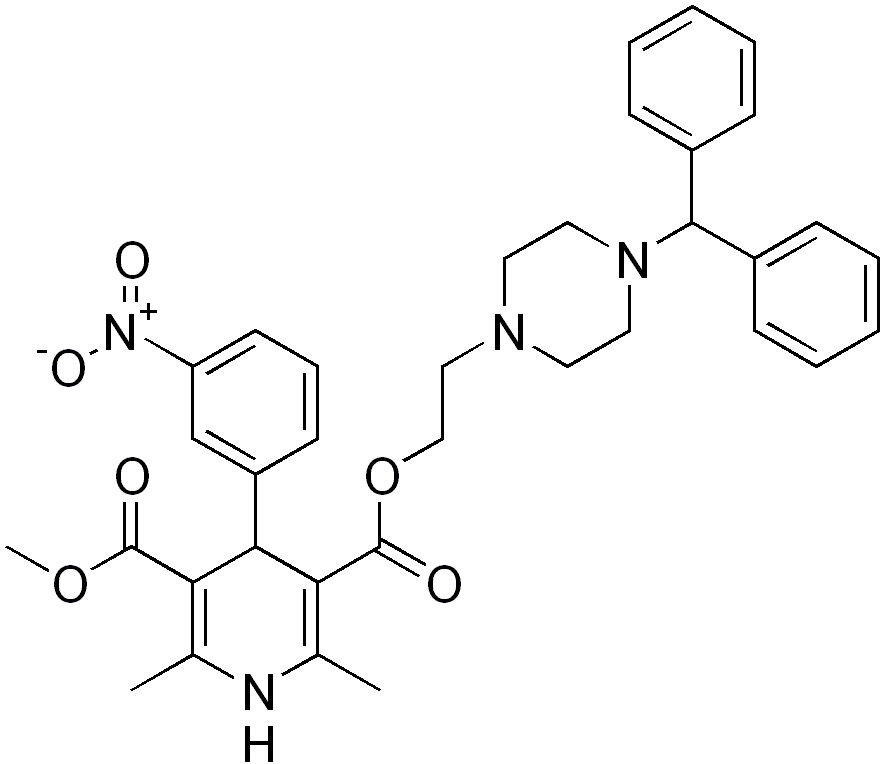
http://www.medchemexpress.com/product_pic/hy-10595.gif


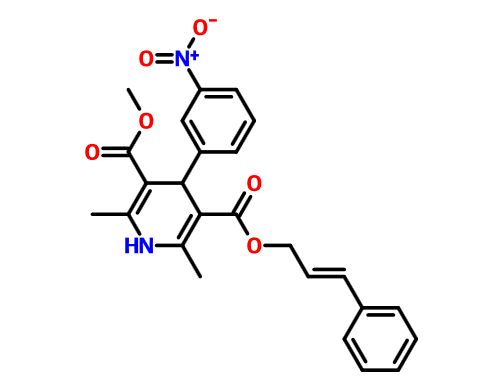
RO-28-1675

  • (2R)-3-Cyclopentyl-2-[4-(methanesulfonyl)phenyl]-N-(thiazol-2-yl)propionamide
  • Ro 028-1675
  • Ro 0281675
  • Ro 28-1675

3-Cyclopentyl-2(R)-[4-(methylsulfonyl)phenyl]-N-(2-thiazolyl)propionamide

MW 378.51 .-70.4 °Conc 0.027 g/100mL; chloroform, 589 nm;  23 °C


Formula C18H22N2O3S2
CAS No 300353-13-3

Glucokinase Activators

Ro 28-1675 (Ro 0281675) is a potent allosteric GK activator with a SC1.5 value of 0.24± 0.0019 uM.

Roche (Innovator)

Hoffmann La Roche

PHASE 1    Type 2  DIABETES,
IC50 value: 0.24± 0.0019 uM (SC1.5) [1]
Target: Glucokinase activator
The R stereoisomer Ro 28-1675 activated GK with a SC1.5 of 0.24 uM, while the S isomer did not activated GK up to 10 uM. Oral administration of Ro 28-1675 (50 mg/Kg) to male C57B1/6J mice caused a statistically significant reduction in fasting glucose levels and improvement in glucose tolerance relative to the vehicle treated animals [1].
Comparison of rat PK parameters indicated that Ro 28-1675 displayed lower clearance and higher oral bioavailability compared to 9a.

Following a single oral dose, Ro 28-1675 reduced fasting and postprandial glucose levels following an OGTT, was well tolerated, and displayed no adverse effects related to drug administration other than hypoglycemia at the maximum dose (400 mg).

RO-28-1675 as glucokinase activator.

Joseph Grimsby et al., of Roche have recently discovered activators of glucokinase that increase kcat and decrease the S0.5 for glucose, and these may offer a treatment for type II diabetes. Glucokinase (GK) plays a key role in whole-body glucose homeostasis by catalyzing the phosphorylation of glucose in cells that express this enzyme, such as pancreatic β cells and hepatocytes.

By screening of a library of 120,000 structurally diverse synthetic compounds, they found one small molecule that increased the enzymatic activity of GK. Chemical optimization of this initial molecule led to the synthesis of RO-28-0450 as a lead GK activator which is a class of antidiabetic agents that act as nonessential, mixed-type GK activators (GKAs) that increase the glucose affinity and maximum velocity (Vmax) of GK. RO-28-0450 is a racemic compound.

Activation of GK was exquisitely sensitive to the chirality of the molecule: The R enantiomer, RO-28-1675, was found to be a potent GKA, whereas the S enantiomer, RO-28-1674, was inactive. RO-28-1675 also reversed the inhibitory action of the human glucokinase regulatory protein (GKRP). The activators binding in a glucokinase regulatory site originally was discovered in patients with persistent hyperinsulinemic hypoglycemi.

The result of RO-28-1675 as a potent small molecule GKA may shed light to the chemical biologists to devise strategy for developing activators. Thus for a success to this end we must focus on highly regulated enzymes, or cooperative enzymes such as glucokinase, where nature has provided binding sites that are designed to modulate catalysis.


SYNTHESIS

Paper

J. Med. Chem., 2010, 53 (9), pp 3618–3625
DOI: 10.1021/jm100039a
Abstract Image

Glucokinase (GK) is a glucose sensor that couples glucose metabolism to insulin release. The important role of GK in maintaining glucose homeostasis is illustrated in patients with GK mutations. In this publication, identification of the hit molecule 1 and its SAR development, which led to the discovery of potent allosteric GK activators 9a and21a, is described. Compound 21a (RO0281675) was used to validate the clinical relevance of targeting GK to treat type 2 diabetes.

Flash chromatography (Merck Silica gel 60, 70-230 mesh, 9/1, 3/1, and then 11/9 hexanes/ethyl acetate) afforded (2R)-3-cyclopentyl-2-(4-methanesulfonylphenyl)-N-thiazol-2-yl-propionamide (2.10 g, 74%) as a white foam.   ….

PATENT

WO 2000058293

http://www.google.com/patents/WO2000058293A2?cl=en


Discovery, Structure−Activity Relationships, Pharmacokinetics, and Efficacy of Glucokinase Activator (2R)-3-Cyclopentyl-2-(4-methanesulfonylphenyl)-N-thiazol-2-yl-propionamide (RO0281675)

J. Med. Chem., 2010, 53 (9), pp 3618–3625   DOI:http://dx.doi.org:/10.1021/jm100039a
Abstract Image
Glucokinase (GK) is a glucose sensor that couples glucose metabolism to insulin release. The important role of GK in maintaining glucose homeostasis is illustrated in patients with GK mutations. In this publication, identification of the hit molecule 1 and its SAR development, which led to the discovery of potent allosteric GK activators 9a and 21a, is described. Compound 21a (RO0281675) was used to validate the clinical relevance of targeting GK to treat type 2 diabetes.

REFERENCES

[1]. Haynes NE, et al. Discovery, structure-activity relationships, pharmacokinetics, and efficacy of glucokinase activator (2R)-3-cyclopentyl-2-(4-methanesulfonylphenyl)-N-thiazol-2-yl-propionamide (RO0281675).

Glucokinase (GK) is a glucose sensor that couples glucose metabolism to insulin release. The important role of GK in maintaining glucose homeostasis is illustrated in patients with GK mutations. In this publication, identification of the hit molecule 1 and its SAR development, which led to the discovery of potent allosteric GK activators 9a and 21a, is described. Compound 21a (RO0281675) was used to validate the clinical relevance of targeting GK to treat type 2 diabetes.

http://www.nature.com/nrd/journal/v8/n5/fig_tab/nrd2850_T2.html

NMR…..http://www.medchemexpress.com/product_pdf/HY-10595/Ro%2028-1675-NMR-HY-10595-13569-2014.pdf

http://www.medchemexpress.com/product_pdf/HY-10595/Ro%2028-1675-Lcms_Ms-HY-10595-13569-2014.pdf

J Grimsby et al. Allosteric Activators of Glucokinase: Potential Role in Diabetes Therapy. Science Signaling 2003, 301(5631), 370-373.
T Kietzmann and GK Ganjam. Glucokinase: old enzyme, new target. Exp. Opin. Ther. Patents. 2005, 15(6), 705-713.

Read Full Post »

Shortened Time for Cell Renewal, Volume 2 (Volume Two: Latest in Genomics Methodologies for Therapeutics: Gene Editing, NGS and BioInformatics, Simulations and the Genome Ontology), Part 2: CRISPR for Gene Editing and DNA Repair

Shortened time for cell renewal

Larry H. Bernstein, MD, FCAP, Curator

LPBI


Accelerated Reprogramming and Gene Editing Protocol Can Make Fixed Cells Much Faster


Simultaneous Reprogramming and Gene Correction of Patient Fibroblasts

Sara E. Howden, John P. Maufort, Bret M. Duffin, Andrew G. Elefanty, Edouard G. Stanley, James A. Thomson
Stem Cell Reports Dec 2015;  5, (6):1109–1118   http://dx.doi.org/10.1016/j.stemcr.2015.10.009
Highlights
  • •Episomal reprogramming system is enhanced by expression of miR302/367
  • •Gene targeting and reprogramming can be combined in a simple one-step procedure
  • •Clonal gene-corrected iPS cell lines can be obtained in as little as 2 weeks


Summary

The derivation of genetically modified induced pluripotent stem (iPS) cells typically involves multiple steps, requiring lengthy cell culture periods, drug selection, and several clonal events. We report the generation of gene-targeted iPS cell lines following a single electroporation of patient-specific fibroblasts using episomal-based reprogramming vectors and the Cas9/CRISPR system. Simultaneous reprogramming and gene targeting was tested and achieved in two independent fibroblast lines with targeting efficiencies of up to 8% of the total iPS cell population. We have successfully targeted the DNMT3B and OCT4 genes with a fluorescent reporter and corrected the disease-causing mutation in both patient fibroblast lines: one derived from an adult with retinitis pigmentosa, the other from an infant with severe combined immunodeficiency. This procedure allows the generation of gene-targeted iPS cell lines with only a single clonal event in as little as 2 weeks and without the need for drug selection, thereby facilitating “seamless” single base-pair changes.

Induced pluripotent stem (iPS) cells, generated by introducing defined factors to reprogram terminally differentiated somatic cells, offer enormous potential for the development of autologous or customized cellular therapies to treat or correct many inherited and acquired diseases (Takahashi et al., 2007, Yu et al., 2007). Complications associated with immunorejection can be avoided through the generation and subsequent disease correction of patient-specific iPS cells, which can be differentiated into relevant cell types for the repopulation and regeneration of a defective tissue or organ. Gene targeting by homologous recombination is the ideal approach for the correction of genetic defects as it enables replacement of the defective allele with a normal functional one without disturbing the remaining genome. The generation of a genetically modified iPS cell line typically involved multiple procedures that required the cells to be in culture for an extensive period, drug selection, and several clonal events (Hockemeyer et al., 2009, Howden et al., 2011, Liu et al., 2011, Zou et al., 2011). In the first step, somatic cells are reprogrammed, and several clones are expanded and characterized. Gene targeting constructs are then introduced, and cells are usually subjected to drug selection to isolate and identify correctly modified iPS cell colonies. Once successfully targeted clones are identified, it is preferable to excise the drug selectable marker, commonly flanked by loxP or FRT sites. Taken together, the multiple steps required for the generation of genetically modified iPS cell lines typically require cells to be in culture for several months, which is not compatible for patients for whom urgent medical intervention is imperative. Furthermore, there is evidence to suggest that increased culture times are associated with undesirable changes in genomic integrity, such as duplications of oncogenic genes (Laurent et al., 2011) and other karyotypic abnormalities (Chen et al., 2008). Here we report that reprogramming and gene targeting can be performed together in a one-step procedure that requires only a single electroporation. Multiple gene-targeted iPS cell clones can be generated from patient cells in as little as 2 weeks, requiring only a single clonal event. The procedure also does not require the use of drug selection and permits the generation of clones that contain “seamless” single base-pair changes, without leaving residual loxP or FRT sites in the host genome.


Large image of Figure 1.

Figure 1

Episomal Reprogramming System Is Enhanced with Inclusion of Plasmid Encoding the miR302/367 Cluster

Reprogramming experiments were performed with and without inclusion of the miR302/367 expression plasmid using a normal male fibroblast line. Data represent an average of three independent experiments ± SD.


We used an enhanced episomal-based reprogramming system to generate iPS cell lines that would eventually be free of vector sequences. In addition to the seven factors (OCT4, SOX2, NANOG, c-MYC, KLF4, LIN28, and the SV40 Large T-Antigen) encoded by the three oriP-based vectors previously reported to induce pluripotency (Yu et al., 2009), we also forced expression of the micro RNA (miR) 302/367 cluster, which is known to facilitate reprogramming and maintenance of pluripotency (Lin et al., 2008, Miyoshi et al., 2011). The inclusion of an additional episomal vector encoding miR 302/367 resulted in a substantial increase (more than 100-fold) in the total number of iPS cell colonies in human fibroblasts (Figure 1). This plasmid was included in all subsequent reprogramming experiments and was necessary to obtain sufficient iPS cell colony numbers when combining gene targeting and reprogramming in a single step.

…….

We have also successfully used our one-step protocol to simultaneously reprogram and genetically correct the disease-causing mutation in the patient fibroblasts, an autosomal dominant C > T transition in exon 42 of the PRPF8gene. This was achieved using a plasmid encoding the Cas9 protein fromS. pyogenes (Mali et al., 2013b), a plasmid encoding a PRPF8-specific sgRNA that binds 33 bp upstream of the disease-causing mutation, and a 184-bp single-stranded oligodeoxynucleotide (ssODN) (Figure 3A). The ssODN was engineered to contain four synonymous mutations to minimize the possibility of Cas9 protein re-cutting following homologous recombination and to aid in the identification of clones that had undergone a gene-targeting event (Figure 3A). Approximately 3 weeks post-transfection, we randomly isolated and expanded a total of 72 iPS cell colonies for further analysis. A PCR product encoding the region of interest was amplified from the genomic DNA of all 72 clones using primers flanking the target site, which was subsequently analyzed by Sanger sequencing. Cas9-induced modification of one or both PRPF8 alleles was observed in 22 (31%) of the clones analyzed, most commonly detected as a nonhomologous end joining (NHEJ) event within the intended cut site. Homologous recombination at the target site could be detected in 6 (8%) clones, as evidenced by the loss of the disease-causing mutation or the presence of one or more synonymous mutations carried by the corrective ssODN (Table 1). Genetic correction of the autosomal dominant patient-specific mutation was observed in 2 clones, while targeting of the wild-type allele was observed in 4 clones. We were unable to determine which allele had undergone gene targeting in 1 clone (P.57) due to a 151-bp deletion spanning the site of the mutation. Surprisingly, 1 clone (P.50) appeared to have undergone bi-allelic homologous recombination, as evidenced by correction of the patient-specific mutation and the presence of ssODN-specific synonymous mutations on both alleles (Figures 3B and 3C). However, this clone also contained a 1-bp deletion approximately 50 bp upstream of the intended site of the Cas9-induced double-stranded break. We hypothesize that this is most likely due to homologous recombination with an incorrectly synthesized ssODN rather than an additional mutation caused by NHEJ, which normally occurs at the site of the double-stranded break.


Table 1Analysis of Gene-Targeted iPS Cell Clones Derived from Patient with Retinitis Pigmentosa
Clone Modification Observed at PRPF8 Target Site (Exon 42)
P.16 no correction of mutation but presence of SM1 and SM2 on mutant allele; wild-type allele unmodified
P.50 one allele contains SMs 1–3; other allele contains SMs 1–4 and 1-bp deletion ≈30 bp upstream of Cas9 target site
P.57 one allele contains SMs 1–3; other allele contains 151-bp deletion (spanning 124 bp downstream and 7 bp upstream of Cas9 target site) and 105-bp insertion
P.71 correction of mutant allele, but no SMs present; wild-type allele has a 2-bp insertion within Cas9 target site
P.72 wild-type allele contains SMs 1–4; mutant allele has 1-bp deletion
P.73 wild-type allele contains SMs 1–3; mutant allele has 2-bp deletion within Cas9 target site

SM, synonymous mutation.


Thumbnail image of Figure 3. Opens large image

http://www.cell.com/cms/attachment/2040890164/2054788036/gr3.jpg

Figure 3

Simultaneous Reprogramming and Genetic Correction of thePRPF8 Gene in Fibroblasts from a Patient with Retinitis Pigmentosa

(A) Schematic diagram of the PRPF8 gene, with mutation in exon 42. The Cas9 target site (red), the patient-specific mutation (blue), and antisense single-stranded DNA template used for gene repair are shown.

(B) Sequencing analysis of exon 42 of the PRPF8 gene in the genomic DNA from uncorrected patient-specific iPS cells. Both wild-type and mutant alleles are shown.

(C) Sequencing analysis of genomic DNA from a single iPS cell clone following successful simultaneous reprogramming and genetic correction of patient-specific fibroblasts. Both alleles appear to have undergone homologous recombination with the corrective ssODN as evidenced by the presence of the ssODN-specific synonymous mutations (SM 1-4) on both alleles. One allele also has a single base-pair deletion, which is most likely caused by an ssODN that was incorrectly synthesized. The location of the patient-specific mutation and synonymous mutations introduced by the repair ssODN are marked by black boxes.


Next we attempted to correct the disease-causing mutation in a fibroblast line isolated from an infant with severe combined immunodeficiency (SCID), caused by mutations in the gene encoding adenosine deaminase (ADA). SCID patients could particularly benefit from a one-step protocol that facilitates the expedited generation of gene-corrected iPS cells because without early intervention, such as a bone marrow transplant, patients typically die within the first 1 to 2 years of life. We first attempted to simultaneously reprogram and target DNMT3B in ADA-SCID fibroblasts and identified one EGFP-expressing colony (0.9%) out of a total of 108 iPS cell colonies (Figure S2). PCR analysis confirmed targeting of theDNMT3B locus (see Figure 2E). We next attempted to simultaneously reprogram and correct one of the disease-causing mutations in the ADA-SCID fibroblasts using our one-step protocol. The fibroblasts were derived from a patient who is a compound heterozygote: one allele has a C > T transition in exon 11 of the ADAgene (1,081C > T), and the second allele has an A > G transition in the 3-prime splice site of intron 3, resulting in a deletion of exon 4 from mature mRNA. We chose to correct the C > T transition in exon 11 using an sgRNA specific to the mutant, but not wild-type, exon 11 sequence of the ADA gene (Figure 4A). We hypothesized that this would minimize Cas9 cutting in both alleles, as seen in the majority of the PRPF8 gene-targeted iPS cell lines, where only 1 out of the 6 clones did not have a second allele modified, either by NHEJ or a second homologous recombination event. To facilitate gene correction we used a 175-bp single-stranded corrective ssODN, which was engineered to contain a single synonymous mutation within the Cas9 target site (Figure 4A). A total of 55 colonies were expanded and screened, with Cas9-induced modification of ADAexon 11 observed in 20 (36%) clones, as determined by Sanger sequencing of a 1.4-kb PCR product amplified from genomic DNA using primers flanking the target site. Gene targeting was detected in 3 (5%) clones, as evidenced by the loss of the disease-causing mutation and the presence of the synonymous mutation carried by the corrective ssODN. Genetic correction of the patient-specific mutation in exon 11 was observed in all three clones, without modification of the second allele, indicating that Cas9 preferentially favored the mutant exon 11 sequence (over wild-type). ……


Thumbnail image of Figure 4. Opens large image

http://www.cell.com/cms/attachment/2040890164/2054788039/gr4.jpg

Figure 4

Simultaneous Reprogramming and Genetic Correction of ADA-SCID Fibroblasts

(A) Schematic diagram of the ADA gene, with mutation in exon 11. The Cas9 target site (red), the patient-specific mutation (blue), and antisense single-stranded DNA template used for gene repair are shown.

(B) Sequencing analysis of exon 11 of the ADA gene in the genomic DNA of an uncorrected and two gene-corrected iPS cell lines derived from ADA-SCID fibroblasts. One of the gene-corrected lines (clone Bb) was also found to carry a G > A transition approximately 35 bp downstream of the intended DNA double-stranded break, and most likely introduced by an incorrectly synthesized ssODN.

(C) Sequencing analysis of the ADA transcript amplified from the cDNA of an uncorrected and two gene-corrected iPS cell lines. The location of the patient-specific mutation, synonymous mutation, and G > A transition introduced by the repair ssODN are marked by black boxes.

……….


We have demonstrated the feasibility of performing reprogramming and gene correction together in a simple one-step procedure that enables the generation of multiple gene-corrected and uncorrected iPS cell lines in as little as 2 weeks, requiring considerably less time and resources compared to conventional multi-step protocols that can take several months to complete. In a therapeutic context this should facilitate transplantation medicine by making gene-corrected cells available to patients in a more timely manner, while potentially minimizing the risks associated with extended cell culture, drug selection, and multiple clonal events. In addition, we anticipate that comparisons between corrected and matched uncorrected control iPS cell lines generated from a single experiment will also be extremely useful for disease modeling and understanding the underlying molecular mechanisms governing disease, because any observed differences between corrected and uncorrected cells can be attributed to the patient-specific mutation rather than differences in genetic background.

However, it is important to note that a number of studies have demonstrated that iPS cell lines derived from skin biopsies typically harbor a unique subset of de novo genetic abnormalities, either in the form of copy-number variation or single base-pair changes (Abyzov et al., 2012, Gore et al., 2011) and that iPS cell lines generated from the same parental line can vary significantly with respect to whole-genome gene expression in the differentiated state (Reinhardt et al., 2013). Nonetheless, it is reasonable to expect that the confounding effects arising from the variations that exist across different iPS cell clones may be minimized by comparing multiple gene-corrected or gene-targeted clones with multiple uncorrected clones. In this regard a consistent difference that is observed exclusively in the corrected versus uncorrected lines can most likely be attributed to the patient-specific mutation rather than variations that may exist from one clone to the next. In the current study we routinely observed targeting efficiencies of > 5%, enabling the generation of multiple gene-targeted and “matched” uncorrected clones from a single experiment.


Read Full Post »

Hybrid lipid bioelectronic membranes

Larry H. Bernstein, MD, FCAP, Curator

LPBI


Hybrid solid-state chips and biological cells integrated at molecular level

Biological ion channels combine with solid-state transistors to create a new kind of hybrid bioelectronics. Imagine chips with dog-like capability to taste and smell, or even recognize specific molecules.
http://www.kurzweilai.net/hybrid-solid-state-chips-and-biological-cells-integrated-at-molecular-level
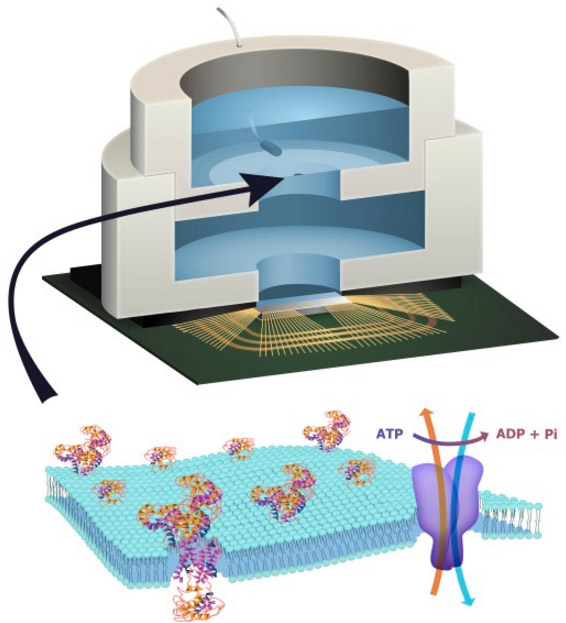
Illustration depicting a biocell attached to a CMOS integrated circuit with a membrane containing sodium-potassium pumps in pores. Energy is stored chemically in ATP molecules. When the energy is released as charged ions (which are then converted to electrons to power the chip at the bottom of the experimental device), the ATP is converted to ADP + inorganic phosphate. (credit: Trevor Finney and Jared Roseman/Columbia Engineering)

Columbia Engineering researchers have combined biological and solid-state components for the first time, opening the door to creating entirely new artificial biosystems.

In this experiment, they used a biological cell to power a conventional solid-state complementary metal-oxide-semiconductor (CMOS) integrated circuit. An artificial lipid bilayer membrane containing adenosine triphosphate (ATP)-powered ion pumps (which provide energy for cells) was used as a source of ions (which were converted to electrons to power the chip).

The study, led by Ken Shepard, Lau Family Professor of Electrical Engineering and professor of biomedical engineering at Columbia Engineering, was published online today (Dec. 7, 2015) in an open-access paper in Nature Communications.

How to build a hybrid biochip

Living systems achieve this functionality with their own version of electronics based on lipid membranes and ion channels and pumps, which act as a kind of “biological transistor.” Charge in the form of ions carry energy and information, and ion channels control the flow of ions across cell membranes.

Solid-state systems, such as those in computers and communication devices, use electrons; their electronic signaling and power are controlled by field-effect transistors.

To build a prototype of their hybrid system, Shepard’s team packaged a CMOS integrated circuit (IC) with an ATP-harvesting “biocell.” In the presence of ATP, the system pumped ions across the membrane, producing an electrical potential (voltage)* that was harvested by the integrated circuit.

“We made a macroscale version of this system, at the scale of several millimeters, to see if it worked,” Shepard notes. “Our results provide new insight into a generalized circuit model, enabling us to determine the conditions to maximize the efficiency of harnessing chemical energy through the action of these ion pumps. We will now be looking at how to scale the system down.”

While other groups have harvested energy from living systems, Shepard and his team are exploring how to do this at the molecular level, isolating just the desired function and interfacing this with electronics. “We don’t need the whole cell,” he explains. “We just grab the component of the cell that’s doing what we want. For this project, we isolated the ATPases because they were the proteins that allowed us to extract energy from ATP.”

The capability of a bomb-sniffing dog, no Alpo required

Next, the researchers plan to go much further, such as recognizing specific molecules and giving chips the potential to taste and smell.

The ability to build a system that combines the power of solid-state electronics with the capabilities of biological components has great promise, they believe. “You need a bomb-sniffing dog now, but if you can take just the part of the dog that is useful — the molecules that are doing the sensing — we wouldn’t need the whole animal,” says Shepard.

The technology could also provide a power source for implanted electronic devices in ATP-rich environments such as inside living cells, the researchers suggest.

*  “In general, integrated circuits, even when operated at the point of minimum energy in subthreshold, consume on the order of 10−2 W mm−2 (or assuming a typical silicon chip thickness of 250 μm, 4 × 10⁻² W mm−3). Typical cells, in contrast, consume on the order of 4 × 10⁻⁶ W mm−3. In the experiment, a typical active power dissipation for the IC circuit was 92.3 nW, and the active average harvesting power was 71.4 fW for the biocell (the discrepancy is managed through duty-cycled operation of the IC).” — Jared M. Roseman et al./Nature Communications


Hybrid integrated biological–solid-state system powered with adenosine triphosphate

Jared M. Roseman, Jianxun Lin, Siddharth Ramakrishnan, Jacob K. Rosenstein & Kenneth L. Shepard
Nature Communications 7 Dec 2015; 6(10070)
     http://dx.doi.org:/10.1038/ncomms10070

There is enormous potential in combining the capabilities of the biological and the solid state to create hybrid engineered systems. While there have been recent efforts to harness power from naturally occurring potentials in living systems in plants and animals to power complementary metal-oxide-semiconductor integrated circuits, here we report the first successful effort to isolate the energetics of an electrogenic ion pump in an engineered in vitro environment to power such an artificial system. An integrated circuit is powered by adenosine triphosphate through the action of Na+/K+ adenosine triphosphatases in an integrated in vitro lipid bilayer membrane. The ion pumps (active in the membrane at numbers exceeding 2 × 106 mm−2) are able to sustain a short-circuit current of 32.6 pA mm−2 and an open-circuit voltage of 78 mV, providing for a maximum power transfer of 1.27 pW mm−2 from a single bilayer. Two series-stacked bilayers provide a voltage sufficient to operate an integrated circuit with a conversion efficiency of chemical to electrical energy of 14.9%.


Figure 1: Fully hybrid biological–solid-state system.


Fully hybrid biological-solid-state system.

http://www.nature.com/ncomms/2015/151207/ncomms10070/images/ncomms10070-f1.jpg

(a) Illustration depicting biocell attached to CMOS integrated circuit. (b) Illustration of membrane in pore containing sodium–potassium pumps. (c) Circuit model of equivalent stacked membranes, =2.1 pA, =98.6 GΩ, =575 GΩ and =75 pF, Ag/AgCl electrode equivalent resistance RWE+RCE<20 kΩ, energy-harvesting capacitor CSTOR=100 nF combined with switch as an impedance transformation network (only one switch necessary due to small duty cycle), and CMOS IC voltage doubler and resistor representing digital switching load. RL represents the four independent ring oscillator loads. (d) Equivalent circuit detail of stacked biocell. (e) Switched-capacitor voltage doubler circuit schematic.


The energetics of living systems are based on electrochemical membrane potentials that are present in cell plasma membranes, the inner membrane of mitochondria, or the thylakoid membrane of chloroplasts1. In the latter two cases, the specific membrane potential is known as the proton-motive force and is used by proton adenosine triphosphate (ATP) synthases to produce ATP. In the former case, Na+/K+-ATPases hydrolyse ATP to maintain the resting potential in most cells.

While there have been recent efforts to harness power from some naturally occurring potentials in living systems that are the result of ion pump action both in plants2 and animals3, 4 to power complementary metal-oxide semiconductor (CMOS) integrated circuits (ICs), this work is the first successful effort to isolate the energetics of an electrogenic ion pump in an engineered in vitroenvironment to power such an artificial system. Prior efforts to harness power from in vitromembrane systems incorporating ion-pumping ATPases5, 6, 7, 8, 9 and light-activated bacteriorhodopsin9, 10, 11 have been limited by difficulty in incorporating these proteins in sufficient quantity to attain measurable current and in achieving sufficiently large membrane resistances to harness these currents. Both problems are solved in this effort to power an IC from ATP in an in vitro environment. The resulting measurements provide new insight into a generalized circuit model, which allows us to determine the conditions to maximize the efficiency of harnessing chemical energy through the action of electrogenic ion pumps.


ATP-powered IC

Figure 1a shows the complete hybrid integrated system, consisting of a CMOS IC packaged with an ATP-harvesting ‘biocell’. The biocell consists of two series-stacked ATPase bearing suspended lipid bilayers with a fluid chamber directly on top of the IC. Series stacking of two membranes is necessary to provide the required start-up voltage for IC and eliminates the need for an external energy source, which is typically required to start circuits from low-voltage supplies2, 3. As shown inFig. 1c, a matching network in the form of a switched capacitor allows the load resistance of the IC to be matched to that presented by the biocell. In principle, the switch S can be implicit. The biocell charges CSTOR until the self start-up voltage, Vstart, is reached. The chip then operates until the biocell voltage drops below the minimum supply voltage for operation, Vmin. Active current draw from the IC stops at this point, allowing the charge to build up again on CSTOR. In our case, however, the IC leakage current exceeds 13.5 nA at Vstart, more than can be provided by the biocell. As a result, an explicit transistor switch and comparator (outside of the IC) are used for this function in the experimental results presented here, which are not powered by the biocell and not included in energy efficiency calculations (see Supplementary Discussion for additional details). The energy from the biocell is used to operate a voltage converter (voltage doubler) and some simple inverter-based ring oscillators in the IC, which receive power from no other sources.

Figure 1: Fully hybrid biological–solid-state system.

http://www.nature.com/ncomms/2015/151207/ncomms10070/images/ncomms10070-f1.jpg


……..   Prior to the addition of ATP, the membrane produces no electrical power and has an Rm of 280 GΩ. A 1.7-pA short-circuit (SC) current (Fig. 2b) through the membrane is observed upon the addition of ATP (final concentration 3 mM) to the cis chamber where functional, properly oriented enzymes generate a net electrogenic pump current. To perform these measurements, currents through each membrane of the biocell are measured using a voltage-clamp amplifier (inset of Fig. 2b) with a gain of 500 GΩ with special efforts taken to compensate amplifier leakage currents. Each ATPase transports three Na+ ions from the cis chamber to the trans chamber and two K+ ions from thetrans chamber to the cis chamber (a net charge movement of one cation) for every molecule of ATP hydrolysed. At a rate of 100 hydrolysis events per second under zero electrical (SC) bias13, this results in an electrogenic current of ~16 aA. The observed SC current corresponds to about 105 active ATPases in the membrane or a concentration of about 2 × 106 mm−2, about 5% of the density of channels occurring naturally in mammalian nerve fibres14. It is expected that half of the channels inserted are inactive because they are oriented incorrectly.

Figure 2: Single-cell biocell characterization.

http://www.nature.com/ncomms/2015/151207/ncomms10070/images_article/ncomms10070-f2.jpg

(a)…Pre-ATP data linear fit (black line) slope yield Rm=280 GΩ. Post ATP data fit to a Boltzmann curve, slope=0.02 V (blue line). Post-ATP linear fit (red line) yields Ip=−1.8 pA and Rp=61.6 GΩ, which corresponds to a per-ATP source resistance of 6.16 × 10¹⁵. The current due to membrane leakage through R_{m} is subtracted in the post-ATP curve…. (b)…


Current–voltage characteristics of the ATPases

Figure 2a shows the complete measured current–voltage (I–V) characteristic of a single ATPase-bearing membrane in the presence of ATP. The current due to membrane leakage through Rm is subtracted in the post-ATP curve. The I–V characteristic fits a Boltzmann sigmoid curve, consistent with sodium–potassium pump currents measured on membrane patches at similar buffer conditions13, 15, 16. This nonlinear behaviour reflects the fact that the full ATPase transport cycle (three Na+ ions from cis to trans and two K+ ions from trans to cis) time increases (the turn-over rate, kATP, decreases) as the membrane potential increases16. No effect on pump current is expected from any ion concentration gradients produced by the action of the ATPases (seeSupplementary Discussion). Using this Boltzmann fit, we can model the biocell as a nonlinear voltage-controlled current source IATPase (inset Fig. 2a), in which the current produced by this source varies as a function of Vm. In the fourth quadrant, where the cell is producing electrical power, this model can be linearized as a Norton equivalent circuit, consisting of a DC current source (Ip) in parallel with a current-limiting resistor (Rp), which acts to limit the current delivered to the load at increasing bias (IATPase~Ip−Vm/Rp). Figure 2c shows the measured and simulated charging of Cm for a single membrane (open-circuited voltage). A custom amplifier with input resistance Rin>10 TΩ was required for this measurement (see Electrical Measurement Methods).


Reconciling operating voltage differences

The electrical characteristics of biological systems and solid-state systems are mismatched in their operating voltages. The minimum operating voltage of solid-state systems is determined by the need for transistors to modulate a Maxwell–Boltzmann (MB) distribution of carriers by several orders of magnitude through the application of a potential that is several multiples of kT/q (where kis Boltzmann’s constant, T is the temperature in degrees Kelvin and q is the elementary charge). Biological systems, while operating under the same MB statistics, have no such constraints for operating ion channels since they are controlled by mechanical (or other conformational) processes rather than through modulation of a potential barrier. To bridge this operating voltage mismatch, the circuit includes a switched-capacitor voltage doubler (Fig. 1d) that is capable of self-startup from voltages as low Vstart=145 mV (~5.5 kT/q) and can be operated continuously from input voltages from as low as Vmin=110 mV (see Supplementary Discussion)…..


Maximizing the efficiency of harvesting energy from ATP

Solid-state systems and biological systems are also mismatched in their operating impedances. In our case, the biocell presents a source impedance, =84.2 GΩ, while the load impedance presented by the complete integrated circuit (including both the voltage converter and ring oscillator loads) is approximately RIC=200 kΩ. (The load impedance, RL, of the ring oscillators alone is 305 kΩ.) This mismatch in source and load impedance is manifest in large differences in power densities. In general, integrated circuits, even when operated at the point of minimum energy in subthreshold, consume on the order of 10−2 W mm−2 (or assuming a typical silicon chip thickness of 250 μm, 4 × 10⁻² W mm−3) (ref. 17). Typical cells, in contrast, consume on the order of 4 × 10⁻⁶ W mm−3 (ref. 18). In our case, a typical active power dissipation for our circuit is 92.3 nW, and the active average harvesting power is 71.4 fW for the biocell. This discrepancy is managed through duty-cycled operation of the IC in which the circuit is largely disabled for long periods of time (Tcharge), integrating up the power onto a storage capacitor (CSTOR), which is then expended in a very brief period of activity (Trun), as shown in Fig. 3a.

The overall efficiency of the system in converting chemical energy to the energy consumed in the load ring oscillator (η) is given by the product of the conversion efficiency of the voltage doubler (ηconverter) and the conversion efficiency of chemical energy to electrical energy in the biocell (ηbiocell), η=ηconverter × ηbiocell. ηconverter is relatively constant over the range of input voltages at ~59%, as determined by various loading test circuits included in the chip design (Supplementary Figs 1–6). ηbiocell, however, varies with transmembrane potential Vm. η is the efficiency in transferring power to the power ring oscillator loads from the ATP harvested by biocell.

…….

To first order, the energy made available to the Na+/K+-ATPase by the hydrolysis of ATP is independent of the chemical or electric potential of the membrane and is given by |ΔGATP|/(qNA), where ΔGATP is the Gibbs free energy change due to the ATP hydrolysis reaction per mole of ATP at given buffer conditions and NA is Avogadro’s number. Since every charge that passes through IATPase corresponds to a single hydrolysis event, we can use two voltage sources in series with IATPase to independently account for the energy expended by the pumps both in moving charge across the electric potential difference and in moving ions across the chemical potential difference. The dependent voltage source Vloss in this branch fixes the voltage across IATPase, and the total power produced by the pump current source is (|ΔGATP|/NA)(NkATP), which is the product of the energy released per molecule of ATP, the number of active ATPases and the ATP turnover rate. The power dissipated in voltage source Vchem models the work performed by the ATPases in transporting ions against a concentration gradient. In the case of the Na+/K+ ATPase,Vchem is given by . The power dissipated in this source is introduced back into the circuit in the power generated by the Nernst independent voltage sources, and . The power dissipated in the dependent voltage source Vloss models any additional power not used to perform chemical or electrical work. ……


Integration of ATP-harvesting ion pumps could provide a means to power future CMOS microsystems scaled to the level of individual cells22. In molecular diagnostics, the integration of pore-forming proteins such as alpha haemolysin23 or MspA porin24 with CMOS electronics is already finding application in DNA sequencing25. Exploiting the large diversity of function available in transmembrane proteins in these hybrid systems could, for example, lead to highly specific sensing platforms for airborne odorants or soluble molecular entities26, 27. Heavily multiplexed platforms could become high-throughput in vitro drug-screening platforms against this diversity of function. In addition, integration of transmembrane proteins with CMOS may become a convenient alternative to fluorescence for coupling to synthetic biological systems28.


Roseman, J. M. et al. Hybrid integrated biological–solid-state system powered with adenosine triphosphate. Nat. Commun. 6:10070      http://dx.doi.org:/10.1038/ncomms10070 (2015).


  • Rottenberg, H. The measurement of membrane potential and deltapH in cells, organelles, and vesicles. Methods Enzymol. 55, 547–569 (1979).
  • Himes, C., Carlson, E., Ricchiuti, R. J., Otis, B. P. & Parviz, B. A. Ultralow voltage nanoelectronics powered directly, and solely, from a tree. IEEE Trans. Nanotechnol. 9, 2–5(2010).
  • Mercier, P. P., Lysaght, A. C., Bandyopadhyay, S., Chandrakasan, A. P. & Stankovic, K. M.Energy extraction from the biologic battery in the inner ear. Nat. Biotechnol. 30, 1240–1243(2012).
  • Halámková, L. et al. Implanted Biofuel Cell Operating in a Living Snail. J. Am. Chem. Soc.134, 5040–5043 (2012).


Read Full Post »

N3xt generation carbon nanotubes, Volume 2 (Volume Two: Latest in Genomics Methodologies for Therapeutics: Gene Editing, NGS and BioInformatics, Simulations and the Genome Ontology), Part 1: Next Generation Sequencing (NGS)

N3xt generation carbon nanotubes

Larry H. Bernstein, MD, FCAP, Curator

LPBI


Skyscraper-style carbon-nanotube chip design ‘boosts electronic performance by factor of a thousand’

http://www.kurzweilai.net/skyscraper-style-carbon-nanotube-chip-design-boosts-electronic-performance-by-factor-of-a-thousand


http://www.kurzweilai.net/images/computing-high-rise-architecture.jpg

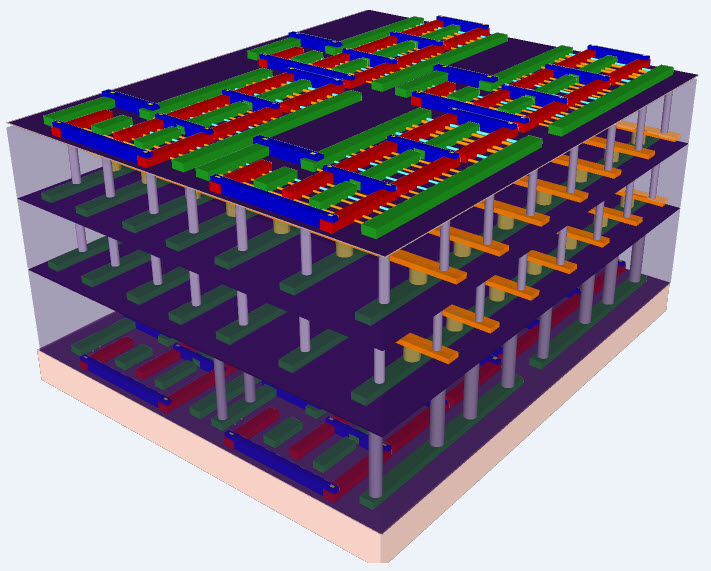
A new revolutionary high-rise architecture for computing (credit: Stanford University)


Researchers at Stanford and three other universities are creating a revolutionary new skyscraper-like high-rise architecture for computing based on carbon nanotube materials instead of silicon.

In Rebooting Computing, a special issue (in press) of the IEEE Computer journal, the team describes its new approach as “Nano-Engineered Computing Systems Technology,” or N3XT.

Suburban-style chip layouts create long commutes and regular traffic jams in electronic circuits, wasting time and energy, they note.

N3XT will break data bottlenecks by integrating processors and memory-like floors in a skyscraper and by connecting these components with millions of “vias,” which play the role of tiny electronic elevators.

The N3XT high-rise approach will move more data, much faster, using far less energy, than would be possible using low-rise circuits, according to the researchers.

Stanford researchers including Associate Professor Subhasish Mitra and Professor H.-S. Philip Wong have “assembled a group of top thinkers and advanced technologies to create a platform that can meet the computing demands of the future,” Mitra says.

“When you combine higher speed with lower energy use, N3XT systems outperform conventional approaches by a factor of a thousand,” Wong claims.

Carbon nanotube transistors

Engineers have previously tried to stack silicon chips but with limited success, the researchers suggest. Fabricating a silicon chip requires temperatures close to 1,800 degrees Fahrenheit, making it extremely challenging to build a silicon chip atop another without damaging the first layer. The current approach to what are called 3-D, or stacked, chips is to construct two silicon chips separately, then stack them and connect them with a few thousand wires.

But conventional 3-D silicon chips are still prone to traffic jams and it takes a lot of energy to push data through what are a relatively few connecting wires.

The N3XT team is taking a radically different approach: building layers of processors and memory directly atop one another, connected by millions of vias that can move more data over shorter distances that traditional wire, using less energy, and immersing computation and memory storage into an electronic super-device.

The key is the use of non-silicon materials that can be fabricated at much lower temperatures than silicon, so that processors can be built on top of memory without the new layer damaging the layer below. As in IBM’s recent chip breakthrough (see “Method to replace silicon with carbon nanotubes developed by IBM Research“), N3XT chips are based on carbon nanotube transistors.

Transistors are fundamental units of a computer processor, the tiny on-off switches that create digital zeroes and ones. CNTs are faster and more energy-efficient than silicon processors, and much thinner. Moreover, in the N3XT architecture, they can be fabricated and placed over and below other layers of memory.

Among the N3XT scholars working at this nexus of computation and memory are Christos Kozyrakis and Eric Pop of Stanford, Jeffrey Bokor and Jan Rabaey of the University of California, Berkeley, Igor Markov of the University of Michigan, and Franz Franchetti and Larry Pileggi of Carnegie Mellon University.

New storage technologies 

Team members also envision using data storage technologies that rely on materials other than silicon. This would allow for the new materials to be manufactured on top of CNTs, using low-temperature fabrication processes.

One such data storage technology is called resistive random-access memory, or RRAM (see “‘Memristors’ based on transparent electronics offer technology of the future“). Resistance slows down electrons, creating a zero, while conductivity allows electrons to flow, creating a one. Tiny jolts of electricity switch RRAM memory cells between these two digital states. N3XT team members are also experimenting with a variety of nanoscale magnetic storage materials.

Just as skyscrapers have ventilation systems, N3XT high-rise chip designs incorporate thermal cooling layers. This work, led by Stanford mechanical engineers Kenneth Goodson and Mehdi Asheghi, ensures that the heat rising from the stacked layers of electronics does not degrade overall system performance.

Mitra and Wong have already demonstrated a working prototype of a high-rise chip. At the International Electron Devices Meeting in December 2014 they unveiled a four-layered chip made up of two layers of RRAM memory sandwiched between two layers of CNTs (see “Stanford engineers invent radical ‘high-rise’ 3D chips“).

In their N3XT paper they ran simulations showing how their high-rise approach was a thousand times more efficient in carrying out many important and highly demanding industrial software applications.


references:

  • M. Aly, M. Gao, G. Hills, C-S Lee, G. Pitner, M. Shulaker, T. Wu, M. Asheghi, J. Bokor, F. Franchetti, K. Goodson, C. Kozyrakis, I. Markov, K. Olukotun, L. Pileggi, E. Pop, J. Rabaey, C. Ré, H.-S.P. Wong and S. Mitra, Energy-Efficient Abundant-Data Computing: The N3XT 1,000X. IEEE Computer, Special Issue on Rebooting Computing, Dec. 2015 (in press)

This is a little off-thread, but it does involve carbon, so this is the only place I can squeeze this prediction in…
The big news tonight is that the lithium batteries in electric skate boards called “hoverboards” are catching on fire.
This is going to take a lot of them off of the market. But…they will rise again when carbon batteries with graphene and CNTs and boron nitride and I don’t know what else make batteries run as cool as these high-rise CNT chips.
In fact, these high-rise CNT chips will most likely be part of the power control and distribution in the N3XT generation of hoverboards.


I am really curious what will be the next computing paradigm. Personally, I see more than one type of computers being used at the same time : neuromorphic, optical, electronic von Neumann nanotube transistors 3D chips, quantum for some purposes and also magnetic storage (memristors).
What is even more interesting, Mr Kurzweil wrote and said that nanotube high-rise computers like described in the article here will be dominant type of computers in the 20s. It may or may not be true.


Oh for sure, Kynareth, the first von Neumann machines will do their work with these processors. But memristors should also be a part of them.
I suspect that high-rise cnt chips will indeed be dominant as soon as they come to market. This will give you the N3XT “Field of Dreams.”
If you build it they will come. As soon as it is produced in mass quantities, everybody will come and beat down the doors to get them.


This is fantastic. I want the next, or the third next gen of this to be a molecularly built up block of circuitry. This article shows advances using the nano-tube connector that has been experimented before, and also the replacement overall in the circuitry. I only suggest that further generation because it resembles the “molybloc circuits”-bricks and tiles of densely packed circuitry, molybloc standing for molecular block circuitry, found in the Honor Harringoton Sci Fi series (David Weber).


Stanford engineers invent radical ‘high-rise’ 3D chips

http://www.kurzweilai.net/stanford-engineers-invent-radical-high-rise-3d-chips

http://www.kurzweilai.net/images/high-rise-chip.jpg

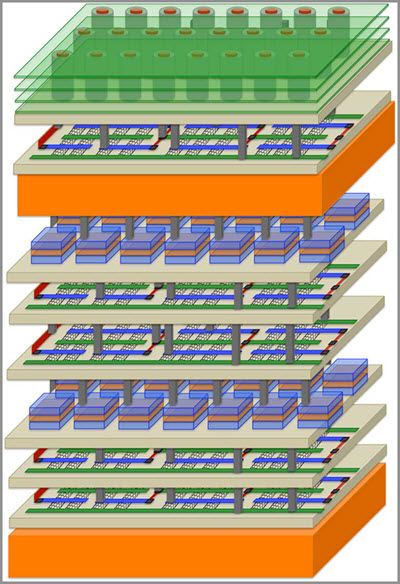
A four-layer prototype high-rise chip built by Stanford engineers. The bottom and top layers are logic transistors. Sandwiched between them are two layers of memory. The vertical tubes are nanoscale electronic “elevators” that connect logic and memory, allowing them to work together efficiently. (Credit: Max Shulaker, Stanford)


Stanford engineers have build 3D “high-rise” chips that could leapfrog the performance of the single-story logic and memory chips on today’s circuit cards, which are subject to frequent traffic jams between logic and memory.

The Stanford approach would attempt to end these jams by building layers of logic atop layers of memory to create a tightly interconnected high-rise chip. Many thousands of nanoscale electronic “elevators” would move data between the layers much faster, using less electricity, than the bottleneck-prone wires connecting single-story logic and memory chips today.

The work is led by Subhasish Mitra, a Stanford associate professor of electrical engineering and of computer science, and H.-S. Philip Wong, the Williard R. and Inez Kerr Bell Professor in Stanford’s School of Engineering. They describe their new high-rise chip architecture in a paper being presented at the IEEE International Electron Devices Meeting Dec. 15–17.

The researchers’ innovation leverages three breakthroughs: a new technology for creating transistors using nanotubes, a new type of computer memory that lends itself to multi-story fabrication, and a technique to build these new logic and memory technologies into high-rise structures in a radically different way than previous efforts to stack chips.

“This research is at an early stage, but our design and fabrication techniques are scalable,” Mitra said. “With further development this architecture could lead to computing performance that is much, much greater than anything available today.” Wong said the prototype chip unveiled at IEDM shows how to put logic and memory together into three-dimensional structures that can be mass-produced.

“Paradigm shift is an overused concept, but here it is appropriate,” Wong said. “With this new architecture, electronics manufacturers could put the power of a supercomputer in your hand.”

Overcoming silicon heat

Researchers have been trying to solve a major problem with chip-generated heat by creating carbon nanotubes (CNT)  transistors. Mitra and Wong are presenting a second paper at the conference showing how their team made some of the highest performance CNT transistors ever built.


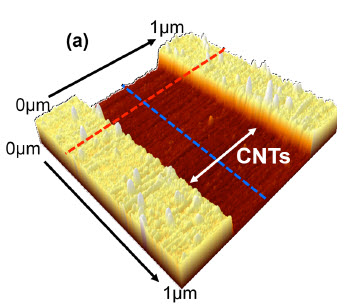
Image of a CNT-based field-effect transistor (FET) using a new high-density process (credit: Mitra/Wong Lab, Stanford)

http://www.kurzweilai.net/images/CNTFET.jpg

Until now the standard process used to grow CNTs did not create sufficient density. The Stanford engineers solved this problem  an ingenious technique. They started by growing CNTs the standard way, on round quartz wafers. Then they created a metal film that acts like a tape. Using this adhesive process, they lifted an entire crop of CNTs off the quartz growth medium and placed it onto a silicon wafer that would become the foundation of their high-rise chip.

They repeated this process 13 times, achieving some of the highest density, highest performance CNTs ever made. Moreover, the Stanford team showed that they could perform this technique on more than one layer of logic as they created their high-rise chip.


RRAM memory

Left: Today’s single-story electronic circuit cards, where logic and memory chips exist as separate structures connected by wires, can get jammed with digital traffic between logic and memory. Right: layers of logic and memory create skyscraper chips where data would move up and down on nanoscale “elevators” to avoid traffic jams. (Credit: Mitra/Wong Lab, Stanford)

Wong is a world leader in a new memory technology called “resistive random access memory” (RRAM) which he unveiled at last year’s IEDM conference.

Unlike today’s memory chips, this new storage technology is not based on silicon, but titanium nitride, hafnium oxide and platinum. This formed a metal/oxide/metal sandwich. Applying electricity to this three-metal sandwich one way causes it to resist the flow of electricity. Reversing the polarity causes the structure to conduct electricity again.

The change from resistive to conductive states is how this new memory technology creates digital zeroes and ones.

RRAM uses less energy than current memory, leading to prolonged battery life in mobile devices. Inventing this new memory technology was also the key to creating the high-rise chip because RRAM can be made at much lower temperatures than silicon memory.

Interconnected layers

Max Shulaker and Tony Wu, Stanford graduate students in electrical engineering, created the techniques behind the four-story high-rise chip unveiled at the conference.

The low-heat process for making RRAM and CNTs enabled them to fabricate each layer of memory directly atop each layer of CNT logic. While making each memory layer, they were able to drill thousands of interconnections into the logic layer below. This multiplicity of connections is what enables the high-rise chip to avoid the traffic jams on conventional circuit cards.

There is no way to tightly interconnect layers using today’s conventional silicon-based logic and memory. That’s because it takes so much heat to build a layer of silicon memory — about 1,000 degrees Celsius — that any attempt to do so would melt the logic below.

Previous efforts to stack silicon chips could save space but not avoid the digital traffic jams. That’s because each layer would have to be built separately and connected by wires — which would still be prone to traffic jams, unlike the nanoscale elevators in the Stanford design.


‘Memristors’ based on transparent electronics offer technology of the future

Memristors are faster, smaller, and use less power than non-volatile flash memory

Transparent electronics (pioneered at Oregon State University) may find one of their newest applications as a next-generation replacement for some uses of non-volatile flash memory, a multi-billion dollar technology nearing its limit of small size and information storage capacity.

Researchers at OSU have confirmed that zinc tin oxide, an inexpensive and environmentally benign compound,  could provide a new, transparent technology where computer memory is based on resistance, instead of an electron charge.

This resistive random access memory, or RRAM, is referred to by some researchers as a “memristor.” Products using this approach could become even smaller, faster and cheaper than the silicon transistors that have revolutionized modern electronics — and transparent as well.

Transparent electronics offer potential for innovative products that don’t yet exist, like information displayed on an automobile windshield, or surfing the web on the glass top of a coffee table.

“Flash memory has taken us a long way with its very small size and low price,” said John Conley, a professor in the OSU School of Electrical Engineering and Computer Science. “But it’s nearing the end of its potential, and memristors are a leading candidate to continue performance improvements.”

Memristors: faster than flash  

Memristors have a simple structure, are able to program and erase information rapidly, and consume little power. They accomplish a function similar to transistor-based flash memory, but with a different approach. Whereas traditional flash memory stores information with an electrical charge, RRAM accomplishes this with electrical resistance. Like flash, it can store information as long as it’s needed.

Flash memory computer chips are ubiquitous in almost all modern electronic products, ranging from cell phones and computers to video games and flat panel televisions.

Thin-film transistors that control liquid crystal displays

Some of the best opportunities for these new amorphous oxide semiconductors are not so much for memory chips, but with thin-film, flat panel displays, researchers say. Private industry has already shown considerable interest in using them for the thin-film transistors that control liquid crystal displays, and one compound approaching commercialization is indium gallium zinc oxide.

But indium and gallium are getting increasingly expensive, and zinc tin oxide — also a transparent compound — appears to offer good performance with lower cost materials. The new research also shows that zinc tin oxide can be used not only for thin-film transistors, but also for memristive memory, Conley said, an important factor in its commercial application.

More work is needed to understand the basic physics and electrical properties of the new compounds, researchers said.

This research was supported by the U.S. Office of Naval Research, the National Science Foundation and the Oregon Nanoscience and Microtechnologies Institute.


Resistive switching in zinc–tin-oxide

Santosh Muralia, Jaana S. Rajachidambaramb, Seung-Yeol Hanb, Chih-Hung Changb, Gregory S. Hermanb, John F. Conley Jr.a,

Bipolar resistive switching is demonstrated in the amorphous oxide semiconductor zinc–tin-oxide (ZTO). A gradual forming process produces improved switching uniformity. Al/ZTO/Pt crossbar devices show switching ratios greater than 103, long retention times, and good endurance. The resistive switching in these devices is consistent with a combined filamentary/interfacial mechanism. Overall, ZTO shows great potential as a low cost material for embedding memristive memory with thin film transistor logic for large area electronics.


Highlights

► We present the first report of resistive switching in zinc–tin-oxide (ZTO). ► ZTO is the leading alternative material to IGZO for TFTs for LCDs. ► ZTO has an advantage over IGZO of lower cost due to the absence of In and Ga. ► Al/ZTO/Pt crossbar RRAM devices show switching ratios greater than 103. ► ZTO shows promise for embedding RRAM with TFT logic for large area electronics.

Memristor; RRAM; Resistive switching; Amorphous oxide semiconductors; Transparent electronics; Zinc–tin-oxide

Plot of log|current| vs. top electrode voltage for a 50μm×50μm device with an ...

http://ars.els-cdn.com/content/thumbimage/1-s2.0-S0038110112002304-gr1.sml


Method to replace silicon with carbon nanotubes developed by IBM Research

Could work down to the 1.8 nanometer node in the future
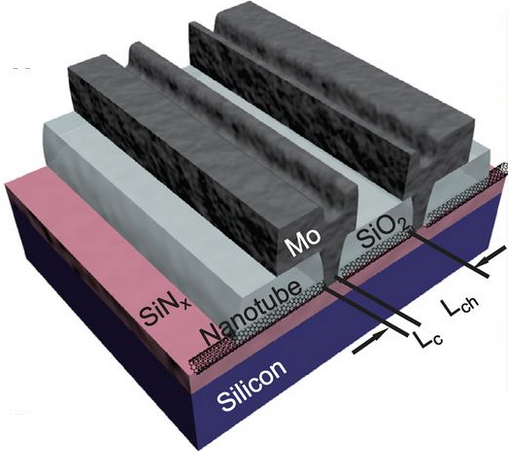
Schematic of a set of molybdenum (M0) end-contacted nanotube transistors (credit: Qing Cao et al./Science)

IBM Research has announced a “major engineering breakthrough” that could lead to carbon nanotubes replacing silicon transistors in future computing technologies.

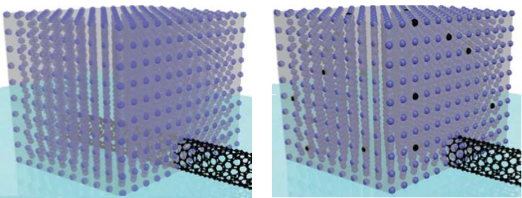
As transistors shrink in size, electrical resistance increases within the contacts, which impedes performance. So IBM researchers invented a metallurgical process similar to microscopic welding that chemically binds the contact’s metal (molybdenum) atoms to the carbon atoms at the ends of nanotubes.

The new method promises to shrink transistor contacts without reducing performance of carbon-nanotube devices, opening a pathway to dramatically faster, smaller, and more powerful computer chips beyond the capabilities of traditional silicon semiconductors.

“This is the kind of breakthrough that we’re committed to making at IBM Research via our $3 billion investment over 5 years in research and development programs aimed a pushing the limits of chip technology,” said Dario Gil, VP, Science & Technology, IBM Research. “Our aim is to help IBM produce high-performance systems capable of handling the extreme demands of new data analytics and cognitive computing applications.”

The development was reported today in the October 2 issue of the journal Science.


Overcoming contact resistance

http://www.kurzweilai.net/images/SWNT-transistor-contacts.jpg

Schematic of carbon nanotube transistor contacts. Left: High-resistance side-bonded contact, where the single-wall nanotube (SWNT) (black tube) is partially covered by the metal molybdenum (Mo) (purple dots). Right: low-resistance end-bonded contact, where the SWNT is attached to the molybdenum electrode through carbide bonds, while the carbon atoms (black dots) from the originally covered portion of the SWNT uniformly diffuse out into the Mo electrode (credit: Qing Cao et al./Science)


The new “end-bonded contact scheme” allows carbon-nanotube contacts to be shrunken down to below 10 nanometers without deteriorating performance. IBM says the scheme could overcome contact resistance challenges all the way to the 1.8 nanometer node and replace silicon with carbon nanotubes.

Silicon transistors have been made smaller year after year, but they are approaching a point of physical limitation. With Moore’s Law running out of steam, shrinking the size of the transistor — including the channels and contacts — without compromising performance has been a challenge for researchers for decades.


http://www.kurzweilai.net/images/SWCNT.jpg

Single wall carbon nanotube (credit: IBM)


IBM has previously shown that carbon nanotube transistors can operate as excellent switches at channel dimensions of less than ten nanometers, which is less than half the size of today’s leading silicon technology. Electrons in carbon transistors can move more easily than in silicon-based devices and use less power.

Carbon nanotubes are also flexible and transparent, making them useful for flexible and stretchable electronics or sensors embedded in wearables.

IBM acknowledges that several major manufacturing challenges still stand in the way of commercial devices based on nanotube transistors.

Earlier this summer, IBM unveiled the first 7 nanometer node silicon test chip, pushing the limits of silicon technologies.

END-BONDED CONTACTS FOR CARBON NANOTUBE TRANSISTORS WITH LOW, SIZE-INDEPENDENT RESISTANCE

Science 2 Oct 2015; 350(6256):68–72      http://dx.doi.org:/10.1126/science.aac8006

Moving beyond the limits of silicon transistors requires both a high-performance channel and high-quality electrical contacts. Carbon nanotubes provide high-performance channels below 10 nanometers, but as with silicon, the increase in contact resistance with decreasing size becomes a major performance roadblock. We report a single-walled carbon nanotube (SWNT) transistor technology with an end-bonded contact scheme that leads to size-independent contact resistance to overcome the scaling limits of conventional side-bonded or planar contact schemes. A high-performance SWNT transistor was fabricated with a sub–10-nanometer contact length, showing a device resistance below 36 kilohms and on-current above 15 microampere per tube. The p-type end-bonded contact, formed through the reaction of molybdenum with the SWNT to form carbide, also exhibited no Schottky barrier. This strategy promises high-performance SWNT transistors, enabling future ultimately scaled device technologies.


Read Full Post »

3-D videogames boost memory

Larry H. Bernstein, MD, FCAP, Curator

LPBI


Playing 3-D video games can boost memory formation

http://www.kurzweilai.net/playing-3-d-video-games-can-boost-memory-formation

Video games used in the experiment : screenshot of 2-D Angry Birds (left) and Super Mario 3D World (right) (credit: Gregory D. Clemenson and Craig E.L. Stark/The Journal of Neuroscience)

http://www.kurzweilai.net/images/2D-vs-3D-video-games.jpg


Playing three-dimensional video games can boost the formation of memories, especially for people who lose memory as they age or suffer from dementia, according to University of California, Irvine (UCI) neurobiologists.

Craig Stark and Dane Clemenson of UCI’s Center for the Neurobiology of Learning & Memory recruited non-gamer college students to play either a video game with a passive, two-dimensional environment (“Angry Birds”) or one with an intricate, 3-D setting (“Super Mario 3D World”) for 30 minutes per day over two weeks.

Before and after the two-week period, the students took memory tests that engaged the brain’s hippocampus, the region associated with complex learning and memory. They were given a series of pictures of everyday objects to study. Then they were shown images of the same objects, new ones, and others that differed slightly from the original items and asked to categorize them.

Students playing the 3-D video game improved their scores on the memory test by about 12 percent, the same amount it normally decreases between the ages of 45 and 70, while the 2-D gamers did not improve.


https://youtu.be/t1YfgMVhhdA

UC Irvine | 3D Video Games and Memory – UC Irvine


Role of the hippocampus

Recognition of the slightly altered images requires the hippocampus, Stark said, and his earlier research had demonstrated that the ability to do this clearly declines with age. This is a large part of why it’s so difficult to learn new names or remember where you put your keys as you get older.

In previous studies on rodents, postdoctoral scholar Clemenson and others showed that exploring the environment resulted in the growth of new neurons that became entrenched in the hippocampus’ memory circuit and increased neuronal signaling networks. Stark noted some commonalities between the 3-D game the humans played and the environment the rodents explored — qualities lacking in the 2-D game. “First, the 3-D games have … a lot more spatial information in there to explore. Second, they’re much more complex, with a lot more information to learn,” Stark noted.

Stark added that it’s unclear whether the overall amount of information and complexity in the 3-D game or the spatial relationships and exploration is stimulating the hippocampus. “This is one question we’re following up on,” he said.


Myths of “brain training”

“Results from this study add to the existing literature that playing video games may provide meaningful stimulation to the brain. However, it is important to be cautious when generalizing these results to other instances. Recently, 70 neuroscientists from universities and institutions around the world published a letter discussing the myths of “brain training” (Max Planck Institute for Human Development/Stanford Center on Longevity, 2014. A consensus on the brain training industry from the scientific community. Stanford, CA: Stanford Center on Longevity).

“In contrast to typical brain training, typical video games are not created with specific cognitive processes in mind but rather designed to captivate and immerse the user into charactersand adventure. Rather than isolate single brain processes, modern video games can naturally draw on or require many cognitive processes, including visual, spatial, emotional, motivational, attentional, critical thinking, problem solving, and working memory. It’s quite possible that by explicitly avoiding a narrow focus on a single … cognitive domain and by more closely paralleling natural experience, immersive video games may be better suited to provide enriching experiences that translate into functional gains.”

— Gregory D. Clemenson and Craig E.L. Stark. Virtual Environmental Enrichment through Video Games Improves Hippocampal-Associated Memory. The Journal of Neuroscience.


The next step is to determine if environmental enrichment — either through 3-D video games or real-world exploration experiences — can reverse the hippocampal-dependent cognitive deficits present in older populations.

“Can we use this video game approach to help improve hippocampus functioning?” Stark asked. “It’s often suggested that an active, engaged lifestyle can be a real factor in stemming cognitive aging. While we can’t all travel the world on vacation, we can do many other things to keep us cognitively engaged and active. Video games may be a nice, viable route.”

The research is described in a paper published today (Dec. 9) in The Journal of Neuroscience and is funded by a $300,000 Dana Foundation grant.


Virtual Environmental Enrichment through Video Games Improves Hippocampal-Associated Memory

Gregory D. Clemenson and Craig E.L. Stark
The Journal of Neuroscience, 9 Dec 2015, 35(49):16116-16125;      http://dx.doi.org:/10.1523/JNEUROSCI.2580-15.2015


The positive effects of environmental enrichment and their neural bases have been studied extensively in the rodent (van Praag et al., 2000). For example, simply modifying an animal’s living environment to promote sensory stimulation can lead to (but is not limited to) enhancements in hippocampal cognition and neuroplasticity and can alleviate hippocampal cognitive deficits associated with neurodegenerative diseases and aging. We are interested in whether these manipulations that successfully enhance cognition (or mitigate cognitive decline) have similar influences on humans. Although there are many “enriching” aspects to daily life, we are constantly adapting to new experiences and situations within our own environment on a daily basis. Here, we hypothesize that the exploration of the vast and visually stimulating virtual environments within video games is a human correlate of environmental enrichment. We show that video gamers who specifically favor complex 3D video games performed better on a demanding recognition memory task that assesses participants’ ability to discriminate highly similar lure items from repeated items. In addition, after 2 weeks of training on the 3D video game Super Mario 3D World, naive video gamers showed improved mnemonic discrimination ability and improvements on a virtual water maze task. Two control conditions (passive and training in a 2D game, Angry Birds), showed no such improvements. Furthermore, individual performance in both hippocampal-associated behaviors correlated with performance in Super Mario but not Angry Birds, suggesting that how individuals explored the virtual environment may influence hippocampal behavior.

SIGNIFICANCE STATEMENT The hippocampus has long been associated with episodic memory and is commonly thought to rely on neuroplasticity to adapt to the ever-changing environment. In animals, it is well understood that exposing animals to a more stimulating environment, known as environmental enrichment, can stimulate neuroplasticity and improve hippocampal function and performance on hippocampally mediated memory tasks. Here, we suggest that the exploration of vast and visually stimulating environments within modern-day video games can act as a human correlate of environmental enrichment. Training naive video gamers in a rich 3D, but not 2D, video game, resulted in a significant improvement in hippocampus-associated cognition using several behavioral measures. Our results suggest that modern day video games may provide meaningful stimulation to the human hippocampus.


I enjoyed reading the Stanford “consensus on brain training” letter.
http://longevity3.stanford.edu/blog/2014/10/15/the-consensus-on-the-brain-training-industry-from-the-scientific-community-2/

One quote stood out right away about “brain games”: “… In fact, the notion that performance on a single task cannot stand in for an entire ability is a cornerstone of scientific psychology …”

But playing a challenging 3-D video game or exploring a virtual reality like Second Life is far more “educational” and experiential, involving all sorts of cognitive (and, for that matter, psycho-motor and affective) skill domains. Good for the brain and often good for the spirit too.


A Consensus on the Brain Training Industry from the Scientific Community

As the baby boomers enter their golden years with mounting concerns about the potential loss of cognitive abilities, markets are responding with products promising to allay anxieties about potential decline. Computer-based cognitive-training software –popularly known as brain games– claim a growing share of the marketplace. The promotion of these products reassures and entices a worried public.

Consumers are told that playing brain games will make them smarter, more alert, and able to learn faster and better. In other words, the promise is that if you adhere to a prescribed regimen of cognitive exercise, you will reduce cognitive slowing and forgetfulness, and will fundamentally improve your mind and brain.

brain training

http://longevity3.stanford.edu/wp-content/uploads/2014/10/iStock_000018505398XSmall-347×320-copy-300×276.jpg


It is customary for advertising to highlight the benefits and overstate potential advantages of their products. In the brain-game market, advertisements also reassure consumers that claims and promises are based on solid scientific evidence, as the games are “designed by neuroscientists” at top universities and research centers. Some companies present lists of credentialed scientific consultants and keep registries of scientific studies pertinent to cognitive training. Often, however, the cited research is only tangentially related to the scientific claims of the company, and to the games they sell. In addition, even published peer-reviewed studies merit critical evaluation. A prudent approach calls for integrating findings over a body of research rather than relying on single studies that often include only a small number of participants.

The Stanford Center on Longevity and the Berlin Max Planck Institute for Human Development gathered many of the world’s leading cognitive psychologists and neuroscientists –people who have dedicated their careers to studying the aging mind and brain– to share their views about brain games and offer a consensus report to the public. What do expert scientists think about these claims and promises? Do they have specific recommendations for effective ways to boost cognition in healthy, older adults? Are there merits to the claimed benefits of the brain games and if so, do older adults benefit from brain-game learning in the same ways younger people do? How large are the gains associated with computer-based cognitive exercises? Are the gains restricted to specific skills or does general cognitive aptitude improve? How does playing games compare with other proposed means of mitigating age-related declines, such as physical activity and exercise, meditation, or social engagement?

The search for effective means of mitigating or postponing age-related cognitive declines has taught most of us to recognize the enormous complexity of the subject matter. Like many challenging scientific topics, this is a devil of many details. The consensus of the group is that claims promoting brain games are frequently exaggerated and at times misleading. Cognitive training produces statistically significant improvement in practiced skills that sometimes extends to improvement on other cognitive tasks administered in the lab. In some studies, such gains endure, while other reports document dissipation over time. In commercial promotion, these small, narrow, and fleeting advances are often billed as general and lasting improvements of mind and brain. The aggressive advertising entices consumers to spend money on products and to take up new behaviors, such as gaming, based on these exaggerated claims. As frequently happens, initial findings, based on small samples, generate understandable excitement by suggesting that some brain games may enhance specific aspects of behavior and even alter related brain structures and functions. However, as the findings accumulate, compelling evidence of general and enduring positive effects on the way people’s minds and brains age has remained elusive.

Mind_circle copyThese conclusions do not mean that the brain does not remain malleable, even in old age. Any mentally effortful new experience, such as learning a language, acquiring a motor skill, navigating in a new environment, and, yes, playing commercially available computer games, will produce changes in those neural systems that support acquisition of the new skill. For example, there may be an increase in the number of synapses, the number of neurons and supporting cells, or a strengthening of the connections among them. This type of brain plasticity is possible throughout the life span, though younger brains seem to have an advantage over the older ones. It would be appropriate to conclude from such work that the potential to learn new skills remains intact throughout the life span. However at this point it is not appropriate to conclude that training-induced changes go significantly beyond the learned skills, that they affect broad abilities with real-world relevance, or that they generally promote “brain health”.

As we take a closer look at the evidence on brain games, one issue needs to be kept in mind: It is not sufficient to test the hypothesis of training-induced benefits against the assumption that training brings no performance increases at all. Rather, we need to establish that observed benefits are not easily and more parsimoniously explained by factors that are long known to benefit performance, such as the acquisition of new strategies or changes in motivation. It is well established, for example, that improvements on a particular memory task often result from subtle changes instrategy thatreflect improvement in managing the demands of that particular task. Such improvement is rewarding for players (the fun factor) but does not imply a general improvement in memory. In fact, the notion that performance on a single task cannot stand in for an entire ability is a cornerstone of scientific psychology. Claims about brain games often ignore this tenet. In psychology, it is good scientific practice to combine information provided by many tasks to generate an overall index representing a given ability. According to the American Psychological Association, newly developed psychological tests must meet specific psychometric standards, including reliability and validity. The same standards should be extended into the brain game industry, but this is not the state of affairs today.

To date, there is little evidence that playing brain games improves underlying broad cognitive abilities, or that it enables one to better navigate a complex realm of everyday life. Some intriguing isolated reports do inspire additional research, however. For instance, some studies suggest that both non-computerized reasoning and computerized speed-of-processing training are associated with improved driving in older adults and a reduction in the number of accidents. Another study revealed, for a sample of younger adults, that 100 days of practicing 12 different computerized cognitive tasks resulted in small general improvements in the cognitive abilities of reasoning and episodic memory, some of which were maintained over a period of two years. In other studies, older adults have reported that they felt better about everyday functioning after cognitive training, but no objective measures supported that impression. Additional systematic research is needed to replicate, clarify, consolidate, and expand such results. To be fully credible, an empirical test of the usefulness of brain games needs to address the following questions. Does the improvement encompass a broad array of tasks that constitute a particular ability, or does it just reflect the acquisition of specific skills? Do the gains persist for a reasonable amount of time? Are the positive changes noticed in real life indices of cognitive health? What role do motivation and expectations play in bringing about improvements in cognition when they are observed?

iStock_000000218284XSmall-180x180 copyIn a balanced evaluation of brain games, we also need to keep in mind opportunity costs. Time spent playing the games is time not spent reading, socializing, gardening, exercising, or engaging in many other activities that may benefit cognitive and physical health of older adults. Given that the effects of playing the games tend to be task-specific, it may be advisable to train an activity that by itself comes with benefits for everyday life. Another drawback of publicizing computer games as a fix to deteriorating cognitive performance is that it diverts attention and resources from prevention efforts. The promise of a magic bullet detracts from the message that cognitive vigor in old age, to the extent that it can be influenced by the lives we live, reflects the long-term effects of a healthy and active lifestyle.

We also must keep in mind that studies reporting positive effects of brain games on cognition are more likely to be published than studies with null results –the so-called “file drawer effect”– such that even the available evidence is likely to draw an overly positive picture of the true state of affairs. Statistical methods such meta-analysis, which integrates the results of many studies in a given field of inquiry, allow estimation of effect magnitude as well as the likelihood of the file-drawer effect. While some meta-analyses report small positive effects of training on cognition, others note substantial disparities in methodological rigor among the studies that cast doubt on any firm conclusion. Further, the problems that haunt individual studies do not simply disappear when results from such studies are summarized in a meta-analysis. In particular, the practice of assessing specific tests rather than broader assays of ability is just as problematic on the level of meta-analytic integration as it is on the level of individual studies.

In summary, research on aging has shown that the human mind is malleable throughout life span. In developed countries around the world, later-born cohorts live longer and reach old age with higher levels of cognitive functioning than those who were born in earlier times. When researchers follow people across their adult lives, they find that those who live cognitively active, socially connected lives and maintain healthy lifestyles are less likely to suffer debilitating illness and early cognitive decline in their golden years than their sedentary, cognitively and socially disengaged counterparts. The goal of research on the effectiveness of computer-based cognitive exercise is to provide experimental evidence to support or qualify these observations. Some of the initial results are promising and make further research highly desirable. However, at present, these findings do not provide a sound basis for the claims made by commercial companies selling brain games. Many scientists cringe at exuberant advertisements claiming improvements in the speed and efficiency of cognitive processing and dramatic gains in “intelligence”, in particular when these appear in otherwise trusted news sources. In the judgment of the signatories below, exaggerated and misleading claims exploit the anxiety of adults facing old age for commercial purposes. Perhaps the most pernicious claim, devoid of any scientifically credible evidence, is that brain games prevent or reverse Alzheimer’s disease.

In closing, we offer five recommendations. Some of these recommendations reflect experimental findings in human populations, whereas others are based on a synthesis of correlational evidence in humans and mechanistic knowledge about risks and protective factors.

  • Much more research needs to be done before we understand whether and what types of challenges and engagements benefit cognitive functioning in everyday life. In the absence of clear evidence, the recommendation of the group, based largely on correlational findings, is that individuals lead physically active, intellectually challenging, and socially engaged lives, in ways that work for them. Before investing time and money on brain games, consider what economists call opportunity costs: If an hour spent doing solo software drills is an hour not spent hiking, learning Italian, making a new recipe, or playing with your grandchildren, it may not be worth it. But if it replaces time spent in a sedentary state, like watching television, the choice may make more sense for you.
  • Physical exercise is a moderately effective way to improve general health, including brain fitness. Scientists have found that regular aerobic exercise increases blood flow to the brain, and helps to support formation of new neural and vascular connections. Physical exercise has been shown to improve attention, reasoning, and components of memory. All said, one can expect small but noticeable gains in cognitive performance, or attenuation of loss, from taking up aerobic exercise training.
  • A single study, conducted by researchers with financial interests in the product, or one quote from a scientist advocating the product, is not enough to assume that a game has been rigorously examined. Findings need to be replicated at multiple sites, based on studies conducted by independent researchers who are funded by independent sources. Moreover, participants of training programs should show evidence of significant advantage over a comparison group that does not receive the treatment but is otherwise treated exactly the same as the trained group.
  • No studies have demonstrated that playing brain games cures or prevents Alzheimer’s disease or other forms of dementia.
  • Do not expect that cognitively challenging activities will work like one-shot treatments or vaccines; there is little evidence that you can do something once (or even for a concentrated period) and be inoculated against the effects of aging in an enduring way. In all likelihood, gains won’t last long after you stop the challenge.

In summary: We object to the claim that brain games offer consumers a scientifically grounded avenue to reduce or reverse cognitive decline when there is no compelling scientific evidence to date that they do. The promise of a magic bullet detracts from the best evidence to date, which is that cognitive health in old age reflects the long-term effects of healthy, engaged lifestyles. In the judgment of the signatories, exaggerated and misleading claims exploit the anxiety of older adults about impending cognitive decline. We encourage continued careful research and validation in this field.


Read Full Post »

Serum Folate and Homocysteine, Mood Disorders, and Aging

Larry H. Bernstein, MD, FCAP, Curator

LPBI


Dietary Folate and the Risk of Depression in Finnish MiddleAged Men

Tolmunen T, et al.
PSYCHOTHER AND PSYCHOSOM · OCT 2004; 73:334-339    DOI: http://dx.doi.org:/10.1159/000080385


Serum Folate, Vitamin B-12, and Homocysteine and Their Association With Depressive Symptoms Among U.S. Adults

M.A. BEYDOUN, M.R. SHROFF, H.A. BEYDOUN AND A.B. ZONDERMAN
PSYCHOSOM MED · NOV 2010;             DOI: http://dx.doi.org:/10.1097/PSY.0b013e3181f61863

Objective: To examine, in a nationally representative sample of U.S. adults, the associations of serum folate, vitamin B-12, and total homocysteine (tHcy) levels with depressive symptoms. Several nutritional and physiological factors have been linked to depression in adults, including low folate and vitamin B-12 and elevated tHcy levels.
Methods: Data on U.S. adults (age, 20–85 years; n 2524) from the National Health and Nutrition Examination Survey during the period 2005 to 2006 were used. Depressive symptoms were measured with the Patient Health Questionnaire (PHQ), and elevated symptoms were defined as a PHQ total score of 10. Serum folate, vitamin B-12, and tHcy were mainly expressed as tertiles. Multiple ordinary least square (OLS), logistic, and zero-inflated Poisson regression models were conducted in the main analysis.
Results: Overall, mean PHQ score was significantly higher among women compared with men. Elevated depressive symptoms (PHQ score of 10) were inversely associated with folate status, particularly among women (fully adjusted odds ratio [tertiles T3 versus T1] 0.37; 95% confidence interval, 0.17–0.86), but not significantly related to tHcy or vitamin B-12. No interaction was noted between the three exposures in affecting depressive symptoms. In older adults (50 years) and both sexes combined, tHcy was positively associated with elevated depressive symptoms (fully adjusted odds ratio [tertiles T2 versus T1] 3.01; 95% confidence interval, 1.01–9.03), although no significant dose-response relationship was found. Conclusions: Future interventions to improve mental health outcomes among U.S. adults should take into account dietary and other factors that would increase levels of serum folate.
Key words: depression, folate, vitamin B-12, homocysteine, adults.


Relationship of homocysteine, folic acid and vitamin B12 depression in a middle-aged community sample

P.S. SACHDEV, et al.   PSYCHOL MED · MAY 2005;   35, 529–538         http://dx.doi.org: /10.1017/S0033291704003721 

Background. Case control studies have supported a relationship between low folic acid and vitamin B12 and high homocysteine levels as possible predictors of depression. The results from epidemiological studies are mixed and largely from elderly populations.
Method. A random subsample of 412 persons aged 60–64 years from a larger community sample underwent psychiatric and physical assessments, and brain MRI scans. Subjects were assessed using the PRIME-MD Patient Health Questionnaire for syndromal depression and severity of depressive symptoms. Blood measures included serum folic acid, vitamin B12, homocysteine and creatinine levels, and total antioxidant capacity. MRI scans were quantified for brain atrophy, subcortical atrophy, and periventricular and deep white-matter hyperintensity on T2-weighted imaging.
Results. Being in the lowest quartile of homocysteine was associated with fewer depressive symptoms, after adjusting for sex, physical health, smoking, creatinine, folic acid and B12 levels. Being in the lowest quartile of folic acid was associated with increased depressive symptoms, after adjusting for confounding factors, but adjustment for homocysteine reduced the incidence rate ratio for folic acid to a marginal level. Vitamin B12 levels did not have a significant association with depressive symptoms. While white-matter hyperintensities had significant correlations with both homocysteine and depressive symptoms, the brain measures and total antioxidant capacity did not emerge as significant mediating variables. Conclusions. Low folic acid and high homocysteine, but not low vitamin B12 levels, are correlates of depressive symptoms in community-dwelling middle-aged individuals. The effects of folic acid and homocysteine are overlapping but distinct.


Association of folate intake with the occurrence of depressive episodes in middle-aged French men and women

P. Astorg, et al.    BRIT J  NUTR · AUG 2008; 100, 183–18       http://dx.doi.org:/10.1017/S0007114507873612

A low folate intake or a low folate status have been found to be associated with a higher frequency of depression in populations, but the existence and the direction of a causal link between folate intake or status and depression is still uncertain. The aim of this study was to seek the relation between the habitual folate intake in middle-aged men and women and the occurrence of depressive episodes. In a subsample of 1864 subjects (809 men and 1055 women) from the French SU.VI.MAX cohort, dietary habits have been measured at the beginning of the follow-up (six 24 h records) and declarations of antidepressant prescription, taken as markers of depressive episodes, have been recorded during the 8-year follow-up. No significant association was observed between folate intake and the risk of any depressive episode or of a single depressive episode during the follow-up, in both men and women. In contrast, the risk of experiencing recurrent depressive episodes (two or more) during the follow-up was strongly reduced in men with high folate intake (OR 0·25 (95% CI 0·06, 0·98) for the highest tertile v. the lowest, P for trend 0·046). This association was not observed in women. These results suggest that a low folate intake may increase the risk of recurrent depression in men.   Folate: Depression: Cohort studies


Homocysteine, vitamin B12, and folic acid levels in Alzheimer’s disease, mild cognitive impairment, and healthy elderly: baseline characteristics in subjects of the Australian Imaging Biomarker Lifestyle study.

Faux NG1, Ellis KA, Porter L, Fowler CJ,…, Ames D, Masters CL, Bush AI.
J Alzheimers Dis. 2011; 27(4):909-22.    http://dx.doi.org:/10.3233/JAD-2011-110752.

There is some debate regarding the differing levels of plasma homocysteine, vitamin B12 and serum folate between healthy controls (HC), mild cognitive impairment (MCI), and Alzheimer’s disease (AD). As part of the Australian Imaging Biomarker Lifestyle (AIBL) study of aging cohort, consisting of 1,112 participants (768 HC, 133 MCI patients, and 211 AD patients), plasma homocysteine, vitamin B12, and serum and red cell folate were measured at baseline to investigate their levels, their inter-associations, and their relationships with cognition. The results of this cross-sectional study showed that homocysteine levels were increased in female AD patients compared to female HC subjects (+16%, p-value < 0.001), but not in males. Red cell folate, but not serum folate, was decreased in AD patients compared to HC (-10%, p-value = 0.004). Composite z-scores of short- and long-term episodic memory, total episodic memory, and global cognition all showed significant negative correlations with homocysteine, in all clinical categories. Increasing red cell folate had a U-shaped association with homocysteine, so that high red cell folate levels were associated with worse long-term episodic memory, total episodic memory, and global cognition. These findings underscore the association of plasma homocysteine with cognitive deterioration, although not unique to AD, and identified an unexpected abnormality of red cell folate.


Homocysteine and folate as risk factors for dementia and Alzheimer disease1,2,3

Giovanni Ravaglia, Paola Forti, Fabiola Maioli, …., Nicoletta Brunetti, Elisa Porcellini, and Federico Licastro
Am J Clin Nutr Sept 2005; 82(3): 636-643


Background: In cross-sectional studies, elevated plasma total homocysteine (tHcy) concentrations have been associated with cognitive impairment and dementia. Incidence studies of this issue are few and have produced conflicting results.

Objective: We investigated the relation between high plasma tHcy concentrations and risk of dementia and Alzheimer disease (AD) in an elderly population.

Design: A dementia-free cohort of 816 subjects (434 women and 382 men; mean age: 74 y) from an Italian population-based study constituted our study sample. The relation of baseline plasma tHcy to the risk of newly diagnosed dementia and AD on follow-up was examined. A proportional hazards regression model was used to adjust for age, sex, education, apolipoprotein E genotype, vascular risk factors, and serum concentrations of folate and vitamin B-12.

Results: Over an average follow-up of 4 y, dementia developed in 112 subjects, including 70 who received a diagnosis of AD. In the subjects with hyperhomocysteinemia (plasma tHcy > 15 μmol/L), the hazard ratio for dementia was 2.08 (95% CI: 1.31, 3.30; P = 0.002). The corresponding hazard ratio for AD was 2.11 (95% CI: 1.19, 3.76; P = 0.011). Independently of hyperhomocysteinemia and other confounders, low folate concentrations (≤11.8 nmol/L) were also associated with an increased risk of both dementia (1.87; 95% CI: 1.21, 2.89; P = 0.005) and AD (1.98; 95% CI: 1.15, 3.40; P = 0.014), whereas the association was not significant for vitamin B-12.

Conclusions: Elevated plasma tHcy concentrations and low serum folate concentrations are independent predictors of the development of dementia and AD.


In Western societies, the prevalence and economic costs of Alzheimer disease (AD) are soaring in step with the increased number of elders in the population (1). Therefore, it is important to identify modifiable risk factors for this disease. The sulfur amino acid homocysteine is a unique candidate for this role because of its direct neurotoxicity (2–4) and its association with cerebrovascular disease (5), which is currently believed to play a significant role in AD etiology (6). Moreover, elevated concentrations of plasma total homocysteine (tHcy) are an indicator of inadequate folate and vitamin B-12 status (7) and can directly affect brain function via altered methylation reactions (8).

An association between AD and elevated tHcy concentrations has been reported in case-control (9, 10) and cross-sectional (11, 12) studies. Moreover, in nondemented elderly populations, plasma tHcy is inversely associated with poor performance at simultaneously performed tests of global cognitive function (13–15) and specific cognitive skills (13, 16). However, cross-sectional studies cannot determine causality. Only 2 longitudinal studies investigated the relation between hyperhomocysteinemia and risk of incident AD, but their results were inconsistent; the Framingham Study reported a strong association (17), and the Washington Heights–Inwood Columbia Ageing Project (WHICAP) reported no association (18). Clarification of this issue is important because consistent evidence of a prospective association between homocysteine and AD would more strongly support the need for intervention trials testing the effectiveness of homocysteine-lowering vitamin therapy in preventing dementia.

Therefore, we examined baseline plasma tHcy in relation to risk of incident dementia and AD in the Conselice Study of Brain Aging (CSBA), an Italian population-based study of older persons.

Study population

The CSBA is a population-based survey, already described in detail elsewhere (19,20), the principal aim of which is to provide data about epidemiology and risk factors for dementia in the elderly. Its design includes both cross-sectional and longitudinal components. The study was approved by the Institutional Review Board of the Department of Internal Medicine, Cardioangiology, and Hepatology, University of Bologna, and written informed consent was obtained from all participants.

Briefly, in 1999–2000, 1016 (75%) of the 1353 individuals aged ≥65 y residing in the Italian municipality of Conselice (province of Ravenna, Emilia Romagna region) participated in the prevalence study. Data on cognitive status at the follow-up examination in 2003–2004 were collected for 861 of the 937 participants free of dementia at baseline. A flow chart detailing the derivation of the incidence sample used in this study is reported in Figure 1⇓.

This prospective population-based study was the first to replicate previous findings from the Framingham Study (17), indicating that hyperhomocysteinemia doubles the risk of developing dementia and AD independently of several major confounders. Our results disagree with the negative findings recently reported in the WHICAP study (18). Possible explanations for this difference are the acknowledged insufficient statistical power of the WHICAP study, the rather homogeneously high tHcy concentrations of its sample—which did not permit enough variability to detect an association—and methodologic issues related to the prolonged time between blood sample collection and processing, which could have affected tHcy measurements.

Inconsistent results were also given by the only 2 studies that examined the association between homocysteine and cognitive decline at follow-up as measured with the MMSE (30, 31). These studies, however, differed in sample size and in which confounders were taken into account. Moreover, MMSE is a reliable global screening measure of cognitive function but was not developed to estimate changes in cognitive function or to diagnose dementia (32).

The substantial evidence that tHcy is an independent vascular risk factor (5) supports the role of hyperhomocysteinemia in AD. Subjects with vascular risk factors and cerebrovascular disease have an increased risk of AD (6), and hyperhomocysteinemia has been related to cerebral macro- and microangiopathy, endothelial dysfunction, impaired nitric oxide activity, and increased oxidative stress (33–35). Moreover, as shown in cell cultures, homocysteine can directly cause brain damage through several mechanisms: increased glutamate excitoxicity via activation of N-methyl-D-aspartate receptors (2), enhancement of β-amyloid peptide generation (4), impairment of DNA repair, and sensitization of neurons to amyloid toxicity (3).

On the basis of cross-sectional observations, some authors have suggested that elevated plasma tHcy concentrations are not a causative factor in dementia and AD but are only a marker for concomitant vascular disease, independently of cognitive status (36, 37). Results from other cross-sectional investigations (9, 12, 38), as well as those from the present investigation and the Framingham Study (17), argue against this interpretation, but only intervention trials can give the ultimate proof of a causal relation between hyperhomocysteinemia and AD.

In contrast with both the Framingham (17) and WHICAP (18) studies, we also found that, independent of homocysteine and other confounders (including vitamin B-12), low serum folate is associated with an increased risk of incident dementia and AD. Mandatory folate fortification of food might partially explain the negative results of the US studies, whereas in Italy, where folate fortification is not practiced, relative folate deficiency may be endemic among the elderly population. Nondemented patients with poor cognitive performance and AD patients often exhibit poor folate status (reviewed in 8), but only one study specifically examined B vitamins in relation to incident dementia. In a selected sample of nondemented Swedish elderly participants in the Kungsholmen Study, low serum folate and vitamin B-12 were predictive of AD at 3 y of follow-up (39). The sample, however, was small (370 subjects), and a clear association was detected only when both vitamins were taken into account.

Biologic explanatory mechanisms relating folate deficiency to dementia include impaired methylation reactions in the central nervous system, with a consequent insufficient supply of methyl groups, which are required for the synthesis of myelin, neurotransmitters, membrane phospholipids, and DNA (8). However, because of the study design and the relatively short follow-up time, we cannot definitely establish whether the independent association between low folate and dementia risk indicates an actual effect of folate status on cognitive function or, on the contrary, that subtle functional alterations may affect the dietary intake of folate in the early preclinical stages of dementia.


Neurotoxicity associated with dual actions of homocysteine at the N-methyl-D-aspartate receptor

Stuart A. Lipton*†, Won-Ki Kim‡, Yun-Beom Choi*,…, Derrick R. Arnelle§, and Jonathan S. Stamler
P
NAS 1997; 94(11):5923–5928    http://www.pnas.org/content/94/11/5923.abstract

Severely elevated levels of total homocysteine (approximately millimolar) in the blood typify the childhood disease homocystinuria, whereas modest levels (tens of micromolar) are commonly found in adults who are at increased risk for vascular disease and stroke. Activation of the coagulation system and adverse effects of homocysteine on the endothelium and vessel wall are believed to underlie disease pathogenesis. Here we show that homocysteine acts as an agonist at the glutamate binding site of the N-methyl-D-aspartate receptor, but also as a partial antagonist of the glycine coagonist site. With physiological levels of glycine, neurotoxic concentrations of homocysteine are on the order of millimolar. However, under pathological conditions in which glycine levels in the nervous system are elevated, such as stroke and head trauma, homocysteine’s neurotoxic (agonist) attributes at 10–100 μM levels outweigh its neuroprotective (antagonist) activity. Under these conditions neuronal damage derives from excessive Ca2+ influx and reactive oxygen generation. Accordingly, homocysteine neurotoxicity through overstimulation of N-methyl-D-aspartate receptors may contribute to the pathogenesis of both homocystinuria and modest hyperhomocysteinemia.


Vitamin B12 and folate in relation to the development of Alzheimer’s disease

H-X. Wang, Å. Wahlin, H. Basun, …, B. Winblad, and L. Fratiglioni
Neurology May 8, 2001; 56(9):1188-1194    http:/​/​dx.​doi.​org/​10.​1212/​WNL.​56.​9.​1188

Objective: To explore the associations of low serum levels of vitamin B12 and folate with AD occurrence.

Methods: A population-based longitudinal study in Sweden, the Kungsholmen Project. A random sample of 370 nondemented persons, aged 75 years and older and not treated with B12 and folate, was followed for 3 years to detect incident AD cases. Two cut-off points were used to define low levels of vitamin B12 (≤150 and ≤250 pmol/L) and folate (≤10 and ≤12 nmol/L), and all analyses were performed using both definitions. AD and other types of dementia were diagnosed by specialists according to DSM-III-R criteria.

Results: When using B12 ≤150pmol/L and folate ≤10 nmol/L to define low levels, compared with people with normal levels of both vitamins, subjects with low levels of B12or folate had twice higher risks of developing AD (relative risk [RR] = 2.1, 95% CI = 1.2 to 3.5). These associations were even stronger in subjects with good baseline cognition (RR = 3.1, 95% CI = 1.1 to 8.4). Similar relative risks of AD were found in subjects with low levels of B12or folate and among those with both vitamins at low levels. A comparable pattern was detected when low vitamin levels were defined as B12 ≤250 pmol/L and folate ≤12 nmol/L.

Conclusions: This study suggests that vitamin B12 and folate may be involved in the development of AD. A clear association was detected only when both vitamins were taken into account, especially among the cognitively intact subjects. No interaction was found between the two vitamins. Monitoring serum B12 and folate concentration in the elderly may be relevant for prevention of AD.


Assessing the association between homocysteine and cognition: reflections on Bradford Hill, meta-analyses, and causality

,
Hyperhomocysteinemia is a recognized risk factor for cognitive decline and incident dementia in older adults. Two recent reports addressed the cumulative epidemiological evidence for this association but expressed conflicting opinions. Here, the evidence is reviewed in relation to Sir Austin Bradford Hill’s criteria for assessing “causality,” and the latest meta-analysis of the effects of homocysteine-lowering on cognitive function is critically examined. The meta-analysis included 11 trials, collectively assessing 22 000 individuals, that examined the effects of B vitamin supplements (folic acid, vitamin B12, vitamin B6) on global or domain-specific cognitive decline. It concluded that homocysteine-lowering with B vitamin supplements has no significant effect on cognitive function. However, careful examination of the trials in the meta-analysis indicates that no conclusion can be made regarding the effects of homocysteine-lowering on cognitive decline, since the trials typically did not include individuals who were experiencing such decline. Further definitive trials in older adults experiencing cognitive decline are still urgently needed.
Mouse model for deficiency of methionine synthase reductase exhibits short-term memory impairment and disturbances in brain choline metabolism
, , , , , , ,
Biochem. J. 2014 461: 205–212    http://dx.doi.org:/10.1042/BJ20131568
Hyperhomocysteinaemia can contribute to cognitive impairment and brain atrophy. MTRR (methionine synthase reductase) activates methionine synthase, which catalyses homocysteine remethylation to methionine. Severe MTRR deficiency results in homocystinuria with cognitive and motor impairments. An MTRR polymorphism may influence homocysteine levels and reproductive outcomes. The goal of the present study was to determine whether mild hyperhomocysteinaemia affects neurological function in a mouse model with Mtrr deficiency. Mtrr+/+, Mtrr+/gt and Mtrrgt/gtmice (3 months old) were assessed for short-term memory, brain volumes and hippocampal morphology. We also measured DNA methylation, apoptosis, neurogenesis, choline metabolites and expression of ChAT (choline acetyltransferase) and AChE (acetylcholinesterase) in the hippocampus. Mtrrgt/gt mice exhibited short-term memory impairment on two tasks. They had global DNA hypomethylation and decreased choline, betaine and acetylcholine levels. Expression of ChAT and AChE was increased and decreased respectively. At 3 weeks of age, they showed increased neurogenesis. In the cerebellum, mutant mice had DNA hypomethylation, decreased choline and increased expression of ChAT. Our work demonstrates that mild hyperhomocysteinaemia is associated with memory impairment. We propose a mechanism whereby a deficiency in methionine synthesis leads to hypomethylation and compensatory disturbances in choline metabolism in the hippocampus. This disturbance affects the levels of acetylcholine, a critical neurotransmitter in learning and memory.

Read Full Post »

Poverty and the American Dream

Larry H. Bernstein, MD, FCAP, Curator

LPBI


Brookings Institute: Poverty Report

http://www.brookings.edu/~/media/Research/Files/Reports/2015/12/aei-brookings-poverty-report/Chapter-1.pdf

Chapter 1:

Introduction

In 1931, the writer James Truslow Adams coined the term “The American Dream.” His definition holds up well today. The dream, he said, is of a land in which: life should be better and richer and fuller for everyone, with opportunity for each according to ability or achievement. It is a difficult dream for the European upper classes to interpret adequately, and too many of us ourselves have grown weary and mistrustful of it. It is not a dream of motor cars and high wages merely, but a dream of social order in which each man and each woman shall be able to attain to the fullest stature of which they are … capable, and be recognized by others for what they are, regardless of the fortuitous circumstances of birth or position.1

Today, many Americans fear that our country is no longer a land of opportunity. Although social mobility overall seems not to have decreased in recent decades,2 there is evidence that it is lower in America than in many other advanced economies.3 Scholars on both the left and the right are also increasingly worried that children growing up today in lower-income families have fewer social supports and pathways into the middle class than in past generations. As Robert Putnam showed in his recent book Our Kids, 4 children from wellto-do families today enjoy more material, emotional, and educational support than ever before, but children from low-income families often grow up in homes, schools, and communities that are in disarray. Charles Murray reached similar conclusions in Coming Apart. 5

The trends aren’t entirely bleak, and poor children today are better off in several ways than they were a few decades ago. They have better access to healthcare, fewer of them are born to teen mothers, their parents have more education, they are exposed to fewer environmental toxins and violence, and fewer live in foster care. We should celebrate these advances. But the circumstances and outcomes of upper-income children have improved even more rapidly, leading to ever-widening inequality in the human and financial resources that boost child development. And on a few important factors, such as family stability, the circumstances of poor children have gotten worse.

The reasons for the increasing gaps between childhoods in different social classes are many and intertwined, including: the loss of manufacturing jobs, stagnating wages for workers without a college degree, labor-saving technological changes, changing relationships between workers and management, the increasing importance of education and training in a post-industrial economy, a less energetic civil society, high rates of incarceration, weaker attachment to the labor force among less-educated men, and the rising prevalence of single-parent families among the less-educated.

The poor prospects for children born into poor families are an urgent national concern. This state of affairs contradicts our country’s founding ideals. It weakens the promise that inspired so many immigrants to uproot themselves from everything familiar to seek freedom, self-determination, and better lives for their children in America. It holds particularly grave implications for the well being of blacks and for the future of racial equality so courageously fought for over the course of generations.

At its best, the American credo of freedom and individual initiative has been uniquely able to unleash the energy and imagination of its citizens, inspiring them, as Adams put it, “to attain to the fullest stature of which they are capable.”6 For many American families—including many low-income families—that dream is still possible. But large numbers of children live in disadvantaged and often chaotic homes and communities, attend schools that don’t prepare them to navigate an increasingly complex economy, and have parents (often a single parent) who work in low-wage jobs with variable and uncertain hours. The massive waste and loss of this human potential costs the United States in economic terms, and it is a tragedy in human terms. Most Americans would agree that we can do better.

The political difficulty arises when we turn to solutions. Most new ideas for helping the poor are controversial and expensive, and when one political party offers a proposal, the other party usually disagrees with its premises or specifics. The parties often have deep philosophical differences, but research also shows that the mere fact that one party proposes an idea can motivate partisans on the other side to dismiss it.7 And yet, points of agreement are emerging that could serve as a foundation for consensus. Most Americans and their political representatives tend to agree on several key points.

  1. First, for able-bodied Americans, it is far better to earn money than to depend on public assistance, although economic conditions sometimes prevent people from becoming self-sufficient.
  2. Second, children are on average better off growing up with two parents committed to each other for the long term, an arrangement most likely to occur within the context of marriage.
  3. And third, our schools don’t adequately prepare the young for the economic and social environment in which they must make their way.

THE AEI-BROOKINGS WORKING GROUP

Our report has three distinctive features.

  1. the diversity of our perspectives and experiences.    We share an intense belief that poverty and opportunity are profoundly consequential and that our nation’s future prosperity and our common humanity compel us to work together to find credible strategies to reduce poverty and increase economic mobility.
  2. we consider three major domains of life simultaneously: family, work, and education.    they are highly interconnected. Improving family stability helps children succeed in school; improving the fit between schools and jobs helps teenagers transition into the labor force; when young people can find work that pays well, they create more stable families, and the cycle continues.
  3. it is grounded in values—the three broadly shared American values of opportunity, responsibility, and security. Focusing on these shared values has made it easier for us to work together and find many points of agreement.

OPPORTUNITY The concept of “opportunity” draws nearly universal support among Americans, and it’s the core concept of the American Dream. We endorse Truslow Adams’ definition of opportunity as the state of affairs when “each man and each woman shall be able to attain to the fullest stature of which they are capable,” regardless of the circumstances of their birth.8

RESPONSIBILITY America is a free society, but freedom comes with responsibilities. Responsibility is the state of being accountable for things over which one has control, or has a duty of care. Family life is a network of mutual responsibilities. So is work life. So is democratic citizenship.

The values of responsibility and opportunity are closely linked in the American mind. We can see the link in a line from President Clinton’s 1993 Labor Day speech that has had bipartisan resonance: We’ll think of the faith of our parents that was instilled in us here in America, the idea that if you work hard and play by the rules, you’ll be rewarded with a good life for yourself and a better chance for your children.10 The converse of this assertion is that if you fail to be responsible—if you don’t work hard or don’t play by the rules, then you aren’t entitled to a reward. These linked values of responsibility and opportunity were the linchpins of the bipartisan welfare reform law of 1996—whose official name included both “Personal Responsibility” and “Opportunity.”11

SECURITY Despite our best efforts to care for ourselves, we all know that life sometimes resembles a lottery.   The central idea of insurance is that we are all better off pooling some of the risks of life, and hoping that we never get to recover our insurance premiums.

Friedrich Hayek, an economist who was wary of collectivism in most forms and who is widely admired by conservatives, endorsed the value of security in 1944 in this famous passage from The Road to Serfdom: There is no reason why, in a society which has reached the general level of wealth ours has . . . should not be guaranteed to all . . . some minimum of food, shelter and clothing, sufficient to preserve health. Nor is there any reason why the state should not help to organize a comprehensive system of social insurance in providing for those common hazards of life against which few can make adequate provision.12

Several decades of research show that increasing security for children can better prepare them to break the cycle of poverty and grow up to be more responsible adults. A child’s brain is highly malleable. In the early years, when it is growing rapidly, the young brain responds to cues about the kind of environment that surrounds it. When children are raised in a chaotic and unpredictable environment, they become more attracted to immediate rewards, rather than larger but more distant rewards.13   Although children have great resilience and the capacity to overcome their early environment, some children—especially if they don’t have the benefit of interventions that reduce the stress to which they are exposed—are overwhelmed by early stress and trauma and suffer permanent damage.16

Conversely, when children are raised in more stable and predictable environments, they are more likely to learn that it pays to defer gratification and reap larger rewards in the future. Low stress, high predictability, and strong, stable relationships with caring adults all help children become measurably better at self-regulating, delaying gratification, and controlling their impulses.17 If we want adult citizens who can exercise responsibility, we should do as much as we can to improve the security of childhood, especially among the poor.

These three values guide the rest of our report. We offer a comprehensive plan for reducing poverty and promoting economic opportunity in the United States. In each chapter, we evaluate the best evidence about current approaches and then recommend policies that will increase opportunity, encourage people to take greater responsibility for their own lives, and increase security, especially among lower-income Americans and their children.

In the final chapter, we summarize our recommendations and suggest how the nation can pay for the policies we propose. We also lay out a path by which our recommendations might be carried out, evaluated, and improved, despite America’s political polarization. We have negotiated and compromised to create a plan that we believe is the best way forward. We are all enthusiastic about the final product because we believe it will reduce poverty and increase opportunity in America.


Read Full Post »

Calcium Channel Blocker Potential for Angina

Larry H. Bernstein, MD, FCAP, Curator

LPBI


Pranidipine    

ANTHONY MELVIN CRASTO, PhD

str1

https://newdrugapprovals.files.wordpress.com/2015/12/str116.jpg


File:Pranidipine structure.svg

Pranidipine , OPC-13340, FRC 8411

Acalas®

NDA Filing in Japan

A calcium channel blocker potentially for the treatment of angina pectoris and hypertension.


CAS No. 99522-79-9

  • Molecular FormulaC25H24N2O6
  • Average mass 448.468


see dipine series………..http://organicsynthesisinternational.blogspot.in/p/dipine-series.html

manidipine


PAPER

Der Pharmacia Sinica, 2014, 5(1):11-17

https://newdrugapprovals.files.wordpress.com/2015/12/str113.jpg

pelagiaresearchlibrary.com/der-pharmacia-sinica/vol5-iss1/DPS-2014-5-1-11-17.pdf


Names
IUPAC name

methyl (2E)-phenylprop-2-en-1-yl 2,6-dimethyl-4-(3-nitrophenyl)-1,4-dihydropyridine-3,5-dicarboxylate
Other names

2,6-dimethyl-4-(3-nitrophenyl)-1,4-dihydropyridine-3,5-dicarboxylic acid O5-methyl O3-[(E)-3-phenylprop-2-enyl] ester
Identifiers
99522-79-9 Yes
ChEMBL ChEMBL1096842 
ChemSpider 4940726 
Jmol interactive 3D Image
MeSH C048161
PubChem 6436048
UNII 9DES9QVH58 Yes


PATENT SUBMITTED GRANTED
Process for the preparation of 1,4 – dihydropyridines and novel 1,4-dihydropyridines useful as therapeutic agents [US2003230478] 2003-12-18
Advanced Formulations and Therapies for Treating Hard-to-Heal Wounds [US2014357645] 2014-08-19 2014-12-04
METHODS OF TREATING CARDIOVASCULAR AND METABOLIC DISEASES [US2014322199] 2012-08-06 2014-10-30
Protein Carrier-Linked Prodrugs [US2014323402] 2012-08-10 2014-10-30
sGC STIMULATORS [US2014323448] 2014-04-29 2014-10-30
TREATMENT OF ARTERIAL WALL BY COMBINATION OF RAAS INHIBITOR AND HMG-CoA REDUCTASE INHIBITOR [US2014323536] 2012-12-07 2014-10-30
Agonists of Guanylate Cyclase Useful For the Treatment of Gastrointestinal Disorders, Inflammation, Cancer and Other Disorders [US2014329738] 2014-03-28 2014-11-06
METHODS, COMPOSITIONS, AND KITS FOR THE TREATMENT OF CANCER [US2014335050] 2012-05-25 2014-11-13
ROR GAMMA MODULATORS [US2014343023] 2012-09-18 2014-11-20
High-Loading Water-Soluable Carrier-Linked Prodrugs [US2014296257] 2012-08-10 2014-10-02 


Synthesis, isolation and use of a common key intermediate for calcium antagonist inhibitors

Neelakandan K.a,b, Manikandan H.b , B. Prabhakarana*, Santosha N.a , Ashok Chaudharia *, Mukund Kulkarnic , Gopalakrishnan Mannathusamyb and Shyam Titirmarea
a API Research Centre, Emcure Pharmaceutical Limited, Hinjawadi, Pune, India bDepartment of Chemistry, Annamalai University, Chidhambaram, India cDepartment of Chemistry, Pune University, Pune, India _________________________________________________________________________________

Pelagia Research Library     www.pelagiaresearchlibrary.com      Der Pharmacia Sinica, 2014, 5(1):11-17


The compound (3) synthesized from Nitrobenzaldehyde, tertiary butyl acetoacetate and piperidine can be used as a common intermediate for the production of calcium channel blockers like Nicardipine hydrochloride (1) and Pranidipine hydrochloride (2) with high purity.


The last twenty years have witnessed discoveries of calcium antagonists associated with multicoated pharmacodynamics potential which include not only antihypertensive and antiarrhythmic effects of the drugs but also action against excessive calcium entry in the cell of cardiovascular system and subsequent cell damage. Among many classes of calcium channel blockers, 1,4-dihydropyrimidine based drug molecules represented by Felodipine, Clevidipine, Benidipine, Nicardipine and Pranidipine are by far the best to reduce systemic vascular resistance and arterial pressure.

The reported synthetic approaches however proceed with complicated work ups, laborious purification procedures, highly expensive chemicals and low overall yields. (Scheme-I).

Synthetic scheme of Nicardipine and Pranidipine In view of the draw backs associated with previous synthetic approaches there is a strong need for environmentfriendly high yielding process applicable to the multi-kilogram production of calcium antagonist inhibitors. Herein, we report a scalable synthesis for Nicardipine hydrochloride (1) and Pranidipine hydrochloride (2) in fairly high overall yield using key intermediate 3-nitro benzylidene acid (3).Compound (3) was synthesized in two steps using 3-nitrobenzaldehyde, tertiary butyl acetoacetate and piperidine as a base to furnish tertiary butyl ester derivative (10). This was followed by hydrolysis of (10) in TFA and DCM to furnish compound (3) which would serve as a precursor for synthesis of versatile calcium antagonist inhibitors (Scheme-II).

Reported routes for synthesis of Benidipine,1,2 Lercanadipine,3-6 Nimodipine,7-11 Barnidipine12-14 and Manidipine15-16 were explored in our laboratory which involve reaction of nitro benzaldehyde with tertiary butyl acetoacetate using piperidine as a base to get tertiary butyl ester derivative (10). This is further treated with respective reagents to get various calcium channel blockers as shown in scheme 4. Since reported procedures involve in-situ generation of intermediate (3) and its reaction with corresponding fragments, it results in the formation of by-products which ultimately decrease the yield and increase the cost of API.

A novel process of manufacturing benzylidine acid derivative (3) was developed. Use of this intermediate was demonstrated by synthesis of Nicardipine and Pranidipine. This protocol may be employed for synthesis of other calcium channel blockers. In conclusion, a highly efficient, reproducible and scalable process for the synthesis of calcium channel blockers has been developed using (3) as the key intermediate.


[1] US 63 365 (Kyowa Hakko; appl.15.4.1982; J-prior.17.4.1981). [2] US 4 448 964 (Kyowa Hakko;15.5.1984; J-prior.17.4.1981). [3] Leonardi, A. et al.: Eur. J. Med.Chem. (EJMCA5) 33,399 (1988). [4] EP 153 016 (Recordati Chem. and Pharm.; appl. 21.1.1985; GB-prior. 14.2.1984). [5] US 4 705 797 (Recordati;10.11.1987; GB-prior. 14.2.1984). [6] WO 9 635 668 (Recordati Chem. and Pharm.; appl. 9.5.1996; I-prior. 12.5.1995). [7] DOS 2 117 571 (Bayer; appl. 10.4.1971). [8] DE 2 117 573 (Bayer; prior.10.4.1971) [9] US 3 799 934 (Bayer;26.3.1974;D-prior.10.4.1971). [10] US 3 932 645 (Bayer;13.1.1976;D-prior.10.4.1971). [11] Meyer, H. et al.: Arzneim.-Forsch. (ARZNAD) 31, 407 (1981); 33, 106 (1983). [12] DE 2 904 552 (Yamanouchi Pharm.; appl. 7.2.1979; J-prior.14.2.1978). [13] US 4 220 649 (Yamanouchi;2.9.1980; J-prior.14.2.1978). [14] CN 85 107 590( Faming Zhuanli Sheqing Gonhali S.; appl. 11.10.1985; J-prior.24.1.1985). [15] EP 94 159 (Takeda; appl. 15.4.1983; J-prior. 10.5.1982). [16] US 4 892 875 (Takeda;9.1.1990; J-prior. 10.5.1982, 11.1.1983).


Read Full Post »

von Willebrand Factor

Larry H. Bernstein, MD, FCAP, Curator

LPBI


FDA approves first recombinant von Willebrand factor to treat bleeding episodes

Dr. Anthony Melvin Castro


12/08/2015 02:44
The U.S. Food and Drug Administration today approved Vonvendi, von Willebrand factor (Recombinant), for use in adults 18 years of age and older who have von Willebrand disease (VWD). Vonvendi is the first FDA-approved recombinant von Willebrand factor, and is approved for the on-demand (as needed) treatment and control of bleeding episodes in adults diagnosed with VWD.
Company Baxalta Inc.
Description Recombinant human von Willebrand factor (vWF)
Molecular Target von Willebrand factor (vWF)
Mechanism of Action
Therapeutic Modality Biologic: Protein
Latest Stage of Development Registration
Standard Indication Bleeding
Indication Details Treat and prevent bleeding episodes in von Willebrand disease (vWD) patients; Treat von Willebrand disease (vWD)
Regulatory Designation U.S. – Orphan Drug (Treat and prevent bleeding episodes in von Willebrand disease (vWD) patients);
EU – Orphan Drug (Treat and prevent bleeding episodes in von Willebrand disease (vWD) patients);
Japan – Orphan Drug (Treat and prevent bleeding episodes in von Willebrand disease (vWD) patients)


The U.S. Food and Drug Administration today approved Vonvendi, von Willebrand factor (Recombinant), for use in adults 18 years of age and older who have von Willebrand disease (VWD). Vonvendi is the first FDA-approved recombinant von Willebrand factor, and is approved for the on-demand (as needed) treatment and control of bleeding episodes in adults diagnosed with VWD.

VWD is the most common inherited bleeding disorder, affecting approximately 1 percent of the U.S. population. Men and women are equally affected by VWD, which is caused by a deficiency or defect in von Willebrand factor, a protein that is critical for normal blood clotting. Patients with VWD can develop severe bleeding from the nose, gums, and intestines, as well as into muscles and joints. Women with VWD may have heavy menstrual periods lasting longer than average and may experience excessive bleeding after childbirth.

“Patients with heritable bleeding disorders should meet with their health care provider to discuss appropriate measures to reduce blood loss,” said Karen Midthun, M.D., director of the FDA’s Center for Biologics Evaluation and Research. “The approval of Vonvendi provides an additional therapeutic option for the treatment of bleeding episodes in patients with von Willebrand disease.”

The safety and efficacy of Vonvendi were evaluated in two clinical trials of 69 adult participants with VWD. These trials demonstrated that Vonvendi was safe and effective for the on-demand treatment and control of bleeding episodes from a variety of different sites in the body. No safety concerns were identified in the trials. The most common adverse reaction observed was generalized pruritus (itching).

The FDA granted Vonvendi orphan product designation for these uses.Orphan product designation is given to drugs intended to treat rare diseases in order to promote their development.

Vonvendi is manufactured by Baxalta U.S., Inc., based in Westlake Village, California.


von Willebrand Disease

Author: Eleanor S Pollak; Chief Editor: Srikanth Nagalla

Von Willebrand disease (vWD) is a common, inherited, genetically and clinically heterogeneous hemorrhagic disorder caused by a deficiency or dysfunction of the protein termed von Willebrand factor (vWF). Consequently, defective vWF interaction between platelets and the vessel wall impairs primary hemostasis.

vWF, a large, multimeric glycoprotein, circulates in blood plasma at concentrations of approximately 10 mg/mL. In response to numerous stimuli, vWF is released from storage granules in platelets and endothelial cells. It performs two major roles in hemostasis. First, it mediates the adhesion of platelets to sites of vascular injury. Second, it binds and stabilizes the procoagulant protein factor VIII (FVIII). (See Etiology.)

vWD is divided into three major categories: (1) partial quantitative deficiency (type I), (2) qualitative deficiency (type II), and (3) total deficiency (type III). vWD type II is further divided into four variants (IIA, IIB, IIN, IIM), based on characteristics of dysfunctional vWF. These categories correspond to distinct molecular mechanisms, with corresponding clinical features and therapeutic recommendations.

For discussion of vWD in children, see Pediatric Von Willebrand Disease.

http://emedicine.medscape.com/article/206996-overview


Read Full Post »

Molecular On/Off Switches in Bacterial Design

Larry H. Bernstein, MD, FCAP, Curator

LPBI


Controlling Synthetic Bacteria

“Kill switches” ensure that genetically engineered bacteria survive only in certain environmental conditions.

By Kate Yandell | Dec 7, 2015   http://www.the-scientist.com//?articles.view/articleNo/44715/title/Controlling-Synthetic-Bacteria/

http://www.the-scientist.com/images/News/December2015/620ecoli.jpg

FLICKR, NIAID

Two synthetic gene circuits allow researchers to keep genetically engineered (GE) microbes alive only under specific conditions, and to kill them when their services are no longer needed. The circuits, described today (December 7) in Nature Chemical Biology,could help pave the path to safe diagnostics, therapies, or environmental remediation strategies that rely on GE bacteria.

“This is yet another step forward towards better biosafety and biocontainment based on certain aspects of existing technology,” said Guy-Bart Stan, a synthetic biologist at Imperial College London who was not involved in the study.

Study coauthor James Collins, a synthetic biologist at MIT, began to design these gene circuits, or “kill switches,” after becoming interested in using GE microbes for diagnostic and therapeutic purposes. “We were motivated to begin working on the topic as synthetic biology has moved increasingly toward real-world applications,” Collins told The Scientist. Other groups are working to engineer microbes for bioremediation and industrial processes, among other things.

But with genetic modification comes the concern that scientists will create new and uncontrollable species that outcompete or share their genes with wild-type organisms, permanently altering the environment or endangering people’s health.

Earlier this year, two research teams led by Yale bioengineer Farren Isaacs and Harvard geneticist George Church showed that they could genetically modify Escherichia coli to incorporate synthetic amino acids into essential proteins. When the bacteria are not fed the amino acids, they cannot produce these essential proteins, and so they die. This strategy yields bacteria that are very unlikely to survive without support from scientists but requires intensive engineering of the bacterial genome. (See “GMO ‘Kill Switches,’” The Scientist, January 2015.)

In contrast, Collins and his colleagues set out to create kill switches that could work in a more diverse range of microbes. “Our circuit-based safeguards can be conveniently transferred to different bacterial strains without modifying the target cell’s genome,” he wrote in an email.

First, Collins and his colleagues generated a kill switch called “Deadman,” named for a locomotive braking system in which the train will only run if the engineer is affirmatively holding down a pedal. In the microbial version of Deadman, a researcher must feed bacteria a substance called anhydrotetracycline at all times, or else the microbes will express a toxin and self-destruct.

The researchers generated a genetic circuit containing genes for the proteins LacI and TetR, a toxin that is only expressed in the absence of LacI, and a protease that degrades LacI. Under normal circumstances, TetR is preferentially expressed over LacI. TetR expression also triggers expression of the protease, which degrades any LacI that has been expressed. Without LacI, cells express the toxin and die. But when the cells are fed anhydrotetracycline, TetR is inhibited and LacI is expressed. LacI represses the toxin and keeps the cells alive.

Other versions of the Deadman circuit can be designed to degrade essential proteins in the absence of anhydrotetracycline, said Collins.

A second kill switch, “Passcode,” similarly requires that researchers maintain a specific environment for cells lest they express a toxin. Passcode requires a combination of input molecules for cells to survive. The system relies on hybrid transcription factors, each with one component that recognizes a specific DNA sequence, and one component that is sensitive to specific small molecules, such as galactose or cellobiose. One hybrid transcription factor, factor C, turns off expression of a toxin. Two other hybrid transcription factors, factors A and B, suppress expression of factor C. But specific small molecules can keep them from interacting with C. Another small molecule could prevent C from repressing the toxin. Therefore, to keep the cells alive, researchers must provide them with two small molecules that keep factors A and B in check, and make sure not to give them a third small molecule that will interfere with C.

Scientists designing Passcode kill-switches could make hybrid transcription factors respond to whatever combination of small molecules they desired, said Collins. “The strength of our kill switches lies in their flexibility and their ability to detect complex environmental signals for biocontainment.” He noted that companies hoping to keep others from using their cells could keep the recipe for their feed a secret.

“The great advantage is that you can effectively scale this and create different combinations of environments that contain different cocktails of these small molecules, thereby allowing you to effectively create a suite of cells that are going to be viable in different environments,” said Isaacs.

But Church warned that Collins’s circuit-based approach might not as effectively contain bacteria as an amino acid-based method, like one his group developed, since the cells are not fundamentally dependent on foreign biology to survive.

“If you need to have the ability to really scale your containment across a number of different species, then I could see the Passcode kill switches would be incredibly valuable,” said Isaacs. “If you are very concerned about escape frequencies and your degree of biocontainment, maybe you’d opt for something where the organism has been recoded and it relies on a synthetic amino acid.”

Still, Stan said the new paper is a demonstration that creating easy-to-insert kill switches based on genetic circuits is feasible. “I think what they wanted to show in the paper is basically that using some existing genetic circuitry . . .  you can obtain biosafety for the here and now.”


C.T.Y. Chan et al., “‘Deadman’ and ‘Passcode’ microbial kill switches for bacterial containment,” Nature Chemical Biology, doi:10.1038/nchembio.1979, 2015.  

Tags   synthetic biology, microbes, genetic engineering and biosafety


GMO “Kill Switches”

Scientists design bacteria reliant upon synthetic amino acids to contain genetically modified organisms.

By Kerry Grens | Jan 21, 2015   http://www.the-scientist.com/?articles.view/articleNo/41954/title/GMO–Kill-Switches-/

One of the biggest concerns about genetically modified organisms (GMOs) is that they can infiltrate wild populations and spread their altered genes among naturally occurring species. In Nature today (January 21), two groups present a new method of containing GMOs: by making some of their essential proteins reliant upon synthetic amino acids not found outside of the laboratory.

“What really makes this a valuable step change is that kill switches beforehand were very susceptible to mutation or other conditions, such as metabolic cross feeding, from basically inactivating them,” said Tom Ellis, a synthetic biologist at Imperial College London who was not involved in the studies. The new approach circumvents some of those problems by making it extremely unlikely for the genetically modified bacteria to be able to survive outside of the conditions dictated by their custom-designed genomes.

Both research teams—one led by George Church at Harvard Medical School and the other by Farren Isaacsat Yale University—based their work on so-called genetically recoded organisms (GROs), bacterial genomes that have had all instances of a particular codon replaced by another. Church and Isaacs, along with their colleagues, had previously developed this concept in collaboration. Since then, their respective groups designed the replacement codons to incorporate a synthetic amino acid, and engineered proteins essential to the organism to rely upon the artificial amino acid for proper function.

“Here, for the first time, we’re showing that we’re able to engineer a dependency on synthetic biochemical building blocks for these proteins,” Isaacs told reporters during a conference call.

Both teams found that the cells perished in environments lacking the synthetic amino acid. Although the technology is not ready for industrial-scale deployment, the scientists suggested that such an approach could be applied as a safeguard against the escape of GMOs.

…..


‘Deadman’ and ‘Passcode’ microbial kill switches for bacterial containment

Clement T Y Chan, Jeong Wook Lee, D Ewen Cameron, Caleb J Bashor & James J Collins

Nature Chemical Biology(2015)            http://dx.doi.org:/10.1038/nchembio.1979

Figure 2: The fail-safe mechanism for Deadman circuit activation.

The fail-safe mechanism for Deadman circuit activation.

http://www.nature.com/nchembio/journal/vaop/ncurrent/carousel/nchembio.1979-F2.jpg

To demonstrate active control over host cell viability, cells grown under survival conditions (with ATc) were exposed to 1 mM IPTG to directly induce EcoRI and mf-Lon expression. Cell viability was measured by CFU count and is displayed…


Biocontainment systems that couple environmental sensing with circuit-based control of cell viability could be used to prevent escape of genetically modified microbes into the environment. Here we present two engineered safeguard systems known as the ‘Deadman’ and ‘Passcode’ kill switches. The Deadman kill switch uses unbalanced reciprocal transcriptional repression to couple a specific input signal with cell survival. The Passcode kill switch uses a similar two-layered transcription design and incorporates hybrid LacI-GalR family transcription factors to provide diverse and complex environmental inputs to control circuit function. These synthetic gene circuits efficiently killEscherichia coli and can be readily reprogrammed to change their environmental inputs, regulatory architecture and killing mechanism.


Nontoxic antimicrobials that evade drug resistance

Stephen A Davis, Benjamin M Vincent, Matthew M Endo, Luke Whitesell, Karen Marchillo, David R Andes, Susan Lindquist & Martin D Burke

Nature Chemical Biology 2015;11:481–487          http://dx.doi.org:/10.1038/nchembio.1821

Drugs that act more promiscuously provide fewer routes for the emergence of resistant mutants. This benefit, however, often comes at the cost of serious off-target and dose-limiting toxicities. The classic example is the antifungal amphotericin B (AmB), which has evaded resistance for more than half a century. We report markedly less toxic amphotericins that nevertheless evade resistance. They are scalably accessed in just three steps from the natural product, and they bind their target (the fungal sterol ergosterol) with far greater selectivity than AmB. Hence, they are less toxic and far more effective in a mouse model of systemic candidiasis. To our surprise, exhaustive efforts to select for mutants resistant to these more selective compounds revealed that they are just as impervious to resistance as AmB. Thus, highly selective cytocidal action and the evasion of resistance are not mutually exclusive, suggesting practical routes to the discovery of less toxic, resistance-evasive therapies.


Read Full Post »

« Newer Posts - Older Posts »