Feeds:
Posts
Comments

Archive for the ‘Valves & Tools’ Category

MedTech (Cardiac Imaging) and Medical Devices for Cardiovascular Repair – Curations, Co-Curations and Reporting by Aviva Lev-Ari, PhD, RN

MedTech (Cardiac Imaging) and Medical Devices for Cardiovascular Repair – Curations, Co-Curations and Reporting by Aviva Lev-Ari, PhD, RN

Cardiac Imaging and Cardiovascular Medical Devices in use for

Cardiac Surgery, Cardiothoracic Surgical Procedures and Percutaneous Coronary Intervention (PCI) / Coronary Angioplasty

List of Publications updated on 8/13/2018


Single-Author Curation by Aviva Lev-Ari, PhD, RN


42c       Experimental Therapy (Left inter-atrial shunt implant device) for Heart Failure: Expert Opinion on a Preliminary Study on Heart Failure with preserved Ejection Fraction

Article Curator: Aviva Lev-Ari, PhD, RN

https://pharmaceuticalintelligence.com/2018/05/09/experimental-therapy-left-inter-atrial-shunt-implant-device-for-heart-failure-expert-opinion-on-a-preliminary-study-on-heart-failure-with-preserved-ejection-fraction/


41c       Spectranetics, a Technology Leader in Medical Devices for Coronary Intervention, Peripheral Intervention, Lead Management to be acquired by Philips for 1.9 Billion Euros

Reporter and Curator: Aviva Lev-Ari, PhD, RN

https://pharmaceuticalintelligence.com/2017/06/28/spectranetics-a-technology-leader-in-medical-devices-for-coronary-intervention-peripheral-intervention-lead-management-to-be-acquired-by-philips-for-1-9-billion-euros/


40c       Moderate Ischemic Mitral Regurgitation: Outcomes of Surgical Treatment during CABG vs CABG without Mitral Valve Repair

Curator: Aviva Lev-Ari, PhD, RN

https://pharmaceuticalintelligence.com/2016/04/04/moderate-ischemic-mitral-regurgitation-outcomes-of-surgical-treatment-during-cabg-vs-cabg-without-mitral-valve-repair/


39c       Patients with Heart Failure & Left Ventricular Dysfunction: Life Expectancy Increased by coronary artery bypass graft (CABG) surgery: Medical Therapy alone and had Poor Outcomes

Curator: Aviva Lev-Ari, PhD, RN

https://pharmaceuticalintelligence.com/2016/04/04/patients-with-heart-failure-left-ventricular-dysfunction-life-expectancy-increased-by-coronary-artery-bypass-graft-cabg-surgery/


38c       Mapping the Universe of Pharmaceutical Business Intelligence: The Model developed by LPBI and the Model of Best Practices LLC

Author and Curator of Model A: Aviva Lev-Ari, PhD, RN and Reporter on Model B: Aviva Lev-Ari, PhD, RN

https://pharmaceuticalintelligence.com/2014/10/13/mapping-the-universe-of-pharmaceutical-business-intelligence-the-model-developed-by-lpbi-and-the-model-of-best-practices-llc/


37c     MedTech & Medical Devices for Cardiovascular Repair – Curations by

Curator: Aviva Lev-Ari, PhD, RN

MedTech (Cardiac Imaging) and Medical Devices for Cardiovascular Repair – Curations, Co-Curations and Reporting by Aviva Lev-Ari, PhD, RN


36c     Stem Cells and Cardiac Repair: Scientific Reporting by: Aviva Lev-Ari, PhD, RN

Curator: Aviva Lev-Ari, PhD, RN

https://pharmaceuticalintelligence.com/2014/04/17/stem-cells-and-cardiac-repair-content-curation-scientific-reporting-aviva-lev-ari-phd-rn/


35c       CVD Prevention and Evaluation of Cardiovascular Imaging Modalities: Coronary Calcium Score by CT Scan Screening to justify or not the Use of Statin

Curator: Aviva Lev-Ari, PhD, RN

https://pharmaceuticalintelligence.com/2014/03/03/cvd-prevention-and-evaluation-of-cardiovascular-imaging-modalities-coronary-calcium-score-by-ct-scan-screening-to-justify-or-not-the-use-of-statin/


34c       “Sudden Cardiac Death,” SudD is in Ferrer inCode’s Suite of Cardiovascular Genetic Tests to be Commercialized in the US

Curator: Aviva Lev-Ari, PhD, RN

https://pharmaceuticalintelligence.com/2014/02/10/sudden-cardiac-death-sudd-is-in-ferrer-incodes-suite-of-cardiovascular-genetic-tests-to-be-commercialized-in-the-us/


33c       Transcatheter Valve Competition in the United States: Medtronic CoreValve infringes on Edwards Lifesciences Corp. Transcatheter Device Patents

Curator: Aviva Lev-Ari, PhD, RN

https://pharmaceuticalintelligence.com/2014/01/26/transcatheter-valve-competition-in-the-united-states-medtronic-corevalve-infringes-on-edwards-lifesciences-corp-transcatheter-device-patents/


32c       Developments on the Frontier of Transcatheter Aortic Valve Replacement (TAVR) Devices

Curator: Aviva Lev-Ari, PhD, RN

https://pharmaceuticalintelligence.com/2014/01/26/developments-on-the-frontier-of-transcatheter-aortic-valve-replacement-tavr-devices/


31c       Market Impact on Global Suppliers of Renal Denervation Systems by Pivotal US Trial: Metronics’ Symplicity Renal Denervation System FAILURE at Efficacy Endpoint

Curator and Reporter: Aviva Lev-Ari, PhD, RN

https://pharmaceuticalintelligence.com/2014/01/09/market-impact-on-global-suppliers-of-renal-denervation-systems-by-pivotal-us-trial-metronics-symplicity-renal-denervation-system-failure-at-efficacy-endpoint/


30c     Stenting for Proximal LAD Lesions

Curator: Aviva Lev-Ari, PhD, RN

https://pharmaceuticalintelligence.com/2013/08/18/stenting-for-proximal-lad-lesions/


29c       Stent Design and Thrombosis:  Bifurcation Intervention, Drug Eluting Stents (DES) and Biodegrable Stents

Curator: Aviva Lev-Ari, PhD, RN

https://pharmaceuticalintelligence.com/2013/08/06/stent-design-and-thrombosis-bifurcation-intervention-drug-eluting-stents-des-and-biodegrable-stents/


28c       Calcium Cycling (ATPase Pump) in Cardiac Gene Therapy: Inhalable Gene Therapy for Pulmonary Arterial Hypertension and Percutaneous Intra-coronary Artery Infusion for Heart Failure: Contributions by Roger J. Hajjar, MD

Curator: Aviva Lev-Ari, PhD, RN

https://pharmaceuticalintelligence.com/2013/08/01/calcium-molecule-in-cardiac-gene-therapy-inhalable-gene-therapy-for-pulmonary-arterial-hypertension-and-percutaneous-intra-coronary-artery-infusion-for-heart-failure-contributions-by-roger-j-hajjar/


27c       Call for the abandonment of the Off-pump CABG surgery (OPCAB) in the On-pump / Off-pump Debate, +100 Research Studies

Curator: Aviva Lev-Ari, PhD, RN

https://pharmaceuticalintelligence.com/2013/07/31/call-for-the-abandonment-of-the-off-pump-cabg-surgery-opcab-in-the-on-pump-off-pump-debate-100-research-studies/


26c       3D Cardiovascular Theater – Hybrid Cath Lab/OR Suite, Hybrid Surgery, Complications Post PCI and Repeat Sternotomy

Curator: Aviva Lev-Ari, PhD, RN

https://pharmaceuticalintelligence.com/2013/07/19/3d-cardiovascular-theater-hybrid-cath-labor-suite-hybrid-surgery-complications-post-pci-and-repeat-sternotomy/


25c       Vascular Surgery: International, Multispecialty Position Statement on Carotid Stenting, 2013 and Contributions of a Vascular Surgeon at Peak Career – Richard Paul Cambria, MD

Curator: Aviva Lev-Ari, PhD, RN

https://pharmaceuticalintelligence.com/2013/07/14/vascular-surgery-position-statement-in-2013-and-contributions-of-a-vascular-surgeon-at-peak-career-richard-paul-cambria-md-chief-division-of-vascular-and-endovascular-surgery-co-director-thoracic/


24c       Heart Transplant (HT) Indication for Heart Failure (HF): Procedure Outcomes and Research on HF, HT @ Two Nation’s Leading HF & HT Centers

Curator: Aviva Lev-Ari, PhD, RN

https://pharmaceuticalintelligence.com/2013/07/09/research-programs-george-m-linda-h-kaufman-center-for-heart-failure-cleveland-clinic/


23c       Becoming a Cardiothoracic Surgeon: An Emerging Profile in the Surgery Theater and through Scientific Publications 

Curator: Aviva Lev-Ari, PhD, RN

https://pharmaceuticalintelligence.com/2013/07/08/becoming-a-cardiothoracic-surgeon-an-emerging-profile-in-the-surgery-theater-and-through-scientific-publications/


22c       Fractional Flow Reserve (FFR) & Instantaneous wave-free ratio (iFR): An Evaluation of Catheterization Lab Tools (Software Validation) for Endovascular Lower-extremity Revascularization Effectiveness: Vascular Surgeons (VSs), Interventional Cardiologists (ICs) and Interventional Radiologists (IRs)

Curator: Aviva Lev-Ari, PhD, RN

https://pharmaceuticalintelligence.com/2013/07/01/endovascular-lower-extremity-revascularization-effectiveness-vascular-surgeons-vss-interventional-cardiologists-ics-and-interventional-radiologists-irs/


21c       No Early Symptoms – An Aortic Aneurysm Before It Ruptures – Is There A Way To Know If I Have it?

Curator: Aviva Lev-Ari, PhD, RN

https://pharmaceuticalintelligence.com/2013/06/10/no-early-symptoms-an-aortic-aneurysm-before-it-ruptures-is-there-a-way-to-know-if-i-have-it/


20c       Synthetic Biology: On Advanced Genome Interpretation for Gene Variants and Pathways: What is the Genetic Base of Atherosclerosis and Loss of Arterial Elasticity with Aging

Curator: Aviva Lev-Ari, PhD, RN

https://pharmaceuticalintelligence.com/2013/05/17/synthetic-biology-on-advanced-genome-interpretation-for-gene-variants-and-pathways-what-is-the-genetic-base-of-atherosclerosis-and-loss-of-arterial-elasticity-with-aging/


19c       Revascularization: PCI, Prior History of PCI vs CABG

Curator: Aviva Lev-Ari, PhD, RN

https://pharmaceuticalintelligence.com/2013/04/25/revascularization-pci-prior-history-of-pci-vs-cabg/


18c       Minimally Invasive Structural CVD Repairs: FDA grants 510(k) Clearance to Philips’ EchoNavigator – X-ray and 3-D Ultrasound Image Fused.

Curator: Aviva Lev-Ari, PhD, RN

https://pharmaceuticalintelligence.com/2013/03/21/minimally-invasive-structural-cvd-repairs-fda-grants-510k-to-philips-echonavigator-x-ray-and-3-d-ultrasound-image-fused/


17c       Acute Chest Pain/ER Admission: Three Emerging Alternatives to Angiography and PCI

Curator: Aviva Lev-Ari, PhD, RN

https://pharmaceuticalintelligence.com/2013/03/10/acute-chest-painer-admission-three-emerging-alternatives-to-angiography-and-pci/


16c       Clinical Trials on Transcatheter Aortic Valve Replacement (TAVR) to be conducted by American College of Cardiology and the Society of Thoracic Surgeons

Curator: Aviva Lev-Ari, PhD, RN

https://pharmaceuticalintelligence.com/2013/02/12/american-college-of-cardiologys-and-the-society-of-thoracic-surgeons-entrance-into-clinical-trials-is-noteworthy-read-more-two-medical-societies-jump-into-clinical-trial-effort-for-tavr-tech-f/


15c       FDA Pending 510(k) for The Latest Cardiovascular Imaging Technology

Curator: Aviva Lev-Ari, PhD, RN

https://pharmaceuticalintelligence.com/2013/01/28/fda-pending-510k-for-the-latest-cardiovascular-imaging-technology/


14c       The ACUITY-PCI score: Will it Replace Four Established Risk Scores — TIMI, GRACE, SYNTAX, and Clinical SYNTAX

Curator: Aviva Lev-Ari, PhD, RN   https://pharmaceuticalintelligence.com/2013/01/03/the-acuity-pci-score-will-it-replace-four-established-risk-scores-timi-grace-syntax-and-clinical-syntax/

13c       Renal Sympathetic Denervation: Updates on the State of Medicine

Curator: Aviva Lev-Ari, PhD, RN

https://pharmaceuticalintelligence.com/2012/12/31/renal-sympathetic-denervation-updates-on-the-state-of-medicine/


12c       Coronary artery disease in symptomatic patients referred for coronary angiography: Predicted by Serum Protein Profiles

Curator: Aviva Lev-Ari, PhD, RN

https://pharmaceuticalintelligence.com/2012/12/29/coronary-artery-disease-in-symptomatic-patients-referred-for-coronary-angiography-predicted-by-serum-protein-profiles/


11c       CABG or PCI: Patients with Diabetes – CABG Rein Supreme

Curator: Aviva Lev-Ari, PhD, RN
https://pharmaceuticalintelligence.com/2012/11/05/cabg-or-pci-patients-with-diabetes-cabg-rein-supreme/


10c       Clinical Trials Results for Endothelin System: Pathophysiological role in Chronic Heart Failure, Acute Coronary Syndromes and MI – Marker of Disease Severity or Genetic Determination?

Curator: Aviva Lev-Ari, PhD, RN

https://pharmaceuticalintelligence.com/2012/10/19/clinical-trials-results-for-endothelin-system-pathophysiological-role-in-chronic-heart-failure-acute-coronary-syndromes-and-mi-marker-of-disease-severity-or-genetic-determination/


9c         Imbalance of Autonomic Tone: The Promise of Intravascular Stimulation of Autonomics

Curator: Aviva Lev-Ari, PhD, RN

https://pharmaceuticalintelligence.com/2012/09/02/imbalance-of-autonomic-tone-the-promise-of-intravascular-stimulation-of-autonomics/


8c         New Drug-Eluting Stent Works Well in STEMI

Curator: Aviva Lev-Ari, PhD, RN
https://pharmaceuticalintelligence.com/2012/08/22/new-drug-eluting-stent-works-well-in-stemi/


7c         Coronary Artery Disease – Medical Devices Solutions: From First-In-Man Stent Implantation, via Medical Ethical Dilemmas to Drug Eluting Stents

Curator: Aviva Lev-Ari, PhD, RN

https://pharmaceuticalintelligence.com/2012/08/13/coronary-artery-disease-medical-devices-solutions-from-first-in-man-stent-implantation-via-medical-ethical-dilemmas-to-drug-eluting-stents/


6c         DELETED, identical to 7r


5c         Percutaneous Endocardial Ablation of Scar-Related Ventricular Tachycardia

Curator: Aviva Lev-Ari, PhD, RN

https://pharmaceuticalintelligence.com/2012/07/18/percutaneous-endocardial-ablation-of-scar-related-ventricular-tachycardia/


4c         Global Supplier Strategy for Market Penetration & Partnership Options (Niche Suppliers vs. National Leaders) in the Massachusetts Cardiology & Vascular Surgery Tools and Devices Market for Cardiac Operating Rooms and Angioplasty Suites

Curator: Aviva Lev-Ari, PhD, RN

https://pharmaceuticalintelligence.com/2012/06/22/global-supplier-strategy-for-market-penetration-partnership-options-niche-suppliers-vs-national-leaders-in-the-massachusetts-cardiology-vascular-surgery-tools-and-devices-market-for-car/


3c         Competition in the Ecosystem of Medical Devices in Cardiac and Vascular Repair: Heart Valves, Stents, Catheterization Tools and Kits for Open Heart and Minimally Invasive Surgery (MIS)

Curator: Aviva Lev-Ari, PhD, RN

https://pharmaceuticalintelligence.com/2012/06/22/competition-in-the-ecosystem-of-medical-devices-in-cardiac-and-vascular-repair-heart-valves-stents-catheterization-tools-and-kits-for-open-heart-and-minimally-invasive-surgery-mis/


2c         Executive Compensation and Comparator Group Definition in the Cardiac and Vascular Medical Devices Sector: A Bright Future for Edwards Lifesciences Corporation in the Transcatheter Heart Valve Replacement Market

Curator: Aviva Lev-Ari, PhD, RN

https://pharmaceuticalintelligence.com/2012/06/19/executive-compensation-and-comparator-group-definition-in-the-cardiac-and-vascular-medical-devices-sector-a-bright-future-for-edwards-lifesciences-corporation-in-the-transcatheter-heart-valve-replace/


1c         Treatment of Refractory Hypertension via Percutaneous Renal Denervation

Curator: Aviva Lev-Ari, PhD, RN

https://pharmaceuticalintelligence.com/2012/06/13/treatment-of-refractory-hypertension-via-percutaneous-renal-denervation/


Lev-Ari, A. (2006b). First-In-Man Stent Implantation Clinical Trials & Medical Ethical Dilemmas.

Bouve College of Health Sciences, Northeastern University, Boston, MA 02115


Co-Curation Articles on MedTech and Cardiac Medical Devices by LPBI Group’s Team Members and Aviva Lev-Ari, PhD, RN

67co     ATP – the universal energy carrier in the living cell: Reflections on the discoveries and applications in Medicine

Curators: Larry H. Bernstein, MD, FCAP and Aviva Lev-Ari, PhD, RN

https://pharmaceuticalintelligence.com/2016/12/27/atp-the-universal-energy-carrier-in-the-living-cell-reflections-on-the-discoveries-and-applications-in-medicine/

66co     Eric Topol, M.D.

Curators: Larry H Bernstein, MD, FCAP and Aviva Lev-Ari, PhD, RN

https://pharmaceuticalintelligence.com/2015/09/22/eric-topol-m-d/


65co     Summary of Translational Medicine – e-Series A: Cardiovascular Diseases, Volume Four – Part 1

Author and Curator: Larry H Bernstein, MD, FCAP and Curator: Aviva Lev-Ari, PhD, RN

https://pharmaceuticalintelligence.com/2014/04/28/summary-of-translational-medicine-cardiovascular-diseases-part-1/


64co     Introduction to e-Series A: Cardiovascular Diseases, Volume Four Part 2: Regenerative Medicine

Author and Curator: Larry H Bernstein, MD, FCAP and Curator: Aviva Lev-Ari, PhD, RN

https://pharmaceuticalintelligence.com/2014/04/27/larryhbernintroduction_to_cardiovascular_diseases-translational_medicine-part_2/


63co     Epilogue: Volume 4 – Translational, Post-Translational and Regenerative Medicine in Cardiology

Larry H Bernstein, MD, FCAP, Author and Curator, Consultant for Series B,C,D,E

Justin Pearlman, MD, PhD, FACC, Content Consultant for Series A: Cardiovascular Diseases

Aviva Lev-Ari, PhD, RN, Co-Editor and Editor-in-Chief, BioMed e-Series

https://pharmaceuticalintelligence.com/2014/05/12/epilogue-volume-4-post-translational-and-transformative-cardiology/


62co     Introduction to Translational Medicine (TM) – Part 1: Translational Medicine

Author and Curator: Larry H Bernstein, MD, FCAP and Curator: Aviva Lev-Ari, PhD, RN

https://pharmaceuticalintelligence.com/2014/04/25/introduction-to-translational-medicine-tm-part-1/


61co     Acute Myocardial Infarction: Curations of Cardiovascular Original Research A Bibliography

Curators: Aviva Lev-Ari, PhD, RN and Larry H Bernstein, MD, FCAP

https://pharmaceuticalintelligence.com/2014/01/22/acute-myocardial-infarction-curations-of-cardiovascular-original-research-a-bibliography/

60co     Mitral Valve Repair: Who is a Patient Candidate for a Non-Ablative Fully Non-Invasive Procedure?

Author, and Content Consultant to e-SERIES A: Cardiovascular Diseases: Justin Pearlman, MD, PhD, FACC and Article Curator: Aviva Lev-Ari, PhD, RN

https://pharmaceuticalintelligence.com/2013/11/04/mitral-valve-repair-who-is-a-candidate-for-a-non-ablative-fully-non-invasive-procedure/


59co     Coronary Circulation Combined Assessment: Optical Coherence Tomography (OCT), Near-Infrared Spectroscopy (NIRS) and Intravascular Ultrasound (IVUS) – Detection of Lipid-Rich Plaque and Prevention of Acute Coronary Syndrome (ACS)

Author, and Content Consultant to e-SERIES A: Cardiovascular Diseases: Justin Pearlman, MD, PhD, FACC and Article Curator: Aviva Lev-Ari, PhD, RN

https://pharmaceuticalintelligence.com/2013/08/25/coronary-circulation-combined-assessment-optical-coherence-tomography-oct-near-infrared-spectroscopy-nirs-and-intravascular-ultrasound-ivus-detection-of-lipid-rich-plaque-and-prevention-of-a/


58co     Normal and Anomalous Coronary Arteries: Dual Source CT in Cardiothoracic Imaging

Reporters: Justin D Pearlman, MD, PhD, FACC and Aviva Lev-Ari, PhD, RN

https://pharmaceuticalintelligence.com/2013/08/18/normal-and-anomalous-coronary-arteries-dual-source-ct-in-cardiothoracic-imaging/


57co     Alternative Designs for the Human Artificial Heart: Patients in Heart Failure –  Outcomes of Transplant (donor)/Implantation (artificial) and Monitoring Technologies for the Transplant/Implant Patient in the Community

Authors and Curators: Larry H Bernstein, MD, FCAP and Justin D Pearlman, MD, PhD, FACC and Article Curator and Reporter: Aviva Lev-Ari, PhD, RN

https://pharmaceuticalintelligence.com/2013/08/05/alternative-designs-for-the-human-artificial-heart-the-patients-in-heart-failure-outcomes-of-transplant-donorimplantation-artificial-and-monitoring-technologies-for-the-transplantimplant-pat/


56co     Cardiovascular Complications: Death from Reoperative Sternotomy after prior CABG, MVR, AVR, or Radiation; Complications of PCI; Sepsis from Cardiovascular Interventions

Author, Introduction and Summary: Justin D Pearlman, MD, PhD, FACC, and Article Curator: Aviva Lev-Ari, PhD, RN

https://pharmaceuticalintelligence.com/2013/07/23/cardiovascular-complications-of-multiple-etiologies-repeat-sternotomy-post-cabg-or-avr-post-pci-pad-endoscopy-andor-resultant-of-systemic-sepsis/


55co     The Cardiorenal Syndrome in Heart Failure: Cardiac? Renal? syndrome?

Author and Curator: Larry H. Bernstein, MD, FCAP and Curator: Aviva Lev-Ari, PhD, RN

https://pharmaceuticalintelligence.com/2013/06/30/the-cardiorenal-syndrome-in-heart-failure/


54co     Mechanical Circulatory Assist Devices as a Bridge to Heart Transplantation or as “Destination Therapy“: Options for Patients in Advanced Heart Failure

Author and Curator: Larry H. Bernstein, MD, FCAP and Curator: Aviva Lev-Ari, PhD, RN

https://pharmaceuticalintelligence.com/2013/06/30/advanced-heart-failure/


53co     Heart Transplantation: NHLBI’s Ten year Strategic Research Plan to Achieving Evidence-based Outcomes

Author and Curator: Larry H Bernstein, MD, FCAP and Curator: Aviva Lev-Ari, PhD, RN

https://pharmaceuticalintelligence.com/2013/06/30/heart-transplantation-research-in-the-next-decade-a-goal-to-achieving-evidence-based-outcomes/


52co     After Cardiac Transplantation: Sirolimus acts as immunosuppressant Attenuates Allograft Vasculopathy

Author and Curator: Larry H Bernstein, MD, FCAP and Curator: Aviva Lev-Ari, PhD, RN

https://pharmaceuticalintelligence.com/2013/06/30/sirolimus-as-primary-immunosuppression-attenuates-allograft-vasculopathy/

51co     Orthotropic Heart Transplant (OHT): Effects of Autonomic Innervation / Denervation on Atrial Fibrillation (AF) Genesis and Maintenance

Author and Curator: Larry H. Bernstein, MD, FCAP and

Curator: Aviva Lev-Ari, PhD, RN

https://pharmaceuticalintelligence.com/2013/06/30/decreased-postoperative-atrial-fibrillation-following-cardiac-transplantation/


50co     CABG Survival in Multivessel Disease Patients: Comparison of Arterial Bypass Grafts vs Saphenous Venous Grafts

Author and Curator: Larry H. Bernstein, MD, FCAP and Curator: Aviva Lev-Ari, PhD, RN

https://pharmaceuticalintelligence.com/2013/06/30/multiple-arterial-grafts-improve-late-survival-of-patients-with-multivessel-disease/

49co     Coronary Reperfusion Therapies: CABG vs PCI – Mayo Clinic preprocedure Risk Score (MCRS) for Prediction of in-Hospital Mortality after CABG or PCI

Author and Curator: Larry H. Bernstein, MD, FCAP and Curator: Aviva Lev-Ari, PhD, RN

https://pharmaceuticalintelligence.com/2013/06/30/mayo-risk-score-for-percutaneous-coronary-intervention/


48co     Pre-operative Risk Factors and Clinical Outcomes Associated with Vasoplegia in Recipients of Orthotopic Heart Transplantation in the Contemporary Era

Writer and Curator: Larry H. Bernstein, MD, FCAP and Curator: Aviva Lev-Ari, PhD, RN

https://pharmaceuticalintelligence.com/2013/06/30/vasoplegia-in-orthotopic-heart-transplants/


47co     Carotid Endarterectomy (CEA) vs. Carotid Artery Stenting (CAS): Comparison of CMMS high-risk criteria on the Outcomes after Surgery:  Analysis of the Society for Vascular Surgery (SVS) Vascular Registry Data

Writer and Curator: Larry H. Bernstein, MD, FCAP and Curator: Aviva Lev-Ari, PhD, RN

https://pharmaceuticalintelligence.com/2013/06/28/effect-on-endovascular-carotid-artery-repair-outcomes-of-the-cmms-high-risk-criteria/


46co     Improved Results for Treatment of Persistent type 2 Endoleak after Endovascular Aneurysm Repair: Onyx Glue Embolization

Author and Curator: Larry H Bernstein, MD, FCAP and Curator: Aviva Lev-Ari, PhD, RN

https://pharmaceuticalintelligence.com/2013/06/28/onyx-glue-for-the-treatment-of-persistent-type-2-endoleak/


45co     DELETED, was identical to 47co


44co     Open Abdominal Aortic Aneurysm (AAA) repair (OAR) vs. Endovascular AAA Repair (EVAR) in Chronic Kidney Disease (CKD) Patients – Comparison of Surgery Outcomes

Author and Curator: Larry H. Bernstein, MD, FCAP and Curator: Aviva Lev-Ari, PhD, RN

https://pharmaceuticalintelligence.com/2013/06/28/the-effect-of-chronic-kidney-disease-on-outcomes-after-abdominal-aortic-aneurysm-repair/


43co     Effect of Hospital Characteristics on Outcomes of Endovascular Repair of Descending Aortic Aneurysms in US Medicare Population

Author and Curator: Larry H. Bernstein, MD, FCAP and Curator: Aviva Lev-Ari, PhD, RN

https://pharmaceuticalintelligence.com/2013/06/27/effect-of-hospital-characteristics-on-outcomes-of-endovascular-repair-of-descending-aortic-aneurysms-in-us-medicare-population/


42co     First case in the US: Valve-in-Valve (Aortic and  Mitral) Replacements with Transapical Transcatheter Implants – The Use of Transfemoral Devices

Author: Larry H Bernstein, MD, FCAP and Curator: Aviva Lev-Ari, PhD, RN

https://pharmaceuticalintelligence.com/2013/06/23/valve-in-valve-replacements-with-transapical-transcatheter-implants/


41co     Survivals Comparison of Coronary Artery Bypass Graft (CABG) and Percutaneous Coronary Intervention (PCI) / Coronary Angioplasty

Curators: Larry H Bernstein, MD, FCAP and Aviva Lev-Ari, PhD, RN

https://pharmaceuticalintelligence.com/2013/06/23/comparison-of-cardiothoracic-bypass-and-percutaneous-interventional-catheterization-survivals/


40co     Ventricular Assist Device (VAD): A Recommended Approach to the Treatment of Intractable Cardiogenic Shock

Author: Larry H Bernstein, MD, FCAP and Curator: Aviva Lev-Ari, PhD, RN

https://pharmaceuticalintelligence.com/2013/06/18/a-recommended-approach-to-the-treatmnt-of-intractable-cardiogenic-shock/

39co     Trans-apical Transcatheter Aortic Valve Replacement in a Patient with Severe and Complex Left Main Coronary Artery Disease (LMCAD)

Author: Larry H Bernstein, MD, FCAP and Curator: Aviva Lev-Ari, PhD, RN

https://pharmaceuticalintelligence.com/2013/06/17/management-of-difficult-trans-apical-transcatheter-aortic-valve-replacement-in-a-patient-with-severe-and-complex-arterial-disease/


38co     Transcatheter Aortic Valve Replacement (TAVR): Postdilatation to Reduce Paravalvular Regurgitation During TAVR with a Balloon-expandable Valve

Curator: Larry H Bernstein, MD, FCAP and Curator: Aviva Lev-Ari, PhD, RN

https://pharmaceuticalintelligence.com/2013/06/17/postdilatation-to-reduce-paravalvular-regurgitation-during-transcatheter-aortic-valve-replacement/


37co     Acute and Chronic Myocardial Infarction: Quantification of Myocardial Perfusion Viability – FDG-PET/MRI vs. MRI or PET alone

Justin Pearlman, MD, PhD and Aviva Lev-Ari, PhD, RN
https://pharmaceuticalintelligence.com/2013/05/22/acute-and-chronic-myocardial-infarction-quantification-of-myocardial-viability-fdg-petmri-vs-mri-or-pet-alone/


36co     On Devices and On Algorithms: Arrhythmia after Cardiac SurgeryPrediction and ECG Prediction of Paroxysmal Atrial Fibrillation Onset

Author, and Content Consultant to e-SERIES A: Cardiovascular Diseases: Justin Pearlman, MD, PhD, FACC and Article Curator: Aviva Lev-Ari, PhD, RN

https://pharmaceuticalintelligence.com/2013/05/07/on-devices-and-on-algorithms-arrhythmia-after-cardiac-surgery-prediction-and-ecg-prediction-of-paroxysmal-atrial-fibrillation-onset/


35co     Vascular Repair: Stents and Biologically Active Implants

Author and Curator: Larry H Bernstein, MD, FACP and Curator: Aviva Lev-Ari, PhD, RN

https://pharmaceuticalintelligence.com/2013/05/04/stents-biologically-active-implants-and-vascular-repair/


34co     Drug Eluting Stents: On MIT‘s Edelman Lab’s Contributions to Vascular Biology and its Pioneering Research on DES

Author: Larry H Bernstein, MD, FACP and Curator: Aviva Lev-Ari, PhD, RN

https://pharmaceuticalintelligence.com/2013/04/25/contributions-to-vascular-biology/


33co     Mitral Valve Repair: Who is a Patient Candidate for a Non-Ablative Fully Non-Invasive Procedure?

Author, and Content Consultant to e-SERIES A: Cardiovascular Diseases: Justin Pearlman, MD, PhD, FACC and Article Curator: Aviva Lev-Ari, PhD, RN

https://pharmaceuticalintelligence.com/2013/11/04/mitral-valve-repair-who-is-a-candidate-for-a-non-ablative-fully-non-invasive-procedure/


32co     Source of Stem Cells to Ameliorate Damaged Myocardium (Part 2)

Author and Curator: Larry H. Bernstein, MD, FCAP and Curator: Aviva Lev-Ari, PhD, RN

https://pharmaceuticalintelligence.com/2013/10/29/source-of-stem-cells-to-ameliorate-damaged-myocardium/


31co     State of Cardiology on Wall Stress, Ventricular Workload and Myocardial Contractile Reserve: Aspects of Translational Medicine (TM)

Curators: Justin D. Pearlman, MD, PhD, FACC and Aviva Lev-Ari, PhD, RN

https://pharmaceuticalintelligence.com/2013/09/30/state-of-cardiology-on-wall-stress-ventricular-workload-and-myocardial-contractile-reserve-aspects-of-translational-medicine/


30co  DELETED identical to 58co


29co  DELETED identical to 58co


28co  DELETED identical to 57co


27co  DELETED identical to 47co


26co     Cardiac Resynchronization Therapy (CRT) to Arrhythmias: Pacemaker/Implantable Cardioverter Defibrillator (ICD) Insertion

Curators: Justin D. Pearlman, MD, PhD, FACC and Aviva Lev-Ari, PhD, RN

https://pharmaceuticalintelligence.com/2013/07/22/cardiac-resynchronization-therapy-crt-to-arrhythmias-pacemakerimplantable-cardioverter-defibrillator-icd-insertion/


25co     Emerging Clinical Applications for Cardiac CT: Plaque Characterization, SPECT Functionality, Angiogram’s and Non-Invasive FFR

Curators: Justin D. Pearlman, MD, PhD, FACC and Aviva Lev-Ari, PhD, RN

https://pharmaceuticalintelligence.com/2013/07/17/emerging-clinical-applications-for-cardiac-ct-plaque-characterization-spect-functionality-angiograms-and-non-invasive-ffr/


24co     Fractional Flow Reserve (FFR) & Instantaneous wave-free ratio (iFR): An Evaluation of Catheterization Lab Tools (Software Validation) for Ischemic Assessment (Diagnostics) – Change in Paradigm: The RIGHT vessel not ALL vessels

Reporters: Justin D Pearlman, MD, PhD, FACC and Aviva Lev-Ari, PhD, RN

https://pharmaceuticalintelligence.com/2013/07/04/fractional-flow-reserve-ffr-instantaneous-wave-free-rario-ifr-an-evaluation-of-catheterization-lab-tools-for-ischemic-assessment/


23co  DELETED identical to 24co


22co  DELETED identical to 49co


21co  DELETED identical to 52co


20co  DELETED identical to 50co


19co  DELETED identical to 57co


18co     Open Abdominal Aortic Aneurysm (AAA) repair (OAR) vs. Endovascular AAA Repair (EVAR) in Chronic Kidney Disease (CKD) Patients – Comparison of Surgery Outcomes

Author and Curator: Larry H. Bernstein, MD, FCAP and Curator: Aviva Lev-Ari, PhD, RN

https://pharmaceuticalintelligence.com/2013/06/28/the-effect-of-chronic-kidney-disease-on-outcomes-after-abdominal-aortic-aneurysm-repair/


17co     Improved Results for Treatment of Persistent type 2 Endoleak after Endovascular Aneurysm Repair: Onyx Glue Embolization

Author & Curator: Larry H Bernstein, MD, FCAP and Curator: Aviva Lev-Ari, PhD, RN

https://pharmaceuticalintelligence.com/2013/06/28/onyx-glue-for-the-treatment-of-persistent-type-2-endoleak/

16co     Effect of Hospital Characteristics on Outcomes of Endovascular Repair of Descending Aortic Aneurysms in US Medicare Population

Author and Curator: Larry H. Bernstein, MD, FCAP and Curator: Aviva Lev-Ari, PhD, RN

https://pharmaceuticalintelligence.com/2013/06/27/effect-of-hospital-characteristics-on-outcomes-of-endovascular-repair-of-descending-aortic-aneurysms-in-us-medicare-population/


15co     Comparison of Coronary Artery Bypass Graft (CABG) and Percutaneous Coronary Intervention (PCI) / Coronary Angioplasty

Curators: Larry H. Bernstein, MD, FCAP and Aviva Lev-Ari, PhD, RN

https://pharmaceuticalintelligence.com/2013/06/23/comparison-of-cardiothoracic-bypass-and-percutaneous-interventional-catheterization-survivals/


14co     First case in the US: Valve-in-Valve (Aortic and Mitral) Replacements with Transapical Transcatheter Implants – The Use of Transfemoral Devices.

Curators: Larry H. Bernstein, MD, FCAP and Aviva Lev-Ari, PhD, RN

https://pharmaceuticalintelligence.com/2013/06/23/valve-in-valve-replacements-with-transapical-transcatheter-implants/


13co     Phrenic Nerve Stimulation in Patients with Cheyne-Stokes Respiration and Congestive Heart Failure

Curators: Larry H. Bernstein, MD, FCAP and Aviva Lev-Ari, PhD, RN

https://pharmaceuticalintelligence.com/2013/06/20/phrenic-nerve-stimulation-in-patients-with-cheyne-stokes-respiration-and-congestive-heart-failure/


12co  DELETED identical to 40co

11co  DELETED identical to 38co

10co  DELETED identical to 39co


9co       Imaging Biomarker for Arterial Stiffness: Pathways in Pharmacotherapy for Hypertension and Hypercholesterolemia Management

Curators: Justin D. Pearlman, MD, PhD, FACC and Aviva Lev-Ari, PhD, RN

https://pharmaceuticalintelligence.com/2013/05/24/imaging-biomarker-for-arterial-stiffness-pathways-in-pharmacotherapy-for-hypertension-and-hypercholesterolemia-management/


8co       DELETED identical to 37co


7co       Treatment, Prevention and Cost of Cardiovascular Disease: Current & Predicted Cost of Care and the Potential for Improved Individualized Care Using Clinical Decision Support Systems

Author, and Content Consultant to e-SERIES A: Cardiovascular Diseases: Justin Pearlman, MD, PhD, FACC, Author and Curator: Larry H Bernstein, MD, FACP and Curator: Aviva Lev-Ari, PhD, RN

https://pharmaceuticalintelligence.com/2013/05/15/diagnosis-of-cardiovascular-disease-treatment-and-prevention-current-predicted-cost-of-care-and-the-promise-of-individualized-medicine-using-clinical-decision-support-systems-2/


6co       Hypertension and Vascular Compliance: 2013 Thought Frontier – An Arterial Elasticity Focus

Curators: Justin D. Pearlman, MD, PhD, FACC and Aviva Lev-Ari, PhD, RN

https://pharmaceuticalintelligence.com/2013/05/11/arterial-elasticity-in-quest-for-a-drug-stabilizer-isolated-systolic-hypertension-caused-by-arterial-stiffening-ineffectively-treated-by-vasodilatation-antihypertensives/


5co       DELETED identical to 36co


4co       Biomaterials Technology: Models of Tissue Engineering for Reperfusion and Implantable Devices for Revascularization

Author and Curator: Larry H Bernstein, MD, FACP and Curator: Aviva Lev-Ari, PhD, RN

https://pharmaceuticalintelligence.com/2013/05/05/bioengineering-of-vascular-and-tissue-models/


3co       Cardiovascular Diseases: Decision Support Systems for Disease Management Decision Making

Curators: Justin D. Pearlman, MD, PhD, FACC and Aviva Lev-Ari, PhD, RN

https://pharmaceuticalintelligence.com/2013/05/04/cardiovascular-diseases-decision-support-systems-for-disease-management-decision-making/


2co    DELETED identical to 35co


1co    DELETED identical to 34co


Single-Author Reporting on MedTech and Cardiac Medical Devices by

Aviva Lev-Ari, PhD, RN


162r Rhythm Management Device Hardware (Dual-chamber Pacemaker) coupled with BackBeat’s Cardiac Neuromodulation Therapy (CNT) bioelectronic therapy for Lowering Systolic Blood Pressure for patients with Pacemakers

Reporter: Aviva Lev-Ari, PhD, RN

https://pharmaceuticalintelligence.com/2018/10/03/rhythm-management-device-hardware-dual-chamber-pacemaker-coupled-with-backbeats-cardiac-neuromodulation-therapy-cnt-bioelectronic-therapy-for-lowering-systolic-blood-pressure-for-patients-w/


161r Pulmonary Valve Replacement and Repair: Valvuloplasty Device – Tissue (bioprosthetic) or mechanical valve;  Surgery type – Transcatheter Pulmonary Valve Replacement (TPVR) vs Open Heart, Valve Repair – Commissurotomy, Valve-ring Annuloplasty

Reporter: Aviva Lev-Ari, PhD, RN

https://pharmaceuticalintelligence.com/2018/09/30/pulmonary-valve-replacement-and-repair-valvuloplasty-device-tissue-bioprosthetic-or-mechanical-valve-surgery-type-transcatheter-pulmonary-valve-replacement-tpvr-vs-open-heart-valve-re/


160r Are TAVR volume requirements limiting rural and minority access to this life-saving procedure, or are they still necessary for patient safety?

Reporter: Aviva Lev-Ari, PhD, RN

https://pharmaceuticalintelligence.com/2018/09/20/are-tavr-volume-requirements-limiting-rural-and-minority-access-to-this-life-saving-procedure-or-are-they-still-necessary-for-patient-safety/

159r Top 100 of 415 articles published on PubMed in 2018 on TAVR

Reporter: Aviva Lev-Ari, PhD, RN

https://pharmaceuticalintelligence.com/2018/08/14/top-100-of-415-articles-published-on-pubmed-in-2018-on-tavr/

158r Aortic Stenosis (AS): Managed Surgically by Transcatheter Aortic Valve Replacement (TAVR) – Search Results for “TAVR” on NIH.GOV website, Top 16 pages

Reporter: Aviva Lev-Ari, PhD, RN

https://pharmaceuticalintelligence.com/2018/08/14/aortic-stenosis-as-managed-surgically-by-transcatheter-aortic-valve-replacement-tavr-search-results-for-tavr-on-nih-gov-website-top-16-pages/


157r Comparison of four methods in diagnosing acute myocarditis: The diagnostic performance of native T1, T2, ECV to LLC

Reporter: Aviva Lev-Ari, PhD, RN

https://pharmaceuticalintelligence.com/2018/08/08/comparison-of-four-methods-in-diagnosing-acute-myocarditis-the-diagnostic-performance-of-native-t1-t2-ecv-to-llc/


156r   Left ventricular outflow tract (LVOT) obstruction (LVOTO): The Role of CT in TAVR and in TMVR

Reporter: Aviva Lev-Ari, PhD, RN

https://pharmaceuticalintelligence.com/2018/07/25/left-ventricular-outflow-tract-lvot-obstruction-lvoto-the-role-of-ct-in-tavr-and-in-tmvr/


155r   CABG: a Superior Revascularization Modality to PCI in Patients with poor LVF, Multivessel disease and Diabetes, Similar Risk of Stroke between 31 days and 5 years, post intervention

Reporter: Aviva Lev-Ari, PhD, RN

https://pharmaceuticalintelligence.com/2018/07/25/cabg-a-superior-revascularization-modality-to-pci-in-patients-with-poor-lvf-multivessel-disease-and-diabetes-similar-risk-of-stroke-between-31-days-and-5-years-post-intervention/


154r   Stanford University researchers have developed a scanner that unites optical, radioluminescence, and photoacoustic imaging to evaluate for Thin-Cap Fibro Atheroma (TCFA)

Reporter: Aviva Lev-Ari, RN

https://pharmaceuticalintelligence.com/2018/07/23/stanford-university-researchers-have-developed-a-scanner-that-unites-optical-radioluminescence-and-photoacoustic-imaging-to-evaluate-for-thin-cap-fibro-atheroma-tcfa/


153r   An Overview of the Heart Surgery Specialty: heart transplant, lung transplant, heart-lung transplantation, aortic valve surgery, bypass surgery, minimally invasive cardiac surgery, heart valve surgery, removal of cardiac tumors, reoperation valve surgery

Reporter: Aviva Lev-Ari, PhD, RN

https://pharmaceuticalintelligence.com/2018/07/11/the-heart-surgery-specialty-heart-transplant-lung-transplant-heart-lung-transplantation-aortic-valve-surgery-bypass-surgery-minimally-invasive-cardiac-surgery-heart-valve-surgery-removal-of-ca/


152r   PCI, CABG, CHF, AMI – Two Payment Methods: Bundled payments (hospitalization costs, up to 90 days of post-acute care, nursing home care, complications, and rehospitalizations) vs Diagnosis-related groupings cover only what happens in the hospital.

Reporter: Aviva Lev-Ari, PhD, RN

https://pharmaceuticalintelligence.com/2018/07/10/pci-cabg-chf-ami-two-payment-methods-bundled-payments-hospitalization-costs-up-to-90-days-of-post-acute-care-nursing-home-care-complications-and-rehospitalizations-vs-diagnosis-related-gro/


151r   Expanded Stroke Thrombectomy Guidelines: FDA expands treatment window for use (Up to 24 Hours Post-Stroke) of clot retrieval devices (Stryker’s Trevo Stent) in certain stroke patients

Reporter: Aviva Lev-Ari, PhD, RN

https://pharmaceuticalintelligence.com/2018/02/27/expanded-stroke-thrombectomy-guidelines-fda-expands-treatment-window-for-use-up-to-24-hours-post-stroke-of-clot-retrieval-devices-strykers-trevo-stent-in-certain-stroke-patients/


150r   What is the Role of Noninvasive Diagnostic Fractional Flow Reserve (FFR) CT vs Invasive FFR for PCI?

Reporter: Aviva Lev-Ari, PhD, RN

https://pharmaceuticalintelligence.com/2018/02/27/what-is-the-role-of-noninvasive-diagnostic-fractional-flow-reserve-ffr-ct-vs-invasive-ffr-for-pci/


149r   Renowned Electrophysiologist Dr. Arthur Moss Died on February 14, 2018 at 86

Reporter: Aviva Lev-Ari, PhD, RN

https://pharmaceuticalintelligence.com/2018/02/27/renowned-electrophysiologist-dr-arthur-moss-died-on-february-14-2018-at-86/


148r   Mitral Valve Repair Global Leader: Edwards LifeSciences acquired Harpoon Medical for $250 in 12/2017 followed by $690 million buyout of Valtech Cardio 1/2017 and $400 million acquisition of CardiAQ Valve Technologies in 8/2017

Reporter: Aviva Lev-Ari, PhD

https://pharmaceuticalintelligence.com/2017/12/08/mitral-valve-repair-global-leader-edwards-lifesciences-acquired-harpoon-medical-for-250-in-12-2017-followed-by-690-million-buyout-of-valtech-cardio-1-2017-and-400-million-acquisitio/


147r   2017 American Heart Association Annual Meeting: Sunday’s Science at #AHA17 – Presidential Address

Reporter: Aviva Lev-Ari, PhD, RN

https://pharmaceuticalintelligence.com/2017/11/13/2017-american-heart-association-annual-meeting-sundays-science-at-aha17-presidential-address/


146r   Medical Devices Early Feasibility FDA’s Pathway – Accelerated Recruitment for Randomized Clinical Trials: Replacement and Repair of Mitral Valves

Reporter: Aviva Lev-Ari, PhD, RN

https://pharmaceuticalintelligence.com/2017/11/13/medical-devices-early-feasibility-fdas-pathway-accelerated-recruitment-for-randomized-clinical-trials-replacement-and-repair-of-mitral-valves/


145r   Arrhythmias Detection: Speeding Diagnosis and Treatment – New deep learning algorithm can diagnose 14 types of heart rhythm defects by sifting through hours of ECG data generated by some REMOTELY iRhythm’s wearable monitors

Reporter: Aviva Lev-Ari, PhD, RN

https://pharmaceuticalintelligence.com/2017/07/10/arrhythmias-detection-speeding-diagnosis-and-treatment-new-deep-learning-algorithm-can-diagnose-14-types-of-heart-rhythm-defects-by-sifting-through-hours-of-ecg-data-generated-by-some-remotely-irhy/


144r   Cleveland Clinic: Change at the Top, Tomislav “Tom” Mihaljevic, M.D., as its next CEO and President to succeed Toby Cosgrove, M.D., effective Jan. 1, 2018

Reporter: Aviva Lev-Ari, PhD, RN

https://pharmaceuticalintelligence.com/2017/09/01/cleveland-clinic-change-at-the-top-tomislay-tom-mihaljevic-m-d-as-its-next-ceo-and-president-to-succeed-toby-cosgrove-m-d-effective-jan-1-2018/


143r   Off-Label TAVR Procedures: 1 in 10 associated with higher in-hospital 30-day mortality, 1-year mortality was similar in the Off-Label and the On-Label groups

Reporter: Aviva Lev-Ari, PhD, RN

https://pharmaceuticalintelligence.com/2017/06/22/off-label-tavr-procedures-1-in-10-associated-with-higher-in-hospital-30-day-mortality-1-year-mortality-was-similar-in-the-off-lavel-and-the-on-label-groups/


142r   Right Internal Carotid Artery Clot Aspiration: 4.5 Minute Thrombectomy Using the ADAPT-FAST Technique and the ACE68 Catheter

Reporter: Aviva Lev-Ari, PhD, RN

https://pharmaceuticalintelligence.com/2017/05/17/right-internal-carotid-artery-clot-aspiration-4-5-minute-thrombectomy-using-the-adapt-fast-technique-and-the-ace68-catheter/


141r   Less is More: Minimalist Mitral Valve Repair: Expert Opinion of Prem S. Shekar, MD, Chief, Division of Cardiac Surgery, BWH – #7, 2017 Disruptive Dozen at #WMIF17

Reporter: Aviva Lev-Ari, PhD, RN

https://pharmaceuticalintelligence.com/2017/05/17/less-is-more-minimalist-mitral-valve-repair-expert-opinion-of-prem-s-shekar-md-chief-division-of-cardiac-surgery-bwh-7-2017-disruptive-dozen-at-wmif17/

140r   What is the history of STEMI? What is the current treatment for Cardiogenic Shock? The Case Study of Detroit Cardiogenic Shock Initiative

Reporter: Aviva Lev-Ari, PhD, RN

https://pharmaceuticalintelligence.com/2017/05/07/what-is-the-history-of-stemi-what-is-the-current-treatment-for-cardiogenic-shock-the-case-study-of-detroit-cardiogenic-shock-initiative/


139r   ACC 2017, 3/30/2017 – Poor Outcomes for Bioresorbable Stents in Small Coronary Arteries

Reporter: Aviva Lev-Ari, PhD, RN

https://pharmaceuticalintelligence.com/2017/04/02/acc-2017-3302017-poor-outcomes-for-bioresorbable-stents-in-small-coronary-arteries/


138r   Edwards Lifesciences closes $690m a buy of Valtech Cardio and most of the heart valve repair technologies it’s developing

Reporter: Aviva Lev-Ari, PhD, RN

https://pharmaceuticalintelligence.com/2017/01/25/edwards-lifesciences-closes-690m-a-buy-of-valtech-cardio-and-most-of-the-heart-valve-repair-technologies-its-developing/


137r   First U.S. TAVR Patients Treated With Temporary Pacing Lead (Tempo Lead)

Reporter: Aviva Lev-Ari, PhD, RN

https://pharmaceuticalintelligence.com/2016/12/21/first-u-s-tavr-patients-treated-with-temporary-pacing-lead-tempo-lead/


136r   2017 World Medical Innovation Forum: Cardiovascular, May 1-3, 2017, Partners HealthCare, Boston, at the Westin Hotel, Boston

Reporter: Aviva Lev-Ari, PhD, RN

https://pharmaceuticalintelligence.com/2016/12/14/2017-world-medical-innovation-forum-cardiovascular-may-1-3-2017-partners-healthcare-boston-at-the-westin-hotel-boston/


135r   Advanced Peripheral Artery Disease (PAD): Axillary Artery PCI for Insertion and Removal of Impella Device

Reporter: Aviva Lev-Ari, PhD, RN

https://pharmaceuticalintelligence.com/2016/12/13/advanced-peripheral-artery-disease-pad-axillary-pci-for-insertion-and-removal-of-impella-device/


134r   CorPath robotic system for bifurcation lesions with placement of the Absorb GT1 Bioresorbable Vascular Scaffold (BVS) (Abbott Vascular)

Reporter: Aviva Lev-Ari, PhD, RN

https://pharmaceuticalintelligence.com/2016/12/07/corpath-robotic-system-for-bifurcation-lesions-with-placement-of-the-absorb-gt1-bioresorbable-vascular-scaffold-bvs-abbott-vascular/


133r   Hadassah Opens Israel’s First Heart Valve Disease Clinic

Reporter: Aviva Lev-Ari, PhD, RN

https://pharmaceuticalintelligence.com/2016/12/06/hadassah-opens-israels-first-heart-valve-disease-clinic/


132r   Left Main Coronary Artery Disease (LMCAD): Stents vs CABG – The less-invasive option is Equally Safe and Effective

Reporter: Aviva Lev-Ari, PhD, RN

https://pharmaceuticalintelligence.com/2016/12/06/left-main-coronary-artery-disease-lmcad-stents-vs-cabg-the-less-invasive-option-is-equally-safe-and-effective/


131r   Advances and Future Directions for Transcatheter Valves – Mitral and tricuspid valve repair technologies now in development

Reporter: Aviva Lev-Ari, PhD, RN

https://pharmaceuticalintelligence.com/2016/12/06/advances-and-future-directions-for-transcatheter-valves-mitral-and-tricuspid-valve-repair-technologies-now-in-development/


130r   New method for performing Aortic Valve Replacement: Transmural catheter procedure developed at NIH, Minimally-invasive tissue-crossing – Transcaval access, abdominal aorta and the inferior vena cava

Reporter: Aviva Lev-Ari, PhD, RN

https://pharmaceuticalintelligence.com/2016/10/31/new-method-for-performing-aortic-valve-replacement-transmural-catheter-procedure-developed-at-nih-minimally-invasive-tissue-crossing-transcaval-access-abdominal-aorta-and-the-inferior-vena-cava/


129r   Robot-assisted coronary intervention program @MGH – The first CorPath Vascular Robotic System, lets Interventional Cardiologists position the right stent in the right place at reduces radiation exposure by 95%

Reporter: Aviva Lev-Ari, PhD, RN

https://pharmaceuticalintelligence.com/2016/10/17/robot-assisted-coronary-intervention-program-mgh-the-first-corpath-vascular-robotic-system-lets-interventional-cardiologists-position-the-right-stent-in-the-right-place-at-reduces-radiation-exposu/


128r   Second in the United States to implant Edwards Newly FDA-Approved Aortic Valve “Intuity Elite” Sutureless Valve at Northwestern Medicine

Reporter: Aviva Lev-Ari, PhD, RN

https://pharmaceuticalintelligence.com/2016/10/13/second-in-the-united-states-to-implant-edwards-newly-fda-approved-aortic-valve-intuity-elite-sutureless-valve-at-northwestern-medicine/


127r   First-in-Man Mitral Valve Repairs Device used for Tricuspid Valve Repair: Cardioband used by University Hospital Zurich Heart Team

Reporter: Aviva Lev-Ari, PhD, RN

https://pharmaceuticalintelligence.com/2016/10/13/first-in-man-mitral-valve-repairs-device-used-for-tricuspid-valve-repair-cardioband-used-by-university-hospital-zurich-heart-team/


126r   Inferior Vena Cava Filters: Device for Prevention of Pulmonary Embolism and Thrombosis

Reporter: Aviva Lev-Ari, PhD, RN

https://pharmaceuticalintelligence.com/2016/10/04/vena-caval-filters-device-for-prevention-of-pulmonary-embolism-and-thrombosis/


125r   Chest Radiation Therapy causes Collateral Damage to the Human Heart

Reporter: Aviva Lev-Ari, PhD, RN

https://pharmaceuticalintelligence.com/2016/08/28/chest-radiation-therapy-causes-collateral-damage-to-the-human-heart/


124r   Clinical Trials for Transcatheter Mitral Valves Annulus Repairs and TAVR: CT Structural Software for Procedural Planning and Anatomical Assessments

Reporter: Aviva Lev-Ari, PhD, RN

https://pharmaceuticalintelligence.com/2016/08/15/clinical-trials-for-transcatheter-mitral-valves-annulus-repairs-and-tavr-ct-structural-software-for-procedural-planning-and-anatomical-assessments/


123r   Lysyl Oxidase (LOX) gene missense mutation causes Thoracic Aortic Aneurysm and Dissection (TAAD) in Humans because of inadequate cross-linking of collagen and elastin in the aortic wall

Mutation carriers may be predisposed to vascular diseases because of weakened vessel walls under stress conditions.

Reporter: Aviva Lev-Ari, PhD, RN

https://pharmaceuticalintelligence.com/2016/07/19/lysyl-oxidase-lox-gene-missense-mutation-causes-thoracic-aortic-aneurysm-and-dissection-taad-in-humans-because-of-inadequate-cross-linking-of-collagen-and-elastin-in-the-aortic-wall/


122r   SAPIEN 3 Transcatheter Aortic Valve Replacement in High-Risk and Inoperable Patients with Severe Aortic Stenosis: One-Year Clinical Outcomes

Reporter: Aviva Lev-Ari, PhD, RN

https://pharmaceuticalintelligence.com/2016/07/14/sapien-3-transcatheter-aortic-valve-replacement-in-high-risk-and-inoperable-patients-with-severe-aortic-stenosis-one-year-clinical-outcomes/


121r   Entire Family of Impella Abiomed Impella® Therapy Left Side Heart Pumps: FDA Approved To Enable Heart Recovery

Reporter: Aviva Lev-Ari, PhD, RN

https://pharmaceuticalintelligence.com/2016/07/06/entire-family-of-impella-abiomed-impella-therapy-left-side-heart-pumps-fda-approved-to-enable-heart-recovery/


120r   DELETED identical to 121r


119r   FDA approved Absorb GT1 Bioresorbable Vascular Scaffold System (BVS), Everolimus releasing and Absorbed by the body in 3 years

Reporter: Aviva Lev-Ari, PhD, RN

https://pharmaceuticalintelligence.com/2016/07/05/fda-approved-absorb-gt1-bioresorbable-vascular-scaffold-system-bvs-everolimus-releasing-and-absorbed-by-the-body-in-3-years/


118r   TAVR with Sapien 3: combined all-cause death & disabling stroke rate was 8.4% and 16.6% for the surgery arm

Reporter: Aviva Lev-Ari, PhD, RN

https://pharmaceuticalintelligence.com/2016/04/05/tavr-with-sapien-3-combined-all-cause-death-disabling-stroke-rate-was-8-4-and-16-6-for-the-surgery-arm/


117r   Boston Scientific implant designed to occlude the heart’s left atrial appendage implicated with embolization – Device Sales in Europe halts

Reporter: Aviva Lev-Ari, PhD, RN

https://pharmaceuticalintelligence.com/2016/04/05/boston-scientific-implant-designed-to-occlude-the-hearts-left-atrial-appendage-implicated-with-embolization-device-sales-in-europe-halts/


116r   Issue with Delivery System Deployment Process: MitraClip Clip Recalled by Abbott Vascular

Reporter: Aviva Lev-Ari, PhD, RN

https://pharmaceuticalintelligence.com/2016/03/21/issue-with-delivery-system-deployment-process-mitraclip-clip-recalled-by-abbott-vascular/


115r   Prospects for First-in-man Implantation of Transcatheter Mitral Valve by Direct Flow Medical

Reporter: Aviva Lev-Ari, PhD, RN

https://pharmaceuticalintelligence.com/2016/03/03/prospects-for-first-in-man-implantation-of-transcatheter-mitral-valve-by-direct-flow-medical/


114r   Steps to minimise replacement of cardiac implantable electronic devices

Reporter: Aviva Lev-Ari, PhD, RN

https://pharmaceuticalintelligence.com/2016/02/04/steps-to-minimise-replacement-of-cardiac-implantable-electronic-devices/


113r Atrial Fibrillation Surgery Market worth $1.73 Billion by 2020

Reporter: Aviva Lev-Ari, PhD, RN

https://pharmaceuticalintelligence.com/2015/12/15/atrial-fibrillation-surgery-market-worth-1-73-billion-by-2020/


112r   Abbott’s Bioabsorbable Stent met its Primary Endpoint in a U.S. Clinical Trial, applications for FDA Approval follows

Reporter: Aviva Lev-Ari, PhD, RN

https://pharmaceuticalintelligence.com/2015/10/13/abbotts-bioabsorbable-stent-met-its-primary-endpoint-in-a-u-s-clinical-trial-applications-for-fda-approval-follows/


111r   Low-dose and High-resolution Cardiac Imaging with Revolution™ CT

Reporter: Aviva Lev-Ari, PhD, RN

https://pharmaceuticalintelligence.com/2015/08/23/low-dose-and-high-resolution-cardiac-imaging-with-revolution-ct/


110r   Hybrid Imaging 3D Model of a Human Heart by Cardiac Imaging Techniques: CT and Echocardiography

Reporter: Aviva Lev-Ari, PhD, RN

https://pharmaceuticalintelligence.com/2015/08/03/hybrid-imaging-3d-model-of-a-human-heart-by-cardiac-imaging-techniques-ct-and-echocardiography/


109r   Premature Ventricular Contraction percentage predicts new Systolic Dysfunction and clinically diagnosed CHF and overall Mortality

Reporter: Aviva Lev-Ari, PhD, RN

https://pharmaceuticalintelligence.com/2015/07/14/premature-ventricular-contraction-percentage-predicts-new-systolic-dysfunction-and-clinically-diagnosed-chf-and-overall-mortality/


108r   ‘Mammogram for the heart’ can predict heart attack by Dr. James Min, Director of the Dalio Institute of Cardiovascular Imaging at New York-Presbyterian Hospital and Weill Cornell Medical College

Reporter: Aviva Lev-Ari, PhD, RN

https://pharmaceuticalintelligence.com/2015/07/07/mammogram-for-the-heart-can-predict-heart-attack-by-dr-james-min-director-of-the-dalio-institute-of-cardiovascular-imaging-at-new-york-presbyterian-hospital-and-weill-cornell-medic/


107r   Abbott’s percutaneous MitraClip mitral valve repair device SUPERIOR to Pacemaker or Implantable Cardioverter Defibrillator (ICD) for reduction of Ventricular Tachyarrhythmia (VT) episodes

Reporter: Aviva Lev-Ari, PhD, RN

https://pharmaceuticalintelligence.com/2015/05/19/abbotts-percutaneous-mitraclip-mitral-valve-repair-device-superior-to-pacemaker-or-implantable-cardioverter-defibrillator-for-reduction-of-ventricular-tachyarrhythmia-vt-episodes/


106r   No evidence to change current transfusion practices for adults undergoing complex cardiac surgery: RECESS evaluated 1,098 cardiac surgery patients received red blood cell units stored for short or long periods

Reporter: Aviva Lev-Ari, PhD, RN

https://pharmaceuticalintelligence.com/2015/04/08/no-evidence-to-change-current-transfusion-practices-for-adults-undergoing-complex-cardiac-surgery-recess-evaluated-1098-cardiac-surgery-patients-received-red-blood-cell-units-stored-for-short-or-lon/


105r   3-D BioPrinting in use to create Cardiac Living Tissue: Print Your Heart Out

Reporter: Aviva Lev-Ari, PhD, RN

https://pharmaceuticalintelligence.com/2015/03/16/3-d-bioprinting-in-use-to-create-cardiac-living-tissue-print-your-heart-out/


104r   Fractional Flow Reserve vs. Angiography in Non-ST-segment Elevation Myocardial Infarction

Reporter: Aviva Lev-Ari, PhD, RN

https://pharmaceuticalintelligence.com/2015/02/24/fractional-flow-reserve-vs-angiography-in-non-st-segment-elevation-myocardial-infarction/


103r   Transradial PCI Bests Transfemoral PCI in UK Analysis, regardless of Patient’s Age

Reporter: Aviva Lev-Ari, PhD, RN

https://pharmaceuticalintelligence.com/2015/02/24/transradial-pci-bests-transfemoral-pci-in-uk-analysis-regardless-of-patients-age/


102r   DELETED, identical to 101r


101r   Protein Clue to Sudden Cardiac Death: Research @Oxford University

Reporter: Aviva Lev-Ari, PhD, RN

https://pharmaceuticalintelligence.com/2015/02/19/protein-clue-to-sudden-cardiac-death-research-oxford-university/


100r   Culprit-Lesion Over Multivessel PCI in STEMI Patients

Reporter: Aviva Lev-Ari, PhD, RN

https://pharmaceuticalintelligence.com/2014/11/07/culprit-lesion-over-multivessel-pci-in-stemi-patients/


99r     Convergent Procedure addresses the progressive nature of A-Fib

Reporter: Aviva Lev-Ari, PhD, RN

https://pharmaceuticalintelligence.com/2014/10/29/convergent-procedure-addresses-the-progressive-nature-of-a-fib/


98r     Paul Zoll, MD: Originator of Modern Electrocardiac Therapy – A Biography by Stafford Cohen, MD, BIDMC

Reporter: Aviva Lev-Ari, PhD, RN

https://pharmaceuticalintelligence.com/2014/10/16/paul-zoll-md-originator-of-modern-electrocardiac-therapy-a-biography-by-stafford-cohen-md-bidmc/


97r     Surgical Options for Left Atrial Appendage (LAA) Removal for A-Fib Patients without Indication for Anticoagulant Therapy

Reporter: Aviva Lev-Ari, PhD, RN

https://pharmaceuticalintelligence.com/2014/10/15/surgical-options-for-left-atrial-appendage-laa-removal-for-a-fib-patients-without-indication-for-anticoagulant-therapy/


96r     Intracranial Vascular Stenosis: Comparison of Clinical Trials: Percutaneous Transluminal Angioplasty and Stenting (PTAS) vs. Clot-inhibiting Drugs: Aspirin and Clopidogrel (dual antiplatelet therapy) – more Strokes if Stenting

Reporter: Aviva Lev-Ari, PhD, RN

https://pharmaceuticalintelligence.com/2014/10/15/intracranial-vascular-stenosis-comparison-of-clinical-trials-percutaneous-transluminal-angioplasty-and-stenting-ptas-vs-clot-inhibiting-drugs-aspirin-and-clopidogrel-dual-antiplatelet-therapy/

95r     New Era for PAD as FDA approval in the US of 1st Drug-coated Balloon (DCB) for PDA – CAD Indication for DCB will follow

Reporter: Aviva Lev-Ari, PhD, RN

https://pharmaceuticalintelligence.com/2014/10/15/new-era-for-pad-as-fda-approval-in-the-us-of-1st-drug-coated-balloon-dcb-for-pda-cad-indication-for-dcb-will-follow/


94r     Tethered–Liquid Perfluorocarbon surface (TLP): Biocoating Prevents Blood from Clotting on Implantables

Reporter: Aviva Lev-Ari, PhD, RN

https://pharmaceuticalintelligence.com/2014/10/13/tethered-liquid-perfluorocarbon-surface-tlp-biocoating-prevents-blood-from-clotting-on-implantables/


93r     Medtronic’s CoreValve System Sustains Positive Outcomes Through Two Years in Extreme Risk Patients

Reporter: Aviva Lev-Ari, PhD, RN

https://pharmaceuticalintelligence.com/2014/09/15/medtronics-corevalve-system-sustains-positive-outcomes-through-two-years-in-extreme-risk-patients/


92r     Thrombus Aspiration for Myocardial Infarction: What are the Outcomes One Year After

Reporter: Aviva Lev-Ari, PhD, RN

https://pharmaceuticalintelligence.com/2014/09/04/thrombus-aspiration-for-myocardial-infarction-what-are-the-outcomes-one-year-after/


91r     Fractional Flow Reserve–Guided PCI vs Drug Therapy for Stable Coronary Artery Disease

Reporter: Aviva Lev-Ari, PhD, RN

Fractional Flow Reserve–Guided PCI vs Drug Therapy for Stable Coronary Artery Disease

90r     Capillaries: A Mapping Geometrical Method using Organ 3D Printing

Reporter: Aviva Lev-Ari, PhD, RN

https://pharmaceuticalintelligence.com/2014/08/22/capillaries-a-mapping-geometrical-method-using-organ-3d-printing/


89r     One year Post-Intervention Mortality Rate: TAVR and AVR – Aortic Valve Procedures 6.7% in AVR, 11.0% in AVR with CABG, 20.7 in Transvascular (TV-TAVT) and 28.0% in Transapical (TA-TAVR) Patients

Reporter: Aviva Lev-Ari, PhD, RN

https://pharmaceuticalintelligence.com/2014/08/04/one-year-post-intervention-mortality-rate-tavr-and-avr-aortic-valve-procedures-6-7-in-avr-11-0-in-avr-with-cabg-20-7-in-transvascular-tv-tavt-and-28-0-in-transapical-ta-tavr-patients/


88r     CEO of PolyNova: The Paradigm Shift in Heart Valve

Reporter: Aviva Lev-Ari, PhD, RN

https://pharmaceuticalintelligence.com/2014/06/16/ceo-of-polynova-the-paradigm-shift-in-heart-valve/


87r     An FDA advisory committee unanimously recommended approval of the Lutonix drug-coated balloon PTA catheter for the treatment of patients with femoropopliteal occlusive disease.

Reporter: Aviva Lev-Ari, PhD, RN

https://pharmaceuticalintelligence.com/2014/06/16/an-fda-advisory-committee-unanimously-recommended-approval-of-the-lutonix-drug-coated-balloon-pta-catheter-for-the-treatment-of-patients-with-femoropopliteal-occlusive-disease/


86r     Patent Dispute over Heart Defect Repair Technology: Appeals court Upholds Gore win over St. Jude Medical – Helex septal occluder competes with the Amplatzer device made by AGA/St. Jude

Reporter: Aviva Lev-Ari, PhD, RN

https://pharmaceuticalintelligence.com/2014/06/12/patent-dispute-over-heart-defect-repair-technology-appeals-court-upholds-gore-win-over-st-jude-medical-helex-septal-occluder-competes-with-the-amplatzer-device-made-by-agast-jude/

85r     Chest Pain: Cardiac MRI provides the Picture of MI

Reporter: Aviva Lev-Ari, PhD, RN

https://pharmaceuticalintelligence.com/2014/06/03/chest-pain-cardiac-mri-provides-the-picture-of-mi/


84r     CardioMEMS sold to St. Jude Medical: Boston Millennia Partners announced that St. Jude Medical (NYSE: STJ) is acquiring the remaining 81 percent of CardioMEMS, Inc. it does not own for $375 million

Reporter: Aviva Lev-Ari,  PhD, RN

https://pharmaceuticalintelligence.com/2014/06/02/implantable-device-cardiomems-hf-system-for-heart-failure-patients-fda-approved/


83r     Cardiovascular Biology  – A Bibliography of Research @Technion

Reporter: Aviva Lev-Ari, PhD, RN

https://pharmaceuticalintelligence.com/2014/05/27/cardiovascular-biology-a-bibliography-of-research-technion/


82r     Asymptomatic Patients After Percutaneous Coronary Intervention: Low Yield of Stress Imaging – Population-Based Study

Reporter: Aviva Lev-Ari, PhD, RN

https://pharmaceuticalintelligence.com/2014/05/27/asymptomatic-patients-after-percutaneous-coronary-intervention-low-yield-of-stress-imaging-population-based-study/


81r     Transcatheter Mitral Valve (TMV) Procedures: Centers for Medicare & Medicaid Services (CMS) proposes to cover Transcatheter Mitral Valve Repair (TMVR)

Reporter: Aviva Lev-Ari, PhD, RN

https://pharmaceuticalintelligence.com/2014/05/19/transcatheter-mitral-valve-tmv-procedures-centers-for-medicare-medicaid-services-cms-proposes-to-cover-transcatheter-mitral-valve-repair-tmvr/


80r     Minimally Invasive Valve Therapy Programs: Recommendations by SCAI, AATS, ACC, STS

Reporter: Aviva Lev-Ari, PhD, RN

https://pharmaceuticalintelligence.com/2014/05/19/minimally-invasive-valve-therapy-programs-recommendations-by-scai-aats-acc-sts/


79r     Among those 26 exams deemed low-value, 12 involve medical imaging, in tests that range from preoperative chest radiography to carotid artery screening for asymptomatic patients, imaging for back pain, and CT for headache and rhinosinusitis (JAMA Internal Medicine, May 12, 2014)

Reporter: Aviva Lev-Ari, PhD, RN

https://pharmaceuticalintelligence.com/2014/05/13/among-26-exams-deemed-low-value-12-involve-medical-imaging-preoperative-chest-radiography-carotid-artery-screening-imaging-for-back-pain-and-ct-for-headache-and-rhinosinusitis-jama-im-may-12-2/


78r     FDA on Medical Devices: Part 1 – User Fee Act (MDUFA) III and Part 2 – Expedited Access Program for Medical Devices that Address Unmet Medical Needs

Reporter: Aviva Lev-Ari, PhD, RN

https://pharmaceuticalintelligence.com/2014/04/28/fda-on-medical-devices-part-1-user-fee-act-mdufa-iii-and-part-2-expedited-access-program-for-medical-devices-that-address-unmet-medical-needs/


77r     Settled Heart Valve Lawsuit: Medtronic to Pay Edwards: Edwards Lifesciences’ Sapien XT beat out Medtronic’s CoreValve

Reporter: Aviva Lev-Ari, PhD, RN

https://pharmaceuticalintelligence.com/2014/04/16/first-head-to-head-trial-finds-edwards-tavr-superior-to-medtronics/


76r     Replacement of the Mitral Valve: Using the Edwards’ Sapien Aortic Valve Device

Reporter: Aviva Lev-Ari, PhD, RN

https://pharmaceuticalintelligence.com/2014/04/10/replacement-of-the-mitral-valve-using-the-edwards-sapien-aortic-valve-device/


75r     Stem-Cell Therapy for Ischemic Heart Failure: Clinical Trial MSC Demonstrates Efficacy

Reporter: Aviva Lev-Ari, PhD, RN

https://pharmaceuticalintelligence.com/2014/04/08/stem-cell-therapy-for-ischemic-heart-failure-clinical-trial-msc-demonstrates-efficacy/


74r     ATVB (Arteriosclerosis, Thrombosis and Vascular Biology) 2014 Conference  5/1 – 5/3/2014, Sheraton Centre Toronto – Toronto, Ontario

Reporter: Aviva Lev-Ari, PhD, RN

https://pharmaceuticalintelligence.com/2014/03/05/atvb-arteriosclerosis-thrombosis-and-vascular-biology-2014-conference-51-532014-sheraton-centre-toronto-toronto-ontario/


73r     Endovascular Aortic Repair: A New Tool for Procedure Planning

Reporter: Aviva Lev-Ari, PhD, RN

https://pharmaceuticalintelligence.com/2014/02/25/endovascular-aortic-repair-a-new-tool-for-procedure-planning/


72r     Females and Non-Atherosclerotic Plaque: Spontaneous Coronary Artery Dissection – New Insights from Research and DNA Ongoing Study

Reporter: Aviva Lev-Ari, PhD, RN

https://pharmaceuticalintelligence.com/2014/02/12/female-and-non-atherosclerotic-plaque-spontaneous-coronary-artery-dissection-new-insights-from-research-and-dna-ongoing-study/

71r     Of the Cardiac-specific Deaths, Deaths from Heart Attack and Sudden Heart Rhythm Disturbances declined steeply, no decline in Deaths from Heart Failure in a 20,000 PCI patients Study @ Mayo Clinic

Reporter: Aviva Lev-Ari, PhD, RN

https://pharmaceuticalintelligence.com/2014/02/12/of-the-cardiac-specific-deaths-deaths-from-heart-attack-and-sudden-heart-rhythm-disturbances-declined-steeply-but-there-was-no-decline-in-deaths-from-heart-failure-in-a-20000-pci-patients-study/


70r     Cardiac Perfusion Exam, Rapid Heart Scanner, CT, MRI and PET imaging – Innovations in Radiology @ Beth Israel Deaconess Medical Center

Reporter: Aviva Lev-Ari, PhD, RN

https://pharmaceuticalintelligence.com/2014/02/12/cardiac-perfusion-exam-rapid-heart-scanner-ct-mri-and-pet-imaging-innovations-in-radiology-beth-israel-deaconess-medical-center/


69r     Maladaptive Vascular Remodeling found by four-dimensional (4D) flow MRI: Outflow Patterns, Wall Shear Stress, and Expression of Aortopathy are caused by Congenital bicuspid aortic valve (BAV) Cusp Fusion

Reporter: Aviva Lev-Ari, PhD, RN

https://pharmaceuticalintelligence.com/2014/02/12/maladaptive-vascular-remodeling-found-by-four-dimensional-4d-flow-mri-outflow-patterns-wall-shear-stress-and-expression-of-aortopathy-are-caused-by-congenital-bicuspid-aortic-valve-bav-cusp-fus/


68r     “Medicine Meets Virtual Reality” – NextMed-MMVR21 Conference 2/19 – 2/22/2014, Manhattan Beach Marriott, Manhattan Beach, CA

Reporter: Aviva Lev-Ari, PhD, RN

https://pharmaceuticalintelligence.com/2014/02/09/medicine-meets-virtual-reality-nextmed-mmvr21-conference-219-2222014-manhattan-beach-marriott-manhattan-beach-ca/


67r     Preserved vs Reduced Ejection Fraction: Available and Needed Therapies

Reporter: Aviva Lev-Ari, PhD, RN

https://pharmaceuticalintelligence.com/2014/02/03/preserved-vs-reduced-ejection-fraction-available-and-needed-therapies/


66r     Developments on the Frontier of Transcatheter Aortic Valve Replacement (TAVR) Devices

Reporter: Aviva Lev-Ari, PhD, RN

https://pharmaceuticalintelligence.com/2014/01/26/developments-on-the-frontier-of-transcatheter-aortic-valve-replacement-tavr-devices/


65r     On-Hours vs Off-Hours: Presentation to ER with Acute Myocardial Infarction – Lower Survival Rate if Off-Hours

Reporter: Aviva Lev-Ari, PhD, RN

https://pharmaceuticalintelligence.com/2014/01/22/on-hours-vs-off-hours-presentation-to-er-with-acute-myocardial-infarction-lower-survival-rate-if-off-hours/


64r     Elastin Arteriopathy: The Genetics of Supravalvular Aortic Stenosis

Reporter: Aviva Lev-Ari, PhD, RN

https://pharmaceuticalintelligence.com/2013/12/30/elastin-arteriopathy-the-genetics-of-supravalvular-aortic-stenosis/


63r     Abdominal Aortic Aneurysm: Matrix Metalloproteinase-9 Genotype as a Potential Genetic Marker

Reporter: Aviva Lev-Ari, PhD, RN

https://pharmaceuticalintelligence.com/2013/12/30/abdominal-aortic-aneurysm-matrix-metalloproteinase-9-genotype-as-a-potential-genetic-marker/


62r     Genetics of Aortic and Carotid Calcification: The Role of Serum Lipids

Reporter: Aviva Lev-Ari, PhD, RN

https://pharmaceuticalintelligence.com/2013/12/12/genetics-of-aortic-and-carotid-calcification-the-role-of-serum-lipids/


61r     St. Jude’s CEO is still betting on EnligHTN IV Study Renal Denervation System, despite Medtronic’s setback related to SYMPLICITY Phase IV

Reporter: Aviva Lev-Ari, PhD, RN

https://pharmaceuticalintelligence.com/2013/12/10/renal-denervation-enlightn-iv-study-called-off-and-potential-novel-indications-diastolic-heart-failure/


60r     Ischemic Stable CAD: Medical Therapy and PCI no difference in End Point: Meta-Analysis of Contemporary Randomized Clinical Trials

Reporter: Aviva Lev-Ari, PhD, RN

https://pharmaceuticalintelligence.com/2013/12/03/ischemic-stable-cad-ffr-in-5000-patients-medical-therapy-and-pci-no-difference-in-end-point-meta-analysis-of-contemporary-randomized-clinical-trials/


59r     Resistance Hypertension: Renal Artery Intervention using Stenting

Reporter: Aviva Lev-Ari, PhD, RN

https://pharmaceuticalintelligence.com/2013/12/02/pad-and-resistance-hypertension-renal-artery-intervention-using-stenting/


58r   For Accomplishments in Cardiology and Cardiovascular Diseases: 2015 The Arrigo Recordati International Prize for Scientific Research

Reporter: Aviva Lev-Ari, PhD, RN

https://pharmaceuticalintelligence.com/2013/11/22/for-accomplishments-in-cardiology-and-cardiovascular-diseases-the-arrigo-recordati-international-prize-for-scientific-research/


57r   Dalio Institute of Cardiovascular Imaging @ NewYork-Presbyterian Hospital and Weill Cornell Medical College

Reporter: Aviva Lev-Ari, PhD, RN

https://pharmaceuticalintelligence.com/2013/11/12/dalio-institute-of-cardiovascular-imaging-newyork-presbyterian-hospital-and-weill-cornell-medical-college/


56r   ACC/AHA Guidelines for Coronary Artery Bypass Graft Surgery

Reporter: Aviva Lev-Ari, PhD, RN

https://pharmaceuticalintelligence.com/2013/11/05/accaha-guidelines-for-coronary-artery-bypass-graft-surgery/


55r     Risks for Patients’ and Physician’s Health in the Cath Lab

Reporter and Curator: Aviva Lev-Ari, PhD, RN

https://pharmaceuticalintelligence.com/2013/10/17/risks-for-patients-contrast-induced-nephropathy-and-physicians-health-radiation-exposure-in-the-cath-lab/


54r     Myocardial Infarction: The New Definition After Revascularization

Reporter: Aviva Lev-Ari, PhD, RN

https://pharmaceuticalintelligence.com/2013/10/15/myocardial-infarction-the-new-definition-after-revascularization/

53r     Echocardiogram Quantification: Quest for Reproducibility and Dependability

Reporter: Aviva Lev-Ari, PhD, RN

https://pharmaceuticalintelligence.com/2013/10/12/echocardiogram-quantification-quest-for-reproducibility-and-dependability/

52r     Myocardial Strain and Segmental Synchrony: Age and Gender in Speckle-tracking-based Echocardiographic Study

Reporter: Aviva Lev-Ari, PhD, RN

https://pharmaceuticalintelligence.com/2013/08/05/myocardial-strain-and-segmental-synchrony-age-and-gender-in-speckle-tracking-based-echocardiographic-study/

51r   Hybrid Cath Lab/OR Suite’s da Vinci Surgical Robot of Intuitive Surgical gets FDA Warning Letter on Robot Track Record

Reporter: Aviva Lev-Ari, PhD, RN

https://pharmaceuticalintelligence.com/2013/07/19/hybrid-cath-labor-suites-da-vinci-surgical-robot-of-intuitive-surgical-gets-fda-warning-letter-on-robot-track-record/


50r     Abdominal Aortic Aneurysms (AAA): Albert Einstein’s Operation by Dr. Nissen

Reporter: Aviva Lev-Ari, PhD, RN

https://pharmaceuticalintelligence.com/2013/06/11/abdominal-aortic-aneurysms-aaa-albert-einsteins-operation-by-dr-nissen/

49r     Transposon-mediated Gene Therapy improves Pulmonary Hemodynamics and attenuates Right Ventricular Hypertrophy: eNOS gene therapy reduces Pulmonary vascular remodeling and Arterial wall hyperplasia

Reporter: Aviva Lev-Ari, PhD, RN

https://pharmaceuticalintelligence.com/2013/05/31/transposon-mediated-gene-therapy-improves-pulmonary-hemodynamics-and-attenuates-right-ventricular-hypertrophy-enos-gene-therapy-reduces-pulmonary-vascular-remodeling-and-arterial-wall-hyperplasia/


48r   First-of-Its-Kind FDA Approval for ‘AUI’ Device with Endurant II AAA Stent Graft: Medtronic Expands in Endovascular Aortic Repair in the United States

Reporter: Aviva Lev-Ari, PhD, RN

https://pharmaceuticalintelligence.com/2013/05/30/first-of-its-kind-fda-approval-for-aui-device-with-endurant-ii-aaa-stent-graft-medtronic-expands-in-endovascular-aortic-repair-in-the-united-states/


47r     Bioabsorbable Drug Coating Scaffolds, Stents and Dual Antiplatelet Therapy

Reporter: Aviva Lev-Ari, PhD, RN
https://pharmaceuticalintelligence.com/2013/05/29/bioabsorbable-drug-coating-scaffolds-stents-and-dual-antiplatelet-therapy/


46r     Svelte Medical Systems’ Drug-Eluting Stent: 0% Clinically-Driven Events Through 12-Months in First-In-Man Study

Reporter: Aviva Lev-Ari, PhD, RN

https://pharmaceuticalintelligence.com/2013/05/28/svelte-medical-systems-drug-eluting-stent-0-clinically-driven-events-through-12-months-in-first-in-man-study/


45r   Echo vs Cardiac Magnetic Resonance Imaging (CMRI): CMRI may be a useful adjunct in Hypertrophic Cardiomyopathy (HCM) family screening in higher risk

Reporter: Aviva Lev-Ari, PhD, RN

https://pharmaceuticalintelligence.com/2013/05/20/echo-vs-cardiac-magnetic-resonance-imaging-cmri-cmri-may-be-a-useful-adjunct-in-hypertrophic-cardiomyopathy-hcm-family-screening-in-higher-risk/


44r   iElastance: Calculates Ventricular Elastance, Arterial Elastance and Ventricular-Arterial Coupling using Echocardiographic derived values in a single beat determination

Reporter: Aviva Lev-Ari, PhD, RN

https://pharmaceuticalintelligence.com/2013/05/19/ielastance-calculates-ventricular-elastance-arterial-elastance-and-ventricular-arterial-coupling-using-echocardiographic-derived-values-in-a-single-beat-determination/


43r   CT Angiography (CCTA) Reduced Medical Resource Utilization compared to Standard Care reported in JACC

Reporter: Aviva Lev-Ari, PhD, RN

https://pharmaceuticalintelligence.com/2013/05/16/ct-angiography-ccta-reduced-medical-resource-utilization-compared-to-standard-care-reported-in-jacc/


42r   Texas Heart Institute: 50 Years of Accomplishments

Reporter: Aviva Lev-Ari, PhD, RN

https://pharmaceuticalintelligence.com/2013/05/04/texas-heart-institute-50-years-of-accomplishments/


41r   Economic Toll of Heart Failure in the US: Forecasting the Impact of Heart Failure in the United States – A Policy Statement From the American Heart Association

Reporter: Aviva Lev-Ari, PhD, RN

https://pharmaceuticalintelligence.com/2013/04/25/economic-toll-of-heart-failure-in-the-us-forecasting-the-impact-of-heart-failure-in-the-united-states-a-policy-statement-from-the-american-heart-association/


40r   Sudden Cardiac Death invisible at Autopsy: Forensic Power of Postmortem MRI

Reporter: Aviva Lev-Ari, PhD, RN

https://pharmaceuticalintelligence.com/2013/04/18/sudden-cardiac-death-invisible-at-autopsy-forensic-power-of-postmortem-mri/


39r   Advanced CT Reconstruction: Plaque Estimation Algorithm for Fewer Errors and Semiautomation

Reporter: Aviva Lev-Ari, PhD, RN

https://pharmaceuticalintelligence.com/2013/04/18/advanced-ct-reconstruction-plaque-estimation-algorithm-for-fewer-errors-and-semiautomation/


38r     Dilated Cardiomyopathy: Decisions on implantable cardioverter-defibrillators (ICDs) using left ventricular ejection fraction (LVEF) and Midwall Fibrosis: Decisions on Replacement using late gadolinium enhancement cardiovascular MR (LGE-CMR)

Reporter: Aviva Lev-Ari, PhD, RN

https://pharmaceuticalintelligence.com/2013/03/10/dilated-cardiomyopathy-decisions-on-implantable-cardioverter-defibrillators-icds-using-left-ventricular-ejection-fraction-lvef-and-midwall-fibrosis-decisions-on-replacement-using-late-gadolinium/


37r     Clinical Trials on transcatheter aortic valve replacement (TAVR) to be conducted by American College of Cardiology and the Society of Thoracic Surgeons

Reporter: Aviva Lev-Ari, PhD, RN

https://pharmaceuticalintelligence.com/2013/02/12/american-college-of-cardiologys-and-the-society-of-thoracic-surgeons-entrance-into-clinical-trials-is-noteworthy-read-more-two-medical-societies-jump-into-clinical-trial-effort-for-tavr-tech-f/


36r     Direct Flow Medical Wins European Clearance for Catheter Delivered Aortic Valve

Reporter: Aviva Lev-Ari, PhD, RN

https://pharmaceuticalintelligence.com/2013/01/29/direct-flow-medical-wins-european-clearance-for-catheter-delivered-aortic-valve/


35r     DELETED, identical to 15c


34r     PCI Outcomes, Increased Ischemic Risk associated with Elevated Plasma Fibrinogen not Platelet Reactivity

Reporter: Aviva Lev-Ari, PhD, RN

https://pharmaceuticalintelligence.com/2013/01/10/pci-outcomes-increased-ischemic-risk-associated-with-elevated-plasma-fibrinogen-not-platelet-reactivity/


33r     Cardiac Surgery Theatre in China vs. in the US: Cardiac Repair Procedures, Medical Devices in Use, Technology in Hospitals, Surgeons’ Training and Cardiac Disease Severity

Reporter: Aviva Lev-Ari, PhD, RN

https://pharmaceuticalintelligence.com/2013/01/08/cardiac-surgery-theatre-in-china-vs-in-the-us-cardiac-repair-procedures-medical-devices-in-use-technology-in-hospitals-surgeons-training-and-cardiac-disease-severity/


32r     DELETED, identical to 14c

31r     DELETED, identical to 12c


30r     Heart Renewal by pre-existing Cardiomyocytes: Source of New Heart Cell Growth Discovered

Reporter: Aviva Lev-Ari, PhD, RN

http://pharmaceuticalintelligence.com/2012/12/23/heart-renewal-by-pre-existing-cardiomyocytes-source-of-new-heart-cell-growth-discovered/


29r     Ablation Devices Market to 2016 – Global Market Forecast and Trends Analysis by Technology, Devices & Applications

Reporter: Aviva Lev-Ari, PhD, RN

https://pharmaceuticalintelligence.com/2012/12/23/ablation-devices-market-to-2016-global-market-forecast-and-trends-analysis-by-technology-devices-applications/


28r     Abdominal Aortic Aneurysm: Endovascular repair and open repair resulted in similar long-term survival

Reporter: Aviva Lev-Ari, PhD, RN

https://pharmaceuticalintelligence.com/2012/12/03/abdominal-aortic-aneurysm-endovascular-repair-and-open-repair-resulted-in-similar-long-term-survival/


27r     Renal Denervation Technology of Vessix Vascular, Inc. been acquired by Boston Scientific Corporation (BSX) to pay up to $425 Million

Reporter: Aviva Lev-Ari, PhD, RN

https://pharmaceuticalintelligence.com/2012/11/08/renal-denervation-technology-of-vessix-vascular-inc-been-acquired-by-boston-scientific-corporation-bsx-to-pay-up-to-425-million/


26r     DELETED, identical to 11c


25r     To Stent or Not? A Critical Decision

Reporter: Aviva Lev-Ari, PhD, RN

https://pharmaceuticalintelligence.com/2012/10/23/to-stent-or-not-a-critical-decision/


24r     FDA Approval for Under-Skin Defibrillator goes to Boston Scientific Corporation

Reporter: Aviva Lev-Ari, PhD, RN

https://pharmaceuticalintelligence.com/2012/10/01/fda-approval-for-under-skin-defibrillator-goes-to-boston-scientific-corporation/


23r     Absorb™ Bioresorbable Vascular Scaffold: An International Launch by Abbott Laboratories

Reporter: Aviva Lev-Ari, PhD, RN

https://pharmaceuticalintelligence.com/2012/09/29/absorb-bioresorbable-vascular-scaffold-an-international-launch-by-abbott-laboratories/


22r     Carotid Stenting: Vascular surgeons have pointed to more minor strokes in the stenting group and cardiologists to more myocardial infarctions in the CEA cohort.

Reporter: Aviva Lev-Ari, PhD, RN

https://pharmaceuticalintelligence.com/2012/09/21/carotid-stenting-vascular-surgeons-have-pointed-to-more-minor-strokes-in-the-stenting-group-and-cardiologists-to-more-myocardial-infarctions-in-the-cea-cohort/


21r     FDA: Strengthening Our National System for Medical Device Post-market Surveillance

Reporter: Aviva Lev-Ari, PhD, RN

https://pharmaceuticalintelligence.com/2012/09/07/fda-strengthening-our-national-system-for-medical-device-post-market-surveillance/


20r     Transcatheter Aortic-Valve Replacement for Inoperable Severe Aortic Stenosis

Reporter: Aviva Lev-Ari, PhD, RN

https://pharmaceuticalintelligence.com/2012/09/03/transcatheter-aortic-valve-replacement-for-inoperable-severe-aortic-stenosis/


19r     Evidence for Overturning the Guidelines in Cardiogenic Shock

Reporter: Aviva Lev-Ari, PhD, RN

https://pharmaceuticalintelligence.com/2012/09/03/evidence-for-overturning-the-guidelines-in-cardiogenic-shock/


18r     Imbalance of Autonomic Tone: The Promise of Intravascular Stimulation of Autonomics

Reporter: Aviva Lev-Ari, PhD, RN

https://pharmaceuticalintelligence.com/2012/09/02/imbalance-of-autonomic-tone-the-promise-of-intravascular-stimulation-of-autonomics/

17r     Intravascular Stimulation of Autonomics: A Letter from Dr. Michael Scherlag

Letter received by Aviva Lev-Ari, PhD, RN on September 1, 2012

https://pharmaceuticalintelligence.com/2012/09/02/intravascular-stimulation-of-autonomics-a-letter-from-dr-michael-scherlag/


16r     New Definition of MI Unveiled, Fractional Flow Reserve (FFR)CT for Tagging Ischemia

Reporter: Aviva Lev-Ari, PhD, RN

https://pharmaceuticalintelligence.com/2012/08/27/new-definition-of-mi-unveiled-fractional-flow-reserve-ffrct-for-tagging-ischemia/


15r     DELETED, identical to 8c


14r     Expected New Trends in Cardiology and Cardiovascular Medical Devices

Reporter: Aviva Lev-Ari, PhD, RN

https://pharmaceuticalintelligence.com/2012/08/17/expected-new-trends-in-cardiology-and-cardiovascular-medical-devices/


13r     Patient Access to Medical Devices — A Comparison of U.S. and European Review Processes

Reporter: Aviva Lev-Ari, PhD, RN

https://pharmaceuticalintelligence.com/2012/08/09/patient-access-to-medical-devices-a-comparison-of-u-s-and-european-review-processes/


12r   Coronary CT Angiography versus Standard Evaluation in Acute Chest Pain

Reporter: Aviva Lev-Ari, PhD, RN

https://pharmaceuticalintelligence.com/2012/08/09/coronary-ct-angiography-versus-standard-evaluation-in-acute-chest-pain/


11r     Updated Transcatheter Aortic Valve Implantation (TAVI): risk for stroke and suitability for surgery

Reporter: Aviva Lev-Ari, PhD, RN

https://pharmaceuticalintelligence.com/2012/08/07/transcatheter-aortic-valve-implantation-tavi-risky-and-costly-2/


10r     Transcatheter Aortic Valve Implantation (TAVI): FDA approves expanded indication for two transcatheter heart valves for patients at intermediate risk for death or complications associated with open-heart surgery

Reporter: Aviva Lev-Ari, PhD, RN

https://pharmaceuticalintelligence.com/2012/08/02/transcatheter-aortic-valve-implantation-tavi-risky-and-costly/


9r      Early Surgery May Benefit Some With Heart Infection

Reporter: Aviva Lev-Ari, RN

https://pharmaceuticalintelligence.com/2012/08/02/early-surgery-may-benefit-some-with-heart-infection/


8r      Gaps, Tensions, and Conflicts in the FDA Approval Process: Implications for Clinical Practice

Reporter: Aviva Lev-Ari, PhD, RN

https://pharmaceuticalintelligence.com/2012/07/31/gaps-tensions-and-conflicts-in-the-fda-approval-process-implications-for-clinical-practice/


7r      Heart Remodeling by Design – Implantable Synchronized Cardiac Assist Device: Abiomed’s Symphony

Reporter: Aviva Lev-Ari, PhD, RN

https://pharmaceuticalintelligence.com/2012/07/23/heart-remodeling-by-design-implantable-synchronized-cardiac-assist-device-abiomeds-symphony/


6r      Percutaneous Endocardial Ablation of Scar-Related Ventricular Tachycardia

Reporter: Aviva Lev-Ari, PhD, RN

https://pharmaceuticalintelligence.com/2012/07/18/percutaneous-endocardial-ablation-of-scar-related-ventricular-tachycardia/


5r      Implantable Synchronized Cardiac Assist Device Designed for Heart Remodeling: Abiomed’s Symphony

Reporter: Aviva Lev-Ari, PhD, RN

https://pharmaceuticalintelligence.com/2012/07/11/implantable-synchronized-cardiac-assist-device-designed-for-heart-remodeling-abiomeds-symphony/


4r      Percutaneous Transluminal Angioplasty and Stenting (PTAS) – Stenting versus Aggressive Medical Therapy for Intracranial Arterial Stenosis

Reporter: Aviva Lev-Ari, PhD, RN

https://pharmaceuticalintelligence.com/2012/07/05/percutaneous-transluminal-angioplasty-and-stenting-ptas-stenting-versus-aggressive-medical-therapy-for-intracranial-arterial-stenosis/


3r      The Centers for Medicare & Medicaid Services (CMS) covers transcatheter aortic valve replacement (TAVR) under Coverage with Evidence Development (CED)

Reporter: Aviva Lev-Ari, PhD, RN

https://pharmaceuticalintelligence.com/2012/06/19/the-centers-for-medicare-medicaid-services-cms-covers-transcatheter-aortic-valve-replacement-tavr-under-coverage-with-evidence-development-ced/


2r     Investigational Devices: Edwards Sapien Transcatheter Aortic Heart Valve Replacement Transfemoral Deployment

Reporter: Aviva Lev-Ari, PhD, RN

https://pharmaceuticalintelligence.com/2012/06/10/investigational-devices-edwards-sapien-transcatheter-aortic-heart-valve-replacement-transfemoral-deployment/


1r     Investigational Devices: Edwards Sapien Transcatheter Aortic Valve Transapical Deployment

Reporter: Aviva Lev-Ari, PhD, RN

https://pharmaceuticalintelligence.com/2012/06/04/investigational-devices-edwards-sapien-transcatheter-heart-valve/


Read Full Post »

Settled Heart Valve Lawsuit: Medtronic to Pay Edwards: Edwards Lifesciences’ Sapien XT beat out Medtronic’s CoreValve

Reporter: Aviva Lev-Ari, PhD, RN
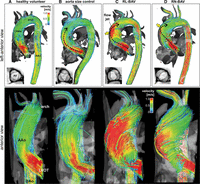
 

UPDATED on 1/16/2019

Boston Scientific, Edwards Lifesciences Agree To Global Litigation Settlement

All patent litigation between the companies to be dismissed

Boston Scientific, Edwards Lifesciences Agree To Global Litigation Settlement

January 15, 2019 — Boston Scientific Corp. and Edwards Lifesciences Corp. announced that the companies have reached an agreement to settle all outstanding patent disputes between the companies in all venues around the world. All pending cases or appeals in courts and patent offices between the two companies will be dismissed, and the parties will not litigate patent disputes related to current portfolios of transcatheter aortic valves, certain mitral valve repair devices and left atrial appendage closure devices. Any injunctions currently in place will be lifted.

Under the terms of the agreement, Edwards has made a one-time payment to Boston Scientific of $180 million. No further royalties will be owed by either party under the agreement. All other terms remain confidential.

On Dec. 11, a jury in the U.S. District Court for the District of Delaware determined that the Boston Scientific U.S. patent 8,992,608 is valid and that Edwards Lifesciences’ Sapien 3 aortic valve infringes this patent. The court ruled at that time that Edwards owed Boston Scientific $35 million in infringement damages through the end of 2016. The jury also found that the Boston Scientific Lotus aortic valve system does not infringe Edwards’ Spenser patents U.S. 7,510,575, U.S. 9,168,133, or U.S. 9,339,383.

Read the article Boston Scientific Prevails in U.S. Edwards Lifesciences Litigation

For more information: www.bostonscientific.com, www.edwards.com


See evolution of the case

UPDATED: Transcatheter Valve Competition in the United States: Medtronic CoreValve infringes on Edwards Lifesciences Corp. Transcatheter Device Patents


Curator: Aviva Lev-Ari, PhD, RN

http://pharmaceuticalintelligence.com/2014/01/26/transcatheter-valve-competition-in-the-united-states-medtronic-corevalve-infringes-on-edwards-lifesciences-corp-transcatheter-device-patents/

Medtronic to Pay Edwards to Settle Heart Valve Lawsuit

Photographer: Craig Lassig/Bloomberg
A preliminary injunction was granted by the federal court in Wilmington, Delaware, on… Read More

Medtronic Inc. (MDT), the world’s biggest maker of heart-rhythm devices, will pay Edwards Lifesciences Corp. (EW) at least $1.1 billion to settle a patent dispute over their minimally invasive valves.

Edwards will receive $750 million upfront and royalties of at least $40 million a year through 2022, Minneapolis-based Medtronic said in a statement. The companies agreed to dismiss all pending litigation over the valves and refrain from filing additional lawsuits for the eight years of the agreement.

The settlement will give Medtronic free rein after years of litigation to develop the market for the valves that it estimates at $2 billion to $2.5 billion a year. A federal court last month had granted, then stayed, a preliminary injunction that would have prevented Medtronic from selling CoreValve, used to treat aortic stenosis, in the U.S. because it infringed a patent held by Irvine, California-based Edwards. Edwards sells the Sapien valve.

“We see this settlement as a clear financial positive for Edwards,” David Roman, an analyst at Goldman Sachs Group Inc., said in a note. He estimated that royalty payments of $40 million to $60 million would mean a earnings boost of 24 to 36 cents a share this year.

Edwards declined 1.5 percent to $85.15 at the close in New York. Medtronic fell 1.5 percent to $59.41.


SOURCE

http://www.bloomberg.com/news/2014-05-20/medtronic-to-pay-edwards-to-settle-heart-valve-lawsuit.html


First head-to-head trial finds Edwards’ TAVR superior to Medtronic’s

See on Scoop.itCardiovascular and vascular imaging

Edwards Lifesciences’ Sapien XT beat out Medtronic’s CoreValve in the first head-to-head comparison of the two firms’ competing transcatheter aortic valve replacements (TAVR).

See on www.fiercemedicaldevices.com

Read Full Post »

Replacement of the Mitral Valve: Using the Edwards’ Sapien Aortic Valve Device

Reporter: Aviva Lev-Ari, PhD, RN

The Off Beat: Aortic Valve Used to Replace the Mitral Valve

 Henry Ford Hospital in Detroit uses an Edwards Sapien device to replace a mitral valve

There have been big advances in transcatheter aortic valve replacement (TAVR) technology in recent years and now two such valves are on the U.S. market, but there has been little progress toward a transcatheter mitral valve. The U.S. Food and Drug Administration (FDA) cleared the Mitraclip mitral valve leaflet repair system last fall, but for patients requiring a full valve replacement, there is no FDA-cleared option. Due to the complexity of the mitral valve anatomy, development of transcatheter treatments for mitral regurgitation has been lacking in comparison to transcatheter aortic valve devices. This did not stop cardiologists at Henry Ford Hospital in Detroit, who recently used an Edwards Lifesciences Sapien TAVR device to replace a mitral valve that was narrowed with calcium buildup. William O’Neill, M.D., medical director of the Center for Structural Heart Disease at Henry Ford Hospital, estimates this new technique could help thousands of patients a year.

“The success of this innovative procedure, developed by my team member Dr. Mayra Guerrero, brings new options to physicians for mitral valve repair,” O’Neill said in a statement. “Not only did our team implant a different replacement valve than would normally be used in this part of the heart, but we needed to develop a new technique to do it. We were able to implant a different valve, as it was the only way to save the patient.” 

An FDA-approved trial is being planned at Henry Ford Hospital to further investigate using the Sapien in the mitral valve position. The patient, Lee Young, 72, of Detroit, has diabetes and had two previous open-heart surgeries. With calcific mitral stenosis, the narrowed mitral valve of his heart was causing shortness of breath, but he was not a candidate for a third open-heart surgery, so the heart team devised a procedure using a Sapien valve.

The team of specialists modified the route that is usually used for mitral valvuloplasty, a balloon procedure to open narrowed heart valves. The procedure had been attempted on Young, with little success at sufficiently opening the mitral valve. However, the balloon allowed the team to measure the valve annulus to ensure that the new valve would fit before placement. 

The route involves threading a catheter from the femoral vein, passing through the right ventricle into the right atrium and through the septum into the left atrium. The balloon-expandable Sapien valve is delivered through the catheter to the mitral valve. A minimally invasive incision allowed a wire to pass through the chest to the mitral valve, providing stability during the placement of the new valve. Young was feeling well for the six weeks following his procedure.

Similar Sapien procedures to replace the mitral valve have been performed in Europe since 2011. The next generation Edwards Lifesciences Sapien XT is cleared in Europe for TAVR and for use in the mitral valve and for valve-in-valve mitral procedures. 

Neovasc has developed the Tiara device, a dedicated mitral valve replacement device using a selfexpanding frame with attached bovine pericardial tissue leaflets mounted inside, similar to a Medtronic CoreValve device. It is delivered through the apex of the heart. The first-in-human implantation of the Tiara was successfully performed in January at St. Paul’s Hospital in Vancouver.

CardiAQ Valve Technologies is also developing a transcatheter mitral valve that uses a foreshortening frame designed to address the challenges of the mitral anatomy. It uses numerous proximal and distal anchors, which upon radial expansion causes the ends of the anchors on both ends to draw closer together.

SOURCE

Read Full Post »

Clinical Trials on Bivalirudin: Questions on Bleeding and Outcomes

Reporter: Aviva Lev-Ari, PhD, RN


UPDATED on 1/24/2018

Baxter Announces FDA Approval of Ready-to-Use Cardiovascular Medication Bivalirudin

Approval marks first presentation of bivalirudin in frozen, premixed, ready-to-use formulation

https://www.dicardiology.com/product/baxter-announces-fda-approval-ready-use-cardiovascular-medication-bivalirudin?eid=333021707&bid=1983307


UPDATED on 2/16/2015


Maybe those early stent thrombosis rates with bivalirudin (Angiomax) aren’t so high after all, the Swedish Coronary Angiography and Angioplasty Register suggested.

SOURCE

http://www.medpagetoday.com/Cardiology/Strokes/50048?isalert=1&uun=g99985d3527R5099207u&utm_source=breaking-news&utm_medium=email&utm_campaign=breaking-news&xid=NL_breakingnews_2015-02-16


UPDATED on 4/15/2014

Listen to AUDIO: Dr. Harrington, Stanford Medical Center and Dr. Ohman, Duke Medical Center

http://www.medscape.com/viewarticle/823352?nlid=54703_2562&src=wnl_edit_medp_card&uac=93761AJ&spon=2

Medscape Medical News from the

This coverage is not sanctioned by, nor a part of, the American College of Cardiology.

Bivalirudin Bleeding? More Questions: NAPLES III, BRAVE 4, and BRIGHT

April 04, 2014

WASHINGTON, DC — There are mounting questions over whether bivalirudin (Angiomax, the Medicines Company) does indeed reduce major bleeding in the setting of contemporary primary PCI, compared with unfractionated heparin (UFH), without routine GPIIb/IIIa inhibition and when newer antiplatelet drugs are used. Presented at the American College of Cardiology 2014 Scientific Sessions earlier this week, controversial results from the large, single-center, randomized HEAT-PPCI trial showed no differences in bleeding but an increase in stent thrombosis with bivalirudin compared with heparin, when GPIIb/IIIa inhibitors were used just for bailout in both arms.

Two other trials, also presented at ACC 2014, appear to support those controversial findings: NAPLES III and BRAVE 4. A third trial, BRIGHTpresented in China, however, went in the other direction.

BRAVE 4 Results

BRAVE 4, like HEAT-PPCI, was a primary-PCI trial, designed to demonstrate that the “synergistic effects” of prasugrel (Effient, Lily/Daiichi-Sankyo) plus bivalirudin on ischemic events and bleeding complications would be superior to clopidogrel plus UFH in STEMI patients. Senior author Dr Stefanie Schulz(Deutsches Herzzentrum, Munich, Germany) and coauthors (the results were presented by Dr Gert Richardt [Herzzentrum Bad Segeberg, Germany]) chose an end point of net clinical outcome (defined as all-cause death, recurrent MI, unplanned revascularization of the infarct-related artery, definite stent thrombosis, stroke, or major bleeding at 30 days, using theHORIZONS-AMI definition). In one arm, a 60-mg loading dose of prasugrel plus an IV bolus of bivalirudin 0.75 mg/kg was followed by an infusion of 1.75 mg/kg. In the other, clopidogrel was given at 600 mg, then heparin was given as a 70- to 100-IU/kg bolus.

The investigator-initiated trial, conducted at three German centers, was originally designed to enroll over 1200 patients; the trial was stopped early, however, due to slow recruitment, with just 548 patients enrolled. As with HEAT-PPCI, GPIIb/IIIa inhibitors were used only when an operator decided they were needed with either drug. All but one patient underwent a transfemoral PCI.

At 30 days, there were no differences in the rate of primary composite end point. The secondary ischemic end point and secondary bleeding end point were also no different.

“We were not able to demonstrate a difference in net clinical outcome between prasugrel plus bivalirudin and clopidogrel plus heparin in STEMI patients,” Richardt concluded. “Neither the composite of ischemic complications nor bleeding were favorably affected by prasugrel plus bivalirudin. The results, however, must be interpreted [cautiously] in view of the premature termination of the trial.”

To heartwire , study coauthor Dr Robert Byrne noted that the actual event rate in the study was higher than the predicted event rate used for the power calculations in the study design, although these don’t fully compensate for the low patient numbers.

Given the premature discontinuation of the study, “the message we took was that when we use a primary composite end point, we didn’t see any difference between a newer antithrombotic approach with prasugrel and bivalirudin and an older combination, clopidogrel and heparin.”

NAPLES III: Results

In NAPLES III, Dr Carlo Briguori (Clinica Mediterranea, Naples, Italy) and colleagues compared bivalirudin with UFH in 830 elective transfemoral-PCI patients deemed to be at a high risk of bleeding (risk score >10). UFH was given in a bolus of 70 U/kg IV prior to the start of the PCI, followed by 20 U/kg if activated clotting times (ACTs) dropped below 250. Bivalirudin was given at 0.75 mg/kg IV prior to the procedure, followed by an infusion of 1.75 mg/kg per hour for the procedure duration, with additional 0.3 mg/kg if ACTs dropped below 250.

For the primary end point of in-hospital major bleeding (defined according to REPLACE 2 criteria) there were no differences between groups, including no differences by entry-site or non–entry-site bleeds, and no differences using different bleeding definitions. Major and minor bleeds combined were also no different between groups. For a range of secondary end points, including MI, stent thrombosis, and revascularization at both 30 days and one year, no differences emerged.

“In patients at high risk of bleeding undergoing elective PCI through the femoral approach, the use of bivalirudin does not reduce the rate of in-hospital major bleeding compared with UFH,” Briguori concluded.

Entry-site bleeding—seen in two and seven UFH and bivalirudin-treated patients, respectively “still represents an important issue,” he added. “A radial approach should be routinely used in this subgroup of patients.”

BRIGHTer News From China

Speaking with heartwire earlier this week about HEAT-PPCI,Dr Gregg Stone (Columbia University, New York, NY) emphasized that he did not think the results of any single-center randomized trial should inform the guidelines. “They should just be hypothesis-generating,” he said.

“There have been three large multicenter trials testing bivalirudin against heparin or heparin and GPIIb/IIIa inhibitors,” and these have all supported a lower risk of bleeding with bivalirudin.

Stone also flagged another large, “high-quality study” that he only learned about the previous week, while chairing a session at the China Interventional Therapeutics meeting in Shanghai.

According to a copy of the slide set obtained by heartwire , BRIGHT trial enrolled 2194 patients at 82 sites, comparing bivalirudin with heparin alone or heparin plus GPIIb/IIIa inhibitors. At 30 days, net adverse cardiovascular results were significantly reduced in the bivalirudin vs UFH/GPIIb/IIIa-inhibitor arms and narrowly missed being statistically significantly reduced in the bivalirudin vs UFH-monotherapy arms. A similar pattern was seen for all bleeding events, with 50% to 60% reductions in the bivalirudin-treated patients vs the heparin monotherapy and heparin/GPIIb/IIIa-inhibitor groups (p of 0.041 and 0.001, respectively).

The reductions in bleeding compared with both heparin arms are much more “consistent with what we’ve seen in EuroMAX HORIZONS-AMI , and the registry series,” Stone said.

Why the Bleeds?

Stone, to heartwire , emphasized a point he also made during the HEAT-PPCI trial, that he did not believe the bivalirudin-treated patients were adequately dosed and questioned whether that dose was adjusted for renal insufficiency. One indicator of suboptimal dosing, he said, was the high use of bailout GPIIb/IIIa-inhibitors in HEAT: 13.5% in the bivalirudin-treated patients and 15.5% in the heparin-treated group.

By way of comparison, bailout GPIIb/IIIa inhibitor use was 3% in the prasugrel/bivalirudin group and 6% in the clopidogrel/heparin group in BRAVE 4. It was just 0.5% and 1.3% for the bivalirudin and UFH groups, respectively, in NAPLES III, although that lower use is to be expected in an elective-angioplasty population.

To heartwire , Byrne agreed that the ACC trials have raised questions about the bleeding advantage of bivalirudin in the contemporary PCI setting but stressed that it’s important with all of these trials to focus on the primary outcomes.

That said, “When you look at bleeding in BRAVE 4, as a secondary end point, we also didn’t see a difference.” One explanation, aside from the discretionary use of GPIIb/IIIa inhibitors, may be the use of more potent ADP-receptor antagonists, prasugrel and ticagrelor (Brilinta, AstraZeneca), which may “cancel out the bleeding benefit” of bivalirudin in modern-day PCI. Of note, clopidogrel was used in almost 100% of patients in BRIGHT.

Byrne says most operators at his institution are primarily using heparin, not bivalirudin, although they’ve only just stopped randomizing patients into BRAVE 4. “We are more comfortable with the lower doses of heparin based on ISAR REACT 3A ,” he noted. Byrne and his colleagues are also already enrolling patients into ISAR-REACT 5 , a 4000-patient trial randomizing ACS patients to heparin plus either ticagrelor or prasugrel. This is another investigator-initiated trial that Byrne notes neither drug maker was interested in funding.

Byrne, Richardt, and Briguori all disclosed having no conflicts of interest in their presentations. Stone was the PI for HORIZONS-AMI, for which he disclosed consulting fees and grant support from the Medicines Company, and ACUITY, for which he disclosed both consulting and lecturing fees. He currently discloses consulting fees/honoraria from Reva, Guided Delivery Systems, Velomedix, Osprey, Inspire MD, Miracor, CSI, Eli Lilly/Daiichi Sankyo, and Boston Scientific; holding a partnership/principal in Access Closure, Biostar I and II funds, Micardia, VNT, Medfocus I, II, and Accelerati funds, Arstasis, and Caliber; and research grants from InfraReDx and TherOx.


SOURCE

http://www.medscape.com/viewarticle/823119?nlid=53983_2562&src=wnl_edit_medp_card&uac=93761AJ&spon=2

Read Full Post »

Maladaptive Vascular Remodeling found by four-dimensional (4D) flow MRI: Outflow Patterns, Wall Shear Stress, and Expression of Aortopathy are caused by Congenital bicuspid aortic valve (BAV) Cusp Fusion

Reporter: Aviva Lev-Ari, PhD, RN

  • Original Article
    • Valvular Heart Disease

Bicuspid Aortic Cusp Fusion Morphology Alters Aortic Three-Dimensional Outflow Patterns, Wall Shear Stress, and Expression of Aortopathy

  1. Riti Mahadevia, MD;
  2. Alex J. Barker, PhD;
  3. Susanne Schnell, PhD;
  4. Pegah Entezari, MD;
  5. Preeti Kansal, MD;
  6. Paul W.M. Fedak, MD;
  7. S. Chris Malaisrie, MD;
  8. Patrick McCarthy, MD;
  9. Jeremy Collins, MD;
  10. James Carr, MD;
  11. Michael Markl, PhD

+Author Affiliations


  1. From the Department of Radiology, Feinberg School of Medicine, Northwestern University, Chicago, IL (R.M., A.J.B., SS., P.E., J. Collins, J. Carr, M.M.); Division of Cardiology, Northwestern University, Chicago, IL (P.K.); Department of Cardiac Sciences, Libin Cardiovascular Institute of Alberta, University of Calgary, Canada (P.W.M.F.); Division of Cardiothoracic Surgery, Northwestern University, Chicago, IL (P.W.M.F., S.C.M., P.M.)); and Department Biomedical Engineering, McCormick School of Engineering, Northwestern University, Chicago, IL (M.M.).
  1. Correspondence to Michael Markl, PhD, Department of Radiology, Northwestern University 737 N Michigan Ave, Suite 1600, Chicago, IL 60611. E-mailmichael.markl@northwestern.edu

Abstract

Background—Aortic 3-dimensional blood flow was analyzed to investigate altered ascending aorta (AAo) hemodynamics in bicuspid aortic valve (BAV) patients and its association with differences in cusp fusion patterns (right-left, RL versus right-noncoronary, RN) and expression of aortopathy.

Methods and Results—Four-dimensional flow MRI measured in vivo 3-dimensional blood flow in the aorta of 75 subjects: BAV patients with aortic dilatation stratified by leaflet fusion pattern (n=15 RL-BAV, mid AAo diameter=39.9±4.4 mm; n=15 RN-BAV, 39.6±7.2 mm); aorta size controls with tricuspid aortic valves (n=30, 41.0±4.4 mm); healthy volunteers (n=15, 24.9±3.0 mm). Aortopathy type (0–3), systolic flow angle, flow displacement, and regional wall shear stress were determined for all subjects. Eccentric outflow jet patterns in BAV patients resulted in elevated regional wall shear stress (P<0.0125) at the right-anterior walls for RL-BAV and right-posterior walls for RN-BAV in comparison with aorta size controls. Dilatation of the aortic root only (type 1) or involving the entire AAo and arch (type 3) was found in the majority of RN-BAV patients (87%) but was mostly absent for RL-BAV patients (87% type 2). Differences in aortopathy type between RL-BAV and RN-BAV patients were associated with altered flow displacement in the proximal and mid AAo for type 1 (42%–81% decrease versus type 2) and distal AAo for type 3 (33%–39% increase versus type 2).

Conclusions—The presence and type of BAV fusion was associated with changes in regional wall shear stress distribution, systolic flow eccentricity, and expression of BAV aortopathy. Hemodynamic markers suggest a physiological mechanism by which the valve morphology phenotype can influence phenotypes of BAV aortopathy.

Key Words:

Introduction

Congenital bicuspid aortic valve (BAV) is the most common congenital cardiovascular abnormality and occurs with an incidence of 1% to 2% of the population.1 This entity is associated with significant morbidity and mortality including valvular stenosis, valvular regurgitation, aortic dilatation, aneurysm, and dissection.25 The most common distinct morphologies have been identified based on fusion patterns between the right and left coronary leaflet (RL, frequency ≈80%), the right and noncoronary leaflet (RN, ≈17%), and the less commonly left and noncoronary leaflet (≈2%) fusion patterns.6,7 Additionally, BAV fusion patterns have been shown to be significant as a potential predictive factor in the location and rate of development of aortic complications.6,8 Although studies have linked genetics to the development of aortopathy in patients with BAV, the role of valve-related alterations in aortic hemodynamics and their impact on the underlying aortopathy is a reoccurring topic of debate.9 Studies based on flow-sensitive MRI and, more recently, four-dimensional (4D) flow MRI, provide evidence that the modified hemodynamic environments associated with BAV can cause altered wall shear stress (WSS) in the ascending aorta, which may trigger maladaptive vascular remodeling.1014

AortaBAV

Figure 2.

Top, 3D streamline visualization of peak systolic blood flow in patients with BAV (C and D) in comparison with an aorta size–matched control subject (B) and a healthy volunteer (A). Note the presence of distinctly different 3D outflow flow jet patterns (black dashed arrows) in the ascending aorta (AAo) for patients B and CBottom, 3D flow patterns in the left ventricular outflow tract (LVOT) and AAo distal to the aortic valve. Note the different systolic aortic valve outflow flow jet patterns (red indicating high velocities > 1 m/s) and wall impingement zones that correspond to variable exertion of high wall shear forces between different valve groups (C and D) and aorta size–matched controls (B) and healthy volunteers (A). BAV indicates bicuspid aortic valve; RL, right and left coronary leaflet; and RN, right and noncoronary leaflet.

SOURCE for Image

http://circ.ahajournals.org/content/129/6/673.full#sec-28

CLINICAL PERSPECTIVE

The findings of this study show that the presence of bicuspid aortic valve and type of cusp fusion pattern were accompanied by changes in systolic outflow as quantified by flow displacement, flow angles, and regional wall shear stress. Altered aortic hemodynamics were clearly associated with the predominant expression of the aortopathy phenotype (aortic region affected by dilatation) which was different for the right-left in comparison with the less common right-noncoronary cusp fusion morphology. These findings represent new insights regarding the current guidelines using maximal aortic diameter to influence timing and extent of surgical resection. The decision to resect aortic tissues in bicuspid aortic valve aortopathy is difficult, because the degree of aortic dilatation can be highly variable with respect to location on the aorta and the degree of enlargement. The findings of this study indicate that 4-dimensional flow MRI may be used to determine which regional areas of the aorta are most prone to developing aortopathy, and different aortic resection may be indicated in patients with right-left versus right-noncoronary fusion patterns. However, our data also indicate that hemodynamic alterations and the aortopathy phenotype can have variable patterns that could be important for clinical surgical management decisions for the individual patient. Novel metrics of aortic hemodynamics such as flow displacement may be capable of shaping these decisions with respect to the timing and extent of aortic replacement in this diverse group of patients with bicuspid aortic valve.

  • Received April 4, 2013.
  • Accepted October 30, 2013.

References

  1. 1.
    1. Fedak PW,
    2. Verma S,
    3. David TE,
    4. Leask RL,
    5. Weisel RD,
    6. Butany J

    . Clinical and pathophysiological implications of a bicuspid aortic valve. Circulation. 2002;106:900–904.

  2. 2.
    1. Michelena HI,
    2. Khanna AD,
    3. Mahoney D,
    4. Margaryan E,
    5. Topilsky Y,
    6. Suri RM,
    7. EidemB,
    8. Edwards WD,
    9. Sundt TM 3rd.,
    10. Enriquez-Sarano M

    . Incidence of aortic complications in patients with bicuspid aortic valves. JAMA. 2011;306:1104–1112.

  3. 3.
    1. Mordi I,
    2. Tzemos N

    . Bicuspid aortic valve disease: a comprehensive review. Cardiol Res Pract. 2012;2012:196037.

  4. 4.
    1. Rudolph AM

    . Bicuspid aortic valve and aortic stenosis. Congenital diseases of the heart. Hoboken, NJ: Wiley-Blackwell;2009:225–256.

  5. 5.
    1. Ward C

    . Clinical significance of the bicuspid aortic valve. Heart. 2000;83:81–85.

  6. 6.
    1. Schaefer BM,
    2. Lewin MB,
    3. Stout KK,
    4. Gill E,
    5. Prueitt A,
    6. Byers PH,
    7. Otto CM

    . The bicuspid aortic valve: an integrated phenotypic classification of leaflet morphology and aortic root shape. Heart. 2008;94:1634–1638.

  7. 7.
    1. Sievers HH,
    2. Schmidtke C

    . A classification system for the bicuspid aortic valve from 304 surgical specimens. J Thorac Cardiovasc Surg. 2007;133:1226–1233.

  8. 8.
    1. Fernandes SM,
    2. Khairy P,
    3. Sanders SP,
    4. Colan SD

    . Bicuspid aortic valve morphology and interventions in the young. J Am Coll Cardiol. 2007;49:2211–2214.

  9. 9.
    1. Girdauskas E,
    2. Borger MA,
    3. Secknus MA,
    4. Girdauskas G,
    5. Kuntze T

    . Is aortopathy in bicuspid aortic valve disease a congenital defect or a result of abnormal hemodynamics? A critical reappraisal of a one-sided argument. Eur J Cardiothorac Surg.2011;39:809–814.

  10. 10.
    1. Hope MD,
    2. Hope TA,
    3. Meadows AK,
    4. Ordovas KG,
    5. Urbania TH,
    6. Alley MT,
    7. HigginsCB

    . Bicuspid aortic valve: four-dimensional MR evaluation of ascending aortic systolic flow patterns. Radiology. 2010;255:53–61.

  11. 11.
    1. Lehoux S,
    2. Tedgui A

    . Cellular mechanics and gene expression in blood vessels. J Biomech. 2003;36:631–643.

  12. 12.
    1. Hope MD,
    2. Hope TA,
    3. Crook SE,
    4. Ordovas KG,
    5. Urbania TH,
    6. Alley MT,
    7. Higgins CB

    .4D flow CMR in assessment of valve-related ascending aortic disease. JACC Cardiovasc Imaging. 2011;4:781–787.

  13. 13.
    1. Barker AJ,
    2. Markl M

    . The role of hemodynamics in bicuspid aortic valve disease.Eur J Cardiothorac Surg. 2011;39:805–806.

  14. 14.
    1. Barker AJ,
    2. Lanning C,
    3. Shandas R

    . Quantification of hemodynamic wall shear stress in patients with bicuspid aortic valve using phase-contrast MRI. Ann Biomed Eng.2010;38:788–800.

  15. 15.
    1. Meierhofer C,
    2. Schneider EP,
    3. Lyko C,
    4. Hutter A,
    5. Martinoff S,
    6. Markl M,
    7. Hager A,
    8. Hess J,
    9. Stern H,
    10. Fratz S

    . Wall shear stress and flow patterns in the ascending aorta in patients with bicuspid aortic valves differ significantly from tricuspid aortic valves: a prospective study. Eur Heart J Cardiovasc Imaging. 2013;14:797–804.

  16. 16.
    1. Barker AJ,
    2. Markl M,
    3. Bürk J,
    4. Lorenz R,
    5. Bock J,
    6. Bauer S,
    7. Schulz-Menger J,
    8. von Knobelsdorff-Brenkenhoff F

    . Bicuspid aortic valve is associated with altered wall shear stress in the ascending aortaclinical perspective. Circ Cardiovasc Imaging.2012;5:457–466.

  17. 17.
    1. Bissell MM,
    2. Hess AT,
    3. Biasiolli L,
    4. Glaze SJ,
    5. Loudon M,
    6. Pitcher A,
    7. Davis A,
    8. Prendergast B,
    9. Markl M,
    10. Barker AJ,
    11. Neubauer S,
    12. Myerson SG

    . Aortic dilation in bicuspid aortic valve disease: flow pattern is a major contributor and differs with valve fusion type.Circ Cardiovasc Imaging. 2013;6:499–507.

  18. 18.
    1. Kang JW,
    2. Song HG,
    3. Yang DH,
    4. Baek S,
    5. Kim DH,
    6. Song JM,
    7. Kang DH,
    8. Lim TH,
    9. Song JK

    . Association between bicuspid aortic valve phenotype and patterns of valvular dysfunction and bicuspid aortopathy: comprehensive evaluation using MDCT and echocardiography. JACC Cardiovasc Imaging. 2013;6:150–161.

  19. 19.
    1. Markl M,
    2. Harloff A,
    3. Bley TA,
    4. Zaitsev M,
    5. Jung B,
    6. Weigang E,
    7. Langer M,
    8. Hennig J,
    9. Frydrychowicz A

    . Time-resolved 3D MR velocity mapping at 3T: improved navigator-gated assessment of vascular anatomy and blood flow. J Magn Reson Imaging.2007;25:824–831.

  20. 20.
    1. Hiratzka LF,
    2. Bakris GL,
    3. Beckman JA,
    4. Bersin RM,
    5. Carr VF,
    6. Casey JDE,
    7. Eagle KA,
    8. Hermann LK,
    9. Isselbacher EM,
    10. Kazerooni EA,
    11. Kouchoukos NT,
    12. Lytle BW,
    13. Milewicz DM,
    14. Reich DL,
    15. Sen S,
    16. Shinn JA,
    17. Svensson LG,
    18. Williams DM

    American College of Cardiology Foundation/American Heart Association Task Force on Practice Guidelines, American Association for Thoracic Surgery, American College of Radiology, American Stroke Association, Society of Cardiovascular Anesthesiologists, Society for Cardiovascular Angiography and Interventions, Society of Interventional Radiology, Society of Thoracic Surgeons, and Society for Vascular Medicine. 2010 ACCF/AHA/AATS/ACR/ASA/SCA/SCAI/SIR/STS/SVM guidelines for the diagnosis and management of patients with thoracic aortic disease. A Report of the American College of Cardiology Foundation/American Heart Association Task Force on Practice Guidelines, American Association for Thoracic Surgery, American College of Radiology,American Stroke Association, Society of Cardiovascular Anesthesiologists, Society for Cardiovascular Angiography and Interventions, Society of Interventional Radiology, Society of Thoracic Surgeons, and Society for Vascular Medicine. J Am Coll Cardiol. 2010;55:e27–e129.

  21. 21.
    1. Bonow RO,
    2. Carabello BA,
    3. Chatterjee K,
    4. de Leon AC,
    5. Faxon DP,
    6. Freed MD,
    7. Gaasch WH,
    8. Lytle BW,
    9. Nishimura RA,
    10. O’Gara PT,
    11. O’Rourke RA,
    12. Otto CM,
    13. Shah PM,
    14. Shanewise JS

    ; American College of Cardiology/American Heart Association Task Force on Practice Guidelines. 2008 focused update incorporated into the ACC/AHA 2006 guidelines for the management of patients with valvular heart disease: a report of the American College of Cardiology/American Heart Association Task Force on Practice Guidelines (Writing Committee to Revise the 1998 Guidelines for the Management of Patients With Valvular Heart Disease) Endorsed by the Society of Cardiovascular Anesthesiologists, Society for Cardiovascular Angiography and Interventions, and Society of Thoracic Surgeons. J Am Coll Cardiol. 2008;52:e1–e142.

  22. 22.
    1. Fazel SS,
    2. Mallidi HR,
    3. Lee RS,
    4. Sheehan MP,
    5. Liang D,
    6. Fleischman D,
    7. Herfkens R,
    8. Mitchell RS,
    9. Miller DC

    . The aortopathy of bicuspid aortic valve disease has distinctive patterns and usually involves the transverse aortic arch. J Thorac Cardiovasc Surg.2008;135:901–7, 907.e1.

  23. 23.
    1. Bock J,
    2. Kreher B,
    3. Hennig J,
    4. Markl M

    . Optimized pre-processing of time-resolved 2d and 3d phase contrast mri data. Proceedings of the 15th Annual Meeting of ISMRM,Berlin, Germany. 2007:3138.

  24. 24.
    1. Sigovan M,
    2. Hope MD,
    3. Dyverfeldt P,
    4. Saloner D

    . Comparison of four-dimensional flow parameters for quantification of flow eccentricity in the ascending aorta. J Magn Reson Imaging. 2011;34:1226–1230.

  25. 25.
    1. Papathanasopoulou P,
    2. Zhao S,
    3. Köhler U,
    4. Robertson MB,
    5. Long Q,
    6. Hoskins P,
    7. XuXY,
    8. Marshall I

    . MRI measurement of time-resolved wall shear stress vectors in a carotid bifurcation model, and comparison with CFD predictions. J Magn Reson Imaging.2003;17:153–162.

  26. 26.
    1. Stalder AF,
    2. Russe MF,
    3. Frydrychowicz A,
    4. Bock J,
    5. Hennig J,
    6. Markl M

    . Quantitative 2D and 3D phase contrast MRI: optimized analysis of blood flow and vessel wall parameters. Magn Reson Med. 2008;60:1218–1231.

  27. 27.
    1. Hope MD,
    2. Wrenn J,
    3. Sigovan M,
    4. Foster E,
    5. Tseng EE,
    6. Saloner D

    . Imaging biomarkers of aortic disease: increased growth rates with eccentric systolic flow. J Am Coll Cardiol. 2012;60:356–357.

  28. 28.
    1. Verma S,
    2. Yanagawa B,
    3. Kalra S,
    4. Ruel M,
    5. Peterson MD,
    6. Yamashita MH,
    7. Fagan A,
    8. Currie ME,
    9. White CW,
    10. Wai Sang SL,
    11. Rosu C,
    12. Singh S,
    13. Mewhort H,
    14. Gupta N,
    15. Fedak PW

    .Knowledge, attitudes, and practice patterns in surgical management of bicuspid aortopathy: a survey of 100 cardiac surgeons. J Thorac Cardiovasc Surg.2013;146:1033–1040.e4.

  29. 29.
    1. Bürk J,
    2. Blanke P,
    3. Stankovic Z,
    4. Barker A,
    5. Russe M,
    6. Geiger J,
    7. Frydrychowicz A,
    8. Langer M,
    9. Markl M

    . Evaluation of 3D blood flow patterns and wall shear stress in the normal and dilated thoracic aorta using flow-sensitive 4D CMR. J Cardiovasc Magn Reson. 2012;14:84.

  30. 30.
    1. Hope TA,
    2. Markl M,
    3. Wigström L,
    4. Alley MT,
    5. Miller DC,
    6. Herfkens RJ

    . Comparison of flow patterns in ascending aortic aneurysms and volunteers using four-dimensional magnetic resonance velocity mapping. J Magn Reson Imaging. 2007;26:1471–1479.

  31. 31.
    1. Della Corte A,
    2. Bancone C,
    3. Conti CA,
    4. Votta E,
    5. Redaelli A,
    6. Del Viscovo L,
    7. CotrufoM

    . Restricted cusp motion in right-left type of bicuspid aortic valves: a new risk marker for aortopathy. J Thorac Cardiovasc Surg. 2012;144:360–9, 369.e1.

  32. 32.
    1. den Reijer PM,
    2. Sallee D 3rd.,
    3. van der Velden P,
    4. Zaaijer ER,
    5. Parks WJ,
    6. Ramamurthy S,
    7. Robbie TQ,
    8. Donati G,
    9. Lamphier C,
    10. Beekman RP,
    11. Brummer ME

    .Hemodynamic predictors of aortic dilatation in bicuspid aortic valve by velocity-encoded cardiovascular magnetic resonance. J Cardiovasc Magn Reson. 2010;12:4.


Read Full Post »

Transcatheter Valve Competition in the United States: Medtronic CoreValve infringes on Edwards Lifesciences Corp. Transcatheter Device Patents

Curator: Aviva Lev-Ari, PhD, RN

UPDATED on 4/22/2014

Appeals court stays ban on Medtronic’s CoreValve device

April 21, 2014 by Brad Perriello

A federal appeals court stays a ban on U.S. sales of Medtronic’s CoreValve replacement heart valve “pending further notice” in a patent infringement battle with Edwards Lifesciences and its Sapien transcatheter aortic valve implant.

Appeals court stays ban on Medtronic's CoreValve device

A federal appeals court today put a hold on the impending ban on U.S. sales of Medtronic‘s (NYSE:MDT) CoreValve replacement heart valve “pending further notice,” as Medtronic’s patent infringement war with rival Edwards Lifesciences (NYSE:EW) and its competing Sapien valve grinds on.

Earlier this month Judge Gregory Sleet of the U.S. District Court for Delaware granted a preliminary injunction to Edwards, limiting U.S. sales of the CoreValve transcatheter aortic heart implant to patients deemed unsuitable for Edwards’ rival Sapien device.

Medtronic promptly appealed the ban, slated to begin April 23, to the U.S. Court of Appeals for the Federal Circuit, drawing a rebuke from Sleet.

But the appeals court today granted Medtronic’s bid to stay the injunction indefinitely, with 2 of the Federal Circuit’s 3 judges agreeing to hold the sales ban on CoreValve, according to court documents.

“The district court’s injunction is stayed pending further notice by this court,” according to the documents.

But Federal Circuit Judge Pauline Newman dissented, citing a deal between Medtronic and Edwards that would have allowed limited CoreValve sales to patients deemed unsuitable to receive the Sapien device.

“I would deny the motion to stay subject to the terms of the recent agreement between Edwards and Medtronic that Medtronic may provide its devices pending this appeal,” Newman wrote.

“We believe this ruling is good news for patients who need the CoreValve device, and our primary objective has been to work closely with physicians to ensure that their patients are able to get the therapy they need,” Medtronic structural heart president Dr. John Liddicoat said in a statement.

“We have always made every effort to ensure patients receive the treatment they need and will continue to seek a durable solution that benefits physicians and their patients. We’re proud of the track record and large amount of clinical data supporting the performance of the Sapien family of valves, making them the preferred choice for doctors treating their patients around the world,” Edwards chairman & CEO Mike Mussallem said in prepared remarks.

Edwards initially filed the infringement claim in 2008 against CoreValve, then an independent entity (Medtronic acquired CoreValve in 2009). A federal jury ruled in 2010 that the CoreValve device willfully infringes Edwards’ “Andersen” patent, also known as the ‘552 patent. The U.S. Court of Appeals affirmed that decision in 2012 and the Supreme Court last year refused to hear Medtronic’s appeal. Earlier this year the FDA approved the CoreValve system for sale in the U.S.

The legal battle is also happening overseas, where the European Patent Office in October 2013 issued a preliminary, non-binding ruling that an Edwards’ patent was invalid, allowing CoreValve back on the German market after a temporary ban. The EPO last month finalized that ruling, entirely invalidating and revoking the so-called “Spenser patent” at the heart of the overseas dispute.

Edwards earlier this year won a $393 million decision after a Delaware jury ruled that CoreValve infringes on Edwards’ “Cribier” patent.

SOURCE


Investigational Devices: Edwards Sapien Transcatheter Aortic Valve Transapical Deployment

June 4, 2012 by 2012pharmaceutical

ar04118transapical

ar04118transapical

The Edwards SAPIEN transcatheter heart valve is an investigational device which is placed either through a transfemoral (RetroFlex 3 Transfemoral Delivery System) or transapical (Ascendra Transapical Delivery System) approach. The Edwards SAPIEN valve is being evaluated in the treatment of patients with severe calcific aortic stenosis who are considered to be high-risk for conventional open-heartvalve replacement surgery.Cohort A of the PARTNER (Placement of AoRTic traNscatheterER valves) Trial is designed for patients with severe calcific aortic stenosis who are considered to be high-risk for conventional open-chest valve replacement due to the risk surgery might pose to them. These patients may be eligible to participate in a new, investigational transcatheter valve replacement procedure that is performed without

Investigational Devices: Edwards Sapien Transcatheter Aortic Heart Valve Replacement Transfemoral Deployment

June 10, 2012 by 2012pharmaceutical

ar04322transfemoral

ar04322transfemoral

The Edwards SAPIEN transcatheter heart valve is an investigational device which is placed either through a transfemoral (RetroFlex 3 Transfemoral Delivery System) or transapical (Ascendra Transapical Delivery System) approach. The Edwards SAPIEN valve is being evaluated in the treatment of patients with severe calcific aortic stenosis who are considered to be high-risk for conventional open-heartvalve replacement surgery.

Cohort A of the PARTNER (Placement of AoRTic traNscatheterER valves) Trial is designed for patients with severe calcific aortic stenosis who are considered to be high-risk for conventional open-chest valve replacement due to the risk surgery might pose to them. These patients may be eligible to participate in a new, investigational transcatheter valve replacement procedure that is performed without

 http://www.edwards.com/products/investigationaldevices/Pages/SapienTHV.aspx


U.S. Jury Finds Medtronic CoreValve Infringes on Edwards’ Transcatheter Valve Patent

Medtronic plans to appeal federal district court verdict
By:

Dave Fornell

January 15, 2014
Medtronic, corevalve, edwards, litigation, TAVR, TAVI
In a move that calls into question the future of transcatheter valve competition in the United States, a jury in the Federal District Court of Delaware decided Jan. 15 the Medtronic CoreValve infringes on transcatheter device patents held by Edwards Lifesciences Corp. Medtronic said it intends to appeal the decision.
Medtronic anticipates U.S. regulatory approval of the CoreValve transcatheter aortic valve replacement (TAVR) system for extreme risk patients by the end of 2014 to enter the U.S. market.
The jury found that Edwards’ United States Cribier transcatheter heart valve patent (U.S. Pat. No. 8,002,825) is valid and that Medtronic CoreValve LLC willfully infringes it. Edwards said it plans to move to enforce this verdict and intends to seek a permanent injunction. The jury also awarded Edwards $394 million in damages. Edwards may seek increased damages of up to three times that amount, in addition to attorneys’ fees.
“While we are disappointed in the jury’s verdict, we continue to believe that this decision will be overturned on appeal,” said Neil Ayotte, vice president and acting general counsel at Medtronic. “Medtronic has prevailed against Edwards in several legal actions related to a European counterpart to this patent and others, and believes the Federal Circuit Court of Appeals will find no merit to Edward’s infringement claim. Today’s jury verdict does not impose an injunction, and Medtronic will oppose any requests for an injunction by Edwards. “
The patent involved in this suit is part of the Cribier family of patents and expires in December 2017. This case was tried in the U.S. District Court for the District of Delaware and is directed at the manufacture and sale of the CoreValve ReValving System in the United States, as well as the worldwide sales of valves assembled in Medtronic’s Tijuana, Mexico, facility using U.S. made components.
“Edwards invests in promising early technologies. As a result, Edwards holds a number of important patents in transcatheter valve technology, and we intend to continue to defend this intellectual property when it is used by others without permission,” said Larry L. Wood, Edwards’ corporate vice president, transcatheter heart valves.
The Rocky Road Ahead
As with the “stent wars” in the late 1990s through the past decade where key stent vendors were involved in extensive patent litigation and counter suits to block competition, a similar pattern has developed with TAVR devices.
Edwards Lifesciences currently has the only U.S. Food and Drug Administration (FDA)-cleared TAVR device on the U.S. market, the balloon-expandable Sapien Valve. The FDA approved the Sapien in November 2011. It has indications for the treatment of inoperable patients and high-risk surgical patients. The CoreValve is expected to become the second FDA-cleared TAVR system, but litigation may hinder its U.S. market launch. 
In 2010, a federal jury found that Medtronic CoreValve LLC willfully infringed on another Edwards patent, the U.S. Andersen transcatheter heart valve patent, and awarded damages to Edwards. The Anderson patent was set to expire in 2011. That finding was upheld on appeal and an initial payment of $84 million was made by Medtronic to Edwards in 2013. A decision on Edwards’ request to enjoin Medtronic’s entrance into the U.S. market and additional damages is still pending. Because some of the sales have been found to infringe both the Andersen and Cribier patents, a portion of the damages awarded in the Cribier case could be reduced, Edwards said in a statement. 
Edwards challanged CorValve in German courts and succeeded in getting an injunction against the sale of the device. However, in November 2013, a German court ordered the discontinuation of a prior court ruling that prohibited Medtronic from commercially marketing or selling the CoreValve system in Germany since Aug. 26, 2013. The Higher Regional Court of Karlsruhe explained that, due to the European Patent Office (EPO) preliminary opinion, the Edwards Lifesciences’ EP2055266 Spenser patent claims are not valid, and it could not assume “with sufficient likelihood” that the Spenser patent is valid. Metronic has since resumed sales in Germany.
CoreValve’s Positive Clinical Results 
The first results from the CoreValve U.S. pivotal trial were very positive. The data on the self-expanding TAVR device was presented as a late-breaking clinical trial session of the 25th annual Transcatheter Cardiovascular Therapeutics (TCT) conference last October. The trial met its primary endpoint in patients who were considered too ill or frail to have their aortic valves replaced through traditional open-heart surgery, with a rate of death or major stroke at one year of 25.5 percent. This result is highly significant (p < 0.0001) as it was 40.7 percent lower in patients treated with the CoreValve system than was expected with standard therapy.

MORE LIKE THIS

Clinical Trials on Transcatheter Aortic Valve Replacement (TAVR) to be conducted by American College of Cardiology and the Society of Thoracic Surgeons

Curator: Aviva Lev-Ari, PhD, RN


UPDATED on 11/24/2013

Second Generation Transcatheter Aortic Valve Shown to Successfully Address TAVR Complications

Results of the REPRISE II trial reported at TCT 2013
November 4, 2013 — In a clinical trial of the Boston Scientific Lotus valve, a second-generationtranscatheter aortic valve, the device demonstrated low rates of complications that are sometimes seen in transcatheter aortic valve replacement (TAVR), including challenges with positioning, post-procedure paravalvular aortic regurgitation, vascular complications and stroke.
The findings were presented at the 25th annual Transcatheter Cardiovascular Therapeutics scientific symposium (TCT 2013).
The valve studied in REPRISE II is fully retrievable and repositionable with an adaptive seal intended to minimize paravalvular regurgitation, a complication that has been associated with higher mortality among patients undergoing TAVR. In this prospective, single-arm, multicenter study, symptomatic patients at high risk for surgery received the Lotus valve to treat calcific aortic stenosis.
The trial enrolled 120 patients; mean age was 84.4±5.3 years, 56.7 percent were female and 75.8 percent were considered New York Heart Association (NYHA) Class III or IV. The mean Society of Thoracic Surgeons score was 7.1±4.6 percent and all patients were confirmed by their site heart team to be at high risk for surgery due to frailty or associated comorbidities.
The valve was successfully implanted in all 120 patients with valve repositioning and retrieval performed as needed. There was no embolization, ectopic valve deployment or need for implantation of a second prosthetic valve.
The primary device performance endpoint was the mean aortic valve pressure gradient at 30 days compared to a performance goal of 18 mmHg; the primary safety endpoint was 30-day mortality. The primary device performance endpoint was met with a 30 day mean aortic valve pressure gradient of 11.5±5.2 mmHg; mean effective orifice area was 1.7±0.4 cm2.
All cause mortality and disabling stroke were low at 30 days (4.2 percent and 1.7 percent, respectively). Additional clinical event rates were consistent with those reported for other valves. Aortic regurgitation at 30 days was negligible in 99 percent of patients (78.3 percent none, 5.2 percent trace and 15.5 percent mild). The total stroke rate, disabling and non-disabling, was 5.9 percent, which is the same as the rate as the Edward’s Sapien valve’s performance in the PARTNER trial.
“These findings suggest this valve, which is a differentiated, second generation TAVR device, will be a valuable addition for the treatment of severe aortic stenosis,” said Ian Meredith, MBBS, Ph.D., director, Monash HEART, executive director, Monash Cardiovascular Research Centre, professor of medicine, Monash University in Melbourne, Australia, and lead investigator of the study.

 Related articles were published on this Open Access Online Scientific Journal, including the following:

Transcatheter Aortic Valve Replacement (TAVR): Postdilatation to Reduce Paravalvular Regurgitation During TAVR with a Balloon-expandable Valve

Larry H Bernstein, MD, FCAP and Aviva Lev-Ari, PhD, RN

http://pharmaceuticalintelligence.com/2013/06/17/postdilatation-to-reduce-paravalvular-regurgitation-during-transcatheter-aortic-valve-replacement/

Lev-Ari, A. 2/12/2013 Clinical Trials on transcatheter aortic valve replacement (TAVR) to be conducted by American College of Cardiology and the Society of Thoracic Surgeons

http://pharmaceuticalintelligence.com/2013/02/12/american-college-of-cardiologys-and-the-society-of-thoracic-surgeons-entrance-into-clinical-trials-is-noteworthy-read-more-two-medical-societies-jump-into-clinical-trial-effort-for-tavr-tech-f/


Lev-Ari, A. 8/13/2012 Coronary Artery Disease – Medical Devices Solutions: From First-In-Man Stent Implantation, via Medical Ethical Dilemmas to Drug Eluting Stents http://pharmaceuticalintelligence.com/2012/08/13/coronary-artery-disease-medical-devices-solutions-from-first-in-man-stent-implantation-via-medical-ethical-dilemmas-to-drug-eluting-stents/


Lev-Ari, A. 7/18/2012 Percutaneous Endocardial Ablation of Scar-Related Ventricular Tachycardia

http://pharmaceuticalintelligence.com/2012/07/18/percutaneous-endocardial-ablation-of-scar-related-ventricular-tachycardia/


Lev-Ari, A. 6/22/2012 Competition in the Ecosystem of Medical Devices in Cardiac and Vascular Repair: Heart Valves, Stents, Catheterization Tools and Kits for Open Heart and Minimally Invasive Surgery (MIS)

http://pharmaceuticalintelligence.com/2012/06/22/competition-in-the-ecosystem-of-medical-devices-in-cardiac-and-vascular-repair-heart-valves-stents-catheterization-tools-and-kits-for-open-heart-and-minimally-invasive-surgery-mis/

Lev-Ari, A. 6/19/2012 Executive Compensation and Comparator Group Definition in the Cardiac and Vascular Medical Devices Sector: A Bright Future for Edwards Lifesciences Corporation in the Transcatheter Heart Valve Replacement Market

http://pharmaceuticalintelligence.com/2012/06/19/executive-compensation-and-comparator-group-definition-in-the-cardiac-and-vascular-medical-devices-sector-a-bright-future-for-edwards-lifesciences-corporation-in-the-transcatheter-heart-valve-replace/


Lev-Ari, A. 6/22/2012 Global Supplier Strategy for Market Penetration & Partnership Options (Niche Suppliers vs. National Leaders) in the Massachusetts Cardiology & Vascular Surgery Tools and Devices Market for Cardiac Operating Rooms and Angioplasty Suites

http://pharmaceuticalintelligence.com/2012/06/22/global-supplier-strategy-for-market-penetration-partnership-options-niche-suppliers-vs-national-leaders-in-the-massachusetts-cardiology-vascular-surgery-tools-and-devices-market-for-car/

 We reported on the following Medical Devices News:

Cardiac Surgery Theatre in China vs. in the US: Cardiac Repair Procedures, Medical Devices in Use, Technology in Hospitals, Surgeons’ Training and Cardiac Disease Severity”    http://pharmaceuticalintelligence.com/2013/01/08/cardiac-surgery-theatre-in-china-vs-in-the-us-cardiac-repair-procedures-medical-devices-in-use-technology-in-hospitals-surgeons-training-and-cardiac-disease-severity/

Acute Chest Pain/ER Admission: Three Emerging Alternatives to Angiography and PCI    http://pharmaceuticalintelligence.com/2013/03/10/acute-chest-painer-admission-three-emerging-alternatives-to-angiography-and-pci/

FDA Pending 510(k) for The Latest Cardiovascular Imaging Technology
http://pharmaceuticalintelligence.com/2013/01/28/fda-pending-510k-for-the-latest-cardiovascular-imaging-technology/

PCI Outcomes, Increased Ischemic Risk associated with Elevated Plasma Fibrinogen not Platelet Reactivity
http://pharmaceuticalintelligence.com/2013/01/10/pci-outcomes-increased-ischemic-risk-associated-with-elevated-plasma-fibrinogen-not-platelet-reactivity/

The ACUITY-PCI score: Will it Replace Four Established Risk Scores — TIMI, GRACE, SYNTAX, and Clinical SYNTAX
http://pharmaceuticalintelligence.com/2013/01/03/the-acuity-pci-score-will-it-replace-four-established-risk-scores-timi-grace-syntax-and-clinical-syntax/

Coronary artery disease in symptomatic patients referred for coronary angiography: Predicted by Serum Protein Profiles
http://pharmaceuticalintelligence.com/2012/12/29/coronary-artery-disease-in-symptomatic-patients-referred-for-coronary-angiography-predicted-by-serum-protein-profiles/

Ablation Devices Market to 2016 – Global Market Forecast and Trends Analysis by Technology, Devices & Applications
http://pharmaceuticalintelligence.com/2012/12/23/ablation-devices-market-to-2016-global-market-forecast-and-trends-analysis-by-technology-devices-applications/

Heart Renewal by pre-existing Cardiomyocytes: Source of New Heart Cell Growth Discovered
http://pharmaceuticalintelligence.com/2012/12/23/heart-renewal-by-pre-existing-cardiomyocytes-source-of-new-heart-cell-growth-discovered/

To Stent or Not? A Critical Decision
http://pharmaceuticalintelligence.com/2012/10/23/to-stent-or-not-a-critical-decision/

Transcatheter Aortic-Valve Replacement for Inoperable Severe Aortic Stenosis

http://pharmaceuticalintelligence.com/2012/09/03/transcatheter-aortic-valve-replacement-for-inoperable-severe-aortic-stenosis/

New Definition of MI Unveiled, Fractional Flow Reserve (FFR)CT for Tagging Ischemia

http://pharmaceuticalintelligence.com/2012/08/27/new-definition-of-mi-unveiled-fractional-flow-reserve-ffrct-for-tagging-ischemia/

New Drug-Eluting Stent Works Well in STEMI
http://pharmaceuticalintelligence.com/2012/08/22/new-drug-eluting-stent-works-well-in-stemi/

Expected New Trends in Cardiology and Cardiovascular Medical Devices
http://pharmaceuticalintelligence.com/2012/08/17/expected-new-trends-in-cardiology-and-cardiovascular-medical-devices/

Read Full Post »

The Cost to Value Conundrum in Cardiovascular Healthcare Provision

The Cost to Value Conundrum in Cardiovascular Healthcare Provision

Author: Larry H. Bernstein, MD, FCAP

Article ID #98: The Cost to Value Conundrum in Cardiovascular Healthcare Provision. Published on 1/1/2014

WordCloud Image Produced by Adam Tubman

I write this introduction to Volume 2 of the e-series on Cardiovascular Diseases, which curates the basic structure and physiology of the heart, the vasculature, and related structures, e.g., the kidney, with respect to:

1. Pathogenesis
2. Diagnosis
3. Treatment

Curation is an introductory portion to Volume Two, which is necessary to introduce the methodological design used to create the following articles. More needs not to be discussed about the methodology, which will become clear, if only that the content curated is changing based on success or failure of both diagnostic and treatment technology availability, as well as the systems needed to support the ongoing advances.  Curation requires:

  • meaningful selection,
  • enrichment, and
  • sharing combining sources and
  • creation of new synnthesis

Curators have to create a new perspective or idea on top of the existing media which supports the content in the original. The curator has to select from the myriad upon myriad options available, to re-share and critically view the work. A search can be overwhelming in size of the output, but the curator has to successfully pluck the best material straight out of that noise.

Part 1 is a highly important treatment that is not technological, but about the system now outdated to support our healthcare system, the most technolog-ically advanced in the world, with major problems in the availability of care related to economic disparities.  It is not about technology, per se, but about how we allocate healthcare resources, about individuals’ roles in a not full list of lifestyle maintenance options for self-care, and about the important advances emerging out of the Affordable Care Act (ACA), impacting enormously on Medicaid, which depends on state-level acceptance, on community hospital, ambulatory, and home-care or hospice restructuring, which includes the reduction of management overhead by the formation of regional healthcare alliances, the incorporation of physicians into hospital-based practices (with the hospital collecting and distributing the Part B reimbursement to the physician, with “performance-based” targets for privileges and payment – essential to the success of an Accountable Care Organization (AC)).  One problem that ACA has definitively address is the elimination of the exclusion of patients based on preconditions.  One problem that has been left unresolved is the continuing existence of private policies that meet financial capabilities of the contract to provide, but which provide little value to the “purchaser” of care.  This is a holdout that persists in for-profit managed care as an option.  A physician response to the new system of care, largely fostered by a refusal to accept Medicaid, is the formation of direct physician-patient contracted care without an intermediary.

In this respect, the problem is not simple, but is resolvable.  A proposal for improved economic stability has been prepared by Edward Ingram. A concern for American families and businesses is substantially addressed in a macroeconomic design concept, so that financial services like housing, government, and business finance, savings and pensions, boosting confidence at every level giving everyone a better chance of success in planning their personal savings and lifetime and business finances.

http://macro-economic-design.blogspot.com/p/book.html

Part 2 is a collection of scientific articles on the current advances in cardiac care by the best trained physicians the world has known, with mastery of the most advanced vascular instrumentation for medical or surgical interventions, the latest diagnostic ultrasound and imaging tools that are becoming outdated before the useful lifetime of the capital investment has been completed.  If we tie together Part 1 and Part 2, there is ample room for considering  clinical outcomes based on individual and organizational factors for best performance. This can really only be realized with considerable improvement in information infrastructure, which has miles to go.  Why should this be?  Because for generations of IT support systems, they are historically focused on billing and have made insignificant inroads into the front-end needs of the clinical staff.

Read Full Post »

Elastin Arteriopathy: The Genetics of Supravalvular Aortic Stenosis

Reporter: Aviva Lev-Ari, PhD, RN


Supravalvular Aortic Stenosis Elastin Arteriopathy

Giuseppe Merla, PhD, Nicola Brunetti-Pierri, MD, Pasquale Piccolo, PhD, Lucia Micale, PhD and Maria Nicla Loviglio, PhD, MSc

Author Affiliations

From the Medical Genetics Unit, IRCCS Casa Sollievo Della Sofferenza Hospital, San Giovanni Rotondo, Italy (G.M., L.M., M.N.L.); Telethon Institute of Genetics and Medicine, Napoli, Italy (N.B-P., P.P.); Department of Pediatrics, Federico II University of Naples, Naples, Italy (N.B-P.); and CIG Center for Integrative Genomics, University of Lausanne, Lausanne, Switzerland (M.N.L.).

Correspondence to Giuseppe Merla, PhD, Medical Genetics Unit, IRCCS Casa Sollievo della Sofferenza, viale Cappuccini, 71013 San Giovanni Rotondo, Italy. E-mailg.merla@operapadrepio.it

Abstract

Supravalvular aortic stenosis is a systemic elastin (ELN) arteriopathy that disproportionately affects the supravalvular aorta. ELN arteriopathy may be present in a nonsyndromic condition or in syndromic conditions such as Williams–Beuren syndrome. The anatomic findings include congenital narrowing of the lumen of the aorta and other arteries, such as branches of pulmonary or coronary arteries. Given the systemic nature of the disease, accurate evaluation is recommended to establish the degree and extent of vascular involvement and to plan appropriate interventions, which are indicated whenever hemodynamically significant stenoses occur. ELN arteriopathy is genetically heterogeneous and occurs as a consequence of haploinsufficiency of the ELN gene on chromosome 7q11.23, owing to either microdeletion of the entire chromosomal region or ELN point mutations. Interestingly, there is a prevalence of premature termination mutations resulting in null alleles among ELN point mutations. The identification of the genetic defect in patients with supravalvular aortic stenosis is essential for a definitive diagnosis, prognosis, and genetic counseling.

SOURCE:

Circulation: Cardiovascular Genetics.2012; 5: 692-696

doi: 10.1161/ CIRCGENETICS.112.962860


Read Full Post »

Platelet Endothelial Aggregation Receptor-1 (PEAR1) Gene to be most strongly associated with Dual Antiplatelet Therapy Response: Genetic Determinants of Variable Response to Aspirin (alone and in combination with Clopidogrel)

Reporter: Aviva Lev-Ari, PhD, RN

4 Genetic Variation in PEAR1 is Associated with Platelet Aggregation and Cardiovascular Outcomes

Joshua P. Lewis1Kathleen Ryan1Jeffrey R. O’Connell1Richard B. Horenstein1,Coleen M. Damcott1Quince Gibson1Toni I. Pollin1Braxton D. Mitchell1Amber L. Beitelshees1Ruth Pakzy1Keith Tanner1Afshin Parsa1Udaya S. Tantry2Kevin P. Bliden2Wendy S. Post3Nauder Faraday3William Herzog4Yan Gong5Carl J. Pepine6Julie A. Johnson5Paul A. Gurbel2 and Alan R. Shuldiner7*

Author Affiliations

1University of Maryland School of Medicine, Baltimore, MD

2Sinai Hospital of Baltimore, Baltimore, MD

3Johns Hopkins University School of Medicine, Baltimore, MD

4Sinai Hospital of Baltimore & Johns Hopkins University School of Medicine, Baltimore, MD

5University of Florida College of Pharmacy, Gainesville, FL

6University of Florida College of Medicine, Gainesville, FL

7University of Maryland School of Medicine & Veterans Administration Medical Center, Baltimore, MD

* University of Maryland School of Medicine & Veterans Administration Medical Center, Baltimore, MD ashuldin@medicine.umaryland.edu

Abstract

Background-Aspirin or dual antiplatelet therapy (DAPT) with aspirin and clopidogrel is standard therapy for patients at increased risk for cardiovascular events. However, the genetic determinants of variable response to aspirin (alone and in combination with clopidogrel) are not known.

Methods and Results-We measured ex-vivo platelet aggregation before and after DAPT in individuals (n=565) from the Pharmacogenomics of Antiplatelet Intervention (PAPI) Study and conducted a genome-wide association study (GWAS) of drug response. Significant findings were extended by examining genotype and cardiovascular outcomes in two independent aspirin-treated cohorts: 227 percutaneous coronary intervention (PCI) patients, and 1,000 patients of the International VErapamil SR/trandolapril Study (INVEST) GENEtic Substudy (INVEST-GENES). GWAS revealed a strong association between single nucleotide polymorphisms on chromosome 1q23 and post-DAPT platelet aggregation. Further genotyping revealed rs12041331 in the platelet endothelial aggregation receptor-1 (PEAR1) gene to be most strongly associated with DAPT response (P=7.66×10⁻⁹). In Caucasian and African American patients undergoing PCI, A-allele carriers of rs12041331 were more likely to experience a cardiovascular event or death compared to GG homozygotes (hazard ratio = 2.62, 95%CI 0.96-7.10, P=0.059 and hazard ratio = 3.97, 95%CI 1.10-14.31, P=0.035 respectively). In aspirin-treated INVEST-GENES patients, rs12041331 A-allele carriers had significantly increased risk of myocardial infarction compared to GG homozygotes (OR=2.03, 95%CI 1.01-4.09, P=0.048).

Conclusions – Common genetic variation in PEAR1 may be a determinant of platelet response and cardiovascular events in patients on aspirin, alone and in combination with clopidogrel.

Clinical Trial Registration Information-clinicaltrials.gov; Identifiers:NCT00799396 and NCT00370045

SOURCE:

http://www.ncbi.nlm.nih.gov/pubmed/23392654

http://circgenetics.ahajournals.org/content/6/2/184.short?rss=1

Circulation: Cardiovascular Genetics.2013; 6: 184-192 Published online before print February 7, 2013,doi: 10.1161/​CIRCGENETICS.111.964627


Read Full Post »

Mitral Valve Repair: Who is a Patient Candidate for a Non-Ablative Fully Non-Invasive Procedure?

Author, and Content Consultant to e-SERIES A: Cardiovascular Diseases: Justin Pearlman, MD, PhD, FACC

and

Article Curator: Aviva Lev-Ari, PhD, RN


UPDATED on 9/24/2018

TCT: MitraClip Saves Lives in Functional Mitral Regurgitation

Positive COAPT results may overwrite neutral MITRA-FR findings
https://www.medpagetoday.com/meetingcoverage/tct/75260?xid=nl_mpt_ACC_Reporter_2018-09-23&eun=g5099207d2r

UPDATED on 8/31/2018

Don’t Ignore the Many Lessons of the MitraClip Failure

John M. Mandrola, MD

August 30, 2018

Comments

It would be wrong to say that use of this device for this indication provided no benefit to patients. The more accurate conclusion is that the MitraClip caused net harm. That’s because in addition to no benefit in the efficacy endpoints, patients in the device group endured a procedural complication rate of more than 10%, including a sevenfold higher rate of stroke.

Once again, we can learn both specific lessons about the treatment of people with heart failure and more general lessons on the acceptance of untested therapeutics.

Other comments

  • Dr. MIGUEL QUINTANA|  Cardiology, General

A bad day for interventional cardiology. I do believe that interventional cardiologist are aware about the mechanisms of severe MR in dilated hearts, however when a point of no return in those ventricles is reached, something has to be done.

I do agree with Dr. Mandrola regarding the behaviour of the industry to drive new devices in medical practice without performing RCT. However the main responsible  are the institutions approving the devices (FDA and European Commission for drugs and devices).

I wish to hear some comments of Dr. Mandrola regarding the new trends in performing RCT using just the non-inferiority criteria and the growing trends of using the “big data” of mega data registries to establish guidelines for clinical treatments and not only to test new hypothesis.

  • Dr. James Rittelmeyer|  Cardiology, Interventional

When the point of no return has been reached palliative care is a great plan. It causes no harm and is relatively inexpensive.

  • Dr. Johannes Schaar|  Cardiology, General

Right!!!!!! We should stay away from interventional cardiologists, who have know idea what they do and are on the payroll of the industry

  • Dr. Steve Soldo|  Cardiology, General

Are you being sincere or cynical?

SOURCE

https://www.medscape.com/viewarticle/901378?nlid=124808_3802&src=WNL_mdplsnews_180831_mscpedit_card&uac=93761AJ&spon=2&impID=1727175&faf=1

https://www.medscape.com/viewarticle/901378?nlid=124808_3802&src=WNL_mdplsnews_180831_mscpedit_card&uac=93761AJ&spon=2&impID=1727175&faf=1#vp_2


UPDATED on 8/30/2018

From European Society of Cardiology, Aug 28, 2018, Munich

MITRA-FR: No Benefit of MitraClip in Functional MR

https://www.tctmd.com/news/mitra-fr-no-benefit-mitraclip-functional-mr

This link suggests that the only FDA approved device may have a more limited indication, but is still helping the very sickest patients, with the ‘negative’ outcome for the quoted study.   Functional Mitral Regurgitation (6 M patients in the US) still has no approved viable transcatheter therapy, and the interpretations of the latest study results suggest a more restricted patient selection for the MitraClip® device. 

  • Edward Hlozek, Chairman and CEO, ValveCure, LLC, on 8/30/2018

www.valvecure.com

BarrelEye portends to be available to all classes of patients with Functional MR and significantly improve quality of life and extend lives, offering future non-invasive repeatability of the therapy, without an implant. 


UPDATED on 8/20/2018

In a new study

Gammie J.S., Chikwe J., Badhwar V., et al. “Isolated Mitral Valve Surgery: The Society of Thoracic Surgeons Adult Cardiac Surgery Database Analysis.” Annals of Thoracic Surgery, published online July 18, 2018. https://doi.org/10.1016/j.athoracsur.2018.03.086

Earlier Intervention for Mitral Valve Disease May Lead to Improved Outcomes

Slow progression of disease may mask symptoms until damage cannot be fully repaired

In this study, the data showed that the overall repair rate was 65.6 percent (57,244) and the replacement rate was 34.4 percent (29,970). Overall operative mortality was 2 percent (1,762).

“We found that the number of operations performed for mitral valve disease is growing faster than any other category of heart operation and that the results were excellent with low risks of death and complications,” said Gammie.

The researchers also revealed that while the prevalence of mitral valve disease and the number of mitral valve operations performed per year are increasing, overall aortic valve operations were performed 1.6 times more commonly than mitral valve operations during the study period.

“This may suggest important under-referral and under-treatment of mitral valve disease, which may be related to the slower progression of signs and symptoms of mitral compared to aortic disease, as well as potential lack of adherence to guidelines for intervention,” said Gammie. “So although contemporary outcomes are excellent, there remains an important and substantial opportunity to improve results for patients with mitral valve disease by following established guidelines and encouraging earlier referral for operation.”

For more information: www.annalsthoracicsurgery.org


UPDATED on 4/8/2017

Percutaneous repair or replacement for mitral regurgitation?

by Ted E. Feldman, MD

  • by Nicole Lou
    Contributing Writer, MedPage TodayApril 04, 2017

Mitral repair is still a relatively youthful field at 14 years, but now operators are taking it further and developing methods for mitral valve replacement, says Ted E. Feldman, MD, of Evanston Hospital in Illinois, where mitral repair first got its start.

In this exclusive MedPage Today video, the interventionist shares his insight into the limitations of the device synonymous with mitral repair, the MitraClip, and discusses the current challenges of outright percutaneous replacement of the valve.

“100 patients underwent Mitral valve repair vs 1000s of Aortic valve the TAVR.”

WATCH VIDEO

http://www.medpagetoday.com/cardiology/chf/64332

Voice of Edward Hlozek, CEO, ValveCure:

MV repair via transcatheter valve implant (TMVR) will be extremely difficult to get right because of the complex nature of the anatomy versus the simple circle that is the aortic valve (TAVR)…and MitraClip is limited because leaflets sometime cannot be caught right for the device to be implanted.  Think of ValveCure’s platform device that is not an implant and tightens up the valve biologically.

Aortic and Pulmonic are basically planar circular shapes.  The shape of the Mitral and Tricuspid are parabolic ellipsoidal.  This unique shape makes designing a transcatheter mitral valve implant challenging, especially considering that most are of a unique shape and dimension.  And the aortic is more calcified, which lends to a better attachment of a transcatheter implant because it is more rigid and planar.

MitraClip Issues, Outcomes Come to Fore in US Registry Experience

 Patrice Wendling

March 23, 2017

http://www.medscape.com/viewarticle/877629?nlid=113592_3802&src=WNL_mdplsnews_170324_mscpedit_card&spon=2&impID=1314983&faf=1


UPDATED on 12/6/2016

Edwards To Acquire Transcatheter Mitral, Tricuspid Valve Repair Company Valtech Cardio

Acquisition enables entry into transcatheter valve repair segment of interventional structural heart

NEWS | HEART VALVE TECHNOLOGY | DECEMBER 02, 2016

http://www.dicardiology.com/content/edwards-acquire-transcatheter-mitral-tricuspid-valve-repair-company-valtech-cardio

The Cardioband System is not approved for sale in the United States.

Read the related article “Advances and Future Directions for Transcatheter Valves – Mitral and tricuspid valve repair technologies now in development.”

For more information: www.Edwards.com, www.valtechcardio.com

  • can used as a non-surgical form on annuloplasty repair.


Cardioband, valtech, Edwards Lifesciences, transcatheter mitral repair, transcatheter tricuspid valve repair, transcatheter annuloplasty

Cardioband, valtech, Edwards Lifesciences, transcatheter mitral repair, transcatheter tricuspid valve repair, transcatheter annuloplasty

An illustration of how the transcatheter Cardioband System can used as a non-surgical form on annuloplasty repair.

SOURCE

http://www.dicardiology.com/content/edwards-acquire-transcatheter-mitral-tricuspid-valve-repair-company-valtech-cardio


UPDATED On 11/28/2016

Edwards Lifesciences to acquire Valtech Cardio in $690m deal

NOVEMBER 28, 2016 BY BRAD PERRIELLO

Valtech makes the Cardioband device, which is designed to reshape the mitral valve using specially designed anchors. The Or Yehuda, Israel-based company was the target of a previous takeover attempt by HeartWare International that was spiked early this year after a proxy war. (HeartWare itself was acquired by Medtronic (NYSE:MDT) for $1.1 billion in August.) Valtech won CE Mark approval in the European Union for Cardioband in September 2015 but the device is not approved for the U.S. market.

http://www.massdevice.com/edwards-lifesciences-acquire-valtech-cardio-690m-deal/?utm_source=newsletter-161128&utm_medium=email&utm_campaign=newsletter-161128&spMailingID=9950276&spUserID=MTU0MTAzNjIxODMyS0&spJobID=1042200257&spReportId=MTA0MjIwMDI1NwS2


UPDATED on 10/4/2016

Novel Mitral Valve-Cinching Device Slashes Backflow Without Surgery – Promising feasibility results for Cardioband, but survival effect still unclear

0 6 Google +0 0 0 Valtech‘s new Cardioband technology may eliminate the need for open-heart surgeries to repair leaky mitral and tricuspid valves. The Cardioband can be implanted transfemorally and is guided via fluoroscopy and ultrasound.

by Nicole Lou
Reporter, MedPage Today/CRTonline.org

10.03.2016

  • Reviewed by F. Perry Wilson, MD, MSCE Assistant Professor, Section of Nephrology, Yale School of Medicine and Dorothy Caputo, MA, BSN, RN, Nurse Planner

Cardioband is a product of Valtech acquired by Heartware in 2015. Medtronic completed acquisition of Heartware in August 2016. See Updates, below

A novel surgical-style transcatheter device showed promise for the treatment of functional mitral regurgitation, investigators reported.

The Cardioband direct annuloplasty device was associated with no periprocedural deaths and had a 1-month mortality rate of 5%, according to Georg Nickenig, MD, of Heart Center Bonn in Germany, and colleagues in their study published online in JACC: Cardiovascular Interventions. By 6 months, the death rate had climbed to 9.6%.

Annular septolateral dimensions fell from 3.7 cm at baseline to 2.5 cm at 1 month and 2.4 cm after 6 months (P<0.001) with the device, which is implanted in a transvenous, transseptal procedure to encircle the valve annulus and, secured with small anchors, cinch it until the valve closes fully again.
In addition, the proportion of patients with grade 3 or worse mitral regurgitation also dropped from 77.4% to 10.7% at 1 month (P<0.001) and was recorded at 13.6% after 6 months (P<0.001). The proportion still categorized as being in New York Heart Association functional class III or IV dropped from 95.5% at baseline to 18.2% (P<0.001).

Over the 6-month follow-up in the study, exercise capacity generally improved (332 m in a 6-minute walking test versus 250 m at baseline, P<0.001), as did patients’ quality of life (Minnesota Living With Heart Failure Questionnaire score 18.1 versus 38.2 at baseline,P<0.001).

SOURCE

http://www.medpagetoday.com/Cardiology/PCI/60589?xid=nl_mpt_DHE_2016-10-04&eun=g99985d0r&pos=2

https://www.sciencedaily.com/releases/2016/09/160926100000.htm


UPDATED on 10/4/2016

Medtronic Completes Acquisition of HeartWare International

Broadens Heart Failure Leadership Into Growing Circulatory Support Sector

DUBLIN – Aug. 23, 2016 – Medtronic plc (NYSE: MDT), the global leader in medical technology, has completed its acquisition of HeartWare International, Inc., a leading innovator of less-invasive, miniaturized, mechanical circulatory support technologies (MCS) for treating patients with advanced heart failure. HeartWare will become part of the Heart Failure business within the Medtronic Cardiac Rhythm and Heart Failure division. Under the terms of the transaction, each outstanding share of HeartWare common stock has been converted into the right to receive $58.00 in cash, without interest, subject to any required withholding of taxes.

HeartWare develops and manufactures miniaturized implantable heart pumps, or ventricular assist devices (VAD), to treat patients around the world suffering from advanced heart failure. Its flagship product, the HVAD® System, features the world’s smallest full-support VAD and is indicated for refractory end-stage left-ventricular heart failure patients in the U.S. who are awaiting a heart transplant, as well as approved in Europe for long-term use in patients at risk of death from refractory, end-stage heart failure.

Medtronic estimates that the global VAD market is approximately $800 million currently, and worldwide is expected to grow in the mid-to-high single digits for calendar years 2016-17, and accelerate to high-single/low-double digits beyond calendar year 2017.

“Not only does the current HeartWare portfolio expand Medtronic leadership across the heart failure continuum, its product pipeline – when married with our expertise – can result in progressively less-invasive heart pumps that have the potential to benefit even more patients,” said David Steinhaus, M.D., vice president and general manager of the Heart Failure business, and medical director for the Cardiac Rhythm and Heart Failure division at Medtronic. “Today, Medtronic offers the industry’s leading cardiac resynchronization therapy devices, including MR-conditional CRT-defibrillators; MCS therapy for advanced heart failure patients; heart failure diagnostics; and meaningful expert analysis through Medtronic Care Management Services, including the recently launched Beacon Heart Failure Management Service.”

The acquisition of HeartWare broadens the Medtronic portfolio of therapies, diagnostic tools and services for patients suffering from heart failure, aligning with Medtronic’s Mission of alleviating pain, restoring health and extending life. The acquisition is part of the Company’s therapy innovation strategy to surround the physician with innovative products while focusing on patients and disease states.

“This is an exciting moment, as more than 600 HeartWare employees are now part of the broader Medtronic organization,” said Doug Godshall, who served as president and chief executive of HeartWare for the past decade. “HeartWare has delivered incredible advancements for patients suffering from heart failure, through the commercialization of the HVAD system and pipeline development, and I am convinced that being part of Medtronic will allow us to accelerate meaningful innovations even more quickly.”

Heart failure, also known as congestive heart failure, is a condition in which the heart isn’t pumping enough blood to meet the body’s needs. Heart failure usually develops slowly after an injury to the heart. Some injuries may include a progressive deterioration of the heart muscle, heart attack, untreated high blood pressure, or heart valve disease. Heart failure remains a leading cause of hospitalization and death in the United States, and its prevalence continues to increase, affecting more than 5 million people in the U.S. alone. The cost of heart failure is high. Healthcare expenditures in the U.S. on heart failure are estimated to be approximately $39 billion per year, making it one of the largest expenses to the healthcare system. With the aging of the population, Medtronic estimates that the number of patients with heart failure could exceed 8 million by 2030.

This transaction is expected to meet Medtronic’s long-term financial metrics for acquisitions. Medtronic does not intend to modify its fiscal year 2017 revenue outlook or earnings per share (EPS) guidance as a result of this transaction, although it is expected to provide increased confidence in the company’s ability to deliver on its FY17 revenue growth outlook. In addition, Medtronic expects minimal to no net EPS dilution from this transaction for the first two years as the company intends to offset the expected dilutive impact. The acquisition is expected to be earnings accretive in year three.

In collaboration with leading clinicians, researchers and scientists worldwide, Medtronic offers the broadest range of innovative medical technology for the interventional and surgical treatment of cardiovascular disease and cardiac arrhythmias. The company strives to offer products and services of the highest quality that deliver clinical and economic value to healthcare consumers and providers around the world.

The Tender Offer and Merger
The tender offer for all of the outstanding shares of HeartWare common stock expired as scheduled immediately after 11:59 p.m. Eastern time on August 22, 2016. Computershare Trust Company, N.A., the depositary and paying agent for the tender offer, has advised Medtronic that 14,952,817 shares of HeartWare common stock were validly tendered and not properly withdrawn in the tender offer, representing approximately 85.15% of the outstanding shares. All of the conditions to the tender offer have been satisfied, and on August 23, 2016, Medtronic Acquisition Corp., a subsidiary of Medtronic, accepted for payment and will promptly pay for all shares validly tendered and not properly withdrawn in the tender offer.

Following acceptance of the tendered shares, Medtronic completed its acquisition of HeartWare through the merger of Medtronic Acquisition Corp. with and into HeartWare without a vote of HeartWare’s stockholders pursuant to Section 251(h) of the Delaware General Corporation Law. As a result of the merger, HeartWare became a wholly-owned subsidiary of Medtronic. In connection with the merger, all HeartWare shares not validly tendered into the tender offer (other than shares (i) owned by HeartWare as treasury stock or owned by Medtronic, Inc. or Medtronic Acquisition Corp., which shares were cancelled and retired and cease to exist or (ii) held by any person who was entitled to and has properly demanded statutory appraisal of his or her shares) have been cancelled and converted into the right to receive the same $58.00 per share in cash, without interest, subject to any required withholding of taxes, as will be paid for all shares that were validly tendered and not properly withdrawn in the tender offer. HeartWare common stock will cease to be traded on The NASDAQ Stock Market LLC.

About Medtronic
Medtronic plc (www.medtronic.com), headquartered in Dublin, Ireland, is among the world’s largest medical technology, services and solutions companies – alleviating pain, restoring health and extending life for millions of people around the world. Medtronic employs more than 85,000 people worldwide, serving physicians, hospitals and patients in approximately 160 countries. The company is focused on collaborating with stakeholders around the world to take healthcare Further, Together.

SOURCE

http://newsroom.medtronic.com/phoenix.zhtml?c=251324&p=irol-newsArticle&ID=2196837


UPDATED 11/11/2015

SOURCE

http://www.medscape.com/viewarticle/854107?nlid=91384_2562&src=wnl_edit_medp_card&uac=93761AJ&spon=2&impID=884540&faf=1#vp_1

Two-year outcomes from the National Institutes of Health (NIH)–sponsored Cardiac Surgery Clinical Research Network (CTSN) trial suggest that patients with severe ischemic mitral regurgitation (MR) fare just as well when the valve is repaired or replaced, at least when it comes to measures of left ventricular reverse remodeling and survival, but that replacing the mitral valve provides a more durable correction of MR[1].

Presenting the results of the CTSN trial here at the American Heart Association (AHA) 2015 Scientific Sessions, the researchers reported no significant difference in the mean left ventricular end-systolic volume index (LVESVI) among 251 patients randomized to mitral-valve repair or chordal-sparing mitral-valve replacement.

In addition, there was no mortality advantage with either approach. The 2-year mortality rate was 19.0% in the repair arm and 23.2% in the replacement group, a difference that was not statistically significant (hazard ratio 0.79; 95% CI 0.46–1.35).

Despite the equivocal results, investigators, including lead researcher Dr Daniel Goldstein (Montefiore Medical Center/Albert Einstein College of Medicine, New York), did observe significantly higher recurrence rates among patients who underwent surgical repair. At 2 years, 59% of patients in the repair arm and 3.8% in the replacement arm were diagnosed with moderate or severe MR (P<0.001).

“Recurrence was rather striking,” said Goldstein during a press conference announcing the results. “Interestingly, most of the recurrences were moderate, were not severe.”

This difference in MR translated into a significantly increased risk of heart failure at 2 years among patients undergoing mitral-valve repair (24.0% vs 15.2% in the repair and replacement arms, respectively; P=0.05) as well as an increased readmission rate to hospital for cardiovascular causes (48.3% vs 32.2%, respectively;P=0.01).

Dr Daniel Goldstein

“There was no difference in the total readmissions to the hospital between groups,” said Goldstein. “However, if you look at just cardiovascular readmissions, there was a striking difference, with repair patients requiring many more heart-failure readmissions than replacement patients. What were those heart-failure readmissions for? They were for true heart failure or for the placement of an ICD or biventricular pacers, which in essence are also heart-failure readmissions because the people who are getting those technologies are people with advanced heart failure.”

The bottom line, say investigators, is that the 2-year data reveal a divergence in clinical outcomes not evident at 1 year. The deficiency in the durability of correction of MR with surgical repair is “disconcerting,” they add, noting that MR recurrence predisposes patients to heart failure, atrial fibrillation, increased hospitalizations, and other adverse outcomes.

The 2-year results are published November 9, 2015 in the New England Journal of Medicine to coincide with the late-breaking clinical-trials presentation. One-year outcomes presented at the AHA 2013 meeting and reported by heartwire from Medscape at that time.

Who Should Get Repair? Who Replacement?

Dr Alain Carpentier (Descartes University, Paris, France), one of the world leaders in mitral-valve repair, said the findings are particularly important for younger, less experienced surgeons. “If these results are confirmed, it means that the young surgeon with little experience in valve repair shouldn’t feel guilty for replacing a valve because he or she will be certain that the result will be as good.”

Valve repair, added Carpentier, is a “question of experience” and should be done only by surgeons with a large amount of clinical practice in the surgical technique. The present study is unique as the surgeons performing the procedure in BEAT-HF were experienced surgeons, a component of the trial that partially explains why repair and replace both fared as well in terms of the primary end point.

Speaking with the media, Goldstein said physicians who support valve repair believe it is associated with lower morbidity and mortality, noting that it results in the preservation of the entire mitral subvalvular apparatus. MR recurrence is a known problem, however, and this can lead to functional mitral stenosis if the ring is very small. Replacement, on the other hand, is associated with higher perioperative morbidity and mortality, but it does provide a more durable correction of MR.

Goldstein said that even though there was no difference in LVESVI at 2 years or in mortality either, recurrence is a factor that will weigh in a decision over whether or not to repair or replace the mitral valve. Right now, he is comfortable performing a mitral-valve replacement as first-line treatment in a majority of patients. “I think we still need to follow these patients a little longer, because you have to remember you have a prosthesis in there,” he said. “The prosthesis can give you problems. There’s thromboembolic complications, it can get infected, it can deteriorate and need rereplacement, so the balance of those issues awaits more time.”

That said, in the absence of reliable predictors of a successful mitral-valve repair, surgical replacement of the mitral valve is a viable option. “Based on experience, I think a lot of people want to start thinking a little more liberally about replacing the valve in general just because of these data,” he said. Optimal valve-replacement candidates would include individuals with a basal aneurysm or basal dyskinesia, he noted.

Goldstein reports grant support from the National Institutes of Health and consulting fees from Medtronic. Disclosures for the coauthors are listed on the journal website.

SOURCE

UPDATED 9/18/2015

HeartWare pauses MVAD trial

September 9, 2015 by Brad Perriello

UPDATED Sept. 10, 2015, with details on MVAD trial pause, expanded field action and Valtech acquisition.

HeartWare International (NSDQ:HTWR) today said it’s pausing enrollment in a clinical trial of its next-generation MVAD heart pump while it looks to fix an issue with the manufacturing process for the left ventricular assist device’s controller.

“Feeding frenzy” drove Valtech buy

The pending acquisition of mitral valve replacement maker Valtech, which pushed HTWR shares down -21% after it was announced last week, was HeartWare’s only shot at the red-hot mitral valve market, Godshall said.

“There was a feeding frenzy starting to develop around Valtech. We agreed with them that we would put in a 2nd investment earlier this year that would buy us an exclusivity period that expired mid-September. It was quite clear from the communications we were getting from the company that they were having to fend off interest from others. It was also quite clear from the company that they are an R&D powerhouse that doesn’t really want to build a commercial organization,” he said. “Frankly if we couldn’t do Valtech, we weren’t going to do mitral because we believe we need the ability to repair surgically and repair interventionally and we believe we need a portfolio.”

Interest in the mitral space was fueled by a pair of recent acquisitions, with Edwards Lifesciences (NYSE:EW) last month closing the $400 million buyout of CardiAQ Valve Technologies and Medtronic (NYSE:MDT) agreeing to pony up as much as $458 million for Twelve Inc.


UPDATED on 9/6/2015

  • VIEW VIDEO on Mitral Annual Calcification – Nonextirpative, Infra-annular Mitral valve Replacement with Medtronic’s ring

Mitral Valve Replacement: How to Handle the Big MAC. Arie Blitz, MD – YouTube


  • VIEW VIDEO on ValveCure.com – “Platform device in an animation that will change repairs completely.” ValveCure’s CEO, Edward Hlozek on 9/5/2015

Mitral Valve Transcatheter Repair using ValveCure RF technology – Barrel Eye

https://drive.google.com/file/d/0B_L5zN_6WU0yczctRXFuVFhOUDg/view

 Barrel Eye Animation Final.mov

  • Valtech Cardio’s mitral and tricuspid valves bought by HeartWare – Israeli Start Up was acquired by MA Medical Devices Company

HeartWare inks $929m deal for Valtech Cardio’s mitral and tricuspid valves ­ by MassDevice

http://www.massdevice.com/heartware-inks-929m-deal-for-valtech-cardios-mitral-and-tricuspid-valves/

The Voice of Aviva Lev-Ari, PhD, RN – Key Opinion Leader


Implications of this M&A on the Global EcoSystem for Carviovascular Repair Tools Segment

September 6, 2015

It is my strong belief that HeartWare inked $929m deal for Valtech Cardio’s mitral and tricuspid valves Is creating a new constellation of concentration among players, thus M&A could be the optimal solution as a fallout from the new reality of $1Billion investment in Israeli Valtech, for many Early stage Start Ups in the Mitral Valve Repair and Replacement Segment.

What implications this deal has on the Mitral Valve Repair Technology Start Ups vs Mitral Valve Replacement OEM of Artificial Valves?

Percutaneous Annuloplasty May Offer Safe, Effective Alternative to Surgery for HF Patients With MR

http://www.medscape.com/viewarticle/845676

What are the Market implications of this announcement on

  • Medtronic
  • Edwards LifeSciences
  • St. Jude (new announcement)
  • Abbot

In addition,

Lev-Ari, A. 6/22/2012 Competition in the Ecosystem of Medical Devices in Cardiac and Vascular Repair: Heart Valves, Stents, Catheterization Tools and Kits for Open Heart and Minimally Invasive Surgery (MIS)

http://pharmaceuticalintelligence.com/2012/06/22/competition-in-the-ecosystem-of-medical-devices-in-cardiac-and-vascular-repair-heart-valves-stents-catheterization-tools-and-kits-for-open-heart-and-minimally-invasive-surgery-mis/

Lev-Ari, A. 6/19/2012 Executive Compensation and Comparator Group Definition in the Cardiac and Vascular Medical Devices Sector: A Bright Future for Edwards Lifesciences Corporation in the Transcatheter Heart Valve Replacement Market

http://pharmaceuticalintelligence.com/2012/06/19/executive-compensation-and-comparator-group-definition-in-the-cardiac-and-vascular-medical-devices-sector-a-bright-future-for-edwards-lifesciences-corporation-in-the-transcatheter-heart-valve-replace/

Lev-Ari, A. 6/22/2012 Global Supplier Strategy for Market Penetration & Partnership Options (Niche Suppliers vs. National Leaders) in the Massachusetts Cardiology & Vascular Surgery Tools and Devices Market for Cardiac Operating Rooms and Angioplasty Suites

http://pharmaceuticalintelligence.com/2012/06/22/global-supplier-strategy-for-market-penetration-partnership-options-niche-suppliers-vs-national-leaders-in-the-massachusetts-cardiology-vascular-surgery-tools-and-devices-market-for-car/

UPDATED on 8/30/2015

TMVI heats up: Medtronic to drop $458m on Twelve’s mitral valve

MedtronicMedtronic (NYSE:MDT) said today that it agreed to pony up as much as $458 million for Twelve Inc. and its transcatheter mitral valve implant, as the race to get a TMVI device to market heats up.

Twelve, a spinout from the Foundry incubator that’s based in Redwood City, Calif., is backed by Domain Associates, Versant Ventures, Morgenthaler Ventures, Longitude Capital, Emergent Medical Partners, Vertex Venture Management, and Capital Group, Fridley, Minn.-based Medtronic said.

The deal calls for a $408 million payment once the deal closes, expected in October, and another $50 million pegged to CE Mark approval in the European Union for the Twelve TMVI device.

“Upon close, this acquisition will strategically augment our existing capabilities in the transcatheter mitral space, which represents an important growth opportunity for Medtronic,” coronary & structural heart president Sean Salmon said in prepared remarks. “We have followed the transcatheter mitral valve space closely and firmly believe that Twelve has the most novel technology along with a strong, proven team. The combined strengths of our organizations will significantly accelerate our ability to deliver an exciting and differentiated therapy to patients, physicians and healthcare systems around the world.”

http://www.massdevice.com/tmvi-heats-up-medtronic-to-drop-458m-on-twelves-mitral-valve/


UPDATED on 7/14/2015

Edwards Lifesciences to drop $400m on CardiAQ Valve

Edwards Lifesciences acquires CardiAQ Valve TechnologiesEdwards Lifesciences (NYSE:EW) last week said it agreed to pay $400 million for CardiAQ Valve Technologies and its transcatheter mitral valve implant, saying it also reached a deal to revise the protocol for restarting a trial of its own Fortis mitral valve.

The deal for CardiAQ Valve, which like Edwards is based in Irvine, Calif., calls for an up-front payment of $350 million in cash and another $50 million pegged to “achievement of a European regulatory milestone,” Edwards said. The deal is expected to be “slightly dilutive” to 2015 earnings, the company said.

“Edwards’ primary strategy is to create valuable therapies that transform patient care. We believe the acquisition and integration of CardiAQ will advance our development of a transformational therapy for patients with mitral valve disease who aren’t well-served today,” chairman & CEO Michael Mussallem said in prepared remarks. “While still early in the development of this therapy, the progress of the team of employees and clinicians working on our Fortis mitral replacement system has reinforced our confidence in a catheter-based approach. We believe the experiences and technologies of Fortis and CardiAQ are complementary and that this combination will enable important advancements for patients.”

“CardiAQ is proud of our pioneering efforts in the early development of this transcatheter mitral valve therapy conceived by cardiac surgeon Dr. Arshad Quadri. We believe our technology, which incorporates multiple delivery approaches with a single valve, shows great promise for patients,” added CardiAQ CEO Rob Michiels.

In April, CardiAQ won an investigational device exemption from the FDA for a 20-patient feasibility trial of its as-yet-unnamed TMVI candidate, with a protocol calling for 10 subjects to be treated transfemorally and another 10 treated via the transapical approach.

“We look forward to joining Edwards, whose experience and leadership as a developer of breakthrough therapies for heart valve disease will advance our work,” co-founder, president & COO Brent Ratz said in a statement.

Edwards also said it reached a deal with the investigators in its Fortis trial for changes to study’s protocol, after blood clots in some of the 20 patients implanted with the device prompted a temporary halt for the trial.

SOURCE

http://www.massdevice.com/edwards-lifesciences-to-drop-400m-on-cardiaq-valve/?utm_source=newsletter-150714&utm_medium=email&utm_campaign=newsletter-150714


UPDATED on 5/19/2015

Abbott’s percutaneous MitraClip mitral valve repair device SUPERIOR to Pacemaker or Implantable Cardioverter Defibrillator (ICD) for reduction of Ventricular Tachyarrhythmia (VT) episodes

http://pharmaceuticalintelligence.com/2015/05/19/abbotts-percutaneous-mitraclip-mitral-valve-repair-device-superior-to-pacemaker-or-implantable-cardioverter-defibrillator-for-reduction-of-ventricular-tachyarrhythmia-vt-episodes/


UPDATED on 7/14/2014

  • Website

    http://www.harpoonmedical.com

  • Industry

    Medical Devices

  • Type

    Privately Held

  • Headquarters

    198 Log Canoe Circle Stevensville,MD 21666 United States

  • Company Size

    1-10 employees

  • Founded

    2013

SOURCE

https://www.linkedin.com/company/3619218?trk=vsrp_companies_res_name&trkInfo=VSRPsearchId%3A875971405362109390%2CVSRPtargetId%3A3619218%2CVSRPcmpt%3Aprimary


UPDATED on 2/4/2014

Mitral-Valve Repair versus Replacement for Severe Ischemic Mitral Regurgitation

Michael A. Acker, M.D., Michael K. Parides, Ph.D., Louis P. Perrault, M.D., Alan J. Moskowitz, M.D., Annetine C. Gelijns, Ph.D., Pierre Voisine, M.D., Peter K. Smith, M.D., Judy W. Hung, M.D., Eugene H. Blackstone, M.D., John D. Puskas, M.D., Michael Argenziano, M.D., James S. Gammie, M.D., Michael Mack, M.D., Deborah D. Ascheim, M.D., Emilia Bagiella, Ph.D., Ellen G. Moquete, R.N., T. Bruce Ferguson, M.D., Keith A. Horvath, M.D., Nancy L. Geller, Ph.D., Marissa A. Miller, D.V.M., Y. Joseph Woo, M.D., David A. D’Alessandro, M.D., Gorav Ailawadi, M.D., Francois Dagenais, M.D., Timothy J. Gardner, M.D., Patrick T. O’Gara, M.D., Robert E. Michler, M.D., and Irving L. Kron, M.D. for the CTSN

N Engl J Med 2014; 370:23-32 January 2, 2014DOI: 10.1056/NEJMoa1312808

BACKGROUND

Ischemic mitral regurgitation is associated with a substantial risk of death. Practice guidelines recommend surgery for patients with a severe form of this condition but acknowledge that the supporting evidence for repair or replacement is limited.

METHODS

We randomly assigned 251 patients with severe ischemic mitral regurgitation to undergo either mitral-valve repair or chordal-sparing replacement in order to evaluate efficacy and safety. The primary end point was the left ventricular end-systolic volume index (LVESVI) at 12 months, as assessed with the use of a Wilcoxon rank-sum test in which deaths were categorized below the lowest LVESVI rank.

RESULTS

At 12 months, the mean LVESVI among surviving patients was 54.6±25.0 ml per square meter of body-surface area in the repair group and 60.7±31.5 ml per square meter in the replacement group (mean change from baseline, −6.6 and −6.8 ml per square meter, respectively). The rate of death was 14.3% in the repair group and 17.6% in the replacement group (hazard ratio with repair, 0.79; 95% confidence interval, 0.42 to 1.47; P=0.45 by the log-rank test). There was no significant between-group difference in LVESVI after adjustment for death (z score, 1.33; P=0.18). The rate of moderate or severe recurrence of mitral regurgitation at 12 months was higher in the repair group than in the replacement group (32.6% vs. 2.3%, P<0.001). There were no significant between-group differences in the rate of a composite of major adverse cardiac or cerebrovascular events, in functional status, or in quality of life at 12 months.

CONCLUSIONS

We observed no significant difference in left ventricular reverse remodeling or survival at 12 months between patients who underwent mitral-valve repair and those who underwent mitral-valve replacement. Replacement provided a more durable correction of mitral regurgitation, but there was no significant between-group difference in clinical outcomes.

(Funded by the National Institutes of Health and the Canadian Institutes of Health; ClinicalTrials.gov number, NCT00807040.)

 SOURCE

UPDATED on 1/9/2014

Minnesota surgeons use MitraClip for the first time to do a heart valve repair without open heart surgery

December 28, 2013 9:15 am by 

NeoChord mitral valve repair simulation


Verna Hoy knew something wasn’t right; she was coughing a lot and running out of breath. Both her mother and a sister had heart murmurs — which doctors heard in Hoy’s chest, too — so she wasn’t surprised to be referred to a cardiologist.What cardiologists found would not be so simple to fix, however. At least, it didn’t use to be. Hoy had two problems: a leaky mitral valve in her heart, which caused blood to back up into her left atria, and something called hypertrophic cardiomyopathy (HCM) that obstructed blood flow in her heart. And the only way to fix it, before, was risky and invasive open heart surgery. But doctors didn’t want to do that to the 87-year-old from Richfield.Instead, her cardiologist turned to a just-approved device called a MitraClip that could be deployed via a catheter snaked up to her heart through a vein in her leg.On Dec. 11, Hoy became the first patient in Minnesota to receive the MitraClip to repair a leaky mitral valve. Turns out, Hoy also is the first person in the world to also have her HCM treated with the same device.“They decided they would try this procedure to see if it would work,” Hoy said recently. Its seems to be working just fine. A week after her procedure, Hoy was washing clothes, running errands to the grocery store and drugstore and heading out to lunch.”We’re all very excited about it,” said Dr. Paul ?Sorajja, an interventional cardiologist at the Minneapolis Heart Institute Foundation and Abbott Northwestern Hospital. “This is a new advance in the management of patients with HCM.”The combination of HCM and a faulty mitral valve affects 400,000 Americans. The MitraClip, developed by Abbott Laboratories, won approval from the Food and Drug Administration in October. It has been available in Europe for several years.

The MitraClip is the only commercially available mitral valve repair device that can be placed into the heart through a blood vessel, a much less-invasive process that speeds patient healing.

Sorajja and Dr. Wes Pedersen, director of the Transcatheter Valve Therapy Program at the Minneapolis Heart Institute, were investigators into the safety and effectiveness of the procedure during clinical trials.

“The device has proved its effectiveness in research studies and we are excited to see this device commercially available and improving and extending the lives of thousands of people,” Sorajja said. “When we looked at how this device can be used to treat mitral regurgitation, we felt that it could also be used to simultaneously treat obstruction due to HCM.”

HCM is a condition in which the walls of the heart thicken, interfering with the heart’s activities. In Hoy’s case, a thick wall in her left ventricle slowed the flow of blood out of the ventricle. At the same time, the thickening caused the mitral valve in her heart to leak blood into her left atrium — called mitral regurgitation. That combination was hurting Hoy.

For patients with HCM, doctors usually open the chest to remove part of the thickened heart wall. In some cases, they inject alcohol into the tissue to kill it, causing a small heart attack. But the MitraClip, which essentially clips the middle of the leaky mitral valve, also keeps that valve from further obstructing blood flow, Sorajja said. One device, two problems solved.

According to the FDA, repairing the valve during open heart surgery still is the preferred method. But MitraClip is now acceptable for patients who are not considered healthy enough for the surgery.

Sorajja, who came to Abbott Northwestern from the Mayo Clinic, said, “We had our suspicions that this would work. It was a great day. It was a really great day for us. We are so happy.”

Hoy, who was discharged from the hospital just two days after the procedure, said she still gets a little breathless.

“I seem to be OK,” she said. “I was told not to lift anything over 10 pounds and I watch it.”

She said trying a new device didn’t worry her. Besides, she likes the idea of maybe helping others with what doctors learn from her.

“There are a lot of people on this Earth,” she said. “If it is my time, so be it. But I thought if it would help other people, I would take a shot.” ___

(c)2013 the Star Tribune (Minneapolis)

Visit the Star Tribune (Minneapolis) at www.startribune.com

Distributed by MCT Information Services

SOURCE
http://medcitynews.com/2013/12/minnesota-surgeons-use-mitraclip-first-time-heart-valve-repair-without-open-heart-surgery/#ixzz2puilblos


This article has the following structure:

Part 1 – Mitral Valve Repair: Non-Ablative Fully Non-Invasive Procedure

A. Who is a Patient Candidate for a Non-Ablative Fully Non-Invasive Procedure?

B. The Market

B.1 Market size for Mitral Valve Repair

B.2 Percutaneous MVR and MVRepair Technologies

B.3 Percutaneous MVR Technologies

B.4 Percutaneous MVRepair Technologies

C. Pearlman – Lev-Ari, aka

“LPBI Proposals for Precision Mitral Annuloplasty: Extensions to RF Solutions and MRI Methods and Devices”

Part 2 – Current Frontier in Invasive Mitral Valve Repair: Ring Implantation

A. Making the Diagnosis

B. Outcomes of Mitral Valve Repair

Part 3 – Alternative Treatments

A.  Approaches in “Minimally Invasive Surgery

B.  Non-surgical Management

Part 1

Mitral Valve Repair:

Non-Ablative Fully Non-Invasive Procedure

A. Who is a Patient Candidate for a Non-Ablative Fully Non-Invasive Procedure?

A.1 Patient Segments by Medical Diagnosis

If a patient is disqualified for CABG then the patient is likely to be disqualified for Open Heart Surgery for Mitral Valve Repair and Replacement.

For all cases that a percutaneous Transcatheter for Mitral Valve Repair is deemed to be non indicated – the patient’s SOLE choice is the proposed Non-Ablative Fully Non-Invasive Procedure – a novel technology under development by Dr. Pearlman.

Special Patient Subsets

A. Elderly Patients

Elderly patients being considered for CABG have a higher average risk for mortality and morbidity in a direct relation to age, LV function, extent of coronary disease, and comorbid conditions and whether the procedure is urgent, emergent, or a reoperation. Nonetheless, functional recovery and sustained improvement in the quality of life can be achieved in the majority of such patients. The patient and physician together must explore the potential benefits of improved quality of life with the attendant risks of surgery versus alternative therapies that take into account baseline functional capacities and patient preferences. Age alone should not be a contraindication to CABG if it is thought that long-term benefits outweigh the procedural risk.

B. Women

A number of earlier reports had suggested that female sex was an independent risk factor for mortality and morbidity after CABG. More recent studies have suggested that women on average have a disadvantageous, preoperative clinical profile that accounts for much of this perceived difference. Thus, the issue is not necessarily sex itself but the comorbid conditions that are particularly associated with the later age at which women present for coronary surgery. Thus, CABG should not be delayed in or denied to women who have appropriate indications.

C. Diabetic Patients

D. Patients With Chronic Obstructive Pulmonary Disease

E. Patients With End-Stage Renal Disease

F. Reoperative Patients

G. Concomitant Peripheral Vascular Disease

H. Poor LV Function

I. CABG in Acute Coronary Syndromes

SOURCE

ACC/AHA Practice Guidelines, ACC/AHA Guidelines for Coronary Artery Bypass Graft Surgery: Executive Summary and Recommendations. A Report of the American College of Cardiology/American Heart Association Task Force on Practice Guidelines (Committee to Revise the 1991 Guidelines for Coronary Artery Bypass Graft Surgery)

http://circ.ahajournals.org/content/100/13/1464.long

Summary

  • No pharmacological therapy in existence for Mitral Valve Disease
  • Elderly patients,
  • Patients with very diseased arteries, and
  • Patients with a very weakly contracting heart
  • Patients with CHF or in Heart Failure

Research Results on the Patients diagnosed with Mitral Regorgitation

SOURCE

http://www.mitralvalverepair.org/content/view/72/

  • Current existing guidelines do not recommend surgery for asymptomatic or mildy symptomatic patients1, there is a large cohort of patients with significant mitral regurgitation that do not undergo surgery, thus allowing for observational studies of outcomes in non-surgically treated patients.
  • Before expanded application of mitral valve repair in the 1990s, cohorts of symptomatic patients with mitral valve prolapse were followed on medical therapy allowing determination of natural history of mitral regurgitation.
  • Mitral valve prolapse with severe regurgitation reduces long-term survival irrespective of medical therapy. It appears that the prolapse itself is not the cause of mortality or morbidity (cardiac event rates are extremely low for the entire population with prolapse), but it is
  • severe regurgitation and consequent left ventricular dilatation that results in morbidity2, 3. Heart failure, arrhythmia, endocarditis and stroke are the leading causes of death.
  • Enriquez-Sarano and colleagues have performed analyses to define which group of patients with mitral regurgitation are at greatest risk of cardiac events4, 5, 6.
  • Notably, when considering asymptomatic patients, the greater the severity of mitral regurgitation (preferably determined by quantitative echocardiography), the higher the frequency of cardiac events irrespective of a normal ventricular function (Figure 1).
  • Other risk factors for cardiovascular morbidity include
  1. atrial fibrillation,
  2. left atrial enlargement,
  3. age > 50 years and
  4. thickening of mitral leaflets7
  • Presence of these factors implies a reduced life expectancy if mitral regurgitation is uncorrected. Current evidence from surgical cohorts, suggests that mitral valve repair (assuming an operative mortality below 1%) yields a better outcome (survival and freedom from cardiac events) compared to the outcomes observed in non-surgically treated patients with severe regurgitation. For example
  • Mitral valve repair in patients with good ventricular function has a long term survival similar to expected survival in age matched cohorts5, 8, 9, whereas long term follow-up of patients with mitral valve prolapse treated medically shows a reduced survival compared to expected survival10 (Figure 2).

B. The Market

B.1 Market size for Mitral Valve Repair

In the U.S. over 5 million patients are estimated to suffer from moderate to severe mitral regurgitation with an additional 300,000+ new patients diagnosed annually.  In Western Europe the number is comparable and other medically advanced countries around the world add to this addressable patient population. The rest of the world market has been assumed to be equal to twice the size of the US market.

Of these over 5 million patients in the US, about 130,000 have annuloplasty surgeries every year (about 65% repair and 35% replacement). Another 700,000 are deemed high risk. These high risk patients represent a non-served market because there is no non-implantable device/simpler surgical procedure available.

Due to the surgical probe and lateral device’s inherent simplicity of application compared to current implantable techniques, ValveCure forecasts that in addition to capturing some of the current annuloplasty procedures, a large number of currently unserved mitral regurgitation patients will avail themselves of this new technology.

Addressable Long-Term Annual Market

Surgical Probe

Lateral Device

US

Rest of World

World

US

Rest of World

World

Procedures

50,000

100,000

150,000

250,000

500,000

750,000

SOURCE

ValveCure, LLC (www.valvecure.com)

B.2 Percutaneous MVR and MVRepair Technologies

State-Of-The-Art Paper | January 2011

Percutaneous Transcatheter Mitral Valve RepairA Classification of the Technology

Paul T.L. Chiam, MBBS?; Carlos E. Ruiz, MD, PhD
J Am Coll Cardiol Intv. 2011;4(1):1-13. doi:10.1016/j.jcin.2010.09.023

Surgical treatment of mitral regurgitation (MR) has evolved from mitral valve replacement (MVR) to repair (MVRe), because MVRe produces superior long-term outcomes. In addition, MVRe can be achieved through minimally invasive approaches. This desire for less invasive approaches coupled with the fact that a significant proportion of patients—especially elderly persons or those with significant comorbidities or severe left ventricular (LV) dysfunction, are not referred for surgery, has driven the field of percutaneous MVRe. Various technologies have emerged and are at different stages of investigation. A classification of percutaneous MVRe technologies on the basis of functional anatomy is proposed that groups the devices into those targeting the leaflets (percutaneous leaflet plication, percutaneous leaflet coaptation, percutaneous leaflet ablation), the annulus (indirect: coronary sinus approach or an asymmetrical approach; direct: true percutaneous or a hybrid approach), the chordae (percutaneous chordal implantation), or the LV (percutaneous LV remodeling). The percutaneous edge-to-edge repair technology has been shown to be noninferior to open repair in a randomized clinical trial (EVEREST II [Endovascular Valve Edge-to-Edge REpair Study]). Several other technologies employing the concepts of direct and indirect annuloplasty and LV remodeling have achieved first-in-man results. Most likely a combination of these technologies will be required for satisfactory MVRe. However, MVRe is not possible for many patients, and MVR will be required. Surgical MVR is the standard of care in such patients, although percutaneous options are under development.

SOURCE

J Am Coll Cardiol Intv 2011;4:1–13

B.3 Percutaneous MVR Technologies

SIte of Action: Valve implants

Mechanism of Action:

  • Right mini-thoracotomy

Device:

  • Endovalve-Herrmann prosthesis

Status:

  • Animal models

Major Limitations:

Anchoring challenges. LV outflow obstruction. Paravalvular leaks.

Mechanism of Action:

  • Transapical  – Lutter prosthesis  Animal models  As above
  • Transseptal  – CardiaQ prosthesis  Pre-clinical development  As above


B.4 Percutaneous MVRepair Technologies

Site of Action

1. Leaflets

Mechanism of Action: Edge-to-Edge plication

MitraClip,

– MitraFlex

Minnesota surgeons use MitraClip for the first time to do a heart valve repair without open heart surgery, December 28, 2013 9:15 am by James Walsh

SOURCE

http://medcitynews.com/2013/12/minnesota-surgeons-use-mitraclip-first-time-heart-valve-repair-without-open-heart-surgery/#ixzz2pulJC8
dY

1.1 Space occupier (leaflet coaptation)

 Percu-Pro

1.2 Leaflet ablation

– Thermocool

2. Annulus

2.1     Indirect Annuloplasty

2.1.1   Coronary Sinus Approach (CS Reshaping)

–  Monarc,

–  Carilon,

–  Viacor

2.1.2   Asymmetrical approach

–  St. Jude,
–  NIH-Cerclage Technology

2.2    Direct Annuloplasty

2.2.1 Percutaneous mechanical clinching

Mitraline (FIM)
–  Accuclinch GDS
(FIM)
–  Millipede ring system
(Pre-Clinical)

2.2.1   Percutaneous Energy-Mediated Clinching

QuantumCor (Animal Models)

Major Limitations
: Scarring not precise. Possible residual MR or iatragenic MS. Risk of cardiac structure perforation

Recor (pre-clinical development)

Major Limitations: Scarring not precise. Possible residual MR or iatragenic MS. Risk of cardiac structure perforation

Hybrid – all in pre-clinical development

Recor,

– Mitral Solutions,

– MiCardia

3. Chordal Inplants

Transapical
– Artificial Chord
Neochord, MitraFlex – both in pre-clinical

Transapical-Transeptal – Artificial Chord
Babic (pre-clinical)

4. LV – LV (and Mitral Annulus) remodeling

Mardil-BACE Temporary Human Implant

SOURCE

J Am Coll Cardiol Intv 2011;4:1–13

C. Pearlman – Lev-Ari, aka

“LPBI Proposals for Precision Mitral Annuloplasty: Extensions to RF Solutions and MRI Methods and Devices”

Inventor and Author:  Justin D Pearlman, MD, PhD, FACC


The primary goal for therapy of mitral regurgitation is reduction in the leakage without causing stenosis (excessive flow resistance), prior to the development of fibrosis of heart muscle secondary to abnormal workload. The specific treatment can be adapted to the specific mechanism of the valve leakage. Mechanisms of mitral regurgitation include prolapse (leaflet inversion) due to a large excessively flexible leaflet and/or excessive length of chordae, malcoaptation/incomplete valve closure assocated with relatively large or dilated annular support, or rarely, perforation of a leaflet. Shrinkage of excessive tissue can be achieved surgically or non-surgically. Under non-disclosure we can elaborate on proprietary methods that can achieve these goals surgically or non-surgically, either with direct contact (invasive) but without requiring cardiac bypass, robotic catheter (minimally invasive) or with no skin breach at all (completely non-invasive).

C.1 Three extensions of ValveCure Non-Hardware Surgical Mitral Annuloplasty

C.2 Three non-Surgical Alternatives to RF Mitral Annuloplasty: Response Modulated Excitation – MRi Methods and Devices

C.3 Features of Novel Technology: MRI Methods and Devices

  • Three extensions of Current Non-Hardware Surgical Mitral Annuloplasty
  • Three Less Invasive methods

For the full presentation go to the link, below and request access for the PASSWORD PROTECTED Article by e-mailing to the inventor

jdpmdphd@gmail.com

Part 2

Current Frontier in Invasive Mitral Valve Repair:

Ring Implantation

Dr. David H. Adams is the Marie-Josée and Henry R. Kravis Professor and Chairman of the Department of Cardiothoracic Surgery at The Mount Sinai Medical Center. Dr. Adams is a leader in the field of mitral valve reconstruction and heart valve surgery. As Program Director of Mount Sinai’s Mitral Valve Repair Reference Center, he has set national benchmarks for the specialty with a repair success rate of more than 99 percent in patients with degenerative mitral valve disease, while running one of the largest and most respected valve programs in the United States.

Dr. Adams’ impact extends far beyond his own operating room. As the holder of multiple patents, he carries out a prodigious research agenda to develop new techniques and tools to push frontiers in complex valve surgeries and make procedures safer for patients. He is the co-inventor of two mitral valve annuloplasty repair rings (the Carpentier-Edwards Physio II Annuloplasty Ring and the Carpentier-McCarthy-Adams IMR ETlogix Ring), and inventor of a new tricuspid annuloplasty ring (Medtronic Tri-Ad Tricuspid Annuloplasty Ring) and has royalty agreements with Edwards Lifesciences andMedtronic. Dr. Adams has performed the first successful implantations of the IMR ETlogixPhysio II, and Tri-Ad Rings in the United States. All of these rings are now used extensively throughout the world.

He is a co-author with Professor Alain Carpentier of the internationally acclaimed textbook Carpentier’s Reconstructive Valve Surgery, and is a Co-Director of the annual American College of Cardiology/American Association for Thoracic Surgery (AATS) Heart Valve Summit and the Director of the new biennial AATS Mitral Conclave, the largest meeting focused on mitral valve disease held in the world.

In 2009 Dr. David H. Adams received the American Heart Association Award for Achievement in Cardiovascular Science and Medicine.

Dr. Adams is a much sought after speaker both nationally and internationally and has given over 300 invited lectures and operated on patients in multiple teaching courses throughout the world. His desire to share knowledge and collaborate with other cardiac surgeons led him to develop one of the world’s largest video libraries of techniques in valve reconstruction. He is the author of over 200 publications, and is recognized as a leading surgeon scientist and medical expert, serving on the Editorial Boards of several medical journals, including Cardiology and The Annals of Thoracic Surgery. He is currently the Co-Editor of Seminars in Thoracic and Cardiovascular Surgery. Dr. Adams has served in an advisory capacity to essentially all industry leaders in cardiovascular surgery. He also serves as the National Co-Principal Investigator of the United States FDA pivotal trial of the Medtronic CoreValve Transcatheter Aortic Valve replacement device.

 VIEW VIDEO

http://www.mitralvalverepair.org/content/view/17/
Dr. David Adams and Professor Alain Carpentier performing mitral valve surgery.

Dr. Adams’ clinical interests include all aspects of heart valve surgery, with a special emphasis on mitral valve reconstruction and multiple valve surgery. His major research interests include outcomes related to mitral valve repair, novel mitral valve repair strategies, and percutaneous valve replacement. Past research honors include the Alton Ochsner Research Scholarship from the American Association for Thoracic Surgery and the Paul Dudley White Research Fellowship from the American Heart Association. He has also received honorary Professorships from Capital University in Beijing and Keio University in Tokyo. In 2009, he received the New York American Heart Association Award for Achievement in Cardiovascular Science and Medicine.

Dr. Adams received his undergraduate and medical education at Duke University and completed his internship and residency in general and cardiothoracic surgery at Brigham and Women’s Hospital and at Harvard Medical School. Dr. Adams followed that with a fellowship in London under Professor Sir Magdi Yacoub. In addition, he completed a two-year research fellowship under Professor Morris Karnovsky in the Department of Pathology at Harvard Medical School. He later served at Brigham and Women’s Hospital as the Associate Chief of Cardiac Surgery. He has been Chairman of the Department of Cardiothoracic Surgery at The Mount Sinai Medical Center since 2002.

 David H. Adams, MD
Marie-Josée and Henry R. Kravis
Professor and Chairman
Department of Cardiothoracic Surgery
The Mount Sinai Medical Center
New York, NY 10029
212-659-6820

http://www.mitralvalverepair.org/content/view/17/

A. Making the Diagnosis

SOURCE for Part 2

http://www.mitralvalverepair.org/content/view/58/

Echocardiography with Doppler

Essentially, all degenerative mitral valves are repairable. By matching echocardiographic findings to the appropriate surgical skill level required to consistently deliver a repair, valve replacement for degenerative mitral valve disease should be infrequent.

Most patients with mitral regurgitation remain asymptomatic for long periods of time. The most common presenting signs and symptoms include fatigue, decreased exercise capacity, shortness of breath, and palpitations or supra-ventricular arrhythmias such as atrial fibrillation. Auscultatory examination usually reveals a high-pitched systolic murmur radiating from the apex to the axilla. A holosytolic murmur suggests prolapse simultaneous with ejection typical of chordal rupture, whereas a murmur beginning in mid- or late systole favors billowing or chordal elongation. Radiographic findings may include left atrial and ventricular dilatation and prominent pulmonary vasculature in patients with long standing severe mitral regurgitation. The electrocardiogram may be normal, or show evidence of left atrial enlargement or atrial fibrillation.

Selected ranges for grading severity of mitral regurgitation.
Table 1: Selected ranges for grading severity of mitral regurgitation. Rvol, regurgitation volume, ERO, effective regurgitant orifice1, 2.

Two dimensional echocardiography with doppler is essential to determine the mechanism (dysfunction) and severity of mitral regurgitation. Semi-quantitative assessment of regurgitant flow using maximal jet length, area, and ratio of jet to left atrial area is recommended to assess the severity of mitral regurgitation1. Regurgitant jet geometry and area are assessed in multiple views and mitral regurgitation severity is graded typically as a rank order variable (e.g. 1+ trace, 2+ mild, 3+ moderate and 4+ severe mitral regurgitation). The direction of the jet provides evidence of segmental involvement as it is typically opposite to the prolapsing segment. Quantitative doppler grading of mitral regurgitation is gaining in popularity and is based on the calculation of regurgitant volume (the difference between the mitral and aortic stroke volumes) and effective regurgitant orifice (ratio of regurgitant volume to regurgitant time velocity integral). Table 1 shows the correlation between the semi-quantitative and quantitative grading of mitral regurgitation in degenerative mitral disease. Transesophageal echocardiography (TEE) is a useful adjunct to confirm the diagnosis and understand the mechanism of degenerative valve disease in the case of a non-definitive transthoracic examination. Experience is also gaining with three dimensional echocardiography in the assessment of annular geometry and leaflet dysfunction in the setting of mitral regurgitation, and can be predicted to have a more significant role in planning reparative procedures in the future.

(1)  Zoghbi WA, Enriquez-Sarano M, Foster E et al. Recommendations for evaluation of the severity of native valvular regurgitation with two-dimensional and Doppler echocardiography. J Am Soc Echocardiogr 2003 July;16(7):777-802.
(2)  Dujardin KS, Enriquez-Sarano M, Bailey KR, et al: Grading of mitral regurgitation by quantitative Doppler echocardiography: calibration by left ventricular angiography in routine clinical practice. Circulation 96(10):3409-15 1997.

SOURCE

http://www.mitralvalverepair.org/content/view/59/

A.1 Degenerative Mitral Valve Disease

In the hands of reference mitral valve-repair surgeons, 95–100% of degenerative valves are repairable, regardless of etiology; however, in the general cardiac surgical community, the repair rates are around 50%. In contrast to fibroelastic deficiency, Barlow’s valves have more complex pathology and require advanced techniques to effect a repair.

Mitral valve regurgitation is present when the valve does not close completely, causing blood to leak back into the left atrium. Mitral valve stenosis is present when the valve does not open completely, causing a relative obstruction to blood flow. Both of these conditions increase the workload on the heart and are very serious conditions. If left untreated, they can lead to debilitating symptoms including cardiac arrhythmia, congestive heart failure, and irreversible heart damage.

Carpentier's functional classification
Figure 1: Carpentier’s functional classification. Type I, normal leaflet motion; Type II, increased leaflet motion (leaflet prolapse); Type IIIa restricted leaflet motion during diastole and systole; Type IIIb restricted leaflet motion predominantly during systole.*

Carpentier refers to the confusion surrounding classification and description of mitral valve disease as “the Babel Syndrome,” in reference to the Biblical story of what happens when workers do not speak the same language1. Degenerative mitral valve disease is the best example of this phenomenon, where terms such as prolapse, flail, partial flail, billowing, Barlow’s disease, floppy valve, and myxomatous valve disease are often used inter-changeably by different specialists, blurring the distinction between valve dysfunction and disease.  Carpentier’s pathophysiologic triad1describes the inter-relationship between etiology (the cause of the disease), lesions (the result of the disease) and leaflet motion dysfunction (which results from the lesions). Carpentier’s classification of dysfunction is based on the opening and closing motions of the mitral leaflets in relation to the annular plane (Figure 1).   It is in this context that degenerative mitral valve disease is best understood.

Degenerative mitral valve disease
Figure 2: Degenerative mitral valve disease. A, Barlow’s disease; B, fibroelastic deficiency.*

The most common leaflet dysfunction in degenerative valve disease is Type II, excess motion of the margin of the leaflet in relation to the annular plane.  The lesions in degenerative valve disease that result in the Type II dysfunction are usually chordae elongation or rupture.  Annular dilatation is almost always an associated finding.  The most common diseases that cause degenerative mitral valve disease are Barlow’s disease and fibroelastic deficiency (Figure 2).  Barlow’s disease, first  described in the 1960s2, is characterized by several distinguishing features.  Excess leaflet tissue with large billowing and thickened leaflets is a hallmark of Barlow’s disease, and the annular size is quite large.  The chordae tendinae tend to be thickened and have a mesh type appearance in their insertion in the body of the leaflets.  Chordal elongation is the most common cause of prolapse, and multiple leaflet segments are usually involved.   It generally occurs in younger patients (aged

In contrast, fibroelastic deficiency is a degenerative disease of older individuals (usually >60 years of age), with a shorter history of valve regurgitation3.   Rupture, often of a single chord, is the most common cause of leaflet dysfunction in fibroelastic deficiency, and in most cases the only abnormal leaflet tissue is found in the prolapsing segment.  The other leaflet segments are often thin and translucent, and of normal height. The posterior annulus may be dilated, but the size of the anterior leaflet and valve are most often normal.

Type I dysfunction with normal leaflet motion and pure annular dilatation is a less common form of degenerative valve disease.  It may be associated with conditions that result in significant atrial dilatation such as long-standing atrial fibrillation, or may occur in patients with connective tissue disorders.

(*) Modified from Carpentier A, Adams DH, Filsoufi F. Carpentier’s Reconstructive Valve Surgery. From Valve Analysis to Valve Reconstruction. 2010 Saunders Elsevier.

(1)  Carpentier A. Cardiac valve surgery–the “French correction”. J Thorac Cardiovasc Surg 1983 September;86(3):323-37.
(2) Barlow JB, Pocock WA. The significance of late systolic murmurs and mid-late systolic clicks. Md State Med J1963 February;12:76-7.
(3) Carpentier A, Chauvaud S, Fabiani JN et al. Reconstructive surgery of mitral valve incompetence: ten-year appraisal. J Thorac Cardiovasc Surg 1980 March;79(3):338-48.
Portions excerpted, with permission, Adams DH, Anyanwu AC. The cardiologist’s role in increasing the rate of mitral valve repair in degenerative disease. Current Opinion in Cardiology 2008, 23:105–110.

A.2  Barlow Mitral Valve Disease

The syndrome of mid-systolic click accompanying a systolic murmur was first described in the late 1800s, but it was in the early 1960s that its association with mitral regurgitation was demonstrated by Barlow and colleagues using cine-ventriculography1. Criley et al.2 correctly identified the mechanism of the regurgitation as posterior leaflet prolapse due to excess leaflet motion, coining the phrase ‘mitral valve prolapse’. Carpentier and co-workers later characterized the surgical lesions resulting from the myxoid degeneration present in Barlow’s disease, which included leaflet thickening, large redundant leaflets, chordal elongation or rupture, and annular dilatation. As the myxoid degenerative process often affects the entire valve, patients with Barlow’s disease generally have complex valve pathology and dysfunction, which is most often multisegmental (i.e. involves more than one segment of the posterior or anterior leaflet).

Clinical Presentation

Figure 1: ((a) Transesophageal echocardiography 4 chamber view showing bileaflet billowing with prolapse, large valve size, and thickened leaflet, all hallmarks of Barlow’s disease. (b) Surgical view of the same valve shows thickened tall prolapsing leaflets with excess tissue. (c) Valve has been successfully repaired after ‘complex’ bi-leaflet plasty. Repairs of this nature can only be reproducibly undertaken by reference mitral surgeons – in nonreference settings this valve would generally be replaced.

Patients with Barlow mitral-valve disease are generally adults around the age of 50 years who have known for a long period of time, often decades, that they ‘have a murmur’. Often asymptomatic, patients may have been followed by an internist for years, and referral to a cardiologist and subsequently to a cardiac surgeon is usually triggered by the development of symptoms or signs such as atrial fibrillation, shortness of breath and fatigue, or echocardiographic documentation of ventricular or atrial enlargement, or a decline in ventricular function, often accompanied by varying degrees of pulmonary hypertension. Physical examination most often reveals the presence of a mid-systolic click and a mid to late systolic murmur, which reflects the timing of prolapse in the setting of excess tissue and chordal elongation without chordal rupture (i.e. flail leaflet)2.

Echocardiographic Findings

Echocardiography is a sensitive tool in the differentiation of degenerative mitral valve disease. A striking feature of the patient with Barlow’s disease is the size of the valve apparatus – the leaflets are usually thick, bulky, elongated, and distended; the chords thickened and elongated, often mesh-like in nature; and the annulus dilated and enlarged, often times greater than 36mm in the intercommissural distance (Figure 1). The prolapse is often multisegmental, and involves both leaflets in up to 40% of patients3. The insertion of the posterior leaflet is often displaced toward the left atrium away from its normal insertion in the atrio-ventricular groove, creating a cul-de-sac at the base of the leaflet. The bodies of distended leaflet segments often billow above the plane of the annulus, and the margin of the leaflet segments prolapse in mid-systole in the setting of chordal elongation, or in early systole if chordal rupture has occurred. Calcification of the annulus and papillary muscles may be present. Real time three-dimensional echocardiography is allowing additional clarity of the segmental nature of the billowing, as well as prolapse, in Barlow’s disease4,5,6 and may play a critical role in the preoperative work up of these patients in the future.

Surgical Considerations

The complexity of surgical lesions in Barlow mitral-valve disease is consistent with the echocardiographic findings (Figure 1). Lesions include excessively thick and billowing leaflet segments, chordal elongation and chordal rupture, calcification of the papillary muscles and/or annulus with chordae restriction, and severe annular dilatation with giant valve size. It is important that the cardiologist as well as the surgeon has an appreciation for these lesions, as the complexity of techniques required to achieve a successful repair then becomes obvious in this subset of degenerative mitral-disease patients. Dealing with excess tissue height is an important consideration to reduce the likelihood of postoperative systolic anterior motion. Repair of Barlow valves is thus more complicated and, in our experience, often requires multiple different techniques and 2–3 hours to remove all of the diseased tissue, and reconstruct the leaflets to a normal configuration3.

Table 1: Targeting referral pattern to optimize repair rates.

To achieve a Barlow repair, the surgeon therefore needs to be well versed with various advanced mitral repair techniques, such as extensive leaflet resection, sliding leaflet plasty, chordal transfer, neochordoplasty, commissuroplasty, annular decalcification and use of large annuloplasty rings. Patients with advanced forms of Barlow’s disease will therefore likely have a high probability of successful valve repair only if done in reference centers by mitral subspecialists (Table 1).

Excerpted, with permission, Adams DH, Anyanwu AC. The cardiologist’s role in increasing the rate of mitral valve repair in degenerative disease. Current Opinion in Cardiology 2008, 23:105–110.
(1)  Barlow JB, Pocock WA, Marchand P, Denny M. The significance of late systolic murmurs. Am Heart J 1963; 66:443–452.
(2)  Criley JM, Lewis KB, Humphries JO, Ross RS. Prolapse of the mitral valve: clinical and cine-angiocardiographic findings. Br Heart J 1966; 28:488–496.
(3)  Adams DH, Anyanwu AC, Rahmanian PB, et al. Large annuloplasty rings facilitate mitral valve repair in Barlow’s disease. Ann Thorac Surg 2006; 82:2096–2100.
(4)  Sharma R, Mann J, Drummond L, et al. The evaluation of real-time 3-dimensional transthoracic echocardiography for the preoperative functional assessment of patients with mitral valve prolapse: a comparison with 2-dimensional transesophageal echocardiography. J Am Soc Echocardiogr 2007; 20:934– 940.
(5)  Patel V, Hsiung MC, Nanda NC, et al. Usefulness of live/real time threedimensional transthoracic echocardiography in the identification of individual segment/scallop prolapse of the mitral valve. Echocardiography2006; 23:513–518. (6)  Muller S, Muller L, Laufer G, et al. Comparison of three-dimensional imaging to transesophageal echocardiography for preoperative evaluation in mitral valve prolapse. Am J Cardiol 2006; 98:243–248.

A.3 Fibroelastic Deficiency

In contrast to Barlow’s disease, patients with mitral regurgitation due to fibroelastic deficiency have a lack of connective tissue as the pathological mechanism that triggers leaflet and chordal thinning and eventual chordal rupture1. Carpentier’s group characterized the typical findings in fibroelastic deficiency, noting that the chordal rupture resulting in mitral valve prolapse was often isolated, usually leading to prolapse of a single leaflet segment2.

Clinical Presentation

Figure 1: (a) Transesophageal echocardiography 4 chamber view shows single segment prolapse in a normal sized valve with isolated ruptured chord. The leaflets do not billow. (b) Valve analysis shows an otherwise normal-looking valve with a single chordal rupture to the P2 segment. (c) This valve was easily repaired with a limited triangular resection and ring annuloplasty, techniques that can be reproducibly performed by most experienced cardiac surgeons.

The typical patient with fibroelastic deficiency is over the age of 60 years, and does not have a long history of a heart murmur. Often asymptomatic until the time of chordal rupture, the patient often presents with palpitations or shortness of breath of limited duration. Patients may remain asymptomatic after chordal rupture, and present as a new-onset murmur or abnormal echocardiogram, but this is less frequent than in the setting of Barlow’s disease. Physical examination is remarkable for a holosystolic murmur, often harsh in nature.

Echocardiographic Findings

In contrast to Barlow’s disease, echocardiographic signatures of fibroelastic deficiency include normal or near-normal valve size, thin leaflets and chordae, and typically single segment prolapse, most commonly of the middle scallop of the posterior leaflet (P2) (Figure 1). The prolapsing segment may appear to be distended, thickened, and elongated, while the adjacent segments appear normal in height and consistency. Billowing of nonprolapsing segments is not observed, and bi-leaflet dysfunction is uncommon.

Surgical Considerations

In contradistinction to Barlow’s disease, patients with fibroelastic deficiency often present with minimal, as opposed to excess, tissue (Figure 1), so extensive leaflet resection or complex leaflet remodeling procedures are rarely indicated. In general, a limited quadrangular or triangular resection, or simple leaflet resuspension with a chordal transfer or artificial chord, is all that is required to correct leaflet prolapse. For posterior leaflet prolapse, although the prolapsing segment may look very abnormal, the remainder of the valve is relatively unaffected, so that the surgeon does not usually require advanced techniques to achieve a successful mitral valve reconstruction.

Table 1: Targeting referral pattern to optimize repair rates.

It should, however, be noted that ‘complex’ prolapse can occur in fibroelastic deficiency, usually involving an anterior leaflet segment or a commissural segment, and in this setting more advanced techniques and surgical skill are generally required to perform a successful reconstruction. Otherwise, simple fibroelastic deficiency with P2 prolapse is a condition associated with high repair rates in most experienced surgeons’ hands, and a virtually 100% repair rate within a reference center setting with a mitral repair subspecialist (Table 1).

Excerpted, with permission, Adams DH, Anyanwu AC. The cardiologist’s role in increasing the rate of mitral valve repair in degenerative disease. Current Opinion in Cardiology 2008, 23:105–110.
(1)  Anyanwu AC, Adams DH. Etiologic Classification of Degenerative Mitral Valve Disease: Barlow’s Disease and Fibroelastic Deficiency. Semin Thorac Cardiovasc Surg 2007; 19:90–96.
(2)  Carpentier A, Chauvaud S, Fabiani JN, et al. Reconstructive surgery of mitral valve incompetence: ten-year appraisal. J Thorac Cardiovasc Surg 1980; 79:338–348.

B. Outcomes of Mitral Valve Repair

SOURCE for B

http://www.mitralvalverepair.org/content/view/72/

B.1 Mitral Valve Repair vs. Replacement Rates

Numerous studies that have compared long term-survival of patients undergoing mitral valve repair or replacement have consistently shown a survival benefit with mitral valve repair. The ‘repair rate’ is thus an important variable. The ideal repair technique should be applicable to over 90% of cases. Repair rate statistics are not integral to the technique and vary from surgeon to surgeon. Unfortunately, most series do not include repair rates and prospective databases generally do not differentiate etiologies of mitral disease, such that it is not possible to accurately define repair rates for degenerative disease. We believe that the overall replacement rate in degenerative disease may be as high as 50%. In a review of United States practice in 1999 and 2000, 42.4% of patients having isolated mitral valve surgery for valve regurgitation had a valve repair (all etiologies of mitral disease)1. Similarly, in the United Kingdom, 35% of mitral procedures were repairs in 2000-20012. In the United Kingdom, more mechanical mitral valve replacements were performed than mitral repairs (ratio 6:5). We believe that as degenerative disease often occurs in young patients (who are the usual candidates for mechanical valves), and as the incidence of rheumatic disease has declined substantially in western countries, a considerable number of these mechanical mitral valve replacements are likely performed for degenerative disease. Indeed a review of contemporary mitral valve replacement literature shows substantial proportions of replacements for degenerative disease. For example, Bouchard and associates3 in a series examining outcomes of mitral valve replacement, include 213 replacements for degenerative disease over a ten-year period. In another recent study, Yun et al4 randomized 47 patients over two years to two forms of chordal sparing valve replacement; 31 of these patients had degenerative disease. Finally in a series of 154 bioprosthetic implants reported by Rizzoli et al, 34 were performed for degenerative disease5. Repair rates in large published series generally range from 85% to 90%, although most include historical patients from the 1980s. Our philosophy is that repair should be attempted in all degenerative valves. Using this approach we have achieved a 99.5% repair rate over a 4 year period. For mitral valve repair to be the standard of care for degenerative disease, it should be available and applicable to all patients. Certainly any surgeon performing surgery for asymptomatic degenerative disease should have > 95% repair rate for the lesion present, as mitral repair is the only therapy currently advisable in this group6. Current national repair rates, however, suggest that there remains a considerable body of surgical practice that has not embraced systematic repair of degenerative valves.


(1)  Savage EB, Ferguson TB, Jr., DiSesa VJ. Use of mitral valve repair: analysis of contemporary United States experience reported to the Society of Thoracic Surgeons National Cardiac Database. Ann Thorac Surg 2003 March;75(3):820-5.
(2)  Keogh BE, Kinsman R. Fifth National Adult Cardiac Surgical Database Report 2003. Henley-on-Thames: Dendrite; 2004.
(3)  Bouchard D, Pellerin M, Carrier M et al. Results following valve replacement for ischemic mitral regurgitation.Can J Cardiol 2001 April;17(4):427-31.
(4)  Yun KL, Sintek CF, Miller DC et al. Randomized trial comparing partial versus complete chordal-sparing mitral valve replacement: effects on left ventricular volume and function. J Thorac Cardiovasc Surg 2002 April;123(4):707-14.
(5)  Rizzoli G, Bottio T, Vida V et al. Intermediate results of isolated mitral valve replacement with a Biocor porcine valve. J Thorac Cardiovasc Surg 2005 February;129(2):322-9.
(6)  Hayek E, Gring CN, Griffin BP. Mitral valve prolapse. Lancet 2005 February 5;365(9458):507-18.

B.2 Long Term Survival

When interpreting data on long-term survival, it should be appreciated that available data refer to the outcomes of mitral repair and cardiac surgery as practiced 10 to 20 years previously1. Cardiac surgery has, however, since improved in several ways; for example, the widespread adoption of blood cardioplegia has likely reduced the ventricular damage during surgery which in turn will impact long-term survival (as left ventricular function is a major determinant of long-term survival). There is therefore no way of knowing the long-term survival outcomes of mitral valve surgery as currently practiced. Based on existing data, it appears that if surgery is undertaken before onset of symptoms and where left ventricular function is preserved, the life expectancy should be similar to that of the general population2, 3, 4. When significant symptoms of heart failure have developed (NYHA III – IV) before mitral valve surgery is undertaken, the long term survival is significantly reduced (Figure 1), regardless of the left ventricular function5. Similarly, patients with an impaired left ventricular ejection fraction at time of surgery have a reduced long-term survival (Figure 2).

Figure 1: Comparison of observed and expected survival after mitral valve surgery in patients in NYHA classes I-II (left) and classes III-IV (right).Figure 1: Comparison of observed and expected survival after mitral valve surgery in patients in NYHA classes I-II (left) and classes III-IV (right). Numbers underneath indicate percentage of expected survival achieved.*
Figure 2: Survival after mitral valve surgery according to preoperative echocardiographic ejection fractionFigure 2: Survival after mitral valve surgery according to preoperative echocardiographic ejection fraction (EF). Numbers at bottom indicate patients at risk.**

(1)  Adams DH, Anyanwu A. Pitfalls and limitations in measuring and interpreting the outcomes of mitral valve repair. J Thorac Cardiovasc Surg 2006 March;131(3):523-9.
(2)  Enriquez-Sarano M. Timing of mitral valve surgery. Heart 2002 January;87(1):79-85.
(3)  Mohty D, Orszulak TA, Schaff HV, Avierinos JF, Tajik JA, Enriquez-Sarano M. Very long-term survival and durability of mitral valve repair for mitral valve prolapse. Circulation 2001 September 18;104(12 Suppl 1):I1-I7.
(4)  Braunberger E, Deloche A, Berrebi A et al. Very long-term results (more than 20 years) of valve repair with carpentier’s techniques in nonrheumatic mitral valve insufficiency. Circulation 2001 September 18;104(12 Suppl 1):I8-11.
(5)  Tribouilloy CM, Enriquez-Sarano M, Schaff HV et al. Impact of preoperative symptoms on survival after surgical correction of organic mitral regurgitation: rationale for optimizing surgical indications. Circulation 1999 January 26;99(3):400-5.
(*)  Modified from Tribouilloy CM, Enriquez-Sarano M, Schaff HV, et al: Impact of preoperative symptoms on survival after surgical correction of organic mitral regurgitation: rationale for optimizing surgical indications.Circulation 99 (3):400-5, 1999. Lippincott Williams & Wilkins
(**)  Modified from Enriquez-Sarano M, Tajik AJ, Schaff HV, et al: Echocardiographic prediction of survival after surgical correction of organic mitral regurgitation. Circulation; 90(2):830-7, 1994. Lippincott Williams & Wilkins

B.3 Failures and Re-operations

Figure 1: Outcome after mitral valve repair
Figure 1: Outcome after mitral valve repair. A,freedom from reoperation in patients with posterior, anterior and bileaflet prolapse. B,freedom from recurrent moderate (3+) or severe (4+) MR according to prolapsing leaflet. AL, anterior leaflet, PL, posterior leaflet, BL, bileaflet prolapse.*

Failure of repair, defined by recurrence of moderate or severe mitral regurgitation, or re-operation for mitral regurgitation are principal endpoints to evaluate the long-term outcomes of mitral valve repair. Failure rates of mitral valve repair are determined principally by the original dysfunction (posterior leaflet, anterior leaflet and bi leaflet) and by repair technique. The longest term follow-up available is for conventional ‘Carpentier’ techniques. Braunberger and colleagues1reported in 2001 on the long term outcomes of 162 non-rheumatic patients (of whom 90% were degenerative) who underwent a Carpentier repair between 1970 and 1984. They observed that 97% of patients with posterior leaflet, 86% with anterior leaflet and 83% of patients with bileaflet prolapse were free of re-operation at 20 years (Figure 1a). They also found 74% were free from cardiac events at 20 years. The difference between freedom from reoperation and freedom from cardiac event rates, however highlights the limitations of re-operation rate as an outcome measure for mitral repair. Because the decision to undergo reoperation is physician and patient dependent, at least some of those patients with cardiac symptoms had recurrent mitral regurgitation, but never underwent reoperation. In the absence of echocardiographic follow-up, there is no way of quantifying the true long-term failure rate. David and colleagues2 also presented 20 year follow-up for patients (operated between 1981 and 2001) using a variety of repair techniques, including conventional Carpentier techniques and gortex neochordoplasty, and found 96%, 88% and 94% freedom from re-operation rates at 12 years for posterior, anterior and bileaflet prolapse respectively. They also reported on freedom from moderate or severe mitral regurgitation – 80%, 65% and 67% respectively at 12 years (Figure 1b) – however, follow-up echocardiographic data was available for only half of the patients. The lack of systematic echocardiographic follow-up is the major limiting factor in determining the true durability of all mitral repair techniques3; most series have focused on survival and re-operation rates which may not necessarily be reflective of the durability of repair.

Figure 2: Freedom from recurrent mitral regurgitation after mitral valve repair.
Figure 2: Freedom from recurrent mitral regurgitation after mitral valve repair. Kaplan-Meier estimates of freedom from non-trivial MR (MR>1/4) and failing repair (MR>2/4). A linearized recurrence rate per year of 8.3% is found for MR grade >1/4. The rate grade >2/4 is 3.4%.**

The most complete and elaborate follow-up for mitral repair in contemporary literature is probably the series of Flameng and associates4 who report a series of 242 consecutive mitral repairs with serial follow-up echocardiography done at 6 month intervals. They found a freedom from moderate or severe mitral regurgitation of 71% at 7 years and found that new recurrent mitral regurgitation appeared at a rate of 3.7% per year (Figure 2). The data of Flameng and colleagues4 suggest that durability of many mitral repairs is limited; the linear recurrence rate implies that recurrent mitral regurgitation is likely a reflection of progression of underlying valve disease. This hypothesis is supported by data from mitral re-operations after previous repair, as the previous repairs are found to be intact in two-thirds of patients, with recurrent regurgitation usually due to new valve lesions (chordal rupture, fibrosis, calcification, leaflet perforation)5. Technical failure can be a major cause of recurrence, particularly with early failures6, but should be minimal in experienced hands. Some surgical factors that predispose to recurrence of mitral regurgitation include the non-use of an annuloplasty ring, and the technique of chordal shortening.

The edge-to-edge technique is a relatively new repair strategy with limited follow-up compared to Carpentier techniques. One large published series from De Bonis and colleagues7 included 133 patients, followed for a median of 3 years, in whom anterior leaflet prolapse was treated with the edge-to-edge technique; they estimated a 10 year freedom from re-operation of 96.5%, but do not include data that allow computation of the freedom from mitral regurgitation rate.


(1)  Braunberger E, Deloche A, Berrebi A et al. Very long-term results (more than 20 years) of valve repair with carpentier’s techniques in nonrheumatic mitral valve insufficiency. Circulation 2001 September 18;104(12 Suppl 1):I8-11.
(2)  David TE, Ivanov J, Armstrong S, Christie D, Rakowski H. A comparison of outcomes of mitral valve repair for degenerative disease with posterior, anterior, and bileaflet prolapse. J Thorac Cardiovasc Surg 2005 November;130(5):1242-9.
(3)  Adams DH, Anyanwu A. Pitfalls and limitations in measuring and interpreting the outcomes of mitral valve repair. J Thorac Cardiovasc Surg 2006 March;131(3):523-9.
(4)  Flameng W, Herijgers P, Bogaerts K. Recurrence of mitral valve regurgitation after mitral valve repair in degenerative valve disease. Circulation 2003 April 1;107(12):1609-13.
(5)  Cerfolio RJ, Orzulak TA, Pluth JR, Harmsen WS, Schaff HV. Reoperation after valve repair for mitral regurgitation: early and intermediate results. J Thorac Cardiovasc Surg 1996 June;111(6):1177-83.
(6)  Shekar PS, Couper GS, Cohn LH. Mitral valve re-repair. J Heart Valve Dis 2005 September;14(5):583-7.
(7)  De BM, Lorusso R, Lapenna E et al. Similar long-term results of mitral valve repair for anterior compared with posterior leaflet prolapse. J Thorac Cardiovasc Surg 2006 February;131(2):364-70.
(*)  Modified from A, Braunberger E, Deloche A, Berrebi A, et al: Very long-term results (more than 20 years) of valve repair with carpentier’s techniques in nonrheumatic mitral valve insufficiency. Circulation 104(12 Suppl 1):I8-11 2001 Lippincott Williams & Wilkins and B, Reprinted from J Thorac Cardiovasc Surg 130(5), David TE, Ivanov J, Armstrong S, et al, A comparison of outcomes of mitral valve repair for degenerative disease with posterior, anterior, and bileaflet prolapse, 1242-9, Copyright 2005, with permission from the American Association for Thoracic Surgery.
(**)  Modified from Flameng W, Herijgers P, Bogaerts K: Recurrence of mitral valve regurgitation after mitral valve repair in degenerative valve disease. Circulation 107(12):1609-13 2003. Lippincott Williams & Wilkins

B.4 Operative Mortality and Morbidity

The operative mortality rate for mitral valve surgery has steadily declined over the past decade, with the current mortality rates reported to the Society of Thoracic Surgery Database in the region of 1.5% for mitral valve repair and 5.5% for mitral valve replacement. There is a suggestion that centers doing large numbers of repairs for degenerative mitral valve disease deliver especially low mortality. For example, David and colleagues1 had only five operative deaths in a series of 701 repairs over 20 years, De Bonis and associates2 reported 2 deaths in a series of 738 repairs over 13 years, while Gillinov and colleagues reported 3 deaths in 1072 repairs for degenerative disease over a-12 year period3. Performing a tricuspid repair at time of mitral valve repair does not appear to increase mortality risk4, but mortality rises to above 3% with concomitant coronary artery bypass surgery5. Complications rates are low for elective mitral valve repair for degenerative valve disease. In our series of 67 consecutive Barlow patients we observed one patient with mediastinitis, one re-operation for bleeding and no strokes6. Major neurological complications should be uncommon in the 1% range, although there are recent data suggesting that patients having surgery via minimally invasive approaches may have a higher incidence of stroke7. Meticulous myocardial preservation is imperative to obtaining good results as the period of aortic clamping is lengthy for complex repairs (in our Barlow’s series we had a mean cardiopulmonary bypass time of 191 minutes)6.

(1)  David TE, Ivanov J, Armstrong S, Christie D, Rakowski H. A comparison of outcomes of mitral valve repair for degenerative disease with posterior, anterior, and bileaflet prolapse. J Thorac Cardiovasc Surg 2005 November;130(5):1242-9.
(2)  De BM, Lorusso R, Lapenna E et al. Similar long-term results of mitral valve repair for anterior compared with posterior leaflet prolapse. J Thorac Cardiovasc Surg 2006 February;131(2):364-70.
(3)  Gillinov AM, Cosgrove DM, Blackstone EH et al. Durability of mitral valve repair for degenerative disease. J Thorac Cardiovasc Surg 1998 November;116(5):734-43.
(4)  Dreyfus GD, Corbi PJ, Chan KM, Bahrami T. Secondary tricuspid regurgitation or dilatation: which should be the criteria for surgical repair? Ann Thorac Surg 2005 January;79(1):127-32.
(5)  Gillinov AM, Blackstone EH, Rajeswaran J et al. Ischemic versus degenerative mitral regurgitation: does etiology affect survival? Ann Thorac Surg 2005 September;80(3):811-9.
(6)  Adams DH, Anyanwu A, Rahmanian PB, Abascal V, Salzberg SP, Filsoufi F. Larger Annuloplasty Rings Facilitate Mitral Valve Repair in Barlow’s Syndrome. Ann Thorac Surg. 2006;82:2096-2101.
(7)  Cheema FH, Martens TP, Duong JK et al. Comparison of Minimally Invasive Versus standard Approach to Mitral Valve Surgery: Results from an Audited State-Wide mandatory Database. Ann Thorac Surg. In press 2006.

Part 3

Alternative Treatments

SOURCES  for Part 3

http://www.mitralvalverepair.org/content/view/16/

http://www.mitralvalverepair.org/content/view/76/

A.  Approaches in “Minimally Invasive Surgery”

Most complex mitral valve repair surgery can be performed through a 4 inch sternotomy.

Our Minimally Invasive Heart Surgery Center offers minimally invasive heart valve surgery to selected patients. Not all patients are suitable for minimally invasive surgery. Patients who require additional cardiac procedures like coronary artery bypass surgery, elderly patients, patients with very diseased arteries, and patients with a very weakly contracting heart will not be suitable for this approach. Our paramount objective is to ensure a good valve repair, with no residual leakage, at a low operative risk.Our surgeons will only perform a repair through a small incision when they believe they can do a good quality valve repair at a low risk to the patient; if the valve disease is complicated (as assessed by the echocardiogram) then we recommend a full incision as we believe a larger scar is preferable to an imperfect repair.

Ask the surgeon if this is an option for you.

Different Approaches to Minimally Invasive Heart Surgery

Dr. David Adams and Dr. Ani Anyanwu use special instruments to perform minimally invasive heart valve surgery.

The term “minimally invasive surgery” covers a spectrum of approaches. The goal is to perform surgery through a smaller incision without compromising the safety and long-term results of conventional mitral valve repair. The advantage of a small incision is mainly cosmetic (the scars are smaller and less visible). In some patients, the pain after surgery may be reduced and recovery from surgery is faster when surgery is done through a smaller incision. Operating through small incisions is however more technically demanding and in some cases could reduce the safety of the procedure. This page describes the various incisions, and you can read more about the associated benefits and disadvantages of each.

Lower Sternotomy

Dr. David Adams with Mary D., five weeks after surgery, whose minimally invasive valve repair was performed with a sternotomy.

In this approach the surgeon makes a 4 inch incision over the lower aspect of the midline of the chest and divides only the lower portion of the breast bone to gain access to the valve. This limits the actual amount of opening, and thus chest wall trauma. Through this incision we can easily access the heart and all the major vessels and can perform most complex mitral valve repairs along with aortic valve replacement or coronary artery bypass grafting. This incision has the advantage that if the surgeon encounters problems, he or she can easily extend the incision and divide the remaining breast-bone and convert to the standard approach. When fully healed the lower sternotomy scar is concealed by clothing, even when the patient wears low-necked clothing. In some women the scar is well concealed by their brassiere. It is the most flexible approach to the heart, and it is the approach we use in most patients.

Mini-Thoracotomy

The mini-thoracotomy is a 2-3 inch incision, usually under the right breast.

Mitral valve surgery can be carried out through a 2-3 inch incision, usually under the right breast, which allows the surgical team to see and work on the mitral valve directly. The patient is placed on the heart-lung machine either through the same chest incision or through the vessels in the groin via a 1 inch incision. Durable, simple and more complex mitral repairs can be performed, eliminating mitral regurgitation in a wide range of patients.

Thoracotomy

Dr. David Adams shows a thoracotomy incision from a minimally invasive heart valve repair, eight days after surgery.

In this approach the surgeon makes a 4 to 6 inch incision in the right side (instead of middle) of the chest and gains access to the heart by going through the ribs. Some women prefer this incision because the scar may be placed underneath the breast crease and is therefore largely concealed. Access to the heart may be difficult in some cases making it more difficult to achieve a perfect repair.

Low Skin Incisions

Patients who are concerned about cosmesis, but who are not suitable for minimally invasive surgery, can request a low incision. The surgeon can make the standard skin incision start an inch lower and yet perform full division of the breastbone. The scar will therefore not be visible when wearing normal clothing. Patients who cannot have a minimally invasive operation, but who are concerned about the scar, can also request the services of our plastic surgeon to cosmetically close the incision.

Robotic Surgery and Endoscopic Surgery

In these approaches the surgeon performs the operation through several mini-incisions or “port sites”, the largest being about 2 inches. Robotic mitral valve repair is performed using the assistance of a ‘robot’ and specially designed instruments to perform the operation. The surgeon sits at a console and controls the instruments which are mounted on the arms of a robot by another surgeon. Endoscopic mitral valve repair is performed using long instruments placed through the port sites. The patient is placed on the heart-lung machine via blood vessels in the groin. In both cases, the surgeon uses video cameras to see inside the chest cavity.

Although cosmetically superior, these approaches limit the complexity of repair that can be undertaken by the surgeon, and in some cases may compromise on the quality of repair. For this reason, we do not offer these two approaches at Mount Sinai as we cannot guarantee the same high standards of mitral valve repair as we can with other approaches.

B. Non-surgical Management

  • Asymptomatic mitral regurgitation and
  • Medical management according to the effective regurgitant orifice (ERO)

Figure 1: Cardiac events among patients with asymptomatic mitral regurgitation and medical management according to the effective regurgitant orifice (ERO).
Figure 1: Cardiac events among patients with asymptomatic mitral regurgitation and medical management according to the effective regurgitant orifice (ERO). Kaplan-Meier estimates of means ± standard deviation. Cardiac events were defined as death due cardiac causes, congestive heart failure, or new onset of atrial fibrillation.*

As current existing guidelines do not recommend surgery for asymptomatic or mildy symptomatic patients1, there is a large cohort of patients with significant mitral regurgitation that do not undergo surgery, thus allowing for observational studies of outcomes in non-surgically treated cohorts. Additionally, before expanded application of mitral valve repair in the 1990s, cohorts of symptomatic patients with mitral valve prolapse were followed on medical therapy allowing determination of natural history of mitral regurgitation. Mitral valve prolapse with severe regurgitation reduces long-term survival irrespective of medical therapy. It appears that the prolapse itself is not the cause of mortality or morbidity (cardiac event rates are extremely low for the entire population with prolapse), but it is severe regurgitation and consequent left ventricular dilatation that results in morbidity2, 3. Heart failure, arrhythmia, endocarditis and stroke are the leading causes of death. Enriquez-Sarano and colleagues have performed analyses to define which group of patients with mitral regurgitation are at greatest risk of cardiac events4, 5, 6. Notably, when considering asymptomatic patients, the greater the severity of mitral regurgitation (preferably determined by quantitative echocardiography), the higher the frequency of cardiac events irrespective of a normal ventricular function (Figure 1). Other risk factors for cardiovascular morbidity include atrial fibrillation, left atrial enlargement, age > 50 years and thickening of mitral leaflets7 – presence of these factors implies a reduced life expectancy if mitral regurgitation is uncorrected. Current evidence from surgical cohorts, suggests that mitral valve repair (assuming an operative mortality below 1%) yields a better outcome (survival and freedom from cardiac events) compared to the outcomes observed in non-surgically treated patients with severe regurgitation. For example mitral valve repair in patients with good ventricular function has a long term survival similar to expected survival in age matched cohorts5, 8, 9, whereas long term follow-up of patients with mitral valve prolapse treated medically shows a reduced survival compared to expected survival10 (Figure 2).

Figure 2: Long-term survival with medical treatment compared with expected durations of survival for patients with mitral regurgitation due to flailing leaflets.Figure 2: Long-term survival with medical treatment compared with expected durations of survival for patients with mitral regurgitation due to flailing leaflets. Kaplan-Meier curve of survival.**

It should be emphasized that the alternative to surgical therapy is, strictly speaking, not medical therapy, but observation, as there are no pharmacological options for treatment of severe mitral regurgitation. Data supporting the role of any medical treatment – particularly vasodilators – in the management of severe regurgitation due to degenerative mitral valve disease is scant11. Indeed it has been suggested that vasodilator therapy can lead to paradoxical worsening in mitral regurgitation by shifting the prolapse earlier in the cardiac cycle12. Vasodilator therapy can also mask left ventricular dysfunction and result in (potentially deleterious) delay to mitral valve surgery. According to current guidelines, there is little role for pharmacological treatment in the management of severe mitral regurgitation1.


(1)  Bonow RO, Carabello B, de Leon AC et al. ACC/AHA Guidelines for the Management of Patients With Valvular Heart Disease. Executive Summary. A report of the American College of Cardiology/American Heart Association Task Force on Practice Guidelines (Committee on Management of Patients With Valvular Heart Disease). J Heart Valve Dis 1998 November;7(6):672-707.
(2)  St John SM, Weyman AE. Mitral valve prolapse prevalence and complications: an ongoing dialogue.Circulation 2002 September 10;106(11):1305-7.
(3)  Enriquez-Sarano M, Tajik AJ. Natural history of mitral regurgitation due to flail leaflets. Eur Heart J 1997 May;18(5):705-7.
(4)  Zoghbi WA, Enriquez-Sarano M, Foster E et al. Recommendations for evaluation of the severity of native valvular regurgitation with two-dimensional and Doppler echocardiography. J Am Soc Echocardiogr 2003 July;16(7):777-802.
(5)  Enriquez-Sarano M. Timing of mitral valve surgery. Heart 2002 January;87(1):79-85.
(6)  Enriquez-Sarano M, Avierinos JF, Messika-Zeitoun D et al. Quantitative determinants of the outcome of asymptomatic mitral regurgitation. N Engl J Med 2005 March 3;352(9):875-83.
(7)  Avierinos JF, Gersh BJ, Melton LJ, III et al. Natural history of asymptomatic mitral valve prolapse in the community. Circulation 2002 September 10;106(11):1355-61.
(8)  Mohty D, Orszulak TA, Schaff HV, Avierinos JF, Tajik JA, Enriquez-Sarano M. Very long-term survival and durability of mitral valve repair for mitral valve prolapse. Circulation 2001 September 18;104(12 Suppl 1):I1-I7.
(9)  Braunberger E, Deloche A, Berrebi A et al. Very long-term results (more than 20 years) of valve repair with carpentier’s techniques in nonrheumatic mitral valve insufficiency. Circulation 2001 September 18;104(12 Suppl 1):I8-11.
(10)  Ling LH, Enriquez-Sarano M, Seward JB et al. Clinical outcome of mitral regurgitation due to flail leaflet. N Engl J Med 1996 November 7;335(19):1417-23.
(11)  Hayek E, Gring CN, Griffin BP. Mitral valve prolapse. Lancet 2005 February 5;365(9458):507-18.
(12)  Kizilbash AM, Willett DL, Brickner ME, Heinle SK, Grayburn PA. Effects of afterload reduction on vena contracta width in mitral regurgitation. J Am Coll Cardiol 1998 August;32(2):427-31.
(*)  Modified from Enriquez-Sarano M, Avierinos JF, Messika-Zeitoun D, et al: Quantitative determinants of the outcome of asymptomatic mitral regurgitation. New Engl J Med 352(9):875-83 2005. Copyright © 2005 Massachusetts Medical Society. All rights reserved.
(**)  Modified from Ling LH, Enriquez-Sarano M.M, Long-term outcomes of patients with flail mitral valve leaflets. Coron Artery Dis. 2000 Feb;11(1):3-9. Review. Lippincott Williams & Wilkins

Read Full Post »

« Newer Posts - Older Posts »