Feeds:
Posts
Comments

Posts Tagged ‘science’

Rewriting the Mathematics of Tumor Growth[1]; Teams Use Math Models to Sort Drivers from Passengers[2]:  Two JNCI Reviews by Mike Martin Regarding Genomics, Cancer, and Mutation

Curator: Stephen J. Williams, Ph.D.

This image has an empty alt attribute; its file name is ArticleID-22.png

WordCloud Image Produced by Adam Tubman

Screen Shot 2021-07-19 at 6.29.41 PM

Word Cloud By Danielle Smolyar

Recently, there has been extensive interest in the cancer research and oncology community on detecting those mutations responsible for the initiation and propagation of a neoplastic cell (driver mutations) versus those mutations that are randomly (or by selective pressures) acquired due to the genetic instability of the transformed cell.  The impact of either type of mutation has been a topic for debate, with a recent article showing that some passenger mutations may actually be responsible for tumor survival.  In addition many articles, highlighted on this site (and referenced below) in recent years have described the importance of classifying driver and passenger mutations for the purposes of more effective personalized medicine strategies directed against tumors. Two review articles by Mike Martin in the Journal of the National Cancer Institute (JCNI) shed light on the current efforts and successes to discriminate between these passenger and driver mutations and determine impact of each type of mutation to tumor growth.  However, as described in the associated article, the picture is not as clear cut as previously thought and highlights some revolutionary findings. In Rewriting the Mathematics of Tumor Growth, researchers discovered that driver mutations may confer such a small growth advantage that, multiple mutations, including the so called passenger mutations are necessary in order to sustain tumor growth. In fact, much experimental evidence has suggested at least six defined genetic events may be necessary for the in-vitro transformation of human cells.  The following table shows some of the genetic events required for in-vitro transformation in cell culture systems.

Genetic events required for transformation

 Species  Cell type  # of genes required for tumor formation*  Genes used  Reference Events required for priming
Human FibroblastsEmbryonic kidney 3 hTERTH-rasLarge T (a)Hahn(Weinberg) 2LT+hTERT
Mammary epithelialMyoblastsEmbryonic kidney 6 hTERTH-rasP53DDc-myccyclin D1CDK4 (b)Kendall(Counter) Hras required for tumorigenesis so probably 5 events needed
Fibroblasts 4 Large TSmall TH-rashTERT (c)Sun(Hornsby) 2Large T + H-ras
Fibroblasts 4 Large TSmall ThTERTRas (d)Rangarajan(Weinberg) 3hTERT, Ras and either small or largeT
Keratinocytes 4 CyclinD1dnp53EGFR

c-myc

(e)Goessel(Opitz) 3 for anchorage independence (cyclin D1, dnp53, EGFR),Cyclin D1+dnp53 for immortalization
HOSE 6 CDK4, cyclin D, hTERT plus combination of either P53DD, myrAkt, and H-ras or P53DD, H-ras, c-myc Bcl2 (f)Sasaki(Kiyono) 5
HOSE 3 hTERTSV40 earlyH-ras orK-ras (g)Liu(Bast) 2hTERT+ SV40 early
HOSE 3 Large ThTERTH-ras orc-erB-2 (h)Kusakari(Fujii) 2hTERT+large T
Rat Fibroblasts 2 Large TH-ras (i)Hirakawa Did not analyze
Fibroblasts 2 Large TH-ras (d)Rangarajan(Weinberg) Large T
Mouse MOSEIn p53-/- background 3 c-mycK-rasAkt (j)Orsulic
Pig Fibroblasts 6 p53DDhTERTCDK4H-ras c-myccyclin D1 (k)Adam(Counter) 5 need all butp53DD

Note: priming means events required to immortalize but not fully transform.  * Note that both ability to form colonies in soft agarose and subsequently tested for tumor formation in immunocompromised mice.

a.         Hahn, W. C., Counter, C. M., Lundberg, A. S., Beijersbergen, R. L., Brooks, M. W., and Weinberg, R. A. (1999) Creation of human tumour cells with defined genetic elements, Nature 400, 464-468.

b.         Kendall, S. D., Linardic, C. M., Adam, S. J., and Counter, C. M. (2005) A network of genetic events sufficient to convert normal human cells to a tumorigenic state, Cancer Res 65, 9824-9828.

c.         Sun, B., Chen, M., Hawks, C. L., Pereira-Smith, O. M., and Hornsby, P. J. (2005) The minimal set of genetic alterations required for conversion of primary human fibroblasts to cancer cells in the subrenal capsule assay, Neoplasia 7, 585-593.

d.         Rangarajan, A., Hong, S. J., Gifford, A., and Weinberg, R. A. (2004) Species- and cell type-specific requirements for cellular transformation, Cancer Cell 6, 171-183.

e.         Goessel, G., Quante, M., Hahn, W. C., Harada, H., Heeg, S., Suliman, Y., Doebele, M., von Werder, A., Fulda, C., Nakagawa, H., Rustgi, A. K., Blum, H. E., and Opitz, O. G. (2005) Creating oral squamous cancer cells: a cellular model of oral-esophageal carcinogenesis, Proc Natl Acad Sci U S A 102, 15599-15604.

f.          Sasaki, R., Narisawa-Saito, M., Yugawa, T., Fujita, M., Tashiro, H., Katabuchi, H., and Kiyono, T. (2009) Oncogenic transformation of human ovarian surface epithelial cells with defined cellular oncogenes, Carcinogenesis 30, 423-431.

g.         Liu, J., Yang, G., Thompson-Lanza, J. A., Glassman, A., Hayes, K., Patterson, A., Marquez, R. T., Auersperg, N., Yu, Y., Hahn, W. C., Mills, G. B., and Bast, R. C., Jr. (2004) A genetically defined model for human ovarian cancer, Cancer Res 64, 1655-1663.

h.         Kusakari, T., Kariya, M., Mandai, M., Tsuruta, Y., Hamid, A. A., Fukuhara, K., Nanbu, K., Takakura, K., and Fujii, S. (2003) C-erbB-2 or mutant Ha-ras induced malignant transformation of immortalized human ovarian surface epithelial cells in vitro, Br J Cancer 89, 2293-2298.

i.          Hirakawa, T., and Ruley, H. E. (1988) Rescue of cells from ras oncogene-induced growth arrest by a second, complementing, oncogene, Proc Natl Acad Sci U S A 85, 1519-1523.

j.          Orsulic, S., Li, Y., Soslow, R. A., Vitale-Cross, L. A., Gutkind, J. S., and Varmus, H. E. (2002) Induction of ovarian cancer by defined multiple genetic changes in a mouse model system, Cancer Cell 1, 53-62.

k.         Adam, S. J., Rund, L. A., Kuzmuk, K. N., Zachary, J. F., Schook, L. B., and Counter, C. M. (2007) Genetic induction of tumorigenesis in swine, Oncogene 26, 1038-1045.

However it may be argued that the aforementioned experimental examples were produced in cell lines with a more stable genome than that which is seen in most tumors and had used traditional assays of transformation, such as growth in soft agarose and tumorigenicity in immunocompromised mice, as endpoints of transformation, and not representative of the tumor growth seen in the clinical setting.

Therefore Bert Vogelstein, M.D., along with collaborators around the world developed a model they termed the “sequential driver mutation theory”, in which they describe that driver mutations multiply over time with each mutation “slightly increasing the tumor growth rate through a process that depends on three factors”:

  1. Driver mutation rate
  2. The 0.4% selective growth advantage
  3. Cell division time

This model was based on a combination of experimental data and computer simulations of gliobastoma multiforme and pancreatic adenocarcinoma.  Most tumor models follow a Gompertz kinetics, which show how tumor growth is exponential but eventually levels off over time.

This new theory shows though that a tumor cell with only one driver mutation can only grow so much, until a second driver mutation is required.  Using data for the COSMIC database (Catalog of Somatic Mutations in Cancer) together with analysis software CHASM (Cancer-specific High-throughput Annotation of Somatic Mutations) the researchers analyzed 713 mutations sequenced from 14 glioma patients and 562 mutations in nine pancreatic adenocarcinomas, revealing at least 100 tumor suppressor genes and 100 oncogenes altered.  Therefore, the authors suggested these may be possible driver mutations, or at least mutations required for the sustained growth of these tumors.  Applying this new model to data obtained from Dr. Giardiello’s publication concerning familial adenopolypsis in New England Journal of medicine in 19993 and 2000, the sequential driver mutation model predicted age distribution of FAP patients, number and size of polyps, and polyp growth rate than previous models.  This surprising number of required driver mutations for full transformation was also verified in a study led by University of Texas Southwestern Medical Center biologist Jerry Shay, Ph.D., who noted “this team’s surprise nearly 45% of all colorectal candidate oncogenes (65 mutations) drove malignant proliferation”[3].

However, some investigators do not believe the model is complex enough to account for other factors involved in oncogenesis, such as epigenetic factors like methylation and acetylation.  In addition the review also discusses host and tissue factors which may complicate the models, such as location where a tumor develops.  However, most of the investigators interviewed for this review agreed that focusing on this long-term progression of the disease may give us clues to other potential druggable targets.

Teams Use Math Models to Sort Drivers From Passengers

A related review from Mike Martin in JNCI [2] describes a statistical method, published in 2009 Cancer Informatics[4], which distinguishes chromosomal abnormalities that can drive oncogenesis from passenger abnormalities.  Chromosomal abnormalities, such as deletions, additions, and translocations are common in cancer.  For instance, the well-known Philadelphia chromosome, a translocation between chromosome 9 and 22 which results in the BCR-ABL tyrosine kinase fusion protein is the molecular basis of chronic myelogenous leukemia.

In the report, Eytan Domany, Ph.D., from Weizmann Institute and several colleagues from University of Lausanne, University of Haifa and the Broad Institute were analyzing chromosomal aberrations in a subset of medulloblastoma, which had more gain and losses in chromosomes than had been attributed to the disease.  Using a statistical method they termed a “volumetric sieve”, the investigators were able to identify driver versus passenger aberrations based on three filters:

  • Fraction of patients with the abnormality
  • Length of DNA involved in the aberrant chromosome
  • Abnormality’s copy number

Another method to sort the most “important” chromosomal aberrations from less relevant alterations is termed GISTIC[5], as the website describes is: a tool to identify genes targeted by somatic copy-number alterations (SCNAs) that drive cancer growth (at the Broad Institute website http://www.broadinstitute.org/software/cprg/?q=node/31).  The method allows for comparison across multiple tumors so noise is eliminated and improves consistency of analysis.  This method had been successfully used to determine driver aberrations is mesotheliomas, leukemias, and identify new oncogenes in adenocarcinomas of the lung and squamous cell carcinoma of the esophagus.

Main references for the two Mike Martin articles are as follows:

1.         Martin M: Rewriting the mathematics of tumor growth. Journal of the National Cancer Institute 2011, 103(21):1564-1565.

2.         Martin M: Aberrant chromosomes: teams use math models to sort drivers from passengers. Journal of the National Cancer Institute 2010, 102(6):369-371.

3.         Eskiocak U, Kim SB, Ly P, Roig AI, Biglione S, Komurov K, Cornelius C, Wright WE, White MA, Shay JW: Functional parsing of driver mutations in the colorectal cancer genome reveals numerous suppressors of anchorage-independent growth. Cancer research 2011, 71(13):4359-4365.

4.         Shay T, Lambiv WL, Reiner-Benaim A, Hegi ME, Domany E: Combining chromosomal arm status and significantly aberrant genomic locations reveals new cancer subtypes. Cancer informatics 2009, 7:91-104.

5.         Beroukhim R, Getz G, Nghiemphu L, Barretina J, Hsueh T, Linhart D, Vivanco I, Lee JC, Huang JH, Alexander S et al: Assessing the significance of chromosomal aberrations in cancer: methodology and application to glioma. Proceedings of the National Academy of Sciences of the United States of America 2007, 104(50):20007-20012.

Further posts on CANCER and GENOMICS and Sequencing published on the site include:

The Initiation and Growth of Molecular Biology and Genomics

Inaugural Genomics in Medicine – The Conference Program, 2/11-12/2013, San Francisco, CA

LEADERS in Genome Sequencing of Genetic Mutations for Therapeutic Drug Selection in Cancer Personalized Treatment: Part 2

Paradigm Shift in Human Genomics – Predictive Biomarkers and Personalized Medicine – Part 1

Breast Cancer: Genomic profiling to predict Survival: Combination of Histopathology and Gene Expression Analysis

Computational Genomics Center: New Unification of Computational Technologies at Stanford

GSK for Personalized Medicine using Cancer Drugs needs Alacris systems biology model to determine the in silico effect of the inhibitor in its “virtual clinical trial”

arrayMap: Genomic Feature Mining of Cancer Entities of Copy Number Abnormalities (CNAs) Data

Comprehensive Genomic Characterization of Squamous Cell Lung Cancers

Mosaicism’ is Associated with Aging and Chronic Diseases like Cancer: detection of genetic mosaicism could be an early marker for detecting cancer.

http://onlinelibrary.wiley.com/doi/10.1111/j.1755-148X.2011.00905.x/full

http://pharmaceuticalintelligence.com/2013/02/05/winning-over-cancer-progression-new-oncology-drugs-to-suppress-driver-mutations-vs-passengers-mutations/

Additional references:

[1] Michor F, Iwasa Y, and Nowak MA (2004) Dynamics of cancer

progression. Nature Reviews Cancer 4, 197-205.

[2] Crespi B and Summers K (2005) Evolutionary biology of cancer.

Trends in Ecology and Evolution 20, 545-552.

[3] Merlo LMF, et al. (2006) Cancer as an evolutionary and ecological

process. Nature Reviews Cancer 6, 924-935.

[4] McFarland C, et al. “Accumulation of deleterious passenger mutations

in cancer,” in preparation.

[5] Birkbak NJ, et al. (2011) Paradoxical relationship between

chromosomal instability and survival outcome in cancer. Cancer

Research 71,3447-3452.

Read Full Post »

State of the art in oncologic imaging of Colorectal cancers.

Author-Writer: Dror Nir, PhD

Screen Shot 2021-07-19 at 7.31.39 PM

Word Cloud By Danielle Smolyar

This is the fourth post in a series in which I will address the state of the art in oncologic imaging based on a review paper; Advances in oncologic imaging that provides updates on the latest approaches to imaging of 5 common cancers: breast, lung, prostate, colorectal cancers, and lymphoma. This paper is published at CA Cancer J Clin 2012. © 2012 American Cancer Society.

The paper gives a fair description of the use of imaging in interventional oncology based on literature review of more than 200 peer-reviewed publications. In this post I summaries the chapter on colorectal cancer imaging. It reviews current and developing radiologic practices in CRC with respect to screening, preoperative evaluation, surveillance, and post-treatment re-staging.

Colorectal cancer (CRC) is an example to successful imaging-based screening evident by noticeable reduction in mortality rates. The 5-year survival rate of CRC patients diagnosed at an early stage is 90%.1 121 According to this review; “(CRC) is the third most common cancer worldwide and the second most frequent cause of cancer death in the United States. The American Cancer Society estimates that 143,460 new cases of CRC will be diagnosed and 51,690 deaths from CRC will occur in the United States in 2012.120 Because of screening and removal of premalignant polyps, incidence rates have declined over the last 3 decades.

The authors found out that the increased use of CT in CRC screening has the potential of reducing its costs and associated tisks 122 In addition, use of DW-MRI enabled better outcomes of CRC liver metastasis treatment as it enables tailored localized treatment of such lesions.123 124 Finally, the authors found that: “MRI for staging of rectal cancer has become standard practice and, in some instances, is performed in lieu of surgeon-performed endorectal US (ERUS), providing the radiologist with an even greater role in the management of patients with CRC.125 “

 Screening

CRC is a largely preventable disease, as the progression of the adenoma-carcinoma sequence of mutations is slow and leaves ample time to intervene. Nonetheless, approximately 41% of the population (in the USA) eligible for screening remains unscreened. 126 Most screening is performed using non-imaging tests”

Any of these screening strategies will reduce mortality from CRC.126127 

Among imaging tests used for screening, barium enema has seen a continual decline in usage, at least in part due to the landmark study showing that this test detected only 39% of polyps identified at colonoscopy, including only 48% of those > 1 cm in size.131 The recent (and largest, with > 2500 patients) multicenter CT colonography (CTC, also known as virtual colonoscopy) screening study, performed by the American College of Radiology Imaging Network, found that CTC had sensitivity of 90% and similar specificity for polyps > 9 mm, and the number of centers using CTC has increased.122 Widespread deployment of CTC remains hindered, in part, by the 2009 decision of the Center for Medicare and Medicaid Service (CMS) to deny reimbursement based on 1) potential radiation risk, 2) impact of detection of extracolonic findings, and 3) efficacy in the 65 years and older age group of concern to CMS. Data from studies reported after this decision put CTC in a good position to be reconsidered for reimbursement. The median estimated effective dose is currently 5 to 6 mSv, a dose far less than that received from a standard CT exam and even comparable to or lower than that received from a barium enema examination. In fact, the radiation dose from CTC is equivalent to that received from cosmic radiation in a 1-year period.132 Extra-colonic findings occur in 7% to 11% of cases and lead to extra examinations in about 6% with a relevant new diagnosis made in 2.5%, according to the experience of the largest screening center in the United States.133 Furthermore, when detection of extracolonic cancers and aortoiliac aneurysms is included along with CRC screening, CT colonography (CTC) has been shown to be more clinically effective and more cost-effective than optical colonoscopy.134 In an observational study, CTC accuracy was maintained in patients aged 65 to 79 years, who were compared to the overall general population sample. In the older patients, CTC remained a safe and effective modality and program outcome measures, such as colonoscopy referral and extracolonic work-up rates, remained similar to those in other screened groups.135

 Detection and Characterization

Diagnosis and clinical staging of primary colonic adenocarcinoma is most often accomplished by combining colonoscopy with biopsy and performing cross-sectional imaging to detect metastatic disease.

Although CT and MRI are widely used for preoperative whole-body staging, they are not recommended first-line methods for detection of primary lesions. In contradistinction, CTC has matured into an excellent diagnostic method for detection of CRC. Data drawn largely from screening studies tell us that its sensitivity for polyps > 10 mm is 90% or greater, and that it will detect nearly every cancer. In fact, a recent meta-analysis of more than 11,000 patients indicated that CTC had sensitivity of 96.1% (398 of 414) for CRC, and when cathartic cleansing and fecal tagging were used, no cancers were missed (Fig. 16).137 Detection of flat cancers remains a challenge with CTC as compared with endoscopic methods in which mucosal surface details are better appreciated. CTC not only detects CRC, but with its cross-sectional depiction also allows characterization of tumors using the TNM staging system138 with reasonable T- and N-stage accuracies of 83% and 80%, respectively.139 CTC is an operator-dependent technique that has shown great variability between radiologists with different degrees of training. Computer-aided detection (CAD) was developed for this reason and because 10,000 to 15,000 images must be scrutinized for each large adenoma detected. In a screening cohort of 3077 consecutive asymptomatic adults, stand-alone CAD had sensitivities of 97% and 100% for advanced neoplasia and cancer, respectively.140

Coronal reformatted CT scan of the abdomen and pelvis shows a left colon primary adenocarcinoma causing colonic obstruction.

Coronal reformatted CT scan of the abdomen and pelvis shows a left colon primary adenocarcinoma causing colonic obstruction.

Three-dimensional rendering from CT colonography shows a right colon adenocarcinoma which was stage T1N0.

Three-dimensional rendering from CT colonography shows a right colon adenocarcinoma which was stage T1N0.

With magnetic resonance colonography (MRC), detection of masses is limited because techniques employing air cause susceptibility artifacts, and those employing dark-lumen techniques with water-filling and intravenous gadolinium are under scrutiny because of concerns about the potential risk of nephrogenic systemic fibrosis. In addition, in the largest screening study, the sensitivity of MRC was only 70% in patients with colorectal lesions more than 10 mm in size.141

Imaging plays a critical role in detecting liver metastases in order to properly stage and treat the patient with colorectal cancer. NCCN guidelines recommend contrast-enhanced CT or MRI.142 “

MRI is the most promising imaging modality for management of rectal cancer.

Staging of this cancer is primarily accomplished with US, typically performed by surgeons. MRI using phased-array coils provides complete visualization of the pelvic anatomy and, especially, the circumferential resection margin, an important landmark for the standard total mesorectal excision.

In an MRI of rectal carcinoma, the T2-weighted axial image shows rectal mass penetrating the wall and extending to the left posterolateral mesorectal fascia (also known as the circumferential resection margin).

In an MRI of rectal carcinoma, the T2-weighted axial image shows rectal mass penetrating the wall and extending to the left posterolateral mesorectal fascia (also known as the circumferential resection margin).


 The MERCURY study125established the near equivalence of MRI to histopathology for identification of this margin, an important advantage of MRI over ERUS, with which the margin is not routinely visualized.147 T- and N- stage accuracies of MRI (87% and 74%, respectively) were similar to those of ERUS (82% and 74%, respectively).148 Accurate lymph node identification remains a problem for MRI. Toward this end, a new albumin-bound gadolinium agent has shown some promise, and further results are awaited.149

 Role of Imaging in Assessing Treatment Response

Imaging plays a critical role in 1) determining response to systemic and loco-regional treatment of liver metastases, 2) assessing response to local treatment and restaging rectal cancer primary lesions, and 3) detecting and assessing the treatment response of extra-hepatic metastatic disease. Systemic treatment (and in some centers, hepatic artery infusion) of non-resectable liver metastases with chemotherapy aims at reduction of the metastatic burden, which, occasionally may allow attempts at curative liver resection.

Due to the limitations of CT with regard to soft tissue contrast and fatty liver. MRI has greater sensitivity for remaining (or new) lesions < 1.0 cm due to its superior soft tissue contrast. In a recent meta-analysis of 25 eligible studies, MRI showed higher sensitivity than CT on a per-patient basis (P = .05) and on a per-lesion basis as well (P = .0001). With its 81.1% sensitivity and 97.2% specificity, MRI is thus the preferred modality.151 Nonetheless, under the current NCCN guidelines, CT remains the preferred modality.142 

Loco-regional (“liver-directed”) therapies include radiofrequency, microwave ablation, transarterial chemo- or particle embolization and irreversible electroporation. With these treatments, responding lesions can actually increase in size, and simple size criteria are no longer sufficient to determine response. The European Association for the Study of the Liver has issued new criteria to assess viability of remaining tumor based on enhancing residual volume by multiphase CT or MRI.152 However, the field is rapidly changing and there is no consensus on the optimal imaging strategy following loco-regional therapy.

Recent meta-analyses of randomized controlled trials comparing low-intensity and high-intensity surveillance programs have shown advantages for more intense follow-up in Stages I-III disease;170-173 however, controversies remain regarding the optimal surveillance strategy.

Lymphoma Imaging

To be followed…

Other research papers related to the management of Colorectal cancer were published on this Scientific Web site:

PIK3CA mutation in Colorectal Cancer may serve as a Predictive Molecular Biomarker for adjuvant Aspirin therapy

Personalized Medicine: Cancer Cell Biology and Minimally Invasive Surgery (MIS)

Read Full Post »

State of the art in oncologic imaging of lungs.

Author and Curator: Dror Nir, PhD

This is the second post in a series in which I will address the state of the art in oncologic imaging based on a review paper; Advances in oncologic imaging that provides updates on the latest approaches to imaging of 5 common cancers: breast, lung, prostate, colorectal cancers, and lymphoma. This paper is published at CA Cancer J Clin 2012. © 2012 American Cancer Society.

The paper gives a fair description of the use of imaging in interventional oncology based on literature review of more than 200 peer-reviewed publications.

In this post I summaries the chapter on lung cancer imaging.

Lung Cancer Imaging

“Lung cancer remains the most common cause of death from cancer worldwide, having resulted in 1.38 million deaths (18.2% of all cancer deaths) in 2008.48 It also represents the leading cause of death in smokers and the leading cause of cancer mortality in men and women in the United States. In 2012, it was estimated that 226,160 new cases of lung cancer would be diagnosed (accounting for about 14% of cancer diagnoses) and that lung cancer would cause 160,340 deaths (about 29% of cancer deaths in men and 26% of cancer deaths in women) in the United States.1 The 1-year relative survival rate for the disease increased from 35% to 43% from 1975 through 1979 to 2003 through 2006.49 The 5-year survival rate is 53% for disease that is localized when first detected, but only 15% of lung cancers are diagnosed at this early stage.”

For cancer with such poor survival rates removal of the primary lesion by surgery at an early-stage disease is the best option. The current perception in regards to lung cancr is that patients may have subclinical disease for years before presentation. It is also known that early lung cancer lesions; adenocarcinoma in situ (AIS) and minimally invasive adenocarcinoma (MIA) are slow-growing, doubling time which can exceed 2 years.52 But, since at present, no lung cancer early-detection biomarker is clinically available, the diagnosis of this disease is primarily based on symptoms, and detection often occurs after curative intervention and when it’s already too late – see: Update on biomarkers for the detection of lung cancer and also Diagnosing lung cancer in exhaled breath using gold nanoparticles. Until biomarker is found, the burden of screening for this disease is on imaging.

“AIS and MIA generally appear as a single peripheral ground-glass nodule on CT. A small solid component may be present if areas of alveolar collapse or fibroblastic proliferation are present,5051 but any solid component should raise concern for a more invasive lesion (Fig. 8). Growth over time on imaging can often be difficult to assess due to the long doubling time of these AIS and MIA, which can exceed 2 years.52 However, indicators other than growth, such as air bronchograms, increasing density, and pleural retraction within a ground-glass nodule are suggestive of AIS or MIA.

CT image shows a ground glass nodule, which is the typical appearance of AIS, in the right upper lobe.

CT image shows a ground glass nodule, which is the typical appearance of AIS, in the right upper lobe.


CT (A) demonstrated extensive consolidation with air bronchograms in the left upper lobe, which at surgical resection were found to represent adenocarcinoma of mixed subtype with predominate (70%) mucinous bronchioloalveolar subtype. PET imaging in the same patient (B) demonstrated uptake in the lingula higher than expected for bronchioloalveolar carcinoma and probably due to secondary inflammation/infection. CT (C) obtained 3 years after images (A) and (B) demonstrated biopsy-proven recurrent soft-tissue mass near surgical site. Fused FDG/PET images (D) demonstrate no uptake in the area. This finding is consistent with the decreased uptake usually seen in tumors of bronchioloalveolar histology (new terminology of MIA).

CT (A) demonstrated extensive consolidation with air bronchograms in the left upper lobe, which at surgical resection were found to represent adenocarcinoma of mixed subtype with predominate (70%) mucinous bronchioloalveolar subtype. PET imaging in the same patient (B) demonstrated uptake in the lingula higher than expected for bronchioloalveolar carcinoma and probably due to secondary inflammation/infection. CT (C) obtained 3 years after images (A) and (B) demonstrated biopsy-proven recurrent soft-tissue mass near surgical site. Fused FDG/PET images (D) demonstrate no uptake in the area. This finding is consistent with the decreased uptake usually seen in tumors of bronchioloalveolar histology (new terminology of MIA).

In August 2011 the results of the “National Lung Screening Trial “ which was funded by the National Cancer Institute (NCI) were published in NEJM; Reduced Lung-Cancer Mortality with Low-Dose Computed Tomographic Screening. This randomized study results showed that with low-dose CT screening of high-risk persons, there was a significant reduction of 20% in the mortality rate from lung cancer as compared to chest radiographs screening.

Based on these results one can find the following information regarding Lung Cancer Screening on the NCI web-site:

Three screening tests have been studied to see if they decrease the risk of dying from lung cancer.

The following screening tests have been studied to see if they decrease the risk of dying from lung cancer:

  • Chest x-ray: An x-ray of the organs and bones inside the chest. An x-ray is a type of energy beam that can go through the body and onto film, making a picture of areas inside the body.
  • Sputum cytology: Sputum cytology is a procedure in which a sample of sputum (mucus that is coughed up from the lungs) is viewed under a microscope to check for cancer cells.
  • Low-dose spiral CT scan (LDCT scan): A procedure that uses low-dose radiation to make a series of very detailed pictures of areas inside the body. It uses an x-ray machine that scans the body in a spiral path. The pictures are made by a computer linked to the x-ray machine. This procedure is also called a low-dose helical CT scan.

Screening with low-dose spiral CT scans has been shown to decrease the risk of dying from lung cancer in heavy smokers.

A lung cancer screening trial studied people aged 55 years to 74 years who had smoked at least 1 pack of cigarettes per day for 30 years or more. Heavy smokers who had quit smoking within the past 15 years were also studied. The trial used chest x-rays or low-dose spiral CT scans (LDCT) scans to check for signs of lung cancer.

LDCT scans were better than chest x-rays at finding early-stage lung cancer. Screening with LDCT also decreased the risk of dying from lung cancer in current and former heavy smokers.

Guide is available for patients and doctors to learn more about the benefits and harms of low-dose helical CT screening for lung cancer.

Screening with chest x-rays or sputum cytology does not decrease the risk of dying from lung cancer.

Chest x-ray and sputum cytology are two screening tests that have been used to check for signs of lung cancer. Screening with chest x-ray, sputum cytology, or both of these tests does not decrease the risk of dying from lung cancer.

The authors of Advances in oncologic imaging found out that for pre-treatment staging and post treatment follow-up of lung cancer patients mainly involves CT (preferably contrast enhanced, FDG PET and PET/CT. “Integrated PET/CT has been found to be more accurate than PET alone, CT alone, or visual correlation of PET and CT for staging NSCLC (Non-small-cell lung carcinoma).59 “

The standard treatment of choice for localized disease remains surgical resection with or without chemo-radiation therapy (stage dependant). “The current recommendations for routine follow-up after complete resection of NSCLC are as follows: for 2 years following surgery a contrast-enhanced chest CT scan every 4 to 6 months and then yearly non-contrast chest CT scans.62 Detection of recurrence on CT is the primary goal in the initial years, and therefore, optimally, a contrast-enhanced scan should be obtained to evaluate the mediastinum. In subsequent years, when identifying an early second primary lung cancer becomes of more clinical importance, a non-contrast CT chest scan suffices to evaluate the lung parenchyma.

CT (A) of 78-year-old male who was status post–left lobe lobectomy and left upper lobe wedge resection shows recurrent nodule at the surgical resection site. Fused PET/CT (B) demonstrates increased [18F]FDG uptake in the corresponding nodule at the surgical resection site consistent with recurrent tumor.

CT (A) of 78-year-old male who was status post–left lobe lobectomy and left upper lobe wedge resection shows recurrent nodule at the surgical resection site. Fused PET/CT (B) demonstrates increased [18F]FDG uptake in the corresponding nodule at the surgical resection site consistent with recurrent tumor.

In patients undergoing chemotherapies: “ [18F]FDG PET response correlates with histologic response.63 [18F]FDG PET scan data can provide an early readout of response to chemotherapy in patients with advanced-stage lung cancer.64

In patients treated by recently developed “Targeted Therapies” such as Radiofrequency ablation (RFA) the authors found out that PET/CT is the preferred imaging modality for post treatment follow-up.

“ Most patients treated with pulmonary ablation will have had a pre-procedure CT or a fusion PET/CT scan, which allows more precise anatomic localization of abnormalities seen on PET. Generally, either CT or PET/CT is performed within a few weeks of the procedure to provide a new baseline to which future images can be compared to assess for changes in size, degree of enhancement or [18F]FDG avidity.67

CT (A) demonstrates new left upper lobe mass representing new primary NSCLC in a patient who had a status post–right pneumonectomy for a prior NSCLC. CT (B) obtained in the same patient 2 weeks after radiofrequency ablation (RFA) demonstrates the postablation density in the left upper lobe. Fused PET/CT (C) obtained 4 months after RFA demonstrates mild [18F]FDG uptake at RFA site in the left upper lobe consistent with posttreatment inflammation. Fused PET/CT (D) obtained 7 months after RFA demonstrates new focal [18F]FDG uptake at post-RFA-opacity consistent with recurrent tumor.

CT (A) demonstrates new left upper lobe mass representing new primary NSCLC in a patient who had a status post–right pneumonectomy for a prior NSCLC. CT (B) obtained in the same patient 2 weeks after radiofrequency ablation (RFA) demonstrates the postablation density in the left upper lobe. Fused PET/CT (C) obtained 4 months after RFA demonstrates mild [18F]FDG uptake at RFA site in the left upper lobe consistent with posttreatment inflammation. Fused PET/CT (D) obtained 7 months after RFA demonstrates new focal [18F]FDG uptake at post-RFA-opacity consistent with recurrent tumor.

Prostate Cancer Imaging

To be followed…

Other research papers related to the management of Lung cancer were published on this Scientific Web site:

Diagnosing lung cancer in exhaled breath using gold nanoparticles

Lung Cancer (NSCLC), drug administration and nanotechnology

Non-small Cell Lung Cancer drugs – where does the Future lie?

Comprehensive Genomic Characterization of Squamous Cell Lung Cancers

Read Full Post »

New Imaging device bears a promise for better quality control of breast-cancer lumpectomies – considering the cost impact

Author and Curator: Dror Nir, PhD

Couple of days ago I have posted on breast-cancer mammography screening and associated costs; Not applying evidence-based medicine drives up the costs of screening for breast-cancer in the USA. Treatment of breast-cancer represents much heavier cost-burden. According to the following publication: Variability in Reexcision Following Breast Conservation Surgery made in JAMA: “Failure to achieve appropriate margins at the initial operation will require additional surgery with re-excision rate estimates ranging from 30% to 60%. These additional operations can produce considerable psychological, physical, and economic stress for patients and delay use of recommended adjuvant therapies. A high percentage (10%-36%) of women requiring reexcision undergo total mastectomy. Thus, the effect of reexcision on altering a patient’s initial treatment of choice is significant.”

 Considering that ~70% of the 285,000 new patients diagnosed with breast cancer each year undergoes lumpectomy, this data represents significant cost. Not to mention morbidity, stress and reduce quality of life for the patients. In my post Optical Coherent Tomography – emerging technology in cancer patient management I discussed the potential of OCT in controlling the quality of lumpectomies in-situ. A workflow that represents potential to reduce the costs of repeated lumpectomies.

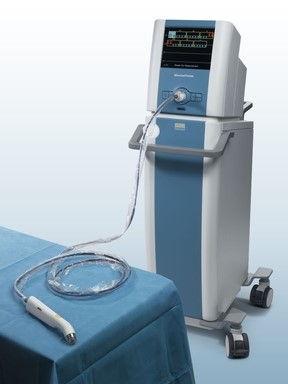
Last week, Dune Medical Devices, Inc., the company that developed the MarginProbeTM System, an intra-operative tissue assessment device to be used as accessory during lumpectomies of early-stage breast cancer, has received Premarket Approval (PMA) by the United States Food and Drug Administration.

MarginProbe system

marginProbe

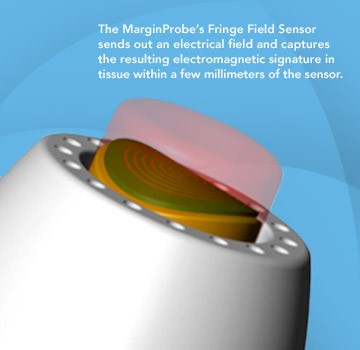
FDA approval of the MarginProbe System was based on a 664 patient prospective, multi-center, randomized, double arm study to evaluate the effectiveness of MarginProbe in identifying cancerous tissue along the margins of removed breast tissue during initial lumpectomy procedures. MarginProbe, which uses electromagnetic “signatures” to identify healthy and cancerous tissue, was found to be over three times more effective in finding cancer on the margin during lumpectomy, compared to traditional intra-operative imaging and palpation assessment. This enabled surgeons to significantly reduce the number of patients with positive margins following initial surgery.

The following publication gives an idea on the clinical performance of MarginProbe:

J Surg Res. 2010 May 15;160(2):277-81. doi: 10.1016/j.jss.2009.02.025. Epub 2009 Mar 31.

Diagnostic performance of a novel device for real-time margin assessment in lumpectomy specimens.

Pappo ISpector RSchindel AMorgenstern SSandbank JLeider LTSchneebaum SLelcuk SKarni T.

Source

Department of General Surgery, Assaf Harofeh Medical Center, Zrifin, Israel. pappo@zahav.net.il

Abstract

BACKGROUND:

Margin status in breast lumpectomy procedures is a prognostic factor for local recurrence and the need to obtain clear margins is often a cause for repeated surgical procedures. A recently developed device for real-time intraoperative margin assessment (MarginProbe; Dune Medical Devices, Caesarea, Israel), was clinically tested. The work presented here looks at the diagnostic performance of the device.

METHODS:

The device was applied to freshly excised lumpectomy and mastectomy specimens at specific tissue measurement sites. These measurement sites were accurately marked, cut out, and sent for histopathologic analysis. Device readings (positive or negative) were compared with histology findings (namely malignant, containing any microscopically detected tumor, or nonmalignant) on a per measurement site basis. The sensitivity and specificity of the device was computed for the full dataset and for additional relevant subgroups.

RESULTS:

A total of 869 tissue measurement sites were obtained from 76 patients, 753 were analyzed, of which 165 were cancerous and 588 were nonmalignant. Device performance on relatively homogeneous sites was: sensitivity 1.00 (95% CI: 0.85-1), specificity 0.87 (95% CI: 0.83-0.90). Performance for the full dataset was: sensitivity 0.70 (95% CI: 0.63-0.77), specificity 0.70 (95% CI: 0.67-0.74). Device sensitivity was estimated to change from 56% to 97% as the cancer feature size increased from 0.7 mm to 6.6 mm. Detection rate of samples containing pure DCIS clusters was not different from rates of samples containing IDC.

CONCLUSIONS:

The device has high sensitivity and specificity in distinguishing between normal and cancer tissue even down to small cancer features.

Copyright (c) 2010 Elsevier Inc. All rights reserved.

PMID: 19628225

Imagine how cost effective breast cancer management can be if it will involve systems such as these in addition to the systems I discussed in some of my previous posts, for example: What could transform an underdog into a winner?

Written by: Dror Nir, PhD.

Read Full Post »

New clinical results supports Imaging-guidance for targeted prostate biopsy

Author and Curator: Dror Nir, PhD

Last week, I came across an interesting abstract related to work that is carried-out in UCLA for several years now by Prof. Lenny Marks. Lenny participated to the development of “Artemis”. Artemis is a system that is adjunct to ultrasound and performs 3D Imaging and Navigation for Prostate Biopsy by Eigen. I thought that this deserves a complementary post to Imaging-guided biopsies: Is there a preferred strategy to choose? which I posted few weeks ago

Artemis

When men present with risk parameters for harboring prostate cancer, they are advised to undergo a transrectal ultrasound guided prostate biopsy (TRUS biopsy). Over one million biopsies are carried out in the USA ever year.

The indications for a prostate biopsy in the USA are:

·         Raised PSA above 2.5ng/ml

·         Raised age-specific PSA

·         Family history of prostate cancer

·         High PSA density > 0.15ng/ml/cc

·         High PSA velocity> 0.75 ng/ml/year or doubling time <3 years

·         Abnormal digital rectal examination

Overall, men undergoing systematic trans-rectal ultrasound (TRUS) guided biopsy of 12 cores of prostatic tissue have approximately 1 in 4 probability of being diagnosed with prostate cancer. Of these, about half are diagnosed with low risk disease. A known problem with the current practice of TRUS biopsy, is that it is performed blind – the operator does not know where the cancer is. Therefore, many low risk cancers that do not need treating are detected and many high risk cancers are missed or incorrectly classified.

The abstract below is reporting the results of a clinical study, aimed to evaluate the potential added value in using Artemis and ultrasound-MRI image fusion when performing TRUS biopsies, as a method and system to allow urologists to progress from blind biopsies to biopsies, which are mapped, targeted and tracked.

Image fusion is the process of combining multiple images from various sources into a single representative image. Ultrasound is the imaging modality used to guide Artemis in performing the biopsies. In this study MRI is used to overcome the “blindness” regarding tumor location. More on MRI’s cancer detection reliability  can be found in my posts Imaging-guided biopsies: Is there a preferred strategy to choose? and Today’s fundamental challenge in Prostate cancer screening.

Source

Curr Opin Urol. 2013 Jan;23(1):43-50. doi: 10.1097/MOU.0b013e32835ad3ee.

MRI-ultrasound fusion for guidance of targeted prostate biopsy.

Marks LYoung SNatarajan S.  Department of Urology, David Geffen School of Medicine bCenter for Advanced Surgical and Interventional Technology, University of California, Los Angeles, Los Angeles, California, USA.


Abstract

PURPOSE OF REVIEW:

Prostate cancer (CaP) may be detected on MRI. Fusion of MRI with ultrasound allows urologists to progress from blind, systematic biopsies to biopsies, which are mapped, targeted and tracked. We herein review the current status of prostate biopsy via MRI/ultrasound fusion.

RECENT FINDINGS:

Three methods of fusing MRI for targeted biopsy have been recently described: MRI-ultrasound fusion, MRI-MRI fusion (‘in-bore’ biopsy) and cognitive fusion. Supportive data are emerging for the fusion devices, two of which received US Food and Drug Administration approval in the past 5 years: Artemis (Eigen, USA) and Urostation (Koelis, France). Working with the Artemis device in more than 600 individuals, we found that targeted biopsies are two to three times more sensitive for detection of CaP than nontargeted systematic biopsies; nearly 40% of men with Gleason score of at least 7 CaP are diagnosed only by targeted biopsy; nearly 100% of men with highly suspicious MRI lesions are diagnosed with CaP; ability to return to a prior biopsy site is highly accurate (within 1.2 ± 1.1 mm); and targeted and systematic biopsies are twice as accurate as systematic biopsies alone in predicting whole-organ disease.

SUMMARY:

In the future, MRI-ultrasound fusion for lesion targeting is likely to result in fewer and more accurate prostate biopsies than the present use of systematic biopsies with ultrasound guidance alone.

Written by: Dror Nir, PhD.

Read Full Post »

Telling NO to Cardiac Risk

DDAH Says NO to ADMA(1); The DDAH/ADMA/NOS Pathway(2)

Author-Writer-Reporter:  Stephen J. Williams, PhD

Endothelium-derived nitric oxide (NO) has been shown to be vasoprotective.  Nitric oxide enhances endothelial cell survival, inhibits excessive proliferation of vascular smooth muscle cells, regulates vascular smooth muscle tone, and prevents platelets from sticking to the endothelial wall.  Together with evidence from preclinical and human studies, it is clear that impairment of the NOS pathway increases risk of cardiovascular disease (3-5).

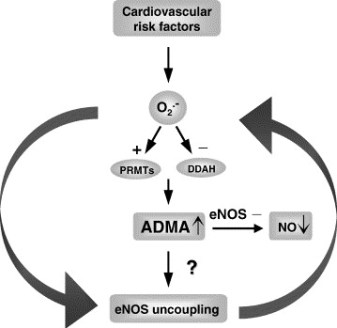
This post contains two articles on the physiological regulation of nitric oxide (NO) by an endogenous NO synthase inhibitor asymmetrical dimethylarginine (ADMA) and ADMA metabolism by the enzyme DDAH(1,2).  Previous posts on nitric oxide, referenced at the bottom of the page, provides excellent background and further insight for this posting. In summary plasma ADMA levels are elevated in patients with cardiovascular disease and several large studies have shown that plasma ADMA is an independent biomarker for cardiovascular-related morbidity and mortality(6-8).

admacardiacrisk

admaeffects

Figure 1 A. Cardiac risks of ADMA B. Effects of ADMA (Photo credit: Wikipedia)

ADMA Production and Metabolism

Nuclear proteins such as histones can be methylated on arginine residues by protein-arginine methyltransferases, enzymes which use S-adenosylmethionine as methyl groups.  This methylation event is thought to regulate protein function, much in the way of protein acetylation and phosphorylation (9).  And much like phosphorylation, these modifications are reversible through methylesterases.   The proteolysis of these arginine-methyl modifications lead to the liberation of free guanidine-methylated arginine residues such as L-NMMA, asymmetric dimethylarginine (ADMA) and symmetrical methylarginine (SDMA).

The first two, L-NMMA and ADMA, have been shown to inhibit the activity of the endothelial NOS.  This protein turnover is substantial: for instance the authors note that each day 40% of constitutive protein in adult liver is newly synthesized protein. And in several diseases, such as muscular dystrophy, ischemic heart disease, and diabetes, it has been known since the 1970’s that protein catabolism rates are very high, with corresponding increased urinary excretion of ADMA(10-13).  Methylarginines are excreted in the urine by cationic transport.  However, the majority of ADMA and L-NMMA are degraded within the cell by dimethylaminohydrolase (DDAH), first cloned and purified in rat(14).

endogenous NO inhibitors from pubchem

Figure 2.  Endogenous inhibitors of NO synthase.  Chemical structures generated from PubChem.

DDAH

DDAH specifically hydrolyzes ADMA and L-NMMA to yield citruline and demethylamine and usually shows co-localization with NOS. Pharmacologic inhibition of DDAH activity causes accumulation of ADMA and can reverse the NO-mediated bradykinin-induced relaxation of human saphenous vein.

Two isoforms have been found in human:

  • DDAH1 (found in brain and kidney and associated with nNOS) and
  • DDAH2 (highly expressed in heart, placenta, and kidney and associated with eNOS).

DDAH2 can be upregulated by all-trans retinoic acid (atRA can increase NO production).  Increased reactive oxygen species and possibly homocysteine, a risk factor for cardiovascular disease, can decrease DDAH activity(15,16).

  • The importance of DDAH activity can also be seen in transgenic mice which overexpress DDAH, exhibiting increased NO production, increased insulin sensitivity, and reduced vascular resistance  (17).  Likewise,
  • Transgenic mice, null for the DDAH1, showed increase in blood pressure, decreased NO production, and significant increase in tissue and plasma ADMA and L-NMMA.

amdanosfigure

Figure 3.  The DDAH/ADMA/NOS cycle. Figure adapted from Cooke and Ghebremarian (1).

As mentioned in the article by Cooke and Ghebremariam, the authors state: the weight of the evidence indicates that DDAH is a worthy therapeutic target. Agents that increase DDAH expression are known, and 1 of these, a farnesoid X receptor agonist, is in clinical trials

http://www.interceptpharma.com

An alternate approach is to

  • develop an allosteric activator of the enzyme.  Although
  • development of an allosteric activator is not a typical pharmaceutical approach, recent studies indicate that this may be achievable aim(18).

References:

1.            Cooke, J. P., and Ghebremariam, Y. T. : DDAH says NO to ADMA.(2011) Arteriosclerosis, thrombosis, and vascular biology 31, 1462-1464

2.            Tran, C. T., Leiper, J. M., and Vallance, P. : The DDAH/ADMA/NOS pathway.(2003) Atherosclerosis. Supplements 4, 33-40

3.            Niebauer, J., Maxwell, A. J., Lin, P. S., Wang, D., Tsao, P. S., and Cooke, J. P.: NOS inhibition accelerates atherogenesis: reversal by exercise. (2003) American journal of physiology. Heart and circulatory physiology 285, H535-540

4.            Miyazaki, H., Matsuoka, H., Cooke, J. P., Usui, M., Ueda, S., Okuda, S., and Imaizumi, T. : Endogenous nitric oxide synthase inhibitor: a novel marker of atherosclerosis.(1999) Circulation 99, 1141-1146

5.            Wilson, A. M., Shin, D. S., Weatherby, C., Harada, R. K., Ng, M. K., Nair, N., Kielstein, J., and Cooke, J. P. (2010): Asymmetric dimethylarginine correlates with measures of disease severity, major adverse cardiovascular events and all-cause mortality in patients with peripheral arterial disease. Vasc Med 15, 267-274

6.            Kielstein, J. T., Impraim, B., Simmel, S., Bode-Boger, S. M., Tsikas, D., Frolich, J. C., Hoeper, M. M., Haller, H., and Fliser, D. : Cardiovascular effects of systemic nitric oxide synthase inhibition with asymmetrical dimethylarginine in humans.(2004) Circulation 109, 172-177

7.            Kielstein, J. T., Donnerstag, F., Gasper, S., Menne, J., Kielstein, A., Martens-Lobenhoffer, J., Scalera, F., Cooke, J. P., Fliser, D., and Bode-Boger, S. M. : ADMA increases arterial stiffness and decreases cerebral blood flow in humans.(2006) Stroke; a journal of cerebral circulation 37, 2024-2029

8.            Mittermayer, F., Krzyzanowska, K., Exner, M., Mlekusch, W., Amighi, J., Sabeti, S., Minar, E., Muller, M., Wolzt, M., and Schillinger, M. : Asymmetric dimethylarginine predicts major adverse cardiovascular events in patients with advanced peripheral artery disease.(2006) Arteriosclerosis, thrombosis, and vascular biology 26, 2536-2540

9.            Kakimoto, Y., and Akazawa, S.: Isolation and identification of N-G,N-G- and N-G,N’-G-dimethyl-arginine, N-epsilon-mono-, di-, and trimethyllysine, and glucosylgalactosyl- and galactosyl-delta-hydroxylysine from human urine. (1970) The Journal of biological chemistry 245, 5751-5758

10.          Inoue, R., Miyake, M., Kanazawa, A., Sato, M., and Kakimoto, Y.: Decrease of 3-methylhistidine and increase of NG,NG-dimethylarginine in the urine of patients with muscular dystrophy. (1979) Metabolism: clinical and experimental 28, 801-804

11.          Millward, D. J.: Protein turnover in skeletal muscle. II. The effect of starvation and a protein-free diet on the synthesis and catabolism of skeletal muscle proteins in comparison to liver. (1970) Clinical science 39, 591-603

12.          Goldberg, A. L., and St John, A. C.: Intracellular protein degradation in mammalian and bacterial cells: Part 2. (1976) Annual review of biochemistry 45, 747-803

13.          Dice, J. F., and Walker, C. D.: Protein degradation in metabolic and nutritional disorders. (1979) Ciba Foundation symposium, 331-350

14.          Ogawa, T., Kimoto, M., and Sasaoka, K.: Purification and properties of a new enzyme, NG,NG-dimethylarginine dimethylaminohydrolase, from rat kidney. (1989) The Journal of biological chemistry 264, 10205-10209

15.          Ito, A., Tsao, P. S., Adimoolam, S., Kimoto, M., Ogawa, T., and Cooke, J. P.: Novel mechanism for endothelial dysfunction: dysregulation of dimethylarginine dimethylaminohydrolase. (1999) Circulation 99, 3092-3095

16.          Stuhlinger, M. C., Tsao, P. S., Her, J. H., Kimoto, M., Balint, R. F., and Cooke, J. P. : Homocysteine impairs the nitric oxide synthase pathway: role of asymmetric dimethylarginine.(2001) Circulation 104, 2569-2575

17.          Sydow, K., Mondon, C. E., Schrader, J., Konishi, H., and Cooke, J. P.: Dimethylarginine dimethylaminohydrolase overexpression enhances insulin sensitivity. (2008) Arteriosclerosis, thrombosis, and vascular biology 28, 692-697

18.          Zorn, J. A., and Wells, J. A.: Turning enzymes ON with small molecules. (2010) Nature chemical biology 6, 179-188

Other research papers on Nitric Oxide and Cardiac Risk  were published on this Scientific Web site as follows:

The Nitric Oxide and Renal is presented in FOUR parts:

Part I: The Amazing Structure and Adaptive Functioning of the Kidneys: Nitric Oxide

Part II: Nitric Oxide and iNOS have Key Roles in Kidney Diseases

Part III: The Molecular Biology of Renal Disorders: Nitric Oxide

Part IV: New Insights on Nitric Oxide donors

Cardiac Arrhythmias: A Risk for Extreme Performance Athletes

What is the role of plasma viscosity in hemostasis and vascular disease risk?

Cardiovascular Risk Inflammatory Marker: Risk Assessment for Coronary Heart Disease and Ischemic Stroke – Atherosclerosis.

Endothelial Dysfunction, Diminished Availability of cEPCs, Increasing CVD Risk for Macrovascular Disease – Therapeutic Potential of cEPCs

Biochemistry of the Coagulation Cascade and Platelet Aggregation – Part I

Nitric Oxide Function in Coagulation

Read Full Post »

What could transform an underdog into a winner?

Author and Curator: Dror Nir, PhD

Many feedbacks to my last post reflected radiologists’ perception of ultrasound as a low-tech, unreliable imaging device.

Ultrasounds most manifested limitation by radiologists is that its performance is too-much user-dependent. This opinion finds support in numerous clinical studies concluding that ultrasound-based assessment of a cancer patient varies with the operator.

How come that an imaging technology that is not only  low-cost, simple to operate and risk-free to the patient, but has also gained a leading position in certain domain, like obstetrics,  is perceived as the underdog when it comes  to cancer assessment? Could it be because of its positioning as a “multi-purpose” system, which requires only very basic training?

If indeed this is the case, it doesn’t require “rocket-science” to turn it around. It only needs designing dedicated ultrasound machines who offer a comprehensive solution to one specific clinical need. Using such machines will require highly skilled operators who will enjoy a superior workflow, reporting tools and proven clinical guidelines.

The unsatisfactory reality of mammography-based breast cancer screening, as evident by epidemiology data and expert-panels’ reports, opens the opportunity to transform ultrasound into a winner in the niche-market of breast cancer screening and diagnosis. It’s a significant market that justifies the investment in ultrasound systems dedicated to detection and characterisation of breast cancer lesions.

No doubt, that the ability to provide accurate and standardized interpretation of such ultrasound systems’ scans is a pre-requisite. Ultrasound-based tissue characterisation is a must for any application aiming at standardized image interpretation. A sample out-of present ultrasound-based technologies aiming at providing some level of tissue-characterisation are listed below. Recent clinical studies show promising results using these technologies. It is worth watching carefully to see if any of those could be part of a future ultrasound-based solution to breast cancer screening.

Solid Breast Lesions: Clinical Experience with US-guided Diffuse Optical Tomography Combined with Conventional US

Results: Of the 136 biopsied lesions, 54 were carcinomas and 82 were benign. The average total hemoglobin concentration in the malignant group was 223.3 μmol/L ± 55.8 (standard deviation), and the average hemoglobin concentration in the benign group was 122.5 μmol/L ± 80.6 (P = .005). When the maximum hemoglobin concentration of 137.8 μmol/L was used as the threshold value, the sensitivity, specificity, positive predictive value, negative predictive value, and accuracy of DOT with US localization were 96.3%, 65.9%, 65.0%, 96.4%, and 76.5%, respectively. The sensitivity, specificity, positive predictive value, negative predictive value, and accuracy of conventional US were 96.3%, 92.6%, 89.7%, 97.4%, and 93.4%, respectively. The sensitivity, specificity, positive predictive value, negative predictive value, and accuracy of conventional US combined with DOT were 100%, 93.9%, 91.5%, 100%, and 96.3%, respectively.

Conclusion: US-guided DOT combined with conventional US improves accuracy compared with DOT alone.

Breast Lesions: Quantitative Elastography with Supersonic Shear Imaging—Preliminary Results


Results: All breast lesions were detected at Supersonic Shear Imaging. Malignant lesions exhibited a mean elasticity value of 146.6 kPa ± 40.05 (standard deviation), whereas benign ones had an elasticity value of 45.3 kPa ± 41.1 (P < .001). Complicated cysts were differentiated from solid lesions because they had elasticity values of 0 kPa (no signal was retrieved from liquid areas).

Conclusion: Supersonic Shear Imaging provides quantitative elasticity measurements, thus adding complementary information that potentially could help in breast lesion characterization with B-mode US.

 Distinguishing Benign from Malignant Masses at Breast US: Combined US Elastography and Color Doppler US—Influence on Radiologist Accuracy

Results: The Az of B-mode US, US elastography, and Doppler US (average, 0.844; range, 0.797–0.876) was greater than that of B-mode US alone (average, 0.771; range, 0.738–0.798) for all readers (P = .001 for readers 1, 2, and 3; P < .001 for reader 4; P = .002 for reader 5). When both elastography and Doppler scores were negative, leading to strict downgrading, the specificity increased for all readers from an average of 25.3% (75.4 of 298; range, 6.4%–40.9%) to 34.0% (101.2 of 298; range, 26.5%–48.7%) (P < .001 for readers 1, 2, 4, and 5; P = .016 for reader 3) without a significant change in sensitivity.

Conclusion: Combined use of US elastography and color Doppler US increases both the accuracy in distinguishing benign from malignant masses and the specificity in decision-making for biopsy recommendation at B-mode US.

Evaluation of breast lesions by contrast enhanced ultrasound: Qualitative and quantitative analysis

A 57-year-old woman with a no-palpable lesion in the outer upper quadrant of left breast. (a) Gray scale image show an indistinct, hypo-echoic lesion. (b) Contrast enhanced image obtained 35 s after contrast agent injection showing a homogeneously and hyper-enhanced lesion. (c) Micro flow image obtained 38 s after contrast agent injection showing the enhanced mass with several radial vessels (arrow). (d) The time-intensity curve analysis show the peak intensity is 145.69 (intensity/1000), time to peak is 15.08 s, ascending slope is 8.98, descending slope is 1.03, the area under the curve is 7783.34. Pathologic analyses show this is an invasive ductal carcinoma.


Results: Histopathologic analysis of the 91 lesions revealed 44 benign and 47 malignant. For qualitative analysis, benign and malignant lesions differ significantly in enhancement patterns (p < 0.05). Malignant lesions more often showed heterogeneous and centripetal enhancement, whereas benign lesions mainly showed homogeneous and centrifugal enhancement. The detectable rate of peripheral radial or penetrating vessels was significantly higher in malignant lesions than in benign ones (p < 0.001). For quantitative analysis, malignant lesions showed significantly higher (p = 0.031) and faster enhancement (p = 0.025) than benign ones, and its time to peak was significantly shorter (p = 0.002). The areas under the ROC curve for qualitative, quantitative and combined analysis were 0.910 (Az1), 0.768 (Az2) and 0.926(Az3) respectively. The values of Az1 and Az3 were significantly higher than that for Az2 (p = 0.024 and p = 0.008, respectively). But there was no significant difference between the values of Az1 and Az3 (p = 0.625).

Conclusions: The diagnostic performance of qualitative and combined analysis was significantly higher than that for quantitative analysis. Although quantitative analysis has the potential to differentiate benign from malignant lesions, it has not yet improved the final diagnostic accuracy.

 Breast HistoScanning: the development of a novel technique to improve tissue characterization during breast ultrasound

Results: In 17 normal testing volumes, 3% of isolated voxels were classified as abnormal. In 15 abnormal testing volumes, the subclassifiers differentiated between malignant and benign tissue. BHS in benign tissue showed <1% abnormal voxels in cyst, hamartoma, papilloma and benign fibrosis. The fibroadenomas differed showing <5% and <24% abnormal voxels. Abnormal voxels in cancers increased with the volume of cancer at pathology.

Conclusions: HistoScanning reliably discriminated normal from abnormal tissue and could distinguish between benign and malignant lesions.

Written by: Dror Nir, PhD

Read Full Post »

Report on the Fall Mid-Atlantic Society of Toxicology Meeting “Reproductive Toxicology of Biologics: Challenges and Considerations.  Author, Reporter: Stephen J. Williams, Ph.D.

The fall 2012 Meeting of the Mid-Atlantic Society of Toxicology (MASOT) focused on the challenges and solutions in developing proper Development and Reproductive Toxicology (DART) studies with regards to the newer classes of bio-therapeutics such as vaccines, antibody-based therapies, and viral-based therapies.  The full meeting and MASOT links can be found at http://www.masot.org.   The overall synopsis of the meeting talks agreed, that although the general aim and design of DART studies for biological are very similar to DART studies for small molecule therapeutics, it is more necessary to take into consideration the pharmacodynamics, pharmacokinetic differences between biologics and small molecules.   In addition it is imperative to use pharmacologically-relevant species, such as non-rodent (guinea pig and non-human primate). The meeting was highlighted by the keynote speaker, Dr. A. Wallace Hayes, renowned board-certified toxicologist, committee and expert panel member for National Academy of Sciences, NIEHS, EPA and Department of Defense, and editor of well-known textbooks including Principles and Methods of Toxicology.  Dr. Hayes discussed a timeline of milestones in the field of toxicology.

The following are the meeting talk abstracts as well as notes for each presenter.

What’s So Different About DART Assessment of Biologics? Christopher Bowman Ph.D., DABT (Pfizer, Inc.)

Abstract:  The aim of developmental and reproductive toxicity (DART) safety assessment of a biologic is no different from that of a small molecule. Both cases consist of evaluating the potential for maternal toxicity, pre- and postnatal development toxicity (including juvenile toxicity) and effects of fertility (reproduction).  The differences lie in the in the product attributes of a specific biologic, the pharmacological response, the potential for undesirable toxicities and how these product attributes influence and are influenced by the biology.  Thus the primary challenge for developing a DART strategy for a biologic are derived from the complexities of these biomolecules and how that dictates a case-by-case strategy for appropriately evaluating the potential for developmental and reproductive toxicity. Most protein biologics have very limited potential for off-target toxicities, but this is not necessarily the case for other modalities such as anti-sense oligonucleotides and antibody-drug-conjugates.  In these cases, off-target toxicities can be a major feature of the DART safety assessment.  The most noticeable difference in DART assessment of biologics is the need to conduct these studies in pharmacologically relevant species and how that can influence the overall nonclinical strategy (including DART).  This has led to increased use of non-human primates as a model system and led to optimizations of this model for this purpose and revisions to international guidelines.

Notes:   Dr. Bowman emphasized the need to understand the type of biological you are testing and to both devise DART studies based on this information, additional endpoint you may want, as well as carefully choosing the correct species most relevant to the biologic.  He highlighted general differences between small molecules versus a biologic with respect to their pharmacology.  These differences are summarized in the Table below:

  Small Molecule Biologic-based therapy
Species specificity Low High
Route of administration Usually oral Parental
ADME (PK, bio-distribution etc.) Wide distribution Low distribution

He noted that clinical trials for biologics rarely include reproductive toxicity so the preclinical DART study is of utmost importance.  He also emphasized that currently, the FDA requires two species for DART testing of small molecule therapies (usually one rodent and one non-rodent).  However this is not possible with many biologics as species is to be taken in consideration when designing a meaningful DART study.  Study designs can be like most DART studies but want to have a steady exposure during fetal organogenesis, use high doses (10 times the clinical dose) to achieve maximal pharmacology, confirm exposure to fetus and to F1 generation, and determine embryolethality.  Some biologics like interferon and insulin-growth factor receptor (IGFR) antagonists are fetal abortifactants. In fact Lucentis (Ranibizumab) and Macugen (Pegaptanib) were approved with no or little DART studies, however these drugs showed reproductive toxicity, resulting in warning concerning pregnancy on the label. Also important is the effect on the immune system and reproductive system of offspring, as well as the pharmacodynamics profile in the offspring.

Species Selection for Reproductive and Developmental Toxicity Testing of Biologics; Elise M. Lewis, Ph.D. (Charles River Preclinical Services)

Abstract:  Regulatory guidelines for developmental and reproductive toxicology studies require selection of “relevant” animal models as determined by kinetic, pharmacological, and preceding toxicological data.  Rats, mice, and rabbits are the preferred animal models for these studies based on historical experience and well-established procedures and study protocols.  However, due to species specificity and immunogenicity issues, developmental and reproductive toxicology testing for biologics is limited to a pharmacologically relevant animal model as described in the ICH s6 guideline.

Notes:  Dr. Lewis notes that DART studies in guinea pigs and hamsters represent a cost effective alternative to large animal models as well as the benefit of shorter duration and ability to assess mating behavior.  She also notes that reproductive toxicology of vaccines should be done in an animal model that can elicit an immune-response to the vaccine, especially to determine any maternal-fetal interaction.  For example, a vaccine may be directed to a maternal protein which when suppressed, may negatively impact the developing fetus.  However it is important to remember that guinea pigs can spontaneously abort so it is good to have proper control arms of a substantial size in order to statistically determine the impact of those spontaneous abortions.


Placental Transfer of an Adnectin Protein During Organogenesis in Guinea Pigs Using a Radiolabeled Methodology; Lakshmi Sivaraman, Ph.D. (Bristol-Myers Squibb)

Abstract:  Knowledge regarding the placental transfer of large molecular weight therapeutics is important to support the enrollment of women of childbearing potential in clinical trials.  There is limited information in the scientific literature that reports the extent to which the conceptus is exposed to these large molecules during organogenesis.  Placental transfer of large therapeutics has been difficult to quantify, due to limited blood volumes that can be obtained from the embryo, as well as insufficient assay sensitivity.  Thus, it is possible that embryos are exposed to pharmacologically active concentrations after maternal drug exposure. We have adopted a radiolabeled approach to quantitate embryo-fetal exposure of a novel protein therapeutic platform (adnectins). Adnectins are fibronectin-based proteins containing domains engineered to bind to targets of therapeutic interests.

Notes: Adnectins molecular weight is typically less than monoclonal antibodies and while IgG is not transferred in great quantity past the placental barrier there have been studies in human indicating maternal-fetal transfer of monoclonal antibodies.  This is particularly important for two reasons:  the monoclonal interacts with a target important in development, or the fetal immune system could be augmented.  Their work will be published in Drug Metabolism and Disposition.  In general Dr. Siveraman engineered a radiolabel on adnectin and used different detection methods to quantify the fetal exposure to a single maternal dose.  Dr. Siverman was able to detect radiolabel in the fetus however it is not clear whether this is a significant amount.

Reproductive Toxicity Testing for Biological Products in Nonhuman Primates: Evolution and Current Perspectives: Gary J. Chellman, Ph.D., DABT (Charles River Preclinical Services)

Notes:  Dr. Chellman gave a review of the current trends being driven by regulatory agencies with regard to nonhuman primate DART studies of biopharmaceuticals.  He noted that an advantage using nonhuman primates were the close physiologic resemblance to humans and because a large animal could monitor pregnancy over time using ultrasound technology.  In general, Dr. Chellman spoke about new study designs which not only reduce the number of animals required but also significantly reduce costs.  For example, a DART study which cost upward of $750,000 now can be done for as little as $350,000.  Dr. Kary Thompson of Bristol Myers Squibb then gave a talk about use of these new enhanced designs to determine reproductive toxicity issues with ipilimumab (Yervoy).

Other research papers on Pharmaceutical Intelligence and Reproductive Biology, Bio Insrumentation, Endocrinology Genetics were published on this Scientific Web site as follows

Non-small Cell Lung Cancer drugs – where does the Future lie?

Reboot evidence-based medicine and reconsider the randomized, placebo-controlled clinical trial

Every sperm is sacred: Sequencing DNA from individual cells vs “humans as a whole.”

Leptin and Puberty

Gene Trap Mutagenesis in Reproductive Research

Genes involved in Male Fertility and Sperm-egg Binding

Hope for Male Contraception: A small molecule that inhibits a protein important for chromatin organization can cause reversible sterility in male mice

Pregnancy with a Leptin-Receptor Mutation

The contribution of comparative genomic hybridization in reproductive medicine

Sperm collide and crawl the walls in chaotic journey to the ovum

Impact of evolutionary selection on functional regions: The imprint of evolutionary selection on ENCODE regulatory elements is manifested between species and within human populations

Biosimilars: CMC Issues and Regulatory Requirements

Biosimilars: Intellectual Property Creation and Protection by Pioneer and by Biosimilar Manufacturers

Assisted Reproductive Technology Cycles and Cumulative Birth Rates

Innovations in Bio instrumentation in Reproductive Clinical and Male Fertility Labs in the US

Increased risks of obesity and cancer, Decreased risk of type 2 diabetes: The role of Tumor-suppressor phosphatase and tensin homologue (PTEN)

Guidelines for the welfare and use of animals in cancer research

Every sperm is sacred: Sequencing DNA from individual cells vs “humans as a whole.”


Read Full Post »

The unfortunate ending of the Tower of Babel construction project and its effect on modern imaging-based cancer patients’ management

The unfortunate ending of the Tower of Babel construction project and its effect on modern imaging-based cancer patients’ management

Curator: Dror Nir, PhD


The story of the city of Babel is recorded in the book of Genesis 11 1-9. At that time, everyone on earth spoke the same language.

Picture: Pieter Bruegel the Elder: The Tower of Babel_(Vienna)

It is probably safe to assume that medical practitioners at that time were reporting the status of their patients in a standard manner. Although not mentioned, one might imagine that, at that time, ultrasound or MRI scans were also reported in a standard and transferrable manner. The people of Babel noticed the potential in uniform communication and tried to build a tower so high that it would  reach the gods. Unfortunately, God did not like that, so he went down (in person) and confounded people’s speech, so that they could not understand each another. Genesis 11:7–8.

This must be the explanation for our inability to come to a consensus on reporting of patients’ imaging-outcome. Progress in development of efficient imaging protocols and in clinical management of patients is withheld due to high variability and subjectivity of clinicians’ approach to this issue.

Clearly, a justification could be found for not reaching a consensus on imaging protocols: since the way imaging is performed affects the outcome, (i.e. the image and its interpretation) it takes a long process of trial-and-error to come up with the best protocol.  But, one might wonder, wouldn’t the search for the ultimate protocol converge faster if all practitioners around the world, who are conducting hundreds of clinical studies related to imaging-based management of cancer patients, report their results in a standardized and comparable manner?

Is there a reason for not reaching a consensus on imaging reporting? And I’m not referring only to intra-modality consensus, e.g. standardizing all MRI reports. I’m referring also to inter-modality consensus to enable comparison and matching of reports generated from scans of the same organ by different modalities, e.g. MRI, CT and ultrasound.

As developer of new imaging-based technologies, my personal contribution to promoting standardized and objective reporting was the implementation of preset reporting as part of the prostate-HistoScanning product design. For use-cases, as demonstrated below, in which prostate cancer patients were also scanned by MRI a dedicated reporting scheme enabled matching of the HistoScanning scan results with the prostate’s MRI results.

The MRI reporting scheme used as a reference is one of the schemes offered in a report by Miss Louise Dickinson on the following European consensus meeting : Magnetic Resonance Imaging for the Detection, Localisation, and Characterisation of Prostate Cancer: Recommendations from a European Consensus Meeting, Louise Dickinson a,b,c,*, Hashim U. Ahmed a,b, Clare Allen d, Jelle O. Barentsz e, Brendan Careyf, Jurgen J. Futterer e, Stijn W. Heijmink e, Peter J. Hoskin g, Alex Kirkham d, Anwar R. Padhani h, Raj Persad i, Philippe Puech j, Shonit Punwani d, Aslam S. Sohaib k, Bertrand Tomball,Arnauld Villers m, Jan van der Meulen c,n, Mark Emberton a,b,c,

http://www.europeanurology.com/article/S0302-2838(10)01187-5

Image of MRI reporting scheme taken from the report by Miss Louise Dickinson

The corresponding HistoScanning report is following the same prostate segmentation and the same analysis plans:


Preset reporting enabling matching of HistoScanning and MRI reporting of the same case.

It is my wish that already in the near-future, the main radiology societies (RSNA, ESR, etc..) will join together to build the clinical Imaging’s “Tower of Babel” to effectively address the issue of standardizing reporting of imaging procedures. This time it will not be destroyed…:-)

Read Full Post »

Knowing the tumor’s size and location, could we target treatment to THE ROI by applying imaging-guided intervention?

Knowing the tumor’s size and location, could we target treatment to THE ROI by applying imaging-guided intervention?

Author: Dror Nir, PhD

Advances in techniques for cancer lesions’ detection and localisation [1-6] opened the road to methods of localised (“focused”) cancer treatment [7-10].  An obvious challenge on the road is reassuring that the imaging-guided treatment device indeed treats the region of interest and preferably, only it.

A step in that direction was taken by a group of investigators from Sunnybrook Health Sciences Centre, University of Toronto, Ontario, Canada who evaluate the feasibility and safety of magnetic resonance (MR) imaging–controlled transurethral ultrasound therapy for prostate cancer in humans [7]. Their study’s objective was to prove that using real-time MRI guidance of HIFU treatment is possible and it guarantees that the location of ablated tissue indeed corresponds to the locations planned for treatment. Eight eligible patients were recruited.


The setup


Treatment protocol


The result


“There was excellent agreement between the zone targeted for treatment and the zone of thermal injury, with a targeting accuracy of ±2.6 mm. In addition, the temporal evolution of heating was very consistent across all patients, in part because of the ability of the system to adapt to changes in perfusion or absorption properties according to the temperature measurements along the target boundary.”


Technological problems to be resolved in the future:

“Future device designs could incorporate urinary drainage during the procedure, given the accumulation of urine in the bladder during treatment.”

“Sufficient temperature resolution could be achieved only by using 10-mm-thick sections. Our numeric studies suggest that 5-mm-thick sections are necessary for optimal three-dimensional conformal heating and are achievable by using endorectal imaging coils or by performing the treatment with a 3.0-T platform.”

Major limitation: “One of the limitations of the study was the inability to evaluate the efficacy of this treatment; however, because this represents, to our knowledge, the first use of this technology in human prostate, feasibility and safety were emphasized. In addition, the ability to target the entire prostate gland was not assessed, again for safety considerations. We have not attempted to evaluate the effectiveness of this treatment for eradicating cancer or achieving durable biochemical non-evidence of disease status.”

References

  1. SIMMONS (L.A.M.), AUTIER (P.), ZATURA (F.), BRAECKMAN (J.G.), PELTIER (A.), ROMICS (I.), STENZL (A.), TREURNICHT (K.), WALKER (T.), NIR (D.), MOORE (C.M.), EMBERTON (M.). Detection, localisation and characterisation of prostate cancer by Prostate HistoScanning.. British Journal of Urology International (BJUI). Issue 1 (July). Vol. 110, Page(s): 28-35
  2. WILKINSON (L.S.), COLEMAN (C.), SKIPPAGE (P.), GIVEN-WILSON (R.), THOMAS (V.). Breast HistoScanning: The development of a novel technique to improve tissue characterization during breast ultrasound. European Congress of Radiology (ECR), A.4030, C-0596, 03-07/03/2011.
  3. Hebert Alberto Vargas, MD, Tobias Franiel, MD,Yousef Mazaheri, PhD, Junting Zheng, MS, Chaya Moskowitz, PhD, Kazuma Udo, MD, James Eastham, MD and Hedvig Hricak, MD, PhD, Dr(hc) Diffusion-weighted Endorectal MR Imaging at 3 T for Prostate Cancer: Tumor Detection and Assessment of Aggressiveness. June 2011 Radiology, 259,775-784.
  4. Wendie A. Berg, Kathleen S. Madsen, Kathy Schilling, Marie Tartar, Etta D. Pisano, Linda Hovanessian Larsen, Deepa Narayanan, Al Ozonoff, Joel P. Miller, and Judith E. Kalinyak Breast Cancer: Comparative Effectiveness of Positron Emission Mammography and MR Imaging in Presurgical Planning for the Ipsilateral Breast Radiology January 2011 258:1 59-72.
  5. Anwar R. Padhani, Dow-Mu Koh, and David J. Collins Reviews and Commentary – State of the Art: Whole-Body Diffusion-weighted MR Imaging in Cancer: Current Status and Research Directions Radiology December 2011 261:3 700-718
  6. Eggener S, Salomon G, Scardino PT, De la Rosette J, Polascik TJ, Brewster S. Focal therapy for prostate cancer: possibilities and limitations. Eur Urol 2010;58(1):57–64).
  7. Rajiv Chopra, PhD, Alexandra Colquhoun, MD, Mathieu Burtnyk, PhD, William A. N’djin, PhD, Ilya Kobelevskiy, MSc, Aaron Boyes, BSc, Kashif Siddiqui, MD, Harry Foster, MD, Linda Sugar, MD, Masoom A. Haider, MD, Michael Bronskill, PhD and Laurence Klotz, MD. MR Imaging–controlled Transurethral Ultrasound Therapy for Conformal Treatment of Prostate Tissue: Initial Feasibility in Humans. October 2012 Radiology, 265,303-313.
  8. Black, Peter McL. M.D., Ph.D.; Alexander, Eben III M.D.; Martin, Claudia M.D.; Moriarty, Thomas M.D., Ph.D.; Nabavi, Arya M.D.; Wong, Terence Z. M.D., Ph.D.; Schwartz, Richard B. M.D., Ph.D.; Jolesz, Ferenc M.D.  Craniotomy for Tumor Treatment in an Intraoperative Magnetic Resonance Imaging Unit. Neurosurgery: September 1999 – Volume 45 – Issue 3 – p 423
  9. Medel, Ricky MD,  Monteith, Stephen J. MD, Elias, W. Jeffrey MD, Eames, Matthew PhD, Snell, John PhD, Sheehan, Jason P. MD, PhD, Wintermark, Max MD, MAS, Jolesz, Ferenc A. MD, Kassell, Neal F. MD. Neurosurgery: Magnetic Resonance–Guided Focused Ultrasound Surgery: Part 2: A Review of Current and Future Applications. October 2012 – Volume 71 – Issue 4 – p 755–763
  10. Bruno Quesson PhD, Jacco A. de Zwart PhD, Chrit T.W. Moonen PhD. Magnetic resonance temperature imaging for guidance of thermotherapy. Journal of Magnetic Resonance Imaging, Special Issue: Interventional MRI, Part 1, Volume 12, Issue 4, pages 525–533, October 2000

Writer: Dror Nir, PhD

Read Full Post »

« Newer Posts - Older Posts »