Feeds:
Posts
Comments

Archive for the ‘Immunotherapy’ Category

Milestones in Physiology & Discoveries in Medicine and Genomics: Request for Book Review Writing on Amazon.com

physiology-cover-seriese-vol-3individualsaddlebrown-page2

Milestones in Physiology

Discoveries in Medicine, Genomics and Therapeutics

Patient-centric Perspective 

http://www.amazon.com/dp/B019VH97LU 

2015


Author, Curator and Editor

Larry H Bernstein, MD, FCAP

Chief Scientific Officer

Leaders in Pharmaceutical Business Intelligence

Larry.bernstein@gmail.com

Preface

Introduction 

Chapter 1: Evolution of the Foundation for Diagnostics and Pharmaceuticals Industries

1.1  Outline of Medical Discoveries between 1880 and 1980

1.2 The History of Infectious Diseases and Epidemiology in the late 19th and 20th Century

1.3 The Classification of Microbiota

1.4 Selected Contributions to Chemistry from 1880 to 1980

1.5 The Evolution of Clinical Chemistry in the 20th Century

1.6 Milestones in the Evolution of Diagnostics in the US HealthCare System: 1920s to Pre-Genomics


Chapter 2. The search for the evolution of function of proteins, enzymes and metal catalysts in life processes

2.1 The life and work of Allan Wilson
2.2  The  evolution of myoglobin and hemoglobin
2.3  More complexity in proteins evolution
2.4  Life on earth is traced to oxygen binding
2.5  The colors of life function
2.6  The colors of respiration and electron transport
2.7  Highlights of a green evolution


Chapter 3. Evolution of New Relationships in Neuroendocrine States
3.1 Pituitary endocrine axis
3.2 Thyroid function
3.3 Sex hormones
3.4 Adrenal Cortex
3.5 Pancreatic Islets
3.6 Parathyroids
3.7 Gastointestinal hormones
3.8 Endocrine action on midbrain
3.9 Neural activity regulating endocrine response

3.10 Genomic Promise for Neurodegenerative Diseases, Dementias, Autism Spectrum, Schizophrenia, and Serious Depression


Chapter 4.  Problems of the Circulation, Altitude, and Immunity

4.1 Innervation of Heart and Heart Rate
4.2 Action of hormones on the circulation
4.3 Allogeneic Transfusion Reactions
4.4 Graft-versus Host reaction
4.5 Unique problems of perinatal period
4.6. High altitude sickness
4.7 Deep water adaptation
4.8 Heart-Lung-and Kidney
4.9 Acute Lung Injury

4.10 Reconstruction of Life Processes requires both Genomics and Metabolomics to explain Phenotypes and Phylogenetics


Chapter 5. Problems of Diets and Lifestyle Changes

5.1 Anorexia nervosa
5.2 Voluntary and Involuntary S-insufficiency
5.3 Diarrheas – bacterial and nonbacterial
5.4 Gluten-free diets
5.5 Diet and cholesterol
5.6 Diet and Type 2 diabetes mellitus
5.7 Diet and exercise
5.8 Anxiety and quality of Life
5.9 Nutritional Supplements


Chapter 6. Advances in Genomics, Therapeutics and Pharmacogenomics

6.1 Natural Products Chemistry

6.2 The Challenge of Antimicrobial Resistance

6.3 Viruses, Vaccines and immunotherapy

6.4 Genomics and Metabolomics Advances in Cancer

6.5 Proteomics – Protein Interaction

6.6 Pharmacogenomics

6.7 Biomarker Guided Therapy

6.8 The Emergence of a Pharmaceutical Industry in the 20th Century: Diagnostics Industry and Drug Development in the Genomics Era: Mid 80s to Present

6.09 The Union of Biomarkers and Drug Development

6.10 Proteomics and Biomarker Discovery

6.11 Epigenomics and Companion Diagnostics


Chapter  7

Integration of Physiology, Genomics and Pharmacotherapy

7.1 Richard Lifton, MD, PhD of Yale University and Howard Hughes Medical Institute: Recipient of 2014 Breakthrough Prizes Awarded in Life Sciences for the Discovery of Genes and Biochemical Mechanisms that cause Hypertension

7.2 Calcium Cycling (ATPase Pump) in Cardiac Gene Therapy: Inhalable Gene Therapy for Pulmonary Arterial Hypertension and Percutaneous Intra-coronary Artery Infusion for Heart Failure: Contributions by Roger J. Hajjar, MD

7.3 Diagnostics and Biomarkers: Novel Genomics Industry Trends vs Present Market Conditions and Historical Scientific Leaders Memoirs

7.4 Synthetic Biology: On Advanced Genome Interpretation for Gene Variants and Pathways: What is the Genetic Base of Atherosclerosis and Loss of Arterial Elasticity with Aging

7.5 Diagnosing Diseases & Gene Therapy: Precision Genome Editing and Cost-effective microRNA Profiling

7.6 Imaging Biomarker for Arterial Stiffness: Pathways in Pharmacotherapy for Hypertension and Hypercholesterolemia Management

7.7 Neuroprotective Therapies: Pharmacogenomics vs Psychotropic drugs and Cholinesterase Inhibitors

7.8 Metabolite Identification Combining Genetic and Metabolic Information: Genetic association links unknown metabolites to functionally related genes

7.9 Preserved vs Reduced Ejection Fraction: Available and Needed Therapies

7.10 Biosimilars: Intellectual Property Creation and Protection by Pioneer and by

7.11 Demonstrate Biosimilarity: New FDA Biosimilar Guidelines


Chapter 7.  Biopharma Today

8.1 A Great University engaged in Drug Discovery: University of Pittsburgh

8.2 Introduction – The Evolution of Cancer Therapy and Cancer Research: How We Got Here?

8.3 Predicting Tumor Response, Progression, and Time to Recurrence

8.4 Targeting Untargetable Proto-Oncogenes

8.5 Innovation: Drug Discovery, Medical Devices and Digital Health

8.6 Cardiotoxicity and Cardiomyopathy Related to Drugs Adverse Effects

8.7 Nanotechnology and Ocular Drug Delivery: Part I

8.8 Transdermal drug delivery (TDD) system and nanotechnology: Part II

8.9 The Delicate Connection: IDO (Indolamine 2, 3 dehydrogenase) and Cancer Immunology

8.10 Natural Drug Target Discovery and Translational Medicine in Human Microbiome

8.11 From Genomics of Microorganisms to Translational Medicine

8.12 Confined Indolamine 2, 3 dioxygenase (IDO) Controls the Homeostasis of Immune Responses for Good and Bad


Chapter 9. BioPharma – Future Trends

9.1 Artificial Intelligence Versus the Scientist: Who Will Win?

9.2 The Vibrant Philly Biotech Scene: Focus on KannaLife Sciences and the Discipline and Potential of Pharmacognosy

9.3 The Vibrant Philly Biotech Scene: Focus on Computer-Aided Drug Design and Gfree Bio, LLC

9.4 Heroes in Medical Research: The Postdoctoral Fellow

9.5 NIH Considers Guidelines for CAR-T therapy: Report from Recombinant DNA Advisory Committee

9.6 1st Pitch Life Science- Philadelphia- What VCs Really Think of your Pitch

9.7 Multiple Lung Cancer Genomic Projects Suggest New Targets, Research Directions for Non-Small Cell Lung Cancer

9.8 Heroes in Medical Research: Green Fluorescent Protein and the Rough Road in Science

9.9 Issues in Personalized Medicine in Cancer: Intratumor Heterogeneity and Branched Evolution Revealed by Multiregion Sequencing

9.10 The SCID Pig II: Researchers Develop Another SCID Pig, And Another Great Model For Cancer Research

Epilogue
Read Full Post »

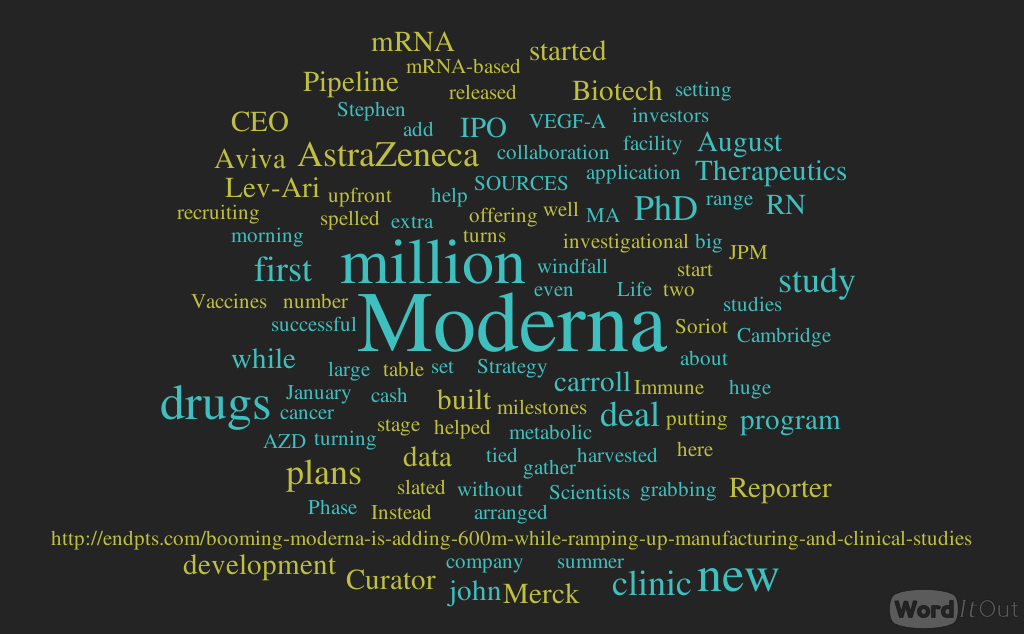
On its way for an IPO: mRNA platform, Moderna, Immune Oncology is recruiting 100 new Life Scientists in Cambridge, MA, Volume 2 (Volume Two: Latest in Genomics Methodologies for Therapeutics: Gene Editing, NGS and BioInformatics, Simulations and the Genome Ontology), Part 1: Next Generation Sequencing (NGS)

On its way for an IPO: mRNA platform, Moderna, Immune Oncology is recruiting 100 new Life Scientists in Cambridge, MA

Curator: Aviva Lev-Ari, PhD, RN


Deals:

Moderna has now raised $1.9 billion from investors like AstraZeneca – 9% stack [AstraZeneca’s Pascal Soriot helped get that all started with a whopping $240 million upfront in its 2013 deal, which was tied to $180 million in milestones.], with another $230 million on the table from grants. In addition to the financing announcement this morning, Moderna is also unveiling a pact to develop a new Zika vaccine, with BARDA putting up $8 million to get the program started while offering an option on $117 million more to get through a successful development program.

Novel Strategy in Biotech:

in biotech. Instead of grabbing one or two new drugs and setting out to gather proof-of-concept data to help establish its scientific credibility, the company has harvested a huge windfall of cash and built a large organization before even entering the clinic. And it did that without turning to an IPO.

Pipeline include:

  • The deal with AstraZeneca covers new drugs for cardiovascular, metabolic and renal diseases as well as cancer.
  • partners filed a European application to start a Phase I study of AZD8601, an investigational mRNA-based therapy that encodes for vascular endothelial growth factor-A (VEGF-A)
  • Moderna CEO spelled out plans to get the first 6 new drugs in the clinic by the end of 2016.
  • The first human study was arranged for the infectious disease drug mRNA 1440, which began an early stage study in 2015.
  • Moderna built up a range of big preclinical partnerships.
  • CEO Bancel says the number of drugs in development has swelled to 11, with the first set of data slated to be released in 2017.
  • Moderna also plans to add about 10 drugs to the clinic by next summer,


SOURCES

UPDATED: Booming Moderna is raising $600M while ramping up manufacturing and clinical studies

$1.9B in: Moderna blueprints $100M facility, plans to double the pipeline after a $474M megaround

http://endpts.com/moderna-blueprints-100m-facility-plans-to-double-the-pipeline-after-a-474m-megaround/?utm_source=Sailthru&utm_medium=email&utm_campaign=Issue:%202016-09-07%20BioPharma%20Dive%20%5Bissue:7155%5D&utm_term=BioPharma%20Dive


Moderna Therapeutics Deal with Merck: Are Personalized Vaccines here?

Curator & Reporter: Stephen J. Williams, PhD – August 11, 2016

https://pharmaceuticalintelligence.com/2016/08/11/moderna-therapeutics-deal-with-merck-are-personalized-vaccines-here/


at #JPM16 – Moderna Therapeutics turns away an extra $200 million: with AstraZeneca (collaboration) & with Merck ($100 million investment)

Reporter: Aviva Lev-Ari, PhD, RN – January 13, 2016

https://pharmaceuticalintelligence.com/2016/01/13/at-jpm16-moderna-therapeutics-turns-away-an-extra-200-million-with-astrazeneca-collaboration-with-merck-100-million-investment/

Read Full Post »

4:30 8/29 PANEL DISCUSSION: ONCOLYTIC IMMUNOTHERAPY IN THE ERA OF CHECKPOINT BLOCKADE @IMMUNO-ONCOLOGY SUMMIT – AUGUST 29-30, 2016 | Marriott Long Wharf Hotel – Boston, MA

http://www.immuno-oncologysummit.com/uploadedFiles/Immuno_Oncology_Summit/Agenda/16/2016-The-Immuno-Oncology-Summit-Brochure.pdf


Leaders in Pharmaceutical Business intelligence (LPBI) Group covers in Real Time the IMMUNO-ONCOLOGY SUMMIT using Social Media


Aviva Lev-Ari, PhD, RN,

Founder, LPBI Group & Editor-in-Chief

http://pharmaceuticalintelligence.com

Streaming LIVE @ Marriott Long Wharf Hotel in Boston

Curation of Scientific Content @Leaders in Pharmaceutical Business Intelligence (LPBI) Group, Boston


4:30 8/29 PANEL DISCUSSION: ONCOLYTIC IMMUNOTHERAPY IN THE ERA OF CHECKPOINT BLOCKADE

Robert Coffin, Ph.D., CEO,

Replimmune Ltd Oncolytic immunotherapy treats cancer by virus-mediated tumor cell lysis and generation of a patient specific cancer vaccine, including to neo-antigens, in situ directly in the patient. Both are likely important for the clinical efficacy seen with single agent use, and also for the clinical synergy observed with immune checkpoint blockade. Background and data supporting single agent and combination use will be discussed, and future directions described.

  • synergistic with other therapies
  • 15 years of basic research now is available

David Kirn, MD, CEO, 4D Molecular Therapeutics

  • comnibation VT with IT
  • deliver into the tumor MDs are not agents og change, oral drug IV, IT injections intratumorally by Interventional Radiology is a fight worth fighting
  • Ovarian cancer – injection was a strugle
  • injection in to the eye is now the practice
  • IV
  • Angiogenic paradigm was throughn out
  • synergies with antivascular

Mattew Mulvey, PhD, CEO, BeneVir

  • consensus was IV ot iT
  • IT dosing targeting the tumor for IV dosing –  need ne IT in present time
  • Interested in the microboome, manipulate to achieve goals,
  • consolidation in the industry is unavaidable

John Bell, PhD, University of Ottawa

  • approval of single agent will change
  • viral particles to be used

Stephen Russell, MD, PhD, Mayo Clinic and VYRID

  • OV is the main event, other IT will be used in conjunction with OT which will LEAD the Therapy 
  • vascular enthotelium
  • cell therapyas carriers will act like vessels
  • Systemic delivery from AMGEN, Phase III is a proof
  • cycle of drug approval is 15 years, good is the enemy of Better, minor improvals are nmany

Read Full Post »

LIVE 1:30 – 4:30 8/29 BIOMARKERS AND IMPROVING VIRUS ACTIVITY @IMMUNO-ONCOLOGY SUMMIT – AUGUST 29-30, 2016 | Marriott Long Wharf Hotel – Boston, MA

http://www.immuno-oncologysummit.com/uploadedFiles/Immuno_Oncology_Summit/Agenda/16/2016-The-Immuno-Oncology-Summit-Brochure.pdf


Leaders in Pharmaceutical Business intelligence (LPBI) Group covers in Real Time the IMMUNO-ONCOLOGY SUMMIT using Social Media


Aviva Lev-Ari, PhD, RN,

Founder, LPBI Group & Editor-in-Chief

http://pharmaceuticalintelligence.com

Streaming LIVE @ Marriott Long Wharf Hotel in Boston

Curation of Scientific Content @Leaders in Pharmaceutical Business Intelligence (LPBI) Group, Boston


1:30 – 4:30 BIOMARKERS AND IMPROVING VIRUS ACTIVITY

1:25 Chairperson’s Remarks

David Kirn, M.D., CEO & Co-Founder, 4D Molecular Therapeutics & Adjunct Professor of Bioengineering, UC Berkeley

1:30 New Biomarkers that Predict Response to Oncolytic Virus Immunotherapy

Howard L. Kaufman, M.D., FACS, Associate Director, Clinical Sciences, Rutgers Cancer Institute of New Jersey; Professor and Chief, Division of Surgical Oncology, Rutgers Robert Wood Johnson Medical School

T-VEC is the first oncolytic virus approved for the treatment of melanoma, and will soon enter clinical trials for treatment of other cancers. Further studies using T-VEC in combination with T cell checkpoint inhibitors are underway and showing promising early results. The identification of predictive biomarkers of response would be helpful for improving patient selection and optimizing therapeutic outcomes. We have recently focused on HSV-1 entry receptors and oncogenic signaling pathways within cancer cells as potential biomarkers of T-VEC response.

  • Why we wish to have biomarkers?
  1. identify patients
  2. efficacy
  3. cost/avoid over/under tretment
  4. molecular therapeutics understandin
  5. PD1 – expression is the ONLY biomarker we currently have for eligibility to participate
  6. Biomarker discovery – Biopsy or blood, many indicators to measure

Biological challenges: Tumor and lesion heterogeneity

  1. detection frequency for DNA vs. protein serum vs imaging modality
  2. prior treatment
  3. Circadian rhythm

Technical/Logistical

OV Immunotherapy

  1. Tumor cell intrisic factors
  2. Host Factore
  3. Immune Ssytem factors

Tumor cell intrisic factors

  • Viral cell surface – viral infection
  • signalling receptors – Nectin1, Nectin2 molecules
  • HVEM
  • NCB160

mRNA expression of HSV-1 receptors on NCI 60 cell line panel

Oncogenic pathways – apoptosis of cell — abberation of this process prevent apoptosis and

  • Treatment with T-VEC – response to BRAF and NRAS
  • MEK inhibition sentisizes mealnoma cell line to lysis by T-VEC
  • mutation status,
  • Oncolytic viruses trigger immunity through release of PAMPs
  • Patients with low serum HMGB1
  • Balancing the inflamed tumor microenvironment
  • Expression of PD-L1 and IDO associated with CD8+ T cell infiltrate, Fox
  • ICOS plus  plus T cells after T-VEC CD4+
  • Immune model: B16 Nectin-1 on one side
  • in 4 days Post Injection and viral infection –>> Increase in microphage – CD8+
  • Anti HSv – glycoprotein B lead to anti Herpes: Left vs right Flank
  • HSV-1 antigens – recognized by Human CD4+
  • PD-L1 Expression in Melanoma – PFS
  1. NIVO _IPI, FoxP3, CD163, DAPI, PD-L1, CD 3, CD8
  • LA-07 CALM Study: Best % of Change in tumor size T1 and 8 days later T8
  • Interferon – NanoString analysis: Immune
  • Mutation Load andneoantigen
  • Mutation Burden correlates with PF
  • Avelumab antiPD-L1
  • MCPyV and PPD-L1 therapy: MCpyV positive va negative MCC: at the extremes of mutational frequency

Conclusions

  1. predictive biomarkers
  2. Intrinsic tumor cell factors

Viralytics

Questions:

  • Intra Tumor injection – pushback by MDs – Yes, virus need be in different room than chemotherapy

2:00 Therapeutic Viral Vector Evolution: A Robust Platform for the Discovery of Optimized Vectors – Lessons in 20 yers

David Kirn, M.D., CEO & Co-Founder, 4D Molecular Therapeutics; Adjunct Professor, Bioengineering, University of California, Berkeley

Therapeutic virus vectors hold great promise for cancer gene and immunotherapy. However, novel vectors with improved efficacy are needed. Therapeutic Vector Evolution is a discovery platform from which optimized and proprietary viral vectors can be identified with beneficial characteristics of interest.

  • Translational
  • Design of 2nd generation VT
  • Adenovirus 2/5 deletion mutant Onxy-015 (d/1520) – cancer targeting selelctivity: p53 inactivation in cancer cells
  • 1996-2001: ONXY 015 experience in humans
  • first engineered OV in human: Intratumoral, Peritumor, Intraperiteneal, Intra-atrial, IV
  • Well tolerated acure, flu- like symptoms
  • Tumor specific replication of ONXY-015 in head & neck complete response vd peripheral escape and viral clearance
  • Tumor response limited IT only
  • No systemic anti-tumor efficacy
  • no IV delivery
  • No anti-tumor immune response demonstrated
  • Resistance
  • OV can sensitize tumors for chemotherapy
  • Hepatic artery
  • Pharma executives: nich unless given IV – in 2016 the position changed
  • VACCINIA Biology: The virus pharmacophore Library
  • Vaccinia Vs other visuses:
  • JX-594 (Pexa-Vec): Novel 3-pronged MOA
  • Studies:
  • Neutrophil induction correlates with GM-CSF in serum
  • Tumor liver injected – complete response
  • Systemic efficacy: carcinoma in the abdomen
  • Lytic effect: Vaccinia, other virus
  • Resist disease control: Randomized Phase 2A HCC trial design: High vs Low dose: Baseline Wek8 month 21
  • Uninjected week8 week 14 chronic inflammation
  • JX-594 (Pexa-Vec) experience in Humans (2007-2014): IV infusion vs IT injection

Biology mover to Vaccine – induce local injection in Gene Therapy with applications to CANCER

  • Therapeutic Vector Evolution DIscovery Platform: Overcoming hurdles 1st generation

4D Molecular Therapeutics:

Partnerships:

  1. Roche on Retina – opthalmology
  2. Pfizer – Cardiovascualr and
  3. Therapeutic Vector Evolution Discovery Platform
  4. D. Schaffer – Developed at UC, Berkeley – 4DMT Vector Discovery Programs: 
  5. Human Organotypic Lung POC for Vector Evolution” 4DMT variant transduction superior to 1st gen AAV
  6. Untransduceed CF vs transduced two dominant motifs – hepatocytes
  7. Summary
  8. predictive biomarkers
  9. overcome ECM
  10. overcome antiviral immunity’pharmaceutical partnerships
  11. Optimize ICI combination
  12. more tumors injected prior to activation of immune system better results


2:30 Enhancing Oncolytic Virus Activity by Engineering of Artificial MicroRNAs

John Bell, Ph.D., Senior Scientist, Centre for Innovative Cancer Research, Ottawa Hospital Research Institute, Professor, Departments of Medicine and Biochemistry, Microbiology & Immunology, University of Ottawa We have devised a novel strategy to enhance the ability of oncolytic viruses to infect malignant cells by expressing artificial microRNAs (amiRNAs) from the oncolytic virus genome. We have screened a variety of amiRNAs and identified a number that enhance virus replication within tumour but not normal cells. The characterization of these miRNAs and their targets will be discussed.

  • Immune adjuvant Gene therapy
  • Iv/IT agents
  • Virus
  • OV – are exquisitely specific: Cancer cells – behavior
  • multiple pahtologically activated pathways mitigate cellular antiviral response
  • Pikor, Bell, Diallo (2015) Trends in CANcer Vol 1 266-277
  1. WNT pathway
  2. MEK
  3. Vascular attack by Rhabdovirus and Vaccinia OV
  4. VEGF inhibits interferone production leading to OV replication and spread
  5. Tumor/wounded OV infected endothelium –
  6. OV: A sustemic therapy for Metastatic Cancer

Tumor Specific Anti-VIral defects: – Patient/tumor Heterogeneity will impact Tx activity of OV

  • Oncolysis
  • antitumor Immune Activity
  1. Maraba virus: Oncolytic and vaccine candidate: Rhabdovirus Structure
  2. How to increase therapeutic potency?
  • manipulate the infected Host cell with amiRNAs: Host determinants of Virus Repliccation
  • Library screen on Pancreatic CancerP) of SV-LIB (16,000 unique clones) serial Passaging of viral go to deep sequencing = Large scale genome sreening to identity virus
  • Enriched amiRNAs confer enhanced OV cytotoxicity
  • ARID1A: member of SWI/SNF gene Family
  • Helicase/ATpase – Synthetic Lethality – double mutant lethality
  • GSK126: EZH2 inhibitor (an epiegnetic) HPAF II cells – virus– GSK126 — readout
  • miRNA transfer via exosomes may mediate bystander effect
  • OV Infection of Tumor cells Stimulates exosome secretion
  • Is amiR6 present in exasomes shed by infected cells?
  • miRNA transfer via exosomes
  • Epstein-Barr virus-infected cells secrete exosomes that containn EBV-encoded miRNA (Pegtel et al, PNAS, 2010)

3:00 Refreshment Break

3:30 Immuno-Oncolytic Viruses as Cancer Therapies

Stephen Thorne, Ph.D., Professor and Scientific Advisor, Inventor, Western Oncolytics

Oncolytic viruses primarily act as immunotherapies, yet most vectors still rely on the virus’ inherent immune activation, often coupled to single cytokine transgene expression. However, for optimal activity they will need to overcome the tumor¹s immunosuppressive microenvironment, to raise anti-tumor CTL and allow repeated systemic delivery. Approaches to achieve all of these activities in a single vector are being developed.

  • insitu vaccination
  • capacity to modify immuno therapeutic activity
  • Optimizing immune activation
  • – Th1 vs Th2 response
  • overcoming local immunosuppression wihtin the Tumor – get the OV overcome the immunosuppression
  • Vaccinia infection of TLT2-/- mice resulted in reduced production of neutrlizing
  • Re-direction TLP Activation – Toll-Like Receptor Signaling
  • Deglycosylating viral practices reduced TLR2 activation
  • Deglycosylating Vacinia – does os
  • In vivo ablating TLR2 activation through Deglycosylation leads systemic delivery of the virus
  • TRIF expression alters immune response and enhances therapeutic activity in vivo after single IV delivery of virus
  • Deglycosylation evades anti-viral neutralizing antibody: Tumor Volume vs % neutralized
  • Maximize immune activation, overcoming immunosupression
  • MDSC – blocks the resistence – as tumor grows resistence increases – and cycolytic capabilities of the Viral therapy
  • G-MDSC in tumor: % of cells vs PBS< anti-PGE2, celecoxib
  • T-cell transfer
  • Immune checkpoint blockade
  • Optimized Imune activation
  • Overcoming the localized immune suppression
  • Over Effects, novel vector WO-12


4:00 Arming the Oncolytic Virus Enadenotucirev to Develop Tumor-Localized Combination Immunotherapeutics

Brian Champion, Ph.D., Senior Vice President, R&D, PsiOxus Therapeutics Ltd.

We have developed a systemically deliverable, oncolytic adenoviral platform for directing efficient and selective local production of a combination of biotherapeutic agents selectively within the tumor. This has the potential for enhanced efficacy while reducing side effects by limiting systemic exposure. Up to three separate biomolecules can be encoded in the same virus without affecting oncolytic properties of the virus.

  • Endenotucirev (EnAd): Oncolytic, reduces tumor burden – Carcinoma Ovarian cancer
  • “Armed” (ENAd): – Tumor-Specific Immuno
  • Research Virus Platform: antibody production: Virus Replication
  • Selectivity: Replication vs Anti-VEGF Ab vs Infectious Virus
  • HT-29 vs Hepatocytes
  • Human dendritic cells: 48h post co-culture with GFP-expressing (ENAd)
  • Payload to the Virus: Stay on or in the infected cell,
  • Next gen virus: TUmor cell activation signals: anti-tumor immune response by T-cells
  • Cytokines: INFalpha,
  • EnAd vs EnAd-CMV-EpBiTE
  • 3 unique TRANSGENES can be secreted ot inseted into the plasma membrane
  • NG-348 class immune-gene therapy
  • CAR-T/TCR Immunotherapyactivation via antigen selection
  • Activating ligand
  • IFNgamma secretion

Summary

NG-348, lead candidate –> selective expression of ligands

Read Full Post »

The Strategy of Precision Editing the Cancer Cell Glycocalyx using an “antibody–enzyme conjugate” for Cancer Immunotherapy: Research Beyond “augment the activator or remove inhibitor, or both”

Reporter: Aviva Lev-Ari, PhD, RN

Significance

Successful tumors are able to evade the immune system, which is otherwise capable of killing transformed cells. Therapies that prevent this evasion have become revolutionary treatments for incurable cancers. One mechanism of evasion is the presentation of sugars, called sialic acids, within the cell surface’s sugar coating, or glycocalyx. Here, we designed biotherapeutic molecules, termed “antibody–enzyme conjugates,” that selectively remove sialic acids from tumor cells. The antibody directs the enzyme to the cancer cells, the enzyme cleaves the sugars, and then the antibody directs immune cells to kill the desialylated cancer cells. The conjugate increased tumor cell killing compared with the antibody alone. Editing the cancer cell glycocalyx with an antibody–enzyme conjugate represents a promising approach to cancer immune therapy.

SOURCE 


AUGUST 22, 2016

Stanford chemists develop a new method of cancer immunotherapy

A team of Stanford ChEM-H scientists has discovered a novel form of cancer immunotherapy, which works by removing certain sugars from the surface of cancer cells and making those cells visible to the immune system.

“All of the world of immune therapy is now thinking about the immune system as calculating pluses and minuses. If you want to tilt the scale toward immune activation, you can either augment the activator or remove inhibitor, or both,” said Bertozzi, who is also an investigator with the Howard Hughes Medical Institute.

Current immunotherapies on the market work by blocking one of the inhibitory signals that are recognized by the adaptive immune system. Block those and the balance tilts in such a way that the immune system will attack the now recognizable cancer.

Bertozzi’s approach provides a second way of tiling the balance in favor of attack, this time for the innate immune system. She said this study shows just one example of how it could work, but her sugar-removing lawnmower could be used on a wide variety of cell types, not just those expressing HER2, and on different types of sugars.

“It’s almost always the case that you need a component of both the adaptive and innate immunity to get a robust reaction against infectious pathogens, such as during vaccination,” said Bertozzi. “The smart money suggests that the same will be true with tumors.”

Bertozzi said the approach also highlights the importance of paying attention to the much ignored glycocalyx.

SOURCE

Stanford chemists develop a new method of cancer immunotherapy

http://news.stanford.edu/2016/08/22/new-method-cancer-immunotherapy/


immobilization-ok

A symbolic representation of a glycocalyx chain attached to a cytoskeleton.

IMAGE SOURCE: google images


glycocalyx-145E1F0C801699F8CFE

image glycocalyx

IMAGE SOURCE: google images

Glycocalyx

Glycocalyx – www.futura-sciences.us576 × 284Search by image

The carbohydrates, glycoproteins and proteoglycans making up the glycocalyx

IMAGE SOURCE: google images

PNAS – Original Article

Precision glycocalyx editing as a strategy for cancer immunotherapy

  1. Han Xiaoa,b,1,
  2. Elliot C. Woodsa,b,1,
  3. Petar Vukojicica,b, and
  4. Carolyn R. Bertozzia,b,2
  1. Edited by Laura L. Kiessling, University of Wisconsin-Madison, Madison, WI, and approved July 11, 2016 (received for review May 24, 2016)

Abstract

Cell surface sialosides constitute a central axis of immune modulation that is exploited by tumors to evade both innate and adaptive immune destruction. Therapeutic strategies that target tumor-associated sialosides may therefore potentiate antitumor immunity. Here, we report the development of antibody–sialidase conjugates that enhance tumor cell susceptibility to antibody-dependent cell-mediated cytotoxicity (ADCC) by selective desialylation of the tumor cell glycocalyx. We chemically fused a recombinant sialidase to the human epidermal growth factor receptor 2 (HER2)-specific antibody trastuzumab through a C-terminal aldehyde tag. The antibody–sialidase conjugate desialylated tumor cells in a HER2-dependent manner, reduced binding by natural killer (NK) cell inhibitory sialic acid-binding Ig-like lectin (Siglec) receptors, and enhanced binding to the NK-activating receptor natural killer group 2D (NKG2D). Sialidase conjugation to trastuzumab enhanced ADCC against tumor cells expressing moderate levels of HER2, suggesting a therapeutic strategy for cancer patients with lower HER2 levels or inherent trastuzumab resistance. Precision glycocalyx editing with antibody–enzyme conjugates is therefore a promising avenue for cancer immune therapy.

SOURCE 

Read Full Post »

Inotuzumab Ozogamicin: Success in relapsed/refractory Acute Lymphoblastic Leukemia (ALL)

Reporter: Aviva Lev-Ari, PhD, RN


About Inotuzumab Ozogamicin

Inotuzumab ozogamicin is an investigational antibody-drug conjugate (ADC) comprised of a monoclonal antibody (mAb) targeting CD22,9 a cell surface antigen expressed on approximately 90 percent of B-cell malignancies,10 linked to a cytotoxic agent. When inotuzumab ozogamicin binds to the CD22 antigen on malignant B-cells, it is internalized into the cell, where the cytotoxic agent calicheamicin is released to destroy the cell.11

Inotuzumab ozogamicin originates from a collaboration between Pfizer and Celltech, now UCB. Pfizer has sole responsibility for all manufacturing, clinical development and commercialization activities for this molecule.

Acute lymphoblastic leukemia (ALL)

is an aggressive type of leukemia with high unmet need and a poor prognosis in adults.4The current standard treatment is intensive, long-term chemotherapy.5 In 2015, it is estimated that 6,250 cases of ALL will be diagnosed in the United States6, with about 1 in 3 cases in adults. Only approximately 20 to 40 percent of newly diagnosed adults with ALL are cured with current treatment regimens.7 For patients with relapsed or refractory adult ALL, the five-year overall survival rate is less than 10 percent.8

REFERENCES

1 Fielding A. et al. Outcome of 609 adults after relapse of acute lymphoblastic leukemia (ALL); an MRC UKALL12/ECOG 2993 study. Blood. 2006; 944-950.

2 U.S. Food and Drug Administration Safety and Innovation Act. Available at: http://www.gpo.gov/fdsys/pkg/PLAW-112publ144/pdf/PLAW-112publ144.pdf(link is external).Accessed July 11, 2015.

3 U.S. Food and Drug Administration Frequently Asked Questions: Breakthrough Therapies. Available at:http://www.fda.gov/RegulatoryInformation/Legislation/FederalFoodDrugandCosmeticActFDCAct/SignificantAmendmentstotheFDCAct/FDASIA/ucm341027.htm(link is external). Accessed July 11, 2015.

4 National Cancer Institute: Adult Acute Lymphoblastic Leukemia Treatment (PDQ®) – General Information About Adult Acute Lymphoblastic Leukemia (ALL). Available at:http://www.cancer.gov/cancertopics/pdq/treatment/adultALL/HealthProfessional/page1(link is external). Accessed July 11, 2015.

5 American Cancer Society: Typical treatment of acute lymphocytic leukemia. Available at:http://www.cancer.org/cancer/leukemia-acutelymphocyticallinadults/detailedguide/leukemia-acute-lymphocytic-treating-typical-treatment(link is external). Accessed July 11, 2015.

6 American Cancer Society: What are the key statistics about acute lymphocytic leukemia? Available at:http://www.cancer.org/cancer/leukemia-acutelymphocyticallinadults/detailedguide/leukemia-acute-lymphocytic-key-statistics(link is external). Accessed February 18, 2015.

7 Manal Basyouni A. et al. Prognostic significance of survivin and tumor necrosis factor-alpha in adult acute lymphoblastic leukemia. doi:10.1016/j.clinbiochem.2011.08.1147.

8 Fielding A. et al. Outcome of 609 adults after relapse of acute lymphoblastic leukemia (ALL); an MRC UKALL12/ECOG 2993 study. Blood. 2006; 944-950.

9 Clinicaltrials.gov. A Study of Inotuzumab Ozogamicin versus Investigator’s Choice of Chemotherapy in Patients with Relapsed or Refractory Acute Lymphoblastic Leukemia. Available at: http://www.clinicaltrials.gov/ct2/show/NCT01564784?term=inotuzumab&rank=7(link is external). Accessed July 11, 2015.

10 Leonard J et al. Epratuzumab, a Humanized Anti-CD22 Antibody, in Aggressive Non-Hodgkin’s Lymphoma: a Phase I/II Clinical Trial Results. Clinical Cancer Research. 2004; 10: 5327-5334.

11 DiJoseph JF. Antitumor Efficacy of a Combination of CMC-544 (Inotuzumab Ozogamicin), a CD22-Targeted Cytotoxic Immunoconjugate of Calicheamicin, and Rituximab against Non-Hodgkin’s B-Cell Lymphoma. Clin Cancer Res. 2006; 12: 242-250.

SOURCE

http://www.pfizer.com/news/press-release/press-release-detail/pfizer_s_inotuzumab_ozogamicin_receives_fda_breakthrough_therapy_designation_for_acute_lymphoblastic_leukemia_all

Other related article Published on this Open Access Online Scientific Journal include the following:

STORY OF A LEUKEMIA FIGHTER

Nicole L. Gularte, MBA

Cancer & the Future: Immunotherapy

https://pharmaceuticalintelligence.com/?s=Acute+Lymphoblastic+Leukemia+%28ALL%29+

Read Full Post »

Pioneers of Cancer Cell Therapy:  Turbocharging the Immune System to Battle Cancer Cells — Success in Hematological Cancers vs. Solid Tumors

Curator: Aviva Lev-Ari, PhD, RN

Article ID #209: Pioneers of Cancer Cell Therapy: Turbocharging the Immune System to Battle Cancer Cells — Success in Hematological Cancers vs. Solid Tumors. Published on 8/19/2016

WordCloud Image Produced by Adam Tubman

Chimeric Antigen Receptor T-Cell Therapy: Players in Basic & Translational Research and Biotech/Pharma

The companies are teamed with academic pioneers:

  • Novartis with University of Pennsylvania;
  • Kite Pharma with the National Cancer Institute; 
  • Juno Therapeutics with Sloan Kettering,
  • the Fred Hutchinson Cancer Research Center in Seattle and Seattle Children’s Hospital.
cancer33

IMAGE SOURCE: National Cancer Institute

 “CAR-T cell immunotherapy” –  genetically modified T cells that are engineered to target specific tumor antigens and/or genes that are involved in survival, proliferation, and the enhancement of effector functions have been under intense research.

CAR technology was originally reported by Zelig Eshhar in 1993.

https://www.weizmann.ac.il/immunology/sci/EshharPage.html

Prof. Zelig Eshhar, Ph.D., served as Chairman of the Department of Immunology at the Weizmann Institute. Prof. Eshhar has been Chair of Scientific Advisory Board at TxCell S.A. since April 2016. Prof. Eshhar has been a Member of Scientific Advisory Board at Kite Pharma, Inc. since August 8, 2013. Prof. Eshhar served as a Member of Scientific Advisory Board at Intellect Neurosciences, Inc. since April 2006.

Prof. Eshhar pioneered the CAR approach (or T-Body as he termed it) to redirect T cells to recognize, engage and kill patient’s tumor cells by engineering them with a construct that combines the anti-target specificity of an antibody with T cell activation domains. Prof. Eshhar serves on several editorial boards, including Cancer Gene Therapy, Human Gene Therapy, Gene Therapy, Expert Opinion on Therapeutics, European Journal of Immunology and the Journal of Gene Medicine. He was a Research Fellow in the Department of Pathology at Harvard Medical School and in the Department of Chemical Immunology at the Weizmann Institute in Israel. His achievements were recognized by several international awards, most recently the CAR Pioneering award by the ATTACK European Consortium. Prof. Eshhar obtained his B.Sc. in Biochemistry and Microbiology and his M.Sc. in Biochemistry from the Hebrew University, and his Ph.D. in the Department of Immunology from the Weizmann Institute of Science.

http://www.bloomberg.com/research/stocks/people/person.asp?personId=32720993&privcapId=32390485

Zelig Eshhar and Carl H. June honored for research on T cell engineering for cancer immunotherapy


New Rochelle, NY, November 11, 2014–Zelig Eshhar, PhD, The Weizmann Institute of Science and Sourasky Medical Center, and Carl H. June, MD, PhD, Perelman School of Medicine, University of Pennsylvania, are co-recipients of the Pioneer Award, recognized for lentiviral gene therapy clinical trials and for their leadership and contributions in engineering T-cells capable of targeting tumors with antibody-like specificity through the development of chimeric antigen receptors (CARs). Human Gene Therapy, a peer-reviewed journal from Mary Ann Liebert, Inc., publishers, is commemorating its 25th anniversary by bestowing this honor on the leading Pioneers in the field of cell and gene therapy selected by a blue ribbon panel* and publishing a Pioneer Perspective by the award recipients. The Perspectives by Dr. Eshhar and Dr. June are available free on the Human Gene Therapy website at http://www.liebertpub.com/hgt until December 11, 2014.

In his Pioneer Perspective entitled “From the Mouse Cage to Human Therapy: A Personal Perspective of the Emergence of T-bodies/Chimeric Antigen Receptor T Cells” Professor Eshhar chronicles his team’s groundbreaking contributions to the development of the CAR T-cell immunotherapeutic approach to treating cancer. He describes the method’s conceptual development including initial proof-of-concept, and the years of experimentation in mouse models of cancer. They first tested the CAR T-cells on tumors transplanted into mice then progressed to spontaneously developing cancers in immune-competent mice, which Dr. Eshhar describes as “a more suitable model that faithfully mimics cancer patients.” He recounts successful antitumor effects in mice with CAR modified T-cells injected directly into tumors, with effects seen at the injection site and at sites of metastasis, and even the potential of the CAR T-cells to prevent tumor development.

Dr. Carl H. June has led one of the clinical groups that has taken the CAR therapeutic strategy from the laboratory to the patients’ bedside, pioneering the use of CD19-specific CAR T-cells to treat patients with leukemia. In his Pioneer Perspective, “Toward Synthetic Biology with Engineered T Cells: A Long Journey Just Begun” Dr. June looks back on his long, multi-faceted career and describes how he combined his knowledge and research on immunology, cancer, and HIV to develop successful T-cell based immunotherapies. Among the lessons Dr. June has embraced throughout his career are to follow one’s passions. He also says that “accidents can be good: embrace the unexpected results and follow up on these as they are often times more scientifically interesting than predictable responses from less imaginative experiments.”

“These two extraordinary scientists made seminal contributions at key steps of the journey from bench to bedside for CAR T-cells,” says James M. Wilson, MD, PhD, Editor-in-Chief of Human Gene Therapy, and Director of the Gene Therapy Program, Department of Pathology and Laboratory Medicine, University of Pennsylvania Perelman School of Medicine, Philadelphia.

SOURCE

http://www.eurekalert.org/pub_releases/2014-11/mali-ze111114.php


The General procedure of CAR-T cell therapy involves the follwoing steps:

1) Separate T cells from patient;

2) Engineer these T cells to express an artificial receptor, which is called “CAR” that usually targets tumor-specific antigen;

3) Expand the CAR T cells to a sufficient amount;

4) Re-introduce the CAR T cells to patient.

There are two major components that are critical to the CAR-T cell immunotherapy:

  • the design of CAR itself and
  • the choice of the targeted tumor specific antigen.

SOURCE

http://www.ochis.org/node/209

First publication on Adoptive transfer of genetically modified T cells is an attractive approach for generating antitumor immune responses

Eradication of B-lineage cells and regression of lymphoma in a patient treated with autologous T cells genetically engineered to recognize CD19

James N. Kochenderfer, Wyndham H. Wilson, John E. Janik, Mark E. Dudley, Maryalice Stetler-Stevenson, Steven A. Feldman, Irina Maric, Mark Raffeld, Debbie-Ann N. Nathan, Brock J. Lanier, Richard A. Morgan, Steven A. Rosenberg

Abstract

Adoptive transfer of genetically modified T cells is an attractive approach for generating antitumor immune responses. We treated a patient with advanced follicular lymphoma by administering a preparative chemotherapy regimen followed by autologous T cells genetically engineered to express a chimeric antigen receptor (CAR) that recognized the B-cell antigen CD19. The patient’s lymphoma underwent a dramatic regression, and B-cell precursors were selectively eliminated from the patient’s bone marrow after infusion of anti–CD19-CAR-transduced T cells. Blood B cells were absent for at least 39 weeks after anti–CD19-CAR-transduced T-cell infusion despite prompt recovery of other blood cell counts. Consistent with eradication of B-lineage cells, serum immunoglobulins decreased to very low levels after treatment. The prolonged and selective elimination of B-lineage cells could not be attributed to the chemotherapy that the patient received and indicated antigen-specific eradication of B-lineage cells. Adoptive transfer of anti–CD19-CAR-expressing T cells is a promising new approach for treating B-cell malignancies. This study is registered at www.clinicaltrials.gov as #NCT00924326.

SOURCE

According to Setting the Body’s ‘Serial Killers’ Loose on Cancer

After a long, intense pursuit, researchers are close to bringing to market a daring new treatment: cell therapy that turbocharges the immune system to fight cancer.

By ANDREW POLLACK  AUG. 1, 2016

http://www.nytimes.com/2016/08/02/health/cancer-cell-therapy-immune-system.html?_r=0

Dr. June’s 2011 publications did not cite Dr. Rosenberg’s paper [Blood, 2010] from the previous year, prompting Dr. Rosenberg to write a letter to The New England Journal of Medicine. Dr. June’s publications also did not acknowledge that the genetic construct he had used was the one he had obtained from Dr. Campana of St. Jude.

From the Lab to the bedside to the Out Patient Clinic

Read Full Post »

Moderna Therapeutics Deal with Merck: Are Personalized Vaccines here?

Curator & Reporter: Stephen J. Williams, Ph.D.

UPDATED:  3/11/2023

Source: https://www.fiercebiotech.com/biotech/chasing-moderna-merck-pays-50m-join-race-develop-cancer-preventing-vaccine

Chasing Moderna, Merck pays $50M to join race to develop cancer-preventing vaccine

Merck & Co.
Merck’s deal with ModeX Therapeutics is a win for Opko Health, which bought ModeX for $300 million in stock last year. (Photo by Kena Betancur/Getty Images)

Merck & Co. has joined the emerging race to develop an Epstein-Barr virus (EBV) vaccine, paying ModeX Therapeutics $50 million upfront and dangling $872.5 million in biobucks for global rights to a preclinical challenger to shots in clinical development at Moderna and the National Institutes of Health (NIH).

EBV infects most people at some point in their lives. Many people have no symptoms, but the virus can cause infectious mononucleosis, a condition associated with fatigue and fever as well as linked to a range of other diseases. Carried as an asymptomatic infection, the virus is associated with 200,000 cancer cases a year, and a paper published last year showed it greatly increases the risk of multiple sclerosis.

Merck, which pioneered the idea of vaccinating to prevent cancer with HPV shot Gardasil, sees the evidence as an opportunity—and has identified ModeX as the company to help it realize that opportunity. The deal with ModeX gives Merck an exclusive worldwide license to the preclinical vaccine candidate MDX-2201.

ModeX developed MDX-2201 using a modular nanoparticle vaccine platform. The approach has resulted in a vaccine that presents antigens from four viral proteins—gH, gL, gp42 and gp350—involved in viral entry into host cells. By targeting four proteins, the vaccine could inhibit the infection of both B cells and epithelial cells.

The vaccine is differentiated from other candidates. Moderna’s mRNA-1189 uses lipid nanoparticles to get mRNA encoding for four viral proteins—gp42, gp220, gH and gL—into human cells. Other candidates, including the NIH’s clinical-phase prospect, target gp350, the most abundant glycoprotein on the EBV envelope, although this approach has so far failed to yield an effective vaccine.

Merck sees potential in ModeX’s broader approach and will work with the biotech to get the prospect ready for the clinic. Tarit Mukhopadhyay, Ph.D., vice president of infectious diseases and vaccine discovery at Merck Research Laboratories, highlighted the company’s experience with Gardasil in a statement to disclose the deal.

“We have a proud legacy of developing vaccines including several that have the potential to help protect against certain types of cancer. We look forward to working with the ModeX Therapeutics team to apply our experience and expertise to evaluate the potential of MDX-2201 to help protect against EBV infection and other, potentially related, conditions,” Mukhopadhyay said.

The deal is a win for Opko Health, which bought ModeX for $300 million in stock last year. In addition to MDX-2201, the takeover gave Opko control of a tetra-specific antibody for treating solid tumors that is on course to enter the clinic next year.

Take aways:

  • RNA based vaccines are a cost-effective method of developing and manufacturing a personalized cancer vaccine strategy; traditional vaccine methodology has not been met with much success as a cancer therapeutic
  • Most of the older RNA vaccine technology depended on isolated dendritic cells or T cell populations and ex-vivo treatment with RNA vaccine, HOWEVER, Moderna has developed a technology that circumvents the need for ex-vivo vaccination
  • There are multiple companies involved in this new RNA strategy (Moderna, Caperna {now Moderna}, CureVac, Biontech)

From BusinessWire at http://www.businesswire.com/news/home/20160629005446/en/Merck-Moderna-Announce-Strategic-Collaboration-Advance-mRNA-Based

Merck and Moderna Announce Strategic Collaboration to Advance Novel mRNA-Based Personalized Cancer Vaccines with KEYTRUDA®(pembrolizumab) for the Treatment of Multiple Types of Cancer

Collaboration Combines Merck’s Leadership in Immuno-Oncology with Moderna’s Pioneering mRNA Vaccine Technology and Rapid Cycle Time, Small-Batch GMP Manufacturing Capabilities

KENILWORTH, N.J. & CAMBRIDGE, Mass.–(BUSINESS WIRE)–Merck (NYSE:MRK), known as MSD outside the United States and Canada, and Moderna Therapeutics today announced a strategic collaboration and license agreement to develop and commercialize novel messenger RNA (mRNA)-based personalized cancer vaccines. The collaboration will combine Merck’s established leadership in immuno-oncology with Moderna’s pioneering mRNA vaccine technology and GMP manufacturing capabilities to advance individually tailored cancer vaccines for patients across a spectrum of cancers.

“Combining immunotherapy with vaccine technology may be a new path toward improving outcomes for patients”

Tweet this

Moderna and Merck will develop personalized cancer vaccines that utilize Moderna’s mRNA vaccine technology to encode a patient’s specific neoantigens, unique mutations present in that specific patient’s tumor. When injected into a patient, the vaccine will be designed to elicit a specific immune response that will recognize and destroy cancer cells. The companies believe that the mRNA-based personalized cancer vaccines’ ability to specifically activate an individual patient’s immune system has the potential to be synergistic with checkpoint inhibitor therapies, including Merck’s anti-PD-1 therapy, KEYTRUDA® (pembrolizumab). In addition, Moderna has developed a rapid cycle time, small-batch manufacturing technique that will uniquely allow the company to supply vaccines tailored to individual patients within weeks.

Under the terms of the agreement, Merck will make an upfront cash payment to Moderna of $200 million, which Moderna will use to lead all research and development efforts through proof of concept. The development program will entail multiple studies in several types of cancer and include the evaluation of mRNA-based personalized cancer vaccines in combination with Merck’s KEYTRUDA® (pembrolizumab). Moderna will also utilize the upfront payment to fund a portion of the build-out of a GMP manufacturing facility in suburban Boston for the purpose of personalized cancer vaccine manufacturing.

Following human proof of concept studies, Merck has the right to elect to make an additional undisclosed payment to Moderna. If exercised, the two companies will then equally share cost and profits under a worldwide collaboration for the development of personalized cancer vaccines. Moderna will have the right to elect to co-promote the personalized cancer vaccines in the U.S. The agreement entails exclusivity around combinations with KEYTRUDA. Moderna and Merck will each have the ability to combine mRNA-based personalized cancer vaccines with other (non-PD-1) agents.

“Combining immunotherapy with vaccine technology may be a new path toward improving outcomes for patients,” said Dr. Roger Perlmutter, President, Merck Research Laboratories. “While the area of personalized cancer vaccine research has faced challenges in the past, there have been many recent advances, and we believe that working with Moderna to combine an immuno-oncology approach, using KEYTRUDA, with mRNA-based personalized cancer vaccines may have the potential to transform the treatment of cancer.”

“Our team has made significant progress since beginning our work in personalized cancer vaccines just last year. Through this collaboration with Merck, we are now well-positioned to accelerate research and development with a goal of entering the clinic in 2017, as well as to apply our unique GMP manufacturing capabilities to support the rapid production of these highly individualized vaccines,” said Stéphane Bancel, chief executive officer of Moderna. “We value our continued collaboration with Merck, and we look forward to working together to harness the potential of personalized cancer vaccines and immuno-oncology to bring a new treatment paradigm to patients.”

Merck and Moderna have an existing collaboration and license agreement focused on the discovery and development of mRNA-based infectious disease vaccines and passive immunity treatments. Moderna is also advancing its own pipeline of infectious disease vaccine candidates and currently has two phase 1 studies underway in Europe and the U.S.

About Moderna Therapeutics

Moderna is a clinical stage pioneer of messenger RNA Therapeutics™, an entirely new in vivo drug technology that produces human proteins, antibodies and entirely novel protein constructs inside patient cells, which are in turn secreted or active intracellularly. This breakthrough platform addresses currently undruggable targets and offers a potentially superior alternative to existing drug modalities for a wide range of diseases and conditions. Moderna is developing and plans to commercialize its innovative mRNA drugs through its own ventures and its strategic relationships with established pharmaceutical and biotech companies. Its current ventures are:

  • Onkaido, focused on oncology,
  • Valera, focused on infectious diseases,
  • Elpidera, focused on rare diseases, and
  • Caperna, focused on personalized cancer vaccines.

Cambridge-based Moderna is privately held and currently has strategic agreements with AstraZeneca, Alexion Pharmaceuticals and Merck. To learn more, visit www.modernatx.com.

From the Moderna Therapeutics Website

Our mRNA Platform

At Moderna, we are pioneering the development of a new class of drugs made of messenger RNA (mRNA). This novel drug platform builds on the discovery that modified mRNA can direct the body’s cellular machinery to produce nearly any protein of interest, from native proteins to antibodies and other entirely novel protein constructs that can have therapeutic activity inside and outside of cells.

Our efforts are helping Moderna and the industry to flatten the mRNA learning curve across the full breadth of competencies needed to drive the platform forward, including chemistry, mRNA biology, formulation, process development, automation and high-throughput production, quality, and Good Manufacturing Practice (GMP) manufacturing.

Drug Modalities

Building from our mRNA core expression platform, we have created a new scale of drug discovery and development that enables a series of new drug modalities. Each modality represents a distinct approach to using the mRNA platform to encode proteins that achieve a therapeutic benefit, enabling us to develop numerous drug candidates across a wide array of therapeutic areas.

Vaccines

Vaccines are substances that teach the immune system to rapidly recognize and destroy invading pathogens such as bacteria or viruses, preparing the body’s adaptive immunity for future exposure to the pathogen. Historically, vaccines have introduced immune-activating markers from pathogens into the body. Conversely, Moderna is developing mRNA-based vaccines that enable the body to produce and present immunogenic proteins to the immune system.

Moderna is also developing mRNA-based personalized cancer vaccines to prime the immune system to recognize cancer cells and mount a strong, tailored response to each individual patient’s cancer. Moderna’s technology allows for a rapid turn-around time in production of these unique mRNA vaccines.

Intracellular/Transmembrane

Many diseases are caused by defects in proteins that function inside cells. Existing methods of protein-based therapy do not allow for proteins to reach the intracellular space, and as such are unable to replace the defective, disease-causing proteins within cells. Moderna’s platform allows for the development of mRNA therapies that can stimulate production of intracellular proteins as well as transmembrane proteins. This could potentially lead to a novel approach to treating a vast array of rare genetic and other diseases caused by intracellular protein defects.

Intratumoral

Many targets for the treatment of cancer have been identified but their therapeutic potential has been limited by either the inability to access these targets, or by systemic toxicities. Moderna’s platform allows for localized expression of therapeutic proteins within the tumor microenvironment.

Secreted antibodies

Antibodies are secreted proteins that bind to and inhibit specific targets. Moderna’s platform has the potential to stimulate the body’s own cells to produce specific antibodies that can bind to cellular targets.

Secreted proteins

Proteins are large, complex molecules that have many critical functions both inside and outside of cells. Moderna’s platform stimulates cells to produce and secrete proteins that can have a therapeutic benefit through systemic exposure.

Moderna is comprised of four smaller companies, the following three are involved in their personalized immunotherapy and cancer vaccine strategy

Caperna LLC

Caperna

Caperna LLC is the fourth Moderna venture company — formed, funded and wholly-owned by Moderna — and focused exclusively on the advancement of personalized cancer vaccines.

Caperna will apply Moderna’s mRNA vaccine technology to the field of cancer vaccines, building on advances in recent years in cancer immunotherapy. Utilizing Moderna’s demonstrated engineering and process capability to synthesize over 1,000 unique novel mRNA’s per month in Moderna’s, automated, in-house productions systems. This provides the basis for a vision of rapid turnaround times that will allow Caperna’s personalized cancer vaccine, customized after tumor biopsy and sequencing to code for specific neoantigens in patients’ tumors, to be used to treat patients with aggressive tumors and high unmet need (rather than those with less aggressive tumors which can’t wait for prolonged turnaround times). Caperna will develop its personalized cancer vaccines in combination with checkpoint inhibitors that unleash the immune system and other cancer immunotherapies.

Corporate Facts

  • President: Tal Zaks, M.D., Ph.D.
  • Head of Research: Nicholas Valiante, Ph.D.
  • Head of Operations: Ted Ashburn, M.D., Ph.D.
  • Headquarters: 500 Technology Square, Cambridge, Mass.
  • Phone: 617-714-6500
  • Website: Caperna.com


Onkaido

Onkaido

Onkaido Therapeutics is the first Moderna venture company – formed, funded and wholly-owned by Moderna. Onkaido is focused exclusively on developing mRNA-based oncology treatments for currently undruggable targets or as a superior alternative to existing drug modalities. Onkaido is leveraging all of the tools and modalities developed at Moderna, with plans to rapidly turn mRNA science into truly novel cancer therapies that can make a real difference for patients.

Onkaido is currently focused on three therapeutic areas of oncology drug discovery and development: immuno-oncology, hepatocellular carcinoma (liver cancer) and myeloid malignancies – with programs investigating multiple targets and therapies simultaneously. Onkaido scientists are also exploring the power of mRNA technology in precision cancer pharmacology – researching areas such as tumor biology, targeting and gene silencing, driving the science toward the delivery of truly personalized cancer treatment.

Corporate Facts

  • President: Stephen Kelsey, M.D.
  • Headquarters: 500 Technology Square, Cambridge, Mass.
  • Phone: 617-714-6500
  • Website: Onkaido.com


Valera

Valera

Valera LLC is the second Moderna venture company — formed, funded and wholly-owned by Moderna — and focused exclusively on the advancement of vaccines and therapeutics for the prevention and treatment of viral, bacterial and parasitic infectious diseases.

The vaccines work of Valera builds on a body of preclinical research at Moderna showing the ability of modified mRNA to express viral antigens in vivo and to induce robust immune responses. Valera’s therapeutic passive immunity programs will expand on Moderna’s research using mRNA to express antibodies that bind to viral and other targets. The robust data from these programs across a range of preclinical infectious disease models, together with the inherent, rapid turn-around time in creating novel mRNA constructs, provide Valera with a potentially powerful and versatile new platform for the creation of a broad array of vaccines and passive immunity therapies.

Corporate Facts

  • President: Michael Watson, MB ChB, MRCP, AFPM
  • Chief Scientific Officer: Giuseppe Ciaramella, Ph.D.
  • Interim Chief Medical Officer: Tal Zaks, M.D., Ph.D.
  • Headquarters: 500 Technology Square, Cambridge, Mass.
  • Phone: 617-714-6500
  • Website: Valeratx.com

And from http://endpts.com/neoantigens-beckon-merck-into-a-200m-cancer-collaboration-with-moderna/

Neoantigens beckon Merck into a $200M cancer collaboration with Moderna


Now that Galena has added fresh evidence that first-gen cancer vaccines make for a poor R&D program, Merck is betting $200 million upfront that the next-gen neoantigen approach to personalized cancer vaccines can succeed where all else has failed.

Merck is tying up with the mRNA specialists at Cambridge, MA-based Moderna, which has inked a long lineup of marquee partnerships. The big idea here is that each person’s cancer cells present unique “neoantigens” that can be used to tailor a cancer vaccine for each patient.

That’s a radical idea that has gained considerable steam in recent months, with Gritstone and Neon Therapeutics — paired now with Bristol-Myers on Opdivo — rounding up significant venture cash. Biotech billionaire Patrick Soon-Shiong has also jumped into the game, including it in its growing slate of cancer R&D work in a group of startups.

Moderna says it has already set up a manufacturing system that can be used to create these personalized vaccines in a matter of weeks. And Merck will use the partnership to advance new combination therapies that include its checkpoint inhibitor Keytruda.

The way the deal works, Moderna notes in its statement, is that Merck can step up after it sees some evidence in humans that the tech is working as planned. After human proof-of-concept, if Merck wants to opt in they can pay a significant milestone and then both companies can share the cost on Phase III and commercializations, profiting equally.Moderna CEO Stéphane Bancel says they can jump into the clinic next year.

The deal marks another rare pact by Merck R&D chief Roger Perlmutter, who’s been carefully focused on making Keytruda a foundation franchise that can sustain the company for years to come. While Merck has been a couple of steps behind Bristol-Myers in gaining market share, Perlmutter’s not settling for a second place finish.

“Combining immunotherapy with vaccine technology may be a new path toward improving outcomes for patients,” said Perlmutter, president, Merck Research Laboratories. “While the area of personalized cancer vaccine research has faced challenges in the past, there have been many recent advances, and we believe that working with Moderna to combine an immuno-oncology approach, using KEYTRUDA, with mRNA-based personalized cancer vaccines may have the potential to transform the treatment of cancer.”

From FierceBiotech on failure of Galena’s breast cancer vaccine trial

Galena plummets into microcap territory on Phase III breast cancer vaccine trial halt

Immunother Cancer. 2015; 3: 26.
Published online 2015 Jun 16. doi:  10.1186/s40425-015-0068-y
PMCID: PMC4468959

Self-adjuvanted mRNA vaccination in advanced prostate cancer patients: a first-in-man phase I/IIa study

Klinikum rechts der Isar der Technischen Universität München, Munich, Germany
CureVac GmbH, Paul-Ehrlich-Str. 15, Tuebingen, 72076 Germany
Charité University Hospital Berlin, Berlin, Germany
University Hospital Freiburg, Freiburg, Germany
Universitäty Hospital Essen, Essen, Germany
San Raffaele Scientific Institute, Milan, Italy
University Hospital of the Johannes-Gutenberg-University Mainz, Mainz, Germany
Ortenau Klinikum Offenburg-Gengenbach, Offenburg, Germany
University Hospital Göttingen, Göttingen/University Hospital Mannheim, Mannheim, Germany
University Hospital Schleswig-Holstein Campus Luebeck, Luebeck, Germany
Rippin-Consulting, Solingen, Germany
University Hospital Tuebingen, Tuebingen, Germany
Hubert Kübler, ed.nehcneum-ut.zrl@relbeuK.H.
corresponding authorCorresponding author.
#Contributed equally.

Abstract

Background

CV9103 is a prostate-cancer vaccine containing self-adjuvanted mRNA (RNActive®) encoding the antigens PSA, PSCA, PSMA, and STEAP1. This phase I/IIa study evaluated safety and immunogenicity of CV9103 in patients with advanced castration-resistant prostate-cancer.

Methods

44 Patients received up to 5 intra-dermal vaccinations. Three dose levels of total mRNA were tested in Phase I in cohorts of 3–6 patients to determine a recommended dose. In phase II, 32 additional patients were treated at the recommended dose. The primary endpoint was safety and tolerability, the secondary endpoint was induction of antigen specific immune responses monitored at baseline and at weeks 5, 9 and 17.

Results

The most frequent adverse events were grade 1/2 injection site erythema, injection site reactions, fatigue, pyrexia, chills and influenza-like illness. Possibly treatment related urinary retention occurred in 3 patients. The recommended dose was 1280 μg. A total of 26/33 evaluable patients treated at 1280 μg developed an immune response, directed against multiple antigens in 15 out of 33 patients. One patient showed a confirmed PSA response. In the subgroup of 36 metastatic patients, the Kaplan-Meier estimate of median overall survival was 31.4 months [95 % CI: 21.2; n.a].

Conclusions

The self-adjuvanted RNActive® vaccine CV9103 was well tolerated and immunogenic.

The technology is a versatile, fast and cost-effective platform allowing for creation of vaccines. The follow-up vaccine CV9104 including the additional antigens prostatic acid phosphatase (PAP) and Muc1 is currently being tested in a randomized phase IIb trial to assess the clinical benefit induced by this new vaccination approach.

SOURCE

http://www.ncbi.nlm.nih.gov/pmc/articles/PMC4468959/

Other articles in the Open Access Journal on Cancer Vaccines Include:

Cancer Vaccines: Targeting Cancer Genes for Immunotherapy – A Conference by Keystone Symposia on Molecular and Cellular Biology

AACR2016 – Cancer immunotherapy

Aduro Biotech Phase II Pancreatic Cancer Trial CRS-207 plus cancer vaccine GVAX Fails

Cases in Biotech Entrepreneurship: Selective Start Ups in 2016

at #JPM16 – Moderna Therapeutics turns away an extra $200 million: with AstraZeneca (collaboration) & with Merck ($100 million investment)


Read Full Post »

COMBAT study: Combination of BL-8040 and KEYTRUDA® (pembrolizumab) for Pancreatic Cancer: Collaboration Agreement Merck, BioLineRx and MD Anderson Cancer Center

Reporter: Aviva Lev-Ari, PhD, RN

 
Press Releases
August 8, 2016
BioLineRx Signs Second Clinical Immuno-Oncology Collaboration Agreement to Investigate Combination of BL-8040 and KEYTRUDA® for Pancreatic Cancer
Phase 2 study is part of strategic clinical research collaboration between MSD and MD Anderson Cancer Center aimed at evaluating KEYTRUDA in selected GI tumors using various combinations
For Hebrew convenience translation, please click below
Tel Aviv, Israel – August 8, 2016 – BioLineRx Ltd. (NASDAQ/TASE: BLRX), a clinical-stage biopharmaceutical company dedicated to identifying, in-licensing and developing promising therapeutic candidates, announced today the signing of a collaboration agreement with The University of Texas MD Anderson Cancer Center for the investigation of BL-8040 in combination with KEYTRUDA® (pembrolizumab) in pancreatic cancer. The study will be conducted as an investigator-sponsored study, as part of a strategic clinical research collaboration between MSD (known as Merck in the US and Canada) and MD Anderson Cancer Center aimed at evaluating Merck’s anti-PD-1 therapy, KEYTRUDA, in combination with various treatments and novel drugs.
The open-label, single center, single-arm Phase 2 study aims to evaluate the potential of BL-8040 with KEYTRUDA in pancreatic cancer and will focus on the mechanism of action by which both drugs might synergize. In addition to assessing clinical response, the study will include multiple assessments to evaluate the biological anti-tumor effects induced by the combination. BioLineRx will supply BL-8040 for the study, which is expected to commence later this year.
In June 2016, the Company announced the filing of the regulatory submissions required to commence a separate Phase 2a study focusing on evaluating the clinical efficacy of BL-8040 in combination with KEYTRUDA, also for the treatment of patients with pancreatic cancer. This trial, named the COMBAT study, will be conducted under a collaboration agreement between BioLineRx and MSD announced in January 2016. The study is expected to commence shortly after receipt of regulatory approval, anticipated in the third quarter of 2016.
BL-8040, BioLineRx’s lead oncology platform, is a CXCR4 antagonist that has been shown in several clinical trials to be a robust mobilizer of immune cells and to be effective at inducing direct tumor cell death. Additional findings in the field of immuno-oncology suggest that CXCR4 antagonists may be effective in inducing the infiltration of anti-tumor T cells into the tumor. Therefore, when combined with KEYTRUDA, which blocks the interaction between PD-1 and its ligands, PD-L1 and PD-L2, thereby activating T lymphocytes, BL-8040 has the potential to enable activated T cells to better reach tumor cells in the fight against pancreatic cancer. 
“We are very excited that MSD and MD Anderson Cancer Center selected BL-8040 to be tested under their collaboration. This will be the second study planned for investigating the combination of BL-8040 and KEYTRUDA, which further validates the potential of combining the two for the treatment of metastatic pancreatic cancer patients,” said Kinneret Savitsky, Ph.D., Chief Executive Officer of BioLineRx. “We believe that the combination of BL-8040 with KEYTRUDA has the potential to expand the benefit of immunotherapy to cancer types currently resistant to immuno-oncology treatments, such as pancreatic cancer, which represent a significant unmet medical need. Furthermore, we view BL-8040’s inhibition of CXCR4, which may affect the immunosuppressive tumor micro-environment, as potentially synergistic with immune checkpoint inhibitors in additional oncological indications.”
About Pancreatic Cancer
Pancreatic cancers of all types are the seventh most common cause of cancer deaths. According to the American Cancer Society, in 2015, nearly 50,000 were diagnosed with pancreatic cancer and an estimated 40,000 will die from the disease. The most common type of pancreatic cancer is pancreatic adenocarcinoma, which accounts for about 85 percent of cases. These adenocarcinomas start within the part of the pancreas that makes digestive enzymes. There are usually no symptoms in the early stages of the disease and symptoms that are specific enough to suggest the onset of pancreatic cancer typically do not develop until the disease has reached an advanced stage. The five-year survival rate of pancreatic adenocarcinoma is around seven percent.
About BL-8040
BL-8040 is a short peptide for the treatment of acute myeloid leukemia, solid tumors, and certain hematological indications. It functions as a high-affinity antagonist for CXCR4, a chemokine receptor that is directly involved in tumor progression, angiogenesis, metastasis and cell survival. CXCR4 is over-expressed in more than 70% of human cancers and its expression often correlates with disease severity. In a number of clinical and pre-clinical studies, BL-8040 has shown robust mobilization of cancer cells from the bone marrow, thereby sensitizing these cells to chemo- and bio-based anti-cancer therapy, as well as a direct anti-cancer effect by inducing apoptosis. In addition, BL-8040 has also demonstrated robust stem-cell mobilization, including the mobilization of colony-forming cells, and T, B and NK cells. BL-8040 was licensed by BioLineRx from Biokine Therapeutics and was previously developed under the name BKT-140.
About BioLineRx
BioLineRx is a clinical-stage biopharmaceutical company dedicated to identifying, in-licensing and developing promising therapeutic candidates. The Company in-licenses novel compounds, primarily from academic institutions and biotech companies based in Israel, develops them through pre-clinical and/or clinical stages, and then partners with pharmaceutical companies for advanced clinical development and/or commercialization.
BioLineRx’s leading therapeutic candidates are: BL-8040, a cancer therapy platform, which has successfully completed a Phase 2a study for relapsed/refractory AML, is in the midst of a Phase 2b study as an AML consolidation treatment, and has recently initiated a Phase 2 study in stem cell mobilization for allogeneic transplantation; and BL-7010 for celiac disease and gluten sensitivity, which has successfully completed a Phase 1/2 study. In addition, BioLineRx has a strategic collaboration with Novartis for the co-development of selected Israeli-sourced novel drug candidates, and has recently signed a collaboration agreement with MSD (known as Merck in the US and Canada) to run a Phase 2a study in pancreatic cancer using the combination of BL-8040 and Merck’s KEYTRUDA®.
For additional information on BioLineRx, please visit the Company’s website at www.biolinerx.com, where you can review the Company’s SEC filings, press releases, announcements and events. BioLineRx industry updates are also regularly updated on Facebook, Twitter, and LinkedIn.
Various statements in this release concerning BioLineRx’s future expectations, including specifically those related to the development and commercialization of BL-8040, constitute “forward-looking statements” within the meaning of the Private Securities Litigation Reform Act of 1995. These statements include words such as “may,” “expects,” “anticipates,” “believes,” and “intends,” and describe opinions about future events. These forward-looking statements involve known and unknown risks and uncertainties that may cause the actual results, performance or achievements of BioLineRx to be materially different from any future results, performance or achievements expressed or implied by such forward-looking statements. Some of these risks are: changes in relationships with collaborators; the impact of competitive products and technological changes; risks relating to the development of new products; and the ability to implement technological improvements. These and other factors are more fully discussed in the “Risk Factors” section of BioLineRx’s most recent annual report on Form 20-F filed with the Securities and Exchange Commission on March 10, 2016. In addition, any forward-looking statements represent BioLineRx’s views only as of the date of this release and should not be relied upon as representing its views as of any subsequent date. BioLineRx does not assume any obligation to update any forward-looking statements unless required by law.
KEYTRUDA® is a registered trademark of Merck Sharp & Dohme Corp., a subsidiary of Merck & Co., Inc.
Contact:
PCG Advisory
Vivian Cervantes
Investor Relations
212-554-5482
or
Tsipi Haitovsky
Public Relations
+972-3-624-0871
SOURCE

Read Full Post »

New York Times Articles on Cancer Immunotherapy and Cancer Treatment Options

Curators: Aviva Lev-Ari, PhD, RN, Stephen J Williams, PhD and Tilda Barliya, PhD

The following articles, 

Here are some ways cancer can thwart the new immunotherapy drugs

Laurie McGinley July 13, 2016

https://www.washingtonpost.com/news/to-your-health/wp/2016/07/13/here-are-some-ways-cancer-can-thwart-the-new-immunotherapy-drugs/

and

The list of cancers that can be treated by immunotherapy keeps growing

By Laurie McGinley April 19

https://www.washingtonpost.com/news/to-your-health/wp/2016/04/19/breakthrough-cancer-therapy-shows-growing-promise/?tid=a_inl

were brought to my attention by Tilda Barliya, PhD, on our R&D Team, DrugDiscovery @LPBI Group, it stimulated the following curation in several Parts:

This article has three parts:

  • Part One: LPBI Group: A Key Opinion Leader (KOL) in Cancer and Genomics
  • Part Two: History of Cancer Immunotherapy
  • Part Three: New York Times Articles on Cancer Immunotherapy and Cancer Treatment Options


Part One:

LPBI Group: A Key Opinion Leader (KOL) in Cancer and Genomics


Immune System Stimulants: Articles of Note @pharmaceuticalintelligence.com

Immune-Oncology Molecules In Development & Articles on Topic in @pharmaceuticalintelligence.com

Curators: Stephen J Williams, PhD and Aviva Lev-Ari, PhD, RN

https://pharmaceuticalintelligence.com/2016/01/11/articles-on-immune-oncology-molecules-in-development-pharmaceuticalintelligence-com/

Cancer Biology & Genomics for Disease Diagnosis, on Amazon since 8/11/2015

http://www.amazon.com/dp/B013RVYR2K

Genomics Orientations for Personalized Medicine, on Amazon since 11/23/2015

http://www.amazon.com/dp/B018DHBUO6

Genomics Volume Two: Latest in Genomics Methodologies for Therapeutics: Gene Editing, NGS & BioInformatics, Simulations and the Genome Ontology

https://pharmaceuticalintelligence.com/biomed-e-books/genomics-orientations-for-personalized-medicine/volume-two-genomics-methodologies-ngs-bioinformatics-simulations-and-the-genome-ontology/

Cancer Volume Two: Cancer Therapies: Metabolic, Genomics, Interventional, Immunotherapy and Nanotechnology in Therapy Delivery

https://pharmaceuticalintelligence.com/biomed-e-books/series-c-e-books-on-cancer-oncology/volume-2-immunotherapy-in-oncology/

Part Two:

History of Cancer Immunotherapy

Pioneers of Cancer Cell Therapy:  Turbocharging the Immune System to Battle Cancer Cells — Success in Hematological Cancers vs. Solid Tumors

Curator: Aviva Lev-Ari, PhD, RN

https://pharmaceuticalintelligence.com/2016/08/19/pioneers-of-cancer-cell-therapy-turbocharging-the-immune-system-to-battle-cancer-cells-success-in-hematological-cancers-vs-solid-tumors/

In 1987, researchers identified cytotoxic T-lymphocyte antigen 4, or CTLA-4. Allison found that CTLA-4 prevents T cells from attacking tumor cells. He wondered whether blocking CTLA-4 would allow the immune system to make those attacks. In 1996, Allison showed that antibodies against CTLA-4 allowed the immune system to destroy tumors in mice.[2] In 1999, biotech firm Medarex acquired rights to the antibody. In 2010, Medarex acquirer Bristol-Myers Squibb reported that patients with metastatic melanoma lived an average of 10 months on the antibody, versus 6 months without it. It was the first time any treatment had extended life in advanced melanoma in a randomized trial.[2]

In the early 1990s, a biologist discovered a molecule expressed in dying T cells, which he called programmed death 1, or PD-1 and which he recognized as another disabler of T cells. An antibody that targeted PD-1 was developed and by 2008 produced remission in multiple subjects across multiple cancer types. In 2013, clinicians reported that across 300 patients tumors shrunk by about half or more in 31% of those with melanoma, 29% with kidney cancer and 17% with lung cancer.[2]

In 1997 rituximab, the first antibody treatment for cancer, was approved by the FDA for treatment of follicular lymphoma. Since this approval, 11 other antibodies have been approved for cancer; alemtuzumab (2001), ofatumumab (2009) and ipilimumab (2011).

In 2003 cytokines such as interleukin were administered.[3] The adverse effects of intravenously administered cytokines[4] led to the extraction, in vitro expansion against a tumour antigen and reinjection of the cells[5] with appropriate stimulatory cytokines.

However, with both anti–CTLA-4 and anti–PD-1, some tumors continued to grow before vanishing months later. Some patients kept responding after the antibody had been discontinued. Some patients, developed side effects including inflammation of the colon or of the pituitary gland.[2]

The first cell-based immunotherapy cancer vaccine, sipuleucel-T, was approved in 2010 for the treatment of prostate cancer.[6][7]

After success harvesting T cells from tumors, expanding them in the lab and reinfusing them into patients reduced tumors, in 2010, Steven Rosenberg announced chimeric antigen receptor therapy, or CAR therapy. This technique is a personalized treatment that involves genetically modifying each patient’s T cells to target tumor cells. It produced complete remission in a majority of leukemia patients, although some later relapsed.[2]

By mid 2016 the FDA had approved one PD-L1 inhibitor (atezolizumab) and two PD-1 inhibitors (nivolumab and pembrolizumab).

SOURCE

https://en.wikipedia.org/wiki/Cancer_immunotherapy

Part Three:

New York Times Articles on Cancer Immunotherapy and Cancer Treatment Options


  1. What Is Immunotherapy? The Basics on These Cancer Treatments

    Some of the most promising advances in cancer research in recent years involve treatments known as immunotherapy. These advances are spurring billions of dollars in investment by drug companies, and are leading to hundreds of

  2. Immunotherapy Offers Hope to a Cancer Patient, but No Certainty

    declared him in remission. It was a result that put him at the vanguard of a new generation of cancer treatment called immunotherapy that casts into sharp relief the harshness of how we have long treated cancer and the less grueling

  3. Have You Received Immunotherapy Treatment for Cancer?

    The New York Times would like to hear from doctors and patients who have experience giving or receiving immunotherapy treatment for cancer.

  4. Immunotherapy Drug Fails Lung Cancer Trial

    The hot new field of immunotherapy got a shock on Friday when a best-selling new drug failed as an initial treatment for lung cancer in a clinical trial. Bristol-Myers Squibb said Friday that the drug, Opdivo, had not slowed the

  5. F.D.A. Approves Immunotherapy Drug for Treatment of Bladder Cancer

    The Food and Drug Administration on Wednesday approved a newimmunotherapy drug from Roche to treat bladder cancer, a form of cancer for which there have been no significant new medicines in years. The drug, called Tecentriq, is the

  6. Sean Parker, a Facebook and Napster Pioneer, to Start CancerImmunotherapy Effort

    media as the early president of Facebook. Now he wants to pioneer in a field that is already jumping with activity: cancer immunotherapy. Mr. Parker is announcing Wednesday that he is donating $250 million to a new effort that will

  7. Harnessing the Immune System to Fight Cancer

    Sloan Kettering Cancer Center in New York, recommended an experimental treatment: immunotherapy. Rather than attacking the cancer directly, as chemo does, immunotherapy tries to rally the patient’s own immune

  8. Cancer-Drug Ads vs. Cancer-Drug Reality

    She also took part in a clinical trial at Johns Hopkins for Opdivo, an immunotherapy drug made by the pharmaceutical company Bristol-Myers Squibb. Briefly stated, immunotherapy is a recently developed, highly

  9. Sean Parker on Cancer Research

    Sean Parker discusses his support of immunotherapy research.

  10. Paid Notice: Deaths SPRAYREGEN, NICHOLAS (NICK)

    family and many friends. Contributions in his memory may be made to Memorial Sloan Kettering Cancer Center, Melanoma and Immunotherapy Research under Dr. Jedd Wolchok. 1/3

    11. Paid Notice: Deaths SPRAYREGEN, NICHOLAS (NICK)

    St. and Amsterdam Ave. Contributions in his memory may be made to Memorial Sloan Kettering Cancer Center, Melanoma and Immunotherapy Research under Dr. Jedd Wolchok. 1/3

    12. Setting the Body’s ‘Serial Killers’ Loose on Cancer

    Sloan Kettering Cancer Center. This radical, science-fictionlike therapy differs sharply from the more established type of immunotherapy, developed by other researchers. Those off-the-shelf drugs, known as checkpoint inhibitors,

SOURCE

http://query.nytimes.com/search/sitesearch/?action=click&contentCollection&region=TopBar&WT.nav=searchWidget&module=SearchSubmit&pgtype=Homepage#/immunotherapy/since1851/allresults/2/

 Additional Readings:

More women with cancer in one breast are having double mastectomies

Medicare considers overhaul of doctors’ payments for cancer drugs

Paul Allen announces $100 million gift to expand “frontiers of bioscience”

Life sciences a priority for Sean Parker’s new $600 million foundation

Cornell study finds some people may be genetically programmed to be vegetarians

Mom’s and — surprise! — dad’s pre-pregnancy caffeine intake may affect miscarriage risk, NIH study warns

Read Full Post »

« Newer Posts - Older Posts »