Feeds:
Posts
Comments

Archive for the ‘Bone Disease and Musculoskeletal Disease’ Category

Author: Aviral Vatsa PhD MBBS

This is the first post in a series of posts on mechanosensation and mechanotransduction and their role in physiology and disease.

Future posts in this category will focus on various aspects of role of mechanosensation and mechanotransduction in human physiology. These aspects will include among others: gene modulation, cellular mechanosensation, tissue regeneration, stem cell differentiation, cancer, disease models, nanomodulation, material science and therapeutics etc.

Based on Zhang et al [1]

Multicellular organisms such as humans require intricate orchestration of signals between cells to achieve global morphogenesis and organ function and thus maintain haemostasis. Three major ‘signalling modalities’ work in unison intracellularly and/or exrtacellularly to regulate harmonious functioning of the physiological milieu. These ‘modalities’ namely biochemical molecules, electrical currents or fields and mechanical forces (external or internal) cohesively direct the downstream regulation of physiological processes.

Traditionally most of the biological studies have focused on biochemical or electrical signalling events and relatively lesser resources have been dedicated towards exploring the role of mechanical forces in human health and disease. Despite early theories proposed by scientists such as Julius Wolff (Wolff’s law [2]) in the late nineteenth century “ that bone in a healthy person or animal will adapt to the loads under which it is placed”, relatively little has been studied about the role of external mechanical forces in maintaining haemostasis. However, recent important developments such as

  • identification of external force dependent regulation of signalling pathways [3]
  • determination of mechanosensing elements of cellular cytoskeleton [4]
  • manipulation of single molecules [5]

have reinstated the importance of external mechanical forces in physiology. As a result more recent investigations have demonstrated that external mechanical forces are major coordinators of development and haemostasis of organisms [6], [7] [8].

‘Mechanotransduction’ has been traditionally defined as the conversion of mechanical stimulus into chemical cues for the cells and thus altering downstream signalling e.g conformational changes in ion channels might lead to initiation of downstream signalling. However, with the accumulation of new knowledge pertaining to the effects of external mechanical loads on extracellular matrix or a cell or on subcellular structures, it is being widely accepted that mechanotransduction is more than merely a physical switch. Rather it entails the whole spectrum of cell-cell , cell-ECM, and intracellular interactions that can directly or indirectly modulate the functioning of cellular mechanisms involved in haemostasis. This modulation can function at various levels such as organism level, tissue level, cellular level and subcellular level.

Forces in cells and organisms

From biological point of view mechanical forces can be grouped into three categories

  • intracellular forces
  • intercellular forces
  • inter-tissue forces

In the eukaryotic cells these forces are generally generated by the the contractile cytoskeletal machinery of the cell that is comprised of

  • microfilaments : Diameter-6 nm; example- actin
  • intermediate filaments: Diameter-10 nm; example- vimentin, keratin
  • microtubules: Diameter-23 nm; example- alpha and beta tubulin


Actin labeling in single Osteocyte in situ in mouse bone. Source: Aviral Vatsa

Actin labeling in single Osteocyte in situ in mouse bone. Source: Aviral Vatsa

Actin (cytoskeleton) staining of single osteocyte in situ in mouse calvaria (source: Aviral Vatsa)

There are a range of forces generated in the biological milieu (adopted from Mammoto et al [8]): 

  • Hydrostatic pressure: mechanical force applied by fluids or gases (e.g. blood or air) that perfuse or infuse living organs (e.g. blood vessels or lung).
  • Shear stress: frictional force of fluid flow on the surface of cells. The shear stress generated by the heart pumping blood through the systemic circulation has a key role in the determination of the cell fate of cardiomyocytes, endothelial cells and hematopoietic cells.
  • Compressive force: pushing force that shortens the material in the direction of the applied force. Tensional force: pulling force that lengthens materials in the direction of the applied force.
  • Cell traction force: is exerted on the adhesion to the ECM and other cells as a result of the shortening of the contractile cytoskeletal actomyosin filaments, which transmit tensional forces across cell surface adhesion receptors (e.g. integrins, cadherins).
  • Cell prestress: stabilizing isometric tension in the cell that is generated by the establishment of a mechanical force balance within the cytoskeleton through a tensegrity mechanism. Pulling forces generated within contractile microfilaments are resisted by external tethers of the cell (e.g. to the ECM or neighboring cells) and by internal load-bearing structures that resist compression (e.g. microtubules, filipodia). Prestress controls signal transduction and regulates cell fate.

It is the interplay of these forces generated by the cellular cytoskeleton and the ECM that regulate physiological functions. Disruption in mechanotransduction has been implicated in a variety of diseases such as hypertension, muscular dystrophies, cardiomyopathies, loss of hearing, cancer progression and metastasis. Ongoing attempts at unravelling the finer details of mechanosensation hold promising potential for new therapeutic approaches.


References

[1] H. Zhang and M. Labouesse, “Signalling through mechanical inputs – a coordinated process,” Journal of Cell Science, vol. 125, no. 17, pp. 4172–4172, Oct. 2012.

[2] R. A. Brand, “Biographical Sketch: Julius Wolff, 1836–1902,” Clin Orthop Relat Res, vol. 468, no. 4, pp. 1047–1049, Apr. 2010.

[3] A. J. Hudspeth, “The cellular basis of hearing: the biophysics of hair cells,” Science, vol. 230, no. 4727, pp. 745–752, Nov. 1985.

[4] N. Wang, J. P. Butler, and D. E. Ingber, “Mechanotransduction across the cell surface and through the cytoskeleton,” Science, vol. 260, no. 5111, pp. 1124–1127, May 1993.

[5] J. T. Finer, R. M. Simmons, and J. A. Spudich, “Single myosin molecule mechanics: piconewton forces and nanometre steps,” , Published online: 10 March 1994; | doi:10.1038/368113a0, vol. 368, no. 6467, pp. 113–119, Mar. 1994.

[6] P. A. Janmey and R. T. Miller, “Mechanisms of mechanical signaling in development and disease,” J Cell Sci, vol. 124, no. 1, pp. 9–18, Jan. 2011.

[7] R. Keller, L. A. Davidson, and D. R. Shook, “How we are shaped: The biomechanics of gastrulation,” Differentiation, vol. 71, no. 3, pp. 171–205, Apr. 2003.

[8] T. Mammoto and D. E. Ingber, “Mechanical control of tissue and organ development,” Development, vol. 137, no. 9, pp. 1407–1420, May 2010.


Read Full Post »

Genomic Promise for Neurodegenerative Diseases, Dementias, Autism Spectrum, Schizophrenia, and Serious Depression

Reporter and writer: Larry H Bernstein, MD, FCAP

There has been an considerable success in the current state of expanding our knowledge in genomics and therapeutic targets in cancer (although clinical remission targets and relapse are a concern), cardiovascular disease, and infectious disease.  Our knowledge of  prenatal and perinatal events is still at an early stage.  The neurology front is by no means unattended.  Here there are two prominent drivers of progress –

  • genomic control of cellular apoptosis by ubiquitin pathways, and
  • epigenetic investigations,

among a complex sea of sequence-changes.  I indicate some of the current status in this.  However, as much as we have know, there is an incredible barrier to formulate working models because:

  1. ligand binding between DNA short-sequences is not predictable over time
  2. binding between proteins and DNA is still largely unknown
  3. specific regulatory roles between nucleotide-sequences and histone proeins are still unclear
  4. the relationship between intracellular as well as extracellular cations and the equilibria between cations and anions in intertitial fluid that bathes the cell and between organelles is virgin territory

Consequently, it is quite an accomplishment to have come as far as we have come, and yet, even with the huge compuational power at our disposal, there is insuficient data to unravel the complexity.  This may be especially true in the pathway to understanding of neurological and behavioral disorders.

Broad Map of Brain

John Markoff reports in the Feb 18 front-page of New York Times (Project would construct a broad map of the brain) that the Obama administration envisions a decade-long effort to examine the workings of the human brain and construct a map, comparable to what the Human Genome Project did for genetics.  It will be a collaboration between universities, the federal government, private foundations, and teams of scientists (neuro-, nano- and whoever else).  The goal is to break through the barrier to understanding the brain’s billions of neurons and gain greater insight into

  • perception
  • actions
  • and consciousness.

Essentially, it holds great promise for understanding

Alzheimer’s disease and Parkinson’s, as well as finding therapies for a variety of mental illnesses.  An open-ended question is whether it will also advance artificial intelligence research.  It is termed the Brain Activity Map project.
http://NYTimes/broad-map-of-brain/

Schizophrenia Genomics

Scientists Reveal Genomic Explanation for Schizophrenia

July 11, 2011 

http://GenWeb.com/Exome Sequences Reveal Role for De Novo Mutations in Schizophrenia/
h
ttp://NatureGenetics.com/Exome Sequences Reveal Role for De Novo Mutations in Schizophrenia/
http://SchizophreniaResearch.com/INFS integrates diverse neurological signals that control the development of embryonic stem cell and neural progenitor cells/

Buffalo, NY (Scicast) (GenomeWeb News) –

Two new studies, published in Schizophrenia Research and in Nature Genetics, propose hypotheses in a new mouse model of schizophrenia that demonstrates how gestational brain changes cause behavioural problems later in life.  

The first study implicates

A fibroblast growth factor receptor protein, (FGFR1), targets diverse genes implicated in schizophrenia.  The research demonstrates how defects in an important neurological pathway in early development

  • may be responsible for the onset of schizophrenia later in life.

Individuals with sporadic schizophrenia tend to carry more deleterious genetic changes than found in the general population, according to an exome sequencing study  that appeared online in Nature Genetics yesterday.  “The occurrence of de novo mutations may in part explain the high worldwide incidence of schizophrenia,”  according to co-senior author Guy Rouleau, CHU Sainte-Justine Research Center of University of Montreal.
Researchers from Canada and France did exome sequencing on individuals from 14 parent-child trios, each comprised of an individual with schizophrenia and his or her unaffected parents. In the process, they found

  • 15 de novo mutations in coding sequences from eight individuals with the psychiatric condition, including
  • four nonsense mutations predicted to abbreviate protein sequences.

“They surmise that [de novo mutations] may account for some of the heritability reported for schizophrenia.  Recent exome sequencing studies involving parent-child trios have implicated de novo mutations in other brain-related conditions, including

  • autism spectrum disorder and
  • mental retardation.

To detect de novo genetic changes specific to schizophrenia, the team compared coding sequences from affected individuals with

  • the human reference genome, with
  • both of his or her parents, and
  • with 26 unrelated control individuals.

Of the 15 de-novo mutations verified by Sager sequencing,

  • 11 were missense mutations predicted to alter the amino acid sequence of the resulting protein and
  • four were nonsense mutations predicted to truncate it.

Among the genes containing nonsense mutations were the zinc finger protein-coding gene ZNF480, the karyopherin alpha 1 gene KPNA1, the low-density lipoprotein receptor-related gene LRP1, and the ALS-like protein-coding gene ALS2CL.

The 15 mutations were found in coding sequences from eight of the individuals with schizophrenia,

  • hinting at a higher de novo mutation rate in individuals with sporadic schizophrenia than is predicted in the population overall.

This difference seems to be specific to exomes, and the researchers noted that

  • de novo mutation rates across the entire genome are likely comparable in those with or without schizophrenia.

They conclude that the enrichment of [de novo mutations] within the coding sequence of individuals with schizophrenia may underlie the pathogenesis of many of these individual.  Most of the genes identified in this study have not been previously linked to schizophrenia, thereby providing new potential therapeutic targets.

The second study

  • identifies the Integrative Nuclear FGFR 1 Signaling (INFS) as a central intersection point for multiple pathways of
  • as many as 160 different genes believed to be involved in the disorder.

The lead author Dr. Michal Stachowiakthis (UB School of Medicine and Biomedical Sciences) suggests this  is the first model that explains schizophrenia

  1. from genes
  2. to development
  3. to brain structure and
  4. finally to behaviour .

A key challenge has been that patients with schizophrenia exhibit mutations in different genes. It is  possible to have 100 patients with schizophrenia and each one has a different genetic mutation that causes the disorder. The explanation is possibly because INFS integrates diverse neurological signals that control the development of embryonic stem cell and neural progenitor cells, and

  • links pathways involving schizophrenia-linked genes.

“INFS functions like the conductor of an orchestra,” explains Stachowiak. “It doesn’t matter which musician is playing the wrong note,

  • it brings down the conductor and the whole orchestra.

With INFS, we propose that

  • when there is an alteration or mutation in a single schizophrenia-linked gene,
  • the INFS system that controls development of the whole brain becomes untuned.

Using embryonic stem cells, Stachowiak and colleagues at UB and other institutions found that

  • some of the genes implicated in schizophrenia bind the FGFR1 (fibroblast growth factor receptor) protein,
  • which in turn, has a cascading effect on the entire INFS.

“We believe that FGFR1 is the conductor that physically interacts with all genes that affect schizophrenia,” he says. “We think that schizophrenia occurs

  • when there is a malfunction in the transition from stem cell to neuron, particularly with dopamine neurons.”

The researchers tested their hypothesis by creating an FGFR1 mutation in mice, which produced the hallmarks of the human disease: altered brain anatomy,

  • behavioural impacts and
  • overloaded sensory processes.

The researchers would like to devise ways to arrest development of the disease before it presents fully in adolescence or adulthood. The UB work adds to existing evidence that nicotinic agonists, might  help improve cognitive function in schizophrenics by acting on the INFS.

childhood-schizophrenia-symptoms

childhood-schizophrenia-symptoms (Photo credit: Life Mental Health)

English: Types of point mutations. With examples.

English: Types of point mutations. With examples. (Photo credit: Wikipedia)

Parkinson’s Disease

http:// CMEcorner.com/file:///G:/neurodegenerative_disease/Parkinson’s_disease.htm

PINK1 and Parkin and Parkinson’s Disease

Studies of the familial Parkinson disease-related proteins PINK1 and Parkin have demonstrated that these factors promote the fragmentation and turnover of mitochondria following treatment of cultured cells with mitochondrial depolarizing agents. Whether PINK1 or Parkin influence mitochondrial quality control under normal physiological conditions in dopaminergic neurons, a principal cell type that degenerates in Parkinson disease, remains unclear. To address this matter, we developed a method to purify and characterize neural subtypes of interest from the adult Drosophila brain.

Using this method, we find that dopaminergic neurons from Drosophila parkin mutants accumulate enlarged, depolarized mitochondria, and that genetic perturbations that promote mitochondrial fragmentation and turnover rescue the mitochondrial depolarization and neurodegenerative phenotypes of parkin mutants. In contrast, cholinergic neurons from parkin mutants accumulate enlarged depolarized mitochondria to a lesser extent than dopaminergic neurons, suggesting that a higher rate of mitochondrial damage, or a deficiency in alternative mechanisms to repair or eliminate damaged mitochondria explains the selective vulnerability of dopaminergic neurons in Parkinson disease.

Our study validates key tenets of the model that PINK1 and Parkin promote the fragmentation and turnover of depolarized mitochondria in dopaminergic neurons. Moreover, our neural purification method provides a foundation to further explore the pathogenesis of Parkinson disease, and to address other neurobiological questions requiring the analysis of defined neural cell types.

Burmana JL, Yua S, Poole AC, Decala RB , Pallanck L. Analysis of neural subtypes reveals selective mitochondrial dysfunction in dopaminergic neurons from parkin mutants.

http://Burmana JL, Yua S, Poole AC, Decala RB , Pallanck L. Analysis of neural subtypes reveals selective mitochondrial dysfunction in dopaminergic neurons from parkin mutants./

Autophagy in Parkinson’s Disease.

Parkinson’s disease is a common neurodegenerative disease in the elderly. To explore the specific role of autophagy and the ubiquitin-proteasome pathway in apoptosis,

  • a specific proteasome inhibitor and macroautophagy inhibitor and stimulator were selected to investigate
  1. pheochromocytoma (PC12) cell lines
  2. transfected with human mutant (A30P) and wildtype (WT) -synuclein.
  • The apoptosis ratio was assessed by flow cytometry.
  • LC3heat shock protein 70 (hsp70) and caspase-3 expression in cell culture were determined by Western blot.
  • The hallmarks of apoptosis and autophagy were assessed with transmission electron microscopy.

Compared to the control group or the rapamycin (autophagy stimulator) group, the apoptosis ratio in A30P and WT cells was significantly higher after treatment with inhibitors of the proteasome and macroautophagy.

  1. The results of Western blots for caspase-3 expression were similar to those of flow cytometry;
  2. hsp70 protein was significantly higher in the proteasome inhibitor group than in control, but
  3. in the autophagy inhibitor and stimulator groups, hsp70 was similar to control.

These findings show that

  1. inhibition of the proteasome and autophagy promotes apoptosis, and
  2. the macroautophagy stimulator rapamycin reduces the apoptosis ratio.
  3. And inhibiting or stimulating autophagy has less impact on hsp70 than the proteasome pathway.

In conclusion,

  • either stimulation or inhibition of macroautophagy, has less impact on hsp70 than on the proteasome pathway.
  • rapamycin decreased apoptotic cells in A30P cells independent of caspase-3 activity.

Although several lines of evidence recently demonstrated crosstalk between autophagy and caspase-independent apoptosis, we could not confirm that

  • autophagy activation protects cells from caspase-independent cell death.

Undoubtedly, there are multiple connections between the apoptotic and autophagic processes. Inhibition of autophagy may

  • subvert the capacity of cells to remove
  • damaged organelles or to remove misfolded proteins, which
  • would favor apoptosis.

However, proteasome inhibition activated macroautophagy and accelerated apoptosis. A likely explanation is inhibition of the proteasome favors oxidative reactions that trigger apoptosis, presumably through

  • a direct effect on mitochondria, and
  • the absence of NADPH2 and ATP which may
  • deinhibit the activation of caspase-2 or MOMP.

Another possibility is that aggregated proteins induced by proteasome inhibition increase apoptosis.

Yang F, Yanga YP, Maoa CJ, Caoa BY, et al. Role of autophagy and proteasome degradation pathways in apoptosis of PC12 cells overexpressing human -synuclein. Neuroscience Letters 2009; 454:203–208. doi:10.1016/j.neulet.2009.03.027. www.elsevier.com/locate/neulet   http://neurosciletters.com/ Role_of_autophagy_and_proteasome_degradation_pathways_in_apoptosis_of_PC12_cells_overexpressing_human –synuclein/

Parkin-dependent Ubiquitination of Endogenous Bax

Autosomal recessive loss-of-function mutations within the PARK2 gene functionally inactivate the E3 ubiquitin ligase parkin, resulting

  • in neurodegeneration of catecholaminergic neurons and a familial form of Parkinson disease.

Current evidence suggests both

  • a mitochondrial function for parkin and
  • a neuroprotective role, which may in fact be interrelated.

The antiapoptotic effects of Parkin have been widely reported, and may involve

fundamental changes in the threshold for apoptotic cytochrome c release, but the substrate(s) involved in Parkin dependent protection had not been identified. This study demonstrates

  • the Parkin-dependent ubiquitination of endogenous Bax
  • comparing primary cultured neurons from WT and Parkin KO mice and
  • using multiple Parkin-overexpressing cell culture systems.

The direct ubiquitination of purified Bax was also observed in vitro following incubation with recombinant parkin.

  1. Parkin prevented basal and apoptotic stress induced translocation of Bax to the mitochondria.
  2. an engineered ubiquitination-resistant form of Bax retained its apoptotic function,
  3. but Bax KO cells complemented with lysine-mutant Bax
  • did not manifest the antiapoptotic effects of Parkin that were observed in cells expressing WT Bax.

The conclusion is that Bax is the primary substrate responsible for the antiapoptotic effects of Parkin, and provides mechanistic insight into at least a subset of the mitochondrial effects of Parkin.

Johnson BN, Berger AK, Cortese GP, and LaVoie MJ. The ubiquitin E3 ligase Parkin regulates the proapoptotic function of Bax. PNAS 2012, pp 6. www.pnas.org/cgi/doi/10.1073/pnas.1113248109
http://
PNAS.org/ The_ubiquitin_E3_ligase_Parkin_regulates_the_proapoptotic_function_of_Bax

                                                                                                                           nature10774-f3.2   ubiquitin structures  Rn1  Rn2

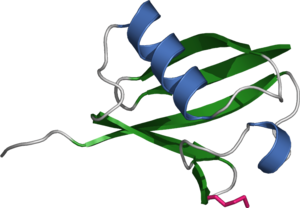
Ubiquitin is a small, compact protein characterized by a b-grasp fold.

Parkin Promotes Mitochondrial Loss in Autophagy

Parkin, an E3 ubiquitin ligase implicated in Parkinson’s disease,

  • promotes degradation of dysfunctional mitochondria by autophagy.

upon translocation to mitochondria, Parkin activates the ubiquitin–proteasome system (UPS) for

  • widespread degradation of outer membrane proteins.

We observe

  1. an increase in K48-linked polyubiquitin on mitochondria,
  2. recruitment of the 26S proteasome and
  3. rapid degradation of multiple outer membrane proteins.

The degradation of proteins by the UPS occurs independently of the autophagy pathway, and

  • inhibition of the 26S proteasome completely abrogates Parkin-mediated mitophagy in HeLa, SH-SY5Y and mouse cells.

Although the mitofusins Mfn1 and Mfn2 are rapid degradation targets of Parkin, degradation of additional targets is essential for mitophagy.

It appears that remodeling of the mitochondrial outer membrane proteome is important for mitophagy, and reveal

  • a causal link between the UPS and autophagy, the major pathways for degradation of intracellular substrates.

Chan NC, Salazar AM, Pham AH, Sweredoski MJ, et al. Broad activation of the ubiquitin–proteasome system by Parkin is critical for mitophagy. Human Molecular Genetics 2011; 20(9): 1726–1737. doi:10.1093/hmg/ddr048.  http://HumMolecGenetics.com/ Broad_activation_of_the_ubiquitin–proteasome_system_by_Parkin_is_critical_for_mitophagy/

Autophagy impairment: a crossroad

Nassif M and Hetz C.  Autophagy impairment: a crossroad between neurodegeneration and tauopathies.  BMC Biology 2012; 10:78. http://www.biomedcentral.com/1741-7007/10/78

http://BMC.com/Biology/Autophagy impairment: a crossroad between neurodegeneration and tauopathies/
http://
Molecular Neurodegeneration/Nassif M and Hetz C/

Impairment of protein degradation pathways such as autophagy is emerging as

  • a consistent and transversal pathological phenomenon in neurodegenerative diseases, including Alzheimer´s, Huntington´s, and Parkinson´s disease.

Genetic inactivation of autophagy in mice has demonstrated a key role of the pathway in maintaining protein homeostasis in the brain,

  • triggering massive neuronal loss and
  • the accumulation of abnormal protein inclusions.

This paper in Molecular Neurodegeneration from Abeliovich´s group now suggests a role for

  • phosphorylation of Tau and
  • the activation of glycogen synthase kinase 3β (GSK3β)
  • in driving neurodegeneration in autophagy-deficient neurons.

This study illuminatess the factors driving neurofibrillary tangle formation in Alzheimer´s disease and tauopathies.

autophagy & apoptosis          stem cell reprogramming     lysosomes.jpeg   exosomes.jpeg   Epigenetics

images: autophagy, stem cell remodeling, lysosome, exosome, epigenetics,

Alzheimer’s Disease

Alzheimer’s Linked To Rare Gene Mutation That Affects Immune System

Article Date: 15 Nov 2012 –
Two international studies published this week point to a link between Alzheimer’s disease and a rare gene mutation that affects the immune system’s inflammation response. The discovery supports an emerging theory about the role of the immune system in the development of Alzheimer’s disease.  Both studies were published online this week in the New England Journal of Medicine, one led by John Hardy of University College London, and the other led by the Iceland-based global company deCode Genetics.
Alzheimer’s is a form of distressing brain-wasting disease that gradually robs people of their memories and their ability to lead independent lives. Its main characteristic is the build up of
  • protein tangles and
  • plaques inside and between brain cells, which eventually
  • disrupts their ability to communicate with each other.
Both teams conclude that a rare mutation in a gene called TREM2, which helps trigger immune system responses, raises the risk for developing Alzheimer’s disease. One study suggests it raises it three-fold, the other, four-fold.  The UCL-led study included researchers from 44 institutions around the world and data on a total of 25,000 people.
After homing in on the TREM2 gene using new sequencing techniques, they carried out further sequencing that identified a set of
  • rare mutations that occurred more often in 1,092 Alzheimer’s disease patients than in a group of 1,107 healthy controls.
They evaluated the most common mutation, R47H, and confirmed that this variant of TREM2 substantially increases the risk for Alzheimer’s disease.  R47H mutation was present in 1.9 percent of the Alzheimer’s patients and in only 0.37 percent of the controls.  The researchers on the study led by deCode Genetics indicate that this strong effect is on a par with that of the well-established gene variant known as APOE4. Not all people who have  the R47H variant will develop Alzheimer’s and in those who do, other genes and environmental factors will also play a role — but like APOE 4 it does substantially increase risk,” Carrasquillo explains.
The study led by deCode Genetics involved collaborators from Iceland, Holland, Germany and the US, not only found a strong link between the R47H variant and Alzheimer’s disease, but the variant also

  • predicts poorer cognitive function in older people without Alzheimer’s.
 In a statement, lead author Kari Stefánsson, CEO and co-founder of deCODE Genetics says:
The discovery of variant TREM2 is important because
  • it confers high risk for Alzheimer’s and
  • because the gene’s normal biological function has been shown to reduce immune response
 He surmises that the  combined factors make TREM2 an attractive target for drug development.
Using deCode’s genome sequencing and genotyping technology, Stefánsson and colleagues identified
  • approximately 41 million markers, including 191,777 functional variants, from
  • 2,261 Icelandic samples.
They further analyzed these variants against the genomes of
  • 3,550 people with Alzheimer’s disease and
  • a control group of over-85s who did not have a diagnosis of Alzheimer’s.
This led to them finding the TREM2 variant, and to make sure this was not just a feature of Icelandic people,
  • they replicated the findings against other control populations in the United States, Germany, the Netherlands and Norway.
Stefánsson says that the results were enabled by having
  • sophisticated research tools,
  • access to expanded and high quality genomic data sets, and
  • investigators with profound analytic skills,
Researching into genetic causes of disease can, thereby,  be carried out using an approach that combines sequence data and biological knowledge to find new drug targets.

R47H Variant of TREM2 and Immune Response

 Preclinical studies have found that
  • TREM2 is important for clearing away cell debris and amyloid protein, the protein that is associated with the brain plaques
  • that are characteristic of Alzheimer’s disease.
 The gene helps control the
  • inflammation response associated with Alzheimer’s and cognitive decline.
Rosa Rademakers, a co-author in the UCL-led study, runs a lab at the Mayo Clinic in Florida that helped to pinpoint the R47H variant of TREM2.  Other studies also link the immune system to Alzheimer’s disease, but
  • studies are needed to establish that R47H  acts by altering immune function.

EPIGENETICS, HISTONE PROTEINS, AND ALZHEIMER’S DISEASE

12/10/12 · Emily Humphreys
Epigenetic effects were first described by Conrad Waddington in 1942 as phenotypic changes resulting from an organism interacting with its environment.1 Today, epigenetics is
  • heritable effects in gene expression that are
  • not based on the genetic sequence.
One known epigenetic mechanism includes posttranslational modifications of histones that are
  • found in the nuclei of nearly all eukaryotes and
  • function to package DNA into nucleosomes.
Histone proteins can be heavily decorated with posttranslational modifications (PTMs), such as
  • acetyl-,
  • methyl-, and
  • phosphoryl- groups at distinct amino acid residues.
These modifications are mainly
  • located in the N-terminal tails of the histone and
  • protrude from the core nucleosome structure.
Gene regulation, and the downstream epigenetic effects, can also
  • depend on the cis or trans orientation of the PTMs.2
One PTM, acetylation, is an important determinant of cell replication, differentiation, and death.3  Zhang, et al. investigated the acetylation of histone proteins in Alzheimer’s disease (AD) pathology found in postmortem human brain tissue compared to neurological controls. To study histone acetylation,
  • histones were isolated from frozen temporal lobe samples of patients with advanced AD.
Histones were quantified using Selected-reaction-monitoring (SRM)-based targeted proteomics, an LC-MS/MS-based technique demonstrated by the Zhang lab.4  Histones were also analyzed using western blot analysis and LC-MS/MS-TMT (tandem-mass-tagging) quantitative proteomics. The results of these three experimental strategies agreed, further validating the specificity and sensitivity of the targeted proteomics methods. Histone acetylation was  reduced throughout in the AD temporal lobe compared to matched controls.
  • the histone H3 K18/K23 acetylation was significantly reduced.
Alzheimer’s disease and aging have also been associated with loss of histone acetylation in mouse model studies.5 In addition, Francis et al. found
  • cognitively impaired mice had a 50% reduced H4 acetylation in APP/PS1 mice than wild-type littermates.6
In mice, histone deacetylase inhibitors heve restored histone acetylation and improved memory in mice with age-related impairments or in models for other neurodegenerative diseases.7
Further studies of histone acetylation in AD could lead to target therapies in the disease pathology of neurodegenerative diseases, and
  • increase our understanding of how epigenetic mechanisms, such as histone acetylation, alter gene regulation.
References
1. Waddington, C.H., (1942). ‘The epigenotype‘, Endeavour, 1942 (1), (pp. 18-20)
2. Sidoli, S., Cheng, L., and Jensen O.N. (2012) ‘Proteomics in chromatin biology and epigenetics: Elucidation of post-translational modifications of histone proteins by mass spectrometry‘, Journal of Proteomics, 75 (12), (pp. 3419-3433)
3. Zhang. K., et al. (2012) ‘Targeted proteomics for quantification of histone acetylation in Alzheimer’s disease‘, Proteomics, 12 (8), (pp. 1261-1268)
4. Darwanto, A., et al., (2010) ‘A modified “cross-talk” between histone H2B Lys-120 ubiquitination and H3 Lys-K79 methylation‘, The Journal of Biological Chemistry, 285 (28), (pp. 21868-21876)
5. Govindarajan, N., et al. (2011) ‘Sodium butyrate improves memory function in an Alzheimer’s disease model when administered at an advanced stage of disease progression‘, Journal of Alzheimer’s Disease, 26 (1), (pp.187-197)
6. Francis, Y.I., et al., (2009) ‘Dysregulation of histone acetylation in the APP/PS1 mouse model of Alzheimer’s disease‘, Journal of Alzheimer’s Disease, 18 (1), (pp. 131-139)
7. Kilgore, M., et al., (2010) ‘Inhibitors of class 1 histone deacetylases reverse contextual memory deficits in a mouse model of Alzheimer’s disease‘, Neuropsychopharmacology, 35 (4), (pp. 870-880)
Tags: acetylation, alzheimers disease, epigenetics, histone, targeted proteomics

Tau amyloid

An Outcast Among Peers Gains Traction on Alzheimer’s Cure

By JEANNE WHALEN   jeanne.whalen@wsj.com
Gareth Phillips for The Wall Street Journal
 November 10, 2012, on page A1 in the U.S. edition of The Wall Street Journal
After years of effort, researcher Dr. Claude Wischik is awaiting the results of new clinical trials that will test his theory on the cause of Alzheimer’s.
Dr. Wischik, an Australian in his early 30s in the 1980s, was attempting to answer a riddle: What causes Alzheimer’s disease? He needed to examine brain tissue from Alzheimer’s patients soon after death, which required getting family approvals and enlisting mortuary technicians to extract the brains. He collected more than 300 over about a dozen years.
Alzheimer’s researcher Claude Wischik had a view that a brain protein called tau-not plaque is largely responsible. WSJ’s Shirley Wang spoke with Dr. Wischik about his work on a new drug to treat the devastating disease.
The 63-year-old researcher believes that a protein called tau
  • forms twisted fibers known as tangles inside the brain cells of Alzheimer’s patients and is largely responsible for driving the disease.
For 20 years, billions of dollars of pharmaceutical investment has placed chief blame on a different protein, beta amyloid, which
  • forms sticky plaques in the brains of sufferers.
A string of experimental drugs designed to attack beta amyloid have failed recently in clinical trials.

Wherefore Tau thy go?

Dr. Wischik, who now lives in Scotland, sees this as tau’s big moment. The company he co-founded 10 years ago, TauRx Pharmaceuticals Ltd., has developed an experimental Alzheimer’s drug that it will begin testing in the coming weeks in two large clinical trials. Other companies are also investing in tau research. Roche Holding bought the rights to a type of experimental tau drug from Switzerland’s closely held AC Immune SA.

Wischik is a scientist who has struggled against a prevailing orthodoxy. In 1854, British doctor John Snow traced a cholera outbreak in London to a contaminated water supply, but his discovery was rejected. A very infamous example is the discovery of the cause of child-bed fever in Rokitanski’s University of Vienna by Ignaz Semmelweis. In 1982, two Australian scientists declared that bacteria (H. pylori) caused peptic ulcers, later to be awarded the 2005 Nobel Prize in medicine for their discovery.
Dr. Wischik says he and other tau-focused scientists have been shouted down over the years by what he calls the “amyloid orthodoxy.”  But Dr. Wischik has been hampered by inconclusive research. A small clinical trial of TauRx’s drug in 2008 produced  mixed, results. Of course, influential scientists still think that beta amyloid plays a central role. Although Roche is investing in tau, Richard Scheller, head of drug research at Roche’s biotech unit, Genentech, says the company still has a strong interest in beta amyloid (hedging the bet).  He thinks amyloid drugs may have better results if  testing on Alzheimer’s patients occurs much earlier in the disease to prove effective; Roche recently announced plans to conduct such a trial.  Simply put -“Drugs tied to conventional theories on Alzheimer’s causes haven’t so far been effective.” Scientists Dr. Wischik accuses of wrongly fixating on beta amyloid argue that the evidence for pursuing amyloid is strong. One view expressed is that drugs to attack both beta amyloid and tau will be necessary.
Alzheimer’s disease is the leading cause of dementia in the elderly, and according to the World Health Organization, the cost of caring for dementia sufferers totals about $600 billion each year world-wide. The disease was first identified in 1906 by German physician Alois Alzheimer, who found in the brain of a deceased woman who had suffered from dementia the plaques and tangles that riddled the tissue. In the 1960s, Dr. Martin Roth and colleagues showed that
  • the degree of clinical dementia was worse for patients with more tangles in the brain.
In the 1980s, Dr. Wischik joined Dr. Roth’s research group at Cambridge University as a Ph.D student, and was quickly assigned the task of
  • determining what tangles were made of, which launched his brain-collecting mission, and years of examining tissue.
Finally, in 1988, he and colleagues at Cambridge published a paper demonstrating for the first time that
  • the tangles first observed by Alzheimer were made at least in part of the protein tau, which was supported by later research.
Like all of the body’s proteins, tau has a normal, helpful function—working inside neurons to help
  • stabilize the fibers that connect nerve cells.
When it misfires, tau clumps together to form harmful tangles that kill brain cells.
Dr. Wischik’s discovery was important news in the Alzheimer’s field:
  • identifying the makeup of tangles made it possible to start developing ways to stop their formation. But by the early 1990s, tau was overtaken by another protein: beta amyloid.

Signs of Decline

Several pieces of evidence convinced an influential group of scientists that beta amyloid was the primary cause of Alzheimer’s.
  •  the discovery of several genetic mutations that all but guaranteed a person would develop a hereditary type of the disease.
  • these appeared to increase the production or accumulation of beta amyloid in the brain,
  • which led scientists to believe that amyloid deposits were the main cause of the disease.
 Athena Neurosciences, a biotech company whose founders included Harvard’s Dr. Selkoe, focused in earnest on developing drugs to attack amyloid. Meanwhile, tau researchers say they found it hard to get research funding or to publish papers in medical journals. It became difficult to have a good publication on tau, because the amyloid cascade was like a dogma. It became the case that if you were not working in the amyloid field you were not working on Alzheimer’s disease. Dr. Wischik and his colleagues fought to keep funding from the UK’s Medical Research Council for the repository of brain tissue they maintained at Cambridge, he says. The brain bank became an important tool. In the early 1990s, Dr. Wischik and his colleagues compared the postmortem brains of Alzheimer’s sufferers against those of people who had died without dementia, to see how their levels of amyloid and tau differed. They found that both healthy brains and Alzheimer’s brains could be filled with amyloid plaque, but only Alzheimer’s brains contained aggregated tau.
  • as the levels of aggregated tau in a brain increased, so did the severity of dementia.
In the mid-1990s, Dr. Wischik discovered that
  • a drug sometimes used to treat psychosis dissolved tangles
Nevertheless, American and British venture capitalists wanted to invest in amyloid projects, not tau.
By 2002, Dr. Wischik scraped together about $5 million from Asian investors with the help of a Singaporean physician who was the father of a classmate of Dr. Wischik’s son in Cambridge. TauRx is based in Singapore but conducts most of its research in Aberdeen, Scotland. As his tau effort launched, early tests of drugs designed to attack amyloid plaques were disappointing. To better understand these results, a team of British scientists largely unaffiliated with Athena or the failed clinical trial decided to examine the brains of patients who had participated in the study. They waited for the patients to die, and then, after probing the brains, concluded that
  • the vaccine had indeed cleared amyloid plaque but hadn’t prevented further neurodegeneration.

Peter Davies, an Alzheimer’s researcher at the Feinstein Institute for Medical Research in Manhasset, NY, recalls hearing a researcher at a conference in the early 2000s concede that his amyloid research results “don’t fit the hypothesis, but we’ll continue until they do! “I just sat there with my mouth open,” he recalls.

In 2004, TauRx began a clinical trial of its drug, called methylene blue, in 332 Alzheimer’s patients. Around the same time, a drug maker called Elan Corp., which had bought Athena Neurosciences, began a trial of an amyloid-targeted drug called bapineuzumab in 234 patients. A key moment came in 2008, when Dr. Wischik and Elan presented results of their studies at an Alzheimer’s conference in Chicago. The Elan drug
  • failed to improve cognition any better than a placebo pill, causing Elan shares to plummet by more than 60% over the next few days.
The TauRx results Dr. Wischik presented were more positive, though not unequivocal. The study showed that,
  • after 50 weeks of treatment, Alzheimer’s patients taking a placebo had fallen 7.8 points on a test of cognitive function,
  • while people taking 60 mg of TauRx’s drug three times a day had fallen one point—
  • translating into an 87% reduction in the rate of decline for people taking the TauRx drug.
But TauRx didn’t publish a full set of data from the trial, causing some skepticism among researchers. (Dr. Wischik says it didn’t to protect the company’s commercial interests). What’s more,
  • a higher, 100-mg dose of the drug didn’t produce the same positive effects in patients;
Dr. Wischik blames this on the way the 100-mg dose was formulated, and says the company is testing a tweaked version of the drug in its new clinical trials, which will begin enrolling patients late this year.
This summer, a trio of companies that now own the rights to bapineuzumab—Elan, Pfizer and Johnson & Johnson—
  • scrapped development of the drug after it failed to work in two large clinical trials.
Then in August, Eli Lilly & Co. said its experimental medicine targeting beta amyloid,
  • solanezumab, failed to slow the loss of memory or basic skills like bathing and dressing in two trials
  • involving 2,050 patients with mild or moderate Alzheimer’s.
Lilly has disclosed that in one of the trials, when moderate patients were stripped away,
  • the drug slowed cognitive decline only in patients with mild forms of the disease.
Still fervent believers assert that beta amyloid needs to be attacked very early in the disease cycle—
  • perhaps before symptoms begin.
This spring, the U.S. government said it would help fund a $100 million trial of Roche’s amyloid-targeted drug, crenezumab, in 300 people
  • who are genetically predisposed to develop early-onset Alzheimer’s but who don’t yet have symptoms.
This trial should help provide a “definitive” answer about the theory.
Scientists and investors are giving more attention to tau. Roche this year said it would pay Switzerland’s AC Immune an undisclosed upfront fee for the rights to a new type of tau-targeted drug, and up to CHF400 million in additional payments if any drugs make it to market.
Dr. Buee, the longtime tau researcher in France, says Johnson & Johnson asked him to provide advice on tau last year, and that he’s currently discussing a tau research contract with a big pharmaceutical company. (A Johnson & Johnson spokeswoman says the company invited Dr. Buee and other scientists to a meeting to discuss a range of approaches to fighting Alzheimer’s.)
With its new clinical trial program under way, TauRx is the first company to test a tau-targeted drug against Alzheimer’s in a large human study, known in the industry as a phase 3 trial.  Dr. Wischik

  • In the end…it’s down to the phase 3 trial.

Protein Degradation in Neurodegenerative Diseases

Cebollero E , Reggiori F  and Kraft C.  Ribophagy: Regulated Degradation of Protein Production Factories. Int J Cell Biol. 2012; 2012: 182834. doi:  10.1155/2012/182834 (online).

During autophagy, cytosol, protein aggregates, and organelles

  • are sequestered into double-membrane vesicles called autophagosomes and delivered to the lysosome/vacuole for breakdown and recycling of their basic components.

In all eukaryotes this pathway is important for

  • adaptation to stress conditions such as nutrient deprivation, as well as
  • to regulate intracellular homeostasis by adjusting organelle number and clearing damaged structures.

Starvation-induced autophagy has been viewed as a nonselective transport pathway; but recent studies have revealed that

  • autophagy is able to selectively engulf specific structures, ranging from proteins to entire organelles.

In this paper, we discuss recent findings on the mechanisms and physiological implications of two selective types of autophagy:

  • ribophagy, the specific degradation of ribosomes, and
  • reticulophagy, the selective elimination of portions of the ER.

Lee JH, Yu WH,…, Nixon RA.  Lysosomal Proteolysis and Autophagy Require Presenilin 1 and Are Disrupted by Alzheimer-Related PS1 Mutations. Cell 2010; 141, 1146–1158. DOI 10.1016/j.cell.2010.05.008.

Macroautophagy is a lysosomal degradative pathway essential for neuron survival. Here, we show

  • that macroautophagy requires the Alzheimer’s disease (AD)-related protein presenilin-1 (PS1).

In PS1 null blastocysts, neurons from mice hypomorphic for PS1 or conditionally depleted of PS1,

  • substrate proteolysis and autophagosome clearance during macroautophagy are prevented
  • as a result of a selective impairment of autolysosome acidification and cathepsin activation.

These deficits are caused by failed PS1-dependent targeting of the v-ATPase V0a1 subunit to lysosomes. N-glycosylation of the V0a1 subunit,

  • essential for its efficient ER-to-lysosome delivery,
  • requires the selective binding of PS1 holoprotein to the unglycosylated subunit and the  sec61alpha/ oligosaccharyltransferase complex.

PS1 mutations causing early-onset AD produce a similar lysosomal/autophagy phenotype in fibroblasts from AD patients. PS1 is therefore essential for v-ATPase targeting to lysosomes, lysosome acidification, and proteolysis during autophagy. Defective lysosomal proteolysis represents a basis for pathogenic protein accumulations and neuronal cell death in AD and suggests previously unidentified therapeutic targets.

Hanai JI, Cao P, Tanksale P, Imamura S, et al. The muscle-specific ubiquitin ligase atrogin-1/MAFbx mediates statin-induced muscle toxicity. The Journal of Clinical Investigation  2007; 117(12):3930-3951.    http://www.jci.org

Gene Wars Span Eons

Transposons have been barging into genomes and crossing species boundaries throughout evolution. Rapidly evolving bacterial species often use them to transmit antibiotic resistance to one another.  Nearly half of the DNA in the human genome consists of transposons, and the percentage can potentially creep upward with every generation. That’s because nearly 20 percent of transposons are capable of replicating in a way that is unconstrained by the normal rules of DNA replication during cell division ― although through generations over time, most have become inactivated and no longer pose a threat.

While humans are riddled with transposons, compared to some organisms, they’ve gotten off easy, according to Madhani, a professor of biochemistry and biophysics at UCSF. The water lily’s genome is 99 percent derived from transposons. The lowly salamander has about the same number of genes as humans, but in some species the genome is nearly 40 times bigger, due to all the inserted, replicating transposons.

The scientists’ discovery of SCANR and how it targets transposons in the yeast Cryptococcus neoformans builds upon the Nobel-Prize-winning discovery of jumping genes by maize geneticist Barbara McClintock, and the Nobel-prize-winning discovery by molecular biologists Richard Roberts and Phillip Sharp that parts of a single gene may be separated along chromosomes by intervening bits of DNA, called introns. Introns are transcribed into RNA from DNA but then are spliced out of the instructions for building proteins.

In the current study, the researchers discovered that the cell’s splicing machinery stalls when it gets to transposon introns. SCANR recognizes this glitch and

  • prevents transposon replication by
  • triggering the production of “small interfering RNA” molecules, which
  • neutralize the transposon RNA.

The earlier discovery by biologists Andrew Fire and Craig Mello of the phenomenon of RNA interference, a feature of this newly identified transposon targeting, also led to a Nobel Prize. “Scientists might find that many of the peculiar ways in which genes are expressed differently in higher organisms are, like

  • intron splicing in the case of SCANR, useful
  • in distinguishing and defending ‘self’ genes from ‘non-self’ genes,” Madhani said.

Researchers  at UCSF ( Phillip Dumesic, an MD/PhD student and first author of the study, graduate students Prashanthi Natarajan and Benjamin Schiller, and postdoctoral fellow Changbin Chen, PhD.) and collaborators at the Whitehead Institute of Medical Research in Cambridge, Mass., and from the Scripps Research Institute in La Jolla, Calif., contributed to the research.

Researchers Discover Gene Invaders Are Stymied by a Cell’s Genome Defense

If unrestrained, transposons replicate and insert themselves randomly throughout the genome.

San Francisco, CA  (Scicasts) – Gene wars rage inside our cells, with invading DNA regularly threatening to subvert our human blueprint. Now, building on Nobel-Prize-winning findings, UC San Francisco researchers have discovered a molecular machine that helps protect a cell’s genes against these DNA interlopers.

The machine, named SCANR, recognizes and targets foreign DNA. The UCSF team identified it in yeast, but comparable mechanisms might also be found in humans. The targets of SCANR are

  • small stretches of DNA called transposons, a name that conjures images of alien scourges.

But transposons are real, and to some newborns, life threatening. Found inside the genomes

  • of organisms as simple as bacteria and
  • as complex as humans,

they are in a way alien ― at some point,

  • each was imported into its host’s genome from another species.

Unlike an organism’s native genes, which are reproduced a single time during cell division, transposons ― also called jumping genes ― replicate multiple times, and

  • insert themselves at random places within the DNA of the host cell.

When transposons insert themselves in the middle of an important gene, they may cause malfunction, disease or birth defects.

But just as the immune system has ways of distinguishing what is part of the body and what is foreign and does not belong, researchers led by UCSF’s Dr. Hiten Madhani, discovered in

  • SCANR a novel way through which the genetic machinery within a cell’s nucleus recognizes and targets transposons.

“We’ve known that only a fraction of human-inherited diseases are caused by these mobile genetic elements,” Madhani said. “Now we’ve found that cells use a step in gene expression to distinguish ‘self’ from ‘non-self’ and to halt the spread of transposons.” The study was published online Feb. 13 in the journal Cell (http://www.cell.com/abstract/S0092-8674%2813%2900138-4).

Epigenetics of brain and brawn

Study Shows Epigenetics Shapes Fate of Brain vs. Brawn Castes in Carpenter Ants

Philadelphia, PA (Scicasts) – The recently published genome sequences of seven well-studied ant species are opening up new vistas for biology and medicine.  A detailed look at molecular mechanisms that underlie the complex behavioural differences in two worker castes in the Florida carpenter ant, Camponotus floridanus, has revealed a link to epigenetics. This is the study of how the expression or suppression of particular genes by chemical modifications affects an organism’s

  • physical characteristics,
  • development, and
  • behaviour.

Epigenetic processes not only play a significant role in many diseases, but are also involved in longevity and aging. Interdisciplinary research teams led by Dr. Shelley Berger, from the Perelman School of Medicine at the University of Pennsylvania, in collaboration with teams led by Danny Reinberg from New York University and Juergen Liebig from Arizona State University, describe their work in Genome Research. The group found that epigenetic regulation is key to

  • distinguishing one caste, the “majors”, as brawny Amazons of the carpenter ant colony,
  • compared to the “minors”, their smaller, brainier sisters.

These two castes have the same genes, but strikingly distinct behaviours and shape.

Ants, as well as termites and some bees and wasps, are eusocial species that organize themselves into rigid caste-based societies, or colonies, in which only one queen and a small contingent of male ants are usually fertile and reproduce. The rest of a colony is composed of functionally sterile females that are divided into worker castes that perform specialized roles such as

  • foragers,
  • soldiers, and
  • caretakers.

In Camponotus floridanus, there are two worker castes that are physically and behaviourally different, yet genetically very similar.  “For all intents and purposes, those two castes are identical when it comes to their gene sequences,” notes senior author Berger, professor of Cell and Developmental Biology. “The two castes are a perfect situation to understand

  • how epigenetics,
  • how regulation ‘above’ genes,

plays a role in establishing these dramatic differences in a whole organism.”

To understand how caste differences arise, the team examined the role of modifications of histones throughout the genome. They produced the first genome-wide epigenetic maps of genome structure in a social insect. Histones can be altered by the addition of small chemical groups, which affect the expression of genes. Therefore, specific histone modifications can create dramatic differences between genetically similar individuals, such as the physical and behavioural differences between ant castes. “These chemical modifications of histones alter how compact the genome is in a certain region,” Simola explains. “Certain modifications allow DNA to open up more, and some of them to close DNA more. This, in turn, affects how genes get expressed, or turned on, to make proteins.

In examining several different histone modifications, the team found a number of distinct differences between the major and minor castes. Simola states that the most notable modification,

  • discriminates the two castes from each other and
  • correlates well with the expression levels of different genes between the castes.

And if you look at which genes are being expressed between these two castes, these genes correspond very nicely to the brainy versus brawny idea. In the majors we find that genes that are involved in muscle development are expressed at a higher level, whereas in the minors, many genes involved in brain development and neurotransmission are expressed at a higher level.”

These changes in histone modifications between ant castes are likely caused by a regulator gene, called CBP, that has “already been implicated in aspects of learning and behaviour by genetic studies in mice and in certain human diseases,” Berger says. “The idea is that the same CBP regulator and histone modification are involved in a learned behaviour in ants – foraging – mainly in the brainy minor caste, to establish a pattern of gene regulation that leads to neuronal patterning for figuring out where food is and being able to bring the food back to the nest.”  Simola notes that “we know from mouse studies that if you inactivate or delete the CBP regulator, it actually leads to significant learning deficits in addition to craniofacial muscular malformations.  So from mammalian studies, it’s clear this is an important protein involved in learning and memory.”

The research team is looking ahead to expand the work by manipulating the expression of the CBP regulator in ants to observe effects on caste development and behaviour. Berger observes that all of the genes known to be major epigenetic regulators in mammals are conserved in ants, which makes them a  good model for studying behaviour and longevity.

Research Reveals Mechanism of Epigenetic Reprogramming

Cambridge, UK (Scicasts) – New research reveals a potential way for how parents’ experiences could be passed to their offspring’s genes.

Epigenetics is a system that turns our genes on and off. The process works by chemical tags, known as epigenetic marks, attaching to DNA and telling a cell to either use or ignore a particular gene. The most common epigenetic mark is a methyl group.

  • When these groups fasten to DNA through a process called methylation
  • they block the attachment of proteins which normally turn the genes on.

As a result, the gene is turned off.

Scientists have witnessed epigenetic inheritance, the observation that offspring may inherit altered traits due to their parents’ past experiences. For example, historical incidences of famine have resulted in health effects on the children and grandchildren of individuals who had restricted diets,

  • possibly because of inheritance of altered epigenetic marks caused by a restricted diet.

However, it is thought that between each generation

  • the epigenetic marks are erased in cells called primordial gene cells (PGC), the precursors to sperm and eggs.

This ‘reprogramming’ allows all genes to be read afresh for each new person – leaving scientists to question how epigenetic inheritance could occur.

The new Cambridge study initially discovered how the DNA methylation marks are erased in PGCs. The methylation marks are converted to hydroxymethylation which is then

  • progressively diluted out as the cells divide.

This process turns out to be remarkably efficient and seems to reset the genes for each new generation.

The researchers,  also found that some rare methylation can ‘escape’ the reprogramming process and can thus be passed on to offspring – revealing how epigenetic inheritance could occur. This is important because aberrant methylation could accumulate at genes during a lifetime in response to environmental factors, such as chemical exposure or nutrition, and can cause abnormal use of genes, leading to disease. If these marks are then inherited by offspring, their genes could also be affected. The  research demonstrates how genes could retain some memory of their past experiences, indicating that the idea that epigenetic information is erased between generations – should be reassessed.  The precursors to sperm and eggs are very effective in erasing most methylation marks, but they are fallible and at a low frequency may allow some epigenetic information to be transmitted to subsequent generations.

Professor Azim Surani from the University of Cambridge, principal investigator of the research, said: “The new study has the potential to be exploited in two distinct ways.

  1. how to erase aberrant epigenetic marks that may underlie some diseases in adults.
  2. address whether germ cells can acquire new epigenetic marks through environmental or dietary influences on parents that may evade erasure and be transmitted to subsequent generations

The research was published 25 January, in the journal Science. Story adapted from the University of Cambridge.

Study Suggests Expanding the Genetic Alphabet May Be Easier than Previously Thought

Featured In: Academia News | Genomics

Monday, June 4, 2012

A new study led by scientists at The Scripps Research Institute suggests that the replication process for DNA—the genetic instructions for living organisms that is composed of four bases (C, G, A and T)—is more open to unnatural letters than had previously been thought. An expanded “DNA alphabet” could carry more information than natural DNA, potentially coding for a much wider range of molecules and enabling a variety of powerful applications, from precise molecular probes and nanomachines to useful new life forms.

The new study, which appears in the June 3, 2012 issue of Nature Chemical Biology, solves the mystery of how a previously identified pair of artificial DNA bases can go through the DNA replication process almost as efficiently as the four natural bases.

“We now know that the efficient replication of our unnatural base pair isn’t a fluke, and also that the replication process is more flexible than had been assumed,” said Floyd E. Romesberg, associate professor at Scripps Research, principal developer of the new DNA bases, and a senior author of the new study. The Romesberg laboratory collaborated on the new study with the laboratory of co-senior author Andreas Marx at the University of Konstanz in Germany, and the laboratory of Tammy J. Dwyer at the University of San Diego.

Adding to the DNA Alphabet

Romesberg and his lab have been trying to find a way to extend the DNA alphabet since the late 1990s. In 2008, they developed the efficiently replicating bases NaM and 5SICS, which come together as a complementary base pair within the DNA helix, much as, in normal DNA, the base adenine (A) pairs with thymine (T), and cytosine (C) pairs with guanine (G).

The following year, Romesberg and colleagues showed that NaM and 5SICS could be efficiently transcribed into RNA in the lab dish. But these bases’ success in mimicking the functionality of natural bases was a bit mysterious. They had been found simply by screening thousands of synthetic nucleotide-like molecules for the ones that were replicated most efficiently. And it had been clear immediately that their chemical structures lack the ability to form the hydrogen bonds that join natural base pairs in DNA. Such bonds had been thought to be an absolute requirement for successful DNA replication‑—a process in which a large enzyme, DNA polymerase, moves along a single, unwrapped DNA strand and stitches together the opposing strand, one complementary base at a time.

An early structural study of a very similar base pair in double-helix DNA added to Romesberg’s concerns. The data strongly suggested that NaM and 5SICS do not even approximate the edge-to-edge geometry of natural base pairs—termed the Watson-Crick geometry, after the co-discoverers of the DNA double-helix. Instead, they join in a looser, overlapping, “intercalated” fashion. “Their pairing resembles a ‘mispair,’ such as two identical bases together, which normally wouldn’t be recognized as a valid base pair by the DNA polymerase,” said Denis Malyshev, a graduate student in Romesberg’s lab who was lead author along with Karin Betz of Marx’s lab.

Yet in test after test, the NaM-5SICS pair was efficiently replicable. “We wondered whether we were somehow tricking the DNA polymerase into recognizing it,” said Romesberg. “I didn’t want to pursue the development of applications until we had a clearer picture of what was going on during replication.”

Edge to Edge

To get that clearer picture, Romesberg and his lab turned to Dwyer’s and Marx’s laboratories, which have expertise in finding the atomic structures of DNA in complex with DNA polymerase. Their structural data showed plainly that the NaM-5SICS pair maintain an abnormal, intercalated structure within double-helix DNA—but remarkably adopt the normal, edge-to-edge, “Watson-Crick” positioning when gripped by the polymerase during the crucial moments of DNA replication.

“The DNA polymerase apparently induces this unnatural base pair to form a structure that’s virtually indistinguishable from that of a natural base pair,” said Malyshev.

NaM and 5SICS, lacking hydrogen bonds, are held together in the DNA double-helix by “hydrophobic” forces, which cause certain molecular structures (like those found in oil) to be repelled by water molecules, and thus to cling together in a watery medium. “It’s very possible that these hydrophobic forces have characteristics that enable the flexibility and thus the replicability of the NaM-5SICS base pair,” said Romesberg. “Certainly if their aberrant structure in the double helix were held together by more rigid covalent bonds, they wouldn’t have been able to pop into the correct structure during DNA replication.”

An Arbitrary Choice?

The finding suggests that NaM-5SICS and potentially other, hydrophobically bound base pairs could some day be used to extend the DNA alphabet. It also hints that Evolution’s choice of the existing four-letter DNA alphabet—on this planet—may have been somewhat arbitrary. “It seems that life could have been based on many other genetic systems,” said Romesberg.

He and his laboratory colleagues are now trying to optimize the basic functionality of NaM and 5SICS, and to show that these new bases can work alongside natural bases in the DNA of a living cell.

“If we can get this new base pair to replicate with high efficiency and fidelity in vivo, we’ll have a semi-synthetic organism,” Romesberg said. “The things that one could do with that are pretty mind blowing.”

The other contributors to the paper, “KlenTaq polymerase replicates unnatural base pairs by inducing a Watson-Crick geometry,” are Thomas Lavergne of the Romesberg lab, Wolfram Welte and Kay Diederichs of the Marx lab, and Phillip Ordoukhanian of the Center for Protein and Nucleic Acid Research at The Scripps Research Institute.

Source: The Scripps Research Institute


Read Full Post »

Ubiquitin Pathway Involved in Neurodegenerative Diseases

Larry H Bernstein, MD,  FCAP


PINK1 and Parkin and Parkinson’s Disease

Studies of the familial Parkinson disease-related proteins PINK1 and Parkin have demonstrated that these factors promote the fragmentation and turnover of mitochondria following treatment of cultured cells with mitochondrial depolarizing agents. Whether PINK1 or Parkin influence mitochondrial quality control under normal physiological conditions in dopaminergic neurons, a principal cell type that degenerates in Parkinson disease, remains unclear. To address this matter, we developed a method to purify and characterize neural subtypes of interest from the adult Drosophila brain.

Using this method, we find that dopaminergic neurons from Drosophila parkin mutants accumulate enlarged, depolarized mitochondria, and that genetic perturbations that promote mitochondrial fragmentation and turnover rescue the mitochondrial depolarization and neurodegenerative phenotypes of parkin mutants. In contrast, cholinergic neurons from parkin mutants accumulate enlarged depolarized mitochondria to a lesser extent than dopaminergic neurons, suggesting that a higher rate of mitochondrial damage, or a deficiency in alternative mechanisms to repair or eliminate damaged mitochondria explains the selective vulnerability of dopaminergic neurons in Parkinson disease.

Our study validates key tenets of the model that PINK1 and Parkin promote the fragmentation and turnover of depolarized mitochondria in dopaminergic neurons. Moreover, our neural purification method provides a foundation to further explore the pathogenesis of Parkinson disease, and to address other neurobiological questions requiring the analysis of defined neural cell types.

Burmana JL, Yua S, Poole AC, Decala RB , Pallanck L. Analysis of neural subtypes reveals selective mitochondrial dysfunction in dopaminergic neurons from parkin mutants.

Autophagy in Parkinson’s Disease.

Parkinson’s disease is a common neurodegenerative disease in the elderly. To explore the specific role of autophagy and the ubiquitin-proteasome pathway in apoptosis, a specific proteasome inhibitor and macroautophagy inhibitor and stimulator were selected to investigate pheochromocytoma (PC12) cell lines transfected with human mutant (A30P) and wildtype (WT) -synuclein.

The apoptosis ratio was assessed by flow cytometry. LC3, heat shock protein 70 (hsp70) and caspase-3 expression in cell culture were determined by Western blot. The hallmarks of apoptosis and autophagy were assessed with transmission electron microscopy. Compared to the control group or the rapamycin (autophagy stimulator) group, the apoptosis ratio in A30P and WT cells was significantly higher after treatment with inhibitors of the proteasome and macroautophagy. The results of Western blots for caspase-3 expression were similar to those of flow cytometry; hsp70 protein was significantly higher in the proteasome inhibitor group than in control, but in the autophagy inhibitor and stimulator groups, hsp70 was similar to control. These findings show that inhibition of the proteasome and autophagy promotes apoptosis, and the macroautophagy stimulator rapamycin reduces the apoptosis ratio. And inhibiting or stimulating autophagy has less impact on hsp70 than the proteasome pathway.

In conclusion, either stimulation or inhibition of macroautophagy, has less impact on hsp70 than on the proteasome pathway. This study found that rapamycin decreased apoptotic cells in A30P cells independent of caspase-3 activity. Although several lines of evidence recently demonstrated crosstalk between autophagy and caspase-independent apoptosis, we could not confirm that autophagy activation protects cells from caspase-independent cell death. Undoubtedly, there are multiple connections between the apoptotic and autophagic processes.

Inhibition of autophagy may subvert the capacity of cells to remove damaged organelles or to remove misfolded proteins, which would favor apoptosis. However, proteasome inhibition activated macroautophagy and accelerated apoptosis. A likely explanation is inhibition of the proteasome favors oxidative reactions that trigger apoptosis, presumably through

  • a direct effect on mitochondria, and
  • the absence of NADPH2 and ATP

which may deinhibit the activation of caspase-2 or MOMP. Another possibility is that aggregated proteins induced by proteasome inhibition increase apoptosis.

Yang F, Yanga YP, Maoa CJ, Caoa BY, et al. Role of autophagy and proteasome degradation pathways in apoptosis of PC12 cells overexpressing human -synuclein. Neuroscience Letters 2009; 454:203–208. doi:10.1016/j.neulet.2009.03.027. www.elsevier.com/locate/neulet   http://neurosciletters.com/ Role_of_autophagy_and_proteasome_degradation_pathways_in_apoptosis_of_PC12_cells_
overexpressing_human –synuclein/

Parkin-dependent Ubiquitination of Endogenous Bax

Autosomal recessive loss-of-function mutations within the PARK2 gene functionally inactivate the E3 ubiquitin ligase parkin, resulting in neurodegeneration of catecholaminergic neurons and a familial form of Parkinson disease. Current evidence suggests both a mitochondrial function for parkin and a neuroprotective role, which may in fact be interrelated. The antiapoptotic effects of Parkin have been widely reported, and may involve fundamental changes in the threshold for apoptotic cytochrome c release, but the substrate(s) involved in Parkin dependent protection had not been identified. Here, we demonstrate the Parkin-dependent ubiquitination of endogenous Bax comparing primary cultured neurons from WT and Parkin KO mice and using multiple Parkin-overexpressing cell culture systems. The direct ubiquitination of purified Bax was also observed in vitro following incubation with recombinant parkin. The authors found that Parkin prevented basal and apoptotic stress induced translocation of Bax to the mitochondria. Moreover, an engineered ubiquitination-resistant form of Bax retained its apoptotic function, but Bax KO cells complemented with lysine-mutant Bax did not manifest the antiapoptotic effects of Parkin that were observed in cells expressing WT Bax. These data suggest that Bax is the primary substrate responsible for the antiapoptotic effects of Parkin, and provide mechanistic insight into at least a subset of the mitochondrial effects of Parkin.

Johnson BN, Berger AK, Cortese GP, and LaVoie MJ. The ubiquitin E3 ligase Parkin regulates the proapoptotic function of Bax. PNAS 2012, pp 6. www.pnas.org/cgi/doi/10.1073/pnas.1113248109
http://
PNAS.org/ The_ubiquitin_E3_ligase_Parkin_regulates_the_proapoptotic_function_of_Bax

Parkin Promotes Mitochondrial Loss in Autophagy

Parkin, an E3 ubiquitin ligase implicated in Parkinson’s disease, promotes degradation of dysfunctional mitochondria by autophagy. Using proteomic and cellular approaches, we show that upon translocation to mitochondria, Parkin activates the ubiquitin–proteasome system (UPS) for widespread degradation of outer membrane proteins. This is evidenced by an increase in K48-linked polyubiquitin on mitochondria, recruitment of the 26S proteasome and rapid degradation of multiple outer membrane proteins. The degradation of proteins by the UPS occurs independently of the autophagy pathway, and inhibition of the 26S proteasome completely abrogates Parkin-mediated mitophagy in HeLa, SH-SY5Y and mouse cells. Although the mitofusins Mfn1 and Mfn2 are rapid degradation targets of Parkin, degradation of additional targets is essential for mitophagy. These results indicate that remodeling of the mitochondrial outer membrane proteome is important for mitophagy, and reveal a causal link between the UPS and autophagy, the major pathways for degradation of intracellular substrates.

Chan NC, Salazar AM, Pham AH, Sweredoski MJ, et al. Broad activation of the ubiquitin–proteasome system by Parkin is critical for mitophagy. Human Molecular Genetics 2011; 20(9): 1726–1737. doi:10.1093/hmg/ddr048.  http://HumMolecGenetics.com/ Broad_activation_of_the_ubiquitin–proteasome_system_by_Parkin_is_critical_for_mitophagy/

Interactome Networks and Protein Expression

Aloy P. Shaping the future of interactome networks. (A report of the third Interactome Networks Conference, Hinxton, UK, 29 August-1 September 2007). Genome Biology 2007; 8:316 (doi:10.1186/gb-2007-8-10-316)

Complex systems are often networked, and biology is no exception. Following on from the genome sequencing projects, experiments show that proteins in living organisms are highly connected, which helps to explain how such great complexity can be achieved by a comparatively small set of gene products. At a recent conference on interactome networks held outside Cambridge, UK, the most recent advances in research on cellular networks were discussed. This year’s conference focused on identifying the strengths and weaknesses of currently resolved interaction networks and the techniques used to determine them – reflecting the fact that the field of mapping interaction networks is maturing.

Peroutka RJ, Orcutt SJ, Strickler JE, and Butt TR. SUMO Fusion Technology for Enhanced Protein Expression and Purification in Prokaryotes and Eukaryotes. Chapter 2. in T.C. Evans, M.-Q. Xu (eds.), Heterologous Gene Expression in E. coli, Methods in Molecular Biology 705:15-29. DOI 10.1007/978-1-61737-967-3_2, © Springer Science+Business Media, LLC 2011

The preparation of sufficient amounts of high-quality protein samples is the major bottleneck for structural proteomics. The use of recombinant proteins has increased significantly during the past decades. The most commonly used host, Escherichia coli, presents many challenges including protein misfolding, protein degradation, and low solubility. A novel SUMO fusion technology appears to enhance protein expression and solubility (www.lifesensors.com). Efficient removal of the SUMO tag by SUMO protease in vitro facilitates the generation of target protein with a native N-terminus. In addition to its physiological relevance in eukaryotes, SUMO can be used as a powerful biotechnology tool forenhanced functional protein expression in prokaryotes and eukaryotes.

IL-6 regulation on mitochondrial remodeling/dysfunction

Muscle protein turnover regulation during cancer cachexia is being rapidly defined, and skeletal muscle mitochondria function appears coupled to processes regulating muscle wasting. Skeletal muscle oxidative capacity and the expression of proteins regulating mitochondrial biogenesis and dynamics are disrupted in severely cachectic ApcMin/+ mice. It has not been determined if these changes occur at the onset of cachexia and are necessary for the progression of muscle wasting. Exercise and anti-cytokine therapies have proven effective in preventing cachexia development in tumor bearing mice, while their effect on mitochondrial content, biogenesis and dynamics is not well understood.

The purposes of this study were to

1) determine IL-6 regulation on mitochondrial remodeling/dysfunction during the progression of cancer cachexia and

2) to determine if exercise training can attenuate mitochondrial dysfunction and the induction of proteolytic pathways during IL-6 induced cancer cachexia.

ApcMin/+ mice were examined during the progression of cachexia, after systemic interleukin (IL)-6r antibody treatment, or after IL-6 over-expression with or without exercise. Direct effects of IL-6 on mitochondrial remodeling were examined in cultured C2C12 myoblasts.

  • Mitochondrial content was not reduced during the initial development of cachexia, while muscle PGC-1α and fusion (Mfn1, Mfn2) protein expression was repressed.
  • With progressive weight loss mitochondrial content decreased, PGC-1α and fusion proteins were further suppressed, and fission protein (FIS1) was induced.

IL-6 receptor antibody administration after the onset of cachexia improved mitochondrial content,

  • PGC-1α,
  • Mfn1/Mfn2 and
  • FIS1 protein expression.

IL-6 over-expression in pre-cachectic mice accelerated body weight loss and muscle wasting, without reducing mitochondrial content, while PGC-1α and Mfn1/Mfn2 protein expression was suppressed and FIS1 protein expression induced. Exercise normalized these IL-6 induced effects. C2C12 myotubes administered IL-6 had

  • increased FIS1 protein expression,
  • increased oxidative stress, and
  • reduced PGC-1α gene expression
  • without altered mitochondrial protein expression.

Altered expression of proteins regulating mitochondrial biogenesis and fusion are early events in the initiation of cachexia regulated by IL-6, which precede the loss of muscle mitochondrial content. Furthermore, IL-6 induced mitochondrial remodeling and proteolysis can be rescued with moderate exercise training even in the presence of high circulating IL-6 levels.

White JP, Puppa MJ, Sato S, Gao S. IL-6 regulation on skeletal muscle mitochondrial remodeling during cancer cachexia in the ApcMin/+ mouse. Skeletal Muscle 2012; 2:14-30.
http://www.skeletalmusclejournal.com/content/2/1/14

Starvation-induced Autophagy

Upon starvation cells undergo autophagy, a cellular degradation pathway important in the turnover of whole organelles and long lived proteins. Starvation-induced protein degradation has been regarded as an unspecific bulk degradation process. We studied global protein dynamics during amino acid starvation-induced autophagy by quantitative mass spectrometry and were able to record nearly 1500 protein profiles during 36 h of starvation. Cluster analysis of the recorded protein profiles revealed that cytosolic proteins were degraded rapidly, whereas proteins annotated to various complexes and organelles were degraded later at different time periods. Inhibition of protein degradation pathways identified the lysosomal/autophagosomal system as the main degradative route.

Thus, starvation induces degradation via autophagy, which appears to be selective and to degrade proteins in an ordered fashion and not completely arbitrarily as anticipated so far.

Kristensen AR, Schandorff S, Høyer-Hansen M, Nielsen MO, et al. Ordered Organelle Degradation during Starvation-induced Autophagy. Molecular & Cellular Proteomics 2008; 7:2419–2428.
http://MolecCellProteomics.com/Ordered_Organelle_Degradation_during_Starvation-induced_Autophagy/

Skeletal Muscle Macroautophagy

Skeletal muscles are the agent of motion and one of the most important tissues responsible for the control of metabolism. Coordinated movements are allowed by the highly organized structure of the cytosol of muscle fibers (or myofibers), the multinucleated and highly specialized cells of skeletal muscles involved in contraction. Contractile proteins are assembled into repetitive structures, the basal unit of which is the sarcomere, that are well packed into the myofiber cytosol. Myonuclei are located at the edge of the myofibers, whereas the various organelles such as mitochondria and sarcoplasmic reticulum are embedded among the myofibrils. Many different changes take place in the cytosol of myofibers during catabolic conditions:

  • proteins are mobilized
  • organelles networks are reorganized for energy needs
  • the setting of myonuclei can be modified.

Further,

  • strenuous physical activity,
  • improper dietary regimens and
  • aging

lead to mechanical and metabolic damages of

  • myofiber organelles,
  • especially mitochondria, and
  • contractile proteins.

During aging the protein turnover is slowed down, therefore it is easier to accumulate aggregates of dysfunctional proteins. Therefore, a highly dynamic tissue such as skeletal muscle requires a rapid and efficient system for the removal of altered organelles, the elimination of protein aggregates, and the disposal of toxic products.

The two major proteolytic systems in muscle are the ubiquitin-proteasome and the autophagy-lysosome pathways. The proteasome system requires

  • the transcription of the two ubiquitin ligases (atrogin-1 and MuRF1) and
  • the ubiquitination of the substrates.

Therefore, the ubiquitin-proteasome system can provide the rapid elimination of single proteins or small aggregates. Conversely, the autophagic system is able to degrade entire organelles and large proteins aggregates. In the autophagy-lysosome system, double-membrane vesicles named autophagosomes are able to engulf a portion of the cytosol and fuse with lysosomes, where their content is completely degraded by lytic enzymes.

The autophagy flux can be biochemicaly monitored following LC3 lipidation and p62 degradation. LC3 is the mammalian homolog of the yeast Atg8 gene, which is lipidated when recruited for the double-membrane commitment and growth. p62 (SQSTM-1) is a polyubiquitin-binding protein involved in the proteasome system and that can either reside free in the cytosol and nucleus or occur within autophagosomes and lysosomes. The GFP-LC3 transgenic mouse model allows easy detection of autophagosomes by simply monitoring the presence of bright GFP-positive puncta inside the myofibrils and beneath the plasma membrane of the myofibers, thus investigate the activation of autophagy in skeletal muscles with different contents of slow and fast-twitching myofibers and in response to stimuli such as fasting. For example, in the fast-twiching extensor digitorum longus muscle few GFP-LC3 dots were observed before starvation, while many small GFP-LC3 puncta appeared between myofibrils and in the perinuclear regions after 24 h starvation. Conversely, in the slow-twitching soleus muscle, autophagic puncta were almost absent in standard condition and scarcely induced after 24 h starvation.

Autophagy in Muscle Homeostasis

The autophagic flux was found to be increased during certain catabolic conditions, such as fasting, atrophy , and denervation , thus contributing to protein breakdown. Food deprivation is one of the strongest stimuli known to induce autophagy in muscle. Indeed skeletal muscle, after the liver, is the most responsive tissue to autophagy activation during food deprivation. Since muscles are the biggest reserve of amino acids in the body, during fasting autophagy has the vital role to maintain the amino acid pool by digesting muscular protein and organelles. In mammalian cells, mTORC1, which consists of

  • mTOR and
  • Raptor,

is the nutrient sensor that negatively regulates autophagy.

During atrophy, protein breakdown is mediated by atrogenes, which are under the forkhead box O (FoxO) transcription factors control, and activation of autophagy seems to aggravate muscle loss during atrophy. In vivo and in vitro studies demonstrated that several genes coding for components of the autophagic machinery, such as

  • LC3,
  • GABARAP,
  • Vps34,
  • Atg12 and
  • Bnip3,

are controlled by FoxO3 transcription factor. FoxO3 is able to regulate independently

  1. the ubiquitin-proteasome system and
  2. the autophagy-lysosome machinery in vivo and in vitro.

Denervation is also able to induce autophagy in skeletal muscle, although at a slower rate than fasting. This effect is mediated by RUNX1, a transcription factor upregulated during autophagy; the lack of RUNX1 results in

  • excessive autophagic flux in denervated muscle and leads to atrophy.

The generation of Atg5 and Atg7 muscle-specific knockout mice have shown that

  • with suppression of autophagy both models display muscle weakness and atrophy and
  • a significant reduction of weight, which is
  • correlated with the important loss of muscle tissue due to an atrophic condition.

An unbalanced autophagy flux is highly detrimental for muscle, as too much induces atrophy whereas too little leads to muscle weakness and degeneration. Muscle wasting associated with autophagy inhibition becomes evident and symptomatic only after a number of altered proteins and dysfunctional organelles are accumulated, a condition that becomes evident after months or even years. On the other hand, the excessive increase of autophagy flux is able to induce a rapid loss of muscle mass (within days or weeks).  Alterations of autophagy are involved in the pathogenesis of several myopathies and dystrophies.

The maintenance of muscle homeostasis is finely regulated by the balance between catabolic and anabolic process. Macroautophagy (or autophagy) is a catabolic process that provides the degradation of protein aggregation and damaged organelles through the fusion between autophagosomes and lysosomes. Proper regulation of the autophagy flux is fundamental for

  • the homeostasis of skeletal muscles during physiological situations and
  • in response to stress.

Defective as well as excessive autophagy is harmful for muscle health and has a pathogenic role in several forms of muscle diseases.

Grumati P, Bonaldo P. Autophagy in Skeletal Muscle Homeostasis and in Muscular Dystrophies. Cells 2012, 1, 325-345; doi:10.3390/cells1030325. ISSN 2073-4409. www.mdpi.com/journal/cells
http://cell.com/ Autophagy in Skeletal Muscle Homeostasis and in Muscular Dystrophies/

Parkinson’s Disease Mutations

Mutations in parkin, a ubiquitin ligase, cause early-onset familial Parkinson’s disease (AR-JP). How Parkin suppresses Parkinsonism remains unknown. Parkin was recently shown to promote the clearance of impaired mitochondria by autophagy, termed mitophagy. Here, we show that Parkin promotes mitophagy by catalyzing mitochondrial ubiquitination, which in turn recruits ubiquitin-binding autophagic components, HDAC6 and p62, leading to mitochondrial clearance.

During the process, juxtanuclear mitochondrial aggregates resembling a protein aggregate-induced aggresome are formed. The formation of these “mito-aggresome” structures requires microtubule motor-dependent transport and is essential for efficient mitophagy. Importantly, we show that AR-JP–causing Parkin mutations are defective in supporting mitophagy due to distinct defects at

  • recognition,
  • transportation, or
  • ubiquitination of impaired mitochondria,

thereby implicating mitophagy defects in the development of Parkinsonism. Our results show that impaired mitochondria and protein aggregates are processed by common ubiquitin-selective autophagy machinery connected to the aggresomal pathway, thus identifying a mechanistic basis for the prevalence of these toxic entities in Parkinson’s disease.

Lee JY,Nagano Y, Taylor JP,Lim KL, and Yao TP. Disease-causing mutations in Parkin impair mitochondrial ubiquitination, aggregation, and HDAC6-dependent mitophagy. J Cell Biol 2010; 189(4):671-679. www.jcb.org/cgi/doi/10.1083/jcb.201001039
http://JCellBiol.com/Disease-causing_mutations_in_Parkin_impair_mitochondrial_ubiquitination_ aggregation_and_HDAC6-dependent_mitophagy/

Drosophila Parkin Requires PINK1

Loss of the E3 ubiquitin ligase Parkin causes early onset Parkinson’s disease, a neurodegenerative disorder of unknown etiology.  Parkin has been linked to multiple cellular processes including

  • protein degradation,
  • mitochondrial homeostasis, and
  • autophagy;

however, its precise role in pathogenesis is unclear. Recent evidence suggests that Parkin is recruited to damaged mitochondria, possibly affecting

  • mitochondrial fission and/or fusion,
  • to mediate their autophagic turnover.

The precise mechanism of recruitment and the ubiquitination target are unclear. Here we show in Drosophila cells that PINK1 is required to recruit Parkin to dysfunctional mitochondria and promote their degradation. Furthermore, PINK1 and Parkin mediate the ubiquitination of the profusion factor Mfn on the outer surface of mitochondria. Loss of Drosophila PINK1 or parkin causes an increase in Mfn abundance in vivo and concomitant elongation of mitochondria. These findings provide a molecular mechanism by which the PINK1/Parkin pathway affects mitochondrial fission/fusion as suggested by previous genetic interaction studies. We hypothesize that Mfn ubiquitination may provide a mechanism by which terminally damaged mitochondria are labeled and sequestered for degradation by autophagy.

Ziviani E, Tao RN, and Whitworth AJ. Drosophila Parkin requires PINK1 for mitochondrial translocation and ubiquitinates Mitofusin. PNAS 2010. Pp6 www.pnas.org/cgi/doi/10.1073/pnas.0913485107
http://PNAS.org/ Drosophila_Parkin_requires_PINK1_for_ mitochondrial_translocation_and_ubiquitinates_Mitofusin

Dynamin-related protein 1 (Drp1) in Parkinson’s

Mutations in Parkin, an E3 ubiquitin ligase that regulates protein turnover, represent one of the major causes of familial Parkinson’s disease (PD), a neurodegenerative disorder characterized by the loss of dopaminergic neurons and impaired mitochondrial functions. The underlying mechanism by which pathogenic parkin mutations induce mitochondrial abnormality is not fully understood. Here we demonstrate that Parkin interacts with and subsequently ubiquitinates dynamin-related protein 1 (Drp1), for promoting its proteasome-dependent degradation. Pathogenic mutation or knockdown of Parkin inhibits the ubiquitination and degradation of Drp1, leading to an increased level of Drp1 for mitochondrial fragmentation. These results identify Drp1 as a novel substrate of Parkin and suggest a potential mechanism linking abnormal Parkin expression to mitochondrial dysfunction in the pathogenesis of PD.

Wang H, Song P, Du L, Tian W. Parkin ubiquitinates Drp1 for proteasome-dependent degradation: implication of dysregulated mitochondrial dynamics in Parkinson’s disease.

JBC Papers in Press. Published on February 3, 2011 as Manuscript M110.144238. http://www.jbc.org/cgi/doi/10.1074/jbc.M110.144238
http://JBC.org/ Parkin_ubiquitinates_Drp1_for_proteasome-dependent_degradation_implication_of_ dysregulated_mitochondrial_dynamics_in_Parkinson’s_disease

Pink1, Parkin, and DJ-1 Form a Complex

Mutations in the genes PTEN-induced putative kinase 1 (PINK1), PARKIN, and DJ-1 cause autosomal recessive forms of Parkinson disease (PD), and the Pink1/Parkin pathway regulates mitochondrial integrity and function. An important question is whether the proteins encoded by these genes function to regulate activities of other cellular compartments. A study in mice, reported by Xiong et al. in this issue of the JCI, demonstrates that Pink1, Parkin, and DJ-1 can form a complex in the cytoplasm, with Pink1 and DJ-1 promoting the E3 ubiquitin ligase activity of Parkin to degrade substrates via the proteasome (see the related article, doi:10.1172/ JCI37617).

This protein complex in the cytosol may or may not be related to the role of these proteins in regulating mitochondrial function or oxidative stress in vivo. Three models for the role of the PPD complex. In this issue of the JCI, Xiong et al. report that Pink1, Parkin, and DJ-1 bind to each other and form a PPD E3 ligase complex in which Pink1 and DJ-1 modulate Parkin-dependent ubiquitination and subsequent degradation of substrates via the proteasome. Previous work suggests that the Pink1/Parkin pathway regulates mitochondrial integrity and promotes mitochondrial fission in Drosophila.

(A) Parkin and DJ-1 may be recruited to the mitochondrial outer membrane during stress and interact with Pink1. These interactions may facilitate the ligase activity of Parkin, thereby facilitating the turnover of molecules that regulate mitochondrial dynamics and mitophagy. The PPD complex may have other roles in the cytosol that result in degradative ubiquitination and/or relay information from mitochondria to other cellular compartments.

(B) Alternatively, Pink1 may be released from mitochondria after cleavage to interact with DJ-1 and Parkin in the cytosol.

A and B differ in the site of action of the PPD complex and the cleavage status of Pink1.

The complex forms on the mitochondrial outer membrane potentially containing full-length Pink1 in A, and in the cytosol with cleaved Pink1 in B.

Lack of DJ-1 function results in phenotypes that are distinct from the mitochondrial phenotypes observed in null mutants of Pink1 or Parkin in Drosophila. Thus, although the PPD complex is illustrated here as regulating mitochondrial fission, the role of DJ-1 in vivo remains to be clarified.

(C) It is also possible that the action occurs in the cytosol and is independent of the function of Pink1/Parkin in regulating mitochondrial integrity and function.

The Xiong et al. study offers an entry point for explorations of the role of Pink1, Parkin, and DJ-1 in the cytoplasm. It remains to be shown whether Parkin, in complex with Pink1 and DJ-1, carries out protein degradation in vivo.

Li H, and Guo M. Protein degradation in Parkinson disease revisited: it’s complex. commentaries. J Clin Invest.  doi:10.1172/JCI38619. http://www.jci.org
http://JCI.org/ Protein_degradation_in_Parkinson_disease_revisited_it’s_complex/

Xiong, H., et al. Parkin, PINK1, and DJ-1 form a ubiquitin E3 ligase complex promoting unfolded protein degradation. J. Clin. Invest. 2009; 119:650–660.
http://JCI.org/ Parkin_PINK1_DJ1_form_ubiquitin_E3_ligase_complex_promoting_unfolded_protein_degradation/

Mitochondrial Ubiquitin Ligase, MITOL, protects neuronal cells

Nitric oxide (NO) is implicated in neuronal cell survival. However, excessive NO production mediates neuronal cell death, in part via mitochondrial dysfunction. Here, we report that the mitochondrial ubiquitin ligase, MITOL, protects neuronal cells from mitochondrial damage caused by accumulation of S-nitrosylated microtubule associated protein 1B-light chain 1 (LC1). S-nitrosylation of LC1 induces a conformational change that serves both to activate LC1 and to promote its ubiquination by MITOL, indicating that microtubule stabilization by LC1 is regulated through its interaction with MITOL. Excessive NO production can inhibit MITOL, and MITOL inhibition resulted in accumulation of S-nitrosylated LC1 following stimulation of NO production by calcimycin and N-methyl-D-aspartate. LC1 accumulation under these conditions resulted in mitochondrial dysfunction and neuronal cell death. Thus, the balance between LC1 activation by S-nitrosylation and down-regulation by MITOL is critical for neuronal cell survival. Our findings may contribute significantly to an understanding of the mechanisms of neurological diseases caused by nitrosative stress-mediated mitochondrial dysfunction.

Yonashiro R, Kimijima Y, Shimura T, Kawaguchi K, et al. Mitochondrial ubiquitin ligase MITOL blocks S-nitrosylated MAP1B-light chain 1-mediated mitochondrial dysfunction and neuronal cell death. PNAS; 2012. pp 6. www.pnas.org/cgi/doi/10.1073/pnas.1114985109

Ubiquitin–Proteasome System in Neurodegeneration

A common histopathological hallmark of most neurodegenerative diseases is the presence of aberrant proteinaceous inclusions inside affected neurons. Because these protein aggregates are detected using antibodies against components of the ubiquitin–proteasome system (UPS), impairment of this machinery for regulated proteolysis has been suggested to be at the root of neurodegeneration. This hypothesis has been difficult to prove in vivo owing to the lack of appropriate tools. The recent report of transgenic mice with ubiquitous expression of a UPS-reporter protein should finally make it possible to test in vivo the role of the UPS in neurodegeneration.

Hernandez F, Dıaz-Hernandez M, Avila J and Lucas JJ. Testing the ubiquitin–proteasome hypothesis of neurodegeneration in vivo. TRENDS in Neurosciences 2004; 27(2): 66-68.

ALP in Parkinson’s

The ubiquitin-proteasome system (UPS) and autophagy-lysosome pathway (ALP) are the two most important mechanisms that normally repair or remove abnormal proteins. Alterations in the function of these systems to degrade misfolded and aggregated proteins are being increasingly recognized as playing a pivotal role in the pathogenesis of many neurodegenerative disorders such as Parkinson’s disease. Dysfunction of the UPS has been already strongly implicated in the pathogenesis of this disease and, more recently, growing interest has been shown in identifying the role of ALP in neurodegeneration. Mutations of a-synuclein and the increase of intracellular concentrations of non-mutant a-synuclein have been associated with Parkinson’s disease phenotype.

The demonstration that a-synuclein is degraded by both proteasome and autophagy indicates a possible linkage between the dysfunction of the UPS or ALP and the occurrence of this disorder.The fact that mutant a-synucleins inhibit ALP functioning by tightly binding to the receptor on the lysosomal membrane for autophagy pathway further supports the assumption that impairment of the ALP may be related to the development of Parkinson’s disease.  In this review, we summarize the recent findings related to this topic and discuss the unique role of the ALP in this neurogenerative disorder and the putative therapeutic potential through ALP enhancement.

Pan Y, Kondo S, Le W, Jankovic J. The role of autophagy-lysosome pathway in neurodegeneration associated with Parkinson’s disease. Brain 2008; 131: 1969-1978. doi:10.1093/brain/awm318.

Ubiquitin-Proteasome System in Parkinson’s

There is growing evidence that dysfunction of the mitochondrial respiratory chain and failure of the cellular protein degradation machinery, specifically the ubiquitin-proteasome system, play an important role in the pathogenesis of Parkinson’s disease. We now show that the corresponding pathways of these two systems are linked at the transcriptomic level in Parkinsonian substantia nigra. We examined gene expression in medial and lateral substantia nigra (SN) as well as in frontal cortex using whole genome DNA oligonucleotide microarrays. In this study, we use a hypothesis-driven approach in analysing microarray data to describe the expression of mitochondrial and ubiquitin-proteasomal system (UPS) genes in Parkinson’s disease (PD).

Although a number of genes showed up-regulation, we found an overall decrease in expression affecting the majority of mitochondrial and UPS sequences. The down-regulated genes include genes that encode subunits of complex I and the Parkinson’s-disease-linked UCHL1. The observed changes in expression were very similar for both medial and lateral SN and also affected the PD cerebral cortex. As revealed by “gene shaving” clustering analysis, there was a very significant correlation between the transcriptomic profiles of both systems including in control brains.

Therefore, the mitochondria and the proteasome form a higher-order gene regulatory network that is severely perturbed in Parkinson’s disease. Our quantitative results also suggest that Parkinson’s disease is a disease of more than one cell class, i.e. that it goes beyond the catecholaminergic neuron and involves glia as well.

Duke DC, Moran LB, Kalaitzakis ME, Deprez M, et al. Transcriptome analysis reveals link between proteasomal and mitochondrial pathways in Parkinson’s disease. Neurogenetics 2006; 7:139-148.

The causes of various neurodegenerative diseases, particularly sporadic cases, remain unknown, but increasing evidence suggests that these diseases may share similar molecular and cellular mechanisms of pathogenesis. One prominent feature common to most neurodegenerative diseases is the accumulation of misfolded proteins in the form of insoluble protein aggregates or inclusion bodies. Although these aggregates have different protein compositions, they all contain ubiquitin and proteasome subunits, implying a failure of the ubiquitin-proteasome system (UPS) in the removal of misfolded proteins.

A direct link between UPS dysfunction and neurodegeneration has been provided by recent findings that genetic mutations in UPS components cause several rare, familial forms of neurodegenerative diseases. Furthermore, it is becoming increasingly clear that oxidative stress, which results from aging or exposure to environmental toxins, can directly damage UPS components, thereby contributing to the pathogenesis of sporadic forms of neurodegenerative diseases.

Aberrations in the UPS often result in defective proteasome-mediated protein degradation, leading to accumulation of toxic proteins and eventually to neuronal cell death. Interestingly, emerging evidence has begun to suggest that impairment in substrate-specific components of the UPS, such as E3 ubiquitin-protein ligases, may cause aberrant ubiquitination and neurodegeneration in a proteasome-independent manner. This provides an overview of the molecular components of the UPS and their impairment in familial and sporadic forms of neurodegenerative diseases, and summarizes present knowledge about the pathogenic mechanisms of UPS dysfunction in neurodegeneration.

Molecular mechanisms of protein ubiquitination and degradation by the UPS. Ubiquitination involves a highly specific enzyme cascade in which

  • ubiquitin (Ub) is first activated by the ubiquitinactivating enzyme (E1),
  • then transferred to an ubiquitin-conjugating enzyme (E2), and
  • finally covalently attached to the substrate by an ubiquitin-protein ligase (E3).

Ubiquitination is a reversible posttranslational modification in which the removal of Ub is mediated by a deubiquitinating enzyme (DUB).

  • Substrate proteins can be either monoubiquitinated or polyubiquitinated through successive conjugation of Ub moieties to an internal lysine residue in Ub.
  • K48-linked poly-Ub chains are recognized by the 26S proteasome, resulting in degradation of the substrate and recycling of Ub.

Monoubiquitination or K63-linked polyubiquitination plays a number of regulatory roles in cells that are proteasome-independent.

Parkin

Loss-of-function mutations in parkin, a 465-amino-acid RING-type E3 ligase, were first identified as the cause for autosomal recessive juvenile Parkinsonism (AR-JP) and subsequently found to account for ~50% of all recessively transmitted early-onset PD cases. Interestingly, patients with parkin mutations do not exhibit Lewy body pathology.

Possible pathogenic mechanisms by which impaired UPS components cause neurodegeneration. Genetic mutations or oxidative stress from aging and/or exposure to environmental toxins have been shown to impair the ubiquitination machinery (particularly E3 ubiquitin-protein ligases) and deubiquitinating enzymes (DUBs), resulting in abnormal ubiquitination. Depending on the type of ubiquitination affected, the impairment could cause neurodegeneration through two different mechanisms.

  1. aberrant K48-linked polyubiquitination resulting from impaired E3s or DUBs alters protein degradation by the proteasome, leading to accumulation of toxic proteins and subsequent neurodegeneration. The proteasomes could be directly damaged by oxidative stress or might be inhibited by protein aggregation, which exacerbates the neurotoxicity.
  2. aberrant monoubiquitination or K63-linked polyubiquitination resulting from impaired E3s or DUBs alters crucial non-proteasomal functions, such as gene transcription and protein trafficking, thereby causing neurodegeneration without protein aggregation.

These two models are not mutually exclusive because a single E3 or DUB enzyme, such as parkin or UCH-L1, could regulate more than one type of ubiquitination. In addition, abnormal ubiquitination and neurodegeneration could also result from mutation or oxidative stress-induced structural changes in the protein substrates that alter their recognition and degradation by the UPS.

Lian Li and Chin LS. IMPAIRMENT OF THE UBIQUITIN-PROTEASOME SYSTEM: A COMMON PATHOGENIC MECHANISM IN NEURODEGENERATIVE DISORDERS. In The Ubiquitin Proteasome System…Chapter 23. (Eds: Eds: Mario Di Napoli and Cezary Wojcik) 553-577 © 2007 Nova Science Publishers, Inc. ISBN 978-1-60021-749-4.
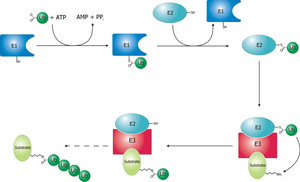
filedesc Schematic diagram of the ubiquitylation system. Created by Roger B. Dodd (Photo credit: Wikipedia)

Current Noteworthy Work

Statins inhibit HMG-CoA reductase, a key enzyme in cholesterol synthesis, and are widely used to treat hypercholesterolemia.

These drugs can lead to a number of side effects in muscle, including muscle fiber breakdown; however, the mechanisms of muscle injury by statins are poorly understood. We report that lovastatin induced the expression of atrogin-1, a key gene involved in skeletal muscle atrophy, in humans with statin myopathy, in zebrafish embryos, and in vitro in murine skeletal muscle cells. In cultured mouse myotubes, atrogin-1 induction following lovastatin treatment was accompanied by distinct morphological changes, largely absent in atrogin-1 null cells. In zebrafish embryos, lovastatin promoted muscle fiber damage, an effect that was closely mimicked by knockdown of zebrafish HMG-CoA reductase. Moreover, atrogin-1 knockdown in zebrafish embryos prevented lovastatin-induced muscle injury. Finally, overexpression of PGC-1α, a transcriptional coactivator that induces mitochondrial biogenesis and protects against the development of muscle atrophy, dramatically prevented lovastatin-induced muscle damage and abrogated atrogin-1 induction both in fish and in cultured mouse myotubes. Collectively, our human, animal, and in vitro findings shed light on the molecular mechanism of statin-induced myopathy and suggest that atrogin-1 may be a critical mediator of the muscle damage induced by statins.

Inami Y, Waguri S, Sakamoto A, Kouno T, et al.  Persistent activation of Nrf2 through p62 in hepatocellular carcinoma cells. J. Cell Biol. 2011; 193(2): 275–284. www.jcb.org/cgi/doi/10.1083/jcb.201102031

Macroautophagy (hereafter referred to as autophagy) is a cellular degradation system in which cytoplasmic components, including organelles, are sequestered by double membrane structures called autophagosomes and the sequestered materials are degraded by lysosomal hydrolases for supply of amino acids and for cellular homeostasis. Although autophagy has generally been considered nonselective, recent studies have shed light on another indispensable role for basal autophagy in cellular homeostasis, which is mediated by selective degradation of a specific substrate(s).  p62 is a ubiquitously expressed cellular protein that is conserved in metazoa but not in plants and fungi, and recently it has been known as one of the selective substrates for autophagy.

This protein is localized at the autophagosome formation site and directly interacts with LC3, an autophagosome localizing protein . Subsequently, the p62 is incorporated into the autophagosome and then degraded. Therefore, impaired autophagy is accompanied by accumulation of p62 followed by the formation of p62 and ubiquitinated protein aggregates because of the nature of both self- oligomerization and ubiquitin binding of p62.

Epicrisis

This extensive review leaves little left unopened. We have seen the central role that the UPS system plays in normal organelle proteolysis in concert with autophagy. Impaired ubiquitination occurs from aging, and/or toxins, under oxidative stress involving E3s or DUBs.

This leads to altered gene transcripton, altered protein trafficking, and plays a role in neurodegenative disease, and muscle malfunction.

English: A cartoon representation of a lysine 48-linked diubiquitin molecule. The two ubiquitin chains are shown as green cartoons with each chain labelled. The components of the linkage are indicated and shown as orange sticks. Image was created using PyMOL from PDB id 1aar. (Photo credit: Wikipedia)

Different forms of protein ubiquitylation (Photo credit: Wikipedia)


                              nature10774-f6.2 (1)  tetra-ubiquitin chain conjugated to the undtructured initiation region of a substrate and bound to the ubiquitin receptor Rpn13. substrate poised for deubiquination by Rpn11

filedesc Schematic diagram of the ubiquitylati...

filedesc Schematic diagram of the ubiquitylation system. Created by Roger B. Dodd (Photo credit: Wikipedia)

Autophagy

Autophagy (Photo credit: Wikipedia)

English: Structure of the PARK2 protein. Based...

English: Structure of the PARK2 protein. Based on PyMOL rendering of PDB 1iyf. (Photo credit: Wikipedia)

Comparison of the process of macroautophagy ve...

Comparison of the process of macroautophagy versus microautophagy. (Photo credit: Wikipedia)

Related articles

Expanding the Genetic Alphabet and linking the genome to the metabolome. pharmaceuticalintelligence.files.wordpress.com
http://pharmaceuticalintelligence.com/Expanding the Genetic Alphabet and linking the genome to the metabolome

Mitochondria: Origin from oxygen free environment, role in aerobic glycolysis, metabolic adaptation. pharmaceuticalintelligence.files.wordpress.com
http://pharmaceuticalintelligence.com/Mitochondria: Origin from oxygen free environment, role in aerobic glycolysis, metabolic adaptation/

Nitric Oxide and Sepsis, Hemodynamic Collapse, and the Search for Therapeutic Options. pharmaceuticalintelligence.files.wordpress.com
http://pharmaceuticallintelligence.com/Nitric Oxide and Sepsis, Hemodynamic Collapse, and the Search for Therapeutic Options/

Is the Warburg Effect the cause or the effect of cancer: A 21st Century View? pharmaceuticalintelligence.files.wordpress.com
http://pharmaceuticalintelligence.com/Is the Warburg Effect the cause or the effect of cancer: A 21st Century View?/

Breast Cancer, drug resistance, and biopharmaceutical targets. pharmaceuticalintelligence.files.wordpress.com
http://pharmaceuticalintelligence.com/Breast Cancer, drug resistance, and biopharmaceutical targets/

Crucial role of Nitric Oxide in Cancer. pharmaceuticalintelligence.files.wordpress.com
http://pharmaceuticalintelligence.com/Crucial role of Nitric Oxide in Cancer/

Reveals from ENCODE project will invite high synergistic collaborations to discover specific targets. pharmaceuticalintelligence.files.wordpress.com
http://pharmaceuticalintelligence.com/Reveals from ENCODE project will invite high synergistic collaborations to discover specific targets/

The Ubiquitin Ligase Nedd4-1 Participates in Denervation-Induced Skeletal Muscle Atrophy in Mice (plosone.org)

Polyglutamine ‘toxicity’ (dundeemedstudentnotes.wordpress.com)

Inhibition of Xanthine Oxidase by Allopurinol Prevents Skeletal Muscle Atrophy: Role of p38 MAPKinase and E3 Ubiquitin Ligases (plosone.org)

Ubiquitin Dynamics in Complexes Reveal Molecular Recognition Mechanisms Beyond Induced Fit and Conformational Selection (ploscompbiol.org)

Molecule shows effectiveness against drug-resistant myeloma (zedie.wordpress.com)

Related articles

Read Full Post »

CRACKING THE CODE OF HUMAN LIFE: Recent Advances in Genomic Analysis and Disease – Part IIC

CRACKING THE CODE OF HUMAN LIFE: Recent Advances in Genomic Analysis and Disease – Part IIC

Author: Larry H. Bernstein, MD, FCAP, Triplex Medical Science


Part I: The Initiation and Growth of Molecular Biology and Genomics – Part I From Molecular Biology to Translational Medicine: How Far Have We Come, and Where Does It Lead Us?

http://pharmaceuticalintelligence.com/wp-admin/post.php?post=8634&action=edit&message=1

Part II: CRACKING THE CODE OF HUMAN LIFE is divided into a three part series.

Part IIA. “CRACKING THE CODE OF HUMAN LIFE: Milestones along the Way” reviews the Human Genome Project and the decade beyond.

http://pharmaceuticalintelligence.com/2013/02/12/cracking-the-code-of-human-life-milestones-along-the-way/

Part IIB. “CRACKING THE CODE OF HUMAN LIFE: The Birth of BioInformatics & Computational Genomics” lays the manifold multivariate systems analytical tools that has moved the science forward to a groung that ensures clinical application.

http://pharmaceuticalintelligence.com/2013/02/13/cracking-the-code-of-human-life-the-birth-of-bioinformatics-and-computational-genomics/

Part IIC. “CRACKING THE CODE OF HUMAN LIFE: Recent Advances in Genomic Analysis and Disease “ will extend the discussion to advances in the management of patients as well as providing a roadmap for pharmaceutical drug targeting.

http://pharmaceuticalintelligence.com/2013/02/14/cracking-the-code-of-human-life-recent-advances-in-genomic-analysis-and-disease/

To be followed by:
Part III will conclude with Ubiquitin, it’s role in Signaling and Regulatory Control.


Part IIC of series on CODE OF HUMAN LIFE
CRACKING THE CODE OF HUMAN LIFE: Recent Advances in Genomic Analysis and Disease

This final paper of Part II concludes a thorough review of the scientific events leading to the discovery of the human genome, the purification and identification of the components of the chromosome and the DNA structure and role in regulation of embryogenesis, and potential targets for cancer.

The first two articles, Part IIA, Part IIB,  go into some depth to elucidate the problems and breakthoughs encountered in the Human Genome Project, and the construction of a 3-D model necessary to explain interactions at a distance.

Part IIC, the final article, is entirely concerned with clinical application of this treasure trove of knowledge to resolving diseases of epigenetic nature in the young and the old, chronic inflammatory diseases, autoimmune diseases, infectious disease, gastrointestinal disorders, neurological and neurodegenerative diseases, and cancer.


CRACKING THE CODE OF HUMAN LIFE: Recent Advances in Genomic Analysis and Disease – Part IIC


1. Gene Links to Heart Disease


Recently, large studies have identified some of the genetic basis for important common diseases such as heart disease and diabetes, but most of the genetic contribution to them remains undiscovered. Now researchers at the University of Massachusetts Amherst led by biostatistician Andrea Foulkes have applied sophisticated statistical tools to existing large databases to reveal substantial new information about genes that cause such conditions as high cholesterol linked to heart disease.

Foulkes says, “This new approach to data analysis provides opportunities for developing new treatments.” It also advances approaches

  • to identifying people at greatest risk for heart disease. Another important point is that our method is straightforward to use with freely
  • available computer software and can be applied broadly to advance genetic knowledge of many diseases.

The new analytical approach she developed with cardiologist Dr. Muredach Reilly at the University of Pennsylvania and others is called “Mixed modeling of Meta-Analysis P-values” or MixMAP. Because it makes use of existing public databases, the powerful new method

  • represents a low-cost tool for investigators.
  • MixMAP draws on a principled statistical modeling framework and the vast array of summary data now available from genetic association
  • studies to formally test at a new, locus-level, association.

While that traditional statistical method looks for one unusual “needle in a haystack” as a possible disease signal, Foulkes and colleagues’

  • new method uses knowledge of DNA regions in the genome that are likely to
  • contain several genetic signals for disease variation clumped together in one region.
  • Thus, it is able to detect groups of unusual variants rather than just single SNPs, offering a way to “call out” gene
  • regions that have a consistent signal above normal variation.

http://Science.com/Science News/Identify Genes Linked to Heart Disease/

2. Apolipoprotein(a) Genetic Sequence Variants

The LPA gene codes for apolipoprotein(a), which, when linked with low-density lipoprotein particles, forms lipoprotein(a) [Lp(a)] —

  • a well-studied molecule associated with coronary artery disease (CAD). The Lp(a) molecule has both atherogenic and thrombogenic effects in vitro , but the extent to which these translate to differences in how atherothrombotic disease presents is unknown.

LPA contains many single-nucleotide polymorphisms, and 2 have been identified by previous groups as being strongly associated with

  • levels of Lp(a) and, as a consequence, strongly associated with CAD.

However, because atherosclerosis is thought to be a systemic disease, it is unclear to what extent Lp(a) leads to atherosclerosis in other arterial beds (eg, carotid, abdominal aorta, and lower extremity),

  • as well as to other thrombotic disorders (eg, ischemic/cardioembolic stroke and venous thromboembolism).

Such distinctions are important, because therapies that might lower Lp(a) could potentially reduce forms of atherosclerosis beyond the coronary tree.

To answer this question, Helgadottir and colleagues compiled clinical and genetic data on the LPA gene from thousands of previous

  • participants in genetic research studies from across the world. They did not have access to Lp(a) levels, but by knowing the genotypes for
  • 2 LPA variants, they inferred the levels of Lp(a) on the basis of prior associations between these variants and Lp(a) levels. [1]

Their studies included not only individuals of white European descent but also a significant proportion of black persons, in order to

  • widen the generalizability of their results.

Their main findings are that LPA variants (and, by proxy, Lp(a) levels) are associated with

  • CAD,
  • peripheral arterial disease,
  • abdominal aortic aneurysm,
  • number of CAD vessels,
  • age at onset of CAD diagnosis, and
  • large-artery atherosclerosis-type stroke.

They did not find an association with

  • cardioembolic or small-vessel disease-type stroke;
  • intracranial aneurysm;
  • venous thrombosis;
  • carotid intima thickness; or,
  • in a small subset of individuals, myocardial infarction.

Apolipoprotein(a) Genetic Sequence Variants Associated With Systemic Atherosclerosis and Coronary Atherosclerotic Burden but Not With Venous Thromboembolism. Helgadottir A, Gretarsdottir S, Thorleifsson G, et al.    J Am Coll Cardiol. 2012;60:722-729

English: Structure of the LPA protein. Based o...

English: Structure of the LPA protein. Based on PyMOL rendering of PDB 1i71. (Photo credit: Wikipedia)

Micrograph of an artery that supplies the hear...

Micrograph of an artery that supplies the heart with significant atherosclerosis and marked luminal narrowing. Tissue has been stained using Masson’s trichrome. (Photo credit: Wikipedia)

Genomic Blueprint of the Heart

Scientists at the Gladstone Institutes have revealed the precise order and timing of hundreds of genetic “switches” required to construct a fully

  • functional heart from embryonic heart cells — providing new clues into the genetic basis for some forms of congenital heart disease.

In a study being published online today in the journal Cell, researchers in the laboratory of Gladstone Senior Investigator Benoit Bruneau, PhD,

  • employed stem cell technology, next-generation DNA sequencing and computing tools to piece together the instruction manual, or “genomic
  • blueprint” for how a heart becomes a heart. These findings offer renewed hope for combating life-threatening heart defects such as arrhythmias (irregular heart beat) and ventricular septal defects (“holes in the heart”).

ScienceDaily (Sep. 13, 2012)

They approach heart formation with a wide-angle lens by

  • looking at the entirety of the genetic material that gives heart cells their unique identity.

The news comes at a time of emerging importance for the biological process called “epigenetics,” in which a non-genetic factor impacts a cell’s genetic

  • makeup early during development — but sometimes with longer-term consequences. All of the cells in an organism contain the same DNA, but the
  • epigenetic instructions encoded in specific DNA sequences give the cell its identity. Epigenetics is of particular interest in heart formation, as the
  • incorrect on-and-off switching of genes during fetal development can lead to congenital heart disease — some forms of which may not be apparent until adulthood.

the scientists took embryonic stem cells from mice and reprogrammed them into beating heart cells by mimicking embryonic development in a petri dish. Next, they extracted the DNA from developing and mature heart cells, using an advanced gene-sequencing technique called ChIP-seq that lets scientists “see” the epigenetic signatures written in the DNA.

Map of Heart Disease Death Rates in US White M...

Map of Heart Disease Death Rates in US White Males from 2000-2004 (Photo credit: Wikipedia)

Estimated propability of death or non-fatal my...

Estimated propability of death or non-fatal myocardial-infarction over one year corresponding ti selectet values of the individual scores. Ordinate: individual score, abscissa: Propability of death or non-fatal myocardial infarction in 1 year (in %) (Photo credit: Wikipedia)

simply finding these signatures was only half the battle — we next had to decipher which aspects of heart formation they encoded

To do that, we harnessed the computing power of the Gladstone Bioinformatics Core. This allowed us to take the mountains of data collected from

  • gene sequencing and organize it into a readable, meaningful blueprint for how a heart becomes a heart.”

http://ScienceDaily.org/Scientists Map the Genomic Blueprint of the Heart.  ScienceDaily.

Performance of transcription factor identification tools from differential gene expression data

A three step process is a clear way to establish belief in the performance of transcription factor identification tools

  • from differential gene expression data.
  • identify several types of differential gene expression data sets where the stimulus or trigger is clearly know
  • identify the transcription factors most likely associated with the sets expression data.
  • perform an upstream analysis from the identified transcription factor.

If the transcription factor and upstream analysis tools can trace the signal cascade back to the stimulus, the tools are

  • clearly producing relevant results, and belief in the performance of the analysis tools is established.

At this point, the tools can be directed with confidence to more challenging analyses such as

  • developed resistance or pathway elucidation.

The performance of IPA‘s new Transcription Factor and Upstream analysis tools was evaluated on the following datasets (processing details below):

  • TGFb stimulation, 1 hour, A549 lung adenocarcinoma cell line
  • BMP2 stimulation, 1 hour, Mouse Embryonic Stem Cell E14Tg2A.4
  • TNFa stimulation, 1 hour primary murine hepatocytes

For each of the above datasets, an upstream analysis from the identified transcription factors correctly identified the stimulus. IPA’s tools were very

  • easy to use and the
  • analysis time for the above experiments was less than one minute.

The performance, speed, and ease of use can only be characterized as very good, perhaps leading to breakthroughs when extended and used creatively. Ingenuity’s new transcription factor analysis tool in IPA, coupled with Ingenuity’s established upstream grow tools,  should be strongly considered for every lab analyzing differential expression data.

http://www.ncbi.nlm.nih.gov/geo/query/acc.cgi?acc=GSE17896

http://www.ncbi.nlm.nih.gov/projects/geo/query/acc.cgi?acc=GSE2639

http://www.ncbi.nlm.nih.gov/geo/query/acc.cgi?acc=GSE19272

Differential expression data was obtained from CEL files using the Matlab functions:

affyrma, genelowvalfilter, genevarfilter, mattest, and mavolcanoplot.

Rick Stanton, Pathway Analysis Consultant Ingenuity.com

3. miR-200a regulates Nrf2 activation by targeting Keap1 mRNA in breast cancer cells.

Eades G, Yang M, Yao Y, Zhang Y, Zhou Q. J Biol Chem. 2011 Nov 25;286(47):40725-33. Epub 2011 Sep 16.
http://JBiolChem.com/miR-200a regulates Nrf2 activation by targeting Keap1 mRNA in breast cancer cells.

NF-E2-related factor 2 (Nrf2) is an important transcription factor that

  • activates the expression of cellular detoxifying enzymes.

Nrf2 expression is largely regulated through the association of Nrf2 with Kelch-like ECH-associated protein 1 (Keap1), which

  • results in cytoplasmic Nrf2 degradation.

Conversely, little is known concerning the regulation of Keap1 expression. Until now, a regulatory role for microRNAs (miRs) in controlling Keap1 gene expression had not been characterized. By using miR array-

  • based screening, we observed miR-200a silencing in breast cancer cells and
  • demonstrated that upon re-expression, miR-200a
  • targets the Keap1 3′-untranslated region (3′-UTR), leading to Keap1 mRNA degradation. Loss of this regulatory mechanism may
  • contribute to the dysregulation of Nrf2 activity in breast cancer. Previously, we have identified epigenetic repression of miR-200a

in breast cancer cells. Here, we find that treatment with epigenetic therapy, the histone deacetylase inhibitor suberoylanilide hydroxamic acid, restored miR-200a expression and reduced Keap1 levels. This reduction in Keap1 levels corresponded with

  • Nrf2 nuclear translocation
  • and activation of Nrf2-dependent NAD(P)H-quinone oxidoreductase 1 (NQO1) gene transcription.

Moreover, we found that Nrf2 activation inhibited the anchorage-independent growth of breast cancer cells. Finally, our in vitro observations were confirmed in a model of carcinogen-induced mammary hyperplasia in vivo. In conclusion, our study demonstrates

  • that miR-200a regulates the Keap1/Nrf2 pathway in mammary epithelium, and we find that epigenetic therapy can restore miR-200a
  • regulation of Keap1 expression,
  • reactivating the Nrf2-dependent antioxidant pathway in breast cancer.

Nuclear factor-like 2  (erythroid-derived 2, also known as NFE2L2 or Nrf2, is a transcription factor that in humans is encoded by the NFE2L2 gene.[1])  NFE2L2 induces the expression of various genes including those that encode for several antioxidant enzymes, and it may play a physiological role in the regulation of oxidative stress. Investigational drugs that target NFE2L2 are of interest as potential therapeutic interventions for

  • oxidative-stress related pathologies.

4. Highly active zinc finger nucleases by extended modular assembly

MS Bhakta, IM Henry, DG Ousterout, KT Das, et al.  Corresponding author; email: djsegal@ucdavis.edu
http://CSHNLpress.com/Highly active zinc finger nucleases by extended modular assembly

Zinc finger nucleases (ZFNs) are important tools for genome engineering. Despite intense interest by many academic groups,

  • the lack of robust non-commercial methods has hindered their widespread use. The modular assembly (MA) of ZFNs from
  • publicly-available one-finger archives provides a rapid method to create proteins that can recognize a very broad spectrum of DNA sequences.

However, three- and four-finger arrays often fail to produce active nucleases. Efforts to improve the specificity of the one-finger archives have not increased the success rate above 25%, suggesting that the MA method might

  • be inherently inefficient due to its insensitivity to context-dependent effects.

Here we present the first systematic study on the effect of array length on ZFN activity.  ZFNs composed of six-finger MA arrays produced mutations at 15 of 21 (71%) targeted

  • loci in human and mouse cells. A novel Drop-Out Linker scheme was used to rapidly assess three- to six-finger combinations,
  • demonstrating that shorter arrays could improve activity in some cases. Analysis of 268 array variants revealed that half of

MA ZFNs of any array composition that exceed an ab initio

  • B-score cut-off of 15 were active.
  • MA ZFNs are able to target more DNA sequences with higher success rates than other methods.

This article is distributed exclusively by Cold Spring Harbor Laboratory Press for the first six months after the full-issue publication date http://genome.cshlp.org/site/misc/terms.xhtml
After six months, it is available under a Creative Commons License (Attribution-NonCommercial 3.0 Unported License), as described at
http://creativecommons.org/licenses/by-nc/3.0/Highly_active_zinc_finger_nucleases_by_extended_ modular_assembly/

PERSONALIZED MEDICINE in the Pipeline

These insightful reviews are based on the strategic data and insights from Thomson Reuters Cortellis™ for Competitive Intelligence.  (A Review of April-June 2012).

http://ThomsonReuters.com/DIFFERENTIATED INNOVATION: PERSONALIZED MEDICINE IN THE PIPELINE/ Cortellis™ for Competitive Intelligence/APRIL-JUNE 2012

The majority of diseases are complex and multi-factorial, involving multiple genes interacting with environmental factors. At the genetic level,

  • information from genome-wide association studies that elucidate common patterns of genetic variation across various human populations,
  • in addition to profiling, technologies can be utilized in discovery research to provide snapshots of genes and expression profiles that are controlled
  • by the same regulatory mechanism and are altered between healthy and diseased states.

The characterization of genes that are abnormally expressed in disease tissues could further be employed as

  • diagnostic markers,
  • prognostic indicators of efficacy and/or toxicity, or as
  • targets for therapeutic intervention.

As the defining catalyst that exponentially paved the way for personalized medicine, information from the published genome sequence revealed that much of the genetic variations in humans are concentrated in about 0.1 percent of the over 3 billion base pairs in the haploid DNA. Most of these variations involve substitution of a single nucleotide for another at a given location in the genetic sequence, known as single nucleotide polymorphism (SNP).

  • Combinations of linked SNPs aggregate together to form haplotypes and
  • together these serve as markers for locating genetic variations in DNA sequences.

SNPs located within the protein-coding region of a gene or within the control regions of DNA that regulate a gene’s activity could

  • have a substantial effect on the encoded protein and thus influence phenotypic outcomes.

Analyzing SNPs between patient population cohorts could highlight specific genotypic variations which can be correlated with specific phenotypic variations in disease predisposition and drug responses.

Prior to the genomic revolution, many of the established therapies were directed against less than 500 drug targets, with many of the top selling drugs acting on well defined protein pathways. However, the sequencing of the human genome has massively expanded the pool of molecular targets that could be exploited in unmet medical needs and currently, of the approximately 22,300 protein-coding genes in the human code, it has been estimated that up to 3000 are druggable. Furthermore, genomic technologies such as

  • high-throughput sequencing
  • and transcription profiling,

can be used to identify and validate biologically relevant target molecules, or can be applied to cell-based and mice disease models or directly to in vivo human tissues,

  • helping to correlate gene targets with phenotypic traits of complex diseases.

This is particularly important, as

  • insufficient validation of target gene/proteins in complex diseases may be a contributing factor in the decline in R&D productivity.

Personalized medicine no doubt is already having a tremendous impact on drug development pipelines. According to a study conducted by the Tufts Center for the Study of Drug Development, more than 90 percent of biopharmaceutical companies now utilize at least some

  • genomics-derived targets in their drug discovery programs.

However, pipeline analysis from Cortellis for Competitive Intelligence suggests that there is still a scientific gap that has resulted in difficulty optimizing these novel genomic targets into the clinical R&D portfolios of major pharmaceutical companies, particularly outside the oncology field. Selected examples of personalized medicine product candidates in clinical development include (see TABLE 4).

Table 4: Selected Personalized Medicines in Clinical Development
(DATA are Derived from Cortellis for Competitive Intelligence & Thomson Reuters IntegritySM)
http://Thomson Reuters.com/Cortellis for Competitive Intelligence/IntegritySM/Table_4_Selected_Personalized_Medicines_in_Clinical_Development/

PHARMA MATTERS | SPOTLIGHT ON… PERSONALIZED MEDICINE

The paucity of actual targeted therapy examples, especially outside oncology, suggest

  • that integration of the personalized medicine paradigm into biopharmaceutical R&D is still fraught with challenges.

Despite the fact that the Human genome Project has been completed for over ten years, the broader application of genomics with drug development

  • still remains unrealized, and is hampered by a number of scientific challenges. One of the major obstacles stems from
  • incomplete association of genomic alterations with complex disease pathways and the phenotypic consequences.

As the modality of most complex diseases are multi-factorial, understanding how each genomic driver event plays a role in disease and the

  • interaction/interdependence with other genetic and environmental factors is important for
  • determining the rationale for targeted prevention or treatment of the disease.

Mutations found in Melanomas may shed light on Cancer Growth

Gina Kolata. New York Times.
http://NewYorkTimes.com/mutations_found_in_melanomas_may_shed-light_on_how_cancers_grow/

Mutations in Melanoma are in regions that control genes, not in the genes themselves. The mutations are exactly the type caused by exposure to ultraviolet light.  The findings are reported in two papers in http://Science.com/ScienceExpress/

The findings do not suggest new treatments, but they help explain how melanomas – and possibly – other cancers – develop and what drives their growth. This is a modification found in the “dark matter”, according to Dr. Levi A. Garraway,  the 99 percent of DNA in a region that regulates genes. A small control region was mutated in 7 out of 10 of the tumors, commonly of one or two tiny changes.
A German Team led by Rajiv Kumar (Heidelberg) and Dirk Schadendorf (Essen) looked at a family whose members tended to get melanomas.  Their findings indicate that those inherited with the mutations might be born with cells that have taken the first step toward cancer.
The mutations spur cells to make telomerase, that keeps the cells immortal by preventing them from losing the ends of their chromosome, the telomere. Abundant telomerase occurs in 90 percent of cancers, according to Immaculata De Vivo at Harvard Medical School.
The importance of the findings is that the mechanism of telomerase involvement in cancer is now within view. But it is not clear how to block the telomerase production in cancer cells.
 
A slight mutation in the matched nucleotides c...

A slight mutation in the matched nucleotides can lead to chromosomal aberrations and unintentional genetic rearrangement. (Photo credit: Wikipedia)


Comment

This discussion addresses the issues raised about the direction to follow in personalized medicine. Despite the amount of work necessary to bring the clarity that is sought after, the experiments and experimental design is most essential.

  • The arrest of ciliogenesis in ovarian cancer cell lines compared to wild type (WT) ovarian epithelial cells, and
  •  The link to suppressing ciliogenesis by AURA protein and CHFR at the base of the cilium, which disappears at mitosis or with proliferation.
  •  There is no accumulation by upregulation of PDGF under starvation by the cancer cells compared to the effect in WT OSE.

Here we have a systematic combination of signaling events tied to changes in putative biomarkers that occur synchronously in Ov cancer cell lines.

These changes are identified with changes in

  • proliferation,
  • loss of ciliary structure, and
  • proliferation.

In this described scenario,

  • WT OSE cells would be arrested, and
  • it appears that they would take the path to apoptosis (under starvation).

Even without more information, this cluster is what one wants to have in a “syndromic classification”. The information used to form the classification entails the identification of strong ‘signaling-related’ biomarkers. The Gli2 peptide has to be part of this.

In principle, a syndromic classification would be ideally expected to have no less than 64 classes. If the classification is “weak”, then the class frequencies would be close to what one would expect in the WT OSE. In this case, in reality,

  • several combinatorial classes would have low frequency, and
  • others would be quite high.

This obeys the classification rules established by feature identification, and the information gain described by Solomon Kullback and extended by Akaike.

Does this have to be the case for all different cancer types? I don’t think so. The cells are different in ontogenesis.  In this case, even the WT OSE have mesenchymal features and so, are not fully directed to epithelial expression.  This happens to be the case in actual anatomic expression of the ovary.  On the other hand, one would expect shared features of the

  • ovary,
  • testes,
  • thyroid,
  • adrenals, and
  • pituitary.

There is biochemical expression in terms of their synthetic function – TPN organs. I would have to put the liver into that broad class. Other organs – skeletal muscle & heart – transform substrate into energy or work.  (Where you might also put intestinal smooth muscle).

They have to have different biomarker expressions, even though they much less often don’t form neoplasms. (Bone is not just a bioenergetic force. It is maintained by muscle action. It forms sarcomas. But there has to be a balance between bone removal by osteoclasts and refill by osteoblasts.)

Viewpoint: What we have learned

  1. The Watson-Crick model proposed in 1953 is limited for explaining fully genome effects
  2. The Pauling triplex model may have been prescient because of a more full anticipation of molecular bonding variants
  3. A more adequate triple-helix model has been proposed and is consistent with a compact genome in the nucleus

The structure of the genome is not as we assumed – based on the application of Fractal Geometry.  Current body of evidence is building that can reveal a more complete view of genome function.

  • transcription
  • cell regulation
  • mutations

Summary

I have just completed a most comprehensive review of the Human Genome Project. There are key research collaborations, problems in deciphering the underlying structure of the genome, and there are also both obstacles and insights to elucidating the complexity of the final model.

This is because of frequent observations of molecular problems in folding and other interactions between nucleotides that challenge the sufficiency of the original DNA model proposed by Watson and Crick. This has come about because of breakthrough innovation in technology and in computational methods.

Radoslav Bozov •

Molecular biology and growth was primarily initiated on biochemical structural paradigms aiming to define functional spatial dynamics of molecules via assignation of various types of bondings – covalent and non-covalent – hydrogen, ionic , dipole-dipole, hydrophobic interactions.

  • Lab techniques based on z/m paradigm allowed separation, isolation and identification of bio substances with a general marker identity finding correlation between physiological/cellular states.
  • The development of electronic/x-ray technologies allowed zooming in nano space without capturing time.
  • NMR technology identified the existence of space topology of initial and final atomic states giving a highly limited light on time – energy axis of atomic interactions.
  • Sequence technology and genomic perturbations shed light on uncertainty of genomic dynamics and regulators of functional ever expanding networks.
  • Transition state theory coupled to structural complexity identification and enzymatic mechanisms ran up parallel to work on various phenomena of strings of nucleotides (oligomers and polymers) – illusion/observation of constructing models on the dynamics of protein-dna-rna interference.
  • The physical energetic constrains of biochemistry were inapplicable in open biological systems. Biologists have accepted observation as a sole driver towards re-evaluating models.
  • The separation of matter and time constrains emerged as deviation of energy and space constrains transforming into the full acceptance of code theory of life. One simple thing was left unnoticed over time –
  • the amount of information of quantum matter within a single codon is larger than that of a single amino acid. This violated all physical laws/principles known to work with a limited degree of certainty.
  • The limited amount of information analyzed by conventional sequence identity led to the notion of applicability of statistical measures of and PCR technology. Mutations were identified over larger scale of data.
  • Quantum chemistry itself is being limited due discrete space/energy constrains, thus it transformed into concepts/principles in biology that possess highly limited physical values whatsoever.
  • The central dogma is partially broken as a result of
  1. regulatory constrains
  2. epigenetic phenomena and
  3. iRNA.

Large scale code computational data run into uncertainty of the processes of evolution and its consequence of signaling transformation. All drugs were ‘lucky based’ applicability and/or discovery with largely unpredictable side effect over time.

Other Related articles on this Open Access Online Sceintific Journal include the following:

Big Data in Genomic Medicine  lhb

http://pharmaceuticalintelligence.com/2012/12/17/big-data-in-genomic-medicine/

BRCA1 a tumour suppressor in breast and ovarian cancer – functions in transcription, ubiquitination and DNA repair S Saha    http://pharmaceuticalintelligence.com/2012/12/04/brca1-a-tumour-suppressor-in-breast-and-ovarian-cancer-functions-in-transcription-ubiquitination-and-dna-repair/

Computational Genomics Center: New Unification of Computational Technologies at Stanford A Lev-Ari  http://pharmaceuticalintelligence.com/2012/12/03/computational-genomics-center-new-unification-of-computational-technologies-at-stanford/

Personalized medicine gearing up to tackle cancer ritu saxena     http://pharmaceuticalintelligence.com/2013/01/07/personalized-medicine-gearing-up-to-tackle-cancer/

Differentiation Therapy – Epigenetics Tackles Solid Tumors sj Williams     http://pharmaceuticalintelligence.com/2013/01/03/differentiation-therapy-epigenetics-tackles-solid-tumors/

Mechanism involved in Breast Cancer Cell Growth: Function in Early Detection & Treatment A Lev-Ari   http://pharmaceuticalintelligence.com/2013/01/17/mechanism-involved-in-breast-cancer-cell-growth-function-in-early-detection-treatment/

The Molecular pathology of Breast Cancer Progression tilde barliya      http://pharmaceuticalintelligence.com/2013/01/10/the-molecular-pathology-of-breast-cancer-progression/

Gastric Cancer: Whole-genome reconstruction and mutational signatures A Lev-Ari     http://pharmaceuticalintelligence.com/2012/12/24/gastric-cancer-whole-genome-reconstruction-and-mutational-signatures-2/

Paradigm Shift in Human Genomics – Predictive Biomarkers and Personalized Medicine – Part 1 (pharmaceuticalintelligence.com) A Lev-Ari                  http://pharmaceuticalintelligence.com/2013/01/13/paradigm-shift-in-human-genomics-predictive-biomarkers-and-personalized-medicine-part-1/

LEADERS in Genome Sequencing of Genetic Mutations for Therapeutic Drug Selection in Cancer Personalized Treatment: Part 2 A Lev-Ari
http://pharmaceuticalintelligence.com/2013/01/13/leaders-in-genome-sequencing-of-genetic-mutations-for-therapeutic-drug-selection-in-cancer-personalized-treatment-part-2/

Personalized Medicine: An Institute Profile – Coriell Institute for Medical Research: Part 3 A Lev-Ari   http://pharmaceuticalintelligence.com/2013/01/13/personalized-medicine-an-institute-profile-coriell-institute-for-medical-research-part-3/

Harnessing Personalized Medicine for Cancer Management, Prospects of Prevention and Cure: Opinions of Cancer Scientific Leaders @ http://pharmaceuticalintelligence.com ALA    http://pharmaceuticalintelligence.com/2013/01/13/7000/Harnessing Personalized Medicine for Cancer Management, Prospects of Prevention and Cure: Opinions of Cancer Scientific Leaders/

GSK for Personalized Medicine using Cancer Drugs needs Alacris systems biology model to determine the in silico effect of the inhibitor in its “virtual clinical trial” A Lev-Ari     http://pharmaceuticalintelligence.com/2012/11/14/gsk-for-personalized-medicine-using-cancer-drugs-needs-alacris-systems-biology-model-to-determine-the-in-silico-effect-of-the-inhibitor-in-its-virtual-clinical-trial/

Recurrent somatic mutations in chromatin-remodeling and ubiquitin ligase complex genes in serous endometrial tumors S Saha   http://pharmaceuticalintelligence.com/2012/11/19/recurrent-somatic-mutations-in-chromatin-remodeling-and-ubiquitin-ligase-complex-genes-in-serous-endometrial-tumors/

Personalized medicine-based cure for cancer might not be far away ritu saxena   http://pharmaceuticalintelligence.com/2012/11/20/personalized-medicine-based-cure-for-cancer-might-not-be-far-away/

Human Variome Project: encyclopedic catalog of sequence variants indexed to the human genome sequence A Lev-Ari
http://pharmaceuticalintelligence.com/2012/11/24/human-variome-project-encyclopedic-catalog-of-sequence-variants-indexed-to-the-human-genome-sequence/

Prostate Cancer Cells: Histone Deacetylase Inhibitors Induce Epithelial-to-Mesenchymal Transition sjwilliams
http://pharmaceuticalintelligence.com/2012/11/30/histone-deacetylase-inhibitors-induce-epithelial-to-mesenchymal-transition-in-prostate-cancer-cells/

Inspiration From Dr. Maureen Cronin’s Achievements in Applying Genomic Sequencing to Cancer Diagnostics A Lev-Ari
http://pharmaceuticalintelligence.com/2013/01/10/inspiration-from-dr-maureen-cronins-achievements-in-applying-genomic-sequencing-to-cancer-diagnostics/

The “Cancer establishments” examined by James Watson, co-discoverer of DNA w/Crick, 4/1953 A Lev-Ari
http://pharmaceuticalintelligence.com/2013/01/09/the-cancer-establishments-examined-by-james-watson-co-discover-of-dna-wcrick-41953/

Directions for genomics in personalized medicine lhb    http://pharmaceuticalintelligence.com/2013/01/27/directions-for-genomics-in-personalized-medicine/

How mobile elements in “Junk” DNA promote cancer. Part 1: Transposon-mediated tumorigenesis. Sjwilliams
http://pharmaceuticalintelligence.com/2012/10/31/how-mobile-elements-in-junk-dna-prote-cancer-part1-transposon-mediated-tumorigenesis/

Mitochondria: More than just the “powerhouse of the cell” eritu saxena   http://pharmaceuticalintelligence.com/2012/07/09/mitochondria-more-than-just-the-powerhouse-of-the-cell/

Mitochondrial fission and fusion: potential therapeutic targets? Ritu saxena    http://pharmaceuticalintelligence.com/2012/10/31/mitochondrial-fission-and-fusion-potential-therapeutic-target/

Mitochondrial mutation analysis might be “1-step” away ritu saxena     http://pharmaceuticalintelligence.com/2012/08/14/mitochondrial-mutation-analysis-might-be-1-step-away/

mRNA interference with cancer expression lhb    http://pharmaceuticalintelligence.com/2012/10/26/mrna-interference-with-cancer-expression/

Read Full Post »

Reporter: Aviral Vatsa PhD, MBBS

Osteocytes are the professional mechanosensors of bone. They modulate bone remodelling in accordance with external mechanical loads by orchestrating the activity of one forming osteoblasts and bone resorbing osteoclasts. Osteocytes are at the heart of bone metabolism. They constitute >95% of bone cells. They are terminally differentiated cells and reside in the hard mineralised matrix of bone, thus making it difficult to study them in situ. However, recent developments in imaging and tissue processing have made it possible to study osteocytes in their natural milieu. Moreover, increasing number of studies have highlighted the fact that a multifaceted approach from various domains of science such as biomechanics, cell biology, bioengineering, biophysics, biomaterials, computational modelling, endocrinology, and orthopaedics is essential to further our understanding of the intricate processes involved in bone remodelling and the central role of osteocytes in maintaining bone mass and architecture.

In this post a variety of reviews from an upcoming special issue on osteocytes in the journal Bone are highlighted that help us add few more pieces of knowledge to the ever growing eclaircissements on the subject.

1. Measurement and estimation of osteocyte mechanical strain

Review Article
Amber Rath Stern, Daniel P. Nicolella

Abstract

Osteocytes are the most abundant cell type in bone and are responsible for sensing mechanical strain and signaling bone (re)modeling, making them the primary mechanosensors within the bone. Under aging and osteoporotic conditions, bone is known to be less responsive to loading (exercise), but it is unclear why. Perhaps, the levels of mechanical strain required to initiate these biological events are not perceived by the osteocytes embedded within the bone tissue. In this review we examine the methods used to measure and estimate the strains experienced by osteocytes in vivo as well as the results of related published experiments. Although the physiological levels of strain experienced by osteocytes in vivo are still under investigation, through computational modeling and laboratory experiments, it has been shown that there is significant amplification of average bone strain at the level of the osteocyte lacunae. It has also been proposed that the material properties of the perilacunar region surrounding the osteocyte can have significant effects of the strain perceived by the embedded osteocyte. These facts have profound implications for studies involving osteoporotic bone where the material properties are known to become stiffer.

2. Glucocorticoids and Osteocyte Autophagy

Review Article
Wei Yao, Weiwei Dai, Jean X. Jiang, Nancy E. Lane

Abstract

Glucocorticoids are used for the treatment of inflammatory and autoimmune diseases. While they are effective therapy, bone loss and incident fracture risk is high. While previous studies have found GC effects on both osteoclasts and oteoblasts, our work has focused on the effects of GCs on osteocytes. Osteocytes exposed to low dose GCs undergo autophagy while osteocytes exposed to high doses of GCs or for a prolonged period of time undergo apoptosis. This paper will review the data to support the role of GCs in osteocyte autophagy.

3. Osteocytes remove and replace perilacunar mineral during reproductive cycles

Review Article
John J. Wysolmerski

Abstract

Lactation is associated with an increased demand for calcium and is accompanied by a remarkable cycle of bone loss and recovery that helps to supply calcium and phosphorus for milk production. Bone loss is the result of increased bone resorption that is due, in part, to increased levels of PTHrP and decreased levels of estrogen. However, the regulation of bone turnover during this time is not fully understood. In the 1960s and 1970s many observations were made to suggest that osteocytes could resorb bone and increase the size of their lacunae. This concept became known as osteocytic osteolysis and studies suggested that it occurred in response to parathyroid hormone and/or an increased systemic demand for calcium. However, this concept fell out of favor in the late 1970s when it was established that osteoclasts were the principal bone-resorbing cells. Given that lactation is associated with increased PTHrP levels and negative calcium balance, we recently examined whether osteocytes contribute to bone loss during this time. Our findings suggest that osteocytes can remodel their perilacunar and pericanalicular matrix and that they participate in the liberation of skeletal calcium stores during reproductive cycles. These findings raise new questions about the role of osteocytes in coordinating bone and mineral metabolism during lactation as well as the recovery of bone mass after weaning. It is also interesting to consider whether osteocyte lacunar and canalicular remodeling contribute more broadly to the maintenance of skeletal and mineral homeostasis.

4. Studying osteocytes within their environment

Review Article
Duncan J. Webster, Philipp Schneider, Sarah L. Dallas, Ralph Müller

Abstract

It is widely hypothesized that osteocytes are the mechano-sensors residing in the bone’s mineralized matrix which control load induced bone adaptation. Owing to their inaccessibility it has proved challenging to generate quantitative in vivo experimental data which supports this hypothesis. Recent advances in in situ imaging, both in non-living and living specimens, have provided new insights into the role of osteocytes in the skeleton. Combined with the retrieval of biochemical information from mechanically stimulated osteocytes using in vivo models, quantitative experimental data is now becoming available which is leading to a more accurate understanding of osteocyte function. With this in mind, here we review i) state of the art ex vivo imaging modalities which are able to precisely capture osteocyte structure in 3D, ii) live cell imaging techniques which are able to track structural morphology and cellular differentiation in both space and time, and iii) in vivo models which when combined with the latest biochemical assays and microfluidic imaging techniques can provide further insight on the biological function of osteocytes.

5. Osteocyte apoptosis

Review Article
Robert L. Jilka, Brendon Noble, Robert S. Weinstein

Abstract

Apoptotic death of osteocytes was recognized over 15 years ago, but its significance for bone homeostasis has remained elusive. A new paradigm has emerged that invokes osteocyte apoptosis as a critical event in the recruitment of osteoclasts to a specific site in response to skeletal unloading, fatigue damage, estrogen deficiency and perhaps in other states where bone must be removed. This is accomplished by yet to be defined signals emanating from dying osteocytes, which stimulate neighboring viable osteocytes to produce osteoclastogenic cytokines. The osteocyte apoptosis caused by chronic glucocorticoid administration does not increase osteoclasts; however, it does negatively impact maintenance of bone hydration, vascularity, and strength.

6. Emerging role of primary cilia as mechanosensors in osteocytes

Review Article
An M. Nguyen, Christopher R. Jacobs

Abstract

The primary cilium is a solitary, immotile microtubule-based extension present on nearly every mammalian cell. This organelle has established mechanosensory roles in several contexts including kidney, liver, and the embryonic node. Mechanical load deflects the cilium, triggering biochemical responses. Defects in cilium function have been associated with numerous human diseases. Recent research has implicated the primary cilium as a mechanosensor in bone. In this review, we discuss the cilium, the growing evidence for its mechanosensory role in bone, and areas of future study.

7. Mechanosensation and transduction in osteocytes

Review Article
Jenneke Klein-Nulend, Astrid D. Bakker, Rommel G. Bacabac, Aviral Vatsa, Sheldon Weinbaum

Abstract

The human skeleton is a miracle of engineering, combining both toughness and light weight. It does so because bones possess cellular mechanisms wherein external mechanical loads are sensed. These mechanical loads are transformed into biological signals, which ultimately direct bone formation and/or bone resorption. Osteocytes, since they are ubiquitous in the mineralized matrix, are the cells that sense mechanical loads and transduce the mechanical signals into a chemical response. The osteocytes then release signaling molecules, which orchestrate the recruitment and activity of osteoblasts or osteoclasts, resulting in the adaptation of bone mass and structure. In this review, we highlight current insights in bone adaptation to external mechanical loading, with an emphasis on how a mechanical load placed on whole bones is translated and amplified into a mechanical signal that is subsequently sensed by the osteocytes.

8. The osteocyte in CKD: New concepts regarding the role of FGF23 in mineral metabolism and systemic complications

Review Article
Katherine Wesseling-Perry, Harald Jüppner

Abstract

The identification of elevated circulating levels of the osteocytic protein fibroblast growth factor 23 (FGF23) in patients with chronic kidney disease (CKD), along with recent data linking these values to the pathogenesis of secondary hyperparathyroidism and to systemic complications, has changed the approach to the pathophysiology and treatment of disordered bone and mineral metabolism in renal failure. It now appears that osteocyte biology is altered very early in the course of CKD and these changes have implications for bone biology, as well as for progressive cardiovascular and renal disease. Since circulating FGF23 values are influenced by therapies used to treat secondary hyperparathyroidism, the effects of different therapeutic paradigms on FGF23 have important implications for mineral metabolism as well as for morbidity and mortality. Further studies are critically needed to identify the initial trigger for abnormalities of skeletal mineralization and turnover as well as the potential effects that current therapeutic options may have on osteocyte biology.

9. Vitamin D signaling in osteocytes: Effects on bone and mineral homeostasis

Review Article
Liesbet Lieben, Geert Carmeliet

Abstract

The active form of vitamin D [1,25(OH)2D] is an important regulator of calcium and bone homeostasis, as evidenced by the consequences of 1,25(OH)2D inactivity in man and mice, which include hypocalcemia, hypophosphatemia, secondary hyperparathyroidism and bone abnormalities. The recent generation of tissue-specific (intestine, osteoblast/osteocyte, chondrocyte) vitamin D receptor (Vdr) null mice has provided mechanistic insight in the cell-specific actions of 1,25(OH)2D and their contribution to the integrative physiology of VDR signaling that controls bone and mineral metabolism. These studies have demonstrated that even with normal dietary calcium intake, 1,25(OH)2D is crucial to maintain normal calcium and bone homeostasis and accomplishes this through this primarily through stimulation of intestinal calcium transport. When, moreover, insufficient calcium is acquired from the diet (severe dietary calcium restriction, lack of intestinal VDR activity), 1,25(OH)2D levels will increase and will directly act on osteoblasts and osteocytes to enhance bone resorption and to suppress bone matrix mineralization. Although this system is essential to maintain normal calcium levels in blood during a negative calcium balance, the consequences for bone are disastrous and generate an increased fracture risk. These findings evidently demonstrate that preservation of serum calcium levels has priority over skeletal integrity. Since vitamin D supplementation is an essential part of anti-osteoporotic therapy, mechanistic insight in vitamin D actions is required to define the optimal therapeutic regimen, taking into account the amount of dietary calcium supply, in order to maximize the targeted outcome and to avoid side-effects. We will review the current understanding concerning the functions of osteoblastic/osteocytic VDR signaling which not only include the regulation of bone metabolism, but also comprise the control of calcium and phosphate homeostasis via fibroblast growth factor (FGF) 23 secretion and the maintenance of the hematopoeitic stem cell (HSC) niche, with special focus on the experimental data obtained from systemic and osteoblast/osteocyte-specific Vdr null mice.

10. In vitro and in vivo approaches to study osteocyte biology

Review Article
Ivo Kalajzic, Brya G. Matthews, Elena Torreggiani, Marie A. Harris, Paola Divieti Pajevic, Stephen E. Harris

Abstract

Osteocytes, the most abundant cell population of the bone lineage, have been a major focus in the bone research field in recent years. This population of cells that resides within mineralized matrix is now thought to be the mechanosensory cell in bone and plays major roles in the regulation of bone formation and resorption. Studies of osteocytes had been impaired by their location, resulting in numerous attempts to isolate primary osteocytes and to generate cell lines representative of the osteocytic phenotype. Progress has been achieved in recent years by utilizing in vivo genetic technology and generation of osteocyte directed transgenic and gene deficiency mouse models.

We will provide an overview of the current in vitro and in vivo models utilized to study osteocyte biology. We discuss generation of osteocyte-like cell lines and isolation of primary osteocytes and summarize studies that have utilized these cellular models to understand the functional role of osteocytes. Approaches that attempt to selectively identify and isolate osteocytes using fluorescent protein reporters driven by regulatory elements of genes that are highly expressed in osteocytes will be discussed.

In addition, recent in vivo studies utilizing overexpression or conditional deletion of various genes using dentin matrix protein (Dmp1) directed Cre recombinase are outlined. In conclusion, evaluation of the benefits and deficiencies of currently used cell lines/genetic models in understanding osteocyte biology underlines the current progress in this field. The future efforts will be directed towards developing novel in vitro and in vivo models that would additionally facilitate in understanding the multiple roles of osteocytes.

11. Gap junction and hemichannel functions in osteocytes

Review Article
Alayna E. Loiselle, Jean X. Jiang, Henry J. Donahue

Abstract

Cell-to-cell and cell-to-matrix communication in bone cells mediated by gap junctions and hemichannels, respectively, maintains bone homeostasis. Gap junctional communication between cells permits the passage of small molecules including calcium and cyclic AMP. This cell-to-cell communication occurs between bone cells including osteoblasts, osteoclasts and osteocytes, and is important in both bone formation and bone resorption. Connexin (Cx) 43 is the predominant gap junction protein in bone cells, and facilitates the communication of cellular signals either through docking of gap junctions between two cells, or through the formation of un-paired hemichannels. Systemic deletion of Cx43 results in perinatal lethality, so conditional deletion models are necessary to study the postnatal role of gap junctions in bone. These models provide the opportunity to determine the role of gap junctions in specific bone cells, notably the osteocyte. In this review, we summarize the key roles that gap junctions and hemichannels in osteocytes play in bone cell response to many stimuli including mechanical loading, intracellular and extracellular stimuli, such as parathyroid hormone, PGE2, plasma calcium levels and pH, as well as in maintaining osteocyte survival.

12. Effects of PTH on osteocyte function

Review Article
Teresita Bellido, Vaibhav Saini, Paola Divieti Pajevic

Abstract

Osteocytes are ideally positioned to detect and respond to mechanical and hormonal stimuli and to coordinate the function of osteoblasts and osteoclasts. However, evidence supporting the involvement of osteocytes in specific aspects of skeletal biology has been limited mainly due to the lack of suitable experimental approaches. Few crucial advances in the field in the past several years have markedly increased our understanding of the function of osteocytes. The development of osteocytic cell lines initiated a plethora of in vitro studies that have provided insights into the unique biology of osteocytes and continue to generate novel hypotheses. Genetic approaches using promoter fragments that direct gene expression to osteocytes allowed the generation of mice with gain or loss of function of particular genes revealing their role in osteocyte function. Furthermore, evidence that Sost/sclerostin is expressed primarily in osteocytes and inhibits bone formation by osteoblasts, fueled research attempting to identify regulators of this gene as well as other osteocyte products that impact the function of osteoblasts and osteoclasts. The discovery that parathyroid hormone (PTH), a central regulator of bone homeostasis, inhibits sclerostin expression generated a cascade of studies that revealed that osteocytes are crucial target cells of the actions of PTH. This review highlights these investigations and discusses their significance for advancing our understanding of the mechanisms by which osteocytes regulate bone homeostasis and for developing therapies for bone diseases targeting osteocytes.

13. For whom the bell tolls: Distress signals from long-lived osteocytes and the pathogenesis of metabolic bone diseases

Review Article
Stavros C. Manolagas, A. Michael Parfitt

Abstract

Osteocytes are long-lived and far more numerous than the short-lived osteoblasts and osteoclasts. Immured within the lacunar–canalicular system and mineralized matrix, osteocytes are ideally located throughout the bone to detect the need for, and accordingly choreograph, the bone regeneration process by independently controlling rate limiting steps of bone resorption and formation. Consistent with this role, emerging evidence indicates that signals arising from apoptotic and old/or dysfunctional osteocytes are seminal culprits in the pathogenesis of involutional, post-menopausal, steroid-, and immobilization-induced osteoporosis. Osteocyte-originated signals may also contribute to the increased bone fragility associated with bone matrix disorders like osteogenesis imperfecta, and perhaps the rapid reversal of bone turnover above baseline following discontinuation of anti-resorptive treatments, like denosumab.

14. Osteocyte control of osteoclastogenesis

Review Article
Charles A. O’Brien, Tomoki Nakashima, Hiroshi Takayanagi

Abstract

Multiple lines of evidence support the idea that osteocytes act as mechanosensors in bone and that they control bone formation, in part, by expressing the Wnt antagonist sclerostin. However, the role of osteocytes in the control of bone resorption has been less clear. Recent studies have demonstrated that osteocytes are the major source of the cytokine RANKL involved in osteoclast formation in cancellous bone. The goal of this review is to discuss these and other studies that reveal mechanisms whereby osteocytes control osteoclast formation and thus bone resorption.

References

  1. A. R. Stern and D. P. Nicolella, “Measurement and estimation of osteocyte mechanical strain,” Bone.
  2. W. Yao, W. Dai, J. X. Jiang, and N. E. Lane, “Glucocorticoids and Osteocyte Autophagy,” Bone.
  3. J. J. Wysolmerski, “Osteocytes remove and replace perilacunar mineral during reproductive cycles,” Bone.
  4. D. J. Webster, P. Schneider, S. L. Dallas, and R. Müller, “Studying osteocytes within their environment,” Bone.
  5. R. L. Jilka, B. Noble, and R. S. Weinstein, “Osteocyte apoptosis,” Bone.
  6. A. M. Nguyen and C. R. Jacobs, “Emerging role of primary cilia as mechanosensors in osteocytes,” Bone.
  7. J. Klein-Nulend, A. D. Bakker, R. G. Bacabac, A. Vatsa, and S. Weinbaum, “Mechanosensation and transduction in osteocytes,” Bone.
  8. K. Wesseling-Perry and H. Jüppner, “The osteocyte in CKD: New concepts regarding the role of FGF23 in mineral metabolism and systemic complications,” Bone.
  9. L. Lieben and G. Carmeliet, “Vitamin D signaling in osteocytes: Effects on bone and mineral homeostasis,” Bone.
  10. I. Kalajzic, B. G. Matthews, E. Torreggiani, M. A. Harris, P. Divieti Pajevic, and S. E. Harris, “In vitro and in vivo approaches to study osteocyte biology,” Bone.
  11. A. E. Loiselle, J. X. Jiang, and H. J. Donahue, “Gap junction and hemichannel functions in osteocytes,” Bone.
  12. T. Bellido, V. Saini, and P. D. Pajevic, “Effects of PTH on osteocyte function,” Bone.
  13. S. C. Manolagas and A. M. Parfitt, “For whom the bell tolls: Distress signals from long-lived osteocytes and the pathogenesis of metabolic bone diseases,” Bone
  14. C. A. O’Brien, T. Nakashima, and H. Takayanagi, “Osteocyte control of osteoclastogenesis,” Bone.
  15. Bone remodelling in a nutshel June 22, 2012 by aviralvatsa
  16. Isolation of primary osteocytes from skeletally mature mice bones: Reoprt on “Isolation and culture of primary osteocytes from the long bones of skeletally mature and aged mice” (BioTechniques 52:361-373 ( June 2012) doi 10.2144/0000113876 )
  17. Nitric Oxide in bone metabolism July 16, 2012 by aviralvatsa

Read Full Post »

Reporter: Aviva Lev-Ari, PhD, RN

With $15.5M Grant, EU Consortium to Sequence 1,100 Exomes to Develop Diagnostics for Neurologic Diseases

November 28, 2012

A consortium of 18 European and Australian institutions and industry partners will spend five years sequencing the exomes of 1,100 patients with neurodegenerative and neuromuscular diseases to create diagnostic panels and uncover novel therapeutic targets.

The group, known as the Neuromics Consortium, is funded with €12 million ($15.5 million) under the European Union’s seventh framework program.

Headed by the University of Tübingen, the project will involve collaboration between 12 academic centers. Iceland’s Decode Genetics will do the sequencing and will support analysis and return of results to participants. The group also plans to work with Agilent Technologies to develop and validate targeted sequencing-based diagnostic panels for specific neurologic diseases, including ataxia/paraplegias, spinal muscular atrophies and lower motor neuron diseases, and neuromuscular diseases, according to Tübingen’s Holm Graessner, the manager of the consortium.

Graessner told Clinical Sequencing News in an email that the Neuromics Consortium hopes its work will yield better diagnostic panels that can increase the diagnosis rate for ten main neurodegenerative and neuromuscular disease types — including ataxia, spastic paraplegia, Huntington’s disease, muscular dystrophy and spinal muscular atrophy — as well as provide information on genes and pathways that could inform new treatments.

According to the consortium, 30 percent to 80 percent of patients with these diseases are still undiagnosed by current single-gene tests or gene panels, and cohorts for each individual disorder are small. By combining patient groups and data from many centers and looking for commonality between some of these diseases, the consortium hopes to create diagnostics that cover a greater range of causative mutations.

While each specific disorder the group will study is relatively rare, many have overlapping manifestations, which suggest similarities in disease pathways pointing to common therapeutic strategies, according to the group.

Graessner said that the project’s whole-exome sequencing component will take place mostly in the first two years. According to the consortium’s plan, Decode Genetics — which expanded last year from array-based SNP genotyping research to a next-gen sequencing approach (CSN 11/9/2011) — will use its Illumina HiSeqs to sequence at least 1,100 subjects. The group expects this to increase the percentage of disease genes known for some of the more heterogeneous diseases in the set from about 50 percent to 80 percent.

According to Graessner, RNA sequencing is also part of the plan, as well as proteomic and other ‘omic analyses, especially as the researchers move from sequencing toward diagnostic panel development and therapeutic target research.

“We plan to [do whole-exome sequencing for] 1,100 subjects for gene identification … equally distributed over 10 disease areas,” Graessner wrote. “[This] will be done mainly in the first two years. However, for some of the diseases, such as ataxia/paraplegias, we have diagnostic panels already and in that case we [will] do the panels first and send the still unclear families for WES or WGS,” he wrote.

Graessner said that the group is just now shipping its first sample package to Decode. When this is finished the group will hold a workshop to discuss and train all the participating academic centers in the use of the Decode database for analysis of the results.

He said the team plans to work with the Halo Genomics division of Agilent, to validate diagnostic panels for ataxia, spinal muscular atrophies, lower motor neuron disease, and neuromuscular diseases. Halo was acquired by Agilent last year, and had developed an enrichment technology dubbed HaloPlex that it said was especially suited for targeted gene panels less than one megabase in size (IS 12/6/2011).

The group’s bioinformatics partner, Ariadne Genomics, will also analyze data to support the diagnostics research, as well as research on potential novel therapeutic targets, according to Graessner.

In a document describing the project, the consortium wrote that at the end of the funding period, it expects “to have elucidated the genetic basis for [more than] 80 [percent] of investigated patient groups.”

According to the group, the new genes will be added to existing databases and used to develop the first overlapping gene panel that can be used to diagnose several of these individual diseases, “overcoming time consuming and costly single gene analysis.”

Molika Ashford is a GenomeWeb contributing editor and covers personalized medicine and molecular diagnostics. E-mail her here.

Read Full Post »

Ubiquinin-Proteosome pathway, autophagy, the mitochondrion, proteolysis and cell apoptosis

Original description - :Cartoon representation...

Original description – :Cartoon representation of ubiquitin protein, highlighting the secondary structure. α-helices are coloured in blue and the β-sheet in green. The normal attachment point for a further ubiquitin molecule in polyubiquitin chain formation, lysine 48, is shown in pink. :Image was created using PyMOL (Photo credit: Wikipedia)

Ubiquinin-Proteosome pathway, autophagy, the mitochondrion, proteolysis and cell apoptosis

Larry H Bernstein, MD, FACP, Curator, Reporter, AEW

The work reviewed follows a seminal contribution by two Israeli and an American molecular biologists who shared the Nobel Prize in Chemistry in 2004.

The Royal Swedish Academy of Sciences awarded the Nobel Prize in Chemistry for 2004 “for the discovery of ubiquitin-mediated protein degradation” jointly to Aaron Ciechanover Technion – Israel Institute of Technology, Haifa, Israel, Avram Hershko Technion – Israel Institute of Technology, Haifa, Israel and Irwin Rose – University of California, Irvine, USA.

Aaron Ciechanover, born 1947 (57 years) in Haifa, Israel (Israeli citizen) received a Doctor’s degree in medicine in 1975 at Hebrew University of Jerusalem, and in biology in 1982 at the Technion (Israel Institute of Technology), Haifa. He is a Distinguished Professor at the Center for Cancer and Vascular Biology, and the Rappaport Faculty of Medicine and Research Institute at the Technion, Haifa,
Israel.

Avram Hershko, born 1937 (67 years) in Karcag, Hungary (Israeli citizen) earned the Doctor’s degree in medicine in 1969 at the Hadassah and the Hebrew University Medical School, Jerusalem.  He is a Distinguished Professor at the Rappaport Family Institute for Research in Medical Sciences at the Technion (Israel Institute of Technology), Haifa, Israel.

Irwin Rose, born 1926 (78 years) in New York, USA (American citizen) achieved a Doctor’s degree in 1952 at the University of Chicago, USA. Specialist at the Department of Physiology and Biophysics, College of Medicine, University of California, Irvine, USA.

Proteins labelled for destruction
Proteins build up all living things: plants, animals and therefore us humans. In the past few decades biochemistry has come a long way towards explaining how the cell produces all its various proteins. But as to the breaking down of proteins, not so many researchers were interested. Aaron Ciechanover, Avram Hershko and Irwin Rose went against the stream and at the beginning of the 1980s discovered one of the cell’s most important cyclical processes, regulated protein degradation. For this, they are being rewarded
with the 2004 Nobel Prize in Chemistry.

The label consists of a molecule called ubiquitin. This fastens to the protein to be destroyed, accompanies it to the proteasome where it is recognised as the key in a lock, and signals that a protein is on the way for disassembly. Shortly before the protein is squeezed into the proteasome, its ubiquitin label is disconnected for re-use.

Aaron Ciechanover, Avram Hershko and Irwin Rose have brought us to realise that the cell functions as a highly-efficient checking station where proteins are built up and broken down at a furious rate. The degradation is not indiscriminate but takes place through a process that is controlled in detail so that the proteins to be broken down at any given moment are given a molecular label, a ‘kiss of death’, to be dramatic. The labelled proteins are then fed into the cells’ “waste disposers”, the so called proteasomes, where they are chopped into small pieces and destroyed.

Animation (Plug in requirement: Flash Player 6)

Thanks to the work of the three Laureates it is now possible to understand at  molecular level how the cell controls a number of central processes by breaking down certain proteins and not others. Examples of processes governed by ubiquitin-mediated protein degradation are cell division, DNA repair, quality control of newly-produced proteins, and important parts of the immune defence. When the degradation does not work correctly, we fall ill. Cervical cancer and cystic fibrosis are two examples. Knowledge of
ubiquitin-mediated protein degradation offers an opportunity to develop drugs against these diseases and others.

Aaron Ciechanover and Ronen Ben-Saadon. N-terminal ubiquitination: more protein substrates join in. TRENDS in Cell Biology 2004; 14 (3):103-106.

The ubiquitin–proteasome system (UPS) is involved in selective targeting of innumerable cellular proteins through a complex pathway that plays important roles in a broad array of processes. An important step in the proteolytic cascade is specific recognition of the substrate by one of many ubiquitin ligases, E3s, which is followed by generation of the polyubiquitin degradation signal. For most substrates, it is believed that the first ubiquitin moiety is conjugated, through its C-terminal Gly76 residue, to an 1-NH2 group of an internal Lys residue. Recent findings indicate that, for several proteins, the first ubiquitin moiety is fused linearly to the a-NH2 group of the N-terminal residue.

The ubiquitin–proteasome system (UPS). Ubiquitin is first activated to a high-energy intermediate by E1. It is then transferred to a member of the E2 family of enzymes. From E2 it can be transferred directly to the substrate (S, red) that is bound specifically to a member of the ubiquitin ligase family of proteins, E3

  • (a). This occurs when the E3 belongs to the RING finger family of ligases. In the case of a HECT-domain-containing ligase
  • (b), the activated ubiquitin is transferred first to the E3 before it is conjugated to the E3-bound substrate . Additional ubiquitin moieties are added successively to the previously conjugated moiety to generate a polyubiquitin chain.
  • The polyubiquitinated substrate binds to the 26S proteasome complex (comprising 19S and 20S sub-complexes): the substrate is degraded to short peptides, and free and reusable ubiquitin is released through the activity of de-ubiquitinating enzymes (DUBs).

Ubiquitination on an internal lysine and on the N-terminal residue of the target substrate.

  • (a) The first ubiquitin moiety is conjugated, through its C-terminal Gly76 residue, to the 1-NH2 group of an internal lysine residue of the target substrate (Kn).
  • (b) The first ubiquitin moiety is conjugated to a free a-NH2 group of the N-terminal residue, X.
  • In both cases, successive addition of activated ubiquitin moieties to internal Lys48 on the previously conjugated ubiquitin moiety leads to the synthesis of a  polyubiquitin chain that serves as the degradation signal for the 26S proteasome


A UPS Autophagy Review

Summary: This discussion is another in a series discussing mitochondrial metabolism, energetics and regulatory function, and dysfunction, and the process leading to apoptosis and a larger effect on disease, with a specific targeting of neurodegeneration. Why neurological and muscle damage are more sensitive than other organs is not explained easily, but recall in the article on mitochondrial oxidation-reduction reactions and repair that there are organ specific differences in the rates of organelle mutation errors and in the rates of repair. In addition, consider the effect of iron-binding in the function of the cell, and Ca2+ binding in the creation of the mechanic work or signal transmission carried out by the neuromuscular system. We target the previously mentioned role of ubiquitin-proteosome, and interaction with autophagy, mitophagy, and disease.

Keywords: autophagy, ubiquitin-proteosome, UPS, protein degradation, defective organelle removal, selective degradation, E3, neurodegenerative disease, mitochondria, mitophagy, proteolysis, ribosomes, apoptosis, Ca++, rapamycin, TORC1, atg1p kinase, ubiqitization, trafficking pathways, unfolded protein response (UPS), p52/sequestrome, IC3, nitrogen starvation, acetaldehyde dehydrogenase (Ald6p), Ut1hp, toxisomes, Pex3/14 proteins, Bax, E3 Ligase, TRAP1, TNF-a, NFkB.

Ubiquitin-Proteosome Pathway
Three recent papers, describing three apparently independent biological processes, highlight the role of the ubiquitin-proteasome system as a major, however selective, proteolytic and regulatory pathway. Using specific inhibitors to the proteasome, Rock et al. (1994) demonstrate a role for this protease in the degradation of the major bulk of cellular proteins. They also showed that antigen processing requires the ubiquitin-activating enzyme, El. This indicates that antigen processing is both ubiquitin dependent and proteasome dependent. Furthermore, inhibitors to the proteasome prevent tumor necrosis factor a (TNFa)-induced activation of mature NFKB and its entry into the nucleus. The two studies clearly demonstrate that the ubiquitin-proteasome system is involved not only in complete destruction of its protein substrates, but also in limited proteolysis and posttranslational processing in which biologically active peptides or fragments are generated. In addition, the unstable c-Jut but not the stable v-Jun, is multiubiquitinated and degraded. The escape of the oncogenic v-Jun from ubiquitin-dependent degradation suggests a novel route to malignant transformation. Presented here is a review of the components, mechanisms of action, and cellular physiology of the ubiquitin-proteasome pathway.

Experimental evidence implicates the ubiquitin system in the degradation of

  • mitotic cyclins,
  • oncoproteins,
  • the tumor suppressor protein p53,
  • several cell surface receptors,
  • transcriptional regulators, and
  • mutated and damaged proteins.

Some of the proteolytic processes occur throughout the cell cycle, whereas others are tightly programmed and occur following cell cycle-dependent posttranslational modifications of the components involved. Signaling and degradation of other proteins (cell surface receptors, for example) may occur only following structural changes or modification(s) in the target molecule that results from ligand binding. Cell cycle-and modification-dependent degradation, as well the ability of the system to destroy completely or only partially its protein substrates, reflects the complexity involved in regulated intracellular protein degradation.

Enzymes of the System
The reaction occurs in two distinct steps:

  1. signaling of the protein by covalent attachment of multiple ubiquitin molecules and
  2. degradation of the targeted protein with the release of free and reutilizable ubiquitin.

Conjugation of ubiquitin to proteins destined for degradation proceeds, in general, in a three-step mechanism.

  1. Initially, the C-terminal Gly of ubiquitin is activated by ATP to a high energy thiol ester intermediate in a reaction catalyzed by the ubiquitin-activating enzyme, El.
  2. Following activation, E2 (ubiquitin carrier protein or ubiquitin-conjugating enzyme [USC]) transfers ubiquitin from El to the substrate that is bound to a ubiquitin-protein ligase, E3.
  3. Here an isopeptide bond is formed between the activated C-terminal Gly of ubiquitin and an c-NH2 group of a Lys residue of the substrate.

As E3 enzymes specifically synthesized by processive transfer of ubiquitin moieties to Lys-48 of the previous (and already conjugated) ubiquitin molecule. In many cases, E2 transfers activated ubiquitin directly to the protein substrate. Thus, E2 enzymes also play an important role in substrate recognition, although, in most cases, this modification is of the monoubiquitin type.

The Ubiquitin-Mediated Proteolytic Pathway
(1) Activation of ubiquitin by El and E2.
(2) Binding of the protein substrate to E3.
(3) EP dependent but EM independent monoubiquitination.
(4) EP-dependent but EM independent polyubiquitination?
(5) Ed-dependent polyubiquitination.
(6) Degradation of ubiquitin-protein conjugate by the 26s protease.
(7) “Correction” function of C-terminal hydrolase(s).
(6) Release of ubiquitin from terminal proteolytic products by &terminal hydrolase(s).

It is essential for the system that ubiquitin recycles. This function is carried out by ubiquitin C-terminal hydrolases (isopeptidases). In protein degradation, hydrolase(s) is required to release ubiquitin from isopeptide linkage with Lys residues of the protein substrate at the final stage of the proteolytic process. A ubiquitin C-terminal hydrolytic activity is also required to disassemble polyubiquitin chains linked to the protein substrate, following or during the degradative process. A “proofreading” function has been proposed for hydrolases to release free protein from “incorrectly” ubiquitinated proteins. Another possibility is that ubiquitin C-terminal hydrolases are required for trimming polyubitin chains.

Hydrolases are probably required for the processing of biosynthetic precursors of ubiquitin, since most ubiquitin genes are arranged either in linear polyubiquitin arrays or are fused to ribosomal proteins. Yet another hydrolase may be required for the removal of extra amino acid residues that are encoded by certain genes at the C-termini of some polyubiquitin molecules. Ubiquitin C-terminal hydrolases may have other functions as well. High energy El-ubiquitin and E2-ubiquitin thiol esters may react with intracellular nucleophiles (such as glutathione or polyamines). Such reactions may lead to rapid depletion of free ubiquitin unless such side products are rapidly cleaved.

Recognition of Substrates
Short-lived proteins contain a region enriched with Pro, Glu, Ser, and Thr (PEST region). However, it has not been shown that this region indeed serves as a consensus proteolysis targeting signal. An interesting problem involves the evolution of the N-end rule pathway and its physiological roles. Proteins that are derived from processing of polyproteins (Sindbis virus RNA polymerase, for example) may contain destabilizing N-termini and thus are proteolyzed via the N-end rule pathway.

Using a “synthetic lethal” screen, Ota and Varshavsky attempted to isolate a mutant that requires the N-end rule pathway for viability. They characterized an extragenic suppressor of the mutation and found that it encodes a protein with a strong correlation to protein phosphotyrosine phosphatase. The target protein or the connection between dephosphorylation of phosphotyrosine and the N-end rule pathway is still obscure. In an additional study, these researchers have shown that a missense mutation in SLNI, a member of a two-component signal transduction system in yeast, is lethal in the absence, but not in the presence, of the N-end rule pathway. Further studies are required to isolate the target protein and identify the signal transduction pathway.

Two recent studies have shed light on the role of the ubiquitin system and the proteasome in the process. Michalek et al. (1993) have shown that a mutant cell that harbors a thermolabile El cannot present peptides derived from ovalbumin following inactivation of the enzyme. In contrast, presentation of a minigene-expressed antigene peptide or presentation of exogenous similar peptide was not perturbed at the nonpermissive temperature. The important conclusion of the researchers is that the processing of the protein to peptides requires the complete ubiquitin pathway. In a complementary study, Rock et al. (1994) have shown that inhibitors that block the chymotryptic activity of the proteasome also block antigen presentation, most probably by inhibiting proteolysis of the antigen (ovalbumin). Thus, it appears that processing of MHC restricted class I antigens requires both ubiquitination and subsequent degradation by the proteasome. It is likely that the proteasome catalyzes processing of these antigens as part of the 26s protease complex.
Ciechanover A. The Ubiquitin-Proteasome Proteolytic Pathway. Cell 1994; 79:13-21.
Regulation of autophagy
The protein content of the cell is determined by the balance between protein synthesis and protein degradation. At constant intracellular protein concentration, i.e. at steady state, rates of protein synthesis and degradation are equal. Although turnover of protein results in energy dissipation, regulation at the level of protein degradation effectively controls protein levels.
Intracellular proteins to be degraded in the lysosomes can get access to these organelles by the following processes:

  • macroautophagy,
  • microautophagy,
  • crinophagy and selective,
  • chaperonin mediated, direct uptake of proteins.

Overview of the involvement of signal transduction in the regulation of macroautophagic proteolysis by amino acids and cell swelling.

  1. Amino acids (AA) stimulate a protein kinase cascade via a plasma membrane receptor.
  2. Receptor activation results in activation of PtdIns 3-kinase (PI3K), possibly via a heterotrimeric Gái3 protein.
  3. followed by activation of PKC-æ, PKB/Akt, p70S6 kinase (p70S6k) and finally phosphorylation of ribosomal protein S6 (S6P).
  4. The GDP-bound form of Gái3 is required for autophagic sequestration, whereas the GTP-bound form is inhibitory.
  5. The constitutively formed phosphatidylinositol 3-phosphate (PI3P) is also required for autophagic sequestration. Therefore,

inhibition of PtdIns 3-kinase activity by

  • wortmannin (W),
  • LY294002 (LY) or
  • 3-methyladenine (3MA) prevents autophagic sequestration.

Activation of PKC-æ and PKB/Akt is mediated by the 3,4- and 3,4,5-phosphate forms of phosphatidylinositol (PI3,4P2 and PI3,4,5P3) that are produced upon activation of PtdIns 3-kinase.

As a result of this, the first step of the macroautophagic pathway is

  • inhibited by components of the cascade that are downstream of PtdIns 3-kinase.
  • inhibition of this downstream cascade by rapamycin (RAPA) accelerates autophagic sequestration.
  • cell swelling potentiates the effect of amino acids via a change in the receptor owing to membrane stretch.

Furthermore, the site of action of the different effectors of the cytoskeleton (okadaic acid, cytochalasin, nocodazole, vinblastin and colchicine) are indicated.

  • AVi,
  • initial autophagic vacuole;
  • AVd,
  • mature degradative autophagic vacuole,
  • ER, endoplasmic reticulum.

The rate of proteolysis , an important determinant of the intracellular protein content, and part of its degradation occurs in the lysosomes and is mediated by macroautophagy. In liver, macroautophagy is very active and almost completely accounts for starvation-induced proteolysis. Factors inhibiting this process include

  • amino acids,
  • cell swelling and
  • insulin.

In the mechanisms controlling macroautophagy, protein phosphorylation plays an important role.

  • Activation of a signal transduction pathway, ultimately
  • leading to phosphorylation of ribosomal protein S6,
  • accompanies Inhibition of macroautophagy.

Components of this pathway may include

  • a heterotrimeric Gi3-protein,
  • phosphatidylinositol 3-kinase and
  • p70S6 kinase.

Selectivity of Autophagy
It has been assumed for a long time that macroautophagy is a non-selective process, in which macromolecules are randomly degraded in the same ratio as they occur in the cytoplasm . However, recent observations strongly suggest that this may not always be the case, and that macroautophagy can be selective. Lysosomal protein degradation can selectively occur via ubiquitin-dependent and -independent pathways. In the perfused liver, although autophagic breakdown of protein and RNA (mainly ribosomal RNA) is sensitive to inhibition by amino acids and insulin, glucagon accelerates proteolysis but has no effect on RNA degradation.

Another example of selective autophagy is the degradation of superfluous peroxisomes in hepatocytes from clofibrate-treated rats. When hepatocytes from these rats, in which the number of peroxisomes is greatly increased, are incubated in the absence of amino acids to ensure maximal flux through the macroautophagic pathway, peroxisomes are degraded at a relative rate that exceeds that of any other component in the liver cell. The accelerated degradation of peroxisomes was sensitive to inhibition by 3-methyladenine, a specific autophagic sequestration inhibitor. Interestingly, the accelerated removal of peroxisomes was prevented by long-chain but not short-chain fatty acids. Since long-chain fatty acids are substrates for peroxisomal â-oxidation, this indicates that these organelles are removed by autophagy when they are functionally redundant.  Our hypothesis is that acylation (palmitoylation?) of a peroxisomal membrane protein protects the peroxisome against autophagic sequestration.

Under normal conditions macroautophagy may be largely unselective and serves, for example, to produce amino acids for gluconeogenesis and the synthesis of essential proteins in starvation. When cell structures are functionally redundant or when they become damaged, the autophagic system is able to recognize this and is able to degrade the structure concerned. As yet, nothing is known about the recognition signals. A possibility is that ubiquitination of membrane proteins is required to mark the structure to be degraded for autophagic sequestration.

Ubiquitin may be involved in macroautophagy
Ubiquitin not only contributes to extralysosomal proteolysis but is also involved in autophagic protein degradation. Thus, in fibroblasts ubiquitin–protein conjugates can be found in the lysosomes, as shown by immunohistochemistry and immunogold electron microscopy. Free ubiquitin can also be found inside lysosomes. Accumulations of ubiquitin–protein conjugates in filamentous, presumably lysosomal, structures are also found in a large number of neurodegenerative diseases. Mallory bodies in the liver of alcoholics also contain ubiquitin–protein conjugates.

This presence of ubiquitin–protein conjugates in filamentous inclusions in neurons and other cells can be caused by a defect in the extralysosomal ubiquitin-dependent proteolytic pathway. However, it is also possible that these filamentous inclusions represent an attempt of the cell to get rid of unwanted material (proteins, organelles) via autophagy. Direct evidence that ubiquitin may be involved in the control of macroautophagy came from experiments with CHO cells with a temperature-sensitive mutation in the ubiquitin-activating enzyme E1. Wild-type cells increased their rate of proteolysis in response to stress (amino acid depletion, increased temperature). This was prevented by the acidotropic agent ammonia or by the autophagic sequestration inhibitor 3-methyladenine, indicating that the accelerated proteolysis occurred by autophagy. In the mutant cells, there was no such increase in proteolysis in response to stress at the restrictive temperature.

Autophagy and carcinogenesis
In cancer development, cell growth is mainly induced by inhibition of protein degradation, since differences in the rate of protein synthesis between tumorigenic cells and their normal counterparts are rather small. A striking example of how reduced autophagic proteolysis can contribute to cell growth can be found in the development of liver carcinogenesis. This decrease in autophagic flux results from a decrease in the rate of autophagic sequestration and is already detectable in the early preneoplastic stage. Autophagic flux is then hardly inhibitable by amino acids nor is it inducible by catabolic stimuli
and declines in the more advanced stage of cancer development to a rate of less than 20% of that seen in normal hepatocytes. The fact that the addition of 3-methyladenine to hepatocytes from normal rats increased hepatocyte viability to the same level as observed for the tumour cells strongly suggests that the fall in autophagic proteolysis contributes to the rapid growth rate of these cells and gives them a selective advantage over the normal hepatocytes.

Underlying control mechanisms for autophagy are gradually being unravelled. It is perhaps not surprising that protein phosphorylation and signal transduction are key elements in these mechanisms. The discovery of an amino acid receptor in the plasma membrane of the hepatocyte with a signal transduction pathway coupled to it may have important repercussions, not only for the control of macroautophagy but also for the control of other pathways.

It remains to be seen whether the details of the mechanisms controlling the process in yeast are similar to those in mammalian cells. For example, it is not known whether amino acids are able to control the process as they do in mammalian cells.

Blommaart EFC, Luiken JJFP, Meijer AJ. Autophagic proteolysis: control and specificity. Histochemical Journal (1997); 29:365–385.
A Novel Type of Selective Autophagy
Eukaryotic cells use autophagy and the ubiquitin–proteasome system (UPS) as their major protein degradation pathways. Whereas the UPS is required for the rapid degradation of proteins when fast adaptation is needed, autophagy pathways selectively remove protein aggregates and damaged or excess organelles. However, little is known about the targets and mechanisms that provide specificity to this process. Here we show that mature ribosomes are rapidly degraded by autophagy upon nutrient starvation in Saccharomyces cerevisiae. Surprisingly, this degradation not only occurs by a nonselective mechanism, but also involves a novel type of selective autophagy, which we term ‘ribophagy’. A genetic screen revealed that selective degradation of ribosomes requires catalytic activity of the Ubp3p/Bre5p ubiquitin protease. Although Ubp3p and Bre5p cells strongly accumulate 60S ribosomal particles upon starvation, they are proficient in starvation sensing and in general trafficking and autophagy pathways. Moreover, ubiquitination of several ribosomal subunits and/or ribosome associated proteins was specifically enriched in Ubp3p cells, suggesting that the regulation of ribophagy by ubiquitination may be direct. Interestingly, Ubp3p cells are sensitive to rapamycin and nutrient starvation, implying that selective degradation of ribosomes is functionally important in vivo. Taken together, our results suggest a link between ubiquitination and the regulated degradation of mature ribosomes by autophagy.
Kraft C, Deplazes A, Sohrmann M,Peter M. Mature ribosomes are selectively degraded upon starvation by an autophagy pathway requiring the Ubp3p/Bre5p ubiquitin protease. Nature Cell Biology 2008; 10(5): 603-609. DOI: 10.1038/ncb1723.  www.nature.com/naturecellbiology

Mitochondrial Failure and Protein Degradation

Progressive mitochondrial failure is tightly associated with the the development of most age-related human diseases including neurodegenerative diseases, cancer, and type 2 diabetes.

This tight connection results from the double-edged sword of mitochondrial respiration, which is responsible for generating both ATP and ROS, as well as from risks that are inherent to mitochondrial biogenesis. To prevent and treat these diseases, a precise understanding of the mechanisms that maintain functional mitochondria is necessary. Mitochondrial protein quality control is one of the mechanisms that protect mitochondrial integrity, and increasing evidence implicates the cytosolic ubiquitin/proteasome system (UPS) as part of this surveillance network. In this review, we will discuss our current understanding of UPS-dependent mitochondrial protein degradation, its roles in diseases progression, and insights into future studies.

While mitochondria have their own genome, about 99% of the roughly 1000 mitochondrial proteins are encoded in the nuclear genome. Most mitochondrial proteins are therefore

  • synthesized in the cytoplasm,
  • unfolded,
  • transported across one or both mitochondrial membranes,
  • then refolded and/or assembled into complexes (Tatsuta, 2009).

Failure of this complex series of events generates unfolded or misfolded proteins within mitochondria, often disrupting critical functions.

Mitochondrial oxidative phosphorylation generates usable cellular energy in the form of ATP, but also produces reactive oxygen species (ROS) . ROS tend to react quickly, so their predominant sites of damage are mitochondrial macromolecules that are localized nearby the source of ROS production.

Exposure to oxidative stress facilitates misfolding and aggregation of these mitochondrial proteins, leading to disassembly of protein complexes and eventual loss of mitochondrial integrity.

The clearance of misfolded and aggregated proteins is constantly needed to maintain functional mitochondria.
There are several systems promoting this turnover.

  1. Mitophagy, a selective mitochondrial autophagy, mediates a bulk removal of damaged mitochondria.
  2. mitochondria intrinsically contain proteases in each of their compartments and these proteases recognize misfolded mitochondrial proteins and mediate their degradation.

Accumulating evidence shows that the ubiquitin proteasome system (UPS) plays an important role in mitochondrial protein degradation. At various cellular sites, the UPS is involved in protein degradation. With the help of ubiquitin E1–E2–E3 enzyme cascades, target proteins destined for destruction are marked by conjugation of K48-linked poly-ubiquitin chain. This poly-ubiquitinated protein is then targeted to the proteasome for degradation.

Cells treated with proteasome inhibitors exhibit elevated levels of ubiquitinated mitochondrial proteins, suggesting the potentially important roles of the proteasome on mitochondrial protein degradation. Studies have also identified mitochondrial substrates of the UPS.

  • Fzo1, an outer mitochondrial membrane (OMM) protein involved in mitochondrial fusion, is partially dependent on the proteasome for its degradation in yeast.
  • The F box protein Mdm30 mediates ubiquitination of Fzo1 by Skp1-Cullin-F-boxMdm30 ligase, which leads to proteasomal degradation.

The UPS has also been implicated in mitochondrial protein degradation in higher organisms. In mammals,

  • the OMM proteins mitofusin 1 and 2 (Mfn1/2; the mammalian orthologs of Fzo1) and Mcl1 are polyubiquitinated and degraded by the proteasome.
  • VDAC1, Tom20 and Tom70 were also suggested as targets of proteasomal degradation as they are stabilized by proteasome inhibition.
  •  inactivation of the proteasome also induces accumulation of intermembrane space (IMS) proteins and, consistent with this, the proteasome plays a role in degradation of the IMS protein, Endonuclease G.

Turnover of some inner mitochondrial membrane (IMM) proteins is also dependent upon the proteasome. Uncoupling proteins (UCPs) 2 and 3 exhibit an unusually short half-life compared with other IMM proteins, and Brand and colleagues showed that inactivation of the proteasome prevents their turnover in vivo and in a reconstituted in vitro system. Finally, mitochondrial matrix proteins can also be degraded by the proteasome.

Cdc48/p97 is involved in many cellular processes through its role in protein degradation and is targeted to different subcellular sites by adaptor proteins. For example, Cdc48/p97 is recruited to the endoplasmic reticulum with the help of two adaptor proteins, Npl4 and Ufd1. This implies the existence of specific adaptors that recruit Cdc48/p97 to mitochondria. Consistent with this notion, the authors recently identified a mitochondrial adaptor protein for Cdc48, which we named Vms1 (VCP/Cdc48-associated mitochondrial stress responsive 1). Vms1 interacts with Cdc48/p97 and Npl4, but not with Ufd1, which indicates that the Cdc48/p97–Npl4–Ufd1 complex functions in ER protein degradation while the Vms1–Cdc48/p97–Npl4 complex acts in mitochondria. In agreement with this notion, overexpression of Cdc48 or Npl4 rescues the Vms1 mutant phenotype while Ufd1 has no effect.

Normally, Vms1 is cytoplasmic. Upon mitochondrial stress, however, Vms1 recruits Cdc48 and Npl4 to mitochondria. In agreement with the role of Cdc48/p97 in OMM protein degradation, loss of the Vms1 system results in accumulation of ubiquitin-conjugated proteins in purified mitochondria as well as stabilization of Fzo1 under mitochondrial stress conditions. Accumulation of damaged and misfolded mitochondrial proteins disturbs the normal physiology of the mitochondria, leading to mitochondrial dysfunction. As expected, the Vms1 mutants progressively lose mitochondrial respiratory activity, eventually leading to cell death. The VMS1 gene is broadly conserved in eukaryotes, implying an important functional role in a wide range of organisms. The C. elegans Vms1 homolog exhibits a similar pattern of mitochondrial stress responsive translocation and is required for normal lifespan. Additionally, mammalian Vms1 also forms a stable complex with p97. Combining these observations, the authors conclude that Vms1 is a conserved component of the UPS-dependent mitochondrial protein quality control system.

The UPS regulates mitochondrial dynamics and initiation of mitophagy
The UPS regulates mitochondrial dynamics. Major proteins involved in mitochondrial fission or fusion (e.g. Mfn1/2, Drp1 and Fis1) are degraded by the UPS.  MITOL, a mitochondrial E3 ubiquitin ligase, is required for Drp1-dependent mitochondrial fission as depletion or inactivation of MITOL blocks mitochondrial fragmentation. Moreover, knockdown of USP30, an OMM-localized deubiquitinating enzyme, induces an elongated mitochondrial morphology, suggesting a defect in fission. Through this regulatory process, the UPS controls mitochondrial dynamics. Parkin, an E3 ligase involved in mitophagy, utilizes the UPS to enhance mitochondrial fission through degradation of components of the fusion machinery. By facilitating fragmentation of damaged mitochondria, which is essential for initiation of mitophagy, Parkin stimulates mitophagy. The underlying mechanisms linking the UPS to the regulation of mitochondrial dynamics remain unclear.

Accumulation of aberrant proteins and human diseases
In neurodegenerative diseases wherein aberrant pathological proteins accumulate throughout the cell, including sites in mitochondria. Amyloid precursor protein (APP), a protein associated with Alzheimer’s disease, accumulates within mitochondria and is implicated in blockade of mitochondrial protein import. A, a neurotoxic APP cleavage product, can also facilitate the formation of the mitochondrial permeability transition pore (mPTP) by binding to mPTP components VDAC1, CypD and ANT, which provokes cell death.
-Synuclein, a protein associated with the development of Parkinson’s disease, is targeted to the IMM where it binds to the mitochondrial respiratory complex I and impairs its function. -Synuclein interferes with mitochondrial dynamics as its unique interaction with the mitochondrial membrane disturbs the fusion process. Finally, in Huntington’s disease, increased association of the mutant huntingtin protein with mitochondria can impair mitochondrial trafficking. Moreover, accumulation of mutant huntingtin protein disrupts cristae structure and it facilitates mitochondrial fragmentation by activation of Drp1. These examples demonstrate the crucial importance of prompt removal of dysfunctional and/or aberrant proteins in maintaining functional mitochondria.

UPS-mediated mitochondrial protein degradation.
Misfolded and/or damaged mitochondrial proteins destined for proteasomal degradation in the cytosol are recruited to the outer mitochondrial membrane (OMM) from each mitochondrial compartment by unknown mechanisms. Upon reaching the OMM, these proteins are presented to the proteasome through a series of events. They are K48 polyubiquitinated by the cytoplasmic (e.g. Parkin) or mitochondrial ubiquitin E3 ligases. For proteasomal degradation, polyubiquitinated mitochondrial substrate proteins need to be retrotranslocated to the cytoplasm, probably, either by the proteasome per se or by the help of UPS components such as Vms1, Cdc48/p97 and Npl4. Following dislocation to the cytoplasm, these substrate proteins are degraded by the proteasome.

Treatment of diseases that arise from defects in protein quality control will depend on greater depth in our understanding of this process, which could contribute to the development of novel therapeutic approaches. For instance, both mutant SOD1, a misfolded mitochondrial protein associated with the onset of amyotrophic lateral sclerosis, and polyglutamine expanded ataxin-3, a pathogenic protein causing Machado-Joseph disease, are ubiquitinated by MITOL and then degraded by the proteasome. Facilitating the proteasomal degradation of these aberrant proteins might therefore efficiently control diseases progression and, eventually, cure the diseases. Answering these questions would partially unveil the mysterious physiology of mitochondria, which, in turn, would facilitate the development of therapeutics to prevent and cure devastating human diseases.

Heo JM, Rutter J. Ubiquitin-dependent mitochondrial protein degradation. The International Journal of Biochemistry & Cell Biology 2011; 43:1422– 1426. http://www.elsevier.com/locate/biocel
UPS Inhibitors and Apoptotic Machinery
Over the past decade, the promising results of UPSIs (UPS inhibitors) in eliciting apoptosis in various cancer cells, and the approval of the first UPSI (Bortezomib/Velcade/PS-341) for the treatment of multiple myeloma have raised interest in assessing the death program activated upon proteasomal blockage. Several reports indicate that UPSIs stimulate apoptosis in malignant cells by operating at multiple levels, possibly by inducing different types of cellular stress. Normally cellular stress signals converge on the core elements of the apoptotic machinery to trigger the cellular demise. In addition to eliciting multiple stresses, UPSIs can directly operate on the core elements of the apoptotic machinery to control their abundance. Alterations in the relative levels of anti and pro-apoptotic factors can render cancer cells more prone to die in response to other anti-cancer treatments. Aim of the present review is to discuss those core elements of the apoptotic machinery that are under the control of the UPS.

The UPS (Ubquitin-Proteasome System)
To fulfill the protein-degradation process two branches, operating at different levels, principally comprise the UPS.

  • The first branch is formed by the enzymatic activities responsible for delivering the substrate to the degradative machinery: the targeting branch.
  • The second branch is represented by the proteolytic machinery, which ultimately fragments the protein substrate into small oligopeptides.

Oligopeptides are further digested to single amino acids by cytosolic proteases.
It is important to remember that conjugation of ubiquitin to a specific protein is not sufficient to determine its degradation. In fact, mono-ubiquitination or poly-monoubiquitination and in certain cases also poly-ubiquitination of proteins are post-translational modifications related to various cellular functions including DNA repair or membrane trafficking . To deliver polypeptides for proteasomal degradation poly-ubiquitin chains of more than 4 ubiquitins must be assembled through lysine-48 linkages.

There are 3 catalytic sites for each polyubiquitin chain. These sites show specific requirements in terms of substrate specificities and catalytic activities, and they are identified as

  1. trypsin-like, which prefer to cleave after hydrophobic bonds, chymotrypsin-like, which cleave at basic residues and
  2. postglutamyl peptide hydrolase-like or
  3. caspase-like activities, which cut after acidic amino acid.

Each proteasome active site uses the side chain hydroxyl group of an NH2-terminal threonine as the catalytic nucleophile, a mechanism that distinguishes the proteasome from other cellular proteases. The presence of substrate proteolysis small size peptides ranging from 3 to 22 residues are generated. Alternative catalytic sites guarantees the efficient processing of several different substrates.

UPS Inhibitors
By UPS inhibitors (UPSI) we mean small molecules that share the ability to target and inhibit specific activities of the UPS, causing the accumulation of poly-ubiquitinated proteosomal substrates. UPSIs are heterogeneous compounds and among them bortezomib is the only one used in clinical practice.

PR-171, a modified peptide related to the natural product epoxomicin, is composed of two key elements:

  1. a peptide portion that selectively binds with high affinity in the substrate binding pocket(s) of the proteasome and
  2. an epoxyketone pharmacophore that stereospecifically interacts with the catalytic threonine residue and irreversibly inhibits enzyme activity.

In comparison to bortezomib, PR-171 exhibits equal potency, but greater selectivity, for the chymotrypsin-like activity of the proteasome. In cell culture PR-171 is more cytotoxic than bortezomib. In mice PR-171 is well tolerated and shows stronger anti-tumor activity when compared with bortezomib . Clinical studies are in progress to test the safety of PR-171 at different dose levels on some hematological cancers.

Cell Death by UPSI
In vitro experiments have unambiguously established that incubation of neoplastic cells with UPSIs including bortezomib triggers their death. Apoptosis or type I cell death relies on the timed activation of caspases, a group of cysteine proteases, which cleave selected cellular substrates after aspartic residues. Two main apoptotic pathways keep in check caspase activation.

The turnover of a large number of cellular proteins is under the control of the UPS. Thus in principle any proteosomal substrate could contribute directly or indirectly to the cell death phenotype. This is perfectly exemplified by two master regulators of cell life and death, p53 and NFkB.  UPSIs cause

  • NF-kB inhibition through reduced IkB degradation and,
  • in opposition; they promote stabilization and accumulation of p53.

c-FLIP is the most important element of the extrinsic pathway under the direct control of the UPS. Two different FLIP isoforms exist:

  1. c-FLIPL (Long) and
  2. c-FLIPS (Short).

c-FLIPL is highly homologus to caspase-8 and contains two tandem repeat Death Effector Domains (DED) and a catalytically inactive caspase-like domain. Both FLIPs can be degraded by the UPS; however they display distinct half-lives and the unique C terminus of c-FLIPS possesses a destabilizing function. The regulation of c-FLIP levels in response to UPSIs is rather controversial. Some reports indicate that UPSIs can reduce c-FLIP levels and in this manner synergize with TRAIL to promote apoptosis.

UPSIs activate multiple cellular responses and different stress signals that ultimately cause cell death. For this reason they represent broad inducers of apoptosis. In addition, since many of the available UPSIs alter the proteolytic activity of the proteasome, they represent non-specific modulators of the expression/activity of various components of the apoptotic machinery. Paradoxically they can simultaneously favor the accumulation of pro- and anti-apoptotic factors.
Brancolini C. Inhibitors of the Ubiquitin-Proteasome System and the Cell Death Machinery: How Many Pathways are Activated? Current Molecular Pharmacology, 2008; 1:24-37.

Mitochondrial Quality Control
The PINK1–Parkin pathway plays a critical role in mitochondrial quality control by selectively targeting damaged mitochondria for autophagy. The AAA-type ATPase p97 acts downstream of PINK1 and Parkin to segregate fusion-incompetent mitochondria for turnover. [Tanaka et al. (2010. J. Cell Biol. doi: 10.1083/jcb.201007013)]. p97 acts by targeting the mitochondrial fusion-promoting factor mitofusin for degradation through an endoplasmic reticulum–associated degradation (ERAD)-like mechanism.

Pallanck LJ. Culling sick mitochondria from the herd. J Cell Biol 2012;191(7):1225–1227. http://www.jcb.org/cgi/doi/10.1083/jcb.201011068

PINK1 and Parkin and Parkinson’s Disease

Studies of the familial Parkinson disease-related proteins PINK1 and Parkin have demonstrated that these factors promote the fragmentation and turnover of mitochondria following treatment of cultured cells with mitochondrial depolarizing agents. Whether PINK1 or Parkin influence mitochondrial quality control under normal physiological conditions in dopaminergic neurons, a principal cell type that degenerates in Parkinson disease, remains unclear. To address this matter, we developed a method to purify and characterize neural subtypes of interest from the adult Drosophila brain.

Using this method, we find that dopaminergic neurons from Drosophila parkin mutants accumulate enlarged, depolarized mitochondria, and that genetic perturbations that promote mitochondrial fragmentation and turnover rescue the mitochondrial depolarization and neurodegenerative phenotypes of parkin mutants. In contrast, cholinergic neurons from parkin mutants accumulate enlarged depolarized mitochondria to a lesser extent than dopaminergic neurons, suggesting that a higher rate of mitochondrial damage, or a deficiency in alternative mechanisms to repair or eliminate damaged mitochondria explains the selective vulnerability of dopaminergic neurons in Parkinson disease.

Our study validates key tenets of the model that PINK1 and Parkin promote the fragmentation and turnover of depolarized mitochondria in dopaminergic neurons. Moreover, our neural purification method provides a foundation to further explore the pathogenesis of Parkinson disease, and to address other neurobiological questions requiring the analysis of defined neural cell types.

Burmana JL, Yua S, Poole AC, Decala RB , Pallanck L. Analysis of neural subtypes reveals selective mitochondrial dysfunction in dopaminergic neurons from parkin mutants.

Autophagy in Parkinson’s Disease.
Parkinson’s disease is a common neurodegenerative disease in the elderly. To explore the specific role of autophagy and the ubiquitin-proteasome pathway in apoptosis, a specific proteasome inhibitor and macroautophagy inhibitor and stimulator were selected to investigate pheochromocytoma (PC12) cell lines transfected with human mutant (A30P) and wildtype (WT) -synuclein.

The apoptosis ratio was assessed by flow cytometry. LC3, heat shock protein 70 (hsp70) and caspase-3 expression in cell culture were determined by Western blot. The hallmarks of apoptosis and autophagy were assessed with transmission electron microscopy. Compared to the control group or the rapamycin (autophagy stimulator) group, the apoptosis ratio in A30P and WT cells was significantly higher after treatment with inhibitors of the proteasome and macroautophagy. The results of Western blots for caspase-3 expression were similar to those of flow cytometry; hsp70 protein was significantly higher in the proteasome inhibitor group than in control, but in the autophagy inhibitor and stimulator groups, hsp70 was similar to control. These findings show that inhibition of the proteasome and autophagy promotes apoptosis, and the macroautophagy stimulator rapamycin reduces the apoptosis ratio. And inhibiting or stimulating autophagy has less impact on hsp70 than the proteasome pathway.

In conclusion, either stimulation or inhibition of macroautophagy, has less impact on hsp70 than on the proteasome pathway. This study found that rapamycin decreased apoptotic cells in A30P cells independent of caspase-3 activity. Although several lines of evidence recently demonstrated crosstalk between autophagy and caspase-independent apoptosis, we could not confirm that autophagy activation protects cells from caspase-independent cell death. Undoubtedly, there are multiple connections between the apoptotic and autophagic processes.

Inhibition of autophagy may subvert the capacity of cells to remove damaged organelles or to remove misfolded proteins, which would favor apoptosis. However, proteasome inhibition activated macroautophagy and accelerated apoptosis. A likely explanation is inhibition of the proteasome favors oxidative reactions that trigger apoptosis, presumably through

1. a direct effect on mitochondria, and
2. the absence of NADPH2 and ATP

which may deinhibit the activation of caspase-2 or MOMP. Another possibility is that aggregated proteins induced by proteasome inhibition increase apoptosis.

Yang F, Yanga YP, Maoa CJ, Caoa BY, et al. Role of autophagy and proteasome degradation pathways in apoptosis of PC12 cells overexpressing human -synuclein. Neuroscience Letters 2009; 454:203–208. doi:10.1016/j.neulet.2009.03.027. http://www.elsevier.com/locate/neulet

Parkin-dependent Ubiquitination of Endogenous Bax 

Autosomal recessive loss-of-function mutations within the PARK2 gene functionally inactivate the E3 ubiquitin ligase parkin, resulting in neurodegeneration of catecholaminergic neurons and a familial form of Parkinson disease. Current evidence suggests both a mitochondrial function for parkin and a neuroprotective role, which may in fact be interrelated. The antiapoptotic effects of Parkin have been widely reported, and may involve fundamental changes in the threshold for apoptotic cytochrome c release, but the substrate(s) involved in Parkin dependent protection had not been identified. Here, we demonstrate the Parkin-dependent ubiquitination of endogenous Bax comparing primary cultured neurons from WT and Parkin KO mice and using multiple Parkin-overexpressing cell culture systems. The direct ubiquitination of purified Bax was also observed in vitro following incubation with recombinant parkin. The authors found that Parkin prevented basal and apoptotic stress induced translocation of Bax to the mitochondria. Moreover, an engineered ubiquitination-resistant form of Bax retained its apoptotic function, but Bax KO cells complemented with lysine-mutant Bax did not manifest the antiapoptotic effects of Parkin that were observed in cells expressing WT Bax. These data suggest that Bax is the primary substrate responsible for the antiapoptotic effects of Parkin, and provide mechanistic insight into at least a subset of the mitochondrial effects of Parkin.

Johnson BN, Berger AK, Cortese GP, and LaVoie MJ. The ubiquitin E3 ligase Parkin regulates the proapoptotic function of Bax. PNAS 2012, pp 6. http://www.pnas.org/cgi/doi/10.1073/pnas.1113248109
Parkin Promotes Mitochondrial Loss in Autophagy
Parkin, an E3 ubiquitin ligase implicated in Parkinson’s disease, promotes degradation of dysfunctional mitochondria by autophagy. Using proteomic and cellular approaches, we show that upon translocation to mitochondria, Parkin activates the ubiquitin–proteasome system (UPS) for widespread degradation of outer membrane proteins. This is evidenced by an increase in K48-linked polyubiquitin on mitochondria, recruitment of the 26S proteasome and rapid degradation of multiple outer membrane proteins. The degradation of proteins by the UPS occurs independently of the autophagy pathway, and inhibition of the 26S proteasome completely abrogates Parkin-mediated mitophagy in HeLa, SH-SY5Y and mouse cells. Although the mitofusins Mfn1 and Mfn2 are rapid degradation targets of Parkin, degradation of additional targets is essential for mitophagy. These results indicate that remodeling of the mitochondrial outer membrane proteome is important for mitophagy, and reveal a causal link between the UPS and autophagy, the major pathways for degradation of intracellular substrates.

Chan NC, Salazar AM, Pham AH, Sweredoski MJ, et al. Broad activation of the ubiquitin–proteasome system by Parkin is critical for mitophagy. Human Molecular Genetics 2011; 20(9): 1726–1737. doi:10.1093/hmg/ddr048.

TRAP1 and TBP7 Interaction in Refolding of Damaged Proteins
TRAP1 is a mitochondrial antiapoptotic heat shock protein. The information available on the TRAP1 pathway describes just a few well-characterized functions of this protein in mitochondria. However, our group’s use of mass spectrometry analysis identified TBP7, an AAA-ATPase of the 19S proteasomal subunit, as a putative TRAP1-interacting protein. Surprisingly, TRAP1 and TBP7 co-localize in the endoplasmic reticulum (ER), as demonstrated by biochemical and confocal/electron microscopy analyses, and directly interact, as confirmed by FRET analysis. This is the first demonstration of TRAP1 presence in this cellular compartment. TRAP1 silencing by shRNAs, in cells exposed to thapsigargin-induced ER stress, correlates with up-regulation of BiP/Grp78, thus suggesting a role of TRAP1 in the refolding of damaged proteins and in ER stress protection. Consistently, TRAP1 and/or TBP7 interference enhanced stress-induced cell death and increased intracellular protein ubiquitination. These experiments led us to hypothesize an involvement of TRAP1 in protein quality control for mistargeted/misfolded mitochondria-destined proteins, through interaction with the regulatory proteasome protein TBP7. Remarkably, the expression of specific mitochondrial proteins decreased upon TRAP1 interference as a consequence of increased ubiquitination. The proposed TRAP1 network has an impact in vivo, since it is conserved in human colorectal cancers, is controlled by ER-localized TRAP1 interacting with TBP7 and provides a novel model of ER-mitochondria crosstalk.

Amoroso MR, Matassa DS, Laudiero G, Egorova AV. TRAP1 AND THE PROTEASOME REGULATORY PARTICLE TBP7/Rpt3 INTERACT IN THE ENDOPLASMIC RETICULUM AND CONTROL CELLULAR UBIQUITINATION OF SPECIFIC MITOCHONDRIAL PROTEINS. Cell Death and Differentiation 2012; pp? DOI : 10.1038/cdd.2011.128

VMS1 and Mitochondrial Protein Degradation
We show that Ydr049 (renamed VCP/Cdc48-associated mitochondrial stress-responsive—Vms1), a member of an unstudied pan-eukaryotic protein family, translocates from the cytosol to mitochondria upon mitochondrial stress. Cells lacking Vms1 show progressive mitochondrial failure, hypersensitivity to oxidative stress, and decreased chronological life span. Both yeast and mammalian Vms1 stably interact with Cdc48/VCP/p97, a component of the ubiquitin/proteasome system with a well-defined role in endoplasmic reticulum-associated protein degradation (ERAD), wherein misfolded ER proteins are degraded in the cytosol. We show that oxidative stress triggers mitochondrial localization of Cdc48 and this is dependent on Vms1. When this system is impaired by mutation of Vms1,

  • ubiquitin-dependent mitochondrial protein degradation,
  • mitochondrial respiratory function,and
  • cell viability are compromised.

We demonstrate that Vms1 is a required component of an evolutionarily conserved system for mitochondrial protein degradation, which is
necessary to maintain

  • mitochondrial,
  • cellular, and
  • organismal viability.

Heo JM, Livnat-Levanon N, Taylor EB, Jones KT. A Stress-Responsive System
for Mitochondrial Protein Degradation. Molecular Cell 2010; 40:465–480.
DOI 10.1016/j.molcel.2010.10.021

Mitochondrial Protein Degradation
The biogenesis of mitochondria and the maintenance of mitochondrial functions depends on an autonomous proteolytic system in the organelle which is highly conserved throughout evolution. Components of this system include processing

  • peptidases and
  • ATP-dependent proteases, as well as
  • molecular chaperone proteins and
  • protein complexes with apparently regulatory functions.

While processing peptidases mediate maturation of nuclear-encoded mitochondrial preproteins, quality control within various subcompartments of mitochondria is ensured by ATP-dependent proteases which selectively remove non-assembled or misfolded polypeptides. Moreover, these proteases appear to control the activity- or steady-state levels of specific regulatory proteins and thereby ensure mitochondrial genome integrity, gene expression and protein assembly.

Kaser M and Langer T. Protein degradation in mitochondria. CELL & DEVELOPMENTAL BIOLOGY 2000; 11:181–190. doi: 10.1006/10.1006/scdb.2000.0166.

RING finger E3s

Ubiquitin-ligases or E3s are components of the ubiquitin proteasome system (UPS) that coordinate the transfer of ubiquitin to the target protein. A major class of ubiquitin-ligases consists of RING-finger domain proteins that include the substrate recognition sequences in the same polypeptide; these are known as single-subunit RING finger E3s. We are studying a particular family of RING finger E3s, named ATL, that contain a transmembrane domain and the RING-H2 finger domain; none of the member of the family contains any other previously described domain. Although the study of a few members in A. thaliana and O. sativa has been reported, the role of this family in the life cycle of a plant is still vague.

To provide tools to advance on the functional analysis of this family we have undertaken a phylogenetic analysis of ATLs in twenty-four plant genomes. ATLs were found in all the 24 plant species analyzed, in numbers ranging from 20–28 in two basal species to 162 in soybean. Analysis of ATLs arrayed in tandem indicates that sets of genes are expanding in a species-specific manner. To
get insights into the domain architecture of ATLs we generated 75 pHMM LOGOs from 1815 ATLs, and unraveled potential protein-protein interaction regions by means of yeast two-hybrid assays. Several ATLs were found to interact with DSK2a/ubiquilin through a region at the amino-terminal end, suggesting that this is a widespread interaction that may assist in the mode of action of ATLs; the region was traced to a distinct sequence LOGO. Our analysis provides significant observations on the evolution and expansion of the ATL family in addition to information on the domain structure of this class of ubiquitin-ligases that may be involved in plant adaptation to environmental stress.

Aguilar-Hernandez V, Aguilar-Henonin L, Guzman P. Diversity in the Architecture of ATLs, a Family of Plant Ubiquitin-Ligases, Leads to Recognition and Targeting of Substrates in Different Cellular Environments. PLoS ONE 2011; 6(8): e23934. doi:10.1371/journal.pone.0023934
UPS Proteolytic Function Inadequate in Proteinopathies
Proteinopathies are a family of human disease caused by toxic aggregation-prone proteins and featured by the presence of protein aggregates in the affected cells. The ubiquitin-proteasome system (UPS) and autophagy are two major intracellular protein degradation pathways. The UPS mediates the targeted degradation of most normal proteins after performing their normal functions as well as the removal of abnormal, soluble proteins. Autophagy is mainly responsible for degradation of defective organelles and the bulk degradation of cytoplasm during starvation. The collaboration between the UPS and autophagy appears to be essential to protein quality control in the cell.

UPS proteolytic function often becomes inadequate in proteinopathies which may lead to activation of autophagy, striving to remove abnormal proteins especially the aggregated forms. HADC6, p62, and FoxO3 may play an important role in mobilizing this proteolytic consortium. Benign measures to enhance proteasome function are currently lacking; however, enhancement of autophagy via pharmacological intervention and/or lifestyle change has shown great promise in alleviating bona fide proteinopathies in the cell and animal models. These pharmacological interventions are expected to be applied clinically to treat human proteinopathies in the near future.

Zheng Q, Li J, Wang X. Interplay between the ubiquitin-proteasome system and
autophagy in proteinopathies. Int J Physiol Pathophysiol Pharmacol 2009;1:127-142. http://www.ijppp.org/IJPPP904002

Ubiquitin-associated Protein-Protein Interactions

Applicability of in vitro biotinylated ubiquitin for evaluation of endogenous ubiquitin conjugation and analysis of ubiquitin-associated protein-protein interactions has been investigated. Incubation of rat brain mitochondria with biotinylated ubiquitin followed by affinity chromatography on avidin-agarose, intensive washing, tryptic digestion of proteins bound to the affinity sorbent and their mass spectrometry analysis resulted in reliable identification of 50 proteins belonging to mitochondrial and extramitochondrial compartments. Since all these proteins were bound to avidin-agarose only after preincubation of the mitochondrial fraction with biotinylated ubiquitin, they could therefore be referred to as specifically bound proteins. A search for specific
ubiquitination signature masses revealed several extramitochondrial and intramitochondrial ubiquitinated proteins representing about 20% of total number of proteins bound to avidin-agarose. The interactome analysis suggests that the identified non-ubiquitinated proteins obviously form tight complexes either with ubiquitinated proteins or with their partners and/or mitochondrial membrane components. Results of the present study demonstrate that the use of biotinylated ubiquitin may be considered as the method of choice for in vitro evaluation of endogenous ubiquitin-conjugating machinery in particular
subcellular organelles and changes in ubiquitin/organelle associated interactomes. This may be useful for evaluation of changes in interactomes induced by protein ubiquitination.

Buneeva OA, Medvedeva MV, Kopylov AT, Zgoda VG, Medvedev AE. Use of Biotinylated Ubiquitin for Analysis of Rat Brain Mitochondrial Proteome and Interactome. Int J Mol Sci 2012; 13: 11593-11609; doi:10.3390/ijms130911593
IL-6 regulation on mitochondrial remodeling/dysfunction

Muscle protein turnover regulation during cancer cachexia is being rapidly defined, and skeletal muscle mitochondria function appears coupled to processes regulating muscle wasting. Skeletal muscle oxidative capacity and the expression of proteins regulating mitochondrial biogenesis and dynamics are disrupted in severely cachectic ApcMin/+ mice. It has not been determined if these changes occur at the onset of cachexia and are necessary for the progression of muscle wasting. Exercise and anti-cytokine therapies have proven effective in preventing cachexia development in tumor bearing mice, while their effect on mitochondrial content, biogenesis and dynamics is not well understood.

The purposes of this study were to

1) determine IL-6 regulation on mitochondrial remodeling/dysfunction during the progression of cancer cachexia and
2) to determine if exercise training can attenuate mitochondrial dysfunction and the induction of proteolytic pathways during IL-6 induced cancer cachexia.

ApcMin/+ mice were examined during the progression of cachexia, after systemic interleukin (IL)-6r antibody treatment, or after IL-6 over-expression with or without exercise. Direct effects of IL-6 on mitochondrial remodeling were examined in cultured C2C12 myoblasts.

Mitochondrial content was not reduced during the initial development of cachexia, while muscle PGC-1α and fusion (Mfn1, Mfn2) protein expression was repressed.

With progressive weight loss mitochondrial content decreased, PGC-1α and fusion proteins were further suppressed, and fission protein (FIS1) was induced.

IL-6 receptor antibody administration after the onset of cachexia

  • improved mitochondrial content,
  • PGC-1α,
  • Mfn1/Mfn2 and
  • FIS1 protein expression.

IL-6 over-expression in pre-cachectic mice

  • accelerated body weight loss and muscle wasting, without reducing mitochondrial content,
  • while PGC-1α and Mfn1/Mfn2 protein expression was suppressed
  • and FIS1 protein expression induced.

Exercise normalized these IL-6 induced effects. C2C12 myotubes administered IL-6 had

  • increased FIS1 protein expression,
  • increased oxidative stress, and
  • reduced PGC-1α gene expression
  • without altered mitochondrial protein expression.

Altered expression of proteins regulating mitochondrial biogenesis and fusion are early events in the initiation of cachexia regulated by IL-6, which precede the loss of muscle mitochondrial content. Furthermore, IL-6 induced mitochondrial remodeling and proteolysis can be rescued with moderate exercise training even in the presence of high circulating IL-6 levels.

White JP, Puppa MJ, Sato S, Gao S. IL-6 regulation on skeletal muscle mitochondrial remodeling during cancer cachexia in the ApcMin/+ mouse. Skeletal Muscle 2012; 2:14-30.
http://www.skeletalmusclejournal.com/content/2/1/14

Starvation-induced Autophagy
Upon starvation cells undergo autophagy, a cellular degradation pathway important in the turnover of whole organelles and long lived proteins. Starvation-induced protein degradation has been regarded as an unspecific bulk degradation process. We studied global protein dynamics during amino acid starvation-induced autophagy by quantitative mass spectrometry and were able to record nearly 1500 protein profiles during 36 h of starvation. Cluster analysis of the recorded protein profiles revealed that cytosolic proteins were degraded rapidly, whereas proteins annotated to various complexes and organelles were degraded later at different time periods. Inhibition of protein degradation pathways identified the lysosomal/autophagosomal system as the main degradative route.

Thus, starvation induces degradation via autophagy, which appears to be selective and to degrade proteins in an ordered fashion and not completely arbitrarily as anticipated so far.

Kristensen AR, Schandorff S, Høyer-Hansen M, Nielsen MO, et al. Ordered Organelle Degradation during Starvation-induced Autophagy. Molecular & Cellular Proteomics 2008; 7:2419–2428.

Skeletal Muscle Macroautophagy
Skeletal muscles are the agent of motion and one of the most important tissues responsible for the control of metabolism. Coordinated movements are allowed by the highly organized structure of the cytosol of muscle fibers (or myofibers), the multinucleated and highly specialized cells of skeletal muscles involved in contraction. Contractile proteins are assembled into repetitive structures, the basal unit of which is the sarcomere, that are well packed into the myofiber cytosol. Myonuclei are located at the edge of the myofibers, whereas the various organelles such as mitochondria and sarcoplasmic reticulum are embedded among the myofibrils. Many different changes take place in the cytosol of myofibers during catabolic conditions:

  • proteins are mobilized
  • organelles networks are reorganized for energy needs
  • the setting of myonuclei can be modified.

Further,

  • strenuous physical activity,
  • improper dietary regimens and
  • aging

lead to mechanical and metabolic damages of myofiber organelles, especially mitochondria, and contractile proteins. During aging the protein turnover is slowed down, therefore it is easier to accumulate aggregates of dysfunctional proteins. Therefore, a highly dynamic tissue such as skeletal muscle requires a rapid and efficient system for the removal of altered organelles, the elimination of protein aggregates, and the disposal of toxic products.

The two major proteolytic systems in muscle are the ubiquitin-proteasome and the autophagy-lysosome pathways. The proteasome system requires

  • the transcription of the two ubiquitin ligases (atrogin-1 and MuRF1) and
  • the ubiquitination of the substrates.

Therefore, the ubiquitin-proteasome system can provide the rapid elimination of single proteins or small aggregates. Conversely, the autophagic system is able to degrade entire organelles and large proteins aggregates. In the autophagy-lysosome system, double-membrane vesicles named autophagosomes are able to engulf a portion of the cytosol and fuse with lysosomes, where their content is completely degraded by lytic enzymes.

The autophagy flux can be biochemicaly monitored following LC3 lipidation and p62 degradation. LC3 is the mammalian homolog of the yeast Atg8 gene, which is lipidated when recruited for the double-membrane commitment and growth. p62 (SQSTM-1) is a polyubiquitin-binding protein involved in the proteasome system and that can either reside free in the cytosol and nucleus or occur within autophagosomes and lysosomes. The GFP-LC3 transgenic mouse model allows easy detection of autophagosomes by simply monitoring the presence of bright GFP-positive puncta inside the myofibrils and beneath the plasma membrane of the myofibers, thus investigate the activation of autophagy in skeletal muscles with different contents of slow and fast-twitching myofibers and in response to stimuli such as fasting. For example, in the fast-twiching extensor digitorum longus muscle few GFP-LC3 dots were observed before starvation, while many small GFP-LC3 puncta appeared between myofibrils and in the perinuclear regions after 24 h starvation. Conversely, in the slow-twitching soleus muscle, autophagic puncta were almost absent in standard condition and scarcely induced after 24 h starvation.
Autophagy in Muscle Homeostasis
The autophagic flux was found to be increased during certain catabolic conditions, such as fasting, atrophy , and denervation , thus contributing to protein breakdown. Food deprivation is one of the strongest stimuli known to induce autophagy in muscle. Indeed skeletal muscle, after the liver, is the most responsive tissue to autophagy activation during food deprivation. Since muscles are the biggest reserve of amino acids in the body, during fasting autophagy has the vital role to maintain the amino acid pool by digesting muscular protein and organelles. In mammalian cells, mTORC1, which consists of

  • mTOR and
  • Raptor,

is the nutrient sensor that negatively regulates autophagy.

During atrophy, protein breakdown is mediated by atrogenes, which are under the forkhead box O (FoxO) transcription factors control, and activation of autophagy seems to aggravate muscle loss during atrophy. In vivo and in vitro studies demonstrated that several genes coding for components of the autophagic machinery, such as

  • LC3,
  • GABARAP,
  • Vps34,
  • Atg12 and
  • Bnip3,

are controlled by FoxO3 transcription factor. FoxO3 is able to regulate independently the ubiquitin-proteasome system and the autophagy-lysosome machinery in vivo and in vitro. Denervation is also able to induce autophagy in skeletal muscle, although at a slower rate than fasting. This effect is mediated by RUNX1, a transcription factor upregulated during autophagy; the lack of RUNX1 results in excessive autophagic flux in denervated muscle and leads to atrophy. The generation of Atg5 and Atg7 muscle-specific knockout mice have shown that with suppression of autophagy both models display muscle weakness and atrophy and a significant reduction of weight, which is correlated with the important loss of muscle tissue due to an atrophic condition. An unbalanced autophagy flux is highly detrimental for muscle, as too much induces atrophy whereas too little leads to muscle weakness and degeneration. Muscle wasting associated with autophagy inhibition becomes evident and symptomatic only after a number of altered proteins and dysfunctional organelles are accumulated, a condition that becomes evident after months or even years. On the other hand, the excessive increase of autophagy flux is able to induce a rapid loss of muscle mass (within days or weeks).
Alterations of autophagy are involved in the pathogenesis of several myopathies and dystrophies.

The maintenance of muscle homeostasis is finely regulated by the balance between catabolic and anabolic process. Macroautophagy (or autophagy) is a catabolic process that provides the degradation of protein aggregation and damaged organelles through the fusion between autophagosomes and lysosomes. Proper regulation of the autophagy flux is fundamental for the homeostasis of skeletal muscles during physiological situations and in response to stress. Defective as well as excessive autophagy is harmful for muscle health and has a pathogenic role in several forms of muscle diseases.
Grumati P, Bonaldo P. Autophagy in Skeletal Muscle Homeostasis and in Muscular Dystrophies. Cells 2012, 1, 325-345; doi:10.3390/cells1030325. ISSN 2073-4409. http://www.mdpi.com/journal/cells

Parkinson’s Disease Mutations
Mutations in parkin, a ubiquitin ligase, cause early-onset familial Parkinson’s disease (AR-JP). How Parkin suppresses Parkinsonism remains unknown. Parkin was recently shown to promote the clearance of impaired mitochondria by autophagy, termed mitophagy. Here, we show that Parkin promotes mitophagy by catalyzing mitochondrial ubiquitination, which in turn recruits ubiquitin-binding autophagic components, HDAC6 and p62, leading to mitochondrial clearance.

During the process, juxtanuclear mitochondrial aggregates resembling a protein aggregate-induced aggresome are formed. The formation of these “mito-aggresome” structures requires microtubule motor-dependent transport and is essential for efficient mitophagy. Importantly, we show that AR-JP–causing Parkin mutations are defective in supporting mitophagy due to distinct defects at

  • recognition,
  • transportation, or
  • ubiquitination of impaired mitochondria,

thereby implicating mitophagy defects in the development of Parkinsonism. Our results show that impaired mitochondria and protein aggregates are processed by common ubiquitin-selective autophagy machinery connected to the aggresomal pathway, thus identifying a mechanistic basis for the prevalence of these toxic entities in Parkinson’s disease.
Lee JY,Nagano Y, Taylor JP,Lim KL, and Yao TP. Disease-causing mutations in Parkin impair mitochondrial ubiquitination, aggregation, and HDAC6-dependent mitophagy. J Cell Biol 2010; 189(4):671-679. http://www.jcb.org/cgi/doi/10.1083/jcb.201001039

Drosophila Parkin Requires PINK1

Loss of the E3 ubiquitin ligase Parkin causes early onset Parkinson’s disease, a neurodegenerative disorder of unknown etiology. Parkin has been linked to multiple cellular processes including

  • protein degradation,
  • mitochondrial homeostasis, and
  • autophagy;

however, its precise role in pathogenesis is unclear. Recent evidence suggests that Parkin is recruited to damaged mitochondria, possibly affecting

  • mitochondrial fission and/or fusion,
  • to mediate their autophagic turnover.

The precise mechanism of recruitment and the ubiquitination target are unclear. Here we show in Drosophila cells that PINK1 is required to recruit Parkin to dysfunctional mitochondria and promote their degradation. Furthermore, PINK1 and Parkin mediate the ubiquitination of the profusion factor Mfn on the outer surface of mitochondria. Loss of Drosophila PINK1 or parkin causes an increase in Mfn abundance in vivo and concomitant elongation of mitochondria. These findings provide a molecular mechanism by which the PINK1/Parkin pathway affects mitochondrial fission/fusion as suggested by previous genetic interaction studies. We hypothesize that Mfn ubiquitination may provide a mechanism by which terminally damaged mitochondria are labeled and sequestered for degradation by autophagy.

Ziviani E, Tao RN, and Whitworth AJ. Drosophila Parkin requires PINK1 for mitochondrial translocation and ubiquitinates Mitofusin. PNAS 2010. Pp6 http://www.pnas.org/cgi/doi/10.1073/pnas.0913485107

Dynamin-related protein 1 (Drp1) in Parkinson’s
Mutations in Parkin, an E3 ubiquitin ligase that regulates protein turnover, represent one of the major causes of familial Parkinson’s disease (PD), a neurodegenerative disorder characterized by the loss of dopaminergic neurons and impaired mitochondrial functions. The underlying mechanism by which pathogenic parkin mutations induce mitochondrial abnormality is not fully understood. Here we demonstrate that Parkin interacts with and subsequently ubiquitinates dynamin-related protein 1 (Drp1), for promoting its proteasome-dependent degradation. Pathogenic mutation or knockdown of Parkin inhibits the ubiquitination and degradation of Drp1, leading to an increased level of Drp1 for mitochondrial fragmentation. These results identify Drp1 as a novel substrate of Parkin and suggest a potential mechanism linking abnormal Parkin expression to mitochondrial dysfunction in the pathogenesis of PD.

Wang H, Song P, Du L, Tian W. Parkin ubiquitinates Drp1 for proteasome-dependent degradation: implication of dysregulated mitochondrial dynamics in Parkinson’s disease.
JBC Papers in Press. Published on February 3, 2011 as Manuscript M110.144238. http://www.jbc.org/cgi/doi/10.1074/jbc.M110.144238

Pink1, Parkin, and DJ-1 Form a Complex
Mutations in the genes PTEN-induced putative kinase 1 (PINK1), PARKIN, and DJ-1 cause autosomal recessive forms of Parkinson disease (PD), and the Pink1/Parkin pathway regulates mitochondrial integrity and function. An important question is whether the proteins encoded by these genes function to regulate activities of other cellular compartments. A study in mice, reported by Xiong et al. in this issue of the JCI, demonstrates that Pink1, Parkin, and DJ-1 can form a complex in the cytoplasm, with Pink1 and DJ-1 promoting the E3 ubiquitin ligase activity of Parkin to degrade substrates via the proteasome (see the related article, doi:10.1172/ JCI37617).

This protein complex in the cytosol may or may not be related to the role of these proteins in regulating mitochondrial function or oxidative stress in vivo.
Three models for the role of the PPD complex. In this issue of the JCI, Xiong et al. report that Pink1, Parkin, and DJ-1 bind to each other and form a PPD E3 ligase complex in which Pink1 and DJ-1 modulate Parkin-dependent ubiquitination and subsequent degradation of substrates via the proteasome. Previous work suggests that the Pink1/Parkin pathway regulates mitochondrial integrity and promotes mitochondrial fission in Drosophila.

(A) Parkin and DJ-1 may be recruited to the mitochondrial outer membrane during stress and interact with Pink1. These interactions may facilitate the ligase activity of Parkin, thereby facilitating the turnover of molecules that regulate mitochondrial dynamics and mitophagy. The PPD complex may have other roles in the cytosol that result in degradative ubiquitination and/or relay information from mitochondria to other cellular compartments.
(B) Alternatively, Pink1 may be released from mitochondria after cleavage to interact with DJ-1 and Parkin in the cytosol.
A and B differ in the site of action of the PPD complex and the cleavage status of Pink1.
The complex forms on the mitochondrial outer membrane potentially containing full-length Pink1 in A, and in the cytosol with cleaved Pink1 in B.
Lack of DJ-1 function results in phenotypes that are distinct from the mitochondrial phenotypes observed in null mutants of Pink1 or Parkin in Drosophila. Thus, although the PPD complex is illustrated here as regulating mitochondrial fission, the role of DJ-1 in vivo remains to be clarified.
(C) It is also possible that the action occurs in the cytosol and is independent of the function of Pink1/Parkin in regulating mitochondrial integrity and function.

The Xiong et al. study offers an entry point for explorations of the role of Pink1, Parkin, and DJ-1 in the cytoplasm. It remains to be shown whether Parkin, in complex with Pink1 and DJ-1, carries out protein degradation in vivo.

Li H, and Guo M. Protein degradation in Parkinson disease revisited: it’s complex. commentaries. J Clin Invest.  doi:10.1172/JCI38619. http://www.jci.org

Xiong, H., et al. Parkin, PINK1, and DJ-1 form a ubiquitin E3 ligase complex promoting unfolded protein degradation. J. Clin. Invest. 2009; 119:650–660.

 Mitochondrial Ubiquitin Ligase, MITOL, protects neuronal cells

Nitric oxide (NO) is implicated in neuronal cell survival. However, excessive NO production mediates neuronal cell death, in part via mitochondrial dysfunction. Here, we report that the mitochondrial ubiquitin ligase, MITOL, protects neuronal cells from mitochondrial damage caused by accumulation of S-nitrosylated microtubule associated protein 1B-light chain 1 (LC1). S-nitrosylation of LC1 induces a conformational change that serves both to activate LC1 and to promote its ubiquination by MITOL, indicating that microtubule
stabilization by LC1 is regulated through its interaction with MITOL. Excessive NO production can inhibit MITOL, and MITOL inhibition resulted in accumulation of S-nitrosylated LC1 following stimulation of NO production by calcimycin and N-methyl-D-aspartate. LC1 accumulation under these conditions resulted in mitochondrial dysfunction and neuronal cell death. Thus, the balance between LC1 activation by S-nitrosylation and down-regulation by MITOL is critical for neuronal cell survival. Our findings may contribute significantly to an understanding of the mechanisms of neurological diseases caused by nitrosative stress-mediated mitochondrial dysfunction.

Yonashiro R, Kimijima Y, Shimura T, Kawaguchi K, et al. Mitochondrial ubiquitin ligase MITOL blocks S-nitrosylated MAP1B-light chain 1-mediated mitochondrial dysfunction and neuronal cell death. PNAS; 2012. pp 6. http://www.pnas.org/cgi/doi/10.1073/pnas.1114985109

Ubiquitin–Proteasome System in Neurodegeneration
A common histopathological hallmark of most neurodegenerative diseases is the presence of aberrant proteinaceous inclusions inside affected neurons. Because these protein aggregates are detected using antibodies against components of the ubiquitin–proteasome system (UPS), impairment of this machinery for regulated proteolysis has been suggested to be at the root of neurodegeneration. This hypothesis has been difficult to prove in vivo owing to the lack of appropriate tools. The recent report of transgenic mice with ubiquitous expression of a UPS-reporter protein should finally make it possible to test in vivo the role of the UPS in neurodegeneration.

Hernandez F, Dıaz-Hernandez M, Avila J and Lucas JJ. Testing the ubiquitin–proteasome hypothesis of neurodegeneration in vivo. TRENDS in Neurosciences 2004; 27(2): 66-68.

ALP in Parkinson’s
The ubiquitin-proteasome system (UPS) and autophagy-lysosome pathway (ALP) are the two most important mechanisms that normally repair or remove abnormal proteins. Alterations in the function of these systems to degrade misfolded and aggregated proteins are being increasingly recognized as playing a pivotal role in the pathogenesis of many neurodegenerative disorders such as Parkinson’s disease. Dysfunction of the UPS has been already strongly implicated in the pathogenesis of this disease and, more recently, growing interest has been shown in identifying the role of ALP in neurodegeneration. Mutations of a-synuclein and the increase of intracellular concentrations of non-mutant a-synuclein have been associated with Parkinson’s disease phenotype.

The demonstration that a-synuclein is degraded by both proteasome and autophagy indicates a possible linkage between the dysfunction of the UPS or ALP and the occurrence of this disorder.The fact that mutant a-synucleins inhibit ALP functioning by tightly binding to the receptor on the lysosomal membrane for autophagy pathway further supports the assumption that impairment of the ALP may be related to the development of Parkinson’s disease.

In this review, we summarize the recent findings related to this topic and discuss the unique role of the ALP in this neurogenerative disorder and the putative therapeutic potential through ALP enhancement.

Pan Y, Kondo S, Le W, Jankovic J. The role of autophagy-lysosome pathway in
neurodegeneration associated with Parkinson’s disease. Brain 2008; 131: 1969-1978. doi:10.1093/brain/awm318.

Ubiquitin-Proteasome System in Parkinson’s

There is growing evidence that dysfunction of the mitochondrial respiratory chain and failure of the cellular protein degradation machinery, specifically the ubiquitin-proteasome system, play an important role in the pathogenesis of Parkinson’s disease. We now show that the corresponding pathways of these two systems are linked at the transcriptomic level in Parkinsonian substantia nigra. We examined gene expression in medial and lateral substantia nigra (SN) as well as in frontal cortex using whole genome DNA oligonucleotide microarrays. In this study, we use a hypothesis-driven approach in analysing microarray data to describe the expression of mitochondrial and ubiquitin-proteasomal system (UPS) genes in Parkinson’s disease (PD).

Although a number of genes showed up-regulation, we found an overall decrease in expression affecting the majority of mitochondrial and UPS sequences. The down-regulated genes include genes that encode subunits of complex I and the Parkinson’s-disease-linked UCHL1. The observed changes in expression were very similar for both medial and lateral SN and also affected the PD cerebral cortex. As revealed by “gene shaving” clustering analysis, there was a very significant correlation between the transcriptomic profiles of both systems including in control brains.

Therefore, the mitochondria and the proteasome form a higher-order gene regulatory network that is severely perturbed in Parkinson’s disease. Our quantitative results also suggest that Parkinson’s disease is a disease of more than one cell class, i.e. that it goes beyond the catecholaminergic neuron and involves glia as well.

Duke DC, Moran LB, Kalaitzakis ME, Deprez M, et al. Transcriptome analysis reveals link between proteasomal and mitochondrial pathways in Parkinson’s disease. Neurogenetics 2006; 7:139-148.
Bax Degradation a Novel Mechanism for Survival in Bcl-2 overexpressed cancer cells
The authors previously reported that proteasome inhibitors were able to overcome Bcl-2-mediated protection from apoptosis, and now show that inhibition of the proteasome activity in Bcl-2-overexpressing cells accumulates the proapoptotic Bax protein to mitochondrial cytoplasm, where it interacts to Bcl-2 protein. This event was followed by release of mitochondrial cytochrome c into the cytosol and activation of caspase-mediated apoptosis. In contrast, proteasome inhibition did not induce any apparent changes in Bcl-2 protein levels. In addition, treatment with a proteasome inhibitor increased levels of ubiquitinated forms of Bax protein, without any effects on Bax mRNA expression. They also established a cell-free Bax degradation assay in which an in vitro-translated, 35S-labeled Bax protein can be degraded by a tumor cell protein extract, inhibitable by addition of a proteasome inhibitor or depletion of the proteasome or ATP. The Bax degradation activity can be reconstituted in the proteasome-depleted supernatant by addition of a purified 20S proteasome or proteasome-enriched fraction. Finally, by using tissue samples of human prostate adenocarcinoma, they demonstrated that increased levels of Bax degradation correlated well with decreased levels of Bax protein and increased Gleason scores of prostate cancer. These studies strongly suggest that ubiquitin-proteasome-mediated Bax degradation is a novel survival mechanism in human cancer cells and that selective targeting of this pathway should provide a unique approach for treatment of human cancers, especially those overexpressing Bcl-2.
In the current study, These investigators report that

  • (i) proteasome inhibition results in Bax accumulation before release of cytochrome c and induction of apoptosis, which is associated with the ability of proteasome inhibitors to overcome Bcl-2-mediated antiapoptotic function;
  • (ii) Bax is regulated by an ATP-ubiquitin-proteasome-dependent degradation pathway; and
  • (iii) decreased levels of Bax protein correlate with increased levels of Bax degradation in aggressive human prostate cancer.

Li B and Dou QP. Bax degradation by the ubiquitin-proteasome-dependent pathway: Involvement in tumor survival and progression. PNAS 2000; 97(8): 3851-3855. http://www.pnas.org

p97 and DBeQ, ATP-competitive p97 inhibitor
A major limitation to current studies on the biological functions of p97/Cdc48 is that there is no method to rapidly shut off its ATPase activity. Given the range of cellular processes in which Cdc48 participates, it is difficult to determine whether any particular phenotype observed in the existing mutants is due to a direct or indirect effect. Moreover, inhibition of p97 activity in animal cells by siRNA or expression of a dominant-negative version is challenged by its high abundance and is not suited to evaluating proximal phenotypic effects of p97 loss of function.

A specific small-molecule inhibitor of p97 would provide an important tool to investigate diverse functions of this essential ATPase associated with diverse cellular activities (AAA) ATPase and to evaluate its potential to be a therapeutic target in human disease. Cancer cells may be particularly sensitive to killing by suppression of protein degradation mechanisms, because they may exhibit a heightened dependency on these mechanisms to clear an elevated burden of quality-control substrates. For example, some cancers produce high levels of a specific protein that is a prominent quality-control substrate (e.g., Ig light chains in multiple myeloma) or produce high levels of reactive oxygen species, which can result in excessive protein damage via oxidation. Therefore, a specific p97 inhibitor would be a valuable research tool to investigate p97 function in cells.

We carried out a high-throughput screen to identify inhibitors of p97 ATPase activity. Dual-reporter cell lines that simultaneously express p97-dependent and p97-independent proteasome substrates were used to stratify inhibitors that emerged from the screen. N2,N4-dibenzylquinazoline-2,4-diamine (DBeQ) was identified as a selective,potent, reversible, and ATP-competitive p97 inhibitor.

DBeQ blocks multiple processes that have been shown by RNAi to depend on p97, including degradation of ubiquitin fusion degradation and endoplasmic reticulum-associated degradation pathway reporters, as well as autophagosome maturation. DBeQ also potently inhibits cancer cell growth and is more rapid than a proteasome inhibitor at mobilizing the executioner caspases-3 and -7.

Simultaneous inhibition of proteasome and histone deacetylase 6 (HDAC6) [which is required for autophagy results in synergistic killing of multiple myeloma cells]. Interestingly, more than one dozen human clinical trials (www.clinicaltrials.gov) combine bortezomib with the broad-spectrum HDAC inhibitor vorinostat, which is active toward HDAC6. Targeting p97
may provide an alternative route to achieving the same objective. Our results provide a rationale for targeting p97 in cancer therapy. Future work will provide molecular insight into how inhibition of p97 activity by DBeQ results in apoptosis and could strengthen the rationale for a p97-targeted cancer therapeutic.

Chou TF, Brown SJ, Minond D, Nordin BE, et al. Reversible inhibitor of p97, DBeQ, impairs both ubiquitin-dependent and autophagic protein clearance pathways. PNAS 2011; pp 6 http://www.pnas.org/cgi/doi/10.1073/pnas.1015312108

The causes of various neurodegenerative diseases, particularly sporadic cases, remain unknown, but increasing evidence suggests that these diseases may share similar molecular and cellular mechanisms of pathogenesis. One prominent feature common to most neurodegenerative diseases is the accumulation of misfolded proteins in the form of insoluble protein aggregates or inclusion bodies. Although these aggregates have different protein compositions, they all contain ubiquitin and proteasome subunits, implying a failure of the ubiquitin-proteasome system (UPS) in the removal of misfolded proteins.

A direct link between UPS dysfunction and neurodegeneration has been
provided by recent findings that genetic mutations in UPS components cause several rare, familial forms of neurodegenerative diseases. Furthermore, it is becoming increasingly clear that oxidative stress, which results from aging or exposure to environmental toxins, can directly damage UPS components, thereby contributing to the pathogenesis of sporadic forms of neurodegenerative diseases.

Aberrations in the UPS often result in defective proteasome-mediated protein degradation, leading to accumulation of toxic proteins and eventually to neuronal cell death. Interestingly, emerging evidence has begun to suggest that impairment in substrate-specific components of the UPS, such as E3 ubiquitin-protein ligases, may cause aberrant ubiquitination and neurodegeneration in a proteasome-independent manner. This provides an overview of the molecular components of the UPS and their impairment in familial and sporadic forms of neurodegenerative diseases, and summarizes present knowledge about the pathogenic mechanisms of UPS dysfunction in neurodegeneration.

Molecular mechanisms of protein ubiquitination and degradation by the UPS. Ubiquitination involves a highly specific enzyme cascade in which

  • ubiquitin (Ub) is first activated by the ubiquitinactivating enzyme (E1),
  • then transferred to an ubiquitin-conjugating enzyme (E2), and
  • finally covalently attached to the substrate by an ubiquitin-protein ligase (E3).

Ubiquitination is a reversible posttranslational modification in which the removal of Ub is mediated by a deubiquitinating enzyme (DUB).

  • Substrate proteins can be either monoubiquitinated or polyubiquitinated through successive conjugation of Ub moieties to an internal lysine residue in Ub.
  • K48-linked poly-Ub chains are recognized by the 26S proteasome, resulting in degradation of the substrate and recycling of Ub.
  • Monoubiquitination or K63-linked polyubiquitination plays a number of regulatory roles in cells that are proteasome-independent.

Parkin

Loss-of-function mutations in parkin, a 465-amino-acid RING-type E3 ligase, were first identified as the cause for autosomal recessive juvenile Parkinsonism (AR-JP) and subsequently found to account for ~50% of all recessively transmitted early-onset PD cases. Interestingly, patients with parkin mutations do not exhibit Lewy body pathology.

Possible pathogenic mechanisms by which impaired UPS components cause neurodegeneration. Genetic mutations or oxidative stress from aging and/or exposure to environmental toxins have been shown to impair the ubiquitination machinery (particularly E3 ubiquitin-protein ligases) and deubiquitinating enzymes (DUBs), resulting in abnormal ubiquitination. Depending on the type of ubiquitination affected, the impairment could cause neurodegeneration through two different mechanisms.

In the first model, aberrant K48-linked polyubiquitination resulting from impaired E3s or DUBs alters protein degradation by the proteasome, leading to accumulation of toxic proteins and subsequent neurodegeneration. The proteasomes could be directly damaged by oxidative stress or might be inhibited by protein aggregation, which exacerbates the neurotoxicity.

In the second model, aberrant monoubiquitination or K63-linked polyubiquitination resulting from impaired E3s or DUBs alters crucial non-proteasomal functions, such as gene transcription and protein trafficking, thereby causing neurodegeneration without protein aggregation.

These two models are not mutually exclusive because a single E3 or DUB enzyme, such as parkin or UCH-L1, could regulate more than one type of ubiquitination. In addition, abnormal ubiquitination and neurodegeneration could also result from mutation or oxidative stress-induced structural changes in the protein substrates that alter their recognition and degradation by the UPS.

Lian Li and Chin LS. IMPAIRMENT OF THE UBIQUITIN-PROTEASOME SYSTEM: A COMMON PATHOGENIC MECHANISM IN NEURODEGENERATIVE DISORDERS. In The Ubiquitin Proteasome System…Chapter 23. (Eds: Eds: Mario Di Napoli and Cezary Wojcik) 553-577 © 2007 Nova Science Publishers, Inc. ISBN 978-1-60021-749-4.

filedesc Schematic diagram of the ubiquitylati...

filedesc Schematic diagram of the ubiquitylation system. Created by Roger B. Dodd (Photo credit: Wikipedia)


Current Noteworthy Work

Nassif M and Hetz C.  Autophagy impairment: a crossroad between neurodegeneration and tauopathies.  BMC Biology 2012; 10:78. http://www.biomedcentral.com/1741-7007/10/78

Impairment of protein degradation pathways such as autophagy is emerging as a consistent and transversal pathological phenomenon in neurodegenerative diseases, including Alzheimer´s, Huntington´s, and Parkinson´s disease. Genetic inactivation of autophagy in mice has demonstrated a key role of the pathway in maintaining protein homeostasis in the brain, triggering massive neuronal loss and the accumulation of abnormal protein inclusions.  A paper in Molecular Neurodegeneration from Abeliovich´s group now suggests a role for phosphorylation of Tau and the activation of glycogen synthase kinase 3β (GSK3β) in driving neurodegeneration in autophagy-deficient neurons. We discuss the implications of this study for understanding the factors driving neurofibrillary tangle formation in Alzheimer´s disease and tauopathies.

Cajee UF, Hull R and Ntwasa M. Modification by Ubiquitin-Like Proteins: Significance in Apoptosis and Autophagy Pathways. Int. J. Mol. Sci. 2012, 13, 11804-11831; doi:10.3390/ijms130911804

Ubiquitin-like proteins (Ubls) confer diverse functions on their target proteins. The modified proteins are involved in various biological processes, including DNA replication, signal transduction, cell cycle control, embryogenesis, cytoskeletal regulation,
metabolism, stress response, homeostasis and mRNA processing. Modifiers such as SUMO, ATG12, ISG15, FAT10, URM1, and UFM have been shown to modify proteins thus conferring functions related to programmed cell death, autophagy and regulation of
the immune system. Putative modifiers such as Domain With No Name (DWNN) have been identified in recent times but not fully characterized. In this review, we focus on cellular processes involving human Ubls and their targets.

Aloy P. Shaping the future of interactome networks. (A report of the third Interactome Networks Conference, Hinxton, UK, 29 August-1 September 2007). Genome Biology 2007; 8:316 (doi:10.1186/gb-2007-8-10-316)

Complex systems are often networked, and biology is no exception. Following on from the genome sequencing projects,
experiments show that proteins in living organisms are highly connected, which helps to explain how such great complexity
can be achieved by a comparatively small set of gene products. At a recent conference on interactome networks held outside
Cambridge, UK, the most recent advances in research on cellular networks were discussed. This year’s conference focused on
identifying the strengths and weaknesses of currently resolved interaction networks and the techniques used to determine
them – reflecting the fact that the field of mapping interaction networks is maturing.

Peroutka RJ, Orcutt SJ, Strickler JE, and Butt TR. SUMO Fusion Technology for Enhanced Protein Expression and Purification in Prokaryotes and Eukaryotes. Chapter 2. in T.C. Evans, M.-Q. Xu (eds.), Heterologous Gene Expression in E. coli, Methods in Molecular Biology 705:15-29. DOI 10.1007/978-1-61737-967-3_2, © Springer Science+Business Media, LLC 2011

The preparation of sufficient amounts of high-quality protein samples is the major bottleneck for structural proteomics. The use of recombinant proteins has increased significantly during the past decades. The most commonly used host, Escherichia coli, presents many challenges including protein misfolding, protein degradation, and low solubility. A novel SUMO fusion technology appears to enhance protein expression and solubility (www.lifesensors.com). Efficient removal of the SUMO tag by SUMO protease in vitro facilitates the generation of target protein with a native N-terminus. In addition to its physiological relevance in eukaryotes, SUMO can be used as a powerful biotechnology tool for enhanced functional protein expression in prokaryotes and eukaryotes.

Juang YC, Landry MC, et al. OTUB1 Co-opts Lys48-Linked Ubiquitin Recognition to Suppress E2 Enzyme Function. Molecular Cell 2012; 45: 384–397. DOI 10.1016/j.molcel.2012.01.011

Ubiquitylation entails the concerted action of E1, E2, and E3 enzymes. We recently reported that OTUB1, a deubiquitylase, inhibits the DNA damage response independently of its isopeptidase activity. OTUB1 does so by blocking ubiquitin transfer by UBC13, the cognate E2 enzyme for RNF168. OTUB1 also inhibits E2s of the UBE2D and UBE2E families. Here we elucidate the structural mechanism by which OTUB1 binds E2s to inhibit ubiquitin transfer. OTUB1 recognizes ubiquitin-charged E2s through contacts with both donor ubiquitin and the E2 enzyme. Surprisingly, free ubiquitin associates with the canonical distal ubiquitin-binding site on OTUB1 to promote formation of the inhibited E2 complex. Lys48 of donor ubiquitin lies near the OTUB1 catalytic site and the C terminus of free ubiquitin, a configuration that mimics the products of Lys48-linked ubiquitin chain cleavage. OTUB1 therefore co-opts Lys48-linked ubiquitin chain recognition to suppress ubiquitin conjugation and the DNA damage response.

Hunter T. The Age of Crosstalk: Phosphorylation, Ubiquitination, and Beyond. Molecular Cell  2007; 28:730-738. DOI 10.1016/ j.molcel.2007.11.019.

Crosstalk between different types of posttranslational modification is an emerging theme in eukaryotic biology. Particularly prominent are the multiple connections between phosphorylation and ubiquitination, which act either positively or negatively in both directions to regulate these processes.

Tu Y, Chen C, et al. The Ubiquitin Proteasome Pathway (UPP) in the regulation of cell cycle control and DNA damage repair and its implication in tumorigenesis. Int J Clin Exp Pathol 2012;5(8):726-738. www.ijcep.com /ISSN:1936-2625/IJCEP1208018

Accumulated evidence supports that the ubiquitin proteasome pathway (UPP) plays a crucial role in protein
metabolism implicated in the regulation of many biological processes such as cell cycle control, DNA damage
response, apoptosis, and so on. Therefore, alterations for the ubiquitin proteasome signaling or functional impairments
for the ubiquitin proteasome components are involved in the etiology of many diseases, particularly in cancer
development.The authors discuss the ubiquitin proteasome pathway in the regulation of cell cycle control and DNA
damage response, the relevance for the altered regulation of these signaling pathways in tumorigenesis, and finally
assess and summarize the advancement for targeting the ubiquitin proteasome pathway in cancer therapy.

Cebollero E , Reggiori F  and Kraft C.  Ribophagy: Regulated Degradation of Protein Production Factories. Int J Cell Biol. 2012; 2012: 182834. doi:  10.1155/2012/182834 (online).

During autophagy, cytosol, protein aggregates, and organelles are sequestered into double-membrane vesicles called autophagosomes and delivered to the lysosome/vacuole for breakdown and recycling of their basic components. In all eukaryotes this pathway is important for adaptation to stress conditions such as nutrient deprivation, as well as to regulate intracellular homeostasis by adjusting organelle number and clearing damaged structures. For a long time, starvation-induced autophagy has been viewed as a nonselective transport pathway; however, recent studies have revealed that autophagy is able to selectively engulf specific structures, ranging from proteins to entire organelles. In this paper, we discuss recent findings on the mechanisms and physiological implications of two selective types of autophagy: ribophagy, the specific degradation of ribosomes, and reticulophagy, the selective elimination of portions of the ER.

Lee JH, Yu WH,…, Nixon RA.  Lysosomal Proteolysis and Autophagy Require Presenilin 1 and Are Disrupted by Alzheimer-Related PS1 Mutations. Cell 2010; 141, 1146–1158. DOI 10.1016/j.cell.2010.05.008.

Macroautophagy is a lysosomal degradative pathway essential for neuron survival. Here, we show that macroautophagy requires the Alzheimer’s disease (AD)-related protein presenilin-1 (PS1). In PS1 null blastocysts, neurons from mice hypomorphic for PS1 or
conditionally depleted of PS1, substrate proteolysis and autophagosome clearance during macroautophagy are prevented as a result of a selective impairment of autolysosome acidification and cathepsin activation. These deficits are caused by failed PS1-dependent
targeting of the v-ATPase V0a1 subunit to lysosomes. N-glycosylation of the V0a1 subunit, essential for its efficient ER-to-lysosome delivery, requires the selective binding of PS1 holoprotein to the unglycosylated subunit and the  sec61alpha/ oligosaccharyltransferase complex. PS1 mutations causing early-onset AD produce a similar lysosomal/autophagy phenotype in
fibroblasts from AD patients. PS1 is therefore essential for v-ATPase targeting to lysosomes, lysosome acidification, and proteolysis during autophagy. Defective lysosomal proteolysis represents a basis for pathogenic protein accumulations and neuronal cell death in AD and suggests previously unidentified therapeutic targets.

Pohl C and Jentsch S. Midbody ring disposal by autophagy is a post-abscission event of cytokinesis. nature cell biology 2009; 11 (1): 65-70.  DOI: 10.1038/ncb1813.

At the end of cytokinesis, the dividing cells are connected by an intercellular bridge, containing the midbody along with a single,
densely ubiquitylated, circular structure called the midbody ring (MR). Recent studies revealed that the MR serves as a target
site for membrane delivery and as a physical barrier between the prospective daughter cells. The MR materializes in telophase,
localizes to the intercellular bridge during cytokinesis, and moves asymmetrically into one cell after abscission. Daughter
cells rarely accumulate MRs of previous divisions, but how these large structures finally disappear remains unknown.
Here, we show that MRs are discarded by autophagy, which involves their sequestration into autophagosomes and delivery to
lysosomes for degradation. Notably, autophagy factors, such as the ubiquitin adaptor p62 and the ubiquitin-related protein Atg8 , associate with the MR during abscission, suggesting that autophagy is coupled to cytokinesis. Moreover, MRs accumulate in cells of patients with lysosomal storage disorders, indicating that defective MR disposal is characteristic of these diseases. Thus our findings suggest that autophagy has a broader role than previously assumed, and that cell renovation by clearing from superfluous large macromolecular assemblies, such as MRs, is an important autophagic function.


Hanai JI, Cao P, Tanksale P, Imamura S, et al. The muscle-specific ubiquitin ligase atrogin-1/MAFbx mediates statin-induced muscle toxicity. The Journal of Clinical Investigation  2007; 117(12):3930-3951.    http://www.jci.org

Statins inhibit HMG-CoA reductase, a key enzyme in cholesterol synthesis, and are widely used to treat hypercholesterolemia.
These drugs can lead to a number of side effects in muscle, including muscle fiber breakdown; however, the mechanisms of muscle injury by statins are poorly understood. We report that lovastatin induced the expression of atrogin-1, a key gene involved in skeletal muscle atrophy, in humans with statin myopathy, in zebrafish embryos, and in vitro in murine skeletal muscle cells. In cultured mouse myotubes, atrogin-1 induction following lovastatin treatment was accompanied by distinct morphological changes, largely absent in
atrogin-1 null cells. In zebrafish embryos, lovastatin promoted muscle fiber damage, an effect that was closely mimicked by knockdown of zebrafish HMG-CoA reductase. Moreover, atrogin-1 knockdown in zebrafish embryos prevented lovastatin-induced muscle injury. Finally, overexpression of PGC-1α, a transcriptional coactivator that induces mitochondrial biogenesis and protects against the development of muscle atrophy, dramatically prevented lovastatin-induced muscle damage and abrogated atrogin-1 induction both in fish and in cultured mouse myotubes. Collectively, our human, animal, and in vitro findings shed light on the molecular mechanism of statin-induced myopathy and suggest that atrogin-1 may be a critical mediator of the muscle
damage induced by statins.

Inami Y, Waguri S, Sakamoto A, Kouno T, et al.  Persistent activation of Nrf2 through p62 in hepatocellular carcinoma cells. J. Cell Biol. 2011; 193(2): 275–284. http://www.jcb.org/cgi/doi/10.1083/jcb.201102031

Macroautophagy (hereafter referred to as autophagy) is a cellular degradation system in which cytoplasmic components, including
organelles, are sequestered by double membrane structures called autophagosomes and the sequestered materials are
degraded by lysosomal hydrolases for supply of amino acids and for cellular homeostasis. Although autophagy has generally been considered nonselective, recent studies have shed light on another indispensable role for basal autophagy in cellular homeostasis, which is mediated by selective degradation of a specific substrate(s).  p62 is a ubiquitously expressed cellular protein that is conserved in metazoa but not in plants and fungi, and recently it has been known as one of the selective substrates for autophagy.
This protein is localized at the autophagosome formation site  and directly interacts with LC3, an autophagosome localizing protein . Subsequently, the p62 is incorporated into the autophagosome and then degraded. Therefore, impaired autophagy is accompanied by
accumulation of p62 followed by the formation of p62 and ubiquitinated protein aggregates because of the nature of both self- oligomerization and ubiquitin binding of p62.


Kima K, Khayrutdinov BI, Leeb CK, et al. Solution structure of the Zβ domain of human DNA-dependent activator of IFN-regulatory factors and its binding modes to B- and Z-DNAs. PNAS 2010; Early Edition ∣ pp 6. www.pnas.org/cgi/doi/10.1073/pnas.1014898107

The DNA-dependent activator of IFN-regulatory factors (DAI), also known as DLM-1/ZBP1, initiates an innate immune response by binding to foreign DNAs in the cytosol. For full activation of the immune response, three DNA binding domains at the N terminus are required: two Z-DNA binding domains (ZBDs), Zα and Zβ, and an adjacent putative B-DNA binding domain. The crystal structure of the Zβ domain of human DAI (hZβDAI) in complex with Z-DNA revealed structural features distinct from other known Z-DNA binding proteins, and it was classified as a group II ZBD. To gain structural insights into the DNA binding mechanism of hZβDAI, the solution structure of the free hZβDAI was solved, and its bindings to B- and Z-DNAs were analyzed by NMR spectroscopy. Compared to the Z-DNA–bound structure, the conformation of free hZβDAI has notable alterations in the α3 recognition helix, the “wing,” and Y145, which are critical in Z-DNA recognition. Unlike some other Zα domains, hZβDAI appears to have conformational flexibility, and structural adaptation is required for Z-DNA binding. Chemical-shift perturbation experiments revealed that hZβDAI also binds weakly to B-DNA via a different binding mode. The C-terminal domain of DAI is reported to undergo a conformational change on B-DNA binding; thus, it is possible that these changes are correlated. During the innate immune response, hZβDAI is likely to play an active role in binding to DNAs in both B and Z conformations in the recognition of foreign DNAs.


Epicrisis

This extensive review leaves little left unopened. We have seen the central role that the UPS system plays in normal organelle proteolysis in concert with autophagy. Impaired ubiquitination occurs from aging, and/or toxins, under oxidative stress involving E3s or DUBs.

This leads to altered gene transcripton, altered protein trafficking, and plays a role in neurodegenative disease, muscle malfunction, and cancer as well.

English: A cartoon representation of a lysine ...

English: A cartoon representation of a lysine 48-linked diubiquitin molecule. The two ubiquitin chains are shown as green cartoons with each chain labelled. The components of the linkage are indicated and shown as orange sticks. Image was created using PyMOL from PDB id 1aar. (Photo credit: Wikipedia)

Different forms of protein ubiquitylation

Different forms of protein ubiquitylation (Photo credit: Wikipedia)

Related articles

Read Full Post »

Reporter: Aviva Lev-Ari, PhD, RN

Australian-led Team Reports on New Nocturnal Epilepsy Gene

October 22, 2012

NEW YORK (GenomeWeb News) – An international team led by investigators in Australia has linked mutations in a sodium-gated potassium channel subunit gene to a subset of severe nocturnal frontal lobe epilepsy cases.

As they reported online yesterday in Nature Genetics, the researchers began by testing a family with autosomal dominant nocturnal frontal lobe epilepsy, or ADNFLE. Affected members of the family often had not only typical ADNFLE symptoms, but also intellectual and/or psychiatric features that don’t usually characterize the disorder.

After narrowing in on a chromosome 9 region via linkage analyses in the family, the team identified ADNFLE-associated missense mutations in the sodium-gated potassium channel subunit gene KCNT1 by whole-exome sequencing in two affected family members. Follow-up testing on more than 100 other unrelated individuals with nocturnal frontal lobe epilepsy indicated that both inherited and de novo mutations in the gene can cause severe forms of the conditions that tend to include other co-morbidities.

“KCNT1 mutations were identified in two additional families and a sporadic case with severe ADNFLE and psychiatric features,” University of South Australia researcher Leanne Dibbens and the University of Melbourne’s Ingrid Scheffer, the study’s co-corresponding authors, and their colleagues wrote.

“These findings implicate the sodium-gated potassium channel complex in ADNFLE, and, more broadly, in the pathogenesis of focal epilepsies,” they added.

As the name suggests, ADNFLE is inherited in an autosomal dominant manner in affected families. Symptoms of the condition — including seizures that occur while individuals are asleep — generally appear in childhood, the researchers explained. And previous studies have implicated mutations to nicotinic acetylcholine receptor subunit genes in a subset of ADNFLE cases.

For the current study, the team focused on a multi-generational family with an especially severe form of ADNFLE that was accompanied by other symptoms such as intellectual disability and psychiatric disorders.

Genome-wide linkage analyses within the family led to a suspicious 2.36 million base stretch of sequence on chromosome 9, which housed almost 100 genes. Among them: two ion channel-coding genes, KCNT1 and GRIN1.

For two of the affected family members, the team turned to whole-exome sequencing to try to track down the most likely cause of ADNFLE. Indeed, missense mutations in KCNT1 that were predicted to be pathogenic turned up in one of the two exome sequences.

The mutation was not initially identified in the other family member’s exome sequence data, owing to low coverage, researchers explained. But it was subsequently shown to be present in both individuals by Sanger sequencing.

Consistent with the notion that this KCNT1 mutation could be related to ADNFLE pathogenesis, the investigators did not find it when they tested 111 unaffected, ancestry-matched individuals. Nor did it turn up in the dbSNP database, they reported, or in data generated for the 1000 Genomes Project or through the National Heart, Lung, and Blood Institute’s Exome Sequencing Project.

On the other hand, the team did find mutations in KCNT1 when it assessed another 108 unrelated individuals who either had ADNFLE or sporadically occurring nocturnal frontal lobe epilepsy.

That analysis helped the investigators track down two more ADNFLE-affected families with KCNT1 mutations that co-segregated with the disease, along with one case of sporadic nocturnal frontal lobe epilepsy including psychiatric features that seemed to stem from de novo mutations to KCNT1.

“[T]he phenotype associated with KNCT1 mutations is both more severe and more penetrant than that typically found with mutations affecting [nicotinic acetylcholine receptors],” the study’s authors noted.

In addition to showing more pronounced ADNFLE symptoms, they explained, the disease appears to manifest itself at a younger age in the cases linked to KCNT1 mutations.

Moreover, several cases that appear to be caused by alterations to KCNT1 also included intellectual disability, psychiatric, and/or behavioral features. The severity of such symptoms varied from one individual to the next — a pattern that the researchers speculated might be due to differences in the nature and extent of the KCNT1 mutation involved.

In addition to providing clues to help classify ADNFLE cases and offer genetic counseling for families affected by it, those involved in the study say the results should also prove useful for understanding — and potentially targeting — the processes that underlie this type of epilepsy.

“[T]his finding should provide new insights into the biological mechanisms underlying the pathogenesis of ADNFLE,” they concluded, “which may lead to targeted therapies addressing the serious co-morbidities as well as the debilitating seizure disorder.”

Read Full Post »

Reporter: Aviva Lev-Ari, PhD, RN
Just learned about that diagnosis given to a long time professional colleague. Started to research this topic and found an excellent clinical paper which I found appropriate for our Scientific Web Site – an Open Journal edifying the public on health related issues, BioMedical, Pharmaceutical and the Life Sciences.
  • HEAD AND NECK

Intracanalicular Meningioma Mimicking Vestibular Schwannoma

  1. Katsuyuki Asaokaa,
  2. David M. Barrsb,
  3. John H. Sampsonc,
  4. John T. McElveen Jrb,d,
  5. Debara L. Tuccid and
  6. Takanori Fukushimaa

+Author Affiliations


  1. athe Carolina Neuroscience Institute for Skull Base Surgery, Raleigh

  2. bthe Carolina Ear Research Institute, Raleigh

  3. cthe Division of Neurosurgery, Duke University Medical Center, Durham, NC

  4. dthe Division of Otolaryngology, Duke University Medical Center, Durham, NC
  1. Address reprint requests to Katsuyuki Asaoka, MD, PhD, Carolina Neuroscience Institute for Skull Base Surgery, 4030 Wake Forest Road, Suite 115, Raleigh, NC 27609

Abstract

Summary: Three cases of intracanalicular meningioma mimicking vestibular schwannoma are presented. In each case, a contrast-enhancing mass filling the internal auditory canal was identified on MR images and was originally diagnosed as a vestibular schwannoma. Although it is difficult to differentiate definitively between these lesions preoperatively, imaging findings inconsistent with a diagnosis of vestibular schwannoma can be identified. Preoperative identification of intracanalicular meningiomas permits alterations in surgical planning that allow for the more complete resection of these rare tumors.


Meningiomas that occupy the cerebellopontine angle usually arise from the posterior surface of the petrous bone or the petrotentorial junction. Although, in some instances, a large cerebellopontine angle meningioma secondarily involves the internal auditory canal (IAC), meningiomas primarily arising from and mainly confined to the IAC are rare (110). We herein present three cases of intracanalicular meningioma, each with a different type of extracanalicular extension, that were initially suspected to be cases of vestibular schwannoma, and we discuss the diagnostic and therapeutic issues related to this disease entity.


Case Reports

Case 1

A 66-year-old man had a 3-month history of decreased hearing and high-pitched tinnitus in the left ear. He was seen by the local otologic service and the diagnosis of a vestibular schwannoma in the left IAC was made on the basis of MR imaging findings (Fig 1). He was referred to our institute for tumor resection. The preoperative audiologic examination showed that hearing on the left side was decreased to 50 dB pure tone average (500–3000 Hz), with a word recognition score of 56%. Because the patient’s hearing was still serviceable, we decided to use the middle fossa approach to attempt tumor eradication with hearing preservation. In the IAC, a tan, multilobulated, soft tumor with abundant vascularity was seen displacing the facial nerve posteriorly. The tumor did not appear to be a vestibular schwannoma and on frozen section was confirmed to be a meningioma. The tumor was meticulously dissected, with preservation of the facial and vestibulocochlear nerves. The origin of the tumor was the anterior wall of the IAC. The tumor, including the dural attachment, was totally removed. Postoperatively, the patient’s hearing worsened to a word recognition score of 20%, but the facial nerve function was normal. The final histologic examination revealed a meningioma with numerous psammoma bodies.


Fig 1.

FIG 1.

Case 1: 66-year-old man with an entirely intracanalicular meningioma. Contrast-enhanced axial T1-weighted MR image (450/14 [TR/TE]) reveals a homogeneously enhancing mass filling the IAC.


Case 2

A 39-year-old man noted a 1-year history of progressive decrease in hearing in his left ear, which had been of relatively sudden onset. He did not have tinnitus or dizziness. His MR images showed an enhancing mass occupying the left IAC and extending toward the petrous apex (Fig 2A and B). The preoperative audiogram showed a complete hearing loss in his left ear at 106 dB pure tone average. With a preoperative diagnosis of vestibular schwannoma, the tumor was removed by means of a translabyrinthine approach. Because of the anterior extension of the tumor, the facial nerve was completely skeletonized from the descending segment in the mastoid to the IAC. After incising the IAC dura, a friable, hypervascular tumor was exposed. The tumor entirely engulfed and was severely adherent to the facial nerve, with invasion into the anterior petrosal bone. A frozen histologic section showed a meningioma. The facial nerve was sharply dissected from the tumor and was rerouted inferiorly after cutting the greater superficial petrosal nerve. The invaded petrosal bone, including the cochlea, was extensively drilled away toward the petrous apex to totally remove the tumor. After surgery, mild left facial weakness (House-Brackmann grade III) was observed, which gradually returned to normal. The permanent pathologic specimen revealed a meningioma with tumor invasion into bone (Fig 2C). Immunohistochemistry showed that the tumor cells stained strongly for vimentin and did not stain for S-100 protein, features consistent with meningioma.


Fig 2.

FIG 2.

Case 2: 39-year-old man with an intracanalicular meningioma.


A, Contrast-enhanced axial T1-weighted MR image (540/12) shows an enhancing mass in the IAC extending toward the petrous apex and the cerebellopontine angle.


B, Contrast-enhanced coronal T1-weighted MR image (540/12) shows dural enhancement (arrow) in the IAC, which was noticed retrospectively.


C, Photomicrograph of specimen shows meningioma infiltrating into bone. (hematoxylin and eosin, original magnification ×100).


Case 3

A 67-year-old woman who had left hearing loss approximately 20 years previously gradually developed left facial weakness over a 2- to 3-year period. As a result, she underwent MR imaging that revealed an enhancing mass occupying the IAC and extending out to the porus acoustics (Fig 3) and was then referred to our institute with a diagnosis of vestibular schwannoma. Neurologic examination showed left facial weakness (House-Brackmann grade III) and left deafness. On the basis of our experience with the former two cases, we suspected a possibility of meningioma as a differential diagnosis because of the broad-based extension pattern of the tumor, which is unusual for vestibular schwannoma, and the association of facial weakness with a small intracanalicular tumor. The patient underwent surgery by means of translabyrinthine approach. The tumor was hypervascular and showed the typical appearance of meningioma under the operating microscope with numerous small calcifications. The frozen histologic section also revealed a meningioma. The origin of the tumor was the dura near the porus acoustics in the IAC. Because the tumor severely adhered to the facial nerve in the IAC, we had to leave a small amount of the tumor tissue on the nerve to avoid its damage. The histologic diagnosis was meningioma.


Fig 3.

FIG 3.

Case 3: 67-year-old woman with an intracanalicular meningioma. Contrast-enhanced axial T1-weighted MR image (600/9) shows an enhancing mass occupying the IAC and extending out to the cerebellopontine angle.


Discussion

The development of high-spatial-resolution MR imaging has facilitated detection of small intracanalicular lesions. Although vestibular schwannomas account for most intracanalicular lesions, other, less common pathologic abnormalities including meningioma should always be considered, because they have implications for management strategy (11113). Intracanalicular meningioma, which originates from and mainly occupies the IAC, is a rare entity. To the best of our knowledge, 14 cases have been reported in the literature before our three cases. Eleven of 17 cases, including ours, were diagnosed by using contrast-enhanced MR imaging.


Origin of the Tumor

It is known that the origin of meningiomas is the arachnoid villi that are primarily found along major venous sinuses, especially around the superior sagittal sinus. Meticulous histologic study has shown that these arachnoid villi can also be within the IAC and could serve as a site of origin for intracanalicular meningiomas. Nager and Masica (14) found that arachnoid villi were distributed not only along the dural sinuses and in the gasserian envelopes but also along the greater superficial petrosal nerve, within the IAC, around the geniculate ganglion of the facial nerve, and within the jugular foramen. Guzowski et al (15) histologically examined 200 randomly selected temporal bones and confirmed the presence of arachnoid granulations around the petrous apex, near the trigeminal impression, and in the sulcus for the greater superficial petrosal nerve. Although they could not find true arachnoid granulations in the IAC, there were small clusters of arachnoid epithelium that could also serve as an origin of meningioma.


Diagnostic Considerations

It is difficult to differentiate small intracanalicular meningiomas from vestibular schwannomas preoperatively. The clinical symptoms caused by intracanalicular meningiomas are mostly identical to those caused by vestibular schwannomas and other lesions that occupy the IAC. Most of the cases initially manifest a hearing problem. The subtle difference is that facial nerve symptoms are more likely to occur with meningiomas than with vestibular schwannomas when the size is small. Four of 17 cases presented facial nerve symptoms, three with facial paralysis and one with hemifacial spasm, yet vestibular schwannomas of a similar size rarely cause facial paresis. Needless to say, the facial nerve schwannoma should also be considered when the patient presents with facial nerve symptoms.


Signal intensity of these masses on MR images will not contribute to the accurate radiographic diagnosis of the intracanalicular meningioma. Both lesions are isointense to hypointense on T1-weighted MR images and are of variable signal intensity on T2-weighted MR images. They will also both brightly enhance after administration of contrast medium. Vestibular schwannomas that originate from the IAC comprise approximately 90% of cerebellopontine angle tumors (16). In this context, when a patient is found to have an enhancing mass in the IAC, it is usually assumed to be a vestibular schwannoma. Most of the reported cases of intracanalicular meningiomas, including our three cases, were initially suspected to be vestibular schwannomas (3,510).


Nonetheless, there are some radiographic findings that should raise the suspicion of intracanalicular meningioma. Calcification and a “dural tail” may be helpful, although these findings are also nonspecific (117). In our second case, we retrospectively discovered intracanalicular dural enhancement in the coronal section of contrast-enhanced MR images. Another key is the extension pattern of the tumor. On the basis of the reported 17 cases, we categorized the extension patterns into following four types: 1) entirely intracanalicular (seven cases); 2) intracanalicular with cerebellopontine angle extension (five cases); 3) intracanalicular with both cerebellopontine angle extension and invasion into surrounding bone (three cases); and 4) intracanalicular with bone invasion but no cerebellopontine angle extension (two cases). Although it is very difficult to differentiate a meningioma from a vestibular schwannoma if an entirely intracanalicular type is encountered, other extension patterns may provide some information leading to the correct diagnosis. When the tumor extends out to the cerebellopontine angle, as in our third case, the growing pattern outside the IAC deserves attention. We think that broad-based extension into the petrous bone and a rugged medial tumor surface are valuable clues to the diagnosis of meningiomas, whereas vestibular schwannomas usually have a more spherical shape and have a smoother surface. Meningiomas in the IAC also have a tendency to involve adjacent nerve tissues or bones, (1279) as presented in our second case. Nager and Masica (14) showed, by histologic examination, that meningiomas located in the IAC can invade the labyrinth and cochlea by following their individual nerve fibers to their ends. Meningiomas can also infiltrate widely into surrounding petrous bone marrow spaces and air cells. Conversely, dilatation of the IAC due to bone erosion is a more common radiologic finding with vestibular schwannomas and extensive bone invasion is unusual. Thus, the presence of bone invasion around the IAC is suggestive the diagnosis of meningioma.


Therapeutic Issues

Preservation of facial nerve function is one of the most important issues in the surgery of intracanalicular lesions. It is important to note that the anatomic relationship between the tumor and the facial nerve in cases of intracanalicular meningioma is different from that in cases of vestibular schwannoma. With vestibular schwannoma, the facial nerve is compressed and classically displaced rostrally and medially by the tumor mass in the IAC. However, in our experience with these three cases of intracanalicular meningiomas, the tumor did not just compress the facial nerve but intimately involved it. Both in our second and third cases, the facial nerve was totally engulfed in the tumor. The adhesions between meningiomas and the facial nerve are also much more difficult to separate, even for smaller tumors, than those found in cases of vestibular schwannoma. Meticulous sharp dissection is very important to avoid damage to the facial nerve, even in cases of small intracanalicular meningiomas.


Conclusion

Complete resection of these tumors is important, because meningiomas are also more likely to recur than vestibular schwannomas. One of the reasons for this characteristic is considered to come from invasiveness into the adjacent structures, as mentioned above. Surgery of an intracanalicular meningioma, therefore, should be more extensive, resecting the tumor mass along with the attached dura and the invaded petrous bone. Because the preoperative differential diagnosis of intracanalicular lesions is usually difficult to make, intraoperative histologic diagnosis is essential. If meningioma is found, a more radical resection is accomplished to attempt to prevent recurrence. Preoperative suspicion of intracanalicular meningioma will assist the surgeon by allowing alterations in surgical planning that permit better exposure and more extensive resection of these difficult lesions.


References

  1. Atlas MD, Fagan PA, Turner J. Calcification of internal auditory canal tumors. Ann Otol Rhinol Laryngol 1992;101:620–622
  2. Brookler KH, Hoffman RA, Camins M, Terzakis J. Trilobed meningioma: ampulla of posterior semicircular canal, internal auditory canal, and cerebellopontine angle. Am J Otol 1980;1:171–173
  3. Caylan R, Falcioni M, De Donato G, et al. Intracanalicular meningiomas.Otolaryngol Head Neck Surg 2000;122:147–150
  4. Dinh DH, Clark SB, Whitehead M, Amedee R, Bhattacharjee MB.Intracanalicular meningioma. South Med J 2000;93:618–621
  5. Haught K, Hogg JP, Killeffer JA, Voelker JL, Schochet SS Jr. Entirely intracanalicular meningioma: contrast-enhanced MR findings in a rare entity. AJNR Am J Neuroradiol 1998;19:1831–1833
  6. Hodgson TJ, Kingsley DP. Meningioma presenting as a mass in the internal auditory canal. Neuroradiology 1995;37:479–480
  7. Ishikawa N, Komatsuzaki A, Tokano H. Meningioma of the internal auditory canal with extension into the vestibule. J Laryngol Otol1999;113:1101–1103
  8. Langman AW, Jackler RK, Althaus SR. Meningioma of the internal auditory canal. Am J Otol 1990;11:201–204
  9. Singh KP, Smyth GD, Allen IV. Intracanalicular meningioma. J Laryngol Otol 1975;89:549–552
  10. Zeitouni AG, Zagzag D, Cohen NL. Meningioma of the internal auditory canal. Ann Otol Rhinol Laryngol 1997;106:657–661
  11. Ajal M, Roche J, Turner J, Fagan P. Unusual lesions of the internal auditory canal. J Laryngol Otol 1998;112:650–653
  12. Bohrer PS, Chole RA. Unusual lesions of the internal auditory canal. Am J Otol 1996;17:143–149
  13. Han MH, Jabour BA, Andrews JC, et al. Nonneoplastic enhancing lesions mimicking intracanalicular acoustic neuroma on gadolinium-enhanced MR images. Radiology 1991;179:795–796
  14. Nager GT, Masica DN. Meningiomas of the cerebello-pontine angle and their relation to the temporal bone. Laryngoscope 1970;80:863–895
  15. Guzowski J, Paparella MM, Nageswara K, Hoshino T. Meningiomas of the temporal bone. Laryngoscope 1976;86:1141–1146
  16. Brackmann DE, Bartels LJ. Rare tumors of the cerebellopontine angle.Otolaryngol Head Neck Surg 1980;88:555–559
  17. Lunardi P, Mastronardi L, Nardacci B, Acqui M, Fortuna A. “Dural tail” adjacent to acoustic neuroma on MRI: a case report. Neuroradiology1993;35:270–271
  • Received February 5, 2002.
  • Accepted after revision April 2, 2002.

Articles citing this article


Read Full Post »

Reporter: Aviva Lev-Ari, PhD, RN


Study Counters WHI on Heart Risk of Hormones in Menopause

By Crystal Phend, Senior Staff Writer, MedPage Today

Published: October 03, 2012


Hormone therapy may actually help the heart in some respects for newly menopausal women, a randomized trial showed, although the impact on hard outcomes like stroke and breast cancer still remains to be seen.

Oral estrogen plus progesterone improved lipid levels, while a transdermal patch improved insulin sensitivity in the KEEPS trial, according to researchers led by S. Mitchell Harman, MD, PhD, of the nonprofit Kronos Longevity Research Institute, which sponsored the trial.

Neither combination hormone treatment altered atherosclerosis progression or raised blood pressure, according to a Kronos press release summarizing a report to be presented Wednesday at the North American Menopause Society meeting in Orlando.

“The results provide reassurance for women who are recently menopausal and taking hormone therapy for short-term treatment of menopausal symptoms,” the group concluded in the release.

The need for reassurance stems from results released a decade ago from the Women’s Health Initiative (WHI), which showed an elevated risk of cardiovascular disease, stroke, and thromboembolic events as well as breast cancer with estrogen plus progestin.

Subsequent studies largely affirmed those risks and pointed to others, including ovarian cancer, lung cancer mortality, and probable dementia.

Menopause organizations largely recommended “the lowest dose for the shortest time” but have started backing away from that stance, instead endorsing a more flexible approach based on type and timing of hormone therapy.

Contradiction or Clarification?

The new study didn’t show significant differences in adverse events between women taking oral or transdermal estrogen with progesterone and those on placebo, including:

  • Breast cancer
  • Endometrial cancer
  • Myocardial infarction
  • Transient ischemic attack
  • Stroke
  • Venous thromboembolic disease

“However, the absolute numbers of such events were extremely small in all three treatment groups, making definitive conclusions impossible,” the researchers acknowledged.

Nor is the KEEPS study ever likely to definitively determine safety, because it was too small to assess clinical events, session moderator and presenter JoAnn E. Manson, MD, DrPH, commented in an email to ABC News and MedPage Today.

But that wasn’t the point of the trial, said Manson, who serves as chief of preventive medicine at Brigham and Women’s Hospital in Boston and is outgoing president of the menopause society.

“The KEEPS trial does not challenge the conclusions of WHI about the risks of clinical events with hormone therapy,” she wrote. “KEEPS and WHI were addressing entirely different questions.”

The earlier study tested hormone therapy as it was in clinical use at the time, for cardiovascular prevention based on epidemiologic suggestion of benefit.

The evidence has clearly come down against hormone therapy for that use, Manson noted.

The question that KEEPS is now answering is how perimenopausal women should approach management of menopausal symptoms — if relatively short periods of hormone therapy are safe, noted Sharonne N. Hayes MD, of the Women’s Heart Clinic at the Mayo Clinic in Rochester, Minn.

So it may be enough that these risks weren’t substantially elevated in the trial, several experts contacted by ABC and MedPage Today agreed.

“The safety of HRT in this newly menopausal population is very reassuring and will likely increase usage as well as demand for HRT in women suffering with vasomotor symptoms,” commented neurologist Cynthia L. Harden, MD, of the North Shore-Long Island Jewish Health System in Great Neck, N.Y., who said the KEEPS data adds nuance rather than contradiction.

The results don’t change the post-WHI clinical approach of yearly reassessment targeting discontinuation after a few years of hormone therapy, added Wendy Vitek, MD, an ob/gyn at the University of Rochester Medical Center in Rochester, N.Y.

Different Populations, Different Drugs

There were some differences between the Women’s Health Initiative and the KEEPS trial that may lead to real differences in outcome, though, researchers suggested.

The KEEPS trial included 727 healthy women ages 42 to 58 who were all within 3 years of the onset of menopause at baseline.

The mean age was 52, whereas the vast majority of women in the nine hormone therapy trials done to date, including the WHI, were in their 60s.

KEEPS randomized its newly-menopausal population to double-blind treatment with cyclical micronized progesterone (Prometrium) plus one of the following:

  •  

    Oral conjugated equine estrogen (Premarin) given at 0.45 mg/day, which was lower than the 0.625 mg/d used in the WHI

  •  

    Transdermal estradiol (Climara) at 50 µg/day, an option not available in the WHI

  • Placebo


Even the two different estrogen administration routes showed some differential effects on cardiovascular risk factors, the investigators pointed out.

HDL cholesterol and triglycerides rose while LDL fell with the oral estrogen.

The patch didn’t affect any lipid levels, but it did lower insulin resistance, which the oral form did not.

Neither drug boosted systolic or diastolic blood pressure, unlike the blood pressure increases seen with oral estrogen in the WHI.

Atherosclerosis neither accelerated nor reversed with 48 months of either treatment as monitored by carotid ultrasound, although there was a nonsignificant trend for less coronary artery calcium accumulation compared with placebo, noted Harman, who also practices at the Phoenix VA Medical System.

But that’s not necessarily reassuring with regard to cardiovascular outcomes for this younger group of women, Jacques Rossouw, MBChB, MD, chief of the WHI Branch of the National Heart, Lung and Blood Institute, noted in an email to ABC and MedPage Today.

“Changes in arteries in younger women have little relation to risk of stroke,” he explained. “Estrogen/progestin have [effects] on clotting mechanisms, on inflammation mechanisms. Those are things that trigger acute heart attack or stroke [in younger women]. Perfectly healthy young women can have strokes but have completely normal arteries. ”

Really, “the lack of effect on atherosclerosis reinforces the results of the WHI that hormone therapy is not good preventive therapy for heart disease,” added Lewis H. Kuller, MD, DrPH, of the University of Pittsburgh.


As expected, hormone therapy cut down on hot flashes and night sweats while raising bone density and mood, co-investigator Sanjay Asthana, MD, of the University of Wisconsin in Madison, said in the Kronos press release.

Sexual function also improved compared with placebo, in accord with the reduction in vaginal dryness although not the lack of improvement in sex drive seen in prior studies.

“KEEPS also highlights the need for individualized decision making about hormone therapy, given that oral conjugated equine estrogen and transdermal estradiol may have different profiles of effects, and different women have different symptom profiles and priorities for treatment,” the researchers noted in the press release.

KEEPS Sponsor Biased?

Kronos has long had an openly declared interest in countering the 2002 WHI findings of increased health risks from postmenopausal hormone therapy. In 2007, it issued a series of press releases attacking the WHI conclusions and touting KEEPS — one of which included a synopsis describing the nascent trial as “one of the studies to refute the WHI.”

The money behind Kronos comes from the Aurora Foundation. The latter was established by John Sperling, the billionaire founder of the University of Phoenix and other for-profit education ventures.

About 90% of Kronos’ $5.3 million in funding in 2010, the last year for which public records are available, came from Aurora. The $4.8 million given to Kronos that year was more than half of Aurora’s total giving.

Sperling, who is the foundation’s sole trustee, has a long history of involvement in sometimes controversial biological research involving life extension. He funded a successful, multimillion-dollar effort to clone his girlfriend’s dog in 2007, and later a similar cloning project for house cats.

Previously, he had bankrolled a medical clinic in a Phoenix suburb called the Kronos Group — not related to the Kronos Longevity Research Institute — that offered anti-aging remedies to older patients. It has since morphed into Kronos Optimal Health, which markets relatively conventional health and wellness programs to employers and individuals.

2004 article in Wired magazine reported that Sperling had also invested in a group of biotechnology companies seeking to develop anti-aging technologies based on cloning and stem cells.

The study was sponsored by the Kronos Longevity Research Institute with funding from the National Institutes of Health for the ancillary cognitive and affective portion.

The presentation was supported by grant funding from Noven Pharmaceuticals.

This article was developed in collaboration with ABC News. 


Primary source: North American Menopause Society
Source reference:
Manson JE, et al “New findings from the Kronos early estrogen prevention study (keeps) Randomized trial” NAMS2012.


Crystal Phend

Staff Writer

Crystal Phend joined MedPage Today in 2006 after roaming conference halls for publications including The Medical PostOncology TimesDoctor’s Guide, and the journal IDrugs. When not covering medical meetings, she writes from Silicon Valley, just south of the San Francisco fog.

SOURCE:

http://www.medpagetoday.com/MeetingCoverage/NAMS/35106?utm_source=breaking-news&utm_medium=email&utm_campaign=breaking-news

Read Full Post »

« Newer Posts - Older Posts »