Feeds:
Posts
Comments

Archive for the ‘Biological Networks’ Category

The Philosopher’s Stone?

Larry H. Bernstein, MD, FCAP, Curator

LPBI


Mitochondria trigger cell aging, researchers discover

How to rejuvenate or prevent aging in human and mice cells
February 5, 2016   http://www.kurzweilai.net/mitochondria-shown-to-trigger-cell-ageing

http://www.kurzweilai.net/images/mitochondria-clearing.jpg

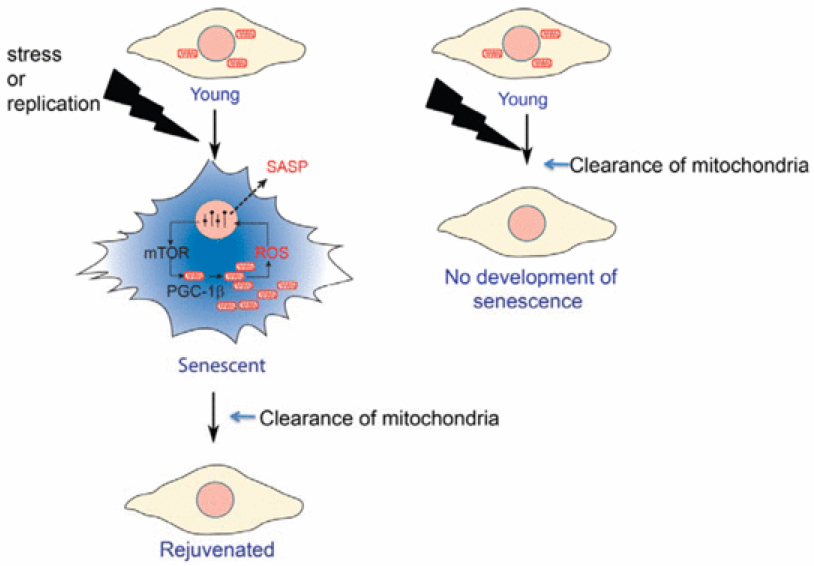
Preventing aging and rejuvenating human and mice cells in the lab (credit: Clara Correia‐Melo et al./EMBO Journal)

An international team of scientists led by João Passos at Newcastle University has for the first time shown thatmitochondria (the “batteries” of the cells) are major triggers for aging, and eliminating them upon the induction of senescence prevents senescence in the aging mouse liver.

As we grow old, cells in our bodies accumulate different types of damage and have increased inflammation, factors that are thought to contribute to the aging process.

As described Feb. 4 in an open-access paper in the EMBO Journal, the team carried out a series of genetic experiments involving human cells grown in the laboratory and succeeded in eliminating the majority, if not all, the mitochondria from aging cells.

Tricking mitochondria

http://www.kurzweilai.net/images/mitochondrion.jpg

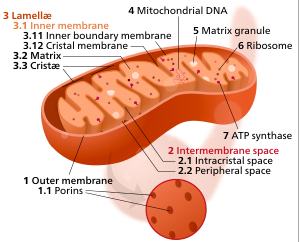
Components of a typical mitochondrion (credit: Kelvinsong/Creative Commons)

Cells can normally eliminate faulty mitochondria by a process called mitophagy. The scientists were able to “trick” the cells into inducing this process in a grand scale, until all the mitochondria within the cells were physically removed.

To their surprise, they observed that the aging cells, after losing their mitochondria, showed characteristics similar to younger cells — that is, they became rejuvenated. The levels of inflammatory molecules, oxygen free radicals and expression of genes, which are among the makers of cellular aging, dropped to the level that would be expected in younger cells.

“This is a very exciting and surprising discovery,” said Passos. “We already had some clues that mitochondria played a role in the aging of cells, but scientists around the world have struggled to understand exactly how and to what extent these were involved.”

The team, involving other universities in the UK and the U.S., also deciphered a new mechanism by which mitochondria contribute to aging: mitochondrial biogenesis, the complex process by which mitochondria replicate themselves, is a major driver of cellular aging.

This work was funded by the UK Biotechnology and Biological Sciences Research Council.


Abstract of Mitochondria are required for pro-ageing features of the senescent phenotype

Cell senescence is an important tumour suppressor mechanism and driver of ageing. Both functions are dependent on the development of the senescent phenotype, which involves an overproduction of pro‐inflammatory and pro‐oxidant signals. However, the exact mechanisms regulating these phenotypes remain poorly understood. Here, we show the critical role of mitochondria in cellular senescence. In multiple models of senescence, absence of mitochondria reduced a spectrum of senescence effectors and phenotypes while preserving ATP production via enhanced glycolysis. Global transcriptomic analysis by RNA sequencing revealed that a vast number of senescent‐associated changes are dependent on mitochondria, particularly the pro‐inflammatory phenotype. Mechanistically, we show that the ATM, Akt and mTORC1 phosphorylation cascade integrates signals from the DNA damage response (DDR) towards PGC‐1β‐dependent mitochondrial biogenesis, contributing to a ROS‐mediated activation of the DDR and cell cycle arrest. Finally, we demonstrate that the reduction in mitochondrial content in vivo, by either mTORC1 inhibition or PGC‐1β deletion, prevents senescence in the ageing mouse liver. Our results suggest that mitochondria are a candidate target for interventions to reduce the deleterious impact of senescence in ageing tissues.


Mayo Clinic researchers extend lifespan by up to 35 percent in mice

February 3, 2016   http://www.kurzweilai.net/mayo-clinic-researchers-extend-lifespan-by-up-to-35-percent-in-mice

Researchers at Mayo Clinic have discovered that senescent cells — cells that no longer divide and accumulate with age — shorten lifespan by as much as 35 percent in normal mice.

Removing these aging cells delays tumor formation, preserves tissue and organ function, and extends lifespan without observed adverse effects, the researchers found, writing Feb. 3 in Nature.

“Cellular senescence is a biological mechanism that functions as an ‘emergency brake’ used by damaged cells to stop dividing,” says Jan van Deursen, Ph.D., Chair of Biochemistry and Molecular biology at Mayo Clinic, and senior author of the paper. “While halting cell division of these cells is important for cancer prevention, it has been theorized that once the ‘emergency brake’ has been pulled, these cells are no longer necessary.”

As the immune system becomes less effective, senescent cells build up and damage adjacent cells, causing chronic inflammation, which is closely associated with frailty and age-related diseases.

Mayo Clinic researchers used a compound called AP20187 to remove senescent cells, which delayed tumor formation and reduced age-related deterioration of several organs, extending mediian lifespan of treated mice by 17 to 35 percent. The mice also had a healthier appearance and less inflammation in fat, muscle and kidney tissue.

The research was supported by the National Institutes of Health, the Paul F. Glenn Foundation, the Ellison Medical Foundation, the Noaber Foundation, and the Mayo Clinic Robert and Arlene Kogod Center on Aging.

Van Deursen is a co-inventor of the technology that has been licensed by Mayo Clinic to Unity Biotechnology. Mayo Clinic and Van Deursen have a financial interest in the technology.

https://youtu.be/w8UHzkXC4HQ

Mayo Clinic | Researchers Extend Lifespan by as Much as 35 Percent in Mice


Abstract of Naturally occurring p16Ink4a-positive cells shorten healthy lifespan

Cellular senescence, a stress-induced irreversible growth arrest often characterized by expression of p16Ink4a (encoded by the Ink4a/Arf locus, also known as Cdkn2a) and a distinctive secretory phenotype, prevents the proliferation of preneoplastic cells and has beneficial roles in tissue remodelling during embryogenesis and wound healing. Senescent cells accumulate in various tissues and organs over time, and have been speculated to have a role in ageing. To explore the physiological relevance and consequences of naturally occurring senescent cells, here we use a previously established transgene, INK-ATTAC, to induce apoptosis in p16Ink4a-expressing cells of wild-type mice by injection of AP20187 twice a week starting at one year of age. We show that compared to vehicle alone, AP20187 treatment extended median lifespan in both male and female mice of two distinct genetic backgrounds. The clearance of p16Ink4a-positive cells delayed tumorigenesis and attenuated age-related deterioration of several organs without apparent side effects, including kidney, heart and fat, where clearance preserved the functionality of glomeruli, cardio-protective KATP channels and adipocytes, respectively. Thus, p16Ink4a-positive cells that accumulate during adulthood negatively influence lifespan and promote age-dependent changes in several organs, and their therapeutic removal may be an attractive approach to extend healthy lifespan.

Read Full Post »

Reengineering Therapeutics

Larry H. Bernstein, MD, FCAP, Curator

LPBI

The synNotch solution: UCSF scientists engineer a next-gen T-cell immunotherapy

Sunday, January 31, 2016 | By John Carroll

2.2.9

2.2.9   Reengineering Therapeutics, Volume 2 (Volume Two: Latest in Genomics Methodologies for Therapeutics: Gene Editing, NGS and BioInformatics, Simulations and the Genome Ontology), Part 2: CRISPR for Gene Editing and DNA Repair

CAR-T has been all the rage in cancer R&D for several years now as a slate of biotech upstarts pursue highly promising work reengineering T cells into attack weapons by adding a chimeric antigen receptor that can zero in on particular cancer cells. The approach has been highly effective in acute lymphoblastic leukemia, triggering an attack on B cells by homing in on the CD19 antigen, a breakthrough that has inspired a race to the regulatory finish line with the first CAR-Ts.

That approach, though, has run into some major obstacles when researchers move from the blood cancer to solid tumors. But now a group of scientists working with UC San Francisco’s Wendell Lim say they’ve come up with a new therapeutic model for T-cell engineering that promises to overcome that hurdle and make it a more precise weapon that can tackle solid tumors while avoiding off-target reactions that threaten patients.

The key to this new approach is a new receptor: synNotch. Taking a cue from nature, which relies on a sensor called Notch to perform key functions, the synthetic biology engineers say they can add a receptor that includes one section that sticks out from the cell with one that lies inside. By tinkering with synNotch they can reengineer the immune cell to run down a particular cancer cell target and then issue instructions to turn genes on or off to set up the other half of the therapeutic equation.

In a project described in Cell, the team says they created a synNotch that recognized an antigen on the surface of the cancer cell while the internal mechanism contributed a chimeric antigen receptor that recognized a different antigen. They then tested it on a mouse model that included two different tumor cells: one with both targets recognized by the external synNotch sensor and the CAR and one with just the CAR target.

The newly programmed attack weapon zeroed in on the two targets (which required synNotch activation for it to work) while leaving the other alone, providing preclinical proof-of-concept evidence that they could create a much more efficient tumor cell killing vehicle.

“The kinds of engineered T cells that we can now construct give us the exciting potential to create precision cancer therapeutics that take advantage of all the genomic and proteomic information we are currently gathering on disease,” said Lim, the senior author of the study. “This genomic information now becomes actionable.”

The team was led by Leonardo Morsut and Kole Roybal.

Lim added that it is possible to reengineer a T cell with multiple synNotches to make it even more precise. And there are added applications for autoimmune disease, regenerative medicine, and more.

Engineering Customized Cell Sensing and Response Behaviors Using Synthetic Notch Receptors

Leonardo  MorsutKole T. Roybal, Xin Xiong, Russell M. Gordley, Scott M. Coyle, Matthew Thomson, Wendell A. Lim

Tricked-Out Immune Cells Could Attack Cancer, Spare Healthy Cells  

New Cell-Engineering Technique May Lead To Precision Immunotherapies

New CRISPR/Cas9 delivery method could offer a clinical pathway

Read Full Post »

Nanosensors for Protein Recognition and Gene Proteome Interaction

Larry H Bernstein, MD, FCAP, Curator

LPBI


Synthetic Antibody Detects Proteins

http://www.technologynetworks.com/Proteomics/news.aspx?ID=187242

Research could lead to nanosensors that recognize fibrinogen, insulin, or other biomarkers

Using carbon nanotubes, MIT chemical engineers have devised a new method for detecting proteins, including fibrinogen, one of the coagulation factors critical to the blood-clotting cascade.

This approach, if developed into an implantable sensor, could be useful for monitoring patients who are taking blood thinners, allowing doctors to make sure the drugs aren’t interfering too much with blood clotting.

The new method is the first to create synthetic recognition sites (similar to natural antibodies) for proteins and to couple them directly to a powerful nanosensor such as a carbon nanotube. The researchers have also made significant progress on a similar recognition site for insulin, which could enable better monitoring of patients with diabetes. It may also be possible to use this approach to detect proteins associated with cancer or heart disease, says Michael Strano, the Carbon P. Dubbs Professor in Chemical Engineering at MIT.

A targeted search

The new sensor is the latest example of a method developed in Strano’s lab, known asCorona Phase Molecular Recognition (CoPhMoRe).

This technique takes advantage of the interactions between a given polymer and a nanoparticle surface such as that of a fluorescent single-walled carbon nanotube, when the polymer is wrapped around the nanotube.

Certain regions of the polymers latch onto the nanoparticle surface like anchors, while other regions extend outwards into their environment. This outward-facing region, also known as the adsorbed phase or corona, has a 3-D structure that depends on the composition of the polymer.

CoPhMoRe works when a specific polymer adsorbs to the nanoparticle surface and creates a corona that recognizes the target molecule. These interactions are very specific, just like the binding between an antibody and its target. Binding of the target alters the carbon nanotubes’ natural fluorescence, allowing the researchers to measure how much of the target molecule is present.

Strano’s lab has previously used this approach to find recognition sites and develop nansensors for estradiol and riboflavin, among other molecules. The new paper represents their first attempt to identify corona phases that can detect proteins, which are larger, more complex, and more fragile than the molecules identified by their previous sensors.

For this study, Bisker began by screening carbon nanotubes wrapped in 20 different polymers including DNA, RNA, and polyethylene glycol (PEG), a polymer often added to drugs to increase their longevity in the bloodstream.

On their own, none of the polymers had any affinity for the 14 proteins tested, all taken from human blood. However, when the researchers tested polymer-wrapped nanotubes against the same proteins, they turned up a match between one of the modified nanotubes and fibrinogen.

“A chemist or a biologist would not be able to predict ahead of time that there should be any kind of affinity between fibrinogen and this corona phase,” Strano says. “It really is a new kind of molecular recognition.”

Fibrinogen, one of the most abundant proteins in human blood, is part of the blood-clotting cascade. When a blood vessel is damaged, an enzyme called thrombin converts fibrinogen into fibrin, a stringy protein that forms clots to seal the wound.

A sensor for fibrinogen could help doctors determine if patients who are taking blood thinners still have enough clotting capability to protect them from injury, and could allow doctors to calculate more finely tuned dosages. It could also be used to test patients’ blood clotting before they go into surgery, or to monitor wound healing, Bisker says.

Synthetic antibodies

The researchers believe their synthetic molecular recognition agents are an improvement over existing natural systems based on antibodies or DNA sequences known as aptamers, which are more fragile and tend to degrade over time.

“One of the advantages of this is that it’s a completely synthetic system that can have a much longer lifetime within the body,” Bisker says.

In 2013, researchers in Strano’s lab demonstrated that carbon nanotube sensors can remain active in mice for more than a year after being embedded in a polymer gel and surgically implanted under the skin.

In addition to insulin, the researchers are also interested in detecting troponin, a protein that is released by dying heart cells, or detecting proteins associated with cancer, which would be useful for monitoring the success of chemotherapy. These and other protein sensors could become critical components of devices that deliver drugs in response to a sign of illness.

“By measuring therapeutic markers in the human body in real time, we can enable drug delivery systems that are much smarter, and release drugs in precise quantities,” Strano says. “However, measurement of those biomarkers is the first step.”


New Device Uses Carbon Nanotubes to Snag Molecules
Nanotube “forest” in a microfluidic channel may help detect rare proteins and viruses.
Tuesday, December 22, 2015

Nanotube “forest” in a microfluidic channel may help detect rare proteins and viruses.

Engineers at MIT have devised a new technique for trapping hard-to-detect molecules, using forests of carbon nanotubes.

The team modified a simple microfluidic channel with an array of vertically aligned carbon nanotubes — rolled lattices of carbon atoms that resemble tiny tubes of chicken wire. The researchers had previously devised a method for standing carbon nanotubes on their ends, like trees in a forest. With this method, they created a three-dimensional array of permeable carbon nanotubes within a microfluidic device, through which fluid can flow.

Now the researchers have given the nanotube array the ability to trap certain particles. To do this, the team coated the array, layer by layer, with polymers of alternating electric charge.

“You can think of each nanotube in the forest as being concentrically coated with different layers of polymer,” says Brian Wardle, professor of aeronautics and astronautics at MIT. “If you drew it in cross-section, it would be like rings on a tree.”

Depending on the number of layers deposited, the researchers can create thicker or thinner nanotubes and thereby tailor the porosity of the forest to capture larger or smaller particles of interest.

The nanotubes’ polymer coating may also be chemically manipulated to bind specific bioparticles flowing through the forest. To test this idea, the researchers applied an established technique to treat the surface of the nanotubes with antibodies that bind to prostate specific antigen (PSA), a common experimental target. The polymer-coated arrays captured 40 percent more antigens, compared with arrays lacking the polymer coating.

Wardle says the combination of carbon nanotubes and multilayer coatings may help finely tune microfluidic devices to capture extremely small and rare particles, such as certain viruses and proteins.

“There are smaller bioparticles that contain very rich amounts of information that we don’t currently have the ability to access in point-of-care [medical testing] devices like microfluidic chips,” says Wardle, who is a co-author on the paper. “Carbon nanotube arrays could actually be a platform that could target that size of bioparticle.”

The paper’s lead author is Allison Yost, a former graduate student who is currently an engineer at Accion Systems. Others on the paper include graduate student Setareh Shahsavari; postdoc Roberta Polak; School of Engineering Professor of Teaching Innovation Gareth McKinley; professor of materials science and engineering Michael Rubner, and Raymond A. And Helen E. St. Laurent Professor of Chemical Engineering Robert Cohen.

A porous forest

Carbon nanotubes have been a subject of intense scientific study, as they possess exceptional electrical, mechanical, and optical properties. While their use in microfluidics has not been well explored, Wardle says carbon nanotubes are an ideal platform because their properties may be manipulated to attract certain nanometer-sized molecules. Additionally, carbon nanotubes are 99 percent porous, meaning a nanotube is about 1 percent carbon and 99 percent air.

“Which is what you need,” Wardle says. “You need to flow quantities of fluid through this material to shed all the millions of particles you don’t want to find and grab the one you do want to find.”

What’s more, Wardle says, a three-dimensional forest of carbon nanotubes would provide much more surface area on which target molecules may interact, compared with the two-dimensional surfaces in conventional microfluidics.

“The capture efficiency would scale with surface area,” Wardle notes.

A versatile array

The team integrated a three-dimensional array of carbon nanotubes into a microfluidic device by using chemical vapor deposition and photolithography to grow and pattern carbon nanotubes onto silicon wafers. They then grouped the nanotubes into a cylinder-shaped forest, measuring about 50 micrometers tall and 1 millimeter wide, and centered the array within a 3 millimeter-wide, 7-millimeter long microfluidic channel.

The researchers coated the nanotubes in successive layers of alternately charged polymer solutions in order to create distinct, binding layers around each nanotube. To do so, they flowed each solution through the channel and found they were able to create a more uniform coating with a gap between the top of the nanotube forest and the roof of the channel. Such a gap allowed solutions to flow over, then down into the forest, coating each individual nanotube. In the absence of a gap, solutions simply flowed around the forest, coating only the outer nanotubes.

After coating the nanotube array in layers of polymer solution, the researchers demonstrated that the array could be primed to detect a given molecule, by treating it with antibodies that typically bind to prostate specific antigen (PSA). They pumped in a solution containing small amounts of PSA and found that the array captured the antigen effectively, throughout the forest, rather than just on the outer surface of a typical microfluidic element.

Wardle says that the nanotube array is extremely versatile, as the carbon nanotubes may be manipulated mechanically, electrically, and optically, while the polymer coatings may be chemically altered to capture a wide range of particles. He says an immediate target may be biomarkers called exosomes, which are less than 100 nanometers wide and can be important signals of a disease’s progression.

“Science is really picking up on how much information these particles contain, and they’re sort of everywhere, but really hard to find, even with large-scale equipment,” Wardle says. “This type of device actually has all the characteristics and functionality that would allow you to go after bioparticles like exosomes and things that really truly are nanometer scale.”

This research was funded, in part, by the National Science Foundation.


A Natural Light Switch

MIT scientists identify and map the protein behind a light-sensing mechanism.

MIT scientists, working with colleagues in Spain, have discovered and mapped a light-sensing protein that uses vitamin B12 to perform key functions, including gene regulation.

The result, derived from studying proteins from the bacterium Thermus thermophilus, involves at least two findings of broad interest. First, it expands our knowledge of the biological role of vitamin B12, which was already understood to help convert fat into energy, and to be involved in brain formation, but has now been identified as a key part of photoreceptor proteins — the structures that allow organisms to sense and respond to light.

Second, the research describes a new mode of gene regulation, in which the light-sensing proteins play a key role. In so doing, the scientists observe, the bacteria have repurposed existing protein structures that use vitamin B12, and put them to work in new ways.

MIT-Proteins-Light-1_0.jpg

http://www.technologynetworks.com/images/videos/News%20Images/CR/MIT-Proteins-Light-1_0.jpg

“Nature borrowed not just the vitamin, but really the whole enzyme unit, and modified it … and made it a light sensor,” says Catherine Drennan, a professor of chemistry and biology at MIT


The paper describes the photoreceptors in three different states: in the dark, bound to DNA, and after being exposed to light.

“It’s wonderful that we’ve been able to get all the series of structures, to understand how it works at each stage,” Drennan says.

The paper has nine co-authors, including Drennan; graduate students Percival Yang-Ting Chen, Marco Jost, and Gyunghoon Kang of MIT; Jesus Fernandez-Zapata and S. Padmanabhan of the Institute of Physical Chemistry Rocasolano, in Madrid; and Monserrat Elias-Arnanz, Juan Manuel Ortiz-Guerreo, and Maria Carmen Polanco, of the University of Murcia, in Murcia, Spain.

The researchers used a combination of X-ray crystallography techniques and in-vitro analysis to study the bacteria. Drennan, who has studied enzymes that employ vitamin B12 since she was a graduate student, emphasizes that key elements of the research were performed by all the co-authors.

Jost performed crystallography to establish the shapes of the structures, while the Spanish researchers, Drennan notes, “did all of the control experiments to show that we were really thinking about this right,” among other things.

MIT-Proteins-Light-2.jpg

By studying the structures of the photoreceptor proteins in their three states, the scientists developed a more thorough understanding of the structures, and their functions, than they would have by viewing the proteins in just one state.

Microbes, like many other organisms, benefit from knowing whether they are in light or darkness. The photoreceptors bind to the DNA in the dark, and prevent activity pertaining to the genes of Thermus thermophilus. When light hits the microbes, the photoreceptor structures cleave and “fall apart,” as Drennan puts it, and the bacteria start producing carotenoids, which protect the organisms from negative effects of sunlight, such as DNA damage.

The research also shows that the exact manner in which the photoreceptors bind to the DNA is novel. The structures contain tetramers, four subunits of the protein, of which exactly three are bound to the genetic material — something Drennan says surprised her.

“That’s the best part about science,” Drennan says. “You see something novel, then you think it’s not really going to be that novel, but you do the experiments [and it is].”

Other scientists say the findings are significant. “It’s a very exciting development,” says Rowena Matthews, a professor emerita of biological chemistry at the University of Michigan, who has read the paper. Of the newly discovered use of vitamin B12 and a derivative of it, adenosylcobalamin, Matthews adds, “There was very limited knowledge of its versatility.”

Drennan adds that in the long run, the finding could have practical applications, such as the engineering of light-directed control of DNA transcription, or the development of controlled interactions between proteins.

“I would be very interested in … thinking about whether there could be practical applications of this,” Drennan says.


HIV Protein Manipulates Hundreds of Human Genes

Findings search for new or improved treatments for patients with AIDS.

UT Southwestern Medical Center researchers have deciphered how a small protein made by the human immunodeficiency virus (HIV) that causes AIDS manipulates human genes to further its deadly agenda.

The findings, published in the online journal eLife, could aid in the search for new or improved treatments for patients with AIDS, or to the development of preventive strategies.

“We have identified the molecular mechanisms by which the Tat protein made by HIV interacts with the host cell to activate or repress several hundred human genes,” said Dr. Iván D’Orso, Assistant Professor of Microbiology at UT Southwestern and senior author of the study. “The findings clearly suggest that blocking Tat activity may be of therapeutic value to HIV patients.”

It has long been known that HIV causes AIDS by hijacking the body’s immune cells, transforming them into HIV factories and killing other immune cells that normally fight disease. HIV also hides in cells and continues to undermine the host’s immune system despite antiretroviral therapy that has improved the outlook of those with AIDS.

The latest data from the Centers for Disease Control and Prevention (CDC), in 2012, estimated 1.2 million Americans were living with HIV, including 156,300 whose infections had not been diagnosed. About 50,000 people in the U.S. are newly infected with HIV annually, the CDC projects. In 2013, the CDC estimated that over 26,000 Americans had the advanced form of HIV infection, AIDS.

Like all retroviruses, HIV has very few genes of its own and must take over the host’s cellular machinery in order to propagate and spread throughout the body. Although the broad aspects of that cellular hijacking were known, the nuances remain to be explored, Dr. D’Orso said.

“We observed that HIV methodically and precisely manipulates the host’s genes and cellular machinery. We also observed that HIV rewires cellular defensive pathways to benefit survival of the virus,” he added.

The study provides insights into HIV’s ability to survive despite antiretroviral therapy, findings that could lead to new therapeutic targets or ways to make current therapies more effective, he said.

“Our study indicates that this small viral protein, Tat, directly binds to about 400 human genes to generate an environment in which HIV can thrive. Then, this protein precisely turns off the body’s immune defense. It is striking that such a small viral protein has such a large impact,” Dr. D’Orso said. “The human genes and pathways that Tat manipulates correlate well with symptoms observed in these patients, such as immune system hyperactivation, then weakening, and accelerated aging,” Dr. D’Orso said, describing the situation in which HIV infection leads to AIDS.

Italy’s National Institute of Health in Rome recently completed a phase II clinical trial of an experimental vaccine that targets the Tat protein. That trial, which followed 87 HIV-positive patients for up to three years, reported that the vaccine was well-tolerated without significant side effects. However, it will take several years to determine if the vaccine works, Dr. D’Orso said.

Although someone can have HIV for years without showing symptoms, AIDS occurs when HIV blocks the body’s ability to fight off illness. The person then becomes overrun by the opportunistic infections and specific cancers that are hallmarks of AIDS.


New Light Shed on Genetic Regulation

A team of scientists has uncovered greater intricacy in protein signaling than was previously understood, shedding new light on the nature of genetic production.

Christine Vogel, an assistant professor in New York University’s Department of Biology and one of the study’s senior authors, explains that “to make a protein, we need to make a messenger RNA molecule from the gene encoded in the DNA, and then, in a second process, make proteins from these RNA molecules. Both processes are highly regulated and coupled.”

This coupling is similar to the coupling between a moving escalator and a person walking on it at the same time.

The research takes a closer look at how the two coupled processes change in the cell responding to an outside stimulus.

“Until recently, it has been very difficult to study these systems and researchers have thought that the movement of the escalator is most important during the cellular response,” Vogel explains. “We now show that is not necessarily the case, and under some circumstances, the person’s walking determines the overall outcome.”

In biology, this means that both of the processes—to make RNAs and proteins—play important roles, but with different patterns.

In their study, the scientists, who also included researchers from National University Singapore and Berlin’s Max Delbruck Center, took a closer look at how the two processes exactly respond over time.

Their results showed notable distinctions between DNA and mRNA in the nature of their signaling. Notably, the process of making RNA from DNA was pulse-like—a brief messaging over the studied period that returned to the normal levels by the end of the measurements. By contrast, the process of making a protein from RNA was akin to an on/off switch: once started, levels remained constant for consistent periods before reverting back to long stretches of dormancy.

While the reasons for these differences in cell behavior remain unknown, the researchers believe the answer may lie in the nature of the two tasks.

“It is very costly for the cell to make proteins, but making RNA messages from DNA is a relatively low-energy and simple process, so it makes sense that we see frequent, or pulsating, signaling at this stage,” observes Vogel. “By contrast, creating proteins is an intricate undertaking, requiring a great deal of time and energy. This may be why, once you decided to stop production of proteins, you do not turn it back on that easily—and the other way around.”


Where Cancer Cells May Begin

Scientists use fruit fly genetics to understand how things could go wrong in cancer.

Cancer cells are normal cells that go awry by making bad developmental decisions during their lives. In a study involving the fruit fly equivalent of an oncogene implicated in many human leukemias, Northwestern University researchers have gained insight into how developing cells normally switch to a restricted, or specialized, state and how that process might go wrong in cancer.

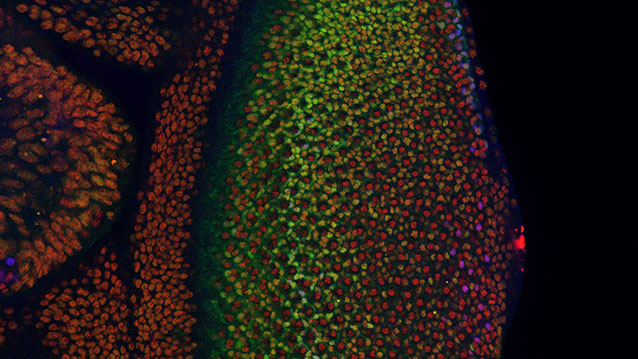
The fruit fly’s eye is an intricate pattern of many different specialized cells, such as light-sensing neurons and cone cells. Because flies share with humans many of the same cancer-causing genes, scientists use the precisely made compound eye of Drosophila melanogaster (the common fruit fly) as a workhorse to study what goes wrong in human cancer.

retina638.jpg

http://www.technologynetworks.com/images/videos/News%20Images/GT/retina638.jpg

A multidisciplinary team co-led by biologist Richard W. Carthew and engineer Luís A.N. Amaral studied normal cell behavior in the developing eye. The researchers were surprised to discover that the levels of an important protein called Yan start fluctuating wildly when the cell is switching from a more primitive, stem-like state to a more specialized state. If the levels don’t or can’t fluctuate, the cell doesn’t switch and move forward.

“This mad fluctuation, or noise, happens at the time of cell transition,” said Carthew, professor of molecular biosciences in Northwestern’s Weinberg College of Arts and Sciences. “For the first time, we see there is a brief time period as the developing cell goes from point A to point B. The noise is a state of ‘in between’ and is important for cells to switch to a more specialized state. This limbo might be where normal cells take a cancerous path.”

The researchers also found that a molecular signal received by a cell receptor called EGFR is important for turning the noise off. If that signal is not received, the cell remains in an uncontrolled state.

By pinpointing this noise and its “off” switch as important points in the normal process of cell differentiation, the Northwestern researchers provide targets for scientists studying how cells can go out of control and transform into cancer cells.

The “noisy” protein the Northwestern researchers studied is called Yan in the fly and Tel-1 in humans. (The protein is a transcription factor.) The Tel-1 protein instructs cells to turn into white blood cells; the gene that produces the protein, oncogene Tel-1, is frequently mutated in leukemia.

The EGFR protein that turns off the noise in flies is called Her-2 in humans. Her-2 is an oncogene that plays an important role in human breast cancer.

“On the surface, flies and humans are very different, but we share a remarkable amount of infrastructure,” said Carthew, a member of the Robert H. Lurie Comprehensive Cancer Center of Northwestern University. “We can use fruit fly genetics to understand how humans work and how things go wrong in cancer and other diseases.”

Fruit fly cells are small and closely packed together, making study of them challenging. Carthew and Amaral’s team of biologists, chemical and biological engineers, computer scientists and chemists together figured out how to identify and analyze thousands and thousands of individual cells in the flies’ eyes.

“In the past, people have built models of regulatory networks that control cell differentiation mostly by genetically perturbing one or two components of the network at a time and then compiling those results into models,” said Amaral, professor of chemical and biological engineering at the McCormick School of Engineering. “We instead measured the retina as it developed and found the unexpected behavior of the key regulatory factors Yan and EGFR.”

Nicolás Peláez, first author of the study and a Ph.D. candidate in interdisciplinary biological sciences working with Amaral and Carthew, built new tools to study this strange feature of noise in developing flies. His methods enabled the researchers to easily measure both the concentration of the Yan protein and its fluctuation (noise).

It takes 15 to 20 hours for a fruit fly cell to go from being an unrestricted cell to a restricted cell, Carthew said. Peláez determined the Yan protein is noisy, or fluctuating, for six to eight of those hours.

“Studying the dynamics of molecules regulating fly-eye patterning can inform us about human disease,” Peláez said. “Using model organisms such as fruit flies will help us understand quantitatively the basic biological principles governing differentiation in complex animals.”


Mechanism of Tumor Suppressing Gene Uncovered

The most commonly mutated gene in cancer,p53, works to prevent tumor formation by keeping mobile elements in check that otherwise lead to genomic instability, UT Southwestern Medical Center researchers have found.

The p53 gene long has been known to suppress tumor formation, but the mechanisms behind this function – and why disabling the gene allows tumors to form – were not fully understood.

Findings from the study answer some of these questions and could one day lead to new ways of diagnosing and treating cancer, said the study’s senior author, Dr. John Abrams, Professor of Cell Biology at UT Southwestern.

The investigators found that normal p53 gene action restrains transposons, mobile genetic elements called retroelements that can make copies of themselves and move to different positions on chromosomes. But, they discovered, when p53 is disabled by mutation, dramatic eruptions of these mobile elements occur. The study revealed that in mice with cancer and in human samples of two types of cancer (Wilms’ tumors and colon tumors) disabled for p53, transposons became very active.

In a healthy state, certain mechanisms work to keep these retroelements quiet and inactive, explained Dr. Abrams. One of those mechanisms is p53 action. Conversely, when p53 is mutated, retroelements can erupt.

“If you take the gene away, transposons can wreak havoc throughout the genome by causing it to become highly dysregulated, which can lead to disease,” Dr. Abrams said. “Our findings help explain why cancer genomes are so much more fluid and destabilized than normal genomes. They also provide a novel framework for understanding how normal cells become tumors.”

Although much more research is needed, Dr. Abrams said, the potential clinical implications of the team’s findings are significant.

“Understanding how p53 prevents tumors raises the prospect of therapeutic interventions to correct cases in which p53 is disabled,” Dr. Abrams said. “If retroelements are at the heart of certain p53-driven cancers, finding ways to suppress them could potentially allow us to prevent those cancers or intervene to keep them from progressing.”

This understanding also could lead to advances in diagnosing some cancers through biomarkers related to p53 and transposon activity.

“One possibility is that perhaps blood or urine tests could detect dysregulated retroelements that could be indicative of certain types of cancer,” Dr. Abrams said.

Read Full Post »

Signaling of Immune Response in Colon Cancer, Volume 2 (Volume Two: Latest in Genomics Methodologies for Therapeutics: Gene Editing, NGS and BioInformatics, Simulations and the Genome Ontology), Part 1: Next Generation Sequencing (NGS)

Signaling of Immune Response in Colon Cancer

Larry H. Bernstein, MD, FCAP, Curator

LPBI


Revised 1/13/2016

STING Protein May Serve as Biomarker for Colorectal and Other Cancers

http://www.genengnews.com/gen-news-highlights/sting-protein-may-serve-as-biomarker-for-colorectal-and-other-cancers/81252165/


Scientists at University of Miami Miller School of Medicine’s Sylvester Comprehensive Cancer Center say they have discovered how the stimulator of interferon genes (STING) signaling pathway may play an important role in alerting the immune system to cellular transformation. They believe their finding will shed further light on the immune system’s response to cancer development.

In 2008, Glen N. Barber, Ph.D., leader of the viral oncology program at Sylvester, and professor and chairman of cell biology at the Miller School of Medicine, and colleagues published in Nature (“STING is an endoplasmic reticulum adaptor that facilitates innate immune signalling”) the discovery of STING as a new cellular molecule that recognizes virus and bacteria infection to initiate host defense and immune responses. In the new study, published in Cell Reports (“Deregulation of STING Signaling in Colorectal Carcinoma Constrains DNA Damage Responses and Correlates With Tumorigenesis”), they describe STING’s role in the potential suppression of colorectal cancer.

“Since 2008 we’ve known that STING is crucial for antiviral and antibacterial responses,” said Dr. Barber. “But until now, little had been known about its function in human tumors. In this study we show, for the first time, that STING signaling is repressed in colorectal carcinoma and other cancers, an event which may enable transformed cells to evade the immune system.”

Colorectal cancer currently affects around 1.2 million people in the U.S. and 150,000 new cases are diagnosed every year, making it the third most common cancer in both men and women. Since most colon cancers develop from benign polyps, they can be treated successfully when detected early. However, if the tumor has already spread, survival rates are generally low.

Using disease models of colorectal cancer, the team of Sylvester scientists showed that loss of STING signaling negatively affected the body’s ability to recognize DNA-damaged cells. In particular, certain cytokines that facilitate tissue repair and antitumor priming of the immune system were not sufficiently produced to initiate a significant immune response to eradicate the colorectal cancer.

“We were able to show that impaired STING responses may enable damaged cells to elude the immune system,” continued Dr. Barber. “And if the body doesn’t recognize and attack cancer cells, they will multiply and, ultimately, spread to other parts of the body.”

He and his colleagues suggest evaluating STING signaling as a prognostic marker for the treatment of colorectal as well as other cancers. For example, Dr. Barber’s study showed that cancer cells with defective STING signaling were particularly prone to attack by oncolytic viruses presently being used as cancer therapies.

“Impaired STING responses may enable damaged cells to evade host immunosurveillance processes, although they provide a critical prognostic measurement that could help predict the outcome of effective oncoviral therapy,” wrote the investigators.

STING Protein Could be Used for Cancer Diagnosis

http://www.technologynetworks.com/Proteomics/news.aspx?ID=186674


This is the first detailed examination of how the stimulator of interferon genes (STING) signaling pathway, discovered by Glen N. Barber, Ph.D., Leader of the Viral Oncology Program at Sylvester Comprehensive Cancer Center, may play an important role in alerting the immune system to cellular transformation.

In 2008, Barber, who is also Professor and Chairman of Cell Biology at the University of Miami Miller School of Medicine, and colleagues published in Nature the discovery of STINGas a new cellular molecule that recognizes virus and bacteria infection to initiate host defense and immune responses. In the new study they describe STING’s role in the potential suppression of colorectal cancer.

“Since 2008 we’ve known that STING is crucial for antiviral and antibacterial responses,” said Barber. “But until now, little had been known about its function in human tumors. In this study we show, for the first time, that STING signaling is repressed in colorectal carcinoma and other cancers, an event which may enable transformed cells to evade the immune system.”

Colorectal cancer currently affects around 1.2 million people in the United States and 150.000 new cases are diagnosed every year, making it the third most common cancer in both men and women. Since most colon cancers develop from benign polyps, they can be treated successfully when detected early. However, if the tumor has already spread, survival rates are generally low.

Using disease models of colorectal cancer, the team of Sylvester scientists showed that loss of STING signaling negatively affected the body’s ability to recognize DNA-damaged cells. In particular, certain cytokines – small proteins important for cell signaling – that facilitate tissue repair and anti-tumor priming of the immune system were not sufficiently produced to initiate a significant immune response to eradicate the colorectal cancer.

“We were able to show that impaired STING responses may enable damaged cells to elude the immune system,” added Barber. “And if the body doesn’t recognize and attack cancer cells, they will multiply and, ultimately, spread to other parts of the body.”

Barber and his colleagues suggest evaluating STING signaling as a prognostic marker for the treatment of colorectal as well as other cancers. For example, Barber’s study showed that cancer cells with defective STING signaling were particularly prone to attack by oncolytic viruses presently being used as cancer therapies. Alternate studies with colleagues have also shown that activators of STING signaling are potent stimulators of anti-tumor immune responses. Collectively, the control of STING signaling may have important implications for cancer development as well as cancer treatment.


Every step you take: STING pathway key to tumor immunity

http://sciencelife.uchospitals.edu/2014/11/20/every-step-you-take-sting-pathway-key-to-tumor-immunity/

A recently discovered protein complex known as STING plays a crucial role in detecting the presence of tumor cells and promoting an aggressive anti-tumor response by the body’s innate immune system, according to two separate studies published in the Nov. 20 issue of the journal Immunity.

The studies, both from University of Chicago-based research teams, have major implications for the growing field of cancer immunotherapy. The findings show that when activated, the STING pathway triggers a natural immune response against the tumor. This includes production of chemical signals that help the immune system identify tumor cells and generate specific killer T cells. The research also found that targeted high-dose radiation therapy dials up the activation of this pathway, which promotes immune-mediated tumor control.

These findings could “enlarge the fraction of patients who respond to immunotherapy with prolonged control of the tumor,” according to a commentary on the papers by the University of Verona’s Vincenzo Bronte, MD. “Enhancing the immunogenicity of their cancers might expand the lymphocyte repertoire that is then unleashed by interference with checkpoint blockade pathways,” such as anti-PD-1.

STING, short for STimulator of INterferon Genes complex, is a crucial part of the process the immune system relies on to detect threats — such as infections or cancer cells — that are marked by the presence of DNA that is damaged or in the wrong place, inside the cell but outside the nucleus.

Detection of such “cytosolic” DNA initiates a series of interactions that lead to the STING pathway. Activating the pathway triggers the production of interferon-beta, which in turn alerts the immune system to the threat, helps the system detect cancerous or infected cells, and ultimately sends activated T cells into the battle.

“We have learned

“Innate immune sensing via the host STING pathway is critical for tumor control by checkpoint blockade,” Gajewski’s team noted in their paper. They found promising drugs known as checkpoint inhibitors — such as anti PD-1 or anti PD-L1, which can take the brakes off of an immune response — were not effective in STING-deficient mice. New agents that stimulate the STING pathway are being developed as potential cancer therapeutics.

A second University of Chicago team, led by cancer biologistYang-Xin Fu, MD, PhD, professor of pathology, and Ralph Weichselbaum, MD, chairman of radiation and cellular oncology and co-director of the Ludwig Center for Metastasis Research, found that high-dose radiation therapy not only kills targeted cancer cells but the resulting DNA damage drives a systemic immune response.

a great deal recently about what we call checkpoints, the stumbling blocks that prevent the immune system from ultimately destroying cancers,” said Thomas Gajewski, MD, PhD, professor of medicine and pathology at the University of Chicago and senior author of one of the studies. “Blockade of immune checkpoints, such as with anti-PD-1, is therapeutic in a subset of patients, but many individuals still don’t respond. Understanding the role of the STING pathway provides insights into how we can ‘wake up’ the immune response against tumors. This can be further boosted by checkpoint therapies.”

The two published studies, he said, help move this approach forward.

In a series of experiments in mice, both research teams found tumor cell-derived DNA could initiate an immune response against cancers. But when tested in mice that lacked a functional gene for STING, the immune system did not effectively respond.

“This result unifies traditional studies of DNA damage with newly identified DNA sensing of immune responses,” Fu said.

“This is a previously unknown mechanism,” Weichselbaum added.

In mice that lacked STING, however, there was no therapeutic immune response. The induction of interferons by radiation and consequent cancer cell killing, they conclude, depends on STING-pathway signaling.

They did find that combining cyclic guanosine monophosphate-adenosine monophosphate (cGAMP), an earlier step in the STING pathway, with radiation, could greatly enhance the antitumor efficacy of radiation.

“This opens a new avenue to develop STING-related agonists for patients with radiation-resistant cancers,” Fu said.


STING-Dependent Cytosolic DNA Sensing Mediates Innate Immune Recognition of Immunogenic Tumors

Seng-Ryong Woo1Mercedes B. Fuertes1Leticia Corrales1, …., Maria-Luisa Alegre2Thomas F. Gajewski1, 2   

Immunity 20 Nov 2014; 41(5): 830–842    http://dx.doi.org:/10.1016/j.immuni.2014.10.017


Highlights

• Spontaneous T cell responses against tumors require the host STING pathway in vivo
• Tumor-derived DNA can induce type I interferon production via STING
• Tumor DNA can be identified in host APCs in the tumor microenvironment in vivo

Summary

Spontaneous T cell responses against tumors occur frequently and have prognostic value in patients. The mechanism of innate immune sensing of immunogenic tumors leading to adaptive T cell responses remains undefined, although type I interferons (IFNs) are implicated in this process. We found that spontaneous CD8+ T cell priming against tumors was defective in mice lacking stimulator of interferon genes complex (STING), but not other innate signaling pathways, suggesting involvement of a cytosolic DNA sensing pathway. In vitro, IFN-β production and dendritic cell activation were triggered by tumor-cell-derived DNA, via cyclic-GMP-AMP synthase (cGAS), STING, and interferon regulatory factor 3 (IRF3). In the tumor microenvironment in vivo, tumor cell DNA was detected within host antigen-presenting cells, which correlated with STING pathway activation and IFN-β production. Our results demonstrate that a major mechanism for innate immune sensing of cancer occurs via the host STING pathway, with major implications for cancer immunotherapy.


Image for unlabelled figure

http://ars.els-cdn.com/content/image/1-s2.0-S1074761314003938-fx1.jpg


Immunity Erratum STING-Dependent Cytosolic DNA Sensing Mediates Innate Immune Recognition of Immunogenic Tumors

Seng-Ryong Woo, Mercedes B. Fuertes, Leticia Corrales, Stefani Spranger, Michael J. Furdyna, Michael Y.K. Leung, Ryan Duggan, Ying Wang, Glen N. Barber, Katherine A. Fitzgerald, Maria-Luisa Alegre, and Thomas F. Gajewski* *Correspondence: tgajewsk@medicine.bsd.uchicago.edu http://dx.doi.org/10.1016/j.immuni.2014.12.015 (Immunity 41, 830–842; November 20, 2014)

The original Figure 3C accidentally contained a duplicated panel in the bright-field column, third row down, and this has now been replaced with the correct data. The change does not alter the conclusions of the paper. This mistake has now been corrected online, and the authors regret the error.


Cytosolic DNA Sensors (CDSs): a STING in the tail – Review

November 2012   http://www.invivogen.com/review-cds-ligands

The innate immune system provides the first line of defense against infectious pathogens and serves to limit their early proliferation. It is also vital in priming and activating the adaptive immune system.

Innate immune detection of intracellular DNA derived from viruses and invasive bacteria is important to initiate an effective protective response. This crucial step depends on cytosolic DNA sensors (CDSs), which upon activation trigger the production of type I interferons (IFNs) and the induction of IFN-responsive genes and proinflammatory chemokines.
Although the identity of these CDSs is not fully uncovered, much progress has been made in understanding the signaling pathways triggered by these sensors.

Cytosolic DNA-mediated production of type I IFNs (mainly IFN-β) requires the transcription factor IFN regulatory factor 3 (IRF3), which is activated upon phosphorylation by TANK-binding-kinase-1 (TBK1) [1].

STING in DNA sensing

Recently, a new molecule, STING (stimulator of IFN genes), has been shown to be essential for the TBK1-IRF3- dependent induction of IFN-β by transfected DNA ligands and intracellular DNA produced by pathogens after infection [2, 3].
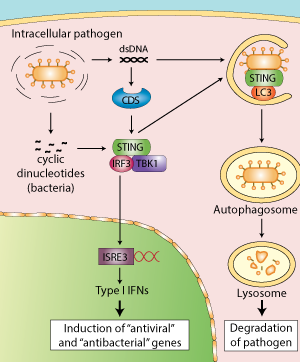
STING (also known as MITA, MPYS and ERIS) is a transmembrane protein that resides in the endoplasmic reticulum (ER) [2-6]. In response to cytosolic DNA, STING forms dimers and translocates from the ER to the Golgi then to punctate cytosolic structures where it colocalizes with TBK-1, leading to the phosphorylation of IRF3.
How STING stimulates TBK1-dependent IRF3 activation was recently elucidated by Tanaka and Chen. They found that, upon cytosolic DNA sensing, the C-terminal tail of STING acts as a scaffold protein to promote the phosphorylation of IRF3 by TBK1 [7].

STING in the host response to intracellular pathogens. Linking type I IFN response and autophagy for better defense

STING in the host response to intracellular pathogens

http://www.invivogen.com/images/STING-autophagy.png


STING activates the IFN response

Until very recently, STING in addition to its role as an adaptor protein was also thought to function as a sensor of cyclic dinucleotides.
Burdette et al. first demonstrated that STING binds directly to the bacterial molecule cyclic diguanylate monophosphate (c-di-GMP) [8]. This finding was confirmed by several teams who examined the structure of STING bound to c-di-GMP [9-11], including Cheng and colleagues, however their data suggest that STING is not the primary sensor of c-di-GMP [12]. Rather, they indicate that DDX41, an identified CDS, functions as a direct receptor for cyclic dinucleotides upstream of STING. The authors hypothesized that DDX41 binds to c-di-GMP then forms a complex with STING to activate the IFN response.

STING induces autophagy

Exciting new developments reveal that STING participates in another aspect of innate immunity, autophagy.
Autophagy plays a critical role in host defense responses to pathogens by promoting the elimination of microbes that enter into the cytosol by their sequestration into autophagosomes and their delivery to the lysosome.


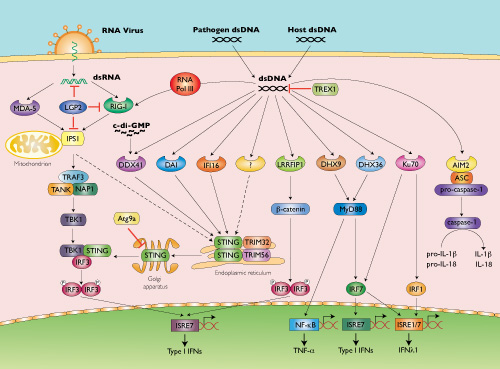
CDS pathway

http://www.invivogen.com/images/STING-CDS_pathway_small.jpg

Recent studies have reported that DNA viruses and intracellular bacteria induce autophagy and that this process is dependent on cytosolic genomic DNA and STING [13-15]. Robust induction of autophagy was also observed after transfection of various double stranded (ds) DNA species, such as poly(dA:dT), poly(dG:dC) or plasmid DNA, but not single stranded (ss) DNA, dsRNA or ssRNA [16].

Interestingly, activated STING was shown to relocate to unidentified membrame-bound compartments where it colocalizes with LC3, a hallmark of autophagy, and ATg9a. The latter protein was reported to regulate the interaction between STING and TBK1 after dsDNA stimulation [16]. The E3 ubiquitin ligases TRIM56 and TRIM32
were also found to regulate STING by mediating its dimerization through K63-linked ubiquitination [17, 18].

Several cytosolic DNA sensors upstream of STING have been proposed.
DNA-dependent activator of IRFs (DAI) was the first CDS discovered based on the ability of transfected poly(dA:dT) to induce IFN-β [19]. However, the role of DAI has been shown to be very cell-type specific and cells derived from DAI-deficient mice responded normally to dsDNA ligands [20].

While analyzing immune responses to dsDNA regions derived from vaccinia virus (VACV-70) or Herpes simplex virus 1 (HSV-60) genomes, Unterholzner et al. identified IFI16 as a DNA binding protein mediating IFN-β induction [21]. Interestingly, IFI16 belongs to a new family of pattern recognition receptors that contain the pyrin and HIN domain (PYHIN), termed AIM2-like receptors (ALRs).

AIM2 is a STING-independent cytosolic DNA sensor that forms an inflammasome with ASC to trigger caspase-1 activation and the secretion of the proinflammatory cytokines IL-1β and IL-18 [20].

Members of the DExD/H-box helicase superfamily have also been reported to function as cytosolic DNA sensors. While DHX36 and DHX9 were identified as STING-independent but MyD88-dependent sensors of CpG-containing DNA in plasmacytoid dendritic cells, DDX41 was found to bind various dsDNA ligands and localize with STING to promote IFN-β expression [22]. Other CDSs have been reported to function independently of STING: RNA Pol III, LRRFIP1 and Ku70 [20].

Unlike cytosolic RNA sensors (RIG-I, MDA-5), which detect structural moieties specific to pathogen RNA, such as 5’-triphosphates, it is not clear whether cytosolic DNA sensors can recognize any particular structural motif of DNA that would discriminate between self and non-self. This suggests that CDSs may have a role not only in anti-microbial innate immune responses but also in autoimmunity. A multitude of CDSs have been described but whether they are all true receptors remains an open question.

1. Stetson DB & Medzhitov R. 2006. Recognition of cytosolic DNA activates an IRF3-dependent innate immune response. Immunity. 24(1):93-103.
2. Ishikawa H. & Barber GN., 2008. STING is an endoplasmic reticulum adaptor that facilitates innate immune signalling. Nature. 455(7213):674-8.
3. Ishikawa H. et al., 2009. STING regulates intracellular DNA-mediated, type I interferon-dependent innate immunity. Nature. 461(7265):788-92.
4. Zhong B. et al., 2008. The adaptor protein MITA links virus-sensing receptors to IRF3 transcription factor activation. Immunity. 29(4):538-50.
5. Jin L. et al., 2008. MPYS, a novel membrane tetraspanner, is associated with major histocompatibility complex class II and mediates transduction of apoptotic signals. Mol Cell Biol. 28(16):5014-26.


UV Light Potentiates STING (Stimulator of Interferon Genes)-dependent Innate Immune Signaling through Deregulation of ULK1 (Unc51-like Kinase 1).

 J Biol Chem. 2015 May 8;290(19):12184-94.  http://dx.doi.org:/10.1074/jbc.M115.649301. Epub 2015 Mar 19.

The mechanism by which ultraviolet (UV) wavelengths of sunlight trigger or exacerbate the symptoms of the autoimmune disorder lupus erythematosus is not known but may involve a role for the innate immune system. Here we show that UV radiation potentiates STING (stimulator of interferon genes)-dependent activation of the immune signaling transcription factor interferon regulatory factor 3 (IRF3) in response to cytosolic DNA and cyclic dinucleotides in keratinocytes and other human cells. Furthermore, we find that modulation of this innate immune response also occurs with UV-mimetic chemical carcinogens and in a manner that is independent of DNA repair and several DNA damage and cell stress response signaling pathways. Rather, we find that the stimulation of STING-dependent IRF3 activation by UV is due to apoptotic signaling-dependent disruption of ULK1 (Unc51-like kinase 1), a pro-autophagic protein that negatively regulates STING. Thus, deregulation of ULK1 signaling by UV-induced DNA damage may contribute to the negative effects of sunlight UV exposure in patients with autoimmune disorders.


STING and the innate immune response to nucleic acids in the cytosol

Dara L Burdette & Russell E Vance

https://mcb.berkeley.edu/labs/vance/Resources/Burdette%20(2013)%20review.pdf

Cytosolic detection of pathogen-derived nucleic acids is critical for the initiation of innate immune defense against diverse bacterial, viral and eukaryotic pathogens. Conversely, inappropriate responses to cytosolic nucleic acids can produce severe autoimmune pathology. The host protein STING has been identified as a central signaling molecule in the innate immune response to cytosolic nucleic acids. STING seems to be especially critical for responses to cytosolic DNA and the unique bacterial nucleic acids called ‘cyclic dinucleotides’. Here we discuss advances in the understanding of STING and highlight the many unresolved issues in the field.

The detection of pathogen-derived nucleic acids is a central strategy by which the innate immune system senses microbes to then initiate protective responses1. Conversely, inappropriate recognition of self nucleic acids can result in debilitating autoimmune diseases such as systemic lupus erythematosus2. It is therefore important to understand the molecular basis of the detection of nucleic acids by the innate immune system. Studies have established that nucleic acids derived from extracellular sources are sensed mainly by endosomal Toll-like receptors (TLRs), such as TLR3, TLR7 and TLR9, whereas cytosolic nucleic acids are detected independently of TLRs by a variety of less-well-characterized mechanisms1.

Studies have identified STING (‘stimulator of interferon genes’; also known as TMEM173, MPYS, MITA and ERIS) as a critical signaling molecule in the innate response to cytosolic nucleic-acid ligands. STING was first described as a protein that interacts with major histocompatibility complex class II molecules3, but the relevance of this interaction remains unclear. Subsequent studies have instead focused on the role of STING in the transcriptional induction of type I interferons and coregulated genes in response to nucleic acids in the cytosol. Several groups have independently isolated STING by screening for proteins able to induce interferon-B (IFN-B) when overexpressed4–6. Studies of STING-deficient mice have subsequently confirmed the essential role of STING in innate responses to cytosolic nucleic-acid ligands, particularly double-stranded DNA (dsDNA) and unique bacterial nucleic acids called ‘cyclic dinucleotides’7–9. Several studies have also linked STING to the interferon response to cytosolic RNA5–7, but this has not been found consistently7,8,10,11; thus, we focus here on the role of STING in response to DNA and cyclic dinucleotides.


Protein Stimulator of interferon genes protein
Gene TMEM173
Organism Homo sapiens (Human)
Facilitator of innate immune signaling that acts as a sensor of cytosolic DNA from bacteria and viruses and promotes the production of type I interferon (IFN-alpha and IFN-beta). Innate immune response is triggered in response to non-CpG double-stranded DNA from viruses and bacteria delivered to the cytoplasm. Acts by recognizing and binding cyclic di-GMP (c-di-GMP), a second messenger produced by bacteria, and cyclic GMP-AMP (cGAMP), a messenger produced in response to DNA virus in the cytosol: upon binding of c-di-GMP or cGAMP, autoinhibition is alleviated and TMEM173/STING is able to activate both NF-kappa-B and IRF3 transcription pathways to induce expression of type I interferon and exert a potent anti-viral state. May be involved in translocon function, the translocon possibly being able to influence the induction of type I interferons. May be involved in transduction of apoptotic signals via its association with the major histocompatibility complex class II (MHC-II). Mediates death signaling via activation of the extracellular signal-regulated kinase (ERK) pathway. Essential for the induction of IFN-beta in response to human herpes simplex virus 1 (HHV-1) infection. Exhibits 2′,3′ phosphodiester linkage-specific ligand recognition. Can bind both 2′-3′ linked cGAMP and 3′-3′ linked cGAMP but is preferentially activated by 2′-3′ linked cGAMP (PubMed:26300263)
Stimulator of interferon genes protein (IPR029158)
Transmembrane protein 173, also known as stimulator of interferon genes protein (STING) or endoplasmic reticulum interferon stimulator (ERIS), is a transmembrane adaptor protein which is involved in innate immune signalling processes. It induces expression of type I interferons (IFN-alpha and IFN-beta) via the NF-kappa-B and IRF3, pathways in response to non-self cytosolic RNA and dsDNA [PMID: 18724357, PMID: 19776740,PMID: 18818105, PMID: 19433799].

Read Full Post »

Periodic table of protein complexes, Volume 2 (Volume Two: Latest in Genomics Methodologies for Therapeutics: Gene Editing, NGS and BioInformatics, Simulations and the Genome Ontology), Part 1: Next Generation Sequencing (NGS)

Periodic table of protein complexes

Larry H. Bernstein, MD, FCAP, Curator

LPBI


Periodic Table of Protein Complexes

http://www.technologynetworks.com/Proteomics/news.aspx?ID=186248

New tool helps to visualise, understand and predict how proteins combine to drive biological processes

A new ‘periodic table’ of protein complexes has been developed that provides a unified way to classify and visualise protein complexes, providing a valuable tool for biotechnology and the engineering of novel complexes.

This study also provides insights into evolutionary distribution of different types of existing protein complexes.

The Periodic Table of Protein Complexes offers a new way of looking at the enormous variety of structures that proteins can build in nature, which ones might be discovered next, and predicting how entirely novel structures could be engineered. Created by an interdisciplinary team led by researchers at the Wellcome Genome Campus and the University of Cambridge, the Table provides a valuable tool for research into evolution and protein engineering.

Almost every biological process depends on proteins interacting and assembling into complexes in a specific way, and many diseases are associated with problems in complex assembly. The principles underpinning this organisation are not yet fully understood, but by defining the fundamental steps in the evolution of protein complexes, the new ‘periodic table’ presents a systematic, ordered view on protein assembly, providing a visual tool for understanding biological function.

“Evolution has given rise to a huge variety of protein complexes, and it can seem a bit chaotic. But if you break down the steps proteins take to become complexes, there are some basic rules that can explain almost all of the assemblies people have observed so far.”


Dr Joe Marsh, formerly of the Wellcome Genome Campus and now of the MRC Human Genetics Unit at the University of Edinburgh.

Different ballroom dances can be seen as an endless combination of a small number of basic steps. Similarly, the ‘dance’ of protein complex assembly can be seen as endless variations on dimerization (one doubles, and becomes two), cyclisation (one forms a ring of three or more) and subunit addition (two different proteins bind to each other). Because these happen in a fairly predictable way, it’s not as hard as you might think to predict how a novel protein would form.

“We’re bringing a lot of order into the messy world of protein complexes. Proteins can keep go through several iterations of these simple steps, adding more and more levels of complexity and resulting in a huge variety of structures. What we’ve made is a classification based on these underlying principles that helps people get a handle on the complexity.”

Dr Sebastian Ahnert of the Cavendish Laboratory at the University of Cambridge

The exceptions to the rule are interesting in their own right, as are the subject of on-going studies.

“By analysing the tens of thousands of protein complexes for which three-dimensional structures have already been experimentally determined, we could see repeating patterns in the assembly transitions that occur – and with new data from mass spectrometry we could start to see the bigger picture.”

Dr Joe Marsh

“The core work for this study is in theoretical physics and computational biology, but it couldn’t have been done without the mass spectrometry work by our colleagues at Oxford University. This is yet another excellent example of how extremely valuable interdisciplinary research can be.”

Dr Sarah Teichmann, Research Group Leader at the Wellcome Trust Sanger Institute and the European Bioinformatics Institute (EMBL-EBI)

Read Full Post »

Reinforced disordered cell expression

Larry H. Bernstein, MD, FCAP, Curator

LPBI


Diabetes, Alzheimer’s Share Molecular Pathways, Part of Same Vicious Cycle

http://www.genengnews.com/gen-news-highlights/diabetes-alzheimer-s-share-molecular-pathways-part-of-same-vicious-cycle/81252206/

http://www.genengnews.com/Media/images/GENHighlight/thumb_Jan8_2016_Fotolia_30836005_JigsawPuzzleBrainAndHead1904910113.jpg

A molecular-level link has been found that helps explain the poorly understood association between diabetes and Alzheimer’s disease. Both disorders can drive and be driven by the same pathological process, the disruption of a particular kind of post-translational modification called S-nitrosylation. Thus, the disorders can reinforce each other. [© freshidea/Fotolia]


Though they appear to be distinct, diabetes and Alzheimer’s disease have much in common at the molecular level. In fact, recent findings indicate that either disease can worsen the other by disrupting the same chemical process—S-nitrosylation, a form of post-translational modification that is necessary for the proper functioning of multiple enzymes.

S-nitrosylation, it turns out, can be disrupted by excess sugar or β-amyloid protein, either of which can wreak havoc by increasing the levels of nitric oxide and other free radical species. Once S-nitrosylation is disturbed and poorly functioning enzymes are produced, the downstream effects include abnormal increases in both insulin and β-amyloid protein.

Thus, diabetes and Alzheimer’s can drive, and be driven by, the same vicious cycle. Furthermore, either can contribute to the other’s progress. These results emerged from a study completed by researchers based at the Sanford Burnham Prebys Medical Discovery Institute and the Scintillon Institute. The research team was led by Stuart A. Lipton, M.D., Ph.D., a physician-scientist affiliated with both institutions.

“This work points to a new common pathway to attack both type 2 diabetes, along with its harbinger, metabolic syndrome, and Alzheimer’s disease,” stated Dr. Lipton.

The researchers published their work January 8 in the journal Nature Communications in an article entitled, “Elevated glucose and oligomeric β-amyloid disrupt synapses via a common pathway of aberrant protein S-nitrosylation.” This article describes how the scientists used a so-called “disease-in-a-dish” model to discover molecular pathways that are in common in both diabetes and Alzheimer’s.

Specifically, the scientists genetically reprogrammed the skin of human patients to make induced pluripotent stem cells, which were then used to derive nerve cells. They also used mouse models of each disease to analyze the combined effects of high blood sugar and β-amyloid protein in living animals.

“[We] report in human and rodent tissues that elevated glucose, as found in [metabolic syndrome and type 2 diabetes] and oligomeric β-amyloid (Aβ) peptide, thought to be a key mediator of [Alzheimer’s disease], coordinately increase neuronal Ca2+ and nitric oxide (NO) in an NMDA receptor-dependent manner,” wrote the authors of the Nature Communications article. “The increase in NO results in S-nitrosylation of insulin-degrading enzyme (IDE) and dynamin-related protein 1 (Drp1), thus inhibiting insulin and Aβ catabolism as well as hyperactivating mitochondrial fission machinery.”

The scientists also found that the changes in enzyme activity led to damage of synapses, the region where nerve cells communicate with one another in the brain. The combination of high sugar and β-amyloid protein caused the greatest loss of synapses. Since loss of synapses correlates with cognitive decline in Alzheimer’s, high sugar and β-amyloid coordinately contribute to memory loss.

“The NMDA receptor antagonist memantine attenuates these effects,” the authors continued. “Our studies show that redox-mediated posttranslational modification of brain proteins link Aβ and hyperglyaemia to cognitive dysfunction in [metabolic syndrome/type 2 diabetes] and [Alzheimer’s disease].”

“[Our work] means that we now know these diseases are related on a molecular basis, and hence, they can be treated with new drugs on a common basis,” stated Dr. Ambasudhan, a senior author of the study and an assistant professor at Scintillon.

Read Full Post »

Antibody alternatives in specific aptamer 3-D scaffold binding

Curator: Larry H. Bernstein, MD, FCAP


New Proteomics Tools to Open Up Drug Discovery

Dr. Paul Ko Ferrigno, Chief Scientific Officer, and Dr. Jane McLeod, of Avacta Life Sciences

http://www.dddmag.com/articles/2016/01/new-proteomics-tools-open-drug-discovery


Size matters: Smaller molecules allow a tighter packing density on solid surfaces for improved signal-to-noise in assays, such as SPR or ELISA.

http://www.dddmag.com/sites/dddmag.com/files/AvactaAffimer%20stills_00006.jpg

Size matters: Smaller molecules allow a tighter packing density on solid surfaces for improved signal-to-noise in assays, such as SPR or ELISA.


In the current genomic era of very accurate DNA analyses by in situ hybridization, DNA chip analyses, and deep sequencing, it is often assumed that antibodies have an analogous ability to identify molecular targets accurately. Nothing could be further from the truth. Proteomics as a field is still lagging behind its genomic counterpart in the level of detail we can achieve, the level of data we can collect and the overall levels of accuracy and reliability that the collected data represent.

From the estimated 20,000 human genes 100,000 different possible proteins have been predicted. What is more, the variation achieved via the post-translational modification of these proteins brings another layer of complexity to cellular signalling. All this means that while studying the genetic blueprint can offer insights into the cell, it is only through examining the functional protein units that we can comprehensively map the dynamic interactions that occur within the cell to drive an organism or disease process.


Why not use antibodies?

Antibodies form the basis of molecular recognition in proteomics, whether this is to identify a protein within a complex mixture or label a specific protein within a cell. Both their target specificity and high binding capacity have made these molecules fantastically useful tools within diagnostics. However, the large majority of commercially available antibodies are for use as reagents in research and development, where they are simply not as well validated and issues with their manufacture have created problems that have hindered drug development.

It has proven next to impossible to develop antibodies to certain targets. This may be because of their high homology to the host protein, so the immune system fails to recognise them as different, or due to antigen processing resulting in the loss of post-translational modifications or discontinuous epitopes. However, without the necessary antibodies to investigate these targets the corresponding research avenues have remained closed and key drug targets may have been missed.

Almost worse than lacking the necessary research tools is the problem of antibody reproducibility. Matthias Uhlen revealed that of the 5,436 antibodies tested as part of the Protein Atlas project over 50 percent failed to recognize their target in at least one of two commonly used assays. Antibodies that are not specific to their target or do not recognize their target at all are responsible for increasing the cost of biological research, with an estimated $800 million spent globally every year on bad antibodies. Many published studies have had to be retracted due to antibody-derived error and those that remain unidentified in the literature will continue to lead researchers down blind alleys. This level of misinformation in the published literature is not just hindering the progression of the field, but possibly even sending it backwards and costing more than is needed — an issue not to be taken lightly when so many research budgets are coming under the knife.

More recently there has been a call from a number of leading scientists for the use of polyclonal antibodies, considered to be the worst offenders in terms of batch-to-batch irreproducibility, to be abandoned. They suggest a move towards recombinant systems of production, which would remove the restrictions of the immune system on antibody production. Yet, they state that $1 billion dollars investment would be required to re-route antibody production down this path and suggest that a period of five to ten years may be required to bring about these changes.

Simply producing recombinant antibodies rather than animal-derived affinity reagents will still leave us with a number of problems regarding their use. Antibodies are simply too large to target many smaller, hidden epitopes and the presence of key disulphide bonds within their structure makes them all too susceptible to reduction within the cell, rendering them useless for applications such as live cell imaging of molecules within the cytoplasm. Moreover, can we afford to wait another decade for a solution to this problem before we pursue protein targets for basic understanding and drug development?


Antibody alternatives for new targets and techniques

Antibody alternatives are already available to researchers in the life sciences field. They are produced either from nucleic acid or protein molecules. Aptamers are short, single-stranded RNA or DNA molecules that fold to form 3D scaffolds, which can present a specific interaction surface to allow specific binding to its target molecule. Protein scaffolds are formed from parts of or whole proteins modified to present a peptide sequence. This peptide sequence works in a similar manner to present a specific interaction surface for specific binding to a desired target.

These antibody alternatives are produced in recombinant systems, minimizing batch-to-batch variation and allowing them to be produced to theoretically any target. Additionally, as they do not use animals in their production they are generally less expensive to produce than traditional antibodies.


While companies such as Affibody and Avacta Life Sciences are aiming to open up the drug pipeline, by offering these alternative affinity reagents to previously inaccessible targets for use in research and development, many have moved into exploiting their therapeutic potential. Noxxon produce an RNA-based scaffold, Spiegelmers, which are currently in phase 2 clinical trials for diabetic nephropathy, and Molecular Partners have reached phase 3 clinical trials with their protein scaffold DARPins, for wet age-related macular degeneration.

These new antibody alternatives are smaller than traditional antibodies. This opens up the use of new technologies, such as super resolution microscopy. While the diffraction limit remained at about 250 nmm the length of the antibody at 15 nm was of little importance, tagging your molecule as accurately as necessary. Removing this limit in super resolution microscopy has meant that antibodies are now too large to provide the required level of accuracy. Instead, using an antibody alternative of only 2nm to tag your protein of interest opens up this new technique offering greater precision to intracellular localization.


As these scaffolds have been engineered to be fit-for-purpose many contain no intramolecular disulphide bonds and so are not sensitive to the reducing environment of the cell. This function enables their use as intracellular reporters of molecular conformation, as well as in standard assays like IHC or western blotting, so allowing scientists to use the same reagent across both intracellular and biochemical assays, thus bridging the gap between cell biology and biochemical studies.

Offering increased reproducibility, access to an increased range of applications, and the opportunity to hit previously inaccessible targets, antibody alternatives are opening up potential new avenues of drug discovery.


About the Authors

Dr. Paul Ko Ferrigno is Chief Scientific Officer at Avacta Life Sciences and a Visiting Professor at the University of Leeds. He has been working on peptide aptamers since 2001 in Leeds and at the MRC Cancer Cell Unit in Cambridge, UK where his team developed the Affimer scaffold technology.

Dr. Jane McLeod is a Scientific Writer at Avacta Life Sciences.


Read Full Post »

Transformer Proteins against Cancer

Larry H. Bernstein, MD, FCAP, Curator

LPBI


Revision  1/13/20165

GEN News Highlights:  “Transformer” Proteins with Role in Cancer

http://www.genengnews.com/gen-news-highlights/transformer-proteins-with-role-in-cancer/81252133/

Investigators at the Scripps Research Institute (TSRI) and St. Jude Children’s Research Hospital say they have found how a protein involved in cancer twists and morphs into different structures.

“We’re studying basic biophysics, but we believe the complexity and rules we uncover for the physics of protein disorder and folding could one day also be used for better designs of therapeutics,” said Ashok Deniz, Ph.D., associate professor at TSRI.

The study (“Asymmetric Modulation of Protein Order-Disorder Transitions by Phosphorylation and Partner Binding”), published in Angewandte Chemie, focuses  on the nucleophosmin (NPM1) protein, which has many functions and, when mutated, has been shown to interfere with cells’ normal tumor suppressing ability. NPM1 has been implicated in cancers such as non-Hodgkin lymphoma and acute myelogenous leukemia.

Previous research led by study collaborators Richard Kriwacki, Ph.D., and Diana Mitrea, Ph.D., at St. Jude had demonstrated that a section of NPM1, called the N-terminal domain (Npm-N), doesn’t have a defined, folded structure. Instead, the protein morphs between two forms: a one-subunit disordered monomer and a five-subunit folded pentamer.


Until now, the mechanism behind this transformation was unknown, but scientists believed this monomer-pentamer equilibrium could be important for the protein’s location and functioning in the cell. To shed light on how this transformation occurred, Dr. Deniz and his colleagues used a combination of three techniques—single-molecule biophysics, fluorescence resonance energy transfer (FRET), and circular dichroism, which enabled them to study individual molecules and collections of molecules. Single-molecule methods are especially useful for such studies because they can uncover important information that remains hidden in conventional studies.

The researchers found that the transformation can proceed through more than one pathway. In one pathway, the transformation begins when the cell sends signals to attach phosphoryl groups to NPM1. Such phosphorylation prompts the ordered pentamer to become disordered and likely causes NPM1 to shuttle outside the cell’s nucleus. A meeting with a binding partner can mediate the reverse transformation to a pentamer.

When NPM1 does become a pentamer again under these conditions, which likely causes it to move back to the nucleolus, it takes a different path instead of just retracing its earlier steps.


Priya Banerjee, Ph.D., an American Heart Association-supported postdoctoral research associate at TSRI and the first author of the study, compared these complicated transitions to the morphing of a “Transformers” toy, where a robot can become a car and then a jet. “Phosphorylation and partner-binding are like different cellular switches driving these changes,” said Dr. Banerjee.

According to Dr. Banerjee, the new study also reveals many intermediate states between monomer and pentamer structures and that these states can be manipulated or “tuned” by changing conditions such as salt levels, phosphorylation, and partner binding, which may explain how cells regulate the protein’s multiple functions. The researchers said future studies could shed more light on the biological functions of these different structures and how they might be used in future cancer therapies.

The team added that combining the three techniques used in this study, plus a novel protein-labeling technique for single-molecule fluorescence, could be a useful strategy for studying other unstructured, “intrinsically disordered proteins” (IDPs), which are involved in a host of cellular functions, as well as neurodegenerative disease, heart disease, infectious disease, type 2 diabetes and other conditions.


Single ‘Transformer’ Proteins

http://www.technologynetworks.com/Proteomics/news.aspx?ID=186996


“We’re studying basic biophysics, but we believe the complexity and rules we uncover for the physics of protein disorder and folding could one day also be used for better designs of therapeutics,” said TSRI Associate Professor Ashok Deniz, senior author of the new study along with Richard Kriwacki, faculty member at St. Jude.

The study  focuses on a protein called nucleophosmin (NPM1). This protein has many functions and, when mutated, has been shown to interfere with cells’ normal tumor-suppressing ability. NPM1 has been implicated in cancers such as non-Hodgkin lymphoma and acute myelogenous leukemia.

Previous research led by study collaborators Kriwacki and Diana Mitrea at St. Jude had shown that a section of NPM1, called the N-terminal domain (Npm-N), doesn’t have a defined, folded structure. Instead, the protein morphs between two forms: a one-subunit disordered monomer and a five-subunit folded pentamer.

Until now, the mechanism behind this transformation was unknown, but scientists believed this monomer-pentamer equilibrium could be important for the protein’s location and functioning in the cell.

To shed light on how this transformation occurred, Deniz and his colleagues used an innovative combination of three techniques—single-molecule biophysics, fluorescence resonance energy transfer (FRET) and circular dichroism—which enabled them to study individual molecules and collections of molecules. Single-molecule methods are especially useful for such studies because they can uncover important information that remains hidden in conventional studies.

Remarkably, the researchers found that the transformation can proceed through more than one pathway. In one pathway, the transformation begins when the cell sends signals to attach phosphoryl groups to NPM1. This modification, called phosphorylation, prompts the ordered pentamer to become disordered and likely causes NPM1 to shuttle outside the cell’s nucleus. A meeting with a binding partner can mediate the reverse transformation to a pentamer.

Interestingly, when NPM1 does become a pentamer again under these conditions, which likely causes it to move back to the nucleolus, it takes a different path instead of just retracing its earlier steps.

Priya Banerjee, an American Heart Association-supported postdoctoral research associate at TSRI and the first author of the study, compared these complicated transitions to the morphing of a “Transformers” toy, where a robot can become a car and then a jet. “Phosphorylation and partner-binding are like different cellular switches driving these changes,” said Banerjee.

Banerjee said the new study also reveals many intermediate states between monomer and pentamer structures—and that these states can be manipulated or “tuned” by changing conditions such as salt levels, phosphorylation and partner binding, which may explain how cells regulate the protein’s multiple functions. The researchers said future studies could shed more light on the biological functions of these different structures and how they might be used in future cancer therapies.

The researchers added that combining the three techniques used in this study, plus a novel protein-labeling technique for single-molecule fluorescence, could be a useful strategy for studying other unstructured, “intrinsically disordered proteins” (IDPS). IDPS are involved in a host of cellular functions, as well as neurodegenerative disease, heart disease, infectious disease, type 2 diabetes and other conditions.

TSRI and St. Jude Scientists Study Physics of Single ‘Transformer’ Proteins with Role in Cancer

http://www.scripps.edu/news/press/2015/20151221deniz.html

December 21, 2015 – A new study led by scientists at The Scripps Research Institute (TSRI) and St. Jude Children’s Research Hospital shows how a protein involved in cancer twists and morphs into different structures.

“We’re studying basic biophysics, but we believe the complexity and rules we uncover for the physics of protein disorder and folding could one day also be used for better designs of therapeutics,” said TSRI Associate Professor Ashok Deniz, senior author of the new study along with Richard Kriwacki, faculty member at St. Jude.

The study, published recently in the journal Angewandte Chemie, focuses on a protein called nucleophosmin (NPM1). This protein has many functions and, when mutated, has been shown to interfere with cells’ normal tumor suppressing ability. NPM1 has been implicated in cancers such as non-Hodgkin lymphoma and acute myelogenous leukemia.

Previous research led by study collaborators Kriwacki and Diana Mitrea at St. Jude had shown that a section of NPM1, called the N-terminal domain (Npm-N), doesn’t have a defined, folded structure. Instead, the protein morphs between two forms: a one-subunit disordered monomer and a five-subunit folded pentamer.

Until now, the mechanism behind this transformation was unknown, but scientists believed this monomer-pentamer equilibrium could be important for the protein’s location and functioning in the cell.

To shed light on how this transformation occurred, Deniz and his colleagues used an innovative combination of three techniques—single-molecule biophysics, fluorescence resonance energy transfer (FRET) and circular dichroism—which enabled them to study individual molecules and collections of molecules. Single-molecule methods are especially useful for such studies because they can uncover important information that remains hidden in conventional studies.

Remarkably, the researchers found that the transformation can proceed through more than one pathway. In one pathway, the transformation begins when the cell sends signals to attach phosphoryl groups to NPM1. This modification, called phosphorylation, prompts the ordered pentamer to become disordered and likely causes NPM1 to shuttle outside the cell’s nucleus. A meeting with a binding partner can mediate the reverse transformation to a pentamer.

Interestingly, when NPM1 does become a pentamer again under these conditions, which likely causes it to move back to the nucleolus, it takes a different path instead of just retracing its earlier steps.


Asymmetric Modulation of Protein Order-Disorder Transitions by Phosphorylation and Partner Binding  

Priya R. Banerjee, Diana M. Mitrea, Richard W. Kriwacki, Ashok, A. Deniz

     http://dx.doi.org:/10.1002/anie.201507728

As for many intrinsically disordered proteins, order–disorder transitions in the N-terminal oligomerization domain of the multifunctional nucleolar protein nucleophosmin (Npm-N) are central to its function, with phosphorylation and partner binding acting as regulatory switches. However, the mechanism of this transition and its regulation remain poorly understood. In this study, single-molecule and ensemble experiments revealed pathways with alternative sequences of folding and assembly steps for Npm-N. Pathways could be switched by altering the ionic strength. Phosphorylation resulted in pathway-specific effects, and decoupled folding and assembly steps to facilitate disorder. Conversely, binding to a physiological partner locked Npm-N in ordered pentamers and counteracted the effects of phosphorylation. The mechanistic plasticity found in the Npm-N order–disorder transition enabled a complex interplay of phosphorylation and partner-binding steps to modulate its folding landscape.


Conditionally and Transiently Disordered Proteins: Awakening Cryptic Disorder To Regulate Protein Function

Related articles:

Discovery of Small Molecules that Inhibit the Disordered Protein, p27(Kip1).

Iconaru LI, Ban D, Bharatham K, Ramanathan A, Zhang W, Shelat AA, Zuo J, Kriwacki RW.

Sci Rep. 2015 Oct 28;5:15686. doi: 10.1038/srep15686.

Select item 264270603.

Design, Synthesis and Evaluation of 2,5-Diketopiperazines as Inhibitors of the MDM2-p53 Interaction.

Pettersson M, Quant M, Min J, Iconaru L, Kriwacki RW, Waddell MB, Guy RK, Luthman K, Grøtli M.

PLoS One. 2015 Oct 1;10(10):e0137867. doi: 10.1371/journal.pone.0137867. eCollection 2015.

Select item 264113004.

Discoveries and controversies in BCL-2 protein-mediated apoptosis.

Zheng JH, Viacava Follis A, Kriwacki RW, Moldoveanu T.

FEBS J. 2015 Sep 28. doi: 10.1111/febs.13527. [Epub ahead of print] Review.

PMID:
26411300
Select item 262360135.

Pin1-Induced Proline Isomerization in Cytosolic p53 Mediates BAX Activation and Apoptosis.

Follis AV, Llambi F, Merritt P, Chipuk JE, Green DR, Kriwacki RW.

Mol Cell. 2015 Aug 20;59(4):677-84. doi: 10.1016/j.molcel.2015.06.029. Epub 2015 Jul 30.

PMID:
26236013


A phosphorylation switch controls the spatiotemporal activation of Rho GTPases in directional cell migration

Xuan CaoTomonori KanekoJenny S. LiAn-Dong Liu, et al.

Nature Communications 2015; 6(7721)     http://dx.doi.org:/10.1038/ncomms8721

Although cell migration plays a central role in development and disease, the underlying molecular mechanism is not fully understood. Here we report that a phosphorylation-mediated molecular switch comprising deleted in liver cancer 1 (DLC1), tensin-3 (TNS3), phosphatase and tensin homologue (PTEN) and phosphoinositide-3-kinase (PI3K) controls the spatiotemporal activation of the small GTPases, Rac1 and RhoA, thereby initiating directional cell migration induced by growth factors. On epidermal growth factor (EGF) or platelet-derived growth factor (PDGF) stimulation, TNS3 and PTEN are phosphorylated at specific Thr residues, which trigger the rearrangement of the TNS3–DLC1 and PTEN–PI3K complexes into the TNS3–PI3K and PTEN–DLC1 complexes. Subsequently, the TNS3–PI3K complex translocates to the leading edge of a migrating cell to promote Rac1 activation, whereas PTEN–DLC1 translocates to the posterior for localized RhoA activation. Our work identifies a core signalling mechanism by which an external motility stimulus is coupled to the spatiotemporal activation of Rac1 and RhoA to drive directional cell migration.


Protein Phosphorylation is an Important Tool…  Chapter 13.  in Protein Phosphorylation in Human Health 

Roberta Fraschini, Erica Raspelli and Corinne Cassani 

http://cdn.intechopen.com/pdfs-wm/38809.pdf

Protein phosphorylation is a reversible posttranslational modification that can modulate protein role in several physiological processes in almost every possible way. These include modification of its intrinsic biological activity, subcellular location, half-life and binding with other proteins. Protein phosphorylation is particularly important for the regulation of key proteins involved in the control of cell cycle progression.

Protein phosphorylation is the covalent binding of a phosphate group to some critical residues of the polypeptide. The phosphorylation state of a protein is given by a balance between the activity of protein kinases and protein phosphatases. Eukaryotic protein kinases transfer phosphate groups (PO43-) from ATP to an hydroxyl group of the lateral chain of specific serine, threonine or tyrosine residues on peptide substrates. In simple eukaryotic cells, like yeasts, Ser/Thr kinases are more common, while more complex eukaryotic cells, like human cells, have many Tyr kinases. Protein kinases recognize their substrates specifically and their active site consists of an activation loop and a catalytic loop between which substrates bind. Protein kinases differ from each other in the structure of their catalitic domain. A second class of enzymes, protein phosphatases, is responsible for the reverse reaction in which phosphate groups are removed from a protein. Phosphatases gain specificity by binding protein cofactors which facilitate binding to specific phosphoproteins. The active phosphatase often consists of a complex of the phosphatase catalytic subunit and a regulatory subunit.

The phosphorylation of specific residues induces structural changes that regulate protein functions by modulating protein folding, substrate affinity, stability and activity. For example, phosphorylation can cause switch-like changes in protein function, which can also lead to major modifications in the catalytic function of enzymes, including kinases and phosphatases. In addition, protein phosphorylation often leads to rearrangement in the structure of the protein that can induce changes in interacting partners or subcellular localization.

Phosphorylation acts as a molecular switch for many regulatory events in signalling pathways that drive cell division, proliferation, differentiation and apoptosis. In order to ensure an appropriate balance of protein phosphorylation, the cell can compartmentalize both protein kinases and phosphatases. Another kind of regulation can be achieved by the spatial distribution of kinases and phosphatases, that creates a gradient of phosphorylated substrates across different subcellular compartments. This spatial separation can also control the activity of other proteins or enzymes and the occurrence of other posttranslational modifications.

Molecular Biology of the Cell. 4th edition.   Protein Function.   http://www.ncbi.nlm.nih.gov/books/NBK26911/

We have seen that each type of protein consists of a precise sequence of amino acids that allows it to fold up into a particular three-dimensional shape, or conformation. But proteins are not rigid lumps of material. They can have precisely engineered moving parts whose mechanical actions are coupled to chemical events. It is this coupling of chemistry and movement that gives proteins the extraordinary capabilities that underlie the dynamic processes in living cells.

In this section, we explain how proteins bind to other selected molecules and how their activity depends on such binding. We show that the ability to bind to other molecules enables proteins to act as catalysts, signal receptors, switches, motors, or tiny pumps. The examples we discuss in this chapter by no means exhaust the vast functional repertoire of proteins. However, the specialized functions of many of the proteins you will encounter elsewhere in this book are based on similar principles.

All Proteins Bind to Other Molecules

The biological properties of a protein molecule depend on its physical interaction with other molecules. Thus, antibodies attach to viruses or bacteria to mark them for destruction, the enzyme hexokinase binds glucose and ATP so as to catalyze a reaction between them, actin molecules bind to each other to assemble into actin filaments, and so on. Indeed, all proteins stick, or bind, to other molecules. In some cases, this binding is very tight; in others, it is weak and short-lived. But the binding always shows great specificity, in the sense that each protein molecule can usually bind just one or a few molecules out of the many thousands of different types it encounters. The substance that is bound by the protein—no matter whether it is an ion, a small molecule, or a macromolecule— is referred to as a ligand for that protein (from the Latin word ligare, meaning “to bind”).

The ability of a protein to bind selectively and with high affinity to a ligand depends on the formation of a set of weak, noncovalent bonds—hydrogen bonds, ionic bonds, and van der Waals attractions—plus favorable hydrophobic interactions (see Panel 2-3, pp. 114–115). Because each individual bond is weak, an effective binding interaction requires that many weak bonds be formed simultaneously. This is possible only if the surface contours of the ligandmolecule fit very closely to the protein, matching it like a hand in a glove (Figure 3-37).

Figure 3-37. The selective binding of a protein to another molecule.

Figure 3-37

The selective binding of a protein to another molecule. Many weak bonds are needed to enable a protein to bind tightly to a second molecule, which is called aligand for the protein. A ligand must therefore fit precisely into a protein’s binding (more…)

The region of a protein that associates with a ligand, known as the ligand’s binding site, usually consists of a cavity in the protein surface formed by a particular arrangement of amino acids. These amino acids can belong to different portions of the polypeptide chain that are brought together when the protein folds (Figure 3-38). Separate regions of the protein surface generally provide binding sites for different ligands, allowing the protein’s activity to be regulated, as we shall see later. And other parts of the protein can serve as a handle to place the protein in a particular location in the cell—an example is the SH2 domain discussed previously, which is often used to move a protein containing it to sites in theplasma membrane in response to particular signals.

Figure 3-38. The binding site of a protein.

Figure 3-38

The binding site of a protein. (A) The folding of the polypeptide chain typically creates a crevice or cavity on the protein surface. This crevice contains a set of amino acid side chains disposed in such a way that they can make noncovalent bonds only (more…)

Although the atoms buried in the interior of the protein have no direct contact with the ligand, they provide an essential scaffold that gives the surface its contours and chemical properties. Even small changes to the amino acids in the interior of a protein molecule can change its three-dimensional shape enough to destroy a binding site on the surface.

The Details of a Protein’s Conformation Determine Its Chemistry

Proteins have impressive chemical capabilities because the neighboring chemical groups on their surface often interact in ways that enhance the chemical reactivity of amino acid side chains. These interactions fall into two main categories.

First, neighboring parts of the polypeptide chain may interact in a way that restricts the access of water molecules to aligand binding site. Because water molecules tend to form hydrogen bonds, they can compete with ligands for sites on the protein surface. The tightness of hydrogen bonds (and ionic interactions) between proteins and their ligands is therefore greatly increased if water molecules are excluded. Initially, it is hard to imagine a mechanism that would exclude a molecule as small as water from a protein surface without affecting the access of the ligand itself. Because of the strong tendency of water molecules to form water–water hydrogen bonds, however, water molecules exist in a large hydrogen-bonded network (see Panel 2-2, pp. 112–113). In effect, a ligand binding site can be kept dry because it is energetically unfavorable for individual water molecules to break away from this network, as they must do to reach into a crevice on a protein’s surface.

Second, the clustering of neighboring polar amino acid side chains can alter their reactivity. If a number of negatively charged side chains are forced together against their mutual repulsion by the way the protein folds, for example, the affinity of the site for a positively charged ion is greatly increased. In addition, when amino acid side chains interact with one another through hydrogen bonds, normally unreactive side groups (such as the –CH2OH on the serine shown inFigure 3-39) can become reactive, enabling them to enter into reactions that make or break selected covalent bonds.

Figure 3-39. An unusually reactive amino acid at the active site of an enzyme.

Figure 3-39

An unusually reactive amino acid at the active site of an enzyme. This example is the “catalytic triad” found in chymotrypsin, elastase, and other serine proteases (see Figure 3-14). The aspartic acid side chain (Asp 102) induces the histidine (more…)

The surface of each protein molecule therefore has a unique chemical reactivity that depends not only on which amino acid side chains are exposed, but also on their exact orientation relative to one another. For this reason, even two slightly different conformations of the same protein molecule may differ greatly in their chemistry.

Sequence Comparisons Between Protein Family Members Highlight Crucial Ligand Binding Sites

As we have described previously, many of the domains in proteins can be grouped into families that show clear evidence of their evolution from a common ancestor, and genome sequences reveal large numbers of proteins that contain one or more common domains. The three-dimensional structures of the members of the same domain family are remarkably similar. For example, even when the amino acid sequence identity falls to 25%, the backbone atoms in a domain have been found to follow a common protein fold within 0.2 nanometers (2 Å).

These facts allow a method called “evolutionary tracing” to be used to identify those sites in a protein domain that are the most crucial to the domain’s function. For this purpose, those amino acids that are unchanged, or nearly unchanged, in all of the known protein family members are mapped onto a structural model of the three-dimensional structure of one family member. When this is done, the most invariant positions often form one or more clusters on the protein surface, as illustrated in Figure 3-40A for the SH2 domain described previously (see Panel 3-2, pp. 138–139). These clusters generally correspond to ligand binding sites.

Figure 3-40. The evolutionary trace method applied to the SH2 domain.

Figure 3-40

The evolutionary trace method applied to the SH2 domain. (A) Front and back views of a space-filling model of the SH2 domain, with evolutionarily conserved amino acids on the protein surface colored yellow, and those more toward the protein interior colored (more…)

The SH2 domain is a module that functions in protein–protein interactions. It binds the protein containing it to a second protein that contains a phosphorylated tyrosine side chain in a specific amino acid sequence context, as shown in Figure 3-40B. The amino acids located at the binding site for the phosphorylated polypeptide have been the slowest to change during the long evolutionary process that produced the large SH2 family of peptide recognition domains. Becausemutation is a random process, this result is attributed to the preferential elimination during evolution of all organisms whose SH2 domains became altered in a way that inactivated the SH2-binding site, thereby destroying the function of the SH2 domain.

In this era of extensive genome sequencing, many new protein families have been discovered whose functions are unknown. By identifying the critical binding sites on a three-dimensional structure determined for one family member, the above method of evolutionary tracing is being used to help determine the functions of such proteins.

Proteins Bind to Other Proteins Through Several Types of Interfaces

Proteins can bind to other proteins in at least three ways. In many cases, a portion of the surface of one protein contacts an extended loop of polypeptide chain (a “string”) on a second protein (Figure 3-41A). Such a surface–string interaction, for example, allows the SH2 domain to recognize a phosphorylated polypeptide as a loop on a second protein, as just described, and it also enables a protein kinase to recognize the proteins that it will phosphorylate (see below).

Figure 3-41. Three ways in which two proteins can bind to each other.

Figure 3-41

Three ways in which two proteins can bind to each other. Only the interacting parts of the two proteins are shown. (A) A rigid surface on one protein can bind to an extended loop of polypeptide chain (a “string”) on a second protein. (B)(more…)

A second type of protein–protein interface is formed when two α helices, one from each protein, pair together to form acoiled-coil (Figure 3-41B). This type of protein interface is found in several families of gene regulatory proteins, as discussed in Chapter 7.

The most common way for proteins to interact, however, is by the precise matching of one rigid surface with that of another (Figure 3-41C). Such interactions can be very tight, since a large number of weak bonds can form between two surfaces that match well. For the same reason, such surface–surface interactions can be extremely specific, enabling aprotein to select just one partner from the many thousands of different proteins found in a cell.


Molecular Motors

Perhaps the most fascinating proteins that associate with the cytoskeleton are the molecular motors called motor proteins. These remarkable proteins bind to a polarized cytoskeletal filament and use the energy derived from repeated cycles of ATP hydrolysis to move steadily along it. Dozens of different motor proteins coexist in every eucaryotic cell. They differ in the type of filament they bind to (either actin or microtubules), the direction in which they move along the filament, and the “cargo” they carry. Many motor proteins carry membrane-enclosed organelles—such as mitochondria, Golgi stacks, or secretory vesicles—to their appropriate locations in the cell. Other motor proteins cause cytoskeletal filaments to slide against each other, generating the force that drives such phenomena as muscle contraction, ciliary beating, and cell division.

Cytoskeletal motor proteins that move unidirectionally along an oriented polymer track are reminiscent of some other proteins and protein complexes discussed elsewhere in this book, such as DNA and RNA polymerases, helicases, and ribosomes. All of these have the ability to use chemical energy to propel themselves along a linear track, with the direction of sliding dependent on the structural polarity of the track. All of them generate motion by coupling nucleosidetriphosphate hydrolysis to a large-scale conformational change in a protein, as explained in Chapter 3.

The cytoskeletal motor proteins associate with their filament tracks through a “head” region, or motor domain, that binds and hydrolyzes ATP. Coordinated with their cycle of nucleotide hydrolysis and conformational change, the proteins cycle between states in which they are bound strongly to their filament tracks and states in which they are unbound. Through a mechanochemical cycle of filament binding, conformational change, filament release, conformational relaxation, and filament rebinding, the motor protein and its associated cargo move one step at a time along the filament (typically a distance of a few nanometers). The identity of the track and the direction of movement along it are determined by the motor domain (head), while the identity of the cargo (and therefore the biological function of the individual motor protein) is determined by the tail of the motor protein.

In this section, we begin by describing the three groups of cytoskeletal motor proteins. We then describe how they work to transport membrane-enclosed organelles or to change the shape of structures built from cytoskeletal filaments. We end by describing their action in muscle contraction and in powering the whiplike motion of structures formed from microtubules.


Actin-based Motor Proteins Are Members of the Myosin Superfamily

The first motor protein identified was skeletal muscle myosin, which is responsible for generating the force for muscle contraction. This myosin, called myosin II (see below) is an elongated protein that is formed from two heavy chains and two copies of each of two light chains. Each of the heavy chains has a globular head domain at its N-terminus that contains the force-generating machinery, followed by a very long amino acid sequence that forms an extended coiled-coil that mediates heavy chain dimerization (Figure 16-51). The two light chains bind close to the N-terminal head domain, while the long coiled-coil tail bundles itself with the tails of other myosin molecules. These tail-tail interactions result in the formation of large bipolar “thick filaments” that have several hundred myosin heads, oriented in opposite directions at the two ends of the thick filament (Figure 16-52).

Figure 16-51. Myosin II.

Figure 16-51

Myosin II. (A) A myosin II molecule is composed of two heavy chains (each about 2000 amino acids long (green) and four light chains (blue). The light chains are of two distinct types, and one copy of each type is present on each myosin head. Dimerization (more…)

Figure 16-52. The myosin II bipolar thick filament.

Figure 16-52

The myosin II bipolar thick filament. (A) Electron micrograph of a myosin II thick filament isolated from frog muscle. Note the central bare zone, which is free of head domains. (B) Schematic diagram, not drawn to scale. The myosin II molecules aggregate (more…)

Each myosin head binds and hydrolyses ATP, using the energy of ATP hydrolysis to walk toward the plus end of anactin filament. The opposing orientation of the heads in the thick filament makes the filament efficient at sliding pairs of oppositely oriented actin filaments past each other. In skeletal muscle, in which carefully arranged actin filaments are aligned in “thin filament” arrays surrounding the myosin thick filaments, the ATP-driven sliding of actin filaments results in muscle contraction (discussed later). Cardiac and smooth muscle contain myosins that are similarly arranged, although they are encoded by different genes.

When a muscle myosin is digested by chymotrypsin and papain, the head domain is released as an intact fragment (called S1). The S1 fragment alone can generate filament sliding in vitro, proving that the motor activity is contained completely within the head (Figure 16-53).

Figure 16-53. Direct evidence for the motor activity of the myosin head.

Figure 16-53

Direct evidence for the motor activity of the myosin head. In this experiment, purified S1 myosin heads were attached to a glass slide, and then actin filaments labeled with fluorescent phalloidin were added and allowed to bind to the myosin heads. (A) (more…)

It was initially thought that myosin was present only in muscle, but in the 1970’s, researchers found that a similar two-headed myosin protein was also present in nonmuscle cells, including protozoan cells. At about the same time, other researchers found a myosin in the freshwater amoeba Acanthamoeba castellanii that was unconventional in having a motor domain similar to the head of muscle myosin but a completely different tail. This molecule seemed to function as a monomer and was named myosin I (for one-headed); the conventional myosin was renamed myosin II (for two-headed).

Subsequently, many other myosin types were discovered. The heavy chains generally start with a recognizable myosin motor domain at the N-terminus, and then diverge widely with a variety of C-terminal tail domains (Figure 16-54). The new types of myosins include a number of one-headed and two-headed varieties that are approximately equally related to myosin I and myosin II, and the nomenclature now reflects their approximate order of discovery (myosin III through at least myosin XVIII). The myosin tails (and the tails of motor proteins generally) have apparently diversified during evolution to permit the proteins to dimerize with other subunits and to interact with different cargoes.

Figure 16-54. Myosin superfamily tree.

Figure 16-54

Myosin superfamily tree. (A) A family tree for a few of the many known members of the myosin superfamily. The length of the lines separating individual family members indicates the amount of difference in the amino acid sequence of the motor domain. Groups (more…)

Some myosins (such as VIII and XI) have been found only in plants, and some have been found only in vertebrates (IX). Most, however, are found in all eucaryotes, suggesting that myosins arose early in eucaryotic evolution. The yeastSaccharomyces cerevisiae contains five myosins: two myosin Is, one myosin II, and two myosin Vs. One can speculate that these three types of myosins are necessary for a eucaryotic cell to survive and that other myosins perform more specialized functions in multicellular organisms. The nematode C. elegans, for example, has at least 15 myosin genes, representing at least seven structural classes; the human genome includes about 40 myosin genes.

All of the myosins except one move toward the plus end of an actin filament, although they do so at different speeds. The exception is myosin VI, which moves toward the minus end.

The exact functions for most of the myosins remain to be determined. Myosin II is always associated with contractile activity in muscle and nonmuscle cells. It is also generally required for cytokinesis, the pinching apart of a dividing cell into two daughters (discussed in Chapter 18), as well as for the forward translocation of the body of a cell during cell migration. The myosin I proteins contain a second actinbinding site or a membrane-binding site in their tails, and they are generally involved in intracellular organization and the protrusion of actin-rich structures at the cell surface. Myosin V is involved in vesicle and organelle transport. Myosin VII is found in the inner ear in vertebrates, and certain mutations in the gene coding for myosin VII cause deafness in mice and humans.


There Are Two Types of Microtubule Motor Proteins: Kinesins and Dyneins

Kinesin is a motor protein that moves along microtubules. It was first identified in the giant axon of the squid, where it carries membrane-enclosed organelles away from the neuronal cell body toward the axon terminal by walking toward the plus end of microtubules. Kinesin is similar structurally to myosin II in having two heavy chains and two light chains per active motor, two globular head motor domains, and an elongated coiled-coil responsible for heavy chain dimerization. Like myosin, kinesin is a member of a large protein superfamily, for which the motor domain is the only common element (Figure 16-55). The yeastSaccharomyces cerevisiae has six distinct kinesins. The nematode C. elegans has 16 kinesins, and humans have about 40.

Figure 16-55. Kinesin and kinesin-related proteins.

Figure 16-55

Kinesin and kinesin-related proteins. (A) Structures of four kinesin superfamily members. As in the myosin superfamily, only the motor domains are conserved. Conventional kinesin has the motor domain at the N-terminus of the heavy chain. The middle domain (more…)

There are at least ten families of kinesin-related proteins, or KRPs, in the kinesin superfamily. Most of them have the motor domain at the N-terminus of the heavy chain and walk toward the plus end of the microtubule. A particularly interesting family has the motor domain at the C-terminus and walks in the opposite direction, toward the minus end of the microtubule. Some KRP heavy chains lack a coiled-coil sequence and seem to function as monomers, analogous to myosin I. Some others are homodimers, and yet others are heterodimers. At least one KRP (BimC) can self-associate through the tail domain, forming a bipolar motor that slides oppositely oriented microtubules past one another, much as a myosin II thick filament does for actin filaments. Most kinesins carry a binding site in the tail for either a membrane-enclosed organelle or another microtubule. Many of the kinesin superfamily members have specific roles in mitotic and meiotic spindle formation and chromosome separation during cell division.

The dyneins are a family of minus-end-directed microtubule motors, but they are unrelated to the kinesin superfamily. They are composed of two or three heavy chains (that include the motor domain) and a large and variable number of associated light chains. The dynein family has two major branches (Figure 16-56). The most ancient branch contains thecytoplasmic dyneins, which are typically heavy-chain homodimers, with two large motor domains as heads. Cytoplasmic dyneins are probably found in all eucaryotic cells, and they are important for vesicle trafficking, as well as for localization of the Golgi apparatus near the center of the cell. Axonemal dyneins, the other large branch, include heterodimers and heterotrimers, with two or three motor-domain heads, respectively. They are highly specialized for the rapid and efficient sliding movements of microtubules that drive the beating of cilia and flagella (discussed later). A third, minor, branch shares greater sequence similarity with cytoplasmic than with axonemal dyneins but seems to be involved in the beating of cilia.

Figure 16-56. Dyneins.

Figure 16-56

Dyneins. Freeze-etch electron micrographs of a molecule of cytoplasmic dynein and a molecule of ciliary (axonemal) dynein. Like myosin II and kinesin, cytoplasmic dynein is a two-headed molecule. The ciliary dynein shown has three heads. Note that the (more…)

Dyneins are the largest of the known molecular motors, and they are also among the fastest: axonemal dyneins can move microtubules in a test tube at the remarkable rate of 14 μm/sec. In comparison, the fastest kinesins can move their microtubules at about 2–3 μm/sec.


The Structural Similarity of Myosin and Kinesin Indicates a Common Evolutionary Origin

The motor domain of myosins is substantially larger than that of kinesins, about 850 amino acids compared with about 350. The two classes of motor proteins track along different filaments and have different kinetic properties, and they have no identifiable amino acid sequence similarities. However, determination of the three-dimensional structure of the motor domains of myosin and kinesin has revealed that these two motor domains are built around nearly identical cores (Figure 16-57). The central force-generating element that the two types of motor proteins have in common includes the site of ATP binding and the machinery necessary to translate ATP hydrolysis into an allosteric conformational change. The differences in domain size and in the choice of track can be attributed to large loops extending outward from this central core. These loops include the actin-binding and microtubule-binding sites, respectively.

Figure 16-57. X-ray crystal structures of myosin and kinesin heads.

Figure 16-57

X-ray crystal structures of myosin and kinesin heads. The central nucleotide-binding domains of myosin and kinesin (shaded in yellow) are structurally very similar. The very different sizes and functions of the two motors are due to major differences (more…)

An important clue to how the central core is involved in force generation has come from the observation that the motor core also bears some structural resemblance to the nucleotidebinding site of the small GTPases of the Ras superfamily. As discussed in Chapter 3 (see Figure 3-74), these proteins exhibit distinct conformations in their GTP-bound (active) and GDP-bound (inactive) forms: mobile “switch” loops in the nucleotide-binding site are in close contact with the γ-phosphate in the GTP-bound state, but these loops swing out when the hydrolyzed γ-phosphate is released. Although the details of the movement are different for the two motor proteins, and ATP rather than GTP is hydrolyzed, the relatively small structural change in the active site—the presence or absence of a terminal phosphate—is similarly amplified to cause a rotation of a different part of the protein. In kinesin and myosin, a switch loop interacts extensively with those regions of the protein involved in microtubule and actin binding, respectively, allowing the structural transitions caused by the ATP hydrolysis cycle to be relayed to the polymer-binding interface. The relay of structural changes between the polymer-binding site and the nucleotide hydrolysis site seems to work in both directions, since theATPase activity of motor proteins is strongly activated by binding to their filament tracks.

Motor Proteins Generate Force by Coupling ATP Hydrolysis to Conformational Changes

Although the cytoskeletal motor proteins and GTP-binding proteins both use structural changes in their nucleoside-triphosphate-binding sites to produce cyclic interactions with a partner protein, the motor proteins have a further requirement: each cycle of binding and release must propel them forward in a single direction along a filament to a newbinding site on the filament. For such unidirectional motion, a motor protein must use the energy derived from ATP binding and hydrolysis to force a large movement in part of the protein molecule. For myosin, each step of the movement along actin is generated by the swinging of an 8.5-nm-long α helix, or lever arm (see Figure 16-57), which is structurally stabilized by the binding of light chains. At the base of this lever arm next to the head, there is a piston-like helix that connects movements at the ATP-binding cleft in the head to small rotations of the so-called converter domain. A small change at this point can swing the helix like a long lever, causing the far end of the helix to move by about 5.0 nm. These changes in the conformation of the myosin are coupled to changes in its binding affinity for actin, allowing the myosin head to release its grip on the actin filament at one point and snatch hold of it again at another. The full mechanochemical cycle of nucleotide binding, nucleotide hydrolysis, and phosphate release (which causes the “power stroke”) produces a single step of movement (Figure 16-58). In the myosin VI subfamily of myosins, which move backward (toward the minus end of the actin filament), the converter domain probably lies in a different orientation, so that the same piston-like movement of the small helix causes the lever arm to rotate in the opposite direction.

Figure 16-58. The cycle of structural changes used by myosin to walk along an actin filament.

Figure 16-58

The cycle of structural changes used by myosin to walk along an actin filament. (Based on I. Rayment et al., Science 261:50–58, 1993. © AAAS.)

In kinesin, instead of the rocking of a lever arm, the small movements of switch loops at the nucleotidebinding siteregulate the docking and undocking of the motor head domain to a long linker region that connects this motor head at one end to the coiled-coil dimerization domain at the other end. When the front (leading) kinesin head is bound to amicrotubule before the power stroke, its linker region is relatively unstructured. On the binding of ATP to this bound head, its linker region docks along the side of the head, which throws the second head forward to a position where it will be able to bind a new attachment site on the protofilament, 8 nm closer to the microtubule plus end than the binding site for the first head. The nucleotide hydrolysis cycles in the two heads are closely coordinated, so that this cycle of linker docking and undocking can allow the two-headed motor to move in a hand-over-hand (or head-over-head) stepwise manner (Figure 16-59A).

Figure 16-59. Comparison of the mechanochemical cycles of kinesin and myosin II.

Figure 16-59

Comparison of the mechanochemical cycles of kinesin and myosin II. The shading in the two circles representing the hydrolysis cycle indicates the proportion of the cycle spent in attached and detached states for each motor protein. (A) Summary of the (more…)

The coiled-coildomain seems both to coordinate the mechanochemical cycles of the two heads (motor domains) of thekinesin dimer and to determine its directionality of movement. Recall that whereas most members of the kinesin superfamily, with their motor domains at the N-terminus, move toward the plus end of the microtubule, a few superfamily members have their motor domains at the C-terminus and move toward the minus end. Since the motor domains of these two types of kinesins are essentially identical, how can they move in opposite directions? The answer seems to lie in the way in which the heads are connected. In high-resolution images of forward-walking and backward-walking members of the kinesin superfamily bound to microtubules, the heads that are attached to the microtubule are essentially indistinguishable, but the second, unattached heads are oriented very differently. This difference in tilt apparently biases the next binding site for the second head, and thereby determines the directionality of motor movement (Figure 16-60).

Figure 16-60. Orientation of forward- and backward-walking kinesin superfamily proteins bound to microtubules.

Figure 16-60

Orientation of forward- and backward-walking kinesin superfamily proteins bound to microtubules. These images were generated by fitting the structures of the free motor-protein dimers (determined by x-ray crystallography) onto a lower resolution image (more…)

Although both myosin and kinesin undergo analogous mechanochemical cycles, the exact nature of the coupling between the mechanical and chemical cycles is different in the two cases (see Figure 16-60). For example, myosin without any nucleotide is tightly bound to its actin track, in a so-called “rigor” state, and it is released from this track by the association of ATP. In contrast, kinesin forms a rigor-like tight association with a microtubule when ATP is bound to the kinesin, and it is hydrolysis of ATP that promotes release of the motor from its track.

Thus, cytoskeletal motor proteins work in a manner highly analogous to GTP-binding proteins, except that in motor proteins the small protein conformational changes (a few tenths of a nanometer) associated with nucleotide hydrolysis are amplified by special protein domains—the lever arm in the case of myosin and the linker in the case of kinesin—to generate large-scale (several nanometers) conformational changes that move the motor proteins stepwise along their filament tracks. The analogy between the GTPases and the cytoskeletal motor proteins has recently been extended by the observation that one of the GTP-binding proteins—the bacterial elongation factorG—translates the chemical energy of GTP hydrolysis into directional movement of the mRNAmolecule on the ribosome.

Motor Protein Kinetics Are Adapted to Cell Functions

The motor proteins in the myosin and kinesin superfamilies exhibit a remarkable diversity of motile properties, well beyond their choice of different polymer tracks. Most strikingly, a single dimer of conventional kinesin moves in a highly processive fashion, traveling for hundreds of ATPase cycles along a microtubule without dissociating. Skeletal muscle myosin II, in contrast, cannot move processively and makes just one or a few steps along an actin filament before letting go. These differences are critical for the motors’ various biological roles. A small number of kinesin molecules must be able to transport a mitochondrion all the way down a nerve cellaxon, and therefore require a high level of processivity. Skeletal muscle myosin, in contrast, never operates as a single molecule but rather as part of a huge array of myosin II molecules. Here processivity would actually inhibit biological function, since efficient muscle contraction requires that each myosin head perform its power stroke and then quickly get out of the way, to avoid interfering with the actions of the other heads attached to the same actin filament.

There are two reasons for the high degree of processivity of kinesin movement. The first is that the mechanochemical cycles of the two motor heads in a kinesin dimer are coordinated with each other, so that one kinesin head does not let go until the other is poised to bind. This coordination allows the motor protein to operate in a hand-over-hand fashion, never allowing the organelle cargo to diffuse away from the microtubule track. There is no apparent coordination between the myosin heads in a myosin II dimer. The second reason for the high processivity of kinesin movement is that kinesin spends a relatively large fraction of its ATPase cycle tightly bound to the microtubule. For both kinesin and myosin, the conformational change that produces the force-generating working stroke must occur while the motor protein is tightly bound to its polymer, and the recovery stroke in preparation for the next step must occur while the motor is unbound. But as we have seen in Figure 16-59, myosin spends only about 5% of its ATPase cycle in the tightly bound state and is unbound the rest of the time.

What myosin loses in processivity it gains in speed; in an array in which many motor heads are interacting with the sameactin filament, a set of linked myosins can move their filament a total distance equivalent to 20 steps during a single cycle time, while kinesins can move only two. Thus, myosins can typically drive filament sliding much more rapidly than kinesins, even though they hydrolyze ATP at comparable rates and take molecular steps of comparable length.

Within each motor protein class, movement speeds vary widely, from about 0.2 to 60 μm/sec for myosins, and from about 0.02 to 2 μm/sec for kinesins. These differences arise from a fine-tuning of the mechanochemical cycle. The number of steps that an individual motor molecule can take in a given time, and thereby the velocity, can be increased by either increasing the motor protein’s intrinsic ATPase rate or decreasing the proportion of cycle time spent bound to the filament track. Moreover, the size of each step can be changed by either changing the length of the lever arm (for example, the lever arm of myosin V is about three times longer than the lever arm of myosin II) or the angle through which the helix swings (Figure 16-61). Each of these parameters varies slightly among different members of the myosin and kinesin families, corresponding to slightly different protein sequences and structures. It is assumed that the behavior of each motor protein, whose function is determined by the identity of the cargo attached through its tail-domain, has been fine-tuned during evolution for speed and processivity according to the specific needs of the cell.

Figure 16-61. The effect of lever arm length on the step size for a motor protein.

Figure 16-61

The effect of lever arm length on the step size for a motor protein. The lever arm of myosin II is much shorter than the lever arm of myosin V. The power stroke in the head swings their lever arms through the same angle, so myosin V is able to take a (more…)

Motor Proteins Mediate the Intracellular Transport of Membrane-enclosed Organelles

A major function of cytoskeletal motors in interphase cells is the transport and positioning of membrane-enclosed organelles. Kinesin was originally identified as the protein responsible for fast axonal transport, the rapid movement of mitochondria, secretory vesicle precursors, and various synapse components down the microtubule highways of theaxon to the distant nerve terminals. Although organelles in most cells need not cover such long distances, their polarized transport is equally necessary. A typical microtubule array in an interphase cell is oriented with the minus ends near the center of the cell at the centrosome, and the plus ends extending to the cell periphery. Thus, centripetal movements of organelles toward the cell center require the action of minus-end-directed motor proteins such as cytoplasmic dynein, whereas centrifugal movements toward the periphery require plus-end-directed motors such as kinesins.

The role of microtubules and microtubule motors in the behavior of intracellular membranes is best exemplified by the part they play in organizing the endoplasmic reticulum (ER) and the Golgi apparatus. The network of ER membranetubules aligns with microtubules and extends almost to the edge of the cell, whereas the Golgi apparatus is located near the centrosome. When cells are treated with a drug that depolymerizes microtubules, such as colchicine or nocodazole, the ER collapses to the center of the cell, while the Golgi apparatus fragments and disperses throughout the cytoplasm(Figure 16-62). In vitro, kinesins can tether ER-derived membranes to preformed microtubule tracks, and walk toward the microtubule plus ends, dragging the ER membranes out into tubular protrusions and forming a membranous web very much like the ER in cells. Likewise, the outward movement of ER tubules toward the cell periphery is associated with microtubule growth in living cells. Conversely, dyneins are required for positioning the Golgi apparatus near the cell center, moving Golgi vesicles along microtubule tracks toward minus ends at the centrosome.

Figure 16-62. Effect of depolymerizing microtubules on the Golgi apparatus.

Figure 16-62

Effect of depolymerizing microtubules on the Golgi apparatus. (A) In this endothelial cell, the microtubules are labeled in red, and the Golgi apparatus is labeled in green (using an antibody against a Golgi protein). As long as the system of microtubules (more…)

The different tails and their associated light chains on specific motor proteins allow the motors to attach to their appropriate organelle cargo. For example, there is evidence for membrane-associated motor receptors, sorted to specific membrane-enclosed compartments, that interact directly or indirectly with the tails of the appropriate kinesin family members. One of these receptors seems to be the amyloid precursor protein, APP, which binds directly to a light chainon the tail of kinesin-I and is proposed to be a transmembrane motor proteinreceptormolecule in nerve-cell axons. It is the abnormal processing of this protein that gives rise to Alzheimer’s disease, as discussed in Chapter 15.

For dynein, attachment to membranes is known to be mediated by a large macromolecular assembly. Cytoplasmic dynein is itself a huge proteincomplex, and it requires association with a second large protein complex called dynactinto translocate organelles effectively. The dynactin complex includes a short actinlike filament that is made of the actin-related protein Arp1 (distinct from Arp2 and Arp3, the components of the ARP complex involved in the nucleation of conventional actin filaments). Membranes of the Golgi apparatus are coated with the proteins ankyrin and spectrin, which have been proposed to associate with the Arp1 filament in the dynactin complex to form a planar cytoskeletal array reminiscent of the erythrocyte membranecytoskeleton (see Figure 10-31). The spectrin array probably gives structural stability to the Golgi membrane, and—via the Arp1 filament—it may mediate the regulatable attachment of dynein to the organelle (Figure 16-63).

Figure 16-63. A model for the attachment of dynein to a membrane-enclosed organelle.

Figure 16-63

A model for the attachment of dynein to a membrane-enclosed organelle. Dynein requires the presence of a large number of accessory proteins to associate with membrane-enclosed organelles. Dynactin is a large complex (red)that includes components that (more…)

Motor proteins also have a significant role in organelle transport along actin filaments. The first myosin shown to mediate organelle motility was myosin V, a two-headed myosin with a large step size (see Figure 16-61). In mice, mutations in the myosin V gene result in a “dilute” phenotype, in which fur color looks faded. In mice (and humans),membrane-enclosed pigment granules, called melanosomes, are synthesized in cells called melanocytes beneath the skin surface. These melanosomes move out to the ends of dendritic processes in the melanocytes, from where they are delivered to the overlying keratinocytes that form the skin and fur. Myosin V is associated with the surface of melanosomes, and it is able to mediate their actin-based movement in a test tube (Figure 16-64). In dilute mutant mice, the melanosomes are not delivered to the keratinocytes efficiently, and pigmentation is defective. Other myosins, including myosin I, are associated with endosomes and a variety of other organelles.

Figure 16-64. Myosin V on melanosomes.

Figure 16-64

Myosin V on melanosomes. (A) Phase-contrast image of a portion of a melanocyte isolated from a mouse. The black spots are melanosomes, which are membrane-enclosed organelles filled with the skin pigment melanin. (B) The same cell labeled with a fluorescent (more…)

Motor Protein Function Can Be Regulated

The cell can regulate the activity of motor proteins, allowing it to change either the positioning of its membrane-enclosed organelles or its whole-cell movements. One of the most dramatic examples is provided by fish melanocytes. These giant cells, which are responsible for rapid changes in skin coloration in several species of fish, contain large pigment granules that can alter their location in response to neuronal or hormonal stimulation (Figure 16-65). These pigment granules aggregate or disperse by moving along an extensive network of microtubules. The minus ends of these microtubules are nucleated by the centrosome and are located in the center of the cell, while the plus ends are distributed around the cell periphery. The tracking of individual pigment granules reveals that the inward movement is rapid and smooth, while the outward movement is jerky, with frequent backward steps (Figure 16-66). Both dynein and kinesinare associated with the pigment granules. The jerky outward movements apparently result from a tug-of-war between the two motor proteins, with the stronger kinesin winning out overall. When the kinesin light chains become phosphorylated after a hormonal stimulation that signals skin color change, kinesin is inactivated, leaving dynein free to drag the pigment granules rapidly toward the cell center, changing the fish’s color. In a similar way, the movement of other membrane organelles coated with particular motor proteins is controlled by a complex balance of competing signals that regulate both motor protein attachment and activity.

Figure 16-65. Regulated melanosome movements in fish pigment cells.

Figure 16-65

Regulated melanosome movements in fish pigment cells. These giant cells, which are responsible for changes in skin coloration in several species of fish, contain large pigment granules, or melanosomes (brown). The melanosomes can change their location (more…)

Figure 16-66. Bidirectional movement of a melanosome on a microtubule.

Figure 16-66

Bidirectional movement of a melanosome on a microtubule. An isolated melanosome (yellow) moves along a microtubule on a glass slide, from the plus end toward the minus end. Halfway through the video sequence, it abruptly switches direction and moves from (more…)

Myosin activity can also be regulated by phosphorylation. In nonmuscle cells, myosin II can be phosphorylated on a variety of sites on both heavy and light chains, affecting both motor activity and thick filament assembly. The myosin II can exist in two different conformational states in such cells, an extended state that is capable of forming bipolar filaments, and a bent state in which the tail domain apparently interacts with the motor head. Phosphorylation of the regulatory light chain by the calcium-dependent myosin light-chain kinase (MLCK) causes the myosin II to preferentially assume the extended state, which promotes its assembly into a bipolar filament and leads to cell contraction (Figure 16-67). Myosin light-chain phosphorylation is an indirect target of activated Rho, the small GTPasediscussed previously whose activation causes a reorganization of the actincytoskeleton into contractile stress fibers. The MLCK is also activated during mitosis, causing myosin II to assemble into the contractile ring that is responsible for dividing the mitotic cell into two. Regulation of other members of the myosin superfamily is not as well understood, but control of these myosins is also likely to involve site-specific phosphorylations.

Figure 16-67. Light-chain phosphorylation and the regulation of the assembly of myosin II into thick filaments.

Figure 16-67

Light-chain phosphorylation and the regulation of the assembly of myosin II into thick filaments. (A) The controlled phosphorylation by the enzyme myosin light-chain kinase (MLCK) of one of the two light chains (the so-called regulatory light chain, shown (more…)

Summary

Motor proteins use the energy of ATP hydrolysis to move along microtubules or actin filaments. They mediate the sliding of filaments relative to one another and the transport of membrane-enclosed organelles along filament tracks. All known motor proteins that move on actin filaments are members of the myosin superfamily. The motor proteins that move on microtubules are members of either the kinesin superfamily or the dynein family. The myosin and kinesin superfamilies are diverse, with about 40 genes encoding each type of protein in humans. The only structural element shared among all members of each superfamily is the motor “head” domain. These heads can be attached to a wide variety of “tails,” which attach to different types of cargo and enable the various family members to perform different functions in the cell. Although myosin and kinesin walk along different tracks and use different mechanisms to produce force and movement by ATP hydrolysis, they share a common structural core, suggesting that they are derived from a common ancestor.

Two types of specialized motility structures in eucaryotic cells consist of highly ordered arrays of motor proteins that move on stabilized filament tracks. The myosin-actin system of the sarcomere powers the contraction of various types of muscle, including skeletal, smooth, and cardiac muscle. The dyneinmicrotubule system of the axoneme powers the beating of cilia and the undulations of flagella.

By agreement with the publisher, this book is accessible by the search feature, but cannot be browsed.

Copyright © 2002, Bruce Alberts, Alexander Johnson, Julian Lewis, Martin Raff, Keith Roberts, and Peter Walter; Copyright © 1983, 1989, 1994, Bruce Alberts, Dennis Bray, Julian Lewis, Martin Raff, Keith Roberts, and James D. Watson .
Bookshelf ID: NBK26888

Read Full Post »

Shortened Time for Cell Renewal, Volume 2 (Volume Two: Latest in Genomics Methodologies for Therapeutics: Gene Editing, NGS and BioInformatics, Simulations and the Genome Ontology), Part 2: CRISPR for Gene Editing and DNA Repair

Shortened time for cell renewal

Larry H. Bernstein, MD, FCAP, Curator

LPBI


Accelerated Reprogramming and Gene Editing Protocol Can Make Fixed Cells Much Faster


Simultaneous Reprogramming and Gene Correction of Patient Fibroblasts

Sara E. Howden, John P. Maufort, Bret M. Duffin, Andrew G. Elefanty, Edouard G. Stanley, James A. Thomson
Stem Cell Reports Dec 2015;  5, (6):1109–1118   http://dx.doi.org/10.1016/j.stemcr.2015.10.009
Highlights
  • Episomal reprogramming system is enhanced by expression of miR302/367
  • Gene targeting and reprogramming can be combined in a simple one-step procedure
  • Clonal gene-corrected iPS cell lines can be obtained in as little as 2 weeks


Summary

The derivation of genetically modified induced pluripotent stem (iPS) cells typically involves multiple steps, requiring lengthy cell culture periods, drug selection, and several clonal events. We report the generation of gene-targeted iPS cell lines following a single electroporation of patient-specific fibroblasts using episomal-based reprogramming vectors and the Cas9/CRISPR system. Simultaneous reprogramming and gene targeting was tested and achieved in two independent fibroblast lines with targeting efficiencies of up to 8% of the total iPS cell population. We have successfully targeted the DNMT3B and OCT4 genes with a fluorescent reporter and corrected the disease-causing mutation in both patient fibroblast lines: one derived from an adult with retinitis pigmentosa, the other from an infant with severe combined immunodeficiency. This procedure allows the generation of gene-targeted iPS cell lines with only a single clonal event in as little as 2 weeks and without the need for drug selection, thereby facilitating “seamless” single base-pair changes.

Induced pluripotent stem (iPS) cells, generated by introducing defined factors to reprogram terminally differentiated somatic cells, offer enormous potential for the development of autologous or customized cellular therapies to treat or correct many inherited and acquired diseases (Takahashi et al., 2007, Yu et al., 2007). Complications associated with immunorejection can be avoided through the generation and subsequent disease correction of patient-specific iPS cells, which can be differentiated into relevant cell types for the repopulation and regeneration of a defective tissue or organ. Gene targeting by homologous recombination is the ideal approach for the correction of genetic defects as it enables replacement of the defective allele with a normal functional one without disturbing the remaining genome. The generation of a genetically modified iPS cell line typically involved multiple procedures that required the cells to be in culture for an extensive period, drug selection, and several clonal events (Hockemeyer et al., 2009, Howden et al., 2011, Liu et al., 2011, Zou et al., 2011). In the first step, somatic cells are reprogrammed, and several clones are expanded and characterized. Gene targeting constructs are then introduced, and cells are usually subjected to drug selection to isolate and identify correctly modified iPS cell colonies. Once successfully targeted clones are identified, it is preferable to excise the drug selectable marker, commonly flanked by loxP or FRT sites. Taken together, the multiple steps required for the generation of genetically modified iPS cell lines typically require cells to be in culture for several months, which is not compatible for patients for whom urgent medical intervention is imperative. Furthermore, there is evidence to suggest that increased culture times are associated with undesirable changes in genomic integrity, such as duplications of oncogenic genes (Laurent et al., 2011) and other karyotypic abnormalities (Chen et al., 2008). Here we report that reprogramming and gene targeting can be performed together in a one-step procedure that requires only a single electroporation. Multiple gene-targeted iPS cell clones can be generated from patient cells in as little as 2 weeks, requiring only a single clonal event. The procedure also does not require the use of drug selection and permits the generation of clones that contain “seamless” single base-pair changes, without leaving residual loxP or FRT sites in the host genome.


Large image of Figure 1.

Figure 1

Episomal Reprogramming System Is Enhanced with Inclusion of Plasmid Encoding the miR302/367 Cluster

Reprogramming experiments were performed with and without inclusion of the miR302/367 expression plasmid using a normal male fibroblast line. Data represent an average of three independent experiments ± SD.


We used an enhanced episomal-based reprogramming system to generate iPS cell lines that would eventually be free of vector sequences. In addition to the seven factors (OCT4, SOX2, NANOG, c-MYC, KLF4, LIN28, and the SV40 Large T-Antigen) encoded by the three oriP-based vectors previously reported to induce pluripotency (Yu et al., 2009), we also forced expression of the micro RNA (miR) 302/367 cluster, which is known to facilitate reprogramming and maintenance of pluripotency (Lin et al., 2008, Miyoshi et al., 2011). The inclusion of an additional episomal vector encoding miR 302/367 resulted in a substantial increase (more than 100-fold) in the total number of iPS cell colonies in human fibroblasts (Figure 1). This plasmid was included in all subsequent reprogramming experiments and was necessary to obtain sufficient iPS cell colony numbers when combining gene targeting and reprogramming in a single step.

…….

We have also successfully used our one-step protocol to simultaneously reprogram and genetically correct the disease-causing mutation in the patient fibroblasts, an autosomal dominant C > T transition in exon 42 of the PRPF8gene. This was achieved using a plasmid encoding the Cas9 protein fromS. pyogenes (Mali et al., 2013b), a plasmid encoding a PRPF8-specific sgRNA that binds 33 bp upstream of the disease-causing mutation, and a 184-bp single-stranded oligodeoxynucleotide (ssODN) (Figure 3A). The ssODN was engineered to contain four synonymous mutations to minimize the possibility of Cas9 protein re-cutting following homologous recombination and to aid in the identification of clones that had undergone a gene-targeting event (Figure 3A). Approximately 3 weeks post-transfection, we randomly isolated and expanded a total of 72 iPS cell colonies for further analysis. A PCR product encoding the region of interest was amplified from the genomic DNA of all 72 clones using primers flanking the target site, which was subsequently analyzed by Sanger sequencing. Cas9-induced modification of one or both PRPF8 alleles was observed in 22 (31%) of the clones analyzed, most commonly detected as a nonhomologous end joining (NHEJ) event within the intended cut site. Homologous recombination at the target site could be detected in 6 (8%) clones, as evidenced by the loss of the disease-causing mutation or the presence of one or more synonymous mutations carried by the corrective ssODN (Table 1). Genetic correction of the autosomal dominant patient-specific mutation was observed in 2 clones, while targeting of the wild-type allele was observed in 4 clones. We were unable to determine which allele had undergone gene targeting in 1 clone (P.57) due to a 151-bp deletion spanning the site of the mutation. Surprisingly, 1 clone (P.50) appeared to have undergone bi-allelic homologous recombination, as evidenced by correction of the patient-specific mutation and the presence of ssODN-specific synonymous mutations on both alleles (Figures 3B and 3C). However, this clone also contained a 1-bp deletion approximately 50 bp upstream of the intended site of the Cas9-induced double-stranded break. We hypothesize that this is most likely due to homologous recombination with an incorrectly synthesized ssODN rather than an additional mutation caused by NHEJ, which normally occurs at the site of the double-stranded break.


Table 1Analysis of Gene-Targeted iPS Cell Clones Derived from Patient with Retinitis Pigmentosa
Clone Modification Observed at PRPF8 Target Site (Exon 42)
P.16 no correction of mutation but presence of SM1 and SM2 on mutant allele; wild-type allele unmodified
P.50 one allele contains SMs 1–3; other allele contains SMs 1–4 and 1-bp deletion ≈30 bp upstream of Cas9 target site
P.57 one allele contains SMs 1–3; other allele contains 151-bp deletion (spanning 124 bp downstream and 7 bp upstream of Cas9 target site) and 105-bp insertion
P.71 correction of mutant allele, but no SMs present; wild-type allele has a 2-bp insertion within Cas9 target site
P.72 wild-type allele contains SMs 1–4; mutant allele has 1-bp deletion
P.73 wild-type allele contains SMs 1–3; mutant allele has 2-bp deletion within Cas9 target site

SM, synonymous mutation.


Thumbnail image of Figure 3. Opens large image

http://www.cell.com/cms/attachment/2040890164/2054788036/gr3.jpg

Figure 3

Simultaneous Reprogramming and Genetic Correction of thePRPF8 Gene in Fibroblasts from a Patient with Retinitis Pigmentosa

(A) Schematic diagram of the PRPF8 gene, with mutation in exon 42. The Cas9 target site (red), the patient-specific mutation (blue), and antisense single-stranded DNA template used for gene repair are shown.

(B) Sequencing analysis of exon 42 of the PRPF8 gene in the genomic DNA from uncorrected patient-specific iPS cells. Both wild-type and mutant alleles are shown.

(C) Sequencing analysis of genomic DNA from a single iPS cell clone following successful simultaneous reprogramming and genetic correction of patient-specific fibroblasts. Both alleles appear to have undergone homologous recombination with the corrective ssODN as evidenced by the presence of the ssODN-specific synonymous mutations (SM 1-4) on both alleles. One allele also has a single base-pair deletion, which is most likely caused by an ssODN that was incorrectly synthesized. The location of the patient-specific mutation and synonymous mutations introduced by the repair ssODN are marked by black boxes.


Next we attempted to correct the disease-causing mutation in a fibroblast line isolated from an infant with severe combined immunodeficiency (SCID), caused by mutations in the gene encoding adenosine deaminase (ADA). SCID patients could particularly benefit from a one-step protocol that facilitates the expedited generation of gene-corrected iPS cells because without early intervention, such as a bone marrow transplant, patients typically die within the first 1 to 2 years of life. We first attempted to simultaneously reprogram and target DNMT3B in ADA-SCID fibroblasts and identified one EGFP-expressing colony (0.9%) out of a total of 108 iPS cell colonies (Figure S2). PCR analysis confirmed targeting of theDNMT3B locus (see Figure 2E). We next attempted to simultaneously reprogram and correct one of the disease-causing mutations in the ADA-SCID fibroblasts using our one-step protocol. The fibroblasts were derived from a patient who is a compound heterozygote: one allele has a C > T transition in exon 11 of the ADAgene (1,081C > T), and the second allele has an A > G transition in the 3-prime splice site of intron 3, resulting in a deletion of exon 4 from mature mRNA. We chose to correct the C > T transition in exon 11 using an sgRNA specific to the mutant, but not wild-type, exon 11 sequence of the ADA gene (Figure 4A). We hypothesized that this would minimize Cas9 cutting in both alleles, as seen in the majority of the PRPF8 gene-targeted iPS cell lines, where only 1 out of the 6 clones did not have a second allele modified, either by NHEJ or a second homologous recombination event. To facilitate gene correction we used a 175-bp single-stranded corrective ssODN, which was engineered to contain a single synonymous mutation within the Cas9 target site (Figure 4A). A total of 55 colonies were expanded and screened, with Cas9-induced modification of ADAexon 11 observed in 20 (36%) clones, as determined by Sanger sequencing of a 1.4-kb PCR product amplified from genomic DNA using primers flanking the target site. Gene targeting was detected in 3 (5%) clones, as evidenced by the loss of the disease-causing mutation and the presence of the synonymous mutation carried by the corrective ssODN. Genetic correction of the patient-specific mutation in exon 11 was observed in all three clones, without modification of the second allele, indicating that Cas9 preferentially favored the mutant exon 11 sequence (over wild-type). ……


Thumbnail image of Figure 4. Opens large image

http://www.cell.com/cms/attachment/2040890164/2054788039/gr4.jpg

Figure 4

Simultaneous Reprogramming and Genetic Correction of ADA-SCID Fibroblasts

(A) Schematic diagram of the ADA gene, with mutation in exon 11. The Cas9 target site (red), the patient-specific mutation (blue), and antisense single-stranded DNA template used for gene repair are shown.

(B) Sequencing analysis of exon 11 of the ADA gene in the genomic DNA of an uncorrected and two gene-corrected iPS cell lines derived from ADA-SCID fibroblasts. One of the gene-corrected lines (clone Bb) was also found to carry a G > A transition approximately 35 bp downstream of the intended DNA double-stranded break, and most likely introduced by an incorrectly synthesized ssODN.

(C) Sequencing analysis of the ADA transcript amplified from the cDNA of an uncorrected and two gene-corrected iPS cell lines. The location of the patient-specific mutation, synonymous mutation, and G > A transition introduced by the repair ssODN are marked by black boxes.

……….


We have demonstrated the feasibility of performing reprogramming and gene correction together in a simple one-step procedure that enables the generation of multiple gene-corrected and uncorrected iPS cell lines in as little as 2 weeks, requiring considerably less time and resources compared to conventional multi-step protocols that can take several months to complete. In a therapeutic context this should facilitate transplantation medicine by making gene-corrected cells available to patients in a more timely manner, while potentially minimizing the risks associated with extended cell culture, drug selection, and multiple clonal events. In addition, we anticipate that comparisons between corrected and matched uncorrected control iPS cell lines generated from a single experiment will also be extremely useful for disease modeling and understanding the underlying molecular mechanisms governing disease, because any observed differences between corrected and uncorrected cells can be attributed to the patient-specific mutation rather than differences in genetic background.

However, it is important to note that a number of studies have demonstrated that iPS cell lines derived from skin biopsies typically harbor a unique subset of de novo genetic abnormalities, either in the form of copy-number variation or single base-pair changes (Abyzov et al., 2012, Gore et al., 2011) and that iPS cell lines generated from the same parental line can vary significantly with respect to whole-genome gene expression in the differentiated state (Reinhardt et al., 2013). Nonetheless, it is reasonable to expect that the confounding effects arising from the variations that exist across different iPS cell clones may be minimized by comparing multiple gene-corrected or gene-targeted clones with multiple uncorrected clones. In this regard a consistent difference that is observed exclusively in the corrected versus uncorrected lines can most likely be attributed to the patient-specific mutation rather than variations that may exist from one clone to the next. In the current study we routinely observed targeting efficiencies of > 5%, enabling the generation of multiple gene-targeted and “matched” uncorrected clones from a single experiment.


Read Full Post »

TSUNAMI in HealthCare under the New Name Verily.com, Volume 2 (Volume Two: Latest in Genomics Methodologies for Therapeutics: Gene Editing, NGS and BioInformatics, Simulations and the Genome Ontology), Part 1: Next Generation Sequencing (NGS)

TSUNAMI in HealthCare under the New Name Verily.com

Curator: Aviva Lev-Ari, PhD, RN


UPDATED on 6/8/2016

The Tricorder project was announced only 3 months after Google entered the life sciences field, according to the report, and came from the same incubator which rolled out the company’s self-driving car and recently cancelled Google Glass.

Verily CEO Andrew Conrad said the scientific basis for the device was proven upon unveiling in 2014, but experts have presented conflicting views on the reality of such a device, STAT Newsreports.

“What (Verily is) really good at is physical measurements — things like temperature, pulse rate, activity level. They are not particularly good at … the chemical and the biological stuff,” Walt toldSTAT news.

Four former Verily employees said the Tricorder “has been seen internally more as a way to generate buzz than as a viable project,” according to the report.

SOURCE

http://www.massdevice.com/googles-star-trek-tricorder-bid-flops/?spMailingID=9031578&spUserID=MTI2MTQxNTczMjM5S0&spJobID=940786327&spReportId=OTQwNzg2MzI3S0


UPDATED on 4/16/2016

SOURCE

http://recode.net/2016/04/13/verily-alphabet-profitable/

Verily, Alphabet’s medical business, is profitable, Sergey Brin tells Googlers

20160413-verily-google-life-sciences

Verily | YouTube

SCIENCE

Publicly, Alphabet has said very little about its assortment of companies not named Google.

But internally, Alphabet is a little more forthcoming.

As we reported earlier, Nest CEO Tony Fadell appeared before Google’s all-hands meeting two weeks ago to address recent criticism of his company. During that meeting, Google co-founder and Alphabet exec Sergey Brin also defended another company under the holding conglomerate: Verily, the medical tech unit previously called Google Life Sciences.

Lumped together, Alphabet’s moonshots aren’t making money yet — but Verily is, Brin said.

Verily was the target of a scathing article — in Stat, a medical publication from the Boston Globe — scrutinizing its CEO, Andy Conrad. Several former employees told Stat that Verily suffered a talent exodus due to “derisive and impulsive” leadership by Conrad.

Here’s what Brin said in response at Google’s TGIF meeting:

I have seen a smattering of articles. And, you know, it’s actually sad to see sometimes where it appeared that … former employees or soon-to-be former employees talked to the press. But, anyhow, I can tell you what’s going on with these companies, fortunately. So in Verily’s case, despite a handful of examples, their attrition rate is below Google’s and Alphabet’s as a whole. And also, there are articles that have generally said we are blowing a lot of money and so forth. It’s true that, you know, as whole our Other Bets are not yet profitable, but some of them are, including Verily on a cash basis and increasingly so. So we’re pretty excited about these efforts.

Verily makes money through

  • partnerships with pharmaceutical companies — such as Novartis, which is licensing and planning to sell Verily’s smart contact lens — and
  • medical institutions.

It is one of three units contributing to the Other Bets total revenue ($448 million) in 2015, along with

  • Google Fiber and
  • Nest.

As we reported earlier, Nest likely brought in around $340 million of that and Fiber pulled close to $100 million, meaning that Verily’s sales were somewhere around $10 million. During the year, all the moonshot units combined reported operating losses of $3.6 billion.

Note Brin’s stipulation that Verily’s profit comes on a “cash basis.” That probably means that it’s not making profit on the normal basis, meaning when you take into account total sales minus total costs. But “cash positive” suggests they’re booking sales faster than they’re spending money, which is a positive sign. Companies normally report financials accounting for all costs. And that’s how Alphabet will next week, when it shares first-quarter results for Google and the Other Bets — although we almost certainly won’t see figures on Verily’s profitability.

We reached out to Alphabet and Verily reps for more clarity, but didn’t get any.

SOURCE

http://recode.net/2016/04/13/verily-alphabet-profitable/


Original Curation dated 12/14/2015

  1. Part 1: Verily in Action
  2. Part II: Innovations at a Different Scale: GDE Enterprises – A Case in Point of Healthcare in Focus – Work-in-Progress

12/31/2015 – All time

  1. Following this Journal by e-mail subscription: along with X other amazing people
  2. views
  3. comments
  4. Top Post and Pages
  5. Click Summaries
  6. Posts
  7. Categories
  8. Tags
  9. Top Authors Views


Part 1: Verily in Action

They write @ https://verily.com/

When Google[x] embarked on a project in 2012 to put computing inside a contact lens — an immensely challenging technical problem with an important application to health — we could not have imagined where it would lead us. As a life sciences team within Google[x], we were able to combine the best of our technology heritage with expertise from across many fields. Now, as an independent company, Verily is focused on using technology to better understand health, as well as prevent, detect, and manage disease.

Andy Conrad, Ph.D.

Chief Executive OfficerFormerly the chief scientific officer of LabCorp, Andy is a cell biologist with a doctorate from UCLA. He has always been passionate about early detection and prevention of disease: Andy co-founded the National Genetics Institute, which developed the first cost-effective test to screen for HIV in blood supply.

Brian Otis, Ph.D.

Chief Technical OfficerBrian’s team focuses on end-to-end innovation ranging from integrated circuits to biocompatible materials to sensors. He joined Google[x] as founder of the smart contact lens project and now leads our efforts across all hardware and device projects, including wearables, implanted devices, and technology like Liftware.

Jessica Mega, M.D., MPH

Chief Medical OfficerJessica leads the clinical strategy and research team at Verily. She is a board-certified cardiologist who trained and practiced at Massachusetts General Hospital and Brigham and Women’s Hospital. As a faculty member at Harvard Medical School and a senior investigator with the TIMI Study Group, Jessica directed large, international trials evaluating novel cardiovascular therapies.

Linus Upson

Head of EngineeringA long-time Google software engineer, Linus has been a team lead in developing products that now help billions of people worldwide find the information they need on the Internet, including Chrome and Chrome OS. He now oversees our engineering teams.

Tom Stanis

Head of SoftwareTom spent nine years working on core Google products before joining Google[x] in 2014 to work on the Baseline Study. He now leads all our Software projects, including the development of machine learning algorithms for applications ranging from robotic-assisted surgery to diabetes management.

Vikram (Vik) Bajaj, Ph.D.

Chief Scientific OfficerVik’s broad research interests in industry and as a former academic principal investigator have included structural and systems biology, molecular imaging, nanoscience, and bioinformatics. Vik now leads the Science team in research directions related to our mission.

What are the Dimensions of the Tsumani in Healthcare?

  • prevention,
  • detection,
  • management of disease


Hardware

  • contact lens with an embedded glucose sensor for measuring the glucose in human tears.

Software

  • multiple sclerosis, for example, combines wearable sensors with traditional clinical tests
  • signals that could lead to new knowledge about the disease and why it progresses differently among individuals.

Clinical

  • Constituencies industry, hospitals, government, academic centers, medical societies, and patient advocacy groups
  • The Baseline Study is one of these dedicated efforts, a multi-year initiative that aims to identify the traits of a healthy human by closely observing the transition to disease.

Science

  • Understand processes that lead to conditions like cancer, heart disease, and diabetes
  • computational systems biology platforms and life sciences tools
  • bio-molecular nanotechnology for precision diagnostics and therapeutic delivery
  • advanced imaging methods for applications ranging from early diagnosis to surgical robotics.


FOLLOW the LEADER of Parish in the Tsunami


Google[x] searches for ways to boost cancer immunotherapy | Science/AAAS | News

http://news.sciencemag.org/math/2015/01/googlex-searches-ways-boost-cancer-immunotherapy


Google Life Sciences and American Heart Association commit $50M to study heart disease | VentureBeat

http://venturebeat.com/2015/11/08/google-life-sciences-and-american-heart-association-commit-50m-to-study-heart-disease/


Google Life Sciences Division Is Now Called… Verily?

http://gizmodo.com/google-life-sciences-division-is-now-called-verily-1746729894


WIRED: Google’s Verily Is Spinning Off ‘Verb,’ a Secretive Robot-Surgery Startup

Alphabet’s Verily, née Google Life Sciences, has announced its first spinoff, a brand new robot-assisted surgery company.

http://www.wired.com/2015/12/googles-verily-is-spinning-off-verb-a-secretive-robot-surgery-startup/


Google Life Sciences Rebrands as Verily under Alphabet – Fortune

Vik Bajaj, CSO

http://fortune.com/2015/12/08/google-alphabet-verily/

Verily, I Swear, Google Life Sciences debuts a New Name

By CHARLES PILLER  DECEMBER 7, 2015

http://www.statnews.com/2015/12/07/verily-google-life-sciences-name/


Why biomedical superstars are signing on with Google Tech firm’s ambitious goals and abundant resources attract life scientists.

Erika Check Hayden 21 October 2015

http://www.nature.com/news/why-biomedical-superstars-are-signing-on-with-google-1.18600


GOOGLE LIFE SCIENCES MAKES DIABETES ITS FIRST BIG TARGET

http://www.wired.com/2015/08/google-life-sciences-makes-diabetes-first-big-target/


GOOGLE WON THE INTERNET. NOW IT WANTS TO CURE DISEASES

http://www.wired.com/2015/08/google-won-internet-now-wants-cure-diseases/


Google Reveals Health-Tracking Wristband

Caroline Chen and Brian Womack

June 23, 2015 — 9:30 AM EDT

http://www.bloomberg.com/news/articles/2015-06-23/google-developing-health-tracking-wristband-for-health-research


Google Moves to the Operating Room in Robotics Deal With J&J

ALISTAIR BARR and JOSEPH WALKER

http://blogs.wsj.com/digits/2015/03/27/google-moves-to-the-operating-room-in-robotics-deal-with-jj/


Google, Biogen Seek Reasons for Advance of Multiple Sclerosis

Caroline Chen

January 27, 2015 — 9:00 AM EST

http://www.bloomberg.com/news/articles/2015-01-27/google-biogen-seek-reasons-for-advance-of-multiple-sclerosis


Google’s Newest Search: Cancer Cells

Google X Team Hopes to Develop Nanoparticles to Provide Early Detection of Cancer, Other Diseases

ALISTAIR BARR and RON WINSLOW

Updated Oct. 29, 2014 11:17 a.m. ET

http://www.wsj.com/articles/google-designing-nanoparticles-to-patrol-human-body-for-disease-1414515602


A Spoon That Shakes To Counteract Hand Tremors

Updated May 14, 201411:43 AM ET

INA JAFFE

http://www.npr.org/sections/health-shots/2014/05/13/310399325/a-spoon-that-shakes-to-counteract-hand-tremors


Google’s New Moonshot Project: the Human Body

Baseline Study to Try to Create Picture From the Project’s Findings

ALISTAIR BARR

Updated July 27, 2014 7:24 p.m. ET

http://www.wsj.com/articles/google-to-collect-data-to-define-healthy-human-1406246214


Novartis Joins With Google to Develop Contact Lens That Monitors Blood Sugar

MARK SCOTT JULY 15, 2014

http://www.nytimes.com/2014/07/16/business/international/novartis-joins-with-google-to-develop-contact-lens-to-monitor-blood-sugar.html


Google[x] searches for ways to boost cancer immunotherapy

Jon Cohen

15 January 2015 6:25 am

http://news.sciencemag.org/math/2015/01/googlex-searches-ways-boost-cancer-immunotherapy


SOURCE

https://verily.com/

Part II: Innovations at a Different Scale: GDE Enterprises

A Case in Point of Healthcare in Focus –

Work-in-Progress


Read Full Post »

« Newer Posts - Older Posts »