Feeds:
Posts
Comments

Archive for the ‘Molecular Genetics & Pharmaceutical’ Category

Praluent FDA Approved

Larry H. Bernstein, MD, FCAP, Curator

LPBI


PRALUENT® (alirocumab) is now approved for additional LDL-C lowering on top of maximally tolerated statin therapy in patients with HeFH or clinical ASCVD1
INDICATIONS AND USAGE
PRALUENT is a PCSK9 (Proprotein Convertase Subtilisin/Kexin Type 9) inhibitor antibody indicated as adjunct to diet and maximally tolerated statin therapy for the treatment of adults with heterozygous familial hypercholesterolemia or clinical atherosclerotic cardiovascular disease, who require additional lowering of LDL-C.

The effect of PRALUENT on cardiovascular morbidity and mortality has not been determined.

DOSING INFORMATION
The recommended starting dose of PRALUENT is 75 mg administered subcutaneously once every 2 weeks, since the majority of patients achieve sufficient LDL-C reduction with this dosage. If the LDL-C response is inadequate, the dosage may be increased to the maximum dosage of 150 mg administered every 2 weeks.

Measure LDL-C levels within 4 to 8 weeks of initiating or titrating PRALUENT to assess response and adjust the dose, if needed.

PRALUENT is a human monoclonal antibody that binds to PCSK91
PRALUENT efficacy was investigated in 5 double-blind, placebo-controlled trials with 3499 patients enrolled: 36% with HeFH and 54% non-FH with clinical ASCVD.
All patients were receiving a maximally tolerated dose of statin with or without other lipid-modifying therapies
3 studies used an initial dose of 75 mg Q2W as part of an up-titration regimen with criteria-based up-titration to 150 mg Q2W at week 12 for patients who did not achieve their prespecified target LDL-C at week 8
2 studies with 150 mg Q2W dose only
Clinical ASCVD is defined in the ACC/AHA guidelines2 as acute coronary syndromes or a history of any of the following: myocardial infarction, stable or unstable angina, coronary or other arterial revascularization, transient ischemic attack or stroke, or peripheral arterial disease presumed to be of atherosclerotic origin.
All studies met their primary efficacy endpoint measured at week 241
All trials were at least 52 weeks in duration with the primary efficacy endpoint measured at week 24 (mean percent change in LDL-C from baseline)
The first and only FDA-approved PCSK9 inhibitor with 2 doses that allows you to adjust the dose based on your patients’ LDL-C lowering needs1
MyPRALUENT™: Comprehensive support for you and your patients
MyPRALUENT is designed to help meet your needs and your patients’ needs
Speak with a MyPRALUENT Care Specialist at 1-844-PRALUENT (1-844-772-5836), option 1
IMPORTANT SAFETY INFORMATION
PRALUENT is contraindicated in patients with a history of a serious hypersensitivity reaction to PRALUENT. Reactions have included hypersensitivity vasculitis and hypersensitivity reactions requiring hospitalization.

Hypersensitivity reactions (e.g., pruritus, rash, urticaria), including some serious events (e.g., hypersensitivity vasculitis and hypersensitivity reactions requiring hospitalization), have been reported with PRALUENT treatment. If signs or symptoms of serious allergic reactions occur, discontinue treatment with PRALUENT, treat according to the standard of care, and monitor until signs and symptoms resolve.

The most commonly occurring adverse reactions (≥5% of patients treated with PRALUENT and occurring more frequently than with placebo) are nasopharyngitis, injection site reactions, and influenza.

Local injection site reactions including erythema/redness, itching, swelling, and pain/tenderness were reported more frequently in patients treated with PRALUENT (7.2% versus 5.1% for PRALUENT and placebo, respectively). Few patients discontinued treatment because of these reactions (0.2% versus 0.4% for PRALUENT and placebo, respectively), but patients receiving PRALUENT had a greater number of injection site reactions, had more reports of associated symptoms, and had reactions of longer average duration than patients receiving placebo.

Neurocognitive events were reported in 0.8% of patients treated with PRALUENT and 0.7% of patients treated with placebo. Confusion or memory impairment were reported more frequently by those treated with PRALUENT (0.2% for each) than in those treated with placebo (<0.1% for each).

Liver-related disorders (primarily related to abnormalities in liver enzymes) were reported in 2.5% of patients treated with PRALUENT and 1.8% of patients treated with placebo, leading to treatment discontinuation in 0.4% and 0.2% of patients, respectively. Increases in serum transaminases to greater than 3 times the upper limit of normal occurred in 1.7% of patients treated with PRALUENT and 1.4% of patients treated with placebo.

The most common adverse reactions leading to treatment discontinuation in patients treated with PRALUENT were allergic reactions (0.6% versus 0.2% for PRALUENT and placebo, respectively) and elevated liver enzymes (0.3% versus <0.1%).

PRALUENT is a human monoclonal antibody. As with all therapeutic proteins, there is a potential for immunogenicity with PRALUENT.

Please see full Prescribing Information.


Read Full Post »

DNA Repair

Larry H. Bernstein, MD, FCAP, Curator

LPBI


Chemical Communications Blog

In celebration of the 2015 Nobel Prize in Chemistry

http://blogs.rsc.org/cc/2015/10/27/in-celebration-of-the-2015-nobel-prize-in-chemistry/

The 2015 Nobel Prize in Chemistry was jointly awarded to Tomas Lindahl, Paul Modrich and Aziz Sancar for their “mechanistic studies of DNA repair”. Their research has not only revolutionised our knowledge of how we function but it also lead to the development of life-saving treatments. In celebration of their landmark achievements, we are delighted to present a special Nobel Prize collection of recent Chemical Communications, Chemical Science and Chemical Society Reviews articles on DNA repair.
2015 Nobel Prize in Chemistry winners
Tomas Lindahl, Paul Modrich and Aziz Sancar © Inserm-P. Latron, Mary Schwalm/AP/Press Association, Max Englund/UNC School of Medicine.
Thomas Lindahl’s research pieced together a molecular image of how base excision repairs DNA when a base of a nucleotide is damaged and subsequently managed to recreate the human repair process in vitro. The mechanism known as nucleotide excision repair, which excises damage from UV and carcinogenic substances, was then mapped by Aziz Sancar – the molecular details of this process changed the entire research field. Paul Modrich also studied the human version of the repair system. His work focused on DNA mismatch repair, a natural process which corrects mismatches that occur when DNA is copied during cell division.
The research carried out by the three 2015 Nobel Laureates in Chemistry has not only revolutionised our knowledge of how we function but also lead to the development of life – saving treatments.

Reviews

Finding needles in a basestack: recognition of mismatched base pairs in DNA by small molecules
Anton Granzhan, Naoko Kotera and  Marie-Paule Teulade-Fichou
Chem. Soc. Rev., 2014, 43, 3630-3665
DOI: http://dx.doi.org:/10.1039/C3CS60455


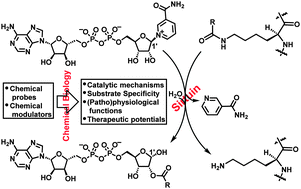
The chemical biology of sirtuins
Bing Chen, Wenwen Zang, Juan Wang, Yajun Huang, Yanhua He,  Lingling Yan,  Jiajia Liu and Weiping Zheng
Chem. Soc. Rev., 2015, 44, 5246-5264
DOI: http://dx.doi.org:/10.1039/C4CS00373J


Luminescent oligonucleotide-based detection of enzymes involved with DNA repair
Chung-Hang Leung, Hai-Jing Zhong, Hong-Zhang He, Lihua Lu, Daniel Shiu-Hin Chan and Dik-Lung Ma
Chem. Sci., 2013, 4, 3781-3795
DOI: http://dx.doi.org:/10.1039/C3SC51228B


Research articles

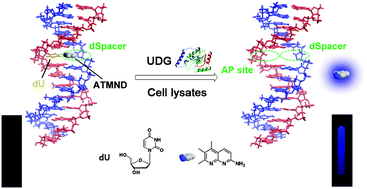
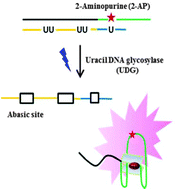
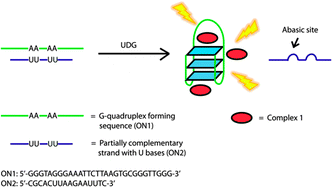
A label-free and sensitive fluorescent method for the detection of uracil-DNA glycosylase activity
Jing Tao, Panshu Song, Yusuke Sato, Seiichi Nishizawa, Norio Teramae, Aijun Tong  and Yu Xiang
Chem. Commun., 2015, 51, 929-932
DOI: http://dx.doi.org:/10.1039/C4CC06170E


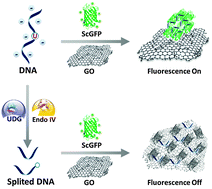
DNA-mediated supercharged fluorescent protein/graphene oxide interaction for label-free fluorescence assay of base excision repair enzyme activity
Zhen Wang, Yong Li, Lijun Li, Daiqi Li, Yan Huang, Zhou Nie and Shouzhuo Yao
Chem. Commun., 2015, 51, 13373-13376
DOI: http://dx.doi.org:/10.1039/C5CC04759E


A fluorescent G-quadruplex probe for the assay of base excision repair enzyme activity
Chang Yeol Lee, Ki Soo Park and Hyun Gyu Park
Chem. Commun., 2015, 51, 13744-13747
DOI: http://dx.doi.org:/10.1039/C5CC05010C


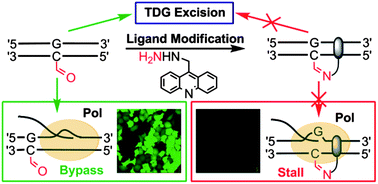
A chemical probe targets DNA 5-formylcytosine sites and inhibits TDG excision, polymerases bypass, and gene expression
Liang Xu, Ying-Chu Chen, Satoshi Nakajima, Jenny Chong, Lanfeng Wang,  Li Lan, Chao Zhang and  Dong Wang
Chem. Sci., 2014, 5, 567-574
DOI: http://dx.doi.org:/10.1039/C3SC51849C


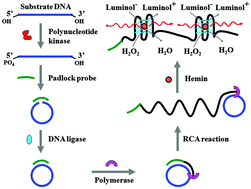
Sensitive detection of polynucleotide kinase using rolling circle amplification-induced chemiluminescence
Wei Tang, Guichi Zhu and Chun-yang Zhang
Chem. Commun., 2014, 50, 4733-4735
DOI: 10.1039/C4CC00256C


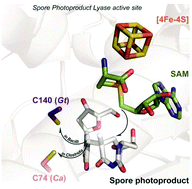
Rescuing DNA repair activity by rewiring the H-atom transfer pathway in the radical SAM enzyme, spore photoproduct lyase
Alhosna Benjdia, Korbinian Heil, Andreas Winkler, Thomas Carell and Ilme Schlichting
Chem. Commun., 2014, 50, 14201-14204
DOI: http://dx.doi.org:/10.1039/C4CC05158K


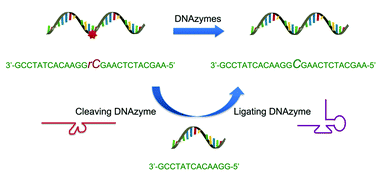
Expanding DNAzyme functionality through enzyme cascades with applications in single nucleotide repair and tunable DNA-directedassembly of nanomaterials
Yu Xiang, Zidong Wang, Hang Xing and  Yi Lu
Chem. Sci., 2013, 4, 398-404
DOI: http://dx.doi.org:/10.1039/C2SC20763J


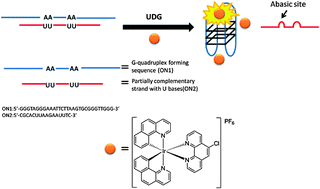
Detection of base excision repair enzyme activity using a luminescent G-quadruplex selective switch-on probe
Ka-Ho Leung, Hong-Zhang He, Victor Pui-Yan Ma, Hai-Jing Zhong, Daniel Shiu-Hin Chan,  Jun Zhou,  Jean-Louis Mergny, Chung-Hang Leung and  Dik-Lung Ma
Chem. Commun., 2013, 49, 5630-5632
DOI: http://dx.doi.org:/10.1039/C3CC41129J


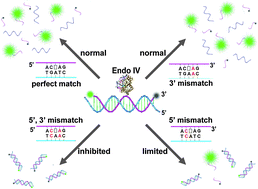
Endonuclease IV discriminates mismatches next to the apurinic/apyrimidinic site in DNA strands: constructing DNA sensing platforms with extremely high selectivity
Xianjin Xiao, Yang Liu and  Meiping Zhao
Chem. Commun., 2013, 49, 2819-2821
DOI: http://dx.doi.org:/10.1039/C3CC40902C


Top 15 most downloaded Chem Soc Rev articles in Q3, 2015

Ultra-stable organic fluorophores for single-molecule research
Qinsi Zheng, Manuel F. Juette, Steffen Jockusch, Michael R. Wasserman, Zhou Zhou, Roger B. Altman and Scott C. Blanchard
DOI: 10.1039/C3CS60237K, Review Article

The chemistry of graphene oxide
Daniel R. Dreyer, Sungjin Park, Christopher W. Bielawski and Rodney S. Ruoff
DOI: 10.1039/B917103G, Critical Review

Selection of boron reagents for Suzuki–Miyaura coupling
Alastair J. J. Lennox and Guy C. Lloyd-Jones
DOI: 10.1039/C3CS60197H, Review Article

Physical and chemical tuning of two-dimensional transition metal dichalcogenides
Haotian Wang, Hongtao Yuan, Seung Sae Hong, Yanbin Li and Yi Cui
DOI: 10.1039/C4CS00287C, Review Article

Advances on structuring, integration and magnetic characterization of molecular nanomagnets on surfaces and devices
N. Domingo, E. Bellido and D. Ruiz-Molina
DOI: 10.1039/C1CS15096K, Critical Review

Heterogeneous photocatalyst materials for water splitting
Akihiko Kudo and Yugo Miseki
DOI: 10.1039/B800489G, Critical Review

Shape control in gold nanoparticle synthesis
Marek Grzelczak, Jorge Pérez-Juste, Paul Mulvaney and Luis M. Liz-Marzán
DOI: 10.1039/B711490G, Tutorial Review

An overview of nanoparticles commonly used in fluorescent bioimaging
Otto S. Wolfbeis
DOI: 10.1039/C4CS00392F, Review Article

Heterogeneous catalysis for sustainable biodiesel production via esterification and transesterification
Adam F. Lee, James A. Bennett, Jinesh C. Manayil and Karen Wilson
DOI: 10.1039/C4CS00189C, Review Article

A review of electrode materials for electrochemical supercapacitors
Guoping Wang, Lei Zhang and Jiujun Zhang
DOI: 10.1039/C1CS15060J, Critical Review

MOF positioning technology and device fabrication
Paolo Falcaro, Raffaele Ricco, Cara M. Doherty, Kang Liang, Anita J. Hill and Mark J. Styles
DOI: 10.1039/C4CS00089G, Review Article

Microfluidic lab-on-a-chip platforms: requirements, characteristics and applications
Daniel Mark, Stefan Haeberle, Günter Roth, Felix von Stetten and Roland Zengerle
DOI: 10.1039/B820557B, Critical Review

Noble metal-free hydrogen evolution catalysts for water splitting
Xiaoxin Zou and Yu Zhang
DOI: 10.1039/C4CS00448E, Review Article

“Green” electronics: biodegradable and biocompatible materials and devices for sustainable future
Mihai Irimia-Vladu
DOI: 10.1039/C3CS60235D, Review Article

Synthetic biology for the directed evolution of protein biocatalysts: navigating sequence space intelligently
Andrew Currin, Neil Swainston, Philip J. Day and Douglas B. Kell
DOI: 10.1039/C4CS00351A, Review Article

Read Full Post »

pathway and network analysis of complex ‘omics data

Larry H. Bernstein, MD, FCAP, Curator

LPBI


While blood tests can be used to detect some cancers, the FDA said a San Diego company has no proof its blood test works in patients who have not already been diagnosed with some form of the disease.

WASHINGTON, Sept. 25 (UPI) — A San Diego company selling an early cancer detection test was notified by the U.S. Food and Drug Administration it can find no evidence the test actually works, and is concerned it could prove to be harmful for some people.

Pathway Genomics debuted its CancerIntercept test in early September with claims it can detect cancer cell DNA in the blood, picking up mutations linked to as many as 10 different cancers. The goal is to catch cancer early in people who are “otherwise healthy” and not showing symptoms of the disease.

“Based on our review of your promotional materials and the research publication cited above, we believe you are offering a high risk test that has not received adequate clinical validation and may harm the public health,” said FDA Deputy Director James L. Woods in a letter to the company.

CancerIntercept is billed by the company as a blood test looking for DNA fragments in the bloodstream and testing them for 96 genomic markers it says are found in several specific tumor types.

The direct-to-consumer test can be purchased through the Pathway Genomics website, with programs ranging from a one-time test to a quarterly “subscription” for people who want regular testing.

The company states, in several sections of its website, “the presence of one or more of these genomic markers in a patient’s bloodstream may indicate that the patient has a previously undetected cancer. However, the test is not diagnostic, and thus, follow-up screening and clinical testing would be required to confirm the presence or absence of a specific cancer in the patient.”

The FDA is concerned that people may seek treatment for tumors that do not require medical attention, or spend money and possibly seek out treatment they do not need at all — in either case, unnecessary treatment for cancer is potentially harmful to people, the agency said.

CancerIntercept has not been approved by the FDA for use as a medical device, nor has it been subjected to peer review as most tests of its type would be. The company published a white paper on its website which outlines how the test works, supporting its efficacy with references to several clinical trials on detection of mutated DNA in the bloodstream.

Glenn Braunstein, Chief Medical Officer at Pathway Genomics, told The VergePathway had validated its tests with “hundreds” of patients, though those patients had well-defined, often advanced cancers.

In the letter from the FDA, Woods requests the company provide a timeline for meeting with the agency to review plans for future longitudinal studies on the product and specific details on studies that have been conducted before it was made available to consumers.

http://www.upi.com/Health_News/2015/09/25/FDA-Start-ups-cancer-blood-test-may-be-harmful/4191443181676/

The clinical laboratory is an essential player in the treatment of cancer providing a diagnostic, potentially a prognostic, and follow-up treatment armamentarium.  The laboratory diagnostics industry has grown over the last half century into  a highly accurate, well regulated industry with highly automated and point of care technologies.  Prior to introduction, the tests that are put on the market have to be validated prior to introduction.

How are they validated?

The most common approach is for the test to be used concomitantly with treatment in a clinical trial. Measurements may be made prior to surgical biopsy and treatment, and at a month or 6 months to a year later.  The pharmaceutical and diagnostics industries are independent, even though a large company may have both pharmaceutical and diagnostic divisions.  Consequently, the integration of diagnostics and therapeutics occurs on the front lines of patient care.

How this discrepancy between the FDA and the manufacturer could occur is not clear because prior to introduction, the test would have to be rigorously reviewed by the American Association for Clinical Chemistry, the largest and most competent organization to cover the scientific work, having industry-based committees.  The only problem is that the companies may have products that are patented and have competing claims or interests. This is perhaps most likely to be problematic in the competitive environment of  genomics testing.

The company here reported on is Pathway Genomics, that offers Ingenuity for pathway and variant analysis.  There is no concern about the analysis methods, that are well studied.  The concern is the validation of such method for screening of patients without prior diagnosis.

Model, analyze, and understand the complex biological and chemical systems at the core of life science research with IPA

QIAGEN’S Ingenuity Pathway Analysis (IPA) has been broadly adopted by the life science research community and is cited in thousands of peer-reviewed journal articles.

https://youtu.be/_HDkjuxYRcY

https://youtu.be/_HDkjuxYRcY?t=25

For the analysis and interpretation of ’omics data
Market Leading Pathway Analysis
Unlock the insights buried in experimental data by quickly identifying relationships, mechanisms, functions, and pathways of relevance.
Predictive Causal Analytics
Powerful causal analytics at your fingertips help you to build a more complete regulatory picture and a better understanding of the biology underlying a given gene expression study.
NGS/RNA-Seq Data Analysis
Get a better understanding of the isoform-specific biology resulting from RNA-Seq experiments.
Identify causal variants from human sequencing data
Ingenuity IPA Interpret Biological Meaning Graphic

http://www.ingenuity.com/wp-content/uploads/2014/01/variant-analyisis-interpretation.png

Rapidly Identify and Prioritize Variants

Ingenuity Variant Analysis combines analytical tools and integrated content to help you rapidly identify and prioritize variants by drilling down to a small, targeted subset of compelling variants based both upon published biological evidence and your own knowledge of disease biology. With Variant Analysis, you can interrogate your variants from multiple biological perspectives, explore different biological hypotheses, and identify the most promising variants for follow-up.

Variant Analysis used in NCI-60 Interpretation of Genomic Variants

The NCI-60 Data Set offers tremendous promise in the development and prescription of cancer drugs

97% of surveyed researchers are satisfied with the ease of use of Ingenuity Variant Analysis and we are honored that they chose to share the data through our Publish tool.

See the research verified by TechValidate

“Being a bioinformatician, I appreciated the speed and the complexity of analysis. Without Variant Analysis, I couldn’t have completed the analysis of 700 exomes in such a short time …. I found Variant Analysis very intuitive and easy to use.”

Francesco Lescai, Senior Research Associate in Genome Analysis, University College of London.

This appears to be the new rocky road to verification for validity in diagnostic and treatment application.

Read Full Post »

Pharmacogenomic Biomarkers for Personalized Cancer Treatment

Curator: Larry H Bernstein, MD, FCAP


Pharmacogenomic Biomarkers for Personalized Cancer Treatment

Rodríguez-Antona C1Taron M.
J Intern Med. 2015 Feb; 277(2):201-17
http://dx.doi.org:/10.1111/joim.12321

Personalized medicine involves the selection of the safest and most effective pharmacological treatment based on the molecular characteristics of the patient. In the case of anticancer drugs, tumor cell alterations can have a great impact on drug activity and, in fact, most biomarkers predicting response originate from these cells. On the other hand, the risk of developing severe toxicity may be related to the genetic background of the patient. Thus, understanding the molecular characteristics of both the tumor and the patient, and establishing their relation with drug outcomes will be critical for the identification of predictive biomarkers and to provide the basis for individualized treatments. This is a complex scenario where multiple genes as well as pathophysiological and environmental factors are important; in addition, tumors exhibit large inter- and intraindividual variability in space and time. Against this background, the huge amounts of biological and genetic data generated by the high-throughput technologies will facilitate pharmacogenomic progress, suggest novel druggable molecules and support the design of future strategies aimed at disease control. Here, we will review the current challenges and opportunities for pharmacogenomic studies in oncology, as well as the clinically established biomarkers. Lung and renal cancer, two areas in which huge progress has been made in the last decade, will be used to illustrate advances in personalized cancer treatment; we will review EGFR mutation as the paradigm of targeted therapies in lung cancer, and discuss the dissection of lung cancer into clinically relevant molecular subsets and novel advances that suggest an important role of single nucleotide polymorphisms in the response to antiangiogenic agents, as well as the challenges that remain in these fields. Finally, we will present new approaches and future prospects for personalizing medicine in oncology.

Read Full Post »

McEwen Award for Innovation: Irving Weissman, M.D., Stanford School of Medicine, and Hans Clevers, M.D., Ph.D., Hubrecht Institute

Larry H. Bernstein, MD, FCAP, Curator
Leaders in Pharmaceutical Innovation

Series E. 2; 7.3

Past winners include Azim Surani, James Thomson, Rudolf Jaenisch and Kazutoshi Takahashi with Shinya Yamanaka

The International Society for Stem Cell Research (ISSCR) has presented EuroStemCell partner Hans Clevers with the McEwen Award for Innovation at the opening of its annual meeting, today (24 June) in Stockholm, Sweden.

The prizes awarded by ISSCR in 2015 are:

McEwen Award for Innovation: Irving Weissman, M.D., Stanford School of Medicine, and Hans Clevers, M.D., Ph.D., Hubrecht Institute

ISSCR-BD Biosciences Outstanding Young Investigator Award: Paul Tesar, Ph.D., Case Western Reserve University School of Medicine

ISSCR Public Service Award: Alan Trounson, Ph.D., MIMR-PHI Institute of Medical Research


In 2015, the ISSCR recognizes long-standing contributors to the field, Weissman and Clevers, for the identification, prospective purification and characterization of somatic (adult) tissue-associated stem cells and advancement of their research findings toward clinical applications.

Award recipient Weissman’s many discoveries have helped map the direction of the stem cell field and have served as the basis for important research and work by scientists all over the world.  He was the first to isolate and characterize hematopoietic (blood) stem cells from mice and humans. He developed the approaches and technologies, now widely used within the field, for isolating blood stem and progenitor cells and defining their properties. Weissman pioneered the extension of his approaches to isolation of other stem cell types, including human nervous system cells and skeletal muscle myogenic stem/progenitor cells. Further, he discovered several independent leukemia stem cells and, more recently, bladder cancer stem cells, head and neck cancer stem cells and malignant melanoma stem cells. Weissman has pursued these discoveries to develop several promising means of cancer therapy.

Award recipient Clevers has been a leader in biomedical sciences and the area of Wnt signaling in colon cancer for more than three decades. He and his lab developed tools to identify and track an adult stem cell population able to give rise to the entire lining of the gut and later to demonstrate that these cells can be isolated and grown in culture as “miniguts,” recapitulating the normal structure and function of the gut. These discoveries are a move toward promising therapies for colon conditions, like ulcers, in which the lining of the intestine has been destroyed in patches, and provide a powerful resource for modeling disease pathology and for drug screening.

“Irv Weissman and Hans Clevers have made enormous contributions to stem cell science. Working in the blood and gut systems, respectively, and extending their findings in different tissues, they have defined the concepts and technologies that underpin many avenues of research,” Hans Schöler, chair of the ISSCR’s McEwen Awards selection committee, said. “Each has made pioneering conceptual advances in disease modeling and regenerative medicine.”


The ISSCR-BD Biosciences Outstanding Young Investigator Award recognizes exceptional achievements by an ISSCR member and investigator in the early part of their independent career in stem cell research.  The winner receives a $7,500 USD personal award and is invited to present at the ISSCR’s annual meeting. Past winners include Valentina Greco, Marius Wernig, Cédric Blanpain, Robert Blelloch, Joanna Wysocka and Konrad Hochedlinger.

Award recipient Tesar established his independent laboratory five years ago and has rapidly risen to his current position as the Dr. Donald and Ruth Weber Goodman Professor of Innovative Therapeutics and tenured Associate Professor in the Department of Genetics and Genome Sciences at Case Western Reserve University School of Medicine. Tesar’s studies have shaped the global understanding of both pluripotent stem cell and oligodendrocyte biology. His seminal and highly cited report on epiblast stem cells, published in Nature in 2007, along with similar findings by Pedersen, Vallier and colleagues, led to a complete shift in the understanding of how pluripotency is regulated in the mammalian embryo.  He has continued to provide high impact contributions to the field, pioneering new methods to generate and mature oligodendrocyte progenitor cells, and to use these to enhance repair in animal models of multiple sclerosis.

Stanford stem cell pioneer Irving Weissman wins international honors

by Krista Conger on Feb 10, 2015
http://news.stanford.edu/thedish/2015/02/10/stanford-stem-cell-pioneer-irving-weissman-wins-international-honors/

IRVING WEISSMAN, a professor of pathology and of developmental biology at Stanford Medical School, was recently awarded the Charles Rodolphe Brupbacher Prize for Cancer Research in Zurich.

Weissman, who directs the Stanford Institute for Stem Cell Biology and Regenerative Medicine, was honored for his role in identifying and isolating the first hematopoetic, or blood-forming, stem cell in mice in 1988, and then in humans in 1992. In 2000, he also isolated leukemia cancer stem cells from humans. Recently, he and his colleagues have devoted themselves to understanding how cancer cells escape destruction by the immune system by expressing a “don’t eat me” signal on their cell membranes.

“His discoveries on aging processes in stem-cell systems and ultimately his contribution toward understanding cancer stem cells and the way in which the immune system can control these cells are pioneering achievements with far-reaching clinical implications,” Markus Manz, director of the Department of Hematology at the University Hospital Zurich, said of Weissman at a symposium titled “Breakthroughs in Cancer Research and Therapy” where the prize was announced.

Weissman also is the director of Stanford’s Ludwig Center for Cancer Stem Cell Research and Medicine and holds the Virginia and Daniel K. Ludwig Professorship in Clinical Investigation in Cancer Research.

The prize, presented by the Charles Rodolphe Brupbacher Foundation, included 100,000 Swiss francs, or about $108,000.

The Charles Rodolphe Brupbacher Foundation was founded in 1991 by Brupbacher’s wife, Frederique, in honor of her late husband. This is the 12th time the prize, which is meant to recognize internationally acknowledged achievements in fundamental cancer research, has been awarded. Brupbacher was a Swiss banker, economist and international currency expert.

In addition to the Brupbacher Prize, it was recently announced that Weissman will receive theMcEwen Award for Innovation, supported by the McEwen Centre for Regenerative Medicine in Toronto. The award will be presented in June at the annual meeting of the International Society for Stem Cell Research in Stockholm. It recognizes the work of Weissman and Hans Clevers, of the Hubrecht Institute in the Netherlands, in the identification, purification and characterization of adult stem cells from a variety of human tissues and cancers. Weissman and Clevers will share a $100,000 award.

Anti-CD47 antibody may offer new route to successful cancer vaccination

Scientists at the School of Medicine have shown that their previously identified therapeutic approach to fight cancer via immune cells called macrophages also prompts the disease-fighting killer T cells to attack the cancer.

The research, published online May 20 in the Proceedings of the National Academy of Sciences, demonstrates that the approach may be a promising strategy for creating custom cancer vaccines.

Various researchers have been working over the years to create vaccines against cancer, but the resulting vaccines have not been highly effective. Current approaches to developing the vaccines rely on using immune cells called dendritic cells to introduce cancer protein fragments to T cells — a process known as antigen presentation. The hope has been that the process would stimulate the body’s T cells to identify cancer cells as diseased or damaged and target them for elimination. However, this process often only modestly activates the most potent cancer-fighting kind of T cell, called killer T cells or CD8+ T cells.

The Stanford team discovered that there was another viable vaccine approach, using the macrophage pathway to program killer T cells against cancer. Irving Weissman, MD, professor of pathology and of developmental biology, and his team previously showed that nearly all cancers use the molecule CD47 as a “don’t-eat-me” signal to escape from being eaten and eliminated by macrophages. The researchers found that anti-CD47 antibodies, which can block the “don’t-eat-me” signal and enable macrophages to engulf cancer cells, eliminated or inhibited the growth of various blood cancers and solid tumors.

In the new study, the Stanford team showed that after engulfing the cancer cells, the macrophages presented pieces of the cancer to CD8+ T cells, which, in addition to attacking cancer, are also potent attackers of virally infected or damaged cells. As a result, the CD8+ T cells were activated to attack the cancer cells on their own. “It was completely unexpected that CD8+ T cells would be mobilized when macrophages engulfed the cancer cells in the presence of CD47-blocking antibodies,” said MD/PhD student Diane Tseng, the lead author of the study. Following engulfment of cancer cells, macrophages activate T cells to mobilize their own immune attack against cancer, she said.

The Stanford group plans to start human clinical trials of the anti-CD47 cancer therapy in 2014. The new research provides hope that the therapy will cause the immune system to wage a two-pronged attack on cancer — through both macrophages and T cells. The approach may also give physicians early indicators of how the treatment is working in patients. “Monitoring T-cell parameters in patients receiving anti-CD47 antibody may help us identify the immunological signatures that tell us whether patients are responding to therapy,” said co-author Jens Volkmer, MD, an instructor at the Stanford Institute for Stem Cell Biology and Regenerative Medicine.

The research revives interest in an aspect of macrophages that has been neglected for decades: their role in presenting antigens to T cells. For many years, researchers have focused on the dendritic cell as the main antigen-presenting cell, and have generally believed that macrophages specialize in degrading antigens rather presenting them. This research shows that macrophages can be effective at antigen presentation and are powerful initiators of the CD8+T cell response.

The fact that T cells become involved in fighting cancer as a result of CD47-blocking antibody therapy could have important clinical implications. The antibody might be used as a personalized cancer vaccine allowing T cells to recognize the unique molecular markers on an individual patient’s cancer. “Because T cells are sensitized to attack a patient’s particular cancer, the administration of CD47-blocking antibodies in a sense could act as a personalized vaccination against that cancer,” Tseng added.

Weissman, who is senior author of the new study, is the director of the Stanford Institute for Stem Cell Biology and Regenerative Medicine and the director of the Stanford Ludwig Center for Cancer Stem Cell Research and Medicine.

Other Stanford investigators involved in the research were senior scientist Stephen Willingham, PhD; postdoctoral scholars John Fathman, PhD, Nathaniel Fernhoff, PhD, Matthew Inlay, PhD, and Masanori Miyanishi, MD, PhD; instructor Jun Seita, MD, PhD; graduate student Kipp Weisskopf, MPhil; and life sciences research associate Humberto Contreras-Trujillo.

The research was supported by the Virginia and D.K. Ludwig Fund for Cancer Research, the Joseph and Laurie Lacob Gynecologic/Ovarian Cancer Fund, the National Institutes of Health (grants R01CA86017, P01CA139490, P30CA124435 and F30CA168059), and the Student Training and Research in Tumor Immunology Program of the Cancer Research Institute.

Christopher Vaughan is communications manager at the Stanford Institute for Stem Cell Biology and Regenerative Medicine.


Clinical Investigation of a Humanized Anti-CD47 Antibody in Targeting Cancer Stem Cells in Hematologic Malignancies and Solid Tumors

Funding Type:

Disease Team Therapy Development III

Grant Number: DR3-06965

Investigator(s): Irving Weissman – PI

Institution: Stanford University

Disease Focus:
Cancer
Solid Tumor
Blood Cancer

Most normal tissues are maintained by a small number of stem cells that can both self-renew to maintain stem cell numbers, and also give rise to progenitors that make mature cells. We have shown that normal stem cells can accumulate mutations that cause progenitors to self-renew out of control, forming cancer stem cells (CSC). CSC make tumors composed of cancer cells, which are more sensitive to cancer drugs and radiation than the CSC. As a result, some CSC survive therapy, and grow and spread. We sought to find therapies that include all CSC as targets. We found that all cancers and their CSC protect themselves by expressing a ‘don’t eat me’ signal, called CD47, that prevents the innate immune system macrophages from eating and killing them. We have developed a novel therapy (anti-CD47 blocking antibody) that enables macrophages to eliminate both the CSC and the tumors they produce. This anti-CD47 antibody eliminates human cancer stem cells when patient cancers are grown in mice. At the time of funding of this proposal, we will have fulfilled FDA requirements to take this antibody into clinical trials, showing in animal models that the antibody is safe and well-tolerated, and that we can manufacture it to FDA specifications for administration to humans.

Here, we propose the initial clinical investigation of the anti-CD47 antibody with parallel first-in-human Phase 1 clinical trials in patients with either Acute Myelogenous Leukemia (AML) or separately a diversity of solid tumors, who are no longer candidates for conventional therapies or for whom there are no further standard therapies. The primary objectives of our Phase I clinical trials are to assess the safety and tolerability of anti-CD47 antibody. The trials are designed to determine the maximum tolerated dose and optimal dosing regimen of anti-CD47 antibody given to up to 42 patients with AML and up to 70 patients with solid tumors. While patients will be clinically evaluated for halting of disease progression, such clinical responses are rare in Phase I trials due to the advanced illness and small numbers of patients, and because it is not known how to optimally administer the antibody. Subsequent progression to Phase II clinical trials will involve administration of an optimal dosing regimen to larger numbers of patients. These Phase II trials will be critical for evaluating the ability of anti-CD47 antibody to either delay disease progression or cause clinical responses, including complete remission. In addition to its use as a stand-alone therapy, anti-CD47 antibody has shown promise in preclinical cancer models in combination with approved anti-cancer therapeutics to dramatically eradicate disease. Thus, our future clinical plans include testing anti-CD47 antibody in Phase IB studies with currently approved cancer therapeutics that produce partial responses. Ultimately, we hope anti-CD47 antibody therapy will provide durable clinical responses in the absence of significant toxicity.

New insights into the biology of cancer have provided a potential explanation for the challenge of treating cancer. An increasing number of scientific studies suggest that cancer is initiated and maintained by a small number of cancer stem cells that are relatively resistant to current treatment approaches. Cancer stem cells have the unique properties of continuous propagation, and the ability to give rise to all cell types found in that particular cancer. Such cells are proposed to persist in tumors as a distinct population, and because of their increased ability to survive existing anti-cancer therapies, they regenerate the tumor and cause relapse and metastasis. Cancer stem cells and their progeny produce a cell surface ‘invisibility cloak’ called CD47, a ‘don’t eat me signal’ for cells of the native immune system to counterbalance ‘eat me’ signals which appear during cancer development. Our anti-CD47 antibody counters the ‘cloak’, enabling the patient’s natural immune system to eliminate the cancer stem cells and cancer cells. Our preclinical data provide compelling support that anti-CD47 antibody might be a treatment strategy for many different cancer types, including breast, bladder, colon, ovarian, glioblastoma, leiomyosarcoma, squamous cell carcinoma, multiple myeloma, lymphoma, and acute myelogenous leukemia.

Development of specific therapies that target all cancer stem cells is necessary to achieve improved outcomes, especially for sufferers of metastatic disease. We hope our clinical trials proposed in this grant will indicate that anti-CD47 antibody is a safe and highly effective anti-ancer therapy that offers patients in California and throughout the world the possibility of increased survival and even complete cure.

We have previously developed a new therapeutic candidate, the anti-CD47 humanized antibody, Hu5F9-G4, which demonstrates potent anti-cancer activity in animal models of malignancy. The goal of CIRM DTIII Grant DR3-06965 is to conduct initial phase I clinical trials of this antibody in advanced cancer patients. We originally proposed to conduct two separate Phase I clinical trials: one in solid tumor patients with advanced malignancy (commenced in August 2014), the other in relapsed, refractory AML patients (anticipated to start in September 2015). The primary endpoints for these trials will be to assess safety and tolerability, and additional endpoints include obtaining information about the dosing regimen for subsequent clinical investigations, and initial efficacy assessments.

CD47 is a dominant anti-phagocytosis signal that is expressed on all types of human cancers assessed thus far. It binds to SIRPα, an inhibitory receptor on macrophages, and in so doing, blocks the ability of macrophages to engulf and eliminate cancer cells. Hu5F9-G4 blocks binding of CD47 to SIRPα, and restores the ability of macrophages to engulf or phagocytose cancer cells. In pre-clinical cancer models, treatment with Hu5F9-G4 shrunk tumors, eliminated metastases, and in some cases resulted in long-term protection from cancer recurrence. These results suggest that Hu5F9-G4 leads to elimination of cancer stem cells in addition to differentiated cancer cells.

We have developed Hu5F9-G4 for human clinical trials by demonstrating safety and tolerability in pre-clinical toxicology studies. These studies also indicated that we can achieve serum levels associated with potent efficacy in pre-clinical models. The regulatory agencies (FDA in the U.S., and MHRA in the U.K.) reviewed the large package of pre-clinical data describing Hu5F9-G4, and approved our requests to commence separate Phase I clinical trials in solid tumor and AML patients. The solid tumor trial commenced at Stanford in August 2014 and has been designed to assess patients in separate groups, or cohorts, treated with increasing doses of Hu5F9-G4. The trial is ongoing as primary endpoints have not been met. The acute myeloid leukemia trial has been given regulatory approval in the U.K., and will start enrolling patients in September 2015. In summary, during the last year, the Hu5F9-G4 clinical trials have made substantial progress and all milestones have been met.

Stem Cell Research: Promise and Progress

Hans Clevers: “Every day new research is showing us that many types of cancers are fed by tumour stem cells”

http://www.irbbarcelona.org/en/news/hans-clevers-every-day-new-research-is-showing-us-that-many-types-of-cancers-are-fed-by-tumour

The biggest challenge in designing new cancer therapies lies in successfully identifying and targeting tumour stem cells, which are responsible for the regrowth of the tumour.

The Barcelona BioMed Conference on “Normal and Tumour Stem Cells”, aims to analyze the function of stem cells in cancer. The conference, which begins today and runs until November 14 at the Institut d’Estudis Catalans, is co-organized by colon cancer research experts Eduard Batlle (IRB Barcelona) andHans Clevers (Hubrecht Institute, the Netherlands), with the support of the BBVA Foundation. During the three-day event, 21 world experts in the field will meet with a further 130 participants to share their latest research findings on tumour stem cells.

“In 2007 we held the first Barcelona BioMed Conference on this topic. At the time there was only very preliminary data on the relationship between stem cells and cancer. Five years on, many convincing data have emerged to indicate that the majority of tumours are indeed fed by tumour stem cells,” explains Hans Clevers, the scientist who first identified stem cells in the intestine and who today is one of the world leaders in research on normal stem cells and their potential for regenerative therapy.

A number of important studies have demonstrated that at the heart of cancers of the breast, colon, skin, brain, lung and leukemias lie a small group of malignant cells that have retained the properties of the stem cell that gave rise to the cancers in the first place. It is these cells that allow the tumour to grow and can regenerate it. The efforts of many research groups worldwide now focusses on unraveling this process, identifying the specific genes that allow it to occur, and finding ways to detect and eliminate these malignant stem cells.

Stem cells and the origin of tumours

One of the principal characteristics of stem cells is that they are able to copy themselves indefinitely, giving rise to one stem cell and one specialized cell. This capacity for unlimited replication ensures the constant renewal of healthy tissues, which is fundamental for survival and is the basis of regenerative medicine. When the stem cells undergo cancerous mutations or when normal tumour cells acquire stem cell properties, however, this can lead to the formation of tumours.

“This conference gives us a valuable opportunity to learn about the latest work on the two types of stem cells, normal and tumour, in different tissues. What we have been observing over recent years is that the tumour mimcs the hierarchies that exist in normal tissues. In order to understand the tumour, we need to understand the healthy tissue. Most of the scientists invited to the conference are working on both aspects,” explains Batlle. The list of speakers includes pioneers in the field, such as Irving L. Weissman, director of the Institute for Stem Cell Biology & Regenerative Medicine in Stanford, California. Weissman, known as the “father of haematopoiesis”, first identified stem cells in the blood and determined how they give rise to the different types of blood cells, making major contributions to our understanding of leukemias and other ‘liquid’ tumours.

Stem cells and metastasis

In addition to being at the root of the tumour and allowing it to grow, stem cells may also cause metastasis. In order for metastasis to occur, cells from the original tumour must escape into the blood stream and invade new organs to seed new tumours there. “Only cells with stem cell properties are able to make this happen, since they are the only type of cell that can generate all the cell types of the tumor,” explains Batlle. But in order to cause metastasis, these cells also need to be able to do other things. “We have discovered that in the case of colon cancer, stem cells must be able to trick the healthy tissue of the organ they have invaded into helping them survive in this hostile environment.” Batlle’s study, to be published tomorrow inCancer Cell, will be presented during the conference. This is the first piece of work to reveal a key role for the tumour microenvironment in fostering the process of metastasis, a discovery which will open doors to similar findings in other types of tumours.

Normal stem cells vs. tumour stem cells

One of the keys in the fight against cancer is the ability to identify tumour stem cells and differentiate them from healthy stem cells. The conference co-organizers maintain that “this is still a central question. We don’t yet know enough about normal stem cells, and technical issues make things difficult. We are making rapid progress, however, and in the next few years we expect to be able to make great strides both in figuring out the similarities and differences in the two types of cells, and in coming up with new strategies to fight the growth and spread of tumours.”

PROFILES OF CONFERENCE CO-ORGANIZERS

EDUARD BATLLE – Group Leader of the Colorectal Cancer Laboratory and Coordinator of the Oncology Programme at IRB Barcelona. ICREA Research Professor (Instituto Catalán para la Investigación y Estudios Avanzados).

Dr. Batlle’s research over the past decade has focused on the characterization of the mechanisms that cause the initiation, progression and metastasis of colon cancer. He has published studies in several high-impact journals such as Cell, Nature, Nature Genetics and Cancer Cell. His achievements include the discovery of the transcription factor Snail in tumour cells and the elucidation of the function of EphB membrane receptors in colorrectal cancer. During the Barcelona BioMed Conference, Dr. Batlle will present the results of a study to be published in Cancer Cell on a process indispensable for colon cancer metastasis.

Among his recognitions, Batlle has received the Banc Sabadell Prize for Biomedical Research (2010) and the “Debiopharm Life Sciences Award for Outstanding Research in Oncology” given by the Ecole Polytechnique Fédérale de Lausanne in Switzerland (2006). He is the recipient of an ERC Starting Grant awarded by the European Research Council in 2007.


HANS CLEVERS – Group leader at the Hubrecht Institute (director 2002-2012 ) and President of the Royal Netherlands Academy of Arts and Sciences. Dr. Clevers was the first scientist to identify intestinal stem cells and remains one of the leading researchers in this field. His discoveries have had significant impact in cancer as well as in regenerative therapy with stem cells and in vitro organ culture. Clevers’ work in developmental biology and cancer led him to discover the beta-catenin/Tcf4 transcriptional complex, which causes the majority of colorrectal cancer.

http://apoorvamandavilli.com/wp-content/uploads/2010/10/2010stem-cells-and-cancer.pdf


In 1991 Clevers became a professor of immunology at the University Medical Center in Utrecht. Since 2002 he has been a professor of molecular genetics at UMC Utrecht. Also in 2002 he became director of the Hubrecht Institute for Developmental Biology and Stem-Cell Research at the Royal Dutch Academy of Sciences, where until May 2012 he led the WNT Signaling and Cancer research group and was project leader of the Netherlands Proteomics Centre and Cancer Genomics Centre. Clevers discovered similarities between the normal renewal of intestinal tissue and the onset of colon cancer. In 2007 he received a grant of two million euros from the KWF Cancer Society to study the function of stem cells in the normal intestines and in colon cancer, and in 2008 he received an ERC Advanced Investigator Grant. In March 2012, Clevers, who since 2000 had been a member of the Royal Netherlands Academy of Arts and Sciences, was elected its president, a position he assumed on June 1 of that year, succeeding Robbert Dijkgraaf. In connection with his election to this position, he resigned from the Hubrecht Institute and began to carry out research two days a week at the UMC-U.[4][5][6][7][9]

Asked in a 2008 interview what had been the highlights of his research up to that point, Clevers said “there would probably be three. There was a first one, when I just started my lab, within the first few months we cloned the gene that they call TCF1, t-cell factor 1, I used to be a t-cell embryologist when we first started out. And that paper was published in EMBO in ’91, first author. So in that paper we described cloning of this vector, which at that time maybe on the world scale was not great but for my own lab to clone this gene was my first thing I ever did alone. This gene then in ’96 we found to be the crucial missing component of what’s called the Wnt signaling pathway, and this [was] generally seen as a major breakthrough we had. There were papers in ’96 and ’97 in Cell, and we had two papers in Science in the same two years.”

Clevers and his team thus showed that “there is that this TCF transcription factor, there is a small family of them, they occur in every animal on the planet, they are the end point of the signal transcription cascade, and they control virtually every decision in a developing animal. When we realized this we started changing our model systems, we used to work on lymphocytes, and we changed it, first to frogs and flies, drosophila, where the Wnt pathway had been studied by many other people that way we could use assays of those people. We then realized that in mammals Wnt signaling…was not only important in embryos but also crucial in adults, which is novel. And we switched to the gut, we found that one of our knockouts, the TCF4 knockout, one of the four members of that family had no stem cells in the gut. And this is the first link in the literature, this was also a ’97 paper in Nature Genetics, between Wnt signaling and stem cells in adults. And in that same year we found that colon cancer comes about by the disregulation of TCF4, and those two phenomena are really linked. So stem cells need TCF4, cancers disregulate TCF4 by mutating a gene upstream in that pathway called APC.”

After this Clevers’s team “continued to work on the intestine and on the physiology of the intestine, which was essentially an unstudied field, much to my surprise. May I emphasize, there are thousands of very competent embryologists, and they work on tiny details, and they fight over the smallest details, are extremely competent. In this intestinal field there are thousands of gastroentromologists that study cancer or colitis or Crohn’s Disease, but there are very few, if any, labs studying normal tissue, which is amazing because that is a tissue that we use every five days. It’s the most rapidly proliferating tissue in a normal body. So my lab actually build up a lot of mouse models and we learn a lot about how that’s being done, and then finally…last year we finally identified the stem cells in the gut. And we now can purify them in large numbers and study their characteristics.”[4]

A recent posting at the website of the Royal Netherlands Academy of Arts and Sciences provides a capsule summary of Clevers’s research to date: “His research deals with the intestine, in both its healthy and diseased state. He has discovered that there are numerous similarities between the normal process whereby intestinal tissue is renewed and the development of intestinal cancer. Improved understanding of these processes is crucial to developing new ways of treating cancer. Hans Clevers has described the molecular signalling pathways that are disrupted by cancer and has identified a protein that is specific to stem cells in the intestine. He has then been able to grow ‘mini-intestines’ from individual stem cells. These are the first steps on the road to regenerative medicine, in this case the regeneration of intestinal tissue.”[7]

Q&A: Hans Clevers

Eric Bender

Nature 521, S15 (14 May 2015) http://dx.doi.org://10.1038/521S15a

n 2009, Hans Clevers and Toshiro Sato (then a postdoc in Clevers’ lab) demonstrated a powerful new model to study development and disease: a three-dimensional ‘organoid’ derived from adult stem cells that replicates the structure of cells lining the intestine. More than 100 labs worldwide are now working with different types of organoid to study cancer and other diseases. Clevers, at the Hubrecht Institute in Utrecht, the Netherlands, discusses the potential of this approach.

Why might it be better to screen drugs in organoids rather than in cell lines?

We don’t currently understand why certain tumours are sensitive or resistant to particular drugs. With targeted therapies, you can make a prediction, but for classical chemotherapy drugs, such as cisplatin or 5-fluorouracil, it is totally unpredictable which tumours will respond. Tumours can be sequenced in great detail, but drugs against them cannot be tested effectively other than in clinical trials. Organoids are a very good genetic representation of the tumour, so they let us bridge the gap between deep-sequencing efforts and patient outcomes.

How do you see organoids contributing to the study of colorectal cancer?

We are collaborating with groups at the Broad Institute in Cambridge, Massachusetts, and the Sanger Institute in Hinxton, UK, to build a biobank of organoids from 20 or so people with colon cancer. We have organoids of the cancer and of normal cells from individual patients, as well as sequences of their protein-coding genes. We have established the non-profit Hubrecht Organoid Technology (HUB) to expand our organoid biobanks. The HUB shares these biobanks with academic groups around the world, and now works with about 15 companies on drug-development programmes. We can culture tumours from almost every person with colon cancer, sequence them and test them against drugs. Additionally, we can use research techniques that have been developed for cell lines, such as genetic tools, fluorescence-activated cell sorting and microarrays.

Is this research moving towards clinical trials?

Yes, my group and the HUB are collaborating with Emile Voest at the Netherlands Cancer Institute in Amsterdam on an observational trial. We already have some organoid models from people with colon cancer who receive chemotherapy. The organoids are screened against a panel of common colon-cancer drugs. The patients will be treated the same way the oncologists would normally treat them, but we’ll see if we could have predicted the response from our organoids. We’re also starting another trial in which we will enrol advanced-colon-cancer patients, for whom there is no standard treatment. We will make organoids, test drug sensitivity and resistance, and then advise the oncologists as to what drug to use for that particular patient. We will be looking at multiple drugs, so we need large numbers of patients — that’s the only way we will be able to produce enough data to help us match drugs to tumour types.

To benefit individual patients, won’t you need to test the drugs very quickly?

Yes — and that’s really where we want to take this technology. When you have pneumonia, your bacterial cultures are tested and you get answers in three days. With this technology, we can tell the oncologist the best odds for a combination of therapeutics, maybe not in three days, but in several weeks. We have an organoid-based test in cystic fibrosis that gives us a result in about two weeks.

How does the organoid approach differ from patient-derived xenografts, in which patients’ tumours are transplanted into immune-suppressed mice for testing drugs?

It’s the same principle — you get a functional readout of the patient’s tumour. But organoids can be tested against an unlimited amount of compounds and combinations. Furthermore, in contrast to xenografts, organoids can be established from almost all patients.

What are some of the next steps in your cancer research?

Organoids model the key component of the tumour but they lack some important elements. We want to combine organoids with other elements to make more-complete tools. For instance, we would like to introduce the immune system so that we can study the effects of the fantastic new immunotherapy drugs. We think that we can build it up in a reductionist way — take lymphocytes isolated from a tumour, bring these together with cancer organoids derived from the same tumour and watch what happens. And maybe we can also put microorganisms in these organoids. For example, we could add Helicobacter, a major cause of stomach cancer, to stomach organoids.

Can organoids also help to test drug combinations?

Yes, tumours are genetically heterogeneous, and there can be vast differences in drug sensitivity between clones for the same tumour. We can possibly advance sequence-based therapy by testing millions of drug combinations in organoids.

Single Lgr5 stem cells build crypt–villus structures in vitro without a mesenchymal niche

Toshiro Sato1, Robert G. Vries1, Hugo J. Snippert1, Marc van de Wetering1, Nick Barker1, Daniel E. Stange1, Johan H. van Es1, Arie Abo2, Pekka Kujala3, Peter J. Peters3 & Hans Clevers1
Nature 459, 262-265 (14 May 2009) |   http://dx.doi.org:/10.1038/nature07935    Received 16 July 2008; Accepted 24 February 2009

The intestinal epithelium is the most rapidly self-renewing tissue in adult mammals. We have recently demonstrated the presence of about six cycling Lgr5+ stem cells at the bottoms of small-intestinal crypts1. Here we describe the establishment of long-term culture conditions under which single crypts undergo multiple crypt fission events, while simultanously generating villus-like epithelial domains in which all differentiated cell types are present. Single sorted Lgr5+ stem cells can also initiate these crypt–villus organoids. Tracing experiments indicate that the Lgr5+ stem-cell hierarchy is maintained in organoids. We conclude that intestinal crypt–villus units are self-organizing structures, which can be built from a single stem cell in the absence of a non-epithelial cellular niche.

  • A Model for Life
Dis. Model. Mech. September 2013, doi: 10.1242/dmm.013367 vol. 6 no. 5 1053-1056

A gutsy approach to stem cells and signalling: an interview with Hans Clevers

Hans Clevers, Professor of Molecular Genetics at Utrecht University, began his career in immunology and developmental biology, but a shift towards intestinal research in the late 1990s led to his group’s pioneering discovery that Lgr5 is a marker of tissue stem cells – a finding that paved the way for a cascade of key insights into the molecular signalling pathways that are dysregulated in cancer. Interviewed here by Ross Cagan, Editor-in-Chief of Disease Models & Mechanisms, Hans recalls the mentors and discoveries that motivated his transition from basic to applied science, discusses his style of lab management and mentorship, and highlights the potential of organoid-based therapy for personalised medicine.

Johannes (Hans) Clevers was born in 1957 in Eindhoven, home to Philips Electronics, in the south of The Netherlands. From a young age he showed enthusiasm and a natural talent for science, and as an undergraduate became fascinated with molecular biology. He obtained his PhD in immunology from Utrecht University during the mid-1980s, and simultaneously studied medicine. Making the pivotal decision to move back into the lab after completing his clinical training, he undertook postdoctoral research in Cox Terhorst’s lab at the Dana-Farber Cancer Institute at Harvard University. He then returned to Utrecht to set up his own lab, and was a Professor of Immunology at the university between 1991 and 2002. From 2002 to 2012 he was Director of the nearby Hubrecht Institute for Stem Cell Research. During this time, Hans moved gradually into the gastroenterology field, and made groundbreaking discoveries regarding the role of Wnt signalling in stem cells and colon cancer. His unique contributions to cancer, stem cell research and regenerative medicine have been recognised in the form of numerous awards, and in 2013 he was one of the eleven winners of a $3 million award from the Breakthrough Prize in Life Sciences Foundation. Currently, he is Professor of Molecular Genetics at Utrecht University, and is also President of the Royal Netherlands Academy of Arts and Sciences (KNAW). Hans has also been involved in setting up several biotechnology companies.

Before we get to your background, I want to congratulate you on being, unsurprisingly, one of the Breakthrough Prize award winners. You have a long list of prizes now – is it something you’ve gotten used to?

This last one was unusual for me – prior to the Breakthrough award I had only ever received one American prize and that was in gastroenterology. To be the only researcher in Europe awarded, and to see my name on the list together with people like Robert Weinberg and Bert Vogelstein, who were the big shots when I was a postdoc, was a truly great honour. I went to the ceremony for the physics prize in Geneva, and it was like being at the Oscars – very surreal, as a scientist.

The first thing I did when I found out about my award was to invite the current and previous members of my lab to a huge party in Amsterdam, which will take place in September [2013]. There will be around 100 attendees – most of which are still in science. There will be good food and drink, stand-up comedy, and a small symposium.

Taking a step back into your past, why did you choose a career in science and medicine?

My high school system was very geared towards languages. I started learning biology at university in 1975 at the age of 18, and I was disappointed. Molecular biology was being developed in England, Switzerland and the US, but in Dutch universities there was no legal framework to do this, and so the courses – where available – focused only on technical details. Biology in general lacked charisma. At the time, my friends and brothers were junior medics, and as I had an interest in medicine I decided to take it on in addition to biology. I ended up spending a year in Nairobi and half a year at NIH for my biology rotations, and essentially I never went to any lectures (although this is something I never tell my students!). Anyway, I really started getting sucked into the clinical training, and found that working in a clinical environment is much more sociable than being in a lab. You’re part of a big organisation and there are lots of people to talk to, whereas in the lab there are only a few people, and small issues – such as somebody not cleaning up – can really cause friction. After medical school, I was picked, mainly because of my research background, for a training position in paediatrics. They suggested that I should start work for a PhD, so I went back into the lab. That’s when I realised that, despite the social attractiveness of working in a hospital, I was much more of a scientist than a doctor. I got my PhD – together with four published papers – in just 1 year. However, it was during my first postdoc position in Boston that I think I was really exposed to science for the first time. It was tough, but I knew I’d made the right decision.

Are there particular mentors who influenced your decision to choose the lab over clinics, and shaped your career moves?

When I received the Heineken Prize from the Royal Netherlands Academy of Arts and Sciences in 2012, I had to think deeply about my mentors and realised that there were two that I had almost forgotten. The first was my high school chemistry teacher, who sold laboratory chemicals to students from his home, during the evenings (in a well-regulated way). I had built a small lab in the attic of my parents’ house and I really had fun mixing things together and doing all the experiments that are possible to do at home. Because of this chemistry teacher, I learned the joy of being in a lab.

The second crucial mentor was my thesis advisor, who didn’t supervise me very much but did give me key advice that has stayed with me until now. He taught me that it’s important to trust everybody you work with, at least until they show you that they can’t be trusted. I emphasize this in my own lab – I encourage my students and postdocs to be open and transparent and to discuss their work. Some scientists are intuitively secretive and paranoid – cultural differences perhaps play a part in this. In my view, only when someone damages your trust can you justify being paranoid, and until then it is important to share information.

“…it’s important to trust everybody you work with, at least until they show you that they can’t be trusted”

There are many ways to run a lab; for example, you can micro-manage it or you can focus on the big picture and step back from the day-to-day issues. What is your style of running a lab?

When I first became a PI, I really liked doing experimental work. Even after 5 years as a postdoc, I enjoyed doing minipreps! As a consequence, I really micro-managed the few lab members I had, and I’m sure they were ultimately happy to get away from me. But when the lab grew a little bigger and I became Head of Department, it took me away from the lab much of the time. Nowadays, I informally talk with my lab colleagues as much as I can, preferably at the bench. As we speak, I know that there is someone in my group who will find out the results of a 3-month effort, today. I always insist on looking at the raw data, never the digested, analysed data. It could be 5 minutes or 2 hours, but when I’m needed in the lab I will always try to make time for it and be part of the troubleshooting process. When you can no longer troubleshoot in your own lab, you’re lost.

Well clearly success builds on success – some impressive scientists have come out of your lab. Do you encourage all of your group members to pursue academic positions?

I’ve had many ‘super postdocs’ in my lab but some of these individuals would not be happy as PIs. It’s not about capability, but about wanting to deal with the paperwork, the responsibility and the decision-making that come with being a PI. Such individuals can make a valuable contribution to a lab, given their years of experience, as well as acting as great mentors and role models for the newer group members. When, having gained experience in the pharmaceutical industry, Nick Barker re-joined my group in 2006 as Senior Staff Scientist, we spent 6–7 years looking for stem cell markers, and then broke open the field by identifying Lgr5 as a marker of cancer stem cell populations. Nick has now set up his own group in Singapore, but I have had several other very talented experimentalists in my lab for many years. Overall, I think that intermediate positions are fantastic for successful postdocs who might end up unhappy as PIs.

How did you get involved with intestinal stem cell research? You didn’t start in this field but somehow ended up there.

As an undergraduate student, I did a brief rotation project on T cells. This led to a PhD and postdoc focused on T cells. I learned molecular biology, which inspired me to clone a T-lymphocyte transcription factor, TCF-1, when I subsequently set up my own lab in Holland. We (Marc van der Wetering and I) cloned TCF-1 within a few months and showed that it binds DNA; but, despite trying all kinds of functional assays, we couldn’t show that it regulates transcription. It took 6 or 7 years to figure out that β-catenin, a signal transducer in the Wnt signalling pathway, was needed. We heard that Walter Birchmeier had made a complementary discovery in Berlin, and our papers came out at the same time.

Around that time, I was Clinical Professor in Immunology at Utrecht, and I started studying TCFs in mice, frogs, flies and worms. We soon established that TCFs are always the endpoint of the Wnt pathway. In 1996–1997, we knocked out TCF-4 in mice and, remarkably, observed a gut phenotype – the mice had no crypts. Simultaneously, we realised that the pathway is overactivated in colon cancer. That’s when I decided to move into studying the gut. It wasn’t easy as an immunologist, but I gradually got to know the gastroenterology field. At the time, this field was dominated by clinical research, and in fact our work didn’t really become known to gastroenterologists until around 3–4 years ago. They were totally unaware that mice could give clues about human disease, which surprised me, as in haematology and immunology, there is a good balance between basic and clinical science. There are other clinically well-developed fields, such as prostate and lung cancer research, that could really benefit from a stronger basic approach.

A key discovery for you was that Lgr5 is a marker of stem cells. When did you realise the implications of this discovery?

There were two ‘eureka’ moments with the stem cell story. The dogma at the time was the ‘+4’ stem cell model, which was pioneered by Chris Potten, who recently passed away. I tried to provide experimental support for this model, together with Nick Barker, but it never really went anywhere. Having realised that β-catenin and TCFs controlled crypts in the gut and cancer, we set out to determine the genetic programme controlled by this pathway. At the time (1997), there was no technology to do this properly, but in 2000 we performed one of the first microarrays with Pat Brown. Our array looked at expression in a colon cancer cell line. The array contained only two samples – plus or minus the Wnt pathway – but it opened the field for us by providing a list of markers to investigate further. This was the first, key step. From the list of markers, we picked a few that we thought were marking +4 cells, but these led us nowhere. Eventually, based on its unique expression pattern, we came up with Lgr5. We made numerous mouse strains, including Lgr5-GFP tagged mice. The moment we saw tiny cells lighting up under the microscope, I started writing our next ten big papers in my head. It was a remarkable moment – the cells exist, and we could visualise them using these mice.

And why exactly is Lgr5 so important, both from a basic and an applied standpoint?

Lgr5 is an exquisite protein. We and several other labs have shown that it is a marker for stem cells in many tissues. Originally, we saw it only in spontaneously dividing tissues, but we’ve recently found that it also appears in organs that have undergone damage. Lgr5 is unique in that it – on its own – it specifically marks homogenous populations of stem cells but not their progenitors, unlike most other markers. We now know that this is because it is a cell surface receptor protein in the Wnt pathway, and only stem cells require Wnts. In the gut, the stem cells are particularly active – in mice, they divide every day for 2.5 years, so they go through a thousand cell divisions.

Discovering Lgr5 led to another eureka moment: the generation of long-term culture systems that maintain crypt physiology. A Japanese gastroenterologist who I invited to my lab, Toshiro Sato, was the first to set up the right culture conditions, and now multiple labs are creating these systems, which are called organoids or ‘mini-guts’. Once the system was up and running, Toshiro showed that Paneth cells provide the niche for stem cells at crypt bottoms, and that stem cells produce their own daughters which then produce growth factors. With his former Japanese lab, we showed that normal tissue can be generated from a single stem cell, and it can survive in a mouse for as long as you want. Based on this finding, our lab evolved and now we’re culturing prostate, liver, pancreas, kidney, lung and breast tissue, all for prolonged periods of time, all from humans. There are no changes in chromosomal structure in the cultured cells, and deep sequencing reveals very few mutations. The next step will be to take single cells, genetically modify them like we do with embryonic stem cells, pick a safe clone, expand it and use it for therapy, particularly transplantation.

Do you think we will be able to take organoid-based therapy to the personalised level? Colorectal cancer, for example, only has a 3% success rate in clinical trials. Are organoids going to provide the answer?

We’re finalising a pilot sequencing study now involving 20 patients with normal crypts and colon cancer. With the wild-type and colon cancer organoids, we can potentially predict patient outcome and response to drugs. In the future, we hope to rapidly build large, living biobanks for other cancers, too. In line with this, we’re building up a ‘Stand Up 2 Cancer’ dream team involving several American labs and the Sanger Institute, with the aim of taking the organoid approach to the next level in cancer therapy. Sanger has robotised screening set-ups that allow thousands of compounds to be screened across hundreds of cell lines. We can now do this with patient-derived organoids. From these tests we could establish new effective drug combinations, and we could link genetics to function to help design smarter trials. The great thing about organoids is that they contain only epithelium – there is no immune system, no blood system, only the diseased tissue, making it a very clean system.

We’ve also recently collaborated with clinicians on a cystic fibrosis project. We can predict using cystic fibrosis ‘mini-guts’ that certain drugs that are currently in trials will work for one patient and not for another, and that certain drug combinations work better than others. From biopsy to drug response, it takes only 10 days. Industry is now very interested in using this assay to pre-screen and design trials.

“The great thing about organoids is that they contain only epithelium – there is no immune system, no blood system, only the diseased tissue, making it a very clean system”

In the past, you’ve suggested that classic hypothesis-driven science isn’t the right way to do science. Could you say a little bit more about this?

Now that I’m a bit older I’m more interested in how the process of science works. I always ask my colleagues: how do you run the lab and how do you make discoveries? In my lab, I try to establish a reproducible, quantitative system, like GFP mice and arrays. Then, I throw something at the system and look, without formulating a hypothesis. This is difficult because our brains like to produce causal relationships, even though these are often wrong. I’m constantly telling my group members that they should keep their minds open and make observations without assuming that they know what’s going on. In molecular biology, we can go anywhere we want and there are billions of effects to discover. You cannot do this in a hypothesis-driven way because you’re essentially retracing evolution. There are many solutions to a particular problem but evolution picked one – it’s very arrogant to think we can reconstruct this in our minds.

Some of my most elegant hypotheses have fallen by the wayside. The importance of establishing formal rules for innovation is a discussion worth having in biology. I understand that you have embraced movies to explain scientific concepts. What’s the story behind this?

I was inspired by Leonard Zon – I came across one of his movies about 8 years ago. I realised it’s much easier to convey messages visually than in words so I started working with a small company in Holland to produce science movies. The lab provides the idea and the images, and the company writes the script. We end up going back and forth a few times to make the message as accurate as possible, and it really shows us as scientists how ambiguous language can be. Often, feedback from the company sends us back into the lab to find out something we hadn’t looked into, for example how fast do the cells move, how many cells are there? Gradually, the movie comes together. Nowadays, I typically use the movies in my talks to explain a problem, and I’ve found that it’s much more effective to show the movie before explaining the experiments. People understand the experiments much better that way, and listen effortlessly. Now, whenever we have a story to write up I try to turn it into a 30-second movie before putting pen to paper. This really forces us to think about the core of the paper.

“In molecular biology, we can go anywhere we want and there are billions of effects to discover…There are many solutions to a particular problem but evolution picked one – it’s very arrogant to think we can reconstruct this in our minds”

In your view, is being a scientist a good career choice? What advice would you give to a young scientist thinking about this career?

Science is frustrating because things don’t work 90% of the time: ideas are wrong, experiments fail. You have to have the personality that thrives by those few fantastic moments of success that you have once a year or even once a career. Moving from being a clinician to being a scientist was one of the hardest decisions I ever made. A clinician gets rewards multiple times a day, so if you’re a person who needs that kind of reward and social interaction, then you shouldn’t be a scientist. Luckily there are now many alternative careers, such as pharma, government and teaching, that didn’t exist when I was a young scientist. However, there needs to be a radical change in the way we view these alternative routes. Maybe in the US it’s different, but here, if you step out of the system you are treated like a failure. I tell young scientists that failure comes with ending up as a miserable PI, with no funding and no papers.

PhD students and junior postdocs have to be aware that the people they see at meetings who give the great talks are in the minority – as scientists we have to be ready to do something else at any point during our career. I think the whole system has to realise that every other job can be as interesting as a job in science. That’s not what we always convey to young people – we describe academia as where it’s happening and everything else as dull or uncreative.

If you hadn’t chosen science as a career, what would you have done instead?

I would probably be a novelist. It’s even more competitive than being a scientist, but it’s also creative, so the perfect blend for me.

Read Full Post »

CRISPR/Cas-mediated Genome Engineering

Curator: Larry H. Bernstein, MD, FCAP

UPDATED on 10/9/2015

2.1.5.27

2.1.5.27   CRISPR/Cas-mediated Genome Engineering, Volume 2 (Volume Two: Latest in Genomics Methodologies for Therapeutics: Gene Editing, NGS and BioInformatics, Simulations and the Genome Ontology), Part 2: CRISPR for Gene Editing and DNA Repair

Cpf1 Is a Single RNA-Guided Endonuclease of a Class 2 CRISPR-Cas System

Bernd Zetsche10

,

Jonathan S. Gootenberg10

,

Omar O. Abudayyeh

,

Ian M. Slaymaker

,

Kira S. Makarova

,

Patrick Essletzbichler

,

Sara E. Volz

,

Julia Joung

,

John van der Oost

,

Aviv Regev

,

Eugene V. Koonin

,

Feng Zhangcorrespondence
10Co-first author
Publication stage: In Press Corrected Proof

Highlights

  • CRISPR-Cpf1 is a class 2 CRISPR system
  • Cpf1 is a CRISPR-associated two-component RNA-programmable DNA nuclease
  • Targeted DNA is cleaved as a 5-nt staggered cut distal to a 5′ T-rich PAM
  • Two Cpf1 orthologs exhibit robust nuclease activity in human cells

Summary

The microbial adaptive immune system CRISPR mediates defense against foreign genetic elements through two classes of RNA-guided nuclease effectors. Class 1 effectors utilize multi-protein complexes, whereas class 2 effectors rely on single-component effector proteins such as the well-characterized Cas9. Here, we report characterization of Cpf1, a putative class 2 CRISPR effector. We demonstrate that Cpf1 mediates robust DNA interference with features distinct from Cas9. Cpf1 is a single RNA-guided endonuclease lacking tracrRNA, and it utilizes a T-rich protospacer-adjacent motif. Moreover, Cpf1 cleaves DNA via a staggered DNA double-stranded break. Out of 16 Cpf1-family proteins, we identified two candidate enzymes from Acidaminococcus and Lachnospiraceae, with efficient genome-editing activity in human cells. Identifying this mechanism of interference broadens our understanding of CRISPR-Cas systems and advances their genome editing applications.

VIEW IMAGE and SOURCE

http://www.cell.com/cell/abstract/S0092-8674%2815%2901200-3

SOURCE

https://www.broadinstitute.org/news/7272

Series E. 2: 7.5

Rudolf Jaenisch

One-Step Generation of Mice Carrying Mutations in Multiple Genes by CRISPR/Cas-Mediated Genome Engineering

Haoyi Wang6, Hui Yang6, Chikdu S. Shivalila6, Meelad M. Dawlaty, Albert W. Cheng, Feng Zhang, Rudolf Jaenisch
Cell May 2013; 153: 4(9), p910–918  http://dx.doi.org/10.1016/j.cell.2013.04.025

Highlights

  • •CRISPR/Cas9-mediated simultaneous targeting of five genes in mES cells
  • •Generation of Tet1/Tet2 double-mutant mice in one step
  • •Generation of Tet1/Tet2 double-mutant mice with predefined mutations in one step

Summary

Mice carrying mutations in multiple genes are traditionally generated by sequential recombination in embryonic stem cells and/or time-consuming intercrossing of mice with a single mutation. The CRISPR/Cas system has been adapted as an efficient gene-targeting technology with the potential for multiplexed genome editing. We demonstrate that CRISPR/Cas-mediated gene editing allows the simultaneous disruption of five genes (Tet123SryUty – 8 alleles) in mouse embryonic stem (ES) cells with high efficiency. Coinjection of Cas9 mRNA and single-guide RNAs (sgRNAs) targeting Tet1 and Tet2 into zygotes generated mice with biallelic mutations in both genes with an efficiency of 80%. Finally, we show that coinjection of Cas9 mRNA/sgRNAs with mutant oligos generated precise point mutations simultaneously in two target genes. Thus, the CRISPR/Cas system allows the one-step generation of animals carrying mutations in multiple genes, an approach that will greatly accelerate the in vivo study of functionally redundant genes and of epistatic gene interactions.

Generating genetically modified mice using CRISPR/Cas-mediated genome engineering

Hui Yang, Haoyi WangRudolf Jaenisch
Nature Protocols  2014; 9, 1956–1968.   http://dx.doi.org:/10.1038/nprot.2014.134

Mice with specific gene modifications are valuable tools for studying development and disease. Traditional gene targeting in mice using embryonic stem (ES) cells, although suitable for generating sophisticated genetic modifications in endogenous genes, is complex and time-consuming. We have recently described CRISPR/Cas-mediated genome engineering for the generation of mice carrying mutations in multiple genes, endogenous reporters, conditional alleles or defined deletions. Here we provide a detailed protocol for embryo manipulation by piezo-driven injection of nucleic acids into the cytoplasm to create gene-modified mice. Beginning with target design, the generation of gene-modified mice can be achieved in as little as 4 weeks. We also describe the application of the CRISPR/Cas technology for the simultaneous editing of multiple genes (five genes or more) after a single transfection of ES cells. The principles described in this protocol have already been applied in rats and primates, and they are applicable to sophisticated genome engineering in species in which ES cells are not available.

Our long-range goals are to understand epigenetic regulation of gene expression in mammalian development and disease. An important question is to understand the different epigenetic conformations that distinguish differentiated cell states and to define strategies to transdifferentiate one differentiated cell type into another. Embryonic stem cells are of major significance because they have the potential to generate any cell type in the body and, therefore, are of great interest for regenerative medicine. A major focus of our work is to understand the molecular mechanisms that allow the reprogramming of somatic cells to an embryonic pluripotent state and to use the potential of patient specific pluripotent cells to study complex human diseases.

One-Step Generation of Mice Carrying Mutations in Multiple Genes by CRISPR/Cas-Mediated Genome Engineering

Haoyi Wang16Hui Yang16Chikdu S. Shivalila126Meelad M. Dawlaty1Albert W. Cheng13Feng Zhang45Rudolf Jaenisch13,

Cell  May 2013; 153(4): 910–918  http://dx.doi.org:/10.1016/j.cell.2013.04.025

Highlights

  • CRISPR/Cas9-mediated simultaneous targeting of five genes in mES cells
  • Generation of Tet1/Tet2 double-mutant mice in one step
  • Generation of Tet1/Tet2 double-mutant mice with predefined mutations in one step

Mice carrying mutations in multiple genes are traditionally generated by sequential recombination in embryonic stem cells and/or time-consuming intercrossing of mice with a single mutation. The CRISPR/Cas system has been adapted as an efficient gene-targeting technology with the potential for multiplexed genome editing. We demonstrate that CRISPR/Cas-mediated gene editing allows the simultaneous disruption of five genes (Tet1, 2, 3, Sry, Uty – 8 alleles) in mouse embryonic stem (ES) cells with high efficiency. Coinjection of Cas9 mRNA and single-guide RNAs (sgRNAs) targeting Tet1 and Tet2 into zygotes generated mice with biallelic mutations in both genes with an efficiency of 80%. Finally, we show that coinjection of Cas9 mRNA/sgRNAs with mutant oligos generated precise point mutations simultaneously in two target genes. Thus, the CRISPR/Cas system allows the one-step generation of animals carrying mutations in multiple genes, an approach that will greatly accelerate the in vivo study of functionally redundant genes and of epistatic gene interactions.

Genetically modified mice represent a crucial tool for understanding gene function in development and disease. Mutant mice are conventionally generated by insertional mutagenesis (Copeland and Jenkins, 2010Kool and Berns, 2009) or by gene-targeting methods (Capecchi, 2005). In conventional gene-targeting methods, mutations are introduced through homologous recombination in mouse embryonic stem (ES) cells. Targeted ES cells injected into wild-type (WT) blastocysts can contribute to the germline of chimeric animals, generating mice containing the targeted gene modification (Capecchi, 2005). It is costly and time consuming to produce single-gene knockout mice and even more so to make double-mutant mice. Moreover, in most other mammalian species, no established ES cell lines are available that contribute efficiently to chimeric animals, which greatly limits the genetic studies in many species.

Alternative methods have been developed to accelerate the process of genome modification by directly injecting DNA or mRNA of site-specific nucleases into the one-cell embryo to generate DNA double-strand break (DSB) at a specified locus in various species (Bogdanove and Voytas, 2011Carroll et al., 2008Urnov et al., 2010). DSBs induced by these site-specific nucleases can then be repaired by error-prone nonhomologous end joining (NHEJ) resulting in mutant mice and rats carrying deletions or insertions at the cut site (Carbery et al., 2010Geurts et al., 2009Sung et al., 2013;Tesson et al., 2011). If a donor plasmid with homology to the ends flanking the DSB is coinjected, high-fidelity homologous recombination can produce animals with targeted integrations (Cui et al., 2011Meyer et al., 2010). Because these methods require the complex designs of zinc finger nucleases (ZNFs) or Transcription activator-like effector nucleases (TALENs) for each target gene and because the efficiency of targeting may vary substantially, no multiplexed gene targeting in animals has been reported to date. To dissect the functions of gene family members with redundant functions or to analyze epistatic relationships in genetic pathways, mice with two or more mutated genes are required, prompting the development of efficient technology for the generation of animals carrying multiple mutated genes.

Recently, the type II bacterial CRISPR/Cas system has been demonstrated as an efficient gene-targeting technology with the potential for multiplexed genome editing. Bacteria and archaea have evolved an RNA-based adaptive immune system that uses CRISPR (clustered regularly interspaced short palindromic repeat) and Cas (CRISPR-associated) proteins to detect and destroy invading viruses and plasmids (Horvath and Barrangou, 2010Wiedenheft et al., 2012). Cas proteins, CRISPR RNAs (crRNAs), andtrans-activating crRNA (tracrRNA) form ribonucleoprotein complexes, which target and degrade foreign nucleic acids, guided by crRNAs ( Gasiunas et al., 2012Jinek et al., 2012). It was shown that the Cas9 endonuclease from Streptococcus pyogenes type II CRISPR/Cas system can be programmed to produce sequence-specific DSB in vitro by providing a synthetic single-guide RNA (sgRNA) consisting of a fusion of crRNA and tracrRNA ( Jinek et al., 2012). More intriguingly, Cas9 and sgRNA are the only components necessary and sufficient for induction of targeted DNA cleavage in cultured human cells ( Cho et al., 2013Cong et al., 2013Mali et al., 2013) as well as in zebrafish (Chang et al., 2013Hwang et al., 2013). A recent report also demonstrated disruption of a GFP transgene in mice using the CRISPR/Cas system ( Shen et al., 2013). The ease of design, construction, and delivery of multiple sgRNAs suggest the possibility of multiplexed genome editing in mammals. Indeed, one study demonstrated that two loci separated by 119 bp could be cleaved simultaneously in cultured human cells at a low efficiency ( Cong et al., 2013). The extent of achievable multiplexed genome editing has yet to be demonstrated in stem cells as well as in animals. Here, we use the CRISPR/Cas system to drive both NHEJ-based gene disruption and homology directed repair (HDR)-based precise gene editing to achieve highly efficient and simultaneous targeting of multiple genes in stem cells and mice.

Simultaneous Targeting up to Five Genes in ES Cells

To test whether the CRISPR/Cas system could produce targeted cleavage in the mouse genome, we transfected plasmids expressing both the mammalian-codon-optimized Cas9 and a sgRNA targeting each gene ( Cong et al., 2013Mali et al., 2013) into mouse ES cells and determined the targeted cleavage efficiency by the Surveyor assay ( Guschin et al., 2010). All three Cas9-sgRNA transfections produced cleavage at target loci with high efficiency of 36% at Tet1, 48% atTet2, and 36% at Tet3 ( Figure 1B). Because each target locus contains a restriction enzyme recognition site ( Figure 1A), we PCR amplified an ∼500 bp fragment around each target site and digested the PCR products with the respective enzyme. A correctly targeted allele will lose the restriction site, which can be detected by failure to cleave upon enzyme treatment. Using this restriction fragment length polymorphism (RFLP) assay, we screened 48 ES cell clones from each single-targeting experiment. Consistent with the Surveyor analysis, a high percentage of ES cell clones were targeted, with a high probability of having both alleles mutated ( Figure S1A available online). The results summarized in Table 1 demonstrate that between 65% and 81% of the tested ES cell clones carried mutations in the Tet genes with up to 77% having mutations in both alleles.

Figure 1.

Multiplexed Gene Targeting in mouse ES cells

(A) Schematic of the Cas9/sgRNA-targeting sites in Tet12, and 3. The sgRNA-targeting sequence is underlined, and the protospacer-adjacent motif (PAM) sequence is labeled in green. The restriction sites at the target regions are bold and capitalized. Restriction enzymes used for RFLP and Southern blot analysis are shown, and the Southern blot probes are shown as orange boxes.

(B) Surveyor assay for Cas9-mediated cleavage at Tet12, and 3 loci in ES cells.

(C) Genotyping of triple-targeted ES cells, clones 51, 52, and 53 are shown. Upper: RFLP analysis. Tet1PCR products were digested with SacI, Tet2 PCR products were digested with EcoRV, and Tet3 PCR products were digested with XhoI. Lower: Southern blot analysis. For the Tet1 locus, SacI digested genomic DNA was hybridized with a 5′ probe. Expected fragment size: WT = 5.8 kb, TM (targeted mutation) = 6.4 kb. For the Tet2 locus, SacI, and EcoRV double-digested genomic DNA was hybridized with a 3′ probe. Expected fragment size: WT = 4.3 kb, TM = 5.6 kb. For the Tet3 locus, BamHI and XhoI double-digested genomic DNA was hybridized with a 5′ probe. Expected fragment size: WT = 3.2 kb, TM = 8.1 kb.

(D) The sequence of six mutant alleles in triple-targeted ES cell clone 14 and 41. PAM sequence is labeled in red.

(E) Analysis of 5hmC levels in DNA isolated from triple-targeted ES cell clones by dot blot assay using anti-5hmC antibody. A previously characterized DKO clone derived using traditional method is used as a control. See also Figure S1.

Figure options

Figure S1.

Single-, Triple-, and Quintuple-Gene Targeting in mES Cells, Related to Figure 1

(A) RFLP analysis of clones from each single-targeting experiment (1 to 17 are shown).

(B) RFLP analysis of triple-gene-targeted clones (37 to 53 are shown). Tet1 PCR products were digested with SacI, Tet2 PCR products were digested with EcoRV, and Tet3 PCR products were digested with XhoI. WT control is shown in the last lane. Genotyping of clone 51, 52, and 53 are also shown in Figure 1C.

(C) Schematic of the Cas9/sgRNA-targeting sites in Sry and Uty. The sgRNA-targeting sequence is underlined, and the protospacer-adjacent motif (PAM) sequence is labeled in green. The restriction sites at the target regions are bold and capitalized. Restriction enzymes used for RFLP analysis are shown.

(D) RFLP analysis of quintuple-gene-targeted clones (1 to 10 are shown). Sry PCR products were digested with BsaJI, Uty PCR products were digested with AvrII. WT control is shown in the last lane. RFLP analysis of Tet123 loci are not shown.

Figure options

Table 1.

CRISPR/Cas-Mediated Gene Targeting in V6.5 ES Cells

Mutant Alleles per Clone / Total Clones Tested
Gene 6 5 4 3 2 1 0
Tet1 N/A 27/48 4/48 17/48
Tet2 37/48 2/48 9/48
Tet3 32/48 3/48 13/48
Tet1Tet2 + Tet3 20/96 16/96 2/96 2/96 1/96 0/96 55/96

Plasmids encoding Cas9 and sgRNAs targeting Tet1Tet2, and Tet3 were transfected separately (single targeting) or in a pool (triple targeting) into ES cells. The number of total alleles mutated in each ES cell clone is listed from 0 to 2 for single-targeting experiment, and 0 to 6 for triple-targeting experiment. The number of clones containing each specific number of mutated alleles is shown in relation to the total number of clones screened in each experiment. See also Table S1.

Table options

The high efficiency of single-gene modification prompted us to test the possibility of targeting all three genes simultaneously. For this we cotransfected ES cells with the constructs expressing Cas9 and three sgRNAs targeting Tet12, and 3. Of 96 clones screened using the RFLP assay, 20 clones were identified as having mutations in all six alleles of the three genes ( Figures 1C and S1B and Table 1). To exclude that a PCR bias could give false positive results, we performed Southern blot analysis and confirmed complete agreement with the RFLP results ( Figure 1C). We subcloned and sequenced the PCR products of Tet1-, Tet2-, and Tet3-targeted regions to verify that all of eight tested clones carried biallelic mutations in all three genes with most clones displaying two mutant alleles for each gene with small insertions or deletions (indels) at the target site ( Figure 1D). To test whether these mutant alleles would abolish the function of Tet proteins, we compared the 5hmC level of targeted clones to WT ES cells. Previously, we reported a depletion of 5hmC in Tet1/Tet2 double-knockout ES cells derived using traditional gene-targeting methods ( Dawlaty et al., 2013). As expected from loss of function alleles, we found a significant reduction of 5hmC levels in all clones carrying biallelic mutations in the three genes ( Figure 1E).

To further test the potential of multiplexed gene targeting by CRISPR/Cas system, we designed sgRNAs targeting two Y-linked genes, Sry and Uty ( Figure S1C). Short PCR products encoding sgRNAs targeting all five genes (Tet1Tet2Tet3Sry, and Uty) were pooled and cotransfected with a Cas9 expressing plasmid and the PGK puroR cassette into ES cells. Of 96 clones that were screened using the RFLP assay, 10% carried mutations in all eight alleles of the five genes ( Figure S1D and Table S1), demonstrating the capacity of the CRISP/Cas9 system for highly efficient multiplexed gene targeting.

One-Step Generation of Single-Gene Mutant Mice by Zygote Injection

We tested whether mutant mice could be generated in vivo by direct embryo manipulation. Capped polyadenylated Cas9 mRNA was produced by in vitro transcription and coinjected with sgRNAs. Initially, to determine the optimal concentration of Cas9 mRNA for targeting in vivo, we microinjected varying amounts of Cas9-encoding mRNA with Tet1 targeting sgRNA at constant concentration (20 ng/μl) into pronuclear (PN) stage one-cell mouse embryos and assessed the frequency of altered alleles at the blastocyst stage using the RFLP assay. As expected, higher concentration of Cas9 mRNA led to more efficient gene disruption ( Figure S2A). Nevertheless, even embryos injected with the highest amount of Cas9 mRNA (200 ng/μl) showed normal blastocyst development, suggesting low toxicity.

Figure S2.

One-Step Generation of Single-Gene Mutant Mice by Zygote Injection, Related to Figure 2

(A) RFLP analysis of blastocysts injected with different concentration of Cas9 mRNA and Tet1 sgRNA at 20 ng/μl. Tet1 PCR products were digested with SacI.

(B) Commonly recovered Tet1 and Tet2 alleles resulted from MMEJ. PAM sequence of each targeting sequence is labeled in green. Microhomology flanking the DSB is bold and underlined in WT sequence.

(C) RFLP analysis of eight Tet3-targeted blastocysts demonstrated high targeting efficiency (embryo 3 and 5 failed to amplify). Tet3 PCR products were digested with XhoI.

(D) Some Tet3-targeted mice show smaller size and all homozygous mutants died within 1 day after birth.

(E) RFLP analysis of Tet3 single-targeted newborn mice. Mouse 8 and 14 survived after birth. Sample 2 and 6 failed to amplify.

(F) Sequences of both Tet3 alleles of surviving Tet3-targeted mouse 14. PAM sequences are labeled in red.

Figure options

To investigate whether postnatal mice carrying targeted mutations could be generated, we coinjected sgRNAs targeting Tet1or Tet2 with different concentrations of Cas9 mRNA. Blastocysts derived from the injected embryos were transplanted into foster mothers and newborn pups were obtained. As summarized in Table 2, about 10% of the transferred blastocysts developed to birth independent of the RNA concentrations used for injection suggesting low fetal toxicity of the Cas9 mRNA and sgRNA. RFLP, Southern blot, and sequencing analysis demonstrated that between 50 and 90% of the postnatal mice carried biallelic mutations in either target gene ( Figures 2A, 2B, and 2C and Table 2).

Table 2.

CRISPR/Cas-Mediated Single-Gene Targeting in BDF2 Mice

Gene Cas9/sg RNA (ng/μl) Blastocysts/Injected Zygotes Transferred Embryos (Recipients) Newborns (Dead) Mutant Alleles per Mouse/Total Mice Testeda
2 1 0
Tet1 200/20 38/50 19 (1) 2 (0) 2/2 0/2 0/2
100/20 50/60 25 (1) 3 (0) 2/3 0/3 1/3
50/20 40/50 40 (2) 8 (3) 4/7 2/7 1/7
100/50 167/198 60 (3) 12 (2) 9/11 1/11 1/11
Tet2 100/50 176/203 108 (5) 22 (3) 19/20 0/20 1/20
Tet3 100/50 85/112 64 (4) 15 (13) 9/13 2/13 2/13

Cas9 mRNA and sgRNAs targeting Tet1Tet2, or Tet3 were injected into fertilized eggs. The blastocysts derived from injected embryos were transplanted into foster mothers and newborn pups were obtained and genotyped. The number of total alleles mutated in each mouse is listed from 0 to 2. The number of mice containing each specific number of mutated alleles is shown in relation to the total number of mice screened in each experiment. See also Table S2. A Some of the pups were cannibalized.

Table options

http://ars.els-cdn.com/content/image/1-s2.0-S0092867413004674-gr2.jpg

Surprisingly, specific Δ9 Tet1 and specific Δ8 and Δ15 Tet2 mutant alleles were repeatedly recovered in independently derived mice. Preferential generation of these alleles is likely caused by a short sequence repeat flanking the DSB (see Figure S2B) consistent with previous reports demonstrating that perfect microhomology sequences flanking the cleavage sites can generate microhomology-mediated precise deletions by end repair mechanism (MMEJ) ( McVey and Lee, 2008Symington and Gautier, 2011) (Figure S2B). A similar observation was also made when TALEN mRNA was injected into one-cell rat embryos ( Tesson et al., 2011).

We also derived blastocysts from zygotes injected with Cas9 mRNA and Tet3 sgRNA. Genotyping of the blastocysts demonstrated that of eight embryos three were homozygous and three were heterozygous Tet3 mutants (two failed to amplify) (Figure S2C). Some blastocysts were implanted into foster mothers and, upon C section, we readily identified multiple mice of smaller size ( Figure S2D), many of which died soon after delivery. Genotyping shown in Figure S2E indicated that all pups with mutations in both Tet3 alleles died neonatally. Only 2 out of 15 mice survived that were either Tet3heterozygous mutants or WT ( Figure S2F). These results are consistent with the lethal neonatal phenotype of Tet3 knockout mice generated using traditional methods ( Gu et al., 2011), although we have not yet established which of the Tet3 mutations produced loss of function rather than hypomorphic alleles.

One-Step Generation of Double-Gene Mutant Mice by Zygote Injection

To test whether Tet1/Tet2 double-mutant mice could be produced from single embryos, we coinjected Tet1 and Tet2 sgRNAs with 20 or 100 ng/μl Cas9 mRNA into zygotes. A total of 28 pups were born from 144 embryos transferred into foster mothers (21% live-birth rate) that had been injected at the zygote stage with high concentrations of RNA (Cas9 mRNA at 100 ng/μl, sgRNAs at 50 ng/μl), consistent with low or no toxicity of the Cas9 mRNA and sgRNAs ( Table 3). RFLP, Southern blot analysis, and sequencing identified 22 mice carrying targeted mutations at all four alleles of the Tet1 and Tet2genes ( Figures 2D and 2E) with the remaining mice carrying mutations in a subset of alleles ( Table 3). Injection of zygotes with low concentration of RNA (Cas9 mRNA at 20 ng/μl, sgRNAs at 20 ng/μl) yielded 19 pups from 75 transferred embryos (25% live-birth rate), which is a higher survival rate than from embryos injected with 100 ng/μl of Cas9 RNA. Nevertheless, more than 50% of the pups were biallelic Tet1/Tet2 double mutants ( Table 3). These results demonstrate that postnatal mice carrying biallelic mutations in two different genes can be generated within one month with high efficiency (Figure 2F).

Table 3.

CRISPR/Cas-Mediated Double-Gene Targeting in BDF2 Mice

Gene Cas9/sgRNA (ng/μl) Blastocyst/Injected Zygotes Transferred Embryos (Recipients) Newborns (Dead) Mutant Alleles per Mouse/Total Mice Testeda
4 3 2 1 0
Tet1 +Tet2 100 / 50 194/229 144(7) 31(8) 22/28 4/28 1/28 1/28 0/28
20 / 20 92/109 75(5) 19(3) 11/19 1/19 2/19 3/19 2/19

Cas9 mRNA and sgRNAs targeting Tet1and Tet2 were coinjected into fertilized eggs. The blastocysts derived from the injected embryos were transplanted into foster mothers and newborn pups were obtained and genotyped. The number of total alleles mutated in each mouse is listed from 0 to 4 for Tet1 and Tet2. The number of mice containing each specific number of mutated alleles is shown in relation to the number of total mice screened in each experiment. A Some of the pups were cannibalized.

Table options

Although the high live-birth rate and normal development of mutant mice suggest low toxicity of CRISPR/Cas9 system, we sought to determine the off-target effects in vivo. Previous work in vitro, in bacteria, and in cultured human cells suggested that the protospacer-adjacent motif (PAM) sequence NGG and the 8 to 12 base “seed sequence” at the 3′ end of the sgRNA are most important for determining the DNA cleavage specificity (Cong et al., 2013Jiang et al., 2013Jinek et al., 2012). Based on this rule, only three and four potential off targets exist in mouse genome for Tet1 and Tet2 sgRNA, respectively ( Table S2 and Experimental Procedures), with each of them perfectly matching the 12 bp seed sequence at the 3′ end and the NGG PAM sequence of the sgRNA (there is no potential off-target site for Tet3 sgRNA using this prediction rule). From seven double-mutant mice produced from injection with high RNA concentration we PCR amplified 400 to 500 bp fragments from all seven potential off-target loci and found no cleavage in the Surveyor assay ( Figure S3), suggesting a high specificity of CRISPR/Cas system.

Figure S3.

Off-Target Analysis of Double-Mutant Mice, Related to Figure 2

(A) Three potential off targets of Tet1 sgRNA and four potential off targets of Tet2 sgRNA are shown. The 12 bp perfect matching seed sequence is labeled in blue, and NGG PAM sequence is labeled in red.

(B) Surveyor assay of all seven potential off-target loci in seven double-mutant mice derived with high concentration of Cas9 mRNA (100 ng/μl) injection. WT control is included as the eighth sample. The weak cleavage activity at Ubr1 locus is not due to off-target effect because sequences of these PCR products show no mutations.

http://ars.els-cdn.com/content/image/1-s2.0-S0092867413004674-figs3.jpg

Multiplexed Precise HDR-Mediated Genome Editing In Vivo

The NHEJ-mediated gene mutations described above produced mutant alleles with different and unpredictable insertions and deletions of variable size. We explored the possibility of precise homology directed repair (HDR)-mediated genome editing by coinjecting Cas9 mRNA, sgRNAs, and single-stranded DNA oligos into one-cell embryos. For this we designed an oligo targeting Tet1 so as to change two base pairs of a SacI restriction site and creating instead an EcoRI site and a second oligo targetingTet2 with two base pair changes that would convert an EcoRV site into an EcoRI site (Figure 3A). Blastocysts were derived from zygotes injected with Cas9 mRNA and sgRNAs and oligos targeting Tet1 or Tet2, respectively. DNA was isolated, amplified, and digested with EcoRI to detect oligo-mediated HDR events. Six out of nine Tet1-targeted embryos and 9 out of 15 Tet2-targeted embryos incorporated an EcoRI site at the respective target locus, with several embryos having both alleles modified (Figure S4A). When Cas9 mRNA, sgRNAs, and single-stranded DNA oligos targeting both Tet1 and Tet2 were coinjected into zygotes, out of 14 embryos, four were identified that were targeted with the oligo at the Tet1 locus, seven that were targeted with the oligo at the Tet2 locus and one embryo (2) that had one allele of each gene correctly modified (Figure S4B). All four alleles of embryo 2 were sequenced, confirming that one allele of each gene contained the 2 bp changes directed by the oligo, whereas the other alleles were disrupted by NHEJ-mediated deletion and insertion ( Figure S4C).

Figure 3.

Multiplexed HDR-Mediated Genome Editing In Vivo

(A) Schematic of the oligo-targeting sites at Tet1 and Tet2 loci. The sgRNA-targeting sequence is underlined, and the PAM sequence is labeled in green. Oligo targeting each gene is shown under the target site, with 2 bp changes labeled in red. Restriction enzyme sites used for RFLP analysis are bold and capitalized.

(B) RFLP analysis of double oligo injection mice with HDR-mediated targeting at the Tet1 and Tet2 loci.

(C) The sequences of both alleles of Tet1 and Tet2 in mouse 5 and 7 show simultaneously HDR-mediated targeting at one allele or two alleles of each gene, and NHEJ-mediated disruption at the other alleles. See also Figure S4.

http://ars.els-cdn.com/content/image/1-s2.0-S0092867413004674-gr3.jpg

Figure S4.

Multiplexed Precise HDR-Mediated Genome Editing In Vivo, Related to Figure 3

(A) RFLP analysis of single oligo injection embryos with HDR-mediated targeting at Tet1 and Tet2 locus.

(B) RFLP analysis of double oligo injection embryos with multiplexed HDR-mediated targeting at both Tet1and Tet2 loci.

(C) Sequences of both alleles of Tet1 and Tet2 in embryo 2 show simultaneously HDR-mediated targeting at one allele of both genes, and NHEJ-mediated gene disruption at the other allele of each gene.

http://ars.els-cdn.com/content/image/1-s2.0-S0092867413004674-figs4.jpg

Blastocysts with double oligo injections were implanted into foster mothers and a total of 10 pups were born from 48 embryos transferred (21% live-birth rate). Upon RFLP analysis using EcoRI, we identified seven mice containing EcoRI sites at the Tet1 locus and eight mice containing EcoRI sites at the Tet2 locus, with six mice containing EcoRI sites at both Tet1 and Tet2 loci ( Figure 3B). We also applied RFLP analysis using SacI and EcoRV to Tet1 and Tet2 loci, respectively, showing that all alleles not targeted by oligos contained disruptions, which is in consistent with the high biallelic mutation rate by Cas9 mRNA and sgRNAs injection. These results were confirmed by sequencing demonstrating mutations in all four alleles of mouse 5 and 7 ( Figure 3C). Our results demonstrate that mice with HDR-mediated precise mutations in multiple genes can be generated in one step by CRISPR/Cas-mediated genome editing.

Discussion

The genetic manipulation of mice is a crucial approach for the study of development and disease. However, the generation of mice with specific mutations is labor intensive and involves gene targeting by homologous recombination in ES cells, the production of chimeric mice, and, after germline transmission of the targeted ES cells, the interbreeding of heterozygous mice to produce the homozygous experimental animals, a process that may take 6 to 12 months or longer (Capecchi, 2005). To produce mice carrying mutations in several genes requires time-consuming intercrossing of single-mutant mice. Similarly, the generation of ES cells carrying homozygous mutations in several genes is usually achieved by sequential targeting, a process that is labor intensive, necessitating multiple consecutive cloning steps to target the genes and to delete the selectable markers.

As summarized in Figure 4, we have established three different approaches for the generation of mice carrying multiple genetic alterations. We demonstrate that CRISPR/Cas-mediated genome editing in ES cells can generate the simultaneous mutations of several genes with high efficiency, a single-step approach allowing the production of cells with mutations in five different genes (Figure 4A). We chose the threeTet genes as targets because the respective mutant phenotypes have been well defined previously ( Dawlaty et al., 20112013Gu et al., 2011). Cells mutant for Tet12 and 3were depleted of 5hmC as would be expected for loss of function mutations of the genes (Dawlaty et al., 2013). However, we have not as yet established, which of the Cas9-mediated gene mutations produced loss of function rather than hypomorphic alleles.

Figure 4.

Mutiplexed Genome Editing in ES Cells and Mouse

(A) Multiple gene targeting in ES cells.

(B) One-step generation of mice with multiple mutations. Upper: multiple targeted mutations with random indels introduced through NHEJ. Lower: multiple predefined mutations introduced through HDR-mediated repair.

Figure options

We also show that mouse embryos can be directly modified by injection of Cas9 mRNA and sgRNA into the fertilized egg resulting in the efficient production of mice carrying biallelic mutations in a given gene. More significantly, coinjection of Cas9 with Tet1 andTet2 sgRNAs into zygotes produced mice that carried mutations in both genes (Figure 4B, upper). We found that up to 95% of newborn mice were biallelic mutant in the targeted gene when single sgRNA was injected and when coinjected with two different sgRNAs, up to 80% carried biallelic mutations in both targeted genes. Thus, mice carrying multiple mutations can be generated within 4 weeks, which is a much shorter time frame than can be achieved by conventional consecutive targeting of genes in ES cells and avoids time-consuming intercrossing of single-mutant mice.

The introduction of DSBs by CRISPR/Cas generates mutant alleles with varying deletions or insertions in contrast to designed precise mutations created by homologous recombination. The introduction of point mutations into human ES cells, cancer cell lines, and mouse by ZNF or TALEN along with DNA oligo has been demonstrated previously (Chen et al., 2011Soldner et al., 2011Wefers et al., 2013). We demonstrate that CRISPR/Cas-mediated targeting is useful to generate mutant alleles with predetermined alterations, and coinjection of single-stranded oligos can introduce designed point mutations into two target genes in one step, allowing for multiplexed gene editing in a strictly controlled manner (Figure 4B, lower). It will be of great interest to assess whether this targeting system allows for the production of conditional alleles, or precise insertion of larger DNA fragments such as GFP markers so as to generate conditional knockout and reporter mice for specific genes.

There are several potential limitations of the CRISPR/Cas technology. First, the requirement for a NGG PAM sequence of S. pyogenes Cas9 limits the target space in the mouse genome. It has been shown that the Streptococcus thermophilus LMD-9 Cas9 using different PAM sequence can also induce targeted DNA cleavage in mammalian cells ( Cong et al., 2013). Therefore, exploiting different Cas9 proteins may enable to target most of the mouse genome. Second, although the sgRNAs used here showed high targeting efficiency, much work is needed to elucidate the rules for designing sgRNAs with consistent high targeting efficiency, which is essential for multiplexed genome engineering. Third, although our off-target analysis for the seven most likely off targets of Tet1 and Tet2 sgRNAs failed to detect mutations in these loci, it is possible that other mutations were induced following as yet unidentified rules. A more thorough sequencing analysis for a large number of sgRNAs will provide more information about the potential off-target cleavage of the CRISPR/Cas system and lead to a better prediction of potential off-target sites. Last, oligo-mediated repair allows for precise genome editing, but the other allele is often mutated through NHEJ ( Figures 3B, 3C, andS4C). We have shown that using lower Cas9 mRNA concentration generates more mice with heterozygous mutations. Therefore, it may be possible to optimize the system for more efficient generation of mice with only one oligo -modified allele. In addition, employment of Cas9 nickase will likely avoid this complication because it mainly induces DNA single-strand break, which is typically repaired through HDR ( Cong et al., 2013;Mali et al., 2013).

It is likely that a much larger number of genomic loci than targeted in the present work can be modified simultaneously when pooled sgRNAs are introduced. The methods presented here open up the possibility of systematic genome engineering in mice, facilitating the investigation of entire signaling pathways, of synthetic lethal phenotypes or of genes that have redundant functions. A particularly interesting application is the possibility to produce mice carrying multiple alterations in candidate loci that have been identified in GWAS studies to play a role in the genesis of multigenic diseases. In summary, CRISPR/Cas-mediated genome editing makes possible the generation of ES cells and mice carrying multiple genetic alterations and will facilitate the genetic dissection of development and complex diseases.

One-Step Generation of Mice Carrying Reporter and Conditional Alleles by CRISPR/Cas-Mediated Genome Engineering

Hui Yang14Haoyi Wang14Chikdu S. Shivalila124Albert W. Cheng13Linyu Shi1, Rudolf Jaenisch13

Cell Sep 2013; 154(6):1370-1379   http://dx.doi.org:/10.1016/j.cell.2013.08.022

Highlights

  • One-step generation of mice with reporters in endogenous genes
  • One-step generation of conditional mutant mice
  • Off-target analysis suggests high specificity of the CRISPR/Cas9 system

The type II bacterial CRISPR/Cas system is a novel genome-engineering technology with the ease of multiplexed gene targeting. Here, we created reporter and conditional mutant mice by coinjection of zygotes with Cas9 mRNA and different guide RNAs (sgRNAs) as well as DNA vectors of different sizes. Using this one-step procedure we generated mice carrying a tag or a fluorescent reporter construct in the Nanog, the Sox2, and the Oct4 gene as well as Mecp2 conditional mutant mice. In addition, using sgRNAs targeting two separate sites in the Mecp2 gene, we produced mice harboring the predicted deletions of about 700 bps. Finally, we analyzed potential off-targets of five sgRNAs in gene-modified mice and ESC lines and identified off-target mutations in only rare instances.

Mice with specific gene modification are valuable tools for studying development and disease. Traditional gene targeting in embryonic stem (ES) cells, although suitable for generating sophisticated genetic modifications in endogenous genes, is complex and time-consuming (Capecchi, 2005). The production of genetically modified mice and rats has been greatly accelerated by novel approaches using direct injection of DNA or mRNA of site-specific nucleases into the one-cell-stage embryo, generating DNA double-strand breaks (DSB) at specified sequences leading to targeted mutations (Carbery et al., 2010Geurts et al., 2009Shen et al., 2013Sung et al., 2013Tesson et al., 2011 and Wang et al., 2013). Coinjection of a single-stranded or double-stranded DNA template containing homology to the sequences flanking the DSB can produce mutant alleles with precise point mutations or DNA inserts (Brown et al., 2013Cui et al., 2011Meyer et al., 2010Wang et al., 2013 and Wefers et al., 2013). Recently, pronuclear injection of two pairs of ZFNs and two double-stranded donor vectors into rat fertilized eggs produced rat containing loxP-flanked (floxed) alleles (Brown et al., 2013). However, the complex and time-consuming design and generation of ZFNs and double-stranded donor vectors limit the application of this method.

CRISPR (clustered regularly interspaced short palindromic repeat) and Cas (CRISPR-associated) proteins function as the RNA-based adaptive immune system in bacteria and archaea (Horvath and Barrangou, 2010 and Wiedenheft et al., 2012). The type II bacterial CRISPR/Cas system has been demonstrated as an efficient gene-targeting technology that facilitates multiplexed gene targeting (Cong et al., 2013 and Wang et al., 2013). Because the binding of Cas9 is guided by the simple base-pair complementarities between the engineered single-guide RNA (sgRNA) and a target genomic DNA sequence, it is possible to direct Cas9 to any genomic locus by providing the engineered sgRNA (Cho et al., 2013Cong et al., 2013Gilbert et al., 2013Hwang et al., 2013Jinek et al., 2012Jinek et al., 2013Mali et al., 2013bQi et al., 2013 and Wang et al., 2013).

Previously, we used the type II bacterial CRISPR/Cas system as an efficient tool to generate mice carrying mutations in multiple genes in one step (Wang et al., 2013). However, this study left a number of issues unresolved. For example, neither the efficiency of using the CRISPR/Cas gene-editing approach for the insertion of DNA constructs into endogenous genes nor its utility to create conditional mutant mice was clarified. Here, we report the one-step generation of mice carrying reporter constructs in three different genes as well as the derivation of conditional mutant mice. In addition, we performed an extensive off-target cleavage analysis and show that off-target mutations are rare in targeted mice and ES cells derived from CRISPR/Cas zygote injection.

Results

Targeted Insertion of Short DNA Fragments

http://ars.els-cdn.com/content/image/1-s2.0-S0092867413010167-figs1.jpg

Mice with Reporters in the Endogenous Nanog, Sox2, and Oct4 Genes

http://ars.els-cdn.com/content/image/1-s2.0-S0092867413010167-gr1.jpg

http://ars.els-cdn.com/content/image/1-s2.0-S0092867413010167-gr2.jpg

http://ars.els-cdn.com/content/image/1-s2.0-S0092867413010167-figs2.jpg

Finally, we designed sgRNA targeting the Oct4 3′ UTR, which was coinjected with a published donor vector designed to integrate the 3 kb transgene cassette (IRES-eGFP-loxP-Neo-loxP; Figure 2D) at the 3′ end of the Oct4 gene ( Lengner et al., 2007). Blastocysts were derived from injected zygotes, inspected for GFP expression, and explanted to derive ES cells. About 20% (47/254) of the blastocysts displayed uniform GFP expression in the ICM region. Three of nine derived ES cell lines expressed GFP (Figure 2E), including one showed mosaic expression ( Table S2). Three out of ten live-born mice contained the targeted allele ( Table 1). Correct targeting in mice and ES cell lines was confirmed by Southern blot analysis ( Figure 2F).

Conventionally, transgenic mice are generated by pronuclear instead of cytoplasmic injection of DNA. To optimize the generation of CRISPR/Cas9-targeted embryos, we compared different concentrations of RNA and the Nanog-mCherry or the Oct4-GFP DNA vectors as well as three different delivery modes: (1) simultaneous injection of all constructs into the cytoplasm, (2) simultaneous injection of the RNA and the DNA into the pronucleus, and (3) injection of Cas9/sgRNA into the cytoplasm followed 2 hr later by pronuclear injection of the DNA vector. Table S1 shows that simultaneous injection of all constructs into the cytoplasm at a concentration of 100 ng/μl Cas9 RNA, 50 ng/μl of sgRNA and 200 ng/μl of vector DNA was optimal, resulting in 9% (86/936) to 19% (47/254) of targeted blastocysts. Similarly, the simultaneous injection of 5 ng/μl Cas9 RNA, 2.5 ng/μl of sgRNA, and 10 ng/μl of DNA vector into the pronucleus yielded between 9% (7/75) and 18% (13/72) targeted blastocysts. In contrast, the two-step procedure with Cas9 and sgRNA simultaneous injected into the cytoplasm followed 2 hr later by pronuclear injection of different concentrations of DNA vector yielded no or at most 3% (1/34) positive blastocysts. Thus, our results suggest that simultaneous injection of RNA and DNA into the cytoplasm or nucleus is the most efficient procedure to achieve targeted insertion.

Conditional Mecp2 Mutant Mice

http://ars.els-cdn.com/content/image/1-s2.0-S0092867413010167-figs3.jpg

http://ars.els-cdn.com/content/image/1-s2.0-S0092867413010167-gr3.jpg

A total of 98 E13.5 embryos and mice were generated from zygotes injected with Cas9 mRNA, sgRNAs, and DNA oligos targeting the L2 and R1 sites. Genomic DNA was digested with both NheI and EcoRI, and analyzed by Southern blot using exon 3 and exon 4 probes (Figures 3A and 3B). The L2 and R1 oligos contained, in addition to the loxP site, different restriction sites (NheI or EcoRI). Thus, single loxP site integration at L2 or R1 will produce either a 3.9 kb or a 2 kb band, respectively, when hybridized with the exon3 probe (Figures 3A and B). We found that about 50% (45/98) of the embryos and mice carried a loxP site at the L2 site and about 25% (25/98) at the R1 site. Importantly, integration of both loxP sites on the same DNA molecule, generating a floxed allele, produces a 700 bp band as detected by exon 3 probe hybridization (Figures 3A and 3B). RFLP analysis, sequencing (Figures S4A and S4B) and Southern blot analysis (Figure 3B) showed that 16 out of the 98 mice tested contained two loxP sites flanking exon 3 on the same allele. Table 2 summarizes the frequency of all alleles and shows that the overall insertion frequency of an L2 or R1 insertion was slightly higher in females (21/38) than in males (28/60) consistent with the higher copy number of the X-linkedMecp2 gene in females. To confirm that the floxed allele was functional, we used genomic DNA for in vitro Cre-mediated recombination. Upon Cre treatment, both the deletion and circular products were detected by PCR in targeted mice, but not in DNA from wild-type mice ( Figure 3C). The PCR products were sequenced and confirmed the precise Cre-loxP-mediated recombination ( Figure S4C).

http://ars.els-cdn.com/content/image/1-s2.0-S0092867413010167-figs4.jpg

Mosaicism

Off-Target Analysis

In this study, we demonstrate that CRISPR/Cas technology can be used for efficient one-step insertions of a short epitope or longer fluorescent tags into precise genomic locations, which will facilitate the generation of mice carrying reporters in endogenous genes. Mice and embryos carrying reporter constructs in the Sox2, the Nanog and the Oct4 gene were derived from zygotes injected with Cas9 mRNA, sgRNAs, and DNA oligos or vectors encoding a tag or a fluorescent marker. Moreover, microinjection of two Mecp2-specific sgRNAs, Cas9 mRNA, and two different oligos encoding loxP sites into fertilized eggs allowed for the one-step generation of conditional mutant mice. In addition, we show that the introduction of two spaced sgRNAs targeting the Mecp2 gene can produce mice carrying defined deletions of about 700 bp. Though all RNA and DNA constructs were injected into the cytoplasm or nucleus of zygotes, the gene modification events could happen at the one-cell stage or later. Indeed, Southern analyses revealed mosaicism in 17% (1/6) to 40% (20/49) of the targeted mice and ES cell lines indicating that the insertion of the transgenes had occurred after the zygote stage ( Table S2).

More…

In summary, CRISPR/Cas-mediated genome editing represents an efficient and simple method of generating sophisticated genetic modifications in mice such as conditional alleles and endogenous reporters in one step. The principles described in this study could be directly adapted to other mammalian species, opening the possibility of sophisticated genome engineering in many species where ES cells are not available.

Multiplexed activation of endogenous genes by CRISPR-on, an RNA-guided transcriptional activator system

Albert W Cheng1,2,*, Haoyi Wang1,*, Hui Yang1, Linyu Shi1, Yarden Katz1,3, Thorold W Theunissen1, Sudharshan Rangarajan1, Chikdu S Shivalila1,4, Daniel B Dadon1,4 and Rudolf Jaenisch1,4
Cell Research (2013) 23:1163–1171. http://dx.doi.org:/10.1038/cr.2013.122

Technologies allowing for specific regulation of endogenous genes are valuable for the study of gene functions and have great potential in therapeutics. We created the CRISPR-on system, a two-component transcriptional activator consisting of a nuclease-dead Cas9 (dCas9) protein fused with a transcriptional activation domain and single guide RNAs (sgRNAs) with complementary sequence to gene promoters. We demonstrate that CRISPR-on can efficiently activate exogenous reporter genes in both human and mouse cells in a tunable manner. In addition, we show that robust reporter gene activation in vivo can be achieved by injecting the system components into mouse zygotes. Furthermore, we show that CRISPR-on can activate the endogenous IL1RNSOX2, and OCT4genes. The most efficient gene activation was achieved by clusters of 3-4 sgRNAs binding to the proximal promoters, suggesting their synergistic action in gene induction. Significantly, when sgRNAs targeting multiple genes were simultaneously introduced into cells, robust multiplexed endogenous gene activation was achieved. Genome-wide expression profiling demonstrated high specificity of the system.

Gene expression is strictly controlled in many biol-ogical processes, such as development and diseases. Transcription factors regulate gene expression by binding to specific DNA sequences at the enhancer and promoter regions of target genes, and modulate transcription through their effector domains1. Based on the same principle, artificial transcription factors (ATFs) have been generated by fusing various functional domains to a DNA binding domain engineered to bind to the genes of interest, thereby modulating their expression2,3. The capability of regulating endogenous gene expression using ATFs may facilitate the study of the transcriptional network underlying complex biological processes and provide new therapeutic options for diseases. Significant efforts and progress have been made to engineer DNA binding domains with defined specificities. The decipherment of the “code” of DNA binding specificity of zinc finger proteins and transcription activator-like effectors (TALE) has led to the rational design of DNA binding domains to recognize specific nucleotides with certain probability4,5,6,7,8,9,10. However, binding specificity of these ATFs is usually degenerate, can be difficult to predict and the complex and time-consuming design and generation limits their applications. To study the transcriptional network in a systematic manner, regulating multiple endogenous genes is required, prompting the development of efficient technology for simultaneous regulation of multiple endogenous genes.

CRISPR (clustered regularly interspaced short palin-dromic repeat) and Cas (CRISPR-associated) proteins are utilized by bacteria and archea to defend against viral pathogens11,12. Because the binding of Cas protein is guided by the simple base-pair complementarities between the engineered single guide RNA (sgRNA) and a target genomic DNA sequence, Cas9 could be directed to specific genomic locus or multiple loci simultaneously, by providing the engineered sgRNAs13,14,15,16,17,18,19,20. A recent study described the CRISPRi (CRISPR interference) system, in which the nuclease-deficient dCas9 (D10A; H840A) proteins blocked the transcription apparatus when directed to promoters or gene bodies in bacteria21. A subsequent study demonstrated a more efficient gene repression in eukaryotes by dCas9 fused with a transcription repression domain or exogenous transgene activation when fused with an activation domain22. Two most recent studies showed single endogenous gene activation using dCas9-based activators9,10. To what extent multiple endogenous genes could be regulated simultaneously has not been explored. In this study we report the generation of an RNA-programmable CRISPR-on system, which enables the simultaneous activation of multiple endogenous genes with a defined stoichiometry.

We show here that the CRISPR-on system can be used for the simultaneous induction of at least three different endogenous genes. More significantly, we demonstrated that the stoichiometry of gene induction of multiple genes can be tuned by adjusting the relative amount of their cognate sgRNAs. Simultaneous activation of multiple endogenous genes with defined stoichiometry opens up novel opportunities for systems biology as it allows for the predictable manipulation of transcriptional networks.

Finally, with the ease of design and synthesis, a library of sgRNAs could be generated. When introduced into a cell line constitutively expressing dCas9 activator, gene activation screens mediated by RNA (RNAa) could be achieved. As the specificity components (sgRNA) can be separately designed and constructed from the effector component (Cas fusion proteins), the same library of sgRNAs could be used with different dCas9 fusions (e.g., VP160 domain for transactivation, KRAB domain for transcriptional repression, chromatin modifier domains for specific histone modification) to exert different functions at particular genomic loci.

  1. Spitz F, Furlong EE. Transcription factors: from enhancer binding to developmental control. Nat Rev Genet 2012; 13:613–626. | Article | PubMed | CAS |
  2. Blancafort P, Segal DJ, Barbas CF 3rd. Designing transcription factor architectures for drug discovery. Mol Pharmacol 2004; 66:1361–1371. | Article | PubMed | ISI | CAS |
  3. Sera T. Zinc-finger-based artificial transcription factors and their applications. Adv Drug Deliv Rev 2009; 61:513–526. | Article | PubMed | ISI | CAS |
  4. Beerli RR, Segal DJ, Dreier B, Barbas CF 3rd. Toward controlling gene expression at will: specific regulation of the erbB-2/HER-2 promoter by using polydactyl zinc finger proteins constructed from modular building blocks. Proc Natl Acad Sci USA 1998; 95:14628–14633. | Article | PubMed | CAS |
  5. Beerli RR, Dreier B, Barbas CF 3rd. Positive and negative regulation of endogenous genes by designed transcription factors. Proc Natl Acad Sci USA 2000; 97:1495–1500. | Article | PubMed | CAS |
  6. Zhang F, Cong L, Lodato S, Kosuri S, Church GM, Arlotta P. Efficient construction of sequence-specific TAL effectors for modulating mammalian transcription. Nat Biotechnol 2011; 29:149–153. | Article | PubMed | ISI | CAS |
  7. Moscou MJ, Bogdanove AJ. A simple cipher governs DNA recognition by TAL effectors. Science 2009; 326:1501. | Article | PubMed | ISI | CAS |
  8. Boch J, Scholze H, Schornack S, et al. Breaking the code of DNA binding specificity of TAL-type III effectors. Science 2009; 326:1509–1512. | Article | PubMed | ISI | CAS |
  9. Maeder ML, Linder SJ, Reyon D, et al. Robust, synergistic regulation of human gene expression using TALE activators. Nat Methods 2013; 10:243–245. | Article | PubMed | CAS |
  10. Perez-Pinera P, Ousterout DG, Brunger JM, et al. Synergistic and tunable human gene activation by combinations of synthetic transcription factors.Nat Methods 2013; 10:239–242. | Article | PubMed | CAS |
  11. Bhaya D, Davison M, Barrangou R. CRISPR-Cas systems in bacteria and archaea: versatile small RNAs for adaptive defense and regulation. Annu Rev Genet 2011; 45:273–297. | Article | PubMed | CAS |
  12. Wiedenheft B, Sternberg SH, Doudna JA. RNA-guided genetic silencing systems in bacteria and archaea. Nature 2012; 482:331–338. | Article | PubMed | CAS |

….

Our long-range goals are to understand epigenetic regulation of gene expression in mammalian development and disease. An important question is to understand the different epigenetic conformations that distinguish differentiated cell states and to define strategies to transdifferentiate one differentiated cell type into another. Embryonic stem cells are of major significance because they have the potential to generate any cell type in the body and, therefore, are of great interest for regenerative medicine. A major focus of our work is to understand the molecular mechanisms that allow the reprogramming of somatic cells to an embryonic pluripotent state and to use the potential of patient specific pluripotent cells to study complex human diseases.

http://www.fiercebiotech.com/press-releases/fiercebiotech-names-crispr-therapeutics-one-its-fierce-15-biotech-companies?

Elizabeth Pennisi

Three years ago, no one knew or cared about much about a protein called Cpf1 produced by a bacterial gene. Now, it shows potential for making a fast-developing genome editing technique called CRISPR easier and more accurate. Bioinformaticians identified this protein and its potential connection to CRISPR by scanning the public database of genome sequences. Their colleagues now show that two of 16 versions of this protein tested can delete a gene in a human cell. Cpf1 has other advantages as well-being smaller than one of the popular Cas9 proteins used and depending on a smaller piece of RNA to find its target DNA. But its utility for editing genomes of human and other cells needs further testing.

Read Full Post »

Targeted gene modification

Larry H Bernstein, MD, FCAP, Curator

Leaders in Pharmaceutical Intelligence

Article ID #183: Targeted gene modification. Published on 9/8/2015

WordCloud Image Produced by Adam Tubman

Series E. 2: 7.8

Mario R. Capecchi won a 2007 Nobel Prize for his work on targeted gene modification.

Born in Italy in 1937, scientist Mario R. Capecchi emigrated to the United States after World War II and later became a geneticist and professor. His groundbreaking work on targeted gene modification won him a Nobel Prize in 2007.

The Making of a Scientist II

In 1996, as a Kyoto Prize laureate, I was asked to write an autobiographical sketch of my early upbringing. Through this exercise, shared by all of the laureates, the hope was to uncover potential influences or experiences that may have been key to fostering the creative spirit within us. In my own case, what I saw was that, despite the complete absence of an early nurturing environment, the intrinsic drive to make a difference in our world is not easily quenched and that given an opportunity, early handicaps can be overcome and dreams achieved. This was intended as a message of hope for those who have struggled early in their lives. As I have previously noted, our ability to identify the genetic and environmental factors that contribute to talents such as creativity are too complex for us to currently predict. In the absence of such wisdom our only recourse is to provide all children with the opportunities to pursue their passions and dreams. Our understanding of human development is too meager to allow us to predict the next Beethoven, Modigliani, or Martin Luther King.

The content of the autobiographical sketch was based on my own memories, on conversations with my aunt and uncle, who raised me once I arrived in the United States, and on conversations with my mother. Because of the added exposure resulting from the winning of the Nobel Prize, I have received letters from people who knew me in Italy during those formative early years. In addition members of the press have taken an interest in my story and have sought independent corroboration. An amazing and wonderful surprise is that they have discovered a half-sister of whom I was completely unaware. She is two years younger than I, and was given up for adoption before she was one year old. Most recently I had the opportunity to meet my half-sister. She was a very nice person, as a sister should be. I am grateful for all of these new sources of information and revelation. Where appropriate, I will weave the new information into this retelling of my story.

Autobiographical Sketch
I was born in Verona, Italy on October 6, 1937. Fascism, Nazism, and Communism were raging through the country. My mother, Lucy Ramberg, was a poet; my father, Luciano Capecchi, an officer in the Italian Air Force. This was a time of extremes, turmoil and juxtapositions of opposites. They had a passionate love affair, and my mother wisely chose not to marry him. This took a great deal of courage on her part. It embittered my father.

Capecchi's mother
Figure 1. A photograph of my mother, Lucy Ramberg, at age 19.

I have only a few pictures of my mother. She was a beautiful woman with a passion for languages and a flair for the dramatic (see Figure 1). This picture was taken when she was 19. She grew up, with her two brothers, in a villa in Florence, Italy. There were magnificent gardens, a nanny, gardeners, cooks, house cleaners, and private tutors for languages, literature, history, and the sciences. She was fluent in half a dozen languages. Her father, Walter Ramberg, was an archeologist specializing in Greek antiquities, born and trained in Germany. Her mother was a painter born and raised in Oregon, USA. In her late teens, my grandmother, Lucy Dodd, packed up her steamer trunks and sailed with her mother from Oregon to Florence, Italy, where they settled. My grandmother was determined to become a painter. This occurred near the end of the 19th century, a time when young women were not expected to set off on their own with strong ambitions of developing their own careers.

Painting
Figure 2. A painting done by my grandmother, Lucy Dodd Ramberg, of her three children, left to right, Edward, Lucy, and Walter. It was painted at their villa in Florence, Italy in 1913.
Painting
Figure 3. A painting by Lucy Dodd Ramberg of my mother, Lucy, and uncle Edward having tea at the villa in Florence, Italy (1913).

My grandmother became a very gifted painter. Let me share with you a couple of her paintings, which also illustrate the young lives of her children. These paintings are very large, approximately seven feet by five feet. The first painting (Figure 2) is the center panel of a triptych depicting my mother and her two brothers Walter and Edward (both of whom became physicists) surrounded by olive trees at the villa in Florence. The influence of the French impressionist painters is evident. The second painting (Figure 3) is of my mother, age 8, and her younger brother Edward, age 6, having a tea party, again at the villa in Florence. Their father, the German archeologist, was killed as a young man in World War I. My grandmother finished raising her three children on her own by painting, mostly portraits, and by converting the family villa into a finishing school for young women, primarily from the United States.

Chalet in Italy
Figure 4. A photograph of the chalet where my mother and I lived in Wolfgrübben just north of Bolzano, Italy. In the foreground is my mother, Lucy.

My mother’s love and passion was poetry. She published in German. She received her university training at the Sorbonne in Paris and was a lecturer at that university in literature and languages. At that time, she joined with a group of poets, known as the Bohemians, who were prominent for their open opposition to Fascism and Nazism. In 1937, my mother moved to the Tyrol, the Italian Alps. Figure 4 shows the chalet north of Bolzano, in Wolfgrübben, with my mother in the foreground. We lived in this chalet until I was 3½ years old. In the spring of 1941, German officers came to our chalet and arrested my mother. This is one of my earliest memories. My mother had taught me to speak both Italian and German, and I was quite aware of what was happening. I sensed that I would not see my mother again for many years, if ever. She was incarcerated as a political prisoner in Germany.

I have believed that her place of incarceration was Dachau. This was based on conversations with my uncle Edward, my mother’s younger brother. During World War II, my uncle lived in the United States. Throughout these war years, he made many attempts to locate where my mother was being held. The most reliable information indicated that the location was near Munich. Dachau is located near Munich and was built to hold political prisoners. My mother survived her captivity, but after the war, despite my prodding, she refused to talk about her war experiences.

Reporters from the Associated Press (AP) have found records that my mother was indeed a prisoner during the war in Germany. In fact, they have found records of German interest in my mother’s political activities preceding 1939. In that year, they had her arrested by the Italian authorities and jailed in Perugia and subsequently released. However, the AP reporters did not find records indicating that my mother was incarcerated in Dachau. Though Germans were noted for their meticulous record keeping, it would be difficult now to evaluate the accuracy of the existing war records, particularly for cases where data is missing. It is clear, however, that exactly where in Germany my mother was held has not yet been determined. Regardless of which prison camp was involved, her experiences were undoubtedly more horrific than mine. She had aged beyond recognition during those five years of internment. Following her release, though she lived until she was 82 years old, she never psychologically recovered from her wartime experiences.

My mother had anticipated her arrest by German authorities. Prior to their arrival, she had sold most of her possessions and gave the proceeds to an Italian peasant family in the Tyrol so that they could take care of me. I lived on their farm for one year. It was a very simple life. They grew their own wheat, harvested it, and took it to the miller to be ground. From the flour they made bread which they took to the baker to be baked. During this time, I spent most of my time with the women of the farm. In the late fall, the grapes were harvested by hand and put into enormous wooden vats. The children, including me, stripped, jumped into the vats and mashed the grapes with our feet. We became squealing masses of purple energy. I still remember the pungent odor and taste of the fresh grapes. Most recently, members of the Dolomiten Press have located this farm and I had the opportunity to visit it. It is still owned by the same family that occupied it when I was there. The old farm house has been taken down and a new one erected. However, the pictures of the old farm house, as well as the surrounding land are remarkably consistent with my memories.

World War II was now fully under way. The American and British forces had landed in Southern Italy and were proceeding northward. Bombings of northern Italian cities were a daily occurrence. As constant reminders of the war, curfews and blackouts were in effect every night; no lights were permitted. In the night we could hear the drone of presumed American and British reconnaissance planes which we nicknamed “Pepe.” One hot afternoon, American planes swooped down from the sky and began machine gunning the peasants in the fields. A senseless exercise. A bullet grazed my leg, fortunately not breaking any bones. I still have the scar, which, many years later my daughter proudly had me display to her third-grade class in Utah.

For reasons that have never been clear to me, my mother’s money ran out after one year and, at age 4½, I set off on my own. I headed south, sometimes living in the streets, sometimes joining gangs of other homeless children, sometimes living in orphanages, and most of the time being hungry. My recollections of those four years are vivid but not continuous, rather like a series of snapshots. Some of them are brutal beyond description, others more palatable.

There are records in the archives of Ritten, a region of the Southern Alps of Italy, that I left Bozen to go to Reggio Emilia on July 18, 1942. AP reporters exploring this history have suggested that my father came to the farm, picked me up, and that we went together to Reggio Emilia where he was living. I have no memory of his coming to the farm, nor of having travelled with him to Reggio Emilia. I have recently received a letter from a man who remembers me as the youngest member of his street gang operating in Bolzano, which is on the way to Reggio Emilia.

I did end up in Reggio Emilia, which is approximately 160 miles south of Bolzano. I knew that my father lived in Reggio Emilia and I have previously noted that I had lived with him a couple of times from 1942-1946, for a total period of approximately three weeks. The question has been raised why I didn’t live with him for a much longer period. The reason was that he was extremely abusive. Amidst all of the horrors of war, perhaps the most difficult for me to accept as a child was having a father who was brutal to me.

Recently, I have also received a very nice letter from the priest in Reggio Emilia who ran the orphanage in which I was eventually placed. I remember him because he was one of the very few men I encountered in Reggio Emilia who showed compassion for the children and took an interest in me. I am surprised, but pleased, that after all these years he still remembers me among the thousands of children he was responsible for over the years. Further, I believe I was at that orphanage for only several months, the first time in the fall of 1945, after which I ran away, followed by a second period, in the same orphanage, in the spring of 1946. But his memory is genuine, for he recounts incidents consistent with my memories that could only have been known through our common experience.

In the spring of 1945, Munich was liberated by the American troops. My mother had survived her captivity and set out to find me. In October 1946, she succeeded. As an example of her flair for the dramatic, she found me on my ninth birthday, and I am sure that this was by design. I did not recognize her. In five years she had aged a lifetime. I was in a hospital when she found me. All of the children in this hospital were there for the same reasons: malnutrition, typhoid, or both. The prospects for most of those children ever leaving that hospital were slim because they had no nourishing food. Our daily diet consisted of a bowl of chicory coffee and a small crust of old bread. I had been in that hospital in Reggio Emilia for what seemed like a year. Scores of beds lined the rooms and corridors of the hospital, one bed touching the next. There were no sheets or blankets. It was easier to clean without them. Our symptoms were monotonously the same. In the morning we awoke fairly lucid. The nurse, Sister Maria, would take our temperature. She promised me that if I could go through one day without a high fever, I could leave the hospital. She knew that without any clothes I was not likely to run away. By late morning, the high, burning fever would return and we would pass into oblivion. Consistent with the diagnosis of typhoid, many years later I received a typhoid/paratyphoid shot, went into shock, and passed out.

Edward Ramberg
Figure 5. A photograph of my uncle Edward Ramberg working in his laboratory at RCA Princeton, New Jersey.

The same day that my mother arrived at the hospital, she bought me a full set of new clothes, a Tyrolean outfit complete with a small cap with a feather in it. I still have the hat. We went to Rome to process papers, where I had my first bath in six years, and then on to Naples. My mother’s younger brother, Edward, had sent her money to buy two boat tickets to America. I was expecting to see roads paved with gold in America. As it turned out, I found much more: opportunities.

On arriving in America, my mother and I lived with my uncle and aunt, Edward and Sarah Ramberg. Edward, my mother’s younger brother was a brilliant physicist. He was a Ph.D. student in quantum mechanics with Arnold Sommerfeld and translated one of Sommerfeld’s major texts into English. Among Edward’s many contributions was his discovery of how to focus electrons, knowledge which he used in helping to build the first electron microscope at RCA. Edward’s books on electron optics have been published in many languages. During my visit to Japan to celebrate the Kyoto Prize, several Japanese physicists approached me to express how grateful they were for my uncle’s texts from which they learned electron optics. Another achievement, of which he was less proud was being a principal contributor to the development of both black and white and color television. While I grew up in his home, television was not allowed. Figure 5 shows a photograph of my uncle working in his laboratory.

My aunt and uncle were Quakers and they did not support violence as solutions to political problems anywhere in the world. During World War II, my uncle did alternative service rather than bear arms. He worked in a mental institution in New Hampshire, cleared swamps in the south, and was a guinea pig for the development of vaccines against tropical diseases. After the war he settled in a commune in Pennsylvania, called Bryn Gweled, which he helped found. People of all races and religious affiliations were welcomed in this community. It was a marvelous place for children: it contained thick woods for exploration and had communal activities of all kinds – painting, dance, theater, sports, electronics, and many sessions devoted to the discussion of the major religious philosophies of the world. Every week there were communal work parties, putting in roads, phone lines, and electrical lines, building a community center and so on.

The contrast between living primarily alone in the streets of Italy and living in an intensely cooperative and supportive community in Pennsylvania was enormous. Time was needed for healing and for erasing the images of war from my mind. I remember that for many years after coming to the United States I would go to sleep tossing and turning with such force that by morning the sheets were torn and the bed frame broken. This activity disturbed my aunt and uncle to the extent that Sarah would take me from one child psychologist or psychiatrist, to another. These professionals were not very helpful, but the support of the community was. The nightly activity eventually subsided. There may be lessons to be learned from such experiences for the treatment of the children from Darfur, the Congo, and now Kenya.

Sarah and Edward took on the challenge of converting me into a productive human being. This, I am sure, was a very formidable task. I had received little or no formal education or training for living in a social environment. Quakers do not believe in frills, but rather in a life of service. My aunt and uncle taught me by example. I was given few material goods, but every opportunity to develop my mind and soul. What I made of myself would be entirely up to me. The day after I arrived in America, I went to school. I started in the third grade in the Southampton public school system. Sarah also took on the task of teaching me to read, starting from the very beginning.

The first task was to learn English. I had a marvelous third grade teacher. She was patient and encouraging. The class was studying Holland, so I started participation in class functions by painting a huge mural on butcher block paper with tulips, windmills, children ice skating, children in Dutch costumes, and ships. It was a collage of activities and colors. This did not require verbal communication.

I was a good, but not serious, student in grade school and high school. Academics came easily to me. I attended an outstanding high school, George School, a Quaker school north of Philadelphia. The teachers were superb, challenging, enthusiastic, competent, and caring. They enjoyed teaching. The campus was also magnificent, particularly in the spring when the cherry and dogwood trees were bursting with blossoms. An emphasis on Quaker beliefs permeated all of the academic and sports programs. A favorite period for many, including me, was Quaker meeting, a time set aside for silent meditation, and taking stock of where we were going. My wife and I sent our daughter to George School for her own last two years in high school so that she might also benefit from the personal virtues it promotes, and we think she has.

Sports were very important to me at George School, and physical activity has remained an important activity for me to this day. I played varsity football, soccer, and baseball, and wrestled. I was particularly proficient at wrestling. I enjoyed the drama of a single opponent, as well as the physical and psychological challenges of the sport. After George School, I went to Antioch, a small liberal arts college in Ohio.

At Antioch College I became a serious student, converting to academics all of the energy I had previously devoted to sports. Coming from George School, I carried the charge of making this a better, more equitable world for all people. Most of the problems appeared to be political, so I started out at Antioch majoring in political science. However, I soon became disillusioned with political science since there appeared to be little science to this discipline, so I switched to the physical sciences – physics and chemistry. I found great pleasure in the simplicity and elegance of mathematics and classical physics. I took almost every mathematics, physics, and chemistry course offered at Antioch, including Boolean algebra and topology, electrodynamics, and physical chemistry.

Although I found physics and mathematics intellectually satisfying, it was becoming apparent that what I was learning came from the past. The newest physics that was taught at Antioch was quantum mechanics, a revolution that had occurred in the 1920’s and earlier. Also, many frontiers of experimental physics, particularly experimental particle physics, were requiring the use of larger and larger accelerators, which involved bigger and bigger teams of scientists and support groups to execute the experiments. I was looking for a science in which the individual investigator had a more intimate, hands-on involvement with the experiments. Fortunately, Antioch had an outstanding work-study program; one quarter we studied on campus, the next was spent working on jobs related to our fields of interest. The jobs, in my case laboratory jobs, were maintained all over the country, and every three months we packed up our bags and set off for a new city and a new work experience. So one quarter off I went to Boston and the Massachusetts Institute of Technology (MIT).

There I encountered molecular biology as the field was being born (late 1950’s). This was a new breed of science and scientist. Everything was new. There were no limitations. Enthusiasm permeated this field. Devotees from physics, chemistry, genetics, and biology joined its ranks. The common premises were that the most complex biological phenomena could, with persistence, be understood in molecular terms and that biological phenomena observed in simple organisms, such as viruses and bacteria, were mirrored in more complex ones. Implicit corollaries to this premise were that whatever was learned in one organism was likely to be directly relevant to others and that similar approaches could be used to study biological phenomena in many organisms. Genetics, along with molecular biology, became the principal means for dissecting complex biological phenomena into workable subunits. Soon all organisms came under the scrutiny of these approaches.

I became a product of the molecular biology revolution. The next generation. As an Antioch college undergraduate, I worked several quarters in Alex Rich’s laboratory at MIT. He was an x-ray crystallographer, with very broad interests in molecular biology. While at MIT I was also fortunate to be influenced bySalvador Luria, Cyrus Leventhal and Boris Magasanik, through courses, seminars, and personal discussions. At that time Sheldon Penman and Jim Darnell were also working in Alex Rich’s laboratory. When placed in the same room, these two were particularly boisterous, providing comic relief to the fast moving era.

After Antioch, I set off for what I perceived as the “Mecca” of molecular biology, Harvard University. I had interviewed with Professor James D. Watson, of “Watson and Crick” fame, and asked him where should I do my graduate studies. His reply was curt and to the point: “Here. You would be fucking crazy to go anywhere else.” The simplicity of the message was very persuasive.

James D. Watson
Figure 6. A photograph of James D. Watson.

James D. Watson had a profound influence on my career (see Figure 6). He was my mentor. He did not teach me how to do molecular biology; because of my Antioch job experiences, I had already become a proficient experimenter. Jim instead taught me the process of science – how to extract the questions in a field that are critical to it and at the same time approachable through current technology. As an individual, he personified molecular biology, and, as his students, we were its eager practitioners. His bravado encouraged self-confidence in those around him. His stark honesty made our quest for truth uncompromising. His sense of justice encouraged compassion. He taught us not to bother with small questions, for such pursuits were likely to produce small answers. At a critical time, when I was contemplating leaving Harvard as a faculty member and going to Utah, he, being familiar with my self-sufficiency, counseled me that I could do good science anywhere. The move turned out to be a good decision. In Utah I had the luxury to pursue long-term projects that were not readily possible at Harvard, which, in too many cases had become a bastion of short-term gratification.

Doing science in Jim’s laboratory was exhilarating. As a graduate student, I was provided with what appeared to be limitless resources. I could not be kept out of the laboratory. Ninety-hour weeks were common. The lab was filled with talented students, each working on his or her own set of projects. Represented was a mixture of genetics, molecular biology, and biochemistry. We were cracking the genetic code, determining how proteins were synthesized, and isolating and characterizing the enzymatic machinery required for transcription. At this time, Walter Gilbert was also working in Jim’s laboratory. He was then a member of the physics department, but had also been bitten by the molecular biology bug. Jim and Wally complemented each other brilliantly, because they approached science from very different perspectives. Jim was intuitive, biological; Wally quantitative, with a physicist’s perspective. They were both very competitive. As students, we received the benefit of both, but also their scrutiny. They were merciless, but fair. You had to have a tough hide, but you learned rigor, both with respect to your science and your presentations. Once you made it through Jim’s laboratory, the rest of the world seemed a piece of cake. It was excellent training. Despite the toughness, which at times was hard, Jim was extremely supportive. He also made sure that you, the student, received full credit for your work. Despite the fact that Jim was responsible for all of the resources needed to run his laboratory, if you did all of the work for a given paper, then you were the sole author on that paper. Among all of the laboratory heads in the world, I believe that Jim Watson was among very few in implementing this policy.

The summer before I started graduate school, Marshall Nirenberg had announced that polyU directs the synthesis of polyphenylalanine in a cell free protein synthesizing extract. That paper was a bombshell! I decided I would generate a cell-free extract capable of synthesizing real, functional proteins. Jim’s laboratory had started working on the RNA bacteriophage, R17. Its genome also served as messenger RNA to direct the synthesis of its viral proteins. That would be my message. The cell-free protein synthesizing extract worked beautifully. Authentic viral coat protein and replicase were shown to be synthesized in the extract1. Further, the coat protein was functional, it bound to a specific sequence of the R17 genome, thereby modulating the synthesis of the replicase. To this day, the high affinity of the viral coat protein for this RNA sequence is exploited as a general reporter system to track RNA trafficking within living cells and neuronal axons. In collaboration with Gary Gussin, also a graduate student in Jim’s laboratory, this system was used to determine the molecular mechanism of genetic suppression of nonsense mutations2. In collaboration with Jerry Adams, another graduate student in Jim’s laboratory, the system was also used to determine that initiation of the synthesis of all proteins in bacteria proceeded through the use of formyl-methionine-tRNA3,4. A similar mechanism is involved in the initiation of protein synthesis in all eukaryotic organisms. Finally, I used the same in vitro system to show that termination of protein synthesis unexpectedly utilized protein factors, rather than tRNA, to accomplish this end5,6. Jim Watson would later offer the very complimentary comment “that Capecchi accomplished more as a graduate student than most scientists accomplish in a lifetime.” It was, indeed, a productive time, but it wasn’t work; it was sheer joy.

While a graduate student in Jim’s laboratory, I was invited to become a junior fellow of the Society of Fellows at Harvard. Being a junior fellow was very special. The society’s membership, junior and senior fellows, represented a broad spectrum of disciplines; all the members were talented, and most of them were much more verbal than I. Social discourse centered around meals, prepared by an exquisite French chef and ending with fine brandy and Cuban cigars. Frequent guests at these dinners were the likes of Leonard Bernstein. Surreal maybe, but also very special.

Karl G. Lark
Figure 7. A photograph of Karl G. Lark.

From Jim’s laboratory, I joined the faculty in the Department of Biochemistry at Harvard Medical School, across the river in Boston. During my four years at Harvard Medical School I quickly rose through the ranks, but then, I unexpectedly decided to go to Utah. I was looking for something different. There were excellent scientists in the department I was in at Harvard Medical School, but the department was not built with synergy in mind. Each research group was an island onto itself. At that time, they were also unwilling to hire additional young faculty and thereby provide the department with a more youthful, energetic character. At the University of Utah, I would be joining a newly formed department that was being assembled by a very talented scientist and administrator, Karl G. Lark (Figure 7). He had excellent taste in scientists and a vision of assembling a faculty that would enjoy working together and striving together for excellence. I could be a participant in the growth of that department and help shape its character. Furthermore, the University’s administration, led then by President David P. Gardner, was in synchrony with this vision and a strong supporter. Gordon had already attracted Baldomero (Toto) Olivera, Martin Rechsteiner, Sandy Parkinson, and Larry Okun to Utah. After I arrived at Utah, we were able to bring to Utah such outstanding scientists as Ray Gesteland, John Roth, and Mary Beckerle. Utah also provided wide open space, an entirely new canvas upon which to create a new career (see Figures 8). These are views from one of the homes in Utah which I have shared with my wife, Laurie Fraser, and daughter, Misha. The air is clean, and I can look for long distances. The elements of nature are all around us. What a place to begin a new life!

Views
Figure 8. Views from one of our homes in Utah and a photograph of my wife, Laurie Fraser, and daughter, Misha, just after she was born. Misha is now graduating from the University of California, Santa Cruz as an arts major.
References
1. Capecchi, M. R. (1966). Cell-free protein synthesis programmed with R17 RNA: Identification of two phage proteins. J. Mol. Bol. 21:173–193.
2. Capecchi, M. R. and Gussin, G. N. (1965). Suppression in vitro: Identification of a serine-tRNA as a “Nonsense Suppressor.” Science 149:417–422.
3. Adams, J. M. and Capecchi, M. R. (1966). N-formylmethionine-tRNA as the initiator of protein syntheses. Proc. Natl. Acad. Sci. USA 55:147–155.
4. Capecchi, M. R. (1966). Initiation of E. coli proteins. Proc. Natl. Acad. Sci. USA 55:1517–1524.
5. Capecchi, M. R. (1967). Polypeptide chain termination in vitro: Isolation of a release factor. Proc. Natl. Acad. Sci. USA 58:1144–1151.
6. Capecchi, M. R. and Klein, H. A. (1970). Release factors mediating termination of complete proteins. Nature 26:1029–1033.

From Les Prix Nobel. The Nobel Prizes 2007, Editor Karl Grandin, [Nobel Foundation], Stockholm, 2008

This autobiography/biography was written at the time of the award and later published in the book series Les Prix Nobel/ Nobel Lectures/The Nobel Prizes. The information is sometimes updated with an addendum submitted by the Laureate.

Copyright © The Nobel Foundation 2007

Dr. Capecchi is a member of the National Academy of Sciences (1991) and the European Academy of Sciences (2002). He has won numerous awards, including the Bristol-Myers Squibb Award for Distinguished Achievement in Neuroscience Research (1992), the Gairdner Foundation International Award for Achievements in Medical Sciences (1993), the General Motors Corporation’s Alfred P. Sloan Jr. Prize for Outstanding Basic Science Contributions to Cancer Research (1994), the German Molecular Bioanalytics Prize, (1996), the Kyoto Prize in Basic Sciences (1996), the Franklin Medal for Advancing Our Knowledge of the Physical Sciences (1997), the Feodor Lynen Lectureship (1998), the Rosenblatt Prize for Excellence (1998), the Baxter Award for Distinguished Research in the Biomedical Sciences (1998), the Helen Lowe Bamberger Colby and John E. Bamberger Presidential Endowed Chair in the University of Utah Health Sciences Center (1999), lectureship in the Life Sciences for the Collège de France (2000), the Horace Mann Distinguished Alumni Award, Antioch College (2000), the Italian Premio Phoenix-Anni Verdi for Genetics Research Award (2000), the Spanish Jiménez-Diáz Prize (2001), the Pioneers of Progress Award (2001), the Albert Lasker Award for Basic Medical Research (2001), the National Medal of Science (2001), the John Scott Medal Award (2002), the Massry Prize (2002), the Pezcoller Foundation-AACR International Award for Cancer Research (2003), the Wolf Prize in Medicine (2002/03), the March of Dimes Prize in Developmental Biology (2005),and the Nobel Prize in Physiology and Medicine (2007) with Oliver Smithies and Martin Evans.

Research interests include: the molecular genetic analysis of early mouse development, neural development in mammals, production of murine models of human genetic diseases, gene therapy, homologous recombination and programmed genomic rearrangements in the mouse.

http://www.hhmi.org/news/making-scientist

Mario Capecchi received a Kyoto Prize from the Inamori Foundation in 1996. The lecture he delivered when he accepted the prize in Japan in November 1996 tells the story of his remarkable life. The text of the lecture has been edited for length.

Radoslav Bozov commented on Targeted gene modification

Targeted gene modification Larry H Bernstein, MD, FCAP, Curator Leaders in Pharmaceutical Intelligence Series E. 2: …

Larry, same thing, data redundancy of data mining issues, of what data is in reality of physics beyond nano space in time! Working on something that does not exits in space and time, but computable mass of ‘designed’ energy formulated systems: Hox gene does not exist: It is a piece of time we percive through some kind of imagination +1,

The data generated through m/z methods is space-time unaccurate! Guess what is double R doing here instead of double Y, wonder why miRNA are obejctive to polymer degradation process ??!! what are we really seeing is not what is really in there!

Score Expect Method Identities Positives Gaps
19.2 bits(38) 0.076 Composition-based stats. 8/17(47%) 10/17(58%) 0/17(0%)

Query 511 LTEDRRAFAARMAEIGE 527
LT DRR AR+ + E
Sbjct 38 LTRDRRYEVARLLNLTE 54

Breaking news about genomic engineering, T2DM and cancer treatments

Larry H. Bernstein, MD, FCAP, Curator

http://pharmaceuticalintelligence.com/2015/09/28/breaking-news-about-genomic-engineering-t2dm-and-cancer-treatments/

Read Full Post »

Lonely Receptors: RXR – Jensen, Chambon, and Evans

Larry H. Bernstein, MD, FCAP, Curator

Leaders in Pharmaceutical Intelligence

Series E. 2; 7.2


Nuclear receptors provoke RNA production in response to steroid hormones

Albert Lasker Basic Medical Research Award

Pierre Chambon, Ronald Evans and Elwood Jensen

For the discovery of the superfamily of nuclear hormone receptors and elucidation of a unifying mechanism that regulates embryonic development and diverse metabolic pathways.

Hormones control a vast array of biological processes, including embryonic development, growth rate, and body weight. Scientists had known since the early 1900s that tiny hormone doses dramatically alter physiology, but they had no idea that these signaling molecules did so by prodding genes. The 1950s, when Jensen began his work, was the great era of enzymology. Conventional wisdom held that estradiol—the female sex hormone that instigates growth of immature reproductive tissue such as the uterus—entered the cell and underwent a series of chemical reactions that produced a particular compound as a byproduct. This compound—NADPH—is essential for many enzymes’ operations but its small quantities normally limit their productivity. A spike in NADPH concentrations would stimulate growth or other activities by unleashing the enzymes, the reasoning went.

In 1956, Jensen (at the University of Chicago) decided to scrutinize what happened to estradiol within its target tissues, but he had a problem: The hormone is physiologically active in minute quantities, so he needed an extremely sensitive way to track it. He devised an apparatus that tagged it with tritium—a radioactive form of hydrogen—at an efficiency level that had not previously been achieved. This innovation allowed him to detect a trillionth of a gram of estradiol.

When he injected this radioactive substance into immature rats, he noticed that most tissues—skeletal muscle, kidneys and liver, for example—started expelling it within 15 minutes. In contrast, tissues known to respond to the hormone—those of the reproductive tract—held onto it tightly. Furthermore, the hormone showed up in the nuclei of cells, where genes reside. Something there was apparently grabbing the estradiol.

Jensen subsequently showed that his radioactive hormone remained chemically unchanged once inside the cell. Estrogen did not act by being metabolized and producing NADPH, but presumably by performing some job in the nucleus. Subsequent work by Jensen and Jack Gorski established that estradiol converts a protein in the cytoplasm, its receptor, into a form that can migrate to the nucleus, embrace DNA, and turn on specific genes.

From 1962 to 1980, molecular endocrinologists built on Jensen’s work to discover the receptors for the other major steroid hormones—testosterone, progesterone, glucocorticoids, aldosterone, and the steroid-like vitamin D. In addition to Jensen and Gorski, many scientists—notably Bert O’Malley, Jan-Ake Gustafsson, Keith Yamamoto, and the late Gordon Tompkins—made crucial observations during the early days of steroid receptor research.

Clinical Applications of Estrogen-Receptor Detection

Clinicians knew that removing the ovaries or adrenal glands of women with breast cancer would stop tumor growth in one out of three patients, but the molecular basis for this phenomenon was mysterious. Jensen showed that breast cancers with low estrogen-receptor content do not respond to surgical treatment. Receptor status could therefore indicate who would benefit from the procedure and who should skip an unnecessary operation. In the mid-1970s, Jensen and his colleague Craig Jordan found that women with cancers that contain large amounts of estrogen receptor are also likely to benefit from tamoxifen, an anti-estrogen compound that mimics the effect of removing the ovaries or adrenal glands. The other patients—those with small numbers of receptors—could immediately move on to chemotherapy that might combat their disease rather than waiting months to find out that the tumors were growing despite tamoxifen treatment. By 1980, Jensen’s test had become a standard part of care for breast cancer patients.

In the meantime, Jensen set about generating antibodies that bound the receptor—a tool that provided a more reliable way to measure receptor quantities in excised breast tumor specimens. His work has transformed the treatment of breast cancer patients and saves or prolongs more than 100,000 lives annually.

Long-Lost Relatives

By the early 1980s, interest in molecular endocrinology had shifted toward the rapidly developing area of gene control. Chambon and Evans had long wondered how genes turn on and off, and recognized nuclear hormone signaling as the best system for studying regulated gene transcription. They wanted to know exactly how nuclear receptors provoke RNA production in response to steroid hormones. To manipulate and analyze the receptors, they would need to isolate the genes for them.

By late 1985 and early 1986, Evans (at the Salk Institute in La Jolla) and Chambon (at the Institute of Genetics and Molecular and Cellular Biology in Strasbourg, France) had pieced together the glucocorticoid and estrogen receptor genes, respectively. They noticed that the sequences resembled that of v-erbA, a miscreant viral protein that fosters uncontrolled cell growth. This observation raised the possibility that v-erbA and its well-behaved cellular counterpart, c-erbA, would also bind DNA and control gene activity in response to some chemical activator, or ligand. In 1986, Evans and Björn Vennström simultaneously reported that c-erbA was a thyroid hormone receptor that was related to the steroid hormone receptors, thus uniting the fields of thyroid and steroid biology.

Chambon and Evans set to work deconstructing the glucocorticoid and estrogen receptors. By creating mutations at different spots and probing which activities the resulting proteins lost, they dissected the receptor into three domains: one bound hormone, one bound DNA, and one activated target genes. The structure of each domain strongly resembled the analogous one in the other receptor.

Chambon and Evans wanted to match other members of the growing receptor gene family with their chemical triggers. Because the DNA- and ligand-binding regions functioned independently, it was possible to hook the DNA-binding domain of, say, the glucocorticoid receptor to the ligand-binding domain of another receptor whose ligand was unknown. The ligand for that receptor would then activate a glucocorticoid-responsive test gene.

Evans would use this method to identify ligands for several novel members of the nuclear receptor family, and both he and Chambon exploited it to discover a physiologically crucial receptor. In the late 1970s, scientists had suggested that the physiologically active derivative of vitamin A, retinoic acid, could exert its effects by binding to a nuclear receptor. This nutrient is essential from fertilization through adulthood, and researchers were eager to understand its activities on a molecular level. During embryonic development, deficiency of retinoic acid impairs formation of most organs, and the compound can hinder cancer cell proliferation. So Chambon set out to find a receptor that responded to retinoic acid. He isolated a member of the nuclear receptor gene family whose production increased in breast cancer cells that slowed their growth upon exposure to the chemical. Simultaneously, Evans identified the same protein. He tested whether more than a dozen compounds activated an unknown receptor and one passed: retinoic acid.

Remarkably, in 1986, the two scientists had independently—and unbeknownst to each other—identified the same retinoic acid receptor, a molecule of tremendous significance. The discovery of this molecule provided an entry point for detailing vitamin A biology.

Rx for Lonely Receptors: RXR

The list of presumptive nuclear receptors was growing quickly as scientists realized that the common DNA sequences provided a handle with which to grab these molecules from the genome. Because their chemical activators weren’t known, they were called “orphan” receptors, and researchers were keen on “adopting” them to ligands. Some of these ligands, they reasoned, would represent previously unknown classes of gene activators. The test system that Chambon and Evans used to match up retinoic acid with its receptor, in which they stitched an unknown ligand-binding domain to a DNA-binding domain for a receptor with known target sequences, could be harnessed to accomplish this task.

Evans had identified some potential nuclear receptors from fruit flies. He decided to pursue a human orphan receptor that closely resembled one of these receptor genes, reasoning that a protein that functioned in both flies and mammals was likely to perform an important job.

This receptor responded to retinoic acid in intact cells but did not bind it in the test tube, so Evans called it the Retinoid X Receptor (RXR), thinking that its ligand was some retinoic acid derivative. In cells, enzymes convert retinoic acid to metabolites and it seemed possible that one of these compounds was RXR’s ligand. In 1992, Evans’s group and one at Hoffmann-La Roche discovered that 9-cis-retinoic acid, a stereoisomer of retinoic acid, could activate RXR, identifying the first new receptor ligand in 25 years. This finding launched the orphan receptor field because it provided strong evidence that the strategy could unearth previously unknown ligands.

In the meantime, Chambon had found that the purified retinoic acid receptor, in contrast to the estrogen receptor, did not bind efficiently to its target DNA. Other nuclear receptors, too, needed help grasping genes. In the test tube, the retinoic acid, thyroid hormone, and vitamin D3 receptors could attach well to their target DNA only when supplemented with cellular material, which presumably contained some crucial substance. Chambon and Michael Rosenfeld independently purified a single protein that performed this feat, and it turned out to be none other than RXR. This ability of RXR to pair with other receptors—forming so-called heterodimers—would turn out to be key for switching on many orphan receptors. These heterodimeric couplings yield large numbers of distinct gene-controlling entities.

Chambon revealed the power of mixing and matching in these molecular duos through his thorough and extensive genetic manipulations in mice. He has shown that vitamin A exerts its wide-ranging effects on organ development in the embryo through the action of eight different forms of the retinoic acid receptor and six different forms of RXR, interacting with each other in a multitude of combinations.

Clinical Applications of the Superfamily Work

The concept of RXR as a promiscuous heterodimeric partner for certain nuclear receptors led to the unexpected identification of a number of clinically relevant receptors. These proteins include the peroxisome proliferator-activated receptor (PPAR), which stimulates fat-cell maturation and sits at the center of Type 2 diabetes and a number of lipid-related disorders; the liver X receptors (LXRs) and bile acid receptor (FXR), which help manage cholesterol homeostasis; and the steroid and xenobiotic receptor (PXR), which turns on enzymes that dispose of chemicals that need to be detoxified, such as drugs.

Because the nuclear receptors wield such physiological power, they have provided excellent targets for disease treatment. The anti-diabetes compounds glitazones, for example, work by stimulating PPAR, and the clinically used lipid-lowering medications called fibrates work by binding a closely related receptor, PPAR. Retinoic acid therapy has dramatically altered the prognosis of people with acute promyelocytic leukemia by triggering specialization of the immature white blood cells that accumulate in these individuals. The three-dimensional structure of nuclear receptors with and without their ligands, which Chambon and his colleagues first solved, promises to accelerate drug discovery in the whole field.

Nuclear hormone receptors have touched on human health in other ways as well. Genetic perturbations in the genes for these proteins cause a variety of illnesses. For example, certain forms of rickets arise from mutations in the vitamin D receptor and several disorders of male sexual differentiation stem from defects in the androgen receptor.

The discoveries of Jensen, Chambon, and Evans revealed an unimagined superfamily of proteins. At the start of this work almost 50 years ago, no one would have anticipated that steroids, thyroid hormone, retinoids, vitamin D, fatty acids, bile acids, and many lipid-based drugs transmit their signal through similar pathways. Four dozen human nuclear receptors are now known, and scientists are working out the roles of these proteins in normal and aberrant physiology. These discoveries have revolutionized the fields of endocrinology and metabolism, and pointed toward new tactics for drug discovery.

by Evelyn Strauss, Ph.D.


The 2004 Lasker Award for Basic Medical Research will be presented to Elwood Jensen, Ph.D., the Charles B. Huggins Distinguished Service Professor Emeritus in the Ben May Institute for Cancer Research at the University of Chicago, one of three scientists whose discoveries “revolutionized the fields of endocrinology and metabolism,” according to the award citation. Jensen’s work had a rapid, direct and lasting impact on treatment and prevention of breast cancer.

The Lasker Awards are the nation’s most distinguished honor for outstanding contributions to basic and clinical medical research. Often called “America’s Nobels,” the Lasker Award has been awarded to 68 scientists who subsequently went on to receive the Nobel Prize, including 15 in the last 10 years.

Jensen will share the basic medical research award with two colleagues, Pierre Chambon, of the Institute of Genetics and Molecular and Cellular Biology (Strasbourg, France), and Ronald M. Evans of the Salk Institute for Biological Studies (La Jolla, California) and the Howard Hughes Medical Institute.

They were selected for their discovery of the “superfamily of nuclear hormone receptors and the elucidation of a unifying mechanism that regulates embryonic development and diverse metabolic pathways.” The implications of this research for understanding human disease and accelerating drug discovery “have been profound and hold much promise for the future,” notes the announcement from the Lasker Foundation.

Jensen is being honored for his pioneering research on how steroid hormones, such as estrogen, exert their influence. His discoveries explained how these hormones work, which has led to the development of drugs that can enhance or inhibit the process.

Hormones control a vast array of biological processes, including embryonic development, growth rate and body weight. Before Jensen, however, the way which hormones cause these effects was “a complete mystery,” recalled Gene DeSombre, Ph.D., professor emeritus at the University of Chicago, who worked with Jensen in the Ben May Institute as a post-doctoral fellow and then as a colleague.

In the 1950s, biochemists thought a hormone entered a cell, where a series of oxidation and reductions reactions with the estrogen provided needed energy for the growth stimulation and other specific actions shown by estrogens.

From the late 1950s to the 1970s Jensen entirely overturned that notion. Working with estrogen, he proved that hormones do not undergo chemical change. Instead, they bind to a receptor protein within the cell. This hormone-receptor complex then travels to the cell nucleus, where it regulates gene expression.

At the time, this idea was heresy. “That really got him into some hot water,” recalled DeSombre. “Jensen struggled quite a lot,” echoes Shutsung Liao, Ph.D., another Ben May colleague, who subsequently found a similar system for testosterone action. But for Jensen, just getting into hot water was a struggle. When he first presented preliminary data at a 1958 meeting in Vienna, only five people attended, three of whom were the other speakers. More than 1,000 attended a simultaneous symposium on the metabolic processing of estrogen.

In the next 20 years, Jensen convinced his colleagues by publishing a series of major and highly original discoveries in four related areas of hormone research:

  • Jensen discovered the estrogen receptor, the first receptor found for any hormone. In 1958, using a radioactive marker, he showed that only the tissues that respond to estrogen, such as those of the female reproductive tract, were able to concentrate injected estrogen from the blood. This specific uptake suggested that these cells must contain binding proteins, which he called “estrogen receptors.”
  • In 1967, Jensen and Jack Gorski of the University of Wisconsin showed that these putative receptors were macromolecules that could be extracted from these tissues. With this method, Jensen showed that when estrogen bound to this receptor, the compound then migrated to the nucleus where it bound avidly and activated specific genes, stimulating new RNA synthesis.
  • By 1968, Jensen had devised a reliable test for the presence of estrogen receptors in breast cancer cells. It had been known for decades that about one-third of premenopausal women who had advanced breast cancer would respond to estrogen blockade brought about by removing their ovaries, the source of estrogen, but there was no way to predict which women would respond. In 1971, Jensen showed that women with receptor-rich breast cancers often have remissions following removal of the sources of estrogen, but cancers that contain few or no estrogen receptors do not respond to estrogen-blocking therapy.
  • By 1977, Jensen and Geoffrey Greene, Ph.D., also in the University of Chicago’s Ben May Institute, had developed monoclonal antibodies directed against estrogen receptors, which enabled then to quickly and accurately detect and count estrogen receptors in breast and other tumors. By 1980, this test had become a standard part of care for breast cancer patients

This work “transformed the treatment of breast cancer patients,” notes the Lasker Foundation, “and saves or prolongs more than a 100,000 lives annually.”

”Jensen’s revolutionary discovery of estrogen receptors is beyond doubt one of the major achievements in biochemical endocrinology of our time,” said DeSombre. “His work is hallmarked by great technical ingenuity and conceptual novelty. His promulgation of simple yet profound ideas concerning the role of receptors in estrogen action have been of the greatest importance for research on the basic and clinical physiology not only of estrogens but also of all other categories of steroid hormones.”

By the early 1970s, Jensen was searching for chemical, rather than surgical, ways to shield estrogen-dependent tumors from circulating hormones. He and colleague Craig Jordan (then at the Worcester Foundation for Experimental Biology in Massachusetts) subsequently found that women with cancers that contain large amounts of estrogen receptor are also likely to benefit from tamoxifen, a compound that blocks some of the effects of estrogen. Patients with few or no receptors could immediately move on to chemotherapy rather than waiting months to find out that the tumors were growing despite tamoxifen treatment.

Following Jensen’s lead, researchers soon found that the receptors for the other major steroid hormones, such as testosterone, progesterone, and cortisone, worked essentially the same way.

In 1986, Pierre Chambon and Ronald Evans separately but simultaneously discovered that the steroid hormone receptors were merely the tip of the iceberg of what would turn out to be a large family of structurally related nuclear receptors, now known to consist of 48 members. Evans and Chambon unearthed a number of these receptors, which revealed new regulatory systems that control the body’s response to essential nutrients (such as Vitamin A), fat-soluble signaling molecules (such as fatty acids and bile acids), and drugs (such as the glitazones used to treat Type 2 diabetes and retinoic acid for certain forms of acute leukemia).

These three individuals “created the field of nuclear hormone receptor research, which now occupies a large area of biological and medical investigation,” said Dr. Joseph L. Goldstein, chairman of the international jury of researchers that selects recipients of the Lasker Awards, and recipient of the Lasker Award for Basic Medical Research and the Nobel Prize in Medicine in 1985.

They revealed the “unexpected and unifying mechanism by which many signaling molecules regulate a plethora of key physiological pathways that operate from embryonic development through adulthood. They discovered a family of proteins that allows chemicals as diverse as steroid hormones, Vitamin A, and thyroid hormone to perform in the body.”

Jensen, known for concluding his lectures in verse, neatly summed up what his extraordinary series of discoveries might mean to a woman who has been diagnosed with breast cancer:

“A lady with growth neoplastic
Thought surgical ablation too drastic.
She preferred that her ill
Could be cured with a pill,
Which today is no longer fantastic.”

JBC THEMATIC MINIREVIEW SERIES 2011

Nuclear Receptors in Biology and Diseases

Thematic Minireview Series on Nuclear Receptors in Biology and Diseases

Sohaib Khan and Jerry B Lingrel

Although a connection between breast cancer and the ovary was made by Sir George Beatson in 1896 and estrogen was purified in 1920, it remained puzzling as to how the hormone exerted its biological effects. In the late 1950s, when Elwood Jensen delved into this problem by asking, essentially, “What does tissue do with this hormone?” little did he know that his quest would lead to the establishment of the nuclear receptor field. The late 1950s was the era of intermediary metabolism and enzymology, when steroid hormones were considered likely substrates in the formation of metabolites that functioned as cofactors in an essential metabolic pathway. The biological responses to estrogens and other steroids were thought to be mediated by enzymes. Against this background and prevailing dogma, Jensen and colleagues defined the biochemical mechanisms by which steroid hormones exert their effects. While working at the University of Chicago’s Ben May Institute for Cancer Research, they synthesized tritium-labeled estradiol and concurrently developed a new method to measure its uptake in biological material. These tools enabled them to determine the biochemical fate of physiological amounts of hormone. They discovered that the reproductive tissues of the immature rat contain characteristic hormone-binding components with which estradiol reacts to induce uterine growth without itself being chemically changed. From the close correlation between the inhibition of binding and inhibition of growth response, Jensen established that the binding substances were receptors. Thus, we saw the birth of the first member of the nuclear receptor family (known as the estrogen receptor). These findings stimulated the search for other physiological receptors, and the pioneering works by Pierre Chambon, Ronald Evans, Jan-Åke Gustafsson, Bert W. O’Malley, and Keith Yamamoto led to the discoveries of the glucocorticoid receptor (GR),2 progesterone receptor, retinoic acid receptor, and orphan receptors. In a rather short span of time, the nuclear receptor family has grown into a 49-member-strong “superfamily.” This is a family whose members, functioning as sequence-specific transcription factors, have defined the many intricacies of the mechanism of transcription. These ligand-dependent transcription factors generally possess similar “domain organizations,” of which the DNA-binding domain and the ligand-binding domain are critical in amplifying the hormonal signals via the receptor target genes. The nuclear receptor family is divided into four groups: (i) Group 1 is composed of steroid hormone receptors that control target gene transcription by binding as homodimers to response element (RE) palindromes; (ii) in Group 2, the nuclear receptors heterodimerize with retinoid X receptor and generally bind to direct repeat REs; (iii) Group 3 consists of those orphan receptors that function as homodimers and bind to direct repeat REs; and (iv) orphan receptors in Group 4 function as monomers and bind to single REs.

Since the early demonstration by Jack Gorski and Jensen that the estrogen receptor (ER) activates transcription, the nuclear receptor field has come a long way. In addition to the first cloning of the polymerase II transcription factors (GR and ER cDNAs), of note is the discovery of steroid receptor coactivators (SRCs), a truly major piece of the transcriptional jigsaw puzzle, described by the laboratories of O’Malley and Myles Brown. The induction of coactivators and corepressors in the transcriptional machinery has expanded tremendously our understanding of this complex process. We now know that ligand binding to the respective receptors triggers a fascinating chain of events, including the translocation of the receptors to the nucleus, ligand-induced changes in the receptor conformations, receptor dimerization, interaction with the target gene promoter elements, recruitment of coactivators (or corepressors), chromatin remodeling, and subsequent interaction with the polymerase II complex to initiate transcription.

By virtue of their abilities to regulate a myriad of human developmental and physiological functions (reproduction, development, metabolism), nuclear receptors have been implicated in a wide range of diseases, such as cancer, diabetes, obesity, etc. Not surprisingly, drug companies are spending billions of dollars to develop medicines for cancer and metabolic disorders that involve nuclear receptors. More than 50 years after the discovery of the ER, the scientific community owes Jensen and other founding members of the nuclear receptor family much gratitude, for they have taken us through a remarkable expedition filled with eureka moments to understand how hormones and other ligands function!

This thematic minireview series will cover a range of topics in the nuclear receptor field. The minireviews include the current studies of identifying subtypes of the GR. Different receptors arise from alternative mRNA splicing and from the use of different promoter start sites and post-translational modifications, such as phosphorylation. The series covers the physiological roles of the different GRs. The field of orphan nuclear receptors and the search for possible ligands also are reviewed. One minireview concentrates largely on the following nuclear receptors: peroxisome proliferator-activated receptor (PPAR) α, PPARγ, Rev-erbα, and retinoic acid receptor-related orphan receptor α. ERα was the first identified and has been studied the most, whereas ERβ has not been studied in the same detail. ERβ is very important, and one of the minireviews provides a summary of the new biological functions that are being ascribed to it. Also, the development of small molecule inhibitors for the ER will be considered. An important aspect of nuclear receptor function is how these receptors function in transcription. The role of transcriptional coactivators in nuclear receptor gene regulation will be reviewed as well as how signal amplification and interaction are involved in transcription regulation by steroids. The SRC/p160 family of coregulators includes SRC-1, SRC-2, and SRC-3, and the latter has been shown to act as an oncogene, particularly in breast cancer. Molecular analysis of its role in breast cancer progression and metastasis will be the focus of one of the minireviews. In addition, interactions of nuclear receptors with the genome will be reviewed, as will the role of the homeodomain protein HoxB13 in specifying the cellular response to androgens. Mining nuclear receptor cistromes and how nuclear receptors reset metabolism also will be considered. The association of nuclear receptors (e.g. PPARδ) with physiological functions, such as circadian rhythm and muscle functions, will also be addressed. Finally, the role of nuclear receptors in disease using the retinoid X receptor α/β knock-out and transgenic mouse model skin syndromes and asthma will be reviewed. These are diverse and important topics that are critical in understanding the regulation of nuclear receptors and the biological roles they play in normal function and disease.

The Nuclear Receptor Superfamily: A Rosetta Stone for Physiology

Ronald M. Evans
Howard Hughes Medical Institute, Gene Expression Laboratory, The Salk Institute for Biological Studies, La Jolla, California 92037
Molecular Endocrinology 19(6):1429–143   http://dx.doi.org:/10.1210/me.2005-0046

In the December 1985 issue of Nature, we described the cloning of the first nuclear receptor cDNA encoding the human glucocorticoid receptor (GR) (1). In the 20 yr since that event, our field has witnessed a quantum leap by the subsequent discovery and functional elaboration of the nuclear receptor superfamily (2)—a family whose history is linked to the evolution of the entire animal kingdom and whose actions, by decoding the genome, span the vast diversity of biological functions from development to physiology, pathology, and treatment. A messenger is an envoy or courier charged with transmitting a communication or message. In one sense, the cloning of that first messenger (the GR) represented the completion of a prediction that began with Elwood Jensen’s characterization of the first steroid receptor protein (3) and continued with the pioneering work of others in the steroid receptor field (including Gorski, O’Malley, Gustafsson, and Yamamoto). Yet, like the discovery of the Rosetta stone in 1799, the revelation of the GR sequence heralded a completely unpredictable demarcation in the field, helping to solve mysteries unearthed nearly 100 yr ago as well as opening a portal to the future. The beginnings of the adventure lie in disciplines such as medicine and nutrition, which gave rise to the emergent field of endocrinology in the first half of the last century. The purification of chemical messengers ultimately known as hormones from organs and vitamins from foods spurred the study of these compounds and their physiologic effects on the body. At about the same time, the field of molecular biology was emerging from the disciplines of chemistry, physics, and their application to biological problems such as the structure of DNA and the molecular events surrounding its replication and transcription. It would not be until the late 1960s and 1970s that endocrinology and molecular biology would begin to intersect as the link between receptors and transcriptional control were being laid down. During this time, the work of Jensen (4) and Gorski (5) identified a high-affinity estrogen receptor (ER) that suggested an action in the nucleus. Gordon Tomkins and his associates (J. Baxter, G. Ringold, E. B. Thompson, H. Samuels, H. Bourne, and others) were one of the most creative forces studying glucocorticoid action (6). Concurrent work by O’Malley, Gustafsson, and Yamamoto provided further, important evidence supporting a link between steroid receptor action and transcription (see accompanying perspective articles in this issue of Molecular Endocrinology). But whereas the steroid hormone field continued to evolve in this direction, it is of interest to note that the mechanism of action of thyroid hormone and retinoids remained clouded and controversial until the eventual cloning of their receptors in the late 1980s. Likewise, no one had foreseen the possibility that other lipophilic molecules (like oxysterols, bile acids, and fatty acids) would also function through a similar mechanism, or that other steroid receptor-like proteins existed that would play an important role in transcriptional regulation of so many diverse pathways. Thus, the GR isolation in 1985 led to the concept of a hidden superfamily of receptors that in a very real way provided the needed molecular code to unravel the puzzle of physiologic homeostasis.

Unconventional Gene-Ology

The study of RNA tumor viruses was ascendant, and the concept that they evolved by pirating key signaling pathways greatly influenced my future studies. With this training, I went on to work with Jim Darnell at the Rockefeller University on adenovirus transcription, a model brought to the lab by Lennart Philipson. At the time, adenovirus was one of the best tools to study programmed gene expression in an animal cell. My sole focus was to localize the elusive major late promoter, which provided my first Nature paper (7). Ed Ziff, a newly hired assistant professor from Cambridge, brought innovative unpublished DNA and RNA sequencing techniques that, after much technical angst, allowed us to sequence the major late promoter and derive the structure of the first eukaryotic polymerase II promoter (8). This thrilling result convinced me that the problem of gene control could be solved at the molecular level. Our next goal, which I shared with Michael Harpold in the Darnell lab, was to translate the concepts developed around adenovirus into cellular systems. My model was to analyze the glucocorticoid and thyroid hormone regulation of the GH gene. Under the strict federal guidelines for newly approved recombinant DNA research, we cloned the GH cDNA in 1977 and the first genomic clones in 1978 (9) after I moved on to The Salk Institute. However, to fully address the hormone signaling problem, I realized that it would be necessary to clone the GR and thyroid hormone receptors (TRs), which began in earnest in 1981. Up until that time, the purification and cloning of any polymerase II transcription factor had eluded researchers because of their low abundance. Four years later, the GR would be the first transcription factor for a defined response element to be cloned, sequenced, and functionally identified.

A Rock and A Hard Place

A key question was whether the GR protein encoded by the receptor was sufficient, when expressed in a heterologous cell, to convey the hormonal message. Before the publication, a new postdoc, Vincent Giguere, began tinkering with the isolated GR, trying to address this question. The rate of development of any field is limited by the existing techniques and depends on the development of new ones. Vincent devised a revolutionary technique—the cotransfection assay that required two plasmids to be taken up in the same cell, the expression vector to be transcribed, the encoded protein to be functional and an inducible promoter linked to a chloramphenicol acetyltransferase reporter in the nucleus ready to flicker on (10, 12). With so many variables and unknowns, I was stunned and expressionless when it worked the very first time. Cotransfection was an easy, fast, and quantitative technique. It would become (and still remains) the dominant assay to characterize receptor function. It would also become the mainstay for drug discovery in the pharmaceutical industry. The development of this technique proved a great advantage because existing technology involved creating stable cell lines, a tedious process prone to integration artifacts that ultimately could not match the explosive pace of the field. Indeed, within 4 months Stan and Vincent had fully characterized 27 insertional mutants delineating the DBD, LBD, and two activation domains (12). The route to understanding the signaling mechanism now had a solid structural foundation. A serendipitous gift to my retroviral origins was the homology of the GR sequence to the v-erbA oncogene product of the avian erythroblastosis virus genome (13). With this discovery, erbA advanced to a candidate nuclear transcription factor potentially involved in a signal transduction pathway. Thus, while Stan concentrated on the GR, Cary began to delve into the erbA discovery. Within months of the GR publication, the human c-erbA gene was in hand (14). Unbeknownst to us, Bjorn Vennstrom, one of the first to characterize the avian erythroblastosis virus genome, had also isolated c-erbA and was searching for a function. Based on the low homology of the LBD region to the GR and ER, both groups deduced that the imaginary erbA ligand would be nonsteroidal.

The work of our two groups (15, 16), published in December of 1986, broadened the principles of the signal transduction pathway by demonstrating that thyroid and steroid hormone receptor signaling had a common evolutionary origin and provided an entree to understand how mutations within a receptor could activate it to an oncogene. Although we did not know it at the time, this work would also lead us to the concept of the corepressor. In the meantime, my student, Catherine Thompson, zeroed in on an erb-A-related gene and soon identified a second TR expressed at high levels in the central nervous system (17). Thus came into existence the and forms of the TR. Jeff Arriza, the third graduate student in the lab, purified a genomic fragment that had weakly hybridized to the GR resulting in the isolation of the human mineralocorticoid receptor (MR) (18). MR proved to have an at least 10-fold higher affinity for glucocorticoids than the GR itself and was further distinguished by its ability to bind and be activated by aldosterone. This enabled the development of GR- and MR-selective drugs such as the recent MR antagonist eplerenone. Thus, in a 2-yr time span our lab had progressed on three distinct, albeit related, receptor systems, and in doing so molecular biology and endocrinology were irrevocably linked. The field of molecular endocrinology (and coincidentally the eponymous journal) was born.

Ligands From Stone

I have often been asked how we could handle so many divergent systems. Indeed, from a medical perspective, these systems seem widely unrelated. Studies of ER, progesterone receptor, and androgen receptor (AR) fall under reproductive physiology, vitamin D under bone and mineral metabolism, with vitamin A part of nutritional science. Medical fields are naturally idiosyncratic because of the specialized knowledge required to conduct experiments. With my training as a molecular biologist, physiology was the complex output of genes and thus control of gene expression was the overriding problem. This conceptual approach had a great unifying effect because all receptors transduce their signaling through the gene. As an “outsider,” my goal was to exploit multiple receptor systems to seek general principles. This philosophical approach afforded us a freedom to redefine the signaling problem from the nucleus outward and thus even poorly characterized, even unknown, physiologic systems fell into the crosshairs of our molecular gun.

Vincent, while screening a testes Fig. 1. Models of Nuclear Receptor Structure Top, Original hand-shaped wire model (circa 1992) of the nuclear receptor DBD. Bottom, Schematic representation of the GR DBD. Conserved residues in zinc fingers, P-box and D-box are indicated isolated what would become the vitamin A or retinoic acid receptor (RAR) (19). Initially, Vincent thought he had isolated the AR, although this later proved not to be the case. By that stage, the lab had perfected a new technique—the domain swap—by which the GR DBD could be introduced into any receptor and confers on the chimeric protein the ability to activate a mouse mammary tumor virus reporter. This clever technique, independently developed in the Chambon lab, would prove to be essential. Effectively, the domain swap would enable us to screen for ligands without any knowledge of their physiologic function. Activation of a target gene was all that was needed! By creating this GR chimera, Vincent was able to screen the new receptor against a ligand cocktail including androgens, steroids, thyroid hormone, cholesterol, and the vitamin A metabolite retinoic acid. From the first assay, it was clear that he had isolated a high-affinity selective RAR that had no response to any other test ligand. Thus, without knowing any true direct target gene for retinoic acid, we were nonetheless able to isolate and characterize its receptor. Remarkably, Martin Petkovich in the Chambon lab isolated the same gene. Once again, this is an example where a new technique offered an entirely new approach to a problem. Both papers were published in the December 1987 issue of Nature (19, 20). With the combination of steroids, thyroid hormones, and vitamin A, the three elemental components of the nuclear receptor superfamily were in hand. By the time the RAR papers were published, Vincent with Na Yang, had already isolated two estrogen-related receptors termed ERR1 and 2 that would represent the first true orphan receptors in the evolving superfamily (21). A third receptor (ERR3) would be isolated 10 yr later (22). The three ERRs are distinguished by their ability to activate through ER response elements, but required no ligand. However, of potential major medical relevance, estrogen antagonists such as 4-hydroxy-tamoxifen silences ERR constitutive activity (23). The superfamily was growing exponentially, transforming into a new field, driven by a new breed of exceptional students and fellows attracted by the mechanics of transcription and its emerging link to physiology. For example, the RAR and TR offered an unprecedented look at understanding the action of vitamin A as a morphogen and the role of thyroxin in setting the basal metabolic rate of the body. We were a relatively small group, and our decision to work on multiple different receptor systems created a unique environment. Because there was so little overlap between projects, postdocs and students readily discussed all results, exchanged reagents and freely collaborated, resulting in a tremendous acceleration of progress. The high level of camaraderie was powered by the joie de vivre of the exciting discoveries and the ability of our family of students and postdocs to each adopt their own receptors. We all felt we were in a golden age and even more was to come.

In 1989, Jan Sap in Vennstrom’s group and Klaus Damm in our group demonstrated that the TR becomes oncogenic by mutation in the LBD (24, 25). Although we expected ligand-independent activation, it was clearly a constituitive repressor becoming the first example of a dominant-negative oncogene. The concept of the dominant-negative oncogene had been proposed one year earlier by Ira Herskowitz (26). This discovery changed our thinking on hormone action, and repression soon would be shown to be a common feature of receptor antagonists. David Mangelsdorf, who had arrived in the lab the year before was captivated by the glow of weakly hybridizing DNA bands and, in 1989, had amassed his own collection of orphan receptors, among which was the future retinoid X receptor (RXR) (27). In search for biological activity, a candidate ligand was found in lipid extracts from outdated human blood. However, the key test came from demonstrating that addition of all-trans retinoic acid to cultured cells would lead to its rapid metabolism coupled with the release of an inducing activity for RXR, which we termed retinoid X. David and his benchmate, Rich Heyman, began working on the chemistry of this inducer along with Gregor Eichele and Christine Thaller, then at Baylor College of Medicine (Houston, TX). This work led to the identification of 9-cis retinoic acid by our lab and a group at Hoffman LaRoche (Nutley, NJ) (28, 29). Like the retinal molecule in rhodopsin, 9-cis-retinoic acid represents the exploitation of retinoid isomerization by nature to control a key signaling pathway. More importantly, in the 39 yr since the discovery of aldosterone in 1953, this revelation would reawaken and reinvent the single most defining but dormant tool of endocrinology—ligand discovery. Indeed, the discovery that new receptors could lead to new ligands opened up an entirely new avenue of research. Like the puzzle of the structure of the benzene ring, which was solved in 1890 when Fredrick Kekule dreamed of a snake biting its own tail, the physiologic head of the “endocrine snake” and the molecular biology tail had come full circle. The era of reverse endocrinology was now upon us.

Response Elements: Deciphering The Scripts

One problem in addressing the downstream effects of our newly discovered receptors was that their response elements and target genes were by definition unknown. Kaz Umesono delved into this mystery and would produce a paradigm shift that would both solve the problem and further unify the field. With the view that the DBD functioned as a molecular receptor for its cognate hormone response element, meticulous mutational studies revealed two key DBD sequences, termed the P-box and D-box, that controlled the process (30).

The D-box was shown to direct dimerization, a feature previously thought to be unique to the LBD. One perplexing point was that the P-boxes of the nonsteroidal receptors were conserved, leading to the improbable prediction that many different receptors would recognize the same target sequence. By manual compilation and comparison of all known response elements, Kaz proposed a core hexamer— AGGTCA—as the prototypic common target sequence. By requiring the half-site to be an obligate hexamer an underlying pattern—the direct repeat—emerged. In the direct repeat paradigm, we proposed that half-site spacing, not sequence difference, was the key ingredient to distinguishing the response elements. The metric was referred to as the 3-4-5 rule (31). According to the rule, direct repeats of AGGTCA spaced by three nucleotides, would be a vitamin D response element (DR-3), the same repeat spaced by four nucleotides a thyroid hormone response element (DR-4), and the same repeat spaced by five nucleotides a vitamin A response element (DR-5). Eventually, all steps from 0–5 on the DR ladder would be filled (Fig. 2). The validity of this paradigm was ensured by a crystal structure solved in collaboration with Paul Sigler’s group at Yale (32). Indeed, of the remaining 40 nonsteroidal receptors, all but three can be demonstrated to have a preferred binding site within some component of the direct repeat ladder. Exceptions include SHP and DAX, which lack DBDs, and farnesoid X receptor (FXR) that binds to the ecdysone response element as a palindrome with zero spacing. Kaz’s insight, by drawing commonality from diversity, came to solve a problem that impacted on virtually every receptor. Remarkably, each new receptor in the superfamily could immediately be assigned a place on the ladder. The ladder also provided a simple means to conduct a ligand screening assay in absence of any knowledge of an endogenous target gene. Kaz’s ladder was a turbo charge for the field. The next major advance in the field was the discovery of the RXR heterodimer. Although we knew that retinoid and thyroid receptors required a nuclear competence factor for DNA binding, its identity was unknown. We tested RXR, but our initial experiments were flawed. Of the first four papers describing the discovery, that from Chambon’s lab was most elegant because they simply purified an activity to homogeneity to find RXR (33)! Rosenfeld was first to publish, and Ozato, Pfahl and Kliewer all concurred (34–37). Tony Oro and Pang Yao in our lab soon published that the ecdysone receptor functions as a heterodimer with ultraspiracle, the insect homolog of RXR (38, 39), revealing that the ancient origins of the heterodimer which arose before the divergence of vertebrates and invertebrates.

Reverse Endocrinology: Decoding Physiology

The orphan receptors would transform our view of endocrine physiology with unexpected links to toxicology, nutrition, cholesterol, and triglyceride metabolism as well as to a myriad of diseases including atherosclerosis, diabetes, and cancer. The three RXR isoforms formed the core with 14 heterodimer partners including the vitamin D receptor (VDR), TR/, and RAR//. The initial adopters of orphan receptors included Giguere, Mangelsdorf, Weinberger, Bruce Blumberg, Steve Kliewer, and Barry Forman. Barry unlocked the first secret to for peroxisome proliferator-activated receptor (PPAR) by identifying prostaglandin J2 (PGJ2) as a high-affinity ligand (40). The second step, in collaboration with Peter Tontonoz in Bruce Spiegleman’s lab, revealed that PGJ2 was adipogenic in cell lines and perhaps more importantly that the synthetic antidiabetic drug Troglitazone was a potent PPAR agonist (41). Similar work was conducted and published by Kliewer, who had now moved to Glaxo (42). By acquiring a ligand, a physiologic response, and a drug, PPAR was suddenly transported to the center of a physiologic cyclone that would spin into its own specialty field. Since 1995, more than 1000 papers (see PubMed) have been published on PPAR and its natural and synthetic ligands. This early work illuminated the molecular strategy of reverse endocrinology and the emerging importance of the orphan receptors in human disease and drug discovery. Cary returned to the lab for a sabbatical and, with Barry, demonstrated that FXR was responsive to farnesoids and other molecules in the mevalonate pathway. The findings by Mangelsdorf that liver X receptors (LXRs) bound oxysterols (43) and by Kliewer, Mangelsdorf, and Forman that FXR is a bile acid receptor (44–46) provided a whole new conceptual approach to cholesterol and triglyceride homeostasis. The steroid and xenobiotic receptors (SXR)/pregnane X receptor (PXR) (47–49) and the constituitive androstane receptor (CAR) (50) respond to xenobiotics to activate genes for P450 Fig. 2. Examples of Receptor Heterodimer Combinations that Fill the Direct Repeat (DR) Response Element Ladder from DR1 to DR5 Evans enzymes, conjugation and transport systems that detoxify drugs, foreign chemicals, and endogenous steroids. RXR and its associated heterodimeric partners quickly established a new branch of physiology, shedding its dependence on endocrine glands and allowing the body to decode signals from environmental toxins, dietary nutrients, and common metabolites of intermediary metabolism.

Continued…

ROCK OF AGES

The human body is, after all a living machine, a complex device that consumes and uses energy to sustain itself, defend against predators, and ultimately reproduce. One might reasonably ask, “If the superfamily acts through a common molecular template, can the family as a whole be viewed as a functional entity?” In other words, is there yet some overarching principle that we have yet to grasp. . . and might this imaginary principle lie at the heart of systems physiology? Simply stated, what led to the evolution of integrated physiology as the functional output of the superfamily? One obvious speculation is survival. To survive, all organisms must be able to acquire, absorb, distribute, store, and use energy. The receptors are exquisitely evolved to manage fuel—everything from dietary and endogenous fats (PPARs), cholesterol (LXR, FXR), sugar mobilization (GR), salt (MR), and calcium (VDR) balance and maintenance of basal metabolic rate (TR). Because only a fraction of the material we voluntarily place in our bodies is nutritional, the xenobiotic receptors (PXR, CAR) are specialized to defend against the innumerable toxins in our environment. Survival also means reproduction, which is controlled by the gonadal steroid receptors (progesterone receptor, ER, AR). However, fertility is dependent on nutritional status, indicating the presumptive communication between these two branches of the family. The third key component managed by the nuclear receptor family is inflammation. During viral, bacterial, or fungal infection, the inflammatory response defends the body while suppressing appetite, conserving fuel, and encouraging sleep (associated with cytokine release). However, if needed, even an ill body is capable of defending itself by releasing adrenal steroids, mobilizing massive amounts of fuel, and transiently suppressing inflammation. In fact, clinically, (with the exception of hormone replacement) glucocorticoids are only used as antiinflammatory agents. Other receptors including the RARs, LXRs, PPAR and , and vitamin D receptor protect against inflammation. Thus, nature evolved within the structure of the receptor the combined ability to manage energy and inflammation, indicating the important duality between these two systems. In aggregate, this commonality between distinct physiologic branches suggests that the superfamily might be approached as an intact functional dynamic entity.

Historically, endocrinologists and geneticists rarely saw eye to eye. As I have indicated in this perspective article, the disciplines have now become united in a new subject—transcriptional physiology. With this in mind, we might expect the existence of larger organizational principles that establish how the various evolutionary branches of the superfamily integrate to form whole body physiology. The existence of molecular rules governing the function and evolution of a megagenetic entity like the nuclear receptor superfamily, if correct, may be useful in understanding complex human disease and provide a conceptual basis to create more effective pharmacology. With so much accomplished in the last 20 yr (see Fig. 3), there are glimpses of clarity—enough to see the enormity and wonder of the problem and enough to know there is still a long and challenging voyage ahead. But who knows, the next breakthrough may only be a stone’s throw away.

http://press.endocrine.org/doi/pdf/10.1210/me.2005-0046


Pierre Chambon MD

Recipient of the Canada Gairdner International Award, 2010
“For the elucidation of fundamental mechanisms of transcription in animal cells and to the discovery of the nuclear receptor superfamily.”

Institut de Génétique et de Biologie Moléculaire et Cellulaire (IGBMC), Illkirch-Graffenstaden, France

Dr. Pierre Chambon is Honorary Professor at the College de France (Paris), and Emeritus Professor at the Faculté de Médecine of the Strasbourg University. He was the Founder and former Director of the IGBMC, and also the Founder and former Director of the Institut Clinique de la Souris (ICS/MCI), in Strasbourg.

Dr. Pierre Chambon is a world expert in the fields of gene structure, and transcriptional control of gene expression. During the last 25 years his studies on the structure and function of nuclear receptors has changed our concept of signal transduction and endocrinology. By cloning the estrogen and progesterone receptors, and discovering the retinoic acid receptor family, he markedly contributed to the discovery of the superfamily of nuclear receptors and to the elucidation of their universal mechanism of action that links transcription, physiology and pathology. Through extensive site-directed mutagenesis and genetic studies in the mouse, Pierre Chambon has unveiled the paramount importance of nuclear receptor signaling in embryonic development and homeostasis at the adult stage. The discoveries of Pierre Chambon have revolutionized the fields of development, endocrinology and metabolism, and their disorders, pointing to new tactics for drug discovery, and finding important applications in biotechnology and modern medicine.

These scientific achievements are logically inscribed in an uninterrupted series of discoveries made by Pierre Chambon over the last 45 years in the field of transcriptional control of gene expression in higher eukaryotes: discovery of PolyADPribose (1963), discovery of multiple RNA polymerases differently sensitive to a-amanitin (1969), contribution to elucidation of chromatin structure: the Nucleosome (1974), discovery of animal split genes (1977), discovery of enhancer elements (1981), discovery of multiple promoter elements and their cognate factors (1980-1993).

Pierre Chambon has received numerous international awards, including the 2004 Lasker Basic Medical Research Award for the discovery of the superfamily of nuclear hormone receptors and the elucidation of a unifying mechanism that regulates embryonic development and diverse metabolic pathways. He is a member of the French Académie des Sciences, and also a Foreign Member of the National Academy of Sciences (USA) and of the Royal Swedish Academy of Sciences. Pierre Chambon serves on a number of editorial boards, including Cell, and Molecular Cell. Pierre Chambon is author of more than 900 publications. He has been ranked fourth among most prominent life scientists for the 1983-2002 period.

An Interview with Pierre Chambon
2004 Albert Lasker Basic Medical Research Award
http://www.laskerfoundation.org/media/v_chambon.htm

Pierre Chambon, MD

​Honorary Professor at the Collège-de-France and Professor of Molecular Biology and Genetics, Institute for Advanced Study, University of Strasbourg; Group Leader, Institut de Génétique et de Biologie Moléculaire et Cellulaire (IGBMC), Illkirch-Graffenstaden, Strasburg, France

A pioneer in the fields of gene structure and transcriptional control of gene expression, Dr. Chambon has fundamentally changed our understanding of signal transduction, which has led to revolutionary new tactics for drug discovery. His work elucidated how molecules that promote gene transcription are organized and regulated in eukaryotic organisms and, independently of Dr. Ronald Evans, he discovered in 1987 the retinoid receptor families, which led to the discovery and characterization of the superfamily of nuclear hormone receptors, including steroid and retinoid receptors.

Dr. Chambon’s previous research led to the discovery of PolyADPribose, multiple RNA polymerases differentially sensitive to α-amaniti, and has markedly contributed to the elucidation of the nucleosome and chromatin structure, as well as to the discovery of animal split genes, DNA sequences called enhancer elements, and multiple promoter elements and their cognate factors. These discoveries have greatly enhanced understanding of embryonic development and cell differentiation. To further studies of various nuclear receptors, Dr. Chambon has developed a method that allows in the mouse the generation of somatic mutations of any gene, at any time, and in any specific cell type, a tool valuable in generating mouse models of cancer.

In 1994, Dr. Chambon took on the role of founding a major research institute in France. As the first director of IGBMC, he built the institute to encompass hundreds of top researchers and multiple research programs funded by public agencies and private industry. In 2002, he founded and was the first director of the Institut Clinique de la Souris in Strasbourg. In these positions, he has succeeded in supporting and influencing a generation of scientists.

Career Highlights

​2010  Canada Gairdner International Award

2004  Albert Lasker Basic Medical Research Award

2003  Alfred P. Sloan, Jr., Prize, General Motors Cancer Foundation

1999  Louisa Gross Horwitz Prize, Columbia University

1998  Robert A. Welch Award in Chemistry

1991  Prix Louis-Jeantet de médecine, Fondation Louis-Jeantet

1990  Sir Hans Krebs Medal, Federation of European Biochemical Societies

1988  King Faisal International Prize for Science, King Faisal Foundation

1987  Harvey Prize, Technicon-Israel Institute of Technology

more…


Minireviews In This Series:

Thematic Minireview Series on Nuclear Receptors in Biology and Diseases

Sohaib Khan and Jerry B Lingrel

Steroid Receptor Coactivator (SRC) Family: Masters of Systems Biology

Brian York and Bert W. O’Malley

Estrogen Signaling via Estrogen Receptor β

Chunyan Zhao, Karin Dahlman-Wright, and Jan-Åke Gustafsson

Small Molecule Inhibitors as Probes for Estrogen and Androgen Receptor Action

David J. Shapiro, Chengjian Mao, and Milu T Cherian

Cellular Processing of the Glucocorticoid Receptor Gene and Protein: New Mechanisms for Generating Tissue Specific Actions of Glucocorticoids

Robert H Oakley and John A Cidlowski

Endogenous Ligands for Nuclear Receptors: Digging Deeper

Michael Schupp and Mitchell A. Lazar


Read Full Post »

Roeder – the coactivator OCA-B, the first cell-specific coactivator, discovered by Roeder in 1992, is unique to immune system B cells

Larry H Bernstein, MD, FCAP, Curator

Leaders in Pharmaceutical Intelligence
The B-cell-specific transcription coactivator OCA-B/OBF-1/Bob-1 is essential for normal production of immunoglobulin isotypes

Unkyu Kim*, Xiao-Feng Qin†, Shiaoching Gong†, Sean Stevens*, Yan Luo*, Michel Nussenzweig† & Robert G. Roeder*
Nature 383, 542 – 547 (10 October 1996);  http://dx.doi.org:/10.1038/383542a0
* Laboratory of Biochemistry and Molecular Biology, and Laboratory of Molecular Immunology, Howard Hughes Medical Institute, The Rockefeller University, New York, New York 10021, USA

OCA-B was initially identified as a B-cell-restricted coactivator that functions with octamer binding transcription factors (Oct-1 and Oct-2) to mediate efficient cell type-specific transcription of immunoglobulin promoters in vitro 1–3. Subsequent cloning studies led to identification of the coactivator as a single poly-peptide, designated either as OCA-B (ref. 3), OBF-1 (ref. 4) or Bob-1 (ref. 5). OCA-B itself does not bind to DNA directly, but interacts with either Oct-1 or Oct-2 to potentiate transcriptional activation1–5. To determine the biological role of OCA-B, we generated OCA-B-deficient mice by gene targeting. Mice lacking OCA-B undergo normal antigen-independent, B-cell differentiation, including appropriate expression of both immunoglobulin genes and other early B-cell-restricted genes. However, antigen-dependent maturation of B cells is greatly affected. The pro- liferative response to surface IgM crosslinking is impaired, and there is a severe deficiency in the production of secondary immunoglobulin isotypes including IgGl, IgG2a, IgG2b, IgG3, IgA and IgE in OCA-B-deficient B cells. This defect is not due to a failure of the isotype switching process, but rather to reduced levels of transcription from normally switched immunoglobulin heavy-chain loci. In accord with the defective isotype production, germinal centre formation is absent in these mutant mice.

References

1. Pierani, A., Heguy, A., Fujii, H. & Roeder, R. G. Mol. Cell. Biol. 10, 6204−6215 (1990). | PubMed | ChemPort |
2. Luo, Y., Fujii, H., Gerster, T. & Roeder, R. G. Cell 71, 231−241 (1992). | Article | PubMed | ISI | ChemPort |
3. Luo, Y. & Roeder, R. G. Mol. Cell. Biol. 15, 4115−4124 (1995). | PubMed | ISI | ChemPort |
4. Strubin, M., Newell, J. W. & Matthias, P. Cell 80, 497−506 (1995). | Article | PubMed | ISI | ChemPort |
5. Gstaiger, M., Knoepfel, L., Georgiev, O., Schaffner, W. & Hovens, C. M. Nature 373, 360−362 (1995). | Article | PubMed | ISI | ChemPort |
6. Yancopoulos, G. D. & Alt, F. W. Cell 40, 271−281 (1985). | Article | PubMed | ISI | ChemPort |
7. Yancopoulos, G. D. & Alt, F. W. Annu. Rev. Immunol. 4, 339−368 (1986). | Article | PubMed | ISI | ChemPort |
8. Rajewsky, K. Curr. Opin. Immunol. 4, 171−176 (1992). | Article | PubMed | ChemPort |
9. Rolink, A. & Melchers, F. Adv. Immunol. 53, 123−156 (1993). | PubMed | ISI | ChemPort |
10. Gold, M. R. & DeFranco, A. L. Adv. Immunol. 55, 221−295 (1994). | PubMed | ISI | ChemPort |
11. Coffman, R. L., Lebman, D. A. & Rothman, P. Adv. Immunol. 54, 229−270 (1993). | PubMed | ISI | ChemPort |
12. Parker, D. C. Annu. Rev. Immunol. 11, 331−360 (1993). | Article | PubMed | ISI | ChemPort |
13. Wang, H. Y., Paul, W. E. & Keegan, A. Immunity 4, 113−122 (1996). | Article | PubMed | ISI | ChemPort |
14. McLennan, I. C. Annu. Rev. Immunol. 12, 117−139 (1994). | Article | PubMed | ISI | ChemPort |
15. Lutzker, S. & Alt, F. W. Mol. Cell. Biol. 8, 1849−1852 (1988). | PubMed | ISI | ChemPort |
16. Stavnezer, J. et al. Proc. Natl Acad. Sci. USA 85, 7704−7708 (1988). | PubMed | ChemPort |
17. Staudt, L. M. & Lenardo, M. J. Annu. Rev. Immunol. 9, 373−398 (1991). | Article | PubMed | ISI | ChemPort |
18. Dariavach, P., Williams, G. T., Campbell, K., Pettersson, S. & Neuberger, M. S. Eur. J. Immunol. 21, 1499−1504 (1991). | PubMed | ISI | ChemPort |
19. Grant, P. A., Thompson, C. B. & Pettersson, S. EMBO J. 14, 4501−4513 (1995). | PubMed | ISI | ChemPort |
20. Bain, G., Gruenwald, S. & Murre, C. Mol. Cell. Biol. 13, 3522−3529 (1993). | PubMed | ISI | ChemPort |
21. Tybulewicz, V. L., Crawford, C. E., Jackson, P. K., Bronson, R. T. & Mulligan, R. C. Cell 65, 1153−1163 (1991). | Article | PubMed | ISI | ChemPort |
22. DeFranco, A. L. J. Exp. Med. 155, 1523−1536 (1982). | Article | PubMed | ISI | ChemPort |
23. Bottaro, A. et al. EMBO J. 13, 665−674 (1994). | PubMed | ISI | ChemPort |
24. Cogne, M. et al. Cell 77, 737−747 (1994). | Article | PubMed | ISI |
25. Gong, S. & Nussenzweig, M. C. Science 272, 411−414 (1996). | PubMed | ISI | ChemPort |
26. Qin, X. F. et al. EMBO J. 13, 5967−5976 (1994). | PubMed | ISI | ChemPort |
27. Li, S. C. et al. Int. Immunol. 6, 491−497 (1994). | PubMed | ChemPort |


Cloning, Functional Characterization, and Mechanism of Action of the B-Cell-Specific Transcriptional Coactivator

Oca-B Yan Luo & Robert G. Roeder*
Laboratory of Biochemistry and Molecular Biology, The Rockefeller University, New York, New York 10021
Molecular And Cellular Biology, Aug. 1995;  15(8):4115–4124 0270-7306/95/
http://www.ncbi.nlm.nih.gov/pmc/articles/PMC230650/pdf/154115.pdf

Biochemical purification and cognate cDNA cloning studies have revealed that the previously described transcriptional coactivator OCA-B consists of a 34- or 35-kDa polypeptide with sequence relationships to known coactivators that function by protein-protein interactions. Studies with a recombinant protein have proved that a single OCA-B polypeptide is the main determinant for B-cell-specific activation of immunoglobulin (Ig) promoters and provided additional insights into its mechanism of action. Recombinant OCA-B can function equally well with Oct-1 or Oct-2 on an Ig promoter, but while corresponding POU domains are sufficient for OCA-B interaction, and for octamer-mediated transcription of a histone H2B promoter, an additional Oct-1 or Oct-2 activation domain(s) is necessary for functional synergy with OCA-B. Further studies show that Ig promoter activation by Oct-1 and OCA-B requires still other general (USA-derived) cofactors and also provide indirect evidence that distinct Oct-interacting cofactors regulate H2B transcription.

A novel B cell-derived coactivator potentiates the activation of immunoglobulin promoters by octamer-binding transcription factors

Yan Luo, Hiroshi Fujii, Thomas Gerster, Robert G. Roeder

Laboratory of Biochemistry and Molecular Biology The Rockefeller University New York, New York 10021 USA
Present address: Department of Biochemistry, Niigata University School of Medicine, Niigata 951, Japan.
Present address: Biozentrum der Universität Basel, Abteilung Zellbiologie, 4056 Basel, Switzerland.
Cell Oct 1992 71(2):231–241    http://dx.doi.org/10.1016/0092-8674(92)90352-D
A novel B cell-restricted activity, required for high levels of octamer/Oct-dependent transcription from an immunoglobulin heavy chain (IgH) promoter, was detected in an in vitro system consisting of HeLa cell-derived extracts complemented with fractionated B cell nuclear proteins. The factor responsible for this activity was designated Oct coactivator from B cells (OCA-B). OCA-B stimulates the transcription from an IgH promoter in conjunction with either Oct-1 or Oct-2 but shows no significant effect on the octamer/Oct-dependent transcription of the ubiquitously expressed histone H2B promoter and the transcription of USF- and Sp1-regulated promoters. Taken together, our results suggest that OCA-B is a tissue-, promoter-, and factor-specific coactivator and that OCA-B may be a major determinant for B cell-specific activation of immunoglobulin promoters. In light of the evidence showing physical and functional interactions between Oct factors and OCA-B, we propose a mechanism of action for OCA-B and discuss the implications of OCA-B for the transcriptional regulation of other tissue-specific promoters.

Identification of transcription coactivator OCA-B dependent genes involved in antigen-dependent B cell differentiation by cDNA array analyses

Unkyu Kim*, Rachael Siegel*, Xiaodi Ren*, Cary S. Gunther*, Terry Gaasterland†, and Robert G. Roeder*‡
*Laboratory of Biochemistry and Molecular Biology and †Laboratory of Computational Genomics, The Rockefeller University, 1230 York Avenue, New York, NY 10021

PNAS  http://www.pnas.org/content/100/15/8868.full.pdf

The tissue-specific transcriptional coactivator OCA-B is required for antigen-dependent B cell differentiation events, including germinal center formation. However, the identity of OCA-B target genes involved in this process is unknown. This study has used large-scale cDNA arrays to monitor changes in gene expression patterns that accompany mature B cell differentiation. B cell receptor ligation alone induces many genes involved in B cell expansion, whereas B cell receptor and helper T cell costimulation induce genes associated with B cell effector function. OCA-B expression is induced by both B cell receptor ligation alone and helper T cell costimulation, suggesting that OCA-B is involved in B cell expansion as well as B cell function. Accordingly, several genes involved in cell proliferation and signaling, such as Lck, Kcnn4, Cdc37, cyclin D3, B4galt1, and Ms4a11, have been identified as OCA-B-dependent genes. Further studies on the roles played by these genes in B cells will contribute to an understanding of B cell differentiation.


Identification and Characterization of a Novel OCA-B Isoform: Implications for a Role in B Cell Signaling Pathways

Xin Yu, Lu Wang†, Yan Luo, Robert G. Roeder
Immunity Feb 2001; 14(2): 157–167   http://dx.doi.org:/10.1016/S1074-7613(01)00099-1

OCA-B is a B lymphocyte–specific transcription coactivator that mediates tissue- and stage-restricted transcription of immunoglobulin genes. Earlier genetic studies revealed that OCA-B is essential for germinal center formation and production of secondary immunoglobulin isotypes. Biochemically purified OCA-B contains p35 and p34 isoforms, and a further analysis has now revealed that p35 is derived from a newly found isoform, p40. More importantly, it has been found that p35 is myristoylated in vivo and that this leads to dramatic changes (including localization to membrane compartments) in its properties. These results suggest that the p35 isoform of OCA-B has functions distinct from those of the nuclear p34 and that it might be a component of a signaling pathway that is required for late-stage B cell development.


The B cell–restricted function of immunoglobulin (Ig) promoters is mediated mainly by an octamer element (5′-ATGCAAAT-3′) that is conserved in virtually all Ig heavy (H) and light (L) chain gene promoters, as well as in some Ig enhancers (reviewed by Staudt and Lenardo, 1990). However, this same element is also a key central element for transcription of differentially regulated genes that include ubiquitously expressed small nuclear RNA genes (snRNA) and cell cycle-regulated histone H2B genes (reviewed inLuo et al., 1992). The regulatory functions of octamer elements, therefore, are likely dependent on transcription factors that bind this DNA sequence. The well-characterized octamer binding transcription factors include the ubiquitous Oct-1 and the B cell–enriched Oct-2, both of which belong to the POU family and share a conserved DNA binding structure called the POU domain (reviewed by Herr et al. 1988 and Wegner et al. 1993). It was originally thought that Oct-2 would account for the tissue-specific activity of Ig promoters, whereas Oct-1 would facilitate transcription of the ubiquitously expressed genes regulated through octamer elements (e.g., snRNA and histone H2B genes) Staudt et al. 1986, Cockerill and Klinken 1990 and Murphy et al. 1992. However, subsequent biochemical Pierani et al. 1990 and Luo et al. 1992 and genetic (Corcoran et al., 1993)analyses clearly demonstrated that this was not the case. Instead, the promoter specificity was shown to be due to an Oct-1 interacting factor called OCA-B (Luo et al., 1992), and the purification of related p35 and p34 isoforms with apparently equivalent activity in vitro (Luo and Roeder, 1995) set the stage for further studies of the structure and function of OCA-B.

Subsequent to the biochemical identification of OCA-B and its mechanism of action, cognate cDNAs were cloned using both biochemical (Luo and Roeder, 1995) and genetic screening Gstaiger et al. 1995 and Strubin et al. 1995 methods. Analyses of recombinant OCA-B (p34) function in cell-free systems and in transfection assays confirmed both physical and functional interactions with Oct-1 and Oct-2 (via their POU domains) on Ig promoters Gstaiger et al. 1995, Luo and Roeder 1995 and Strubin et al. 1995 and led to the definition of an N-terminal OCA-B domain that interacts with the Oct POU domainCepek et al. 1996, Gstaiger et al. 1996, Babb et al. 1997 and Chaseman et al. 1999 and a C-terminal activation domain that acts synergistically with Oct activation domains to recruit additional coactivators (Luo et al., 1998).

The physiological roles of OCA-B were further investigated by genetic disruption of OCA-B expression in mice Kim et al. 1996, Nielson et al. 1996 and Schubart et al. 1996. These studies showed that, although not required for early B cell development, OCA-B functions are essential both for germinal center formation and for efficient secondary Ig isotype production (including IgGs, IgA, and IgE). In accordance with the biochemical function of OCA-B in activating Ig promoter transcription, it has been found that the decrease of secondary antibody production in OCA-B-deficient mice is largely due to reduced levels of transcription from normally switched IgH chain loci, rather than a reduced capacity for class switching events per se Kim et al. 1996 and Schubart et al. 1996. Recent results further demonstrated that OCA-B plays an essential role in efficient transcription from switched IgH loci by directly regulating 3′ IgH enhancer function in conjunction with Oct-1 or Oct-2 Tang and Sharp 1999 and Stevens et al. 2000b. On the other hand, the lack of germinal center formation in OCA-B-deficient mice cannot be explained by reduced Ig isotype production, since these are two independent events in B cell development (Vajdy et al., 1995). Therefore, OCA-B may regulate germinal center formation by activating the expression of other target genes or by mediating signal pathways that in turn trigger a specific genetic program. At least two lines of evidence support this idea: (1) B cells lacking OCA-B are defective in the proliferative response to surface IgM cross-linking (Kim et al., 1996); (2) OCA-B expression, which is very low in early B cells but high in activated B cells in vivo, can be dramatically and synergistically induced in naive B cells by B cell stimuli (CD40L, Ig cross-linking, and IL4) that are required for germinal center formation (Qin et al., 1998).

Our findings in this report raise the possibility that OCA-B may be directly involved in B cell signaling pathways through novel mechanisms. We report the presence of a novel isoform of OCA-B (p40) that results from utilization of an upstream alternative translation initiation codon and that serves as a precursor to the p35 isoform of OCA-B. Relative to the conventional p34 OCA-B isoform, p35 shows distinct protein modification, subcellular localization, and transcriptional coactivator properties. The unique features of p35 suggest a novel function for this molecule in signal transduction.


Synergism with the Coactivator OBF-1 (OCA-B, BOB-1) Is Mediated by a Specific POU Dimer Configuration

Alexey Tomilin1, 2, #, Attila Reményi2, 4, #, Katharina Lins1, Hanne Bak2, Sebastian Leidel1, Gerrit Vriend3, Matthias Wilmanns4, Hans R Schöler1, 2
Cell   Dec 2000; 103(6):853–864  doi:10.1016/S0092-8674(00)00189-6

POU domain proteins contain a bipartite DNA binding domain divided by a flexible linker that enables them to adopt various monomer configurations on DNA. The versatility of POU protein operation is additionally conferred at the dimerization level. The POU dimer formed on the PORE (ATTTGAAATGCAAAT) can recruit the transcriptional coactivator OBF-1, whereas POU dimers formed on the consensus MORE (ATGCATATGCAT) or on MOREs from immunoglobulin heavy chain promoters (AT[G/A][C/A]ATATGCAA) fail to interact. An interaction with OBF-1 is precluded since the same Oct-1 residues that form the MORE dimerization interface are also used for OBF-1/Oct-1 interactions on the PORE. Our findings provide a paradigm of how specific POU dimer assemblies can differentially recruit a coregulatory activity with distinct transcriptional readouts.

Development of multicellular organisms is characterized by an intricate series of genetic and epigenetic events that generate the complex adult body from the unicellular zygote. A refined and sophisticated regulatory network that is established during embryogenesis reflects the complexity of organisms. Although embryonic development is a multistep process characterized by the sequential activation and repression of many genes, only a relatively small number of transcription factors are responsible for regulating the expression of developmental genes. This diversity in transcriptional control by a limited array of transcription factors is achieved through a complex network of interactions between these proteins and specific DNA sequences found in promoters and enhancers of developmental genes. The primary structure of these DNA elements defines the composition and architecture of the transcriptional activation complexes that ultimately control gene expression in the appropriate temporo-spatial context of the developing organism. For example, nonsteroid members of the nuclear receptor superfamily that possess a zinc-finger DNA binding domain operate by binding to the hormone response elements (HREs). HREs consist of two minimal core hexad sequences, AGGTCA, which can be configured into various functional motifs. The orientation and spacing between these two hexamers as well as subtle differences in their sequence dictate the identity and the mode (monomer, hetero-, or homodimer) of nuclear receptor binding that results in diverse effects on transcription (Mangelsdorf and Evans 1995).

The operation of members of the POU domain family of transcription factors is also highly dependent on the nature of cognate DNA elements. The 160 amino-acid-long DNA binding domain of these proteins is composed of two structurally independent subdomains: the POU-type homeodomain (POU-homeo or POUH), and the POU-specific domain (POUS) that are connected by a flexible linker region (27 and 36). POU domain proteins demonstrate impressive versatility in how they regulate transcription. This is due to several, often interdependent, factors: (1) flexible amino acid–base interaction, (2) variable orientation, spacing, and positioning of DNA-tethered POU subdomains relative to each other, (3) posttranslational modification, and (4) interaction with heterologous proteins (Herr and Cleary 1995).

POU domain proteins are able to bind to DNA cooperatively, thus conferring additional functional variability. The homo- and heterodimerization of Oct-1 and Oct-2 on immunoglobulin (Ig) heavy chain promoters (VH) provided evidence of cooperativity, with a yet unknown dimer arrangement (13, 16 and 23). The cis-elements are considered to consist of low-affinity heptamer and high-affinity octamer sites separated by two nucleotides (Full-size image (<1 K)ATFull-size image (<1 K)).

The pituitary-specific POU domain protein Pit-1 binds to DNA either as a homodimer or as a heterodimer with Oct-1 (Voss et al. 1991). Crystallographic studies determined the structure of a Pit-1 homodimer assembled on the synthetic motif ATGTATATACAT (referred to here as PitD) that had been derived from the natural Pit-1 cognate element within the prolactin gene promoter (ATATATATTCAT) (Jacobson et al. 1997). The structure of the Pit-1 POUS and POUH domains, and their docking onto DNA, are very similar to that observed in the cocrystal of the Oct-1 POU domain monomer with the octamer site (ATGCAAAT, Klemm et al. 1994). The Oct-1 POUS domain recognizes the ATGC subsite whereas the Pit-1 POUS domain binds to the sequence ATAC. However, the latter subsite lies on the opposite strand and, as a consequence, the orientation of POUS relative to the POUH domain is inverted (Jacobson et al. 1997).

Another mechanism outlining cooperative DNA binding by POU proteins was recently determined during the course of an Oct-4 target gene characterization (Botquin et al. 1998). The P alindromic O ct factor R ecognition E lement (PORE), ATTTGAAATGCAAAT (15 bp), of the Osteopontin (OPN) enhancer interacts with an Oct-4 dimer, thereby mediating strong transcriptional activation in preimplantation mouse embryos. Homo- and heterodimerization of other Oct factors like Oct-1 and Oct-6 on the PORE has also been demonstrated.

The aforementioned examples provide evidence of the various ways in which POU domain proteins are able to cooperatively bind to substrate DNA. The particular mode of binding employed is primarily defined by the DNA sequence. To address the question of whether diversity in cooperative binding is reflected in transcriptional regulation, we have assessed and compared the ability of two different types of POU dimers to interact with the coactivator OBF-1 (OCA-B, Bob-1). This coactivator synergistically interacts with Oct-1 and Oct-2 monomers bound to the octamer motif (18, 9, 17 and 33). We have investigated one type of POU dimer that is formed on the PORE and another that is formed on another palindromic DNA motif called MORE (M ore P ORE), ATGCATATGCAT. The data presented in this study provide an example of how POU domain molecules that bind to DNA in the same stoichiometry but in different configurations can differentially recruit a transcriptional coactivator to the promoter resulting in differential transcriptional activation.

B-cell-specific Coactivator OCA-B: Biochemical Aspects, Role in B-Cell Development and Beyond

Cold Spring Harb Symp Quant Biol 1999 64: 119-132;
http://dx.doi.org:/10.1101/sqb.1999.64.119
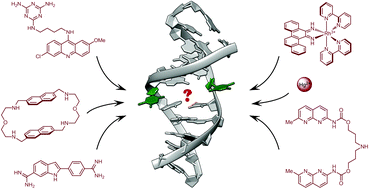
Read Full Post »

To reduce symptoms of mental illness and retrain the brain

Larry H. Bernstein, MD, FCAP, Curator

Leaders in Pharmaceutical Intelligence

Series E. 2; 5.11

Researchers have found that by specifically targeting a central signaling pathway in the brain, they can improve the innate behavioral response to stress in mice. Stress-induced behaviors in rodents reflect many of the symptoms that affect people suffering from major depression and other clinical conditions associated with stress. The findings, published July 20th online in the journalNature Neuroscience, suggest a new strategy for treating depression and other stress-associated disorders.

The study was led by James A. Bibb, Ph.D., at The University of Texas Southwestern Medical Center, who received NARSAD Young Investigator grants in 2000 and 2003, and lead authorFlorian Plattner, Ph.D. The scientific team also included Paul Greengard, Ph.D., a member of BBRF’s Scientific Council and a 1992, 2002, and 2008 Distinguished Investigator; Eric J. Nestler, M.D., Ph.D., a Scientific Council Member and a 1996 Distinguished Investigator; 2006 Young Investigator Kanehiro Hayashi, Ph.D.; 2007 Young Investigator Eunice Y. Yuen, Ph.D.; 1999 and 2004 Young Investigator Zhen Yan, Ph.D.; and 1999 Independent Investigator and 2006 Distinguished Investigator Angus C. Nairn, Ph.D.

The team’s findings are a result of a detailed investigation into a “signaling cascade,” called the cAMP/PKA pathway, which regulates a wide range of processes in the central nervous system. Disruption of the pathway has been linked with several mental disorders, including depression. Some existing antidepressant medications are known to boost cAMP signaling, but better understanding how this signaling network works could help researchers develop treatments that are more effective or cause fewer side effects.

Two new small-molecule compounds tested in mice can alleviate some symptoms of schizophrenia-like behaviors, including movement abnormalities, social avoidance, and cognitive performance. As reported in the July 1st issue of Neuropsychopharmacology, these research results may point the way toward new kinds of medications that treat specific aspects ofschizophrenia behaviors.

Current antipsychotic drugs used to treat the disorder target the dopamine D2 receptor, an important communication port for some neurons in the brain. These drugs are used primarily to treat schizophrenia “positive” symptoms such as delusions and hallucinations. They are less effective in treating “negative” symptoms such as a lack of pleasure in everyday life, or concentration and memory problems (“cognitive symptoms”), according to Duke University Medical Center scientists William C. Wetsel, Ph.D., a 1998 NARSAD Independent Investigator grantee, and Marc G. Caron, Ph.D., a Foundation Scientific Council member and 2005 NARSAD Distinguished Investigator grantee.

Current antipsychotic drugs were developed to bind to and block one specific type of communication pathway through dopamine D2 receptors, but the receptors are involved in more than one type of signaling pathway. Dr. Wetsel and colleagues decided to look for drug candidates that would block other pathways related to the dopamine D2 receptor, in the hope that this might reveal novel ways to treat a wider variety of schizophrenia symptoms.

They tested two dopamine D2 receptor-targeting compounds called UNC9975 and UNC9994 (developed by Jian Jin, Ph.D., of the University of North Carolina) that influence the beta-arrestin communication pathway, a different pathway than the one typically affected by antipsychotic drugs. The researchers showed that the compounds could normalize schizophrenia-like symptoms in mice by reducing their hyperactive movements, improving their memory for novel stimuli, and making them more social around other mice, among other improvements.

The new compounds also produced a much lower level of catalepsy—the rigid muscle, “trance-like” state that is sometimes a side effect of schizophrenic treatment—than traditional antipsychotic drugs such as haloperidol. Targeting different pathways connected to the dopamine D2 receptors, the researchers say, may increase the possibilities for treating people with schizophrenia in more individualized, fine-tuned ways that match their exact symptoms and vulnerabilities to side effects.

Effects of β-Arrestin-Biased Dopamine D2 Receptor Ligands on Schizophrenia-Like Behavior in Hypoglutamatergic Mice

Su M Park1, Meng Chen1, Claire M Schmerberg1, Russell S Dulman1, Ramona M Rodriguiz1,2, Marc G Caron3, Jian Jin4 and William C Wetsel1,2,3,5
Neuropsychopharmacology 2015; http://dx.doi.org:/10.1038/npp.2015.196

Current antipsychotic drugs (APDs) show efficacy with positive symptoms, but are limited in treating negative or cognitive features of schizophrenia. Whereas all currently FDA-approved medications target primarily the dopamine D2 receptor (D2R) to inhibit Gi/o-mediated adenylyl cyclase, a recent study has shown that many APDs affect not only Gi/o– but they can also influence β-arrestin- (βArr)-mediated signaling. The ability of ligands to differentially affect signaling through these pathways is termed functional selectivity. We have developed ligands that are devoid of D2R-mediated Gi/o protein signaling, but are simultaneously partial agonists for D2R/βArr interactions. The purpose of this study was to test the effectiveness of UNC9975 or UNC9994 on schizophrenia-like behaviors in phencyclidine-treated or NR1-knockdown hypoglutamatergic mice. We have found the UNC compounds reduce hyperlocomotion in the open field, restore PPI, improve novel object recognition memory, partially normalize social behavior, decrease conditioned avoidance responding, and elicit a much lower level of catalepsy than haloperidol. These preclinical results suggest that exploitation of functional selectivity may provide unique opportunities to develop drugs with fewer side effects, greater therapeutic selectivity, and enhanced efficacy for treating schizophrenia and related conditions than medications that are currently available.

The estrogen-related drug raloxifene can improve attention and memory in men and women with schizophrenia, according to a new study published in the journal Molecular Psychiatry.

University of New South Wales researcher Cynthia S. Weickert, Ph.D., a 1999 and 2001 NARSAD Young Investigator and 2004 Independent Investigator grantee, and her colleagues say their raloxifene findings could help improve some cognitive problems related to schizophrenia that have been the most difficult to treat with drugs. Dr. Weickert’s research team included NARSAD Young Investigator grantees Rhoshel K. Lenroot, M.D., (2003), and Ans Vercammen, Ph.D., (2010), along with Independent Investigator grantee Jayashri Kulkarni, Ph.D., (2000), and her husband and first author Tom Weickert, Ph.D.

A growing body of evidence suggests that estrogen plays a beneficial role in the brain, supporting growth and protecting neurons from damage. From work supported by her NARSAD Young Investigator awards, Dr. Weickert and her colleagues found that brain estrogen receptors are altered in some people with schizophrenia, blunting their ability to respond to estrogen’s beneficial effects. Raloxifene stimulates estrogen receptors and can help overcome a blunted estrogen response. Raloxifene is probably best known as a treatment for osteoporosis in women, where it mimics estrogen’s beneficial action in bones. The drug also stimulates estrogen receptors in the brain and may guard against memory loss in aging, making it potentially useful for cognitive problems in schizophrenia patients.

The research team examined the drug’s effect in 98 people diagnosed with schizophrenia or schizoaffective disorder (which combines symptoms of schizophrenia and depression). All of the patients received a daily dose of raloxifene along with their usual antipsychotic medications in one phase of the clinical trial and a placebo in another phase.

After the first six-week period, patients taking raloxifene had improved scores on memory and attention, compared to those taking placebo. When considering all the people in the study during both phases, raloxifene treatment significantly improved attention and thought processing speed. Raloxifene didn’t reduce the severity of schizophrenia symptoms more than the placebo did, but both groups showed less symptoms overall during the study, and none of the patients had severe side effects from the treatment.

Dr. Weickert and colleagues did detect some signs that the positive impact of raloxifene lasted more than one month after the treatment stopped. Although the researchers do not know the exact reasons for the lasting effects, they note that stimulating estrogen receptors might protect neurons, reduce inflammation, and increase connections between nerve cells in the brain over a longer time frame than drugs working on other neurotransmitter receptors. In light of their findings, they suggest future studies should replicate these results in a larger group of schizophrenia patients and also determine how long the cognitive benefits of a six-week treatment with raloxifene may last.

An injectable antipsychotic medication whose effects last for three months has successfully delayed the return of schizophrenia symptoms, researchers have found. Taking the drug in this form may help people with schizophrenia who struggle to stay on treatment by enabling them to take medication less frequently.

The research team, which included Adam J. Savitz, M.D., Ph.D., recipient of a NARSAD Young Investigator Grant in 2001, examined use of the long-acting antipsychotic medication paliperidone palmitate (Invega) in treating symptoms of schizophrenia such as hallucinations, delusions, and strong feelings of suspicion. The research was published online March 29th inJAMA Psychiatry.

When a person with schizophrenia cannot maintain a daily medication schedule, the drug level in his or her body can dip too low to combat symptoms, leading to relapse (return of symptoms) and an increased risk of being hospitalized. This study aimed to determine whether a dosage that would only have to be taken once every three months, rather than every day, would effectively hold off symptoms. After starting with a once-monthly dosage, patients took a three-month dosage to maintain symptom prevention and then were given randomly either placebo or the same three-month dosage every 12 weeks to see whether the medication’s positive effects would persist. (A placebo is a look-alike with inactive ingredients.)

Significantly fewer people who got the second three-month dosage experienced symptom relapse during the experimental phase of the study, compared to those taking a placebo. During this phase, the placebo group also reported more severe symptoms, while the paliperidone palmitate group’s symptoms remained constant.

The two groups also showed different patterns of side effects. The more serious side effects occurred in the placebo group: anxiety and return of other symptoms of schizophrenia. The paliperidone palmitate group more frequently experienced headaches, weight gain, common colds, as well as so-called extrapyramidal symptoms, which involve disruptions to movement.

This study did not include people with a history of substance dependence, major active medical problems, or other serious mental disorders. More research is needed to know whether less frequent dosage of long-acting injectable medication like paliperidone palmitate can help prevent relapse in these groups.

Efficacy and Safety of the 3-Month Formulation of Paliperidone Palmitate vs Placebo for Relapse Prevention of Schizophrenia – A Randomized Clinical Trial

Joris Berwaerts, MD1; Yanning Liu, MS2; Srihari Gopal, MD, MHS1; Isaac Nuamah, PhD1; Haiyan Xu, PhD1; Adam Savitz, MD, PhD1; Danielle Coppola, MD1; Alain Schotte, PhD3; Bart Remmerie, Chem Eng3; Nataliya Maruta, MD, PhD4; David W. Hough, MD1
JAMA Psychiatry. 2015; 72(8):830-839. http://dx.doi.org:/10.1001/jamapsychiatry.2015.0241.

Design, Setting, and Participants  This randomized, multicenter trial conducted from April 26, 2012, through April 9, 2014, in 8 countries consisted of 4 phases: 3-week screening phase, flexible-dose 17-week open-label transition phase, 12-week open-label maintenance phase, and open-ended double-blind (DB) phase. Of the 506 patients enrolled (aged 18-70 years; DSM-IV-TR diagnosis of schizophrenia), 305 were randomized to 3-month paliperidone palmitate (n = 160) or placebo (n = 145) in the DB phase.

Interventions  Patients received once-monthly doses of the 1-month formulation of paliperidone palmitate (50, 75, 100, or 150 mg eq) during the transition phase, followed by a single dose of the 3-month formulation (3.5 times the stabilized dose of once-monthly paliperidone palmitate) during the maintenance phase. Stabilized patients were randomized to receive either a fixed dose of 3-month paliperidone palmitate (175, 263, 350, or 525 mg eq) or placebo once every 3 months during the DB phase.

Main Outcomes and Measures  Time from randomization to the first relapse event (time to relapse) in the DB phase.

Results  In the interim analysis, time to first relapse was significantly different in favor of the paliperidone palmitate group vs the placebo group (hazard ratio = 3.45; 95% CI, 1.73-6.88; P < .001); median time to relapse was 274 days for placebo but not estimable for 3-month paliperidone palmitate. An independent data monitoring committee recommended early study termination due to efficacy. In the DB phase, 183 of 305 patients (62% with 3-month paliperidone palmitate; 58% with placebo) had at least 1 treatment-emergent adverse event; those noted more frequently in the group receiving paliperidone palmitate than in the placebo group were headache (9% vs 4%), weight increased (9% vs 3%), nasopharyngitis (6% vs 1%), and akathisia (4% vs 1%).

Conclusions and Relevance  Compared with placebo, the 3-month formulation of paliperidone palmitate administered 4 times yearly significantly delayed time to relapse in patients with schizophrenia. The 3-month formulation was generally tolerable and has a safety profile consistent with other marketed paliperidone formulations.

Trial Registration  clinicaltrials.gov Identifier:NCT01529515


Tracking Down the Causes of Alzheimer’s

University of Basel
http://www.biosciencetechnology.com/news/2015/09/tracking-down-causes-alzheimers?et_cid=4792750&et_rid=535648082&location=top


Researchers from the University of Basel were able to show that memory function (image shows the hippocampus highlighted) depends on calcium-regulating genes. (Source: MCN University of Basel

http://www.biosciencetechnology.com/sites/biosciencetechnology.com/files/bt1509_basel_brain.jpg

Genes are not only important for regular memory performance, but also for the development of Alzheimer’s disease. Researchers at the University of Basel now identified a specific group of genes that plays a central role in both processes. This group of molecules controls the concentration of calcium ions inside the cell. Their results appear in the current issue of the journal JAMA Psychiatry.

Intact memory capacity is crucial for everyday life. This fact becomes apparent once a memory disorder has developed. Alzheimer’s disease is the most common cause of age-associated memory disorders. Due to increasing life expectancy, the disease is on the rise in Switzerland and worldwide. Unfortunately, there is no effective treatment to cure or even slow down Alzheimer’s yet. Thus, understanding the origins of this neurodegenerative disorder is key to the development of much needed treatments.

Scientists have known for some years now, that genes do not only play a crucial role in normal memory performance, but also in the development of Alzheimer’s. However, it was so far unclear if specific genes are involved in both these processes.

Researchers at the transfaculty research platform at the Psychiatric University Clinics Basel and the Faculty of Psychology at the University of Basel were now able to show in a large scale study that a specific group of genes controls several processes that are central for regular brain functions as well as for the development of Alzheimer. First author Dr. Angela Heck collected and analyzed data of over 57,000 participants for this study.

Calcium is crucial

The study identified genes responsible for the concentration of calcium ions in the cell as central players of physiological and disease processes in the brain. Calcium genes stand in mutual relationship with memory performance of young and older healthy adults as well as with the function of the hippocampus, a brain region that is central to intact memory. Furthermore, calcium genes correlate with the risk for Alzheimer disease. The results contribute to the understanding of the complex processes that lead to memory disorders, such as Alzheimer’s.


Read Full Post »

« Newer Posts - Older Posts »