Feeds:
Posts
Comments

Posts Tagged ‘Conditions and Diseases’

Coronary Reperfusion Therapies: CABG vs PCI – Mayo Clinic preprocedure Risk Score (MCRS) for Prediction of in-Hospital Mortality after CABG or PCI

Author and Curator: Larry H. Bernstein, MD, FCAP 

and

Curator: Aviva Lev-Ari, PhD, RN


Published on Mar 27, 2012

Mayo Clinic cardiologist Charanjit Rihal, M.D. discusses a recent study conducted by Mayo Clinic that focuses on predicting operator outcomes in coronary angioplasty procedures.

“We’ve been interested in prediction of outcomes after coronary angioplasty and stent procedures for some time,” says Dr. Rihal. “Almost ten years ago, we published a paper called ‘The Mayo Clinic Risk Score for Prediction of Adverse Events following Coronary Angioplasty and Stent Procedures’. We’ve since refined into the ‘New Mayo Clinic Risk Score’, which includes seven key variables that predict bad outcomes following PCI procedures.”

The study, which was presented at the 2012 ACC Annual Scientific Session & Expo, presents a novel application of the Mayo Clinic Risk Score to predict operator specific outcomes in coronary angioplasty procedures.

“We looked at the outcomes of over 8000 procedures performed by 21 Mayo Clinic interventional cardiologists as predicted by the Mayo Clinic Risk Score,” says Dr. Rihal. “On an individual basis, we were able to calculate the expected mortality and adverse event rate and compare that to the actual observed mortality and adverse event rate. We were able to show that in our clinical practice of PCI, this risk score was very useful as a performance measure.

In a pleasant surprise, the study also discovered an outlier whose outcomes for instances of adverse event rates were much better than expected. “We don’t know exactly why this operator has such good results,” remarks Dr. Rihal, “But that will be the next phase of this analysis. We can compare procedural, pre-procedural, and post procedural practices of this operator and see if there are things that are translatable to the rest of us.”

VIEW VIDEO

Singh M, Gersh BJ, Li S, Rumsfeld JS, Spertus JA, O’Brien SM, Suri RM, Peterson ED.
Circulation. 2008 Jan 22;117(3):356-62.  http://dx.doi.org/10.1161/CIRCULATIONAHA.107.711523     Epub 2008 Jan 2.  PMID: 18172033
BACKGROUND:  Current risk models predict in-hospital mortality after either coronary artery bypass graft surgery or percutaneous coronary interventions. The overlap of models suggests that the same variables can define the risks of alternative coronary reperfusion therapies. We sought  a preprocedure risk model that can predict in-hospital mortality after either percutaneous coronary intervention or coronary artery bypass graft surgery.
METHODS AND RESULTS:  We tested the ability of the recently validated, integer-based Mayo Clinic Risk Score (MCRS) for percutaneous coronary intervention, which is based solely on preprocedure variables:
  • age,
  • creatinine,
  • ejection fraction,
  • myocardial infarction < or = 24 hours,
  • shock,
  • congestive heart failure
  • peripheral vascular disease
to predict in-hospital mortality among 370,793 patients in the Society of Thoracic Surgeons  (STS) database undergoing isolated coronary artery bypass graft surgery from 2004 to 2006. The median age of the STS database patients was 66 years (quartiles 1 to 3, 57 to 74 years), with 37.2% of patients > or = 70 years old. The high prevalence of comorbid conditions included
  • diabetes mellitus (37.1%)
  • hypertension (80.5%)
  • peripheral vascular disease (15.3%)
  • renal disease (creatinine > or = 1.4 mg/dL; 11.8%).
A strong association existed between the MCRS and the observed mortality in the STS database. The in-hospital mortality ranged between 0.3% (95% confidence interval 0.3% to 0.4%) with a score of 0 on the MCRS and 33.8% (95% confidence interval 27.3% to 40.3%) with an MCRS score of 20 to 24. The discriminatory ability of the MCRS was moderate, as measured by the area under the receiver operating characteristic curve (C-statistic = 0.715 to 0.784 among various subgroups); performance was inferior to the STS model for most categories tested.
CONCLUSIONS:  This model is based on the 7 preprocedure risk variables listed above. However, it  may be useful for providing patients with individualized, evidence-based estimates of procedural risk as part of the informed consent process before percutaneous or surgical revascularization.
It appears to this reviewer that the model might provide a better AUC if it were reconstructed as follows:
  1. age
  2. estimated creatinine clearance (which has been improved substantially by the Mayo Clinic)
  3. EF
  4. AMI < 24 hrs
  5. Decompensated CHF or shock
  6. PVD, or carotid artery disease, or PAD
  7. MAP
Mean arterial pressure (MAP) Calculator: Systolic BP: mm Hg: Diastolic BP: mm Hg Background: Equation: MAP = [(2 x diastolic)+systolic] / 3      http://www.globalrph.com/map.htm
There is another question that This reviewer has about the approach to prediction of post-procedural survival from pre-procedural information.
  • Age falls into interval classes that would suffice for use as classification variables.
  • Creatinine is a measurement that is a continuous variable, but I  call attention to the fact that eGFR would be preferred, as physicians tend to look at the creatinine roughly in relationship to age, gender, and body size or BMI.
  • The laboratory contribution as powerful information is underutilized.
On the one hand, CHF is important, but how is the distinction made between
  • stable CHF and
  • decompensated CHF, or degrees in between?
This is where the amino-terminal pro b-type natriuretic perptide, or the BNP has been used in isolation, but not in a multivariate model such as described.  There is a difference between them, but whether the difference makes a difference is unproved.
The BNP, derived from the propeptide is made by the myocardium as a hormonal mediator of sodium retention.  The BNP is degraded by the vascular endothelium, so it’s half time of disappearance would not reflect renal dysfunction, which is not the case for the NT proBNP.  This observation has nothing to do with the medical use of BNP.
Related articles

Other related articles were published on this Open Access Online Scientific Journal, including:

Survivals Comparison of Coronary Artery Bypass Graft (CABG) and Percutaneous Coronary Intervention (PCI) / Coronary Angioplasty

Larry H Bernstein, MD, FCAP and Aviva Lev-Ari, PhD, RN

http://pharmaceuticalintelligence.com/2013/06/23/comparison-of-cardiothoracic-bypass-and-percutaneous-interventional-catheterization-survivals/

Competition in the Ecosystem of Medical Devices in Cardiac and Vascular Repair: Heart Valves, Stents, Catheterization Tools and Kits for Open Heart and Minimally Invasive Surgery (MIS) (Aviva Lev-Ari)
http://pharmaceuticalintelligence.com/2012/06/22/competition-in-the-ecosystem-of-medical-devices-in-cardiac-and-vascular-repair-heart-valves-stents-catheterization-tools-and-kits-for-open-heart-and-minimally-invasive-surgery-mis/

Bioabsorbable Drug Coating Scaffolds, Stents and Dual Antiplatelet Therapy (Aviva Lev-Ari)
http://pharmaceuticalintelligence.com/2013/05/29/bioabsorbable-drug-coating-scaffolds-stents-and-dual-antiplatelet-therapy/

Vascular Repair: Stents and Biologically Active Implants (larryhbern)
http://pharmaceuticalintelligence.com/2013/05/04/stents-biologically-active-implants-and-vascular-repair/

Drug Eluting Stents: On MIT’s Edelman Lab’s Contributions to Vascular Biology and its Pioneering Research on DES (larryhbern)

http://pharmaceuticalintelligence.com/2013/04/25/contributions-to-vascular-biology/
Coronary Artery Disease – Medical Devices Solutions: From First-In-Man Stent Implantation, via Medical Ethical Dilemmas to Drug Eluting Stents (Aviva Lev-Ari)
http://pharmaceuticalintelligence.com/2012/08/13/coronary-artery-disease-medical-devices-solutions-from-first-in-man-stent-implantation-via-medical-ethical-dilemmas-to-drug-eluting-stents/

Survivals Comparison of Coronary Artery Bypass Graft (CABG) and Percutaneous Coronary Intervention (PCI) / Coronary Angioplasty (larryhbern)
http://pharmaceuticalintelligence.com/2013/06/23/comparison-of-cardiothoracic-bypass-and-percutaneous-interventional-catheterization-survivals/
Trans-apical Transcatheter Aortic Valve Replacement in a Patient with Severe and Complex Left Main Coronary Artery Disease (LMCAD) (larryhbern)
http://pharmaceuticalintelligence.com/2013/06/17/management-of-difficult-trans-apical-transcatheter-aortic-valve-replacement-in-a-patient-with-severe-and-complex-arterial-disease/
Transcatheter Aortic Valve Replacement (TAVR): Postdilatation to Reduce Paravalvular Regurgitation During TAVR with a Balloon-expandable Valve (larryhbern)
http://pharmaceuticalintelligence.com/2013/06/17/postdilatation-to-reduce-paravalvular-regurgitation-during-transcatheter-aortic-valve-replacement/

Svelte Medical Systems’ Drug-Eluting Stent: 0% Clinically-Driven Events Through 12-Months in First-In-Man Study (Aviva Lev-Ari)
http://pharmaceuticalintelligence.com/2013/05/28/svelte-medical-systems-drug-eluting-stent-0-clinically-driven-events-through-12-months-in-first-in-man-study/

Acute and Chronic Myocardial Infarction: Quantification of Myocardial Perfusion Viability – FDG-PET/MRI vs. MRI or PET alone (Justin Pearlman, Aviva Lev-Ari)
http://pharmaceuticalintelligence.com/2013/05/22/acute-and-chronic-myocardial-infarction-quantification-of-myocardial-viability-fdg-petmri-vs-mri-or-pet-alone/

Biomaterials Technology: Models of Tissue Engineering for Reperfusion and Implantable Devices for Revascularization (larryhbern)
http://pharmaceuticalintelligence.com/2013/05/05/bioengineering-of-vascular-and-tissue-models/
Revascularization: PCI, Prior History of PCI vs CABG (A Lev-Ari)
http://pharmaceuticalintelligence.com/2013/04/25/revascularization-pci-prior-history-of-pci-vs-cabg/
Accurate Identification and Treatment of Emergent Cardiac Events (larryhbern)
http://pharmaceuticalintelligence.com/2013/03/15/accurate-identification-and-treatment-of-emergent-cardiac-events/
FDA Pending 510(k) for The Latest Cardiovascular Imaging Technology (A Lev-Ari)
http://pharmaceuticalintelligence.com/2013/01/28/fda-pending-510k-for-the-latest-cardiovascular-imaging-technology/
The ACUITY-PCI score: Will it Replace Four Established Risk Scores — TIMI, GRACE, SYNTAX, and Clinical SYNTAX (A Lev-Ari)
http://pharmaceuticalintelligence.com/2013/01/03/the-acuity-pci-score-will-it-replace-four-established-risk-scores-timi-grace-syntax-and-clinical-syntax/
CABG or PCI: Patients with Diabetes – CABG Rein Supreme (A Lev-Ari)
http://pharmaceuticalintelligence.com/2012/11/05/cabg-or-pci-patients-with-diabetes-cabg-rein-supreme/
New Drug-Eluting Stent Works Well in STEMI (A Lev-Ari)
http://pharmaceuticalintelligence.com/2012/08/22/new-drug-eluting-stent-works-well-in-stemi/

Three coronary artery bypass grafts, a LIMA to...

Three coronary artery bypass grafts, a LIMA to LAD and two saphenous vein grafts – one to the right coronary artery (RCA) system and one to the obtuse marginal (OM) system. (Photo credit: Wikipedia)

Forrester-classification for classification of...

Forrester-classification for classification of Congestive heart failure ; Forrester-Klassifikation zur Einteilung einer akuten Herzinsuffizienz (Photo credit: Wikipedia)

Read Full Post »

Phrenic Nerve Stimulation in Patients with Cheyne-Stokes Respiration and Congestive Heart Failure

Writer: Larry H Bernstein, MD, FCAP

and

Curator: Aviva Lev-Ari, PhD, RN

Transvenous Phrenic Nerve Stimulation in Patients With Cheyne-Stokes Respiration and Congestive Heart Failure:A Safety and Proof-of-Concept Study

Xi-Long Zhang, MD; Ning Ding; Hong Wang; Ralph Augostini; Bing Yang; Di Xu; Weizhu Ju; Xiaofeng Hou; Xinli Li; Buqing Ni, PhD; Kejiang Cao; Isaac George; Jie Wang, MD, PhD; Shi-Jiang Zhang
Chest. 2012; 142(4):927-934. doi:10.1378/chest.11-1899
Text Size: A A A

Background:  Cheyne-Stokes respiration (CSR), which often occurs in patients with congestive heart failure (CHF), may be a predictor for poor outcome. Phrenic nerve stimulation (PNS) may interrupt CSR in patients with CHF. We report the clinical use of transvenous PNS in patients with CHF and CSR.

Methods:  Nineteen patients with CHF and CSR were enrolled. A single stimulation lead was placed at the junction between the superior vena cava and brachiocephalic vein or in the left-side pericardiophrenic vein. PNS stimulation was performed using Eupnea System device (RespiCardia Inc). Respiratory properties were assessed before and during PNS. PNS was assessed at a maximum of 10 mA.

Results:  Successful stimulation capture was achieved in 16 patients. Failure to capture occurred in three patients because of dislocation of leads. No adverse events were seen under maximum normal stimulation parameters for an overnight study. When PNS was applied following a series of central sleep apneic events, a trend toward stabilization of breathing and heart rate as well as improvement in oxygen saturation was seen. Compared with pre-PNS, during PNS there was a significant decrease in apnea-hypopnea index (33.8 ± 9.3 vs 8.1 ± 2.3, P = .00), an increase in mean and minimal oxygen saturation as measured by pulse oximetry (89.7% ± 1.6% vs 94.3% ± 0.9% and 80.3% ± 3.7% vs 88.5% ± 3.3%, respectively, all P = .00) and end-tidal CO2 (38.0 ± 4.3 mm Hg vs 40.3 ± 3.1 mm Hg, P = .02), but no significant difference in sleep efficiency (74.6% ± 4.1% vs 73.7% ± 5.4%, P = .36).

Conclusions:  The preliminary results showed that in a small group of patients with CHF and CSR, 1 night of unilateral transvenous PNS improved indices of CSR and was not associated with adverse events.

Trial registry:  ClinicalTrials.gov; No.: NCT00909259; URL: www.clinicaltrials.gov

http://journal.publications.chestnet.org/article.aspx?articleid=1215995

Transvenous phrenic nerve stimulation in patients with Cheyne-Stokes respiration and congestive heart failure: a safety and proof-of-concept study

Zhang Xi-Long; Ding N, Wang H, Augostini R, Yang B.
CHEST 2012; 142(4):927–934
Trial registry: ClinicalTrials.gov; No.: NCT00909259; URL: http://www.clinicaltrials.gov
http://dx.doi.org/10.1378/chest.11-1899

Introduction

Cheyne-Stokes respiration (CSR), a condition characterized by a cyclic pattern of waxing and waning ventilation interposed by central apneas or hypopneas, may affect up to 40% of patients with congestive heart failure (CHF).  Whether CSR is related to significantly increased morbidity and mortality 2 or has no impact on long-term survival in patients with CHF is controversial. Nevertheless, several investigators have reported that CSR might be an independent prognostic index of poor outcome in patients with CHF, so that Cheyne-Stokes respiration (CSR), which often occurs in patients with congestive heart failure (CHF), may be a predictor for poor outcome. CSR in patients with CHF is believed to be associated with a hypersensitivity to arterial CO 2 during sleep. The key pathophysiologic mechanism leading to all forms of periodic breathing is the oscillation of blood CO 2 level below and above the apneic threshold.  Clinically, these pathophysiologic changes may translate to sleep fragmentation, excessive daytime sleepiness, reduced exercise capacity, and, possibly, ventricular arrhythmias.
Current treatment options for CSR include medications, positive airway pressure devices such as adapt servo-ventilation, or oxygen therapy. Although all these therapies have shown benefi t in some patients, none has shown a consistent benefi t of suffi cient clinical magnitude to reduce mortality and morbidity. In the current study, we explored the initial feasibility, safety, and possible effects of unilateral, transvenous, synchronized PNS on CSR in 19 patients with CHF . This novel treatment resulted in a marked reduction of minute ventilation and possible improvement of CSR. The authors here suggest that phrenic nerve stimulation (PNS) may interrupt CSR in patients with CHF.

Study Population

 Nineteen patients with CHF and CSR were enrolled.  All study patients (N 5 19) had received a diagnosis of CSR and chronic CHF and were hospitalized in The First Affiliated Hospital of Nanjing Medical University (Nanjing, China). Of them, 12 with rheumatic cardiac valve disease were waiting forcardiac surgery, and seven (fi ve with dilated cardiomyopathy and two with hypertensive heart disease) were enrolled from the cardiology ward because of severe heart failure.
The inclusion criteria were aimed at identifying patients with symptoms or a diagnosed condition indicative of CSR who would tolerate the testing procedure. The patients continued on their standard medical regimen during participation, and in the case of an adverse event, medical treatment was at the discretion of the investigator. The inclusion criteria were as follows: (1) both patient and direct family member willingness to sign a Patient Ethics Committee-approved informed consent, (2) age > 18 years, (3) index CSR of > 15 times/h, (4) history of CHF with a left ventricle ejection fraction < 45%, and (5) ability to tolerate the study procedure and remain clinically stable for the duration of the study. Exclusion criteria were as follows: (1) baseline oxygen saturation <  90% on a stable FiO2 ; (2) evidence of phrenic nerve palsy; (3) temperature > 38.0°C; (4) inability to place stimulation lead (eg, coagulopathy, distorted anatomy, etc); (5) current enrollment in another clinical study that may confound the results of the present study; (6) no informed consent; (7) pregnancy or of childbearing potential without a negative pregnancy test within 10 days of the study procedure; (8) pacemaker, implantable cardioverter defibrillator, or cardiac resynchronization device; (9) severe COPD; (10) a history of myocardial infarction within 6 months prior to the study; and (11) unstable angina.

Study Design

 This short-term, prospective, open-label, nonrandomized feasibility study consisted of a treatment-only cohort in which each patient served as his or her own control. After patients were screened and enrolled in the study, PNS leads were placed through an interventional procedure for observation of 1 night only. During the 1-night study, we examined whether PNS caused pain, arousal during sleep, arrhythmia, changes in BP, and changes in either normal breathing or sleep apnea. We also examined the impact of PNS on central, obstructive, and mixed sleep apnea. Alterations in sleep apnea and hypopnea events were compared before and during PNS. “Before stimulation” was defined as the number of sleep apnea and hypopnea events occurring during a segment of 10 min just before delivery of PNS and served as the control for the effects of PNS. The total number of the 10-min segments before PNS, the total number of sleep apnea and hypopnea events occurred during the sum of the 10-min time were calculated,  then averaged (total number of sleep apnea and hypopnea events/total hours of the 10-min segments from all patients) and presented as the apnea-hypopnea index (AHI) for statistical analysis. AHI during PNS were also calculated and compared with AHI prior to PNS.

Sleep Study and Monitored Parameters

 All participants underwent a nocturnal, in-laboratory polysomnography (Embla S4500 PSG Amplifi er; Natus Medical Inc) and were monitored for at least 7 h overnight. The standard polysomnography recorded the EEG, bilateral electrooculograms, submental  electromyogram, ECG, chest and abdominal movement using respiratory effort bands, body position, nasal airflow using a pressure sensor, and oxygen saturation as measured by pulse oximetry (Sp o 2 ).
EEG, sleep staging, and arousals were monitored and scored using 30 epochs according to the method of Rechtschaffen and Kales. Classification of apnea and hypopnea was described by standard methodologies. CSR was identified as a special kind of CSA behaving as a cyclic pattern of periods of hyperventilation with waxing and waning tidal volumes alternating with periods of central hypopnea/apnea .

Lead Placement and PNS

A single stimulation lead was placed at the junction between the superior vena cava and brachiocephalic vein or in the left-side pericardiophrenic vein. PNS stimulation was performed using Eupnea System device (RespiCardia Inc). Respiratory properties were assessed before and during PNS. PNS was assessed at a maximum of 10 mA.

Results

Successful stimulation capture was achieved in 16 patients. Failure to capture occurred in three patients because of dislocation of leads. No adverse events were seen under maximum normal stimulation parameters for an overnight study.  No new arrhythmias, muscle contractions, arterial BP variations, pain, or unpleasant sensations were observed once PNS was delivered during sleep for these patients. It was confirmed that the catheter could be secured adequately to obtain consistent predictable stimulation thresholds without arousal from sleep. During occurrence of CSR, intermittent PNS signals were first confirmed to be successfully captured in 16 patients. When PNS was applied following a series of central sleep apneic events, a trend toward stabilization of breathing and heart rate.  An improvement in oxygen saturation and elevation of end-tidal CO2 was observed as longer continuous stimulation was performed. The period of stable breathing lasted as long as 10 to 20 min in some patients after stimulation.  They found that when electric connection to the nerve was consistent, stimulation resulted in a reduced hyperventilation followed by the reduction or elimination of CSR.
Compared with pre-PNS, during PNS there was a significant decrease in apnea-hypopnea index (33.8 ± 9.3 vs 8.1 ± 2.3, P = .00), an increase in mean and minimal oxygen saturation as measured by pulse oximetry (89.7% ± 1.6% vs 94.3% ± 0.9% and 80.3% ± 3.7% vs 88.5% ± 3.3%, respectively, all P = .00) and end-tidal CO2 (38.0 ± 4.3 mm Hg vs 40.3 ± 3.1 mm Hg, P = .02), but no significant difference in sleep efficiency (74.6% ± 4.1% vs 73.7% ± 5.4%, P = .36).

Discussion

CSR is characterized by cyclical oscillations of respiration and apnea. The incidence of CSR ranges from 10% to 20% in patients with stable CHF and up to 40% to 50% of all patients with New York Heart Association functional class III?IV CHF.  Nocturnal breathing alterations in patients with CHF are believed to be due to hypersensitivity to CO 2 during sleep. Breathing is controlled by a negative feedback system in which an increase in Pa co 2 stimulates breathing, whereas a decrease in Pa co 2 inhibits breathing. Normally, Pa co 2 is maintained within a narrow range. Patients with CHF and CSA have a more brisk ventilatory response to CO 2 than those without CSA.
The preliminary results showed that in a small group of patients with CHF and CSR, 1 night of unilateral transvenous PNS improved indices of CSR and was not associated with adverse events.
The study was performed using temporary catheters or leads in the right-side brachiocephalic vein, SVC, or left-side pericardiophrenic vein to transvenously stimulate the hemidiaphragm through either the leftside or the right-side phrenic nerve. To consistently stimulate the phrenic nerve using acceptable and safe current levels ( < 10 mA), the stimulation electrode needs to be within 2 to 5 mm from the phrenic nerve.  This type of stimulation caused significantly improved respiratory parameters in patients with CHF and further support that oscillation of CO 2 level in the blood below and above the apneic threshold is a central mechanism leading to the CSR pattern of breathing. Stabilization of CO 2 levels through PNS produced a regular breathing pattern, improvement in oxygen saturation, and fewer apneic events.
Dr.  Isaac George: contributed to data evaluation and drafting of the manuscript.

Related articles

Other related articles published on this Open Access Online Scientific Journal include the following:

Implantable Synchronized Cardiac Assist Device Designed for Heart Remodeling: Abiomed’s Symphony

Aviva Lev-Ari, PhD, RN, 7/11/2012

http://pharmaceuticalintelligence.com/2012/07/11/implantable-synchronized-cardiac-assist-device-designed-for-heart-remodeling-abiomeds-symphony/

Biomaterials Technology: Models of Tissue Engineering for Reperfusion and Implantable Devices for Revascularization

Larry H Bernstein, MD, FCAP and Aviva Lev-Ari, PhD, RN

http://pharmaceuticalintelligence.com/5_04_2013/bernstein_lev-ari/Bioengineering_of_Vascular_and_Tissue_Models

Foreseen changes in Guideline of Treatment of Cardiogenic Shock with Intra-aortic Balloon counterPulsation (IABP)

Evidence for Overturning the Guidelines in Cardiogenic Shock

Clinical Indications for Use of Inhaled Nitric Oxide (iNO) in the Adult Patient Market: Clinical Outcomes after Use, Therapy Demand and Cost of Care

Aviva Lev-Ari, PhD, RN, 6/3/2013

Aviral Vatsa PhD MBBS, 1/4/2013

Clinical Trials Results for Endothelin System: Pathophysiological role in Chronic Heart Failure, Acute Coronary Syndromes and MI – Marker of Disease Severity or Genetic Determination?

Aviva Lev-Ari, PhD, RN, 10/19/2013

http://pharmaceuticalintelligence.com/2012/10/19/clinical-trials-results-for-endothelin-system-pathophysiological-role-in-chronic-heart-failure-acute-coronary-syndromes-and-mi-marker-of-disease-severity-or-genetic-determination/

Diagnosis of Cardiovascular Disease, Treatment and Prevention: Current & Predicted Cost of Care and the Promise of Individualized Medicine Using Clinical Decision Support Systems

Justin Pearlman MD ME PhD MA FACC, Larry H Bernstein, MD, FCAP and Aviva Lev-Ari, PhD, RN

http://pharmaceuticalintelligence.com/2013/05/15/diagnosis-of-cardiovascular-disease-treatment-and-prevention-current-predicted-cost-of-care-and-the-promise-of-individualized-medicine-using-clinical-decision-support-systems-2/

Visualisation of Cheyne-Stokes respiration

Visualisation of Cheyne-Stokes respiration (Photo credit: Wikipedia)

Cheyne-Stokes respiration

Cheyne-Stokes respiration (Photo credit: Wikipedia)

Cheyne-Stokes respiration

Cheyne-Stokes respiration (Photo credit: Wikipedia)

Read Full Post »

High Risk of Transmissible Disease and Mortality in Cancer, Advanced Cardiovascular Disease, and Hemodialysis Patients

Curator: Larry H Bernstein, MD, FCAP

This contribution is aimed at three situations of special concern with respect to transmission and handling of episodic bacteria or virus spread in hospital and ambulatory healthcare settings, where healthcare workers may be exposed and either become ill or are potential carriers of the disease.  Not discussed is a report in the last week of an association between human papilloma virus (HPV), known to be associated with cervical cancer, and oropharyngeal cancer.   In all of these situations, the patients at highest risk of death are immune compromized, carry a heavy burden of unbalanced oxidative stress, and have mitcochondrial dysfunction from unbalanced ubiquitination and repair.

Clostridium Difficile Colitis

Faten N Aberra, MD, MSCE; Chief Editor: Julian Katz, MD
Medscape – Practice Essentials

Clostridium difficile colitis results from a disturbance of the normal bacterial flora of the colon, colonization by C difficile, and the release of toxins that cause mucosal inflammation and damage. Antibiotic therapy is the key factor that alters the colonic flora. C difficile infection primarily occurs in hospitalized patients.

Essential update: Fidaxomicin superior to vancomycin for cancer patients with C difficile

In a multicenter study including 1105 subjects with C difficile – associated diarrhea, 183 of whom had solid tumors or hematologic malignancies, fidaxomicin treatment was superior to vancomycin treatment in cancer patients, resulting in higher cure and sustained response rates, shorter time to resolution of diarrhea (TTROD), and fewer recurrences.  Cure rates were lower overall in cancer patients than in others (79.2% vs 88.6%; P < 0.001).[2Whereas cure rates for noncancer patients were approximately the same with fidaxomicin as with vancomycin (88.5% vs 88.7%), those for cancer patients were higher with fidaxomicin than with vancomycin (85.1% vs 74.0%), though the difference was not statistically significant. Median TTRODs in noncancer patients were 54 hours with fidaxomicin and 58 with vancomycin; those in cancer patients were 74 and 123 hours, respectively.  The risk of recurrence was approximately twice as high with vancomycin as with fidaxomicin, regardless of whether patients had cancer or not, but because both cure and recurrence outcomes were better with fidaxomicin than with vacomycin in cancer patients, the relative odds of sustained response at 28 days in these patients were more than 2.5-fold higher for fidaxomicin than for vancomycin.

Background

Clostridium difficile is a gram-positive, anaerobic, spore-forming bacillus that is responsible for the development of antibiotic-associated diarrhea and colitis. C difficile was first described in 1935 as a component of the fecal flora of healthy newborns and was initially not thought to be a pathogen. It was named difficile because it grows slowly and is difficult to culture. While early investigators noted that the bacterium produced a potent toxin, the role of C difficile in antibiotic-associated diarrhea and pseudomembranous colitis was not elucidated until the 1970s.
Approximately 20% of individuals who are hospitalized acquire C difficile during hospitalization, and more than 30% of these patients develop diarrhea. Thus, C difficile colitis is currently one of the most common nosocomial infections.
The diagnosis of C difficile colitis should be suspected in any patient with diarrhea who has received antibiotics within the previous 2 months and/or when diarrhea occurs 72 hours or more after hospitalization.

Pathophysiology

Colonization occurs by the fecal-oral route. C difficile forms heat-resistant spores that can persist in the environment for several months to years. Outbreaks of C difficile diarrhea may occur in hospitals and other outpatient facilities where contamination with spores is prevalent. Normal gut flora resists colonization and overgrowth with C difficile. Antibiotic use, which suppresses the normal flora, allows proliferation of C difficile.
Pathogenic strains of C difficile produce 2 distinct toxins. Toxin A is an enterotoxin, and toxin B is a cytotoxin. Both are high–molecular weight proteins capable of binding to specific receptors on the intestinal mucosal cells. Receptor-bound toxins gain intracellular entry where they catalyze a specific alteration of Rho proteins, small glutamyl transpeptidase (GTP)–binding proteins that assist in actin polymerization, cytoskeletal architecture, and cell movement. Both toxin A and toxin B appear to play a role in the pathogenesis of C difficile colitis in humans.

Epidemiology

Although the incidence of other nosocomial infections declined from 2000-2009, the number of hospitalized patients with any C difficile infection discharge diagnosis more than doubled, from approximately 139,000 to 336,600. The number of patients with a primary C difficile infection diagnosis more than tripled, from 33,000 to 111,000.
Among C difficile infections identified in the Centers for Disease Control and Prevention’s (CDC’s) Emerging Infections Program data in 2010, 94% were associated with receiving health care; of these, 75% had onset among persons not currently hospitalized, including recently discharged patients, outpatients, and nursing home residents

Diagnosis

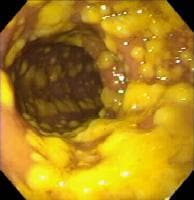
http://img.medscape.com/pi/emed/ckb/gastroenterology/169972-186458-3532tn.jpg

Physical examination may reveal the following in patients with the disorder:
  • Fever: Especially in more severe cases
  • Dehydration
  • Lower abdominal tenderness
  • Rebound tenderness: Raises the possibility of colonic perforation and peritonitis

Laboratory studies

  • Lab tests for evaluating patients with C difficile infection include the following:
  • Electrolytes: Dehydration and electrolyte imbalance may accompany severe disease
  • Albumin: Hypoalbuminemia and anasarca may accompany severe disease
    • Transthyretin is the serum protein of choice for a rapid onset diarrhea with dehydration leading to weight loss, dehydration, anasarca and sarcopenia, as it has a serum half-life of ~ 48 hrs rather than 21 days, and it is an accurate measure of lean body mass.
  • Complete blood count: Leukocytosis may be present
  • Stool examination: Stool may be Hemoccult positive in severe colitis, but grossly bloody stools are unusual; fecal leukocytes are present in about half of cases
  • Stool assays for C difficile, from the most to the least sensitive, include the following:
  1. Stool culture: The most sensitive test (sensitivity, 90-100%; specificity, 84-100%), but the results are slow and may lead to a delay in the diagnosis if used alone
  2. Glutamate dehydrogenase enzyme immunoassay (EIA): Very sensitive (sensitivity, 85-100%; specificity, 87-98%); this test detects the presence of glutamate dehydrogenase produced by C difficile
  3. Real-time polymerase chain reaction (PCR) assay: May be used to detect C difficile gene toxin
  4. The stool cytotoxin test: Has a sensitivity of 70-100% and a specificity of 90-100%; a positive test result is the demonstration of a cytopathic effect that is neutralized by a specific antiserum
  5. Enzyme immunoassay for detecting toxins A and B: Used in most labs; the sensitivity is moderate (79-80%), and the specificity is excellent (98%)
  6. Latex agglutination technique: Another means of detecting glutamate dehydrogenase; the sensitivity of this test is poor (48-59%), although the specificity is 95-96%

Management

Treatment for C difficile infection varies according to its severity. Interventions include the following:
  • Asymptomatic carriers: No treatment necessary
  • Mild, antibiotic-associated diarrhea without fever, abdominal pain, or leukocytosis: Cessation may be the only treatment necessary
  • Mild to moderate diarrhea or colitis: Metronidazole (oral or intravenous) or vancomycin (oral) for 10 days
Severe disease: Vancomycin is considered to produce faster symptom resolution and fewer treatment failures than metronidazole; in fulminant cases, combined therapy with intravenous metronidazole and oral vancomycin may be considered

Relapse

Relapse occurs in 20-27% of patients treated with metronidazole or vancomycin. Once a patient has one relapse, the risk for a second relapse is 45%. Relapses should be treated as follows:
  • First relapse: The choice of antibiotic should be based on the severity of C difficile diarrhea/colitis
  • Subsequent relapses: For every relapse beyond the first, vancomycin (prolonged taper/pulsed regimen) is recommended to help clear persistent spores
Among various investigational therapies, fecal transplantation (fecal enemas or infusion of donor feces through a nasoduodenal tube) has been reported to repopulate the colonic flora and treat recurrent C difficile infection.

Staphylococcus Aureus Infection

Robert W Tolan Jr, MD; Chief Editor: Russell W Steele, MD
http://emedicine.medscape.com/article/971358-overview?src=wnl_ref_prac_infd&uac=62859DN

Rise of methicillin and vancomycin-resistance

Both community-associated and hospital-acquired infections with Staphylococcus aureus have increased in the past 20 years, and the rise in incidence has been accompanied by a rise in antibiotic-resistant strains—in particular, methicillin-resistant S aureus (MRSA) and, more recently, vancomycin-resistant strains.

Essential update: Universal decolonization more effective than screening and isolation in reducing rates of MRSA

Daily washing of ICU patients with chlorhexidine-impregnated cloths reduced positive cultures of MRSA by 37% and reduced bloodstream infection by any pathogen by 44%, according to a study of 74,256 patients in 74 adult ICUs.
In the study, hospitals were randomized to 18 months of either screening for MRSA followed by isolation of positive patients, targeted decolonization of MRSA-positive patients and isolation, or universal decolonization of all ICU patients without screening. Decolonization was achieved via daily cleansing with chlorhexidine-impregnated cloths and 5 days of twice-daily intranasal mupirocin treatments. At baseline, there was no significant difference in the rate of MRSA infections between the 3 groups.  However, patients who underwent universal decolonization showed a significantly larger decline between baseline and intervention periods than those in either of the targeted interventions. Universal decolonization led to a 37% drop in the rate of MRSA infections, while targeted decolonization led to a 25% decline and no significant change was seen in the screening and isolation group. There was no significant difference in outcomes between the targeted decolonization and the screening and isolation groups, while the difference between the universal decolonization and the screening and isolation groups was significant (P = .003). Universal decolonization also significantly reduced ICU-attributed bloodstream infections from any pathogen.

Management

Antibiotic regimens include the following:
  • Empiric therapy with penicillins or cephalosporins may be inadequate because of community-associated methicillin-resistant Staphylococcus aureus (CA-MRSA)
  • Combination therapy with a penicillinase-resistant penicillin or cephalosporin (in case the organism is methicillin-sensitive S aureus [MSSA]) and clindamycin or a quinolone
  • Clindamycin, trimethoprim-sulfamethoxazole (TMP-SMX), rifampin, doxycycline, or a quinolone
  • TMP-SMX and rifampin in combination, rather than singly
Clindamycin (rather than TMP-SMX) may become the preferred outpatient antibiotic therapy in regions with a relatively low incidence of clindamycin resistance
The Infectious Diseases Society of America has published treatment guidelines for MRSA infection

Bacteremia

Daptomycin, with or without beta-lactams, controls S aureus bacteremia without worsening renal dysfunction. In a cohort of patients with mild or moderate renal insufficiency, more than 80% responded to treatment, with no detrimental effect on their kidneys. Currently, the combination of daptomycin with beta-lactams is recommended only as salvage therapy for refractory MRSA bacteremia. 

New Coronavirus ‘Eerily’ Like SARS

By Michael Smith, North American Correspondent, MedPage   June 19, 2013
Reviewed by Robert Jasmer, MD; Associate Clinical Professor of Medicine, University of California, San Francisco
http://www.medpagetoday.com/InfectiousDisease/GeneralInfectiousDisease/39972?xid=nl_mpt_DHE_2013-06-20

The novel coronavirus outbreak in the Middle East is eerily similar to SARS, according to Trish Perl, MD, of the Johns Hopkins University School of Medicine, part of an international team, led by Ziad Memish, MD, of the World Health Organization in Riyadh, that looked into a cluster of 23 cases in hospitals in the east of Saudi Arabia. . “The illness pattern, the incubation period — there are a lot of eerie similarities,” Perl told MedPage Today. They reported online in the New England Journal of Medicine, that the virus, MERS-CoV, is related to the virus that caused the 2002-2003 SARS outbreak.  The viruses both are coronaviruses and both lead to severe respiratory illness. Further, person-to-person transmission can take place in healthcare settings and can do so with “considerable morbidity.”  One key difference, Perl and colleagues noted, is that — at least in the cluster they investigated — the fatality rate was 65%, markedly higher than the 8% or so seen in the SARS outbreak. On the other hand, that rate may fall if a large number of milder cases is detected, they noted.  An outside expert, David Freedman, MD, of the University of Alabama at Birmingham, told MedPage Today that an open question has been whether MERS could spread within hospitals as easily as did SARS.  The current study, he said, shows “unequivocally” that it can.
The report comes as the World Health Organization is reporting a total of 64 laboratory-confirmed cases of infection with MERS-CoV, including 38 deaths. Most reported cases have either occurred in the Middle East or have involved recent travel to the region.  SARS was contained and eventually controlled by identifying cases vigorously and then isolating them to prevent transmission, Perl noted, and similar tactics — when they were applied in Saudi Arabia — appeared to have the same effect. The key in the epidemiological chain may have been Patient C, who had been undergoing long-term hemodialysis, and was admitted to hospital April 6 in the room next to Patient A.  When Patient A developed a fever April 8, Patient C was still in the same room and developed fever himself 3 days later. He also had dialysis in the hospital’s outpatient hemodialysis unit twice after the onset of symptoms. Between April 14 and April 30, MERS was confirmed in nine more patients who were undergoing hemodialysis, including six who did so at times overlapping those of Patient C. All told, Patient C appears to have transmitted MERS directly to seven people, six in the dialysis unit and one in the intensive care unit, the researchers reported, while other infected people had more limited transmission and some did not pass on the disease at all.

Related articles

Clostridium Difficile

Clostridium Difficile (Photo credit: fjbengoat)

English: Low mag. Image:Colonic pseudomembrane...

English: Low mag. Image:Colonic pseudomembranes intermed mag.jpg (Photo credit: Wikipedia)

Obtained after an outbreak this micrograph dep...

Obtained after an outbreak this micrograph depicts Gram-positive Clostridium difficile bacteria. These C. difficile organisms were cultured from a stool sample obtained during an outbreak of gastrointestinal illness, and extracted using a .1µm filter. (Photo credit: Wikipedia)

English: Clostridium difficile toxin B rendere...

English: Clostridium difficile toxin B rendered from PDB 2BVM (Photo credit: Wikipedia)

Pseudomembranous Colitis, Colectomy (Gross)

Pseudomembranous Colitis, Colectomy (Gross) (Photo credit: euthman)

Read Full Post »

Ventricular Assist Device (VAD): A Recommended Approach to the Treatment of Intractable Cardiogenic Shock

Writer: Larry H Bernstein, MD, FCAP

 and

Curator: Aviva Lev-Ari, PhD, RN

A ventricular assist device (VAD) is an implantable mechanical pump that helps pump blood from the lower chambers of your heart (the ventricles) to the rest of your body. VADs are used in people who have weakened hearts or heart failure. Although VADs can be placed in the left, right or both ventricles of your heart, they are most frequently used in the left ventricle. When placed in the left ventricle they are called left ventricular assist devices (LVADs).

You may have a VAD implanted while you wait for a heart transplant or for your heart to become strong enough to effectively pump blood on its own. Your doctor may also recommend having a VAD implanted as a long-term treatment if you have heart failure and you’re not a good candidate for a heart transplant.

The procedure to implant a VAD requires open-heart surgery and has serious risks. However, a VAD can be lifesaving if you have severe heart failure.

http://www.mayoclinic.com/health/lvad/MY01077

This is an assessment of the development and progression of cardiogenic shock  and review of the use of ventricular assist devices in that setting.  It is another piece of the chapter on cardiothoracic surgical management at Columbia University Medical Center, New York, NY.

A stepwise progression in the treatment of cardiogenic shock.

Pollack AUriel NGeorge IKodali STakayama HNaka YJorde U.

Source

Department of Medicine, New York Presbyterian Hospital/Columbia University Medical Center, New York, New York, USA.

Abstract

Cardiogenic shock remains a deadly complication of acute myocardial infarction (MI). Early revascularization, inotropic support, and intraaortic balloon counterpulsation are the mainstays of treatment, but these are not always sufficient. New mechanical approaches, both percutaneous and surgical, are available in this high-risk population. We present a case of a young woman with a massive anterior wall MI and subsequent cardiogenic shock who was treated with advanced mechanical circulatory support. This case serves as an illustration of the stepwise escalation of mechanical support that can be applied in a patient with an acute MI complicated by refractory cardiogenic shock. We also review the literature with regard to the use of percutaneous left ventricular assist devices in the setting of cardiogenic shock.

Copyright © 2012 Elsevier Inc. All rights reserved.

PMID: 22608034

Care of the Critically Ill:  A Stepwise Progression in the Treatment of Cardiogenic Shock.

Pollack A, Uriel N, George I, Kodali S, Takayama H, Naka Y, Jorde U
J Heart & Lung 2012; 41:500-504.

Initial Presentation

 A 21-year-old woman with a history of migraine headaches was admitted to the hospital with nonradiating substernal chest pain onset that morning. When she presented to another hospital she had a normal electrocardiogram (EKG) and was discharged. When the patient’s chest discomfort became crushing  she presented again to the same hospital where her EKG revealed ST-segment elevations in an anterolateral distribution. Her peak (hs) troponin was 229 ng/mL and peak creatinine kinase was 6900 U/L.  This was an elevation of CK far out of proportion to the troponin increase (suggestive of decreased peripheral circulation with massive release of CK from muscle). There was no family history of early myocardial infarction (MI), sudden cardiac death, clotting disorders, or hypercholesterolemia. She had been taking amitriptyline for migraines and oral contraceptives for 3 years.  The patient developed significant hypotension, after she was given metoprolol and morphine, for which dobutamine and dopamine were administered. Medication was switched to norepinephrine because of excessive tachycardia. Cardiac catheterization was performed emergently approximately 12 hours after the onset of the patient’s chest pain.
Thrombectomy of an angiographically identified clot in the proximal portion of the left anterior descending artery was performed, followed by placement of a bare metal stent with no residual occlusion. An intraaortic balloon bump (IABP) was placed. The initial transthoracic echocardiogram revealed an ejection fraction of 25% and global hypokinesis with regional wall motion abnormalities, worst in the anterior, apical, and lateral walls. She was intubated and required significant hemodynamic support with norepinephrine. Her antiplatelet regimen consisted of oral aspirin, clopidogrel, and intravenous eptifibatide. The patient was transferred to the New York Presbyterian Hospital/Columbia University Medical Center approximately 12 hours after revascularization.

Transfer to  NY Presbyteran Columbia Hospital

On arrival, the patient was intubated and sedated. Her blood pressure was 80/51mmHg, pulse rate was 140 beats/min, and oral temperature was 101F. On examination, she was tachycardic with warm extremities. The jugular veins were not distended. Her lactate was 7.0 mmol/L. (If she was so severely hypotensive with lactic acidemia, possibly from impaired liver and/or muscle circulation with aerobic glycolysis, then why was the temperature 101 deg F?)  The patient was not tested for procalcitonin (Brahms, BioMerieux), but sepsis is now considered bacterial or abacterial.  Whether there was release of bacterial endotoxin secondary to poor decreased circulation in the superior mesenteric artery is not known, which complicates the situation more.  In a study of acute phase changes in liver proteins by Bernstein and associates [Transthyretin as a marker to predict outcome in critically ill patients. Devakonda A, George L, Raoof S, Esan A, Saleh A, Bernstein LH.   Clin Biochem 2008; 41(14-15):1126-1130. ICID: 939927], and another on  procalcitonin and sepsis [The role of procalcitonin in the diagnosis of sepsis and patient assignment to medical intensive care. Bernstein LH, Devakonda A, Engelman E, Pancer G,  Ferrar J, Rucinski J, Raoof S,  George L, Melniker L.  J Clin Ligand Assay] there was a notable case of negative bacterial culture in a patient with highly elevated procalcitonin, considered a reliable early indicator of sepsis.sepsis classification with PCT and MAP
Procalcitonin (PCT) is a sensitive and specific inflammation marker, which can be used to detect both inflammatory infections and noninflammatory complications in postsurgical monitoring of patients after cardiac surgery using extracorporeal circulation. The optimum cut-off value for PCT levels, as a predictor of postoperative complications, appears to be 1.2 ng/mL with a sensitivity of 80% and a specificity of 90%. PCT may be used to monitor response to therapy because blood concentrations increase in an inflammatory disease relapse. Importance of procalcitonin in post-cardiosurgical patients. Topolcan O, Bartunek L, Holubec Jr L,  Polivkova V, eta al. Journal of Clinical Ligand Assay 2008; 31(1-4): 57-60.]This might be expected to be associated with a CRP increase over 50-70 mg/ml.  In addition, the hemogram would have been of some interest, perhaps raising the question of whether the cardiovascular impairment triggered other events [Validation and Calibration of the Relationship between Granulocyte Maturation and the Septic State. Bernstein LH and Rucinski J.  Clin Chem Lab Med 2011; 49. Walter de Gruyter . http://dx.doi.org/10.1515cclm.2011.688Converting Hematology Based Data into an Inferential Interpretation. Bernstein LH, David G, Rucinski J and Coifman RR.  In Hematology – Science and Practice, 2012. Chapter 22, pp 541-552. InTech Open Access Publ. Croatia]. 
A chest radiograph showed pulmonary edema. Her EKG revealed sinus tachycardia at 121 beats/min with ST-segment elevation of 3 mm in leads V1 to V4 and poor R-wave progression throughout the precordial leads with pathologic Q waves in V1 to V6, I, and aVL. Eptifibatide (Integrilin, Merck & Co., Inc., Whitehouse Station, NJ) was stopped, and norepinephrine was continued at 20 mg/min. Dobutamine 2.5 mg/min and broad-spectrum antibiotics were administered. During the next 4 hours, the patient’s mean arterial pressure fluctuated between 60 and 70 mm Hg with a heart rate between 120 and 140 beats/min on 20 mg/min of norepinephrine, 2.5 mg/min of dobutamine, and the IABP. Rapid escalation of mechanical support with a left ventricular assist device (LVAD) was deemed necessary.  Right-sided heart catheterization after placement of an Impella 2.5 assist device (ABIOMED, Inc.) revealed a cardiac output of 3.3 L/min and a cardiac index (CI) of 2.1 L/min/m2, despite addition of 3 ug/min and 4 U/h of vassopressin.

Day 2

On the second day after transfer she was severely hyponatremic, but her plasma sodium stabilized at 131 to 138 mmol/L after discontinuing the vasopressin. She also developed significant bleeding at the site of the Impella and hemolysis requiring several blood transfusions. Her hemoglobin on transfer was 10.4 g/dL, which trended down to 7.8 g/dL after Impella placement. The patient’s lactate dehydrogenase was 1980 U/L (probably reflecting poor liver perfusion), and total bilirubin was 2.6 mg/dL on day 2 of her hospitalization compared with 1.1 mg/dL on transfer.

Day 3

After the Impella device was removed on day 3 because of persistent bleeding, the patient’s hemoglobin, bilirubin, and platelet count stabilized, but while the patient was able to maintain end-organ perfusion initially as manifested by a normal creatinine, as the day progressed, the patient’s systemic blood pressure trended downward and urine output decreased, and she could not tolerate discontinuation of the vasoactive agents being administered. Pulmonary hypertension developed with a rate-dependent cardiac output as manifested by persistent tachycardia, and had an ejection fraction of 20% with severe hypokinesis of all segments except the basal inferior and inferolateral walls. As a consequence of the enduring cardiogenic shock and the low likelihood for recovery of left ventricular function, it was evident the patient required long-term mechanical support. A continuous flow LVAD (HeartMate II; Thoratec Corporation) was implanted as a rescue therapy, and the patient was emergently listed for transplantation.

Recovery

A comprehensive heart failure regimen was introduced, and the patient was discharged with warfarin 25 days after her transfer. A comprehensive hypercoagulability workup performed while the patient was receiving anticoagulation with negative results. Aside from oral contraceptive use, no other obvious risk factor for an acute arterial thrombosis could be identified, which is not surprising given that up to 40% of all thrombotic events occur in patients without a recognizable risk factor. Early revascularization, inotropic support, and intraaortic balloon counterpulsation are the mainstays of treatment, but these are not always sufficient.  New mechanical approaches, both percutaneous and surgical, are available in this high-risk population. This case serves as an illustration of the stepwise escalation of mechanical support that can be applied in a patient with an acute MI complicated by refractory cardiogenic shock. We also review the literature with regard to the use of percutaneous left ventricular assist devices in the setting of cardiogenic shock.

Recommendation

The authors recommend the following protocol for patients with cardiogenic shock superimposed on acute MI.    Treatment of cardiogenic shock.  PCI, percutaneous coronary intervention; IABP, intraaortic balloon pump; VAD, ventricular assist device; VA-ECMO, venoarterial extracorporeal membrane oxygenation; OHT, orthotopic heart transplantation; pVAD, percutaneous ventricular assist device. It is important to note that it includes immediate revascularization in conjunction with IABP placement. In patients with refractory cardiogenic shock who are unable to be weaned from the IABP, mechanical circulatory support using a percutaneous or surgical device is the next essential measure to be taken. The type of mechanical support to be used depends on many factors, including the reversibility of the shock state, chances of ventricular recovery, and risk of bleeding. Mechanical circulatory support with left ventricular assists devices can improve cardiac performance and reduce myocardial ischemic injury. Principle mechanisms include unloading of the left ventricle, thereby decreasing myocardial oxygen demand and improvement of systemic hypotension, thus increasing coronary perfusion.
Although there were complications related to the use of the device, its deployment resulted in the improvement of the patient’s surgical candidacy by virtue of maintaining her end-organ function.  After the removal of the Impella device, we thought the left ventricle in this patient would not recover, and for this reason, we chose a definitive surgical procedure as opposed to alternative temporary support device.  Clinical studies focusing on the use of VA-ECMO in refractory cardiogenic shock after an acute MI are limited. Observational and retrospective series have thus far demonstrated a high mortality rate in these patients.  However, a recent retrospective study of 33 patients who received ECMO support for advanced refractory cardiogenic shock after an acute MI demonstrated a mortality rate of 46% and 52% at 30 days and 1 year, respectively. In addition to mny complications with VA-ECMO, the procedure also can lead to increased afterload from the retrograde flow of peripheral cannulation., which may to lead to increased left ventricular pressure and wall stress, thereby compromising myocardial recovery and worsening pulmonary edema, both of which were major concerns
in this patient.

Conclusions

This case demonstrates that a sequential approach using percutaneous mechanical support as a bridge to surgical mechanical support is feasible in this high-risk population (Figure ). Advantages of percutaneous mechanical support include its rapid and straightforward placement. Disadvantages include its limited cardiac output and bleeding. Future technology should focus on a device that is capable of providing significant cardiac output and that can be easily placed, like the Impella. Such a device could alter the natural history of intractable cardiogenic shock.

Other related articles published on this Open Access Online Scientific Journal include the following:

Implantable Synchronized Cardiac Assist Device Designed for Heart Remodeling: Abiomed’s Symphony

Aviva Lev-Ari, PhD, RN, 7/11/2012

http://pharmaceuticalintelligence.com/2012/07/11/implantable-synchronized-cardiac-assist-device-designed-for-heart-remodeling-abiomeds-symphony/

Biomaterials Technology: Models of Tissue Engineering for Reperfusion and Implantable Devices for Revascularization

Larry H Bernstein, MD, FCAP and Aviva Lev-Ari, PhD, RN

http://pharmaceuticalintelligence.com/5_04_2013/bernstein_lev-ari/Bioengineering_of_Vascular_and_Tissue_Models

Foreseen changes in Guideline of Treatment of Cardiogenic Shock with Intra-aortic Balloon counterPulsation (IABP)

Evidence for Overturning the Guidelines in Cardiogenic Shock

Clinical Indications for Use of Inhaled Nitric Oxide (iNO) in the Adult Patient Market: Clinical Outcomes after Use, Therapy Demand and Cost of Care

Aviva Lev-Ari, PhD, RN, 6/3/2013

English: Ventricular assist device

English: Ventricular assist device (Photo credit: Wikipedia)

English: Simulation of a wave pump human ventr...

English: Simulation of a wave pump human ventricular assist device (Photo credit: Wikipedia)

myocardial infarction - Myokardinfarkt - scheme

myocardial infarction – Myokardinfarkt – scheme (Photo credit: Wikipedia)

English: Graphic presentation of an LVAD, left...

English: Graphic presentation of an LVAD, left ventricular assist device. (Photo credit: Wikipedia)

Read Full Post »

Curator: Aviva Lev-Ari, PhD, RN

We covered the Elevated Blood Pressure and High Adult Arterial Stiffness in the following articles on this Open Access Online Scientific Journal:

Pearlman, JD and A. Lev-Ari 5/24/2013 Imaging Biomarker for Arterial Stiffness: Pathways in Pharmacotherapy for Hypertension and Hypercholesterolemia Management

http://pharmaceuticalintelligence.com/2013/05/24/imaging-biomarker-for-arterial-stiffness-pathways-in-pharmacotherapy-for-hypertension-and-hypercholesterolemia-management/

Lev-Ari, A. 5/17/2013 Synthetic Biology: On Advanced Genome Interpretation for Gene Variants and Pathways: What is the Genetic Base of Atherosclerosis and Loss of Arterial Elasticity with Aging

http://pharmaceuticalintelligence.com/2013/05/17/synthetic-biology-on-advanced-genome-interpretation-for-gene-variants-and-pathways-what-is-the-genetic-base-of-atherosclerosis-and-loss-of-arterial-elasticity-with-aging/

Bernstein, HL and A. Lev-Ari 5/15/2013 Diagnosis of Cardiovascular Disease, Treatment and Prevention: Current & Predicted Cost of Care and the Promise of Individualized Medicine Using Clinical Decision Support Systems

http://pharmaceuticalintelligence.com/2013/05/15/diagnosis-of-cardiovascular-disease-treatment-and-prevention-current-predicted-cost-of-care-and-the-promise-of-individualized-medicine-using-clinical-decision-support-systems-2/

Pearlman, JD and A. Lev-Ari 5/11/2013 Hypertension and Vascular Compliance: 2013 Thought Frontier – An Arterial Elasticity Focus

http://pharmaceuticalintelligence.com/2013/05/11/arterial-elasticity-in-quest-for-a-drug-stabilizer-isolated-systolic-hypertension-caused-by-arterial-stiffening-ineffectively-treated-by-vasodilatation-antihypertensives/

Pearlman, JD and A. Lev-Ari 5/7/2013 On Devices and On Algorithms: Arrhythmia after Cardiac Surgery Prediction and ECG Prediction of Paroxysmal Atrial Fibrillation Onset

http://pharmaceuticalintelligence.com/2013/05/07/on-devices-and-on-algorithms-arrhythmia-after-cardiac-surgery-prediction-and-ecg-prediction-of-paroxysmal-atrial-fibrillation-onset/

Pearlman, JD and A. Lev-Ari 5/4/2013 Cardiovascular Diseases: Decision Support Systems for Disease Management Decision Making

http://pharmaceuticalintelligence.com/2013/05/04/cardiovascular-diseases-decision-support-systems-for-disease-management-decision-making/

Lev-Ari, A. 5/29/2012 Triple Antihypertensive Combination Therapy Significantly Lowers Blood Pressure in Hard-to-Treat Patients with Hypertension and Diabetes

http://pharmaceuticalintelligence.com/2012/05/29/445/

Lev-Ari, A. 12/31/2012 Renal Sympathetic Denervation: Updates on the State of Medicine

http://pharmaceuticalintelligence.com/2012/12/31/renal-sympathetic-denervation-updates-on-the-state-of-medicine/

Manuela Stoicescu, MD, PhD, 2/9/2013 An Important Marker of Hypertension in Young Adults

http://pharmaceuticalintelligence.com/2013/02/09/an-important-marker-of-hypertension-in-young-adults/

Manuela Stoicescu, MD, PhD, 2/9/2013 Arterial Hypertension in Young Adults: An Ignored Chronic Problem

http://pharmaceuticalintelligence.com/2013/02/09/arterial-hypertension-in-young-adults-an-ignored-chronic-problem/

We present below, a new study on whether elevated pediatric BP could predict high PWV in adulthood and if there is a difference in the predictive ability between the standard BP definition endorsed by the National High Blood Pressure Education Program and the recently proposed 2 simplified definitions.

Simplified Definitions of ElevatedPediatric Blood Pressure and High Adult Arterial Stiffness

  1. Heikki Aatola, MDa,
  2. Costan G. Magnussen, PhDb,c,
  3. Teemu Koivistoinen, MD, MSca,
  4. Nina Hutri-Kähönen, MD, PhDd,
  5. Markus Juonala, MD, PhDb,e,
  6. Jorma S.A. Viikari, MD, PhDe,
  7. Terho Lehtimäki, MD, PhDf,
  8. Olli T. Raitakari, MD, PhDb,g, and
  9. Mika Kähönen, MD, PhDa

+Author Affiliations


  1. aDepartments of Clinical Physiology,

  2. dPediatrics, and

  3. fClinical Chemistry, Fimlab Laboratories, University of Tampere and Tampere University Hospital, Tampere, Finland;

  4. eDepartments of Medicine, and

  5. gClinical Physiology and Nuclear Medicine, and

  6. bthe Research Centre of Applied and Preventive Cardiovascular Medicine, University of Turku and Turku University Hospital, Turku, Finland; and

  7. cMenzies Research Institute Tasmania, University of Tasmania, Tasmania, Australia

ABSTRACT

OBJECTIVE: The ability of childhood elevated blood pressure (BP) to predict high pulse wave velocity (PWV), a surrogate marker for cardiovascular disease, in adulthood has not been reported. We studied whether elevated pediatric BP could predict high PWV in adulthood and if there is a difference in the predictive ability between the standard BP definition endorsed by the National High Blood Pressure Education Program and the recently proposed 2 simplified definitions.

METHODS: The sample comprised 1241 subjects from the Cardiovascular Risk in Young Finns Study followed-up 27 years since baseline (1980, aged 6–15 years). Arterial PWV was measured in 2007 by whole-body impedance cardiography.

RESULTS: The relative risk for high PWV was 1.5 using the simple 1 (age-specific) definition, 1.6 using the simple 2 (age- and gender-specific) definition, and 1.7 using the complex (age-, gender-, and height-specific) definition (95% confidence interval: 1.1–2.0, P = .007; 1.2–2.2, P = .001; and 1.2–2.2, P = .001, respectively). Predictions of high PWV were equivalent for the simple 1 or simple 2 versus complex definition (P = .25 and P = .68 for area under the curve comparisons, P = .13 and P = .35 for net reclassification indexes, respectively).

CONCLUSIONS: Our results support the previous finding that elevated BP tracks from childhood to adulthood and accelerates the atherosclerotic process. The simplified BP tables could be used to identify pediatric patients at increased risk of high arterial stiffness in adulthood and hence to improve the primary prevention of cardiovascular diseases.

Key Words:

  • blood pressure
  • pediatrics
  • prehypertension
  • screening
  • stiffness
  • Abbreviations:
    AUC —
    area under receiver-operating characteristic curve
    BP —
    blood pressure
    CVD —
    cardiovascular diseases
    NHBPEP —
    National High Blood Pressure Education Program
    NPV —
    negative predictive value
    NRI —
    net reclassification improvement
    PPV —
    positive predictive value
    PWV —
    pulse wave velocity
  • Accepted March 12, 2013.

http://pediatrics.aappublications.org/content/early/2013/06/05/peds.2012-3426.abstract?sid=1755f2a0-4e03-4bc8-a563-23458d9dc988

Kids’ High BP Tied to Arterial Stiffness as Adults

By Todd Neale, Senior Staff Writer, MedPage Today

Published: June 10, 2013

Reviewed by Robert Jasmer, MD; Associate Clinical Professor of Medicine, University of California, San Francisco and Dorothy Caputo, MA, BSN, RN, Nurse Planner

High blood pressure in childhood defined in three different ways was associated with high pulse wave velocity — a surrogate marker for cardiovascular disease — 27 years later, researchers found.

The relationship remained significant whether high blood pressure was identified using a complex definition that incorporated age, sex, and height or one of two simplified definitions (relative risk 1.5 to 1.7), according to Mika Kähönen, MD, PhD, of Tampere University Hospital in Finland, and colleagues.

The predictive ability of the two simplified definitions was comparable to that of the more complex definition, the researchers reported online in Pediatrics.

In guidelines published in 2004, the National High Blood Pressure Education Program recommended screening blood pressure at all pediatric visits starting at age 3. The document provides definitions for normal, prehypertensive, and hypertensive blood pressure levels according to age, sex, and height. But including all three of those factors results in hundreds of blood pressure thresholds for patients up to age 17.

Recently, two simplified definitions have been proposed — one that relies only on age and sex and reduces the number of blood pressure thresholds to 64 and another that relies on age alone and reduces the number of thresholds to 10.

“Our results support the previous finding that elevated blood pressure tracks from childhood to adulthood and accelerates the atherosclerotic process,” they wrote. “The simplified blood pressure tables could be used to identify pediatric patients at increased risk of high arterial stiffness in adulthood and hence to improve the primary prevention of cardiovascular diseases.”

“This complex definition could at least partly explain the poor diagnosis of prehypertension and hypertension in children and adolescents reported previously,” Kähönen and colleagues wrote.

The researchers explored the relationship between high blood pressure in childhood and high pulse wave velocity, which is a measure of arterial stiffness, in adulthood, as well as whether the definition of high blood pressure mattered, using 1,241 participants from the Cardiovascular Risk in Young Finns Study.

The participants were 6- to 15-years-old (mean age 10.7) at baseline in 1980. The researchers followed them for 27 years, at which point arterial pulse wave velocity was measured using whole-body impedance cardiography.

At baseline, the percentage of participants who had high blood pressure was 53.9% according to the definition based on age, 57.8% according to the definition based on age and sex, and 43.2% according to the more complex definition recommended in the guidelines.

At the 27-year follow-up assessment, 20% of the participants had a high pulse wave velocity. Compared with those with a low pulse wave velocity, these individuals had significantly higher blood pressure values and higher rates of elevated blood pressure at baseline. The differences widened at the adult follow-up.

Elevated pediatric blood pressure was associated with a greater risk of having a high pulse wave velocity for all three definitions used in the study:

  • Age-based: RR 1.5, 95% CI 1.1-2.0
  • Age- and sex-based: RR 1.6, 95% CI 1.2-2.2
  • Age-, sex-, and height-based: RR 1.7, 95% CI 1.2-2.2

The predictive ability of the definitions were not different from one another, as illustrated by a lack of significant differences when comparing area under the receiving-operating characteristic curves and net reclassification indexes (P>0.1 for all comparisons).

“This finding is clinically meaningful because both these simplified tables could be more easily implemented as a screening tool in pediatric healthcare settings and outside of a physician’s office when the height percentile required for the complex definition may not be obtainable,” the authors wrote.

They acknowledged that their study was potentially limited in that the method for measuring pulse wave velocity is not commonly used in epidemiologic settings. In addition, there could have been bias stemming from participants dropping out during follow-up and generalizability of the findings may be limited to white European individuals.

The study was supported by the Academy of Finland, the Social Insurance Institution of Finland, the Turku University Foundation, the Medical Research Fund of Kuopio University Hospital, the Medical Research Fund of Tampere University Hospital, the Turku University Hospital Medical Fund, the Emil Aaltonen Foundation, the Juha Vainio Foundation, the Finnish Foundation of Cardiovascular Research, the Finnish Cultural Foundation, and The Tampere Tuberculosis Foundation.

The authors reported no conflicts of interest.

From the American Heart Association:

REFERENCES

1. Berenson GS, Srinivasan SR, Bao W, Newman

WP III, Tracy RE, Wattigney WA. Association

between multiple cardiovascular risk factors

and atherosclerosis in children and

young adults. The Bogalusa Heart Study. N

Engl J Med. 1998;338(23):1650–1656


2. McGill HC Jr, McMahan CA, Zieske AW,

Malcom GT, Tracy RE, Strong JP. Effects of

nonlipid risk factors on atherosclerosis in

youth with a favorable lipoprotein profile.

Circulation. 2001;103(11):1546–1550


3. Raitakari OT, Juonala M, Kähönen M, et al.

Cardiovascular risk factors in childhood and

carotid artery intima-media thickness in

adulthood: the Cardiovascular Risk in Young

Finns Study. JAMA. 2003;290(17):2277–2283


4. Hartiala O, Magnussen CG, Kajander S,

et al. Adolescence risk factors are predictive

of coronary artery calcification at

middle age: the cardiovascular risk in

young Finns study. J Am Coll Cardiol. 2012;

60(15):1364–1370


5. Wang Y, Beydoun MA. The obesity epidemic

in the United States—gender, age, socioeconomic,

racial/ethnic, and geographic

characteristics: a systematic review and

meta-regression analysis. Epidemiol Rev.

2007;29(1):6–28


6. McCrindle BW. Assessment and management

of hypertension in children and adolescents.

Nat Rev Cardiol. 2010;7(3):155–163


7. Bao W, Threefoot SA, Srinivasan SR,

Berenson GS. Essential hypertension

predicted by tracking of elevated blood

pressure from childhood to adulthood: the

Bogalusa Heart Study. Am J Hypertens.

1995;8(7):657–665


8. Chen X, Wang Y. Tracking of blood pressure

from childhood to adulthood: a systematic

review and meta-regression analysis. Circulation.

2008;117(25):3171–3180


9. Juhola J, Magnussen CG, Viikari JS, et al.

Tracking of serum lipid levels, blood pressure,

and body mass index from childhood

to adulthood: the Cardiovascular Risk in

Young Finns Study. J Pediatr. 2011;159(4):

584–590


10. National High Blood Pressure Education

Program Working Group on High Blood

Pressure in Children and Adolescents. The

fourth report on the diagnosis, evaluation,

and treatment of high blood pressure in

children and adolescents. Pediatrics. 2004;

114(suppl. 2, 4th report):555–576


11. Hansen ML, Gunn PW, Kaelber DC. Underdiagnosis

of hypertension in children and

adolescents. JAMA. 2007;298(8):874–879


12. Mitchell CK, Theriot JA, Sayat JG, Muchant

DG, Franco SM. A simplified table improves

the recognition of paediatric hypertension.

J Paediatr Child Health. 2011;47(1-2):22–26


13. Kaelber DC, Pickett F. Simple table to

identify children and adolescents needing

further evaluation of blood pressure. Pediatrics.

2009;123(6):e972–e974


14. Cohn JN, Quyyumi AA, Hollenberg NK,

Jamerson KA. Surrogate markers for cardiovascular

disease: functional markers.

Circulation. 2004;109(25 suppl 1):IV31–IV46


15. Vlachopoulos C, Aznaouridis K, Stefanadis

C. Prediction of cardiovascular events and

all-cause mortality with arterial stiffness:

a systematic review and meta-analysis. J

Am Coll Cardiol. 2010;55(13):1318–1327


16. Mancia G, De Backer G, Dominiczak A, et al;

The task force for the management of arterial

hypertension of the European Society

of Hypertension; The task force for the

management of arterial hypertension of

the European Society of Cardiology. 2007

guidelines for the management of arterial

hypertension: The task force for the management

of arterial hypertension of the

european society of hypertension (ESH)

and of the European society of cardiology

(ESC). Eur Heart J. 2007;28(12):1462–1536


17. Aatola H, Hutri-Kähönen N, Juonala M, et al.

Lifetime risk factors and arterial pulse

wave velocity in adulthood: the cardiovascular

risk in young Finns study. Hypertension.

2010;55(3):806–811


18. Aatola H, Koivistoinen T, Hutri-Kähönen N,

et al. Lifetime fruit and vegetable consumption

and arterial pulse wave velocity

in adulthood: the Cardiovascular Risk in

Young Finns Study. Circulation. 2010;122

(24):2521–2528


19. Li S, Chen W, Srinivasan SR, Berenson GS.

Childhood blood pressure as a predictor of

arterial stiffness in young adults: the

Bogalusa Heart Study. Hypertension. 2004;

43(3):541–546


20. Raitakari OT, Juonala M, Rönnemaa T, et al.

Cohort profile: the cardiovascular risk in

Young Finns Study. Int J Epidemiol. 2008;37

(6):1220–1226


21. Uhari M, Nuutinen M, Turtinen J, Pokka T.

Pulse sounds and measurement of diastolic

blood pressure in children. Lancet.

1991;338(8760):159–161


22. Tahvanainen A, Koskela J, Tikkakoski A,

et al. Analysis of cardiovascular responses

to passive head-up tilt using continuous

pulse wave analysis and impedance cardiography.

Scand J Clin Lab Invest. 2009;69

(1):128–137


23. Kööbi T, Kähönen M, Iivainen T, Turjanmaa V.

Simultaneous non-invasive assessment of

arterial stiffness and haemodynamics—

a validation study. Clin Physiol Funct Imaging.

2003;23(1):31–36


24. Koivistoinen T, Kööbi T, Jula A, et al. Pulse

wave velocity reference values in healthy

adults aged 26–75 years. Clin Physiol Funct

Imaging. 2007;27(3):191–196


25. Hlatky MA, Greenland P, Arnett DK, et al;

American Heart Association Expert Panel

on Subclinical Atherosclerotic Diseases

and Emerging Risk Factors and the Stroke

Council. Criteria for evaluation of novel

markers of cardiovascular risk: a scientific

statement from the American Heart Association

[published correction appears in

Circulation. 2009;119(25):e606]. Circulation.

2009;119(17):2408–2416


26. DeLong ER, DeLong DM, Clarke-Pearson DL.

Comparing the areas under two or more

correlated receiver operating characteristic

curves: a nonparametric approach.

Biometrics. 1988;44(3):837–845


27. Pencina MJ, D’Agostino RBS Sr, D’Agostino

RB Jr, Vasan RS. Evaluating the added

predictive ability of a new marker: from

area under the ROC curve to reclassification

and beyond. Stat Med. 2008;27(2):157–

172, discussion 207–212


28. Cook NR, Ridker PM. Advances in measuring

the effect of individual predictors of

cardiovascular risk: the role of reclassification

measures. Ann Intern Med. 2009;150

(11):795–802


29. Juonala M, Magnussen CG, Venn A, et al.

Influence of age on associations between

childhood risk factors and carotid intimamedia

thickness in adulthood: the Cardiovascular

Risk in Young Finns Study, the

Childhood Determinants of Adult Health

Study, the Bogalusa Heart Study, and the

Muscatine Study for the International Childhood

Cardiovascular Cohort (i3C) Consortium.

Circulation. 2010;122(24):2514–2520


30. Sun SS, Grave GD, Siervogel RM, Pickoff AA,

Arslanian SS, Daniels SR. Systolic blood

pressure in childhood predicts hypertension

and metabolic syndrome later in life.

Pediatrics. 2007;119(2):237–246


31. Juhola J, Oikonen M, Magnussen CG, et al.

Childhood physical, environmental, and

genetic predictors of adult hypertension:

the cardiovascular risk in young Finns

study. Circulation. 2012;126(4):402–409


32. Juonala M, Järvisalo MJ, Mäki-Torkko N,

Kähönen M, Viikari JS, Raitakari OT. Risk

factors identified in childhood and decreased

carotid artery elasticity in adulthood:

the Cardiovascular Risk in Young Finns

Study. Circulation. 2005;112(10):1486–1493


33. Zieman SJ, Melenovsky V, Kass DA. Mechanisms,

pathophysiology, and therapy of arterial

stiffness. Arterioscler Thromb Vasc

Biol. 2005;25(5):932–943


34. Greenwald SE. Ageing of the conduit

arteries. J Pathol. 2007;211(2):157–172

FUNDING: Supported by the Academy of Finland (grants 77841, 117832, 201888, 121584, and 126925); the Social Insurance Institution of Finland; the Turku University Foundation; the Medical Research Fund of Kuopio University Hospital; the Medical Research Fund of Tampere University Hospital; the Turku University Hospital Medical Fund; the Emil Aaltonen Foundation (T. Lehtimäki); the Juha Vainio Foundation; the Finnish Foundation of Cardiovascular Research; the Finnish Cultural Foundation; and The Tampere Tuberculosis Foundation.

Aatola H, et al “Simplified definitions of elevated pediatric blood pressure and high adult arterial stiffness” Pediatrics2013; DOI: 10.1542/peds.2012-3426.


Read Full Post »

Contributions to the Study of the Etiology of a Cardiovascular Disorder:

Congenital Heart Disease (CHD) at Birth and into Adulthood: The Role of Spontaneous Mutations

Curator: Aviva Lev-Ari, PhD, RN


THE ETIOLOGY OF Congenital Heart Disease (CHD)

Congenital heart disease is a problem with the heart’s structure and function that is present at birth.

Causes

Congenital heart disease (CHD) can describe a number of different problems affecting the heart. It is the most common type of birth defect. Congenital heart disease causes more deaths in the first year of life than any other birth defects.

Congenital heart disease is often divided into two types: cyanotic (blue skin color caused by a lack of oxygen) and non-cyanotic. The following lists cover the most common congenital heart diseases:

Cyanotic:

Non-cyanotic:

These problems may occur alone or together. Most children with congenital heart disease do not have other types of birth defects. However, heart defects can be part of genetic and chromosome syndromes. Some of these syndromes may be passed down through families.

Examples include:

Often, no cause for the heart disease can be found. Congenital heart diseases continue to be investigated and researched. Drugs such as retinoic acid for acne, chemicals, alcohol, and infections (such as rubella) during pregnancy can contribute to some congenital heart problems.

Poorly controlled blood sugar in women who have diabetes during pregnancy has also been linked to a high rate of congenital heart defects.

Symptoms

Symptoms depend on the condition. Although congenital heart disease is present at birth, the symptoms may not appear right away.

Defects such as coarctation of the aorta may not cause problems for many years. Other problems, such as a small ventricular septal defect (VSD), may never cause any problems. Some people with a VSD have a normal activity level and lifespan.

Exams and Tests

Most congenital heart defects are found during a pregnancy ultrasound. When a defect is found, a pediatric heart doctor, surgeon, and other specialists can be there when the baby is delivered. Having medical care ready at the delivery can mean the difference between life and death for some babies.

Which tests are done on the baby depend on the defect, and the symptoms.

Treatment

Which treatment is used, and how well the baby responds to it, depends on the condition. Many defects need to be followed carefully. Some will heal over time, while others will need to be treated.

Some congenital heart diseases can be treated with medication alone. Others need to be treated with one or more heart surgeries.

Prevention

Women who are expecting should get good prenatal care:

  • Avoid alcohol and illegal drugs during pregnancy.
  • Tell your doctor that you are pregnant before taking any new medicines.
  • Have a blood test early in your pregnancy to see if you are immune to rubella. If you are not immune, avoid any possible exposure to rubella and get vaccinated right after delivery.
  • Pregnant women who have diabetes should try to get good control over their blood sugar levels.

Certain genes may play a role in congenital heart disease. Many family members may be affected. Talk to your health care provider about genetic screening if you have a family history of congenital heart disease.

The Role of Spontaneous Mutations – The Genes and The Pathways:

Contributing Researchers’ Bio

Richard P. Lifton, M.D., Ph.D.
HHMI INVESTIGATOR
1994– Present
Yale School of Medicine
Education
bullet icon B.A., biological sciences, Dartmouth College
bullet icon M.D., Stanford University School of Medicine
bullet icon Ph.D., biochemistry, Stanford University
Member
bullet icon National Academy of Sciences
bullet icon Institute of Medicine
bullet icon Association of American Physicians
bullet icon Lasker Award Jury
bullet icon American Academy of Arts and Sciences
Awards
bullet icon Homer Smith Award, American Society of Nephrology
bullet icon Richard Bright Award, American Society of Hypertension
bullet icon The Basic Research Prize, American Heart Association
bullet icon Robert Tigerstedt Award, International Society of Hypertension
bullet icon A.N. Richards Award, International Society of Nephrology
bullet icon Wiley Prize in Biomedical Sciences
Richard P. Lifton, M.D., Ph.D.
Richard P. Lifton

Twenty years ago, when Richard Lifton first proposed using genetic methods to study the causes of high blood pressure, his approach was not uniformly accepted. Such a complicated condition, critics thought, would not lend itself to traditional genetic tactics, which try to link a disease to alterations in a single gene.

Since then, Lifton has proved his detractors wrong many times over. Lifton has identified more than 20 genes associated with blood pressure, cardiovascular disease, and bone density, and he has characterized mutations that cause either extreme hypertension (high blood pressure) or hypotension (low blood pressure) in people.

More significantly, he has shown that severe blood pressure problems can be caused by mutations in genes that regulate the amount of sodium chloride the kidney allows to flow into the blood. When these genes falter in severe hypertension cases, salt levels rise, blood volume increases, the heart pumps harder, and blood pressure surges. With excessive hypotension, the opposite occurs. Today, his findings have changed how doctors treat hypertension, which affects approximately 1 billion people worldwide and is the most prevalent cardiovascular disease risk factor.

At the time Lifton started looking for blood pressure genes, scientists and clinicians did not know if the brain, cardiovascular system, adrenal gland, or kidney was the primary source of the problem. Cardiologists tended to consider the heart or the vascular system as the blood pressure regulator. Others thought the adrenal gland hormone aldosterone, which regulates blood salt and potassium levels, was the master controller.

To better understand hypertension’s pathophysiology, Lifton borrowed the concept behind classic fruit fly genetics and applied it to humans. Scientists would treat insects with mutagens and see dramatic effects in progeny wing shape or eye color and then find the gene that caused the altered trait. Since mutagenesis experiments cannot be performed in humans, Lifton instead sought the most extreme cases of severe blood pressure disease. A person with hypertension needing treatment has blood pressure readings above 140/90. But Lifton was interested in rare individuals with both very high and low measurements.

Physicians and scientists throughout the world have contacted him. “Today, people even find me on the Internet,” he says. Lifton studies the families, determines inheritance patterns, takes blood samples, and ultimately localizes genes and mutations responsible for their conditions. He estimates he has collected blood samples from more than 10,000 people.

“I always have been struck by how willing people are to participate in research when a disease runs in their families,” Lifton said. “They know how the disease impacts their family and hope research might lead to benefits to future generations in their family and in others, too.”

In 1994, Lifton first showed that a mutation in the kidney (in a sodium channel) could cause severe hypertension. “It was the first paper to demonstrate a mutation intrinsic to the kidney was critical for blood pressure homeostasis,” Lifton said. Since then, he has found mutations in 10 kidney genes that raise blood pressure and mutations in 9 kidney genes that lower blood pressure. All the mutations affect how the kidney regulates salt levels in the blood.

Collectively, his work provided the scientific underpinnings for new national hypertension treatment guidelines. They recommend that most patients with hypertension take drugs called diuretics, which lower blood pressure by reducing kidney salt reabsorption. Reabsorption is when the kidney returns salt, glucose, and other plasma components back into the bloodstream after it has removed substances it will excrete in the urine.

“Before these recommendations, hypertension treatment used to be completely empiric,” Lifton said, with doctors choosing among 70 different drugs that acted on the heart, blood vessels, or elsewhere, and seeing what worked for individual patients. His research also revealed the reason for a major side effect of diuretics, which is that patients crave and inadvertently consume excess salt, defeating the drug’s purpose. Such patients now are given another drug that represses their desire to eat salt.

Although hypertension treatment has improved in the past two decades, less than a third of patients have their blood pressure adequately controlled because drugs do not work. As a result, they are more likely to have a heart attack or stroke. To bring better antihypertensive drugs to market, Lifton uses his knowledge about the kidney gene pathway and other novel cardiovascular disease genes he has discovered and collaborates with pharmaceutical industry scientists.

Meanwhile, utilizing the new tools of genomics, which analyze many genes simultaneously, Lifton is searching for variations in the genes he first identified in rare cases to determine their possible contributions to blood pressure problems in the general population. Such research could lead to individualized treatment based on a genetic profile. With these new technologies, it may also be possible to prevent hypertension before damage occurs.

Lifton pursued medicine and research because he was inspired as a boy by President John Kennedy’s call to public service. “Working with patients to understand human disease,” he said “and advancing knowledge and treatment is an enterprise of infinite fascination and reward.”

Dr. Lifton is also Sterling Professor of Genetics and Internal Medicine at Yale School of Medicine.


RESEARCH ABSTRACT SUMMARY:
Richard Lifton uses genetic approaches to identify the genes and pathways that contribute to common human diseases, including cardiovascular, renal, and bone disease.

View Research Abstractsmall arrow

Photo: Gayle Zucker

Christine E. Seidman, M.D. – Bio
HHMI INVESTIGATOR
1994– Present
Brigham and Women’s Hospital
Education
bullet icon B.S., biochemistry, Harvard University
bullet icon M.D., George Washington University
Member
bullet icon American Academy of Arts and Sciences
bullet icon American Heart Association Distinguished Scientists (Council on Basic Cardiovascular Science)
bullet icon Johns Hopkins University Society of Scholars
bullet icon Institute of Medicine, National Academy of Sciences
bullet icon National Academy of Sciences
Awards
bullet icon American Heart Association, Basic Science Prize
bullet icon American Society for Clinical Investigation Award
bullet icon Bristol-Myers Squibb Award for Distinguished Achievement in Cardiovascular Research
bullet icon Robert J. and Claire Pasarow Foundation Award in Cardiovascular Research
bullet icon Grand Prix Lefoulon-Delalande, Institute of France
bullet icon Schottenstein Prize in Cardiovascular Science, Ohio State University
Christine E. Seidman, M.D.Christine E. Seidman

Though no one in her family was a physician, Christine Seidman always wanted to be a doctor. But the word had a slightly different meaning for her than it does for most. “To me, that was a person who was medically trained and took care of sick people, but who also really understood why they got sick…Some people think you’re a physician or a scientist. To me, they’re synonymous. I still think that.”

Seidman—who goes by Kricket (thanks to a young cousin who couldn’t pronounce “Christine”)—met her husband and research partner, Jon, when they were both undergraduates at Harvard. “We had a lab research project that we had to design and have approved. My group’s project was not approved. So they split up our group and reassigned us to other projects, and I got assigned to Jon’s group.”

The two were married during Seidman’s junior year. After graduation and medical school, Seidman headed to Johns Hopkins for her residency and internship “because it spoke science to me.” She was there for three years before moving to Boston, where she did a cardiology fellowship at Massachusetts General Hospital before finishing her training in Baltimore.

At MGH, Seidman worked with a group led by the late Edgar Haber, trying to isolate and clone the genes for adrenergic receptors, which are important in cardiovascular physiology. She then became interested in atrial natriuretic peptide, or ANP. Released by the heart, ANP regulates salt and water in the bloodstream to reduce blood pressure. A partial amino acid sequence of this natriuretic peptide had just been published, and Seidman was intrigued; studying ANP had broad implications for treatment of high blood pressure. “As a cardiologist, you think this might cure hypertension.”

She moved to her husband’s lab at Harvard Medical School, where she cloned the ANP cDNA and gene. The two have worked together ever since, studying the effects of genetic variation in heart disease.

In 1998, she began studying disorders of heart muscle. Seidman’s work began with familial hypertrophic cardiomyopathy (HCM), which increases heart thickness and predisposes to the development of heart failure and sudden death. HCM is the most common cause of sudden death on the athletic field; it also affects many more people than originally thought. Seidman used genetic approaches to discover mutations that altered proteins involved in heart muscle contraction. This work enabled the development of models that can help researchers understand the mechanisms by which mutations cause disease. The work also allowed for gene-based diagnosis of HCM.

Seidman’s group also has identified gene mutations that cause dilated cardiomyopathy and congenital heart malformations.

To understand how gene mutations affect heart structure and function, Seidman’s laboratory does much of their work in mouse models. “If you know that a gene abnormality causes disease, you ought to be able to stick that gene into a cell and figure out the pathways it affects and what it does. But we don’t have any cell lines in cardiology. So we put the genes into mice and let them get heart disease and then study the heart.”

Most recently, Seidman used mice genetically destined for heart disease and a gene-sequencing technique called PMAGE to identify hundreds of early-acting genes that could be responsible for hypertrophic cardiomyopathy. This type of work could help scientists define the pathways that lead to cellular changes in this disease and other cardiac diseases, as well as identify targets for potential drug therapies.

“PMAGE represents an approach for mechanistic understanding of cardiac disease,” she says. “It’s a really in-depth way to look for genes that change early and cause responses that ultimately equal disease. We ought to be able to learn from these changes and perhaps alter them, so as to prevent or diminish the subsequent development of disease. While today this approach makes use of animal models, it will be equally powerful when applied to study diseased heart tissues from patients.”

The Seidmans have three children—14-year-old Gregor; 21-year-old Seth, a history major at Brown; and 25-year-old Nika, a medical student at Harvard. They live in Milton, Massachusetts, which Seidman likes because of its relatively rural flavor.

Outside the lab, “I am into heavy-duty gardening,” she says. “It’s more like landscape architecture. I think in my next life, I’ll be a botanist.”

Dr. Seidman is also Professor of Genetics and Medicine at Harvard Medical School and Director of the Cardiovascular Genetics Center at Brigham and Women’s Hospital, Boston.


RESEARCH ABSTRACT SUMMARY:
Christine Seidman is interested in understanding the genetic basis of human cardiovascular disorders such as cardiomyopathy (hypertrophic and dilated), heart failure, and congenital heart malformations. Using experimental models that are engineered to carry human mutations, her lab examines the consequences of mutations on cardiac biology that lead to clinical manifestations of disease. She hopes to combine knowledge of genetic etiologies and molecular mechanisms to improve therapeutic opportunities for patients.

View Research Abstractsmall arrowPhoto: Justin Knight

HOWARD HUGES MEDICAL INSTITUTE ANNOUNCEMENT:


MAY 12, 2013
Spontaneous Mutations Play a Key Role in Congenital Heart Disease

Every year, thousands of babies are born with severely malformed hearts, disorders known collectively as congenital heart disease. Many of these defects can be repaired though surgery, but researchers don’t understand what causes them or how to prevent them. New research shows that about 10 percent of these defects are caused by genetic mutations that are absent in the parents of affected children.

Although genetic factors contribute to congenital heart disease, many children born with heart defects have healthy parents and siblings, suggesting that new mutations that arise spontaneously—known as de novomutations—might contribute to the disease. “Until recently, we simply didn’t have the technology to test for this possibility,” says Howard Hughes Medical Institute (HHMI) investigator~Richard Lifton. Lifton, who is at Yale School of Medicine, together with Christine Seidman, an HHMI investigator at Brigham and Women’s Hospital and colleagues at Columbia, Mt. Sinai, and the University of Pennsylvania, collaborated to study congenital heart disease through the National Heart Lung and Blood Institute’s Pediatric Cardiac Genomics Consortium.


“The mutations in patients with congenital heart disease were found much more frequently in genes that are highly expressed in the developing heart.”
Christine E. Seidman

Using robust sequencing technologies developed in recent years, the researchers compared the protein-coding regions of the genomes of children with and without congenital heart disease and their parents, and found that new mutations could explain about 10 percent of severe cases. The results demonstrated that mutations in several hundred different genes contribute to this trait in different patients, but were concentrated in a pathway that regulates key developmental genes. These genes affect the epigenome, a system of chemical tags that modifies gene expression. The findings were published online in the journal Nature on May 12, 2013.

For the current study, the investigators began with 362 families consisting of two healthy parents with no family history of heart problems and a child with severe congenital heart disease. By comparing genomes within families, they could pinpoint mutations that were present in each child’s DNA, but not in his or her parents. The team also studied 264 healthy families to compare de novo mutations in the genomes of healthy children.

The team focused their gene-mutation search on the exome – the small fraction of each person’s genome that encodes proteins, where disease-causing mutations are most likely to occur. Children with and without congenital heart disease had about the same number of de novomutations — on average, slightly less than one protein-altering mutation each. However, the locations of those mutations were markedly different in the two groups. “The mutations in patients with congenital heart disease were found much more frequently in genes that are highly expressed in the developing heart,” Seidman says.

The differences became more dramatic when the researchers zeroed in on mutations most likely to impair protein function, such as those that would cause a protein to be cut short. Children with severe congenital heart disease were 7.5 times more likely than healthy children to have a damaging mutation in genes expressed in the developing heart.

The researchers found mutations in a variety of genes, but one cellular pathway was markedly enriched in the children with heart defects. That pathway helps regulate gene activity by affecting how DNA is packaged inside cells. The body’s DNA is wrapped around proteins called histones, and chemical tags called methyl groups are added to histones to control which genes are turned on and off. In children with congenital heart disease, the team found an excess of mutations in genes that affect histone methylation at two sites that are known to regulate key developmental genes.

Overall, the researchers found that de novo mutations contribute to 10 percent of cases of severe congenital heart disease. Roughly a third of this contribution is from the histone-methylation pathway, Lifton says. He also notes that a mutation in just one copy of a gene in this pathway was enough to markedly increase the risk of a heart defect.

Direct sequencing of protein-coding regions of the human genomes to hunt down de novo mutations has only been applied to one other common congenital disease—autism. In that analysis, Lifton and his colleagues at Yale, as well as HHMI investigator Evan Eichler and colleagues at University of Washington, found mutations in some of the same genes mutated in congenital heart disease, and the same histone modification pathway appears to play a major role in autism as well, raising the possibility that this pathway may be perturbed in a variety of congenital disorders, Lifton says.

Even if the disease can’t be prevented, identifying the mutations responsible for severe heart defects might help physicians better care for children with congenital heart disease. “After we repair the hearts of these children, some children do great and some do poorly,” Seidman says. Researchers have long suspected that this might be due to differences in the underlying causes of the disease. Understanding those variations might help doctors improve outcomes for their patients.

HARVARD MEDICAL SCHOOL NEWS:
Spontaneous Mutations – Findings clarify genetic puzzle in heart condition that affects thousands of newborns each year
May 15, 2013

3D computer generated image of chromosomes. Image: cdascher/iStock3D computer generated image of chromosomes. Image: cdascher/iStock

Every year, thousands of babies are born with severely malformed hearts, disorders known collectively as congenital heart disease. Many of these defects can be repaired though surgery, but researchers don’t understand what causes them or how to prevent them.

Although genetic factors contribute to congenital heart disease, new research shows that about 10 percent of these defects are caused by genetic mutations that are absent in the parents and siblings of affected children, suggesting that new mutations that arise spontaneously—known as de novo mutations—might contribute to the disease.

“Until recently, we simply didn’t have the technology to test for this possibility,” said Richard Lifton, chair of the department of genetics at Yale School of Medicine.

Lifton, who is also a Howard Hughes Medical Institute (HHMI) investigator, together with Christine Seidman, a Harvard Medical School professor of genetics at Brigham and Women’s Hospital, as well as colleagues at Columbia, Mt. Sinai and the University of Pennsylvania, collaborated to study congenital heart disease through the National Heart Lung and Blood Institute’s Pediatric Cardiac Genomics Consortium.

Overall, the researchers found that of the de novo mutations that contribute to 10 percent of severe congenital heart disease cases, roughly a third are from the histone-methylation pathway. Lifton noted that a mutation in just one copy of a gene in this pathway was enough to markedly increase the risk of a heart defect.

Direct sequencing of protein-coding regions of the human genomes to hunt down de novo mutations has only been applied to one other common congenital disease — autism. In that analysis, Lifton and his colleagues at Yale, as well as HHMI investigator Evan Eichler and colleagues at University of Washington, found mutations in some of the same genes mutated in congenital heart disease. The same histone modification pathway appears to play a major role in autism as well, raising the possibility that this pathway may be perturbed in a variety of congenital disorders, Lifton said.

Even if the disease can’t be prevented, identifying the mutations responsible for severe heart defects might help physicians better care for children with congenital heart disease.

“After we repair the hearts of these children, some children do great and some do poorly,” Seidman said.

Researchers have long suspected that this might be due to differences in the underlying causes of the disease. Understanding those variations might help doctors improve outcomes for their patients.

Histone-methylation pathway research

Using robust sequencing technologies developed in recent years, the researchers compared the protein-coding regions of the genomes of children with and without congenital heart disease and their parents, and found that new mutations could explain about 10 percent of severe cases.

The results demonstrated that mutations in several hundred different genes contribute to this trait in different patients, but were concentrated in a pathway that regulates key developmental genes. These genes affect the epigenome, a system of chemical tags that modifies gene expression. The findings were published online in the journal Nature on May 12, 2013.

For the current study, the investigators began with 362 families consisting of two healthy parents with no family history of heart problems and a child with severe congenital heart disease. By comparing genomes within families, they could pinpoint mutations that were present in each child’s DNA, but not in his or her parents.

The team also studied 264 healthy families to compare de novo mutations in the genomes of healthy children.

Christine SeidmanChristine SeidmanThe team focused their gene-mutation search on the exome — the small fraction of each person’s genome that encodes proteins, where disease-causing mutations are most likely to occur. Children with and without congenital heart disease had about the same number of de novomutations — on average, slightly less than one protein-altering mutation each. However, the locations of those mutations were markedly different in the two groups.

“The mutations in patients with congenital heart disease were found much more frequently in genes that are highly expressed in the developing heart,” said Seidman, who is also an HHMI investigator.

The differences became more dramatic when the researchers zeroed in on mutations most likely to impair protein function, such as those that would cause a protein to be cut short. Children with severe congenital heart disease were 7.5 times more likely than healthy children to have a damaging mutation in genes expressed in the developing heart.

The researchers found mutations in a variety of genes, but one cellular pathway was markedly enriched in the children with heart defects. That pathway helps regulate gene activity by affecting how DNA is packaged inside cells. The body’s DNA is wrapped around proteins called histones, and chemical tags called methyl groups are added to histones to control which genes are turned on and off.

In children with congenital heart disease, the team found an excess of mutations in genes that affect histone methylation at two sites that are known to regulate key developmental genes.

Adapted from HHMI news release.

 http://hms.harvard.edu/news/spontaneous-mutations-5-15-13

Read Full Post »

Reporter: Aviva Lev-Ari, PhD, RN


PCR is an organisation dedicated to education and information in the field of cardiovascular therapies, most notably for cardiolovascular intervention and interventional medicine.
Its activities cover a large spectrum, from the organisation of annual courses in Europe, Asia and the Middle East to editing a scientific journal, publishing textbooks as well as providing training seminars on thematic subjects.

[92] TUESDAY 21 MAY

Abstract & Case Corner
Complex and unusual interventions for structural heart disease 12:30 – 13:30
Congenital disease treatment in children and adults 13:30 – 15:00
Challenges during percutaneous balloon mitral valvuloplasty 15:00 – 16:30
Percutaneous treatment of mitral regurgitation 16:45 – 18:15
Interactive Case Corner
Interactive case corner #1 13:15 – 14:45
Interactive case corner #2 15:00 – 16:30
Interactive case corner #3 16:45 – 18:15
Main arena
Opening 10:00 – 13:00
2013 Great Debate: The burning issues – Bioresorbable scaffolds and dual antiplatelet therapy 
With an unrestricted educational grant from MEDTRONIC
13:00 – 14:30
Presentation of the 2013 Ethica award by Jean Fajadet & William Wijns 14:30 – 15:00
From late breaking trial to clinical practice 15:00 – 16:45
Moderated Poster Area
Moderated posters 1 16:45 – 18:15
PCR Sharing Centre
Understand what you see with the iPad Atlas of OCT – Interactive OCT image interpretation 14:00 – 15:30
Do you want to become comfortable with health economics? Practical example: is TAVI cost effective? 15:40 – 16:40
Peripheral Abstract & Case Corner
Renal artery stenting: what you cannot leave behind 12:30 – 14:00
Subclavian artery angioplasty: rare but real 14:00 – 15:30
In vascular disease, think global! 15:30 – 16:30
Room 241
Embolic stroke and cardiovascular interventions 13:30 – 15:00
RSICA@EuroPCR – Combined structural heart disease interventions 
With the collaboration of the Russian Scientific Society of Interventional Cardioangiology
15:00 – 16:30
Percutanous haemodynamic support in high-risk PCI and cardiogenic shock: your safety net in the cathlab 
With an unrestricted educational grant from ABIOMED
16:45 – 18:15
Room 242AB
How to decide between antegrade versus retrograde recanalisation of coronary chronic total occlusions? 12:30 – 13:30
Techniques for antegrade revascularisation of coronary chronic total occlusion 13:30 – 14:30
Techniques for retrograde coronary chronic total occlusion recanalisation 14:30 – 15:30
Coronary chronic total occlusion: from procedural success to long-term outcome 15:30 – 16:30
Coronary chronic total occlusion: set up your strategy to achieve success while keeping it simple 
With an unrestricted educational grant from ABBOTT VASCULAR
16:45 – 18:15
Room 243
A decade of experience with DES: insights from large registries and randomised clinical trials 12:30 – 14:00
DES: updated evidence from randomised clinical trials 14:00 – 15:00
Coronary perforation and interventional devices 15:00 – 16:30
Coronary dissection: management of rare and common cases 16:45 – 18:15
Room 251
Managing challenges during TAVI 12:30 – 14:00
Current and future technologies in the cathlab 14:00 – 15:30
TAVI update 15:30 – 16:30
Room 252AB
Renal denervation for resistant hypertension: procedural aspects, clinical effects and off-target indications 12:30 – 14:00
Selecting the right patient for catheter-based renal sympathetic denervation: a case-based discussion 14:00 – 15:30
Emerging technologies for transcatheter aortic valve therapies – Part I 
undefined
15:30 – 16:30
Catheter-based renal sympathetic denervation: long-term Symplicity clinical evidence, new data and future perspectives 
With an unrestricted educational grant from MEDTRONIC
16:45 – 18:15
Room 253
Interventional strategies for thrombus management in STEMI 12:30 – 14:00
Stent for Life and 2012 ESC STEMI guidelines implementation 14:00 – 15:30
Primary PCI for STEMI: prevention of thrombus embolism 15:30 – 16:30
Clot, too much clot, new clots: primary PCI for STEMI 16:45 – 18:15
Room 341
Outcome in contemporary coronary intervention 12:30 – 14:00
Cardiovascular Innovation Pipeline – New stents, scaffolds and drug-eluting balloons 14:00 – 15:30
Procedural factors determining outcome in high-risk patients 15:30 – 16:30
Novelties in peripheral interventions 16:45 – 17:45
Room 342A
Is there consensus in approach to coronary chronic total occlusion management? 
Under the auspices of the British Cardiovascular Intervention Society (BCIS) and the Cardiovascular Society of India
12:30 – 14:00
Patients in whom PCI is preferred over CABG 
Under the auspices of the Working Group on Interventional Cardiology of the Croatian Cardiac Society, the Working Group on Interventional Cardiology of the Cyprus Society of Cardiology, the South African Society of Cardiovascular Interventions (SASCI) and the Working Group on Interventional Cardiology of the Serbian Society of Cardiology
14:00 – 16:30
Mechanical device support during PCI: when, to whom and which device? 
With an unrestricted educational grant from MAQUET Cardiovascular GETINGE GROUP
16:45 – 18:15
Room 342B
Use of intravascular imaging during PCI 12:30 – 13:30
Impact of IVUS in a real-world practice 13:30 – 14:30
Use of adjunctive imaging during PCI in ACS 14:30 – 15:30
Use of adjunctive imaging during PCI 15:30 – 16:30
Unsettled issues with oral antiplatelet therapy: which one? How much? How long? 16:45 – 18:15
Room 343
Risk scores to aid decision making between CABG and PCI – Role of SYNTAX Score II 12:30 – 14:00
Intra-coronary haemodynamic parameters for evaluation of coronary lesion severity during cardiac catheterisation: how should we use them for clinical decision making? 
Under the auspices of the British Cardiovascular Intervention Society (BCIS) and the Working Group on Interventional Cardiology of the Netherlands Society of Cardiology (WIC)
14:00 – 15:30
Percutaneous interventions for congenital disease 15:30 – 16:30
Strategies in percutaneous management of left main stem stenosis 16:45 – 18:15
Room 351
TAVI results from worldwide registries 12:30 – 14:00
Overcoming TAVI challenges 14:00 – 15:30
Managing difficulties during TAVI 15:30 – 16:30
Transapical TAVI and other surgical transcatheter techniques 
With an unrestricted educational grant from EDWARDS LIFESCIENCES, JENAVALVE, MEDTRONIC and SYMETIS S.A.
16:45 – 18:15
Room 352A
You are facing a patient who needs a PCI: how to build your strategy and select your material? 14:00 – 15:30
Clinical impact of stent design – What’s new in 2013? 15:30 – 16:30
How to prevent distal embolisation during PCI of diseased saphenous vein graft 16:45 – 18:15
Room 352B
Various imaging techniques for TAVI procedures 12:30 – 14:00
TAVI nightmares 
Under the auspices of the British Cardiovascular Intervention Society (BCIS) and the Working Group on Interventional Cardiology (AGIK) of the German Society of Cardiology (DGK)
14:00 – 15:30
Percutaneous valve implantation for rare causes 15:30 – 16:30
TAVI: predictors of clinical outcomes 16:45 – 18:15
Room 353
Non-aortic transcatheter valvular interventions 12:30 – 13:30
All you need to know about interventions for mitral regurgitation 13:30 – 15:00
Percutaneous treatment options for degenerative mitral regurgitation 15:00 – 16:30
Atrial septal defect and left atrial appendage closure 16:45 – 18:15
Room Cordis
Training Village: Radial approach for coronary diagnostic and interventions – hands-on with the experts 
With an unrestricted educational grant from CORDIS CARDIAC & VASCULAR INSTITUTE
13:00 – 15:00
Training Village: Catheter-based renal sympathetic denervation: introduction to an irrigated technology 
With an unrestricted educational grant from CORDIS CARDIAC & VASCULAR INSTITUTE
15:30 – 16:30
Training Village: Catheter-based renal sympathetic denervation: introduction to an irrigated technology 
With an unrestricted educational grant from CORDIS CARDIAC & VASCULAR INSTITUTE
16:30 – 17:30
Training Village: Femoral artery access and haemostasis 
With an unrestricted educational grant from CORDIS CARDIAC & VASCULAR INSTITUTE
17:30 – 18:30
Room Maillot
Trials and innovations for peripheral interventions 13:00 – 14:00
Revascularisation strategies in patients with lower limb disease 14:00 – 16:30
Titanium-nitride-oxide active coated stents in renal applications: the true indications of renal stenting after ASTRAL and after the introduction of denervation 
With an unrestricted educational grant from HEXACATH
16:45 – 18:15
Room Medtronic Academia
Training Village: Hands-on introduction to the new Symplicity Spyral catheter-based renal sympathetic denervation system 
With an unrestricted educational grant from MEDTRONIC ACADEMIA
13:00 – 14:30
Training Village: Hands-on introduction to the new Symplicity Spyral catheter-based renal sympathetic denervation system 
With an unrestricted educational grant from MEDTRONIC ACADEMIA
14:45 – 16:15
Training Village: Hands-on introduction to the new Symplicity Spyral catheter-based renal sympathetic denervation system 
With an unrestricted educational grant from MEDTRONIC ACADEMIA
16:30 – 18:00
Room St Jude Medical
Training Village: PCI optimisation – Focus on FFR 
With an unrestricted educational grant from ST. JUDE MEDICAL
14:00 – 15:00
Training Village: PCI optimisation – Focus on FFR 
With an unrestricted educational grant from ST. JUDE MEDICAL
15:15 – 16:15
Training Village: Left atrial appendage 
With an unrestricted educational grant from ST. JUDE MEDICAL
15:45 – 17:15
Training Village: TAVI 
With an unrestricted educational grant from ST. JUDE MEDICAL
16:30 – 17:30
Theatre Bleu
NIC@EuroPCR – Interventional procedures complicated with fatal outcome 
With the collaboration of the National Intervention Council of India
14:00 – 16:30
Left main PCI using transradial approach 
With an unrestricted educational grant from TERUMO
16:45 – 18:45
Theatre Bordeaux
Expanding the indication for TAVI: who, why and when? 14:30 – 16:30
Tips and tricks on the four key steps of left atrial appendage closure: selection, planning, imaging, and guidance 
PHILIPS and ST JUDE MEDICAL
16:45 – 18:45
Theatre Havane
Learning bifurcations – How to successfully perform PCI in your patient presenting complex bifurcation lesions requiring two stents 14:00 – 15:30
Interactive case-based discussion on complex bifurcations 15:40 – 16:30
Incorporating bioresorbable vascular scaffolds in daily clinical practice: the time has come 
With an unrestricted educational grant from ABBOTT VASCULAR


[173] WEDNESDAY 22 MAY

Abstract & Case Corner
Left main treatment: dedicated stents, complex strategies and post-CABG situation 08:00 – 09:30
Left main PCI for left main disease intervention: outcome in 2013 09:45 – 10:45
Treatment of left main stem stenosis in high-risk patients 10:45 – 11:45
Fistula and haematoma during PCI 12:00 – 13:00
PCI challenges: just another day in the cathlab? 13:00 – 14:00
Retrieval techniques of lost ‘bits and pieces’ during PCI 14:10 – 15:40
Unusual causes of ACS 15:40 – 16:40
Stent deformation during PCI 16:45 – 18:15
Interactive Case Corner
Interactive case corner #4 08:00 – 09:30
Interactive case corner #5 09:45 – 11:15
Interactive case corner #6 12:00 – 13:30
Interactive case corner #7 14:10 – 15:40
Interactive case corner #8 16:45 – 18:15
Main arena
Complex cardiovascular interventions and new techniques – Master LIVE demonstrations by Jean Fajadet & Talib Majwal and expert panel discussion 08:00 – 11:45
Complex cardiovascular interventions and new techniques – Master LIVE demonstrations by Karl Heinz Kuck & Talib Majwal and expert panel discussion 14:10 – 16:45
Moderated Poster Area
Moderated posters 2 12:00 – 14:00
Moderated posters 3 16:45 – 18:15
Nurses and Technicians Corner
Moderated posters 12:00 – 13:00
PCR Sharing Centre
Do you want to become comfortable with pathophysiology? Practical example: hypertensive patients 08:00 – 09:00
Understand what you see with the iPad Atlas of OCT – Interactive OCT image interpretation 09:45 – 11:15
Do you want to become comfortable with health economics? Practical example: is renal denervation cost effective? 14:10 – 15:10
Do you want to become comfortable with data analysis? 15:40 – 16:40
Peripheral Abstract & Case Corner
Thoraco-abdominal aneurysm treatment 08:00 – 09:30
Endovascular aortic aneurysm repair: an evergrowing story 09:45 – 10:45
Aortic aneurysms: fundamentals to innovation 10:45 – 11:45
Renal artery stenting: challenging but rewarding cases 12:00 – 13:00
How to manage aorto-renal rupture and dissection 13:00 – 14:00
Aneurysm and false aneurysm management for superficial femoral artery and popliteal artery 14:10 – 15:40
Multilevel vascular interventions 15:40 – 16:40
Complications and great saves on carotid interventions 16:45 – 17:45
Room 241
Percutaneous mitral valve repair with the MitraClip system: determinants of outcome 08:00 – 09:30
Technical and approach issues in renal artery stenting 
Under the auspices of the Working Group on Interventional Cardiology of the Bulgarian Society of Cardiology, the Working Group on Interventional Cardiology of the Macedonian Society of Cardiology and the Working Group on Interventional Cardiology of the Romanian Society of Cardiology
09:45 – 11:45
Chronic total occlusion and multivessel disease: can novel imaging help to reduce risks? 
With an unrestricted educational grant from PHILIPS and INFRAREDX
12:00 – 13:00
Cardioprotective strategies to reduce ischaemic injury during PCI 
With an unrestricted educational grant from MENARINI
13:05 – 14:05
How to avoid patient-prosthesis mismatch and aortic regurgitation after aortic valve interventions 14:10 – 15:40
Hot Line – First-in-man in valvular heart disease 15:40 – 16:40
New frontiers – Exploring reduced contrast volume and fluoroscopy time with the GPSCath balloon dilatation catheter for complex percutaneous transluminal angioplasty procedures 
With an unrestricted educational grant from TELEFLEX
16:45 – 18:15
Room 242AB
Innovative stents and scaffolds 08:00 – 09:40
Emerging technologies for transcatheter aortic valve therapies – Part II 09:45 – 11:45
Real-world considerations for selecting antiplatelet therapy in high-risk ACS patients: putting evidence into clinical practice 
This educational programme is accredited by EBAC for one hour of External CME credit – Programme supported by an unrestricted educational grant from ASTRAZENECA
12:00 – 13:30
Hot Line – Trial updates and registries 14:10 – 15:10
Managing patients with unprotected left main coronary artery disease 
With the collaboration of China Interventional Therapeutics (CIT)
15:10 – 16:40
Catheter-based renal sympathetic denervation – Building momentum with the next generation Vessix system 
With an unrestricted educational grant from BOSTON SCIENTIFIC
16:45 – 18:15
Room 243
Challenging coronary artery intervention in ACS 
Under the auspices of the Iranian Society of Interventional Cardiology (ISOIC) and the Russian Society of Interventional Cardioangiology (RSICA)
08:00 – 09:30
Hot Line – First-in-man & novel DES and scaffolds 09:45 – 11:45
Management of complex coronary disease in Asia Pacific 
With an unrestricted educational grant from MEDTRONIC
12:00 – 13:30
Complex cardiovascular intervention in patients primarily reported as ACS 
Under the auspices of the Working Group on Interventional Cardiology of the Czech Society of Cardiology and the Working Group on Interventional Cardiology of the Slovak Society of Cardiology
14:10 – 15:40
How to improve the STEMI treatment in large territories like Russia? 15:40 – 16:40
Impact of thrombus aspiration device on the results of primary PCI 16:45 – 18:15
Room 251
Primary PCI in complex STEMI with cardiogenic shock 08:00 – 09:30
Learning FFR – Assisting for FFR measurement in the cathlab 09:45 – 11:15
Synchronising polymer absorption and drug elution with the Synergy stent. Implications for healing and dual antiplatelet therapy duration 
With an unrestricted educational grant from BOSTON SCIENTIFIC
12:00 – 13:00
The Direct Flow valve: innovation for improving outcomes in TAVI 
With an unrestricted educational grant from DIRECT FLOW MEDICAL
13:05 – 14:05
Assisting for PCI through radial approach 14:10 – 15:40
Pre-procedure risk assessment to prevent complications after/during PCI 15:40 – 16:40
Clinical value of anti-restenosis and pro-healing Combo stent 
With an unrestricted educational grant from ORBUSNEICH
16:45 – 18:15
Room 252AB
How to treat a patient with complex multivessel disease and/or left main disease 
Under the auspices of the Argentine College of Interventional Cardioangiologist (CACI) and the Atheroma Coronary and Interventional Cardiology Group (GACI)
08:00 – 09:30
GRCI@EuroPCR – Challenging cases in the catheterisation laboratory: international viewpoint Gestion de cas complexes en salle de cathétérisme: approche internationale 
Bilingual session in collaboration with the GRCI (Groupe de Réflexion sur la Cardiologie Interventionnelle) Session bilingue en collaboration avec le GRCI (Groupe de Réflexion sur la Cardiologie Interventionnelle)
09:45 – 11:15
Advancing innovations in catheter-based renal sympathetic denervation 
CORDIS, JOHNSON & JOHNSON
12:00 – 13:30
Device-based interventions in heart failure: targeting deleterious mechanisms of heart failure progression 14:10 – 15:40
Novel devices for acute or chronic heart failure 15:40 – 16:40
DES and dual antiplatelet therapy: customising treatment duration to your patient 
With an unrestricted educational grant from ABBOTT VASCULAR
16:45 – 18:15
Room 253
Transradial approach for complex coronary interventions in patients with ACS 
Under the auspices of the Working Group on Interventional Cardiology of the Hungarian Society of Cardiology and the Working Group on Interventional Cardiology of the Macedonian Society of Cardiology
08:00 – 09:30
How to write a scientific manuscript and get it published! 09:45 – 10:45
From bench to cathlab: clinical implication of stent design 10:45 – 11:45
Conduction disturbances after TAVI 12:00 – 13:00
Overcoming TAVI challenges 13:00 – 14:00
Planning is the key to avoiding TAVI complications 
Under the auspices of the Association of Cardiovascular Interventions (ACVI) of the Polish Cardiac Society and the South African Society of Cardiovascular Intervention (SASCI)
14:10 – 15:40
How to write a scientific abstract and get it accepted! 15:40 – 16:40
Use of DES in specific subsets of patients/lesions 16:45 – 18:15
Room 341
Tough calls in primary PCI: STEMI and multivessel disease 
Under the auspices of the Working Group on Interventional Cardiology of the Israeli Heart Society and the Working Group on Interventional Cardiology of the Slovenian Society of Cardiology
08:00 – 09:30
Antegrade or retrograde strategy for coronary chronic total occlusion recanalisation? 09:45 – 10:45
Complicated coronary chronic total occlusion recanalisation 10:45 – 11:45
Resistant hypertension and its treatment across the world 
With an unrestricted educational grant from TERUMO
12:00 – 13:00
Coronary intervention in the elderly population 13:00 – 14:00
PCI in the elderly: when to stop, when to intervene 
Under the auspices of the Working Group on Interventional Cardiology of the Dutch Society of Cardiology and the Working Group on Interventional Cardiology (GTCI) of the Tunisian Society of Cardiology and Cardiovascular Surgery
14:10 – 15:40
Percutaneous revascularisation from coronary chronic total occlusion: results from registries 15:40 – 16:40
Single-guide catheter techniques for retrograde recanalisations for coronary chronic total occlusions 16:45 – 18:15
Room 342A
Intravascular diagnostics – Does it really change our treatment strategy? 
Under the auspices of the Working Group on Interventional Cardiology of the Danish Society of Cardiology and the Working Group on Interventional Cardiology of the Norwegian Society of Cardiology
08:00 – 09:30
Multivessel disease: “a tale of two cities” 
Under the auspices of the British Cardiovascular Intervention Society (BCIS) and the Working Group on Interventional Cardiology of the Cyprus Society of Cardiology
09:45 – 11:15
Self-expanding stents: a NEW solution for patients presenting with atypical coronary anatomy 
With an unrestricted educational grant from STENTYS
12:00 – 13:30
Complex primary PCI in high-risk STEMI patients 14:10 – 15:40
Non-left main bifurcation stenting: tips and tricks 15:40 – 16:40
Ischaemia-driven revascularisation: the evolution of FFR in daily practice 
With an unrestricted educational grant from ST. JUDE MEDICAL
16:45 – 18:15
Room 342B
Unusual causes of STEMI in young women 08:00 – 09:30
Different approaches for thrombus removal during primary PCI 09:45 – 10:45
Primary PCI for STEMI when stent is not the solution 10:45 – 11:45
Revascularisation strategies for multivessel disease patients: stents, bypasses or both? 12:00 – 13:00
Complex PCI in patients with multivessel disease 13:00 – 14:00
Challenging cases from Turkey 
With the collaboration of the Turkish Society of Cardiology’s Association of Percutaneous Cardiovascular Interventions
14:10 – 15:10
Individualised antiplatelet therapy based on testing or genotyping: idea from the past or solution for the future 15:40 – 16:40
Real life use of bioabsorbable vascular scaffold in coronary disease 16:45 – 18:15
Room 343
Patent foramen ovale closure in patients with cryptogenic stroke – Timed out or role respected? 
Under the auspices of the British Cardiovascular Intervention Society (BCIS) and the Working Group on Interventional Cardiology of the Danish Society of Cardiology
08:00 – 09:30
Multislice computed tomography: emerging indication in interventional cardiology 09:45 – 10:45
The role of non-invasive imaging to guide percutaneous coronary revascularisation procedures 10:45 – 11:45
FFR in the real world 12:00 – 13:00
FFR are we working with the best threshold? 13:00 – 14:00
STEMI and multivessel disease 
Under the auspices of the Working Group on Interventional Cardiology of the Georgian Society of Cardiology and the Working Group on Interventional Cardiology of the Kazakhstanese Society of Cardiology
14:10 – 15:40
Coronary aneurysms and ACS 15:40 – 16:40
Left ventricular assistance devices in acute ischaemic heart failure 16:45 – 18:15
Room 351
All you need to know about TAVI 08:00 – 09:30
New devices for TAVI 09:45 – 10:45
Percutaneous valve implantation: new valves and new indications 10:45 – 11:45
Complex patients today and tomorrow: Medtronic DES solutions from Resolute Integrity to bioresorbable stents 
With an unrestricted educational grant from MEDTRONIC
12:00 – 13:30
All you need to know about OCT 14:10 – 15:40
Use of OCT during PCI 15:40 – 16:40
The Medtronic transcatheter valve programmes – Recapturability, transapical technology and mitral solutions 
With an unrestricted educational grant from MEDTRONIC
16:45 – 18:15
Room 352A
You are facing an elderly patient presenting with high risk NSTE-ACS: how do you successfully perform PCI? 08:00 – 09:30
Radial approach – Fundamental rules 09:45 – 10:40
Radial approach – Navigation from radial to brachial 10:50 – 11:45
Radial access: anything new? 12:00 – 13:00
When there is no access site, remember that the arteries lead to the heart 13:00 – 14:00
You are facing a patient presenting with an acute STEMI: how do you successfully perform PCI? 14:10 – 15:40
Radial approach – Navigation from brachial artery to ascending aorta 15:45 – 16:40
Radial access: a gold standard worldwide? 16:45 – 18:15
Room 352B
TAVI: typical and atypical complications 
Under the auspices of the Association of Cardiovascular Interventions (ACVI) of Polish Cardiac Society and the Saudi Arabia Cardiology Interventional Group (SACIG) of the Saudia Heart Association
08:00 – 09:30
AICT@EuroPCR – How Asia performs PCI of coronary chronic total occlusion 
With the collaboration of the Asian Interventional Cardiovascular Therapeutics (AICT)
09:45 – 11:15
Titanium-nitride-oxide bioactive stent: the evidence-based choice in STEMI and NSTEMI patients 
With an unrestricted educational grant from HEXACATH
12:00 – 13:30
TAVI and coronary artery disease: what is the best treatment strategy? 
Under the auspices of the Working Group on Interventional Cardiology of the Latvian Society of Cardiology and the Russian Society of Interventional Cardioangiology
14:10 – 15:40
TAVI and coronary artery disease 15:40 – 16:40
A new combination of factor Xa inhibition and standard antiplatelet therapy to prevent more recurrent cardiovascular events in ACS 
With an unrestricted educational grant from BAYER HEALTHCARE PHARMACEUTICALS
16:45 – 18:15
Room 353
Czech Republic shares its most educational cases 
Under the auspices of the Working Group on Interventional Cardiology of the Czech Society of Cardiology
08:00 – 08:45
India shares its most educational cases 
Under the auspices of the Cardiovascular Society of India
08:45 – 09:30
Hungary shares its most educational cases 
Under the auspices of the Working Group on Interventional Cardiology of the Hungarian Society of Cardiology
09:45 – 10:30
Saudi Arabia shares its most educational cases 
Under the auspices of the Saudi Arabia Cardiology Interventional Society (SACIS) of the Saudia Heart Association
10:30 – 11:15
South Africa shares its most educational cases 
Under the auspices of the South African Society of Cardiovascular Intervention (SASCI)
11:15 – 12:00
Diabetes and coronary artery disease: a bad association! 12:00 – 13:00
Renal function and clinical outcome after PCI 13:00 – 14:00
Switzerland shares its most educational cases 
Under the auspices of the Working Goup on Interventional Cardiology and ACS of the Swiss Society of Cardiology
14:10 – 14:55
United Kingdom shares its most educational cases 
Under the auspices of the British Cardiovascular Intervention Society (BCIS)
14:55 – 15:40
Serbia shares its most educational cases 
Under the auspices of the Working Group on Interventional Cardiology of the Serbian Society of Cardiology
15:40 – 16:25
Iran shares its most educational cases 
Under the auspices of the Iranian Society of Interventional Cardiology (ISOIC)
16:45 – 17:30
Germany shares its most educational cases 
Under the auspices of the Working Group on Interventional Cardiology (AGIK) of the German Society of Cardiology (DGK)
17:30 – 18:15
Room Cordis
Training Village: Radial approach for coronary diagnostic and interventions – hands-on with the experts 
With an unrestricted educational grant from CORDIS CARDIAC & VASCULAR INSTITUTE
09:00 – 11:00
Training Village: Catheter-based renal sympathetic denervation: introduction to an irrigated technology 
With an unrestricted educational grant from CORDIS CARDIAC & VASCULAR INSTITUTE
14:00 – 15:00
Training Village: Advanced tips and tricks: vessel preparation and post dilation 
With an unrestricted educational grant from CORDIS CARDIAC & VASCULAR INSTITUTE
15:30 – 16:30
Room Maillot
Carotid LIVE session: the “state-of-the-art” of stroke prevention 08:00 – 09:55
Access is key for carotid artery stenting in complex aortic arches 10:00 – 10:50
Embolic protection devices for carotid artery stenting 10:50 – 11:45
Access is critical 
With an unrestricted educational grant from COOK MEDICAL
12:00 – 13:30
Visceral and renal artery interventions 14:10 – 15:40
Guest lectures: how I survived the peripheral endovascular battle? 15:40 – 16:40
The evolving evidence of IN.PACT drug-eluting balloon in claudication and critical limb ischaemia 
With an unrestricted educational grant from MEDTRONIC
16:45 – 18:15
Room Medtronic Academia
Training Village: Hands-on introduction to the new Symplicity Spyral catheter-based renal sympathetic denervation system 
With an unrestricted educational grant from MEDTRONIC ACADEMIA
09:00 – 10:30
Training Village: Hands-on introduction to the new Symplicity Spyral catheter-based renal sympathetic denervation system 
With an unrestricted educational grant from MEDTRONIC ACADEMIA
10:30 – 12:00
Training Village: Hands-on introduction to the new Symplicity Spyral catheter-based renal sympathetic denervation system 
With an unrestricted educational grant from MEDTRONIC ACADEMIA
12:30 – 14:00
Training Village: Hands-on introduction to the new Symplicity Spyral catheter-based renal sympathetic denervation system 
With an unrestricted educational grant from MEDTRONIC ACADEMIA
14:15 – 15:45
Training Village: Hands-on introduction to the new Symplicity Spyral catheter-based renal sympathetic denervation system 
With an unrestricted educational grant from MEDTRONIC ACADEMIA
16:00 – 17:30
Room St Jude Medical
Training Village: Left atrial appendage 
With an unrestricted educational grant from ST. JUDE MEDICAL
09:00 – 10:30
Training Village: TAVI 
With an unrestricted educational grant from ST. JUDE MEDICAL
10:15 – 11:15
Training Village: Left atrial appendage 
With an unrestricted educational grant from ST. JUDE MEDICAL
10:45 – 12:15
Training Village: TAVI 
With an unrestricted educational grant from ST. JUDE MEDICAL
11:30 – 12:30
Training Village: TAVI 
With an unrestricted educational grant from ST. JUDE MEDICAL
14:00 – 15:00
Training Village: TAVI 
With an unrestricted educational grant from ST. JUDE MEDICAL
15:15 – 16:15
Training Village: Left atrial appendage 
With an unrestricted educational grant from ST. JUDE MEDICAL
15:45 – 17:15
Training Village: TAVI 
With an unrestricted educational grant from ST. JUDE MEDICAL
16:30 – 17:30
Talk ‘LIVE’ Corner
Talk ‘LIVE’ 17:00 – 18:30
Theatre Bleu
Structured care pathways for NSTE-ACS: best practice examples 08:00 – 09:30
Complex bifurcation stenting: LIVE demonstration of emerging techniques 09:45 – 11:45
Do we really need dedicated stents to treat bifurcation lesions? 
With an unrestricted educational grant from BIOSENSORS INTERNATIONAL
12:00 – 14:00
Bioresorbable coronary scaffolds in practice 14:10 – 16:10
Acurate positioning of transapical and transfemoral aortic valves with self-seating and self-sealing design 
With an unrestricted educational grant from SYMETIS S.A.
16:45 – 18:45
Theatre Bordeaux
The best way to diagnose ischaemia in my patient? Convince me! Personal views from interventional cardiologists 08:00 – 09:30
Can left atrial appendage or patent foramen ovale closure prevent embolic stroke? 09:45 – 11:45
Optimising PCI outcomes using OCT and FFR in patients with stable and acute coronary artery disease 
With an unrestricted educational grant from ST. JUDE MEDICAL
12:00 – 14:00
What to do with coronary artery disease in TAVI candidates? 14:10 – 16:10
The next frontier for catheter-based renal sympathetic denervation for patients with resistant hypertension 
With an unrestricted educational grant from COVIDIEN
16:45 – 18:45
Theatre Havane
Learning access for TAVI – Access options for TAVI 08:00 – 09:30
Learning transseptal puncture and mitral balloon valvuloplasty – Transseptal puncture and mitral balloon valvuloplasty made easy 10:15 – 11:45
An in-depth look into the BIOFLOW trials: a modern limus-eluting stent with bioabsorbable polymer 
With an unrestricted educational grant from BIOTRONIK
12:00 – 13:30
Learning atrial closure procedures – Patent foramen ovale and left atrial appendage closure made easy 14:10 – 15:40
Interactive case-based discussion – complications on atrial closure procedures 15:45 – 16:40
Interventional management of high-risk ACS and STEMI: don’t just do it… do it right! 
With an unrestricted educational grant from TERUMO and THE MEDICINES COMPANY
16:45 – 18:15

[172] THURSDAY 23 MAY

Abstract & Case Corner
FFR or IVUS to guide coronary revascularisation? Do you believe in morphology or function? 08:00 – 09:30
Role of imaging in in-stent restenosis 09:45 – 10:45
Diagnostics and management of stent fracture 10:45 – 11:45
PCI of totally occluded saphenous vein graft 12:00 – 13:00
Interventional management of unusual causes of angina 13:00 – 14:00
The role of drug-eluting balloons in contemporary coronary intervention 14:10 – 15:40
Management of late in-stent restenosis 15:40 – 16:40
Coronary perforation management 16:45 – 17:45
Interactive Case Corner
Interactive case corner #9 08:00 – 09:30
Interactive case corner #10 09:45 – 11:15
Interactive case corner #11 12:00 – 13:30
Interactive case corner #12 14:10 – 15:40
Interactive case corner #13 16:45 – 18:15
Main arena
Complex cardiovascular interventions and new techniques – Master LIVE demonstrations by Corrado Tamburino, Martyn Thomas & Simon Redwood and expert panel discussion 08:00 – 11:45
Complex cardiovascular interventions and new techniques – Master LIVE demonstrations by Christian Hamm & Corrado Tamburino and expert panel discussion 14:10 – 16:45
Moderated Poster Area
Moderated posters 4 12:00 – 14:00
Moderated posters 5 16:45 – 18:15
PCR Sharing Centre
Understand what you see with the iPad Atlas of OCT – Interactive OCT image interpretation 08:00 – 09:30
Do you want to be more confident when developing and delivering PowerPoint presentations? 14:10 – 15:10
Do you want to become comfortable with data analysis? 15:40 – 16:40
Peripheral Abstract & Case Corner
Tips and tricks in carotid artery stenting 08:00 – 09:30
Carotid artery stenting: clinical outcome 09:45 – 10:45
Acute procedural events in carotid artery stenting 10:45 – 11:45
Carotid artery stenting: novelties in risk assessment 12:00 – 13:00
Carotid artery stenting: challenging scenarios 13:00 – 14:00
Aorto-iliac angioplasty: what is new in 2013 14:10 – 15:40
Iliac angioplasty 15:40 – 16:40
Complex aortic interventions 
With the collaboration of the International Society of Endovascular Specialists
16:45 – 18:15
Room 241
How I treat complications after peripheral endovascular intervention 
Under the auspices of the Italian Society for Vascular and Endovascular Surgery (SICVE) and the Vascular Surgery Society of Southern Africa (VASSA)
08:00 – 09:30
Cardiovascular Innovation Pipeline – New valves and devices 09:45 – 10:45
Radiation safety during PCI 10:45 – 11:45
Innovating vascular restoration: paving the way for the DESolve scaffold platform 
With an unrestricted educational grant from ELIXIR MEDICAL
12:00 – 13:30
How to prevent and treat ilio-femoral complications of TAVI? 14:10 – 15:40
Emerging technologies for transcatheter mitral valve therapies 2013 – Part I: transcatheter mitral valve repair devices 15:40 – 16:40
Tryton growing clinical experience and data displacing provisional stenting? 
With an unrestricted educational grant from TRYTON MEDICAL
16:45 – 18:15
Room 242AB
Challenges in complex percutaneous valve treatment: the combination of aortic stenosis and significant functional mitral regurgitation 08:00 – 09:30
Preclinical studies of upcoming bioresorbable scaffolds 09:45 – 11:45
The Embolic Protection Stent – Beyond current techniques: a more effective solution in STEMI primary PCI 
With an unrestricted educational grant from INSPIRE MD
12:00 – 13:30
Effect of catheter-based renal sympathetic denervation: is there a role beyond resistant hypertension? 14:10 – 15:40
Contribution of renal denervation to the treatment of resistant hypertension: a health technology assessment perspective 15:40 – 16:40
Edwards TAVI: a predictable procedure with sustained clinical results 
With an unrestricted educational grant from EDWARDS LIFESCIENCES
16:45 – 18:15
Room 243
PCI of bifurcation lesions: results from registries and new dedicated stents 08:00 – 09:30
Non-left main bifurcation stenting: tips and tricks 09:45 – 10:45
Non-left main bifurcation lesions: tips and tricks 10:45 – 11:45
Stent thrombosis: management challenges 12:00 – 13:00
Very late stent thrombosis 13:00 – 14:00
Innovations in Cardiovascular Interventions@EuroPCR 2013 
With the collaboration of Innovations in Cardiovascular Interventions (ICI)
14:10 – 15:40
Intervention for prevention of stroke 15:40 – 16:40
Stent thrombosis: new evidence from clinical trials and registries 16:45 – 18:15
Room 251
Best clinical abstract presentations 08:00 – 09:30
Best nurse research abstract session 09:45 – 11:15
Nurses and Technicians best presentation award and closing ceremony 11:15 – 11:45
The Portico TAVI system – How new design translates into clinical results 
With an unrestricted educational grant from ST. JUDE MEDICAL
12:00 – 13:00
Emerging clinical use of drug-eluting balloons in challenging atherosclerotic lesions 
With an unrestricted educational grant from BIOTRONIK
13:05 – 14:05
Challenging cases from Taiwan 
With the collaboration of the Taiwan Society of Cardiovascular Interventions
14:10 – 15:40
Left main dissection during PCI 15:40 – 16:40
Cre8: welcome back confidence in short dual antiplatelet therapy with effective DES 
With an unrestricted educational grant from CID
16:45 – 18:15
Room 252AB
All you need to know about catheter-based renal sympathetic denervation 08:00 – 09:30
Antiplatelet and antithrombotic therapy in PCI: a balancing act 09:45 – 11:15
Clinical update on EnligHTN, the original multi-electrode catheter-based renal sympathetic denervation system 
With an unrestricted educational grant from ST. JUDE MEDICAL
12:00 – 13:30
Up-to-date primary PCI technique 14:10 – 15:40
GPIIbIII inhibitors : still useful in 2013? 15:40 – 16:40
What do YOU think? A case-based discussion on biodegradable versus durable polymer DES in complex patients 
With an unrestricted educational grant from BIOSENSORS INTERNATIONAL
16:45 – 18:15
Room 253
Restenosis after failure of CABG and PCI 
Under the auspices of the Working Group on Interventional Cardiology of the Danish Society of Cardiology and the Working Group on Interventional Cardiology of the Finnish Society of Cardiology
08:00 – 09:30
How to write a scientific manuscript and get it published! 09:45 – 10:45
ABC for biotechnology innovators@EuroPCR 
With the collaboration of Innovations in Cardiovascular Interventions (ICI)
10:45 – 11:45
Tools and techniques for PCI of coronary chronic total occlusion 12:00 – 13:00
How to treat coronary chronic total occlusion with limited resources and material? 13:00 – 14:00
New challenges for high-risk primary PCI in 2013 
Under the auspices of the Association of Cardiovascular Interventions (ACVI) of the Polish Cardiac Society and the Working Group of Acute Cardiology of the Slovenian Society of Cardiology
14:10 – 15:40
The unusual coronary chronic total occlusion: recanalisation in bypass patients, acute myocardial infarction and anomalous coronaries 15:40 – 16:40
New generation DES: comparison with older DES 16:45 – 18:15
Room 341
Prevention and management of complications after TAVI 
Under the auspices of the Portuguese Association for Interventional Cardiology (APIC) and the Working Group on Interventional Cardiology of the Spanish Society of Cardiology
08:00 – 09:30
Incidence and prevention of cerebrovascular events after TAVI 09:45 – 10:45
Challenges before, during and after TAVI 10:45 – 11:45
TAVI and bleeding complication 12:00 – 13:00
TAVI and kidney injury 13:00 – 14:00
TAVI with coronary artery disease 
Under the auspices of the Working Goup on Interventional Cardiology (EWGIC) of the Egyptian Society of Cardiology and the Working Group on Interventional Cardiology of the Lebanese Society of Cardiology
14:10 – 15:40
TAVI in unique clinical scenarios 15:40 – 16:40
TAVI technical issues 16:45 – 18:15
Room 342A
How to treat a patient with significant paravalvular leak after TAVI 
Under the auspices of the British Cardiovascular Intervention Society (BCIS) and the Atheroma Coronary and Interventional Cardiology Group (GACI)
08:00 – 09:30
Interventional treatment of acute ischaemic stroke: which role for STEMI networks? 09:45 – 11:45
Self-expanding stents: a NEW solution to optimise primary PCI beyond the open artery 
With an unrestricted educational grant from STENTYS
12:00 – 13:30
Cardiovascular Innovation Pipeline – Treatment of resistant hypertension 14:10 – 15:40
Hot Line – Registries and first-in-man for structural heart disease 15:40 – 16:40
Patient with STEMI: learn the best from East and West 
With an unrestricted educational grant from TERUMO
16:45 – 18:15
Room 342B
Determinants of outcome in STEMI patients 08:00 – 09:30
Resuscitated cardiac arrest – Burning interventional questions 09:45 – 11:45
Updates on contrast-induced nephropathy 12:00 – 13:00
Updates on myocardial revascularisation in patients with chronic kidney disease and haemodialysis 13:00 – 14:00
Unusual causes of STEMI 14:10 – 15:40
You cannot miss this great session on Rotablator! 15:40 – 16:40
Rotational atherectomy in complex coronary cases 16:45 – 18:15
Room 343
Challenges in acute myocardial infarction 
Under the auspices of the Working Group on Interventional Cardiology of the Austrian Society of Cardiology and the Working Goup on Interventional Cardiology and ACS of the Swiss Society of Cardiology
08:00 – 09:30
New methods for physiological assessment of coronary stenosis? 09:45 – 10:45
Complex PCI: which role for self-expanding stents? 10:45 – 11:45
Clinical value of IVUS during ACS: when you lose your way 12:00 – 13:00
Clinical value of IVUS: what others don’t tell 13:00 – 14:00
Challenging prosthetic mitral valve malfunction 
Under the auspices of the Working Group on Interventional Cardiology (AGIK) of the German Cardiac Society (DGK) and the Working Group on Invasive Cardiology of the Italian Society of Invasive Cardiology (SICI-GISE)
14:10 – 15:40
Clinical value of IVUS during coronary chronic total occlusion PCI: with a little help from your friend 15:40 – 16:40
Room 351
All you need to know about bioresorbable scaffolds 08:00 – 09:30
Hot Line – Evolving procedural strategies 09:45 – 11:45
Treating complex lesions and patients with bioresorbable vascular scaffolds 
With an unrestricted educational grant from ABBOTT VASCULAR
12:00 – 13:30
Bioresorbable vascular scaffolds in chronic total occlusions and calcified lesions 14:10 – 15:40
Bioresorbable scaffolds: clinical results 15:40 – 16:40
Complex cases of mitral regurgitation: how far can you go with MitraClip? 
With an unrestricted educational grant from ABBOTT VASCULAR
16:45 – 18:15
Room 352A
You are a practitioner who wishes to successfully start a peripheral percutaneous transluminal angioplasty (PTA) programme 08:00 – 09:30
Radial approach – Cannulation of the targeted vessels ostia 09:45 – 10:40
Forum on radial approach 10:50 – 11:45
Difficult diagnosis and management of ACS 12:00 – 13:00
Acute heart failure due to ACS 13:00 – 14:00
Cardiovascular Innovation Pipeline – Novel interventional approaches for heart failure 15:40 – 16:40
Radial access: problem or solution? 16:45 – 18:15
Room 352B
All you need to know about treatment of coronary chronic total occlusion 08:00 – 09:30
Renal denervation: novel approaches and first-in-man results 09:45 – 10:45
Management of intra-coronary thrombus during primary PCI 10:45 – 11:45
Provisional treatment approach of a distal left main and true bifurcation lesion: combination of a dedicated stent in the main branch and drug-eluting balloon in the side branch 
With an unrestricted educational grant from MINVASYS
12:00 – 13:30
EuroIntervention / European Heart Journal@EuroPCR 14:10 – 15:40
Unusual presentation of coronary aneurysms 15:40 – 16:40
How to treat aorto-ostial coronary dissection 16:45 – 18:15
Room 353
Tunisia shares its most educational cases 
Under the auspices of the Working Group on Interventional Cardiology (GTCI) of the Tunisian Society of Cardiology and Cardiovascular Surgery
08:00 – 08:45
Italy shares its most educational cases 
Under the auspices of the Working Group on Invasive Cardiology of the Italian Society of Invasive Cardiology (SICI-GISE)
08:45 – 09:30
Egypt shares its most educational cases 
Under the auspices of the Working Group on Interventional Cardiology (EWGIC) of the Egyptian Society of Cardiology
09:45 – 10:30
Kazakhstan shares its most educational cases 
Under the auspices of the Working Group on Interventional Cardiology of the Association of Cardiologists of Kazakhstan
11:15 – 12:00
Stent dislodgement during PCI 12:00 – 13:00
Aortic damage during percutaneous intervention 13:00 – 14:00
Spain shares its most educational cases 
Under the auspices of the Working Group on Interventional Cardiology of the Spanish Society of Cardiology
14:10 – 14:55
Sweden shares its most educational cases 
Under the auspices of the Working Group on Interventional Cardiology of the Swedish Society of Cardiology
14:55 – 15:40
Argentina shares its most educational cases 
Under the auspices of the Argentine College of Interventional Cardioangiologist (CACI)
15:40 – 16:25
Portugal shares its most educational cases 
Under the auspices of the Portuguese Association for Interventional Cardiology (APIC)
16:45 – 17:30
Greece shares its most educational cases 
Under the auspices of the Working Group on Interventional Cardiology of the Hellenic Cardiological Society
17:30 – 18:15
Room Cordis
Training Village: Endovascular complication management: renal access 
With an unrestricted educational grant from CORDIS CARDIAC & VASCULAR INSTITUTE
09:00 – 10:00
Training Village: Catheter-based renal sympathetic denervation: introduction to an irrigated technology 
With an unrestricted educational grant from CORDIS CARDIAC & VASCULAR INSTITUTE
10:30 – 11:30
Training Village: Radial approach for coronary diagnostic and interventions – hands-on with the experts 
With an unrestricted educational grant from CORDIS CARDIAC & VASCULAR INSTITUTE
13:00 – 15:00
Training Village: Advanced Exoseal: achieving haemostasis and managing access site complications 
With an unrestricted educational grant from CORDIS CARDIAC & VASCULAR INSTITUTE
15:30 – 16:30
Training Village: Importance of vessel pre- and post- dilatation for better patient outcomes 
With an unrestricted educational grant from CORDIS CARDIAC & VASCULAR INSTITUTE
16:45 – 18:00
Room Maillot
Solutions for complex abdominal aortic aneurysm 08:00 – 09:55
Therapeutic embolisation – Part I: tools and techniques for coronary and peripheral arteries 10:00 – 11:45
Left atrial appendage closure for stroke prevention: what every interventional cardiologist should know 
With an unrestricted educational grant from BOSTON SCIENTIFIC
12:00 – 13:00
New hopes for critical limb ischaemia 
With an unrestricted educational grant from TERUMO
13:05 – 14:05
Solutions for complex thoracic aortic disease 14:10 – 15:40
Therapeutic embolisation – Part II: clinical applications for coronary and peripheral arteries 15:40 – 16:40
Titanium-nitride-oxide active stent in ACS patients with or without bleeding risks 
With an unrestricted educational grant from HEXACATH
16:45 – 18:15
Room Medtronic Academia
Training Village: Hands-on introduction to the new Symplicity Spyral catheter-based renal sympathetic denervation system 
With an unrestricted educational grant from MEDTRONIC ACADEMIA
09:00 – 10:30
Training Village: Hands-on introduction to the new Symplicity Spyral catheter-based renal sympathetic denervation system 
With an unrestricted educational grant from MEDTRONIC ACADEMIA
10:30 – 12:00
Training Village: Hands-on introduction to the new Symplicity Spyral catheter-based renal sympathetic denervation system 
With an unrestricted educational grant from MEDTRONIC ACADEMIA
12:30 – 14:00
Training Village: Hands-on introduction to the new Symplicity Spyral catheter-based renal sympathetic denervation system 
With an unrestricted educational grant from MEDTRONIC ACADEMIA
14:15 – 15:45
Training Village: Hands-on introduction to the new Symplicity Spyral catheter-based renal sympathetic denervation system 
With an unrestricted educational grant from MEDTRONIC ACADEMIA
16:00 – 17:30
Room St Jude Medical
Training Village: PCI optimisation – Focus on OCT 
With an unrestricted educational grant from ST. JUDE MEDICAL
09:00 – 10:00
Training Village: PCI optimisation – Focus on OCT 
With an unrestricted educational grant from ST. JUDE MEDICAL
10:15 – 11:15
Training Village: Left atrial appendage 
With an unrestricted educational grant from ST. JUDE MEDICAL
10:45 – 12:15
Training Village: TAVI 
With an unrestricted educational grant from ST. JUDE MEDICAL
11:30 – 12:30
Training Village: TAVI 
With an unrestricted educational grant from ST. JUDE MEDICAL
14:00 – 15:00
Training Village: TAVI 
With an unrestricted educational grant from ST. JUDE MEDICAL
15:15 – 16:15
Training Village: Left atrial appendage 
With an unrestricted educational grant from ST. JUDE MEDICAL
15:45 – 17:15
Training Village: TAVI 
With an unrestricted educational grant from ST. JUDE MEDICAL
16:30 – 17:30
Talk ‘LIVE’ Corner
Talk ‘LIVE’ 17:00 – 18:30
Theatre Bleu
Revascularisation in a patient with ischaemic heart failure and reduced left ventricular function 08:00 – 09:30
Treatment of coronary chronic total occlusion: Japan meets Europe 
With the collaboration of Complex Cardiovascular Therapeutics (CCT)
09:45 – 11:45
Left main and complex bifurcation stenting 
With an unrestricted educational grant from TERUMO
12:00 – 14:00
Am I treating the right lesion? Angiography versus ischaemia-based coronary revascularisation in stable coronary artery disease patients 14:10 – 16:10
Catheter-based renal sympathetic denervation: introducing the new Symplicity Spyral and Flex systems 
With an unrestricted educational grant from MEDTRONIC
16:45 – 18:45
Theatre Bordeaux
Enabling technologies for TAVI 08:00 – 09:30
Percutaneous treatment options for functional mitral regurgitation 09:45 – 11:45
Optimising TAVI procedures and patients outcomes: Medtronic’s new technologies and valve-in-valve procedure with Evolut 
With an unrestricted educational grant from MEDTRONIC
12:00 – 14:00
Valve-in-valve 14:10 – 16:10
Physiological stenosis assessment with FFR and instant wave-free ratio: we need both! 
With an unrestricted educational grant from VOLCANO
16:45 – 18:45
Theatre Havane
Optimal management of your NSTE-ACS patient with complex multivessel disease 08:00 – 09:30
Learning renal denervation – Critical appraisal on device-based therapies targeting the sympathetic system 09:45 – 11:45
Contemporary ACS antithrombotic therapy 
With an unrestricted educational grant from THE MEDICINES COMPANY
12:00 – 13:30
Learning ostial PCI – How to successfully perform PCI in a patient presenting ostial left main and ostial right coronary artery 14:10 – 15:40
Interactive case-based discussion – complications on ostial PCI 15:45 – 16:40
Contemporary coronary chronic total occlusion PCI: integrating the hybrid approach to your practice 
With an unrestricted educational grant from BOSTON SCIENTIFIC
16:45 – 18:15


[59] FRIDAY 24 MAY

Abstract & Case Corner
How to close paravalvular leak 09:00 – 10:30
Cases you have never seen 10:45 – 11:45
Unusual cases in the cathlab: diagnostic challenges 11:45 – 12:45
Interactive Case Corner
Interactive case corner #14 09:00 – 10:30
Interactive case corner #15 10:45 – 12:15
Main arena
Complex cardiovascular interventions and new techniques – Master LIVE demonstrations by Farrel Hellig, Martyn Thomas & Simon Redwood and expert panel discussion 09:00 – 13:00
PCR Sharing Centre
Do you want to be more confident when developing and delivering PowerPoint presentations? 09:00 – 10:00
Peripheral Abstract & Case Corner
Femoro-popliteal angioplasty : could new devices improve mid-term follow-up? 09:00 – 10:30
Chronic total occlusion revascularisation for superficial femoral artery 10:45 – 12:15
Room 241
Bioresorbable versus durable polymer coatings for DES 09:00 – 10:30
All you need to know about drug-coated balloons in coronary and peripheral vascular disease 10:45 – 12:15
Room 242A
Fully-absorbable jacket, in-stent restenosis and bypasses: new avenues for bioabsorbable vascular scaffolds? 09:00 – 10:30
Bioresorbable scaffolds: lessons learned from intracoronary imaging 10:45 – 11:45
Managing difficult stent cases 11:45 – 12:45
Room 242B
Challenging cases of saphenous vein graft interventions 09:00 – 10:30
Overcoming challenges during PCI 10:45 – 11:45
Helpful techniques during “extreme” PCI 11:45 – 12:45
Room 243
Predictors of in-stent restenosis and stent thrombosis after DES implantation 09:00 – 10:30
Stent thrombosis: overcoming challenging scenarios 10:45 – 12:15
Room 251
Emerging technologies for transcatheter mitral valve therapies 2013 – Part II: transcatheter replacement technologies 09:00 – 11:00
Novel catheter-based therapies of mitral regurgitation 11:00 – 12:00
Room 252A
Developments in percutaneous closure of the left atrial appendage 09:00 – 10:30
Percutaneous treatment of complex coronary aneurysms 10:45 – 11:45
Percutaneous management of complex coronary aneurysms 11:45 – 12:45
Room 252B
Primary PCI when the left main is the culprit 09:00 – 10:30
Primary PCI when the left main is the culprit 10:45 – 11:45
Left main dissection during PCI 11:45 – 12:45
Room 253
Below-the-knee angioplasty: risk stratification and DES benefits 09:00 – 10:00
Severe aortic stenosis combined with coronary artery disease in high-risk patient 
Under the auspices of the Working Group on Interventional Cardiology of the Hellenic Cardiological Society and the Working Group on Interventional Cardiology of the Israeli Heart Society
10:45 – 12:15
Room 341
Slow flow and no flow in PCI, not only in ACS: how to prevent and how to treat it? 
Under the auspices of the Working Group on Interventional Cardiology of the Danish Society of Cardiology and the Working Group on Interventional Cardiology of the Swedish Society of Cardiology
09:00 – 10:30
Renal denervation for resistant hypertension 10:45 – 12:15
Room 342A
Cardiogenic shock and intra-aortic balloon pump 
Under the auspices of the Luxembourg Society of Cardiology and the Working Group on Interventional Cardiology of the Norwegian Society of Cardiology
09:00 – 10:30
PCI of bifurcation lesions: impact of procedural techniques on clinical outcome 10:45 – 11:45
Bifurcation lesion: problems and solutions 11:45 – 12:45
Room 342B
TAVI or not TAVI: that is the question 
Under the auspices of the British Cardiovascular Intervention Society (BCIS) and the Working Group on Interventional Cardiology of the Spanish Society of Cardiology
09:00 – 10:30
Unfrequent indications for TAVI 10:45 – 11:45
TAVI in patients with previous cardiac valve operations 11:45 – 12:45
Room 343
Insights from OCT 09:00 – 10:30
Importance of OCT during PCI today 10:45 – 12:15
Room 351
Primary PCI for STEMI 
Under the auspices of the Working Group on Interventional Cardiology (BWGIC) of the Belgium Society of Cardiology and the Working Group on Interventional Cardiology of the Scottish Cardiac Society
09:00 – 10:30
All you need to know about radial approach for PCI 10:45 – 12:15
Room 352A
Learning rotablator – How to easily and successfully use rotational atherectomy 09:00 – 10:30
Novel techniques using rotational atherectomy 10:45 – 12:15
Room 352B
All you need to know about antiplatelet and antithrombotic pharmacology for PCI: NSTEMI and STEMI 09:00 – 10:30
Management of acute coronary artery occlusion during PCI 10:45 – 11:45
Retrieval of ‘things’ left behind during PCI 11:45 – 12:45
Room 353
Israel shares its most educational cases 
Under the auspices of the Working Group on Interventional Cardiology of the Israeli Heart Society
09:00 – 09:45
Macedonia shares its most educational cases 
Under the auspices of the Working Group on Interventional Cardiology of the Macedonian Society of Cardiology
09:45 – 10:30
Cyprus shares its most educational cases 
Under the auspices of the Working Group on Interventional Cardiology of the Cyprus Society of Cardiology
10:45 – 11:30
Austria shares its most educational cases 
Under the auspices of the Working Group on Interventional Cardiology of the Austrian Society of Cardiology
11:30 – 12:15
Room Maillot
Hybrid angio suite 09:00 – 10:30
Large size percutaneous access for endoaortic procedures 10:45 – 12:45
Theatre Bleu
Coronary perforation: management and implications 09:00 – 10:30
Device-based left ventricular cavity reduction in heart failure 10:45 – 12:15
Theatre Bordeaux
SOLACI@EuroPCR 
With the collaboration of the Sociedad Latino Americana de Cardiologia Intervencionista (SOLACI)
09:00 – 10:30
Tips and tricks for a successful catheter-based renal sympathetic denervation in difficult anatomies 10:45 – 12:45
Theatre Havane
Optimal management of your patient with coronary chronic total occlusion 09:00 – 10:30
The ‘undefeatable’ coronary chronic total occlusion: warriors at work 10:45 – 11:45
Challenging retrograde recanalisations of coronary chronic total occlusion 11:45 – 12:45
 SOURCE:


Read Full Post »

In Search of Clarity on Prostate Cancer Screening, Post-Surgical Followup, and Prediction of Long Term Remission

Larry H. Bernstein, MD, FCAP, Author and Curator
Dror Nir, PhD, Curator
Aviva Lec-Ari, PhD, RN, Curator

There have been two important articles in the last several days giving perspectives on the current and evolving status of current and evolving diagnosis of prostate cancer (PCA) by experts Dror Nir, PhD and Aviva Lev-Ari, PhD, RN, Editor-in-Chief, http://Pharmaceuticalintelligence.com

The first article reviews the recent published update on PCA screening and diagnosis, as determined by review of the literature by an Expert Panel, in order to determine what is the current validated Evidence-Based Medicine Practice Guideline for American Urological Surgeons.

The method of review is rigorously laid out and follows the accepted standard for publication.  The emphasis in the study lies in the reliance on prostate specific abtigen (PSA), which has undergone an evolutioary improvement sine 1999, although substantiation of a benefit could not be trusted until almost a decade later.   The problem the is notable is the absence of discussion of improvements in cancer imaging that has also evolved in that time period, and continues to evolve with molecular probes.

Early Detection of Prostate Cancer: American Urological Association (AUA) Guideline

Author-Writer: Dror Nir, PhD

http://pharmaceuticalintelligence.com/2013/05/21/early-detection-of-prostate-cancer-aua-guideline/

When reviewing the DETECTION OF PROSTATE CANCER section on the AUA website , The first thing that catches one’s attention is the image below; clearly showing two “guys” exploring with interest what could be a CT or MRI image….

But, if you bother to read the review underneath this image regarding EARLY DETECTION OF PROSTATE CANCER: AUA GUIDELINE produced by an independent group that was commissioned by the AUA to conduct a systematic review and meta-analysis of the published literature on prostate cancer detection and screening; Panel Members: H. Ballentine Carter, Peter C. Albertsen, Michael J. Barry, Ruth Etzioni, Stephen J. Freedland, Kirsten Lynn Greene, Lars Holmberg, Philip Kantoff, Badrinath R. Konety, Mohammad Hassan Murad, David F. Penson and Anthony L. Zietman – You are bound to be left with a strong feeling that something is wrong!

“The AUA commissioned an independent group to conduct a systematic review and meta-analysis of the published literature on prostate cancer detection and screening. The protocol of the systematic review was developed a priori by the expert panel. The search strategy was developed and executed by reference librarians and methodologists and spanned across multiple databases including Ovid Medline In-Process & Other Non-Indexed Citations, Ovid MEDLINE, Ovid EMBASE, Ovid Cochrane Database of Systematic Reviews, Ovid Cochrane Central Register of Controlled Trials and Scopus. Controlled vocabulary supplemented with keywords was used to search for the relevant concepts of prostate cancer, screening and detection. The search focused on DRE, serum biomarkers (PSA, PSA Isoforms, PSA kinetics, free PSA, complexed PSA, proPSA, prostate health index, PSA velocity, PSA doubling time), urine biomarkers (PCA3, TMPRSS2:ERG fusion), imaging (TRUS, MRI, MRS, MR-TRUS fusion), genetics (SNPs), shared-decision making and prostate biopsy. The expert panel manually identified additional references that met the same search criteria”

While reading through the document, I was looking for the findings related to the roll of imaging in prostate cancer screening; see highlighted above. The only thing I found: “With the exception of prostate-specific antigen (PSA)-based prostate cancer screening, there was minimal evidence to assess the outcomes of interest for other tests.”

This must mean that: Notwithstanding hundreds of men-years and tens of millions of dollars which were invested in studies aiming to assess the contribution of imaging to prostate cancer management, no convincing evidence to include imaging in the screening progress was found by a group of top-experts in a thorough and rigorously managed literature survey! And it actually  lead the AUA to declare that “Nothing new in the last 20 years”…..

My interpretation of this: It says-it-all on the quality of the clinical studies that were conducted during these years, aiming to develop an improved prostate cancer workflow based on imaging. I hope that whoever reads this post will agree that this is a point worth considering!

For those who do not want to bother reading the whole AUA guidelines document here is a peer reviewed summary:

“Early Detection of Prostate Cancer: AUA Guideline; Carter HB, Albertsen PC, Barry MJ, Etzioni R, Freedland SJ, Greene KL, Holmberg L, Kantoff P, Konety BR, Murad MH, Penson DF, Zietman AL; Journal of Urology (May 2013)”

It says:

“A systematic review was conducted and summarized evidence derived from over 300 studies that addressed the predefined outcomes of interest (prostate cancer incidence/mortality, quality of life, diagnostic accuracy and harms of testing). In addition to the quality of evidence, the panel considered values and preferences expressed in a clinical setting (patient-physician dyad) rather than having a public health perspective. Guideline statements were organized by age group in years (age<40; 40 to 54; 55 to 69; ≥70).

RESULTS: With the exception of prostate-specific antigen (PSA)-based prostate cancer screening, there was minimal evidence to assess the outcomes of interest for other tests. The quality of evidence for the benefits of screening was moderate, and evidence for harm was high for men age 55 to 69 years. For men outside this age range, evidence was lacking for benefit, but the harms of screening, including over diagnosis and over treatment, remained. Modeled data suggested that a screening interval of two years or more may be preferred to reduce the harms of screening.

Prostate Cancer Molecular Diagnostic Market – the Players are: SRI Int’l, Genomic Health w/Cleveland Clinic, Myriad Genetics w/UCSF, GenomeDx and BioTheranostics

Curator: Aviva Lev-Ari, PhD, RN

http://pharmaceuticalintelligence.com/2013/05/21/prostate-cancer-molecular-diagnostic-market-the-players-are-sri-intl-genomic-health-wcleveland-clinic-myriad-genetics-wucsf-genomedx-and-biotheranostics/

On February 6, 2013 we reported that DR. MARK RUBIN, LEADING PROSTATE CANCER AND GENOMICS EXPERT, TO LEAD CUTTING-EDGE CENTER FOR TARGETED, INDIVIDUALIZED PATIENT CARE BASED ON EACH PATIENT’S GENETICS

Genomically Guided Treatment after CLIA Approval: to be offered by Weill Cornell Precision Medicine Institute

On May 16, 2013 we reported a major breakthrough in the Prostate Cancer Screening

A Blood Test to Identify Aggressive Prostate Cancer: a Discovery @ SRI International, Menlo Park, CA

After nearly a decade, my collaborators and I have found the first marker that specifically identifies the approximately six to eight percent of prostate cancers that are considered “aggressive,” meaning they will migrate to other parts of the body, at which point they are very difficult to treat. Although we have confirmed this marker, there is much to be done before a clinical application can be developed.

http://pharmaceuticalintelligence.com/2013/05/16/a-blood-test-to-identify-aggressive-prostate-cancer-a-discovery-sri-international-menlo-park-ca/

Prostate Cancer MDx Competition Heating Up; New Data from Genomic Health, Myriad

May 15, 2013  By Turna Ray

Life sciences companies are gearing up for battle to capture the profitable prostate cancer molecular diagnostic market.

Genomic Health and Myriad Genetics both made presentations to the investment community last week about their genomic tests that gauge a man’s risk of prostate cancer aggressiveness. As part of its annual investor day, Myriad discussed new data on its Prolaris test, which analyzes the expression level of 46 cell cycle progression genes and stratifies men’s risk of biochemical recurrence of prostate cancer. If the test reports low gene expression, then the patient is at low risk of disease progression, while high gene expression is associated with disease progression.

Meanwhile, around the same time last week, Genomic Health launched its Oncotype DX prostate cancer test and presented data from the first validation study involving the diagnostic. The Oncotype DX prostate cancer test analyzes the expression of 17 genes within four biological pathways to gauge prostate cancer aggressiveness. The test reports a genomic prostate score from 0 to 100; the lower the score the more certain a patient can be that they can avoid treatment and continue with active surveillance. Prostate cancer patients who are deemed to be at very low risk, low risk, or intermediate risk of progressing are eligible to be tested with the Oncotype Dx test. If, based on standard clinical measures, a person’s prostate cancer is considered high risk, then he is not a candidate for Genomic Health’s test.

These molecular tests are entering the market at a time when currently available tools aren’t specific enough to distinguish between men who have an aggressive form of prostate cancer and therefore, need invasive treatments, and those that are low risk and can do well with active surveillance. According to an NIH estimate, in 2010, the annual medical costs associated with prostate cancer in the US were $12 billion.

It is estimated that each year 23 million men undergo testing for prostate specific antigen, a protein produced by the prostate gland that increases when a man has prostate cancer. Additionally, one million men get a prostate biopsy annually, while 240,000 men end up with a diagnosis for prostate cancer, and around 30,000 die from the disease. Although most of the men diagnosed with prostate cancer end up receiving surgery or radiation treatment, as many as half of these men will probably not progress, and their disease isn’t life threatening.

While PSA testing has been shown to reduce prostate cancer deaths, a man’s PSA level may be increased for reasons other than cancer. As such, broadly screening men for PSA has been controversial in the healthcare community since the test isn’t specific enough to gauge which men are at low risk of developing aggressive prostate cancer and can forgo unnecessary treatments that can have significant side effects.

Both Myriad and Genomic Health are hoping their tests will further refine prostate cancer diagnosis and help doctors gain more confidence in determining which of their patients have aggressive disease and which are at low risk.

Myriad’s advantage

In this highly competitive space, Myriad has the first mover advantage, having launched Prolaris three years ago. The company has published four studies involving the test and conducted a number of trials analyzing around 3,000 patient samples.

Researchers from UCSF and Myriad recently published the fourth validation study in the Journal of Clinical Oncology, which analyzed samples from 400 men who had undergone a radical prostatectomy. In the published study, researchers reported that 100 percent of the men whom Prolaris deemed to be at “low risk” of progression did not experience a recurrence within the five years the study was ongoing. Meanwhile, 50 percent of those the test deemed to be a “high risk” did experience recurrence during that time (PGx Reporter 3/6/2013).

New competition

Like Myriad’s BRACAnalysis test, which comprises more than 80 percent of its product revenues, Genomic Health’s Oncotype DX breast cancer recurrence tests is bringing in the majority of its product revenues. However, the company believes that its newly launched Oncotype DX prostate cancer test stands to be its largest market opportunity to date.

Last week, researchers from University of California, San Francisco, presented data from the first validation study involving the Oncotype DX prostate cancer test. The study involved nearly 400 prostate cancer patients considered low or intermediate risk by standard methods such as Gleason score and showed that when the Oncotype DX score was used in conjunction with other measures, investigators identified more patients as having very low risk disease who were appropriate for active surveillance than when they diagnosed patients without the test score.

More than one third of patients classified as low risk by standard measures in the study were deemed to be “very low risk” by Oncotype DX and therefore could choose active surveillance. Meanwhile, 10 percent of patients in the study were found by clinical measures to be at very low risk or low risk, but the Oncotype DX test deemed them as having aggressive disease that needed treatment.

Matthew Cooperberg of UCSF, who presented data from this validation study at the American Urological Association’s annual meeting last week, highlighted this feature of the Oncotype DX prostate cancer test to investors during a conference call last week. He noted that the test not only gauges which low-risk patients can confidently remain with active surveillance, but it also finds those patients who didn’t receive an accurate risk assessment based on standard clinical measures. “It’s also equally important that we identify the man who frankly should not be on active surveillance, because they’re out there,” he said.

Genomic Health has aligned its test with guidelines from the National Comprehensive Cancer Network, which has expressed concern about over-diagnosis and over-treatment in prostate cancer patients. In 2010, NCCN guidelines established a new “very low risk” category for men with clinically insignificant prostate cancer and recommended that men who fall into this category and have a life expectancy of more than 20 years should only be followed with active surveillance. In 2011, NCCN made the active surveillance criteria more stringent for men in the “very low risk” category.

In order to develop the prostate cancer test, Genomic Health collaborated with the Cleveland Clinic on six feasibility studies and selected the gene expression panel after analyzing 700 genes on tissue samples from 700 patients. The commercial test analyzes the expression of 17 genes across four biological

I am quite surprised that nothing is said about the current status of  PSA for Pca, which is far advanced today, and it also needs attention.  We are in the old SUFI tale about the blind men who grasped the trunk, or the tail, etc., and called it the elephant.

Robustness of ProsVue™ linear slope for prognostic identification of patients at reduced risk for prostate cancer recurrence: Simulation studies on effects of analytical imprecision and sampling time variation

Mark J. Sarno, Charles S. Davis
Clinical Biochemistry  Nov 2012;  45 (16–17): 1479-1484
 
Highlights
► We simulate effects of analytical and sampling time variation on ProsVue slope.
 ► Classification switching is minimal in both stable disease and recurrence.
 ► We provide a framework for assessment of assays using rate of change principles
Objective
The ProsVue assay measures serum total prostate-specific antigen (PSA) over three time points post-radical prostatectomy and calculates rate of change expressed as linear slope. Slopes ≤ 2.0 pg/ml/month are associated with reduced risk for prostate cancer recurrence. However, an indicator based on measurement at multiple time points, calculation of slope, and relation of slope to a binary cutoff may be subject to effects of analytical imprecision and sampling time variation. We performed simulation studies to determine the presence and magnitude of such effects.
Design and methods
Using data from a two-site precision study and a multicenter clinical trial of 304 men, we performed simulation studies to assess whether analytical imprecision and sampling time variation can drive misclassifications or classification switching of patients with stable disease or recurrence.
Results
Analytical imprecision related to expected PSA values in a stable disease population results in ≤ 1.2% misclassifications. For populations with recurrent disease, an analysis taking into account correlation between sampling time points demonstrates that classification switching across the 2.0 pg/ml/month cutoff occurs at a rate ≤ 11%. In the narrow region of overlap between populations, classification switching maximizes at 12.3%. Lastly, sampling time variation across a wide range of scenarios results in 99.7% retention of proper classification for stable disease patients with linear slopes up to the 75th percentile of the distribution.
Conclusions
These results demonstrate the robustness of the ProsVue assay and the linear slope indicator. Further, these simulation studies provide a potential framework for evaluation of future assays that rely on the rate of change principle.
 
As the reviewer of this paper for Clinical Biochemistry, I have never encountered such a beautiful and rigorous evaluation that is described in the outline below:
 
Article Outline
1. Introduction
2. Materials and Methods
2.1. Source data
2.2. Simulation 1 – Effects of analytical imprecision in patients with stable disease
2.3. Simulations 2 and 3 – Effects of analytical imprecision in patients with PCa recurrence
2.4. Simulations 4 and 5 – Simulations in highest tertile of stable disease slopes and lowest tertile of recurrent slopes
2.5. Simulation 6 – Effects of sampling time variation
2.6. Software
3. Results
3.1. Source data for simulations
3.2. Simulation 1 – Effects of analytical imprecision in patients with stable disease
3.3. Simulations 2 and 3 – Effects of analytical imprecision in patients with PCa recurrence
3.4. Simulations 4 and 5 — Simulations in highest tertile of stable disease slopes and lowest tertile of recurrent slopes
3.5. Simulation 6 – Effects of sampling time variation
4. Discussion
5. Conclusions
References
 

This article is followed by another in the Urology journal.

NADiA ProsVue prostate-specific antigen slope is an independent prognostic marker for identifying men at reduced risk of clinical recurrence of prostate cancer after radical prostatectomy.

 
Moul JW, Lilja H, Semmes OJ, Lance RS, Vessella RL, Fleisher M, Mazzola C, Sarno MJ, Stevens B, Klem RE, McDermed JE, Triebell MT, Adams TH.
Division of Urologic Surgery and Duke Cancer Institute, Duke University Medical Center, Durham, North Carolina 27710, USA. judd.moul@duke.edu
Urology. 2012 Dec;80(6):1319-25. http://dx.doi.org/10.1016/j.urology.2012.06.080. Epub 2012 Oct 26.
OBJECTIVE:
To validate the hypothesis that men displaying serum prostate-specific antigen (PSA) slopes ≤ 2.0 pg/mL/mo after prostatectomy, measured using a new immuno-polymerase chain reaction diagnostic test (NADiA ProsVue), have a reduced risk of clinical recurrence as determined by positive biopsy, imaging findings, or death from prostate cancer.
MATERIALS AND METHODS:
From 4 clinical sites, we selected a cohort of 304 men who had been followed up for 17.6 years after prostatectomy for clinical recurrence. We assessed the prognostic value of a PSA slope cutpoint of 2.0 pg/mL/mo against established risk factors to identify men at low risk of clinical recurrence using uni- and multivariate Cox proportional hazards regression and Kaplan-Meier analyses.
RESULTS:
The univariate hazard ratio of a PSA slope >2.0 pg/mL/mo was 18.3 (95% confidence interval 10.6-31.8) compared with a slope ≤ 2.0 pg/mL/mo (P <.0001). The median disease-free survival interval was 4.8 years vs >10 years in the 2 groups (P <.0001). The multivariate hazard ratio for PSA slope with the covariates of preprostatectomy PSA, pathologic stage, and Gleason score was 9.8 (95% confidence interval 5.4-17.8), an 89.8% risk reduction for men with PSA slopes ≤ 2.0 pg/mL/mo (P <.0001). The Gleason score (<7 vs ≥ 7) was the only other significant predictor (hazard ratio 5.4, 95% confidence interval 2.1-13.8, P = .0004).
CONCLUSION:
Clinical recurrence after radical prostatectomy is difficult to predict using established risk factors. We have demonstrated that a NADiA ProsVue PSA slope of ≤ 2.0 pg/mL/mo after prostatectomy is prognostic for a reduced risk of prostate cancer recurrence and adds predictive power to the established risk factors.
Urology. 2012 Dec;80(6):1325-6; author reply 1326-7. http://dx.doi.org/10.1016/j.urology.2012.06.081. Epub 2012 Oct 26.      Collins S.
Editorial comment.
NADiA ProsVue prostate-specific antigen slope is an independent prognostic marker for identifying men at reduced risk of clinical recurrence of prostate cancer after radical prostatectomy. [Urology. 2012]
 

Why NADiA ProsVue?      IRIS INTERNATIONAL

Some patients who had surgery to remove the prostate may be at higher risk for recurrence. Determining the risk of recurrence is critical for these patients and their physicians in order to make the most informed decision possible about future medical management.
Physicians use post-surgical risk assessment to review a variety of parameters to help determine if the patient might develop recurrent disease.  Risk factors may include:
  • The size and proximity of the tumor at the time of surgery (whether it has grown through the prostate walls):
Through imaging tests, physicians can determine how far cancerous tissue may have spread, with indicators such as
  • extracapsular extensions (ECE, beyond the prostatic capsule) and
  • seminal vesicle invasion (SVI, presence in the walls of the vesicles surrounding the prostate).
  • The presence of cancer cells at the edge of the removed tumor (known as positive margins) or in the lymph nodes outside the prostate.
  • A high preoperative PSA level (> 20 ng/mL).
  • The tumor’s Gleason Score (if it is at least 8 or higher).
However, current risk assessment relies on subjective and imprecise information. This uncertainty can have a dramatic impact on a patient’s personal experience after prostatectomy.
The newly available NADiA ProsVue test may help provide a more clear and accurate prediction of a patient’s true risk for clinical recurrence.
The NADiA ProsVue test measures
  • the rate of change of PSA at extremely low levels over time, which can help quickly and accurately identify patients
  • who are at reduced risk for clinical recurrence.

In conjunction with other information, NADiA ProsVue may allow some men to avoid unnecessary treatments and anxiety after prostatectomy.

NADiA ProsVue is an in-vitro diagnostic assay for determining
  • rate of change of serum total prostate specific antigen (tPSA) over a period of time (slope, pg/mL per month).
The NADiA ProsVue assay is performed for patients having less than 0.1 ng/mL serum tPSA values (determined by standard-of-care assays that are FDA approved/cleared) in the first sample collected more than 6 weeks after radical prostatectomy.

What is NADiA?

NADiA stands for Nucleic Acid Detection immunoassay.  Immuno-PCR, first described by Sano and Cantor in 1992 involves combining protein antigen detection by immunoassay with the detection sensitivity and precision of real-time polymerase chain reaction (qPCR).  This amplified DNA-immunoassay approach is similar to that of an enzyme immunoassay, involving antibody binding reactions and intermediate washing steps.  The enzyme label is replaced by a strand of DNA and detected by exponential amplification using qPCR.
 

NADiA employs a soluble (reporter) monoclonal antibody (MAb) labeled with an assay-specific double-stranded DNA sequence.

  • The presence of this DNA label does not interfere with MAb binding, nor
  • does the MAb interfere with DNA label amplification and detection.
  • The second (capturing) MAb specific for another site on the target protein (antigen)
    is coated onto paramagnetic microparticles.

The reporter MAb-DNA conjugate is reacted with sample in a microtiter plate format to form a first immune complex with the target antigen. The immune complex is then captured onto paramagnetic particles coated with the second capture MAb, forming an insoluble sandwich immune complex. The microparticles are washed by several cycles of magnetic capture and re-suspension to remove excess reporter MAb-DNA conjugate.
The specifically bound DNA label is then detected by subjecting

  • suspended particles to qPCR conditions and monitoring the generations of amplicon in real time.


What are possible clinical applications?

Proteins play a crucial role in all biological functions. Identifying and measuring the quantity of specific proteins is fundamental to understanding the cause and evolution of many human disease processes.
There are hundreds of thousands of proteins in the human body, but the vast majority are present at extremely low concentrations. For example, only ten (10) proteins make up 90% of the mass of plasma proteins found in human serum. Twelve (12) proteins make up another 9% of the mass. The remaining proteins comprise the final 1%. Advancing medicine through the study of proteins (known as proteomics) requires powerful and sensitive tools.
http://www.irispermed.com/images/pictures/Protein_Slide_2.png

NADiA combines the specificity of an immunoassay with the detection sensitivity of qPCR and can assist efforts to provide clinical insight into many human diseases.  Any disease process involving proteins below the detection limits of today’s enzyme immunoassays (EIA) is a potential target for NADiA.
NADiA ProsVue is the first of a line of assays designed to advance human healthcare in the areas of oncology and infectious disease.
 

510(k) SUBSTANTIAL EQUIVALENCE DETERMINATION

DECISION SUMMARY
A. 510(k) Number:
k101185
B. Purpose for Submission:
New device
C. Measurand:
Total Prostate specific antigen (tPSA)
D. Type of Test:
Quantitative, Immuno-PCR (Polymerase Chain Reaction)
E. Applicant:
Iris Molecular Diagnostics
F. Proprietary and Established Names:
NADiA® ProsVue™
 

 Intended Use:

NADiA® ProsVue™ is an in-vitro diagnostic assay for determining rate of change of serum total prostate specific antigen over a period of time (slope, pg/mL per month). The NADiA® ProsVue™ assay is performed for patients having less than 0.1 ng/mL serum total PSA values (determined by standard-of-care assays that are FDA approved/cleared) in the first sample collected more than 6 weeks after radical prostatectomy. ProsVue™ slope is indicated for use as a prognostic marker in conjunction with clinical evaluation as an aid in identifying those patients at reduced risk for recurrence of prostate cancer for the eight year period following prostatectomy.
The NADiA® ProsVue™ assay is not intended for the diagnosis or for the monitoring of prostate cancer.
 †”Recurrence” is defined as clinical recurrence, not biochemical recurrence, and was documented by positive imaging, positive biopsy, or death due to prostate cancer.

U.S. FDA approves NADiA ProsVue prognostic test for prostate cancer

Posted on September 23, 2011 by Sitemaster

According to a media release issued

Moul et al. have now conducted a retrospective, multi-center clinical trial to further evaluate the potential prognostic value of ProsVue slope at a decision threshold of 2 pg/ml/month. (One nanogram or 1 ng = 1,000 picograms or 1,000 pg.)
The retrospective analysis was based on data from 392 prostate cancer patients who had been given radical prostatectomies between November 1991 and August 2001. To be eligible for this study, all of the following data had to be available from individual patients:
  1. A first post-surgical PSA level of <100 pg/ml (i.e., <  0.1 ng/ml)
  2. Full pathologic and radiographic data
  3. Three frozen serum samples drawn between 6 weeks and 19.4 months post-surgery.
  4. Patients were not eligible if they had received adjuvant radiotherapy and/or hormone therapy after surgery and prior to completion of the three post-surgical blood draws.
The results of this retrospective study showed that:
  1. The average (median) PSA levels of the 392 patients was 6.3 ng/ml (range, 0 to 60.6 ng/ml)
  2. The average (median) post-surgical Gleason score was 7.0 (range, 4 to 10).
73 patients had received neoadjuvant hormone therapy prior to their surgery.
The pathologic stages of the patients were
pT0-2, n = 228
pT3, n = 147
pT4, n = 17
116 patients had positive margins and 8 had positive lymph nodes.
The three post-surgical PSA values were based on serum drawn
  • after median times of 4.9, 8.6, and 12.8 months and showed median values of 10.7, 23.0 and 50.7 pg/ml, respectively.
The sensitivity, specificity, PPV and NPV for a 2 pg/mL/month ProsVue slope were 75.0, 96.6, 81.4, and 95.2, respectively.
  • At a median follow-up of 10.5 years, 14 patients had died of prostate cancer and 40 had died overall.
The authors conclude the the ProsVue test “provides information previously unknown” in patients in the first year post-surgery, and that a ProsVue slope of  ≤ 2 pg/mL/month in that first year is highly associated with a lack of evidence of progression in long-term follow-up.
In theory, the ProsVue test may have some clinical value in the identification of patients who do not need long-term oncologic follow-up and in predicting the need for adjuvant radiation therapy. However, additional prospective studies will be necessary before this can be confirmed, and the practical clinical value of such a test would depend on whether it is significantly more accurate that data currently available from ultrasensitive PSA testing.
Additional information is available in a media release from the developer of the ProsVue test (IRIS International). According to that media release, the developer has submitted data to the FDA requesting approval to market this test.
The centers involved in this study included Duke University, Memorial Sloan-Kettering Cancer Center, Eastern Virginia Medical Center, and the University of Washington — all of which are highly reputable institutions.
NADiA ProsVue results are calculated as the linear slope of three NADiA ProsVue total PSA test results obtained on three serum samples collected between six weeks and 20 months post-radical prostatectomy.
 

by IRIS International, the U.S. Food & Drug Administration (FDA) has approved the company’s NADiA® ProsVue™ test as a prognostic marker that can “aid in identifying” men at reduced risk for recurrence of prostate cancer in the first 8 years after a prostatectomy


NADiA ProsVue: A prognostic test for identifying men at a reduced risk for prostate cancer recurrence following radical prostatectomy

J. Moul2, R. Lance1, J. Alter3, M. Sarno3, J. McDermed3
1 Eastern Virginia Medical School, Norfolk, USA
2 Duke Prostate Center, Durham, USA
3 Iris Molecular Diagnostics, Carlsbad, USA

Introduction: Clinical recurrence after radical prostatectomy (RP) is difficult to predict since established factors do not reliably stratify risk. We validated a pre-specified hypothesis that a post-RP NADiA® PSA slope cutpoint of ≤2.0 pg/mL/month (mo) identifies men at reduced risk of clinical recurrence as determined by positive biopsy, imaging or prostate cancer death. This study aimed to compare the prognostic strength of the ProsVue slope cutpoint vs. surgical margin status to identify men at very low risk of post-RP clinical recurrence.
Methods: From a cohort of 304 men, surgical margin data was available for 234 men. PSA was measured with a Nucleic Acid Detection Immunoassay (NADiA®) having a limit of quantification of 0.00065 ng (0.65 pg) per mL. Least-squares linear PSA slope (ProsVue™) was calculated using 3 serum samples drawn 1.5-20 mo post-RP. Recurrence risk using a 2.0 pg/mL/mo ProsVue cutpoint and surgical margin status were compared by two survival methods, univariate Cox proportional hazards regression analysis (table) and Kaplan-Meier plots (figure).
Results: ProsVue slope ≤2.0 pg/mL/mo was significantly associated with a reduced risk of clinical recurrence by univariate Cox analysis (HR 18.3, 95% CI, 10.6–31.8, P < 0.0001). A negative surgical margin was less significantly associated with a reduced risk of recurrence (HR 3.3, 95% CI 2.0–5.4). Median time to recurrence for men with ProsVue slope ≤2.0 pg/mL/mo and those with negative margins exceeded 17.6 years (yrs). However, median time to recurrence in men with ProsVue slope >2.0 pg/mL/mo was shorter compared to those with positive margins.

NADiA ProsVue Prostate-specific Antigen Slope Is an Independent Prognostic Marker for Identifying Men at Reduced Risk of Clinical Recurrence of Prostate Cancer After Radical Prostatectomy

Judd W. Moul, Hans Lilja, O. John Semmes, Raymond S. Lance, Robert L. Vessella, Martin Fleisher, Clarisse Mazzola, Mark J. Sarno, Barbara Stevens, Robert E. Klem, Jonathan E. McDermed, Melissa T. Triebell, Thomas H. Adams
Urology Dec 2012; 80(6): 1319-1327,

Objective
To validate the hypothesis that men displaying serum prostate-specific antigen (PSA) slopes ≤2.0 pg/mL/mo after prostatectomy, measured using a new immuno-polymerase chain reaction diagnostic test (NADiA ProsVue), have a reduced risk of clinical recurrence as determined by positive biopsy, imaging findings, or death from prostate cancer.
Materials and Methods
From 4 clinical sites, we selected a cohort of 304 men who had been followed up for 17.6 years after prostatectomy for clinical recurrence. We assessed the prognostic value of a PSA slope cutpoint of 2.0 pg/mL/mo against established risk factors to identify men at low risk of clinical recurrence using uni- and multivariate Cox proportional hazards regression and Kaplan-Meier analyses.
Results
The univariate hazard ratio of a PSA slope >2.0 pg/mL/mo was 18.3 (95% confidence interval 10.6-31.8) compared with a slope ≤2.0 pg/mL/mo (P <.0001). The median disease-free survival interval was 4.8 years vs >10 years in the 2 groups (P <.0001). The multivariate hazard ratio for PSA slope with the covariates of preprostatectomy PSA, pathologic stage, and Gleason score was 9.8 (95% confidence interval 5.4-17.8), an 89.8% risk reduction for men with PSA slopes ≤2.0 pg/mL/mo (P <.0001). The Gleason score (<7 vs ≥7) was the only other significant predictor (hazard ratio 5.4, 95% confidence interval 2.1-13.8, P = .0004).
Conclusion
Clinical recurrence after radical prostatectomy is difficult to predict using established risk factors. We have demonstrated that a NADiA ProsVue PSA slope of ≤2.0 pg/mL/mo after prostatectomy is prognostic for a reduced risk of prostate cancer recurrence and adds predictive power to the established risk factors.

Fifth–Generation Digital Immunoassay for Prostate Specific Antigen by Single Molecule Array Technology.

D.H. Wilson, D.W. Hanlon, G.K. Provuncher, L. Chang, L. Song, P.P. Patel, E.P. Ferrell, H. Lepor,A.W. Partin, D.W. Chan, L.J. Sokoll, C.D. Cheli, R.P. Thiel, D.R. Fournier, and D.C. Duffy
http://dx.doi.org/10.1373/clinchem.2011.169540

Measurement of prostate specific antigen (PSA) in prostate cancer patients following radical prostatectomy (RP) has been hindered by the limit of quantification of available assays. Because radical prostatectomy removes the tissue responsible for PSA production, postsurgical PSA is typically undetectable with current assay methods. Evidence suggests, however, that more sensitive determination of PSA status following RP could improve assessment of patient prognosis and response to treatment and better target secondary therapy for those who may benefit most. We developed an investigational digital immunoassay with a 2–logs–lower limit of quantification than current ultrasensitive third–generation PSA assays. We developed reagents for a bead–based ELISA for use with high–density arrays of femtolitervolume wells. Anti–PSA capture beads with immunocomplexes and associated enzyme labels were singulated within the wells of the arrays and interrogated for the presence of enzymatic product. We characterized analytical performance, compared its accuracy with a commercially available test, and analyzed longitudinal serum samples from a pilot study of 33 RP patients. The assay exhibited a functional sensitivity (20% interassay CV) <0.05 pg/mL, total imprecision <10% from 1 to 50 pg/mL, and excellent agreement with the comparator method. All RP samples were well within the assay measurement capability. PSA concentrations following surgery were found to be predictive of prostate cancer recurrence risk over 5 years. The robust 2–log improvement in limit of quantification relative to current ultrasensitive assays and the validated analytical performance of the assay allow for accurate assessment of PSA status after RP.

Risk of prostate cancer in two age groups base...

Risk of prostate cancer in two age groups based on Free PSA as % of Total PSA Catalona W, Partin A, Slawin K, Brawer M, Flanigan R, Patel A, Richie J, deKernion J, Walsh P, Scardino P, Lange P, Subong E, Parson R, Gasior G, Loveland K, Southwick P (1998). “Use of the percentage of free prostate-specific antigen to enhance differentiation of prostate cancer from benign prostatic disease: a prospective multicenter clinical trial”. JAMA 279 (19) : 1542–7. doi:10.1001/jama.279.19.1542. PMID 9605898. (Photo credit: Wikipedia)

English: Human prostate specific antigen (PSA/...

English: Human prostate specific antigen (PSA/KLK3) with bound substrate from complex with antibody (PDB id: 2ZCK) (Photo credit: Wikipedia)

Table 1. Side-effects and effects on recovery ...

Table 1. Side-effects and effects on recovery of treatments for newly diagnosed prostate cancer. The Prostate Brachytherapy Advisory Group: http://www.prostatebrachytherapyinfo.net (Photo credit: Wikipedia)

Read Full Post »

Author: Ziv Raviv, PhD

Introduction

Sarcoma is a general class of cancers of mesenchymal cells that form connective tissues. Sarcoma can start in any part of the body and can be formed in the bones or in soft tissues. Sarcomas are rare cancers as compared to the more common epithelial cancers (carcinomas). Around 15,000 new cases of sarcomas diagnosed in the United States every year. Both children and adults can develop a sarcoma, however, while in adults it accounts for only about 1% of all cancers, sarcoma represents around 15% of all cancers in children.

There are tens of different types of sarcomas. This fact makes a particular type of sarcoma to be even rarer. Being sarcoma an uncommon cancer, it is strongly recommended for patients diagnosed with sarcoma to get consultant and treatment for the disease in sarcoma centers, or at list be treated by an oncologist physician that had experienced with sarcomas.

As stated, sarcomas are cancers of connective tissues, namely tissues that connect the body, holding it together. These tissues include: bones, cartilage, muscle, nerve, blood and lymph vessels, and fat. Therefore, sarcomas nomenclature is based according to the normal tissue type they most closely resemble (as opposed to carcinomas where the nomenclature is based upon the organ or part of the body where cancer is originated). Few examples: Osteosarcoma (OS) – cancer of bones origin; Chondrosarcoma – cancer of cells that produce cartilage; Fibrosarcoma – cancer derived from fibrous connective tissues cells; Rhabdomyosarcoma (RMS) –  cancer from skeletal muscle progenitors; Liposarcoma – cancer that arises in fat cells, etc.

  • Watch a Dana-Farber Cancer Institute – About Sarcoma Video

Soft tissues sarcoma (STS)

Among sarcomas, the group of soft tissues sarcoma (STS) is the largest one, consists of many different types of cancers that origin in soft connective tissues that support and connect overall body parts. STSs account for less than 1% of all new cancer cases where about 11,000 new cases are diagnosed each year in the US, and about 4,000 people are dying from it each year.  STS can occur almost anywhere in the body: about 60% of STSs occur in an arm or leg, 30% in the trunk (torso) or abdomen, and 10% in the head or neck. Because there are many different types of STS, it is more of a family of related cancer diseases then a single one. The specific types of STS are often named according to the normal tissue cells they most closely resemble (see introduction), however, some STSs do not look like any type of normal tissue and are thought to arise from stem cells.  In addition to their tissue resemblance name, STS are characterized with grades and stages (Table I) where low-grade STSs are often local tumors that grow more slowly and are treated surgically (although radiation therapy or chemotherapy may be used occasionally), and intermediate – and high-grade STSs are tumors that are more likely to metastasize and are treated with a combination of surgery, chemotherapy and/or radiation therapy.

Figure 1. STS of the thigh muscle just above the knee.

soft_tissue_sarcoma_leg

Taken from the Mayo Clinic webpage.

Table I: Sarcoma Staging System according to AJCC

Stage

Grade

Size

Location 

Metastasis

IA

Low

< 5cm

Superficial or Deep

No

IB

Low

≥ 5cm

Superficial

No

IIA

Low

≥ 5cm

Deep

No

IIB

High

< 5cm

Superficial or Deep

No

IIC

High

≥ 5cm

Superficial

No

III

High

≥ 5cm

Deep

No

IV

Any

Any

Any

Yes

Adapted from sarcomahelp.org

Diagnosis

In their early stages, STSs usually do not stimulate any symptoms and can grow unnoticed. This is because STSs are grown within soft connective tissues which are elastic and flexible, thus the tumor can develop quite large before being felt and cause any symptoms. The first noticeable symptom is usually a painless lump or swelling, however, since most lumps are not sarcoma they are often misdiagnosed. Eventually, the tumor interferes with normal body activities and cause pain by pressing against nerves and muscles, or if the sarcoma is located at the abdomen the tumor can induce abdominal pains or constipation. Therefore, when STS is suspected it should be examined for any unusual lumps growing to define whether they are malignant even if symptoms are not present, preferred by a sarcoma specialist. There are no standard screening tests for sarcoma. Usually a biopsy of the suspected tumor is taken to evaluate if indeed it is malignant and to define its type and grade. In addition, molecular testing of the tumor could be performed to identify specific genes unique to the tumor. Finally, imaging tests may be used to find out whether the cancer has metastasized.

Prognosis and current treatment

The five-year survival rate for localized-low grade sarcomas is 83%; 54% for intermediate sarcomas (spread to regional lymph nodes); and 16% for high grade STSs that have spread to distant parts of the body to form metastasis. Survival is depended also on tumor size, location, type, mitotic rate, and whether it is superficial or deep.

Surgery

Treatment options depend on the type and stage of cancer, possible side effects, and the patient’s preferences and overall health. Treatment can be a long and arduous process for many patients. Usually STSs are treated with surgery whenever it is possible. Should the tumor is not removable by surgery it may be possible to control its growth with radiation therapy. For a sarcoma that can be surgically removed, radiation therapy and/or chemotherapy may be given before or after surgery to reduce tumor recurrence. Small STSs can usually be effectively eliminated by surgery alone. However, sarcomas larger than 5 cm are often treated with a combination of surgery and radiation therapy or chemotherapy before surgery – to shrink the tumor and make its removal easier, or during and after surgery – to eradicate any remaining microscopic tumor cells. In addition, radiation and chemotherapy pre-surgical treatment might facilitate less surgery, preserving the limbs if the tumor is located in the arms or legs (limb-sparing surgery). Historically, STSs were treated with amputation; however, nowadays at least 90% of tumors are removed using limb-sparing surgery. In intermediate-high stages, chemotherapy and radiation therapy may also be used to reduce the size of the sarcoma or relieve pain and other symptoms.

Radiotherapy

The most commonly used radiation form is external beam radiation. Another mean of post surgically radiation is brachytherapy. This technique allows for high doses of radiation over a short period of time. The decision to use radiation before and/or after surgery is not standardized and may be changed on an individual case basis; Table II describes the choices of using radiation with surgery.

Table II: The advantages and disadvantages of the timing of radiotherapy

T2_aClick on table to enlarge

Adapted from sarcomahelp.org

Proton therapy (also called proton beam therapy), a type of radiation treatment that uses protons rather than x-rays is also being adapted to treat sarcoma. This mode of radiotherapy allows target the radiation much more focused at the tumor site and thus is much protective to surrounding healthy tissue. This procedure however, is currently only available in a few specialized cancer centers in the US. In addition, particle therapy treatment with heavier charged particles such as carbon ions is being used and studied for the treatment of sarcomas in Japan and Germany.

Chemotherapy

Chemotherapy is often used when a sarcoma has already spread and can be given before surgery or, after surgery as adjuvant chemotherapy to destroy any microscopic tumor cells remained after surgery.  In addition, when a tumor is considered non-operable, cycles of chemotherapy could be performed in order to shrink the tumor and make it necrotic to enable its removal by operation.

  • Watch a STS chemo + surgery Video

Different drugs are used to treat different subtypes of sarcoma. The types of chemotherapy that are used alone or in combination for most STSs include doxorubicin and ifosfamide that are the most common chemotherapy drugs employed for STS, as well as other ordinary chemotherapy drugs. The drug trabectedin, approved for use in Europe, is given for patients with advanced STS when conventional chemotherapy fails. Trabectedin has been shown to have high activity levels in the treatment of a specific subtype of liposarcoma (myxoid/round cell liposarcoma). Other chemotherapy drugs that are only used for certain subtypes of STS include: paclitaxel, docetaxel for Angiosarcoma; as well as vincristine, etoposide, actinomycin, and cyclophosphamide for Rhabdomyosarcoma and Ewing sarcoma.

Experimental chemotherapy drugs include Eribulin, a drug approved for treatment of breast cancer that has shown promising results in early clinical trials. In addition, new versions of sarcoma standard chemotherapy that cause fewer side effects are being studied in ongoing clinical trials. For instance, the three new versions of ifosfamide: palifosfamide, glufosfamide, and TH-302.

Targeted therapy

As genetic and molecular cancer research has evolved, targeted treatment to sarcoma became available. Targeted treatment to sarcoma intends to inhibit the growth and spread of cancer cells by hitting specific proteins, mainly by blocking the action of protein kinases.

Imatinib, a tyrosine-kinase inhibitor was approved in 2002 by the FDA for the treatment of gastrointestinal stromal tumor (GIST) in advanced stages and it is now the standard first-line treatment for GIST. In 2006, sunitinib multi-target receptor tyrosine kinase (RTK) inhibitor was also approved for the treatment of GIST when imatinib fails. Imatinib has been approved recently for use for patients with GIST after initial surgery, to try to prevent recurrence of the tumor. Imatinib is approved also for the treatment of advanced stage dermatofibrosarcoma protuberans (DFSP). Pazopanib, another multi-targeted inhibitor of receptor tyrosine kinase, has also been approved for patients with advanced STS as well as for use in sarcomas other than liposarcoma and GIST in conditions where standard chemotherapy is not working. Regorafenib is a new kinase inhibitor with significant activity in patients with advanced GIST who have already been treated with imatinib and suntinib. The FDA is currently reviewing a phase III clinical trial of this drug.

Closing remarks

Research efforts are made in order to elucidate new sarcoma-specific molecular targets. Studying sarcomas unique genetic fingerprints and understanding their value to sarcoma, not only can assist developing new drugs, but also may help better prediction of patients’ prognosis. To find the most effective treatment, tests to identify the genes, proteins, and other sarcoma-associated factors need to be developed and performed to give a better matched treatment for each patient.  However, being sarcoma a highly diverse group of cancers make these efforts a hard task. These issues will be discussed further in future post(s) to be published in Pharmaceutical Intelligence.

Resources

  1. http://www.cancer.net
  2. http://www.sarcomahelp.org
  3. http://www.cancer.gov
  4. http://sarcomaalliance.org
  5. http://www.sarcoma.org.uk
  6. http://www.mayoclinic.com

Additional related references

  1. Soft tissue sarcomas: ESMO Clinical Practice Guidelines for diagnosis, treatment and follow-up. Casali, PG & Blay, JY. Ann Oncol. 2010 May;21 Suppl 5:v198-203.
  2. Chemotherapy in adult soft tissue sarcoma. Jain A, Sajeevan KV, Babu KG, Lakshmaiah KC. Indian J. Cancer. 2009 Oct-Dec;46(4):274-87.
  3. State-of-the-art approach in selective curable tumours: soft tissue sarcoma. Judson I. Ann Oncol. 2008 Sep;19 Suppl 7:vii166-9.
  4. Soft tissue sarcomas of adults: state of the translational science. Borden EC, et al. Clin Cancer Res. 2003 Jun;9(6):1941-56.
  5. Management of soft-tissue sarcomas: an overview and update. Singer S, Demetri GD, Baldini EH, Fletcher CD. Lancet Oncol. 2000 Oct;1:75-85.

Videos

  1. http://www.youtube.com/watch?v=J35GBjTxzIE
  2. http://www.youtube.com/watch?v=f97oWMANXDw

Related articles on this Open Access Online Scientific Journal

  1. Clear Cell Sarcoma – Soft Tissue Melanoma: Patient’s Experience with Disease. Reporter: Aviva Lev-Ari, Ph.D., RN

Read Full Post »

Finding the Genetic Links in Common Disease:  Caveats of Whole Genome Sequencing Studies

Writer and Reporter: Stephen J. Williams, Ph.D.

In the November 23, 2012 issue of Science, Jocelyn Kaiser reports (Genetic Influences On Disease Remain Hidden in News and Analysis)[1] on the difficulties that many genomic studies are encountering correlating genetic variants to high risk of type 2 diabetes and heart disease.  At the recent American Society of Human Genetics annual 2012 meeting, results of several DNA sequencing studies reported difficulties in finding genetic variants and links to high risk type 2 diabetes and heart disease.  These studies were a part of an international effort to determine the multiple genetic events contributing to complex, common diseases like diabetes.  Unlike Mendelian inherited diseases (like ataxia telangiectasia) which are characterized by defects mainly in one gene, finding genetic links to more complex diseases may pose a problem as outlined in the article:

  • Variants may be so rare that massive number of patient’s genome would need to be analyzed
  • For most diseases, individual SNPs (single nucleotide polymorphisms) raise risk modestly
  • Hard to find isolated families (hemophilia) or isolated populations (Ashkenazi Jew)
  • Disease-influencing genes have not been weeded out by natural selection after human population explosion (~5000 years ago) resulted in numerous gene variants
  • What percentage variants account for disease heritability (studies have shown this is as low as 26% for diabetes with the remaining risk determined by environment)

Although many genome-wide-associations studies have found SNPs that have causality to increasing risk diseases such as cancer, diabetes, and heart disease, most individual SNPs for common diseases raise risk by about only 20-40% and would be useless for predicting an individual’s chance they will develop disease and be a candidate for a personalized therapy approach.  Therefore, for common diseases, investigators are relying on direct exome sequencing and whole-genome sequencing to detect these medium-rare risk variants, rather than relying on genome-wide association studies (which are usually fine for detecting the higher frequency variants associated with common diseases).

Three of the many projects (one for heart risk and two for diabetes risk) are highlighted in the article:

1.  National Heart, Lung and Blood Institute Exome Sequencing Project (ESP)[2]: heart, lung, blood

  • Sequenced 6,700 exomes of European or African descent
  • Majority of variants linked to disease too rare (as low as one variant)
  • Groups of variants in the same gene confirmed link between APOC3 and higher risk for early-onset heart attack
  • No other significant gene variants linked with heart disease

2.  T2D-GENES Consortium: diabetes

Sequenced 5,300 exomes of type 2 diabetes patients and controls from five ancestry groups
SNP in PAX4 gene associated with disease in East Asians
No low-frequency variant with large effect though

3.  GoT2D: diabetes

  • After sequencing 2700 patient’s exomes and whole genome no new rare variants above 1.5% frequency with a strong effect on diabetes risk

A nice article by Dr. Sowmiya Moorthie entitled Involvement of rare variants in common disease can be found at the PGH Foundation site http://www.phgfoundation.org/news/5164/ further discusses this conundrum,  and is summarized below:

“Although GWAs have identified many SNPs associated with common disease, they have as yet had little success in identifying the causative genetic variants. Those that have been identified have only a weak effect on disease risk, and therefore only explain a small proportion of the heritable, genetic component of susceptibility to that disease. This has led to the common disease-common variant hypothesis, which predicts that common disease-causing genetic variants exist in all human populations, but each individual variant will necessarily only have a small effect on disease susceptibility (i.e. a low associated relative risk).

An alternative hypothesis is the common disease, many rare variants hypothesis, which postulates that disease is caused by multiple strong-effect variants, each of which is only found in a few individuals. Dickson et al. in a paper in PLoS Biology postulate that these rare variants can be indirectly associated with common variants; they call these synthetic associations and demonstrate how further investigation could help explain findings from GWA studies [Dickson et al. (2010) PLoS Biol. 8(1):e1000294][3].  In simulation experiments, 30% of synthetic associations were caused by the presence of rare causative variants and furthermore, the strength of the association with common variants also increased if the number of rare causative variants increased. “

one_of_many rare variants

Figure from Dr. Moorthie’s article showing the problem of “finding one in many”.

(please   click to enlarge)

Indeed, other examples of such issues concerning gene variant association studies occur with other common diseases such as neurologic diseases and obesity, where it has been difficult to clearly and definitively associate any variant with prediction of risk.

For example, Nuytemans et. al.[4] used exome sequencing to find variants in the vascular protein sorting 3J (VPS35) and eukaryotic transcription initiation factor 4  gamma1 (EIF4G1) genes, tow genes causally linked to Parkinson’s Disease (PD).  Although they identified novel VPS35 variants none of these variants could be correlated to higher risk of PD.   One EIF4G1 variant seemed to be a strong Parkinson’s Disease risk factor however there was “no evidence for an overall contribution of genetic variability in VPS35 or EIF4G1 to PD development”.

These negative results may have relevance as companies such as 23andme (www.23andme.com) claim to be able to test for Parkinson’s predisposition.  To see a description of the LLRK2 mutational analysis which they use to determine risk for the disease please see the following link: https://www.23andme.com/health/Parkinsons-Disease/. This company and other like it have been subjects of posts on this site (Personalized Medicine: Clinical Aspiration of Microarrays)

However there seems to be more luck with strategies focused on analyzing intronic sequence rather than exome sequence. Jocelyn Kaiser’s Science article notes this in a brief interview with Harry Dietz of Johns Hopkins University where he suspects that “much of the missing heritability lies in gene-gene interactions”.  Oliver Harismendy and Kelly Frazer and colleagues’ recent publication in Genome Biology  http://genomebiology.com/content/11/11/R118 support this notion[5].  The authors used targeted resequencing of two endocannabinoid metabolic enzyme genes (fatty-acid-amide hydrolase (FAAH) and monoglyceride lipase (MGLL) in 147 normal weight and 142 extremely obese patients.

These patients were enrolled in the CRESCENDO trial and patients analyzed were of European descent. However, instead of just exome sequencing, the group resequenced exome AND intronic sequence, especially focusing on promoter regions.   They identified 1,448 single nucleotide variants but using a statistical filter (called RareCover which is referred to as a collapsing method) they found 4 variants in the promoters and intronic areas of the FAAH and MGLL genes which correlated to body mass index.  It should be noted that anandamide, a substrate for FAAH, is elevated in obese patients. The authors did note some issues though mentioning that “some other loci, more weakly or inconsistently associated in the original GWASs, were not replicated in our samples, which is not too surprising given the sample size of our cohort is inadequate to replicate modest associations”.

PLEASE WATCH VIDEO on the National Heart, Lung and Blood Institute Exome Sequencing Project

https://www.youtube.com/watch?v=-Qr5ahk1HEI

REFERENCES

http://www.phgfoundation.org/news/5164/  PHG Foundation

1.            Kaiser J: Human genetics. Genetic influences on disease remain hidden. Science 2012, 338(6110):1016-1017.

2.            Tennessen JA, Bigham AW, O’Connor TD, Fu W, Kenny EE, Gravel S, McGee S, Do R, Liu X, Jun G et al: Evolution and functional impact of rare coding variation from deep sequencing of human exomes. Science 2012, 337(6090):64-69.

3.            Dickson SP, Wang K, Krantz I, Hakonarson H, Goldstein DB: Rare variants create synthetic genome-wide associations. PLoS biology 2010, 8(1):e1000294.

4.            Nuytemans K, Bademci G, Inchausti V, Dressen A, Kinnamon DD, Mehta A, Wang L, Zuchner S, Beecham GW, Martin ER et al: Whole exome sequencing of rare variants in EIF4G1 and VPS35 in Parkinson disease. Neurology 2013, 80(11):982-989.

5.            Harismendy O, Bansal V, Bhatia G, Nakano M, Scott M, Wang X, Dib C, Turlotte E, Sipe JC, Murray SS et al: Population sequencing of two endocannabinoid metabolic genes identifies rare and common regulatory variants associated with extreme obesity and metabolite level. Genome biology 2010, 11(11):R118.

Other posts on this site related to Genomics include:

Cancer Biology and Genomics for Disease Diagnosis

Diagnosis of Cardiovascular Disease, Treatment and Prevention: Current & Predicted Cost of Care and the Promise of Individualized Medicine Using Clinical Decision Support Systems

Ethical Concerns in Personalized Medicine: BRCA1/2 Testing in Minors and Communication of Breast Cancer Risk

Genomics & Genetics of Cardiovascular Disease Diagnoses: A Literature Survey of AHA’s Circulation Cardiovascular Genetics, 3/2010 – 3/2013

Genomics-based cure for diabetes on-the-way

Personalized Medicine: Clinical Aspiration of Microarrays

Late Onset of Alzheimer’s Disease and One-carbon Metabolism

Genetics of Disease: More Complex is How to Creating New Drugs

Genetics of Conduction Disease: Atrioventricular (AV) Conduction Disease (block): Gene Mutations – Transcription, Excitability, and Energy Homeostasis

Centers of Excellence in Genomic Sciences (CEGS): NHGRI to Fund New CEGS on the Brain: Mental Disorders and the Nervous System

Cancer Genomic Precision Therapy: Digitized Tumor’s Genome (WGSA) Compared with Genome-native Germ Line: Flash-frozen specimen and Formalin-fixed paraffin-embedded Specimen Needed

Mitochondrial Metabolism and Cardiac Function

Pancreatic Cancer: Genetics, Genomics and Immunotherapy

Issues in Personalized Medicine in Cancer: Intratumor Heterogeneity and Branched Evolution Revealed by Multiregion Sequencing

Quantum Biology And Computational Medicine

Personalized Cardiovascular Genetic Medicine at Partners HealthCare and Harvard Medical School

Centers of Excellence in Genomic Sciences (CEGS): NHGRI to Fund New CEGS on the Brain: Mental Disorders and the Nervous System

LEADERS in Genome Sequencing of Genetic Mutations for Therapeutic Drug Selection in Cancer Personalized Treatment: Part 2

Consumer Market for Personal DNA Sequencing: Part 4

Personalized Medicine: An Institute Profile – Coriell Institute for Medical Research: Part 3

Whole-Genome Sequencing Data will be Stored in Coriell’s Spin off For-Profit Entity


Read Full Post »

« Newer Posts - Older Posts »