Feeds:
Posts
Comments

Archive for the ‘Population Health Management, Genetics & Pharmaceutical’ Category

Cardiovascular Genetics: Functional Characterization and Clinical Applications  @ 2013 Annual Conference of American Society of Human Genetics in Boston, 10/22-26, 2013

Reporter: Aviva Lev- Ari, PhD, RN

Sessions and Events 

The 63rd Annual Conference of American Society of Human Genetics in Boston, 10/22-26, 2013

http://www.ashg.org/cgi-bin/2013/ashg13SOE.pl 

PLATFORM ABSTRACTS

http://www.ashg.org/2013meeting/pdf/46025_Platform_bookmark%20for%20Web%20Final%20from%20AGS.pdf

We express a special interest in Session 58

Friday, October 25, 2013 Boston Convention Center 

2:00 PM–4:15 PM

Concurrent Platform (abstract-driven) Session E (54-62)

SESSION 58 – Cardiovascular Genetics: Functional Characterization and Clinical Applications

Room 205, Level 2, Convention Center

Moderators: Dan E. Arking, Johns Hopkins Univ. Sch. of Med.
Myriam Fornage, Univ. of Texas Hlth Sci. Ctr. at Houston

Human Syndromic Atrioventricular Septal Defect

367/2:00 A homozygous mutation in Smoothened, a member of the Sonic hedgehog (SHH)-GLI pathway is involved in human syndromic atrioventricular septal defect. W. S. Kerstjens-Frederikse, Y. Sribudiani, M. E. Baardman, L. M. A. Van Unen, R. Brouwer, M. van den Hout, C. Kockx, W. Van IJcken, A. J. Van Essen, P. A. Van Der Zwaag, G. J. Du Marchie Sarvaas, R. M. F. Berger, F. W. Verheijen, R. M. W. Hofstra.

A homozygous mutation in Smoothened, a member of the Sonic Hedgehog (SHH)-GLI pathway is involved in human syndromic atrioventricular septal defect.

W.S. Kerstjens-Frederikse1, Y. Sribudiani2, M.E. Baardman1, L.M.A. Van Unen2, R. Brouwer2, M. van den Hout2, C. Kockx2, W. Van IJcken2, A.J. Van Essen1, P.A. Van Der Zwaag1, G.J. Du Marchie

Sarvaas3, R.M.F. Berger3, F.W. Verheijen2, R.M.W. Hofstra2.

1) Dept Gen, Univ of Groningen, Univ Med Ctr Groningen, Netherlands;

2) Dept Gen, Erasmus Med Ctr, Rotterdam, Netherlands; 3) Dept Ped Cardiol, Univ of Groningen, Univ Med Ctr Groningen, Netherlands.

Introduction: Atrioventricular septal defect (AVSD) is a common congenital heart disease with a high impact on personal health. It is often accompanied by other congenital anomalies and in many of these syndromic AVSDs, defects in the sonic hedgehog (SHH)-GLI signalling pathway have been detected. SMO codes for the transmembrane protein smoothened (SMO), which is active in cells with a primary cilium and is located on the ciliary membrane. SMO is a key protein in the SHH-GLI signaling cascade.

Methods: Two probands, a twin boy and girl, presented with an AVSD, large fontanel, postaxial polydactyly and skin syndactyly of the second and third toes of both feet. The boy also had hypospadias. The parents were consanguineous and they had one healthy older child. Karyotyping was normal and Smith-Lemli-Opitz syndrome (SLOS) was excluded. Exome sequencing was performed and candidate variants were validated by Sanger sequencing.

Results: A novel homozygous missense mutation c.1725C>T (p.R575W) in SMO (7q32.3) was detected. Functional studies in fibroblasts of the patients showed normal expression of SMO protein but an abnormal localization of SMO, outside the cilia. Moreover we show severely reduced downstream GLI1 mRNA expression after stimulation with the SMO agonist purmorphamine. These results, together with the previously described association of SHH signalling defects with AVSD and SLOS, suggest that this SMO mutation is involved in syndromic AVSD in these patients.

Conclusion: We present the first reported smoothened mutation in humans, in two patients with an AVSD and a phenotype resembling Smith-Lemli-Opitz syndrome

Left Ventricular Noncompaction – Model in Zebrafish

368/2:15 Identification of PRDM16 as a disease gene for left ventricular non-compaction and the efficient generation of a personalized disease model in zebrafish. A.-K. Arndt, S. Schaefer, R. Siebert, S. A. Cook, H.-H. Kramer, S. Klaassen, C. A. MacRae.


Identification of PRDM16 as a disease gene for left ventricular noncompaction

and the efficient generation of a personalized disease

model in zebrafish. A.-K. Arndt1,2, S. Schaefer3, R. Siebert4, S.A. Cook5,

H.-H. Kramer2, S. Klaassen6, C.A. MacRae1. 

1) Cardiovascular Division, Brigham and Women’s Hospital, Boston, MA;

2) Department of Congenital Heart Disease and Pediatric Cardiology, University Hospital of Schleswig- Holstein, Kiel, Germany,;

3) Max-Delbruck-Center for Molecular Medicine, Berlin, Germany; 4) Institute of Human Genetics, University Hospital Schleswig Holstein, Kiel, Germany;

5) National Heart Centre, Singapore;

6) Department of Pediatric Cardiology, Charité, Berlin, Germany.

Using our own data and publically available array comparative genomic hybridization data, we identified the transcription factor PRDM16(PR domain containing 16) as a causal gene for the cardiomyopathy associated with monosomy 1p36, and confirmed its role in individuals with non-syndromic left ventricular noncompaction cardiomyopathy (LVNC) and dilated cardiomyopathy (DCM). In a cohort of 75 non-syndromic patients with LVNC we detected 3 sporadic mutations, including 1 truncation mutant, 1 frameshift null mutation, and a single missense mutant. In addition, in a series of cardiac biopsies from 131 individuals with DCM, we found 5 individuals with 4 previously unreported non-synonymous variants in the coding region of PRDM16. None of the PRDM16 mutations identified were observed in over 6500 controls.

PRDM16 has not previously been associated with cardiovascular disease. Modeling of PRDM16 haploinsufficiency and a human truncation mutant in zebrafish resulted in impaired cardiomyocyte proliferation with associated physiologic defects in cardiac contractility and cell-cell coupling.

Using a phenotype-driven screening approach in the fish, we have identified 5 compounds that are able to rescue the physiologic defects associated with mutant or haploinsufficient PRDM16. Notably, all of the compounds had the capacity to restore cardiomyocyte proliferation and to prevent apoptosis in the model. Wildtype zebrafish also demonstrated a significant increase in cardiomyocyte numbers after treatment with the compounds suggesting a pro-proliferative effect of the compounds. In addition, the compounds also rescued the contractile and electrical defects observed in these disease models. These findings underline the importance of personalized disease models for specific pathways, to accelerate the exploration of disease biology and the development of innovative therapeutic approaches.

Genetics of Cerebral Small Vessel Disease

369/2:30 Mutation and copy number variation of FOXC1 causes cerebral small vessel disease. C. R. French, S. Seshadri, A. L. Destefano, M. Fornage, D. J. Emery, M. Hofker, J. Fu, A. J. Waskiewicz, O. J. Lehmann.

Mutation and copy number variation of FOXC1 causes cerebral small vessel disease. C.R. French1, S. Seshadri2, A.L Destefano3, M. Fornage4, D.J. Emery5, M. Hofker6, J. Fu6, A.J. Waskiewicz7, O.J. Lehmann1, 8.

1) Ophthalmology, University of Alberta, Edmonton, AB, Canada;

2) Department of Neurology, Boston University, Boston, MA, U. S. A;

3) School of Public Health, Boston University, Boston, MA, U. S. A;

4) Institute of Molecular Medicine and School of Public Health, University of Texas Health Sciences

Center, Houston, TX, U.S.A;

5) Department of Radiology, University of Alberta, Edmonton, AB, Canada;

6) Department of Medical Genetics, University Medical Center Groningen, Groningen, The Netherlands;

7) Department of Biological Sciences, University of Alberta, Edmonton, AB, Canada;

8) Department of Medical Genetics, University of Alberta, Edmonton, AB, Canada.

Cerebral small vessel disease (CSVD) represents a major risk factor for stroke and cognitive decline in the elderly. The ability to readily visualize its microangiopathic features by magnetic resonance imaging provides opportunities for using markers of CSVD to identify novel stroke associated pathways. Using targeted genome-wide association analysis we identified CSVD associated single nucleotide polymorphisms (SNPs) adjacent to the forkhead transcription factor FOXC1, and using eQTL analysis in two independent data sets, demonstrate that such SNP’s are associated with FOXC1 expression levels.

We further demonstrate, using magnetic resonance imaging, that patients with either FOXC1 mutation or copy number variation exhibit CSVD. These findings, present in patients as young as two years of age and observed with missense and nonsense mutations as well as FOXC1-encompassing segmental deletion and duplication, demonstrate FOXC1 dysfunction induces cerebral small vessel pathology. A causative role for FOXC1 in the development and maintenance of cerebral vasculature is supported by the cerebral hemorrhage generated by morpholino-induced suppression of FOXC1 orthologs in a zebrafish model system. Furthermore, in vivo imaging demonstrates profoundly impaired migration of neural crest cells and their subsequent association with nascent vasculature, a process required for the differentiation of perivascular mural cells. In addition, foxc1 inhibition reduces the expression of pdgfra, a gene critically required for vascular stability via its role in mural cell recruitment. Taken together, these data support a requirement for Foxc1 in stabilizing newly formed vasculature via recruitment of neural crest derived mural cells, and define a casual role for FOXC1 in cerebrovascular pathology.

Genetics & Brugada Syndrome

370/2:45 Genetic association of common variants with a rare cardiac disease, the Brugada syndrome, in a multi-centric study. C. Dina, J. Barc, Y. Mizusawa, C. A. Remme, J. B. Gourraud, F. Simonet, P. J. Schwartz, L. Crotti, P. Guicheney, A. Leenhardt, C. Antzelevitch, E. Schulze-Bahr, E. R. Behr, J. Tfelt-Hansen, S. Kaab, H. Watanabe, M. Horie, N. Makita, W. Shimizu, P. Froguel, B. Balkau, M. Gessler, D. Roden, V. M. Christoffels, H. Le Marec, A. A. Wilde, V. Probst, J. J. Schott, R. Redon, C. R. Bezzina.

Genetic association of common variants with a rare cardiac disease,

the Brugada Syndrome, in a multi-centric study. C. Dina1,2, J. Barc3, Y.

Mizusawa3, C.A. Remme3, J.B. Gourraud1,2, F. Simonet1, P.J. Schwartz4,

L. Crotti4, P. Guicheney5, A. Leenhardt6, C. Antzelevitch7, E. Schulze-Bahr8,

E.R. Behr9, J. Tfelt-Hansen10, S. Kaab11, H. Watanabe12, M. Horie13, N.

Makita14, W. Shimizu15, P. Froguel 16, B. Balkau17, M. Gessler18, D.

Roden19, V.M. Christoffels3, H. Le Marec1,2, A.A. Wilde3, V. Probst1,2, J.J.

Schott1,2, R. Redon1,2, C.R. Bezzina3.

1) Thorx Inst, INSERM UMR 1087, CNRS, Nantes, France;

2) CHU Nantes, l’institut du thorax, Nantes, France;

3) Heart Failure Research Center, Academic Medical Center, Amsterdam, Netherlands;

4) University of Pavia, Pavia, Italy;

5) InsermUMR956, UPMC, Paris, France;

6) Cardiology Unit, Hôpital Bichat, Assistance Publique- Hôpitaux de Paris, Nantes, France;

7) Department of Experimental Cardiology, Masonic Medical Research Laboratory, Utica, NY, United States;

8) Department of Cardiovascular Medicine, University Hospital, Münster, Germany;

9) Cardiovascular Sciences Research Centre, St George’s University, London, United Kingdom;

10) Laboratory of Molecular Cardiology, University of Copenhagen, Copenhagen, Denmark;

11) 1Department of Medicine I, Ludwig-Maximilians University, Munich, Germany;

12) Department of Cardiovascular Biology and Medicine, Niigata University Graduate School of Medical and Dental Sciences, Niigata, Japan;

13) Department of Cardiovascular and Respiratory Medicine, Shiga University of Medical Science, Otsu, Japan;

14) Department of Molecular Physiology, Graduate School of Biomedical Sciences, Nagasaki University, Nagasaki, Japan;

15) Division of Arrhythmia and Electrophysiology, Department of Cardiovascular Medicine, National Cerebral and Cardiovascular Center, Suita, Osaka, Japan;

16) CNRS UMR 8199, Pasteur Institute, Lille, France;

17) Inserm UMR 1018, Centre for research in Epidemiology and Population Health, Villejuif, France;

18) Theodor-Boveri-Institute, University of Wuerzburg, Wuerzburg, Germany;

19) Department of Medicine and Pharmacology, Vanderbilt University School of Medicine, Nashville, TN, United States.

The Brugada Syndrome (BrS) is considered as a rare Mendelian disorder with autosomal dominant transmission. BrS is associated with an increased risk of sudden cardiac death and specific electrocardiographic features consisting of ST-segment elevation in the right precordial leads. Loss-of-function mutations in SCN5A, encoding the pore-forming subunit of the cardiac sodium channel (Nav1.5), are identified in ~20% of patients. However, studies in families harbouring mutations in SCN5A have demonstrated low disease penetrance and in some instances absence of the familial SCN5A mutation in some affected members. These observations suggest a more complex inheritance model. To identify common genetic factors modulating disease risk, we conducted a genome-wide association study on 312 individuals with BrS and 1115 ancestry-matched controls. Two genomic regions displayed significant association. Both associations were replicated on two independent case/control sets from Europe (598/855) and Japan (208/1016) and a third locus emerged, all three with extremely significant p-values (1.10-14 down to 1.10-68). To our knowledge, this is the first time that several common variants are associated with a rare disease, with very high effect (Osdds-ratio) ranging from 1.58 to 2.55. While two loci displaying association hits had already been shown to influence ECG parameters in the general population, the third one encompasses a transcription factor which had never been related to cardiac arrhythmia. We showed that this factor regulates Nav1.5 channel expression in hearts of homozygous knockout embryos and influence cardiac conduction velocity in adult heterozygous mice. At last, we found that the cumulative effect of the 3 loci on disease susceptibility was unexpectedly large, indicating that common genetic variation may have a strong impact on predisposition to rare disease.

Mutations, Vasculopathy with Fever and Early Onset Strokes

371/3:00 Loss-of-function mutations in CECR1, encoding adenosine deaminase 2, cause systemic vasculopathy with fever and early onset strokes. Q. Zhou, A. Zavialov, M. Boehm, J. Chae, M. Hershfield, R. Sood, S. Burgess, A. Zavialov, D. Chin, C. Toro, R. Lee, M. Quezado, A. Ombrello, D. Stone, I. Aksentijevich, D. Kastner.

Loss-of-Function Mutations in CECR1, Encoding Adenosine Deaminase

2,Cause Systemic Vasculopathy with Fever and Early Onset

Strokes. Q. Zhou1, A. Zavialov2, M. Boehm3, J. Chae1, M. Hershfield4, R.

Sood5, S. Burgess6, A. Zavialov2, D. Chin1, C. Toro7, R. Lee8, M. Quezado9,

A. Ombrello1, D. Stone1, I. Aksentijevich1, D. Kastner1.

1) Inflammatory Disease Section, NHGRI, Bethesda, USA;

2) Turku Centre for Biotechnology, University of Turku, Turku, Finland;

3) Laboratory of Cardiovascular Regenerative Medicine, NHLBI, Bethesda, USA;

4) Department of Medicine, Duke University Medical Center, Durham, USA;

5) Zebrafish Core, NHGRI, Bethesda, USA;

6) Developmental Genomics Section, NHGRI, Bethesda, USA;

7) NIH Undiagnosed Diseases Program, NIH, Bethesda, USA;

8) Translational Surgical Pathology Section, NCI, Bethesda, USA;

9) General Surgical Pathology Section, NCI, Bethesda, USA.

We recently observed 5 unrelated patients with fevers, systemic inflammation, livedo reticularis, vasculopathy, and early-onset recurrent ischemic strokes. We performed exome sequencing on affected patients and their unaffected parents. The 5 patients shared 3 missense mutations in CECR1, encoding adenosine deaminase 2 (ADA2), with the genotypes A109D/ Y453C, Y453C/G47A, G47A/H112Q, R169Q/Y453C, and R169Q/28kb genomic deletion encompassing the 5’UTR and first exon of CECR1.

All mutations are either novel or present at low frequency (<0.001) in several large databases, consistent with the recessive inheritance. The Y453C mutation was present in 2/13004 alleles in an NHLBI database. Both alleles are found in 2 affected siblings who suffered from late-onset ischemic stroke, indicating that heterozygous mutations in ADA2 might be associated with susceptibility to adult stroke. Computer modeling based on the crystal structure of the human ADA2 suggests that CECR1 mutations either disrupt protein stability or impair ADA2 enzyme activity. All patients had at least a 10-fold reduction in serum and plasma concentrations of ADA2, and reduced ADA2-specific adenosine deaminase activity. Western blots showed a decrease in protein expression in supernatants of cultured patients’ cells. ADA2 is homologous to ADA1, which is mutated in some patients with SCID.

In contrast to ADA1, ADA2 is expressed predominantly in myeloid cells and is a secreted protein, and its affinity for adenosine is much less than ADA1. Animal models suggest that ADA2 is the prototype for a family of growth factors (ADGFs).Although there is no mouse homolog of CECR1, there are 2 zebrafish homologs, Cecr1a and Cecr1b. Using morpholino technology to knock down the expression of the ADA2 homologs, we observed intracranial hemorrhages in approximately 50% of the zebrafish embryos harboring the knockdown construct, relative to 3% in controls. Immunohistochemical studies of endothelial cells from patients’ skin biopsies demonstrate a diffuse systemic vasculopathy characterized by impaired endothelial integrity, endothelial cellular activation, and a perivascular infiltrate of CD8 T-cells and CD163-positive macrophages. ADA2 is not expressed in the endothelial cells. Our data suggest that ADA2 may be necessary for vascular integrity in the developing zebrafish as an endothelial cell-extrinsic growth factor, and that the near absence of functional ADA2 in patients may lead to strokes by a similar mechanism.

Genetics of Atherosclerotic Plaque in Patients with Chronic Coronary Artery Disease

372/3:15 Genetic influence on LpPLA2 activity at baseline as evaluated in the exome chip-enriched GWAS study among ~13600 patients with chronic coronary artery disease in the STABILITY (STabilisation of Atherosclerotic plaque By Initiation of darapLadIb TherapY) trial. L. Warren, L. Li, D. Fraser, J. Aponte, A. Yeo, R. Davies, C. Macphee, L. Hegg, L. Tarka, C. Held, R. Stewart, L. Wallentin, H. White, M. Nelson, D. Waterworth.

Genetic influence on LpPLA2 activity at baseline as evaluated in the exome chip-enrichedGWASstudy among ~13600 patients with chronic coronary artery disease in the STABILITY (STabilisation of Atherosclerotic plaque By Initiation of darapLadIb TherapY) trial.

L. Warren1, L. Li1, D. Fraser1, J. Aponte1, A. Yeo2, R. Davies3, C. Macphee3, L. Hegg3,

L. Tarka3, C. Held4, R. Stewart5, L. Wallentin4, H. White5, M. Nelson1, D.

Waterworth3.

1) GlaxoSmithKline, Res Triangle Park, NC;

2) GlaxoSmithKline, Stevenage, UK;

3) GlaxoSmithKline, Upper Merion, Pennsylvania, USA;

4) Uppsala Clinical Research Center, Department of Medical Sciences, Uppsala University, Uppsala, Sweden;

5) 5Green Lane Cardiovascular Service, Auckland Cty Hospital, Auckland, New Zealand.

STABILITY is an ongoing phase III cardiovascular outcomes study that compares the effects of darapladib enteric coated (EC) tablets, 160 mg versus placebo, when added to the standard of care, on the incidence of major adverse cardiovascular events (MACE) in subjects with chronic coronary heart disease (CHD). Blood samples for determination of the LpPLA2 activity level in plasma and for extraction of DNA was obtained at randomization. To identify genetic variants that may predict response to darapladib, we genotyped ~900K common and low frequency coding variations using Illumina OmniExpress GWAS plus exome chip in advance of study completion. Among the 15828 Intent-to-Treat recruited subjects, 13674 (86%) provided informed consent for genetic analysis. Our pharmacogenetic (PGx) analysis group is comprised of subjects from 39 countries on five continents, including 10139 Whites of European heritage, 1682 Asians of East Asian or Japanese heritage, 414 Asians of Central/South Asian heritage, 268 Blacks, 1027 Hispanics and 144 others. Here we report association analysis of baseline levels of LpPLA2 to support future PGx analysis of drug response post trial completion. Among the 911375 variants genotyped, 213540 (23%) were rare (MAF < 0.5%).

Our analyses were focused on the drug target, LpPLA2 enzyme activity measured at baseline. GWAS analysis of LpPLA2 activity adjusting for age, gender and top 20 principle component scores identified 58 variants surpassing GWAS-significant threshold (5e-08).

Genome-wide stepwise regression analyses identified multiple independent associations from PLA2G7, CELSR2, APOB, KIF6, and APOE, reflecting the dependency of LpPLA2 on LDL-cholesterol levels. Most notably, several low frequency and rare coding variants in PLA2G7 were identified to be strongly associated with LpPLA2 activity. They are V279F (MAF=1.0%, P= 1.7e-108), a previously known association, and four novel associations due to I1317N (MAF=0.05%, P=4.9e-8), Q287X (MAF=0.05%, P=1.6e-7), T278M (MAF=0.02%, P=7.6e-5) and L389S (MAF=0.04%, P=4.3e-4).

All these variants had enzyme activity lowering effects and each appeared to be specific to certain ethnicity. Our comprehensive PGx analyses of baseline data has already provided great insight into common and rare coding genetic variants associated with drug target and related traits and this knowledge will be invaluable in facilitating future PGx investigation of darapladib response.

Genetics of influence IL-18 regulation in patients with Acute Coronary Syndrome

373/3:30 Genome-wide association study identifies common and rare genetic variants in caspase-1-related genes that influence IL-18 regulation in patients with acute coronary syndrome. A. Johansson, N. Eriksson, E. Hagström, C. Varenhorst, A. Åkerblom, M. Bertilsson, T. Axelsson, B. J. Barratt, R. C. Becker, A. Himmelmann, S. James, H. A. Katus, G. Steg, R. F. Storey, A. Syvänen, L. Wallentin, A. Siegbahn.

Genome-wide association study identifies common and rare genetic

variants in caspase-1-related genes that influence IL-18 regulation in

patients with Acute Coronary Syndrome. A. Johansson1, 2, N. Eriksson1,

E. Hagström1,3, C. Varenhorst1,3, A. Åkerblom1,3, M. Bertilsson1, T. Axelsson4,

B.J. Barratt5, R.C. Becker6, A. Himmelmann7, S. James1,3, H.A.

Katus8, G. Steg9, R.F. Storey10, A. Syvänen4, L. Wallentin1,3, A. Siegbahn1,11.

1) Uppsala Clinical Research Center, Uppsala University, Sweden;

2) Department of Immunoloy, Genetics and Pathology, Uppsala University, Sweden;

3) Department of Medical Sciences, Cardiology, Uppsala University, Sweden;

4) Department of Medical Sciences, Molecular Medicine, Science for Life Laboratory, Uppsala University, Sweden;

5) AstraZeneca R&D, Alderley Park, Cheshire, UK;

6) Duke Clinical Research Institute, Duke University Medical Center, Durham, North Carolina, USA;

7) AstraZeneca Research and Development, Mölndal, Sweden;

8) Medizinishe Klinik, Universitätsklinikum Heidelberg, Heidelberg, Germany;

9) INSERM-Unité 698, Paris, France; Assistance Publique-Hôpitaux de Paris, Hôpital Bichat, Paris, France; Université Paris-Diderot, Sorbonne-Paris Cité, Paris, France;

10) Department of Cardiovascular Science, University of Sheffield, Sheffield, UK;

11) Department of Medical Sciences, Clinical Chemistry, Uppsala University, Sweden.


Interleukin 18 (IL-18) levels are increased in patients with acute coronary syndromes (ACS) and correlated with myocardial injury. We performed a genome-wide association study (GWAS) to identify genetic determinants of IL-18 levels in patients with ACS. In the PLATelet inhibition and patient Outcomes (PLATO) trial, enrolling a broad selection of ACS patients, baseline plasma IL-18 levels were measured in 16633 patients. Of these, 9340 were successfully genotyped using Illumina HumanOmni2.5 or HumanOmniExpressExome BeadChip and SNPs imputed using 1000 Genomes Phase I integrated variant set. Seven independent associations, in five chromosomal regions, were identified. The first region, with two independent (r2 = 0.11) association signals (rs34649619, p = 1.17*10−50 and rs360718, p = 2.03*10−12), is located within IL18. Both top SNPs are located in predicted promoter regions, and the insertion polymorphism rs34649619 (T/TA) disrupts a transcription factor binding site for FOXI1, FOXD3 and FOXA2. The second region, also represented by two independent (r2 = 0.003) association signals (rs385076, p = 6.99*10−72 and rs149451729, p = 3.79*10−16), is located in NLRC4. While rs385076 overlaps with a regulatory region, rs149451729 is a rare coding variant resulting in an amino acid substitution, predicted to be deleterious. The third region is located upstream of CARD16, CARD17, and CARD18 and one of the top SNPs (rs17103763, p = 6.19*10−9) has previously been associated with expression levels of CARD16. The two remaining chromosomal regions are located within GSFMF/MROH6 (rs2290414, p = 5.66*10−17) and RAD17 (rs17229943, p = 5.00*10−12).

While the latter genes have not been associated with IL-18 production previously, others are known to be involved in IL-18 release. NLRC4 is an inflammasome that activates the inflammatory cascade in the presence of bacterial molecules. It recruits and activates procaspase-1, which in its turn is responsible for the maturation of pro-IL-18. CARD16-18, also known as COP1, INCA and ICEBERG, encode caspase inhibitors, known to bind to and prevent procaspase-1 activation. Our results suggest that SNPs in IL18 and caspase-1-associated genes are important for IL-18 production. By combining the identified SNPs in a Mendelian randomization study, the causal effect of IL-18 on clinical endpoints could be further evaluated in a longitudinal study.

Thoracic Aortic Aneurysmal Genes

374/3:45 Prevalence and predictors of pneumothorax in patients with connective tissue disorders enrolled in the GenTAC (National Registry of Genetically Triggered Thoracic Aortic Aneurysms and Cardiovascular Conditions) Registry. J. P. Habashi, G. L. Oswald, K. W. Holmes, E. M. Reynolds, S. LeMaire, W. Ravekes, N. B. McDonnell, C. Maslen, R. V. Shohet, R. E. Pyeritz, R. Devereux, D. M. Milewicz, H. C. Dietz, GenTAC Registry Consortium.

Prevalence and Predictors of Pneumothorax in Patients with Connective Tissue Disorders Enrolled in the GenTAC (National Registry of Genetically Triggered Thoracic Aortic Aneurysms and Cardiovascular Conditions) Registry.

J.P. Habashi1, G.L. Oswald2, K.W. Holmes1,5, E.M.

Reynolds10, S. LeMaire3, W. Ravekes1, N.B. McDonnell4, C. Maslen5, R.V.

Shohet6, R.E. Pyeritz7, R. Devereux8, D.M. Milewicz9, H.C. Dietz2, GenTAC

Registry Consortium.

1) Dept Pediatric Cardiology, Johns Hopkins Univ, Baltimore, MD;

2) Dept. Medical Genetics, Johns Hopkins Univ, Baltimore, MD;

3) Baylor College of Medicine, Houston TX;

4) NIA at Harbor Hospital, Baltimore, MD;

5) Oregon Health & Science University, Portland, OR;

6) Queen’s Medical Center, Honolulu, HI;

7) The University of Pennsylvania, Philadelphia, PA; 8) Weill Cornell Medical College of Cornell University, New York NY;

9) University of Texas Medical School at Houston, Houston, TX;

10) University of Maryland, Baltimore, MD.

Spontaneous pneumothorax—described as escape of air into the pleural space surrounding the lung in the absence of traumatic injury—is a rare occurrence in the general population (0.1-0.5%), however is well recognized in Marfan syndrome (MFS)(4-5%). Associations between pneumothorax and other connective tissue disorders (CTDs) are less well recognized. We sought to examine potential associations of

  • pneumothorax with MFS,
  • vascular Ehlers-Danlos syndrome (vEDS) and other CTDs.


Phenotypic data were analyzed on all GenTAC patients with confirmed diagnoses of

  • MFS,
  • vEDS,
  • Loeys-Dietz syndrome (LDS),
  • bicuspid aortic valve with aortic enlargement (BAVe) or
  • familial thoracic aortic aneurysm and dissection (FTAAD)

to assess the prevalence of pneumothorax and associated features (1918 total pts).

Of 695 patients with Ghent criteria-confirmed MFS, 73 had experienced a spontaneous pneumothorax (prevalence 10.5%), higher than reported in the literature. The frequency of pneumothorax in vEDS patients (16/107, 15%) was similar to the frequency in the MFS group. The prevalences of pneumothorax in LDS (4/73, 5.5%), FTAAD (13/237, 5.5%), and BAVe (19/ 806, 2.4%) were significantly less than that for MFS and vEDS (p<0.001), yet greater than reported for the general population. In MFS patients with a pneumothorax, there was a three-fold increase in reported skeletal features of pectus carinatum, pectus excavatum, scoliosis and/or kyphosis compared to those without pneumothorax. Similarly, in vEDS, there was a four-fold increase in pectus carinatum, scoliosis and kyphosis in those patients with a pneumothorax compared to those without pneumothorax. In a subset of patients with self-reported data (n=846), smoking was not associated with increased prevalence of pneumothorax. Gender was not a predictor of pneumothorax in any of the diagnostic categories analyzed despite literature reports of increased prevalence in males. In patients enrolled in the GenTAC registry with a diagnosis of MFS, vEDS, BAVe, FTAAD or LDS, the prevalence of pneumothorax was significantly increased in all CTDs analyzed as compared to the general population. The prevalence of pneumothorax was significantly higher in patients with MFS or vEDS than in the other CTDs.

These data suggest that skeletal features may be a predictor for pneumothorax. Patients presenting with a spontaneous pneumothorax should be evaluated for several potential CTDs; such an evaluation could unmask an undiagnosed aortic aneurysm.


375/4:00 Surprising clinical lessons from targeted next-generation sequencing of thoracic aortic aneurysmal genes. B. Loeys, D. Proost, G. Vandeweyer, S. Salemink, M. Kempers, G. Oswald, H. Dietz, G. Mortier, L. Van Laer.

Surprising clinical lessons from targeted next generation sequencing of thoracic aortic aneurysmal genes. B. Loeys1,2, D. Proost1, G. Vandeweyer1, S. Salemink2, M. Kempers2, G. Oswald3, H. Dietz3, G. Mortier1, L. Van Laer1.

1) Center for Medical Genetics, University of Antwerp/ Antwerp University Hospital, Antwerp, Belgium;

2) Department of Genetics, Radboud University Medical Center, Nijmegen, The Netherlands;

3) Mc Kusick Nathans Institute for Genetic Medicine, Johns Hopkins University Hospital, Baltimore, USA.

Thoracic aortic aneurysm/dissection (TAA), an important cause of death in the industrialized world, is genetically heterogeneous and at least 14 causative genes have been identified, accounting for both syndromic and non-syndromic forms. The diagnosis is not always straightforward because a considerable clinical overlap exists between patients with mutations in different genes, and mutations in the same gene cause a wide phenotypic variability. Molecular confirmation of the diagnosis is becoming increasingly important for gene-tailored patient management but consecutive, conventional molecular TAA gene screening is expensive and labor-intensive. To shorten the turn-around-time, to increase mutation-uptake and to reduce the overall cost of molecular testing, we developed a TAA gene panel for next generation sequencing (NGS) of 14 TAA genes (ACTA2, COL3A1, EFEMP2, FBN1, FLNA, MYH11, MYLK, NOTCH1, SKI, SLC2A10, SMAD3, TGFB2, TGFBR1 and TGFBR2). We obtained enrichment with Haloplex technology and performed 2×150 bp paired-end runs on a Miseq sequencer in a series of 57 consecutive TAA patients, both syndromic and non-syndromic.

The sensitivity and false positive rate were previously shown to be 100% and 3%, respectively. Applying our NGS approach, we identified a causal mutation in 16 patients (28%). This uptake is really high as on average one molecular study per patient (range 0-6) was performed prior to inclusion in this study. One mutation was found in each of the 6 following genes: ACTA2, COL3A1, TGFBR1, MYLK, SMAD3, SLC2A10 (homozygous); two mutations inNOTCH1and eight in FBN1. An additional 6 variants of unknown significance were identified: 2 in FLNA, 2 in NOTCH1, 1 in FBN1 and 1 heterozygous in EFEMP2. All variants were confirmed by Sanger sequencing.

Remarkably, from the eight FBN1 positive patients, three patients had previously been tested FBN1 negative by certified labs, indicating that the sensitivity of Sanger sequencing is not 100%. Interestingly, in two FBN1 mutation positive patients

  • the clinical diagnosis of Marfan syndrome was unsuspected. Similarly,
  • the clinical diagnosis of vascular Ehlers-Danlos syndrome (COL3A1) had not been made. Finally,
  • the ACTA2 mutation was identified postmortem from paraffin-embedded extracted DNA.

We conclude that our NGS approach for TAA genetic testing overcomes the intrinsic hurdles of Sanger sequencing and becomes a powerful tool in the elaboration of clinical phenotypes assigned to different genes.

Read Full Post »

Risk Factor for Health Systems: High Turnover of Hospital CEOs and Visionary’s Role of Hospitals In 10 Years

Reporter: Aviva Lev-Ari, PhD, RN

High Turnover of Hospital CEOs: A New Risk Factor for Health Systems and Bond Investors

With a 17% CEO turnover rate and a record-setting $20 billion downgrade of not-for-profit healthcare debt, attention to the cultural fit of hospital CEOs is more important than ever, reports Phillips, DiPisa & Associates

The fit of a CEO with an institution’s culture can have a direct impact on patient care, and a poor fit can be financially catastrophic.

Chicago, IL (PRWEB) July 11, 2013

Already facing growing pressure to contain costs, jockey for market position, and manage physician groups, top executives at not-for-profit health systems are increasingly being evaluated by bond-rating agencies for patient care outcomes. Driven by new Medicare guidelines and Affordable Care Act regulations that require hospitals to track patient “fitness”—including readmission rates, quality of care and satisfaction surveys—the focus on the fitness of CEOs is intensifying even as turnover is spiking.

At 17 percent in 2012 (compared with about 14 percent in the private sector), the CEO turnover rate is already at near-historic highs and “may continue to increase,” says Thomas C. Dolan, former president of the American College of Healthcare Executives. The risks of executive failures are growing as well, with implications for a system’s ability to attract investors for its bond offerings.

The fit of a CEO with an institution can have a direct impact on patient care, and a poor fit can be financially catastrophic. A badly matched CEO can cost an institution tens of millions of dollars in direct costs and exponentially more in indirect costs associated with ratings downgrades that increase the cost of financing, physician, patient and staff attrition, delayed or halted programs, service expansion, and innovation. Once a hospital loses its competitive advantage and access to affordable financing, it’s difficult to recover.

Health systems—and bondholders—are already reeling from the financial consequences of leadership problems. Moody’s Investors Service downgraded a record-setting $20 billion of not-for-profit healthcare debt in 2012—a 213% jump from 2011—citing “management and governance issues,” “more competition… and weakened or negative revenue growth” as three main drivers, according to Carrie Sheffield, a Moody’s associate analyst.

A significant risk to investors right now is leadership instability. “A successful CEO helps define the culture and strategic direction of an organization,” says Mark Melio, Founder of Melio & Company, LLC, a financial advisor to not-for-profit healthcare institutions. “Mergers and acquisitions in healthcare are currently at an all-time high. Investing in innovative ways to improve outcomes and quality of care while managing expenses will continue for the foreseeable future. A capable CEO’s leadership in navigating these challenging times and making critical decisions has never been more important.”

For example, a successful not-for-profit health system in the southeast suffered a downward spiral at the hands of a tyrannical CEO whose personal ambitions conflicted with those of the health system. In less than four years, three senior executives resigned, staff morale plummeted, and poor acquisitions left the system without the financial resources to keep up with its competitors’ technological advancements and labor cost adjustments. As a result, physicians were leaving for the competitors, and the patients followed. Ultimately, the system’s failing financial health jeopardized its bond covenant obligations, triggering a ratings downgrade.

The system brought in a new CEO who fit with its culture. He stabilized the organization, restored its reputation, galvanized the staff, and stopped the revolving door of senior executives, leading the system from the brink of failure to a position of financial strength worthy of a ratings upgrade.

With CEO fitness now thrust into the spotlight, more investors will be scrutinizing a health system’s patterns of progress in construction and service-expansion projects, in regular technological upgrades, in the stability of its staff, in growth in patient numbers, and improvement in patient outcomes as potential indicators of the cultural fitness of the CEO. Evidence of a negative shift in patterns will compel investors to reevaluate the overall health of the institution.

Health systems are beginning to respond with greater urgency to the crisis by paying closer attention to cultural fit to reduce CEO turnover and sustain growth—a trend that will continue as organizations seek to regain or maintain financial stability and positive bond ratings, and seek to restore or reinforce investor confidence. Deliberate attention to CEO fit is now, and will remain, critical for the success of not-for-profit health systems and for their investors.

About Michael Corey

Michael Corey is a partner at Phillips, DiPisa & Associates and a former hospital senior executive. He specializes in senior-level executive recruitment for community healthcare systems, academic medical centers, medical group management, associations, and leadership for not-for-profit organizations.

Contact:

Michael Corey
Phillips, DiPisa & Associates
312-620-1010
mcorey(at)phillipsdipisa(dot)com
Connect with Michael Corey on LinkedIn

About Phillips, DiPisa & Associates

Phillips DiPisa is a retained executive search firm serving the healthcare industry. Ranked as one of the top healthcare recruiting firms in the country, Phillips DiPisa is known as Leaders in Recruiting Leaders by its growing base of clients across the country, drawing on a national pool of candidates. For more information, please visit

http://phillipsdipisa.com/.

SOURCE

http://www.prweb.com/releases/2013/7/prweb10910847.htm


Forbes, 7/24/2013 @ 10:03AM 

Dave Chase

Dave Chase, Contributor

I power/cover disruptive innovators reinventing healthcare.

What’s The Role Of A Hospital In 10 Years?

Dr. Eric Topol was named #1 Most Influential Physician Executive in Healthcare of 2012 by Modern Healthcare so his views are closely watched. In addition to his role as a cardiologist, geneticist and author of the Creative Destruction of Medicine, he’s also the Editor-in-Chief of Medscape (WebMD’s leading physician offering). Every health system CEO I’ve spoken with readily admits that we’ve essentially had a hospital building bubble with an over-capacity of 40-50% of hospital beds as we shift from the “do more, bill more” fee-for-service system to the “no outcome, no income” fee-for-value era.

Topol has gone on the record stating that in the future, the only real reason to have hospitals is for their Intensive Care Units if digital medicine is adopted. His recent tweet of his vision was provocative comparing it to Wired’s vision. Despite the widely held view of over-capacity and alternative scenarios such as Topol’s, I have yet to hear about the health system board thinking in these terms. With the board’s fiduciary responsibility to think further out than the CEOs since their tenure usually outlives CEO tenure, is this not a dereliction of their duties?

While some healthcare leaders may dismiss Topol, his ideas aren’t without precedent. In Denmark, they realized that most people weren’t having their end-of-life wishes met — generally speaking people want to be with family and friends at home while being warm, dry and pain free.  A shift in approach shifted the norms from well over half of people dying at hospitals, to 92% dying at home according to their wishes. A mix of remote monitoring, video conferencing and house calls enabled this. This also happens to be far less expensive — not an insignificant point in these budget-constrained times.

“History doesn’t repeat itself, but it does rhyme.” – Mark Twain

Lessons From Newspapers For Health Systems’ Immense Challenge

Health system CEOs and board have an immense challenge I have heard described as the equivalent of going down a rough river with one foot in one canoe called fee-for-service (FFS) and their other foot in another kayak called fee-for-value (FFV). The objectives of FFS and FFV are diametrically opposed and puts hospitals in an untenable situation. For example, in one they operate like a hotel wanting to have heads on beds maximizing occupancy. While in the other, a hospitalization represents a failure in the system to be avoided.

In theory, a non-profit health system board has an easier decision to make since topline revenue shouldn’t matter as much as long-term economic sustainability. Thus, they could make decisions that would harm their topline revenue as long as it was economically sustainable. Unfortunately, health organizations are dooming their innovation to failure the way they are going about their reinvention.

While no analogy is perfect, health system boards would be well advised to study what newspaper industry leaders did (or perhaps more appropriately, didn’t do) when faced with a dramatic industry change. Turn back the clock 15 years and the following dynamics were present:

  • Newspaper leaders knew full well that dramatic change was underway and even made some tactical investments. However they didn’t fundamentally rethink their model beyond window-dressing.
  • Newspapers were comfortable as monopoly or oligopoly businesses allowing for plodding decisions. Their IT infrastructure mirrored the plodding pace with expensive and rigid technology architectures.
  • Newspaper companies bought up other newspaper chains and took on huge debt.
  • Owning printing presses was a de facto barrier to entry allowing newspapers unfettered dominance.
  • Depending on one’s perspective, it was the best of times or the worst of times to be a leader of local media enterprise.

Before they knew it, owning massive capital assets and the accompanying crushing debt became unsustainable. The capital barrier to entry transformed into a boat anchor while nimble competitors dismissed as ankle-biters created a death-by-a-thousand-paper-cuts dynamic. Competitively, newspaper companies worried only about other media companies or even Microsoft MSFT +2.24%, but their undoing was driven by a combination of craigslist, monster.com, cars.com, eBay, and countless other substitutes preferred by the majority of their customers. In addition, there were easier ways to get news than newspapers. Generally, the newspaper’s digital groups were either marginalized or unbearably shackled so that the encumbered digital leaders left to join more aggressive competitors. The enabling technology to reinvent local media didn’t come from legacy IT vendors who’d long sold to newspaper companies, but from “no name” technologies such as WordPress, Drupal and the like.

The parallels with health systems today are clear. Consider the present dynamics:

  • The handwriting is on the wall for health systems but there is little evidence that organizations are aggressively moving at a scale corresponding to the enormity of the change.
  • Health systems have been aggressively gobbling up other healthcare providers and frequently taking on debt to finance the growth. Concurrently, health systems often have capital project plans that equal their annual revenues even though no expert believes the answer to healthcare’s hyperinflation is building more buildings. Consider the duplicative $430 million being spent in San Diegoto build two identical facilities just a few miles apart as Exhibit A of the problem. Studying other countries that shifted from a “sick care” to a “health care” system, more than half of their hospitals closed. They simply weren’t needed or appropriate.
  • Until recently, complex medical procedures always took place in an acute care hospital setting. Increasingly they are being done more and more in specialty facilities that can do a high volume of particular procedures at a signifiantly lower cost. With “hospital at home” programs proving to be move effective than regular hospitals for an increasing number of procedures, Topol’s view of only needing hospitals for ICUs starts to come into view. Company-sponsored Centers of Excellence programs are rapidly growing with companies ranging from Boeing to Lowes to Pepsico to Walmart further obviating the need for duplicative infrastructure for non-emergent surgeries. The byproduct is making every community hospital in competition with Mayo and Cleveland Clinic with inferior outcomes in most cases. [See graphic below]
  • Just as newspapers were implementing multimillion dollar IT systems while nimble competitors were using low and no cost software to disrupt the local media landscape, health systems are similarly implementing complex systems to automate the complexity necessary in a multi-faceted system. Meanwhile, disruptive innovators are implementing new models at a fraction of the cost and time. For example, it’s well understood that a healthy primary care system is the key to increasing the health of a population. Imagine if a fraction of the billions being spent by mission-driven, non-profit health systems on automating the complexity of the old model was redirected towards the reinvigoration of primary care. They’d further their mission and lower their costs. Of course, they’d likely see revenues drop but presumably maximizing revenues isn’t the mission of a non-profit. See Health Systems Spending Billions to Prepare for the “Last Battle” for more.
  • The plodding pace and scale of innovation at most health systems isn’t up to the enormity of the task. The vast majority of health system innovation teams are constrained by how they have to fit innovation into an existing infrastructure. That approach rarely, if ever, leads to breakthroughs, as its true intent is to make tweaks to a current system rather than a rethink from the ground up.

Innovator's Prescription

New Wave of Disruptive Models in Healthcare

Image is courtesy of Jason Hwang, M.D., M.B.A.  Executive Director, Healthcare of the Innosight Institute and co-author of The Innovator’s Prescription.

Compared to newspapers, the scale and importance of the challenge is far greater for health systems so they must aggressively take action or risk their future viability.

Rx for Healthcare From a Newspaper Industry Executive
In the midst of the newspaper industry disaster, there is one notable bright spot from an individual who has gone against the conventional wisdom that newspapers are doomed to fail. His name is John Paton and he’s reinventing local media. Highlighted below are some of what he’s done to turn a bankrupt (creatively and financially) enterprise into a profitable, dynamic and rapidly growing enterprise attracting the all-stars of the industry such as Jim Brady. It hasn’t been without continued challenges as he transparently reports on hisblog.

There has been an expression in traditional media that analog dollars are turning into digital dimes. Rather than lament that, here’s John Paton’s response:

“And it is true that print dollars are becoming digital dimes to which our response at Digital First Media has been – then start stacking the dimes. All of that requires a big culture change. A change that requires an adoption of the Fail Fast mentality and the willingness to let the outside in and partner. Partnering is vital to any media company’s growth whether it is an established media company or start-up. We are going to marry our considerable scale with start-up innovation to build success.”

It’s worth noting that those “digital dimes” are often more profitable than the “analog dollars” of the past because much less overhead is required. It’s well understood that hospitals are shifting from revenue centers to cost centers so it behooves healthcare provider leaders to adopt new models that are well-positioned to be profitable in the fee-for-value era.

The following is John Paton’s 3-point prescription for reinvention that led to a 5x revenue increase and halving of capital expenses. This resulted in his organization going from bankruptcy to $41 million of profit in two years.

  1. Speed to market: One new product launched per week.
  2. Scaling opportunity: Sourced centrally, implemented locally. Ideas can come from all over. Identify the best ideas/people from all over.
  3. Leverage partners: Feed the fire hose of ideas from outside.

Unfortunately, before John Paton was able to affect this level of change, scores of newspaper employees lost their jobs while traditional newspaper executives dawdled. It is the rare leader that can create the sense of urgency necessary to affect this scale of change before the enterprise is a hair’s breath from extinction. It might be one of those tough-as-nails nuns running a health system that isn’t concerned about bonuses that refocuses their mission from growth to health. As the old oil filter ad says, “you can pay now or pay later” – of course, the cost is much greater if change is delayed. The only question is whether health system leaders will have the courage to make the change before the inevitable hurricane hits with full force.

Applying Reinvention Lessons into Healthcare
Listed below are some ideas and examples of how this approach can be applied to tackle the enormous challenge facing health system leaders. The wave of disruptive innovation is building with pioneers such as WhiteGlove Health and Qliance forging new territory and then others putting their own twist on it.

[Disclosure: The company where I’m CEO, Avado, provides Patient Relationship Management technology for some of the organizations mentioned which is why I have a view into their projects.]

Fresh, Outside Perspective is Imperative
As John Paton brought in outside advisors such as Jeff Jarvis and Jay Rosen, health systems would be well-advised to do the same. They can go a step further and partner with innovators driving new models. They can be project managers or partners. One example is Dr. Rushika Fernandopulle founded Iora Health and was highlighted in now-famous The Hot Spotters article linked to in The Hot Spotters Sequel: Population Health Heroes. Iora Health has partnered with hospitals such as Dartmouth-Hitchcock. From reports I hear, their CEO is using Iora Health to catalyze change amongst his medical staff as they can see a modern delivery model in action that is unencumbered by the flawed fee-for-service model.

Like local media executives in the late 90’s, healthcare leaders can view the present time period as either the best or worst time to be in their role. The health system leaders who believe it’s the best of times would do well to ask themselves “What Would John Do?” John Paton demonstrates how a strong leader can reinvent and reinvigorate a lumbering giant turning it into a dynamic organization.

SOURCE

http://www.forbes.com/sites/davechase/2013/07/24/whats-the-role-of-a-hospital-in-10-years/


Read Full Post »

Affordable Care Act became law in 2010, Cardiologists’ Practice Management Decisions Unclear

Reporter: Aviva Lev-Ari, PhD, RN

Washington-Watch

ACA Delays Decisions in Cardiology

Published: Jun 28, 2013

By Chris Kaiser, Cardiology Editor, MedPage Today
Since the Affordable Care Act became law in 2010, cardiologists have been mired in a fog of uncertainty, leading to delays in making important practice management decisions.

“When I get together with colleagues at national meetings, I get the sense that nobody really understands the future,” said Cam Patterson, MD, MBA, chief of the division of cardiology at the University of North Carolina at Chapel Hill.

That uncertainty “throws a wrench into the planning process,” including recruitment and benchmark setting, he told MedPage Today.

“It’s a major sea change,” added Thomas Tu, MD, director of the cardiac catheterization lab for the Louisville Cardiology Group in Louisville, Ky., who notes that physicians are “struggling” to find ways they can be influential in the new environment.

Patterson noted the plight of young cardiologists seeking jobs in a healthcare market unsure of how or when to make its next move.

“It’s challenging to hire new recruits when budgetary and human resources decisions are essentially on hold until there is a better understanding of what the ACA will bring,” he commented.

Regarding setting benchmarks, Patterson said the days of merely imagining your quality is as good as the next practice or hospital are gone.

Cold, hard data are the new norm, but which data and how best to collect and analyze them, as well as apply the results in a robust and meaningful way, are being worked out slowly.

“As with everyone else, we are scrambling to get a grip on what our quality measures are,” Patterson said.

Education and Prevention Will Be Key

Hospitalists, as well as advanced nurse practitioners and physician assistants, can help ease the workload due to the shortage of primary care providers, a shortage that is particularly acute in California, according to C. Noel Bairey Merz, MD, director of the Barbra Streisand Women’s Heart Center at Cedars-Sinai Medical Center in Los Angeles.

“If the reform happens the way it is intended, we should have an integrated healthcare system where primary prevention — management of hypertension, dyslipidemia, diabetes, smoking cessation counseling, and therapeutic lifestyle changes — is handled at the primary care level,” she said.

The truth of the matter, however, is that it takes twice as long to train the average general physician as it does an average nurse practitioner, and four times as long as the average physician assistant.

“It’s a lot to expect of physician extenders to practice primary care medicine,” Merz toldMedPage Today.

“A better system is the medical home model, with physician team leaders and physician extenders who work on protocols. The physician extenders would be licensed and would be able to work autonomously within a protocol,” she said.

Five years ago, the cardiology department at Geisinger Health Center in Danville, Pa., employed four nurse practitioners or clinical nurse specialists. Today, there are 12 and the department is seeking three more, according to James Blankenship, MD, vice president of the Society for Cardiovascular Angiography and Interventions, as well as an interventional cardiologist at Geisinger.

Blankenship also said that acknowledging the need for more primary care providers is to miss half of the equation. “We will need more specialists, as well.”

Given the newly insured patients coming into the system, as well as the aging Medicare population, cardiologists will be stretched pretty thin. But the field of cardiology has been instrumental in advocating teamwork among the different specialties for years, he said. “That’s a train that’s already on the tracks.”

Merz noted an expectation to see more cardiovascular care teams in response to the ACA. Such teams typically consist of a physician leader, nurse practitioners, pharmacists, behavioral experts, rehab professionals, and others.

These teams are vital for the care of high-risk patients such as survivors of angioplasty, bypass surgery, and heart failure, she said, especially since there aren’t enough cardiologists to do it all.

Echoing Blankenship, Merz said that cardiologists will probably be busier than ever as heart disease remains the leading killer among men and women as the population ages. She noted a decline in the most severe type of heart attack — ST-segment elevation MI, or STEMI — in the Medicare population, a decline that is likely multifactorial, but two reasons stand out as attributable to the decline — the use of low-dose aspirin and statin therapy for primary and secondary prevention, she said.

“At whatever level these medications are prescribed and managed — primary care physician, nurse practitioner, cardiologist — one thing is clear: they work and they should continue to be utilized at the front line of heart disease management,” Merz said.

Patients with chronic diseases already consume a great deal of healthcare resources. The other side of that coin is prevention, noted Kathy Berra, MSN, ANP, president of the Preventive Cardiovascular Nurses Association and a nurse at Stanford Prevention Research Center in Stanford, Calif.

“Prevention is a family affair. It’s been shown that when women take care of themselves, the health of the family improves.”

Emerging as one of the more important gatekeepers for women’s health — including cardiovascular health — are ob/gyns, Berra said.

Gynecologists have increased their efforts to quiz women about heart disease risk factors such as hypertension, high cholesterol, and diabetes. If red flags are apparent, patients can be referred to primary care providers, internal medicine physicians, or cardiologists.

“Ob/gyns are on the front line of women’s health. Perhaps under the ACA model, these specialists will have a closer relationship with cardiologists,” Berra told MedPage Today.

Regarding nurses and other care providers in hospitals, they need to be able to educate patients about how to take care of themselves post-discharge, how to understand the importance of their medications, and how to best re-connect with their nonhospital environment.

Readmission is at epidemic proportions and it can be reined in by patient education at the hospital level. Even pharmacists are getting more involved in patient education.

Scott & White Hospital in Temple, Texas, has a program that encourages adherence by waiving drug copays following an education session, according to James Rohack, MD, director of the Center for Healthcare Policy at Scott & White.

Patients on Seniorcare who are on five medications or more are asked if they want to participate in the program. If they agree, they meet with a pharmacist once a month for 15 to 30 minutes. The pharmacist goes over everything about the patient’s medication, listens to any concerns, and sends him or her home with new medications, waiving the copay.

“Having no copay is a great benefit for patients on fixed incomes, but it goes beyond that. A little bit of education goes a long way and if patients can be reminded once a month about the importance of taking their medications, we will have fewer hospitalizations,” Rohack said.

Accountable Care Organizations

The development of ACOs is probably one of the biggest challenges under the ACA, said Geisinger’s Blankenship.

The promise of ACOs is to have better integrated care, less fragmented care among various providers. Part of this integrated care involves incentives to minimize procedures that are either unnecessary or could be replaced with a less costly treatment.

“Having been under a fee-for-service model for a long time, some in cardiology might find the new paradigm challenging,” Blankenship suggested.

ACOs are supposed to help take the sting out of moving away from the fee-for-service model by providing the opportunity for better coordinated care — which should translate into a higher quality of care.

However, ACOs can be difficult to set up, especially from scratch, as they have a large startup cost, he said.

One of the most important aspects of an ACO is to have a solid network of primary care doctors. Patterson, at UNC Chapel Hill, said the uncertainty of whether his state will expand Medicaid has led to the “very aggressive acquisition of primary care practices.”

“The goal is to have enough physicians and patients so that we will have a low-cost ACO when we are ready to implement that model. We are going to need about 1 million patients to have an efficient ACO,” he said.

But there are also fears that the ACA will deluge cardiologists with paperwork.

“In the clinic, I spend as much time with paperwork as I do with patients — particularly with Medicare and Medicaid patients,” noted John Day, MD, director of Heart Rhythm Services at Intermountain Medical Center in Salt Lake City, Utah. “Many of us are worried we haven’t even seen the beginning of the deluge.”

The intrusion of paperwork and other government regulations tends to erode the time physicians get to spend with patients — “one of the primary reasons I wanted to be a doctor,” Day said.

In addition, Day said that he and many of his colleagues are disappointed that the ACA did not address malpractice concerns. “Perhaps it’s not so much what’s in the bill as what is not in the bill,” he said.

“Malpractice concerns are real; they scare me every day; it affects how you practice medicine. I don’t see how you can rein in costs without addressing the malpractice quagmire,” Day told MedPage Today.

Shifting Sands

“For those of us working in the trenches, we have a vague concept of the changes coming down the road,” said James A. de Lemos, MD, director of the coronary care unit at Parkland Memorial Hospital in Dallas.

“We seem to be too busy to think about the changes, which leads to one of my biggest worries — that I won’t have prepared my troops well enough,” he said.

From a clinical perspective, it’s business as usual, with de Lemos and colleagues focused on growth and the development of referrals and procedure services.

“We are concerned, however, that the entire paradigm is going to shift and what we’re building today might not be financially sound in the ACO model,” de Lemos told MedPage Today.

De Lemos, who is active in cardiovascular biomarker research, suggested that biomarkers will become more important in the ACA era of healthcare.

“It will no longer be prudent to send everyone with a complaint to a cardiologist,” he commented. “Biomarker screening may play a role as a triage method to separate out those who merit a trip to the cardiologist from those who can be treated by primary care doctors.”

Rohack made these suggestions for getting ready for the changes associated with the ACA:

  • Make sure you are actively aware of your quality measures, your individual quality measures.
  • When caring for uninsured adults, make sure you are aware of the potential benefits with health insurance exchanges, because they may qualify.
  • Make sure you are aware of impending deadlines regarding the implementation of certain aspects associated with electronic medical records because penalties can be assessed for missing deadlines.


Who Takes the Lead?

There are a lot of moving pieces that will contribute to finding success in the new era of healthcare and leaders must emerge to help forge pathways that others can follow. Hospitalists will be among those leaders, says Jeffrey H. Barsuk, MD, MS, a hospitalist and director of Simulation and Patient Safety for Graduate Medical Education at Northwestern University Feinberg School of Medicine in Chicago.

“At our hospital, we are probably the largest group of physicians involved in healthcare safety, quality, and reform,” he said.

The ACA, he told MedPage Today, is starting to have more of an impact on how he and his colleagues position themselves for the future.

In particular, the new bundled payment and fee-per-encounter models are ideal scenarios where hospitalists can make a difference by bridging gaps in the continuity of care and helping to shorten the length of stay without compromising quality.

Hospitalists can, for example, provide smoking cessation counseling for heart patients, discuss the importance of medication adherence, and check to ensure there are no contraindications to the medications or no potential for drug-drug adverse interactions.

Ultimately, though, clinicians at all levels, primary care practitioners and specialists, will need to work closely together because, as interventionalist Tu noted, government intervention that is not well thought out can backfire. The ACA might save money in the short run, Tu said, but in the long term, there is a great potential “to damage the care of patients and harm the profession of medicine. Already many good people don’t want to be in the field anymore.”

http://www.medpagetoday.com/Washington-Watch/Reform/40164?xid=nl_mpt_DHE_2013-06-29&utm_content=&utm_medium=email&utm_campaign=DailyHeadlines&utm_source=WC&eun=g406134d0r&userid=406134&email=serbangg@gmail.com&mu_id=5783576 

Read Full Post »

Calcium Cycling (ATPase Pump) in Cardiac Gene Therapy: Inhalable Gene Therapy for Pulmonary Arterial Hypertension and Percutaneous Intra-coronary Artery Infusion for Heart Failure: Contributions by Roger J. Hajjar, MD

Calcium Cycling (ATPase Pump) in Cardiac Gene Therapy: Inhalable Gene Therapy for Pulmonary Arterial Hypertension and Percutaneous Intra-coronary Artery Infusion for Heart Failure: Contributions by Roger J. Hajjar, MD

Curator: Aviva Lev-Ari, PhD, RN

This image has an empty alt attribute; its file name is ArticleID-73.png

WordCloud Image Produced by Adam Tubman

Article VI Calcium Cycling (ATPase Pump) in Cardiac Gene Therapy Inhalable Gene Therapy for Pulmonary Arterial Hypertension and Percutaneous Intra-coronary Artery Infusion for Heart

Image created by Adina Hazan 06/30/2021

This article is Part VI in a Series of articles on Calcium Release Mechanism, the series consists of the following articles:

Part I: Identification of Biomarkers that are Related to the Actin Cytoskeleton

Larry H Bernstein, MD, FCAP

http://pharmaceuticalintelligence.com/2012/12/10/identification-of-biomarkers-that-are-related-to-the-actin-cytoskeleton/

Part II: Role of Calcium, the Actin Skeleton, and Lipid Structures in Signaling and Cell Motility

Larry H. Bernstein, MD, FCAP, Stephen Williams, PhD and Aviva Lev-Ari, PhD, RN

http://pharmaceuticalintelligence.com/2013/08/26/role-of-calcium-the-actin-skeleton-and-lipid-structures-in-signaling-and-cell-motility/

Part III: Renal Distal Tubular Ca2+ Exchange Mechanism in Health and Disease

Larry H. Bernstein, MD, FCAP, Stephen J. Williams, PhD
 and Aviva Lev-Ari, PhD, RN

http://pharmaceuticalintelligence.com/2013/09/02/renal-distal-tubular-ca2-exchange-mechanism-in-health-and-disease/

Part IV: The Centrality of Ca(2+) Signaling and Cytoskeleton Involving Calmodulin Kinases and Ryanodine Receptors in Cardiac Failure, Arterial Smooth Muscle, Post-ischemic Arrhythmia, Similarities and Differences, and Pharmaceutical Targets

Larry H Bernstein, MD, FCAP, Justin Pearlman, MD, PhD, FACC and Aviva Lev-Ari, PhD, RN

http://pharmaceuticalintelligence.com/2013/09/08/the-centrality-of-ca2-signaling-and-cytoskeleton-involving-calmodulin-kinases-and-ryanodine-receptors-in-cardiac-failure-arterial-smooth-muscle-post-ischemic-arrhythmia-similarities-and-differen/

Part V: Ca2+-Stimulated Exocytosis:  The Role of Calmodulin and Protein Kinase C in Ca2+ Regulation of Hormone and Neurotransmitter

Larry H Bernstein, MD, FCAP
and
Aviva Lev-Ari, PhD, RN

http://pharmaceuticalintelligence.com/2013/12/23/calmodulin-and-protein-kinase-c-drive-the-ca2-regulation-of-hormone-and-neurotransmitter-release-that-triggers-ca2-stimulated-exocytosis/

Part VI: Calcium Cycling (ATPase Pump) in Cardiac Gene Therapy: Inhalable Gene Therapy for Pulmonary Arterial Hypertension and Percutaneous Intra-coronary Artery Infusion for Heart Failure: Contributions by Roger J. Hajjar, MD

Aviva Lev-Ari, PhD, RN

http://pharmaceuticalintelligence.com/2013/08/01/calcium-molecule-in-cardiac-gene-therapy-inhalable-gene-therapy-for-pulmonary-arterial-hypertension-and-percutaneous-intra-coronary-artery-infusion-for-heart-failure-contributions-by-roger-j-hajjar/

Part VII: Cardiac Contractility & Myocardium Performance: Ventricular Arrhythmias and Non-ischemic Heart Failure – Therapeutic Implications for Cardiomyocyte Ryanopathy (Calcium Release-related Contractile Dysfunction) and Catecholamine Responses

Justin Pearlman, MD, PhD, FACC, Larry H Bernstein, MD, FCAP and Aviva Lev-Ari, PhD, RN

http://pharmaceuticalintelligence.com/2013/08/28/cardiac-contractility-myocardium-performance-ventricular-arrhythmias-and-non-ischemic-heart-failure-therapeutic-implications-for-cardiomyocyte-ryanopathy-calcium-release-related-contractile/

Part VIII: Disruption of Calcium Homeostasis: Cardiomyocytes and Vascular Smooth Muscle Cells: The Cardiac and Cardiovascular Calcium Signaling Mechanism

Justin Pearlman, MD, PhD, FACC, Larry H Bernstein, MD, FCAP and Aviva Lev-Ari, PhD, RN

http://pharmaceuticalintelligence.com/2013/09/12/disruption-of-calcium-homeostasis-cardiomyocytes-and-vascular-smooth-muscle-cells-the-cardiac-and-cardiovascular-calcium-signaling-mechanism/

Part IXCalcium-Channel Blockers, Calcium Release-related Contractile Dysfunction (Ryanopathy) and Calcium as Neurotransmitter Sensor

Justin Pearlman, MD, PhD, FACC, Larry H Bernstein, MD, FCAP and Aviva Lev-Ari, PhD, RN

Part X: Synaptotagmin functions as a Calcium Sensor: How Calcium Ions Regulate the fusion of vesicles with cell membranes during Neurotransmission

Larry H Bernstein, MD, FCAP and Aviva Lev-Ari, PhD, RN

http://pharmaceuticalintelligence.com/2013/09/10/synaptotagmin-functions-as-a-calcium-sensor-how-calcium-ions-regulate-the-fusion-of-vesicles-with-cell-membranes-during-neurotransmission/

Part XI: Sensors and Signaling in Oxidative Stress

Larry H. Bernstein, MD, FCAP

http://pharmaceuticalintelligence.com/2013/11/01/sensors-and-signaling-in-oxidative-stress/

Part XII: Atherosclerosis Independence: Genetic Polymorphisms of Ion Channels Role in the Pathogenesis of Coronary Microvascular Dysfunction and Myocardial Ischemia (Coronary Artery Disease (CAD))

Larry H Bernstein, MD, FCAP and Aviva Lev-Ari, PhD, RN

http://pharmaceuticalintelligence.com/2013/12/21/genetic-polymorphisms-of-ion-channels-have-a-role-in-the-pathogenesis-of-coronary-microvascular-dysfunction-and-ischemic-heart-disease/

This article has THREE parts:

Part I: Scientific Leader in Cardiology, Contributions by Roger J. Hajjar, MD to Gene Therapy

Part II: Cardiac Gene Therapy: Inhalable Gene Therapy for Pulmonary Arterial Hypertension

Part III: Cardiac Gene Therapy: Percutaneous Intra-coronary Artery Infusion for Heart Failure

The following two discoveries in Cardiac Gene Therapies represent the FRONTIER IN CARDIOLOGY for 2012 – 2013: Solution Advancement for Improving Myocardial Contractility

Part I: Scientific Leader in Cardiology, Contributions by Roger J. Hajjar, MD to Gene Therapy

Roger J. Hajjar, MD, a pioneering Mount Sinai researcher who has published cutting-edge studies on heart failure, has been named the recipient of the 2013 BCVS Distinguished Achievement Award by theAmerican Heart Association and the Council on Basic Cardiovascular Sciences. Dr. Hajjar, who is The Arthur and Janet C. Ross Professor of Medicine and Director of The Helmsley Trust Translational Research Center, will be honored at the American Heart Association’s Scientific Sessions Annual Conference later this year.

“Dr. Hajjar will receive the award for his groundbreaking contributions to developing gene therapy treatments for cardiac disease,” says Joshua Hare, MD, who is President-elect of the Council on Basic Cardiovascular Sciences. He will also be recognized for his work on behalf of the Council.

Over the years, Dr. Hajjar’s laboratory has made important basic science discoveries that were translated into clinical trials. Most recently, Dr. Hajjar and his researchers identified a possible new drug target for treating or preventing heart failure. Says Mark A. Sussman, PhD, a former president of the Council, “Dr. Hajjar was among the first, and certainly the most successful, in combining gene therapy and treatment of heart failure. He shows a relentless pursuit of translating basic science into real-world treatment of heart disease.”

This article was first published in Inside Mount Sinai.

http://blog.mountsinai.org/blog/roger-j-hajjar-md-to-be-honored-for-research/

John Hopkins, Distinguished Alumnus Award 2011

Roger J. Hajjar, Engr ’86
Dr. Roger Hajjar received his bachelor’s degree in biomedical engineering from Johns Hopkins University in 1986. A cardiologist and translational scientist, he is a leader in gene therapy techniques and model testing for cardiovascular diseases. Dr. Hajjar is professor of medicine and cardiology, and professor of gene and cell medicine at Mount Sinai Medical Center in New York, as well as research director of Mount Sinai’s Wiener Family Cardiovascular Research Laboratories. Dr. Hajjar was recruited to Mt. Sinai from Harvard Medical School where he was assistant professor of medicine and staff cardiologist in the Heart Failure & Cardiac Transplantation Center. He received his medical degree from Harvard Medical School and trained in internal medicine and cardiology at Massachusetts General Hospital in Boston. Dr. Hajjar has concentrated his research efforts on understanding the basic mechanisms of heart failure. He has developed gene transfer methods and techniques in the heart to improve contractility. Dr. Hajjar’s laboratory focuses on targeting signaling pathways in cardiac myocytes to improve contractile function in heart failure and to block signaling pathways in hypertrophy and apoptosis. Dr. Hajjar has significant expertise in gene therapy. In 1996, he won the Young Investigator Award of the American Heart Association (Council on Circulation). In 1999, Dr. Hajjar was awarded the prestigious Doris Duke Clinical Scientist award and won first prize at the Astra Zeneca Young Investigator Forum. Dr. Hajjar holds a number of NIH grants.

http://alumni.jhu.edu/distinguishedalumni2011

Dr Hajjar is the Director of the Cardiovascular Research Center, and the Arthur & Janet C. Ross Professor of Medicine at Mount Sinai School of Medicine, New York, NY. He received his BS in Biomedical Engineering from Johns Hopkins University and his MD from Harvard Medical School and the Harvard-MIT Division of Health Sciences & Technology. He completed his training in internal medicine, cardiology and research fellowships at Massachusetts General Hospital in Boston.

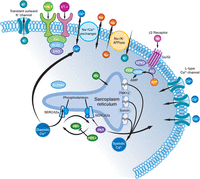
Dr. Hajjar is an internationally renowned scientific leader in the field of cardiac gene therapy for heart failure. His laboratory focuses on molecular mechanisms of heart failure and has validated the cardiac sarcoplasmic reticulum calcium ATPase pump, SERCA2a, as a target in heart failure, developed methodologies for cardiac directed gene transfer that are currently used by investigators throughout the world, and examined the functional consequences of SERCA2a gene transfer in failing hearts. His basic science laboratory remains one of the preeminent laboratories for the investigation of calcium cycling in failing hearts and targeted gene transfer in various animal models. The significance of Dr Hajjar’s research has been recognized with the initiation and recent successful completion of phase 1 and phase 2 First-in-Man clinical trials of SERCA2a gene transfer in patients with advanced heart failure under his guidance.

Prior to joining Mount Sinai, Dr. Hajjar served as Director of the Cardiovascular Laboratory of Integrative Physiology and Imaging at Massachusetts General Hospital and Associate Professor of Medicine at Harvard Medical School. Dr. Hajjar has also been a staff cardiologist in the Heart Failure & Cardiac Transplantation Center at Massachusetts General Hospital.

Dr. Hajjar has won numerous awards and distinctions, including the Young Investigator Award of the American Heart Association. He was awarded a Doris Duke Clinical Scientist award and has won first prize at the Astra Zeneca Young Investigator Forum. He is a member of the American Society for Clinical Investigation. He was recently awarded the Distinguished Alumnus Award from Johns Hopkins University and the Mount Sinai Dean’s award for Excellence in Translational Science. He has authored over 260 peer-reviewed publications.

http://heart.sdsu.edu/~website/IRRI/Pages/faculty/roger-hajjar-md.html

Meet the Director of Mount Sinai’s Cardiovascular Research Center

“Cardiovascular diseases are the number one cause of death globally. In order to tackle them in all aspects, we must unite improved diagnostic techniques with more refined therapies.”

Roger J. Hajjar, MD, Director of the Cardiovascular Research Center, the Arthur & Janet C. Ross Professor of Medicine, Professor of Gene & Cell Medicine, Director of the Cardiology Fellowship Program, and Co-Director of the Transatlantic Cardiovascular Research Center, which combines Mount Sinai Cardiology Laboratories with those of the Universite de Paris – Madame Curie.

In the late 1990s, the possibility that discoveries in genetics and genomics could have a positive impact on the diagnosis, treatment, and prevention of cardiovascular diseases seemed to be just a distant promise. Today, a little more than a decade later, the promise is beginning to take shape. Roger J. Hajjar, MD and his multidisciplinary team of investigators are beginning to translate scientific findings into real therapies for cardiovascular diseases. As Director of the Cardiovascular Research Institute and a cardiologist by training, Dr. Hajjar guides the growth of a cutting-edge translational research laboratory, which is positioning Mount Sinai as the leader in cardiovascular genomics.

An internationally recognized scientific leader in the field of cardiac gene therapy for heart failure, Dr. Hajjar is expanding studies of the basic mechanisms of cardiac diseases and identification of high-risk groups and genomic predictors so that they can be part of the daily clinical care of patients. Unique biorepositories combined with cardiovascular areas of excellence across Mount Sinai make possible crucial genetic studies.

First Gene Therapy for Heart Failure

Under Dr. Hajjar’s leadership, the Cardiovascular Research Center has already developed the world’s first potential gene therapy for heart failure. Known as AAV1.SERCA2a, this therapy actually revives heart tissue that has stopped working properly. It has led to new treatment possibilities for patients with advanced heart failure, whose options used to be severely limited. The significance of this research has been recognized with the initiation and successful completion Phase 1 and Phase 2 First-in-Man clinical trials of SERCA2a gene transfer in patients with advanced heart failure. Phase 3 validation begins in 2011.

The Cardiovascular Research Center’s next research projects, already underway, focus on using novel gene therapy vectors to target diastolic heart failure, ventricular arrhythmias, pulmonary hypertension, and myocardial infarctions.

In addition to targeting signaling pathways to aid failing heart cells, ongoing work at the Cardiovascular Research Center involves studying how to block signaling pathways in cardiac hypertrophy as well as apoptosis. The laboratory team is also targeting a number of signaling pathways in the aging heart to improve dystolic function.

Prior to joining Mount Sinai in 2007, Dr. Hajjar served as Director of the Cardiovascular Laboratory of Integrative Physiology and Imaging at Massachusetts General Hospital and Associate Professor of Medicine at Harvard Medical School. Dr. Hajjar has also been a staff cardiologist in the Heart Failure & Cardiac Transplantation Center at Massachusetts General Hospital. After earning a bachelors of science degree in Biomedical Engineering from Johns Hopkins University and a medical degree from Harvard Medical School and the Harvard-MIT Division of Health Sciences and Technology, he completed his training in internal medicine, cardiology and research fellowships at Massachusetts General Hospital in Boston.

Scientific Advisors

Roger J. Hajjar, MD, Co-Founder and a Scientific Advisor of Celladon Co, plans to commercialize AAV1.SERCA2a for the treatment of heart failure.
Dr. Roger J. Hajjar is the Director of the Cardiovascular Research Center at the Mt. Sinai School of Medicine. Previously, he was the Director of the Cardiovascular Laboratory of Integrative Physiology and Imaging at Massachusetts General Hospital (MGH) and Associate Professor of Medicine at Harvard Medical School. Dr. Hajjar has an active basic science laboratory and concentrates his research efforts on understanding the basic mechanisms of heart failure. He has developed gene transfer methods and techniques targeting the heart as a therapeutic modality to improve contractility in heart failure. Dr. Hajjar’s laboratory focuses on targeting signaling pathways in cardiac myocytes to improve contractile function in heart failure and to block signaling pathways in hypertrophy and apoptosis.

Gene Therapy: Volume 19, Issue 6 (June 2012)

Special Issue: Cardiovascular Gene Therapy

Guest Editor

Roger J Hajjar MD, Mount Sinai School of Medicine, New York, NY Director, Cardiovascular Research Institute, Arthur & Janet C Ross Professor of Medicine

SDF-1 in myocardial repair  

M S Penn, J Pastore, T Miller and R Aras

Gene Ther 19: 583-587; doi:10.1038/gt.2012.32

Abstract | Full Text | PDF

Gene- and cell-based bio-artificial pacemaker: what basic and translational lessons have we learned?  

R A Li

Gene Ther 19: 588-595; doi:10.1038/gt.2012.33

Abstract | Full Text | PDF

Sarcoplasmic reticulum and calcium cycling targeting by gene therapy  

J-S Hulot, G Senyei and R J Hajjar

Gene Ther 19: 596-599; advance online publication, May 17, 2012; doi:10.1038/gt.2012.34

Abstract | Full Text | PDF

Gene therapy for ventricular tachyarrhythmias  

J K Donahue

Gene Ther 19: 600-605; advance online publication, April 26, 2012; doi:10.1038/gt.2012.35

Abstract | Full Text | PDF

Prospects for gene transfer for clinical heart failure  

T Tang, M H Gao and H Kirk Hammond

Gene Ther 19: 606-612; advance online publication, April 26, 2012; doi:10.1038/gt.2012.36

Abstract | Full Text | PDF

Targeting S100A1 in heart failure  

J Ritterhoff and P Most

Gene Ther 19: 613-621; advance online publication, February 16, 2012; doi:10.1038/gt.2012.8

Abstract | Full Text | PDF

VEGF gene therapy: therapeutic angiogenesis in the clinic and beyond  

M Giacca and S Zacchigna

Gene Ther 19: 622-629; advance online publication, March 1, 2012; doi:10.1038/gt.2012.17

Abstract | Full Text | PDF

Vein graft failure: current clinical practice and potential for gene therapeutics  

S Wan, S J George, C Berry and A H Baker

Gene Ther 19: 630-636; advance online publication, March 29, 2012; doi:10.1038/gt.2012.29

Abstract | Full Text | PDF

Percutaneous methods of vector delivery in preclinical models  

D Ladage, K Ishikawa, L Tilemann, J Müller-Ehmsen and Y Kawase

Gene Ther 19: 637-641; advance online publication, March 15, 2012; doi:10.1038/gt.2012.14

Abstract | Full Text | PDF

Lentiviral vectors and cardiovascular diseases: a genetic tool for manipulating cardiomyocyte differentiation and function  

E Di Pasquale, M V G Latronico, G S Jotti and G Condorelli

Gene Ther 19: 642-648; advance online publication, March 1, 2012; doi:10.1038/gt.2012.19

Abstract | Full Text | PDF

Intracellular transport of recombinant adeno-associated virus vectors  

M Nonnenmacher and T Weber

Gene Ther 19: 649-658; advance online publication, February 23, 2012; doi:10.1038/gt.2012.6

Abstract | Full Text | PDF

Gene delivery technologies for cardiac applications  

M G Katz, A S Fargnoli, L A Pritchette and C R Bridges

Gene Ther 19: 659-669; advance online publication, March 15, 2012; doi:10.1038/gt.2012.11

Abstract | Full Text | PDF

Cardiac gene therapy in large animals: bridge from bench to bedside  

K Ishikawa, L Tilemann, D Ladage, J Aguero, L Leonardson, K Fish and Y Kawase

Gene Ther 19: 670-677; advance online publication, February 2, 2012; doi:10.1038/gt.2012.3

Abstract | Full Text | PDF

Progress in gene therapy of dystrophic heart disease  

Y Lai and D Duan

Gene Ther 19: 678-685; advance online publication, February 9, 2012; doi:10.1038/gt.2012.10

Abstract | Full Text | PDF

Targeting GRK2 by gene therapy for heart failure: benefits above β-blockade  

J Reinkober, H Tscheschner, S T Pleger, P Most, H A Katus, W J Koch and P W J Raake

Gene Ther 19: 686-693; advance online publication, February 16, 2012; doi:10.1038/gt.2012.9

Abstract | Full Text | PDF

Directed evolution of novel adeno-associated viruses for therapeutic gene delivery  

M A Bartel, J R Weinstein and D V Schaffer

Gene Ther 19: 694-700; advance online publication, March 8, 2012; doi:10.1038/gt.2012.20

Abstract | Full Text | PDF

http://www.nature.com/gt/journal/v19/n6/index.html

Part II: Cardiac Gene Therapy: Inhalable Gene Therapy for Pulmonary Arterial Hypertension

Public release date: 30-Jul-2013

Contact: Lauren Woods
lauren.woods@mountsinai.org
212-241-2836
The Mount Sinai Hospital / Mount Sinai School of Medicine

Inhalable gene therapy may help pulmonary arterial hypertension patients

Gene therapy when inhaled may restore function of a crucial enzyme in the lungs to reverse deadly PAH

The deadly condition known as pulmonary arterial hypertension (PAH), which afflicts up to 150,000 Americans each year, may be reversible by using an inhalable gene therapy, report an international team of researchers led by investigators at the Cardiovascular Research Center at Icahn School of Medicine at Mount Sinai.

In their new study, reported in the July 30 issue of the journal Circulation, scientists demonstrated that gene therapy administered through a nebulizer-like inhalation device can completely reverse PAH in rat models of the disease. In the lab, researchers also showed in pulmonary artery PAH patient tissue samples reduced expression of the SERCA2a, an enzyme critical for proper pumping of calcium in calcium compartments within the cells. SERCA2a gene therapy could be sought as a promising therapeutic intervention in PAH.

“The gene therapy could be delivered very easily to patients through simple inhalation — just like the way nebulizers work to treat asthma,” says study co-senior investigator Roger J. Hajjar, MD, Director of the Cardiovascular Research Center and the Arthur & Janet C. Ross Professor of Medicine and Professor of Gene & Cell at Icahn School of Medicine at Mount Sinai. “We are excited about testing this therapy in PAH patients who are in critical need of intervention.”

This same SERCA2a dysfunction also occurs in heart failure. This new study utilizes the same gene therapy currently being tested in patients to reverse congestive heart failure in a large phase III clinical trial in the United States and Europe.

“What we have shown is that gene therapy restores function of this crucial enzyme in diseased lungs,” says Dr. Hajjar. “We are delighted with these new findings because it suggests that a gene therapy that is already showing great benefit in congestive heart failure patients may be able to help PAH patients who currently have no good treatment options — and are in critical need of a life sustaining therapy.”

When SERCA2a is down-regulated, calcium stays longer in the cells than it should, and it induces pathways that lead to overgrowth of new and enlarged cells. According to researchers, the delivery of the SERCA2a gene produces SERCA2a enzymes, which helps both heart and lung cells restore their proper use of calcium.

“We are now on a path toward PAH patient clinical trials in the near future,” says Dr. Hajjar, who developed the gene therapy approach. Studies in large animal models are now underway. SERCA2a gene therapy has already been approved by the National Institutes of Health for human study.

A Simple Inhalation Corrects Deadly Dysfunction

PAH most commonly results from heart failure in the left side of the heart or from a pulmonary embolism, when clots in the legs travel to the lungs and cause blockages. When the lung is damaged from these conditions, the tissue starts to quickly produce new and enlarged cells, which narrows pulmonary arteries. This increases the pressure inside them. The high pressure in these arteries resists the heart’s effort to pump through them and the blood flow between the heart and lungs is reduced. The right side of the heart then must overcome the resistance and work harder to push the blood through the pulmonary arteries into the lungs. Over time, the right ventricle becomes thickened and enlarged and heart failure develops.

The gene therapy that Dr. Hajjar developed uses a modified adeno-associated viral-vector that is derived from a parvovirus. It works by introducing a healthy SERCA2a gene into cells, but this gene does not incorporate into a patient’s chromosome, according to the study’s lead author, Lahouaria Hadri, PhD, an Instructor of Medicine in Cardiology at Icahn School of Medicine at Mount Sinai.

“The clinical trials in congestive heart failure have shown already that the gene therapy is very safe,” says Dr. Hadri. Between 40-50 percent of individuals have antecedent antibodies to the adeno-associated vectors, so potential patients need to be screened before gene therapy to make sure they are eligible to receive the vectors. In patients without antibodies, the restorative enzyme gene therapy does not cause an immune response, according to Dr. Hadri.

The clinical application of the gene therapy for patients with PAH will most likely differ from those with heart failure. The replacement gene needs to be injected through the coronary arteries of heart failure patients using catheters, while in PAH patients, the gene will need to be administered through inhalation.

This study was supported by National Institutes of Health grants (K01HL103176, K08111207, R01 HL078691, HL057263, HL071763, HL080498, HL083156, and R01 HL105301).

Other study co-authors include Razmig G. Kratlian, MD, Ludovic Benard, PhD, Kiyotake Ishikawa, MD, Jaume Aguero, MD, Dennis Ladage, MD, Irene C.Turnbull, MD, Erik Kohlbrenner, BA, Lifan Liang, MD, Jean-Sébastien Hulot, MD, PhD, and Yoshiaki Kawase, MD, from Icahn School of Medicine at Mount Sinai; Bradley A. Maron, MD and the study’s co-senior author Jane A. Leopold, MD, from Brigham and Women’s Hospital and Harvard Medical School in Boston, MA; Christophe Guignabert, PhD, from Hôpital Antoine-Béclère, Clamart, France; Peter Dorfmüller, MD, PhD, and Marc Humbert, MD, PhD, both of the Hôpital Antoine-Béclère and INSERM U999, Centre Chirurgical Marie-Lannelongue, Le Plessis-Robinson, France; Borja Ibanez, MD, from Fundación Centro Nacional de Investigaciones Cardiovasculares, Carlos III (CNIC), Madrid, Spain; and Krisztina Zsebo, PhD, of Celladon Corporation, San Diego, CA.

  • Dr. Hajjar and co-author Dr. Zsebo, have ownership interest in Celladon Corporation, which is developing AAV1.SERCA2a for the treatment of heart failure. Also,
  • Dr. Hajjar and co-authors Dr. Kawase and Dr. Ladage hold intellectual property around SERCA2a gene transfer as a treatment modality for PAH. In addition,
  • co-author Dr. Maron receives funding from Gilead Sciences, Inc. to study experimental pulmonary hypertension.
  • Other study co-authors have no financial interests to declare.

Therapeutic Efficacy of AAV1.SERCA2a in Monocrotaline-Induced Pulmonary Arterial Hypertension

  1. Lahouaria Hadri, PhD;
  2. Razmig G. Kratlian, MD;
  3. Ludovic Benard, PhD;
  4. Bradley A. Maron, MD;
  5. Peter Dorfmüller, MD, PhD;
  6. Dennis Ladage, MD;
  7. Christophe Guignabert, PhD;
  8. Kiyotake Ishikawa, MD;
  9. Jaume Aguero, MD;
  10. Borja Ibanez, MD;
  11. Irene C. Turnbull, MD;
  12. Erik Kohlbrenner, BA;
  13. Lifan Liang, MD;
  14. Krisztina Zsebo, PhD;
  15. Marc Humbert, MD, PhD;
  16. Jean-Sébastien Hulot, MD, PhD;
  17. Yoshiaki Kawase, MD;
  18. Roger J. Hajjar, MD*;
  19. Jane A. Leopold, MD*

+Author Affiliations


  1. From the Cardiovascular Research Center, Icahn School of Medicine at Mount Sinai, New York, NY (L.H., R.G.K., L.B., D.L., K.I., J.A., I.C.T., E.K., L.L., J.-S.H., Y.K., R.J.H.); Cardiovascular Medicine Division, Brigham and Women’s Hospital and Harvard Medical School, Boston, MA (B.A.M., J.A.L.); Hôpital Antoine-Béclère, Clamart, France (P.D., C.G., M.H.); INSERM U999, Centre Chirurgical Marie-Lannelongue, Le Plessis-Robinson, France (P.D., M.H.); Fundación Centro Nacional de Investigaciones Cardiovasculares, Carlos III (CNIC), Madrid, Spain (B.I.); and Celladon Corporation, San Diego, CA (K.Z.).
  1. Correspondence to Lahouaria Hadri, PhD, Cardiovascular Research Center, Box 1030, Icahn School of Medicine at Mount Sinai, 1470 Madison Ave, New York, NY 10029. E-mail lahouaria.hadri@mssm.edu

Abstract

Background—Pulmonary arterial hypertension (PAH) is characterized by dysregulated proliferation of pulmonary artery smooth muscle cells leading to (mal)adaptive vascular remodeling. In the systemic circulation, vascular injury is associated with downregulation of sarcoplasmic reticulum Ca2+-ATPase 2a (SERCA2a) and alterations in Ca2+homeostasis in vascular smooth muscle cells that stimulate proliferation. We, therefore, hypothesized that downregulation of SERCA2a is permissive for pulmonary vascular remodeling and the development of PAH.

Methods and Results—SERCA2a expression was decreased significantly in remodeled pulmonary arteries from patients with PAH and the rat monocrotaline model of PAH in comparison with controls. In human pulmonary artery smooth muscle cells in vitro, SERCA2a overexpression by gene transfer decreased proliferation and migration significantly by inhibiting NFAT/STAT3. Overexpresion of SERCA2a in human pulmonary artery endothelial cells in vitro increased endothelial nitric oxide synthase expression and activation. In monocrotaline rats with established PAH, gene transfer of SERCA2a via intratracheal delivery of aerosolized adeno-associated virus serotype 1 (AAV1) carrying the human SERCA2a gene (AAV1.SERCA2a) decreased pulmonary artery pressure, vascular remodeling, right ventricular hypertrophy, and fibrosis in comparison with monocrotaline-PAH rats treated with a control AAV1 carrying β-galactosidase or saline. In a prevention protocol, aerosolized AAV1.SERCA2a delivered at the time of monocrotaline administration limited adverse hemodynamic profiles and indices of pulmonary and cardiac remodeling in comparison with rats administered AAV1 carrying β-galactosidase or saline.

Conclusions—Downregulation of SERCA2a plays a critical role in modulating the vascular and right ventricular pathophenotype associated with PAH. Selective pulmonary SERCA2a gene transfer may offer benefit as a therapeutic intervention in PAH.

Key Words:

  • Received January 24, 2013.
  • Accepted June 13, 2013.

http://circ.ahajournals.org/content/128/5/512.abstract?sid=9b3b4fcc-e158-4e5d-bb8b-125586e2ec12

Circulation.2013; 128: 512-523 Published online before print June 26, 2013,doi: 10.1161/​CIRCULATIONAHA.113.001585

Part III: Cardiac Gene Therapy: Percutaneous Intra-coronary Artery Infusion for Heart Failure

Etiology of Heart Failure

  • Alcoholic
  • Hypertensive
  • Idiopathic
  • Inflammatory
  • Ischemic
  • Pregnancy-related
  • Toxic
  • Valvular Heart DIsease

Administration of Cardiac Gene Therapy for Heart Failure: via Percutaneous Intra-coronary Artery Infusion

  • Gene delivery to viable myocardium

dominance and coronary artery anatomy from angiography determines infusion scenario

  • Antegrade epicardial coronary artery infusion over 10 minutes

60 mL divided into 1,2,3 infusions depending on anatomy

Delivered via commercially available angiographic injection system & guide or diagnostic catheters

Dr. Roger J. Hajjar of the Mount Sinai School of Medicine will present at the ASGCT 15th Annual Meeting during a Scientific Symposium entitled: Cell and Gene Therapy in Cardiovascular Disease on Wednesday, May 16, 2012 at 8:00 am. Below is a brief preview of his presentation.

Roger J. Hajjar, MD

Mount Sinai School of Medicine

New York, NY

Novel Developments in Gene Therapy for Cardiovascular Diseases

Chronic heart failure is a leading cause of hospitalization affecting nearly 6 million people in the U.S. with 670,000 new cases diagnosed every year. Heart failure leads to about 280,000 deaths annually.

Congestive heart failure remains a progressive disease with a desperate need for innovative therapies to reverse the course of ventricular dysfunction. The most common symptoms of heart failure are shortness of breath, feeling tired and swelling in the ankles, feet, legs and sometimes the abdomen. Recent advances in understanding the molecular basis of myocardial dysfunction, together with the evolution of increasingly efficient gene transfer technology have placed heart failure within reach of gene-based therapies.

One of the key abnormalities in both human and experimental HF is a defect in sarcoplasmic reticulum (SR) function, which controls Ca2+ handling in cardiac myocytes on a beat to beat basis. Deficient SR Ca2+ uptake during relaxation has been identified in failing hearts from both humans and animal models and has been associated with a decrease in the activity of the SR Ca2+-ATPase (SERCA2a).

Over the last ten years we have undertaken a program of targeting important calcium cycling proteins in experimental models of heart by somatic gene transfer. This has led to the completion of a first-in-man phase 1 clinical trial of gene therapy for heart failure using adeno-associated vector (AAV) type 1 carrying SERCA2a. In this Phase I trial, there was evidence of clinically meaningful improvements in functional status and/or cardiac function which were observed in the majority of patients at various time points. The safety profile of AAV gene therapy along with the positive biological signals obtained from this phase 1 trial has led to the initiation and recent completion of a phase 2 trial of AAV1.SERCA2a in NYHA class III/IV patients. In the phase 2 trial, gene transfer of SERCA2a was found to be safe and associated with benefit in clinical outcomes, symptoms, functional status, NT-proBNP and cardiac structure.

The 12 month data presented showed that heart failure, which is a progressive disease, became stabilized in high dose AAV1.SERCA2a-treated patients: heart failure symptoms, exercise tolerance, serum biomarkers and cardiac function essentially improved or remained the same while these parameters deteriorated substantially in patients treated with placebo and concurrent optimal drug and device therapy. More recently, the 2-year CUPID data from long-term follow-up demonstrate a durable benefit in preventing major cardiovascular events.

The recent successful and safe completion of the CUPID trial along with the start of more recent phase 1 trials usher a new era for gene therapy for the treatment of heart failure. Furthermore, novel AAV derivatives with high cardiotropism and resistant to neutralizing antibodies are being developed to target a large number of cardiovascular diseases.

http://www.execinc.com/hosted/emails/asgct/file/Hajjar2(1).pdf

Power Point Presentation on Cardiac Gene Therapy –

VIEW SLIDE SHOW

http://my.americanheart.org/idc/groups/heart-public/@wcm/@global/documents/downloadable/ucm_311680.pdf

Gene Therapy for Heart Failure

  1. Lisa Tilemann,
  2. Kiyotake Ishikawa,
  3. Thomas Weber,
  4. Roger J. Hajjar

+Author Affiliations


  1. From the Cardiovascular Research Center, Mount Sinai Medical Center, New York, NY.
  1. Correspondence to Roger J. Hajjar, MD, Mount Sinai Medical Center, One Gustave Levy Place, Box 1030, New York, NY 10029. E-mail roger.hajjar@mssm.edu

Abstract

Congestive heart failure accounts for half a million deaths per year in the United States. Despite its place among the leading causes of morbidity, pharmacological and mechanic remedies have only been able to slow the progression of the disease. Today’s science has yet to provide a cure, and there are few therapeutic modalities available for patients with advanced heart failure. There is a critical need to explore new therapeutic approaches in heart failure, and gene therapy has emerged as a viable alternative. Recent advances in understanding of the molecular basis of myocardial dysfunction, together with the evolution of increasingly efficient gene transfer technology, have placed heart failure within reach of gene-based therapy. The recent successful and safe completion of a phase 2 trial targeting the sarcoplasmic reticulum calcium ATPase pump (SERCA2a), along with the start of more recent phase 1 trials, opens a new era for gene therapy for the treatment of heart failure.

Circulation Research.2012; 110: 777-793 doi: 10.1161/​CIRCRESAHA.111.252981

Key Words:

  • Received December 8, 2011.
  • Revision received January 29, 2012.
  • Accepted January 30, 2012.

Conclusions 

With a better understanding of the molecular mechanisms associated with heart failure and improved vectors with cardiotropic properties, gene therapy can now be considered as a viable adjunctive treatment to mechanical and pharmacological therapies for heart failure. In the coming years, more targets will emerge that are amenable to genetic manipulations, along with more advanced vector systems, which will undoubtedly lead to safer and more effective clinical trials in gene therapy for heart failure.

http://circres.ahajournals.org/content/110/5/777.full.pdf+html

Hijjar1
Figure 1.

AAV entry. 1 indicates receptor binding and endocytosis; 2, escape into cytoplasm; 3, nuclear import; 4, capsid disassembly; 5, double-strand synthesis; and 6, transcription.

Hijjar2

Figure 2.

Generation of mutant AAV library and directed evolution to identify cardiotropic AAVs. A, Creation of a library of AAVs through DNA shuffling.B, Selection of cardiotropic AAVs through directed evolution.

Hijjar3

Figure 3.

Antegrade coronary artery infusion. A, Coronary artery infusion. The vector is injected through a catheter without interruption of the coronary flow. B, Coronary artery infusion with occlusion of a coronary artery: The vector is injected through the lumen of an inflated angioplasty catheter. C, Coronary artery infusion with simultaneous blocking of a coronary artery and a coronary vein: The vector is injected through an inflated angioplasty catheter and resides in the coronary circulation until both balloons are deflated.

Hijjar4

Figure 4.

V-Focus system and retrograde coronary venous infusion. A, Recirculating antegrade coronary artery infusion: The vector is injected into a coronary artery, collected from the coronary sinus and after oxygenation readministered into the coronary artery. B, Retrograde coronary venous infusion with simultaneous blocking of a coronary artery and a coronary vein: The vector is injected into a coronary vein and resides in the coronary circulation until both balloons are deflated.

Hijjar5

Figure 5.

Direct myocardial injection and pericardial injection. A, Percutaneous myocardial injection: The vector is injected with an injection catheter via an endocardial approach.B, Surgical myocardial injection: The vector is injected via an epicardial approach. C, Percutaneous pericardial injection: The vector is injected via a substernal approach.

Hijjar6

Figure 6.

Excitation-contraction coupling in cardiac myocytes provides multiple targets for gene therapy.

SOURCE

http://circres.ahajournals.org/content/110/5/777.figures-only

Articles citing this article

  • ‘Ryanopathy’: causes and manifestations of RyR2 dysfunction in heart failureCardiovasc Res. 2013;98:240-247,
  • Up-regulation of sarcoplasmic reticulum Ca2+ uptake leads to cardiac hypertrophy, contractile dysfunction and early mortality in mice deficient in CASQ2Cardiovasc Res. 2013;98:297-306,
  • Myocardial Delivery of Stromal Cell-Derived Factor 1 in Patients With Ischemic Heart Disease: Safe and PromisingCirc. Res.. 2013;112:746-747,
  • Circulation Research Thematic Synopsis: Cardiovascular GeneticsCirc. Res.. 2013;112:e34-e50,
  • Gene and cytokine therapy for heart failure: molecular mechanisms in the improvement of cardiac functionAm. J. Physiol. Heart Circ. Physiol.. 2012;303:H501-H512,
  • Ryanodine Receptor Phosphorylation and Heart Failure: Phasing Out S2808 and “Criminalizing” S2814Circ. Res.. 2012;110:1398-1402,

http://circres.ahajournals.org/content/110/5/777.figures-only

For 154 References on Cardiac Gene Therapy

http://circres.ahajournals.org/content/110/5/777.full.pdf+html

Read Full Post »

The Role of the Harp and of Music in Medical Recovery

Curator: Aviva Lev-Ari, PhD, RN


Tchaikovsky Flashwaltz at Hadassah Hospital in Jerusalem 

UNEXPECTED CONCERT IN A HOSPITAL IN JERUSALEM – @Hadassah Hospital’s Lobby

 http://safeshare.tv/w/OXHZUxUXXN

More harp music

The Fountain — Marcel Lucien Grandjany – YouTube

http://m.youtube.com/watch?v=S1-LCnGojnw

This article is WORK-in-PROGRESS


Picture below features the Curator with Salvi’s Iris Model in Gold, Cable TV, Palo Alto, CA, 11/19/1989

Aviva with the Harp

Read Full Post »

Reporter: Aviva Lev-Ari, PhD, RN


Nature Genetics (2013) doi:10.1038/ng.2705

Independent specialization of the human and mouse X chromosomes for the male germ line

  1. Whitehead Institute, Cambridge, Massachusetts, USA.

    • Jacob L Mueller,
    • Helen Skaletsky,
    • Laura G Brown,
    • Sara Zaghlul &
    • David C Page
  2. Howard Hughes Medical Institute, Massachusetts Institute of Technology, Cambridge, Massachusetts, USA.

    • Helen Skaletsky,
    • Laura G Brown &
    • David C Page
  3. The Genome Institute, Washington University School of Medicine, St. Louis, Missouri, USA.

    • Susan Rock,
    • Tina Graves,
    • Wesley C Warren &
    • Richard K Wilson
  4. The Wellcome Trust Sanger Institute, Wellcome Trust Genome Campus, Hinxton, Cambridge, UK.

    • Katherine Auger
  5. Department of Biology, Massachusetts Institute of Technology, Cambridge, Massachusetts, USA.

    • David C Page

Contributions

J.L.M., H.S., W.C.W., R.K.W. and D.C.P. planned the project. J.L.M. and L.G.B. performed BAC mapping. J.L.M. performed RNA deep sequencing. T.G., S.R., K.A. and S.Z. were responsible for finished BAC sequencing. J.L.M. and H.S. performed sequence analyses. J.L.M. and D.C.P. wrote the manuscript.

Competing financial interests

The authors declare no competing financial interests.

Corresponding author

Correspondence to:

Nature Genetics (2013) doi:10.1038/ng.2705

Received

 11 February 2013 Accepted

20 June 2013 Published online

21 July 2013

We compared the human and mouse X chromosomes to systematically test Ohno’s law, which states that the gene content of X chromosomes is conserved across placental mammals1. First, we improved the accuracy of the human X-chromosome reference sequence through single-haplotype sequencing of ampliconic regions. The new sequence closed gaps in the reference sequence, corrected previously misassembled regions and identified new palindromic amplicons. Our subsequent analysis led us to conclude that the evolution of human and mouse X chromosomes was bimodal. In accord with Ohno’s law, 94–95% of X-linked single-copy genes are shared by humans and mice; most are expressed in both sexes. Notably, most X-ampliconic genes are exceptions to Ohno’s law: only 31% of human and 22% of mouse X-ampliconic genes had orthologs in the other species. X-ampliconic genes are expressed predominantly in testicular germ cells, and many were independently acquired since divergence from the common ancestor of humans and mice, specializing portions of their X chromosomes for sperm production.

Refined X Chromosome Assembly Hints at Possible Role in Sperm Production

July 22, 2013

NEW YORK (GenomeWeb News) – A US and UK team that delved into previously untapped stretches of sequence on the mammalian X chromosome has uncovered clues that sequences on the female sex chromosome may play a previously unappreciated role in sperm production.

The work, published online yesterday in Nature Genetics, also indicated such portions of the X chromosome may be prone to genetic changes that are more rapid than those described over other, better-characterized X chromosome sequences.

“We view this as the double life of the X chromosome,” senior author David Page, director of the Whitehead Institute, said in a statement.

“[T]he story of the X has been the story of X-linked recessive diseases, such as color blindness, hemophilia, and Duchenne’s muscular dystrophy,” he said. “But there’s another side to the X, a side that is rapidly evolving and seems to be attuned to the reproductive needs of males.”

As part of a mouse and human X chromosome comparison intended to assess the sex chromosome’s similarities across placental mammals, Page and his colleagues used a technique called single-haplotype iterative mapping and sequencing, or SHIMS, to scrutinize human X chromosome sequence and structure in more detail than was available previously.

With the refined human X chromosome assembly and existing mouse data, the team did see cross-mammal conservation for many X-linked genes, particularly those present in single copies. But that was not the case for a few hundred species-specific genes, many of which fell in segmentally duplicated, or “ampliconic,” parts of the X chromosome. Moreover, those genes were prone to expression by germ cells in male testes tissue, pointing to a potential role in sperm production-related processes.

“X-ampliconic genes are expressed predominantly in testicular germ cells,” the study authors noted, “and many were independently acquired since divergence from the common ancestor of humans and mice, specializing portions of their X chromosomes for sperm production.”

The work was part of a larger effort to look at a theory known as Ohno’s law, which predicts extensive X-linked gene similarities from one placental mammal to the next, Page and company turned to the same SHIMS method they used to get a more comprehensive view of the Y chromosome for previous studies.

Using that sequencing method, the group resequenced portions of the human X chromosome, originally assembled from a mishmash of sequence from the 16 or more individuals whose DNA was used to sequence the human X chromosome reference.

Their goal: to track down sections of segmental duplication, called ampliconic regions, that may have been missed or assembled incorrectly in the mosaic human X chromosome sequence.

“Ampliconic regions assembled from multiple haplotypes may have expansions, contractions, or inversions that do not accurately reflect the structure of any extant haplotype,” the study’s authors explained.

“To thoroughly test Ohno’s law,” they wrote, “we constructed a more accurate assembly of the human X chromosome’s ampliconic regions to compare the gene contents of the human and mouse X chromosomes.”

The team focused their attention on 29 predicted ampliconic regions of the human X chromosome, using SHIMS to generate millions of bases of non-overlapping X chromosome sequence.

With that sequence in hand, they went on to refine the human X chromosome assembly before comparing it with the reference sequence for the mouse X chromosome, which already represented just one mouse haplotype.

The analysis indicated that 144 of the genes on the human X chromosome don’t have orthologs in mice, while 197 X-linked mouse genes lack human orthologs.

A minority of those species-specific genes arose as the result of gene duplication or gene loss events since the human and mouse lineages split from one around 80 million years ago, researchers determined. But most appear to have resulted from retrotransposition or transposition events involving sequences from autosomal chromosomes.

And when the team used RNA sequencing and existing gene expression data to look at which mouse and human tissues flip on particular genes, it found that many of the species-specific genes on the X chromosome showed preferential expression in testicular cells known for their role in sperm production.

Based on such findings, the study’s authors concluded that “the gene repertoires of the human and mouse X chromosomes are products of two complementary evolutionary processes: conservation of single-copy genes that serve in functions shared by the sexes and ongoing gene acquisition, usually involving the formation of amplicons, which leads to the differentiation and specialization of X chromosomes for functions in male gametogenesis.”

The group plans to incorporate results of its SHIMS-based assembly into the X chromosome portion of the human reference genome.

“This is a collection of genes that has largely eluded medical geneticists,” the study’s first author Jacob Mueller, a post-doctoral researcher in Page’s Whitehead lab, said in a statement. “Now that we’re confident of the assembly and gene content of these highly repetitive regions on the X chromosome, we can start to dissect their biological significance.”

Related Stories

SOURCE

http://www.genomeweb.com//node/1256251?utm_source=SilverpopMailing&utm_medium=email&utm_campaign=X%20Chromosome’s%20Possible%20New%20Role;%20NanoString%20Coverage%20Initiated;%20SynapDx%20Raises%20Funds;%20More%20-%2007/22/2013%2010:50:00%20AM


REFERENCES in the Nature Genetics

  • Ohno, S. Sex Chromosomes and Sex-Linked Genes (Springer, Berlin, 1967).
  1. Kuroiwa, A. et al. Conservation of the rat X chromosome gene order in rodent species.Chromosome Res. 9, 61–67 (2001).
  2. Delgado, C.L., Waters, P.D., Gilbert, C., Robinson, T.J. & Graves, J.A. Physical mapping of the elephant X chromosome: conservation of gene order over 105 million years.Chromosome Res. 17, 917–926 (2009).
  3. Prakash, B., Kuosku, V., Olsaker, I., Gustavsson, I. & Chowdhary, B.P. Comparative FISH mapping of bovine cosmids to reindeer chromosomes demonstrates conservation of the X-chromosome. Chromosome Res. 4, 214–217 (1996).
  4. Ross, M.T. et al. The DNA sequence of the human X chromosome. Nature 434, 325–337(2005).
  5. Veyrunes, F. et al. Bird-like sex chromosomes of platypus imply recent origin of mammal sex chromosomes. Genome Res. 18, 965–973 (2008).
  6. Watanabe, T.K. et al. A radiation hybrid map of the rat genome containing 5,255 markers.Nat. Genet. 22, 27–36 (1999).
  7. Raudsepp, T. et al. Exceptional conservation of horse-human gene order on X chromosome revealed by high-resolution radiation hybrid mapping. Proc. Natl. Acad. Sci. USA 101,2386–2391 (2004).
  8. Band, M.R. et al. An ordered comparative map of the cattle and human genomes. Genome Res. 10, 1359–1368 (2000).
  9. Murphy, W.J., Sun, S., Chen, Z.Q., Pecon-Slattery, J. & O’Brien, S.J. Extensive conservation of sex chromosome organization between cat and human revealed by parallel radiation hybrid mapping. Genome Res. 9, 1223–1230 (1999).
  10. Spriggs, H.F. et al. Construction and integration of radiation-hybrid and cytogenetic maps of dog chromosome X. Mamm. Genome 14, 214–221 (2003).
  11. Palmer, S., Perry, J. & Ashworth, A. A contravention of Ohno’s law in mice. Nat. Genet. 10,472–476 (1995).
  12. Rugarli, E.I. et al. Different chromosomal localization of the Clcn4 gene in Mus spretus and C57BL/6J mice. Nat. Genet. 10, 466–471 (1995).
  13. She, X. et al. Shotgun sequence assembly and recent segmental duplications within the human genome. Nature 431, 927–930 (2004).
  14. Olivier, M. et al. A high-resolution radiation hybrid map of the human genome draft sequence. Science 291, 1298–1302 (2001).
  15. Dietrich, W.F. et al. A comprehensive genetic map of the mouse genome. Nature 380,149–152 (1996).
  16. Church, D.M. et al. Lineage-specific biology revealed by a finished genome assembly of the mouse. PLoS Biol. 7, e1000112 (2009).
  17. Tishkoff, S.A. & Kidd, K.K. Implications of biogeography of human populations for ‘race’ and medicine. Nat. Genet. 36, S21–S27 (2004).
  18. Bovee, D. et al. Closing gaps in the human genome with fosmid resources generated from multiple individuals. Nat. Genet. 40, 96–101 (2008).
  19. Kidd, J.M. et al. Mapping and sequencing of structural variation from eight human genomes.Nature 453, 56–64 (2008).
  20. Skaletsky, H. et al. The male-specific region of the human Y chromosome is a mosaic of discrete sequence classes. Nature 423, 825–837 (2003).
  21. Hughes, J.F. et al. Chimpanzee and human Y chromosomes are remarkably divergent in structure and gene content. Nature 463, 536–539 (2010).
  22. Kuroda-Kawaguchi, T. et al. The AZFc region of the Y chromosome features massive palindromes and uniform recurrent deletions in infertile men. Nat. Genet. 29, 279–286(2001).
  23. Bellott, D.W. et al. Convergent evolution of chicken Z and human X chromosomes by expansion and gene acquisition. Nature 466, 612–616 (2010).
  24. Lindblad-Toh, K. et al. Genome sequence, comparative analysis and haplotype structure of the domestic dog. Nature 438, 803–819 (2005).
  25. Wade, C.M. et al. Genome sequence, comparative analysis, and population genetics of the domestic horse. Science 326, 865–867 (2009).
  26. International Chicken Genome Sequencing Consortium. Sequence and comparative analysis of the chicken genome provide unique perspectives on vertebrate evolution. Nature 432,695–716 (2004).
  27. Wang, E.T. et al. Alternative isoform regulation in human tissue transcriptomes. Nature 456,470–476 (2008).
  28. Mortazavi, A., Williams, B.A., McCue, K., Schaeffer, L. & Wold, B. Mapping and quantifying mammalian transcriptomes by RNA-Seq. Nat. Methods 5, 621–628 (2008).
  29. Bradley, R.K., Merkin, J., Lambert, N.J. & Burge, C.B. Alternative splicing of RNA triplets is often regulated and accelerates proteome evolution. PLoS Biol. 10, e1001229 (2012).
  30. Handel, M.A. & Eppig, J.J. Sertoli cell differentiation in the testes of mice genetically deficient in germ cells. Biol. Reprod. 20, 1031–1038 (1979).
  31. Mueller, J.L. et al. The mouse X chromosome is enriched for multicopy testis genes showing postmeiotic expression. Nat. Genet. 40, 794–799 (2008).
  32. Coyne, J.A. & Orr, H.A. Speciation (Sinauer Associates, Sunderland, MA, 2004).
  33. Elliott, R.W. et al. Genetic analysis of testis weight and fertility in an interspecies hybrid congenic strain for chromosome X. Mamm. Genome 12, 45–51 (2001).
  34. Elliott, R.W., Poslinski, D., Tabaczynski, D., Hohman, C. & Pazik, J. Loci affecting male fertility in hybrids between Mus macedonicus and C57BL/6. Mamm. Genome 15, 704–710(2004).
  35. Storchová, R. et al. Genetic analysis of X-linked hybrid sterility in the house mouse. Mamm. Genome 15, 515–524 (2004).
  36. Fujita, P.A. et al. The UCSC Genome Browser database: update 2011. Nucleic Acids Res.39, D876–D882 (2011).
  37. Schwartz, S. et al. Human-mouse alignments with BLASTZ. Genome Res. 13, 103–107(2003).
  38. Bailey, J.A. et al. Recent segmental duplications in the human genome. Science 297,1003–1007 (2002).
  39. Osoegawa, K. et al. A bacterial artificial chromosome library for sequencing the complete human genome. Genome Res. 11, 483–496 (2001).
  40. Salido, E.C. et al. Cloning and expression of the mouse pseudoautosomal steroid sulphatase gene (Sts). Nat. Genet. 13, 83–86 (1996).
  41. Yeh, R.F., Lim, L.P. & Burge, C.B. Computational inference of homologous gene structures in the human genome. Genome Res. 11, 803–816 (2001).
  42. Altschul, S.F., Gish, W., Miller, W., Myers, E.W. & Lipman, D.J. Basic local alignment search tool. J. Mol. Biol. 215, 403–410 (1990).
  43. Thornton, K. & Long, M. Rapid divergence of gene duplicates on the Drosophila melanogaster X chromosome. Mol. Biol. Evol. 19, 918–925 (2002).
  44. Trapnell, C., Pachter, L. & Salzberg, S.L. TopHat: discovering splice junctions with RNA-Seq.Bioinformatics 25, 1105–1111 (2009).
  45. Trapnell, C. et al. Transcript assembly and quantification by RNA-Seq reveals unannotated transcripts and isoform switching during cell differentiation. Nat. Biotechnol. 28, 511–515(2010).
  46. Brawand, D. et al. The evolution of gene expression levels in mammalian organs. Nature478, 343–348 (2011).
  47. Deng, X. et al. Evidence for compensatory upregulation of expressed X-linked genes in mammals, Caenorhabditis elegans and Drosophila melanogaster. Nat. Genet. 43,1179–1185 (2011).


Read Full Post »

The Effects of Bovine Thrombin on HUVEC and AoSMC

Curators: Demet Sağ, 1,* and Jeffrey Harold Lawson 1,2

From the Department of Surgery1 and PathologyDuke University Medical Center Durham, NC-USA

Running Foot:

Thrombin induces vascular cell proliferation


crystal structure of thrombin.

crystal structure of thrombin. (Photo credit: Wikipedia)

Review Profs and correspondence should be addressed to:

Dr. Jeffrey Lawson

Duke University Medical Center

Room 481 MSRB/ Boxes 2622

Research Drive

Durham, NC 27710

Phone (919) 681-6432

Fax      (919) 681-1094

Email: lawso717@duke.edu, demet.sag@gmail.com

*Current Address:  TransGenomics Consulting, Principal, 3830 Valley Center Drive, Suite 705-223 San Diego, CA 92130


Abstract: 

Thrombin is a serine protease with multiple cellular functions that acts through protease activated receptor kinases (PARs) and responds to trauma at the endothelial cells of vein resulting in coagulation.  In this study, we had analyzed the activity of thrombin on the vein by using human umbilical vein endothelial (HUVEC) and human aorta smooth muscle (AoSMC) cells.  Ectopic thrombin increases the expression of PARs, cAMP concentration, and Gi signaling as a result the proliferation events in the smooth muscle cells achieved by the elevation of activated ERK leading to gene activation through c-AMP binding elements responsive transcription factors such as CREB, NFkB50, c-fos, ATF-2.  We had observed activation of p38 as well as JNK but they were related to stress and inflammation. In the nucleus, ATF-2 activity is the start point of IL-2 proliferation through T cell activation creating APC and B-cell memory leading to autoimmune reaction as a result of ectopic thrombin.  These changes in the gene activation increased connective tissue growth factor as well as cysteine rich protein expression at the mRNA level, which proven to involve in vascularization and angiogenesis in several studies.  Consequently, when ectopic thrombin used during the graft transplant surgeries, it causes occlusion of the veins so that transplant needs to be replaced within six months due to thrombin’s proliferative function as mitogen in the smooth muscle cells.

WORD COUNT OF ABSTRACT: 221


The Effect of Thrombin(s) on Smooth Muscle and Endothelial Cells

Thrombin is a multifunctional serine protease that plays a major role in the highly regulated series of biochemical reactions leading to the formation of fibrin (1, 2).  Thrombin has been shown to affect a vast number of cell types, including platelets, endothelial cells, smooth muscle cells, cardiomyocytes, fibroblasts, mast cells, neurons, keratinocytes, monocytes, macrophages and a variety of lymphocytes, including B-cells and T-cells, and stimulate smooth muscle and endothelial cell proliferation (3-13).

Induction of thrombin results in cells response as immune response and proliferation by affecting transcriptional control of gene expression through series of signaling mechanisms (14).  First, protease activated receptor kinases (PAR), which are seven membrane spanning receptors called G protein coupled receptors (GPCR) are initiate the line of mechanism by thrombin resulting in variety of cellular responses. These receptorsare activated by a unique mechanism in which the protease createsa new extracellular amino-terminus functioning as a tetheredligand, results in intermolecular activation.  PARs are ‘single-use’ receptors: activation is irreversible and the cleaved receptors are degraded in lysosomes, as they play important roles in ’emergency situations’, such as trauma and inflammation.  Protease activated receptor 1 (PAR1) is the prototype of this family and is activated when thrombin cleaves its amino-terminal extracellular domain.  PAR1, PAR3, and PAR4 are activated by thrombin. Whereas PAR2 is activated by trypsin, factor VIIa, tissue factor, factor Xa, thrombin cleaved PAR1.

Second, the activated PAR by the thrombin stimulates downstream signaling events by G protein dependent or independent pathways.  Although each of the PAR respond to thrombin undoubtedly mediates different thrombin responses, most of what is known about thrombin signaling downstream of the receptors themselves has derived from studies of PAR1.  PAR couples with at least three G protein families Gq, Gi, and G12/13.  With G protein activation: Gi/q leads InsP3 induced Ca release and/or Rac induced membrane ruffling.  Gi dependent signaling activates Ras, p42/44, Src/Fak, p42.  Rho related proteins and phospholipase C results in mitogenesis and actin cytoskeletal rearrangements. G protein independent activation happens either through tyrosine kinase trans-activation results in mitogenesis and stress-fibre formation, neurite retraction by Rho path, or activation of choline for Rap association with newly systhesized actin.  These events are tightly regulated to support diverse cellular responses of thrombin. (15-17).

Treatment of veins with topical bovine thrombin showed early occlusion of the veins result in proliferation of smooth muscle cells (18-24) due to change of gene expression transcription.  The change of Ca++ and cAMP concentrations influence cAMP response element binding protein (25-30) carrying transcription factors such as CREB, ATF-2, c-jun, c-fos, c-Rel.  Activation of angiogenesis and vascularization affects cysteine rich gene family (CCN) genes such as connective tissue factor (CTGF) and cysteine rich gene (Cyr61) according to performed studies and microarray analysis by (31-36).   Currently the most common topical products approved by FDA are bovine originated.   Although bovine thrombin is very similar to human (37, 38), it has a species specific activity, shown to cause autoimmune-response (39-42), which results in repeated surgeries (40, 43, 44), and renal failures that cost to health of individuals as well as to the economy.

In this report we had evaluated the effect of topically applied bovine thrombin to human umbilical endothelial cells (HUVECs) and human aorta smooth muscle cells (AoSMCs).  We had showed that use of bovine thrombin cause adverse affects on the cellular physiology of human vein towards proliferation of smooth muscle tissue.   Collectively, thrombin usage should be assessed before and after surgery because it is a very potent substance.

MATERIALS AND METHODS:

Thrombins:  Bovine thrombin and human thrombin ((Haematologic Technologies Inc, VT); topical bovine thrombin (JMI, King’s Pharmaceutical, KS); topical human thrombin (Baxter, NC human thrombin sealant).

Cell Culture:  The pooled cells were received from Clonetics. Human endothelial cells  (HUVEC) were grown in EGM-2MV bullet kit (refinements to basal medium CCMD130 and the growth factors, 5% FBS, 0.04% hydrocortisone, 2.5% hFGF, 0.1% of each VEGF, IGF-1, Ascorbic acid, hEGF, GA-1000) and human aorta smooth muscle cells (AoSMC) were grown in SmGM-2 medium (5% FBS, 0.1% Insulin, 1.25% hFGF, 0.1% GA-1000, and 0.1% hEGF).     The cells were grown to confluence (2-3 days for HUVEC and 4-5 days for HOSMC) before splitted, and only used from passage 3 to 5.  Before stimulating the confluent cells, they had been starved with starvation media containing 0.1% bovine serum albumin (BSA) EGM-2 or SmBM basal media.

RNA isolation and RT-PCR:  The total RNA was isolated by RNeasy mini kit (Qiagen, Cat#74104) fibrous animal tissue protocol.  The two-step protocol had been applied to amplify cDNA by Prostar Ultra HF RT PCR kit (Stratagene Cat# 600166).  At first step, cDNA from the total RNA had been synthesized. After denaturing the RNA at 65 oC for 5 min, the Pfu Turbo added at room temperature to the reaction with random primers, then incubated at 42oC for 15min for cDNA amplification.   At the second step, hot start PCR reaction had been designed by use of gene specific primers for PAR1, PAR2, PAR3, and PAR4 to amplify DNA with robotic arm PCR. The reaction conditions were one cycle at 95oC for 1 min, 40 cycles for denatured at 95oC for 1 min, annealed at 50 oC 1min, amplified at 68 oC for 3min, finally one cycle of extension at 68 oC for 10 min.  The cDNA products were then usedas PCR templates for the amplification of a 614 bp PAR-1 fragment(PAR-1 sense: 5′-CTGACGCTCTTCATCCCCTCCGTG, PAR-1 antisense:5′-GACAGGAACAAAGCCCGCGACTTC), a 599 bp PAR-2 fragment (PAR-2sense: 5′-GGTCTTTCTTCCGGTCGTCTACAT, PAR-2 antisense: 5′-GCAGTTATGCAGTCAGGC),a 601 bp PAR-3 fragment (PAR-3 sense: 5′-GAGTCCCTGCCCACACAGTC,PAR-3 antisense: 5′-TCGCCAAATACCCAGTTGTT), a 492 bp PAR-4 fragment(PAR-4 sense: 5′-GAGCCGAAGTCCTCAGACAA, PAR-4 antisense: 5′-AGGCCACCAAACAGAGTCCA). The PCR consistedof 25 to 40 cycles between 95°C (15 seconds) and 55°C(45 seconds). Controls included reactions without template,without reverse transcriptase, and water alone. Primers forglyceraldehydes phosphate dehydrogenase (GAPDH; sense: 5′-GACCCCTTCATTGACCTCAAC,antisense: 5′-CTTCTCCATGGTGGTGAAGA) were used as controls. Reactionproducts were resolved on a 1.2% agarose gel and visualizedusing ethidium bromide.

The primers CTGF-(forward) 5′- GGAGCGAGACACCAACC -3′ and CTGF-(reverse) CCAGTCATAATCAAAGAAGCAGC ; Cyr61- (forward)  GGAAGCCTTGCT CATTCTTGA  and Cyr61- (reverse) TCC AAT CGT GGC TGC ATT AGT were used for RT-PCR.  The conditions were hot start at 95C for 1 min, fourty cycles of denaturing for 45 sec at 95C, annealing for 45 sec at 55C and amplifying for 2min at 68C, followed by 10 minutes at 68C extension.


Cell Proliferation Assay with WST-1—Cell proliferation assays were performed using the cell proliferation reagent 3-(4,5 dimethylthiazaol-2-y1)-2,5-dimethyltetrazolium bromide (WST-1, Roche Cat# 1-644-807) via indirect mechanism.   This non-radioactive colorimetric assay is based on the cleavage of the tetrazolium salt WST-1 by mitocondrial dehydrogenases in viable cells forming colored reaction product.   HUVECs were grown in 96 well plates (starting from 250, 500, and 1000 cells/well) for 1 day and then incubated the medium without FBS and growth factors for 24 h.  The cells were then treated with WST-1 and four types of thrombins, 100 units of each BIIa, HIIa, TBIIa, and THIIa.  The reaction was stopped by H2SO4 and absorbance (450 nm) of the formazan product was measured as an index of cell proliferation. The standard error of mean had been calculated.

BrDu incorporation:  This method being chosen to determine the cellular proliferation with a direct non-radioactive measurement of DNA synthesis based on the incorporation of the pyridine analogous 5 bromo-2’-deoxyuridine (BrDu) instead of thymidine into the DNA of proliferating cells. The antibody conjugate reacts with BrDu and with BrDu incorporated into DNA.  The antibody does not cross-react with endogenous cellular components such as thymidine, uridine, or DNA.  The cells were seeded, next day starved for 24h, and were stimulated at time intervals 3h, 24h, and 72h with 100 units of each BIIa, HIIa, TBIIa, and THIIa, and BrDu (Roche).  Cells were fixed for 15 min with fixation-denature solution and incubated with primary antibody (anti-BrDu) prior to incubation with the secondary antibody.  The cells were then fixed in 3.7% formaldehyde for 10 min at room temperature, rinsed in PBS and the chromatin was rendered accessible by a 10 min treatment with HCI (2 M), then measured the activity at A450nm.

Nuclear Extract Preparation:  The nuclear extracts were prepared by the protocol suggested in the ELISA inflammation kit (BD).   For each treatment one 100mm plate were used per cell line.

EMSA:  The 96 well-plates were blocked at room temperature before incubating with the 50 ul of prepared nuclear extracts from each treated cell line were placed for one hour at 25C.  The washed plates were incubated with primary antibodies of each transcription factors for another hour at 25C and repeat the wash step with transfactor/blocking buffer prior to secondary antibody addition for 30 min at 25C, wash again with transfactor buffer, which was followed by development of the blue color for ten minutes and the reaction was stopped with 1M sulfuric acid, and the absorbance readings were taking at 450nm by multiple well plate reader.

Immunoblotting:  The activated level of pERK, Gi, Gq, and PAR1 had been immunoblotted to observe the mitogenic effect of bovine thrombin on both HUVEC and AoSMCs.   The cells were lysed in sample buffer (0.25M Tris-HCl, pH 6.8, 10% glycerol, 5%SDS, 5% b-mercaptoethanol, 0.02%bromophenol blue).  The samples were run on the 16% SDS-PAGE for 1 hour at 30mA per gel. Following the completion of transfer onto 0.45micro molar nitrocellulose membrane for 1 hour at 250mA, the membranes were blocked in 5% skim milk phosphate buffered saline at 4C for 4 hours. The membranes were washed three times for 10 minutes each in 0.1% Tween-20 in PBS after both primary and secondary antibody incubations.  The pERK (42/44 kD), Gi (40kDa), Gq (40kDa) and PAR1 (55kDa) visualized with the polyclonal antibody raised against each in rabbit (1:5000 dilution from g/ml, Cell Signaling) and chemiluminescent detection of anti-rabbit IgG 1/200 conjugated with horseradish peroxidase (ECL, Amersham Corp).

RESULTS:

The expression of PARs differs for the types  of  vascular cells. 

Figure 1 shows PAR 1 and PAR3 expression on HUVECs and AoSMCs. The expression was evaluated consisted with prior work PAR1 and PAR3 express on AoSMC but PAR2 and PAR4 are not.  The level of PAR1 expression is significantly greater on AoSMC (3:1) then HUVECs.  We determine the PAR2 in vitro in HUVECs or AoSMCs, PAR2, does not respond to thrombin however according to reports, has function in inflammation. PAR4 is not detected in either cell types. However, PAR3 responding to thrombin at low concentration showed minute amount in AoSMC compare to weak presence in HUVECs. The origin of the thrombin may influence the difference in expression of PAR4 in HUVECs, since BIIa caused higher PAR4 expression than HIIA, but THIIa had almost none (not shown).

The expression of the PARs, G proteins, and pERK use different signaling dynamics. The application of thrombin triggers the extracellular signaling mechanism through the PARs on the membrane; next, the signal travels through cytoplasm by Gi and Gq to MAPKs. Gi was activated   more on AoSMC than HUVECs (Figure 2 and Figure 3).

In Figure 2 demonstrates the expression of Gi on HUVEC starts at 20minutes and continues to be expressed until 5.5h time interval, but Gq/11 expression is almost same between non-stimulated and stimulated samples from 20min to 5.5 h period.  The difference of expression between the two kinds of G proteins is subtle, Gi is at least five fold more than Gi expression on AoSMC. 

In Figure 3, there is a difference between Gi and Gq/11 expression on HUVEC. The linear  increase from 0 to 30 minutes was detected, at 1hour the expression decreased by 50%, then the expression became un-detectable.   Both Gi and Gq/11 showed the same pattern of expression but only Gi had again showed five times stronger signal than Gq/11.  This brings the possibility that Gi had been activated due to thrombin and this signal pass onto AoSMC and remain there long period of time.

Next, the proliferation through MAPK signaling had been tested by ERK activation.  Figure 4 represents this activation data that both HUVECs and AoSMCs express activated ERK, but the activity dynamics is different as expected from G protein signaling pattern.   Both AoSMC and HUVECs starts to express the activated ERK around 20min time and reach to the plato at 3.5hr.  AoSMCs get phosphorylated at least 5 times more than HUVECs.   This might be related to dynamics of each PARs as it had been suggested previously (by Coughlin group PAR1 vs. PAR4).

Activation of DNA synthesis in AoSMCs.  As it had been shown the serine proteases, thrombin and trypsin are among many factors that malignant cells secrete into the extracellular space to mediate metastatic processes such as cellular invasion, extracellular matrix degradation, angiogenesis, and tissue remodeling. We want to examine whether the types of thrombin had any specificity on proliferation on either cell types. Moreover, if there was a correlation between the number of cells and origin of thrombin, it can be use as reference to predict the response from the patient that may be valuable in patient’s recovery. As a result, we had investigated the proliferation of HUVECs and AoSMCs by WST-1 and BrDu.

DNA synthesis experiments for HUVECs with WST-1and BrDu showed no mitogenic response to thrombins we used with WST-1 or BrDu.   All together, in our data showed that there is no significant proliferation in HUVECs due to thrombins we used (data not shown).

DNA synthesis for AoSMCs With WST-1: After the starvation of the cells hours by depleting the cells were treated with WST-1 and readings were collected at time intervals of 0, 3.5, 25, and 45hours.  The measured WST-1 reaction increased 20% between each time points from 0 to 25 h and stop at 45 h except THIIa continue 20% increase (not shown). 

DNA synthesis at AoSMCs With BrDu: We had observed 2.5 fold increase of DNA synthesis of AoSMC after 72 hr in response to thrombin treatments, that resulted in cell proliferation according to Figure 5.  The plates were seeded with 500 cells and the proliferation was measured at time intervals 3h, 24h, and 72h.  At 3h time interval no difference between non-stimulated and  stimulated by topical bovine thrombin AoSMC.  At 24h the cells proliferate 20% by favor of treated cells, finally at 72h the ectopical bovine thrombin cause 253% more cell proliferationthan baseline. On the same token, TBIIa had 100% more mitogenic than THIIa but there was almost no difference between the HIIa and BIIa on proliferation (not shown).  This predicts that as well as the origin of the product the purity of the preparation is important.

Effects of thrombin and TRAPS (thrombin receptor activated peptides) on the HUVECs

Figure 6A (Figure 6) presents how TRAP stimulated cells change their transcription factor expression.  PAR1 effects CREB and c-Rel, but PAR3 affects ATF-2 and c-Rel. The proliferation signals eventually affect the gene expression and activation of downstream genes.  HUVECs were treated all four known TRAPs directly, before treating them with types of ectopical thrombins.  As a result, it is important to find how direct application of specific peptides for each PAR receptor will change the gene expression in the nucleus of ECs as well as their phenotype to activate SMCs.  PAR1 caused 175% increase on 200% on c-rel, 175% CREB, 90% on ATF2, 80% on c-fos, 70% on NfkB 50 and 60% on NFkB65. On the other hand, PAR3 affected the ATF2 by 200%.  PAR3 increased the c-Rel by 160%, and NfkB50, NFkB65, and c-fos by 60%.  These factors have CREs (cAMP response elements) in their transcriptional sequence and they bind to p300/CREB either creating homodimers or heterodimers to trigger transcriptional control mechanism of a cell, e.g. T cell activation by IL2 proliferation activated by ATF dimers or choosing between controlled versus un-controlled cellular proliferation. These decisions determine what downstream genes are going to be on and when.  This data confirms the increased of activated ERK, p38 and JNK protein expression in vivo study (Sag et al., 2013)

The effects of thrombins on the transcription factors.  Figure 7 demonstrates the comparison between HUVECs and AoSMC after topical bovine thrombin (JMI) stimulation to detect a difference on transcription activation. First, Figure 7A shows in HUVECs  topical bovine thrombin causes elevation of ATF2 activation by  50% and c-Rel by 30%.  Figure 7B represents in AoSMC thrombin affects CREB specifically since no change on HUVECs.  As a result, the transcription factors are activated differently, therefore, CREB 40%, ATF2 80%, and c-Rel 10% elevated by TBII treatment compare to baseline.

Gene Interaction changes after the thrombin treatment both in vivo and in vitro:  Figure 8 shows RT-PCR for two of the cysteine rich family proteins in vitro (this study) as well as in vivo (Sag et al manuscript 2006).  These genes have a  predicted function in angiogenesis, connective tissue growth factor (CTGF) and cystein rich protein 61 (Cyr61).  In our in vivo study, CTGF was only expressed if the veins are treated with thrombin and Cys61 expression is also elevated but both controls and bovine thrombin treated veins showed expression.  The total RNA from the cells was purified and testes against controls, the negative controls by water or by no reverse transcriptase and positive controls by internal gene, expression of beta actin.  The expression of beta actin is  at least two-three times abundant in HUVECs than that of AoSMC.  The CTGF is higher in AoSMCs  than HUVEC.  Simply the fact that the concentration of RNA is lower along with low internal expression positive control gene, but the CTGF expression was even 1 fold higher than HUVEC.  In perfect picture this theoretically adds up to 4 times difference between the cell types in favor of AoSMCs.  However, the Cyr61 expression adds up to the equal level of cDNA expression.

Consequently, the overall use of topical thrombins changed the fate of the cells plus when they were in their very fragile state under the surgical trauma and inflammation caused by the operation.  As a result, the cells may not be able make cohesive decision to avoid these extra signals, depending on the age and types of operations but eventually they lead to complications.

DISCUSSION:

In this study, we had shown the molecular pathway(s) affected by using ectopic thrombin during/after surgery on pig animal model that causing differentiation in the gene interactions for proliferation. In our study the mechanism for ectopic thrombins to investigate whether there was a difference in cell stimulation and gene interactions. Starting from the cell surface to the nucleus we had tested the mechanisms for thrombin affect on cells.  We had found that there were differences between endothelial cells and smooth muscle cell responses depending on the type of thrombin origin.  For example, PAR1 expressed heavily on HUVECs, but PAR1 and PAR3 on the AoSMCs.   Activated PARs couples to signaling cascades affect cell shape, secretion, integrin activation, metabolic responses, transcriptional responses and cell motility. Moreover, according to the literature these diverse functions differ depending on the cell type and time that adds another dimension.

Presence of PARs on different cell types have been studied by many groups for different reasons development, coagulation, inflammation and immune response. For example, PAR1 is the predominant thrombin receptor expressed in HUVECs and cleavage of PAR1 is required for EC responses to thrombin.  As a result, PAR2 may activate PAR1 for action in addition to transactivation between PAR3 and PAR4 observed. PAR4 is not expressed on HUVEC; and transactivation of PAR2 by cleaved PAR1 can contribute to endothelial cell responses to thrombin, particularly when signaling through PAR1 is blocked.

Next, the measurement of G protein expression shows that Gi and Gq have function at both cell types in terms of ectopical response to cAMP; therefore, Gi was heavily expressed. However Gi was stated to be function in development and growth therefore activates MAPKs most.  As it was expected from previous studies and our hands in vivo, observation of elevated ERK phosphorylation in vitro at time intervals relay us to determine simply what molecular genetics and development players cause the thickening in the vessel.  Analysis between the cell types resulted in proliferation of AoSMC, which was enough to occlude a vessel.

The ability of the immune system to distinguish between benignand harmful antigens is central to maintaining the overall healthof an organism. Fields and Shoenecker (2003) from our lab showed that proteases, namely those that can activate the PAR-2 transmembraneprotein, can up-regulate costimulatory molecules on DC and initiatean immune response (45).  Once activated, PAR-2 initiates a numberof intracellular events, including G and Gß signaling. Here, we show the PAR protein expression for PAR1 and PAR3 but not for PAR2.  Yet we had seen mRNA expression of PAR2 in vitro. We had also detected Gi and Gq but no expression of Ga or Gbg.   However, we did detect the difference of transcription factor activation by EMSA that correlates well with danger signal creation by thrombin.  In this report with the highlights of our data it seems that it is possibly an indirect response.

The bovine thrombin also affected the gene activation, measured by EMSA ELISA by direct treatment of the cells with thrombin response activation peptides (TRAPs) for PAR1, PAR2, PAR3, PAR4 on HUVECs since the endothelial cells directly exposed to ectopical thrombin treatment on vascular system and smooth muscle cells are inside of the vein.  Therefore, plausibly ECs transfer the signals received from their surface to the smooth muscle cells.  Second, we applied ectopical thrombins on AoSMCs as well as HUVECs by the same technique for the analysis of change same transcription factors previously with HUVEC for response to TRAPs.  These factors were ATF-2, CREB, c-rel, NFkB p50, NFkB p65, and c-fos.   In HUVECs, NFkB 50 increased the most by PAR2 oligo and PAR4 oligo, CREB as inflammatory response by PAR1 oligo, and ATF2 for PAR3 and PAR4 oligos, and c-fos with PAR4 oligo  The cellular response for thrombin in AoSMC differs from HUVEC since the at AoSMC not only proliferation by CREB  but also T cell activation by ATF-2 observed.

CREB (CRE-binding protein, Cyclic AMP Responsive DNA Binding Protein) protein has been shown to function as calcium regulated transcription factor as well as a substrate for depolarization-activated calcium calmodulin-dependent protein kinases II and I.   Some growth control genes, such as FOS have CRE, in their transcriptional regulatory region and their expression is induced by increase in the intracellular cAMP levels. This data goes very well with our finding of highly elevated Gi expression compare to Gq/11.  The CREB, or ATF (activating transcription factor, CRBP1, cAMP response element-binding protein 2, formerly; (CREB2) are also interacting with p300/CBP.  Transcriptional activation of CREB is controlled through phosphorylation at Ser133 by p90Rsk and the p44/42 MAP kinase (pERK, phosphorylated ERK). The transcriptional activity of the proto-oncogene c-Fos has been implicated in cell growth, differentiation, and development. Like CREB, c-Fos is regulated by p90Rsk.   NFKB has been detected in numerous cell types that express cytokines, chemokines, growth factors, cell adhesion molecules, and some acute phase proteins in health and in various disease states. In sum, our data is coherent from cellular membrane to nucleus as well as from nucleus to cellular membrane.

The origin of the thrombin is proven to be important, and required to be used very defined and clear concentrations.  It is not an old dog trick since ectopical thrombins have been used to control bleeding very widely without much required regulations not only in the surgeries but also in many other common applications.

In our experiments we observe MAPKs activities showed that pERK is active in AoSMCs more than HUVECs. The underlying mechanism how MAPKs connects to the cell cycle agree with our data that the mitogen-dependent induction of cyclin D1 expression, one of the earliest cell cycle-related events to occur during the G0/G1 to S-phase transition, is a potential target of MAPK regulation.  Activation of this signaling pathway by thrombin cause similar affects as expression of a constitutively active MKK1 mutant (46) does which results in dramatically increased cyclin D1 promoter activity and cyclin D1 protein expression.  In marked contrast, the p38 (MAPK) cascade showed an opposite effect on the regulation of cyclin D1 expression, which means that using unconcerned use of ectopic bovine thrombin will lead to more catastrophic affects then it was thought.  Since the p38 also is responsible for immune response mechanism, the system will be alarmed by the danger signal created by bovine thrombin.  The minute amount of well balanced mechanism will start against itself as it was observed previously (39-43, 47).

Finally, according to the lead from the literature tested the cysteine rich gene expression of CTGF and Cyr61 showing elevation of CTGF in AoSMCs also  make our argument stronger that the use of bovine thrombin does affect the cells beyond the proliferation but as system.

All together, both in vivo and in vitro studies confirms that choosing the right kind of ectopic product for the proper “hemostasis” to be resumed at an unexpected situation in the operation room is critical, therefore, this decision should require careful considiration to avoid long term health problems.

References:

1.         Kalafatis, M., Egan, J. O., van ‘t Veer, C., Cawthern, K. M., and Mann, K. G. The regulation of clotting factors. Crit Rev Eukaryot Gene Expr. 7: 241-280, 1997.

2.         Mann, K. G., Brummel-Ziedins, K., Orfeo, T., and Butenas, S. Models of blood coagulation. Blood Cells Mol Dis, 2006.

3.         Mann, K. G., Butenas, S., and Brummel, K. The dynamics of thrombin formation. Arterioscler Thromb Vasc Biol. 23: 17-25, 2003.

4.         Brummel, K. E., Butenas, S., and Mann, K. G. An integrated study of fibrinogen during blood coagulation. J Biol Chem. 274: 22862-22870, 1999.

5.         Kalafatis, M., Swords, N. A., Rand, M. D., and Mann, K. G. Membrane-dependent reactions in blood coagulation: role of the vitamin K-dependent enzyme complexes. Biochim Biophys Acta. 1227: 113-129, 1994.

6.         Lawson, J. H., and Mann, K. G. Cooperative activation of human factor IX by the human extrinsic pathway of blood coagulation. J Biol Chem. 266: 11317-11327, 1991.

7.         Mann, K. G., Nesheim, M. E., Church, W. R., Haley, P., and Krishnaswamy, S. Surface-dependent reactions of the vitamin K-dependent enzyme complexes. Blood. 76: 1-16, 1990.

8.         Hanisch, U. K., van Rossum, D., Xie, Y., Gast, K., Misselwitz, R., Auriola, S., Goldsteins, G., Koistinaho, J., Kettenmann, H., and Moller, T. The microglia-activating potential of thrombin: the protease is not involved in the induction of proinflammatory cytokines and chemokines. J Biol Chem. 279: 51880-51887, 2004.

9.         Zakharov, S. I., Smani, T., Dobrydneva, Y., Monje, F., Fichandler, C., Blackmore, P. F., and Bolotina, V. M. Diethylstilbestrol is a potent inhibitor of store-operated channels and capacitative Ca(2+) influx. Mol Pharmacol. 66: 702-707, 2004.

10.       Park, S. M., Jung, H. Y., Kim, H. O., Rhim, H., Paik, S. R., Chung, K. C., Park, J. H., and Kim, J. Evidence that alpha-synuclein functions as a negative regulator of Ca(++)-dependent alpha-granule release from human platelets. Blood. 100: 2506-2514, 2002.

11.       Naldini, A., Carney, D. H., Pucci, A., and Carraro, F. Human alpha-thrombin stimulates proliferation of interferon-gamma differentiated, growth-arrested U937 cells, overcoming differentiation-related changes in expression of p21CIP1/WAF1 and cyclin D1. J Cell Physiol. 191: 290-297, 2002.

12.       Xi, G., Keep, R. F., Hua, Y., and Hoff, J. T. Thrombin preconditioning, heat shock proteins and thrombin-induced brain edema. Acta Neurochir Suppl. 76: 511-515, 2000.

13.       Ballermann, B. J., and Marsden, P. A. Endothelium-derived vasoactive mediators and renal glomerular function. Clin Invest Med. 14: 508-517, 1991.

14.       Coughlin, S. R. Protease-activated receptors in hemostasis, thrombosis and vascular biology. J Thromb Haemost. 3: 1800-1814, 2005.

15.       Blaukat, A., Barac, A., Cross, M. J., Offermanns, S., and Dikic, I. G protein-coupled receptor-mediated mitogen-activated protein kinase activation through cooperation of Galpha(q) and Galpha(i) signals. Mol Cell Biol. 20: 6837-6848, 2000.

16.       Grand, R. J., Turnell, A. S., and Grabham, P. W. Cellular consequences of thrombin-receptor activation. Biochem J. 313 ( Pt 2): 353-368, 1996.

17.       Hagemann, C., and Blank, J. L. The ups and downs of MEK kinase interactions. Cell Signal. 13: 863-875, 2001.

18.       Fager, G. Thrombin and proliferation of vascular smooth muscle cells. Circ Res. 77: 645-650, 1995.

19.       Gospodarowicz, D., Brown, K. D., Birdwell, C. R., and Zetter, B. R. Control of proliferation of human vascular endothelial cells. Characterization of the response of human umbilical vein endothelial cells to fibroblast growth factor, epidermal growth factor, and thrombin. J Cell Biol. 77: 774-788, 1978.

20.       Kanthou, C., Kanse, S. M., Kakkar, V. V., and Benzakour, O. Involvement of pertussis toxin-sensitive and -insensitive G proteins in alpha-thrombin signalling on cultured human vascular smooth muscle cells. Cell Signal. 8: 59-66, 1996.

21.       Kanthou, C., Kanse, S. M., Newman, P., Kakkar, V. V., and Benzakour, O. Variability in the proliferative responsiveness of cultured human vascular smooth muscle cells to alpha-thrombin. Blood Coagul Fibrinolysis. 6: 753-760, 1995.

22.       Maragoudakis, M. E., Tsopanoglou, N. E., and Andriopoulou, P. Mechanism of thrombin-induced angiogenesis. Biochem Soc Trans. 30: 173-177, 2002.

23.       McNamara, C. A., Sarembock, I. J., Bachhuber, B. G., Stouffer, G. A., Ragosta, M., Barry, W., Gimple, L. W., Powers, E. R., and Owens, G. K. Thrombin and vascular smooth muscle cell proliferation: implications for atherosclerosis and restenosis. Semin Thromb Hemost. 22: 139-144, 1996.

24.       Tsopanoglou, N. E., and Maragoudakis, M. E. Role of thrombin in angiogenesis and tumor progression. Semin Thromb Hemost. 30: 63-69, 2004.

25.       Lau, L. F., and Lam, S. C. The CCN family of angiogenic regulators: the integrin connection. Exp Cell Res. 248: 44-57, 1999.

26.       Fimia, G. M., De Cesare, D., and Sassone-Corsi, P. Mechanisms of activation by CREB and CREM: phosphorylation, CBP, and a novel coactivator, ACT. Cold Spring Harb Symp Quant Biol. 63: 631-642, 1998.

27.       De Cesare, D., and Sassone-Corsi, P. Transcriptional regulation by cyclic AMP-responsive factors. Prog Nucleic Acid Res Mol Biol. 64: 343-369, 2000.

28.       De Cesare, D., Fimia, G. M., and Sassone-Corsi, P. CREM, a master-switch of the transcriptional cascade in male germ cells. J Endocrinol Invest. 23: 592-596, 2000.

29.       De Cesare, D., Fimia, G. M., and Sassone-Corsi, P. Signaling routes to CREM and CREB: plasticity in transcriptional activation. Trends Biochem Sci. 24: 281-285, 1999.

30.       Bonovich, M., Olive, M., Reed, E., O’Connell, B., and Vinson, C. Adenoviral delivery of A-FOS, an AP-1 dominant negative, selectively inhibits drug resistance in two human cancer cell lines. Cancer Gene Ther. 9: 62-70, 2002.

31.       Mo, F. E., Muntean, A. G., Chen, C. C., Stolz, D. B., Watkins, S. C., and Lau, L. F. CYR61 (CCN1) is essential for placental development and vascular integrity. Mol Cell Biol. 22: 8709-8720, 2002.

32.       O’Brien, T. P., Yang, G. P., Sanders, L., and Lau, L. F. Expression of cyr61, a growth factor-inducible immediate-early gene. Mol Cell Biol. 10: 3569-3577, 1990.

33.       Sampath, D., Winneker, R. C., and Zhang, Z. Cyr61, a member of the CCN family, is required for MCF-7 cell proliferation: regulation by 17beta-estradiol and overexpression in human breast cancer. Endocrinology. 142: 2540-2548, 2001.

34.       Pendurthi, U. R., Allen, K. E., Ezban, M., and Rao, L. V. Factor VIIa and thrombin induce the expression of Cyr61 and connective tissue growth factor, extracellular matrix signaling proteins that could act as possible downstream mediators in factor VIIa x tissue factor-induced signal transduction. J Biol Chem. 275: 14632-14641, 2000.

35.       Chen, C. C., Chen, N., and Lau, L. F. The angiogenic factors Cyr61 and connective tissue growth factor induce adhesive signaling in primary human skin fibroblasts. J Biol Chem. 276: 10443-10452, 2001.

36.       Liu, B., Yu, J., Taylor, L., Zhou, X., and Polgar, P. Microarray and phosphokinase screenings leading to studies on ERK and JNK regulation of connective tissue growth factor expression by angiotensin II 1a and bradykinin B2 receptors in Rat1 fibroblasts. J Cell Biochem. 97: 1104-1120, 2006.

37.       Bode, W., Turk, D., and Karshikov, A. The refined 1.9-A X-ray crystal structure of D-Phe-Pro-Arg chloromethylketone-inhibited human alpha-thrombin: structure analysis, overall structure, electrostatic properties, detailed active-site geometry, and structure-function relationships. Protein Sci. 1: 426-471, 1992.

38.       Bode, W., Turk, D., and Sturzebecher, J. Geometry of binding of the benzamidine- and arginine-based inhibitors N alpha-(2-naphthyl-sulphonyl-glycyl)-DL-p-amidinophenylalanyl-pipe ridine (NAPAP) and (2R,4R)-4-methyl-1-[N alpha-(3-methyl-1,2,3,4-tetrahydro-8- quinolinesulphonyl)-L-arginyl]-2-piperidine carboxylic acid (MQPA) to human alpha-thrombin. X-ray crystallographic determination of the NAPAP-trypsin complex and modeling of NAPAP-thrombin and MQPA-thrombin. Eur J Biochem. 193: 175-182, 1990.

39.       Lawson, J. H., Lynn, K. A., Vanmatre, R. M., Domzalski, T., Klemp, K. F., Ortel, T. L., Niklason, L. E., and Parker, W. Antihuman factor V antibodies after use of relatively pure bovine thrombin. Ann Thorac Surg. 79: 1037-1038, 2005.

40.       Lawson, J. H., and Murphy, M. P. Challenges for providing effective hemostasis in surgery and trauma. Semin Hematol. 41: 55-64, 2004.

41.       Schoenecker, J. G., Johnson, R. K., Lesher, A. P., Day, J. D., Love, S. D., Hoffman, M. R., Ortel, T. L., Parker, W., and Lawson, J. H. Exposure of mice to topical bovine thrombin induces systemic autoimmunity. Am J Pathol. 159: 1957-1969, 2001.

42.       Su, Z., Izumi, T., Thames, E. H., Lawson, J. H., and Ortel, T. L. Antiphospholipid antibodies after surgical exposure to topical bovine thrombin. J Lab Clin Med. 139: 349-356, 2002.

43.       Lawson, J. H., Pennell, B. J., Olson, J. D., and Mann, K. G. Isolation and characterization of an acquired antithrombin antibody. Blood. 76: 2249-2257, 1990.

44.       Lundblad, R. L., Bradshaw, R. A., Gabriel, D., Ortel, T. L., Lawson, J., and Mann, K. G. A review of the therapeutic uses of thrombin. Thromb Haemost. 91: 851-860, 2004.

45.       Fields, R. C., Schoenecker, J. G., Hart, J. P., Hoffman, M. R., Pizzo, S. V., and Lawson, J. H. Protease-activated receptor-2 signaling triggers dendritic cell development. Am J Pathol. 162: 1817-1822, 2003.

46.       Lavoie, L., Roy, D., Ramlal, T., Dombrowski, L., Martin-Vasallo, P., Marette, A., Carpentier, J. L., and Klip, A. Insulin-induced translocation of Na+-K+-ATPase subunits to the plasma membrane is muscle fiber type specific. Am J Physiol. 270: C1421-1429, 1996.

47.       O’Shea S, I., Lawson, J. H., Reddan, D., Murphy, M., and Ortel, T. L. Hypercoagulable states and antithrombotic strategies in recurrent vascular access site thrombosis. J Vasc Surg. 38: 541-548, 2003.

Figure Legends:

Figure 1: PAR signaling in HUVEC AND AoSMC by western blotting. Figure 1

Figure 2: The Effects of TBIIa on G Protein signaling of AoSMCs. (a) Gi (B) Gq/11 Figure 2

Figure 3:  The Effects of TBIIa on G Protein signaling of HUVECs (a) Gi (B) Gq/11  Figure 3

Figure 4:  The effects of TBIIa on AoSMC and HUVEC ERK activation. Figure 4

Figure 5:  AoSMC proliferation after BrDu treatment. Figure 5

Figure 6:  Affects of TRAPs, thrombin responsive activation peptides, for the transcription factors on HUVEC Figure 6

Figure 7:  The ectopical thrombin effects the transcription factors differently on HUVECs and AoSMCs.  Figure 7

Figure 8:  Gene interactions differ after ectopic IIa. (A) in the AoSMC,  (B) In the HUVEC. Figure 8


Read Full Post »

Heart Transplant (HT) Indication for Heart Failure (HF): Procedure Outcomes and Research on HF, HT @ Two Nation’s Leading HF & HT Centers

Heart Transplant (HT) Indication for Heart Failure (HF) – Procedure Outcomes and Research on HF, HT @ Two Nation’s Leading HF & HT Centers:

Curator: Aviva Lev-Ari, PhD, RN

UPDATED on 10/15/2013

http://archive.is/5kQgj

Practice Guideline | October 2013

2013 ACCF/AHA Guideline for the Management of Heart FailureA Report of the American College of Cardiology Foundation/American Heart Association Task Force on Practice Guidelines

Clyde W. Yancy, MD, MSc, FACC, FAHA; Mariell Jessup, MD, FACC, FAHA; Biykem Bozkurt, MD, PhD, FACC, FAHA; Javed Butler, MBBS, FACC, FAHA; Donald E. Casey, MD, MPH, MBA, FACP, FAHA; Mark H. Drazner, MD, MSc, FACC, FAHA; Gregg C. Fonarow, MD, FACC, FAHA; Stephen A. Geraci, MD, FACC, FAHA, FCCP; Tamara Horwich, MD, FACC; James L. Januzzi, MD, FACC; Maryl R. Johnson, MD, FACC, FAHA; Edward K. Kasper, MD, FACC, FAHA; Wayne C. Levy, MD, FACC; Frederick A. Masoudi, MD, MSPH, FACC, FAHA; Patrick E. McBride, MD, MPH, FACC; John J.V. McMurray, MD, FACC; Judith E. Mitchell, MD, FACC, FAHA; Pamela N. Peterson, MD, MSPH, FACC, FAHA; Barbara Riegel, DNSc, RN, FAHA; Flora Sam, MD, FACC, FAHA; Lynne W. Stevenson, MD, FACC; W.H. Wilson Tang, MD, FACC; Emily J. Tsai, MD, FACC; Bruce L. Wilkoff, MD, FACC, FHRS


This article has THREE Parts:

Part One: National Organizations Addressing the Heart Transplant (HT) Indication for Heart Failure (HF)

Part Two: Procedure Outcomes of Heart Transplant (HT) Indication for Heart Failure (HF)

  • Center for Heart Failure @Cleveland Clinic, and
  • Transplant Center @Mayo Clinic

Part Three: Research  on Heart Transplant (HT) and Alternative Solutions Indicated for Heart Failure (HF)

  • Center for Heart Failure @Cleveland Clinic, and
  • Transplant Center @Mayo Clinic

Part One

National Organizations Addressing the 

Heart Transplant (HT) Indication for Heart Failure (HF)

The Clinical Deliberation of the Heart Failure Diagnosis and the Heart Transplant Treatment Decision

have taken central stage as it is related to

  • patient safety
  • prolongation of life
  • quality of life post procedure
  • procedure outcomes, and
  • cost of care for the patient diagnosed with Heart  Failure

VIEW VIDEO –  Sudden Cardiac Death in Heart Failure

http://theheart.medscape.org/viewarticle/803124

We present below four National institutions with pubic mandate to promote all Healthcare aspects of Cardiovascular Diseases.

A.            2020 Vision of the Heart Failure Society of America (HFSA)

Special Communication: The Heart Failure Society of America in 2020: A Vision for the Future

Journal of Cardiac Failure Vol. 18 No. 2 2012 written by BARRY H. GREENBERG, MD,1,3 INDER S. ANAND, MD, PhD,2 JOHN C. BURNETT JR, MD,2,3 JOHN CHIN, MD,2,3 KATHLEEN A. DRACUP, RN, DNSc,3 ARTHUR M. FELDMAN, MD, PhD,3 THOMAS FORCE, MD,2,3 GARY S. FRANCIS, MD,3 STEVEN R. HOUSER, PhD,2 SHARON A. HUNT, MD,2 MARVIN A. KONSTAM, MD,3 JOANN LINDENFELD, MD,2,3 DOUGLAS L. MANN, MD,2,3 MANDEEP R. MEHRA, MD,2,3 SARA C. PAUL, RN, DNP, FNP,2,3 MARIANN R. PIANO, RN, PhD,2 HEATHER J. ROSS, MD,2 HANI N. SABBAH, PhD,2 RANDALL C. STARLING, MD, MPH,2 JAMES E. UDELSON, MD,2 CLYDE W. YANCY, MD, MSc,3 MICHAEL R. ZILE, MD,2 AND BARRY M. MASSIE, MD2,3

From the 1Chair, ad hoc Committee for Strategic Development, Heart Failure Society of America; 2Member of Executive Council, Heart Failure Society of America and 3Member, ad hoc Committee for Strategic Development, Heart Failure Society of America.

They write:

The preceding 2 decades had been marked by unprecedented insights into the underlying pathophysiology of cardiac dysfunction that were paralleled by therapeutic advances that, for the first time, were shown to clearly improve outcomes in heart failure patients. At the same time, heart failure prevalence was rapidly increasing throughout the world because of the aging of the population, improved survival of patients with myocardial infarction and other cardiac conditions, and inadequate treatment of common risk factors such as hypertension.

More recently the Heart Failure Society successfully promoted establishment of Advanced Heart Failure and Transplant Cardiology as an American Board of Internal Medicine recognized secondary subspecialty of cardiology developed a board review course to help physicians prepare for the certification examination for the new subspecialty and created a national heart failure review course.

The Society has Advocacy goals, membership goals – to increase by 10% per year for 3 years from all disciplines of Heart Failure.

Education Goals:

The Heart Failure Society of America will be recognized for its innovative approaches to educating and content dissemination on heart failure targeting

  • healthcare professionals and patients
  • Grow and enhance the annual meeting through innovative approaches
  • Continue board review course
  • Increase web-based programs for patients and health care providers
  • Enhance the website as a portal for information dissemination for health care professionals and patients
  • Grow and enhance the relevance and value of the Journal of Cardiac Failure

Journal of Cardiac Failure Vol. 18 No. 2 2012

B.            American Heart Association Research on the National Cost of Care of Heart Failure

Conceptual analysis of projection done by the AHA regarding the increase in the Cost of Care for the the American Patient in Heart Failure were developed in the following two articles:

Economic Toll of Heart Failure in the US: Forecasting the Impact of Heart Failure in the United States -A Policy Statement From the American Heart Association (Aviva Lev-Ari)

Diagnosis of Cardiovascular Disease, Treatment and Prevention: Current & Predicted Cost of Care and the Promise of Individualized Medicine Using Clinical Decision Support Systems (Justin Pearlman, Larry H Bernstein and Aviva Lev-Ari)

C. National Heart, Lung, And Blood Institute  (NHLBI)’s Ten year Strategic Research Plan

Heart Transplantation: NHLBI’s Ten year Strategic Research Plan to Achieving Evidence-based Outcomes (Larry H Bernstein and Aviva Lev-Ari)

National Heart, Lung, And Blood Institute Working Group identified the most urgent knowledge gaps in Heart Transplantation Research. These gaps require to address the following 4 specific research directions:

  • enhanced phenotypic characterization of the pre-transplant population
  • donor-recipient optimization strategies
  • individualized immunosuppression therapy, and
  • investigations of immune and non-immune factors affecting late cardiac allograft outcomes.

D. Donor-Recipient Optimization Strategies – 33,640 Cases in the United Network for Organ Sharing database – Organ Donor’s Age is BEST predictor for survival after Heart Transplant

IF the donor age is in the 0- to 19-year-old group the median survival of 11.4 years follows the Heart Transplant.

The effect of ischemic time on survival after heart transplantation varies by donor age: An analysis of the United Network for Organ Sharing database

The Journal of Thoracic and Cardiovascular Surgery ● February 2007

J Thorac Cardiovasc Surg 2007;133:554-9

Mark J. Russo, MD, MS,a,b Jonathan M. Chen, MD,a Robert A. Sorabella, BA,a Timothy P. Martens, MD,a

Mauricio Garrido, MD,a Ryan R. Davies, MD,a Isaac George, MD,a Faisal H. Cheema, MD,a Ralph S. Mosca, MD,a Seema Mital, MD,c Deborah D. Ascheim, MD,b,d Michael Argenziano, MD,a Allan S. Stewart, MD,a Mehmet C. Oz, MD,a and Yoshifumi Naka, MD, PhDa

Objectives:

(1) To examine the interaction of donor age with ischemic time and their effect on survival and

(2) to define ranges of ischemic time associated with differences in survival.

Methods: The United Network for Organ Sharing provided de-identified patientlevel data. The study population included 33,640 recipients undergoing heart transplantation between October 1, 1987, and December 31, 2004. Recipients were divided by donor age into terciles: 0 to 19 years (n  10,814; 32.1%), 20 to 33 years (11,410, 33.9%), and 34 years or more (11,416, 33.9%). Kaplan-Meier survival functions and Cox regression were used for time-to-event analysis. Receiver operating characteristic curves and stratum-specific likelihood ratios were generated to compare 5-year survival at various thresholds for ischemic time.

Results: In univariate Cox proportional hazards regression, the effect of ischemic time on survival varied by donor age tercile: 0 to 19 years (P .141), 20 to 33 years (P .001), and 34 years or more (P .001). These relationships persisted in multivariable regression. Threshold analysis generated a single stratum (0.37-12.00 hours) in the 0- to 19-year-old group with a median survival of 11.4 years. However, in the 20- to 33-year-old-group, 3 strata were generated: 0.00 to 3.49 hours (limited), 3.50 to 6.24 hours (prolonged), and 6.25 hours or more (extended), with median survivals of 10.6, 9.9, and 7.3 years, respectively. Likewise, 3 strata were generated in the group aged 34 years or more: 0.00 to 3.49 (limited), 3.50 to 5.49 (prolonged), and 5.50 or more (extended), with median survivals of 9.1, 8.5, and 6.3 years, respectively.

Conclusions: The effect of ischemic time on survival after heart transplantation is dependent on donor age, with greater tolerance for prolonged ischemic times among grafts from younger donors. Both donor age and anticipated ischemic time must be considered when assessing a potential donor.

J Thorac Cardiovasc Surg 2007;133:554-9

Part Two

Procedures Outcomes of Heart Transplant (HT) Indication for Heart Failure (HF)

  • Center for Heart Failure @Cleveland Clinic, and

  • Transplant Center @Mayo Clinic


Center for Heart Failure @Cleveland Clinic: Institution Profile

Heart failure (sometimes called congestive heart failure or ventricular dysfunction) means your heart muscle is not functioning as well as it should. Either the left ventricle (lower chamber of the heart) is not contracting with enough force (systolic heart failure), or the ventricles are stiff and do not relax and fill properly (diastolic heart failure). The treatment of heart failure requires a specialized multidisciplinary approach to manage the overall patient care plan.

The George M and Linda H Kaufman Center for Heart Failure is one of the premier facilities in the United States for the care of people with heart failure.

  • The Kaufman Center Heart Failure Intensive Care was the recipient of the Beacon Award of Excellence for continuing improvements in providing the highest quality of care for patients. With over 6,000 ICUs in the Unites States, the Center joins a distinguished group of just 300 to receive this honor that recognizes the highest level of standards in patient safety and quality in acute and critical care.
  • In 2011, Cleveland Clinic received the American Heart Association’s Get With The Guidelines Heart Failure GOLD Plus Certification for improving the quality of care for heart failure patients. Gold Plus distinction recognizes hospitals for their success in using Get With The Guidelines treatment interventions. This quality improvement program provides tools that follow proven, evidence-based guidelines and procedures in caring for heart failure patients to prevent future hospitalizations.

http://my.clevelandclinic.org/heart/departments-centers/heart-failure.aspx

The Kaufman Center for Heart Failure Team brings together clinicians that specialize in cardiomyopathies and ischemic heart failure. The team includes physicians and nurses from Cardiovascular Medicine, Cardiothoracic Surgery, Radiology, Infectious Disease, Immunology, Pathology, Pharmacy, Biothetics and Social Work with expertise in diagnostic testing, medical and lifestyle management, surgical procedures, and psychosocial support for patients with:

Please note Hypertrophic Cardiomyopathy is treated by our Hypertrophic Cardiomyopathy Center.

Patients at Cleveland Clinic Kaufman Center for Heart Failure have available to them the full array of diagnostic testing, treatments and specialized programs.

»Services Provided for Heart Failure Patients
»Specialized Programs for Heart Failure
http://my.clevelandclinic.org/heart/departments-centers/heart-failure.aspx

Outcomes of Heart Failure and Heart Transplant @Cleveland Clinic

1,570 Number of heart transplants performed at Cleveland Clinic since inception of the Cardiac Transplant Program in 1984.

The survival rates among patients who have heart transplants at Cleveland Clinic exceeds the expected rates. Of the 150 transplant centers in the United States, Cleveland Clinic is one of only three that had better-than-expected one-year survival rates in 2011.

Ventricular Assist Device Volume 2007 – 2011

2007 – N = 23

2008 – N = 48

2009 – N = 76

2010 – N = 51

2011 – N = 56

Mechanical circulatory support (MCS) devices are used in patients with heart failure to preserve heart function until transplantation (bridge-to-transplant) or as a final treatment option (destination therapy). Cleveland Clinic has more than 20 years of experience with MCS devices for both types of therapy.

LVAD In-Hospital Mortality 2007 – 2011

Cleveland Clinic continues to make improvements to reduce mortality rates among patients who are placed on mechanical circulatory support. The mortality rate among patients who have a left ventricular assist device (LVAD) has been drastically reduced over the past five years.5% in 2011

VAD Mortality 2011

The mortality rate among Cleveland Clinic patients placed on ventricular assist devices (VADs) was much lower than expected in 2011. Observed 10%, Expected 17.5%

Heart Failure – National Hospital Quality Measures

This composite metric, based on four heart failure hospital quality process measures developed by the Centers for Medicare and Medicaid Services (CMS), shows the percentage of patients who received all the recommended care for which they were eligible. Cleveland Clinic has set a target of UHC’s 90th percentile.

Cleveland Clinic, 2010 (N = 1,194) 93.9%

Cleveland Clinic, 2011 (N = 1,163) 96.9%

UHC Top Decile, 2011 99.2%

SOURCE

University HealthSystem Consortium (UHC) Comparative Database, January through November 2011 discharges.

The Centers for Medicare and Medicaid Services (CMS) calculates two heart failure outcome measures: all-cause mortality and all-cause readmission rates, each based on Medicare claims and enrollment information. Cleveland Clinic’s performance appears below.

Heart Failure All-Cause 30-Day Mortality (N = 762)  July 2008 – June 2011

Cleveland Clinic 9.2%

National Average 11.6%

Heart Failure All-Cause 30-Day Readmission (N = 1,029)  July 2008 – June 2011

Cleveland Clinic 27.3%

National Average 24.7%

SOURCE:

hospitalcompare.hhs.gov

Cleveland Clinic’s heart failure risk-adjusted 30-day mortality rate is below the national average; the difference is statistically significant. Our heart failure risk-adjusted readmission rate is higher than the national average; that difference is also statistically significant. To further reduce this rate, a multidisciplinary team was tasked with improving transitions from hospital to home or post-acute care facility. Specific initiatives have been implemented in each of these focus areas: communication, education and follow-up.

http://my.clevelandclinic.org/Documents/outcomes/2011/outcomes-hvi-2011.pdf

Lung and Heart-Lung Transplant

In 2011, 51% of lung transplant patients were from outside the state of Ohio.

Cleveland Clinic surgeons transplanted 111 lungs in 2011. Our Lung and Heart-Lung Transplant

Program is the leader in Ohio and among the best programs in the country.

July 2010 – June 2011

160 Performed in 2009

Liver-Lung

Heart-Lung

Double Lung

Single Lung

53.5% Idiopathic

Primary Disease of Lung Transplant Recipients (N = 101)

Source: Scientific Registry of Transplant Recipients. March 2011. Ohio, Lung Centers, Cleveland Clinic. Table 7

Cleveland Clinic surgeons transplanted 111 lungs in 2011. Our Lung and Heart-Lung Transplant Program is the leader in Ohio and among the best programs in the country.

July 2010 – June 2011

53.5% Idiopathic Pulmonary Fibrosis (N = 54)

26.7% Emphysema/Chronic Obstructive Pulmonary Disease (N = 27)

9.9% Cystic Fibrosis (N = 10)

6.9% Idiopathic Pulmonary Arterial Hypertension (N = 7)

3.0% Other (N = 3)

Peripheral Vascular Diseases

Lower Extremity Interventional

Procedure Volume

2011

Angioplasty 451

Atherectomy 74

Stenting 260

Thrombolysis 91

Lower Extremity Surgery Volume and Mortality (N = 303)

A total of 229 lower extremity bypass surgeries were performed in 2011. The 30-day

mortality rate was 0 percent. Cleveland Clinic’s vascular surgeons have expertise in this area

and strive to use autologous vein grafts.

2011 Volume

Bypass 229

Thrombectomy 74

2011 30-Day Mortality (%)

Bypass 0%

Noninvasive Vascular Lab Ultrasound Study Distribution (N = 36,775)

2011

The Noninvasive Vascular Laboratory provides service seven days a week to diagnose arterial and

venous disorders throughout the vascular tree and for follow-up after revascularization procedures,

such as bypass grafts and stents. In 2011, 36,775 vascular lab studies were performed.

47% Venous Duplex (N = 17,284)

36% Arterial Duplex (N = 13,239)

17% Physiologic Testing (N = 6,252)

http://my.clevelandclinic.org/Documents/outcomes/2011/outcomes-hvi-2011.pdf

Transplant Center @Mayo Clinic: Heart Transplant Procedures Outcomes

Mayo Clinic History

Dr. W.W. Mayo with a horse and carriage.

Dr. W.W. Mayo

Portrait of the two Mayo brothers.

Drs. William (left) and Charles Mayo

Mayo Clinic developed gradually from the medical practice of a pioneer doctor, Dr. William Worrall Mayo, who settled in Rochester, Minn., in 1863. His dedication to medicine became a family tradition when his sons, Drs. William James Mayo and Charles Horace Mayo, joined his practice in 1883 and 1888, respectively.

From the beginning, innovation was their standard and they shared a pioneering zeal for medicine. As the demand for their services increased, they asked other doctors and basic science researchers to join them in the world’s first private integrated group practice.

Although the Mayo doctors were initially viewed as unconventional for practicing medicine through this teamwork approach, the benefits of a private group practice were undeniable.

As the success of their method of practice became evident, so did its acceptance. Patients discovered the advantages to a “pooled resource” of knowledge and skills among doctors. In fact, the group practice concept that the Mayo family originated has influenced the structure and function of medical practice throughout the world.

Along with its recognition as a model for integrated group practice, “the Mayos’ Clinic” developed a reputation for excellence in individual patient care. Doctors and students came from around the world to learn new techniques from the Mayo doctors, and patients came from around the world for diagnosis and treatment. What attracted them was not only technologically advanced medicine, but also the caring attitude of the doctors.

Through the years, Mayo Clinic has nurtured and developed its founders’ style of working together as a team. Shared responsibility and consensus still provide the framework for decision making at Mayo.

That teamwork in medicine is carried out today by more than 55,000 doctors, nurses, scientists, students and allied health staff at Mayo Clinic locations in the Midwest, Arizona and Florida.

http://www.mayoclinic.org/history/

http://www.mayoclinic.org/tradition-heritage-artifacts/2-1.html

2013 – Transplant Center @ Mayo Clinic:

Alternative Solutions to Treatment of Heart Failure

Mayo Clinic, with transplant services in Arizona, Florida and Minnesota, performs more transplants than any other medical center in the world. Mayo Clinic has pre-eminent adult and pediatric transplant programs, offering cardiac, liver, kidney, pancreas and bone marrow transplant services. Since performing the first clinical transplant in 1963, Mayo’s efforts to continually improve and expand organ transplantation have placed Mayo at the leading edge of clinical and basic transplant research worldwide. Research activities in the Transplant Center at Mayo Clinic have contributed significantly to the current successful outcomes of organ transplantation.

Transplant research articles

  1. Innovation in transplant surgical techniques
  2. Intestinal transplantation
  3. Laparoscopic donor nephrectomy
  4. Living-donor transplantation
  5. Mayo Clinic launches hand transplant program
  6. Multidisciplinary team approach
  7. Multiorgan transplants
  8. Paired kidney donation
  9. Pediatric services in transplant
  10. Regenerative medicine
  11. Toward a bioartificial liver: Buying time, boosting hope

VIEW VIDEO on LVAD

VIEW VIDEO on  Mayo Clinic Heart Attack Study
People who survive a heart attack face the greatest risk of dying from sudden cardiac death (SCD) during the first month after leaving the hospital, according to a long-term community study by Mayo Clinic researchers of nearly 3,000 heart attack survivors.
Sudden cardiac death can happen when the hearts electrical system malfunctions; if treatment — cardiopulmonary resuscitation and defibrillation — does not happen fast, a person dies.
After that first month, the risk of sudden cardiac death drops significantly — but rises again if a person experiences signs of heart failure. The research results appear in the Nov. 5 edition of Journal of the American Medical Association.
Veronique Roger, M.D., a Mayo Clinic cardiologist provides an overview of the study and it’s findings.
For more information on heart attacks, click on the following link:http://www.mayoclinic.org/heart-attack/

VIEW VIDEO on Mayo Clinic Regenerative Medicine Consult Service – Stem Cell Transplantation post MI

In a proof-of-concept study, Mayo Clinic investigators have demonstrated that induced pluripotent stem (iPS) cells can be used to treat heart disease. iPS cells are stem cells converted from adult cells. In this study, the researchers reprogrammed ordinary fibroblasts, cells that contribute to scars such as those resulting from a heart attack, converting them into stem cells that fix heart damage caused by infarction. The findings appear in the current online issue of the journal Circulation.
Timothy Nelson, M.D., Ph.D., first author on the Mayo Clinic study, talks about the study and it’s findings.

Heart Transplant: Volumes and success measures Transplant Center@ Mayo Clinic

Mayo Clinic doctors’ experience and integrated team approach results in transplant outcomes that compare favorably with national averages. Teams work with transplant recipients before, during and after surgery to ensure the greatest likelihood of superior results.

Volumes and statistics are maintained separately for the three Mayo Clinic locations. Taken together or separately, transplant recipients at Mayo Clinic enjoy excellent results.

Volumes

Arizona

More than 100 heart transplants have been completed since the program began in 2005.

Florida

Surgeons at Mayo Clinic in Florida have performed more than 167 heart transplants and eight heart-lung transplants since the program began in 2001. Mayo surgeons have performed combined transplants, such as heart-kidney and heart-lung-liver transplants.

Minnesota

Mayo Clinic’s outcomes for heart transplantation compare favorably with national norms. Doctors at Mayo Clinic in Minnesota have transplanted more than 450 adult and pediatric patients, including both isolated heart transplants and combined transplants such as heart-liver, heart-kidney and others.

Success Measures

Heart Transplant Patient Survival — Adult

  1. Arizona

Mayo Clinic Hospital
(Phoenix, AZ)

  1. 1-month survival: 97.50%(n=40) • 2009-2011
  2. 1-year survival: 94.63%(n=40) • 2009-2011
  3. 3-year survival: 82.22%(n=45) • 2006-2008
  4. n = number of patients

National Average

  1. 1-month survival: 95.89%
  2. 1-year survival: 90.21%
  3. 3-year survival: 81.79%

Source: Scientific Registry of Transplant Recipients, July 2012

  1. Florida

Mayo Clinic Hospital**
(Jacksonville, FL)

  1. 1-month survival: 95.08%(n=61) • 2009-2011
  2. 1-year survival: 91.50%(n=61) • 2009-2011
  3. 3-year survival: 81.82%(n=44) • 2006-2008
  4. n = number of patients
  5. **Surgeries before April 11, 2008, were performed at St. Luke’s Hospital in Jacksonville, FL.

National Average

  1. 1-month survival: 95.89%
  2. 1-year survival: 90.21%
  3. 3-year survival: 81.79%

Source: Scientific Registry of Transplant Recipients, July 2012

  1. Minnesota

Saint Marys Hospital
(Mayo Clinic)

  1. 1-month survival: 95.83%(n=48) • 2009-2011
  2. 1-year survival: 95.83%(n=48) • 2009-2011
  3. 3-year survival: 82.61%(n=46) • 2006-2008
  4. n = number of patients

National Average

  1. 1-month survival: 95.89%
  2. 1-year survival: 90.21%
  3. 3-year survival: 81.79%

Source: Scientific Registry of Transplant Recipients, July 2012

Heart Transplant Patient Survival — Children

  1. Minnesota

Saint Marys Hospital
(Mayo Clinic)

  1. 1-month survival: 100.00%(n=5) • 2009-2011
  2. 1-year survival: 100.00%(n=5) • 2009-2011
  3. 3-year survival: 60.00%(n=5) • 2006-2008
  4. n = number of patients

National Average

  1. 1-month survival: 96.38%
  2. 1-year survival: 91.31%
  3. 3-year survival: 82.93%

Source: Scientific Registry of Transplant Recipients, July 2012

Heart Donor Organ (Graft) Survival — Adult

  1. Arizona

Mayo Clinic Hospital
(Phoenix, AZ)

  1. 1-month survival: 97.56%(n=41) • 2009-2011
  2. 1-year survival: 94.77%(n=41) • 2009-2011
  3. 3-year survival: 82.22%(n=45) • 2006-2008
  4. n = number of patients

National Average

  1. 1-month survival: 95.71%
  2. 1-year survival: 89.91%
  3. 3-year survival: 80.92%

Source: Scientific Registry of Transplant Recipients, July 2012

  1. Florida
  2. Mayo Clinic Hospital**
    (Jacksonville, FL)

    1. 1-month survival: 95.08%(n=61) • 2009-2011
    2. 1-year survival: 91.50%(n=61) • 2009-2011
    3. 3-year survival: 80.00%(n=45) • 2006-2008
    4. n = number of patients
    5. **Surgeries before April 11, 2008, were performed at St. Luke’s Hospital in Jacksonville, FL.

    National Average

    1. 1-month survival: 95.71%
    2. 1-year survival: 89.91%
    3. 3-year survival: 80.92%

Source: Scientific Registry of Transplant Recipients, July 2012

  1. Minnesota

Saint Marys Hospital
(Mayo Clinic)

  1. 1-month survival: 93.88%(n=49) • 2009-2011
  2. 1-year survival: 93.88%(n=49) • 2009-2011
  3. 3-year survival: 82.61%(n=46) • 2006-2008
  4. n = number of patients

National Average

  1. 1-month survival: 95.71%
  2. 1-year survival: 89.91%
  3. 3-year survival: 80.92%

Source: Scientific Registry of Transplant Recipients, July 2012

Heart-Lung Transplant Patient Survival — Adult

  1. Florida

Mayo Clinic Hospital**
(Jacksonville, FL)

  1. 1-month survival: 0.00%(n=0) • 2009-2011
  2. 1-year survival: 0.00%(n=0) • 2009-2011
  3. 3-year survival: 0.00%(n=1) • 2006-2008
  4. n = number of patients
  5. **Surgeries before April 11, 2008, were performed at St. Luke’s Hospital in Jacksonville, FL.

National Average

  1. 1-month survival: 89.04%
  2. 1-year survival: 80.12%
  3. 3-year survival: 56.36%

Source: Scientific Registry of Transplant Recipients, July 2012

  1. Minnesota

Saint Marys Hospital
(Mayo Clinic)

  1. 1-month survival: 100.00%(n=2) • 2009-2011
  2. 1-year survival: 100.00%(n=2) • 2009-2011
  3. 3-year survival: 100.00%(n=1) • 2006-2008
  4. n = number of patients

National Average

  1. 1-month survival: 89.04%
  2. 1-year survival: 80.12%
  3. 3-year survival: 56.36%

Source: Scientific Registry of Transplant Recipients, July 2012

Heart-Lung Donor Organ (Graft) Survival — Adult

  1. Florida

Mayo Clinic Hospital**
(Jacksonville, FL)

  1. 1-month survival: 0.00%(n=0) • 2009-2011
  2. 1-year survival: 0.00%(n=0) • 2009-2011
  3. 3-year survival: 0.00%(n=1) • 2006-2008
  4. n = number of patients
  5. **Surgeries before April 11, 2008, were performed at St. Luke’s Hospital in Jacksonville, FL.

National Average

  1. 1-month survival: 89.04%
  2. 1-year survival: 80.02%
  3. 3-year survival: 57.93%

Source: Scientific Registry of Transplant Recipients, July 2012

  1. Minnesota

Saint Marys Hospital
(Mayo Clinic)

  1. 1-month survival: 100.00%(n=2) • 2009-2011
  2. 1-year survival: 100.00%(n=2) • 2009-2011
  3. 3-year survival: 100.00%(n=1) • 2006-2008
  4. n = number of patients

National Average

  1. 1-month survival: 89.04%
  2. 1-year survival: 80.02%
  3. 3-year survival: 57.93%

Source: Scientific Registry of Transplant Recipients, July 2012


Part Three

Research  on Heart Transplant (HT) and Alternative Solutions Indicated for Heart Failure (HF)

  • Center for Heart Failure @Cleveland Clinic, and

  • Transplant Center @Mayo Clinic

The Editorial decision to focus on Research on Heart Transplant (HT) and Alternative Solutions Indicated for Heart Failure (HF) is covered in 

Chapter 5

Invasive Procedures by Surgery versus Catheterization

and had yielded one Sub-Chapter (5.8)  The Human Heart & Heart-Lung Transplant. This Sub-Chapter deals with

  • Heart Failure – Organ Transplant: The Human Heart & Heart-Lung Transplant,
  • Implantable Assist Devices and the Artificial Heart,

This Chapter 5 is in Volume Three in a forthcoming three volume Series of e-Books on Cardiovascular Diseases

Cardiovascular Diseases: Causes, Risks and Management

The Center for Heart Failure @Cleveland Clinic’s, and the Transplant Center @Mayo Clinic’s Institutions Profiles, Procedures Outcomes and Selection of their Research are  now in: 

Volume Three

Management of Cardiovascular Diseases

Justin D. Pearlman MD ME PhD MA FACC, Editor

Leaders in Pharmaceutical Business Intelligence, Los Angeles

Aviva Lev-Ari, PhD, RN

Editor-in-Chief BioMed E-Book Series

Leaders in Pharmaceutical Business Intelligence, Boston

avivalev-ari@alum.berkeley.edu

5.8  The Human Heart & Heart-Lung Transplant, Implantable Assist Devices and the Artificial Heart

Aviva Lev-Ari, PhD, RN

5.8.3 Mechanical Circulatory Assist Devices as a Bridge to Heart Transplantation or as “Destination Therapy“: Options for Patients in Advanced Heart Failure

Larry H. Bernstein, MD, FCAP and Aviva Lev-Ari, PhD, RN

5.8.4 Heart Transplantation: NHLBI’s Ten year Strategic Research Plan to Achieving Evidence-based Outcomes

Larry H Bernstein, MD, FCAP and Aviva Lev-Ari, PhD, RN

5.8.5 Orthotropic Heart Transplant (OHT): Effects of Autonomic Innervation / Denervation on Atrial Fibrillation (AF) Genesis and Maintenance

Larry H. Bernstein, MD, FCAP and Aviva Lev-Ari, PhD, RN

5.8.6 After Cardiac Transplantation: Sirolimus acts asimmunosuppressant Attenuates Allograft Vasculopathy

Larry H Bernstein, MD, FCAP and Aviva Lev-Ari, PhD, RN

5.8.7 Prognostic Marker Importance of Troponin I in Acute Decompensated Heart Failure (ADHF)

Larry H Bernstein, MD, FCAP and Aviva Lev-Ari, PhD, RN

5.8.8 Alternative Models of Artificial Hearts PENDING 

Larry H. Bernstein, Justin D. Pearlman, and A. Lev-Ari

From other Sub-Chapters in Chapter 5:

5.6.1 The Cardio-Renal Syndrome (CRS) in Heart Failure (HF)

Larry H. Bernstein, MD, FCAP and Aviva Lev-Ari, PhD, RN

5.4.3 Heart Remodeling by Design – Implantable Synchronized Cardiac Assist Device:Abiomed’s Symphony | Comments

Aviva Lev-Ari, PhD, RN


Read Full Post »

Reporter and Curator: Dr. Sudipta Saha, Ph.D.

Molecular biomarkers could detect biochemical changes associated with disease processes. The key metabolites have become an important part for improving the diagnosis, prognosis, and therapy of diseases. Because of the chemical diversity and dynamic concentration range, the analysis of metabolites remains a challenge. Assessment of fluctuations on the levels of endogenous metabolites by advanced NMR spectroscopy technique combined with multivariate statistics, the so-called metabolomics approach, has proved to be exquisitely valuable in human disease diagnosis. Because of its ability to detect a large number of metabolites in intact biological samples with isotope labeling of metabolites using nuclei such as H, C, N, and P, NMR has emerged as one of the most powerful analytical techniques in metabolomics and has dramatically improved the ability to identify low concentration metabolites and trace important metabolic pathways. Multivariate statistical methods or pattern recognition programs have been developed to handle the acquired data and to search for the discriminating features from biosample sets. Furthermore, the combination of NMR with pattern recognition methods has proven highly effective at identifying unknown metabolites that correlate with changes in genotype or phenotype. The research and clinical results achieved through NMR investigations during the first 13 years of the 21st century illustrate areas where this technology can be best translated into clinical practice.

In the last decade, proteomics and metabolomics have contributed substantially to our understanding of cardiovascular diseases. The unbiased assessment of pathophysiological processes without a priori assumptions complements other molecular biology techniques that are currently used in a reductionist approach. A discrete biological function is very rarely attributed to a single molecule; more often it is the combined input of many proteins. In contrast to the reductionist approach, in which molecules are studied individually, “omics” platforms allow the study of more complex interactions in biological systems. Combining proteomics and metabolomics to quantify changes in metabolites and their corresponding enzymes will advance our understanding of pathophysiological mechanisms and aid the identification of novel biomarkers for cardiovascular disease.

Marginal deficiency of vitamin B-6 is common among segments of the population worldwide. Because pyridoxal 5′-phosphate serves as a coenzyme in the metabolism of amino acids, carbohydrates, organic acids, and neurotransmitters, as well as in aspects of one-carbon metabolism, vitamin B-6 deficiency could have many effects. NMR spectral features of selected metabolites indicated that vitamin B-6 restriction significantly increased the ratios of glutamine/glutamate and 2-oxoglutarate/glutamate and tended to increase concentrations of acetate, pyruvate, and trimethylamine-N-oxide. Tandem MS showed significantly greater plasma proline after vitamin B-6 restriction, but there were no effects on the profile of 14 other amino acids and 45 acylcarnitines. These findings demonstrate that marginal vitamin B-6 deficiency has widespread metabolic perturbations and illustrate the utility of metabolomics in evaluating complex effects of altered vitamin B-6 intake.

Hepatocellular carcinoma is one of the most common malignancies worldwide, and it has a poor prognosis due to its rapid development and early metastasis. An understanding of tumor metabolism would be helpful for the clinical diagnosis and therapy of hepatocellular carcinoma. To investigate the metabolic features of hepatocellular carcinoma, a non-targeted metabolic profiling strategy based on liquid chromatography-mass spectrometry was performed. The results revealed multiple metabolic changes in the tumor, and the principal changes included elevated glycolysis, inhibition of the tricarboxylic acid cycle, accelerated gluconeogenesis and β-oxidation for energy supply and down-regulated Δ-12 desaturase. Furthermore, increased levels of anti-oxidative molecules, such as glutathione, and decreased levels of inflammatory-related polyunsaturated fatty acids and the phospholipase A2 enzyme were also observed. The differential metabolites found in the tissue were tested in serum samples from the chronic hepatitis, cirrhosis and hepatocellular carcinoma patients. The combination of betaine and propionylcarnitine was confirmed to have a good diagnostic potential to distinguish hepatocellular carcinoma from chronic hepatitis and cirrhosis. External validation of cirrhosis and hepatocellular carcinoma serum samples further shows the combination biomarker is useful for hepatocellular carcinoma diagnosis.

Current diagnostic techniques have increased the detection of prostate cancer; however, these tools inadequately stratify patients to minimize mortality. Recent studies have identified a biochemical signature of prostate cancer metastasis, including increased sarcosine abundance. Prostate tumors had significantly altered metabolite profiles compared to cancer-free prostate tissues, including biochemicals associated with cell growth, energetics, stress, and loss of prostate-specific biochemistry. Many metabolites were further associated with clinical findings of aggressive disease. Aggressiveness-associated metabolites stratified prostate tumor tissues with high abundances of compounds associated with normal prostate function (e.g., citrate and polyamines) from more clinically advanced prostate tumors. These aggressive prostate tumors were further subdivided by abundance profiles of metabolites including NAD+ and kynurenine. When added to multiparametric nomograms, metabolites improved prediction of organ confinement and 5-year recurrence. These findings support and extend earlier metabolomic studies in prostate cancer and studies where metabolic enzymes have been associated with carcinogenesis and/or outcome. Furthermore, it suggests that panels of analytes may be valuable to translate metabolomic findings to clinically useful diagnostic tests.

Source References:

http://www.ncbi.nlm.nih.gov/pubmed/23828598

http://www.ncbi.nlm.nih.gov/pubmed/23827455

http://www.ncbi.nlm.nih.gov/pubmed/23776431

http://www.ncbi.nlm.nih.gov/pubmed/23824744

http://www.ncbi.nlm.nih.gov/pubmed/23824564

Published related articles on this open access online scientific journal:


World of Metabolites: Lawrence Berkeley National Laboratory developed Imaging Technique for their Capturing


Aviva Lev-Ari, PhD, RN 06/13/2013


http://pharmaceuticalintelligence.com/2013/06/13/world-of-metabolites-lawrence-berkeley-national-laboratory-developed-imaging-technique-for-their-capturing/


Metabolite Identification Combining Genetic and Metabolic Information: Genetic association links unknown metabolites to functionally related genes


Aviva Lev-Ari, PhD, RN 10/22/2012


http://pharmaceuticalintelligence.com/2012/10/22/metabolite-identification-combining-genetic-and-metabolic-information-genetic-association-links-unknown-metabolites-to-functionally-related-genes/


Metabolomics: its applications in food and nutrition research


Dr. Sudipta Saha, Ph.D., RN 05/12/2013


http://pharmaceuticalintelligence.com/2013/05/12/metabolomics-its-applications-in-food-and-nutrition-research/


Increased Cardiovascular Risk: Intestinal Microbial Metabolism


Aviva Lev-Ari, PhD, RN 05/07/2013


http://pharmaceuticalintelligence.com/2013/05/07/increased-cardiovascular-risk-intestinal-microbial-metabolism/


Late Onset of Alzheimer’s Disease and One-carbon Metabolism


Dr. Sudipta Saha, Ph.D., RN 05/06/2013


http://pharmaceuticalintelligence.com/2013/05/06/alzheimers-disease-and-one-carbon-metabolism/


Importance of Omega-3 Fatty Acids in Reducing Cardiovascular Disease


Dr. Sudipta Saha, Ph.D., RN 04/29/2013


http://pharmaceuticalintelligence.com/2013/04/29/importance-of-omega-3-fatty-acids-in-reducing-cardiovascular-disease/


Mitochondrial Metabolism and Cardiac Function


Larry H Bernstein, MD, FACP, RN 04/14/2013


http://pharmaceuticalintelligence.com/2013/04/14/mitochondrial-metabolism-and-cardiac-function/


How Methionine Imbalance with Sulfur-Insufficiency Leads to Hyperhomocysteinemia


Larry H Bernstein, MD, FACP, RN 04/04/2013


http://pharmaceuticalintelligence.com/2013/04/04/sulfur-deficiency-and-hyperhomocusteinemia/


Ca2+ Signaling: Transcriptional Control


Larry H Bernstein, MD, FACP, RN 03/06/2013


http://pharmaceuticalintelligence.com/2013/03/06/ca2-signaling-transcriptional-control/


Calcium (Ca) supplementation (>1400 mg/day): Higher Death Rates from all Causes and Cardiovascular Disease in Women


Aviva Lev-Ari, PhD, RN 02/19/2013


http://pharmaceuticalintelligence.com/2013/02/19/calcium-ca-supplementation-1400-mgday-higher-death-rates-from-all-causes-and-cardiovascular-disease-in-women/


A Second Look at the Transthyretin Nutrition Inflammatory Conundrum


Larry H Bernstein, MD, FACP, RN 12/03/2013


http://pharmaceuticalintelligence.com/2012/12/03/a-second-look-at-the-transthyretin-nutrition-inflammatory-conundrum/


Pancreatic Cell News: Beta cell dysfunction attributed to saturated non-esterified fatty acid palmitate


Aviva Lev-Ari, PhD, RN 11/27/2012


http://pharmaceuticalintelligence.com/2012/11/27/pancreatic-cell-news-beta-cell-dysfunction-attributed-to-saturated-non-esterified-fatty-acid-palmitate/


Metabolic drivers in aggressive brain tumors


Prabodh Kandala, PhD, RN 11/11/2012


http://pharmaceuticalintelligence.com/2012/11/11/metabolic-drivers-in-aggressive-brain-tumors/


Advances in Separations Technology for the “OMICs” and Clarification of Therapeutic Targets


Larry H Bernstein, MD, FACP, RN 10/22/2012


http://pharmaceuticalintelligence.com/2012/10/22/advances-in-separations-technology-for-the-omics-and-clarification-of-therapeutic-targets/


Expanding the Genetic Alphabet and Linking the Genome to the Metabolome


Larry H Bernstein, MD, FACP, RN 09/24/2012


http://pharmaceuticalintelligence.com/2012/09/24/expanding-the-genetic-alphabet-and-linking-the-genome-to-the-metabolome/


Risks of Hypoglycemia in Diabetics with CKD


Larry H Bernstein, MD, FACP, RN 08/01/2012


http://pharmaceuticalintelligence.com/2012/08/01/risks-of-hypoglycemia-in-diabetics-with-ckd/


Nitric Oxide in bone metabolism


Aviral Vatsa, PhD, MBBS, RN 07/16/2012


http://pharmaceuticalintelligence.com/2012/07/16/nitric-oxide-in-bone-metabolism/


Read Full Post »

International Conference on Global Health by Academia: The Contribution of European Universities and Research after 1945 in RWTH Aachen University/Germany, 21-22 November, 2013

Reporter: Aviva Lev-Ari, PhD, RN

Article ID #63: International Conference on Global Health by Academia: The Contribution of European Universities and Research after 1945 in RWTH Aachen University/Germany, 21-22 November, 2013. Published on 7/2/2013

WordCloud Image Produced by Adam Tubman

Subject: CFP: Global Health by Academia
From:    “Borowy, Iris” <iborowy@ukaachen.de>
Date:    Mon, July 1, 2013 5:11 pm

Call for papers

International conference

Global Health by Academia:
The contribution of European universities and research after 1945

RWTH Aachen University/Germany, 21./22. November 2013

The present Global Health movement is characterized by the important role
played by universities and academic researchers. However, both the scale
and the form of their contributions to the concept of global health have
been the result of a gradual and often unpredictable process. Between the
late 1940s and the 1980s there was only limited academic involvement in
(bi- and multilateral) development cooperation and humanitarian aid on
health. Existing interest in international health was marked by the
ambiguities of late colonialism and decolonization as universities of the
colonial powers intensified their ties to institutions of higher education
and research in their (former) territories while universities of European
and North-American countries without recent colonial territories sought to
establish such links.

This conference aims at discussing the involvement of Northern
universities and academic research in the broad range of international
activities for improving health in Southern countries during the late
colonial and the post-colonial period.

The subject is meant to be broadly defined, including the entire spectrum of
scientific institutions (universities, research institutes, laboratories,
research departments in political, commercial or civil society agencies
etc.) as well as individual scientists and scholars who may have moved
within different sectors. The main aim is to explore the dynamics of the
interaction between science, research and academia at large with the
practice of health-related development aid and national as well as
international health programs and policies. The differences between
practices and experiences in different settings, both in national or
institutional contexts, may be explored as well as their possible mutual
interaction and entanglement.  The focus is on early or even initial
stages of these activities, but drawing connections to more recent
developments is also welcome. Relevant questions may address but are not
limited to the following areas:

The institutional aspects of the work of universities and research
institutions:

* Did universities and research institutions express their interest to
get involved? Or did governments and international organizations initiate
an academic participation in the development aid process?

* How did they interact with civil society organizations and faith-based
organizations devoted to health in the developing world?

The type of activities:

* What role did twinning agreements between universities, faculties or
research institutes play?
* Were expatriate lecturers sent for regular curricular courses, special
teaching, or summer schools? What were the aim, extent and possible
outcome of these programs?
* What about invitations and grants to guest researchers and students at
undergraduate, doctoral or post-doc levels?

The impact on individual academic health experts:

* Did development work in (ex)-colonial regions benefit or hinder their
academic career at home? Or did it predispose them for jobs in
international cooperation and organisations instead of academic
institutions?
* Did the experience make a difference for their later academic
activities at home, regarding issues, methods or perspectives?
* Did research and teaching promote or discourage the promotion of
citizens of the host countries to senior positions?

* Where and how did the results of research alter the design and
implementation of these approaches?
* What was the reaction of politicians and practitioners when confronted
with health activities by academics?

Major attention will be also given to the kind of health problems,
interventions and academic disciplines, which were the focus of academic
interest:

* Did academic efforts privilege diseases accessible by vertical
programmes (vaccination, mass treatment, vector control) or did they
equally consider horizontal approaches?
* Who decided on research priorities?
* Was academic work on health mainly limited to laboratory and clinical
research or were social sciences integrated in programs of knowledge
transfer?

Proposals of 300 words describing the institutions and period to be
presented, sources and research questions, should be sent to
iborowy@ukaachen.de<mailto:iborowy@ukaachen.de> and
wbruchhausen@ukaachen.de<mailto:wbruchhausen@ukaachen.de> before 29 July
2013.

Information on acceptance will be sent until 2 August 2013.

Expenses for travel and accommodation for the presenters of the selected
papers will be covered.

Participation of other interested colleagues is possible. Please, inform
us at the address above.

The publication of selected contributions in a collected volume or a
special issue of a journal is intended.

Iris Borowy and Walter Bruchhausen
Institute for the History, Theory and Ethics of Medicine
Research project on the History of German Development Cooperation in Health
RWTH Aachen University/Germany
“Borowy, Iris” <iborowy@ukaachen.de>


Read Full Post »

« Newer Posts - Older Posts »