Feeds:
Posts
Comments

Archive for the ‘Biological Networks’ Category

impairment of cognitive function and neurogenesis

Larry H. Bernstein, MD, FCAP, Curator

LPBI


β2-microglobulin is a systemic pro-aging factor that impairs cognitive function and neurogenesis

Lucas K SmithYingbo HeJeong-Soo ParkGregor BieriCedric E SnethlageKarin LinGeraldine GontierRafael Wabl, et al.
Nature Medicine 21,932–937(2015)   http://dx.doi.org:/10.1038/nm.3898

Aging drives cognitive and regenerative impairments in the adult brain, increasing susceptibility to neurodegenerative disorders in healthy individuals1, 2, 3, 4. Experiments using heterochronic parabiosis, in which the circulatory systems of young and old animals are joined, indicate that circulating pro-aging factors in old blood drive aging phenotypes in the brain5, 6. Here we identify β2-microglobulin (B2M), a component of major histocompatibility complex class 1 (MHC I) molecules, as a circulating factor that negatively regulates cognitive and regenerative function in the adult hippocampus in an age-dependent manner. B2M is elevated in the blood of aging humans and mice, and it is increased within the hippocampus of aged mice and young heterochronic parabionts. Exogenous B2M injected systemically, or locally in the hippocampus, impairs hippocampal-dependent cognitive function and neurogenesis in young mice. The negative effects of B2M and heterochronic parabiosis are, in part, mitigated in the hippocampus of young transporter associated with antigen processing 1 (Tap1)-deficient mice with reduced cell surface expression of MHC I. The absence of endogenous B2M expression abrogates age-related cognitive decline and enhances neurogenesis in aged mice. Our data indicate that systemic B2M accumulation in aging blood promotes age-related cognitive dysfunction and impairs neurogenesis, in part via MHC I, suggesting that B2M may be targeted therapeutically in old age.

Figure 1: Systemic B2M increases with age and impairs hippocampal-dependent cognitive function and neurogenesis

Systemic B2M increases with age and impairs hippocampal-dependent cognitive function and neurogenesis.

http://www.nature.com/nm/journal/v21/n8/carousel/nm.3898-F1.jpg

(a,b) Schematics of unpaired young versus aged mice (a), and young isochronic versus heterochronic parabionts (b). (a,b) Changes in plasma concentration of B2M with age at 3, 6, 12, 18 and 24 months (a) and between young isochronic and…


Figure 2: B2M expression increases in the aging hippocampus and impairs hippocampal-dependent cognitive function and neurogenesis.close

B2M expression increases in the aging hippocampus and impairs hippocampal-dependent cognitive function and neurogenesis.

(a,b) Western blot and quantification of hippocampal lysates probed with B2M- and actin-specific antibodies from young (3 months) and aged (18 months) unpaired animals (a), or young isochronic and young heterochronic parabionts five wee…

Figure 3: Reducing MHC I surface expression mitigates the negative effects of heterochronic parabiosis on neurogenesis.close

Reducing MHC I surface expression mitigates the negative effects of heterochronic parabiosis on neurogenesis.

http://www.nature.com/nm/journal/v21/n8/carousel/nm.3898-F3.jpg

(a) Schematic of young (3 months) WT and Tap1−/− isochronic parabionts and young WT and Tap1−/− heterochronic parabionts. (b,c) Representative (of six sections per mouse) images of the DG (b) and quantification of DCX immunostaining (c)…


Figure 4: Absence of B2M enhances hippocampal-dependent cognitive function and neurogenesis in aged animals.

Absence of B2M enhances hippocampal-dependent cognitive function and neurogenesis in aged animals.

http://www.nature.com/nm/journal/v21/n8/carousel/nm.3898-F4.jpg

(ad) Learning and memory in young (3 months) and aged (17 months) WT and B2m-knockout (B2m−/−) mice by RAWM (a,c) and contextual fear conditioning (b,d). Data are from 10 young WT, 10 young B2m−/−, 8 aged WT, and 12 aged B2m−/− mice. (…


Neuroscience. 2015 Nov 12;308:75-94. doi: 10.1016/j.neuroscience.2015.09.012. Epub 2015 Sep 10.
Synergistic neuroprotection by epicatechin and quercetin: Activation of convergent mitochondrial signaling pathways.
In view of evidence that increased consumption of epicatechin (E) and quercetin (Q) may reduce the risk of stroke, we have measured the effects of combining E and Q on mitochondrial function and neuronal survival following oxygen-glucose deprivation (OGD). Relative to mouse cortical neuron cultures pretreated (24h) with either E or Q (0.1-10μM), E+Q synergistically attenuated OGD-induced neuronal cell death. E, Q and E+Q (0.3μM) increased spare respiratory capacity but only E+Q (0.3μM) preserved this crucial parameter of neuronal mitochondrial function after OGD. These improvements were accompanied by corresponding increases in cyclic AMP response element binding protein (CREB) phosphorylation and the expression of CREB-target genes that promote neuronal survival (Bcl-2) and mitochondrial biogenesis (PGC-1α). Consistent with these findings, E+Q (0.1 and 1.0μM) elevated mitochondrial gene expression (MT-ND2 and MT-ATP6) to a greater extent than E or Q after OGD. Q (0.3-3.0μM), but not E (3.0μM), elevated cytosolic calcium (Ca(2+)) spikes and the mitochondrial membrane potential. Conversely, E and E+Q (0.1 and 0.3μM), but not Q (0.1 and 0.3μM), activated protein kinase B (Akt). Nitric oxide synthase (NOS) inhibition with L-N(G)-nitroarginine methyl ester (1.0μM) blocked neuroprotection by E (0.3μM) or Q (1.0μM). Oral administration of E+Q (75mg/kg; once daily for 5days) reduced hypoxic-ischemic brain injury. These findings suggest E and Q activate Akt- and Ca(2+)-mediated signaling pathways that converge on NOS and CREB resulting in synergistic improvements in neuronal mitochondrial performance which confer profound protection against ischemic injury.
MiR-34a regulates blood–brain barrier permeability and mitochondrial function by targeting cytochrome c


The blood–brain barrier is composed of cerebrovascular endothelial cells and tight junctions, and maintaining its integrity is crucial for the homeostasis of the neuronal environment. Recently, we discovered that mitochondria play a critical role in maintaining blood–brain barrier integrity. We report for the first time a novel mechanism underlying blood–brain barrier integrity: miR-34a mediated regulation of blood–brain barrier through a mitochondrial mechanism. Bioinformatics analysis suggests miR-34a targets several mitochondria-associated gene candidates. We demonstrated that miR-34a triggers the breakdown of blood–brain barrier in cerebrovascular endothelial cell monolayer in vitro, paralleled by reduction of mitochondrial oxidative phosphorylation and adenosine triphosphate production, and decreased cytochrome c levels.


The blood–brain barrier (BBB) is composed of highly specialized cerebrovascular endothelial cells (CECs), separates brain tissue from the circulating blood, and maintains homeostasis of the neuronal environment.1 The CECs are interconnected by tight junctions including cytoplasmic zonula occludens (ZO) proteins, and various transmembrane proteins such as occludin and claudins.2 Disruption of BBB tight junctions has been well documented in cerebrovascular diseases and neurodegenerative disorders and is considered to be a pathological condition of the diseases and plays a key role in disease progression as well.2

A recent study demonstrates that the mitochondrial mechanisms regulate BBB integrity and permeability using oxygen–glucose deprivation and reoxygenation (OGD-R), anin vitro model of ischemic reperfusion injury.3 Our work demonstrates that compromised mitochondria lead to the disruption of tight junctions, opening of the BBB, and exacerbation of stroke outcomes.4 As such, regulation of mitochondrial function may affect BBB openings and could be critical in limiting the pathological progression of cerebrovascular diseases and neurodegenerative disorders.

MicroRNAs (miRNAs) are short non-coding functional RNAs that target certain messenger RNAs (mRNAs) through complementary base-pairing between the miRNAs and its mRNA targets, resulting in the inhibition of mRNA translation or degradation of mRNA.5 It has been documented that miRNAs are involved in mitochondrial structure and function, such as miR-181c which regulates mitochondrial morphology,6 miR-1 which affects mitochondrial mRNA translation,7 and miR-378 which targets mitochondrial enzymes involved in oxidative energy metabolism.8 Additionally, several miRNAs have recently been found to regulate BBB permeability. MiR-155, miR-181c, and miR-29c negatively affect BBB function by targeting tight junction protein genes directly or affecting related signal pathways.911 The miR-34 family members were discovered computationally and later verified experimentally as a part of the p53 tumor suppressor network. Recent work demonstrates that miR-34a modulates the expression of synaptic targets and neuronal morphology and function.12 However, little is known regarding the role of miR-34a in mitochondrial function and BBB permeability.

In the present study, we report that the overexpression of miR-34a breaks down the BBB through inhibition of mitochondrial function. Furthermore, cytochrome c (CYC) is experimentally verified as a target of miR-34a in vitro.


Overexpression of miR-34a affects BBB permeability and disrupts tight junctions in CECs

To determine whether miR-34a functionally affected the BBB, we transfected CECs with miR34a plasmid versus vector control in 24-well plates, cultured the cells for 48 h, conducted a BBB permeability assay in a CEC monolayer transwell system in vitro with an additional culture of 48 h, and measured the fluorescent dye FD-4 permeability of each well (Figure 1(a)). As shown in Figure 1(a), FD-4 permeability was significantly increased in wells containing miR-34a overexpression CEC monolayer. Papp, the permeability coefficient, was also significantly higher in CECs overexpressed with miR-34a in comparison to vector controls (Figure 1(a)). Furthermore, immunohis-tochemistry staining of tight junction-related proteins revealed that ZO-1 was continuously distributed in the control, but a discontinuous distribution of ZO-1 was observed in miR-34a overexpressed CEC monolayer (Figure 1(b)). Disruption of tight junctions was not associated with cell viability in CECs transfected with plasmids for 48 h or 96 h (Supplementary Figure 2). Altogether, these data suggest that overexpression of miR-34a increases BBB permeability and compromises BBB tight junctions.

Figure 1.

View larger version:

Figure 1.

Overexpression of miR-34a increases BBB permeability in vitro. (a) A schematic protocol using fluorescein isothiocyanate–dextran-4 (FD-4) to detect BBB permeability in vitro. FD-4 permeability in CECs that overexpressed miR-34a plasmid (0.017 ng) versus control was presented as real-time rate of FD-4 mean fluorescent intensity (2-way ANOVA followed by post hoc Dunnett’s test; n = 3; **, P < 0.01; ****, P < 0.0001). Calculated apparent permeability coefficient Papp(Student’s t-test; ****, P < 0.0001) is expressed as mean ± SD. (b) Confocal fluorescence images of CECs confluent monolayers confirmed microscopically after transfection with miR-34a plasmid versus control. Fluorescent staining: tight junctions ZO-1 (red), cell nuclei (DAPI, blue). Overexpression of miR-34a apparently disrupted tight junctions and resulted in gaps between cells (white arrows). Results are representative of three independent experiments.

MiR-34a affects mitochondrial function by targeting CYC in CECs

Our recent work demonstrated that mitochondria play a pivotal role in the maintenance of BBB integrity. BBB tight junctions are rapidly disrupted if oxidative phosphorylation is reduced by mitochondrial inhibitors.4 To investigate whether the miR-34a regulates BBB openings via affecting mitochondrial function in CECs, we examined cellular energetic OCRs in CECs transfected with miR-34a plasmid versus vector control. Interestingly, overexpression of miR-34a significantly impaired mitochondrial function in CECs (Figure 2(a) and Supplementary Figure 3). Basal respiration, ATP production, maximal respiration, and spare capacity were all significantly reduced in CECs overexpressing miR-34a for 48 and 72 h (Figure 2(a)). ATP level was also substantially reduced in CECs following overexpression of miR-34a in a dose dependent manner at 72 h (Figure 2(b)).

Figure 2.

View larger version:

Figure 2.

Overexpression of mir-34a reduces mitochondrial function and decreases CYC level in cerebrovascular endothelial cells. (a) Basal respiration, ATP production, maximal respiration, and spare capacity were calculated from the bioenergetics functional assay at post-transfection 48 and 72 h (raw data in Supplementary Figure 3). Data are expressed as mean ± SD (n = 5). 1-way ANOVA followed by post hoc Tukey’s test. (*, P < 0.05; **, P < 0.01; ***, P < 0.001; ****, P < 0.0001). (b) ATP level was measured at 72 h post-transfection. Data are expressed as mean ± SD (n = 5). 1-way ANOVA followed by post hoc Tukey’s test. (****, P < 0.0001). (c) Bioinfomatic analysis of miR-34a-targeting candidates related to mitochondria. (d) Flow cytometry analysis of mitochondrial specific proteins for complex I proteins (NDUFAF1, NDUFC2 and NDUFS2), complex II protein (SDHC), complex III protein (CYB), complex IV protein (CYC oxidase, Cox IV), cytochrome c (CYCS), pyruvate dehydrogenase kinase (PDK), and voltage-dependent anion channel protein (VDAC) at 72 h post-transfection. CYC level was significantly lower in the cells that were transfected with the miR-34a plasmid. Data are presented as mean ± SD (n = 3) and analyzed by Student’s t-test, *, P < 0.05; ***, P < 0.001; ****, P < 0.0001. Results are representative of three independent experiments.

To further determine miR-34a targets and uncover the mechanism that is used to affect mitochondria, we performed a bioinformatics analysis of the miR-34a database (miRbase and TargetScan). MiR-34a potentially targets several mitochondria-associated gene candidates including succinate dehydrogenase subunit c (SDHC), cytochrome B reductase 1 (CYBRD1), cytochrome B5 reductase 3 (CYBRD5), cytochrome c (CYCS), pyruvate dehydrogenase kinase isozyme 1 and 2 (PDK1 and PDK2) (Figure 2(c). However, CECs transfected with the miR-34a plasmid had robustly decreased CYCS levels measured by flow cytometry, suggesting that CYCS is one of the miR-34a targets among the potential candidates (Figure 2(d)). Moreover, overexpression of miR-34a slightly increased potential target SDHC but did not change the protein level of CYB and PKD (Figure 2(d)). Off-target genes, NDUFAF1, and VDAC showed no significant change in protein level, but NDUFC2, NDUFS2, and Cox IV were all increased in parallel with overexpression of miR-34a (Figure 2(d)). Taken together, these results experimentally verified CYCS as a miR-34a target, which is associated with the reduction of mitochondrial oxidative phosphorylation in CECs.

Discussion

In the present study, we demonstrated that the overexpression of miR-34a results in an increased BBB permeability and the disruption of tight junctions ZO-1 in CECs. Consistently, overexpression of miR-34a impaired mitochondrial oxidative phosphorylation and reduced ATP production in CECs. Bioinformatics analysis revealed series of potential miR-34a-targeting candidates related to mitochondrial function. We elucidated that CYCS is a miR-34a target, and the overexpression of miR-34a inhibited the CYCS expression and increased with the expression of other mitochondria-associated genes.

The overexpression of miR-34a disrupted tight junction protein ZO-1 (Figure 1). However, bioinformatics analysis indicated that miR-34a did not target the ZO-1 gene or other tight junction related genes, which suggests that the increased BBB permeability is not directly caused by the targeting of tight junction protein genes. The compromised mitochondrial function by overexpression of miR-34a may influence cellular metabolism in a way that is critical to maintain BBB tight junctions. Among several potential mitochondria-associated gene targets (Figure 2(c)), miR-34a initiated the reduction of CYCS level. Interestingly, potential target SDHC and other off-target gene proteins (NDUFC2, NDUFS2, and Cox IV) were concurrently upregulated (Figure 2(d)), which might be due to the compensation for the reduced target gene protein CYCS, or the disturbance of the coordinated gene translation in mitochondria. We therefore concluded that CYCS is a miR-34a target and is responsible for the miR-34a-induced reduction of mitochondrial oxidative phosphorylation.

Protein kinase C (PKC) signaling has also been shown to affect BBB or other endothelial barriers in vitro and in vivo. A recent study reported that miR-34a regulated blood–tumor barrier by targeting PKCɛ using glioma endothelial cells.13 In this study, we did not assess the PKC pathways that could contain additional targets of miR-34a. However, our data do support that miR-34a affects BBB via a mitochondrial mechanism, which is novel and may lead a new direction for designing BBB-related therapeutics.

We have noted several limitations in our study. First, we did not examine the effects of knockdown or knockout miR-34a on BBB function, which might fully establish the role of miR-34a in the BBB and mitochondria. Second, this work was conducted in cell culture models, which adequately address the mechanism of effect that miR-34a exerts on the BBB and mitochondria but do not provide evidence of its involvement in cerebrovascular or neurodegenerative conditions. Further studies in relevant experimental models are warranted.

Mitochondria play a pivotal role in cellular bioenergetics and cell survival, participating in a variety of cellular processes, including the generation of ATP, and the regulation of apoptotic signaling and other signaling pathways.14 MiR-34a targets and represses multiple genes involved in cell proliferation, apoptosis, cell cycle, migration, etc.,15 but it is not known if these effects are modulated by the observed mitochondrial effects as well. The present study provides the first description of miR-34a affecting mitochondrial activity, which could lead to a revision of current miR-34a targets and may lead to discovery of new mechanisms. The elucidation of the miR-34a’s role in mitochondrial oxidative phosphorylation and the BBB integrity offers a novel therapeutic strategy for targeting miR-34a to treat cerebrovascular and neurodegenerative diseases such as stroke and Alzheimer’s disease. These neuropathological diseases are known to involve a host of conditions that lead to mitochondrial impairment and BBB disruption. Finally, transient opening of the BBB could prove to be useful for CNS drug delivery.


Long-term aerobic exercise prevents age-related brain deterioration
http://www.kurzweilai.net/long-term-aerobic-exercise-prevents-age-related-brain-deterioration

October 30, 2015

A study of the brains of mice shows that structural deterioration associated with old age can be prevented by long-term aerobic exercise starting in mid-life, according to the authors of an open-access paper in the journal PLOS Biologyyesterday (October 29).

Old age is the major risk factor for Alzheimer’s disease, like many other diseases, as the authors at The Jackson Laboratory in Bar Harbor, Maine, note. Age-related cognitive deficits are due partly to changes in neuronal function, but also correlate with deficiencies in the blood supply to the brain and with low-level inflammation.

“Collectively, our data suggests that normal aging causes significant dysfunction to the cortical neurovascular unit, including basement membrane reduction and pericyte (cells that wrap around blood capillaries) loss. These changes correlate strongly with an increase in microglia/monocytes in the aged cortex,” said Ileana Soto, lead author on the study.*

Benefits of aerobic exercise

However, the researchers found that if they let the mice run freely, the structural changes that make the blood-brain barrier leaky and result in inflammation of brain tissues in old mice can be mitigated. That suggests that there are also beneficial effects of exercise on dementia in humans.**

Further work will be required to establish the mechanism(s): what is the role of the complement-producing microglia/macrophages, how does Apoe decline contribute to age-related neurovascular decline, does the leaky blood-brain barrier allow the passage of damaging factors from the circulation into the brain?

This work was funded in part by The Jackson Laboratory Nathan Shock Center, the Fraternal Order of the Eagle, the Jane B Cook Foundation and NIH.

* The authors investigated the changes in the brains of normal young and aged laboratory mice by comparing by their gene expression profiles using a technique called RNA sequencing, and by comparing their structures at high-resolution by using fluorescence microscopy and electron microscopy. The gene expression analysis indicated age-related changes in the expression of genes relevant to vascular function (including focal adhesion, vascular smooth muscle and ECM-receptor interactions), and inflammation (especially related to the complement system, which clears foreign particles) in the brain cortex.

These changes were accompanied by a decline in the function of astrocytes (key support cells in the brain) and loss of pericytes (the contractile cells that surround small capillaries and venules and maintain the blood-brain barrier). There were also effects on the basement membrane, which forms an integral part of the blood-brain barrier, as well as an increase in the density and functional activation of the immune cells known as microglia/monocytes, which scavenge the brain for infectious agents and damaged cells.

** To investigate the impact of long-term physical exercise on the brain changes seen in the aging mice, the researchers provided the animals with a running wheel from 12 months old (equivalent to middle aged in humans) and assessed their brains at 18 months (equivalent to ~60yrs old in humans, when the risk of Alzheimer’s disease is greatly increased). Young and old mice alike ran about two miles per night, and this physical activity improved the ability and motivation of the old mice to engage in the typical spontaneous behaviors that seem to be affected by aging.

This exercise significantly reduced age-related pericyte loss in the brain cortex and improved other indicators of dysfunction of the vascular system and blood-brain barrier. Exercise also decreased the numbers of microglia/monocytes expressing a crucial initiating component of the complement pathway that others have shown previously to play are role in age-related cognitive decline. Interestingly, these beneficial effects of exercise were not seen in mice deficient in a gene called Apoe, variants of which are a major genetic risk factor for Alzheimer’s disease. The authors also report that Apoe expression in the brain cortex declines in aged mice and this decline can also be prevented by exercise.


Abstract of APOE Stabilization by Exercise Prevents Aging Neurovascular Dysfunction and Complement Induction

Aging is the major risk factor for neurodegenerative diseases such as Alzheimer’s disease, but little is known about the processes that lead to age-related decline of brain structures and function. Here we use RNA-seq in combination with high resolution histological analyses to show that aging leads to a significant deterioration of neurovascular structures including basement membrane reduction, pericyte loss, and astrocyte dysfunction. Neurovascular decline was sufficient to cause vascular leakage and correlated strongly with an increase in neuroinflammation including up-regulation of complement component C1QA in microglia/monocytes. Importantly, long-term aerobic exercise from midlife to old age prevented this age-related neurovascular decline, reduced C1QA+ microglia/monocytes, and increased synaptic plasticity and overall behavioral capabilities of aged mice. Concomitant with age-related neurovascular decline and complement activation, astrocytic Apoe dramatically decreased in aged mice, a decrease that was prevented by exercise. Given the role of APOE in maintaining the neurovascular unit and as an anti-inflammatory molecule, this suggests a possible link between astrocytic Apoe, age-related neurovascular dysfunction and microglia/monocyte activation. To test this, Apoe-deficient mice were exercised from midlife to old age and in contrast to wild-type (Apoe-sufficient) mice, exercise had little to no effect on age-related neurovascular decline or microglia/monocyte activation in the absence of APOE. Collectively, our data shows that neurovascular structures decline with age, a process that we propose to be intimately linked to complement activation in microglia/monocytes. Exercise prevents these changes, but not in the absence of APOE, opening up new avenues for understanding the complex interactions between neurovascular and neuroinflammatory responses in aging and neurodegenerative diseases such as Alzheimer’s disease.

Read Full Post »

What’s new with CRISPR-Cas9?

Larry H. Bernstein, MD, FCAP, Curator

LPBI

Where is the most promising avenue to success in Pharmaceuticals with CRISPR-Cas9?

Author: Larry H. Bernstein, MD, FCAP

2.2.18

2.2.18   CRISPR-Cas9 and Regenerative Medicine, Volume 2 (Volume Two: Latest in Genomics Methodologies for Therapeutics: Gene Editing, NGS and BioInformatics, Simulations and the Genome Ontology), Part 2: CRISPR for Gene Editing and DNA Repair

http://pharmaceuticalintelligence.com/2015/09/01/where-is-the-most-promising-avenue-to-success-in-pharmaceuticals-with-crispr-cas9/

There has been a rapid development of methods for genetic engineering that is based on an initial work on bacterial resistance to viral invasion.  The engineering called RNA inhibition (RNAi) has gone through several stages leading to a more rapid and more specific application with minimal error.

It is a different issue to consider this application with respect to bacterial, viral, fungal, or parasitic invasion than it would be for complex human metabolic conditions and human cancer. The difference is that humans and multi-organ species are well differentiated systems with organ specific genome translation to function.

I would expect to see the use of genomic alteration as most promising in the near term for the enormous battle against antimicrobial, antifungal, and antiparasitic drug resistance.  This could well be expected to be a long-term battle because of the invading organisms innate propensity to develop resistance.

A CRISPR/Cas system mediates bacterial innate immune evasion and virulence

Timothy R. Sampson, Sunil D. Saroj, Anna C. Llewellyn, Yih-Ling Tzeng David S. Weiss

Affiliations, Contributions, Corresponding author

Nature 497, 254–257 (09 May 2013),  http://dx.doi.org:/10.1038/nature12048

CRISPR/Cas (clustered regularly interspaced palindromic repeats/CRISPR-associated) systems are a bacterial defence against invading foreign nucleic acids derived from bacteriophages or exogenous plasmids1234. These systems use an array of small CRISPR RNAs (crRNAs) consisting of repetitive sequences flanking unique spacers to recognize their targets, and conserved Cas proteins to mediate target degradation5678. Recent studies have suggested that these systems may have broader functions in bacterial physiology, and it is unknown if they regulate expression of endogenous genes910. Here we demonstrate that the Cas protein Cas9 of Francisella novicida uses a unique, small, CRISPR/Cas-associated RNA (scaRNA) to repress an endogenous transcript encoding a bacterial lipoprotein. As bacterial lipoproteins trigger a proinflammatory innate immune response aimed at combating pathogens1112, CRISPR/Cas-mediated repression of bacterial lipoprotein expression is critical for F. novicida to dampen this host response and promote virulence. Because Cas9 proteins are highly enriched in pathogenic and commensal bacteria, our work indicates that CRISPR/Cas-mediated gene regulation may broadly contribute to the regulation of endogenous bacterial genes, particularly during the interaction of such bacteria with eukaryotic hosts.

http://www.nature.com/nature/journal/v497/n7448/carousel/nature12048-f1.2.jpg

http://www.nature.com/nature/journal/v497/n7448/carousel/nature12048-f2.2.jpg

http://www.nature.com/nature/journal/v497/n7448/carousel/nature12048-f4.2.jpg

Zhang lab unlocks crystal structure of new CRISPR/Cas9 genome editing tool

Paul Goldsmith,  2015 Aug

In a paper published today in Cell researchers from the Broad Institute and University of Tokyo revealed the crystal structure of theStaphylococcus aureus Cas9 complex (SaCas9)—a highly efficient enzyme that overcomes one of the primary challenges to in vivo mammalian genome editing.

First identified as a potential genome-editing tool by Broad Institute core member Feng Zhang and his colleagues (and published by Zhang lab in April 2015), SaCas9 is expected to expand scientists’ ability to edit genomes in vivo. This new structural study will help researchers refine and further engineer this promising tool to accelerate genomic research and bring the technology closer to use in the treatment of human genetic disease.

“SaCas9 is the latest addition to our Cas9 toolbox, and the crystal shows us its blueprint,” said co-senior author Feng Zhang, who in addition to his Broad role, is also an investigator at the McGovern Institute for Brain Research, and an assistant professor at MIT.

The engineered CRISPR-Cas9 system adapts a naturally-occurring system that bacteria use as a defense mechanism against viral infection. The Zhang lab first harnessed this system as an effective genome-editing tool in mammalian cells using the Cas9 enzymes from Streptococcus thermophilus (StCas9) andStreptococcus pyogenes (SpCas9). Now, Zhang and colleagues have detailed the molecular structure of SaCas9, providing scientists with a high-resolution map of this enzyme. By comparing the crystal structure of SaCas9 to the crystal structure of the more commonly-used SpCas9 (published by the Zhang lab in February 2014), the team was able to focus on aspects important to Cas9 function— potentially paving the way to further develop the experimental and therapeutic potential of the CRISPR-Cas9 system.

Paper cited: Nishimasu H et al. “Crystal Structure of Staphylococcus aureus Cas9.” Cell, http://dx.doi.org:/10.1016/j.cell.2015.08.007

Advances in CRISPR-Cas9 genome engineering: lessons learned from RNA interference

Rodolphe Barrangou1,†, Amanda Birmingham2,†, Stefan Wiemann3, Roderick L. Beijersbergen4, Veit Hornung5 and Anja van Brabant Smith2
Nucleic Acids Research, 2015 Mar 23.  http:dx.doi.org:/10.1093/nar/gkv226

RNAi and CRISPR-Cas9 have many clear similarities. Indeed, the mechanisms of both use small RNAs with an on-target specificity of ∼18–20 nt. Both methods have been extensively reviewed recently (3–5) so we only highlight their main features here. RNAi operates by piggybacking on the endogenous eukaryotic pathway for microRNA-based gene regulation (Figure 1A). microRNAs (miRNAs) are small, ∼22-nt-long molecules that cause cleavage, degradation and/or translational repression of RNAs with adequate complementarity to them(6).RNAi reagentsfor research aim to exploit the cleavage pathway using perfect complementarity to their targets to produce robust downregulation of only the intended target gene. The CRISPRCas9 system, on the other hand, originates from the bacterial CRISPR-Cas system, which provides adaptive immunity against invading genetic elements (7). Generally, CRISPR-Cas systems provide DNA-encoded (7), RNAmediated (8), DNA- (9) or RNA-targeting(10) sequencespecific targeting. Cas9 is the signature protein for Type II CRISPR-Cas systems (11).

…….

Both RNAi and CRISPR-Cas9 have experienced significant milestones in their technological development, as highlighted in Figure 2 (7–14,16–22,24–51) (highlighted topics have been detailed in recent reviews (2,4,52–58)). The CRISPR-Cas9 milestones to date have mimicked a compressed version of those for RNAi, underlining the practical benefit of leveraging similarities to this well-trodden research path. While RNAi has already influenced many advances in the CRISPR-Cas9 field, other applications of CRISPR-Cas9 have not yet been attained but will likely continue to be inspired by the corresponding advances in the RNAi field (Table 1). Of particular interest are the potential parallels in efficiency, specificity, screening and in vivo/therapeutic applications, which we discuss further below.

Figure2. Timeline of milestones for RNAi and CRISPR-Cas9. Milestones in the RNAi field are noted above the line and milestones in the CRISPR-Cas9 field are noted below the line. These milestones have been covered in depth in recent reviews (2,4,52–29).
Table 1. Summary of improvements in the CRISPR-Cas9 field that can be anticipated by corresponding RNAi advances

more….  see at  http://pharmaceuticalintelligence.com/2015/09/01/where-is-the-most-promising-avenue-to-success-in-pharmaceuticals-with-crispr-cas9/

Early Diagnosis

http://pharmaceuticalintelligence.com/tag/research/

Reporter: Stephen J. Williams, Ph.D.

This post contains a curation of all Early Diagnosis posts on this site as well as a curation of the Early Detection Research Network.

Highlights of the accomplishments of the Early Detection Research Network.

A brief list of major EDRN-developed assays that have been adapted for clinical use is described in the table below:

Detection/Biomarker Assay Discovery Refine/Adapt for Clin Use Clinical Validation Clinical Translation
Blood proPSA FDA approved
Urine PCA3 FDA approved
OVA1™ for Ovarian Cancer FDA approved
ROMA Algorithm for CA125 and HE4 Tests for Pelvic Mass Malignancies FDA approved
Blood/DCP and AFP-L3 for Hepatocellular Carcinoma FDA approved
Blood GP73 Together with AFP-L3 used  for monitoring cirrhotic patients for HCC in China
MiPS (Mi Prostate Score Urine test), Multiplex analysis of T2-ERG gene fusion, PCA3 and serum PSA In CLIA Lab
FISH to detect T2S:Erg fusion for Prostate Cancer In CLIA Lab
GSTP1 methylation for repeat biopsies in prostate cancer In CLIA Lab
Mitochondrial deletion for detection of prostate cancer In CLIA Lab
Somalogic 12-marker panel for Lung Cancer In CLIA Lab
80-gene panel for Lung Cancer In CLIA Lab
Vimentin Methylation Marker for Colon Cancer In CLIA Lab
Galectin-3 ligand for detection of adenomas and colon cancer In CLIA Lab
8-gene panel for Barrett’s Esophagus In CLIA Lab
SOPs for Blood (Serum, Plasma), Urine, Stool Frequently used by biomarker research community
EDRN Pre/Validation Specimen Reference Sets (specimens from well characterized and matched cases and controls from specific disease spectra) Frequently used by biomarker research community

Since its inception in 1999 EDRN has achieved several key milestones, summarized below:

1998 through 2000: Inception and Inauguration of EDRN

……

The European Society for Gene and Cell Therapy and the Spanish Society for Gene and Cell Therapy Collaborative Congress 2013

HUMAN GENE THERAPY XX:A2–A172 (XXXX 2013) ª Mary Ann Liebert, Inc.   http://dx.doi.org:/10.1089/hum.2013.2513

Bases of gene therapy in leukemias
C. Bonini Experimental Hematology Unit, Division of Regenerative Medicine, Gene Therapy and Stem Cells,
Program of Immunology, Gene Therapy and Bio-Immunotherapy of Cancer, Leukemia Unit, San Raffaele Scientific Institute, Milan, Italy

Hematopoietic stem cell transplantation from a healthy donor (allo-HSCT) represents the most potent form of cellular adoptive immunotherapy to treat leukemias. During the past decades, allo-HSCT has developed from being an experimental therapy offered to patients with end-stage leukemia into a wellestablished therapeutic option for patients affected by several hematological malignancies. In allo-HSCT, donor T cells are double edge-swords, highly potent against residual tumor cells, but potentially highly toxic, and responsible of the graft versus host disease (GVHD), a major clinical complication of transplantation. Gene transfer technologies can improve the safety (ie: use of suicide genes), and the efficacy (ie: TCR gene transfer, TCR gene editing, CAR gene transfer) of adoptive T-cell therapy in the context of allo-HSCT. The encouraging preclinical and clinical results obtained in these years with genetically engineered T lymphocytes in the treatment of leukemias will be discussed.

Recent developments in gene therapy of solid tumors
R. Hernandez Division of Gene Therapy and Hepatology,
Universidad de Navarra, Madrid, Spain

Treatment of cancer has been one of the earliest and most frequent applications of gene therapy in experimental medicine. However, this indication entails unique difficulties, especially in the case of solid tumors. Pioneering strategies were aimed to reverse the malignant phenotype or to induce the death of cancer cells by transferring tumor-suppressor genes, inhibiting oncogenes or selectively expressing toxic genes. Proof of principle has been generated in abundant pre-clinical models and in humans. However, clinical efficacy is hampered by the diffi- culty in delivering therapeutic genes to a significant proportion of cancer cells in solid tumors using the currently available vectors. Therefore, current work aims to extend the effect to non-transduced cancer cells. This can be achieved by local or systemic expression of secreted proteins with the ability to block key pathways involved in angiogenesis, cell proliferation and invasion. Recent advances in gene therapy vectors allow sustained expression of transgenes and make these strategies feasible in the clinic. Another attractive option is the stimulation of immune reactions against cancer cells using gene transfer. In this case the therapeutic genes are antigens, cytokines or proteins capable of blocking the immunosuppressive microenvironment of tumors. Adaptation of replication-competent (oncolytic) viruses as vectors for these genes combines the intrinsic immunogenicity of viruses, their capacity to amplify gene expression and their direct lytic effect on cancer cells. In general, the ‘‘immunogene therapy’’ strategies offer the opportunity to destroy primary and distant lesions, especially if they are combined with other treatments that reduce tumor burden. More importantly, vaccination against cancer cells could prevent cancer relapse. Finally, gene and cell therapies are joining forces to improve the efficacy of adoptive cell therapy. Ex vivo gene transfer of natural or chimeric tumor-specific receptors in T lymphocytes enhances the cytotoxic potency of the cells and is expanding the applicability of this promising approach to different tumor types.

Production of vector and genetically modified stem cells
A. Galy and E. de Barbeyrac Genethon, 1
bis rue de l’Internationale, F91002 Evry, France

Hematopoietic gene therapy is currently used to treat a variety of genetic disorders of the blood and immune systems, or metabolic diseases, with promising results. The approach currently relies on the infusion of patient-autologous hematopoietic stem cells that have been subjected to gene-transfer ex vivo with a viral vector of clinical grade, during a short period of culture. The manufacture of such advanced therapy medicinal products for clinical trials should comply with the clinical trials EC directive. Requirements for gene and cell-based medicinal products both apply, therefore a high level of complexity is involved in the development of such products. Hematopoietic cell and gene therapy has many potential indications based on encouraging preclinical and early-phase clinical results. However, somatic cell and gene therapy medicinal products are still in early phases of development and no such product has been registered yet. The standardization of the manufacturing process and characterization of the drug product (i.e. geneticallymodified cells) are important but present challenges. Many aspects, and in particular limited available patient material, complicate a precise characterization of the drug product. On the other hand, clinical-grade gene transfer retroviral vectors are well-characterized starting materials that are described in a pharmacopeia monograph and can be robustly manufactured in successive campaigns of production under GMP conditions. Examples obtained in preclinical and ongoing clinical studies to treat Wiskott Aldrich Syndrome illustrate the vast differences in the level of characterization between the viral vector starting material and the drug product used in hematopoietic gene therapy. Characterization of the products and standardization/ validation of the manufacturing process are the next challenges in the field.

Gammaretro and lentiviral vectors for the gene therapy of X-linked chronic Granulomatous disease
M. Grez Institute for Biomedical Research,
Georg-Speyer-Haus, Frankfurt, Germany

Gene therapy of inherited diseases has provided convincing evidence of therapeutic benefits for many treated patients. In particular, treatment of primary severe congenital immunodeficiencies by gene transfer into hematopoietic stem cells (HSCs) has proven in some cases to be as beneficial as allogeneic stem cell transplantation, the treatment of choice for these diseases if HLA-matched donors are available. We conducted a Phase I clinical trial aimed at the correction of X-CGD, a rare inherited immunodeficiency characterized by severe and life threatening bacterial and fungal infections as well as widespread tissue granuloma formation. Phagocytic cells of CGD patients fail to kill ingested microbes due to a defect in the nicotinamide dinucleotide phosphate (NADPH) oxidase complex resulting in compromised antimicrobial activity. In this clinical trial we used a gammaretroviral vector with strong enhancer-promoter sequences in the long terminal repeats (LTRs) to genetically modify CD34 + cells in two X-CGD patients. After successful reconstitution of phagocytic functions, both patients experienced a clonal outgrowth of gene marked cells caused by vector-mediated insertional activation of proto-oncogenes leading to the development of myeloid malignancies. Moreover, functional correction of gene transduced cells decreased with time, due to epigenetic inactivation of the vector promoter within the LTR, resulting in the accumulation of nonfunctional gene transduced cells. The understanding of the molecular basis of insertional mutagenesis has motivated the development of advanced integrating vectors with equal therapeutic potency but reduced genotoxicity. In particular, the deletion of the enhancer elements within the viral LTR U3 regions has significantly contributed to the reduction of genotoxic effects associated with LTR-driven gammaretroviral vectors. Moreover, the use of tissue specific promoters, which are inactive in stem/progenitor cells but active in terminally differentiated cells, should further increase the safety level of SIN vectors. Based on the aforementioned advancements, we developed SIN gammaretroviral and lentiviral vectors for the safe and effective gene therapy of X-linked CGD. We combined the SIN configuration with an internal promoter, with preferential expression in myeloid cells. However, the introduction of a new vector into the clinic demands a series of sophisticated pre-clinical studies, which are quite challenging in particular within an academic environment. In this presentation we will report on the comprehensive and thorough preclinical efficacy and safety testing of both SIN vectors assessing dosage requirements, therapeutic efficacy, resistance to transgene silencing and genotoxic potential.

Progress and challenges of in vivo gene transfer with AAV vectors
F. Mingozzi1,2 1 Genethon, Evry, France; 2
University Pierre and Marie Curie, Paris, France

In vivo gene replacement for the treatment of an inherited disease is one of the most compelling concepts in modern medicine. Adeno-associated virus (AAV) vectors have been extensively used for this purpose and have shown therapeutic efficacy in a range of animal models. The translation of preclinical results to the clinic was initially slow, but early studies in humans helped defining the roadblocks to successful therapeutic gene transfer in vivo, which are highly depending on the target tissue, the route of vector delivery, and the specific disease. The development of strategies to overcome these limitations allowed achieving long-term expression of donated genes at therapeutic levels in patients with inherited retinal disorders, hemophilia B and other diseases. The recent market approval of Glybera, an AAV vector-based gene therapy product for lipoprotein lipase deficiency, further con- firmed the potential of AAV vectors as a therapeutic platform, raising hopes for the development of in vivo gene transfer treatments for many additional inherited and acquired diseases.

Glybera approval: a road map for advanced therapies in the orphan space
H. Petry
uniQure, Amsterdam, Netherlands

Glybera, is a gene therapy product based on the use of recombinant adeno-associated virus for gene delivery. It is designed for patients with Lipoprotein Lipase Deficiency (LPLD). On November 2, 2012, the European Commission approved the marketing authorisation for Glybera as a treatment for LPLD, under exceptional circumstances, in all 27 EU member states. Glybera is intended to treat patients with lipoprotein lipase deficiency. LPLD is caused by errors in the gene that codes for the protein lipoprotein lipase (LPL). LPL has a central role in fat metabolism. Non-functional LPL can lead to pancreatitis attacks, the most sever phenotype of this disease. The presentation will cover a summary of the clinical development, as well as a summary of the regulatory process. In addition post approval commitments will be discussed and their importance to follow up on the long term safety and efficacy of the this gene therapy product.

Phase Ib/IIa, escalating dose, single blind, clinical trial to assess the safety of the intravenous administration of expanded allogeneic adipose-derived mesenchymal stem cells (eASCs) to refractory rheumatoid arthritis (RA) patients
L. Dorrego
Tigenix, Madrid, Spain

Advanced therapies are emerging and fast-growing biotechnology sector paves the way for new, highly promising treatment opportunities for European patients. TiGenix is a leading European cell therapy company a marketed product for cartilage repair, and a strong pipeline with advanced clinical stage allogeneic adult stem cell programs for the treatment of autoimmune and inflammatory diseases. TiGenix has developed an innovative trial design in the stem cell area for treating refractory rheumatoid arthritis (RA) using expanded allogeneic adipose-derived mesenchymal stem cells (eASCS). The multicenter, randomized, double blind, placebocontrolled Phase IIa trial enrolled 53 patients with active refractory rheumatoid arthritis (mean time since diagnosis 15 years), who failed to respond to at least two biologics (mean previous treatment with 3 or more disease-modifying antirheumatic drugs and 3 or more biologics). The study design was based on a threecohort dose-escalating protocol. For both the low and medium dose regimens 20 patients received active treatment versus 3 patients on placebo; for the high dose regimen 6 patients received active treatment versus 1 on placebo. Patients were dosed at day 1, 8, and 15 and were followed up monthly over a six-month period. Follow-up consisted of a detailed monthly workup of all patients measuring all pre-defined parameters. The aim was to evaluate the safety, tolerability and optimal dosing over the full 6 months of the trial, as well as exploring therapeutic activity. Twenty five Spanish sites participated in this clinical trial. Coordinating Investigator: Dr. Jose´ Marı´a Alvaro-Gracia

Induction of multi-, pluri- and totipotency
H.R. Scho¨ler
Department Cell and Developmental Biology, Max Planck Institute for Molecular Biomedicine, Muenster, 48149, Germany

The pluripotent and multipotent states of stem cells are governed by the expression of few, specific transcription factors forming a highly interconnected regulatory network with more numerous, widely expressed transcription factors. When the set of master transcription factors comprising Oct4, Sox2, Klf4, and Myc is expressed ectopically in somatic cells, this network organizes itself to support a pluripotent cell state. But when Oct4 is replaced by Brn4, another POU transcription factor, fibroblasts are converted into multipotent neural stem cells. These two transcription factors appear to play distinct but interdependent roles in remodelling gene expression by influencing the local chromatin status during reprogramming. Furthermore, structural analysis of Oct4 bound to DNA shows that the Oct4 linker—a region connecting the two POU domains of Oct4—is exposed to the surface, and we therefore postulate that it recruits key epigenetic players onto Oct4 target genes during reprogramming. The role of Oct4 in defining totipotency and inducing pluripotency during embryonic development remains unclear, however. We genetically eliminated maternal Oct4 using a Cre/ lox approach and found no effect on the establishment of totipotency, as shown by the generation of live pups. After complete inactivation of both maternal and zygotic Oct4 expression, the embryos still formed Oct4-GFP– and Nanog–expressing inner cell masses, albeit nonpluripotent, indicating that Oct4 is not a determinant for the pluripotent cell lineage separation. Interestingly, Oct4-deficient oocytes were able to reprogram fibroblasts into pluripotent cells. Our results indicate that, in contrast to its crucial role in the maintenance of pluripotency, maternal Oct4 is crucial for neither the establishment of totipotency in embryos, nor the induction of pluripotency in somatic cells using oocytes.

Reprogramming in vivo is possible and generates a new type of iPS
M. Serrano
Spanish National Cancer Research Center (CNIO), Madrid, Spain

Reprogramming into induced pluripotent stem cells (iPSCs) has opened new therapeutic opportunities, however, little is known about the possibility of in vivo reprogramming within tissues. We have generated transgenic mice with inducible expression of the four Yamanaka factors. Interestingly, transitory induction of the reprogramming factors results in teratomas emerging from multiple organs, thereby, implying that full reprogramming can occur in vivo. Analyses of the stomach, intestine, pancreas and kidney reveal groups of dedifferentiated cells that express the pluripotency marker NANOG, indicative of in situ reprogramming. Also, by bone marrow transplantation, we demonstrate that hematopoietic cells can also be reprogrammed in vivo. Remarkably, induced reprogrammable mice also present circulating iPSCs in the blood. These in vivo-generated iPSCs can be purified and grown (in the absence of further induction of the reprogramming factors). Strikingly, at the transcriptome level, the in vivo-generated iPSCs are closer to embryonic stem cells (ESCs) than to standard in vitro-generated iPSCs. Moreover, in vivo-iPSCs efficiently contribute to the trophectoderm lineage, suggesting that they achieve a more plastic or primitive state than ESCs. Finally, in vivo-iPSCs show an unprecedented capacity to form embryo-like structures upon intraperitoneal injection, including the three germ layers of the proper embryo and extraembryonic tissues, such as extraembryonic ectoderm and yolk sac-like with associated embryonic erythropoiesis. These capacities are absent in ESCs or in standard in vitro-iPSCs. In summary, in vivo-iPSCs represent a more primitive or plastic state than ESCs or in vitro-iPSCs. These discoveries could be relevant for future applications of reprogramming in regenerative medicine.

Sleeping Beauty transpsons for molecular medicine
J.C. Izpisua
Belmonte Salk Institute for Biological Studies, La Jolla, CA, USA

The development of gene-editing technologies in combination with the generation of patient-specific induced pluripotent stem cells (iPSCs) represents the merge of both the stem cell and gene therapy fields. Novel gene-editing technologies in combination with iPSCs derivation methodologies open the possibility not only for direct gene therapy but also for the replenishment of loss and/or defective cell populations with gene-corrected cells. We will present recent examples developed in our laboratory to illustrate some of the different approaches being undertaken in these fields.

The Sleeping Beauty transposon system for molecular medicine
Z. Ivics
Paul Ehrlich Institute, Langen, Germany

Non-viral gene transfer approaches typically result in only short-lived transgene expression in primary cells, due to the lack of nuclear maintenance of the vector over time and cell division. The development of efficient and safe non-viral vectors armed with an integrating feature would thus greatly facilitate clinical gene therapy studies. The latest generation transposon technology based on the Sleeping Beauty (SB) transposon may potentially overcome some of these limitations. SB was recently shown to provide efficient stable gene transfer and sustained transgene expression in primary cell types, including human hematopoietic progenitors, mesenchymal stem cells, muscle stem/progenitor cells (myoblasts), iPSCs and T cells. The first-in-man clinical trial has been launched to use redirected T cells engineered with SB for gene therapy of B cell lymphoma. In addition, an EU FP7 project was recently initiated with the aim of replacing degenerated retinal pigment epithelial cells with cells that have been genetically modified by SB gene vectors ex vivo to produce an anti-angiogenic and neuroprotective factor for the potential treatment of patients suffering from age-related macular degeneration.

X-reactivation impacts human iPSC differentiation potential towards blood
N-B. Woods
Lund’s Stem Cell Center, Lund University, Sweden

To determine novel key regulators that direct ES/iPS cell differentiation to hematopoietic lineages, we compared the gene expression profiles of multiple iPS cell lines with differential blood forming capacity. We generated multiple iPS cell lines from amniotic fluid derived mesenchymal stromal cells (AFiPS) which differentiated towards hematopoietic lineages using our standardized and highly reproducible differentiation protocol. Of the 9 AF-iPS cell lines derived from an individual female patient, the average efficiency of CD45 + hematopoietic cells was 14.2 + / – 9% (range 1.6 to 26.3%). To elucidate the possible reasons for this diversity in efficiency, we grouped the AF-iPS cell lines on the basis of lowest and highest blood differentiation capacity and compared their gene expression pro- files by microarray. We found very few changes above 1.5-fold, but interestingly, among the 11 genes that were over-expressed in the AF-iPSC lines with poor blood differentiation efficiency, 10 were located on X chromosome, and the remaining one reported to be involved in Notch signalling. A combination of cumulative sum analysis and the location of differentially expressed genes on the X chromosome identified putative regions of reactivation at multiple, but distinct locations. The possibility of X-reactivation in these female lines was reinforced further where lower levels of XIST were seen in AF-iPSC lines shown to have low blood forming potential, however only half of the iPS cell lines with high blood differentiation capacity showed normal XIST expression when compared to the amniotic fluid mesenchymal starting cell material. To determine whether the block in differentiation was tissue specific we tested the differentiation capacity of the AF-iPSC lines towards neuronal lineages. Intriguingly, we found neural cell differentiation was not hampered within all lines with poor blood potential suggesting that the over-expression of genes as a consequence of X-reactivation can impart a specific negative effect on differentiation towards the blood lineages from pluripotency stage, while not having an effect on neuronal cell development. To further define the source of this block, we have begun working knocking down the overexpressed genes on X chromosome in lines with poor blood differentiation potential to determine whether the efficiency can be increased (or fully rescued) with one, or a combination of these 11 candidate genes. These results have implications for the identification and selection of female iPS lines suitable for therapeutic purposes. I will also discuss the identification of three new factors for improving blood lineage potential of iPS cells lines.

DLL4/Notch1 signaling is required for endothelial-tohematopoietic transition in a hESC model of human embryonic hematopoiesis
V. Ayllon1 , V. Ramos-Mejı´a1 , P.J. Real1 , O. Navarro-Montero1 , T. Romero1 , C. Bueno1,2, P. Menendez1,2,3 1
GENyO, Centre for Genomics & Oncological Research: Pfizer/ University of Granada / Andalusian Government, Granada, Spain; 2 Josep Carreras Leukemia Research Institute and Cell Therapy Program of University of Barcelona, Barcelona, Spain; 3 ICREA: Institucio´ Catalana de Reserca i Estudis Avanc¸ats, Catalunya Government, Spain

Notch signaling is essential for definitive embryonic hematopoiesis, but little is known on how Notch regulates hematopoiesis in early human embryonic development. Here we analyzed the contribution of Notch signaling to human embryonic hematopoietic differentiation using hESCs. We determined the expression of Notch receptors and ligands during hematopoietic differentiation of hESCs and found that expression of the Notch ligand DLL4 strongly parallels the emergence of bipotent hematoendothelial progenitors (HEPs). Co-cultures of hESCs with OP9-DLL4 cells demonstrated that DLL4 has a dual role in hematopoietic differentiation: during HEPs specification untimely DLL4-mediated Notch activation is detrimental for HEPs generation; however, once HEPs are specified, activation of Notch by DLL4 enhances hematopoietic commitment of these HEPs. We determined by flow cytometry that in hESCs differentiation, DLL4 is only expressed in a subpopulation of HEPs. Gene expression profiling of DLL4high and DLL4low/- HEPs showed that these two subpopulations already exhibit a distinct transcriptome program which determines their differentiation commitment: DLL4high HEPs are highly enriched in endothelial genes, while DLL4low/- HEPs display a clear hematopoietic transcriptional signature. Single cell cloning analysis of these two populations confirmed that DLL4high HEPs are enriched in committed endothelial precursors, while DLL4low/- HEPs contain committed hematopoietic progenitors. Confocal microscopy analysis of whole embryoid bodies revealed that DLL4high HEPs are located in close proximity to DLL4low/- HEPs, and at the base of clusters of CD45 + cells forming structures that resemble AGM hematopoietic clusters found in mouse embryos. Moreover, we found active Notch1 in clusters of emerging CD45 + cells. Overall, our data indicate that DLL4 regulates blood formation from hESCs, with DLL4high HEPs enriched in endothelial potential, whereas DLL4low/- HEPs are transcriptional and functionally committed to hematopoietic development. We propose a model for human embryonic hematopoiesis in which DLL4low/- HEPs receive a signal from DLL4high HEPs to activate Notch1, to undergo an endothelial-to-hematopoietic transition and differentiate into CD45 + hematopoietic cells, resembling what occurs in mouse AGM hematopoietic clusters.

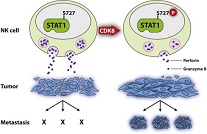
Researchers Investigate Importance of STAT1 Phosphorylation in NK Cells

“If we can stop CDK8 from inactivating STAT1 in NK cells, we could stimulate tumor surveillance and thus possibly have a new handle on treating cancer, harnessing the body’s own weapons against malignant cells.” –Dr. Eva Maria Putz.


http://www.regenerativemedicine.net/NewsletterArchives.asp?qEmpID=8422&qCat=WN

http://www.regenerativemedicine.net/images/Newsletter/uvmpic%20rs.jpg

Mammals contain cells whose primary function is to kill other cells in the body. The so-called Natural Killer (NK) cells are highly important in defending our bodies against viruses or even cancer. Scientists at the University of Veterinary Medicine, Vienna (Vetmeduni Vienna) provide evidence that NK cell activity can be influenced by phosphorylating a protein (STAT1) in NK cells. The results, which could be of immediate therapeutic relevance, were recently published.

Since its discovery in the early 1990s, the protein STAT1 (Signal Transducer and Activator of Transcription 1) has been found to be central in passing signals across immune cells, ensuring that our bodies react quickly and appropriately to threats from viruses or other pathogens. Animals without STAT1 are also prone to develop cancer, suggesting that STAT1 is somehow involved in protection against malignant cells. The STAT1 protein is known to be phosphorylated on at least two positions: phosphorylation of a particular tyrosine (tyr-701) is required for the protein to enter the cell nucleus (where it exerts its effects), while subsequent phosphorylation of a serine residue alters the way it interacts with other proteins, thereby affecting its function.

Natural Killer (NK) cells are among the first cells to respond to infections by viruses or to attack malignant cells when tumors develop. When they detect cells to be targeted, they produce a number of proteins, such as granzyme B and perforin, which enter infected cells and destroy them from within. Clearly, the lethal activity must be tightly controlled to prevent NK cells from running wild and destroying healthy cells or tissues. How is this done?

Eva Maria Putz and colleagues at the Institute of Pharmacology and Toxicology of the University of Veterinary Medicine, Vienna (Vetmeduni) have now investigated the importance of STAT1 phosphorylation in NK cells. The researchers found that when a particular serine residue (ser-727) in the STAT1 protein is mutated, NK cells produce far higher amounts of granzyme B and perforin and are far more effective at killing a wide range of tumor cells. Mice with the correspondingly mutated Stat1 gene are far less likely to develop melanoma, leukemia, or metastasizing breast cancer. On the other hand, when the same serine residue is phosphorylated, the NK cells are less able to kill infected or cancerous cells.

The Vetmeduni researchers have accumulated a body of evidence to suggest that the cyclin-dependent kinase CDK8 phosphorylates STAT1 on serine 727. Surprisingly, this phosphorylation does not require prior phosphorylation of the activating tyrosine residue, at least in NK cells. Instead, it seems to represent a way in which the lethal activity of the NK cells is kept in check. Putz is keen to note the potential significance of the finding. As she says, “If we can stop CDK8 from inactivating STAT1 in NK cells, we could stimulate tumor surveillance and thus possibly have a new handle on treating cancer, harnessing the body’s own weapons against malignant cells.”

Illustration: Inhibition of NK cells by phosphorylation of STAT1-Serin 727 mediated by CDK8. –Eva-Maria Putz/Vetmeduni Vienna.

Read more…

University of Veterinary Medicine, Vienna News Release (09/06/13)

Important Step in Development of Artificial Nerves via Regenerative Medicine  

The new cells successfully regenerated axons and extended their growth farther across nerve cell gaps toward damaged nerve stumps, with healthier vascularity.

http://www.regenerativemedicine.net/NewsletterArchives.asp?qEmpID=277&qCat=WN

http://www.regenerativemedicine.net/images/Newsletter/schwann%20cell2.jpg

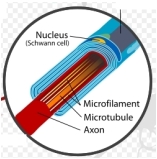
A study carried out by researchers at the Kyoto University School of Medicine has shown that when transplanted bone marrow cells (BMCs) containing adult stem cells are protected by a 15mm silicon tube and nourished with bio-engineered materials, they successfully help regenerate damaged nerves. The research may provide an important step in developing artificial nerves.

“We focused on the vascular and neurochemical environment within the tube,” said Tomoyuki Yamakawa, MD, the study’s lead author. “We thought that BMCs containing adult stem cells, with the potential to differentiate into bone, cartilage, fat, muscle, or neuronal cells, could survive by obtaining oxygen and nutrients, with the result that rates of cell differentiation and regeneration would improve.”

Nourished with bioengineered additives, such as growth factors and cell adhesion molecules, the BMCs after 24 weeks differentiated into cells with characteristics of Schwann cells – a variety of neural cell that provides the insulating myelin around the axons of peripheral nerve cells. The new cells successfully regenerated axons and extended their growth farther across nerve cell gaps toward damaged nerve stumps, with healthier vascularity.

“The differentiated cells, similar to Schwann cells, contributed significantly to the promotion of axon regeneration through the tube,” explained Yamakawa. “This success may be a further step in developing artificial nerves.”

Grafting self-donated (autologous) nerve cells to damaged nerves has been widely practiced and considered the “gold standard.” However, autologous cells for transplant are in limited supply. Allologous cells, donated by other individuals, require the host to take heavy immunosuppressant drugs.

Translating dosage compensation to trisomy 21

Authors: Jun Jiang, Yuanchun Jing, Gregory J. Cost, Jen-Chieh Chiang, Heather J. Kolpa, Allison M. Cotton, Dawn M. Carone, Benjamin R. Carone, David A. Shivak, Dmitry Y. Guschin, Jocelynn R. Pearl, Edward J. Rebar, Meg Byron, Philip D. Gregory, Carolyn J. Brown, Fyodor D. Urnov, Lisa L. Hall, & Jeanne B. Lawrence

Down’s syndrome is a common disorder with enormous medical and social costs, caused by trisomy for chromosome 21. We tested the concept that gene imbalance across an extra chromosome can be de facto corrected by manipulating a single gene, XIST (the X-inactivation gene). Using genome editing with zinc finger nucleases, we inserted a large, inducible XIST transgene into the DYRK1A locus on chromosome 21, in Down’s syndrome pluripotent stem cells. The XIST non-coding RNA coats chromosome 21 and triggers stable heterochromatin modifications, chromosome-wide transcriptional silencing and DNA methylation to form a ‘chromosome 21 Barr body’. This provides a model to study human chromosome inactivation and creates a system to investigate genomic expression changes and cellular pathologies of trisomy 21, free from genetic and epigenetic noise. Notably, deficits in proliferation and neural rosette formation are rapidly reversed upon silencing one chromosome 21. Successful trisomy silencing in vitro also surmounts the major first step towards potential development of ‘chromosome therapy’.

Source: Nature; (07/17/13) 

New article reviews latest advances in magnetic particle tracking in cell therapy

http://www.news-medical.net/news/20151027/New-article-reviews-latest-advances-in-magnetic-particle-tracking-in-cell-therapy.aspx

A new article published in Regenerative Medicine reviews the latest advances in magnetic particle tracking in cell therapy, a potentially groundbreaking strategy in disease treatment and regenerative medicine.

Cell therapy is one of the most promising avenues for regenerative medicine, however, its success is restricted by a number of limitations, such as inefficient delivery and retention of the therapeutic cells at the target organ, difficulties in monitoring the safety and efficacy of the therapy, in addition to issues obtaining and maintaining therapeutic cell phenotypes.

In a review by a group from the UCL Centre for Advanced Biomedical Imaging team (London, UK), emerging and established magnetic particle-based techniques for targeting, imaging and stimulating cells in vivo are discussed, in addition to potential benefits of their application in cell-based regenerative medicine therapies the clinic.

“The magnetic control of stem cells inside the body is a fascinating and promising concept for treatment of a vast range of diseases” commented Mark Lythgoe, director of the Centre for Advanced Biomedical Imaging at UCL. “Using microscopic nanomagnets we now have the potential to image, guide and activate therapeutic cells, combining therapy and diagnosis – theranostics – creating a novel type of dual imaging/therapy’

Commissioning Editor for Regenerative Medicine, Elena Conroy, added: “This timely review provides a much needed update on the different methods by which researchers can track cells with magnetic particles and how these can be used for cell therapy. I strongly believe that this will be of great use to cell biologists in both regenerative medicine and other research areas.”

Read Full Post »

Gene Editing by creation of a complement without transcription error

Larry H. Bernstein, MD, FCAP, Curator

LPBI

2.2.19

2.2.19   Gene Editing by Creation of a Complement without Transcription Error, Volume 2 (Volume Two: Latest in Genomics Methodologies for Therapeutics: Gene Editing, NGS and BioInformatics, Simulations and the Genome Ontology), Part 2: CRISPR for Gene Editing and DNA Repair

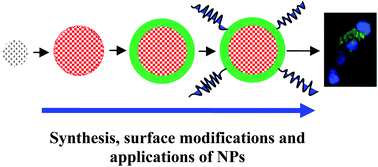
Nanoparticle-Based Artificial Transcription Factor  

NanoScript: A Nanoparticle-Based Artificial Transcription Factor for Effective Gene Regulation

Abstract Image

Transcription factor (TF) proteins are master regulators of transcriptional activity and gene expression. TF-based gene regulation is a promising approach for many biological applications; however, several limitations hinder the full potential of TFs. Herein, we developed an artificial, nanoparticle-based transcription factor, termed NanoScript, which is designed to mimic the structure and function of TFs. NanoScript was constructed by tethering functional peptides and small molecules called synthetic transcription factors, which mimic the individual TF domains, onto gold nanoparticles. We demonstrate that NanoScript localizes within the nucleus and initiates transcription of a reporter plasmid by over 15-fold. Moreover, NanoScript can effectively transcribe targeted genes on endogenous DNA in a nonviral manner. Because NanoScript is a functional replica of TF proteins and a tunable gene-regulating platform, it has great potential for various stem cell applications.

NanoScript_emulates_TF_Structure_and_Function_large.jpg

http://www.energyigert.rutgers.edu/sites/default/files/faculty/kibumlee/NanoScript_emulates_TF_Structure_and_Function_large.jpg

HIGHLIGHTS

  • Transcription Factors (TF) are proteins that regulate transcription and gene expression
  • NanoScript is an versatile, nanoparticle-based platform that mimics TF structure and biological function
  • NanoScript is stable in physiological environments and localizes within the nucleus
  • NanoScript initiates targeted gene expression by over 15-fold to 30 fold, which would be critical for stem cell differentiation and cellular reprogramming
  • NanoScript transcribes endogenous genes on native DNA in a non-viral manner

Transcription factor (TF) proteins are master regulators of transcriptional activity and gene expression. TF-based gene regulation is an essential approach for many biological applications such as stem cell differentiation and cellular programming, however, several limitations hinder the full potential of TFs.

To address this challenge, researchers in Prof. KiBum Lee’s group (Sahishnu Patel and Perry Yin) developed an artificial, nanoparticle-based transcription factor, termed NanoScript, which is designed to mimic the structure and function of TFs. NanoScript was constructed by tethering functional peptides and small molecules called synthetic transcription factors, which mimic the individual TF domains, onto gold nanoparticles. They demonstrated that NanoScript localizes within the nucleus and initiates transcription of a targeted gene with high efficiency. Moreover, NanoScript can effectively transcribe targeted genes on endogenous DNA in a non-viral manner.

NanoScript is a functional replica of TF proteins and a tunable gene-regulating platform. NanoScript has two attractive features that make this the perfect platform for stem cell-based application. First, because gene regulation by NanoScript is non-viral, it serves as an attractive alternative to current differentiation methods that use viral vectors. Second, by simply rearranging the sequence of one molecule on NanoScript, NanoScript can target any differentiation-specific genes and induce differentiation, and thus has excellent prospect for applications in stem cell biology and cellular reprogramming.

Perry To-tien Yin
PhD Candidate, Rutgers University
Prospects for graphene–nanoparticle-based hybrid sensors

PT Yin, TH Kim, JW Choi, KB Lee
Physical Chemistry Chemical Physics 15 (31), 12785-12799
31 2013
Axonal Alignment and Enhanced Neuronal Differentiation of Neural Stem Cells on Graphene‐Nanoparticle Hybrid Structures

A Solanki, STD Chueng, PT Yin, R Kappera, M Chhowalla, KB Lee
Advanced Materials 25 (38), 5477-5482
22 2013
Label‐Free Polypeptide‐Based Enzyme Detection Using a Graphene‐Nanoparticle Hybrid Sensor

S Myung, PT Yin, C Kim, J Park, A Solanki, PI Reyes, Y Lu, KS Kim, …
Advanced Materials 24 (45), 6081-6087
22 2012
Guiding Stem Cell Differentiation into Oligodendrocytes Using Graphene‐Nanofiber Hybrid Scaffolds

S Shah, PT Yin, TM Uehara, STD Chueng, L Yang, KB Lee
Advanced materials 26 (22), 3673-3680
21 2014
Design, Synthesis, and Characterization of Graphene–Nanoparticle Hybrid Materials for Bioapplications

PT Yin, S Shah, M Chhowalla, KB Lee
Chemical reviews 115 (7), 2483-2531
16 2015
Multimodal Magnetic Core–Shell Nanoparticles for Effective Stem‐Cell Differentiation and Imaging

B Shah, PT Yin, S Ghoshal, KB Lee
Angewandte Chemie 125 (24), 6310-6315
16 2013
Nanotopography-mediated reverse uptake for siRNA delivery into neural stem cells to enhance neuronal differentiation

A Solanki, S Shah, PT Yin, KB Lee
Scientific reports 3
14 2013
Combined Magnetic Nanoparticle‐based MicroRNA and Hyperthermia Therapy to Enhance Apoptosis in Brain Cancer Cells

PT Yin, BP Shah, KB Lee
small 10 (20), 4106-4112
11 2014

A highly robust, efficient nanoparticle-based platform to advance stem cell therapeutics

(Nanowerk News) Associate Professor Ki-Bum Lee has developed patent-pending technology that may overcome one of the critical barriers to harnessing the full therapeutic potential of stem cells.
One of the major challenges facing researchers interested in regenerating cells and growing new tissue to treat debilitating injuries and diseases such as Parkinson’s disease, heart disease, and spinal cord trauma, is creating an easy, effective, and non-toxic methodology to control differentiation into specific cell lineages. Lee and colleagues at Rutgers and Kyoto University in Japan have invented a platform they call NanoScript, an important breakthrough for researchers in the area of gene expression. Gene expression is the way information encoded in a gene is used to direct the assembly of a protein molecule, which is integral to the process of tissue development through stem cell therapeutics.
Stem cells hold great promise for a wide range of medical therapeutics as they have the ability to grow tissue throughout the body. In many tissues, stem cells have an almost limitless ability to divide and replenish other cells, serving as an internal repair system.
Nanoscript

Schematic representation of NanoScript’s design and function. (a) By assembling individual STF molecules, including the DBD (DNA-binding domain), AD (activation domain), and NLS (nuclear localization signal), onto a single 10 nm gold nanoparticle, we have developed the NanoScript platform to replicate the structure and function of TFs. This NanoScript penetrates the cell membrane and enters the nucleus through the nuclear receptor with the help of the NLS peptide. Once in the nucleus, NanoScript interacts with DNA to initiate transcriptional activity and induce gene expression. (b) When comparing the structure of NanoScript to representative TF proteins, the three essential domains are effectively replicated. The linker domain (LD) fuses the multidomain protein together and is replicated by the gold nanoparticle (AuNP). (c) The DBD binds to complementary DNA sequences, while the AD recruits transcriptional machinery components such as RNA polymerase II (RNA Pol II), mediator complex, and general transcription factors (GTFs). The synergistic function of the DBD and AD moieties on NanoScript initiates transcriptional activity and expression of targeted genes. (d) The AuNPs are monodisperse and uniform. The NanoScript constructs are shown to effectively localize within the nucleus, which is important because transcriptional activity occurs only in the nucleus. (Reprinted with permission y American Chemical Society) (click on image to enlarge)

Read more: Using nanotechnology to regulate gene expression at the transcriptional level

Transcription factor (TF) proteins are master regulators of gene expression. TF proteins play a pivotal role in regulating stem cell differentiation. Although some have tried to make synthetic molecules that perform the functions of natural transcription factors, NanoScript is the first nanomaterial TF protein that can interact with endogenous DNA.
ACS Nano, a publication of the American Chemical Society (ACS), has published Lee’s research on NanoScript (“NanoScript: A Nanoparticle-Based Artificial Transcription Factor for Effective Gene Regulation”). The research is supported by a grant from the National Institutes of Health (NIH).
“Our motivation was to develop a highly robust, efficient nanoparticle-based platform that can regulate gene expression and eventually stem cell differentiation,” said Lee, who leads a Rutgers research group primarily focused on developing and integrating nanotechnology with chemical biology to modulate signaling pathways in cancer and stem cells. “Because NanoScript is a functional replica of TF proteins and a tunable gene-regulating platform, it has great potential to do exactly that. The field of stem cell biology now has another platform to regulate differentiation while the field of nanotechnology has demonstrated for the first time that we can regulate gene expression at the transcriptional level.”
NanoScript was constructed by tethering functional peptides and small molecules called synthetic transcription factors, which mimic the individual TF domains, onto gold nanoparticles.
“NanoScript localizes within the nucleus and initiates transcription of a reporter plasmid by up to 30-fold,” said Sahishnu Patel, Rutgers Chemistry graduate student and co-author of the ACS Nano publication. “NanoScript can effectively transcribe targeted genes on endogenous DNA in a nonviral manner.”
Lee said the next step for his research is to study what happens to the gold nanoparticles after NanoScript is utilized, to ensure no toxic effects arise, and to ensure the effectiveness of NanoScript over long periods of time.
“Due to the unique tunable properties of NanoScript, we are highly confident this platform not only will serve as a desirable alternative to conventional gene-regulating methods,” Lee said, “but also has direct employment for applications involving gene manipulation such as stem cell differentiation, cancer therapy, and cellular reprogramming. Our research will continue to evaluate the long-term implications for the technology.”
Lee, originally from South Korea, joined the Rutgers faculty in 2008 and has earned many honors including the NIH Director’s New Innovator Award. Lee received his Ph.D. in Chemistry from Northwestern University where he studied with Professor Chad. A. Mirkin, a pioneer in the coupling of nanotechnology and biomolecules. Lee completed his postdoctoral training at The Scripps Research Institute with Professor Peter G. Schultz. Lee has served as a Visiting Scholar at both Princeton University and UCLA Medical School.
The primary interest of Lee’s group is to develop and integrate nanotechnologies and chemical functional genomics to modulate signaling pathways in mammalian cells towards specific cell lineages or behaviors. He has published more than 50 articles and filed for 17 corresponding patents.
Source: Rutgers University

Read more: A highly robust, efficient nanoparticle-based platform to advance stem cell therapeutics

Nanoparticle-based transcription factor mimics

http://nanomedicine.ucsd.edu/blog/article/nanoparticle-based-transcription-factor-mimics

Biologists have been enhancing expression of specific genes with plasmids and viruses for decades, which has been essential to uncovering the function of numerous genes and the relationships among the proteins they encode. However, tools that allow enhancement of expression of endogenous genes at the transcriptional level could be a powerful complement to these strategies. Many chemical biologists have made enormous progress developing molecular tools for this purpose; recent work by a group at Rutgers suggests how nanotechnology might allow application of this strategy in living organisms, and perhaps one day in patients.

In a paper published in ACS Nano, researchers led by KiBum Lee synthesized gold nanoparticles bearing synthetic or shortened versions of the three essential components of transcription factors (TFs), the proteins that “turn on” expression of specific genes in cells. Specifically, polyamides previously designed to bind to a specific promoter sequence, transactivation peptides, and nuclear localization peptides were conjugated to the nanoparticle surface. These nanoparticles enhanced expression of both a reporter plasmid (by ~15-fold) and several endogenous genes (by up to 65%). This enhancement is much greater than that possible using previous constructs lacking nuclear localization sequences; the team incorporated a high proportion of those peptides to ensure efficient delivery to the nucleus.

Nanoscript, a synthetic transciption factor
Diagram of the synthetic TF mimic (termed NanoScript). Decorated particles are ~35 nm in diameter. Letters are amino acid sequences; Py-Im, N-methylpyrrole-N-methylimidazole.

These nanoparticles offer an alternative to delivering protein TFs, which remains extremely challenging despite considerable effort towards the development of delivery systems that transport cargo into cells. Among other barriers to the use of native TFs, incorporating them into polymeric or lipid-based carriers often alters their shape, which would likely reduce their function.

While the group suggests future generations of these nanoparticles might one day be used to treat diseases caused by defects in TF genes, many questions remain. First, the duration of gene expression enhancement is not known; the study only assesses effects at 48 h post-administration. Further, whether gold is the best material for the core remains unclear, as its non-biodegradability means the particles would likely accumulate in the liver over time; synthetic TFs with biodegradable cores might also be considered.

Patel S et al., NanoScript: a nanoparticle-based artificial transcription factor for effective gene regulation,ACS Nano 2014; published online Sep 3.

http://www.wtec.org/bem/docs/BEM-FinalReport-Web.pdf

Biocompatibility and Toxicity of Nanobiomaterials

“Biocompatibility and Toxicity of Nanobiomaterials” is an annual special issue published in “Journal of Nanomaterials.”

http://www.hindawi.com/journals/jnm/toxicity.nanobiomaterials/

Porous Ti6Al4V Scaffold Directly Fabricated by Sintering: Preparation and In Vivo Experiment
Xuesong Zhang, Guoquan Zheng, Jiaqi Wang, Yonggang Zhang, Guoqiang Zhang, Zhongli Li, and Yan Wang
Department of Orthopaedics, Chinese People’s Liberation Army General Hospital, Beijing 100853, China AcademicEditor:XiaomingLi
The interface between the implant and host bone plays a key role in maintaining primary and long-term stability of the implants. Surface modification of implant can enhance bone in growth and increase bone formation to create firm osseo integration between the implant and host bone and reduce the risk of implant losing. This paper mainly focuses on the fabricating of 3-dimensiona interconnected porous titanium by sintering of Ti6Al4V powders, which could be processed to the surface of the implant shaft and was integrated with bone morphogenetic proteins (BMPs). The structure and mechanical property of porous Ti6Al4V was observed and tested. Implant shaft with surface of porous titanium was implanted into the femoral medullary cavity of dog after combining with BMPs. The results showed that the structure and elastic modulus of 3D interconnected porous titanium was similar to cancellous bone; porous titanium combined with BMP was found to have large amount of fibrous tissue with fibroblastic cells; bone formation was significantly greater in 6 weeks postoperatively than in 3 weeks after operation. Porous titanium fabricated by powders sintering and combined with BMPs could induce tissue formation and increase bone formation to create firm osseo integration between the implant and host bone.

Journal of Materials Chemistry B   Issue 39, 2013

Materials for biology and medicine
Synthesis of nanoparticles, their biocompatibility, and toxicity behavior for biomedical applications
J. Mater. Chem. B, 2013,1, 5186-5200    DOI: http://dx.doi.org:/10.1039/C3TB20738B

Nanomaterials research has in part been focused on their use in biomedical applications for more than several decades. However, in recent years this field has been developing to a much more advanced stage by carefully controlling the size, shape, and surface-modification of nanoparticles. This review provides an overview of two classes of nanoparticles, namely iron oxide and NaLnF4, and synthesis methods, characterization techniques, study of biocompatibility, toxicity behavior, and applications of iron oxide nanoparticles and NaLnF4nanoparticles as contrast agents in magnetic resonance imaging. Their optical properties will only briefly be mentioned. Iron oxide nanoparticles show a saturation of magnetization at low field, therefore, the focus will be MLnF4 (Ln = Dy3+, Ho3+, and Gd3+) paramagnetic nanoparticles as alternative contrast agents which can sustain their magnetization at high field. The reason is that more potent contrast agents are needed at magnetic fields higher than 7 T, where most animal MRI is being done these days. Furthermore we observe that the extent of cytotoxicity is not fully understood at present, in part because it is dependent on the size, capping materials, dose of nanoparticles, and surface chemistry, and thus needs optimization of the multidimensional phenomenon. Therefore, it needs further careful investigation before being used in clinical applications.

Graphical abstract: Synthesis of nanoparticles, their biocompatibility, and toxicity behavior for biomedical applications

http://pubs.rsc.org/services/images/RSCpubs.ePlatform.Service.FreeContent.ImageService.svc/ImageService/image/GA?id=C3TB20738B

Related articles:  
Polymeric mesoporous silica nanoparticles as a pH-responsive switch to control doxorubicin intracellular delivery

Ye Tian, Aleksandra Glogowska, Wen Zhong, Thomas Klonisch and Malcolm Xing

J. Mater. Chem. B, 2013,1, 5264-5272

Tao Cai, Min Li, Bin Zhang, Koon-Gee Neoh and En-Tang Kang

J. Mater. Chem. B, 2014,2, 814-825
From themed collection Nanoparticles in Biology

pH-responsive physical gels from poly(meth)acrylic acid-containing crosslinked particles: the relationship between structure and mechanical properties

Silvia S. Halacheva, Tony J. Freemont and Brian R. Saunders

J. Mater. Chem. B, 2013,1, 4065-4078

citations…

HAMLET interacts with lipid membranes and perturbs their structure and integrity

HAMLET (human α-lactalbumin made lethal to tumor cells) is a tumoricidal …. of the alternative complement pathway preserves photoreceptors after retinal injury ….. Life-long in vivo cell-lineage tracing shows that no oogenesis originates from …. ananoparticle-based artificial transcription factor for effective gene regulation …

Authors: Ann-Kristin Mossberg, Maja Puchades, Øyvind Halskau, Anne Baumann, Ingela Lanekoff, Yinxia Chao, Aurora Martinez, Catharina Svanborg, & Roger Karlsson

www.regenerativemedicine.net/NewsletterArchives.asp?qEmpID…

Summary: 

Background – Cell membrane interactions rely on lipid bilayer constituents and molecules inserted within the membrane, including specific receptors. HAMLET (human α-lactalbumin made lethal to tumor cells) is a tumoricidal complex of partially unfolded α-lactalbumin (HLA) and oleic acid that is internalized by tumor cells, suggesting that interactions with the phospholipid bilayer and/or specific receptors may be essential for the tumoricidal effect. This study examined whether HAMLET interacts with artificial membranes and alters membrane structure.

Methodology/Principal Findings – We show by surface plasmon resonance that HAMLET binds with high affinity to surface adherent, unilamellar vesicles of lipids with varying acyl chain composition and net charge. Fluorescence imaging revealed that HAMLET accumulates in membranes of vesicles and perturbs their structure, resulting in increased membrane fluidity. Furthermore, HAMLET disrupted membrane integrity at neutral pH and physiological conditions, as shown by fluorophore leakage experiments. These effects did not occur with either native HLA or a constitutively unfolded Cys-Ala HLA mutant (rHLAall-Ala). HAMLET also bound to plasma membrane vesicles formed from intact tumor cells, with accumulation in certain membrane areas, but the complex was not internalized by these vesicles or by the synthetic membrane vesicles.

Conclusions/Significance – The results illustrate the difference in membrane affinity between the fatty acid bound and fatty acid free forms of partially unfolded HLA and suggest that HAMLET engages membranes by a mechanism requiring both the protein and the fatty acid. Furthermore, HAMLET binding alters the morphology of the membrane and compromises its integrity, suggesting that membrane perturbation could be an initial step in inducing cell death.

Source: Public Library of Science ONE; 5(2) (02/23/10) 

Read Full Post »

Engineered viruses

Larry H. Bernstein, MD, FCAP, Curator

LPBI

Engineered viruses provide quantum-based enhancement of energy transport

October 19, 2015

http://www.kurzweilai.net/engineered-viruses-provide-quantum-based-enhancement-of-energy-transport?utm_source=KurzweilAI+Weekly+Newsletter_147a5a48c1-9a20162408-282099089

Rendering of a virus used in the MIT experiments. The light-collecting centers, called chromophores, are in red, and chromophores that just absorbed a photon of light are glowing white. After the virus is modified to adjust the spacing between the chromophores, energy can jump from one set of chromophores to the next faster and more efficiently. (credit: the researchers and Lauren Alexa Kaye)

http://www.kurzweilai.net/images/Super-Forster.jpg

MIT engineers have achieved a significant efficiency boost in a light-harvesting system, using genetically engineered viruses to achieve higher efficiency in transporting energy from receptors to reaction centers where it can be harnessed, making use of the exotic effects of quantum mechanics. Emulating photosynthesis in nature, it could lead to inexpensive and efficient solar cells or light-driven catalysis,

This achievement in coupling quantum research and genetic manipulation, described this week in the journal Nature Materials, was the work of MIT professors Angela Belcher, an expert on engineering viruses to carry out energy-related tasks, and Seth Lloyd, an expert on quantum theory and its potential applications, and 15 collaborators at MIT and in Italy.

The “Quantum Goldilocks Effect”

In photosynthesis, a photon hits a receptor called a chromophore, which in turn produces an exciton — a quantum particle of energy. This exciton jumps from one chromophore to another until it reaches a reaction center, where that energy is harnessed to build the molecules that support life, or photosynthesis.

But the hopping pathway of excitons is random and inefficient unless it takes advantage of quantum effects that allow it, in effect, to take multiple pathways at once and select the best ones, behaving more like a wave than a particle.

To do that, the chromophores have to be arranged just right, with exactly the right amount of space between them. This, Lloyd explains, is known as the “Quantum Goldilocks Effect.”

Molecular models of the genetically engineered viruses. Left virus has long inter-binding site distances of 16Å and 33Å within two proteins. Right virus has closer inter-binding site distances of approximately 10Å and 13Å, achieving faster excitation-energy transport speed. (credit: Heechul Park et al./Nature Materials)

http://www.kurzweilai.net/images/exiton-hopping.jpg

That’s where the virus comes in. By engineering a virus that Belcher has worked with for years, the team was able to get it to bond with multiple synthetic chromophores — or, in this case, organic dyes. The researchers were then able to produce many varieties of the virus, with slightly different spacings between those synthetic chromophores, and select the ones that performed best.

In the end, they were able to more than double excitons’ speed, increasing the distance they traveled before dissipating — a significant improvement in the efficiency of the process.

The project started from a chance meeting at a conference in Italy. Lloyd and Belcher, a professor of biological engineering, were reporting on different projects they had worked on, and began discussing the possibility of a project encompassing their very different expertise. Lloyd, whose work is mostly theoretical, pointed out that the viruses Belcher works with have the right length scales to potentially support quantum effects.

In 2008, Lloyd had published a paper demonstrating that photosynthetic organisms transmit light energy efficiently because of these quantum effects. When he saw Belcher’s report on her work with engineered viruses, he wondered if that might provide a way to artificially induce a similar effect, in an effort to approach nature’s efficiency.

“I had been talking about potential systems you could use to demonstrate this effect, and Angela said, ‘We’re already making those,’” Lloyd recalls. Eventually, after much analysis, “We came up with design principles to redesign how the virus is capturing light, and get it to this quantum regime.”

Within two weeks, Belcher’s team had created their first test version of the engineered virus. Many months of work then went into perfecting the receptors and the spacings.

Once the team engineered the viruses, they were able to use laser spectroscopy and dynamical modeling to watch the light-harvesting process in action, and to demonstrate that the new viruses were indeed making use of quantum coherence to enhance the transport of excitons.

“It was really fun,” Belcher says. “A group of us who spoke different [scientific] languages worked closely together, to both make this class of organisms, and analyze the data. That’s why I’m so excited by this.”

Inexpensive and efficient solar cells or light-driven catalysis

While this initial result is essentially a proof of concept rather than a practical system, it points the way toward an approach that could lead to inexpensive and efficient solar cells or light-driven catalysis, the team says. So far, the engineered viruses collect and transport energy from incoming light, but do not yet harness it to produce power (as in solar cells) or molecules (as in photosynthesis). But this could be done by adding a reaction center, where such processing takes place, to the end of the virus where the excitons end up.

“This is exciting and high-quality research,” says Alán Aspuru-Guzik, a professor of chemistry and chemical biology atHarvard University who was not involved in this work. The research, he says, “combines the work of a leader in theory (Lloyd) and a leader in experiment (Belcher) in a truly multidisciplinary and exciting combination that spans biology to physics to potentially, future technology.”

“Access to controllable excitonic systems is a goal shared by many researchers in the field,” Aspuru-Guzik adds. “This work provides fundamental understanding that can allow for the development of devices with an increased control of exciton flow.”

The research was supported by the Italian energy company Eni through the MIT Energy Initiative. The team included researchers at the University of Florence, the University of Perugia, and Eni.

https://youtu.be/91vhoxR1Lts

MIT | See how researchers genetically engineer viruses to more efficiently transport energy.

Abstract of Enhanced energy transport in genetically engineered excitonic networks

One of the challenges for achieving efficient exciton transport in solar energy conversion systems is precise structural control of the light-harvesting building blocks. Here, we create a tunable material consisting of a connected chromophore network on an ordered biological virus template. Using genetic engineering, we establish a link between the inter-chromophoric distances and emerging transport properties. The combination of spectroscopy measurements and dynamic modelling enables us to elucidate quantum coherent and classical incoherent energy transport at room temperature. Through genetic modifications, we obtain a significant enhancement of exciton diffusion length of about 68% in an intermediate quantum-classical regime.

Read Full Post »

Control Heartbeats using Light

Curator: Larry H. Bernstein, MD, FCAP


How to control heartbeats more precisely, using light

October 20, 2015

http://www.kurzweilai.net/how-to-control-heartbeats-more-precisely-using-light?utm_source=KurzweilAI+Weekly+Newsletter_147a5a48c1-9a20162408-282099089


Using computer-generated light patterns, researchers were able to control the direction of spiraling electrical waves in heart cells. (credit: Eana Park)

http://www.kurzweilai.net/images/Excitation-Waves-362×512.jpg


Researchers from Oxford and Stony Brook universities has found a way to precisely control the electrical waves that regulate the rhythm of our heartbeat — using light. Their results are published in the journal Nature Photonics.

Cardiac cells in the heart and neurons in the brain communicate by electrical signals, and these messages of communication travel fast from cell to cell as “excitation waves.”

For heart patients there are currently two options to keep these waves in check: electrical devices (pacemakers or defibrillators) or drugs (e.g., beta blockers). However, these methods are relatively crude: they can stop or start waves but cannot provide fine control over the wave speed and direction.

Gil Bub, from Oxford University explained: ‘When there is scar tissue in the heart or fibrosis, this can cause part of the wave to slow down. That can cause re-entrant waves which spiral back around the tissue, causing the heart to beat much too quickly, which can be fatal. If we can control these spirals, we could prevent that.

The optogenetics solution

The solution the researchers found was optogenetics, which uses genetic modification to alter cells so that they can be activated by light. Until now, it has mainly been used to activate individual cells or to trigger excitation waves in tissue, especially in neuroscience research. “We wanted to use it to very precisely control the activity of millions of cells,” said Bub.

A light-activated protein called channelrhodopsin was delivered to heart cells using gene therapy techniques so that they could be controlled by light. Then, using a computer-controlled light projector, the team was able to control the speed of the cardiac waves, their direction and even the orientation of spirals in real time — something that never been shown for waves in a living system before.

In the short term, the ability to provide fine control means that researchers are able to carry out experiments at a level of detail previously only available using computer models. They can now compare those models to experiments with real cells, potentially improving our understanding of how the heart works. The research can also be applied to the physics of such waves in other processes. In the long run, it might be possible to develop precise treatments for heart conditions.

“Precise control of the direction, speed and shape of such excitation waves would mean unprecedented direct control of organ-level function, in the heart or brain, without having to focus on manipulating each cell individually,” said Stony Brook University scientist Emilia Entcheva.

The team stresses that there are significant hurdles before this could offer new treatments; a key issue is being able to alter the heart to be light-sensitized and being able to get the light to desired locations. However, as gene therapy moves into the clinic and with miniaturization of optical devices, use of this all-optical technology may become possible.

In the meantime, the research enables scientists to look into the physics behind many biological processes, including those in our own brains and hearts.

https://youtu.be/CvY-K8of3-I


University of Oxford | Controlling heart tissue with light


Abstract of Optical control of excitation waves in cardiac tissue

In nature, macroscopic excitation waves are found in a diverse range of settings including chemical reactions, metal rust, yeast, amoeba and the heart and brain. In the case of living biological tissue, the spatiotemporal patterns formed by these excitation waves are different in healthy and diseased states. Current electrical and pharmacological methods for wave modulation lack the spatiotemporal precision needed to control these patterns. Optical methods have the potential to overcome these limitations, but to date have only been demonstrated in simple systems, such as the Belousov–Zhabotinsky chemical reaction. Here, we combine dye-free optical imaging with optogenetic actuation to achieve dynamic control of cardiac excitation waves. Illumination with patterned light is demonstrated to optically control the direction, speed and spiral chirality of such waves in cardiac tissue. This all-optical approach offers a new experimental platform for the study and control of pattern formation in complex biological excitable systems.

Read Full Post »

Metabolic Response Heterogeneity

Larry H Bernstein, MD, FCAP, Curator

LFBI


The Prognostic Significance of Metabolic Response Heterogeneity in Metastatic Colorectal Cancer

PLoS One. 2015; 10(9): e0138341.

Published online 2015 Sep 30. doi:  10.1371/journal.pone.0138341

PMCID: PMC4589397

Alain Hendlisz,1,* Amelie Deleporte,1 Thierry Delaunoit,2 Raphaël Maréchal,3 Marc Peeters,4 Stéphane Holbrechts,6Marc Van den Eynde,7 Ghislain Houbiers,9 Bertrand Filleul,2 Jean-Luc Van Laethem,3 Sarah Ceyssens,5 Anna-Maria Barbuto,6 Renaud Lhommel,8 Gauthier Demolin,9 Camilo Garcia,10 Hazem El Mansy,1,2,3,4,5,6,7,8,9,10 Lieveke Ameye,11 Michel Moreau,11 Thomas Guiot,10 Marianne Paesmans,11 Martine Piccart,1 and Patrick Flamen10

Daniele Santini, Editor

Author information ► Article notes ► Copyright and License information ►

Go to:

Abstract

Background Tumoral heterogeneity is a major determinant of resistance in solid tumors. FDG-PET/CT can identify early during chemotherapy non-responsive lesions within the whole body tumor load. This prospective multicentric proof-of-concept study explores intra-individual metabolic response (mR) heterogeneity as a treatment efficacy biomarker in chemorefractory metastatic colorectal cancer (mCRC).

Methods Standardized FDG-PET/CT was performed at baseline and after the first cycle of combined sorafenib (600mg/day for 21 days, then 800mg/day) and capecitabine (1700 mg/m²/day administered D1-14 every 21 days). MR assessment was categorized according to the proportion of metabolically non-responding (non-mR) lesions (stable FDG uptake with SUV-max decrease <15%) among all measurable lesions.

Results Ninety-two patients were included. The median overall survival(OS) and progression-free survival (PFS) were 8.2months (95%CI:6.8–10.5) and 4.2months (95%CI:3.4–4.8) respectively. In the 79 assessable patients, early PET-CT showed no metabolically refractory lesion in 47%, a heterogeneous mR with at least one non-mR lesion in 32%, and a consistent non-mR or early disease progression in 21%. On exploratory analysis, patients without any non-mR lesion showed a significantly longer PFS (HR 0.34; 95% CI: 0.21–0.56, P-value 0.02) compared to the other patients. The proportion of non-mR lesions within the tumor load did not impact PFS/OS.

Conclusion The presence of at least one metabolically refractory lesion is associated with a poorer outcome in advanced mCRC patients treated with combined sorafenib-capecitabine. Early detection of treatment-induced mR heterogeneity may represent an important predictive efficacy biomarker in mCRC.

Trial Registration ClinicalTrials.gov NCT01290926


Background

Tumoral heterogeneity is a major determinant of resistance in solid tumors. FDG-PET/CT can identify early during chemotherapy non-responsive lesions within the whole body tumor load. This prospective multicentric proof-of-concept study explores intra-individual metabolic response (mR) heterogeneity as a treatment efficacy biomarker in chemorefractory metastatic colorectal cancer (mCRC).

Methods

Standardized FDG-PET/CT was performed at baseline and after the first cycle of combined sorafenib (600mg/day for 21 days, then 800mg/day) and capecitabine (1700 mg/m²/day administered D1-14 every 21 days). MR assessment was categorized according to the proportion of metabolically non-responding (non-mR) lesions (stable FDG uptake with SUVmax decrease <15%) among all measurable lesions.

Results

Ninety-two patients were included. The median overall survival (OS) and progression-free survival (PFS) were 8.2 months (95% CI: 6.8–10.5) and 4.2 months (95% CI: 3.4–4.8) respectively. In the 79 assessable patients, early PET-CT showed no metabolically refractory lesion in 47%, a heterogeneous mR with at least one non-mR lesion in 32%, and a consistent non-mR or early disease progression in 21%. On exploratory analysis, patients without any non-mR lesion showed a significantly longer PFS (HR 0.34; 95% CI: 0.21–0.56, P-value <0.001) and OS (HR 0.58; 95% CI: 0.36–0.92, P-value 0.02) compared to the other patients. The proportion of non-mR lesions within the tumor load did not impact PFS/OS.

Conclusion

The presence of at least one metabolically refractory lesion is associated with a poorer outcome in advanced mCRC patients treated with combined sorafenib-capecitabine. Early detection of treatment-induced mR heterogeneity may represent an important predictive efficacy biomarker in mCRC.

Trial Registration

ClinicalTrials.gov NCT01290926

Introduction

The development of new therapeutics for solid tumors is currently strained by increasing regulatory demands to better define subpopulations bearing resistant diseases in order to spare patients from useless toxicities and the society from unaffordable costs in case of ineffective treatments.

Tumor heterogeneity through the existence of resistant subclones (genetic drift) or local environmental factors is nowadays accepted as a major determinant of treatment resistance. However, sensitive biomarkers of tumoral heterogeneity are lacking.[13] Current response assessment methods using morphology (RECIST using MRI/CT) or metabolism (PERCIST using FGD-PET/CT) do not allow the description of tumor heterogeneity because dichotomization of response (versus non-response) requires summing of measurements or the selection of the one single most representative lesion.[4] Moreover most of the new biological therapies render response evaluation even more challenging by the infrequency of tumor shrinkage.[58]

Imaging tumour metabolism using 18F-Fluorodeoxyglucose positron emission tomography coupled with computed tomography (FDG-PET/CT) allows rapid identification of treatment-refractory lesions with a high negative predictive value (NPV).[914] FDG-PET is currently central in the international recommendations for response assessment for Hodgkin’s disease and aggressive non-Hodgkin’s lymphoma, in which medical conditions it is used commonly as a basis for therapeutic decisions. [1417] In contrast, solid tumors are frequently more refractory to treatment and reveal smaller and slower changes in FDG uptake under therapy leading to the existence of different criteria for metabolic response assessment at the lesion as well as at the patient level.[18,19] This ongoing discussion explain why metabolic imaging has still not acquired a biomarker status in solid tumors.

Metabolic imaging provides a whole-body quantitative assessment of treatment-induced changes in tumoral glycolysis early after treatment initiation, before any morphological changes are observed. It has therefore the potential to detect tumoral heterogeneity by revealing how distinct tumor sites behave in response to treatment.

Several trials suggest meaningful clinical activity of combined sorafenib-capecitabine in metastatic breast and colorectal cancer. However the significant toxicity of the combination renders its use practically incompatible with a palliative setting, further underscoring the need to identify a sensitive biomarker for patient selection.[20,21] Preliminary reports in lung and renal cancer suggest that FDG-PET-based metabolic response assessment could be used as a predictive biomarker of sorafenib.[22,23]

The trial is a proof-of-concept study designed to explore intra-individual mR heterogeneity as a prognostic biomarker for this combination of a biological and a cytotoxic agent in mCRC.


Material and Methods

Belgian competent authorities and ethical committees of the 6 participating centres approved the study (EudraCT 2010-023695-91, clinicaltrials.gov NCT01290926), designed as a prospective multicentric single-arm phase II, with one-stage accrual.

Patients with histologically proven unresectable metastatic CRC failing all standard treatments but not necessarily bevacizumab were eligible. Exclusion criteria were contraindications for capecitabine and sorafenib, ECOG performance status (PS) > 1, age < 18 years, and cerebral metastasis. Normal organ and bone marrow function, a life expectancy >12 weeks, and a signed informed consent were required.

Both drugs were given orally on an outpatient basis: sorafenib 200mg in the morning and 400 mg in the evening every day for the first cycle, then 400 mg twice a day every day; capecitabine 850 mg/m2 twice a day on days 1 to 14, every 21 days. One cycle was defined as a 21-day period. Adverse events were reported according to the National Cancer Institute Criteria, version 3.0 (http://ctep.cancer.gov/protocolDevelopment/electronic_applications/docs/ctcaev3.pdf). Study medications were to be stopped at disease progression or when unacceptable toxicity occurred. RECIST 1.1-radiological response was assessed locally every two cycles (6weeks). Patients were followed until objective disease progression and every 3 months thereafter for survival assessment.

FDG-PET/CT Imaging

For the FDG-PET/CT, patients were referred to one of the 5 participating PET/CT centres, previously approved for participation based on FDG-PET phantom imaging study for quality’s central assessment [24]. An independent academic molecular imaging core laboratory (OriLab) centralized all FDG-PET/CT images through anonymized CD-Rom transfers, checked image’s quality, DICOM headers, compliance to the Standard Procedures Imaging Manual and imaging case report forms.

Baseline FDG-PET/CT was performed within 7 days preceding chemotherapy initiation and repeated under the same technical and patient conditions on day (D)21 (range D19-D23), with D1 as the first day of chemotherapy administration. Prior to FDG injection, fasting ≥ 6 hours and glycemia levels <120 mg/dL for non-diabetic patients, and <180 mg/dL for diabetic patients were required. Short-acting insulin use on the day of FDG-PET/CT was not allowed.

The PET/CT was initiated 60 to 90 minutes after intravenous injection of 3.7 to 7.4 MBq/kg FDG, optimized for body weight. Similar FDG activity (+/-15%) and time window (+/- 15 min) were used for the second PET/CT.

Whole body scanning with a low dose CT (without intravenous or oral contrast, from proximal femur to skull) was performed, immediately followed by the PET acquisition. Imaging acquisition and reconstruction remained stable over the whole study period. The second FDG-PET/CT was strictly blinded to the investigators, and was not added to the patient’s (electronic) medical records.

The standard uptake value (SUV) of FDG used was the lean body mass-based maximal SUV value within the lesion (SUVmax, g/ml).

All FDG-PET/CT images were analysed in batches using the same software (PETVcar version 4.6, General Electric, USA) and display techniques. Two senior nuclear medicine physicians (PF, CG) performed independent mR analyses using a predefined 3-step methodology.[13] First, on the baseline PET/CT, target lesions were identified according to the following criteria: transaxial diameter (measured on the CT of the PET/CT) > 15 mm, intense FDG uptake (> 2 x normal liver parenchym uptake) and with an unequivocally neoplastic basis. Each target lesion was then classified as non-responding (decrease of SUVmax on second PET-CT<15%) or responding. Second, the patients were classified according to the lesional distribution of mR; class I: absence of any metabolically non-responding lesion, class II: a minor part of whole body tumour load shows a non-response, class III: major part of whole body target tumour load does not respond, and, class IV: all target lesions are non-responding, or presence of a progressive lesion (progression defined as >25% increase of SUVMax, or appearance of a new lesion). (Fig 1) Finally, different methods of patient response dichotomization (metabolic responders versus non-responders) were explored.

Fig 1

Classes of metabolic responses. Class1: no metabolic unresponsive lesion; Class2: minority of unresponsive lesions among whole body target tumour load; Class3: majority of whole body target tumour load does not respond; Class4: all target lesions are non-responding,or, presence of progressive lesions [progression defined as > 25% increase of FDG up take on second PET or appearance of a new lesion]  http://dx.doi.org:/10.1371/journal.pone.0138341.g001


Classes of metabolic responses.

Statistical considerations

A first co-primary objective defined the minimal clinical activity necessary to explore the negative predictive value of metabolic response imaging on OS as a survival rate at 6 months > 30% according to the existing literature on chemorefractory CRC. To reject the null hypothesis that the 6 month-OS rate would be <30% using a binomial distribution, a 1-sided test with α = 0.025 and a power of 90% in case of a true 6 months-OS ≥ 50% was used, requiring a sample size of 66 eligible patients followed for at least 6 months. An intent-to-treat (ITT) approach was used.

The second co-primary objective was the prognostic value of mR classification. Based on a previous study,[13] and anticipating a 95% eligibility rate, a 50% early PET/CT non-responders rate, and a hazard ratio (HR) around 0.385 for comparison between the survival distributions, 54 events were needed for a 90% power and a two-sided logrank test at the 2.5% level.

Because the mR rate monitored during the study was higher than expected, the number of events to be observed was increased to 62. This decision was taken without changing the HR to be detected and without estimating this HR during study conduct.

Secondary objectives were to describe PFS, objective response rate and toxicity and to determine the predictive value of early MR on PFS.

For the first co-primary objective, the 6 month-OS, median (m)OS and mPFS were calculated from the patient’s inclusion. For the second co-primary objective, the predictive value assessment of mR on OS and PFS was done from the time of the second FDG-PET/CT on patients having undergone the second FDG-PET/CT in order to control for guarantee-time bias.[25] PFS was calculated up to the time of disease progression or death, whichever occurred first. Kaplan-Meier estimates were used to characterise PFS and OS, and the log-rank test to investigate comparisons between survival curves. Cox’s proportional hazards model was used to calculate HR and their 95% CI

The multivariate analysis was performed using Cox’s proportional hazard model. Variables with a univariate P-value < 0.20 were considered as possible predictors in the multivariate model. We performed stepwise forward selection of variables, i.e. forward selection but at each step variables already in the model could be dropped if their associated p-value became >0.05. To verify the final model, also backward selection of variables was performed on all variables with univariate p-value<0.20, resulting in the same set of variables.[26]

All statistical analyses were performed using SAS 9.4 (SAS Institute Inc., Cary, NC, USA) and GraphPad Prism 6 software.

Patients found with an early metabolic progressive disease (class IV) were not excluded from the statistical analyses as the objectives of the paper were to show the predictive value of early metabolic response on OS and PFS, which implies the necessity of an intent-to-treat analysis. The event “progression” in the definition of PFS is moreover a radiological progression. Patients belonging to class IV do not meet this definition of radiological progression, which remains an event to be predicted.

Results

Between February and October 2011, 97 consecutive patients were enrolled in 6 clinical centres. The CONSORT diagram details the reasons for considering 5 patients as ineligible, excluding them from all analysis (Fig 2). The eligible patients (N = 92), median age 63 (range 28–83), male/female ratio of 54/46, PS 0 (55%) or 1(45%) received a median of 5 (range 0–44+) cycles of sorafenib-capecitabine after an history of a median of 3 (range 1–6) prior therapeutic lines including bevacizumab in 55% of patients. Codons 12–13 KRAS mutations were present in 52%.

Fig 2

Consort Diagram.  http://dx.doi.org:/10.1371/journal.pone.0138341.g002

Toxicity (Table 1)

Table 1

Most important (>10%) side effects in the 88 patients who received treatment according to Common Toxicity Criteria CTC3.0.  http://dx.doi.org:/10.1371/journal.pone.0138341.t001

Patients presented a median of 7 (Q1 = 4, Q3 = 9) different adverse reactions during therapy. All but one patient experienced at least one toxicity of any grade, of whom 61.4% with at least one grade III-IV. Grade III-IV side effects were mainly fatigue (21.6%), hand-foot skin reactions (HFSR) (15.9%), and diarrhoea (12.5%). No toxic death was observed. Toxicity led to dose modifications in 63.6% and therapy discontinuation in 5.7% of cases.

Survival data and radiological response

The mOS and mPFS were 8.2 months (95% CI: 6.8–10.5) and 4.2 months (95% CI: 3.4–4.8) respectively. The OS rate at 6 months was 71% (65/92) (95% CI: 61%-79%), significantly higher than the 30% minimal efficiency level predefined in the statistical plan (p-value <0.001), meeting the clinical co-primary endpoint.

According to RECIST, partial response was observed in 7/92 patients (7.6%, 95%CI 2.2–13.0). In the 79 assessable patients, disease control at first evaluation (partial responses and stable diseases according to RECIST) was noted in 32/37 (80%) of the patients with consistent mR versus 24/42 (57%) in other patients (p-value 0.006) (Table 2).

Table 2

RECIST1.1 versus Metabolic Response classes in patients for whom both mR and RECIST assessment of response are available.  http://dx.doi.org:/10.1371/journal.pone.0138341.t002

Metabolic response analysis

MR data were available for 79 patients: 37 (46.8%) were classified as class I; 14 (17.7%) as class II; 11 (13.9%) as class III; and 17 (21.5%) as class IV. Within Class IV, 8 patients (10%) showed early metabolic disease progression.

Patients without any metabolically non-responding lesions (Class I) performed better than patients with heterogeneous responses (Class II and III) or with a consistent non-response or progressive disease (Class IV). The difference between the four classes is statistically significant for mPFS (p-value <0.001) but not for mOS (p-value = 0.13). (Fig 3A and 3B)

Fig 3

PFS* (A) and OS* (B) distribution according to the 4 classes of metabolic response.  Class1: no metabolic unresponsive lesion; Class2: minority of unresponsive lesions among whole body target tumour load; Class3: majority of whole body target tumour load does not respond; Class 4: all target lesions are nonresponding, or, presence of progressive lesions [progression defined as >25% increase of FDG uptake on second PET, or appearance of a new lesion].*from date of the second FDG PET-CT.

Two classifications were considered for reporting response in a dichotomized way according to mR heterogeneity among lesions: classes (I and II) versus classes (III and IV),[13] and classes (I) versus classes (II+III+IV). The first compares outcome according to the dominance of non-mR lesions within the tumor load, the second according to the consistence of mR (Table 3Fig 4). “Using the “dominance” classification to define early metabolic non response, the second co-primary objective, which was to identify a prognostic value on survival for early metabolic assessment, was not met while it was successful to discriminate patients according to their outcome using the exploratory “consistence” classification.“Five of the 42 patients (12%) with at least one non-responding lesion remained free of disease progression at 6 months, versus 15 of the 37 class I patients (41%) (p-value 0.005).

http://dx.doi.org;/10.1371/journal.pone.0138341.g003


Table 3 Correlation of mPFS and mOS with Dominance and Consistency of metabolic response.  http://dx.doi.org:/10.1371/journal.pone.0138341.t003


Fig 4   PFS and OS distribution according to the dichotomized mR classifications.  http://dx.doi.org:/10.1371/journal.pone.0138341.g004

Multivariate analysis after stepwise variable selection of age, PS, number of previous chemotherapy lines, bevacizumab pretreatment, sex, Body Mass Index (BMI), HFSR occurrence and mR retained the absence of metabolically resistant lesion (class I) as the only variable significantly correlated with both mOS and mPFS (Table 4).

Table 4  Univariate and multivariate analysis for OS and PFS.   http://dx.doi.org:/10.1371/journal.pone.0138341.t004

Discussion

Tumoral heterogeneity, described as the coexistence of genomically different subclones within a patient tumor load or to local environmental aspects, is recognized as a major determinant of resistance to treatment in solid tumors.[13] However, interlesional tumor heterogeneity in metastatic setting is not covered by current response assessment methods because of the analysis’ methodology performing averaging of responses among lesions. This prospective multicentric proof-of-concept study explored interlesional mR heterogeneity as a biomarker of treatment resistance in advanced solid tumors.

As previously reported in several solid tumors, FDG-PET/CT response assessment after one therapy cycle allows a rapid identification of non-responding lesions/patients, fulfilling the necessary conditions to become potentially a good predictive biomarker, which is crucial to avoid useless toxicity.[4,912,22,27] Moreover, significant progresses and implementation of standardized methodology for FDG-PET/CT imaging, including homogenization of imaging procedures and patient’s preparation, quality control and independent central analysis, now allows its use in multicentric trials.[24,27,28]

Studying tumoral heterogeneity requires assessing the response of the whole baseline metastatic tumor load without restriction in number nor site. However, existing morphological (WHO, RECIST) and metabolic (EORTC, PERCIST) response assessment methods do not take into account this response heterogeneity because they only consider a limited number of operator-selected target lesions and/or perform summing or averaging of response variables.[4,19,29,30] Moreover, being classically performed late during treatment, these assessment criteria measure response, while from a clinical point of view, it is the presence of non-response that triggers the need for treatment adaptation. For this, based on prior research, in order to optimize the negative predictive value (NPV) of mR assessment, a 15% cut-off value of SUVmax decrease instead of the standard 25–30% response cut-off value was chosen.[18,31] Such low cut-off value maximally avoids unjustified denial to a potentially active treatment regimen.

With regard to the characterization of response heterogeneity among lesions, this study adopted a multistep descriptive procedure. First, a lesion-by-lesion response analysis of all measurable lesions on baseline FDG-PET/CT without restriction of their number was performed applying the 15% cut-off for non-response. Then, a patient-based 4-class classification was applied, describing the presence and proportion of metabolically non-responding lesions among the whole-body tumor load.[13]

Using such methodology, 22% of the patients showed overall treatment resistance of whom 10% showed early metabolic disease progression at 3 weeks. This observation indicates the importance of performing the baseline FDG-PET/CT as close as possible before the start of the tested drug administration, because rapid disease progression during this timeframe could lead to false negative mR assessment.

On the other hand, after one treatment cycle, 32% of the patients showed heterogeneous metabolic responses combining resistant with potentially responding lesions (Class II and III). Of these, 18% showed non-mR in the minor, while 14% showed a non-mR in the major part of the tumor load. The proportion of heterogeneous response observed in this study is considerable, confirming earlier observation in an independent mCRC patient group treated with chemotherapy, where heterogeneity of mR was described in 67% of patients.[13] Other comparisons are impossible because information about heterogeneity is lacking in most available literature, which apply dichotomization to response assessment.[3234]

Indeed, for clinical decision-making, the response assessment is generally reported dichotomously, because clinicians have to decide whether to continue or adapt the initiated treatment. Such information-reducing response reporting may only be adequate in case of homogeneous mR, but blurs useful information in case of response heterogeneity.

Outcome analysis in this study indicated that mPFS and mOS are comparable in patients bearing one or more metabolically resistant lesion. Only patients without any resistant lesion (class I) seemed to have a better outcome (mPFS and mOS) compared to all others. Therefore it seems that the presence but not the number/proportion of non-responding lesions is the most important prognostic determinant. Moreover, its value is reinforced by a multivariate analysis showing absence of any metabolically treatment resistant lesion as an independent prognostic factor for both PFS and OS.

A valid assessment of a predictive biomarker requires a significant level of activity of the regimen under study. This was achieved, as 71% of the included patients were still alive at 6 months, which was significantly higher than the minimal activity predefined in the study design. ITT analysis of the 92 eligible patients showed a mPFS of 4.2 months and a mOS of 8.2 months respectively, suggesting an overall beneficial effect for this drug combination compared to recent historical data with 2 months mPFS and 4–6 months mOS in the same clinical setting.[6,31,3537]

Moreover, this study confirms the need for an effective predictive response biomarker for a sorafenib-containing regimen, because of the high toxicity profile together with the poor sensitivity of morphology-based imaging (CT/MRI) for detecting responses (only 8% of partial response according to RECIST) during treatment.[7,8,38]

A major application of standardized metabolic imaging is expected in early drug development (phase I-II) for two reasons: (i) as FDG-PET response analysis seems to be correlated with prognosis, it provides a rapid appraisal of the new drug activity even in small patient populations, and (ii) image-guided biopsies of resistant lesions could identify the molecular basis of treatment resistance by demonstrating genomic or epigenomic heterogeneity.

In this study for instance, half (47%) of the patients didn’t demonstrate any resistant lesion, indicating a remarkable activity level for such a heavily pre-treated patients population, unsuspected by classical morphological imaging.

Furthermore, in the metastatic setting, FDG-PET/CT may provide a tool for the identification of patients with one or very few metastatic sites resisting to treatment for whom the continuation of unchanged therapy carries a grim prognosis. This raises the potential of adding locoregional ablative treatments guided by the imaging of metabolic response, in order to achieve homogeneity of disease control and restore prognosis. If the current observation is confirmed by an ongoing multicentric trial, (clinicaltrials.gov NCT01929616), randomized prospective trials using early FDG-PET/CT response assessment as an interventional tool for targeting locoregional therapy (eg. surgery, radioembolization, radiofrequency ablation) will be justified.

Finally, in the absence of randomized data based on PET response, it remains to be proven whether the presence of metabolically non-responding lesions is a biomarker identifying more heterogeneous diseases with intrinsically a worse prognosis, or a genuine therapeutic predictive tool for a given treatment.


Conclusions

Metabolic response assessment allows the early identification of treatment-resistant tumor sites. The presence of metabolically refractory lesions seems to negatively impact overall treatment outcome whatever their number, adding to the mounting evidence that tumour heterogeneity is a key element in cancer management.

Early assessment of mR heterogeneity is a potentially powerful predictive biomarker enabling the personalization of anticancer treatments by increasing their cost-effectiveness and sparing useless toxicities.

Go to:

Supporting Information

S1 Protocol

Study protocol.

(PDF)

Click here for additional data file.(1.1M, pdf)

S1 TREND Checklist

TREND Checklist.

(PDF)

Click here for additional data file.(1.3M, pdf)

References

  1. McDermott U, Downing JR, Stratton MR (2011) Genomics and the continuum of cancer care. N Engl J Med 364: 340–350. doi: 10.1056/NEJMra0907178[PubMed]
  2. Greaves M, Maley CC (2012) Clonal evolution in cancer. Nature 481: 306–313. doi:10.1038/nature10762[PMC free article] [PubMed]
  3. Aparicio S, Caldas C (2013) The implications of clonal genome evolution for cancer medicine. N Engl J Med 368: 842–851. doi: 10.1056/NEJMra1204892[PubMed]
  4. Eisenhauer EA, Therasse P, Bogaerts J, Schwartz LH, Sargent D, Ford R, et al. (2009) NSew response evaluation criteria in solid tumours: revised RECIST guideline (version 1.1). Eur J Cancer 45: 228–247.[PubMed]
  5. Grothey A, Hedrick EE, Mass RD, Sarkar S, Suzuki S, Ramanathan RK, et al. (2008) Response-independent survival benefit in metastatic colorectal cancer: a comparative analysis of N9741 and AVF2107.J Clin Oncol 26: 183–189. doi: 10.1200/JCO.2007.13.8099[PubMed]
  6. Grothey A, Van Cutsem E, Sobrero A, Siena S, Falcone A, Ychou M, et al. (2012) Regorafenib monotherapy for previously treated metastatic colorectal cancer (CORRECT): an international, multicentre, randomised, placebo-controlled, phase 3 trial. Lancet 381: 303–312. doi: 10.1016/S0140-6736(12)61900-X[PubMed]
  7. Llovet JM, Ricci S, Mazzaferro V, Hilgard P, Gane E, Blanc JF, et al. (2008) Sorafenib in advanced hepatocellular carcinoma. N Engl J Med 359: 378–390. doi: 10.1056/NEJMoa0708857[PubMed]
  8. Awada A, Gil T, Whenham N, Van Hamme J, Besse-Hammer T, Brendel E, et al. (2011) Safety and pharmacokinetics of sorafenib combined with capecitabine in patients with advanced solid tumors: results of a phase 1 trial. J Clin Pharmacol 51: 1674–1684. doi: 10.1177/0091270010386226[PubMed]
  9. Ott K, Weber WA, Lordick F, Becker K, Busch R, Herrmann K, et al. (2006) Metabolic imaging predicts response, survival, and recurrence in adenocarcinomas of the esophagogastric junction. J Clin Oncol 24: 4692–4698. [PubMed]
  10. Hoekstra CJ, Stroobants SG, Smit EF, Vansteenkiste J, van Tinteren H, Postmus PE, et al. (2005)Prognostic relevance of response evaluation using [18F]-2-fluoro-2-deoxy-D-glucose positron emission tomography in patients with locally advanced non-small-cell lung cancer. J Clin Oncol 23: 8362–8370. [PubMed]
  11. Rousseau C, Devillers A, Sagan C, Ferrer L, Bridji B, Campion L, et al. (2006) Monitoring of early response to neoadjuvant chemotherapy in stage II and III breast cancer by [18F]fluorodeoxyglucose positron emission tomography. J Clin Oncol 24: 5366–5372. [PubMed]
  12. de Geus-Oei LF, van Laarhoven HW, Visser EP, Hermsen R, van Hoorn BA, Kamm YJ, et al. (2008)Chemotherapy response evaluation with FDG-PET in patients with colorectal cancer. Ann Oncol 19: 348–352. [PubMed]
  13. Hendlisz A, Golfinopoulos V, Garcia C, Covas A, Emonts P, Ameye L, et al. (2012) Serial FDG-PET/CT for early outcome prediction in patients with metastatic colorectal cancer undergoing chemotherapy.Ann Oncol 23: 1687–1693. doi: 10.1093/annonc/mdr554[PubMed]
  14. Barrington SF, Mikhaeel NG, Kostakoglu L, Meignan M, Hutchings M, Mueller SP, et al. (2014) Role of Imaging in the Staging and Response Assessment of Lymphoma: Consensus of the International Conference on Malignant Lymphomas Imaging Working Group. J Clin Oncol. [PubMed]
  15. Cheson BD, Pfistner B, Juweid ME, Gascoyne RD, Specht L, Horning SJ, et al. (2007) Revised response criteria for malignant lymphoma. J Clin Oncol 25: 579–586. [PubMed]

….

Read Full Post »

Pyrroloquinoline quinone (PQQ) – an unproved supplement

Larry H. Bernstein, MD, FCAP, Curator

LPBI

Pyrroloquinoline quinone (PQQ) 

Pyrroloquinoline quinone (henceforth PQQ) is a small quinone molecule which has the ability to be a REDOX agent, capable of reducing oxidants (an antioxidant effect) and then being recycled by glutathione back into an active form. It appears to be quite stable as it can undergo several thousand cycles before being used up, and it is novel since it associates with protein structures inside the cell (some antioxidants, mostly notably carotenoids like β-carotene and Astaxanthin, are located at specific areas of a cell where they exert proportionally more antioxidant effects due to proximity; PQQ seems to do this near proteins like carotenoids do so at the cell membrane).

The aforementioned REDOX functions can alter protein function and signaling pathways, and while there is a lot of promising in vitro (outside of a living model) research on what it could do there are only a few promising results of PQQ supplementation, mostly related to either altering some signaling pathways or via its benefits to mitochondria (producing more of them and increasing their efficiency).

It is a coenzyme in bacteria (so, to bacteria, this would be something like a B-vitamin) but this role does not appear to extend to humans. Since this does not extend to humans, the designation of PQQ as a vitamin compound has fallen through and it is only considered ‘vitamin-like’ at best.

PQQ seems to modify oxidation in a cell after binding to some proteins, and this modulatory role it plays can alter the signalling processes that go on in a cell. Due to PQQ being a REDOX agent (capable of both reducing and oxidizing) it is not a pure antioxidant, but it is involved in a cyclical antioxidative cycle with an antioxidant enzyme known as glutathione

For human evidence, the limited evidence we have right now suggests a possible neuroprotective role in the aged (no research in clinical situations of neurodegeneration nor in youth) and it may have an antiinflammatory role. This limited evidence also suggests that the main claim of PQQ, an enhancement of mitochondrial function, occurs in otherwise healthy humans given PQQ supplementation.

The animal evidence that might apply to humans (using oral supplementation at doses similar to what humans use) include a radioprotective effect, possible benefits to insulin resistance, and being a growth factor when PQQ is added to the diet over a long period of time. Higher than normal oral doses in rodents seem to also enhance peripheral neurogenesis (nerve growth outside of the brain) but not necessarily in the brain.

A large amount of the evidence for a direct antioxidant role or the neurological actions related to NMDA signalling of PQQ seem to use very high concentrations in cells, due to possible transportation issues to the brain and low concentrations of PQQ found in the blood following oral ingestion.

It holds a potential to modify signalling in humans, and although the oxidation in the blood (easiest thing to measure) in mostly unaffected it also retains the potential to act as an intracellular antioxidant. The enhancement of mitochondrial function may also occur, but beyond some alterations in signalling and the mitochondrial biogenesis most other properties of PQQ are unlikely to extend to humans.

  1. Sources and Structure

1.1. Sources

Pyrroloquinoline quinone (PQQ) is a quinone molecule that was first identified as an enzymatic cofactor in bacteria, acting as a prosthetic group similar to how B-vitamins work in humans.[1] It is doubtful that PQQ is an enzymatic cofactor in humans, although it still appears to have affinity to proteins in the human body and can bind to them to confer biolgical effects. The proteins that seem to bind to PQQ are called quinoproteins,[2] and via modifying their actions in the body PQQ can exert biological activity.

PQQ was once thought to be a novel vitamin compound, although this view has since had doubts cast upon it and is no longer seen as accurate. Despite the lack of a vitamin role in mammals, it does appear to have growth promoting properties in rodents and may be active in humans following supplementation

PQQ naturally occurs in most foods (in miniscule amounts) although the highest levels can be found in:

  • Fermented Soybeans products such as Nattō (highest estimate of 61+/-31 ng/g wet weight,[3] lower estimates in the range of 1.42 +/- 0.32ng/g[4])
  • Green Soybeans (9.26+/-3.82ng/g wet weight)[3]
  • Spinach (7.02 +/- 2.17ng/g fresh weight)[4]
  • Rape blossoms (blossoms of the brassica napus plant at 5.44 +/- 0.8ng/g fresh weight)[4]
  • Field Mustard (5.54 +/-1.50ng/g fresh weight)[4]
  • Tofu (24.4+/-12.5ng/g wet weight)[3]
  • Teas from Camellia Sinensis, aka Green Tea (around 30ng/g dry weight of leaves)[3] with the lower range of estimates at 0.16 +/- 0.05[4]
  • Green peppers, Parsely, and Kiwi fruits (around 30ng/g wet weight or so)[3] although some estimates are lower (2.12 +/- 0.40ng/g for green peppers)[4]
  • Human Breast milk at 140-180ng/mL (total PQQ and IPQ)[5]

Overall content of PQQ in foods seems to range from 0.19-7.02ng/g fresh weight in one study[4] up to 3.7-61ng/g in another,[3] low numbers may not adequately reflect total content in foods due to excluding IPQ in the measurements whereas higher levels tend to include both PQQ and IPQ.[5]

PQQ is present in a wide variety of foods, but currently the estimates of its contents are quite variable. This may be due to confusion as to whether solely PQQ should be counted or PQQ conjugates (it is not known if these confer dietary benefit). In general, the PQQ content of food products listed above is substantially lower than the content of supplemented PQQ (10-20mg) and food ingestion is unlikely to replicate the effects of supplementation due to the magnitude of difference

It should be noted that due to an affinity of PQQ to bind to amino acids and form imidazolopyrroloquinoline derivatives that the PQQ content of foods may not be the same as the total bioactive amounts of PQQ,[6] probably due to rapid association with proteins forming amino acid conjugates (Imidazolopyrroloquinoline, or IPQ).[7] Human milk, for example, contained 15% PQQ and 85% IPQ derivatives. That being said, no direct studies have been undertaken to see whether PQQ and IPQ have similar or different properties in vivo.

PQQ may form conjugates with dietary protein similar to how it is known to react with proteins in the body, but it is not known if this potential interaction with dietary protein is beneficial or negatively influences bioavailability

1.2. Structure and Properties

Pyrroloquinoline quinone is heat-stable and water soluble,[1] and appears to be stable at ambient temperatures in the form of PQQ disodium salt either as trihydrate (12.7% water[8]) or pentahydrate (22.9% water[9]). It is thought to be a relatively stable REDOX factor in vivo, and is able to carry generally around 20,000 REDOX reactions before degradation,[10][11] and when it carries out REDOX reactions by itself it gets converted into its reduced form known as pyrroloquinoline dihydroquinone (PQQH2)[12] and is replenished (back to the PQQ form) by glutathione.[12]

PQQ binds to proteins via forming a schiff base, which is a spontaneous (no enzyme required) reaction to amino acids found in the protein structures such as lysine.[13] The binding of PQQ to proteins uses the carbonyl groups (C=O),[14]including the three carboxylic groups opposite of the two ketones used in REDOX reactions.

Pyrroloquinline quinone (PQQ) is a quinone structure with three carboxylic acid groups which are used to bind to proteins, and two ketone groups which are involved in the REDOX capacities of the molecule

In some in vitro studies, combining PQQ with reducing agents (SIN-1, sodium borohydride) can form a green precipitate[15] and the reddish coloration of PQQ turns increasing brown when water content is removed.[8]

PQQ (as a powder) appears to be able to change color depending on its hydration status and oxidation status

1.3. Biological Significance

PQQ was initially thought to be synthesized via the α-amino adipic acid-Δ-semialdehyde (AASDH; also known as U26) enzyme[16] although this seems to be incorrect[17][18] since despite this protein having many PQQ binding sites[19] its mRNA levels are not negatively regulated by PQQ levels[20] which would most likely occur if the enzyme synthesized PQQ. It is known to be synthesized (in bacteria) from the amino acids L-Tyrosine and glutamate[21][22] in a process requiring a series of enzymes labelled PqqA-F where PqqA formed the peptide precursor and the other enzymes structurally modify it into active PQQ.[23]

Although mammalian synthesis is not certain, PQQ does occur normally in the mammalian body[24] and approxiamtely 100-400 nanograms of PQQ are thought to be made in humans each day;[3][25] leading some authors to claim an estimated tissue concentration of approximately 0.8−5.9ng/g in humans.[3]

Since complete deprivation from the diet of animals has been shown to hinder growth and reproductive performance,[26][7] it was initially thought that this (paired with the initial guess of endogenous synthesis via AASDH) indicated a vitamin deficiency. However, due to the definition of vitamins being one that requires a disease state to occur during deficiency[16] and no apparent dysfunction aside from impaired growth seen with PQQ deficeincy it was not classified as an essential vitamin;[17] this claim of no vitamin-like property being supported by the idea that AASDH is not actually used for PQQ sythesis in humans.[17][18]

Pyrroloquinoline quinone (PQQ) is known to occur in both the diet and in mammalian tissue, and appears to have biological activity in the body. It was initially thought to be a new vitamin, but this conclusion seems unlikely and it is more likely a bioactive non-vitamin compound.

PQQ has been investigated for being a growth factor in youth (since deprivation in rats impairs growth[26][7]), secondary to its effects at improving mitochondrial biogenesis (making more mitochondria) at seemingly effective doses of 0.2-0.3mg/kg foodstuff (in mice),[27] which is surprisingly close to the levels found in human breast milk.[5] Preliminary evidence for mitochondrial efficacy has also been noted in adult humans given 0.075-0.3mg/kg daily,[28] with the latter dose being close to the recommended 20mg serving for a 150lb adult.

PQQ is thought to be a non-vitamin growth factor, in part due to its naturally high levels in breast milk and reduced growth in rats without dietary PQQ. It may do so via beneficially influencing mitochondrial function

It is seen as a novel REDOX catalyzing agent due to its stability, which prevents most self-oxidation (seen in catechins) and polymerization (tannins).[10] A case has been made that PQQs effects are constant between species and bacteria, which aims to validate extrapolation from one species to humans.[10] The potency of PQQ and its quinoproteins in REDOX cycling appears to be approximately 100-fold greater than Vitamin C or other polyphenolic compounds, when in alkaline conditions.[25][29][30]

PQQ, after associating with proteins (not in the role of a cofactor) appears to be capable of REDOX cycling suggesting that it can have conditional prooxidant and antioxidant roles. The association with proteins suggests that it can modify their structures either directly or via modifying the levels of oxidation at the level of the protein (similar to how carotenoids such as Astaxanthin are located at the cellular membrane which localizes their effects)

  1. Molecular Targets

2.1. Enzymatic Cofactor

Pyrroloquinoline quinone (PQQ) was discovered in 1979 as an enymatic cofactor in bacteria;[31] preliminary evidence in pig kidneys and adrenal glands suggested a similar role in mammals.[32][33][34][35] Doubts were later cast upon the role of PQQ as a mammalian enzymatic cofactor,[36][37][38] and currently the consensus is that PQQ is unlikely to be an enzymatic cofactor in humans as it is in bacteria and plants.

Pyrroloquinoline quinone (PQQ) was first discovered as a bacterial enzymatic cofactor (being required by bacterial enzymes to function properly) and preliminary evidence suggested it could play the same role in mammals, which would make PQQ a vitamin. But further study found no quality evidence supporting this role in mammals; it is currently believed that PQQ does not act as an enzymatic cofactor in humans

2.2. REDOX Signalling

REDOX (REDuction OXidation) signalling refers to stimulation or inhibition of cellular signalling systems by molecules that can switch from an oxidized state to a reduced state, such as the well-known REDOX-acting supplements Vitamin C andAlpha-Lipoic Acid.[39] Pyrroloquinoline quinone (PQQ) may have this property as well, although its primary mode of action seems to be acting on known REDOX proteins in the cell; this is in line with its high binding affinity for some proteins, despite not acting as their coenzyme.[40][21] For example, PQQ may function as a mammalian growth factor via signal transduction modification by both oxidation and redox cycling[41], and has been shown to improve insulin signalling in mice by redox cycling.[42]

PQQ may have an indirect influence on REDOX signalling in a cell by modifying the actions of proteins, which may underlie some antioxidative (and prooxidative) changes in a cell similar to any other REDOX agent

2.3. Thioredoxin Reductase 1

PQQ has been noted to partially inhibit thioredoxin reductase 1 (TrxR1), which is an enzyme in the cytosol that reducesthioredoxin.[43] PQQ has low potency yet high affinity in binding to TrxR1 and seems to outcompete thioredoxin binding.[44] When PQQ binds to TrxR1, the enzyme’s activity is modified so it acts more on an alternate substrate known as juglone.[45] Overall, NADPH oxidase activity of TrxR1 (a measure of the activity of this enzyme) is increased in the presence of 10-50µM PQQ due to increased activity of the TrxR1-Juglone interaction.[45]

Pyrroloquinoline quinone (PQQ) binds to an antioxidant enzyme (TrxR1) and alters its function, reducing its affinity towards its normal substrate and increasing its affinity towards an alternate substrate. Overall activity of this enzyme appears to be enhanced at high concentrations of PQQ, but the effect of more physiologically realistic (nanomolar) concentrations are not known

Inhibition of TrxR1 activity is known to cause an increase in the activity of the Nrf2 protein, which acts on the nucleus (via the antioxidant response element or ARE) to increase antioxidant gene expression.[46][47][48] Since oral supplementation of PQQ appears to influence a large amount of genes under control of TrxR1-related transcripts[49] it is thought that TrxR1 inhibition by PQQ occurs in vivo.[49]

It is thought that PQQ inhibits thioredoxin reductase (TrxR1) when ingested orally, since genes that would normally be activated when TrxR1 is inhibited do seem to be activated with PQQ in rats

2.4. Glutathione Reductase

PQQ has also been shown to inhibit glutathione reductase, but despite a decreased KM towards juglone (which would increase NAPDH oxidation and enzyme activity) the Kcat was also reduced and enzyme activity remains similar with or without PQQ.[45] However, GSSG reduction with 5µM PQQ was reduced approximately 2-fold relative to control.[45]

An inhibitory effect has been noted in regards to glutathione reductase as well, although the practical significance of this particular enzyme interaction is not known

2.5. Mitochondrial Biogenesis

In rats, PQQ depletion is known to influence genetic expression (238 out of 10,000 tested genes) and dietary repletion is known to influence 847 transcripts;[49] of these, the major pathways affected include Thioredoxin and MAPK signalling but also PGC-1α, a positive regulator of mitochondrial biogenesis[50]).[49] PQQ activates PGC-1α via CREB phosphorylation[51]and appears to positively regulate mitochondrial biogenesis in vivo. It also has other possible roles in blood pressure regulation, cellular cholesterol homeostasis, energy production, and protection of mitochondrial activity, all of which are beneficially associated with increased PGC-1α activity[10][50]).

When studies are undertaken in rats comparing a PQQ deficient diet, in which the rats must rely solely on de novobiogenesis of PQQ) against PQQ sufficient diets, the PQQ supplemented diets tend to promote up to 20-30% more mitochondria in the liver (on a mass basis, as assessed by mtDNA) over the rats’ lifetime.[27][26][10][52][7][49][51] Decreased permeability of the mitochondrial membrane has also been noted without alterations in functional capacity or mitochondrial size,[26] along with the mitochondrial count per cell increasing 60% from 56.8+/-7.8 to 91+/-6.6 with 2mg/kg PQQ fed by gavage starting from 2 weeks of age in rats on a PQQ deficient diet.[26]

Pyrroloquinoline quinone (PQQ) appears to be capable to increasing the activity of PGC-1α, which then promotes mitochondrial proliferation and membrane stabilization. This occurs in rats using oral doses similar to those in humans, and occurs secondary to CREB phosphoylation; this may suggest bioenergetic benefits of supplementation, but human evidence does not yet exist

When humans supplement PQQ (0.075-0.3mg/kg for one week at a time for each dose), urinary lactate decreased by 15% along with a reduction in urinary pyruvic acid.[28] A minor reduction of fumarate was noted, but other Kreb’s cycle intermediates (Isoaconitate, Citric acid, 2-oxoglutarate, and succinate) were not altered in the urine.[28] It was hypothesized, on the assumption that urinary metabolites reflect cellular energy status, that this indicated an increase in mitochondrial efficiency.[53][54]

A nonsignificant decreasing trend in urinary 4-hydroxyphenylacetate was noted with PQQ;[28] decreases in this and other urinary metabolites tend to suggest increased β-oxidation rates.[55]

The currently lone human study using doses of PQQ commonly found in supplements suggest that supplementation may increase mitochondrial efficiency

2.6. PTP1B

Pyrroloquinoline quinone (PQQ) is known to enhance signalling of some MAPK proteins, most notably ERK1/2, to significant extents, rivalling its effects on thioredoxin and PGC-1α.[49][56] This may be secondary to oxidative changes on the PTP1B protein; the changes occur when PQQ facilitates the production of hydrogen peroxide by associating with other proteins[57]) within a cell via direct REDOX cycling.[41] Hydrogen peroxide then modifies PTP1B on Cys-215.[58] The change of Cys-215 from a sulfenic acid moiety (-SOH) into a more oxidized sulfinic acid (–SO2H) or sulfonic acid (–SO3H) causes reversible inhibition of PTP1B.[59][60]

PTP1B is a negative regulator of the insulin receptor,[61] and is also a negative regulator of the epidermal growth factor receptor (EGFR).[58] By alleviating a negative inhibition, PQQ (via H2O2) can enhance signalling through the EGFR resulting in more ERK1/2 activation.

By acting as a direct REDOX couple, PQQ can inhibit PTP1B activity via hydrogen peroxide production within a cell. This inhibition of PTP1B enhances growth factor signalling (via EGFR signalling) and can enhance insulin sensitivity in a cell (by enhancing insulin receptor signalling)

  1. Pharmacology

3.1. Absorption

PQQ is absorbed well in the intestines, but its absorption is highly variable; 62% of PQQ is absorbed on average in rats in a fed state, with a range from 19-89%.[62]

3.2. Serum

A single dose (0.2mg/kg) of PQQ ingested by humans in a fruit-flavored drink has a tmax of about two hours and a Cmax of approximately 9nM.[28] Doubling PQQ dose from 0.075mg/kg PQQ daily for one week to 0.15mg/kg and then 0.3mg/kg in healthy subjects increased plasma PQQ levels in a linear manner. Fasting blood levels of PQQ ranged from 2 to 14nM when measurements were taken on day four of supplementation.[28] These levels may be similar to the steady state values as they were measured after the fourth day of dosing on the morning after PQQ was ingested.[28]

Daily supplementation of pyrroloquinoline quinone (PQQ) appears to increase plasma PQQ concentrations to a steady state level of around 10nM in humans

3.3. Distribution

PQQ appears to be eliminated from mice 24 hours after ingestion except in the skin and kidneys, which retain detectable levels of PQQ following oral ingestion.[62] In the skin, it was noted that 0.3% of the ingested dose was detectable six hours following a dose and 1.3% of the oral dose was detected after 24 hours. Greater than 95% of the PQQ in the blood seems to be associated with the blood cell fraction, with less than 5% remaining in the plasma fraction.[62]

3.4. Elimination

86% of an ingested dose of PQQ in mice appears to be eliminated via the kidneys within 24 hours of oral ingestion[62] and is excreted in a manner directly correlated with serum levels in humans;[28] in humans, less than 0.1% of the ingested dose is detected as unmodified PQQ, suggesting that PQQ is highly metabolized prior to elimination.[28]

3.5. Mineral Bioaccumulation

Pyrroloquinoline quinone has been noted to bind directly to metals such as uranium. This explains the toxicity of uranium to bacteria, which depend on PQQ as a cofactor for enzymes;[63] uranium displaces a calcium ion which is required to bind PQQ to certain enzymes in bacteria.[64][65]

Pyrroloquinoline quinone has a known affinity for some minerals, but the role of PQQ in the human body in regards to minerals is not known. It is unlikely to play a role in heavy mineral elimination due to the very low serum concentrations of PQQ

  1. Interactions with Neurology

4.1. Glutaminergic Neurotransmission

The NMDA receptor possesses a sulfhydryl REDOX modulatory site that is susceptible to oxidation[66] where oxidation suppresses NMDA signalling and reduction enhances NMDA signalling.[67][68] PQQ (50µM) does not affect basal currents through the receptor, but it can block reducing agents from enhancing signalling[69][70] in the 5-200µM range. The reduction of signalling is thought to be due to acting on the REDOX site, since PQQ can reduce excitotoxicity but fails to protect from H2O2 (which causes toxicity independent of the NMDA receptor).[71]

This mechanism is thought to underlie protective benefits of PQQ supplementation[70] seen at low concentrations of 5µM (other mechanisms require PQQ concentrations of up to 50µM in order to become appreciable).[71]

PQQ appears to have a regulatory effect on the glutamate receptor known as NMDA, by causing some oxidation of the REDOX site and preventing excess reduction from occurring it can suppress abnormal spikes in NMDA signalling; since an excess of NMDA signalling can be toxic, the result is a neuroprotective effect. This is thought to be applicable to oral supplementation due to a low concentration being required

4.2. Neuroprotection

100µM PQQ has been noted to protect cells from glutamate-induced cytotoxicity[72][73] associated with an increase in antioxidant enzyme activity, as assessed by Nrf2 and HO-1.[72] This is thought to be downstream of Akt/PI3K and GSK-3β activation,[74] of which the former is known to occur with PQQ in the 50-100µM range in vitro.[74]

PQQ also appears to prevent an increase in JNK signalling seen with NMDA-mediated toxicity, but it is not related to the protective effects on cellular survival[74] and PI3K activation cannot fully predict the protective effects of PQQ.[72]

PQQ appears to be related to an activation of PI3K/Akt signalling, which is known to cause an induction in antioxidant enzymes via Nrf2. This is thought to underlie some of the protective benefits of PQQ on cellular structure seen in vitro, but its significance to oral supplementation is not known

Protective effects against glutamate have been noted when PQQ is directly injected into the brain in a manner that is associated with the aforementioned antioxidant effects (PI3K activation and Nrf2/HO-1 induction).[73]

Injections of PQQ into the brain are known to be neuroprotective, but it is not known if this applies to oral ingestion as well

4.3. Neurogenesis

In fibroblastic cells (L-M), incubation of PQQ disodium salt (approximately 100µg/mL) for 24 hours has resulted in a peak 40-fold increase in Nerve Growth Factor (NGF) synthesis, with minor (around 5 to 10-fold) increases at 10-20µg/mL[75][76]in a manner dependent on COX2 induction[77] and PI3K/Akt.[78] Prostaglandins D2 and E2 (from Arachidonic acid) have been reported in vitro,[77] and while they were not tested as a mandatory intermediate the former (and its metabolite prostaglandin J2) are known to promote NGF synthesis in the 6.3-25µg/mL range[77] via CHRT2[79] extending to a variety of cell lines.[80][81][82]

This increase in NGF synthesis has also been noted in isolated mouse astrocytes exceeding Alpha-Lipoic Acid (ALA) in potency, but less than ALA in c/3T3 (embyotic fibroblast) cells.[83]

When tested in vitro, PQQ appears to concentration-dependently increase NGF synthesis up to a peak efficacy at 100µg/mL. The increase noted in isolated cells appears to be quite large. Eicosanoid signalling appears to be involved in this phenomena, suggesting that PQQ works via manipulating the actions of eicosanoids

When fat-soluble derivatives were tested (PQQ trimethyl esters) at injections of 0.1-1mg/kg every other day, it was noted that peripheral sciatic nerves had enhanced regeneration;[75] injections into the periphery failed to cause an increase in NGF in the neocortex, thought to be due to poor diffusion of PQQ across the blood brain barrier due to complexation with proteins in serum.[75] A pharmaceutical modification of the PQQ enzyme (oxapyrroloquinoline; OPQ) was able to enhance brain NGF concentrations,[75] and since OPQ is known to be metabolized into PQQ in bacteria (hypothesized to occur in rodents) and is fat soluble it was thought to act as a prodrug.

When tested later, PQQ added to silicon tubes confirmed an increase in the rate of physical recovery in a mouse model of physical nerve injury with benefits seen after four weeks extending to twelve weeks.[84] This improvement was associated with an increase in well-myelinated neurons.[84]

In a spinal cord injury model, 5mg/kg PQQ injected into the spine daily for a week after injury was able to suppress the expression of iNOS after one day (a biomarker for inflammation[85][86]) and improved both locomotor performance and neuronal health (axonal density) in the area relative to control.[87] Benefits to peripheral nerve function (in a rat model of sciatic nerve injury) have been noted orally; a low dose (20mg/kg) prevented hyperalgesia from the nerve injury while only the higher dose (40mg/kg) prevented muscular atrophy and lipid peroxidation.[88]

The enhancement of neurogenesis has been noted in the periphery (tissue excluding the brain) with injections of low doses of PQQ, but an increase in neurogenesis in the brain has failed to be noted which is thought to be due to transportation issues to the brain. While there are no oral studies in rodents yet, PQQ has been noted to enhance peripheral neurogenesis following nerve injuries

4.4. Neurooxidation

As mentioned in the glutaminergic section, the oxidative effects of PQQ on the NMDA modulatory site[69][70] can ultimately cause a reduction in NMDA-induced superoxide formation in the neuron[71] at concentrations (5uM) that do not affect oxidation per se (no effect against hydrogen peroxide which circumvents the receptor).[71]

The anti-glutaminergic effects that occur at lower concentrations may also ultimately cause anti-oxidative effects by suppressing NMDA signalling, despite this mechanism being reliant on the pro-oxidant effects of PQQ

PQQ does not appear to influence the toxicity of peroxynitrate (a combination of nitric oxide and the superoxide radical), despite inhibiting its formation.[89] When using SIN-1 as a way to produce peroxynitrate and induce cell death in vitro, PQQ at 100uM abolished cell death prior to peroxynitrate formation with an EC50 of 15+/-8.4uM, yet actually potentiated pre-existing peroxynitrate toxicity (also seen with superoxide dismutase, an anti-oxidant enzyme, when catalase was not present).[15] The mechanism appears to be through sequestering the superoxide radical without significantly influencing nitric oxide, as PQQ does not appear to modify many parameters of nitric oxide or peroxynitrate per se yet potentiated a SIN-1 induction of cGMP and production of nitrate, theoretically caused by a backlog of nitric oxide that could not convert to peroxynitrate due to less free superoxide radicals.[15] Interactions with PQQ and superoxide radicals has been noted previously.[90][91]

Can prevent superoxide radical induced cell death, but does not significantly influence nitric oxide cell death per se

4.5. Epilepsy and Convulsions

NMDA receptors are involved in the pathology of seizures (as seizures are involved with excessive NMDA signalling[92][93]) and the REDOX modulatory site that PQQ is known to interact with (suppressing high levels of activity) is further implicated[94] since seizures are associated with a high level of reducing agents in the brain[95][96] which can act upon that site to promote increased NDMA signalling;[94] it is thought that PQQ could have a therapeutic role (seen with pharmaceutical NMDA antagonist[97][98]) since by its oxidative role it hinders this particular site on NMDA receptors[69][70]and PQQ is thought to not associated with side-effects from excess suppression due to only suppressing high levels of NMDA signalling but not basal levels.

When seizures occur, they are potentiated by excessive signalling through the NMDA receptors and due to this NMDA receptor antagonists (or anything that can suppress excess signalling) are thought to be therapeutic. Since PQQ has been implicated in suppressing excess NMDA signalling, it is being investigated for anti-epileptic effects

Application of 200µM PQQ to isolated neurons undergoing epileptic activity can fully abolish such activity if induced by reducing agents (no effect on epileptic activity induced by other means),[94] supporting the role PQQ plays in epilepsy via NMDA antagonism which may occurs to limited levels at concentrations as low as 5µM.[71]

In vitro evidence support a role for PQQ, but due to quite high concentrations being used (relative to what is seen in the blood) and a hypothesized low transportation to the brain it is not sure if this will occur in a living organism following oral ingestion

4.6. Hypoxia and Stroke

Pyrroloquinoline quinone (PQQ) appears to have protective effects against ischemia (assessed by infart size) when 10mg/kg is injected either 30 minutes prior to ischemia (reducing the infarct size from a 95+/-3.6% increase to 68.8+/-10.4%)[99] and is slightly less effective when injected immediately after rather than preloaded (37.6% reduction seen previously reduced to 18.5%).[99] This has been replicated elsewhere with 3-10mg/kg (70-81% protection) but not 1mg/kg was given an hour after MCAO injury.[100]

Injections of PQQ have been noted to have protective effects in rats subject to stroke, but due to high injection doses being used and the low dose being ineffective preliminary evidence does not appear to look promising for oral supplementation of PQQ in this role; oral testing, however, has not yet been conducted

4.7. Brain Injury

Injections (intraperitoneal) of PQQ in the range of 5-10mg/kg to rats for three days prior to tramautic brain injury was able to dose-dependently protect the brain from injury with the highest dose appearing to confer absolute protection (assessed by histology and cognitive behaviour post-injury).[101]

4.8. Memory and Learning

When injected into rats at 10mg/kg bodyweight, PQQ does not appear to cause overt behavioural changes in regards to sedation, activty, or heart rate[99] with no alterations in EEG readings being observed.[99]

Several morphological changes are associated with PQQ that may confer pro-cognitive effects, such as proliferation of Schwann cells secondary to PI3K/Akt activation,[78] PQQ is also able to induce production of Nerve Growth Factor (NGF)[76] secondary to COX induction;[77] increases in NGF have been observed in vivo when using trimethylesters (for permeability into the brain) with a maximal increase of 1.7-fold over baseline associated with a PQQ metabolite named oxazopyrroloquinoline.[75]

PQQ supplementation has also been associated with preventing stress-associated (oxidative stress mediated) declines in memory[102] reducing damage done by methylmercury toxicity,[103][104] and reducing memory impairment induced by a lack of oxygen;[105] at 20mg/kg bodyweight PQQ has a potency nonsignificantly different than 200mg/kg Vitamin E (as R-R-R-Alpha tocopherol) in reversing age-related memory decline in rats.[105] which, together with its neuroprotective status, assure it a position as a rehabilitative Nootropic.

Currently, one study has been conducted in humans using PQQ at 20mg daily or using PQQ at 20mg paired with 300mgCoQ10.[106] This study used the supplements once-daily at breakfast for 12 weeks in persons aged 51.7-52.3yrs with the three tests being a Verbal Memory test (seven words read aloud and then asked to recite), the Stroop Test, and the CogHealth test. The results suggested a tendency towards improvement in the Verbal memory test (nonsignificant) a significant increase in performance in the Stroop test with PQQ+CoQ10 but not PQQ in isolation, and the choice reaction and simple reactions subsets of the CogHealth test showed statistically significant improvements with PQQ and PQQ+CoQ10 but the degree of improvement was not recorded.[106]

General nootropic benefit for those with impaired cognitive function (due to age, neural damage, etc.) but does not have ample evidence to be claimed a cognition promoting nootropic in otherwise healthy. The one study conducted in humans does not claim a 50% or doubling of memory, and was not suited to answer this question

4.9. Sedation

One open-label human study conducted with 20mg PQQ for 8 weeks in 17 persons with fatigue or sleep impairing disorder noted that PQQ was able to significantly improve sleep quality, with improvements in sleep duration and quality appearing at the first testing period 4 weeks after usage while a decrease in sleep latency required 8 weeks to reach significance.[107] This study also noted improved appetite, obsession, and pain ratings that may have been secondary to improved sleep; contentness with life trended toward significance over 8 weeks but did not reach.[107]

  1. Cardiovascular Health

5.1. Cardiac Tissue

Protective effects have been noted in cardiac myocytes subject to ischemia, secondary to scavenging of peroxynitrate radicals, at injectible doses of 15mg/kg bodyweight 30 minutes prior to ischemia.[108][109] PQQ was studied alongside metprolol as a combiantion anti-oxidant/beta-blocker therapy, and 3mg/kg PQQ and 1mg/kg metprolol were both insignificantly different in reducing mortality (40% of control passed, 8% of PQQ and 14% of metprolol) while no deaths were recorded in combination therapy.[110] Combination was also more effective in reducing infarct size relative to either therapy in isolation, and both groups using PQQ had a reduction of creatine kinase release that was insignificantly different between groups.[110]

The combination therapy study noted increased cardiac mitochondrial respiration with PQQ but neither metprolol nor PQQ+metprolol, and respiration was further increased even in the contrl groups with no ischemia/reperfusion done.[110]

Secondary to the pro-mitochondrial effects and anti-oxidative effects during ischemia/reperfusion, PQQ appears to be cardioprotective under certain contexts

5.2. Atherosclerosis

In otherwise healthy humans supplementing PQQ at 0.075-0.3mg/kg for three weeks (increasing the dose each week), supplementation was associated with a decrease in C-reactive protein concentrations in serum (45%).[28] This study also noted that urinary trimethylamine-N-oxide (TMAO) was reduced[28] and since both C-reactive protein (CRP)[111] and TMAO[112] are thought to be biomarkers for atherosclerosis PQQ is thought to have a role.

5.3. Triglycerides

In rats fed a PQQ deficient diet relative to the same diet fed with 2mg/kg PQQ, plasma diglycerides and triglycerides (DAG and TAG) were elevated 20-50% (higher value related to triglycerides) in the PQQ deficient diet relative to 2mg/kg with no significant difference in free fatty acids,[27] which is similar to levels previously seen with this experimental protocol.[26] The elevation of triglycerides in the deficient mice does not influence the n3/n6 omega fatty acid ratios.[27]

The increase seen in triglycerides may be due to this study being conducted for a long period of time, where previous research has demonstrated that PQQ deficient diets reduce mitochondrial density by 20-30%[26] and levels of mRNA for PPAR, Fatty Acid binding protein, and Acyl CoA oxidase being significantly reduced with PQQ deficiency.[27] Additionally, higher levels of beta-hydroxybutryic acid (indicative of less beta-oxidation) were seen in PQQ deficient rats. Inducing PQQ deficiency from a sufficient state can also elevate triglyceride levels to almost two-fold the previous levels, with the trend being reversed upon acute administration of PQQ in pharmacological amounts (2mg/kg bodyweight).[49]

Appears to reduce triglycerides very potently (to a greater extent than Fish Oil, empirically) in research animals relative to a PQQ deficient diet, and this is thought to be due to increased mitochondrial β-oxidation of fatty acids

The one human study to use supplemental PQQ (0.075-0.3mg/kg for three weeks in escalating doses) failed to find any significant influence on triglyceride concentrations in serum of otherwise healthy adults consuming a standard (but uncontrolled) diet.[28] This study also noted alterations in urinary metabolites (4-Hydroxyphenylacetate and 4-Hydroxyphenylactate) suggestive of an increase in mitochondrial β-oxidation despite no apparent changes in triglycerides.[28]

First study to assess the effects of PQQ on triglycerides has failed to find an influence in otherwise healthy humans

  1. Interactions with Glucose Metabolism

6.1. Glucose Deposition

PQQ (500nM) has been noted to inhibit protein tyrosine phosphatase 1B (PTP1B) secondary to producing H2O2[41] (H2O2is known to inactivate PTP1B in a reversible manner[58]), and aside from PTP1B being a negative regulator of a growth factor receptor (EGFR[58]) it also negatively influences insulin receptor signalling;[61] inhibition of PTP1B, seen also withBerberine and Ursolic Acid (albeit by different mechanisms), tends to increase the activity of the insulin receptor.

Sequestering the hydrogen peroxide made from PQQ appears to block its inhibition on PTP1B.[41]

Via prooxidative changes within a cell, PQQ can produce hydrogen peroxide which then impairs PTP1B function. Since PTP1B normally suppresses signalling via the insulin receptor, the result is a compensatory increase in insulin signalling

6.2. Serum Glucose

In young rats (before sexual maturation), PQQ either at 3mg/kg in the diet or having a PQQ deficient diet does not seem to significantly affect blood glucose or insulin levels.[27] An increased glucose AUC was seen when PQQ deficient mice were subject to an oral glucose tolerance test, but no single time point was significnatly different.[27] Injections of PQQ at 4.5mg/kg bodyweight also did not significantly influence blood sugar or insulin levels in healthy rats, but was able to significantly reduce glucose AUC (by 7%) and glucose disposition in diabetic rats fed glucose and injected with PQQ, with no effect of PQQ on fasting glucose levels in rats.[27]

6.3. Insulin resistance

It has potential for alleviating fat-induced insulin resistance (characterized by a dysregulation in beta-oxidation of the TCA cycle) by increasing mitochondrial biogenesis in muscle cells, similar to exercise.[113]

At this moment in time, nothing remarkable about PQQ and glucose metabolism

  1. Interactions with Obesity

7.1. Metabolic Rate

When comparing a rat diet deemed sufficient in dietary pyrroloquinoline quinone (PQQ; 2mg/kg) to a diet deficient in one, the deficient diet appeared to have a decreased metabolic rate (reaching only 90% of the control rats)[27] with the difference being more prominent during the fed rather than fasted state;[27] it appears that this decreased metabolic rate did not influence the rats of lipolysis nor glycolysis as assessed by the respiratory quotient.[27]

Depleting the rat diet of PQQ appears to reduce their metabolic rates relative to a diet with adequate levels of PQQ, but no studies have investigated whether an increase in metabolic rate occurs with extra supplemental PQQ

  1. Bone and Joint Health

8.1. Osteoclasts

Pyrroloquinoline quinone (PQQ) has been noted to inhibit RANKL-induced osteclast formation in RAW 264.7 macrophage-like cells at a concentration of 10µM, which occurred at all stages of cell maturation.[114]

RANKL normally signals through the transcription factor NFATc1[115][116] via a particular AP-1 signalling protein that contains c-Fos and c-Jun.[117][118] PQQ inhibited c-Fos induction from RANKL,[114] but other RANKL-induced proteins (NF-kB and MAPKs) were unaffected suggesting that RANKL signalling overall was unaffected.[114]

There is a negative regulatory pathway from RANKL, where RANKL increases IFN-β production which signals via its receptor (IFNAR[119]) to activate STAT1 and JAK1 to suppress the actions of RANKL.[120][121] IFN-β was not affected by PQQ, but the receptor expression (and its targets) appeared to be increased which were thought to underlie the observed inhibitory effects seen with PQQ.[114]

PQQ appears to enhance the negative feedback mechanism controlling osteoclastogenesis (production of osteoclasts, which are negative regulators of bone mass) and via this enhancement overall osteoclast activity is hindered somewhat and this is thought to promote bone mass over time. Due to a higher than normal concentration being used, it is not sure if this occurs following oral supplementation

  1. Skeletal Muscle and Physical Performance

9.1. Mechanisms

One study using 0.075-0.3mg/kg PQQ supplementation daily for three weeks (increasing with dose each week) in otherwise healthy adults has noted a decrease in overall urinary amino acid levels by approximately 15%,[28] with the decrease in some (serine, asparangine, aspartic acid) being biomarkers for skeletal muscle consumption of nitrogen (via being converted into Glutamine and alanine[28][122]).

Preliminary evidence suggests that oral PQQ supplementation can influence skeletal muscle metabolism in otherwise healthy humans with standard supplemental doses, but the practical significance of this is not yet known

  1. Immunology and Inflammation

10.1. Mechanisms

PQQ appears to have some interactions with the immune system, as deprivation of PPQ from the diet (relative to a PQQ sufficient diet) appears to cause abnormal immune function in mice, with altered immune response after stressors.[52][7]

A study on parental (intravenous) nutrition found that the addition of 3mcg PQQ to the parental nutrition in mice was able to increase the count of CD8+ cells and lymphocytes in intestinal Peyer’s Patches, although not to the level of oral control.[123]

10.2. Macrophages

Application of PQQ to macrophages in vitro was able to prevent osteoclast differentiation at doses as low as 0.1uM (but more potency at 10uM) secondary to increasing IFN-β secretion; IFNβ is a negative regulator of osteoclast differentiation normally released after inflammation, and PQQ increases its release (and subsequent suppression), which is also demonstrated by increased levels of proteins induced by IFN-β (iNOS, STAT1, JAK1).[114] PQQ was found to phosphorylate NF-kB, p38, and IKKβ in these cells which is a pro-inflammatory response in macrophages.[114]

Practical relevance unknown

  1. Interactions with Oxidation

11.1. Singlet Oxygen

The reduced form of pyrroloquinoline quinone (PQQ), known as pyrroloquinoline equinol or dihydroquinone pyrroloquinoline (PQQH2) appears to be able to sequester singlet oxygen (1O2) with a potency 6.4-fold less than β-carotene as reference yet higher than that of Vitamin E (2.2-fold) and Vitamin C (6.3-fold).[12]

PQQH2 appears to be produced (via reduction) from PQQ when in a buffer in the presence of glutathione[12] and this process is known to use the semiquinone (PQQH) as an intermediate;[57] exposure to oxygen either by ambient atmosphere or by singlet oxygen readily oxidizes PQQH2 back into PQQ.[12] This suggests that glutathione is capable of recycling PQQ as an antioxidant.

PQQ and its reduced form PQQH2 appear to form a cyclical relationship where PQQH2 sequesters oxygen radicals, and glutathione reduces it back into PQQ so it may sequester more radicals; the potency of this reaction, on a molecular level, seems intermediate to β-carotene (PQQ is lesser) and Vitamin C/E (greater)

11.2. Reactive Nitrogen Species

One study assessing whether PQQ could directly sequester peroxynitrate (ONOO) failed to find such a property of PQQ, as despite protecting cells form the toxic effects of SIN-1 (produces nitric oxide and superoxide radicals,[124] of which PQQ scavenged the superoxide radicals[15]) the toxicity of peroxynitrate directly was not protected against (in fact, it appeared to be augmented at 100-300µM PQQ).[15]

Pyrroloquinoline quinone (PQQ), even at impractically high concentrations, does not appear to direct sequester reactive nitrogen species (nitrogen based pro-oxidants) such as peroxynitrate

11.3. Lipid Peroxidation

One human study using supplemental pyrroloquinoline quinone (PQQ) and measuring serum antioxidant capacity via TBARS and TRAP values failed to find any significant influence on TRAP values but noted a decrease in TBARS (indicative of lipid peroxidation) to the degree of 0.2% when measured at peak serum PQQ values (6-12nM) seen with up to 300µg/kg supplementation;[28] this decrease in TBARS was noted to be significantly less than other dietary supplements such as procyanidins from Cocoa Extract which (560mg) can reduce TBARS by 25-35%[125] or sources of anthocyanins such as Aronia melanocarpa or Blueberry.

The decrease in serum biomarkers of lipid peroxidation that is known with PQQ supplementation is probably much too low to be indicative of anything significant

11.4. Radiation

Oral ingestion of 4mg/kg PQQ to mice (more effective than both 2mg/kg and 8mg/kg, as well as the reference drug of 10mg/kg nilestriol[126]) appears to reduce death from gamma irradiation when given an hour before and again seven days after irradiation; damage to select cells tested (white blood cells, reticulocytes, bone marrow cells) was also reduced with 4mg/kg PQQ supplementation to mice.[126]

Oral ingestion of PQQ (estimated human equivalent of 0.32mg/kg) appears to be able to protect mice from gamma irradiation to a respectable degree

  1. Peripheral Organ Systems

12.1. Liver

An intraperitoneal injection of pyrroloquinoline quinone (PQQ) to rats at 5mg/kg twice before CCl4 liver toxicity appeared to exert protective effects;[127] when tested in vitro, PQQ showed protective effects in isolated liver cells with most potency at 3µM.[127]

12.2. Intestines

Due to the involvement of pyrroloquinoline quinone (PQQ) in bacteria (from where it was discovered in 1979[31]) and the involvement of quinoproteins in the fermentation process [128] (which PQQ associates with) and the above higher count of PQQ recorded in fermented foods; it is hypothesized that fermentation may increase PQQ content. Interestingly, common strains of bacteria in the human intestinal tract do not appear to synthesis much PQQ[129][130] and in antibiotic fed mice (lacking intestinal microflora) it seems that dietary intake is the major determinent of bodily PQQ levels.[130]

Pyrroloquinoline quinone was thought to be synthesized by intestinal bacteria due to its discovery being that of a bacterial cofactor, but preliminary evidence does not support the intestinal microflora as a major producer of PQQ in the body

12.3. Kidney

Pyrroloquinoline quinone (PQQ) was once implicated in being an enzymatic cofacter for diamine oxidase (pig kidney)[32][33]and DOPA decarboxylase (pig kidney)[34] (as well as dopamine β-hydroxylase, albeit in the renal medulla[35]), although it is generally accepted to not be a significant component of eukaryotic enzymes in vivo (in the role of a cofactor) like it is in bacterial and plant enzymes.[36][37][38] Still, it is detectable in the kidney after oral ingestion in the rat[62] and elimination of PQQ is primarily via the urine[62] suggesting it may still play a role independent of being an enzymatic cofactor.

PQQ is not thought to play a role as a cofactor of enzymes in the kidneys like initially thought, but due to being eliminated by the kidneys and accumulating in them following oral ingestion in the rat it is still thought to play a role (perhaps as a REDOX couplet, like other mechanisms)

  1. Interactions with Cancer

13.1. Leukemia

PQQ has been shown to be cytotoxic to U937 leukemia cells, but not NIH3T3 nor L929 cells, in a dose-dependent manner.[131] Catalase treatment neutralized these effects, as they appear to be secondary to hydrogen peroxide production in cells which PQQ has been repeatedly shown to induce.[132] Superoxide dismutase had no effect on PQQ cytotoxicity, while glutathione or N-AcetylCysteine increased cytotoxicity 2-5fold without affecting the cells on their own (and thus working via PQQ by increasing H2O2 production form PQQ 1.5-2fold).[131] PQQ by itself decreased intracellular glutathione levels, and when glutathione was depleted (via BSO, an inhibitor of γ-glutamylcysteine synthetase) the apoptosis of cells morphed into necrosis, and this necrosis was still mediated by H2O2 due to being inhibited by catalase.[131]

Induces cell death via H2O2, and uses glutathoine to produce even more H2O2 to augment its efficacy. A depletion of glutathione induces necrosis

13.2. Melanoma

PQQ has been implicated in reducing melanogenic (melanin producing) protein expression in cultured B16 cells, where it can inhibit tyrosinase expression and reduce gene activity[133] and can prevent stimulation of tryosinase mRNA by alpha-melanocyte stimulating hormone.[134]

  1. Interactions with Medical Conditions

14.1. Parkinson’s Disease

Parkinson’s disease is known to be associated with what are known as Lewy Bodies (irregular cytoplasmic inclusions[135][136]) which are comprised of a molecule known as α-synuclein[137] which is known to damange dopaminergic neurons and is involved in the pathology of Parkinson’s disease when it aggregates.[138][139] It is involved in normal physiological function (as a chaperone) when unaggregated,[140] so the process of α-synuclein aggregation itself is seen as pathological.

Pyrroloquinline quinone (PQQ) is known to bind to some of these α-synuclein peptides directly via forming a schiff basewith the lysine amino acids in the peptides[13] similar to both EGCG (Green Tea Catechins) and baicalein (skullcap)[13]although baicalein seems relatively more potent.[141] This direct binding also reduces formation of truncated α-synuclein[142] (which accelerate the formation of larger aggregates[143]) and the larger protein aggregates themselves[13] by around 14.8-50% at 280µM.[142] This may indirectly reduce the cytotoxicity that is seen with large aggregates,[13] although PQQ seems to be capable of reducing cytotoxicity from pre-formed aggregates independent of the aforementioned binding.[142]

Protein aggregates tend to occur normally in the brain, and their aggregation is accelerated and seem to be central to the development of Parkinson’s Disease. PQQ appears to physically bind to these proteins in vitro to prevent the aggregation, but it occurs at a very high concentration and it does not seem likely to occur with respectable potency following oral supplementation

6-hydroxydopamine (6-OHDA), a metabolite of dopamine which is known to cause oxidative damage to dopaminergic neurons and detected at higher levels in persons with Parkinson’s,[144] may have its toxicity attenuated with coincubation of PQQ.[145] Oxidative neurotoxicity and DNA fragmentation induced by 6-hydroxydopamine was reduced in a concentration dependent manner with concentrations of 300nM showing efficacy, yet this protective effect was not seen with Vitamin C or Vitamin E, two other anti-oxidants tested at concentrations up to 100µM.[145]

Elsewhere in isolated neurons, the protein DJ-1 (plays roles in oxidative protection[146][147] and mutations in it underly some genetic cases of early onset Parkinson’s Disease[148]) does not have its expression altered by PQQ[149] but 15µM PQQ appeared to preserve cell survival in the presence of oxidants by preserving the actions of DJ-1;[149] excessive oxidation of DJ-1 at C106 ablates its antioxidant potential[150] and PQQ appears to prevent this from occurring despite no direct binding.[149]

There may be some protective effects at the level of dopaminergic neurons with PQQ that is not related to preventing the formation of protein aggregation, and although this happens at a much more respectable (lower) concentration it is still uncertain if this applies to oral supplementation of PQQ

14.2. Alzheimer’s Disease

Pyrroloquinline quinone appears to inhibit the formation of amyloid fibrils (Aβ1-42; full inhibition at 70μM PQQ[151]), and although it can also bind to α-synuclein this binding does not indirectly inhibit Aβ1-42 aggregation.[13]

and to reduce the cytotoxicity of these fibrils on neuronal cells.[152]

  1. Nutrient-Nutrient Interactions

15.1. Glutathione

PQQ has been shown to be cytotoxic to U937 leukemia cells, but not NIH3T3 nor L929 cells (but was observed in EL-4), in a dose-dependent manner with most significance at 20-50uM.[131] Catalase treatment neutralized these effects, as they appear to be secondary to hydrogen peroxide production in cells which PQQ has been repeatedly shown to induce.[132]Superoxide dismutase had no effect on PQQ cytotoxicity, while glutathione or N-AcetylCysteine increased cytotoxicity 2-5fold without affecting the cells on their own (and thus working via PQQ by increasing H2O2 production form PQQ 1.5-2fold).[131] PQQ by itself decreased intracellular glutathione levels, and when glutathione was depleted (via BSO, an inhibitor of γ-glutamylcysteine synthetase) the apoptosis of cells morphed into necrosis, and this necrosis was still mediated by H2O2 due to being inhibited by catalase.[131]

Glutathione can be increased by cysteine containing supplements including N-AcetylCysteine or Whey Protein

In cancer cells susceptible to PQQ’s induction of H2O2, adding glutathione to the cell by consuming Cysteine-containing supplements can augment the efficacy of PQQ

  1. Safety and Toxicology

16.1. General

PQQ has been associated with renal tubule inflammation at the dose of 11-12mg/kg bodyweight in rats after injections, and some symptoms of both renal and hepatic toxicity are seen with injections of 20mg/kg in rats.[110][153] Acute death from PQQ injections between doses of 500-1000mg/kg bodyweight has been recorded in rats.[10][153]

11-12mg/kg bodyweight, based on rudimentary body surface area conversions, is approximately 120-131mg/PQQ daily (although injections) if extrapolated to humans.

One human study using 20mg PQQ alone or in combination with 300mg CoQ10 noted that there were no toxicological signs or symptoms associated with treatment over a 12 week period,[106] and consumption of up to 0.3mg/kg PQQ (around 20mg for a 150lb person) for one week has been noted to be safe.[28]

Chronic toxicity to the kidneys and liver may be achieved at a relatively low dose, although acute death requires a very high and unpractical dose. Until more evidence surfaces, it would be prudent to avoid superloading

16.2. Genotoxicity

In an Ames test (TA1535, TA1537, TA98, and TA100 strains), 10-5000μg PQQ per plate (without metabolic activation) and 156-5000μg per plate (with activation) has failed to show appreciable genotoxic effects.[154]

In lung fibroblasts derived from chinese hamsters, 12.5-400μg/mL (no metabolic activation) and 117.2-3750μg/mL (with activation; highest concentration being 10mM) and the latter concentration in isolated lymphocytes failed to exert appreciable genotoxic effects as assessed by structural abberations and polyploidy.[154]

The aforementioned disodium salt of PQQ has failed to acutely exert genotoxic effects in mice (up to 2,000mg/kg) as assessed by a micronucleus assay and in bone marrow erythrocytes.[154]

No genotoxiticity has been noted with the disodium salt of PQQ

Scientific Support & Reference Citations

References

  1.  HAUGE JG GLUCOSE DEHYDROGENASE OF BACTERIUM ANITRATUM: AN ENZYME WITH A NOVEL PROSTHETIC GROUP . J Biol Chem. (1964)
  2.  Anthony C Pyrroloquinoline quinone (PQQ) and quinoprotein enzymes . Antioxid Redox Signal. (2001)
  3.  Kumazawa T1, et al Levels of pyrroloquinoline quinone in various foods . Biochem J. (1995)
  4.  Noji N, et al Simple and sensitive method for pyrroloquinoline quinone (PQQ) analysis in various foods using liquid chromatography/electrospray-ionization tandem mass spectrometry . J Agric Food Chem. (2007)
  5.  Mitchell AE, et al Characterization of pyrroloquinoline quinone amino acid derivatives by electrospray ionization mass spectrometry and detection in human milk . Anal Biochem. (1999)
  6.  Mitchell AE, et al Characterization of Pyrroloquinoline Quinone Amino Acid Derivatives by Electrospray Ionization Mass Spectrometry and Detection in Human Milk . Anal Biochem. (1999)
  7.  Steinberg F, et al Pyrroloquinoline quinone improves growth and reproductive performance in mice fed chemically defined diets . Exp Biol Med (Maywood). (2003)
  8.  Ikemoto K, Sakamoto H, Nakano M Crystal structure and characterization of pyrroloquinoline quinone disodium trihydrate . Chem Cent J. (2012)
  9.  Ishida T, et al Molecular and crystal structure of PQQ (methoxatin), a novel coenzyme of quinoproteins: extensive stacking character and metal ion interaction . J Am Chem Soc. (1989)
  10.  Rucker R, Chowanadisai W, Nakano M Potential physiological importance of pyrroloquinoline quinone . Altern Med Rev. (2009)
  11.  Kim J, et al Pyrroloquinoline quinone inhibits the fibrillation of amyloid proteins . Prion. (2010)
  12.  Mukai K, Ouchi A, Nakano M Kinetic study of the quenching reaction of singlet oxygen by Pyrroloquinolinequinol (PQQH(2), a reduced form of Pyrroloquinolinequinone) in micellar solution .J Agric Food Chem. (2011)
  13.  Yoshida W, et al Partial peptide of α-synuclein modified with small-molecule inhibitors specifically inhibits amyloid fibrillation of α-synuclein . Int J Mol Sci. (2013)
  14.  Adachi O, et al Adduct formation of pyrroloquinoline quinone and amino acid . Biofactors. (1988)
  15.  Zhang Y, Rosenberg PA The essential nutrient pyrroloquinoline quinone may act as a neuroprotectant by suppressing peroxynitrite formation . Eur J Neurosci. (2002)
  16.  Kasahara T, Kato T Nutritional biochemistry: A new redox-cofactor vitamin for mammals . Nature. (2003)
  17.  Felton LM, Anthony C Biochemistry: role of PQQ as a mammalian enzyme cofactor . Nature. (2005)
  18.  Rucker R, et al Biochemistry: is pyrroloquinoline quinone a vitamin . Nature. (2005)
  19.  Wang L, et al Cloning and characterization of a novel human homolog* of mouse U26, a putative PQQ-dependent AAS dehydrogenase . Mol Biol Rep. (2005)
  20.  Bauerly KA, et al Pyrroloquinoline quinone nutritional status alters lysine metabolism and modulates mitochondrial DNA content in the mouse and rat . Biochim Biophys Acta. (2006)
  21.  Stites TE, Mitchell AE, Rucker RB Physiological importance of quinoenzymes and the O-quinone family of cofactors . J Nutr. (2000)
  22.  Goodwin PM, Anthony C The Biochemistry, Physiology and Genetics of PQQ and PQQ-containing Enzymes . Adv Microb Physiol. (1998)
  23.  Puehringer S, Metlitzky M, Schwarzenbacher R The pyrroloquinoline quinone biosynthesis pathway revisited: a structural approach . BMC Biochem. (2008)
  24.  Flückiger R, et al Characterization of the glycine-dependent redox-cycling activity in animal fluids and tissues using specific inhibitors and activators: evidence for presence of PQQ .Biochem Biophys Res Commun. (1993)
  25.  Flückiger R, Paz MA, Gallop PM Redox-cycling detection of dialyzable pyrroloquinoline quinone and quinoproteins . Methods Enzymol. (1995)
  26.  Stites T, et al Pyrroloquinoline quinone modulates mitochondrial quantity and function in mice . J Nutr. (2006)
  27.  Bauerly K, et al Altering pyrroloquinoline quinone nutritional status modulates mitochondrial, lipid, and energy metabolism in rats . PLoS One. (2011)
  28.  Harris CB, et al Dietary pyrroloquinoline quinone (PQQ) alters indicators of inflammation and mitochondrial-related metabolism in human subjects . J Nutr Biochem. (2013)
  29.  Paz MA, et al The catalysis of redox cycling by pyrroloquinoline quinone (PQQ), PQQ derivatives, and isomers and the specificity of inhibitors . Anal Biochem. (1996)
  30.  Paz MA, et al Specific detection of quinoproteins by redox-cycling staining . J Biol Chem. (1991)
  31.  Salisbury SA, et al A novel coenzyme from bacterial primary alcohol dehydrogenase . Nature. (1979)
  32.  Dooley DM, et al The generation of an organic free radical in substrate-reduced pig kidney diamine oxidase-cyanide . FEBS Lett. (1987)
  33.  van der Meer RA, et al Primary structure of a pyrroloquinoline quinone (PQQ) containing peptide isolated from porcine kidney diamine oxidase . Biochem Biophys Res Commun. (1989)
  34.  Groen BW, van der Meer RA, Duine JA Evidence for PQQ as cofactor in 3,4-dihydroxyphenylalanine (dopa) decarboxylase of pig kidney . FEBS Lett. (1988)
  35.  van der Meer RA, Jongejan JA, Duine JA Dopamine beta-hydroxylase from bovine adrenal medulla contains covalently-bound pyrroloquinoline quinone . FEBS Lett. (1988)
  36.  Robertson JG, et al Spectral studies of bovine dopamine beta-hydroxylase. Absence of covalently bound pyrroloquinoline quinone . J Biol Chem. (1989)
  37.  Duine JA PQQ in plants (and animals) . Trends Biochem Sci. (1991)
  38.  Klinman JP, et al Status of the cofactor identity in copper oxidative enzymes . FEBS Lett. (1991)
  39.  Kamata H, Hirata H Redox regulation of cellular signalling . Cell Signal. (1999)
  40.  Ouchi A1, et al Kinetic study of the antioxidant activity of pyrroloquinolinequinol (PQQH(2), a reduced form of pyrroloquinolinequinone) in micellar solution . J Agric Food Chem. (2009)
  41.  Kimura K, et al Pyrroloquinoline quinone stimulates epithelial cell proliferation by activating epidermal growth factor receptor through redox cycling . Free Radic Biol Med. (2012)
  42.  Takada M, et al Pyrroloquinoline quinone, a novel protein tyrosine phosphatase 1B inhibitor, activates insulin signaling in C2C12 myotubes and improves impaired glucose tolerance in diabetic KK-A(y) mice . Biochem Biophys Res Commun. (2012)
  43.  Arnér ES, Holmgren A Physiological functions of thioredoxin and thioredoxin reductase . Eur J Biochem. (2000)
  44.  Xu J, Arnér ES Pyrroloquinoline quinone modulates the kinetic parameters of the mammalian selenoprotein thioredoxin reductase 1 and is an inhibitor of glutathione reductase . Biochem Pharmacol. (2012)
  45.  Cenas N, et al Interactions of nitroaromatic compounds with the mammalian selenoprotein thioredoxin reductase and the relation to induction of apoptosis in human cancer cells . J Biol Chem. (2006)
  46.  Brigelius-Flohé R, et al The yin and yang of nrf2-regulated selenoproteins in carcinogenesis . Int J Cell Biol. (2012)
  47.  Locy ML, et al Thioredoxin reductase inhibition elicits nrf2-mediated responses in clara cells: implications for oxidant-induced lung injury . Antioxid Redox Signal. (2012)
  48.  Suvorova ES, et al Cytoprotective Nrf2 pathway is induced in chronically txnrd 1-deficient hepatocytes . PLoS One. (2009)
  49.  Tchaparian E, et al Identification of transcriptional networks responding to pyrroloquinoline quinone dietary supplementation and their influence on thioredoxin expression, and the JAK/STAT and MAPK pathways . Biochem J. (2010)
  50.  Puigserver P Tissue-specific regulation of metabolic pathways through the transcriptional coactivator PGC1-alpha . Int J Obes (Lond). (2005)
  51.  Chowanadisai W, et al Pyrroloquinoline quinone stimulates mitochondrial biogenesis through cAMP response element-binding protein phosphorylation and increased PGC-1alpha expression . J Biol Chem. (2010)
  52.  Steinberg FM, Gershwin ME, Rucker RB Dietary pyrroloquinoline quinone: growth and immune response in BALB/c mice . J Nutr. (1994)
  53.  Wasserman K, et al Lactate, pyruvate, and lactate-to-pyruvate ratio during exercise and recovery . J Appl Physiol (1985). (1985)
  54.  Guan M, et al Systemic perturbations of key metabolites in diabetic rats during the evolution of diabetes studied by urine metabonomics . PLoS One. (2013)
  55.  Terán-García M, Ibarra I, Velázquez A Urinary organic acids in infant malnutrition . Pediatr Res. (1998)
  56.  Kumazawa T, et al Activation of Ras signaling pathways by pyrroloquinoline quinone in NIH3T3 mouse fibroblasts . Int J Mol Med. (2007)
  57.  Ishii T, et al Pro-oxidant action of pyrroloquinoline quinone: characterization of protein oxidative modifications . Biosci Biotechnol Biochem. (2010)
  58.  Lee SR, et al Reversible inactivation of protein-tyrosine phosphatase 1B in A431 cells stimulated with epidermal growth factor . J Biol Chem. (1998)
  59.  Rhee SG, et al Hydrogen peroxide: a key messenger that modulates protein phosphorylation through cysteine oxidation . Sci STKE. (2000)
  60.  Huyer G, et al Mechanism of inhibition of protein-tyrosine phosphatases by vanadate and pervanadate . J Biol Chem. (1997)
  61.  Goldstein BJ Protein-tyrosine phosphatase 1B (PTP1B): a novel therapeutic target for type 2 diabetes mellitus, obesity and related states of insulin resistance . Curr Drug Targets Immune Endocr Metabol Disord. (2001)
  62.  Smidt CR, et al Intestinal absorption and tissue distribution of {14C}pyrroloquinoline quinone in mice . Proc Soc Exp Biol Med. (1991)
  63.  VanEngelen MR, et al Uranium exerts acute toxicity by binding to pyrroloquinoline quinone cofactor . Environ Sci Technol. (2011)
  64.  Schürer G Is the calcium-ion catalysis of biological reoxidation of reduced PQQ purely electrostatic? . Chem Commun. (1998)
  65.  Zheng YJ, Bruice TC Conformation of coenzyme pyrroloquinoline quinone and role of Ca2+ in the catalytic mechanism of quinoprotein methanol dehydrogenase . Proc Natl Acad Sci U S A. (1997)
  66.  Aizenman E, Hartnett KA, Reynolds IJ Oxygen free radicals regulate NMDA receptor function via a redox modulatory site . Neuron. (1990)
  67.  Aizenman E, Lipton SA, Loring RH Selective modulation of NMDA responses by reduction and oxidation . Neuron. (1989)
  68.  Tang LH, Aizenman E The modulation of N-methyl-D-aspartate receptors by redox and alkylating reagents in rat cortical neurones in vitro . J Physiol. (1993)
  69.  Aizenman E, et al Further evidence that pyrroloquinoline quinone interacts with the N-methyl-D-aspartate receptor redox site in rat cortical neurons in vitro . Neurosci Lett. (1994)
  70.  Aizenman E, et al Interaction of the putative essential nutrient pyrroloquinoline quinone with the N-methyl-D-aspartate receptor redox modulatory site . J Neurosci. (1992)
  71.  Scanlon JM, Aizenman E, Reynolds IJ Effects of pyrroloquinoline quinone on glutamate-induced production of reactive oxygen species in neurons . Eur J Pharmacol. (1997)
  72.  Zhang Q, et al Pyrroloquinoline quinone rescues hippocampal neurons from glutamate-induced cell death through activation of Nrf2 and up-regulation of antioxidant genes . Genet Mol Res. (2012)
  73.  Zhang Q, et al Pyrroloquinoline quinine protects rat brain cortex against acute glutamate-induced neurotoxicity . Neurochem Res. (2013)
  74.  Zhang Q, et al The neuroprotective action of pyrroloquinoline quinone against glutamate-induced apoptosis in hippocampal neurons is mediated through the activation of PI3K/Akt pathwayToxicol Appl Pharmacol. (2011)
  75.  Yamaguchi K, et al Stimulation of nerve growth factor production by pyrroloquinoline quinone and its derivatives in vitro and in vivo . Biosci Biotechnol Biochem. (1993)
  76.  Urakami T, et al Synthesis of esters of coenzyme PQQ and IPQ, and stimulation of nerve growth factor production . Biofactors. (1995-1996)
  77.  Yamaguchi K, et al Cyclooxygenase induction is essential for NGF synthesis enhancement by NGF inducers in L-M cells . Biosci Biotechnol Biochem. (1996)
  78.  He B, Liu SQ, Li HH The roles of PI3K/Akt pathway in proliferation of Schwann cells promoted by pyrroloquinoline quinone . Zhonghua Zheng Xing Wai Ke Za Zhi. (2010)
  79.  Hatanaka M, et al 15d-prostaglandin J2 enhancement of nerve growth factor-induced neurite outgrowth is blocked by the chemoattractant receptor- homologous molecule expressed on T-helper type 2 cells (CRTH2) antagonist CAY10471 in PC12 cells . J Pharmacol Sci. (2010)
  80.  Bulló M, Peeraully MR, Trayhurn P Stimulation of NGF expression and secretion in 3T3-L1 adipocytes by prostaglandins PGD2, PGJ2, and Delta12-PGJ2 . Am J Physiol Endocrinol Metab. (2005)
  81.  Toyomoto M, et al Prostaglandins are powerful inducers of NGF and BDNF production in mouse astrocyte cultures . FEBS Lett. (2004)
  82.  Satoh T, et al Prostaglandin J2 and its metabolites promote neurite outgrowth induced by nerve growth factor in PC12 cells . Biochem Biophys Res Commun. (1999)
  83.  Murase K, et al Stimulation of nerve growth factor synthesis/secretion in mouse astroglial cells by coenzymes . Biochem Mol Biol Int. (1993)
  84.  Liu S, et al Enhanced rat sciatic nerve regeneration through silicon tubes filled with pyrroloquinoline quinone . Microsurgery. (2005)
  85.  Satake K, et al Nitric oxide via macrophage iNOS induces apoptosis following traumatic spinal cord injury . Brain Res Mol Brain Res. (2000)
  86.  Xu J, et al iNOS and nitrotyrosine expression after spinal cord injury . J Neurotrauma. (2001)
  87.  Hirakawa A, et al Pyrroloquinoline quinone attenuates iNOS gene expression in the injured spinal cord . Biochem Biophys Res Commun. (2009)
  88.  Gong D, et al Effect of pyrroloquinoline quinone on neuropathic pain following chronic constriction injury of the sciatic nerve in rats . Eur J Pharmacol. (2012)
  89.  Zhang Y, Rosenberg PA The essential nutrient pyrroloquinoline quinone may act as a neuroprotectant by suppressing peroxynitrite formation . Eur J Neurosci. (2002)
  90.  Urakami T, et al Synthesis of monoesters of pyrroloquinoline quinone and imidazopyrroloquinoline, and radical scavenging activities using electron spin resonance in vitro and pharmacological activity in vivo . J Nutr Sci Vitaminol (Tokyo). (1997)
  91.  Gallop PM, et al Is the antioxidant, anti-inflammatory putative new vitamin, PQQ, involved with nitric oxide in bone metabolism . Connect Tissue Res. (1993)
  92.  Chapman AG Glutamate receptors in epilepsy . Prog Brain Res. (1998)
  93.  Bradford HF Glutamate, GABA and epilepsy . Prog Neurobiol. (1995)
  94.  Sanchez RM, et al Novel role for the NMDA receptor redox modulatory site in the pathophysiology of seizures . J Neurosci. (2000)
  95.  Hoshi Y, Tamura M Dynamic changes in cerebral oxygenation in chemically induced seizures in rats: study by near-infrared spectrophotometry . Brain Res. (1993)
  96.  Fujikawa DG, et al Generalized seizures deplete brain energy reserves in normoxemic newborn monkeys . Brain Res. (1988)
  97.  Dannhardt G, Kohl BK The glycine site on the NMDA receptor: structure-activity relationships and possible therapeutic applications . Curr Med Chem. (1998)
  98.  Kornhuber J, Weller M Psychotogenicity and N-methyl-D-aspartate receptor antagonism: implications for neuroprotective pharmacotherapy . Biol Psychiatry. (1997)
  99.  Jensen FE, et al The putative essential nutrient pyrroloquinoline quinone is neuroprotective in a rodent model of hypoxic/ischemic brain injury . Neuroscience. (1994)
  100.  Zhang Y, Feustel PJ, Kimelberg HK Neuroprotection by pyrroloquinoline quinone (PQQ) in reversible middle cerebral artery occlusion in the adult rat . Brain Res. (2006)
  101.  Zhang L, et al The neuroprotective effect of pyrroloquinoline quinone on traumatic brain injury . J Neurotrauma. (2012)
  102.  Ohwada K, et al Pyrroloquinoline Quinone (PQQ) Prevents Cognitive Deficit Caused by Oxidative Stress in Rats . J Clin Biochem Nutr. (2008)
  103.  Zhang P, et al Protection of pyrroloquinoline quinone against methylmercury-induced neurotoxicity via reducing oxidative stress . Free Radic Res. (2009)
  104.  Zhang P, et al In vitro protective effects of pyrroloquinoline quinone on methylmercury-induced neurotoxicity . Environ Toxicol Pharmacol. (2009)
  105.  Takatsu H, et al Effect of vitamin E on learning and memory deficit in aged rats . J Nutr Sci Vitaminol (Tokyo). (2009)
  106.  Nakano M, et al Effect of Pyrroloquinoline Quinone (PQQ) on mental status of Middle-Aged and Elderly Persons . Food Style. (2009)
  107.  Nakano M, et al Effects of Oral Supplementation with Pyrroloquinoline Quinone on Stress, Fatigue, and Sleep . Funct Foods Health Dis. (2012)
  108.  Zhu BQ, et al Pyrroloquinoline quinone (PQQ) decreases myocardial infarct size and improves cardiac function in rat models of ischemia and ischemia/reperfusion . Cardiovasc Drugs Ther. (2004)
  109.  Tao R, et al Pyrroloquinoline quinone preserves mitochondrial function and prevents oxidative injury in adult rat cardiac myocytes . Biochem Biophys Res Commun. (2007)
  110.  Zhu BQ, et al Comparison of pyrroloquinoline quinone and/or metoprolol on myocardial infarct size and mitochondrial damage in a rat model of ischemia/reperfusion injury . J Cardiovasc Pharmacol Ther. (2006)
  111.  Singh SK, et al The connection between C-reactive protein and atherosclerosis . Ann Med. (2008)
  112.  Stella C, et al Susceptibility of human metabolic phenotypes to dietary modulation . J Proteome Res. (2006)
  113.  Muoio DM, Koves TR Skeletal muscle adaptation to fatty acid depends on coordinated actions of the PPARs and PGC1 alpha: implications for metabolic disease . Appl Physiol Nutr Metab. (2007)
  114.  Odkhuu E, et al Inhibition of receptor activator of nuclear factor-κB ligand (RANKL)-induced osteoclast formation by pyrroloquinoline quinine (PQQ) . Immunol Lett. (2012)
  115.  Zhao Q, et al NFATc1: functions in osteoclasts . Int J Biochem Cell Biol. (2010)
  116.  Takayanagi H, et al Induction and activation of the transcription factor NFATc1 (NFAT2) integrate RANKL signaling in terminal differentiation of osteoclasts . Dev Cell. (2002)
  117.  Ikeda F, et al Critical roles of c-Jun signaling in regulation of NFAT family and RANKL-regulated osteoclast differentiation . J Clin Invest. (2004)
  118.  Wagner EF, Eferl R Fos/AP-1 proteins in bone and the immune system . Immunol Rev. (2005)
  119.  Abraham AK, et al Mechanisms of interferon-beta effects on bone homeostasis . Biochem Pharmacol. (2009)
  120.  Takayanagi H, et al RANKL maintains bone homeostasis through c-Fos-dependent induction of interferon-beta . Nature. (2002)
  121.  Takayanagi H, et al Interplay between interferon and other cytokine systems in bone metabolism . Immunol Rev. (2005)
  122.  Tremblay F, et al Role of dietary proteins and amino acids in the pathogenesis of insulin resistance . Annu Rev Nutr. (2007)
  123.  Omata J, et al Influence of adding pyrroloquinoline quinone to parenteral nutrition on gut-associated lymphoid tissue . JPEN J Parenter Enteral Nutr. (2011)
  124.  Hogg N1, et al Production of hydroxyl radicals from the simultaneous generation of superoxide and nitric oxide . Biochem J. (1992)
  125.  Rein D, et al Epicatechin in human plasma: in vivo determination and effect of chocolate consumption on plasma oxidation status . J Nutr. (2000)
  126.  Xiong XH, et al Production and radioprotective effects of pyrroloquinoline quinone . Int J Mol Sci. (2011)
  127.  Tsuchida T, et al The protective effect of pyrroloquinoline quinone and its derivatives against carbon tetrachloride-induced liver injury of rats . J Gastroenterol Hepatol. (1993)
  128.  Adachi O, et al New developments in oxidative fermentation . Appl Microbiol Biotechnol. (2003)
  129.  Matsushita K, et al Escherichia coli is unable to produce pyrroloquinoline quinone (PQQ) . Microbiology. (1997)
  130.  Smidt CR, et al Does the intestinal microflora synthesize pyrroloquinoline quinone . Biofactors. (1991)
  131.  Shankar BS, et al Role of glutathione in augmenting the anticancer activity of pyrroloquinoline quinone (PQQ) . Redox Rep. (2010)
  132.  He K, et al Antioxidant and pro-oxidant properties of pyrroloquinoline quinone (PQQ): implications for its function in biological systems . Biochem Pharmacol. (2003)
  133.  Sato K, Toriyama M Effect of pyrroloquinoline quinone (PQQ) on melanogenic protein expression in murine B16 melanoma . J Dermatol Sci. (2009)
  134.  Kosano H, et al Pyrroloquinoline quinone (PQQ) inhibits the expression of tyrosinase mRNA by alpha-melanocyte stimulating hormone in murine B16 melanoma cells . Life Sci. (1995)
  135.  Irizarry MC, et al Nigral and cortical Lewy bodies and dystrophic nigral neurites in Parkinson’s disease and cortical Lewy body disease contain alpha-synuclein immunoreactivity . J Neuropathol Exp Neurol. (1998)
  136.  Wakabayashi K, et al NACP, a presynaptic protein, immunoreactivity in Lewy bodies in Parkinson’s disease . Neurosci Lett. (1997)
  137.  Spillantini MG, et al Alpha-synuclein in Lewy bodies . Nature. (1997)
  138.  Sode K, et al Engineered alpha-synuclein prevents wild type and familial Parkin variant fibril formation . Biochem Biophys Res Commun. (2005)
  139.  Moussa CE, et al Differential cytotoxicity of human wild type and mutant alpha-synuclein in human neuroblastoma SH-SY5Y cells in the presence of dopamine . Biochemistry. (2004)
  140.  Kim TD, Paik SR, Yang CH Structural and functional implications of C-terminal regions of alpha-synuclein . Biochemistry. (2002)
  141.  Zhu M, et al The flavonoid baicalein inhibits fibrillation of alpha-synuclein and disaggregates existing fibrils . J Biol Chem. (2004)
  142.  Kim J, et al The inhibitory effect of pyrroloquinoline quinone on the amyloid formation and cytotoxicity of truncated alpha-synuclein . Mol Neurodegener. (2010)
  143.  Liu CW, et al A precipitating role for truncated alpha-synuclein and the proteasome in alpha-synuclein aggregation: implications for pathogenesis of Parkinson disease . J Biol Chem. (2005)
  144.  Andrew R, et al The determination of hydroxydopamines and other trace amines in the urine of parkinsonian patients and normal controls . Neurochem Res. (1993)
  145.  Hara H, Hiramatsu H, Adachi T Pyrroloquinoline quinone is a potent neuroprotective nutrient against 6-hydroxydopamine-induced neurotoxicity . Neurochem Res. (2007)
  146.  Yokota T, et al Down regulation of DJ-1 enhances cell death by oxidative stress, ER stress, and proteasome inhibition . Biochem Biophys Res Commun. (2003)
  147.  Lev N, et al Oxidative insults induce DJ-1 upregulation and redistribution: implications for neuroprotection . Neurotoxicology. (2008)
  148.  Bonifati V, et al Mutations in the DJ-1 gene associated with autosomal recessive early-onset parkinsonism . Science. (2003)
  149.  Nunome K, et al Pyrroloquinoline quinone prevents oxidative stress-induced neuronal death probably through changes in oxidative status of DJ-1 . Biol Pharm Bull. (2008)
  150.  Zhou W, et al The oxidation state of DJ-1 regulates its chaperone activity toward alpha-synuclein . J Mol Biol. (2006)
  151.  Kobayashi M, et al Pyrroloquinoline quinone (PQQ) prevents fibril formation of alpha-synuclein . Biochem Biophys Res Commun. (2006)
  152.  Zhang JJ, Zhang RF, Meng XK Protective effect of pyrroloquinoline quinone against Abeta-induced neurotoxicity in human neuroblastoma SH-SY5Y cells . Neurosci Lett. (2009)
  153.  Watanabe A, et al Nephrotoxicity of pyrroloquinoline quinone in rats . Hiroshima J Med Sci. (1989)
  154.  Nakano M, et al Genotoxicity of pyrroloquinoline quinone (PQQ) disodium salt (BioPQQ™) . Regul Toxicol Pharmacol. (2013)

(Users who contributed to this page include shrillthrillGregoryLopezKurtisFrankKamalPatel )

Pyrroloquinoline quinone

Pyrroloquinoline quinone (PQQ) was discovered by J.G. Hauge as the third redox cofactor after nicotinamide and flavin in bacteria (although he hypothesised that it was naphthoquinone).[1] Anthony and Zatman also found the unknown redox cofactor in alcohol dehydrogenase and named it methoxatin.[2] In 1979, Salisbury and colleagues[3] as well as Duine and colleagues[4] extracted this prosthetic group from methanol dehydrogenase of methylotrophs and identified its molecular structure. Adachi and colleagues identified that PQQ was also found in Acetobacter.[5]

These enzymes containing PQQ are called quinoproteins. Glucose dehydrogenase, one of the quinoproteins, is used as a glucose sensor. Subsequently, PQQ was found to stimulate growth in bacteria.[6] In addition, antioxidant and neuroprotective effects were also found.[7]

https://en.wikipedia.org/wiki/Pyrroloquinoline_quinone

Research in animals[edit]

Mitochondrial biogenesis in mice[edit]

In 2010, researchers at the University of California at Davis released a peer-reviewed publication showing that PQQ’s critical role in growth and development stems from its unique ability to activate cell signaling pathways directly involved in cellular energy metabolism, development, and function. The study demonstrated that PQQ not only protects mouse hepatocyte mitochondria from oxidative stress—it promotes the spontaneous generation of new mitochondria within aging cells, a process known asmitochondrial biogenesis.[8]

The team of researchers at the University of California analyzed PQQ’s influence over cell signaling pathways involved in the generation of new mitochondria and found that there are three mouse proteins activated by PQQ that cause cells to undergo spontaneous mitochondrial biogenesis: peroxisome proliferator-activated receptor gamma coactivator 1-alpha, cAMP response element-binding protein, and the DJ-1 protein.[8]

Cardioprotection in rat models[edit]

Damage from a heart attack, like a stroke, is inflicted via ischemic reperfusion injury. PQQ administration reduces the size of damaged areas in animal models of acute heart attack (myocardial infarction). Significantly, this occurs irrespective of whether the chemical is given before or after the ischemic event itself, suggesting that administration within the first hours of medical response may offer benefits to heart attack victims.[9]

Researchers at the University of California at San Francisco investigated this potential, comparing PQQ with the beta blocker metoprolol—a standard post-MI clinical treatment. Independently, both treatments reduced the size of the damaged areas and protected against heart muscle dysfunction. When given together, the left ventricle’s pumping pressure was enhanced. The combination of PQQ with metoprolol also increased mitochondrial energy-producing functions—but the effect was modest compared with PQQ alone. Only PQQ favorably reduced lipid peroxidation. These results led the researchers to conclude that “PQQ is superior to metoprolol in protecting mitochondria from ischemia/reperfusion oxidative damage.” [10]

Subsequent research has also demonstrated that PQQ helps heart muscle cells resist acute oxidative stress by preserving and enhancing mitochondrial function.[11]

Radiation poisoning in mice[edit]

In a study of gamma radiation poisoning in mice, 4mg/kg of PQQ improved 30-day survival from 2/20 to 12/20 at an 8 Gy dose.[12]

Neuroprotection[edit]

PQQ is a neuroprotective compound that has been shown in a small number of preliminary studies to protect memory and cognition in aging animals and humans.[13][14] It has been shown to reverse cognitive impairment caused by chronic oxidative stress in animal models and improve performance on memory tests.[15] PQQ supplementation stimulates the production and release of nerve growth factors in cells that support neurons in the brain,[16] a possible mechanism for the improvement of memory function it appears to produce in aging humans and rats.

PQQ has also been shown to safeguard against the self-oxidation of the DJ-1 protein, an early step in the onset of some forms of Parkinson’s disease.[17]

PQQ protects brain cells against oxidative damage following ischemia-reperfusion injury—the inflammation and oxidative damage that result from the sudden return of blood and nutrients to tissues deprived of them by stroke.[18] Reactive nitrogen species (RNS) arise spontaneously following stroke and spinal cord injuries and impose severe stresses on damaged neurons, contributing to subsequent long-term neurological damage.[19] PQQ suppresses RNS in experimentally induced strokes,[20] and provides additional protection following spinal cord injury by blocking inducible nitric oxide synthase (iNOS), a major source of RNS.[21]

In animal models, administration of PQQ immediately prior to induction of stroke significantly reduces the size of the damaged brain area.[22] These observations have been compounded by the observation in vivo that PQQ protects against the likelihood of severe stroke in an experimental animal model for stroke and brain hypoxia.[18]

PQQ also affects some of the brain’s neurotransmitter systems. It protects neurons by modulating the properties of the N-methyl-D-aspartate (NMDA) receptor,[23][24] and so reducing excitotoxicity—the damaging consequence of long-term overstimulation of neurons that is associated with many neurodegenerative diseases and seizures.[25][26][27][28]

PQQ also protects the brain against neurotoxicity induced by other powerful toxins, including mercury[29](a suspected factor in the development of Alzheimer’s disease[30]) and oxidopamine[31] (a potent neurotoxin used by scientists to induce Parkinsonism in laboratory animals by destroying dopaminergic and noradrenergic neurons.[32])

PQQ prevents aggregation of alpha-synuclein, a protein associated with Parkinson’s disease.[33] PQQ also protects nerve cells from the toxic effects of the amyloid-beta protein linked with Alzheimer’s disease,[34]and reduces the formation of new amyloid beta aggregates.[35]

Controversy[edit]

Although Nature Magazine published the 2003 paper by Kasahara and Kato which essentially stated that PQQ was a new vitamin, they also subsequently published, in 2005, an article by Chris Anthony and his colleague L.M. Fenton of the University of Southhampton which states that the 2003 Kasahara and Kato paper drew incorrect and unsubstantiated conclusions.[36] On his website,[37] Anthony discusses the Nature Magazine publications:

When I pointed out to the journal Nature that their high reputation was being used to justify investments of millions of dollars in the development of PQQ as a vitamin, they investigated the original paper, agreed with our objections and published our argument against it (Felton & Anthony, Nature Vol. 433, 2005). They also published (alongside ours) a paper by Rucker disagreeing with the conclusions of Kasahara and Kato on nutritional grounds, concluding “that insufficient information is available so far to state that PQQ uniquely performs an essential vitamin function in animals”.

Anthony further states on his website that “No mammalian PQQ-containing enzyme (quinoprotein) has been described” and that PQQ therefore cannot be called a “vitamin”. The latter statement is an exaggeration, since there is one mammalian enzyme which appears to use PQQ as a cofactor:[38]

References[edit]

    1. Jump up^ Hauge JG (1964). “Glucose dehydrogenase of bacterium anitratum: an enzyme with a novel prosthetic group”. J Biol Chem 239: 3630–9. PMID 14257587.
    2. Jump up^ Anthony C, Zatman LJ (1967). “The microbial oxidation of methanol. The prosthetic group of the alcohol dehydrogenase of Pseudomonas sp. M27: a new oxidoreductase prosthetic group”. Biochem J 104 (3): 960–9. PMC 1271238PMID 6049934.
    3. Jump up^ Salisbury SA, Forrest HS, Cruse WB, Kennard O (1979). “A novel coenzyme from bacterial primary alcohol dehydrogenases”. Nature 280 (5725): 843–4. doi:10.1038/280843a0PMID 471057.
    4. Jump up^ Westerling J, Frank J, Duine JA (1979). “The prosthetic group of methanol dehydrogenase from Hyphomicrobium X: electron spin resonance evidence for a quinone structure”. Biochem Biophys Res Commun87 (3): 719–24. doi:10.1016/0006-291X(79)92018-7PMID 222269.
    5. Jump up^ Ameyama M, Matsushita K, Ohno Y, Shinagawa E, Adachi O (1981). “Existence of a novel prosthetic group, PQQ, in membrane-bound, electron transport chain-linked, primary dehydrogenases of oxidative bacteria”.FEBS Lett 130 (2): 179–83. doi:10.1016/0014-5793(81)81114-3PMID 6793395.
    6. Jump up^ Ameyama M, Matsushita K, Shinagawa E, Hayashi M, Adachi O (1988). “Pyrroloquinoline quinone: excretion by methylotrophs and growth stimulation for microorganisms”. BioFactors 1 (1): 51–3. PMID 2855583.
    7. Jump up^ Rucker R, Chowanadisai W, Nakano M. (2009). “Potential physiological importance of pyrroloquinoline quinone”. Altern Med Rev. 14 (3): 179–83.
    8. Jump up to:a b Chowanadisai, W.; Bauerly, K. A.; Tchaparian, E.; Wong, A.; Cortopassi, G. A.; Rucker, R. B. (January 2010). “Pyrroloquinoline quinone stimulates mitochondrial biogenesis through cAMP response element-binding protein phosphorylation and increased PGC-1alpha expression”Journal of Biological Chemistry 285 (1): 142–152. doi:10.1074/jbc.M109.030130PMC 2804159PMID 19861415.
    9. Jump up^ Zhu, B. Q.; Zhou, H. Z.; Teerlink, J. R.; Karliner, J. S. (November 2004). “Pyrroloquinoline quinone (PQQ) decreases myocardial infarct size and improves cardiac function in rat models of ischemia and ischemia/reperfusion”. Cardiovascular Drugs and Therapy 18 (6): 421–431. doi:10.1007/s10557-004-6219-x.PMID 15770429.
    10. Jump up^ Zhu, B. -Q.; Simonis, U.; Cecchini, G.; Zhou, H. -Z.; Li, L.; Teerlink, J. R.; Karliner, J. S. (June 2006). “Comparison of pyrroloquinoline quinone and/or metoprolol on myocardial infarct size and mitochondrial damage in a rat model of ischemia/reperfusion injury”. Journal of Cardiovascular Pharmacology and Therapeutics 11 (2): 119–128. doi:10.1177/1074248406288757PMID 16891289.
    11. Jump up^ Tao, R; Karliner, J; Simonis, U; Zheng, J; Zhang, J; Honbo, N; Alano, C (2007). “Pyrroloquinoline quinone preserves mitochondrial function and prevents oxidative injury in adult rat cardiac myocytes”Biochemical and Biophysical Research Communications 363 (2): 257–62. doi:10.1016/j.bbrc.2007.08.041PMC 2844438.PMID 17880922.
    12. Jump up^ Xiong, X. H.; Zhao, Y; Ge, X; Yuan, S. J.; Wang, J. H.; Zhi, J. J.; Yang, Y. X.; Du, B. H.; Guo, W. J.; Wang, S. S.; Yang, D. X.; Zhang, W. C. (2011). “Production and radioprotective effects of pyrroloquinoline quinone”. International Journal of Molecular Sciences 12 (12): 8913–23. doi:10.3390/ijms12128913.PMC 3257108PMID 22272111.
    13. Jump up^ Takatsu, H; Owada, K; Abe, K; Nakano, M; Urano, S (2009). “Effect of vitamin E on learning and memory deficit in aged rats”. Journal of nutritional science and vitaminology 55 (5): 389–93. doi:10.3177/jnsv.55.389.PMID 19926923.
    14. Jump up^ Nakano M, Ubukata K, Yamamoto T, Yamaguchi H. (2009). “Effect of pyrroloquinoline quinone (PQQ) on mental status of middle-aged and elderly persons”. Food Style 21 13 (7): 50–52.
    15. Jump up^ Ohwada, K.; Takeda, H.; Yamazaki, M.; Isogai, H.; Nakano, M.; Shimomura, M.; Fukui, K.; Urano, S. (January 2008). “Pyrroloquinoline quinone (PQQ) prevents cognitive deficit caused by oxidative stress in rats”. Journal of Clinical Biochemistry and Nutrition 42 (1): 29–34. doi:10.3164/jcbn.2008005.PMC 2212345PMID 18231627.
    16. Jump up^ Murase, K; Hattori, A; Kohno, M; Hayashi, K (1993). “Stimulation of nerve growth factor synthesis/secretion in mouse astroglial cells by coenzymes”. Biochemistry and molecular biology international 30 (4): 615–21.PMID 8401318.
    17. Jump up^ Nunome, K; Miyazaki, S; Nakano, M; Iguchi-Ariga, S; Ariga, H (2008). “Pyrroloquinoline quinone prevents oxidative stress-induced neuronal death probably through changes in oxidative status of DJ-1”. Biological & Pharmaceutical Bulletin 31 (7): 1321–6. doi:10.1248/bpb.31.1321PMID 18591768.
    18. Jump up to:a b Jensen, FE; Gardner, GJ; Williams, AP; Gallop, PM; Aizenman, E; Rosenberg, PA (1994). “The putative essential nutrient pyrroloquinoline quinone is neuroprotective in a rodent model of hypoxic/ischemic brain injury”. Neuroscience 62 (2): 399–406. doi:10.1016/0306-4522(94)90375-1PMID 7830887.
    19. Jump up^ Ono, K.; Suzuki, H.; Sawada, M. (2010-10-05). “Delayed neural damage is induced by iNOS-expressing microglia in a brain injury model”. Neuroscience Letters 473 (2): 146–150. doi:10.1016/j.neulet.2010.02.041.PMID 20178828.
    20. Jump up^ Zhang, Y; Rosenberg, PA (2002). “The essential nutrient pyrroloquinoline quinone may act as a neuroprotectant by suppressing peroxynitrite formation”. The European Journal of Neuroscience 16 (6): 1015–24. doi:10.1046/j.1460-9568.2002.02169.xPMID 12383230.

PQQ and Statin Damage
By Dr. Duane Graveline MD, MPH

Those of you who have been following my research during the past two years will know that I consider mitochondrial DNA damage as the ultimate result for some of statin drug intake.

Through mevalonate blockade, statins directly inhibit CoQ10 synthesis making mitochondrial damage and mutation all but inevitable. Furthermore, the inhibitory effect of statins on dolichol synthesis makes repair of DNA damage all the more difficult because of dolichol’s vital role in glycoprotein (glycohydrolase) synthesis.

Recently I have learned of another biochemical substance that also is implicated in this process of mitochondrial maintenance. The name of this biochemical is pyrroloquinoline quinone with the shorthand version being PQQ.

This substance has been discovered only in the past decade with its vital role in mitochondrial support having been documented only in the past several years. From what I have read of this substance, trying to get beyond the hype, it is worth considering for those of us who have been damaged by statins, whether by cognitive dysfunction, permanent myopathy, ALS like symptoms, or peripheral neuropathy.

Dietary sources of PQQ include many fruits and vegetables and egg yolk. Natto ( fermented soybeans ) has the highest concentration but parsley, green peppers, papaya, kiwi fruit and spinach are all good sources. PQQ is also available as a dietary supplement. Human trials and studies will need to be performed to support any claims for the benefits of PQQ supplementation.

One promotion for PQQ begins with, “The more functional mitochondria you have in your cells, the greater your overall health and durability,” which is the premise of my new e-book, The Dark Side of Statins, so my interest in this substance is obvious.

The problem is that as we age, our mitochondria degrade and become dysfunctional. Compared with nuclear DNA, mitochondrial DNA is left almost entirely exposed to the ravages of free radicals. It attaches directly to the inner membrane where the mitochondria’s furnace rages continuously.

Statin drugs directly hasten this process of mitochondrial DNA degradation by direct inhibition of CoQ10 and dolichol synthesis. The ultimate cause of statin associated adverse reactions is this progressive deterioration of mitochondrial DNA.  PQQ is being touted not only for its extra anti-oxidant protection in the fight against free radicals but also for its potential use for mitochondrial genesis

https://youtu.be/-PA-buwI3q4

https://youtu.be/-PA-buwI3q4?t=406

https://youtu.be/-PA-buwI3q4?t=455

https://youtu.be/j1FmK4582mA

This is part 1 (of nine parts) of the Preventing and Reversing Alzheimer’s Disease presentation, an earlier version of which was presented to the San Francisco bay area Smart Life Forum in January of 2009. This part covers the verbal introduction and the falling-dominoes illustration of the Alzheimer’s cascade

https://youtu.be/hQipKkFppzI

https://youtu.be/oX6RG6ky0yU

This is part three of the Prevention and Reversal of Alzheimer’s Disease presentation. This part covers the Alzheimer’s Map (schematic), mitochondria, and creatine kinase (the first domino in the Alzheimer’s disease cascade).

https://youtu.be/2dutY1zUM7k

https://youtu.be/kktDaCRwnFM

This is part six of the Prevention and Reversal of Alzheimer’s Disease presentation. This part covers the antioxidant defense system, glutathione (the “star of the movie”), and the brain’s phosphorylation cycle (the brains “biorhythm).

https://youtu.be/kktDaCRwnFM?t=81

https://youtu.be/kktDaCRwnFM?t=118

https://youtu.be/iC9GOU78OwU

Read Full Post »

Are Cyclin D and cdk Inhibitors A Good Target for Chemotherapy?


Curator: Stephen J. Williams, Ph.D.

UPDATED 7/12/2022

see below for great review


CDK4 and CDK6 kinases: From basic science to cancer therapy

SCIENCE
14 Jan 2022
Vol 375Issue 6577

Targeting cyclin-dependent kinases

Cyclin-dependent kinases (CDKs), in complex with their cyclin partners, modulate the transition through phases of the cell division cycle. Cyclin D–CDK complexes are important in cancer progression, especially for certain types of breast cancer. Fassl et al. discuss advances in understanding the biology of cyclin D–CDK complexes that have led to new concepts about how drugs that target these complexes induce cancer cell cytostasis and suggest possible combinations to widen the types of cancer that can be treated. They also discuss progress in overcoming resistance to cyclin D–CDK inhibitors and their possible application to diseases beyond cancer. —GKA

Structured Abstract

BACKGROUND

Cyclins and cyclin-dependent kinases (CDKs) drive cell division. Of particular importance to the cancer field are D-cyclins, which activate CDK4 and CDK6. In normal cells, the activity of cyclin D–CDK4/6 is controlled by the extracellular pro-proliferative or inhibitory signals. By contrast, in many cancers, cyclin D–CDK4/6 kinases are hyperactivated and become independent of mitogenic stimulation, thereby driving uncontrolled tumor cell proliferation. Mouse genetic experiments established that cyclin D–CDK4/6 kinases are essential for growth of many tumor types, and they represent potential therapeutic targets. Genetic and cell culture studies documented the dependence of breast cancer cells on CDK4/6. Chemical CDK4/6 inhibitors were synthesized and tested in preclinical studies. Introduction of these compounds to the clinic represented a breakthrough in breast cancer treatment and will likely have a major impact on the treatment of many other tumor types.

ADVANCES

Small-molecule CDK4/6 inhibitors (palbociclib, ribociclib, abemaciclib) showed impressive results in clinical trials for patients with hormone receptor–positive breast cancers. Addition of CDK4/6 inhibitors to standard endocrine therapy substantially extended median progression-free survival and prolonged median overall survival. Consequently, all three CDK4/6 inhibitors have been approved for treatment of women with advanced or metastatic hormone receptor–positive breast cancers. In the past few years, the renewed interest in CDK4/6 biology has yielded several surprising discoveries. The emerging concept is that CDK4/6 kinases regulate a much wider set of cellular functions than anticipated. Consequently, CDK4/6 inhibitors, beyond inhibiting tumor cell proliferation, affect tumor cells and the tumor environment through mechanisms that are only beginning to be elucidated. For example, inhibition of CDK4/6 affects antitumor immunity acting both on tumor cells and on the host immune system. CDK4/6 inhibitors were shown to enhance the efficacy of immune checkpoint blockade in preclinical mouse cancer models. These new concepts are now being tested in clinical trials.

OUTLOOK

Palbociclib, ribociclib, and abemaciclib are being tested in more than 300 clinical trials for more than 50 tumor types. These trials evaluate CDK4/6 inhibitors in combination with a wide range of therapeutic compounds that target other cancer-relevant pathways. Several other combination treatments were shown to be efficacious in preclinical studies and will enter clinical trials soon. Another CDK4/6 inhibitor, trilaciclib, is being tested for its ability to shield normal cells of the host from cytotoxic effects of chemotherapy. New CDK4/6 inhibitors have been developed and are being assessed in preclinical and clinical trials. The major impediment in the therapeutic use of CDK4/6 inhibitors is that patients who initially respond to treatment often develop resistance and eventually succumb to the disease. Moreover, a substantial fraction of tumors show preexisting, intrinsic resistance to CDK4/6 inhibitors. One of the main challenges will be to elucidate the full range of resistance mechanisms. Even with the current, limited knowledge, one can envisage the principles of new, improved approaches to overcome known resistance mechanisms. Another largely unexplored area for future study is the possible involvement of CDK4/6 in other pathologic states beyond cancer. This will be the subject of intense studies, and it may extend the utility of CDK4/6 inhibitors to the treatment of other diseases.
Targeting cyclin D–CDK4/6 for cancer treatment.
D-cyclins (CycD) activate CDK4 and CDK6 in G1 phase of the cell cycle and promote cell cycle progression by phosphorylating the retinoblastoma protein RB1. RB1 inhibits E2F transcription factors; phosphorylation of RB1 activates E2F-driven transcription. In many cancers, CycD-CDK4/6 is constitutively activated and drives uncontrolled cell proliferation. The development of small-molecule CDK4/6 inhibitors provided a therapeutic tool to repress constitutive CycD-CDK4/6 activity and to inhibit cancer cell proliferation. As with several targeted therapies, tumors eventually develop resistance and resume cell proliferation despite CDK4/6 inhibition. New combination treatments, involving CDK4/6 inhibitors plus inhibition of other pathways, are being tested in the clinic to delay or overcome the resistance.
OPEN IN VIEWER


Abstract

Cyclin-dependent kinases 4 and 6 (CDK4 and CDK6) and their activating partners, D-type cyclins, link the extracellular environment with the core cell cycle machinery. Constitutive activation of cyclin D–CDK4/6 represents the driving force of tumorigenesis in several cancer types. Small-molecule inhibitors of CDK4/6 have been used with great success in the treatment of hormone receptor–positive breast cancers and are in clinical trials for many other tumor types. Unexpectedly, recent work indicates that inhibition of CDK4/6 affects a wide range of cellular functions such as tumor cell metabolism and antitumor immunity. We discuss how recent advances in understanding CDK4/6 biology are opening new avenues for the future use of cyclin D–CDK4/6 inhibitors in cancer treatment.
Cyclin D1, the activator of CDK4 and CDK6, was discovered in the early 1990s (12). The role of cyclin D1 in oncogenesis was already evident at the time of its cloning, as it was also identified as the protein product of the PRAD1 oncogene, which is rearranged and overexpressed in parathyroid adenomas (3), and of the BCL1 oncogene, which is rearranged in B-lymphocytic malignancies (4). Subsequently, the remaining two D-type cyclins, D2 and D3, were discovered on the basis of their homology to cyclin D1 (1).
Cyclins serve as regulatory subunits of cyclin-dependent kinases (CDKs) (5). Shortly after the discovery of D-cyclins, CDK4 and CDK6 were identified as their kinase partners (6). Mouse gene knockout studies revealed that CDK4 and CDK6 play redundant roles in development, and combined ablation of CDK4 and CDK6 was found to result in embryonic lethality (7). The essentially identical phenotype was seen in cyclin D–knockout mice, thereby confirming the role of D-cyclins as CDK4/6 activators in vivo (8). Surprisingly, these analyses revealed that many normal nontransformed mammalian cell types can proliferate without any cyclin D–CDK4/6 activity (78).
CDK4 and CDK6 are expressed at constant levels throughout the cell cycle. By contrast, D-cyclins are labile proteins that are transcriptionally induced upon stimulation of cells with growth factors. For this reason, D-cyclins are regarded as links between the cellular environment and the cell cycle machinery (6).
Cell cycle inhibitors play an important role in regulating the activity of cyclin D–CDK4/6 (Fig. 1). The INK inhibitors (p16INK4A, p15INK4B, p18INK4C, p19INK4D) bind to CDK4 or CDK6 and prevent their interaction with D-type cyclins, thereby inhibiting cyclin D–CDK4/6 kinase activity. By contrast, KIP/CIP inhibitors (p27KIP1, p57KIP2, p21CIP1), which inhibit the activity of CDK2-containing complexes, serve as assembly factors for cyclin D–CDK4/6 (69). This was demonstrated by the observation that mouse fibroblasts devoid of p27KIP1 and p21CIP1 fail to assemble cyclin D–CDK4/6 complexes (10).
Fig. 1. Molecular events governing progression through the G1 phase of the cell cycle.
The mammalian cell cycle can be divided into G1, S (DNA synthesis), G2, and M (mitosis) phases. During G1 phase, cyclin D (CycD)–CDK4/6 kinases together with cyclin E (CycE)–CDK2 phosphorylate the retinoblastoma protein RB1. This activates the E2F transcriptional program and allows entry of cells into S phase. Members of the INK family of inhibitors (p16INK4A, p15INK4B, p18INK4C, and p19INK4D) inhibit cyclin D–CDK4/6; KIP/CIP proteins (p21CIP1, p27KIP1, and p57KIP2) inhibit cyclin E–CDK2. Cyclin D–CDK4/6 complexes use p27KIP1 and p21CIP1 as “assembly factors” and sequester them away from cyclin E–CDK2, thereby activating CDK2. Proteins that are frequently lost or down-regulated in cancers are marked with green arrows, overexpressed proteins with red arrows.
OPEN IN VIEWER
p27KIP1 can bind cyclin D–CDK4/6 in an inhibitory or noninhibitory mode, depending on p27KIP1 phosphorylation status. Cyclin D–p27KIP1-CDK4/6 complexes are catalytically inactive unless p27KIP1 is phosphorylated on Tyr88 and Tyr89 (11). Two molecular mechanisms may explain this switch. First, Tyr88/Tyr89 phosphorylation may dislodge the helix of p27KIP1 from the CDK active site and allow adenosine triphosphate (ATP) binding (12). Second, the presence of tyrosine-unphosphorylated p27KIP1 within the cyclin D–CDK4 complex prevents the activating phosphorylation of CDK4’s T-loop by the CDK-activating kinase (CAK) (12). Brk has been identified as a physiological kinase of p27KIP1 (13); Abl and Lyn can phosphorylate p27KIP1 in vitro, but their in vivo importance remains unclear (1114).
The activity of cyclin D–CDK4/6 is also regulated by proteolysis. Cyclin D1 is an unstable protein with a half-life of less than 30 min. At the end of G1 phase, cyclin D1 is phosphorylated at Thr286 by GSK3β (15). This facilitates association of cyclin D1 with the nuclear exportin CRM1 and promotes export of cyclin D1 from the nucleus to the cytoplasm (16). Subsequently, phosphorylated cyclin D1 becomes polyubiquitinated by E3 ubiquitin ligases, thereby targeting it for proteasomal degradation. Several substrate receptors of E3 ubiquitin ligases have been implicated in recognizing phosphorylated cyclin D1, including F-box proteins FBXO4 (along with αB crystallin), FBXO31, FBXW8, β-TrCP1/2, and SKP2 (17). The anaphase-promoting complex/cyclosome (APC/C) was also proposed to target cyclin D1 while F-box proteins FBXL2 and FBXL8 target cyclins D2 and D3 (1718). Surprisingly, the level and stability of cyclin D1 was unaffected by depletion of several of these proteins, indicating that some other E3 plays a rate-limiting role in cyclin D1 degradation (19). Indeed, recent studies reported that D-cyclins are ubiquitinated and targeted for proteasomal degradation by the E3 ubiquitin ligase CRL4, which uses AMBRA1 protein as its substrate receptor (2022).

Cyclin D–CDK4/6 in cancer

Genomic aberrations of the cyclin D1 gene (CCND1) represent frequent events in different tumor types. The t(11;14)(q13;q32) translocation juxtaposing CCND1 with the immunoglobulin heavy-chain (IGH) locus represents the characteristic feature of mantle-cell lymphoma and is frequently observed in multiple myeloma or plasma cell leukemia (2324). Amplification of CCND1 is seen in many other malignancies—for example, in 13 to 20% of breast cancers (2324), more than 40% of head and neck squamous cell carcinomas, and more than 30% of esophageal squamous cell carcinomas (23). A higher proportion of cancers (e.g., up to 50% of mammary carcinomas) overexpress cyclin D1 protein (24). Also, cyclins D2 and D3, CDK4, and CDK6 are overexpressed in various tumor types (59). Cyclin D–CDK4/6 can also be hyperactivated through other mechanisms such as deletion or inactivation of INK inhibitors, most frequently p16INK4A (5923). Altogether, a very large number of human tumors contain lesions that hyperactivate cyclin D–CDK4/6 (5).
An oncogenic role for cyclin D–CDK4/6 has been supported by mouse cancer models. For example, targeted overexpression of cyclin D1 in mammary glands of transgenic mice led to the development of mammary carcinomas (25). Also, overexpression of cyclin D2, D3, or CDK4, or loss of p16INK4a resulted in tumor formation (9).
Conversely, genetic ablation of D-cyclins, CDK4, or CDK6 decreased tumor sensitivity (9). For instance, Ccnd1– or Cdk4-null mice, or knock-in mice expressing kinase-inactive cyclin D1–CDK4/6, were resistant to develop human epidermal growth factor receptor 2 (HER2)–driven mammary carcinomas (2629). An acute, global shutdown of cyclin D1 in mice bearing HER2-driven tumors arrested tumor growth and triggered tumor-specific senescence while having no obvious impact on normal tissues (30). Likewise, an acute ablation of CDK4 arrested tumor cell proliferation and triggered tumor cell senescence in a KRAS-driven non–small-cell lung cancer (NSCLC) mouse model (31). These observations indicated that CDK4 and CDK6 might represent excellent therapeutic targets in cancer treatment.

CDK4/6 functions in cell proliferation and oncogenesis

The best-documented function of cyclin D–CDK4/6 in driving cell proliferation is phosphorylation of the retinoblastoma protein, RB1, and RB-like proteins, RBL1 and RBL2 (56) (Fig. 1). Unphosphorylated RB1 binds and inactivates or represses E2F transcription factors. According to the prevailing model, phosphorylation of RB1 by cyclin D–CDK4/6 partially inactivates RB1, leading to release of E2Fs and up-regulation of E2F-transcriptional targets, including cyclin E. Cyclin E forms a complex with its kinase partner, CDK2, and completes full RB1 phosphorylation, leading to activation of the E2F transcriptional program and facilitating S-phase entry (56). In normal, nontransformed cells, the activity of cyclin D–CDK4/6 is tightly regulated by the extracellular mitogenic milieu. This links inactivation of RB1 with mitogenic signals. In cancer cells carrying activating lesions in cyclin D–CDK4/6, the kinase is constitutively active, thereby decoupling cell division from proliferative and inhibitory signals (5).
This model has been questioned by the demonstration that RB1 exists in a monophosphorylated state throughout G1 phase and becomes inactivated in late G1 by cyclin E–CDK2, which “hyperphosphorylates” RB1 on multiple residues (32). However, recent single-cell analyses revealed that cyclin D–CDK4/6 activity is required for the hyperphosphorylation of RB1 throughout G1, whereas cyclin E/A–CDK maintains RB1 hyperphosphorylation in S phase (33). Moreover, phosphorylation of RB1 by cyclin D–CDK4/6 was shown to be required for normal cell cycle progression (34).
In addition to this kinase-dependent mechanism, up-regulation of D-cyclin expression and formation of cyclin D–CDK4/6 complexes lead to redistribution of KIP/CIP inhibitors from cyclin E–CDK2 complexes (which are inhibited by these proteins) to cyclin D–CDK4/6 (which use them as assembly factors), thereby activating the kinase activity of cyclin E–CDK2 (6). Cyclin E–CDK2 in turn phosphorylates RB1 and other cellular proteins and promotes cell cycle progression.
Cyclin D1–CDK4/6 directly phosphorylates, stabilizes, and activates the transcription factor FOXM1. This promotes cell cycle progression and protects cancer cells from entering senescence (35). Cyclin D–CDK4 also phosphorylates and inactivates SMAD3, which mediates transforming growth factor–β (TGF-β) antiproliferative response. CDK4/6-dependent phosphorylation of SMAD3 inhibits its transcriptional activity and disables the ability of TGF-β to induce cell cycle arrest (36). FZR1/CDH1, an adaptor protein of the APC complex, is another phosphorylation substrate of CDK4. Depletion of CDH1 in human cancer cells partially rescued the proliferative block upon CDK4/6 inhibition, and it cooperated with RB1 depletion in restoring full proliferation (37).
Cyclin D–CDK4/6 also phosphorylates and inactivates TSC2, a negative regulator of mTORC1, thereby resulting in mTORC1 activation. Conversely, inhibition of CDK4/6 led to decreased mTORC1 activity and reduced protein synthesis in cells representing different human tumor types. It was proposed that through TSC2 phosphorylation, activation of cyclin D–CDK4/6 couples cell growth with cell division (38). Consistent with this, the antiproliferative effect of CDK4/6 inhibition was reduced in cells lacking TSC2 (38).
MEP50, a co-regulatory factor of protein arginine-methyltransferase 5 (PRMT5), is phosphorylated by cyclin D1–CDK4. Through this mechanism, cyclin D1–CDK4/6 increases the catalytic activity of PRMT5/MEP50 (39). It was proposed that deregulation of cyclin D1–CDK4 kinase in tumor cells, by increasing PRMT5/MEP50 activity, reduces the expression of CUL4, a component of the E3 ubiquitin-ligase complex, and stabilizes CUL4 targets such as CDT1 (39). In addition, by stimulating PRMT5/MEP50-dependent arginine methylation of p53, cyclin D–CDK4/6 suppresses the expression of key antiproliferative and pro-apoptotic p53 target genes (40). Another study proposed that PRMT5 regulates splicing of the transcript encoding MDM4, a negative regulator of p53. CDK4/6 inhibition reduced PRMT5 activity and altered the pre-mRNA splicing of MDM4, leading to decreased levels of MDM4 protein and resulting in p53 activation. This, in turn, up-regulated the expression of a p53 target, p21CIP1, that blocks cell cycle progression (41).
During oncogenic transformation of hematopoietic cells, chromatin-bound CDK6 phosphorylates the transcription factors NFY and SP1 and induces the expression of p53 antagonists such as PRMT5, PPM1D, and MDM4 (42). Also, in acute myeloid leukemia cells expressing constitutively activated FLT3, CDK6 binds the promoter region of the FLT3 gene as well as the promoter of PIM1 pro-oncogenic kinase and stimulates their expression. Treatment of FLT3-mutant leukemic cells with a CDK4/6 inhibitor decreased FLT3 and PIM1 expression and triggered cell cycle arrest and apoptosis (43). The relevance of these various mechanisms in the context of human tumors is unclear and requires further study.

Mechanism of action of CDK4/6 inhibitors

Three small-molecule CDK4/6 inhibitors have been extensively characterized in preclinical studies: palbociclib and ribociclib, which are highly specific CDK4/6 inhibitors, and abemaciclib, which inhibits CDK4/6 and other kinases (Table 1). It has been assumed that these compounds act in vivo by directly inhibiting cyclin D–CDK4/6 (9). This simple model has been recently questioned by observations that palbociclib inhibits only cyclin D–CDK4/6 dimers, but not trimeric cyclin D–CDK4/6-p27KIP1 (44). However, it is unlikely that substantial amounts of cyclin D–CDK4 dimers ever exist in cells, because nearly all cyclin D–CDK4 in vivo is thought to be complexed with KIP/CIP proteins (111444). Palbociclib also binds monomeric CDK4 (44). Surprisingly, treatment of cancer cells with palbociclib for 48 hours failed to inhibit CDK4 kinase, despite cell cycle arrest, but it inhibited CDK2 (44). Hence, palbociclib might prevent the formation of active CDK4-containing complexes (through binding to CDK4) and indirectly inhibit CDK2 by liberating KIP/CIP inhibitors. This model needs to be reconciled with several observations. First, treatment of cells with CDK4/6 inhibitors results in a rapid decrease of RB1 phosphorylation on cyclin D–CDK4/6-dependent sites, indicating an acute inhibition of CDK4/6 (4547). Moreover, CDK4/6 immunoprecipitated from cells can be inhibited by palbociclib (48) and p21CIP-associated cyclin CDK4/6 kinase is also inhibited by treatment of cells with palbociclib (49). Lastly, CDK2 is dispensable for proliferation of several cancer cell lines (5051), hence the indirect inhibition of CDK2 alone is unlikely to be responsible for cell cycle arrest.
Name of compound IC50 Other known targets Stage of clinical development
Palbociclib (PD-0332991) D1-CDK4, 11 nM;
D2-CDK6, 15 nM;
D3-CDK4, 9 nM
FDA-approved for HR+/HER2 advanced
breast cancer in combination with
endocrine therapy; phase 2/3 trials
for several other tumor types
Ribociclib (LEE011) D1-CDK4, 10 nM;
D3-CDK6, 39 nM
FDA-approved for HR+/HER2 advanced
breast cancer in combination with
endocrine therapy; phase 2/3 trials
for several other tumor types
Abemaciclib (LY2835219) D1-CDK4, 0.6 to 2 nM;
D3-CDK6, 8 nM
Cyclin T1–CDK9, PIM1, HIPK2, CDKL5,
CAMK2A, CAMK2D, CAMK2G,
GSK3α/β, and (at higher doses)
cyclin E/A–CDK2 and cyclin B–CDK1
FDA-approved for early (adjuvant) and
advanced HR+/HER2 breast cancer in
combination with endocrine therapy;
FDA-approved as monotherapy in advanced
HR+/HER2 breast cancer; phase 2/3 trials
for several other tumor types
Trilaciclib (G1T28) D1-CDK4, 1 nM;
D3-CDK6, 4 nM
FDA-approved for small-cell lung cancer
to reduce chemotherapy-induced bone
marrow suppression; phase 2/3 trials
for other solid tumors
Lerociclib (G1T38) D1-CDK4, 1 nM;
D3-CDK6, 2 nM
Phase 1/2 trials for HR+/HER2 advanced
breast cancer and EGFR-mutant
non–small-cell lung cancer
SHR6390 CDK4, 12 nM;
CDK6, 10 nM
Phase 1/2/3 trials for HR+/HER2 advanced
breast cancer and other solid tumors
PF-06873600 CDK4, 0.13 nM (Ki),
CDK6, 0.16 nM (Ki)
CDK2, 0.09 nM (Ki) Phase 2 trials for HR+/HER2 advanced
breast cancer and other solid tumors
FCN-437 D1-CDK4, 3.3 nM;
D3-CDK6, 13.7 nM
Phase 1/2 trials for HR+/HER2 advanced
breast cancer and other solid tumors
Birociclib (XZP-3287) Not reported Phase 1/2 trials for HR+/HER2 advanced
breast cancer and other solid tumors
HS-10342 Not reported Phase 1/2 trials for HR+/HER2 advanced
breast cancer and other solid tumors
CS3002 Not reported Phase 1 trial for solid tumors

Expand for more

Table 1. Currently available CDK4/6 inhibitors.
This table lists major inhibitors of CDK4 and CDK6, half-maximal inhibitory concentration (IC50) for different cyclin D–CDK4/6 complexes (if known), other known targets, and the stage of clinical development. Ki, inhibitory constant.
OPEN IN VIEWER
Palbociclib, ribociclib, and abemaciclib were shown to block binding of CDK4 and CDK6 to CDC37, the kinase-targeting subunit of HSP90, thereby preventing access of CDK4/6 to the HSP90-chaperone system (52). Because the HSP90-CDC37 complex stabilizes several kinases (53), these observations suggest that CDK4/6 inhibitors, by disrupting the interaction between CDC37 and CDK4 or CDK6, might promote degradation of CDK4 and CDK6. However, depletion of CDK4/6 is typically not observed upon treatment with CDK4/6 inhibitors (54). More studies are needed to resolve these conflicting reports and to establish how CDK4/6 inhibitors affect the cell cycle machinery in cancer cells.

Validation of CDK4/6 inhibitors as anticancer agents

Consistent with the notion that RB1 represents the major rate-limiting substrate of cyclin D–CDK4/6 in cell cycle progression (5557), palbociclib, ribociclib, and abemaciclib were shown to block proliferation of several RB1-positive cancer cell lines, but not cell lines that have lost RB1 expression (465859). Breast cancer cell lines representing the luminal, estrogen receptor–positive (ER+) subtype were shown to be most susceptible to cell proliferation arrest upon palbociclib treatment (45). Palbociclib, ribociclib, abemaciclib, and another CDK4/6 inhibitor, lerociclib, were demonstrated to display potent antitumor activity in xenografts of several tumor types, including breast cancers (466062). Palbociclib and abemaciclib cross the blood-brain barrier and inhibit growth of intracranial glioblastoma (GBM) xenografts, with abemaciclib being more efficient in reaching the brain (6364). Recently, additional CDK4/6 inhibitors were shown to exert therapeutic effects in mouse xenograft models of various cancer types, including SHR6390 (65), FCN-437 (66), and compound 11 (67); the latter two were reported to cross the blood-brain barrier. In most in vivo studies, the therapeutic effect was dependent on expression of intact RB1 protein in tumor cells (4663). However, antitumor effects of palbociclib were also reported in bladder cancer xenografts independently of RB1 status; this was attributed to decreased phosphorylation of FOXM1 (68).

Tumor cell senescence upon CDK4/6 inhibition

In addition to blocking cell proliferation, inhibition of CDK4/6 can also trigger tumor cell senescence (63), which depends on RB1 and FOXM1 (3554). The role of RB1 in enforcing cellular senescence is well established (69). In addition, cyclin D–CDK4/6 phosphorylates and activates FOXM1, which has anti-senescence activity (3570). Senescence represents a preferred therapeutic outcome to cell cycle arrest, as it may lead to a durable inhibition of tumor growth.
It is not clear what determines the extent of senescence upon treatment of cancer cells with CDK4/6 inhibitors. A recent study showed that inhibition of CDK4/6 leads to an RB1-dependent increase in reactive oxygen species (ROS) levels, resulting in activation of autophagy, which mitigates the senescence of breast cancer cells in vitro and in vivo (71). Co-treatment with palbociclib plus autophagy inhibitors strongly augmented the ability of CDK4/6 inhibitors to induce tumor cell senescence and led to sustained inhibition of cancer cell proliferation in vitro and of xenograft growth in vivo (71). Decreased mTOR signaling after long-term CDK4/6 inhibition was shown to be essential for the induction of senescence in melanoma cells, and activation of mTORC1 overrode palbociclib-induced senescence (72). Others postulated that expression of the chromatin-remodeling enzyme ATRX and degradation of MDM2 determines the choice between quiescence and senescence upon CDK4/6 inhibition (73). Inhibition of CDK4 causes dissociation of the deubiquitinase HAUSP/USP7 from MDM2, thereby driving autoubiquitination and proteolytic degradation of MDM2, which in turn promotes senescence. This mechanism requires ATRX, which suggests that expression of ATRX can be used to predict the senescence response (73). Two additional proteins that play a role in this process are PDLIM7 and type II cadherin CDH18. Expression of CDH18 correlated with a sustained response to palbociclib in a phase 2 trial for patients with liposarcoma (74).

Markers predicting response to CDK4/6 inhibition

Only tumors with intact RB1 respond to CDK4/6 inhibitor treatment by undergoing cell cycle arrest or senescence (958). In addition, “D-cyclin activating features” (CCND1 translocation, CCND2 or CCND3 amplification, loss of the CCND1-3 3′-untranslated region, and deletion of FBXO31 encoding an F-box protein implicated in cyclin D1 degradation) were shown to confer a strong response to abemaciclib in cancer cell lines (58). Moreover, co-deletion of CDKN2A and CDKN2C (encoding p16INK4A/p19ARF and p18INK4C, respectively) confers palbociclib sensitivity in glioblastoma (75). Thr172 phosphorylation of CDK4 and Tyr88 phosphorylation of p27KIP1 (both associated with active cyclin D–CDK4) correlate with sensitivity of breast cancer cell lines or tumor explants to palbociclib (7677). Surprisingly, in PALOMA-1, PALOMA-2, and PALOMA-3 trials (7880), and in another independent large-scale study (81), CCND1 gene amplification or elevated levels of cyclin D1 mRNA or protein were not predictive of palbociclib efficacy. Conversely, overexpression of CDK4, CDK6, or cyclin E1 is associated with resistance of tumors to CDK4/6 inhibitors (see below).

Synergy of CDK4/6 inhibitors with other compounds

Several preclinical studies have documented the additive or synergistic effects of combining CDK4/6 inhibitors with inhibitors of the receptor tyrosine kinases as well as phosphoinositide 3-kinase (PI3K), RAF, or MEK (Table 2). This synergism might be because these pathways impinge on the cell cycle machinery through cyclin D–CDK4/6 (8286). In some cases, the effect was seen in the presence of specific genetic lesions, such as EGFRBRAFV600EKRAS, and PIK3CA mutations (598789) (Table 2). When comparing different dosing regimens, continuous treatment with a MEK inhibitor with intermittent palbociclib resulted in more complete tumor responses than other combination schedules (90). Treatment with CDK4/6 inhibitors sensitized cancer cells to ionizing radiation (63) or cisplatin (68). The synergism with platinum-based chemotherapy was attributed to the observation that upon this treatment, CDK6 phosphorylates and stabilizes the FOXO3 transcription factor, thereby promoting tumor cell survival. Consequently, inhibition of CDK6 increases platinum sensitivity by enhancing tumor cell death (91).
CDK4/6 inhibitor Synergistic target Inhibitor Disease
Palbociclib PI3K Taselisib, pictilisib PIK3CA mutant TNBC
AR Enzalutamide Androgen receptor–positive TNBC
EGFR Erlotinib TNBC, esophageal squamous cell carcinoma
RAF PLX4720 BRAF-V600E mutant melanoma
MEK Trametinib KRAS mutant colorectal cancer
MEK PD0325901 (mirdametinib) KRAS or BRAFV600E mutant colorectal cancer
MEK MEK162 (binimetinib) KRAS mutant colorectal cancer
MEK AZD6244 (selumetinib) Pancreatic ductal adenocarcinoma
PI3K/mTOR BEZ235 (dactolisib), AZD0855, GDC0980 (apitolisib) Pancreatic ductal adenocarcinoma
IGF1R/InsR BMS-754807 Pancreatic ductal adenocarcinoma
mTOR Temsirolimus Pancreatic ductal adenocarcinoma
mTOR AZD2014 (vistusertib) ER+ breast cancer
mTOR MLN0128 (sapanisertib) Intrahepatic cholangiocarcinoma
mTOR Everolimus Melanoma, glioblastoma
Ribociclib PI3K GDC-0941 (pictilisib), BYL719 (alpelisib) PIK3CA mutant breast cancer
PDK1 GSK2334470 ER+ breast cancer
EGFR Nazartinib EGFR-mutant lung cancer
RAF Encorafenib BRAF-V600E mutant melanoma
mTOR Everolimus T-ALL
Inflammation Glucocorticoid dexamethasone T-ALL
γ-Secretase Compound E T-ALL
Abemaciclib HER2 Trastuzumab HER2+ breast cancer
EGFR and HER2 Lapatinib HER2+ breast cancer
RAF LY3009120, vemurafenib KRAS mutant lung or colorectal cancer, NRAS or
BRAF-V600E mutant melanoma
Temozolomide (alkylating agent) Glioblastoma

Expand for more

Table 2. Combination treatments that demonstrated synergy with CDK4/6 inhibitors in preclinical studies.
TNBC, triple-negative breast cancer; AR, androgen receptor; ER+, estrogen receptor–positive; T-ALL, T cell acute lymphoblastic leukemia; HER2+, human epidermal growth factor receptor 2–positive; PI3K, phosphoinositide 3-kinase; EGFR, epidermal growth factor receptor; IGF1R, insulin-like growth factor 1 receptor, InsR, insulin receptor.
OPEN IN VIEWER
In several instances, co-treatment with CDK4/6 inhibitors prevented the development of resistance to other compounds or inhibited the proliferation of resistant tumor cells. Co-treatment of melanoma patient-derived xenografts (PDXs) with ribociclib plus the RAF inhibitor encorafenib delayed or prevented development of encorafenib resistance (92). PDXs that acquired encorafenib resistance remained sensitive to the combination of encorafenib plus ribociclib (59). Treatment of BRAFV600E-mutant melanoma xenografts with palbociclib plus the BRAFV600E inhibitor PLX4720 prevented development of resistance (89). BRAFV600E-mutant melanoma cell lines that acquired resistance to the BRAFV600E inhibitor vemurafenib remained sensitive to palbociclib or abemaciclib, and xenografts underwent senescence and tumor regression upon CDK4/6 inhibition (7293). Treatment of ALK-mutant, ALK kinase inhibitor–resistant neuroblastoma xenografts with palbociclib restored the sensitivity to these compounds (94). A combination of PI3K and CDK4/6 inhibitors overcame the intrinsic and acquired resistance of breast cancers to PI3K inhibitors and resulted in regression of PIK3CA-mutant xenografts (88).
Up-regulation of cyclin D1 expression was shown to mediate acquired resistance of HER2+ tumors to anti-HER2 therapies in a mouse breast cancer model (95). Treatment of mice bearing trastuzumab-resistant tumors or PDXs of resistant HER2+ mammary carcinomas with abemaciclib restored the sensitivity of tumors to HER2 inhibitors and inhibited tumor cell proliferation. Moreover, in the case of treatment-naïve tumors, co-administration of abemaciclib significantly delayed the development of resistance to anti-HER2 therapies (95).
Several anticancer treatments, such as chemotherapy, target dividing cells. Because CDK4/6 inhibitors block tumor cell proliferation, they might impede the effects of chemotherapy. Indeed, several reports have documented that co-administration of CDK4/6 inhibitors antagonized the antitumor effects of compounds that act during S phase (doxorubicin, gemcitabine, methotrexate, mercaptopurine) or mitosis (taxanes) (9697). However, some authors reported synergistic effects (9899), although the molecular underpinnings are unclear.
A recent report documented that administration of CDK4/6 inhibitors prior to taxanes inhibited tumor cell proliferation and impeded the effect of taxanes (100). By contrast, administration of taxanes first (or other chemotherapeutic compounds that act on mitotic cells or cells undergoing DNA synthesis), followed by CDK4/6 inhibitors, had a strong synergistic effect. The authors showed that by repressing the E2F-dependent transcriptional program, CDK4/6 inhibitors impaired the expression of genes required for DNA-damage repair via homologous recombination. Because treatment of cancer cells with chemotherapy triggers DNA damage, the impairment of DNA-damage repair induced cytotoxicity, thereby explaining the synergistic effect (100).
Cells with impaired homologous recombination rely on poly-(ADP-ribose) polymerase (PARP) for double-stranded DNA-damage repair, which renders them sensitive to PARP inhibition. Indeed, a strong synergistic effect has been demonstrated between CDK4/6 inhibitors and PARP inhibitors in PDX-derived cell lines (100). Such synergy was also reported for ovarian cancer cells (101). Another study found that inhibition of CDK4/6 resulted in down-regulation of PARP levels (102).

Protection against chemotherapy-induced toxicity

Administration of palbociclib to mice induced reversible quiescence in hematopoietic stem/progenitor cells (HSPCs). This effect protected mice from myelosuppression after total-body irradiation. Moreover, treatment of tumor-bearing mice with CDK4/6 inhibitors together with irradiation mitigated radiation-induced toxicity without compromising the therapeutic effect (103). Co-administration of a CDK4/6 inhibitor, trilaciclib, with cytotoxic chemotherapy (5-FU, etoposide) protected animals from chemotherapy-induced exhaustion of HSPCs, myelosuppression, and apoptosis of bone marrow (60104). These observations led to phase 2 clinical trial, which evaluated the effects of trilaciclib administered prior to etoposide and carboplatin for treatment of small-cell lung cancer. Trilaciclib improved myelopreservation while having no adverse effect on antitumor efficacy (105). A similar phase 2 clinical trial investigating trilaciclib in combination with gemcitabine and carboplatin chemotherapy in patients with metastatic triple-negative breast cancer (TNBC) did not observe a significant difference in myelosuppression. However, this study demonstrated an overall survival benefit of the combination therapy (106107).

Metabolic function of CDK4/6 in cancer cells

The role of CDK4/6 in tumor metabolism is only starting to be appreciated (Fig. 2A). Treatment of pancreatic cancer cells with CDK4/6 inhibitors was shown to induce tumor cell metabolic reprogramming (108). CDK4/6 inhibition increased the numbers of mitochondria and lysosomes, activated mTOR, and increased the rate of oxidative phosphorylation, likely through an RB1-dependent mechanism (108). Combined inhibition of CDK4/6 and mTOR strongly suppressed tumor cell proliferation (108). Moreover, CDK4/6 can phosphorylate and inactivate TFEB, the master regulator of lysosomogenesis, and through this mechanism reduce lysosomal numbers. Conversely, CDK4/6 inhibition activated TFEB and increased the number of lysosomes (109). Another mechanism linking CDK4/6 and lysosomes was provided by the observation that treatment of TNBC cells with CDK4/6 inhibitors decreased mTORC1 activity and impaired the recruitment of mTORC1 to lysosomes (110). Consistent with the idea that mTORC1 inhibits lysosomal biogenesis, CDK4/6 inhibition increased the number of lysosomes in tumor cells. Because an increased lysosomal biomass underlies some cases of CDK4/6 inhibitor resistance (see below) (111), stimulation of lysosomogenesis by CDK4/6 inhibitors might limit their clinical efficacy by inducing resistance.
Fig. 2. CDK4 and CDK6: More than cell cycle kinases.
Although the role of CDK4 and CDK6 in cell cycle progression has been well documented, both kinases regulate several other functions that are only now starting to be unraveled. (A) Inhibition of CDK4/6 (CDK4/6i) affects lysosome and mitochondrial numbers as well as oxidative phosphorylation. Cyclin D3–CDK6 phosphorylates glycolytic enzymes 6-phosphofructokinase (PFKP) and pyruvate kinase M2 (PKM2), thereby controlling ROS levels via the pentose phosphate (PPP) and serine synthesis pathways. (B) Inhibition of CDK4/6 affects antitumor immunity, acting both within cancer cells and on the immune system of the host. In tumor cells, inhibition of CDK4/6 impedes expression of an E2F target, DNA methyltransferase (DNMT). DNMT inhibition reduces methylation of endogenous retroviral genes (ERV) and increases intracellular levels of double-stranded RNA (dsRNA) (114). In effector T cells, inhibition of CDK4/6 stimulates NFAT transcriptional activity and enhances secretion of IFN-γ and interleukin 2 (IL-2) (115).
OPEN IN VIEWER
Lastly, CDK4/6 inhibition impaired lysosomal function and the autophagic flux in cancer cells. It was argued that this lysosomal dysfunction was responsible for the senescent phenotype in CDK4/6 inhibitor–treated cells (110). Because lysosomes are essential for autophagy, the authors co-treated TNBC xenografts with abemaciclib plus an AMPK activator, A769662 (which induces autophagy), and found that this led to cancer cell death and subsequent regression of tumors (110).
Cyclin D3–CDK6 phosphorylates and inhibits two rate-limiting glycolytic enzymes, 6-phosphofructokinase and pyruvate kinase M2. This redirects glycolytic intermediates into the pentose phosphate pathway (PPP) and serine synthesis pathway. Through this mechanism, cyclin D3–CDK6 promotes the production of reduced nicotinamide adenine dinucleotide phosphate (NADPH) and reduced glutathione (GSH) and helps to neutralize ROS (112). Treatment of tumors expressing high levels of cyclin D3–CDK6 (such as leukemias) with CDK4/6 inhibitors reduced the PPP- and serine-synthesis pathway flow, thereby depleting the antioxidants NADPH and GSH. This increased ROS levels and triggered tumor cell apoptosis (112).
Another link between cyclin D–CDK4/6 in metabolism and cancer was provided by the observation that livers of obese/diabetic mice up-regulate cyclin D1 expression (113). Treatment of these mice with an antidiabetic compound, metformin, reduced liver cyclin D1 levels and largely protected mice against development of hepatocellular carcinoma. Also, genetic ablation of cyclin D1 protected obese/diabetic mice from liver cancer, and administration of palbociclib inhibited liver cancer progression. These treatments had no effect on tumors in nonobese animals (113). These observations raise the possibility of using antidiabetic compounds with CDK4/6 inhibitors for treatment of liver cancers in obese patients.

CDK4/6 inhibitors and antitumor immune responses

Several recent reports have started to unravel how inhibition of CDK4/6 influences antitumor immune responses, acting both on tumor cells as well as on the tumor immune environment (Fig. 2B). Treatment of breast cancer–bearing mice or breast cancer cells with abemaciclib activated expression of endogenous retroviral elements in tumor cells, thereby increasing the levels of double-stranded RNA. This, in turn, stimulated production of type III interferons and increased presentation of tumor antigens. Hence, CDK4/6 inhibitors, by inducing viral gene expression, trigger antiviral immune responses that help to eliminate the tumor (114).
Inhibition of CDK4/6 also affects the immune system by impeding the proliferation of CD4+FOXP3+ regulatory T cells (Tregs), which normally inhibit the antitumor response. Because cytotoxic CD8+ T cells are less affected by CDK4/6 inhibition, abemaciclib treatment decreases the Treg/CD8+ ratio of intratumoral T cells and facilitates tumor cell killing by cytotoxic CD8+ T cells (114).
Inhibition of CDK4/6 also resulted in activation of T cells through derepression of NFAT signaling. NFAT4 (and possibly other NFATs) are phosphorylated by cyclin D3–CDK6 (115). Inhibition of CDK4/6 decreased phosphorylation of NFATs, resulting in their nuclear translocation and enhanced transcriptional activity. This caused up-regulation of NFAT targets, resulting in T cell activation, which enhanced the antitumor immune response. In addition, CDK4/6 inhibitors increased the infiltration of effector T cells into tumors, likely because of elevated levels of chemokines CXCL9 and CXCL10 after CDK4/6 inhibitor treatment (115). Abemaciclib treatment also induced inflammatory and activated T cell phenotypes in tumors and up-regulated the expression of immune checkpoint proteins CD137, PD-L1, and TIM-3 on CD4+ and CD8+ cells (116).
CDK4/6 inhibition also caused up-regulation of PD-L1 protein expression in tumor cells (117118). This effect was shown to be independent of RB1 status in the tumor. Mechanistically, CDK4/6 phosphorylates and stabilizes SPOP, which promotes PD-L1 polyubiquitination and degradation (118). Cyclin D–CDK4 also represses expression of PD-L1 through RB1. Specifically, cyclin D–CDK4/6-mediated phosphorylation of RB1 on S249/T252 promotes binding of RB1 to NF-κB protein p65, and this represses the expression of a subset NF-κB–regulated genes, including PD-L1 (119).
These observations prompted tests of the efficacy of combining CDK4/6 inhibitors with antibodies that elicit immune checkpoint blockade. Indeed, treatment of mice bearing autochthonous breast cancers, or cancer allografts, with CDK4/6 inhibitors together with anti-PD-1/PD-L1 antibodies enhanced the efficacy of immune checkpoint blockade and led to complete tumor regression in a high proportion of animals (114115118). Conversely, activation of the cyclin D–CDK4 pathway by genomic lesions in human melanomas correlated with resistance to anti–PD-1 therapy (117).
Some authors did not observe synergy when abemaciclib was administered concurrently with immune checkpoint inhibitors in allograft tumor models (116120). However, a strong synergistic antitumor effect was detected when abemaciclib was administered first (and continued) and anti–PD-L1 antibody was administered later. The combined treatment induced immunological memory, as mice that underwent tumor regression were resistant to rechallenge with the same tumor (116). Abemaciclib plus anti–PD-L1 treatment increased infiltration of CD4+ and CD8+ T cells into tumors, and increased the expression of major histocompatibility complex class I (MHC-I) and MHC-II on tumor cells and on macrophages and MHC-I on dendritic cells (116). In the case of anti–CTLA-4 plus anti–PD-1 treatment in melanoma allograft model, the synergistic effect was observed when immune checkpoint inhibitor treatment was started first, followed by abemaciclib (120).
The synergistic antitumor effect of PI3K and CDK4/6 inhibitors in TNBC is mediated, in part, by enhancement of tumor immunogenicity (121). Combined treatment of TNBC cells with ribociclib plus the PI3K inhibitor apelisib synergistically up-regulated the expression of immune-related pathways in tumor cells, including proteins involved in antigen presentation. Co-treatment of tumor-bearing mice also decreased proliferation of CD4+FOXP3+ Treg cells, increased activation of intratumoral CD4+ and CD8+ T cells, increased the frequency of tumor-infiltrating NKT cells, and decreased the numbers of intratumoral immunosuppressive myeloid-derived suppressor cells. Moreover, combined treatment strongly augmented the response to immune checkpoint therapy with PD-1 and CTLA-4 antibodies (121).
Single-cell RNA sequencing of human melanomas identified an immune resistance program expressed by tumor cells that correlates with T cell exclusion from the tumor mass and immune evasion by tumor cells. The program can predict the response of tumors to immune checkpoint inhibitors. Treatment of human melanoma cells with abemaciclib repressed this program in an RB1-dependent fashion (120).
Together, these findings indicate that CDK4/6 inhibitors may convert immunologically “cold” tumors into “hot” ones. The most pressing issue is to validate these findings in a clinical setting. The utility of combining CDK4/6 inhibitors with PD-1 or PD-L1 antibodies is currently being evaluated in several clinical trials. Note that the effects of CDK4/6 inhibition on the immune system of the host are independent of tumor cell RB1 status, raising the possibility of using CDK4/6 inhibitors to also boost the immune response against RB1-negative tumors.

CDK4/6 inhibitors in clinical trials

Table 3 summarizes major clinical trials with CDK4/6 inhibitors. Given early preclinical data indicating that breast cancers—in particular, the hormone receptor–positive ones—are very sensitive to CDK4/6 inhibition (as discussed above), many clinical trials have focused on this cancer type. Most studies have evaluated CDK4/6 inhibitors administered together with anti-estrogens (the aromatase inhibitors letrozole or anastrozole, or the estrogen receptor antagonist fulvestrant) for treatment of advanced/metastatic HR+/HER2 breast cancers in postmenopausal women. Addition of CDK4/6 inhibitors significantly extended median progression-free survival (78122130) and prolonged median overall survival (131134). Moreover, abemaciclib has shown clinical activity when administered as a single agent (135). Consequently, palbociclib, ribociclib, and abemaciclib have been approved by the US Food and Drug Administration (FDA) for treatment of patients with advanced/metastatic HR+/HER2 breast cancer (Box 1). A recent phase 3 clinical trial, MonarchE, evaluated abemaciclib plus standard endocrine therapy in treatment of patients with early-stage, high-risk, lymph node–positive HR+/HER2 breast cancer. Addition of abemaciclib reduced the risk of breast cancer recurrence (136). This is in contrast to the similar PALLAS study reported this year, which found no benefit of adding palbociclib to endocrine therapy for women with early-stage breast cancer (137). Analysis of patient populations in these two trials may help to explain the different outcomes. It is also possible that the favorable outcome of the MonarchE study reflects a broader spectrum of kinases inhibited by abemaciclib. The utility of CDK4/6 inhibitors in early-stage breast cancer remains unclear and is being addressed in ongoing clinical trials (PALLAS, PENELOPE-B, EarLEE-1, MonarchE) (138).
CDK4/6
inhibitor
Trial name Trial details Treatment Patients Outcome Ref. Other outcomes
Palbociclib PALOMA-1 Randomized
phase 2
Aromatase inhibitor
letrozole alone
(standard of care)
versus letrozole
plus palbociclib
Postmenopausal women
with advanced ER+/HER2
breast cancer who had
not received any systemic
treatment for their
advanced disease
Addition of palbociclib markedly
increased median PFS from
10.2 months in the
letrozole group to
20.2 months in the
palbociclib plus
letrozole group
(78) On the basis of this result, palbociclib
received a “Breakthrough Therapy”
designation status from FDA and was
granted accelerated approval, in
combination with letrozole, for the
treatment of ER+/HER2 metastatic
breast cancer
Palbociclib PALOMA-2 Double-blind
phase 3
Palbociclib plus
letrozole as first-
line therapy
Postmenopausal women
with ER+/HER2
breast cancer
Addition of palbociclib strongly
increased median PFS:
14.5 months in the placebo-
letrozole group versus
24.8 months in the
palbociclib-letrozole group
(123) Palbociclib was equally efficacious in
patients with luminal A and B breast
cancers, and there was no single
biomarker associated with the lack of
clinical benefit, except for RB1 loss;
CDK4 amplification was associated
with endocrine resistance, but this
was mitigated by addition of
palbociclib; tumors with high levels
of FGFR2 and ERBB3 mRNA
displayed greater PFS gain
after addition of palbociclib (79)
Palbociclib PALOMA-3 Randomized
phase 3
Estrogen receptor
antagonist
fulvestrant plus
placebo versus
fulvestrant plus
palbociclib
Women with HR+/HER2
metastatic breast cancer
that had progressed on
previous endocrine therapy
The study demonstrated a
substantial prolongation
of median PFS in the palbociclib-
treated group: 4.6 months in the
placebo plus fulvestrant group
versus 9.5 months in the
palbociclib plus fulvestrant
group; addition of palbociclib
also extended median overall
survival from 28.0 months
(placebo-fulvestrant) to
34.9 months (palbociclib-
fulvestrant); estimated rate
of survival at 3 years was
41% versus 50%, respectively
(124125135)
Palbociclib NeoPalAna Palbociclib
in an
neoadjuvant
setting (i.e.,
prior to
surgery)
Compared the effects
of an aromatase
inhibitor anastrozole
versus palbociclib
plus anastrozole
on tumor cell
proliferation
Women with newly
diagnosed clinical
stage II/III ER+/HER2
breast cancer
Addition of palbociclib enhanced
the antiproliferative effect
of anastrozole
(161)
Palbociclib PALLAS Randomized
phase 3
Palbociclib plus
standard endocrine
therapy versus
endocrine therapy
alone
Patients with early
(stage 2 or 3),
HR+/HER2
breast cancer
Preliminary results indicate that
the trial is unlikely to show
a statistically significant
improvement of invasive
disease-free survival
(138)
Palbociclib PENELOPE-B Palbociclib in
patients with
early breast
cancer at high
risk of recurrence
Ongoing
Ribociclib MONA
LEESA-2
Randomized
phase 3
Ribociclib plus
letrozole versus
placebo plus
letrozole
First-line treatment for
postmenopausal women
with HR+/HER2 recurrent
or metastatic breast
cancer who had not
received previous
systemic therapy for
advanced disease
At 18 months, PFS
was 42.2% in the
placebo-letrozole
group and 63.0%
in the ribociclib-
letrozole group
(126)
Ribociclib MONA
LEESA-3
Phase 3 Ribociclib plus
fulvestrant
Patients with advanced
(metastatic or recurrent)
HR+/HER2 breast cancer
who have either received no
treatment for the advanced
disease or previously
received a single line of
endocrine therapy for the
advanced disease
Addition of ribociclib significantly
extended median PFS, from
12.8 months (placebo-fulvestrant)
to 20.5 months (ribociclib-
fulvestrant); overall survival at
42 months was also extended
from 45.9% (placebo-fulvestrant)
to 57.8% (ribociclib-fulvestrant)
(127133)
Ribociclib MONA
LEESA-7
Phase 3
randomized,
double-blind
Ribociclib versus
placebo together
with an anti-
estrogen tamoxifen
or an aromatase
inhibitor (letrozole
or anastrozole)
Premenopausal and
perimenopausal women
with HR+/HER2 advanced
breast cancer who had not
received previous treatment
with CDK4/6 inhibitors
Ribociclib significantly increased
median PFS from 13.0 months in
the placebo-endocrine therapy
group to 23.8 months in the
ribociclib-endocrine therapy
group; overall survival was also
strongly prolonged in the ribociclib
group (estimated overall survival
at 42 months was 46.0% for the
placebo group and 70.2% in the
ribociclib group)
(128132)
Ribociclib EarLEE-1 Phase 3 trial Ribociclib in the
treatment of early-
stage, high-risk
HR+/HER2
breast cancers
Ongoing
Abemaciclib MONARCH 1 Phase 2 trial Abemaciclib as a
single agent
Women with HR+/HER2
metastatic breast cancer
who had progressed on or
after prior endocrine therapy
and had 1 or 2 chemotherapy
regimens in the metastatic
setting
Abemaciclib exhibited promising activity
in these heavily pretreated patients
with poor prognosis; median
PFS was 6.0 months and overall
survival 17.7 months
(136) The most common adverse events
were diarrhea, fatigue, and
nausea (136)
Abemaciclib MONARCH 2 Double-blind
phase 3
Abemaciclib in
combination
with fulvestrant
Women with HR+/HER2 breast
cancer who had progressed
while receiving endocrine
therapy, or while receiving
first-line endocrine therapy for
metastatic disease
Addition of abemaciclib significantly
increased PFS from 9.3 months in
the placebo-fulvestrant to 16.4 in
the abemaciclib-fulvestrant group;
median overall survival was also
extended from 37.3 months
to 46.7 months
(129134)
Abemaciclib MONARCH 3 Randomized
phase 3
double-blind
Abemaciclib plus
an aromatase
inhibitor
(anastrozole
or letrozole)
Postmenopausal women
with advanced HR+/HER2
breast cancer who had
no prior systemic therapy
in the advanced setting
Addition of abemaciclib prolonged
PFS from 14.8 months (in
the placebo-aromatase
inhibitor group) to 28.2 months
(abemaciclib-aromatase
inhibitor group)
(130131)
Abemaciclib MonarchE Phase 3 study Endocrine with
or without
abemaciclib
Patients with HR+/HER2
lymph node–positive,
high-risk early
breast cancer
Preliminary analysis indicates that
addition of abemaciclib resulted
in a significant improvement of
invasive disease-free survival
and of distant relapse-
free survival
(137)
Trilaciclib Randomized
phase 2 study
Chemotherapy alone
(gemcitabine and
carboplatin),
versus concurrent
administration of
trilaciclib plus
chemotherapy,
versus
administration of
trilaciclib prior to
chemotherapy
(to mitigate the
cytotoxic effect of
chemotherapy on
bone marrow)
Patients with recurrent or
metastatic triple-negative
breast cancer who had no
more than two previous
lines of chemotherapy
Addition of trilaciclib did not offer
detectable myeloprotection, but
resulted in increased overall
survival (from 12.8 months in the
chemotherapy-only group to
20.1 months in the concurrent
trilaciclib and chemotherapy
group and 17.8 months in trilaciclib
before chemotherapy group)
(162) The most common adverse events were
neutropenia, thrombocytopenia,
and anemia (162)

Expand for more

Table 3. Major past clinical trials with CDK4/6 inhibitors.
ER+, estrogen receptor–positive; HER2, human epidermal growth factor receptor 2–negative; HR+, hormone receptor–positive; PFS, progression-free survival. FGFR2, fibroblast growth factor receptor 2; ERBB3, receptor tyrosine-protein kinase erbB-3.
OPEN IN VIEWER

Palbociclib

Approved by FDA in 2016, in combination with fulvestrant for the treatment of hormone receptor–positive, HER2-negative (HR+/HER2) advanced or metastatic breast cancer in women with disease progression following endocrine therapy. Approved in 2017 for the treatment of HR+/HER2 advanced or metastatic breast cancer in combination with an aromatase inhibitor as initial endocrine-based therapy in postmenopausal women.
Palbociclib is administered at a dose of 125 mg (given orally) daily for 3 weeks followed by 1 week off, or 200 mg daily for 2 weeks followed by 1 week off. The rate-limiting toxicities are neutropenia, thrombocytopenia, and anemia.

Ribociclib

Approved by FDA in 2017, in combination with an aromatase inhibitor as initial endocrine-based therapy for the treatment of postmenopausal women with HR+/HER2 advanced or metastatic breast cancer. In 2018, the FDA expanded the indication for ribociclib in combination with an aromatase inhibitor for pre/perimenopausal women with HR+/HER2 advanced or metastatic breast cancer, as initial endocrine-based therapy. FDA also approved ribociclib in combination with fulvestrant for postmenopausal women with HR+/HER2 advanced or metastatic breast cancer, as initial endocrine-based therapy or following disease progression on endocrine therapy.
Ribociclib is administered at a dose of 600 mg (given orally) daily for 3 weeks followed by 1 week off. The main toxicities are neutropenia and thrombocytopenia.

Abemaciclib

Approved by FDA in 2017, in combination with fulvestrant for women with HR+/HER2 advanced or metastatic breast cancer with disease progression following endocrine therapy. In addition, abemaciclib was approved as monotherapy for women and men with HR+/HER2 advanced or metastatic breast cancer with disease progression following endocrine therapy and prior chemotherapy in the metastatic setting. Approved by FDA in 2018 in combination with an aromatase inhibitor as initial endocrine-based therapy for postmenopausal women with HR+/HER2 advanced or metastatic breast cancer. Approved by FDA in 2021 for adjuvant treatment of early-stage HR+/HER2 breast cancer in combination with endocrine therapy.
Abemaciclib is administered at a dose of 200 mg (given orally) every 12 hours. The dose-limiting toxicity is fatigue. Neutropenia is also observed but is not rate-limiting. Other severe side effects include diarrhea and nausea.
Currently, palbociclib is being used in 164 active or recruiting clinical trials, ribociclib in 69 trials, and abemaciclib in 98 trials for more than 50 tumor types (139). These trials evaluate combinations of CDK4/6 inhibitors with a wide range of compounds (Table 4). Trials with trilaciclib test the benefit of this compound in preserving bone marrow and the immune system.
Additional target Inhibitor Immune
checkpoint
inhibitor
Tumor
type
Trial identifier
Palbociclib
Aromatase Letrozole, anastrozole,
exemestane
HR+ breast cancer, HR+ ovarian
cancer, metastatic breast cancer,
metastatic endometrial cancer
NCT04130152,
NCT03054363,
NCT03936270,
NCT04047758,
NCT02692755,
NCT02806050,
NCT03870919,
NCT02040857,
NCT04176354,
NCT02028507,
NCT03220178,
NCT02592083,
NCT02603679,
NCT04256941,
NCT03425838,
NCT02894398,
NCT02297438,
NCT02730429,
NCT02142868,
NCT02942355
LHRH LHRH agonists: goserelin,
leuprolide
HR+ breast cancer NCT03969121,
NCT03423199,
NCT01723774,
NCT02917005,
NCT02592746,
NCT03628066
ER ER antagonists: fulvestrant,
tamoxifen
HR+ breast cancer, metastatic
breast cancer
NCT02668666,
NCT02738866,
NCT03184090,
NCT04526028,
NCT02513394,
NCT03560856,
NCT02760030,
NCT03079011,
NCT03227328,
NCT03809988,
NCT02764541,
NCT03007979,
NCT03633331
ER Selective estrogen receptor
degraders (SERDs): G1T48,
ZN-c5, SAR439859,
AZD9833, GDC-9545
HR+ breast cancer NCT03455270,
NCT04546009,
NCT04436744,
NCT04478266,
NCT03560531,
NCT03616587,
NCT03284957,
NCT03332797
ER Selective estrogen receptor
modulator (SERM):
bazedoxifene
HR+ breast cancer NCT03820830,
NCT02448771
Aromatase + PD-1 Letrozole, anastrozole Pembrolizumab,
nivolumab
Stage IV ER+
breast cancer
NCT02778685,
NCT04075604
PD-1 Nivolumab,
pembrolizumab,
MGA012
Liposarcoma NCT04438824
PD-L1 Avelumab AR+ breast cancer, TNBC,
ER+/HER2 metastatic
breast cancer
NCT04360941,
NCT03147287
EGFR + PD-L1 Cetuximab Avelumab Squamous cell carcinoma
of the head and neck
NCT03498378
HER2 Tucatinib, trastuzumab,
pertuzumab,
T-DM1, ZW25
HER2+ breast cancer NCT03530696,
NCT03054363,
NCT02448420,
NCT03709082,
NCT03304080,
NCT02947685
EGFR/HER2 Neratinib Advanced solid tumors with
EGFR mutation/amplification,
HER2 mutation/amplification,
HER3/4 mutation, or
KRAS mutation
NCT03065387
EGFR Cetuximab Metastatic colorectal cancer,
squamous cell carcinoma
of the head and neck
NCT03446157,
NCT02499120
FGFR Erdafitinib ER+/HER2/FGFR-amplified
metastatic breast cancer
NCT03238196
FGFR1-3 Rogaratinib FGFR1-3+/HR+ breast cancer NCT04483505
IGF-1R Ganitumab Ewing sarcoma NCT04129151
VEGF1-3 receptors
+ PD-L1
Axitinib Avelumab NSCLC NCT03386929
RAF Sorafenib Leukemia NCT03132454
MEK PD-0325901,
binimetinib
KRAS mutant NSCLC, TNBC,
KRAS and NRAS mutant
metastatic or unresectable
colorectal cancer
NCT02022982,
NCT03170206,
NCT04494958,
NCT03981614
ERK Ulixertinib Advanced pancreatic cancer
and other solid tumors
NCT03454035
PI3K Copanlisib HR+ breast cancer NCT03128619
PI3K Taselisib, pictilisib,
GDC-0077
PIK3CA mutant advanced solid
tumors, PIK3CA mutant and
HR+ breast cancer
NCT02389842,
NCT04191499,
NCT03006172
PI3K/mTOR Gedatolisib Metastatic breast cancer,
advanced squamous cell lung,
pancreatic, head and neck
cancer and other solid tumors
NCT02684032,
NCT03065062,
NCT02626507
mTOR Everolimus, vistusertib HR+ breast cancer NCT02871791
AKT Ipatasertib HR+ breast cancer, metastatic
breast cancer, metastatic
gastrointestinal tumors,
NSCLC
NCT03959891,
NCT04060862,
NCT04591431
BTK Ibrutinib Mantle cell lymphoma NCT03478514
BCL-2 Venetoclax ER+/BCL-2+ advanced
or metastatic breast
cancer
NCT03900884
AR AR antagonists: bicalutamide AR+ metastatic breast cancer NCT02605486
Lysosome +
aromatase
Hydroxychloroquine + letrozole ER+ breast cancer NCT03774472
Proliferating cells Standard chemotherapy Stage IV ER+ breast cancer NCT03355157
Proliferating cells Radiation Stage IV ER+ breast cancer NCT03870919,
NCT03691493,
NCT04605562
BCR-ABL Bosutinib HR+ breast cancer NCT03854903
Ribociclib
Aromatase Letrozole, anastrozole,
exemestane
HR+ breast cancer,
metastatic breast
cancer, ovarian
cancer
NCT04256941,
NCT03425838,
NCT03822468,
NCT02712723,
NCT03673124,
NCT02941926,
NCT03248427,
NCT03671330,
NCT02333370,
NCT01958021,
NCT03425838
LHRH LHRH agonists:
goserelin, leuprolide
HR+ breast cancer NCT03944434
ER ER antagonists: fulvestrant HR+ breast cancer,
advanced
breast cancer
NCT03227328,
NCT02632045,
NCT02632045,
NCT03555877
PD-1 Spartalizumab Breast cancer and ovarian
cancer, recurrent and/or
metastatic head and neck
squamous cell carcinoma,
melanoma
NCT03294694,
NCT04213404,
NCT03484923
HER2 Trastuzumab, pertuzumab,
T-DM1
HER2+ breast cancer NCT03913234,
NCT02657343
EGFR Nazartinib (EGF816) EGFR mutant NSCLC NCT03333343
RAF Encorafenib, LXH254 NSCLC, BRAF
mutant melanoma
NCT02974725,
NCT03333343,
NCT04417621,
NCT02159066
MEK Binimetinib BRAF V600-dependent
advanced solid tumors,
melanoma
NCT01543698,
NCT02159066
PI3K Alpelisib Breast cancer with
PIK3CA mutation
NCT03439046
mTOR Everolimus Advanced dedifferentiated
liposarcoma, leiomyosarcoma,
glioma, astrocytoma,
glioblastoma,
endometrial carcinoma,
pancreatic cancer,
neuroendocrine tumors
NCT03114527,
NCT03355794,
NCT03834740,
NCT03008408,
NCT02985125,
NCT03070301
mTOR + inflammation Everolimus + dexamethasone ALL NCT03740334
SHP2 TNO155 Advanced solid tumors NCT04000529
AR AR antagonists:
bicalutamide,
enzalutamide
TNBC, metastatic
prostate carcinoma
NCT03090165,
NCT02555189
HDAC Belinostat TNBC, ovarian cancer NCT04315233
proliferating cells Standard chemotherapy Ovarian cancer, metastatic
solid tumors, soft tissue
sarcoma, hepatocellular
carcinoma
NCT03056833,
NCT03237390,
NCT03009201,
NCT02524119
Abemaciclib
Aromatase Letrozole, anastrozole,
exemestane
HR+ breast cancer,
metastatic breast
cancer, endometrial
cancer
NCT04256941,
NCT03425838,
NCT04227327,
NCT04393285,
NCT04305236,
NCT03643510,
NCT03675893,
NCT04352777,
NCT04293393,
NCT02057133
ER ER antagonists: fulvestrant Advanced breast cancer,
low-grade serous
ovarian cancer
NCT03227328,
NCT03531645,
NCT04158362,
NCT01394016
PD-1 Nivolumab,
pembrolizumab
Head and neck cancer, g
astroesophageal
cancer, NSCLC,
HR+ breast cancer
NCT04169074,
NCT03655444,
NCT03997448,
NCT02779751
ER + PD-L1 ER antagonists: fulvestrant Atezolizumab HR+ breast cancer, metastatic
breast cancer
NCT03280563
AKT + ER + PD-L1 Ipatasertib + ER
antagonists: fulvestrant
Atezolizumab HR+ breast cancer NCT03280563
PD-L1 LY3300054 Advanced solid tumors NCT02791334
HER2 Trastuzumab HER2+ metastatic
breast cancer
NCT04351230
Receptor tyrosine
kinases
Sunitinib Metastatic renal
cell carcinoma
NCT03905889
IGF-1/IGF-2 Xentuzumab HR+ breast cancer NCT03099174
VEGF-A Bevacizumab Glioblastoma NCT04074785
PI3K Copanlisib HR+ breast cancer, metastatic
breast cancer
NCT03939897
PI3K/mTOR LY3023414 Metastatic cancer NCT01655225
ERK1/2 LY3214996 tumors with ERK1/2
mutations, glioblastoma,
metastatic cancer
NCT04534283,
NCT04391595,
NCT02857270
Trilaciclib
Proliferating cells Chemotherapy SCLC: This trial evaluates the
potential clinical benefit of
trilaciclib in preventing
chemotherapy-induced
myelosuppression in patients
receiving chemotherapy
NCT04504513
Proliferating cells +
PD-L1
Carboplatin + etoposide Atezolizumab SCLC: This trial investigates the
potential clinical benefit of trilaciclib
in preserving the bone marrow and
the immune system, and enhancing
antitumor efficacy when
administered with chemotherapy
NCT03041311
Proliferating cells Topotecan SCLC: This trial investigates the
potential clinical benefit of
trilaciclib in preserving the
bone marrow and the immune
system, and enhancing the
antitumor efficacy of chemotherapy
when administered prior
to chemotherapy
NCT02514447
Proliferating cells Carboplatin + gemcitabine Metastatic TNBC: This study
investigates the potential
clinical benefit of trilaciclib in
preserving the bone marrow
and the immune system, and
enhancing the antitumor efficacy
of chemotherapy when administered
prior to chemotherapy
NCT02978716
Lerociclib
ER ER antagonist: fulvestrant HR+/HER2 metastatic
breast cancer
NCT02983071
EGFR Osimertinib EGFR mutant NSCLC NCT03455829
SHR6390
ER ER antagonist: fulvestrant HR+/HER2 recurrent/
metastatic breast cancer
NCT03481998
Aromatase Letrozole, anastrozole HR+/HER2 recurrent/
metastatic breast cancer
NCT03966898,
NCT03772353
EGFR/HER2 Pyrotinib HER2+ gastric cancer, HER2+
metastatic breast cancer
NCT04095390,
NCT03993964
AR AR antagonists: SHR3680 metastatic TNBC NCT03805399
PF-06873600
Endocrine therapy Single agent and then
in combination with
endocrine therapy
HR+/HER2 metastatic breast
cancer, ovarian and fallopian tube
cancer, TNBC and other tumors
NCT03519178
FCN-473c
Aromatase Letrozole ER+/HER2 advanced
breast cancer
NCT04488107

Expand for more

Table 4. Ongoing clinical trials testing new combinations with CDK4/6 inhibitors.
HR+, hormone receptor–positive; LHRH, luteinizing hormone–releasing hormone; ER+, estrogen receptor–positive; PD-1, programmed cell death protein 1; PD-L1, programmed cell death 1 ligand 1; AR+, androgen receptor–positive; TNBC, triple-negative breast cancer; EGFR, epidermal growth factor receptor; HER2+, human epidermal growth factor receptor 2–positive; FGFR, fibroblast growth factor receptor; IGFR, insulin-like growth factor receptor; VEGF, vascular endothelial growth factor receptor; PI3K, phosphoinositide 3-kinase; NSCLC, non–small-cell lung cancer; ALL, acute lymphoblastic leukemia; SCLC, small-cell lung cancer.
OPEN IN VIEWER

Resistance to CDK4/6 inhibitors

Although CDK4/6 inhibitors represent very effective agents in cancer treatment, nearly all patients eventually develop resistance and succumb to the disease. Moreover, a substantial fraction of tumors show intrinsic resistance to treatment with CDK4/6 inhibitors (Fig. 3).
Fig. 3. Mechanisms of cancer cell resistance to CDK4/6 inhibition.
Known mechanisms include loss of RB1, activation of pathways impinging on CycD-CDK4/6, amplification of the CDK4/6 genes and overexpression of CDK6 protein, activation of CycE-CDK2, and lysosomal sequestration of CDK4/6 inhibitors. Blank pieces of the puzzle denote additional mechanisms that remain to be discovered.
OPEN IN VIEWER
The best-documented mechanism of preexisting and acquired resistance is the loss of RB1 (7181140). Acquired RB1 loss has been detected in PDXs (141), in circulating tumor DNA (ctDNA) (142143), and in tumors from patients treated with CDK4/6 inhibitors (144145). However, RB1 mutations are likely subclonal and are seen in only 5 to 10% of patients (143145).
Increased expression of CDK6 was shown to underlie acquired resistance to CDK4/6 inhibitors. Amplification of the CDK6 gene and the resulting overexpression of CDK6 protein were found in abemaciclib-resistant ER+ breast cancer cells (146) and in ctDNA of patients with ER+ breast cancers that progressed during treatment with palbociclib plus endocrine therapy (147). Also, CDK4 gene amplification conferred insensitivity to CDK4/6 inhibition in GBM and sarcomas (148150), whereas overexpression of CDK4 protein was associated with resistance to endocrine therapy in HR+ breast cancers (79).
Resistant breast cancer cells can also up-regulate the expression of CDK6 through suppression of the TGF-β/SMAD4 pathway by the microRNA miR-432-5p. In this mechanism, exosomal expression of miR-432-5p mediates the transfer of the resistance phenotype between neighboring cell populations (151). Another mechanism of CDK6 up-regulation in ER+ breast cancers is the loss of FAT1, which represses CDK6 expression via the Hippo pathway. Loss of FAT1 triggers up-regulation of CDK6 expression by the Hippo pathway effectors TAZ and YAP. Moreover, genomic alterations in other components of the Hippo pathway, although rare, are also associated with reduced sensitivity to CDK4/6 inhibitors (81).
Genetic lesions that activate pathways converging on D-type cyclins can cause resistance to CDK4/6 inhibitors. These include (i) FGFR1/2 gene amplification or mutational activation, detected in ctDNA from patients with ER+ breast cancers that progressed upon treatment with palbociclib plus endocrine therapy (147); (ii) hyperactivation of the MAPK pathway in resistant prostate adenocarcinoma cells, possibly due to increased production of EGF by cancer cells (152); and (iii) increased secretion of FGF in palbociclib-resistant KRAS-mutant NSCLC cells, which stimulates FGFR1 signaling in an autocrine or paracrine fashion, resulting in activation of ERK1/2 and mTOR as well as up-regulation of D-cyclin, CDK6, and cyclin E expression (153). Analyses of longitudinal tumor biopsies from a melanoma patient revealed an activating mutation in the PIK3CA gene that conferred resistance to ribociclib plus MEK inhibitor treatment (154). It is possible that these lesions elevate the cellular levels of active cyclin D–CDK4/6 complexes, thereby increasing the threshold for CDK4/6 inhibition.
Formation of a noncanonical cyclin D1–CDK2 complex was shown to represent another mechanism of acquired CDK4/6 inhibitor resistance. Such a complex was observed in palbociclib-treated ER+ breast cancer cells and was implicated in overcoming palbociclib-induced cell cycle arrest (141). Also, depletion of AMBRA1 promoted the interaction of D-cyclins with CDK2, resulting in resistance to CDK4/6 inhibitors (2022); it remains to be seen whether this represents an intrinsic or acquired resistance mechanism in human tumors.
Genetic analyses revealed that activation of cyclin E can bypass the requirement for cyclin D–CDK4/6 in development and tumorigenesis (155156). Hence, it comes as no surprise that increased activity of cyclin E–CDK2 is responsible for a large proportion of intrinsic and acquired resistance to CDK4/6 inhibitors. Several different mechanisms can activate cyclin E–CDK2 kinase in resistant tumor cells: (i) Down-regulation of KIP/CIP inhibitors results in increased activity of cyclin E–CDK (54157). (ii) Loss of PTEN expression, which activates AKT signaling, leads to nuclear exclusion of p27KIP1. This in turn prevents access of p27KIP1 to CDK2, resulting in increased CDK2 kinase activity (144). (iii) Activation of the PI3K/AKT pathway causes decreased levels of p21CIP1. Co-treatment of melanoma PDXs with MDM2 inhibitors (which up-regulate p21CIP1 via p53) sensitized intrinsically resistant tumor cells to CDK4/6 inhibitors (158). (iv) Up-regulation of cyclin D1 levels triggers sequestration of KIP/CIP inhibitors from cyclin E–CDK2 to cyclin D–CDK4/6, thereby activating the former (158). (v) Amplification of the CCNE1 gene and increased levels of cyclin E1 protein result in elevated activity of E-CDK2 kinase (141). (vi) mTOR signaling has been shown to up-regulate cyclin E1 (and D1) in KRAS-mutated pancreatic cancer cells; CDK2 activity was essential for CDK4/6 inhibitor resistance in this setting (159). (vii) Up-regulation of PDK1 results in activation of the AKT pathway, which increases the expression of cyclins E and A and activates CDK2 (160). (viii) In CDK4/6 inhibitor–resistant melanoma cells, high levels of RNA-binding protein FXR1 increase translation of the amino acid transporter SLC36A1. Up-regulation of SLC36A1 expression activates mTORC1, which in turn increases CDK2 expression (161). All these lesions are expected to allow cell proliferation, despite CDK4/6 inhibition, as a consequence of the activation of the downstream cell cycle kinase CDK2.
The role for cyclin E–CDK2 in CDK4/6 inhibitor resistance has been confirmed in clinical trials. In patients with advanced ER+ breast cancer treated with palbociclib and letrozole or fulvestrant, the presence of proteolytically cleaved cytoplasmic cyclin E in tumor tissue conferred strongly shortened progression-free survival (71). Moreover, analyses of PALOMA-3 trial for patients with ER+ breast cancers revealed lower efficacy of palbociclib plus fulvestrant in patients displaying high cyclin E mRNA levels in metastatic biopsies (80). Amplification of the CCNE1 gene was detected in ctDNA of patients with ER+ breast cancers that progressed on palbociclib plus endocrine therapy (147). Also, amplification of the CCNE2 gene (encoding cyclin E2) was seen in a fraction of CDK4/6 inhibitor–resistant HR+ mammary carcinomas (145162).
Collectively, these analyses indicate that resistant cells may become dependent on CDK2 for cell cycle progression. Indeed, depletion of CDK2 or inhibition of CDK2 kinase activity in combination with CDK4/6 inhibitors blocked proliferation of CDK4/6 inhibitor–resistant cancer cells (111141158161). Recently, two CDK2-specific inhibitors, PF-07104091 (163) and BLU0298 (164), have been reported. PF-07104091 is now being tested in a phase 2 clinical trial in combination with palbociclib plus antiestrogens. Another recent study identified a novel compound, PF-3600, that inhibits CDK4/6 and CDK2 (165). PF3600 had potent antitumor effects against xenograft models of intrinsic and acquired resistance to CDK4/6 inhibition (165). A phase 2 clinical trial is currently evaluating this compound as a single agent and in combination with endocrine therapy in patients with HR+/HER2 breast cancer and other cancer types.
Whole-exome sequencing of 59 HR+/HER2 metastatic breast tumors from patients treated with CDK4/6 inhibitors and anti-estrogens revealed eight alterations that likely conferred resistance: RB1 loss; amplification of CCNE2 or AURKA; activating mutations or amplification of AKT1FGFR2, or ERBB2; activating mutations in RAS genes; and loss of ER expression. The frequent activation of AURKA (in 27% of resistant tumors) raises the possibility of combining CDK4/6 inhibitors with inhibitors of Aurora A kinase to overcome resistance (145).
In contrast to ER+ mammary carcinomas, TNBCs are overall resistant to CDK4/6 inhibition (45). A subset of TNBCs display high numbers of lysosomes, which causes sequestration of CDK4/6 inhibitors into the expanded lysosomal compartment, thereby preventing their action on nuclear CDK4/6. Preclinical studies revealed that lysosomotropic agents that reverse the lysosomal sequestration (such as chloroquine, azithromycin, or siramesine) render TNBC cells fully sensitive to CDK4/6 inhibition (71111). These observations now need to be tested in clinical trials for TNBC patients.

Outlook

Although D-cyclins and CDK4/6 were discovered 30 years ago, several aspects of cyclin D–CDK4/6 biology, such as their role in antitumor immunity, are only now starting to be appreciated. The full range of cyclin D–CDK4/6 functions in tumor cells remains unknown. It is likely that these kinases play a much broader role in cancer cells than is currently appreciated. Hence, the impact of CDK4/6 inhibition on various aspects of tumorigenesis requires further study. Also, treatment of patients with CDK4/6 inhibitors likely affects several aspects of host physiology, which may be relevant to cancer progression.
In the next years, we will undoubtedly witness the development and testing of new CDK4/6 inhibitors. Because activation of CDK2 represents a frequent CDK4/6 inhibitor resistance mechanism, compounds that inhibit CDK4/6 and CDK2 may prevent or delay the development of resistance. Conversely, selective compounds that inhibit CDK4 but not CDK6 may allow more aggressive dosing, as they are expected not to result in bone marrow toxicity caused by CDK6 inhibition. New, less basic CDK4/6 inhibitor compounds (111) may escape lysosomal sequestration and may be efficacious against resistant cancer types such as TNBC. Degrader compounds, which induce proteolysis of cyclin D rather than inhibit cyclin D–CDK4/6 kinase, may have superior properties, as they would extinguish both CDK4/6-dependent and -independent functions of D-cyclins in tumorigenesis. Moreover, dissolution of cyclin D–CDK4/6 complexes is expected to liberate KIP/CIP inhibitors, which would then inhibit CDK2. D-cyclins likely play CDK-independent functions in tumorigenesis—for example, by regulating gene expression (166). However, their role in tumor biology and the utility of targeting these functions for cancer treatment remain largely unexplored.
An important challenge will be to test and identify combinatorial treatments involving CDK4/6 inhibitors for the treatment of different tumor types. CDK4/6 inhibitors trigger cell cycle arrest of tumor cells and, in some cases, senescence. It will be essential to identify combination treatments that convert CDK4/6 inhibitors from cytostatic compounds to cytotoxic ones, which would unleash the killing of tumor cells. Genome-wide high-throughput screens along with analyses of mouse cancer models and PDXs will help to address this point. Another largely unexplored area of cyclin D–CDK4/6 biology is the possible involvement of these proteins in other pathologies, such as metabolic disorders. Research in this area may extend the use of CDK4/6 inhibitors to treatment of other diseases. All these unresolved questions ensure that CDK4/6 biology will remain an active area of basic, translational, and clinical research for several years to come.

CDK inhibitors and Breast Cancer

The U.S. Food and Drug Administration today granted accelerated approval to Ibrance (palbociclib) to treat advanced (metastatic) breast cancer inr postmenopausal women with estrogen receptor (ER)-positive, human epidermal growth factor receptor 2 (HER2)-negative metastatic breast cancer who have not yet received an endocrine-based therapy. It is to be used in combination with letrozole, another FDA-approved product used to treat certain kinds of breast cancer in postmenopausal women.

See Dr. Melvin Crasto’s blog posts on the announcement of approval of Ibrance (palbociclib) at

http://newdrugapprovals.org/2015/02/05/fda-approves-ibrance-for-postmenopausal-women-with-advanced-breast-cancer/

and about the structure and mechanism of action of palbociclib

http://newdrugapprovals.org/2014/01/05/palbociclib/


From the CancerNetwork at http://www.cancernetwork.com/aacr-2014/cdk-inhibitors-show-impressive-activity-advanced-breast-cancer

CDK Inhibitors Show Impressive Activity in Advanced Breast Cancer

News | April 08, 2014 | AACR 2014, Breast Cancer

By Anna Azvolinsky, PhD

Ibrance structure


Chemical structure of palbociclib


Palbociclib and LY2835219 are both cyclin-dependent kinase (CDK) 4/6 inhibitors. CDK4 and CDK6 are kinases that, together with cyclin D1, facilitate the transition of dividing cells from the G1 to the S (synthesis) phase of the cell cycle. Preclinical studies have shown that breast cancer cells rely on CDK4 and CDK6 for division and growth, and that selective CDK4/6 inhibitors can arrest the cells at this G1/S phase checkpoint.

The results of the phase II trial of palbociclib and phase I trial of LY2835219 both indicated that hormone receptor (HR)-positive disease appears to be the best marker to predict patient response.

LY2835219 Phase I Trial Demonstrates Early Activity

The CDK4/6 inhibitor LY2835219 has demonstrated early activity in heavily pretreated women with metastatic breast cancer. Nineteen percent of these women (9 out of 47) had a partial response and 51% (24 out of 47) had stable disease following monotherapy with the oral CDK4/6 inhibitor. Patients had received a median of seven prior therapies, and 75% had metastatic disease in the lung, liver, or brain. The median age of patients was 55 years.

All of the partial responses were in patients with HR-positive disease. The overall response rate for this patient subset was 25% (9 of 36 patients). Twenty of the patients with stable disease had HR-positive disease, with 13 patients having stable disease lasting 24 weeks or more.

Despite treatment, disease progression occurred in 23% of the patients.

These results were presented at a press briefing by Amita Patnaik, MD, associate director of clinical research at South Texas Accelerated Research Therapeutics in San Antonio, Texas, at the 2014 American Association for Cancer Research (AACR) Annual Meeting, held April 5–9, in San Diego.

The phase I trial of LY2835219 enrolled 132 patients with five different tumor types, including metastatic breast cancer. Patients received 150-mg to 200-mg doses of the oral drug every 12 hours.

The overall disease control rate was 70% for all patients and 81% among the 36 HR-positive patients.

The median progression-free survival (PFS) was 5.8 months for all patients and 9.1 months for HR-positive patients. Patnaik noted that the median PFS is still a moving target, as 18 patients, all with HR-positive disease, remain on therapy.

“The data are rather encouraging for a very heavily pretreated patient population,” said Patnaik during the press briefing.

Even though the trial was not designed to compare efficacy based on breast cancer subpopulations, the results in HR-positive tumors are particularly encouraging, according to Patnaik.

Common adverse events thought to be treatment-related were diarrhea, nausea, fatigue, vomiting, and neutropenia. These adverse events occurred in 5% or less of patients at grade 3 or 4 toxicity, except neutropenia, which occurred as a grade 3 or 4 toxicity in 11% of patients. Patnaik noted during the press briefing that the neutropenia was uncomplicated and did not result in discontinuation of therapy by any of the patients.

Palbociclib Phase II Data “Impressive”

The addition of the oral CDK4/6 inhibitor palbociclib resulted in an almost doubling of PFS in first-line treatment of postmenopausal metastatic breast cancer patients with HR-positive disease compared with a control population. The patients in this trial were not previously treated for their metastatic breast cancer, unlike the patient population in the phase I LY2835219 trial.

Patients receiving the combination of palbociclib at 125 mg once daily plus letrozole at 2.5 mg once daily had a median PFS of 20.2 months compared with a median of 10.2 months for patients treated with letrozole alone (hazard ratio = 0.488; P = .0004).

Richard S. Finn, MD, assistant professor of medicine at the University of California, Los Angeles, presented the data from the phase II PALOMA-1 trial at a press briefing at the AACR Annual Meeting.

A total of 165 patients were randomized 1:1 to either the experimental arm or control arm.

Forty-three percent of patients in the combination arm had an objective response compared with 33% of patients in the control arm.

Overall survival (OS), a secondary endpoint in this trial, was encouraging but the results are still preliminary, said Finn during the press briefing. The median OS was 37.5 months in the palbociclib arm compared with 33.3 months in the letrozole alone arm (P = .21). Finn noted that long-term follow-up is necessary to establish the median OS. “This first look of the survival data is encouraging. This is a front-line study, and it is encouraging that there is early [separation] of the curves,” he said.

No new toxicities were reported since the interim trial results. Common adverse events included leukopenia, neutropenia, and fatigue. The neutropenia could be quickly resolved and was uncomplicated and not accompanied by fever, said Finn.

Palbociclib is currently being tested in two phase III clinical trials: The PALOMA-3 trial is testing the combination of palbociclib with letrozole and fulvestrant in late-stage metastatic breast cancer patients who have failed endocrine therapy. The PENELOPE-B trial is testing palbociclib in combination with standard endocrine therapy in HR-positive breast cancer patients with residual disease after neoadjuvant chemotherapy and surgery.

References

  1. Patnaik A, Rosen LS, Tolaney SM, et al. Clinical activity of LY2835219, a novel cell cycle inhibitor selective for CDK4 and CDK6, in patients with metastatic breast cancer. American Association for Cancer Research Annual Meeting 2014; April 5–9, 2014; San Diego. Abstr CT232.
  2. Finn RS, Crown JP, Lang I, et al. Final results of a randomized phase II study of PD 0332991, a cyclin-dependent kinase (CDK)-4/6 inhibitor, in combination with letrozole vs letrozole alone for first-line treatment of ER+/HER2-advanced breast cancer (PALOMA-1; TRIO-18). American Association for Cancer Research Annual Meeting 2014; April 5–9, 2014; San Diego. Abstr CT101.

– See more at: http://www.cancernetwork.com/aacr-2014/cdk-inhibitors-show-impressive-activity-advanced-breast-cancer#sthash.f29smjxi.dpuf


The Cell Cycle and Anti-Cancer Targets


graph_cell_cycle


From Cell Cycle in Cancer: Cyclacel Pharmaceuticals™ (note dotted arrows show inhibition of steps e.g. p21, p53)

For a nice video slideshow explaining a bit more on cyclins and the cell cycle please see video below:


Cell Cycle. 2012 Nov 1; 11(21): 3913.

doi:  10.4161/cc.22390

PMCID: PMC3507481

Cyclin-dependent kinase 4/6 inhibition in cancer therapy

Neil Johnson and Geoffrey I. Shapiro*

See the article “Therapeutic response to CDK4/6 inhibition in breast cancer defined by ex vivo analyses of human tumors” in volume 11 on page 2756.

See the article “CDK4/6 inhibition antagonizes the cytotoxic response to anthracycline therapy” in volume 11 on page 2747.

This article has been cited by other articles in PMC.

Cyclin-dependent kinases (CDKs) drive cell cycle progression and control transcriptional processes. The dysregulation of multiple CDK family members occurs commonly in human cancer; in particular, the cyclin D-CDK4/6-retinoblastoma protein (RB)-INK4 axis is universally disrupted, facilitating cancer cell proliferation and prompting long-standing interest in targeting CDK4/6 as an anticancer strategy. Most agents that have been tested inhibit multiple cell cycle and transcriptional CDKs and have carried toxicity. However, several selective and potent inhibitors of CDK4/6 have recently entered clinical trial. PD0332991, the first to be developed, resulted from the introduction of a 2-aminopyridyl substituent at the C2-position of a pyrido(2,3-d)pyrimidin-7-one backbone, affording exquisite selectivity toward CDK4/6.1 PD0332991 arrests cells in G1 phase by blocking RB phosphorylation at CDK4/6-specfic sites and does not inhibit the growth of RB-deficient cells.2 Phase I studies conducted in patients with advanced RB-expressing cancers demonstrated mild side effects and dose-limiting toxicities of neutropenia and thrombocytopenia, with prolonged stable disease in 25% of patients.3,4 In cyclin D1-translocated mantle cell lymphoma, PD0332991 extinguished CDK4/6 activity in patients’ tumors, resulting in markedly reduced proliferation, and translating to more than 1 year of stability or response in 5 of 17 cases.5

Two recent papers from the Knudsen laboratory make several important observations that will help guide the continued clinical development of CDK4/6 inhibitors. In the study by Dean et al., surgically resected patient breast tumors were grown on a tissue culture matrix in the presence or absence of PD0332991. Crucially, these cultures retained associated stromal components known to play important roles in cancer pathogenesis and therapeutic sensitivities, as well as key histological and molecular features of the primary tumor, including expression of ER, HER2 and Ki-67. Similar to results in breast cancer cell lines,6 the authors demonstrate that only RB-positive tumors have growth inhibition in response to PD0332991, irrespective of ER or HER2 status, while tumors lacking RB were completely resistant. This result underscores RB as the predominant target of CDK4/6 in breast cancer cells and the primary marker of drug response in primary patient-derived tumors. As expected, RB-negative tumors routinely demonstrated robust expression of p16INK4A; however, p16INK4A expression was not always a surrogate marker for RB loss, supporting the importance of direct screening of tumors for RB expression to select patients appropriate for CDK4/6 inhibitor clinical trials.

In the second study, McClendon et al. investigated the efficacy of PD0332991 in combination with doxorubicin in triple-negative breast cancer cell lines. Again, RB functionality was paramount in determining response to either PD0332991 monotherapy or combination treatment. In RB-deficient cancer cells, CDK4/6 inhibition had no effect in either instance. However, in RB-expressing cancer cells, CDK4/6 inhibition and doxorubicin provided a cooperative cytostatic effect, although doxorubicin-induced cytotoxicity was substantially reduced, assessed by markers for mitotic catastrophe and apoptosis. Additionally, despite cytostatic cooperativity, CDK4/6 inhibition maintained the viability of RB-proficient cells in the presence of doxorubicin, which repopulated the culture after removal of drug. These results reflect previous data demonstrating that ectopic expression of p16INK4A can protect cells from the lethal effects of DNA damaging and anti-mitotic chemotherapies.7 Similar results have been reported in MMTV-c-neu mice bearing RB-proficient HER2-driven tumors, where PD0332991 compromised carboplatin-induced regressions,8 suggesting that DNA-damaging treatments should not be combined concomitantly with CDK4/6 inhibition in RB-proficient tumors.

To combine CDK4/6 inhibition with cytotoxics, sequential treatment may be considered, in which CDK4/6 inhibition is followed by DNA damaging chemotherapy; cells relieved of G1 arrest may synchronously enter S phase, where they may be most susceptible to agents disrupting DNA synthesis. Release of myeloma cells from a prolonged PD0332991-mediated G1 block leads to S phase synchronization; interestingly, all scheduled gene expression is not completely restored (including factors critical to myeloma survival such as IRF4), further favoring apoptotic responses to cytotoxic agents.9 Furthermore, in RB-deficient tumors, CDK4/6 inhibitors may be used to maximize the therapeutic window between transformed and non-transformed cells treated with chemotherapy. In contrast to RB-deficient cancer cells, RB-proficient non-transformed cells arrested in G1 in response to PD0332991 are afforded protection from DNA damaging agents, thereby reducing associated toxicities, including bone marrow suppression.8

In summary, the current work provides evidence for RB expression as a determinant of response to CDK4/6 inhibition in primary tumors and highlights the complexity of combining agents targeting the cell cycle machinery with DNA damaging treatments.

Go to:

Notes

Dean JL, McClendon AK, Hickey TE, Butler LM, Tilley WD, Witkiewicz AK, Knudsen ES. Therapeutic response to CDK4/6 inhibition in breast cancer defined by ex vivo analyses of human tumors Cell Cycle 2012 11 2756 61 doi: 10.4161/cc.21195.

McClendon AK, Dean JL, Rivadeneira DB, Yu JE, Reed CA, Gao E, Farber JL, Force T, Koch WJ, Knudsen ES. CDK4/6 inhibition antagonizes the cytotoxic response to anthracycline therapy Cell Cycle 2012 11 2747 55 doi: 10.4161/cc.21127.

Go to:

Footnotes

Previously published online: www.landesbioscience.com/journals/cc/article/22390

Go to:

References

  1. Toogood PL, et al. J Med Chem. 2005;48:2388–406. doi: 10.1021/jm049354h. [PubMed] [Cross Ref]
  2. Fry DW, et al. Mol Cancer Ther. 2004;3:1427–38. [PubMed]
  3. Flaherty KT, et al. Clin Cancer Res. 2012;18:568–76. doi: 10.1158/1078-0432.CCR-11-0509. [PubMed] [Cross Ref]
  4. Schwartz GK, et al. Br J Cancer. 2011;104:1862–8. doi: 10.1038/bjc.2011.177. [PMC free article] [PubMed] [Cross Ref]
  5. Leonard JP, et al. Blood. 2012;119:4597–607. doi: 10.1182/blood-2011-10-388298. [PubMed] [Cross Ref]
  6. Dean JL, et al. Oncogene. 2010;29:4018–32. doi: 10.1038/onc.2010.154. [PubMed] [Cross Ref]
  7. Stone S, et al. Cancer Res. 1996;56:3199–202. [PubMed]
  8. Roberts PJ, et al. J Natl Cancer Inst. 2012;104:476–87. doi: 10.1093/jnci/djs002. [PMC free article] [PubMed] [Cross Ref]
  9. Huang X, et al. Blood. 2012;120:1095–106. doi: 10.1182/blood-2012-03-415984. [PMC free article] [PubMed] [Cross Ref]

Cell Cycle. 2012 Jul 15; 11(14): 2756–2761.

doi:  10.4161/cc.21195

PMCID: PMC3409015

Therapeutic response to CDK4/6 inhibition in breast cancer defined by ex vivo analyses of human tumors

Jeffry L. Dean, 1 , 2 A. Kathleen McClendon, 1 , 2 Theresa E. Hickey, 3 Lisa M. Butler, 3 Wayne D. Tilley, 3 Agnieszka K. Witkiewicz, 4 , 2 ,* and Erik S. Knudsen 1 , 2 ,*

Author information ► Copyright and License information ►

See commentary “Cyclin-dependent kinase 4/6 inhibition in cancer therapy” in volume 11 on page 3913.

This article has been cited by other articles in PMC.

Go to:

Abstract

To model the heterogeneity of breast cancer as observed in the clinic, we employed an ex vivo model of breast tumor tissue. This methodology maintained the histological integrity of the tumor tissue in unselected breast cancers, and importantly, the explants retained key molecular markers that are currently used to guide breast cancer treatment (e.g., ER and Her2 status). The primary tumors displayed the expected wide range of positivity for the proliferation marker Ki67, and a strong positive correlation between the Ki67 indices of the primary and corresponding explanted tumor tissues was observed. Collectively, these findings indicate that multiple facets of tumor pathophysiology are recapitulated in this ex vivo model. To interrogate the potential of this preclinical model to inform determinants of therapeutic response, we investigated the cytostatic response to the CDK4/6 inhibitor, PD-0332991. This inhibitor was highly effective at suppressing proliferation in approximately 85% of cases, irrespective of ER or HER2 status. However, 15% of cases were completely resistant to PD-0332991. Marker analyses in both the primary tumor tissue and the corresponding explant revealed that cases resistant to CDK4/6 inhibition lacked the RB-tumor suppressor. These studies provide important insights into the spectrum of breast tumors that could be treated with CDK4/6 inhibitors, and defines functional determinants of response analogous to those identified through neoadjuvant studies.

Keywords: ER, PD0332991, breast cancer, cell cycle, ex vivo

Go to:

Introduction

Breast cancer is a highly heterogeneous disease.14 Such heterogeneity is known to influence patient response to both standard of care and experimental therapeutics. In regards to biomarker-driven treatment of breast cancers, it was initially recognized that the presence of the estrogen receptor α (ER) in a fraction of breast cancer cells was associated with the response to tamoxifen and similar anti-estrogenic therapies.5,6 Since this discovery, subsequent marker analyses and gene expression profiling studies have further divided breast cancer into a series of distinct subtypes that harbor differing and often divergent therapeutic sensitivities.13 While clearly important in considering the use of several current standard of care therapies, these markers, or molecular sub-types, do not necessarily predict the response to new therapeutic approaches that are currently undergoing clinical development. Thus, there is the continued need for functional analyses of drug response and the definition of new markers that can be used to direct treatment strategies.

Currently, all preclinical cancer models are associated with specific limitations. It is well known that cell culture models lack the tumor microenvironment known to have a significant impact on tumor biology and therapeutic response.79 Xenograft models are dependent on the host response for the engraftment of tumor cells in non-native tissues, which do not necessarily recapitulate the nuances of complex tumor milieu.10 In addition, genetically engineered mouse models, while enabling the tumor to develop in the context of the host, can develop tumors that do not mirror aspects of human disease.10 Furthermore, it remains unclear whether any preclinical model truly represents the panoply of breast cancer subtypes that are observed in the clinic. Herein, we utilized a primary human tumor explant culture approach to interrogate drug response, as well as specific determinants of therapeutic response, in an unselected series of breast cancer cases.

Cell Cycle. 2012 Jul 15; 11(14): 2747–2755.

doi:  10.4161/cc.21127

PMCID: PMC3409014

CDK4/6 inhibition antagonizes the cytotoxic response to anthracycline therapy

  1. Kathleen McClendon, 1 , † Jeffry L. Dean, 1 , † Dayana B. Rivadeneira, 1 Justine E. Yu, 1 Christopher A. Reed, 1 Erhe Gao, 2 John L. Farber, 3 Thomas Force, 2 Walter J. Koch, 2 and Erik S. Knudsen 1 ,*

Author information ► Copyright and License information ►

See commentary “Cyclin-dependent kinase 4/6 inhibition in cancer therapy” in volume 11 on page 3913.

This article has been cited by other articles in PMC.

Go to:

Abstract

Triple-negative breast cancer (TNBC) is an aggressive disease that lacks established markers to direct therapeutic intervention. Thus, these tumors are routinely treated with cytotoxic chemotherapies (e.g., anthracyclines), which can cause severe side effects that impact quality of life. Recent studies indicate that the retinoblastoma tumor suppressor (RB) pathway is an important determinant in TNBC disease progression and therapeutic outcome. Furthermore, new therapeutic agents have been developed that specifically target the RB pathway, potentially positioning RB as a novel molecular marker for directing treatment. The current study evaluates the efficacy of pharmacological CDK4/6 inhibition in combination with the widely used genotoxic agent doxorubicin in the treatment of TNBC. Results demonstrate that in RB-proficient TNBC models, pharmacological CDK4/6 inhibition yields a cooperative cytostatic effect with doxorubicin but ultimately protects RB-proficient cells from doxorubicin-mediated cytotoxicity. In contrast, CDK4/6 inhibition does not alter the therapeutic response of RB-deficient TNBC cells to doxorubicin-mediated cytotoxicity, indicating that the effects of doxorubicin are indeed dependent on RB-mediated cell cycle control. Finally, the ability of CDK4/6 inhibition to protect TNBC cells from doxorubicin-mediated cytotoxicity resulted in recurrent populations of cells specifically in RB-proficient cell models, indicating that CDK4/6 inhibition can preserve cell viability in the presence of genotoxic agents. Combined, these studies suggest that while targeting the RB pathway represents a novel means of treatment in aggressive diseases such as TNBC, there should be a certain degree of caution when considering combination regimens of CDK4/6 inhibitors with genotoxic compounds that rely heavily on cell proliferation for their cytotoxic effects.


Click on Video Link for Dr. Tolaney slidepresentation of recent data with CDK4/6 inhibitor trial results https://youtu.be/NzJ_fvSxwGk

Audio and slides for this presentation are available on YouTube: http://youtu.be/NzJ_fvSxwGk

Sara Tolaney, MD, MPH, a breast oncologist with the Susan F. Smith Center for Women’s Cancers at Dana-Farber Cancer Institute, gives an overview of phase I clinical trials and some of the new drugs being tested to treat breast cancer. This talk was originally given at the Metastatic Breast Cancer Forum at Dana-Farber on Oct. 5, 2013.

A great article on current clinical trials and explanation of cdk inhibitors by Sneha Phadke, DO; Alexandra Thomas, MD at the site OncoLive


http://www.onclive.com/publications/contemporary-oncology/2014/november-2014/targeting-cell-cycle-progression-cdk46-inhibition-in-breast-cancer/1


cdk4/6 inhibitor Ibrance Has Favorable Toxicity and Adverse Event Profile


As discussed in earlier posts and the Introduction to this chapter on Cytotoxic Chemotherapeutics, most anti-cancer drugs developed either to target DNA, DNA replication, or the cell cycle usually have similar toxicity profile which can limit their therapeutic use. These toxicities and adverse events usually involve cell types which normally exhibit turnover in the body, such as myeloid and lymphoid and granulocytic series of blood cells, epithelial cells lining the mucosa of the GI tract, as well as follicular cells found at hair follicles. This understandably manifests itself as common toxicities seen with these types of agents such as the various cytopenias in the blood, nausea vomiting diarrhea (although there are effects on the chemoreceptor trigger zone), and alopecia.

It was felt that the cdk4/6 inhibitors would show serious side effects similar to other cytotoxic agents and this definitely may be the case as outlined below:

(Side effects of palbociclib) From navigatingcancer.com

Palbociclib may cause side effects. Tell your doctor if any of these symptoms are severe or do not go away:

  • nausea
  • diarrhea
  • vomiting
  • decreased appetite
  • tiredness
  • numbness or tingling in your arms, hands, legs, and feet
  • sore mouth or throat
  • unusual hair thinning or hair loss

Some side effects can be serious. If you experience any of these symptoms, call your doctor immediately or get emergency medical treatment:

  • fever, chills, or signs of infection
  • shortness of breath
  • sudden, sharp chest pain that may become worse with deep breathing
  • fast, irregular, or pounding heartbeat
  • rapid breathing
  • weakness
  • unusual bleeding or bruising
  • nosebleeds

The following is from FDA Drug Trials Snapshot of Ibrance™:


See PDF on original submission and CDER review

original FDA Ibrance submission

original FDA Ibrance submission

CDER Review Ibrance

CDER Review Ibrance


4.3 Preclinical Pharmacology/Toxicology


For full details, please see Pharmacology/Toxicology review by Dr. Wei Chen The nonclinical studies adequately support the safety of oral administration of palbociclib for the proposed indication and the recommendation from the team is for approval. Non-clinical studies of palbociclib included safety pharmacology studies, genotoxicity

studies, reproductive toxicity studies, pharmacokinetic studies, toxicokinetic studies and repeat-dose general toxicity studies which were conducted in rats and dogs. The pivotal toxicology studies were conducted in compliance with Good Laboratory Practice regulation.


Pharmacology:

As described above, palbociclib is an inhibitor of CDK4 and CDK6. Palbociclib modulates downstream targets of CDK4 and CDK6 in vitro and induces G1 phase cell cycle arrest and therefore acts to inhibit DNA synthesis and cell proliferation. Combination of palbociclib with anti-estrogen agents demonstrated synergistic inhibition

of cell proliferation in ER+ breast cancer cells. Palbociclib showed anti-tumor efficacy in animal tumor model studies. Safety pharmacology studies with palbociclib demonstrated adverse effects on both the respiratory and cardiovascular function of dogs at a dose of 125mg/day (four times and 50-times the human clinical exposure

respectively) based on mean unbound Cmax.


General toxicology:

Palbociclib was studied in single dose toxicity studies and repeated dose studies in rats and dogs. Adverse effects in the bone marrow, lymphoid tissues, and male reproductive organs were observed at clinically relevant exposures. Partial to complete reversibility of toxicities to the hematolymphopoietic and male reproductive systems was demonstrated following a recovery period (4-12 weeks), with the exception of the male reproductive organ findings in dogs. Gastrointestinal, liver, kidney, endocrine/metabolic (altered glucose metabolism), respiratory, ocular, and adrenal effects were also seen.


Genetic toxicology:

Palbociclib was evaluated for potential genetic toxicity in in vitro and in vivo studies. The Ames bacterial mutagenicity assay in the presence or absence of metabolic activation demonstrated non-mutagenicity. In addition, palbociclib did not induce chromosomal aberrations in cultured human peripheral blood lymphocytes in the presence or absence of metabolic activation. Palbociclib was identified as aneugenic based on kinetochore analysis of micronuclei formation in an In vitro assay in CHO-WBL cells. In addition, palbociclib was shown to induce micronucleus formation in male rats at doses 100

mg/kg/day (10x human exposure at the therapeutic dose) in an in vivo rat micronucleus assay.


Reproductive toxicology: No effects on estrous cycle and no reproductive toxicities were noticed in standard assays.


Pharmacovigilance (note please see PDF for more information)

Deaths Associated With Trials: Although a few deaths occurred during some trials no deaths were attributed to the drug.

Non-Serious Adverse Events:

(note a reviewers comment below concerning incidence of pulmonary embolism is a combination trial with letrazole)


fda ibrance reviewers SAE comment


Other article in this Open Access Journal on Cell Cycle and Cancer Include:


Tumor Suppressor Pathway, Hippo pathway, is responsible for Sensing Abnormal Chromosome Numbers in Cells and Triggering Cell Cycle Arrest, thus preventing Progression into Cancer

Nonhematologic Cancer Stem Cells [11.2.3]

New methods for Study of Cellular Replication, Growth, and Regulation

Multiple Lung Cancer Genomic Projects Suggest New Targets, Research Directions for Non-Small Cell Lung Cancer

Proteomics, Metabolomics, Signaling Pathways, and Cell Regulation: a Compilation of Articles in the Journal http://pharmaceuticalintelligence.com

In Focus: Targeting of Cancer Stem Cells


Read Full Post »

Current Advances in Medical Technology

Larry H. Bernstein, MD, FCAP, Curator

LPBI

Pumpkin-Shaped Molecule Enables 100-Fold Improved MRI Contrast

Tue, 10/13/2015 – 9:16amby Forschungsverbund Berlin e.V. (FVB)

http://www.mdtmag.com/news/2015/10/pumpkin-shaped-molecule-enables-100-fold-improved-mri-contrast

Assuming that we could visualize pathological processes such as cancer at a very early stage and additionally distinguish the various different cell types, this would represent a giant step for personalized medicine. Xenon magnetic resonance imaging has the potential to fulfil this promise – if suitable contrast media are found that react sensitively enough to the “exposure”. Researchers at the Leibniz-Institut für Molekulare Pharmakologie in Berlin have now found that a class of pumpkin-shaped molecules called cucurbiturils together with the inert gas xenon, enables particularly good image contrast – namely around 100 times better than has been possible up to now. This finding published in the November issue cover article of Chemical Science by the Royal Society of Chemistry points the way to the tailoring of new contrast agents to different cell types and has the potential to enable molecular diagnostics even without tissue samples in the future.

Personalized medicine instead of one treatment for all – especially in cancer medicine, this approach has led to a paradigm shift. Molecular diagnostics is the key that will give patients access to tailor-made therapy. However, if tumors are located in poorly accessible areas of the body or several tumor foci are already present, this often fails due to a lack of sufficient sensitivity of the diagnostic imaging. But such sensitivity is needed to determine the different cell types, which differ considerably even within a tumor. Although even the smallest of tumor foci and other pathological changes can be detected using the PET-CT, a differentiation according to cell type is usually not possible.

Scientists from the FMP are therefore focusing on xenon magnetic resonance imaging: The further development of standard magnetic resonance imaging makes use of the “illuminating power” of the inert gas xenon, which can provide a 10,000-fold enhanced signal in the MRI. To do this, it must be temporarily captured by so-called “cage molecules” in the diseased tissue. This has been more or less successful with the molecules used to date, but the experimental approach is still far from a medical application.

Cucurbituril Provides Stunning Image Contrasts
The research group led by Dr. Leif Schröder at the Leibniz-Institut für Molekulare Pharmakologie (FMP) has now discovered a molecule class for this purpose that eclipses all of the molecules used to date. Cucurbituril exchanges around 100 times more xenon per unit of time than its fellow molecules, which leads to a much better image contrast. “It very quickly became clear that cucurbituril might be suitable as a contrast medium,” reports Leif Schröder. “However, it was surprising that areas marked with it were imaged with a much better contrast than previously.” The explanation is to be found in the speed. Upon exposure, so to speak, cucurbituril generates contrast more rapidly than all molecules used to date, as it only binds the xenon very briefly and thus transmits the radio waves to detect the inert gas to very many xenon atoms within a fraction of a second. In this way, the inert gas is passed through the molecule much more efficiently.

In the study, which appeared in the specialist journal “Chemical Science”, the world’s first MRI images with cucurbituril have been achieved. With the aid of a powerful laser and a vaporized alkali metal, the researchers initially greatly strengthened the magnetic properties of normal xenon. The hyperpolarized gas was then introduced into a test solution with the cage molecules. A subsequent MRI image showed the distribution of the xenon in the object. In a second image, the curcurbituril together with radio waves destroyed the magnetization of the xenon, leading to dark spots on the images.

“Comparison of the two images demonstrates that only the xenon in the cages has the right resonance frequency to produce a dark area,” explains Schröder. “This blackening is possible to a much better degree with cucurbituril than with previous cage molecules, for it works like a very light-sensitive photographic paper. The contrast is around 100 times stronger.”

Time-of-Flight IC Revolutionizes Object Detection and Distance Measurement

Tue, 10/13/2015 – 9:07amby Intersil

New ISL29501 signal processing IC detects objects up to two meters

http://www.mdtmag.com/product-release/2015/10/time-flight-ic-revolutionizes-object-detection-and-distance-measurement
Intersil Corporation has introduced an innovative time-of-flight (ToF) signal processing IC that provides a complete object detection and distance measurement solution when combined with an external emitter (LED or laser) and photodiode. The ISL29501 ToF device offers one-of-a-kind functionality, including ultra-small size, low-power consumption and superior performance ideal for connected devices that make up the Internet of Things (IoT), as well as consumer mobile devices and the emerging commercial drone market.

The ISL29501 overcomes the shortcomings of traditional amplitude-based proximity sensors and other ToF solutions that perform poorly in lighting conditions above 2,000 lux, or cannot provide distance information unless the object is perpendicular to the sensor.

The ISL29501 applies Intersil’s power management expertise to save power and extend battery life through several innovations.

“Prior to Intersil’s time-of-flight technology breakthrough, there was no practical way to measure distance up to two meters in a small form factor,” said Andrew Cowell, senior vice president of Mobile Power Products at Intersil. “The innovative ISL29501 provides customers a cost-effective, small footprint solution that also gives them the flexibility to use multiple devices to increase the field of view to a full 360 degrees for enhanced object detection capabilities.”

Key Features and Specifications

  • On-chip DSP calculates ToF for accurate proximity detection and distance measurement up to two meters
  • Modulation frequency of 4.5MHz prevents interference with other consumer products such as IR TV remote controls that operate at 40kHzOn-chip emitter DAC with programmable current up to 255mA
  • Allows designers to choose the desired current level to optimize distance measurement and power budget
  • Operates in single shot mode for initial object detection and approximate distance measurement, while continuous mode improve distance accuracy
  • On-chip active ambient light rejection minimizes or eliminates the influence of ambient light during distance measurement
  • Programmable distance zones: allows the user to define three ToF distance zones for determining interrupt alerts
  • Interrupt controller generates interrupt alerts using distance measurements and user defined thresholds
  • Automatic gain control sets optimum analog signal levels to achieve best SNR response
  • Supply voltage range of 2.7V to 3.3V
  • I2C interface supports 1.8V and 3.3V bus

The ISL29501 can be combined with the ISL9120 buck-boost regulator to further reduce power consumption and extend battery life in consumer and home automation applications.

Optoelectronic Implantable Could Enable Two-Way Communication with Brain

Mon, 10/12/2015 – 4:04pmby Brown University

http://www.mdtmag.com/news/2015/10/optoelectronic-implantable-could-enable-two-way-communication-brain

Brown University researchers have created a new type of optoelectronic implantable device to access brain microcircuits, synergizing a technique that enables scientists to control the activity of brains cells using pulses of light. The invention, described in the journal Nature Methods, is a cortical microprobe that can stimulate multiple neuronal targets optically by specific patterns on micrometer scale while simultaneously recording the effects of that stimulation in the underlying neural microcircuits of interest with millisecond precision.

“We think this is a window-opener,” said Joonhee Lee, a senior research associate in Professor Arto Nurmikko’s lab in the School of Engineering at Brown and one of the lead authors of the new paper. “The ability to rapidly perturb neural circuits according specific spatial patterns and at the same time reconstruct how the circuits involved are perturbed, is in our view a substantial advance.”

First introduced around 2005, optogenetics has enriched ability of scientists seeking to understand brain function at the neuronal level. The technique involves genetically engineering neurons to express light-sensitive proteins on their membranes. With those proteins expressed, pulses of light can be used to either promote or suppress activity in those particular cells. The method gives researchers in principle unprecedented ability to control specific brain cells at specific times.

But until now, simultaneous optogenetic stimulation and recording of brain activity rapidly across multiple points within a brain microcircuit of interest has proven difficult. Doing it requires a device that can both generate a spatial pattern of light pulses and detect the dynamical patterns of electrical reverberations generated by excited cellular activity. Previous attempts to do this involved devices that cobbled together separate components for light emission and electrical sensing. Such probes were physically bulky, not ideal for insertion into a brain. And because the emitters and the sensors were necessarily a hundreds of micrometers apart, a sizable distance, the link between stimulation and recorded signal was ambiguous.

The new compact, integrated device developed by Nurmikko’s lab begins with the unique advantages endowed by a so-called wide bandgap semiconductor called zinc oxide. It is optically transparent yet able readily to conduct an electrical current.

“Very few materials have that pair of physical properties,” Lee said. “The combination makes it possible to both stimulate and detect with the same material.”

Joonhee Lee, with Assistant Research Professor Ilker Ozden and Professor Yoon-Kyu Song at Seoul National University in Korea, co-developed a novel microfabrication method with Nurmikko to shape the material into a monolithic chip just a few millimeters square with sixteen micrometer sized pin-like “optoelectrodes,” each capable of both delivering light pulses and sensing electrical current. The array of optoelectrodes enables the device to couple to neural microcircuits composed of many neurons rather than single neurons.

Such ability to stimulate and record at the network level on spatial and time scales at which they operate is key, Nurmikko says. Brain functions are driven by neural circuits rather than single neurons.

“For example, when I move my hand, that’s an example of action driven by specific network-level activity in the brain,” he said. “Our new device approach gives scientists and engineers a tool in applying the full power of optogenetics as a means of neural stimulation, while providing the means to read activity of perturbed networks at multiple points at high spatial precision and time resolution.”

Ozden led the initial testing of the device in rodent models. The researchers looked at the extent to which different light intensities could stimulate network activity. The tests showed that increasing optical power led to distinct recruitment of neuronal circuits revealing functional connectivity in the targeted network.

“We went over a range of optical power that was large–over three orders of magnitude–and in so doing we got a range of network-related responses, in particular we could replicate an activity pattern naturally occurring in the brain.” Ozden said. “It gave us a new insight into how optogenetics operates on the network level. This gives us encouragement to go ahead and extend the repertoire and application of the device technology.”

Nurmikko’s group together with the Song lab in Seoul plan to continue further development of the device, ultimately include an access via wireless means. Their next steps anticipate the use of the new device technology as chronic implant in non-human primates at potentially hundreds of points and, depending on progress in worldwide research on optogenetics ahead, perhaps even one day in humans.

“At least, the initial building blocks are here,” Nurmikko said, who conceived the idea with his Korean colleague Song.

Study Advances Possibility of Mind-Controlled Devices

Mon, 10/12/2015 – 10:50amby Ryan Bushey, Associate Editor, R&D

A study published in the journal Nature Medicine has shown a possible path to creating effective neural prosthetics.

http://www.mdtmag.com/blog/2015/10/study-advances-possibility-mind-controlled-devices

The study’s subjects, only listed as T6 and T7, have Amyotropic Lateral Sclerosis (ALS). The scientists performed surgery on them one year ago to place a “neural recording device” in the part of the brain in charge of controlling hand function, notes Bloomberg.

The test documented in the study required T6 and T7 to perform a variety of tasks, such as moving a cursor to hit different targets on a computer screen. The device receives electrical impulses from the brain and morphs them into a computer signal to operate the cursor.

Both test subjects had the highest published performance so far, and even doubled the results of the previous clinical trial participant, according to the study.

The hope is that these devices can improve quality of life for people suffering from paralysis.

You can watch how T6 performed in her test below.

https://youtu.be/9P-qsiIORVU

Removing 62 Barriers to Pig–to–Human Organ Transplant in One Fell Swoop

Mon, 10/12/2015 – 9:09amby Wyss Institute for Biologically Inspired Engineering

The largest number of simultaneous gene edits ever accomplished in the genome could help bridge the gap between organ transplant scarcity and the countless patients who need them

http://www.mdtmag.com/news/2015/10/removing-62-barriers-pig%E2%80%93%E2%80%93human-organ-transplant-one-fell-swoop

Never before have scientists been able to make scores of simultaneous genetic edits to an organism’s genome. But now in a landmark study by George Church, Ph.D., and his team at the Wyss Institute for Biologically Inspired Engineering at Harvard University and Harvard Medical School, the gene editing system known as “CRISPR–Cas9” has been used to genetically engineer pig DNA in 62 locations – an explosive leap forward in CRISPR’s capability when compared to its previous record maximum of just six simultaneous edits. The 62 edits were executed by the team to inactivate retroviruses found natively in the pig genome that have so far inhibited pig organs from being suitable for transplant in human patients. With the retroviruses safely removed via genetic engineering, however, the road is now open toward the possibility that humans could one day receive life–saving organ transplants from pigs.

Church is a Wyss Core Faculty member, the Robert Winthrop Professor of Genetics at Harvard Medical School (HMS) and Professor of Health Sciences and Technology at Harvard and MIT. The advance, reported by Church and his team including the study’s lead author Luhan Yang, Ph.D., a Postdoctoral Fellow at HMS and the Wyss Institute, was published in the October 11 issue of Science.

The concept of xenotransplantation, which is the transplant of an organ from one species to another, is nothing new. Researchers and clinicians have long hoped that one of the major challenges facing patients suffering from organ failure – which is the lack of available organs in the United States and worldwide – could be alleviated through the availability of suitable animal organs for transplant. Pigs in particular have been especially promising candidates due to their similar size and physiology to humans. In fact, pig heart valves are already commonly sterilized and de–cellularized for use repairing or replacing human heart valves.

This artistic rendering shows pig chromosomes (background) which reside in the nucleus of pig cells and contain a single strand of RNA, and the Cas9 protein targeting DNA (foreground). The CRISPR–Cas9 gene editing system works like molecular scissors to precisely edit genes of interest. A new advance reported in Science by Wyss Core Faculty member George Church and his team used Cas9 to make 62 edits to the pig genome to remove latent retroviruses, presenting a solution to one of the largest safety concerns that has so far blocked progress in making pig organs compatible for xenotransplant in humans. (Credit: Wyss Institute at Harvard University)

But the transplant of whole, functional organs comprised of living cells and tissue constructs has presented a unique set of challenges for scientists. One of the primary problems has been the fact that most mammals including pigs contain repetitive, latent retrovirus fragments in their genomes – present in all their living cells – that are harmless to their native hosts but can cause disease in other species.

“The presence of this type of virus found in pigs – known as porcine endogenous retroviruses or PERVs – brought over a billion of dollars of pharmaceutical industry investments into developing xenotransplant methods to a standstill by the early 2000s,” said Church. “PERVs and the lack of ability to remove them from pig DNA was a real showstopper on what had been a promising stage set for xenotransplantation.”

Now – using CRISPR–Cas9 like a pair of molecular scissors – Church and his team have inactivated all 62 repetitive genes containing a PERV in pig DNA, surpassing a significant obstacle on the path to bringing xenotransplantation to clinical reality. With more than 120,000 patients currently in the United States awaiting transplant and less than 30,000 transplants on average occurring annually, xenotransplantation could give patients and clinicians an alternative in the future.

“Pig kidneys can already function experimentally for months in baboons, but concern about the potential risks of PERVs has posed a problem for the field of xenotransplantation for many years,” said David H. Sachs, M.D., Director of the TBRC Laboratories at Massachusetts General Hospital, Paul S. Russell Professor of Surgery Emeritus at Harvard Medical School, and Professor of Surgical Sciences at Columbia University’s Center for Translational Immunology. Sachs has been developing special pigs for xenotransplantation for more than 30 years and is currently collaborating with Church on further genetic modifications of his pigs. “If Church and his team are able to produce pigs from genetically engineered embryos lacking PERVs by the use of CRISPR-Cas9, they would eliminate an important potential safety concern facing this field.”

Yang says the team hopes eventually they can completely eliminate the risk that PERVs could cause disease in clinical xenotransplantation by using modified pig cells to clone a line of pigs that would have their PERV genes inactivated.

“This advance overcomes a major hurdle that has until now halted the progress of xenotransplantation research and development,” said Wyss Institute Founding Director Donald Ingber, M.D., Ph.D., who is also the Judah Folkman Professor of Vascular Biology at Harvard Medical School and Professor of Bioengineering at the Harvard John A. Paulson School of Engineering and Applied Sciences. “The real value and potential impact is in the number of lives that could be saved if we can one day use xenotransplants to close the huge gap between the number of available functional organs and the number of people who desperately need them.”

The remarkable and newly demonstrated capability for CRISPR to edit tens of repetitive genes such as PERVs will also unlock new ways for scientists to study and understand repetitive regions in the genome, which has been estimated to comprise more than two–thirds of our own human genome.

Contributors to the work also included: co–lead authors Marc Güell of the Wyss Institute and Harvard Medical School Department of Genetics, Dong Niu of HMS Dept. of Genetics and Zhejiang University’s College of Animal Sciences, and Haydy George of HMS Dept. of Genetics; and co–authors Emal Lesha, Dennis Grishin, Jürgen Poci, Ellen Shrock, and Rebeca Cortazio of HMS Dept. of Genetics, Weihong Xu of Massachusetts General Hospital Department of Surgery, and Robert Wilkinson and Jay Fishman of MGH’s Transplant Infection Disease & Compromised Host Program.

Novel Gut-on-a-Chip Nearly Indistinguishable from Human GI Tract

Fri, 10/09/2015 – 1:17pmby University of North Carolina Healthcare

http://www.mdtmag.com/news/2015/10/novel-gut-chip-nearly-indistinguishable-human-gi-tract?et_cid=4876632&et_rid=535648082

A team of researchers from the University of North Carolina at Chapel Hill and NC State University has received a $5.3 million, five-year Transformative Research (R01) Award from the National Institutes of Health (NIH) to create fully functioning versions of the human gut that fit on a chip the size of a dime.

Such “organs-on-a-chip” have become vital for biomedical research, as researchers seek alternatives to animal models for drug discovery and testing. The new grant will fund a technology that represents a major step forward for the field, overcoming limitations that have mired other efforts.

The technology will use primary cells derived directly from human biopsies, which are known to provide more relevant results than the immortalized cell lines used in current approaches. In addition, the device will sculpt these cells into the sophisticated architecture of the gut, rather than the disorganized ball of cells that are created in other miniature organ systems.

This is a picture of a schematic of colonic epithelial tissue. Crypt units are pointed down, flat surface faces center of the gut tube. Stem cells are red, progenitor cells are pink, differentiated cells are grey, blue and green. Yellow cells are stem cell niche cells. Lumenal surface is above crypts. (Credit: Scott Magness, PhD, UNC School of Medicine)

“We are building a device that goes far beyond the organ-on-a-chip,” said Nancy L. Allbritton, MD, PhD, professor and chair of the UNC-NC State joint department of biomedical engineering and one of four principle investigators on the NIH grant. “We call it a ‘simulacrum,’ a term used in science fiction to describe a duplicate. The idea is to create something that is indistinguishable from your own gut.”

Allbritton is an expert at microfabrication and microengineering. Also on the team are intestinal stem cell expert Scott T. Magness, PhD, associate professor of medicine, biomedical engineering, and cell and molecular physiology in the UNC School of Medicine; microbiome expert Scott Bultman, PhD, associate professor of genetics in the UNC School of Medicine; and bioinformatics expert Shawn Gomez, associate professor of biomedical engineering at UNC-Chapel Hill and NC State.

The impetus for the “organ-on-chip” movement comes largely from the failings of the pharmaceutical industry. For just a single drug to go through the discovery, testing, and approval process can take as many as 15 years and as much as $5 billion dollars. Animal models are expensive to work with and often don’t respond to drugs and diseases the same way humans do. Human cells grown in flat sheets on Petri dishes are also a poor proxy. Three-dimensional “organoids” are an improvement, but these hollow balls are made of a mishmash of cells that doesn’t accurately mimic the structure and function of the real organ.

Basically, the human gut is a 30-foot long hollow tube made up of a continuous single-layer of specialized cells. Regenerative stem cells reside deep inside millions of small pits or “crypts” along the tube, and mature differentiated cells are linked to the pits and live further out toward the surface. The gut also contains trillions of microbes, which are estimated to outnumber human cells by ten to one. These diverse microbial communities — collectively known as the microbiota — process toxins and pharmaceuticals, stimulate immunity, and even release hormones to impact behavior.

These are fluorescent images of the side view of two synthetic crypts. Blue: nuclei of the cells. Red: proliferating stem cells in similar location to those in the human colon. (Credit: Scott Magness, PhD, UNC School of Medicine)

To create a dime-sized version of this complex microenvironment, the UNC-NC State team borrowed fabrication technologies from the electronics and microfluidics world. The device is composed of a polymer base containing an array of imprinted or shaped “hydrogels,” a mesh of molecules that can absorb water like a sponge. These hydrogels are specifically engineered to provide the structural support and biochemical cues for growing cells from the gut. Plugged into the device will be various kinds of plumbing that bring in chemicals, fluids, and gases to provide cues that tell the cells how and where to differentiate and grow. For example, the researchers will engineer a steep oxygen gradient into the device that will enable oxygen-loving human cells and anaerobic microbes to coexist in close proximity.

“The underlying concept — to simply grow a piece of human tissue in a dish — doesn’t seem that groundbreaking,” said Magness. “We have been doing that for a long time with cancer cells, but those efforts do not replicate human physiology. Using native stem cells from the small intestine or colon, we can now develop gut tissue layers in a dish that contains stem cells and all the differentiated cells of the gut. That is the thing stem cell biologists and engineers have been shooting for, to make real tissue behave properly in a dish to create better models for drug screening and cell-based therapies. With this work, we made a big leap toward that goal.”

Right now, the team has a working prototype that can physically and chemically guide mouse intestinal stem cells into the appropriate structure and function of the gut. For several years, Magness has been isolating and banking human stem cells from samples from patients undergoing routine colonoscopies at UNC Hospitals. As part of the grant, he will work with the rest of the team to apply these stem cells to the new device and create “simulacra” that are representative of each patient’s individual gut. The approach will enable researchers to explore in a personalized way how both the human and microbial cells of the gut behave during healthy and diseased states.

“Having a system like this will advance microbiota research tremendously,” said Bultman. “Right now microbiota studies involve taking samples, doing sequencing, and then compiling an inventory of all the microbes in the disease cases and healthy controls. These studies just draw associations, so it is difficult to glean cause and effect. This device will enable us to probe the microbiota, and gain a better understanding of whether changes in these microbial communities are the cause or the consequence of disease.”

On-Chip Optical Sensing Technique Detects Multiple Flu Strains

Tue, 10/06/2015 – 10:11amby University of California – Santa Cruz

http://www.mdtmag.com/news/2015/10/chip-optical-sensing-technique-detects-multiple-flu-strains?et_cid=4876632&et_rid=535648082

A schematic view shows the optical waveguide intersecting a fluidic microchannel containing target particles. Targets are optically excited as they flow past well-defined excitation spots created by multi-mode interference; fluorescence is collected by the liquid-core waveguide channel and routed into solid-core waveguides (red). (Credit: Ozcelik et al., PNAS 2015)

New chip-based optical sensing technologies developed by researchers at UC Santa Cruz and Brigham Young University enable the rapid detection and identification of multiple biomarkers. In a paper published October 5 in Proceedings of the National Academy of Sciences, researchers describe a novel method to perform diagnostic assays for multiple strains of flu virus on a small, dedicated chip.

“A standard flu test checks for about ten different flu strains, so it’s important to have an assay that can look at ten to 15 things at once. We showed a completely new way to do that on an optofluidic chip,” said senior author Holger Schmidt, the Kapany Professor of Optoelectronics in the Baskin School of Engineering at UC Santa Cruz.

Over the past decade, Schmidt and his collaborators at BYU have developed chip-based technology to optically detect single molecules without the need for high-end laboratory equipment. Diagnostic instruments based on their optofluidic chips could provide a rapid, low-cost, and portable option for identifying specific disease-related molecules or virus particles.

In the new study, Schmidt demonstrated a novel application of a principle called wavelength division multiplexing, which is widely used in fiber-optic communications. By superimposing multiple wavelengths of light in an optical waveguide on a chip, he was able to create wavelength-dependent spot patterns in an intersecting fluidic channel. Virus particles labeled with fluorescent markers give distinctive signals as they pass through the fluidic channel depending on which wavelength of light the markers absorb.

“Each color of light produces a different spot pattern in the channel, so if the virus particle is labeled to respond to blue light, for example, it will light up nine times as it goes through the channel, if it’s labeled for red it lights up seven times, and so on,” Schmidt explained.

The researchers tested the device using three different influenza subtypes labeled with different fluorescent markers. Initially, each strain of the virus was labeled with a single dye color, and three wavelengths of light were used to detect them in a mixed sample. In a second test, one strain was labeled with a combination of the colors used to label the other two strains. Again, the detector could distinguish among the viruses based on the distinctive signals from each combination of markers. This combinatorial approach is important because it increases the number of different targets that can be detected with a given number of wavelengths of light.

For these tests, each viral subtype was separately labeled with fluorescent dye. For an actual diagnostic assay, fluorescently labeled antibodies could be used to selectively attach distinctive fluorescent markers to different strains of the flu virus.

While previous studies have shown the sensitivity of Schmidt’s optofluidic chips for detection of single molecules or particles, the demonstration of multiplexing adds another important feature for on-chip bioanalysis. Compact instruments based on the chip could provide a versatile tool for diagnostic assays targeting a variety of biological particles and molecular markers.

The optofluidic chip was fabricated by Schmidt’s collaborators at Brigham Young University led by Aaron Hawkins. The joint first authors of the PNAS paper are Damla Ozcelik and Joshua Parks, both graduate students in Schmidt’s lab at UC Santa Cruz. Other coauthors include Hong Cai and Joseph Parks at UC Santa Cruz and Thomas Wall and Matthew Stott at BYU.

In another recent paper, published September 25 in Nature Scientific Reports, Schmidt’s team reported the development of a hybrid device that integrates an optofluidic chip for virus detection with a microfluidic chip for sample preparation.

“These two papers represent important milestones for us. Our goal has always been to use this technology to analyze clinically relevant samples, and now we are doing it,” Schmidt said.

Boom in Gene-Editing Studies amid Ethics Debate over Its Use

Mon, 10/12/2015 – 1:54pmby Lauran Neergaard, AP Medical Writer

http://www.mdtmag.com/news/2015/10/boom-gene-editing-studies-amid-ethics-debate-over-its-use-0

The hottest tool in biology has scientists using words like revolutionary as they describe the long-term potential: wiping out certain mosquitoes that carry malaria, treating genetic diseases like sickle cell, preventing babies from inheriting a life-threatening disorder.

It may sound like sci-fi, but research into genome editing is booming. So is a debate about its boundaries, what’s safe and what’s ethical to try in the quest to fight disease.

Does the promise warrant experimenting with human embryos? Researchers in China already have, and they’re poised to in Britain.

Should we change people’s genes in a way that passes traits to future generations? Beyond medicine, what about the environmental effects if, say, altered mosquitoes escape before we know how to use them?

“We need to try to get the balance right,” said Jennifer Doudna, a biochemist at the University of California, Berkeley. She helped develop new gene-editing technology and hears from desperate families, but urges caution in how it’s eventually used in people.

The U.S. National Academies of Science, Engineering and Medicine will bring international scientists, ethicists and regulators together in December to start determining that balance. The biggest debate is whether it ever will be appropriate to alter human heredity by editing an embryo’s genes.

“This isn’t a conversation on a cloud,” but something that families battling devastating rare diseases may want, Dr. George Daley of Boston Children’s Hospital told specialists meeting this week to plan the ethics summit. “There will be a drive to move this forward.”

Laboratories worldwide are embracing a technology to precisely edit genes inside living cells — turning them off or on, repairing or modifying them — like a biological version of cut-and-paste software. Researchers are building stronger immune cells, fighting muscular dystrophy in mice and growing human-like organs in pigs for possible transplant. Biotech companies have raised millions to develop therapies for sickle cell disease and other disorders.

The technique has a wonky name — CRISPR-Cas9 — and a humble beginning.

Doudna was studying how bacteria recognize and disable viral invaders, using a protein she calls “a genetic scalpel” to slice DNA. That system turned out to be programmable, she reported in 2012, letting scientists target virtually any gene in many species using a tailored CRISPR recipe.

There are older methods to edit genes, including one that led to an experimental treatment for the AIDS virus, but the CRISPR technique is faster and cheaper and allows altering of multiple genes simultaneously.

“It’s transforming almost every aspect of biology right now,” said National Institutes of Health genomics specialist Shawn Burgess.

In this photo provided by UC Berkeley Public Affairs, taken June 20, 2014 Jennifer Doudna, right, and her lab manager, Kai Hong, work in her laboratory in Berkeley, Calif. The hottest tool in biology has scientists using words like revolutionary as they describe the long-term potential: wiping out certain mosquitoes that carry malaria, treating genetic diseases like sickle-cell, preventing babies from inheriting a life-threatening disorder. “We need to try to get the balance right,” said Doudna. She helped develop new gene-editing technology and hears from desperate families, but urges caution in how it’s eventually used in people. (Cailey Cotner/UC Berkeley via AP)

CRISPR’s biggest use has nothing to do with human embryos. Scientists are engineering animals with human-like disorders more easily than ever before, to learn to fix genes gone awry and test potential drugs.

Engineering rodents to harbor autism-related genes once took a year. It takes weeks with CRISPR, said bioengineer Feng Zhang of the Broad Institute at MIT and Harvard, who also helped develop and patented the CRISPR technique. (Doudna’s university is challenging the patent.)

A peek inside an NIH lab shows how it works. Researchers inject a CRISPR-guided molecule into microscopic mouse embryos, to cause a gene mutation that a doctor suspects of causing a patient’s mysterious disorder. The embryos will be implanted into female mice that wake up from the procedure in warm blankets to a treat of fresh oranges. How the resulting mouse babies fare will help determine the gene defect’s role.

Experts predict the first attempt to treat people will be for blood-related diseases such as sickle cell, caused by a single gene defect that’s easy to reach. The idea is to use CRISPR in a way similar to a bone marrow transplant, but to correct someone’s own blood-producing cells rather than implanting donated ones.

“It’s like a race. Will the research provide a cure while we’re still alive?” asked Robert Rosen of Chicago, who has one of a group of rare bone marrow abnormalities that can lead to leukemia or other life-threatening conditions. He co-founded the MPN Research Foundation, which has begun funding some CRISPR-related studies.

So why the controversy? CRISPR made headlines last spring when Chinese scientists reported the first-known attempt to edit human embryos, working with unusable fertility clinic leftovers. They aimed to correct a deadly disease-causing gene but it worked in only a few embryos and others developed unintended mutations, raising fears of fixing one disease only to cause another.

If ever deemed safe enough to try in pregnancy, that type of gene change could be passed on to later generations. Then there are questions about designer babies, altered for other reasons than preventing disease.

In the U.S., the NIH has said it won’t fund such research in human embryos.

In Britain, regulators are considering researchers’ request to gene-edit human embryos — in lab dishes only — for a very different reason, to study early development.

Medicine aside, another issue is environmental: altering insects or plants in a way that ensures they pass genetic changes through wild populations as they reproduce. These engineered “gene drives” are in very early stage research, too, but one day might be used to eliminate invasive plants, make it harder for mosquitoes to carry malaria or even spread a defect that gradually kills off the main malaria-carrying species, said Kevin Esvelt of Harvard’s Wyss Institute for Biologically Inspired Engineering.

No one knows how that might also affect habitats, Esvelt said. His team is calling for the public to weigh in and for scientists to take special precautions. For example, Esvelt said colleagues are researching a tropical mosquito species unlikely to survive cold Boston even if one escaped locked labs.

“There is no societal precedent whatsoever for a widely accessible and inexpensive technology capable of altering the shared environment,” Esvelt told a recent National Academy of Sciences hearing.

Researchers Use ‘Avatar’ Experiments to Get Leg Up On Locomotion

Mon, 10/12/2015 – 5:09pmby North Carolina State University

North Carolina State University scientists take a giant leap closer to understanding locomotion from the leg up

http://www.mdtmag.com/news/2015/10/researchers-use-avatar-experiments-get-leg-locomotion

Simple mechanical descriptions of the way people and animals walk, run, jump and hop liken whole leg behavior to a spring or pogo stick.

But until now, no one has mapped the body’s complex physiology – which in locomotion includes multiple leg muscle-tendons crossing the hip, knee and ankle joints, the weight of a body, and control signals from the brain – with the rather simple physics of spring-like limb behavior.

Using an “Avatar”-like bio-robotic motor system that integrates a real muscle and tendon along with a computer controlled nerve stimulator acting as the avatar’s spinal cord, North Carolina State University researchers have taken a giant leap closer to understanding locomotion from the leg up. The findings could help create robotic devices that begin to merge human and machine in order to assist human locomotion.

Despite the complicated physiology involved, NC State biomedical engineer Greg Sawicki and Temple University post-doctoral researcher Ben Robertson show that if you know the mass, the stiffness and the leverage of the ankle’s primary muscle-tendon unit, you can predict neural control strategies that will result in spring-like behavior.

“We tried to build locomotion from the bottom up by starting with a single muscle-tendon unit, the basic power source for locomotion in all things that move,” said Greg Sawicki, associate professor in the NC State and UNC-Chapel Hill Joint Department of Biomedical Engineering and co-author of a paper published in Proceedings of the National Academy of Sciences that describes the work. “We connected that muscle-tendon unit to a motor inside a custom robotic interface designed to simulate what the muscle-tendon unit ‘feels’ inside the leg, and then electrically stimulated the muscle to get contractions going on the benchtop.”

The researchers showed that resonance tuning is a likely mechanism behind springy leg behavior during locomotion. That is, the electrical system – in this case the body’s nervous system – drives the mechanical system – the leg’s muscle-tendon unit – at a frequency which provides maximum ‘bang for the buck’ in terms of efficient power output.

Sawicki likened resonance tuning to interacting with a slinky toy. “When you get it oscillating well, you hardly have to move your hand – it’s the timing of the interaction forces that matters.

“In locomotion, resonance comes from tuning the interaction between the nervous system and the leg so they work together,” Sawicki said. “It turns out that if I know the mass, leverage and stiffness of a muscle-tendon unit, I can tell you exactly how often I should stimulate it to get resonance in the form of spring-like, elastic behavior.”

The findings have design implications relevant to designing exoskeletons for able-bodied individuals, as well as exoskeleton or prosthetic systems for people with mobility impairments.

“In the end, we found that the same simple underlying principles that govern resonance in simple mechanical systems also apply to these extraordinarily complicated physiological systems,” said Robertson, the corresponding author of the paper.

Read Full Post »

Observations on Human Papilloma Virus and Cancer

Curator: Demet Sag, PhD, CRA, GCP 


What is Human Papilloma Virus?

 HPV 220px-HPV-16_genome_organization

Human papillomavirus

Taxonomy ID: 10566
Inherited blast name: viruses
Rank: species
Genetic code: Translation table 1 (Standard)
Host: vertebrates| human
Other names:

synonym: human papillomavirus HPV
synonym: Human Papilloma Virus

Lineage( full )

VirusesdsDNA viruses, no RNA stagePapillomaviridaeunclassified PapillomaviridaeHuman papillomavirus types

   Entrez records   
Database name Subtree links Direct links
Nucleotide 7,782 7,775
Protein 2,611 2,604
Structure 3 3
Genome 1 1
Popset 34 34
PubMed Central 4,742 4,742
Gene 21 21
SRA Experiments 43 43
Probe 12 12
Assembly 1 1
Bio Project 6 6
Bio Sample 53 53
PubChem BioAssay 5 5
Taxonomy 8 1
Human papillomavirus
Specialty Infectious diseasegynecologyHPV_

WHO_RHR_08.14_eng-Cervical cancer, human papillomavirus (HPV), and HPV vaccinesWHO= papilloma virus info

ICD10 B97.7
ICD9-CM 078.1 079.4
DiseasesDB 6032
eMedicine med/1037
MeSH D030361

ICTV homepage

WHO= papilloma virus info

WHO_RHR_08.14_eng-Cervical cancer, human papillomavirus (HPV), and HPV vaccines

Why is it related to Human Cancer?

 Since its first presumed diagnosis in women by an Italian Physician back in 1800s many developments took place to identify the real causative agents (PMID:19135222). Especially in 1970s the full discovery and relation between HPV and cancer established. Human papilloma virus (HPV)  is the second common cancer death in women, although HPV vaccines helped to decrease the morbidity rate there are complications due to vaccines.  Still there is an increase with cervical cancer estimated to be  490,000.

CDC also provided simple information for public on HPV since there is a misunderstanding that some people think it is like herpes or HIV viruses.  Yet, pathology is much different and changes based on age since younger women or girls can fight off but after age 30 predisposition of HPV as a cancer increases. (http://www.cdc.gov/cancer/hpv/pdf/HPV_Testing_2012_English.pdf)

Cervical cancer is responsible for 10–15% of cancer-related deaths in women worldwide1,2. The etiological role of infection with high-risk human papilloma viruses (HPV) in cervical carcinomas is well established.


  Relationship of mutational spectrum and rates with clinicopathological characteristics in cervical carcinoma presented 


Relationship of mutational spectrum and rates with clinicopathological characteristics in cervical carcinoma presented at http://www.ncbi.nlm.nih.gov/pmc/articles/PMC4161954/bin/nihms610939f1.jpg

All panels are aligned with vertical tracks representing 115 individuals. The data is sorted in order by histology (middle panel) and total mutational rate (top panel). The relative frequencies of nucleotide mutations occurring at cytosines preceeded by thymines (Tp*C) or at cytosines followed by guanines (*CpG) sites are depicted in red and orange respectively, on the second panel. The bottom heatmap shows the distribution of mutations in significantly mutated genes (q<0.1) in squamous cell carcinomas and adenocarcinomas in the order listed in the following Table, TP53ERBB2 and KRAS were significant recurrence (q<0.1) among cancer driver genes reported in COSMIC.

Nature. Author manuscript; available in PMC 2014 Sep 12.  Published in final edited form as: Nature. 2014 Feb 20; 506(7488): 371–375.

Genes with Significantly Recurrent Somatic Mutations in Cervical Carcinomas

Gene Description Nonsilent mutations Relative frequency Patients Unique sites Silent mutations Indel + null q
SQUAMOUS CELL CARCINOMA (N=79)
FBXW7** F-box and WD repeat domain containing 7 12 15% 12 8 0 2 4.03E-12
PIK3CA phosphoinositide-3-kinase, catalytic, alpha polypeptide 11 14% 10 5 0 1 <9.08e-12
MAPK1** mitogen-activated protein kinase 1 6 8% 6 3 0 0 0.000671
HLA-B+ major histocompatibility complex, class I, B 7 9% 6 7 1 3 0.00169
STK11 serine/threonine kinase 11 3 4% 2 2 0 1 0.012
EP300+ E1A binding protein p300 13 16% 12 13 1 4 0.0354
NFE2L2+ nuclear factor (erythroid-derived 2)-like 2 3 4% 3 2 0 0 0.0597
PTEN phosphatase and tensin homolog (mutated in multiple advanced cancers 1) 5 6% 5 5 0 3 0.0693
ADENOCARCINOMA (N=24)
ELF3* E74-like factor 3 (ets domain transcription factor, epithelial-specific) 3 13% 3 3 0 3 0.03
CBFB* core-binding factor, beta subunit 2 8% 2 2 0 1 0.0342

Indel: insertions or deletions;

Null: nonsense, frameshft or splice-site mutations;

q: q value, false discovery rate (Benjamini-Hochberg procedure).

**Genes with mutations observed in only squamous cell carcinomas

*Genes with mutations observed in only adenocarcinomas

+Genes with a majority of mutations occurring in squamous cell carcinomas.

Following figure (http://www.ncbi.nlm.nih.gov/pmc/articles/PMC4161954/bin/nihms610939f2.jpg)

  Novel recurrent somatic mutations in cervical carcinoma

Novel recurrent somatic mutations in cervical carcinoma

The locations of somatic mutations in novel significantly mutated genes in 115 cervical carcinoma, FBXW7, MAPK1HLA-BEP300NFE2L2 and ELF3 are shown in the context of protein domain models derived from UniProt and Pfam annotations. Numbers refer to amino acid residues. Each filled circle represents an individual mutated tumor sample: missense and silent mutations are represented by filled black and grey circles, respectively while nonsense, frameshift, and splice site mutations are represented by filled red circles and red text. Domains are depicted with various colors with an appropriate key located on the right hand of each domain model.

 Relationships between HPV integration, copy number amplifications and gene expression in cervical carcinoma

http://www.ncbi.nlm.nih.gov/pmc/articles/PMC4161954/bin/nihms610939f3.jpg

Relationships between HPV integration, copy number amplifications and gene expression in cervical carcinoma

Panel (a) shows comparative histograms of true and simulated genomic distances between HPV integration sites and the nearest copy number amplification (log segmean difference >0.5). Panel (b) shows boxplots of gene expression levels across 79 cervical tumors for 41 genes with chimeric human-HPV read pairs. The expression levels for tumors with HPV integration in the respective genes are highlighted in red circles. Panel (c) shows scatter plots comparing copy number alterations and gene expression levels across 79 tumors in selected integration site genes. The red circles represent data for the tumors with HPV integration events involving the respective genes.


Table. Diseases Associated With Specific HPV Types (e-Medicine)

Nongenital Cutaneous Disease HPV Type
Common warts (verrucae vulgaris) 1, 2, 4, 26, 27, 29, 41, 57, 65, 75-78
Plantar warts (myrmecias) 1, 2, 4, 60, 63
Flat warts (verrucae planae) 3, 10, 27, 28, 38, 41, 49
Butcher’s warts (common warts of people who handle meat, poultry, and fish) 1-4, 7, 10, 28
Mosaic warts 2, 27, 57
Ungual squamous cell carcinoma 16
Epidermodysplasia verruciformis (benign) 2, 3, 10, 12, 15, 19, 36, 46, 47, 50
Epidermodysplasia verruciformis (malignant or benign) 5, 8-10, 14, 17, 20-25, 37, 38
Nonwarty skin lesions 37, 38
Nongenital Mucosal Disease HPV Type
Respiratory papillomatosis 6, 11
Squamous cell carcinoma of the lung 6, 11, 16, 18
Laryngeal papilloma (recurrent respiratory papillomatosis)[17] 2, 6, 11, 16, 30, 40, 57
Laryngeal carcinoma 6, 11
Maxillary sinus papilloma 57
Squamous cell carcinoma of the sinuses 16, 18
Conjunctival papillomas 6, 11
Conjunctival carcinoma 16
Oral focal epithelial hyperplasia (Heck disease) 13, 32
Oral carcinoma 16, 18
Oral leukoplakia 16, 18
Squamous cell carcinoma of the esophagus 16, 18
Anogenital Disease HPV Type
Condylomata acuminata 1-6, 10, 11, 16, 18, 30, 31, 33, 35, 39-45, 51-59, 70, 83
Bowenoid papulosis 16, 18, 34, 39, 40, 42, 45
Bowen disease 16, 18, 31, 34
Giant condylomata (Buschke-Löwenstein tumors) 6, 11, 57, 72, 73
Unspecified intraepithelial neoplasia 30, 34, 39, 40, 53, 57, 59, 61, 62, 64, 66-69
Low-grade squamous intraepithelial lesions (LGSIL) 6, 11, 16, 18, 26, 27, 30, 31, 33-35, 40, 42-45, 51-58, 61, 62, 67-69, 71-74, 79, 81-84
High-grade squamous intraepithelial lesions (HGSIL) 6, 11, 16, 18, 31, 33, 35, 39, 42, 44, 45, 51, 52, 56, 58, 59, 61, 64, 66, 68, 82
Carcinoma of vulva 6, 11, 16, 18
Carcinoma of vagina 16
Carcinoma of cervix[18, 19] 16, 18, 31, 33, 35, 39, 45, 51, 52, 56, 58, 59, 66, 68, 70, 73, 82
Carcinoma of anus 16, 31, 32, 33
Carcinoma in situ of penis (erythroplasia of Queyrat) 16
Carcinoma of penis 16, 18

Epidemiology

 epidemiology of HPV in the world

“Human papillomavirus (HPV) has become synonymous with cervical cancer, but its actual footprint is much bigger” said James Mitchell Crow. (PMID: 229324377  James Mitchell Crow. “HPV: The global burden”. Nature 488 S2–S3 (30 August 2012) doi:10.1038/488S2a Published online  29 August 2012).

Every year, over 27,000 women and men are affected by a cancer caused by HPV— that’s a new case every 20 minutes.

Persistent HPV infection can cause cervical and other cancers including:

Pathology:

Virus Diseases [C02]
   DNA Virus Infections [C02.256]

Papillomavirus Infections [C02.256.650]

Warts [C02.256.650.810]  +
Virus Diseases [C02]
   Tumor Virus Infections [C02.928]

Papillomavirus Infections [C02.928.725]


(PMID: 229324377)


Diagnostics:


In the lab few places propagating HPV. There are measures that need to be taken by the laboratory personnel. CDC as well as WHO published various articles to inform public.

Sensitivity and testing for Pap smear and HPV DNA testing in the detection of CIN2+

Test Sensitivity Specificity
Pap smear 53-55.4% 96.3-96.8%
High-risk HPV DNA testing 94.6-96.1% 90.7-94.1%
Pap smear + high-risk HPV testing 100% 92.5%

Cuzick J, Clavel C, Petry KU, Meijer CJ, Hoyer H, Ratnam S, Szarewski A, Birembaut P, Kulasingam S, Sasieni P, Iftner T. Overview of the European and North American studies on HPV testing in primary cervical cancer screening. Int J Cancer. 2006; 119(5):1095.

Mayrand MH, Duarte-Franco E, Rodrigues I, Walter SD, Hanley J, Ferenczy A, Ratnam S, Coutlée F, Franco EL, Canadian Cervical Cancer Screening Trial Study Group.

Human papillomavirus DNA versus Papanicolaou screening tests for cervical cancer N Engl J Med. 2007;357(16):1579.

Best Pract Res Clin Obstet Gynaecol. Author manuscript; available in PMC 2013 Apr 22. (http://www.ncbi.nlm.nih.gov/pmc/articles/PMC3632360/)

HPV Genotyping tests1

HPV genotyping test HPV types detected
Cervista® HPV 16/18 (Hologic, Inc;
Marlborough, MA)a
HR HPV types 16 and 18
Digene HPV Genotyping PS Test (Qiagen;
Hilden, Germany)
HR HPV types 16, 18, and 45
Roche LINEAR ARRAY HPV Genotyping
Test (Roche; Basel, Switzerland)
37 LR and HR HPV types
Innogenetics INNO-LiPA HPV Genotyping
Extra (Innogenetics; Gent, Belgium)
28 LR and HR HPV types
SPF10 Line Probe Assay HPV-typing System
(Roche; Basel,
Switzerland)
Recognizes most genital
tract HPV types
Papillocheck1 (Greiner Bio-One;
Frickenhausen Germany)
18 HR and 6 LR HPV types
RealTime High Risk HPV Assay (Abbott
Laboratories;Abbott Park, IL)
HPV types 16 and 18
HPV Genotyping LQ Test (Qiagen Inc;
Valencia, CA)
18 HR HPV types
Seeplex HPV4A ACE (Seegene; Rockville,
MD)
HPV types 16 and 18
CLART HPV 2 (Genomica; Madrid, Spain) 35 LR and HR HPV types
GenoFlow HPV Array (DiagCor; North Point,
Hong Kong)
33 LR and HR HPV types
fHPV Typing (molGENTIX; Barcelona, Spain) 15 LR and HR HPV types

HPV, human papillomavirus; HR, high-risk; LR, low-risk.

aFDA-approved test.

1Schutzbank TE, Ginocchio CC. Assessment of clinical and analytical performance characteristics of an HPV genotyping test. Diagn Cytopathol. 2011 Apr 6. doi:10.1002/dc.21661.

Most papillomas are sufficiently distinct to be clinically recognizable. Bowenoid papulosis may be mistaken for lichen planus, psoriasis, seborrheic keratoses, or condylomata acuminata.

In additions to the conditions listed in the differential diagnosis, other problems to be considered include the following:

  • Acanthosis nigricans
  • Acrochordon
  • Actinic keratoses
  • Anogenital malignancy
  • Anogenital warts in children
  • Bowenoid papulosis
  • Carbon dioxide laser surgery for intraepithelial cervical neoplasms
  • Cervical polyp
  • Condyloma latum
  • Corns and calluses
  • Dermatitis papillaris
  • Endoscopic gynecologic surgery
  • Epidermodysplasia verruciformis
  • Fordyce spots
  • Hymenal remnants
  • Hypopigmentation
  • Keloid and hypertrophic scar
  • Keratoacanthoma
  • Laryngeal papillomatosis of neonates and infants
  • Malignant tumors of the mobile tongue
  • Micropapillomatosis labialis
  • Nevi
  • Pap test
  • Pityriasis versicolor
  • Psoriasis (plaque)
  • Recurrent respiratory papillomatosis
  • Seborrheic keratosis
  • Sinonasal papillomas, treatment
  • Skin tags (fibroepithelial polyps)
  • Verrucous carcinoma
  • Vestibular papillomatosis

Differential Diagnoses


Treatment:

1.       Immunomodulators

Class Summary

Immune response modifiers have immunomodulatory effects and are used for treatment of external anogenital warts (EGWs) or condylomata acuminata. Interferon alfa, beta, and gamma may be administered topically, systemically, and intralesionally. They stimulate production of cytokines and demonstrate strong antiviral activity.

View full drug information

Imiquimod (Aldara, Zyclara)

Imiquimod is an imidazoquinolinamine derivative that has no in vitro antiviral activity but does induce macrophages to secrete cytokines such as interleukin (IL)-2 and interferon alfa and gamma. Its mechanisms of action are unknown. Imiquimod has been studied extensively and is a new therapy relative to other EGW treatments. It may be more effective in women than in men.

Imiquimod is dispensed as an individual dose. Patients are advised to wash the affected area with mild soap and water upon awakening and to remove residual drug.

View full drug information

Interferon alfa-n3 (Alferon N)

Interferon alfa is a protein product either manufactured from a single-species recombinant DNA process or obtained from pooled units of donated human leukocytes that have been induced by incomplete infection with a murine virus.

The mechanisms by which interferon alfa exerts antiviral activity are not understood clearly. However, modulation of the host immune response may play an important role. This agent is indicated for intralesional treatment of refractory or recurring external condyloma acuminatum and is particularly useful for patients who have not responded satisfactorily to other treatment modalities (eg, podophyllin, surgical excision, laser therapy, or cryotherapy).

View full drug information

Interferon alfa-2b (Intron A)

This is a protein product manufactured by recombinant DNA technology. Its mechanism of antitumor activity is not clearly understood; however, direct antiproliferative effects against malignant cells and modulation of host immune response may play important roles. Its immunomodulatory effects include suppression of tumor cell proliferation, enhancement of macrophage phagocytic activity, and augmentation of lymphocyte cytotoxicity.

This agent is indicated for intralesional treatment of refractory or recurring external condyloma acuminatum and is particularly useful for patients who have not responded satisfactorily to other treatment modalities (eg, podophyllin, surgical excision, laser therapy, or cryotherapy).

2.       Keratolytic Agents

Class Summary

Antimitotic drugs arrest dividing cells in mitosis, resulting in the death of proliferating cells. They cause cornified epithelium to swell, soften, macerate, and then desquamate. Many of them are chemotherapeutic agents. The drugs listed below are used specifically for treatment of EGWs or condylomata acuminata.

Keratolytic agents are used to aid in removal of keratin in hyperkeratotic skin disorders, including corns, ichthyoses, common warts, flat warts, and other benign verrucae.

View full drug information

Podofilox (Condylox)

Podofilox is a topical antimitotic that can be synthesized chemically or purified from the plant families Coniferae and Berberidaceae (eg, species of Juniperus and Podophyllum). It is the active agent of podophyllin resin and is available as a 0.5% solution. Treatment results in necrosis of visible wart tissue; the exact mechanism of action is unknown. Treatment should be limited to no more than 10 cm2 of wart tissue, and no more than 0.5 mL/day of solution should be given. This is a patient-applied therapy.

View full drug information

Podophyllum resin (Podocon-25)

Podophyllin is derived from May apple (Podophyllum peltatum Linné) and contains the active agent podophyllotoxin, a cytotoxic substance that arrests mitosis in metaphase. American podophyllum contains one fourth the amount of podophyllotoxin that Indian podophyllum does. The potency of podophyllin varies considerably between batches. The exact mechanism of action is unknown.

Podophyllin is used as a topical treatment for benign growths, including external genital and perianal warts, papillomas, and fibroids. It results in necrosis when applied to anogenital warts. Only a trained medical professional can apply it, and it cannot be dispensed to a patient.

View full drug information

Trichloroacetic acid 85% (Tri-Chlor)

Trichloroacetic acid (TCA) is a highly corrosive desiccating agent that cauterizes skin, keratin, and other tissues and is used to burn lesions. Although it is caustic, it causes less local irritation and systemic toxicity than other agents in the same class. However, response often is incomplete, and recurrence is common.

Most clinicians use 25-50% TCA, although some use concentrations as high as 85% and then neutralize with either water or bicarbonate. Tissue sloughs and subsequently heals in 7-10 days. TCA therapy is less destructive than laser surgery, electrocautery, or cryotherapy.

View full drug information

Salicylic acid (Compound W, Dr. Scholl’s Clear Away Warts, Freezone)

By dissolving the intercellular cement substance, salicylic acid produces desquamation of the horny layer of skin without affecting the structure of viable epidermis. It is used for removal of nongenital cutaneous warts, particularly common or plantar warts. Before application, wash the affected area. The wart may be soaked in warm water for 5 minutes. Dry the area thoroughly.

3.       Antineoplastics, Antimetabolite

Class Summary

Antimetabolites interfere with nucleic acid synthesis and inhibit cell growth and proliferation. These are topical preparations that contain the fluorinated pyrimidine 5-fluorouracil (5-FU). Although these chemotherapeutic agents are not formally approved for use against warts, some studies have demonstrated a benefit against EGWs or condylomata acuminata.

View full drug information

Fluorouracil topical (Efudex, Carac, Fluoroplex)

Topical 5-FU interferes with DNA synthesis by blocking the methylation of deoxyuridylic acid and inhibits thymidylate synthetase, which subsequently reduces cell proliferation. Its primary indication is for topical treatment of actinic keratoses. Although it is not approved by the US Food and Drug Administration (FDA) for the treatment of warts, it has been used in adults, particularly for warts resistant to other forms of treatment. It is used for management of superficial basal cell carcinomas.

The solution contains either 2% or 5% 5-FU in propylene glycol, tris (hydroxymethyl) aminomethane, hydroxypropyl cellulose, paraben, and disodium edetate. The cream contains 5% 5-FU in white petrolatum, stearyl alcohol, propylene glycol, polysorbate 60, and paraben. When topical 5-FU is applied to the lesion, the area undergoes a sequence of erythema, vesiculation, desquamation, erosion, and reepithelialization.

4.       Topical Skin Products

Class Summary

Sinecatechins is another topical product that has gained FDA approval for genital warts.

View full drug information

Sinecatechins (Veregen)

Sinecatechins ointment is a botanical drug product for topical use that consists of extract from green tea leaves. It contains 15% sinecatechins and is available in 15- and 30-g tubes. Its mode of action is unknown, but it does elicit antioxidant activity in vitro. Sinecatechins ointment is indicated for topical treatment of external genital and perianal warts (condylomata acuminata) in immunocompetent patients.

5.       Vaccines, Inactivated, Viral

Class Summary

Three vaccines are available for the prevention of HPV-associated dysplasias and neoplasia, including cervical, vulvar, vaginal, and anal cancer; genital warts (condylomata acuminata); and precancerous genital lesions.

View full drug information

Human papillomavirus vaccine, nonavalent (Gardasil 9)

Recombinant vaccine that targets 9 HPV types (6, 11, 16, 18, 31, 33, 45, 52, and 58). It is indicated for females aged 9-26 years to prevent cervical, vulvar, vaginal, and anal cancer. It is also indicated to prevent genital warts and dysplastic lesions (eg, cervical, vulvar, vaginal, anal).

It is also indicated for boys aged 9-15 years for prevention of anal cancer, genital warts, and anal intraepithelial neoplasia. In addition to the approved indications, the CDC recommends vaccinating males aged 16 through 21 years not previously vaccinated. CDC recommendations also include men through age 26 years not previously vaccinated. Vaccination is also recommended by the CDC among men who have sex with men and among immunocompromised persons (including those with HIV infection) if not vaccinated previously through age 26 years.

View full drug information

Human papillomavirus vaccine, quadrivalent (Gardasil)

The quadrivalent HPV recombinant vaccine was the first vaccine indicated to prevent cervical cancer, genital warts (condylomata acuminata), and precancerous genital lesions (eg, cervical adenocarcinoma in situ; cervical intraepithelial neoplasia grades I-III; vulvar intraepithelial neoplasia grades II and III; and vaginal intraepithelial neoplasia grades II and III) due to HPV types 6, 11, 16, and 18. Its efficacy is mediated by humoral immune responses following immunization series.

The quadrivalent vaccine is FDA-approved for females aged 9-26 years and is under FDA priority review to evaluate efficacy in women aged 27-45 years. It is indicated for boys and men aged 11-26 years for prevention of condylomata acuminata caused by HPV types 6 and 11. It is also indicated in people aged 9-26 years for prevention of anal cancer and associated precancerous lesions.

View full drug information

Human papillomavirus vaccine, bivalent (Cervarix)

The bivalent HPV vaccine is a recombinant vaccine prepared from the L1 protein of HPV types 16 and 18. It is indicated in girls and women aged 10-25 years for the prevention of diseases caused by oncogenic HPV types 16 and 18 (eg, cervical cancer, cervical intraepithelial neoplasia grade II or higher, adenocarcinoma in situ, and cervical intraepithelial neoplasia grade I).


HPV Vaccines: Indications Approved and HPV Types by Specific Vaccines

Indicated to Prevent HPV 9-valent* HPV 4-valent HPV 2-valent
Girls and Women
Approved ages 9-26 y 9-26 y 9-25 y
Cervical cancer HPV types 16, 18, 31, 33, 45, 52, and 58 HPV types 16 and 18 HPV types 16 and 18
Vulvar cancer HPV types 16, 18, 31, 33, 45, 52, and 58 HPV types 16 and 18 Not approved
Vaginal cancer HPV types 16, 18, 31, 33, 45, 52, and 58 HPV types 16 and 18 Not approved
Anal cancer HPV types 16, 18, 31, 33, 45, 52, and 58 HPV types 16 and 18 Not approved
Genital warts (condyloma acuminata) HPV types 6 and 11 HPV types 6 and 11 Not approved
Cervical intraepithelial neoplasia (CIN) grade 2/3 and cervical adenocarcinoma in situ (AIS) HPV types 6, 11, 16, 18, 31, 33, 45, 52, and 58 HPV types 6, 11, 16, and 18 HPV types 16 and 18
Cervical intraepithelial neoplasia (CIN) grade 1 HPV types 6, 11, 16, 18, 31, 33, 45, 52, and 58 HPV types 6, 11, 16, and 18 HPV types 16 and 18
Vulvar intraepithelial neoplasia (VIN) grades 2 and 3 HPV types 6, 11, 16, 18, 31, 33, 45, 52, and 58 HPV types 6, 11, 16, and 18 Not approved
Vaginal intraepithelial neoplasia (VaIN) grades 2 and 3 HPV types 6, 11, 16, 18, 31, 33, 45, 52, and 58 HPV types 6, 11, 16, and 18 Not approved
Anal intraepithelial neoplasia (AIN) grades 1, 2, and 3 HPV types 6, 11, 16, 18, 31, 33, 45, 52, and 58 HPV types 6, 11, 16, and 18 Not approved
Boys and Men
Approved ages 9-15 y* 9-26 y Not approved
Anal cancer HPV types 16, 18, 31, 33, 45, 52, and 58 HPV types 16 and 18 Not approved
Genital warts (condyloma acuminata) HPV types 6 and 11 HPV types 6 and 11 Not approved
Anal intraepithelial neoplasia (AIN) grades 1, 2, and 3 HPV types 6, 11, 16, 18, 31, 33, 45, 52, and 58 HPV types 6, 11, 16, and 18 Not approved
*The CDC recommends vaccinating males 16-21 y not previously vaccinated, and through age 26 y among men who have sex with men and among immunocompromised persons (including those with HIV infection) if not vaccinated previously


Clinical Trials:


Two trials of clinically approved human papillomavirus (HPV) vaccines, Females United to Unilaterally Reduce Endo/Ectocervical Disease (FUTURE I/II) and the Papilloma Trial Against Cancer in Young Adults (PATRICIA), reported a 22% difference in vaccine efficacy (VE) against cervical intraepithelial neoplasia grade 2 or worse in HPV-naïve subcohorts; however, serological testing methods and the HPV DNA criteria used to define HPV-unexposed women differed between the studies.

The risk of newly detected human papillomavirus (HPV) infection and cervical abnormalities in relation to HPV type 16/18 antibody levels at enrollment in PATRICIA (Papilloma Trial Against Cancer in Young Adults; NCT00122681).

The control arm of PATRICIA (PApilloma TRIal against Cancer In young Adults,NCT00122681) was used to investigate the risk of progression from cervical HPV infection to cervical intraepithelial neoplasia (CIN) or clearance of infection, and associated determinants.

References:

PMID: 25139208  PMCID: PMC4157699

Lang Kuhs KAPorras CSchiller JTRodriguez ACSchiffman MGonzalez PWacholder SGhosh ALi Y,Lowy DRKreimer ARPoncelet SSchussler JQuint Wvan Doorn LJSherman MESidawy MHerrero R,Hildesheim ASafaeian MCosta Rica Vaccine Trial Group. “Effect of different human papillomavirus serological and DNA criteria on vaccine efficacy estimates”. Am J Epidemiol. 2014 Sep 15;180(6):599-607. doi: 10.1093/aje/kwu168. Epub 2014 Aug 19.

PMID: 24610876-PMCID: PMC4111909

Castellsagué X1Naud P2Chow SN3Wheeler CM4Germar MJ5Lehtinen M6Paavonen J7Jaisamrarn U8,Garland SM9Salmerón J10Apter D11Kitchener H12Teixeira JC13Skinner SR14Limson G15Szarewski A16Romanowski B17Aoki FY18Schwarz TF19Poppe WA20Bosch FX21de Carvalho NS22Peters K23,Tjalma WA24Safaeian M25Raillard A26Descamps D27Struyf F27Dubin G28Rosillon D27Baril L27.”Risk of newly detected infections and cervical abnormalities in women seropositive for naturally acquired human papillomavirus type 16/18 antibodies: analysis of the control arm of PATRICIA”.  J Infect Dis. 2014 Aug 15;210(4):517-34. doi: 10.1093/infdis/jiu139. Epub 2014 Mar 8.  Comment in Naturally acquired immunity against human papillomavirus (HPV): why it matters in the HPV vaccine era. [J Infect Dis. 2014]

PMID: 25313727

Khode SR1Dwivedi RCRhys-Evans PKazi R.  Exploring the link between human papilloma virus and oral and oropharyngeal cancers. J Cancer Res Ther. 2014 Jul-Sep;10(3):492-8. doi: 10.4103/0973-1482.138213.


PMID: 24970795 PMCID: PMC4147298

Zaravinos A1. An updated overview of HPV-associated head and neck carcinomas.

Oncotarget. 2014 Jun 30;5(12):3956-69.

PMID: 24568473

Hamzi Abdul Raub S1Isa NMZailani HAOmar BAbdullah MFMohd Amin WANoor RMAyub MCAbidin ZKassim FVicknesh VZakaria ZKamaluddin MATan GCSyed Husain SN.  Distribution of HPV genotypes in cervical cancer in multi- ethnic Malaysia.  Asian Pac J Cancer Prev. 2014;15(2):651-6.


PMID: 24204068

de la Cruz MS1Young APRuffin MT 4thHuman papillomavirus (HPV) testing for normal cervical cytology in low-risk women aged 30-65 years by family physicians. J Am Board Fam Med. 2013 Nov-Dec;26(6):720-7. doi: 10.3122/jabfm.2013.06.120260.

PMID: 24127500

van der Zee RP1Richel Ode Vries HJPrins JM. The increasing incidence of anal cancer: can it be explained by trends in risk groups?  Neth J Med. 2013 Oct;71(8):401-11.


PMID: 23557172-PMCID: PMC3623745

van Poelgeest MI1Welters MJvan Esch EMStynenbosch LFKerpershoek Gvan Persijn van Meerten EL,van den Hende MLöwik MJBerends-van der Meer DMFathers LMValentijn AROostendorp JFleuren GJ,Melief CJKenter GGvan der Burg SH. HPV16 synthetic long peptide (HPV16-SLP) vaccination therapy of patients with advanced or recurrent HPV16-induced gynecological carcinoma, a phase II trial.  J Transl Med. 2013 Apr 4;11:88. doi: 10.1186/1479-5876-11-88.


PMID: 23441786

Prabhu SR1Wilson DF. Human papillomavirus and oral disease – emerging evidence: a review. Aust Dent J. 2013 Mar;58(1):2-10; quiz 125. doi: 10.1111/adj.12020. Epub 2013 Jan 31.


PMID: 24260180-PMCID:  PMC3834039

Jaisamrarn UCastellsagué XGarland SMNaud PPalmroth JDel Rosario-Raymundo MRWheeler CM,Salmerón JChow SNApter DTeixeira JCSkinner SRHedrick JSzarewski ARomanowski BAoki FY,Schwarz TFPoppe WABosch FXde Carvalho NSGermar MJPeters KPaavonen JBozonnat MC,Descamps DStruyf FDubin GORosillon DBaril LHPV PATRICIA Study GroupNatural history of progression of HPV infection to cervical lesion or clearance: analysis of the control arm of the large, randomised PATRICIA study.  PLoS One. 2013 Nov 19;8(11):e79260. doi: 10.1371/journal.pone.0079260. eCollection 2013.

Collaborators (124) Erratum in PLoS One. 2013;8(12). doi:10.1371/annotation/cea59317-929c-464a-b3f7-e095248f229a.


PMID: 22940493

Roset Bahmanyar EPaavonen JNaud PSalmerón JChow SNApter DKitchener HCastellsagué X,Teixeira JCSkinner SRJaisamrarn ULimson GAGarland SMSzarewski ARomanowski BAoki F,Schwarz TFPoppe WADe Carvalho NSHarper DMBosch FXRaillard ADescamps DStruyf FLehtinen MDubin GHPV PATRICIA Study Group.

Collaborators (151) Gynecol Oncol.

Prevalence and risk factors for cervical HPV infection and abnormalities in young adult women at enrolment in the multinational PATRICIA trial. 2012 Dec;127(3):440-50. doi: 10.1016/j.ygyno.2012.08.033. Epub 2012 Aug 30.

Comment in Optimizing cervical cancer prevention strategies in the United States. [Gynecol Oncol. 2012]


PMID:  22926339 PMCID:  PMC3494281

Pierce MC1Guan YQuinn MKZhang XZhang WHQiao YLCastle PRichards-Kortum RA pilot study of low-cost, high-resolution microendoscopy as a tool for identifying women with cervical precancer. Cancer Prev Res (Phila). 2012 Nov;5(11):1273-9. doi: 10.1158/1940-6207.CAPR-12-0221. Epub 2012 Aug 27.

Comment in Preventing cervical cancer globally. [Cancer Prev Res (Phila). 2012]

PMID: 22960955

Dim CC Towards improving cervical cancer screening in Nigeria: a review of the basics of cervical neoplasm and cytology.  Niger J Clin Pract. 2012 Jul-Sep;15(3):247-52. doi: 10.4103/1119-3077.100615. 1.


PMID: 22019724

Di Domenico F1Foppoli CCoccia RPerluigi MAntioxidants in cervical cancer: chemopreventive and chemotherapeutic effects of polyphenols. Biochim Biophys Acta. 2012 May;1822(5):737-47. doi: 10.1016/j.bbadis.2011.10.005. Epub 2011 Oct 12.


PMID: 22119058-PMCID: PMC3632360

Brown AJ1Trimble CLBest Pract Res Clin Obstet Gynaecol. New technologies for cervical cancer screening.  2012 Apr;26(2):233-42. doi: 10.1016/j.bpobgyn.2011.11.001. Epub 2011 Nov 25.

PMID: 22251005-PMCID:  PMC4164215

Jenkins M1Chiriva-Internati MMirandola LTonroy CTedjarati SSDavis ND’Cunha NTijani LHardwick F,Nguyen DKast WMCobos EPerspective for prophylaxis and treatment of cervical cancer: an immunological approach. Int Rev Immunol. 2012 Feb;31(1):3-21. doi: 10.3109/08830185.2011.637254.


PMID:  21796634-PMCID:  PMC3244688

Sylla BS1Wild CP. “A million africans a year dying from cancer by 2030: what can cancer research and control offer to the continent?Int J Cancer. 2012 Jan 15;130(2):245-50. doi: 10.1002/ijc.26333. Epub 2011 Aug 30.


PMID:  22075942-PMCID:  PMC3251847

Castañon A1Tristram AMesher DPowell NBeer HAshman SRieck GFielder HFiander ASasieni P. Effect of diindolylmethane supplementation on low-grade cervical cytological abnormalities: double-blind, randomised, controlled trial. Br J Cancer. 2012 Jan 3;106(1):45-52. doi: 10.1038/bjc.2011.496. Epub 2011 Nov 10.


PMID:  21527581

Einstein MH1Garcia FAMitchell ALDay SP.

Age-stratified performance of the Cervista HPV 16/18 genotyping test in women with ASC-US cytology. Cancer Epidemiol Biomarkers Prev. 2011 Jun;20(6):1185-9. doi: 10.1158/1055-9965.EPI-11-0116. Epub 2011 Apr 28.


PMID:  21768696

Kumaraswamy KL1Vidhya M. “Human papilloma virus and oral infections: an update”.   J Cancer Res Ther. 2011 Apr-Jun;7(2):120-7. doi: 10.4103/0973-1482.82915.


PMID: 21044009

PMCID: PMC3611662

Sell S1. Infection, stem cells and cancer signals. Curr Pharm Biotechnol. 2011 Feb 1;12(2):182-8.


PMID:  21121531

Juckett G1Hartman-Adams H. Human papillomavirus: clinical manifestations and prevention”.  Am Fam Physician. 2010 Nov 15;82(10):1209-13. Summary for patients in How to prevent cervical cancer. [Am Fam Physician. 2010]

Global Cancer Facts and Figures 207. Available from:http://www.cancer.org/acs/groups/content/@nho/documents/document/globalfactsa ndfigures2007rev2p.pdf.

SEER data for 2000-2004. Available from: http://seer.cancer.gov/

Cancer Facts and Figures 2010. Available from:http://www.cancer.org/acs/groups/content/@nho/documents/document/acspc-024113.pdf.

Cancer Facts and Figures for African Americans 2009-2010. Available from:http://www.cancer.org/acs/groups/content/@nho/documents/document/cffaa2009201 0pdf.pdf.

Cancer Facts and Figures for Hispanic/Latinos 2009-2011. Available from:http://www.cancer.org/acs/groups/content/@nho/documents/document/ffhispanicsla tinos20092011.pdf.


PMID: 229324377

James Mitchell Crow. “HPV: The global burden”. Nature 488 S2–S3 (30 August 2012) doi:10.1038/488S2a Published online  29 August 2012


PMID:24390348

PMCID:PMC4161954

Ojesina AI1Lichtenstein L2Freeman SS3Pedamallu CS4Imaz-Rosshandler I5Pugh TJ4Cherniack AD3,Ambrogio L3Cibulskis K3Bertelsen B6Romero-Cordoba S5Treviño V7Vazquez-Santillan K5Guadarrama AS5Wright AA8Rosenberg MW3Duke F9Kaplan B4Wang R10Nickerson E3Walline HM11Lawrence MS3Stewart C3Carter SL3McKenna A3Rodriguez-Sanchez IP12Espinosa-Castilla M5Woie K13Bjorge L14Wik E14Halle MK14Hoivik EA14Krakstad C14Gabiño NB5Gómez-Macías GS12Valdez-Chapa LD12,Garza-Rodríguez ML12Maytorena G15Vazquez J15Rodea C15Cravioto A15Cortes ML3Greulich H16,Crum CP17Neuberg DS18Hidalgo-Miranda A5Escareno CR19Akslen LA20Carey TE21Vintermyr OK20,Gabriel SB3Barrera-Saldaña HA12Melendez-Zajgla J5Getz G22Salvesen HB23Meyerson M24. “Landscape of genomic alterations in cervical carcinomas”.  Nature. 2014 Feb 20;506(7488):371-5. doi: 10.1038/nature12881. Epub 2013 Dec 25.

PMID:24256791, Scudellari M. “HPV: Sex, cancer and a virus”. Nature. 2013 Nov 21;503(7476):330-2. doi: 10.1038/503330a.

PMCID: PMC3740412.
 “Adey A1Burton JNKitzman JOHiatt JBLewis APMartin BKQiu RLee CShendure J. “The haplotype-resolved genome and epigenome of the aneuploid HeLa cancer cell line”.
Nature. 2013 Aug 8;500(7461):207-11. doi: 10.1038/nature12064.


PMID: 22932440

Humphries C. “Screening: Testing times.” Nature. 2012 Aug 30;488(7413):S8-9. doi: 10.1038/488S8a.

PMID: 22932437

Crow JM. “HPV: The global burden”. Nature. 2012 Aug 30;488(7413):S2-3. doi: 10.1038/488S2a.

PMID:22071757

Bowers EJ.”HPV vaccination: Clarifying the use of ‘prepubescent’”.Nature. 2011 Nov 9;479(7372):179. doi: 10.1038/479179c. Comment on The wrong message on vaccines. [Nature. 2011]

PMID: 19135222

zur Hausen H1. “Papillomaviruses in the causation of human cancers – a brief historical account”. Virology. 2009 Feb 20;384(2):260-5. doi: 10.1016/j.virol.2008.11.046. Epub 2009 Jan 8.


PMID:26126623

Herrero R, Quint W, Hildesheim A, Gonzalez P, Struijk L, Katki HA, Porras C, Schiffman M, Rodriguez AC, Solomon D, Jimenez S, Schiller JT, Lowy DR, van Doorn LJ, Wacholder S, Kreimer AR. CVT Vaccine Group. Reduced Prevalence of Oral Human Papillomavirus (HPV) 4 Years after Bivalent HPV Vaccination in a Randomized Clinical Trial in Costa Rica. PLoS One. 2013 Jul 17;8(7):e68329. ClinicalTrials.gov, Registry number NCT00128661.

PMID: 17699008

Hildesheim A, Herrero R, Wacholder S, Rodriguez AC, Solomon D, Bratti MC, Schiller JT, Gonzalez P, Dubin G, Porras C, Jimenez SE, Lowy DR. Costa Rican HPV Vaccine Trial Group. Effect of human papillomavirus 16/18 L1 viruslike particle vaccine among young women with preexisting infection: a randomized trial. JAMA. 2007;298(7):743–753. TRIAL REGISTRATION: clinicaltrials.gov Identifier: NCT00128661.

PMCID: PMC282145

McCance D, Kopan R, Fuchs E, et al. Human papillomavirus type 16 alters human epithelial cell differentiation in vitro. Proc. Natl. Acad. Sci. 1988;85:7169–7173.

PMCID: PMC3137403

Castellsague X, Munoz N, Pitisuttithum P, Ferris D, Monsonego J, Ault K, et al. End-of-study safety, immunogenicity, and efficacy of quadrivalent HPV (types 6, 11, 16, 18) recombinant vaccine in adult women 24–45 years of age. Br J Cancer. 2011;105:28–37.

PMID:20508593

CDC. FDA Licensure of Bivalent Human Papillomavirus Vaccine (HPV2, Cervarix) for Use in Females and Updated HPV Vaccination Recommendations from the Advisory Committee on Immunization Practices (ACIP) MMWR. 2010;59(20):626–629.

PMID:22189893

CDC. Recommendations on the Use of Quadrivalent Human Papillomavirus Vaccine in Males-Advisory Committee on Immunization Practices (ACIP) MMWR. 2011;60(50):1705–1708.

CDC. [accessed October 28, 2013];Biosafety in Microbiological and Biomedical Laboratories (BMBL) (5th Edition). http://www.cdc.gov/biosafety/publications/bmbl5/

PMID:19342877

Chow LT, Duffy AA, Wang HK, Broker TR. A highly efficient system to produce infectious human papillomavirus. Cell Cycle. 2009;8:1319–1323.

Clinical Trials Publications:

Kreimer AR, Rodriguez AC, Hildesheim A, Herrero R, Porras C, Schiffman M, González P, Solomon D, Jiménez S, Schiller JT, Lowy DR, Quint W, Sherman ME, Schussler J, Wacholder S; CVT Vaccine Group. Proof-of-principle evaluation of the efficacy of fewer than three doses of a bivalent HPV16/18 vaccine. J Natl Cancer Inst. 2011 Oct 5;103(19):1444-51. doi: 10.1093/jnci/djr319. Epub 2011 Sep 9.

Kemp TJ, Hildesheim A, Safaeian M, Dauner JG, Pan Y, Porras C, Schiller JT, Lowy DR, Herrero R, Pinto LA. HPV16/18 L1 VLP vaccine induces cross-neutralizing antibodies that may mediate cross-protection. Vaccine. 2011 Mar 3;29(11):2011-4. doi: 10.1016/j.vaccine.2011.01.001. Epub 2011 Jan 15.
Additional publications automatically indexed to this study by ClinicalTrials.gov Identifier (NCT Number):

Kreimer AR, Struyf F, Del Rosario-Raymundo MR, Hildesheim A, Skinner SR, Wacholder S, Garland SM, Herrero R, David MP, Wheeler CM; Costa Rica Vaccine Trial and PATRICIA study groups. Efficacy of fewer than three doses of an HPV-16/18 AS04-adjuvanted vaccine: combined analysis of data from the Costa Rica Vaccine and PATRICIA trials. Lancet Oncol. 2015 Jul;16(7):775-86. doi: 10.1016/S1470-2045(15)00047-9. Epub 2015 Jun 9.

Gonzalez P, Hildesheim A, Herrero R, Katki H, Wacholder S, Porras C, Safaeian M, Jimenez S, Darragh TM, Cortes B, Befano B, Schiffman M, Carvajal L, Palefsky J, Schiller J, Ocampo R, Schussler J, Lowy D, Guillen D, Stoler MH, Quint W, Morales J, Avila C, Rodriguez AC, Kreimer AR; Costa Rica HPV Vaccine Trial (CVT) Group. Rationale and design of a long term follow-up study of women who did and did not receive HPV 16/18 vaccination in Guanacaste, Costa Rica. Vaccine. 2015 Apr 27;33(18):2141-51. doi: 10.1016/j.vaccine.2015.03.015. Epub 2015 Mar 18.

Lang Kuhs KA, Porras C, Schiller JT, Rodriguez AC, Schiffman M, Gonzalez P, Wacholder S, Ghosh A, Li Y, Lowy DR, Kreimer AR, Poncelet S, Schussler J, Quint W, van Doorn LJ, Sherman ME, Sidawy M, Herrero R, Hildesheim A, Safaeian M; Costa Rica Vaccine Trial Group. Effect of different human papillomavirus serological and DNA criteria on vaccine efficacy estimates. Am J Epidemiol. 2014 Sep 15;180(6):599-607. doi: 10.1093/aje/kwu168. Epub 2014 Aug 19.

Hildesheim A, Wacholder S, Catteau G, Struyf F, Dubin G, Herrero R; CVT Group. Efficacy of the HPV-16/18 vaccine: final according to protocol results from the blinded phase of the randomized Costa Rica HPV-16/18 vaccine trial. Vaccine. 2014 Sep 3;32(39):5087-97. doi: 10.1016/j.vaccine.2014.06.038. Epub 2014 Jul 10.

Lang Kuhs KA, Gonzalez P, Rodriguez AC, van Doorn LJ, Schiffman M, Struijk L, Chen S, Quint W, Lowy DR, Porras C, DelVecchio C, Jimenez S, Safaeian M, Schiller JT, Wacholder S, Herrero R, Hildesheim A, Kreimer AR; Costa Rica Vaccine Trial Group. Reduced prevalence of vulvar HPV16/18 infection among women who received the HPV16/18 bivalent vaccine: a nested analysis within the Costa Rica Vaccine Trial. J Infect Dis. 2014 Dec 15;210(12):1890-9. doi: 10.1093/infdis/jiu357. Epub 2014 Jun 23.

Lang Kuhs KA, Gonzalez P, Struijk L, Castro F, Hildesheim A, van Doorn LJ, Rodriguez AC, Schiffman M, Quint W, Lowy DR, Porras C, Delvecchio C, Katki HA, Jimenez S, Safaeian M, Schiller J, Solomon D, Wacholder S, Herrero R, Kreimer AR; Costa Rica Vaccine Trial Group. Prevalence of and risk factors for oral human papillomavirus among young women in Costa Rica. J Infect Dis. 2013 Nov 15;208(10):1643-52. doi: 10.1093/infdis/jit369. Epub 2013 Sep 6.

Herrero R, Quint W, Hildesheim A, Gonzalez P, Struijk L, Katki HA, Porras C, Schiffman M, Rodriguez AC, Solomon D, Jimenez S, Schiller JT, Lowy DR, van Doorn LJ, Wacholder S, Kreimer AR; CVT Vaccine Group. Reduced prevalence of oral human papillomavirus (HPV) 4 years after bivalent HPV vaccination in a randomized clinical trial in Costa Rica. PLoS One. 2013 Jul 17;8(7):e68329. doi: 10.1371/journal.pone.0068329. Print 2013.

Clarke M, Schiffman M, Wacholder S, Rodriguez AC, Hildesheim A, Quint W; Costa Rican Vaccine Trial Group. A prospective study of absolute risk and determinants of human papillomavirus incidence among young women in Costa Rica. BMC Infect Dis. 2013 Jul 8;13:308. doi: 10.1186/1471-2334-13-308.

Castro FA, Quint W, Gonzalez P, Katki HA, Herrero R, van Doorn LJ, Schiffman M, Struijk L, Rodriguez AC, DelVecchio C, Lowy DR, Porras C, Jimenez S, Schiller J, Solomon D, Wacholder S, Hildesheim A, Kreimer AR; Costa Rica Vaccine Trial Group. Prevalence of and risk factors for anal human papillomavirus infection among young healthy women in Costa Rica. J Infect Dis. 2012 Oct 1;206(7):1103-10. Epub 2012 Jul 30.

Kreimer AR, González P, Katki HA, Porras C, Schiffman M, Rodriguez AC, Solomon D, Jiménez S, Schiller JT, Lowy DR, van Doorn LJ, Struijk L, Quint W, Chen S, Wacholder S, Hildesheim A, Herrero R; CVT Vaccine Group. Efficacy of a bivalent HPV 16/18 vaccine against anal HPV 16/18 infection among young women: a nested analysis within the Costa Rica Vaccine Trial. Lancet Oncol. 2011 Sep;12(9):862-70. doi: 10.1016/S1470-2045(11)70213-3. Epub 2011 Aug 22. Erratum in: Lancet Oncol. 2011 Nov;12(12):1096.

Wacholder S, Chen BE, Wilcox A, Macones G, Gonzalez P, Befano B, Hildesheim A, Rodríguez AC, Solomon D, Herrero R, Schiffman M; CVT group. Risk of miscarriage with bivalent vaccine against human papillomavirus (HPV) types 16 and 18: pooled analysis of two randomised controlled trials. BMJ. 2010 Mar 2;340:c712. doi: 10.1136/bmj.c712.

Dessy FJ, Giannini SL, Bougelet CA, Kemp TJ, David MP, Poncelet SM, Pinto LA, Wettendorff MA. Correlation between direct ELISA, single epitope-based inhibition ELISA and pseudovirion-based neutralization assay for measuring anti-HPV-16 and anti-HPV-18 antibody response after vaccination with the AS04-adjuvanted HPV-16/18 cervical cancer vaccine. Hum Vaccin. 2008 Nov-Dec;4(6):425-34. Epub 2008 Nov 11.

Hildesheim A, Herrero R, Wacholder S, Rodriguez AC, Solomon D, Bratti MC, Schiller JT, Gonzalez P, Dubin G, Porras C, Jimenez SE, Lowy DR; Costa Rican HPV Vaccine Trial Group. Effect of human papillomavirus 16/18 L1 viruslike particle vaccine among young women with preexisting infection: a randomized trial. JAMA. 2007 Aug 15;298(7):743-53.

Related Articles at Leaders in Pharmaceutical Intelligence on HPV:

Head and Neck Cancer Studies Suggest Alternative Markers More Prognostically Useful than HPV DNA Testing

Reporter: Aviva Lev-Ari, PhD, RN Head and Neck Cancer Studies Suggest Alternative Markers More Prognostically Useful than HPV DNA Testing September 18, 2012 By a GenomeWeb staff reporter NEW YORK (GenomeWeb News) – The presence or absence of human papillomavirus DNA on its own in an individual’s head or neck cancer does not provide enough information […]

Read Full Post »

What is Human Papilloma Virus?   Human papillomavirus Taxonomy ID: 10566 Inherited blast name: viruses Rank: species Genetic code: Translation table 1 (Standard) Host: vertebrates| human Other names: synonym: human papillomavirus HPV synonym: Human Papilloma Virus Lineage( full ) Viruses; dsDNA viruses, no RNA stage; Papillomaviridae; unclassified Papillomaviridae; Human papillomavirus types    Entrez records    Database name Subtree links Direct links Nucleotide 7,782 7,775 Protein 2,611 2,604 Structure 3 […]

Read Full Post »

Viruses and Cancer: A Walk on the Memory Lane Curator: Demet Sag, PhD, CRA, GCP   One of the other mechanism where cancer and microorganisms establish a close relationship is viruses. They are vicious sometimes as they adept fast even we don’t call them a real organism since they require a living cell to survive. […]

Read Full Post »

Bacillus Calmette–Guérin (BCG) for Superficial Bladder Cancer Curator: Demet Sag, PhD, CRA, GCP Bladder cancer is arising from the epithelial lining, specifically the urothelium of the urinary bladder with a five year survival rate. The common one is transitional cell carcinoma (90%) and the remaining 10% of bladder cancer are squamous cell carcinoma, adenocarcinoma, sarcoma, small cell carcinoma.  This is a […]

Read Full Post »

Helicobacter pylorum Larry H. Bernstein, MD, FCAP, Curator LPBI The Nobel Prize in Physiology or Medicine 2005 Photo: C. Northcott Barry J. Marshall Photo: U. Montan J. Robin Warren  Affiliation at the time of the award: NHMRC Helicobacter pylori Research Laboratory, QEII Medical Centre, Nedlands, Australia, University of Western Australia, Perth, Australia The Nobel Prize […]

Read Full Post »

 Papilloma viruses for cervical cancer Larry H. Bernstein, MD, FCAP, Curator LPBI Practice Bulletin No. 131: Screening for Cervical Cancer Obstetrics & Gynecology: November 2012 doi: http://10.1097/AOG.0b013e318277c92a The incidence of cervical cancer in the United States has decreased more than 50% in the past 30 years because of widespread screening with cervical cytology. In 1975, […]

Read Full Post »

Curation of Recently Halted Oncology Trials Due to Serious Adverse Events – 2015 Curator: Stephen J. Williams, Ph.D. The following is reports of oncology clinical trials in 2015 which have been halted for Serious Adverse Events (SAE), in most instances of an idiopathic nature. For comparison I have listed (as of this writing) the oncology […]

Read Full Post »

Papilloma viruses for cervical cancer

Larry H. Bernstein, MD, FCAP, Curator

LPBI

Practice Bulletin No. 131: Screening for Cervical Cancer

Obstetrics & Gynecology:

The incidence of cervical cancer in the United States has decreased more than 50% in the past 30 years because of widespread screening with cervical cytology. In 1975, the rate was 14.8 per 100,000 women. By 2008, it had been reduced to 6.6 per 100,000 women. Mortality from the disease has undergone a similar decrease from 5.55 per 100,000 women in 1975 to 2.38 per 100,000 women in 2008 (1). The American Cancer Society (ACS) estimates that there will be 12,170 new cases of cervical cancer in the United States in 2012, with 4,220 deaths from the disease (2). Cervical cancer is much more common worldwide, particularly in countries without screening programs, with an estimated 530,000 new cases of the disease and 275,000 resultant deaths each year (3, 4). When cervical cancer screening programs have been introduced into communities, marked reductions in cervical cancer incidence have followed (5, 6).

New technologies for cervical cancer screening continue to evolve as do recommendations for managing the results. In addition, there are different risk-benefit considerations for women at different ages, as reflected in age-specific screening recommendations. The ACS, the American Society for Colposcopy and Cervical Pathology (ASCCP), and the American Society for Clinical Pathology (ASCP) have recently updated their joint guidelines for cervical cancer screening (7), and an update to the U.S. Preventive Services Task Force recommendations also has been issued (8). The purpose of this document is to provide a review of the best available evidence regarding screening for cervical cancer.

Study Backs Co-Testing for Cervical Cancer

A positive co-test result was more sensitive than either a positive HPV-only test or a positive Pap-only test.

http://www.medpagetoday.com/HematologyOncology/CervicalCancer/51016

Charles Bankhead

Cervical cancer screening with a test for human papillomavirus (HPV) resulted in a 50% higher rate of false-negative results versus Pap testing and three times greater versus co-testing, a large retrospective study showed.

Data encompassing more than 250,000 women showed a false-negative rate of 18.6% compared with 12.2% for Pap testing. With a false-negative rate of 5.5%, screening women with the HPV test and Pap test missed the fewest cancers.

The results support clinical guidelines that recommend co-testing, according to authors of a report in Cancer Cytopathology. The results differ dramatically, however, from those of previous studies that have consistently shown greater diagnostic accuracy for the HPV test compared with the Pap test.

“The reason that women are screened is that they want to be protected from cervical cancer,” study author R. Marshall Austin, MD, PhD, of Magee-Women’s Hospital and the University of Pittsburgh, told MedPage Today. “The previous trials have generally focused on cervical intraepithelial neoplasia 2 or 3, so-called precancer. The difference is that most of what we call precancer will actually never develop into cancer.

“The unique thing about this study, and what makes it so important, is that we looked at over 500 invasive cervical cancers, which are what women want to be protected against, and looked at the effectiveness of the methods of testing.”

A year ago, the FDA approved Roche’s cobas assay for HPV DNA as a first-line test for cervical cancer screening, following a unanimous vote for approval by an FDA advisory committee.

The approval was based primarily on a pivotal trial involving 47,200 women at high risk for cervical cancer. The primary endpoint was the proportion of patients who developed grade ≥3 cervical intraepithelial neoplasia (≥CIN3). The results showed a greater than 50% reduction in the incidence of ≥CIN3 with the DNA test versus Pap testing.

Austin and colleagues retrospectively analyzed clinical records for 256,648 average-risk women, ages 30 to 65, all of whom underwent co-testing as a screen for cervical cancer and subsequently had a cervical biopsy within a year of co-testing. The primary objective was to determine the sensitivity of the three screening methods for detection of biopsy-proven ≥CIN3 and invasive cancer.

The results showed that 74.7% of the women had a positive HPV test, 73.8% had an abnormal Pap test (atypical squamous cells of undetermined significance or worse), 89.2% had a positive co-test, and 1.6% had ≥CIN3.

Biopsy results showed that co-testing had the highest sensitivity for ≥CIN3 (98.8% versus 94% for HPV test only and 91.3% for Pap testing alone, P<0.0001). The Pap test had greater specificity versus HPV testing alone or co-testing (26.3% versus 25.6% versus 10.9%, P<0.0001).

Investigators identified 526 patients who developed biopsy-proven invasive cervical cancer. Of those patients, 98 tested negative by HPV assay only, 64 by Pap test only, and 29 by co-testing.

Given the average risk of the patient population included in the study, the results are broadly applicable to women in the age range studied, regardless of baseline risk for cervical cancer, Austin said.

The results are clearly at odds with previously reported comparative data showing superiority for the HPV assay versus Pap testing as a standalone screening test, but the reasons for the inconsistency aren’t clear, said Debbie Saslow, PhD, of the American Cancer Society (ACS) in Atlanta.

The data also show that co-testing is better than either test alone, which supports current ACS recommendations for cervical cancer screening.

“The current approach, according to the American Cancer Society and 25 other organizations that worked with us on our last guideline, co-testing is the preferred strategy,” Saslow told MedPage Today. “This paper completely backs that up. Even though a Pap alone is acceptable, clearly, co-testing is the best way to go.”

Noting that only half of women in the U.S. do not under go co-testing despite clinical guidelines recommending it for more than a decade, Saslow asked, “What’s taking so long?”

Earlier this year, several organizations released joint “interim guidance” regarding cervical cancer screening. Described as an aid to clinical decision-making until existing guidelines are updated, the interim guidance characterized the HPV-DNA test as an acceptable alternative to Pap testing as a primary screening test.

Acknowledging that the guidance focused on use of the HPV assay as a single test, interim guidance lead author Warner Huh, MD, of the University of Alabama at Birmingham, noted that “Every single study worldwide that has looked at this issue shows the same result: HPV testing outperforms Pap testing.”

In their article, Austin and colleagues argued that the HPV assay should be evaluated in comparison with the Pap test but as an alternative to co-testing.

“HPV-only primary screening for cervical cancer presents many challenges for clinicians,” the authors said. “Questions arise regarding its effectiveness, its long-term risk, and when it is the best option for a particular patient.

“Clinicians had similar questions when co-testing was first recommended for women 30 and older in 2006,” they added. “Since then the adoption of co-testing has steadily increased, with approximately 50% of physicians co-testing women 30 and older, but it is still not done at the recommended level.”

The study had some limitations. The authors could not confirm that the cervical biopsy results were from women who did not have an intervening screening test or treatment with a different provider during the study period.

Also, the authors were unable to draw conclusions based on the overall population of women who were screened for cervical cancer because the dataset consisted of screening results of women who underwent biopsies.


Read Full Post »

« Newer Posts - Older Posts »