Feeds:
Posts
Comments

Posts Tagged ‘Aviva Lev-Ari’

Role of Calcium, the Actin Skeleton, and Lipid Structures in Signaling and Cell Motility

Author: Larry H. Bernstein, MD

Author: Stephen Williams, PhD

and

Curator: Aviva Lev-Ari, PhD, RN

Article II Role of Calcium, the Actin Skeleton, and Lipid Structures in Signaling and Cell Motility

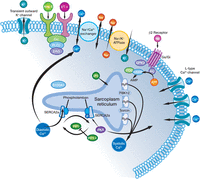
Image generated by Adina Hazan, 06/30/2021

This article is Part II in a series of articles on Calcium and its role in Cell motility

The Series consists of the following articles:

Part I: Identification of Biomarkers that are Related to the Actin Cytoskeleton

Larry H Bernstein, MD, FCAP

http://pharmaceuticalintelligence.com/2012/12/10/identification-of-biomarkers-that-are-related-to-the-actin-cytoskeleton/

Part II: Role of Calcium, the Actin Skeleton, and Lipid Structures in Signaling and Cell Motility

Larry H. Bernstein, MD, FCAP, Stephen Williams, PhD and Aviva Lev-Ari, PhD, RN

http://pharmaceuticalintelligence.com/2013/08/26/role-of-calcium-the-actin-skeleton-and-lipid-structures-in-signaling-and-cell-motility/

Part III: Renal Distal Tubular Ca2+ Exchange Mechanism in Health and Disease

Larry H. Bernstein, MD, FCAP, Stephen J. Williams, PhD
 and Aviva Lev-Ari, PhD, RN

http://pharmaceuticalintelligence.com/2013/09/02/renal-distal-tubular-ca2-exchange-mechanism-in-health-and-disease/

Part IV: The Centrality of Ca(2+) Signaling and Cytoskeleton Involving Calmodulin Kinases and Ryanodine Receptors in Cardiac Failure, Arterial Smooth Muscle, Post-ischemic Arrhythmia, Similarities and Differences, and Pharmaceutical Targets

Larry H Bernstein, MD, FCAP, Justin Pearlman, MD, PhD, FACC and Aviva Lev-Ari, PhD, RN

http://pharmaceuticalintelligence.com/2013/09/08/the-centrality-of-ca2-signaling-and-cytoskeleton-involving-calmodulin-kinases-and-ryanodine-receptors-in-cardiac-failure-arterial-smooth-muscle-post-ischemic-arrhythmia-similarities-and-differen/

Part V: Ca2+-Stimulated Exocytosis:  The Role of Calmodulin and Protein Kinase C in Ca2+ Regulation of Hormone and Neurotransmitter

Larry H Bernstein, MD, FCAP
and
Aviva Lev-Ari, PhD, RN

http://pharmaceuticalintelligence.com/2013/12/23/calmodulin-and-protein-kinase-c-drive-the-ca2-regulation-of-hormone-and-neurotransmitter-release-that-triggers-ca2-stimulated-exocytosis/

Part VI: Calcium Cycling (ATPase Pump) in Cardiac Gene Therapy: Inhalable Gene Therapy for Pulmonary Arterial Hypertension and Percutaneous Intra-coronary Artery Infusion for Heart Failure: Contributions by Roger J. Hajjar, MD

Aviva Lev-Ari, PhD, RN

http://pharmaceuticalintelligence.com/2013/08/01/calcium-molecule-in-cardiac-gene-therapy-inhalable-gene-therapy-for-pulmonary-arterial-hypertension-and-percutaneous-intra-coronary-artery-infusion-for-heart-failure-contributions-by-roger-j-hajjar/

Part VII: Cardiac Contractility & Myocardium Performance: Ventricular Arrhythmias and Non-ischemic Heart Failure – Therapeutic Implications for Cardiomyocyte Ryanopathy (Calcium Release-related Contractile Dysfunction) and Catecholamine Responses

Justin Pearlman, MD, PhD, FACC, Larry H Bernstein, MD, FCAP and Aviva Lev-Ari, PhD, RN

http://pharmaceuticalintelligence.com/2013/08/28/cardiac-contractility-myocardium-performance-ventricular-arrhythmias-and-non-ischemic-heart-failure-therapeutic-implications-for-cardiomyocyte-ryanopathy-calcium-release-related-contractile/

Part VIII: Disruption of Calcium Homeostasis: Cardiomyocytes and Vascular Smooth Muscle Cells: The Cardiac and Cardiovascular Calcium Signaling Mechanism

Justin Pearlman, MD, PhD, FACC, Larry H Bernstein, MD, FCAP and Aviva Lev-Ari, PhD, RN

http://pharmaceuticalintelligence.com/2013/09/12/disruption-of-calcium-homeostasis-cardiomyocytes-and-vascular-smooth-muscle-cells-the-cardiac-and-cardiovascular-calcium-signaling-mechanism/

Part IX: Calcium-Channel Blockers, Calcium Release-related Contractile Dysfunction (Ryanopathy) and Calcium as Neurotransmitter Sensor

Justin Pearlman, MD, PhD, FACC, Larry H Bernstein, MD, FCAP and Aviva Lev-Ari, PhD, RN

Part X: Synaptotagmin functions as a Calcium Sensor: How Calcium Ions Regulate the fusion of vesicles with cell membranes during Neurotransmission

Larry H Bernstein, MD, FCAP and Aviva Lev-Ari, PhD, RN

http://pharmaceuticalintelligence.com/2013/09/10/synaptotagmin-functions-as-a-calcium-sensor-how-calcium-ions-regulate-the-fusion-of-vesicles-with-cell-membranes-during-neurotransmission/

Part XI: Sensors and Signaling in Oxidative Stress

Larry H. Bernstein, MD, FCAP

http://pharmaceuticalintelligence.com/2013/11/01/sensors-and-signaling-in-oxidative-stress/

Part XII: Atherosclerosis Independence: Genetic Polymorphisms of Ion Channels Role in the Pathogenesis of Coronary Microvascular Dysfunction and Myocardial Ischemia (Coronary Artery Disease (CAD))

Larry H Bernstein, MD, FCAP and Aviva Lev-Ari, PhD, RN

http://pharmaceuticalintelligence.com/2013/12/21/genetic-polymorphisms-of-ion-channels-have-a-role-in-the-pathogenesis-of-coronary-microvascular-dysfunction-and-ischemic-heart-disease/

This article, constitute, Part II, it is a broad, but not complete review of the emerging discoveries of the critical role of calcium signaling on cell motility and by extension, embryonic development, cancer metastasis, changes in vascular compliance at the junction between the endothelium and the underlying interstitial layer.  The effect of calcium signaling on the heart in arrhtmogenesis and heart failure will be a third in this series, while the binding of calcium to troponin C in the synchronous contraction of the myocardium had been discussed by Dr. Lev-Ari in Part I.

Universal MOTIFs essential to skeletal muscle, smooth muscle, cardiac syncytial muscle, endothelium, neovascularization, atherosclerosis and hypertension, cell division, embryogenesis, and cancer metastasis. The discussion will be presented in several parts:
1.  Biochemical and signaling cascades in cell motility
2.  Extracellular matrix and cell-ECM adhesions
3.  Actin dynamics in cell-cell adhesion
4.  Effect of intracellular Ca++ action on cell motility
5.  Regulation of the cytoskeleton
6.  Role of thymosin in actin-sequestration
7.  T-lymphocyte signaling and the actin cytoskeleton

Part 1.  Biochemical and Signaling Cascades in Cell Motility

BIOCHEMISTRY AND BIOMECHANICS OF CELL MOTILITY

Song Li, Jun-Lin Guan, and Shu Chien
Annu. Rev. Biomed. Eng. 2005. 7:105–50   [doi:10.1146/annurev.bioeng.7.060804.100340]
Cell motility or migration is an essential cellular process for a variety of biological events. In embryonic development, cells migrate to appropriate locations for the morphogenesis of tissues and organs. Cells need to migrate to heal the wound in repairing damaged tissue. Vascular endothelial cells (ECs) migrate to form new capillaries during angiogenesis. White blood cells migrate to the sites of inflammation to kill bacteria. Cancer cell metastasis involves their migration through the blood vessel wall to invade surrounding tissues.

Variety of important roles for cell migration:

1. Embryogenesis
2. Wound healing (secondary extension)
3. Inflammatory infiltrate (chemotaxis)
4. Angiogenesis
5. Cancer metastasis
6. Arterial compliance
7. Myocardial and skeletal muscle contraction
8. Cell division

Portrait of Cell in Migration:

1. protrusion of leading edge
2. Formation of new adhesions at front
3. Cell contraction
4. Release of adhesions at rear
Microenvironmental factor:
1. Concentration gradient of chemoattractants
2. Gradient of immobilized ECM proteins
3. Gradient of matrix rigidity
4. Mechanotaxis
Extracellular signals are sensed by receptors or mechanosensors on cell surface or in cell interior to initiate migration. Actin polymerization is the key event leading to protrusion at the leading edge and new focal adhesions anchor the actin filaments and the cell to the underlying surface.  This is followed by contraction of the actin filaments.  The contraction of actomyosin filaments pulls the elongate body forward and at the same time the tail retracts.

Part 2.  Cell-ECM Adhesions

Cytoskeleton and cell-ECM adhesions are two major molecular machineries involved in mechano-chemical signal transduction during cell migration. Although all three types of cytoskeleton (actin microfilaments, microtubules, and intermediate filaments) contribute to cell motility, actin cytoskeleton plays the central role. The polymerization of actin filaments provides the driving force for the protrusion of the leading edge as lamellipodia (sheet-like protrusions) or filopodia (spike-like protrusions), and actomyosin contraction generates the traction force at (focal adhesions) FAs and induces the retraction at the rear. It is generally accepted that actin filaments interact with the double-headed myosin to generate the force for cell motility and that actomyosin contraction/relaxation involves the modulation of myosin light chain (MLC) phosphorylation.  Rho family GTPases, including Cdc42, Rac, and Rho, are the key regulators of actin polymerization, actomyosin contraction, and cell motility.  Cdc42 activation induces the formation of filopodia; Rac activation induces lamellipodia; and Rho activation increases actin polymerization, stress fiber formation, and actomyosin contractility. All three types of Rho GTPases stimulate new FA formation.
Integrins are the major receptors for ECM proteins. The integrin family includes more than 20  transmembrane heterodimers composed of α and β subunits with noncovalent association. The extracellular domain of integrin binds to specific ligands, e.g., ECM proteins such as fibronectin (FN), vitronectin, collagen, and laminin. The cytoplasmic domain interacts with cytoskeletal proteins (e.g., paxillin, talin, vinculin, and actin) and signaling molecules in the focal adhesion (FA) sites. The unique structural features of integrins enable them to mediate outside-in signaling, in which extracellular stimuli induce the intracellular signaling cascade via integrin activation, and inside-out signaling, in which intracellular signals modulate integrin activation and force generation through FAs.

Part 3. Actin Dynamics in Cell-cell Adhesion

Actin filaments are linked to the focal adhesions (Fas) between cell and ECM through a protein complex that includes talin, vinculin, α-actinin, and filamin. Such a complex couples the actomyosin contractile apparatus to FAs, and plays an important role in the force transmission between ECM and the cell.

3a. Actin dynamics and cell–cell adhesion in epithelia

Valeri Vasioukhin and Elaine Fuchs
Howard Hughes Medical Institute, Department of Molecular Genetics and Cell Biology, The University of Chicago, Chicago, IL
Current Opinion in Cell Biology 2001, 13:76–84
Recent advances in the field of intercellular adhesion highlight the importance of adherens junction association with the underlying actin cytoskeleton. In skin epithelial cells a dynamic feature of adherens junction formation involves filopodia, which physically project into the membrane of adjacent cells, catalyzing the clustering of adherens junction protein complexes at their tips. In turn, actin polymerization is stimulated at the cytoplasmic interface of these complexes. Although the mechanism remains unclear, the VASP/Mena family of proteins seems to be involved in organizing actin polymerization at these sites. In vivo, adherens junction formation appears to rely upon filopodia in processes where epithelial sheets must be physically moved closer to form stable intercellular connections, for example, in ventral closure in embryonic development or wound healing in the postnatal animal.
Located at cell–cell borders, adherens junctions are electron dense transmembrane structures that associate with the actin cytoskeleton. In their absence, the formation of other cell–cell adhesion structures is dramatically reduced. The transmembrane core of adherens junctions consists of cadherins, of which E-cadherin is the epithelial prototype. Its extracellular domain is responsible for homotypic, calcium-dependent, adhesive interactions with E-cadherins on the surface of opposing cells. Its cytoplasmic domain is important for associations with other intracellular proteins involved in the clustering of surface cadherins to form a junctional structure.
The extracellular domain of the transmembrane E-cadherin dimerizes and interacts in a calcium-dependent manner with similar molecules on neighboring cells. The intracellular juxtamembrane part of E-cadherin binds to p120ctn, an armadillo repeat protein capable of modulating E-cadherin clustering. The distal segment of E-cadherin’s cytoplasmic domain can interact with β-catenin or plakoglobin, armadillo repeat proteins which in turn bind to α-catenin. The carboxyl end of α-catenin binds directly to f-actin, and, through a direct mechanism, α-catenin can link the membrane-bound cadherin–catenin complex to the actin cytoskeleton. Additionally, α-catenin can bind to either vinculin or ZO1, and it is required for junctional localization of zyxin. Vinculin and zyxin can recruit VASP (and related family members), which in turn can associate with the actin cytoskeleton, providing the indirect mechanism to link the actin cytoskeleton to adherens junctions. ZO1 is also a member of tight junctions family, providing a means to link these junctions with adherens junctions.
Through a site near its transmembrane domain, cadherins bind directly to the catenin p120ctn, and through a more central site within the cytoplasmic domain, cadherins bind preferentially to β-catenin. Cell migration appears to be promoted by p120ctn through recruiting and activating small GTPases. β-catenin is normally involved in adherens junction formation through its ability to bind to β-catenin and link cadherins to the actin cytoskeleton. However, β-catenin leads a dual life in that it can also act as a transcriptional cofactor when stimulated by the Wnt signal transduction pathway

α-Catenin: More than just a Bridge between Adherens Junctions and the Actin Cytoskeleton

α-catenin was initially discovered as a member of the E-cadherin–catenin complex.  It is related to vinculin, an actin-binding protein that is found at integrin-based focal contacts. The amino-terminal domain of α-catenin is involved in α-catenin/plakoglobin binding and is also important for dimerization. Its central segment can bind to α-actinin and to vinculin, and it partially encompasses the region of the protein necessary for cell adhesion (which is the adhesion-modulation domain; amino acids 509–643). The carboxy-terminal domain of both vinculin and α-catenin is involved in filamentous actin (f-actin) binding, and for α-catenin, this domain is also involved in binding to ZO1.  VH1, VH2 and VH3 are three regions sharing homology to vinculin. The percentage amino acid identity and the numbers correspond to the amino acid residues of the α-catenin polypeptide.
α-catenin is the only catenin that can directly bind to actin filaments , and E-cadherin–catenin complexes do not associate with the actin cytoskeleton after α-catenin is removed by extraction with detergent. Cancer cell lines lacking α-catenin still express E-cadherin and β-catenin, but do not show proper cell–cell adhesion unless the wild-type gene is reintroduced into the cancer cell. This provides strong evidence that clustering of the E-cadherin–catenin complex and cell–cell adhesion requires the presence of α-catenin.
Although intercellular adhesion is dependent upon association of the E-cadherin–β-catenin protein complex with α-catenin and the actin cytoskeleton, it is unclear whether α-catenin’s role goes beyond linking the two structures. Fusion of a nonfunctional tailless E-cadherin (E C71) with α-catenin resulted in a chimeric protein able to confer cell–cell adhesion on mouse fibroblasts in vitro, and generation of additional chimeric proteins enabled delineation of the region of α-catenin that is important for cell aggregation. Not surprisingly, the essential domain of α-catenin was its carboxy-terminal domain (~amino acids 510–906), containing the actin-binding site, which encompasses residues 630–906 of this domain.
The binding of α-catenin to the actin cytoskeleton is required for cell–cell adhesion,  but α-catenin appears to have additional function(s) beyond its ability to link E-cadherin–β-catenin complexes to actin filaments.  The domain encompassing residues 509–643 of α-catenin has been referred to as an adhesion-modulation domain to reflect this added, and as yet unidentified, function.  Besides its association with β-catenin and f-actin, α-catenin binds to a number of additional proteins, some of which are actin binding proteins themselves.  Additionally, the localization of vinculin to cell–cell borders is dependent upon the presence of α-catenin. α-catenin can also bind to the MAGUK (membrane-associated guanylate kinase) family members ZO1 and ZO2.  Thus, the role for α-catenin might not simply be to link E-cadherin–catenin complexes to the actin cytoskeleton but rather to organize a multiprotein complex with multiple actin-binding, bundling and polymerization activities.
The decisive requirement for α-catenin’s actin-binding domain in adherens junction formation underscores the importance of the actin cytoskeleton in intercellular adhesion. Thus, it is perhaps not surprising that the majority of f-actin in epithelial cells localizes to cell–cell junctions.  When epidermal cells are incubated in vitro in culture media with calcium concentrations below 0.08 mM they are unable to form adherens junctions. However, when the calcium concentrations are raised to the levels naturally occurring in skin (1.5–1.8 mM), intercellular adhesion is initiated.
This switch in part promotes a calcium-dependent conformational change in the extracellular domain of E-cadherin that is necessary for homotypic interactions to take place.  It appears that the actin cytoskeleton has a role in facilitating the process that brings opposing membranes together and stabilizing them once junction formation has been initiated. In this regard, the formation of cell–cell adhesion can be divided into two categories:
  • active adhesion, a process that utilizes the actin cytoskeleton to generate the force necessary to bring opposing membranes together, and
  • passive adhesion, a process which may not require actin if the membranes are already closely juxtaposed and stabilized by the deposition of cadherin–catenin complexes.
Upon a switch from low to high calcium, cadherin-mediated intercellular adhesion is activated. Passive adhesion: in cells whose actin cytoskeleton has been largely disrupted by cytochalasin D, cadherin–catenin complexes occur at sites where membranes of neighboring cells directly contact each other. Active adhesion: neighboring cells with functional actin cytoskeletons can draw their membranes together, forming a continuous epithelial sheet.  Upon initial membrane contact, E-cadherin forms punctate aggregates or puncta along regions where opposing membranes are in contact with one another. Each of these puncta is contacted by a bundle of actin filaments that branch off from the cortical belt of actin filaments underlying the cell membrane. At later stages in the process, those segments of the circumferential actin cables that reside along the zone of cell–cell contacts disappear, and the resulting semi-circles of cortical actin align to form a seemingly single circumferential cable around the perimeter of the two cells. At the edges of the zone of cell–cell contact, plaques of E-cadherin–catenin complexes connect the cortical belt of actin to the line of adhesion. At the center of the developing zone of adhesion, E-cadherin puncta associate with small bundles of actin filaments oriented perpendicular to the zone.
Multiple E-cadherin-containing puncta that form along the developing contact rapidly associate with small bundles of actin filaments. As the contact between cells lengthens, puncta continue to develop at a constant average density, with new puncta at the edges of the contact. The segment of the circumferential actin cable that underlies the developing contact gradually ‘dissolves’, and merges into a large cable, encompassing both cells. This is made possible through cable-mediated connections to the E-cadherin plaques at the edges of the contact. As contact propagates, E-cadherin is deposited along the junction as a continuous line. The actin cytoskeleton reorganizes and is now oriented along the cell–cell contact. In primary keratinocytes, two neighboring cells send out filopodia, which, upon contact, slide along each other and project into the opposing cell’s membrane. Filopodia are rich in f-actin. Embedded tips of filopodia are stabilized by puncta, which are transmembrane clusters of adherens junction proteins.
This process draws regions of the two cell surfaces together, which are then clamped by desmosomes. Radial actin fibers reorganize at filopodia tips in a zyxin-, vinculin-, VASP-, and Mena-dependent fashion.  Actin polymerization is initiated at stabilized puncta, creating the directed reverse force needed to push and merge puncta into a single line as new puncta form at the edges. The actin-based movement physically brings remaining regions of opposing membranes together and seals them into epithelial sheets. As filopodia contain actin rather than keratin intermediate filaments, they become natural zones of adherens junctions, whereas the cell surface flanking filopodia becomes fertile ground for desmosome formation, alternating adherens junctions and desmosomes.

Possible Roles of Myosin in Cell–cell Adhesion.

[a] A hypothetical ‘purse string’ model for myosin-driven epithelial sheet closure at a large circular wound site in the cornea of an adult mouse. At the edge of wound site epithelial cables of actin appear to extend from cell to cell, forming a ring around the wound circumference. Contraction of actin cables  driven by myosin can lead to wound closure.
[b] Inside out ‘purse string’ model for contact propagation (compaction) in MDCK cells. During contact formation in MDCK cells, circumferential actin cables contact cadherin–catenin plaques at the edges of the contact. Contraction of actin cables driven by myosin can lead to the contact expansion.

What Regulates the Actin Dynamics that are Important for Cell–cell Adhesion?

The answer to this remains uncertain, but the small GTPases of the Rho family seem to be likely candidates, given that Rho, Rac1 and Cdc42 promote stress fiber, lamellipodia and filopodia formation, respectively.
In vivo mutagenesis studies in Drosophila reveal a role for Rac1 and Rho in dorsal closure and/or in head involution, processes that involve complex and well orchestrated rearrangements of cells. In contrast, Cdc42 appears to be involved in regulating polarized cell shape changes. In vitro, keratinocytes microinjected with dominant negative Rac1 or with C3 toxin, a specific inhibitor of Rho, are unable to form cadherin-based cell–cell contacts.  Similarly, overexpression of a constitutively active form of Rac1 or Cdc42 in MDCK cells increases junctional localization of E-cadherin–catenin complexes, whereas the dominant negative forms of Rac1 and Cdc42, or C3 microinjection, have the opposite effect. The finding that Tiam1, a guanine nucleotide exchange factor for Rac1, increases E-cadherin mediated cell–cell adhesion, inhibits hepatocyte growth-factor-induced cell scattering and reverses the loss of adhesion in Ras-transformed cells is consistent with the above.  Together, these findings provide compelling evidence that activation of the Rho family of small GTPases plays a key role in the actin dynamics that are necessary for adherens junction formation.
We found that E-cadherin–catenin-enriched puncta, which assemble during the first stages of epithelial sheet formation, are sites of de novo actin polymerization. This led us to postulate that actin polymerization might provide the force that is subsequently necessary to merge the double role of puncta into a single row and ultimately into an epithelial sheet. Knowledge of how actin polymerization might generate movement comes largely from studies of the mechanism by which the pathogen Listeria monocytogenes pirates actin polymerization and utilizes it for intracellular propulsion. For this endeavor, these bacteria recruit two types of cellular components, the VASP family of proteins and the Arp2/3 complex. The Arp2/3 protein complex is required for de novo nucleation of actin filament polymerization, whereas VASP appears to accelerate bacterial movement by about 10 fold.
Although most studies have revealed positive roles for VASP and its cousins in actin reorganization/ polymerization, recent experiments have shown that in certain instances these proteins act negatively in directing cell movement. A further complication is the finding that VASP family proteins can be phosphorylated, thereby inhibiting their actin nucleation and f-actin binding ability. A  role for VASP may be in the actin polymerization necessary for filopodia  extensions. In this regard, VASP family proteins localize to the tips of filopodia during neural growth and in calcium-stimulated keratinocytes. VASP family proteins in this process might provide directionality to the process of actin polymerization, reshaping f-actin into parallel bundles to produce and extend filopodia-like structures from branched lamellipodial networks.

The Might of Myosins

Although actin polymerization seems to be important in generating the cellular movement necessary for intercellular adhesion, this does not rule out the possibility that the myosin family of actin motor proteins may also play a role.  It is known, for instance, that cells can use myosin–actin contractile forces to alter cell shape, and myosin II is a ubiquitously expressed protein involved in such diverse processes as cell spreading, cytokinesis, cell migration, generation of tension within actin stress fiber networks and retrograde flow of actin filaments at the leading edge of moving cells. Interestingly, mouse corneal cells at a wound edge assemble cables of actin filaments anchored to E-cadherin–catenin complexes. The cells surrounding the wound site display myosin-II-associated actin filaments that are aligned in a structure resembling a purse string. It has been postulated that closure of the wound may be achieved through myosin-directed contraction of the actin filaments, in a mechanism similar to that of pulling on a purse string.
Overall, through guilt by association, myosins have been implicated in cell–cell adhesion and in adherens junction formation and although the models proposed are attractive, direct experimental evidence is still lacking. BDM (2,3-butanedione monoxime), a general inhibitor of myosin function, had no obvious effect on intercellular junction formation in our keratinocyte adhesion assays (V Vasioukhin, E Fuchs, unpublished data). However, the role of myosins clearly deserves a more detailed investigation, and this awaits the development of new and improved inhibitors and activators of myosin action.

 Key references:

1. Imamura Y, Itoh M, Maeno Y, Tsukita S, Nagafuchi A: Functional  domains of α-catenin required for the strong state of cadherin based cell adhesion. J Cell Biol 1999, 144:1311-1322.
Three distinct functional domains for α-catenin were identified: a vinculin binding domain, a ZO-1-binding domain and an adhesion modulation domain. Both ZO1-binding (also actin binding) and adhesion modulation domains are necessary for strong adhesion.
2. Vasioukhin V, Bauer C, Yin M, Fuchs E: Directed actin polymerization is the driving force for epithelial cell–cell adhesion. Cell 2000, 100:209-219.
A dynamic filopodia-driven process of cell–cell adhesion is described in primary mouse keratinocyte cultures. Newly forming adherens junctions were identified as sites of actin polymerization and/or reorganization, involving VASP/Mena family members.
3. Raich WB, Agbunag C, Hardin J: Rapid epithelial-sheet sealing in the Caenorhabditis elegans embryo requires cadherin-dependent filopodial priming. Curr Biol 1999, 9:1139-1146.
An elegant in vivo analysis of filopodia-based cell–cell junction formation during epithelial-sheet closure in embryonic development of C. elegans.
4. Loisel TP, Boujemaa R, Pantaloni D, Carlier MF: Reconstitution of actin-based motility of Listeria and Shigella using pure proteins.  Nature 1999, 401:613-616.
Using an in vitro reconstitution approach, the authors show that Arp2/3, actin, cofilin and capping proteins are required for motility of Listeria, in contrast VASP seems to act by increasing the speed of movement by about 10 fold.

3b.  Role for Gelsolin in Actuating Epidermal Growth Factor Receptor-mediated Cell Motility

Philip Chen,  Joanne E. Murphy-Ullrich, and Alan Wells
Department of Pathology, University of Alabama at Birmingham, AL
J Cell Biology Aug 1996; 134(3): 689-698
Phospholipase C-~/(PLC~/) is required for EGF-induced motility (Chen, P., H. Xie, M.C. Sekar, K.B. Gupta, and A. Wells. J. Cell Biol. 1994. 127:847-857); however, the molecular basis of how PLC~/modulates the actin filament network underlying cell motility remains undetermined. One connection to the actin cytoskeleton may be direct hydrolysis of PIP 2 with subsequent mobilization of membrane-associated actin modifying proteins. We used signaling restricted EGFR mutants expressed in receptor-devoid NR6 fibroblast cells to investigate whether EGFR activation of PLC causes gelsolin mobilization from the cell membrane in vivo and whether this translocation facilitates cell movement. Gelsolin anti-sense  oligonucleotide (20 p,M) treatment of NR6 ceils expressing the motogenic full-length (WT) and  truncated c’ 1000 EGFR decreased endogenous gelsolin by 30–60%; this resulted in preferential reduction of EGF (25 nM)-induced cell movement by >50% with little effect on the basal motility. As 14 h of EGF stimulation of cells did not increase total cell gelsolin content, we determined whether EGF induced redistribution of gelsolin from the membrane fraction. EGF treatment decreased the gelsolin mass associated with the membrane fraction in motogenic WT and c’1000 EGFR NR6 cells but not in cells expressing the fully mitogenic, but nonmotogenic c’973 EGFR. Blocking PLC activity with the pharmacologic agent U73122 (1 ~M) diminished both this mobilization of gelsolin and EGF-induced motility, suggesting that gelsolin mobilization is downstream of PLC. Concomitantly observed was reorganization of submembranous actin filaments correlating directly with PLC activation and gelsolin mobilization. In vivo expression of a peptide that is reported to compete in vitro with gelsolin in binding to PIP2 dramatically increased basal cell motility in NR6 cells expressing either motogenic (WT and c’1000) or nonmotogenic (c’973) EGFR; EGF did not further augment cell motility and gelsolin mobilization. Cells expressing this peptide demonstrated actin reorganization similar to that observed in EGF-treated control cells; the peptide-induced changes were unaffected by U73122. These data suggest that much of the EGF induced motility and cytoskeletal alterations can be reproduced by displacement of select actin-modifying proteins from a PIP2-bound state. This provides a signaling mechanism for translating cell surface receptor mediated biochemical reactions to the cell movement machinery.

3c.  Actomyosin Contraction at the Cell Rear Drives Nuclear Translocation in Migrating Cortical Interneurons

Francisco J. Martini and Miguel Valdeolmillos
Instituto de Neurociencias de Alicante, Universidad Miguel Hernandez, Alacant, Spain
Journal of Neuroscience 2010 • 30(25):8660–8670
Neuronal migration is a complex process requiring the coordinated interaction of cytoskeletal components and regulated by calcium signaling among other factors. Migratory neurons are polarized cells in which the largest intracellular organelle, the nucleus, has to move repeatedly. Current views support a central role for pulling forces that drive nuclear movement. By analyzing interneurons migrating in cortical slices of mouse brains, we have found that nucleokinesis is associated with a precise pattern of actin dynamics characterized by the initial formation of a cup-like actin structure at the rear nuclear pole. Time-lapse experiments show that progressive actomyosin contraction drives the nucleus forward. Nucleokinesis concludes with the complete contraction of the cup-like structure, resulting in an actin spot at the base of the retracting trailing process. Our results demonstrate that this actin remodeling requires a threshold calcium level provided by low-frequency spontaneous fast intracellular calcium transients. Microtubule stabilization with taxol treatment prevents actin remodeling and nucleokinesis, whereas cells with a collapsed microtubule cytoskeleton induced by nocodazole treatment, display nearly normal actin dynamics and nucleokinesis. In summary, the results presented here demonstrate that actomyosin forces acting at the rear side of the nucleus drives nucleokinesis in tangentially migrating interneurons in a process that requires calcium and a dynamic cytoskeleton of microtubules.

3d. Migration of Zebrafish Primordial Germ Cells: A Role for Myosin Contraction and Cytoplasmic Flow

H Blaser, M Reichman-Fried, I Castanon, K Dumstrei, F L Marlow, et al.
Max Planck Institute, Gottingen & Dresden, Germany;  Vanderbilt University, Nashville, Tenn; National Institute of Genetics, Shizuoka, Japan
Developmental Cell 2006; 11: 613–627 [DOI 10.1016/j.devcel.2006.09.023]
The molecular and cellular mechanisms governing cell motility and directed migration in response to the chemokine SDF-1 are largely unknown. Here, we demonstrate that zebrafish primordial germ cells whose migration is guided by SDF-1 generate bleb-like protrusions that are powered by cytoplasmic flow. Protrusions are formed at sites of higher levels of free calcium where activation of myosin contraction occurs. Separation of the acto-myosin cortex from the plasma membrane at these sites is followed by a flow of cytoplasm into the forming bleb. We propose that polarized activation of the receptor CXCR4 leads to a rise in free calcium that in turn activates myosin contraction in the part of the cell responding to higher levels of the ligand SDF-1. The biased formation of new protrusions in a particular region of the cell in response to SDF-1 defines the leading edge and the direction of cell migration.

Part 4.  Calcium Signaling

4a. Indirect Association of Ezrin with F-Actin: Isoform Specificity and Calcium Sensitivity

Charles B. Shuster and Ira M. Herman
Tufts University Health Science Schools, Boston, MA
J Cell Biology Mar 1995; 128(5): 837-848
Muscle and nonmuscle isoactins are segregated into distinct cytoplasmic domains,  but the mechanism regulating subcellular sorting is unknown (Herman, 1993a). To reveal whether isoform-specific actin-binding proteins function to coordinate these events, cell extracts derived from motile (Era) versus stationary (Es) cytoplasm were selectively and sequentially fractionated over filamentous isoactin affinity columns prior to elution with a KC1 step gradient.  A polypeptide of interest, which binds specifically to/3-actin filament columns, but not to muscle actin columns has been conclusively identified as the ERM family member, ezrin. We studied ezrin-/3 interactions in vitro by passing extracts (Era) over isoactin affinity matrices in the presence of Ca2+-containing versus Ca2+-free buffers, with or without cytochalasin D. Ezrin binds and can be released from/3-actin Sepharose-4B in the presence of Mg2+/EGTA and 100 mM NaC1 (at 4°C and room temperature), but not when affinity fractionation of Em is carried out in the presence of 0.2 mM CaC12 or 2/~M cytochalasin D. N-acetyl-(leucyl)2-norleucinal and E64, two specific inhibitors of the calcium-activated protease, calpain I, protect ezrin binding to β-actin in the presence of calcium. Biochemical analysis of endothelial lysates reveals that a calpain I cleavage product of ezrin emerges when cell locomotion is stimulated in response to monolayer injury. Immunofluorescence analysis shows that anti-ezrin and anti-β-actin IgGs can be simultaneously co-localized, extending the results of isoactin affinity fractionation of Em-derived extracts and suggesting that ezrin and β-actin interact in vivo. To test the hypothesis that ezrin binds directly to β-actin, we performed three sets of studies under a wide range of physiological conditions (pH 7.0-8.5) using purified pericyte ezrin and either α- or β-actin. Results of these experiments reveal that purified ezrin does not directly bind to β-actin filaments. We mapped cellular free calcium in endothelial monolayers crawling in response to injury. Confocal imaging of fluo-3 fluorescence followed by simultaneous double antibody staining reveals a transient rise of free calcium within ezrin-/3-actin-enriched domains in the majority of motile cells bordering the wound edge. These results support the notion that calcium and calpain I modulate ezrin and β-actin interactions during forward protrusion formation.

4b.  Calcium channel and glutamate receptor activities regulate actin organization in salamander retinal neurons

Massimiliano Cristofanilli and Abram Akopian
New York University School of Medicine, New York, NY
J Physiol 575.2 (2006) pp 543–554
Intracellular Ca2+ regulates a variety of neuronal functions, including neurotransmitter release, protein phosphorylation, gene expression and synaptic plasticity. In a variety of cell types, including neurons, Ca2+ is involved in actin reorganization, resulting in either actin polymerization or depolymerization. Very little, however, is known about the relationship between Ca2+ and the actin cytoskeleton organization in retinal neurons. We studied the effect of high-K+-induced depolarization on F-actin organization in salamander retina and found that Ca2+ influx through voltage-gated L-type channels causes F-actin disruption, as assessed by 53±5% (n=23, P <0.001) reduction in the intensity of staining with Alexa-Fluor488-phalloidin, a compound that permits visualization and quantification of polymerized actin. Calcium-induced F-actin depolymerization was attenuated in the presence of protein kinase C antagonists, chelerythrine or bis-indolylmaleimide hydrochloride (GF 109203X). In addition, phorbol 12-myristate 13-acetate (PMA), but not 4α-PMA, mimicked the effect of Ca2+ influx on F-actin. Activation of ionotropic AMPA and NMDA glutamate receptors also caused a reduction in F-actin. No effect on F-actin was exerted by caffeine or thapsigargin, agents that stimulate Ca2+ release from internal stores. In whole-cell recording from a slice preparation, light-evoked ‘off’ but not ‘on’ EPSCs in ‘on–off’ ganglion cells were reduced by 60±8% (n=8, P <0.01) by cytochalasin D. These data suggest that elevation of intracellular Ca2+ during excitatory synaptic activity initiates a cascade for activity-dependent  actin remodelling, which in turn may serve as a feedback mechanism to attenuate excite-toxic Ca2+ accumulation induced by synaptic depolarization.

4c.  Electric Field-directed Cell Shape Changes, Displacement, and Cytoskeletal Reorganization Are Calcium Dependent

Edward K. Onuma and Sek-Wen Hui
Roswell Park Memorial Institute, Buffalo, New York
J Cell Biology 1988; 106: 2067-2075

C3H/10T1/2 mouse embryo fibroblasts were stimulated by a steady electric field ranging up to 10 V/cm. Some cells elongated and aligned perpendicular to the field direction. A preferential positional shift toward the cathode was observed which was inhibited by the calcium channel blocker D-600 and the calmodulin antagonist trifluoperazine. Rhodaminephalloidin labeling of actin filaments revealed a field induced disorganization of the stress fiber pattern, which was reduced when stimulation was conducted in calcium-depleted buffer or in buffer containing calcium antagonist CoC12, calcium channel blocker D-600, or calmodulin antagonist trifluoperazine. Treatment with calcium ionophore A23187 had similar effects, except that the presence of D-600 did not reduce the stress fiber disruption. The calcium-sensitive photoprotein aequorin was used to monitor changes in intracellular-free calcium. Electric stimulation caused an increase of calcium to the micromolar range. This increase was inhibited by calcium-depleted buffer or by CoC12, and was reduced by D-600. A calcium-dependent mechanism is proposed to explain the observed field-directed cell shape changes, preferential orientation, and displacement.

4d. Local Calcium Elevation and Cell Elongation Initiate Guided Motility in Electrically Stimulated osteoblast-Like Cells

N Ozkucur, TK Monsees, S Perike, H Quynh Do, RHW Funk.
Carl Gustav Carus, TU-Dresden, Dresden, Germany; University of the Western Cape, SAfrica.
Plos ONE 2009; 4 (7): e6131

Investigation of the mechanisms of guided cell migration can contribute to our understanding of many crucial biological processes, such as development and regeneration. Endogenous and exogenous direct current electric fields (dcEF) are known to induce directional cell migration, however the initial cellular responses to electrical stimulation are poorly understood. Ion fluxes, besides regulating intracellular homeostasis, have been implicated in many biological events, including regeneration. Therefore understanding intracellular ion kinetics during EF-directed cell migration can provide useful information for development and regeneration.
We analyzed the initial events during migration of two osteogenic cell types, rat calvarial and human SaOS-2 cells, exposed to strong (10–15 V/cm) and weak (#5 V/cm) dcEFs. Cell elongation and perpendicular orientation to the EF vector occurred in a time- and voltage-dependent manner. Calvarial osteoblasts migrated to the cathode as they formed new filopodia or lamellipodia and reorganized their cytoskeleton on the cathodal side. SaOS-2 cells showed similar responses except towards the anode. Strong dcEFs triggered a rapid increase in intracellular calcium levels, whereas a steady state level of intracellular calcium was observed in weaker fields. Interestingly, we found that dcEF induced intracellular calcium elevation was initiated with a local rise on opposite sides in calvarial and SaOS-2 cells, which may explain their preferred directionality. In calcium-free conditions, dcEFs induced neither intracellular calcium elevation nor directed migration, indicating an important role for calcium ions. Blocking studies using cadmium chloride revealed that voltage-gated calcium channels (VGCCs) are involved in dcEF-induced intracellular calcium elevation. Taken together, these data form a time scale of the morphological and physiological rearrangements underlying EF-guided migration of osteoblast-like cell types and reveal a requirement for calcium in these reactions. We show for the first time here that dcEFs trigger different patterns of intracellular calcium elevation and positional shifting in osteogenic cell types that migrate in opposite directions.

4e. TRPM4 Regulates Migration of Mast Cells in Mice

T Shimizua, G Owsianik, M Freichelb, V Flockerzi, et al.
Laboratory of Ion Channel Research, KU Leuven, Leuven, Belgium; Universität des Saarlandes, Homburg, Germany; National Institute for Physiological Sciences,Okazaki, Japan
Cell Calcium 2008; xxx–xxx

We demonstrate here that the transient receptor potential melastatin subfamily channel, TRPM4, controls migration of bone marrow-derived mast cells (BMMCs), triggered by dinitrophenylated human serum albumin (DNP-HSA) or stem cell factor (SCF). Wild-type BMMCs migrate after stimulation with DNPHSA or SCF whereas both stimuli do not induce migration in BMMCs derived from TRPM4 knockout mice (trpm4−/−). Mast cell migration is a Ca2+-dependent process, and TRPM4 likely controls this process by setting the intracellular Ca2+ level upon cell stimulation. Cell migration depends on filamentous actin (F-actin) rearrangement, since pretreatment with cytochalasin B, an inhibitor of F-actin formation, prevented both DNP-HSA- and SCF-induced migration in wild-type BMMC. Immunocytochemical experiments using fluorescence-conjugated phalloidin demonstrate a reduced level of F-actin formation in DNP-HSA-stimulated BMMCs from trpm4−/− mice. Thus, our results suggest that TRPM4 is critically involved in migration of BMMCs by regulation of Ca2+-dependent actin cytoskeleton rearrangements.
4f. Nuclear and cytoplasmic free calcium level changes induced by elastin peptides in human endothelial cells
G FAURY, Y USSON, M ROBERT-NICOUD, L ROBERT, AND J VERDETTI.
Institut Albert Bonniot, Universite´ J. Fourier, Grenoble, Fr; and Universite´ Paris, Paris, Fr
PNAS: Cell Biology 1998; 95: pp. 2967–2972.

The extracellular matrix protein ‘‘elastin’’ is the major component of elastic fibers present in the arterial wall. Physiological degradation of elastic fibers, enhanced in vascular pathologies, leads to the presence of circulating elastin peptides (EP). EP have been demonstrated to influence cell migration and proliferation. EP also induce, at circulating pathophysiological concentrations (and not below), an endothelium-and NO- dependent vasorelaxation mediated by the 67-kDa subunit of the elastin-laminin receptor. Here, by using the techniques of patch-clamp, spectrofluorimetry and confocal microscopy, we demonstrate that circulating concentrations of EP activate low specificity calcium channels on human umbilical venous endothelial cells, resulting in increase in cytoplasmic and nuclear free calcium concentrations. This action is independent of phosphoinositide metabolism. Furthermore, these effects are inhibited by lactose, an antagonist of the elastin-laminin receptor, and by cytochalasin D, an actin microfilament depolymerizer. These observations suggest that EP-induced signal transduction is mediated by the elastin-laminin receptor via coupling of cytoskeletal actin microfilaments to membrane channels and to the nucleus. Because vascular remodeling and carcinogenesis are accompanied by extracellular matrix modifications involving elastin, the processes here described could play a role in the elastin-laminin receptor-mediated cellular migration, differentiation, proliferation, as in atherogenesis, and metastasis formation.

Part 5. Regulation of the Cytoskeleton

5a Regulation of the Actin Cytoskeleton by PIP2 in Cytokinesis

MR Logan and CA Mandato
McGill University, Montreal, Ca
Biol. Cell (2006) 98, 377–388 [doi:10.1042/BC20050081]

Cytokinesis is a sequential process that occurs in three phases:

  • assembly of the cytokinetic apparatus, 
  • furrow progression and 
  • fission (abscission) of the newly formed daughter cells.

The ingression of the cleavage furrow is dependent on the constriction of an equatorial actomyosin ring in many cell types. Recent studies have demonstrated that this structure is highly dynamic and undergoes active polymerization and depolymerization throughout the furrowing process. Despite much progress in the identification of contractile ring components, little is known regarding the mechanism of its assembly and structural rearrangements. PIP2 (phosphatidylinositol 4,5-bisphosphate) is a critical regulator of actin dynamics and plays an essential role in cell motility and adhesion. Recent studies have indicated that an elevation of PIP2 at the cleavage furrow is a critical event for furrow stability. We discuss the role of PIP2-mediated signaling in the structural maintenance of the contractile ring and furrow progression. In addition, we address the role of other phosphoinositides, PI(4)P (phosphatidylinositol-4-phosphate) and PIP3 (phosphatidylinositol 3,4,5-triphosphate) in these processes.

Regulation of the actin cytoskeleton by PIPKs (phosphatidylinositol phosphate kinases) and PIP2 (phosphatidylinositol 4,5-bisphosphate)

PIP2 is generated by the activity of type I (PIPKIs) or type II (PIPKII) kinase isoforms (α, β, γ) which utilize PI(4)P (phosphatidylinositol 4-phosphate) and PI(5)P (phosphatidylinositol 5-phosphate) as substrates respectively. PIPKIs are localized to the plasma membrane and are thought to account for the majority of PIP2 synthesis, whereas PIPKIIs are predominantly localized to intracellular sites. PIP2 plays a key role in re-structuring the actin cytoskeleton in several ways. In general, high levels of PIP2 are associated with actin polymerization, whereas low levels block assembly or promote actin severing activity. PIP2 facilitates actin polymerization in multiple ways such as:

(i) activating N-WASp (neuronal Wiskott–Aldrich syndrome protein)- and Arp2/3 (actin-related protein 2/3)-mediated actin branching, 
(ii) binding and impairing the activity of actin-severing proteins, such as gelsolin and cofilin/ADF (actin depolymerizing factor); and
(iii) uncapping actin filaments for the addition on new actin monomers

This polymerization signal is counteracted by the generation of IP3 (inositol 1,4,5-triphosphate) and DAG (diacylglycerol), following PLC (phospholipase C)-mediated hydrolysis of PIP2. IP3-mediated activation of Ca2+/CaM (calmodulin) promotes the activation of severing proteins such as gelsolins and cofilin, which lead to solubilization of the actin network (Figure 1). In addition to influencing actin polymerization, PIP2 modulates the function of several actin cross-linking and regulatory proteins which are critical for the assembly of stress fibres, gel meshworks and membrane attachment. For example, PIP2 negatively regulates cross-linking mediated by filamin and the actin-bundling activity of α-actinin. In contrast, PIP2 induces conformational changes in vinculin, talin and ERM (ezrin/radixin/moesin) family proteins to promote anchoring of the actin cytoskeleton to the plasma membrane. PLC-mediated hydrolysis of PIP2 and the downstream activation of Ca2+/CaM and PKC (protein kinase C) also influences actin-myosin based contractility. Ca2+/CaM activates MLCK (myosin regulatory light chain kinase), leading to phosphorylation of the MLC (myosin regulatory light chain). Similarly, PKC has been shown to phosphorylate and activate MLC (Figure 1).

Figure 1 Summary of PIP2-mediated regulation of the actin cytoskeleton

Role of PIP2-mediated signaling in cell division

Prior to cell division cells undergo a global cell rounding which is a prerequisite step for the initiation of the cleavage furrow. In frog, sea urchin and newt eggs these shape changes correlate with an increase in cortical tension that precedes or occurs near the onset of the cleavage furrow.  Precise mapping of the changes in cortical tension have shown that peaks of tension are propagated in waves that occur in front of and at the same time as furrow initiation. These tension waves are generated by actomyosin-based contractility and subside after the furrow has passed. Experiments in Xenopus eggs, zebrafish and  Xenopus embryos indicated that site-specific Ca2+ waves were generated within the cleavage furrow that would be predicted to coincide with peaks of cortical tension. The injection of heparin, a competitive inhibitor of IP3 receptors, or Ca2+ chelators were both demonstrated to significantly delay or arrest furrowing , and a similar inhibitory effect was observed of microinjected PIP2 antibodies that caused a depletion of the intracellular pool of DAG and Ca2+ in Xenopus blastomeres. In addition, the increase in cortical contractility of Xenopus oocytes has been shown to occur via a PKC-dependent pathway. Together, these studies demonstrate a role for PIP2-mediated signaling at the early stages of cytokinesis.
Recent studies have supported that PIP2-mediated signaling also plays a critical role in ingression of the cleavage furrow, although significant differences have been shown in the localization of PIP2 and the role of PLC. Lithium and the PLC inhibitor, U73122, caused a rapid (within minutes) regression of cleavage furrows in crane fly spermatocytes, but did not block their initial formation. PIP2 may become concentrated within the cleavage furrow and could facilitate anchoring of the plasma membrane to structural components of the actomyosin ring. A PIPKI homologue, its3, and PIP2 were reported at the septum of dividing fission yeast, Schizosaccharomyces pombe. A temperature sensitive mutant of its3 exhibited disrupted actin patches, following a shift to the restrictive temperature, and also impaired cytokinesis. Although a contractile ring was still evident in these cells, abnormalities, such as an extra ring, were found. Two recent studies demonstrated an increase in PIP2-specific GFP-labeled PH domains within the cleavage furrow of mammalian cells. Both of these reports suggested de novo synthesis of PIP2 occurs within the furrow. Another study found that endogenous and over-expressed PIPKIβ, but not PIPKIγ, concentrated in the cleavage furrow of CHO (Chinese hamster ovary) cells. The expression of a kinase-dead mutant of this isoform and microinjection of PIP2-specific antibodies both caused a significant increase in the number of multinucleated cells. A multinucleated phenotype was, similarly, observed in multiple cell lines (CHO, HeLa, NIH 3T3 and 293T) transfected with high levels of PIP2-specific PH domains, synaptojanin [which dephosphorylates PIP2 to PI(4)P], or a kinase-dead mutant of PIPKIα. In addition, a small percentage of CHO and HeLa cells expressing high levels of PIP2-specific PH domains or synaptojanin showed signs of F-actin dissociation from the plasma membrane.  CHO cells transfected with PIP2 PH domains, but not PH domains specific for PI(3,4)P2 (phosphatidylinositol 3,4-bisphosphate) and PIP3, also exhibited impaired furrow expansion induced by the application of hypotonic buffer. This suggests one of the primary roles of PIP2 is to promote cytoskeleton–membrane anchoring at the furrow.
Role of PI3Ks (phosphoinositide 3-kinases) and PI4Ks (phosphoinositide 4-kinases) in cytokinesis PI4Ks generate the PIPKI substrate, PI(4)P, and play a critical role in PIP2 generation.  Studies in lower organisms support  the requirement of PI4Ks for cytokinesis. In Saccharomyces cerevisiae two PI4Ks, STT4 and PIK1, have non-overlapping functions in Golgi-tomembrane trafficking and cell-wall integrity respectively.  Both genes are also required for cell division. Conditional mutants of Pik1p exhibited a cytokinesis defect: cells arrest with large buds and fully divided nuclei. In addition, STT4 was identified as a gene implicated in reorientation of the mitotic spindle prior to cytokinesis.  Spermatocytes derived from fwd mutant males had unstable furrows that failed to ingress and abnormal contractile rings with dissociated myosin II and F-actin, fwd has homology with yeast PIK1 and human PI4KIIIβ. Although PIK1 is an essential gene in yeast, the deletion of fwd was not lethal and female flies were fertile.  A study in fission yeast suggests that PI4Ks may be recruited to the furrow, as reported for PIPKs. Desautels et al. (2001) identified a PI4K as a binding partner of Cdc4p, a contractile ring protein with homology to the myosin essential light chain. A Cdc4p mutant, G107S, abolished the interaction with PI4K and induced the formation of multinucleated cells with defects in septum formation. This finding suggests that, at least for fission yeast, anchoring of PI4K to the contractile ring may concentrate PI(4)P substrate within the furrow for subsequent PIP2 generation.
An increased synthesis of PIP2 by PIPKIs at the cleavage furrow is anticipated to promote both actin polymerization and structural support to the contractile ring. Structural proteins of the contractile ring regulated by PIP2 include anillin, septin and ERM proteins. The concentration of PIP2 at the cleavage furrow is postulated to be a critical molecule in the recruitment of these proteins and their integration with the actomyosin ring. Anillin exhibits actin-bundling activity and is required at the terminal stages of cytokinesis in Drosophila and human cells.  The depletion of anillin in Drosophila and human cells causes cytokinesis failure, which is correlated with uncoordinated actomyosin contraction of the medial ring. Anillin also functions as a cofactor to promote the recruitment of septins to actin bundles. Mutations within the PH domain of anillin were recently demonstrated to impair septin localization to both the furrow canal and the contractile ring in Drosophila cells, blocking cellularization and furrow progression. Septins have also been shown to bind to phosphoinositides and this interaction regulates their subcellular localization. The mammalian septin, H5, bound PIP2 and PIP3 liposomes at its N-terminal basic region, which is conserved in most septin proteins. The over-expression of synaptojanin and treatment with neomycin (which depletes cellular PIP2) both caused disruption of actin stress fibres and dissociation of H5 from filamentous structures in Swiss 3T3 cells. Septins are co-localized with actin at the cleavage furrow and form ring structures that are postulated to structurally support  the contractile ring.
Studies suggest that PLC-mediated hydrolysis of PIP2 and the subsequent release of intracellular Ca2+ stores is a necessary event for furrow stability and ingression.  A role for Ca2+ is similarly supported by previous findings that Ca2+ waves were localized to the cleavage furrow in frog embryos, eggs and fish. PLC second messengers have also been implicated in cytokinesis. For example, CaM was localized to mitotic spindles of HeLa cells and the inhibition of its activity was reported to cause cytokinesis defects. A recent RNAi (RNA interference) screen also identified PI4Ks and PIPKs, but not PLC genes, as critical proteins for cytokinesis in Drosophila.  This may indicate PLC is required for completion of furrowing, rather than its initiation.
It is hypothesized that PLC activity may promote actin filament severing through the activation of Ca2+-dependent actin-severing proteins, such as gelsolin and cofilin. Depending on the localization of PLC, this could either drive disassembly of actin filaments of the medial ring or the cortical actin network. Furthermore, the activation of PKC and CaM would activate actomyosin contraction via the phosphorylation of MLCK. At the furrow, PKC and CaM could act in concert with the Rho effectors ROCK and Citron kinase, which also phosphorylate and activate MLC.
The activation of CaM and/or PKC may also provide positive feedback for the recruitment of PIP2 effectors and regulate GTPase-mediated actin polymerization. Both PKC and CaM have been shown to promote the dissociation of MARCKS (myristoylated alanine-rich C kinase substrates) family proteins from PIP2. MARCKS are postulated to play a major regulatory role in phosphoinositide signalling by sequestering PIP2 at the membrane. Thus the activation of PKC and CaM promotes PIP2 availability for the recruitment of PH-domain-containing effector proteins. Studies in yeast and mammalian cells have supported that CaM and PKC can mediate positive feedback for PIP2 synthesis by activating PIPKs.

Signaling Crosstalk: Role of GTPases and Phosphoinositides

On the basis of the present available data, PIP2 has been shown to be a critical molecule for structural integrity of the contractile ring and furrow stability. However, the observation that furrows are initiated in cells treated with agents that either sequester PIP2 or prevent its hydrolysis suggests PIP2 does not provide the originating signal for furrow formation. Recent studies suggest that the recruitment and activation of RhoA may provide this early signal.

Figure 2 Proposed model of PIP2 and GTPase signaling at the cleavage furrow

Ect2, is recruited to the cleavage furrow via its interaction withMgcRacGAP at the central spindle. Ect2 and MgcRacGAP regulate the activities of Rho GTPases (RhoA, Cdc42 and Rac) and are functionally implicated in the assembly of the contractile ring. Active RhoA and Cdc42 are increased at the furrow, whereas Rac is suppressed (grey). Furrow-recruited GTPases (RhoA, ARF6 and Cdc42) are predicted to activate PIPKI, leading to the generation of PIP2. PI3K activity is suppressed at the furrow (grey), which may be due to MgcRacGAP-mediated inhibition of Rac and/or the activity of the PIP3 phosphatase, PTEN. Cycles of PIP2 synthesis and hydrolysis by PLC are thought to play a critical role in re-structuring the contractile ring throughout the duration of furrowing. PIP2-mediated activation of anillin, septins and ERM proteins promotes cross-linking and membrane anchoring of the contractile ring. PLC-mediated activation of PKC and CaM can facilitate the contraction of the actomyosin ring, similar to RhoA effectors, ROCK and Citron kinase. CaM may also regulate IQGAP–Cdc42 interactions, and thereby modulate actin organization. It is hypothesized that Cdc42-mediated actin polymerization via effectors, such as N-WASp (neuronalWiskott–Aldrich syndrome protein) and Arp2/3 (actin-related protein 2/3), may reduce membrane tension outside the inner region of RhoA-mediated contractility.
Actin core bundle fimbrin

Actin core bundle fimbrin (Photo credit: Wikipedia)

English: Diagram showing Actin-Myosin filament...

English: Diagram showing Actin-Myosin filaments in Smooth muscle. The actin fibers attach to the cell wall and to dense bodies in the cytoplasm. When activated the slide over the myosin bundles causing shortening of the cell walls (Photo credit: Wikipedia)

English: Figure 2: The matrix can play into ot...

English: Figure 2: The matrix can play into other pathways inside the cell even through just its physical state. Matrix immobilization inhibits the formation of fibrillar adhesions and matrix reorganization. Likewise, players of other signaling pathways inside the cell can affect the structure of the cytoskeleton and thereby the cell’s interaction with the ECM. (Photo credit: Wikipedia)

Read Full Post »

Nitric Oxide Mitigates Sensitivity of Melanoma Cells to Cisplatin

Reporter/Curator: Stephen J. Williams, Ph.D.

Article ID #75: Nitric Oxide Mitigates Sensitivity of Melanoma Cells to Cisplatin. Published on 8/7/2013

WordCloud Image Produced by Adam Tubman

Screen Shot 2021-07-19 at 7.12.54 PM

Word Cloud By Danielle Smolyar

Picture of a human melanoma cell line growing in tissue culture

Cultured human melanocytes .

Nitric oxide (NO), a gas with many biological functions in healthy cells, has also been implicated in the development of pathologies such as cancer.  Nitric oxide may also play a role in chemotherapeutic reisitance. For example it had been known (in the 1996 Melanoma study by Joshi et al. curated below) that nitric oxide synthase activity (the enzyme system which produces NO) was significantly elevated in cultured melanoma cell lines versus normal melanocytes.   Although it is known that many protein and enzymes systems could be directly covalently-modified by nitric oxide, either by S-nitrosylation or NO-NAD+ modifications (one of my earlier postings described one such protein modified by nitric oxide, GAPDH, and the effect these NO-modifications of GAPDH has on the etiology of various pathologies.), the molecular mechanisms by which these modifications affect cellular processes, lead to disease etiology, the proteins which are affected, and mechanisms related to chemotherapeutic sensitivity need to be further characterized. A new study from MIT reveals how NO-induced modifications may reduce cisplatin sensitivity in melanoma cells.  This study focuses on how decreasing nitric oxide levels in melanoma cells increases their cisplatin sensitivity.  The study also describes a possible mechanism for this effect: NO-induced modifications of the proapoptotic enzyme caspace-3 and prolyl-hdroxylase-2 (responsible for targeting prosurvival HIF-1α for proteosomal degradation).  Also, for a description of other cancer-related targets of nitric oxide please see the posting by Dr. Saxena at Crucial role of Nitric Oxide in Cancer on this site.

To read more background on nitric oxide and its role in disease etiology please see our e-book Perspectives on Nitric Oxide in Disease Mechanisms (Biomed e-Books) available on Amazon at:

http://www.amazon.com/Perspectives-Nitric-Disease-Mechanisms-ebook/dp/B00DINFFYC

      It is important, however, to note that most of these relationships between NO-induced protein modification and its relationship to disease mechanisms are causal, meaning that, in general, one notices a nitric-induced modification of a protein/enzyme with concomitant alteration of protein/enzyme function occurring in a disease/phenotype.  However, unlike reversible modifications, which have a cadre of pharmacologic inhibitors, nitric oxide induced modifications are covalent and nonenzymatic, therefore hindering easy cause/effect relationships.

With that said, the following was adapted from the MIT site at http://web.mit.edu/newsoffice/2013/how-melanoma-evades-chemotherapy-0407.html.


The findings from Dr. Luiz Godoy’s PNAS paper ENDOGENOUSLY PRODUCED NITRIC OXIDE MITIGATES SENSITIVITY OF MELANOMA CELLS TO CISPLATIN,  were presented at the 2013 annual meeting of the American Association for Cancer Research. The prognosis is generally worse for patients whose tumors have high levels of NO, said Luiz Godoy, an MIT research associate and lead author of the study.

Godoy and his colleagues have unraveled the mechanism behind melanoma’s resistance to cisplatin, a commonly used chemotherapy drug, and, in ongoing studies, have found that cisplatin treatment also increases NO levels in breast and colon cancers.

“This could be a mechanism that is widely shared in different cancers, and if you use the drugs that are already used to treat cancer, along with other drugs that could scavenge or decrease the production of NO, you may have a synergistic effect,” said Godoy, who works in the lab of Gerald Wogan, an MIT professor emeritus of biological engineering and senior author of the study.

NO has many roles within living cells. At low concentrations, it helps regulate processes such as cell death and muscle contraction. NO, which is a free radical, is also important for immune-system function. Immune cells, such as macrophages, produce large amounts of NO during infection, helping to kill invading microbes by damaging their DNA or other cell components.

“It’s really a molecule that has a dual effect,” Godoy said. “At low concentrations it can act as a signaling molecule, while high concentrations will be toxic.”

Knocking out NO

In the new study, the researchers treated melanoma cells grown in the lab with drugs that capture NO before it can act. They then treated the cells with cisplatin and tracked cell-death rates. The NO-depleted cells became much more sensitive to the drug, confirming earlier findings.

The MIT team then went a step further, investigating how NO confers its survival benefits. It was already known that NO can alter protein function through a process known as S-nitrosation, which involves attaching NO to the target protein. S-nitrosation can affect many proteins, but in this study the researchers focused on two that are strongly linked with cell death and survival, known as caspase-3 and PHD2.

The role of caspase-3 is to stimulate cell suicide, under the appropriate conditions, but adding NO to the protein deactivates it. This prevents the cell from dying even when treated with cisplatin, a drug that produces massive DNA damage.

PHD2 is also involved in cell death; its role is to help break down another protein called HIF-1 alpha, which is a pro-survival protein. When NO inactivates PHD2, HIF-1 alpha stays intact and keeps the cell alive.

“Now we have a mechanistic link between nitric oxide and the increased aggressiveness of melanoma,” said Douglas Thomas, an assistant professor of medicinal chemistry and pharmacognosy at the University of Illinois at Chicago, who was not part of the research team. “It certainly would be worth exploring whether this mechanism is also present in different tumor types as well.”

The MIT researchers also found in some cancer cells, NO levels were five times higher than normal following cisplatin treatment. Godoy is now investigating how cisplatin stimulates that NO boost, and is also looking for other proteins that NO may be targeting.

Source: http://web.mit.edu/newsoffice/2013/how-melanoma-evades-chemotherapy-0407.html

Melanoma Res. 1996 Apr;6(2):121-6.

Nitric oxide synthase activity is up-regulated in melanoma cell lines: a potential mechanism for metastases formation.

Joshi M, Strandhoy J, White WL.

Source

Department of Dermatology, Bowman Gray School of Medicine, Wake Forest University, Winston-Salem, NC 27157, USA.

Abstract

Nitric oxide (NO) may be an important mediator of tumour angiogenesis and metastasis formation. Tumour cell derived NO may be important in the regulation of angiogenesis and vasodilatation of the blood vessels surrounding a tumour. The aims of the present study were, firstly, to determine whether malignant melanoma cells and normal melanocytes had nitric oxide synthase (NOS) activity (measured by the conversion of L-arginine to L-citrulline) and, secondly, to determine whether there was a difference in NOS activity between malignant and normal cell types. This paper assays NOS activity directly in lysates from normal human melanocyte and malignant melanoma cell lines. The enzyme activity was not inducible with bacterial lipopolysaccharide and could be heat denatured. The activity of NOS was demonstrated to be both NADPH- and calcium-dependent and it was inhibitable in a dose-dependent manner by the NOS inhibitor Nw-nitro-L-arginine methyl ester. We conclude that melanoma and melanocyte cells express a constitutive form of NOS. Finally, nitric oxide synthase activity in melanoma cell lines was found to be significantly greater than in normal melanocytes. These findings suggest that NO synthesis is elevated in malignant melanoma. An elevated NO concentration in melanoma is expected to promote metastases by maintaining a vasodilator tone in the blood vessels in and around the melanoma.

Proc Natl Acad Sci U S A. 2012 Dec 11;109(50):20373-8. doi: 10.1073/pnas.1218938109. Epub 2012 Nov 26.

Endogenously produced nitric oxide mitigates sensitivity of melanoma cells to cisplatin.

Godoy LC, Anderson CT, Chowdhury R, Trudel LJ, Wogan GN.

Source

Department of Biological Engineering, Massachusetts Institute of Technology, Cambridge, MA 02139, USA.

Abstract

Melanoma patients experience inferior survival after biochemotherapy when their tumors contain numerous cells expressing the inducible isoform of NO synthase (iNOS) and elevated levels of nitrotyrosine, a product derived from NO. Although several lines of evidence suggest that NO promotes tumor growth and increases resistance to chemotherapy, it is unclear how it shapes these outcomes. Here we demonstrate that modulation of NO-mediated S-nitrosation of cellular proteins is strongly associated with the pattern of response to the anticancer agent cisplatin in human melanoma cells in vitro. Cells were shown to express iNOS constitutively, and to generate sustained nanomolar levels of NO intracellularly. Inhibition of NO synthesis or scavenging of NO enhanced cisplatin-induced apoptotic cell death. Additionally, pharmacologic agents disrupting S-nitrosation markedly increased cisplatin toxicity, whereas treatments favoring stabilization of S-nitrosothiols (SNOs) decreased its cytotoxic potency. Activity of the proapoptotic enzyme caspase-3 was higher in cells treated with a combination of cisplatin and chemicals that decreased NO/SNOs, whereas lower activity resulted from cisplatin combined with stabilization of SNOs. Constitutive protein S-nitrosation in cells was detected by analysis with biotin switch and reduction/chemiluminescence techniques. Moreover, intracellular NO concentration increased significantly in cells that survived cisplatin treatment, resulting in augmented S-nitrosation of caspase-3 and prolyl-hydroxylase-2, the enzyme responsible for targeting the prosurvival transcription factor hypoxia-inducible factor-1α for proteasomal degradation. Because activities of these enzymes are inhibited by S-nitrosation, our data thus indicate that modulation of intrinsic intracellular NO levels substantially affects cisplatin toxicity in melanoma cells. The underlying mechanisms may thus represent potential targets for adjuvant strategies to improve the efficacy of chemotherapy.

Other posts on this site regarding Nitric Oxide and Cancer include:

Crucial role of Nitric Oxide in Cancer

Nitric Oxide Covalent Modifications: A Putative Therapeutic Target?

Nitric Oxide has a ubiquitous role in the regulation of glycolysis -with a concomitant influence on mitochondrial function

Nitric Oxide Signalling Pathways

In focus: Melanoma therapeutics

Combined anti-CTLA4 and anti-PD1 immunotherapy shows promising results against advanced melanoma

Whole exome somatic mutations analysis of malignant melanoma contributes to the development of personalized cancer therapy for this disease

In focus: Melanoma therapeutics

In focus: Melanoma Genetics

Read Full Post »

Alternative Designs for the Human Artificial Heart: Patients in Heart Failure – Outcomes of Transplant (donor)/Implantation (artificial) and Monitoring Technologies for the Transplant/Implant Patient in the Community

Alternative Designs for the Human Artificial Heart: Patients in Heart Failure –  Outcomes of Transplant (donor)/Implantation (artificial) and Monitoring Technologies for the Transplant/Implant Patient in the Community

Authors and Curators: Larry H Bernstein, MD, FCAP and Justin D Pearlman, MD, PhD, FACC

and

Article Curator and Reporter: Aviva Lev-Ari, PhD, RN

Article ID #74: Alternative Designs for the Human Artificial Heart: Patients in Heart Failure – Outcomes of Transplant (donor)/Implantation (artificial) and Monitoring Technologies for the Transplant/Implant Patient in the Community. Published on 8/5/2013

WordCloud Image Produced by Adam Tubman

When the heart fails to function adequately, whether from large or multiple myocardial infarctions (tissue death/scarring) or from permanent inflammatory, toxic, microvascular or infectious muscle injury, it has two modes of failure: forward failure = inadequate pumping of blood to tissues, and backward failure = inadequate withdrawal of blood from the lungs, resulting in pulmonary congestion and elevated back-pressures which cause fluid to seep into air spaces (pulmonary edema) interfering with oxygen uptake. When the heart cannot be repaired, replacement is considered. Additional pumps may be placed in parallel and/or in series with the heart to assist circulation of blood. A heart from another patient (usually a patient deemed brain dead from trauma) or from a baboon may be transplanted to replace the ailing heart, or may be placed in tandem with the ailing heart, or the heart and lungs may be replaced together (heart-lung transplant). Additional options include the intra-aortic balloon pump, the Impella catheter pump, other ventricular assist devices. There is far greater demand for heart transplants than there are available suitable organs, so work continues on alternatives. Additional reasons to seek alternatives include the complications of transplantation. Transplantation requires shutting down the body defenses against foreign materials, called immune suppression, but the immune defense system protects against cancer and infection, so a one in five of the transplant patients succomb to cancer or infection, while others die of rejection due to insufficient suppression of the autoimmune system. Artificial materials exist that do not trigger autoimmune defenses, thereby avoiding that major issue, but energizing the pump, providing sufficient circulatory support and avoiding damage to the blood have been major hurdles.

This article has the following FIVE Parts:

Part I.  Alternative Models of Artificial Hearts, US and Europe

By Larry H Bernstein, MD, FCAP and Aviva Lev-Ari, PhD, RN

Part  II.  Comparison of the Cardiac Operations involved in an Organ Transplant of a Donor’s Heart vs Implantation of an Artificial Heart

By Justin D Pearlman, MD, PhD, FACC 

Part III. Comparative Analysis of Transplant Clinical Outcomes based on Data in:

Heart Transplant (HT) Indication for Heart Failure (HF): Procedure Outcomes and Research on HF, HT @ Two Nation’s Leading HF & HT Centers

By Larry H Bernstein, MD, FCAP and Aviva Lev-Ari, PhD, RN 

Part IV.  Imaging Technologies in use for Clinical Monitoring of Patients with Heart Transplant: Donor Human Heart and Artificial Heart

By Justin D Pearlman, MD, PhD, FACC 

Part V. The Failure of a Heart Transplant – Pathology and Autopsy Findings

by Larry H Bernstein, MD, FCAP

Conclusions

by Larry H Bernstein, MD, FCAP


Part I

Alternative Models of Artificial Hearts, US and Europe

By Larry H Bernstein, MD, FCAP and Aviva Lev-Ari, PhD, RN


Latest Innovations in Alternative Models of Artificial Hearts, US and Europe

by Aviva Lev-Ari, PhD, RN

UPDATED on 12/29/2013

Total Artificial Heart Manufacturer SynCardia Secures $14M in Growth Financing

December 17, 2013

Total Artificial Heart Manufacturer SynCardia Secures $14M in Growth Financing

$10M Financed by SWK of Dallas with $4M from Athyrium Opportunities Fund

A $14 million infusion of funding will allow SynCardia Systems, Inc. to respond to the rapid growth in the number of Total Artificial Heart implants and SynCardia Certified Centers that has occurred since 2010. As of Dec. 16, 2013, there were 155 implants of the SynCardia Total Artificial Heart, making 2013 another record-breaking year.

TUCSON, Ariz., Dec. 17, 2013 /PRNewswire/ — Privately held SynCardia Systems, Inc. announced today that it had raised $14 million to fund the rapid growth of the only approved medical device that eliminates the symptoms and source of end-stage heart failure, the SynCardia temporary Total Artificial Heart. The SynCardia Total Artificial Heart is the world’s first and only FDA, Health Canada and CE (Europe) approved Total Artificial Heart.

“SWK is very pleased to provide SynCardia this new capital in order to help further the growth of the company’s Total Artificial Heart,” Brett Pope, CEO of SWK Holdings Corporation, says of its $10-million financing. “We are very gratified to help expand the availability of this lifesaving device.”

“In 2013 we are setting another record for SynCardia Heart implants, nearly double what was then our 2011 record-breaking year of 81 implants,” says Michael Garippa, President and CEO of SynCardia. “As of Dec. 16, 155 SynCardia Total Artificial Hearts have been implanted this year.”

The financing positively affects the development of the new, smaller 50cc version of the approved 70cc SynCardia Total Artificial Heart, the availability of the Freedom portable driver and the use of SynCardia technology for destination therapy.

“We are pleased to support SynCardia’s continued clinical and commercial successes,” says Laurent Hermouet, a partner at Athyrium. “This latest financing will help reinforce SynCardia’s supply chain and manufacturing capabilities ahead of new product launches and increased production levels.”

The $4 million provided by Athyrium Capital Management in last week’s funding supplemented $15 million in long-term growth capital it provided to SynCardia in March 2013.

Wedbush PacGrow Life Sciences acted as exclusive placement agent for the offering.

The new financing allows SynCardia to accelerate the development and launch of its 50cc Total Artificial Heart* through an FDA-approved clinical study. Together, the 50cc and 70cc sizes of the Total Artificial Heart will fit almost all women and men, as well as many pediatric patients. With this expanded product line, SynCardia anticipates the tripling of the market size and sales potential for the SynCardia Total Artificial Heart.

The funds also will help the company meet the increasing demand for the Freedom portable drivers. In a letter dated Oct. 21, 2013, the FDA determined that the Freedom PMA supplement is approvable with the submission of additional information. The 13.5-pound wearable Freedom driver, which powers the SynCardia Heart while giving patients nearly unrestricted mobility, is already approved by Health Canada and has a CE Mark for Europe.

SynCardia is an innovative, 85-employee company focused on advanced medical technology targeting the NYHA Class IV heart failure market. There are 93 SynCardia Certified Centers worldwide where the SynCardia Heart is immediately available with an additional 35 hospitals undergoing the company’s four-phase certification program. As of Dec. 16, 2013, there have been 1,262 total implants of the SynCardia Total Artificial Heart worldwide.

SWK Holdings Corporation is a specialized finance company with a focus on the global healthcare sector. SWK partners with ethical product marketers and royalty holders to provide flexible financing solutions at an attractive cost of capital to create long-term value for both SWK’s business partners and its investors. SWK believes its financing structures achieve an optimal partnership for companies, institutions and inventors seeking capital for expansion or capital and estate planning by allowing its partners to monetize future cash flow with minimal dilution to their equity stakes. Additional information on the life science finance market is available on the company’s website at http://www.swkhold.com.

Athyrium Capital Management, LLC is an asset management company formed in 2008 to focus on investment opportunities in the global healthcare sector. Athyrium invests across all healthcare verticals including biopharma, medical devices and products and healthcare services, and partners with management teams to implement creative financing solutions to companies’ capital needs. The Athyrium team has substantial investment experience in the healthcare sector across a wide range of asset classes, including public equity, private equity, fixed income, royalties and other structured securities. Athyrium has over $600 million under management as of Sept. 30, 2013. The firm’s investors include public and corporate pension funds, charitable endowments, insurance companies, funds-of-funds, family offices and university endowments. For more information, please visit http://www.athyrium.com.

*The 50cc Total Artificial Heart is designed for use as a bridge to transplant in patients of smaller stature, including women and adolescents. It has been designated as a Humanitarian Use Device (HUD) by the FDA for destination therapy in adults and as a bridge to transplant in pediatric patients. Prior to clinical study, an Investigational Device Exemption (IDE) application that includes each indication must be approved by the FDA.
** CAUTION – The Freedom portable driver is an investigational device, limited by United States law to investigational use.
About the SynCardia temporary Total Artificial Heart
For additional information, please visit: http://www.syncardia.com
Like SynCardia on Facebook
Follow SynCardia on Twitter – @SynCardia
Connect with SynCardia on LinkedIn

SOURCE

SynCardia Systems, Inc.

Read more: Total Artificial Heart Manufacturer SynCardia Secures $14M in Growth Financing – FierceMedicalDevices http://www.fiercemedicaldevices.com/press-releases/total-artificial-heart-manufacturer-syncardia-secures-14m-growth-financing#ixzz2otlLCH8I
Subscribe at FierceMedicalDevices

UPDATED on 12/23/2013

First Carmat artificial heart implanted in human in France

http://medcitynews.com/2013/12/first-artificial-heart-implanted-human/

UPDATED on 3/27/2014

Carmat Investigates Death of First Artificial Heart Recipient

Posted in Cardiovascular by Stephen Levy on March 18, 2014

French artificial heart maker Carmat says it will not perform another human implant until it has determined the cause of death of the first patient fitted with the device.

That first patient, a 76-year-old man suffering from terminal heat failure, died March 2. He received the implanted artificial heart 75 days before, on December 18. The Georges Pompidou European Hospital in Paris, where the implantation was performed, announced the death.


Carmat
Artificial heart internals (Courtesy Carmat)

Alain Carpentier, MD, the inventor of the heart, told the Journal du Dimanche on March 16 that the heart had stopped after a short circuit, although the exact reasons behind the death were still unknown.

“We are trying to understand where this electronic problem came from and why,” Carpentier told the French weekly. “Our engineers are working night and day to understand, and they will find (the reason).”

Velizy Villacoublay, France–based Carmat said in a news release on March 17 that it is continuing to analyze the data from the first implanted prosthesis. The company further stated that it will continue the clinical trial once it has obtained the results of the data from the first implantation.

Reuters reports that Philippe Pouletty, director general of Truffle Capital, one of Carmat’s main shareholders, told i>Tele television, “Patients are still being chosen, but of course we will wait to hear a little more on the causes of the death of the first patient before transplanting another artificial heart.”

The company explained that its detailed analysis of the data is still being carried out. More than 4000 pieces of data are recorded every second, it said. These include inputs from the artificial heart itself, its control console, and their respective power supplies.

Also of great interest are the very complex interactions between the weakened heart of the patient and the prosthesis. At the current time, Carmat says, there is no single explanation, only hypotheses that will be substantiated or not in the coming weeks by in-house and external experts. The results of the analyses of the first implantation, and the subsequent implantations, will be reviewed by the Data and Safety Monitoring Board (DSMB).

From the company’s point of view, the first implantation was a success. The patient survived for 74 days within the framework of a trial where the benchmark for success was 30 days. Carmat says that the approved medical centers are continuing to assess next patients for the ongoing clinical trial.

Pouletty said that the data analysis would be complete within “a few weeks.” The company has previously stated that if it passed this first safety test, it intends to fit the device into about 20 more patients with less severe heart failure later this year. It hopes to apply for CE Marking to market its device in Europe by 2015.

Stephen Levy is a contributor to Qmed and MPMN.

SOURCE

http://www.qmed.com/news/carmat-investigates-death-first-artificial-heart-recipient?cid=nl.qmed02


UPDATED on 3/6/2014

Artificial heart patient in France dies – Frenchman died 75 days after surgery

Thomson Reuters Posted: Mar 04, 2014 5:11 PM ET Last Updated: Mar 04, 2014 5:12 PM ET

The first patient fitted with an artificial heart made by the French company Carmat has died, the hospital that had performed the transplant in December has announced.

Carmat artificial heartCarmat’s bioprosthetic device is designed to replace the real heart for as much as five years, mimicking nature’s work using biological materials and sensors. (Benoit Tessier/Reuters)

The 76-year-old man died on Sunday, 75 days after the operation, the Georges Pompidou European Hospital in Paris said in a statement, adding that the cause of his death could not be known for sure at this stage.

When he was fitted with the device, the man was suffering from terminal heart failure, when the sick heart can no longer pump enough blood to sustain the body, and was said to have only a few weeks, or even days, to live.

Carmat’s bioprosthetic device is designed to replace the real heart for as much as five years, mimicking nature’s work using biological materials and sensors. It aims to help the thousands of patients who die each year while awaiting a donor, and reducing the side-effects associated with transplants.

“Carmat wishes to pay tribute to the courage and the pioneering role of this patient and his family, as well as the medical team’s dedication,” a company spokeswoman said.

She stressed that it was premature to draw any conclusions on Carmat’s artificial heart at this stage.

Three more patients in France with terminal heart failure are due to be fitted with the device. The clinical trial will be considered a success if the patients survive with the implant for at least a month.

If it passes the test, Carmat has said it would fit the device into about 20 patients with less severe heart failure.

Extending life

“The doctors directly involved in the post-surgical care wish to highlight the value of the lessons learned from this first clinical trial, with regard to the selection of the patient, his surveillance, the prevention and treatment of difficulties encountered,” the hospital said in its statement.

An in-depth analysis of the medical and technical data gathered since the patient’s operation will be needed to establish the cause of his death, the hospital added.

Carmat estimates around 100,000 patients in the United States and Europe could benefit from its artificial heart, a market worth more than $12 billion.

Among Carmat’s competitors for artificial heart implants are privately-held SynCardia Systems and Abiomed, both of the United States.

SynCardia’s artificial heart is the only one approved both in the United States and the European Union and has been implanted in more than 1,200 patients to keep them waiting for a heart from a matching donor. The longest a patient has lived with the device is just under four years prior to a transplant.

Carmat’s heart is designed to serve not as a bridge to transplant but as a permanent implant, extending life for terminally ill patients who cannot hope for a real organ, generally because they are too old and donors too scarce.

Carmat’s shares, which have risen nearly five-fold since floating on the Paris stock market in 2010, closed at 95 euros before Monday’s news, giving the company a market capitalization of around 407 million euros

SOURCE


December 20, 2013 12:11 pm by 

healthy heartPARIS (Reuters) – France’s Carmat said on Friday it had carried out the first human implantation of its artificial heart.The operation, performed on Wednesday at the Georges Pompidou European Hospital in Paris, went smoothly, Carmat said in a statement, adding that the patient was being monitored in the intensive care unit but was awake and talking.(Reporting by Natalie Huet; editing by Mark John)

Read more: http://medcitynews.com/2013/12/first-artificial-heart-implanted-human/#ixzz2oLlFRyDG

An artificial heart from a French company is to be tested in patients in four countries.

ArtificialHeart

By ANNE EISENBERG
Published: July 13, 2013 – The New York Times, Novelties

SCIENTISTS have long searched for a durable artificial heart that can work as efficiently as the one supplied by nature.

Carmat

Cow tissue will be used on surfaces of membranes — represented by elliptical shapes in this rendering — that touch the blood.

Now Carmat, a company based in Paris, has designed an artificial heart fashioned in part from cow tissue. The device, soon to be tested in patients with heart failure, is regulated by sensors, software and microelectronics.  Its power will come from two external, wearable lithium-ion batteries.

Fifteen years in development, the heart has been approved for clinical trials at cardiac surgery centers in Belgium, Poland, Saudi Arabia and Slovenia, where staff members are receiving training and patients are being screened, said Dr. Piet Jansen, medical director at Carmat.

In France, where the device is not yet cleared for human implantation, regulators have requested more animal tests, Dr. Jansen said; those tests are continuing.

Artificial hearts aren’t new, of course, but the Carmat heart is unusual in its design, said Dr. Joseph Rogers, an associate professor at Duke University and medical director of its cardiac transplant and mechanical circulatory support program. Surfaces in the new heart that touch human blood are made from cow tissue instead of artificial materials like plastic that can cause problems like clotting.

“The way they’ve incorporated biological surfaces for any place that contacts blood is a really nice advantage,” Dr. Rogers said. “If they have this design right, this could be a game changer.” He added that it could lessen the need for anticoagulation medicines. (Dr. Rogers has no financial connections to Carmat.)

This is the first artificial heart to use cow-derived materials — specifically, tissue from the pericardial sac that surrounds the heart. Biological tissue has been used in earlier mechanical blood pumps only in valves, Dr. Rogers said.

Thousands of people in the United States need a replacement heart, said Dr. Lynne Warner Stevenson, a professor at Harvard Medical School and director of the cardiomyopathy and heart-failure program at Brigham and Women’s Hospital in Boston. “It’s estimated that if we had enough donor hearts to go around, 100,000 to 150,000 people in the United States with heart failure would benefit,” she said. “Transplants work best, but we have only 2,000 or so adult hearts” that are available each year, she said. “It’s a huge problem.”

There are long-established options for patients while they await transplants, Dr. Stevenson said, including installing an artificial heart made by SynCardia until a donor heart is available.

When the natural heart is partly damaged or diseased, patients might keep it and have a mechanical aid implanted to bolster blood flow. Such pumps — especially those that aid the left side of the heart (LVAD)— are in wide use both as a bridge to a transplant and for lifetime therapy.

A totally artificial heart for extended use would be of great value, but it’s far too early to know if the Carmat heart, as yet untried in humans, will be that device. “The whole history of mechanical devices is that people thought they had devices where blood wouldn’t clot. But they didn’t,” Dr. Stevenson said.

Dr. Jansen said that the cost of the Carmat heart would be about $200,000 and that he did not expect it to be brought to market in Europe before the end of 2014. Once the company gains momentum with its European clinical studies, he said, it plans to start working through the regulatory process in the United States.

The Carmat heart has two chambers, each divided by a membrane. That membrane has cow tissue on one side — the side that is in contact with blood — and polyurethane on the other side, which touches the miniaturized pumping system of motors and hydraulic fluids that changes the membrane’s shape. (The motion of the membrane pushes the blood out to the body.) The embedded electronics and software adjust the rate of blood flow. Patients can wear the batteries under the arm in a holster, or in a belt, among other options.

Cow tissue is also used for the heart’s artificial valves, which were created by Dr. Alain Carpentier, a cardiac surgeon and a pioneer of heart valve repair who is also a co-founder of Carmat and its scientific director. Such valves have been used in heart-valve replacement surgery for decades. The cow tissue is chemically treated so that it is sterile and biologically inert.

The heart’s design and development relied heavily on aerospace testing strategies by EADS, the European Aeronautic Defense and Space Company, one of Carmat’s backers, Dr. Jansen said. Even so, duplicating the durability of a human heart will not be easy, said Dr. Robert Kormos, director of the artificial heart program at the University of Pittsburgh Medical Center and co-director of its heart transplant program.

“We can test these pumps on the bench in the laboratory, and in animals, but there is no true long-term data until you implant them in people for trials,” he said.

DR. JANSEN said that one design requirement for the heart was that it last five years. The company has been doing bench tests to see whether the new heart will stand up to that level of wear and tear. “Whether it lasts five years in the patient we will have to prove clinically,” he said.

Dr. Stevenson of Harvard is optimistic about the new device.

“Innovation is what we need,” she said. “This new device is exciting. I applaud the pioneers who developed it, and the patients and families who will go down this path for the first time.”

A version of this article appeared in print on July 14, 2013, on page BU3 of the New York edition with the headline: The Artificial Heart Is Getting a Bovine Boost.

SOURCE
An American designed Artificial Heart by ABIOMED, the Symphony model, assists in remodeling of heart tissue cells by design, as described in

Mechanical Circulatory Assist Devices as a Bridge to Heart Transplantation or as “Destination Therapy“: Options for Patients in Advanced Heart Failure

By Larry H Bernstein, MD, FCAP

A total artificial heart (TAH) is a device that replaces the two ventricles of the heart. Those who benefit from a TAH usually have end-stage heart failure. Since the condition is so severe that the heart can’t pump enough blood to meet the body’s needs, all treatments, except heart transplant, have failed.

The TAH is attached the atria, and mechanical valves are between the TAH and the atria functioning like the heart’s valves, controlling the flow of blood in pulmonary and systemic circulation.

Currently, the two types of TAHs are the CardioWest and the AbioCor. The main difference between these TAHs is that the CardioWest is connected to an outside power source.  The CardioWest has tubes that, through holes in the abdomen, run from inside the chest to an outside power source.

CardioWest Total Artificial Heart

Figure A shows a CardioWest TAH. Tubes exit the body and connect to a machine that powers the TAH and controls how it works.

Cardiowest_TAHt_Photo

The AbioCor TAH is completely contained inside the chest. A battery powers this TAH, and the battery is charged through the skin with a special magnetic charger. Energy from the external charger reaches the internal battery through an energy transfer device called transcutaneous energy transmission, or TET. An implanted TET device is connected to the implanted battery. An external TET coil is connected to the external charger. Also, an implanted controller monitors and controls the pumping speed of the heart.

AbioCor Total Artificial Heart

Figure B shows an AbioCor TAH and the internal devices that control how it works.

Abiomed_AB5000

A TAH usually extends life for months beyond what is expected with end-stage heart failure. It can keep one alive while waiting for a donor heart.  It is a challenge for surgeons to implant, and it can cause complications.  TAHs are devices used only in a small number of people.

There is a Difference Between Artificial Heart & Ventricular Assist Device

(see Michael Paul Maupin, eHow Contributor)

http://www.ehow.com/facts_6713118_difference-_amp_-ventricular-assist-devices.html#ixzz2a5BH465n

A ventricular assist device (VAD) utilizes the patient’s own heart, and it operates as a bridge device until a donor heart is procured for transplant. A TAH replaces a patient’s explanted heart.  The VAD is grafted onto a patient’s left ventricle, boosting the impaired ventricular function.  A VAD is either continuous or pulsatile in function. In a continuous VAD, blood is circulated through the heart like water through a hose.  A pulsatile VAD more mimics the expulsion of blood in rhythmic patterns.

http://www.ehow.com/facts_6713118_difference-_amp_-ventricular-assist-devices.html#ixzz2a5Bcbszh

On the other hand, an artificial heart completely replaces the human heart. The device functions in every way a healthy human heart would in the absence of cardiac disease.  The TAH creates the same pattern of squeeze-and-release seen in a real heart.

http://www.ehow.com/facts_6713118_difference-_amp_-ventricular-assist-devices.html#ixzz2a5Bn6xaR

As of 2010, the longest any human being has lived with an artificial heart is 21 months. In comparison, documentation exists in which a VAD recipient was still enjoying a vigorous quality of life after seven years.

Read more: http://www.ehow.com/facts_6713118_difference-_amp_-ventricular-assist-devices.html#ixzz2a5C1cPFV

The SynCardia temporary Total Artificial Heart

(An artificial heart displayed at the London Science Museum)

200px-Artificial-heart-london

http://www.wikipedia.com/Artificial Heart

An artificial heart is a device is typically used to bridge the time to heart transplantation, or to permanently replace the heart in case heart transplantation is impossible. The first artificial heart to be successfully implanted in a human was the Jarvik-7, designed and implemented by Robert Jarvik in 1982, but the first two patients to receive these hearts survived 112 (4 m) and 620 (21 m) days beyond their surgeries, respectively.[1]

Jarvik-7

It has already been stated that a TAH is distinct from a VAD, both used to support a failing heart. It is also distinct from a cardiopulmonary bypass machine, which is an external device used to provide the functions of both the heart and lungs, and it is used for only a few hours during cardiac bypass surgery.

Origin and Development of the Heart-Lung Bypass

A synthetic replacement for the severely failing heart would be expected to lower the need for heart transplants, because the demand for organs always greatly exceeds supply.  However, the first devices had problems with reactivity to synthetic materials and power supplies. For example, the Jarvik models were not created of a material that the human body would accept. This problem was improved when Dayton, Ohio’s Ival O. Salyer, along with various colleagues, developed a polymer material that the human body would not necessarily reject.

Prior to Jarvik-7, 41-year-old Henry Opitek made medical history in 1952 at Harper Hospital, Wayne State University in Detroit, Michigan when Dr. Forest Dewey Dodrill used the Dodrill-GMR heart machine to bypass Henry Opitek’s left ventricle for 50 minutes while he repaired the mitral valve. [2][3]  In this case In Dr. Dodrill’s post-operative report, he notes, “To our knowledge, this is the first instance of survival of a patient when a mechanical heart mechanism was used to take over the complete body function of maintaining the blood supply of the body while the heart was open and operated on.”[4]  A heart-lung machine was used in 1953 during a successful open heart surgery by Dr. John Heysham Gibbon, the inventor, who  performed the operation with the heart-lung substitute (distinct from an artificial heart substitute).

Designs of total artificial hearts

A precursor to the modern artificial heart pump was built by doctors William Sewell and William Glenn of the Yale School of Medicine in 1949 using an assortment of parts, and successfully bypassed the heart of a dog for more than an hour.[5]

The first patent for an artificial heart was held by Paul Winchell invented and Dr. Henry Heimlich (of the Heimlich Maneuver), which preceded the Jarvik heart.  On December 12, 1957, Dr. Willem Johan Kolff, the world’s most prolific inventor of artificial organs, implanted an artificial heart into a dog at Cleveland Clinic before he relocated to Salt Lake City, Utah, where there was established an Institute for artificial organs.  There, more than 200 physicians, engineers, students and faculty at the University of Utah Division of Artificial Organs developed, tested and improved Dr. Kolff’s artificial heart. To help manage his many endeavors, Dr. Kolff assigned project managers. Each project was named after its manager. Graduate student Robert Jarvik was the project manager for the artificial heart, which was subsequently renamed the Jarvik 7.

In 1958, Domingo Liotta initiated the studies of TAH replacement at Lyon, France, and in 1959–60 at the National University of Córdoba, Argentina. He presented his work at the meeting of the American Society for Artificial Internal Organs held in Atlantic City in March 1961. At that meeting, Dr. Liotta described the implantation of three types of orthotopic (inside the pericardial sac) TAHs in dogs, each of which used a different source of external energy: an implantable electric motor, an implantable rotating pump with an external electric motor, and a pneumatic pump.[6][7]

In 1964, the National Institutes of Health started the Artificial Heart Program, with the goal of putting a man-made organ into a human by the end of the decade.[8]  The first success followed in February 1966, when Dr. Adrian Kantrowitz performed the world’s first permanent implantation of a partial mechanical heart (left ventricular assist device) at Maimonides Medical Center, Brooklyn, NY.[9]  He relocated to Detroit’s Sinai and Wayne Stae University.

In 1981, Dr. William DeVries submitted a request to the FDA to implant the Jarvik 7 into a human being. On December 2, 1982, Dr. Kolff implanted the Jarvik 7 artificial heart into Barney Clark, who was suffering from severe congestive heart failure. With Clark tethered to an external 400 lb pneumatic compressor, he suffered prolonged periods of confusion, a number of instances of bleeding, and asked several times to be allowed to die.[10]

Total Artificial Heart (TAH)

On April 4, 1969, Domingo Liotta and Denton A. Cooley replaced a dying man’s heart with a mechanical heart inside the chest at The Texas Heart Institute in Houston as a bridge for a transplant. The patient woke up and recovered well. After 64 hours, the pneumatic-powered artificial heart was removed and replaced by a donor heart. However thirty-two hours after transplantation, the patient died of what was later proved to be an acute pulmonary infection, extended to both lungs, caused by fungi, most likely caused by an immunosuppressive drug complication.[11]

The original prototype of Liotta-Cooley artificial heart used in this historic operation is prominently displayed in the Smithsonian Institution’s National Museum of American History “Treasures of American History” exhibit in Washington, D.C..[12]

Permanent Pneumatic Total Artificial Heart (TAH)

The eighty-fifth clinical use of an artificial heart designed for permanent implantation rather than a bridge to transplant occurred in 1982 at the University of Utah. Artificial kidney pioneer Dr. Willem Johan Kolff started the Utah artificial organs program in 1967.[13] There, physician-engineer Dr. Clifford Kwan-Gett invented two components of an integrated pneumatic artificial heart system: a ventricle with hemispherical diaphragms that did not crush red blood cells (a problem with previous artificial hearts) and an external heart driver that inherently regulated blood flow without needing complex control systems.[14]   Dr. Robert Jarvik combined several modifications of the original: an ovoid shape to fit inside the human chest, a more blood-compatible polyurethane developed by biomedical engineer Dr. Donald Lyman, and a fabrication method by Kwan-Gett that made the inside of the ventricles smooth and seamless to reduce dangerous stroke-causing blood clots.[16]

Today, the modern version of the Jarvik 7 is known as the SynCardia temporary CardioWest Total Artificial Heart. It has been implanted in more than 800 people as a bridge to transplantation.

Artificial Heart Cardiowest TAH-t (improvement of Jarvik-7)

In the mid-1980s, artificial hearts were powered by dishwasher-sized pneumatic power sources whose lineage went back to Alpha-Laval milking machines and required two catheters to cross the abdominal wall to carry the pneumatic pulses to the implanted heart. The National Heart, Lung, and Blood Institute opened a competition for implantable electrically powered artificial hearts funding  Cleveland Clinic in Cleveland, Ohio; the College of Medicine of Pennsylvania State University (Penn State Hershey Medical Center) in Hershey, Pennsylvania; and AbioMed, Inc. of Danvers, Massachusetts.

Abiomed_AB5000

Polymeric trileaflet valves ensure unidirectional blood flow with a low pressure gradient and good longevity. State-of-the-art transcutaneous energy transfer eliminates the need for electric wires crossing the chest wall.

AbioCor

The first AbioCor to be surgically implanted in a patient was on July 3, 2001.[17] The AbioCor is made of titanium and plastic with a weight of two pounds, and its internal battery can be recharged with a transduction device that sends power through the skin.[17] The internal battery lasts for a half hour, and a wearable external battery pack lasts for four hours.[18] The FDA announced on September 5, 2006, that the AbioCor, intended for critically ill patients who can not receive a heart transplant[19]  could be implanted after the device had been tested on 15 patients.[19]  But limitations of the current AbioCor are that its size makes it suitable for only about 50% of the male population, and its useful life is only 1–2 years.[20]  AbioMed designed a smaller, more stable heart, the AbioCor II, by combining its valved ventricles with the control technology and roller screw developed at Penn State. This pump, which should be implantable in most men and 50% of women with a life span of up to five years,[20] had animal trials in 2005, and the company hoped to get FDA approval for human use in 2008.[21]

Intrathoracic Pump (LVAD)

On July 19, 1963, E. Stanley Crawford and Domingo Liotta implanted the first clinical Left Ventricular Assist Device (LVAD) at The Methodist Hospital in Houston, Texas, in a patient who had a cardiac arrest after surgery. The patient survived for four days under mechanical support but did not recover from the complications of the cardiac arrest.

On April 21, 1966, Michael DeBakey and Liotta implanted the first clinical LVAD in a paracorporeal position (where the external pump rests at the side of the patient) at The Methodist Hospital in Houston, in a patient experiencing cardiogenic shock after heart surgery. The patient developed neurological and pulmonary complications and died after few days of mechanical support. In October 1966, DeBakey and Liotta implanted the paracorporeal Liotta-DeBakey LVAD in a new patient who recovered well and was discharged from the hospital after 10 days, marking the first successful use of an LVAD for postcardiotomy shock.

Recent developments

In June 1996, a 46-year-old Taiwanese American Mr. Yao ST received the world’s first total artificial heart implantation done by Dr. Jeng Wei at Cheng-Hsin General Hospital[26] in the Republic of China (Taiwan). This technologically advanced pneumatic Phoenix-7 Total Artificial Heart was manufactured by a Taiwanese dentist Kelvin K. Cheng, a Chinese physican T. M. Kao and colleagues at the Taiwan TAH Research Center in Tainan, Republic of China (Taiwan). With this experimental artificial heart, the patient’s BP was maintained at 90-100/40-55 mmHg and cardiac output at 4.2-5.8 L/min. After 15 days of bridging, Mr. Yao received combined heart and kidney transplantation. As of March 2013, he is still very well and is currently living in San Francisco, USA. Mr. Yao ST is the world first successful combined heart and kidney transplantation patient after bridging with total artificial heart.[27]

In August 2006, an artificial heart was implanted into a 15-year-old girl at the Stollery Children’s Hospital in Edmonton, Alberta. It was intended to act as a temporary fixture until a donor heart could be found. Instead, the artificial heart (called a Berlin Heart) allowed for natural processes to occur and her heart healed on its own. After 146 days, the Berlin Heart was removed, and the girl’s heart was able to function properly on its own.[22]

On December 16, 2011 the Berlin Heart, a ventricular assist intended for children age 16 and under, gained U.S. FDA approval. The device has since been successfully implanted in several children including a 4-year-old Honduran girl at Children’s Hospital Boston.[23]

In 2012, a study published in the New England Journal of Medicine compared the Berlin Heart to extracorporeal membrane oxygenation (ECMO) and concluded that “a ventricular assist device available in several sizes for use in children as a bridge to heart transplantation [such as the Berlin Heart] was associated with a significantly higher rate of survival as compared with ECMO.”[24] The study’s primary author, Dr. Charles D. Fraser, Jr., surgeon in chief at Texas Children’s Hospital, explained: “With the Berlin Heart, we have a more effective therapy to offer patients earlier in the management of their heart failure. ..This is a giant step forward.” [25]

Total artificial heart (TAH) invention abroad

On October 27, 2008, French professor and leading heart transplant specialist Alain F. Carpentier announced that a fully implantable artificial heart will be ready for clinical trial by 2011 and for alternative transplant in 2013. It was developed and will be manufactured by him, biomedical firm CARMAT SA, and venture capital firm Truffle Capital. The prototype uses embedded electronic sensors and is made from chemically treated animal tissues, called “biomaterials”, or a “pseudo-skin” of biosynthetic, microporous materials.[28] According to an interview of the professor Alain Carpentier in Paris (2011), a number of leading cardiac clinics already conducted successful partial replacement of the organic components of the artificial heart, for example, replacing valves, large vessels, atria, ventricles. In addition to cardio-surgery, there is the medico-psychological aspect of an artificial heart. A quarter of patients in the postoperative period after prosthetic valvular surgery developed specific psychopathological symptoms, which later received the name Skumin syndrome in 1978. It is possible that a similar problem will be discovered when conducting large-scale operations to implant an artificial heart.[29]

Another U.S. team with a prototype called 2005 MagScrew Total Artificial Heart, including Japan and South Korea researchers are racing to produce similar projects.[30][31][32]

In August 2010, 50-year-old Angelo Tigano of Fairfield, New South Wales, Australia, had his failing heart removed in a five-hour operation and it was replaced with the SynCardia temporary Total Artificial Heart by surgeon Dr Phillip Spratt, head of the heart transplant unit at St Vincent’s Hospital, Sydney.[33]

On 12 March 2011, an experimental artificial heart was implanted in 55-year-old Craig Lewis at The Texas Heart Institute in Houston by Drs. O. H. Frazier and William Cohn. The device is a combination of two modified HeartMate II pumps that is currently undergoing bovine trials.[34]

On 9 June 2011, 40 year old Matthew Green was implanted with the SynCardia temporary Total Artificial Heart in a seven hour operation at Papworth Hospital. He was the first Briton to leave hospital supported by an artificial Heart on 2 August 2011.[35]

A centrifugal pump[36][37] or an axial-flow pump[38][39] can be used as an artificial heart, resulting in the patient being alive without a pulse.

Imachi et al. described a centrifugal artificial heart which alternately pumps the pulmonary circulation and the systemic circulation, causing a pulse.[40]

Heart Assist Devices

Patients who have some remaining heart function but who can no longer live normally may be candidates for ventricular assist devices (VAD), which do not replace the human heart but complement it by taking up much of the function.

The first Left Ventricular Assist Device (LVAD) system was created by Domingo Liotta at Baylor College of Medicine in Houston in 1962.[41]

Another VAD, the Kantrowitz CardioVad, designed by Adrian Kantrowitz boosts the native heart by taking up over 50% of its function.[42] Additionally, the VAD can help patients on the wait list for a heart transplant. In a young person, this device could delay the need for a transplant by 10–15 years, or even allow the heart to recover, in which case the VAD can be removed.[42] The artificial heart is powered by a battery that needs to be changed several times while still working.

The first heart assist device was approved by the FDA in 1994, and two more received approval in 1998.[43] While the original assist devices emulated the pulsating heart, newer versions, such as the Heartmate II,[44] developed by The Texas Heart Institute of Houston, provide continuous flow. These pumps (which may be centrifugal or axial flow) are smaller and potentially more durable and last longer than the current generation of total heart replacement pumps. A major advantage of a VAD is that the patient keeps the natural heart, which may provide enough support to keep the patient alive until a solution to the problem is implemented.

Impella 2.5 cardiac assist device in LV

Suffering from end-stage heart failure, former Vice President Dick Cheney underwent a procedure in July 2010 to have a VAD implanted at INOVA Fairfax Hospital, in Fairfax Virginia. In 2012, he received a heart transplant at age 71 after 20 months on a waiting list.

REFERENCES

1^ American Heart Association. The Mechanical Heart celebrates 50 lifesaving years. 22 10 2002. 9 Feb 2008 <http://www.americanheart.org/presenter.jhtml;jsessionid=EFNP3NSFUBXLICQFCXQCDSQ?identifier=3005888>

2^ Stephenson, Larry W, et al. “The Michigan Heart: The World’s First Successful Open Heart Operation?” Journal of Cardiac Surgery 17.3 (2002): 238–246.

3^ Lavietes, Stuart. William Glenn, 88, Surgeon Who Invented Heart Procedure, The New York Times, March 17, 2003. Accessed May 21, 2009.

4^ Artificial Heart in the chest: Preliminary report. Trans. Amer. Soc. Inter. Organs, 1961, 7:318

5^ Ablation experimentale et replacement du coeur par un coer artificial intra-thoracique. Lyon Cirurgical, 1961, 57:704

6^ Sandeep Jauhar, M.D., Ph.D.: The Artificial Heart. New England Journal of Medicine (2004): 542–544.

7^ http://www.ncbi.nlm.nih.gov/pmc/articles/PMC2676518/, NCBI In Memoriam Dr. Adrian Kantrowitz

8^ Barron H. Lerner, MD, PhD (December 1, 2007). “The 25th Anniversary of Barney Clark’s Artificial Heart”. Celebrity Health. HealthDiaries.com. Retrieved 15 November 2010.

9^ Orthotopic cardiac prosthesis for two-staged cardiac replacement. Am J Cardio 1969; 24:723–730.

10^ “Treasures of American History”, National Museum of American History

11^ Spare Parts: Organ Replacement in American Society. Renee C. Fox and Judith P. Swazey. New York: Oxford University Press; 1992, pp. 102–104

12^ Kwan-Gett CS, Van Kampen KR, Kawai J, Eastwood N, Kolff WJ. “Results of total artificial heart implantation in calves.” Journal of Thoracic and Cardiovascular Surgery. 1971 Dec; 62(6):880–889.

13^ “Winchell’s Heart”. Time. March 12, 1973. Retrieved April 25, 2010.

14^ Kolff

15^ a b “Patient gets first totally implanted artificial heart”. CNN.com. 2001-07-03. Archived from the original on 7 June 2008. Retrieved 2008-07-13.

16^ “AbioCor FAQs”. AbioMed. Archived from the original on 3 July 2008. Retrieved 2008-07-13.

17^ a b “FDA Approves First Totally Implanted Permanent Artificial Heart for Humanitarian Uses”. FDA.gov. 2006-09-05. Retrieved 2008-07-13.

18^ a b “Will We Merge With Machines?”. popsci.com. 2005-08-01. Archived from the original on 19 July 2008. Retrieved 2008-07-13.

19^ “14th Artificial Heart Patient Dies: A Newsmaker Interview With Robert Kung, PhD”. medscape.com. 2004-11-11. Retrieved 2008-07-13.

20^ Capital Health: One year later: Berlin Heart bridges patient back to health (August 28, 2007), Capital Health, Edmonton (archived from [1] the original) on 2007-10-01).

21^ approved Berlin Heart helps patients waiting for a transplant (December 30, 2011), Children’s Hospital Boston.

22^ http://www.nejm.org/doi/pdf/10.1056/NEJMoa1014164

23^ http://www.texaschildrens.org/About-Us/News/Berlin-Heart-NEJM-2012/

24^ Cheng-Hsin General Hospital

25^ J. Wei, K. K. Cheng, D. Y. Tung, C. Y. Chang, W. M. Wan, Y. C. Chuang: Successful Use of Phoenix-7 Total Artificial Heart. Transplantation Proceedings, 1998, 30:3403-4

26^ The Carmat Heart,- The technology behind the prosthesis

27^ “About artificial heart”. Heart For Your Soul. Retrieved 2011-02-19.

28^ Total artificial heart to be ready by 2011: research team, news.yahoo.com

29^ Scientists develop artificial heart that beats like the real thing, timesonline.co.uk

30-^ Total artificial heart to be ready by 2011: research team, afp.google.com

31^ Sydney man receives Total Artificial Heart, dailyTelegraph.com.au

32^ Berger, Eric. “New artificial heart ‘a leap forward'”. Houston Chronicle. Retrieved 23 March 2011.

33^ “Plastic heart gives dad Matthew Green new lease of life”. BBC News. August 2, 2011.

34^ Black, Rosemary (January 5, 2011). “Former vice president Dick Cheney now has no pulse”. Daily News (New York).

35^ http://www.scribd.com/doc/21241693/Pulseless-Pumps-Artificial-Hearts

36^ The pulseless life

37^ Dan Baum: No Pulse: How Doctors Reinvented The Human Heart. 2012-02-29.

38^ ‘#A new pulsatile total artificial heart using a single centrifugal pump., K. Imachi, T. Chinzei, Y. Abe, K. Mabuchi, K. Imanishi, T. Yonezawa, A. Kouno, T. Ono, K. Atsumi, T. Isoyama, et al.. Institute of Medical Electronics, Faculty of Medicine, University of Tokyo, Japan.

39^ Prolonged Assisted circulation after cardiac or aortic surgery. Prolonged partial left ventricular bypass by means of intracorporeal circulation. This paper was finalist in The Young Investigators Award Contest of the American College of Cardiology. Denver, May 1962 Am. J. Cardiol. 1963, 12:399–404

40^ a b Mitka, Mike. “Midwest Trials of Heart-Assist Device.” Journal of the American Medical Association 286.21 (2001): 2661.

41^ FDA APPROVES TWO PORTABLE HEART-ASSIST DEVICES at FDA.gov

42^ An Artificial Heart That Doesn’t Beat at TechnologyReview.com

How does an artificial heart work?

The development and operation of these life-saving devices requires understanding and application of a combination of biology, materials science and physics.
Institute of Physics website  http://www.physics.org/article-questions.asp?id=74

The artficial heart

Image: Syncardia Systems

The right atrium collects blood and the right ventricle then pumps it to the lungs where it is oxygenated. The blood is then picked up by the left atrium and distributed around the body and brain by the left ventricle. Each side of the heart has a pair of valves – one pair per lung – controlling the flow of blood.

Artificial hearts can now completely, if temporarily, replace the ventricles and valves with a device made of plastic or other man-made materials, which does the job of pumping blood around.

The type of artificial heart made by Syncardia Systems, works by using a pump carried externally in a backpack – previously, patients would have to be connected to a large, immobile pump and would not have the freedom to move around.

Cardiowest_TAHt_Photo

The NHS Choices website explains that tubes connecting the heart to the pump “send pulses of air into two expandable, balloon-like sacs in the artificial ventricles, forcing out blood in much the same way that a beating heart would”.

Other models such as that produced by AbioMed use an internal pump and battery, which can be charged via transcutaneous energy transmission – a method of transferring power under the skin without having to penetrate it, thereby decreasing the chance of infection.

Energy transmission

In the artificial hearts produced by AbioMed, an electronics package is implanted in the abdomen of the recipient of the transplant to monitor and control the pumping of the heart.

Power is supplied from an external source to components under the skin, without penetrating it, using inductive electromagnetic coupling – the same principle as used by transformers to transfer electricity between different circuits, as in the national grid.

At their simplest, systems of transcutaneous energy transmission will use an external power supply connected to an external coil of wire, generating a magnetic field in it. This, in turn, produces an induced voltage in a second coil implanted under the skin, and a rectifier is used to change this alternating current into direct current that can be used to power the electronics of the heart and its controller.

Though simple in theory, in practice there are complications that arise from the need to keep the two coils aligned correctly as the patient moves, in delivering the correct level of power so that there is no excess dissipated as heat to potentially damage surrounding tissue in the patient’s body, and in making the components small enough to be carried around without too much discomfort.

Monitoring blood flow

A replacement heart needs to be able to monitor the flow of blood to regulate its pumping and ensure that the correct amount of blood is delivered around the body.

Quicker pumping is required when the transplant recipient is more active, whereas the opposite is true while he or she is resting.

Blood-flow monitors make use of ultrasound – they bounce high-frequency sound waves off blood cells coming out of the heart, the volume and speed can be measured using similar basic principles to those behind radar.

Ultrasound is used because it can monitor the flow of blood without having to be in contact with it.

Appropriate materials

Artificial hearts need to be made of light but durable materials – the Syncardia version is plastic whereas that made by AbioMed is a combination of titanium and a specially developed polyurethane, called ‘Angioflex’.

Although the Abiomed heart is designed to have as few moving parts as possible, those that it does have are made from Angioflex and are tested to ensure that they are safe for contact with blood and capable of withstanding beating 100 000 times a day for years on end.

Materials scientists can develop substances with specific properties by manipulating the constituent elements and the way in which they are processed. Materials are characterised using various techniques from condensed-matter physics including electron microscopy, x-ray diffraction and neutron diffraction.

Because they were still quite large, the first devices produced were limited to around half the male population – those with the largest chest cavities. A newer, smaller, model is intended to extend their availability to smaller people.

An artificial heart being produced by the French medical company Carmat and expected to be available by 2013 will use chemically treated animal tissue to help avoid rejection by the host’s immune system. Aerospace engineers from Airbus were also involved in its development.

Artificial hearts combine, and improve upon, many existing physics ideas to produce a piece of technology that saves lives – although they are currently only approved as a stopgap until a donor heart can be found.

Expressions of Experience: Heart Assist Devices

Video interview with O. H. “Bud” Frazier, MD; Chief, Center for Cardiac Support; Director, Cardiovascular Surgery Research; and Co-Director, Cullen Cardiovascular Research Laboratories, at Texas Heart Institute.

 O. H. “Bud” Frazier, MD, on his inspiration for developing treatments for heart failure at the Texas Heart Institute.

The Texas Heart Institute is a world leader in the development, testing and application of heart assist devices. Our goal for the surgical research conducted here is to develop and determine the best assist device to use for each individual patient. Devices may be referred to as mechanical assist devices, ventricular assist devices (VAD), left ventricular assist devices (LVAD), total artificial hearts (TAH), or simply heart pumps.

January 23, 2013

Keeping hearts pumping   Dr. Bud Frazier and Dr. Billy Cohn with heart pump BiVacor. [Photo credit Mayra Beltran, Houston Chronicle]

Doctors push the limits of heart-pump technology in an effort to save lives. Dr. Bud Frazier often tells a story about when he was a medical student in the 1960s . . . Frazier had this thought: If I can keep a man alive with my hand, why can’t we make a pump that we can pull off of the shelf to do the same thing? Dr. Billy Cohn, another physician who works at the cutting edge of heart pump technology, likes to use the history of human flight as an analogy for the evolution in his field. Experimenters in both domains had to give up the idea of bio-mimicry to advance the technology. “It is similar to when man first tried to build a flying machine with flapping wings that mimic the birds. It is obvious now that fixed wings were the way to go,” he says. “We think it is the same with the nonpulsatile pump, which, because it has only one moving part, is much more durable.” – Houston Chronicle [Photo credit Mayra Beltran]

January 13, 2013

BiVACOR artificial heart device

Australian engineer Daniel Timm’s revolutionary device to be developed at THI. “I think we’re beyond the Kitty Hawk stage with this,” – Drs. Bud Frazier and Billy Cohn. Read Eric Berger’s Houston Chronicle article.

November 20, 2012

FDA Approves HeartWare LVAD for HF

The FDA gave the green light for the HeartWare Ventricular Assist System as a bridge to heart transplantation in patients with heart failure. “The miniaturized device with an integrated inflow cannula is placed within the pericardial sac . . . simplifying the surgical insertion,” said O.H. “Bud” Frazier, MD, of Texas Heart Institute. Read the full story from medpagetoday.com.

Drs. Bud Frazier & Billy Cohn TEDMED 2012

Is this the future of artificial hearts?

At TEDMED 2012, Bud Frazier and Billy Cohn of the Texas Heart Institute preview a continuous-flow heart pump with minimal parts that works via a screw pump. Watch the VIDEO.

Cameron Engineers, THI researchers collaborate on heart pump

Engineers and scientists at Cameron Manufacturing & Engineering have worked with THI researchers in developing a new heart pump. On March 1, 2012, Cameron donated $500,000 to Texas Heart Institute at St. Luke’s Episcopal Hospital to develop a prototype heart pump which could save countless lives.

Can Tiny Heart Pump Limit Heart Muscle Damage after STEMI?

Interventional cardiologists affiliated with THI at St. Luke’s recently implanted the first two patients in the nation with a tiny heart pump in a feasibility trial to determine the pump’s potential to limit damage to heart muscle following a STEMI (ST-elevation myocardial infarction). Read the full news release to learn about the FDA-approved trial and the first enrolled patients. (November 2011)

Miniature Heart Pump: Smaller May Be Better!

Dr. William “Billy” Cohn discusses recent advances in left ventricular assist devices (LVADs) and other mechanical circulatory blood pumps as they get smaller and more adaptable to individual patients. View the video of his presentation at the Pumps & Pipes Conference (15 minutes, December 2010).

Video: Artificial hearts giving hope, saving lives. (August 19, 2011)

imeplla-LD-video

Companion 2 and Freedom Drivers

C2 Driver Supports Total Artificial Heart Patients in the Hospital Until They Are Stable and Eligible for the Freedom® Portable Driver

The Companion 2 Driver, which can be docked in the Hospital Cart or Caddy, powers the SynCardia Total Artificial Heart from implant until the patient’s condition stabilizes. Once stable, patients who are eligible can be switched to the smaller, wearable Freedom® portable driver. The Companion 2 Driver, which can be docked in the Hospital Cart or Caddy, powers the SynCardia Total Artificial Heart from implant until the patient’s condition stabilizes. Once stable, patients who are eligible can be switched to the smaller, wearable Freedom® portable driver.

The Companion 2 (C2) Driver System, which powers the SynCardia temporary Total Artificial Heart in the hospital, was selected as the Silver Winner in the Critical-Care and Emergency Medicine Products category of the Medical Design Excellence Awards (MDEA) held on June 19 in Philadelphia.

“It is a tremendous honor to have one of our products selected as a winner for the second consecutive year,” said Michael Garippa, SynCardia Chairman/CEO/President. “Our Freedom® portable driver, the world’s first wearable power supply for the Total Artificial Heart, was selected as the Bronze Winner in the same category last year. These drivers support Total Artificial Heart patients from implant with the C2 through discharge with the Freedom.”

Once stable, patients who are eligible can be switched to the 13.5-pound Freedom portable driver. Patients who meet discharge criteria can then leave the hospital and wait for a matching donor heart at home and in their communities.

The Medical Design Excellence Awards are the industry’s premier design awards competition and is the only awards program exclusively recognizing contributions and advances in the design of medical products. Entries were evaluated on the basis of their design and engineering features, including innovative use of materials, user-related functions that improve healthcare delivery and change traditional medical attitudes or practices, features that provide enhanced benefits to the patient, and the ability to overcome design and engineering challenges to meet clinical objectives.

About the SynCardia temporary Total Artificial Heart

The SynCardia Total Artificial Heart is currently approved as a bridge to transplant for people suffering from end-stage heart failure affecting both sides of the heart (biventricular failure). There have been more than 1,200 implants of the Total Artificial Heart, accounting for more than 315 patient years of life on the device. It is the only device that eliminates the symptoms and source of end-stage biventricular failure. The TAH provides immediate, safe blood flow of up to 9.5 liters per minute through each ventricle. This high volume of blood flow helps speed the recovery of vital organs, helping make the patient a better transplant candidate.

Artificial Heart Devices used at Barnes-Jewish Hospital Washington University, St. Louis

The cardiac surgeons at the Barnes-Jewish & Washington University Heart & Vascular Center are one of the leading heart surgery teams in the nation. Our permanent and temporary artificial heart devices can dramatically improve symptoms of late-stage heart failure, and sometimes even provide long-term treatment.

Mechanical Circulatory Support

The field of mechanical circulatory support in the management of patients with heart failure has seen significant advances over the past few years.  The heart failure program at Washington University and Barnes-Jewish Hospital utilizes the latest technology for both temporary and long-term mechanical support of the heart failure patient.

Temporary Support

Patients that experience severe symptoms of heart failure that cannot be stabilized with medical therapy may require a temporary support device. These implantable devices are usually placed in a cardiac catheterization lab by interventional cardiologists and/or cardiac surgeons. Temporary support devices typically serve to stabilize the patient until long-term mechanical support can be introduced. These devices include:

  • intra-aortic balloon pump
  • Impella 2.5, 4.0 and 5.0
  • TandemHeart
  • Thoratec CentriMag

Long-Term Mechanical Support

Patients may require long-term circulatory support either as a bridge to a heart transplant (bridge-to-transplant, or BTT) or as long-term treatment of heart failure in non-transplant candidates (destination therapy, or DT).  The mechanical assist device program at Barnes-Jewish & Washington University Heart & Vascular Center is one of the largest programs in the country. The program has a multidisciplinary group of dedicated specialists to ensure excellent outcomes in this patient population. Currently available devices include both left ventricular assist devices (LVAD) and the total artificial heart:

  • HeartMate II
  • HeartWare HVAD
  • Syncardia Total Artificial Heart 

The cardiac surgeons at the Barnes-Jewish & Washington University Heart & Vascular Center are one of only 13 surgical teams in the country to implant the CardioWest™ temporary Total Artificial Heart (TAH-t) as a bridge-to-transplantation in specific heart transplant candidates.

The CardioWest™ TAH-t is an improved version of the Jarvik-7 Artificial Heart, which was first implanted in 1982. This unique technology allows us to treat patients who would not survive without full circulatory support.  The CardioWest™ TAH-t completely replaces the patient’s diseased heart with a goal of restoring normal blood pressure, increasing cardiac output and giving organs such as the kidney and liver a chance to recover. As a result, patients become better candidates for transplantation.  The program is currently involved in testing the Freedom portable driver which will allow patients to leave the hospital following implantation of the TAH.

cardiowest_tah

An American designed Artificial Heart by ABIOMED, the Symphony model, assists in remodeling of heart tissue cells by design, as described in

Impella_Thumb_small 5.0 for heart failure

Heart Remodeling by Design – Implantable Synchronized Cardiac Assist Device:Abiomed’s Symphony

Table IABT vs Impella

SOURCE

Heart Remodeling by Design – Implantable Synchronized Cardiac Assist Device:Abiomed’s Symphony

Part  II  

Comparison of the Cardiac Operations involved in an Organ Transplant of a Donor’s Heart vs Implantation of an Artificial Heart

By Justin D Pearlman, MD, PhD, FACC 

A heart donor is a patient deemed brain dead who had forethought (a designation on the driver’s license) or a designated decision-maker (Healthcare Proxy) elected to make the heart available to help save another person’s life. Every tissue in the body has proteins that render a unique signature or “smell” and every patient has a limited set of markers it will accept without a fight (the histocompatibility complex, and in particular, the human leukocyte antigen).  The immune system is a major part of the body’s defenses against infection and abnormal tissues (cancer) which consists of cells trained to attack foreign protein chemistry and/or mark it for destruction with anti-bodies.

I. Heart Transplant of a Human Donor

The steps for heart transplant include:

(1) demonstration of need,

(2) identification of suitable donors,

(3) surviving while waiting for a suitable donor,

(4) surviving the removal of the damaged heart or heart and lungs to make room for the replacement (accomplished with a bypass pump),

(5) survival of the donor heart (or heart and lungs) pending preparation of the patient for receipt of the transplant,

(6) inserting the donor heart (or heart and lungs),

(7) taking the patient off the bypass pump and directing circulation through the transplant,

(8) recovery and healing,

(9) establishing and maintaining sufficient immune suppression to avoid rejection of the transplant,

(10) monitoring for functional losses or rejection.

(11) monitoring for cancer or infection,

(12) resuming enjoyment of life. Each year in the United states 800 patients die waiting for a transplant, while 2300 receive transplants.

The first heart transplant is credited to Vladimer Demikhov when he transplanted dog hearts in 1946; Dr. Shumway reported successful transplantation of the heart in 1966, and Dr. Christiaan Barnard performed the operation successfully on humans in 1967 (that patient lived 18 days). Replacing the heart with a donor heart is called orthotopic (true location) heart transplantation.  Durability of a transplant improved markedly with the approval of the immune suppression medication ciclosporineNOVA has created a shockwave video demonstrating the heart transplant operation: view video.

The actual transplantation requires only five or six lines of sutures (stitches):

  • inferior and superior vena cava (venous input to the right ventricle),
  • the main (or left and right) pulmonary arteries (delivery of blood from right ventricle to the lungs),
  • the upper half of the original left atrium to route the 3-5 pulmonary veins to the left ventricle (return of blood from the lungs), and the
  • aorta (to route blood from the left ventricle to the brain and body).

The donor heart harvesting typically includes a segment of the superior and inferior vena cava which feed

  • the right atrium,
  • the four pulmonary veins which feed the left atrium, and
  • a portion of the pulmonary artery, and
  • the aorta.

The heart is chilled to minimized its metabolic demands while it is disconnected and transferred.

The recipient heart explantation (removal of the bad heart) after the patient is supported by a bypass pump involves:

  • cannulation (tubing placement) into the aorta,
  • the superior vena cava and
  • the inferior vena cava, then
  • explantation leaving the posterior aspect of the left atrium and the posterolateral aspect of the right atrium in the recipient patient.

The left and right pulmonary veins of the donor are divided and the veins are threaded into the retained portion of the recipient left atrium. The inferor vena cava, superior vena cava, pulmonary artery, and aorta are respectively anastomosed (sewed onto the truncated portion of the corresponding native vessels end-to-end). Clots and air are flushed out and the patient is taken off bypass pump.

II. Artificial Heart:  Implant of an Assist Device

Implantation of ventricular assist device or an artificial heart is easier than a heart transplant, but it has been challenging to match nature’s ability to place the pump and keep it powered and regulated. Also durability is a major issue. The most common ventricular assist device, the intra-aortic balloon pump, is a temporizing tool to sustain a patient for just a few days while alternatives are evaluated and pursued.The steps for implanting a ventricular assist pump can be as simple as:

(1) cleaning and applying antiseptics to the skin,

(2) placing a needle in the femoral artery at the groin area,

(3) threading a wire into the artery,

(4) threading a series of hollow tubes over the wire (dilators) and leaving the largest in place (introducer),

(5) threading a catheter-pump  through the introducer and up the aorta to the desired location,

(6) synchronizing the pump the the cardiac cycle by electrocardiogram.

If the device is an intra-aortic balloon pump (IABP) then the device is advanced to the aortic arch so that an inflatable balloon expands and contracts within the aorta from the aortic arch down to just above the renal arteries. The IABP is designed to deflate when the heart contracts (systole), to make space for blood ejecting from the failing heart (afterload reduction), then inflate when the heart relaxes (diastole), effectively converting a blood pressure of 120/80 to 80/120. The coronary arteries are stressed during systole and receive their blood supply during diastole, so the diastolic augmentation (inflation of the balloon during heart relaxation) markedly improves blood delivery to the coronary arteries, which is very helpful when the coronary arteries are diseased and not well suited for immediate repair. The actions of the balloon damage blood cells and can rupture the aorta. The blood cell damage activates clotting, so full anticoagulation is required.
If the device is an Impella catheter pump, then the distal end (farthest into the patient) crosses the aortic valve into the left ventricle to draw blood from there and deliver it beyond the heart in the descending aorta.
 The ins and outs of the IABP. Shows diastole and systole. The IABP rapidly shuttles helium gas in and out of the balloon, which is located in the descending aorta. The balloon is inflated at the onsetImpellaIABP  www.fda.gov/MedicalDevices/Safety                           Impella  www.abiomed.com

Devices draw their input from

  • arterial blood (aorta or femoral artery)
  • venous blood (vena cava), or
  • a puncture wound created in the apex of the left ventricle of the heart

The next example of a ventricular assist device to consider during open heart surgery, is the bypass pump that is used during most cardiovascular surgeries, and in particular during heart or heart-lung transplant. The bypass pump relies on a tube (cannula) placed in a large source of deoxygenated blood

  • the right atrium,
  • the inferior vena cava or
  • the femoral vein

to draw its input blood from there (diverting it from the heart), and a second cannula placed in a large artery (the aorta or the femoral artery) for output. The blood passes out of the patient (extra-corporeal) to a very large mechanical pump, that typically consists of compressible tubing and rollers to minimize trauma to the blood, passing the red cells of the blood by membranes that enable uptake of oxygen. Despite the attempts not to damage the blood, blood does get damaged, so full anti-coagulation is required. The anti-coagulation consists of intravenous heparin to bind the coagulation factors. When the patient comes off the pump, the heparinization of the blood is counteracted by intravenous protamine sulfate. Also the blood is cooled because low temperatures slow down metabolism and make the cells of the body less needy during the sub-optimal circulation support. Cooled blood has increased viscosity, offset by dilution of the blood with saline (Normal Saline, isotonic solution,  w/v of NaCl, about 300 mOsm/L or 9.0 g per liter). As the pump takes over circulation, the blood supply to the heart is clamped off (cross-clamp), at which point the surgeon can work to repair the heart (valve repair, valve replacement, aorta graft, coronary grafts) or replace the heart or heart and lungs.

Artificial hearts are extensions of the concepts above, and differ primarily in

  • how the pump in energized and
  • how the pump is regulated.

An artificial heart is designed for long term use so it must be more gentle on the blood. In Part I: Alternative Models of Artificial Hearts, US and Europe, in this article, we reported on the Latest Innovations in Alternative Models of Artificial Hearts, the Carmat Heart, it is unusual in its design, said Dr. Joseph Rogers, an associate professor at Duke University and medical director of its cardiac transplant and mechanical circulatory support program. Surfaces in the new heart that touch human blood are made from cow tissue instead of artificial materials like plastic that can cause problems like clotting, it will decrease the anticoagulation dependence by design.

Artificial hearts  must accommodate changes in demands of the body, not just in the chilled low metabolic state imposed by cardiovascular surgeons. The demands of the heart are measured by oxygen consumption in units of metabolic equivalents (METS) where 1 MET represents basal metabolism (awake at rest). MET values of activities range from 0.9 (sleeping) to 23 or more (running at 14 miles/hour = 22.5 km/hour). Thus, the artificial heart should be capable of increasing its output 2300% without damage the blood cells or running out of power. The goal of long term use generally is met by linking to an external power supply that is considered portable (on wheels), or in some cases, wearable

In contrast to Transplant of a human donor’s heart, described above, we present below the procedure for implantation of:

  • Left Ventricular Assist Device (LVAD)
  • Right Ventricular Assist Device (RVAD)
  • Bi-Ventricular Assist Device (BiVAD)
  • Total artificial heart
Heartmate II (Thoratec, Pleasanton, CA). HeartHeartmate II (Thoratec, Pleasanton, CA).  http://thenatureofhiking.com/heartless-man.html#.UiPybNKsh8E
A left ventricular assist device has two aims:
(1) reduce the work on an ailing heart and
(2) boost the forward circulation to the brain and other vital organs.
Those goals require access to the aorta and/or the left ventricle. Most LVAD devices use the apex of the left ventricle (LV) to draw blood into the pump and they deliver the blood to the aorta (for example, Heartmate II (Thoratec, Pleasanton, CA). Thus an LVAD has the following components:
(A) Input conduit,
(B) Pump,
(C) Control lines and power drive lines (may be bundled or separate),
(D) Outflow conduit and
(E) Controller and power source (may be bundled or separate, generally external).
The connections require opening the chest to gain access to the LV apex for (A) and the aorta for (E). A cannula (hollow tube conduit) is inserted through incisions in each, and secured to those two targets. The other ends of those tubes can exit the chest wall through holes created for the purpose, but a short path to the outside invites infection. Therefore longer tunnels may be created to provide a longer passage beneath the skin for body defenses against infection, or a tunnel may be created alongside the esophagus down alongside the stomach so the pump can sit in the abdomen.  Power and control for the pump (C) may require a tunnel to the surface to reach (E) (length provides greater opportunity for the skin to defend against infection), or energy transfer may be accomplished by magnetic induction (a loop of wire below the skin paired with a loop outside the patient, well aligned) and control can also be wireless.

Complications related to Open Heart Surgery

Early complications include
  • perioperative hemorrhage,
  • air embolism, and
  • ventricular failure.
Late complications include
  • infection,
  • thromboembolism, and
  • device failure.  If the power drive is connected to a power line, the patient is tethered. Alternatively, the power may be provided by a battery pack that the patient may wear or wheel alongside.

Open Heart Surgery and Reoperative Sternotomy

The e-Reader is recommended to review the Authors’ article on this topic:

Pearlman, JD and A. Lev-Ari 7/23/2013 Cardiovascular Complications: Death from Reoperative Sternotomy after prior CABG, MVR, AVR, or Radiation; Complications of PCI; Sepsis from Cardiovascular Interventions

http://pharmaceuticalintelligence.com/2013/07/23/cardiovascular-complications-of-multiple-etiologies-repeat-sternotomy-post-cabg-or-avr-post-pci-pad-endoscopy-andor-resultant-of-systemic-sepsis/

Similar to the intra-aortic balloon pump, the role of the LVAD does not require access to the left ventricle. Both goals (afterload reduction and improved forward circulation) can be accomplished in the aorta: the afterload on the left ventricle can be reduced by removing volume from the aorta during contraction of the ailing heart (systole), thereby facilitating its forward emptying. Next, both
  • perfusion of the heart and
  • promotion of circulation
can be boosted by delivering volume to the aorta during relaxation of the ailing heart (diastole).
Alternatively, there is experimentation with a continuous pump rather than mimicking the pulsation of the native heart.
A Right ventricular assist device (RVAD) draws blood from either the right atrium or the right ventricle and delivers it to the pulmonary artery. Otherwise, it has the same components and the analogous surgical requirements.
A Biventricular assist device (BiVAD) is used when neither ventricle can perform adequately. It consists of the two devices, LVAD plus RVAD, with opportunity to share components (may share the controller system, the power drive system, and even share a single pump with two circulation channels can serve as RVAD plus LVAD).

III. Implant of a Total Artificial Heart

  • A total artificial heart is similar to a BiVAD except for the option that it can replace most of the native heart instead of connecting in tandem to it
  • If a total artificial heart is placed in tandem, the procedure is basically the same as for an RVAD plus and LVAD.
  • If the total artificial heart replaces the native heart, the surgery is very similar to the heart transplant procedure explained above, plus handling for
– pump placement,
– power drive, and
– controller as for LVAD.
As a heart replacement,
  • the native right atrium connects to the right intake of the total artificial heart,
  • the main pulmonary artery connects to the right output,
  • the native left atrium connects to the left input, and
  • the aorta connects to the left output.
The so-called “heartless man”  walked more than 400 miles (six miles every day) after a SynCardia Total Artificial Heart was placed, powered by a Freedom(R) portable backpack device.

REFERENCES

  1. Shumway NE, Lower RR, Stofer RC. Transplantation of the heart. Adv Surg 1966;2:265-84.
  2. Gilles Dreyfus G, Jebara V, Mihaileanu S, Carpentier AF.  Total orthotopic heart transplantation: An alternative to the standard technique. The Annals of Thoracic Surgery Volume 52, Issue 5 , Pages 1181-1184, November 1991
  3. Angermann CE, Spes CH, Tammew A, et al. Anatomic characteristics and valvular function of the transplanted heart:
    transthoracic versus transoesophageal echocardiographic findings. J Heart Transplant 1990;9:331-8.
  4. Griepp RB, Ergin MA. The history of experimental heart transplantation. J Heart Transplant. 1984;3:145.
  5. Copeland JG, Emery RW, Levinson MM, et al. Selection of patients for cardiac transplantation. Circulation. Jan 1987;75(1):2-9. [Medline].
  6. Ramakrishna H, Jaroszewski DE, Arabia FA. Adult cardiac transplantation: A review of perioperative management Part – I. Ann Card Anaesth. Jan-Jun 2009;12(1):71-8. [Medline]
  7. Hill JD. Bridging to cardiac transplantation. Ann Thorac Surg. Jan 1989;47(1):167-71. [Medline].
  8. Portner PM, Oyer PE, Pennington DG, et al. Implantable electrical left ventricular assist system: bridge to transplantation and the future. Ann Thorac Surg. Jan 1989;47(1):142-50. [Medline].
  9. Holman WL, Kormos RL, Naftel DC, Miller MA, Pagani FD, Blume E, et al. Predictors of death and transplant in patients with a mechanical circulatory support device: a multi-institutional study. J Heart Lung Transplant. Jan 2009;28(1):44-50. [Medline].
  10. Overcast TD, Evans RW, Bowen LE, et al. Problems in the identification of potential organ donors. Misconceptions and fallacies associated with donor cards. JAMA. Mar 23-30 1984;251(12):1559-62.[Medline].
  11. Reichart B, Brandl U. 40 years of heart transplantation and the DFG-Transregio Research Group Xenotransplantation. Xenotransplantation. Sep 2008;15(5):293-294. [Medline].
  12. Moriguchi J, Davis S, Jocson R, Esmailian F, Ardehali A, Laks H, et al. Successful use of a pneumatic biventricular assist device as a bridge to transplantation in cardiogenic shock. J Heart Lung Transplant. Oct 2011;30(10):1143-7. [Medline].
  13. Kilic A, Conte JV, Shah AS, Yuh DD. Orthotopic Heart Transplantation in Patients With Metabolic Risk Factors. Ann Thorac Surg. Feb 2 2012;[Medline].
  14. Arnaoutakis GJ, George TJ, Allen JG, Russell SD, Shah AS, Conte JV, et al. Institutional volume and the effect of recipient risk on short-term mortality after orthotopic heart transplant. J Thorac Cardiovasc Surg. Jan 2012;143(1):157-67, 167.e1. [Medline].
  15. Lee I, Localio R, Brensinger CM, Blumberg EA, Lautenbach E, Gasink L, et al. Decreased post-transplant survival among heart transplant recipients with pre-transplant hepatitis C virus positivity. J Heart Lung Transplant. Nov 2011;30(11):1266-74. [Medline].
  16. Caves PK, Stinson EB, Billingham M, Shumway NE. Percutaneous transvenous endomyocardial biopsy in human heart recipients. Experience with a new technique. Ann Thorac Surg. Oct 1973;16(4):325-36.[Medline].
  17. Hunt J, Lerman M, Magee MJ, et al. Improvement of renal dysfunction by conversion from calcineurin inhibitors to sirolimus after heart transplantation. J Heart Lung Transplant. Nov 2005;24(11):1863-7.[Medline].
  18. Pedotti P, Mattucci DA, Gabbrielli F, Venettoni S, Costa AN, Taioli E. Analysis of the complex effect of donor’s age on survival of subjects who underwent heart transplantation. Transplantation. Oct 27 2005;80(8):1026-32. [Medline].
  19. Griffith BP, Hardesty RL, Deeb GM, et al. Cardiac transplantation with cyclosporin A and prednisone. Ann Surg. Sep 1982;196(3):324-9. [Medline].
  20. Ye F, Ying-Bin X, Yu-Guo W, Hetzer R. Tacrolimus versus cyclosporine microemulsion for heart transplant recipients: a meta-analysis. J Heart Lung Transplant. Jan 2009;28(1):58-66. [Medline].
  21. Khan MS, Mery CM, Zafar F, Adachi I, Heinle JS, Cabrera AG, et al. Is mechanically bridging patients with a failing cardiac graft to retransplantation an effective therapy? Analysis of the United Network of Organ Sharing database. J Heart Lung Transplant. Aug 17 2012;[Medline].
  22. Hofflin JM, Potasman I, Baldwin JC, et al. Infectious complications in heart transplant recipients receiving cyclosporine and corticosteroids. Ann Intern Med. Feb 1987;106(2):209-16. [Medline].
  23. Tambur AR, Pamboukian SV, Costanzo MR, et al. The presence of HLA-directed antibodies after heart transplantation is associated with poor allograft outcome. Transplantation. Oct 27 2005;80(8):1019-25.[Medline].
  24. Kfoury AG, Renlund DG, Snow GL, Stehlik J, Folsom JW, Fisher PW, et al. A clinical correlation study of severity of antibody-mediated rejection and cardiovascular mortality in heart transplantation. J Heart Lung Transplant. Jan 2009;28(1):51-7. [Medline].
  25. Sweeney MS, Macris MP, Frazier OH, et al. The treatment of advanced cardiac allograft rejection. Ann Thorac Surg. Oct 1988;46(4):378-81. [Medline].
  26. Ford MA, Almond CS, Gauvreau K, Piercey G, Blume ED, Smoot LB, et al. Association of graft ischemic time with survival after heart transplant among children in the United States. J Heart Lung Transplant. Nov 2011;30(11):1244-9. [Medline].

Part III

Comparative Analysis of Transplant Clinical Outcomes based on Data in: Heart Transplant (HT) Indication for Heart Failure (HF): Procedure Outcomes and Research on HF, HT @ Two Nation’s Leading HF & HT Centers

By Larry H Bernstein, MD, FCAP and Aviva Lev-Ari, PhD, RN 


Procedures Outcomes of Heart Transplant (HT) Indication for Heart Failure (HF)Center for Heart Failure @Cleveland Clinic, and Transplant Center @Mayo Clinic

Center for Heart Failure @Cleveland Clinic: Institution Profile

The treatment of heart failure requires a specialized multidisciplinary approach to manage the overall patient care plan.   The Kaufman Center for Heart Failure Team brings together clinicians that specialize in cardiomyopathies and ischemic heart failure for patients with:

  • All types of heart failure
  • Dilated Cardiomyopathy
  • Restrictive Cardiomyopathy
  • Arrhythmogenic Right Ventricular Dysplasia (ARVD)

Heart Failure – National Hospital Quality Measures
Cleveland Clinic, 2011 (N = 1,163) 96.9%
UHC Top Decile, 2011 99.2%
SOURCE
University Health System Consortium (UHC) Comparative Database, January through November 2011 discharges.

The Centers for Medicare and Medicaid Services (CMS) calculates two heart failure outcome measures:

  • all-cause mortality and
  • all-cause readmission rates,

each based on Medicare claims and enrollment information.

Heart Failure All-Cause 30-Day Mortality (N = 762)  July 2008 – June 2011
Cleveland Clinic 9.2%
National Average 11.6%
Heart Failure All-Cause 30-Day Readmission (N = 1,)  July 2008 – June 2011
Cleveland Clinic 27.3%
National Average 24.7%
SOURCE:
hospitalcompare.hhs.gov

The results for risk-adjusted all-cause mortality is 2% lower than the National Average and 30-day risk-adjuted readmission rates for 2008-2011 are 2% higher than the National Average.  There is no definitive information provided to explain the higher readmission rate.  One might consider that they take most difficult referrals.  The heart failure risk-adjusted readmission rate is higher than the national average; and both differences are statistically significant. To further reduce this rate, a multidisciplinary team was tasked with improving transitions from hospital to home or post-acute care facility. Specific initiatives have been implemented in each of these focus areas: communication, education and follow-up.  There is no data for comparing 1-month, 1-year, and 3-year survivals.
http://my.clevelandclinic.org/Documents/outcomes/2011/outcomes

Additional Cleveland Clinic Data is provided related to Pre- and Post-operative conditions

Preoperative patient characteristics

Prob

Diabetes mellitus 499 (21.5%) 61 (26.4%)

0.084

Congestive heart failure 758 (32.6%) 89 (38.5%)

0.069

III-IV 1830 (78.8%) 184 (84.0%)

Previous operation No injury (2324) Injury (231) P

CABG 1375 (59.2%) 162 (70.1%)

0.001

Current operation No injury (2324) Injury (231) P

CABG 897 (38.6%) 104 (45.0%)

0.056

Aortic valve surgery 1020 (43.9%) 118 (51.1%)

0.036

Tricuspid valve surgery 414 (17.8%) 52 (22.5%)

0.078

Aortic surgery 232 (10.0%) 37 (16.0%)

0.004

Postoperative results

No injury (2324) —  Injury (231) – P

PRCs 4.5  7.2 6.5  8.9

0.046

ICU stay (h) 102.3  228.6 146.3 +/- 346.9

<.001

Reoperation for bleeding 127 (5.5%) 21 (9.1%)

0.024

Sepsis 86 (3.7%) 16 (6.9%)

0.017

Stroke 56 (2.4%) 11 (4.8%)

0.033

Prolonged ventilation 505 (21.7%) 97 (42.0%)

<.001

Pneumonia 123 (5.3%) 25 (10.8%)

<.001

ARDS 32 (1.4%) 8 (3.5%)

0.015

Postoperative renal failure 237 (10.2%) 51 (22.1%)

<.001

Multisystem failure 45 (1.9%) 13 (5.6%)

<.001

Hospital death 151 (6.5%) 43 (18.6%)

<.001

Cleveland Clinic
LVAD mortality 2007-2011   5%
VAD mortality   2011
Obs 10%  Exp   17.5%  N 56
HF- NHQM
2010    1194    93.9%
2011    1163    96.9%
UHC Top decile, 2011   99.2%

Transplant Center @ Mayo Clinic: Alternative Solutions to Treatment of Heart Failure.  Mayo Clinic performs has pre-eminent adult and pediatric transplant programs.

Success Measures   2009-2011

1 mo

1 year

3 year

Heart Transplant Patient Survival — Adult
Mayo – Phoenix, AZ (n=40)

97.50%

94.63%

82.22%

Mayo – Jacksonville, FL (n=61)

95.08%

91.50%

81.82%

Saint Marys Hospital – Rochester, MN (n=48)

95.83%

95.83%

82.61%

National Average

95.89%

90.21%

81.79%

Heart Transplant – Children
Saint Marys Hospital – Rochester, MN (n=5)

100%

100%

60%

Adult Heart Organ (Graft)
Mayo – Phoenix, AZ (n=41)

97.56%

94.77%

82.22%

Mayo – Jacksonville, FL (n=61)

95.08%

91.50%

80.00%

Mayo -Rochester, MN (n=49)

93.88%

93.88%

82.61%

National Average

95.71%

89.91%

80.92%

Standards for Comparison:  SRTR function, data acquisition, analysis, and reporting.

Curator: Larry H Bernstein, MD and Curator: Aviva Lev-Ari, PhD, RN
Source: Program Specific Reprting, by S Everson [SRTR]

http://srtr.transplant.hrsa.gov/

The Scientific Registry of Transplant Recipients

supports the ongoing evaluation of solid organ transplantation in the United States. SRTR designs and carries out data analyses and maintains two websites to disseminate organ transplant information.

This site is srtr.transplant.hrsa.gov. Here you will find the OPTN/SRTR Annual Data Report, which publishes organ transplant statistics and is produced each year by SRTR staff and staff of the national Organ Procurement and Transplantation Network (OPTN).

At www.srtr.org, you will find older (pre-2010) annual data reports, current and past reports on organ procurement organizations and transplant programs, and information for researchers (including additional data tables and information about SRTR data and statistical methods).

Both sites aim to inform transplant programs, organ procurement organizations, policy makers, transplant professionals, transplant recipients, organ donors and donor families, and the general public about the current state of solid organ transplantation in the US.

SRTR also helps facilitate transplant research by providing access to data for qualified researchers interested in studying various aspects of solid organ transplantation.

The SRTR supports ongoing evaluation of the scientific and clinical status of solid organ transplantation and it provides data on all solid organ transplants and donations in the United States with oversight and funding from the Health Resources and Services Administration (HRSA), a division of the US Department of Health and Human Services, and is admionitered by the Chronic Disease Research Group of the Minneapolis Medical Research Foundation.
How SRTR differs from the Organ Procurement and Transplantation Network (OPTN).
Program-Specific Reports and their intended audience.
  1. Timeline and cohort selection.
  2. Patients who are lost to follow-up: censoring and extra ascertainment.
  3. Expected survival and risk-adjustment.
  4. Comparison points: norms versus targets.
Interpretation of survival statistics: what is important to whom? 
SRTR Products and Responsibilities: Inferential Analyses to Support Policymaking and Patient Care
*Analytic support for policy committees (OPTN, Advisory Committee on Organ Transplantation [ACOT]).
*OPTN/SRTR Annual Report.
Publications
*Report to Congress.
Journal articles and scientific presentations.
Public release data files for researchers.
*Program-specific analyses (Program-Specific Reports, Organ Procurement Organization [OPO] reports, etc).
Inferential requests.
Primary data from OPTN, supplemented with other sources.
*legislatively mandated
^Primary data source is the transplant center, submitting data through the OPTN system. Includes WL and organ allocation, tiedi, match runs.
  1. Range of other data here are incorporated either on a person-level matching basis or on an aggregate basis for comparison.
  2. Primary data source is the transplant center, submitting data through the OPTN system. Includes WL and organ allocation, tiedi, match runs.
  3. Range of other data here are incorporated either on a person-level matching basis or on an aggregate basis for comparison.
  4. Primary data source is the transplant center, submitting data through the OPTN system. Includes WL and organ allocation, tiedi, match runs.
  5. Range of other data here are incorporated either on a person-level matching basis or on an aggregate basis for comparison.
  6. National Death Index is not be used for analyses, but is used to evaluate completeness of extra ascertainment.
Each month, the SRTR receives an updated version of all data submitted by transplant centers, organ procurement organizations, and histocompatibility laboratories, along with data produced by the OPTN itself regarding organ offers, match runs, and the like.  Data linkages are used to add patient-level data, and additional ascertainment of mortality events is provided via linkage to the Social Security Death Master File.   Analysis files optimized for research are created and merged with analysis variables from the National Center for Health Statistics and the annual survey of the American Hospital Association to produce a set of Standard Analysis Files.  These are the data files used for SRTR analyses.
Regularly scheduled analyses are produced, including those available to the public such as the center-specific reports of transplant programs and OPOs, reports to the OPTN Membership and Professional Standards Committee, and the standardized insurance request for information data reports.  Program-Specific Reporting (http://www.srtr.org) uses different formats for different audiences. Feedback from centers enables data fixes and data quality improvements to occur over time.
Additional research is presented in the form of journal articles, the SRTR Report on the State of Transplantation published each year in the American Journal of Transplantation, conference proceedings, reports to OPTN and ACOT committees, an Annual Report published on the web and on CD, and a Biennial Report to Congress.  The same Standard Analysis Files that are used by SRTR are available to all researchers and can be obtained via submission of an analysis plan and completion of a Data Use Agreement.
Using SRTR-calculated center-specific statistics provides several advantages – for each audience of the CSR — over having each center self-report these characteristics:
  • Uniform methodology: The SRTR provides a uniform methodology of calculation. These methods are standard and accepted within the statistical and medical communities, however they are not the only ones available.
  • Audited data collection: All data on which these statistics are based are audited by the OPTN. The United Network for Organ Sharing (UNOS), the contractor for the OPTN, works to ensure the accuracy and reliability of these data.
  • Extra ascertainment of mortality: The SRTR helps find information about patients who become lost-to-follow-up that may be unavailable to transplanting centers, or very difficult to find.
  • Risk adjustment: Comparison of outcomes should be based on risk-adjusted models that account for the types of patients treated. Without national data, it is impossible for centers to calculate risk-adjusted comparison points.

Program-Specific Reporting –  different formats for different audiences: What we choose to focus on 


 Percent survival at one year, three years.

  1. What choices do our patients have?
  2. How well are we doing?

*Report Contents – Focus on patient outcomes

 Report Tables [10-11]– 
  1. Graft and patient survival rates compared with expected values
  2. Updated every 6 months (January, July).
  3. Patient and graft survival tables report 1-month, 1-year, and 3-year outcomes for 2.5-year cohorts of recipients.

Calculating Survival


Transplant Month Follow-up Group A: Transplant > 1 Y Group B:Transplant 6-12 Mo All
Months 0-6 Transplants
Deaths
100
10
100
14
200
24
Survival 90% 86% 88%
Months 7-12 At-Risk
Deaths
Survival
90
18
80%
Not yet observed,
Use 80%
.88*.80 = 70.4%or  (72 + 68.8)/2 = 70.4
1 Year Survival .90 * .80 = 72% .86*.80 = 68.8%

Incomplete Data and Loss to Follow-Up

  • Censoring (Kaplan Meier/Cox) works only if “lost” patients have similar failure rates as followed patients (unbiased).
  • Censoring can produce unstable estimates for small samples
  • NDI study indicates that the SRTR identifies > 99% of deaths
  • Observed rates are compared with rates that would be expected based on characteristics of recipients and donors at each center.
  • Allows fair comparison among centers that treat different types of patients
  • Is the difference we see between the observed survival of 87.78% and the expected rate of 89.41% large enough to be meaningful? The answer may depend perspective.

The percent surviving at one year is only 2% lower than expected, an apparently small difference. However, the same difference appears more consequential when comparing the percent died that implied by subtracting survival percents from 100: the percent of patients who had died by the end of the first year was a full 15% higher than expected. Finally, in our example center that performed 90 transplants during a 2.5-year period, the count of deaths observed during follow-up was 30% higher, accounting for 2.5 deaths more than we would expect during time these patients were followed.

The difference between each of these is stark. The first change from a 2% difference to a 15% difference reflects the change in denominator: a small percentage point difference is a much smaller fraction of survival (usually a large number at one year) than of mortality (usually a small number). Several years after transplant, when survival rates may be close to 50%, the contrast would not be as evident.

The difference between the percent died and death count is more subtle: the expected number of deaths is calculated according to the time that patients are followed after transplant, so a patient whose follow-up ends immediately after transplant – for any reason, including death — is smaller than the expected number of deaths for a patient who died after ten months. Therefore, this last statistic accounts for the difference between a patient who survives only briefly during follow-up, and one who survives nearly the entire period, despite the fact that they have both died in the end-of-period accounting of “percent died”.

Survival time -expected deaths

Risk Adjustment

What rate would be expected for patients at this center if their outcomes were comparable to national outcomes for similar patients?
“Similar” defined by characteristics that affect the rate, such as:

  • Demographics
  • Etiology
  • Severity of illness

Differences between observed and expected outcomes are not due to these adjustment factors.

*notion of a “similar” patient: have in-common characteristics that may influence the outcome –
include basic demographic factors such as age, etiology of disease, and the patient’s severity of illness.

journal.pmed.0020133.g001 Global Mortality and Burden of Disease Attributable to Cardiovascular Diseases and Their Major Risk Factors for People 30 y of Age and Older

278px-Preventable_causes_of_death
Causes_of_death_by_age_group

Adjusted odds ratios comparing the results of CABG and PCI-stenting in the various prespecified subsets.

50-Graph-4-33_2012 Hospitalization Rates for Heart Failure, Ages 45–64 and 65 and Older, U.S., 1971–2010

48-Graph-4-30_2012 Age-Adjusted Prevalence of Cardiovascular Disease Risk Factors in Adults, U.S., 1961–2011

Risk-Adjustment Models

Each risk-adjustment model is published one month in advance of the PSRs (Figure 5). These tables serve not only as a list of all characteristics incorporated, but also tell the reader:

  1. The beta, or calculated coefficient, tells what was the effect of that characteristic on expected risk of dying or failed transplant?
  2. The standard error and p-value tell how much random variance there was around this estimate, and how sure we are that there is a real effect of this characteristic.
  3. Models are repeated for a series of three different cohorts of transplants, allowing a comparison of how stable the coefficients are across time.
  4. The index of concordance, for each model, tells the percent of variation in the order of events (deaths or graft failures) that is accurately predicted by the model. A index of 100% would suggest that the model perfectly predicts the order of events; 50% would suggest that the order is random with regard to predictors.

*Odds Ratio >1 = Failure/Death More Likely = Lower Expected;
Odds Ratio <1 = Failure/Death Less Likely = Higher Expected

Adjusting for Age

Nationally: Average survival, 85%.

  • 50% of patients are young with 95% survival.
  • 50% of patients are old with 75% survival.

Center A treats only older patients, 80% survival:
Center survival of 80% worse than national average of 85%.
100% are older patients with expected 75% survival.
Center A patients have better expected survival compared with similar patients nationwide
Center X Treats More Older Recipients than the National Average

more older recipients

Adjustment: Account for Case Mix

The older recipient age at Center X (along with other factors) gives Center X an expected 13.1% deaths, compared with the national average of 9.5%.
Use ratio of observed/expected deaths.

Adjustment: Random Variation

Obs/Exp Deaths: Center X = 1.1 (0.88-1.37); National Ave = 1.0
The confidence interval for Center X, reflecting random variation in this measure over time, overlaps the national average.
Do not flag Center X.

Concepts: Actionable, Important, and Significant

The first principle in these criteria is that all comparisons should be based on observed and expected events during the time a patient is actually followed either by the center or, in the case of patient survival, by extra ascertainment; no imputed survival should be used. They should also account for the difference in outcomes between a patient who dies in the 1st week after transplant versus 51st week.
The following criteria, applied by the MPSC, are based on comparison of counts of observed and expected deaths (graft failures) as presented in “Deaths during follow-up period”. To be identified for further review by the MPSC, differences between observed and expected must meet all of the following criteria:
Actionable: the magnitude of the problem, in terms of potential lives saved, should be sufficient to take action
  1. MPSC Criteria: Observed (O) – Expected (E) greater than 3, O – E > 3
  2. Interpretation: 3 excess deaths per 2-year transplant cohort
Important: a clinically significant pattern, suggesting that it may be changeable, indicated by a high fraction of excess deaths
  1. MPSC Criteria: Standardized Mortality Ratio (SMR) > 1.5; O / E > 1.5
  2. Interpretation: 50% more deaths than expected
Significant: it should be unlikely that the difference occurred by random chance alone
  1. MPSC Criteria: one-sided p-value less than .05
  2. Interpretation: there is less than a 5 percent chance that a poor outcome occurred by simple random variation

Important: More than 3 excess deaths

more than 3 excess deaths

Actionable: More than 50% excess deaths

more than s 50% excess deaths

excess deaths unlikely due to hance

MPSC Flagging Boundaries

1-s2.0-S0194599809003301-gr1 action statement may be classified as an option, recommendation, or strong recommendation

Part IV

Imaging Technologies in use for Clinical Monitoring of Patients with Heart Transplant: Donor Human Heart and Artificial Heart

By Justin D Pearlman, MD, PhD, FACC

Imaging of the heart monitors success and viability of the transplanted heart in terms of

what fraction of the contents of each ventricle moves out of the heart (ejection fraction),

  • what volumes the heart sees
  1. end-diastolic volume, or EDV, and
  2. end-diastolic diameter, or
  3. LVIDd,
  4. end systolic volume or ESV),
  5. how well the walls move (wall motion) and
  6. wall thickening analysis,
  • tissue character
  1. visual evidence for changes in the heart muscle,
  2. perfusion (delivery of nutrient blood supply to the heart muscle), and
  3. various means to detect coronary artery disease (obstructions to blood delivery to the heart muscle).

Clinical tools for imaging the heart include:

  1. The major tool – ultrasound (echocardiography),
  2. cardiac magnetic resonance (CMR),
  3. computed xray tomography (CT),
  4. catheterization with xray imaging (coronary angiography and ventriculography),
  5. metabolic marker distribution by positron emission tomography (PET), and
  6. radioactive marker distribution (nuclear imaging, SPECT).

Ultrasound applies alternating current to a piezoelectric crystal (lead zirconate) to produce compressions and expansions of material as a wave pattern that relies on tissue elastic properties to propagate into the tissue, reflecting back when the wave encounters a change of properties (acoustic impedance mismatch). Display of signal versus time on an oscilloscope (like an ECG monitor) constitutes “A-mode”(amplitude) display, whereby the distance between peaks corresponds to distances along the path that can report thickness of the left ventricle, and diameter of the left ventricular cavity. Time translates to distance because the speed of sound through tissue is fairely constant, ~1540 meters/second. Collapsing the peaks to bright dots represents the same data in “B-mode” (brightness) which reduces the data to a line of variable intensity with bright dots marking changes in tissue (e.g., muscle versus blood). Attaching a position sensor to the handle of the sound source (the transducer) enabled plotting the B-mode signal on a 2D screen to indicate the position of the sound beam. Gynecologists showed that a steady sweep of the transducer (C-mode, composite) then generated 2D images that delineated the shape of a fetal head, and as quality improved, the gender prior to birth. The invention of phased-array crystal sets (multiple sources electrically activated sequentially with specific timing) enabled generation of a composite beam that is electronically swept in an arc with no mechanically moving parts. That is now the main method of ultrasound imaging, called phased-array sector scanning. More advanced phased arrays sweep in a 2D pattern to generate 3D imaging (4D or dynamic 3D, when you include repeating over time).

The e-Reader is encourage to review Cardiovascular Imaging Chapters in each of the three volumes.

For new technological developments in achieving Optimal PCI Outcomes and for Visual Tools for Characterization of endovascular tissue affecting Coronary Circulation, review the following article:

Coronary Circulation Combined Assessment: Optical Coherence Tomography (OCT), Near-Infrared Spectroscopy (NIRS) and Intravascular Ultrasound (IVUS) – Detection of Lipid-Rich Plaque and Prevention of ACS

Part V

The Failure of a Heart Transplant – Pathology and Autopsy Findings

by Larry H Bernstein, MD, FCAP 

Section A.  SRTR Graft and Patient Survival Data

Table 1.  Transplant Survivals, 2011, and related conditions

Activities    2011 Numbers
Deceased donor transplants (n=number) 2,322
Adult graft survival (based on 4595  transplants) 89.91 (%)
Adult patient survival (based on 4449 transplants) 90.21 (%)
Pediatric graft survival (based on 886  transplants) 90.74 (%)
Pediatric patient survival (based on 829  transplants) 91.31 (%)
Primary Disease (%) of Waitlist
Cardiomyopathy 49.4
Coronary Artery Disease 34.7
Retransplant/Graft Failure   4.4
Valvular Heart Disease   1.7
Congenital Heart Disease   8.4

Table 2.  Recipient Condition at Transplant (%)

Not Hospitalized 54.0
Hospitalized 14.6
ICU 31.0
No Support Mechanism 25.2
Devices 42.4
Other Support Mechanism 32.2

Table 3.  Donor Characteristics

Cause of Death (%)
Stroke 20.9
MVA 23.4
Other 55.7
Age (years)
18-34 48.8
35-49 24.5
12-17 9.4
Cold ischemic time 1.5-4.5 h 85.3

Table 4.  Graft and Patient Survival

Survival by… time since transplant
1 mo 1 yr 3 yrs
Adult (Age 18+)
Graft survival (%)   95.7   89.9   80.9
# failures

197

442

847

Patient survival (%)   95.9   90.2   81.8
# deaths

183

415

783

Pediatric (Age < 18)
Graft Survival (%)   96.3   90.7   82.0
Graft Failures

  33

  80

151

Patient Survival (%)

  96.4

  91.3

 82.93

Deaths

  30

  70 134

* 07/01/2006 and 12/31/2008 for the 3 Year Model

Table 4.    Risk Model Documentation – Adult, Three−Year Graft Survival

Characteristic Level Estimate Std. Err. P−Value
Bilirubin at Transplant mg/dL 0.0364 0.008 <0.0001
Dialysis at Transplant Yes 0.8026 0.169 <0.0001
Donor Age 0−17 −0.5789 0.140 <0.0001
18−34 −0.3098 0.074 <0.0001
Ischemic Time hrs 0.1298 0.033 <0.0001
Previous Transplant Yes 0.4251 0.157 0.0069
Recipient DX Cardiomyopathy −0.1933 0.078 0.0130
Recipient Age 18-34 0.2806 0.110 0.0107
65+ 0.2694 0.101 0.0074
Recipient Race Black 0.4104 0.086 <0.0001
Recipient SCrea >1 & <=1.5 mg/dL 0.0115 0.086 0.8933
>1.5 mg/dL 0.4316 0.095 <0.0001
Recipient on VAD Yes 0.2777 0.086 0.0013
Recipient on Vent Yes 0.7014 0.169 <0.0001

* SRTR Program−Specific Report   July 12, 2012

Table 5.  Risk Model Documentation  Adult, Three−Year Patient Survival

Characteristic Level Estimate Std. Err. P−Value
Donor Age 0−17 −0.4758 0.1452 0.0010
18−34 −0.3066 0.0764 0.0001
Ischemic Time hrs 0.1400 0.0344 <0.0001
Most Recent CPRA/PRA% 0.0039 0.0019 0.0359
Recipient Age 18−34 0.3041 0.1157 0.0086
65+ 0.3089 0.1013 0.0023
Recipient DX Cardiomyopathy −0.2151 0.0809 0.0078
Congen Heart Dis 0.5504 0.2085 0.0083
Recipient Race Black 0.4942 0.0895 <0.0001
Recipient SCrea >1 and <=1.5 0.0245 0.0887 0.7827
>1.5 mg/dL 0.5053 0.0991 <0.0001
Recipient on VAD Yes 0.2559 0.0816 0.0017
Recipient on Vent Yes 0.7340 0.1852 0.0001

Note the following: 

1. The most common transplant recipients in adults are cardiomyopathy and CAD, and congenital heart disease in children.
2.  recipient on VAD or on vantilator is significant
3.  ischemic time for donor heart is usually 1.5-4.5 hours, but longer time has an effect on graft and patient survival
4. Recipient serum creatinine exceeding 1.5 mg/dl is unfavorable, but considering BMI and age related renal nephron loss, eGFR would be a better measure.5.  African-American has an effect, but it is not at all clear whether sickle cell trait or disease is a factor.
6. Half the recipients are not hospitalized, and they might coincide with no or other support.

Section B.  Special Concerns

Topic 1

Cellular repopulation of myocardial infarction in patients with sex-mismatched heart transplantation
Source: Georg-August-University G€ottingen.  c2004, Eur Soc Cardiol

Recent studies have suggested that human extracardiac progenitor cells are capable of differentiating into cardiomyocytes. In animal studies, myocardial infarction attracted bone marrow stem cells and enhanced their differentiation into cardiomyocytes.
Myocardial infarction enhances the invasion of extracardiac progenitor cells and their  regeneration of endothelial cells. However, a significant differentiation into cardiomyocytes as a physiological mechanism of postischaemic regeneration does not occur in transplanted patients.

Topic 2

Five-year follow-up of hepatitis C-naïve heart transplant recipients who received hepatitis C-positive donor hearts.
G S Gudmundsson, K Malinowska, J A Robinson, B A Pisani, J C Mendez, B K Foy, G M Mullen
Advanced Heart Failure/Heart Transplant Program, Loyola University, Maywood, Illinois, USA.
Transplantation Proceedings (impact factor: 1). 07/2003; 35(4):1536-8.
Source: PubMed

Due to the risk of transmission of hepatitis C virus, the use of hepatitis C seropositive donors in heart transplantation is controversial. The transmission rate of hepatitis C in this patient population is estimated to range from 67% to 80%. Long-term clinical outcomes of heart transplant recipients of hepatitis C-positive donor hearts are not well described. We report the 5-year long-term outcome of seven hepatitis C-naïve heart transplant recipients who received hepatitis C-positive donor hearts.

Seven hearts transplant recipients, six men and one woman were included in our study. After a mean follow-up of 63.3 +/- 20.4 months (range 28.2 to 85.9), four of seven (57.1%) patients are hepatitis C-negative, have normal liver function tests, and no clinical evidence of hepatitis. Three of seven (43%) have been diagnosed with hepatitis C by liver biopsy or the HCV-RNA reverse transcriptase polymerase chain reaction at a mean follow-up of 35.1 months (18.8 months posttransplantation). One had an accelerated course of hepatitis that was ultimately fatal, one was successfully treated with interferon, and the third died from other causes than liver injury. Overall, the 5-year survival was 71.4%.

Topic 3

Cryptococcus neoformans Infection in Organ Transplant Recipients: Variables Influencing Clinical Characteristics and Outcome
Shahid Husain, Marilyn M. Wagener, and Nina Singh
Veterans Affairs Medical Center and University of Pittsburgh
Thomas E. Starzl Transplantation Institute, Pittsburgh, Pennsylvania, USA
Emerging Infectious Diseases 376 Vol. 7, No. 3, May–June 2001

Unique clinical characteristics and other variables influencing the outcome of Cryptococcus neoformans infection in organ transplant recipients have not been well defined. From a review of published reports, we found that C. neoformans infection was documented in 2.8% of organ transplant recipients (overall death rate 42%). The type of primary immunosuppressive agent used in transplantation influenced the predominant clinical manifestation of cryptococcosis. Patients receiving tacrolimus were significantly less likely to have central nervous system involvement (78% versus 11%, p =0.001) and more likely to have skin, soft-tissue, and osteoarticular involvement (66% versus 21%, p = 0.006) than patients receiving nontacrolimus-based immunosuppression. Renal failure at admission was the only independently significant predictor of death in these patients (odds ratio 16.4, 95% CI 1.9–143, p = 0.004). Hypotheses based on these data may elucidate the pathogenesis and may ultimately guide the management of C. neoformans infection in organ transplant recipients.

Patients were 12 to 67 years of age (median 44 years); 78% were male. The mean incidence of C. neoformans infection was 2.8 per 100 transplants (0.3 to 5.3 per 100). The overall incidence was 2.4% in liver, 2.0% in lung, 3.0% in heart, and 2.8% in renal transplant recipients. Of 127 transplant recipients who could be evaluated, 100 (79%) had azathioprine as the primary immunosuppressive agent, 9 (7%) had tacrolimus, 11 (9%) had cyclosporine, and 7 (6%) had cyclosporine and azathioprine. Of these 127 patients, 78 were also receiving prednisone in various dosages. The incidence of cryptococcosis was 4.5 per 100 transplants in patients who received tacrolimus, 2.4 per 100 transplants in patients who received cyclosporine, and 3.4 per 100 transplants in patients who received azathioprine. These rates did not differ significantly. Rejection episodes preceding cryptococcal infection were documented in 17 (25%) of 67 patients; rejection had occurred a median of 7 months (from 5 days to 49 months) before onset of infection.

Cryptococcosis occurred a median of 1.6 years (from 2 days to 12 years) after transplantation. Overall, 14 (15%) of 94 cases occurred within 3 months, 10 (11%) of 94 in 3 to 6 months, 15 (16%) of 94 in 6 to 12 months, and 55 (59%) of 94 >12 months after transplantation.  The median time to onset after transplantation was 35 months for kidney, 25 months for heart, 8.8 months for liver, and 3 months for lung transplant recipients (p = 0.001). Overall, cryptococcosis developed in 100% of the lung, 75% of the liver, 33% of the heart, and 30% of the kidney transplant recipients within 12 months of transplantation (p = 0.002).

Topic 4

Diagnostic Accuracy of Mortality on a Population of Heart Transplant Patients
M AMUCHÁSTEGUI, AE CONTRERAS, O SALOMONE, A DILLER, et al.
Hospital Privado Centro Médico de Córdoba
REV ARGENT CARDIOL 2008;76:292-294.

Although morbidity and mortality rates in heart transplant have been extensively analyzed, most mortality studies and mortality registries in heart transplant patients are based on clinical data.
Between January 1990 and January 2005 all dead transplant patients were included. The final diagnosis of the cause of death was confirmed with necropsy or biopsy of a solid organ. The causes of death assessed were early graft failure, cellular rejection, graft vascular disease, neoplasms and others.
Seventy three patients underwent heart transplantation during the study period. Thirty one patients died. The cause of death was certified in 61% of cases by 12 necropsies and 7 solid organ biopsies.

  • Cellular rejection greater than grade III was the most frequent cause of death.
  • Histopathology studies differed from the clinically suspected cause of death in 12.9% of cases.

Clinical and pathological information derived from post mortem studies is an indicator of the reality of our practice and constitutes an underlying mainstay for understanding transplant patients and for their further management; in this sense, performing necropsies is of vital importance for these patients.

Topic 5

How do Heart Failure patients die?
S. Orn and K. Dickstein
Central Hospital in Rogaland, Stavanger, Norway
European Heart Journal Supplements (2002) 4 (Supplement D), D59-D65
http://eurheartjsupp.oxfordjournals.org/

Approximately 90% of heart failure patients die from cardiovascular causes. Fifty per cent die from progressive heart failure, and the remainder die suddenly from arrhythmias and ischaemic events. Autopsy reveals the presence of an acute ischaemic event inapproximately 50% of sudden deaths and in 35% of all deaths among patients with ischaemic heart failure.

An accurate description of the cause and mode of death is important if we are to elucidate the mechanisms that are operative in the heart failure population.

At present, the most accurate data on mode of death are obtained from large randomized heart failure trials. They indicate that current treatment strategies for heart failure prolong life expectancy, but have relatively little impact on the proportion of heart failure patients who die from cardiovascular causes. The ultimate goal of intervention is to shift the balance toward more deaths from non-cardiovascular causes. (Eur Heart J Supplements 2002; 4 (Suppl D): D59-D65)
The heterogeneity of the heart failure population is reflected in the different ways in which these patients die.

  • Some deteriorate progressively, whereas others
  • die after acute episodes of decompensation.
  • Others die suddenly and unexpectedly, and some (relatively few)
  • die from noncardiac causes.

Before the angiotensin-converting enzyme (ACE) inhibitor era, it was estimated that

  • 90% of the total deaths in heart failure patients were from cardiovascular causes,
  • 49% were related to worsening heart failure,
  • 22% to arrhythmias and
  • 11% to acute myocardial infarction[S].

It is conventional to categorise death according to mode and cause of death.

  • Cause of death addresses the mechanisms by which death occurs, such as arrhythmia, acute myocardial infarction or progressive heart failure (Table 1).
  • Mode of death is perhaps easier to categorise.
  • Mode and cause of death are not the same, although they are often used interchangeably.

Sudden death has various underlying causes, such as

  • arrhythmia,
  • acute myocardial infarction,
  • pulmonary embolism,
  • myocardial or aortic rupture, and
  • stroke.

Sudden cardiac death is defined as natural death due to cardiac causes, heralded by abrupt loss of consciousness within 1 h of the onset of acute symptoms[2].

In order to avoid confusion in terminology, some clinical trials subclassify death without using the term ’cause of death’ and end-point committees focus instead on mode and place of death (Table 1)[31]. However, although it is more difficult to classify cause of death than mode of death, it is nevertheless productive to examine the causes of death among heart failure patients. The cause of death reflects the underlying pathophysiology of the disease, and helps us to understand the mechanisms responsible for its progression. Unravelling the mechanisms that lead to death is clinically relevant and may reveal potential new treatment targets. Effective treatment may alter the cause of death, and should ideally shift the operative mechanism from cardiovascular to noncardiovascular. Most of our knowledge of the cause and mode of death in heart failure comes from the

  • large randomized mortality trials and from
  • official death registries.

However, both of these sources of information have their problems.

A simplified classification of heart failure deaths

  • Cardiovascular
  • Non-cardiovascular
  • Cardiac
  • Myocardial infarction
  • Progressive heart failure
  • Other cardiac
  • Sudden death
  • Non-cardiac
  • Stroke
  • Other
  • Procedure-related

Conclusions

by Larry H Bernstein, MD, FCAP 

Part I

Leading Causes of Death

Number of Deaths – Leading Causes

Heart disease

597,689

Cancer

574,743

Chronic Lung Disease

138,080

Stroke

129,476

Accidents

120,859

Alzheimer’s

83,494

Diabetes

69,071

Kidney disease

50,476

Influenza and Pneumonia

50,097

Suicide

38,364

*National Vital Statistics Report (NVSR) “Deaths: Final Data for 2010.”   MortalityData@cdc.gov.

WHO Leading Causes of Death

Low income countries

Deaths (mil)

% of deaths

Lower respiratory infections

1.05

11.3

Diarrheal diseases

0.76

8.2

HIV/AIDS

0.72

7.8

Ischemic heart disease

0.57

6.1

Malaria

0.48

5.2

High-income countries

Deaths (mil)

% of deaths

Ischemic heart disease

1.42

15.6

Cerebrovascular disease

0.79

8.7

Bronchioepithelial cancers

0.54

5.9

Alzheimer and dementias

0.37

4.1

Pneumonias

0.35

3.8

High-income countries

Deaths (mil)

% of deaths

Ischemic heart disease

5.27

13.7

Stroke

4.91

12.8

COPD

2.79

7.2

Lower respiratory infections

2.07

5.4

Diarrheal diseases

1.68

4.4

World

Deaths (mil)

% of deaths

Ischaemic heart disease

7.25

12.8

Stroke

6.15

10.8

Pneumonias

3.46

6.1

COPD

3.28

5.8

Diarrheal diseases

2.46

4.3

HIV/AIDS

1.78

3.1

Q: What is the number one cause of death throughout the world?
Cardiovascular diseases kill more people each year than any others. In 2008, 7.3 million people died of ischaemic heart disease, 6.2 million from stroke or another form of cerebrovascular disease.

Q: Isn’t smoking a top cause of death?
Tobacco use is a major cause of many of the world’s top killer diseases – including cardiovascular disease, chronic obstructive lung disease and lung cancer.

Deaths across the globe: an overview

Imagine a diverse international group of 1000 individuals representative of the women, men and children from all over the globe who died in 2008. Of those 1000 people,

  • 159 would have come from high-income countries,
  • 677 from middle-income countries and
  • 163 from low-income countries.

What would be the top 10 causes of their deaths?
Low income countries
http://who.int/entity/mediacentre/factsheets/fs310_graph3.gif
Middle income countries
http://who.int/entity/mediacentre/factsheets/fs310_graph3.gif
High income countries
http://who.int/entity/mediacentre/factsheets/fs310_graph3.gif

Note: In this fact sheet, we use low-, middle- and high-income categories as defined by the World Bank. Countries are grouped based on their 2009 gross national income. See World health statistics 2011 for more information.

SOURCE

World health statistics 2011

Part II

Advances in Imaging Technology

This document discusses the advances in cardiac surgery assisted by rapid advances in cardiac imaging technology over the last 15 years.  This portion concentrates on the treatments for advanced and disabling congestive heart failure as the age expectancy has increased to a range of early 8th and mid-9th decade, depending on patient related comorbidities, nutrition and activity status.  Many of the patients who require a heart transplant have coincident metabolic syndrome, advanced coronary artery circulation compromise, and/or atherosclerotic disease at the aortic arch.  The advances in cardiothoracic technique has enabled a parallel advance in ventricular assist devices and a total artificial heart, which has allowed the maintenance of patients on waitlists until a suitable donor can be found, which is usually under a 5 year period.  The ventricular assist device is selected for those patients who have sufficient reserve of left ventricular function. The cardiac and cardiosurgical advances have been advanced by the development of vastly improved imaging for both diagnosis and for enabling safety of procedures.

Cardiac magnetic resonance imaging is a noninvasive technique for assessing heart structure and function without the need for ionizing radiation. Its ability to precisely outline regions of myocardial ischemia and infarction gives it an important role in guiding interventional cardiologists in revascularization. Its ability to characterize and precisely quantify abnormal regurgitant flow volumes or abnormal shunts also makes it a valuable tool for many noncoronary interventions. The evidence is sufficient to show that cardiac magnetic resonance in guiding complex therapies in the catheter laboratory, as well as practical issues that need to be addressed to allow the application of this powerful tool to an increasing number of patients.  But this advantage extends as well to the transplantation arena.1 (Cardiac magnetic resonance imaging for the interventional cardiologist. GA Figtree, JLønborg, SM Grieve, MR Ward, RBhindi. University of Sydney, Sydney, Australia.  PubMed 02/2011; 4(2):137-48.  http://dx.doi.org/10.1016/j.jcin.2010.09.026.)

Further, A novel approach to three-dimensional (3D) visualization of high quality, respiratory compensated cardiac magnetic resonance (MR) data is presented with the purpose of assisting the cardiovascular surgeon and the invasive cardiologist in the pre-operative planning2. Developments included:

(1) optimization of 3D, MR scan protocols;
(2) dedicated segmentation software;
(3) optimization of model generation algorithms;
(4) interactive, virtual reality visualization.

The approach is based on a tool for interactive, real-time visualization of 3D cardiac MR datasets in the form of 3D heart models displayed on virtual reality equipment. This allows the cardiac surgeon and the cardiologist to examine the model as if they were actually holding it in their hands. To secure relevant examination of all details related to cardiac morphology, the model can be re-scaled and the viewpoint can be set to any point inside the heart. Finally, the original, raw MR images can be examined on line as textures in cut-planes through the heart models3. (A new virtual reality approach for planning of cardiac interventions. T S Sørensen, SV Therkildsen, P Makowski, JL Knudsen, EM Pedersen. University of Aarhus Abogade 34, 8200 N, Arhus, Denmark. PubMed 07/2001; 22(3):193-214.

In addition, TeraRecon, (www.terarecon.com), the largest dedicated provider of advanced visualization and decision support solutions for medical imaging, showcased iNtuitionREVIEW™, a powerful new multi-modality, multi-monitor review and collaboration tool at the 24th European Congress Of Radiology4, held at the Austria Center, Vienna, Austria, March 8th-11th 2013. iNtuitionREVIEW is part of the iNtuition™ solution suite for advanced image management and quantitative decision support.

iNtuition has always complemented PACS with advanced functionality to resolve specialized use cases and workflow challenges not adequately addressed by existing PACS solutions.  Features relevant to this discussion are:

  • Time-Volume Analysis – Enhanced support for Cardiac MRI image acquisitions
  • 3D/4D Visualization – Enhanced TAVI (transcatheter valve implantation) analysis
  • Lesion-Specific Analysis – Support for research into downstream impact of stenosis

Editorial5: Seeing the heart; the success story of cardiac imaging
European Heart Journal 2000; 21(16): 1281–1288
http://dx.doi.org/10.1053/euhj.2000.2299

In 1896 a large audience at the Wurzburg Physical Medical Society attended a lecture and a demonstration, published a paper in 1895 ‘Eine Neue Art von Strahlen’ in the Annals of the Society. He showed an image of the hand of the famous anatomist F. Von Kolliker (1817– 1905). He was awarded the first Nobel prize laureate in Physics in 1901.  FH Williams (1852–1936) began lecturing on the use of X-rays in visualization of the heart. In his paper ‘A method for more fully determining the outline of the heart by means of a fluoroscope together with otheruses of this instrument in medicine, he laid the basis for quantitative cardiac measurements from the chest X-ray.

To make angiocardiography of the heart possible, the feasibility of human cardiac catheterization had to be demonstrated. In 1929 W. Forssman (1904–1979) introduced ‘. . . a well oiled 65 cm long ureteral catheter’ into his antecubital vein to reach the right atrium. Soon thereafter he performed the first cardiac angiocardiogram on himself using 20 cc of 25% sodium iodide. Forssman shared the Nobel Prize for Medicine with A. Cournard and D. Richards in 1956.

The modern era of cardiac X-ray imaging began after the Second World War. G. Hounsfield of EMI Ltd tested their mathematical solutions and constructed the first clinical CT, which was installed in the Atkinson Morle Hospital in London in 1971 for brain scanning. This instrument revolutionized radiological imaging. Electronic and computer developments resulted in the image intensifier in 1952, which was a critical tool for analysing internal cardiac anatomy and the performing of selective coronary arteriography. Cormack and Hounsfield received the Nobel Prize for Physiology in 1979.  Subsequent major advances have been the dramatic increase in the speed of scanning and image reconstruction and improved image quality as a result of faster and more sophisticated computers. At the Mayo Clinic, dynamic volume scanning was achieved in 1975 with the dynamic spatial reconstructor which is based on multiple X-ray sources  and multiplex detectors for scanning the heart using the mathematical principles of CT.  Fast computed tomography, or electron beam tomography of the heart, was introduced by D. Boyd and co-workers in 1979 at Imatron. Contrary to the conventional CT scanner, this instrument has no moving parts and can acquire an image in as little as 50 ms, obviating the need for ECG-gating. By successively steering a small focal spot size electron beam at four tungsten target rings, producing a moving beam 180o about the patient, with a 180o ring of detectors, the heart is imaged virtually free of motion artifacts.

The existence of ultrasound was recognized by L. Spallanzani (1729–1799). He demonstrated that bats who are blind navigate by means of echo reflection using inaudible sound. In 1880, Jacques and Pierre Curie discovered the piezo-electric effect, a peculiar phenomenon observed in certain quartz crystals, which were the basis of early ultrasound systems and were later replaced by ferroelectric materials. The first suggestion that submerged objects could be located by echo-reflection probably came after theTitanic disaster in 1912. During World War I, P.Langevin (1872–1946) conceived the idea in 1917 of using a piezo-electric quartz crystal as both transmitter and receiver, and this ultimately led to the development of sonar which was completed with the invention of the cathode ray tube, extensively used in World War II for ship navigation and remote submarine detection.  In 1950, the German W. D. Keidel, also using an echo-transmission technique, performed the first cardiac examinations in an attempt to measure cardiac output.

In the late 1960s, the fibreoptic recorder, a spin-off from space technology, was introduced allowing the M-mode recording of all structures along the ultrasound beam: this constituted the definitive breakthrough in echocardiography. Today, M-mode echocardiography remains an important part of a complete cardiac ultrasound examination because of its high temporal resolution.  J Griffith and W Henry introduced the mechanical sector-scanner in 1974, in the same year that FL Thurstone and OT.von Ramm constructed their electronic phased-array scanner. Today, phased-array scanners are the most widely available tomographic imaging instruments with a tremendous impact on cardiac diagnosis. Recently, new computer technologies have enabled the development of volume-rendered data which display tissue information possible even in real-time.   The mono- and biplane electronic phased-array probes developed by J. Souquet in 1982 and his multiplane probe in 1985 represented the definitive clinical breakthrough of transoesophageal echocardiography.

The pulsed-wave Doppler technique allowed depth selection for blood flow velocity interrogation, but the major step forward for its clinical acceptance was its combination with imaging: the duplex scanner, reported by F. E. Barber et al. in 1974[35]. This development ultimately led to the integration of pulsed-wave Doppler with two-dimensional phased-array systems and allowed blood flow to be studied at selected regions within the image plane. The Bernouilli equation is now the cornerstone for Doppler assessment of cardiac haemodynamics and was published by the Dutch born D. Bernouilli (1700–1782) in his treatise ‘Hydrodynamica’ in 1738.  The rapid progress in interventional cardiology renewed the interest in imaging devices, allowing circumferential imaging of the arterial wall under the endothelial surface. Both mechanical single-element and multi-element electronic systems are now increasingly used.

De Hevesy introduced the red cell blood volume measurement and the1284 anniversary ‘dilution principle’ in humans using the first man-made radioisotope 32P produced by the cyclotron in Berkeley, a milestone invention by EO Lawrence in 1931 for which he received the Nobel Prize in 1939. With the cyclotron it was now possible to artificially produce radiopharmaceuticals and radionuclides, which became increasingly available for clinical research. Diagnostic nuclear imaging techniques can be divided into four general groups, depending on localization, dilution, flow or diffusion and biochemical and metabolic properties. Most of these basic principles were first demonstrated by de Hevesy using cyclotron-produced radioisotopes and techniques that he had described many years before—he should therefore be considered the ‘father of nuclear medicine’. It was the introduction of technetium-99m which spurred on the growth of nuclear medicine because of its ideal properties for gamma camera imaging, its short half life and the possibility of producing it in a hospital radiopharmacy. There are now radiopharmaceuticals labelled with 99mTc for almost every application in nuclear medicine. However, the clinical application of nuclear imaging required both counting and detection of radioisotope emissions. Modern counting equipment dates back to 1908 when H Geiger made his first electron counting tube, the precursor of the 1928 Geiger counter. The major breakthrough in radioisotope emission detection was the development of the scintillation scanner by B. Cassen in Los Angeles in 1949, an instrument rapidly followed by refinements. The scintillation camera was designed by Anger based on a concept proposed by DE Copeland and EW Benjamin and was followed by the electronic gamma camera in 1952, which is still the basis of the scintillation camera used today.

Single photon emission tomography (SPET) is based on the pioneering work of Kuhl and Edwards and the first clinical system became available in 1953. However, digital computer technology was necessary for emission tomography as we use it today and put the ‘C’ in SPECT. Tomographic capabilities have proved invaluable in the clinical use of nuclear imaging of the heart. Clinical application rapidly followed technical advances. Although Wren et al. laid the foundation of PET in 1951 it was Sweet and Brownell of Massachusetts General Hospital who conceived the idea of positron imaging which relies on the annihilation radiation emitted at 180o when positrons and electrons meet. PET has a clinical role in defining myocardial viability in patients with ischemic left  ventricular dysfunction who may benefit from revascularization rather than transplantation. It allows the sympathetic nervous system to be studied as regards the development of a number of cardiac disorders by receptor imaging. Although PET was developed before SPECT, it is less accessible because it requires direct access to a cyclotron to produce the short-lived positron emitting tracers and a radiopharmaceutical laboratory, which is not required for SPECT.

F Bloch et al. at Stanford and E Purcell et al. at Harvard in 1946 published a paper on the nuclear magnetic resonance (NMR) phenomenon in bulk matter for which they received the Nobel Prize in Physics in 1952. Initially, the major limitation to NMR spectroscopy in intact living systems was the small bore of the superconducting magnets. In the early 1980s, the Oxford Instrument Company started to produce superconducting magnets with increasing bores and extremely uniform and intense magnetic fields allowing the whole human body to be studied.  The major advantages of MRI are that contrary to ultrasound, the images are not degraded by overlying bony structures, that there is a high natural contrast between flowing blood and soft tissue, the wide field of view, and that cross-sections of the heart can be obtained in any arbitrary orientation. The ideal cardiovascular imaging technique would provide the cardiologist with integrated information on structure function, myocardial characteristics, perfusion and metabolism. Potentially, magnetic resonance imaging offers all this and will probably become the one-stop non-invasive diagnostic test of cardiology.

Real-time dynamic display of registered 4D cardiac MR and ultrasound images using a GQ Zhanga,

Huanga, R Eagleson,G. Guiraudona, and TM Peters

University of Western Ontario, London, ON, Canada

In minimally invasive image-guided surgical interventions, different imaging modalities, such as magnetic resonance imaging (MRI) or computed tomography (CT), and real-time three-dimensional (3D) ultrasound (US), can provide complementary, multi-spectral image information. Multimodality dynamic image registration is a well-established approach that permits real-time diagnostic information to be enhanced by placing lower-quality real-time images within a high quality anatomical context. For the guidance of cardiac procedures, it would be valuable to register dynamic MRI or CT with intraoperative US. However, in practice, either the high computational cost prohibits such real-time visualization of volumetric multimodal images in a real-world medical environment, or else the resulting image quality is not satisfactory for accurate guidance during the intervention. Modern graphics processing units (GPUs) provide the programmability, parallelism and increased computational precision to begin to address this problem.

The Use of Rapid Prototyping in Clinical Applications

G Biglino, S Schievano and AM Taylor
UCL Institute of Cardiovascular Sciences, London
http://www.intechopen.com

Rapid prototyping broadly indicates the fabrication of a three-dimensional (3D) model from a computer-aided design (CAD), traditionally built layer by layer according to the 3D input (Laoui & Shaik, 2003). Rapid prototyping has also been indicated as solid free-form, computer-automated or layer manufacturing (Rengier et al., 2008). The development of this technique in the clinical world has been rendered possible by the concomitant advances in all its three fundamental steps:

1. Medical imaging (data acquisition),
2. Image processing (image segmentation and reconstruction by means of appropriate software) and
3. Rapid prototyping itself (3D printing).

Particular advantages in this discussion are:

1. Customised implants: Instead of using a standard implant and adapting it to the implantation site during the surgical procedure, rapid prototyping enables the fabrication of patient-specific implants, ensuring better fitting and reduced operation time.

2.  Microelectromechanical systems (MEMS): These are micro-sized objects that are fabricated by the same technique as integrated circuits. MEMS can have different. applications, including diagnostics (used in catheters, ultrasound intravascular diagnostics, angioplasty, ECG), pumping systems, drug delivery systems, monitoring, artificial organs, minimally invasive surgery.

Example: Stages of rapid prototyping in a clinical setting. From left to right: data acquisition (in this case with magnetic resonance (MR) imaging), image processing, 3D volume reconstruction with appropriate software (in this case, Mimics®, Materialise, Leuven, Belgium) and final 3D model printed in a transparent resin.

Despite its clinical use to the present day is still somewhat limited, considering the potential and flexibility of this technique, it is likely that applications of rapid prototyping such as individual patient care and academic research will be increasingly utilised (Rengier et al., 2010).

Nuclear Cardiology — In the Era of the Interventional Cardiology

B Baskot, I Ivanov, D Kovacevic, S Obradovic, N Ratkovic and M Zivkovic
Chap 10, InTech.  http://dx.doi.org/10.5772/55484

The strength and breadth of nuclear cardiology lie in its great potential for future creative growth. This growth involves the development of new biologically derived radiopharmaceuticals, advanced imaging techologies, and a broad/based set of research and clinical applications involving diagnosis, functional categorization, prognosis, evaluation of therapeutic interventions, and the ability to deal with many of the major investigative issues in contemporary cardiology such as myocardial hibernation, stunning, and viability. The past decade has been characterized by major advances in nuclear cardiology that have greatly enhanced the clinical utility of the various radionuclide techniques used for the assessment of regional myocardial perfusion and regional and global left ventricular function under resting and stress conditions. Despite the emergence of alternative noninvasive techniques for the diagnosis of coronary aretry disease (CAD) and the assessment of prognosis of viability, such as ergo- stress tests, stress echocardiography, the use and application of nuclear cardiology techniques have continued to increase.

For many years, planar imaging and SPECT with 201Tl (201 Thalium) constituted the only scintigraphic techniques available for detecting CAD and assessing prognosis in patients undergoing stress perfusion imaging. The major limitation of 201Tl scintigraphy is the high false/positive rate observed in many laboratories, which is attributed predominantly to image attenuation artefact and variants of normal that are interpreted as defects consequent to a significant coronary artery stenoses.

In recent years, new 99mTc (technetium) labeled perfusion agents have been introduced into clinical practice to enhance the specificity of Single Photon Emission Cumputed Tomography (SPECT) and to provide additional information regarding and global left ventricular systolic function via ECG gating of images [3, 4, 8]. It was immediately apparent that the quality of images obtained with these 99mTc-labeled radionuclides was superior to that images obtained with 201Tl because of the more favorable psysical characteristic of 99mTc imaging with gamma camera. Perhaps most importantly, 99mTc imaging allows easy gated acquisition, permitting simultaneous evaluation of regional systolic thickening, global left ventricular function (LVEF), and myocardial perfusion. One the most significant avdances in myocardial perfusion imaging in the past decade is the development of quantitative SPECT perfusion imaging.

Indications for nuclear cardiology procedures

CAD is still the single greatest cause of death of men and women in the world, despite a declining total death rate. The reduction of the morbidity and mortality due to CAD is thus primary importance. The first step in evaluating patients for CAD involves the assessment of the presence of traditional risk factors. Symptoms suggestive of CAD, in addition to other risk factors, drive decisions for further testing.
In patients able to exercise, the diagnostic accuracy of stress myocardial perfusion imaging (MPI) is significantly higher than the ETT alone and provides greater risk stratification for predicting the future cardiac events.

Nuclear cardiology –practical applications

  • ETT exercise treadmill test
  • DIP-ECHO dipyridamole echocardiography
  • DOB-ECHO dobutamine echocardiography
  • DIP- MIBI dipyridamole myocardial perfusion imaging with Tc-99m MIBI
  • DOB-MIBI dobutamine myocardial perfusion imaging with Tc-99m MIBI

Evaluating and determination CULPRIT lesion, an indication for interventional cardiology


One of the most powerfull uses of MPI is the evaluation of the risk for future events in patients with suspected or known CAD. Over the years, MPI has evolved as an essential tool in the evaluation and assessment of patient prior to coronary revascularization. It has a dual role. Prior to coronary angiography, MPI is extremely useful in documenting ischemia and determining the functional impact of single or multiple lesions subsequently identified. Despite some limitations in the setting of multivessel disease, MPI remains the test of choice for identifying the lesion responsible for the ischemic symptoms.  The primary objective of those study is to determine and localize the culprit lesion. The authors introduce parameters SRS (summary reversible score) and ISRS (index of summary reversible score), under the angiographically detected coronary narrowing ≥75% for the least one coronary artery. Coronary angiography, considered the “gold standard” for the diagnosis of CAD, often does not provide information about the physiologic significance of atherosclerotic lesions, especially in borderline lesions. More importantly, it does not provide a clear marker of risk of adverse events, especially in patients with moderate disease severity.  The presence of normal scintigraphic MPI study at a high level of stress ( ≥ 85 % of maximum predicted heart rate) or proper pharmacologic stress carries a very benign prognosis, with mortality rate less than 0.5% per year. This finding has been reproduced in many studies. Iskander and Iskandiran, pooling the results of SPECT imaging from more than 12000 patients in 14 studies, demonstrated that the events rate (death/MI) for patients with normal MPI finding is 0.6%, whereas abnormal study carries 7.4% per year event rate, a 12-fold increase.

The size and severity of the perfusion abnormality provide powerful prognostic information and has been shown to directly relate to outcome. MPI perfusion imaging and determination of culprit lesion is more predicitble of cardiac events than coronary angiography. As MPI imaging may identify those patients at high risk for subsequent cardiac events, perfusion imaging may be used to help guide further testing and revascularization procedures. Myocardial perfusion imaging provides information on the extent and location  of myocardial ischemia. The assessment of jeopardized myocardium may be performed and provides a measure of the relative value of PTCA in terms of the amount of jeopardized myocardium. The location of the stenosis may dictate the area at risk: extent and severity of perfusion defects were significantly smaller in patients with proximal compared with distal coronary artery occlusions.

The aim of the study Baskot at al.(*)  was to determine and localize culprit lesion by MPI in cases of angiographically detected coronary narrowing ≥ 75% of at least one coronary artery. In the study four hundred and thirty-seven [437] patients were studied. Angiographically detected significant coronary narrowing (≥ 75% luminal stenosis) was found in all before PCI. All the patients were submitted to MPI 99mTc-MIBI, with pharmacologic dipyridamole stress protocol with concomitant low level bicycle exercise 50 W (DipyEX). We measured relative uptake 99mTc-MIBI for each myocardial segment using short-axis tomogram study. A 5-point scoring system was used to assess the difference between uptake degree in stress and rest studies for the same segment, and we created two indices: Sum reversible score (SRS), Index of sum reversibility score (ISRS). In the results a total 1311 vascular territories (7429 segments) were analyzed before elective percutaneous coronary intervention (ePCI). Overall sensitivity, specificity and accuracy using SRS were 89.7%, 86, 7%, and 88, 2%, with a positive predictive value of 92, 7%. Overall sensitivity, specificity and accuracy using ISRS were 92.8%, 89.1%, and 92.3%, and the positive predictive value was 93.7%.

Pathophysiology and investigation of coronary artery disease

Ever D Grech
University of Manitoba, Winnipeg
BMJ 2003;326:1027–30

In affluent societies, coronary artery disease causes severe disability and more death than any other disease, including cancer. It manifests as angina, silent ischemia, unstable angina, myocardial infarction, arrhythmias, heart failure, and sudden death.  Coronary artery disease is almost always due to atheromatous narrowing and subsequent occlusion of the vessel. A mature plaque is composed of two constituents, each associated with a particular cell population. The lipid core is mainly released from necrotic “foam cells”—monocyte derived macrophages, which migrate into the intima and ingest lipids. The connective tissue matrix is derived from smooth muscle cells, which migrate from the media into the intima, where they proliferate and change their phenotype to form a fibrous capsule around the lipid core.

Stress echocardiography

Stress induced impairment of myocardial contraction is a sensitive marker of ischemia and precedes electrocardiographic changes and angina. Cross sectional echocardiography can be used to evaluate regional and global left ventricular impairment during ischaemia, which can be induced by exercise or an intravenous infusion of drugs that increase myocardial contraction and heart rate (such as dobutamine) or dilate coronary arterioles (such as dipyridamole or adenosine).

Radionuclide myocardial perfusion imaging

Thallium-201 or technetium-99m (99mTc-sestamibi, 99mTc-tetrofosmin) is injected intravenously at peak stress, and its myocardial distribution relates to coronary flow. Images are acquired with a gamma camera. This test can distinguish between reversible and irreversible ischemia (the latter signifying infarcted tissue). Although it is expensive and requires specialised equipment, it is useful in patients whose exercise test is non-diagnostic or whose exercise ability is limited.

A multigated acquisition (MUGA) scan assesses left ventricular function and can reveal salvageable myocardium in patients with chronic coronary artery disease. It can be performed with either thallium scintigraphy at rest or metabolic imaging with fluorodeoxyglucose by means of either positron emission tomography (PET) or single photon emission computed tomography (SPECT).

Intravascular ultrasound (IVUS)

In contrast to angiography, which gives a two dimensional luminal silhouette with little information about the vessel wall, intravascular ultrasound provides a cross sectional, three dimensional image of the full circumference of the artery. It allows precise measurement of plaque length and thickness and minimum lumen diameter, and it may also characterise the plaque’s composition. It is often used to clarify ambiguous angiographic findings and to identify wall dissections or thrombus. It is most useful during percutaneous coronary intervention, when target lesions can be assessed before, during, and after the procedure and at follow up. The procedure can also show that stents which seem to be well deployed on angiography are, in fact, suboptimally expanded.

Interventional Cardiology for Structural Heart Disease

Georgios Parcharidis
Hellenic J Cardiol 2012; 53: 403-404

Many questions arise from this “explosion” of new technologies. Is all this enthusiasm justified and supported by robust scientific evidence? Which is the best way to implement these new treatment options? What is the role of “traditional” surgical treatment? How can we decide which patient should be treated percutaneously and which surgically? What level of training and experience should an interventional cardiologist (or a centre) have in order to perform structural and/or congenital heart disease interventions?

With regard to the scientific evidence, it should be noted that, currently, the number of randomized clinical trials and the duration of follow up is quite limited. Thus, great caution should be exercised in patient selection and planning for these complex procedures. In addition, careful data collection and, ideally, inclusion in a patient registry would increase surveillance and, therefore, patient safety.

Notably, for the majority of structural and congenital heart diseases, surgery is still considered the “gold standard”. It is now globally accepted that decision making for patients with cardiovascular disease should be done in the context of a “Heart Team”, with close collaboration between cardiologists, cardiothoracic surgeons, anesthesiologists, imaging specialists and, occasionally, other specialists. Some patients will benefit more from transcatheter interventions whereas others will do better with surgery. Based on specific criteria, the role of the Heart Team is to identify (and treat) those patients.

PET vs. SPECT: Will PET Dominate Over the Next Decade?

DAIC  July/August 2013  pp28-31.  www. DIcardiology.com

The future success of PET may be grounded in its inherently better image resolution. In cardiac scanning, it has generally been reported that PET offers a resolution of 5 to 7 mm, compared with a cardiac SPECT resolution of 12 to 15 mm. Better performance has allowed data to emerge suggesting that as many as one in 10 scans interpreted as normal on SPECT would have been abnormal if done on PET due to the presence of unseen microvascular, triple-vessel disease. PET’s superior diagnostic capability is achieved partly through advances in hardware, particularly quantification, which leverages numerical precision to identify global perfusion defects in the heart that otherwise might be hidden from qualitative SPECT scans.

A big difference between the two technologies is the half-life of the isotope that each radiopharmaceutical tracer uses. SPECT tracers have a relatively long half-life (technetium-99m has a half-life of six hours), whereas rubidium-82 is only 75 seconds. This short half-life is a limitation of the current front-line cardiac PET radiotracer, which does not leave much room for error when imaging and presents the inability to do exercise stress testing. New iterative reconstruction (IR) software such as UltaSPECT is improving SPECT image quality by boosting the signal-to-noise ratio. Just as in CT scans, IR can also help reduce dose by enhancing lower-quality scans.

Part III

Heart Failure Patients

Heart Failure Complicating Non–ST-Segment Elevation Acute Coronary Syndrome -Timing, Predictors, and Clinical Outcomes

MC Bahit, RD Lopes, RM Clare, LK Newby,KS Pieper, et al.
J Am Coll Cardiol HF 2013;1(3): 223–9This study sought to describe the occurrence and timing of heart failure (HF), associated clinical factors, and 30-day outcomes in patients with non–ST-segment elevation acute coronary syndromes (NSTE-ACS). Using pooled patient-level data from 7 clinical trials from 1994 to 2008, we describe the occurrence and timing of HF,associated clinical factors, and 30-day outcomes in NSTE-ACS patients. HF at presentation was defined as Killip classes II to III; patients with Killip class IV or cardiogenic shock were excluded. New in-hospital cases of HF included new pulmonary edema. After adjusting for baseline variables, we created logistic regression models to identify clinical factors associated with HF at presentation and to determine the association between HF and 30-day mortality.Of 46,519 NSTE-ACS patients, 4,910 (10.6%) had HF at presentation. Of the 41,609 with no HF at presentation, 1,194 (2.9%) developed HF during hospitalization. A total of 40,415 (86.9%) had no HF at any time. Patients presenting with or developing HF during hospitalization were older, more often female, and had a higher risk of death at 30 days than patients without HF (adjusted odds ratio [OR]: 1.74; 95% confidence interval: 1.35 to 2.26). Older age, higher presenting heart rate, diabetes, prior myocardial infarction (MI), and enrolling MI were significantly associated with HF during hospitalization. In this large cohort of NSTE-ACS patients, presenting with or developing HF during hospitalization was associated with an increased risk of 30-day mortality.

Outcomes Following Heart Transplantation among Those Bridged with VAD

Jeffrey Shuhaiber MD
University of Cincinnati and Cincinnati Children’s Hospital
www.intechopen.com

Clinical assessment of outcome for post heart transplant recipients who were bridged with ventricular assist device is essential for service evaluation, device evaluation and audit. We will review the clinical outcomes measured so far in the field of heart transplant recipients who were bridged with VAD. In this chapter we will review the ongoing methods of assessment of outcomes for transplant recipients bridged by VAD and discuss the potential challenges facing the clinicians. We will finalize with brief conclusions and future directions.

Survival following heart transplantation: Does VAD Type matter?

There have been many clinical studies comparing outcomes following heart transplantation. Only one has been done in a multicenter fashion with clinically relevant as well as a robust risk-adjustment. In 2006 we asked the question- does survival differ between those who did and did not receive the left ventricular assist device (LVAD) following heart transplantation? And in summary we found that survival following heart transplantation for patients who received an LVAD prior to transplantation was comparable to those who did not receive an LVAD. The results of this study were published as lead research article in the British Medical Journal earlier this year (Shuhaiber).

We reviewed all patients above 18 years of age who received heart transplants registered in the United Network for Organ Sharing (UNOS) Registry from 1996 to 2004. The study included 2786 status 1/1A/1B heart transplant patients. We used the entry data for all patients who received LVAD pulsatile device. Our study design included a prospective cohort study in which post-transplant survival between patients who received an LVAD and those who did not receive an LVAD was compared.

1:1 propensity score matching analysis was also performed. Comparisons of survival distributions were made using the Kaplan-Meier method and the risk ratios were estimated using Cox proportional model. Our primary outcomes as well as risks and exposures included survival following heart transplantation in heart transplant recipients who did or did not receive ventricular assist device. The strength of the study was in adopting a robust statistical methodology that can adequately control for confounding variables. A stratified  propensity score analysis of data revealed that the risk of death following heart transplantation in an LVAD patient was not significantly different from those who did not have an LVAD within each stratum (see table for estimated hazard ratios and their 95% confidence intervals). A 1:1 propensity score matching analysis also revealed no significant difference in post heart transplant survival between the two groups (hazard ratio = 1.18, 95% CIs=0.75 to1.86). The propensity score matching was performed in order to control potential selection biases that can lead to a false association (or false lack of association) between LVAD and survival.

Part IV

Mechanical Heart Devices

The treatment of heart failure at end stage myocardial function has depended on having patients on waiting lists until the time that a donor heart becomes available.  Waiting times are within 1.5 to 4.5 years.  This required the development for mechanical support until a suitable donor is found.  The expectation for future devices will be that suitable mechanical heart assist devices for selected patients will possibly alleviate the need for a donor heart.

There are two main types of mechanical assist devices.  One type ios actually a total artificial heart, and the other is an assist that in complementary to the still functioning weak left ventricle.  The VAD was just discussed in the preceding discussion.  It has a pump that is attached to the atria and the pump controls the flow of blood through the pulmonary circulation.  This device is extremely important for patients who have sufficient LV function to not require a TAH.

The total artificial heart  (TAH) has been dominated by use of either of two models – the Syncardia temporary artificial heart, and the AbiCor.  The difference between them is that one has an externalization outside the thorax to an electrical source.  The Syncardia model is a modern day improvement of Jarvik-7.
The controlled flow is a miniature motor that has a rotor that moves the blood forward.  Of course, it presents a problem with respect to blood cell damage and anemia.  One of the innovations to the blood flow control has been that it flows without a heart beat.  The most significant innovation is the entry into the market of a new model, the Carmat, from France.  The Carmat would reduce the hemolysis that is associated with the flow of RBCs along a synthetic lining.  How?  It has the blood in contact with a cow skin lining.

Part V

Heart Transplant


The heart transplant is a technique that has been mastered at a number of excellent cardiothoracic surgical sites, and the facilities are being replaced by Hybrid Units that accommodate cardiology and surgical interventions. This brings to fruition the concept of a “Heart Team”.  The procedure has risks of complication, either in the patient condition, or in environmental, or other factors the surgeon has no control over.

These factors include, associated comorbidities, such as

  • diabetes mellitus
  • Late NYHF Stage 4
  • Late stage renal disease
  • mismatch of Graft vs Host
  • infection

Other related articles published on this Open Access Online Scientific Journal, include the following: 

Pearlman, JD and A. Lev-Ari, Cardiovascular Complications: Death from Reoperative Sternotomy after prior CABG, MVR, AVR, or Radiation; Complications of PCI; Sepsis from Cardiovascular Interventions

http://pharmaceuticalintelligence.com/2013/07/23/cardiovascular-complications-of-multiple-etiologies-repeat-sternotomy-post-cabg-or-avr-post-pci-pad-endoscopy-andor-resultant-of-systemic-sepsis/

Larry H Bernstein, Advanced Topics in Sepsis and the Cardiovascular System at its End Stage

http://pharmaceuticalintelligence.com/2013/08/18/advanced-topics-in-sepsis-and-the-cardiovascular-system-at-its-end-stage/

Pearlman, JD and A. Lev-Ari  Cardiac Resynchronization Therapy (CRT) to Arrhythmias: Pacemaker/Implantable Cardioverter Defibrillator (ICD) Insertion

http://pharmaceuticalintelligence.com/2013/07/22/cardiac-resynchronization-therapy-crt-to-arrhythmias-pacemakerimplantable-cardioverter-defibrillator-icd-insertion/

Lev-Ari, A.  3D Cardiovascular Theater – Hybrid Cath Lab/OR Suite, Hybrid Surgery, Complications Post PCI and Repeat Sternotomy

http://pharmaceuticalintelligence.com/2013/07/19/3d-cardiovascular-theater-hybrid-cath-labor-suite-hybrid-surgery-complications-post-pci-and-repeat-sternotomy/

Read Full Post »

Calcium Cycling (ATPase Pump) in Cardiac Gene Therapy: Inhalable Gene Therapy for Pulmonary Arterial Hypertension and Percutaneous Intra-coronary Artery Infusion for Heart Failure: Contributions by Roger J. Hajjar, MD

Calcium Cycling (ATPase Pump) in Cardiac Gene Therapy: Inhalable Gene Therapy for Pulmonary Arterial Hypertension and Percutaneous Intra-coronary Artery Infusion for Heart Failure: Contributions by Roger J. Hajjar, MD

Curator: Aviva Lev-Ari, PhD, RN

This image has an empty alt attribute; its file name is ArticleID-73.png

WordCloud Image Produced by Adam Tubman

Article VI Calcium Cycling (ATPase Pump) in Cardiac Gene Therapy Inhalable Gene Therapy for Pulmonary Arterial Hypertension and Percutaneous Intra-coronary Artery Infusion for Heart

Image created by Adina Hazan 06/30/2021

This article is Part VI in a Series of articles on Calcium Release Mechanism, the series consists of the following articles:

Part I: Identification of Biomarkers that are Related to the Actin Cytoskeleton

Larry H Bernstein, MD, FCAP

http://pharmaceuticalintelligence.com/2012/12/10/identification-of-biomarkers-that-are-related-to-the-actin-cytoskeleton/

Part II: Role of Calcium, the Actin Skeleton, and Lipid Structures in Signaling and Cell Motility

Larry H. Bernstein, MD, FCAP, Stephen Williams, PhD and Aviva Lev-Ari, PhD, RN

http://pharmaceuticalintelligence.com/2013/08/26/role-of-calcium-the-actin-skeleton-and-lipid-structures-in-signaling-and-cell-motility/

Part III: Renal Distal Tubular Ca2+ Exchange Mechanism in Health and Disease

Larry H. Bernstein, MD, FCAP, Stephen J. Williams, PhD
 and Aviva Lev-Ari, PhD, RN

http://pharmaceuticalintelligence.com/2013/09/02/renal-distal-tubular-ca2-exchange-mechanism-in-health-and-disease/

Part IV: The Centrality of Ca(2+) Signaling and Cytoskeleton Involving Calmodulin Kinases and Ryanodine Receptors in Cardiac Failure, Arterial Smooth Muscle, Post-ischemic Arrhythmia, Similarities and Differences, and Pharmaceutical Targets

Larry H Bernstein, MD, FCAP, Justin Pearlman, MD, PhD, FACC and Aviva Lev-Ari, PhD, RN

http://pharmaceuticalintelligence.com/2013/09/08/the-centrality-of-ca2-signaling-and-cytoskeleton-involving-calmodulin-kinases-and-ryanodine-receptors-in-cardiac-failure-arterial-smooth-muscle-post-ischemic-arrhythmia-similarities-and-differen/

Part V: Ca2+-Stimulated Exocytosis:  The Role of Calmodulin and Protein Kinase C in Ca2+ Regulation of Hormone and Neurotransmitter

Larry H Bernstein, MD, FCAP
and
Aviva Lev-Ari, PhD, RN

http://pharmaceuticalintelligence.com/2013/12/23/calmodulin-and-protein-kinase-c-drive-the-ca2-regulation-of-hormone-and-neurotransmitter-release-that-triggers-ca2-stimulated-exocytosis/

Part VI: Calcium Cycling (ATPase Pump) in Cardiac Gene Therapy: Inhalable Gene Therapy for Pulmonary Arterial Hypertension and Percutaneous Intra-coronary Artery Infusion for Heart Failure: Contributions by Roger J. Hajjar, MD

Aviva Lev-Ari, PhD, RN

http://pharmaceuticalintelligence.com/2013/08/01/calcium-molecule-in-cardiac-gene-therapy-inhalable-gene-therapy-for-pulmonary-arterial-hypertension-and-percutaneous-intra-coronary-artery-infusion-for-heart-failure-contributions-by-roger-j-hajjar/

Part VII: Cardiac Contractility & Myocardium Performance: Ventricular Arrhythmias and Non-ischemic Heart Failure – Therapeutic Implications for Cardiomyocyte Ryanopathy (Calcium Release-related Contractile Dysfunction) and Catecholamine Responses

Justin Pearlman, MD, PhD, FACC, Larry H Bernstein, MD, FCAP and Aviva Lev-Ari, PhD, RN

http://pharmaceuticalintelligence.com/2013/08/28/cardiac-contractility-myocardium-performance-ventricular-arrhythmias-and-non-ischemic-heart-failure-therapeutic-implications-for-cardiomyocyte-ryanopathy-calcium-release-related-contractile/

Part VIII: Disruption of Calcium Homeostasis: Cardiomyocytes and Vascular Smooth Muscle Cells: The Cardiac and Cardiovascular Calcium Signaling Mechanism

Justin Pearlman, MD, PhD, FACC, Larry H Bernstein, MD, FCAP and Aviva Lev-Ari, PhD, RN

http://pharmaceuticalintelligence.com/2013/09/12/disruption-of-calcium-homeostasis-cardiomyocytes-and-vascular-smooth-muscle-cells-the-cardiac-and-cardiovascular-calcium-signaling-mechanism/

Part IXCalcium-Channel Blockers, Calcium Release-related Contractile Dysfunction (Ryanopathy) and Calcium as Neurotransmitter Sensor

Justin Pearlman, MD, PhD, FACC, Larry H Bernstein, MD, FCAP and Aviva Lev-Ari, PhD, RN

Part X: Synaptotagmin functions as a Calcium Sensor: How Calcium Ions Regulate the fusion of vesicles with cell membranes during Neurotransmission

Larry H Bernstein, MD, FCAP and Aviva Lev-Ari, PhD, RN

http://pharmaceuticalintelligence.com/2013/09/10/synaptotagmin-functions-as-a-calcium-sensor-how-calcium-ions-regulate-the-fusion-of-vesicles-with-cell-membranes-during-neurotransmission/

Part XI: Sensors and Signaling in Oxidative Stress

Larry H. Bernstein, MD, FCAP

http://pharmaceuticalintelligence.com/2013/11/01/sensors-and-signaling-in-oxidative-stress/

Part XII: Atherosclerosis Independence: Genetic Polymorphisms of Ion Channels Role in the Pathogenesis of Coronary Microvascular Dysfunction and Myocardial Ischemia (Coronary Artery Disease (CAD))

Larry H Bernstein, MD, FCAP and Aviva Lev-Ari, PhD, RN

http://pharmaceuticalintelligence.com/2013/12/21/genetic-polymorphisms-of-ion-channels-have-a-role-in-the-pathogenesis-of-coronary-microvascular-dysfunction-and-ischemic-heart-disease/

This article has THREE parts:

Part I: Scientific Leader in Cardiology, Contributions by Roger J. Hajjar, MD to Gene Therapy

Part II: Cardiac Gene Therapy: Inhalable Gene Therapy for Pulmonary Arterial Hypertension

Part III: Cardiac Gene Therapy: Percutaneous Intra-coronary Artery Infusion for Heart Failure

The following two discoveries in Cardiac Gene Therapies represent the FRONTIER IN CARDIOLOGY for 2012 – 2013: Solution Advancement for Improving Myocardial Contractility

Part I: Scientific Leader in Cardiology, Contributions by Roger J. Hajjar, MD to Gene Therapy

Roger J. Hajjar, MD, a pioneering Mount Sinai researcher who has published cutting-edge studies on heart failure, has been named the recipient of the 2013 BCVS Distinguished Achievement Award by theAmerican Heart Association and the Council on Basic Cardiovascular Sciences. Dr. Hajjar, who is The Arthur and Janet C. Ross Professor of Medicine and Director of The Helmsley Trust Translational Research Center, will be honored at the American Heart Association’s Scientific Sessions Annual Conference later this year.

“Dr. Hajjar will receive the award for his groundbreaking contributions to developing gene therapy treatments for cardiac disease,” says Joshua Hare, MD, who is President-elect of the Council on Basic Cardiovascular Sciences. He will also be recognized for his work on behalf of the Council.

Over the years, Dr. Hajjar’s laboratory has made important basic science discoveries that were translated into clinical trials. Most recently, Dr. Hajjar and his researchers identified a possible new drug target for treating or preventing heart failure. Says Mark A. Sussman, PhD, a former president of the Council, “Dr. Hajjar was among the first, and certainly the most successful, in combining gene therapy and treatment of heart failure. He shows a relentless pursuit of translating basic science into real-world treatment of heart disease.”

This article was first published in Inside Mount Sinai.

http://blog.mountsinai.org/blog/roger-j-hajjar-md-to-be-honored-for-research/

John Hopkins, Distinguished Alumnus Award 2011

Roger J. Hajjar, Engr ’86
Dr. Roger Hajjar received his bachelor’s degree in biomedical engineering from Johns Hopkins University in 1986. A cardiologist and translational scientist, he is a leader in gene therapy techniques and model testing for cardiovascular diseases. Dr. Hajjar is professor of medicine and cardiology, and professor of gene and cell medicine at Mount Sinai Medical Center in New York, as well as research director of Mount Sinai’s Wiener Family Cardiovascular Research Laboratories. Dr. Hajjar was recruited to Mt. Sinai from Harvard Medical School where he was assistant professor of medicine and staff cardiologist in the Heart Failure & Cardiac Transplantation Center. He received his medical degree from Harvard Medical School and trained in internal medicine and cardiology at Massachusetts General Hospital in Boston. Dr. Hajjar has concentrated his research efforts on understanding the basic mechanisms of heart failure. He has developed gene transfer methods and techniques in the heart to improve contractility. Dr. Hajjar’s laboratory focuses on targeting signaling pathways in cardiac myocytes to improve contractile function in heart failure and to block signaling pathways in hypertrophy and apoptosis. Dr. Hajjar has significant expertise in gene therapy. In 1996, he won the Young Investigator Award of the American Heart Association (Council on Circulation). In 1999, Dr. Hajjar was awarded the prestigious Doris Duke Clinical Scientist award and won first prize at the Astra Zeneca Young Investigator Forum. Dr. Hajjar holds a number of NIH grants.

http://alumni.jhu.edu/distinguishedalumni2011

Dr Hajjar is the Director of the Cardiovascular Research Center, and the Arthur & Janet C. Ross Professor of Medicine at Mount Sinai School of Medicine, New York, NY. He received his BS in Biomedical Engineering from Johns Hopkins University and his MD from Harvard Medical School and the Harvard-MIT Division of Health Sciences & Technology. He completed his training in internal medicine, cardiology and research fellowships at Massachusetts General Hospital in Boston.

Dr. Hajjar is an internationally renowned scientific leader in the field of cardiac gene therapy for heart failure. His laboratory focuses on molecular mechanisms of heart failure and has validated the cardiac sarcoplasmic reticulum calcium ATPase pump, SERCA2a, as a target in heart failure, developed methodologies for cardiac directed gene transfer that are currently used by investigators throughout the world, and examined the functional consequences of SERCA2a gene transfer in failing hearts. His basic science laboratory remains one of the preeminent laboratories for the investigation of calcium cycling in failing hearts and targeted gene transfer in various animal models. The significance of Dr Hajjar’s research has been recognized with the initiation and recent successful completion of phase 1 and phase 2 First-in-Man clinical trials of SERCA2a gene transfer in patients with advanced heart failure under his guidance.

Prior to joining Mount Sinai, Dr. Hajjar served as Director of the Cardiovascular Laboratory of Integrative Physiology and Imaging at Massachusetts General Hospital and Associate Professor of Medicine at Harvard Medical School. Dr. Hajjar has also been a staff cardiologist in the Heart Failure & Cardiac Transplantation Center at Massachusetts General Hospital.

Dr. Hajjar has won numerous awards and distinctions, including the Young Investigator Award of the American Heart Association. He was awarded a Doris Duke Clinical Scientist award and has won first prize at the Astra Zeneca Young Investigator Forum. He is a member of the American Society for Clinical Investigation. He was recently awarded the Distinguished Alumnus Award from Johns Hopkins University and the Mount Sinai Dean’s award for Excellence in Translational Science. He has authored over 260 peer-reviewed publications.

http://heart.sdsu.edu/~website/IRRI/Pages/faculty/roger-hajjar-md.html

Meet the Director of Mount Sinai’s Cardiovascular Research Center

“Cardiovascular diseases are the number one cause of death globally. In order to tackle them in all aspects, we must unite improved diagnostic techniques with more refined therapies.”

Roger J. Hajjar, MD, Director of the Cardiovascular Research Center, the Arthur & Janet C. Ross Professor of Medicine, Professor of Gene & Cell Medicine, Director of the Cardiology Fellowship Program, and Co-Director of the Transatlantic Cardiovascular Research Center, which combines Mount Sinai Cardiology Laboratories with those of the Universite de Paris – Madame Curie.

In the late 1990s, the possibility that discoveries in genetics and genomics could have a positive impact on the diagnosis, treatment, and prevention of cardiovascular diseases seemed to be just a distant promise. Today, a little more than a decade later, the promise is beginning to take shape. Roger J. Hajjar, MD and his multidisciplinary team of investigators are beginning to translate scientific findings into real therapies for cardiovascular diseases. As Director of the Cardiovascular Research Institute and a cardiologist by training, Dr. Hajjar guides the growth of a cutting-edge translational research laboratory, which is positioning Mount Sinai as the leader in cardiovascular genomics.

An internationally recognized scientific leader in the field of cardiac gene therapy for heart failure, Dr. Hajjar is expanding studies of the basic mechanisms of cardiac diseases and identification of high-risk groups and genomic predictors so that they can be part of the daily clinical care of patients. Unique biorepositories combined with cardiovascular areas of excellence across Mount Sinai make possible crucial genetic studies.

First Gene Therapy for Heart Failure

Under Dr. Hajjar’s leadership, the Cardiovascular Research Center has already developed the world’s first potential gene therapy for heart failure. Known as AAV1.SERCA2a, this therapy actually revives heart tissue that has stopped working properly. It has led to new treatment possibilities for patients with advanced heart failure, whose options used to be severely limited. The significance of this research has been recognized with the initiation and successful completion Phase 1 and Phase 2 First-in-Man clinical trials of SERCA2a gene transfer in patients with advanced heart failure. Phase 3 validation begins in 2011.

The Cardiovascular Research Center’s next research projects, already underway, focus on using novel gene therapy vectors to target diastolic heart failure, ventricular arrhythmias, pulmonary hypertension, and myocardial infarctions.

In addition to targeting signaling pathways to aid failing heart cells, ongoing work at the Cardiovascular Research Center involves studying how to block signaling pathways in cardiac hypertrophy as well as apoptosis. The laboratory team is also targeting a number of signaling pathways in the aging heart to improve dystolic function.

Prior to joining Mount Sinai in 2007, Dr. Hajjar served as Director of the Cardiovascular Laboratory of Integrative Physiology and Imaging at Massachusetts General Hospital and Associate Professor of Medicine at Harvard Medical School. Dr. Hajjar has also been a staff cardiologist in the Heart Failure & Cardiac Transplantation Center at Massachusetts General Hospital. After earning a bachelors of science degree in Biomedical Engineering from Johns Hopkins University and a medical degree from Harvard Medical School and the Harvard-MIT Division of Health Sciences and Technology, he completed his training in internal medicine, cardiology and research fellowships at Massachusetts General Hospital in Boston.

Scientific Advisors

Roger J. Hajjar, MD, Co-Founder and a Scientific Advisor of Celladon Co, plans to commercialize AAV1.SERCA2a for the treatment of heart failure.
Dr. Roger J. Hajjar is the Director of the Cardiovascular Research Center at the Mt. Sinai School of Medicine. Previously, he was the Director of the Cardiovascular Laboratory of Integrative Physiology and Imaging at Massachusetts General Hospital (MGH) and Associate Professor of Medicine at Harvard Medical School. Dr. Hajjar has an active basic science laboratory and concentrates his research efforts on understanding the basic mechanisms of heart failure. He has developed gene transfer methods and techniques targeting the heart as a therapeutic modality to improve contractility in heart failure. Dr. Hajjar’s laboratory focuses on targeting signaling pathways in cardiac myocytes to improve contractile function in heart failure and to block signaling pathways in hypertrophy and apoptosis.

Gene Therapy: Volume 19, Issue 6 (June 2012)

Special Issue: Cardiovascular Gene Therapy

Guest Editor

Roger J Hajjar MD, Mount Sinai School of Medicine, New York, NY Director, Cardiovascular Research Institute, Arthur & Janet C Ross Professor of Medicine

SDF-1 in myocardial repair  

M S Penn, J Pastore, T Miller and R Aras

Gene Ther 19: 583-587; doi:10.1038/gt.2012.32

Abstract | Full Text | PDF

Gene- and cell-based bio-artificial pacemaker: what basic and translational lessons have we learned?  

R A Li

Gene Ther 19: 588-595; doi:10.1038/gt.2012.33

Abstract | Full Text | PDF

Sarcoplasmic reticulum and calcium cycling targeting by gene therapy  

J-S Hulot, G Senyei and R J Hajjar

Gene Ther 19: 596-599; advance online publication, May 17, 2012; doi:10.1038/gt.2012.34

Abstract | Full Text | PDF

Gene therapy for ventricular tachyarrhythmias  

J K Donahue

Gene Ther 19: 600-605; advance online publication, April 26, 2012; doi:10.1038/gt.2012.35

Abstract | Full Text | PDF

Prospects for gene transfer for clinical heart failure  

T Tang, M H Gao and H Kirk Hammond

Gene Ther 19: 606-612; advance online publication, April 26, 2012; doi:10.1038/gt.2012.36

Abstract | Full Text | PDF

Targeting S100A1 in heart failure  

J Ritterhoff and P Most

Gene Ther 19: 613-621; advance online publication, February 16, 2012; doi:10.1038/gt.2012.8

Abstract | Full Text | PDF

VEGF gene therapy: therapeutic angiogenesis in the clinic and beyond  

M Giacca and S Zacchigna

Gene Ther 19: 622-629; advance online publication, March 1, 2012; doi:10.1038/gt.2012.17

Abstract | Full Text | PDF

Vein graft failure: current clinical practice and potential for gene therapeutics  

S Wan, S J George, C Berry and A H Baker

Gene Ther 19: 630-636; advance online publication, March 29, 2012; doi:10.1038/gt.2012.29

Abstract | Full Text | PDF

Percutaneous methods of vector delivery in preclinical models  

D Ladage, K Ishikawa, L Tilemann, J Müller-Ehmsen and Y Kawase

Gene Ther 19: 637-641; advance online publication, March 15, 2012; doi:10.1038/gt.2012.14

Abstract | Full Text | PDF

Lentiviral vectors and cardiovascular diseases: a genetic tool for manipulating cardiomyocyte differentiation and function  

E Di Pasquale, M V G Latronico, G S Jotti and G Condorelli

Gene Ther 19: 642-648; advance online publication, March 1, 2012; doi:10.1038/gt.2012.19

Abstract | Full Text | PDF

Intracellular transport of recombinant adeno-associated virus vectors  

M Nonnenmacher and T Weber

Gene Ther 19: 649-658; advance online publication, February 23, 2012; doi:10.1038/gt.2012.6

Abstract | Full Text | PDF

Gene delivery technologies for cardiac applications  

M G Katz, A S Fargnoli, L A Pritchette and C R Bridges

Gene Ther 19: 659-669; advance online publication, March 15, 2012; doi:10.1038/gt.2012.11

Abstract | Full Text | PDF

Cardiac gene therapy in large animals: bridge from bench to bedside  

K Ishikawa, L Tilemann, D Ladage, J Aguero, L Leonardson, K Fish and Y Kawase

Gene Ther 19: 670-677; advance online publication, February 2, 2012; doi:10.1038/gt.2012.3

Abstract | Full Text | PDF

Progress in gene therapy of dystrophic heart disease  

Y Lai and D Duan

Gene Ther 19: 678-685; advance online publication, February 9, 2012; doi:10.1038/gt.2012.10

Abstract | Full Text | PDF

Targeting GRK2 by gene therapy for heart failure: benefits above β-blockade  

J Reinkober, H Tscheschner, S T Pleger, P Most, H A Katus, W J Koch and P W J Raake

Gene Ther 19: 686-693; advance online publication, February 16, 2012; doi:10.1038/gt.2012.9

Abstract | Full Text | PDF

Directed evolution of novel adeno-associated viruses for therapeutic gene delivery  

M A Bartel, J R Weinstein and D V Schaffer

Gene Ther 19: 694-700; advance online publication, March 8, 2012; doi:10.1038/gt.2012.20

Abstract | Full Text | PDF

http://www.nature.com/gt/journal/v19/n6/index.html

Part II: Cardiac Gene Therapy: Inhalable Gene Therapy for Pulmonary Arterial Hypertension

Public release date: 30-Jul-2013

Contact: Lauren Woods
lauren.woods@mountsinai.org
212-241-2836
The Mount Sinai Hospital / Mount Sinai School of Medicine

Inhalable gene therapy may help pulmonary arterial hypertension patients

Gene therapy when inhaled may restore function of a crucial enzyme in the lungs to reverse deadly PAH

The deadly condition known as pulmonary arterial hypertension (PAH), which afflicts up to 150,000 Americans each year, may be reversible by using an inhalable gene therapy, report an international team of researchers led by investigators at the Cardiovascular Research Center at Icahn School of Medicine at Mount Sinai.

In their new study, reported in the July 30 issue of the journal Circulation, scientists demonstrated that gene therapy administered through a nebulizer-like inhalation device can completely reverse PAH in rat models of the disease. In the lab, researchers also showed in pulmonary artery PAH patient tissue samples reduced expression of the SERCA2a, an enzyme critical for proper pumping of calcium in calcium compartments within the cells. SERCA2a gene therapy could be sought as a promising therapeutic intervention in PAH.

“The gene therapy could be delivered very easily to patients through simple inhalation — just like the way nebulizers work to treat asthma,” says study co-senior investigator Roger J. Hajjar, MD, Director of the Cardiovascular Research Center and the Arthur & Janet C. Ross Professor of Medicine and Professor of Gene & Cell at Icahn School of Medicine at Mount Sinai. “We are excited about testing this therapy in PAH patients who are in critical need of intervention.”

This same SERCA2a dysfunction also occurs in heart failure. This new study utilizes the same gene therapy currently being tested in patients to reverse congestive heart failure in a large phase III clinical trial in the United States and Europe.

“What we have shown is that gene therapy restores function of this crucial enzyme in diseased lungs,” says Dr. Hajjar. “We are delighted with these new findings because it suggests that a gene therapy that is already showing great benefit in congestive heart failure patients may be able to help PAH patients who currently have no good treatment options — and are in critical need of a life sustaining therapy.”

When SERCA2a is down-regulated, calcium stays longer in the cells than it should, and it induces pathways that lead to overgrowth of new and enlarged cells. According to researchers, the delivery of the SERCA2a gene produces SERCA2a enzymes, which helps both heart and lung cells restore their proper use of calcium.

“We are now on a path toward PAH patient clinical trials in the near future,” says Dr. Hajjar, who developed the gene therapy approach. Studies in large animal models are now underway. SERCA2a gene therapy has already been approved by the National Institutes of Health for human study.

A Simple Inhalation Corrects Deadly Dysfunction

PAH most commonly results from heart failure in the left side of the heart or from a pulmonary embolism, when clots in the legs travel to the lungs and cause blockages. When the lung is damaged from these conditions, the tissue starts to quickly produce new and enlarged cells, which narrows pulmonary arteries. This increases the pressure inside them. The high pressure in these arteries resists the heart’s effort to pump through them and the blood flow between the heart and lungs is reduced. The right side of the heart then must overcome the resistance and work harder to push the blood through the pulmonary arteries into the lungs. Over time, the right ventricle becomes thickened and enlarged and heart failure develops.

The gene therapy that Dr. Hajjar developed uses a modified adeno-associated viral-vector that is derived from a parvovirus. It works by introducing a healthy SERCA2a gene into cells, but this gene does not incorporate into a patient’s chromosome, according to the study’s lead author, Lahouaria Hadri, PhD, an Instructor of Medicine in Cardiology at Icahn School of Medicine at Mount Sinai.

“The clinical trials in congestive heart failure have shown already that the gene therapy is very safe,” says Dr. Hadri. Between 40-50 percent of individuals have antecedent antibodies to the adeno-associated vectors, so potential patients need to be screened before gene therapy to make sure they are eligible to receive the vectors. In patients without antibodies, the restorative enzyme gene therapy does not cause an immune response, according to Dr. Hadri.

The clinical application of the gene therapy for patients with PAH will most likely differ from those with heart failure. The replacement gene needs to be injected through the coronary arteries of heart failure patients using catheters, while in PAH patients, the gene will need to be administered through inhalation.

This study was supported by National Institutes of Health grants (K01HL103176, K08111207, R01 HL078691, HL057263, HL071763, HL080498, HL083156, and R01 HL105301).

Other study co-authors include Razmig G. Kratlian, MD, Ludovic Benard, PhD, Kiyotake Ishikawa, MD, Jaume Aguero, MD, Dennis Ladage, MD, Irene C.Turnbull, MD, Erik Kohlbrenner, BA, Lifan Liang, MD, Jean-Sébastien Hulot, MD, PhD, and Yoshiaki Kawase, MD, from Icahn School of Medicine at Mount Sinai; Bradley A. Maron, MD and the study’s co-senior author Jane A. Leopold, MD, from Brigham and Women’s Hospital and Harvard Medical School in Boston, MA; Christophe Guignabert, PhD, from Hôpital Antoine-Béclère, Clamart, France; Peter Dorfmüller, MD, PhD, and Marc Humbert, MD, PhD, both of the Hôpital Antoine-Béclère and INSERM U999, Centre Chirurgical Marie-Lannelongue, Le Plessis-Robinson, France; Borja Ibanez, MD, from Fundación Centro Nacional de Investigaciones Cardiovasculares, Carlos III (CNIC), Madrid, Spain; and Krisztina Zsebo, PhD, of Celladon Corporation, San Diego, CA.

  • Dr. Hajjar and co-author Dr. Zsebo, have ownership interest in Celladon Corporation, which is developing AAV1.SERCA2a for the treatment of heart failure. Also,
  • Dr. Hajjar and co-authors Dr. Kawase and Dr. Ladage hold intellectual property around SERCA2a gene transfer as a treatment modality for PAH. In addition,
  • co-author Dr. Maron receives funding from Gilead Sciences, Inc. to study experimental pulmonary hypertension.
  • Other study co-authors have no financial interests to declare.

Therapeutic Efficacy of AAV1.SERCA2a in Monocrotaline-Induced Pulmonary Arterial Hypertension

  1. Lahouaria Hadri, PhD;
  2. Razmig G. Kratlian, MD;
  3. Ludovic Benard, PhD;
  4. Bradley A. Maron, MD;
  5. Peter Dorfmüller, MD, PhD;
  6. Dennis Ladage, MD;
  7. Christophe Guignabert, PhD;
  8. Kiyotake Ishikawa, MD;
  9. Jaume Aguero, MD;
  10. Borja Ibanez, MD;
  11. Irene C. Turnbull, MD;
  12. Erik Kohlbrenner, BA;
  13. Lifan Liang, MD;
  14. Krisztina Zsebo, PhD;
  15. Marc Humbert, MD, PhD;
  16. Jean-Sébastien Hulot, MD, PhD;
  17. Yoshiaki Kawase, MD;
  18. Roger J. Hajjar, MD*;
  19. Jane A. Leopold, MD*

+Author Affiliations


  1. From the Cardiovascular Research Center, Icahn School of Medicine at Mount Sinai, New York, NY (L.H., R.G.K., L.B., D.L., K.I., J.A., I.C.T., E.K., L.L., J.-S.H., Y.K., R.J.H.); Cardiovascular Medicine Division, Brigham and Women’s Hospital and Harvard Medical School, Boston, MA (B.A.M., J.A.L.); Hôpital Antoine-Béclère, Clamart, France (P.D., C.G., M.H.); INSERM U999, Centre Chirurgical Marie-Lannelongue, Le Plessis-Robinson, France (P.D., M.H.); Fundación Centro Nacional de Investigaciones Cardiovasculares, Carlos III (CNIC), Madrid, Spain (B.I.); and Celladon Corporation, San Diego, CA (K.Z.).
  1. Correspondence to Lahouaria Hadri, PhD, Cardiovascular Research Center, Box 1030, Icahn School of Medicine at Mount Sinai, 1470 Madison Ave, New York, NY 10029. E-mail lahouaria.hadri@mssm.edu

Abstract

Background—Pulmonary arterial hypertension (PAH) is characterized by dysregulated proliferation of pulmonary artery smooth muscle cells leading to (mal)adaptive vascular remodeling. In the systemic circulation, vascular injury is associated with downregulation of sarcoplasmic reticulum Ca2+-ATPase 2a (SERCA2a) and alterations in Ca2+homeostasis in vascular smooth muscle cells that stimulate proliferation. We, therefore, hypothesized that downregulation of SERCA2a is permissive for pulmonary vascular remodeling and the development of PAH.

Methods and Results—SERCA2a expression was decreased significantly in remodeled pulmonary arteries from patients with PAH and the rat monocrotaline model of PAH in comparison with controls. In human pulmonary artery smooth muscle cells in vitro, SERCA2a overexpression by gene transfer decreased proliferation and migration significantly by inhibiting NFAT/STAT3. Overexpresion of SERCA2a in human pulmonary artery endothelial cells in vitro increased endothelial nitric oxide synthase expression and activation. In monocrotaline rats with established PAH, gene transfer of SERCA2a via intratracheal delivery of aerosolized adeno-associated virus serotype 1 (AAV1) carrying the human SERCA2a gene (AAV1.SERCA2a) decreased pulmonary artery pressure, vascular remodeling, right ventricular hypertrophy, and fibrosis in comparison with monocrotaline-PAH rats treated with a control AAV1 carrying β-galactosidase or saline. In a prevention protocol, aerosolized AAV1.SERCA2a delivered at the time of monocrotaline administration limited adverse hemodynamic profiles and indices of pulmonary and cardiac remodeling in comparison with rats administered AAV1 carrying β-galactosidase or saline.

Conclusions—Downregulation of SERCA2a plays a critical role in modulating the vascular and right ventricular pathophenotype associated with PAH. Selective pulmonary SERCA2a gene transfer may offer benefit as a therapeutic intervention in PAH.

Key Words:

  • Received January 24, 2013.
  • Accepted June 13, 2013.

http://circ.ahajournals.org/content/128/5/512.abstract?sid=9b3b4fcc-e158-4e5d-bb8b-125586e2ec12

Circulation.2013; 128: 512-523 Published online before print June 26, 2013,doi: 10.1161/​CIRCULATIONAHA.113.001585

Part III: Cardiac Gene Therapy: Percutaneous Intra-coronary Artery Infusion for Heart Failure

Etiology of Heart Failure

  • Alcoholic
  • Hypertensive
  • Idiopathic
  • Inflammatory
  • Ischemic
  • Pregnancy-related
  • Toxic
  • Valvular Heart DIsease

Administration of Cardiac Gene Therapy for Heart Failure: via Percutaneous Intra-coronary Artery Infusion

  • Gene delivery to viable myocardium

dominance and coronary artery anatomy from angiography determines infusion scenario

  • Antegrade epicardial coronary artery infusion over 10 minutes

60 mL divided into 1,2,3 infusions depending on anatomy

Delivered via commercially available angiographic injection system & guide or diagnostic catheters

Dr. Roger J. Hajjar of the Mount Sinai School of Medicine will present at the ASGCT 15th Annual Meeting during a Scientific Symposium entitled: Cell and Gene Therapy in Cardiovascular Disease on Wednesday, May 16, 2012 at 8:00 am. Below is a brief preview of his presentation.

Roger J. Hajjar, MD

Mount Sinai School of Medicine

New York, NY

Novel Developments in Gene Therapy for Cardiovascular Diseases

Chronic heart failure is a leading cause of hospitalization affecting nearly 6 million people in the U.S. with 670,000 new cases diagnosed every year. Heart failure leads to about 280,000 deaths annually.

Congestive heart failure remains a progressive disease with a desperate need for innovative therapies to reverse the course of ventricular dysfunction. The most common symptoms of heart failure are shortness of breath, feeling tired and swelling in the ankles, feet, legs and sometimes the abdomen. Recent advances in understanding the molecular basis of myocardial dysfunction, together with the evolution of increasingly efficient gene transfer technology have placed heart failure within reach of gene-based therapies.

One of the key abnormalities in both human and experimental HF is a defect in sarcoplasmic reticulum (SR) function, which controls Ca2+ handling in cardiac myocytes on a beat to beat basis. Deficient SR Ca2+ uptake during relaxation has been identified in failing hearts from both humans and animal models and has been associated with a decrease in the activity of the SR Ca2+-ATPase (SERCA2a).

Over the last ten years we have undertaken a program of targeting important calcium cycling proteins in experimental models of heart by somatic gene transfer. This has led to the completion of a first-in-man phase 1 clinical trial of gene therapy for heart failure using adeno-associated vector (AAV) type 1 carrying SERCA2a. In this Phase I trial, there was evidence of clinically meaningful improvements in functional status and/or cardiac function which were observed in the majority of patients at various time points. The safety profile of AAV gene therapy along with the positive biological signals obtained from this phase 1 trial has led to the initiation and recent completion of a phase 2 trial of AAV1.SERCA2a in NYHA class III/IV patients. In the phase 2 trial, gene transfer of SERCA2a was found to be safe and associated with benefit in clinical outcomes, symptoms, functional status, NT-proBNP and cardiac structure.

The 12 month data presented showed that heart failure, which is a progressive disease, became stabilized in high dose AAV1.SERCA2a-treated patients: heart failure symptoms, exercise tolerance, serum biomarkers and cardiac function essentially improved or remained the same while these parameters deteriorated substantially in patients treated with placebo and concurrent optimal drug and device therapy. More recently, the 2-year CUPID data from long-term follow-up demonstrate a durable benefit in preventing major cardiovascular events.

The recent successful and safe completion of the CUPID trial along with the start of more recent phase 1 trials usher a new era for gene therapy for the treatment of heart failure. Furthermore, novel AAV derivatives with high cardiotropism and resistant to neutralizing antibodies are being developed to target a large number of cardiovascular diseases.

http://www.execinc.com/hosted/emails/asgct/file/Hajjar2(1).pdf

Power Point Presentation on Cardiac Gene Therapy –

VIEW SLIDE SHOW

http://my.americanheart.org/idc/groups/heart-public/@wcm/@global/documents/downloadable/ucm_311680.pdf

Gene Therapy for Heart Failure

  1. Lisa Tilemann,
  2. Kiyotake Ishikawa,
  3. Thomas Weber,
  4. Roger J. Hajjar

+Author Affiliations


  1. From the Cardiovascular Research Center, Mount Sinai Medical Center, New York, NY.
  1. Correspondence to Roger J. Hajjar, MD, Mount Sinai Medical Center, One Gustave Levy Place, Box 1030, New York, NY 10029. E-mail roger.hajjar@mssm.edu

Abstract

Congestive heart failure accounts for half a million deaths per year in the United States. Despite its place among the leading causes of morbidity, pharmacological and mechanic remedies have only been able to slow the progression of the disease. Today’s science has yet to provide a cure, and there are few therapeutic modalities available for patients with advanced heart failure. There is a critical need to explore new therapeutic approaches in heart failure, and gene therapy has emerged as a viable alternative. Recent advances in understanding of the molecular basis of myocardial dysfunction, together with the evolution of increasingly efficient gene transfer technology, have placed heart failure within reach of gene-based therapy. The recent successful and safe completion of a phase 2 trial targeting the sarcoplasmic reticulum calcium ATPase pump (SERCA2a), along with the start of more recent phase 1 trials, opens a new era for gene therapy for the treatment of heart failure.

Circulation Research.2012; 110: 777-793 doi: 10.1161/​CIRCRESAHA.111.252981

Key Words:

  • Received December 8, 2011.
  • Revision received January 29, 2012.
  • Accepted January 30, 2012.

Conclusions 

With a better understanding of the molecular mechanisms associated with heart failure and improved vectors with cardiotropic properties, gene therapy can now be considered as a viable adjunctive treatment to mechanical and pharmacological therapies for heart failure. In the coming years, more targets will emerge that are amenable to genetic manipulations, along with more advanced vector systems, which will undoubtedly lead to safer and more effective clinical trials in gene therapy for heart failure.

http://circres.ahajournals.org/content/110/5/777.full.pdf+html

Hijjar1
Figure 1.

AAV entry. 1 indicates receptor binding and endocytosis; 2, escape into cytoplasm; 3, nuclear import; 4, capsid disassembly; 5, double-strand synthesis; and 6, transcription.

Hijjar2

Figure 2.

Generation of mutant AAV library and directed evolution to identify cardiotropic AAVs. A, Creation of a library of AAVs through DNA shuffling.B, Selection of cardiotropic AAVs through directed evolution.

Hijjar3

Figure 3.

Antegrade coronary artery infusion. A, Coronary artery infusion. The vector is injected through a catheter without interruption of the coronary flow. B, Coronary artery infusion with occlusion of a coronary artery: The vector is injected through the lumen of an inflated angioplasty catheter. C, Coronary artery infusion with simultaneous blocking of a coronary artery and a coronary vein: The vector is injected through an inflated angioplasty catheter and resides in the coronary circulation until both balloons are deflated.

Hijjar4

Figure 4.

V-Focus system and retrograde coronary venous infusion. A, Recirculating antegrade coronary artery infusion: The vector is injected into a coronary artery, collected from the coronary sinus and after oxygenation readministered into the coronary artery. B, Retrograde coronary venous infusion with simultaneous blocking of a coronary artery and a coronary vein: The vector is injected into a coronary vein and resides in the coronary circulation until both balloons are deflated.

Hijjar5

Figure 5.

Direct myocardial injection and pericardial injection. A, Percutaneous myocardial injection: The vector is injected with an injection catheter via an endocardial approach.B, Surgical myocardial injection: The vector is injected via an epicardial approach. C, Percutaneous pericardial injection: The vector is injected via a substernal approach.

Hijjar6

Figure 6.

Excitation-contraction coupling in cardiac myocytes provides multiple targets for gene therapy.

SOURCE

http://circres.ahajournals.org/content/110/5/777.figures-only

Articles citing this article

  • ‘Ryanopathy’: causes and manifestations of RyR2 dysfunction in heart failureCardiovasc Res. 2013;98:240-247,
  • Up-regulation of sarcoplasmic reticulum Ca2+ uptake leads to cardiac hypertrophy, contractile dysfunction and early mortality in mice deficient in CASQ2Cardiovasc Res. 2013;98:297-306,
  • Myocardial Delivery of Stromal Cell-Derived Factor 1 in Patients With Ischemic Heart Disease: Safe and PromisingCirc. Res.. 2013;112:746-747,
  • Circulation Research Thematic Synopsis: Cardiovascular GeneticsCirc. Res.. 2013;112:e34-e50,
  • Gene and cytokine therapy for heart failure: molecular mechanisms in the improvement of cardiac functionAm. J. Physiol. Heart Circ. Physiol.. 2012;303:H501-H512,
  • Ryanodine Receptor Phosphorylation and Heart Failure: Phasing Out S2808 and “Criminalizing” S2814Circ. Res.. 2012;110:1398-1402,

http://circres.ahajournals.org/content/110/5/777.figures-only

For 154 References on Cardiac Gene Therapy

http://circres.ahajournals.org/content/110/5/777.full.pdf+html

Read Full Post »

Cardiovascular Original Research: Cases in Methodology Design for Content Curation and Co-Curation

Author: Aviva Lev-Ari, PhD, RN

Article ID #71: Cardiovascular Original Research: Cases in Methodology Design for Content Curation and Co-Curation. Published on 7/29/2013

WordCloud Image Produced by Adam Tubman

For a general article on Science and Curation, go to

Science and Curation: the New Practice of Web 2.0

Since 4/2012, Leaders in Pharmaceutical Business Intelligence, is developing an innovative methodology for the facilitation of Global access to Biomedical knowledge rather than the access to sheer search results on Scientific subject matters in the Life Sciences and Medicine. For the methodology to attain this complex goal it is to be dealing with popularization of ORIGINAL Scientific Research via Content Curation of Scientific Research Results by Experts, Authors, Writers using the critical  thinking process of expert interpretation of the original research results. We demonstrate in this article two approaches to the process of reaching that goal successfully.

Editorial Team Members and Five Series of e-Bookd in BioMed

Series A: e-Books on Cardiovascular Diseases

Content Consultant: Justin D Pearlman, MD, PhD, FACC

Volume One: Perspectives on Nitric Oxide

Sr. Editor: Larry Bernstein

Editor: Aviral Vatsa

Content Consultant: Stephen J Williams

available on Kindle Store @ Amazon.com

http://www.amazon.com/dp/B00DINFFYC

Volume Two: Cardiovascular Original Research: Cases in Methodology Design for Content Co-Curation

Curators: Justin D Pearlman, Larry H Bernstein, Aviva Lev-Ari

  • Causes
  • Risks and Biomarkers
  • Therapeutic Implications

Volume Three: Etiologies of CVD: Epigenetics, Genetics & Genomics

Curators: Larry H Bernstein and Aviva Lev-Ari

  • Causes
  • Risks and Biomarkers
  • Therapeutic Implications

Chapter 1: Genomics and Medicine by Marcus Feldman

Volume Four: Therapeutic Promise: CVD, Regenerative & Translational Medicine

Curators: Larry H Bernstein and Aviva Lev-Ari

  • Causes
  • Risks and Biomarkers
  • Therapeutic Implications

Volume Five: Pharmaco-Therapies for CVD

Curators: Vivek Lal, Larry H Bernstein and Aviva Lev-Ari

  • Causes
  • Risks and Biomarkers
  • Therapeutic Implications

Volume Six: Interventional Cardiology and Cardiac Surgery

Curators: Justin D Pearlman, Larry H Bernstein, Aviva Lev-Ari

  • Causes
  • Risks and Biomarkers
  • Therapeutic Implications

Volume Seven: CVD Imaging for Disease Diagnosis and Guidance of Treatment

Curators: Justin D Pearlman and Aviva Lev-Ari

  • Causes
  • Risks and Biomarkers
  • Therapeutic Implications

Series B: e-Books on Genomics & Medicine

Content Consultant: Larry H Bernstein, MD, FCAP

Volume 1: Genomics and Individualized Medicine

Sr. Editor: Stephen J Williams

Editors: Larry H Bernstein and Aviva Lev-Ari

Volume 2: Methodological Breakthroughs in NGS

Editor: Marcus Feldman

Volume 3: Institutional Leadership in Genomics

Editors: Marcus Feldman and Aviva Lev-Ari 

Series C: e-Books on Cancer & Oncology

Content Consultant: Larry H Bernstein, MD, FCAP

Volume 1: Cancer and Genomics

Sr. Editor: Stephen J Williams

Editors: Ritu Saxena, Tilda Barliya

Volume 2: Immunotherapy in Oncology

Sr. Editor: Stephen J Williams

Editors: Tilda Barliya and Demet Sag

Volume 3: Nanotechnology and Drug Delivery

Editor and Author: Tilda Barliya

Series D: e-Books on BioMedicine

Volume 1: Metabolomics

Sr. Editors: Larry H Bernstein and

Editor: Ritu Saxena 

Volume 2: Infectious Diseases

Editor: TBA

Volume 3: Immunology and Therapeutics

Editor: TBA

Series E: Titles in the Strategic Plan for 2014 – 2015

Volume 1: The Patient’s Voice: Personal Experience with Invasive Medical Procedures

Editor: TBA 

Volume 2: Interviews with Scientific Leaders

Editor: TBA

Volume 3: Infectious Milestones in Physiology – Discoveries in Medicine

Editor: TBA

[affiliate] Dr. Pnina G. Abir-Am, Belmont, MA – Independent AUTHOR, History of Molecular Biology

Dr. Aviva Lev-Ari, Boston, MA – Editor-in-Chief, BioMed Series, Editor – Genomics Volume One

Site Statistics

Date

Views to Date

# of articles

NIH Clicks

Nature Clicks

6/24/2013

199,857

1,034

1,275

661

7/29/2013  217,356  1,138  1,389  705
9/11/2013   238,937  1,202  1,495  735
9/26/2013  249,535  1,221  1,570  759

Date

Views to Date

# of articles

NIH Clicks

Nature Clicks

10/14/2013

260,043

1,252

1,593

781


This article has two parts:

Part I: The Curator as a Scientific Content Critique for the Architecture of Knowledge, its meaning and its societal implications.

Part II: Cases in Co-Curation and Scientific Content Critique

In Part I, one curator edifies the e-Reader via his/hers OWN creative mental processes of knowledge synthesis following the creative mental process of analytical critique. The outcome is a new FORM of writing Science and of writing about Science, as well as, a new FORM of framework been created for the organization of the interrelations exposed in the analytical phase of a dialectically generated original synthesis, the process of which is manifold: the structure of the knowledge presented, culling in the midst of inclusion/exclusion dialectics and finally the Curator’s own original synthetic statements of the new Art, a new conceptual perspective on Science.

  • For our VISION, See

http://pharmaceuticalintelligence.com/vision/

  • For periodic updates to the List of Cases developed by this Author/Curator, see

http://pharmaceuticalintelligence.com/contributors-biographies/aviva-lev-ari/

  • For a complete contribution to the Open Access Online Scientific Journal by the Author/Curator, see

http://pharmaceuticalintelligence.com — Search by Author/Curator’s Last Name, 567 articles on 7/30/2013

  • For the BioMed e-Books Series in Production, see

http://pharmaceuticalintelligence.com/biomed-e-books/

  • FIRST book of their BioMedical E-Book Series, Perspectives on Nitric Oxide in Disease Mechanisms, now available on Amazon.com Kindle Store

http://www.amazon.com/dp/B00DINFFYC

  • For CV of our entire Team of Experts, Authors, Writers, see

http://pharmaceuticalintelligence.com/contributors-biographies/

In part Part II: Cases in Co-Curation and Scientific Content Critique, are presented. A similar process to the one in Part I, is been applied. However, the Co-Curation, brings on stage several players. The Actors in the Scientific Writers Theater,  all own scientific knowledge and master the process of creation of a new Synthesis for most writing engagements. Since the Co-curators are educated in different disciplines, they are skillfully providing interpretations for others’ and their own new conception of ideas. Thus, they are developing new views of the original scientific results presented in peer reviewed journals, just the leading ones in every field. The Co-Curators, their creation is a new layer of comprehension for the processes at hand.

Example #1:

Action Potential, a well define concept in Physiology. For us,  Action Potential was a conceptual creation for the process of Co-Curation. Dr. Lev-Ari, requesting Dr. Bernstein to elaborate creatively, on the function of actin in cytoskeleton mobility, he did,  THEN a new conceptual creation process emerged and had YIELDED the following article:

Identification of Biomarkers that are Related to the Actin Cytoskeleton

Curator: Larry H Bernstein, MD, FCAP

http://pharmaceuticalintelligence.com/2012/12/10/identification-of-biomarkers-that-are-related-to-the-actin-cytoskeleton/

Example #2:

The e-Reader reads first

High Serum Calcium Linked to Developing Diabetes: IRAS Study

 Sep 24, 2013

http://www.medscape.com/viewarticle/811536

The e-Reader reads second the curation of that Source Interview

Diabetes-risk Forecasts: Serum Calcium in Upper-Normal Range (>2.5 mmol/L) as a New Biomarker

http://pharmaceuticalintelligence.com/2013/09/25/diabetes-risk-forecasts-serum-calcium-in-upper-normal-range-2-5-mmoll-as-a-new-biomarker/

The e-Reader will compare which of the two is more beneficial for the e-Reader.

We believe that the curation of the Source Interview has remarkable value added analysis that the Reader can benefit from.

The unique process as described for Part I and for Part II, above, will be demonstrated, below,  in concrete cases, as we applied the methodology of curation by one or by several Experts, Authors, Writers in the field of Cardiovascular Diseases.

The Process: We culled the scene for Cardiovascular Original Research in +24 Journals, we pre-select domains of research to cover: The Etiology of the Disease, the Risks of dysfunction at cellular, tissue, organelle, organ, anatomy, physiology, pathophysiology and diagnostics for all of the above. We interpret the Disease Management Options in a comprehensive fashion, exposing the e-Reader to an integrative approach for the treatment of Cardiovascular Disease.

Below,  the e-Reader finds selective cases exemplifying the methodology described, making

the one and only on the Internet and in e-Book Stores, to date.


Part I       

The Curator as a Scientific Content Critique for the Architecture of Knowledge

Lev-Ari, A. 8/6/2013 Stent Design and Thrombosis:  Bifurcation Intervention, Drug Eluting Stents (DES) and Biodegrable Stents

http://pharmaceuticalintelligence.com/2013/08/06/stent-design-and-thrombosis-bifurcation-intervention-drug-eluting-stents-des-and-biodegrable-stents/

Lev-Ari, A. 8/1/2013 Calcium Cycling (ATPase Pump) in Cardiac Gene Therapy: Inhalable Gene Therapy for Pulmonary Arterial Hypertension and Percutaneous Intra-coronary Artery Infusion for Heart Failure: Contributions by Roger J. Hajjar, MD

http://pharmaceuticalintelligence.com/2013/08/01/calcium-molecule-in-cardiac-gene-therapy-inhalable-gene-therapy-for-pulmonary-arterial-hypertension-and-percutaneous-intra-coronary-artery-infusion-for-heart-failure-contributions-by-roger-j-hajjar/

Lev-Ari, A. 7/19/2013 3D Cardiovascular Theater – Hybrid Cath Lab/OR Suite, Hybrid Surgery, Complications Post PCI and Repeat Sternotomy

http://pharmaceuticalintelligence.com/2013/07/19/3d-cardiovascular-theater-hybrid-cath-labor-suite-hybrid-surgery-complications-post-pci-and-repeat-sternotomy/

Lev-Ari, A. 7/14/2013 Vascular Surgery: International, Multispecialty Position Statement on Carotid Stenting, 2013 and Contributions of a Vascular Surgeon at Peak Career – Richard Paul Cambria, MD

http://pharmaceuticalintelligence.com/2013/07/14/vascular-surgery-position-statement-in-2013-and-contributions-of-a-vascular-surgeon-at-peak-career-richard-paul-cambria-md-chief-division-of-vascular-and-endovascular-surgery-co-director-thoracic/

Lev-Ari, A. 7/9/2013 Heart Transplant (HT) Indication for Heart Failure (HF): Procedure Outcomes and Research on HF, HT @ Two Nation’s Leading HF & HT Centers

http://pharmaceuticalintelligence.com/2013/07/09/research-programs-george-m-linda-h-kaufman-center-for-heart-failure-cleveland-clinic/

Lev-Ari, A. 7/8/2013 Becoming a Cardiothoracic Surgeon: An Emerging Profile in the Surgery Theater and through Scientific Publications

http://pharmaceuticalintelligence.com/2013/07/08/becoming-a-cardiothoracic-surgeon-an-emerging-profile-in-the-surgery-theater-and-through-scientific-publications/

Lev-Ari, A. 7/1/22013 Endovascular Lower-extremity Revascularization Effectiveness: Vascular Surgeons (VSs), Interventional Cardiologists (ICs) and Interventional Radiologists (IRs)

http://pharmaceuticalintelligence.com/2013/07/01/endovascular-lower-extremity-revascularization-effectiveness-vascular-surgeons-vss-interventional-cardiologists-ics-and-interventional-radiologists-irs/

Lev-Ari, A. 6/10/2013 No Early Symptoms – An Aortic Aneurysm Before It Ruptures – Is There A Way To Know If I Have it?

http://pharmaceuticalintelligence.com/2013/06/10/no-early-symptoms-an-aortic-aneurysm-before-it-ruptures-is-there-a-way-to-know-if-i-have-it/

Lev-Ari, A. 6/9/2013 Congenital Heart Disease (CHD) at Birth and into Adulthood: The Role of Spontaneous Mutations

http://pharmaceuticalintelligence.com/2013/06/09/congenital-heart-disease-at-birth-and-into-adulthood-the-role-of-spontaneous-mutations-the-genes-and-the-pathways/

Lev-Ari, A. 6/3/2013 Clinical Indications for Use of Inhaled Nitric Oxide (iNO) in the Adult Patient Market: Clinical Outcomes after Use, Therapy Demand and Cost of Care

http://pharmaceuticalintelligence.com/2013/06/03/clinical-indications-for-use-of-inhaled-nitric-oxide-ino-in-the-adult-patient-market-clinical-outcomes-after-use-therapy-demand-and-cost-of-care/

Lev-Ari, A. 6/2/2013 Inhaled Nitric Oxide in Adults: Clinical Trials and Meta Analysis Studies – Recent Findings

http://pharmaceuticalintelligence.com/2013/06/02/inhaled-nitric-oxide-in-adults-with-acute-respiratory-distress-syndrome/

Lev-Ari, A. 5/17/2013 Synthetic Biology: On Advanced Genome Interpretation for Gene Variants and Pathways: What is the Genetic Base of Atherosclerosis and Loss of Arterial Elasticity with Aging

http://pharmaceuticalintelligence.com/2013/05/17/synthetic-biology-on-advanced-genome-interpretation-for-gene-variants-and-pathways-what-is-the-genetic-base-of-atherosclerosis-and-loss-of-arterial-elasticity-with-aging/

Lev-Ari, A. 4/28/2013 Genetics of Conduction Disease: Atrioventricular (AV) Conduction Disease (block): Gene Mutations – Transcription, Excitability, and Energy Homeostasis

http://pharmaceuticalintelligence.com/2013/04/28/genetics-of-conduction-disease-atrioventricular-av-conduction-disease-block-gene-mutations-transcription-excitability-and-energy-homeostasis/

Lev-Ari, A. 2/28/2013 The Heart: Vasculature Protection – A Concept-based Pharmacological Therapy including THYMOSIN

http://pharmaceuticalintelligence.com/2013/02/28/the-heart-vasculature-protection-a-concept-based-pharmacological-therapy-including-thymosin/

Part II         

Cases in Co-Curation and Scientific Content Critique

Pearlman, JD, and A.  Lev-Ari, 9/30/2013

State of Cardiology on Wall Stress, Ventricular Workload and Myocardial Contractile Reserve: Aspects of Translational Medicine(TM)

http://pharmaceuticalintelligence.com/2013/09/30/state-of-cardiology-on-wall-stress-ventricular-workload-and-myocardial-contractile-reserve-aspects-of-translational-medicine/

Lal, V, Pearlman JD, and A. Lev-Ari, 9/23/2013

Do Novel Anticoagulants Affect the PT/INR? The Cases of  XARELTO (rivaroxaban) or PRADAXA (dabigatran)

http://pharmaceuticalintelligence.com/2013/09/23/do-novel-anticoagulants-affect-the-ptinr-the-cases-of-xarelto-rivaroxaban-and-pradaxa-dabigatran/

Bernstein LH, SJ Williams and A. Lev-Ari, 8/26/2013

Part II: Role of Calcium, the Actin Skeleton, and Lipid Structures in Signaling and Cell Motility

http://pharmaceuticalintelligence.com/2013/08/26/role-of-calcium-the-actin-skeleton-and-lipid-structures-in-signaling-and-cell-motility/

Bernstein LH, SJ Williams and A. Lev-Ari,  9/2/2013

Part III: Renal Distal Tubular Ca2+ Exchange Mechanism in Health and Disease

http://pharmaceuticalintelligence.com/2013/09/02/renal-distal-tubular-ca2-exchange-mechanism-in-health-and-disease/

Bernstein LH, Pearlman JD and A. Lev-Ari, 9/8/2013

Part IV: The Centrality of Ca(2+) Signaling and Cytoskeleton Involving Calmodulin Kinases and Ryanodine Receptors in Cardiac Failure, Arterial Smooth Muscle, Post-ischemic Arrhythmia, Similarities and Differences, and Pharmaceutical Targets

http://pharmaceuticalintelligence.com/2013/09/08/the-centrality-of-ca2-signaling-and-cytoskeleton-involving-calmodulin-kinases-and-ryanodine-receptors-in-cardiac-failure-arterial-smooth-muscle-post-ischemic-arrhythmia-similarities-and-differen/

Bernstein LH, Pearlman JD and A. Lev-Ari, 8/26/2013

Part V: Heart, Vascular Smooth Muscle, Excitation-Contraction Coupling (E-CC), Cytoskeleton, Cellular Dynamics and Ca2 Signaling

http://pharmaceuticalintelligence.com/2013/08/26/heart-smooth-muscle-excitation-contraction-coupling-cytoskeleton-cellular-dynamics-and-ca2-signaling/

Pearlman, JD, Bernstein, HL and A. Lev-Ari 8/28/2013

Part VII: Cardiac Contractility & Myocardium Performance: Ventricular Arrhythmias and Non-ischemic Heart Failure – Therapeutic Implications for Cardiomyocyte Ryanopathy (Calcium Release-related Contractile Dysfunction) and Catecholamine Responses

http://pharmaceuticalintelligence.com/2013/08/28/cardiac-contractility-myocardium-performance-ventricular-arrhythmias-and-non-ischemic-heart-failure-therapeutic-implications-for-cardiomyocyte-ryanopathy-calcium-release-related-contractile/

Pearlman, JD, Bernstein, LH and A. Lev-Ari, 9/12/2013

Part VIII: Disruption of Calcium Homeostasis: Cardiomyocytes and Vascular Smooth Muscle Cells: The Cardiac and Cardiovascular Calcium Signaling Mechanism

http://pharmaceuticalintelligence.com/2013/09/12/disruption-of-calcium-homeostasis-cardiomyocytes-and-vascular-smooth-muscle-cells-the-cardiac-and-cardiovascular-calcium-signaling-mechanism/

Pearlman, JD, Bernstein, LH and A. Lev-Ari, 9/16/2013

Part IX: Calcium-Channel Blockers, Calcium Release-related Contractile Dysfunction (Ryanopathy) and Calcium as Neurotransmitter Sensor

http://pharmaceuticalintelligence.com/2013/09/16/calcium-channel-blocker-calcium-as-neurotransmitter-sensor-and-calcium-release-related-contractile-dysfunction-ryanopathy/

Bernstein, LH and A. Lev-Ari, 9/10/2013

Part X: Synaptotagmin functions as a Calcium Sensor: How Calcium Ions Regulate the fusion of vesicles with cell membranes during Neurotransmission

http://pharmaceuticalintelligence.com/2013/09/10/synaptotagmin-functions-as-a-calcium-sensor-how-calcium-ions-regulate-the-fusion-of-vesicles-with-cell-membranes-during-neurotransmission/

Pearlman JD and A. Lev-Ari 8/25/2013

Coronary Circulation Combined Assessment: Optical Coherence Tomography (OCT), Near-Infrared Spectroscopy (NIRS) and Intravascular Ultrasound (IVUS) – Detection of Lipid-Rich Plaque and Prevention of Acute Coronary Syndrome (ACS)

http://pharmaceuticalintelligence.com/2013/08/25/coronary-circulation-combined-assessment-optical-coherence-tomography-oct-near-infrared-spectroscopy-nirs-and-intravascular-ultrasound-ivus-detection-of-lipid-rich-plaque-and-prevention-of-a/

Pearlman, JD, Bernstein, LH and A. Lev-Ari 8/5/2013

Alternative Designs for the Human Artificial Heart: The Patients in Heart Failure – Outcomes of Transplant (donor)/Implantation (artificial) and Monitoring Technologies for the Transplant/Implant Patient in the Community. To be submitted to Heart Failure Society of America (HFSA)

http://pharmaceuticalintelligence.com/2013/08/05/alternative-designs-for-the-human-artificial-heart-the-patients-in-heart-failure-outcomes-of-transplant-donorimplantation-artificial-and-monitoring-technologies-for-the-transplantimplant-pat/

Pearlman, JD and A. Lev-Ari 7/23/2013

Cardiovascular Complications: Death from Reoperative Sternotomy after prior CABG, MVR, AVR, or Radiation; Complications of PCI; Sepsis from Cardiovascular Interventions

http://pharmaceuticalintelligence.com/2013/07/23/cardiovascular-complications-of-multiple-etiologies-repeat-sternotomy-post-cabg-or-avr-post-pci-pad-endoscopy-andor-resultant-of-systemic-sepsis/

Pearlman, JD and A. Lev-Ari 7/22/2013

Cardiac Resynchronization Therapy (CRT) to Arrhythmias: Pacemaker/Implantable Cardioverter Defibrillator (ICD) Insertion

http://pharmaceuticalintelligence.com/2013/07/22/cardiac-resynchronization-therapy-crt-to-arrhythmias-pacemakerimplantable-cardioverter-defibrillator-icd-insertion

Pearlman, JD and A. Lev-Ari 7/17/2013

Emerging Clinical Applications for Cardiac CT: Plaque Characterization, SPECT Functionality, Angiogram’s and Non-Invasive FFR

http://pharmaceuticalintelligence.com/2013/07/17/emerging-clinical-applications-for-cardiac-ct-plaque-characterization-spect-functionality-angiograms-and-non-invasive-ffr/

Pearlman, JD and A. Lev-Ari 7/4/2013

Fractional Flow Reserve (FFR) & Instantaneous wave-free ratio (iFR): An Evaluation of Catheterization Lab Tools for Ischemic Assessment

http://pharmaceuticalintelligence.com/2013/07/04/fractional-flow-reserve-ffr-instantaneous-wave-free-rario-ifr-an-evaluation-of-catheterization-lab-tools-for-ischemic-assessment/

Pearlman, JD and A. Lev-Ari 5/24/2013

Imaging Biomarker for Arterial Stiffness: Pathways in Pharmacotherapy for Hypertension and Hypercholesterolemia Management

http://pharmaceuticalintelligence.com/2013/05/24/imaging-biomarker-for-arterial-stiffness-pathways-in-pharmacotherapy-for-hypertension-and-hypercholesterolemia-management/

Pearlman, JD and A. Lev-Ari 5/22/2013

Acute and Chronic Myocardial Infarction: Quantification of Myocardial Perfusion Viability – FDG-PET/MRI vs. MRI or PET alone

http://pharmaceuticalintelligence.com/2013/05/22/acute-and-chronic-myocardial-infarction-quantification-of-myocardial-viability-fdg-petmri-vs-mri-or-pet-alone/

Pearlman JD, LH Bernstein and A. Lev-Ari 5/15/2013

Diagnosis of Cardiovascular Disease, Treatment and Prevention: Current & Predicted Cost of Care and the Promise of Individualized Medicine Using Clinical Decision Support Systems

http://pharmaceuticalintelligence.com/2013/05/15/diagnosis-of-cardiovascular-disease-treatment-and-prevention-current-predicted-cost-of-care-and-the-promise-of-individualized-medicine-using-clinical-decision-support-systems-2/

Pearlman, JD and A. Lev-Ari 5/11/2013

Hypertension and Vascular Compliance: 2013 Thought Frontier – An Arterial Elasticity Focus

http://pharmaceuticalintelligence.com/2013/05/11/arterial-elasticity-in-quest-for-a-drug-stabilizer-isolated-systolic-hypertension-caused-by-arterial-stiffening-ineffectively-treated-by-vasodilatation-antihypertensives/

Pearlman, JD and A. Lev-Ari 5/7/2013

On Devices and On Algorithms: Arrhythmia after Cardiac Surgery Prediction and ECG Prediction of Paroxysmal Atrial Fibrillation Onset

http://pharmaceuticalintelligence.com/2013/05/07/on-devices-and-on-algorithms-arrhythmia-after-cardiac-surgery-prediction-and-ecg-prediction-of-paroxysmal-atrial-fibrillation-onset/

Pearlman, JD and A. Lev-Ari 5/4/2013

Clinical Decision Support Systems for Management Decision Making of Cardiovascular Diseases

http://pharmaceuticalintelligence.com/2013/05/04/cardiovascular-diseases-decision-support-systems-for-disease-management-decision-making/

Lev-Ari, A. and LH Bernstein 3/7/2013

Genomics & Genetics of Cardiovascular Disease Diagnoses: A Literature Survey of AHA’s Circulation Cardiovascular Genetics, 3/2010 – 3/2013

http://pharmaceuticalintelligence.com/2013/03/07/genomics-genetics-of-cardiovascular-disease-diagnoses-a-literature-survey-of-ahas-circulation-cardiovascular-genetics-32010-32013/

Find out more:

« Curation is the new research, »… et le nouveau média, Benoit Raphael, 2011http://benoitraphael.com/2011/01/17/curation-is-the-new-search/

La curation : la révolution du webjournalisme?, non-fiction.fr http://www.nonfiction.fr/article-4158-la_curation__la_revolution_du_webjournalisme_.htm

La curation : les 10 raisons de s’y intéresser, Pierre Tran http://pro.01net.com/editorial/529947/la-curation-les-10-raisons-de-sy-interesser/

Curation : quelle valeur pour les entreprises, les médias, et sa « marque personnelle »?, Marie-Laure Vie http://marilor.posterous.com/curation-et-marketing-de-linformation

Cracking Open the Scientific Process, Thomas Lin, New York Timeshttp://www.nytimes.com/2012/01/17/science/open-science-challenges-journal-tradition-with-web-collaboration.html?_r=4&pagewanted=1

La « massification » du web transforme les relations sociales, Valérie Varandat, INRIAhttp://www.inria.fr/actualite/actualites-inria/internet-du-futur

Internet a révolutionné le métier de chercheur, AgoraVoxhttp://www.agoravox.fr/actualites/technologies/article/internet-a-revolutionne-le-metier-103514

Gérer ses références numériques, Université de Genèvehttp://www.unige.ch/medecine/udrem/Unit/actualites/biblioManager.html

Notre liste Scoop-it : Scientific Social Network, MyScienceWork

SOURCE on Curation and Science

Share this:


Read Full Post »

Heart Transplant (HT) Indication for Heart Failure (HF): Procedure Outcomes and Research on HF, HT @ Two Nation’s Leading HF & HT Centers

Heart Transplant (HT) Indication for Heart Failure (HF) – Procedure Outcomes and Research on HF, HT @ Two Nation’s Leading HF & HT Centers:

Curator: Aviva Lev-Ari, PhD, RN

UPDATED on 10/15/2013

http://archive.is/5kQgj

Practice Guideline | October 2013

2013 ACCF/AHA Guideline for the Management of Heart FailureA Report of the American College of Cardiology Foundation/American Heart Association Task Force on Practice Guidelines

Clyde W. Yancy, MD, MSc, FACC, FAHA; Mariell Jessup, MD, FACC, FAHA; Biykem Bozkurt, MD, PhD, FACC, FAHA; Javed Butler, MBBS, FACC, FAHA; Donald E. Casey, MD, MPH, MBA, FACP, FAHA; Mark H. Drazner, MD, MSc, FACC, FAHA; Gregg C. Fonarow, MD, FACC, FAHA; Stephen A. Geraci, MD, FACC, FAHA, FCCP; Tamara Horwich, MD, FACC; James L. Januzzi, MD, FACC; Maryl R. Johnson, MD, FACC, FAHA; Edward K. Kasper, MD, FACC, FAHA; Wayne C. Levy, MD, FACC; Frederick A. Masoudi, MD, MSPH, FACC, FAHA; Patrick E. McBride, MD, MPH, FACC; John J.V. McMurray, MD, FACC; Judith E. Mitchell, MD, FACC, FAHA; Pamela N. Peterson, MD, MSPH, FACC, FAHA; Barbara Riegel, DNSc, RN, FAHA; Flora Sam, MD, FACC, FAHA; Lynne W. Stevenson, MD, FACC; W.H. Wilson Tang, MD, FACC; Emily J. Tsai, MD, FACC; Bruce L. Wilkoff, MD, FACC, FHRS


This article has THREE Parts:

Part One: National Organizations Addressing the Heart Transplant (HT) Indication for Heart Failure (HF)

Part Two: Procedure Outcomes of Heart Transplant (HT) Indication for Heart Failure (HF)

  • Center for Heart Failure @Cleveland Clinic, and
  • Transplant Center @Mayo Clinic

Part Three: Research  on Heart Transplant (HT) and Alternative Solutions Indicated for Heart Failure (HF)

  • Center for Heart Failure @Cleveland Clinic, and
  • Transplant Center @Mayo Clinic

Part One

National Organizations Addressing the 

Heart Transplant (HT) Indication for Heart Failure (HF)

The Clinical Deliberation of the Heart Failure Diagnosis and the Heart Transplant Treatment Decision

have taken central stage as it is related to

  • patient safety
  • prolongation of life
  • quality of life post procedure
  • procedure outcomes, and
  • cost of care for the patient diagnosed with Heart  Failure

VIEW VIDEO –  Sudden Cardiac Death in Heart Failure

http://theheart.medscape.org/viewarticle/803124

We present below four National institutions with pubic mandate to promote all Healthcare aspects of Cardiovascular Diseases.

A.            2020 Vision of the Heart Failure Society of America (HFSA)

Special Communication: The Heart Failure Society of America in 2020: A Vision for the Future

Journal of Cardiac Failure Vol. 18 No. 2 2012 written by BARRY H. GREENBERG, MD,1,3 INDER S. ANAND, MD, PhD,2 JOHN C. BURNETT JR, MD,2,3 JOHN CHIN, MD,2,3 KATHLEEN A. DRACUP, RN, DNSc,3 ARTHUR M. FELDMAN, MD, PhD,3 THOMAS FORCE, MD,2,3 GARY S. FRANCIS, MD,3 STEVEN R. HOUSER, PhD,2 SHARON A. HUNT, MD,2 MARVIN A. KONSTAM, MD,3 JOANN LINDENFELD, MD,2,3 DOUGLAS L. MANN, MD,2,3 MANDEEP R. MEHRA, MD,2,3 SARA C. PAUL, RN, DNP, FNP,2,3 MARIANN R. PIANO, RN, PhD,2 HEATHER J. ROSS, MD,2 HANI N. SABBAH, PhD,2 RANDALL C. STARLING, MD, MPH,2 JAMES E. UDELSON, MD,2 CLYDE W. YANCY, MD, MSc,3 MICHAEL R. ZILE, MD,2 AND BARRY M. MASSIE, MD2,3

From the 1Chair, ad hoc Committee for Strategic Development, Heart Failure Society of America; 2Member of Executive Council, Heart Failure Society of America and 3Member, ad hoc Committee for Strategic Development, Heart Failure Society of America.

They write:

The preceding 2 decades had been marked by unprecedented insights into the underlying pathophysiology of cardiac dysfunction that were paralleled by therapeutic advances that, for the first time, were shown to clearly improve outcomes in heart failure patients. At the same time, heart failure prevalence was rapidly increasing throughout the world because of the aging of the population, improved survival of patients with myocardial infarction and other cardiac conditions, and inadequate treatment of common risk factors such as hypertension.

More recently the Heart Failure Society successfully promoted establishment of Advanced Heart Failure and Transplant Cardiology as an American Board of Internal Medicine recognized secondary subspecialty of cardiology developed a board review course to help physicians prepare for the certification examination for the new subspecialty and created a national heart failure review course.

The Society has Advocacy goals, membership goals – to increase by 10% per year for 3 years from all disciplines of Heart Failure.

Education Goals:

The Heart Failure Society of America will be recognized for its innovative approaches to educating and content dissemination on heart failure targeting

  • healthcare professionals and patients
  • Grow and enhance the annual meeting through innovative approaches
  • Continue board review course
  • Increase web-based programs for patients and health care providers
  • Enhance the website as a portal for information dissemination for health care professionals and patients
  • Grow and enhance the relevance and value of the Journal of Cardiac Failure

Journal of Cardiac Failure Vol. 18 No. 2 2012

B.            American Heart Association Research on the National Cost of Care of Heart Failure

Conceptual analysis of projection done by the AHA regarding the increase in the Cost of Care for the the American Patient in Heart Failure were developed in the following two articles:

Economic Toll of Heart Failure in the US: Forecasting the Impact of Heart Failure in the United States -A Policy Statement From the American Heart Association (Aviva Lev-Ari)

Diagnosis of Cardiovascular Disease, Treatment and Prevention: Current & Predicted Cost of Care and the Promise of Individualized Medicine Using Clinical Decision Support Systems (Justin Pearlman, Larry H Bernstein and Aviva Lev-Ari)

C. National Heart, Lung, And Blood Institute  (NHLBI)’s Ten year Strategic Research Plan

Heart Transplantation: NHLBI’s Ten year Strategic Research Plan to Achieving Evidence-based Outcomes (Larry H Bernstein and Aviva Lev-Ari)

National Heart, Lung, And Blood Institute Working Group identified the most urgent knowledge gaps in Heart Transplantation Research. These gaps require to address the following 4 specific research directions:

  • enhanced phenotypic characterization of the pre-transplant population
  • donor-recipient optimization strategies
  • individualized immunosuppression therapy, and
  • investigations of immune and non-immune factors affecting late cardiac allograft outcomes.

D. Donor-Recipient Optimization Strategies – 33,640 Cases in the United Network for Organ Sharing database – Organ Donor’s Age is BEST predictor for survival after Heart Transplant

IF the donor age is in the 0- to 19-year-old group the median survival of 11.4 years follows the Heart Transplant.

The effect of ischemic time on survival after heart transplantation varies by donor age: An analysis of the United Network for Organ Sharing database

The Journal of Thoracic and Cardiovascular Surgery ● February 2007

J Thorac Cardiovasc Surg 2007;133:554-9

Mark J. Russo, MD, MS,a,b Jonathan M. Chen, MD,a Robert A. Sorabella, BA,a Timothy P. Martens, MD,a

Mauricio Garrido, MD,a Ryan R. Davies, MD,a Isaac George, MD,a Faisal H. Cheema, MD,a Ralph S. Mosca, MD,a Seema Mital, MD,c Deborah D. Ascheim, MD,b,d Michael Argenziano, MD,a Allan S. Stewart, MD,a Mehmet C. Oz, MD,a and Yoshifumi Naka, MD, PhDa

Objectives:

(1) To examine the interaction of donor age with ischemic time and their effect on survival and

(2) to define ranges of ischemic time associated with differences in survival.

Methods: The United Network for Organ Sharing provided de-identified patientlevel data. The study population included 33,640 recipients undergoing heart transplantation between October 1, 1987, and December 31, 2004. Recipients were divided by donor age into terciles: 0 to 19 years (n  10,814; 32.1%), 20 to 33 years (11,410, 33.9%), and 34 years or more (11,416, 33.9%). Kaplan-Meier survival functions and Cox regression were used for time-to-event analysis. Receiver operating characteristic curves and stratum-specific likelihood ratios were generated to compare 5-year survival at various thresholds for ischemic time.

Results: In univariate Cox proportional hazards regression, the effect of ischemic time on survival varied by donor age tercile: 0 to 19 years (P .141), 20 to 33 years (P .001), and 34 years or more (P .001). These relationships persisted in multivariable regression. Threshold analysis generated a single stratum (0.37-12.00 hours) in the 0- to 19-year-old group with a median survival of 11.4 years. However, in the 20- to 33-year-old-group, 3 strata were generated: 0.00 to 3.49 hours (limited), 3.50 to 6.24 hours (prolonged), and 6.25 hours or more (extended), with median survivals of 10.6, 9.9, and 7.3 years, respectively. Likewise, 3 strata were generated in the group aged 34 years or more: 0.00 to 3.49 (limited), 3.50 to 5.49 (prolonged), and 5.50 or more (extended), with median survivals of 9.1, 8.5, and 6.3 years, respectively.

Conclusions: The effect of ischemic time on survival after heart transplantation is dependent on donor age, with greater tolerance for prolonged ischemic times among grafts from younger donors. Both donor age and anticipated ischemic time must be considered when assessing a potential donor.

J Thorac Cardiovasc Surg 2007;133:554-9

Part Two

Procedures Outcomes of Heart Transplant (HT) Indication for Heart Failure (HF)

  • Center for Heart Failure @Cleveland Clinic, and

  • Transplant Center @Mayo Clinic


Center for Heart Failure @Cleveland Clinic: Institution Profile

Heart failure (sometimes called congestive heart failure or ventricular dysfunction) means your heart muscle is not functioning as well as it should. Either the left ventricle (lower chamber of the heart) is not contracting with enough force (systolic heart failure), or the ventricles are stiff and do not relax and fill properly (diastolic heart failure). The treatment of heart failure requires a specialized multidisciplinary approach to manage the overall patient care plan.

The George M and Linda H Kaufman Center for Heart Failure is one of the premier facilities in the United States for the care of people with heart failure.

  • The Kaufman Center Heart Failure Intensive Care was the recipient of the Beacon Award of Excellence for continuing improvements in providing the highest quality of care for patients. With over 6,000 ICUs in the Unites States, the Center joins a distinguished group of just 300 to receive this honor that recognizes the highest level of standards in patient safety and quality in acute and critical care.
  • In 2011, Cleveland Clinic received the American Heart Association’s Get With The Guidelines Heart Failure GOLD Plus Certification for improving the quality of care for heart failure patients. Gold Plus distinction recognizes hospitals for their success in using Get With The Guidelines treatment interventions. This quality improvement program provides tools that follow proven, evidence-based guidelines and procedures in caring for heart failure patients to prevent future hospitalizations.

http://my.clevelandclinic.org/heart/departments-centers/heart-failure.aspx

The Kaufman Center for Heart Failure Team brings together clinicians that specialize in cardiomyopathies and ischemic heart failure. The team includes physicians and nurses from Cardiovascular Medicine, Cardiothoracic Surgery, Radiology, Infectious Disease, Immunology, Pathology, Pharmacy, Biothetics and Social Work with expertise in diagnostic testing, medical and lifestyle management, surgical procedures, and psychosocial support for patients with:

Please note Hypertrophic Cardiomyopathy is treated by our Hypertrophic Cardiomyopathy Center.

Patients at Cleveland Clinic Kaufman Center for Heart Failure have available to them the full array of diagnostic testing, treatments and specialized programs.

»Services Provided for Heart Failure Patients
»Specialized Programs for Heart Failure
http://my.clevelandclinic.org/heart/departments-centers/heart-failure.aspx

Outcomes of Heart Failure and Heart Transplant @Cleveland Clinic

1,570 Number of heart transplants performed at Cleveland Clinic since inception of the Cardiac Transplant Program in 1984.

The survival rates among patients who have heart transplants at Cleveland Clinic exceeds the expected rates. Of the 150 transplant centers in the United States, Cleveland Clinic is one of only three that had better-than-expected one-year survival rates in 2011.

Ventricular Assist Device Volume 2007 – 2011

2007 – N = 23

2008 – N = 48

2009 – N = 76

2010 – N = 51

2011 – N = 56

Mechanical circulatory support (MCS) devices are used in patients with heart failure to preserve heart function until transplantation (bridge-to-transplant) or as a final treatment option (destination therapy). Cleveland Clinic has more than 20 years of experience with MCS devices for both types of therapy.

LVAD In-Hospital Mortality 2007 – 2011

Cleveland Clinic continues to make improvements to reduce mortality rates among patients who are placed on mechanical circulatory support. The mortality rate among patients who have a left ventricular assist device (LVAD) has been drastically reduced over the past five years.5% in 2011

VAD Mortality 2011

The mortality rate among Cleveland Clinic patients placed on ventricular assist devices (VADs) was much lower than expected in 2011. Observed 10%, Expected 17.5%

Heart Failure – National Hospital Quality Measures

This composite metric, based on four heart failure hospital quality process measures developed by the Centers for Medicare and Medicaid Services (CMS), shows the percentage of patients who received all the recommended care for which they were eligible. Cleveland Clinic has set a target of UHC’s 90th percentile.

Cleveland Clinic, 2010 (N = 1,194) 93.9%

Cleveland Clinic, 2011 (N = 1,163) 96.9%

UHC Top Decile, 2011 99.2%

SOURCE

University HealthSystem Consortium (UHC) Comparative Database, January through November 2011 discharges.

The Centers for Medicare and Medicaid Services (CMS) calculates two heart failure outcome measures: all-cause mortality and all-cause readmission rates, each based on Medicare claims and enrollment information. Cleveland Clinic’s performance appears below.

Heart Failure All-Cause 30-Day Mortality (N = 762)  July 2008 – June 2011

Cleveland Clinic 9.2%

National Average 11.6%

Heart Failure All-Cause 30-Day Readmission (N = 1,029)  July 2008 – June 2011

Cleveland Clinic 27.3%

National Average 24.7%

SOURCE:

hospitalcompare.hhs.gov

Cleveland Clinic’s heart failure risk-adjusted 30-day mortality rate is below the national average; the difference is statistically significant. Our heart failure risk-adjusted readmission rate is higher than the national average; that difference is also statistically significant. To further reduce this rate, a multidisciplinary team was tasked with improving transitions from hospital to home or post-acute care facility. Specific initiatives have been implemented in each of these focus areas: communication, education and follow-up.

http://my.clevelandclinic.org/Documents/outcomes/2011/outcomes-hvi-2011.pdf

Lung and Heart-Lung Transplant

In 2011, 51% of lung transplant patients were from outside the state of Ohio.

Cleveland Clinic surgeons transplanted 111 lungs in 2011. Our Lung and Heart-Lung Transplant

Program is the leader in Ohio and among the best programs in the country.

July 2010 – June 2011

160 Performed in 2009

Liver-Lung

Heart-Lung

Double Lung

Single Lung

53.5% Idiopathic

Primary Disease of Lung Transplant Recipients (N = 101)

Source: Scientific Registry of Transplant Recipients. March 2011. Ohio, Lung Centers, Cleveland Clinic. Table 7

Cleveland Clinic surgeons transplanted 111 lungs in 2011. Our Lung and Heart-Lung Transplant Program is the leader in Ohio and among the best programs in the country.

July 2010 – June 2011

53.5% Idiopathic Pulmonary Fibrosis (N = 54)

26.7% Emphysema/Chronic Obstructive Pulmonary Disease (N = 27)

9.9% Cystic Fibrosis (N = 10)

6.9% Idiopathic Pulmonary Arterial Hypertension (N = 7)

3.0% Other (N = 3)

Peripheral Vascular Diseases

Lower Extremity Interventional

Procedure Volume

2011

Angioplasty 451

Atherectomy 74

Stenting 260

Thrombolysis 91

Lower Extremity Surgery Volume and Mortality (N = 303)

A total of 229 lower extremity bypass surgeries were performed in 2011. The 30-day

mortality rate was 0 percent. Cleveland Clinic’s vascular surgeons have expertise in this area

and strive to use autologous vein grafts.

2011 Volume

Bypass 229

Thrombectomy 74

2011 30-Day Mortality (%)

Bypass 0%

Noninvasive Vascular Lab Ultrasound Study Distribution (N = 36,775)

2011

The Noninvasive Vascular Laboratory provides service seven days a week to diagnose arterial and

venous disorders throughout the vascular tree and for follow-up after revascularization procedures,

such as bypass grafts and stents. In 2011, 36,775 vascular lab studies were performed.

47% Venous Duplex (N = 17,284)

36% Arterial Duplex (N = 13,239)

17% Physiologic Testing (N = 6,252)

http://my.clevelandclinic.org/Documents/outcomes/2011/outcomes-hvi-2011.pdf

Transplant Center @Mayo Clinic: Heart Transplant Procedures Outcomes

Mayo Clinic History

Dr. W.W. Mayo with a horse and carriage.

Dr. W.W. Mayo

Portrait of the two Mayo brothers.

Drs. William (left) and Charles Mayo

Mayo Clinic developed gradually from the medical practice of a pioneer doctor, Dr. William Worrall Mayo, who settled in Rochester, Minn., in 1863. His dedication to medicine became a family tradition when his sons, Drs. William James Mayo and Charles Horace Mayo, joined his practice in 1883 and 1888, respectively.

From the beginning, innovation was their standard and they shared a pioneering zeal for medicine. As the demand for their services increased, they asked other doctors and basic science researchers to join them in the world’s first private integrated group practice.

Although the Mayo doctors were initially viewed as unconventional for practicing medicine through this teamwork approach, the benefits of a private group practice were undeniable.

As the success of their method of practice became evident, so did its acceptance. Patients discovered the advantages to a “pooled resource” of knowledge and skills among doctors. In fact, the group practice concept that the Mayo family originated has influenced the structure and function of medical practice throughout the world.

Along with its recognition as a model for integrated group practice, “the Mayos’ Clinic” developed a reputation for excellence in individual patient care. Doctors and students came from around the world to learn new techniques from the Mayo doctors, and patients came from around the world for diagnosis and treatment. What attracted them was not only technologically advanced medicine, but also the caring attitude of the doctors.

Through the years, Mayo Clinic has nurtured and developed its founders’ style of working together as a team. Shared responsibility and consensus still provide the framework for decision making at Mayo.

That teamwork in medicine is carried out today by more than 55,000 doctors, nurses, scientists, students and allied health staff at Mayo Clinic locations in the Midwest, Arizona and Florida.

http://www.mayoclinic.org/history/

http://www.mayoclinic.org/tradition-heritage-artifacts/2-1.html

2013 – Transplant Center @ Mayo Clinic:

Alternative Solutions to Treatment of Heart Failure

Mayo Clinic, with transplant services in Arizona, Florida and Minnesota, performs more transplants than any other medical center in the world. Mayo Clinic has pre-eminent adult and pediatric transplant programs, offering cardiac, liver, kidney, pancreas and bone marrow transplant services. Since performing the first clinical transplant in 1963, Mayo’s efforts to continually improve and expand organ transplantation have placed Mayo at the leading edge of clinical and basic transplant research worldwide. Research activities in the Transplant Center at Mayo Clinic have contributed significantly to the current successful outcomes of organ transplantation.

Transplant research articles

  1. Innovation in transplant surgical techniques
  2. Intestinal transplantation
  3. Laparoscopic donor nephrectomy
  4. Living-donor transplantation
  5. Mayo Clinic launches hand transplant program
  6. Multidisciplinary team approach
  7. Multiorgan transplants
  8. Paired kidney donation
  9. Pediatric services in transplant
  10. Regenerative medicine
  11. Toward a bioartificial liver: Buying time, boosting hope

VIEW VIDEO on LVAD

VIEW VIDEO on  Mayo Clinic Heart Attack Study
People who survive a heart attack face the greatest risk of dying from sudden cardiac death (SCD) during the first month after leaving the hospital, according to a long-term community study by Mayo Clinic researchers of nearly 3,000 heart attack survivors.
Sudden cardiac death can happen when the hearts electrical system malfunctions; if treatment — cardiopulmonary resuscitation and defibrillation — does not happen fast, a person dies.
After that first month, the risk of sudden cardiac death drops significantly — but rises again if a person experiences signs of heart failure. The research results appear in the Nov. 5 edition of Journal of the American Medical Association.
Veronique Roger, M.D., a Mayo Clinic cardiologist provides an overview of the study and it’s findings.
For more information on heart attacks, click on the following link:http://www.mayoclinic.org/heart-attack/

VIEW VIDEO on Mayo Clinic Regenerative Medicine Consult Service – Stem Cell Transplantation post MI

In a proof-of-concept study, Mayo Clinic investigators have demonstrated that induced pluripotent stem (iPS) cells can be used to treat heart disease. iPS cells are stem cells converted from adult cells. In this study, the researchers reprogrammed ordinary fibroblasts, cells that contribute to scars such as those resulting from a heart attack, converting them into stem cells that fix heart damage caused by infarction. The findings appear in the current online issue of the journal Circulation.
Timothy Nelson, M.D., Ph.D., first author on the Mayo Clinic study, talks about the study and it’s findings.

Heart Transplant: Volumes and success measures Transplant Center@ Mayo Clinic

Mayo Clinic doctors’ experience and integrated team approach results in transplant outcomes that compare favorably with national averages. Teams work with transplant recipients before, during and after surgery to ensure the greatest likelihood of superior results.

Volumes and statistics are maintained separately for the three Mayo Clinic locations. Taken together or separately, transplant recipients at Mayo Clinic enjoy excellent results.

Volumes

Arizona

More than 100 heart transplants have been completed since the program began in 2005.

Florida

Surgeons at Mayo Clinic in Florida have performed more than 167 heart transplants and eight heart-lung transplants since the program began in 2001. Mayo surgeons have performed combined transplants, such as heart-kidney and heart-lung-liver transplants.

Minnesota

Mayo Clinic’s outcomes for heart transplantation compare favorably with national norms. Doctors at Mayo Clinic in Minnesota have transplanted more than 450 adult and pediatric patients, including both isolated heart transplants and combined transplants such as heart-liver, heart-kidney and others.

Success Measures

Heart Transplant Patient Survival — Adult

  1. Arizona

Mayo Clinic Hospital
(Phoenix, AZ)

  1. 1-month survival: 97.50%(n=40) • 2009-2011
  2. 1-year survival: 94.63%(n=40) • 2009-2011
  3. 3-year survival: 82.22%(n=45) • 2006-2008
  4. n = number of patients

National Average

  1. 1-month survival: 95.89%
  2. 1-year survival: 90.21%
  3. 3-year survival: 81.79%

Source: Scientific Registry of Transplant Recipients, July 2012

  1. Florida

Mayo Clinic Hospital**
(Jacksonville, FL)

  1. 1-month survival: 95.08%(n=61) • 2009-2011
  2. 1-year survival: 91.50%(n=61) • 2009-2011
  3. 3-year survival: 81.82%(n=44) • 2006-2008
  4. n = number of patients
  5. **Surgeries before April 11, 2008, were performed at St. Luke’s Hospital in Jacksonville, FL.

National Average

  1. 1-month survival: 95.89%
  2. 1-year survival: 90.21%
  3. 3-year survival: 81.79%

Source: Scientific Registry of Transplant Recipients, July 2012

  1. Minnesota

Saint Marys Hospital
(Mayo Clinic)

  1. 1-month survival: 95.83%(n=48) • 2009-2011
  2. 1-year survival: 95.83%(n=48) • 2009-2011
  3. 3-year survival: 82.61%(n=46) • 2006-2008
  4. n = number of patients

National Average

  1. 1-month survival: 95.89%
  2. 1-year survival: 90.21%
  3. 3-year survival: 81.79%

Source: Scientific Registry of Transplant Recipients, July 2012

Heart Transplant Patient Survival — Children

  1. Minnesota

Saint Marys Hospital
(Mayo Clinic)

  1. 1-month survival: 100.00%(n=5) • 2009-2011
  2. 1-year survival: 100.00%(n=5) • 2009-2011
  3. 3-year survival: 60.00%(n=5) • 2006-2008
  4. n = number of patients

National Average

  1. 1-month survival: 96.38%
  2. 1-year survival: 91.31%
  3. 3-year survival: 82.93%

Source: Scientific Registry of Transplant Recipients, July 2012

Heart Donor Organ (Graft) Survival — Adult

  1. Arizona

Mayo Clinic Hospital
(Phoenix, AZ)

  1. 1-month survival: 97.56%(n=41) • 2009-2011
  2. 1-year survival: 94.77%(n=41) • 2009-2011
  3. 3-year survival: 82.22%(n=45) • 2006-2008
  4. n = number of patients

National Average

  1. 1-month survival: 95.71%
  2. 1-year survival: 89.91%
  3. 3-year survival: 80.92%

Source: Scientific Registry of Transplant Recipients, July 2012

  1. Florida
  2. Mayo Clinic Hospital**
    (Jacksonville, FL)

    1. 1-month survival: 95.08%(n=61) • 2009-2011
    2. 1-year survival: 91.50%(n=61) • 2009-2011
    3. 3-year survival: 80.00%(n=45) • 2006-2008
    4. n = number of patients
    5. **Surgeries before April 11, 2008, were performed at St. Luke’s Hospital in Jacksonville, FL.

    National Average

    1. 1-month survival: 95.71%
    2. 1-year survival: 89.91%
    3. 3-year survival: 80.92%

Source: Scientific Registry of Transplant Recipients, July 2012

  1. Minnesota

Saint Marys Hospital
(Mayo Clinic)

  1. 1-month survival: 93.88%(n=49) • 2009-2011
  2. 1-year survival: 93.88%(n=49) • 2009-2011
  3. 3-year survival: 82.61%(n=46) • 2006-2008
  4. n = number of patients

National Average

  1. 1-month survival: 95.71%
  2. 1-year survival: 89.91%
  3. 3-year survival: 80.92%

Source: Scientific Registry of Transplant Recipients, July 2012

Heart-Lung Transplant Patient Survival — Adult

  1. Florida

Mayo Clinic Hospital**
(Jacksonville, FL)

  1. 1-month survival: 0.00%(n=0) • 2009-2011
  2. 1-year survival: 0.00%(n=0) • 2009-2011
  3. 3-year survival: 0.00%(n=1) • 2006-2008
  4. n = number of patients
  5. **Surgeries before April 11, 2008, were performed at St. Luke’s Hospital in Jacksonville, FL.

National Average

  1. 1-month survival: 89.04%
  2. 1-year survival: 80.12%
  3. 3-year survival: 56.36%

Source: Scientific Registry of Transplant Recipients, July 2012

  1. Minnesota

Saint Marys Hospital
(Mayo Clinic)

  1. 1-month survival: 100.00%(n=2) • 2009-2011
  2. 1-year survival: 100.00%(n=2) • 2009-2011
  3. 3-year survival: 100.00%(n=1) • 2006-2008
  4. n = number of patients

National Average

  1. 1-month survival: 89.04%
  2. 1-year survival: 80.12%
  3. 3-year survival: 56.36%

Source: Scientific Registry of Transplant Recipients, July 2012

Heart-Lung Donor Organ (Graft) Survival — Adult

  1. Florida

Mayo Clinic Hospital**
(Jacksonville, FL)

  1. 1-month survival: 0.00%(n=0) • 2009-2011
  2. 1-year survival: 0.00%(n=0) • 2009-2011
  3. 3-year survival: 0.00%(n=1) • 2006-2008
  4. n = number of patients
  5. **Surgeries before April 11, 2008, were performed at St. Luke’s Hospital in Jacksonville, FL.

National Average

  1. 1-month survival: 89.04%
  2. 1-year survival: 80.02%
  3. 3-year survival: 57.93%

Source: Scientific Registry of Transplant Recipients, July 2012

  1. Minnesota

Saint Marys Hospital
(Mayo Clinic)

  1. 1-month survival: 100.00%(n=2) • 2009-2011
  2. 1-year survival: 100.00%(n=2) • 2009-2011
  3. 3-year survival: 100.00%(n=1) • 2006-2008
  4. n = number of patients

National Average

  1. 1-month survival: 89.04%
  2. 1-year survival: 80.02%
  3. 3-year survival: 57.93%

Source: Scientific Registry of Transplant Recipients, July 2012


Part Three

Research  on Heart Transplant (HT) and Alternative Solutions Indicated for Heart Failure (HF)

  • Center for Heart Failure @Cleveland Clinic, and

  • Transplant Center @Mayo Clinic

The Editorial decision to focus on Research on Heart Transplant (HT) and Alternative Solutions Indicated for Heart Failure (HF) is covered in 

Chapter 5

Invasive Procedures by Surgery versus Catheterization

and had yielded one Sub-Chapter (5.8)  The Human Heart & Heart-Lung Transplant. This Sub-Chapter deals with

  • Heart Failure – Organ Transplant: The Human Heart & Heart-Lung Transplant,
  • Implantable Assist Devices and the Artificial Heart,

This Chapter 5 is in Volume Three in a forthcoming three volume Series of e-Books on Cardiovascular Diseases

Cardiovascular Diseases: Causes, Risks and Management

The Center for Heart Failure @Cleveland Clinic’s, and the Transplant Center @Mayo Clinic’s Institutions Profiles, Procedures Outcomes and Selection of their Research are  now in: 

Volume Three

Management of Cardiovascular Diseases

Justin D. Pearlman MD ME PhD MA FACC, Editor

Leaders in Pharmaceutical Business Intelligence, Los Angeles

Aviva Lev-Ari, PhD, RN

Editor-in-Chief BioMed E-Book Series

Leaders in Pharmaceutical Business Intelligence, Boston

avivalev-ari@alum.berkeley.edu

5.8  The Human Heart & Heart-Lung Transplant, Implantable Assist Devices and the Artificial Heart

Aviva Lev-Ari, PhD, RN

5.8.3 Mechanical Circulatory Assist Devices as a Bridge to Heart Transplantation or as “Destination Therapy“: Options for Patients in Advanced Heart Failure

Larry H. Bernstein, MD, FCAP and Aviva Lev-Ari, PhD, RN

5.8.4 Heart Transplantation: NHLBI’s Ten year Strategic Research Plan to Achieving Evidence-based Outcomes

Larry H Bernstein, MD, FCAP and Aviva Lev-Ari, PhD, RN

5.8.5 Orthotropic Heart Transplant (OHT): Effects of Autonomic Innervation / Denervation on Atrial Fibrillation (AF) Genesis and Maintenance

Larry H. Bernstein, MD, FCAP and Aviva Lev-Ari, PhD, RN

5.8.6 After Cardiac Transplantation: Sirolimus acts asimmunosuppressant Attenuates Allograft Vasculopathy

Larry H Bernstein, MD, FCAP and Aviva Lev-Ari, PhD, RN

5.8.7 Prognostic Marker Importance of Troponin I in Acute Decompensated Heart Failure (ADHF)

Larry H Bernstein, MD, FCAP and Aviva Lev-Ari, PhD, RN

5.8.8 Alternative Models of Artificial Hearts PENDING 

Larry H. Bernstein, Justin D. Pearlman, and A. Lev-Ari

From other Sub-Chapters in Chapter 5:

5.6.1 The Cardio-Renal Syndrome (CRS) in Heart Failure (HF)

Larry H. Bernstein, MD, FCAP and Aviva Lev-Ari, PhD, RN

5.4.3 Heart Remodeling by Design – Implantable Synchronized Cardiac Assist Device:Abiomed’s Symphony | Comments

Aviva Lev-Ari, PhD, RN


Read Full Post »

Coronary Reperfusion Therapies: CABG vs PCI – Mayo Clinic preprocedure Risk Score (MCRS) for Prediction of in-Hospital Mortality after CABG or PCI

Author and Curator: Larry H. Bernstein, MD, FCAP 

and

Curator: Aviva Lev-Ari, PhD, RN


Published on Mar 27, 2012

Mayo Clinic cardiologist Charanjit Rihal, M.D. discusses a recent study conducted by Mayo Clinic that focuses on predicting operator outcomes in coronary angioplasty procedures.

“We’ve been interested in prediction of outcomes after coronary angioplasty and stent procedures for some time,” says Dr. Rihal. “Almost ten years ago, we published a paper called ‘The Mayo Clinic Risk Score for Prediction of Adverse Events following Coronary Angioplasty and Stent Procedures’. We’ve since refined into the ‘New Mayo Clinic Risk Score’, which includes seven key variables that predict bad outcomes following PCI procedures.”

The study, which was presented at the 2012 ACC Annual Scientific Session & Expo, presents a novel application of the Mayo Clinic Risk Score to predict operator specific outcomes in coronary angioplasty procedures.

“We looked at the outcomes of over 8000 procedures performed by 21 Mayo Clinic interventional cardiologists as predicted by the Mayo Clinic Risk Score,” says Dr. Rihal. “On an individual basis, we were able to calculate the expected mortality and adverse event rate and compare that to the actual observed mortality and adverse event rate. We were able to show that in our clinical practice of PCI, this risk score was very useful as a performance measure.

In a pleasant surprise, the study also discovered an outlier whose outcomes for instances of adverse event rates were much better than expected. “We don’t know exactly why this operator has such good results,” remarks Dr. Rihal, “But that will be the next phase of this analysis. We can compare procedural, pre-procedural, and post procedural practices of this operator and see if there are things that are translatable to the rest of us.”

VIEW VIDEO

Singh M, Gersh BJ, Li S, Rumsfeld JS, Spertus JA, O’Brien SM, Suri RM, Peterson ED.
Circulation. 2008 Jan 22;117(3):356-62.  http://dx.doi.org/10.1161/CIRCULATIONAHA.107.711523     Epub 2008 Jan 2.  PMID: 18172033
BACKGROUND:  Current risk models predict in-hospital mortality after either coronary artery bypass graft surgery or percutaneous coronary interventions. The overlap of models suggests that the same variables can define the risks of alternative coronary reperfusion therapies. We sought  a preprocedure risk model that can predict in-hospital mortality after either percutaneous coronary intervention or coronary artery bypass graft surgery.
METHODS AND RESULTS:  We tested the ability of the recently validated, integer-based Mayo Clinic Risk Score (MCRS) for percutaneous coronary intervention, which is based solely on preprocedure variables:
  • age,
  • creatinine,
  • ejection fraction,
  • myocardial infarction < or = 24 hours,
  • shock,
  • congestive heart failure
  • peripheral vascular disease
to predict in-hospital mortality among 370,793 patients in the Society of Thoracic Surgeons  (STS) database undergoing isolated coronary artery bypass graft surgery from 2004 to 2006. The median age of the STS database patients was 66 years (quartiles 1 to 3, 57 to 74 years), with 37.2% of patients > or = 70 years old. The high prevalence of comorbid conditions included
  • diabetes mellitus (37.1%)
  • hypertension (80.5%)
  • peripheral vascular disease (15.3%)
  • renal disease (creatinine > or = 1.4 mg/dL; 11.8%).
A strong association existed between the MCRS and the observed mortality in the STS database. The in-hospital mortality ranged between 0.3% (95% confidence interval 0.3% to 0.4%) with a score of 0 on the MCRS and 33.8% (95% confidence interval 27.3% to 40.3%) with an MCRS score of 20 to 24. The discriminatory ability of the MCRS was moderate, as measured by the area under the receiver operating characteristic curve (C-statistic = 0.715 to 0.784 among various subgroups); performance was inferior to the STS model for most categories tested.
CONCLUSIONS:  This model is based on the 7 preprocedure risk variables listed above. However, it  may be useful for providing patients with individualized, evidence-based estimates of procedural risk as part of the informed consent process before percutaneous or surgical revascularization.
It appears to this reviewer that the model might provide a better AUC if it were reconstructed as follows:
  1. age
  2. estimated creatinine clearance (which has been improved substantially by the Mayo Clinic)
  3. EF
  4. AMI < 24 hrs
  5. Decompensated CHF or shock
  6. PVD, or carotid artery disease, or PAD
  7. MAP
Mean arterial pressure (MAP) Calculator: Systolic BP: mm Hg: Diastolic BP: mm Hg Background: Equation: MAP = [(2 x diastolic)+systolic] / 3      http://www.globalrph.com/map.htm
There is another question that This reviewer has about the approach to prediction of post-procedural survival from pre-procedural information.
  • Age falls into interval classes that would suffice for use as classification variables.
  • Creatinine is a measurement that is a continuous variable, but I  call attention to the fact that eGFR would be preferred, as physicians tend to look at the creatinine roughly in relationship to age, gender, and body size or BMI.
  • The laboratory contribution as powerful information is underutilized.
On the one hand, CHF is important, but how is the distinction made between
  • stable CHF and
  • decompensated CHF, or degrees in between?
This is where the amino-terminal pro b-type natriuretic perptide, or the BNP has been used in isolation, but not in a multivariate model such as described.  There is a difference between them, but whether the difference makes a difference is unproved.
The BNP, derived from the propeptide is made by the myocardium as a hormonal mediator of sodium retention.  The BNP is degraded by the vascular endothelium, so it’s half time of disappearance would not reflect renal dysfunction, which is not the case for the NT proBNP.  This observation has nothing to do with the medical use of BNP.
Related articles

Other related articles were published on this Open Access Online Scientific Journal, including:

Survivals Comparison of Coronary Artery Bypass Graft (CABG) and Percutaneous Coronary Intervention (PCI) / Coronary Angioplasty

Larry H Bernstein, MD, FCAP and Aviva Lev-Ari, PhD, RN

http://pharmaceuticalintelligence.com/2013/06/23/comparison-of-cardiothoracic-bypass-and-percutaneous-interventional-catheterization-survivals/

Competition in the Ecosystem of Medical Devices in Cardiac and Vascular Repair: Heart Valves, Stents, Catheterization Tools and Kits for Open Heart and Minimally Invasive Surgery (MIS) (Aviva Lev-Ari)
http://pharmaceuticalintelligence.com/2012/06/22/competition-in-the-ecosystem-of-medical-devices-in-cardiac-and-vascular-repair-heart-valves-stents-catheterization-tools-and-kits-for-open-heart-and-minimally-invasive-surgery-mis/

Bioabsorbable Drug Coating Scaffolds, Stents and Dual Antiplatelet Therapy (Aviva Lev-Ari)
http://pharmaceuticalintelligence.com/2013/05/29/bioabsorbable-drug-coating-scaffolds-stents-and-dual-antiplatelet-therapy/

Vascular Repair: Stents and Biologically Active Implants (larryhbern)
http://pharmaceuticalintelligence.com/2013/05/04/stents-biologically-active-implants-and-vascular-repair/

Drug Eluting Stents: On MIT’s Edelman Lab’s Contributions to Vascular Biology and its Pioneering Research on DES (larryhbern)

http://pharmaceuticalintelligence.com/2013/04/25/contributions-to-vascular-biology/
Coronary Artery Disease – Medical Devices Solutions: From First-In-Man Stent Implantation, via Medical Ethical Dilemmas to Drug Eluting Stents (Aviva Lev-Ari)
http://pharmaceuticalintelligence.com/2012/08/13/coronary-artery-disease-medical-devices-solutions-from-first-in-man-stent-implantation-via-medical-ethical-dilemmas-to-drug-eluting-stents/

Survivals Comparison of Coronary Artery Bypass Graft (CABG) and Percutaneous Coronary Intervention (PCI) / Coronary Angioplasty (larryhbern)
http://pharmaceuticalintelligence.com/2013/06/23/comparison-of-cardiothoracic-bypass-and-percutaneous-interventional-catheterization-survivals/
Trans-apical Transcatheter Aortic Valve Replacement in a Patient with Severe and Complex Left Main Coronary Artery Disease (LMCAD) (larryhbern)
http://pharmaceuticalintelligence.com/2013/06/17/management-of-difficult-trans-apical-transcatheter-aortic-valve-replacement-in-a-patient-with-severe-and-complex-arterial-disease/
Transcatheter Aortic Valve Replacement (TAVR): Postdilatation to Reduce Paravalvular Regurgitation During TAVR with a Balloon-expandable Valve (larryhbern)
http://pharmaceuticalintelligence.com/2013/06/17/postdilatation-to-reduce-paravalvular-regurgitation-during-transcatheter-aortic-valve-replacement/

Svelte Medical Systems’ Drug-Eluting Stent: 0% Clinically-Driven Events Through 12-Months in First-In-Man Study (Aviva Lev-Ari)
http://pharmaceuticalintelligence.com/2013/05/28/svelte-medical-systems-drug-eluting-stent-0-clinically-driven-events-through-12-months-in-first-in-man-study/

Acute and Chronic Myocardial Infarction: Quantification of Myocardial Perfusion Viability – FDG-PET/MRI vs. MRI or PET alone (Justin Pearlman, Aviva Lev-Ari)
http://pharmaceuticalintelligence.com/2013/05/22/acute-and-chronic-myocardial-infarction-quantification-of-myocardial-viability-fdg-petmri-vs-mri-or-pet-alone/

Biomaterials Technology: Models of Tissue Engineering for Reperfusion and Implantable Devices for Revascularization (larryhbern)
http://pharmaceuticalintelligence.com/2013/05/05/bioengineering-of-vascular-and-tissue-models/
Revascularization: PCI, Prior History of PCI vs CABG (A Lev-Ari)
http://pharmaceuticalintelligence.com/2013/04/25/revascularization-pci-prior-history-of-pci-vs-cabg/
Accurate Identification and Treatment of Emergent Cardiac Events (larryhbern)
http://pharmaceuticalintelligence.com/2013/03/15/accurate-identification-and-treatment-of-emergent-cardiac-events/
FDA Pending 510(k) for The Latest Cardiovascular Imaging Technology (A Lev-Ari)
http://pharmaceuticalintelligence.com/2013/01/28/fda-pending-510k-for-the-latest-cardiovascular-imaging-technology/
The ACUITY-PCI score: Will it Replace Four Established Risk Scores — TIMI, GRACE, SYNTAX, and Clinical SYNTAX (A Lev-Ari)
http://pharmaceuticalintelligence.com/2013/01/03/the-acuity-pci-score-will-it-replace-four-established-risk-scores-timi-grace-syntax-and-clinical-syntax/
CABG or PCI: Patients with Diabetes – CABG Rein Supreme (A Lev-Ari)
http://pharmaceuticalintelligence.com/2012/11/05/cabg-or-pci-patients-with-diabetes-cabg-rein-supreme/
New Drug-Eluting Stent Works Well in STEMI (A Lev-Ari)
http://pharmaceuticalintelligence.com/2012/08/22/new-drug-eluting-stent-works-well-in-stemi/

Three coronary artery bypass grafts, a LIMA to...

Three coronary artery bypass grafts, a LIMA to LAD and two saphenous vein grafts – one to the right coronary artery (RCA) system and one to the obtuse marginal (OM) system. (Photo credit: Wikipedia)

Forrester-classification for classification of...

Forrester-classification for classification of Congestive heart failure ; Forrester-Klassifikation zur Einteilung einer akuten Herzinsuffizienz (Photo credit: Wikipedia)

Read Full Post »

Curator: Aviva Lev-Ari, PhD, RN

We covered the Elevated Blood Pressure and High Adult Arterial Stiffness in the following articles on this Open Access Online Scientific Journal:

Pearlman, JD and A. Lev-Ari 5/24/2013 Imaging Biomarker for Arterial Stiffness: Pathways in Pharmacotherapy for Hypertension and Hypercholesterolemia Management

http://pharmaceuticalintelligence.com/2013/05/24/imaging-biomarker-for-arterial-stiffness-pathways-in-pharmacotherapy-for-hypertension-and-hypercholesterolemia-management/

Lev-Ari, A. 5/17/2013 Synthetic Biology: On Advanced Genome Interpretation for Gene Variants and Pathways: What is the Genetic Base of Atherosclerosis and Loss of Arterial Elasticity with Aging

http://pharmaceuticalintelligence.com/2013/05/17/synthetic-biology-on-advanced-genome-interpretation-for-gene-variants-and-pathways-what-is-the-genetic-base-of-atherosclerosis-and-loss-of-arterial-elasticity-with-aging/

Bernstein, HL and A. Lev-Ari 5/15/2013 Diagnosis of Cardiovascular Disease, Treatment and Prevention: Current & Predicted Cost of Care and the Promise of Individualized Medicine Using Clinical Decision Support Systems

http://pharmaceuticalintelligence.com/2013/05/15/diagnosis-of-cardiovascular-disease-treatment-and-prevention-current-predicted-cost-of-care-and-the-promise-of-individualized-medicine-using-clinical-decision-support-systems-2/

Pearlman, JD and A. Lev-Ari 5/11/2013 Hypertension and Vascular Compliance: 2013 Thought Frontier – An Arterial Elasticity Focus

http://pharmaceuticalintelligence.com/2013/05/11/arterial-elasticity-in-quest-for-a-drug-stabilizer-isolated-systolic-hypertension-caused-by-arterial-stiffening-ineffectively-treated-by-vasodilatation-antihypertensives/

Pearlman, JD and A. Lev-Ari 5/7/2013 On Devices and On Algorithms: Arrhythmia after Cardiac Surgery Prediction and ECG Prediction of Paroxysmal Atrial Fibrillation Onset

http://pharmaceuticalintelligence.com/2013/05/07/on-devices-and-on-algorithms-arrhythmia-after-cardiac-surgery-prediction-and-ecg-prediction-of-paroxysmal-atrial-fibrillation-onset/

Pearlman, JD and A. Lev-Ari 5/4/2013 Cardiovascular Diseases: Decision Support Systems for Disease Management Decision Making

http://pharmaceuticalintelligence.com/2013/05/04/cardiovascular-diseases-decision-support-systems-for-disease-management-decision-making/

Lev-Ari, A. 5/29/2012 Triple Antihypertensive Combination Therapy Significantly Lowers Blood Pressure in Hard-to-Treat Patients with Hypertension and Diabetes

http://pharmaceuticalintelligence.com/2012/05/29/445/

Lev-Ari, A. 12/31/2012 Renal Sympathetic Denervation: Updates on the State of Medicine

http://pharmaceuticalintelligence.com/2012/12/31/renal-sympathetic-denervation-updates-on-the-state-of-medicine/

Manuela Stoicescu, MD, PhD, 2/9/2013 An Important Marker of Hypertension in Young Adults

http://pharmaceuticalintelligence.com/2013/02/09/an-important-marker-of-hypertension-in-young-adults/

Manuela Stoicescu, MD, PhD, 2/9/2013 Arterial Hypertension in Young Adults: An Ignored Chronic Problem

http://pharmaceuticalintelligence.com/2013/02/09/arterial-hypertension-in-young-adults-an-ignored-chronic-problem/

We present below, a new study on whether elevated pediatric BP could predict high PWV in adulthood and if there is a difference in the predictive ability between the standard BP definition endorsed by the National High Blood Pressure Education Program and the recently proposed 2 simplified definitions.

Simplified Definitions of ElevatedPediatric Blood Pressure and High Adult Arterial Stiffness

  1. Heikki Aatola, MDa,
  2. Costan G. Magnussen, PhDb,c,
  3. Teemu Koivistoinen, MD, MSca,
  4. Nina Hutri-Kähönen, MD, PhDd,
  5. Markus Juonala, MD, PhDb,e,
  6. Jorma S.A. Viikari, MD, PhDe,
  7. Terho Lehtimäki, MD, PhDf,
  8. Olli T. Raitakari, MD, PhDb,g, and
  9. Mika Kähönen, MD, PhDa

+Author Affiliations


  1. aDepartments of Clinical Physiology,

  2. dPediatrics, and

  3. fClinical Chemistry, Fimlab Laboratories, University of Tampere and Tampere University Hospital, Tampere, Finland;

  4. eDepartments of Medicine, and

  5. gClinical Physiology and Nuclear Medicine, and

  6. bthe Research Centre of Applied and Preventive Cardiovascular Medicine, University of Turku and Turku University Hospital, Turku, Finland; and

  7. cMenzies Research Institute Tasmania, University of Tasmania, Tasmania, Australia

ABSTRACT

OBJECTIVE: The ability of childhood elevated blood pressure (BP) to predict high pulse wave velocity (PWV), a surrogate marker for cardiovascular disease, in adulthood has not been reported. We studied whether elevated pediatric BP could predict high PWV in adulthood and if there is a difference in the predictive ability between the standard BP definition endorsed by the National High Blood Pressure Education Program and the recently proposed 2 simplified definitions.

METHODS: The sample comprised 1241 subjects from the Cardiovascular Risk in Young Finns Study followed-up 27 years since baseline (1980, aged 6–15 years). Arterial PWV was measured in 2007 by whole-body impedance cardiography.

RESULTS: The relative risk for high PWV was 1.5 using the simple 1 (age-specific) definition, 1.6 using the simple 2 (age- and gender-specific) definition, and 1.7 using the complex (age-, gender-, and height-specific) definition (95% confidence interval: 1.1–2.0, P = .007; 1.2–2.2, P = .001; and 1.2–2.2, P = .001, respectively). Predictions of high PWV were equivalent for the simple 1 or simple 2 versus complex definition (P = .25 and P = .68 for area under the curve comparisons, P = .13 and P = .35 for net reclassification indexes, respectively).

CONCLUSIONS: Our results support the previous finding that elevated BP tracks from childhood to adulthood and accelerates the atherosclerotic process. The simplified BP tables could be used to identify pediatric patients at increased risk of high arterial stiffness in adulthood and hence to improve the primary prevention of cardiovascular diseases.

Key Words:

  • blood pressure
  • pediatrics
  • prehypertension
  • screening
  • stiffness
  • Abbreviations:
    AUC —
    area under receiver-operating characteristic curve
    BP —
    blood pressure
    CVD —
    cardiovascular diseases
    NHBPEP —
    National High Blood Pressure Education Program
    NPV —
    negative predictive value
    NRI —
    net reclassification improvement
    PPV —
    positive predictive value
    PWV —
    pulse wave velocity
  • Accepted March 12, 2013.

http://pediatrics.aappublications.org/content/early/2013/06/05/peds.2012-3426.abstract?sid=1755f2a0-4e03-4bc8-a563-23458d9dc988

Kids’ High BP Tied to Arterial Stiffness as Adults

By Todd Neale, Senior Staff Writer, MedPage Today

Published: June 10, 2013

Reviewed by Robert Jasmer, MD; Associate Clinical Professor of Medicine, University of California, San Francisco and Dorothy Caputo, MA, BSN, RN, Nurse Planner

High blood pressure in childhood defined in three different ways was associated with high pulse wave velocity — a surrogate marker for cardiovascular disease — 27 years later, researchers found.

The relationship remained significant whether high blood pressure was identified using a complex definition that incorporated age, sex, and height or one of two simplified definitions (relative risk 1.5 to 1.7), according to Mika Kähönen, MD, PhD, of Tampere University Hospital in Finland, and colleagues.

The predictive ability of the two simplified definitions was comparable to that of the more complex definition, the researchers reported online in Pediatrics.

In guidelines published in 2004, the National High Blood Pressure Education Program recommended screening blood pressure at all pediatric visits starting at age 3. The document provides definitions for normal, prehypertensive, and hypertensive blood pressure levels according to age, sex, and height. But including all three of those factors results in hundreds of blood pressure thresholds for patients up to age 17.

Recently, two simplified definitions have been proposed — one that relies only on age and sex and reduces the number of blood pressure thresholds to 64 and another that relies on age alone and reduces the number of thresholds to 10.

“Our results support the previous finding that elevated blood pressure tracks from childhood to adulthood and accelerates the atherosclerotic process,” they wrote. “The simplified blood pressure tables could be used to identify pediatric patients at increased risk of high arterial stiffness in adulthood and hence to improve the primary prevention of cardiovascular diseases.”

“This complex definition could at least partly explain the poor diagnosis of prehypertension and hypertension in children and adolescents reported previously,” Kähönen and colleagues wrote.

The researchers explored the relationship between high blood pressure in childhood and high pulse wave velocity, which is a measure of arterial stiffness, in adulthood, as well as whether the definition of high blood pressure mattered, using 1,241 participants from the Cardiovascular Risk in Young Finns Study.

The participants were 6- to 15-years-old (mean age 10.7) at baseline in 1980. The researchers followed them for 27 years, at which point arterial pulse wave velocity was measured using whole-body impedance cardiography.

At baseline, the percentage of participants who had high blood pressure was 53.9% according to the definition based on age, 57.8% according to the definition based on age and sex, and 43.2% according to the more complex definition recommended in the guidelines.

At the 27-year follow-up assessment, 20% of the participants had a high pulse wave velocity. Compared with those with a low pulse wave velocity, these individuals had significantly higher blood pressure values and higher rates of elevated blood pressure at baseline. The differences widened at the adult follow-up.

Elevated pediatric blood pressure was associated with a greater risk of having a high pulse wave velocity for all three definitions used in the study:

  • Age-based: RR 1.5, 95% CI 1.1-2.0
  • Age- and sex-based: RR 1.6, 95% CI 1.2-2.2
  • Age-, sex-, and height-based: RR 1.7, 95% CI 1.2-2.2

The predictive ability of the definitions were not different from one another, as illustrated by a lack of significant differences when comparing area under the receiving-operating characteristic curves and net reclassification indexes (P>0.1 for all comparisons).

“This finding is clinically meaningful because both these simplified tables could be more easily implemented as a screening tool in pediatric healthcare settings and outside of a physician’s office when the height percentile required for the complex definition may not be obtainable,” the authors wrote.

They acknowledged that their study was potentially limited in that the method for measuring pulse wave velocity is not commonly used in epidemiologic settings. In addition, there could have been bias stemming from participants dropping out during follow-up and generalizability of the findings may be limited to white European individuals.

The study was supported by the Academy of Finland, the Social Insurance Institution of Finland, the Turku University Foundation, the Medical Research Fund of Kuopio University Hospital, the Medical Research Fund of Tampere University Hospital, the Turku University Hospital Medical Fund, the Emil Aaltonen Foundation, the Juha Vainio Foundation, the Finnish Foundation of Cardiovascular Research, the Finnish Cultural Foundation, and The Tampere Tuberculosis Foundation.

The authors reported no conflicts of interest.

From the American Heart Association:

REFERENCES

1. Berenson GS, Srinivasan SR, Bao W, Newman

WP III, Tracy RE, Wattigney WA. Association

between multiple cardiovascular risk factors

and atherosclerosis in children and

young adults. The Bogalusa Heart Study. N

Engl J Med. 1998;338(23):1650–1656


2. McGill HC Jr, McMahan CA, Zieske AW,

Malcom GT, Tracy RE, Strong JP. Effects of

nonlipid risk factors on atherosclerosis in

youth with a favorable lipoprotein profile.

Circulation. 2001;103(11):1546–1550


3. Raitakari OT, Juonala M, Kähönen M, et al.

Cardiovascular risk factors in childhood and

carotid artery intima-media thickness in

adulthood: the Cardiovascular Risk in Young

Finns Study. JAMA. 2003;290(17):2277–2283


4. Hartiala O, Magnussen CG, Kajander S,

et al. Adolescence risk factors are predictive

of coronary artery calcification at

middle age: the cardiovascular risk in

young Finns study. J Am Coll Cardiol. 2012;

60(15):1364–1370


5. Wang Y, Beydoun MA. The obesity epidemic

in the United States—gender, age, socioeconomic,

racial/ethnic, and geographic

characteristics: a systematic review and

meta-regression analysis. Epidemiol Rev.

2007;29(1):6–28


6. McCrindle BW. Assessment and management

of hypertension in children and adolescents.

Nat Rev Cardiol. 2010;7(3):155–163


7. Bao W, Threefoot SA, Srinivasan SR,

Berenson GS. Essential hypertension

predicted by tracking of elevated blood

pressure from childhood to adulthood: the

Bogalusa Heart Study. Am J Hypertens.

1995;8(7):657–665


8. Chen X, Wang Y. Tracking of blood pressure

from childhood to adulthood: a systematic

review and meta-regression analysis. Circulation.

2008;117(25):3171–3180


9. Juhola J, Magnussen CG, Viikari JS, et al.

Tracking of serum lipid levels, blood pressure,

and body mass index from childhood

to adulthood: the Cardiovascular Risk in

Young Finns Study. J Pediatr. 2011;159(4):

584–590


10. National High Blood Pressure Education

Program Working Group on High Blood

Pressure in Children and Adolescents. The

fourth report on the diagnosis, evaluation,

and treatment of high blood pressure in

children and adolescents. Pediatrics. 2004;

114(suppl. 2, 4th report):555–576


11. Hansen ML, Gunn PW, Kaelber DC. Underdiagnosis

of hypertension in children and

adolescents. JAMA. 2007;298(8):874–879


12. Mitchell CK, Theriot JA, Sayat JG, Muchant

DG, Franco SM. A simplified table improves

the recognition of paediatric hypertension.

J Paediatr Child Health. 2011;47(1-2):22–26


13. Kaelber DC, Pickett F. Simple table to

identify children and adolescents needing

further evaluation of blood pressure. Pediatrics.

2009;123(6):e972–e974


14. Cohn JN, Quyyumi AA, Hollenberg NK,

Jamerson KA. Surrogate markers for cardiovascular

disease: functional markers.

Circulation. 2004;109(25 suppl 1):IV31–IV46


15. Vlachopoulos C, Aznaouridis K, Stefanadis

C. Prediction of cardiovascular events and

all-cause mortality with arterial stiffness:

a systematic review and meta-analysis. J

Am Coll Cardiol. 2010;55(13):1318–1327


16. Mancia G, De Backer G, Dominiczak A, et al;

The task force for the management of arterial

hypertension of the European Society

of Hypertension; The task force for the

management of arterial hypertension of

the European Society of Cardiology. 2007

guidelines for the management of arterial

hypertension: The task force for the management

of arterial hypertension of the

european society of hypertension (ESH)

and of the European society of cardiology

(ESC). Eur Heart J. 2007;28(12):1462–1536


17. Aatola H, Hutri-Kähönen N, Juonala M, et al.

Lifetime risk factors and arterial pulse

wave velocity in adulthood: the cardiovascular

risk in young Finns study. Hypertension.

2010;55(3):806–811


18. Aatola H, Koivistoinen T, Hutri-Kähönen N,

et al. Lifetime fruit and vegetable consumption

and arterial pulse wave velocity

in adulthood: the Cardiovascular Risk in

Young Finns Study. Circulation. 2010;122

(24):2521–2528


19. Li S, Chen W, Srinivasan SR, Berenson GS.

Childhood blood pressure as a predictor of

arterial stiffness in young adults: the

Bogalusa Heart Study. Hypertension. 2004;

43(3):541–546


20. Raitakari OT, Juonala M, Rönnemaa T, et al.

Cohort profile: the cardiovascular risk in

Young Finns Study. Int J Epidemiol. 2008;37

(6):1220–1226


21. Uhari M, Nuutinen M, Turtinen J, Pokka T.

Pulse sounds and measurement of diastolic

blood pressure in children. Lancet.

1991;338(8760):159–161


22. Tahvanainen A, Koskela J, Tikkakoski A,

et al. Analysis of cardiovascular responses

to passive head-up tilt using continuous

pulse wave analysis and impedance cardiography.

Scand J Clin Lab Invest. 2009;69

(1):128–137


23. Kööbi T, Kähönen M, Iivainen T, Turjanmaa V.

Simultaneous non-invasive assessment of

arterial stiffness and haemodynamics—

a validation study. Clin Physiol Funct Imaging.

2003;23(1):31–36


24. Koivistoinen T, Kööbi T, Jula A, et al. Pulse

wave velocity reference values in healthy

adults aged 26–75 years. Clin Physiol Funct

Imaging. 2007;27(3):191–196


25. Hlatky MA, Greenland P, Arnett DK, et al;

American Heart Association Expert Panel

on Subclinical Atherosclerotic Diseases

and Emerging Risk Factors and the Stroke

Council. Criteria for evaluation of novel

markers of cardiovascular risk: a scientific

statement from the American Heart Association

[published correction appears in

Circulation. 2009;119(25):e606]. Circulation.

2009;119(17):2408–2416


26. DeLong ER, DeLong DM, Clarke-Pearson DL.

Comparing the areas under two or more

correlated receiver operating characteristic

curves: a nonparametric approach.

Biometrics. 1988;44(3):837–845


27. Pencina MJ, D’Agostino RBS Sr, D’Agostino

RB Jr, Vasan RS. Evaluating the added

predictive ability of a new marker: from

area under the ROC curve to reclassification

and beyond. Stat Med. 2008;27(2):157–

172, discussion 207–212


28. Cook NR, Ridker PM. Advances in measuring

the effect of individual predictors of

cardiovascular risk: the role of reclassification

measures. Ann Intern Med. 2009;150

(11):795–802


29. Juonala M, Magnussen CG, Venn A, et al.

Influence of age on associations between

childhood risk factors and carotid intimamedia

thickness in adulthood: the Cardiovascular

Risk in Young Finns Study, the

Childhood Determinants of Adult Health

Study, the Bogalusa Heart Study, and the

Muscatine Study for the International Childhood

Cardiovascular Cohort (i3C) Consortium.

Circulation. 2010;122(24):2514–2520


30. Sun SS, Grave GD, Siervogel RM, Pickoff AA,

Arslanian SS, Daniels SR. Systolic blood

pressure in childhood predicts hypertension

and metabolic syndrome later in life.

Pediatrics. 2007;119(2):237–246


31. Juhola J, Oikonen M, Magnussen CG, et al.

Childhood physical, environmental, and

genetic predictors of adult hypertension:

the cardiovascular risk in young Finns

study. Circulation. 2012;126(4):402–409


32. Juonala M, Järvisalo MJ, Mäki-Torkko N,

Kähönen M, Viikari JS, Raitakari OT. Risk

factors identified in childhood and decreased

carotid artery elasticity in adulthood:

the Cardiovascular Risk in Young Finns

Study. Circulation. 2005;112(10):1486–1493


33. Zieman SJ, Melenovsky V, Kass DA. Mechanisms,

pathophysiology, and therapy of arterial

stiffness. Arterioscler Thromb Vasc

Biol. 2005;25(5):932–943


34. Greenwald SE. Ageing of the conduit

arteries. J Pathol. 2007;211(2):157–172

FUNDING: Supported by the Academy of Finland (grants 77841, 117832, 201888, 121584, and 126925); the Social Insurance Institution of Finland; the Turku University Foundation; the Medical Research Fund of Kuopio University Hospital; the Medical Research Fund of Tampere University Hospital; the Turku University Hospital Medical Fund; the Emil Aaltonen Foundation (T. Lehtimäki); the Juha Vainio Foundation; the Finnish Foundation of Cardiovascular Research; the Finnish Cultural Foundation; and The Tampere Tuberculosis Foundation.

Aatola H, et al “Simplified definitions of elevated pediatric blood pressure and high adult arterial stiffness” Pediatrics2013; DOI: 10.1542/peds.2012-3426.


Read Full Post »

Curator: Aviva Lev-Ari, PhD, RN

Clinical Indications for Use of Inhaled Nitric Oxide (iNO) in the Adult Patient Market: Clinical Outcomes after Use of iNO in the Institutional Market,  Therapy Demand and Cost of Care vs. Existing Supply Solutions

Inhaled NO

Word Cloud Created by Noam Steiner Tomer 8/10/2020

Introduction  to Inhaled Nitric Oxide Therapy in Adults

Part 1:             Clinical Indications for Use of Inhaled Nitric Oxide (iNO) in the Adult Patient Market

Part 2:            Clinical Outcomes after Use of iNO in the Institutional Market

Part 3:            Therapy Demand and Cost of Care vs. Existing Supply Solutions

Part 4:            Product Development Concepts for New Medical Devices to Deliver Inhaled Nitric Oxide

Introduction  to Inhaled Nitric Oxide Therapy in Adults: Evidence-based Medicine 

This Introduction section of the article is based on research results and literature survey in:

Mark J.D. Griffiths, M.R.C.P., Ph.D., and Timothy W. Evans, M.D., Ph.D.

Inhaled Nitric Oxide Therapy in Adults, n engl j med 353;25 http://www.nejm.org December 22, 2005

http://www.nejm.org/doi/full/10.1056/NEJMra051884

  • On the basis of the evidence, inhaled nitric oxide is not an effective therapeutic intervention in patients with acute lung injury or ARDS, and its routine use to achieve this end is inappropriate. However, inhaled nitric oxide may be useful as a short-term adjunct to cardiorespiratory support in patients with acute hypoxemia, life-threatening pulmonary hypertension, or both.
  • Inhaled nitric oxide is a selective pulmonary vasodilator that improves ventilation–perfusion matching at low doses in patients with acute respiratory failure, potentially improving oxygenation and lowering pulmonary vascular resistance.
  • Large clinical trials have indicated that physiologic benefits are short-lived in adults with acute lung injury or ARDS, and no associated improvement in mortality rates has been demonstrated. However, clinical trials involving patients with acute lung injury or ARDS have been statistically underpowered to show a decrease in mortality rates and have not considered recent insights into the effect of continuous inhalation on the dose– response relationship of this agent. In patients with acute respiratory failure, the potential toxicity or protective effects of inhaled nitric oxide, particularly any effects on cell survival and inflammation, are poorly understood.
  • Ideal Treatment Goals for Inhaled Nitric Oxide
  1. Improved oxygenation
  2. Decreased pulmonary vascular resistance
  3. Decreased pulmonary edema
  4. Reduction or prevention of inflammation – rebound phenomena may be avoided by withdrawing inhaled nitric oxide gradually. Despite these concerns, in large clinical studies of patients with ARDS, the abrupt discontinuation of inhaled nitric oxide has not caused a deterioration in oxygenation
  5. Cytoprotection
  6. Protection against infection
  • Administration of Inhaled Nitric Oxide to Adults: Routes and Safety Monitoring

Nitric oxide is most commonly administered to patients receiving mechanical ventilation, although it may also be given through a face mask or nasal cannulae. Limiting the mixing of nitric oxide and high concentrations of inspired oxygen reduces the risk of adverse effects resulting from the formation of nitrogen dioxide. This is minimized further by introducing the mixture of nitric oxide and nitrogen into the inspiratory limb of the ventilator tubing as near to the patient as possible and synchronizing injection of the mixture with inspiration

  • Electrochemical analyzers can be used to monitor the concentrations of nitric oxide and nitrogen dioxide in the inspired gas mixture to an accuracy of 1 ppm.
  • More sensitive Chemiluminescence monitors can detect nitric oxide and its oxidative derivatives in parts per billion.
  • Dose-Response for Respiratory Failure in the Adult Patient – a response is defined as a 20 percent increase in oxygenation. For example, a 10 percentage point improvement in hemoglobin saturation in a patient with hypoxemia who is breathing 100 percent oxygen may be clinically very important.
  • Dose-Response for Pulmonary Hypertension in the Adult Patient – a 30 percent decrease in pulmonary vascular resistance during the inhalation of nitric oxide (10 ppm for 10 minutes) has been used to identify an association with vascular responsiveness to agents that can be helpful in the long term. A positive response to nitric oxide was associated with a favorable response to calcium-channel blockers in a small cohort of patients with primary pulmonary hypertension
  • Time-dependent variation in the dose–response relationship of inhaled nitric oxide in patients with severe ARDS – Observations imply that the optimal dose of inhaled nitric oxide must be determined by titration against the therapeutic target in each patient at least every two days, and probably more frequently.
  • Other Inhaled Vasodilators – Alternatives and Adjuncts to Inhaled Nitric Oxide
  1. Aerosolized sodium nitrite caused potent, selective, nitric oxide–dependent pulmonary vasodilatation through its reaction with deoxyhemoglobin at a low pH, suggesting that nitrite may be a cheap and stable alternative to inhaled nitric oxide
  2. Epoprostenol, the most extensively studied alternative to inhaled nitric oxide, is also an endothelium- derived vasodilator with antithrombotic effects. Inhaled epoprostenol has an effect on hemodynamics and oxygenation similar to that of nitric oxide in patients with ARDS, sepsis, or severe heart failure. Nebulized epoprostenol has been studied less frequently than inhaled nitric oxide, but at therapeutic doses (10 to 50 ng per kilogram per minute), the rates of predicted side effects, such as systemic hypotension and bleeding after surgery, have not been clinically important.
  3. Iloprost, a long-acting prostacyclin analogue (half-life, 20 to 30 minutes), improves the exercise tolerance of patients with severe pulmonary hypertension when administered by intermittent rather than by continuous nebulization. Inhaled prostaglandin E1 (6 to 15 ng per kilogram of body weight per minute) has effects similar to those of inhaled nitric oxide (2 to 10 ppm) in patients with ARDS
  • Agonists to Nitric Oxide – Adjunctive Therapies That Increase the Effectiveness of Inhaled Nitric Oxide

1. Orally administered sildenafil, an inhibitor of phosphodiesterase type 5, is a selective pulmonary vasodilator, partially because phosphodiesterase type 5 is highly expressed in the lung. Sildenafil has augmented pulmonary vasodilatation induced by inhaled nitric oxide,  although a second inhibitor of phosphodiesterase type 5, zaprinast, predictably worsened oxygenation through the attenuation of hypoxic pulmonary vasoconstriction in an ovine model of acute lung injury.  Such agents may therefore be most useful when pulmonary hypertension rather than respiratory failure is the chief concern.

2. Almitrine, an agonist at peripheral arterial chemoreceptors, is a selective pulmonary vasoconstrictor that specifically enhances hypoxic pulmonary vasoconstriction. The addition of almitrine to low-dose inhaled nitric oxide improves oxygenation in patients with ARDS, but concern about the effects of long-term infusion has hampered the wider investigation of this combination. In patients with acute respiratory failure, the effect of nitric oxide depends on the degree of recruitment of injured lung units by — for example — positive end-expiratory pressure, prone positioning, or ventilatory maneuvers designed to inflate collapsed lung, which may explain how the response to nitric oxide varies over short periods. Partial liquid ventilation with perfluorocarbons facilitates the delivery of dissolved gases to alveoli by enhancing recruitment of the injured lung units. Inhaled nitric oxide has enhanced the effects of partial liquid ventilation on gas exchange in animal models, demonstrating the potential benefit of combining therapeutic strategies in patients with ARDS.

For 2005 – 2013 List of References on Inhaled Nitric Oxide Therapy in Adults, see the list of article that has cited  at the bottom of the following seminal paper:

http://circ.ahajournals.org/content/109/25/3106.full


Part 1:

Clinical Indications for Use of Inhaled Nitric Oxide (iNO) in the Adult Patient Market:

SOURCE:

George, Isaac, Xydas, Steve, Topkara, Veli K., Ferdinando, Corrina, Barnwell, Eileen C., Gableman, Larissa, Sladen, Robert N., Naka, Yoshifumi, Oz, Mehmet C.
Clinical Indication for Use and Outcomes After Inhaled Nitric Oxide Therapy
Ann Thorac Surg 2006 82: 2161-2169

Abbreviations and Acronyms

ARDS  adult respiratory distress syndrome

iNO  inhaled nitric oxide

OHT  orthotopic heart transplantation

OLT  orthotopic lung transplantation

PAP  pulmonary artery pressure

PVR  pulmonary vascular resistance

ROC  receiver operating curve

RV  right ventricular

VAD  ventricular assist device

Institutional Guidelines for Inhaled Nitric Oxide Administration – Table 1 in the Study

1. Heart transplantation with evidence of pulmonary hypertension

2. Complicated coronary surgery with evidence of right ventricular failure based on at least one of the following

criteria

  • Mean pulmonary artery pressure 25 mm Hg
  • Echocardiographic evidence of moderate to severe right
  • ventricular dysfunction; severe right atrial or ventricular enlargement
  • Cardiac index 2.2 L · min1 · m2

3. Precapillary pulmonary hypertension diagnosis

4. Congenital cardiac disease

5. Acute chest syndrome in sickle cell disease

6. The starting dose for all above indications was 10 to 20 ppm, with an initial trial for 60 minutes before up-titration.

Indication for inhaled nitric oxide (iNO) use – Surgical Patient

1.  orthotopic heart transplantation [OHT] with pulmonary hypertension;

2. precapillary pulmonary hypertension;

3. coronary surgery with right ventricular failure;

4. congenital cardiac disease;

  • OLT – orthotopic lung transplantation- patients received iNO for treatment of pulmonary hypertension, 
  • OHT – orthotopic heart transplant  –  right ventricular failure was the most common indication for patients undergoing cardiac surgery and ventricular assist device (VAD) implantation.

Indication for inhaled nitric oxide (iNO) use – Medical Patients in ICU

5. hypoxemia                                                                                                                                                                                                    

  • Other surgical and medical patients received iNO predominantly for hypoxemia use.

A trend toward a lower average duration of iNO use was seen:

  • after OHT (n 67) and OLT (n 45)

versus

  • cardiac surgery (n 105),
  • VAD (n 66),
  • other surgery (n 34), and
  • medical patients (n 59; p 0.09).

Primary Surgical Procedure –  Table 4. in the Study – All Patients in the Study

Abbreviations and Acronyms

BiVAD biventricular assist device;

CABG coronary artery bypass grafting;

LVAD left ventricular assist device;

MVR mitral valve replacement or repair;

OHT orthotopic heart transplantation;

OLT orthotopic lung transplanatation;

RVAD right ventricular assist device;

Txp transplant;

VAD ventricular assist device.

AVR aortic valve replacement;

OHT = 67 OLT = 45 Cardiac Surgery = 105  VAD = 66  Other Surgery = 34  Medical (No Surgery) = 59

N (%)

OHT – Heart Txp – 67 (100)

OLT – Lung Txp – 45 (100)

Cardiac Surgery = 105

  • AVR, 10 (9.5) 59 (100)
  • AVR/MVR, 10 (9.5)
  • CABG, 23 (21.9)
  • CABG/Valve, 23 (21.9)
  • MVR, 22 (20.9)
  • Other cardiac, 11 (10.5)
  • Other valve, 3 (2.9)

VAD = 66

  • LVAD, 54 (81.8)
  • BiVAD, 12 (18.2)
  • RVAD, 0

Other surgery = 34

  • Other surgery 21 (61.8)
  • Thoracic surgery, 8 (23.5)
  • Other Txp. 5 (14.7)

Medical =59 in ICU

  • No Surgery, 59 (100)


Part 2:

Clinical Outcomes after Use of iNO in the Institutional Market

Use of iNO for pulmonary hypertension in patients undergoing

  • OHT and orthotopic lung transplantation was associated with a significantly lower overall mortality rate compared with its use after cardiac surgery or for hypoxemia in medical patients.
  • Inhaled nitric oxide does not appear to be cost effective when treating hypoxemia in medical patients with high-risk scores and irreversible disease.

In conclusion,

  • the present study reports comprehensive long-term survival data from a critically ill adult population receiving iNO therapy.
  • Inhaled nitric oxide treatment is a valuable pharmacologic adjunct in OHT and OLT for short-term hemodynamic improvements, and long-term data from the present study suggest a translation into long-term survival benefits.
  • Mortality outcomes after iNO are directly related to the clinical indication for use, and prolonged therapy for patients with irreversible systemic disease processes, such as hypoxemia or respiratory failure in medical patients, is not warranted.
  • Poor outcomes and high cost for medical patients with respiratory failure and hypoxemia in this study require further investigation to determine the appropriate duration of iNO use based on clinical response and appropriate endpoints of treatment.
  • A prospective clinical study controlling for severity of illness and addressing clinical efficacy in both surgical and medical populations is needed to definitively answer these questions, and may help reduce the burden of intensive care expenses.

Comment

Inhaled nitric oxide therapy has been shown to lead to reductions in PAP and PVR and improvement in oxygenation in several populations, including neonates and adult patients with ARDS and RV dysfunction, and after OHT or OLT [3, 6, 9, 10, 14]. These effects may improve short-term outcomes, but a study of long-term outcomes, costs, and clinical use of iNO use in other populations has not been conducted to date. This study is the first to describe outcomes and cost of iNO therapy in an unselected population of critically ill adult patients in a tertiary care center. These study results demonstrate that (1) outcomes after iNO vary substantially based on clinical indication of use, (2) iNO may benefit transplant patients more than other patients, and (3) iNO does not appear to alter the natural history or long-term clinical course of hypoxemic respiratory failure. This study also identifies the medical patient population with respiratory failure as one with substantial morbidity whose high mortality after iNO precludes prolonged therapy.

In the present study, OHT and OLT patients had a 1-year survival rate four times greater than medical patients not undergoing surgery, as well as higher survival rates compared with patients undergoing other types of surgery. The large differences in mortality after iNO therapy may be attributed to differences in the underlying etiology of the cardiac or respiratory failure (pulmonary hypertension versus hypoxemia) and the reversibility of pulmonary hypertension versus respira- tory failure.

In OHT, acutely elevated PAP, which accounts for 19% of early deaths after heart transplantation [24], may be secondary to both increases in flow (increased backward transmission of elevated left ventricular pressure) and increases in resistance in the pulmonary bed. With iNO use, PVR and PAP are reduced [25], decreasing RV afterload, ameliorating the wean from cardiopulmonary bypass, and preventing RV failure without affecting systemic vascular resistance. By providing temporary support, iNO therapy after transplant allows for the stabilization of hemodynamics until PVR returns to normal levels, which is attained in 80% of patients 1 year after OHT [26], reinforcing its reversible nature after cardiac transplantation. Short-term use of iNO after OHT has been demonstrated to improve RV function, PVR, and mean PAP after 12 to 76 hours of iNO use in 16 OHT patients, although there were no statistically significant differences in survival [9]. In 23 OLT patients, iNO therapy has been shown to reduce reimplantation edema, increase PaO2/FIO2, decrease the need for mechanical ventilation, and reduce the 2-month mortality rate [10].

The observed improvement in pulmonary hypertension also predicts significant outcome benefits, as OHT patients with reversible preoperative PVR have a much lower mortality than do those with a fixed elevated PVR [27, 28]. Survival at 4 years after iNO therapy was 68% in the transplant cohort in the present study, comparing favorably to reported 5-year survival rates of 71% for OHT [29] and 63% for OLT [30]. This study confirms prior studies that have shown acute benefits with iNO therapy after transplantation and shows that long-term survival in OHT and OLT after iNO therapy is comparable to that of patients not requiring iNO. In addition, although mortality in the VAD group was not appreciably different than that in the cardiac surgery group, a likely benefit of iNO in these patients was the avoidance of right ventricular assist device placement, as evidenced by the low rate of left ventricular assist device patients requiring a right ventricular assist device (5 of 66, 7.6%).

Furthermore, iNO therapy has not been shown to lead to long-term benefits in the treatment of severe respiratory failure, which was present in 80% of the medical cohort in this study, or hypoxemia, which was the primary indication in 85% of the medical patients. No benefit beyond 1 day of therapy was seen in indices of lung function in a randomized controlled clinical trial of 30 medical patients with severe respiratory failure and ARDS, yielding a 30-day mortality rate of 60% in iNOtreated patients and 53% in nontreated patients (p _ 0.71) [31]. More importantly, nonresponders had a 30-day mortality rate of 80%, whereas responders had a 50% mortality rate. The lack of short-term mortality benefit was confirmed by Michael and colleagues [32] in a randomized controlled trial of iNO in ARDS patients that showed transient improvements after 1 hour but no sustained improvements after 72 hours in PaO2, FIO2, and PaO2/FIO2. These two studies highlight important findings that iNO initially improves indices of lung function but does not produce lasting effects on oxygenation.

The inability to produce sustained effects on hypoxia and respiratory failure may explain the striking 1-year survival of only 17.3% and 4-year survival of 0% in our medical cohort, rates higher than the 90-day mortality rates of 40% to 50% that have been previously reported [33, 34]. Medical patients with severe cardiac or respiratory failure requiring iNO therapy represent a critically ill, challenging population with numerous comorbidities.

Judicious use of iNO is warranted for such patients if the immediate mortality risk is estimated to be high. The risk-scoring model reported here allows stratification of patients based on clinical history and provides prognostic information on mortality outcomes. The model predicted a mortality of 76.5% versus 37.2% (p _ 0.001) for a risk score greater than 1, with a sensitivity of 60%, specificity of 79%, and area under ROC of 0.731.

For cases in which the benefit is likely to be limited with a risk score greater than 1 (namely, respiratory failure in any non-OHT patient), efforts should be made to determine whether a patient responds to iNO therapy before prolonged administration is undertaken. As expected, hours of iNO use were highest in the medical group at 133 hours, and lowest after OHT and OLT at 71 and 57 hours, respectively. However, longer average duration of use did not produce higher iNO costs using the 2000 to 2003 charging practice, as many patients in all subgroups reached the maximal monthly charge after the first 4 days of therapy. This cap on iNO charges served to equalize costs in surgical and nonsurgical groups, and healthcare providers may continue iNO use in nonresponders as salvage therapy, given that it may not increase iNO-associated charges. However, the cost difference was more pronounced for OLT patients compared with medical and VAD patients using the current hourly charging practice, which was intended to reduce the overall cost of iNO therapy through more precise hourly billing. These findings confirm that prolonged iNO use is associated with higher cost and provides a financial rationale for limiting therapy for patients without expected survival benefit.

The study limitations include those inherent to an observational study. The lack of a randomized design and a control cohort not receiving iNO therapy precludes any definitive conclusions regarding the long-term clinical efficacy or cost effectiveness of iNO use, as long-term hemodynamics were unable to be measured and costeffectiveness measurements were not calculated. The transient but clinically important appearance of RV dysfunction in the operating room may only be apparent on hemodynamic analysis rather than on echocardiography, and RV dysfunction may be underreported using our echocardiographic definition. The poor survival rates observed in the medical cohort may be attributed to late initiation of iNO therapy in this group; it cannot, therefore, be excluded that earlier iNO administration may have led to higher survival rates. Finally, the absence of indirect hospital costs is a major limiting factor in the description of iNO costs, which may be significant.

Ann Thorac Surg 2006;82:2161-2169


Part 3:

Therapy Demand and Cost of Care vs. Existing Supply Solutions

Acquisition Cost of Inhaled Nitric Oxide Therapy

Charges for each iNO therapy encounter were calculated based on the charging practice of INO Therapeutics (AGA Healthcare, Clinton, New Jersey) between 2000 and 2003, and recalculated using the current 2005 charging practice. For the years 2000 to 2003, the charge to hospitals was $3,000 per 24 hours of therapy, up to a maximum charge of $12,000 per month, independent of  total hourly usage. Using the current 2005 charging practice, the charge for iNO was changed to an hourly rate of $125, with a maximum charge of $12,000 per month, independent of hourly usage. Indirect costs associated with iNO administration, including those for respiratory personnel, intensive care unit care, and daily monitoring were not included in this analysis.

Estimated Cost of iNO Therapy

The cost for iNO therapy is summarized in Table 6 using the 2000 to 2003 charging practice and current 2005 charging practice, demonstrating a higher cost of therapy in VAD and medical patients. Under the current 2005 pricing, a significantly lower proportion of OHT and OLT patients reached the maximal charge versus medical patients (23% versus 51%, 0.001).

Acquisition Cost of Inhaled Nitric Oxide Therapy – Table 6 in the Study

2000–2003 Charge Scale ($) || Current Charge Scale ($)

OHT 9,121 + or – 4,226  ||  7,010 + or – 5,072

OLT 8,040 + or – 3,659a  ||  5,710 + or – 4,132b

Cardiac surgery 9,179  + or – 5,319   ||  7,349 + or – 6,543

VAD 10,726 + or – 4,121   ||  8,722 + or – 4,966

Other surgery 9,324 + or – 4,110 ||  7,056 + or – 4,826

Medical 10,075 + or – 5,215  || 8,867 + or – 7,233

a p 0.05 versus VAD. b p 0.05 versus VAD, medical.

OHT orthotopic heart transplantation; OLT orthotopic lung transplantation; VAD ventricular assist device.

Ann Thorac Surg 2006;82:2161-2169

Present Market Demand for inhaled Nitric Oxide Gas

Clinical Policy Bulletin: Nitric Oxide, Inhalational (INO) Number: 0518

Aetna Policy

  • Aetna considers inhaled nitric oxide (INO) therapy medically necessary as a component of the treatment of hypoxic respiratory

failure in term and near-term (born at 34 or more weeks of gestation) neonates when both of the following criteria are met:

Neonates do not have congenital diaphragmatic hernia; and  When conventional therapies such as administration of high concentrations of oxygen, hyperventilation, high-frequency ventilation, the induction of alkalosis, neuromuscular blockade, and sedation have failed or are expected to fail.

Note: Use of INO therapy for more than 4 days is subject to medical necessity review.

  • Aetna considers the diagnostic use of INO medically necessary as a method of assessing pulmonary vaso-reactivity in persons

with pulmonary hypertension.

  • Aetna considers INO therapy experimental and investigational for all other indications because of insufficient evidence in the

peer-reviewed literature, including any of the following:

  • Acute bronchiolitis; or
  • Acute hypoxemic respiratory failure in children (other than those who meet the medical necessity criteria above) and in adults; or
  • Adult respiratory distress syndrome or acute lung injury; or
  • Post-operative management of pulmonary hypertension in infants and children with congenital heart disease; or
  • Premature neonates (less than 34 weeks of gestation); or
  • Prevention of ischemia-reperfusion injury/acute rejection following lung transplantation; or
  • Treatment of persons with congenital diaphragmatic hernia; or
  • Treatment of vaso-occlusive crises or acute chest syndrome in persons with sickle cell disease (sickle cell vasculopathy).

Part 4:

Product Development Concepts

A. Institutional Applications – Adult Patient Market

Dr. Pearlman’s Flywheel Concept, presents a solution in this Space, with potential NEW product design for POC for the Institutional Market and the HomeCare Market

Protected: Flywheel iNO, Three Novel Adult Patient Inhaled Nitric Oxide Product Concepts by Justin D. Pearlman MD ME PhD FACC

INDICATIONS for Flywheel

a.                  Hypoxic respiratory failure (HRF)

Aa.1      Neonatal market – Solution in Existence, [NOT COVERED BY LPBI]

Aa.2     Adult market hypoxic respiratory failure (HRF) associated with pulmonary hypertension or from other etiologies

b.                  Pulmonary Arterial Hypertension (PAH)

Ab.1    Neonatal market [NOT COVERED BY LPBI]

Ab.2   Adult market

c.                  Diagnostic Use of inhaled Nitric Oxide

Ac.1 Pulmonary Vasoreactivity Testing in the Cardiac Catheterization Laboratory

Ac2 Treatment of Perioperative Pulmonary Hypertension With Inhaled NO for  Congenital Heart Disease

Ac3 Cardiac Transplantation

Ac4 Insertion of Left Ventricular Assist Device

Ac5 Inhaled NO to Treat Ischemia-Reperfusion Injury

Ac6 Inhaled NO and Acute Respiratory Distress Syndrome

Ac7 Lung Transplantation

Ac8 Sickle Cell Disease

Ac9 Airway chronic inflammation: Nebulized epoprostenol, Iloprost, a long acting prostacyclin analogue, inhaled prostaglandin E1, Adjuctive therapy with inhaled Nitric Oxide

B. Home Care Applications –

Applications for the HomeCare Segment, as the POC is the Home – Types of Products:

For the Institutional Market:

A1. PiNO
A2. SiNO

For the HomeCare Market

Bx. HiNO –   Dr. Pearlman’s solution

B1. HiNO –    LPBI’s PORTABLE inspiratory pulsing device with option to turn off pulsing feature

B2. HiNO –   LPBI’s Home Care Facial Inhaling Device

a.                 COPD

b                  Unstable Angina

Present Market Supply for inhaled Nitric Oxide gas

The market supply of inhaled Nitric Oxide gas experience the structure of a Monopoly. No competition, one product type very expensive in use by Institutions, i.e., Hospitals, only AND Pediatric population, primarily

The Massachusetts General Hospital owns patents covering the use of nitric oxide inhalation, which it has licensed to INO Therapeutics, a division of AGA Linde, and Dr Zapol receives a portion of the royalties.

Dr Roberts is a member of the Scientific Advisory Board of INOTherapeutics, a company that sells inhaled nitric oxide gas. Dr Roberts is not compensated for this activity by the company.

http://inomax.com/

Clinical Trials – Newborns, full-term and nearly full-term infants

Hypoxic Respiratory Failure (HRF)

Clinical trials have shown that INOMAX is effective and well tolerated in the treatment of HRF associated with pulmonary hypertension.3 Its safety has been demonstrated in clinical trials and through post-marketing experience.

NINOS
Neonatal Inhaled Nitric Oxide Study Group (NINOS). Inhaled nitric oxide in full-term and nearly full-term infants with hypoxic respiratory failure. N Engl J Med. 1997;336:597-604. Detailed description.

CINRGI
Clark RH, Kuesser RJ, Walker MW, et al. Clinical Inhaled Nitric Oxide Research Group (CINRGI). Low-dose nitric oxide therapy for persistent pulmonary hypertension of the newborn. N Engl J Med. 2000;342:469-474. Detailed description.

I-NO/PPHN 
Davidson D, Barefield ES, Kattwinkel J, et al. Inhaled nitric oxide for the early treatment of persistent pulmonary hypertension of the term newborn: a randomized, double-masked, placebo-controlled, dose-response, multicenter study. Pediatrics. 1998;101:325-334.

Wessel DL, Adatia I, Van Marter LJ, Thompson JE, Kane JW, Stark AR, Kourebanas S. Improved oxygenation in a randomized trial of inhaled nitric oxide for persistent pulmonary hypertension of the newborn. J Pediatr. 1997;100:E7. [PubMed]

Neonatal Inhaled Nitric Oxide Group. Inhaled nitric oxide in full term and nearly full term infants with hypoxic respiratory failure. N Engl J Med. 1997;336:597–604. [PubMed]

Roberts JD, Fineman JR, Morin FC, Shaul PW, Rimer S, Schreiber MD, et al. Inhaled nitric oxide and persistent pulmonary hypertension of the newborn. The Inhaled Nitric Oxide Group. N Engl J Med. 1997;336:605–610. [PubMed]

Wessel DL, Adatia I, Giglia TM, Thompson JE, Kulik TJ. Use of inhaled nitric oxide and acetylcholine in the evaluation of pulmonary hypertension and endothelial function after cardiopulmonary bypass. Circulation. 1993;88:2128–2138. [PubMed]

Petros AJ, Turner SC, Nunn AJ. Cost implications of using inhaled nitric oxide compared with epoprostenol for pulmonary hypertension. J Pharm Technol. 1995;11:163–166. [PubMed]


Industry LEADER for the Neonatal Market : INOMAX®

http://inomax.com/about-inomax/

Nitric oxide delivery systems designed for critical care

With the INOMAX® delivery systems, you can be confident that you have continual innovative devices.

Dedication to developing next-generation technologies.

Continuous innovation supports evolving information and technology needs

Compatible with 60 ventilation systems, including HFOV and noninvasive modalities

Allow for operator-determined concentrations of nitric oxide (NO) in the breathing unit

Provide for a concentration that is constant throughout the respiratory cycle

Monitor for NO, oxygen (FiO2), and nitrogen dioxide (NO2)

Prevent generation of excessive inhaled NO2

INOMAX® demostrates safety and efficacy in the treatment of hypoxic respiratory failure (HRF)

Clinical trials have shown that INOMAX is effective and well tolerated in the treatment of HRF associated with pulmonary hypertension.3 Its safety has been demonstrated in clinical trials and through post-marketing experience.

INOMAX has a well-established safety profile

More than 530,000 patients treated worldwide*2

Meet all FDA-required specifications

In the US in 2013 – Inhaled Nitric Oxide is NOT a FDA approved Drug  Therapy for the Adult Patient

CLINICAL TRIALS on the Use of Inhaled Nitric Oxide by Adult Patients, include:

Inhaled Nitric Oxide for Acute Respiratory Distress Syndrome and Acute Lung Injury in Adults and Children: A Systematic Review with Meta-Analysis and Trial Sequential Analysis

  1. Arash Afshari, MD*,
  2. Jesper Brok, MD, PhD§,
  3. Ann M. Møller, MD, MSDC and
  4. Jørn Wetterslev, MD, PhD§

Published online before print March 3, 2011, doi:10.1213/​ANE.0b013e31820bd185A & A June 2011 vol. 112 no. 6 1411-1421

http://www.anesthesia-analgesia.org/content/112/6/1411.short

CONCLUSION: iNO cannot be recommended for patients with acute hypoxemic respiratory failure. iNO results in a transient improvement in oxygenation but does not reduce mortality and may be harmful.

Michael JR, Barton RG, Saffle JR, Mone M, Markewitz BA. Inhaled nitric oxide versus conventional therapy: effect on oxygenation in ARDS Am J Resp Crit Care Med 1998;157:1361-1362. [Free Full Text]

Abstract  A randomized, controlled clinical trial was performed with patients with acute respiratory distress syndrome (ARDS) to compare the effect of conventional therapy or inhaled nitric oxide (iNO) on oxygenation. Patients were randomized to either conventional therapy or conventional therapy plus iNO for 72 h. We tested the following hypotheses: (1) that iNO would improve oxygenation during the 72 h after randomization, as compared with conventional therapy; and (2) that iNO would increase the likelihood that patients would improve to the extent that the FI(O2) could be decreased by > or = 0.15 within 72 h after randomization. There were two major findings. First, That iNO as compared with conventional therapy increased Pa(O2)/FI(O2) at 1 h, 12 h, and possibly 24 h. Beyond 24 h, the two groups had an equivalent improvement in Pa(O2)/FI(O2). Second, that patients treated with iNO therapy were no more likely to improve so that they could be managed with a persistent decrease in FI(O2) > or = 0.15 during the 72 h following randomization (11 of 20 patients with iNO versus 9 of 20 patients with conventional therapy, p = 0.55). In patients with severe ARDS, our results indicate that iNO does not lead to a sustained improvement in oxygenation as compared with conventional therapy.

Dellinger RPZimmerman JLTaylor RWStraube RCHauser DLCriner GJDavis K JrHyers TMPapadakos PEffects of inhaled nitric oxide in patients with acute respiratory distress syndrome: results of a randomized phase II trial. Inhaled Nitric Oxide in ARDS Study Group.

Conclusions: From this placebo-controlled study, inhaled NO appears to be well tolerated in the population of ARDS patients studied. With mechanical ventilation held constant, inhaled NO is associated with a significant improvement in oxygenation compared with placebo over the first 4 hrs of treatment. An improvement in oxygenation index was observed over the first 4 days. Larger phase III studies are needed to ascertain if these acute physiologic improvements can lead to altered clinical outcome.

Conclusions: Inhaled nitric oxide at a dose of 5 ppm in patients with acute lung injury not due to sepsis and without evidence of nonpulmonary organ system dysfunction results in short-term oxygenation improvements but has no substantial impact on the duration of ventilatory support or mortality.

Lundin S, Mang H, Smithies M, Stenqvist O, Frostell C. Inhalation of nitric oxide in acute lung injury: results of a European multicentre study. Intensive Care Med 1999;25:911-9.

Conclusions: Improvement of oxygenation by INO did not increase the frequency of reversal of ALI. Use of inhaled NO in early ALI did not alter mortality although it did reduce the frequency of severe respiratory failure in patients developing severe hypoxaemia.

Inhaled Nitric Oxide as Drug Therapy continue to be a very HOT research subject as 2004 article was cited by the following studies, 2004-2013:

The Pharmacological Treatment of Pulmonary Arterial Hypertension 
Pharmacol. Rev.. 2012;64:583-620,

AbstractFull TextPDF

Transpulmonary Flux of S-Nitrosothiols and Pulmonary Vasodilation during Nitric Oxide Inhalation: Role of Transport 
Am. J. Respir. Cell Mol. Bio.. 2012;47:37-43,

AbstractFull TextPDF

Stimulation of soluble guanylate cyclase reduces experimental dermal fibrosis 
Ann Rheum Dis. 2012;71:1019-1026,

AbstractFull TextPDF

Inhaled Nitric Oxide for Elevated Cavopulmonary Pressure and Hypoxemia After Cavopulmonary Operations 
World Journal for Pediatric and Congenital Heart Surgery. 2012;3:26-31,

AbstractFull TextPDF

Inhaled Nitric Oxide Improves Outcomes After Successful Cardiopulmonary Resuscitation in Mice 
Circulation. 2011;124:1645-1653,

AbstractFull TextPDF

Nitrite Potently Inhibits Hypoxic and Inflammatory Pulmonary Arterial Hypertension and Smooth Muscle Proliferation via Xanthine Oxidoreductase-Dependent Nitric Oxide Generation 
Circulation. 2010;121:98-109,

AbstractFull TextPDF

Soluble guanylate cyclase stimulation: an emerging option in pulmonary hypertension therapy 
Eur Respir Rev. 2009;18:35-41,

AbstractFull TextPDF

Intravenous Magnesium Sulphate vs. Inhaled Nitric Oxide for Moderate, Persistent Pulmonary Hypertension of the Newborn. A Multicentre, Retrospective Study 
J Trop Pediatr. 2008;54:196-199,

AbstractFull TextPDF

RETRACTED: Treating pulmonary hypertension post cardiopulmonary bypass in pigs: milrinone vs. sildenafil analog 
Perfusion. 2008;23:117-125,

AbstractPDF

Inhaled Agonists of Soluble Guanylate Cyclase Induce Selective Pulmonary Vasodilation 
Am. J. Respir. Crit. Care Med.. 2007;176:1138-1145,

AbstractFull TextPDF

Nitric Oxide in the Pulmonary Vasculature 
Arterioscler. Thromb. Vasc. Bio.. 2007;27:1877-1885,

AbstractFull TextPDF

Soluble Guanylate Cyclase-{alpha}1 Deficiency Selectively Inhibits the Pulmonary Vasodilator Response to Nitric Oxide and Increases the Pulmonary Vascular Remodeling Response to Chronic Hypoxia 
Circulation. 2007;116:936-943,

AbstractFull TextPDF

Nitric Oxide and Peroxynitrite in Health and Disease 
Physiol. Rev.. 2007;87:315-424,

AbstractFull TextPDF

Sleeping Beauty-mediated eNOS gene therapy attenuates monocrotaline-induced pulmonary hypertension in rats 
FASEB J.. 2006;20:2594-2596,

AbstractFull TextPDF

Inhaled nitric oxide decreases infarction size and improves left ventricular function in a murine model of myocardial ischemia-reperfusion injury 
Am. J. Physiol. Heart Circ. Physiol.. 2006;291:H379-H384,

AbstractFull TextPDF

Inhaled nitric oxide does not reduce systemic vascular resistance in mice 
Am. J. Physiol. Heart Circ. Physiol.. 2006;290:H1826-H1829,

AbstractFull TextPDF

Inhibition of phosphodiesterase 1 augments the pulmonary vasodilator response to inhaled nitric oxide in awake lambs with acute pulmonary hypertension 
Am. J. Physiol. Lung Cell. Mol. Physiol.. 2006;290:L723-L729,

AbstractFull TextPDF

Treatment with phosphodiesterase inhibitors type III and V: milrinone and sildenafil is an effective combination during thromboxane-induced acute pulmonary hypertension 
Br J Anaesth. 2006;96:317-322,

AbstractFull TextPDF

Extrapulmonary effects of inhaled nitric oxide: role of reversible s-nitrosylation of erythrocytic hemoglobin. 
Proc Am Thorac Soc. 2006;3:153-160,

AbstractFull TextPDF

Soluble Guanylate Cyclase Activator Reverses Acute Pulmonary Hypertension and Augments the Pulmonary Vasodilator Response to Inhaled Nitric Oxide in Awake Lambs 
Circulation. 2004;110:2253-2259,

AbstractFull TextPDF

REFERENCES for the Introduction, Part 1,2,3,4

http://circ.ahajournals.org/content/109/25/3106.full

http://www.nejm.org/doi/full/10.1056/NEJMra051884

Ann Thorac Surg 2006;82:2161-2169
© 2006 The Society of Thoracic Surgeons

Clinical Indication for Use and Outcomes After Inhaled Nitric Oxide Therapy

Isaac George, MDa,*, Steve Xydas, MDa, Veli K. Topkara, MDa, Corrina Ferdinando, MDa, Eileen C. Barnwell, MS, RRTb,Larissa Gablemana, Robert N. Sladen, MDc, Yoshifumi Naka, MD, PhDa, Mehmet C. Oz, MDa

a Department of Surgery, Division of Cardiothoracic Surgery, Columbia University College of Physicians and Surgeons, New York, New York
b Department of Respiratory Therapy, Columbia-Presbyterian Medical Center, New York, New York
c Department of Anesthesia and Critical Care, Columbia-Presbyterian Medical Center, New York, New York 

References in this article

  1. Steudel W, Hurford WE, Zapol WM. Inhaled nitric oxide: basic biology and clinical applications Anesthesiology 1999;91:1090-1121.[Medline]
  2. Gianetti J, Bevilacqua S, De Caterina R. Inhaled nitric oxide: more than a selective pulmonary vasodilator Eur J Clin Invest 2002;32:628-635.[Medline]
  3. Roberts JD, Polaner DM, Lang P, Zapol WM. Inhaled nitric oxide in persistent pulmonary hypertension of the newborn Lancet 1992;340:818-820.[Medline]
  4. Kinsella JP, Neish SR, Shaffer E, Abman SH. Low-dose inhalational nitric oxide in persistent pulmonary hypertension of the newborn Lancet 1992;340:819-820.[Medline]
  5. Ashutosh K, Phadke K, Jackson JF, Steele D. Use of NO inhalation in chronic obstructive pulmonary disease Thorax 2000;55:109-113.[Abstract/Free Full Text]
  6. Rossaint R, Falke KJ, Lopez F, Slama K, Pison U, Zapol WM. Inhaled nitric oxide for the adult respiratory distress syndrome N Engl J Med 2004;328:399-405.
  7. Gladwin MT, Schecter AN, Shelhamer JH, Pannell LK, Conway DA. Inhaled NO augments NO transport on sickle cell hemoglobin without affecting oxygen affinity J Clin Invest 1999;104:847-848.[Medline]
  8. Stobierska-Dzierzek B, Awad H, Michler RE. The evolving management of acute right-sided heart failure in cardiac transplant recipients J Am Coll Card 2001;38:923-931.[Medline]
  9. Ardehali A, Hughes K, Sadeghi A, Esmailian F, Marelli D, Moriguchi J. Inhaled NO for pulmonary hypertension after heart transplantation Transplantation 2001;72:638-641.[Medline]
  10. Thabut G, Brugiere O, Leseche G, Stern JB, Fradj K. Preventive effect of inhaled NO and pentoxyfylline on ischemia-reperfusion injury after lung transplantation Transplantation 2001;71:1295-1300.[Medline]
  11. Sitbon O, Brunet B, Denjan A, et al. Inhaled nitric oxide as a screening vasodilator agent in primary pulmonary hypertension Am J Respir Crit Care Med 1995;151:384-389.[Abstract/Free Full Text]
  12. Semigran MJ, Cockrill BA, Kacmarek R, et al. Hemodynamic effects of inhaled nitric oxide in heart failure J Am Coll Cardiol 1994;24:982-988.[Medline]
  13. Girard C, Lehot J, Pannetier J, Filley S, Ffrench P, Estenove S. Inhaled nitric oxide after mitral valve replacement in patients with chronic pulmonary artery hypertension Anesthesiology 1992;77:880-883.[Medline]
  14. Bhorade S, Christenson J, O’Connor M, Lavoie A, Pohman A, Hall JB. Response to inhaled nitric oxide in patients with acute right heart syndrome Am J Respir Crit Care Med 1999;159:571-579.[Abstract/Free Full Text]
  15. Radermacher P, Santak B, Wust HJ, Tarnon J, Falke KJ. Prostacyclin and right ventricular function in patients with pulmonary hypertension associated with ARDS Intens Care Med 1990;16:227-232.[Medline]
  16. Neonatal Inhaled Nitric Oxide Study Group Inhaled nitric oxide in full-term and nearly full-term infants with hypoxic respiratory failure N Engl J Med 1997;336:597-604.[Medline]
  17. Roberts JD, Fineman JR, Morin FC, et al. Inhaled nitric oxide and persistent pulmonary hypertension in the newborn N Engl J Med 1997;336:605-610.[Medline]
  18. Lonnquist PA. Efficacy and economy of inhaled nitric oxide in neonates accepted for extra-corporeal membrane oxygenation Acta Physiol Scand 1999;167:175-179.[Medline]
  19. Baigorri F, Joseph D, Artigas A, Blanch L. Inhaled NO does not improve cardiac or pulmonary function in patients with an exacerbation of chronic obstructive pulmonary disease Crit Care Med 1999;27:2153-2158.[Medline]
  20. Kaisers U, Busch T, Deja M, Donaubauer B, Falke K. Selective pulmonary vasodilatation in acute respiratory distress syndrome Crit Care Med 2003;31(Suppl):337-342.[Medline]
  21. Abman AH, Griebel JL, Parker DK, et al. Acute effects of inhaled nitric oxide in children with severe hypoxemic respiratory failure J Pediatr 1994;124:881-888.[Medline]
  22. Dellinger RP, Zimmerman JL, Taylor RW, et al. Effects of inhaled nitric oxide in patients with acute respiratory distress syndrome Crit Care Med 1998;26:15-23.[Medline]
  23. Jacobs PD, Finer NN, Robertson CMT, Etches P, Hall E, Saunders LD. A cost-effectiveness analysis of the application of nitric oxide versus oxygen gas for near-term newborns with respiratory failure: results from a Canadian randomized clinical trial Crit Care Med 2000;28:872-878.[Medline]
  24. Hosenpud JD, Bennett LE, Keck BM, Boucek MM, Novick RJ. The Registry of the International Society for Heart and Lung Transplantation: seventeeth official report–2000 J Heart Lung Transplant 2000;19:909-931.[Medline]
  25. Doyle AR, Dhir AK, Moors AH, Latimer RD. Treatment of perioperative low cardiac output syndrome Ann Thorac Surg 1995;59(Suppl 2):3-11.
  26. Bhatia SJ, Kirshenbaum JM, Shemin RJ, et al. Time course of resolution of pulmonary hypertension and right ventricular remodeling after orthotopic cardiac transplantation Circulation 1987;76:819-826.[Abstract/Free Full Text]
  27. Chen JM, Levin HR, Micheler RE, et al. Reevaluating the significance of pulmonary hypertension before cardiac transplantation: determination of optimal thresholds and quantification of the effect of reversibility on perioperative mortality J Thorac Cardiovasc Surg 1997;114:627-634.[Abstract/Free Full Text]
  28. Tenderich G, Koerner MM, Stuettgen B, et al. Does preexisting elevated pulmonary vascular resistance (transpulmonary gradient >15 mmHg or >5 Wood) predict early and long-term results after othotopic heart transplantation? Transplant Proc 1998;30:1130-1131.[Medline]
  29. Bennett LE, Keck BM, Hertz MI, Trulock EP, Taylor DO. Worldwide thoracic organ transplantation: a report from the UNO/ISHLT international registry for thoracic organ transplantation Clin Transplant 2001;15:25-40.
  30. Harringer W, Wiebe K, Struber M, et al. Lung transplantation—10 year experience Eur J CardioThorac Surg 1999;16:546-554.[Abstract/Free Full Text]
  31. Troncy E, Collet JP, Shapiro S, et al. Should we treat acute respiratory distress syndrome with inhaled nitric oxide? Lancet 1997;350:111-118.[Medline]
  32. Michael JR, Barton RG, Saffle JR, Mone M, Markewitz BA. Inhaled nitric oxide versus conventional therapy: effect on oxygenation in ARDS Am J Resp Crit Care Med 1998;157:1361-1362.[Free Full Text]
  33. Luhr OR, Antonsen K, Karlsson M, et al. Incidence and mortality after acute respiratory failure and acute respiratory distress syndrome in Sweden, Denmark, and Iceland Am J Resp Crit Care Med 1999;159:1849-1861.[Abstract/Free Full Text]
  34. Krafft P, Fridrich P, Pernerstorfer T, et al. The acute respiratory distress syndrome: definitions, severity, and clinical outcome Intens Care Med 1996;22:519-529.[Medline]

This article has been cited by other articles:

M. M. Hoeper and J. Granton
Intensive Care Unit Management of Patients with Severe Pulmonary Hypertension and Right Heart Failure
, November 15, 2011; 184(10): 1114 – 1124.
[Abstract] [Full Text] [PDF]

A. N. Tavare and T. Tsakok
Does prophylactic inhaled nitric oxide reduce morbidity and mortality after lung transplantation?
Interact CardioVasc Thorac Surg, November 1, 2011; 13(5): 516 – 520.
[Abstract] [Full Text] [PDF]

A. Hoskote, C. Carter, P. Rees, M. Elliott, M. Burch, and K. Brown
Acute right ventricular failure after pediatric cardiac transplant: Predictors and long-term outcome in current era of transplantation medicine
J. Thorac. Cardiovasc. Surg., January 1, 2010; 139(1): 146 – 153.
[Abstract] [Full Text] [PDF]


RESOURCES on this Open Access Online Scientific Journal

1. electronic Book on Nitric Oxide by Nitric Oxide Team @ Leaders in Pharmaceutical Business Intelligence (LPBI), Amazon-Kindle, 2013

Perspectives on Nitric Oxide in Disease Mechanisms

 The Nitric Oxide Discovery, Function, and Targeted Therapy  Opportunities

From Discovery to Innovation

     From Innovation to Therapeutic Targets

From Therapeutic Targets to Clinical Applications

Aviral Vatsa, PhD, Editor

Larry H Bernstein, MD, Editor

2. The rationale and use of inhaled NO in Pulmonary Artery Hypertension and Right Sided Heart Failure Larry H. Bernstein 8/20/2012

3. Inhaled Nitric Oxide in Adults: Clinical Trials and Meta Analysis Studies – Recent Findings Aviva Lev-Ari, PhD, RN, 6/2/2013

Read Full Post »

Curator: Aviva Lev-Ari, PhD, RN

iNO – Clinical Trials and Meta Analysis Studies: Recent Findings

Clinical perspectives with long-term pulsed inhaled nitric oxide for the treatment of pulmonary arterial hypertension

1Department of Pediatrics and Medicine, Columbia University, New York, New York, US
2Department of Pediatrics and Medicine, Massachusetts General Hospital, Boston, Massachusetts, US
3Department of Pediatrics, University of Colorado School of Medicine, Children’s Hospital Colorado, Aurora, Colorado, US
4Ikaria, Inc., Hampton, New Jersey, USA
Address correspondence to: Dr. Robyn J. Barst, 31 Murray Hill Road, Scarsdale, NY 10583, USA ; Email: robyn.barst@gmail.com
This article has been corrected. See Pulm Circ. 2012; 2(3): iv.

Abstract

Pulmonary arterial hypertension (PAH) is a chronic, progressive disease of the pulmonary vasculature with a high morbidity and mortality. Its pathobiology involves at least three interacting pathways –
  • prostacyclin (PGI2),
  • endothelin, and
  • nitric oxide (NO).
Current treatments target these three pathways utilizing PGI2 and its analogs, endothelin receptor antagonists, and phosphodiesterase type-5 (PDE-5) inhibitors.
Inhaled nitric oxide (iNO) is approved for the treatment of hypoxic respiratory failure associated with pulmonary hypertension in term/near-term neonates. As a selective pulmonary vasodilator, iNO can acutely decrease pulmonary artery pressure and pulmonary vascular resistance without affecting cardiac index or systemic vascular resistance. In addition to delivery via the endotracheal tube, iNO can also be administered as continuous inhalation via a facemask or a pulsed nasal delivery. Consistent with a deficiency in endogenously produced NO, long-term pulsed iNO dosing appears to favorably affect hemodynamics in PAH patients, observations that appear to correlate with benefit in uncontrolled settings. Clinical studies and case reports involving patients receiving long-term continuous pulsed iNO have shown minimal risk in terms of adverse events, changes in methemoglobin levels, and detectable exhaled or ambient NO or NO2. Advances in gas delivery technology and strategies to optimize iNO dosing may enable broad-scale application to long-term treatment of chronic diseases such as PAH.
Keywords: drug, hypertension, inhalation administration, nitric oxide, pulmonary arterial hypertension, pulmonary circulation, pulmonary hypertension, pulmonary/physiopathology, pulse therapy, vasodilator agents

CONCLUSIONS AND FUTURE DIRECTIONS

In summary, uncontrolled observational studies of long-term use (>1 month) of continuous pulsed iNO (as monotherapy or as part of combination therapy) in a total of 14 patients with PAH across five studies [Ref 46-48, 54,55]

have reported no significant adverse events, no elevated metHb levels, and no detectable exhaled or ambient NO or NO2. In one study, a patient experienced three episodes of severe epistaxis over two years while on a combination of pulsed iNO and epoprostenol.[46]

In a case report of a patient awaiting heart-lung transplantation, the patient experienced hypotensive bradycardia upon an attempt to wean from iNO therapy. In addition, a recurrence in hypotensive bradycardia resulted in the increase of iNO dose (40–106 ppm), followed by a decrease to 70 ppm (along with administration of bicarbonate and reintroduction of prostacyclin) after increasing metabolic acidosis.[55]

There is evidence that pulsed delivery may allow utilization of lower NO concentrations compared with continuous face mask administration, potentially minimizing the risk of associated adverse events as well as resulting in a more practical delivery system.[49]

The consensus on treatment for PAH encompasses numerous goals, the most important being to improve overall quality of life by decreasing symptoms while minimizing treatment-related side effects.[2]

Additional goals include enhancing functional capacity, i.e., exercise capacity, improving hemodynamic derangements (lowering PVR and PAP, and normalizing RAP and CO), and preventing, if not reversing, disease progression. Finally, improving survival, although certainly desirable, is rarely an end point in trials examining PAH treatment.[2]

The availability of novel treatments and the improvement in survival rates have allowed the goals of PAH therapy to expand from improving survival and preventing disease progression to also improving HRQOL.[71]

Potential advances in long-term PAH treatment, such as ambulatory iNO administration, may allow for greater improvements in HRQOL. Pérez–Peñate et al. observed that ambulatory pulsed iNO treatment did not diminish quality of life beyond the consequences of the disease itself.[47]

Eight of eleven patients who led a nonsedentary life were able to leave their home daily, with four returning to work while on long-term iNO therapy.

An ideal drug-device for long-term PAH treatment should emphasize portability and safety features for outpatient use. Advances in iNO gas delivery technology and strategies to optimize dosing should allow for randomized controlled trials of iNO and, hopefully, may lead to broad-scale application of iNO in the treatment of chronic diseases such as PAH.[45]

REFERENCES

http://www.ncbi.nlm.nih.gov/pmc/articles/PMC3401867/

Anesth Analg. 2011 Jun;112(6):1411-21. doi: 10.1213/ANE.0b013e31820bd185.
Epub 2011 Mar 3.

Inhaled nitric oxide for acute respiratory distress syndrome and acute lung injury in adults and children: a systematic review with meta-analysis and trial sequential analysis.

Afshari ABrok JMøller AMWetterslev J.

Source

Department of Anesthesiology, Rigshospitalet, University of Copenhagen, Anestheisa, Juliane Marie Centre, Copenhagen, 2100, Denmark.

Abstract

BACKGROUND:

Acute hypoxemic respiratory failure, defined as acute lung injury and acute respiratory distress syndrome, are critical conditions associated with frequent mortality and morbidity in all ages. Inhaled nitric oxide (iNO) has been used to improve oxygenation, but its role remains controversial. We performed a systematic review with meta-analysis and trial sequential analysis of randomized clinical trials (RCTs). We searched CENTRAL, Medline, Embase, International Web of Science, LILACS, the Chinese Biomedical Literature Database, and CINHAL (up to January 31, 2010). Additionally, we hand-searched reference lists, contacted authors and experts, and searched registers of ongoing trials. Two reviewers independently selected all parallel group RCTs comparing iNO with placebo or no intervention and extracted data related to study methods, interventions, outcomes, bias risk, and adverse events. All trials, irrespective of blinding or language status were included. Retrieved trials were evaluated with Cochrane methodology. Disagreements were resolved by discussion. Our primary outcome measure was all-cause mortality. We performed subgroup and sensitivity analyses to assess the effect of iNO in adults and children and on various clinical and physiological outcomes. We assessed the risk of bias through assessment of trial methodological components. We assessed the risk of random error by applying trial sequential analysis.

RESULTS:

We included 14 RCTs with a total of 1303 participants; 10 of these trials had a high risk of bias. iNO showed no statistically significant effect on overall mortality (40.2%versus 38.6%) (relative risks [RR] 1.06, 95% confidence interval [CI] 0.93 to 1.22; I² = 0) and in several subgroup and sensitivity analyses, indicating robust results. Limited data demonstrated a statistically insignificant effect of iNO on duration of ventilation, ventilator-free days, and length of stay in the intensive care unit and hospital. We found a statistically significant but transient improvement in oxygenation in the first 24 hours, expressed as the ratio of Po₂ to fraction of inspired oxygen (mean difference [MD] 15.91, 95% CI 8.25 to 23.56; I² = 25%). However, iNO appears to increase the risk of renal impairment among adults (RR 1.59, 95% CI 1.17 to 2.16; I² = 0) but not the risk of bleeding or methemoglobin or nitrogen dioxide formation.

CONCLUSION:

iNO cannot be recommended for patients with acute hypoxemic respiratory failure. iNO results in a transient improvement in oxygenation but does not reduce mortality and may be harmful.

 SOURCE:
 

Clinical Policy Bulletin:

Nitric Oxide, Inhalational (INO) Number: 0518

Aetna Policy

      Aetna considers inhaled nitric oxide (INO) therapy medically necessary as a component of the treatment of hypoxic respiratory

      failure in term and near-term (born at 34 or more weeks of gestation) neonates when both of the following criteria are met:

  •                         Neonates do not have congenital diaphragmatic hernia; and
  •                         When conventional therapies such as administration of high concentrations of oxygen, hyperventilation, high-frequency
  •                         ventilation, the induction of alkalosis, neuromuscular blockade, and sedation have failed or are expected to fail.

      Note: Use of INO therapy for more than 4 days is subject to medical necessity review.

      Aetna considers the diagnostic use of INO medically necessary as a method of assessing pulmonary vaso-reactivity in persons

      with pulmonary hypertension.

      Aetna considers INO therapy experimental and investigational for all other indications because of insufficient evidence in the

      peer-reviewed literature, including any of the following:

                        Acute bronchiolitis; or

                        Acute hypoxemic respiratory failure in children (other than those who meet the medical necessity criteria above) and in adults; or

Adult respiratory distress syndrome or acute lung injury; or

Post-operative management of pulmonary hypertension in infants and children with congenital heart disease; or

Premature neonates (less than 34 weeks of gestation); or

Prevention of ischemia-reperfusion injury/acute rejection following lung transplantation; or

Treatment of persons with congenital diaphragmatic hernia; or

Treatment of vaso-occlusive crises or acute chest syndrome in persons with sickle cell disease (sickle cell vasculopathy).

http://www.aetna.com/cpb/medical/data/500_599/0518.html


Discussion

NO is naturally produced in the body by the enzyme NO synthase, which converts L-arginine to L-citrulline and NO in the presence of oxygen and certain cofactors. Both constitutive and inducible forms of NO synthase are present in endothelium and various other tissues.39–,41 NO has several important physiological roles, including involvement in smooth muscle relaxation, neurotransmission, host defense responses, and platelet function. NO produced by the vascular endothelium causes local vasodilatation, thereby regulating vasomotor tone. Circulating NO is present in only picomolar amounts and is rapidly inactivated by reaction with hemoglobin. Because of this short circulating half-life (3–5 seconds), inhalation of subtoxic levels of NO causes vasodilatation of the pulmonary vasculature with little or no systemic vasodilatation. Therapeutic administration of NO by inhalation thus provides a means of selectively lowering pulmonary arterial blood pressure, potentially improving hemodynamic status and gas exchange.11–13,15,17,18,23

Inhaled NO has been widely studied in adults with pulmonary hypertension and acute lung injury, and it is currently approved by the Food and Drug Administration for treatment of hypoxic respiratory failure in neonates with pulmonary hypertension. Three potential hazards associated with inhaled NO therapy are recognized:

(1) direct pulmonary toxic effects of NO,

(2) pulmonary toxic effects due to NO2 produced by oxidation of NO, and

(3) development of methemoglobinemia.

Studies of exposure to toxic levels of NO and NO2 in various species indicated that high concentrations of these gases can be lethal. Pulmonary edema, hypoxemia, acidosis, and hypotension developed in dogs exposed to 0.5% to 2% NO or NO2, and most animals died within 7 to 50 minutes of exposure.42 In rats, inhaled NO2 concentrations of 127 ppm were lethal within 30 minutes in 50% of animals (LC50).43 The LC50 in primates exposed to NO2 for 30 to 60 minutes is 100 to 200 ppm.43 Methemoglobinemia is detectable by measurement of blood levels of methemoglobin and is manifested clinically as cyanosis and hypoxia. Methemoglobinemia developed in animals exposed to high concentrations of NO or NO2, although not uniformly. In one instance, a methemoglobin level of 1.00 developed in a dog exposed to 2% NO for 50 minutes.42

In humans, NO at 10 to 20 ppm can cause irritation of the eyes and nose, 25 ppm can be irritating to the respiratory tract and cause chest pain, 50 ppm can cause pulmonary edema, and 100 ppm can be fatal.1,4

Legally permissible exposure limits for NO and NO2 have been issued by the Occupational Safety and Health Administration. For NO, this threshold is 25 ppm (30 mg/m3), averaged over an 8-hour work shift.10 This value corresponds to the threshold limit value promulgated by the American Conference of Governmental Industrial Hygienists.2 Adherence to this limit is thought to provide adequate protection against methemoglobinemia and other toxic effects. Concentrations of 100 ppm and higher (30-minute mean) are deemed to be an immediate threat to life and health by the National Institute for Occupational Safety and Health.44 The Occupational Safety and Health Administration ceiling limit for NO2 is 1 ppm (1.8 mg/m3), and this limit is not to be exceeded at any time during the work shift.10 The threshold limit for TWA concentration of NO2 issued by the American Conference of Governmental Industrial Hygienists is 3 ppm,2 and the National Institute for Occupational Safety and Health requires that NO2exposures not exceed 1 ppm.10,44

These threshold values are thought to represent maximum concentrations to which nearly all workers can be exposed on a regular basis without adverse effects. Nevertheless, evidence suggests that lower levels of exposure can have deleterious effects. For example, irreversible emphysematous changes to the lungs occurred in beagles exposed to 0.6 ppm NO2 for 16 h/d for 68 months and then to clean air for 32 to 36 months.45 In a study of exposure of humans to NO at 1.0 ppm, small but significant increases in airway resistance occurred in half the subjects.46 Similarly, inhalation of NO2 at 0.7 to 2 ppm for 10 minutes increased airflow resistance in healthy subjects.1 Exposure to NO2 at 2.3 ppm for 5 hours reportedly altered alveolar permeability in humans.47 Brief exposure to NO2 levels as low as 0.4 ppm may augment the response to challenge with specific allergens, and exposure to 0.1 to 0.5 ppm may affect pulmonary function in patients with asthma or chronic obstructive lung disease.1,5,7,48,49

Limited information is available on occupational exposure to NO in the healthcare setting. Using stationary chemiluminescence monitoring, Mourgeon et al50 determined ambient concentrations of NO and NO2 in the main corridor of an ICU. They found that mean ambient NO concentrations within the ICU were 0.237 ppm (SD 0.147 ppm) during the therapeutic use of inhaled NO at 5 ppm or less in 1 or more patients and 0.289 ppm (SD 0.147 ppm) during times when inhaled NO therapy was not used. The institution where this study50 was performed is located on a main street in Paris, and Mourgeon et al concluded that the ICU corridor values were entirely dependent on prevailing outdoor concentrations. Markhorst et al51 examined ambient levels of NO and NO2 in well-ventilated and poorly ventilated pediatric ICU rooms in which administration of inhaled NO at 20 ppm was simulated. As in the study by Mourgeon et al, sampling was done from a stationary position (in the study by Markhorst et al, 65 cm from the high-frequency oscillator used) at a height of 150 cm. During the simulation, maximum NO and NO2levels were 0.462 and 0.064 ppm, respectively. Phillips et al52 used occupational hygiene techniques similar to those we used to examine exposure levels in medical personnel during administration of inhaled NO to 6 patients in a pediatric ICU. In all instances, TWA concentrations were less than the limits of detection for the assay used. The patients’ sizes and minute volumes were not specified, although 3 of the patients were classified as neonatal.

▪ Nitric oxide therapy does not appear to expose nurses to excessive levels of nitric oxide or nitrogen dioxide during routine patient care in the ICU.

We examined the occupational exposure of ICU nurses to NO during NO therapy at delivery levels of 5 and 20 ppm in adult patients with acute respiratory distress syndrome. The maximum TWA exposures in our study were 0.45 ppm for NO and 0.28 ppm for NO2, well below the legally permissible exposure limits mandated by the Occupational Safety and Health Administration, and the involved nurses reported no respiratory or other signs or symptoms. The maximum outdoor background concentrations of NO and NO2 in our county during the periods of study ranged from 0.006 to 0.030 ppm for NO and 0.018 to 0.090 ppm for NO2. For comparison, the primary national ambient air quality standard issued by the Environmental Protection Agency is 0.053 ppm (100 μg/m3), calculated as an annual arithmetic mean.53 We did not assess methemoglobin levels in the nurses; however, methemoglobinemia did not develop in the treated patients. Marked methemoglobinemia is uncommon in patients treated with inhaled NO at concentrations similar to those used in our study.11,12,15,16,18,23

In the simulation study of Markhorst et al,51 ambient NO concentrations were measured at distances of 15 to 200 cm from a high-frequency oscillator, yielding levels ranging from 1.2 to 0.4 ppm. Our measurements yielded similar results (see Figure); however, in our study, NO levels at the ventilator exhaust port were nearly 10 times higher (9.2 ppm) than those 15 cm away (1.0 ppm). NO concentrations decreased rapidly; the mean was about 0.030 ppm in the area between 0.6 m from the ventilator and 0.6 m outside the patient’s room. For comparison, in homes with gas cooking stoves, ambient NOx levels of 0.025 to 0.075 ppm are typical.9

A number of factors determine the concentrations of NO and NO2 to which personnel are exposed during the therapeutic use of inhaled NO. These include the concentration of NO delivered to the patient, the patient’s minute volume, room size, room ventilation, and whether special ventilator exhaust routing or chemical scavenging devices are used. Baseline ambient levels of NO and NO2 depend on outdoor environmental factors such as proximity to motor vehicle traffic or heavy industry, climate, wind, and sky clarity.50Depending on the mode of administration, the actual concentration of NO delivered to a patient can fluctuate from the intended level. Continuous delivery during the entire respiratory cycle can produce more atmospheric contamination than does sequential administration limited to the inspiratory phase.54 The amount of NO2 formed during NO therapy varies according to the concentrations of oxygen and NO delivered, the time the 2 gases remain in contact, total gas flow, and minute volume.55 Thus, higher fractions of inspired oxygen will lead to increased formation of NO2 during inhaled NO therapy.

Because of differences in minute volume, therapeutic administration of inhaled NO to adult patients will result in substantially greater release of NO than will administration to infants or children. For example, to achieve a delivered NO concentration of 20 ppm, the required flow from a 1000-ppm NO source varies from 20 mL/min for a minute volume of 1 L/min to more than 200 mL/min for a minute volume of 11 L/min19 (our patients’ minute volumes exceeded 11 L/min). Simultaneous treatment of multiple patients in the same room or unit might increase exposure levels. The time spent by healthcare providers in the patient’s room and their average exposure distance from the ventilator exhaust port are also important factors. Room ventilation is clearly a factor. Ventilation in our negative-pressure isolation rooms exceeded that mandated by the Centers for Disease Control and Prevention (ie, ≥6 air changes per hour for existing rooms and ≥12 air changes per hour where possible and in new hospital construction).56 Our study design did not allow analysis of the effects of any of these factors; however, the methods we used provide data for real-world examples of ICU nurses caring for typical adult patients receiving inhaled NO. These techniques also constitute the standard method for evaluations of occupational exposure to toxic gases. Studies in which these methods are used, but involving larger samples of nurses and patients in various settings, would allow better definition of variance and the effects that factors such as room ventilation have on exposure to ambient NO and NO2.

In summary, we found that inhaled NO therapy at doses up to 20 ppm does not appear to pose a risk of excessive occupational exposure to NO or NO2 to healthcare workers during the routine delivery of critical care nursing in typical adult ICU settings. These findings lend support to the occupational safety of this therapeutic modality.

REFERENCES

  1. Beard RR. Inorganic compounds of oxygen, nitrogen, and carbon. In: Clayton GD, Clayton FE, eds. Patty’s Industrial Hygiene and Toxicology. 3rd ed. Vol. 2C. New York, NY: John Wiley & Sons; 1982:4053–4139.
  2. Documentation of the Threshold Limit Values for Chemical Substances in the Workroom Environment. 4th ed. Cincinnati, Ohio: American Conference of Governmental Industrial Hygienists Inc; 1980.
  3. Budavari S, O’Neil MJ, Smith A, Heckelman PE, Kinneary JF, eds. The Merck Index: An Encyclopedia of Chemicals, Drugs, and Biologicals. 12th ed. Whitehouse Station, NJ: Merck; 1996:1131.
  4. Sittig M. Handbook of Toxic and Hazardous Chemicals and Carcinogens. 3rd ed. Park Ridge, NJ: Noyes Publications; 1991:1201–1203, 1217–1219.
  5. Lipsett M. Oxides of nitrogen and sulfur. In: Sullivan JB Jr, Krieger GR, eds.Hazardous Materials Toxicology: Clinical Principles of Environmental Health.Baltimore, Md: Williams & Wilkins; 1992:964–972.
  6. Clayton GD. Air pollution. In: Clayton GD, Clayton FE, eds. Patty’s Industrial Hygiene and Toxicology. 4th ed. New York, NY: John Wiley & Sons; 1991:195–258.
  7. Lipsett MJ, Shusterman DJ, Beard RR. Inorganic compounds of carbon, nitrogen, and oxygen. In: Clayton GD, Clayton FE, eds. Patty’s Industrial Hygiene and Toxicology. New York, NY: John Wiley & Sons; 1994: 4523–4643.
  8. Modrak JE, Frampton MW, Utell MJ. Community air pollution: what a pulmonologist should know. Clin Pulm Med. 1997;4:266–272.
  9. Samet JM, Marbury MC, Spengler JD. Health effects and sources of indoor air pollution: part I. Am Rev Respir Dis. 1987;136:1486–1508.
  10. Occupational Safety and Health Administration, US Department of Labor. OSHA Regulated Hazardous Substances: Health, Toxicity, Economic and Technological Data. Vol. 2. Park Ridge, NJ: Noyes Data Corp; 1990:1419–1421, 1437–1440.
  11. Krafft P, Metnitz PGH, Fridrich P, Krenn CG, Hammerle AF, Steltzer H. Impact of inhaled nitric oxide on cardiopulmonary performance and outcome of ARDS patients: a literature review. Clin Intensive Care. 1997;8:27–32.
  12. Dellinger RP, Zimmerman JL, Taylor RW, et al. Effects of inhaled nitric oxide in patients with acute respiratory distress syndrome: results of a randomized phase II trial. Inhaled Nitric Oxide in ARDS Study Group. Crit Care Med. 1998;26:15–23.
  13. Michael JR, Barton RG, Saffle JR, et al. Inhaled nitric oxide versus conventional therapy: effect on oxygenation in ARDS. Am J Respir Crit Care Med.1998;157:1372–1380.
  14. The Neonatal Inhaled Nitric Oxide Study Group. Inhaled nitric oxide in full-term and nearly full-term infants with hypoxic respiratory failure. N Engl J Med.1997;336:597–604.
  15. Okamoto K, Hamaguchi M, Kukita I, Kikuta K, Sato T. Efficacy of inhaled nitric oxide in children with ARDS. Chest. 1998;114:827–833.
  16. Johannigman JA, Davis K Jr, Campbell RS, Luchette F, Hurst JM, Branson RD. Inhaled nitric oxide in acute respiratory distress syndrome. J Trauma. 1997;43:904–909.
  17. Johannigman JA, Davis K Jr, Miller SL, et al. Prone positioning and inhaled nitric oxide: synergistic therapies for acute respiratory distress syndrome. J Trauma. 2001;50:589–595.
  18. Gerlach H, Rossaint R, Pappert D, Falke KJ. Time-course and dose-response of nitric oxide inhalation for systemic oxygenation and pulmonary hypertension in patients with adult respiratory distress syndrome. Eur J Clin Invest. 1993;23:499–502.
  19. Young JD, Dyar OJ. Delivery and monitoring of inhaled nitric oxide. Intensive Care Med. 1996;22:77–86.
  20. Cuthbertson BH, Galley HF, Webster NR. Effect of inhaled nitric oxide on key mediators of the inflammatory response in patients with acute lung injury. Crit Care Med. 2000;28:1736–1741.
  21. Hoehn T, Krause MF. Response to inhaled nitric oxide in premature and term neonates. Drugs. 2001;61:27–39.
  22. Tworetzky W, Bristow J, Moore P, et al. Inhaled nitric oxide in neonates with persistent pulmonary hypertension [letter]. Lancet. 2001;357:118–120.
  23. Journois D, Pouard P, Mauriat P, Malhère T, Vouhé P, Safran D. Inhaled nitric oxide as a therapy for pulmonary hypertension after operation for congenital heart defects. J Thorac Cardiovasc Surg. 1994;107:1129–1135.
  24. Gothberg S, Edberg KE. Inhaled nitric oxide to newborns and infants after congenital heart surgery on cardiopulmonary bypass: a dose-response study.Scand Cardiovasc J. 2000;34:154–158.
  25. Solina AR, Ginsberg SH, Papp D, et al. Dose response to nitric oxide in adult cardiac surgery patients. J Clin Anesth. 2001;13:281–286.
  26. Ardehali A, Hughes K, Sadeghi A, et al. Inhaled nitric oxide for pulmonary hypertension after heart transplantation. Transplantation. 2001;72:638–641.
  27. Ardehali A, Laks H, Levine M, et al. A prospective trial of inhaled nitric oxide in clinical lung transplantation. Transplantation. 2001;72:112–115.
  28. Crerar-Gilbert A, Boots R. Use of inhaled nitric oxide in pulmonary embolism.Anaesth Intensive Care. 1999;27:412–414.
  29. Gladwin MT, Schechter AN, Shelhamer JH, et al. Inhaled nitric oxide augments nitric oxide transport on sickle cell hemoglobin without affecting oxygen affinity. J Clin Invest. 1999;104:937–945.
  30. Rabkin DG, Sladen RN, DeMango A, Steinglass KM, Goldstein DJ. Nitric oxide for the treatment of postpneumonectomy pulmonary edema. Ann Thorac Surg.2001;72:272–274.
  31. Nakagawa TA, Johnston SJ, Falkos SA, Gomez RJ, Morris A. Life-threatening status asthmaticus treated with inhaled nitric oxide. J Pediatr. 2000;137: 119–122.
  32. Perez-Penate G, Julia-Serda G, Pulido-Duque JM, Gorriz-Gomez E, Cabrera-Navarro P. One-year continuous inhaled nitric oxide for primary pulmonary hypertension. Chest. 2001;119:970–973.
  33. Jones C. Inhaled nitric oxide: are the safety issues being addressed? Intensive Crit Care Nurs. 1998;14:271–275.
  34. Goldman AP, Cook PD, Macrae DJ. Exposure of intensive-care staff to nitric oxide and nitrogen dioxide [letter]. Lancet. 1995;345:923–924.
  35. Kalweit S. Inhaled nitric oxide in the ICU. Crit Care Nurse. August 1997;17: 26–32.
  36. Bathe D, Berssenbrugge A, Kohlmann T, Montgomery F. Monitoring accuracy for the measurement of nitric oxide in the 0 to 80 ppm range [abstract]. Crit Care Med. 1996;24:A103.
  37. Guidelines for Protecting the Safety and Health of Health Care Workers.Washington, DC: US Dept of Health and Human Services, National Institute for Occupational Safety and Health, Division of Standards Development and Technology Transfer; 1988:2–9. DHHS (NIOSH) publication 88–119.
  38. Nitrogen dioxide and nitric oxide. In: Eller PM, Cassinelli ME, eds. NIOSH Manual of Analytical Methods. 4th ed. Washington, DC: US Dept of Health and Human Services, National Institute for Occupational Safety and Health, Division of Physical Sciences and Engineering; 1994:(6014)1–4. DHHS (NIOSH) publication 94–113.
  39. Stuehr DJ, Griffith OW. Mammalian nitric oxide synthases. Adv Enzymol Relat Areas Mol Biol. 1992;65:287–346.
  40. Kobzik L, Bredt DS, Lowenstein CJ, et al. Nitric oxide synthase in human and rat lung: immunocytochemical and histochemical localization. Am J Respir Cell Mol Biol. 1993;9:371–377.
  41. Gaston B, Drazen M, Loscalzo J, Stamler JS. The biology of nitrogen oxides in the airways. Am J Respir Crit Care Med. 1994;149:538–551.
  42. Greenbaum R, Bay J, Hargreaves MD, et al. Effects of higher oxides of nitrogen on the anaesthetized dog. Br J Anaesth. 1967;39:393–404.
  43. Harris LR, Sarvadi DG. Synthetic polymers. In: Clayton GD, Clayton FE, eds.Patty’s Industrial Hygiene and Toxicology. 4th ed. Vol. 2, part E. New York, NY: John Wiley & Sons; 1991:3673–4005.
  44. Criteria for a Recommended Standard: Occupational Exposure to Oxides of Nitrogen (Nitrogen Dioxide and Nitric Oxide). Washington, DC: US Dept of Health and Human Services, National Institute for Occupational Safety and Health; 1976:2. DHHS (NIOSH) publication 76–149.
  45. Hyde D, Orthoefer J, Dungworth D, Tyler W, Carter R, Lum H. Morphometric and morphologic evaluation of pulmonary lesions in beagle dogs chronically exposed to high ambient levels of air pollutants. Lab Invest. 1978;38:455–469.
  46. Kagawa J. Respiratory effects of 2-hr exposure to 1.0 ppm nitric oxide in normal subjects. Environ Res. 1982;27:485–490.
  47. Rasmussen TR, Kjaergaard SK, Tarp U, Pedersen OF. Delayed effects of NO2 exposure on alveolar permeability and glutathione peroxidase in healthy humans.Am Rev Respir Dis. 1992;146:654–659.
  48. Tunnicliffe WS, Burge PS, Ayres JG. Effect of domestic concentrations of nitrogen dioxide on airway responses to inhaled allergen in asthmatic patients.Lancet. 1994;344:1733–1736.
  49. Morrow PE, Utell MJ, Bauer MA, et al. Pulmonary performance of elderly normal subjects and subjects with chronic obstructive pulmonary disease exposed to 0.3 ppm nitrogen dioxide. Am Rev Respir Dis. 1992;145:291–300.
  50. Mourgeon E, Levesque E, Duveau C, et al. Factors influencing indoor concentrations of nitric oxide in a Parisian intensive care unit. Am J Respir Crit Care Med. 1997;156:1692–1695.
  51. Markhorst DG, Leenhoven T, Uiterwijk JW, Meulenbelt J, van Vught AJ. Occupational exposure during nitric oxide inhalational therapy in a pediatric intensive care setting. Intensive Care Med. 1996;22:954–958.
  52. Phillips ML, Hall TA, Sekar K, Tomey JL. Assessment of medical personnel exposure to nitrogen oxides during inhaled nitric oxide treatment of neonatal and pediatric patients. Pediatrics. 1999;104:1095–1100.
  53. Sixth Annual Report of the Council on Environmental Quality. Washington, DC: Environmental Protection Agency; 1975. Publication 040-000-00337-1.
  54. Mourgeon E, Gallart L, Umamaheswara Rao GS, et al. Distribution of inhaled nitric oxide during sequential and continuous administration into the inspiratory limb of the ventilator. Intensive Care Med. 1997;23:849–858.
  55. Losa M, Tibballs J, Carter B, Holt MP. Generation of nitrogen dioxide during nitric oxide therapy and mechanical ventilation of children with a Servo 900C ventilator. Intensive Care Med. 1997;23:450–455.

Guidelines for preventing transmission of Mycobacterium tuberculosis in health-care facilities. Centers for Disease Control and Prevention. MMWR Recomm Rep.1994;43(RR-13):1–132.
SOURCE:

Exposure of Intensive Care Unit Nurses to Nitric Oxide and Nitrogen Dioxide During Therapeutic Use of Inhaled Nitric Oxide in Adults With Acute Respiratory Distress Syndrome

1.  Mohammed A. Qureshi, MD,

2. Nipurn J. Shah, MD,

3. Carol W. Hemmen, RN, BSN

4. Mary C. Thill, RN, MSN and

5. James A. Kruse, MD

Am J Crit Care March 2003 vol. 12 no. 2 147-153


Read Full Post »

« Newer Posts - Older Posts »