Feeds:
Posts
Comments

Archive for the ‘Reproductive Andrology, Embryology, Genomic Endocrinology, Preimplantation Genetic Diagnosis and Reproductive Genomics’ Category

Heart and Aging Research in Genomic Epidemiology: 1700 MIs and 2300 coronary heart disease events among about 29 000 eligible patients: Design of Prospective Meta-Analyses of Genome-Wide Association Studies From 5 Cohorts

Reporter: Aviva Lev-Ari, PhD, RN


Cohorts for Heart and Aging Research in Genomic Epidemiology (CHARGE) Consortium

Heart and Aging Research in Genomic Epidemiology: 1700 MIs and 2300 coronary heart disease events among about 29 000 eligible patients: Design of Prospective Meta-Analyses of Genome-Wide Association Studies From 5 Cohorts

Bruce M. Psaty, MD, PhD, Christopher J. O’Donnell, MD, MPH, Vilmundur Gudnason, MD, PhD, Kathryn L. Lunetta, PhD, Aaron R. Folsom, MD, Jerome I. Rotter, MD,André G. Uitterlinden, PhD, Tamara B. Harris, MD, Jacqueline C.M. Witteman, PhD,Eric Boerwinkle, PhD and on Behalf of the CHARGE Consortium

Author Affiliations

From the Cardiovascular Health Research Unit, Departments of Medicine, Epidemiology, and Health Services (B.M.P.), University of Wash; Center for Health Studies, Group Health (B.M.P.), Seattle, Wash; the National Heart, Lung and Blood Institute and the Framingham Heart Study (C.J.O.D.), Framingham, Mass; Icelandic Heart Association and the Department of Cardiovascular Genetics (Y.G.), University of Iceland, Reykjavik, Iceland; Department of Biostatistics (K.L.), Boston University School of Public Health, Mass; Division of Epidemiology and Community Health (A.R.F.), University of Minnesota, Minneapolis; Medical Genetics Institute (J.I.R.), Cedars-Sinai Medical Center, Los Angeles, Calif; Departments of Internal Medicine (A.G.U.) and Epidemiology (A.G.U., J.C.M.W.), Erasmus Medical Center, Rotterdam, The Netherlands; Laboratory of Epidemiology, Demography, and Biometry (T.B.H.), Intramural Research Program, National Institute on Aging, Bethesda, Md; and Human Genetics Center and Division of Epidemiology (E.B.), University of Texas, Houston.

Guest editor for this article was Elizabeth R. Hauser, PhD.

Abstract

Background— The primary aim of genome-wide association studies is to identify novel genetic loci associated with interindividual variation in the levels of risk factors, the degree of subclinical disease, or the risk of clinical disease. The requirement for large sample sizes and the importance of replication have served as powerful incentives for scientific collaboration.

Methods— The Cohorts for Heart and Aging Research in Genomic Epidemiology Consortium was formed to facilitate genome-wide association studies meta-analyses and replication opportunities among multiple large population-based cohort studies, which collect data in a standardized fashion and represent the preferred method for estimating disease incidence. The design of the Cohorts for Heart and Aging Research in Genomic Epidemiology Consortium includes 5 prospective cohort studies from the United States and Europe: the Age, Gene/Environment Susceptibility—Reykjavik Study, the Atherosclerosis Risk in Communities Study, the Cardiovascular Health Study, the Framingham Heart Study, and the Rotterdam Study. With genome-wide data on a total of about 38 000 individuals, these cohort studies have a large number of health-related phenotypes measured in similar ways. For each harmonized trait, within-cohort genome-wide association study analyses are combined by meta-analysis. A prospective meta-analysis of data from all 5 cohorts, with a properly selected level of genome-wide statistical significance, is a powerful approach to finding genuine phenotypic associations with novel genetic loci.

Conclusions— The Cohorts for Heart and Aging Research in Genomic Epidemiology Consortium and collaborating non-member studies or consortia provide an excellent framework for the identification of the genetic determinants of risk factors, subclinical-disease measures, and clinical events.

Example of Coronary Heart Disease

The cohort-study methods papers provide detail about many of the phenotypes listed in Table 2. For coronary heart disease, investigators knowledgeable about the phenotype in each study decided to focus on fatal and nonfatal myocardial infarction (MI) as the primary outcome because the MI criteria differed in only trivial ways among the studies. There were some minor differences in the definition of the composite outcome of MI, fatal coronary heart disease, and sudden death, which became the secondary outcome. Only subjects at risk for an incident event were included in the analysis. MI survivors whose DNA was drawn after the event were not eligible. The primary analysis was restricted to Europeans or European Americans. Patients entered the analysis at the time of the DNA blood draw, and were followed until an event, death, loss to follow up, or the last visit. The main recommendations of the Analysis Committee were adopted, and a threshold of 5×10⁻⁸ was selected for genome-wide statistical significance. Analyses in progress include about 1700 MIs and 2300 coronary heart disease events among about 29 000 eligible patients. Each cohort conducted its own analysis, and results were uploaded to a secure share site for the fixed-effects meta-analysis. Even with this number of events (Supplemental Figure 2), power is good for only for relatively high minor allele frequencies (>0.25) and large relative risks (>1.3).

The authors had full access to and take full responsibility for the integrity of the data. All authors have read and agree to the manuscript as written.

Discussion

In thousands of published papers, the 5 CHARGE cohort studies and many of the collaborating studies have already characterized the risk factors for and the incidence and prognosis of a variety of aging-related and cardiovascular conditions. The analysis of the incident MI, for instance, is free from the survival bias typically associated with cross-sectional or case-control studies. The methodologic advantages of the prospective population-based cohort design, the similarity of phenotypes across 5 studies, the availability of genome-wide genotyping data in each cohort, and the need for large sample sizes to provide reliable estimates of genotype-phenotype associations have served as the primary incentives for the formation of the CHARGE consortium, which includes GWAS data on about 38 000 individuals. The consortium effort relies on collaborative methods that are similar to those used by the individual contributing cohorts.

Phenotype experts who know the studies and the data well are responsible for phenotype-standardization across cohorts. The coordinated prospectively planned meta-analyses of CHARGE provide results that are virtually identical to a cohort-adjusted pooled analysis of individual level data. This approach–the within-study analysis followed by a between-study meta-analysis–avoids the human subjects issues associated with individual-level data sharing.

Editors, reviewers, and readers expect replication as the standard in science.6 The finding of a genetic association in one population with evidence for replication in multiple independent populations provides moderate assurance against false-positive reports and helps to establish the validity of the original finding. In a single experiment, the discovery-replication structure is traditionally embodied in a 2-stage design. The CHARGE consortium includes up to 5 independent replicate samples as well as additional collaborating studies for some phenotype working groups, so that it would have been possible to set up analysis plans within CHARGE to mimic the traditional 2-stage design for replication. For instance, the 2 largest cohorts could have served as the discovery set and the others as the replication set. However, attaining the extremely small probability values expected in GWAS requires large sample sizes. For any phenotype, a prospective meta-analysis of all participating cohorts, with a properly selected level of genome-wide statistical significance to minimize the chance of false-positives, is the most powerful approach to finding new genuine associations for genetic loci.25 When findings narrowly miss the prespecified significance threshold, genotyping individuals in other independent populations provides additional evidence about the association. For findings that substantially exceed pre-established significance thresholds, the results of a CHARGE meta-analysis effectively provide evidence of a multistudy replication.

The effort to assemble and manage the CHARGE consortium has provided some interesting and unanticipated challenges. Participating cohorts often had relationships with outside study groups that predated the formation of CHARGE. Timelines for genotyping and imputation have shifted. Purchases of new computer systems for the volume of work were sometimes necessary. Each cohort came to the consortium with their own traditions for methods of analysis, organization, and authorship policies that, while appropriate for their own work, were not always optimal for collaboration with multiple external groups. Within each cohort, the investigators had often formed working groups that divided up the large number of available phenotypes in ways that made sense locally but did not necessarily match the configuration that had been adopted by other cohorts. The Research Steering Committee has attempted to create a set of CHARGE working groups that accommodate the needs and the conventions of the various cohorts. Transparency, disclosure, and professional collaborative behavior by all participating investigators have been essential to the process.

Resource limitations are another challenge. Grant applications that funded the original single-study genome-wide genotyping effort typically imagined a much simpler design. The CHS whole-genome study had as its primary aim, for instance, the analysis of data on 3 endpoints, coronary disease, stroke and heart failure. With a score of active phenotype working groups, the CHARGE collaboration broadened the scope of the short-term work well beyond initial expectations for all the participating cohorts.

One of the premier challenges has been communications among scores of investigators at a dozen sites. CHS and ARIC are themselves multi-site studies. To be successful, the CHARGE collaboration has required effective communications: (1) within each cohort; (2) between cohorts; (3) within the CHARGE working groups; and (4) among the major CHARGE committees. In addition to the traditional methods of conference calls and email, the CHARGE “wiki,” set up by Dr J. Bis (Seattle, Wash), has provided a crucial and highly functional user-driven website for calendars, minutes, guidelines, working group analysis plans, manuscript proposals, and other documents. In the end, there is no substitute for face-to-face meetings, especially at the beginning of the collaboration, and this complex meta-organization has benefited from several CHARGE-wide meetings.

The major emerging opportunity is the collaboration with other studies and consortia. Many working groups have already incorporated nonmember studies into their efforts. Several working groups have coordinated submissions of initial manuscripts with the parallel submission of manuscripts from other studies or consortia. Several working groups have embarked on plans for joint meta-analyses between CHARGE and other consortia. CHARGE has tried to acknowledge and reward the efforts of champions, who assume leadership responsibility for moving these large complex projects forward and who are often hard-working young investigators, the key to the future success of population science.

The CHARGE Consortium represents an innovative model of collaborative research conducted by research teams that know well the strengths, the limitations, and the data from 5 prospective population-based cohort studies. By leveraging the dense genotyping, deep phenotyping and the diverse expertise, prospective meta-analyses are underway to identify and replicate the major common genetic determinants of risk factors, measures of subclinical disease, and clinical events for cardiovascular disease and aging.

SOURCE:

Circulation: Cardiovascular Genetics.2009; 2: 73-80

doi: 10.1161/ CIRCGENETICS.108.829747


Read Full Post »

Saudi Human Genome Program, International Barcode of Life Project

Reporter: Aviva Lev-Ari, PhD, RN

Life Tech Becomes Partner in Saudi Human Genome Program, International Barcode of Life Project

December 09, 2013

NEW YORK, GenomeWeb − Life Technologies has become a partner in two research projects, the Saudi Human Genome Program and the International Barcode of Life (iBOL) project, the company said this week. The projects will employ the firm’s Ion Proton, capillary electrophoresis, and PGM sequencing technologies.

The goal of the Saudi Human Genome Project, led by Saudi Arabia’s national funding agency, the King Abdulaziz City for Science and Technology (KACST), is to study the genetic basis of disease in Saudi Arabia and the Middle East.

Over the next five years, the project aims to sequence 100,000 genomes from individuals from the region using Life Tech’s Ion Proton technology. Sequencing will be initially conducted at 10 genome centers across Saudi Arabia, with five additional centers to be created in the future.

Life Tech will design and equip the centers, and provide “end-to-end solutions” and services for operations and informatics. Integrated Gulf Biosystems, Life Tech’s distributor in the Middle East, said it played a “pivotal role” in bringing Life Tech’s technology to KACST.

Results from the project will be used to build a Saudi-specific database, providing the basis for future personalized medicine in the Kingdom. Specifically, the information is expected to help with premarital and prenatal screening for rare genetic diseases, as well as for population studies.

SOURCE

http://www.genomeweb.com//node/1321146?utm_source=SilverpopMailing&utm_medium=email&utm_campaign=Management%20Shakeup%20at%20Hologic;%20Life%20Tech%20Partners%20on%20Saudi%20Genome%20Project;%20Cancer%20Driver%20Gene%20Study%20-%2012/09/2013%2010:50:00%20AM


Read Full Post »

Species-specific Genetic Barcodes: Life Tech’s Capillary Electrophoresis Sequencers generated by

Reporter: Aviva Lev-Ari, PhD, RN

Life Tech said that it has also partnered with the Canadian Centre for DNA Barcoding for the iBOL project, a biodiversity study that aims to genetically catalog 500,000 species by late 2015 and 5 million in total.

Project researchers will use Life Tech’s capillary electrophoresis sequencers to generate species-specific genetic barcodes, which will be deposited in a reference library called Barcode of Life Data System. The partnership will focus on a project to study insects around the world and another one to study biodiversity patterns in Central and South America.

In addition, Life Tech and the center will work on developing metagenomic barcoding applications using the PGM sequencer.

Related Stories

SOURCE

http://www.genomeweb.com//node/1321146?utm_source=SilverpopMailing&utm_medium=email&utm_campaign=Management%20Shakeup%20at%20Hologic;%20Life%20Tech%20Partners%20on%20Saudi%20Genome%20Project;%20Cancer%20Driver%20Gene%20Study%20-%2012/09/2013%2010:50:00%20AM

Read Full Post »

Third Annual TCGC: The Clinical Genome Conference, San Francisco, June 10-12, 2014 by Bio-IT World and Cambridge Healthtech Institute

Reporter: Aviva Lev-Ari, PhD, RN


UPDATED on 5/1/2014

Register by May 2 for

Hotel Kabuki, San Francisco, CA

June 10 – 12, 2014

FINAL AGENDA

CLINICAL GENOME

conference

THE 3rd ANNUAL

Mining the Genome for Medicine Clinical Genome Conference.com

TCGC

The unstoppable march of genomics into clinical practice continues. In an ideal world, the expanding use of genomic tools will identify disease before the onset of clinical symptoms and determine individualized drug treatment leading to precision medicine. However, many challenges remain or the successful translation of genomic knowledge and technologies into health advances and actionable patient care. Join vital discussions of the applications, questions and solutions surrounding clinical genome analysis.

KEYNOTE SPEAKERS

Atul Butte, M.D., Ph.D.

Division Chief and Associate Professor, Stanford University School of Medicine; Director, Center for Pediatric Bioinformatics, Lucile Packard Children’s Hospital

David Galas, Ph.D.

Principal Scientist, Pacific Northwest Diabetes Research Institute

Gail P. Jarvik, M.D., Ph.D.

Head, Division of Medical Genetics, Arno G. Motulsky Endowed Chair in Medicine and Professor, Medicine and Genome Sciences, University of Washington Medical Center

John Pfeifer, M.D., Ph.D.

Vice Chair, Clinical Affairs, Pathology and Immunology; Professor, Pathology and Immunology, Washington University

John Quackenbush, Ph.D.

Professor, Dana-Farber Cancer Institute and Harvard School of Public Health; Co-Founder and CEO, GenoSpace

Topics Include:

• Working with the Payer Process

• Genome Variation and Clinical Utility

• NGS Is Guiding Therapies

• NGS Is Redefining Genomics

• Interpretation and Translation to the Client

• Integrating Genomic Data into the Clinic

ClinicalGenomeConference.com

Cambridge Healthtech Institute

250 First Avenue, Suite 300

Needham, MA 02494

www.healthtech.com


TUESDAY, JUNE 10

7:30 am Conference Registration and Morning Coffee

Working with the Payer Process

8:30 Chairperson’s Opening Remarks

»»KEYNOTE PRESENTATION

8:45 Case Study on Working through the Payer Process

John Pfeifer, M.D., Ph.D., Vice Chair, Clinical Affairs, Pathology; Professor,

Pathology and Immunology; Professor, Obstetrics and Gynecology, Washington

University School of Medicine

If next-generation sequencing (NGS) is to become a part of patient care in routine clinical practice (whether in the setting of oncology or in the setting of inherited genetic disorders), labs that perform clinical NGS must be reimbursed for the testing they provide. Genomics and Pathology Services at Washington University in St. Louis (GPS@WUSTL) will be used as a case study of a national reference lab that has been successful in achieving high levels of reimbursement for the clinical NGS testing it performs, including from private payers. The reasons for GPS’s success will be discussed, including NGS test design, clinical focus of testing, use of different models for reimbursement and payer education.

9:30 Implementation of Clinical Cancer Genomics within an Integrated

Healthcare System

Lincoln D. Nadauld, M.D., Ph.D., Director, Cancer Genomics, Intermountain Healthcare

Precision cancer medicine involves the detection of tumor-specific DNA alterations followed by treatment with therapeutics that specifically target the actionable mutations. Significant advances in genomic technologies have now rendered extended genomic analyses of human malignancies technologically and financially feasible for clinical adoption. Intermountain Healthcare, an integrated healthcare delivery system, is taking advantage of these advances to programmatically implement genomics into the regular treatment of cancer patients to improve clinical outcomes and reduce treatment costs.

10:00 PANEL DISCUSSION:

Payer’s Dilemma: Evolution vs. Revolution

As falling genome sequencing costs help clinicians refine patient diagnoses and therapeutic approaches, new complexities arise over insurance coverage of such tests, classification by CPT codes and other reimbursement issues. Experts on this panel will discuss payer challenges and changes—both rapid and gradual—occurring alongside these advances in clinical genomics.

Moderator: Katherine Tynan, Ph.D., Business Development & Strategic Consulting for Diagnostics

Companies, Tynan Consulting LLC

Panelists:

Tonya Dowd, MPH, Director, Reimbursement Policy and Market Access, Quorum Consulting

Mike M. Moradian, Ph.D., Director of Operations and Molecular Genetics Scientist, Kaiser

Permanente Southern California Regional Genetics Laboratory

Rina Wolf, Vice President of Commercialization Strategies, Consulting and Industry Affairs, XIFIN

Additional Panelists to be Announced

10:45 Networking Coffee Break

11:15 Beyond Genomics: Preparing for the Avalanche of Post-Genomic

Clinical Findings

Jimmy Lin, M.D., Ph.D., President, Rare Genomics Institute

Whole genomic and exomics sequencing applied clinically is revealing newly discovered genes and syndromes at an astonishing rate. While clinical databases and variant annotation continue to grow, much of the effort needed is functional analysis and clinical correlation. At RGI, we are building a comprehensive functional genomics platform that includes electronic health records, biobanking, data management, scientific idea crowdsourcing and contract research sourcing.

11:45 The MMRF CoMMpass Clinical Trial: A Longitudinal Observational

Trial to Identify Genomic Predictors of Outcome in Multiple Myeloma

Jonathan J. Keats, Ph.D., Assistant Professor, Integrated Cancer Genomics Division, Translational

Genomics Research Institute

12:15 pm Luncheon Presentation: Sponsored by

Big Data & Little Data – From Patient Stratification

to Precision Medicine

Colin Williams, Ph.D., Director, Product Strategy, Thomson Reuters

Molecular data has the power, when unlocked, to transform our understanding of disease to support drug discovery and patient care. The key to unlocking this potential is ‘humanising’ the data, through tools and techniques, to a level that supports interpretation by Life Science professionals. This talk will focus on strategies for extracting insight from ‘big data’ by shrinking it to ‘little data’, with a focus on applications to support patient stratification in drug discovery and for practising precision medicine in a clinical setting.

Genome Variation and Clinical Utility

1:45 Chairperson’s Remarks

»»KEYNOTE PRESENTATION

1:50 Lessons from the Clinical Sequencing Exploratory

Research (CSER) Consortium: Genomic Medicine

Implementation

Gail P. Jarvik, M.D., Ph.D., Head, Division of Medical Genetics, Arno G. Motulsky Endowed Chair in Medicine and Professor, Medicine and Genome

Sciences, University of Washington Medical Center

Recent technologies have led to affordable genomic testing. However, implementation of genomic medicine faces many hurdles. The Clinical Sequencing Exploratory Research (CSER) Consortium, which includes nine genomic medicine projects, was formed to explore these challenges and opportunities. Dr. Jarvik is the PI of a CSER genomic medicine project and of the CSER coordinating center. She will focus on the frequency of exomic incidental findings, including those of the 56 genes recommended for incidental finding return by the ACMG. The CSER group has annotated the putatively pathogenic and novel variants of the Exome Variant Server (EVS) to estimate the rate of these in individuals of European and African ancestry. Experience with consenting and returning incidental findings will also be reviewed.

2:35 Decoding the Patient’s Genome: Clinical Use of Genome-Wide

Sequencing Data

Elizabeth Worthey, Ph.D., Assistant Professor, Pediatrics & Bioinformatics Program, Human & Molecular Genetics Center, Medical College of Wisconsin

Despite significant advances in our understanding of the genetic basis of disease, genomewide identification and subsequent interpretation of the molecular changes that lead to human disease represent the most significant challenges in modern human genetics.

Starting in 2009 at MCW, we have performed clinical WGS and WES to diagnose patients coming from across all clinical specialties. I will discuss findings, pros and cons in approach, challenges remaining and where we go next.

3:05 Analyzing Variants with a DTC Genetics Database

Brian Naughton, Ph.D., Founding Scientist, 23andMe, Inc.

Sequencing a genome results in dozens of potentially disease-causing variants (VUS). I describe some examples of using the 23andMe database, including quick recontact of participants, to determine if a variant is disease-causing.

3:35 Refreshment Break in the Exhibit Hall with Poster Viewing


Genome Interpretation Software Solutions: Software Spotlights

(Sponsorship Opportunities Available)

Obtaining clinical genome data is rapidly becoming a reality, but analyzing and interpreting the data remains a bottleneck. While there are many commercial software solutions and pipelines for managing raw genome sequence data, providing the medical interpretation and delivering a clinical diagnosis will be the critical step in fulfilling the promise of genomic medicine. This session will showcase how genome data analysis companies are streamlining the genomic diagnostic pipeline through:

• Transferring raw sequencing data

• Interpreting genetic variations

• Building new software and cloud-based analysis pipelines

• Investigating the genetic basis of disease or drug response

• Integrating with other clinical data systems

• Creating new medical-grade databases

• Reporting relevant clinical information in a physician-friendly manner

• Continuous learning feedback

4:15 Software Spotlight #1

4:30 Copy Number Variant Detection Using Sponsored by

Next-Generation Sequencing: State of the Art

Alexander Kaplun, Ph.D., Field Applications Scientist, BIOBASE

This talk will provide a short review about the current state of the art in detection of larger variants that have an important role in many diseases such as haplotypes, indels, repeats, copy number variants (CNVs), structural variants (SVs) and fusion genes using NGS methods, and an outlook to their use for pharmacogenomic genotyping.

4:45 Software Spotlight #3

5:00 Software Spotlight #4

5:15 Software Spotlight #5

5:30 Pertinence Metric Enables Hypothesis-Independent Sponsored by

Genome-Phenome Analysis in Seconds

Michael M. Segal, M.D., Ph.D., Chief Scientist, SimulConsult

Genome-phenome analysis combines processing of a genomic variant table and comparison of the patient’s findings to those of known diseases (“phenome”). In a study of 20 trios, accuracy was 100% when using trios with family-aware calling, and close to that if only probands were used. The gene pertinence metric calculated in the analysis was 99.9% for the causal genes. The analysis took seconds and was hypothesis-independent as to form of inheritance or number of causal genes. Similar benefits were found in gene discovery situations.

6:00 Welcome Reception in the Exhibit Hall with Poster Viewing

7:00 Close of Day

WEDNESDAY, JUNE 11

7:30 am Breakfast Presentation (Sponsorship Opportunity Available) or Morning Coffee

NGS Is Guiding Therapies

8:30 Chairperson’s Opening Remarks

8:35 Next-Generation Sequencing Approaches for Identifying Patients

Who May Benefit from PARP Inhibitor Therapy

Mitch Raponi, Ph.D., Senior Director and Head, Molecular Diagnostics, Clovis Oncology

The following questions will be addressed: What biomarkers should we be focusing on to identify appropriate patients who will likely benefit from PARP inhibitors? How can we apply next-generation sequencing technologies to identify all patients who will respond to the PARP inhibitor rucaparib? What regulatory challenges are we faced with for approval of NGS companion diagnostics?

9:05 Whole-Genome and Whole-Transcriptome Sequencing to Guide

Therapy for Patients with Advanced Cancer

Glen J. Weiss, M.D., MBA, Director, Clinical Research, Cancer Treatment Centers of America

Treating advanced cancer with agents that target a single-cell surface receptor, up-regulated or amplified gene product or mutated gene has met with some success; however, eventually the cancer progresses. We used next-generation sequencing technologies (NGS) including whole-genome sequencing (WGS), and where feasible, whole-transcriptome sequencing (WTS) to identify genomic events and associated expression changes in advanced cancer patients. While the initial effort was a slower process than anticipated due to a variety of issues, we demonstrated the feasibility of using NGS in advanced cancer patients so that treatments for patients with progressing tumors may be improved. This lecture will highlight some of these challenges and where we are today in bringing NGS to patients.

9:35 The SmartChip TE™ Target Enrichment System for Sponsored by

Clinical Next-Gen Sequencing

Gianluca Roma, MS MBA, Director, Product Management, WaferGen Biosystems

10:05 Coffee Break in the Exhibit Hall with Poster Viewing

Data Mining

»»KEYNOTE PRESENTATION

10:45 Translating a Trillion Points of Data into

Therapies, Diagnostics and New Insights into Disease

Atul Butte, M.D., Ph.D., Division Chief and Associate Professor, Stanford University School of Medicine; Director, Center for Pediatric Bioinformatics,

Lucile Packard Children’s Hospital; Co-Founder, Personalis and Numedii

There is an urgent need to translate genome-era discoveries into clinical utility, but the difficulties in making bench-to-bedside translations have been well described. The nascent field of translational bioinformatics may help. Dr. Butte’s lab at Stanford builds and applies tools that convert more than a trillion points of molecular, clinical and epidemiological data— measured by researchers and clinicians over the past decade—into diagnostics, therapeutics and new insights into disease. Dr. Butte, a bioinformatician and pediatric endocrinologist, will highlight his lab’s work on using publicly available molecular measurements to find new uses for drugs, including drug repositioning for inflammatory bowel disease, discovering new treatable inflammatory mechanisms of disease in type 2 diabetes and the evaluation of patients presenting with whole genomes sequenced.

11:30 DGIdb – Mining the Druggable Genome

Malachi Griffith, Ph.D., Research Faculty, Genetics, The Genome Institute, Washington University School of Medicine

In the era of high-throughput genomics, investigators are frequently presented with lists of mutated or otherwise altered genes implicated in human disease. Numerous resources exist to generate hypotheses about how such genomic events might be targeted therapeutically or prioritized for drug development. The Drug-Gene Interaction database (DGIdb) mines these resources and provides an interface for searching lists of genes against a compendium of drug-gene interactions and potentially druggable genes. DGIdb can be accessed at dgidb.org.

12:00 pm Sponsored Presentation (Opportunity Available)

12:30 Luncheon Presentation (Sponsorship Opportunity Available)


The unstoppable march of genomics into clinical practice continues. In an ideal world, the expanding use of genomic tools will identify disease before the onset of clinical symptoms and determine individualized drug treatment leading to precision medicine. However, many challenges remain for the successful translation of genomic knowledge and technologies into health advances and clinical practice.

Bio-IT World and Cambridge Healthtech Institute are again proud to host the Third Annual TCGC: The Clinical Genome Conference, inviting stakeholders from all arenas impacting clinical genomics to share new findings and solutions for advancing the application of clinical genome medicine.

TCGC brings together many constituencies for frank and vital discussion of the applications, questions and solutions surrounding clinical genome analysis, including scientists, physicians, diagnosticians, genetic counselors, bioinformaticists, ethicists, regulators, insurers, lawyers and administrators.

Topics addressing successful translation of genomic knowledge and technologies into advancement of clinical utility (medicines and diagnostics) include but are not limited to:

Scientific Investigation and Interpretation

  • Technologies/Platforms
  • WGS/Exome/Single-Cell Sequencing
  • Drug and Diagnostic Targets
  • Interpretation and Analysis Pipelines
  • Case Studies

Clinical Integration and Implementation

  • Mechanisms to Monitor Genomic Medicine
  • Determining Clinical Utility
  • Standardization/Regulation/Certification
  • Reimbursement
  • Data Management
  • Diagnostic Lab Infrastructure
  • HIT/Data Integration
  • Reporting Results to Patients/Physicians

Call for Speakers
For a limited time, we are inviting researchers and clinicians applying genome analysis tools in clinical settings, as well as regulators and administrators implementing genomics into the clinic, to submit proposals for platform presentations. Please note that due to limited speaking slots, preference is given to abstracts from those within pharmaceutical and biopharmaceutical companies, regulators and those from academic centers. Additionally, as per CHI policy, a select number of vendors/consultants who provide products and services to these genomic researchers are offered opportunities for podium presentation slots based on a variety of Corporate Sponsorships.

All proposals are subject to review by the organizers and Scientific Advisory Committee.

Please click here to submit a proposal.

Submission deadline for priority consideration: November 15, 2013

For more details on the conference, please contact:
Mary Ann Brown
Executive Director, Conferences
Cambridge Healthtech Institute
250 First Avenue, Suite 300
Needham, MA 02494
T:  781-972-5497
E:  mabrown@healthtech.com

For exhibit and sponsorship opportunities, please contact:
Jay Mulhern
Manager, Business Development, Conferences & Media
Cambridge Healthtech Institute
250 First Avenue, Suite 300
Needham, MA 02494
T: 781-972-1359
E: jmulhern@healthtech.com

SOURCE

http://www.clinicalgenomeconference.com/


Read Full Post »

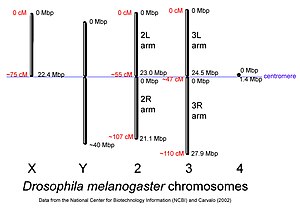
English: This diagram shows the chromosomes of...

This diagram shows the chromosomes of Drosophila melanogaster approximately to scale. Chromosome sizes were based on basepair lengths given on the NCBI map viewer, and A. B. Carvalho, 2002. Curr. Op. Genet. & Devel. 12:664-668. Centimorgan distances were derived from selected loci listed in the NCBI website. (credit  Wikipedia)

Introduction

Generally speaking sexually reproducing species are composed of individuals of two complementary mating types or sexes.  An essential aspect of the developmental history of each individual is thus sex determination and differentiation. There exist two sex determination mechanisms, somatic and germline, that based on the chromosomal mechanism in the Drosophila melanogaster.  In the somatic sex determination mechanism, each individual assesses the ratio of X-chromosomes to autosomal chromosome sets), the X:A ratio provides the primary sex-determining signal   (reviewed by Cline and Meyer, 1996).  When X:A=1, female differentiation ensues (Bridges, 1925), along with the male-mode of X-chromosome dosage compensation.  The X:A ratio is calculated within each cell of the developing embryo, 2 hrs after fertilization. The X:A ratio determines the sex in Drosophila (Bridges, 1916, 1921, 1925) in a somatic-cell-autonomous manner that occurs early in embryonic development (Baker and Belote, 1983; Baker, 1989). Females possess two X-chromosomes, and males possess one X-chromosome and one Y-chromosome.   The Y-chromosome is required only for spermatogenesis (Lindsley and Tokuyasu 1980; Bridges 1986), and will not be considered further.  The number of X-chromosomes is counted through a mechanism involving positive-acting X-chromosome-encoded transcription factors, termed X-numerator elements (Cline, 1988), negative-acting autosome-encoded transcription factors or denominators, and signal transduction factors provided maternally.  Among the X-numerators are sisterless-a, sisterless-b (sis-b), sisterless-c, and runt (Schurpbach, 1985; Cline, 1986, 1988; Steinmann-Zwicky et al., 1989; Parkhurst et al., 1990; Ericson and Cline, 1991, 1993; Estes, 1995; Hoshijima et al., 1995; reviewed by Cline, 1993).

The best candidate for a denominator gene is the deadpan (dpn) locus.  Both daughterless (da) and extramacrochaete (emc) fulfill the role of maternally contributed transduction loci (Cline, 1976; Cronmiller et al., 1988).  Both in vitro biochemical evidence and in vivo genetic evidence support the idea that transcription factors of the basic-helix-loop-helix (bHLH) family are able to form homo- and hetero-dimers; thus the X:A ratio counting mechanism seems to involve the relative affinities and chromosome-dependent stoiciometries of the bHLH proteins SIS-B, DA, EMC, and DPN.  When X:A=1, sufficient SIS-B protein is synthesized so that it can effectively compete with the EMC and DPN proteins for binding to DA protein.  DA:SIS:B heterodimers then bind to so-called establishment promoter (Pe) elements of the SXL gene and activates its transcription, resulting in an early burst of SXL protein that sets splicing and dosage compensation in to female-specific modes.  When X:A=0.5, too little SIS-B is produced, and DA protein remains sequestered with EMC and DPN.  The Sxl Pe remains inactive, and splicing and dosage compensation enters male-specific modes. In response to X:A ratio=1, an embryo specific promoter of the gene called Sex-lethal (Sxl) is activated (Keyes et al., 1932).

Sxl protein that acts as a master gene for the somatic germline sex determination, has three somatic functions. First, Sxl protein carries out autoregulation at the level of pre-mRNA splicing.  Second, Sxl controls female-specific differentiation at the level of pre-RNA splicing and polyadenylation at least two genes that code for transcription factors that effect terminal differentiation. Third, Sxl protein negatively regulates X-chromosome dosage compensation.  It does so in two ways, by alternative RNA splicing of a normally male-specific gene, and by translation-level regulation of many X-chromosomal transcripts during embryogenesis. In the male, with Sxl in the off state, male differentiation occurs because tra is in the off state and therefore the differentiation-effector transcription factors are produced in alternative male-specific modes.  Dosage compensation is active, and the male X-chromosome is decorated by a minimum of four proteins and two RNA molecules that form a complex along the entire chromosome (reviewed by Cline and Meyer, 1996).  Transcription of the male X-chromosome is elevated two-fold, and it produces the same amount of RNA per template as found in females.

Germline pathway for sex determination and dosage compensation is different than the somatic sex determination mechanism.  (Figure 1) Figure 1: Sex determination of D. melanogaster (1998)The vast majority of somatic sex determination loci have no function in germline cells.  For example, none of the X-chromosome numerators is required for proper oogenesis (Granadino et al., 1989, 1992; Steinmann-Zwicky 1991), despite the fact that proper oogenesis requires that X:A =1 in the germline (Schupbach, 1982, 1985) nor are tra, tra-2, and dsxF required for oogenesis.  Sxl and snf have germline functions but the former is not a binary switch gene between oogenesis and spermatogenesis (Despande et al., 1996; Bopp et al., 1993, 1995; Hager et al., 1997). Systematic screens for female-sterile mutations have identified a large number of genes required for normal oogenesis (e.g. Gans et al., 1975; Mohler, 1977; Perrimon et al., 1986; Schupbach and Wieschaus, 19889, 1991).  Female-sterility can arise in diverse ways, but one interesting class of mutations is germline-dependent and causes an “ovarian tumor” phenotype.  “Ovarian tumor” mutations cause under-developed ovaries, in which egg chambers and ovarioles are filled with an excess of undifferentiated germ cells that have adopted male-like characteristics that include a prominent spherical nucleus, assembly of mitocondria around the nucleus, and mis-expression of male-specific marker genes (Oliver et al., 1988, 1990, 1993; Steinmann-Zwicky, 1988, 1992; Bopp et al., 1993; Pauli et al., Wei et al., 1994).  Among the “ovarian tumor” class of genes are ovo, ovarian tumor (otu), fused, and two genes with somatic phenotypes, namely snf and Sxl. Strong mutations at the ovo and otu loci result in ovaries totally devoid of germ cells (King and Killey, 1982; Busson et al., 1983; Oliver et al., 1987; Mevel-Ninio et al., 1989; Rodesh et al., 1995), Weaker mutations at both loci result in viable germline cells that have abnormal male-like splicing at the Sxl gene (Oliver et al, 1993). The overall conclusion is that oogenesis requires a chromosomally female germline is wild type for ovo, otu, Sxl, and snf.  If one of these genes is defective, either the germline will die or male-like differentiation and tumor formation ensure.

However, there are soma-germline interactions for a normal sex determination. (Figure 2) Figure 2: Somatic-Germline Interactions. (1998)Unlike the somatic regulatory hierarchy, which genetic mosaic experiments clearly showed functions in cell-autonomous fashion, sexual differentiation of the germline requires inductive signaling from somatic cells.  This was shown by use of pole cell transplantation, the method of making mosaics in which germline cells surgically transferred from donor embryos  (Schubach. 1985; Steinmann-Zwicky et al., 1989).  These experiments show that proper germline differentiation requires a combination of germline-autonomous chromosomal cues and proper signaling from the soma.  Evidence with tra and dsx mutant somatic hosts indicates these soma-germline interactions have detectable effects by larval stages (Steinmann-Zwicky., 1996).

The ovo gene is genetically complex.  At least three transcripts are produced from the ovo region (Mevel-Ninio et al, 1991, 1995, 1996; Garfinkel et al., 1992, 1994).  Two of these are germline-specific and correspond to the ovo function, while the third corresponds to the somatic-epidermal, non-sex-specific shavenbaby (svb) function.  (For a schematic of the gene map please refer to Figure3) 

 The ovo function is transcribed from two closely spaced germline-specific promoters, ovo a and ovob, give rise to 5-kb mRNAs (Mevel-Ninio et al., 1991, 1995; Garfinkel et al., 1992, 1994).   First identified  promoter was ovob  Garfinkel et al., (1994)  and the leader exon it forms is called Exon 1b, 1028-codon-long open reading frame that contains four Cys2-His2 fingers at the carboxy terminus; protein MW of 110.6 kD.  A second germline promoter, ovoa, was identified by Mevel-Ninio et al (1995), 1400 codons long, and predicts a 150.8-kD protein.  This Exon 1a contains an in-frame AUG upstream of the translation start in Exon 2 utilized by the OvoB open reading frame.  The OvoB mRNA isoforms is predominant during adult life, with the OvoA isoforms only appearing during Stage 14 of oogenesis (Mevel-Ninio et al., 1991, 1996; Garfinkel., 1994).  The ovo zinc finger domain binds to its own germline promoter regions, to the otu promoter region (Garfinkel et al., 1997; Lee, 1998; Lee and Garfinkel 1998).  This is consistent with ovo playing an important role in a sex determination hierarchy operating in germline cells that involves these other genes. The svb function is transcribed from an incompletely characterized somatic promoter that forms a 7.1 kb poly(A)+ mRNA (Garfinkel et al., 1994).  This transcript accumulates 9-12-hr post-fertilization, in the somatic tissues that later in embryogenesis form the cuticular structures affected by svb mutations.  Wieschaus et al. (1984) observed that ventral denticle belts and dorsal hairs are defective in svb mutations; hence the name, and svb mutations are polyphasic larval lethals. Exons and exon segments that are found in all mRNA forms coded by the region correspond to genomic DNA where so-called svb-ovo- mutations map (Mevel-Ninio et al., 1989; Garfinkel 1992).  Finally, somatic-specific exons, exon segments, and transcriptional regions correspond to region mutable to the svb- ovo- phenotype.  Since al known mRNA forms utilize the same splice junctions to join Exon3 to Exon4, all protein forms coded by the locus are believed to contain the same four zinc fingers at the carboxy terminus.   A wide variety of evidence points to ovo playing a critical role in germline sex determination.  High-level of ovo transcription in germline cells, as detected with Xgal staining of ovo promoter-lacZ constructs requires that they have a female karyotype (Oliver et al., 1994).  Chromosomally male germline cells have low levels of ovo transcription even if the soma is transformed towards female through the use of hs-traF cDNA minigenes.  Likewise, chromosomally female germline cells have high levels of ovo transcription even if the soma is anatomically male through the action of tra loss-of-function mutations.  This argues that high-level of ovo transcription is a germline X: A ratio-autonomous property, and stands in contrast to related experiments with otu.  In the case of otu, there is evidence that chromosomally male germline cells, which normally have no need of otu+ function at all, require otu- for proliferation when they are in a female host (Nagoshi et al., 1995). The D. melanogaster ovo gene is required for cell viability and differentiation of female germ cells, apparently playing a role in germline sex determination.  While female X: A ratio in germline cells is required for high levels of ovo germline promoters.  Therefore we undertook to identify trans-acting regulatory regions of the X-chromosome, with a particular interest in identifying candidate germline X-chromosome numerator elements. In this study, I screened  X-chromosome using 45 deficiency strains, I found that these trans-regulating regions were grouped into 12 loci based on overlapping cytology.  Five regions were trans-regulating activators, and seven were trans-regulating repressors; extrapolating to the entire genome, this result predicts nearly 85 loci.  A subset of the dozen X-chromosomal regions correlated with previously identified E(ovoD) and Su(ovoD) loci (Pauli et al., 1995).  

Materials and Methods


Fly Strains and Growth Flies were maintained on standard yeast/cornmeal medium and kept at 25oC and 18oC unless otherwise indicated.  Mutants are described in Lindsley and Zimm (1992).  The ovo3U21 and ovo4B8 were obtained from Brian Oliver of NIH;  OvoD1rS1 FM3 is from the Garfinkel lab collection.  The remaining stocks were obtained from the Bloomington Stock Center (see Table 2.1 for the list of stocks that had been used and Figure 2.1 for their location on the X Chromosome). 

Outcrosses Outcrosses were designed to create transgenic flies so that screening of the X chromosome for trans-regulators of ovo in the germline can be done.   Virgin female flies were collected 14 hour long windows at 18oC or 8 hour long windows at 25oC, during which newly emerged males remained immature.  Collected females were kept 3-5 days to make sure they are virgin before outcrossing them.  Heterozygous virgin females (5-7), carrying deficiency X-chromosomes balanced over first chromosome balancers were mated with males homozygous for either of two P-element transformation constructs of a lacZ reporter gene fused to the ovo promoter.  Both events were inserted on third chromosome.  They were grown at 25oC unless otherwise noted. The control class of F1 progeny has a complete X-chromosome pair, whereas the experimental class has one complete and one deficient X chromosome in its genome.  The [ovo::lacZ constructs] were designed by Oliver et al., (1994).  In this study two of their strains, ovo4B8 (pCOW+1.9) and ovo3U21 (pCOW-2.1) respectively, were used to determine the ovo promoter activity.

Outcrosses to Remove Duplications Several X-chromosome deficiencies in the Bloomington collection are carried in males, with compensatory duplications of X material on an autosome.  These had to be crossed to eliminate the duplications (Fig 2.4).  This was done as follows:  FM3/FM7a virgin flies were mated to Df/Y; Dp males.  Among the F1 progeny, half of the Df/(FM3 or FM7a) daughters will carry the unwanted duplication, and half will be free of the duplication.  In some cases, presence of the duplication could be determined from the females’ phenotypes.  In other cases, up to twenty individuals virgin Df(FM3 or FM7) F1 progeny were backcrossed to FM7a/Y males to establish stocks.  In the F2, absence of the duplication could be established by examining sons; in all cases, the Df is male-lethal unless “rescued” by the duplication.  Also FM3 is itself male lethal.  Thus, single-female stocks that produce only FM7a sons had the desired genotypes and were kept for experiments.

X-Gal Staining In this assay ovaries from two-day-old adults were dissected in Drosophila Ringer’s solution (182 mM KCl, 46 mM NaCl, 3 mM CaCl2, 10mM TrisHCl, pH 6.8).  Then, these tissues were transferred to a microtiter plate and fixed in 1% gluteraldehyde, 50mM Na-cacodylyte acid solution for 15 minutes. After rinsing the tissues, three times for 5 minutes each staining buffer (7.2 mM Na2HPO4, 2.8 mM NaH2PO4, 1.0 mM MgCl2, 0.15 mM NaCl), they were transferred to incubation buffer (staining buffer, 5 mM Fe2 (CN)3, 5 mM Fe3 (CN)2, 0.2% X-Gal) for an hour at 37oC.  Next, tissues were washed three times 5 minutes each in washing buffer, which is a 1 mM EDTA, added PBS (130 mM NaCl, 7 mM Na2HPO4*2H2O, 3 mM NaH2PO4*2H2O, pH 7.0) solution.  Finally, the tissues were dehydrated in ethanol solutions of increasing concentrations (50%, 75%, 95%) and mounted on a slide in Permount.  Preparate concentrations were examined under a compound microscope to make correlations between staining and gene activity. Although it was easy to determine positive and negative controls, but this assay wasn’t sensitive enough to see subtle differences due to effects of deleted regions on ovo promoters driving LacZ.

Histochemical Assay of LacZ Activity This method allowed us to make quantitative measurements of lacZ activity due to ovo promoter function in animals heterozygous for X-chromosome deletions.  Emerging F1 flies were collected and aged for two days before dissecting ovaries under a dissecting microscope.  For each soluble assay, 10 flies were dissected.  This is repeated at least seven assays (N, sample number) completed per stock for each construct.  Ovaries from ten dissected outcrossed flies were out into eppendorf tubes containing 100ml of Assay Buffer (50 mM K-phosphate, 1 mM MgCl2 at pH 7.8) and homogenized about 20 strokes.  For each dissected pair of ovaries 100 ml  of assay buffer was used and the volume was completed to appropriate amount.  After centrifuging for one minute, 20 ml of the supernatant was transferred into 980 ml of assay buffer (Simon and Lis, 1987; Ashburner, 1989) to make 2mM chlorophenol red-beta-D-galactopyranoside (CPRG).  Absorbance at 574 nm was measured at half hour time intervals starting from zero to two hours hydrolysis of CPRG by chlorophenol (red CPRG).  CPR has a molar extinction coefficient of 75,000 M-1 cm-1 (Boehringer-Manheim data sheet) and this is a very easily detected product of b-galactoside enzyme activity. Range finding experiments showed that 2mM of CPRG gives linear data for 2-3 hours often, color changes could be seen with the unaided eye. Two controls are shown in Figure 2.8 that validates CPRG for this work.  Ovaries from a non-transformed strain (y w RD) were used to prepare soluble extracts.  A near zero-absorbance at 574 nm was observed that did not appreciably change over several hours.  In contrast, ovarian extracts from the ovo promoter-lacZ transformant strain ovo3U21 and ovo4B8 (Oliver et al, 1994) showed a steep linear increase in A 574 during the same period.  The slopes of these lines were proportional to the amount of ovo3U21 and ovo4B8 extract added.

Bradford (1976) Assay For Protein This protein determination method is based on the binding of Coomasie Brilliant Blue G-250 to the protein.  Preparation of protein reagent was done according to Bradford (1976).  After 100 mg of Coomasie Brilliant Blue G-250 was dissolved in 50 ml 95% ethanol, and then 100 ml 85% (w/v) phosphoric acid was added.  The resulting solution was diluted to a final volume of 1 liter [final concentrations in the reagent were 0.01% (w/v) Coomasie Brilliant Blue G-250, 4.7% (w/v) ethanol, and 8.5% (w/v) phosphoric acid].  20ml of prepared soluble extract from the dissected tissues were used.  This volume is diluted to 0.1ml with ddH2O, then 5ml of protein reagent was added to the test tube and contents were mixed.  The absorbance at 595nm was measured after 2 min and before 1 hr in 3 ml cuvettes against a reagent blank prepared from 0.1 ml of the appropriate buffer and 5 ml of protein reagent.  A standard curve using known quantities of bovine serum albumin (BSA) was constructed.  Soluble extract absorbances were plotted on the standard curve and protein amount interpolated.

Statistical Analysis Average specific activity is calculated as nanomoles of substrate used per hour per nanogram protein expressed (nmole CPRG liberated /ng / hr).  Sample number (N) always exceeded seven.  Mean specific activity and standard error of the mean (SEM) were calculated for each experimental and control class.  The F test was used to determine whether variances were equal, and therefore,, which type of student’s t-test calculation was appropriate.  A significant difference between experimental and control values was identified by a P < 0.05 for the t-test score.

RESULTS

In this study and ovo mechanism study, the X-chromosome was screened, using 56 different deficiency strains    Table 1: List of Stocks for X-chromosome Screening (1998)Table 2: Stocks Made in This Study for X-Chromosome Screening Table 1: Stocks for Negative Autoregulation of ovo (1998)  to identify transregulation of ovo Table 3: LacZ Specific Activities Obtained by Screening X-Chromosome with ovo3U21Table 4: LacZ Specific Activities Obtained by Screening X-Chromosome with ovo4B8 (Results)

The results are given in three sections: X chromosome deficiency screening, negative autoregulation of ovo exhibited by deficiencies removing ovo, and gene dose analysis using P element transformants carrying extra copies of ovo.

X Chromosome Screening The presence of polytene chromosomes in the salivary glands, which have distinctive, banding patterns allows the map positions of genes to be correlated with physical features of the chromosomes.  Breakpoint locations rearrangements, and the locations of cloned sequences can be easily established.  Each of the major chromosome arms is divided into 20 numbered segments, except chromosome 4, which is divided into 4 regions.  Each numbered region is then divided into six consecutive lettered regions, and each lettered region into numbered bands, for example 4E1. The precise relationship between physical length and the numbering scheme depends on local topography (Lefevre, 1976).  In the summary tables, each deficiency listed according to cytological positions. The map of the X chromosome, including the deficiencies used in this study is given in Materials and Methods (Fig 1). Figure 1: Sex determination of D. melanogaster (1998) In Drosophila melanogaster germ cells, ovo has a primary role in female sex specific cell viability, proliferation and differentiation.  Ovo responds to the number of X-chromosomes as assessed by high level expression (Oliver et al., 1994).  Thus, the ovo promoter may be dependent upon X germline numerator elements.  To identify possible trans-regulators of the ovo germline promoter (and, I hope, to identify germline numerators) I undertook deficiency screen for quantitative effects on ovo::lacZ reporter constructs.  Determination of trans-regulation effect by any of the deletion mutant, was based on two general rules.  If the excised part of the X chromosomes has any genes with the positive regulatory effects on ovo gene activity, then the levels of LacZ reporter gene function will be reduced in experimentals compared to control siblings.  If the experimental class results in the elevation of the LacZ activity by producing high levels of enzyme compared to controls, the elevated region having removed a repression locus. Significant effects were determined by statistical analysis, which using a student’s t-test P value is less than or equal to 0.05.  X-chromosome screening results are presented in Table 3.1 and 3.2.  The entire X-chromosome deficiency set was tested twice: once with a 3.3kb ovo promoter fragment driving LacZ (strain ovo3u21), and separately with a 3.1kb ovo promoter (ovo4B8).  Of  45 deficiencies that represent about 70% of the X-chromosome 17 deficiencies had significant effects in both ovo3U21 and ovo4B8 reporter activity, 1 deficiency had significant effects on only ovo3U21 and only 1 deficiency effect on ovo4B8.  Some of these deficiencies partly overlap, allowing the identification of 11 regions that apparently contain trans-acting modifiers of ovo promoter activity six are positive regulators and five are negative.

Region 1-4.  This region covers the eight overlapping deficiency lines, Df(1) BA1, Df(1)sc14, Df(1)64c18, Df(1)JC19, Df(1)dm75e19, Df(1)N8, Df(1)A113, DF(1)JC70.  For three of them, Df(1)A113, Df(1)JC70, and Df(1)BA1, the student’s t-test probabilities show a significant difference between control and experimental siblings.  The remaining strain has no significant trans-regulation effect on ovo gene activity.  Df(1)BA1 enhanced the ovo gene expression activity about 20% when either ovo3U21 or ovo4B8 is used.  It was suggested that a suppressor of ovoD (1F-2B+ locus) maps within 1E3-4 to 2B3-4 because of the dramatic gene dose effect of this region on the development of ovoD2/+ ovaries (Pauli et al, 1995).  In contrast, it was found that Df(1)A113 and Df(1)JC70 have repressing effects on ovo expression.  Df(1)A113 (3D6-E1; 4F5) removes several genes beside ovo, showed a very significant repression effect in outcrosses, about 82% and 47% (e/C), in ovo3U21 and ovo4B8 respectively.  That data obtained in Df/+ females has a particular quantitative significance, which implies that the missing loci have the complementary effect. It was shown that this region is contains a gene or genes resulting in genetic unbalance (Cline et al., 1987).  Also, Oliver et al., (1988) show that in deficiency lines, which they have used, strains removing both ovo and snf together are reducing viability of the progeny, that is, there is a synergistic interaction between ovo and snf.  

Region 5-8.  Twelve overlapping deletions have been tested in this region.  Two deletions Df(1)N73 (5C3-5;5E-8) and Df(1)Lz90b24 (8B-D) caused very significant repressing effects, implying the presence of trans-activating loci, one deletion Df(1)RA2 (7D10;8A4-5) resulted in heterozygous experimentals with significant elevation in LacZ compared to siblings, implying a trans-repressor locus.  It has been reposted that Df(1)RA2 strongly enhances ovoD  phenotypes due to the function of otu+ in germline sex determination (Pauli et al., 1993).  However, since out protein is cytoplasmic, it is unlikely that the Df(1)RA2 effect on ovo::lacZ promoter activity is due to changing dosage of otu.  It is also suggested that there is a synergistic interaction between ovo and lozenge, eye phenotype, which is deleted by Df(1)Lz90b24, and here the data showed a trans-activating effect due to this deletion.  The other deletions do not cause any significant effect on gene activity.

Region 9-10.  In this cytological position nine deficiency lines had been tested.  Since this region was very dense for putative trans-regulation repressors, it was group in a small region.  Among nine of the deficiencies were used six of them showed a repressor effect.  These effective regions were: Df91)vL15, Df(1)N110, Df(1)HC133, Df(1)vL11, Df(1)KA7, and Df(1)N71.  This region seems to have a very important effect on ovo, since in the 9Bto 10F interval there are various levels of repressor effect.  Two common overlapping regions were found; one was from 9C4 to 9D1-2, and the other was from 10A to10F6.  Other repressor effects from strongest to weakest was Df(1)vL11 (9C4;10A1-2), Df(1)HC133 (9B9-10;9E-F), Df(1)N110 (9B3-4;9D1-2), and Df(1)v-L15 (9B1-2;10A1-2), Df(1)KA7 (10A9;10F6-7) breakpoint was outside the first loci in the examined region.  Df(1)Ka7 and Df(1)vL15 show about 20% increase in the heterozygous siblings, the longest and the shortest breakpoints, respectively.  Three out of five repressing effect intervals, Df(1)v-L11 (9C4; 10A1-2), Df (1)HC133 (9B9-10; 9E-F), Df(1) N110 (9C4; 10A1-2) is the strongest of all in Df/+ and bearing the common region among the five strains, which is 9C4; 10A1-2.  

Region 11-13.     Eight deficiency lines were in this region, Df(1)JA26, Df(1)HF368, Df(1)N12, Df(1)C246, Df(1)g, Df(1) RK2, Df(1)RK4, and Df(1) sd 72b   .  It has been found that this region involves five overlapping deletions that gave rise to repressing effect on ovo gene expression.  According to common regions of the cytological positions, these overlapping deletions were grouped into three loci.  These three common regions, which are responsible from trans-regulation activity of ovo, reside on 11D0F; 12B-D, and 13F-B regions of the X-chromosome.  Df(1)N12 (11D12;11F1-2) and Df(1)C246 (11D-E; 12A1-2) were in the 11D-F loci, Df(1)g (12B;12E8) and Df(1)RK2 (12D2-E1; 13A2-5) were in the 12B0D region, and Df(1)sd72B (13F1-14B1) in the 13B-14B loci, all of which in this examined region showed a repressor activity. The strongest effect among the X-chromosome screening was located in 11D1-11F1-2 excised region of X-chromosome, this deletion corresponds to Df(1)N12 strain, which shows a significant effect as well as high gene activity repression, Around 140% to 240% E/C in Df/+ flies for both ovo::LacZ constructs.  In addition, it has been reported that reduced dose of the 11D-F region results in synergistic mutant phenotypes with a number of somatic sex determination genes (Belote et., 1985).  Furthermore, Flybase reports that this region seems to include locus involved in early sex determination examined by Scott and baker (1986). However, ambiguities in deficiency breakpoint assignments complicate interpretation.  For example, first loci, which includes Df(1)N12 and Df(1)C246 due to uncertainty at the distal end breakpoints of Df(1)C246 (12D-e; 12A1-2); the trans-acting repressor of ovo maybe located in 11E-F rather than 11D-F. Similarly, for the second loci in this region ambiguity at the distal breakpoint of Df(1)RK2 also cause a dilemma about the location of the trans-acting repressor, since the question was the common region between Df(1)g and Df(1)RK2 was whether in the 12D-E or in the 2E1-2E8 of X-chromosome. On the other hand, the last loci were determined by the only one deficiency strain.  In this case, the problem was whether determination of the loci was accurate enough, or whether another locus is involved in repressing of ovo reporter activity which Df(1)sd72b (13F114B1) may have a common region with.  This deficiency removes several lethal mutations, Myb, sd (scalloped), shi (shibiri), and exd (extradenticle).  Two genes previously cloned in the 13F cytological region are the Drosophila c-myb oncogene homolog (Katzen et al, 1985) and a G protein b-subunit (Yarfitz et al 1988).  It has been suggested that the sd+ gene might be associated with more than one product (perhaps a differential processing) or it might reflect differential tissue and/or temporal regulation (Campbell et al., 1991).

Region 14-20.   In this region eight deficiency strains, Df(1)4b18, Df(1)rD1, Df(1)B, Df(1)N19, Df(1)JA27, Df(1)HF396, DF(1)DCB1, and Df(1) A-209, were tested.  According to measured specific activities Df(1)4b18 (14B8; 14C1) and DF(1) B (15F9=16A6-7) showed significant activating effect on ovo promoter, activity of the former was weaker than that of latter.  Since there is no common region between these two putative trans-acting activators, interpretations of the results gave rise to two loci, 14B8-14C1 and 15F-16A1; 16A6-9. In addition, the Flybase report for Df(1) shows that 70 deletion that breaks within the second exon of the non A (no on or transient A) gene from Stanewsky et al (1993). As a result of X-chromosome screening, 45 deficiency strains were tested and found 17 regions were trans-regulating ovo promoter.  These regions were classified into 12 loci according to their overlapping common regions.  Among these, six, of which were showing trans-acting activator effect, and seven, of which were responsible for trans-acting repressor effect on ovo promoter.   Furthermore, one deficiency strain, Df(1)sc14, showed a significant trans-acting repressor effect in only ovo4B8 strain but not in ovo3U21 strain.  This maybe explained by position effect of P[ovo::LacZ] construct due to landing on P element transposase onto insertion site or by difference between the size of the ovo::LacZ constructs, e.g. ovo3U21 carries 200 bp longer than ovo4B8 at the N-terminal end that may cause a better translation product.  Consequently, among the X-chromosome screening data, it was found that two of the deficiency lines. Df(1)A113 and Df(1)JC70, which are removing ovo and snf along with the several genes due to deletions, and correspond to one loci acting as an repressor, were taking into more detailed investigations.  These results suggested a negative autoregulation mechanism in the ovo promoter.  Therefore, negative autoregulation of ovo was examined with three approaches: ovo point mutations, more defined deficiency strain, and downstream genes.

DISCUSSION

  The sex determination involves complex set of mechanisms.  The fly is chosen to be studied since Drosophila is inexpensive to rear, generates large numbers of progeny, and has nearly a century of accumulated data upon which to design experiments.  Mutational analysis of cell biological and developmental process is relatively simple, even if the resulting mutations are organism-lethal when homozygous.  This is decided advantage over mammalian genetics, in which lethal mutations often die in utero, which complicates the ability to examine and interpret mutant phenotypes. The Drosophila genome is one-twentieth the size of the mammalian genome, making insertional mutagenesis and positional cloning much less difficult.  Additionally, mammalian genetics lacks genetic tools such as balancers that make the maintenance of sterile and lethal-mutations nearly trouble free in Drosophila.  Nematodes have many of the same conveniences as Drosophila, with the added advantage of a highly stereotyped pattern of embryonic (and post-hatching) cell lineages.  The more-regulative character of Drosophila development induces complications lacking from worm genetics, with respect to cellular level analysis of mutant phenotypes.  Perhaps, the most compelling reason to take advantage of the specialized properties of Drosophila, is the extent to which prior studies have shown that genes, proteins, and developmental pathways and processes are conserved among metazoan groups.  We can, with high confidence, study sex determination in Drosophila with a reasonable confidence that what we learn can be extrapolated to other species, including man and his clinical diseases.

  The deletion mapping technique was used to identify the locations of genes that are required for ovo trans-regulation.  Each deficiency line removes several to many genes from the genome.  A sufficiently complete set of overlapping deletions can allow, potentially, every individual trans-acting gene to be localized. Seventeen deficiencies that have effects on the ovo germline promoters are shown in Table 4.1.  Twelve deficiencies showed repressor effects, and five deficiencies showed activator effects.  Deleted regions may affect any of several processes, such as numerator elements, cell viability and differentiation, dosage compensation, and response to inductive signals from soma.  Determination of which gene within a specific region is responsible for the effect on ovo requires more defined deletions or having null alleles for each gene. Estimation of the Number of Trans-Regulators.  Among the seventeen deficiencies in Table 4.1, overlapping common regions identify seven that function as trans-acting repressor loci, and five that function as trans-acting activator loci.  Thus, the entire euchromatic X-chromosome may have as many as ≈10 repressor genes and ≈7 activator genes for the ovo germline promoters.  If these results were extrapolated to the entire fly genome, ≈50 repressors and ≈35 activators of ovo transcription are predicted.  These are underestimates from the data, since any given deleted common region need not remove exactly one relevant gene. Is it reasonable for nearly 85 genes to be involved in regulating the ovo germline promoters?  Precedents from other developmental control systems suggest this is not an implausibly high number.

Regulation of the master sex determination gene Sxl is complex.  To establish somatic sex determination in the early embryo, nine genes are required to activate the Sxl early promoter.  These are sis-a, sis-b, sis-c, run, da, emc, gro, dpn, and her.  In biochemical terms, most are DNA-binding proteins.  In genetic terms, some are positive and are others are negative regulators.  Maintenance of Sxl expression involves positive autoregulation at the level of pre-mRNA alternative splicing.  At least five genes are known to play specific roles in this process: Sxl itself, snf, vir, her, and fl(2)d.  Function of Sxl in the germline is regulated in several ways.  Germline-specific transcriptional control of Sxl is still conjectural, but it is clear that the somatic functioning numerator elements play no role in the germline.  It is possible that ovo may play an important role in germline transcriptional control of Sxl (e.g., Lee. 1998); certainly it has an indirect role (e.g., Oliver et al., 1993).  Splicing-level autoregulation of Sxl is active in the female germline, and it involves the same genes that function in this process in somatic cells.  Once Sxl protein is produced in female germline cells, the otu protein plays an important role in this relocalization into the nucleus.  Thus, a minimum of sixteen genes is required for proper regulation of Sxl.

Establishment of the body plan in Drosophila is also under complex transcriptional control.  Maternally localized RNA and protein molecules establish the gross body axes: anterior-posterior and dorsal-ventral.  Hierarchically organized sets of zygotically activated genes are transcribed, and their protein products serve to refine the body axes into progressively finer-grained structures.  The metameric anterior-posterior body axis is specified by so-called gap genes, pair rule genes, and segment polarity genes, which create the segment-sized repeating units of the body.  Homeotic genes encoded by the Antennapedia Complex (ANT-C) and bithorax Complex (BX-C) then confer position-specific identities upon each segment. During the cellular blastoderm stage, gap genes and maternal coordinate genes regulated the activation of primary pair rule genes such as even-skipped (eve).  These are expressed in seven one-segment-wide stripes that alternate with on-segment-wide regions of non-expressing cells.  For example, the second stripe of eve expression is positively regulated by hunchback and bicoid, and negatively regulated by giant and Kruppel.  All four proteins directly bind to a 500-bp-long “eve-stripe 2 enhancer.”  Binding have giant and Kruppel is competitive with binding of hunchback  and bicoid, and vice versa.  Thus, spatially controlled concentrations of giant, Kruppel, bicoid, and hunchback proteins result in spatially restricted activation or repression of the eve stripe 2 enhancer.  The remaining six stripes of eve expression are similarly controlled by other DNA-binding proteins, which are acting another discrete stripe-specific enhancers. Ectopic expression of homeotic genes can have disastrous effects on development.  Thus, a special heterochromatin-like mechanism functions to ensure that ANT-C and BX-C genes are inactive in cells and tissues that do not require their expression.  Stable repression is mediated by the Polycomb class of proteins, which number over forty. Each of these examples illustrates that developmental control of individual gene transcription is mediated by both positive and negative effectors, and that sometimes the number of such upstream regulators numbers between one and several dozen.  Thus, our estimate of 85 regulators of the ovo germline promoters is not out of line with other developmentally regulated systems.

Evaluation of Candidate Loci Within Common Regions.   Based overlapping cytology, seventeen deficiencies that affected the ovo germline promoter fell into twelve common regions.  Each of these will be discussed in turn below. Of particular interest was the relationship each of our trans-acting may have with Su(ovoD) and E(ovoD) loci identified in a generic screen by Pauli et al. (1995).  In general, it is not straightforward to suggest identities between Su(ovoD) or E(ovoD) loci and our trans-acting repressor or activator loci because of the dissimilar means of assaying these gene-dose-sensitive interactions.  We use quantitative measures of LacZ reporter activity as a proxy for ovo transcription, while Pauli et al. (1995) use semi-quantitative measures of vitellogenesis.

Region 1 (polytene bands 1A1; 2A1-4):  The distal region of the X-chromosome showed a trans-regulating activator effect on the ovo promoters.  This region includes the acheate-scute complex (AS-C), home of the X-chromosome numerator element sis-b (Cline, 1988; Parkhurst and Ish-Horowicz, 1990), also known as scute-T4.  This numerator has no function in the female germline (Granadino et al., 1989).  Pauli et al., (1995), using other deficiency strains affecting this section of the X-chromosome, identified a strong Su(ovoD) locus in the polytene region 1E3-4; 2B3-4 that may correspond with our trans-activator.  Flybase indicates that this region contains over 100 genes, among them 23 unassigned open reading frames, 33 genes defined by apparent visible mutations, 53 lethal genes,, and two female sterile loci.

Region 2 (polytene bands 4C15-16; 4F15):  This region includes the ovo and snf loci, and was identified by Pauli et al., (1995) as a strong E(ovoD) due to the effects of these loci.  Further discussion is deferred to mechanism of ovo autoregulation, which deal with ovo negative regulation. Region 3 (polytene bands 5C3-5; 5E8):  This region has a trans-regulatory activation effect on the ovo germline promoters.  Deficiency for this region showed no interaction with ovoD in the vitellogenesis assay (Pauli et al., 1995).  Examination of Flybase records for this region reveals over twenty genes, and no strong candidates that may account for the interaction with the ovo promoters.

Region 4 (polytene bands 7D10; 8A4-5):  Results  showed that this region contains a transacting-repressor of ovo germline promoter activity.  This region reported by Pauli et al. (1995) to contain a strong E(ovoD) locus, which was identified as the ovarian tumor gene (Pauli et al., 1993, 1995).  It is virtually certain that the repressor-of-ovo is distinct from otu.  First, the otu protein is cytoplasmic and plays a role in egg chamber cytoskeletal function (Nagoshi et al., 1997).  Second, the ovo protein binds to the otu promoter in vitro (Garfinkel et al., 1997; Lee, 1998, Lee and Garfinkel 1998; Lu et al., 1998).  Third, under certain conditions, in vivo activity of the otu promoter is dependent upon ovo protein production (Hager and Cline, 1997; Lu et al., 1998).  Examination of Flybase reveals that this region contains fifty genes mutable to lethal, visible, or female-sterile phenotypes, but none appear to be a strong candidate for the repressor-of-ovo locus.

Region 5 (polytene bands 8B5-8; 8DE):  This region also has an apparent repressor of ovo germline promoter activity.  Deficiency for this region showed no interaction with ovoD mutations in the Pauli et al. (1995) vitellogenesis assay.  Examination of Flybase reveals that this region contains thirty genes mutable to lethal, visible, or female sterile phenotypes.  One gene stands out as a candidate for the repressor, namely, lozenge.  This is a complex locus that is mutable to female sterility (Green and Green, 1949, 1956), and it is named for a reduced-eye, smoothened-eye, mutant phenotypes.  Interestingly, certain ovo-mutant alleles are called “lozenge-like” in recognition of a similar eye defect (Oliver et al., 1987; Mevel-Ninio et al., 1989; Garfinkel et al., 1992).  The lz gene codes for a transcription factor (Dag et al., 1996). Region 6 (polytene bands 9C4; 9D1-2):  The cytological assignment of this region is based on the overlap of three deficiencies:  Df(1)N110, Df(1)H133, and Df(1)v L11.  Together, they mark a trans-acting repressor of ovo promoter activity.  According to  Pauli et al. (1995), only two of these three deficiencies behaved as if they exposed an E(ovoD) locus, while the third had no effect.  In combination with positive results from other deficiencies, Pauli et al. positioned the E(ovoD) locus at cytological region 9E-F.  Thus, it is again possible that the repressor-of-ovo we identified is distinct from a nearby E(ovoD) locus, and is among the half-dozen loci identified by Flybase as mapping into this interval.

Region 7 (polytene bands 10A6; 10F6-7):  This region contains a trans-acting repressor of ovo promoter activity.  According to Pauli et al. (1995), the defining deficiency had no significant interaction with ovoD alleles.  Examination of Flybase reveals that this region includes the somatic X-chromosome numerator element sis-a, which also has no function in germline development (Granadino et al., 1989, 1990, 1997).  Given the extent of this region, it is not  surprising that Flybase identifies 65 genes with diverse phenotypes and biochemical roles; however no strong candidate locus that may count for the repressor-of-ovo locus is apparent.

Region 8 (polytene bands11D1-2; 11F1-2):   This region contains perhaps the strongest trans-acting repressor of ovo promoter activity in the survey: deficiency heterozygous experimentals had 2-2.5 fold more lacZ specific activity in their ovaries that the balancer carrying controls.  According to Pauli et al (1995), one of the two deficiencies defining this common region showed a statistically weak enhancement of ovoDalleles, while the other had a significant Su(ovoD) phenotype.  Likewise, Belote et al. (1985) and Scott and Baker (1986) reported that the same deficiency later shown to have Su(ovoD) activity also interacted with loci in the somatic sex determination pathway.  It is an open question how these three results relate to one another.  Among sixteen genes that map into this region are two signal transduction loci: the Mek3 gene, a serine-threonine-specific protein kinase in the MAP kinase pathway, and a beta subunit of the heterotrimeric GTP-binding protein. A solitary female-sterile, fs(1) K4, also maps roughly into this region; it is germline-dependent, and yields fragile eggs, a phenotype occasionally seen in the eggs laid by ovoD3/+ females.

Region 9 (polytene bands 12D2-12E1; 12E8):  This region contains a trans-acting repressor of ovo promoter activity.  According to Pauli et al. (1995), neither deficiency defining this common region interacted with ovoDalleles.  This region contains the yolkless gene (DiMario et al., 1987), which has been cloned and codes for a member of 35 known genes, including a cluster of tRNA genes, the male-germline-specific Stellate genes, and several lethal and female-sterile genes.

Region 10 (polytene bands 13F1; 14B1):  This region contains a trans-acting repressor of ovo promoter activity.  Again, no significant interaction with ovoD allel4es was observed by Pauli et al. (1995).  Podry, Katzen and others have extensively mutagenized this region due to its containing shibiri (the Drosophila homolog of dynamin), c-myb, another Gb subunit, and the homeodomain protein extradenticle.  Their work revealed a total of twenty lethal genes, ten apparent visibles, and over a half-dozen unassigned open reading frames.

Region 11 (polytene bands 14B8; 14C1):  This region contains a trans-acting activator of ovo promoter activity.  According to Pauli et al., (1995), the defining deficiency had no significant interaction with ovoD alleles.  This region is surprisingly dense genetically, as it apparently contains over forty genes.  Several behavioral genes coding for neuronal functions map here, including nonA, paralytic, and easily shocked.  The nonA gene codes for an RNA-binding protein, and is mutable to a variety of phenotypes including recessive lethality, male-courtship-strong abnormalities, and defective vision.  The location of para (a sodium channel) is particularly intriguing since parats mutations fail to complement certain napts alleles, and nap genetically overlaps the dosage compensation function maleless.  Mutations in maleless are unique among the known dosage compensation loci in having a mutant phenotype in germline clones, and they are said to suppress the female-germline-lethality of ovo null mutations.  The easily shocked locus codes for ethanolmine kinase, and mutations at this locus also interact with mle.

Region 12 (polytene bands 15F9-16A1; 16A7):  This region contains a trans-acting activator of ovo promoter activity.  According to Pauli et al. (1995), the defining deficiency had no significant interaction with ovoDalleles.  Examination of Flybase reveals that this region contains at least a dozen female-sterile loci, a dozen lethal loci (including the Bar homeodomain protein gene). There is an ambiguity in compared mean of activities.  According to the negative autoregulation mechanism, there suppose to be a linear decrease pattern correlated to increase in copy of ovo.  However, the pattern of the gene dose was reaching plato, when three copies of ovo were present in the genome. Yet, this also shows that there is a protection mechanism that counts the number of ovo versus number of X chromosome exists.  Therefore, the sex determination mechanism turns off the extra ovo in the system immediately. 

Consequently, the system prohibits more wrong information to be processed according to its default setting where if the X:A ratio equals to one the outcome is going to be prepared as female, if not turn off the mechanism towards male-like, sterile mode, or death at the embryonic stage.  This discontinuity in the linear correlation may be due to position effect of P[w+ ovo+].  Future Directions and Concluding Remarks The results of this study suggest that the ovo germline promoters are regulated by a large set of upstream factors.  Nearly a dozen of these maps to the X-chromosome, some to region that are well characterized genetically.  Further deficiency mapping experiments, and assessment of the phenotypes of single-P insertion lines with female-sterile or perhaps lethal phenotypes, would be required to identify the relevant genes.  Some regions contain candidate loci that have been cloned (e.g. lozenge); in this example, either in vitro DNA-binding experiments using Lz protein and the ovo promoter region, or computational assessment of the likelihood that the ovo promoter contains binding sites for Lz can be done. Another potential upstream factor not assessed in these experiments is the ecdysone regulatory hierarchy.  The steroid ecdysone is the endocrine hormone that controls molting and metamorphosis in arthropods.  It is an allosteric effector for a heterodimeric receptor of the steroid-receptor superfamily.  The ovaries of adult females manufacture their own ecdysone, and the gene for the rate-limiting steroidogenic enzyme transcribed beginning in Stage 7-8 egg chambers.  This stage immediately precedes the onset of the highest level of ovo transcription (Mevel-Ninio et al., 1991; Garfinkel et al., 1994).  Mutations in the E74 and E75 genes, when made homozygous in germline clones, cause arrest of oogenesis at Stage 7-8, as if egg chambers are unable to respond to endogenous ecdysone and continue differentiation.  Both E74 and E75 code for transcription factors that are induced as immediate-early primary responses to added ecdysone both in-vivo and in tissue culture assays.  Thus, it is reasonable to suggest that one or both of these proteins will bind to the ovo germline promoter in an in vivo effect on expression of the ovo::lacZ reporter using the methods established in this dissertation.  

Acknowledgement:  This work had been comppleted in the laboratory of Dr. Mark Garfinkel at Illinois Institute of Technology.   Dr. Demet Sag initiated the project with her own  ideas, was fully supported by Turkish National Merit Fellowship, and  earned NATO Advanced Science institute  Grant on Genome Structure and Functional Genomics, Elba Island, Italy, accepted to work with Dr. Mevel Ninio, based on the proposal submitted by Demet Sag on Molecular Mechanism of  ovo, through EMBO long term scholarship in France.

BIBLIOGRAPHY
  1. Ashburner, M., Drosophila Laboratory Manual, Cold Spring Harbor Laboratory Press, pp. 317-318, 1989
  2. Baker, B.S., “Sex in flies: the splice of life,” Nature 340, pp.521-524, 1989.
  3.  Baker, B.S. and Belote, J.M., “Sex determination an dosage compensation in Drosophila melanogaster” Ann. Rev of Genetics 17, pp345-393, 1983.
  4. Baker B.S. and Ridge, K.A., “Sex and the single cell I. On the action of major loci affecting sex determination in Drosophila melanogaster,” Genetics 94, pp.383-423, 1980.
  5.  Bell, L.R. Horabin, J.I., Schedl, P., and Cline, T.W., “Sex-lethal, a Drosophila sex determination switch gene, exhibits sex specific RNA spilicing and sequence similarity to RNA binding proteins,” Cell 55, pp.1037-1046, 1988.
  6. Bell, L.R. Horabin, J.I., Schedl, P., and Cline, T.W., Positive autoregulation of Sex-lethal by alternative spilicing maintains the female determined state in Drosophila, Cell Vol 65, pp.229-239, 1991.
  7.  Belote, J.M., Handler, A.M., Wolfner, M.F., Livak, K.J., and Baker, B.S., Sex-specific regulation of yolk protein expression in Drosophila, Cell 40, pp.339-348, 1985.
  8.  Bohringer- Manheim Product Support, Chloroform Red-beta-D_Galactopyranoside sodium salt (CPRG) provided by ID#0223p, June 1986 dated information, fax received on 2/26/1996.
  9.  Bopp, D., Bell, L.R., Cline, T.W., Schedl, P. Developmental distribution of female specific Sex-Lethal proteins in Drosophila melanogaster, Genes and Development 5, pp.403-415,, 1991.
  10.  Bopp, D., Sex-specific control of Sex-lethal is a conserved mechanism for sex determination in the genus Drosophila, Development 122, pp.971-982, 1996.
  11.  Bopp, D., Horabin, J.I., Lersch, R.A., Cline, T.W., Schedl, P., Expression of the Sex-lethal gene is controlled at multiple levels during Drosophila oogenesis, Development 118, pp.797-812, 1993.
  12.  Bradford, M. M., A Rapid and sensitive method for the Qantitation of Microgram Quantities of Protein Utilizing the Principle of Protein-Dye Binding, Analytical Biochemistry 72, pp.248-254, 1976.
  13.  Bridges, C.B., Sex in relation to chromosomes, Am. Nat.59, pp.127-137, 1925.
  14.  Bridges, C.B., Triploid intersexes in Drosophila melanogaster, Science 54, pp.252-254, 1921.
  15.  Bridges, C.B., Non-disjunction as proof of the chromosome theory of heredity, Genetics 1, pp.1-52, 1916.
  16.  Burtis, K.C. and Baker, B.S., Drosophila doublesex gene controls somatic sexual differentiation by producing alternatively spliced mRNAs encoded related sex-specific yolk protein gene enhancer, The EMBO J., Vol. 10, No. 9, pp.2557-2582, 1991.
  17.  Busson, D., Gans, M., Komitopoulou, and Masson, M., Genetic Analysis of three dominant female-sterile mutations located on the X-chromosome of Drosophila melanogaster, Genetics 105, pp.309-325, 1983.
  18.  Campbell, S.D., Duttoroy, A., Katzen, A.L., and Chovnick, A., Cloning and characterization of the scalloped region of Drosophila melanogaster, Genetics 127, pp.367-380, 1991.
  19.  Cline, T.W., The Drosophila sex determination signals: how do flies count two?, Ann. Rev. Genet 30, pp637-702, 1996.
  20.  Cline, T.W., Evidence that sisterless-a and sisterless-b are two of several discrete numerator elements of the X/A ratio sex-determination signal in Drosophila that switch Sxl between two alternative stable expression states, Genetics 119, pp.829-862, 1988.
  21.  Cline, T.W., Re-evaluation of the functional relationship in Drosophila between a small region on the X-chromosome (3E8-4F11) and the sex determination gene, Sex-lethal, Genetics 116, s:12, 1987.
  22.  Cline, T.W., A female specific lethal lesion in an X-linked positive regulator of the Drosophila sex determination gene, Sex-lethal, Genetics 113, pp.641-663, 1986.
  23.  Cline, T.W., Autoregulatory functioning of a Drosophila gene product that establishes and maintains the sexuality determined state, Genetics 107, pp.231-277, 1984.
  24.  Cline, T.W., Functioning of the gene daughterless and Sex-lethal in Drosophila germ cells, Genetics 107, s16-17, 1983.
  25.  Cline, T.W., A sex specific temperature-sensitive maternal effect of the daughterless mutation of Drosophila melanogaster, Genetics 84, pp.723-742, 1976.
  26.  Cronmiller, C., Schedl, P., Cline, T.W., Molecular characterization of daughterless, a Drosophila sex determination gene with multiple roles in development, Genes Dev. 2: 155-167, 1988.
  27.  Despande, G., Samuels., M.E., and Schedl, P.D. “Sex-lethal interacts with splicing in vitro and in vivo, Molecular and Cellular Biology, Vol. 16, No 8, pp. 5036-5047, 1996.
  28.  Despande, Stukey, J., and Schedl, P., scute (sis-b) function in Drosophila sex determination, Moll. Cell Biology 15, pp. 4430-4440, 1995.
  29.  DiMario, P.J., and Mahowald, A.P., Female sterile (1) yolkless: A recessive female sterile mutation in Drosophila melanogaster with depressed numbers of coated pits and coated vesicles within the developing oocytes, J. Cell Biology 105: 199-206, 1987.
  30.  Erickson, J.W. and Cline, T.W., A bZIP protein, sisterless-a, collaborates with bHLH transcription factors early in Drosophila development to determine sex, Genes and Dev. 7: 1688-1702, 1993.
  31.  Erickson, J.W. and Cline, T.W., Molecular nature of the Drosophila sex determination signal and its link to neuorogenesis, Science 251, pp. 1071-1074, 1991.
  32.  Estes, P.A., Keyes, L.N., and Schedl, P., Multiple response elements in the sex-lethal early promoter ensure its female-specific expression pattern, Mol Cell Biol 15, pp. 904-917, 1995.
  33.  Flickinger, T.W. and Salz, H.K., The Drosophila sex determination gene snf encodes a nuclear protein with sequence and functional similarity to the mammalian U1A snRNP, Gene and Development 8, pp. 914-925, 1994.
  34.  Flybase, The Drosophila genetic database, http://www.flybase.bio.indiana.edu, 1998.
  35.  Gans, M.C., Audit and Massson, M., Isolation and characterization of sex-linked female-sterile mutations in Drosophila melanogaster, Genetics 81, pp. 683-704, 1975.
  36.  Garfinkel, M.D., Lee, S., and Sigar, I., DNA-binding targets of the Drosophila melanogaster OVO protein, 38th Annual Drosophila Research Conference, Chicago, IL, 1997.
  37.  Garfinkel, M.D., Wang, J., Liang, Y., and Mahowald, A. P., Multiple products from the shavenbaby-ovo gene region of Drosophila melanogaster: relationship to genetic complexity, Molecular and Cell Biology, Vol. 14, No., 10, pp. 6809-6818, 1994.
  38.  Garfinkel, M.D., Lohe, A.H., and Mahowald, A.P., Molecular genetics of the Drosophila melanogaster ovo locus, a gene required for sex determination of germline cells, Genetics 130, pp. 791-803, 1992.
  39.  Gollin, S. M. and King, R. C., Studies on fs(1)1621, a mutation producing ovarian tumors in Drosophila melanogaster, Developmental Genetics 2, pp. 203-218, 1981.
  40.  Granadino, B., Compuzano, S., and Sanchez, L., The Drosophila melanogaster fl(2)d, a gene needed for Sex-lethal expression in Drosophila melanogaster, Genetics 130, pp. 597-612, 1990.
  41.  Granadino, B., Santamaria, P., and Sanchez, L., Sex-determination in the germ line of Drosophila melanogaster: activation of the gene Sex-lethal, Development 118, pp. 813-816, 1993.
  42.  Granadino, B., Juan, A. B. S. B, Santamaria, P., Sanchez, L., Distinct mechanisms of splicing regulation in vivo by the Drosoophila protein Sex-lethal, PNAS USA, 94, pp. 7343-7348, 1997.
  43.  Hager, J.H. and Cline, T.W., Induction of female Sex-lethal RNA splicing in male germ cells: implications for Drosophila germline sex-determination, Development 124, pp. 5033-5048, 1997.
  44.  Hilfiker, A., Amrein, H., H., Dobendorfer, A., Schneiter, R, and Nuthiger, R., The gene virilizer is required for female-specific splicing controlled by Sxl, master gene for development in Drosophila, Development 121, pp. 4017-4026, 1995.
  45.  Horabin, J.I., Bopp, D., Waterburry, J., and Schedl, P., Selection and maintenance of sexual identity in the Drosophila melanogaster, Genetics 141, pp. 1521-1565, 1995.
  46.  Horabin, J. I. And Schedl, P., Regulated spilicing of the Drosophila Sex-lethal male exon involves a blockage mechanism, Moll. Cell. Biol. 13, pp. 1408-1414, 1993.
  47.  Horabin, J.L., and Schedl, P., Sex-lethal autoregulation requires multiple cis-acting elements upstream and downstream of the male exon and appears to depend largely on controlling the use of the male exon 5’ splice site, Moll. Cell. Biol. 13: pp. 7734-7746, 1993.
  48.  Hoshijima, K., Kohyama, A., Watakabe, I., Inonue, K., Sakamato, H., and Shimura, Y., Transcriptiuonal regulation of the Sex-lethal gene by helix-loop-helix proteins, Nucleic Acids Res. 23, pp. 3441-3448, 1995.
  49.  Inonue, K., Hojhijima, K., Sakamato,, H., and Shimura, Y., Binding of the Drosophila Sex-lethal gene product to the alternative splice site of transformer primary transcript, Nature 344, pp. 461-463, 1990.
  50.  Keyes, L.N., Cline, T.W., and Schedl, P., The primary sex-determination signal of Drosophila acts at the level of transcription, Cell, Vol. 68, pp. 933-943, 1992.
  51.  Komitopoulou, K., Gans, M., Margaritis, L.H., Kafatos, F.C., and Masson, M., Isolation and characterization of sex-linked female-sterile mutants in Drosophila melanogaster with special attention to eggshell mutants, Genetics 105: 897-921, 1983.
  52.  Lee, S., DNA binding targets of the Drosophila melanogaster OVO protein, PhD Dissertation, Illinois Institute of Technology, Chicago, IL, USA, 1998.
  53.  Lee, S. and Garfinkel, M.D., DNA-binding targets of the Drosophila melanogaster OVO protein, Nucleic Acid. Res.
  54.  Linsley, D.L., and Zimm, G., The genome of the Drosophila melanogaster, Academic Press, San Diego, New York, 1980.
  55.  Lu, J., Andrews, J., Pauli, D., and Oliver, B., Drosophila OVO zinc finger protein regulates ovo and ovarian tumor target promoters, Dev. Genes. Evol., pp. 1-10, 1998.
  56.  Luccesi, J.C. and Manning, E., Gene dosage compaensation in Drosophila melanogaster, Adv. Genetics 24, pp. 371-429, 1987.
  57.  Madl, J.E., and Herman, R.K., Polyploids and sex determination in Caenornabtidis elegans, Genetics 93, pp. 393-402, 1979.
  58.  Mevel-Ninio, M., Mariol, M.C. and Gans, M., Mobilization of the gypsy and copia retrotransposans in Drosophila melanogaster induces reversion of the ovoD dominant female-sterile-mutations: molecular analysis of revertant alleles, EMBO J. 8, pp. 1549-1558, 1989.
  59.  Mevel-Ninio, M., Terracol, R., and Kafatos, F.C., The ovo gene of Drosophila encodes a zinc finger protein required for female germ line development, EMBO J. 10, pp.2259-2266, 1991.
  60.  Mevel-Ninio, M., Guenal, I., and Limburg-Bouchen, B., Production of dominant female sterility in Drosophila melanogaster by insertion of the ovoD1 allele autosomes: use of transformed starins to generate germline mosaic, Mechanism of development 45, pp. 155-162, 1994.
  61.  Mevel-Ninio, M., Terracol, R., Salles, C., Vincent, A., and Payre, F., ovo, a Drosophila gene required for ovarian development, is specially expressed in the germline and shares most of its coding sequences with shavenbaby, a gene involved in embryo patterning, Mecahnism of Development 49, pp. 83-95, 1995.
  62.  Mevel-Ninio, M., Fouilloux, E., Genal, I.  and Vincent, A., The three point dominant female-staerile mutations of Drosophila ovo gene are point mutations that create new translation-initiatorAUG codons, Development 122, pp. 4131-4138, 1996.
  63.  Mohler, J.D., Developmental genetics of the Drosophila egg. I.: Identification of 50 sex-linked cistrons with maternal effects on embryonic development, genetics 85, pp. 259-272, 1977.
  64.  Nagai, K., Oubridge, C., Jessen, T. H., Li, J., and Evans, P.R., Crystal structure of the RNA-binding domain of the U1 small nuclear ribonucleoprotein A, Nature 348, pp. 515-520, 1990.
  65.  Nagoshi, R.N., McKeown, M., Burtis, K.C., Belote, J.M., and Baker, B., The control of alternative spilicing at genes regulating differentiation in D. melanogaster, Cell, Vol. 53, pp.229-236, 1988.
  66.  Nagoshi, R.N., and Baker, B., Regulation of sex-specific RNA splicing at the Drosophila doublesex gene: cis-acting mutations in exon sequences alter sex specific RNA splicing patterns, Genes and Development 4, pp. 89-97, 1990.
  67.  Nagoshi, R.N., Patton, J.S., Bae, E., and Geyer, P., The somatic sex determines the requirement for ovarian tumor gene activity in the proliferation of the Drosophila germline, development 121, pp.579-587, 1995.
  68.  Nothiger, R., and Steinmann-Zwicky, M., Meier-Gerschwiller, P., and Weber, T., Sex determination in the germline of Drosophila depends on genetic signals and inductive somatic factors, development 107, pp.505-518, 1989.
  69.  Oliver, B., Singer, J., Laget, V., Pennetta, G. and Pauli, D., Function of Drosophila melanogaster ovo– in germ line sex determination depend on X-Chromosome number, Development 120, pp.1-11, 1994.
  70.  Oliver, B., Kim, Y. and Baker, B., Sex-lethal, master and slave: a hierarchy of germ line sex determination in Drosophila, Development 119, pp. 897-908, 1993.
  71.  Oliver, B., Pauli, D., and Mahowald, A.P., Genetic evidence that the ovo locus is involved in Drosophila germ line sex determination, Genetics 125, pp. 535-550, 1990.
  72.  Oliver, B., Perrimon, N, an Mahowald, A.P., The ovo locus is required for sex-specific germ line maintenance in Drosophila, Genes and Development 1, pp. 913-923, 1987.
  73.   Oubridge, C., Ito, N., Evans, P.R., Teo, C.H., and Nagai, K., Crystal structure at the 1.92A resolution of the RNA binding domain of the U1A splicesomal protein completed with an RNA hairpin, Nature 372, pp.432-438, 1994.
  74.  Pauli, D., Oliver, B., and Mahowald, A.P., Identifications of regions interacting with ovo D mutations: potential new genes involved in germline sex determination in Drosophila melanogaster, Genetics 139, pp.713-732, 1995.
  75.  Pauli, D., Oliver, B., and Mahowal, A.P., The role of the ovarian tumor locus in Drosophila melanogaster germ line sex determination, Development 119, pp.123-134, 1993.
  76.  Pauli, D. and Mahowald, A.P., Germline sex determination in Drosophila melanogaster, Trends in Genetics, Vol. 6, No. 8, pp.259-264, 1990.
  77.  Parkhurst, S.M., Bopp, D., and Ish-Horowicz,  X:A ratio, the primary sex determining signal in Drosophila, is transduced by helix-loop-helix proteins, Cell, Vol. 63, pp.1179-1191, 1990.
  78.  Perrimon, N., Mohler, D., Engsttrom, L., and Mahowald, A.P., X-linked female-sterile loci in Drosophila melanogaster, Genetics 113, pp.695-712, 1986.
  79.  Perrimon, N., Engstrom, L., and Mahowald, A.P., The effects of zygotic lethal mutations on female-germ-line functions in Drosophila, Developmental Biology 105, pp. 404-414, 1984.
  80.  Perrimon, N., Clonal analysis of dominant female-sterile, germline-dependent mutations in Drosophila melanogaster, Genetics 108, pp.927-939, 1984.
  81.  Perrimon, N. and Gans, M., Clonalo analysis of the tissue specificity of recessive female-sterile mutations of Drosophila melanogaster using a dominant female sterile mutation Fs(1)K1237, Developmental Biology 100, pp. 365-373, 1983.
  82.  Rodesch, C., Geyer, P.K., Patton, J.S., Bae, E., and Nagoshi, R.N., Developmental analysis of the ovarian tumor gene during Drosophila oogenesis, Genetics 141, pp.191-202, 1995.
  83.  Sag-Ozkol, D., Tekin, S., Garfinkel, M.D., Gene-dose sensitive trans-acting regulators of the Drosophila melanogaster germline promoter, 38th Annual Drosophila Research Conference, Chicago, IL, USA, 1997.
  84.  Sag-Ozkol, D., and Garfinkel, M.D., Negative autoregulation of Drosophila melanogaster female germline specific gene, ovo (in preparation).
  85.  Sag-Ozkol, D., and Garfinkel, M.D., X-chromosome screening of Drosophila melanogaster to find numerator elements of germline sex determination (in preparation).
  86.  Salz, H.K. and Flickinger, T.W., Both loss of function and gain-of-function mutations in snf define a role for snRNP proteins in regulating Sex-lethal pre-mRNA splicing in Drosophila development, Genetics 144, pp.95-108, 1996.
  87.  Salz, H.K., Maine, E.M., Keyes, L.N., Samuels, M.E., Cline, T.W., and Schedl, P., The Drosophila female-specific sex-determination gene, Sex-lethal has stage-, tissue-, and sex-specific RNAs suggesting multiple models of regulation, Genes and Development 3, pp.708-709, 1989.
  88.  Salz, H.K., Cline, T.W., and Schedl, P., Functional changes associated with structural alterations induced by mobilization of a p element inserted in the Sex-lethal gene of Drosophila, Genetics 117, pp.221-231, 1987.
  89.  Sanchez, L., Granadino, B., and Torres, M., Sex determination in Drosophila melanogaster, X-linked genes involved in the initial step of Sex-lethal activation, Developmental Genetics 15: 251-264, 1994.
  90.  Sass, G., Mohler, J.D., Walsh, R.C., Kalfayan, L.J. and Searles, L.L., Structure an the expression of hybrid dysgenesis-induced alleles of the ovarian-tumor (otu) gene in Drosophila melanogaster, Genetics 133, pp.253-263, 1993.
  91.  Sass, G., Comer, A.R. and Searles, L.L., The ovarian tumor protein isoforms of Drosophila melanogaster exhibit differences in function, expression, and localization, developmental Biology 167, pp.201-212, 1995.
  92.  Schedl, A, Ross, A., Lee, M., Engelkamp, D., Rashbass, van Heyningen, V., and Hastie, N., Influence of PAX6 gene dosage on development: over-expression causes sever eye abnormalities, Cell 86, pp.71-82, 1992.
  93.  Schupbach, T., and Wieschhaus, E., Female sterile mutations on the second chromosome of Drosophila melanogaster II mutations blocking oogenesis an altering egg morphology, Genetics 129, pp.1119-1136, 1991.
  94.  Shupbach, T., an Wieschaus, E., Female sterile mutations on the second chromosome of Drosophila melanogaster I. Maternal effect mutations, Genetics 121, pp.101-17, 1989.
  95.  Schupbach, T., Normal female germ cell differentiation requires the female X-chromosome to autosome ratio and expression of Sex-lethal in Drosophila melanogaster, Genetics 109, pp.529-548, 1985.
  96.  Simon, J.A. and Lis, J.T., A germline transformation analysis reveals flexibility in the organization of the heat-shock consensus elements, Nucleic Acids Research, Vol 15, No.7, 1987.
  97.  Staab, H., Heller, A., Steinmann-Zwicky, M., Somatic sex determining signals act on XX germ cells in Drosophila embryos, Development 122, pp.4065-4071, 1996.
  98.  Staab, H., and Steinmann-Zwicky, M., Female germ cells of Drosophila require zygotic ovo and out product for survival in larvae and pupae, Mech. Dev. 54, pp.205-210, 1995.
  99.  Stanewsky, R., Rendahl, K.G., Dill, M., and Saumweber, H., Genetic and molecular analysis of the X-chromosomal region 14B17-14C4 in Drosophila melanogaster: Loss of function in NONA, a nuclear protein common to many cell types, results in specific physiological and behavioral defects, Genetics 135, pp.419-442, 1993.
  100.   Steinman-Zwicky, M., Sex determination of the Drosophila germ line: tra and dsx control somatic inductive signals, Development 120, pp. 707-716, 1994.
  101.  Steinman-Zwicky, M., Sxl in the germline of Drosophila: A target for somatic late induction, Developmental Genetics 15, pp.265-274, 1994.
  102.  Steinman-Zwicky, M., Sex determination in Drosophila: sis-b, a major numerator element of the X:A ratio in the soma, does not contribute to the X:A ratio in germ line, Development 117, pp. 763-767, 1993.
  103.  Steinman-Zwicky, M., How do the germ cells choose their sex? Drosophila as a paradigm, Bioassays 14 (8), pp.513-518, 1992.
  104.  Steinman-Zwicky, M.,  Anrein, H. and Nothiger, R., Genetic control of sex determination in Drosophila, Advanced Genetics 27, pp.189-237, 1990.
  105.  Steinman-Zwicky, M.,  Schmid, H. and Nothiger, R., Cell-autonomous an inductive signals can determine the sex of the germ line of Drosophila by regulating the gene Sxl, Cell, Vol. 57, pp.157-166, 1989.
  106.  Steinman-Zwicky, M., Sex determination in Drosophila. The X-chromosomal gene liz is required for Sxl activity, The EMBO Journal 7, pp.3889-3898, 1988.
  107.  Steinman-Zwicky, M. and Nothiger, R., The small region on the X chromosome of Drosophila regulates a key gene that controls sex determination and dosage compensation, Cell, Vol. 42, pp.877-887, 1985.
  108.   Sosnowski, B. A., Belote, J. M. and McKeown, M., Sex specific alternative spilicing of RNA gene results from sequence-dependent splice site blockage, Cell, Vol. 3, pp.449-459, 1989.
  109.   Yarfitz, S., Provost, N. M., and Hurley, J. B., Cloning of Drosophila melanogaster guanine nucleotide regulatory protein subunit gene and characterization of its expression during development, PNAS USA 85, pp.7134-7138, 1988.
  110. Wieschaus, E., Audit, C., and Masson, M., A clonal analysis of the rules of somatic cells and germline during oogenesis in Drosophila, Developmental Biology 88, pp.92-103, 1981.
  111.  Wieschaus, E., Nusslein-Volhard, C., an Jurgen, G., Mutations affecting the pattern of the larval cuticle in Drosophila melanogaster. Part III. Zygotic loci on the X-chromosome and fourth chromosome, Roux. Arch. Dev. Biol., 193, pp.296-307, 1984.

FIGURES and TABLES:

Figure 1: Sex determination of D. melanogaster (1998)

Figure 2: Somatic-Germline Interactions. (1998)

Figure 3: Molecular Structure of the ovo locus

Figure 4: In vivo Biochemical_genetic Assay for Regulators

Figure 5: ovo-LacZ Reporter Construction. (1998)

Figure 6 : Establishing Stocks From Duplication Carrying Lines.

Figure 7: Control Assay for b-galactosidase Assay. (1998).

Table 1: List of Stocks for X-chromosome Screening (1998)

Table 2: Stocks Made in This Study for X-Chromosome Screening

Table 3: LacZ Specific Activities Obtained by Screening X-Chromosome with ovo3U21

Table 4: LacZ Specific Activities Obtained by Screening X-Chromosome with ovo4B8 (Results)

Table 5: Deficiency Lines Affecting the ovo Gene Activity (X-chromosome screening result)


Previously Posted:  

ovo Female Germline Specific Drosophila melanogaster Gene has two auto-regulation mechanism: negative and positive

Blavatar


Read Full Post »

Reporter: Aviva Lev-Ari, PhD, RN


Nature Genetics (2013) doi:10.1038/ng.2705

Independent specialization of the human and mouse X chromosomes for the male germ line

  1. Whitehead Institute, Cambridge, Massachusetts, USA.

    • Jacob L Mueller,
    • Helen Skaletsky,
    • Laura G Brown,
    • Sara Zaghlul &
    • David C Page
  2. Howard Hughes Medical Institute, Massachusetts Institute of Technology, Cambridge, Massachusetts, USA.

    • Helen Skaletsky,
    • Laura G Brown &
    • David C Page
  3. The Genome Institute, Washington University School of Medicine, St. Louis, Missouri, USA.

    • Susan Rock,
    • Tina Graves,
    • Wesley C Warren &
    • Richard K Wilson
  4. The Wellcome Trust Sanger Institute, Wellcome Trust Genome Campus, Hinxton, Cambridge, UK.

    • Katherine Auger
  5. Department of Biology, Massachusetts Institute of Technology, Cambridge, Massachusetts, USA.

    • David C Page

Contributions

J.L.M., H.S., W.C.W., R.K.W. and D.C.P. planned the project. J.L.M. and L.G.B. performed BAC mapping. J.L.M. performed RNA deep sequencing. T.G., S.R., K.A. and S.Z. were responsible for finished BAC sequencing. J.L.M. and H.S. performed sequence analyses. J.L.M. and D.C.P. wrote the manuscript.

Competing financial interests

The authors declare no competing financial interests.

Corresponding author

Correspondence to:

Nature Genetics (2013) doi:10.1038/ng.2705

Received

 11 February 2013 Accepted

20 June 2013 Published online

21 July 2013

We compared the human and mouse X chromosomes to systematically test Ohno’s law, which states that the gene content of X chromosomes is conserved across placental mammals1. First, we improved the accuracy of the human X-chromosome reference sequence through single-haplotype sequencing of ampliconic regions. The new sequence closed gaps in the reference sequence, corrected previously misassembled regions and identified new palindromic amplicons. Our subsequent analysis led us to conclude that the evolution of human and mouse X chromosomes was bimodal. In accord with Ohno’s law, 94–95% of X-linked single-copy genes are shared by humans and mice; most are expressed in both sexes. Notably, most X-ampliconic genes are exceptions to Ohno’s law: only 31% of human and 22% of mouse X-ampliconic genes had orthologs in the other species. X-ampliconic genes are expressed predominantly in testicular germ cells, and many were independently acquired since divergence from the common ancestor of humans and mice, specializing portions of their X chromosomes for sperm production.

Refined X Chromosome Assembly Hints at Possible Role in Sperm Production

July 22, 2013

NEW YORK (GenomeWeb News) – A US and UK team that delved into previously untapped stretches of sequence on the mammalian X chromosome has uncovered clues that sequences on the female sex chromosome may play a previously unappreciated role in sperm production.

The work, published online yesterday in Nature Genetics, also indicated such portions of the X chromosome may be prone to genetic changes that are more rapid than those described over other, better-characterized X chromosome sequences.

“We view this as the double life of the X chromosome,” senior author David Page, director of the Whitehead Institute, said in a statement.

“[T]he story of the X has been the story of X-linked recessive diseases, such as color blindness, hemophilia, and Duchenne’s muscular dystrophy,” he said. “But there’s another side to the X, a side that is rapidly evolving and seems to be attuned to the reproductive needs of males.”

As part of a mouse and human X chromosome comparison intended to assess the sex chromosome’s similarities across placental mammals, Page and his colleagues used a technique called single-haplotype iterative mapping and sequencing, or SHIMS, to scrutinize human X chromosome sequence and structure in more detail than was available previously.

With the refined human X chromosome assembly and existing mouse data, the team did see cross-mammal conservation for many X-linked genes, particularly those present in single copies. But that was not the case for a few hundred species-specific genes, many of which fell in segmentally duplicated, or “ampliconic,” parts of the X chromosome. Moreover, those genes were prone to expression by germ cells in male testes tissue, pointing to a potential role in sperm production-related processes.

“X-ampliconic genes are expressed predominantly in testicular germ cells,” the study authors noted, “and many were independently acquired since divergence from the common ancestor of humans and mice, specializing portions of their X chromosomes for sperm production.”

The work was part of a larger effort to look at a theory known as Ohno’s law, which predicts extensive X-linked gene similarities from one placental mammal to the next, Page and company turned to the same SHIMS method they used to get a more comprehensive view of the Y chromosome for previous studies.

Using that sequencing method, the group resequenced portions of the human X chromosome, originally assembled from a mishmash of sequence from the 16 or more individuals whose DNA was used to sequence the human X chromosome reference.

Their goal: to track down sections of segmental duplication, called ampliconic regions, that may have been missed or assembled incorrectly in the mosaic human X chromosome sequence.

“Ampliconic regions assembled from multiple haplotypes may have expansions, contractions, or inversions that do not accurately reflect the structure of any extant haplotype,” the study’s authors explained.

“To thoroughly test Ohno’s law,” they wrote, “we constructed a more accurate assembly of the human X chromosome’s ampliconic regions to compare the gene contents of the human and mouse X chromosomes.”

The team focused their attention on 29 predicted ampliconic regions of the human X chromosome, using SHIMS to generate millions of bases of non-overlapping X chromosome sequence.

With that sequence in hand, they went on to refine the human X chromosome assembly before comparing it with the reference sequence for the mouse X chromosome, which already represented just one mouse haplotype.

The analysis indicated that 144 of the genes on the human X chromosome don’t have orthologs in mice, while 197 X-linked mouse genes lack human orthologs.

A minority of those species-specific genes arose as the result of gene duplication or gene loss events since the human and mouse lineages split from one around 80 million years ago, researchers determined. But most appear to have resulted from retrotransposition or transposition events involving sequences from autosomal chromosomes.

And when the team used RNA sequencing and existing gene expression data to look at which mouse and human tissues flip on particular genes, it found that many of the species-specific genes on the X chromosome showed preferential expression in testicular cells known for their role in sperm production.

Based on such findings, the study’s authors concluded that “the gene repertoires of the human and mouse X chromosomes are products of two complementary evolutionary processes: conservation of single-copy genes that serve in functions shared by the sexes and ongoing gene acquisition, usually involving the formation of amplicons, which leads to the differentiation and specialization of X chromosomes for functions in male gametogenesis.”

The group plans to incorporate results of its SHIMS-based assembly into the X chromosome portion of the human reference genome.

“This is a collection of genes that has largely eluded medical geneticists,” the study’s first author Jacob Mueller, a post-doctoral researcher in Page’s Whitehead lab, said in a statement. “Now that we’re confident of the assembly and gene content of these highly repetitive regions on the X chromosome, we can start to dissect their biological significance.”

Related Stories

SOURCE

http://www.genomeweb.com//node/1256251?utm_source=SilverpopMailing&utm_medium=email&utm_campaign=X%20Chromosome’s%20Possible%20New%20Role;%20NanoString%20Coverage%20Initiated;%20SynapDx%20Raises%20Funds;%20More%20-%2007/22/2013%2010:50:00%20AM


REFERENCES in the Nature Genetics

  • Ohno, S. Sex Chromosomes and Sex-Linked Genes (Springer, Berlin, 1967).
  1. Kuroiwa, A. et al. Conservation of the rat X chromosome gene order in rodent species.Chromosome Res. 9, 61–67 (2001).
  2. Delgado, C.L., Waters, P.D., Gilbert, C., Robinson, T.J. & Graves, J.A. Physical mapping of the elephant X chromosome: conservation of gene order over 105 million years.Chromosome Res. 17, 917–926 (2009).
  3. Prakash, B., Kuosku, V., Olsaker, I., Gustavsson, I. & Chowdhary, B.P. Comparative FISH mapping of bovine cosmids to reindeer chromosomes demonstrates conservation of the X-chromosome. Chromosome Res. 4, 214–217 (1996).
  4. Ross, M.T. et al. The DNA sequence of the human X chromosome. Nature 434, 325–337(2005).
  5. Veyrunes, F. et al. Bird-like sex chromosomes of platypus imply recent origin of mammal sex chromosomes. Genome Res. 18, 965–973 (2008).
  6. Watanabe, T.K. et al. A radiation hybrid map of the rat genome containing 5,255 markers.Nat. Genet. 22, 27–36 (1999).
  7. Raudsepp, T. et al. Exceptional conservation of horse-human gene order on X chromosome revealed by high-resolution radiation hybrid mapping. Proc. Natl. Acad. Sci. USA 101,2386–2391 (2004).
  8. Band, M.R. et al. An ordered comparative map of the cattle and human genomes. Genome Res. 10, 1359–1368 (2000).
  9. Murphy, W.J., Sun, S., Chen, Z.Q., Pecon-Slattery, J. & O’Brien, S.J. Extensive conservation of sex chromosome organization between cat and human revealed by parallel radiation hybrid mapping. Genome Res. 9, 1223–1230 (1999).
  10. Spriggs, H.F. et al. Construction and integration of radiation-hybrid and cytogenetic maps of dog chromosome X. Mamm. Genome 14, 214–221 (2003).
  11. Palmer, S., Perry, J. & Ashworth, A. A contravention of Ohno’s law in mice. Nat. Genet. 10,472–476 (1995).
  12. Rugarli, E.I. et al. Different chromosomal localization of the Clcn4 gene in Mus spretus and C57BL/6J mice. Nat. Genet. 10, 466–471 (1995).
  13. She, X. et al. Shotgun sequence assembly and recent segmental duplications within the human genome. Nature 431, 927–930 (2004).
  14. Olivier, M. et al. A high-resolution radiation hybrid map of the human genome draft sequence. Science 291, 1298–1302 (2001).
  15. Dietrich, W.F. et al. A comprehensive genetic map of the mouse genome. Nature 380,149–152 (1996).
  16. Church, D.M. et al. Lineage-specific biology revealed by a finished genome assembly of the mouse. PLoS Biol. 7, e1000112 (2009).
  17. Tishkoff, S.A. & Kidd, K.K. Implications of biogeography of human populations for ‘race’ and medicine. Nat. Genet. 36, S21–S27 (2004).
  18. Bovee, D. et al. Closing gaps in the human genome with fosmid resources generated from multiple individuals. Nat. Genet. 40, 96–101 (2008).
  19. Kidd, J.M. et al. Mapping and sequencing of structural variation from eight human genomes.Nature 453, 56–64 (2008).
  20. Skaletsky, H. et al. The male-specific region of the human Y chromosome is a mosaic of discrete sequence classes. Nature 423, 825–837 (2003).
  21. Hughes, J.F. et al. Chimpanzee and human Y chromosomes are remarkably divergent in structure and gene content. Nature 463, 536–539 (2010).
  22. Kuroda-Kawaguchi, T. et al. The AZFc region of the Y chromosome features massive palindromes and uniform recurrent deletions in infertile men. Nat. Genet. 29, 279–286(2001).
  23. Bellott, D.W. et al. Convergent evolution of chicken Z and human X chromosomes by expansion and gene acquisition. Nature 466, 612–616 (2010).
  24. Lindblad-Toh, K. et al. Genome sequence, comparative analysis and haplotype structure of the domestic dog. Nature 438, 803–819 (2005).
  25. Wade, C.M. et al. Genome sequence, comparative analysis, and population genetics of the domestic horse. Science 326, 865–867 (2009).
  26. International Chicken Genome Sequencing Consortium. Sequence and comparative analysis of the chicken genome provide unique perspectives on vertebrate evolution. Nature 432,695–716 (2004).
  27. Wang, E.T. et al. Alternative isoform regulation in human tissue transcriptomes. Nature 456,470–476 (2008).
  28. Mortazavi, A., Williams, B.A., McCue, K., Schaeffer, L. & Wold, B. Mapping and quantifying mammalian transcriptomes by RNA-Seq. Nat. Methods 5, 621–628 (2008).
  29. Bradley, R.K., Merkin, J., Lambert, N.J. & Burge, C.B. Alternative splicing of RNA triplets is often regulated and accelerates proteome evolution. PLoS Biol. 10, e1001229 (2012).
  30. Handel, M.A. & Eppig, J.J. Sertoli cell differentiation in the testes of mice genetically deficient in germ cells. Biol. Reprod. 20, 1031–1038 (1979).
  31. Mueller, J.L. et al. The mouse X chromosome is enriched for multicopy testis genes showing postmeiotic expression. Nat. Genet. 40, 794–799 (2008).
  32. Coyne, J.A. & Orr, H.A. Speciation (Sinauer Associates, Sunderland, MA, 2004).
  33. Elliott, R.W. et al. Genetic analysis of testis weight and fertility in an interspecies hybrid congenic strain for chromosome X. Mamm. Genome 12, 45–51 (2001).
  34. Elliott, R.W., Poslinski, D., Tabaczynski, D., Hohman, C. & Pazik, J. Loci affecting male fertility in hybrids between Mus macedonicus and C57BL/6. Mamm. Genome 15, 704–710(2004).
  35. Storchová, R. et al. Genetic analysis of X-linked hybrid sterility in the house mouse. Mamm. Genome 15, 515–524 (2004).
  36. Fujita, P.A. et al. The UCSC Genome Browser database: update 2011. Nucleic Acids Res.39, D876–D882 (2011).
  37. Schwartz, S. et al. Human-mouse alignments with BLASTZ. Genome Res. 13, 103–107(2003).
  38. Bailey, J.A. et al. Recent segmental duplications in the human genome. Science 297,1003–1007 (2002).
  39. Osoegawa, K. et al. A bacterial artificial chromosome library for sequencing the complete human genome. Genome Res. 11, 483–496 (2001).
  40. Salido, E.C. et al. Cloning and expression of the mouse pseudoautosomal steroid sulphatase gene (Sts). Nat. Genet. 13, 83–86 (1996).
  41. Yeh, R.F., Lim, L.P. & Burge, C.B. Computational inference of homologous gene structures in the human genome. Genome Res. 11, 803–816 (2001).
  42. Altschul, S.F., Gish, W., Miller, W., Myers, E.W. & Lipman, D.J. Basic local alignment search tool. J. Mol. Biol. 215, 403–410 (1990).
  43. Thornton, K. & Long, M. Rapid divergence of gene duplicates on the Drosophila melanogaster X chromosome. Mol. Biol. Evol. 19, 918–925 (2002).
  44. Trapnell, C., Pachter, L. & Salzberg, S.L. TopHat: discovering splice junctions with RNA-Seq.Bioinformatics 25, 1105–1111 (2009).
  45. Trapnell, C. et al. Transcript assembly and quantification by RNA-Seq reveals unannotated transcripts and isoform switching during cell differentiation. Nat. Biotechnol. 28, 511–515(2010).
  46. Brawand, D. et al. The evolution of gene expression levels in mammalian organs. Nature478, 343–348 (2011).
  47. Deng, X. et al. Evidence for compensatory upregulation of expressed X-linked genes in mammals, Caenorhabditis elegans and Drosophila melanogaster. Nat. Genet. 43,1179–1185 (2011).


Read Full Post »

Reporter and Curator: Dr. Sudipta Saha, Ph.D.

WC 10

WordCloud by Zach Day; Article Title: Interaction of enzymes and hormones

The majority of living forms depend for their functioning upon two classes of biocatalysts, the enzymes and the hormones. These biocatalysts permit the diverse chemical reactions of the organism to proceed at 38°C with specificity and at rates frequently unattainable in vitro at elevated temperatures with similar reactants. The physiologic importance of enzymes and hormones is evident not only under normal circumstances, but is reflected clinically in the diverse descriptions of errors of metabolism, due to lack or deficiency of one or more enzymes, and the numerous hypo and hyper functioning states resulting from imbalance of hormonal supply.

In as much as both enzymes and hormones function, with rare exception, to accelerate the rates of processes in cells, investigators have sought possible interrelationships and interactions of enzymes and hormones, particularly as a basis for the mechanism of hormonal action. It has seemed logical to hypothesize that hormones, while not essential for reactions to proceed but never the less affecting the rates of reactions, may function by altering either the concentration or activity of the prime cellular catalysts, the enzymes. This proposed influence of hormones on enzymatic activity might be a primary, direct effect achieved by the hormone participating as an integral part of an enzyme system, or an indirect influence based upon the hormone altering the concentration of available enzyme and/or substrate utilized by a particular enzyme. Many publications have described alterations in the activity of enzymes in various tissues following administration in vivo of diverse hormonal preparations. However, it is not possible to judge, in the in vivo experiments, whether the reported effects are examples of direct enzyme-hormone interaction, or an indirect influence of the hormone mediated via one or more metabolic pathways, and therefore other enzyme systems whose activities are not being measured. Data from in-vivo studies of this type are thus not pertinent to a discussion of direct hormone-enzyme interaction.

Enzyme hormone interaction, as seen, for example, in the profound role of the enzymes of the liver in the metabolism of certain hormones, is of paramount importance in determining the effectiveness of these hormones. The ability of the organic chemist to prepare synthetic hormonal derivatives which are relatively resistant to enzymatic processes in the liver has been of outstanding value for approaches to oral hormonal therapy. Largely unexplored as yet is the possibility that enzyme-hormone interactions may lead to the production of physiologically more active substances from compounds normally synthesized and secreted by a particular endocrine gland. It may be said at the outset that in no instance has a hormone been demonstrated to influence the rate of a cellular reaction by functioning as a component of an enzyme system.

It is plausible that enzymes in a pathway might be structurally conserved because of their similar substrates and products for linked metabolic steps. However, this is not typically observed, and sequence analysis confirms the lack of convergent or divergent evolution. One might postulate that, if the folds or overall structures of the enzymes in a pathway are not conserved, then perhaps at least pathway-related active site similarities would exist. It is true that metal-binding sites and nucleotide-binding sites are structurally conserved. For example, cofactor-binding motifs for zinc, ATP, biopterin and NAD have been observed and biochemically similar reactions appear to maintain more structural similarity than pathway-related structural motifs. In general, ‘horizontal’ structural equivalency is prevalent in that chemistry-related structural similarities exist, but ‘vertical’ pathway-related structural similarities do not hold.

For metabolic pathways, protein fold comparisons and corresponding active site comparisons are sometimes possible if structural and functional homology exists. Unfortunately, with the current structural information available, the majority of active sites that can be structurally characterized are not similar within a metabolic pathway. Other examples exist of nearly completed pathways, for example, the tricarboxylic acid (TCA) cycle, and similar observations are observed. Situations in which different metals are incorporated in enzyme active sites lead to inherently different catalytic portions of the active sites. Slight differences in the ligand-binding portions of the respective active sites must lead to the observed differences in pathway-related enzyme specificities. These modifications in enzymatic activity are similar to what Koshland and co-workers previously observed. They showed that very minor active site perturbations to isocitrate dehydrogenase had drastic effects on catalysis.

Molecular level understanding of chemical and biological processes requires mechanistic details and active site information. The current knowledge regarding enzyme active sites is incomplete. Even in situations in which ATP-, ADP- or NAD(P)+-binding domains are observed or in situations in which similar folds are found (e.g. even for related kinases or for proteins involved in the immune system), structural comparisons do not yield specific details about active sites and it is not possible to predict where the substrate binds or to identify determinants of active site substrate specificity. Therefore, in this era of structural genomics, there should be major continued emphasis on completing structural information for important metabolic pathways. This will require improved efforts to obtain structures for enzyme complexes with appropriate cofactors, substrates or substrate analogs, as well as with inhibitors and regulators of activity. Then and only then will we have complete structural knowledge and facilitated structure-based drug design efforts. Structural genomics efforts promise to provide structural data in a high-throughput mode. However, we need to ensure that much of this focus is placed on completing the picture of metabolic pathways and enzyme active sites.

The availability of the human genomic sequence is changing the way in which biological questions are addressed. Based on the prediction of genes from nucleotide sequences, homologies among their encoded amino acids can be analyzed and used to place them in distinct families. This serves as a first step in building hypotheses for testing the structural and functional properties of previously uncharacterized paralogous genes. As genomic information from more organisms becomes available, these hypotheses can be refined through comparative genomics and phylogenetic studies. Instead of the traditional single-gene approach in endocrine research, we are beginning to gain an understanding of entire mammalian genomes, thus providing the basis to reveal subfamilies and pathways for genes involved in ligand signaling. The present review provides selective examples of postgenomic approaches in the analysis of novel genes involved in hormonal signaling and their chromosomal locations, polymorphisms, splicing variants, differential expression, and physiological function. In the postgenomic era, scientists will be able to move from a gene-by-gene approach to a reconstructionistic one by reading the encyclopedia of life from a global perspective. Eventually, a community-based approach will yield new insights into the complexity of intercellular communications, thereby offering us an understanding of hormonal physiology and pathophysiology. Many cellular signaling pathways ultimately control specific patterns of gene expression in the nucleus through a variety of signal-regulated transcription factors, including nuclear hormone receptors. The advent of genomic technologies for examining signal-regulated transcriptional responses and transcription factor binding on a genomic scale has dramatically increased our understanding of the cellular programs that control hormonal signaling and gene regulation. Studies of transcription factors, especially nuclear hormone receptors, using genomic approaches have revealed novel and unexpected features of hormone-regulated transcription, and a global view is beginning to emerge.

Source References:

http://pediatrics.aappublications.org/content/26/3/476.abstract

http://www.ncbi.nlm.nih.gov/pubmed/13499378

http://endo.endojournals.org/content/54/5/591.long

http://www.ncbi.nlm.nih.gov/pmc/articles/PMC528661/

http://www.ncbi.nlm.nih.gov/pmc/articles/PMC1196745/

http://www.ncbi.nlm.nih.gov/pubmed/11114510

http://www.ncbi.nlm.nih.gov/pubmed/23516625

http://www.annualreviews.org/doi/abs/10.1146/annurev.bi.50.070181.002341

http://www.sciencedirect.com/science/article/pii/S0016648098971258#

http://www.interactive-biology.com/3931/basics-of-hormone-classification/

http://en.wikipedia.org/wiki/Category:Hormones_by_chemical_structure

http://www.annualreviews.org/doi/abs/10.1146/annurev-physiol-021909-135840

http://www.ncbi.nlm.nih.gov/pubmed/16423812

http://edrv.endojournals.org/content/23/3/381.full.pdf

Read Full Post »

Genome Jigsaws

Genome Jigsaws (Photo credit: dullhunk)

Screen Shot 2021-07-19 at 6.31.37 PM

Word Cloud By Danielle Smolyar

Sequencing became the household name.  In 2000s, it was thought to be the key of the Pandora’s box for cure.  Then, after completion of Human Genome Projects showed that there are less number of genes than expected.  This outcome induce to originate yet another set of sequencing programs and collaborations around the world, such as Human Protein Project, Human Microorganisms Projects, ENCODE, Transcriptome Sequencing and Consortiums etc.

It is in humankind to believe in magic and illusion.  The strength of biological diversity and complex mechanism of expression may chalanges the set up of a simple but informative specific essay.  Thus, there is a new developing field to mash rules of biology with mathematical formulas to develop the best bioinformatics or also called computational biology.  Predicting transcription start or termination sites, exon boundaries, possible binding sites of transcription regulators for chromatin modification activities, like histone acetylates and enhancer- and insulator-associated factors based on the human genome sequence.  Deep in mind, this assumption supports that the sequence contains signatures for chromatin modifications essential for gene regulation and development.

There are three primary colors, red, yellow and blue, however, an artist can create many shades. Recently, scientists combining and organizing more data to make sense of our blueprint of life to transfer info generation to generation with the hope to cure diseases of human kind.

Analyzing genome and transcriptome open the door.  These studies suggested that all eukaryotic cells has a rich portfolio of RNAs. Among these long non-coding RNAs has impact on protein coding gene expression, regulating multiple processes even including epigenetic gene expression.

Epigenetics, stemness and non-coding RNAs  play a great role to manipulate and correct the gene expression not only at a proper cell type but also location and time within genome without disturbing the host.

Main concern is differentiation of embryonic stem cells under these epigenetics and influencers.  The best known post-transcriptional modifications, which include methylation, acetylation, ubiquination, and SUMOylation of lysine residues, methylation of arginine residues, and phosphorylation of serines, occur on histone tails. “Epi” means “top” or
“above” so this mechanism give a new direction to the genetic pathways as long as the organism live sometime and may lead into evolutions.  It is critical to show the complexity of
mechanism and relativity of a gene role with a single example for each. 

For example,  DNA methylation occurs mostly on cytosine residues on the CpG islands usually located on promoter regions that are associated with tissue-specific gene expression.  However, there are many other forms of DNA methylations, such as  monoallelic methylation in gene imprinting and inactivation of the X chromosome,  in repetitive elements, like transposons.  There are two main mechanisms but this is not our main topic.  Yet, Myc and hypoxia-inducible factor-1α versus certain methyl-CpG-binding proteins, such as MBD1,MBD2, MBD4, MeCP2, and Kaiso works differently.

Stemness is an important factor for an intervention to correct a pathological condition. In terms of epigenetics, regulation and non-coding RNA Vascular endothelial growth factor A (VEGF-A) is an interesting example for differentiation of endothelial cells and morphogenesis of the vascular system during development with several reasons, epigenetics, gene interactions, time and space.  Everything has to be just right, because neither less nor too much can fulfill the destiny to become a complete adult cell or an organism.   For example, both having only one VEGF-A allele and having two-fold excess of VEGF-A results in death during early embryogenesis, since mice can’t develop proper vascular network.  However, explaining diverse mechanisms and functions of VEGF-A is require more information with specific details.  VEGF-A plays many roles in many pathological cases, such as cancer, inflammation, retinopathies, and arthritis because VEGF-A has also function in epigenetic reprogramming of the promoter regions of Rex1 and Oct4 genes, that are critical for a stem cell. Preferred mechanism is anti-angiogeneic state but tumor cells prefer hypermethylation to induce pro-angiogeneic state, thus VEGF-A stimulates PIGF in tumour cells among many other factors.

Now, let’s turn around to observe development of a cell with Polycomb repressive complexes (PRCs) because they are important chromatin regulators of embryonic stem (ES) cell function.  Originally, RYBP shown to function  as transcriptional repressor in reporter assays from both in tissue culture cells and in fruit fly (Drosophila melanogaster ) and as a direct interactor with Ring1A during embryogenesis through methylation. In addition, RYBP in epigenetic resetting during preimplantation development through repression of germ line genes and PcG targets before formation of pluripotent epiblast cells.  However, I do believe that the most important element is efficient repression of endogenous retroviruses (murine endogenous retrovirus called MuERV class),  preimplantation containing zygotic genome activation stage and germ line specific genes. The selective repressor activity of  RYBP  is in the ES cell state. When RYBP−/− ES cells were analyzed by measuring gene expression during differentiation as embryo bodies formed from mutant and wild-type cells, the result presented that  expression of pluripotency genes Oct4 and Nanog was usually downregulated. However, RYBP is able to bind genomic regions independently of H3K27me3 and there is no relation between altered RYBP binding in Dnmt1-mutant cells to DNA methylation status. In sum, RYBP has a large value in undifferentiated ES cells and may affect or even reset epigenetic landscape during early developmental stages. These are the gaps filled by long non coding RNAs.

We learn more compelling information by comparing and contrasting what is normal and what is abnormal. As a result, pathology is a key learning canvas for basic mechanisms in molecular genetics. Then peppered with functional genomics completes the story for an edible outcome.  We generally refer this as a Translational Research.  For example, recent foundlings suggest that H19 contributes to cancer, including hepatocellular carcinoma (HCC) after reviewing Oncomine resource.  According to these observations, in most HCC cases there is a lower expression of  H19 level is compared to the liver. Thus, in vitro and in vivo studies were undertaken with classical genetic analyzes based on loss- and gain-of-function on H19 to characterize two outcomes depend on H19, that are the effects on gene expression and on HCC metastasis. First, the expression of H19 showed gene expression variation since H19 expression was low in tumor cells than peripheral tumor cells.  Second, the metastasis of cancer based on alteration of miR-200 pathway contributing mesenchymal-to-epithelial transition by H19. Therefore, H19 and miR-200 are targets to be utilized during molecular diagnostics development and establishing targeted therapies in cancer.

Long story short, there is a circle of life where everything is connected even though they look different.  As a result, when we see a sunflower or a baby we remember to smile, because life is still an act to puzzle human.

References and Further Readings:

Non-coding RNAs as regulators of gene expression and epigenetics” Cardiovascular Res 1 June 2011: 430-440.

Epigenetic regulation of key vascular genes and growth factors” Cardiovasc Res 1 June 2011: 441-446.

Epigenetic Regulation by Long Noncoding RNAs” Science 14 December 2012: 1435-1439.

Epigenetic control of embryonic stem cell fate” JEM 25 October 2010: 2287-2295.

Transcribed dark matter: meaning or myth?” Hum Mol Genet 15 October 2010: R162-R168.

Epigenetic activation of the MiR-200 family contributes to H19-mediated metastasis suppression in hepatocellular carcinoma” Carcinogenesis 1 March 2013: 577-586.

Vernalization-Mediated Epigenetic Silencing by a Long Intronic Noncoding RNA” Science 7 January 2011: 76-79.

Predicting the probability of H3K4me3 occupation at a base pair from the genome sequence context” Bioinformatics 1 May 2013: 1199-1205.

Further Readings specific to Embryonic Stem Cell Differentiation and Development :

“BMP Induces Cochlin Expression to Facilitate Self-renewal and Suppress Neural Differentiation of Mouse Embryonic Stem Cells” J. Biol. Chem. 2013 288:8053-8060

Abstract

“Regulation of DNA Methylation in Rheumatoid Arthritis Synoviocytes”  J. Immunol. 2013 190:1297-1303

Abstract

“DNA methylome signature in rheumatoid arthritis” Ann Rheum Dis 2013 72:110-117

Abstract

“The histone demethylase Kdm3a is essential to progression through differentiation” Nucleic Acids Res 2012 40:7219-7232

Abstract

“Targeted silencing of the oncogenic transcription factor SOX2 in breast cancer” Nucleic Acids Res 2012 40:6725-6740

Abstract

“Yin Yang 1 extends the Myc-related transcription factors network in embryonic stem cells” Nucleic Acids Res 2012 40:3403-3418

Abstract

“RYBP Represses Endogenous Retroviruses and Preimplantation- and Germ Line-Specific Genes in Mouse Embryonic Stem Cells” Mol. Cell. Biol. 2012 32:1139-1149

Abstract

“Polycomb Repressor Complex-2 Is a Novel Target for Mesothelioma Therapy” Clin. Cancer Res. 2012 18:77-90

Abstract

“OCT4 establishes and maintains nucleosome-depleted regions that provide additional layers of epigenetic regulation of its target genes” Proc. Natl. Acad. Sci. USA 2011 108:14497-14502

Abstract

“Genome-wide promoter DNA methylation dynamics of human hematopoietic progenitor cells during differentiation and aging” Blood 2011 117:e182-e189

Abstract

“The CHD3 Chromatin Remodeler PICKLE and Polycomb Group Proteins Antagonistically Regulate Meristem Activity in the Arabidopsis” RootPlant Cell 2011 23:1047-1060

Abstract

“Chromatin structure of pluripotent stem cells and induced pluripotent stem cells” Briefings in Functional Genomics 2011 10:37-49

Abstract

Abbreviations used:

DNMT       DNA methyl transferase

ES             embryonic stem

JmjC         Jumonji C

lincRNA     long ncRNA

ncRNA       noncoding RNA

PcG          Polycomb group

PRC          Polycomb repressive complex

PRE          Polycomb repressive element

Previous Posts on Stem Cells:

…  Aviva Lev-Ari, PhD, RN New Life – The Healing Promise of Stem Cells View … p://www.technioniit.com/2012/09/new-life-healing-promise-of-stem-cells.html       Diseases and conditions where stem cell treatment is promising or emerging. Source: Wikipedia Since the …

…  Aviva Lev-Ari, PhD, RN Stem cells create new heart cells in baby mice, but not in adults, study …  picture on the left shows green c-kit+ precursor stem cells within an infarct (lower right) in a

14 January 2013  by Dr. Sudipta Saha on Pharmaceutical Intelligence
…  and Curator: Dr. Sudipta Saha, Ph.D. Germline stem cells that produce oocytes in vitro and fertilization-competent eggs in …  from adult mouse ovaries. A fluorescence-activated cell sorting-based protocol has been standardized that can be used with adult …  compared to the ESC-derived or induced pluripotent stem cell-derived germline cells that are currently used as models for human …

…  PhD, RN The two leading therapy classes are: Cell-based Therapies for angiogenesis and myocardial …  Research Projects Stem Cell biology Embryonic stem cells in cardiovascular repairEarly differentiation of human endothelial …

…  Stem Cells with Unread Genome: microRNAs Author, Demet Sag, PhD Life is …  a coherent outcome. Thus, providing an engineered whole cell as a system of correction for “Stem Cell Therapy” may resolve unmet health problems.  Only 1% of the genome …

…  are not yet known. Some studies suggest a high rate of stem cell activity with differentiation of progenitors to cardiomyocytes. Other …

…  T-cells, said Dr. Margaret Goodell, director of the Stem Cells and Regenerative Medicine Center of Baylor College of Medicine. …  of pediatrics at BCM and a member of the Center for Cell and Gene Therapy at BCM, Texas Children¹s Hospital and The Methodist …  found that mice lacking the gene for this factor had a T-cell deficiency and in particular, too few of these early progenitor …

28 March 2013  by ritusaxena on Pharmaceutical Intelligence
…  and Curator: Ritu Saxena, Ph.D Although cancer stem cells constitute only a small percentage of the tumor burden, their …  after therapeutic target in cancer. The post on cancer stem cells published on the 22nd of March, 2013, describes the identity of CSCs, their functional characteristics, possible cell of origin and biomarkers. This post focuses on the therapeutic potential …

…  programs in the fields of personalized medicine, cell biology, cytogenetics, genotyping, and biobanking drive our …  by playing an important role in induced pluripotent stem (iPS) cell research. Induced pluripotent stem cells are powerful cells which can be made from skin or blood cells, and …

30 November 2012  by sjwilliamspa on Pharmaceutical Intelligence
…  seen in hematologic malignancies such as cutaneous T-cell lymphoma and peripheral T-cell lymphoma and little or no positive outcome …  resistance to chemotherapeutics, and similarity to cancer stem cells(6-10). Figure 1. HDACis led to the induction of EMT phemotype. (A …

Read Full Post »

Treatment for Endocrine Tumors and Side Effects

Reporter and Curator: Dr. Sudipta Saha, Ph.D.

Surgery

The purpose of surgery is typically to remove the entire tumor, along with some of the healthy tissue around it, called the margin. If the tumor cannot be removed entirely, “debulking” surgery may be performed. Debulking surgery is a procedure in which the goal is to remove as much of the tumor as possible. Side effects of surgery include weakness, fatigue, and pain for the first few days following the procedure.

Chemotherapy

Chemotherapy is the use of drugs to kill tumor cells, usually by stopping the cells’ ability to grow and divide. Systemic chemotherapy is delivered through the bloodstream to reach tumor cells throughout the body. A chemotherapy regimen (schedule) usually consists of a specific number of cycles given over a set period of time. A patient may receive one drug at a time or combinations of different drugs at the same time. The side effects of chemotherapy depend on the individual and the dose used, but they can include fatigue, risk of infection, nausea and vomiting, loss of appetite, and diarrhea. These side effects usually go away once treatment is finished.

Radiation therapy

Radiation therapy is the use of high-energy x-rays or other particles to kill tumor cells. The most common type of radiation treatment is called external-beam radiation therapy, which is radiation given from a machine outside the body. When radiation treatment is given using implants, it is called internal radiation therapy or brachytherapy. A radiation therapy regimen usually consists of a specific number of treatments given over a set period of time. Side effects from radiation therapy may include fatigue, mild skin reactions, upset stomach, and loose bowel movements. Most side effects go away soon after treatment is finished.

Hormone therapy

The goal of hormone therapy is often to lower the levels of hormones in the body. Hormone therapy may be given to help stop the tumor from growing or to relieve symptoms caused by the tumor. In addition, for thyroid cancer, hormone therapy will be given if the thyroid gland has been removed, to replace the hormone that is needed by the body to function properly.

Immunotherapy

Immunotherapy (also called biologic therapy) is designed to boost the body’s natural defenses to fight the tumor. It uses materials made either by the body or in a laboratory to bolster, target, or restore immune system function. Examples of immunotherapy include cancer vaccines, monoclonal antibodies, and interferons. Alpha interferon is a form of biologic therapy given as an injection under the skin. This is sometimes used to help relieve symptoms caused by the tumor, but it can have severe side effects including fatigue, depression, and flu-like symptoms.

Targeted therapy

Targeted therapy is a treatment that targets the tumor’s specific genes, proteins, or the tissue environment that contributes to cancer growth and survival. This type of treatment blocks the growth and spread of tumor cells while limiting damage to normal cells, usually leading to fewer side effects than other cancer medications.

Recent studies show that not all tumors have the same targets. To find the most effective treatment, the doctor may run tests to identify the genes, proteins, and other factors in the tumor. As a result, doctors can better match each patient with the most effective treatment whenever possible.

Depending on the type of endocrine tumor, targeted therapy may be a possible treatment option. For instance, targeted therapies, such as sunitinib (Sutent) and everolimus (Afinitor), have been approved for treating advanced islet cell tumors. Early results of clinical trials (research studies) with targeted therapy drugs for other types of endocrine tumors are promising, but more research is needed to prove they are effective.

Recurrent endocrine tumor

Once the treatment is complete and there is a remission (absence of symptoms; also called “no evidence of disease” or NED). Many survivors feel worried or anxious that the tumor will come back. If the tumor does return after the original treatment, it is called a recurrent tumor. It may come back in the same place (called a local recurrence), nearby (regional recurrence), or in another place (distant recurrence). When this occurs, a cycle of testing will begin again to learn as much as possible about the recurrence. Often the treatment plan will include the therapies described above (such as surgery, chemotherapy, and radiation therapy) but may be used in a different combination or given at a different pace. People with a recurrent tumor often experience emotions such as disbelief or fear. Patients are encouraged to talk with their health care team about these feelings and ask about support services to help them cope.

Metastatic endocrine tumor

If a cancerous tumor has spread to another location in the body, it is called metastatic cancer. A treatment plan that includes a combination of surgery, chemotherapy, radiation therapy, hormone therapy, immunotherapy, or targeted therapy may be recommended if required.

In addition to treatment to slow, stop, or eliminate the cancer (also called disease-directed treatment), an important part of cancer care is relieving a person’s symptoms and side effects. It includes supporting the patient with his or her physical, emotional, and social needs, an approach called palliative or supportive care. People often receive disease-directed therapy and treatment to ease symptoms at the same time.

Source References:

http://www.cancer.net/cancer-types/endocrine-tumor/treatment


http://www.macmillan.org.uk/Cancerinformation/Cancertypes/Endocrine/Endocrinetumours.aspx


http://cancer.osu.edu/patientsandvisitors/cancerinfo/cancertypes/endocrine/Pages/index.aspx


http://cancer.northwestern.edu/cancertypes/cancer_type.cfm?category=8


http://www.cancervic.org.au/about-cancer/cancer_types/endocrine_cancer


http://www.oncolink.org/types/types1.cfm?c=4

Read Full Post »

John Rinn - Genomic Garbage Man

John Rinn – Genomic Garbage Man (Photo credit: ChimpLearnGood)

DNA: One man’s trash is another man’s treasure, but there is no JUNK after all

Author: Demet Sag, PhD

One man’s trash is another man’s treasure, but there is no JUNK after all:

The JUNK has a meaning


Long non-coding RNAs recognized after transcriptome sequencing and studied more closely recently thanks to genomic tiling arrays, cDNA sequencing and RNA-Seq, which they have provided initial insights into the extent and depth of transcribed sequence across human and other genomes. How many are there in the genome? What are their mechanisms? How can we use them in molecular diagnostics and targeted therapies?  How do they effect the function in a disease? Is it possible to modulate gene expression at the level of stem cell to redirect the cell differentiation? These are the main questions that we are looking for.

In early 90s actually first lincRNA was described, Xist. The main function was dosage compensation. Then in 2000s FANTOM consortium project changed the perspective on these long transcripts. Then they are called natural antisense transcripts (NATs), because very large number of these transcripts is overlapping with, and is transcribed in the antisense direction, to protein-coding genes.  As a result of this study 11000 lincRNA discovered from full length cDNAs in mice. Later, yet another shift occur since these transcribed units are solely located in the introns or within “junk” DNA of protein-coding genes.  Another independent study quantified that about 40% of protein-coding genes express NATs. Proven that there is nothing junk about DNA. Then, it was found that there are 8000 lincRNAs and among these 4000 are determined since they provide cell identity with multi-exogenic, polyadenylated, capped, ether in the cytoplasm or in the nucleus. However, even more recent studies show that there are about 20,000 lincRNAs.  Furthermore, lincRNAs are classified under three distinct class: 1. Long-non-coding RNAs away from protein-coding genes, 2 NATs transcribed from the opposite strand of protein-coding genes, 3. Intronic lincRNAs expressed from within the introns of protein coding genes.


English: The human genome, categorized by func...

The human genome, categorized by function of each gene product, given both as number of genes and as percentage of all genes. (Photo credit: Wikipedia)

Their function is under study. However, keep in mind that they are redundant, so deleting or creating null mutations may or may not answer specific development questions. On the other hand, epigenetics, gene imprinting, and pathologies can be the best resource to identify their specific roles in biological functions and interactions.  Distinct gene regulation either as a cis or trans element, gene imprinting, modulating alternative splicing, nuclear organization, determining a chromatin structure are under study.  This will allow us to relate genome structure and function in health and disease better.  Identification of their function during biological responses require a long way to be completed due to complexity since lincRNAs also regulate microRNAs.  Regardless of many obstacles there is a progress.  Disregulation of these lincRNA mainly observed in several cancer types, prostate, breast, hepatocellular carcinoma, colorectal, glioma and melanoma, possibly more. Most of the studies are done in vitro. However, there are many great model organism work as well, such as mice, zebra fish, and worm.

It was also not surprising that their regulation possibly under control of hormones based on circadian clock of our body. So better to sleep eight hour a day is not a cliché.


Next topic will include understanding of lincRNA mechanisms and epigenetics followed by lincRNAs during disease and cellular genesis.


Mechanism, Genome and Genetics:

Long non-coding RNAs: insights into functions. Mercer TR, Dinger ME, Mattick JS Nat. Rev. Genet. 2009;10:155159. http://www.ncbi.nlm.nih.gov/pubmed/19188922


Long Noncoding RNAs: Past, Present, and Future” Genetics 1 March 2013: 651-669. http://www.genetics.org/content/193/3/651.abstract


“RNA-protein analysis using a conditional CRISPR nuclease” Proc. Natl. Acad. Sci. USA 2 April 2013: 5416-5421. http://www.pnas.org/content/110/14/5416.abstract

“Noncoding RNA and Polycomb recruitment” RNA 1 April 2013: 429-442. http://rnajournal.cshlp.org/content/19/4/429.abstract


“Emerging functional and mechanistic paradigms of mammalian long non-coding RNAs” Nucleic Acids Res 1 August 2012: 6391-6400. http://nar.oxfordjournals.org/content/40/14/6391.abstract


“Long noncoding RNAs regulate adipogenesis” Proc. Natl. Acad. Sci. USA 26 February 2013: 3387-3392. http://www.pnas.org/content/110/9/3387.abstract


“Circadian changes in long noncoding RNAs in the pineal gland” Proc. Natl. Acad. Sci. USA 14 August 2012: 13319-13324. http://www.pnas.org/content/109/33/13319.abstract

Animal and Development:

“Systematic identification of long noncoding RNAs expressed during zebrafish embryogenesis” Genome Res 1 March 2012: 577-591. http://genome.cshlp.org/content/22/3/577.abstract


“Genes for embryo development are packaged in blocks of multivalent chromatin in zebrafish sperm” Genome Res 1 April 2011: 578-589. http://genome.cshlp.org/content/21/4/578.abstract

Long noncoding RNAs in C. elegans” Genome Res 1 December 2012: 2529-2540. http://genome.cshlp.org/content/22/12/2529.abstract

A spatial and temporal map of C. elegans gene expression” Genome Res 1 February 2011: 325-341. http://genome.cshlp.org/content/21/2/325.abstract


“SFMBT1 functions with LSD1 to regulate expression of canonical histone genes and chromatin-related factors” Genes Dev. 1 April 2013: 749-766. http://genesdev.cshlp.org/content/27/7/749.abstract

Other related articles published on this Open Access Online Scientific Journal include the following:

…  therapies in a variety of animal models and contributed to regulatory CMC and IND-enabling safety and toxicology studies for inclusion in …  sequences sort a-cardiac and b-cytoplasmic actin messenger RNAs to different cytoplasmic compartments. J. Cell. Biol., …

…  and posttranscriptional mechanisms contributing to the regulatory network. We examined proinflammatory gene regulation in …  articles What about Circular RNAs? (pharmaceuticalintelligence.com) How Genes Function …

…  due to their broad scope and non-specificity in the human genome. “I am extremely pro-patent, but I simply believe that people …  believe that individuals have an innate right to their own genome, or to allow their doctor to look at that genome, just like the lungs or …

…  Intelligence http://pharmaceuticalintelligence.com/2013/03/02/genome-sequenc…of-the-healthy/ ‎ Key Issues in Genome Sequencing of Healthy Individuals Eric Topol, MD, Genomic Medicine I …  touching on important controversies in the use of whole genome …

6 February 2013  by Dr. Sudipta Saha on Pharmaceutical Intelligence
…  of recombination is highly uneven across the human genome, as in all studied organisms. Substantial recombination active regions …  this variation would require comparison of recombination genome-wide among many single genomes. Whole-genome amplification (WGA) of …

…  Lev-Ari, PhD, RN and Pnina G. Abir-Am, PhD Putting Genome Interpretation to the Test 01/30/2013 Ashley Yeager How well do methods for interpreting genome variation work? Ashley Yeager takes a look at a community experiment that is trying to assess just how useful genome interpretation tools in real-world situations. At the American …

…  genomes — through the end of this year, National Human Genome Research Institute estimates indicate. And in his book, The Creative …  the interpretation of an apparently healthy person’s genome and that of an individual who is already affected by a disease, whether …
Topics: Cardiovascular Pharmaceutical Genomics, Personalized Medicine & Genomic Research, Pharmaceutical R&D investment, CANCER BIOLOGY & Innovations in Cancer Therapy, Chemical Genetics, Cell Biology, Signaling & Cell Circuits, Computational Biology/Systems and Bioinformatics, Medical and Population Genetics, genome biology, Biological Networks, Gene Regulation and Evolution, Population Health Management, Genetics & Pharmaceut, human genome, National Institutes of Health, Scripps Research Institute, Proteomics, Bio Instrumentation in Experimental Life Sciences Resea, Massachusetts General Hospital, DNA, FDA Regulatory Affairs, Clinical Trials and IRB related issues, Biomarkers & Medical Diagnostics, metabolomics, Molecular Genetics & Pharmaceutical, Genomic Testing: Methodology for Diagnosis, Technology Transfer: Biotech and Pharmaceutical, Health Law & Patient Safety, Eric Topol, national human genome research institute, Encode, NIST

…  scary findings: the tale of John Lauerman’s whole genome sequencing FEBRUARY 15, 2012 Joe Thakuria draws John Lauerman’s blood for whole genome sequencing. By Madeleine Price Ball, licensed under …  scary findings: the tale of John Lauerman’s whole genome sequencing » Joe Thakuria draws John …

…  2: LEADERS in the Competitive Space of Genome Sequencing of Genetic Mutations for Therapeutic Drug Selection in …  Treatment http://pharmaceuticalintelligence.com/2013/01/13/leaders-in-genome-sequencing-of-genetic-mutations-for-therapeutic-drug-selection-in-cancer- …
Topics: Personalized Medicine & Genomic Research, Pharmaceutical R&D investment, Chemical Genetics, Computational Biology/Systems and Bioinformatics, Medical and Population Genetics, genome biology, Disease Biology, Small Molecules in Development of Ther, Population Health Management, Genetics & Pharmaceut, Cancer, Foundation Medicine, Proteomics, DNA, DNA Sequencing, Biomarkers & Medical Diagnostics, metabolomics, AstraZeneca, Molecular Genetics & Pharmaceutical, Nature Medicine, Stem Cells for Regenerative Medicine, Genomic Testing: Methodology for Diagnosis, Technology Transfer: Biotech and Pharmaceutical, Full genome sequencing, Genomic Endocrinology, Preimplantation Genetic Diagnosi, Interviews with Scientific Leaders, Pharmacogenomics, Drug Delivery Platform Technology, Digene, Yuri Milner

3 February 2013  by sjwilliamspa on Pharmaceutical Intelligence
Genome-Wide Detection of Single-Nucleotide and Copy-Number Variation of a Single …  of DNA replication and the ability to amplify a whole genome.  The amplicons are then sequenced either by whole-genome sequencing methods using Sanger-sequencing to verify any single …

…  Aviva Lev-Ari, RN Genome Biol. 2012 Dec 13;13(12):R115. [Epub ahead of print] Whole-genome reconstruction and mutational signatures in gastric cancer. Nagarajan …  read and DNA-PET sequencing to present the first whole-genome analysis of two gastric adenocarcinomas, one with chromosomal …

1 September 2012  by pkandala on Pharmaceutical Intelligence
…  by interpreting the mathematical patterns in the cancer genome. Researchers at the University of Oslo, Norway (UiO) have developed a …  Hospital and UiO. Finds the changed patterns in the genome There is much talk about finding the special cancer gene. In reality, …

Read Full Post »

« Newer Posts - Older Posts »