Feeds:
Posts
Comments

Archive for the ‘Immuno-Oncology & Genomics’ Category

LIVE 9/21 3:20PM to 6:40PM KINASE INHIBITORS FOR CANCER IMMUNOTHERAPY COMBINATIONS & KINASE INHIBITORS FOR AUTOIMMUNE AND INFLAMMATORY DISEASES at CHI’s 14th  Discovery On Target, 9/19 – 9/22/2016, Westin Boston Waterfront, Boston

http://www.discoveryontarget.com/

http://www.discoveryontarget.com/crispr-therapies/

Leaders in Pharmaceutical Business Intelligence (LPBI) Group is a

Media Partner of CHI for CHI’s 14th Annual Discovery on Target taking place September 19 – 22, 2016 in Boston.

In Attendance, streaming LIVE using Social Media

Aviva Lev-Ari, PhD, RN

Editor-in-Chief

http://pharmaceuticalintelligence.com

#BostonDOT16

@BostonDOT


KINASE INHIBITORS FOR CANCER IMMUNOTHERAPY COMBINATIONS

3:20 Chairperson’s Opening Remarks

Guido J.R. Zaman, Ph.D., Managing Director & Head of Biology, Netherlands Translational Research Center B.V. (NTRC)

3:25 FEATURED PRESENTATION: Inhibition of PI3K and Tubulin

Doriano_Fabbro

Doriano Fabbro, Ph.D., CSO, PIQUR Therapeutics

The PI3K signaling pathway is frequently activated in tumors. PQR309 is a selective dual inhibitor of PI3K and mTOR (currently in Phase I) in cancer patients. The preclinical pharmacology and toxicology of PQR309 is presented, including its activity in lymphoma preclinical models. In addition, we elucidate structural factors defining the PI3K inhibitory activity and tubulin-binding of PQR309 derivatives.

  • PQR309 & GDC0941 arrest cells i G1/S (typical for PI3K/mTOR Inhibitor)
  • What drives Antiproliferative Activity of BKM120: PI3K or MT or both?
  • BKM120 Binds to beta-Tubulin/alpha -Tubulin Interfere
  • T2R-TTL complex
  • Orientation of BKM120 in PI3K
  • PQR309 – is a brain penetrating, PK and BAV by PO, good metabolic stability
  • PQR309 ANti-proliferative in Lymphoma
  • Clinical efficacy – Now in Phase II

4:05 Design and Development of a Novel PI3K-p110β/δ Inhibitor, KA2237 with Combined Tumor Immunotherapeutic, Growth Inhibition and Anti-Metastatic Activity

Stephen_Shuttleworth

Stephen Shuttleworth, Ph.D., FRSC, CChem, CSO, Karus Therapeutics Ltd.

The design and development of KA2237, a novel and selective inhibitor of PI3K-p110β/δ, will be described. This molecule has clinical potential in the treatment of solid and hematological malignancies, through its direct inhibition of tumor growth and metastatic spread, and through immunotherapeutic mechanisms. Phase I studies for KA2237 are scheduled to commence in Q2 2016 at the MD Anderson Cancer Center.

  • Design & Development of Novel, Oral, selective PI3K enzyme family: CLass I,II, III, IV based upon:
  • Class I IA IB
  • KA2237: DUal PI3K – p110beta/delta-selective inhibitor: CTL, Treg, p1 106 T sell response
  • Molecular signature in the tumor
  • WT p110delta, WT 1 10beta+, Mutant p1 10Beta+, PTEN-null, Ibrutinib-resistance, Growth inhibition; suppression of metastesis (p110beta
  • small molecule combination agents: potential aided by selectivity over p110
  • KA2237: clinical Pi3K-p110beta/delta Inhibitor- ATP -comtetitive
  • Doxorubicin -cytotoxic control
  • KA2237 superior activity to Idelasib
  • KA2237 – suppression of micro-metastasis in 4T1 synergenic model
  • Tumor Growth inhibition Pre-Surgery
  • Tumor Re-Growth Inhibition Post-Surgery
  • metastasis post surgery
  • Tumor-free mice post-surgery
  • CHemistry: IHC -pAKT; IHC – FOxp3+
  • KA2237 inhibits HGF-stimulated 4T1 tumor
  • 2004 – Preclinical develpemnt PI3K is reported
  • 2006 First PI#K is enter Clinical Trials
  • Targeting p1110Beta (PIKeCB) mutations in cancer with KA2237
  • DIscovery of the mutations lead drug discovery
  • KA@@#&: Potential in treatment of B-Cell Lymphom AS IN TARGETING IBRUTINIB RESISTENCE
  • GROWTH INHIBITION IN HEMATOLOGICAL CANCERS TUMOE CELL LINE PANEL
  • KA2237 – differentiated from competing Pi3K is Superior efficacy cf. p110delta
  • Combination: Not histone deacetylase but a tubulin deacetylase – Hsp90 ans Hsp70
  • T cell exhausion: Tumor growth inhibition vs Suppression of lung metastasis
  • Tumor BiologyRationale vs Clinical Agents
  • Oncogenic mutants, solid tumor supression magrophage, combination PD-1, CTLA$
  • FDA -approved kinase inhibitors

Summary

  1. phase I clinical study commenced in pathients with B cell Lymphoma
  2. Potential for treatment of solid and hematological malignancies

4:35 InCELL Pulse: A Novel Cellular Target Engagement Assay Platform for Drug Discovery

Treiber_Daniel

Daniel Treiber, Ph.D., Vice President, KINOMEscan, DiscoverX Corporation

InCELL Pulse is a quantitative and rapid method for measuring cellular target engagement potencies for small molecule inhibitors. InCELL Pulse capitalizes on two novel DiscoverX technologies, Enzyme Fragment Complementation (EFC) and Pulse Denaturation, which overcome the limitations of related target engagement methods. Examples across multiple target classes will be described.

  • InCELL Pulse – cellular Target ENgagement Assays
  • cellular thermal stabilization-based approach
  • simple, rapid and generig cellular alternative to CETSa
  • Thermal melting Curves vs Isothermal Inhibitor EC50 curves
  • Pulse Denaturation compound binding, or not binding
  • ABL1 Tyrosine Kinase – dose response curve – allosteric Inhibitor
  • MTH1 Hydrolase: InCELL Pulseassay validated for multiple substrate-competitive inhibitors
  • Validated InCELL Pulse Assays for Diverse Kinases
  • Kinase targets; BRAF, MEC1

Summary

  1. validation across proteins

TTP Labtech4:50 Potential Application of Fluorescence Lifetime Assays to Enable Robust, Rapid Protein Binding Assays

Wylie_Paul

Paul Wylie, Ph.D., Head, Applications, TTP Labtech

Current methods to screen protein binding interactions often have limitations due to the reliance on antibodies, but also interference from fluorescent molecules. Fluorescence lifetime has the potential to overcome these problems through directly labelled proteins and lifetime measurements that are independent of total fluorescence intensity.

  • Protein binding as a target class
  • protein-protein interactions (PPIs)
  1. FRET/HTRF
  2. FP
  3. AlphaScreen

What new in FLT?

  • long lifetime fluorophores, economical reagent platform
  • directly labelled reagents – no antibodies
  • independent of total intensity – reduced interference
  • robustness screen vs nuisance screen – caspase-3
  • productive; reduction false positives: FRET
  • protein-binding assays & FLT formats:
  1. protein – small molecule binding – CECR2
  2. protein – peptide binding: long and sholt lifetime
  3. Site-specific labelling vs Non-selective labelling
  4. Toolbox for PoC
  5. Detection reagents
  6. Further develop technology

5:05 Refreshment Break in the Exhibit Hall with Poster Viewing


6:40 End of Day


Read Full Post »

Milestones in Physiology & Discoveries in Medicine and Genomics: Request for Book Review Writing on Amazon.com

physiology-cover-seriese-vol-3individualsaddlebrown-page2

Milestones in Physiology

Discoveries in Medicine, Genomics and Therapeutics

Patient-centric Perspective 

http://www.amazon.com/dp/B019VH97LU 

2015


Author, Curator and Editor

Larry H Bernstein, MD, FCAP

Chief Scientific Officer

Leaders in Pharmaceutical Business Intelligence

Larry.bernstein@gmail.com

Preface

Introduction 

Chapter 1: Evolution of the Foundation for Diagnostics and Pharmaceuticals Industries

1.1  Outline of Medical Discoveries between 1880 and 1980

1.2 The History of Infectious Diseases and Epidemiology in the late 19th and 20th Century

1.3 The Classification of Microbiota

1.4 Selected Contributions to Chemistry from 1880 to 1980

1.5 The Evolution of Clinical Chemistry in the 20th Century

1.6 Milestones in the Evolution of Diagnostics in the US HealthCare System: 1920s to Pre-Genomics


Chapter 2. The search for the evolution of function of proteins, enzymes and metal catalysts in life processes

2.1 The life and work of Allan Wilson
2.2  The  evolution of myoglobin and hemoglobin
2.3  More complexity in proteins evolution
2.4  Life on earth is traced to oxygen binding
2.5  The colors of life function
2.6  The colors of respiration and electron transport
2.7  Highlights of a green evolution


Chapter 3. Evolution of New Relationships in Neuroendocrine States
3.1 Pituitary endocrine axis
3.2 Thyroid function
3.3 Sex hormones
3.4 Adrenal Cortex
3.5 Pancreatic Islets
3.6 Parathyroids
3.7 Gastointestinal hormones
3.8 Endocrine action on midbrain
3.9 Neural activity regulating endocrine response

3.10 Genomic Promise for Neurodegenerative Diseases, Dementias, Autism Spectrum, Schizophrenia, and Serious Depression


Chapter 4.  Problems of the Circulation, Altitude, and Immunity

4.1 Innervation of Heart and Heart Rate
4.2 Action of hormones on the circulation
4.3 Allogeneic Transfusion Reactions
4.4 Graft-versus Host reaction
4.5 Unique problems of perinatal period
4.6. High altitude sickness
4.7 Deep water adaptation
4.8 Heart-Lung-and Kidney
4.9 Acute Lung Injury

4.10 Reconstruction of Life Processes requires both Genomics and Metabolomics to explain Phenotypes and Phylogenetics


Chapter 5. Problems of Diets and Lifestyle Changes

5.1 Anorexia nervosa
5.2 Voluntary and Involuntary S-insufficiency
5.3 Diarrheas – bacterial and nonbacterial
5.4 Gluten-free diets
5.5 Diet and cholesterol
5.6 Diet and Type 2 diabetes mellitus
5.7 Diet and exercise
5.8 Anxiety and quality of Life
5.9 Nutritional Supplements


Chapter 6. Advances in Genomics, Therapeutics and Pharmacogenomics

6.1 Natural Products Chemistry

6.2 The Challenge of Antimicrobial Resistance

6.3 Viruses, Vaccines and immunotherapy

6.4 Genomics and Metabolomics Advances in Cancer

6.5 Proteomics – Protein Interaction

6.6 Pharmacogenomics

6.7 Biomarker Guided Therapy

6.8 The Emergence of a Pharmaceutical Industry in the 20th Century: Diagnostics Industry and Drug Development in the Genomics Era: Mid 80s to Present

6.09 The Union of Biomarkers and Drug Development

6.10 Proteomics and Biomarker Discovery

6.11 Epigenomics and Companion Diagnostics


Chapter  7

Integration of Physiology, Genomics and Pharmacotherapy

7.1 Richard Lifton, MD, PhD of Yale University and Howard Hughes Medical Institute: Recipient of 2014 Breakthrough Prizes Awarded in Life Sciences for the Discovery of Genes and Biochemical Mechanisms that cause Hypertension

7.2 Calcium Cycling (ATPase Pump) in Cardiac Gene Therapy: Inhalable Gene Therapy for Pulmonary Arterial Hypertension and Percutaneous Intra-coronary Artery Infusion for Heart Failure: Contributions by Roger J. Hajjar, MD

7.3 Diagnostics and Biomarkers: Novel Genomics Industry Trends vs Present Market Conditions and Historical Scientific Leaders Memoirs

7.4 Synthetic Biology: On Advanced Genome Interpretation for Gene Variants and Pathways: What is the Genetic Base of Atherosclerosis and Loss of Arterial Elasticity with Aging

7.5 Diagnosing Diseases & Gene Therapy: Precision Genome Editing and Cost-effective microRNA Profiling

7.6 Imaging Biomarker for Arterial Stiffness: Pathways in Pharmacotherapy for Hypertension and Hypercholesterolemia Management

7.7 Neuroprotective Therapies: Pharmacogenomics vs Psychotropic drugs and Cholinesterase Inhibitors

7.8 Metabolite Identification Combining Genetic and Metabolic Information: Genetic association links unknown metabolites to functionally related genes

7.9 Preserved vs Reduced Ejection Fraction: Available and Needed Therapies

7.10 Biosimilars: Intellectual Property Creation and Protection by Pioneer and by

7.11 Demonstrate Biosimilarity: New FDA Biosimilar Guidelines


Chapter 7.  Biopharma Today

8.1 A Great University engaged in Drug Discovery: University of Pittsburgh

8.2 Introduction – The Evolution of Cancer Therapy and Cancer Research: How We Got Here?

8.3 Predicting Tumor Response, Progression, and Time to Recurrence

8.4 Targeting Untargetable Proto-Oncogenes

8.5 Innovation: Drug Discovery, Medical Devices and Digital Health

8.6 Cardiotoxicity and Cardiomyopathy Related to Drugs Adverse Effects

8.7 Nanotechnology and Ocular Drug Delivery: Part I

8.8 Transdermal drug delivery (TDD) system and nanotechnology: Part II

8.9 The Delicate Connection: IDO (Indolamine 2, 3 dehydrogenase) and Cancer Immunology

8.10 Natural Drug Target Discovery and Translational Medicine in Human Microbiome

8.11 From Genomics of Microorganisms to Translational Medicine

8.12 Confined Indolamine 2, 3 dioxygenase (IDO) Controls the Homeostasis of Immune Responses for Good and Bad


Chapter 9. BioPharma – Future Trends

9.1 Artificial Intelligence Versus the Scientist: Who Will Win?

9.2 The Vibrant Philly Biotech Scene: Focus on KannaLife Sciences and the Discipline and Potential of Pharmacognosy

9.3 The Vibrant Philly Biotech Scene: Focus on Computer-Aided Drug Design and Gfree Bio, LLC

9.4 Heroes in Medical Research: The Postdoctoral Fellow

9.5 NIH Considers Guidelines for CAR-T therapy: Report from Recombinant DNA Advisory Committee

9.6 1st Pitch Life Science- Philadelphia- What VCs Really Think of your Pitch

9.7 Multiple Lung Cancer Genomic Projects Suggest New Targets, Research Directions for Non-Small Cell Lung Cancer

9.8 Heroes in Medical Research: Green Fluorescent Protein and the Rough Road in Science

9.9 Issues in Personalized Medicine in Cancer: Intratumor Heterogeneity and Branched Evolution Revealed by Multiregion Sequencing

9.10 The SCID Pig II: Researchers Develop Another SCID Pig, And Another Great Model For Cancer Research

Epilogue

Read Full Post »

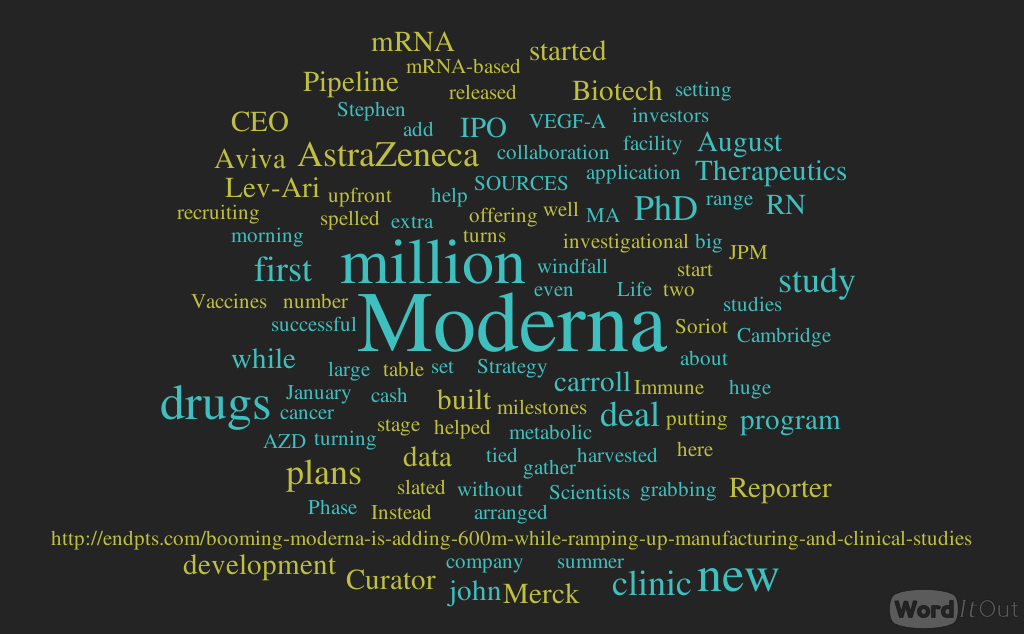
On its way for an IPO: mRNA platform, Moderna, Immune Oncology is recruiting 100 new Life Scientists in Cambridge, MA, Volume 2 (Volume Two: Latest in Genomics Methodologies for Therapeutics: Gene Editing, NGS and BioInformatics, Simulations and the Genome Ontology), Part 1: Next Generation Sequencing (NGS)

On its way for an IPO: mRNA platform, Moderna, Immune Oncology is recruiting 100 new Life Scientists in Cambridge, MA

Curator: Aviva Lev-Ari, PhD, RN


Deals:

Moderna has now raised $1.9 billion from investors like AstraZeneca – 9% stack [AstraZeneca’s Pascal Soriot helped get that all started with a whopping $240 million upfront in its 2013 deal, which was tied to $180 million in milestones.], with another $230 million on the table from grants. In addition to the financing announcement this morning, Moderna is also unveiling a pact to develop a new Zika vaccine, with BARDA putting up $8 million to get the program started while offering an option on $117 million more to get through a successful development program.

Novel Strategy in Biotech:

in biotech. Instead of grabbing one or two new drugs and setting out to gather proof-of-concept data to help establish its scientific credibility, the company has harvested a huge windfall of cash and built a large organization before even entering the clinic. And it did that without turning to an IPO.

Pipeline include:

  • The deal with AstraZeneca covers new drugs for cardiovascular, metabolic and renal diseases as well as cancer.
  • partners filed a European application to start a Phase I study of AZD8601, an investigational mRNA-based therapy that encodes for vascular endothelial growth factor-A (VEGF-A)
  • Moderna CEO spelled out plans to get the first 6 new drugs in the clinic by the end of 2016.
  • The first human study was arranged for the infectious disease drug mRNA 1440, which began an early stage study in 2015.
  • Moderna built up a range of big preclinical partnerships.
  • CEO Bancel says the number of drugs in development has swelled to 11, with the first set of data slated to be released in 2017.
  • Moderna also plans to add about 10 drugs to the clinic by next summer,


SOURCES

UPDATED: Booming Moderna is raising $600M while ramping up manufacturing and clinical studies

$1.9B in: Moderna blueprints $100M facility, plans to double the pipeline after a $474M megaround

http://endpts.com/moderna-blueprints-100m-facility-plans-to-double-the-pipeline-after-a-474m-megaround/?utm_source=Sailthru&utm_medium=email&utm_campaign=Issue:%202016-09-07%20BioPharma%20Dive%20%5Bissue:7155%5D&utm_term=BioPharma%20Dive


Moderna Therapeutics Deal with Merck: Are Personalized Vaccines here?

Curator & Reporter: Stephen J. Williams, PhD – August 11, 2016

https://pharmaceuticalintelligence.com/2016/08/11/moderna-therapeutics-deal-with-merck-are-personalized-vaccines-here/


at #JPM16 – Moderna Therapeutics turns away an extra $200 million: with AstraZeneca (collaboration) & with Merck ($100 million investment)

Reporter: Aviva Lev-Ari, PhD, RN – January 13, 2016

https://pharmaceuticalintelligence.com/2016/01/13/at-jpm16-moderna-therapeutics-turns-away-an-extra-200-million-with-astrazeneca-collaboration-with-merck-100-million-investment/

Read Full Post »

Plenary Keynotes TUESDAY | AUGUST 30 4:00PM – 5:30PM @CHI’s IMMUNO-ONCOLOGY SUMMIT, Marriott Long Wharf Hotel in Boston

http://www.immuno-oncologysummit.com/uploadedFiles/Immuno_Oncology_Summit/Agenda/16/2016-The-Immuno-Oncology-Summit-Brochure.pdf

Leaders in Pharmaceutical Business intelligence (LPBI) Group

covers in Real Time the IMMUNO-ONCOLOGY SUMMIT using Social Media

Aviva Lev-Ari, PhD, RN,

Founder, LPBI Group & Editor-in-Chief

http://pharmaceuticalintelligence.com

Streaming LIVE @ Marriott Long Wharf Hotel in Boston

Curation of Scientific Content @Leaders in Pharmaceutical Business Intelligence (LPBI) Group, Boston

Plenary Keynotes TUESDAY | AUGUST 30

4:00 Personalized, NeoantigenBased Immunotherapy

Edward Fritsch, Ph.D., Chief Technology Officer, Neon Therapeutics, Inc.

Multiple lines of evidence have demonstrated the critical role that Neoantigens have in the immune response to cancer and the availability of next-generation sequencing to identify personal, neoantigen-creating mutations has opened the door to directly enhance the power and breadth of host immunity to overcome this deadly disease.

  • Yervoy approved for melanoma ipilimumab
  • ipilimumab and Nivolumab combination
  • Cancer Vaccine for infections disease – PREVENTIVE NOT TREATMENT HPV
  • CLASSES OF TUMOR ANTIGENS CT many tumors: Methylation pattern
  • Selectively expressed: Melanomas
  • Over expressed antigens – some tumor

Personalized

Scientific Advance I:

  • Tumor DNA sequences: Kras, PIK3CA, FBXW7
  • Somatic mutations potential to generate neoantigens
  • Neoantigents: Native antigens (mage) vs NEOANTIGENS 0 tumor specific Antigens

Scientific Advance II:

  • Ipilimumab
  • anti PL-1
  • single neoantigen reactive CD4+ T cell clone mediates tumor rejection in adoptive therapy

A Neoantigen Vaccine – The Opportunity

  • T -cell capable of tumor infiltration

DFCI/Broad Institute: Tumor procurement, Target selection Personal caccine manufacturing Vaccine administration

  • Identify targets: accuracy, epitope features multipla epitopes
  • Personalised GMP manufacturing – 20 long peptide regulatory acceptance, time and cost

FDA approval:

  • High risk Melanoma (IIIB/C; IVM1a)
  • cancer with documented immune responsiveness
  • 12 patients enrolled – Vaccine prepared for 8, 6 dosed
  • Immunological Responses: DeNovo – detectable directly ex-vivo: ICS Primarily CD4+ Poly-functional
  • CD8+ Responses – 1 Pre-stim: Pre vs 16 weeks after
  • Immunizing peptide (IMP)

NEON Therapeutics, Inc.:

  • Personalized Neoantigens vs Shared Neoantigens
  • Vaccines vs T-Cells
  • Moving into Advanced Metastatic disease — COmbination Checkpoint blockade
  1. immediate response
  2. synergies by combination therapy
  3. Neoantigets


4:30 Merck Sasso 

Emerging Innate Immune Targets for enhancing 

  • Additional component of the Immune system
  1. Combination of Checkpoint inhibitors – Targeting functionality of T-Cells
  2. Standard of care moving to Goal State by Check point blocade
  3. Monoclonal antibodies blocking PD-1 and CTLA4
  4. Immunogenic cell death
  5. Effectors that promote cross presentation of antigens
  6. recruitment of T cells
  7. reversing the pathways driving a repressing tumor environment

MERCK – Keytruda

Study with Dinociclib – Immunogenic Cell Death – induced by Radiation, combined with CTLA4  – median response overall survival – 20 month

MORE OPTIONS:

  • OV therapies – enhance tumor Combination:
  1. TVEC +Keytruda – disease control 68%
  2. CAVATAK +Keytruda
  3. CAVATAK + pembrolizumab
  • TLR agonism
  1. Two Phase I in melanoma
  2. TC-1 Anti-IL-10 MK-1966 induced by SD-101
  3. Innate Immune Triggers against Pathogens and Damaged selt


  • STING agonism
  1. DNA Sensing cGAS/STING – another approach to viral mechanism for Cancer
  2. Non-nuclear dsDNA is a ‘danger
  3. DMXAA – can’t stimulate HUman only moth STING pathway
  • RNA – RIG like receptors –
  1. leveraging anti-viral Mechanisms to eliminate Tumors 
  2. Activation of RIG-like receptor

SHARED MECHANISMS: INFgamma, TNF alpha

  • TLR9
  • RIG-I
  • STING
  • Oncolytic viruses

Summary

  • Merck – Keytruda – will be combined with different strategies to leverage innate immunity in combination with traditional T cell approaches
  • expend beyond T cell
  • limitation of checkpoint blockade therapies can be due to aberrant T cell localization and the suppressive microenvironment of the tumor


5:00 Reading Tea Leaves: The Dilemma of Prediction and Prognosis in Immunotherapy

Morganna Freeman, D.O., Associate Director, Melanoma & Cutaneous Oncology Program, The Angeles Clinic and Research Institute

With the rapid expansion of immunotherapeutics in oncology, scientifically significant advances have been made with both the depth and duration of antitumor responses. However, not all patients benefit, or quickly relapse, thus much scientific inquiry has been devoted to appropriate patient selection and how such obstacles might be overcome. While more is known about potential biomarkers, accurate prognostication persists as a knowledge gap, and efforts to bridge it will be discussed here.

  • CD8+ T cell – Tumor — Imune Priming — CHeckpoint Inhibition  CD8+
  • execution is complex
  • predict who will benefit from what treatment
  • Patient and Tumor Profiling
  1. Tcell Prining: TILs, PDL1, IDO, Tcell anergy Treg- Ovarian cancer: CD8+ TILs
  2. microenvironment – immuno-scoring
  3. Immune competence -flow, biomarkers CyTOF – Mass Flow Cytometry
  4. mutation burden – chemo + Vaccine – longer time to progression
  5. mictoenvironment – Tumor Profiling
  6. tumor adaptation – serum ULBP2 NKligand – independent predictor of prognosis in Stage I-III
  7. Predictive Genomic Analysis – Immune SIgnature of Response to CHeckPoint Blockage – liquid biopsy
  8. Neoantigens: Allows analysis of T cell
  9. Multispectral imaging – Immune cell phenotypes visualized and quantified simultaneously – improve TME immune suppression, TIL harvest potential, location of the T celle impact prognosis
  10. Immune monitoring: Pre intervation vs Post Intervention
  11. Tumor heterogeneity: Cancer progression and metastasis, clinical resistance
  12. Intervention Assessments: Tissue marker of Blood which one is the best to use
  13. Cloonal Tracking: Quantifying Tumor
  14. ImmunoPET – anti CD8 immune-PET sensitive of tumor infiltrating
  15. Transcriptomic Signature: IPRES (innate PD-1 resistence) can be induced by MAPKi, furthe account for poor response – due to immune depletion
  16. Tests and immuno-toxicity, Translation to POC
  17. Data assimilation
  18. Ideal BioMarkers related to Mechanism of Action – multivariant scoring systems
  19. Gender differences, BMI differences, Age difference  — IN RESPONDING TO IMMUNOTHERAPY IN IMMUNO ONCOLOGY

Read Full Post »

1:50 – 5:00 8/30 CONSIDERATIONS IN DESIGNING IMMUNOTHERAPY COMBINATIONS @IMMUNO-ONCOLOGY SUMMIT – AUGUST 30-31, 2016 | Marriott Long Wharf Hotel – Boston, MA

http://www.immuno-oncologysummit.com/uploadedFiles/Immuno_Oncology_Summit/Agenda/16/2016-The-Immuno-Oncology-Summit-Brochure.pdf


Leaders in Pharmaceutical Business intelligence (LPBI) Group covers in Real Time the IMMUNO-ONCOLOGY SUMMIT using Social Media

Aviva Lev-Ari, PhD, RN,

Founder, LPBI Group & Editor-in-Chief

http://pharmaceuticalintelligence.com

I attended a parallel session @ Marriott Long Wharf Hotel in Boston

Curation of Scientific Content @Leaders in Pharmaceutical Business Intelligence (LPBI) Group, Boston

1:50 – 5:00 8/30 CONSIDERATIONS IN DESIGNING IMMUNOTHERAPY COMBINATIONS

1:50 Rational Combination Immunotherapy Development Stratified by the Presence or Absence of the T Cell-Inflamed Tumor Microenvironment

Jason J. Luke, M.D., FACP, Assistant Professor, Medicine, Melanoma and Developmental Therapeutics Clinics, University of Chicago Medical Center Tumors can be categorized by gene expression based on the presence or absence of a T cell-inflamed tumor microenvironment, and this correlates with either response or lack of response to immune-checkpoint blockade. Categorization of these biologically distinct subsets suggests rational immunotherapy combinations directed toward either a T cell-inflamed or non-T cell-inflamed tumor microenvironment. This approach also facilitates a framework for interrogating molecular mechanism of immune exclusion mediating non-inflamed tumors.

2:20 Programming DCs in situ for Cancer Vaccination

Omar Ali, Ph.D., Staff Scientist, Wyss Institute for Biologically Inspired Engineering, Harvard University The innate components required to mediate effective vaccination against weak tumor-associated antigens remain unclear. We utilize three-dimensional and macroporous, polymeric cancer vaccines incorporating different classes of TLR adjuvants to induce tumor regression and protection in order to identify dendritic cell subsets and cytokines critical to this efficacy. Vaccine-induced tumor regression correlated to local CD8(+) DC and pDC numbers, IL-12, and G-CSF concentrations regardless of the incorporated adjuvant.

2:50 Sponsored Presentations (Opportunities Available)

3:20 Refreshment Break in the Exhibit Hall with Poster Viewing

4:00 PLENARY KEYNOTE SESSION See Keynotes for details.

4:00 A New Era of Personalized Therapy: Using Tumor Neoantigens to Unlock the Immune System

Matthew J. Goldstein, M.D., Ph.D., Director, Translational Medicine, Neon Therapeutics, Inc. Neon Therapeutics, Inc. launched in 2015 to focus on advancing neoantigen biology to improve cancer patient care. A neoantigen-based product engine will allow Neon to develop further treatment modalities including next-generation vaccines and T cell therapies targeting both personalized as well as shared neoantigens. The company’s first trial will launch later this year investigating the combination of a personalized, vaccine with nivolumab in advanced Melanoma, NSCLC, and Bladder Cancer.

4:30 Emerging Innate Immune Targets for Enhancing Adaptive Anti-Tumor Responses

Michael Rosenzweig, Ph.D., Executive Director, Biology-Discovery, IMR Early Discovery, Merck Research Laboratories Novel cancer immunotherapies targeting T cell checkpoint proteins have emerged as powerful tools to induce profound, durable regression and remission of many types of cancer. Despite these advances, multiple studies have demonstrated that not all patients respond to these therapies, and the ability to predict which patients may respond is limited. Harnessing the innate immune system to augment the adaptive anti-tumor response represents an attractive target for therapy, which has the potential to enhance both the percentage and rate of response to checkpoint blockade.

5:00 Reading Tea Leaves: The Dilemma of Prediction and Prognosis in Immunotherapy

Morganna Freeman, D.O., Associate Director, Melanoma & Cutaneous Oncology Program, The Angeles Clinic and Research Institute With the rapid expansion of immunotherapeutics in oncology, scientifically significant advances have been made with both the depth and duration of antitumor responses. However, not all patients benefit, or quickly relapse, thus much scientific inquiry has been devoted to appropriate patient selection and how such obstacles might be overcome. While more is known about potential biomarkers, accurate prognostication persists as a knowledge gap, and efforts to bridge it will be discussed here.

Read Full Post »

1:15 -2:00 8/30 SELECTING PD-L1/PD-1 IMMUNOTHERAPY COMBINATIONS: Rational Combination Cancer Immunotherapy @IMMUNO-ONCOLOGY SUMMIT – AUGUST 30-31, 2016 | Marriott Long Wharf Hotel – Boston, MA

http://www.immuno-oncologysummit.com/uploadedFiles/Immuno_Oncology_Summit/Agenda/16/2016-The-Immuno-Oncology-Summit-Brochure.pdf


Leaders in Pharmaceutical Business intelligence (LPBI) Group covers in Real Time the IMMUNO-ONCOLOGY SUMMIT using Social Media

Aviva Lev-Ari, PhD, RN,

Founder, LPBI Group & Editor-in-Chief

http://pharmaceuticalintelligence.com

I attended a parallel session @ Marriott Long Wharf Hotel in Boston

Curation of Scientific Content @Leaders in Pharmaceutical Business Intelligence (LPBI) Group, Boston

1:15 -2:00 8/30 SELECTING PD-L1/PD-1 IMMUNOTHERAPY COMBINATIONS: Rational Combination Cancer Immunotherapy

1:15 Chairperson’s Opening Remarks

Arthur M. Krieg, M.D. CEO, Checkmate Pharmaceuticals

1:20 KEYNOTE PRESENTATION: SELECTING PD-L1/PD-1 IMMUNOTHERAPY COMBINATIONS

Edward Cha, M.D., Ph.D., Associate Medical Director, Cancer Immunotherapy Franchise, Genentech Although targeted inhibition of the PD-L1 pathway enhances anti-tumor immunity, not all patients achieve benefit from single-agent immunotherapies. Determining and prioritizing effective combinations will rely on further understanding of the mechanisms that drive immune resistance across indications and individual patients.

Read Full Post »

1:15 – 3:15 8/30 TUMOR NEOANTIGENS FOR PERSONALIZED IMMUNOTHERAPY @IMMUNO-ONCOLOGY SUMMIT – AUGUST 30-31, 2016 | Marriott Long Wharf Hotel – Boston, MA

http://www.immuno-oncologysummit.com/uploadedFiles/Immuno_Oncology_Summit/Agenda/16/2016-The-Immuno-Oncology-Summit-Brochure.pdf


Leaders in Pharmaceutical Business intelligence (LPBI) Group covers in Real Time the IMMUNO-ONCOLOGY SUMMIT using Social Media

Aviva Lev-Ari, PhD, RN,

Founder, LPBI Group & Editor-in-Chief

http://pharmaceuticalintelligence.com

Streaming LIVE @ Marriott Long Wharf Hotel in Boston

Curation of Scientific Content @Leaders in Pharmaceutical Business Intelligence (LPBI) Group, Boston


1:15 – 5:00 8/30 TUMOR NEOANTIGENS FOR PERSONALIZED IMMUNOTHERAPY

1:15 Chairperson’s Opening Remarks

Pramod K. Srivastava, M.D., Ph.D., Professor, Immunology and Medicine, Director, Carole and Ray Neag Comprehensive Cancer Center, University of Connecticut School of Medicine

  • Increased cancer incidence in immunosuppred transplant patients 25 times more risk for cancer
  1. Tumor immunity – if you immunize a mouth, tumor will not occur or regress or not progress
  2. Tumor are antigenically distinct
  3. errors in replication cand tumor sell divide
  4. identical normal cells sameness to individuality Normal >> Tumor >> Neoepitopes few Neoepitope becomes mutant
  5. 199502006Reponse to Mage correlate with better prognosis — all clinical trials FAILED
  6. Immune response to Neoepitopes – not clear cut

1:20 Basics of Personalized Immunotherapy: What Is a Good Antigen?

Pramod K. Srivastava, M.D., Ph.D., Professor, Immunology and Medicine, Director, Carole and Ray Neag Comprehensive Cancer Center, University of Connecticut School of Medicine The definition of host-protective immunogenic antigen(s) of any human cancer of non-viral origin is still an enigma. New approaches in cancer genomics and bioinformatics are now offering a plethora of candidate antigens, whose role in cancer immunity, and specifically in host-protective cancer immunity, is under extensive testing. Outlines of some broad rules are emerging and some of these shall be discussed.

  • Likelihood of being proteasomally processed MHC I binding affinity
  • 1994 affinity threshold 50nM
  • equivalent : Affinity -. difference self .. checkpoint blockade
  • Testing the tumor-protective immunogenicity of neo-epitopes: Tumor
  • Score of binding of mutant Is there tolerance to these – difference from self is a predictor of affinity – DAI score of difference
  • CD8- dependence of neo-epitope-elicited cancer immunity
  • Differential of Testing the tumor-protective immunogecity of neo-epitopes
  • Other tumor models: tumor rejection and low affinity
  • Immunological microenvironment
  • strong affinity in combination with CTLA4 – Tumore rejection by some epitopes not by others
  • CTLA4 blockade – CHeckpoint or T re inhibition
  • Strong influence of T regs on the neoepitope repertoire of a tumor
  • Immune response to neoepitope may: MHC I – peptide affinity, minor player in definition of effectiveness of neoepitopes
  • Epithelial ovarian cancer Stage III/IV and T cell response – Phase I

Questions

  • mutated epitope in melanoma – MHC 1 is important
  • CD4 affinity


1:50 Novel Antibodies against Immunogenic Neoantigens

Philip M. Arlen, M.D., President & CEO, Precision Biologics, Inc.

Two novel antibodies, NEO-102 (ensituximab) and NEO- 201, were developed from an allogeneic colorectal cancer vaccine that had previously shown activity in patients with metastatic colorectal cancer This vaccine was derived from an immunogenic component of the cell membrane from pooled surgical specimens from both primary and metastatic colon cancer. Patients who benefited from the vaccine in the prior clinical trial produced and sustained high levels of serum IgG against the vaccine. Several thousand candidate antibodies were screened against this vaccine and NEO- 102 and NEO-201 were candidates that demonstrated the ability to bind to colon cancer vs. normal tissue.

  • solid tumor studies: tumor specific monoclonal
  • Only Human Derived & Human Tested Pltform to Create Novel Therapeutics
  1. patient-derived tumor samples –>> prepararion of cancer vaccince –> anti-cancer vaccine – molecular weight – are these components immunogenic –.. Production of anti-cancer-specific monoclonal antibodies –.. testing and development of mAbs –.. Hollinshead’s clinical testing of anti-cancer vaccines
  2. Human screening to select active vaccine
  3. Mount IgG response to the Vaccine — colorectal cancer
  4. immune response – 10,00 – 3 sensicitivy
  5. NEO -102 – Pancreatic cancer – novel monoclonal antibody MUCSAC – no Ensituximab binding –>> Novel mucin trget
  6. anti tumor activity of a novel mAb NEO-102 optimize for regorgnition of antigens
  7. antibody dependent cell cytotoxicity –
  8. Tumor-specific ANtigen (TSA)
  9. Phase I and Phase II – monotherapy completed
  10. Phase 3 Regorafanib doses: 1.5 mg/Kg
  11. 3 mg/Kg – hyperbilirubinemia – Liver mestastasis Patients, hemolysis, anemia, N&V
  12. Affinity correlates with immune activity
  13. 30% of Panceratic Cancer pt receive FOLFIRINX as front line therapy, and Gemcitabine/Abraxane as 2nd line.
  14. New Trial: Gemcitabine/ .. NabPaxital –.. NEO-102
  15. NEO-201 (h16C3) mAb – CEACAM-5, CEACAM-6

Biological way as Novel Immunotherapy

2:20 PD-1 Blockade in Tumors with Mismatch-Repair Deficiency

Luis Alberto Diaz, M.D., Associate Professor, Oncology, Johns Hopkins Sidney Kimmel Comprehensive Cancer Center

Somatic mutations have the potential to encode “non-self” immunogenic antigens. Tumors with a large number of somatic mutations due to mismatch-repair defects appear to be highly susceptible to immune checkpoint blockade. This presentation will summarize the clinical and genomic data of using mutations as neoantigens.

  • Mismatch repair tumor – colon cancer – genetic and Epigenetic defects in mismatch repair 15% carcinomas across all stages 
  • mutagen associated tumor
  • sporadic solid tumors (colon cancer)
  • pediatric tumors
  • liquid tumors

Background

  • Tx of tumor
  • Colorectal cancers vs Non-Colorectal Cancers
  • Cohort: A, B, C Autoimmune events

Biochemical Response (CEA): Merck Kyrdura,, single agent

  1. MMR-proficient CRC – low tumor burden – 12 patients 
  2. MMR-deficient CRC – HIGH Tumor burden – 12 patients
  3. % change from baseline

Summary

% change from Baseline = Mismatch in genomic vs Histology independence

Mutation Burden va Response to PD-1 Blockade

  • Mutations per Genome vs % Objective Response Rate 

Future direction

  • Markers in genomics not tissue origin
  • Molecular etiology of primary and secondary resistance in MRD tumors with PD-1 blockade
  • kidney cancer non-Hodgkis Lynphona – low tumor burden: mismatch mutation burden,  virus
  • Melanoma & Lunf Cancers: Mutagen Associated tumors


2:50 In situ Vaccination for Lymphoma

Joshua Brody, M.D., Director, Lymphoma Immunotherapy Program, Icahn School of Medicine at Mount Sinai

Prior ex vivo combinations of dendritic cells (DC) with tumor antigens have yielded immunologic and clinical responses. Intratumoral immunomodulation may bypass the need for ex vivo production of vaccine. In situ vaccination combines: intratumoral Flt3L to recruit DC, low dose radiotherapy to load DC with tumor antigens, and intratumoral TLR agonist to activate tumor-antigen-loaded DC. Preliminary results demonstrate DC recruitment and activation, systemic tumor regressions, and induction of neoantigen specific CD8 T cell responses after vaccination.

  • TLR9a-based insitu vaccine – convert tumor into vaccine-manufacturing facility
  • B cell lymphona – Keppa expression treated by CpG – rediation
  • induction antitumor immunity by anti-tumor T-cells
  • CD8 vs IFNgamma
  • CD137 vs CD 45RO – memory cells: pre and post
  • Flt3L-primed in situ vaccine on dendritic cells + poly-IC – vaccine activate T-cells
  • 60 patients
  1. Pre-rx, Pre-vaccine
  2. post Flt3L Post- Vaccine
  3. post-poly-ICLC (agonist)

Flt3L immune repertoire effects with CyTOF – pre-Flt3L

  • In site vaccine: cellular and molecular Mechanism
  • T cells, Macrophages, Ly6chi, mono, Dendritic Cells
  • pIC +antiPD1

Is there a Better AIXS than PD/PD-L1?

  • YES – Just EGFP Dealth Inducing CD8 T cells = JEDI
  • YES  – Targeted (CRISPR) approach – 600 genes on Receptor “3”
  • CRISPR discovers PD-L1 spiked in with preferential – Edit and induce genes: Library of 600 genes – PD1 is in the library
  • GFP vs MHC-1 vs Jedi T cells
  • Kill-able lymphoma vs resistant lymphoma
  • more Dendritic cella with intratumoral than systemic Flt3L <<– has highest % of living cells

3:20 Refreshment Break in the Exhibit Hall with Poster Viewing

4:00 PLENARY KEYNOTE SESSION See Keynotes for details.

4:00 A New Era of Personalized Therapy: Using Tumor Neoantigens to Unlock the Immune System

Matthew J. Goldstein, M.D., Ph.D., Director, Translational Medicine, Neon Therapeutics, Inc. Neon Therapeutics, Inc. launched in 2015 to focus on advancing neoantigen biology to improve cancer patient care. A neoantigen-based product engine will allow Neon to develop further treatment modalities including next-generation vaccines and T cell therapies targeting both personalized as well as shared neoantigens. The company’s first trial will launch later this year investigating the combination of a personalized, vaccine with nivolumab in advanced Melanoma, NSCLC, and Bladder Cancer.

4:30 Emerging Innate Immune Targets for Enhancing Adaptive Anti-Tumor Responses

Michael Rosenzweig, Ph.D., Executive Director, Biology-Discovery, IMR Early Discovery, Merck Research Laboratories Novel cancer immunotherapies targeting T cell checkpoint proteins have emerged as powerful tools to induce profound, durable regression and remission of many types of cancer. Despite these advances, multiple studies have demonstrated that not all patients respond to these therapies, and the ability to predict which patients may respond is limited. Harnessing the innate immune system to augment the adaptive anti-tumor response represents an attractive target for therapy, which has the potential to enhance both the percentage and rate of response to checkpoint blockade.

5:00 Reading Tea Leaves: The Dilemma of Prediction and Prognosis in Immunotherapy

Morganna Freeman, D.O., Associate Director, Melanoma & Cutaneous Oncology Program, The Angeles Clinic and Research Institute With the rapid expansion of immunotherapeutics in oncology, scientifically significant advances have been made with both the depth and duration of antitumor responses. However, not all patients benefit, or quickly relapse, thus much scientific inquiry has been devoted to appropriate patient selection and how such obstacles might be overcome. While more is known about potential biomarkers, accurate prognostication persists as a knowledge gap, and efforts to bridge it will be discussed here.

Read Full Post »

LIVE 9:55 – 12:00 8/29 UNDERSTANDING MECHANISMS OF ACTION @IMMUNO-ONCOLOGY SUMMIT – AUGUST 29-30, 2016 | Marriott Long Wharf Hotel – Boston, MA

http://www.immuno-oncologysummit.com/uploadedFiles/Immuno_Oncology_Summit/Agenda/16/2016-The-Immuno-Oncology-Summit-Brochure.pdf


Leaders in Pharmaceutical Business intelligence (LPBI) Group covers in Real Time the 

IMMUNO-ONCOLOGY SUMMIT using Social Media


Aviva Lev-Ari, PhD, RN,

Founder, LPBI Group & Editor-in-Chief

http://pharmaceuticalintelligence.com

Streaming LIVE @ Marriott Long Wharf Hotel in Boston

Curation of Scientific Content @Leaders in Pharmaceutical Business Intelligence (LPBI) Group, Boston


9:55 – 12:00 UNDERSTANDING MECHANISMS OF ACTION

9:55 Chairperson’s Remarks

Fares Nigim, M.D., Massachusetts General Hospital and Harvard Medical School

First phase:

  • OV infection/replication

Second phase

  • Immune response

Clinical considerations: viral delivery, Patient’s selection, Biomarkers, combination with Immunomodulators


10:00 Designing Clinical Trials to Elucidate Oncolytic Virus Mechanisms-of-Action

Caroline Breitbach, Ph.D., Vice President, Translational Development, TurnstoneBiologics

Oncolytic viruses have been shown to target tumors by multiple complementary mechanisms-of-action, including direct oncolysis, tumor vascular targeting and induction of anti-tumor immunity. Phase I/II clinical trials can be designed to validate these mechanisms. Development experience of an oncolytic vaccinia virus and a novel rhabdovirus oncolytic vaccine will be summarized.

  • Mechanism of Action:
  • Clinical trial design and choosing population
  • Pex-Vec: Oncolytic Vaccinia – Infection and SPread within tumors follwoing IV AdministrationCCRC vd Ovarian cancer
  • dose threshold for IV delivery Defined
  • Tumor-specific Trnsgene
  • dose-dependent induction of antibodies to beta-galactosidase
  • Delayed Virema and evidence of GM-CSF Expression – day 4 nad Day 6
  • Oncolytic Viral Immunotherapy: Oncolytic Virus and T-cell Vaccine
  • Maraba MG1 Oncolytic Virus – Rhabdovirus Structure – from insects not a human pathogen.
  • MG1 boosts immunity- engage memory T cells,
  • Unique Biology of T Cell Boosting:
  1. virus infects follicular B cells: Lung metastesis DCT Prima, DCT Boost
  2. COmparison MG1 to other Vaccine Platforms
  3. Immunecheck Inhibitors – combined to augment Immune activity in preclinical models
  4. T- cells recruited to tumors post Ad-GM!
  5. MAGE-A3: in Human in CLinical studies – fresh peripheral blood underwent in vitro stimulation with MAGE-A3 peptide pools for 6 hours follwoed by staining and flow
  6. First Human CLinical Trial – Status: Enrolling – 70 patients
  • Arm A, B, C and Pahse II: Prescreen MA3, Screening CT/biopsy ADvirus Biopsy CT
  • MOA – Amplification in tumor
  • transgene expresion systemic delivery induction of anti-viral antibodies/immunity
  • Efficacy ENdpoints:
  • Radiographic endpoints
  • Cancers with tumor markers
  • must ensure suggogate endpoints are approvable
  • Acute reduction of Perfusion after Pexa-Vec Treatment
  • unmasking of existing lesions
  • response in non-injected tumors: baseline, week 8,20
  • Lymphocytic inflitrate
  • Selection of Patient Population: Injectable Unresectable Stage IIIB -IV

Liver Cancer: HCC – First-lineLow and High dose

Phase 2b – Second-line: Single agent NOT approriate for advanced disease

Pharmacokinetics – unique Replication-dependent PK

  • GM-CSF – cytokine autoimmunity

10:30 T- Stealth Technology Mitigates ANtagonism between Oncolytic Viruses and the Immune System through Viral Evasion of ANti-Viral T-Cells

Matthew Mulvey, PhD, CEO, BeneVir

Virus evading immune response – resist interferon

T-Vec vs T-Stealth = viral spread continues enhanced efficacy

T-Stealth – unique ability to evade clearance by T-cells in order to permit stimultaneous co-administration of OV and immune checkpoint inhibitors

  • evades of T-cells
  • induction and systemic anti tumor T-cells
  • synergy with checkpoint
  • Efficacy of repeat dose
  • Inhibitor of innate immunity, T-cell
  • Bladder cancer MBT-2 injection bi-lateral : T-Stealath + AntiPD1 + CTLA4
  • improved T-Cell receptor diversity in untreated tumors suggestin that t-Stealth induces immune response system to target a wider range of tumor neo-antigens

DRUG PROFILE

  1. Replicate,spread
  2. mitigate antagonism with checkpoint inhibitorscan be armed with 3 additional transgenes to promote anti-tumor
  3. One stop shopping
  4. systemic OV dosing:
  5. more efficacious because virus spreads


11:00 Improving Oncolysis and Therapy with Pharmacologic Modulation – Glioblastoma

Antonio Chiocca, Professor & Chairman, Department of Neurosurgery , Brigham & Women’s Hospital/ Harvard Medical School

Glioblastoma (GBM) – survival 15 month – heterogenous, target therapies – FAILED, subclones – mutation burden – OV – injection into tumor

  • if inject into the Brain – bad effect – tolerated, efficacy NOT established
  • Current therapies aimed at ICP6 – Herpes+ Nestin
  • HSV strain attenuated ICP4 mutation
  • UL39
  • Mice models: Animal survival is 80% when OV is injected 7 days
  • Animal survival is 50% when OV is injected 14 days after tumor implant
  • GBM Clinical Trial
  • VPA – Valporic Acid – FDA approved – antitumor efficacy of Herpes-based OV – Histone deacetylase
  • HDAC6 – major deacetylase in cytoplasm – improves shuttling of post-entry oHSV into nuclei vs lysosomes
  • 2015 – Histone deacetylase  6 Inhinbition enhances OV replication in glioma
  • The nestin promoter in rQNestin34.5
  • VPA demethylate oncolytic HSV promoter
  • barriers to OV therapy and maneuvers to circovent
  • Transcript profile analyses of Glioma
  • NK cells are recruited to brain GBM following oncolytic HSV
  • PD-L1 expression in Glioma Stem cells after oHSV
  • immunocompetent mouse Glioma cells that replicate oHSV to high levels – testing
  • Conclusions


11:30 Moving Toward MultiFunctionality in PoxvirusBased Oncolytic Virotherapy

Eric Quemeneur, Ph.D., Pharm.D., Executive VP and CSO, Transgene

Poxviruses are powerful immunotherapeutics and tumor-targeting platforms. We recently expanded Transgene’s portfolio of armed oncolytic Vaccinia Viruses (oVV) by engineering a vector that targets anti-PD1 IgG expression into the tumor. Local concentration of virus-encoded antibody was ~10-50 times higher than the reference mAb, leading to significant improvement of survival in a sarcoma preclinical model. Such results announce the next-generation OVs, combining immunogenic oncolysis with the capacity to deliver complex therapeutic modalities in the tumor micro-environment.

  • The merit of poxyviruses for UV – envelop Virus – cytosol replocation
  • suitable for molecular engineering: large genome
  • Enzyme – Fcu1 VV(TK-RR-)-Fcu1
  • FCU1 is a chimeric bifunctional enzyme
  • Activity of TG6002 in human tumors: Growth control: SKOV (ovarian) and U87-MG (control) Ovarian
  • TG6002 also active on Cancer stem cells, compatible with Chemotherapy: Human Pancreatic Cancer

Activity in immuno-competent models –

  • TG6002 (WR) in mice synergy study and
  • Lymphocyte infiltration into the tumor
  • Complementarity with PD1 blocker
  • induce abscopal response – effect on survival
  • Combination OV/ICI in the clinic
  • Genetic recombination of mAb expression cassettes
  1. IgG
  2. Fab
  3. scFv

T cell depletion experiment – Anti- CD4 and CD8

Pre-Clinical results – in vivo expression and biodistribution of WR-mAb1

  • Tumor growth inhibition & survival (MCA205 sarcoma model
  • Overcoming the tumor access barrier
  • cavitation-enhanced ultrasonic virus delivery

Summary

  • Poxviruses – safe, potent and versatile
  • IV route
  • synergy with other immunotherapies
  • platform is customizable


Read Full Post »

LIVE 8:25 – 9:30 8/29 REALIZING THE POTENTIAL OF ONCOLYTIC VIRUS IMMUNOTHERAPY @IMMUNO-ONCOLOGY SUMMIT – AUGUST 29-30, 2016 | Marriott Long Wharf Hotel – Boston, MA

http://www.immuno-oncologysummit.com/uploadedFiles/Immuno_Oncology_Summit/Agenda/16/2016-The-Immuno-Oncology-Summit-Brochure.pdf


Leaders in Pharmaceutical Business intelligence (LPBI) Group

covers in Real Time the IMMUNO-ONCOLOGY SUMMIT using Social Media


Aviva Lev-Ari, PhD, RN,

Founder, LPBI Group & Editor-in-Chief

http://pharmaceuticalintelligence.com

Streaming LIVE @ Marriott Long Wharf Hotel in Boston

Curation of Scientific Content @Leaders in Pharmaceutical Business Intelligence (LPBI) Group, Boston


8:25 – 9:30 REALIZING THE POTENTIAL OF ONCOLYTIC VIRUS IMMUNOTHERAPY


LIVE 8:25 Chairperson’s Opening Remarks

Brian Champion, Ph.D., Senior Vice President, R&D, PsiOxus Therapeutics Ltd

  • Different viruses
  • Engineering
  • Manufacturing: CMC
  • Systemic vs IT Delivery
  • Tumor Markers environment: Tumor cell lysis and immune response
  • Biomarkers Clinical Development
  • Role of Pre-clinical Models
  • regulatory affairs

8:30 T-Vec: From Market Approval to Future Plans

Jennifer Gansert, Ph.D., Executive Director, Global Development Lead, IMLYGIC, Amgen, Inc.

Talimogene laherparepvec (T-VEC) is a modified herpes simplex virus type -1 designed to selectively replicate in tumors and to promote an anti-tumor immune response. T-VEC is approved for metastatic melanoma based on a randomized phase III trial; T VEC significantly improved durable response rate vs GM-CSF. Data from the pivotal trial and combination studies with checkpoint inhibitors will be presented.

T-VEC – HSV-1

  • Viral Protein:
  1. ICP47 – Deleltion ,
  2. ICP34.5 – Deletion ,
  3. US11 – Temporal expression,
  4. GM-CSF – Insertion
  • Engineering Change:
  1. Injected Tumor
  2. Contralateral tumors
  • Dual MOA
  • Administration: Largest lesion first, 4 cycles of injections
  • OpTim – Phase III: N = 436 Stage III-IV Melanoma
  • T-VEC (N = 295)
  • GM-CSF (N=141)
  • Key ENTRY Criteria
  • END POINT: Primary and Secondary – Survival benefit
  • 2/3 – prior infection with HIV – melanoma not resectable with spread to lymph nodes
  • Response rate with T-VEC: 30% response 2/3 – control of the disease
  • Lesion-Level, Lesion-Type Response Analysis
  • Overal Survival:Over 20% reduction of burdon
  • Retrospective analysis: If not spread yet to lymph nodes: Best response to treatment
  • Early disease stage and early therapy are correlated
  • T-VEC double survival vs GM-CSF
  • Adverse effects: Cellulitis

Phase I

Phase II

Phase III

  • Regulatort Interactions for US BLA – Full approval in 10/2015
  • Rationale for Combination wiht CHeckPoint Inhibitors
  1. Immunologic response:
  2. Control
  3. OncoVEX mGM-CSF
  4. CTLA4
  5. Ipilimumab – 3
  6. Pembrolizumab -4
  7. Neoadjuvant – 2
  8. unserectable safety  – 1
  • Changes in Tumor Burden by DIsease CHange
  • Progression-Free Survival – 72%
  • Adverse events: as expected
  • Phase II design: Pembrolizumab 200mg
  • Monotherapy vs Combination
  • Address multiple Tumor type: Menaloma, RCC, mCRC, BrCA, Gastric, NSCLC, HCC
  • Other: Head & Neck (completed), Pacreatic (completed), Hepatic injection (ongoing), Pediatric study (planned)

9:00 Oncolytic Virotherapies as a Single Shot Cure?

Stephen J. Russell, M.D, Ph.D., Professor, Mayo Clinic

VYRIAD, CEO

Oncolytic virotherapy is increasingly used as a cancer immunotherapy. However, certain oncolytic viruses can also mediate wholesale tumor destruction independently of an antitumor immune response. This is the oncolytic paradigm, where a cytolytic virus with preferential tumor tropism spreads extensively at sites of tumor growth and directly kills the majority of the tumor cells in the body leaving only a few uninfected tumor cells to be controlled by the concomitant antitumor immune response.

  • Virus – does the heavy lifting – small virus inoculum, local spread, systemic virus spread – via blood stream -VIREMIA – killing of infected cells Immune response help Virus elimination
  • Engineer virus: Tropism, dose, route
  • Immune response: Killing Uninfected cells killing tumors cells
  • Second exposure – preformed antibodies: Viremia – neutrilized + Memory cytotoxic T-Cells CTL
  • Oncolytic ViroTherapyFirst dose more effecitve then subsequence
  • VSV- Vesiculat Stomatisis Virus: IFNbeta and NIS
  • SIngle dose: Intratumorally: complete regression – controlling tumor
  • Reaching mestastesis: IV delivery
  • After systemic delivery: Mode of Virus spread in Tumors: tumor distruction: density of tumors: Delivery and SPread
  • Second and subsequent – Ovarian Cancer: single dose vs six doses: no significant (three doses – NO additional therapeutic benefit
  • Pet-dog with lynphoma: Multi center – single shot
  • HUMAN: Clinical Trial in Mayo, Arizona, Redractory/Intolerant HCC: In Patient 12:necrosis of the tumors, markers: HCC – metastasis to ColonRectal Cancer – developed Day 13 Hepatorenal outcome – virus infected non-injected tumors
  • NGS – error rat 1 in 1000 of virus genome sequence – 164 mutations 103 coding and 61 are noncoding or silent mutations
  • What determined rapid virus spear in Patient12: 4 gees of thr 84 genes:
  1. antiviral state
  2. antiviral sensing and signaling
  3. IFN signaling
  4. Antigen processing and presenation

NOW Companion Diagnostics is been developed

CASE: Measles Seronegative: – Complete response to IV MV-NIS  – patient with melanoma

  • no systemic response – Oncolytic debulking and lasting immune control

Summary

  1. Single shot cure for cancer – and likely transform Cancer care
  2. Oncolytic and Immune two MOA – killing infected and uninfected tumor cells

Success: monitor viral spread

  1. exploit first dose
  2. develop tests to match with tumor
  3. combine with immuno modulatory drugs
  4. continue create better viruses

VYRIAD: Companion Diagnostic: Lung, Head & Neck, Bladder

Read Full Post »

The Strategy of Precision Editing the Cancer Cell Glycocalyx using an “antibody–enzyme conjugate” for Cancer Immunotherapy: Research Beyond “augment the activator or remove inhibitor, or both”

Reporter: Aviva Lev-Ari, PhD, RN

Significance

Successful tumors are able to evade the immune system, which is otherwise capable of killing transformed cells. Therapies that prevent this evasion have become revolutionary treatments for incurable cancers. One mechanism of evasion is the presentation of sugars, called sialic acids, within the cell surface’s sugar coating, or glycocalyx. Here, we designed biotherapeutic molecules, termed “antibody–enzyme conjugates,” that selectively remove sialic acids from tumor cells. The antibody directs the enzyme to the cancer cells, the enzyme cleaves the sugars, and then the antibody directs immune cells to kill the desialylated cancer cells. The conjugate increased tumor cell killing compared with the antibody alone. Editing the cancer cell glycocalyx with an antibody–enzyme conjugate represents a promising approach to cancer immune therapy.

SOURCE 


AUGUST 22, 2016

Stanford chemists develop a new method of cancer immunotherapy

A team of Stanford ChEM-H scientists has discovered a novel form of cancer immunotherapy, which works by removing certain sugars from the surface of cancer cells and making those cells visible to the immune system.

“All of the world of immune therapy is now thinking about the immune system as calculating pluses and minuses. If you want to tilt the scale toward immune activation, you can either augment the activator or remove inhibitor, or both,” said Bertozzi, who is also an investigator with the Howard Hughes Medical Institute.

Current immunotherapies on the market work by blocking one of the inhibitory signals that are recognized by the adaptive immune system. Block those and the balance tilts in such a way that the immune system will attack the now recognizable cancer.

Bertozzi’s approach provides a second way of tiling the balance in favor of attack, this time for the innate immune system. She said this study shows just one example of how it could work, but her sugar-removing lawnmower could be used on a wide variety of cell types, not just those expressing HER2, and on different types of sugars.

“It’s almost always the case that you need a component of both the adaptive and innate immunity to get a robust reaction against infectious pathogens, such as during vaccination,” said Bertozzi. “The smart money suggests that the same will be true with tumors.”

Bertozzi said the approach also highlights the importance of paying attention to the much ignored glycocalyx.

SOURCE

Stanford chemists develop a new method of cancer immunotherapy

http://news.stanford.edu/2016/08/22/new-method-cancer-immunotherapy/


immobilization-ok

A symbolic representation of a glycocalyx chain attached to a cytoskeleton.

IMAGE SOURCE: google images


glycocalyx-145E1F0C801699F8CFE

image glycocalyx

IMAGE SOURCE: google images

Glycocalyx

Glycocalyx – www.futura-sciences.us576 × 284Search by image

The carbohydrates, glycoproteins and proteoglycans making up the glycocalyx

IMAGE SOURCE: google images

PNAS – Original Article

Precision glycocalyx editing as a strategy for cancer immunotherapy

  1. Han Xiaoa,b,1,
  2. Elliot C. Woodsa,b,1,
  3. Petar Vukojicica,b, and
  4. Carolyn R. Bertozzia,b,2
  1. Edited by Laura L. Kiessling, University of Wisconsin-Madison, Madison, WI, and approved July 11, 2016 (received for review May 24, 2016)

Abstract

Cell surface sialosides constitute a central axis of immune modulation that is exploited by tumors to evade both innate and adaptive immune destruction. Therapeutic strategies that target tumor-associated sialosides may therefore potentiate antitumor immunity. Here, we report the development of antibody–sialidase conjugates that enhance tumor cell susceptibility to antibody-dependent cell-mediated cytotoxicity (ADCC) by selective desialylation of the tumor cell glycocalyx. We chemically fused a recombinant sialidase to the human epidermal growth factor receptor 2 (HER2)-specific antibody trastuzumab through a C-terminal aldehyde tag. The antibody–sialidase conjugate desialylated tumor cells in a HER2-dependent manner, reduced binding by natural killer (NK) cell inhibitory sialic acid-binding Ig-like lectin (Siglec) receptors, and enhanced binding to the NK-activating receptor natural killer group 2D (NKG2D). Sialidase conjugation to trastuzumab enhanced ADCC against tumor cells expressing moderate levels of HER2, suggesting a therapeutic strategy for cancer patients with lower HER2 levels or inherent trastuzumab resistance. Precision glycocalyx editing with antibody–enzyme conjugates is therefore a promising avenue for cancer immune therapy.

SOURCE 

Read Full Post »

« Newer Posts - Older Posts »