Feeds:
Posts
Comments

Archive for the ‘Cardiac & Vascular Repair Tools Subsegment’ Category

Reporter: Aviva Lev-Ari, PhD, RN


In this Journal Stent technology was researched thoroughly, the reader is advised to enrich his/hers knowledge on Re-vascularization technology by reviewing the following articles and the bibliography in each of them:

Coronary Artery Disease – Medical Devices Solutions: From First-In-Man Stent Implantation, via Medical Ethical Dilemmas to Drug Eluting Stents

Aviva Lev-Ari, PhD, RN 8/13/2012

Drug Eluting Stents: On MIT’s Edelman Lab’s Contributions to Vascular Biology and its Pioneering Research on DES

Larry H Bernstein, MD, FACP, Author and  Aviva Lev-Ari, PhD, RN, Curator 4/25/2013

Vascular Repair: Stents and Biologically Active Implants

Larry H Bernstein, MD, FACP, Author and  Aviva Lev-Ari, PhD, RN, Curator 5/4/2013

Biomaterials Technology: Models of Tissue Engineering for Reperfusion and Implantable Devices for Revascularization 5/5/2013

Revascularization: PCI, Prior History of PCI vs CABG

Aviva Lev-Ari, PhD, RN 4/25/2013

To Stent or Not? A Critical Decision

Aviva Lev-Ari, PhD, RN 10/23/2012

New Drug-Eluting Stent Works Well in STEMI

Aviva Lev-Ari, PhD, RN 8/22/2012

OrbusNeich seizes Boston Scientific stents in Germany as part of patent infringement proceedings

May 21, 2013

OrbusNeich seizes Boston Scientific stents in Germany as part of patent infringement proceedings

WIESBADEN, Germany, May 21, 2013 /PRNewswire/ — Medical device manufacturer OrbusNeich Medical Inc. and its subsidiary, OrbusNeich Medical GmbH (collectively “OrbusNeich”) today announced that it has enforced the seizure of over 190 stent systems from Boston Scientific Corporation (NYSE: BSX) in connection with its patent infringement proceedings in the Dusseldorf Regional Court. The products were found on May 15, 2013, at the premises of Boston Scientific Medizintechnik GmbH in Ratingen (Germany), the German subsidiary of Boston Scientific Corporation (collectively “Boston Scientific”).

In violation of the Court’s April 30, 2013 Preliminary Injunction, Boston Scientific initially denied access to search its premises – the court’s decision grants OrbusNeich the right to seize stents in the possession of Boston Scientific that have been commercially distributed but not yet used. Boston Scientific claimed that none of the concerned stent systems were in its possession at the location in Ratingen. Only after the Police were called did Boston Scientific allow the bailiff to search the building and seize the products.

The April 30, 2013, ruling, which Boston Scientific has appealed, allows OrbusNeich to prevent Boston Scientific from marketing and selling the affected stent lines in Germany, which include the Small Vessel, Small Workhorse and Workhorse Stents of Boston Scientific’s PROMUS Element™, PROMUS Element Plus™, OMEGA™, TAXUS Element™, SYNERGY™ and Promus PREMIER™ product lines. In this decision, the Regional Court found that the geometric pattern of these stents infringe OrbusNeich’s patent EP 1 341 482.

On May 13, 2013, OrbusNeich obtained a second Preliminary Injunction against Boston Scientific following Boston Scientific’s attempt to circumvent the first Injunction by transferring the German distribution of the affected products to Boston Scientific (UK) Ltd. and Boston Scientific Ltd. Boston Scientific may appeal this decision.

In addition to the Preliminary Injunctions, OrbusNeich’s principal patent infringement proceedings are also before the Dusseldorf Regional Court. In these proceedings, OrbusNeich is seeking damages, a permanent injunction and other relief for alleged infringement of the German parts of the EP 1 341 412 and ‘482 patents by the affected stent lines. A hearing in this main proceeding is scheduled for May 2014.

Similar infringement proceedings have also been filed in The Netherlands and Ireland.

The proceedings follow a favorable ruling for OrbusNeich by the European Patent Office (EPO) on February 11, 2013, in connection with the ‘482 patent. The EPO decision, which has been appealed, upheld the claim of the ‘482 patent, as amended, against an opposition by Boston Scientific and Terumo, claiming the patent was invalid.

About OrbusNeich

OrbusNeich is a global company that designs, develops, manufactures and markets innovative medical devices for the treatment of vascular diseases. Current products are the world’s first pro-healing stent, the Genous™ Stent, as well as other stents and balloons marketed under the names of Azule™, R stent™, Scoreflex™, Sapphire™, Sapphire II™ and Sapphire NC™. Development stage products include the COMBO Dual Therapy Stent™, the world’s first dual therapy stent. OrbusNeich is headquartered in Hong Kong and has operations in Shenzhen, China; Fort Lauderdale, Fla.; Hoevelaken, The Netherlands; and Tokyo, Japan. OrbusNeich supplies medical devices to interventional cardiologists in more than 60 countries. For more information, visit http://www.OrbusNeich.com.

Media Contact:
Jed Repko – Bryan Darrow – Taylor Ingraham
Joele Frank , Wilkinson Brimmer Katcher
212-355-4449

SOURCE: OrbusNeich Medical Inc.

Read more: OrbusNeich seizes Boston Scientific stents in Germany as part of patent infringement proceedings – FierceMedicalDevices http://www.fiercemedicaldevices.com/press-releases/orbusneich-seizes-boston-scientific-stents-germany-part-patent-infringement#ixzz2TwxCAgth

http://www.fiercemedicaldevices.com/press-releases/orbusneich-seizes-boston-scientific-stents-germany-part-patent-infringement?utm_medium=nl&utm_source=internal


Read Full Post »

Biomaterials Technology: Models of Tissue Engineering for Reperfusion and Implantable Devices for Revascularization

Author and Curator: Larry H Bernstein, MD, FACP

and

Curator: Aviva Lev-Ari, PhD, RN

http://pharmaceuticalintelligence.com/5_04_2013/bernstein_lev-ari/Bioengineering_of_Vascular_and_Tissue_Models

This is the THIRD of a three part series on the evolution of vascular biology and the studies of the effects of biomaterials
in vascular reconstruction and on drug delivery, which has embraced a collaboration of cardiologists at Harvard Medical School , Affiliated Hospitals, and MIT,
requiring cardiovascular scientists at the PhD and MD level, physicists, and computational biologists working in concert, and
an exploration of the depth of the contributions by a distinguished physician, scientist, and thinker.

The FIRST part – Vascular Biology and Disease – covered the advances in the research on

Drug Eluting Stents: On MIT’s Edelman Lab’s Contributions to Vascular Biology and its Pioneering Research on DES

  • vascular biology,
  • signaling pathways,
  • drug diffusion across the endothelium and
  • the interactions with the underlying muscularis (media),
  • with additional considerations for type 2 diabetes mellitus.

The SECOND part – Stents and Drug Delivery – covered the

Vascular Repair: Stents and Biologically Active Implants

  • purposes,
  • properties and
  • evolution of stent technology with
  • the acquired knowledge of the pharmacodynamics of drug interactions and drug distribution.

In this THIRD part, on Problems and Promise of Biomaterials Technology, we cover the biomaterials used and the design of the cardiovascular devices, extension of uses, and opportunities for improvement

Biomaterials Technology: Tissue Engineering and Vascular Models –

Problems and Promise

We have thus far elaborated on developments in the last 15 years that have led to significant improvements in cardiovascular health.

First, there has been development of smaller sized catheters that can be introduced into

  • not only coronary arteries, but into the carotid and peripheral vasculature;

Second, there has been specific design of coated-stents that can be placed into an artery

  • for delivery of a therapeutic drug.

This began with a focus on restenosis, a serious problem after vascular repair, beginning
with the difficult problem of  control of heparin activity given intravenously, and was
extended to modifying the heparan-sulfate molecular structure

  • to diminish vascular endothelial hyperplasia,
  • concurrent with restriction of the anticoagulant activity.

Third, the ability to place stents with medicated biomaterials locally has extended to

  • the realm of chemotherapy, and we shall see where this progresses.

The Engineered Arterial Blood Flow Models

Biomedical engineers, in collaboration with physicians, biologists, chemists, physicists, and
mathematicians, have developed models to predict vascular repair by knowledge of

  • the impact of interventions on blood flow.

These models have become increasingly sophisticated and precise, and they propel us
toward optimization of cardiovascular therapeutics in general and personalizing treatments
for patients with cardiovascular disease. (1)
The science of vascular biology has been primarily stimulated by the clinical imperative to

  • combat complications that ensue from vascular interventions.

Thus, when a novel vascular biological finding or cardiovascular medical/surgical technique
is presented, we are required to ask the 2-fold question:

  • what have we learned about the biology of the blood vessel?
  • how might this knowledge be used to enhance clinical perspective and treatment?

The innovative method of engineering arterial conduits presented by Campbell et al. in
Circulation Research presents us with just such a challenge, and we deal with it’s biological and clinical ramifications.

Each of four pivotal studies in vascular tissue engineering has been an important advance
in the progression to a tissue-engineered blood vessel that can serve as a

  • living graft, responsive to the biological environment as
  • a self-renewing tissue with an inherent healing potential.
  • Weinberg and Bell taught us that a tissue-engineered graft could be constructed
  • and could be composed of human cells.

L’heureux et al demonstrated that the mechanical strength of such a material

  • derived in major part from the extracellular matrix and
  • production of matrix and integrity of cellular sheets
  • could be enhanced by alterations in culture conditions.

Niklason et al. noted that grafts are optimally formed

  • when incubated within environmental conditions that they will confront in vivo
  • or would have experienced if formed naturally.

Campbell et al. now demonstrate that it is possible to remove

  • the immune reaction and acute rejection that may follow cell-based grafting
  • by culturing tissues in the anticipated host and
  • address a fundamental issue of whether cell source or site of cell placement
  • dictates function after cell implantation.

It appears that the vascular matrix can be remodeled by the body according to the needs of the environment. It may
very well be that the ultimate configuration of autologous cell-based vascular graft need not be determined at
outset by the cells that comprise the device, but rather

  • by a dynamics that is established by environmental needs, wherein the body molds
  • tissue-engineered constructs to meet
    • local flow,
    • metabolic, and
    • inflammatory requirements.

In other words, cell source for tissue reconstruction may be secondary to
cell pliability to environmental influence.

Endothelial and smooth muscle cells from many, perhaps any,

  • vascular bed can be used to create new grafts and will then
  • achieve secondary function once in place in the artery.

The environmental remodeling observed after implantation

  • may modify limitations of grafts that are composed of nonvascular peritoneal cells whose initial structure
    is not either venous or arterial. (2)
  • The trilaminate vascular architecture provides biochemical regulation and mechanical integrity.
  • Yet regulatory control can be regained after injury without recapitulating tertiary structure.

Tissue-engineered (TE) endothelium controls repair even when

  • placed in the perivascular space of injured vessels.

It remains unclear from vascular repair studies whether endothelial implants recapitulate the vascular
epithelial lining
or expose injured tissues to endothelial cells (ECs) with unique healing potential because

  • ECs line the vascular epithelium and the vasa vasorum.

Authors examined this issue in a nonvascular tubular system, asking whether airway repair is controlled by

  • bronchial epithelial cells (EPs) or by
  • Endothelial Cells (ECs) of the perfusing bronchial vasculature.

Localized bronchial denuding injury

  • damaged epithelium, narrowed bronchial lumen, and led to
  • mesenchymal cell hyperplasia, hypervascularity, and inflammatory
  • cell infiltration. Peribronchial TE constructs embedded with

EPs or ECs limited airway injury, although optimum repair was obtained

  • when both cells were present in TE matrices.

EC and EP expression of

  • PGE2, TGF1, TGF2, GM-CSF, IL-8, MCP-1, and soluble VCAM-1
  • and ICAM-1 was altered by matrix embedding,

but expression was altered most significantly when both,

  • EC and EP,  cells were present simultaneously.

EPs may provide for functional control of organ injury and fibrous response, and

ECs may provide for preservation of tissue perfusion and the epithelium in particular.

Together the two cells

  • optimize functional restoration and healing, suggesting that
  • multiple cells of a tissue contribute to the differentiated biochemical function and repair
    of a tissue, but 
    need not assume
  • a fixed, ordered architectural relationship, as in intact tissues, to achieve these effects. (3)

Matrix-embedded Endothelial Cells (MEECs) Implants

The implantation of matrix-embedded endothelial cells (MEECs)

  • is considered to have therapeutic potential in controlling the vascular response to injury and
  • maintaining patency in arteriovenous anastomoses.

Authors considered the 3-dimensional microarchitecture of the tissue engineering scaffold to be
a key regulator of endothelial behavior in MEEC constructs.

Notably, Authors found that

  • ECs in porous collagen scaffold had a markedly altered cytoskeletal structure with oriented actin
    fibers
    and rearranged focal adhesion proteins, in comparison to cells grown on 2D surfaces.

Examining the immunomodulatory capabilities of MEECs revealed, MEECs were able to reduce the recruitment
of monocytes
to an inflamed endothelial monolayer by 5-fold compared to EC on 2D surfaces.

An analysis of secreted factors from the cells revealed

  • an 8-fold lower release of Monocyte Chemotactic Protein-1 (MCP-1) from MEECs.

Differences between 3D and 2D cultured cells were abolished in the presence of

  • inhibitors to the focal adhesion associated signaling molecule Src, suggesting that
  • adhesion-mediated signaling is essential in controlling the potent immunomodulatory
    effects of MEEC. (4)

Cardiogenesis is regulated by a complex interplay between transcription factors. How do these interactions
regulate the transition from mesodermal precursors to cardiac progenitor cells (CPCs)?

Yin Yang 1 (YY1), a member of the GLI-Kruppel

  • family of DNA-binding zinc finger transcription factor (TF), can
  • activate or inhibit transcription in a context-dependent manner.

Bioinformatic-based Transcription Factor Genome-wide Sequencing Analysis

These investigators performed a bioinformatic-based transcription factor genome-wide sequencing analysis

  • binding  site analysis on upstream promoter regions of genes that are enriched in embryonic stem cell–derived CPCs
  • to identify novel regulators of mesodermal cardiac lineage

From 32 candidate transcription factors screened, they found that

  • Yin Yang 1 (YY1), a repressor of sarcomeric gene expression, is present in CPCs.

They uncovered the ability of YY1 to transcriptionally activate Nkx2.5,

  • Nkx2.5 as a key marker of early cardiogenic commitment.
  • YY1 regulates Nkx2.5 expression via a 2.1-kb cardiac-specific enhancer as demonstrated by in vitro
  1. luciferase-based assays,
  2. in vivo chromatin immunoprecipitation,
  3. and genome-wide sequencing analysis.

Furthermore, the ability of YY1 to activate Nkx2.5 expression depends on its cooperative interaction with Gata4.

Cardiac mesoderm–specific loss-of-function of YY1 resulted in early embryonic lethality.

This was corroborated in vitro by embryonic stem cell–based assays which showed the

  • overexpression of YY1 enhanced the cardiogenic differentiation of embryonic stem cells into CPCs.

The results indicate an essential and unexpected role for YY1

  • to promote cardiogenesis as a transcriptional activator of Nkx2.5
  • and other CPC-enriched genes. (5)

Proportional Hazards Models to Analyze First-onset of Major
Cardiovascular Disease Events

Various measures of arterial stiffness and wave reflection are considered to be cardiovascular risk markers.

Prior studies have not assessed relations of a comprehensive panel of stiffness measures to prognosis

Authors used Proportional Hazards Models to analyze first-onset of major cardiovascular disease events 

  • myocardial infarction,
  • unstable angina,
  • heart failure, or
  • stroke

In relation to arterial stiffness measured by

  • pulse wave velocity [PWV]
  • wave reflection
  • augmentation index [AI]
  • carotid-brachial pressure amplification [PPA]
  • and central pulse pressure [CPP]

in 2232 participants (mean age, 63 years; 58% women) in the Framingham Heart Study.

During median follow-up of 7.8 (range, 0.2 to 8.9) years,

  • 151 of 2232 participants (6.8%) experienced an event.

In multivariable models adjusted for

  • age,
  • sex,
  • systolic blood pressure,
  • use of antihypertensive therapy,
  • total and high-density lipoprotein cholesterol concentrations,
  • smoking, and
  • presence of diabetes mellitus,

Higher aortic PWV was associated with a 48% increase in

  • cardiovascular disease risk
    (95% confidence interval, 1.16 to 1.91 per SD; P0.002).

After PWV was added to a standard risk factor model,

  • integrated discrimination improvement was 0.7%
    (95% confidence interval, 0.05% to 1.3%; P < 0.05).

In contrast, AI, CPP, and PPA were not related to

  • cardiovascular disease outcomes in multivariable models.

(1) Higher aortic stiffness assessed by PWV is associated with

  • increased risk for a first cardiovascular event.

(2) Aortic PWV improves risk prediction when added to standard risk factors

  • and may represent a valuable biomarker of CVD risk in the community. (6)

1. Engineered arterial models to correlate blood flow to tissue biological response. J Martorell, P Santoma, JJ Molins,
AA Garcıa-Granada, JA Bea, et al.  Ann NY Acad Sci 2012: 1254:51–56. (Issue: Evolving Challenges in Promoting
Cardiovascular Health)    http://dx.doi.org/10.1111/j.1749-6632.2012.06518.x

2.  Vascular Tissue Engineering. Designer Arteries. Elazer R. Edelman. Circ Res. 1999; 85:1115-1117
http://www.circresaha.org  http://dx.doi.org/10.1161/01.RES.85.12

3.  Tissue-engineered endothelial and epithelial implants differentially and synergistically regulate airway repair.
BG Zani, K Kojima, CA Vacanti, and ER Edelman.   PNAS 13, 2008; 105(19):7046–7051.
http://www.pnas.org/cgi/doi/10.1073/pnas.0802463105

4.  The role of scaffold microarchitecture in engineering endothelial cell immunomodulation.
L Indolfi, AB Baker, ER Edelman. Biomaterials 2012; http://dx.doi.org/10.1016/j.biomaterials.2012.06.052

5.  Essential and Unexpected Role of Yin Yang 1 to Promote Mesodermal Cardiac Differentiation. S Gregoire, R Karra,
D Passer, Marcus-André Deutsch, et al.  Circ Res. 2013;112:900-910. http://dx.doi.org/10.1161/CIRCRESAHA.113.259259
http://circres.ahajournals.org/doi:10.1161/CIRCRESAHA.113.259259

6.  Arterial Stiffness and Cardiovascular Events. The Framingham Heart Study.
GF Mitchell, Shih-Jen Hwang, RS Vasan, MG Larson, et al.  Circulation. 2010;121:505-511.
http://circ.ahajournals.org/doi/10.1161/CIRCULATIONAHA.109.886655

Cardiology Diagnosis of ACS and Stents – 2012

The Year in Cardiology 2012: Acute Coronary Syndromes.

Nick E.J. West      http://www.medscape.com/viewarticle/779039

The European Society of Cardiology (ESC) produced updated guidance on management of STEMI in 2012.
It also produced a third version of the Universal Definition of Myocardial Infarction.
The importance of early diagnosis is stressed, with first ECG in patients

  • with suspected STEMI recommended within 10 min of first medical contact (FMC)
  • and primary percutaneous coronary intervention (PPCI) for STEMI
  • ideally within 90 min (rated ‘acceptable’ out to a maximum of 120 min).

The guidance highlights the importance of collaborative networks

  • to facilitate achievement of such targets.
  • the importance of prompt assessment
  • management of atypical presentations not always considered under the umbrella of STEMI, including
    • left bundle branch block (LBBB),
    • paced rhythms, and
    • isolated ST-segment elevation in lead aVR,

especially when accompanied by symptoms consistent with myocardial ischaemia.

Therapeutic hypothermia is now recommended for

  • all resuscitated patients with STEMI complicated by cardiac arrest
  •  immediate coronary angiography with a view to follow-on PPCI
  • when the ECG demonstrates persistent ST-segment elevation.

In the light of recently published studies and meta-analyses,

  • including that of Kalesan et al., drug-eluting stents (DES) are
  • now routinely preferred to bare metal stents (BMS) in view of
  • the reduced need for repeat revascularization and the lack of
  • previously perceived hazard for stent thrombosis.

The more potent antiplatelet agents prasugrel and ticagrelor are also preferred

  • to clopidogrel for all STEMI cases, with duration of dual antiplatelet therapy (DAPT)
  • ideally for 1 year, but reduced to a strict
  • minimum of 6 months for patients receiving DES.

The Third Universal Definition of Myocardial Infarction was published
simultaneously with the STEMI guidance. This guideline endorses

  • cardiac troponin as the biomarker of choice to detect myocardial necrosis
  • with spontaneously occurring myocardial infarction (MI) defined as an
  • elevation above the 99th percentile upper reference value for the assay.

There is further development and clarification of MI in different settings

  • to allow standardization across trials and registries

in particular after revascularization procedures: after CABG with normal baseline troponin

  • MI is defined as a rise to a value 10 times greater than baseline in the first 48 h, and
  • a rise to 5 times greater than 99th percentile upper reference after PCI

in patients with a normal baseline level (or a 20% rise when troponin is elevated and stable or falling pre-procedure).

ACCF/AHA  updated guidance on the management of unstable angina/non-STEMI:

angiography with a view to revascularization

  • is now recommended within 12–24 h of presentation, with
  • DAPT pre-loading prior to PCI procedures also now advocated.

Ticagrelor and prasugrel are cited as acceptable alternatives to clopidogrel.
The maintenance dose of aspirin recommended for the majority of cases is 81 mg daily.
This guideline brings about transatlantic agreement in most areas.

Risk Stratification

Identification and appropriate triage of patients presenting to emergency departments
with acute chest pain remains a difficult dilemma:

  • many are low-risk and have a non-cardiac origin
  • a significant minority with coronary artery disease may not be picked up
    on clinical grounds even when accompanied by appropriate tests,

    • including ECG and biomarker estimation used in conjunction
    • with a clinical risk score (e.g. GRACE, TIMI).

As endorsed in ESC guidance, there has been increasing interest in

  • non-typical ECG patterns for the diagnosis of STEMI; although LBBB is
  • an accepted surrogate

Widimsky et al.  retrospectively analysed 6742 patients admitted to hospital with acute MI

  • in patients presenting with right bundle branch block, a blocked epicardial vessel was
  • more common (51.7 vs. 39.4%; P < 0.001) and incidence of both shock and mortality
  • comparable with LBBB (14.3 vs. 13.1%; P = NS; and 15.8 vs. 15.4%; P = NS, respectively).

Wong et al. demonstrated the importance of ST-elevation in lead aVR,

  • often viewed as indicative of left main stem occlusion, having increased mortality
  • in patients presenting with both inferior and anterior infarction.

Perhaps the most important data regarding the ECG in 2012 were also the most simple:

  • Antoni et al. highlighted a powerful and very simple method of risk stratification;
  •  heart rate measured on a 12-lead ECG at discharge after Primary PCI (PPCI) is an
  • independent predictor of mortality at 1 and 4 years of follow-up.

Patients with a discharge heart rate of ≥70 b.p.m. had a two-fold higher mortality at both follow-up
time points, with every increase of 5 b.p.m. in heart rate

  • equating to a 29% increase in mortality at 1 year and 24% at 5 years.

These findings have important implications for the optimization of patient therapies after MI (including the use of
rate-limiting agents such as beta-blockers, calcium channel-blockers, and ivabradine), although large randomized
trials are needed to confirm that

  • interventions to reduce heart rate will replicate the benefits observed in this study.

http://img.medscape.com/article/779/039/779039-thumb1.png

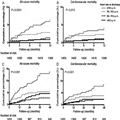
Figure 1.  Kaplan–Meier time-to-event plots for heart rate at discharge divided by quartiles and all-cause mortality
(A and C) and cardiovascular mortality (B and D) at 1-year (A and B) and 4-year (C and D) follow-up,
demonstrating relationship between discharge heart rate and mortality after PPCI for STEMI.
Modified from Antoni et al.

Coronary Intervention and Cardioprotection in Acute Coronary Syndromes

Microvascular obstruction during PCI for ACS/STEMI is associated with increased infarct size and adverse prognosis;
its pathophysiology is thought to be a combination of

  • mechanical distal embolization of thrombus and plaque constituents during PCI,  coupled with
  • enhanced constriction/hyperreactivity of the distal vascular bed.

The most novel Strategy to Reduce Infarct Size

is the use of a Bare Metal Stent (BMS) covered on its outer surface with a mesh micronet designed to
trap and hold potentially friable material that might embolize distally at the time of PCI.

The MASTER study randomized 433 STEMI patients to PPCI

  • with conventional BMS or DES at the operator’s discretion vs.
  • the novel MGuard stent (InspireMD, Tel Aviv, Israel);

the primary endpoint of complete ST-segment resolution was better

  • in patients receiving MGuard (57.85 vs. 44.7%; P = 0.008), as was
  • the achievement of TIMI grade 3 flow in the treated vessel (91.7 vs. 82.9%; P = 0.006).

Nevertheless, median ST-segment resolution did not differ

  • between treatment groups,
  • myocardial blush grade was no different, and
  • safety outcomes at 30 days (death, adverse events) as well as
  • overall MRI-determined infarct mass.

Higher TVR rates may accrue with a BMS platform when compared with

  • current-generation DES (as now endorsed for PPCI in ESC guidance).

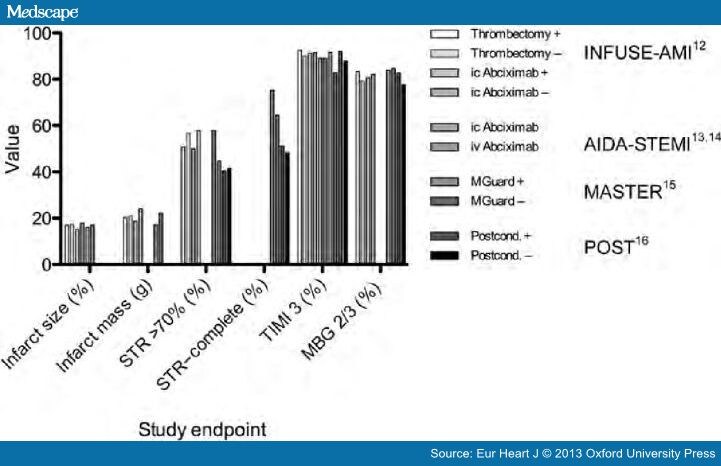
In comparing the four studies in cardioprotection, there remains little to choose between strategies as evidenced by

  • the relatively minor differences between surrogate endpoints employed regardless of
  • therapeutic intervention chosen (Figure 2).

http://img.medscape.com/article/779/039/779039-fig2.jpg

Figure 2.  Comparison of study endpoints for reduction in infarct size in STEMI.
Study endpoints listed on the x-axis. STR, ST-segment resolution; TIMI 3, thrombolysis in
myocardial infarction grade 3 antegrade flow; myocardial blush grade 2/3 (MBG 2/3).

Recent advances in

  • PCI equipment,
  • peri-procedural pharmacology,
  • technique, and safety, as well as
  • convergence of national guidance,

are leading to the point where

  • even in the highest risk patients such as those presenting with ACS, small improvements
  • may be difficult to discern despite large well-designed and -conducted studies.

References

  1. a. The Task Force on the management of ST-segment elevation acute myocardial infarction
    of the European Society of Cardiology. ESC guidelines for the management of acute
    myocardial infarction in patients presenting with ST-segment elevation. Eur Heart J
    2012;33:2569–2619.  b. Management of acute myocardial infarction in patients presenting
    with ST-segment elevation. The Task Force on the Management of Acute Myocardial
    Infarction of the European Society of Cardiology.  Eur Heart J 2003; 24 (1): 28-66.
    http://dx.doi.org/10.1093/eurheartj/ehs215
  2. ESC Guidelines for the management of acute coronary syndromes in patients presenting
    without persistent ST-segment elevation: The Task Force for the management of acute
    coronary syndromes (ACS) in patients presenting without persistent ST-segment elevation
    of the European Society of Cardiology (ESC).  http://dx.doi.org/10.1093/eurheartj/ehr236
  3. Thygesen K, Alpert JS, Jaffe AS, Simoons ML, Chaitman BS, White HD. The Writing Group on
    behalf of the Joint ESC/ACCF/AHA/WHF Task Force for the Universal Definition of
    Myocardial Infarction. Third universal definition of myocardial infarction.
    Eur Heart J 2012;33:2551–2567.  http://dx.doi.org/10.1093/eurheartj/ehm355
  4. Kalesan B, Pilgrim T, Heinimann K, Raber L, Stefanini GG, et al. Comparison of drug-eluting
    stents with bare metal stents in patients with ST-segment elevation myocardial infarction.
    Eur Heart 2012;33:977–987.
  5. Jneid H, Anderson JL, Wright RS, Adams CS, et al. 2012 ACCF/AHA Focused Update of the
    Guideline for the Management of Patients with Unstable Angina/Non-ST-Elevation Myocardial
    Infraction (Updating the 2007 Guideline and Replacing the 2011 Focused Update). A Report
    of the American College of CardiologyFoundation/American Heart Association Task Force
    on Practice Guidelines. J Am Coll Cardiol 2012;60:645–681.
  6. Widimsky P, Rohác F, Stásek J, Kala P, Rokyta R, et al. Primary angioplasty in acute myocardial
    infarction with right bundle branch block: should new onset right bundle branch block be added
    to future guidelines as an indication for reperfusion therapy? Eur HeartJ 2012;33:86–95.
  7. Wong CK, Gao W, Stewart RA, French JK, and the HERO-2 Investigators. The prognostic meaning of
    the full spectrum of aVR ST-segment changes in acute myocardial infarction.
    Eur Heart J 2012;33:384–392.
  8. Antoni L, Boden H, Delgado V, Boersma E, et al. Relationship between discharge heart rate and mortality
    in patients after myocardial infarction treated with primary percutaneous coronary intervention.
    Eur Heart J 2012;33:96–102.
  9. Stone GW, Abizaid A, Silber S, Dizon JM, Merkely B, et al. Prospective, randomised, multicenter evaluation
    of a polyethylene terephthalate micronet mesh-covered stent (MGuard) in ST-segment elevation myocardial
    infarction. The MASTER Trial. J Am Coll Cardiol. doi:pii:S0735-1097(12)04506-8. 10.1016/j.jacc.2012.09.004. 
  10. Zhou C, Yao Y, Zheng Z, Gong J, Wang W, Hu S, Li L. Stenting technique, gender, and age are associated with
    cardioprotection by ischaemic postconditioning in primary coronary intervention: a systematic review of
    10 randomized trials. Eur Heart J 2012;33:3070–3077.

Resistant Hypertension.

Robert M. Carey.
Hypertension. 2013;61:746-750.  http://dx.doi.org/10.1161/HYPERTENSIONAHA.111.00601

Resistant hypertension is defined as failure to achieve goal blood pressure (BP) <140/90 mm Hg
(or <130/80 mm Hg in patients with diabetes mellitus or chronic kidney disease) in patients with

  • hypertension who are compliant with maximum tolerated doses of an appropriate antihypertensive drug regimen consisting of a minimum of 3 agents of different classes, including a diuretic.
  • Patients who meet the criteria for resistant hypertension but whose BP can be controlled on maximum tolerated
    doses of ≥4 antihypertensive agents are classified as having controlled resistant hypertension.

Although the number of failed antihypertensive drugs required for the classification of resistant hypertension is arbitrary,

  • this diagnosis identifies patients at high risk for having a potentially curable form of hypertension, and
  • those who may benefit from specific therapeutic approaches to lower BP.

Summary

The first portion of this document shows the impact that ER Edelman and his peers have had in the development
of interventional cardiology, and in carrying out studies to test, validate, or reject assumptions about the interaction of
biomaterials with

  • vascular and smooth muscle tissue in the repair of injured vessels, by
  1. trauma
  2. inflammatory injury
  3. stent placement.

In the second portion of this discussion, I introduce current views about complications in implanted devices, evolving
standards, and the current definitions of stable, unstable, and previously unclassified ACS risk.

Pushing Drug-Eluting Stents Into Uncharted Territory

Simpler Than You Think—More Complex Than You Imagine

Campbell Rogers, MD; Elazer R. Edelman, MD, PhD.  Circulation 2006; 113: 2262-2265.
http://dx.doi.org/10.1161/​CIRCULATIONAHA.106.623470

Mechanical failure is a characteristic of a material or a device and not necessarily an indication of inadequacy. All devices
will fail under some specific stress. It is only failure at the lowest levels of stress that may represent inadequacy. Stress on
a material, for example, rises with strain until a critical load is exceeded, at which point the material fatigues and loses
mechanical integrity. Failure analysis, the science by which these conditions are rigorously defined, is an important
component of device design, development, and use. Once the transition point to failure is identified, material use can be
restricted to the zone of safety or modified so as to have this zone expanded. Just as the characterization of a material is
incomplete unless pushed to the limits of load bearing, characterization of an implantable device is incomplete unlesspreclinical and clinical environments test the limits of device functionality. It was in this light in 1999 that the Authors noted the impossibility of defining the functional limits of novel bare metal stents in head-to-head trials, which, by necessity, could only include lesions into which the predicate device (the Palmaz-Schatz stent, Cordis, Warren, NJ) could have be placed.

New School Percutaneous Interventions

Over the past 5 years, the number of percutaneous interventions has grown by 40%. This expansion derives from an
increased breadth of cases, as percutaneous interventions are now routinely performed in diabetic, small-vessel, multilesion,diffuse disease, and acute coronary syndrome settings. Contemporaneously, widespread adoption of drug-eluting stents has emboldened clinicians and provided greater security in the use of these devices in lesions or patients previously thought to

Head-to-head randomized trial data have accumulated so that analysis may demonstrate differences among drug-eluting stents. The playing field for prospective randomized trials could enhance the weight of evidence to unanswered questions about what underlying factors determine device failure.

Complexity Simplified

Drug-eluting stent “failure” can be defined operationally in the same way as material failure:

  • inadequate function in the setting of a given load or strain.

The inability to withstand stress may take many forms that can change over time. Failure may be manifest acutely as

  • the inability to deliver a stent to the desired location,
  • subacutely as stent thrombosis or
  • postprocedural myonecrosis, and later as
  • restenosis

“Simple lesions” are those in which few devices should fail;“Complex” lesions have a heightened risk of failure. To be of value, each scale of advancing complexity must provoke higher failure rates.  For any device may fail sooner than another along one such “complexity” scale and later along another. As advanced drug-eluting stent designs have enhanced deliverability and reduced restenosis rates, 7 randomized trials comparing directly the two Food and Drug Administration (FDA)-approved drug-eluting stents, Cypher (Cordis-Johnson and Johnson) and Taxus (Boston Scientific, Boston, Mass), have been reported.  These trials report a broad range of restenotic failure as evidenced by the need for revascularization. Across these trials, driven by a variety of factors, revascularization rates vary quite widely.

The clinical end point of target lesion revascularization (TLR) becomes

  • a single measure of device failure.

When the 7 trials are depicted in order of increasing TLR, the rate of failure increases more slowly with 1 device than
the other.  This gives two regression plots for Taxus vs Cypher with different slopes, as complexity increases, and the

  • separation between the failure rates of the two devices broadens plotted against “degree of complexity” assigned by the  slopes of the lines.

Finally, the correlation between TLR rates for Taxus and Cypher stents indicates that trial-specific events and conditions determined TLR (with a sharp slope of Taxus vs Cypher (r-sq = 0.85).  The ratio of TLR (the slope) wasgreater than 3, suggesting that although both devices are subject to increasing failure as complexity increases,

  • one device becomes ever-more likely than the other to fail when applied in settings with ever-higher TLR risk.

In other words, composite medical devices with a wide range of

  • structural,
  • geometric, and
  • pharmacological differences
    • can be shown to produce different clinical effects
    • as the environments in which they are tested become increasingly complex.

What the Individual Trials Cannot Tell Us

The progressive difference between the performances of the 2 FDA-approved drug-eluting stents as they are pushed into
more complex settings is precisely what one would anticipate from medical devices with different performance signatures.
Most randomized trials, even if they include high complexity, are unable to identify predictors of failure because of the low numbers of patients enrolled, and the problem gets worse as the number of subsets increase. Consequently, device development, and clinical practice, knowing which patient or lesion characteristics confer higher failure rates is critical.
This analysis has centered on restenosis. Other failure modes to be considered are

  • stent thrombosis,
  • postprocedural myonecrosis
  • late plaque rupture
  • vascular disease away from the site
  • heightened inflammatory reaction
    • are no less critical and may be determined by
    • completely different device or patient characteristics.

Well-executed registry or pooled data

It is in this light that the registry report of Kastrati et al. in the current issue of Circulation is of greatest value. There are
two ways in which well-executed registry or pooled data can be most complementary to randomized trials.

First, large numbers of patients provide a higher incidence of rare failure modes as well as allow more granular determination of lesion- or patient-specific predictors of failure (meta-analysis or better, combined data file). A pooled analysis of several head-to-head randomized bare metal stent trials allowed identification of clear risk factors for stent thrombosis that had eluded analysis of the individual (smaller) trials.

Second, registry or pooled data may incorporate a broader range of patient characteristics, allowing greater discrimination between devices. The report of Kastrati et al may fall into this category as well, as it includes “high risk” populations from several randomized trials. They report on more than 2000 lesions in 1845 patients treated with either Taxus or Cypher drug-eluting stents at two hospitals.  The study population is from a series of randomized trials comparing Taxus and Cypher stents.   Using multivariate analysis to identify what lesion and patient characteristics predict failure (restenosis), they identified risk factors that included

  • prior history of coronary bypass surgery
  • calcification
  • smaller vessel size
  • greater degree of prestent and poststent stenosis.

Use of a Cypher rather than Taxus stent was independently associated with lower restenosis risk.

An interesting negative finding was the absence of diabetes as a significant predictor, at odds with strong suggestions from several other analyses. A better understanding from preclinical or clinical studies of the effect of diabetic states on restenosis is critical.

Author’s opinion voiced:

This Author (LHB), considers the study underpowered to answer that question because of further partitioning with several variables. Pooled data with

  • rigorous ascertainment and
  • careful statistical methodology, taken
  • together with randomized trial data, open a door to device choice based on the knowledge that risk of failure (complexity) does vary, and
  • the higher the complexity, the greater the incremental benefit of choosing one device over another.

A decision algorithm is therefore possible, whereby multiple failure modes and risk factors are weighed, and

  • an optimum stent choice made which balances
  • safety and efficacy based on the totality of evidence, rather than anecdote and loose comparisons of disparate subgroups from individual trials.

Evaluating Clinical Trials

The subject of trial(s) is difficult… the aim and meaning of all the trials… is

  • to let people know what they ought to do or what they must believe

It was perhaps naïve to imagine that devices as different one from another as the two current FDA-approved drug-eluting
stents would produce identical clinical results. If so, it ought not to come as a surprise that head-to-head randomized trial
data from many different countries in complex settings are now indicating just how differently the 2 devices may perform.

Future trials should be designed and evaluated to examine why these differences exist. Trials residing
only in previous safety and complexity domains

  • are unlikely to offer deeper insights into
    1. device performance,
    2. patient care decisions, or
    3. discrimination of alternative therapies.

We look forward to more trials that will examine what we currently believe to be the limits of

  • drug-eluting stents and interventional cardiology and to

help define in simple terms differences

  • between complex devices applied to complex problems.

This 2009 article was an excellent demonstration of comparing two commonly used coated-stents, and then extending the argument to the need for more data to further delineated the factors that explain the differences they found. In the previous article, the SECOND in the three article series,  Stents and Drug Delivery

Vascular Repair: Stents and Biologically Active Implants

we concentrated on stents and drug delivery, and not on stent failure.  But the following article in J Control Release,

was published the following year, and is another example of this method of explanatory approach to the problem.

Lesion Complexity Determines Arterial Drug Distribution After Local Drug Delivery

AR Tzafriri,  N Vukmirovic, VB Kolachalama, I Astafieva, ER Edelman. J Control Release. 2010; 142(3): 332–338.
http://:dx. doi:.org/10.1016/j.jconrel.2009.11.007       PMCID: PMC2994187

Local drug delivery from endovascular stents has transformed how we treat coronary artery disease. Yet, few drugs are in fact effective when delivered from endovascular implants and those that possess a narrow therapeutic window. The width of this window is predicated to a great degree upon the extent of drug deposition and distribution through the arterial wall.

  • Drugs that are retained within the blood vessel are far more effective than those that are not.

Thus, for example, heparin regulates virtually every aspect of the vascular response to injury, but it is so soluble and diffusible that it simply cannot stay in the artery for more than minutes after release.

  • Heparin has no effect on intimal hyperplasia when eluted from a stent.
  • Paclitaxel and sirolimus in contradistinction are far smaller compounds with perhaps more narrow and specific effects than heparin.

These drugs bind tenaciously to tissue protein elements and specific intracellular targets and remain beneath stent struts long after release.

The clinical efficacy of paclitaxel and sirolimus at reducing coronary artery restenosis rates following elution from stents appears incontrovertible. Emerging clinical and preclinical data suggest that the benefit of the local release of these drugs is beset by significant complications, that rise with lesion complexity as

  • the native composition and layered ultrastructure of the native artery is more significantly disrupted.

Virmani and others have hypothesized that the attraction of lipophilic drugs like paclitaxel and sirolimus to fat should affect their retention within and effects upon atheromatous lesions.

Though stents are deployed in diseased arteries drug distribution has only been quantified in intact, non-diseased vessels.

Authors @ MIT, correlated steady-state arterial drug distribution with tissue ultrastructure and composition in abdominal aortae from atherosclerotic human autopsy specimens and rabbits

  • with lesions induced by dietary manipulation and controlled injury.

Drug and compositional metrics were quantified and correlated at a compartmental level, in each of the tunica layers, or at an intra-compartmental level. All images were processed to

  • eliminate backgrounds and artifacts, and
  • pixel values between thresholds were extracted for all zones of interest.

Specific algorithms analyzed each of the histo/immuno-stained arterial structures. Intra-compartmental analyses were

  • performed by sub-dividing arterial cross-sections into 2–64 equal sectors and
  • evaluating the pixel-average luminosity for each sector.

Linear regression of drug versus compositional luminosities asymptotically approached steady state after subdivision into 16 sectors. This system controlled delivered dose and removed the significant unpredictability in release that is imposed by variability

  • in stent position relative to the arterial wall,
  • inflation techniques and stent geometry.
As steady state tissue distribution results were obtained under constant source conditions, without washout by flowing blood,
  • they constitute upper bounds for arterial drug distribution
  • following transient modes of in vivo drug delivery wherein
  • only a fraction of the eluted dose is absorbed by the artery

Paclitaxel, everolimus, and sirolimus deposition in human aortae was maximal in the media and scaled inversely with lipid content.

Net tissue paclitaxel and everolimus levels were indistinguishable in mildly injured rabbit arteries independent of diet. Yet, serial sectioning of cryopreserved arterial segments demonstrated

  • a differential transmural deposition pattern that was amplified with disease and
  • correlated with expression of their intracellular targets, tubulin and FKBP-12.

Tubulin distribution and paclitaxel binding increased with

  • vascular injury and macrophage infiltration, and
  • were reduced with (reduced) lipid content.

Sirolimus analogues and their specific binding target FKBP-12 were less sensitive to alterations of diet
in mildly injured arteries, presumably reflecting a faster transient response of FKBP-12 to injury.

The idea that drug deposition after balloon inflation and stent implantation within diseased, atheromatous and sclerotic vessels tracks so precisely with specific tissue elements is

  • an important consideration of drug-eluting technologies and
  • may well require that we consider diseased rather than naïve tissues in preclinical evaluations.

Another publication in the same year reveals the immense analytical power used in understanding the complexities
of drug-eluting stents.

Luminal Flow Amplifies Stent-Based Drug Deposition in Arterial Bifurcations

Kolachalama VB, Levine EG, Edelman ER.    PLoS ONE 2009; 4(12): e8105.
 http://dx.doi.org/10.1371/journal.pone.0008105

Treatment of arterial bifurcation lesions using drug-eluting stents (DES) is now common clinical practice.
Arterial drug distribution patterns become challenging to analyze if the lesion involves more than a vessel
such as in the case of bifurcations.  As use extends to nonstraightforward lesions and complex geometries,
questions abound

  • regarding DES longevity and safety

Indeed, there is no consensus on best stent placement scenario, no understanding as to

  • whether DES will behave in bifurcations as they do in straight segments, and
  • whether drug from a main-branch (MB) stent can be deposited within a side-branch (SB).

It is not evident how to

  • efficiently determine the efficacy of local drug delivery and
  • quantify zones of excessive drug that are
  • harbingers of vascular toxicity and thrombosis,
  • and areas of depletion that are associated
  • with tissue overgrowth and
  • luminal re-narrowing.

Geometry modeling and governing equations

Authors @MIT constructed two-phase computational models of stent-deployed arterial bifurcations

  • simulating blood flow and drug transport to investigate the
  • factors modulating drug distribution when the main-branch (MB) was treated using a DES.

The framework for constructing physiologically realistic three dimensional computational models of single
and bifurcated arterial vessels was SolidWorks (Dassault Systemes) (Figs. 1A–1B, Movie S1). The geometry
generation algorithm allowed for controlled alteration of several parameters including

  • stent location
  • strut dimensions
  • stent-cell shape
  • lumen diameter to arterial tissue thickness ratio
  • lengths of the arterial branches
  • extent of stent apposition and
  • the bifurcation angle.

For the current study, equal lengths (2LS) were assumed for the proximal and distal sections of the MB from the bifurcation. The SB was constructed at an angle of 300. The inlet conditions were based on

  • mean blood flow and
  • diameter measurements

obtained from human left anterior descending coronary artery (LAD).

The diameter of the lumen (DMB) and thickness (TMB) for the MB were defined such that DMB=TMB~10 and

  • this ratio was also maintained for the SB.

Schematics of the computational models used for the study. A stent of length LS is placed at the upstream section of the arterial vessel in the (A) absence and in the (B) presence of a bifurcation, respectively.

  • Insets in (B) denote delta wing stent design (i),
  • strut thickness (d) (ii), and
  • the outlets of the side-branch in (iii) and
  • and the main-branch in (iv).

A delta wing-shaped cell design belonging to the class of slotted-tube stents was used for all simulations.
The length (LS) and diameter (DS) were

  • fixed at 9|10-2 m and 3|10-2 m, respectively, for the MB stent.

All stents were assumed to be perfectly apposed to the lumen of MB and the intrinsic strut shape was modeled as

  • square with length 10-4 m.

The continuity and momentum equations were solved within the arterial lumen, where

vf , rho~1060 kg=m3, P and m are

  • velocity
  • density
  • pressure and the
  • viscosity of blood.

In order to capture boundary layer effects at the lumen-wall (or mural) surface, a Carreau model was employed for

  • all the simulations to account for shear thinning behavior of blood at low shear rates

In the arterial lumen, drug transport followed advection-diffusion process.  Similar to the momentum transport in the arterial lumen, the continuity equation was solved within the arterial wall by assuming it as a porous medium.

A finite volume solver (Fluent, ANSYS Inc.) was utilized to perform the coupled flow and drug transport simulations. The semi-implicit method for pressure-linked equations-consistent (SIMPLEC) algorithm was used with second order spatial accuracy. A second order discretization scheme was used to solve the pressure equation and second order  upwind schemes were used for the momentum and concentration variables.

Simulations for each case were performed

  • for at least 2500 iterations or
  • until there was a 1028 reduction in the mass transport residual.

Drug distribution in non-bifurcating vessels

Constant flow simulations generate local recirculation zones juxtaposed to the stent which in turn act as

  • secondary sources of drug deposition and
  • induce an asymmetric tissue drug distribution profile in the longitudinal flow direction.

Our3D computational model predicts a far more extensive fluid mechanic effect on drug deposition than previously appreciated in two-dimensional (2D) domains.

Within the stented region, drug deposition on the mural interface quantified as

  • the area-weighted average drug concentration (AWAC)
  • in the distal segment of the stent is 12% higher than the proximal segment

Total drug uptake in the arterial wall denote as volume-weighted average concentration (VWAC) is highest in the middle segment of the stent and 5% higher than the proximal stent region

Increased mural drug deposition along the flow direction in a non-bifurcating arterial vessel.

Inset shows a high magnification image of drug pattern in the distal stent segment outlined by black dashed line.
The entire stent is divided into three equal sections denoted as proximal, middle and distal sections, respectively
and the same notation is followed for subsequent analyses.

http://dx.doi.org/10.1371/journal.pone.0008105.g002

These observations indicate that the flow-mediated effect induced by the presence of the stent in the artery

  • is maximal on the mural surface and
  • increases in the longitudinal flow direction.

Further, these results suggest that transmural diffusion-mediated transport sequesters drug from both

  • the proximal and distal portions of the stent
  • into the central segment of the arterial wall beneath the stent.

Predicted levels of average drug concentration varied exponentially

  • with linear increments of inlet flow rate

but maintained similar relationship between the inter-segment concentration levels within the stented region.

Stent position influences drug distribution in bifurcated beds

The location of the stent directly modulates

  • the extent to which drug is deposited on the arterial wall as well as
  • spatial gradients that are established in arterial drug distribution.

Similar to the non-bifurcating vessel case,

  • peaks in drug deposition occur directly beneath the stent struts regardless of the relative location of the SB with respect to the stent. However,
  • drug distribution and corresponding spatial heterogeneity within inter-strut regions depend on the stent location with respect to the flow divider.
  • Mural drug deposition is a function of relative stent position with respect to the side-branch and Reynolds number in arterial bifurcations.

Impact of flow on drug distribution in bifurcations

One can appreciate how blood flow and flow dividers affect arterial drug deposition, and especially on inter-strut drug deposition.

  • Drug deposition within the stented-region of MB  and the entire SB significantly decreases with flow acceleration regardless of stent placement.

Simulations predicted

Local endovascular drug delivery was long assumed to be governed by diffusion alone. The impact of flow was
thought to be restricted to systemic dilution.

  • 2D computational models suggested a complex interplay between the stent and blood flow
  1. Arterial drug deposition is a function of stent location.   http://dx.doi.org/10.1371/journal.pone.0008105.g005
  2. Arterial drug deposition is mediated by flow in bifurcated beds.
    http://dx.doi.org/10.1371/journal.pone.0008105.g006
  • extensive flow-mediated drug delivery in bifurcated vascular beds where the drug distribution patterns are heterogeneous and sensitive to relative stent position and luminal flow.

A single DES in the MB coupled with large retrograde luminal flow on the lateral wall of the side-branch (SB) can provide drug deposition on the SB lumen-wall interface, except

  • when the MB stent is downstream of the SB flow divider.
  • the presence of the SB affects drug distribution in the stented MB.

Fluid mechanic effects play an even greater role than in the SB

  • especially when the DES is across and downstream to the flow divider
  • and in a manner dependent upon

    the Reynolds number.

Summary

We presented the hemodynamic effects on drug distribution patterns using a

  • simplified uniform-cell stent design, though our methodology is adaptable to
    several types of stents with variable design features.

Variability in arterial drug distribution due to other geometric and morphologic aspects such as

  • bifurcation angle, arterial taper as well as presence of a trifurcation can also be understood using our computational framework.

Further, performance of a candidate DES using other commonly used stenting procedures for bifurcation lesions such as culotte and crush techniques can be quantified based on their resulting drug distribution patterns.

Other Related Articles that were published on this Open Access Online Scientific Journal include the following:

Vascular Repair: Stents and Biologically Active Implants

Larry H Bernstein, MD, FACP and Aviva Lev-Ari, RN, PhD, 5/4/2013

Modeling Targeted Therapy

Larry H Bernstein, MD, FACP 3/2/2013

Quantum Biology And Computational Medicine

Larry H Bernstein, MD, FACP 4/3/2013

Virtual Biopsy – is it possible?

Larry H Bernstein, MD, FACP 3/3/2013

Reprogramming cell fate  3/2/2013

Larry H Bernstein, MD, FACP

How Methionine Imbalance with Sulfur-Insufficiency Leads to Hyperhomocysteinemia

Larry H Bernstein, MD, FACP 4/4/2013

Amyloidosis with Cardiomyopathy

Larry H Bernstein, MD, FACP 3/31/2013

Nitric Oxide, Platelets, Endothelium and Hemostasis

Larry H Bernstein, MD, FACP 11/8/2012

Mitochondrial Damage and Repair under Oxidative Stress

Larry H Bernstein, MD, FACP 10/28/2012

Endothelial Function and Cardiovascular Disease

Larry H Bernstein, MD, FACP 10/25/2012

Endothelial Dysfunction, Diminished Availability of cEPCs, Increasing CVD Risk for Macrovascular Disease –Therapeutic Potential of cEPCs

Aviva Lev-Ari, PhD, RN 8/27/2012

Prostacyclin and Nitric Oxide: Adventures in Vascular Biology – A Tale of Two Mediators

Aviva Lev-Ari, RN, PhD, 4/30/2013

Genetics of Conduction Disease: Atrioventricular (AV) Conduction Disease (block): Gene Mutations – Transcription, Excitability, and Energy Homeostasis

Aviva Lev-Ari, PhD, 4/28/2013

Genetics of Conduction Disease: Atrioventricular (AV) Conduction Disease (block): Gene Mutations – Transcription, Excitability, and Energy Homeostasis

Revascularization: PCI, Prior History of PCI vs CABG

Aviva Lev-Ari, PhD, 4/25/2013

Revascularization: PCI, Prior History of PCI vs CABG

Revascularization: PCI, Prior History of PCI vs CABG

Aviva Lev-Ari, PhD, RN 4/25/2013

http://pharmaceuticalintelligence.com/2013/04/25/revascularization-pci-prior-history-of-pci-vs-cabg/

Cholesteryl Ester Transfer Protein (CETP) Inhibitor: Potential of Anacetrapib to treat Atherosclerosis and CAD

Aviva Lev-Ari, PhD, RN 4/7/2013

http://pharmaceuticalintelligence.com/2013/04/07/cholesteryl-ester-transfer-protein-cetp-inhibitor-potential-of-anacetrapib-to-treat-atherosclerosis-and-cad/

Hypertriglyceridemia concurrent Hyperlipidemia: Vertical Density Gradient Ultracentrifugation a Better Test to Prevent Undertreatment of High-Risk Cardiac Patients

Aviva Lev-Ari, PhD, RN 4/4/2013

http://pharmaceuticalintelligence.com/2013/04/04/hypertriglyceridemia-concurrent-hyperlipidemia-vertical-density-gradient-ultracentrifugation-a-better-test-to-prevent-undertreatment-of-high-risk-cardiac-patients/

Fight against Atherosclerotic Cardiovascular Disease: A Biologics not a Small Molecule – Recombinant Human lecithin-cholesterol acyltransferase (rhLCAT) attracted AstraZeneca to acquire AlphaCore

Aviva Lev-Ari, PhD, RN 4/3/2013

http://pharmaceuticalintelligence.com/2013/04/03/fight-against-atherosclerotic-cardiovascular-disease-a-biologics-not-a-small-molecule-recombinant-human-lecithin-cholesterol-acyltransferase-rhlcat-attracted-astrazeneca-to-acquire-alphacore/

High-Density Lipoprotein (HDL): An Independent Predictor of Endothelial Function & Atherosclerosis, A Modulator, An Agonist, A Biomarker for Cardiovascular Risk

Aviva Lev-Ari, PhD, RN 3/31/2013

http://pharmaceuticalintelligence.com/2013/03/31/high-density-lipoprotein-hdl-an-independent-predictor-of-endothelial-function-artherosclerosis-a-modulator-an-agonist-a-biomarker-for-cardiovascular-risk/

Acute Chest Pain/ER Admission: Three Emerging Alternatives to Angiography and PCI

Aviva Lev-Ari, PhD, RN 3/10/2013

http://pharmaceuticalintelligence.com/2013/03/10/acute-chest-painer-admission-three-emerging-alternatives-to-angiography-and-pci/

Genomics & Genetics of Cardiovascular Disease Diagnoses: A Literature Survey of AHA’s Circulation Cardiovascular Genetics, 3/2010 – 3/2013

Lev-Ari, A. and L H Bernstein 3/7/2013

http://pharmaceuticalintelligence.com/2013/03/07/genomics-genetics-of-cardiovascular-disease-diagnoses-a-literature-survey-of-ahas-circulation-cardiovascular-genetics-32010-32013/

The Heart: Vasculature Protection – A Concept-based Pharmacological Therapy including THYMOSIN

Aviva Lev-Ari, PhD, RN 2/28/2013

http://pharmaceuticalintelligence.com/2013/02/28/the-heart-vasculature-protection-a-concept-based-pharmacological-therapy-including-thymosin/

Arteriogenesis and Cardiac Repair: Two Biomaterials – Injectable Thymosin beta4 and Myocardial Matrix Hydrogel

Aviva Lev-Ari, PhD, RN 2/27/2013

http://pharmaceuticalintelligence.com/2013/02/27/arteriogenesis-and-cardiac-repair-two-biomaterials-injectable-thymosin-beta4-and-myocardial-matrix-hydrogel/

Coronary artery disease in symptomatic patients referred for coronary angiography: Predicted by Serum Protein Profiles

Aviva Lev-Ari, PhD, RN 12/29/2012

http://pharmaceuticalintelligence.com/2012/12/29/coronary-artery-disease-in-symptomatic-patients-referred-for-coronary-angiography-predicted-by-serum-protein-profiles/

Special Considerations in Blood Lipoproteins, Viscosity, Assessment and Treatment

Bernstein, HL and Lev-Ari, A. 11/28/2012

http://pharmaceuticalintelligence.com/2012/11/28/special-considerations-in-blood-lipoproteins-viscosity-assessment-and-treatment/

Peroxisome proliferator-activated receptor (PPAR-gamma) Receptors Activation: PPARγ transrepression for Angiogenesis in Cardiovascular Disease and PPARγ transactivation for Treatment of Diabetes

Aviva Lev-Ari, PhD, RN 11/13/2012

http://pharmaceuticalintelligence.com/2012/11/13/peroxisome-proliferator-activated-receptor-ppar-gamma-receptors-activation-pparγ-transrepression-for-angiogenesis-in-cardiovascular-disease-and-pparγ-transactivation-for-treatment-of-dia/

Clinical Trials Results for Endothelin System: Pathophysiological role in Chronic Heart Failure, Acute Coronary Syndromes and MI – Marker of Disease Severity or Genetic Determination?

Aviva Lev-Ari, PhD, RN 10/19/2012

http://pharmaceuticalintelligence.com/2012/10/19/clinical-trials-results-for-endothelin-system-pathophysiological-role-in-chronic-heart-failure-acute-coronary-syndromes-and-mi-marker-of-disease-severity-or-genetic-determination/

Endothelin Receptors in Cardiovascular Diseases: The Role of eNOS Stimulation

Aviva Lev-Ari, PhD, RN 10/4/2012

http://pharmaceuticalintelligence.com/2012/10/04/endothelin-receptors-in-cardiovascular-diseases-the-role-of-enos-stimulation/

Inhibition of ET-1, ETA and ETA-ETB, Induction of NO production, stimulation of eNOS and Treatment Regime with PPAR-gamma agonists (TZD): cEPCs Endogenous Augmentation for Cardiovascular Risk Reduction – A Bibliography

Aviva Lev-Ari, PhD, RN 10/4/2012

http://pharmaceuticalintelligence.com/2012/10/04/inhibition-of-et-1-eta-and-eta-etb-induction-of-no-production-and-stimulation-of-enos-and-treatment-regime-with-ppar-gamma-agonists-tzd-cepcs-endogenous-augmentation-for-cardiovascular-risk-reduc/

Positioning a Therapeutic Concept for Endogenous Augmentation of cEPCs — Therapeutic Indications for Macrovascular Disease: Coronary, Cerebrovascular and Peripheral

Aviva Lev-Ari, PhD, RN 8/29/2012

http://pharmaceuticalintelligence.com/2012/08/29/positioning-a-therapeutic-concept-for-endogenous-augmentation-of-cepcs-therapeutic-indications-for-macrovascular-disease-coronary-cerebrovascular-and-peripheral/

Cardiovascular Outcomes: Function of circulating Endothelial Progenitor Cells (cEPCs): Exploring Pharmaco-therapy targeted at Endogenous Augmentation of cEPCs

Aviva Lev-Ari, PhD, RN 8/28/2012

http://pharmaceuticalintelligence.com/2012/08/28/cardiovascular-outcomes-function-of-circulating-endothelial-progenitor-cells-cepcs-exploring-pharmaco-therapy-targeted-at-endogenous-augmentation-of-cepcs/

Endothelial Dysfunction, Diminished Availability of cEPCs, Increasing CVD Risk for Macrovascular Disease – Therapeutic Potential of cEPCs

Aviva Lev-Ari, PhD, R N 8/27/2012

http://pharmaceuticalintelligence.com/2012/08/27/endothelial-dysfunction-diminished-availability-of-cepcs-increasing-cvd-risk-for-macrovascular-disease-therapeutic-potential-of-cepcs/

Vascular Medicine and Biology: CLASSIFICATION OF FAST ACTING THERAPY FOR PATIENTS AT HIGH RISK FOR MACROVASCULAR EVENTS Macrovascular Disease – Therapeutic Potential of cEPCs

Aviva Lev-Ari, PhD, RN 8/24/2012

http://pharmaceuticalintelligence.com/2012/08/24/vascular-medicine-and-biology-classification-of-fast-acting-therapy-for-patients-at-high-risk-for-macrovascular-events-macrovascular-disease-therapeutic-potential-of-cepcs/

Cardiovascular Disease (CVD) and the Role of agent alternatives in endothelial Nitric Oxide Synthase (eNOS) Activation and Nitric Oxide Production

Aviva Lev-Ari, PhD, RN 7/19/2012

http://pharmaceuticalintelligence.com/2012/07/19/cardiovascular-disease-cvd-and-the-role-of-agent-alternatives-in-endothelial-nitric-oxide-synthase-enos-activation-and-nitric-oxide-production/

Resident-cell-based Therapy in Human Ischaemic Heart Disease: Evolution in the PROMISE of Thymosin beta4 for Cardiac Repair

Aviva Lev-Ari, PhD, RN 4/30/2012

http://pharmaceuticalintelligence.com/2012/04/30/93/

Triple Antihypertensive Combination Therapy Significantly Lowers Blood Pressure in Hard-to-Treat Patients with Hypertension and Diabetes

Aviva Lev-Ari, PhD, RN 5/29/2012

http://pharmaceuticalintelligence.com/2012/05/29/445/

Macrovascular Disease – Therapeutic Potential of cEPCs: Reduction Methods for CV Risk

Aviva Lev-Ari, PhD, RN 7/2/2012

http://pharmaceuticalintelligence.com/2012/07/02/macrovascular-disease-therapeutic-potential-of-cepcs-reduction-methods-for-cv-risk/

Mitochondria Dysfunction and Cardiovascular Disease – Mitochondria: More than just the “powerhouse of the cell”

Aviva Lev-Ari, PhD, RN 7/9/2012

http://pharmaceuticalintelligence.com/2012/07/09/mitochondria-more-than-just-the-powerhouse-of-the-cell/

Bystolic’s generic Nebivolol – positive effect on circulating Endothelial Proginetor Cells endogenous augmentation

Aviva Lev-Ari, PhD, RN 7/16/2012

http://pharmaceuticalintelligence.com/2012/07/16/bystolics-generic-nebivolol-positive-effect-on-circulating-endothilial-progrnetor-cells-endogenous-augmentation/

Arteriogenesis and Cardiac Repair: Two Biomaterials – Injectable Thymosin beta4 and Myocardial Matrix Hydrogel

Aviva Lev-Ari, PhD, RN 2/27/2013

http://pharmaceuticalintelligence.com/2013/02/27/arteriogenesis-and-cardiac-repair-two-biomaterials-injectable-thymosin-beta4-and-myocardial-matrix-hydrogel/

Cardiac Surgery Theatre in China vs. in the US: Cardiac Repair Procedures, Medical Devices in Use, Technology in Hospitals, Surgeons’ Training and Cardiac Disease Severity”

Aviva Lev-Ari, PhD, RN 1/8/2013

http://pharmaceuticalintelligence.com/2013/01/08/cardiac-surgery-theatre-in-china-vs-in-the-us-cardiac-repair-procedures-medical-devices-in-use-technology-in-hospitals-surgeons-training-and-cardiac-disease-severity/

Heart Remodeling by Design – Implantable Synchronized Cardiac Assist Device: Abiomed’s Symphony

Aviva Lev-Ari, PhD, RN 7/23/2012

http://pharmaceuticalintelligence.com/2012/07/23/heart-remodeling-by-design-implantable-synchronized-cardiac-assist-device-abiomeds-symphony/

Acute Chest Pain/ER Admission: Three Emerging Alternatives to Angiography and PCI

Aviva Lev-Ari, PhD, RN 3/10/2013

http://pharmaceuticalintelligence.com/2013/03/10/acute-chest-painer-admission-three-emerging-alternatives-to-angiography-and-pci/

Dilated Cardiomyopathy: Decisions on implantable cardioverter-defibrillators (ICDs) using left ventricular ejection fraction (LVEF) and Midwall Fibrosis: Decisions on Replacement using late gadolinium enhancement cardiovascular MR (LGE-CMR)

Aviva Lev-Ari, PhD, RN 3/10/2013
http://pharmaceuticalintelligence.com/2013/03/10/dilated-cardiomyopathy-decisions-on-implantable-cardioverter-defibrillators-icds-using-left-ventricular-ejection-fraction-lvef-and-midwall-fibrosis-decisions-on-replacement-using-late-gadolinium/

The Heart: Vasculature Protection – A Concept-based Pharmacological Therapy including THYMOSIN

Aviva Lev-Ari, PhD, RN 2/28/2013
http://pharmaceuticalintelligence.com/2013/02/28/the-heart-vasculature-protection-a-concept-based-pharmacological-therapy-including-thymosin/

FDA Pending 510(k) for The Latest Cardiovascular Imaging Technology

Aviva Lev-Ari, PhD, RN 1/28/2013
http://pharmaceuticalintelligence.com/2013/01/28/fda-pending-510k-for-the-latest-cardiovascular-imaging-technology/

PCI Outcomes, Increased Ischemic Risk associated with Elevated Plasma Fibrinogen not Platelet Reactivity

Aviva Lev-Ari, PhD, RN 1/10/2013
http://pharmaceuticalintelligence.com/2013/01/10/pci-outcomes-increased-ischemic-risk-associated-with-elevated-plasma-fibrinogen-not-platelet-reactivity/

The ACUITY-PCI score: Will it Replace Four Established Risk Scores — TIMI, GRACE, SYNTAX, and Clinical SYNTAX

Aviva Lev-Ari, PhD, RN 1/3/2013
http://pharmaceuticalintelligence.com/2013/01/03/the-acuity-pci-score-will-it-replace-four-established-risk-scores-timi-grace-syntax-and-clinical-syntax/

Coronary artery disease in symptomatic patients referred for coronary angiography: Predicted by Serum Protein Profiles

Aviva Lev-Ari, PhD, RN 12/29/2012
http://pharmaceuticalintelligence.com/2012/12/29/coronary-artery-disease-in-symptomatic-patients-referred-for-coronary-angiography-predicted-by-serum-protein-profiles/

Heart Renewal by pre-existing Cardiomyocytes: Source of New Heart Cell Growth Discovered

Aviva Lev-Ari, PhD, RN 12/23/2012
http://pharmaceuticalintelligence.com/2012/12/23/heart-renewal-by-pre-existing-cardiomyocytes-source-of-new-heart-cell-growth-discovered/

Cardiovascular Risk Inflammatory Marker: Risk Assessment for Coronary Heart Disease and Ischemic Stroke – Atherosclerosis.

Aviva Lev-Ari, PhD, RN 10/30/2012
http://pharmaceuticalintelligence.com/2012/10/30/cardiovascular-risk-inflammatory-marker-risk-assessment-for-coronary-heart-disease-and-ischemic-stroke-atherosclerosis/

To Stent or Not? A Critical Decision

Aviva Lev-Ari, PhD, RN 10/23/2012
http://pharmaceuticalintelligence.com/2012/10/23/to-stent-or-not-a-critical-decision/

New Definition of MI Unveiled, Fractional Flow Reserve (FFR)CT for Tagging Ischemia

Aviva Lev-Ari, PhD, RN 8/27/2012
http://pharmaceuticalintelligence.com/2012/08/27/new-definition-of-mi-unveiled-fractional-flow-reserve-ffrct-for-tagging-ischemia/

Ethical Considerations in Studying Drug Safety — The Institute of Medicine Report

Aviva Lev-Ari, PhD, RN 8/23/2012
http://pharmaceuticalintelligence.com/2012/08/23/ethical-considerations-in-studying-drug-safety-the-institute-of-medicine-report/

New Drug-Eluting Stent Works Well in STEMI

Aviva Lev-Ari, PhD, RN 8/22/2012
http://pharmaceuticalintelligence.com/2012/08/22/new-drug-eluting-stent-works-well-in-stemi/

Expected New Trends in Cardiology and Cardiovascular Medical Devices

Aviva Lev-Ari, PhD, RN 8/17/2012
http://pharmaceuticalintelligence.com/2012/08/17/expected-new-trends-in-cardiology-and-cardiovascular-medical-devices/

Coronary Artery Disease – Medical Devices Solutions: From First-In-Man Stent Implantation, via Medical Ethical Dilemmas to Drug Eluting Stents

Aviva Lev-Ari, PhD, RN 8/13/2012

http://pharmaceuticalintelligence.com/2012/08/13/coronary-artery-disease-medical-devices-solutions-from-first-in-man-stent-implantation-via-medical-ethical-dilemmas-to-drug-eluting-stents/

Percutaneous Endocardial Ablation of Scar-Related Ventricular Tachycardia

Aviva Lev-Ari, PhD, RN 7/18/2012

http://pharmaceuticalintelligence.com/2012/07/18/percutaneous-endocardial-ablation-of-scar-related-ventricular-tachycardia/

Competition in the Ecosystem of Medical Devices in Cardiac and Vascular Repair: Heart Valves, Stents, Catheterization Tools and Kits for Open Heart and Minimally Invasive Surgery (MIS)

Aviva Lev-Ari, PhD, RN 6/22/2012

http://pharmaceuticalintelligence.com/2012/06/22/competition-in-the-ecosystem-of-medical-devices-in-cardiac-and-vascular-repair-heart-valves-stents-catheterization-tools-and-kits-for-open-heart-and-minimally-invasive-surgery-mis/

Global Supplier Strategy for Market Penetration & Partnership Options (Niche Suppliers vs. National Leaders) in the Massachusetts Cardiology & Vascular Surgery Tools and Devices Market for Cardiac Operating Rooms and Angioplasty Suites

Aviva Lev-Ari, PhD, RN 6/22/2012

http://pharmaceuticalintelligence.com/2012/06/22/global-supplier-strategy-for-market-penetration-partnership-options-niche-suppliers-vs-national-leaders-in-the-massachusetts-cardiology-vascular-surgery-tools-and-devices-market-for-car/

Related Articles


English: tissue engineered vascular graft Deut...

English: tissue engineered vascular graft Deutsch: tissue engineerte Gefäßprothese (Photo credit: Wikipedia)

English: Cardiovascular disease: PAD therapy w...

English: Cardiovascular disease: PAD therapy with stenting Deutsch: PAVK Therapie: Kathetertherapie mit stenting (Photo credit: Wikipedia)

Endoscopic image of self-expanding metallic st...

Endoscopic image of self-expanding metallic stent in esophagus. Photograph released into public domain on permission of patient. — Samir धर्म 07:38, 2 June 2006 (UTC) (Photo credit: Wikipedia)

Read Full Post »

Vascular Repair: Stents and Biologically Active Implants

Author and Curator: Larry H Bernstein, MD, FACP
and
Curator: Aviva Lev-Ari, PhD, RN

This is the second article of a three part series recognizing the immense contribution of Elazer Edelman, MD, PhD, and his laboratory group at MIT to vascular biology, cardiovascular disease studies, and the bioengineering, development, and use of stenting technology for drug delivery, vascular repair, and limitation of vessel damage caused by stent placement.

The first article, published on this Open Access Online Scientific Journal
was concerned with vascular biology, and largely on both the impact of drug delivery design and placement on the endothelium of the vessel wall, and on the kinetics of drug delivery based on the location of stent placement versus intravascular injection as well as the metabolic events taking place in the arterial endothelium, intima, and muscularis.
This second article, is concerned with stents and drug delivery as it has evolved since the last decade of the 20th century based on biomaterials development and vascular biology principles to minimize inherent injury risk over this period.
The third. will be concerned with the lessons from biomaterials and stent mechanics going forward.
Heart care is in the midst of a transformation. Patients who once required heart surgery are treated with a stent, catheters for repair of valves, rhythm abnormalities, and a growing number of heart or vascular distrbances.
The catheters are threaded in through the femoral artery, and sometimes through the radial artery. The American College of Cardiology annual meeting highlights research on these devices.  The procedure allows patients to leave the hospital after a day or two post-implant, but the initial cost of the novel devices is high.  Not everyone qualifies for the treatment, and it will take a few years to compare the long term results with the benefits from surgery. But these procedures have allowed many patients treatment alternatives to surgery, and they offer an option for people who cannot be successfully managed by conservative medical therapy.

The effects of stent placement on vascular injury and the initiation of an inflammatory response

Leukocytes are recruited early and abundantly to experimentally injured vessels,

  • in direct proportion to cell proliferation and intimal growth.
Activated circulating leukocytes and Mac-1 (CD11 by CD18, aMb2) (monocytic) expression are
  • markers of restenosis risk in patients undergoing angioplasty.
Angioplastied vessels lack endothelium but have extensive fibrin(ogen) and platelet deposition.  Consequently, Mac-1-dependent adhesion to fibrin(ogen)  would be expected to
  • signal leukocyte recruitment and function, thereby
  • promote intimal growth
In this study
  • M1/70, an anti-CD11b blocking mAb, was  administered to rabbits before, and every 48 hr for 3, 6, or 14 days after iliac artery balloon denudation.
  • M1/70 was bound to isolated rabbit monocytes.

The result was

  • Mac-1-mediated dose-dependent
  • inhibition of fibrinogen binding in vitro, thereby,
  • reducing by half leukocyte recruitment at 3, 6, and 14 days after injury.
Neointimal growth 14 days after injury was markedly attenuated by treatment with M1/70 –
intimal area after balloon injury, 0.12+0.09 mm2, compared with
  •  0.32+0.08 mm2 in vehicle treated controls, P<0.01, and
  •  0.38+0.08mm2 in IgG-treated controls, P<0.005;
intimal area after stent injury, 0.56+0.16 mm2, compared with
  •  0.84+ 0.13 mm2 in vehicle-treated controls, P <0.05, and
  •  0.90+0.15 mm2 in IgG-treated controls, P <0.02).
Mac-1 blockade reduces experimental neointimal thickening. These findings suggest that
  • leukocyte recruitment to and
  • infiltration of injured arteries

may be a valid target for preventing intimal hyperplasia. (1) Emerging data indicate that the inflammatory response after mechanical arterial injury

  • correlates with the severity of neointimal hyperplasia in animal models
  • and post angioplasty restenosis in humans.
The present study was designed to examine whether a nonspecific
  • stimulation of the innate immune system,
  • induced in close temporal proximity to the vascular injury,
  • would modulate the results of the procedure.
A LPS dose was chosen to be sufficient to induce systemic inflammation but not septic shock. Key markers of inflammation increased after LPS administration were:
  • serum interleukin-1 levels, and
  • monocytic stimulation (CD14 levels on monocytes)
Arterial macrophage infiltration at 7 days after injury was
  • 1.7+1.2% of total cells in controls and
  • 4.2+1.8% in LPS-treated rabbits (n=4, P<0.05).
The injured arteries 4 weeks after injury had significantly increased
  • luminal stenosis:   38+4.2% versus 23+2.6%, mean+SEM; n=8, P<0.05; and
  • neointima-to-media ratio:  1.26+0.21 versus 0.66+0.09, P<0.05 in LPS-treated animals compared with controls.
This effect was abolished by anti-CD14 Ab administration. Serum Il-1 levels and monocyte CD14 expression were significantly increased
  • in correlation with the severity of intimal hyperplasia.
  • LPS treatment increased neointimal area after stenting
    • from 0.57+0.07 to 0.77+0.1 mm2, and
  • stenosis from 9+1% to 13+1.7% (n=5, P<0.05).
Nonspecific systemic stimulation of the innate immune system
  • concurrently with arterial vascular injury
  • facilitates neointimal formation, and conditions associated with
  • increased inflammation may increase restenosis.(2)
Millions of patients worldwide have received drug-eluting stents
  • to reduce their risk for in-stent restenosis.
The efficacy and toxicity of these local therapeutics depend upon
  • arterial drug deposition,
  • distribution, and
  • retention.
To examine how administered dose and drug release kinetics control arterial drug uptake, a model was created using principles of
  • computational fluid dynamics and
  • transient drug diffusion–convection.
The modeling predictions for drug elution were validated using
  • empiric data from stented porcine coronary arteries.
Inefficient, minimal arterial drug deposition was predicted when a bolus of drug was released and depleted within seconds.
Month-long stent-based drug release
  • efficiently delivered nearly continuous drug levels, but
  • the slow rate of drug presentation limited arterial drug uptake.
Uptake was only maximized when
  • the rates of drug release and absorption matched,
  • which occurred for hour-long drug release.
Of the two possible means for increasing the amount of drug on the stent,
  • modulation of drug concentration potently impacts
  • the magnitude of arterial drug deposition,
  • while changes in coating drug mass affect duration of release.
We demonstrate the importance of drug release kinetics and administered drug dose
  • in governing arterial drug uptake and suggest
  • novel drug delivery strategies for controlling spatio-temporal arterial drug distribution.(3)
Arterial drug concentrations determine local toxicity. Therefore, the emergent safety concerns surrounding drug-eluting stents mandate an investigation of the factors contributing to fluctuations in arterial drug uptake.
  • Drug-eluting stents were implanted into porcine coronary arteries, arterial drug uptake was followed and modeled using 2-dimensional computational drug transport.
Arterial drug uptake in vivo occurred faster than predicted by free drug diffusion, thus
  • an alternate, mechanism for rapid transport has been proposed involving carrier-mediated transport.
Though there was minimal variation in vivo in release kinetics from stent to stent,
  • arterial drug deposition varied by up to 114% two weeks after stent implantation.
  • extent of adherent mural thrombus fluctuated by 113% within 3 days.
The computational drug transport model predicted that focal and diffuse thrombi
  • elevate arterial drug deposition in proportion to the thrombus size
  • by reducing drug washout subsequently increasing local drug availability.
Variable peristrut thrombus can explain fluctuations in arterial drug uptake even in the face of a narrow range of drug release from the stent. The mural thrombus effects on arterial drug deposition may be circumvented by forcing slow rate limiting arterial transport, that cannot be further hindered by mural thrombus. (4)
1.  A mAb to the b2-leukocyte integrin Mac-1 (CD11byCD18) Reduces Intimal Thickening after Angioplasty or Stent Implantation in Rabbits. C Rogers, ER Edelman, and DI Simon. PNAS Aug 1998; 95: 10134–10139.
2.  Formation After Balloon and Stent Injury in Rabbits Systemic Inflammation Induced by Lipopolysaccharide increases Neointimal Formation After Balloon and Stent Injury in Rabbits. HD Danenberg, FGP Welt, M Walker, III, P Seifert, et al. Circulation 2002;105;2917-2922; http://dx.doi.org/10.1161/01.CIR.0000018168.15904.BB
3.  Intravascular drug release kinetics dictate arterial drug deposition, retention, and distribution.
B Balakrishnan, JF Dooley, G Kopia, ER Edelman. J Controlled Release  2007;123:100–108.
http://dx. doi.org/10.1016/j.jconrel.2007.06.025.
4.  Thrombus causes fluctuations in arterial drug delivery from intravascular stents. B Balakrishnan, J Dooley, G Kopia, ER Edelman. J Control Release 2008. http://dx.doi.org/10.1016/j.jconrel.2008.07.027

Perivascular Graft Repair

Heparin remains the gold-standard inhibitor of the processes involved in the vascular response to injury. Though this compound has profound and wide-reaching effects on vascular cells, its clinical utility is unclear. It is clear that the mode of heparin delivery is critical to its potential and it may well be that
  • routine forms of administration are insufficient
  • to observe benefit given the heparin’s short half-life and complex pharmacokinetics.
When ingested orally, heparin is degraded to inactive oligomer fragments while systemic administration
  • is complicated by the need for continuous infusion
  • and the potential for uncontrolled hemorrhage.
Thus alternative heparin delivery systems have been proposed to maximize regional effects while limiting systemic toxicity. Yet, as heparin is such a potent antithrombotic compound and since existing local delivery systems lack the ability to
  • precisely regulate release kinetics,
  • even site-specific therapy is prone to bleeding.
Authors now describe the design and development of a novel biodegradable system for the perivascular delivery of heparin to the blood vessel wall with well-defined release kinetics.
This system consists of heparin-encapsulated
  • poly(DL lactide-co-glycolide) (pLGA) microspheres sequestered in an alginate gel.
Controlled release of heparin from this heterogeneous system is obtained for a period of 25 days.
The experimental variables affecting heparin release from these matrices were investigated by
  • gel permeation chromatography (GPC) and scanning electron microscopy (SEM)
  • to monitor the degradation process and correlated well with the release kinetics.
Heparin-releasing gels inhibited growth in tissue culture of
  • bovine vascular smooth muscle cells in a dose-dependent manner.
  • and also controlled vascular injury in denuding and
  • interposition vascular graft animal models of disease even when uncontrolled bleeding was evident with standard matrix-type release.
This system provided an effective means of examining
  • the effects of various compounds in
  • the control of smooth muscle cell proliferation in accelerated arteriopathies and also
  • shed light on the biologic nature of these processes.(1)
Soft tissue adhesives are employed to repair and seal many different organs that range in both
  • tissue surface chemistry and
  • mechanical effects during organ function.
This complexity motivates the development of tunable adhesive materials with
  • high resistance to uniaxial or multiaxial loads
  • dictated by a specific organ environment.
Co-polymeric hydrogels comprising
  • aminated star polyethylene glycol and
  • dextran aldehyde (PEG:dextran)
are materials exhibiting physico-chemical properties that can be modified
Here we report that resistance to failure
  • under specific loading conditions, as well as
  • tissue response at the adhesive material–tissue interface, can be modulated through regulation of
  • the number and density of adhesive aldehyde groups.
Author found that atomic force microscopy (AFM) can
  • characterize the material aldehyde density available for tissue interaction,
  • facilitating rapid, informed material choice.

Further, the correlation between AFM quantification of nanoscale unbinding forces

  • with macroscale measurements of adhesion strength
  • by uniaxial tension or multiaxial burst pressure allows the design of materials with specific cohesion and adhesion strengths.
However, failure strength alone does not predict optimal in vivo reactivity. The development of adhesive materials is significantly enabled when
  • experiments are integrated along length scales to consider
  • organ chemistry and mechanical loading states concurrently
  • with adhesive material properties and tissue response. (2)
Cell culture and animal data support the role of endothelial cells and endothelial-based compounds in regulating vascular repair after injury.
Authors describe a long-term study in pigs in which the biological and immunological
  • responses to endothelial cell implants were investigated 3 months after angioplasty,
  • approximately 2 months after the implants have degraded.
Confluent porcine or bovine endothelial cells grown in polymer matrices were implanted adjacent to 28 injured porcine carotid arteries.
Porcine and bovine endothelial cell implants significantly
  • reduced experimental restenosis compared to control by 56 and 31%, respectively.
Host humoral responses were investigated by detection of an increase in serum antibodies that bind to the bovine or porcine cell strains used for implantation.
A significant increase in titer of circulating antibodies to the bovine cells was observed
  • after 4 days in all animals implanted with xenogeneic cells.
Detected antibodies returned to presurgery levels after Day 40.
No significant increase in titer of antibodies to the porcine cells was observed during the experiment in animals implanted with porcine endothelial cells.
No implanted cells, Gelfoam, or focal inflammatory reaction could be detected
  • histologically at any of the implant sites at 90 days.

Suggesting that tissue engineered endothelial cell implants

  • may provide long term control of vascular repair after injury,
  • rather than simply delaying lesion formation and that
  • allogeneic implants are able to provide a greater benefit than xenogeneic implants. (3)
Vascular access complications are a major problem in hemodialysis patients. Native arteriovenous fistulae, historically the preferred mode of access, have a patency rate of only 60% at 1 year.
The most common mode of failure is due to progressive stenosis at the anastomotic site.
Authors have previously demonstrated that perivascular endothelial cell implants
  • inhibit intimal thickening following acute balloon injury in pigs, and now seek to determine if these
  • implants provide a similar benefit in the chronic and more complex injury model of arteriovenous anastomoses.
Side-to-side femoral artery-femoral vein anastomoses were created in 24 domestic swine.
  • toxicological,
  • biological and
  • immunological responses

were investigated 3 days and 1 and 2 months postoperatively to allogeneic endothelial cell implants . The anastomoses were wrapped with polymer matrices containing

  • confluent porcine aortic endothelial cells (PAE; n = 14) or
  • control matrices without cells (n = 10).
PAE implants significantly reduced intimal hyperplasia at the anastomotic sites
  • compared to controls by 68% (p ! 0.05) at 2 months.
The beneficial effects of the PAE implants were not due to
  • differences in the rates of reendothelialization between the groups.
No significant immunological response to the allogeneic endothelial cells that impacted on efficacy was detected in any of the pigs.
No apparent toxicity was observed in any of the animals treated with endothelial implants.
These data suggest that perivascular endothelial cell implants
  • are safe and reduce early intimal hyperplasia in a porcine model of arteriovenous anastomoses. (4)
1.  Perivascular graft heparin delivery using biodegradable polymer wraps. ER Edelman, A Nathan,
M Katada, J Gates, MJ Karnovsky. Biomaterials 2000; 21:2279 -2286.
onlinelibrary.wiley.com/doi/10.1002/anie.200461360/full
2.  Tuning adhesion failure strength for tissue-specific applications. N Artzi, A Zeiger, F Boehning,
A bon Ramos, K Van Vliet, ER Edelman.  Acta Biomateriala 2010.
http://dx.doi.org/10.1016/j.actbio.2010.07.008.
3. Endothelial Implants Provide Long-Term Control of Vascular Repair in a Porcine Model of Arterial Injury. HM Nugent, ER Edelman. J Surg Res 2001; 99:228–234.  http://dx.doi.org/10.1006/jsre.2001.6198
4.  Perivascular Endothelial Implants Inhibit Intimal Hyperplasia in a Model of Arteriovenous Fistulae: A Safety and Efficacy Study in the Pig. HM Nugent, A Groothuis, P Seifert, et al. J Vasc Res 2002;39:524–533.

Luminal Flow and Arterial Drug Delivery

Endovascular stents reside in a dynamic flow environment and yet the impact of flow
  • on arterial drug deposition after stent-based delivery is only now emerging.
Authors employed computational fluid dynamic modeling tools to investigate
  • the influence of luminal flow patterns on arterial drug deposition and distribution.
Flow imposes recirculation zones distal and proximal to the stent strut that extend
  • the coverage of tissue absorption of eluted drug and
  • induce asymmetry in tissue drug distribution.
Our analysis now explains how the disparity in
  • sizes of the two recirculation zones and
  • the asymmetry in drug distribution are determined by a complex interplay of local flow and strut geometry.
When temporal periodicity was introduced as a model of
  • pulsatile flow,
  • the net luminal flow served as an index of flow-mediated spatiotemporal tissue drug uptake.
Dynamically changing luminal flow patterns are intrinsic to the coronary arterial tree. Coronary drug-eluting stents should be appropriately considered where
  • luminal flow,
  • strut design and
  • pulsatility
have direct effects on tissue drug uptake after local delivery.(1)
The efficacy of drug-eluting stents (DES) requires delivery of potent compounds directly to the underlying arterial tissue.
The commercially available DES drugs rapamycin and paclitaxel bind specifically to
  • their respective therapeutic targets, FKBP12 and polymerized microtubules,
  • while also associating in a more general manner with other tissue elements.
As it is binding that provides biological effect, the question arises as to whether other
  • locally released or systemically circulating drugs can
  • displace DES drugs from their tissue binding domains.
Specific and general binding sites for both drugs are distributed across the media and adventitia with higher specific binding associated with the binding site densities in the media.
The ability of rapamycin and paclitaxel to compete for specific protein binding and general tissue deposition
  • was assessed for both compounds simultaneously and
  • in the presence of other commonly administered cardiac drugs.
Drugs classically used to treat standard cardiovascular diseases, such as hypertension and hypercoaguability,
  • displace rapamycin and paclitaxel from general binding sites, possibly
  • decreasing tissue reserve capacity for locally delivered drugs.
Paclitaxel and rapamycin do not affect the other’s binding
  • to their biologically relevant specific protein targets, but
  • can  displace each other from tissue at three log order molar excess,
  • decreasing arterial loads by greater than 50%.
Local competitive binding therefore should not limit the placement of rapamycin and paclitaxel eluting stents in close proximity.(2)
Stent thrombosis is a lethal complication of endovascular intervention. There is concern about the inherent risk associated with specific stent designs and drug-eluting coatings
Authored examined whether drug-eluting coatings are inherently thrombogenic and whether the response to these materials was determined to any degree
  • by stent design and
  • stent deployment with custom-built stents.
Drug/polymer coatings uniformly reduce rather than increase thrombogenicity relative to matched bare metal counterparts (0.65-fold; P 0.011).
Thick-strutted (162 m) stents were 1.5-fold more thrombogenic than otherwise
  • identical thin-strutted (81 m) devices in ex vivo flow loops (P< 0.001),
commensurate with 1.6-fold greater thrombus coverage
  • 3 days after implantation in porcine coronary arteries (P 0.004).
When bare metal stents were deployed in
  • malapposed or overlapping configurations, thrombogenicity increased compared with apposed, length-matched controls (1.58-fold, P < 0.001; and 2.32-fold, P <0.001).
The thrombogenicity of polymer-coated stents with thin struts was
  • lowest in all configurations and remained insensitive to incomplete deployment.
Computational modeling– based
  • predictions of stent-induced flow derangements
  • correlated with spatial distribution of formed clots.
Drug/polymer coatings do not inherently increase acute stent clotting;
  • they reduce thrombosis.
However, strut dimensions and positioning relative to the vessel wall
  • are critical factors in modulating stent thrombogenicity.
Optimal stent geometries and surfaces, as demonstrated with thin stent struts,
  • help reduce the potential for thrombosis
  • despite complex stent configurations and variability in deployment. (Circulation. 2011;123:1400-1409.) (3)
1. Luminal flow patterns dictate arterial drug deposition in stent-based delivery.
VB Kolachalama, AR Tzafriri, DY Arifin, ER Edelman. J Control Release 2009; 133:24–30.
2. Local and systemic drug competition in drug-eluting stent tissue deposition properties.
AD Levin, M Jonas, Chao-Wei Hwang, ER Edelman.  J Control Release 2005; 109:236-243.
3. Stent Thrombogenicity Early in High-Risk Interventional Settings Is Driven by
Stent Design and Deployment and Protected by Polymer-Drug Coatings
Kumaran Kolandaivelu, Rajesh Swaminathan, William J. Gibson,.. ER Edelman

Management of Obstructive Coronary Artery Disease

Multiple studies have shown that diabetes mellitus (DM) can affect the
  • efficacy of revascularization therapies and subsequent clinical outcomes.
Selecting the appropriate myocardial revascularization strategy is critically important
  • in the setting of multivessel coronary disease.
Optimal medical therapy is an appropriate first-line strategy in patients with DM and mild symptoms. When medical therapy does not adequately control symptoms,
  • revascularization with either PCI or CABG may be used.
In patients with treated DM, moderate to severe symptoms and complex multivessel coronary disease,
  • coronary artery bypass graft surgery provides better survival,
  • fewer recurrent infarctions and
  • greater freedom from re-intervention.
Decisions regarding revascularization in patients with DM must take into account multiple factors and as such require a multidisciplinary team approach (‘heart team’). (1)
An incomplete understanding of the transport forces and local tissue structures
  • that modulate drug distribution has hampered
  • local pharmacotherapies in many organ systems.
These issues are especially relevant to arteries, where stent-based delivery allows fine control of locally directed drug release.
Local delivery produces tremendous drug concentration gradients
  • these are in part derived from transport forces,
  • differences in deposition from tissue to tissue

This suggests that tissue ultrastructure also plays an important role.

Authors measured the equilibrium drug uptake and the penetration and diffusivity of
  • dextrans (a model hydrophilic drug similar to heparin) and albumin
  • in orthogonal planes in arteries explanted from different vascular beds.
Authors found significant variations in drug distribution with
  • geometric orientation and
  • arterial connective tissue content.
Drug diffusivities parallel to the connective tissue sheaths were
  • one to two orders of magnitude greater than across these sheaths.
This diffusivity difference remained relatively constant for drugs up to 70 kDa
  • before decreasing for larger drugs.
Drugs also distributed better into elastic arteries, especially at lower molecular weights,
  • with almost 66% greater transfer into the thoracic aorta
  • than into the carotid artery.
Arterial drug transport is thus highly anisotropic and
  • dependent on arterial tissue content.
The role of the local composition and geometric organization of arterial tissue
  • in influencing vascular pharmacokinetics
is likely to become a critical consideration for local vascular drug delivery (2)
Radiolabeled drug-eluting stents have been proposed
  • to potentially reduce restenosis in coronary arteries.
A P-32 labeled oligonucleotide (ODN) loaded on a polymer coated stent
  • is slowly released in the arterial wall to deliver a therapeutic dose to the target tissue.
A relatively low proportion of drugs is transferred to the arterial wall (< 2%– 5% typically). This raises questions about the degree to which radiolabeled drugs eluted from the stent
  • can contribute to the total radiation dose delivered to tissues.
A three-dimensional diffusion-convection transport model is used
  • to model the transport of a hydrophilic drug released
  • from the surface of a stent to the arterial media.
Large drug concentration gradients are observed
  • near the stent struts giving rise to a
  • non-uniform radiation activity distribution for the drug
  • in the tissues as a function of time.
A voxel-based kernel convolution method is used to calculate the radiation dose rate
  • resulting from this activity build-up in the arterial wall
  • based on the medical internal radiation dose formalism.
Measured residence time for the P-32 ODN in the arterial wall and
  • at the stent surface obtained from animal studies
  • are used to normalize the results in terms of absolute dose to tissue.
The results indicate radiation due to drug eluted from the stent
  • contributes only a small fraction of the total radiation delivered to the arterial wall,
  • the main contribution comes from the activity embedded in the stent coating.
For hydrophilic compounds with rapid transit times in arterial tissue and minimal binding interactions,
  • the activity build-up in the arterial wall contributes only a small fraction
  • to the total dose delivered by the P-32 ODN stent.
For these compounds, it is concluded that radiolabeled drug-eluting stent
  • would not improve the performance of radioactive stents in treating restenosis.
Also, variability in the efficacy of drug delivery devices
  • makes accurate dosimetry difficult and
  • the drug washout in the systemic circulatory system
may yield an unnecessary activity build-up and dose to healthy organs. (3)
The first compounds considered for stent-based delivery,
  • such as heparin have failed to stop restenosis clinically.
More recent compounds, such as paclitaxel, are of a different sort.
They are hydrophobic, and their effects after local release seem far more profound.
This dichotomy raises the question of whether drugs that have an effect when released from a stent do so because of
  • differences in biology or differences in physicochemical properties and targeting.
Authored applied continuum pharmacokinetics to examine the effects of
  • transport forces and device geometry on
the distribution of stent-delivered hydrophilic and hydrophobic drugs.
Stent-based delivery leads to large concentration gradients.
Drug concentrations range from nil to several times the
  • mean tissue concentration over a few micrometers.
Concentration variations were a function of the Peclet number (Pe),
  • the ratio of convective to diffusive forces.
Although hydrophobic drugs exhibit greater variability than hydrophilic drugs,
  • they achieve higher mean concentrations and
  • they remain closer to the intima.
Inhomogeneous strut placement influences hydrophilic drugs
  • more negatively than hydrophobic drugs, and notably
  • affect local concentrations without changing mean concentrations.
Local concentrations and gradients are inextricably linked to biological effect. Therefore,
  • these results provide a potential explanation for the variable success of stent-based delivery.
Authors conclude that mere proximity of delivery devices to tissues
  • does not ensure adequate targeting,
  • because physiological transport forces cause
  • local concentrations to deviate significantly from mean concentrations. (4)
1.  Role of CABG in the management of obstructive coronary arterial disease in patients with diabetes mellitus. D Aronson, ER Edelman.  Curr Opin Pharmacol 2012, 12:134–141. Issue on Cardiovascular and renal. [Eds: JY Jeremy, K Zacharowski, N Shukla, S Wan].  http://dx.doi.org/10.1016/j.coph.2012.01.011
2.  Arterial Ultrastructure Influences Transport of Locally Delivered Drugs. Chao-Wei Hwang, ER Edelman. Circ Res. 2002; 90:826-832. http://www.circresaha.org/dx.doi.org/10.1161/01.RES.0000016672.26000.9E
3.  Dose model for stent-based delivery of a radioactive compound for the treatment of restenosis in coronary arteries. C Janickia, Chao-Wei Hwang, ER Edelman.  Med Phys 2003; 30(10), 2622-7.    http://dx.doi.org/10.1118/1.1607506
4.  Physiological Transport Forces Govern Drug Distribution for Stent-Based Delivery. Chao-Wei Hwang, D Wu, ER Edelman. Circulation. 2001;104(5) :600-605; e14 – e9010.     http://dx.doi.org/10.1161/hc3101.09221
Stent-Versus-Stent Equivalency Trials. Are Some Stents More Equal Than Others? Elazer R. Edelman, Campbell Rogers Circulation. 1999; 100(9): 896-898; e47 – e47.  http://dx.doi.org/10.1161/01.CIR.100.9.896
New endovascular stent designs are displacing tried and-true devices for use in an ever-broader array of lesions. There is disagreement as to which device is most advantageous and whether design determines outcome. Preclinical research says that this should be the case. Clinical trials have failed to validate design dependence. Can the divergent results be reconciled? More than 50 different stent configurations are available. The processes of industrial development and federal regulatory evaluation support the importance of design.
Stents are made from
  • a spectrum of materials
  • a range of manufacturing techniques, and have
    • variable surfaces,
    • dimensions,
    • surface coverage, and
    • strut configurations.
The number of parameters involved may doom the number of subsets to approach the number of designs. Moreover, each device seems to have a unique optimal mode of placement.  Differences have been reported in
  • flexibility,
  • tracking ability,
  • expansion,
  • radiovisibility,
  • side-branch access, and
  • resistance to compression and recoil for different devices.
Regulatory approval includes standards for safety:
  • toxicity,
  • biocompatibility,
  • structural and material analysis, and
  • fatigue testing
It has been suggested that
  • hoop strength,
  • surface cracking,
  • uniformity of expansion, and
  • other features become standardized as well.
Four different direct comparisons of first-generation Palmaz-Schatz slotted-tube stents and
second-generation stents have been made. In several studies there were no significant differences
in restenosis at follow-up, including
  • minimal luminal diameter (MLD),
  • percent diameter stenosis,
  • late loss, or
  •  binary restenosis rate.
In the fourth study, restenosis was far greater for the Gianturco-Roubin II (GR-II) stent (Cook) than
  • the Palmaz-Schatz stent (Cordis-Johnson & Johnson).
The data for all stents bunch across trials: with the exception of the GR-II stent,
variability between the test stent groups was no greater than
  • the variability between the Palmaz-Schatz stent groups in the different trials.
Three distinct possibilities exist to explain the absence of clinical evidence that different designs behave differently:
(1) no differences in clinical outcomes exist between devices;
(2) differences exist but are so slight as to be clinically meaningless; and
(3) differences exist that may be clinically meaningful, but trials performed to date were not designed to detect them.
Schematic representation of device performance plotting outcome against indication indicates that
  • complication rates rise as lesion complexity increases.
When 2 devices are clinically different, their curves are displaced, and when they are indistinguishable, their curves overlap.
Clinical trials that restrict the test population to lesions low on the complexity scale
  • ensure safety for all patients but are not the ideal venues in which to detect differences between devices.
Thus, although stents 1 and 2 may have different clinical outcomes, in a restricted-criteria equivalency trial with low complexity, they appear identical. It is only when the test device performs worse than the standard, that differences can be appreciated.
In contrast, an open registry will not only show when a test stent is worse than the standard stent but also when it is better.

Equivalency Trials

Stent-versus-stent trials are equivalency trials, designed to show that a test device performs “as well as” a standard, currently acceptable device.  This is a valid regulatory threshold but
  • not the means to evaluate the full potential of a device.
Equivalency trials must by definition commence with a patient population for whom the standard device is safe. Trials with currently approved devices as the standard necessitate that
  • patient entry and lesion selection be determined by
  • limitations of the standard, not the device.
to observe a difference in such a trial
  •  the test device performs worse
For the test device to perform better, both the test and the standard must be challenged.
This was not the case for the trials in which
  • the average reference vessel size was 3.0+0.05 mm and
  • American College of Cardiology type B2 and C lesions accounted for only ~65% of lesions.
These lesions are those for which the Palmaz-Schatz stent is approved and technically suited, but
  • they represent only a minority of those lesions now receiving stents

Complexity, Equivalence, and Better

In truth, it may be most appropriate to think about parameters of device success and safety as a continuum, describing a correlation between events such as
  • thrombosis or restenosis and
  • a continuous measure of indication,
  • vessel dimension, or lesion complexity (Figure).
A given device may be represented by a characteristic response over a range of indications.
When there is a lateral offset to the curves,
  • differences in potential performance are anticipated.
Curves might even cross, rather than run parallel, indicating that devices might be matched
to lesions and indications. Open trials would consider the entire range of the curves.
  • equivalency trials are limited to a small region of the curve.
The first-generation stents were a major innovation in interventional cardiology, and their place in medical history and biotechnology is unassailable.
Demonstration that new stents are better than old will require that evaluations be
  • performed in lesions for which current devices have marginal or limited application.
Complex or acutely unstable lesions, small arteries, and diseased bypass grafts are
  • the next great challenges of interventional cardiology.
Perhaps in these settings, future stent trials will provide firm evidence that
  • the manner in which blood vessels are manipulated dictates biological sequelae.
Proof that stent design can alter clinical outcomes may then unleash the potential
  • to change the way in which we consider design, approval, and use of new devices.
REFERENCES

Menichelli, M. (2006). Sirolimus Stent vs. Bare Stent in Acute Myocardial Infarction Trial. Presented at The European Paris Course on Revascularization (EuroPCR), May 16-19, 2006, Paris, France Paris, France.http://www.medscape.com/viewprogram/5505?rss

Pfisterer, P.E. (2006). Basel Stent Cost-effectiveness Trial-Late Thrombotic events (BASKET LATE) Trial. Presented at American College of Cardiology 55th Annual Scientific Session, March 11 – 14, 2006, Atlanta, Georgia.http://www.medscape.com/viewprogram/5185 

Rogers, C. Edelman E.R. (2006). Pushing drug-eluting stents into uncharted territory, Simpler then you think – more complex than you imagine. Circulation,113, 2262-2265.

Shirota, T., Yasui, H., Shimokawa, H. & Matsuda, T. (2003). Fabrication of endothelial progenitor cell (EPC)-seeded intravascular stent devices and in vitro endothelialization on hybrid vascular tissue. Biomaterials 24(13), 2295–2302.

Simonton, C. (2006). The STENT Registry: A real-world look at Sirolimus- and Pacitaxel-Eluting Stents. Cath Lab Digest, 14 (1), 1-10.

Turco, M. (2006). TAXUS ATLAS Trial – 9-Month results: Evaluation of TAXUS Liberte vs. TAXUS Express. Presented at The European Paris Course on Revascularization (EuroPCR), May 16-19, 2006, Paris, France Paris, France.http://www.medscape.com/viewprogram/5505?rss

Verma, S. and Marsden, P.A. (2005). Nitric Oxide-Eluting Polyurethanes – Vascular Grafts of the Future? New England Journal Medicine, 353 (7), 730-731.

Wood, S. (2006). Guidant suspends release of Xience V everolimus-eluting stent due to manufacturing standards http://www.theheart.org/article/679851.do 

Other Related Articles that were published on this Open Access Online Scientific Journal include the following:

Modeling Targeted Therapy

Larry H Bernstein, MD, FACP 3/2/2013

Quantum Biology And Computational Medicine

Larry H Bernstein, MD, FACP 4/3/2013

Virtual Biopsy – is it possible?

Larry H Bernstein, MD, FACP 3/3/2013

Reprogramming cell fate  3/2/2013

Larry H Bernstein, MD, FACP

How Methionine Imbalance with Sulfur-Insufficiency Leads to Hyperhomocysteinemia

Larry H Bernstein, MD, FACP 4/4/2013

http://pharmaceuticalintelligence.com/2013/04/04/sulfur-deficiency-and-hyperhomocusteinemia/

Amyloidosis with Cardiomyopathy

Larry H Bernstein, MD, FACP 3/31/2013

http://pharmaceuticalintelligence.com/2013/03/31/amyloidosis-with-cardiomyopathy/

Nitric Oxide, Platelets, Endothelium and Hemostasis

Larry H Bernstein, MD, FACP 11/8/2012

http://pharmaceuticalintelligence.com/2012/11/08/nitric-oxide-platelets-endothelium-and-hemostasis/

Mitochondrial Damage and Repair under Oxidative Stress

Larry H Bernstein, MD, FACP 10/28/2012

http://pharmaceuticalintelligence.com/2012/10/28/mitochondrial-damage-and-repair-under-oxidative-stress/

Endothelial Function and Cardiovascular Disease

Larry H Bernstein, MD, FACP 10/25/2012

http://pharmaceuticalintelligence.com/2012/10/25/endothelial-function-and-cardiovascular-disease/

Endothelial Dysfunction, Diminished Availability of cEPCs, Increasing CVD Risk for Macrovascular Disease –Therapeutic Potential of cEPCs

Aviva Lev-Ari, PhD, RN 8/27/2012

Revascularization: PCI, Prior History of PCI vs CABG

Aviva Lev-Ari, PhD, RN 4/25/2013

http://pharmaceuticalintelligence.com/2013/04/25/revascularization-pci-prior-history-of-pci-vs-cabg/

Cholesteryl Ester Transfer Protein (CETP) Inhibitor: Potential of Anacetrapib to treat Atherosclerosis and CAD

Aviva Lev-Ari, PhD, RN 4/7/2013

http://pharmaceuticalintelligence.com/2013/04/07/cholesteryl-ester-transfer-protein-cetp-inhibitor-potential-of-anacetrapib-to-treat-atherosclerosis-and-cad/

Hypertriglyceridemia concurrent Hyperlipidemia: Vertical Density Gradient Ultracentrifugation a Better Test to Prevent Undertreatment of High-Risk Cardiac Patients

Aviva Lev-Ari, PhD, RN 4/4/2013

http://pharmaceuticalintelligence.com/2013/04/04/hypertriglyceridemia-concurrent-hyperlipidemia-vertical-density-gradient-ultracentrifugation-a-better-test-to-prevent-undertreatment-of-high-risk-cardiac-patients/

Fight against Atherosclerotic Cardiovascular Disease: A Biologics not a Small Molecule – Recombinant Human lecithin-cholesterol acyltransferase (rhLCAT) attracted AstraZeneca to acquire AlphaCore

Aviva Lev-Ari, PhD, RN 4/3/2013

http://pharmaceuticalintelligence.com/2013/04/03/fight-against-atherosclerotic-cardiovascular-disease-a-biologics-not-a-small-molecule-recombinant-human-lecithin-cholesterol-acyltransferase-rhlcat-attracted-astrazeneca-to-acquire-alphacore/

High-Density Lipoprotein (HDL): An Independent Predictor of Endothelial Function & Atherosclerosis, A Modulator, An Agonist, A Biomarker for Cardiovascular Risk

Aviva Lev-Ari, PhD, RN 3/31/2013

http://pharmaceuticalintelligence.com/2013/03/31/high-density-lipoprotein-hdl-an-independent-predictor-of-endothelial-function-artherosclerosis-a-modulator-an-agonist-a-biomarker-for-cardiovascular-risk/

Acute Chest Pain/ER Admission: Three Emerging Alternatives to Angiography and PCI

Aviva Lev-Ari, PhD, RN 3/10/2013

http://pharmaceuticalintelligence.com/2013/03/10/acute-chest-painer-admission-three-emerging-alternatives-to-angiography-and-pci/

Genomics & Genetics of Cardiovascular Disease Diagnoses: A Literature Survey of AHA’s Circulation Cardiovascular Genetics, 3/2010 – 3/2013

Lev-Ari, A. and L H Bernstein 3/7/2013

http://pharmaceuticalintelligence.com/2013/03/07/genomics-genetics-of-cardiovascular-disease-diagnoses-a-literature-survey-of-ahas-circulation-cardiovascular-genetics-32010-32013/

The Heart: Vasculature Protection – A Concept-based Pharmacological Therapy including THYMOSIN

Aviva Lev-Ari, PhD, RN 2/28/2013

http://pharmaceuticalintelligence.com/2013/02/28/the-heart-vasculature-protection-a-concept-based-pharmacological-therapy-including-thymosin/

Arteriogenesis and Cardiac Repair: Two Biomaterials – Injectable Thymosin beta4 and Myocardial Matrix Hydrogel

Aviva Lev-Ari, PhD, RN 2/27/2013

http://pharmaceuticalintelligence.com/2013/02/27/arteriogenesis-and-cardiac-repair-two-biomaterials-injectable-thymosin-beta4-and-myocardial-matrix-hydrogel/

Coronary artery disease in symptomatic patients referred for coronary angiography: Predicted by Serum Protein Profiles

Aviva Lev-Ari, PhD, RN 12/29/2012

http://pharmaceuticalintelligence.com/2012/12/29/coronary-artery-disease-in-symptomatic-patients-referred-for-coronary-angiography-predicted-by-serum-protein-profiles/

Special Considerations in Blood Lipoproteins, Viscosity, Assessment and Treatment

Bernstein, HL and Lev-Ari, A. 11/28/2012

http://pharmaceuticalintelligence.com/2012/11/28/special-considerations-in-blood-lipoproteins-viscosity-assessment-and-treatment/

Peroxisome proliferator-activated receptor (PPAR-gamma) Receptors Activation: PPARγ transrepression for Angiogenesis in Cardiovascular Disease and PPARγ transactivation for Treatment of Diabetes

Aviva Lev-Ari, PhD, RN 11/13/2012

http://pharmaceuticalintelligence.com/2012/11/13/peroxisome-proliferator-activated-receptor-ppar-gamma-receptors-activation-pparγ-transrepression-for-angiogenesis-in-cardiovascular-disease-and-pparγ-transactivation-for-treatment-of-dia/

Clinical Trials Results for Endothelin System: Pathophysiological role in Chronic Heart Failure, Acute Coronary Syndromes and MI – Marker of Disease Severity or Genetic Determination?

Aviva Lev-Ari, PhD, RN 10/19/2012

http://pharmaceuticalintelligence.com/2012/10/19/clinical-trials-results-for-endothelin-system-pathophysiological-role-in-chronic-heart-failure-acute-coronary-syndromes-and-mi-marker-of-disease-severity-or-genetic-determination/

Endothelin Receptors in Cardiovascular Diseases: The Role of eNOS Stimulation

Aviva Lev-Ari, PhD, RN 10/4/2012

http://pharmaceuticalintelligence.com/2012/10/04/endothelin-receptors-in-cardiovascular-diseases-the-role-of-enos-stimulation/

Inhibition of ET-1, ETA and ETA-ETB, Induction of NO production, stimulation of eNOS and Treatment Regime with PPAR-gamma agonists (TZD): cEPCs Endogenous Augmentation for Cardiovascular Risk Reduction – A Bibliography

Aviva Lev-Ari, PhD, RN 10/4/2012

http://pharmaceuticalintelligence.com/2012/10/04/inhibition-of-et-1-eta-and-eta-etb-induction-of-no-production-and-stimulation-of-enos-and-treatment-regime-with-ppar-gamma-agonists-tzd-cepcs-endogenous-augmentation-for-cardiovascular-risk-reduc/

Positioning a Therapeutic Concept for Endogenous Augmentation of cEPCs — Therapeutic Indications for Macrovascular Disease: Coronary, Cerebrovascular and Peripheral

Aviva Lev-Ari, PhD, RN 8/29/2012

http://pharmaceuticalintelligence.com/2012/08/29/positioning-a-therapeutic-concept-for-endogenous-augmentation-of-cepcs-therapeutic-indications-for-macrovascular-disease-coronary-cerebrovascular-and-peripheral/

Cardiovascular Outcomes: Function of circulating Endothelial Progenitor Cells (cEPCs): Exploring Pharmaco-therapy targeted at Endogenous Augmentation of cEPCs

Aviva Lev-Ari, PhD, RN 8/28/2012

http://pharmaceuticalintelligence.com/2012/08/28/cardiovascular-outcomes-function-of-circulating-endothelial-progenitor-cells-cepcs-exploring-pharmaco-therapy-targeted-at-endogenous-augmentation-of-cepcs/

Endothelial Dysfunction, Diminished Availability of cEPCs, Increasing CVD Risk for Macrovascular Disease – Therapeutic Potential of cEPCs

Aviva Lev-Ari, PhD, R N 8/27/2012

http://pharmaceuticalintelligence.com/2012/08/27/endothelial-dysfunction-diminished-availability-of-cepcs-increasing-cvd-risk-for-macrovascular-disease-therapeutic-potential-of-cepcs/

Vascular Medicine and Biology: CLASSIFICATION OF FAST ACTING THERAPY FOR PATIENTS AT HIGH RISK FOR MACROVASCULAR EVENTS Macrovascular Disease – Therapeutic Potential of cEPCs

Aviva Lev-Ari, PhD, RN 8/24/2012

http://pharmaceuticalintelligence.com/2012/08/24/vascular-medicine-and-biology-classification-of-fast-acting-therapy-for-patients-at-high-risk-for-macrovascular-events-macrovascular-disease-therapeutic-potential-of-cepcs/

Cardiovascular Disease (CVD) and the Role of agent alternatives in endothelial Nitric Oxide Synthase (eNOS) Activation and Nitric Oxide Production

Aviva Lev-Ari, PhD, RN 7/19/2012

http://pharmaceuticalintelligence.com/2012/07/19/cardiovascular-disease-cvd-and-the-role-of-agent-alternatives-in-endothelial-nitric-oxide-synthase-enos-activation-and-nitric-oxide-production/

Resident-cell-based Therapy in Human Ischaemic Heart Disease: Evolution in the PROMISE of Thymosin beta4 for Cardiac Repair

Aviva Lev-Ari, PhD, RN 4/30/2012

http://pharmaceuticalintelligence.com/2012/04/30/93/

Triple Antihypertensive Combination Therapy Significantly Lowers Blood Pressure in Hard-to-Treat Patients with Hypertension and Diabetes

Aviva Lev-Ari, PhD, RN 5/29/2012

http://pharmaceuticalintelligence.com/2012/05/29/445/

Macrovascular Disease – Therapeutic Potential of cEPCs: Reduction Methods for CV Risk

Aviva Lev-Ari, PhD, RN 7/2/2012

http://pharmaceuticalintelligence.com/2012/07/02/macrovascular-disease-therapeutic-potential-of-cepcs-reduction-methods-for-cv-risk/

Mitochondria Dysfunction and Cardiovascular Disease – Mitochondria: More than just the “powerhouse of the cell”

Aviva Lev-Ari, PhD, RN 7/9/2012

http://pharmaceuticalintelligence.com/2012/07/09/mitochondria-more-than-just-the-powerhouse-of-the-cell/

Bystolic’s generic Nebivolol – positive effect on circulating Endothelial Proginetor Cells endogenous augmentation

Aviva Lev-Ari, PhD, RN 7/16/2012

http://pharmaceuticalintelligence.com/2012/07/16/bystolics-generic-nebivolol-positive-effect-on-circulating-endothilial-progrnetor-cells-endogenous-augmentation/

Arteriogenesis and Cardiac Repair: Two Biomaterials – Injectable Thymosin beta4 and Myocardial Matrix Hydrogel

Aviva Lev-Ari, PhD, RN 2/27/2013

http://pharmaceuticalintelligence.com/2013/02/27/arteriogenesis-and-cardiac-repair-two-biomaterials-injectable-thymosin-beta4-and-myocardial-matrix-hydrogel/

Cardiac Surgery Theatre in China vs. in the US: Cardiac Repair Procedures, Medical Devices in Use, Technology in Hospitals, Surgeons’ Training and Cardiac Disease Severity”

Aviva Lev-Ari, PhD, RN 1/8/2013

http://pharmaceuticalintelligence.com/2013/01/08/cardiac-surgery-theatre-in-china-vs-in-the-us-cardiac-repair-procedures-medical-devices-in-use-technology-in-hospitals-surgeons-training-and-cardiac-disease-severity/

Heart Remodeling by Design – Implantable Synchronized Cardiac Assist Device: Abiomed’s Symphony

Aviva Lev-Ari, PhD, RN 7/23/2012

http://pharmaceuticalintelligence.com/2012/07/23/heart-remodeling-by-design-implantable-synchronized-cardiac-assist-device-abiomeds-symphony/

Acute Chest Pain/ER Admission: Three Emerging Alternatives to Angiography and PCI

Aviva Lev-Ari, PhD, RN 3/10/2013

http://pharmaceuticalintelligence.com/2013/03/10/acute-chest-painer-admission-three-emerging-alternatives-to-angiography-and-pci/

Dilated Cardiomyopathy: Decisions on implantable cardioverter-defibrillators (ICDs) using left ventricular ejection fraction (LVEF) and Midwall Fibrosis: Decisions on Replacement using late gadolinium enhancement cardiovascular MR (LGE-CMR)

Aviva Lev-Ari, PhD, RN 3/10/2013
http://pharmaceuticalintelligence.com/2013/03/10/dilated-cardiomyopathy-decisions-on-implantable-cardioverter-defibrillators-icds-using-left-ventricular-ejection-fraction-lvef-and-midwall-fibrosis-decisions-on-replacement-using-late-gadolinium/

The Heart: Vasculature Protection – A Concept-based Pharmacological Therapy including THYMOSIN

Aviva Lev-Ari, PhD, RN 2/28/2013
http://pharmaceuticalintelligence.com/2013/02/28/the-heart-vasculature-protection-a-concept-based-pharmacological-therapy-including-thymosin/

FDA Pending 510(k) for The Latest Cardiovascular Imaging Technology

Aviva Lev-Ari, PhD, RN 1/28/2013
http://pharmaceuticalintelligence.com/2013/01/28/fda-pending-510k-for-the-latest-cardiovascular-imaging-technology/

PCI Outcomes, Increased Ischemic Risk associated with Elevated Plasma Fibrinogen not Platelet Reactivity

Aviva Lev-Ari, PhD, RN 1/10/2013
http://pharmaceuticalintelligence.com/2013/01/10/pci-outcomes-increased-ischemic-risk-associated-with-elevated-plasma-fibrinogen-not-platelet-reactivity/

The ACUITY-PCI score: Will it Replace Four Established Risk Scores — TIMI, GRACE, SYNTAX, and Clinical SYNTAX

Aviva Lev-Ari, PhD, RN
http://pharmaceuticalintelligence.com/2013/01/03/the-acuity-pci-score-will-it-replace-four-established-risk-scores-timi-grace-syntax-and-clinical-syntax/

Coronary artery disease in symptomatic patients referred for coronary angiography: Predicted by Serum Protein Profiles

Aviva Lev-Ari, PhD, RN
http://pharmaceuticalintelligence.com/2012/12/29/coronary-artery-disease-in-symptomatic-patients-referred-for-coronary-angiography-predicted-by-serum-protein-profiles/

Heart Renewal by pre-existing Cardiomyocytes: Source of New Heart Cell Growth Discovered

Aviva Lev-Ari, PhD, RN 12/23/2012
http://pharmaceuticalintelligence.com/2012/12/23/heart-renewal-by-pre-existing-cardiomyocytes-source-of-new-heart-cell-growth-discovered/

Cardiovascular Risk Inflammatory Marker: Risk Assessment for Coronary Heart Disease and Ischemic Stroke – Atherosclerosis.

Aviva Lev-Ari, PhD, RN 10/30/2012
http://pharmaceuticalintelligence.com/2012/10/30/cardiovascular-risk-inflammatory-marker-risk-assessment-for-coronary-heart-disease-and-ischemic-stroke-atherosclerosis/

To Stent or Not? A Critical Decision

Aviva Lev-Ari, PhD, RN 10/23/2012
http://pharmaceuticalintelligence.com/2012/10/23/to-stent-or-not-a-critical-decision/

New Definition of MI Unveiled, Fractional Flow Reserve (FFR)CT for Tagging Ischemia

Aviva Lev-Ari, PhD, RN 8/27/2012
http://pharmaceuticalintelligence.com/2012/08/27/new-definition-of-mi-unveiled-fractional-flow-reserve-ffrct-for-tagging-ischemia/

Ethical Considerations in Studying Drug Safety — The Institute of Medicine Report

Aviva Lev-Ari, PhD, RN 8/23/2012
http://pharmaceuticalintelligence.com/2012/08/23/ethical-considerations-in-studying-drug-safety-the-institute-of-medicine-report/

New Drug-Eluting Stent Works Well in STEMI

Aviva Lev-Ari, PhD, RN 8/22/2012
http://pharmaceuticalintelligence.com/2012/08/22/new-drug-eluting-stent-works-well-in-stemi/

Expected New Trends in Cardiology and Cardiovascular Medical Devices

Aviva Lev-Ari, PhD, RN 8/17/2012
http://pharmaceuticalintelligence.com/2012/08/17/expected-new-trends-in-cardiology-and-cardiovascular-medical-devices/

Coronary Artery Disease – Medical Devices Solutions: From First-In-Man Stent Implantation, via Medical Ethical Dilemmas to Drug Eluting Stents

Aviva Lev-Ari, PhD, RN 8/13/2012

http://pharmaceuticalintelligence.com/2012/08/13/coronary-artery-disease-medical-devices-solutions-from-first-in-man-stent-implantation-via-medical-ethical-dilemmas-to-drug-eluting-stents/

Percutaneous Endocardial Ablation of Scar-Related Ventricular Tachycardia

Aviva Lev-Ari, PhD, RN 7/18/2012

http://pharmaceuticalintelligence.com/2012/07/18/percutaneous-endocardial-ablation-of-scar-related-ventricular-tachycardia/

Competition in the Ecosystem of Medical Devices in Cardiac and Vascular Repair: Heart Valves, Stents, Catheterization Tools and Kits for Open Heart and Minimally Invasive Surgery (MIS)

Aviva Lev-Ari, PhD, RN 6/22/2012

http://pharmaceuticalintelligence.com/2012/06/22/competition-in-the-ecosystem-of-medical-devices-in-cardiac-and-vascular-repair-heart-valves-stents-catheterization-tools-and-kits-for-open-heart-and-minimally-invasive-surgery-mis/

Global Supplier Strategy for Market Penetration & Partnership Options (Niche Suppliers vs. National Leaders) in the Massachusetts Cardiology & Vascular Surgery Tools and Devices Market for Cardiac Operating Rooms and Angioplasty Suites

Aviva Lev-Ari, PhD, RN 6/22/2012

http://pharmaceuticalintelligence.com/2012/06/22/global-supplier-strategy-for-market-penetration-partnership-options-niche-suppliers-vs-national-leaders-in-the-massachusetts-cardiology-vascular-surgery-tools-and-devices-market-for-car/

Related Articles
Image representing Elazer Edelman, MD , PhD as...

Image via CrunchBase

Diagram showing the location of vascular smoot...

Diagram showing the location of vascular smooth muscle cells (Photo credit: Wikipedia)

English: simplified diagram of the human Arter...

English: simplified diagram of the human Arterial system in anterior view. Français : Diagramme simplifié du système artériel humain en vue antérieure (en anglais). (Photo credit: Wikipedia)

Read Full Post »

Importance of Omega-3 Fatty Acids in Reducing Cardiovascular Disease

Reporter and Curator: Dr. Sudipta Saha, Ph.D.


UPDATED on 7/24/2018

Omega-3 fats Supplements Effect on Cardiovascular Health: EPA and DHA has little or no effect on Mortality or Cardiovascular Health

Reporter: Aviva Lev-Ari, PhD, RN

https://pharmaceuticalintelligence.com/2018/07/24/omega-3-fats-supplements-effect-on-cardiovascular-health-epa-and-dha-has-little-or-no-effect-on-mortality-or-cardiovascular-health/


The available evidence for cardiovascular effects of n-3 polyunsaturated fatty acid (PUFA) consumption has been reviewed here, focusing on long chain (seafood) n-3 PUFA, including their principal dietary sources, effects on physiological risk factors, potential molecular pathways and bioactive metabolites, effects on specific clinical endpoints, and existing dietary guidelines. Major dietary sources include fatty fish and other seafood. n-3 PUFA consumption lowers plasma triglycerides, resting heart rate, and blood pressure and might also improve myocardial filling and efficiency, lower inflammation, and improve vascular function. Experimental studies demonstrate direct anti-arrhythmic effects, which have been challenging to document in humans. n-3 PUFA affect a myriad of molecular pathways, including alteration of physical and chemical properties of cellular membranes, direct interaction with and modulation of membrane channels and proteins, regulation of gene expression via nuclear receptors and transcription factors, changes in eicosanoid profiles, and conversion of n-3 PUFA to bioactive metabolites. In prospective observational studies and adequately powered randomized clinical trials, benefits of n-3 PUFA seem most consistent for coronary heart disease mortality and sudden cardiac death. Potential effects on other cardiovascular outcomes are less-well-established, including conflicting evidence from observational studies and/or randomized trials for effects on nonfatal myocardial infarction, ischemic stroke, atrial fibrillation, recurrent ventricular arrhythmias, and heart failure. Research gaps include the relative importance of different physiological and molecular mechanisms, precise dose-responses of physiological and clinical effects, whether fish oil provides all the benefits of fish consumption, and clinical effects of plant-derived n-3 PUFA. Overall, current data provide strong concordant evidence that n-3 PUFA are bioactive compounds that reduce risk of cardiac death. National and international guidelines have converged on consistent recommendations for the general population to consume at least 250 mg/day of long-chain n-3 PUFA or at least 2 servings / week of oily fish.

Source References:

http://content.onlinejacc.org/article.aspx?articleid=1146941

http://www.ncbi.nlm.nih.gov/pubmed/17047219

http://www.ncbi.nlm.nih.gov/pubmed/18614744

http://www.ncbi.nlm.nih.gov/pubmed/19364995

http://www.ncbi.nlm.nih.gov/pubmed/16172267

Other articles related to this topic were published on this Open Access Online Scientific Journal, including the following:

Reversal of Cardiac mitochondrial dysfunction

Larry H Bernstein, MD, FACP, RN 04/14/2013

http://pharmaceuticalintelligence.com/2013/04/14/reversal-of-cardiac-mitochondrial-dysfunction/

Can resolvins suppress acute lung injury?

Larry H Bernstein, MD, FACB, RN 03/06/2013

http://pharmaceuticalintelligence.com/2013/03/06/can-resolvins-suppress-acute-lung-injury/

Calcium (Ca) supplementation (>1400 mg/day): Higher Death Rates from all Causes and Cardiovascular Disease in Women

Aviva Lev-Ari, PhD., RN 02/19/2013

http://pharmaceuticalintelligence.com/2013/02/19/calcium-ca-supplementation-1400-mgday-higher-death-rates-from-all-causes-and-cardiovascular-disease-in-women/

Endothelial Function and Cardiovascular Disease

Larry H Bernstein, MD, FCAP, Pathologist, Contributor, RN 10/25/2012

http://pharmaceuticalintelligence.com/2012/10/25/endothelial-function-and-cardiovascular-disease/

Mediterranean Diet is BEST for patients with established Heart Disorders

Aviva Lev-Ari, PhD, RN 10/15/2012

http://pharmaceuticalintelligence.com/2012/10/15/mediterranean-diet-is-best-for-patients-with-established-heart-disorders/

Read Full Post »

Drug Eluting Stents: On MIT’s Edelman Lab’s Contributions to Vascular Biology and its Pioneering Research on DES

Drug Eluting Stents: On MIT‘s Edelman Lab’s Contributions to Vascular Biology and its Pioneering Research on DES

Author: Larry H Bernstein, MD, FACP

and 

Curator: Aviva Lev-Ari, PhD, RN
http://PharmaceuticalIntelligence.com/2013/04/25/Contributions
-to-vascular-biology/

This is the first of a three part series on the evolution of vascular biology and the studies of the effects of biomaterials in vascular reconstruction and on drug delivery, which has embraced a collaboration of cardiologists at Harvard Medical School , Affiliated Hospitals, and MIT,
requiring cardiovascular scientists at the PhD and MD level, physicists, and computational biologists working in concert, and
an exploration of the depth of the contributions by a distinguished physician, scientist, and thinker.

The first part – Vascular Biology and Disease – will cover the advances in the research on

  • vascular biology,
  • signaling pathways,
  • drug diffusion across the endothelium and
  • the interactions with the underlying muscularis (media),
  • with additional considerations for type 2 diabetes mellitus.

The second part – Stents and Drug Delivery – will cover the

  • purposes,
  • properties and
  • evolution of stent technology with
  • the acquired knowledge of the pharmacodynamics of drug interactions and drug distribution.

The third part – Problems and Promise of Biomaterials Technology – will cover the shortcomings of the cardiovascular devices, and opportunities for improvement

Vascular Biology and Cardiovascular Disease

Early work on endothelial injury and drug release principles

The insertion of a catheter for the administration of heparin is not an innocuous procedure. Heparin is infused to block coagulation, lowering the risk of a dangerous

  • clot formation and
  • dissemination.

It was shown experimentally that the continuous infusion of heparin

  • suppresses smooth muscle proliferation after endothelial injury. It may lead to
  • hemorrhage as a primary effect.

The anticoagulant property of heparin was removed by chemical modification without loss of the anti-proliferative effect.

In this study, MIT researches placed ethylene-vinyl acetate copolymer matrices containing standard and modified heparin adjacent to rat carotid arteries at the time of balloon deendothelialization.

Matrix delivery of both heparin compounds effectively diminished this proliferation in comparison to controls without producing systemic anticoagulation or side effects.

This mode of therapy appeared more effective than administering the agents by either

  • intravenous pumps or
  • heparin/polymer matrices placed in a subcutaneous site distant from the injured carotid artery

This indicated that the site of placement at the site of injury is a factor in the microenvironment, and is a preference for avoiding restenosis after angioplasty and other interventions.

This raised the question of why the proliferation of vascular muscle occurs in the first place.
 Edelman, Nugent and Karnovsky  (1) showed that the proliferation required first the denudation of vascular surface endothelium. This exposed the underlayer to the effect of basic fibroblast growth factor, which stimulates mitogenesis of the exposed cell, explained by the endothelium as a barrier from circulating bFGF.

To answer this question, they compared the effect of

  • 125I-labelled bFGF intravenously given with perivascular controlled bFGF release.
  • Polymeric controlled release devices delivered bFGF to the extravascular space without transendothelial transport. 
Deposition within the blood vessel wall was rapidly distributed circumferentially and was substantially greater than that observed following intravenous injection.

The amount of bFGF deposited in arteries adjacent to the release devices was 40 times that deposited in similar arteries in animals who received a single intravenous bolus of bFGF.

The presence of intimal hyperplasia increased deposition of perivascularly released bFGF 2.4-fold but decreased the deposition of intravenously injected bFGF by 67%.

  • bFGF was 5- to 30-fold more abundant in solid organs after intravenous injection than it was following perivascular release, and
  • bFGF deposition was greatest in the kidney, liver, and spleen and was substantially lower in the heart and lung.

This result indicated that vascular deposition of bFGF is independent of endothelium, and

  • bFGF delivery is effectively perivascular. (2)

Drug activity studies have to be done in well controlled and representative conditions.
 Edelsman’s Lab researchers studied the

  • dose response of injured arteries to exogenous heparin in vivo by providing steady and predictable arterial levels of drug.
  • Controlled-release devices were fabricated to direct heparin uniformly and at a steady rate to the adventitial surface of balloon-injured rat carotid arteries.

Researchers predicted the distribution of heparin throughout the arterial wall using computational simulations and correlated these concentrations with the biologic response of the tissues.

Researchers determined from this process that an in vivo arterial concentration of 0.3 mg/ml of heparin is required to maximallyinhibit intimal hyperplasia after injury.

This estimation of the required tissue concentration of a drug is

  • independent of the route of administration and
  • applies to all forms of drug release.

In this way the Team was able to

  • evaluate the potential of  widely disparate forms of drug release and, to finally
  • create some rigorous criteria by which to guide the development of particular delivery strategies for local diseases. (3)

Chiefly, the following three effects:

(1) Effect of controlled adventitial heparin delivery on smooth muscle cell proliferation following endothelial injury. ER Edelman, DH Adams, and MJ Karnovsky. PNAS May 1990; 87: 3773-3777.


(2) Perivascular and intravenous administration of basic fibroblast growth factor: Vascular and solid organ deposition. ER Edelman, MA Nugent, and MJ Karnovsky. PNAS Feb 1993; 90: 1513-1517.


(3) Tissue concentration of heparin, not administered dose, correlates with the biological response of injured arteries in vivo. MA Lovich and ER Edelman. PNAS Sep 1999; 96: 11111–11116.

Vascular Injury and Repair

Perlecan is a heparin-sulfate proteoglycan that might be critical for regulation of vascular repair by inhibiting the binding and mitogenic activity of basic fibroblast growth factor-2 (bFGF-2) in vascular smooth muscle cells .

The Team generated

  • Clones of endothelial cells expressing an antisense vector targeting domain III of perlecan. The transfected cells produced significantly less perlecan than parent cells, and they had reduced bFGF in vascular smooth muscle cells.
  • Endothelial cells were seeded onto three-dimensional polymeric matrices and implanted adjacent to porcine carotid arteries subjected to deep injury.
  • The parent endothelial cells prevented thrombosis, but perlecan deficient cells were ineffective.

The ability of endothelial cells to inhibit intimal hyperplasia, however, was only in part suppressed by perlecan. The differential regulation by perlecan of these aspects of vascular repair may clarify why control of clinical clot formation does not lead to full control of intimal hyperplasia.

The use of genetically modified tissue engineered cells provides a new approach for dissecting the role of specific factors within the blood vessel wall.(1) Successful implementation of local arterial drug delivery requires transmural distribution of drug. The physicochemical properties of the applied compound govern its transport and tissue binding.

  • Hydrophilic compounds are cleared rapidly.
  • Hydrophobic drugs bind to fixed tissue elements, potentially prolonging tissue residence and biological effect.

Local vascular drug delivery provides

  • elevated concentrations of drug in the target tissue while
  • minimizing systemic side effects.

To better characterize local pharmacokinetics the Team examined the arterial transport of locally applied dextran and dextran derivatives in vivo.

Using a two-compartment pharmacokinetic model to correct

  • The measured transmural flux of these compounds for systemic
  • Redistribution and elimination as delivered from a photo-polymerizable hydrogel.
  • The diffusivities and the transendothelial permeabilities were strongly dependent on molecular weight and charge
  • For neutral dextrans, the diffusive resistance increased with molecular weightapproximately 4.1-fold between the molecular weights of 10 and 282 kDa.
  • Endothelial resistance increased 28-fold over the same molecular weight range.
  • The effective medial diffusive resistance was unaffected by cationic charge as such molecules moved identically to neutral compounds, but increased approximately 40% when dextrans were negatively charged.

Transendothelial resistance was 20-fold lower for the cationic dextrans, and 11-fold higher for the anionic dextrans, when both were compared to neutral counterparts.

These results suggest that, while

  • low molecular weight drugs will rapidly traverse the arterial wall with the endothelium posing a minimal barrier,
  • the reverse is true for high molecular weight agents.

The deposition and distribution of locally released vascular therapeutic compounds might be predicted based upon chemical properties, such as molecular weight and charge. (2)

Paclitaxel is hydrophobic and has therapeutic potential against proliferative vascular disease.
 The favorable preclinical data with this compound may, in part, result from preferential tissue binding.
 The complexity of Paclitaxel pharmacokinetics required in-depth investigation if this drug is to reach its full clinical potential in proliferative vascular diseases.

Equilibrium distribution of Paclitaxel reveals partitioning above and beyond perfusate concentration and a spatial gradient of drug across the arterial wall.

The effective diffusivity (Deff) was estimated from the Paclitaxel distribution data to

  • facilitate comparison of transport of Paclitaxel through arterial parenchyma with that of other vasoactive agents and to
  • characterize the disparity between endovascular and perivascular application of drug.

This transport parameter described the motion of drug in tissues given an applied concentration gradient and includes, in addition to diffusion,

  • the impact of steric hindrance within the arterial interstitium;
  • nonspecific binding to arterial elements; and, in the preparation used here,
  • convective effects from the applied transmural pressure gradient.

At all times, the effective diffusivity for endovascular delivery exceeded that of perivascular delivery. The arterial transport of Paclitaxel was quantified through application ex vivo and measurement of the subsequent transmural distribution.

  • Arterial Paclitaxel deposition at equilibrium varied across the arterial wall.
  • Permeation into the wall increased with time, from 15 minutes to 4 hours, and
  • varied with the origin of delivery.

In contrast to hydrophilic compounds, the concentration in tissue exceeded the applied concentration and the rate of transport was markedly slower. Furthermore, endovascular and perivascular Paclitaxel application led to differences in deposition across the blood vessel wall.

This leads to a conclusion that Paclitaxel interacts with arterial tissue elements  as it moves under the forces of

  • diffusion and
  • convection and
  • can establish substantial partitioning and spatial gradients across the tissue. (3)

Endovascular drug-eluting stents have changed the practice of  cardiovascular vascularization, and yet it is unclear how they so dramatically reduce restenosis

We don’t know how to distinguish between the different formulations available.
 Researchers are now questioning whether individual properties of different drugs beyond lipid avidity effect arterial transport and distribution.

In bovine internal carotid segments, tissue-loading profiles for

  • Hydrophobic Paclitaxel and Rapamycin are indistinguishable, reaching load steady state after 2 days.
  • Hydrophilic dextran reaches equilibrium in hours.

Paclitaxel and Rapamycin bind to the artery at 30–40 times bulk concentration, and bind to specific tissue elements.

Transmural drug distribution profiles are markedly different for the two compounds.

  • Rapamycin binds specifically to FKBP12 binding protein and it distributes evenly through the artery,
  • Paclitaxel binds specifically to microtubules, and remains primarily in the subintimal space.

The binding of Rapamycin and Paclitaxel to specific intracellular proteins plays an essential role in

  • determining arterial transport and distribution and in
  • distinguishing one compound from another.

These results offer further insight into the

  • mechanism of local drug delivery and the
  • specific use of existing drug-eluting stent formulations. (4)

The Role of Amyloid beta (A) in Creation of Vascular Toxic Plaque

Amyloid beta (A) is a peptide family produced and deposited in neurons and endothelial cells (EC).
It is found at subnanomolar concentrations in the plasma of healthy individuals.
 Simple conformational changes produce a form of A-beta , A-beta 42, which creates toxic plaque in the brains of Alzheimer’s patients.

Oxidative stress induced blood brain barrier degeneration has been proposed as a key factor for A-beta 42 toxicity.

This cannot account for lack of injury from the same peptide in healthy tissues.
Researchers hypothesized that cell state mediates A-beta’s effect.
 They examined the viability in the presence of A-beta secreted from transfected
Chinese hamster ovary cells (CHO) of

  • aortic Endothelial Cells (EC),
  • vascular smooth muscle cells (SMC) and
  • epithelial cells (EPI) in different states

A-beta was more toxic to all cell types when they were subconfluent.
 Subconfluent EC sprouted and SMC and EPI were inhibited by A-beta.
Confluent EC were virtually resistant to A-beta and suppressed A-beta production by A-beta +CHO.

Products of subconfluent EC overcame this resistant state, stimulating the production and toxicity of A-beta 42. Confluent EC overgrew >35% beyond their quiescent state in the presence of A-beta conditioned in media from subconfluent EC.

These findings imply that A-beta 42 may well be even more cytotoxic to cells in injured or growth states and potentially explain the variable and potent effects of this protein.

One may now need to consider tissue and cell state in addition to local concentration of and exposure duration to A-beta.

The specific interactions of A-beta and EC in a state-dependent fashion may help understand further the common and divergent forms of vascular and cerebral toxicity of A-beta and the spectrum of AD. (5)

(1) Perlecan is required to inhibit thrombosis after deep vascular injury and contributes
to endothelial cell-mediated inhibition of intimal hyperplasia. MA Nugent, HM Nugent,
RV Iozzoi, K Sanchack, and ER Edelman. PNAS Jun 2000; 97(12): 6722-6727


(2) Correlation of transarterial transport of various dextrans with their physicochemical properties.
O Elmalak, MA Lovich, E Edelman. Biomaterials 2000; 21: 2263-2272


(3) Arterial Paclitaxel Distribution and Deposition. CJ Creel, MA Lovich, ER Edelman. Circ Res. 2000;86:879-884


(4) Specific binding to intracellular proteins determines arterial transport properties for rapamycin and Paclitaxel.
AD Levin, N Vukmirovic, Chao-Wei Hwang, and ER Edelman. PNAS Jun 2004; 101(25): 9463–9467.
www.pnas.org/cgi/doi/10.1073/pnas.0400918101

(5) Amyloid beta toxicity dependent upon endothelial cell state. M Balcells, JS Wallins, ER Edelman.
Neuroscience Letters 441 (2008) 319–322

Endothelial Damage as an Inflammatory State

Autoimmunity may drive vascular disease through anti-endothelial cell (EC) antibodies. This raises a question about whether an increased morbidity of cardiovascular diseases in concert with systemic illnesses may involve these antibodies.

Matrix-embedded ECs act as powerful regulators of vascular repair accompanied by significant reduction in expected systemic and local inflammation.

The Lab researchers compared the immune response against free and matrix-embedded ECs in naive mice and mice with heightened EC immune reactivity. Mice were presensitized to EC with repeated subcutaneous injections of saline-suspended porcine EC (PAE) (5*10^5 cells).

On day 42, both naive mice (controls) and mice with heightened EC immune reactivity received 5*10^5 matrix-embedded or free PAEs. Circulating PAE-specific antibodies and effector T-cells were analyzed 90 days after implantation for –

  • PAE-specific antibody-titers,
  • frequency of CD4+-effector cells, and
  • xenoreactive splenocytes

These were 2- to 4-fold lower (P<0.0001) when naıve mice were injected with matrix-embedded instead of saline-suspended PAEs.

Though basal levels of circulating antibodies were significantly elevated after serial PAE injections (2210+341 mean fluorescence intensity, day 42) and almost doubled again 90 days after injection of a fourth set of free PAEs, antibody levels declined by half in recipients of matrix-embedded PAEs at day 42 (P<0.0001), as did levels of CD4+-effector cells and xenoreactive splenocytes.

A significant immune response to implantation of free PAE is elicited in naıve mice, that is even more pronounced in mice with pre-developed anti-endothelial immunity.

Matrix-embedding protects xenogeneic ECs against immune reaction in naive mice and in mice with heightened immune reactivity.

Matrix-embedded EC might offer a promising approach for treatment of advanced cardiovascular disease. (1)

Researchers examined the molecular mechanisms through which

mechanical force and hypertension modulate

endothelial cell regulation of vascular homeostasis.

Exposure to mechanical strain increased the paracrine inhibition of vascular smooth muscle cells (VSMCs) by endothelial cells.

Mechanical strain stimulated the production by endothelial cells of perlecan and heparan-sulfate glycosaminoglycans. By inhibiting the expression of perlecan with an antisense vector researchers demonstrated that perlecan was essential to the strain-mediated effects on endothelial cell growth control.

Mechanical regulation of perlecan expression in endothelial cells was

  • governed by a mechano-transduction pathway
  • requiring transforming growth factor (TGF-β) signaling and
  • intracellular signaling through the ERK pathway.

Immunohistochemical staining of the aortae of spontaneously hypertensive rats
demonstrated strong correlations between

  • endothelial TGF-β,
  • phosphorylated signaling intermediates, and
  • arterial thickening.

Studies on ex vivo arteries exposed to varying levels of pressure demonstrated that

ERK and TGF-beta signaling were required for pressure-induced upregulation of endothelial HSPG.

The Team’s findings suggest a novel feedback control mechanism in which

  • net arterial remodeling to hemodynamic forces is controlled by a dynamic interplay between growth stimulatory signals from vSMCs and
  • growth inhibitory signals from endothelial cells. (2)

Heparan-sulfate proteoglycans (HSPGs) are potent regulators of vascular remodeling and repair.
 The major enzyme capable of degrading HSPGs is heparanase, which led us to examine
the role of heparanase in controlling

  • arterial structure,
  • mechanics, and
  • remodeling.

In vitro studies suggested heparanase expression in endothelial cells serves as a negative regulator of endothelial inhibition of vascular smooth muscle cell (vSMC) proliferation.

ECs inhibit vSMC proliferation through the interplay between

  • growth stimulatory signals from vSMCs and
  • growth inhibitory signals from ECs.

This would be expected if ECs had HSPGs that are degraded by heparanase.
Arterial structure and remodeling to injury is modified by heparanase expression.
Transgenic mice overexpressing heparanase had

  • increased arterial thickness,
  • cellular density, and
  • mechanical compliance.

Endovascular stenting studies in Zucker rats demonstrated increased heparanase expression in the neointima of obese, hyperlipidemic rats in comparison to lean rats.

The extent of heparanase expression within the neointima strongly correlated with the neointimal thickness following injury. To test the effects of heparanase overexpression on arterial repair, researchers developed a novel murine model of stent injury using small diameter self-expanding stents.

Using this model, researchers found that increased

  • neointimal formation and
  • macrophage recruitment occurs in transgenic mice overexpressing heparanase.
  • Taken together, these results support a role for heparanase in the regulation of arterial structure, mechanics, and repair. (3)

The first host–donor reaction in transplantation occurs at the blood–tissue interface.
When the primary component of the implant (donor) is the endothelial cells, it incites an immunologic reaction. Injections of free endothelial cell implants elicit a profound major histocompatibility complex (MHC) II dominated immune response.

Endothelial cells embedded within three-dimensional matrices behave like quiescent endothelial cells.

Perivascular implants of such embedded ECs cells are the most potent inhibitor of intimal hyperplasia and thrombosis following controlled vascular injury, but without any immune reactivity.

Allo- and even exenogenic endothelial cells evoke no significant humoral or
cellular immune response in immune-competent hosts when embedded within matrices.
 Moreover,  endothelial implants are immune-modulatory, reducing the extent of the memory response to previous free cell implants.

Attenuated immunogenicity results in muted activation of adaptive and innate immune cells. These findings point toward a pivotal role of matrix–cell-interconnectivity for

  • the cellular immune phenotype and might therefore assist in the design  of
  • extracellular matrix components for successful tissue engineering. (4)

Because changes in subendothelial matrix composition are associated with alterations of the endothelial immune phenotype, researchers sought to understand if

  • cytokine-induced NF-κB activity and
  • downstream effects depend on substrate adherence of endothelial cells (EC).

The team compared the upstream

  • phosphorylation cascade,
  • activation of NF-ĸβ, and
  • expression/secretion

of downstream effects of EC grown on tissue culture polystyrene plates (TCPS) with EC embedded within collagen-based matrices (MEEC).

Adhesion of natural killer (NK) cells was quantified in vitro and in vivo.

  • NF-κβ subunit p65 nuclear levels were significantly lower and
  • p50 significantly higher in cytokine-stimulated MEEC than in EC-TCPS.

Despite similar surface expression of TNF-α receptors, MEEC had significantly decreased secretion and expression of IL-6, IL-8, MCP-1, VCAM-1, and ICAM-1.

Attenuated fractalkine expression and secretion in MEEC (two to threefold lower than in EC-TCPS; p < 0.0002) correlated with 3.7-fold lower NK cell adhesion to EC (6,335 ± 420 vs. 1,735 ± 135 cpm; p < 0.0002).

Furthermore, NK cell infiltration into sites of EC implantation in vivo was significantly reduced when EC were embedded within matrix.

Matrix embedding enables control of EC substratum interaction.

This in turn regulates chemokine and surface molecule expression and secretion, in particular – of those compounds within NF-κβ pathways,

  • chemoattraction of NK cells,
  • local inflammation, and
  • tissue repair. (5)

Monocyte recruitment and interaction with the endothelium is imperative to vascular recovery.

Tie2 plays a key role in endothelial health and vascular remodeling.
Researchers studied monocyte-mediated Tie2/angiopoietin signaling following interaction of primary monocytes with endothelial cells and its role in endothelial cell survival.

The direct interaction of primary monocytes with subconfluent endothelial cells

resulted in transient secretion of angiopoietin-1 from monocytes and

the activation of endothelial Tie2. This effect was abolished by preactivation of monocytes with tumor necrosis factor-α (TNFα).

Although primary monocytes contained high levels of

  • both angiopoietin 1 and 2,
  • endothelial cells contained primarily angiopoietin 2.

Seeding of monocytes on serum-starved endothelial cells reduced caspase-3 activity by 46+5.1%, and 52+5.8% after TNFα treatment, and it decreased single-stranded DNA levels by 41+4.2% and 40+ 3.5%, respectively.

This protective effect of monocytes on endothelial cells was reversed by Tie2 silencing with specific short interfering RNA.

The antiapoptotic effect of monocytes was further supported by the

  • activation of cell survival signaling pathways involving phosphatidylinositol 3-kinase,
  • STAT3, and
  • AKT.

Monocytes and endothelial cells form a unique Tie2/angiopoietin-1 signaling system that affects endothelial cell survival and may play critical a role in vascular remodeling and homeostasis. (6)

(1) Cell–Matrix Contact Prevents Recognition and Damage of Endothelial Cells in States of Heightened Immunity.
H Methe, ER Edelman. Circulation. 2006;114[suppl I]:I-233–I-238.
http://www.circulationaha.org/DOI/10.1161/CIRCULATIONAHA.105.000687

(2) Endothelial Cells Provide Feedback Control for Vascular Remodeling Through a Mechanosensitive Autocrine
TGFβ Signaling Pathway. AB Baker, DS Ettenson, M Jonas, MA Nugent, RV Iozzo, ER Edelman.
Circ. Res. 2008;103;289-297   http://dx.doi.org/10.1161/CIRCRESAHA.108.179465http://circres.ahajournals.org/cgi/content/full/103/3/289

(3) Heparanase Alters Arterial Structure, Mechanics, and Repair Following Endovascular Stenting in Mice.
AB Baker, A Groothuis, M Jonas, DS Ettenson…ER Edelman.   Circ. Res. 2009;104;380-387;
http://dx.doi.org/10.1161/CIRCRESAHA.108.180695  http://circres.ahajournals.org/cgi/content/full/104/3/380

(4) The effect of three-dimensional matrix-embedding of endothelial cells on the humoral and cellular immune response.
H Methe, S Hess, ER Edelman. Seminars in Immunology 20 (2008) 117–122. http://dx.doi.org/10.1016/j.smim.2007.12.005

(5) NF-kB Activity in Endothelial Cells Is Modulated by Cell Substratum Inter-actions and Influences Chemokine-Mediated
Adhesion of Natural Killer Cells.  S Hess, H Methe, Jong-Oh Kim, ER Edelman.
Cell Transplantation 2009; 18: 261–273


(6) Primary Monocytes Regulate Endothelial Cell Survival Through Secretion of Angiopoietin-1 and Activation of Endothelial Tie2.
SY Schubert, A Benarroch, J Monter-Solans and ER Edelman. Arterioscler Thromb Vasc Biol 2011;31;870-875
http://dx.doi.org/10.1161/ATVBAHA.110.218255

Neointimal Formation, Shear Stress, and Remodelling with Reference to Diabetes

Innate immunity is of major importance in vascular repair. The present study evaluated whether

  • systemic and transient depletion of monocytes and macrophages with
  • liposome-encapsulated bisphosphonates inhibits experimental in-stent neointimal formation.

The Experiment

Rabbits fed on a hypercholesterolemic diet underwent bilateral iliac artery balloon denudation and stent deployment.

Liposomal alendronate (3 or 6 mg/kg) was given concurrently with stenting.

  • Monocyte counts were reduced by 90% 24 to 48 hours aftera single injection of liposomal alendronate, returning to basal levels at 6 days.

This treatment significantly reduced

  • intimal area at 28 days, from 3.88+0.93 to 2.08+0.58 and 2.16 +0.62 mm2.
  • Lumen area was increased from 2.87+0.44 to 3.57­+0.65 and 3.45+0.58 mm2, and
  • arterial stenosis was reduced from 58 11% to 37 8% and 38 7% in controls, in rabbits treated with 3 mg/kg, and with 6 mg/kg, respectively (mean+SD, n=8 rabbits/group, P< 0.01 for all 3 parameters).

No drug-related adverse effects were observed.
Reduction in neointimal formation was associated with

  • reduced arterial macrophage infiltration and proliferation at 6 days and with an
  • equal reduction in intimal macrophage and smooth muscle cell content at 28 days after injury.

Conversely, drug regimens ineffective in reducing monocyte levels did not inhibit neointimal formation.
Researchers have shown that a

  • single liposomal bisphosphonates injection concurrent with injury reduces in-stent neointimal formation and
  • arterial stenosis in hypercholesterolemic rabbits, accompanied by systemic transient depletion of monocytes and macrophages. (1)

Diabetes and insulin resistance are associated with increased disease risk and poor outcomes from cardiovascular interventions.

Even drug-eluting stents exhibit reduced efficacy in patients with diabetes.
Researchers reported the first study of vascular response to stent injury in insulin-resistant and diabetic animal models.

Endovascular stents were expanded in the aortae of

  • obese insulin-resistant and
  • type 2 diabetic Zucker rats,
  • in streptozotocin-induced type 1 diabetic Sprague-Dawley rats, and
  • in matched controls.

Insulin-resistant rats developed thicker neointima (0.46+0.08 versus 0.37+0.06 mm2, P 0.05), with  decreased lumen area (2.95+0.26 versus 3.29+0.15 mm2, P 0.03) 14 days after stenting compared with controls, but without increased vascular inflammation (tissue macrophages).

Insulin-resistant and diabetic rat vessels did exhibit markedly altered signaling pathway activation 1 and 2 weeks after stenting, with up to a 98% increase in p-ERK (anti-phospho ERK) and a 54% reduction in p-Akt (anti-phospho Akt) stained cells. Western blotting confirmed a profound effect of insulin resistance and diabetes on Akt and ERK signaling in stented segments. p-ERK/p-Akt ratio in stented segments uniquely correlated with neointimal response (R2 = 0.888, P< 0.04) , but not in lean controls.

Transfemoral aortic stenting in rats provides insight into vascular responses in insulin resistance and diabetes.

Shifts in ERK and Akt signaling related to insulin resistance may reflect altered tissue repair in diabetes accompanied by a

  • shift in metabolic : proliferative balance.

These findings may help explain the increased vascular morbidity in diabetes and suggest specific therapies for patients with insulin resistance and diabetes. (2)

Researchers investigated the role of Valsartan (V) alone or in combination with Simvastatin (S) on coronary atherosclerosis and vascular remodeling, and tested the hypothesis that V or V/S attenuate the pro-inflammatory effect of low endothelial shear stress (ESS).

Twenty-four diabetic, hyperlipidemic swine were allocated into Early (n = 12) and Late (n=12) groups.
Diabetic swine in each group were treated with Placebo (n=4), V (n = 4) and V/S (n = 4) and  followed for 8 weeks in the Early group and 30 weeks in the Late group.

Blood pressure, serum cholesterol and glucose were similar across the treatment subgroups.
ESS was calculated in plaque-free subsegments of interest (n = 109) in the Late group at week 23.
Coronary arteries of this group were harvested at week 30, and the subsegments of interest were identified, and analyzed histopathologically.

Intravascular geometrically correct 3-dimensional reconstruction of the coronary arteries of 12 swine was performed 23 weeks after initiation of diabetes mellitus and a hyperlipidemic diet. Local endothelial shear stress was calculated

  • in plaque-free subsegments of interest (n=142) with computational fluid dynamics, and
  • the coronary arteries (n=31) were harvested and the same subsegments were identified at 30 weeks.

V alone or with S

  • reduced the severity of inflammation in high-risk plaques.
Both regimens attenuated the severity of enzymatic degradation of the arterial wall, reducing the severity of expansive remodeling.
  • attenuated the pro-inflammatory effect of low ESS.
V alone or with S
  • exerts a beneficial effect of reducing and stabilizing high-risk plaque characteristics independent of a blood pressure- and lipid-lowering effect. (3)

This study tested the hypothesis that low endothelial shear stress  augments the

  • expression of matrix-degrading proteases, promoting the
  • formation of thin-capped atheromata.

Researchers assessed the messenger RNA and protein expression, and elastolytic activity of selected elastases and their endogenous inhibitors.

Subsegments with low endothelial shear stress at week 23 showed

  • reduced endothelial coverage,
  • enhanced lipid accumulation, and
  • intense infiltration of activated inflammatory cells at week 30.

These lesions showed increased expression of messenger RNAs encoding

  • matrix metalloproteinase-2, -9, and -12, and cathepsins K and S
  • relative to their endogenous inhibitors and
  • increased elastolytic activity.

Expression of these enzymes correlated positively with the severity of internal elastic lamina fragmentation.

Thin-capped atheromata in regions with

  • lower preceding endothelial shear stress had
  • reduced endothelial coverage,
  • intense lipid and inflammatory cell accumulation,
  • enhanced messenger RNA expression and
  • elastolytic activity of MMPs and cathepsins with
  • severe internal elastic lamina fragmentation.

Low endothelial shear stress induces endothelial discontinuity and

  • accumulation of activated inflammatory cells, thereby
  • augmenting the expression and activity of elastases in the intima and
  • shifting the balance with their inhibitors toward matrix breakdown.

Team’s results provide new insight into the mechanisms of regional formation of plaques with thin fibrous caps. (4)

Elevated CRP levels predict increased incidence of cardiovascular events and poor outcomes following interventions. There is the suggestion that CRP is also a mediator of vascular injury.

Transgenic mice carrying the human CRP gene (CRPtg) are predisposed to arterial thrombosis post-injury.

Researchers examined whether CRP similarly modulates the proliferative and hyperplastic phases of vascular repair in CRPtg when thrombosis is controlled with daily aspirin and heparin at the time of trans-femoral arterial wire-injury.

Complete thrombotic arterial occlusion at 28 days was comparable for wild-type and CRPtg mice (14 and 19%, respectively). Neointimal area at 28d was 2.5 fold lower in CRPtg (4190±3134 m2, n = 12) compared to wild-types (10,157±8890 m2, n = 11, p < 0.05).

Likewise, neointimal/media area ratio was 1.10±0.87 in wild-types and 0.45±0.24 in CRPtg (p < 0.05).

  • Seven days post-injury, cellular proliferation and apoptotic cell number in the intima were both less pronounced in CRPtg than wild-type.
  • No differences were seen in leukocyte infiltration or endothelial coverage.
CRPtg mice had significantly reduced p38 MAPK signaling pathway activation following injury.

The pro-thrombotic phenotype of CRPtg mice was suppressed by aspirin/heparin, revealing CRP’s influence on neointimal growth after trans-femoral arterial wire-injury.

  • Signaling pathway activation,
  • cellular proliferation, and
  • neointimal formation

were all reduced in CRPtg following vascular injury.
 Increasingly the Team was aware of CRP multipotent effects.
 Once considered only a risk factor, and recently a harmful agent, CRP is a far more complex regulator of vascular biology. (5)

(1) Liposomal Alendronate Inhibits Systemic Innate Immunity and Reduces In-Stent Neointimal
Hyperplasia in Rabbits. HD Danenberg, G Golomb, A Groothuis, J Gao…, ER Edelman.
Circulation. 2003;108:2798-2804


(2) Vascular Neointimal Formation and Signaling Pathway Activation in Response to Stent Injury
in Insulin-Resistant and Diabetic Animals. M Jonas, ER Edelman, A Groothuis, AB Baker, P Seifert, C Rogers.
Circ. Res. 2005;97;725-733.        http://dx.doi.org/10.1161/01.RES.0000183730.52908.C6
http://circres.ahajournals.org/cgi/content/full/97/7/725

(3) Attenuation of inflammation and expansive remodeling by Valsartan alone or in combination with
Simvastatin in high-risk coronary atherosclerotic plaques. YS Chatzizisis, M Jonas, R Beigel, AU Coskun…
ER Edelman, CL Feldman, PH Stone.  Atherosclerosis 203 (2009) 387–394


(4) Augmented Expression and Activity of Extracellular Matrix-Degrading Enzymes in Regions of Low
Endothelial Shear Stress Colocalize With Coronary Atheromata With Thin Fibrous Caps in Pigs.
YS Chatzizisis, AB Baker, GK Sukhova,…P Libby, CL Feldman, ER Edelman, PH Stone
Circulation 2011;123;621-630     http://dx.doi.org/10.1161/CIRCULATIONAHA.110.970038
http://circ.ahajournals.org/cgi/content/full/123/6/621


(5) Neointimal formation is reduced after arterial injury in human crp transgenic mice
HD Danenberg, E Grad, RV Swaminathan, Z Chenc,…ER Edelman
Atherosclerosis 201 (2008) 85–91

A Rattle Bag of Science and the Art of Translation

Science Translational Medicine – A rattle bag of science and the art of translation
E. R. Edelman, G. A. FitzGerald.
Sci.Transl. Med. 3, 104ed3 (2011). http://dx.doi.org/10.1126/scitranslmed.3002131

Elazer R. Edelman is the Thomas D. and Virginia W. Cabot Professor of Health Sciences and Technology at MIT,
Professor of Medicine at Harvard Medical School, a coronary care unit cardiologist at the Brigham and Women’s
Hospital, and Director of the Harvard-MIT Biomedical Engineering Center. E-mail: ere@mit.edu

Garret A. FitzGerald is the McNeil Professor in Translational Medicine and Therapeutics, Chair of the Department of
Pharmacology, and Director of the Institute for Translational Medicine & Therapeutics, University of Pennsylvania.
E-mail: garret@upenn.edu

In 2011, the American Association for the Advancement of Science (AAAS)  founded Science Translational Medicine (STM)
to disseminate interdisciplinary science integrating basic and clinical research that defines and fosters new therapeutics, devices, and diagnostics.

Conceived and nourished under the creative vision of Elias Zerhouni and Katrina Kelner, the journal has attracted widespread attention.
Now, as we assume the mantle of co-chief scientific advisors, we look back on the journal’s early accomplishments, restate our mission, and make clear the kinds of manuscripts we seek and accept for publication.

STM’s mission, as articulated by Elias and Katrina, was to

“promote human health by providing a forum for communication and cross-fertilization among basic, translational, and clinical research practitioners and trainees from all relevant established and emerging disciplines.”

This statement remains relevant and accurate today.
 With this mission on our masthead, STM now receives ~25 manuscripts (full-length research articles) per week and publishes ~10% of them. Roughly half of the submissions are deemed inappropriate for the journal and are returned without review within 8 to 10 days of receipt.

Of those papers that undergo full peer review,

decisions to reject are made within 48 days and

the mean time to acceptance (including the revision period) is 125 days.

There is now an average wait of only 24 days between acceptance and publication.

Defining TRANSLATIONAL Medicine

In accord with the journal’s broad readership, the ideal manuscript meets five criteria: It
(i) reports a discovery of translational relevance with high-impact potential;
(ii) has a conceptual focus with interdisciplinary appeal;
(iii) elucidates a biological mechanism;
(iv) is innovative and novel; and
(v) is presented in clear, broadly accessible language.
 STM seeks to publish research that describes

  • how innovative concepts drive the creative biomedical science
  • that ultimately improves the quality of people’s lives—

This is the broadest of our journal’s criteria but is the one that sets us apart as well.
Translational relevance does not require demonstration of benefit in humans but does require the evident potential to advance clinical medicine, thus impacting the direction of our culture and the welfare of our communities. Conceptual focus and mechanistic emphasis discriminate our papers from those that contain observational descriptions of technical findings for which value is restricted to a specific discipline.

However, innovation and novelty may apply to a fundamental scientific discovery or to the nature of its application and relevance to the translational process. Criteria enable the journal to consider versatile technological advances that apply new and creative thinking but may not necessarily offer fresh insights into biological mechanisms. Finally, while the subsequent additional efforts of the STM editorial staff are not to be discounted, the clarity of writing and coherence of argument presented within a submitted manuscript are likely to facilitate its progress through the challenge of peer review.

On Causes – Hippocrates, Aristotle, Robert Koch, and the Dread Pirate Roberts

Elazer R. Edelman
Circulation 2001;104:2509-2512

The idea of risk factors for vascular disease has evolved

  • from a dichotomous to continuous hazard analysis and
  • from the consideration of a few factors to
  • mechanistic investigation of many interrelated risks.

However, confusion still abounds regarding issues of association and causation. Originally, the simple presence of

  • tobacco abuse, hypertension, and/or hypercholesterolemia were tallied, and
  • the cumulative score was predictive of subsequent coronary artery disease.

Since then, dose responses have been defined for these and other factors and it has been suggested that almost 300 factors place patients at risk; these factors include elevations in plasma homocysteine.
 Recent studies shed interesting light on the mechanism of this potentially causal relationship, which was first noted in 1969.

Aside from putative effects on vessel wall dynamics, there is now direct evidence that homocysteine is atherogenic. Twenty-fold increases in plasma homocysteine achieved by dietary manipulation of apoE–/– mice increased aortic root lesion size 2-fold and produced a prolonged chronic inflammatory mural response accompanied by elevations in vascular cell adhesion molecule-1 (VCAM) and tumor necrosis factor-a (TNF-a).

In long term followup, homocysteine levels elevated by

  • dietary supplementation with methionine or homocysteine
  • promoted lesion size and plaque fibrosis in these
  • atherosclerosis-prone mice early in life, but without influencing ultimate plaque burden as the animals aged.

A number of mechanisms were proposed by which homocysteine achieved this effect, including

  • promotion of inflammation,
  • regulation of lipoprotein metabolism, and
  • modification of critical biochemical pathways and
  • metabolites including nitric oxide (NO).

See p 2569
In the present issue of Circulation,

Stühlinger et al 7 advance these mechanistic insights one critical step further by defining homocysteine’s effects at an enzymatic level.

The group led by Lentz published an association between levels of the

  • endogenous inhibitor of Nirtic Oxide synthase,
  • asymmetric dimethyl arginine (ADMA), and
  • homocysteine in cultured endothelial cells and in the serum of cynomolgus monkeys.

Such an association is interesting because the L-arginine–NO synthase pathway seems to be a critical component in the full range of endothelial cell biology and vascular dysfunction.

Stühlinger et al 7  now show that increased cultured endothelial cell elaboration of ADMA by homocysteine and its precursor L-methionine is associated with a dose-dependent impairment of the activity of endothelial dimethylarginine dimethylaminohydrolase (DDAH), the enzyme that degrades ADMA. Homocysteine directly inhibited DDAH activity in a cell-free system by targeting a critical sulfhydryl group on this enzyme.

Thus, one could envision that the balance of cardiovascular health and disease could well be determined by the ability of an intact Nirtic Oxide synthase system to overcome environmental, dietary, and even genetic factors.

In patients with altered enzymatic defense systems,

  • elevated homocysteine,
  • oxidized lipoproteins,
  • inflammation, and other
  • vasotoxins

may dominate even the most potent defense mechanisms.
These studies raise a number of issues.
Do we need to add to our list of established cardiovascular risk factors to accommodate new findings and associations?
Is there a final common pathway for all risk factors or perhaps even a unified factor theory into which all potential risks can be grouped?
And, as always, should we consider Nirtic Oxide at the core of this universality?
Finally, should we change our focus altogether and speak not of risk factors but of

  • genetic predisposition,
  • extent of biochemical aberration, and
  • degree of physical damage?

Some would view these remarkable success stories and the repeated association of hyperhomocyst(e)inemia with coronary, cerebral, and peripheral vascular disease and simply advocate for increased folic acid intake for all.

Indeed, this intervention of negligible cost and

  • insignificant side effect is already partially in place;
  • many foods are fortified with folate to prevent congenital neural tube defects.

This reader considers the seminal work by Vernon Young and Yves Ingenbleek on the relationship between

  • S8 and regions distant from lava flows in Asia and Indian subcontinents,
  • where they have determined hyperhomocysteinemia and the consequence associated with:
  • veganism (not voluntary)
  • impaired methyl donor reactions and transsulfuration pathways (not corrected by B12, folate)
  • loss of lean body mass due to the constant relationship of S:N (insufficient from plant sources)

What happens, when we fail to continue to pursue causality,

  • the linkage of biological significance or scientific plausibility with
  • epidemiologically or statistically significant association?

In medicine, risk becomes the likelihood that people without a disease will acquire the disease through contact with factors thought to increase disease risk.

All of these risk factors are then, by nature, imprecise and nonspecific.
 They are stochastic measures of what will happen to normal people who fall into particular measures of these parameters.

The daring may be willing to accept these risks, citing friend and foe who live well beyond or for far lesser times than anticipated by risk alone. Such concerns may well become moot if we can simultaneously identify patients at risk

  • by linking phenotype with genotype,
  • gene expression with protein elaboration, and
  • environmental exposures with the biochemical consequences and
  • direct anatomic aberrations they induce.

This kind of characterization may well replace a family history of arterial disease as a rough estimate of

  • genotype,
  • serum cholesterol as an indirect measure of the health of lipoprotein metabolism,
  • serum glucose as a crude determinant of the ravages of diabetes mellitus,
  • blood pressure measurement as a marker of long-standing endogenous exposure to altered flow, and
  • tobacco abuse as a maker of long-standing exposure to exogenous toxins.

Rather than identifying patients on the basis of their serum cholesterol, we will have a direct measure of their

  • LDL receptor number,
  • internalization rate,
  • macrophage content in the blood vessel wall,
  • metalloproteinase activity, etc.
  • insulin receptor metabolism,
  • oxidative state, and
  • glycated burden.
  • Serum glucose will similarly give way to these tests

Evaluating a new way to open clogged arteries: Computational model offers insight into mechanisms of drug-coated balloons.

A new study from MIT analyzes the potential usefulness of a new treatment that combines the benefits of angioplasty balloons and drug-releasing stents, but may pose fewer risks. With this new approach, a balloon is inflated in the artery for only a brief period, during which it releases a drug that prevents cells from accumulating and clogging the arteries over time.
While approved for limited use in Europe, these drug-coated balloons are still in development in the United States and have not received FDA approval. The MIT study, which models the behavior of the balloons, should help scientists optimize their performance and aid regulators in evaluating their effectiveness and safety.
“Until now, people who evaluate such technology could not distinguish hype from promise,” says Elazer Edelman, the Thomas D. and Virginia W. Cabot Professor of Health Sciences and Technology and senior author of the paper describing the study, which appeared online recently in the journal Circulation.
Lead author of the paper is Vijaya Kolachalama, a former MIT postdoc who is now a principal member of the technical staff at the Charles Stark Draper Laboratory.
Edelman’s lab is investigating a possible alternative to the current treatments: drug-coated balloons. “We’re trying to understand how and when this therapy could work and identify the conditions in which it may not,” Kolachalama says. “It has its merits; it has some disadvantages.”

Modeling drug release

The drug-coated balloons are delivered by a catheter and inflated at the narrowed artery for about 30 seconds, sometimes longer. During that time, the balloon coating, containing a drug such as Zotarolimus, is released from the balloon. The properties of the coating allow the drug to be absorbed in the body’s tissues. Once the drug is released, the balloon is removed.
In their new study, Kolachalama, Edelman and colleagues set out to rigorously characterize the properties of the drug-coated balloons. After performing experiments in tissue grown in the lab and in pigs, they developed a computer model that explains the dynamics of drug release and distribution. They found that factors such as the size of the balloon, the duration of delivery time, and the composition of the drug coating all influence how long the drug stays at the injury site and how effectively it clears the arteries.
One significant finding is that when the drug is released, some of it sticks to the lining of the blood vessels. Over time, that drug is slowly released back into the tissue, which explains why the drug’s effects last much longer than the initial 30-second release period.
“This is the first time we can explain the reasons why drug-coated balloons can work,” Kolachalama says. “The study also offers areas where people can consider thinking about optimizing drug transfer and delivery.”

http://circ.ahajournals.org/content/127/20/2047.short  
http://www.mit.edu/people/vbk/Circulation_2013.pdf 
http://www.sciencedaily.com/…13/05/130521121513.ht…    
Circulation, 2013; 127 (20): 2047 – 2055
http://dx.doi.org/10.1161/CIRCULATIONAHA.113.002051;


Conclusion

MIT’s Edelman’s Lab conducted the pioneering work in Vascular biology, animal models of drug eluting stents and was at the forefront of Empirical Molecular Cardiology in its studies in vascular physiology, biology and biomaterials for medical devices.

Related articles

MUC1* Ligand, NM23-H1, Is a Novel Growth Factor That Maintains Human Stem Cells in a More Naïve State (plosone.org)

Mass. General team develops implantable, bioengineered rat kidney (eurekalert.org)

Suppression of JAK2/STAT3 Signaling Reduces End-to-End Arterial Anastomosis Induced Cell Proliferation in Common Carotid Arteries of Rats (plosone.org)

Blood Vessel Function and Breathing Control Adversely Affected by Cutting Back on Sleep (medindia.net)

miRNA Biogenesis Enzyme Drosha Is Required for Vascular Smooth Muscle Cell Survival (plosone.org)

Cell-Permeable Peptide Shows Promise For Controlling Cardiovascular Disease (medicalnewstoday.com)

The Heart Revolution By Kilmer McCully, Martha McCully

HarperCollinsPublishers, 1969

http://books.google.com/books?id=iYLbuZFxEt8C&pg=PR20&dq=New+York+Times+homocysteine+and+Cholesterol&hl=en&sa=X&ei=_0F7UfDRA8zB4APozIHQAQ&ved=0CEMQ6AEwAg


Other Related Articles that were published on this Open Access Online Scientific Journal include the following:

Modeling Targeted Therapy

Larry H Bernstein, MD, FACP 3/2/2013

Quantum Biology And Computational Medicine

Larry H Bernstein, MD, FACP 4/3/2013

Virtual Biopsy – is it possible?

Larry H Bernstein, MD, FACP 3/3/2013

Reprogramming cell fate  3/2/2013

Larry H Bernstein, MD, FACP

How Methionine Imbalance with Sulfur-Insufficiency Leads to Hyperhomocysteinemia

Larry H Bernstein, MD, FACP 4/4/2013

http://pharmaceuticalintelligence.com/2013/04/04/sulfur-deficiency-and-hyperhomocusteinemia/

Amyloidosis with Cardiomyopathy

Larry H Bernstein, MD, FACP 3/31/2013

http://pharmaceuticalintelligence.com/2013/03/31/amyloidosis-with-cardiomyopathy/

Nitric Oxide, Platelets, Endothelium and Hemostasis

Larry H Bernstein, MD, FACP 11/8/2012

http://pharmaceuticalintelligence.com/2012/11/08/nitric-oxide-platelets-endothelium-and-hemostasis/

Mitochondrial Damage and Repair under Oxidative Stress

Larry H Bernstein, MD, FACP 10/28/2012

http://pharmaceuticalintelligence.com/2012/10/28/mitochondrial-damage-and-repair-under-oxidative-stress/

Endothelial Function and Cardiovascular Disease

Larry H Bernstein, MD, FACP 10/25/2012

http://pharmaceuticalintelligence.com/2012/10/25/endothelial-function-and-cardiovascular-disease/

Endothelial Dysfunction, Diminished Availability of cEPCs, Increasing CVD Risk for Macrovascular Disease –Therapeutic Potential of cEPCs

Aviva Lev-Ari, PhD, RN 8/27/2012

Revascularization: PCI, Prior History of PCI vs CABG

Aviva Lev-Ari, PhD, RN 4/25/2013

http://pharmaceuticalintelligence.com/2013/04/25/revascularization-pci-prior-history-of-pci-vs-cabg/

Cholesteryl Ester Transfer Protein (CETP) Inhibitor: Potential of Anacetrapib to treat Atherosclerosis and CAD

Aviva Lev-Ari, PhD, RN 4/7/2013

http://pharmaceuticalintelligence.com/2013/04/07/cholesteryl-ester-transfer-protein-cetp-inhibitor-potential-of-anacetrapib-to-treat-atherosclerosis-and-cad/

Hypertriglyceridemia concurrent Hyperlipidemia: Vertical Density Gradient Ultracentrifugation a Better Test to Prevent Undertreatment of High-Risk Cardiac Patients

Aviva Lev-Ari, PhD, RN 4/4/2013

http://pharmaceuticalintelligence.com/2013/04/04/hypertriglyceridemia-concurrent-hyperlipidemia-vertical-density-gradient-ultracentrifugation-a-better-test-to-prevent-undertreatment-of-high-risk-cardiac-patients/

Fight against Atherosclerotic Cardiovascular Disease: A Biologics not a Small Molecule – Recombinant Human lecithin-cholesterol acyltransferase (rhLCAT) attracted AstraZeneca to acquire AlphaCore

Aviva Lev-Ari, PhD, RN 4/3/2013

http://pharmaceuticalintelligence.com/2013/04/03/fight-against-atherosclerotic-cardiovascular-disease-a-biologics-not-a-small-molecule-recombinant-human-lecithin-cholesterol-acyltransferase-rhlcat-attracted-astrazeneca-to-acquire-alphacore/

High-Density Lipoprotein (HDL): An Independent Predictor of Endothelial Function & Atherosclerosis, A Modulator, An Agonist, A Biomarker for Cardiovascular Risk

Aviva Lev-Ari, PhD, RN 3/31/2013

http://pharmaceuticalintelligence.com/2013/03/31/high-density-lipoprotein-hdl-an-independent-predictor-of-endothelial-function-artherosclerosis-a-modulator-an-agonist-a-biomarker-for-cardiovascular-risk/

Acute Chest Pain/ER Admission: Three Emerging Alternatives to Angiography and PCI

Aviva Lev-Ari, PhD, RN 3/10/2013

http://pharmaceuticalintelligence.com/2013/03/10/acute-chest-painer-admission-three-emerging-alternatives-to-angiography-and-pci/

Genomics & Genetics of Cardiovascular Disease Diagnoses: A Literature Survey of AHA’s Circulation Cardiovascular Genetics, 3/2010 – 3/2013

Lev-Ari, A. and L H Bernstein 3/7/2013

http://pharmaceuticalintelligence.com/2013/03/07/genomics-genetics-of-cardiovascular-disease-diagnoses-a-literature-survey-of-ahas-circulation-cardiovascular-genetics-32010-32013/

The Heart: Vasculature Protection – A Concept-based Pharmacological Therapy including THYMOSIN

Aviva Lev-Ari, PhD, RN 2/28/2013

http://pharmaceuticalintelligence.com/2013/02/28/the-heart-vasculature-protection-a-concept-based-pharmacological-therapy-including-thymosin/

Arteriogenesis and Cardiac Repair: Two Biomaterials – Injectable Thymosin beta4 and Myocardial Matrix Hydrogel

Aviva Lev-Ari, PhD, RN 2/27/2013

http://pharmaceuticalintelligence.com/2013/02/27/arteriogenesis-and-cardiac-repair-two-biomaterials-injectable-thymosin-beta4-and-myocardial-matrix-hydrogel/

Coronary artery disease in symptomatic patients referred for coronary angiography: Predicted by Serum Protein Profiles

Aviva Lev-Ari, PhD, RN 12/29/2012

http://pharmaceuticalintelligence.com/2012/12/29/coronary-artery-disease-in-symptomatic-patients-referred-for-coronary-angiography-predicted-by-serum-protein-profiles/

Special Considerations in Blood Lipoproteins, Viscosity, Assessment and Treatment

Bernstein, HL and Lev-Ari, A. 11/28/2012

http://pharmaceuticalintelligence.com/2012/11/28/special-considerations-in-blood-lipoproteins-viscosity-assessment-and-treatment/

Peroxisome proliferator-activated receptor (PPAR-gamma) Receptors Activation: PPARγ transrepression for Angiogenesis in Cardiovascular Disease and PPARγ transactivation for Treatment of Diabetes

Aviva Lev-Ari, PhD, RN 11/13/2012

http://pharmaceuticalintelligence.com/2012/11/13/peroxisome-proliferator-activated-receptor-ppar-gamma-receptors-activation-pparγ-transrepression-for-angiogenesis-in-cardiovascular-disease-and-pparγ-transactivation-for-treatment-of-dia/

Clinical Trials Results for Endothelin System: Pathophysiological role in Chronic Heart Failure, Acute Coronary Syndromes and MI – Marker of Disease Severity or Genetic Determination?

Aviva Lev-Ari, PhD, RN 10/19/2012

http://pharmaceuticalintelligence.com/2012/10/19/clinical-trials-results-for-endothelin-system-pathophysiological-role-in-chronic-heart-failure-acute-coronary-syndromes-and-mi-marker-of-disease-severity-or-genetic-determination/

Endothelin Receptors in Cardiovascular Diseases: The Role of eNOS Stimulation

Aviva Lev-Ari, PhD, RN 10/4/2012

http://pharmaceuticalintelligence.com/2012/10/04/endothelin-receptors-in-cardiovascular-diseases-the-role-of-enos-stimulation/

Inhibition of ET-1, ETA and ETA-ETB, Induction of NO production, stimulation of eNOS and Treatment Regime with PPAR-gamma agonists (TZD): cEPCs Endogenous Augmentation for Cardiovascular Risk Reduction – A Bibliography

Aviva Lev-Ari, PhD, RN 10/4/2012

http://pharmaceuticalintelligence.com/2012/10/04/inhibition-of-et-1-eta-and-eta-etb-induction-of-no-production-and-stimulation-of-enos-and-treatment-regime-with-ppar-gamma-agonists-tzd-cepcs-endogenous-augmentation-for-cardiovascular-risk-reduc/

Positioning a Therapeutic Concept for Endogenous Augmentation of cEPCs — Therapeutic Indications for Macrovascular Disease: Coronary, Cerebrovascular and Peripheral

Aviva Lev-Ari, PhD, RN 8/29/2012

http://pharmaceuticalintelligence.com/2012/08/29/positioning-a-therapeutic-concept-for-endogenous-augmentation-of-cepcs-therapeutic-indications-for-macrovascular-disease-coronary-cerebrovascular-and-peripheral/

Cardiovascular Outcomes: Function of circulating Endothelial Progenitor Cells (cEPCs): Exploring Pharmaco-therapy targeted at Endogenous Augmentation of cEPCs

Aviva Lev-Ari, PhD, RN 8/28/2012

http://pharmaceuticalintelligence.com/2012/08/28/cardiovascular-outcomes-function-of-circulating-endothelial-progenitor-cells-cepcs-exploring-pharmaco-therapy-targeted-at-endogenous-augmentation-of-cepcs/

Endothelial Dysfunction, Diminished Availability of cEPCs, Increasing CVD Risk for Macrovascular Disease – Therapeutic Potential of cEPCs

Aviva Lev-Ari, PhD, R N 8/27/2012

http://pharmaceuticalintelligence.com/2012/08/27/endothelial-dysfunction-diminished-availability-of-cepcs-increasing-cvd-risk-for-macrovascular-disease-therapeutic-potential-of-cepcs/

Vascular Medicine and Biology: CLASSIFICATION OF FAST ACTING THERAPY FOR PATIENTS AT HIGH RISK FOR MACROVASCULAR EVENTS Macrovascular Disease – Therapeutic Potential of cEPCs

Aviva Lev-Ari, PhD, RN 8/24/2012

http://pharmaceuticalintelligence.com/2012/08/24/vascular-medicine-and-biology-classification-of-fast-acting-therapy-for-patients-at-high-risk-for-macrovascular-events-macrovascular-disease-therapeutic-potential-of-cepcs/

Cardiovascular Disease (CVD) and the Role of agent alternatives in endothelial Nitric Oxide Synthase (eNOS) Activation and Nitric Oxide Production

Aviva Lev-Ari, PhD, RN 7/19/2012

http://pharmaceuticalintelligence.com/2012/07/19/cardiovascular-disease-cvd-and-the-role-of-agent-alternatives-in-endothelial-nitric-oxide-synthase-enos-activation-and-nitric-oxide-production/

Resident-cell-based Therapy in Human Ischaemic Heart Disease: Evolution in the PROMISE of Thymosin beta4 for Cardiac Repair

Aviva Lev-Ari, PhD, RN 4/30/2012

http://pharmaceuticalintelligence.com/2012/04/30/93/

Triple Antihypertensive Combination Therapy Significantly Lowers Blood Pressure in Hard-to-Treat Patients with Hypertension and Diabetes

Aviva Lev-Ari, PhD, RN 5/29/2012

http://pharmaceuticalintelligence.com/2012/05/29/445/

Macrovascular Disease – Therapeutic Potential of cEPCs: Reduction Methods for CV Risk

Aviva Lev-Ari, PhD, RN 7/2/2012

http://pharmaceuticalintelligence.com/2012/07/02/macrovascular-disease-therapeutic-potential-of-cepcs-reduction-methods-for-cv-risk/

Mitochondria Dysfunction and Cardiovascular Disease – Mitochondria: More than just the “powerhouse of the cell”

Aviva Lev-Ari, PhD, RN 7/9/2012

http://pharmaceuticalintelligence.com/2012/07/09/mitochondria-more-than-just-the-powerhouse-of-the-cell/

Bystolic’s generic Nebivolol – positive effect on circulating Endothelial Proginetor Cells endogenous augmentation

Aviva Lev-Ari, PhD, RN 7/16/2012

http://pharmaceuticalintelligence.com/2012/07/16/bystolics-generic-nebivolol-positive-effect-on-circulating-endothilial-progrnetor-cells-endogenous-augmentation/

Arteriogenesis and Cardiac Repair: Two Biomaterials – Injectable Thymosin beta4 and Myocardial Matrix Hydrogel

Aviva Lev-Ari, PhD, RN 2/27/2013

http://pharmaceuticalintelligence.com/2013/02/27/arteriogenesis-and-cardiac-repair-two-biomaterials-injectable-thymosin-beta4-and-myocardial-matrix-hydrogel/

Cardiac Surgery Theatre in China vs. in the US: Cardiac Repair Procedures, Medical Devices in Use, Technology in Hospitals, Surgeons’ Training and Cardiac Disease Severity”

Aviva Lev-Ari, PhD, RN 1/8/2013

http://pharmaceuticalintelligence.com/2013/01/08/cardiac-surgery-theatre-in-china-vs-in-the-us-cardiac-repair-procedures-medical-devices-in-use-technology-in-hospitals-surgeons-training-and-cardiac-disease-severity/

Heart Remodeling by Design – Implantable Synchronized Cardiac Assist Device: Abiomed’s Symphony

Aviva Lev-Ari, PhD, RN 7/23/2012

http://pharmaceuticalintelligence.com/2012/07/23/heart-remodeling-by-design-implantable-synchronized-cardiac-assist-device-abiomeds-symphony/

Acute Chest Pain/ER Admission: Three Emerging Alternatives to Angiography and PCI

Aviva Lev-Ari, PhD, RN 3/10/2013

http://pharmaceuticalintelligence.com/2013/03/10/acute-chest-painer-admission-three-emerging-alternatives-to-angiography-and-pci/

Dilated Cardiomyopathy: Decisions on implantable cardioverter-defibrillators (ICDs) using left ventricular ejection fraction (LVEF) and Midwall Fibrosis: Decisions on Replacement using late gadolinium enhancement cardiovascular MR (LGE-CMR)

Aviva Lev-Ari, PhD, RN 3/10/2013
http://pharmaceuticalintelligence.com/2013/03/10/dilated-cardiomyopathy-decisions-on-implantable-cardioverter-defibrillators-icds-using-left-ventricular-ejection-fraction-lvef-and-midwall-fibrosis-decisions-on-replacement-using-late-gadolinium/

The Heart: Vasculature Protection – A Concept-based Pharmacological Therapy including THYMOSIN

Aviva Lev-Ari, PhD, RN 2/28/2013
http://pharmaceuticalintelligence.com/2013/02/28/the-heart-vasculature-protection-a-concept-based-pharmacological-therapy-including-thymosin/

FDA Pending 510(k) for The Latest Cardiovascular Imaging Technology

Aviva Lev-Ari, PhD, RN 1/28/2013
http://pharmaceuticalintelligence.com/2013/01/28/fda-pending-510k-for-the-latest-cardiovascular-imaging-technology/

PCI Outcomes, Increased Ischemic Risk associated with Elevated Plasma Fibrinogen not Platelet Reactivity

Aviva Lev-Ari, PhD, RN 1/10/2013
http://pharmaceuticalintelligence.com/2013/01/10/pci-outcomes-increased-ischemic-risk-associated-with-elevated-plasma-fibrinogen-not-platelet-reactivity/

The ACUITY-PCI score: Will it Replace Four Established Risk Scores — TIMI, GRACE, SYNTAX, and Clinical SYNTAX

Aviva Lev-Ari, PhD, RN
http://pharmaceuticalintelligence.com/2013/01/03/the-acuity-pci-score-will-it-replace-four-established-risk-scores-timi-grace-syntax-and-clinical-syntax/

Coronary artery disease in symptomatic patients referred for coronary angiography: Predicted by Serum Protein Profiles

Aviva Lev-Ari, PhD, RN
http://pharmaceuticalintelligence.com/2012/12/29/coronary-artery-disease-in-symptomatic-patients-referred-for-coronary-angiography-predicted-by-serum-protein-profiles/

Heart Renewal by pre-existing Cardiomyocytes: Source of New Heart Cell Growth Discovered

Aviva Lev-Ari, PhD, RN 12/23/2012
http://pharmaceuticalintelligence.com/2012/12/23/heart-renewal-by-pre-existing-cardiomyocytes-source-of-new-heart-cell-growth-discovered/

Cardiovascular Risk Inflammatory Marker: Risk Assessment for Coronary Heart Disease and Ischemic Stroke – Atherosclerosis.

Aviva Lev-Ari, PhD, RN 10/30/2012
http://pharmaceuticalintelligence.com/2012/10/30/cardiovascular-risk-inflammatory-marker-risk-assessment-for-coronary-heart-disease-and-ischemic-stroke-atherosclerosis/

To Stent or Not? A Critical Decision

Aviva Lev-Ari, PhD, RN 10/23/2012
http://pharmaceuticalintelligence.com/2012/10/23/to-stent-or-not-a-critical-decision/

New Definition of MI Unveiled, Fractional Flow Reserve (FFR)CT for Tagging Ischemia

Aviva Lev-Ari, PhD, RN 8/27/2012
http://pharmaceuticalintelligence.com/2012/08/27/new-definition-of-mi-unveiled-fractional-flow-reserve-ffrct-for-tagging-ischemia/

Ethical Considerations in Studying Drug Safety — The Institute of Medicine Report

Aviva Lev-Ari, PhD, RN 8/23/2012
http://pharmaceuticalintelligence.com/2012/08/23/ethical-considerations-in-studying-drug-safety-the-institute-of-medicine-report/

New Drug-Eluting Stent Works Well in STEMI

Aviva Lev-Ari, PhD, RN 8/22/2012
http://pharmaceuticalintelligence.com/2012/08/22/new-drug-eluting-stent-works-well-in-stemi/

Expected New Trends in Cardiology and Cardiovascular Medical Devices

Aviva Lev-Ari, PhD, RN 8/17/2012
http://pharmaceuticalintelligence.com/2012/08/17/expected-new-trends-in-cardiology-and-cardiovascular-medical-devices/

Coronary Artery Disease – Medical Devices Solutions: From First-In-Man Stent Implantation, via Medical Ethical Dilemmas to Drug Eluting Stents

Aviva Lev-Ari, PhD, RN 8/13/2012

http://pharmaceuticalintelligence.com/2012/08/13/coronary-artery-disease-medical-devices-solutions-from-first-in-man-stent-implantation-via-medical-ethical-dilemmas-to-drug-eluting-stents/

Percutaneous Endocardial Ablation of Scar-Related Ventricular Tachycardia

Aviva Lev-Ari, PhD, RN 7/18/2012

http://pharmaceuticalintelligence.com/2012/07/18/percutaneous-endocardial-ablation-of-scar-related-ventricular-tachycardia/

Competition in the Ecosystem of Medical Devices in Cardiac and Vascular Repair: Heart Valves, Stents, Catheterization Tools and Kits for Open Heart and Minimally Invasive Surgery (MIS)

Aviva Lev-Ari, PhD, RN 6/22/2012

http://pharmaceuticalintelligence.com/2012/06/22/competition-in-the-ecosystem-of-medical-devices-in-cardiac-and-vascular-repair-heart-valves-stents-catheterization-tools-and-kits-for-open-heart-and-minimally-invasive-surgery-mis/

Global Supplier Strategy for Market Penetration & Partnership Options (Niche Suppliers vs. National Leaders) in the Massachusetts Cardiology & Vascular Surgery Tools and Devices Market for Cardiac Operating Rooms and Angioplasty Suites

Aviva Lev-Ari, PhD, RN 6/22/2012

http://pharmaceuticalintelligence.com/2012/06/22/global-supplier-strategy-for-market-penetration-partnership-options-niche-suppliers-vs-national-leaders-in-the-massachusetts-cardiology-vascular-surgery-tools-and-devices-market-for-car/

Blood_Vessels

Blood_Vessels (Photo credit: shoebappa)

Visceral Myopathy in Statins

Visceral Myopathy in Statins (Photo credit: Snipergirl)

Medical science has advanced significantly sin...

Medical science has advanced significantly since 1507, when Leonardo da Vinci drew this diagram of the internal organs and vascular systems of a woman. (Photo credit: Wikipedia)

English: Lee Hood, MD, PhD, President and Co-f...

English: Lee Hood, MD, PhD, President and Co-found of the Institute for Systems Biology (Photo credit: Wikipedia)

Read Full Post »

Treatment for Infective Endocarditis

Curator: Larry H Bernstein, MD, FACP

UPDATED on 3/4/2019

WATCH VIDEO

https://consultqd.clevelandclinic.org/tricuspid-valve-reconstruction-for-infective-endocarditis-operative-highlights-video/amp/?__twitter_impression=true

Tricuspid Valve Reconstruction for Infective Endocarditis: Operative Highlights (Video)

There are no easy solutions for acute infective tricuspid valve endocarditis in IV drug users, as the risk of prosthetic endocarditis in this population is high. Complete valve resection without replacement is feasible but leads to progressive right-sided heart failure. Reconstruction of the tricuspid valve with autologous pericardium is an alternative option, as demonstrated in the video case study below.

A 29-year-old female drug abuser with fever, hemoptysis and MRSA bacteremia was started on IV antibiotics. She looked frail and had prominent jugular venous pressure as well as 95 percent saturation on 2 liters of nasal cannula oxygen. She was not on inotropes and had a pulmonary artery pressure of 40/20 mmHg with a good cardiac index. Chest CT showed a large left pleural effusion with associated atelectasis of the left lung. The right lung had manifestations of septic emboli and a smaller pleural effusion.

A Cleveland Clinic surgical team led by cardiothoracic surgeon Faisal Bakaeen, MD, proceeded to excise the patient’s extensive infected and devitalized tissue around the tricuspid valve, leaving only a portion of the anterior leaflet to serve as a reference for reconstruction using autologous pericardium. Dr. Bakaeen walks us through the essential surgical steps — and their underlying rationale — in the narrated operative video below.

SOURCE

https://consultqd.clevelandclinic.org/tricuspid-valve-reconstruction-for-infective-endocarditis-operative-highlights-video/amp/?__twitter_impression=true


An article that appeared in NEJM compares early surgery versus conventional treatment for infective endocarditis.
Early Surgery versus Conventional Treatment for Infective Endocarditis
Duk-Hyun Kang, Yong-Jin Kim, Sung-Han Kim, Byung Joo Sun, et al.

N Engl J Med June 28, 2012; 366:2466-2473. http://doi.org/10.1056/NEJMoa1112843

Background and Purpose: While current guidelines advocate surgical management for complicated left-sided infective endocarditis and early surgery for patients with infective endocarditis and congestive heart failure, the indications for surgical intervention to prevent systemic embolism remain unclear. Surgery is favored by experience with complete excision of infected tissue and valve repair, and low operative mortality, but it does not remove concerns about residual active infection, which results in two sets of guidelines, the 2006 ACC-AHA for class IIa indication only for recurrent emboli and persistent vegetation, and the 2009 ESC guidelines for class IIb indication for very large, isolated vegetations. The Early Surgery versus Conventional Treatment in Infective Endocarditis (EASE) trial was conducted to determine whether early surgical intervention woulddecrease rate of death or embolic events.

Patient Enrollment: The study enrolled 76 consecutive patients, 18 years of age or older, with left-sided, native-valve infective endocarditis and a high risk of embolism. For all patients with suspected infective endocarditis, blood cultures were obtained and transthoracic echocardiography was performed within 24 hours after hospitalization. Patients were only eligible for enrollment if they had received a diagnosis of definite infective endocarditis and had severe mitral valve or aortic valve disease and vegetation with a diameter greater than 10 mm. Patients were excluded if they had moderate-to-severe congestive heart failure, infective endocarditis complicated by heart block, annular or aortic abscess, destructive penetrating lesions requiring urgent surgery, or fungal endocarditis, or were over 80 years age, or coexisting major embolic stroke with a risk of hemorrhagic transformation at the time of diagnosis, and a serious coexisting condition. Patients were also excluded if they had infective endocarditis involving a prosthetic valve, right-sided vegetations, or small vegetations (diameter, ≤10 mm) or had been referred from another hospital more than 7 days after the diagnosis of infective endocarditis.
The protocol specified that patients who were assigned to the early-surgery group should undergo surgery within 48 hours after randomization. Patients assigned to the conventional-treatment group were treated according to the AHA guidelines, and surgery was performed only if complications requiring urgent surgery developed during medical treatment or if symptoms persisted after the completion of antibiotic therapy. Details of the study procedures are provided in the Supplementary Appendix, available at NEJM.org.

Study End Points: The primary end point was a composite of in-hospital death or clinical embolic events that occurred within 6 weeks after randomization. An embolic event was defined as a systemic embolism fulfilling both prespecified criteria: the acute onset of clinical symptoms or signs of embolism and the occurrence of new lesions, as confirmed by follow-up imaging studies. Prespecified secondary end points, at 6 months of follow-up, included death from any cause, embolic events, recurrence of infective endocarditis, and repeat hospitalization due to the development of congestive heart failure.

Clinical and Echocardiographic Characteristics of the Patients at Baseline, According to Treatment Group:

The mean age of the patients was 47 years, and 67% were men. The mitral valve was involved in 45 patients, the aortic valve in 22, and both valves in 9. Severe mitral regurgitation was observed in 45 patients, severe aortic regurgitation in 23, severe aortic stenosis in 3, severe mitral regurgitation and stenosis in 1, and both severe mitral regurgitation and aortic regurgitation in 4. The median diameter of vegetation was 12 mm (interquartile range, 11 to 17). All patients met the Duke criteria for definite endocarditis; the most common pathogens in both groups were viridans streptococci (in 30% of all patients), other streptococci (in 30%), and Staphylococcus aureus (in 11%). Characteristics of Antibiotic Therapy, According to Treatment Group: There were no significant between-group differences in terms of control of the underlying infection, the antibiotic regimen used, or the duration of antibiotic therapy.

Surgical Procedures: All patients in the early-surgery group underwent valve surgery within 48 hours after randomization; the median time between randomization and surgery was 24 hours (interquartile range, 7 to 45). Of the 22 patients with involvement of the mitral valve, 8 patients underwent mitral-valve repair and 14 underwent mitral-valve replacement with a mechanical valve. Of the 15 patients with involvement of the aortic valve or both the mitral and aortic valves, 14 underwent mechanical-valve replacement and 1 underwent valve replacement with a biologic prosthesis. Concomitant coronary-artery bypass grafting at the time of valve surgery was performed in 2 patients (5%).

Conventional Therapy: Of the 39 patients assigned to the conventional-treatment group, 30 (77%) underwent surgery during the initial hospitalization (27 patients) or during follow-up (3). The surgical procedures included 11 mitral-valve repairs, 6 mitral-valve replacements (with 5 patients receiving a mechanical valve and 1 a biologic prosthesis), 11 aortic-valve replacements (with 9 patients receiving a mechanical valve and 2 a biologic prosthesis), and 2 combined aortic-valve replacements (with 1 patient receiving a mechanical valve and 1 a biologic prosthesis) and mitral-valve repairs. In 8 patients (21%), indications for urgent surgery developed during hospitalization (median time to surgery after randomization, 6.5 days [interquartile range, 6 to 10]). Elective surgery was performed in an additional 22 patients owing to symptoms or left ventricular dysfunction more than 2 weeks after randomization. Surgical results are shown in the Supplementary Appendix.

Primary End Point: The primary end point of in-hospital death or embolic events within the first 6 weeks after randomization occurred in one patient (3%) in the early-surgery group, as compared with nine (23%) in the conventional-treatment group (hazard ratio, 0.10; 95% confidence interval [CI], 0.01 to 0.82; P=0.03). In the early-surgery group, one patient died in the hospital and no patients had embolic events; in the conventional-treatment group, one patient died in the hospital and eight patients had embolic events (Table 3TABLE 3).
http://www.nejm.org/na101/home/literatum/publisher/mms/journals/content/nejm/2012/nejm_2012.366.issue-26/nejmoa1112843/production/images/small/nejmoa1112843_t3.gif

At 6 weeks after randomization, the rate of embolism was 0% in the early-surgery group, as compared with 21% in the conventional-treatment group (P=0.005). No patient in either group had an embolic event or was hospitalized for congestive heart failure during follow-up. Recurrence of infective endocarditis within 6 months after discharge was not observed in any patient in the early-surgery group but was reported in 1 patient in the conventional-treatment group. Among the 11 patients (28%) in the conventional-treatment group who were treated medically and discharged without undergoing surgery, 1 (3%) died suddenly, 7 (18%) had symptoms related to severe valve disease or recurrence of infective endocarditis (3 of whom underwent surgery during follow-up), and 3 (8%) had no symptoms or embolic events (Table S3 in the Supplementary Appendix).
There was no significant difference between the early-surgery and conventional-treatment groups in all-cause mortality at 6 months (3% and 5%, respectively; hazard ratio, 0.51; 95% CI, 0.05 to 5.66; P=0.59) (Figure 2AFIGURE 2).
http://www.nejm.org/na101/home/literatum/publisher/mms/journals/content/nejm/2012/nejm_2012.366.issue-26/nejmoa1112843/production/images/small/nejmoa1112843_f2.gif
Kaplan–Meier Curves for the Cumulative Probabilities of Death and of the Composite End Point at 6 Months, According to Treatment Group.

At 6 months, the rate of the composite of death from any cause, embolic events, recurrence of infective endocarditis, or repeat hospitalization due to the development of congestive heart failure was 3% in the early-surgery group, as compared with 28% in the conventional-treatment group (hazard ratio, 0.08; 95% CI, 0.01 to 0.65; P=0.02). The estimated actuarial rate of end points was significantly lower in the early-surgery group than in the conventional-treatment group (P=0.009 by the log-rank test) (Figure 2B).

Conclusion: Early surgery performed within 48 hours after diagnosis reduced the composite primary end point of death from any cause or embolic events by effectively reducing the risk of systemic embolism. Moreover, these improvements in clinical outcomes were achieved without an increase in operative mortality or recurrence of infective endocarditis.

Read Full Post »

Minimally Invasive Structural CVD Repairs: FDA grants 510(k) Clearance to Philips’ EchoNavigator – X-ray and 3-D Ultrasound Image Fused.

Curator: Aviva Lev-Ari, PhD, RN


UPDATED on 7/15/2018

The growing role of echocardiography in interventional cardiology: The present and the future

Open Access funded by Hellenic Cardiological Society
Under a Creative Commons license

Abstract

As structural heart disease interventions continue to evolve to a sophisticated level, accurate and reliable imaging is required for pre-procedural selection of cases, intra-procedural guidance, post-procedural evaluation, and long-term follow-up of patients.

Traditionally, cardiovascular procedures in the catheterization laboratory are guided by fluoroscopy and angiography. Advances in echocardiography can overcome most limitations of conventional imaging modalities and provide successful completion of each step of any catheter–based treatment. Echocardiography’s unique characteristics rendered it the ideal technique for percutaneous catheter-based procedures.

The purpose of this review is to demonstrate the use of the most common and up-to-date echocardiographic techniques in recent non-coronary percutaneous interventional procedures, underlining its inevitable and growing role, as well as illustrating areas of weakness and limitations, and to provide future perspectives.

SOURCE

https://www.sciencedirect.com/science/article/pii/S1109966617300258


On January 28, we reported on several FDA Pending 510(k) for The Latest Cardiovascular Imaging Technology

http://pharmaceuticalintelligence.com/2013/01/28/fda-pending-510k-for-the-latest-cardiovascular-imaging-technology/

On March 7, 2013 a very significant, pending clearance event, in favor of Philips Healthcare, was announced:

U.S. FDA Clears Philips’ EchoNavigator for Fused TEE-Angiography Image Guidance

March 7, 2013

March 7, 2013 — Philips Healthcare announced it has received 510(k) clearance from the U.S. Food and Drug Administration (FDA) for its EchoNavigator live image-guidance tool. The technology helps interventional cardiologists and cardiac surgeons perform minimally invasive structural heart disease repairs by providing an intelligently integrated view of live X-ray and 3-D ultrasound images.

Following the CE marking of EchoNavigator in Europe, Philips will now be able to introduce the system globally, with systems already installed in Europe and the United States.

EchoNavigator was developed in response to an upward trend in the use of both X-ray imaging and 3-D cardiac ultrasound imaging (echocardiography) during structural heart disease procedures — an area of interventional cardiology that is growing at around 40 percent per year. During such procedures, ultrasound imaging provides critical insights into the heart’s soft tissue anatomy, while X-ray imaging has particular strengths in visualizing the catheters and heart implants. EchoNavigator was designed to address the unique challenges associated with working with live X-ray and 3-D ultrasound images simultaneously.

“Together with Philips, we set out to bring two separate medical imaging techniques together in a way that provides clear visual guidance,” said John Carroll, M.D., interventional cardiologist, University of Colorado Hospital, Denver. “EchoNavigator is enabling us to use X-ray images combined with real-time 3-D ultrasound images to navigate catheters and deploy implants in the right position in the heart, making such treatments more straightforward.”

EchoNavigator will enable clinicians to perform procedures more efficiently by providing intelligently integrated X-ray and 3-D ultrasound images into one intuitive and interactive view, as well as providing easy-to-use system navigation and better communication between the multidisciplinary team carrying out the procedure.

“We have learned that ideally two live imaging technologies are needed to guide catheter-based repairs to the heart, and a multidisciplinary team is needed to perform it,” said Roberto Corti, M.D., interventional cardiologist, University Hospital Zurich, Switzerland. “This adds to the complexity of such procedures. The development of a more sophisticated imaging technology such as EchoNavigator will definitely provide us with a better understanding of the complex structures of the heart and their repair.”

“As the global market leader in interventional cardiology, we have worked with our partners to lead the way with pioneering solutions such as our real-time 3-D ultrasound technology and more recently our HeartNavigator navigation tool,” said Gene Saragnese, CEO for Imaging Systems at Philips Healthcare. “EchoNavigator is further evidence of our commitment to transforming healthcare through the introduction of innovations that enable best in class minimally invasive procedures.”

“In the emerging field of complex structural heart disease interventions, the information obtained by merging imaging technologies, as now possible with HeartNavigator and EchoNavigator, will be of tremendous value to the interventionalist, and in turn to the patient,” said Carlos Ruiz, M.D., director of the structural and congenital heart disease program, department of interventional cardiology, Lenox Hill Hospital, New York.

For more information: http://www.healthcare.philips.com

SOURCE:

http://www.dicardiology.com/article/us-fda-clears-philips’-echonavigator-fused-tee-angiography-image-guidance?goback=%2Egde_3693995_member_223204362

 With certainty we ascertain that:

3-D, 4-D Enhancements May Be the Future of Ultrasound

Written By:

Dave Fornell

May 15, 2012
A single-beat, short-axis 4-D echo imaged by GE’s Vivid E9. The system also offers software to reduce the number of clicks needed for exams. Photo courtesy of GE Healthcare

Hardware and software advances are enabling echocardiography to greatly expand its capability with increased quantification accuracy, ease-of-use, increased workflow efficiencies and wider use outside of echo labs. Today, cardiovascular ultrasound systems are being integrated into point-of-care for triage, and in operating rooms and cath labs for procedural guidance to cut the use of contrast and ionizing radiation. Advances in 4-D echo are making it an enhanced tool for structural heart evaluation and visualization during procedures.

3-D, 4-D Echo Advances

3-D echo images a volume of data (similar to a computed tomography [CT] dataset) rather than the traditional 2-D image rendering. These volumes can be manipulated with advanced visualization software just like a CT, slicing images on any plane and enabling the creation of 3-D images that can be rotated.

The proliferation of 3-D echo was previously handicapped by the large amount of labor involved in creating images from a volume dataset, explained Stephen Little, M.D., FRCPC, FACC, FASE, cardiovascular imaging section, department of cardiology, Methodist DeBakey. He said earlier generation systems required 30 or 40 mouse clicks to create an image.

“3-D required a lot of manual processing to slice and dice the images. It just took too long to do anything,” Little explained.

However, he said the newer 3-D systems are making the technology more viable with automation. He said echo is following the same path previously followed by CT advanced visualization software, where automation made a big difference in its wider market adoption for daily use.

Two big technology innovations have recently made 3-D and 4-D systems more commercially viable for everyday use. First, there has been a rapid increase in computing power in less expensive, smaller packages. Second, the automation of many advanced visualization functions drastically simplifies use and reduces the staff time required to manipulate volumes.

The introduction of 4-D echo (the fourth dimension is the addition of time) has opened new possibilities in ultrasound imaging. The analogy of 4-D is the difference between video and a still photograph. The technology allows 3-D images to be continuously updated for a live video view. The platforms with this feature require very fast processors to reconstruct large volumes of data into 3-D images over and over in milliseconds.

4-D ultrasound offers several advantages. It offers real-time color flow to assess hemodynamic information in the same heart cycle. It offers very accurate qualification of the left ventricle, free of geometric and shape assumptions used in 2-D echo. By using a 3-D volume of data, left ventricular wall motion tracking analysis can be done using the raw data volumes acquired. Vendors say this increases the accuracy of quantification.

It also offers multi-dimensional imaging, where operators can simultaneously acquire bi-plane and tri-plane images from the same heartbeat without moving the probe’s position.  This offers two or three different axis views concurrently or as a composite view of the heart in real-time, offering a new field-of-view that previously could not be obtained.  This helps acquire more information in fewer steps.

Real-time 4-D can produce images that are incredibly lifelike. This makes them easier to interpret and offers more meaningful information, including better procedural guidance. As technology continues to advance, 4-D echo will offer images comparable to CT 3-D reconstructions. Surgeons are now using 3-D echo reconstructions to aid procedural planning.

Use of 4-D greatly aids assessment of congenital heart diseases. Siemens recently introduced an updated version of its SC2000 cardiac ultrasound that quantifies volumetric color blood flow when evaluating holes in the heart (ASDs, VSDs, PFOs). The system uses a 3-D representation to show the true surface area and helps estimate the size of the holes for procedural planning.

Innovations in 4-D make possible real-time, comprehensive analysis of the beating heart during the entire cardiac cycle and allows even more detailed surgical-like views of the anatomy.

Toshiba’s new Aplio 500 shows the future of 4-D, where it can reconstruct volumes into color, fly-through video of vessel lumens. It works with peripheral vessels, but the heart is still too fast for the new technology to capture coronary vessels or ventricles. Image quality is similar to CT virtual colonoscopy.

Practical Application of 3-D

Methodist DeBakey Heart and Vascular Center has its own imaging center, which uses 3-D echo extensively. The center also images patients with both magnetic resonance imaging (MRI) and 3-D echo for comparative effectiveness research.

In the echo lab, 3-D echo is very good at estimating left ventricular ejection fractions (LVEF). However, there is a need for standardization between vendors before this technology will be used mainstream, Little said. Each 3-D echo machine is slightly different, so the workflow is not the same from vendor to vendor, and each requires use of proprietary workstations.

He explained 3-D offers a more accurate picture of cardiac function, but the basic concepts of 2-D echo still apply.

“3-D is not magic. It starts with a good 2-D image and you face all the same physics challenges as you do with 2-D technology,” Little said.

At DeBakey, echo contrast is often used to improve 2-D image quality when imaging obese patients, but they found 3-D has some limitations with contrast, said Miguel A. Quiñones, M.D., MACC, chairman, department of cardiology.  The software uses automated 3-D tracking of the borders of the ventricle, he explained, but the automated tracking system is confused by the contrast and has issues. However, an operator can overcome this by switching to a manual mode.

Little said hospitals need to assess whether there is a need for 3-D. “It depends on what they plan to do with the system. If you plan to use it for surgical procedures, then it might be worth investing in a 3-D system. If you are involved in activities with more emphasis on structural heart, then 3-D has a lot of application.”

Expanding TEE Use

Little said DeBakey makes extensive use of 3-D echo transesophogeal echo (TEE) to better guide mitral valve prolapse and regurgitation repairs, atrial septal defects (ASDs) and trans-aortic valve repair (TAVR). In TAVR, he said  TEE helps accurately place the angiographic pigtail catheter in the non-coronary cusp of the aortic root.  It also offers Doppler flow imaging to evaluate the hemodynamics of the valves and check for paravalvular leaks.

Little explained 3-D TEE offers a definite imaging advantage during complex interventions. The use of an X-plane (also referred to as bi-plane) TEE probe allows visualization from two different angles. He said these views are displayed on the main screen in a cath lab or hybrid OR to better visualize where a catheter or device is located in the anatomy more clearly than 2-D angiography. This helps with procedural navigation and in cutting the radiation dose from fluoroscopy.

“You can get two views simultaneously from two different perspectives, which helps speed things up,” Little said. “It adds a level of confidence to show you where wires and devices are inside the heart.”

DeBakey uses 3-D echo from various vendors, including Philips, GE and Siemens, but only the Philips system had offered 3-D TEE, Little said.

Siemens recently introduced syngo FourSight 3-D TEE. It can scan the whole heart in one volume instead of stitching two or three images to create a whole-heart image.

GE Healthcare also has a new 4-D  TEE system pending FDA review, which it previewed as a work-in-progress in March at American College of Cardiology (ACC) 2012 .

Comparison Chart

This article served as an introduction to the cardiovascular ultrasound systems comparison chart in the May-June 2012 issue of DAIC. Participants included:

Esaote North America –http://www.esaoteusa.com

GE Healthcare – http://www.gehealthcare.com

Mindray – http://www.mindray.com

Philips – http://www.philips.com

Siemens – http://www.medical.siemens.com

Toshiba – http://www.medical.toshiba.com

SOURCE:

http://www.dicardiology.com/article/3-d-4-d-enhancements-may-be-future-ultrasound

New Software to aid Interventional Cardiologists and Cardiac Surgeons in TAVI Procedures.

We covered the procedure and the technologies in the following curated article:

Clinical Trials on transcatheter aortic valve replacement (TAVR) to be conducted by American College of Cardiology and the Society of Thoracic Surgeons

http://pharmaceuticalintelligence.com/2013/02/12/american-college-of-cardiologys-and-the-society-of-thoracic-surgeons-entrance-into-clinical-trials-is-noteworthy-read-more-two-medical-societies-jump-into-clinical-trial-effort-for-tavr-tech-f/

TAVI Planning Software Introduced

Software enables selection of patients and access routes; aids procedure navigation, annulus sizing
Written By:

Dave Fornell

February 1, 2012
Philips received FDA clearance in December 2011 for its Heart Navigator TAVI planning and image guidance tool.
With the approval of the Sapien valve in November 2011, transcatheter aortic valve implantation (TAVI) technology is expected to revolutionize heart valve replacement with a minimally invasive procedure to replace open-heart surgery. However, it requires a good deal of planning, sizing and anatomical assessment of access routes using computed tomography (CT) scans with manipulation by advanced visualization software.
The success of this new procedure depends on correct patient selection and reliable pre-operative planning. In the conventional procedure, the necessary measurements are made during the actual surgery under direct visualization, but with TAVI, this can only be done pre-operatively with the aid of image data. A clear appreciation of the involved anatomy is crucial, and due to the fact that aortic anatomy is complex, 3-D visualization and measurement tools may enable more accurate and efficient pre- and post-intervention planning, which can be further enhanced with stereoscopic 3-D.At the 2011 Radiological Society of North America (RSNA) annual meeting, TeraRecon and Qi Imaging (formerly Ziosoft) both unveiled  TAVI planning and tool set software packages. The software helps automate manipulation of a CT dataset to quickly extract only the anatomy of interest and measurements, such as sizing of the aortic valve annulus and evaluation of clearance between the new valve and the right and left main coronary arteries. The software helps evaluate the aortic anatomy of patients to see if the route is clear for the larger delivery catheters required for the procedure. A heavily calcified aorta may disqualify a patient from the femoral access route.
Qi Imaging applied its super-computing, deformable registration software to its TAVI package, allowing lifelike motion of the cardiac cycle. This may offer a more accurate assessment of the motion of annulus for better valve sizing.
Philips Healthcare received FDA clearance in December for its HeartNavigator procedure planning and image guidance tool to help perform minimally invasive heart valve replacements. The technology merges pre-operatively acquired 3-D CT scans of the patient’s heart with the live interventional X-ray views. Using this technology, physicians can now simultaneously see the detailed 3-D anatomy of the patient’s heart together with the positioning of the catheter and the placement and deployment of the artificial valve.
TAVI has been available in Europe since March 2010. In August 2010, Siemens introduced its syngo Aortic ValveGuide in Europe to aid in TAVI procedures. It uses rotational angiography dataset images in the hybrid OR to help surgeons and interventional cardiologists navigate during transcatheter valve implantations. The software processes CT-like images of the heart from images acquired with the angiography system and creates 3-D overlay images on the live fluoroscopy. The software also finds the correct optimal C-arm angulation with a perpendicular view on the aortic root.
  • Siemens’ syngo Aortic ValveGuide aids TAVI navigation with rotational angiography image overlays.

MORE LIKE THIS

Read Full Post »

Accurate Identification and Treatment of Emergent Cardiac Events

Accurate Identification and Treatment of Emergent Cardiac Events

Author: Larry H Bernstein, MD, FCAP
In the immediately preceding article, I discussed the difficulties in predicting long-term safety for developing drugs, and the cost of failure in early identification.

It is not the same scale of issue as for the patient emergently presenting to the ED. Despite enormous efforts to reduce the development of and the complications of acute ischemia related cardiac events, the accurate diagnosis of the patient presenting to the emergency room is still, as always, reliant on clinical history, physical examination, effective use of the laboratory, and increasingly helpful imaging technology. The main issue that we have a consensus agreement that PLAQUE RUPTURE is not the only basis for a cardiac ischemic event. The introduction of  high sensitivity troponin tests has made it no less difficult after throwing out the receiver-operator characteristic curve (ROC) and assuming that any amount of cardiac troponin released from the heart is pathognomonic of an acute ischemic event.  This has resulted in a consensus agreement that

  • ctn measurement at a coefficient of variant (CV) measurement in excess of 2 Std dev of the upper limit of normal is a “red flag”
  • signaling AMI? or other cardiomyopathic disorder

This is the catch.  The ROC curve established AMI in ctn(s) that were accurate for NSTEMI – (and probably not needed with STEMI or new Q-wave, not previously seen) –

  1. ST-depression
  2. T-wave inversion
    • in the presence of other findings
    • suspicious for AMI

Wouldn’t it be nice if it was like seeing a robin on your lawn after a harsh winter?  Life isn’t like that.  When acute illness hits the patient may well present with ambiguous findings.   We are accustomed to relying on

  1. clinical history
  2. family history
  3. co-morbidities, eg., diabetes, obesity, limited activity?, diet?
    1. stroke and/or peripheral vascular disease
    2. hypertension and/or renal vascular disease
    3. aortic atherosclerosis or valvular heart disease
      • these are evidence, and they make up syndromic classes
  4. Electrocardiogram – 12 lead EKG (as above)
  5. Laboratory tests
    1. isoenzyme MB of creatine kinase (CK)… which declines after 12-18 hours
    2. isoenzyme-1 of LD if the time of appearance is > day-1 after initial symptoms (no longer used)
    3. cardiac troponin cTnI or cTnT
      • genome testing
      • advanced analysis of EKG

This may result in more consults for cardiologists, but it lays the ground for better evaluation of the patient, in the long run.  When you look at the amount of information that has to be presented to the physician, there is serious need for improvement in the electronic medical record to benefit the patient and the caregivers.  Recently, we have a publication on a new test that has been evaluated, closely related to the C-reactive protein (CRP), a test that has generated much discussion over the effect of treatment for patients who have elevated CRP in the absence of increased LDL cholesterol, diabetes, or obvious atherosclerotic comorbidities.  The serum pentraxin 3 test is related to cell mediated immunity, and an evaluation has been published in the Journal of Investigative Medicine.

Journal of Investigative Medicine Feb 2013; 61 (2): 278–285.
http://dx.doi.org/10.231/JIM.0b013e31827c2971

Serum Pentraxin 3 Levels Are Associated With the Complexity and Severity of Coronary Artery Disease in Patients With Stable Angina Pectoris
Karakas, Mehmet Fatih MD*; Buyukkaya, Eyup MD*; Kurt, Mustafa MD*; et al.
From the Departments of Cardiology and,Clinical Biochemistry, Mustafa Kemal University, Tayfur Ata Sokmen Medical School, Hatay, Turkey.
Reprints: Mehmet Fatih Karakas, MD, Antakya 31005, Turkey. E-mail: mfkarakas@hotmail.com.

Abstract
Background: Atherosclerosis is a complex inflammatory process. Although pentraxin 3 (PTX-3), a newly identified inflammatory marker, was associated with adverse outcomes in stable angina pectoris,

  • an association between PTX-3 and the complexity of coronary artery disease (CAD) has not been reported.

The aim of the present study is to assess

  • the association between the level of PTX-3 and
  • the complexity and severity of CAD assessed with
  • SYNTAX and Gensini scores in patients with stable angina pectoris.

Methods: The study population is 2 groups:

  • 161 patients with anginal symptoms and evidence of ischemia
    • who underwent coronary angiography and
  • 50 age- and sex- matched control subjects without evidence of ischemia .

Patients were grouped into 3 groups according to the complexity and severity of coronary lesions

  • assessed by the SYNTAX score (30 patients with a SYNTAX score of 0 were excluded).

Serum PTX-3 and high-sensitivity C-reactive protein (hs-CRP) levels were measured in both groups.

Results: The PTX-3 levels demonstrated

  • an increase from low to high SYNTAX groups (r = 0.72, P < 0.001).

Whereas the low SYNTAX group had statistically significantly higher PTX-3 levels when compared with the control group (0.50 ± 0.01 vs 0.24 ± 0.01 ng/mL, P < 0.001),

  • the hs-CRP levels were not different (0.81 ± 0.42 vs 0.86 ± 0.53 mg/dL, P = 0.96).
  • but  the intermediate SYNTAX group had higher hs-CRP levels compared with the low SYNTAX group (1.3 ± 0.66 vs 0.86 ± 0.53 mg/dL, P = 0.002).

Serum PTX-3 levels and hs-CRP levels were both correlated with the SYNTAX scores and Gensini scores (for SYNTAX: r = 0.87 [P < 0.001] and r = 0.36 [P = 0.01]; for Gensini: r = 0.75 [P < 0.001] and r = 0.27 [P = 0.002], respectively), and

  • according to the results of univariate and multivariate analyses, for “intermediate and high” SYNTAX scores, age, diabetes mellitus, low-density lipoprotein cholesterol, hs-CRP, and PTX-3
  • were found to be independent predictors, whereas
  • for the presence of “high” SYNTAX score only PTX-3 was found to be an independent predictor.
  • The receiver operating characteristic curve analysis further revealed that the PTX-3 level was
    • a strong indicator of high SYNTAX score with an area under the curve of 0.91 (95% confidence interval, 0.86–0.96).

Conclusions: Pentraxin 3, a novel inflammatory marker, was more tightly associated with the complexity and severity of CAD than hs-CRP and

    • it was found to be an independent predictor for high SYNTAX score.

The association between atherosclerosis and inflammation has been more understood during recent years. Currently, atherosclerosis is considered as a complex inflammatory process in which

    • leukocytes and inflammatory markers are involved.1

Several inflammatory markers

  1.  high-sensitivity C-reactive protein (hs-CRP),
  2. fibrinogen, and
  3. complement C3…. are associated with cardiovascular events.1–5

Pentraxin 3 (PTX-3), that resembles CRP both in structure and function,1 is produced both by

  • hematopoietic cells such as macrophages, dendritic cells, neutrophils, and by
  • nonhematopoietic cells such as fibroblasts and vascular endothelial cells.2

Plasma PTX-3 levels may be elevated in patients with

  1. vasculitis,6
  2. acute myocardial infarction,7,8 and
  3. systemic inflammation or sepsis,9
  4. psoriasis,
  5. unstable angina pectoris, and
  6. heart failure.10–13

Dubin et al14 reported that PTX-3 levels are associated with with adverse outcomes in stable angina pectoris (SAP). Despite reports about the association of PTX-3 and coronary artery disease (CAD),

an association between the level of PTX-3 and the complexity and severity of CAD is not established.15,16 Thus, the aim of this study was

  • to assess the association between the level of PTX-3 and the complexity and severity of CAD assessed with SYNTAX and Gensini scores in SAP patients.

MATERIALS AND METHODS

Of 211 patients were prospectively recruited,  161 SAP patients with evidence of ischemia (positive treadmill or myocardial perfusion scan) underwent coronary angiography for suspected CAD, and 50 age- and sex- matched outpatient subjects with a negative treadmill or myocardial perfusion scan test were taken as the control group. Patients were excluded if they had

  •  acute coronary syndrome
  • history of previous myocardial infarction;
  • coronary artery bypass grafting or percutaneous coronary intervention;
  • secondary hypertension (HT);
  • renal failure;
  • hepatic failure;
  • chronic obstructive lung disease and/or
  • manifest heart disease, such as
    • cardiac failure (left ventricular ejection fraction <50%),
    • atrial fibrillation, and
    • moderate to severe cardiac valve disease; and
    • SYNTAX score of zero

Similarly, patients were excluded with

  • infection,
  • acute stress, or chronic systemic inflammatory disease and
  • those who had been receiving medications affecting the number of leukocytes .

Thirty patients were excluded from the study because the coronary angiograms revealed normal coronary arteries (SYNTAX score of 0). All the participants included in the study were informed about the study, and they voluntarily consented to participate. The Serum PTX-3 level was measured on blood samples collected after 12-hour fast just prior to coronary angiography and kept at −80°C until the assays were performed. PTX3 was measured by enzyme immunoassay (EIA) using quantitative kit (human PTX-3/TSG-14 immunoassay, DPTX30; R&D Systems, Inc, Minneapolis, MN). The intra-assay and interassay coefficients of variation ranged from 3.8% to 4.4% and 4.1% to 6.1%, respectively (minimum detectable concentration, 0.025 ng/mL). High-sensitivity CRP was measured in serum by EIA (Immage hs-CRP EIA Kit; Beckman Coulter Inc, Brea, CA). Transthoracic echocardiography was performed, and biplane Simpson’s ejection fraction (%) was calculated before coronary angiography. Hypertension was defined as having at least 2 blood pressure measurements greater than 140/90 mm Hg or using antihypertensive drugs, whereas diabetes mellitus (DM) was defined as having at least 2 fasting blood sugar measurements greater than 126 mg/dL or using antidiabetic drugs. Smoking was categorized into current smokers and nonsmokers. Nonsmokers included ex-smokers who had quit smoking for at least 6 months before the study. Body mass index (BMI) values were calculated based on the height and weight of each patient. Medications used before the coronary angiography were noted. The study was approved by the local ethics committee.
SYNTAX and Gensini Scores
To grade the complexity of CAD, the SYNTAX score was used. Each coronary lesion with a stenosis diameter of 50% or greater in vessels of 1.5 mm or greater was scored. Parameters used in the SYNTAX scoring are shown in Table 1. The latest online updated version (2.11) was used in the calculation of the SYNTAX scores (www.syntaxscore.com).17 The SYNTAX score was classified as follows:

  1. low SYNTAX score (≤22),
  2. intermediate SYNTAX score (23–32)
  3. high SYNTAX score (≥33).

Table 1   http://images.journals.lww.com/jinvestigativemed/LargeThumb.00042871-201302000-00007.TT1.jpeg

The severity of CAD was determined by the Gensini score, which

  • measures the extent of coronary stenosis according to degree and location.18

In the Gensini scoring system,

  • larger segments are more heavily weighted ranging from 0.5 to 5.0
    • left main coronary artery × 5;
    • proximal segment of the left anterior descending coronary artery [LAD] × 2.5;
    • proximal segment of the circumflex artery × 2.5;
    • midsegment of the LAD × 1.5;
    • right coronary artery distal segment of the LAD,
    • posterolateral artery, and obtuse marginal artery × 1;
    • and others × 0.5.

The narrowing of the coronary artery lumen is rated

  1. 2 for 0% to 25% stenosis,
  2. 4 for 26% to 50%,
  3. 8 for 51% to 75%,
  4. 16 for 76% to 90%,
  5. 32 for 91% to 99%,
  6. 64 for 100%.

The Gensini index is the sum of the total weights for each segment. All angiographic variables of the SYNTAX and Gensini score were computed by

  • 2 experienced cardiologists who were blinded to the procedural data and clinical outcomes.

The final decision was reached by consensus when a conflict occurred.The number of diseased vessels with

  • greater than 50% luminal stenosis was scored from 1 to 3 (namely, 1-, 2-, or 3-vessel disease), and
  • a lesion greater than 50% in the left main coronary artery was regarded as a 2-vessel disease.

Statistical Analyses

Statistical analyses were conducted with SPSS 17 (SPSS Inc, Chicago, IL) software package program.
Continuous variables were expressed as mean ± SD or median ± interquartile range values, whereas categorical variables were presented as percentages.
The differences between normally distributed numeric variables were evaluated by Student t test or 1-way analysis of variance, whereas

  • non–normally distributed variables were analyzed by Mann-Whitney U test or Kruskal-Wallis variance analysis as appropriate.

χ2 Test was used for the comparison of categorical variables. Pearson test was used for correlation analysis.
To determine the independent predictors of “intermediate and high” SYNTAX scores and only “high” SYNTAX scores,

  • 2 different sets of univariate and multivariate analyses were performed
    • (in the first model SYNTAX cutoff was 22, whereas
    • in the second model SYNTAX cutoff was 33).

The standardized parameters that were found to have a significance (P < 0.10) in the univariate analysis were evaluated by stepwise logistic regression analysis.
Ninety-five percent confidence interval (CI) and odds ratio (OR) per SD increase were presented together. Interobserver and intraobserver variability for SYNTAX scores

  • was done by Bland-Altman analysis.

An exploratory evaluation of additional cut points was performed using the receiver operating characteristic (ROC) curve analysis.
All the P values were 2-sided, and a P < 0.05 was considered as statistically significant.
RESULTS
Baseline Characteristics
In total, 181 patients (50.2 ± 6.5 years, 52.5% were composed of males) were included in the study. Baseline clinical, angiographic, and laboratory characteristics of the patients
relative to SYNTAX score groups are shown in Table 2. Age, sex, HT, DM, BMI, and medication were not different between the groups. Baseline clinical and laboratory characteristics
of patients according to PTX-3 quartiles are shown in Table 3. The Bland-Altman analysis revealed that the degrees of intraobserver and interobserver variability for SYNTAX score
and Gensini score readings were 5% and 6% for SYNTAX and 8% and 9% for Gensini,
respectively.
Table 2   http://images.journals.lww.com/jinvestigativemed/Original.00042871-201302000-00007.TT2.jpeg
Table 3   http://images.journals.lww.com/jinvestigativemed/Original.00042871-201302000-00007.TT3.jpeg

The PTX-3 levels demonstrated an increase from the low SYNTAX group to the high SYNTAX group (r = 0.87, P < 0.001).
The low SYNTAX group had statistically significantly higher PTX-3 levels when compared with the control group (0.50 ± 0.01 vs 0.24 ± 0.01 ng/mL, P < 0.001); similarly,
the PTX-3 levels were higher in the high SYNTAX group than in both

  • the intermediate SYNTAX group (0.84 ± 0.08 vs 0.55 ± 0.01 ng/mL, P < 0.001) and
  • the low SYNTAX group (0.84 ± 0.08 vs 0.50 ± 0.01 ng/mL, P < 0.001).
  • there was no difference in levels of PTX-3 between the low and the intermediate SYNTAX group (0.50 ± 0.01 vs 0.55 ± 0.01 ng/mL, P = 0.09).

On the other hand, there was no difference in levels of hs-CRP between the control and the low SYNTAX group (0.81 ± 0.42 vs 0.86 ± 0.53 mg/dL, P = 0.96).
The intermediate SYNTAX group had statistically significantly higher hs-CRP levels

  • compared with the low SYNTAX group (1.3 ± 0.66 vs 0.86 ± 0.53 mg/dL, P = 0.002);
  • the hs-CRP levels were not different between the high SYNTAX group
    • and the intermediate SYNTAX group. (1.3 ± 0.66 vs 1.3 ± 0.43 mg/dL, P = 0.99).

Univariate correlation analysis revealed a positive correlation between serum PTX-3 levels and hs-CRP levels with

  • the SYNTAX and Gensini scores
    • for SYNTAX: r = 0.87 [P < 0.001] and r = 0.36 [P = 0.01];
    • for Gensini: r = 0.75 [P < 0.001] and r = 0.27 [P = 0.002],  (Fig. 1).

In addition to that, the Gensini and SYNTAX scores are found to be well correlated with each other (r = 0.80, P < 0.001).
When the SYNTAX score was taken as continuous variable, multivariate linear regression analysis revealed that

  • the SYNTAX score was correlated with PTX-3 and hs-CRP (for PTX-3: β = 0.84 [P < 0.001]; hs-CRP: β =0.08 [P = 0.032]).

Figure 1   http://images.journals.lww.com/jinvestigativemed/Original.00042871-201302000-00007.FF1.jpeg

For determining the predictors of intermediate and high SYNTAX scores and only-high SYNTAX scores,

  • 2 different sets of univariate and multivariate analyses were performed among the patients who underwent coronary angiography.

For predicting the intermediate and high SYNTAX scores, the SYNTAX score was dichotomized into

  • high (score ≥22) and
  • low (<22) groups,

whereas for predicting the only-high SYNTAX scores, the SYNTAX score was dichotomized into

  • 2 groups with a score of 33 or greater and a score of less than 33.

In the first multivariate analysis (where SYNTAX cutoff was 22), the parameters showing significance in the univariate analysis

  • age,
  • sex,
  • HT,
  • DM,
  • low-density lipoprotein cholesterol [LDL-C],
  • hs-CRP,
  • PTX-3

were evaluated by multivariate analysis to determine the

  • independent predictors of intermediate and high SYNTAX scores.

In the univariate analysis, higher values of

  • age (OR, 1.5 [95% CI, 1.1–2.0]; P = 0.01),
  • LDL-C (OR, 1.3 [95% CI, 0.98–1.8]; P = 0.068),
  • hs-CRP (OR, 2.6 [95% CI, 1.8–3.8]; P < 0.001), and
  • PTX-3 (OR, 13.6 [95% CI, 6.4–28.9]; P < 0.001)
    • were associated with higher SYNTAX scores,
  • HT (OR, 0.44 [95% CI, 0.24–0.80]; P = 0.008) and
  • DM (OR, 0.48 [95% CI, 0.25–0.91]; P = 0.02)
    • were associated with lower SYNTAX scores.

In the multivariate analysis – age, DM, LDL-C, hs-CRP, and PTX-3 – were found to be

  • independent predictors of “intermediate to high” SYNTAX score (Table 4).

Increased

  • age (OR, 2.5 [95% CI, 1.3–4.8]; P = 0.007),
  • LDL-C (OR, 2.8 [95% CI, 1.5–5.2]; P = 0.001),
  • hs-CRP (OR, 3.3 [95% CI, 1.8–6.1]; P < 0.001), and
  • PTX-3 (OR, 35.4 [95% CI, 10.1–123.6]; P < 0.001)
    • were associated with increased SYNTAX scores,

whereas DM (OR, 0.08 [95% CI, 0.02–0.33]; P < 0.001) was associated with lower SYNTAX score (Table 4).

In the second univariate and multivariate analyses (where SYNTAX cutoff was 33),

  • the parameters that showed significance in the univariate analysis were age, LDL-C, glucose, hs-CRP, and PTX-3.
  • In the univariate analysis, increased
    • age (OR, 1.5 [95% CI, 1.0–2.3]; P = 0.05),
    • LDL-C (OR, 1.5 [95% CI, 0.97–2.2]; P = 0.07),
    • hs-CRP (OR, 1.4 [95% CI, 0.97–2.1]; P = 0.072), and
    • PTX-3 (OR, 18.5 [95% CI, 6.6–51.8]; P < 0.001)
      • were found to be associated with increased SYNTAX scores.

When these parameters were evaluated with multivariate analysis, only PTX-3 (OR, 18.4 [95% CI, 6.2–54.2]; P < 0.001)

    • was found to be an independent predictor for high SYNTAX score (Table 4).

Table 4   http://images.journals.lww.com/jinvestigativemed/Original.00042871-201302000-00007.TT4.jpeg

The ROC curve analysis further revealed that the PTX-3 level was a strong indicator of high SYNTAX score with

  • an area under the curve (AUC) of 0.91 (95% CI, 0.86–0.96) (Fig. 2).

The optimal cutoff of PTX-3 for the high SYNTAX score was 0.75 ng/mL.
Sensitivity, specificity, positive predictive value, and negative predictive value to identify high SYNTAX score for the PTX-3 level

  • were 90%, 84%, 97%, and 60%, respectively.
  • the ROC curve analysis of PTX-3 for intermediate-high SYNTAX score revealed that the AUC value was 0.82 (95% CI, 0.75–0.89).

The optimal threshold of PTX-3 level that

  • maximized the combined specificity and sensitivity to predict
    • intermediate to high SYNTAX score was 0.73 ng/mL.

For the cutoff value of 0.73 ng/mL, sensitivity, specificity, positive predictive value, and negative predictive value

  • to identify intermediate-high SYNTAX score were 56%, 98%, 97%, and 56%, respectively.

Figure 2   http://images.journals.lww.com/jinvestigativemed/Original.00042871-201302000-00007.FF2.jpeg

In the ROC analysis of hs-CRP for high SYNTAX scores, the AUC value was found to be 0.68 (95% CI, 0.59–0.77; P < 0.001).
The optimal threshold of hs-CRP that maximized the combined specificity and sensitivity to predict for high SYNTAX scores was 0.89 mg/dL.
Similarly, the ROC analysis of hs-CRP for the intermediate-high SYNTAX scores revealed an AUC of 0.74 (95% CI, 0.65–0.83; P = 0.001).
The cutoff value of hs-CRP to predict the intermediate-high SYNTAX scores with a maximized sensitivity and specificity was 0.66 mg/dL.
DISCUSSION
In this particular study, we investigated the relationship between the serum PTX-3 level and the severity of CAD

  • assessed by SYNTAX and Gensini scores in patients with SAP.

The PTX-3, was significantly higher than control group in the patients with CAD, and the serum PTX-3 levels

  • were associated with the SYNTAX and Gensini scores.

When compared with the hs-CRP, the PTX-3 was found to be more tightly associated with the complexity and severity of CAD in the patients with SAP.
Pentraxin 3, an acute-phase reactant that is functionally and structurally similar to CRP,1 is produced both by different kinds of cells such as

  • macrophages, dendritic cells, neutrophils, fibroblasts, and vascular endothelial cells.2
  • Pentraxin 3 is released following the inflammatory stimuli19; therefore, it may reflect the local inflammatory status in tissues.20

Serum PTX-3 levels were shown to be elevated in patients with

  • vasculitis,6 acute myocardial infarction,7,8 and systemic inflammation or sepsis,9 psoriasis, unstable angina pectoris, and heart failure.10–13

Higher PTX3 levels were reported to be associated with worse cardiovascular outcomes

  1. after acute coronary syndromes,8,21
  2. in the elderly people without known cardiovascular disease22 and
  3. associated with overall mortality in patients with stable coronary disease,
  4. independent of systemic inflammation.14

There are 2 reports investigating the association of PTX-3 level and the atherosclerotic burden.15,16 In one of these reports,

  • Knoflach et al.15 took B-mode ultrasonography as the atherosclerosis index.

They did not provide any information about coronary anatomy, and in the other report, Soeki et al.16 evaluated 40 patients who

  • underwent coronary angiography and measured their Gensini scores.

However, in none of the studies were the SYNTAX score and Gensini score used together to assess the degree of coronary atherosclerotic burden.
To our knowledge, this is the first report that showed the association of PTX-3 levels with the complexity and severity of CAD assessed by

  • SYNTAX and Gensini scores in patients with stable coronary disease.

Chronic low-grade inflammation has been thought to play a major role in the pathogenesis of atherosclerosis.23,24 Previous studies have reported that

  • levels of inflammatory markers such as hs-CRP, interleukin 6, and so on were increased in atherosclerosis.25

In the present study, both the SYNTAX and the Gensini scores were found to be correlated with serum PTX-3 and hs-CRP levels,

  • which in turn might reflect the degree of inflammation.

The SYNTAX score is an important tool in the classification of complex CAD26 and can give predictive information about short- and long-term outcomes

  • in patients with stable CAD who undergo percutaneous coronary intervention.27–30

Although the SYNTAX score is currently used for assessing the angiographic complexity of CAD rather than the severity of coronary atherosclerotic burden,

  • because more complex lesions tend to have more atherosclerotic burden,
  • the SYNTAX scores may also reflect the severity of coronary atherosclerotic burden.

The Gensini score, a well-known and widely used scoring system to evaluate the severity of CAD,18 was measured and

  • found to be well correlated with the SYNTAX score,
    • which supports the idea that angiographically more complex lesions tend to have more atherosclerotic burden.

When compared with the hs-CRP,

  • the PTX-3 seems to be more tightly associated with coronary disease burden (r = 0.36 vs r = 0.87).

We found out that the serum PTX-3 levels were higher than those in the control group, even in the low SYNTAX group.
On the other side, the serum hs-CRP levels were not different in the control and the low SYNTAX groups.
It was reported that the leukocytes mainly found in the coronary artery lumen are the neutrophils.31
It is also known that PTX-3 is stored in specific granules of neutrophils and released in response to inflammatory signals.32
The reason why serum PTX-3 levels seem more tightly associated with the coronary disease burden

  • when compared with serum hs-CRP levels may be the association of the
  • on-site presence of neutrophils and local inflammatory signal–triggered release of  PTX-3.

On the other hand, some human studies revealed that PTX-3 was produced more in areas of atherosclerosis and may contribute to its pathogenesis.31
Some other studies suggested that PTX-3 may be part of a protective mechanism in

  • vascular repair via inhibiting fibroblast growth factor 2 or some other growth factors responsible for smooth muscle proliferation.33,34

But still, the exact role of PTX-3 in the pathophysiology of atherosclerosis seems to be obscure for the time being. It is well established that atherosclerosis
has an inflammatory background in most of the cases. In addition to that, high blood CRP level is known as an indicator of future cardiovascular disease risk
even in healthy individuals.35 According to the results of univariate and multivariate analyses, for intermediate and high SYNTAX scores,

  1. age, DM, LDL-C, hs-CRP, and PTX-3 were found to be independent predictors, whereas for the presence of
  2. high SYNTAX score, only PTX-3 was found to be an independent predictor.

Because of the tighter association with atherosclerotic burden and the on-site vascular presence,

    • PTX-3 may be a promising candidate marker for vascular inflammation and future cardiovascular events.

LIMITATIONS
The major limitation of the current study is the number of patients included. It would be better to include more patients to increase the statistical power.

Besides, the SYNTAX and Gensini scores give us an idea about the complexity and severity of coronary atherosclerosis; however,
with coronary angiography alone, it is not possible to understand the extent of coronary plaque. In addition to that, the coronary anatomy of the
control group was not known, which was another limitation. Our selected population was free of other confounders of systemic inflammation, and
we did not have data about inflammatory markers other than hs-CRP, such as interleukin 6, tumor necrosis factor α, and so on, which may be accepted
as a limitation. Another limitation of the current study is that because there was no long-term follow-up of the patients, it did not provide any prognostic
data in terms of future cardiovascular events.
CONCLUSIONS
Pentraxin 3, a novel inflammatory marker, is associated with the complexity and severity of the CAD assessed by the SYNTAX and the Gensini scores in patients with SAP and seems to be more tightly associated with coronary atherosclerotic burden than hs-CRP.

REFERENCES

1. Hansson GK. Inflammation, atherosclerosis, and coronary artery disease. N Engl J Med. 2005; 352: 1685–1695.
2. Brown DW, Giles WH, Croft JB. White blood cell count: an independent predictor of coronary heart disease mortality among a national cohort. J Clin Epidemiol. 2001; 54: 316–322.
3. Kannel WB, Anderson K, Wilson PW. White blood cell count and cardiovascular disease. Insights from the Framingham Study. JAMA. 1992; 267: 1253–1256.
4. Muscari A, Bozzoli C, Puddu GM, et al.. Association of serum C3 levels with the risk of myocardial infarction. Am J Med. 1995; 98: 357–364.
5. Ridker PM, Cushman M, Stampfer MJ, et al.. Inflammation, aspirin, and the risk of cardiovascular disease in apparently healthy men. N Engl J Med. 1997; 336: 973–979.
6. Fazzini F, Peri G, Doni A, et al.. PTX3 in small-vessel vasculitides: an independent indicator of disease activity produced at sites of inflammation. Arthritis Rheum. 2001; 44: 2841–2850.
7. Peri G, Introna M, Corradi D, et al.. PTX3, A prototypical long pentraxin, is an early indicator of acute myocardial infarction in humans. Circulation. 2000; 102: 636–641.
8. Latini R, Maggioni AP, Peri G, et al.. Prognostic significance of the long pentraxin PTX3 in acute myocardial infarction. Circulation. 2004; 110: 2349–2354.
9. Muller B, Peri G, Doni A, et al.. Circulating levels of the long pentraxin PTX3 correlate with severity of infection in critically ill patients. Crit Care Med. 2001; 29: 1404–1407.
10. Bevelacqua V, Libra M, Mazzarino MC, et al.. Long pentraxin 3: a marker of inflammation in untreated psoriatic patients. Int J Mol Med. 2006; 18: 415–423.
11. Inoue K, Sugiyama A, Reid PC, et al.. Establishment of a high sensitivity plasma assay for human pentraxin3 as a marker for unstable angina pectoris. Arterioscler Thromb Vasc Biol. 2007; 27: 161–167.
12. Suzuki S, Takeishi Y, Niizeki T, et al.. Pentraxin 3, a new marker for vascular inflammation, predicts adverse clinical outcomes in patients with heart failure. Am Heart J. 2008; 155: 75–81.
13. Matsubara J, Sugiyama S, Nozaki T, et al.. Pentraxin 3 is a new inflammatory marker correlated with left ventricular diastolic dysfunction and heart failure with normal ejection fraction. J Am Coll Cardiol. 2011; 57: 861–869.
14. Dubin R, Li Y, Ix JH, et al.. Associations of pentraxin-3 with cardiovascular events, incident heart failure, and mortality among persons with coronary heart disease: data from the Heart and Soul Study. Am Heart J. 2012; 163: 274–279.
16. Soeki T, Niki T, Kusunose K, et al.. Elevated concentrations of pentraxin 3 are associated with coronary plaque vulnerability. J Cardiol. 2011; 58: 151–157.
17. SYNTAX working group. SYNTAX score calculator. Available at http://www.syntaxscore.com. Accessed May 20, 2012.
18. Gensini GG. A more meaningful scoring system for determining the severity of coronary heart disease. Am J Cardiol. 1983; 51: 606.
20. Mantovani A, Garlanda C, Bottazzi B, et al.. The long pentraxin PTX3 in vascular pathology. Vascul Pharmacol. 2006; 45: 326–330.
21. Matsui S, Ishii J, Kitagawa F, et al.. Pentraxin 3 in unstable angina and non-ST-segment elevation myocardial infarction. Atherosclerosis. 2010; 210: 220–225.
22. Jenny NS, Arnold AM, Kuller LH, et al.. Associations of pentraxin 3 with cardiovascular disease and all-cause death: the Cardiovascular Health Study. Arterioscler Thromb Vasc Biol. 2009; 29: 594–599.
26. Serruys PW, Morice MC, Kappetein AP, et al.. Percutaneous coronary intervention versus coronary-artery bypass grafting for severe coronary artery disease. N Engl J Med. 2009; 360: 961–972.
27. van Gaal WJ, Ponnuthurai FA, Selvanayagam J, et al.. The SYNTAX score predicts peri-procedural myocardial necrosis during percutaneous coronary intervention. Int J Cardiol. 2009; 135: 60–65.
28. Lemesle G, Bonello L, de Labriolle A, et al.. Prognostic value of the SYNTAX score in patients undergoing coronary artery bypass grafting for three-vessel coronary artery disease. Catheter Cardiovasc Interv. 2009; 73: 612–617.
29. Capodanno D, Di Salvo ME, Cincotta G, et al.. Usefulness of the SYNTAX score for predicting clinical outcome after percutaneous coronary intervention of unprotected left main coronary artery disease. Circ Cardiovasc Interv. 2009; 2: 302–308.
30. Kim YH, Park DW, Kim WJ, et al.. Validation of SYNTAX (Synergy between PCI with Taxus and Cardiac Surgery) score for prediction of outcomes after unprotected left main coronary revascularization. JACC Cardiovasc Interv. 2010; 3: 612–623.
32. Jaillon S, Peri G, Delneste Y, et al.. The humoral pattern recognition receptor PTX3 is stored in neutrophil granules and localizes in extracellular traps. J Exp Med. 2007; 204: 793–804.
33. Inforzato A, Baldock C, Jowitt TA, et al.. The angiogenic inhibitor long pentraxin PTX3 forms an asymmetric octamer with two binding sites for FGF2. J Biol Chem. 2010; 285: 17681–17692.
34. Camozzi M, Zacchigna S, Rusnati M, et al.. Pentraxin 3 inhibits fibroblast growth factor 2–dependent activation of smooth muscle cells in vitro and neointima formation in vivo. Arterioscler Thromb Vasc Biol. 2005; 25: 1837–1842.
35. Koenig W, Sund M, Frohlich M, et al.. C-Reactive protein, a sensitive marker of inflammation, predicts future risk of coronary heart disease in initially healthy middle-aged men: results from the MONICA (Monitoring Trends and Determinants in Cardiovascular Disease) Augsburg Cohort Study, 1984 to 1992. Circulation. 1999; 99: 237–242.
Keywords:  pentraxin 3; coronary artery disease; SYNTAX score; hs-CRP; inflammation

This is not the only recent finding that adds to the ability to evaluate these patients.  An as yet unpublished paper, expected to be published soon reports on

QRS fragmentation as a Prognostic test in Acute Coronary Syndrome,  and this reviewer expects the work to have a high impact.  The authors state that
QRS complex fragmentation is a promising bed-side test for assessment of prognosis in those patients.  Presence of fragmented QRS in surface ECG during ACS

  • represents myocardial scar or fibrosis and reflect severity of coronary lesions and a correlation between fQRS and depression of Lv function is established.

There are still other indicators that need to be considered, such as the mean arterial blood pressure.

There has been review and revisions of the guidelines for treatment of UA/NSTEMI within the last year, with differences being resolved among the Europeans and US.

Guidelines Updated for Unstable Angina/Non-ST Elevation Myocardial Infarction
According to the current study by Jneid and colleagues, new evidence is available on the management of unstable angina. This report replaces the 2007 American College of Cardiology Foundation/American Heart Association (ACC/AHA) Guidelines for the Management of Patients With Unstable Angina/Non–ST-Elevation Myocardial Infarction (UA/NSTEMI) that were updated by the 2011 guidelines.

This guideline was reviewed by

  • 2 official reviewers each nominated by the ACCF and the AHA, as well as
  • 1 or 2 reviewers each from the American College of Emergency Physicians; the Society for Cardiovascular Angiography and Interventions; and the Society of Thoracic Surgeons; and
  • 29 individual content reviewers, including members of the ACCF Interventional Scientific Council.

The recommendations in this focused update are considered current

  • until they are superseded in another focused update or the full-text guideline is revised, and are official policy of both the ACCF and the AHA.

STUDY SYNOPSIS AND PERSPECTIVE
American cardiology societies have caught up with the European Society of Cardiology by

  • issuing their second update to the UA/NSTEMI guidelines in 18 months,
  • with the 2012 focused update replacing the 2011 guidelines [1].

The new recommendations include ticagrelor (Brilinta) as one of the options for antiplatelet therapy alongside prasugrel (Effient) and clopidogrel, bringing them in line with European.
The European guidance, however, gave precedence to the new antiplatelets over clopidogrel, whereas the American update “places ticagrelor on an equal footing with the other two antiplatelets available
this is the main reason for the update,” lead author Dr Hani Jneid (Baylor College of Medicine, Houston, TX), told heartwire . “Doctors now have a choice for second-line therapy after aspirin, depending on

  • the patient’s clinical scenario,
  • physician preference, and cost,”
    • now that clopidogrel is available generically.

The US decision to recommend

  • first prasugrel–in its 2011 update to the UA/NSTEMI guidelines–and
  • now ticagrelor as equivalent antiplatelet therapy choices to clopidogrel after aspirin
    • puts it somewhat at odds with the Europeans,
    • who reserve clopidogrel use for those who cannot take the newer agents.

The reason for the Americans differing stance is that because while they are faster acting and more potent–

  • the cost-effectiveness of the new agents is not known.
  • it isn’t clear how the efficacy observed in pivotal clinical trials of these agents is going to translate into real-world benefit,
  • and issues such as bleeding with prasugrel and compliance with a twice-daily drug such as ticagrelor remain concerns.

Bulk of 2012 Update on How to Use Ticagrelor
The 2012 ACCF/AHA focused update for the management of UA/NSTEMI stresses that

  • all patients at medium/high risk should receive dual antiplatelet therapy on admission,
  • with aspirin being first-line, indefinite therapy.

The bulk of the update centers on how to use ticagrelor which–

  • like prasugrel or clopidogrel–
  • can be added to aspirin for up to 12 months (or longer, at the discretion of the treating clinician).

Jneid notes it’s important to remember that prasugrel can only be used in the cath lab

  • in patients undergoing percutaneous coronary intervention (PCI),
  • whereas ticagrelor, like clopidogrel, can be used in medically managed or PCI patients.

And he emphasizes that, in line with the FDA’s black-box warning on ticagrelor,

The 81-mg aspirin dose is also considered a reasonable option in preference to a higher maintenance dose of 325 mg in

  • any acute coronary syndrome (ACS) patient following PCI, he adds, as
  • this strategy is believed to result in equal efficacy and lower bleeding risk.

With regard to how long antiplatelet therapy should be stopped before planned cardiac surgery, the recommendation is

  • five days for ticagrelor–the same as that advised for clopidogrel.
  • and seven days prior to surgery for prasugrel.

Jneid also highlights other important recommendations from the 2011 focused update carried over to 2012:

It is “reasonable” to proceed with cardiac catheterization and revascularization within

  • 12–24 hours of admission in initially stable, very high-risk patients with ACS.

An invasive strategy is “reasonable” in patients with

  • mild and moderate chronic kidney disease.

In those with diabetes hospitalized with ACS, insulin use should target glucose levels <180 mg/dL,

  • a less-intensive reduction than previously recommended.

Platelet function or genotype testing for clopidogrel resistance are both considered “reasonable”

  • if clinicians think the results will alter management,
  • but Jneid acknowledged that “there is not much evidence to support these assays” .

Committee Encourages Participation in Registries
Jneid observes that unstable angina and NSTEMI are “very common” conditions that carry a high risk of death and recurrent heart attacks,

  • which is why “the AHA and ACCF constantly update their guidelines so that physicians can provide patients with
  • the most appropriate, aggressive therapy with the goal of improving health and survival.”

To this end, he notes that the writing panel encourages

  • clinicians and hospitals to participate in quality-of-care registries designed
  • to track and measure outcomes, complications, and
  • adherence to evidence-based medicines.

Conflicts of interest for the writing committee are listed in the paper.

References

Jneid H, Anderson JL, Wright SR, et al. 2012 ACCF/AHA focused update on the guideline for the management of patients with unstable angina/non-ST elevation myocardial infarction (Updating the 2007 guideline and replacing the 2011 focused update): A report of the ACCF/AHA.
Circulation 2012;      Available at: http://circ.ahajournals.org/  http://dx.doi.org/10.1161/CIR0b013e3182566fleo
source   http://www.medscape.org

Related articles
Obstructive Coronary Artery Disease diagnosed by RNA levels of 23 genes – CardioDx, a Pioneer in the Field of Cardiovascular Genomic Diagnostics
FDA Pending 510(k) for The Latest Cardiovascular Imaging Technology
New Definition of MI Unveiled, Fractional Flow Reserve (FFR)CT for Tagging Ischemia
Assessing Cardiovascular Disease with Biomarkers
Coronary CT Angiography versus Standard Evaluation in Acute Chest Pain
Dilated Cardiomyopathy: Decisions on implantable cardioverter-defibrillators (ICDs) using left ventricular ejection fraction (LVEF) and Midwall Fibrosis: Decisions on Replacement using late gadolinium enhancement cardiovascular MR (LGE-CMR)
The potential contribution of informatics to healthcare is more than currently estimated
PCI Outcomes, Increased Ischemic Risk associated with Elevated Plasma Fibrinogen not Platelet Reactivity
Amplifying Information Using S-Clustering and Relationship to Kullback-Liebler Distance: An Application to Myocardial Infarction
Percutaneous Endocardial Ablation of Scar-Related Ventricular Tachycardia
Vascular Medicine and Biology: CLASSIFICATION OF FAST ACTING THERAPY FOR PATIENTS AT HIGH RISK FOR MACROVASCULAR EVENTS Macrovascular Disease – Therapeutic Potential of cEPCs
Ablation Devices Market to 2016 – Global Market Forecast and Trends Analysis by Technology, Devices & Applications
Endothelial Dysfunction, Diminished Availability of cEPCs, Increasing CVD Risk for Macrovascular Disease – Therapeutic Potential of cEPCs
Positioning a Therapeutic Concept for Endogenous Augmentation of cEPCs — Therapeutic Indications for Macrovascular Disease: Coronary, Cerebrovascular and Peripheral
Cardiovascular Outcomes: Function of circulating Endothelial Progenitor Cells (cEPCs): Exploring Pharmaco-therapy targeted at Endogenous Augmentation of cEPCs
Competition in the Ecosystem of Medical Devices in Cardiac and Vascular Repair: Heart Valves, Stents, Catheterization Tools and Kits for Open Heart and Minimally Invasive Surgery (MIS)
Age-standardised disability-adjusted life year...

Age-standardised disability-adjusted life year (DALY) rates from Cardiovascular diseases by country (per 100,000 inhabitants). (Photo credit: Wikipedia)

English: Cardiovascular disease: PAD therapy w...

English: Cardiovascular disease: PAD therapy with stenting Deutsch: PAVK Therapie: Kathetertherapie mit stenting (Photo credit: Wikipedia)

Micrograph of an artery that supplies the hear...

Micrograph of an artery that supplies the heart with significant atherosclerosis and marked luminal narrowing. Tissue has been stained using Masson’s trichrome. (Photo credit: Wikipedia)

Read Full Post »

Nanotechnology and Heart Disease

Author and Curator:  Tilda Barliya PhD

Cardiovascular disease is the most common cause of death worldwide and will become even more prevalent as the population ages. New therapeutic targets are being identified as a result of emerging insights into disease mechanisms, and new strategies are also being tested, possibly leading to new treatment options. Improving diagnosis is also crucial, because by detecting disease early, the focus could be shifted from treatment to prevention (1).

Mortality rates for cardiovascular disease have improved, but there are inequalities across the UK

The World Health Organization estimates that more than 17 million people died from cardiovascular diseases in 2008. In the U.S., about 785,000 people will have new heart attacks this year and 470,000 will suffer recurrent ones. While more patients are surviving such events, about two-thirds don’t make complete recoveries and are vulnerable to heart failure (2).

Heart and vascular disease is the number one killer in most industrialized nations, and costs countries billions in health care, and lost wages. Nanotechnology, biotechnology, robotics, and stem cells are reinvigorating the development of artificial components of the cardiovascular system. We’ve seen hearts grown from stem cells in labs, artificial mechanical hearts, companies spending millions to develop artificial blood, and now even artificial vascular tubes which act more like the real thing. Combined with upcoming advances in robotic and micro-surgery, medicine could be on the path to conquering its public enemy number one.

Nanotechnology offers several tools and advantages in cardiovascular science which are in the areas of diagnosis, imaging, and tissue engineering.

including:

  • treating defective heart valves
  • detecting and treat arterial plaque
  • understanding at a sub-cellular level how heart tissue functions in both healthy  and damaged organs, which can help researchers design better treatments

Examples:

Robert Langer, Omid Farokhzad and colleagues have developed nanoparticles that can cling to artery walls and slowly release medicine, an advance that potentially provides an alternative to drug-releasing stents in some patients with cardiovascular disease. The particles, dubbed “nanoburrs” because they are coated with tiny protein fragments that allow them to stick to target proteins, can be designed to release their drug payload over several days (3, 4). The nanoburrs are targeted to a specific structure, known as the basement membrane, which lines the arterial walls and is only exposed when those walls are damaged. Therefore, the nanoburrs could be used to deliver drugs to treat atherosclerosis and other inflammatory cardiovascular diseases. In the current study, the team used paclitaxel, a drug that inhibits cell division and helps prevent the growth of scar tissue that can clog arteries

Prof. Erkki Ruoslahti and other researchers from UC Santa Barbara have developed a nanoparticle that can attack plaque –– a major cause of cardiovascular disease (5).  These lipid-based micelles target the p32 receptors known to overexpress in plaques. To accomplish the research, the team induced atherosclerotic plaques in mice by keeping them on a high-fat diet. They then intravenously injected these mice with the micelles, which were allowed to circulate for three hours.

Clinical Trials:

Nanotechnology creates artificial artery for clinical trials

Researchers at London Royal Free Hospital are hoping to save limbs and lives with the creation of their new artificial artery. Unlike current artery replacements, this grafting substance was created using nanotechnology and can pulse with the natural movements of the body. That pulsing will allow the polymer tube to be used in very small grafts (<8mm), giving hope that damaged arteries which would normally lead to amputations or heart attacks can now be treated (6). The clinical study should have started by the end of 2010. No further information is currently available on this clinical trial.

The new artificial artery material was developed by Professors George Hamilton (vascular surgery) and Alexander Seifalian (nanotechnology and tissue repair). The substance is a polymer which has been embedded with different types of special molecules. Some of these molecules aid circulation, others encourage stem cells to coat its walls. That coating is very important and may allow the artificial tissue to bond better with the body and promote long term health. Most importantly though, the design of the artificial vascular tissue is resistant to clotting and can pulse.

Summary:

Research of heart disease is progressing on several levels simultaniously. It is believed that nanotechnology may offer several advantages in detecting and treating several heart conditions, however, they have yet to progressed into the clinical trials.

Quoting Dr. Tal Dvir: ” Many current experimental approaches to heart attack involve supplying growth factors, drugs, stem cells and other therapeutic agents to the scarred, dying tissue. Some of these compounds, such as periostin and neuregulin, have been shown in animal models to enhance heart regeneration and improve cardiac function. But the existing delivery approaches are all invasive, involving direct injections into the heart, catheter procedures, or surgical placement of implants that release the necessary factors.

The ultimate goal is to have the particles release compounds that promote regeneration. One approach is to release factors that attract the patient’s own stem cells, avoiding the need for tissue-engineered patches. But to date, no one’s gotten stem cells to differentiate efficiently into cardiomyocytes”

REFERENCES

1. http://www.nature.com/nature/supplements/insights/cardiovascular/index.html

2. Novel Cure for Ailing Hearts. http://online.wsj.com/article/SB10000872396390443537404577577002440205144.html

3. Chan JM., Zhang L., Tong R., Ghosh D., Gao W., Liao G., Yuet KP., Gray D., Rhee JW., Cheng J., Golomb G., Libby P, Langer R and Farokhzad OC. Spatiotemporal controlled delivery of nanoparticles to injured vasculature. Proc Natl Acad Sci U S A. 2010 Feb 2;107(5):2213-8.  http://www.pnas.org/content/107/5/2213.long

4. Chan JM., Rhee JW., Drum CL., Bronson RT., Golomb G., Langer R and Farokhzad OC. In vivo prevention of arterial restenosis with paclitaxel-encapsulated targeted lipid-polymeric nanoparticles. Proc Natl Acad Sci U S A. 2011 Nov 29;108(48):19347-52.

http://www.pnas.org/content/108/48/19347.long

5. Hamzah J., Kotamraju VR., Seo JW., Agemy L., Fogel V., Mahakian LM., Peters D., Roth L., Gagnon MK., Ferrara KW and Ruoslahti E. Specific penetration and accumulation of a homing peptide within atherosclerotic plaques of apolipoprotein E-deficient mice. Proc Natl Acad Sci U S A. 2011 Apr 26;108(17):7154-9http://www.pnas.org/content/108/17/7154.long

6. Written By: http://singularityhub.com/2010/01/05/nanotechnology-creates-artificial-artery-for-clinical-trials/

7. Ikaria® Commences Global Registration Trial for Bioabsorbable Cardiac Matrix. http://www.prnewswire.com/news-releases/ikaria-commences-global-registration-trial-for-bioabsorbable-cardiac-matrix-136581753.html.

8. Posted by: Prof. Lev-Ari :”Arteriogenesis and Cardiac Repair: Two Biomaterials – Injectable Thymosin beta4 and Myocardial Matrix Hydrogel” http://pharmaceuticalintelligence.com/2013/02/27/arteriogenesis-and-cardiac-repair-two-biomaterials-injectable-thymosin-beta4-and-myocardial-matrix-hydrogel/

Read Full Post »

Author: Michael, Ward, DVM

I recently found a report, written by Mark Hollmer and published 28 November, 2012 by Fierce Medical Devices

http://www.fiercemedicaldevices.com/signup?sourceform=Viral-Tynt-

entitled, “Edwards’ mitral heart valve wins Chinese SFDA nod”.

Though I wonder why Edwards would be taking a more than 30 year-old medical device to China – only Edwards’ business leaders could answer that – I was stuck by one small paragraph that led to this writing.

“Edwards, like many device companies, has turned to China for new growth opportunities and the country factors into its long-term growth plans. Known for heart valves and hemodynamic monitoring devices, Edwards has also propelled U.S. growth with its Sapien transcatheter aortic heart valve, which won FDA approval earlier this fall to treat a larger class of patients.”

This discussion will address the current trend of Western companies attempting to penetrate China’s medical device market. As one who is often asked to speak at public meetings on this topic, I have given frequent and serious reflection on my experiences with and knowledge of this topic.

The uninitiated Western medical device companies may not realize that China is very much different from other major countries, in the areas of

  • marketing/sales,
  • regulatory affairs,
  • clinical research, and
  • hospital practices.

Historically, SFDA has been active since the 1990’s; however, their initial focus was limited to understanding and approving pharmaceuticals. Thus, SFDA’s

  • regulations,
  • extent of product and therapeutic knowledge, and
  • GCP certification programs

have been primarily focused on drugs. With the exception of the counterfeit medicine epidemic, global pharmaceutical companies have become well entrenched and enjoy a strong presence in China’s hospitals. That does not mean they are making great profits.

Counterfeit drug enterprises in China have steadily grown into a lucrative opportunity since the 1990s. Often supported by local government and Chinese Military investment, counterfeit drug manufacturing plants can be rapidly set up and also re-established, if subjected to raids by SFDA officials. These fake medications have found their way into China’s pharmacies and hospitals, and now are a threat to the United States. The loss of bona fide sales as well as the money required to fight this criminal element significantly erodes the profits of major pharmaceutical companies.

In and above the aforementioned challenge to global pharmaceutical companies, all biomedical companies must share a considerable portion of any given patient population with Chinese Traditional Medicine (CTM). CTM has enjoyed centuries of development and use and it is an integral part of China’s society. Medical schools and hospitals teach and offer CTM therapies. Given the paucity of health insurance among the majority of China’s population and limited disposable income to pay for expensive medical treatments, CTM offers an attractive alternative – one that is deeply entrenched within the culture and also easily affordable. For reasons to which I will allude later, CTM lends itself to a culture that readily accepts anecdotal evidence and rarely scrutinizes medical therapies for compelling clinical evidence.

Medical devices have their own unique challenges to address. Initially, many of them are not readily apparent to any neophyte company that expects ‘business as usual’ when introducing products to China. Unlike Japan, where one of the biggest barriers to market entry rests in dealing with a well-organized, challenging, and complex regulatory authority, SFDA is a ‘work in progress’. China is the only country, of which I am aware, where the regulatory authority (SFDA) has asked experts in global companies for helpful guidance on the approval and oversight of medical devices. Couple that with the national governments focus on making it easier for Chinese medical device companies to access the market, and it’s easy to understand why several large home-born enterprises, such as Microport Medical, enjoy large shares of the domestic market for most indications.

For many years, and even today, many companies refuse to go to China for fear of having their technology reverse engineered and copied. This fear is fueled by China’s lack of effective laws on intellectual property (IP). Even where laws do exist, they are rarely enforced. This fear on the part of Western companies is irrational, which is why the major global medical device companies and many smaller organizations, including Edwards LifeSciences, have concluded that threats to their IP are no more an issue in China than in any other region of the world.

That is not to say copycat devices don’t exist in China. Many observers are curious as to how these large domestic medical device companies in China could have product portfolios that closely replicate those of the major global companies. To illustrate this point – during the 1990s, I knew a Chinese woman in Southern California who worked in QA and, therefore, had access to drawings, test results, and manufacturing processes for any of her current company’s product portfolios. Her open confession to me was that, after another year or so, she planned to go back to China to establish her own catheter company, using all the knowledge and information she had gathered in her job. Western media have uncovered a lot of copying of company proprietary information by Chinese citizens who find jobs in the USA or Europe. Many ‘industrial spies’ are highly qualified engineers and scientists who make valuable contributions to all aspects of product development. In spite of their devotion to product development, one can understand their culturally-inbred insensitivity toward issues of confidentiality and intellectual property.

Some readers might be thinking right now, “Damned if you do!” (going to China) and “Damned if you don’t!” (opting to stay in a protective mode outside China). Some might conclude that, if Western countries open up their doors to foreign engineers and scientists, no IP is safe. However, one only has to look at WL Gore (Flagstaff AZ), which experienced an American-bred and educated manufacturing ‘associate’ relocating down the mountain to Phoenix to establish a company that was alleged to have incorporated biomaterials, knowhow, and manufacturing processes inherent to Gore. Though the latter is uncommon, it does underscore the point that industrial espionage is not just a China-based challenge; however, in most Western countries, rigorous enforcement of strict IP laws is quite effective in keeping ‘copycat’ medical devices, including those that originate in China, off the market. Given this perspective, avoiding China only for fear of IP threats is irrational.

In September 2012, in Northern California, I met with a VP of International Business for one of the largest of China’s domestic medical device companies. I was curious about his company having no presence in the U.S. market and their international focus on African and South American countries – both regions being weak in enforcing laws on IP. Given his company’s limited global focus and his admission that the company leadership in Shanghai only understood China’s processes and had no appreciation of or interest in appropriate development and expensive testing of medical devices sufficient to achieve CE Mark or 510(k) clearance, Western medical device business leaders can breathe easy about the prospect of a company in China threatening market share in Europe, USA and many other Western countries with copycat devices.

This is just one of several instances where China’s culture and laws are deeply entrenched in the medical device community, resulting in unique perspectives and practices. Some of these differences and limitations make it very difficult for China’s physicians to compete with their Western counterparts in such areas as publishing in Western peer-reviewed medical journals and in carrying out quality research with medical devices. A significant challenge for Western medical device companies is to assure that their China-trained customers have sufficient skills to use their devices. Two-day training programs for physicians have proven to be quite ineffective.

There are many endemic factors, which contribute to the lack of sufficient technical skill and therapeutic proficiency on the part of China’s medical device users. Some of these are

(a) strong tendency to be dogmatic and carry on with older therapeutic approaches (justification is based on having treated large numbers of patients with long-established methods);

(b) hospital hierarchical management style, with older physicians at the top who direct all staff members to propagate older methods;

(c) medical school training does not include experience with newer medical devices;

(d) Western medical devices are often sold at Western prices, leaving so many uninsured patients unable to pay for these therapies (limited use of Western devices); and,

(e) the role of CTM further erodes opportunities to get valuable experience.

Edwards LifeSciences may enjoy early market penetration with a 30-year-old heart valve. Most companies initially focus on

  • Beijing,
  • Shanghai,
  • Guangzhou and
  • a few other major cities,

where more patients have health insurance and/or sufficient cash to pay for expensive treatments. But, to gain major market share, prices would have to come down dramatically, something many multi-national medical device companies are reluctant to consider.

The above comments are only a cursory reflection of some of the key challenges facing a company interested in the medical device market in China. I have not mentioned the unique challenges for

  • marketing and
  • distribution or the rather unique approach one must adopt to
  • sponsor and manage clinical trials in China.

A STORY OF LAGGING BEHIND:

For more than a decade, medical device applications, modernization, and market expansion in China have lagged well behind a more mature pharmaceutical domain. Compounding this is another gap created between a hierarchical, dogmatic, and historically/culturally-entrenched medical community and those components of China’s society (examples are, IT, capitalism, banking, fashion) that have dramaticall expanded, modernized, and brought economic prosperity. I believe that the aforementioned gaps have narrowed in recent years and can be increasingly narrowed such that many Western medical devices will find a formidable market presence in China.

Other related articles on Medical Devices for Cardiac Repair published on this Open Access Online Scientific Journal. include the following:

August 7, 2012 – Transcatheter Aortic Valve Implantation (TAVI): risk for stroke and suitability for surgery

http://pharmaceuticalintelligence.com/2012/08/07/transcatheter-aortic-valve-implantation-tavi-risky-and-costly-2/

August 2, 2012 – Transcatheter Aortic Valve Implantation (TAVI): Risky and Costly

http://pharmaceuticalintelligence.com/2012/08/02/transcatheter-aortic-valve-implantation-tavi-risky-and-costly/

June 4, 2012 – Investigational Devices: Edwards Sapien Transcatheter Aortic Valve Transapical Deployment http://pharmaceuticalintelligence.com/2012/06/04/investigational-devices-edwards-sapien-transcatheter-heart-valve/

June 10, 2012 — Investigational Devices: Edwards Sapien Transcatheter Aortic Heart Valve Replacement Transfemoral Deployment http://pharmaceuticalintelligence.com/2012/06/10/investigational-devices-edwards-sapien-transcatheter-aortic-heart-valve-replacement-transfemoral-deployment/

1/29/2013 — Direct Flow Medical Wins European Clearance for Catheter Delivered Aortic Valve

http://pharmaceuticalintelligence.com/2013/01/29/direct-flow-medical-wins-european-clearance-for-catheter-delivered-aortic-valve/

6/19/2012 Executive Compensation and Comparator Group Definition in the Cardiac and Vascular Medical Devices Sector: A Bright Future for Edwards Lifesciences Corporation in the Transcatheter Heart Valve Replacement Market

http://pharmaceuticalintelligence.com/2012/06/19/executive-compensation-and-comparator-group-definition-in-the-cardiac-and-vascular-medical-devices-sector-a-bright-future-for-edwards-lifesciences-corporation-in-the-transcatheter-heart-valve-replace/

2/12/2013 Clinical Trials on transcatheter aortic valve replacement (TAVR) to be conducted by American College of Cardiology and the Society of Thoracic Surgeons

http://pharmaceuticalintelligence.com/2013/02/12/american-college-of-cardiologys-and-the-society-of-thoracic-surgeons-entrance-into-clinical-trials-is-noteworthy-read-more-two-medical-societies-jump-into-clinical-trial-effort-for-tavr-tech-f/

Read Full Post »

« Newer Posts - Older Posts »