Feeds:
Posts
Comments

Archive for the ‘Alzheimer’s Disease’ Category

New Studies toward Understanding Alzheimer Disease

Curators: Larry H. Bernstein, MD, FCAP and Aviva Lev-Ari, PhD, RN


There is no unifying concept of Alzheimer Disease beyond the Tau and beta amyloid roles.  Recently, Ingenbleek and Bernstein (journal AD) made the connection between the age related decline of liver synthesis of plasma transthyretin and the more dramatic decline of transthyretin at the blood brain barrier, and the relationship to inability to transfer vitamin A via retinol binding protein to the brain.  Related metabolic events are reported by several groups.


What else is New?


Amyloid-β peptide protects against microbial infection in mouse and worm models of Alzheimer’s disease.

Kumar DK, Choi SH, Washicosky KJ, Eimer WA, Tucker S, Ghofrani J, Lefkowitz A, McColl G, Goldstein LE, Tanzi RE, Moir RD.

Sci Transl Med. 2016 May 25;8(340):340ra72.  http://dx.doi.org:/10.1126/scitranslmed.aaf1059

They show that Aβ oligomerization, a behavior traditionally viewed as intrinsically pathological, may be necessary for the antimicrobial activities of the peptide. Collectively, our data are consistent with a model in which soluble Aβ oligomers first bind to microbial cell wall carbohydrates via a heparin-binding domain. Developing protofibrils inhibited pathogen adhesion to host cells. Propagating β-amyloid fibrils mediate agglutination and eventual entrapment of unatttached microbes….Salmonella Typhimurium bacterial infection of the brains of transgenic 5XFAD mice resulted in rapid seeding and accelerated β-amyloid deposition, which closely colocalized with the invading bacteria.

This is quite interesting in that infection drives the production of acute phase reactants resulting in decreased production of transthyretin.  Whether this also has ties to chronic disease in the elderly and risk of AD is not known.

Gain-of-function mutations in protein kinase Cα (PKCα) may promote synaptic defects in Alzheimer’s disease.

Alfonso SI, Callender JA, Hooli B, Antal CE, Mullin K, Sherman MA, Lesné SE, Leitges M, Newton AC, Tanzi RE, Malinow R.

Sci Signal. 2016 May 10;9(427):ra47.  http://dx.doi.org:/10.1126/scisignal.aaf6209.

Through whole-genome sequencing of 1345 individuals from 410 families with late-onset AD (LOAD), they identified three highly penetrant variants in PRKCA, the gene that encodes protein kinase Cα (PKCα), in five of the families. All three variants linked with LOAD displayed increased catalytic activity relative to wild-type PKCα as assessed in live-cell imaging experiments using a genetically encoded PKC activity reporter. Deleting PRKCA in mice or adding PKC antagonists to mouse hippocampal slices infected with a virus expressing the Aβ precursor CT100 revealed that PKCα was required for the reduced synaptic activity caused by Aβ. In PRKCA(-/-) neurons expressing CT100, introduction of PKCα, but not PKCα lacking a PDZ interaction moiety, rescued synaptic depression, suggesting that a scaffolding interaction bringing PKCα to the synapse is required for its mediation of the effects of Aβ. Thus, enhanced PKCα activity may contribute to AD, possibly by mediating the actions of Aβ on synapses.


Science Signaling Podcast for 10 May 2016: PKCα in Alzheimer’s disease.

Newton AC, Tanzi RE, VanHook AM.

Sci Signal. 2016 May 10;9(427):pc11. doi: 10.1126/scisignal.aaf9436.

Relevance of the COPI complex for Alzheimer’s disease progression in vivo.

Bettayeb K, Hooli BV, Parrado AR, Randolph L, Varotsis D, Aryal S, Gresack J,Tanzi RE, Greengard P, Flajolet M.

Proc Natl Acad Sci U S A. 2016 May 10;113(19):5418-23. http://dx.doi.org:/10.1073/pnas.1604176113

Inhibition of death-associated protein kinase 1 attenuates the phosphorylation and amyloidogenic processing of amyloid precursor protein.

Kim BM, You MH, Chen CH, Suh J, Tanzi RE, Ho Lee T.

Hum Mol Genet. 2016 Apr 19. pii: ddw114.

Extracellular deposition of amyloid-beta (Aβ) peptide, a metabolite of sequential cleavage of amyloid precursor protein (APP), is a critical step in the pathogenesis of Alzheimer’s disease (AD). While death-associated protein kinase 1 (DAPK1) is highly expressed in AD brains and its genetic variants are linked to AD risk, little is known about the impact of DAPK1 on APP metabolism and Aβ generation. This study demonstrated a novel effect of DAPK1 in the regulation of APP processing using cell culture and mouse models. DAPK1, but not its kinase deficient mutant (K42A), significantly increased human Aβ secretion in neuronal cell culture models. Moreover, knockdown of DAPK1 expression or inhibition of DAPK1 catalytic activity significantly decreased Aβ secretion. Furthermore, DAPK1, but not K42A, triggered Thr668 phosphorylation of APP, which may initiate and facilitate amyloidogenic APP processing leading to the generation of Aβ. In Tg2576 APPswe-overexpressing mice, knockout of DAPK1 shifted APP processing toward non-amyloidogenic pathway and decreased Aβ generation. Finally, in AD brains, elevated DAPK1 levels showed co-relation with the increase of APP phosphorylation. Combined together, these results suggest that DAPK1 promotes the phosphorylation and amyloidogenic processing of APP, and that may serve a potential therapeutic target for AD.

Recapitulating amyloid β and tau pathology in human neural cell culture models: clinical implications.

Choi SH, Kim YH, D’Avanzo C, Aronson J, Tanzi RE, Kim DY.

US Neurol. 2015 Fall;11(2):102-105.    Free PMC Article

The “amyloid β hypothesis” of Alzheimer’s disease (AD) has been the reigning hypothesis explaining pathogenic mechanisms of AD over the last two decades. However, this hypothesis has not been fully validated in animal models, and several major unresolved issues remain. Our 3D human neural cell culture model system provides a premise for a new generation of cellular AD models that can serve as a novel platform for studying pathogenic mechanisms and for high-throughput drug screening in a human brain-like environment.

The two key pathological hallmarks of AD are senile plaques (amyloid plaques) and neurofibrillary tangles (NFTs), which develop in brain regions responsible for memory and cognitive functions (i.e. cerebral cortex and limbic system) 3. Senile plaques are extracellular deposits of amyloid-β (Aβ) peptides, while NFTs are intracellular, filamentous aggregates of hyperphosphorylated tau protein 4.

The identification of Aβ as the main component of senile plaques by Drs. Glenner and Wong in 1984 5 resulted in the original formation of the “amyloid hypothesis.” According to this hypothesis, which was later renamed the “amyloid-β cascade hypothesis” by Drs. Hardy and Higgins 6, the accumulation of Aβ is the initial pathological trigger in the disease, subsequently leading to hyperphosphorylation of tau, causing NFTs, and ultimately, neuronal death and dementia 4,710. Although the details have been modified to reflect new findings, the core elements of this hypothesis remain unchanged: excess accumulation of the pathogenic forms of Aβ, by altered Aβ production and/or clearance, triggers the vicious pathogenic cascades that eventually lead to NFTs and neuronal death.

Over the last two decades, the Aβ hypothesis of AD has reigned, providing the foundation for numerous basic studies and clinical trials 4,7,10,11. According to this hypothesis, the accumulation of Aβ, either by altered Aβ production and/or clearance, is the initial pathological trigger in the disease. The excess accumulation of Aβ then elicits a pathogenic cascade including synaptic deficits, altered neuronal activity, inflammation, oxidative stress, neuronal injury, hyperphosphorylation of tau causing NFTs and ultimately, neuronal death and dementia 4,710.

One of the major unresolved issues of the Aβ hypothesis is to show a direct causal link between Aβ and NFTs 1214. Studies have demonstrated that treatments with various forms of soluble Aβ oligomers induced synaptic deficits and neuronal injury, as well as hyperphosphorylation of tau proteins, in mouse and rat neurons, which could lead to NFTs and neurodegeneration in vivo 1821. However, transgenic AD mouse models carrying single or multiple human familial AD (FAD) mutations in amyloid precursor protein (APP) and/or presenilin 1 (PS1) do not develop NFTs or robust neurodegeneration as observed in human patients, despite robust Aβ deposition 13,22,23. Double and triple transgenic mouse models, harboring both FAD and tau mutations linked with frontotemporal dementia (FTD), are the only rodent models to date displaying both amyloid plaques and NFTs. However, the NFT pathology in these models stems mainly from the overexpression of human tau as a result of the FTD, rather than the FAD mutations24,25.

Human neurons carrying FAD mutations are an optimal model to test whether elevated levels of pathogenic Aβ trigger pathogenic cascades including NFTs, since those cells truly share the same genetic background that induces FAD in humans. Indeed, Israel et al., observed elevated tau phosphorylation in neurons with an APP duplication FAD mutation 33. Blocking Aβ generation by β-secretase inhibitors significantly decreased tau phosphorylation in the same model, but γ-secretase inhibitor, another Aβ blocker, did not affect tau phosphorylation 33. Neurons with the APP V717I FAD mutation also showed an increase in levels of phospho tau and total tau levels 28. More importantly, Muratore and colleagues showed that treatments with Aβ-neutralizing antibodies in those cells significantly reduced the elevated total and phospho tau levels at the early stages of differentiation, suggesting that blocking pathogenic Aβ can reverse the abnormal tau accumulation in APP V717I neurons 28.

Recently, Moore et al. also reported that neurons harboring the APP V717I or the APP duplication FAD mutation showed increases in both total and phospho tau levels 27. Interestingly, altered tau levels were not detected in human neurons carrying PS1 FAD mutations, which significantly increased pathogenic Aβ42 species in the same cells 27. These data suggest that elevated tau levels in these models were not due to extracellular Aβ accumulation but may possibly represent a very early stage of tauopathy. It may also be due to developmental alterations induced by the APP FAD mutations.

As summarized, most human FAD neurons showed significant increases in pathogenic Aβ species, while only APP FAD neurons showed altered tau metabolism that may represent very early stages of tauopathy. However, all of these human FAD neurons failed to recapitulate robust extracellular amyloid plaques, NFTs, or any signs of neuronal death, as predicted in the amyloid hypothesis.

In our recent study, we moved one step closer to proving the amyloid hypothesis. By generating human neural stem cell lines carrying multiple mutations in APP together with PS1, we achieved high levels of pathogenic Aβ42 comparable to those in brains of AD patients 4446.

An external file that holds a picture, illustration, etc. Object name is nihms740236f1.jpg


Platform for AD drug screening in human neural progenitor cells with FAD mutations in a 3D culture system, which successfully reproduce human AD pathogenesis (amyloid plaques-driven tauopathy).

In addition to the impact on toxic Aβ species, our 3D culture model can test if these antibodies can block tau pathologies in 3D human neural cell culture systems 4446. Human cellular AD models can also be used to determine optimal doses of candidate AD drugs to block Aβ and/or tau pathology without affecting neuronal survival (Fig. 1).

While much progress has been made, many challenges still lie on the path to creating human neural cell culture models that comprehensively recapitulate pathogenic cascades of AD. A major difficulty lies in reconstituting the brain regions most affected in AD: the hippocampus and specific cortical layers. Recent progress in 3D culture technology, such as “cerebral organoids,” may also be helpful in rebuilding the brain structures that are affected by AD in a dish 52,53. These “cerebral organoids” were able to model various discrete brain regions including human cortical areas 52, which enabled them to reproduce microcephaly, a brain developmental disorder. Similarly, pathogenic cascades of AD may be recapitulated in cortex-like structures using this model. Adding neuroinflammatory components, such as microglial cells, which are critical in AD pathogenesis, will illuminate the validity of the amyloid β hypothesis. Reconstitution of robust neuronal death stemming from Aβ and tau pathologies will be the next major step in comprehensively recapitulating AD in a cellular model.


Family-based association analyses of imputed genotypes reveal genome-wide significant association of Alzheimer’s disease with OSBPL6, PTPRG, and PDCL3.

Herold C, Hooli BV, Mullin K, Liu T, Roehr JT, Mattheisen M, Parrado AR, Bertram L, Lange C, Tanzi RE.

Mol Psychiatry. 2016 Feb 2. http://dx.doi.org:/10.1038/mp.2015.218.

Relationship between ubiquilin-1 and BACE1 in human Alzheimer’s disease and APdE9 transgenic mouse brain and cell-based models.

Natunen T, Takalo M, Kemppainen S, Leskelä S, Marttinen M, Kurkinen KM, Pursiheimo JP, Sarajärvi T, Viswanathan J, Gabbouj S, Solje E, Tahvanainen E, Pirttimäki T, Kurki M, Paananen J, Rauramaa T, Miettinen P, Mäkinen P, Leinonen V, Soininen H, Airenne K, Tanzi RE, Tanila H, Haapasalo A, Hiltunen M.

Neurobiol Dis. 2016 Jan;85:187-205. http://dx.doi.org:/10.1016/j.nbd.2015.11.005.

Accumulation of β-amyloid (Aβ) and phosphorylated tau in the brain are central events underlying Alzheimer’s disease (AD) pathogenesis. Aβ is generated from amyloid precursor protein (APP) by β-site APP-cleaving enzyme 1 (BACE1) and γ-secretase-mediated cleavages. Ubiquilin-1, a ubiquitin-like protein, genetically associates with AD and affects APP trafficking, processing and degradation. Here, we have investigated ubiquilin-1 expression in human brain in relation to AD-related neurofibrillary pathology and the effects of ubiquilin-1 overexpression on BACE1, tau, neuroinflammation, and neuronal viability in vitro in co-cultures of mouse embryonic primary cortical neurons and microglial cells under acute neuroinflammation as well as neuronal cell lines, and in vivo in the brain of APdE9 transgenic mice at the early phase of the development of Aβ pathology. Ubiquilin-1 expression was decreased in human temporal cortex in relation to the early stages of AD-related neurofibrillary pathology (Braak stages 0-II vs. III-IV). There was a trend towards a positive correlation between ubiquilin-1 and BACE1 protein levels. Consistent with this, ubiquilin-1 overexpression in the neuron-microglia co-cultures with or without the induction of neuroinflammation resulted in a significant increase in endogenously expressed BACE1 levels. Sustained ubiquilin-1 overexpression in the brain of APdE9 mice resulted in a moderate, but insignificant increase in endogenous BACE1 levels and activity, coinciding with increased levels of soluble Aβ40 and Aβ42. BACE1 levels were also significantly increased in neuronal cells co-overexpressing ubiquilin-1 and BACE1. Ubiquilin-1 overexpression led to the stabilization of BACE1 protein levels, potentially through a mechanism involving decreased degradation in the lysosomal compartment. Ubiquilin-1 overexpression did not significantly affect the neuroinflammation response, but decreased neuronal viability in the neuron-microglia co-cultures under neuroinflammation. Taken together, these results suggest that ubiquilin-1 may mechanistically participate in AD molecular pathogenesis by affecting BACE1 and thereby APP processing and Aβ accumulation.

Correction to Cathepsin L Mediates the Degradation of Novel APP C-Terminal Fragments.

Wang H, Sang N, Zhang C, Raghupathi R, Tanzi RE, Saunders A.

Biochemistry. 2015 Sep 22;54(37):5781.  http://dx.doi.org:/10.1021/acs.biochem.5b00968. Epub 2015 Sep 8. No abstract available.

Massachusetts Alzheimer’s Disease Research Center: progress and challenges.

Hyman BT, Growdon JH, Albers MW, Buckner RL, Chhatwal J, Gomez-Isla MT, Haass C, Hudry E, Jack CR Jr, Johnson KA, Khachaturian ZS, Kim DY, Martin JB, Nitsch RM, Rosen BR, Selkoe DJ, Sperling RA, St George-Hyslop P, Tanzi RE, Yap L, Young AB, Phelps CH, McCaffrey PG.

Alzheimers Dement. 2015 Oct;11(10):1241-5. http://dx.doi.org:/10.1016/j.jalz.2015.06.1887. Epub 2015 Aug 19. No abstract available.

Alzheimer’s in 3D culture: challenges and perspectives.

D’Avanzo C, Aronson J, Kim YH, Choi SH, Tanzi RE, Kim DY.

Bioessays. 2015 Oct;37(10):1139-48. doi: 10.1002/bies.201500063. Epub 2015 Aug 7. Review.

Synaptotagmins interact with APP and promote Aβ generation.

Gautam V, D’Avanzo C, Berezovska O, Tanzi RE, Kovacs DM.

Mol Neurodegener. 2015 Jul 23;10:31. doi: 10.1186/s13024-015-0028-5.

Near-infrared fluorescence molecular imaging of amyloid beta species and monitoring therapy in animal models of Alzheimer’s disease.

Zhang X, Tian Y, Zhang C, Tian X, Ross AW, Moir RD, Sun H, Tanzi RE, Moore A, Ran C.

Proc Natl Acad Sci U S A. 2015 Aug 4;112(31):9734-9. doi: 10.1073/pnas.1505420112. Epub 2015 Jul 21.

A 3D human neural cell culture system for modeling Alzheimer’s disease.

Kim YH, Choi SH, D’Avanzo C, Hebisch M, Sliwinski C, Bylykbashi E, Washicosky KJ, Klee JB, Brüstle O, Tanzi RE, Kim DY.

Nat Protoc. 2015 Jul;10(7):985-1006. doi: 10.1038/nprot.2015.065. Epub 2015 Jun 11.

Cathepsin L Mediates the Degradation of Novel APP C-Terminal Fragments.

Wang H, Sang N, Zhang C, Raghupathi R, Tanzi RE, Saunders A.

Biochemistry. 2015 May 12;54(18):2806-16. doi: 10.1021/acs.biochem.5b00329. Epub 2015 Apr 28. Erratum in: Biochemistry. 2015 Sep 22;54(37):5781.

γ-Secretase modulators reduce endogenous amyloid β42 levels in human neural progenitor cells without altering neuronal differentiation.

D’Avanzo C, Sliwinski C, Wagner SL, Tanzi RE, Kim DY, Kovacs DM.

FASEB J. 2015 Aug;29(8):3335-41. doi: 10.1096/fj.15-271015. Epub 2015 Apr 22.

PLD3 gene variants and Alzheimer’s disease.

Hooli BV, Lill CM, Mullin K, Qiao D, Lange C, Bertram L, Tanzi RE.

Nature. 2015 Apr 2;520(7545):E7-8. doi: 10.1038/nature14040. No abstract available.

Read Full Post »

Recent progress in neurodegenerative diseases and gliomas

Curator: Larry H. Bernstein, MD, FCAP

LPBI


Alzheimer’s Protein Not All Bad, Says MassGen Study

A controversial idea—that amyloid-beta (Aβ) protein fights bacterial infections in the brain—has gained additional support from a new study. Previously, the idea seemed worthy of investigation, if a bit of a stretch, on the basis of cell culture results. Now, thanks to the efforts of a scientific team lead by researchers based at Massachusetts General Hospital, it has been reinforced by observations of how the Aβ protein functions in animals’ brains.

Details of the new study appeared May 25 in the journal Science Translational Medicine, in an article entitled, “Amyloid-β Peptide Protects against Microbial Infection in Mouse and Worm Models of Alzheimer’s Disease.” The article suggests that the tendency of Aβ protein to form insoluble aggregates is not, as has been widely assumed, intrinsically abnormal, even though the aggregates are recognized as a hallmark of Alzheimer’s disease. Rather, Aβ protein appears to be a natural antibiotic that can trap and imprison bacterial pathogens that manage to pass the blood–brain barrier, which becomes increasingly “leaky” with age.

“We present in vivo data showing that Aβ expression protects against fungal and bacterial infections in mouse, nematode, and cell culture models of AD,” wrote the article’s authors. “We show that Aβ oligomerization, a behavior traditionally viewed as intrinsically pathological, may be necessary for the antimicrobial activities of the peptide.”

The MassGen scientists and their colleagues found that transgenic mice expressing human Aβ survived significantly longer after the induction of Salmonella infection in their brains than did mice with no genetic alteration. Mice lacking the amyloid precursor protein died even more rapidly. Transgenic Aβ expression also appeared to protect C. elegans roundworms from either Candida orSalmonella infection. Similarly, human Aβ expression protected cultured neuronal cells from Candida. In fact, human Aβ expressed by living cells appears to be 1000 times more potent against infection than does the synthetic Aβ used in previous studies.

That superiority appears to relate to properties of Aβ that have been considered part of Alzheimer’s disease pathology—the propensity of small molecules to form oligomers and then aggregate into Aβ plaques. This propensity, suggests the MassGen-led team, may indicate that Aβ acts like an antimicrobial peptide (AMP).

While AMPs fight infection through several mechanisms, a fundamental process involves forming oligomers that bind to microbial surfaces and then clump together into aggregates that both prevent the pathogens from attaching to host cells and allow the AMPs to kill microbes by disrupting their cellular membranes. The synthetic Aβ preparations used in earlier studies did not include oligomers. In the current study, however, oligomeric human Aβ not only showed an even stronger antimicrobial activity, its aggregation into the sorts of fibrils that form Aβ plaques was also seen to entrap microbes in both mouse and roundworm models.

“Our findings raise the intriguing possibility that β-amyloid may play a protective role in innate immunity and infectious or sterile inflammatory stimuli may drive amyloidosis,” the study’s authors concluded. “These data suggest a dual protective/damaging role for Aβ, as has been described for other antimicrobial peptides.”

One of the study’s co-corresponding authors, Rudolph Tanzi, Ph.D., director of the Genetics and Aging Research Unit in the MassGeneral Institute for Neurodegenerative Disease (MGH-MIND), pointed out that AMPs are known to play a role in the pathologies of a broad range of major and minor inflammatory disease. “For example, LL-37, which has been our model for Aβ’s antimicrobial activities, has been implicated in several late-life diseases, including rheumatoid arthritis, lupus, and atherosclerosis,” he elaborated. “The sort of dysregulation of AMP activity that can cause sustained inflammation in those conditions could contribute to the neurodegenerative actions of Aβ in Alzheimer’s disease.”

The study’s other co-corresponding author, Robert Moir, M.D., also of the MGH-MIND Genetics and Aging unit, noted that the study’s findings may lead to potential new therapeutic strategies. He also indicated that therapies designed to eliminate amyloid plaques from patient’s brains may have their limitations.

“It does appear likely that the inflammatory pathways of the innate immune system could be potential treatment targets, Dr. Moir explained. “If validated, our data also warrant the need for caution with therapies aimed at totally removing Aβ plaques. Amyloid-based therapies aimed at dialing down but not wiping out Aβ in the brain might be a better strategy.”

It remains to be determined, however, whether Aβ typically fights real infections or is apt to behave errantly, forming aggregates as though microbes are present, even if they are, in fact, not. “Our findings raise the intriguing possibility that Alzheimer’s pathology may arise when the brain perceives itself to be under attack from invading pathogens,” said Dr. Moir. “Further study will be required to determine whether or not a bona fide infection is involved.”Amyloid-β peptide protects against microbial infection in mouse and worm models of Alzheimer’s disease

Deepak Kumar, Vijaya Kumar, Se Hoon Choi, Kevin J. Washicosky, et al.
Science Translational Medicine  25 May 2016;  8 (340): 340ra72
http://dx.doi.org:/10.1126/scitranslmed.aaf1059

Rehabilitation of a β-amyloid bad boy

A protein called Aβ is thought to cause neuronal death in Alzheimer’s disease (AD). Aβ forms insoluble aggregates in the brains of patients with AD, which are a hallmark of the disease. Aβ and its propensity for aggregation are widely viewed as intrinsically abnormal. However, in new work, Kumar et al. show that Aβ is a natural antibiotic that protects the brain from infection. Most surprisingly, Aβ aggregates trap and imprison bacterial pathogens. It remains unclear whether Aβ is fighting a real or falsely perceived infection in AD. However, in any case, these findings identify inflammatory pathways as potential new drug targets for treating AD.

Abstract

The amyloid-β peptide (Aβ) is a key protein in Alzheimer’s disease (AD) pathology. We previously reported in vitro evidence suggesting that Aβ is an antimicrobial peptide. We present in vivo data showing that Aβ expression protects against fungal and bacterial infections in mouse, nematode, and cell culture models of AD. We show that Aβ oligomerization, a behavior traditionally viewed as intrinsically pathological, may be necessary for the antimicrobial activities of the peptide. Collectively, our data are consistent with a model in which soluble Aβ oligomers first bind to microbial cell wall carbohydrates via a heparin-binding domain. Developing protofibrils inhibited pathogen adhesion to host cells. Propagating β-amyloid fibrils mediate agglutination and eventual entrapment of unatttached microbes. Consistent with our model, Salmonella Typhimurium bacterial infection of the brains of transgenic 5XFAD mice resulted in rapid seeding and accelerated β-amyloid deposition, which closely colocalized with the invading bacteria. Our findings raise the intriguing possibility that β-amyloid may play a protective role in innate immunity and infectious or sterile inflammatory stimuli may drive amyloidosis. These data suggest a dual protective/damaging role for Aβ, as has been described for other antimicrobial peptides.


CRISPR Crossing New Barriers

Researchers Are Developing Ways to Edit Some of the Most Difficult-to-Edit DNA-Neuronal DNA

http://www.genengnews.com/insight-and-intelligence/crispr-crossing-new-barriers/77900666/


Confocal microscopic image of the hippocampus showing immunoreactivities for mEGFP (magenta) and the HA tag (green) fused to ß-Actin.

Ryohei Yasuda, Ph.D., scientific director, and his team at the Max Planck Florida Institute of Neuroscience (MPFI) are working to understand the way individual cells in our brains change as we learn and form memories. One of their main goals is to understand how different proteins behave and impact the structure and function of an individual cell, but, much like the field of genetics was once limited by the inability to visualize the structure of DNA, their research has been limited by their ability to locate and visualize the many different types of proteins within a single cell. Current imaging methods do not provide contrast and specificity high enough to see distinct proteins. Plus, the best methods are time-consuming and expensive; it can take a year or more to develop engineered models.

Over the past few years, the development of CRISPR technology has helped scientists overcome countless genetic engineering challenges, and allowed them to edit genes with unmatched precision and speed, massively increasing clarity and cutting the cost of research requiring genetic engineering. The technique has been used in myriad ways to increase understanding and treatment of diseases and disorders, but some cells are more difficult to edit than others. Brain cells have proven especially difficult to manipulate using CRISPR.

Recently, MPFI researchers Takayasu Mikuni, Ph.D., M.D., and Jun Nishiyama, Ph.D., M.D., and Dr. Yasuda were able to harness the power of the CRISPR/Cas9 system in order to create a quick, scalable, and high-resolution technique to edit neuronal DNA, which they called “SLENDR,” (single-cell labeling of endogenous proteins by CRISPR/Cas9-mediated homology-directed repair.) Using the technique, the researchers labeled several distinct proteins with fluorescence, and were able to observe protein localization in the brain that was previously invisible. That’s just the start of what researchers may be able to accomplish using this reliable, new technique for inserting genes into neurons.

CRISPR/Cas9 and Neurons

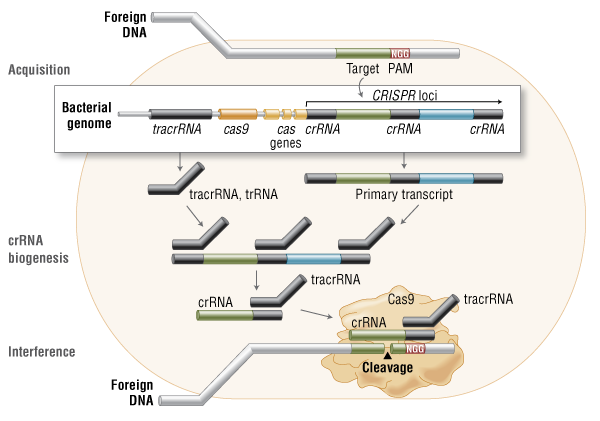
CRISPR is a tool built into bacterial DNA that the organisms use to fight infections. When a virus invades and attempts to insert its infectious DNA into that of a bacterial cell, a special section of the bacterial DNA, called CRISPR, cuts the viral DNA and renders it unable to wreak havoc on the bacteria. The organism then inserts a copy of the viral DNA into its own DNA to work as a type of adaptive immune system, to better recognize and defeat the invader in the future. As scientists have begun to understand how this system works, they have manipulated it to target and damage specific, functional genes in a variety of organisms, and in some cases, insert a new gene in its place.

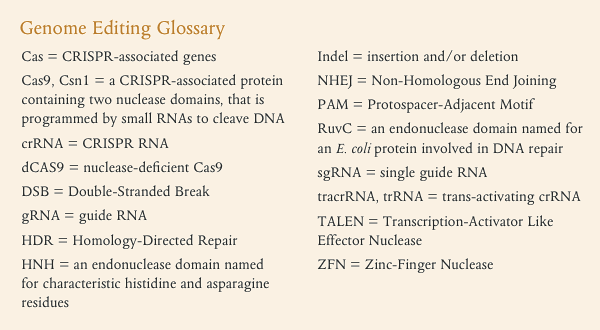
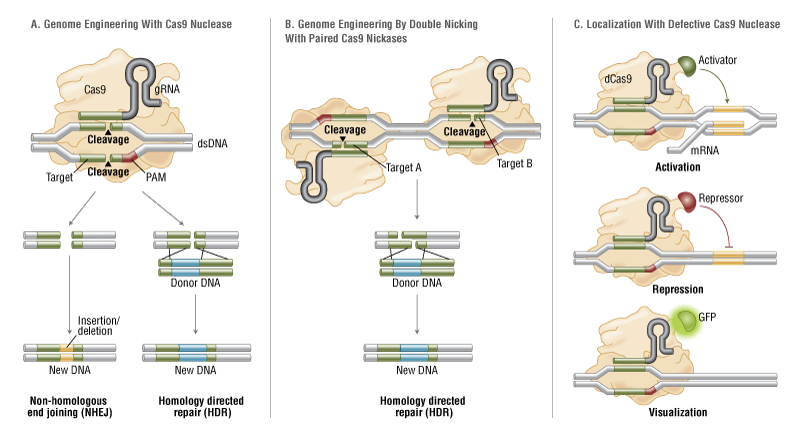
Once the section of DNA is damaged, the technique relies on the cell to naturally repair its own DNA. There are two methods that the cell might use to accomplish this. One is homology-directed repair (HDR), the other is non-homologous end joining (NHEJ). HDR rebuilds or replaces the damaged locus of the genome, whereas NHEJ reattaches the damaged ends. When the reattachment occurs following the degradation of the ends, it often leads to the deletion of function of the gene (“knock-out” the gene). If a cell uses HDR to repair itself, scientists can include a desired gene in the CRISPR system that will be inserted into the DNA to replace the damaged gene.

Despite the impressive power of CRISPR system, its use in brain cells has been limited because by the time the brain has developed, its cells are no longer dividing. Most mature brain cells will repair themselves using NHEJ. The researcher can’t give the cell a gene to insert if it’s not going to insert one to begin with. While scientists can use CRISPR relatively easily to damage and knock out certain genes through NHEJ in the brain, the lack of cell division has made it very difficult for them to knock indesired sequences to genes, through HDR, with reliable precision. That’s where the SLENDR technique comes in.

  • SLENDR

SLENDR combines the power of the CRISPR/Cas9 system with the specificity and timing of in utero electroporation. Electroporation is a well-known technique used for introducing new material into cells and creating genetic knock-outs and knock-ins. Using in utero electroporation allows researchers to insert the CRISPR/CAS9 system into prenatal models, where brain cells are still developing and dividing. Thus, the broken DNA is still being repaired via HDR, giving researchers the opportunity to precisely modify a gene. This is a big deal. “I believe that SLENDR will be a standard tool for molecular and cellular neurobiology,” said Dr. Yasuda. “SLENDR provides a valuable means to determine subcellular localization of proteins, and will help researchers to determine the function of the proteins.”

In the recent study, the researchers at MPFI inserted a gene that made proteins of interest fluoresce under the microscope. They were even able to reliably label two different proteins with distinct colors at the same time in the same cell. The researchers were able to use the technique to visualize the proteins both in vivo and in vitro. And they were able to do it in a matter of days rather than years.

With existing knowledge of how brains develop, researchers can adjust the timing and position of the electroporation in utero to accurately target cells that will go on to populate particular cortical layers of the brain, even if they haven’t differentiated and moved to that layer yet.

The recent study used the technique primarily to tag certain proteins within brain cells and observe their behavior. But, with continued optimization, the method has the potential to elucidate immeasurable brain activities in both normal and diseased brains, and lead to a deeper understanding of brain function. “The most important part is that precise genome editing is possible in the brain. That’s what’s important,” said Dr.  Nishiyama, post-doctoral researcher who worked on the study. “That’s the biggest thing.” Neuroscientists would be remiss to ignore its worth and not explore its potential.

Emma Yasinski is a scientific writer at Max Planck Florida Institute for Neuroscience. Correspondence should be directed to Ryohei Yasuda, Ph.D. (ryohei.yasuda@mpfi.org), scientific director, Max Planck Florida Institute for Neuroscience.


Altered Metabolism of Four Compounds Drives Glioblastoma Growth

Findings suggest new ways to treat the malignancy, slow its progression and reveal its extent more precisely.

http://www.technologynetworks.com/Metabolomics/news.aspx?ID=190732

The altered metabolism of two essential amino acids helps drive the development of the most common and lethal form of brain cancer, according to a new study led by researchers at The Ohio State University Comprehensive Cancer Center – Arthur G. James Cancer Hospital and Richard J. Solove Research Institute (OSUCCC – James).

The study shows that in glioblastoma (GBM), the essential amino acids methionine and tryptophan are abnormally metabolized due to the loss of key enzymes in GBM cells.

The altered methionine metabolism leads to activation of oncogenes, while the changes in tryptophan metabolism shield GBM cells from detection by immune cells. Together, the changes promote tumor progress and cancer-cell survival.

“Our findings suggest that restricting dietary intake of methionine and tryptophan might help slow tumor progression and improve treatment outcomes,” says first author and OSUCCC – James researcher Kamalakannan Palanichamy, PhD, research assistant professor in Radiation Oncology.

“While we need to better understand how these abnormally regulated metabolites activate oncogenic proteins, our intriguing discovery suggests novel therapeutic targets for this disease,” says principal investigator and study leader Arnab Chakravarti, MD, chair and professor of Radiation Oncology and co-director of the Brain Tumor Program.

“For example, restoring the lost enzymes in the two metabolic pathways might slow tumor progression and reduce aggressiveness by inactivating oncogenic kinases and activating immune responses,” says Chakravarti, who holds the Max Morehouse Chair in Cancer Research.

Chakravarti further notes that because GBM cells take up methionine much faster than normal glioma cells, positron emission tomography that uses methionine as a tracer (MET-PET) might help map GBM tumors more accurately, allowing more precise surgical removal and radiation therapy planning. (MET-PET is currently an experimental imaging method.)

More than 11,880 new cases of GBM were estimated to occur in 2015, with overall survival averaging 12 to 15 months, so there is an urgent need for more effective therapies.

Amino acids are the building blocks of proteins. Tryptophan and methionine are essential amino acids – the diet must provide them because cells cannot make them. Normally, the lack of an essential amino acid in the diet can lead to serious diseases and even death. Foods rich in tryptophan and methionine include cheese, lamb, beef, pork, chicken, turkey, fish, eggs, nuts and soybeans.

Palanichamy, Chakravarti and their colleagues conducted this study using 13 primary GBM cell lines derived from patient tumors, four commercially available GBM cell lines and normal human astrocyte cells. Metabolite analyses were done using liquid chromatography coupled with mass spectrometry.

http://www.oncology-central.com/2016/04/01/study-highlights-altered-amino-acid-metabolism-in-glioblastoma/

AUTHORS: EMILY BROWN, FUTURE SCIENCE GROUP

An investigation carried out at The Ohio State University Comprehensive Cancer Center (OH, USA) has uncovered abnormal metabolism of the essential amino acids methionine and tryptophan in glioblastoma.

The study suggests that this abnormal amino acid metabolism aids in the development of the disease. Furthermore, the findings, published recently in Clinical Cancer Research, hint at novel methods to potentially treat the malignancy, slow its progression and reveal its extent more precisely.

According to the study, it is the loss of key enzymes within glioblastoma cells that results in this abnormal metabolism. Modified methionine metabolism is described as promoting the activation of oncogenes, and the changes in tryptophan aid in masking the malignant cells from the immune system.

“While we need to better understand how these abnormally regulated metabolites activate oncogenic proteins, our intriguing discovery suggests novel therapeutic targets for this disease,” commented principal investigator and study leader Arnab Chakravarti (The Ohio State University Comprehensive Cancer Center).


Rapid eye movement sleep (dreaming) shown necessary for memory formation


Rapid eye movement sleep (dreaming) shown necessary for memory formation
A study published in the journal Science by researchers at the Douglas Mental Health University Institute at McGill University and the University of Bern provides the first evidence that rapid eye movement (REM) sleep — the phase where dreams appear — is directly involved in memory formation (at least in mice). “We already knew that … more…

May 16, 2016

Inhibition of  media septum GABA neurons during rapid eye movement (REM) sleep reduces theta rhythm (a characteristic of REM sleep). Schematic of the in vivo recording configuration: an optic fiber delivered orange laser light to the media septum part of the brain, allowing for optogenetic inhibition of media septum GABA neurons while recording the local field potential signal from electrodes implanted in hippocampus area CA1. (credit: Richard Boyce et al./Science)

A study published in the journal Science by researchers at the Douglas Mental Health University Institute at McGill University and the University of Bern provides the first evidence that rapid eye movement (REM) sleep — the phase where dreams appear — is directly involved in memory formation (at least in mice).

“We already knew that newly acquired information is stored into different types of memories, spatial or emotional, before being consolidated or integrated,” says Sylvain Williams, a researcher and professor of psychiatry at McGill*. “How the brain performs this process has remained unclear until now. We were able to prove for the first time that REM sleep (dreaming) is indeed critical for normal spatial memory formation in mice,” said Williams.

Dream quest

Hundreds of previous studies have tried unsuccessfully to isolate neural activity during REM sleep using traditional experimental methods. In this new study, the researchers instead used optogenetics, which enables scientists to precisely target a population of neurons and control its activity by light.

“We chose to target [GABA neurons in the media septum] that regulate the activity of the hippocampus, a structure that is critical for memory formation during wakefulness and is known as the ‘GPS system’ of the brain,” Williams says.

To test the long-term spatial memory of mice, the scientists trained the rodents to spot a new object placed in a controlled environment where two objects of similar shape and volume stand. Spontaneously, mice spend more time exploring a novel object than a familiar one, showing their use of learning and recall.

Shining orange laser light on media septum (MS) GABA neurons during REM sleep reduces frequency and power (purple section) of neuron signals in dorsal CA1 area of hippocampus (credit: Richard Boyce et al./Science)

When these mice were in REM sleep, however, the researchers used light pulses to turn off their memory-associated neurons to determine if it affects their memory consolidation. The next day, the same rodents did not succeed the spatial memory task learned on the previous day. Compared to the control group, their memory seemed erased, or at least impaired.

“Silencing the same neurons for similar durations outside of REM episodes had no effect on memory. This indicates that neuronal activity specifically during REM sleep is required for normal memory consolidation,” says the study’s lead author, Richard Boyce, a PhD student.

Implications for brain disease

REM sleep is understood to be a critical component of sleep in all mammals, including humans. Poor sleep quality is increasingly associated with the onset of various brain disorders such as Alzheimer’s and Parkinson’s disease.

In particular, REM sleep is often significantly perturbed in Alzheimer’s diseases (AD), and results from this study suggest that disruption of REM sleep may contribute directly to memory impairments observed in AD, the researchers say.

This work was partly funded by the Canadian Institutes of Health Research (CIHR), the Natural Science and Engineering Research Council of Canada (NSERC), a postdoctoral fellowship from Fonds de la recherche en Santé du Québec (FRSQ) and an Alexander Graham Bell Canada Graduate scholarship (NSERC).

* Williams’ team is also part of the CIUSSS de l’Ouest-de-l’Île-de-Montréal research network. Williams co-authored the study with Antoine Adamantidis, a researcher at the University of Bern’s Department of Clinical Research and at the Sleep Wake Epilepsy Center of the Bern University Hospital.

Abstract of Causal evidence for the role of REM sleep theta rhythm in contextual memory consolidation

Rapid eye movement sleep (REMS) has been linked with spatial and emotional memory consolidation. However, establishing direct causality between neural activity during REMS and memory consolidation has proven difficult because of the transient nature of REMS and significant caveats associated with REMS deprivation techniques. In mice, we optogenetically silenced medial septum γ-aminobutyric acid–releasing (MSGABA) neurons, allowing for temporally precise attenuation of the memory-associated theta rhythm during REMS without disturbing sleeping behavior. REMS-specific optogenetic silencing of MSGABA neurons selectively during a REMS critical window after learning erased subsequent novel object place recognition and impaired fear-conditioned contextual memory. Silencing MSGABA neurons for similar durations outside REMS episodes had no effect on memory. These results demonstrate that MSGABA neuronal activity specifically during REMS is required for normal memory consolidation.


Quantifying Consciousness

By Tanya Lewis

Overall brain metabolic rate can distinguish between pathological states of human consciousness, a study shows.


Time-resolved studies define the nature of toxic IAPP intermediates, providing insight for anti-amyloidosis therapeutics
.

Abedini A, Plesner A, Cao P, Ridgway Z, et al.
eLife May 23, 2016; 10.7554/eLife.12977. http://dx.doi.org/10.7554/eLife.12977

Islet amyloidosis by IAPP contributes to pancreatic β-cell death in diabetes, but the nature of toxic IAPP species remains elusive. Using concurrent time-resolved biophysical and biological measurements, we define the toxic species produced during IAPP amyloid formation and link their properties to induction of rat INS-1 β-cell and murine islet toxicity. These globally flexible, low order oligomers upregulate pro-inflammatory markers and induce reactive oxygen species. They do not bind 1-anilnonaphthalene-8-sulphonic acid and lack extensive β-sheet structure. Aromatic interactions modulate, but are not required for toxicity. Not all IAPP oligomers are toxic; toxicity depends on their partially structured conformational states. Some anti-amyloid agents paradoxically prolong cytotoxicity by prolonging the lifetime of the toxic species. The data highlight the distinguishing properties of toxic IAPP oligomers and the common features that they share with toxic species reported for other amyloidogenic polypeptides, providing information for rational drug design to treat IAPP induced β-cell death.


NIH study visualizes proteins involved in cancer cell metabolism

Cryo-EM methods can determine structures of small proteins bound to potential drug candidates.

https://www.nih.gov/news-events/news-releases/nih-study-visualizes-proteins-involved-cancer-cell-metabolism

Scientists using a technology called cryo-EM (cryo-electron microscopy) have broken through a technological barrier in visualizing proteins with an approach that may have an impact on drug discovery and development. They were able to capture images of glutamate dehydrogenase, an enzyme found in cells, at a resolution of 1.8 angstroms, a level of detail at which the structure of the central parts of the enzyme could be visualized in atomic detail. The scientists from the National Cancer Institute (NCI), part of the National Institutes of Health, and their colleagues also reported achieving another major milestone, by showing that the shapes of cancer target proteins too small to be considered within the reach of current cryo-EM capabilities can now be determined at high resolution.

The research team was led by NCI’s Sriram Subramaniam, Ph.D., with contributions from scientists at the National Center for Advancing Translational Sciences (NCATS), also part of NIH. The findings appeared online May 26, 2016, in Cell.

“These advances demonstrate a real-life scenario in which drug developers now could potentially use cryo-EM to tweak drugs by actually observing the effects of varying drug structure — much like an explorer mapping the shoreline to find the best place to dock a boat — and alter its activity for a therapeutic effect,” said Doug Lowy, M.D., acting director, NCI.

Both discoveries have the potential to have an impact on drug discovery and development. Cryo-EM imaging enables analysis of structures of target proteins bound to drug candidates without first needing a step to coax the proteins to form ordered arrays. These arrays were needed for the traditional method of structure determination using X-ray crystallography, a powerful technique that has served researchers well for more than a half century. However, not all proteins can be crystallized easily, and those that do crystallize may not display the same shape that is present in their natural environment, either since the protein shape can be modified by crystallization additives or by the contacts that form between neighboring proteins within the crystal lattice.

“It is exciting to be able to use cryo-EM to visualize structures of complexes of potential drug candidates at such a high level of detail.”

Sriram Subramaniam, Ph.D.,National Caner Institute

“It is exciting to be able to use cryo-EM to visualize structures of complexes of potential drug candidates at such a high level of detail,” said Subramaniam. “The fact that we can obtain structures of small cancer target proteins bound to drug candidates without needing to form 3D crystals could revolutionize and accelerate the drug discovery process.”

Two of the small proteins the researchers imaged in this new study, isocitrate dehydrogenase (IDH1) and lactate dehydrogenase (LDH), are active targets for cancer drug development. Mutations in the genes that code for these proteins are common in several types of cancer. Thus, imaging the surfaces of these proteins in detail can help scientists identify molecules that will bind to them and aid in turning the protein activity off.

In publications in the journal Science last year and this year, Subramaniam and his team reported resolutions of 2.2 angstroms and 2.3 angstroms in cryo-EM with larger proteins, including a complex of a cancer target protein with a small molecule inhibitor. Of note, the journal Nature Methods deemed cryo-EM as the “Method of the Year” in January 2016. “Our earlier work showed what was technically possible,” Subramaniam said. “This latest advance is a delivery of that promise for small cancer target proteins.” For more information on cryo-EM, go to http://electron.nci.nih.gov.


Time-resolved studies define the nature of toxic IAPP intermediates, providing insight for anti-amyloidosis therapeutics.

Abedini A, Plesner A, Cao P, Ridgway Z, et al.
eLife May 23, 2016; 10.7554/eLife.12977. http://dx.doi.org/10.7554/eLife.12977

Islet amyloidosis by IAPP contributes to pancreatic β-cell death in diabetes, but the nature of toxic IAPP species remains elusive. Using concurrent time-resolved biophysical and biological measurements, we define the toxic species produced during IAPP amyloid formation and link their properties to induction of rat INS-1 β-cell and murine islet toxicity. These globally flexible, low order oligomers upregulate pro-inflammatory markers and induce reactive oxygen species. They do not bind 1-anilnonaphthalene-8-sulphonic acid and lack extensive β-sheet structure. Aromatic interactions modulate, but are not required for toxicity. Not all IAPP oligomers are toxic; toxicity depends on their partially structured conformational states. Some anti-amyloid agents paradoxically prolong cytotoxicity by prolonging the lifetime of the toxic species. The data highlight the distinguishing properties of toxic IAPP oligomers and the common features that they share with toxic species reported for other amyloidogenic polypeptides, providing information for rational drug design to treat IAPP induced β-cell death.


Single domain antibodies (sdAbs) aid in x-ray crystallography of mammalian serotonin 5-HT3 receptor

Serotonin 5-HT3 is part of the cys-loop receptor family, the mechanism of this family is not well understood due to difficulties in obtaining high resolution crystal structures. Serotonin 5-HT3 receptor is an important druggable target in alleviating nausea and vomiting induced by chemotherapy or anesthesia, as well as psychiatric disorders. It’s structure is critical in discovering new drugs to modulate its activity.

Previously, electron microscopy imaging of non-mammalian homologs of Cys-loop receptors provided basic understanding of extracellular ligand binding sites and pore forming domains. Little was known about intracellular domains and the way they interact with cellular scaffolding proteins, as they are absent in non-mammalian homologs. A recent publication in Nature extends our understanding behind the mechanism of serotonin 5-HT3 receptors, by resolving a 3.5A crystal structure.

Mouse 5-HT3 exists as a homopentamer and is difficult to express, purify and crystallize. To overcome this challenge, researchers split the receptor by proteolyzing each subunit into two fragments. In addition, an sdAb chaperone, which acts as an inhibitor locking the channel into a non-conducting conformation, was used to stabilized the pentameric structure, enabling resolution of a 3.5A crystal structure. Most importantly the split receptor displays an intracellular domain that is tightly coupled to the membrane domain, which provides important structural information that will lead to further understanding of the physiological conformation of 5-HT3 and Cys-loop receptors.

Hassaine G. et al. X-ray structure of the mouse serotonin 5-HT3 receptor Nature. Aug 2014. 512(7514):276-281


UCLA animal study shows how brain connects memories across time

Wednesday, May 25, 2016

Using a miniature microscope that opens a window into the brain, UCLA neuroscientists have identified in mice how the brain links different memories over time–and this may help develop new drugs in the future for memory-robbing diseases such as Alzheimer’s.


FDA approves new antibody drug for treating pediatric neuroblastoma

Pediatric neuroblastoma is a rare and difficult to treat cancer that forms from immature nerve cells. This form of cancer occurs in 1 in 100,000 children, with 650 new cases each year in the United States. Current therapies, which are non-specific, only provide 40-50% long term survival rate to patients suffering from high-risk neuroblastoma, making this form of cancer an area of high medical unmet need.

A new drug, called dinutuxumab was granted priority review and orphan drug designation by the FDA. It is the first drug of its kind to be approved that specifically treats pediatric neuroblastoma. In addition to the approval, the FDA also issued a rare pediatric review priority voucher to the makers of the drug, for future groundbreaking therapies in pediatric neuroblastoma.

Dinutuxumab (formerly called ch14.18) is a disialoganglioside (GD2) binding chimeric monoclonal antibody that works in combination with granulocyte-macrophage colony-stimulating factor (GM-CSF), interleukin-2 (IL-2), and 13-cis-retinoic acid (RA) for treating high-risk pediatric neuroblastoma.

Antibody therapeutics are highly efficacious and specific towards rare and difficult-to-treat cancers and discovery of new antibody therapeutics will help address critical needs. Antibody drug discovery may be challenging, but working with an experienced partner can help.

FDA approves first therapy for high-risk neuroblastoma


Electronic Biosensor Detects Molecules Linked to Cancer, Alzheimer’s, and Parkinson’s

5/20/2016  by Fundação de Amparo À Pesquisa Do Estado de São Paulo

A biosensor developed by researchers at the National Nanotechnology Laboratory (LNNano) in Campinas, São Paulo State, Brazil, has been proven capable of detecting molecules associated with neurodegenerative diseases and some types of cancer.

The device is basically a single-layer organic nanometer-scale transistor on a glass slide. It contains the reduced form of the peptide glutathione (GSH), which reacts in a specific way when it comes into contact with the enzyme glutathione S-transferase (GST), linked to Parkinson’s, Alzheimer’s and breast cancer, among other diseases. The GSH-GST reaction is detected by the transistor, which can be used for diagnostic purposes.

An inexpensive portable biosensor has been developed by researchers at Brazil’s National Nanotechnology Laboratory with FAPESP’s support. (Credit: LNNano)

The project focuses on the development of point-of-care devices by researchers in a range of knowledge areas, using functional materials to produce simple sensors and microfluidic systems for rapid diagnosis.

“Platforms like this one can be deployed to diagnose complex diseases quickly, safely and relatively cheaply, using nanometer-scale systems to identify molecules of interest in the material analyzed,” explained Carlos Cesar Bof Bufon, Head of LNNano’s Functional Devices & Systems Lab (DSF) and a member of the research team for the project, whose principal investigator is Lauro Kubota, a professor at the University of Campinas’s Chemistry Institute (IQ-UNICAMP).

In addition to portability and low cost, the advantages of the nanometric biosensor include its sensitivity in detecting molecules, according to Bufon.

“This is the first time organic transistor technology has been used in detecting the pair GSH-GST, which is important in diagnosing degenerative diseases, for example,” he explained. “The device can detect such molecules even when they’re present at very low levels in the examined material, thanks to its nanometric sensitivity.” A nanometer (nm) is one billionth of a meter (10-9 meter), or one millionth of a millimeter.

The system can be adapted to detect other substances, such as molecules linked to different diseases and elements present in contaminated material, among other applications. This requires replacing the molecules in the sensor with others that react with the chemicals targeted by the test, which are known as analytes.

The team is working on paper-based biosensors to lower the cost even further and to improve portability and facilitate fabrication as well as disposal.

The challenge is that paper is an insulator in its usual form. Bufon has developed a technique to make paper conductive and capable of transporting sensing data by impregnating cellulose fibers with polymers that have conductive properties.

The technique is based on in situ synthesis of conductive polymers. For the polymers not to remain trapped on the surface of the paper, they have to be synthesized inside and between the pores of the cellulose fibers. This is done by gas-phase chemical polymerization: a liquid oxidant is infiltrated into the paper, which is then exposed to monomers in the gas phase. A monomer is a molecule of low molecular weight capable of reacting with identical or different molecules of low molecular weight to form a polymer.

The monomers evaporate under the paper and penetrate the pores of the fibers at the submicrometer scale. Inside the pores, they blend with the oxidant and begin the polymerization process right there, impregnating the entire material.

The polymerized paper acquires the conductive properties of the polymers. This conductivity can be adjusted by manipulating the element embedded in the cellulose fibers, depending on the application for which the paper is designed. Thus, the device can be electrically conductive, allowing current to flow without significant losses, or semiconductive, interacting with specific molecules and functioning as a physical, chemical or electrochemical sensor.


Protein Oxidation in Aging: Not All Proteins Are Created Equal

Cancer, Alzheimer’s disease and other age-related diseases develop over the course of aging, and certain proteins are shown to play critical roles this process. Those proteins are subject to destabilization as a result of oxidation, which further leads to features of aging cells. It is estimated that almost 50% of proteins are damaged due to oxidation for people at their 80s. The oxidative damage mediated by free radicals occurs when converting food to energy in the presence of oxygen. Cellular structures, such as proteins, DNA, and lipids, are prone to these oxidation damages, which further contribute to the development of age-related diseases.

Using computational models with physics principles incorporated, de Graff el al. from Stony Brook University unfolded the molecular mechanism that how natural chemical process affects the aging of proteins. First, the authors revealed the major factor to explain stability loss in aging cells and organisms is likely to be random modification of the protein sidechains. Furthermore, through the evaluation and analysis on the protein electrostatics, the authors suggested that highly charged proteins are in particular subject to the oxidation induced destabilization. Even one single oxidation could lead to unfold the whole structure for these highly charged proteins. Old cells are enriched in those highly charged proteins, thus the destabilization effects are elevated in the aging cells. In addition, 20 proteins associated with aging are further identified to be at high risk of oxidation. The list includes telomerase proteins and histones, both of which play critical roles in the aging of cells and cancer development. The team is currently working on analyzing more proteins, with the hope to provide key information to aid targeted treatments against age-related diseases.

Further Reading: Emerging Opportunity for Treating Alzheimer Disease by Immunotherapy

Adam M.R. de Graff, Michael J. Hazoglou, Ken A. Dill. Highly Charged Proteins: The Achilles’ Heel of Aging Proteomes.Structure, 24, 285-292 (2016)

Baruch, K. et al. PD-1 Immune Checkpoint Blockade Reduces Pathology and Improves Memory in Mouse Models of Alzheimer’s Disease. Nat. Med. 22, 135-137 (2016)


Single domain antibodies shown to cross blood brain barrier and offers enhanced delivery of therapeutics to CNS targets

A major challenge in developing both small molecule and antibody therapeutics for CNS disorders including brain cancer and neurodegenerative diseases, is penetrating the blood brain barrier (BBB). A study published in FASEB demonstrated that monomeric variable heavy-chain domain of camel homodimeric antibodies (mVHH), can cross the BBB in-vivo, and recognize its intracellular target: glial fibrillary acidic protein (GFAP). The ability of mVHH to cross the BBB of normal animals and those undergoing pathological stress makes it a promising modality for treating CNS diseases as well as for brain imaging.

The investigators of this study expressed a recombinant fusion protein, VHH-GFP, which was able to cross the BBB in-vivo and specifically label astrocytes. GenScript is fully engaged in single-domain antibody lead generation and optimization. With our one-stop services, we are determined to be your best partner in antibody drug discovery from gene synthesis to in-vivo characterization of candidate antibodies. All you need to provide is the Genbank accession number of the antigen protein!

Li T. et al. Cell-penetrating anti-GFAP VHH and corresponding fluorescent fusion protein VHH-GFP spontaneously cross the blood-brain barrier and specifically recognize astrocytes: application to brain imaging. FASEB. Oct 2012. 26:3969-79


New insight behind the success of fighting cancer by targeting immune checkpoint proteins

Immune checkpoint blockade has proven to be highly successful in the clinic at treating aggressive and difficult-to-treat forms of cancer. The mechanism of the blockade, targeting CTLA-4 and PD-1 receptors which act as on/off switches in T cell-mediated tumor rejection, is well understood. However, little is known about the tumor antigen recognition profile of these affected T-cells, once the checkpoint blockade is initiated.

In a recent published study, the authors used genomics and bioinformatics approaches to identify critical epitopes on 3-methylcholanthrene induced sarcoma cell lines, d42m1-T3 and F244. CD8+ T cells in anti-PD-1 treated tumor bearing mice were isolated and fluorescently labeled with tetramers loaded with predicted mutant epitopes. Out of 66 predicted mutants, mLama4 and mAlg8 were among the highest in tetramer-positive infiltrating T-cells. To determine whether targeting these epitopes alone would yield similar results as anti-PD-1 treatment, vaccines against these two epitopes were developed and tested in mice. Prophylactic administration of the combined vaccine against mLama4 and mAlg8 yielded an 88% survival in tumor bearing mice, thus demonstrating that these two epitopes are the major antigenic targets from checkpoint-blockade and therapies against these two targets are similarly efficacious.

In addition to understanding the mechanism, identification of these tumor-specific mutant antigens is the first step in discovering the next wave of cancer immunotherapies via vaccines or antibody therapeutics. Choosing the right antibody platform can speed the discovery of a new therapeutics against these new targets. Single domain antibodies have the advantage of expedited optimization, flexibility of incorporating multiple specificity and functions, superior stability, and low COG over standard antibody approaches.

Gubin MM. et al. Checkpoint blockade cancer immunotherapy targets tumour-specific mutant antigens. Nature. Nov 2014. 515:577-584


Anti-PD-1 is poised to be a blockbuster, which other immune-checkpoint targeting drugs are on the horizon?

Clinical studies of anti-immune-checkpoint protein therapeutics have shown not only an improved overall survival, but also a long-term durable response, compared to chemotherapy and genomically-targeted therapy. To expand the success of immune-checkpoint therapeutics into more tumor types and improving efficacy in difficult-to-treat tumors, additional targets involved in checkpoint-blockade need to be explored, as well as testing the synergy between combining approaches.

Currently, CTLA-4 and PD-1/PD-L1 are furthest along in development, and have shown very promising results in metastatic melanoma patients. This is just a fraction of targets involved in the checkpoint-blockade pathway. Several notable targets include:

  • LAG-3 – Furthest along in clinical development with both a fusion protein and antibody approach, antibody apporach being tested in combination with anti-PD-1
  • TIM-3 – Also in clinical development. Pre-clinical studies indicate that it co-expresses with PD-1 on tumor-infiltrating lymphocytes. Combination with anti-PD-improves anti-tumor response
  • VISTA – Antibody targeting VISTA was shown to improve anti-tumor immune response in mice

In addition, there are also co-stimulatory factors that are also being explored as viable therapeutic targets

  • OX40 – Both OX40 and 4-1BB are part of the TNF-receptor superfamily. Phase I data shows acceptable safety profile, and evidence of anti-tumor response in some patients
  • 4-1BB – Phase I/II data on an antibody therapeutic targeting OX40 shows promising clinical response for melanoma, renal cell carcinoma and ovarian cancer.
  • Inducible co-stimulator (ICOS) – Member of the CD28/B7 family. Its expression was found to increase upon T-cell activation. Anti-CTLA-4 therapy increases ICOS-positive effector T-cells, indicating that it may work in synergy with anti-CTLA-4. Clinical trials of anti-ICOS antibody are planned for 2015.

Sharma P and Allison JP. Immune Checkpoint Targeting in Cancer Therapy: Toward Combination Strategies with Curative Potential. Cell. April 2015;161:205-214


CTLA-4 found in dendritic cells suggests New cancer treatment possibilities

Both dendritic cells and T cells are important in triggering the immune response, whereas antigen presenting dendritic cells act as the “general” leading T cells “soldiers” to chase and eliminate enemies in the battle against cancer. The well-known immune checkpoint break, CTLA-4, is believed to be present only in T cells (and cells of the same lineage). However, a new study published in Stem Cells and Development suggests that CTLA-4 also presents in dendritic cells. It further explores the mechanism on how turning off the dendritic cells in the immune response against tumors.

Matthew Halpert, et al. Dendritic Cell Secreted CTLA-4 Regulates the T-cell Response by Downmodulating Bystander Surface B7. Stem Cells and Development, 2016; DOI: 10.1089/scd.2016.0009


With a wide range of animal models to choose from, what are the crucial factors to consider?

A recent perspective published in Nature Medicine addresses these gaps by comparing the strengths and limitations of different tumor models, as well as best models to use for answering different biological questions and best practices for preclinical modeling.

Below is a summary of the authors’ key considerations:

  • It is important to choose a model based on the biology of the target. Several diverse tumor models may be required to address complex biology
  • If the biology of the target includes signaling between the tumor and the stroma, then it is crucial to understand drug efficacy in the presence of an appropriate tumor microenvironment with orthotopic models
  • Avoid overuse of models that are highly sensitive to the drug, unless there is clinically relevant biomarker data to support the findings
  • For studying agents that reduce pre-existing tumors, make sure that the tumors are established in the model prior to treatment
  • Understanding the pharmacokinetics of a drug in the model prior to studies is important to ensure that the dosing is within range, and that off-target and toxic side effects are not skewing anti-tumor activity.

Gould SE, Junttila MR and de Sauvage FJ. Translational value of mouse models in oncology drug development. Nat Med. May 2015. 21(5):431-439


Revolutionary Impact of Nanodrug Delivery on Neuroscience

Reza Khanbabaie1,2,3 and Mohsen Jahanshahi
Curr Neuropharmacol. 2012 Dec; 10(4): 370–392.   doi:  10.2174/157015912804143513

Brain research is the most expanding interdisciplinary research that is using the state of the art techniques to overcome limitations in order to conduct more accurate and effective experiments. Drug delivery to the target site in the central nervous system (CNS) is one of the most difficult steps in neuroscience researches and therapies. Taking advantage of the nanoscale structure of neural cells (both neurons and glia); nanodrug delivery (second generation of biotechnological products) has a potential revolutionary impact into the basic understanding, visualization and therapeutic applications of neuroscience. Current review article firstly provides an overview of preparation and characterization, purification and separation, loading and delivering of nanodrugs. Different types of nanoparticle bioproducts and a number of methods for their fabrication and delivery systems including (carbon) nanotubes are explained. In the second part, neuroscience and nervous system drugs are deeply investigated. Different mechanisms in which nanoparticles enhance the uptake and clearance of molecules form cerebrospinal fluid (CSF) are discussed. The focus is on nanodrugs that are being used or have potential to improve neural researches, diagnosis and therapy of neurodegenerative disorders.

Keywords: Nanodrug, Nanofabrication and purification, Neuroscience, Nervous system, Nano-nervous drugs.

1. INTRODUCTION

The delivery of drugs to the nervous system is mainly limited by the presence of two anatomical and biochemical dynamic barriers: the blood–brain barrier (BBB) and blood–cerebrospinal fluid barrier (BCSFB) separating the blood from the cerebral parenchyma [1]. These barriers tightly seal the central nervous system (CNS) from the changeable milieu of blood. With the advancement of electron microscopy it is found that the ultrastructural localization of the blood–brain barrier is correlated with the capillary endothelial cells within the brain [2]. The BBB inhibits the free paracellular diffusion of water-soluble molecules by an elaborate network of complex tight junctions (TJs) that interconnects the endothelial cells. Similar to the endothelial barrier, the morphological correlate of the BCSFB is found at the level of unique apical tight junctions between the choroid plexus epithelial cells inhibiting paracellular diffusion of water-soluble molecules across this barrier [1, 3]. Beside its barrier function, it allows the directed transport of ions and nutrients into the cerebrospinal fluid (CSF) and removal of toxic agents out of the CSF using numerous transport systems.

One of the most challenging steps in neuroscience researches and therapy is the availability of techniques to penetrate these permeability barriers and delivering drugs to the CNS. Several strategies have been used to circumvent the barriers inhibiting CNS penetration. These strategies generally fall into one or more of the following three categories: manipulating drugs, disrupting the BBB (BBBD) and finding alternative routes for drug delivery. Drug manipulation methods include: Lipophilic Analogs, prodrugs, chemical drug delivery systems (CDDS), Carrier-mediated transport (CMT) and Receptor-mediated drug delivery. The drug manipulating strategy has been frequently employed, but the results have often been disappointing [46]. All of these methods have major limitations: they are invasive procedures, have toxic side effects and low efficiency, and are not sufficiently safe [7]. Two methods for disrupting the BBB have been reported: osmotic blood-brain barrier disruption and biochemical blood-brain barrier disruption. However, these procedures also break down the self-defense mechanism of the brain and make it vulnerable to damage or infection from all circulating chemicals or toxins. Since the above techniques aim to enhance the penetration of drugs to the CNS via circulatory system, they will increase the penetration of drugs throughout the entire body. This will frequently result in unwanted systemic side effects. In the other hand, systemically administered agents must penetrate the BBB to enter the CNS, which is a difficult task. Despite advances in rational CNS drug design and BBBD, many potentially efficacious drug molecules still cannot penetrate into the brain parenchyma at therapeutic concentrations. The alternative strategy to enhance CNS penetration of drug molecules is based on methodology that does not rely on the cardiovascular system. These strategies circumvent the BBB altogether and do not need drug manipulation to enhance BBB permeability and/or BBBD. Using alternative routes to deliver drugs to the CNS, e.g. intraventricular/intrathecal route and olfactory pathway, is one of these strategies.

One strategy for bypassing the BBB that has been studied extensively both in laboratory and in clinical trials is the intralumbar injection or intreventricular infusion of drugs directly into the CSF. Compared to vascular drug delivery, intra-CSF drug administration theoretically has several advantages. Intra-CSF administration bypasses the BCB and results in immediate high CSF drug concentrations. Due to the fact that the drug is somewhat contained within the CNS, a smaller dose can be used, potentially minimizing systemic toxicity. Furthermore, drugs in the CSF encounter minimize protein binding and decrease enzymatic activity relative to drugs in plasma, leading to longer drug half-life in the CSF. Finally, since the CSF freely exchanges molecules with the extracellular fluid of the brain parenchyma, delivering drugs into the CSF could theoretically result in therapeutic CNS drug concentrations [7, 8]. However, for several reasons this delivery was not as successful as predicted. These include a slow rate of drug distribution within the CSF and increase in intracranial pressure associated with fluid injection or infusion into small ventricular volumes.

Another CNS drug delivery route is the intranasal route. In this method drugs are transported intranasally along olfactory sensory neurons to yield significant concentrations in the CSF and olfactory bulb. An obvious advantage of this method is that it is noninvasive relative to other strategies. This method has received relatively little attention, since there are difficulties that have to be overcome. Among these obstacles is an enzymatically active, low pH nasal epithelium, the possibility of mucosal irritation or the possibility of large variability caused by nasal pathology, such as common cold.

Based on the advantages and disadvantages of aforementioned strategies, researchers are still looking for novel and better methods of CNS drug deliveries. The most direct way of circumventing the BBB is to deliver drugs directly to the brain interstitium which mainly includes the use of small colloidal particles like liposomes and nanoparticles [8]. By directing agents uniquely to an intracranial target, interstitial drug delivery can theoretically yield high CNS drug concentrations with minimal systemic exposure and toxicity. Furthermore, with this strategy, intracranial drug concentrations can be sustained, which is crucial in treatment with many chemotherapeutic agents. The basic reason of common acceptance of these carriers is due to their controlled profile or drug release nature as well as due to their selected targeting mechanism. Targeting action maybe due to the steric hindrance created by nano-vectors for achieving targeting ability. These carriers are usually administered through parenteral route and due to their steric phenomenon they conceal themselves from opsonisation event induced by tissue macrophages. By this way they achieve targeting ability to brain and other reticuloendothelial system (RES) organs like liver, spleen, etc.

Several approaches have been developed for delivering drugs directly to the brain interstitium like injections, catheters, and pumps. One such methodology is the Ommaya reservoir or implantable pump which achieves truly continuous drug delivery. Though interstitial drug delivery to the CNS has had only modest clinical impact, its therapeutic potential may soon be realized using new advances in polymer technologies to modify the aforementioned techniques. Polymeric or lipidbased devices that can deliver drug molecules at defined rates for specific periods of time are now making a tremendous impact in clinical medicine.

Among the strategies of direct drug delivery to the CNS, nanoparticles have attracted considerable interest from the last few decades. It has been shown that nano delivery systems have great potential to facilitate the movement of drugs across barriers (e.g., BBB). Nanosystems employed for the development of nano drug delivery systems in the treatment of CNS disorders include polymeric nanoparticles, nanospheres, nanosuspensions, nanoemulsions, nanogels, nano-micelles and nano-liposomes, carbon nanotubes, nanofibers and nanorobots, solid lipid nanoparticles (SLN), nanostructured lipid carriers (NLC) and lipid drug conjugates (LDC). Although the exact mechanism of barrier opening by nanoparticles is not known, the novel properties such as tiny size, tailored surface, better solubility, and multi-functionality of nanoparticles present the capability to interact with composite cellular functions in new ways. In fact, nanotechnology has now emerged as an area of research for invention of newer approaches for the CNS drug delivery and a revolutionary method to improve diagnosis and therapy of neurodegenerative disorders.

In this line, an overview of preparation and characterization, purification and separation, loading and delivering of nanodrugs is the first subject of this review. Different types of nanoparticle bioproducts including carbon nanotubes as a drug delivery system and also as a novel tool in neuroscience research are explored. For instance, nanodrug delivery systems like human serum albumin (HSA) nanoparticles, bovine serum albumin (BSA)-Gum Arabic (Acacia) nanoparticles and α-lactalbumin nanoparticles are explained.

The impact of nanotechnology on neuroscience and drug delivery to the central nervous system (CNS) is the subject of the second part of this review. Different mechanisms in which nanoparticles enhance the uptake of molecules both hydrophilic and hydrophobic across the BBB and the impact of various physiochemical parameters of nanoparticles on its uptake and clearance form CSF are discussed. Also nanodrugs that are being used or have potential to improve neural researches, diagnosis and therapy of neurodegenerative disorders are investigated.

2. FROM NANOTECHNOLOGY TO NEUROPHARMACOLOGY

Nanotechnology started by the suggestion of a famous physicist, Richard Feynman, that it should be possible, in principle, to make nanoscale machines that “arrange the atoms the way we want”, and do chemical synthesis by mechanical manipulation [9, 10]. Nanotechnologies exploit materials and devices with a functional organization that has been engineered at the nanometer scale. In a broad sense, they can be defined as the science and engineering involved in the design, syntheses, characterization, and application of materials and devices whose smallest functional organization in at least one dimension is on the nanometer scale, ranging from a few to several hundred nanometers. A nanometer is roughly the size of a molecule itself (e.g., a DNA molecule is about 2.5 nm long while a sodium atom is about 0.2 nm) [10]. Nanotechnology is not in itself a single emerging scientific discipline but rather a meeting of traditional sciences such as chemistry, physics, materials science, and biology to bring together the required collective expertise needed to develop these novel technologies.

The application of nanotechnology in cell biology and physiology enables targeted interactions at a fundamental molecular level. Nanotechnology, in the context of nanomedicine, can be defined as the technologies for making nanocarriers of therapeutics and imaging agents, nanoelectronic biosensors, nanodevices, and microdevices with nanostructures. It also covers possible future applications of molecular nanotechnology (MNT) and nanovaccinology. Unlike the definition in core nanotechnology field, which restricts the “nano” to at least 1–100 nm in one dimension, nanocarriers in the biomedical field are often referred to as particles with a dimension a few nanometers to 1000 nm [8, 11]. Although, the initial properties of nanomaterials studied were for its physical, mechanical, electrical, magnetic, chemical and biological applications, recently, attention has been geared towards its pharmaceutical application, especially in the area of drug delivery [8]. There are a few challenges in use of large size materials in drug deliveries. Some of these challenges are poor bioavailability, in vivo stability, solubility, intestinal absorption, sustained and targeted delivery to site of action, therapeutic effectiveness, generalized side effects, and plasma fluctuations of drugs (see Table 11).

The most important innovations are taking place in nanopharmocology and drug delivery which involves developing nanoscale particles or molecules to improve bioavailability. These pharmacological applications of nanotechnology include: the formation of novel nanoscopic entities [11, 27], exploring and matching specific compounds to particular patients for maximum effectiveness; and advanced pharmaceutical delivery systems and discovery of new pharmacological molecular entities; selection of pharmaceuticals for specific individuals to maximize effectiveness and minimize side effects, and delivery of pharmaceuticals to targeted locations or tissues within the body. Examples of nanomaterials include nanotubes and nanofibers, liposomes, nanoparticles, polymeric micelles, block ionomer complexes, nanogels, and dendrimers.

Nanotubes [28, 29] and nanofibers mimic tubular structures that appear in nature, such as rod shaped bacteria or viruses, microtubules, ion channels, as well as axons and dendrites. They are low-dimensional nanostructures, having a very large axial ratio. Properties of a molecule in a nanotube or nanofiber structure can be different from those in the bulk or in other nanomaterials, such as spherical nanoparticles. These materials have a large surface–volume ratio, which results in a high exposure of the material components to the surrounding environment [30]. This makes nanotubes and nanofibers promising structures for biosensing and molecular recognition [31]. However, it provides a way to control drug release through the nanotubes wall, while the large hollow area inside nanotubes provides an excellent storage for drugs and other agents [32]. Furthermore, nanotubes can be synthesized to be open-ended, which can be exploited for certain biological applications.

Carbon nanotubes (CNTs) was discovered by Iijima [33] which are composed of carbon atoms arranged in hexagonal ring structures similar to graphite, with some five-membered or seven-membered rings providing the structure curvature [29, 34,35]. CNTs are compatible with biological tissues for scaffolding purposes and the charge carried by the nanotubes can be manipulated to control neurite outgrowth [36, 37]. It has also been suggested that CNTs functionalized with growth factors, such as nerve growth factor or brain-derived neurotrophic factor, can stimulate growth of neurons on the nanotube scaffold [3840]. In such application the toxicity of CNTs remains an issue that must be overcome [41, 42]. It has been reported that conductive polymer coatings for living neural cells has been generated using poly (3,4-ethylenedioxythiophene) PEDOT nanotubes [43]. The electric conductivity of PEDOT was used to enhance the electrical activity of the tissue with a long range aim of treating CNS disorders, which show sensory and motor impairments. These observations suggested that nanotube and nanofiber scaffolds have potential for neuroregeneration as well as treatment of CNS trauma [27, 44]. Nanomaterials suggest a promising strategy for neuroprotection [45]. Neuroprotection is an effect that may result in salvage, recovery, or regeneration of the nervous system.

The role of nanotechnology in targeted drug delivery and imaging was discussed in many reviews and papers [46, 47]. As a step towards a realistic system, a brief overview of preparation, characterization, delivery, loading, purification and separation of nanoparticles and nanodrugs are presented herein. In next two sections the fabrication methods of nanoparticle bioproducts and also the delivery systems of nanodrugs are explained. Subsequently we go back to the CNS nanodrugs for research and therapy and the delivery systems of nanodrugs for nervous system.

……

3. NANODRUG DELIVERY SYSTEMS

The major goals in designing nanoparticles as a delivery system are to control particle size, surface properties [85] and release of pharmacologically active agents in order to achieve the site-specific action of the drug at the therapeutically optimal rate and dose regimen [86]. If nanoparticles are considered to be used as drug delivery vehicles, it depends on many factors including: (a) size of nanoparticles required; (b) inherent properties of the drug, e.g., aqueous solubility; (c) surface characteristics such as charge and permeability; (d) degree of biodegradability, biocompatibility and toxicity; (e) drug release profile desired; and (f) antigenicity of the final product. The advantages of using nanoparticles as a drug delivery system might be summarized as follow [87]:

  1. Particle size and surface characteristics of nanoparticles can be easily manipulated to achieve both passive and active drug targeting after parenteral administration.
  2. They control and sustain release of the drug during the transportation and at the site of localization, altering organ distribution of the drug and subsequent clearance of the drug so as to achieve increase in drug therapeutic efficacy and reduction in side effects.
  3. Controlled release and particle degradation characteristics can be readily modulated by the choice of matrix constituents. Drug loading is relatively high and drugs can be incorporated into the systems without any chemical reaction; this is an important factor for preserving the drug activity.
  4. Site-specific targeting can be achieved by attaching targeting ligands to surface of particles or use of magnetic guidance.
  5. The system can be used for various routes of administration including oral, nasal, parenteral, intraocular etc.

NANODRUG DELIVERY SYSTEMS

The major goals in designing nanoparticles as a delivery system are to control particle size, surface properties [85] and release of pharmacologically active agents in order to achieve the site-specific action of the drug at the therapeutically optimal rate and dose regimen [86]. If nanoparticles are considered to be used as drug delivery vehicles, it depends on many factors including: (a) size of nanoparticles required; (b) inherent properties of the drug, e.g., aqueous solubility; (c) surface characteristics such as charge and permeability; (d) degree of biodegradability, biocompatibility and toxicity; (e) drug release profile desired; and (f) antigenicity of the final product. The advantages of using nanoparticles as a drug delivery system might be summarized as follow [87]:

  1. Particle size and surface characteristics of nanoparticles can be easily manipulated to achieve both passive and active drug targeting after parenteral administration.
  2. They control and sustain release of the drug during the transportation and at the site of localization, altering organ distribution of the drug and subsequent clearance of the drug so as to achieve increase in drug therapeutic efficacy and reduction in side effects.
  3. Controlled release and particle degradation characteristics can be readily modulated by the choice of matrix constituents. Drug loading is relatively high and drugs can be incorporated into the systems without any chemical reaction; this is an important factor for preserving the drug activity.
  4. Site-specific targeting can be achieved by attaching targeting ligands to surface of particles or use of magnetic guidance.
  5. The system can be used for various routes of administration including oral, nasal, parenteral, intraocular etc.

NERVOUS SYSTEM NANODRUGS

Nanomaterials and nanoparticles can interact with biological systems at fundamental and molecular levels [100, 101]. In neuroscience, the application of nanotechnologies entails specific interactions with neurons and glial cells. Nanodevices can target the cells and glia with a high degree of specificity. This unique molecular specificity enables the nanodrugs to stimulate and interact with tissues and neurons in controlled ways, while minimizing undesirable effects. There are two main types of nervous system drugs (neurodrugs): behavioural and molecular. Behavioural neurodrugs are for the study of how different drugs affect human behaviour and human brain. These drugs are usually used for diagnosis and therapy of neurodegeneration disorders [47, 102]. Molecular neurodrugs are used for the study of neurons and their neurochemical interactions. Since for the most part, neurons in the human brain communicate with one another by releasing chemical messengers called neurotransmitters, these drugs have to target specific transmitters and receptors to have beneficial effect on neurological functions. The preparation of these two types of drugs is closely connected. Researchers are studying the interactions of different neurotransmitters [103], neurohormones [104], neuromodulators [105], enzymes [106], second messengers [107], co-transporters [108, 109], ion channels [110], and receptor proteins [111] in the central and peripheral nervous systems to develop drugs to treat many different neurological disorders, including pain [112], neurodegenerative diseases such as Parkinson’s disease [113] and Alzheimer’s disease [114], psychological disorders [115], addiction [116], and many others.

The blood–brain barrier significantly hinders the passage of systemically delivered therapeutics and the brain extracellular matrix limits the distribution and longevity of locally delivered agents. Nanoparticles represent a promising solution to these problems. They can cross blood-brain barrier and enter the CNS. Although the applications of nanotechnology in basic and clinical neuroscience are only in the early stages of development, partly because of the complexities associated with interacting with neural cells and the mammalian nervous system, however the early results show an impressive potential of nanotechnologies to contribute to neuroscience research [117]. One area in which nanotechnology may have a significant clinical impact in neuroscience is the selective transport and delivery of drugs and other small molecules across the blood brain barrier that cannot cross otherwise.

Examples of current research include technologies that are designed to better interact with neural cells, advanced molecular imaging technologies [118, 119], materials and hybrid molecules used in neural regeneration [120], neuroprotection [121], and targeted delivery of drugs and small molecules across the blood–brain barrier [122, 123]. Among all these modern methods of drug delivery to the central nervous system (CNS), the design and application of bionanotechnologies aimed at the CNS provide revolutionary new approaches for studying cell and molecular biology and physiology. The successful and meaningful development of bionanotechnologies designed to interact with the CNS as research or clinical tools require an understanding of the relevant neurophysiology and neuropathology, an appreciation of the inherent ‘nanoscale’ structure of the CNS, and an understanding of the relevant chemistry and materials science and engineering. At nanoscale, consideration of individual molecules and interacting groups of molecules in relation to the bulk macroscopic properties of the material or device becomes important, since it is control over the fundamental molecular structure that allows control over the macroscopic chemical and physical properties [124]. Applications to neuroscience and physiology imply materials and devices designed to interact with the body at subcellular (i.e., molecular) scales with a high degree of specificity. This can potentially translate into targeted cellular and tissue-specific clinical applications designed to achieve maximal therapeutic affects with minimal side effects.

It started with controlled release strategy and the development of miniaturized delivery systems [125] and continued by the application of albumin nanoparticles for the first time in the Johns Hopkins Medical Institution in Baltimore [126]. Other nanoconstructs such as drug-polymer conjugates were first proposed in the 1970s [127] and developed pre-clinically in the 1980s [128]. Prof. Kreuter [129] proposed a definition of polymeric nanoparticles for pharmaceutical purposes for the first time that later was adopted by the Encyclopaedia of Pharmaceutical Technology [130] and the Encyclopedia of nanotechnology [131]. Today, more than 25 nanomedicines have already been approved for human use [102]. Usually the application of nanodrugs to neuroscience is divided into two parts: application in basic neuroscience [124], and in clinical neuroscience [27].

The development of nanotechnology products may play an important role in adding a new group of therapeutics to the products of pharmaceutical companies [132]. Nanotechnology enhances (1) delivery of poorly water-soluble drugs; (2) delivery of large macromolecule drugs to intracellular sites of action; (3) targeted delivery of drugs in a cell- or tissue-specific manner; (4) transcytosis of drugs across tight epithelial and endothelial barriers; (5) co-delivery of two or more drugs or therapeutic modality for combination therapy; (6) visualization of sites of drug delivery by combining therapeutic agents with imaging modalities; and (7) real-time read on the in vivo efficacy of a therapeutic agent [133]. Additionally, the manufacturing complexity of nanotechnology therapeutics may also create a significant hurdle for generic drug companies to develop equivalent therapeutics readily [132].

…….

Safe, site-specific, and efficient delivery of compounds to CNS disease sites remains a singular goal in achieving optimal therapeutic outcomes to combat neurodegenerative diseases. Treatment of CNS disorders by systemic administration or local delivery of drugs is currently inefficient in many cases. Furthermore, clinical neuroscience faces great challenges due to the extremely heterogeneous cellular and molecular environment and the complexities of the brain’s anatomical and functional “wiring” and associated information processing [224]. However, the emergence of nanotechnology provides hope that it will revolutionize diagnosis and treatment of CNS disorders. Neurodegenerative diseases are usually linked to a loss of brain and spinal cord cells. For example, the neuronal damage in AD and PD is associated with abnormal protein processing and accumulation and results in gradual cognitive and motor deterioration [225].


Read Full Post »

Common blood-thinning heart drug ‘increases the risk of Alzheimer’s’

Reporter: Aviva Lev-Ari, PhD, RN


Scientists in Utah found patients diagnosed with atrial fibrillation and prescribed the blood thinner, Warfarin are more likely to develop dementia, Alzheimer’s disease and vascular dementia.

Sourced through Scoop.it from: www.dailymail.co.uk

See on Scoop.itCardiovascular Disease: PHARMACO-THERAPY

Read Full Post »

Neuroscience impact of synaptic pruning discovery

Larry H. Bernstein, MD, FCAP, Curator

LPBI


Synaptic Pruning Discovery May Lead to New Therapies for Neuro Disorders

GEN 3 May, 2016    http://www.genengnews.com/gen-news-highlights/synaptic-pruning-discovery-may-lead-to-new-therapies-for-neuro-disorders/81252680/

Source: NIH      http://www.genengnews.com/Media/images/GENHighlight/thumb_May3_2016_NIH_CRANPuzzleBrain_AdolescentBrain2247219834.jpg


A research team led by scientists at SUNY Downstate Medical Center has identified a brain receptor that appears to initiate adolescent synaptic pruning, a process believed necessary for learning, but one that appears to go awry in both autism and schizophrenia.

Sheryl Smith, Ph.D., professor of physiology and pharmacology at SUNY Downstate, explained that “Memories are formed at structures in the brain known as dendritic spines that communicate with other brain cells through synapses. The number of brain connections decreases by half after puberty, a finding shown in many brain areas and for many species, including humans and rodents.”

This process is referred to as adolescent “synaptic pruning” and is thought to be important for normal learning in adulthood. Synaptic pruning is believed to remove unnecessary synaptic connections to make room for relevant new memories, but because it is disrupted in diseases such as autism and schizophrenia, there has recently been widespread interest in the subject.

“Our report is the first to identify the process which initiates synaptic pruning at puberty. Previous studies have shown that scavenging by the immune system cleans up the debris from these pruned connections, likely the final step in the pruning process,” added Dr. Smith. “Working with a mouse model we have shown that, at puberty, there is an increase in inhibitory GABA [gamma-aminobutyric acid] receptors, which are targets for brain chemicals that quiet down nerve cells. We now report that these GABA receptors trigger synaptic pruning at puberty in the mouse hippocampus, a brain area involved in learning and memory.”

The study (“Synaptic Pruning in the Female Hippocampus Is Triggered at Puberty by Extrasynaptic GABAA Receptors on Dendritic Spines”) is published online in eLife.

Dr. Smith noted that by reducing brain activity, these GABA receptors also reduce levels of a protein in the dendritic spine, kalirin-7, which stabilizes the scaffolding in the spine to maintain its structure. Mice that do not have these receptors maintain the same high level of brain connections throughout adolescence.

Dr. Smith pointed out that the mice with too many brain connections, which do not undergo synaptic pruning, are able to learn spatial locations, but are unable to relearn new locations after the initial learning, suggesting that too many brain connections may limit learning potential.

These findings may suggest new treatments targeting GABA receptors for “normalizing” synaptic pruning in diseases such as autism and schizophrenia, where synaptic pruning is abnormal. Research has suggested that children with autism may have an over-abundance of synapses in some parts of the brain. Other research suggests that prefrontal brain areas in persons with schizophrenia have fewer neural connections than the brains of those who do not have the condition.


Synaptic pruning in the female hippocampus is triggered at puberty by extrasynaptic GABAAreceptors on dendritic spines

Adolescent synaptic pruning is thought to enable optimal cognition because it is disrupted in certain neuropathologies, yet the initiator of this process is unknown. One factor not yet considered is the α4βδ GABAA receptor (GABAR), an extrasynaptic inhibitory receptor which first emerges on dendritic spines at puberty in female mice. Here we show that α4βδ GABARs trigger adolescent pruning. Spine density of CA1 hippocampal pyramidal cells decreased by half post-pubertally in female wild-type but not α4 KO mice. This effect was associated with decreased expression of kalirin-7 (Kal7), a spine protein which controls actin cytoskeleton remodeling. Kal7 decreased at puberty as a result of reduced NMDAR activation due to α4βδ-mediated inhibition. In the absence of this inhibition, Kal7 expression was unchanged at puberty. In the unpruned condition, spatial re-learning was impaired. These data suggest that pubertal pruning requires α4βδ GABARs. In their absence, pruning is prevented and cognition is not optimal.

Searches Related to Synaptic Pruning in the Female Hippocampus Is Triggered at Puberty by Extrasynaptic GABAA Receptors on Dendritic Spines

Optogenetics helps understand what causes anxiety and depression

Researchers at Ruhr University Bochum (RUB; Germany) coupled nerve cell receptors to light-sensitive retinal pigments to understand how the serotonin neurotransmitter works and, therefore, learn what causes anxiety anddepression.

Related: Optogenetics could lead to better understanding of anxiety, depression

Prof. Dr. Olivia Masseck, who led the work, researches the causes of anxiety and depression. For more than 60 years, researchers have been hypothesising that the diseases are caused by, among other factors, changes to the level of serotonin. But understanding how the serotonin system works is quite difficult, says Masseck, who became junior professor for Super-Resolution Fluorescence Microscopy at RUB in April 2016.

With a method called optogenetics, Olivia Masseck (right) creates nerve cell receptors that are controllable with light. (Copyright: RUB, Damian Gorczany)

The number of receptors for serotonin in the brain amounts to 14, occurring in different cell types. Consequently, determining the functions that different receptors fulfill in the individual cell types is a complicated task. If, however, the proteins are coupled to light-sensitive pigments, they can be switched on and off with light of a specific color at high spatial and temporal precision. Masseck used this method, known as optogenetics, to characterize, for example, the properties of different light-sensitive proteins and identified the ones that are best suited as optogenetic tools. She has analyzed several light-sensitive varieties of the serotonin receptors 5-HT1A and 5-HT2C in great detail. Together with her collaborators, she has demonstrated in several studies that both receptors can control the anxiety behavior of mice.

To investigate the serotonin system more closely, Masseck and her research team is currently developing a sensor that is going to indicate the neurotransmitter in real time. One potential approach involves the integration of a modified form of a green fluorescent protein into a serotonin receptor.

In a brain slice, Olivia Masseck measures the activity of nerve cells in which she switches on their receptors using light stimulation. Via the pipette a red dye diffuses into the cell, rendering them visible in the brain slice. (Copyright: RUB, Damian Gorczany)

This protein produces green light only if it is embedded in a specific spatial structure. If a serotonin molecule binds to a receptor, the receptor changes its three-dimensional conformation. The objective is to integrate the fluorescent protein in the receptor so that its spatial structure changes together with that of the receptor when it binds a serotonin molecule, in such a way that the protein begins to glow.

Full details of the work appear in Rubin Science Magazine; for more information, please visithttp://rubin.rub.de/en/controlling-nerve-cells-light.

Controlling nerve cells with light   

New optogenetic tools   by Julia Weiler
Anxiety and depression are two of the most frequently occurring mental disorders worldwide. Light-activated nerve cells may indicate how they are formed.

Statistically, every fifth individual suffers from depression or anxiety in the course of his or her life. The mechanisms that trigger these disorders are not yet fully understood, despite the fact that researchers have been studying the hypothesis that one of the underlying cause are changes to the level of the neurotransmitter serotonin for 60 years.

“Unfortunately, it is very difficult to understand how the serotonin system works,” says Prof Dr Olivia Masseck, who is junior professor for Super-Resolution Fluorescence Microscopy since the end of April 2016. She  intends to fathom the mysteries of the complex system. The number of receptors for the neurotransmitter in the brain amounts to 14 in total, and they occur in different cell types. Consequently, determining the functions that different receptors fulfil in the individual cell types is a complicated task.

In order to fathom the purpose of such receptors, researchers used to observe which functions were inhibited after they had been activated or blocked with the aid of pharmaceutical drugs. However, many substances affect not just one receptor, but several at the same time. Moreover, researchers cannot tell receptors in the individual cell types apart when pharmaceutical drugs have been applied. “It had been impossible to study serotonin signalling pathways at high spatial and temporal resolution,” adds Masseck. Until the development of optogenetics.

“This method has revolutionised neuroscience,” says Olivia Masseck, whose collaborator Prof Dr Stefan Herlitze was one of the pioneers in this field. Optogenetics allows precise control over the activity of specific nerve cells or receptors with light. What sounds like science fiction, is routine at RUB’s Neuroscience Research Department. Masseck: “Until now, we had been passive observers, and monitoring cell activity was all we could do; now, we are able to manipulate it precisely.”

The researcher from Bochum is mainly interested in the 5-HT1A and 5-HT1B receptors, the so-called autoreceptors of the serotonin system. They occur in serotonin-producing cells, where they regulate the amount of released neurotransmitters; that means they determine the serotonin level in the brain.

Normally, 5-HT1A and 5-HT1B are activated when a serotonin molecule bonds to the receptor. The docking triggers a chain reaction in the cell. The effects of this signalling cascade include a reduced activity of the neural cell, which releases less neurotransmitter.

By modifying certain brain cells in the brains of mice, Olivia Masseck successfully activated the 5-HT1Areceptor without the aid of serotonin. She combined it with a visual pigment – so-called opsin. More specifically, she utilised blue or red visual pigments from the cones responsible for colour vision. This is how she generated a serotonin receptor that she could switch on with red or blue light. This method enables the RUB researcher to identify the role the 5-HT1A receptor plays in anxiety and depression.

To this end, she delivered the combined protein made up of light-sensitive opsin and serotonin receptor into the brain of mice using a virus that had been rendered harmless. Like a shuttle, it transports genetic information which contains the blueprint for the combined protein. Once injected into brain tissue, the virus implants the gene for the light-activated receptor in specific nerve cells. There, it is read, and the light-activated receptor is incorporated into the cell membrane.

The researcher was now able to switch the receptors on and off in a living mouse using light. She analysed in what way this manipulation affected the animals’ behaviour in an anxiety test, i.e. Open Field Test. For the purpose of the experiment, she placed individual mice in a large, empty Plexiglas box.

Under normal circumstances, the animals avoid the centre of the brightly-lit box, because it doesn’t offer any cover. Most of the time, they stay close to the walls. When Olivia Masseck switched on the 5-HT1Areceptor using light, the behaviour of the mice changed. They were less anxious and spent more time in the middle of the Plexiglas box.

These results were confirmed in a further test. Olivia Masseck stopped the time it took the mice to eat a food pellet in the middle of a large Plexiglas box. Normal animals waited between six and seven minutes before they ventured into the centre to feed. However, mice whose serotonin receptor was switched on started to feed after one or two minutes. “This is important evidence indicating that the 5-HT1A receptor signalling pathway in the serotonin system is linked to anxiety,” concludes Masseck.

In the next step, the researcher intends to find out in what way depressive behaviour is affected by the activation of the 5-HT1A receptor. “If the animals are exposed to chronic stress, they develop symptoms similar to those in humans with depression,” describes Masseck. “They might, for example, withdraw from social interactions.”

However, just like in humans, this applies to only a certain percentage of the mice. “Not every individual who suffers from chronic stress or experiences negative situations develops depression,” points out Masseck. What happens in the serotonin system of animals that are susceptible to depression, as opposed to that of animals that do not present any depressive symptoms? This is what the researcher intends to find out by deploying the optogenetic methods described above; in addition, she is currently developing a custom-built serotonin sensor.

Olivia Masseck’s assumption is that her findings regarding the neuronal circuits and molecular mechanisms of anxiety and depression are applicable to humans. Mice have similar cell functions, and their nervous system has a similar structure. The neuroscientist expects that optogenetics will one day be deployed in human applications.

“Genetic manipulation of cells for the purpose of controlling them with light might sound like science fiction,” she says, “but I am convinced that optogenetics will be used in human applications in the next decades.” It could, for example, be utilised for deep brain stimulation in Parkinson’s patients, because it facilitates precise activation of the required signalling pathways, with fewer side effects, at that.

“In the first step, optogenetics will be used in therapy of retinal diseases,” believes Olivia Masseck. Researchers are currently conducting experiments aiming at restoring the visual function in blind mice.

Olivia Masseck is aware that her research raises ethical questions. “We have to discuss in which applications we want or don’t want to use these techniques,” she says. Her research demonstrates how easily the lines between science-fiction films and scientific research can blur.

Detect cancer hallmarks with targeted fluorescent probes.  

The smart iABP™ targeted imaging probes are based on cysteine cathepsin activity, which are highly expressed in tumor and tumor-associated cells of numerous cancers. Additionally, cathepsins are consistently expressed across multiple tumor types compared to other affinity based probes such as integrin or MMPs, which are inconsistently expressed.

http://www.vergentbio.com/hs-fs/hubfs/Banners/Activity-based-probes-cancer2.jpg

The small molecule iABP™ probes are based on smart, activatable technology:

  • Penetrates tumor tissues quickly
  • Gives you superior target localization and retention at the proteolytic site
  • only fluorescences once it’s bound to the active target giving extremely low background fluorescence and high signal to noise ratio
  • Eliminates any need to wash prior to staining cells or tissue in ex vivo analysis.

The probes are suitable for use in non-invasive small animal imaging studies, live cell imaging, fluorescence microscopy, flow cytometry and SDS-PAGE applications.

Read Full Post »

Reversal of Alzheimer Disease in Fruit Flies

Curator: Larry H. Bernstein, MD, FCAP


Reversal of AD in fruit flies

Transatlantic team reverses Alzheimer’s, Parkinson’s symptoms in fruit flies

by Amirah Al Idrus | Apr 26, 2016

http://www.fiercebiotech.com/research/transatlantic-team-reverses-alzheimer-s-parkinson-s-symptoms-fruit-flies

Scientists from the University of Leicester and the University of Maryland have reversed Alzheimer’s and Parkinson’s symptoms by inhibiting an enzyme in fruit fly models, highlighting a new avenue to treat neurodegenerative diseases.

Maryland’s Robert Schwarcz and Leicester’s Flaviano Giorgini studied the amino acid tryptophan, which degrades in the body into several metabolites that have different effects on the nervous system. These include 3-hydroxykynurenine (3-HK), which can damage the nervous system, and kynurenic acid (KYNA), which can prevent nerve degeneration. The relative abundance of these two compounds in the brain could be critical in Parkinson’s, Alzheimer’s and Huntington’s disease, the University of Maryland said in a statement.

3-HK and KYNA  exist in a balance between “good” and “bad” metabolites in the body. In neurodegenerative disease, the balance shifts toward the “bad,” Giorgini said in a statement. The researchers shifted the balance back toward “good” by giving genetically modified fruit flies a chemical that selectively inhibits the enzyme TDO, which controls the relationship between 3-HK and KYNA. This increased levels of the “protective” KYNA, and improved movement and lengthened life span in fruit flies genetically modified to model neurodegenerative disease.

Giorgini’s team at Leicester has previously used genetic approaches to inhibit TDO and another enzyme, KMO. The treatment lowered the levels of toxic tryptophan metabolites and reduced neuron loss in fruit fly models of Huntington’s disease.

It is estimated that 5 million Americans have Alzheimer’s disease and as many as 1 million have Parkinson’s. Current treatments may help to control symptoms but do not halt or delay disease progression. “Our hope is that by improving our knowledge of how these nerve cells become sick and die in the brain, we can help devise ways to interfere with these processes, and thereby either delay disease onset or prevent disease altogether,” Giorgini said in the Leicester statement. Giorgini’s next step will be to validate the work in mammalian models.

Meanwhile, a UC San Diego team recently spotlighted the dendritic spines of neurons as a possible target in Alzheimer’s. And The Wall Street Journalreported this week that seniors are clamoring to participate in a clinical trial to see if the diabetes drug metformin can stave off the diseases that come with aging, including cognitive decline.

– here’s a statement from the University of Maryland
– and here’s the University of Leicester’s statement
– read the study abstract


Tryptophan-2,3-dioxygenase (TDO) inhibition ameliorates neurodegeneration by modulation of kynurenine pathway metabolites

Carlo BredaaKorrapati V. SathyasaikumarbShama Sograte IdrissiaFrancesca M. Notarangelob,
….., Robert Schwarczb, and Flaviano Giorginia,1
http://www.pnas.org/content/early/2016/04/21/1604453113.abstract

Significance

Neurodegenerative diseases such as Alzheimer’s (AD), Parkinson’s (PD), and Huntington’s (HD) present a significant and increasing burden on society. Perturbations in the kynurenine pathway (KP) of tryptophan degradation have been linked to the pathogenesis of these disorders, and thus manipulation of this pathway may have therapeutic relevance. Here we show that genetic inhibition of two KP enzymes—kynurenine-3-monooxygenase and tryptophan-2,3-dioxygenase (TDO)—improved neurodegeneration and other disease symptoms in fruit fly models of AD, PD, and HD, and that alterations in levels of neuroactive KP metabolites likely underlie the beneficial effects. Furthermore, we find that inhibition of TDO using a drug-like compound reverses several disease phenotypes, underscoring the therapeutic promise of targeting this pathway in neurodegenerative disease.

Abstract

Metabolites of the kynurenine pathway (KP) of tryptophan (TRP) degradation have been closely linked to the pathogenesis of several neurodegenerative disorders. Recent work has highlighted the therapeutic potential of inhibiting two critical regulatory enzymes in this pathway—kynurenine-3-monooxygenase (KMO) and tryptophan-2,3-dioxygenase (TDO). Much evidence indicates that the efficacy of KMO inhibition arises from normalizing an imbalance between neurotoxic [3-hydroxykynurenine (3-HK); quinolinic acid (QUIN)] and neuroprotective [kynurenic acid (KYNA)] KP metabolites. However, it is not clear if TDO inhibition is protective via a similar mechanism or if this is instead due to increased levels of TRP—the substrate of TDO. Here, we find that increased levels of KYNA relative to 3-HK are likely central to the protection conferred by TDO inhibition in a fruit fly model of Huntington’s disease and that TRP treatment strongly reduces neurodegeneration by shifting KP flux toward KYNA synthesis. In fly models of Alzheimer’s and Parkinson’s disease, we provide genetic evidence that inhibition of TDO or KMO improves locomotor performance and ameliorates shortened life span, as well as reducing neurodegeneration in Alzheimer’s model flies. Critically, we find that treatment with a chemical TDO inhibitor is robustly protective in these models. Consequently, our work strongly supports targeting of the KP as a potential treatment strategy for several major neurodegenerative disorders and suggests that alterations in the levels of neuroactive KP metabolites could underlie several therapeutic benefits.

neurodegeneration, KMO, TDO, Parkinson’s disease, Alzheimer’s disease


The kynurenine pathway (KP), the major catabolic route of tryptophan (TRP) metabolism in mammals (Fig. 1), has been closely linked to the pathogenesis of several brain disorders (1). This pathway contains several neuroactive metabolites, including 3-hydroxykynurenine (3-HK), quinolinic acid (QUIN) and kynurenic acid (KYNA) (2). QUIN is a well-characterized endogenous neurotoxin that specifically activates N-methyl-D-aspartate (NMDA) receptors, thereby inducing excitotoxicity (34). The metabolites 3-HK and QUIN are also neurotoxic via the generation of free radicals and oxidative stress (56). Conversely, KYNA—synthesized by kynurenine aminotransferases (KATs)—is neuroprotective through its antioxidant properties and antagonism of both the α7 nicotinic acetylcholine receptor and the glycine coagonist site of the NMDA receptor (713). Levels of these metabolites are regulated at two critical points in the KP: (i) the initial, rate-limiting conversion of TRP into N-formylkynurenine by either tryptophan-2,3-dioxygenase (TDO) or indoleamine-2,3-dioxygenase 1 and 2 (IDO1 and IDO2); and (ii) synthesis of 3-HK from kynurenine by the flavoprotein kynurenine-3-monoxygenase (KMO) (1).


Fig. 1.

Consequences of KP manipulation. KP metabolites and enzymatic steps are indicated in black, whereas the key KP enzymes TDO, KMO, and KATs are indicated in purple. The metabolites 3-HK and QUIN are neurotoxic (as indicated by red arrows), whereas KYNA and TRP are neuroprotective (as indicated by green arrows). Inhibition of TDO results in increased TRP levels, and either TDO or KMO inhibition leads to a reduction in the 3-HK/KYNA ratio (highlighted in blue). The enzyme 3-hydroxyanthranilic acid dioxygenase is not present in flies, and thus QUIN is not synthesized.

Alterations in levels of the KP metabolites have been observed in a broad range of brain disorders, including both neurodegenerative and psychiatric conditions (14). In neurodegenerative diseases such as Huntington’s (HD), Parkinson’s (PD), and Alzheimer’s (AD), a shift toward increased synthesis of the neurotoxic metabolites QUIN and 3-HK relative to KYNA may contribute to disease (1). Indeed, in patients with HD and HD model mice, 3-HK and QUIN levels are increased in the neostriatum and cortex (1516). Moreover, KYNA levels are reduced in the striatum of patients with HD (17). Several studies have also found perturbation in KP metabolites in the blood and cerebrospinal fluid of patients with AD, with decreased levels of KYNA correlating with reduced cognitive performance (1819). Similarly, in the basal ganglia of patients with PD, a reduction in KYNA levels combined with increased 3-HK has been observed (2021).

Drosophila melanogaster has provided a useful model for interrogation of the KP in both normal physiology and in neurodegenerative disease (2223). In fruit flies, TDO and KMO are encoded by vermillion (v) andcinnabar (cn), respectively, and both are implicated in Drosophila eye color pigmentation and brain plasticity (2425). In flies, TDO is the sole enzyme that catalyzes the initial step of the KP, as IDO1 and IDO2 are not present (Fig. 1), and so provides a distinctive model for examining the role of this critical step in the pathway. Moreover, we have previously found that downregulating cn and v gene expression significantly reduces neurodegeneration in flies expressing a mutant huntingtin (HTT) fragment—the central causative insult underlying HD (22). We also observed that pharmacological manipulations that reduced the 3-HK/KYNA ratio were always associated with neuroprotection. Notably, reintroduction of physiological levels of 3-HK in HD flies that lacked this metabolite due to KMO inhibition was sufficient to abolish neuroprotection (22). Furthermore, in a Caenorhabditis elegans model of PD, genetic down-regulation of TDO ameliorates α-synuclein (aSyn) toxicity (26). This effect appeared to be independent of changes in the levels of serotonin or KP metabolites but was correlated with increased TRP levels. Supplementing worms with TRP also suppressed aSyn-dependent phenotypes (26). The present study was designed to further define the mechanism(s) that underlies the neuroprotection conferred by TRP treatment and TDO inhibition and to extend our analyses of the neuroprotective potential of the KP to fruit fly models of AD and PD.


Discussion

Impairments in KP metabolism have been linked to several neurodegenerative disorders, and in particular to the pathogenesis of HD (37). Notably, increased levels of 3-HK and QUIN have been measured in the neostriatum and cortex of patients with early stage HD (15), and these changes are associated with an up-regulation of IDO1 transcription (38) and a reduction in the activity of KAT, which is critical for KYNA synthesis (17). These data in patients with HD are supported by observations in HD mice, which show increased cerebral KMO activity (39). We previously found that either genetic or pharmacological inhibition of KMO is protective in HD flies and leads to a corresponding increase in KYNA levels relative to 3-HK (22). Furthermore, we reported that KYNA treatment reduced neurodegeneration in these flies. Here, we have extended this work by generating transgenic flies that overexpress hKAT and thereby synthesize ∼20-fold more KYNA than control flies. This increased formation of KYNA reduced neurodegeneration and eclosion defects in HD model flies. Furthermore, KMO inhibition by RNAi revealed beneficial effects in several behavioral and disease-relevant outcome measures, including larval crawling, longevity, climbing, and rhabdomere degeneration, in AD and PD model flies. These results strongly support the notion that KMO inhibition has relevance as a treatment strategy in a broad range of neurodegenerative diseases. In addition, these data also suggest that the design of small molecules capable of increasing KAT activity could have therapeutic relevance for neurodegenerative disorders.

The present results, demonstrating that both genetic and pharmacological inhibition of TDO provides robust neuroprotection in fly models of AD and PD, also confirmed and extended the results of our previous study, which had identified TDO as a candidate drug target in HD flies (22). These protective effects are associated with a decrease in the 3-HK/KYNA ratio, i.e., a shift toward increased KYNA synthesis. Work inC. elegans has revealed that TDO inhibition is also protective in models of proteotoxicity, although amelioration of the phenotypes occurred independently of changes in the levels of KP metabolites and was instead associated with elevated TRP levels (26). Although the underlying mechanism remained unclear, the favorable effects of high TRP levels in the nematode were substantiated by the fact that TRP treatment conferred robust protection from disease-related phenotypes (Fig. 1). In the present study, too, TRP supplementation of the diet was effective, ameliorating rhabdomere degeneration and eclosion defects in HD flies. However, TRP feeding was also associated with a reduction in the 3-HK/KYNA ratio, suggesting that the protective effects of the amino acid may be linked to an increase in the production of the neuroprotective metabolite KYNA (Fig. 1). Indeed, partial inhibition of KYNA synthesis in TDO-deficient flies proved sufficient to completely reverse neuroprotection. In addition, restoration of physiological 3-HK levels in TDO-deficient HD flies did not reverse neuroprotection, in contrast to KMO-deficient flies (22). In primary neurons, 3-HK toxicity is dependent upon its uptake via neutral amino acid transporters, and coapplication of TRP can block this toxicity by competing for the same transporters (6). Thus, it is possible that the vast excess of TRP observed in the heads of HTT93Q v−/− flies (approximately eightfold versus controls) competes with 3-HK for rhabdomere uptake, thereby requiring hyperphysiological levels of 3-HK to reverse TDO-dependent neuroprotection. A similar mechanism may also contribute to the neuroprotection observed with TRP treatment in general. Herein, we have also found that RNAi knockdown of either cn or v does not increase TRP levels, and thus the neuroprotection observed in the AD and PD flies strongly correlates with a decrease in the 3-HK/KYNA ratio. The mechanism causing TRP treatment to favor KYNA synthesis over the formation of 3-HK in Drosophila, as well as the unexpected qualitative differences in the effects of TDO inhibition and TRP administration on KP metabolism between fruit flies and nematodes, clearly requires further investigation.

Interestingly, we found that QUIN—which is not normally synthesized in fruit flies (30)—potentiated neurodegeneration in HD flies, and reversed the protective effects of KMO inhibition. As the same QUIN treatment did not cause neuron loss in wild-type flies, mutant HTT may potentiate vulnerability by enhancing NMDA receptor function (4041) and/or by increasing susceptibility to toxic free radicals (42), i.e., by augmenting the two major mechanisms known to be involved in QUIN-induced neurotoxicity (43). If verified in mammals, a reduction in brain QUIN levels—along with a decrease in 3-HK levels—relative to KYNA could therefore be especially promising in the treatment of HD (44). Our observation of increased levels of QUIN in HTT93Q versus WT flies is enigmatic, but may be due to altered feeding behavior, increased permeability of the blood–brain barrier (4546), or differences in KP metabolism, and would be interesting to explore in future studies.

In conclusion, the present set of experiments further validates the hypothesis that KP metabolism is causally linked to neuronal viability and that modulation of the KP constitutes a promising therapeutic strategy for a variety of major neurodegenerative disorders. Notably, we provide the first genetic evidence to our knowledge that KMO inhibition is protective in animal models of PD and AD and that pharmacological targeting of TDO is also neuroprotective. We have clarified the mechanism underlying the protective effects of TDO inhibition, which will stimulate efforts to target this step of the KP in neurodegenerative disease. These results, together with supportive studies in flies (47) and rodents (48), raise the possibility that inhibition of TDO and KMO—or combinatorial treatment—may offer therapeutic advantages. The availability of new TDO inhibitors (4950), and access to the crystal structures of both TDO (51) and KMO (52), should allow further testing of these hypotheses in the near future.


Read Full Post »

Alzheimer’s Disease and Diabetes Mellitus

Larry H. Bernstein, MD, FCAP, Curator

LPBI


Unraveling Alzheimer’s:Making Sense of the Relationship between Diabetes and Alzheimer’s Disease1

REFERENCES

[1]

((2015) ) 2015 Alzheimer’s disease facts and figures. Alzheimers Dement 11: , 332–384.

[2]

Hurd MD , Martorell P , Delavande A , Mullen KJ , Langa KM ((2013) ) Monetary costs of dementia in the United States. N Engl J Med 368: , 1326–1334.

[3]

Kavirajan H , Schneider LS ((2007) ) Efficacy and adverse effects of cholinesterase inhibitors and memantine in vascular dementia: A meta-analysis of randomised controlled trials. Lancet Neurol 6: , 782–792.

[4]

Korczyn AD ((2012) ) Why have we failed to cure Alzheimer’s disease?. J Alzheimers Dis 29: , 275–282.

[5]

Trinh NH , Hoblyn J , Mohanty SU , Yaffe K ((2003) ) Efficacy of cholinesterase inhibitors in the treatment of neuropsychiatric symptoms and functional impairment in Alzheimer disease – A meta-analysis. JAMA 289: , 210–216.

[6]

Lanctot KL , Herrmann N , Yau KK , Khan LR , Liu BA , Loulou MM , Einarson TR ((2003) ) Efficacy and safety of cholinesterase inhibitors in Alzheimer’s disease: A meta-analysis. Can Med Assoc J 169: , 557–564.

[7]

Zissimopoulos J , Crimmins E , Clair P St. ((2014) ) The value of delaying Alzheimer disease onset. Conference: Forum for Health Economics and Policy

[8]

de la Monte SM ((2012) ) Brain insulin resistance and deficiency as therapeutic targets in Alzheimer’s disease. Curr Alzheimer Res 9: , 35–66.

[9]

de la Monte SM ((2012) ) Contributions of brain insulin resistance and deficiency in amyloid-related neurodegeneration in Alzheimer’s disease. Drugs 72: , 49–66.

[10]

Devi L , Alldred MJ , Ginsberg SD , Ohno M ((2012) ) Mechanisms underlying insulin deficiency-induced acceleration of beta-amyloidosis in a mouse model of Alzheimer’s Disease.e. PLoS One 7: , e32792.

…..

Read Full Post »

Prions and protein misfolding disorders

Larry H. Bernstein, MD, FCAP, Curator

LPBI


Prions and protein-folding diseases
E. Norrby
J Intern Med 2011; 270: 1–14. http://dx.doi.org:/10.1111/j.1365-2796.2011.02387.x

Prions represent a group of proteins with a unique capacity to fold into different conformations. One isoform is rich in beta-pleated sheets and can aggregate into amyloid that may be pathogenic. This abnormal form propagates itself by imposing its confirmation on the homologous normal host cell protein. Pathogenic prions have been shown to cause lethal neurodegenerative diseases in humans and animals. These diseases are sometimes infectious and hence referred to as transmissible spongiform encephalopathies. In the present review, the remarkable evolution of the heterodox prion concept is summarized. The origin of this phenomenon is based on information transfer between homologous proteins, without the involvement of nucleic acid-encoded mechanisms. Historically, kuru and Creutzfeldt-Jakob disease (CJD) were the first infectious prion diseases to be identified in man. It was their relationship to scrapie in sheep and experimental rodents that allowed an unravelling of the particular molecular mechanism that underlie the disease process. Transmission between humans has been documented to have occurred in particular contexts, including ritual cannibalism, iatrogenic transmission because of pituitary gland-derived growth hormone or the use in neurosurgical procedures of dura mater from cadavers, and the temporary use of a prion-contaminated protein-rich feed for cows. The latter caused a major outbreak of bovine spongiform encephalopathy, which spread to man by human consumption of contaminated meat, causing approximately 200 cases of variant CJD. All these epidemics now appear to be over because of measures taken to curtail further spread of prions. Recent studies have shown that the mechanism of protein aggregation may apply to a wider range of diseases in and possibly also outside the brain, some of which are relatively common such as Alzheimer’s and Parkinson’s diseases. Furthermore, it has become apparent that the phenomenon of prion aggregation may have a wider physiological importance, but a full understanding of this remains to be defined. It may involve maintaining neuronal functions and possibly contributing to the establishment of long-term memory.

The history of the identification of the infectious nature of prion diseases and the discovery of the chemical nature of this type of infectious agent is remarkable. The great advances in this field of research have been recognized by two Nobel Prizes in Physiology or Medicine: one in 1976 to D. Carleton Gajdusek (a prize shared with Baruch S. Blumberg, for the discovery of hepatitis B virus) and the other in 1997 to Stanley B. Prusiner. Infectious prion diseases represent relatively rare phenomena mostly observed in the context of the spread of the agent by human intervention. However, the principal molecular mechanisms that lead to disease may have applications for a number of much more common noncontagious diseases. Two fundamental observations are relevant to the understanding of the molecular mechanisms involved. The first is that the same polypeptide chain, depending on the environmental conditions, including the possible presence of homologous proteins with a predetermined folding pattern, may take on dramatically altered folding. In certain cases, major aggregates of homologous proteins may be formed and such aggregates in turn may display cytopathogenic effects. A degenerative disease may ensue. The second relevant observation is that much still remains to be learnt about protein-folding phenomena and the role of information transfer systems engaging only proteins. Many proteins have sequences of amino acids that make them potentially prionogenic. Such sequences that under certain circumstances may be the cause of disease in mammals can, in another context, play a central role in physiological functions, for example, as the source of epigenetic mechanisms of protein signalling of importance for the survival of yeast cells.

In this review, our emerging understanding of the mechanisms of prion diseases will first be discussed, in particular their unique mechanisms of spread will be considered. The original belief in relatively firm barriers preventing the spread of prions between species was questioned when it became clear that bovine spongiform encephalopathy (BSE), also known as ‘mad cow disease’, could be transmitted to man. It was then shown, surprisingly, that the disease contracted from infected cattle could spread from man to man by blood transfusion. Next, the possibility of a much wider application of the pathogenic mechanism of cell destruction by protein aggregation, including degenerative processes causing for example Alzheimer’s and Parkinson’s diseases, will be discussed. The rapidly growing appreciation of the significance of signaling between proteins outside the canonical steps of the central dogma ofmolecular biology will finally be considered.  ….

Unique samples of brain collected by Gajdusek allowed identification of the histopathology of kuru. It showed many similarities to the changes in brains from patients with sporadic sCJD, but there were also similarities to the changes in brains from sheep with scrapie as noted by Hadlow [2]. His observation encouraged Gajdusek to attempt to transmit these non-inflammatory diseases to chimpanzees. He and his collaborators were successful in transmitting first kuru [3] and then CJD [4] by intracerebral inoculation of chimpanzees. The term transmissible spongiform encephalitis (TSE) was commonly used to refer to this kind of infection.

Next, after determining that kuru was infectious, the route of transmission was found to be the ritual cannibalism practiced by the Fore people [5]. The body of the deceased relative was prepared for the funeral meal, and the central nervous system containing the largest concentration of the infectious agent was consumed mainly by the women and children; thus, they were primarily affected by the disease (Fig. 1). However, no child born after 1960, the year in which the practice of ritual cannibalism ceased, has contracted kuru. The incubation time of the disease can be long, potentially longer than the life span of the individual, and cases of kuru have occurred in the present century [6]. The infectious nature of sCJD had been demonstrated, but it was initially unclear how it might spread. In fact, under normal conditions, CJD is not infectious. To date, careful studies of transfusion of blood from people incubating or even displaying early signs of CJD have not revealed any spread of the agent between individuals by this route [7]. Only under conditions of medical interventions involving brain material could an iatrogenic spread of the spontaneous form of the disease be demonstrated.


Throughout the 1970s, Gajdusek continued to refer to the infectious agents that cause kuru⁄CJD as slow viruses, and this situation did not change until Prusiner began to gain insights into the chemical nature of the agents using hamster scrapie as amodel to isolate and characterize them. He continued to purify the infectious material from hamster brains until he produced a relatively pure protein preparation [8]. Because of the lack of any evidence of participating nucleic acid in this preparation, he named it prion (proteinaceous and infectious particle) [9]. The protein preparation – referred to as PrP 27–30 (prion protein with a molecular weight 27–30 kD) – was pure enough to determine a short section of its amino terminal amino acid sequence. This information made it possible to determine that the gene responsible for the synthesis of the prion protein was not foreign, but a normal host cell gene [10]. Thus, it became possible to explain the absence of any inflammatory response in the tissues in the presence of this infectious disease; under healthy conditions, we do not develop immunological reactions to our own tissues.

Following the identification of the PrP gene, it was possible to produce mice deficient in PrP using ‘knockout’ technology [11]. At this time, it was known that the PrP protein appears in the brain early during embryonic development. It was found, unexpectedly, that development and life span appeared to be normal in animals without PrP protein. The PrP-knockout mice could be used for two types of critical follow-up experiments.

First, after infection with different doses of infectious prion material, the knockout mice were found to be completely refractory to development of disease [12, 13]. Furthermore, they could mount an immune response to the PrP protein, as this no longer represented an endogenous product. For the first time, antibodies could be generated against different parts of the protein. The protein that Prusiner et al. had identified was indeed critical to the pathogenic process in prion diseases.

The second type of experiment was to investigate the effects of reintroducing into the PrP-knockout mice either a modified homologous PrP gene (carrying a substitution or deletion of a single or a stretch of amino acids) or a PrP gene from a different species. The former experiment enabled attempts to dissect the role of different parts of the PrP protein in the pathogenic process (as discussed below). The latter enabled the evaluation of the species specificity of PrP proteins. Mice are normally infected only by prions from othermice or rodents, such as hamsters, but not from more distant species. However, by generation of transgenic mice carrying for example a human or a bovine PrP gene, this species barrier can be overcome providing important opportunities for studies of different kinds of pathogenic PrP proteins of relevance for human disease. Inappropriate folding and aggregation of proteins can cause disease

Diseases caused by protein aggregation have been known for a long time. They are collectively referred to as amyloid diseases, a term reflecting the original misconception that the observed stainable deposits contained starch (amylum in Latin). Later, it was demonstrated that they were in fact composed of various kinds of proteins. The amyloid deposits have characteristic staining properties and show birefringence under polarized light. Protein aggregates showing these characteristics were demonstrated in the brains of patients with CJD. However, amyloid formation is not always a feature of prion disease [14]. It is in fact found in only about 10% of the brains of patients with sCJD, but at a much higher rate in patients with other forms of the disease.

It then became possible to determine the structure of purified PrP using nuclear magnetic resonance analysis [15, 16]. It was shown that PrP can appear in two completely different forms, albeit with an identical amino acid sequence. The ‘healthy’ protein, referred to as PrP-C (control), has a structure involving predominantly two large alpha-helix structures, whereas there is a predominance of beta-pleated sheets in the pathological PrP-TSE protein (Fig. 2). It is the PrP-TSE protein that may form amyloid protein aggregates. The reason for the two completely different configurations of the same protein is not known, but a critical observation is that if a small amount of PrP-TSE is added to a larger amount of PrP-C, the ‘healthy’ protein is converted to the TSE form by an as yet undefined contagious ‘snowball’ effect. Two theoretical models, nucleation-polymerization and template assistance, have been proposed to explain this ([17], Fig. 3). However, as discussed in the next section, only certain kinds of proteins are capable of forming amyloid and are truly infectious, and the term prion is reserved for them; the term prionogenic has been introduced to include noninfectious amyloid-generating proteins.

The awareness that CJD was a disease that could be transmitted to experimental animals immediately raised the question of to what extent itmight be transmissible between humans. There was no epidemiological evidence of connections between cases of CJD, except for an increased frequency of occurrence in certain families and ethnic groups. In the light of understanding the seminal importance of PrP in the disease, it could be deduced that familial cases must be because of inherited mutations in different sites of the PrP gene, whereas sporadic cases were likely to be caused by mutation(s) accumulated in somatic (possibly brain) cells or alternatively a spontaneous emergence of amisfolded PrP protein (the nucleation– polymerization model) during the lifetime of the individual. As already mentioned, to date it has not been possible to find evidence for transmission of disease from individuals with sCJD by blood transmission [7], but relatively recent data provide evidence for a possible transmission of scrapie in sheep by experimental blood transfusion [18].

Gajdusek and collaborators at an early stage began to search for evidence of the spread of CJD through medical intervention. They found that in CJD, as in scrapie, the majority of infectious prions were located in the brain; indeed, brain tissue is about 100 000 times more infectious than peripheral tissues, such as blood [19]. The first case of iatrogenic spread of CJD between two individuals was found in connection with a corneal transplant [20], and later the similar spread to two relatively young individuals was demonstrated as a result of using electrodes for intracerebral recording [21].

Three epidemics of strikingly different origins have been documented, and all comprise slightly in excess of two hundred cases with the maximum number of cases at the end of the 1990s (Fig. 4). The first of the three epidemics was caused by the use of human growth hormone prepared from pools of many hundreds of pituitary glands from cadavers [see 19 for references]. Because these preparations were used in growing individuals, many of the victims of the disease were relatively young. When this iatrogenic spread of CJD prions was discovered, the product was rapidly withdrawn, and it was progressively replaced by growth hormone prepared by recombinant DNA technology. The average incubation time of this parenterally injected material was estimated to be 15 years (range 4–36 years). The total number of cases to date is 206, and the epidemic seems to have just reached an end. Most cases occurred in France, 109 of 1700 treated individuals. The corresponding figures are 56 of 1848 treated individuals in the UK and 28 of 7700, in the USA. In the USA, an additional step of purification was introduced in 1977, which may have reduced the risk of transmission of infectious prions.

The second epidemic has a distinctly different iatrogenic background. It relates to the previous use of heterologous cadaveric dura mater material to improve the healing process after neurosurgical interventions [see 19 for references]. The total number of cases registered to date is 196 (only 142 shown in Fig. 4), the majority (63%) of which have been in Japan. The estimated average incubation time was 11 years (range 16 months – 23 years). The use of this type of graft was banned in the UK in 1989 and in Japan in 1997. In 1987 a disinfection step with NaOH was introduced, but eventually this was not considered safe. The alternatives used today are synthetic dura mater material, connective tissue (fascia lata orfascia temporalis) from the patient or material of animal origin (bovine pericardium)’. Overall, it seems that the threat of iatrogenic spread of CJD is now minimal [19]. With the present awareness of the situation, any potential occupational risk of disease, for example, for surgeons and nurses involved in brain surgical procedures, can in practical terms be eliminated.

The main focus of interest during the last 15 years has been the third epidemic, the unexpected spread of prions from cattle to man. …..

Fig. 2 Fundamentally different structures of normal and inappropriately folded PrP protein. The latter has a predominance of beta-pleated sheets, which gives it a propensity to aggregate with other homologous proteins potentially causing destruction of tissues. Figure kindly provided by Paul Brown.

Fig. 3 Schematic model of conversion of PrP-C to PrP-TSE. In the nucleation-polymerization model, there is a rapid conversion of PrP protein between the PrP-C (circles) and PrP-TSE forms (squares), but the former is more stable. In the presence of an aggregate large enough to act as a stable nucleus, illustrated by the collection of PrP-TSE squares, a change from PrP-C to PrP-TSE is favored. In the template-assistance model, the conversion of PrP-C or a modified conformation, PrP-INT (intermediate), to Prp-TSE is extremely slow in the absence of PrP-TSE, but the process of conversion is essentially irreversible. PrP-TSE is able to propagate itself by catalysing the conversion of other PrP-INT molecules to the PrP-TSE confirmation. The final product of the two models is amyloid,which is potentially responsible for the disease process. Modified from ref. 17

In 1989 mandatory changes in slaughtering techniques were introduced. These changes ensured that the brain and spinal cord, the main sources of prions, were excluded from products used for human consumption. The precaution was taken even though at the time it was not anticipated that prions could spread from cattle directly to man, as there had never been any evidence that the scrapie agent could spread from sheep to man. In principle, the same species barrier that had prevented such a spread for hundreds of years was expected to exist also between cows andman. However, in 1994 the first case of CJD of bovine origin was identified inman [22]. For several reasons, it was concluded that this case was caused by transmission of prions from cows. ….

Once it became clear that the presence of the PrP gene was absolutely essential to the development of PrPTSE-derived diseases and that animals without PrP, unexpectedly, seemed to develop normally, it was important to determine the physiological role of the PrP protein. However, despite many studies, its fundamental function(s) still remains to be definitively identified. Different studies have highlighted a wide range of different functions [37–42]. The chromosomal gene denoted Prnp encodes PrP. It is a member of the Prn gene family, which also genes encoding two other proteins. The PrP open reading frame is encoded within a single exon directing the synthesis of a protein with 254 amino acids. This protein is post-translationally modified by removal of a 22-amino acid, amino terminal signal peptide and a 23-amino acid carboxy terminal. The latter directs the addition of a glycosylphosphatidyl inositol membrane anchor. Under normal conditions, PrP is a membrane-bound protein, but it can also show biological activity and cause infectious amyloid disease in a nonmembrane-bound form [43]. The protein has two glycosylation sites and an internal disulphide bond. All these properties are shared between molecules exerting their normal physiological function(s) and proteins causing prion diseases. The majority, but not all, PrP proteins are relatively resistant to protease digestion. This property was used in the early attempts to purify the protein. Proteinase digestion cleaves about 67 amino acids from the amino terminal of the 209-amino acid final protein product. This produces PrP 27–30, a truncated protein, which can still form amyloid. This was the protein used by Prusiner et al. to identify the nature of PrP. Alignment of PrP sequences of different mammalian origin shows a striking degree of conservation, highlighting a crucial biological function preserved through evolution [42]. However, there are also differences, which explain the species barrier to disease transmission mentioned earlier.

A number of different functions have been proposed for the normal protein: modulation of signal pathways of importance for the survival of cells, protection against oxidative stress and binding of copper. It was recently reported that membrane-bound PrP represents the major cellular receptor for the oligomeric beta-amyloid involved in Alzheimer’s disease [44]. Whether there is any significance to this possible connection between mechanisms of development of these two neurodegenerative diseases that both depend on transmission of inappropriately folded proteins remains to be seen. A number of recent studies points towards the particular importance of the PrP protein for long-term maintenance of neuronal functions. One study involving four independently targeted mouse strains depleted of PrP-C demonstrated a role of the gene product for peripheral myelin maintenance [45]. Ablation of the protein triggered chronic demyelinating neuropathy. Other recent results suggest that the seminal role of normal PrP is to maintain brain cells in good condition and protect them from overexcitement.   ….

The early studies of transmissible prion brain disease inmice and hamsters revealed that agents of different origin and⁄ or passage history could cause disease after different incubation times and with different histopathologies [51]. Originally, this was interpreted to mean that nucleic acids must play a role in prion inheritance because it was believed at the time that only this type ofmolecule could be the source of stably inherited properties. However, the more the system was analysed, the more it became clear that proteins alone could be a source of diversity, the expression of which to a considerable extent was dependent on the environmental conditions. To date, studies of hereditable human prion diseases have demonstrated correlations with more than 40 different mutations in the PrP gene [see ref 42]. These genetic variants include single-nucleotide base changes, deletions and occurrence of a varying number of segmental repeats. The effects of many of these types of genetic changes have now been mimicked by the use of transgenic mice. It has been shown that prions exist as conformationally diverse populations and that amongst these there are different strains that can replicate with independent reproducibility. Prion transformation may occur by competition and selection [52]. Other studies have focused on the effect of deletion of the part of the PrP-TSE protein that is responsible for anchoring to the cytoplasmic membrane [43]. The soluble form of PrP-TSE can still cause disease, but there is a major change in the incubation time and in histopathological changes in the infected brain [53, 54].

The propensity of certain proteins to form potentially pathogenic aggregates can be examined currently by four different approaches.

  1. Synthetic peptides exploring amino acid-dependent conformational differences that determine the emergence of polymorphic amyloid fibrils structurallymimicking prion strains.
  2. Performance of bioinformatic proteome-wide surveys for prionogenic proteins in certain species.
  3. Examination of the product(s) of replication of prions of different molecular characteristics in transgenic mice with a PrP gene construct of a preselected, potentially different species origin (possibly a chimera), with different molecular characteristics and displaying varying levels of expression.
  4. Treatment of prion inocula prior to inoculation by different procedures to attempt to increase the infectiousness of the preparation. This is referred to as in vitro generation of prions, but it should be kept in mind that the read-out of prion ‘replication’ is always anin vivo system. ….

Prion replication in mammalian systems requires the presence of both PrP-C and PrP-TSE. The latter serves as a seeding nucleus or a template onto which the physiological form of the protein is refolded into the infectious conformation (see Fig. 3). To undergo conversion, it is likely that PrP-C must develop an intermediate state.

Experimentally induced increase in the infectiousness of a prion-containing material can be achieved in vivo or in vitro. Many different experiments have demonstrated that it is the characteristics of the seeding nucleus or template that decides the nature of the final product.  ….

In further experiments, including denaturation by guanidine hydrochloride at varying concentrations, it was demonstrated that the conformational stability of the prions (either native or synthetic) correlated with the incubation period of disease [65–68]. Even protease-sensitive forms of PrP have been found to be capable of inducing disease [69].

In vitro replication of infectious PrP using a mixture in which all reagents are defined and employing a cell culture read out system as not yet been demonstrated. Nevertheless, there is general agreement that the successful generation of new infectious material that has been achieved both in vivo and in vitro rules out the possibility that prion replication is dependent on information stored in nucleic acids. ….

It has become increasingly realized that there is an extensive flow of information, or cross-talk, between proteins. Many proteins do not have a firm three-dimensional form in their native state, but represent a random coil; on coming into contact with a specific part of another protein or another chemical structure that they take on a fixed three-dimensional structure. Others can, under certain conditions, spontaneously move from secondary to tertiary and even quaternary structures. Still, protein folding as a general phenomenon has only been incompletely explained, and it is known that in many cases assisting proteins, like the chaperones, need to be present. It has been clearly demonstrated that the same polypeptide chain may take on very different conformations and that this occurs under various environmental conditions, in particular in the presence of homologous proteins already folded into one form or another. Epigenetics, i.e. the transfer of resilient genetic information not stored in nucleic acid sequences, is a rapidly expanding field and there is room for still more surprises from the study of prions.

Infectious prion diseases are rare, but the mechanism of tissue destruction by aggregation of proteins via their beta-pleated sheets seems to also apply to many other diseases, some of which are common [71, 72]. Several examples are given in Table 1. One interesting case is the beta-amyloid protein, which plays a central role in Alzheimer’s disease. …

Table 1 Prions and potential prionoids

Brain extracts from transgenic mice expressing mutant forms of tau protein have been injected into brains of other transgenic mice expressing human wild-type tau, leading to development of aggregates of the human tau [75]. Thus ‘tauopathies’ may be the result of a prion-like process in which hyperphosphorylation of the protein leads to polymerization and subsequently produces filamentous protein aggregates. There is also evidence for prion-like transmission of polyglutamine protein aggregates, characteristic of Huntington’s disease [76]. Studies have shown that amyloid protein A, the critical protein in secondary amyloidosis, injected into mouse brain can lead to degenerative disease [77]. Additional studies of material from patients with Parkinson’s disease have revealed that the occurrence of inappropriate protein folding can be transmitted from the cells of the host to transplanted cells (see [78]). Also, diseases outside the central nervous system can involve cells subjected to degenerative processes induced by inappropriately folded proteins; one example of this is diabetes type 2 [79]. Although these different diseases appear to have their origin in self-sustained aggregation of prionoid proteins, it should be noted that there is no evidence that they may be transmitted by an infectious process.

To date, the focus in studies of mammalian prions and prionogenic proteins has been on their potential for development of disease. Whether this category of proteins may also, as in the case of fungi, carry important physiological functions remains to be determined. It was recently demonstrated that the cytoplasmic polyadenylation element binding protein can form prion-like multimers in sensory neurons in the nervous system of the giant marine snail Aplysia [80]. This modification has been proposed to serve a function in long-term memory. Thus, for readers who have followed this review to the end, recollection of the salient facts and speculations presented – if stored for the future – may be due to aggregation of prionogenic proteins in the brain, provided of course that the fundamental long-term memory mechanisms of the human brain are similar to those of Aplysia.


Protein aggregation and aggregate toxicity: new insights into protein folding, misfolding diseases and biological evolution
Massimo Stefani · Christopher M. Dobson
J Mol Med 2003; 81:678–699      http://dx.doi.org:/10.1007/s00109-003-0464-5

The deposition of proteins in the form of amyloid fibrils and plaques is the characteristic feature of more than 20 degenerative conditions affecting either the central nervous system or a variety of peripheral tissues. As these conditions include Alzheimer’s, Parkinson’s and the prion diseases, several forms of fatal systemic amyloidosis, and at least one condition associated with medical intervention (haemodialysis), they are of enormous importance in the context of present-day human health and welfare. Much remains to be learned about the mechanism by which the proteins associated with these diseases aggregate and form amyloid structures, and how the latter affect the functions of the organs with which they are associated. A great deal of information concerning these diseases has emerged, however, during the past 5 years, much of it causing a number of fundamental assumptions about the amyloid diseases to be reexamined. For example, it is now apparent that the ability to form amyloid structures is not an unusual feature of the small number of proteins associated with these diseases but is instead a general property of polypeptide chains. It has also been found recently that aggregates of proteins not associated with amyloid diseases can impair the ability of cells to function to a similar extent as aggregates of proteins linked with specific neurodegenerative conditions. Moreover, the mature amyloid fibrils or plaques appear to be substantially less toxic than the prefibrillar aggregates that are their precursors. The toxicity of these early aggregates appears to result from an intrinsic ability to impair fundamental cellular processes by interacting with cellular membranes, causing oxidative stress and increases in free Ca2+ that eventually lead to apoptotic or necrotic cell death. The ‘new view’ of these diseases also suggests that other degenerative conditions could have similar underlying origins to those of the amyloidoses. In addition, cellular protection mechanisms, such as molecular chaperones and the protein degradation machinery, appear to be crucial in the prevention of disease in normally functioning living organisms. It also suggests some intriguing new factors that could be of great significance in the evolution of biological molecules and the mechanisms that regulate their behavior.

The genetic information within a cell encodes not only the specific structures and functions of proteins but also the way these structures are attained through the process known as protein folding. In recent years many of the underlying features of the fundamental mechanism of this complex process and the manner in which it is regulated in living systems have emerged from a combination of experimental and theoretical studies [1]. The knowledge gained from these studies has also raised a host of interesting issues. It has become apparent, for example, that the folding and unfolding of proteins is associated with a whole range of cellular processes from the trafficking of molecules to specific organelles to the regulation of the cell cycle and the immune response. Such observations led to the inevitable conclusion that the failure to fold correctly, or to remain correctly folded, gives rise to many different types of biological malfunctions and hence to many different forms of disease [2]. In addition, it has been recognised recently that a large number of eukaryotic genes code for proteins that appear to be ‘natively unfolded’, and that proteins can adopt, under certain circumstances, highly organised multi-molecular assemblies whose structures are not specifically encoded in the amino acid sequence. Both these observations have raised challenging questions about one of the most fundamental principles of biology: the close relationship between the sequence, structure and function of proteins, as we discuss below [3]. It is well established that proteins that are ‘misfolded’, i.e. that are not in their functionally relevant conformation, are devoid of normal biological activity. In addition, they often aggregate and/or interact inappropriately with other cellular components leading to impairment of cell viability and eventually to cell death. Many diseases, often known as misfolding or conformational diseases, ultimately result from the presence in a living system of protein molecules with structures that are ‘incorrect’, i.e. that differ from those in normally functioning organisms [4]. Such diseases include conditions in which a specific protein, or protein complex, fails to fold correctly (e.g. cystic fibrosis, Marfan syndrome, amyotonic lateral sclerosis) or is not sufficiently stable to perform its normal function (e.g. many forms of cancer). They also include conditions in which aberrant folding behaviour results in the failure of a protein to be correctly trafficked (e.g. familial hypercholesterolaemia, α1-antitrypsin deficiency, and some forms of retinitis pigmentosa) [4]. The tendency of proteins to aggregate, often to give species extremely intractable to dissolution and refolding, is of course also well known in other circumstances. Examples include the formation of inclusion bodies during overexpression of heterologous proteins in bacteria and the precipitation of proteins during laboratory purification procedures. Indeed, protein aggregation is well established as one of the major difficulties associated with the production and handling of proteins in the biotechnology and pharmaceutical industries [5].

Considerable attention is presently focused on a group of protein folding diseases known as amyloidoses. In these diseases specific peptides or proteins fail to fold or to remain correctly folded and then aggregate (often with other components) so as to give rise to ‘amyloid’ deposits in tissue. Amyloid structures can be recognised because they possess a series of specific tinctorial and biophysical characteristics that reflect a common core structure based on the presence of highly organised β- sheets [6]. The deposits in strictly defined amyloidoses are extracellular and can often be observed as thread-like fibrillar structures, sometimes assembled further into larger aggregates or plaques. These diseases include a range of sporadic, familial or transmissible degenerative diseases, some of which affect the brain and the central nervous system (e.g. Alzheimer’s and Creutzfeldt-Jakob diseases), while others involve peripheral tissues and organs such as the liver, heart and spleen (e.g. systemic amyloidoses and type II diabetes) [7, 8]. In other forms of amyloidosis, such as primary or secondary systemic amyloidoses, proteinaceous deposits are found in skeletal tissue and joints (e.g. haemodialysis-related amyloidosis) as well as in several organs (e.g. heart and kidney). Yet other components such as collagen, glycosaminoglycans and proteins (e.g. serum amyloid protein) are often present in the deposits protecting them against degradation [9, 10, 11]. Similar deposits to those in the amyloidoses are, however, found intracellularly in other diseases; these can be localised either in the cytoplasm, in the form of specialised aggregates known as aggresomes or as Lewy or Russell bodies or in the nucleus (see below).

The presence in tissue of proteinaceous deposits is a hallmark of all these diseases, suggesting a causative link between aggregate formation and pathological symptoms (often known as the amyloid hypothesis) [7, 8, 12]. At the present time the link between amyloid formation and disease is widely accepted on the basis of a large number of biochemical and genetic studies. The specific nature of the pathogenic species, and the molecular basis of their ability to damage cells, are however, the subject of intense debate [13, 14, 15, 16, 17, 18, 19, 20]. In neurodegenerative disorders it is very likely that the impairment of cellular function follows directly from the interactions of the aggregated proteins with cellular components [21, 22]. In the systemic non-neurological diseases, however, it is widely believed that the accumulation in vital organs of large amounts of amyloid deposits can by itself cause at least some of the clinical symptoms [23]. It is quite possible, however, that there are other more specific effects of aggregates on biochemical processes even in these diseases. The presence of extracellular or intracellular aggregates of a specific polypep tide molecule is a characteristic of all the 20 or so recognised amyloid diseases. The polypeptides involved include full length proteins (e.g. lysozyme or immunoglobulin light chains), biological peptides (amylin, atrial natriuretic factor) and fragments of larger proteins produced as a result of specific processing (e.g. the Alzheimer β- peptide) or of more general degradation [e.g. poly(Q) stretches cleaved from proteins with poly(Q) extensions such as huntingtin, ataxins and the androgen receptor]. The peptides and proteins associated with known amyloid diseases are listed in Table 1. In some cases the proteins involved have wild type sequences, as in sporadic forms of the diseases, but in other cases these are variants resulting from genetic mutations associated with familial forms of the diseases. In some cases both sporadic and familial diseases are associated with a given protein; in this case the mutational variants are usually associated with early-onset forms of the disease. In the case of the neurodegenerative diseases associated with the prion protein some forms of the diseases are transmissible. The existence of familial forms of a number of amyloid diseases has provided significant clues to the origins of the pathologies. For example, there are increasingly strong links between the age at onset of familial forms of disease and the effects of the mutations involved on the propensity of the affected proteins to aggregate in vitro. Such findings also support the link between the process of aggregation and the clinical manifestations of disease [24, 25].

The presence in cells of misfolded or aggregated proteins triggers a complex biological response. In the cytosol, this is referred to as the ‘heat shock response’ and in the endoplasmic reticulum (ER) it is known as the ‘unfolded protein response’. These responses lead to the expression, among others, of the genes for heat shock proteins (Hsp, or molecular chaperone proteins) and proteins involved in the ubiquitin-proteasome pathway [26]. The evolution of such complex biochemical machinery testifies to the fact that it is necessary for cells to isolate and clear rapidly and efficiently any unfolded or incorrectly folded protein as soon as it appears. In itself this fact suggests that these species could have a generally adverse effect on cellular components and cell viability. Indeed, it was a major step forward in understanding many aspects of cell biology when it was recognised that proteins previously associated only with stress, such as heat shock, are in fact crucial in the normal functioning of living systems. This advance, for example, led to the discovery of the role of molecular chaperones in protein folding and in the normal ‘housekeeping’ processes that are inherent in healthy cells [27, 28]. More recently a number of degenerative diseases, both neurological and systemic, have been linked to, or shown to be affected by, impairment of the ubiquitin-proteasome pathway (Table 2). The diseases are primarily associated with a reduction in either the expression or the biological activity of Hsps, ubiquitin, ubiquitinating or deubiquitinating enzymes and the proteasome itself, as we show below [29, 30, 31, 32], or even to the failure of the quality control mechanisms that ensure proper maturation of proteins in the ER. The latter normally leads to degradation of a significant proportion of polypeptide chains before they have attained their native conformations through retrograde translocation to the cytosol [33, 34]. For example, the most common mutation of the CFTR chloride channel associated with cystic fibrosis interferes with the cor rect folding of the polypeptide chain; as a consequence, much of the mutated protein is not secreted but is retained in the ER and rapidly degraded even though, when properly folded, it could still function as ion channel at the cell surface ([35] and references therein).

Table 1 A summary of the main amyloidoses and the proteins or peptides involved

Table 2 Neurodegenerative diseases with inclusion bodies shown to be linked to deficits of the ubiquitin-proteasome pathway (modified from [26])

It is now well established that the molecular basis of protein aggregation into amyloid structures involves the existence of ‘misfolded’ forms of proteins, i.e. proteins that are not in the structures in which they normally function in vivo or of fragments of proteins resulting from degradation processes that are inherently unable to fold [4, 7, 8, 36]. Aggregation is one of the common consequences of a polypeptide chain failing to reach or maintain its functional three-dimensional structure. Such events can be associated with specific mutations, misprocessing phenomena, aberrant interactions with metal ions, changes in environmental conditions, such as pH or temperature, or chemical modification (oxidation, proteolysis). Perturbations in the conformational properties of the polypeptide chain resulting from such phenomena may affect equilibrium 1 in Fig. 1 increasing the population of partially unfolded, or misfolded, species that are much more aggregation-prone than the native state. …

Fig. 1 Overview of the possible fates of a newly synthesised polypeptide chain. The equilibrium ① between the partially folded molecules and the natively folded ones is usually strongly in favour of the latter except as a result of specific mutations, chemical modifications or partially destabilising solution conditions. The increased equilibrium populations of molecules in the partially or completely unfolded ensemble of structures are usually degraded by the proteasome; when this clearance mechanism is impaired, such species often form disordered aggregates or shift equilibrium ② towards the nucleation of pre-fibrillar assemblies that eventually grow into mature fibrils (equilibrium ③). DANGER! indicates that pre-fibrillar aggregates in most cases display much higher toxicity than mature fibrils. Heat shock proteins (Hsp) can suppress the appearance of pre-fibrillar assemblies by minimising the population of the partially folded molecules by assisting in the correct folding of the nascent chain and the unfolded protein response target incorrectly folded proteins for degradation.

The various peptides and proteins associated with amyloid diseases have no obvious similarities in size, amino acid composition, sequence or structure. Nevertheless, the amyloid fibrils into which they convert have marked similarities both in their external morphology (Fig. 2) and in their internal structure (Fig. 3). Circular dichroism and Fourier transform infra-red spectroscopy both indicate a high content of β-structure, even when the monomeric peptide or protein is substantially disordered or rich in α-helical structure. Although it has not yet proved possible to obtain a detailed definition of the molecular structure of any amyloid fibril, investigations by electron and atomic force microscopy show that they are typically long, straight and unbranched. The fibrils are typically 6–12 nm in diameter and usually consist of two to six ‘protofilaments’, each of diameter about 2 nm, that are often twisted around each other to form supercoiled rope-like structures [38, 39]. Each protofilament in such structures appears to have a highly ordered inner core that X-ray fibre diffraction data suggest consists of some or all of the polypeptide chain arranged in a characteristic cross-β structure. In this structural organisation, the β-strands run perpendicular to the protofilament axis, resulting in a series of β-sheets that propagate along the direction of the fibril (Fig. 3).

Little is known at present about the detailed arrangement of the polypeptide chains themselves within amyloid fibrils, either those parts involved in the core β- strands or in regions that connect the various β-strands. Recent data suggest that the sheets are relatively untwisted and may in some cases at least exist in quite specific supersecondary structure motifs such as β-helices [6, 40] or the recently proposed µ-helix [41]. It seems possible that there may be significant differences in the way the strands are assembled depending on characteristics of the polypeptide chain involved [6, 42]. Factors including length, sequence (and in some cases the presence of disulphide bonds or post-translational modifications such as glycosylation) may be important in determining details of the structures. Several recent papers report structural models for amyloid fibrils containing different polypeptide chains, including the Aβ40 peptide, insulin and fragments of the prion protein, based on data from such techniques as cryo-electron microscopy and solid-state magnetic resonance spectroscopy [43, 44]. These models have much in common and do indeed appear to reflect the fact that the structures of different fibrils are likely to be variations on a common theme [40]. It is also emerging that there may be some common and highly organised assemblies of amyloid protofilaments that are not simply extended threads or ribbons. It is clear, for example, that in some cases large closed loops can be formed [45, 46, 47], and there may be specific types of relatively small spherical or ‘doughnut’ shaped structures that can result in at least some circumstances.

Fig. 4 Some amyloid-related peptides/proteins form early aggregates of globular appearance that further organise into beaded chains, globular annular ‘doughnut’ shaped assemblies eventually giving mature protofilaments and fibrils. Pre-fibrilar aggregates may interact with reconstituted phospholipid membranes and with cell membranes where they form aspecific channels (pores) disrupting cellular homeostasis. The latter possible mechanism of toxicity is similar to that displayed by antimicrobial peptides, pore-forming eukaryotic proteins and bacterial toxins and newly synthesised cyclic peptide antibiotics (see text). The electron micrographs of the globular and beaded chains of Aβ peptides are taken from Harper et al. [200]. The electron micrographs of the rings of the α-synuclein A53T (upper row) and A30P (middle row) mutants and of the Alzheimer precursor protein artic mutant (lower row) are from [201].

The similarity of some early amyloid aggregates with the pores resulting from oligomerisation of bacterial toxins and pore-forming eukaryotic proteins (see below) also suggest that the basic mechanism of protein aggregation into amyloid structures may not only be associated with diseases but in some cases could result in species with functional significance. Recent evidence indicates that a variety of micro-organisms may exploit the controlled aggregation of specific proteins (or their precursors) to generate functional structures. Examples include bacterial curli [52] and proteins of the interior fibre cells of mammalian ocular lenses, whose β-sheet arrays seem to be organised in an amyloid-like supramolecular order [53]. In this case the inherent stability of amyloid-like protein structure may contribute to the long-term structural integrity and transparency of the lens. Recently it has been hypothesised that amyloid-like aggregates of serum amyloid A found in secondary amyloidoses following chronic inflammatory diseases protect the host against bacterial infections by inducing lysis of bacterial cells [54]. One particularly interesting example is a ‘misfolded’ form of the milk protein α-lactalbumin that is formed at low pH and trapped by the presence of specific lipid molecules [55]. This form of the protein has been reported to trigger apoptosis selectively in tumour cells providing evidence for its importance in protecting infants from certain types of cancer [55]. ….

Until about 30 years ago proteolysis was considered to be the primary factor triggering the formation of amyloid aggregates in vivo, following the demonstration that lysosomal enzymes, at acidic pH values, are able to convert amyloidogenic proteins into amyloid fibrils [56]. This idea was challenged around 10 years ago when it was shown that transthyretin can be converted in vitro into amyloid fibrils following an acid-induced conformational change [57]. This finding demonstrated that a modification of the three-dimensional structure was sufficient to enable the production of an aggregation-prone species. This suggestion was not immediately accepted, at least in part as a consequence of the well established fact that the peptide found in the plaques characteristic of Alzheimer’s disease resulted from proteolysis of the Alzheimer’s precursor protein. Following these initial observations a large number of proteins known to aggregate in vivo were found to form fibrillar aggregates in vitro as a result of induced conformational changes; these data, however, reinforced the idea that the molecular basis of protein aggregation was an unusual feature of the few peptides and proteins found to be associated with the amyloid diseases, resulting from a specific conformational change related to the specific amino acid sequences. In 1998 two papers were published, each reporting the observation that a protein unrelated to any amyloid disease aggregated in vitro to form structures indistinguishable from the amyloid fibrils that could be produced from the disease-associated peptides and proteins [58, 59]. These observations were made by chance, but it was soon shown that a similar conversion could be achieved deliberately for other proteins by a rational choice of solution conditions [60, 61]. Since then a substantial number of similar studies have been reported ([61] and references therein; Table 3). In each case aggregation of a full-length protein to form amyloid fibrils was found to require solution conditions (such as low pH, lack of specific ligands, high temperature, moderate concentrations of salts or co-solvents such as trifluoroethanol) such that the native structure was partially or completely disrupted but under which interactions such as hydrogen-bonding were not completely inhibited. …..

It was generally assumed until recently that the proteinaceous aggregates most toxic to cells are likely to be mature amyloid fibrils, the form of aggregates that have been commonly detected in pathological deposits. It therefore appeared probable that the pathogenic features underlying amyloid diseases are a consequence of the interaction with cells of extracellular deposits of aggregated material. As well as forming the basis for understanding the fundamental causes of these diseases, this scenario stimulated the exploration of therapeutic approaches to amyloidoses that focused mainly on the search for molecules able to impair the growth and deposition of fibrillar forms of aggregated proteins. An increasing quantity of recent experimental data suggests, however, that in many cases at least the species that are most highly toxic to cells are the pre-fibrillar aggregates (sometimes referred to as amorphous aggregates, protein micelles or protofibrils) rather than the mature fibrils into which they often develop. In particular, a number of reports concerning Aβ peptides, α synuclein and transthyretin indicate that these early aggregates are the most toxic species [18, 76, 77, 78, 79, 80]; in addition, the presence of such species has also been reported for huntingtin [44], and possibly the androgen receptor [81] in diseased transgenic mice. The hypothesis that toxicity is exhibited primarily by early aggregates also provides an explanation for the lack of existence of a direct correlation between the density of fibrillar plaques in the brains of victims of Alzheimer’s disease and the severity of the clinical symptoms [82]. ….

The presence of toxic aggregates inside or outside cells can impair a number of cell functions that ultimately lead to cell death by an apoptotic mechanism [95, 96]. Recent research suggests, however, that in most cases initial perturbations to fundamental cellular processes underlie the impairment of cell function induced by aggregates of disease-associated polypeptides. Many pieces of data point to a central role of modifications to the intracellular redox status and free Ca2+ levels in cells exposed to toxic aggregates [45, 89, 97, 98, 99, 100, 101]. A modification of the intracellular redox status in such cells is associated with a sharp increase in the quantity of reactive oxygen species (ROS) that is reminiscent of the oxidative burst by which leukocytes destroy invading foreign cells after phagocytosis. In addition, changes have been observed in reactive nitrogen species, lipid peroxidation, deregulation of NO metabolism [97], protein nitrosylation [102] and upregulation of heme oxygenase-1, a specific marker of oxidative stress [103]. …..

It is not clear why protein aggregation is followed, even in vitro, by production of ROS. In the case of Aβ42, Met35, Gly29 and Gly33 have been suggested to be involved [109]; a role has also been proposed for metal ions such as Fe, Cu and Zn, for example, through the generation of hydroxide radicals from hydrogen peroxide [110, 111]. An upregulation of the activity of hydrogen peroxide-producing membrane enzymes, such as plasma membrane NADPH oxidase and ER cytochrome P450 reductase, has also been reported in Aβ-induced neurotoxicity in microglia and in cortical neurons [112, 113]. More generally, intracellular oxidative stress could be related to some form of destabilisation of cell membranes by toxic species leading to a failure to regulate appropriately plasma membrane proteins such as receptors and ion pumps [114] and/or to impairment of mitochondrial function. Mitochondria play a well recognised role in oxidative stress and apoptosis; in this regard, a key factor in Aβ peptide neurotoxicity could be the opening of mitochondrial permeability transition pores by Ca2+ entry in neuronal mitochondria [115] followed by release of cytochrome c, a strong inducer of apoptosis. …

Since 1993, a ‘channel hypothesis’ of the molecular basis of the cytotoxicity of amyloid aggregates has been put forward [131] by similarity with the proposed mechanism of toxicity of pore-forming peptides and proteins [90, 91]. As is pointed out above, this idea stems from a number of pieces of evidence leading to the proposal that unchaperoned, positively charged and misfolded proteins, or early aggregates of such species, can interact with lipid membranes ([90, 91] and references therein). Evidence for this proposal comes from the study of both artificial model systems, such as phospholipid bilayers, and cell membranes; in the latter the function of specific membrane proteins has been found to be impaired [78, 91]. In most cases interaction of a misfolded species with a membrane would occur via a two-step mechanism involving electrostatic interaction of the positively charged residues with negatively charged or polar lipid head groups followed by the insertion of hydrophobic regions into the membrane hydrophobic interior [91].

According to this hypothesis, misfolding of proteins, such as at least some of those involved in neurodegenerative diseases, would then induce cytotoxicity. Such cytotoxicity would be a direct consequence of the exposure of hydrophobic regions, favouring the interaction of the misfolded species with the plasma membrane and other cell membranes and leading to membrane damage via the formation of non-specific ion channels. These channels, or pores, have been described for a number of peptide and proteins associated with amyloid disease including Aβ peptides [19, 45, 78, 89] and their fragments [132], α-synuclein [133], islet-amyloid polypeptide [86], the 106–126 fragment of the prion protein [41], poly(Q) stretches [134, 135], the C-type natriuretic peptide [84], β2-microglobulin [48], transthyretin [136], murine serum amyloid A [137] and the N-terminal peptide of an acutephase isoform variant of human serum amyloid A1.1 (SAAp) [54]. The channels have been investigated primarily by recording ion currents across biological or reconstituted membranes, but ‘doughnuts’ of channel-like assemblies of pre-fibrillar aggregates of Aβ1–42, α-synuclein, transthyretin and serum amyloid A have also been observed by electron and atomic force microscopy [45, 46, 49, 137]. ….

In general, heterogeneity of amyloid intermediates, including globules, chains, doughnuts, protofilaments and fibrils, could result in increased potency of toxicity since the different types of intermediates may act in differing ways on membranes such as the suite of peptides in venoms. In the case of α-synuclein the ‘pores’ coexist with fibrils under conditions of molecular crowding [138], raising the possibility that the former are more stable under cytoplasmic conditions and leading to the proposal that they are the pathogenic species in Parkinson’s disease [46]. The size-dependent permeabilisation of artificial vesicles by protofibrillar α-synuclein suggests that permeabilisation occurs mainly as a result of a specific membrane perturbation via the formation of pores at least 2.5 nm in diameter [46]. If α-synuclein annular protofibrils are the pathogenic species in Parkinson’s disease and other amyloidoses, inhibition of their production should represent a suitable therapeutic strategy. However, it is difficult to imagine a drug molecule able to distinguish specifically among chain protofibrils, annular protofibrils and mature fibrils, when one considers that protofibril elongation into fibrils and protofibril annulation are likely to involve the same interactions leading to β-sheet extension [88]. ….

Fig. 6 Flow-chart of the main molecular steps leading misfolded polypeptide chains to induce cell death. In the panel, aggregation of proteins into fully formed, mature amyloid fibrils could be considered to be potentially beneficial in the light of recent findings indicating that, at least in most cases, the true toxic species are the early pre-fibrillar aggregates, whereas mature fibrils appear less toxic or devoid of toxicity. Degradation of misfolded proteins is carried out by the ubiquitin-proteasome machinery. The path leading to cell death occurs when the chaperone and clearing cellular machineries are overwhelmed by the presence of an excess of unfolded/malfolded proteins; the latter is followed by the appearance of unstable amyloid nuclei and pre-fibrillar assemblies further growing into mature fibrils; such assemblies may also interact with cell membranes destabilising them and modifying ion balance possibly by formation of aspecific membrane pores. The rise of the intracellular free Ca2+ and ROS is one of the earliest modification in the path of cell death following cell exposure to early amyloid aggregates of most peptides and proteins. (Modified from [91]).

The potential cytotoxicity of many aggregated proteins suggests that, in addition to providing cells with mechanisms to clear unfolded and misfolded proteins and to minimise their ability to induce toxicity, evolution must also have operated to eliminate protein sequences with a high intrinsic propensity to aggregate [8]. Thus mutations that are neutral with respect to protein function could be selected against because they enhance the tendency of proteins to aggregate under physiological conditions. It is interesting in this regard that most of the polypeptide chains associated with aggregation diseases are either intact, or fragments of, proteins that are secreted or membrane bound. It could be that such proteins are more easily able to escape the cellular mechanisms that protect against misfolding and aggregation. Moreover, it is possible that processing in the ER prior to secretion through the Golgi, or indeed the events involved in the retrograde translocation into the cytosol of polypeptide chains that have failed the quality-control tests in the ER [35], represent additional steps associated with folding in which errors could occur or accumulate. The recent studies of the ways in which structural adaptations of proteins can minimise their tendency to misfold and aggregate mentioned above show, however, that polypeptides are far from optimised in their ability to resist aggregation. One reason for this fact is that sequences must encode many features of proteins, such as their need to fold and to bind to other species. Another is that sequences selected by evolution are in general optimised only to an extent that allows a particular organism to function efficiently during its normal life span [148]. …

The data reported in the past few years strongly suggest that the conversion of normally soluble proteins into amyloid fibrils and the toxicity of small aggregates appearing during the early stages of the formation of the latter are common or generic features of polypeptide chains. Moreover, the molecular basis of this toxicity also appears to display common features between the different systems that have so far been studied. The ability of many, perhaps all, natural polypeptides to ‘misfold’ and convert into toxic aggregates under suitable conditions suggests that one of the most important driving forces in the evolution of proteins must have been the negative selection against sequence changes that increase the tendency of a polypeptide chain to aggregate. Nevertheless, as protein folding is a stochastic process, and no such process can be completely infallible, misfolded proteins or protein folding intermediates in equilibrium with the natively folded molecules must continuously form within cells. Thus mechanisms to deal with such species must have co-evolved with proteins. Indeed, it is clear that misfolding, and the associated tendency to aggregate, is kept under control by molecular chaperones, which render the resulting species harmless assisting in their refolding, or triggering their degradation by the cellular clearance machinery [166, 167, 168, 169, 170, 171, 172, 173, 175, 177, 178]. Misfolded and aggregated species are likely to owe their toxicity to the exposure on their surfaces of regions of proteins that are buried in the interior of the structures of the correctly folded native states. The exposure of large patches of hydrophobic groups is likely to be particularly significant as such patches favour the interaction of the misfolded species with cell membranes [44, 83, 89, 90, 91, 93]. Interactions of this type are likely to lead to the impairment of the function and integrity of the membranes involved, giving rise to a loss of regulation of the intracellular ion balance and redox status and eventually to cell death. In addition, misfolded proteins undoubtedly interact inappropriately with other cellular components, potentially giving rise to the impairment of a range of other biological processes. Under some conditions the intracellular content of aggregated species may increase directly, due to an enhanced propensity of incompletely folded or misfolded species to aggregate within the cell itself. This could occur as the result of the expression of mutational variants of proteins with decreased stability or cooperativity or with an intrinsically higher propensity to aggregate. It could also occur as a result of the overproduction of some types of protein, for example, because of other genetic factors or other disease conditions, or because of perturbations to the cellular environment that generate conditions favouring aggregation, such as heat shock or oxidative stress. Finally, the accumulation of misfolded or aggregated proteins could arise from the chaperone and clearance mechanisms becoming overwhelmed as a result of specific mutant phenotypes or of the general effects of ageing [173, 174].

The topics discussed in this review not only provide a great deal of evidence for the ‘new view’ that proteins have an intrinsic capability of misfolding and forming structures such as amyloid fibrils but also suggest that the role of molecular chaperones is even more important than was thought in the past. The role of these ubiquitous proteins in enhancing the efficiency of protein folding is well established [185]. It could well be that they are at least as important in controlling the harmful effects of misfolded or aggregated proteins as in enhancing the yield of functional molecules.
https://www.researchgate.net/profile/Massimo_Stefani/publication/10595052_Protein_Aggregation_and_Aggregate_Toxicity_New_Insights_into_Protein_Folding_Misfolding_Diseases_and_Biological_Evolution/links/0046352171a742f19a000000.pdf


Protein Misfolding, Evolution and Disease
Dobson C. M.
Trends in biochemical sciences 1999; 24(9): 329-332   0968-0004
http://www.ncbi.nlm.nih.gov/pubmed/10470028
http://dx.doi.org/10.1016/S0968-0004(99)01445-0


Read Full Post »

CRISPR/Cas9, Familial Amyloid Polyneuropathy ( FAP) and Neurodegenerative Disease

CRISPR/Cas9, Familial Amyloid Polyneuropathy (FAP) and Neurodegenerative Disease, Volume 2 (Volume Two: Latest in Genomics Methodologies for Therapeutics: Gene Editing, NGS and BioInformatics, Simulations and the Genome Ontology), Part 2: CRISPR for Gene Editing and DNA Repair

CRISPR/Cas9, Familial Amyloid Polyneuropathy ( FAP) and Neurodegenerative Disease

Curator: Larry H. Bernstein, MD, FCAP


CRISPR/Cas9 and Targeted Genome Editing: A New Era in Molecular Biology

https://www.neb.com/tools-and-resources/feature-articles/crispr-cas9-and-targeted-genome-editing-a-new-era-in-molecular-biology

The development of efficient and reliable ways to make precise, targeted changes to the genome of living cells is a long-standing goal for biomedical researchers. Recently, a new tool based on a bacterial CRISPR-associated protein-9 nuclease (Cas9) from Streptococcus pyogenes has generated considerable excitement (1). This follows several attempts over the years to manipulate gene function, including homologous recombination (2) and RNA interference (RNAi) (3). RNAi, in particular, became a laboratory staple enabling inexpensive and high-throughput interrogation of gene function (4, 5), but it is hampered by providing only temporary inhibition of gene function and unpredictable off-target effects (6). Other recent approaches to targeted genome modification – zinc-finger nucleases [ZFNs, (7)] and transcription-activator like effector nucleases [TALENs (8)]– enable researchers to generate permanent mutations by introducing doublestranded breaks to activate repair pathways. These approaches are costly and time-consuming to engineer, limiting their widespread use, particularly for large scale, high-throughput studies.

The Biology of Cas9

The functions of CRISPR (Clustered Regularly Interspaced Short Palindromic Repeats) and CRISPR-associated (Cas) genes are essential in adaptive immunity in select bacteria and archaea, enabling the organisms to respond to and eliminate invading genetic material. These repeats were initially discovered in the 1980s in E. coli (9), but their function wasn’t confirmed until 2007 by Barrangou and colleagues, who demonstrated that S. thermophilus can acquire resistance against a bacteriophage by integrating a genome fragment of an infectious virus into its CRISPR locus (10).

Three types of CRISPR mechanisms have been identified, of which type II is the most studied. In this case, invading DNA from viruses or plasmids is cut into small fragments and incorporated into a CRISPR locus amidst a series of short repeats (around 20 bps). The loci are transcribed, and transcripts are then processed to generate small RNAs (crRNA – CRISPR RNA), which are used to guide effector endonucleases that target invading DNA based on sequence complementarity (Figure 1) (11).

Figure 1. Cas9 in vivo: Bacterial Adaptive Immunity

https://www.neb.com/~/media/NebUs/Files/Feature%20Articles/Images/FA_Cas9_Fig1_Cas9InVivo.png

In the acquisition phase, foreign DNA is incorporated into the bacterial genome at the CRISPR loci. CRISPR loci is then transcribed and processed into crRNA during crRNA biogenesis. During interference, Cas9 endonuclease complexed with a crRNA and separate tracrRNA cleaves foreign DNA containing a 20-nucleotide crRNA complementary sequence adjacent to the PAM sequence. (Figure not drawn to scale.)

https://www.neb.com/~/media/NebUs/Files/Feature%20Articles/Images/FA_Cas9_GenomeEditingGlossary.png

One Cas protein, Cas9 (also known as Csn1), has been shown, through knockdown and rescue experiments to be a key player in certain CRISPR mechanisms (specifically type II CRISPR systems). The type II CRISPR mechanism is unique compared to other CRISPR systems, as only one Cas protein (Cas9) is required for gene silencing (12). In type II systems, Cas9 participates in the processing of crRNAs (12), and is responsible for the destruction of the target DNA (11). Cas9’s function in both of these steps relies on the presence of two nuclease domains, a RuvC-like nuclease domain located at the amino terminus and a HNH-like nuclease domain that resides in the mid-region of the protein (13).

To achieve site-specific DNA recognition and cleavage, Cas9 must be complexed with both a crRNA and a separate trans-activating crRNA (tracrRNA or trRNA), that is partially complementary to the crRNA (11). The tracrRNA is required for crRNA maturation from a primary transcript encoding multiple pre-crRNAs. This occurs in the presence of RNase III and Cas9 (12).

During the destruction of target DNA, the HNH and RuvC-like nuclease domains cut both DNA strands, generating double-stranded breaks (DSBs) at sites defined by a 20-nucleotide target sequence within an associated crRNA transcript (11, 14). The HNH domain cleaves the complementary strand, while the RuvC domain cleaves the noncomplementary strand.

The double-stranded endonuclease activity of Cas9 also requires that a short conserved sequence, (2–5 nts) known as protospacer-associated motif (PAM), follows immediately 3´- of the crRNA complementary sequence (15). In fact, even fully complementary sequences are ignored by Cas9-RNA in the absence of a PAM sequence (16).

Cas9 and CRISPR as a New Tool in Molecular Biology

The simplicity of the type II CRISPR nuclease, with only three required components (Cas9 along with the crRNA and trRNA) makes this system amenable to adaptation for genome editing. This potential was realized in 2012 by the Doudna and Charpentier labs (11). Based on the type II CRISPR system described previously, the authors developed a simplified two-component system by combining trRNA and crRNA into a single synthetic single guide RNA (sgRNA). sgRNAprogrammed Cas9 was shown to be as effective as Cas9 programmed with separate trRNA and crRNA in guiding targeted gene alterations (Figure 2A).

To date, three different variants of the Cas9 nuclease have been adopted in genome-editing protocols. The first is wild-type Cas9, which can site-specifically cleave double-stranded DNA, resulting in the activation of the doublestrand break (DSB) repair machinery. DSBs can be repaired by the cellular Non-Homologous End Joining (NHEJ) pathway (17), resulting in insertions and/or deletions (indels) which disrupt the targeted locus. Alternatively, if a donor template with homology to the targeted locus is supplied, the DSB may be repaired by the homology-directed repair (HDR) pathway allowing for precise replacement mutations to be made (Figure 2A) (17, 18).

Cong and colleagues (1) took the Cas9 system a step further towards increased precision by developing a mutant form, known as Cas9D10A, with only nickase activity. This means it cleaves only one DNA strand, and does not activate NHEJ. Instead, when provided with a homologous repair template, DNA repairs are conducted via the high-fidelity HDR pathway only, resulting in reduced indel mutations (1, 11, 19). Cas9D10A is even more appealing in terms of target specificity when loci are targeted by paired Cas9 complexes designed to generate adjacent DNA nicks (20) (see further details about “paired nickases” in Figure 2B).

The third variant is a nuclease-deficient Cas9 (dCas9, Figure 2C) (21). Mutations H840A in the HNH domain and D10A in the RuvC domain inactivate cleavage activity, but do not prevent DNA binding (11, 22). Therefore, this variant can be used to sequence-specifically target any region of the genome without cleavage. Instead, by fusing with various effector domains, dCas9 can be used either as a gene silencing or activation tool (21, 23–26). Furthermore, it can be used as a visualization tool. For instance, Chen and colleagues used dCas9 fused to Enhanced Green Fluorescent Protein (EGFP) to visualize repetitive DNA sequences with a single sgRNA or nonrepetitive loci using multiple sgRNAs (27).

Figure 2. CRISPR/Cas9 System Applications

https://www.neb.com/~/media/NebUs/Files/Feature%20Articles/Images/FA_Cas9_Fig2_Cas9forGenomeEditing.png?device=modal

  1. Wild-type Cas9 nuclease site specifically cleaves double-stranded DNA activating double-strand break repair machinery. In the absence of a homologous repair template non-homologous end joining can result in indels disrupting the target sequence. Alternatively, precise mutations and knock-ins can be made by providing a homologous repair template and exploiting the homology directed repair pathway.
    B. Mutated Cas9 makes a site specific single-strand nick. Two sgRNA can be used to introduce a staggered double-stranded break which can then undergo homology directed repair.
    C. Nuclease-deficient Cas9 can be fused with various effector domains allowing specific localization. For example, transcriptional activators, repressors, and fluorescent proteins.

Targeting Efficiency and Off-target Mutations

Targeting efficiency, or the percentage of desired mutation achieved, is one of the most important parameters by which to assess a genome-editing tool. The targeting efficiency of Cas9 compares favorably with more established methods, such as TALENs or ZFNs (8). For example, in human cells, custom-designed ZFNs and TALENs could only achieve efficiencies ranging from 1% to 50% (29–31). In contrast, the Cas9 system has been reported to have efficiencies up to >70% in zebrafish (32) and plants (33), and ranging from 2–5% in induced pluripotent stem cells (34). In addition, Zhou and colleagues were able to improve genome targeting up to 78% in one-cell mouse embryos, and achieved effective germline transmission through the use of dual sgRNAs to simultaneously target an individual gene (35).

A widely used method to identify mutations is the T7 Endonuclease I mutation detection assay (36, 37) (Figure 3). This assay detects heteroduplex DNA that results from the annealing of a DNA strand, including desired mutations, with a wildtype DNA strand (37).

Figure 3. T7 Endonuclease I Targeting Efficiency Assay

https://www.neb.com/~/media/NebUs/Files/Feature%20Articles/Images/FA_Cas9_Fig3_T7Assay_TargetEfficiency.png

Genomic DNA is amplified with primers bracketing the modified locus. PCR products are then denatured and re-annealed yielding 3 possible structures. Duplexes containing a mismatch are digested by T7 Endonuclease I. The DNA is then electrophoretically separated and fragment analysis is used to calculate targeting efficiency.

Another important parameter is the incidence of off-target mutations. Such mutations are likely to appear in sites that have differences of only a few nucleotides compared to the original sequence, as long as they are adjacent to a PAM sequence. This occurs as Cas9 can tolerate up to 5 base mismatches within the protospacer region (36) or a single base difference in the PAM sequence (38). Off-target mutations are generally more difficult to detect, requiring whole-genome sequencing to rule them out completely.

Recent improvements to the CRISPR system for reducing off-target mutations have been made through the use of truncated gRNA (truncated within the crRNA-derived sequence) or by adding two extra guanine (G) nucleotides to the 5´ end (28, 37). Another way researchers have attempted to minimize off-target effects is with the use of “paired nickases” (20). This strategy uses D10A Cas9 and two sgRNAs complementary to the adjacent area on opposite strands of the target site (Figure 2B). While this induces DSBs in the target DNA, it is expected to create only single nicks in off-target locations and, therefore, result in minimal off-target mutations.

By leveraging computation to reduce off-target mutations, several groups have developed webbased tools to facilitate the identification of potential CRISPR target sites and assess their potential for off-target cleavage. Examples include the CRISPR Design Tool (38) and the ZiFiT Targeter, Version 4.2 (39, 40).

Applications as a Genome-editing and Genome Targeting Tool

Following its initial demonstration in 2012 (9), the CRISPR/Cas9 system has been widely adopted. This has already been successfully used to target important genes in many cell lines and organisms, including human (34), bacteria (41), zebrafish (32), C. elegans (42), plants (34), Xenopus tropicalis (43), yeast (44), Drosophila (45), monkeys (46), rabbits (47), pigs (42), rats (48) and mice (49). Several groups have now taken advantage of this method to introduce single point mutations (deletions or insertions) in a particular target gene, via a single gRNA (14, 21, 29). Using a pair of gRNA-directed Cas9 nucleases instead, it is also possible to induce large deletions or genomic rearrangements, such as inversions or translocations (50). A recent exciting development is the use of the dCas9 version of the CRISPR/Cas9 system to target protein domains for transcriptional regulation (26, 51, 52), epigenetic modification (25), and microscopic visualization of specific genome loci (27).

The CRISPR/Cas9 system requires only the redesign of the crRNA to change target specificity. This contrasts with other genome editing tools, including zinc finger and TALENs, where redesign of the protein-DNA interface is required. Furthermore, CRISPR/Cas9 enables rapid genome-wide interrogation of gene function by generating large gRNA libraries (51, 53) for genomic screening.

The Future of CRISPR/Cas9

The rapid progress in developing Cas9 into a set of tools for cell and molecular biology research has been remarkable, likely due to the simplicity, high efficiency and versatility of the system. Of the designer nuclease systems currently available for precision genome engineering, the CRISPR/Cas system is by far the most user friendly. It is now also clear that Cas9’s potential reaches beyond DNA cleavage, and its usefulness for genome locus-specific recruitment of proteins will likely only be limited by our imagination.


Scientists urge caution in using new CRISPR technology to treat human genetic disease

By Robert Sanders, Media relations | MARCH 19, 2015
http://news.berkeley.edu/2015/03/19/scientists-urge-caution-in-using-new-crispr-technology-to-treat-human-genetic-disease/

http://news.berkeley.edu/wp-content/uploads/2015/03/crispr350.jpg

The bacterial enzyme Cas9 is the engine of RNA-programmed genome engineering in human cells. (Graphic by Jennifer Doudna/UC Berkeley)

A group of 18 scientists and ethicists today warned that a revolutionary new tool to cut and splice DNA should be used cautiously when attempting to fix human genetic disease, and strongly discouraged any attempts at making changes to the human genome that could be passed on to offspring.

Among the authors of this warning is Jennifer Doudna, the co-inventor of the technology, called CRISPR-Cas9, which is driving a new interest in gene therapy, or “genome engineering.” She and colleagues co-authored a perspective piece that appears in the March 20 issue of Science, based on discussions at a meeting that took place in Napa on Jan. 24. The same issue of Science features a collection of recent research papers, commentary and news articles on CRISPR and its implications.    …..

A prudent path forward for genomic engineering and germline gene modification

David Baltimore1,  Paul Berg2, …., Jennifer A. Doudna4,10,*, et al.
http://science.sciencemag.org/content/early/2015/03/18/science.aab1028.full
Science  19 Mar 2015.  http://dx.doi.org:/10.1126/science.aab1028


Correcting genetic defects

Scientists today are changing DNA sequences to correct genetic defects in animals as well as cultured tissues generated from stem cells, strategies that could eventually be used to treat human disease. The technology can also be used to engineer animals with genetic diseases mimicking human disease, which could lead to new insights into previously enigmatic disorders.

The CRISPR-Cas9 tool is still being refined to ensure that genetic changes are precisely targeted, Doudna said. Nevertheless, the authors met “… to initiate an informed discussion of the uses of genome engineering technology, and to identify proactively those areas where current action is essential to prepare for future developments. We recommend taking immediate steps toward ensuring that the application of genome engineering technology is performed safely and ethically.”


Amyloid CRISPR Plasmids and si/shRNA Gene Silencers

http://www.scbt.com/crispr/table-amyloid.html

Santa Cruz Biotechnology, Inc. offers a broad range of gene silencers in the form of siRNAs, shRNA Plasmids and shRNA Lentiviral Particles as well as CRISPR/Cas9 Knockout and CRISPR Double Nickase plasmids. Amyloid gene silencers are available as Amyloid siRNA, Amyloid shRNA Plasmid, Amyloid shRNA Lentiviral Particles and Amyloid CRISPR/Cas9 Knockout plasmids. Amyloid CRISPR/dCas9 Activation Plasmids and CRISPR Lenti Activation Systems for gene activation are also available. Gene silencers and activators are useful for gene studies in combination with antibodies used for protein detection.    Amyloid CRISPR Knockout, HDR and Nickase Knockout Plasmids


CRISPR-Cas9-Based Knockout of the Prion Protein and Its Effect on the Proteome


Mehrabian M, Brethour D, MacIsaac S, Kim JK, Gunawardana C.G, Wang H, et al.
PLoS ONE 2014; 9(12): e114594. http://dx.doi.org/10.1371/journal.pone.0114594

The molecular function of the cellular prion protein (PrPC) and the mechanism by which it may contribute to neurotoxicity in prion diseases and Alzheimer’s disease are only partially understood. Mouse neuroblastoma Neuro2a cells and, more recently, C2C12 myocytes and myotubes have emerged as popular models for investigating the cellular biology of PrP. Mouse epithelial NMuMG cells might become attractive models for studying the possible involvement of PrP in a morphogenetic program underlying epithelial-to-mesenchymal transitions. Here we describe the generation of PrP knockout clones from these cell lines using CRISPR-Cas9 knockout technology. More specifically, knockout clones were generated with two separate guide RNAs targeting recognition sites on opposite strands within the first hundred nucleotides of the Prnp coding sequence. Several PrP knockout clones were isolated and genomic insertions and deletions near the CRISPR-target sites were characterized. Subsequently, deep quantitative global proteome analyses that recorded the relative abundance of>3000 proteins (data deposited to ProteomeXchange Consortium) were undertaken to begin to characterize the molecular consequences of PrP deficiency. The levels of ∼120 proteins were shown to reproducibly correlate with the presence or absence of PrP, with most of these proteins belonging to extracellular components, cell junctions or the cytoskeleton.

http://journals.plos.org/plosone/article/figure/image?size=inline&id=info:doi/10.1371/journal.pone.0114594.g001

http://journals.plos.org/plosone/article/figure/image?size=inline&id=info:doi/10.1371/journal.pone.0114594.g003


Development and Applications of CRISPR-Cas9 for Genome Engineering

Patrick D. Hsu,1,2,3 Eric S. Lander,1 and Feng Zhang1,2,*
Cell. 2014 Jun 5; 157(6): 1262–1278.   doi:  10.1016/j.cell.2014.05.010

Recent advances in genome engineering technologies based on the CRISPR-associated RNA-guided endonuclease Cas9 are enabling the systematic interrogation of mammalian genome function. Analogous to the search function in modern word processors, Cas9 can be guided to specific locations within complex genomes by a short RNA search string. Using this system, DNA sequences within the endogenous genome and their functional outputs are now easily edited or modulated in virtually any organism of choice. Cas9-mediated genetic perturbation is simple and scalable, empowering researchers to elucidate the functional organization of the genome at the systems level and establish causal linkages between genetic variations and biological phenotypes. In this Review, we describe the development and applications of Cas9 for a variety of research or translational applications while highlighting challenges as well as future directions. Derived from a remarkable microbial defense system, Cas9 is driving innovative applications from basic biology to biotechnology and medicine.

The development of recombinant DNA technology in the 1970s marked the beginning of a new era for biology. For the first time, molecular biologists gained the ability to manipulate DNA molecules, making it possible to study genes and harness them to develop novel medicine and biotechnology. Recent advances in genome engineering technologies are sparking a new revolution in biological research. Rather than studying DNA taken out of the context of the genome, researchers can now directly edit or modulate the function of DNA sequences in their endogenous context in virtually any organism of choice, enabling them to elucidate the functional organization of the genome at the systems level, as well as identify causal genetic variations.

Broadly speaking, genome engineering refers to the process of making targeted modifications to the genome, its contexts (e.g., epigenetic marks), or its outputs (e.g., transcripts). The ability to do so easily and efficiently in eukaryotic and especially mammalian cells holds immense promise to transform basic science, biotechnology, and medicine (Figure 1).

http://www.ncbi.nlm.nih.gov/pmc/articles/PMC4343198/bin/nihms659174f1.jpg

For life sciences research, technologies that can delete, insert, and modify the DNA sequences of cells or organisms enable dissecting the function of specific genes and regulatory elements. Multiplexed editing could further allow the interrogation of gene or protein networks at a larger scale. Similarly, manipulating transcriptional regulation or chromatin states at particular loci can reveal how genetic material is organized and utilized within a cell, illuminating relationships between the architecture of the genome and its functions. In biotechnology, precise manipulation of genetic building blocks and regulatory machinery also facilitates the reverse engineering or reconstruction of useful biological systems, for example, by enhancing biofuel production pathways in industrially relevant organisms or by creating infection-resistant crops. Additionally, genome engineering is stimulating a new generation of drug development processes and medical therapeutics. Perturbation of multiple genes simultaneously could model the additive effects that underlie complex polygenic disorders, leading to new drug targets, while genome editing could directly correct harmful mutations in the context of human gene therapy (Tebas et al., 2014).

Eukaryotic genomes contain billions of DNA bases and are difficult to manipulate. One of the breakthroughs in genome manipulation has been the development of gene targeting by homologous recombination (HR), which integrates exogenous repair templates that contain sequence homology to the donor site (Figure 2A) (Capecchi, 1989). HR-mediated targeting has facilitated the generation of knockin and knockout animal models via manipulation of germline competent stem cells, dramatically advancing many areas of biological research. However, although HR-mediated gene targeting produces highly precise alterations, the desired recombination events occur extremely infrequently (1 in 106–109 cells) (Capecchi, 1989), presenting enormous challenges for large-scale applications of gene-targeting experiments.

Genome Editing Technologies Exploit Endogenous DNA Repair Machinery

http://www.ncbi.nlm.nih.gov/pmc/articles/PMC4343198/bin/nihms659174f2.gif

To overcome these challenges, a series of programmable nuclease-based genome editing technologies have been developed in recent years, enabling targeted and efficient modification of a variety of eukaryotic and particularly mammalian species. Of the current generation of genome editing technologies, the most rapidly developing is the class of RNA-guided endonucleases known as Cas9 from the microbial adaptive immune system CRISPR (clustered regularly interspaced short palindromic repeats), which can be easily targeted to virtually any genomic location of choice by a short RNA guide. Here, we review the development and applications of the CRISPR-associated endonuclease Cas9 as a platform technology for achieving targeted perturbation of endogenous genomic elements and also discuss challenges and future avenues for innovation.   ……

Figure 4   Natural Mechanisms of Microbial CRISPR Systems in Adaptive Immunity

http://www.ncbi.nlm.nih.gov/pmc/articles/PMC4343198/bin/nihms659174f4.gif

……  A key turning point came in 2005, when systematic analysis of the spacer sequences separating the individual direct repeats suggested their extrachromosomal and phage-associated origins (Mojica et al., 2005Pourcel et al., 2005Bolotin et al., 2005). This insight was tremendously exciting, especially given previous studies showing that CRISPR loci are transcribed (Tang et al., 2002) and that viruses are unable to infect archaeal cells carrying spacers corresponding to their own genomes (Mojica et al., 2005). Together, these findings led to the speculation that CRISPR arrays serve as an immune memory and defense mechanism, and individual spacers facilitate defense against bacteriophage infection by exploiting Watson-Crick base-pairing between nucleic acids (Mojica et al., 2005Pourcel et al., 2005). Despite these compelling realizations that CRISPR loci might be involved in microbial immunity, the specific mechanism of how the spacers act to mediate viral defense remained a challenging puzzle. Several hypotheses were raised, including thoughts that CRISPR spacers act as small RNA guides to degrade viral transcripts in a RNAi-like mechanism (Makarova et al., 2006) or that CRISPR spacers direct Cas enzymes to cleave viral DNA at spacer-matching regions (Bolotin et al., 2005).   …..

As the pace of CRISPR research accelerated, researchers quickly unraveled many details of each type of CRISPR system (Figure 4). Building on an earlier speculation that protospacer adjacent motifs (PAMs) may direct the type II Cas9 nuclease to cleave DNA (Bolotin et al., 2005), Moineau and colleagues highlighted the importance of PAM sequences by demonstrating that PAM mutations in phage genomes circumvented CRISPR interference (Deveau et al., 2008). Additionally, for types I and II, the lack of PAM within the direct repeat sequence within the CRISPR array prevents self-targeting by the CRISPR system. In type III systems, however, mismatches between the 5′ end of the crRNA and the DNA target are required for plasmid interference (Marraffini and Sontheimer, 2010).  …..

In 2013, a pair of studies simultaneously showed how to successfully engineer type II CRISPR systems from Streptococcus thermophilus (Cong et al., 2013) andStreptococcus pyogenes (Cong et al., 2013Mali et al., 2013a) to accomplish genome editing in mammalian cells. Heterologous expression of mature crRNA-tracrRNA hybrids (Cong et al., 2013) as well as sgRNAs (Cong et al., 2013Mali et al., 2013a) directs Cas9 cleavage within the mammalian cellular genome to stimulate NHEJ or HDR-mediated genome editing. Multiple guide RNAs can also be used to target several genes at once. Since these initial studies, Cas9 has been used by thousands of laboratories for genome editing applications in a variety of experimental model systems (Sander and Joung, 2014). ……

The majority of CRISPR-based technology development has focused on the signature Cas9 nuclease from type II CRISPR systems. However, there remains a wide diversity of CRISPR types and functions. Cas RAMP module (Cmr) proteins identified in Pyrococcus furiosus and Sulfolobus solfataricus (Hale et al., 2012) constitute an RNA-targeting CRISPR immune system, forming a complex guided by small CRISPR RNAs that target and cleave complementary RNA instead of DNA. Cmr protein homologs can be found throughout bacteria and archaea, typically relying on a 5 site tag sequence on the target-matching crRNA for Cmr-directed cleavage.

Unlike RNAi, which is targeted largely by a 6 nt seed region and to a lesser extent 13 other bases, Cmr crRNAs contain 30–40 nt of target complementarity. Cmr-CRISPR technologies for RNA targeting are thus a promising target for orthogonal engineering and minimal off-target modification. Although the modularity of Cmr systems for RNA-targeting in mammalian cells remains to be investigated, Cmr complexes native to P. furiosus have already been engineered to target novel RNA substrates (Hale et al., 20092012).   ……

Although Cas9 has already been widely used as a research tool, a particularly exciting future direction is the development of Cas9 as a therapeutic technology for treating genetic disorders. For a monogenic recessive disorder due to loss-of-function mutations (such as cystic fibrosis, sickle-cell anemia, or Duchenne muscular dystrophy), Cas9 may be used to correct the causative mutation. This has many advantages over traditional methods of gene augmentation that deliver functional genetic copies via viral vector-mediated overexpression—particularly that the newly functional gene is expressed in its natural context. For dominant-negative disorders in which the affected gene is haplosufficient (such as transthyretin-related hereditary amyloidosis or dominant forms of retinitis pigmentosum), it may also be possible to use NHEJ to inactivate the mutated allele to achieve therapeutic benefit. For allele-specific targeting, one could design guide RNAs capable of distinguishing between single-nucleotide polymorphism (SNP) variations in the target gene, such as when the SNP falls within the PAM sequence.


CRISPR/Cas9: a powerful genetic engineering tool for establishing large animal models of neurodegenerative diseases

Zhuchi Tu, Weili Yang, Sen Yan, Xiangyu Guo and Xiao-Jiang Li

Molecular Neurodegeneration 2015; 10:35  http://dx.doi.org:/10.1186/s13024-015-0031-x

Animal models are extremely valuable to help us understand the pathogenesis of neurodegenerative disorders and to find treatments for them. Since large animals are more like humans than rodents, they make good models to identify the important pathological events that may be seen in humans but not in small animals; large animals are also very important for validating effective treatments or confirming therapeutic targets. Due to the lack of embryonic stem cell lines from large animals, it has been difficult to use traditional gene targeting technology to establish large animal models of neurodegenerative diseases. Recently, CRISPR/Cas9 was used successfully to genetically modify genomes in various species. Here we discuss the use of CRISPR/Cas9 technology to establish large animal models that can more faithfully mimic human neurodegenerative diseases.

Neurodegenerative diseases — Alzheimer’s disease(AD),Parkinson’s disease(PD), amyotrophic lateral sclerosis (ALS), Huntington’s disease (HD), and frontotemporal dementia (FTD) — are characterized by age-dependent and selective neurodegeneration. As the life expectancy of humans lengthens, there is a greater prevalence of these neurodegenerative diseases; however, the pathogenesis of most of these neurodegenerative diseases remain unclear, and we lack effective treatments for these important brain disorders.

CRISPR/Cas9,  Non-human primates,  Neurodegenerative diseases,  Animal model

There are a number of excellent reviews covering different types of neurodegenerative diseases and their genetic mouse models [812]. Investigations of different mouse models of neurodegenerative diseases have revealed a common pathology shared by these diseases. First, the development of neuropathology and neurological symptoms in genetic mouse models of neurodegenerative diseases is age dependent and progressive. Second, all the mouse models show an accumulation of misfolded or aggregated proteins resulting from the expression of mutant genes. Third, despite the widespread expression of mutant proteins throughout the body and brain, neuronal function appears to be selectively or preferentially affected. All these facts indicate that mouse models of neurodegenerative diseases recapitulate important pathologic features also seen in patients with neurodegenerative diseases.

However, it seems that mouse models can not recapitulate the full range of neuropathology seen in patients with neurodegenerative diseases. Overt neurodegeneration, which is the most important pathological feature in patient brains, is absent in genetic rodent models of AD, PD, and HD. Many rodent models that express transgenic mutant proteins under the control of different promoters do not replicate overt neurodegeneration, which is likely due to their short life spans and the different aging processes of small animals. Also important are the remarkable differences in brain development between rodents and primates. For example, the mouse brain takes 21 days to fully develop, whereas the formation of primate brains requires more than 150 days [13]. The rapid development of the brain in rodents may render neuronal cells resistant to misfolded protein-mediated neurodegeneration. Another difficulty in using rodent models is how to analyze cognitive and emotional abnormalities, which are the early symptoms of most neurodegenerative diseases in humans. Differences in neuronal circuitry, anatomy, and physiology between rodent and primate brains may also account for the behavioral differences between rodent and primate models.


Mitochondrial dynamics–fusion, fission, movement, and mitophagy–in neurodegenerative diseases

Hsiuchen Chen and David C. Chan
Human Molec Gen 2009; 18, Review Issue 2 R169–R176
http://dx.doi.org:/10.1093/hmg/ddp326

Neurons are metabolically active cells with high energy demands at locations distant from the cell body. As a result, these cells are particularly dependent on mitochondrial function, as reflected by the observation that diseases of mitochondrial dysfunction often have a neurodegenerative component. Recent discoveries have highlighted that neurons are reliant particularly on the dynamic properties of mitochondria. Mitochondria are dynamic organelles by several criteria. They engage in repeated cycles of fusion and fission, which serve to intermix the lipids and contents of a population of mitochondria. In addition, mitochondria are actively recruited to subcellular sites, such as the axonal and dendritic processes of neurons. Finally, the quality of a mitochondrial population is maintained through mitophagy, a form of autophagy in which defective mitochondria are selectively degraded. We review the general features of mitochondrial dynamics, incorporating recent findings on mitochondrial fusion, fission, transport and mitophagy. Defects in these key features are associated with neurodegenerative disease. Charcot-Marie-Tooth type 2A, a peripheral neuropathy, and dominant optic atrophy, an inherited optic neuropathy, result from a primary deficiency of mitochondrial fusion. Moreover, several major neurodegenerative diseases—including Parkinson’s, Alzheimer’s and Huntington’s disease—involve disruption of mitochondrial dynamics. Remarkably, in several disease models, the manipulation of mitochondrial fusion or fission can partially rescue disease phenotypes. We review how mitochondrial dynamics is altered in these neurodegenerative diseases and discuss the reciprocal interactions between mitochondrial fusion, fission, transport and mitophagy.


Applications of CRISPR–Cas systems in Neuroscience

Matthias Heidenreich  & Feng Zhang
Nature Rev Neurosci 2016; 17:36–44   http://dx.doi.org:/10.1038/nrn.2015.2

Genome-editing tools, and in particular those based on CRISPR–Cas (clustered regularly interspaced short palindromic repeat (CRISPR)–CRISPR-associated protein) systems, are accelerating the pace of biological research and enabling targeted genetic interrogation in almost any organism and cell type. These tools have opened the door to the development of new model systems for studying the complexity of the nervous system, including animal models and stem cell-derived in vitro models. Precise and efficient gene editing using CRISPR–Cas systems has the potential to advance both basic and translational neuroscience research.
Cellular neuroscience
, DNA recombination, Genetic engineering, Molecular neuroscience

Figure 3: In vitro applications of Cas9 in human iPSCs.close

http://www.nature.com/nrn/journal/v17/n1/carousel/nrn.2015.2-f3.jpg

a | Evaluation of disease candidate genes from large-population genome-wide association studies (GWASs). Human primary cells, such as neurons, are not easily available and are difficult to expand in culture. By contrast, induced pluripo…

  1. Genome-editing Technologies for Gene and Cell Therapy

Molecular Therapy 12 Jan 2016

  1. Systematic quantification of HDR and NHEJ reveals effects of locus, nuclease, and cell type on genome-editing

Scientific Reports 31 Mar 2016

  1. Controlled delivery of β-globin-targeting TALENs and CRISPR/Cas9 into mammalian cells for genome editing using microinjection

Scientific Reports 12 Nov 2015


Alzheimer’s Disease: Medicine’s Greatest Challenge in the 21st Century

https://www.physicsforums.com/insights/can-gene-editing-eliminate-alzheimers-disease/

The development of the CRISPR/Cas9 system has made gene editing a relatively simple task.  While CRISPR and other gene editing technologies stand to revolutionize biomedical research and offers many promising therapeutic avenues (such as in the treatment of HIV), a great deal of debate exists over whether CRISPR should be used to modify human embryos. As I discussed in my previous Insight article, we lack enough fundamental biological knowledge to enhance many traits like height or intelligence, so we are not near a future with genetically-enhanced super babies. However, scientists have identified a few rare genetic variants that protect against disease.  One such protective variant is a mutation in the APP gene that protects against Alzheimer’s disease and cognitive decline in old age. If we can perfect gene editing technologies, is this mutation one that we should be regularly introducing into embryos? In this article, I explore the potential for using gene editing as a way to prevent Alzheimer’s disease in future generations. Alzheimer’s Disease: Medicine’s Greatest Challenge in the 21st Century Can gene editing be the missing piece in the battle against Alzheimer’s? (Source: bostonbiotech.org) I chose to assess the benefit of germline gene editing in the context of Alzheimer’s disease because this disease is one of the biggest challenges medicine faces in the 21st century. Alzheimer’s disease is a chronic neurodegenerative disease responsible for the majority of the cases of dementia in the elderly. The disease symptoms begins with short term memory loss and causes more severe symptoms – problems with language, disorientation, mood swings, behavioral issues – as it progresses, eventually leading to the loss of bodily functions and death. Because of the dementia the disease causes, Alzheimer’s patients require a great deal of care, and the world spends ~1% of its total GDP on caring for those with Alzheimer’s and related disorders. Because the prevalence of the disease increases with age, the situation will worsen as life expectancies around the globe increase: worldwide cases of Alzheimer’s are expected to grow from 35 million today to over 115 million by 2050.

Despite much research, the exact causes of Alzheimer’s disease remains poorly understood. The disease seems to be related to the accumulation of plaques made of amyloid-β peptides that form on the outside of neurons, as well as the formation of tangles of the protein tau inside of neurons. Although many efforts have been made to target amyloid-β or the enzymes involved in its formation, we have so far been unsuccessful at finding any treatment that stops the disease or reverses its progress. Some researchers believe that most attempts at treating Alzheimer’s have failed because, by the time a patient shows symptoms, the disease has already progressed past the point of no return.

While research towards a cure continues, researchers have sought effective ways to prevent Alzheimer’s disease. Although some studies show that mental and physical exercise may lower ones risk of Alzheimer’s disease, approximately 60-80% of the risk for Alzheimer’s disease appears to be genetic. Thus, if we’re serious about prevention, we may have to act at the genetic level. And because the brain is difficult to access surgically for gene therapy in adults, this means using gene editing on embryos.

Reference https://www.physicsforums.com/insights/can-gene-editing-eliminate-alzheimers-disease/


Utilising CRISPR to Generate Predictive Disease Models: a Case Study in Neurodegenerative Disorders


Dr. Bhuvaneish.T. Selvaraj  – Scottish Centre for Regenerative Medicine

http://www.crisprsummit.com/utilising-crispr-to-generate-predictive-disease-models-a-case-study-in-neurodegenerative-disorders

  • Introducing the latest developments in predictive model generation
  • Discover how CRISPR is being used to develop disease models to study and treat neurodegenerative disorders
  • In depth Q&A session to answer your most pressing questions


Turning On Genes, Systematically, with CRISPR/Cas9

http://www.genengnews.com/gen-news-highlights/turning-on-genes-systematically-with-crispr-cas9/81250697/


Scientists based at MIT assert that they can reliably turn on any gene of their choosing in living cells. [Feng Zhang and Steve Dixon]  http://www.genengnews.com/media/images/GENHighlight/Dec12_2014_CRISPRCas9GeneActivationSystem7838101231.jpg

With the latest CRISPR/Cas9 advance, the exhortation “turn on, tune in, drop out” comes to mind. The CRISPR/Cas9 gene-editing system was already a well-known means of “tuning in” (inserting new genes) and “dropping out” (knocking out genes). But when it came to “turning on” genes, CRISPR/Cas9 had little potency. That is, it had demonstrated only limited success as a way to activate specific genes.

A new CRISPR/Cas9 approach, however, appears capable of activating genes more effectively than older approaches. The new approach may allow scientists to more easily determine the function of individual genes, according to Feng Zhang, Ph.D., a researcher at MIT and the Broad Institute. Dr. Zhang and colleagues report that the new approach permits multiplexed gene activation and rapid, large-scale studies of gene function.

The new technique was introduced in the December 10 online edition of Nature, in an article entitled, “Genome-scale transcriptional activation by an engineered CRISPR-Cas9 complex.” The article describes how Dr. Zhang, along with the University of Tokyo’s Osamu Nureki, Ph.D., and Hiroshi Nishimasu, Ph.D., overhauled the CRISPR/Cas9 system. The research team based their work on their analysis (published earlier this year) of the structure formed when Cas9 binds to the guide RNA and its target DNA. Specifically, the team used the structure’s 3D shape to rationally improve the system.

In previous efforts to revamp CRISPR/Cas9 for gene activation purposes, scientists had tried to attach the activation domains to either end of the Cas9 protein, with limited success. From their structural studies, the MIT team realized that two small loops of the RNA guide poke out from the Cas9 complex and could be better points of attachment because they allow the activation domains to have more flexibility in recruiting transcription machinery.

Using their revamped system, the researchers activated about a dozen genes that had proven difficult or impossible to turn on using the previous generation of Cas9 activators. Each gene showed at least a twofold boost in transcription, and for many genes, the researchers found multiple orders of magnitude increase in activation.

After investigating single-guide RNA targeting rules for effective transcriptional activation, demonstrating multiplexed activation of 10 genes simultaneously, and upregulating long intergenic noncoding RNA transcripts, the research team decided to undertake a large-scale screen. This screen was designed to identify genes that confer resistance to a melanoma drug called PLX-4720.

“We … synthesized a library consisting of 70,290 guides targeting all human RefSeq coding isoforms to screen for genes that, upon activation, confer resistance to a BRAF inhibitor,” wrote the authors of the Nature paper. “The top hits included genes previously shown to be able to confer resistance, and novel candidates were validated using individual [single-guide RNA] and complementary DNA overexpression.”

A gene signature based on the top screening hits, the authors added, correlated with a gene expression signature of BRAF inhibitor resistance in cell lines and patient-derived samples. It was also suggested that large-scale screens such as the one demonstrated in the current study could help researchers discover new cancer drugs that prevent tumors from becoming resistant.

More at –  http://www.genengnews.com/gen-news-highlights/turning-on-genes-systematically-with-crispr-cas9/81250697/


Susceptibility and modifier genes in Portuguese transthyretin V30M amyloid polyneuropathy: complexity in a single-gene disease
Miguel L. Soares1,2, Teresa Coelho3,6, Alda Sousa4,5, …, Maria Joa˜o Saraiva2,5 and Joel N. Buxbaum1
Human Molec Gen 2005; 14(4): 543–553   http://dx.doi.org:/10.1093/hmg/ddi051
https://www.researchgate.net/profile/Isabel_Conceicao/publication/8081351_Susceptibility_and_modifier_genes_in_Portuguese_transthyretin_V30M_amyloid_polyneuropathy_complexity_in_a_single-gene_disease/links/53e123d70cf2235f352733b3.pdf

Familial amyloid polyneuropathy type I is an autosomal dominant disorder caused by mutations in the transthyretin (TTR ) gene; however, carriers of the same mutation exhibit variability in penetrance and clinical expression. We analyzed alleles of candidate genes encoding non-fibrillar components of TTR amyloid deposits and a molecule metabolically interacting with TTR [retinol-binding protein (RBP)], for possible associations with age of disease onset and/or susceptibility in a Portuguese population sample with the TTR V30M mutation and unrelated controls. We show that the V30M carriers represent a distinct subset of the Portuguese population. Estimates of genetic distance indicated that the controls and the classical onset group were furthest apart, whereas the late-onset group appeared to differ from both. Importantly, the data also indicate that genetic interactions among the multiple loci evaluated, rather than single-locus effects, are more likely to determine differences in the age of disease onset. Multifactor dimensionality reduction indicated that the best genetic model for classical onset group versus controls involved the APCS gene, whereas for late-onset cases, one APCS variant (APCSv1) and two RBP variants (RBPv1 and RBPv2) are involved. Thus, although the TTR V30M mutation is required for the disease in Portuguese patients, different genetic factors may govern the age of onset, as well as the occurrence of anticipation.

Autosomal dominant disorders may vary in expression even within a given kindred. The basis of this variability is uncertain and can be attributed to epigenetic factors, environment or epistasis. We have studied familial amyloid polyneuropathy (FAP), an autosomal dominant disorder characterized by peripheral sensorimotor and autonomic neuropathy. It exhibits variation in cardiac, renal, gastrointestinal and ocular involvement, as well as age of onset. Over 80 missense mutations in the transthyretin gene (TTR ) result in autosomal dominant disease http://www.ibmc.up.pt/~mjsaraiv/ttrmut.html). The presence of deposits consisting entirely of wild-type TTR molecules in the hearts of 10– 25% of individuals over age 80 reveals its inherent in vivo amyloidogenic potential (1).

FAP was initially described in Portuguese (2) where, until recently, the TTR V30M has been the only pathogenic mutation associated with the disease (3,4). Later reports identified the same mutation in Swedish and Japanese families (5,6). The disorder has since been recognized in other European countries and in North American kindreds in association with V30M, as well as other mutations (7).

TTR V30M produces disease in only 5–10% of Swedish carriers of the allele (8), a much lower degree of penetrance than that seen in Portuguese (80%) (9) or in Japanese with the same mutation. The actual penetrance in Japanese carriers has not been formally established, but appears to resemble that seen in Portuguese. Portuguese and Japanese carriers show considerable variation in the age of clinical onset (10,11). In both populations, the first symptoms had originally been described as typically occurring before age 40 (so-called ‘classical’ or early-onset); however, in recent years, more individuals developing symptoms late in life have been identified (11,12). Hence, present data indicate that the distribution of the age of onset in Portuguese is continuous, but asymmetric with a mean around age 35 and a long tail into the older age group (Fig. 1) (9,13). Further, DNA testing in Portugal has identified asymptomatic carriers over age 70 belonging to a subset of very late-onset kindreds in whose descendants genetic anticipation is frequent. The molecular basis of anticipation in FAP, which is not mediated by trinucleotide repeat expansions in the TTR or any other gene (14), remains elusive.

Variation in penetrance, age of onset and clinical features are hallmarks of many autosomal dominant disorders including the human TTR amyloidoses (7). Some of these clearly reflect specific biological effects of a particular mutation or a class of mutants. However, when such phenotypic variability is seen with a single mutation in the gene encoding the same protein, it suggests an effect of modifying genetic loci and/or environmental factors contributing differentially to the course of disease. We have chosen to examine age of onset as an example of a discrete phenotypic variation in the presence of the particular autosomal dominant disease-associated mutation TTR V30M. Although the role of environmental factors cannot be excluded, the existence of modifier genes involved in TTR amyloidogenesis is an attractive hypothesis to explain the phenotypic variability in FAP. ….

ATTR (TTR amyloid), like all amyloid deposits, contains several molecular components, in addition to the quantitatively dominant fibril-forming amyloid protein, including heparan sulfate proteoglycan 2 (HSPG2 or perlecan), SAP, a plasma glycoprotein of the pentraxin family (encoded by the APCS gene) that undergoes specific calcium-dependent binding to all types of amyloid fibrils, and apolipoprotein E (ApoE), also found in all amyloid deposits (15). The ApoE4 isoform is associated with an increased frequency and earlier onset of Alzheimer’s disease (Ab), the most common form of brain amyloid, whereas the ApoE2 isoform appears to be protective (16). ApoE variants could exert a similar modulatory effect in the onset of FAP, although early studies on a limited number of patients suggested this was not the case (17).

In at least one instance of senile systemic amyloidosis, small amounts of AA-related material were found in TTR deposits (18). These could reflect either a passive co-aggregation or a contributory involvement of protein AA, encoded by the serum amyloid A (SAA ) genes and the main component of secondary (reactive) amyloid fibrils, in the formation of ATTR.

Retinol-binding protein (RBP), the serum carrier of vitamin A, circulates in plasma bound to TTR. Vitamin A-loaded RBP and L-thyroxine, the two natural ligands of TTR, can act alone or synergistically to inhibit the rate and extent of TTR fibrillogenesis in vitro, suggesting that RBP may influence the course of FAP pathology in vivo (19). We have analyzed coding and non-coding sequence polymorphisms in the RBP4 (serum RBP, 10q24), HSPG2 (1p36.1), APCS (1q22), APOE (19q13.2), SAA1 and SAA2 (11p15.1) genes with the goal of identifying chromosomes carrying common and functionally significant variants. At the time these studies were performed, the full human genome sequence was not completed and systematic singlenucleotide polymorphism (SNP) analyses were not available for any of the suspected candidate genes. We identified new SNPs in APCS and RBP4 and utilized polymorphisms in SAA, HSPG2 and APOE that had already been characterized and shown to have potential pathophysiologic significance in other disorders (16,20–22). The genotyping data were analyzed for association with the presence of the V30M amyloidogenic allele (FAP patients versus controls) and with the age of onset (classical- versus late-onset patients). Multilocus analyses were also performed to examine the effects of simultaneous contributions of the six loci for determining the onset of the first symptoms.  …..

The potential for different underlying models for classical and late onset is supported by the MDR analysis, which produces two distinct models when comparing each class with the controls. One could view the two onset classes as unique diseases. If this is the case, then the failure to detect a single predictive genetic model is consistent with two related, but different, diseases. This is exactly what would be expected in such a case of genetic heterogeneity (28). Using this approach, a major gene effect can be viewed as a necessary, but not sufficient, condition to explain the course of the disease. Analyzing the cases but omitting from the analysis of phenotype the necessary allele, in this case TTR V30M, can then reveal a variety of important modifiers that are distinct between the phenotypes.

The significant comparisons obtained in our study cohort indicate that the combined effects mainly result from two and three-locus interactions involving all loci except SAA1 and SAA2 for susceptibility to disease. A considerable number of four-site combinations modulate the age of onset with SAA1 appearing in a majority of significant combinations in late-onset disease, perhaps indicating a greater role of the SAA variants in the age of onset of FAP.

The correlation between genotype and phenotype in socalled simple Mendelian disorders is often incomplete, as only a subset of all mutations can reliably predict specific phenotypes (34). This is because non-allelic genetic variations and/or environmental influences underlie these disorders whose phenotypes behave as complex traits. A few examples include the identification of the role of homozygozity for the SAA1.1 allele in conferring the genetic susceptibility to renal amyloidosis in FMF (20) and the association of an insertion/deletion polymorphism in the ACE gene with disease severity in familial hypertrophic cardiomyopathy (35). In these disorders, the phenotypes arise from mutations in MEFV and b-MHC, but are modulated by independently inherited genetic variation. In this report, we show that interactions among multiple genes, whose products are confirmed or putative constituents of ATTR deposits, or metabolically interact with TTR, modulate the onset of the first symptoms and predispose individuals to disease in the presence of the V30M mutation in TTR. The exact nature of the effects identified here requires further study with potential application in the development of genetic screening with prognostic value pertaining to the onset of disease in the TTR V30M carriers.

If the effects of additional single or interacting genes dictate the heterogeneity of phenotype, as reflected in variability of onset and clinical expression (with the same TTR mutation), the products encoded by alleles at such loci could contribute to the process of wild-type TTR deposition in elderly individuals without a mutation (senile systemic amyloidosis), a phenomenon not readily recognized as having a genetic basis because of the insensitivity of family history in the elderly.


Safety and Efficacy of RNAi Therapy for Transthyretin Amyloidosis

Coelho T, Adams D, Silva A, et al.
N Engl J Med 2013;369:819-29.    http://dx.doi.org:/10.1056/NEJMoa1208760

Transthyretin amyloidosis is caused by the deposition of hepatocyte-derived transthyretin amyloid in peripheral nerves and the heart. A therapeutic approach mediated by RNA interference (RNAi) could reduce the production of transthyretin.

Methods We identified a potent antitransthyretin small interfering RNA, which was encapsulated in two distinct first- and second-generation formulations of lipid nanoparticles, generating ALN-TTR01 and ALN-TTR02, respectively. Each formulation was studied in a single-dose, placebo-controlled phase 1 trial to assess safety and effect on transthyretin levels. We first evaluated ALN-TTR01 (at doses of 0.01 to 1.0 mg per kilogram of body weight) in 32 patients with transthyretin amyloidosis and then evaluated ALN-TTR02 (at doses of 0.01 to 0.5 mg per kilogram) in 17 healthy volunteers.

Results Rapid, dose-dependent, and durable lowering of transthyretin levels was observed in the two trials. At a dose of 1.0 mg per kilogram, ALN-TTR01 suppressed transthyretin, with a mean reduction at day 7 of 38%, as compared with placebo (P=0.01); levels of mutant and nonmutant forms of transthyretin were lowered to a similar extent. For ALN-TTR02, the mean reductions in transthyretin levels at doses of 0.15 to 0.3 mg per kilogram ranged from 82.3 to 86.8%, with reductions of 56.6 to 67.1% at 28 days (P<0.001 for all comparisons). These reductions were shown to be RNAi mediated. Mild-to-moderate infusion-related reactions occurred in 20.8% and 7.7% of participants receiving ALN-TTR01 and ALN-TTR02, respectively.

ALN-TTR01 and ALN-TTR02 suppressed the production of both mutant and nonmutant forms of transthyretin, establishing proof of concept for RNAi therapy targeting messenger RNA transcribed from a disease-causing gene.


Alnylam May Seek Approval for TTR Amyloidosis Rx in 2017 as Other Programs Advance


https://www.genomeweb.com/rnai/alnylam-may-seek-approval-ttr-amyloidosis-rx-2017-other-programs-advance

Officials from Alnylam Pharmaceuticals last week provided updates on the two drug candidates from the company’s flagship transthyretin-mediated amyloidosis program, stating that the intravenously delivered agent patisiran is proceeding toward a possible market approval in three years, while a subcutaneously administered version called ALN-TTRsc is poised to enter Phase III testing before the end of the year.

Meanwhile, Alnylam is set to advance a handful of preclinical therapies into human studies in short order, including ones for complement-mediated diseases, hypercholesterolemia, and porphyria.

The officials made their comments during a conference call held to discuss Alnylam’s second-quarter financial results.

ATTR is caused by a mutation in the TTR gene, which normally produces a protein that acts as a carrier for retinol binding protein and is characterized by the accumulation of amyloid deposits in various tissues. Alnylam’s drugs are designed to silence both the mutant and wild-type forms of TTR.

Patisiran, which is delivered using lipid nanoparticles developed by Tekmira Pharmaceuticals, is currently in a Phase III study in patients with a form of ATTR called familial amyloid polyneuropathy (FAP) affecting the peripheral nervous system. Running at over 20 sites in nine countries, that study is set to enroll up to 200 patients and compare treatment to placebo based on improvements in neuropathy symptoms.

According to Alnylam Chief Medical Officer Akshay Vaishnaw, Alnylam expects to have final data from the study in two to three years, which would put patisiran on track for a new drug application filing in 2017.

Meanwhile, ALN-TTRsc, which is under development for a version of ATTR that affects cardiac tissue called familial amyloidotic cardiomyopathy (FAC) and uses Alnylam’s proprietary GalNAc conjugate delivery technology, is set to enter Phase III by year-end as Alnylam holds “active discussions” with US and European regulators on the design of that study, CEO John Maraganore noted during the call.

In the interim, Alnylam continues to enroll patients in a pilot Phase II study of ALN-TTRsc, which is designed to test the drug’s efficacy for FAC or senile systemic amyloidosis (SSA), a condition caused by the idiopathic accumulation of wild-type TTR protein in the heart.

Based on “encouraging” data thus far, Vaishnaw said that Alnylam has upped the expected enrollment in this study to 25 patients from 15. Available data from the trial is slated for release in November, he noted, stressing that “any clinical endpoint result needs to be considered exploratory given the small sample size and the very limited duration of treatment of only six weeks” in the trial.

Vaishnaw added that an open-label extension (OLE) study for patients in the ALN-TTRsc study will kick off in the coming weeks, allowing the company to gather long-term dosing tolerability and clinical activity data on the drug.

Enrollment in an OLE study of patisiran has been completed with 27 patients, he said, and, “as of today, with up to nine months of therapy … there have been no study drug discontinuations.” Clinical endpoint data from approximately 20 patients in this study will be presented at the American Neurological Association meeting in October.

As part of its ATTR efforts, Alnylam has also been conducting natural history of disease studies in both FAP and FAC patients. Data from the 283-patient FAP study was presented earlier this year and showed a rapid progression in neuropathy impairment scores and a high correlation of this measurement with disease severity.

During last week’s conference call, Vaishnaw said that clinical endpoint and biomarker data on about 400 patients with either FAC or SSA have already been collected in a nature history study on cardiac ATTR. Maraganore said that these findings would likely be released sometime next year.

Alnylam Presents New Phase II, Preclinical Data from TTR Amyloidosis Programs
https://www.genomeweb.com/rnai/alnylam-presents-new-phase-ii-preclinical-data-ttr-amyloidosis-programs


Amyloid disease drug approved

Nature Biotechnology 2012; (3http://dx.doi.org:/10.1038/nbt0212-121b

The first medication for a rare and often fatal protein misfolding disorder has been approved in Europe. On November 16, the E gave a green light to Pfizer’s Vyndaqel (tafamidis) for treating transthyretin amyloidosis in adult patients with stage 1 polyneuropathy symptoms. [Jeffery Kelly, La Jolla]


Safety and Efficacy of RNAi Therapy for Transthyretin …

http://www.nejm.org/…/NEJMoa1208760?&#8230;

The New England Journal of Medicine

Aug 29, 2013 – Transthyretin amyloidosis is caused by the deposition of hepatocyte-derived transthyretin amyloid in peripheral nerves and the heart.


Alnylam’s RNAi therapy targets amyloid disease

Ken Garber
Nature Biotechnology 2015; 33(577)    http://dx.doi.org:/10.1038/nbt0615-577a

RNA interference’s silencing of target genes could result in potent therapeutics.

http://www.nature.com/nbt/journal/v33/n6/images/nbt0615-577a-I1.jpg

The most clinically advanced RNA interference (RNAi) therapeutic achieved a milestone in April when Alnylam Pharmaceuticals in Cambridge, Massachusetts, reported positive results for patisiran, a small interfering RNA (siRNA) oligonucleotide targeting transthyretin for treating familial amyloidotic polyneuropathy (FAP).  …

  1. Analysis of 589,306 genomes identifies individuals resilient to severe Mendelian childhood diseases

Nature Biotechnology 11 April 2016

  1. CRISPR-Cas systems for editing, regulating and targeting genomes

Nature Biotechnology 02 March 2014

  1. Near-optimal probabilistic RNA-seq quantification

Nature Biotechnology 04 April 2016


Translational Neuroscience: Toward New Therapies

https://books.google.com/books?isbn=0262029863

Karoly Nikolich, ‎Steven E. Hyman – 2015 – ‎Medical

Tafamidis for Transthyretin Familial Amyloid Polyneuropathy: A Randomized, Controlled Trial. … Multiplex Genome Engineering Using CRISPR/Cas Systems.


Is CRISPR a Solution to Familial Amyloid Polyneuropathy?

Author and Curator: Larry H. Bernstein, MD, FCAP

Originally published as

https://pharmaceuticalintelligence.com/2016/04/13/is-crispr-a-solution-to-familial-amyloid-polyneuropathy/


http://scholar.aci.info/view/1492518a054469f0388/15411079e5a00014c3d

FAP is characterized by the systemic deposition of amyloidogenic variants of the transthyretin protein, especially in the peripheral nervous system, causing a progressive sensory and motor polyneuropathy.

FAP is caused by a mutation of the TTR gene, located on human chromosome 18q12.1-11.2.[5] A replacement of valine by methionine at position 30 (TTR V30M) is the mutation most commonly found in FAP.[1] The variant TTR is mostly produced by the liver.[citation needed] The transthyretin protein is a tetramer.    ….


Read Full Post »

Alzheimer Disease Developments – Spring 2015

Larry H. Bernstein, MD, FCAP, Curator

LPBI


Cognitive Stimulation Modulates Platelet Total Phospholipases A2 Activity in Subjects with Mild Cognitive Impairment


JNK: A Putative Link Between Insulin Signaling and VGLUT1 in Alzheimer’s Disease

Omega-3 Fatty Acid Status Enhances the Prevention of Cognitive Decline by B Vitamins in Mild Cognitive ImpairmentOpenly Available
Oulhaj, Abderrahim | Jernerén, Fredrik | Refsum, Helga | Smith, A. David | de Jager, Celeste A.

Preliminary Study of Plasma Exosomal Tau as a Potential Biomarker for Chronic Traumatic EncephalopathyOpenly Available
Stern, Robert A. | Tripodis, Yorghos | Baugh, Christine M. | Fritts, Nathan G. | Martin, Brett M. | Chaisson, Christine | Cantu, Robert C. | Joyce, James A. | Shah, Sahil | Ikezu, Tsuneya | Zhang, Jing | Gercel-Taylor, Cicek | Taylor, Douglas D

AZD3293: A Novel, Orally Active BACE1 Inhibitor with High Potency and Permeability and Markedly Slow Off-Rate KineticsOpenly Available
Eketjäll, Susanna | Janson, Juliette | Kaspersson, Karin | Bogstedt, Anna | Jeppsson, Fredrik | Fälting, Johanna | Haeberlein, Samantha Budd | Kugler, Alan R. | Alexander, Robert C. | Cebers, Gvido

Predictive Value of Cerebrospinal Fluid Visinin-Like Protein-1 Levels for Alzheimer’s Disease Early Detection and Differential Diagnosis in Patients with Mild Cognitive Impairment
Babić Leko, Mirjana | Borovečki, Fran | Dejanović, Nenad | Hof, Patrick R. | Šimić, Goran

Plasma Phospholipid and Sphingolipid Alterations in Presenilin1 Mutation Carriers: A Pilot Study
Chatterjee, Pratishtha | Lim, Wei L.F. | Shui, Guanghou | Gupta, Veer B. | James, Ian | …… | Wenk, Marcus R. | Bateman, Randall J. | Morris, John C. | Martins, Ralph N.

Cognitive reserve in ageing and Alzheimer’s disease / Stern Y / Lancet Neurol. 2012 Nov; 11(11):1006-12. PMID: 23079557.

A mutation in APP protects against Alzheimer’s disease and age-related cognitive decline/ Jonsson T, Atwal JK, Steinberg S, Snaedal J, Jonsson PV, Bjornsson S, Stefansson H, Sulem P, Gudbjartsson D, Maloney J, et al. / Nature. 2012 Aug 2; 488(7409):96-9. PMID: 22801501.

 Propagation of tau pathology in a model of early Alzheimer’s disease / de Calignon A, Polydoro M, Suárez-Calvet M, William C, Adamowicz DH, Kopeikina KJ, Pitstick R, Sahara N, Ashe KH, Carlson GA, et al. / Neuron. 2012 Feb 23; 73(4):685-97. PMID: 22365544.

Stages of the pathologic process in Alzheimer disease: age categories from 1 to 100 years/ Braak H, Thal DR, Ghebremedhin E, Del Tredici K / J Neuropathol Exp Neurol. 2011 Nov; 70(11):960-9. PMID: 22002422.

Neuroinflammation in Alzheimer’s disease and mild cognitive impairment: a field in its infancy / McGeer EG, McGeer PL / J Alzheimers Dis. 2010; 19(1):355-61. PMID: 20061650.

Metallothioneins in Prion- and Amyloid-Related Diseases

MICROGLIA

Microglia are the immune cells of the CNS and account for approximately 10% of the CNS cellpopulation, with regional variation in density [27, 28]. During embryonic development, microglia originate from yolk sac progenitor cells that migrate into the developing CNS during early embryogenesis [29,30].Following construction of the blood-brain barrier (BBB), microglia are renewed by local turnover [31]. In the healthy brain, microglia actively support neurons through the release of insulin-like growth factor 1, nerve growth factor, ciliary neurotrophic factor, and brain-derived neurotrophic factor (BDNF) [32–34]. Microglia also provide indirect support to neurons by clearance of debris to maintain the extracellular environment, and phagocytosis of apoptotic cells to facilitate neurogenesis [35, 36]. In the adult brain, microglia coordinate much of their activity with astrocytes and activate in response to similar stimuli [37, 38]. Dysfunctional signaling between microglia and astrocytes often results in chronic inflammation, a characteristic of many neurodegenerative diseases [39, 40].

Historically, it has been thought that microglia ‘rest’ when not responding to inflammatory stimuli or damage [41, 42]. However, this notion is being increasingly recognized as inaccurate [43]. When not involved in active inflammatory signaling, microglia constantly patrol the neuropil by extension and retraction of their finely branched processes [44]. Microglial activation is often broadly classified into two states; pro-inflammatory (M1) or anti-inflammatory (M2) [36, 45], based on similar phenotypes in peripheral macrophages [46]. M1 activated microglia are characterized by increased expression of pro-inflammatory mediators and cytokines, including inducible nitric oxide synthase, tumor necrosis factor-α, and interleukin-1β, often under the control of the transcription factor nuclear factor-κB [45]. Pro-inflammatory microglia rapidly retract their processes and adopt an amoeboid morphology and often migrate closer to the site of injury [47]. Anti-inflammatory M2 activation of microglia, often referred to as alternative activation, represents the other side of microglial behavior. Anti-inflammatory activation is characterized by increased expression of cytokines including arginase 1 and interleukin-10, and is associated with increased ramification of processes [45]. The polarization of microglia into M1 or M2 throughout the brain is well characterized, especially in neurodegenerative diseases [48]. In the AD brain, microglia expressing markers of M1 activation are typically localized to brain regions such as the hippocampus that are most heavily affected in the disease [49]. However, it is important to note that M1 and M2 classifications of microglia may over-simplify microglial phenotypes and may only represent the extremes of microglial activation [50]. It has been more recently proposed that microglia likely occupy a continuum between these phenotypes [39, 51].

Do microglia have multiple roles in AD?

Classical pro-inflammatory activation of microglia has long been associated with AD [39, 49]. Samples taken from late-stage AD brains contain characteristic signs of inflammation, including amoeboid morphology of microglia, high levels of pro-inflammatory cytokines in the cerebrospinal fluid, and evidence of neuronal damage due to chronic exposure to pro-inflammatory cytokines and oxidative stress [52, 53]. The cause of this inflammation may be in response to direct toxicity of Aβ to neurons resulting in activation of nearby microglia and astrocytes [53, 54]. However, Aβ may also induce inflammatory activation of microglia and astrocytes. Activated immune cells are typically present surrounding amyloid plaques [55–57], with such peri-plaque cells exhibiting strong evidence of pro-inflammatory activation [56, 58–60]. The presence of undigested Aβ particles within these activated microglia may suggest that the Aβ peptide itself is a pro-inflammatory signal for microglia [61–64]. In vitro experiments provide supporting evidence for the in vivo studies, with Aβ promoting pro-inflammatory microglial activation [65, 66], and also acting as a potent chemotactic signal [67].

However, it is important to note that although widespread inflammation is characteristic of late-stage AD, it remains unclear what role inflammation could play in early stages of the disease. Some evidence suggests that reducing inflammation through the long-term use of some non-steroidal anti-inflammatory drugs (NSAIDs) can reduce the risk of AD [68]. However, these findings have not yet been verified in clinical trials [69, 70]. Little is understood about how NSAIDs and related compounds affect the delicate balance of pro- versus anti-inflammatory microglial activity within the brain. Although there is considerable evidence to suggest that chronic inflammation may contribute to pathology in the later stages of AD, it is important to note that inflammation normally only represents a small aspect of microglial function. The non-inflammatory functions of microglia may play a more important role in early disease; specifically, microglial functions relating to maintenance of the CNS.

Phagocytosis: A vital role of microglia that may be lost in AD    

SYNAPTIC PRUNING: MICROGLIA CAN REGULATE NETWORK ACTIVITY

Recently, a new function has been proposed for microglia. A number of studies have provided evidence that microglia prune synapses throughout life. Microglia are known to remove extraneous synapses during development to ensure that only meaningful connections remain [43]. It was, however, thought that differentiated astrocytes performed the majority of synaptic pruning in the adult brain [91]. The discovery that microglial processes are constantly active within the brain and are often positioned near synapses raised the question of whether microglial synaptic pruning continued throughout life [44, 47, 92–94]. This question was answered in 2014 in a study that demonstrated that microglia do prune synapses into adulthood, and that this activity is important for normal brain function [95]. These findings supported those found a year earlier in a study reporting that ablation of microglia from brain slices increases synapse density and results in abnormal firing of hippocampalneurons [96].

Altered microglial behavior may underlie altered neuronal firing in AD  

Altered neuronal activity is an early phenomenon in AD

The cause of DMN hypoactivity in AD is not yet clear; however studies performed in cohorts that are genetically predisposed to AD suggest that DMN hypoactivity is preceded by a period of hyperactivity and increased functional connectivity [123, 136], often manifesting as an absence of normal DMN deactivation during external tasks [137–140]. DMN hyperactivity may interfere with hippocampal memory encoding, leading to the memory deficits that are present in mild cognitive impairment [141, 142]. It has been proposed that hippocampal hyperexcitability in AD may develop as a protective mechanism against increased input from the DMN [142–144]. As AD progresses, the initial hyperexcitability of the DMN and hippocampus may result in hypoactivity due to exhaustion of compensatory mechanisms [123, 136]. Evidence from both transgenic AD mice and longitudinal human studies supports an exhaustion model of hyperactivation leading to later hypoactivation [143, 145–147]. Interestingly, a number of studies report a lower incidence of AD among those who regularly practice meditation which specifically ‘calms’ the DMN [148].

Our understanding of AD as a disease is changing. Historically considered to be primarily a disease of neuronal degeneration, this neurocentric view has widened to encompass non-neuronal cells such as astrocytes into our understanding of the disease process and pathogenesis. A proposed model for microglia in AD is shown in Fig. 2. Microglia perform a wide range of functions in the CNS and although this includes induction of an inflammatory reaction in response to damage, they also have critical roles for maintaining normal function in the brain. Recent evidence shows that microglia regulate neuronal activity through synaptic pruning throughout life as an extension on their normal phagocytosis behavior. The discovery of a large number of AD risk genes associated with reduced immune cell function suggests that perturbed microglial phagocytosis could lead to AD. In our model, altered microglial phagocytosis of synapses results in network dysfunction and onset of AD, occurring downstream of Aβ.

The immune system and microglia represent a novel target for intervention in AD. Importantly, a large number of anti-inflammatory drugs are already in use for other conditions. What is important to know at this stage is exactly how to best target immune cell function. The studies outlined here provide evidence that an indiscriminate dampening down of all microglial activity may result in a worse outcome for individuals by suppressing normal microglial regulatory functions. We currently do not know whether future microglial-based therapies should focus on reducing chronic inflammation or conversely, whether they should be aimed at boosting microglial phagocytosis. It is also likely that future treatment strategies may use a combination of approaches to target Aβ, immune cell phagocytosis and network activity. An increasing view in the AD field is that any drug or therapy needs to be provided very early in the disease process to maximize its beneficial effects. Although we are currently unable to effectively target those at risk of AD at such an early stage, advances in neuroimaging for subtle changes in network activity, or in assays for immune cell function, may provide new avenues for identification of early damage and risk of disease.

REFERENCES

[1]

Selkoe DJ ((2011) ) Alzheimer’s disease. Cold Spring Harb Perspect Biol 3: , pii: a004457.

[2]

Masters CL , Simms G , Weinman NA , Multhaup G , McDonald BL , Beyreuther K ((1985) ) Amyloid plaque core protein in Alzheimer disease and Down syndrome. Proc Natl Acad Sci U S A 82: , 4245–4249.

[3]

Glenner GG , Wong CW ((1984) ) Alzheimer’s disease: Initial report of the purification and characterization of a novel cerebrovascular amyloid protein. Biochem Biophys Res Commun 120: , 885–890.

[4]

Goldgaber D , Lerman MI , McBride OW , Saffiotti U , Gajdusek DC ((1987) ) Characterization and chromosomal localization of a cDNA encoding brain amyloid of Alzheimer’s disease. Science 235: , 877–880.

[5]

Kang J , Lemaire HG , Unterbeck A , Salbaum JM , Masters CL , Grzeschik KH , Multhaup G , Beyreuther K , Muller-Hill B ((1987) ) The precursor of Alzheimer’s disease amyloid A4 protein resembles a cell-surface receptor. Nature 325: , 733–736.

[6]

Robakis NK , Ramakrishna N , Wolfe G , Wisniewski HM ((1987) ) Molecular cloning and characterization of a cDNA encoding the cerebrovascular and the neuritic plaque amyloid peptides. Proc Natl Acad Sci U S A 84: , 4190–4194.

[7]

Levy E , Carman MD , Fernandez-Madrid IJ , Power MD , Lieberburg I , van Duinen SG , Bots GT , Luyendijk W , Frangione B ((1990) ) Mutation of the Alzheimer’s disease amyloid gene in hereditary cerebral hemorrhage, Dutch type. Science 248: , 1124–1126.

[8]

Levy-Lahad E , Wasco W , Poorkaj P , Romano DM , Oshima J , Pettingell WH , Yu CE , Jondro PD , Schmidt SD , Wang K , et al ((1995) ) Candidate gene for the chromosome 1 familial Alzheimer’s disease locus. Science 269: , 973–977.

[9]

Rogaev EI , Sherrington R , Rogaeva EA , Levesque G , Ikeda M , Liang Y , Chi H , Lin C , Holman K , Tsuda T , et al ((1995) ) Familial Alzheimer’s disease in kindreds with missense mutations in a gene on chromosome 1 related to the Alzheimer’s disease type 3 gene. Nature 376: , 775–778.

[10]

Sherrington R , Rogaev EI , Liang Y , Rogaeva EA , Levesque G , Ikeda M , Chi H , Lin C , Li G , Holman K , Tsuda T , Mar L , Foncin JF , Bruni AC , Montesi MP , Sorbi S , Rainero I , Pinessi L , Nee L , Chumakov I , Pollen D , Brookes A , Sanseau P , Polinsky RJ , Wasco W , Da Silva HA , Haines JL , Perkicak-Vance MA , Tanzi RE , Roses AD , Fraser PE , Rommens JM , St George-Hyslop PH ((1995) ) Cloning of a gene bearing missense mutations in early-onset familial Alzheimer’s disease. Nature 375: , 754–760.


Late-Onset Metachromatic Leukodystrophy with Early Onset Dementia Associated with a Novel Missense Mutation in the Arylsulfatase A Gene

Microbes and Alzheimer’s DiseaseOpenly Available
Itzhaki, Ruth F. | Lathe, Richard | Balin, Brian J. | Ball, Melvyn J. | Bearer, Elaine L. | Braak, Heiko | Bullido, Maria J. | Carter, Chris | Clerici, Mario | Cosby, S. Louise | Del Tredici, Kelly | Field, Hugh | Fulop, Tamas | Grassi, Claudio | Griffin, W. Sue T. | Haas, Jürgen | Hudson, Alan P. | Kamer, Angela R. | Kell, Douglas B. | Licastro, Federico | Letenneur, Luc | Lövheim, Hugo | Mancuso, Roberta | Miklossy, Judith | Otth, Carola | Palamara, Anna Teresa | Perry, George | Preston, Christopher | Pretorius, Etheresia | Strandberg, Timo | Tabet, Naji | Taylor-Robinson, Simon D. | Whittum-Hudson, Judith A.

Longitudinal Relationships between Caloric Expenditure and Gray Matter in the Cardiovascular Health StudyOpenly Available
Raji, Cyrus A. | Merrill, David A. | Eyre, Harris | Mallam, Sravya | Torosyan, Nare | Erickson, Kirk I. | Lopez, Oscar L. | Becker, James T. | Carmichael, Owen T. | Gach, H. Michael | Thompson, Paul M. | Longstreth Jr., W.T. | Kuller, Lewis H.

Preliminary Study of Plasma Exosomal Tau as a Potential Biomarker for Chronic Traumatic EncephalopathyOpenly Available
Stern, Robert A. | Tripodis, Yorghos | Baugh, Christine M. | Fritts, Nathan G. | Martin, Brett M. | Chaisson, Christine | Cantu, Robert C. | Joyce, James A. | Shah, Sahil | Ikezu, Tsuneya | Zhang, Jing | Gercel-Taylor, Cicek | Taylor, Douglas D.

Unraveling Alzheimer’s: Making Sense of the Relationship between Diabetes and Alzheimer’s Disease1Openly Available
Schilling, Melissa A.

Pain Assessment in Elderly with Behavioral and Psychological Symptoms of DementiaOpenly Available
Malara, Alba | De Biase, Giuseppe Andrea | Bettarini, Francesco | Ceravolo, Francesco | Di Cello, Serena | Garo, Michele | Praino, Francesco | Settembrini, Vincenzo | Sgrò, Giovanni | Spadea, Fausto | Rispoli, Vincenzo

Editor’s Choice from Volume 50, Number 4 / 2016

Post Hoc Analyses of ApoE Genotype-Defined Subgroups in Clinical Trials
Kennedy, Richard E. | Cutter, Gary R. | Wang, Guoqiao | Schneider, Lon S.

Protective Effect of Amyloid-β Peptides Against Herpes Simplex Virus-1 Infection in a Neuronal Cell Culture Model
Bourgade, Karine | Le Page, Aurélie | Bocti, Christian | Witkowski, Jacek M. | Dupuis, Gilles | Frost, Eric H. | Fülöp, Tamás

Association Between Serum Ceruloplasmin Specific Activity and Risk of Alzheimer’s Disease
Siotto, Mariacristina | Simonelli, Ilaria | Pasqualetti, Patrizio | Mariani, Stefania | Caprara, Deborah | Bucossi, Serena | Ventriglia, Mariacarla | Molinario, Rossana | Antenucci, Mirca | Rongioletti, Mauro | Rossini, Paolo Maria | Squitti, Rosanna

Effects of Hypertension and Anti-Hypertensive Treatment on Amyloid-β (Aβ) Plaque Load and Aβ-Synthesizing and Aβ-Degrading Enzymes in Frontal Cortex
Ashby, Emma L. | Miners, James S. | Kehoe , Patrick G. | Love, Seth

AZD3293: A Novel, Orally Active BACE1 Inhibitor with High Potency and Permeability and Markedly Slow Off-Rate KineticsOpenly Available
Eketjäll, Susanna | Janson, Juliette | Kaspersson, Karin | Bogstedt, Anna | Jeppsson, Fredrik | Fälting, Johannad | Haeberlein, Samantha Budd | Kugler, Alan R. | Alexander, Robert C. | Cebers, Gvido

Read Full Post »

Alzheimer’s Disease: Novel Therapeutical Approaches — Articles of Note @PharmaceuticalIntelligence.com

Curators: Larry H. Bernstein, MD, FCAP and Aviva Lev-Ari, PhD, RN

UPDATED on 7/23/2022

Blots on a field?

A neuroscience image sleuth finds signs of fabrication in scores of Alzheimer’s articles, threatening a reigning theory of the disease

sticky brain deposits of the protein amyloid beta (Aβ) is the prevailing theory explaining advancement of AD.

SOURCE

21 JUL 2022

BY CHARLES PILLER

https://www.science.org/content/article/potential-fabrication-research-images-threatens-key-theory-alzheimers-disease


The Rogue Immune Cells That Wreck the Brain

Beth Stevens thinks she has solved a mystery behind brain disorders such as Alzheimer’s and schizophrenia.

by Adam Piore   April 4, 2016            

https://www.technologyreview.com/s/601137/the-rogue-immune-cells-that-wreck-the-brain/

Microglia are part of a larger class of cells—known collectively as glia—that carry out an array of functions in the brain, guiding its development and serving as its immune system by gobbling up diseased or damaged cells and carting away debris. Along with her frequent collaborator and mentor, Stanford biologist Ben Barres, and a growing cadre of other scientists, Stevens, 45, is showing that these long-overlooked cells are more than mere support workers for the neurons they surround. Her work has raised a provocative suggestion: that brain disorders could somehow be triggered by our own bodily defenses gone bad.

In one groundbreaking paper, in January, Stevens and researchers at the Broad Institute of MIT and Harvard showed that aberrant microglia might play a role in schizophrenia—causing or at least contributing to the massive cell loss that can leave people with devastating cognitive defects. Crucially, the researchers pointed to a chemical pathway that might be targeted to slow or stop the disease. Last week, Stevens and other researchers published a similar finding for Alzheimer’s.

This might be just the beginning. Stevens is also exploring the connection between these tiny structures and other neurological diseases—work that earned her a $625,000 MacArthur Foundation “genius” grant last September.

All of this raises intriguing questions. Is it possible that many common brain disorders, despite their wide-ranging symptoms, are caused or at least worsened by the same culprit, a component of the immune system? If so, could many of these disorders be treated in a similar way—by stopping these rogue cells?

VIEW VIDEO

Science  31 Mar 2016;        http://dx.doi.org:/10.1126/science.aad8373      Complement and microglia mediate early synapse loss in Alzheimer mouse models.
Soyon Hong1, Victoria F. Beja-Glasser1,*, Bianca M. Nfonoyim1,*,…., Ben A. Barres6, Cynthia A. Lemere,2, Dennis J. Selkoe2,7, Beth Stevens1,8,

Synapse loss in Alzheimer’s disease (AD) correlates with cognitive decline. Involvement of microglia and complement in AD has been attributed to neuroinflammation, prominent late in disease. Here we show in mouse models that complement and microglia mediate synaptic loss early in AD. C1q, the initiating protein of the classical complement cascade, is increased and associated with synapses before overt plaque deposition. Inhibition of C1q, C3 or the microglial complement receptor CR3, reduces the number of phagocytic microglia as well as the extent of early synapse loss. C1q is necessary for the toxic effects of soluble β-amyloid (Aβ) oligomers on synapses and hippocampal long-term potentiation (LTP). Finally, microglia in adult brains engulf synaptic material in a CR3-dependent process when exposed to soluble Aβ oligomers. Together, these findings suggest that the complement-dependent pathway and microglia that prune excess synapses in development are inappropriately activated and mediate synapse loss in AD.

Genome-wide association studies (GWAS) implicate microglia and complement-related pathways in AD (1). Previous research has demonstrated both beneficial and detrimental roles of complement and microglia in plaque-related neuropathology (23); however, their roles in synapse loss, a major pathological correlate of cognitive decline in AD (4), remain to be identified. Emerging research implicates microglia and immune-related mechanisms in brain wiring in the healthy brain (1). During development, C1q and C3 localize to synapses and mediate synapse elimination by phagocytic microglia (57). We hypothesized that this normal developmental synaptic pruning pathway is activated early in the AD brain and mediates synapse loss.

Scientists have known about glia for some time. In the 1800s, the pathologist Rudolf Virchow noted the presence of small round cells packing the spaces between neurons and named them “nervenkitt” or “neuroglia,” which can be translated as nerve putty or glue. One variety of these cells, known as astrocytes, was defined in 1893. And then in the 1920s, the Spanish scientist Pio del Río Hortega developed novel ways of staining cells taken from the brain. This led him to identify and name two more types of glial cells, including microglia, which are far smaller than the others and are characterized by their spidery shape and multiple branches. It is only when the brain is damaged in adulthood, he suggested, that microglia spring to life—rushing to the injury, where it was thought they helped clean up the area by eating damaged and dead cells. Astrocytes often appeared on the scene as well; it was thought that they created scar tissue.

This emergency convergence of microglia and astrocytes was dubbed “gliosis,” and by the time Ben Barres entered medical school in the late 1970s, it was well established as a hallmark of neurodegenerative diseases, infection, and a wide array of other medical conditions. But no one seemed to understand why it occurred. That intrigued Barres, then a neurologist in training, who saw it every time he looked under a microscope at neural tissue in distress. “It was just really fascinating,” he says. “The great mystery was: what is the point of this gliosis? Is it good? Is it bad? Is it driving the disease process, or is it trying to repair the injured brain?”

Barres began looking for the answer. He learned how to grow glial cells in a dish and apply a new recording technique to them. He could measure their electrical qualities, which determine the biochemical signaling that all brain cells use to communicate and coördinate activity.

Barres’s group had begun to identify the specific compounds astrocytes secreted that seemed to cause neurons to grow synapses. And eventually, they noticed that these compounds also stimulated production of a protein called C1q.

Conventional wisdom held that C1q was activated only in sick cells—the protein marked them to be eaten up by immune cells—and only outside the brain. But Barres had found it in the brain. And it was in healthy neurons that were arguably at their most robust stage: in early development. What was the C1q protein doing there?

https://d267cvn3rvuq91.cloudfront.net/i/images/glia33.jpg?sw=590&cx=0&cy=0&cw=2106&ch=2106

A stained astrocyte.

The answer lies in the fact that marking cells for elimination is not something that happens only in diseased brains; it is also essential for development. As brains develop, their neurons form far more synaptic connections than they will eventually need. Only the ones that are used are allowed to remain. This pruning allows for the most efficient flow of neural transmissions in the brain, removing noise that might muddy the signal.

Kalaria, RN. Microglia and Alzheimer’s disease. Current Opinion in Hematology: January 1999 – Volume 6 – Issue 1 – p 15

Microglia play a major role in the cellular response associated with the pathological lesions of Alzheimer’s disease. As brain-resident macrophages, microglia elaborate and operate under several guises that seem reminiscent of circulating and tissue monocytes of the leucocyte repertoire. Although microglia bear the capacity to synthesize amyloid β, current evidence is most consistent with their phagocytic role. This largely involves the removal of cerebral amyloid and possibly the transformation of amyloid β into fibrils. The phagocytic functions also encompass the generation of cytokines, reactive oxygen and nitrogen species, and various proteolytic enzymes, events that may exacerbate neuronal damage rather than incite outgrowth or repair mechanisms. Microglia do not appear to function as true antigen-presenting cells. However, there is circumstantial evidence that suggests functional heterogeneity within microglia. Pharmacological agents that suppress microglial activation or reduce microglial-mediated oxidative damage may prove useful strategies to slow the progression of Alzheimer’s disease.

Streit WJ. Microglia and Alzheimer’s disease pathogenesis. J Neurosci Res 1 July 2004; 77(1):1–8
http://dx.doi.org:/10.1002/jnr.20093

The most visible and, until very recently, the only hypothesis regarding the involvement of microglial cells in Alzheimer’s disease (AD) pathogenesis is centered around the notion that activated microglia are neurotoxin-producing immune effector cells actively involved in causing the neurodegeneration that is the cause for AD dementia. The concept of detrimental neuroinflammation has gained a strong foothold in the AD arena and is being expanded to other neurodegenerative diseases. This review takes a comprehensive and critical look at the overall evidence supporting the neuroinflammation hypothesis and points out some weaknesses. The current work also reviews evidence for an alternative theory, the microglial dysfunction hypothesis, which, although eliminating some of the shortcomings, does not necessarily negate the amyloid/neuroinflammation theory. The microglial dysfunction theory offers a different perspective on the identity of activated microglia and their role in AD pathogenesis taking into account the most recent insights gained from studying basic microglial biology.

REFERENCES

  1. Keren Asraf, Nofar Torika, Ella Roasso, Sigal Fleisher-Berkovich, Differential effect of intranasally administrated kinin B1 and B2 receptor antagonists in Alzheimer’s disease mice, Biological Chemistry, 2016, 397, 4CrossRef
  2. Honghua Zheng, Chia-Chen Liu, Yuka Atagi, Xiao-Fen Chen, Lin Jia, Longyu Yang,Wencan He, Xilin Zhang, Silvia S. Kang, Terrone L. Rosenberry, John D. Fryer, Yun-Wu Zhang, Huaxi Xu, Guojun Bu, Opposing Roles of the Triggering Receptor Expressed on Myeloid Cells 2 (TREM2) and TREM-like Transcript 2 (TREML2) in Microglia Activation, Neurobiology of Aging, 2016CrossRef
  3. Yuanyuan Li, Xufei Du, Gang Pei, Jiulin Du, Jian Zhao, Patricia Gaspar, β-Arrestin1 regulates the morphology and dynamics of microglia in zebrafishin vivo,European Journal of Neuroscience, 2016, 43, 2, 131Wiley Online Library
  4. YongCheol Yoo, Kyunghee Byun, Taewook Kang, Delger Bayarsaikhan, Jin Young Kim, Seyeoun Oh, Young Hye Kim, Se-Young Kim, Won-Il Chung, Seung U. Kim,Bonghee Lee, Young Mok Park, Amyloid-Beta-Activated Human Microglial Cells Through ER-Resident Proteins, Journal of Proteome Research, 2015, 14, 1, 214CrossRef
  5. J.S. Baizer, K.M. Wong, S. Manohar, S.H. Hayes, D. Ding, R. Dingman, R.J. Salvi, Effects of acoustic trauma on the auditory system of the rat: The role of microglia, Neuroscience, 2015, 303, 299CrossRef
  6. Frank L. Heppner, Richard M. Ransohoff, Burkhard Becher, Immune attack: the role of inflammation in Alzheimer disease, Nature Reviews Neuroscience, 2015, 16, 6, 358CrossRef
  7. Zhen Fan, Yahyah Aman, Imtiaz Ahmed, Gaël Chetelat, Brigitte Landeau, K. Ray Chaudhuri, David J. Brooks, Paul Edison, Influence of microglial activation on neuronal function in Alzheimer’s and Parkinson’s disease dementia, Alzheimer’s & Dementia, 2015, 11, 6, 608CrossRef
  8. Athanasios Lourbopoulos, Ali Ertürk, Farida Hellal, Microglia in action: how aging and injury can change the brain’s guardians, Frontiers in Cellular Neuroscience, 2015, 9CrossRef
  9. Yue Tian, Shanbin Guo, Xiuying Wu, Ling Ma, Xiaochun Zhao, Minocycline Alleviates Sevoflurane-Induced Cognitive Impairment in Aged Rats, Cellular and Molecular Neurobiology, 2015, 35, 4, 585CrossRef
  10. Melanie Meyer-Luehmann, Marco Prinz, Myeloid Cells in Alzheimer’s Disease: Culprits, Victims or Innocent Bystanders?, Trends in Neurosciences, 2015, 38, 10, 659CrossRef
  11. Jessica M. Collins, Anna E. King, Adele Woodhouse, Matthew T.K. Kirkcaldie,James C. Vickers, The effect of focal brain injury on beta-amyloid plaque deposition, inflammation and synapses in the APP/PS1 mouse model of Alzheimer’s disease, Experimental Neurology, 2015, 267, 219CrossRef
  12. Gaurav Singhal, Emily J. Jaehne, Frances Corrigan, Bernhard T. Baune, Cellular and molecular mechanisms of immunomodulation in the brain through environmental enrichment, Frontiers in Cellular Neuroscience, 2014, 8CrossRef
  13. Jinhua Ma, Bo-Ryoung Choi, ChiHye Chung, Sun Min, Won Jeon, Jung-Soo Han, Chronic brain inflammation causes a reduction in GluN2A and GluN2B subunits of NMDA receptors and an increase in the phosphorylation of mitogen-activated protein kinases in the hippocampus, Molecular Brain, 2014, 7, 1, 33CrossRef
  14. Linn Malmsten, Swetha Vijayaraghavan, Outi Hovatta, Amelia Marutle, Taher Darreh-Shori, Fibrillar β-amyloid 1-42 alters cytokine secretion, cholinergic signalling and neuronal differentiation, Journal of Cellular and Molecular Medicine,2014, 18, 9, 1874Wiley Online Library
  15. Xiao-shuang Jiang, Ying-qin Ni, Tian-jin Liu, Meng Zhang, Rui Jiang, Ge-zhi Xu, Generation and characterization of immortalized rat retinal microglial cell lines,Journal of Neuroscience Research, 2014, 92, 4, 424Wiley Online Library
  16. Wolfgang J Streit, Qing-Shan Xue, Human CNS immune senescence and neurodegeneration, Current Opinion in Immunology, 2014, 29, 93CrossRef
  17. Ashley M. Fenn, John C. Gensel, Yan Huang, Phillip G. Popovich, Jonathan Lifshitz,Jonathan P. Godbout, Immune Activation Promotes Depression 1 Month After Diffuse Brain Injury: A Role for Primed Microglia, Biological Psychiatry, 2014, 76, 7, 575CrossRef
  18. N. Xie, C. Wang, Y. Lian, C. Wu, H. Zhang, Q. Zhang, Inhibition of mitochondrial fission attenuates Aβ-induced microglia apoptosis, Neuroscience, 2014, 256, 36CrossRef
  19. Noël C. Derecki, Natalie Katzmarski, Jonathan Kipnis, Melanie Meyer-Luehmann, Microglia as a critical player in both developmental and late-life CNS pathologies,Acta Neuropathologica, 2014, 128, 3, 333CrossRef
  20. Petra Majerova, Monika Zilkova, Zuzana Kazmerova, Andrej Kovac, Kristina Paholikova, Branislav Kovacech, Norbert Zilka, Michal Novak, Microglia display modest phagocytic capacity for extracellular tau oligomers, Journal of Neuroinflammation, 2014, 11, 1CrossRef

Kira Irving MosherabTony Wyss-Corayac. Microglial dysfunction in brain aging and Alzheimer’s disease.

Review – Part of the Special Issue: Alzheimer’s Disease – Amyloid, Tau and Beyond. Biochemical Pharmacology 15 Apr 2014; 88(4):594–604   doi:10.1016/j.bcp.2014.01.008

Microglia, the immune cells of the central nervous system, have long been a subject of study in the Alzheimer’s disease (AD) field due to their dramatic responses to the pathophysiology of the disease. With several large-scale genetic studies in the past year implicating microglial molecules in AD, the potential significance of these cells has become more prominent than ever before. As a disease that is tightly linked to aging, it is perhaps not entirely surprising that microglia of the AD brain share some phenotypes with aging microglia. Yet the relative impacts of both conditions on microglia are less frequently considered in concert. Furthermore, microglial “activation” and “neuroinflammation” are commonly analyzed in studies of neurodegeneration but are somewhat ill-defined concepts that in fact encompass multiple cellular processes. In this review, we have enumerated six distinct functions of microglia and discuss the specific effects of both aging and AD. By calling attention to the commonalities of these two states, we hope to inspire new approaches for dissecting microglial mechanisms.

http://ars.els-cdn.com/content/image/1-s2.0-S000629521400032X-fx1.jpg


A Olmos-Alonso, STT Schetters, S Sri, K Askew, …, VH Perry, D Gomez-Nicola.
Pharmacological targeting of CSF1R inhibits microglial proliferation and prevents the progression of Alzheimer’s-like pathology. Brain 8 Jan 2016.  http://dx.doi.org/10.1093/brain/awv379

The proliferation and activation of microglial cells is a hallmark of several neurodegenerative conditions. This mechanism is regulated by the activation of the colony-stimulating factor 1 receptor (CSF1R), thus providing a target that may prevent the progression of conditions such as Alzheimer’s disease. However, the study of microglial proliferation in Alzheimer’s disease and validation of the efficacy of CSF1R-inhibiting strategies have not yet been reported. In this study we found increased proliferation of microglial cells in human Alzheimer’s disease, in line with an increased upregulation of the CSF1R-dependent pro-mitogenic cascade, correlating with disease severity. Using a transgenic model of Alzheimer’s-like pathology (APPswe, PSEN1dE9; APP/PS1 mice) we define a CSF1R-dependent progressive increase in microglial proliferation, in the proximity of amyloid-β plaques. Prolonged inhibition of CSF1R in APP/PS1 mice by an orally available tyrosine kinase inhibitor (GW2580) resulted in the blockade of microglial proliferation and the shifting of the microglial inflammatory profile to an anti-inflammatory phenotype. Pharmacological targeting of CSF1R in APP/PS1 mice resulted in an improved performance in memory and behavioural tasks and a prevention of synaptic degeneration, although these changes were not correlated with a change in the number of amyloid-β plaques. Our results provide the first proof of the efficacy of CSF1R inhibition in models of Alzheimer’s disease, and validate the application of a therapeutic strategy aimed at modifying CSF1R activation as a promising approach to tackle microglial activation and the progression of Alzheimer’s disease.

The neuropathology of Alzheimer’s disease shows a robust innate immune response characterized by the presence of activated microglia, with increased or de novo expression of diverse macrophage antigens (Akiyama et al., 2000; Edison et al., 2008), and production of inflammatory cytokines (Dickson et al., 1993; Fernandez-Botran et al., 2011). Evidence indicates that non-steroidal anti-inflammatory drugs (NSAIDs) protect from the onset or progression of Alzheimer’s disease (Hoozemans et al., 2011), suggestive of the idea that inflammation is a causal component of the disease rather than simply a consequence of the neurodegeneration. In fact, inflammation (Holmes et al., 2009), together with tangle pathology (Nelson et al., 2012) or neurodegeneration-related biomarkers (Wirth et al., 2013) correlate better with cognitive decline than amyloid-b accumulation, but the underlying mechanisms of the sequence of events that contribute to the clinical symptoms are poorly understood. The contribution of inflammation to disease pathogenesis is supported by recent genome-wide association studies, highlighting immune-related genes such as CR1 (Jun et al., 2010), TREM2 (Guerreiro et al., 2013; Jonsson et al., 2013) or HLA-DRB5–HLA-DRB1 in association with Alzheimer’s disease (European Alzheimer’s Disease et al., 2013). Additionally, a growing body of evidence suggests that systemic inflammation may interact with the innate immune response in the brain to act as a ‘driver’ of disease progression and exacerbate symptoms (Holmes et al., 2009, 2011). Microglial cells are the master regulators of the neuroin- flammatory response associated with brain disease (GomezNicola and Perry, 2014a, b). Activated microglia have been demonstrated in transgenic models of Alzheimer’s disease (LaFerla and Oddo, 2005; Jucker, 2010) and have been recently shown to dominate the gene expression landscape of patients with Alzheimer’s disease (Zhang et al., 2013). Recently, microglial activation through the transcription factor PU.1 has been reported to be capital for the progression of Alzheimer’s disease, highlighting the role of microglia in the disease-initiating steps (Gjoneska et al., 2015). Results from our group, using a murine model of chronic neurodegeneration (prion disease), show large numbers of microglia with an activated phenotype (Perry et al., 2010) and a cytokine profile similar to that of Alzheimer’s disease (Cunningham et al., 2003). The expansion of the microglial population during neurodegeneration is almost exclusively dependent upon proliferation of resident cells (GomezNicola et al., 2013, 2014a; Li et al., 2013). An increased microglial proliferative activity has also been described in a mouse model of Alzheimer’s disease (Kamphuis et al., 2012) and in post-mortem samples from patients with Alzheimer’s disease (Gomez-Nicola et al., 2013, 2014b). This proliferative activity is regulated by the activation of the colony stimulating factor 1 receptor (CSF1R; GomezNicola et al., 2013). Pharmacological strategies inhibiting the kinase activity of CSF1R provide beneficial effects on the progression of chronic neurodegeneration, highlighting the detrimental contribution of microglial proliferation (Gomez-Nicola et al., 2013). The presence of a microglial proliferative response with neurodegeneration is also supported by microarray analysis correlating clinical scores of incipient Alzheimer’s disease with the expression of Cebpa and Spi1 (PU.1), key transcription factors controlling microglial lineage commitment and proliferation (Blalock et al., 2004). Consistent with these data, Csf1r is upregulated in mouse models of amyloidosis (Murphy et al., 2000), as well as in human post-mortem samples from patients with Alzheimer’s disease (Akiyama et al., 1994). Although these ideas would lead to the evaluation of the efficacy of CSF1R inhibitors in Alzheimer’s disease, we have little evidence regarding the level of microglial proliferation in Alzheimer’s disease or the effects of CSF1R targeting in animal models of Alzheimer’s disease-like pathology. In this study, we set out to define the microglial proliferative response in both human Alzheimer’s disease and a mouse model of Alzheimer’s disease-like pathology, as well as the activation of the CSF1R pathway. We provide evidence for a consistent and robust activation of a microglial proliferative response, associated with the activation of CSF1R. We provide proof-of-target engagement and efficacy of an orally available CSF1R inhibitor (GW2580), which inhibits microglial proliferation and partially prevents the pathological progression of Alzheimer’s disease-like pathology, supporting the evaluation of CSF1R-targeting approaches as a therapy for Alzheimer’s disease.

Post-mortem samples of Alzheimer’s disease For immunohistochemical analysis, human brain autopsy tissue samples (temporal cortex, paraffin-embedded, formalin- fixed, 96% formic acid-treated, 6-mm sections) from the National CJD Surveillance Unit Brain Bank (Edinburgh, UK) were obtained from cases of Alzheimer’s disease (five females and five males, age 58–76) or age-matched controls (four females and five males, age 58–79), in whom consent for use of autopsy tissues for research had been obtained. All cases ful- filled the criteria for the pathological diagnosis of Alzheimer’s disease. Ethical permission for research on autopsy materials stored in the National CJD Surveillance Unit was obtained from Lothian Region Ethics Committee

Figure 1 Characterization of the microglial proliferative response in Alzheimer’s disease. (A–C) Immunohistochemical analysis and quantification of the number of total microglial cells (Iba1+ ; A) or proliferating microglial cells (Iba1+Ki67 + ; B) in the grey (GM) and white matter (WM) of the temporal cortex of Alzheimer’s disease cases (AD) and age-matched non-demented controls (NDC). (C) Representative pictures of the localization of a marker of proliferation (Ki67, dark blue) in microglial cells (Iba1+ , brown) in the grey matter of the temporal cortex of non-demented controls or Alzheimer’s disease cases. (D) RT-PCR analysis of the mRNA expression of CSF1R, CSF1, IL34, SPI1 (PU.1), CEBPA, RUNX1 and PCNA in the temporal cortex of Alzheimer’s disease cases and age-matched non-demented controls. Expression of mRNA represented as mean SEM and indicated as relative expression to the normalization factor (geometric mean of four housekeeping genes; GAPDH, HPRT, 18S and GUSB) using the 2-CT method. Statistical differences: *P 50.05, **P 50.01, ***P 50.001. Data were analysed with a two-way ANOVA and a post hoc Tukey test (A and B) or with a two-tailed Fisher t-test (D). Scale bar in C = 50 mm.

Increased microglial proliferation and CSF1R activity are closely associated with the progression of Alzheimer’s disease-like pathology 

Pharmacological targeting of CSF1R activation with an orally-available inhibitor blocks microglial proliferation in APP/PS1 mice

CSF1R inhibition prevents the progression of Alzheimer’s disease-like pathology

The innate immune component has a clear influence over the onset and progression of Alzheimer’s disease. The analysis of therapeutic approaches aimed at controlling neuroinflammation in Alzheimer’s disease is moving forward at the preclinical and clinical level, with several clinical trials aimed at modulating inflammatory components of the disease. We have previously demonstrated that the proliferation of microglial cells is a core component of the neuroinflammatory response in a model of prion disease, another chronic neurodegenerative disease, and is controlled by the activation of CSF1R (Gomez-Nicola et al., 2013). This aligns with recent reports pinpointing the causative effect of the activation of the microglial proliferative response on the neurodegenerative events of human and mouse Alzheimer’s disease, highlighting the activity of the master regulator PU.1 (Gjoneska et al., 2015). Our results provide a proof of efficacy of CSF1R inhibition for the blockade of microglial proliferation in a model of Alzheimer’s disease-like pathology. Treatment with the orally available CSF1R kinase-inhibitor (GW2580) proves to be an effective disease-modifying approach, partially improving memory and behavioural performance, and preventing synaptic degeneration. These results support the previously reported link of the inflammatory response generated by microglia in models of Alzheimer’s disease with the observed synaptic and behavioural deficits, regardless of amyloid deposition (Jones and Lynch, 2014).

Our findings support the relevance of CSF1R signalling and microglial proliferation in chronic neurodegeneration and validate the evaluation of CSF1R inhibitors in clinical trials for Alzheimer’s disease. Our findings show that the inhibition of microglial proliferation in a model of Alzheimer’s disease-like pathology does not modify the burden of amyloid-b plaques, suggesting an uncoupling of the amyloidogenic process from the pathological progression of the disease.


Other Related Articles published in this Open Access Online Scientific Journal include the following:

Role of infectious agent in Alzheimer’s Disease?

Alzheimer’s disease, snake venome, amyloid and transthyretin

Alzheimer’s Disease – tau art thou, or amyloid

Breakthrough Prize for Alzheimer’s Disease 2016

Tau and IGF1 in Alzheimer’s Disease

Amyloid and Alzheimer’s Disease

Important Lead in Alzheimer’s Disease Model

BWH Researchers: Genetic Variations can Influence Immune Cell Function: Risk Factors for Alzheimer’s Disease,DM, and MS later in life

BACE1 Inhibition role played in the underlying Pathology of Alzheimer’s Disease

Late Onset of Alzheimer’s Disease and One-carbon Metabolism

Alzheimer’s Disease Conundrum – Are We Near the End of the Puzzle?

Ustekinumab New Drug Therapy for Cognitive Decline resulting from Neuroinflammatory Cytokine Signaling and Alzheimer’s Disease

New Alzheimer’s Protein – AICD

Developer of Alzheimer’s drug Exelon at Hebrew University’s School of Pharmacy: Israel Prize in Medicine awarded to Prof. Marta Weinstock-Rosin

TyrNovo’s Novel and Unique Compound, named NT219, selectively Inhibits the process of Aging and Neurodegenerative Diseases, without affecting Lifespan

@NIH – Discovery of Causal Gene Mutation Responsible for two Dissimilar Neurological diseases: Amyotrophic Lateral Sclerosis (ALS) and Frontotemporal Dementia (FTD)

Introduction to Nanotechnology and Alzheimer disease

Genomic Promise for Neurodegenerative Diseases, Dementias, Autism Spectrum, Schizophrenia, and Serious Depression

New ADNI Project to Perform Whole-genome Sequencing of Alzheimer’s Patients,

Brain Biobank

Removing Alzheimer plaques

Tracking protein expression

Schizophrenia genomics

Breakup of amyloid plaques

Mindful Discoveries

Beyond tau and amyloid

Serum Folate and Homocysteine, Mood Disorders, and Aging

Long Term Memory and Prions

Retromer in neurological disorders

Neurovascular pathways to neurodegeneration

Studying Alzheimer’s biomarkers in Down syndrome

Amyloid-Targeting Immunotherapy Targeting Neuropathologies with GSK33 Inhibitor

Brain Science

Sleep quality, amyloid and cognitive decline

microglia and brain maintenance

Notable Papers in Neurosciences

New Molecules to reduce Alzheimer’s and Dementia risk in Diabetic patients

The Alzheimer Scene around the Web

MRI Cortical Thickness Biomarker Predicts AD-like CSF and Cognitive Decline in Normal Adults


Keywords:

  • Alzheimer’s disease
  • microglia
  • gliosis
  • neurodegeneration
  • inflammation


Read Full Post »

« Newer Posts - Older Posts »