Feeds:
Posts
Comments

Posts Tagged ‘genomics’

Cancer Companion Diagnostics

Curator: Larry H. Bernstein, MD, FCAP


Companion Diagnostics for Cancer: Will NGS Play a Role?

Patricia Fitzpatrick Dimond, Ph.D.

http://www.genengnews.com/insight-and-intelligence/companion-diagnostics-for-cancer/77900554/

Companion diagnostics (CDx), in vitro diagnostic devices or imaging tools that provide information essential to the safe and effective use of a corresponding therapeutic product, have become indispensable tools for oncologists.  As a result, analysts expect the global CDx market to reach $8.73 billion by 2019, up from from $3.14 billion in 2014.

Use of CDx during a clinical trial to guide therapy can improve treatment responses and patient outcomes by identifying and predicting patient subpopulations most likely to respond to a given treatment.

These tests not only indicate the presence of a molecular target, but can also reveal the off-target effects of a therapeutic, predicting toxicities and adverse effects associated with a drug.

For pharma manufacturers, using CDx during drug development improves the success rate of drugs being tested in clinical trials. In a study estimating the risk of clinical trial failure during non-small cell lung cancer drug development in the period between 1998 and 2012 investigators analyzed trial data from 676 clinical trials with 199 unique drug compounds.

The data showed that Phase III trial failure proved the biggest obstacle to drug approval, with an overall success rate of only 28%. But in biomarker-guided trials, the success rate reached 62%. The investigators concluded from their data analysis that the use of a CDx assay during Phase III drug development substantially improves a drug’s chances of clinical success.

The Regulatory Perspective

According to Patricia Keegen, M.D., supervisory medical officer in the FDA’s Division of Oncology Products II, the agency requires a companion diagnostic test if a new drug works on a specific genetic or biological target that is present in some, but not all, patients with a certain cancer or disease. The test identifies individuals who would benefit from the treatment, and may identify patients who would not benefit but could also be harmed by use of a certain drug for treatment of their disease. The agency classifies companion diagnosis as Class III devices, a class of devices requiring the most stringent approval for medical devices by the FDA, a Premarket Approval Application (PMA).

On August 6, 2014, the FDA finalized its long-awaited “Guidance for Industry and FDA Staff: In Vitro Companion Diagnostic Devices,” originally issued in July 2011. The final guidance stipulates that FDA generally will not approve any therapeutic product that requires an IVD companion diagnostic device for its safe and effective use before the IVD companion diagnostic device is approved or cleared for that indication.

Close collaboration between drug developers and diagnostics companies has been a key driver in recent simultaneous pharmaceutical-CDx FDA approvals, and partnerships between in vitro diagnostics (IVD) companies have proliferated as a result.  Major test developers include Roche Diagnostics, Abbott Laboratories, Agilent Technologies, QIAGEN), Thermo Fisher Scientific, and Myriad Genetics.

But an NGS-based test has yet to make it to market as a CDx for cancer.  All approved tests include PCR–based tests, immunohistochemistry, and in situ hybridization technology.  And despite the very recent decision by the FDA to grant marketing authorization for Illumina’s MiSeqDx instrument platform for screening and diagnosis of cystic fibrosis, “There still seems to be a number of challenges that must be overcome before we see NGS for targeted cancer drugs,” commented Jan Trøst Jørgensen, a consultant to DAKO, commenting on presentations at the European Symposium of Biopathology in June 2013.

Illumina received premarket clearance from the FDA for its MiSeqDx system, two cystic fibrosis assays, and a library prep kit that enables laboratories to develop their own diagnostic test. The designation marked the first time a next-generation sequencing system received FDA premarket clearance. The FDA reviewed the Illumina MiSeqDx instrument platform through its de novo classification process, a regulatory pathway for some novel low-to-moderate risk medical devices that are not substantially equivalent to an already legally marketed device.

Dr. Jørgensen further noted that “We are slowly moving away from the ‘one biomarker: one drug’ scenario, which has characterized the first decades of targeted cancer drug development, toward a more integrated approach with multiple biomarkers and drugs. This ‘new paradigm’ will likely pave the way for the introduction of multiplexing strategies in the clinic using gene expression arrays and next-generation sequencing.”

The future of CDxs therefore may be heading in the same direction as cancer therapy, aimed at staying ahead of the tumor drug resistance curve, and acknowledging the reality of the shifting genomic landscape of individual tumors. In some cases, NGS will be applied to diseases for which a non-sequencing CDx has already been approved.

Illumina believes that NGS presents an ideal solution to transforming the tumor profiling paradigm from a series of single gene tests to a multi-analyte approach to delivering precision oncology. Mya Thomae, Illumina’s vice president, regulatory affairs, said in a statement that Illumina has formed partnerships with several drug companies to develop a universal next-generation sequencing-based oncology test system. The collaborations with AstraZeneca, Janssen, Sanofi, and Merck-Serono, announced in 2014 and 2015 respectively, seek to  “redefine companion diagnostics for oncology  focused on developing a system for use in targeted therapy clinical trials with a goal of developing and commercializing a multigene panel for therapeutic selection.”

On January 16, 2014 Illumina and Amgen announced that they would collaborate on the development of a next-generation sequencing-based companion diagnostic for colorectal cancer antibody Vectibix (panitumumab). Illumina will develop the companion test on its MiSeqDx instrument.

In 2012, the agency approved Qiagen’s Therascreen KRAS RGQ PCR Kit to identify best responders to Erbitux (cetuximab), another antibody drug in the same class as Vectibix. The label for Vectibix, an EGFR-inhibiting monoclonal antibody, restricts the use of the drug for those metastatic colorectal cancer patients who harbor KRAS mutations or whose KRAS status is unknown.

The U.S. FDA, Illumina said, hasn’t yet approved a companion diagnostic that gauges KRAS mutation status specifically in those considering treatment with Vectibix.  Illumina plans to gain regulatory approval in the U.S. and in Europe for an NGS-based companion test that can identify patients’ RAS mutation status. Illumina and Amgen will validate the test platform and Illumina will commercialize the test.

Treatment Options

Foundation Medicine says its approach to cancer genomic characterization will help physicians reveal the alterations driving the growth of a patient’s cancer and identify targeted treatment options that may not have been otherwise considered.

FoundationOne, the first clinical product from Foundation Medicine, interrogates the entire coding sequence of 315 cancer-related genes plus select introns from 28 genes often rearranged or altered in solid tumor cancers.  Based on current scientific and clinical literature, these genes are known to be somatically altered in solid cancers.

These genes, the company says, are sequenced at great depth to identify the relevant, actionable somatic alterations, including single base pair change, insertions, deletions, copy number alterations, and selected fusions. The resultant fully informative genomic profile complements traditional cancer treatment decision tools and often expands treatment options by matching each patient with targeted therapies and clinical trials relevant to the molecular changes in their tumors.

As Foundation Medicine’ s NGS analyses are increasingly applied, recent clinical reports describe instances in which comprehensive genomic profiling with the FoundationOne NGS-based assay result in diagnostic reclassification that can lead to targeted drug therapy with a resulting dramatic clinical response. In several reported instances, NGS found, among the spectrum of aberrations that occur in tumors, changes unlikely to have been discovered by other means, and clearly outside the range of a conventional CDx that matches one drug to a specific genetic change.

TRK Fusion Cancer

In July 2015, the University of Colorado Cancer Center and Loxo Oncology published a research brief in the online edition of Cancer Discovery describing the first patient with a tropomyosin receptor kinase (TRK) fusion cancer enrolled in a LOXO-101 Phase I trial. LOXO-101 is an orally administered inhibitor of the TRK kinase and is highly selective only for the TRK family of receptors.

While the authors say TRK fusions occur rarely, they occur in a diverse spectrum of tumor histologies. The research brief described a patient with advanced soft tissue sarcoma widely metastatic to the lungs. The patient’s physician submitted a tumor specimen to Foundation Medicine for comprehensive genomic profiling with FoundationOne Heme, where her cancer was demonstrated to harbor a TRK gene fusion.

Following multiple unsuccessful courses of treatment, the patient was enrolled in the Phase I trial of LOXO-101 in March 2015. After four months of treatment, CT scans demonstrated almost complete tumor disappearance of the largest tumors.

The FDA’s Elizabeth Mansfield, Ph.D., director, personalized medicine staff, Office of In Vitro Diagnostics and Radiological Health, said in a recent article,  “FDA Perspective on Companion Diagnostics: An Evolving Paradigm” that “even as it seems that many questions about co-development have been resolved, the rapid accumulation of new knowledge about tumor biology and the rapid evolution of diagnostic technology are challenging FDA to continually redefine its thinking on companion diagnostics.” It seems almost inevitable that a consolidation of diagnostic testing should take place, to enable a single test or a few tests to garner all the necessary information for therapeutic decision making.”

Whether this means CDx testing will begin to incorporate NGS sequencing remains to be seen.

Read Full Post »

Elephants and cancer

Larry H. Bernstein, MD, FCAP, Curator

LPBI


In 1992, I moved to the Washington DC area and attended a conference on new and projected trends in cancer care at the National Institutes of Health.

Researchers in Texas are now reporting that there may be a smarter way to combat cancer-associated KRAS (Kirsten rat sarcoma viral oncogene homolog) mutations and possibly attack specific tumor types in a new targeted manner.

A new study at a single center in Japan found no significant differences in the rate of BRCA mutations between ovarian cancer patients with or without family histories of the mutations and recommends that BRCA1/2 testing be required for all ovarian cancer patients


Why Elephants Don’t Get Cancer

Blog | October 30, 2015 | Cancer and Genetics
By Deborah A. Boyle, RN, MSN, AOCNS, FAAN

Image © Marchenko Yevhen/ Shutterstock.com
In 1992, I moved to the Washington DC area and attended a conference on new and projected trends in cancer care at the National Institutes of Health. A pediatric immunologist who treated and studied rare genetically-based childhood illnesses told the audience of oncology nurses that in the future there will be no need for surgery, radiation, or systemic antineoplastic therapies to treat cancer. Rather, genetic molecular engineering will be used to stop and reverse early signs of cancer and counter carcinogenesis even at later stages. I sat in the audience and was awestruck by this forecast. I found it unfathomable that this could ever become a reality.
Fast forward to 2015, over 20 years later, and I read in the science column of the Los Angeles Times the story entitled, “Elephants’ Anti-Cancer Secret” (October 10, 2015, p.B2). Reporting on a study published in a recent issue of JAMA,1, 2 the columnist shares the finding that elephants (and other large mammals) rarely get cancer. Scientists recently revealed the potential reason for such.

African elephants have twenty copies of a gene called TP53, which produces a protein that suppresses tumor growth. Humans on the other hand, have only one copy of this gene. Collaborating with a zookeeper at Utah’s Hogle Zoo in Salt Lake City and the chief veterinarian for Ringling Bros. Barnum and Bailey Circus, the researchers also identified that elephants were able to make copies of TP53 such that they were incorporated into the genome over time. Additionally, when the elephants’ cells were exposed to radiation, cell death occurred at twice the rate of human cells.

In recent years, the advent of targeted therapies and the identification of genes associated with heightened cancer risk have put the spotlight on genetics in the management of cancer.

The implications of this research will undoubtedly help keep the focus on this critical area of cancer research. The scientists involved in this investigation posited that perhaps a drug could be created that mimics the actions of TP53 or that the insertion of TP53 genes into precancerous cells could reverse mutations. Since it took millions of years for the elephants of today to evolve, I guess waiting 20 years for this type of knowledge to come forth isn’t that long to wait.

I’ve become a believer in the profound possibility of genetics in cancer therapy. That physician I heard decades ago was “right on.”

REFERENCES

Abegglen LM, Caulin AF, Chan A, et al. (2015).
Potential Mechanisms for Cancer Resistance in Elephants and Comparative Cellular Response to DNA Damage in Humans.
JAMA, Oct 8:1-11. http://dx.doi.org:/10.1001/jama.2015.13134.
Greaves M, Ermini L. (2015).
Evolutionary Adaptation to Risk of Cancer: Evidence From Cancer Resistance in Elephants.
JAMA, Oct 8:1-3. http://dx.doi.org:/10.1001/jama.2015.13153.
– See more at: http://www.oncotherapynetwork.com/cancer-and-genetics/why-elephants-dont-get-cancer#sthash.5xGzcSFp.dpuf


Researchers Develop New Classification Model for Cancer-Associated KRAS Mutations

News | October 28, 2015 | Cancer and Genetics
By John Schieszer
Researchers in Texas are now reporting that there may be a smarter way to combat cancer-associated KRAS (Kirsten rat sarcoma viral oncogene homolog) mutations and possibly attack specific tumor types in a new targeted manner. They are reporting that the use of biochemical profiling and sub classification of KRAS-driven cancers may lead to a more rational selection of therapies targeting specific KRAS isoforms or specific RAS effectors.
KRAS is one of the main members of the RAS family. About one-third of all human cancers, including a high percentage of pancreatic, lung, and colorectal cancers, are driven by mutations in RAS genes, which also make cells resistant to some available cancer therapies, according to the National Cancer Institute.

The UT Southwestern Medical Center researchers have developed a new classification for cancers caused by KRAS. They are investigating a new strategy based on models that the researchers developed to classify cancers caused by KRAS mutations, which cause cells to grow uncontrollably. Although KRAS-driven cancer mutations have long been a focus of cancer research, effective targeted therapies are not available.

“This work further supports the idea that not all oncogenic KRAS mutations function in the same way to cause cancer. The model we developed may help in sub classifying KRAS-mutant cancers so they can be treated more effectively, using therapies that are tailored to each mutation,” said Kenneth Westover, MD, who is an as Assistant Professor of Radiation Oncology and Biochemistry at the University of Texas Southwestern Medical Center, in a news release.1 “Furthermore, this study gives new fundamental understanding to why certain KRAS-mutant cancers, for example those containing the KRAS G13D mutation, behave as they do.”

The researchers, who have published their findings in Molecular Cancer Research, have characterized the most common KRAS mutants biochemically for substrate binding kinetics, intrinsic and GTPase-activating protein (GAP)–stimulated GTPase activities, and interactions with the RAS effector, RAF kinase. They report that KRAS G13D appears to show rapid nucleotide exchange kinetics compared with other mutants analyzed.2

In this study, the researchers evaluated eight of the most common KRAS mutants for key biochemical properties including nucleotide exchange rates, enzymatic activity, and binding activity related to a key signaling protein, RAF kinase. The researchers observed significant differences between the mutants, including about a tenfold increase in the rate of nucleotide exchange for the specific mutant KRAS G13D, highly variable KRAS enzymatic activities, and variability in affinity for RAF. They also determined high-resolution, three-dimensional X-ray crystal structures for several of the most common mutants, which led to a better understanding of some of the biochemical activities observed.

The researchers now plan to test their models in more complex experimental systems, such as genetically engineered cancer cell lines.

REFERENCES

UT Southwestern Medical Center. (2015).
Researchers develop classification model for cancers caused by most frequently mutated cancer gene.
Hunter JC, Manandhar A, Carrasco MA, et al. (2015).

Biochemical and Structural Analysis of Common Cancer-Associated KRAS Mutations.
Molecular Cancer Research, Sep;13(9):1325-35.
– See more at: http://www.oncotherapynetwork.com/cancer-and-genetics/researchers-develop-new-classification-model-cancer-associated-kras-mutations#sthash.kkK8G0Mi.dpuf


Read Full Post »

DNA Repair

Larry H. Bernstein, MD, FCAP, Curator

LPBI


Chemical Communications Blog

In celebration of the 2015 Nobel Prize in Chemistry

http://blogs.rsc.org/cc/2015/10/27/in-celebration-of-the-2015-nobel-prize-in-chemistry/

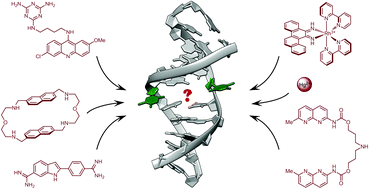
The 2015 Nobel Prize in Chemistry was jointly awarded to Tomas Lindahl, Paul Modrich and Aziz Sancar for their “mechanistic studies of DNA repair”. Their research has not only revolutionised our knowledge of how we function but it also lead to the development of life-saving treatments. In celebration of their landmark achievements, we are delighted to present a special Nobel Prize collection of recent Chemical Communications, Chemical Science and Chemical Society Reviews articles on DNA repair.
2015 Nobel Prize in Chemistry winners
Tomas Lindahl, Paul Modrich and Aziz Sancar © Inserm-P. Latron, Mary Schwalm/AP/Press Association, Max Englund/UNC School of Medicine.
Thomas Lindahl’s research pieced together a molecular image of how base excision repairs DNA when a base of a nucleotide is damaged and subsequently managed to recreate the human repair process in vitro. The mechanism known as nucleotide excision repair, which excises damage from UV and carcinogenic substances, was then mapped by Aziz Sancar – the molecular details of this process changed the entire research field. Paul Modrich also studied the human version of the repair system. His work focused on DNA mismatch repair, a natural process which corrects mismatches that occur when DNA is copied during cell division.
The research carried out by the three 2015 Nobel Laureates in Chemistry has not only revolutionised our knowledge of how we function but also lead to the development of life – saving treatments.

Reviews

Finding needles in a basestack: recognition of mismatched base pairs in DNA by small molecules
Anton Granzhan, Naoko Kotera and  Marie-Paule Teulade-Fichou
Chem. Soc. Rev., 2014, 43, 3630-3665
DOI: http://dx.doi.org:/10.1039/C3CS60455


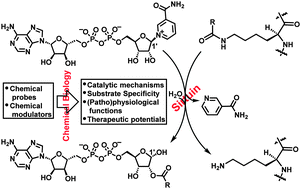
The chemical biology of sirtuins
Bing Chen, Wenwen Zang, Juan Wang, Yajun Huang, Yanhua He,  Lingling Yan,  Jiajia Liu and Weiping Zheng
Chem. Soc. Rev., 2015, 44, 5246-5264
DOI: http://dx.doi.org:/10.1039/C4CS00373J


Luminescent oligonucleotide-based detection of enzymes involved with DNA repair
Chung-Hang Leung, Hai-Jing Zhong, Hong-Zhang He, Lihua Lu, Daniel Shiu-Hin Chan and Dik-Lung Ma
Chem. Sci., 2013, 4, 3781-3795
DOI: http://dx.doi.org:/10.1039/C3SC51228B


Research articles

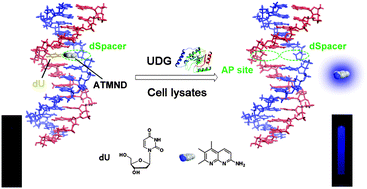
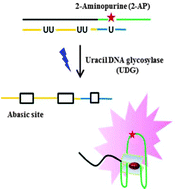
A label-free and sensitive fluorescent method for the detection of uracil-DNA glycosylase activity
Jing Tao, Panshu Song, Yusuke Sato, Seiichi Nishizawa, Norio Teramae, Aijun Tong  and Yu Xiang
Chem. Commun., 2015, 51, 929-932
DOI: http://dx.doi.org:/10.1039/C4CC06170E


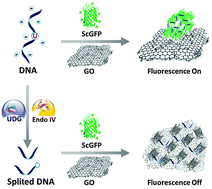
DNA-mediated supercharged fluorescent protein/graphene oxide interaction for label-free fluorescence assay of base excision repair enzyme activity
Zhen Wang, Yong Li, Lijun Li, Daiqi Li, Yan Huang, Zhou Nie and Shouzhuo Yao
Chem. Commun., 2015, 51, 13373-13376
DOI: http://dx.doi.org:/10.1039/C5CC04759E


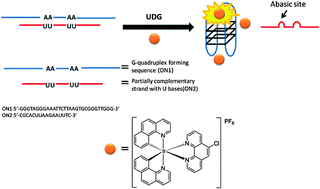
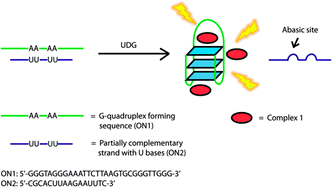
A fluorescent G-quadruplex probe for the assay of base excision repair enzyme activity
Chang Yeol Lee, Ki Soo Park and Hyun Gyu Park
Chem. Commun., 2015, 51, 13744-13747
DOI: http://dx.doi.org:/10.1039/C5CC05010C


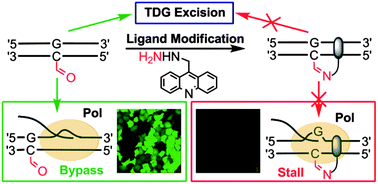
A chemical probe targets DNA 5-formylcytosine sites and inhibits TDG excision, polymerases bypass, and gene expression
Liang Xu, Ying-Chu Chen, Satoshi Nakajima, Jenny Chong, Lanfeng Wang,  Li Lan, Chao Zhang and  Dong Wang
Chem. Sci., 2014, 5, 567-574
DOI: http://dx.doi.org:/10.1039/C3SC51849C


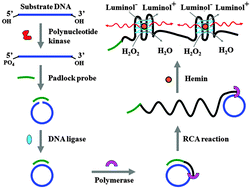
Sensitive detection of polynucleotide kinase using rolling circle amplification-induced chemiluminescence
Wei Tang, Guichi Zhu and Chun-yang Zhang
Chem. Commun., 2014, 50, 4733-4735
DOI: 10.1039/C4CC00256C


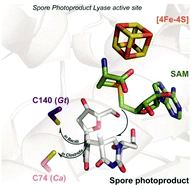
Rescuing DNA repair activity by rewiring the H-atom transfer pathway in the radical SAM enzyme, spore photoproduct lyase
Alhosna Benjdia, Korbinian Heil, Andreas Winkler, Thomas Carell and Ilme Schlichting
Chem. Commun., 2014, 50, 14201-14204
DOI: http://dx.doi.org:/10.1039/C4CC05158K


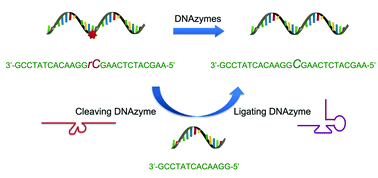
Expanding DNAzyme functionality through enzyme cascades with applications in single nucleotide repair and tunable DNA-directedassembly of nanomaterials
Yu Xiang, Zidong Wang, Hang Xing and  Yi Lu
Chem. Sci., 2013, 4, 398-404
DOI: http://dx.doi.org:/10.1039/C2SC20763J


Detection of base excision repair enzyme activity using a luminescent G-quadruplex selective switch-on probe
Ka-Ho Leung, Hong-Zhang He, Victor Pui-Yan Ma, Hai-Jing Zhong, Daniel Shiu-Hin Chan,  Jun Zhou,  Jean-Louis Mergny, Chung-Hang Leung and  Dik-Lung Ma
Chem. Commun., 2013, 49, 5630-5632
DOI: http://dx.doi.org:/10.1039/C3CC41129J


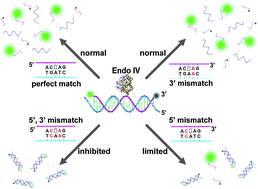
Endonuclease IV discriminates mismatches next to the apurinic/apyrimidinic site in DNA strands: constructing DNA sensing platforms with extremely high selectivity
Xianjin Xiao, Yang Liu and  Meiping Zhao
Chem. Commun., 2013, 49, 2819-2821
DOI: http://dx.doi.org:/10.1039/C3CC40902C


Top 15 most downloaded Chem Soc Rev articles in Q3, 2015

Ultra-stable organic fluorophores for single-molecule research
Qinsi Zheng, Manuel F. Juette, Steffen Jockusch, Michael R. Wasserman, Zhou Zhou, Roger B. Altman and Scott C. Blanchard
DOI: 10.1039/C3CS60237K, Review Article

The chemistry of graphene oxide
Daniel R. Dreyer, Sungjin Park, Christopher W. Bielawski and Rodney S. Ruoff
DOI: 10.1039/B917103G, Critical Review

Selection of boron reagents for Suzuki–Miyaura coupling
Alastair J. J. Lennox and Guy C. Lloyd-Jones
DOI: 10.1039/C3CS60197H, Review Article

Physical and chemical tuning of two-dimensional transition metal dichalcogenides
Haotian Wang, Hongtao Yuan, Seung Sae Hong, Yanbin Li and Yi Cui
DOI: 10.1039/C4CS00287C, Review Article

Advances on structuring, integration and magnetic characterization of molecular nanomagnets on surfaces and devices
N. Domingo, E. Bellido and D. Ruiz-Molina
DOI: 10.1039/C1CS15096K, Critical Review

Heterogeneous photocatalyst materials for water splitting
Akihiko Kudo and Yugo Miseki
DOI: 10.1039/B800489G, Critical Review

Shape control in gold nanoparticle synthesis
Marek Grzelczak, Jorge Pérez-Juste, Paul Mulvaney and Luis M. Liz-Marzán
DOI: 10.1039/B711490G, Tutorial Review

An overview of nanoparticles commonly used in fluorescent bioimaging
Otto S. Wolfbeis
DOI: 10.1039/C4CS00392F, Review Article

Heterogeneous catalysis for sustainable biodiesel production via esterification and transesterification
Adam F. Lee, James A. Bennett, Jinesh C. Manayil and Karen Wilson
DOI: 10.1039/C4CS00189C, Review Article

A review of electrode materials for electrochemical supercapacitors
Guoping Wang, Lei Zhang and Jiujun Zhang
DOI: 10.1039/C1CS15060J, Critical Review

MOF positioning technology and device fabrication
Paolo Falcaro, Raffaele Ricco, Cara M. Doherty, Kang Liang, Anita J. Hill and Mark J. Styles
DOI: 10.1039/C4CS00089G, Review Article

Microfluidic lab-on-a-chip platforms: requirements, characteristics and applications
Daniel Mark, Stefan Haeberle, Günter Roth, Felix von Stetten and Roland Zengerle
DOI: 10.1039/B820557B, Critical Review

Noble metal-free hydrogen evolution catalysts for water splitting
Xiaoxin Zou and Yu Zhang
DOI: 10.1039/C4CS00448E, Review Article

“Green” electronics: biodegradable and biocompatible materials and devices for sustainable future
Mihai Irimia-Vladu
DOI: 10.1039/C3CS60235D, Review Article

Synthetic biology for the directed evolution of protein biocatalysts: navigating sequence space intelligently
Andrew Currin, Neil Swainston, Philip J. Day and Douglas B. Kell
DOI: 10.1039/C4CS00351A, Review Article

Read Full Post »

Tumor-Models

Larry H. Bernstein, MD, FCAP, Curator

LPBI


Tumor Models Bridge Mouse-Human Gap

http://www.genengnews.com/gen-articles/tumor-models-bridge-mouse-human-gap/5610/


Revamped Allograft and Innovative Xenograft Models Can Reduce the Risks of Late-Stage Clinical Trials and Increase the Odds of Translational Success

http://www.genengnews.com/Media/images/Article/HorizonDiscovery_CRISPR1417421418.jpg


CRISPR-Cas9 sgRNA in vitro screens can be used to look for genes that when lost induce resistance to a drug (positive screen) or increase sensitivity to a drug (negative screen). The technology might also be a powerful tool for target ID screens in vivo, and looks set to aid in our understanding of tumor development and progression in animal models. [Horizon Discovery]


Precision medicine is all about the two T’s—targets and treatments—targets that emerge from analyses of patient-specific information, and treatments that hit these targets. Both T’s, however, pose difficulties. All too often, insights and drug candidates originating in precision medicine fail to translate into clinical practice.

This reality prompted sober comments at the most recent event in the Tumor Models series organized by Hanson Wade. “One of the current problems with identifying new targets for precision medicine is identifying biologically meaningful targets likely to translate to the clinic,” complained Nicola McCarthy, Ph.D., oncology program manager, Horizon Discovery.

That pretty much sums up the difficulty with the first of the T’s. Now, what’s so hard about the second one? “It’s estimated that about 94–96% of drugs making it through preclinical testing stages to clinical phases ultimately fail in the clinic as a result of poor efficacy or poor safety,” lamented Leon Hall, Ph.D., senior director, global scientific development, Taconic Biosciences.

  • Drs. McCarthy and Hall were among presenters at Tumor Models Summit Boston 2015. Meeting highlights, discussed herein, included in vitro approaches, such as the powerful gene-editing technology known as CRISPR, as well as in vivo approaches, such as mouse models for immuno-oncology strategies.

    Dr. Hall spoke to the common goal: “We believe, as others do, that by improving the ability of mouse models to mimic human biology, the models will better predict drug responses in the human patient.”


    CRISPR-Modified Screens

    HumanizedMice

    HumanizedMice


    Crown Bioscience is developing research platforms for preclinical evaluation of drugs that harness the human immune system to fight human tumors. For example, the company provides HuPrime® 3.0, a patient-derived xenograft model. It is based on humanized mice, HuMice™, immunocompromised mice that have been inoculated with human hematopoietic cells (from cord blood stem cells).

    http://www.genengnews.com/Media/images/Article/thumb_CrownBioscience_HumanizedMice3669342311.jpg


    “Cell lines are such fantastic tools when you have very targeted mechanistic questions,” exclaimed Tommy Broudy, Ph.D., general manager, Crown Bioscience. In collaboration with Horizon Discovery, Crown Bioscience has developed isogenic cancer models for in vivo compound screening. For example, using Horizon’s rAAV-based Genesis™ gene-editing platform, the companies introduced mutations to genes such as KRAS, PIK3CA, PTEN, IDH1 and IDH2, and p53.

    Expanding its technological capabilities, Horizon Discovery recently added CRISPR-Cas9 single-guide RNA (sgRNA) screening capabilities to a tool collection that already included siRNA cell-line screens.

    Directed by sgRNAs, Cas9 nucleases cut at specific locations in the genome. “Unlike siRNA screens, CRISPR-Cas9 sgRNA screens enable complete loss of a particular protein,” said Dr. McCarthy. “This can be informative in terms of identifying and validating targets for which a phenotype of interest is evident only on complete loss of protein expression.” Such targets, Dr. McCarthy emphasized, can be missed by siRNA screens because full depletion of a target often does not occur consistently between siRNAs.

    Horizon employs CRISPR-Cas9 screens to identify targets amenable to a synthetic lethality approach. Synthetic lethality arises if two conditions are met: 1) mutation of either of two genes is compatible with viability, and 2) mutations in both genes result  in cell death. Potential “synthetic lethal” targets identified by Horizon include specific common mutations occurring in colorectal cancer, such as p53 and KRAS.

    The screens involve putting an sgRNA library targeting thousands of genes into a cancer cell population, aiming for one sgRNA infection per cell so multiple genes aren’t cut in any one cell.
    The sgRNA population is exposed to a target drug of interest, perhaps one being considered for combination drug therapy. Next-generation sequencing identifies baseline and survivor sgRNAs.

    The sgRNAs lost during treatment are potential synthetic lethal targets, suggesting that the corresponding knocked out gene is essential for the viability of a cancer cell line.

    Identifying targets in this way can be “like looking for a needle in a haystack,” asserted Dr. McCarthy. “Difficult cellular changes that once took a long time to engineer, however, are now generally much more straightforward with CRISPR-Cas9 technology.”

  • From Cell Lines to Mouse Models

    “We certainly run many cell-line studies, but we have slightly more translational questions when trying to understand or predict what may happen in the clinic, in the patient population,” informed Dr. Broudy. “Cell lines are not the best tools for that. For translational questions, you want to have models that are as clinically relevant as possible, models that maintain the heterogeneity of cancer and genomic equivalency to a patient tumor.”

    Mouse models fit the bill. Today’s models are able to accommodate ever-evolving scientific and precision/personalized medicine missions, which include precisely editing the genome and harnessing the immune system to fight cancer.

    Case in point: Dr. McCarthy said that potential targets identified from siRNA or CRISPR-Cas9 sgRNA cell-line gene-editing screens are validated through more complex in vitro models such as 3D culture. Targets potentially involved in modulating tumor immune responses might advance to in vivo models, such as syngeneic mouse models, for further validation.

  • Transplantation Model Options

    In general, transplantation mouse models come in two types: allograft (mouse on mouse) and xenograft (human on mouse). An allograft mouse tumor system, which typically consists of a mouse cell line on a mouse immune system, is known as a syngeneic model. Xenograft systems include cell-line xenograft models and patient-derived xenograft (PDX) models. Yet another xenograft system is the humanized hybrid.

    “In a humanized hyrid,” explained Dr. Broudy, “a human tumor or a tumor cell line is engrafted into a mouse in which a human immune system has been reconstituted.” Models of this sort are also called humanized mice. Such models, Dr. Hall added, are meant to better emulate human biology.

    Crown, the premier PDX company, has almost 1,600 PDX models. Their expanding collection represents a global population including models established from American, Asian, and European patients. “And that accounts for the incredible diversity of models our clients, pharma drug developers, can select from,” declared Dr. Broudy.

    “Syngeneic” means genetically similar such as putting a tumor that originated in a C57 black mouse into a different C57 black mouse, meaning the animal has an intact immune system. With increasing efforts to harness the immune system to treat cancer, syngeneics have a big role in immuno-oncology drug development.

    “The tool set just keeps getting bigger and bigger,” Dr. Broudy insisted. “It is allowing us to ask lots of different questions.” A complementary sentiment is expressed by Walter Ausserer, Ph.D., associate general manager of clinical and in vivo services at The Jackson Laboratory (JAX): “I think the science is still young enough that you need to be using every tool you can.”

  • Immuno-Oncology Modeling

    humanized mouse

    Immune-inhibitory pathways (immune checkpoints) are essential for maintaining self-tolerance and modulating immune responses. Immune T cells have a natural ability to destroy cancer cells. This capability of T cells can be inhibited by tumors, which develop immune suppressor mechanisms and thereby escape immune surveillance, gaining the capacity for uncontrolled growth. For example, cells in the tumor microenvironment or a tumor itself may express high levels of immune checkpoint proteins such as CTLA4 or the programmed cell death PD-1 ligand, respectively, which negatively regulate T-cell activation.

    “In immuno-oncology, we are trying to activate a patient’s immune system to recognize and attack that patient’s tumor,” said Dr. Ausserer. Immune checkpoint inhibitor drugs that counteract tumor immune suppression mechanisms and promote immune system activation represent a key focus of immuno-oncology drug development.

    The co-engrafted NOD scid gamma (NSG) humanized mouse developed by JAX is “grafted with both the human immune system and human tumors,” Dr. Ausserer continued. “It is one of the first in vivo model for studying interactions between human immune system cells and human tumors.

    “This area of immuno-oncology is uniquely personal, akin to personalized medicine. You’re trying to coax an individual patient’s immune system to recognize and attack that same patient’s tumor.”

    http://www.genengnews.com/Media/images/Article/thumb_CharlesRiver_Roden2t2972422088.jpg


    According to Charles River Laboratories, immuno-oncology development may be ill-served by con- ventional xenograft models. Such models may lack relevance because they rely on immuno-compromised animals. Syngeneic mouse models, however, represent an attractive alternative. They can show how cancer therapies perform in the presence of a functional immune system.


    Dr. Broudy concurred. “We’ve been putting significant effort into extending the utility of PDX and cell-line xenograft mouse models for immuno-oncology drug development, including utilizing humanized mice. The truth is, if you don’t have a human immune system in the mix and are using only typical human patient-derived tumor xenograft models, there’s not a whole lot of value for immuno-oncology.”

    Another angle was emphasized by Aidan Synnott, Ph.D., site director at Charles River Laboratories. “With the advent of immunotherapies,” he said, “we’ve taken a look at the very old syngeneic mouse models and basically revitalized them.”

    Syngeneic models have been used since the 1960s. In the 1990s and 2000s, however,  people started moving toward xenograft models. According to Dr. Synnott, this trend gained momentum when immunodeficient mouse technology became available.

    The real impetus to immunotherapy came with the 2011 approval of Bristol-Myers Squibb’s Yervoy (ipilimumab), the first checkpoint inhibitor. This therapeutic, which blocks CTLA4, led to widespread recognition that syngeneics offer advantages over conventional human-on-mouse PDX models for immuno-oncology studies because of their functional immune systems.

    Indeed, Merck, Amgen, and other pharmaceutical companies used syngenic mouse models in developing their approved therapies, recalled Dr. Synnott. Syngeneic mouse tumor models of B16-F10 melanoma and M38 colon adenocarcinoma were both used in developing Amgen’s leukemia drug Blinatumomab and Merck’s melanoma drug Keytruda.

  • Mechanistic Insights

    However, mechanisms underlying drug efficacy and efficacy endpoints still remain to be fully elucidated and defined. So Charles River is running studies to do exactly that. For example, the company employs flow cytometry to assess drug effects on the balance of different types of immune cells with antibodies.

    “In some of our syngeneic models following checkpoint inhibitor treatment, the number of CD4-positive T cells will go down,” explained Dr. Synnott. “However, the number of CD8 effector T cells that actually attack the cancer will go up.

    “We help our clients understand how their drug is actually having an effect. You don’t just tell them, ‘Your tumor shrank, so your therapy works.’ You tell them the tumor shrank because it enhanced a certain subset of immune cells which then presumably attacked the tumor and shrank it.”

  • Mighty Human Mouse Models

    Taconic Biosciences’ portfolio of precision research models consists of genetically engineered humanized mice carrying human genes, and mice engrafted with human cells and tissues. “We work very closely with Japan’s Central Institute for Experimental Animals,” said Dr. Hall. “They focus on the genetic development of what we call super-immunodeficient mice that can be readily engrafted with foreign cells and tissues. These become the basis of our cell- and tissue-engraftment portfolio.”

    huNOG, Taconic’s primary immuno-oncology model, is a NOG (NOD/Shi-scid/IL-2Rγnull) mouse engrafted with a human immune system. It expresses a variety of human immune cell lineages including T and B cells.

    Much of today’s immuno-oncology work focuses on “enhancing T-cell functionality within cancer patients to enable their T cells to activate, target the tumor, and destroy tumor cells,” stated Dr. Hall. Human huNOG T cells are functional and mimic responses seen in human patients treated with immune checkpoint inhibitory drugs. A huNOG mouse can successfully engraft a human primary tumor.

    “You can treat those mice with a drug such as ipilimumab, and the human immune system will respond showing typical markers of activation seen in human patients, such as increases in T cells,” Dr. Hall continued. “Immune cells such as cytotoxic T cells infiltrate the tumor, resulting in tumor regression.”

    After putting a human patient tumor on board, immune responses generated by the tumor’s presence are assessed by flow cytometry and other techniques. Both immune responses and interactions between the human immune system and human tumor are evaluated following therapeutic intervention.

    Historically, pharmaceutical and biotechnology companies developed drugs for preclinical studies in mouse models that were, well, mouse specific. Due to species specificity, these drugs would not be exactly the same as the large molecule drug that would be utilized in humans.

    Dr. Hall wrapped up as follows: “Being able to place a human immune system within the mouse allows investigators to utilize the same therapeutic agent in the mouse model that will move to the clinic.” As a result, more drugs should be successful once they reach clinical testing.

Read Full Post »

The Relation between Coagulation and Cancer affects Supportive Treatments

Demet Sag, PhD


Coagulation and Cancer

There are several supportive therapies for cancer patients. One of the most important one is controlling the blood intake. This is sometimes observe keeping the blood cell count at certain levels, or providing safe blood/blood products to avoid any contaminations or infections,

The relation between cancer and coagulation was known for a long time but it was becoming clear recently.  Having coagulapathies also reduce the survival of patients since they can’t response to given treatments. Thus, it is necessary to give supportive therapies to control the coagulation. Problems in coagulation may develop from inherited (genetics), or acquired due to given therapies that cause varying abnormalities towards bleeding or thrombose at many levels.  The thrombotic events are important since they are the second leading cause of death in cancer patients (after cancer itself).  The presence of these coagulopathies determines the survival rate, length of survival either short-term or long-term, as well as relapses.

Cancer and Coagulation from start to finish:

Thrombotic risk factors in cancer patients

  1. Patient related
  2. Cancer related
  3. Treatment related

.

  1. Patient Related:
  • Older age
  • Bed rest
  • Obesity
  • Previous thrombosis
  • Prothrombotic mutations
  • High leukocyte and platelet counts
  • Comorbidities
  1. Cancer related:

a. Site of cancer:

  • brain,
  • pancreas,
  • kidney,
  • stomach,
  • lung,
  • bladder,
  • gynecologic,
  • hematologic malignancies

b. Stage of cancer:

  • advanced stage and
  • initial period after diagnosis
  1. Treatments:
  • Hospitalization
  • Surgery
  • Chemo- and
  • hormonal therapy
  • Anti-angiogenic therapy
  • Erythropoiesis stimulating agents
  • Blood transfusions
  • CVC, central venous catheters
  • Radiations

Thromboembolic events can be venous or arterial.

Venous events include

  • deep vein thrombosis (DVT),
  • pulmonary embolism (PE)

together categorized as venous thromboembolism (VTE).

Arterial events, include

  • stroke, myocardial infarction and
  • arterial embolism.

increase in the rate of VTEIncrease in the rate of venous thromboembolism (VTE) over time. Results are presented as annual rates of deep venous thrombosis (DVT), pulmonary embolism (PE) without deep venous thrombosis, and both between 1995 and 2003. Significant trends for increasing rates were observed for all 3 diagnoses (P < .0001). The rate of increase was found to be greater in the subgroup of patients who received chemotherapy. Error bars represent 95% confidence intervals.

There is an increase in both venous and arterial eventsrecently with “unacceptably high” event rates documented in the most contemporary studies:

There are significant consequences to the occurrence of thromboembolism in this setting:

  • requirement for long-term anticoagulation,
  • a 12% annual risk of bleeding complications,
  • an up to 21% annual risk of recurrent VTEand
  • potential impact on chemotherapy delivery and patient quality of life.


Therapeutic interventions enhance the risk of VTE in cancer.

  • Cancer patients undergoing surgery have a two-fold increased risk of postoperative VTE as compared to non-cancer patients, and this elevation in risk can persist for a period up to 7 weeks
  • Hospitalization also substantially increases the risk of developing VTE in cancer patients (OR 2.34, 95% CI 1.63 – 3.36)
  • The use of systemic chemotherapy is associated with a 2-to 6-fold increased risk of VTE compared to the general population.
  • Anti-angiogenic agents, particularly thalidomide and lenalidomide, have been associated with high rates of VTE when given in combination with dexamethasone or chemotherapy.
  • Bevacizumab-containing regimens have been associated with increased risk for an arterial thromboembolic event (hazard ratio [HR] 2.0, 95% CI 1.05- 3.75) but the data for risk of VTE are conflicting
  • Sunitinib and sorafenib, agents targeting the angiogenesis pathway, have also similarly been associated with elevated risk for arterial (but not venous) events [RR 3.03 (95% CI, 1.25 to 7.37)]

Anticoagulants and Cancer Coagulopathies

There are many studies on coagulation and use of anti-coagulants yet the same patient may also thrombose at any given time so the coagulant therapies should be under close surveillance.  The study (PMID:111278600) by Palereti et all in 2000 to many  compared this issue.

fig1_10.1002_cncr.23062

Palereti et al. showed that:

“The outcome of anticoagulation courses in 95 patients with malignancy with those of 733 patients without malignancy. All patients were participants in a large, nation-wide population study and were prospectively followed from the initiation of their oral anticoagulant therapy.

Based on 744 patient-years of treatment and follow-up, the rates of major (5.4% vs 0.9%), minor (16.2% vs 3.6%) and total (21.6% vs 4.5%) bleeding were statistically significantly higher in cancer patients compared with patients without cancer.

Bleeding was also a more frequent cause of early anticoagulation withdrawal in patients with malignancy (4.2% vs. 0.7%; p <0.01; RR 6.2 (95% CI 1.95-19.4). There was a trend towards a higher rate of thrombotic complications in cancer patients (6.8% vs. 2.5%; p = 0.058; RR 2.5 [CI 0.96-6.5]) but this did not achieve statistical significance”.

They concluded that “patients with malignancy treated with oral anticoagulants have a higher rate of bleeding and possibly an increased risk of recurrent thrombosis compared with patients without malignancy.”

http://www.cancernetwork.com/sites/default/files/figures_diagrams/1502FeinsteinFigure.png

1502FeinsteinFigure

Cancer and Coagulation in more detail at Molecular Level:

Cancer is a complex disease from its initiation to its treatment. In the body the response to drugs generates side effects for being foreign (immune responses and inflammation), toxic, or disturbing the hemostasis of the coagulation system. In addition, activation of oncogenic pathways cab also be activated that may not only effect the development of the cancer but also may induce oncogenes to activate dormant cancer cells. In the coagulation system the balance is important to keep anti-coagulant state, with oversimplification, such as having certain number of tissue factor (TF) that is a receptor determines the anticoagulant state. However, certain pro-oncogenic genes like RAS, EGFR, HER2, MET, SHH and loss of tumor suppressors (PTEN, TP53) change the gene regulation so they alter the expression, activity and vesicular release of coagulation effectors, as exemplified by tissue factor (TF). As a result, there is a bridge between the coagulation-related genes (coagulome) and specific cancer coagulapathies, such as in glioblastoma multiforme (GBM), medulloblastoma (MB), etc. Therefore, these coagulome can be a great target not only to inhibit angiogenesis and tumor growth but also prevent any coagulopathies, use in single genomics/circulating cancer cells as well as grading the level of cancer specifically.

Here in this figures Tumor-hemostatic system interactions http://onlinelibrary.wiley.com/store/10.1111/jth.12075/asset/image_n/jth12075_f1.gif?v=1&t=ifxvwlxk&s=62da078fc1c8d85d58c256e83954181a16f7463b

and Microparticle (MP) production and activities in cancer are well summarized http://onlinelibrary.wiley.com/store/10.1111/jth.12075/asset/image_n/jth12075_f2.gif?v=1&t=ifxvwlzv&s=13f9b775d7417f12e3ae5f879c09ac8825918d61

coagulation and cancer


http://onlinelibrary.wiley.com/store/10.1111/jth.12075/asset/image_n/jth12075_f1.gif?v=1&t=ifxvwlxk&s=62da078fc1c8d85d58c256e83954181a16f7463b

Tumor-hemostatic system interactions. Tumor cells activate the hemostatic system in multiple ways. Tumor cells may release procoagulant tissue factor, cancer procoagulant and microparticles (MP) that can directly activate the coagulation cascade. Tumor cells may also activate the host’s hemostatic cells (endothelial cells and platelets), by either release of soluble factors or by direct adhesive contact, thus further enhancing clotting activation.


 tumor and coagulation cascade


http://onlinelibrary.wiley.com/store/10.1111/jth.12075/asset/image_n/jth12075_f2.gif?v=1&t=ifxvwlzv&s=13f9b775d7417f12e3ae5f879c09ac8825918d61

Microparticle (MP) production and activities in cancer. Tumor cells actively release MP but also promote MP formation by platelets. Tissue factor (TF) and phosphatidylserine (PS) expression on the surfaces of both platelet- and tumor-derived MP are involved in blood clotting activation and thrombus formation. On the other hand, the elevated content of proangiogenic factors in platelet-derived MP (VEGF, vascular endothelial growth factor, FGF, fibroblast growth factor, PDGF, platelet-derived growth factor), render these elements also important mediators of the neangiogenesis process. Finally, intracellular transfer of MP may occur between cancer cells, leading to a horizontal propagation of oncogenes and amplification of their angiogenic phenotype.


Immune Response and Cancer with Coagulopathies:

  1. I. Goufman et al also suggested that plasma level of IgG autoantibodies to plasminogen changes during cancer coagulopathies.

Their data based on ELISA measurements of their patients:

  • with benign prostatic hyperplasia (n=25),
  • prostatic cancer (n=17),
  • lung cancer (n=15), and
  • healthy volunteers (n=44).

High levels of IgG to plasminogen were found

  • in 2 (12%) of 17 healthy women, in 1 (3.6%) of 27 specimens in a healthy man,
  • in 17 (68%) of 25 specimens in prostatic cancer,
  • in 10 (59%) of 17 specimens in lung cancer,
  • in 5 (30%) of 15 specimens in benign prostatic hyperplasia.

Comparison of plasma levels of anti-plasminogen IgG by affinity chromatography showed 3-fold higher levels in patients with prostatic cancer vs. healthy men.

Structure and function of platelet receptors initiating blood clotting.

There is a missed or overlooked concept about coagulation and cancer. In their article they mainly focused on the structure and function of key platelet receptors taking role in the thorombus formation and coagulation.

At the clinical level, recent studies reveal the link between coagulation and other pathophysiological processes, including platelet activation, inflammation, cancer, the immune response, and/or infectious diseases. These links are likely to underpin the coagulopathy associated with risk factors for venous thromboembolic (VTE) and deep vein thrombosis (DVT). At the molecular level, the interactions between platelet-specific receptors and coagulation factors could help explain coagulopathy associated with aberrant platelet function, as well as revealing new approaches targeting platelet receptors in diagnosis or treatment of VTE or DVT. Glycoprotein (GP)Ibα, the major ligand-binding subunit of the platelet GPIb-IX-V complex, that binds the adhesive ligand, von Willebrand factor (VWF), is co-associated with the platelet-specific collagen receptor, GPVI. The GPIb-IX-V/GPVI adheso-signaling complex not only initiates platelet activation and aggregation (thrombus formation) in response to vascular injury or disease but GPIbα also regulates coagulation through a specific interaction with thrombin and other coagulation factors.

Clinical Data and Some Samples of Biomarkers:

Development of biomarkers and management of cancer coagulapathies are underway since there are times this coagulapathies may be as deadly as the cancer itself.

The sample study and data from Reference: Alok A. Khorana, M.D. Cancer and Coagulation. Am J Hematol. 2012 May; 87(Suppl 1): S82–S87. Published online 2012 Mar 3. doi:  10.1002/ajh.23143 PMCID: PMC3495606. NIHMSID: NIHMS386379

Resource: PMC full text: Am J Hematol. Author manuscript; available in PMC 2013 May 1.

Published in final edited form as:

Am J Hematol. 2012 May; 87(Suppl 1): S82–S87.

Published online 2012 Mar 3. doi:  10.1002/ajh.23143

Copyright/License ►Request permission to reuse

Table 1

Selected Clinical Risk Factors and Biomarkers for Cancer-associated Thrombosis

Patient-associated risk factors
 Older age
 Race
 Gender
 Medical comorbidities
 Obesity
 Prior history of thrombosis
Cancer-associated risk factors
 Primary site
 Stage
 Cancer histology (higher for adenocarcinoma than squamous cell)
 Time after initial diagnosis (highest in first 3-6 months)
Treatment-associated risk factors
 Chemotherapy
 Anti-angiogenic agents
 Hormonal therapy
 Erythropoiesis-stimulating agents
 Transfusions
 Indwelling venous access devices
 Radiation
 Surgery
Biomarkers
Currently widely available
 Platelet count (≥350,000/mm3)23
 Leukocyte count (> 11,000/mm3)23
 Hemoglobin (< 10 g/dL)23
 D-dimer25,26
Investigational and/or not widely available
 Tissue factor (antigen expression, circulating microparticles, antigen or activity)3133


Table 2

Predictive Model for chemotherapy-associated VTE23

Patient Characteristics Risk Score
Site of cancer
 Very high risk (stomach, pancreas) 2
 High risk (lung, lymphoma, gynecologic, bladder, testicular) 1
Prechemotherapy platelet count 350000/mm3 or more 1
Hemoglobin level less than 10g/dl or use of red cell growth factors 1
Prechemotherapy leukocyte count more than 11000/mm3 1
Body mass index 35kg/m2 or more 1

High-risk score ≥ 3

Intermediate risk score =1-2

Low-risk score =0


Rates of VTE According to Risk Score

Study Type, f/u N Low-risk (score=0) Intermediate–risk (score =1-2) High-risk (score≥3)
Khorana et al23, 2008 Development cohort, 2.5 mos 2701 0.8% 1.8% 7.1%
Khorana et al23, 2008 Validation cohort, 2.5 mos 1365 0.3% 2% 6.7%
Kearney et al67, 2009 Retrospective, 2 yrs 112 5% 15.9% 41.4%
Price et al68, 2010 Retrospective, pancreatic, NA 108 – * 14% 27%
Ay et al36, 2010 Prospective, 643 days 819 1.5% 9.6% (score= 2) 17.7%
3.8% (score=1)
Khorana et al69, 2010 Prospective**, 3 mos 30 – *** 27%
Moore et al2, 2011 Retrospective, cisplatin-based chemotherapy only 932 13% 17.1% 28.2%
Mandala et al37, 2011 Retrospective, phase I patients only, 2 months 1,415 1.5% 4.8% 12.9%

NA=not available

*Pancreatic cancer patients are assigned a score of 2 based on site of cancer and therefore there were no patients in the low-risk category

**included 4-weekly screening ultrasonography

***enrolled only high-risk patients

Table 4

ASCO and NCCN Recommendations for Treatment of VTE in Cancer

ASCO NCCN
Initial treatment
LMWH is the preferred approach for the initial 5-10 days LMWH, UFH or factor Xa antagonists according to patient’s characteristics and clinical situation
Long term treatment
LMWH for at least 6 months is preferred. LMWH is preferred
VKA are acceptable when LMWH is not available. Indefinite anticoagulation in patients with active cancer or persistent risk factors
Indefinite anticoagulation in patients with active cancer.
Thrombolytic therapy in initial treatment
Restricted to patients with life- or limb-threatening thrombotic events Restricted to massive or submassive PE with moderate or severe right ventricular enlargement or dysfunction
Inferior vena cava filters
Restricted to patients with contraindications to anticoagulation or recurrent VTE despite adequate long-term LMWH Restricted to patients with contraindications to or failure of anticoagulation, cardiac or pulmonary dysfunction severe enough to make any new PE life-threatening or multiple PE with chronic pulmonary hypertension
Treatment of catheter-related thrombosis
NA LMWH or VKA for as long as catheter is in place or for 1 to 3 months after catheter removal
 Soluble P-selectin (> 53.1 ng/mL)65
 Factor VIII66
 Prothrombin fragment F 1+2 (>358 pmol/L) 26


Genome Analysis at the crossroads of Coagulation and Cancer

, Human phenotype ontology annotation and cluster analysis to unravel genetic defects in 707 cases with unexplained bleeding and platelet disordersGenome Medicine, 2015, 7,1

Phenotype similarity clustering of cases according to HPO terms. Heat map showing pairwise phenotypic similarity among affected members of pedigrees, cases with classical syndromes and cases with variants in ACTN1. The groups are ordered through complete-linkage hierarchical clustering within each class and P values of phenotypic similarity are shown in a scatterplot superimposed over a histogram showing the distribution of P values.

Westbury et al. Genome Medicine 2015 7:36   doi:10.1186/s13073-015-0151-5
Download authors’ original image

Phenotype clusters 18 and 29. Illustrative subgraphs of the HPO showing terms for the phenotype clusters 18 (15 cases) and 29 (16 cases). Arrows indicate direct (solid) or indirect (dashed) is a relations between terms in the ontology. DMPV: decreased mean platelet volume; PA: phenotypic abnormality; Plt-agg: platelet aggregation abnormality.

Westbury et al. Genome Medicine 2015 7:36   doi:10.1186/s13073-015-0151-5
Download authors’ original image

s13073-015-0151-5-5 s13073-015-0151-5-6

Rare variants identified inACTN1
Case Transcript variant ENST00000394419 Protein variant ENSP00000377941.4 HGMD variant Classification PLT, ×109/L MPV, fL, and/or presence of macrothrombocytes Bleeding phenotype
B200726 14:69392385 A/C F37C No LPV 57 18.1, macrothrombocytes None
B200207 14:69392358 C/T R46Q Yes PV 53 >13, macrothrombocytes None
B200209 PV 76 >13, macrothrombocytes Mild
B200212 PV 98 >13, macrothrombocytes None
B200254 PV 34 >13, macrothrombocytes None
B200735 PV 52 12.0, macrothrombocytes None
B200746 14:69392359 G/A R46W No LPV 96 15.2, macrothrombocytes None
B200197 14:69392344 G/C Q51E No LPV 113 >13, macrothrombocytes Mild
B200836 14:69387750 C/T V105I Yes PV 53 NA, macrothrombocytes None
B200837a PV 75 NA, macrothrombocytes None
B200671 14:69371375 C/T E225K Yes PV 97 13.7, macrothrombocytes Mild
B200716 PV 82 15.0, macrothrombocytes None
B200398 14:69369274 C/T V228I No LPV 31 15.4, macrothrombocytes Mild
B200280 14:69358897 C/T R320Q No LPV 108 15.1, macrothrombocytes Mild
B200281a LPV 111 13.9, macrothrombocytes None
B200835 14:69352254 C/T A425T No VUS 50 10.0, no macrothrombocytes Mild
B200283 14:69349768 A/G L547P No LPV 91 13.3, macrothrombocytes Mild
B200048 14:69349648 G/A A587V No VUS 390 NA, no macrothrombocytes Mild
B200284 14:69346749 G/T T737N No LPV 60 16.1, macrothrombocytes Mild
B200285a LPV 48 16.8, macrothrombocytes Mild
B200741 14:69346747 G/A R738W Yes PV 94 12.9, macrothrombocytes None
B200745 PV 70 14.5, macrothrombocytes None
B200750 14:69346746 C/T R738Q No LPV 106 14.0, macrothrombocytes None
B200414 14:69346704 C/G R752P No LPV 121 11.4, macrothrombocytes Mild

aAffected family member.

Westbury et al.

Westbury et al. Genome Medicine 2015 7:36   doi:10.1186/s13073-015-0151-5

Rare variants identified inMYH9and validated by Sanger sequencing
Case Transcript variant ENST00000216181 Protein variant ENSP00000216181 HGMD variant Classification PLT, ×109/L MPV, fL and/or presence of macrothrombocytes OtherMYH9-RD characteristics
B200760 22:36744995 G/A S96L Yes PV 180 Macrothrombocytes None
B200771 22:36705438 C/A D578Y No VUS 184 10.1 None
B200423 22:36696237 G/A A971V No VUS 262 10.2 None
B200024 22:36691696 A/G S1114P Yes VUS 164 NA None
B200245 VUS 53 11.1, Macrothrombocytes None
B200243 22:36691115 G/A R1165C Yes PV 22 Macrothrombocytes None
B200594 PV 46 Macrothrombocytes None
B200595a PV 61 Macrothrombocytes None
B200614 22:36688151 C/T D1409N No VUS 319 9.8 None
B200752 VUS 149 10.1, Macrothrombocytes None
B200855 VUS 95 16.8, Macrothrombocytes None
B200208 22:36688106 C/T D1424N Yes PV 99 13.6 None
B200010 22:36685249 G/C S1480W No VUS 244 NA None
B200244 22:36678800 G/A R1933X Yes PV 26 Macrothrombocytes Döhle inclusions

Other MYH9-RD characteristics sought were the presence of Döhle inclusions, cataract, deafness or renal pathology.

aFather of B200594.

Westbury et al.

Westbury et al. Genome Medicine 2015 7:36   doi:10.1186/s13073-015-0151-5

Pathogenic and likely pathogenic variants identified in genes associated with autosomal recessive and X-linked recessive bleeding and platelet disorders
Case Position Gene Ref Alt Genotype HGMD Effecta Haematological HPO terms Other HPO terms Classification:
Variant Phenotype
B200286 3:148881737 HPS3 G C C|C Yes Abnormal splicing Bleeding with minor or no trauma, subcutaneous haemorrhage, menorrhagia, postpartum haemorrhage, impaired ADP-induced platelet aggregation, impaired epinephrine-induced platelet aggregation, epistaxis, prolonged bleeding after surgery, prolonged bleeding after dental extraction, increased mean platelet volume. Hypothyroidism, visual impairment, nystagmus, albinism. PV Explained
B200412 3:148858819 HPS3 T TA T|TA No Frameshift Impaired epinephrine-induced platelet aggregation, bleeding with minor or no trauma, subcutaneous haemorrhage, epistaxis, menorrhagia, prolonged bleeding after surgery, abnormal dense granules. Ocular albinism. LPV Possibly explained
3:148876539 HPS3 G A G|A No W593a LPV
B200068 10:103827041 HPS6 C G C|G No L604V Increased mean platelet volume. Congenital cataract, strabismus, maternal diabetes. LPV Possibly explained
10:103827554 HPS6 C G C|G No L775V LPV
B200196 X:48542673 WAS C T T Yes T45M Thrombocytopenia, abnormal bleeding, decreased mean platelet volume, abnormal platelet shape. Recurrent infections. PV Explained
B200725 X:48544145 WAS T C C Yes F128S Monocytosis, neutrophilia, thrombocytopenia, leukocytosis, subcutaneous haemorrhage, gastrointestinal haemorrhage. PV Explained
B200443 X:138633272 F9 G A A Yes R191H Reduced factor IX activity, impaired ADP-induced platelet aggregation, bleeding with minor or no trauma, spontaneous haematomas, abnormal number of dense granules. PV Partially explained
B200452 X:154124407 F8 C G G Yes S2125T Reduced factor VIII activity, persistent bleeding after trauma, prolonged bleeding after surgery, prolonged bleeding after dental extraction, bleeding requiring red cell transfusion, impaired collagen-induced platelet aggregation, bleeding with minor or no trauma, joint haemorrhage, abnormal platelet shape, abnormal number of dense granules. PV Partially explained
B200772 X:154176011 F8 A G G No F692S Reduced factor VIII activity, bruising susceptibility, impaired ADP-induced platelet aggregation, impaired collagen-induced platelet aggregation, impaired thromboxane A2 agonist-induced platelet aggregation, impaired ristocetin-induced platelet aggregation, impaired arachidonic acid-induced platelet aggregation, impaired thrombin-induced platelet aggregation, abnormal platelet granules, bleeding with minor or no trauma. LPV Possibly partially explained

Alt: alternative; Ref: reference.

aEffect considered relative to the Consensus Coding Sequence (CCDS) for each gene.

Westbury et al.

Westbury et al. Genome Medicine 2015 7:36   doi:10.1186/s13073-015-0151-5

Table 2

TFPI and TF tumor mRNA expression across clinicopathological breast cancer subtypes

  mRNA expression (tumor) Protein levels (plasma)
Characteristic Groups Total TFPI (α + β) P TFPIα P TFPIβ P TF P Total TFPI P Free TFPI P TF P
T-status T1 −0.146 0.054 −0.135 0.257 −0.084 0.201 −0.023 0.652 72.01 0.013 10.82 0.997 4.14 0.125
T2-T3 0.085 0.018 0.060 0.054 65.02 10.82 4.66
Grade G1-G2 −0.022 0.850 −0.005 0.424 −0.033 0.743 0.271 0.003 71.04 0.082 10.66 0.682 4.63 0.557
G3 −0.045 −0.113 0.004 −0.229 66.12 10.97 4.14
N-status Negative −0.109 0.091 −0.136 0.127 −0.082 0.104 0.005 0.881 69.93 0.183 10.77 0.869 4.95 0.282
Positive 0.104 0.078 0.110 0.032 66.00 10.90 4.14
ER status Positive −0.067 0.317 −0.082 0.557 −0.056 0.183 0.001 0.784 69.42 0.240 10.91 0.671 4.42 0.409
PR status Negative 0.076 0.011 0.123 0.057 65.44 10.52 5.28
Positive −0.131 0.021 −0.145 0.075 −0.112 0.014 0.085 0.244 69.81 0.195 11.19 0.175 4.32 0.246
HER2-status Negative 0.161 0.108 0.182 −0.127 65.92 10.08 5.04
Negative −0.072 0.054 −0.101 0.073 −0.041 0.154 0.004 0.731 68.45 0.893 10.68 0.287 4.47 0.428
Positive 0.313 0.301 0.228 0.103 69.09 12.05 4.78
HR status Yes 0.076 0.326 0.007 0.587 0.114 0.221 0.016 0.991 64.78 0.161 10.41 0.568 5.26 0.470
No −0.066 −0.080 −0.052 0.014 69.57 10.94 4.47
Triple-negative status Yes −0.051 0.886 −0.110 0.718 0.041 0.635 −0.158 0.326 63.21 0.072 10.06 0.345 5.23 0.969
No −0.029 −0.048 −0.027 0.055 69.73 10.99 4.57

Median values for TFPI and TF mRNA expression in tumors and protein levels in plasma according to clinically defined groups. Corresponding P-values (unadjusted) are shown. Significant P-values in bold. TFPI, tissue factor pathway inhibitor; TF, tissue factor; HER2, human epidermal growth factor receptor 2.Abbreviations: T, tumor; G, grade; N, node; ER, estrogen receptor; PR, progesterone receptor; HR, hormone receptor.

Table 3

Significant association between TFPI single nucleotide polymorphisms (SNPs) and clinicopathological characteristics and molecular subtypes

Characteristic SNP Risk allele Odds ratio 95% CI P False discovery rate
T status
T1 Reference Reference Reference Reference
T2 to T3 rs10153820 A 3.14 1.44, 6.86 0.004 0.056
TN status (ER-/PR-/HER2-negative)
No Reference Reference Reference Reference
Yes rs8176541a G 2.62 1.11, 5.35 0.026 0.092
rs3213739a G 2.58 1.34, 4.99 0.005 0.033
rs8176479a C 3.10 1.24, 7.72 0.015 0.071
rs2192824a T 2.44 1.39, 4.93 0.002 0.033
N status
Positive Reference Reference Reference Reference
Negative rs10179730 G 3.34 1.42, 7.89 0.006 0.083
Basal tumor subtype
Non-basal Reference Reference Reference Reference
Basal rs3213739a G 2.23 1.15, 4.34 0.018 0.107
rs8176479a C 2.79 1.12, 6.96 0.028 0.107
rs2192824a T 2.41 1.24, 4.65 0.009 0.107
rs10187622a C 5.20 1.17, 23.20 0.031 0.107
Luminal B tumor subtype
Non-luminal B Reference Reference Reference Reference
Luminal B rs16829086a T 2.09 1.03, 4.25 0.041 0.191
rs10179730a G 3.53 1.47, 8.46 0.005 0.066
rs10187622a T 2.73 1.24, 6.03 0.013 0.091
Normal-like tumor subtype
Non-normal-like Reference Reference Reference Reference
Normal-like rs5940 T 22.17 4.43, 110.8 0.0002 0.003

aSNPs representing a haplotype effect. SNPs are listed by ascending chromosome positions. TFPI, tissue factor pathway inhibitor; ER, estrogen receptor; PR, progesterone receptor; HER2, human epidermal growth factor 2.

Table 4

Significant correlations between TFPI single nucleotide polymorphisms (SNPs) and TFPI mRNA expression in breast tumors

Probe SNP Region Alleles a Minor allele frequency Beta r P False discovery rate
TFPIα rs2192824b Intronic C:T 0.490 −0.209 −0.180 0.029 0.200
TFPIα rs7594359b Intronic C:T 0.483 −0.219 −0.184 0.025 0.200
TFPIβ rs3213739b Intronic G:T 0.417 0.187 0.213 0.010 0.032
TFPIβ rs8176479b Intronic C:A 0.238 0.184 0.192 0.021 0.049
TFPIβ rs2192824b Intronic C:T 0.490 −0.267 −0.273 0.001 0.011
TFPIβ rs12613071b Intronic T:C 0.158 0.284 0.208 0.011 0.032
TFPIβ rs2192825b Intronic T:C 0.466 −0.251 −0.249 0.002 0.012
TFPIβ rs7594359b Intronic C:T 0.483 −0.248 −0.247 0.002 0.012
TFPIα + β rs2192824b Intronic C:T 0.490 −0.168 −0.161 0.050 0.187
TFPIα + β rs12613071b Intronic T:C 0.158 0.238 0.164 0.048 0.187
TFPIα + β rs7594359b Intronic C:T 0.483 −0.190 −0.178 0.030 0.187

aMajor:minor. bSNPs representing a haplotype effect. mRNA expression was assayed by the Agilent Human V2 Gene Expression 8x60k array, and probes for tissue factor pathway inhibitor (TFPI)α, TFPIβ and total TFPI (TFPIα + β) mRNA were analyzed. Alleles for the positive DNA strand (UCSC annotated) are shown, and SNPs are listed by ascending chromosome positions.

“Eight TFPI SNPs were found to be correlated to total TFPI protein levels in patient plasma (Table 5). The A-T-A-C-T-A-C-G haplotype composed of these eight SNPs (rs8176541-rs3213739-rs8176479-rs2192824-rs2192825-rs16829088-rs7594359-rs10153820) represented a common haplotype (frequency 0.19) with quite strong correlation to total TFPI protein; r = 0.481 (B = 14.62, P = 6.35 × 10⁻¹⁰). No correlation between TFPI SNPs and free TFPI protein, or between TF SNPs and TF protein in plasma was observed (P >0.05, data not shown). Adjusting for age had no effect on the correlation (data not shown).”

Table 5

Significant correlations between TFPI single nucleotide polymorphisms (SNPs) and total TFPI protein levels in plasma

Protein SNP Region Alleles a Minor allele frequency Beta r P False discovery rate
Total TFPI rs8176541b Intronic G:A 0.283 15.64 0.571 7.69 × 10⁻¹⁴ 1.08 × 10⁻¹²
Total TFPI rs3213739b Intronic G:T 0.417 11.35 0.488 5.38 × 10⁻¹⁰ 3.77 × 10⁻⁹
Total TFPI rs8176479b Intronic C:A 0.238 12.22 0.480 1.20 × 10⁻⁹ 5.62 × 10⁻⁹
Total TFPI rs2192824b Intronic C:T 0.490 −9.88 −0.404 3.81 × 10⁻⁷ 1.07 × 10⁶
Total TFPI rs2192825b Intronic T:C 0.466 −7.55 −0.301 2.40 × 10⁻⁴ 5.30 × 10⁻⁴
Total TFPI rs16829088b Intronic G:A 0.250 11.23 0.424 1.00 × 10⁻⁷ 3.51 × 10⁻⁷
Total TFPI rs7594359b Intronic C:T 0.483 −6.90 −0.275 6.90 × 10⁻⁴ 0.001
Total TFPI rs10153820b Near 5UTR G:A 0.125 −7.79 −0.215 0.009 0.016

aMajor:minor. bSNPs representing a haplotype effect for total tissue factor pathway inhibitor (TFPI). Alleles for the positive DNA strand (UCSC annotated) are shown.

In sum, combination of molecular physiology and genomics will improve the conditions of the patients not only to diagnose early or to monitor the disease but also to streamline the current drugs to be more efficient and therapeutic.

References:

·         PMID: 25480646, Gardiner EE1, Andrews RK. Structure and function of platelet receptors initiating blood clotting. Adv Exp Med Biol. 2014;844:263-75. doi: 10.1007/978-1-4939-2095-2_13.


Further Reading:

Mari Tinholt, Hans Kristian Moen Vollan, Kristine Kleivi Sahlberg, Sandra Jernström, Fatemeh Kaveh, Ole Christian Lingjærde,Rolf Kåresen, Torill Sauer, Vessela Kristensen, Anne-Lise Børresen-Dale, Per Morten Sandset, Nina Iversen, Tumor expression, plasma levels and genetic polymorphisms of the coagulation inhibitor TFPI are associated with clinicopathological parameters and survival in breast cancer, in contrast to the coagulation initiator TFBreast Cancer Research, 2015, 17, 1

 Chaabane, L. Tei, L. Miragoli, L. Lattuada, M. von Wronski, F. Uggeri, V. Lorusso, S. Aime, In Vivo MR Imaging of Fibrin in a Neuroblastoma Tumor Model by Means of a Targeting Gd-Containing PeptideMolecular Imaging and Biology, 2015,

Daniela Bianconi, Alexandra Schuler, Clemens Pausz, Angelika Geroldinger, Alexandra Kaider, Heinz-Josef Lenz, Gabriela Kornek, Werner Scheithauer, Christoph C. Zielinski, Ingrid Pabinger, Cihan Ay, Gerald W. Prager, Integrin beta-3 genetic variants and risk of venous thromboembolism in colorectal cancer patients, Thrombosis Research, 2015,

Olumide B Gbolahan, Trista J Stankowski-Drengler, Abiola Ibraheem, Jessica M Engel, Adedayo A Onitilo, Management of chemotherapy-induced thromboembolism in breast cancerBreast Cancer Management, 2015, 4, 4, 187

Ami Schattner, Meital Adi, Mobile menace- floating aortic arch thrombusThe American Journal of Medicine, 2015,

Chuang-Chi Liaw, Hung Chang, Tsai-Sheng Yang, Ming-Sheng Wen, Pulmonary Venous Obstruction in Cancer Patients,Journal of Oncology, 2015, 2015, 1

Esther Rabizadeh, Izhack Cherny, Doron Lederfein, Shany Sherman, Natalia Binkovsky, Yevgenia Rosenblat, Aida Inbal, The cell-membrane prothrombinase, fibrinogen-like protein 2, promotes angiogenesis and tumor developmentThrombosis Research, 2015, 136, 1, 118

Anna Falanga, Marina Marchetti, Laura Russo, The mechanisms of cancer-associated thrombosis, Thrombosis Research,2015, 135, S8

I. Goufman, V. N. Yakovlev, N. B. Tikhonova, R. B. Aisina, K. N. Yarygin, L. I. Mukhametova, K. B. Gershkovich, D. A. Gulin,Autoantibodies to Plasminogen and Their Role in Tumor DiseasesBulletin of Experimental Biology and Medicine, 2015, 158,4, 493

Trisha A. Rettig, Julie N. Harbin, Adelaide Harrington, Leonie Dohmen, Sherry D. Fleming, Evasion and interactions of the humoral innate immune response in pathogen invasion, autoimmune disease, and cancerClinical Immunology, 2015, 160, 2,244

Sarah K Westbury, Ernest Turro, Daniel Greene, Claire Lentaigne, Anne M Kelly, Tadbir K Bariana, Ilenia Simeoni, Xavier Pillois, Antony Attwood, Steve Austin, Sjoert BG Jansen, Tamam Bakchoul, Abi Crisp-Hihn, Wendy N Erber, Rémi Favier,Nicola Foad, Michael Gattens, Jennifer D Jolley, Ri Liesner, Stuart Meacham, Carolyn M Millar, Alan T Nurden, Kathelijne Peerlinck, David J Perry, Pawan Poudel, Sol Schulman, Harald Schulze, Jonathan C Stephens, Bruce Furie, Peter N Robinson, Chris van Geet, Augusto Rendon, Keith Gomez, Michael A Laffan, Michele P Lambert, Paquita Nurden, Willem H Ouwehand, Sylvia Richardson, Andrew D Mumford, Kathleen Freson, Human phenotype ontology annotation and cluster analysis to unravel genetic defects in 707 cases with unexplained bleeding and platelet disordersGenome Medicine, 2015, 7,1

Ades, S. Kumar, M. Alam, A. Goodwin, D. Weckstein, M. Dugan, T. Ashikaga, M. Evans, C. Verschraegen, C. E. Holmes,Tumor oncogene (KRAS) status and risk of venous thrombosis in patients with metastatic colorectal cancer,Journal of Thrombosis and Haemostasis, 2015, 13, 6

Marcel Levi, Cancer-related coagulopathiesThrombosis Research, 2014, 133, S70

Axel C. Matzdorff, David Green, Management of venous thromboembolism in cancer patientsReviews in Vascular Medicine,2014, 2, 1, 24

Claude Bachmeyer, Milène Buffo, Bérénice Soyez, No Evidence Not to Prescribe Thromboprophylaxis in Hospitalized Medical Patients with Cancer, The American Journal of Medicine, 2014, 127, 7, e33

Nathalie Magnus, Esterina D’Asti, Brian Meehan, Delphine Garnier, Janusz Rak, Oncogenes and the coagulation system – forces that modulate dormant and aggressive states in cancer, Thrombosis Research, 2014, 133, S1

Maria Sofra, Anna Antenucci, Michele Gallucci, Chiara Mandoj, Rocco Papalia, Claudia Claroni, Ilaria Monteferrante, Giulia Torregiani, Valeria Gianaroli, Isabella Sperduti, Luigi Tomao, Ester Forastiere, Perioperative changes in pro and anticoagulant factors in prostate cancer patients undergoing laparoscopic and robotic radical prostatectomy with different anaesthetic techniquesJournal of Experimental & Clinical Cancer Research, 2014, 33, 1, 63

Taslim A. Al-Hilal, Farzana Alam, Jin Woo Park, Kwangmeyung Kim, Ick Chan Kwon, Gyu Ha Ryu, Youngro Byun, Prevention effect of orally active heparin conjugate on cancer-associated thrombosisJournal of Controlled Release, 2014, 195, 155

Samridhi Sharma, Sandipan Ray, Aliasgar Moiyadi, Epari Sridhar, Sanjeeva Srivastava, Quantitative Proteomic Analysis of Meningiomas for the Identification of Surrogate Protein Markers, Scientific Reports, 2014, 4, 7140

W. Yau, P. Liao, J. C. Fredenburgh, A. R. Stafford, A. S. Revenko, B. P. Monia, J. I. Weitz, Selective depletion of factor XI or factor XII with antisense oligonucleotides attenuates catheter thrombosis in rabbits,Blood, 2014, 123, 13, 2102

Anna Falanga, Laura Russo, Viola Milesi, The coagulopathy of cancerCurrent Opinion in Hematology, 2014, 21, 5, 423

Sarah J. Barsam, Raj Patel, Roopen Arya, Anticoagulation for prevention and treatment of cancer-related venous thromboembolismBritish Journal of Haematology, 2013, 161, 6

Read Full Post »

Personalized Medicine – The California Initiative

Curator: Demet Sag, PhD, CRA, GCP

Are we there yet?  Life is a journey so the science.

Governor Brown announced Precision Medicine initiative for California on April 14, 2015.  UC San Francisco is hosting the two-year initiative, through UC Health, which includes UC’s five medical centers, with $3 million in startup funds from the state. The public-private initiative aims to leverage these funds with contributions from other academic and industry partners.

With so many campuses spread throughout the state and so much scientific, clinical and computational expertise, the UC system has the potential to bring it all together, said Atul Butte, MD, PhD, who is leading the initiative.

At the beginning of 2015 President Obama signed this initiative and assigned people to work on this project.

Previously NCI Director Harold Varmus, MD said that “Precision medicine is really about re-engineering the diagnostic categories for cancer to be consistent with its genomic underpinnings, so we can make better choices about therapy,” and “In that sense, many of the things we’re proposing to do are already under way.”

The proposed initiative has two main components:

  • a near-term focus on cancers and
  • a longer-term aim to generate knowledge applicable to the whole range of health and disease.

Both components are now within our reach because of advances in basic research, including molecular biology, genomics, and bioinformatics. Furthermore, the initiative taps into converging trends of increased connectivity, through social media and mobile devices, and Americans’ growing desire to be active partners in medical research.

Since the human genome is sequenced it became clear that actually there are few genes than expected and shared among organisms to accomplish same or similar core biological functions.  As a result, knowledge of the biological role of such shared proteins in one organism can be transferred to another organism.

It was necessary to generate a dynamic yet controlled standardized collection of information with ever changing and accumulating data. It was called Gene Ontology Consortium. Three independent ontologies can be reached at  (http://www.geneontology.org) developed based on :

  1. biological process,
  2. molecular function and
  3. cellular component.

We need a common language for annotation for a functional conservation. Genesis of the grand biological unification made it possible to complete the genomic sequences of not only human but also the main model organisms and more:

·         the budding yeast, Saccharomyces cerevisiae, completed in 1996

·         the nematode worm Caenorhabditis elegans, completed in 1998

·         the fruitfly Drosophila melanogaster,

·         the flowering plant Arabidopsis thaliana

·         fission yeast Schizosaccharomyces pombe

·         the mouse , Mus musculus

On the other hand, as we know there are allelic variations that underlie common diseases and complete genome sequencing for many individuals with and without disease is required.  However, there are advantages and disadvantages as we can carry out partial surveys of the genome by genotyping large numbers of common SNPs in genome-wide association studies but there are problems such as computing the data efficiently and sharing the information without tempering privacy. Therefore we should be mindful about few main conditions including:

  1. models of the allelic architecture of commondiseases,
  2. sample size,
  3. map density and
  4. sample-collection biases.

This will lead into the cost control and efficiency while identifying genuine disease-susceptibility loci. The genome-wide association studies (GWAS) have progressed from assaying fewer than 100,000 SNPs to more than one million, and sample sizes have increased dramatically as the search for variants that explain more of the disease/trait heritability has intensified.

In addition, we must translate this sequence information from genomics locus of the genes to function with related polymorphism of these genes so that possible patterns of the gene expression and disease traits can be matched. Then, we may develop precision technologies for:

  1. Diagnostics
  2. Targeted Drugs and Treatments
  3. Biomarkers to modulate cells for correct functions

With the knowledge of:

  1. gene expression variations
  2. insight in the genetic contribution to clinical endpoints ofcomplex disease and
  3. their biological risk factors,
  4. share etiologic pathways

therefore, requires an understanding of both:

  • the structure and
  • the biology of the genome.

These studies demonstrated hundreds of associations of common genetic variants with over 80 diseases and traits collected under a controlled online resource.  However, identifying published GWAS can be challenging as a simple PubMed search using the words “genome wide association studies”  may be easily populated with un-relevant  GWAS.

National Human Genome Research Institute (NHGRI) Catalog of Published Genome-Wide Association Studies (http://www.genome.gov/gwastudies), an online, regularly updated database of SNP-trait associations extracted from published GWAS was developed.

Therefore, sequencing of a human genome is a quite undertake and requires tools to make it possible:

  • to explore the genetic component incomplex diseases and
  • to fully understand the genetic pathways contributing tocomplex disease

The rapid increase in the number of GWAS provides an unprecedented opportunity to examine the potential impact of common genetic variants on complex diseases by systematically cataloging and summarizing key characteristics of the observed associations and the trait/disease associated SNPs (TASs) underlying them.

With this in mind, many forms can be established:

  1. to describe the features of this resource and the methods we have used to produce it,
  2. to provide and examine key descriptive characteristics of reported TASs such as estimated risk allele frequencies and odds ratios,
  3. to examine the underlying functionality of reported risk loci by mapping them to genomic annotation sets and assessing overrepresentation via Monte Carlo simulations and
  4. to investigate the relationship between recent human evolution and human disease phenotypes.

This procedure has no clear path so there are several obstacles in the actual functional variant that is often unknown. This may be due to:

  1. trait/disease associated SNPs (TASs),
  2. a well known SNP+ strong linkage disequilibrium (LD) with the TAS,
  3. an unknown common SNP tagged by a haplotype
  4. rare single nucleotide variant tagged by a haplotype on which the TAS occurs, or
  5. Copy Number variation (CNV), a linked copy number variant.

There can be other factors such as

  • Evolution,
  • Natural Selection
  • Environment
  • Pedigree
  • Epigenetics

Even though heritage is another big factor, the concept of heritability and its definition as an estimable, dimensionless population parameter as introduced by Sewall Wright and Ronald Fisher almost a century ago.

As a result, heritability gain interest since it allows us to compare of the relative importance of genes and environment to the variation of traits within and across populations. The heritability is an ongoing mechanism and  remains as a key:

  • to selection in evolutionary biology and agriculture, and
  • to the prediction of disease risk in medicine.

Table 1.

Reported TASs associated with two or more distinct traits

Chromosomal region Rs number(s) Attributed genes Associated traits reported in catalog
1p13.2 rs2476601, rs6679677 PTPN22 Crohn’s disease, type 1 diabetes, rheumatoid arthritis
1q23.2 rs2251746, rs2494250 FCER1A Serum IgE levels, select biomarker traits (MCP1)
2p15 rs1186868, rs1427407 BCL11A Fetal hemoglobin, F-cell distribution
2p23.3 rs780094 GCKR CRP, lipids, waist circumference
6p21.33 rs3131379, rs3117582 HLA / MHC region Systemic lupus erythematosus, lung cancer, psoriasis, inflammatory bowel disease, ulcerative colitis, celiac disease, rheumatoid arthritis, juvenile idiopathic arthritis, multiple sclerosis, type 1 diabetes
6p22.3 rs6908425, rs7756992, rs7754840, rs10946398, rs6931514 CDKAL1 Crohn’s disease, type 2 diabetes
6p25.3 rs1540771, rs12203592, rs872071 IRF4 Freckles, hair color, chronic lymphocytic leukemia
6q23.3 rs5029939, rs10499194 TNFAIP3 Systemic lupus erythematosus, rheumatoid arthritis
7p15.1 rs1635852, rs864745 JAZF1 Height, type 2 diabetes*
8q24.21 rs6983267 Intergenic Prostate or colorectal cancer, breast cancer
9p21.3 rs10811661, rs1333040, rs10811661, rs10757278, rs1333049 CDKN2A, CDKN2B Type 2 diabetes, intracranial aneurysm, myocardial infarction
9q34.2 rs505922, rs507666, rs657152 ABO Protein quantitative trait loci (TNF-α), soluble ICAM-1, plasma levels of liver enzymes (alkaline phosphatase)
12q24 rs1169313, rs7310409, rs1169310, rs2650000 HNF1A Plasma levels of liver enzyme (GGT), C-reactive protein, LDL cholesterol
16q12.2 rs8050136, rs9930506, rs6499640, rs9939609, rs1121980 FTO Type 2 diabetes, body mass index or weight
17q12 rs7216389, rs2872507 ORMDL3 Asthma, Crohn’s disease
17q12 rs4430796 TCF2 Prostate cancer, type 2 diabetes
18p11.21 rs2542151 PTPN2 Type 1 diabetes, Crohn’s disease
19q13.32 rs4420638 APOE, APOC1, APOC4 Alzheimer’s disease, lipids

* The well known association of JAZF1 with prostate cancer was reported with a p value of 2 × 10⁻⁶ (18), which did not meet the threshold of 5 × 10⁻⁸ for this analysis.

PMC full text: Proc Natl Acad Sci U S A. 2009 Jun 9; 106(23): 9362–9367.

Published online 2009 May 27. doi:  10.1073/pnas.0903103106

.

Table 2

Allele-Frequency Data for Nine Reproducible Associations

frequency
gene diseasea SNP associated alleleb Europeand Africane δf FST reference(s)c
CTLA4 T1DM Thr17Ala Ala .38 (1,670) .209 (402) .171 .06 Osei-Hyiaman et al. 2001; Lohmueller et al. 2003
DRD3 Schizophrenia Ser9Gly Ser/Ser .67 (202) .116 (112) .554 .458 Crocq et al. 1996; Lohmueller et al.2003
AGT Hypertension Thr235Met Thr .42 (3,034) .91 (658) .49 .358 Rotimi et al. 1996; Nakajima et al.2002
PRNP CJD Met129Val Met .72 (138) .556 (72) .164 .049 Hirschhorn et al. 2002; Soldevila et al. 2003
F5 DVT Arg506Gln Gln .044 (1,236) .00 (251) .044 .03 Rees et al. 1995; Hirschhorn et al.2002
HFE HFE Cys382Tyr Tyr .038 (2,900) .00 (806) .038 .024 Feder et al. 1996; Merryweather-Clarke et al. 1997
MTHFR DVT C677T T .3 (188) .066 (468) .234 .205 Schneider et al. 1998; Ray et al.2002
PPARG T2DM Pro12Ala Pro .925 (120) 1.0 (120) .075 .067 Altshuler et al. 2000HapMap Project
KCNJ11 T2DM Asp23Lys Lys .36 (96) .09 (98) .27 .182 Florez et al. 2004

aCJD = Creutzfeldt-Jacob disease; DVT = deep venous thrombosis; HFE = hemochromatosis; T1DM = type I diabetes; T2DM = type II diabetes.

bThe associated allele is the SNP associated with disease, regardless of whether it is the derived or the ancestral allele. The frequencies for this allele are given.

cThe reference that claims this to be a reproducible association, as well as the reference from which the allele frequencies were taken. For allele frequencies obtained from a meta-analysis, only the reference claiming reproducible association is given.

dAllele frequency obtained from the literature involving a European population. Either the general population frequency or the frequency in control groups in an association study was used. To reduce bias, when a control frequency was used for Europeans, a control frequency was also used for Africans. The total number of chromosomes surveyed is given in parentheses after each frequency.

eAllele frequency obtained from the literature involving a West African population. The total number of chromosomes surveyed is given in parentheses after each frequency.

fδ = The difference in the allele frequency between Europeans and Africans.

Table 3

PMC full text:

Am J Hum Genet. 2006 Jan; 78(1): 130–136.

Published online 2005 Nov 16. doi:  10.1086/499287

Copyright/License ►Request permission to reuse

Allele-Frequency Data for 39 Reported Associations

frequency
gene disease/phenotypea SNP associated alleleb Europeand Africane δf FST referencec
ADRB1 MI Arg389Gly Arg .717 (46) .467 (30) .251 .1 Iwai et al. 2003
ALOX5AP MI, stroke rs10507391 T .682 (44) .159 (44) .523 .425 Helgadottir et al. 2004
CAT Hypertension −844 (C/T) Tg .714 (42) .659 (44) .055 0 Jiang et al. 2001
CCR2 AIDS susceptibility Ile64Val Val .87 (46) .813 (48) .057 0 Smith et al. 1997
CD36 Malaria Y to stop Stop 0 (46) .083 (48) .083 .062 Aitman et al. 2000
F13 MI Val34Leu Val .762 (42) .795 (44) .033 0 Kohler et al. 1999
FGA Pulmonary embolism Thr312Ala Ala .2 (40) .5 (42) .3 .159 Carter et al. 2000
GP1BA CAD Thr145Met Met .022 (46) .167 (48) .145 .095 Gonzalez-Conejero et al.1998
ICAM1 MS Lys469Glu Lys .643 (42) .875 (48) .232 .12 Nejentsev et al. 2003
ICAM1 Malaria Lys29Met Met 0 (46) .354 (48) .354 .335 Fernandez-Reyes et al.1997
IFNGR1 Hp infection −56 (C/T) T .455 (44) .604 (48) .15 .023 Thye et al. 2003
IL13 Asthma −1055 (C/T) T .196 (46) .25 (44) .054 0 van der Pouw Kraan et al. 1999
IL13 Bronchial asthma Arg110Gln Gln .273 (44) .119 (42) .154 .05 Heinzmann et al. 2003
IL1A AD −889 (C/T) T .295 (44) .391 (46) .096 0 Nicoll et al. 2000
IL1B Gastric cancer −31 (C/T) T .826 (46) .375 (48) .451 .335 El-Omar et al. 2000
IL3 RA −16 (C/T) C .739 (46) .875 (48) .136 .037 Yamada et al. 2001
IL4 Asthma −590 (T/C) T .174 (46) .708 (48) .534 .436 Noguchi et al. 1998
IL4R Asthma Gln576Arg Arg .295 (44) .565 (46) .27 .118 Hershey et al. 1997
IL6 Juvenile arthritis −174 (C/G) G .5 (44) 1 (46) .5 .494 Fishman et al. 1998
IL8 RSV bronchiolitis −251 (T/A) Th .659 (44) .229 (48) .43 .301 Hull et al. 2000
ITGA2 MI 807 (C/T) T .316 (38) .25 (48) .066 0 Moshfegh et al. 1999
LTA MI Thr26Asn Asn .357 (42) .5 (44) .143 .018 Ozaki et al. 2002
MC1R Fair skin Val92Met Met .068 (44) 0 (44) .068 .047 Valverde et al. 1995
NOS3 MI Glu298Asp Asp .5 (44) .136 (44) .364 .247 Shimasaki et al. 1998
PLAU AD Pro141Leu Pro .659 (44) .979 (48) .32 .287 Finckh et al. 2003
PON1 CAD Arg192Gln Arg .174 (46) .727 (44) .553 .461 Serrato and Marian 1995
PON2 CAD Cys311Ser Ser .826 (46) .762 (42) .064 0 Sanghera et al. 1998
PTGS2 Colon cancer −765 (G/C) C .238 (42) .292 (48) .054 0 Koh et al. 2004
PTPN22i RA Arg620Trp Trp .084 (1,120) .024 (818) .059 .03 Begovich et al. 2004
SELE CAD Ser128Arg Arg .091 (44) .021 (48) .07 .025 Wenzel et al. 1994
SELL IgA nephropathy Pro238Ser Ser .065 (46) .333 (48) .268 .183 Takei et al. 2002
SELP MI Thr715Pro Thr .864 (44) .977 (44) .114 .063 Herrmann et al. 1998
SFTPB ARDS Ile131Thr Thr .5 (44) .348 (46) .152 .025 Lin et al. 2000
SPD RSV infection Met11Thr Met .568 (44) .478 (46) .09 0 Lahti et al. 2002
TF AD Pro570Ser Pro .957 (46) .935 (46) .022 0 Zhang et al. 2003
THBD MI Ala455Val Ala .87 (46) .848 (46) .022 0 Norlund et al. 1997
THBS4 MI Ala387Pro Pro .341 (44) .083 (48) .258 .166 Topol et al. 2001
TNFA Infectious disease −308 (A/G) A .182 (44) .205 (44) .023 0 Bayley et al. 2004
VCAM1 Stroke in SCD Gly413Ala Gly 1 (46) .938 (48) .063 .041 Taylor et al. 2002

aAD = Alzheimer disease; AIDS = acquired immunodeficiency syndrome; ARDS = acute respiratory distress syndrome; CAD = coronary artery disease; Hp = Helicobacter pylori; MI = myocardial infarction; MS = multiple sclerosis; RA = rheumatoid arthritis; RSV = respiratory syncytial virus; SCD = sickle cell disease.

bThe associated allele is the SNP associated with disease, regardless of whether it is the derived or the ancestral allele. The frequencies for this allele are given.

cThe reference that reported association with the listed disease/phenotype.

dFrequency obtained from the Seattle SNPs database for the European sample. The total number of chromosomes surveyed is given in parentheses after each frequency.

eFrequency obtained from the Seattle SNPs database for the African American sample. The total number of chromosomes surveyed is given in parentheses after each frequency.

fδ = The difference in the allele frequency between African Americans and Europeans.

gAssociated allele in database is A.

hAssociated allele in reference is A.

iThis SNP was not from the Seattle SNPs database; instead, allele frequencies from Begovich et al. (2004) were used.

They reported that “The SNPs associated with common disease that we investigated do not show much higher levels of differentiation than those of random SNPs. Thus, in these cases, ethnicity is a poor predictor of an individual’s genotype, which is also the pattern for random variants in the genome. This lends support to the hypothesis that many population differences in disease risk are environmental, rather than genetic, in origin. However, some exceptional SNPs associated with common disease are highly differentiated in frequency across populations, because of either a history of random drift or natural selection. The exceptional SNPs  are located in AGT, DRD3, ALOX5AP, ICAM1, IL1B, IL4, IL6, IL8, and PON1. Of note, evidence of selection has been observed for AGT (Nakajima et al. 2004), IL4(Rockman et al. 2003), IL8 (Hull et al. 2001), and PON1 (Allebrandt et al. 2002). Yet, for the vast majority of the common-disease–associated polymorphisms we examined, ethnicity is likely to be a poor predictor of an individual’s genotype.”

In 2002The International HapMap Project was launched:

  • to provide a public resource
  • to accelerate medical genetic research.

Two Hapmap projects were completed. In phase I the objective was to genotype at least one common SNP every 5 kilobases (kb) across the euchromatic portion of the genome in 270 individuals from four geographically diverse population. In Phase II of the HapMap Project, a further 2.1 million SNPs were successfully genotyped on the same individuals.

The re-mapping of SNPs from Phase I of the project identified 21,177 SNPs that had an ambiguous position or some other feature indicative of low reliability; these are not included in the filtered Phase II data release. All genotype data are available from the HapMap Data Coordination Center (http://www.hapmap.org) and dbSNP (http://www.ncbi.nlm.nih.gov/SNP).

In the Phase II HapMap we identified 32,996 recombination hotspots3,6,36 (an increase of over 50% from Phase I) of which 68% localized to a region of≤5 kb. The median map distance induced by a hotspot is 0.043 cM (or one crossover per 2,300 meioses) and the hottest identified, on chromosome 20, is 1.2 cM (one crossover per 80 meioses). Hotspots account for approximately 60% of recombination in the human genome and about 6% of sequence (Supplementary Fig. 6).

In addition to many previously identified regions in HapMap Phase I including LARGESYT1 andSULT1C2 (previously called SULT1C1), about  200 regions identified from the Phase II HapMap that include many established cases of selection, such as the genes HBB andLCT, the HLA region, and an inversion on chromosome 17. Finally, in the future, whole-genome sequencing will provide a natural convergence of technologies to type both SNP and structural variation. Nevertheless, until that point, and even after, the HapMap Project data will provide an invaluable resource for understanding the structure of human genetic variation and its link to phenotype.


FUNCTIONAL GENOMICS AND DATA FOR MEDICINE:  BIOINFORMATICS/COMPUTER BIOLOGY

HMM libraries, such as PANTHER, Pfam, and SMART, are used primarily to recognize and annotate conserved motifs in protein sequences.

In the genomic era, one of the fundamental goals is to characterize the function of proteins on a large scale.

PANTHER, for relating protein sequence relationships to function relationships in a robust and accurate way under two main parts:

  • the PANTHER library (PANTHER/LIB)- collection of “books,” each representing a protein family as a multiple sequence alignment, a Hidden Markov Model (HMM), and a family tree.
  • the PANTHER index (PANTHER/X)- ontology for summarizing and navigating molecular functions and biological processes associated with the families and subfamilies.

PANTHER can be applied on three areas of active research:

  • to report the size and sequence diversity of the families and subfamilies, characterizing the relationship between sequence divergence and functional divergence across a wide range of protein families.
  • use the PANTHER/X ontology to give a high-level representation of gene function across the human and mouse genomes.
  • to rank missense single nucleotide polymorphisms (SNPs), on a database-wide scale, according to their likelihood of affecting protein function.

PRINTS is a compendium of protein motif ‘fingerprints’. A fingerprint is defined as a group of motifs excised from conserved regions of a sequence alignment, whose diagnostic power or potency is refined by iterative databasescanning (in this case the OWL composite sequence database).

The information contained within PRINTS is distinct from, but complementary to the consensus expressions stored in the widely-used PROSITE dictionary of patterns.

However, the position-specific amino acid probabilities in an HMM can also be used to annotate individual positions in a protein as being conserved (or conserving a property such as hydrophobicity) and therefore likely to be required for molecular function. For example, a mutation (or variant) at a conserved position is more likely to impact the function of that protein.

In addition, HMMs from different subfamilies of the same family can be compared with each other, to provide hypotheses about which residues may mediate the differences in function or specificity between the subfamilies.

Several computational algorithms and databases for comparing protein sequences developed and matured:

  1. particularly Hidden Markov Models (HMM;Krogh et al. 1994Eddy 1996) and
  2. PSI-BLAST (Altschul et al. 1997),

The profile has a different amino acid substitution vector at each position in the profile, based on the pattern of amino acids observed in a multiple alignment of related sequences.

Profile methods combine algorithms with databases: A group of related sequences is used to build a statistical representation of corresponding positions in the related proteins. The power of these methods therefore increases as new sequences are added to the database of known proteins.

Multiple sequence alignments (Dayhoff et al. 1974) and profiles have allowed a systematic study of related sequences. One of the key observations is that some positions are “conserved,” that is, the amino acid is invariant or restricted to a particular property (such as hydrophobicity), across an entire group of related sequences.

The dependence of profile and pattern-matching approaches (Jongeneel et al. 1989) on sequence databases led to the development of databases of profiles

  1. BLOCKS,Henikoff and Henikoff 1991;
  2. PRINTS,Attwood et al. 1994) and
  3. patterns (Prosite,Bairoch 1991) that could be searched in much the same way as sequence databases.

Among the most widely used protein family databases are

  1. Pfam (Sonnhammer et al. 1997;Bateman et al. 2002) and
  2. SMART (Schultz et al. 1998;Letunic et al. 2002), which combine expert analysis with the well-developed HMM formalism for statistical modeling of protein families (mostly families of related protein domains).

Either knowing its family membership to predict its function, or subfamily within that family is enough (Hannenhalli and Russell 2000).

  • Phylogenetic trees (representing the evolutionary relationships between sequences) and
  • dendrograms (tree structures representing the similarity between sequences) (e.g.,Chiu et al. 1985Rollins et al. 1991).

The PANTHER/LIB HMMs can be viewed as a statistical method for scoring the “functional likelihood” of different amino acid substitutions on a wide variety of proteins. Because it uses evolutionarily related sequences to estimate the probability of a given amino acid at a particular position in a protein, the method can be referred to as generating position-specific evolutionary conservation” (PSEC) scores.

Schematic illustration of the process for building PANTHER families.

  1. Family clustering.
  2. Multiple sequence alignment (MSA), family HMM, and family tree building.
  3. Family/subfamily definition and naming.
  4. Subfamily HMM building.
  5. Molecular function and biological process association.

Of these, steps 1, 2, and 4 are computational, and steps 3 and 5 are human-curated (with the extensive aid of software tools).


Further Reading

Human Phenome Project: Freimer N., Sabatti C. The human phenome project. Nat. Genet. 2003;34:15–21.

Jones R., Pembrey M., Golding J., Herrick D. The search for genenotype/phenotype associations and the phenome scan. Paediatr. Perinat. Epidemiol. 2005;19:264–275.

Stearns F.W. One hundred years of pleiotropy: A retrospective. Genetics.2010;186:767–773.

Welch J.J., Waxman D. Modularity and the cost of complexity. Evolution.2003;57:1723–1734.

Albert A.Y., Sawaya S., Vines T.H., Knecht A.K., Miller C.T., Summers B.R., Balabhadra S., Kingsley D.M., Schluter D. The genetics of adaptive shape shift in stickleback: Pleiotropy and effect size. Evolution. 2008;62:76–85.

Brem R.B., Yvert G., Clinton R., Kruglyak L. Genetic dissection of transcriptional regulation in budding yeast. Science. 2002;296:752–755.

Morley M., Molony C.M., Weber T.M., Devlin J.L., Ewens K.G., Spielman R.S., Cheung V.G. Genetic analysis of genome-wide variation in human gene expression. Nature. 2004;430:743–747. [PMC free article] [PubMed]

Wagner G.P., Zhang J. The pleiotropic structure of the genotype-phenotype map: The evolvability of complex organisms. Nat. Rev. Genet. 2011;12:204–213.

Cooper Z.N., Nelson R.M., Ross L.F. Informed consent for genetic research involving pleiotropic genes: An empirical study of ApoE research. IRB. 2006;28:1–11.


Model Organisms:

Worm Sequencing Consortium. The C. elegans Sequencing Consortium Genome sequence of the nematode C. elegans: a platform for investigating biology. Science.1998;282:2012–2018.

Adams MD, et al. The genome sequence of Drosophila melanogasterScience.2000;287:2185–2195.

Meinke DW, et al. Arabidopsis thaliana: a model plant for genome analysis. Science. 1998;282:662–682. [PubMed]

Chervitz SA, et al. Using the Saccharomyces Genome Database (SGD) for analysis of protein similarities and structure. Nucleic Acids Res. 1999;27:74–78.

The FlyBase Consortium The FlyBase database of the Drosophila Genome Projects and community literature. Nucleic Acids Res. 1999;27:85–88.

Blake JA, et al. The Mouse Genome Database (MGD): expanding genetic and genomic resources for the laboratory mouse. Nucleic Acids Res. 2000;28:108–111.

Ball CA, et al. Integrating functional genomic information into the Saccharomyces Genome Database. Nucleic Acids Res. 2000;28:77–80.

Venter, J.C., Adams, M.D., Myers, E.W., Li, P.W., Mural, R.J., Sutton, G.G., Smith, H.O., Yandell, M., Evans, C.A., Holt, R.A., et al. 2001. The sequence of the human genome. Science 291: 1304–1351.

Lander, E.S., Linton, L.M., Birren, B., Nusbaum, C., Zody, M.C., Baldwin, J., Devon, K., Dewar, K., Doyle, M., FitzHugh, W., et al. 2001. Initial sequencing and analysis of the human genome. Nature 409: 860–921.

Mi, H., Vandergriff, J., Campbell, M., Narechania, A., Lewis, S., Thomas, P.D., and Ashburner, M. 2003. Assessment of genome-wide protein function classification for Drosophila melanogaster. Genome Res.

Ashburner, M., Ball, C.A., Blake, J.A., Botstein, D., Butler, H., Cherry, J.M., Davis, A.P., Dolinski, K., Dwight, S.S., Eppig, J.T., et al. The Gene Ontology Consortium. 2000. Gene ontology: Tool for the unification of biology. Nat. Genet. 25: 25–29.


Computational Biology

Attwood TK, Beck ME, Bleasby AJ, Parry-Smith DJ. PRINTS–a database of protein motif fingerprints. Nucleic Acids Res. 1994 Sep;22(17):3590-6.

Obenauer JC, Yaffe MB. Computational prediction of protein-protein interactions.

Methods Mol Biol. 2004;261:445-68. Review.

Aitken A. Protein consensus sequence motifs. Mol Biotechnol. 1999 Oct;12(3):241-53. Review.

Bork P, Koonin EV. Protein sequence motifs. Curr Opin Struct Biol. 1996 Jun;6(3):366-76. Review.

Hodgman TC. The elucidation of protein function by sequence motif analysis.  Comput Appl Biosci. 1989 Feb;5(1):1-13. Review.

Altschul, S.F., Madden, T.L., Schäffer, A.A., Zhang, J., Zhang, Z., Miller, W., and Lipman, D.J. 1997. Gapped BLAST and PSI-BLAST: A new generation of protein database search programs. Nucleic Acids Res. 25: 3389–3402.

Spencer CC, et al. The influence of recombination on human genetic diversity.PLoS Genet. 2006;2:e148.

Petes TD. Meiotic recombination hot spots and cold spots. Nature Rev. Genet.2001;2:360–369.

Griffiths RC, Tavaré S. The age of a mutation in a general coalescent tree. Stoch Models. 1998;14:273–295. doi: 10.1080/15326349808807471.

Gauderman WJ. Sample size requirements for matched case-control studies of gene-environment interaction. Stat Med. 2002;21(1):35–50. doi: 10.1002/sim.973.

Attwood, T.K., Beck, M.E., Bleasby, A.J., and Parry-Smith, D.J. 1994. PRINTS—A database of protein motif fingerprints. Nucleic Acids Res. 22: 3590–3596.

Bairoch, A. 1991. PROSITE: A dictionary of sites and patterns in proteins. Nucleic Acids Res. 19 Suppl: 2241–2245.

Bairoch, A. and Apweiler, R. 2000. The SWISS-PROT protein sequence database and its supplement TrEMBL in 2000. Nucleic Acids Res. 28: 45–48.

Bateman, A., Birney, E., Cerruti, L., Durbin, R., Etwiller, L., Eddy, S.R., Griffiths-Jones, S., Howe, K.L., Marshall, M., and Sonnhammer, E.L. 2002. The Pfam protein families database. Nucleic Acids Res. 30: 276–280.

Sonnhammer, E.L., Eddy, S.R., and Durbin, R. 1997. Pfam: A comprehensive database of protein domain families based on seed alignments. Proteins 28:405–420.

Swets, J.A. 1988. Measuring the accuracy of diagnostic systems. Science 240:1285–1293. [PubMed]

Thomas, P.D., Kejariwal, A., Campbell, M.J., Mi, H., Diemer, K., Guo, N., Ladunga, I., Ulitsky-Lazareva, B., Muruganujan, A., Rabkin, S., et al. 2003. PANTHER: A browsable database of gene products organized by biological function, using curated protein family and subfamily classification. Nucleic Acids Res. 31: 334–341.

HUGO Gene Nomenclature Committee (2011). HGNC Database.http://www.genenames.org/.


Population Genomics, GWAS, Inheritance, Heritability, Migration, Selection  an Evolution:

Dayhoff, M.O., Barker, W.C., and McLaughlin, P.J. 1974. Inferences from protein and nucleic acid sequences: Early molecular evolution, divergence of kingdoms and rates of change. Orig. Life 5: 311–330.

Joseph Lachance Disease-associated alleles in genome-wide association studies are enriched for derived low frequency alleles relative to HapMap and neutral expectations BMC Med Genomics. 2010; 3: 57.

Joseph Lachance, Sarah A. Tishkoff  Biased Gene Conversion Skews Allele Frequencies in Human Populations, Increasing the Disease Burden of Recessive Alleles  Am J Hum Genet. 2014 October 2; 95(4): 408-420.

Hemalatha Kuppusamy, Helga M. Ogmundsdottir, Eva Baigorri, Amanda Warkentin, Hlif Steingrimsdottir, Vilhelmina Haraldsdottir, Michael J. Mant, John Mackey, James B. Johnston, Sophia Adamia, Andrew R. Belch, Linda M. Pilarski Inherited Polymorphisms in Hyaluronan Synthase 1 Predict Risk of Systemic B-Cell Malignancies but Not of Breast Cancer  PLoS One. 2014; 9(6): e100691.

Joseph Lachance, Sarah A. Tishkoff  Population Genomics of Human Adaptation

Annu Rev Ecol Evol Syst. Author manuscript; available in PMC 2014 November 5.

Published in final edited form as: Annu Rev Ecol Evol Syst. 2013 November; 44: 123–143

Joseph Lachance, Sarah A. Tishkoff SNP ascertainment bias in population genetic analyses: Why it is important, and how to correct it  Bioessays.

Erik Corona, Rong Chen, Martin Sikora, Alexander A. Morgan, Chirag J. Patel, Aditya Ramesh, Carlos D. Bustamante, Atul J. Butte Analysis of the Genetic Basis of Disease in the Context of Worldwide Human Relationships and Migration PLoS Genet. 2013 May; 9(5): e1003447.

Olga Y. Gorlova, Jun Ying, Christopher I. Amos, Margaret R. Spitz, Bo Peng, Ivan P. Gorlov J Derived SNP Alleles Are Used More Frequently Than Ancestral Alleles As Risk-Associated Variants In Common Human Diseases Bioinform Comput Biol.

Ani Manichaikul, Wei-Min Chen, Kayleen Williams, Quenna Wong, Michèle M. Sale, James S. Pankow, Michael Y. Tsai, Jerome I. Rotter, Stephen S. Rich, Josyf C. Mychaleckyj  Analysis of Family- and Population-Based Samples in Cohort Genome-Wide Association Studies Hum Genet.

Altshuler D, Daly MJ, Lander ES. Genetic mapping in human disease. Science. 2008; 322(5903):881–888. doi: 10.1126/science.1156409.

Wellcome Trust Case Control Consortium. Genome-wide association study of 14,000 cases of seven common diseases and 3,000 shared controls. Nature. 2007;447(7145):661–678. doi: 10.1038/nature05911.

Kotowski IK, Pertsemlidis A, Luke A, Cooper RS, Vega GL, Cohen JC, Hobbs HH. A spectrum of PCSK9 Alleles contributes to plasma levels of low-density lipoprotein cholesterol. American Journal of Human Genetics.2006;78(3):410–422. doi: 10.1086/500615.

Tomlinson I, Webb E, Carvajal-Carmona L, Broderick P, Kemp Z, Spain S, Penegar S, Chandler I, Gorman M, Wood W. et al. A genome-wide association scan of tag SNPs identifies a susceptibility variant for colorectal cancer at 8q24.21. Nature Genetics. 2007;39(8):984–988. doi: 10.1038/ng2085.

Todd JA, Walker NM, Cooper JD, Smyth DJ, Downes K, Plagnol V, Bailey R, Nejentsev S, Field SF, Payne F. et al. Robust associations of four new chromosome regions from genome-wide analyses of type 1 diabetes. Nature Genetics. 2007;39(7):857–864. doi: 10.1038/ng2068.

Manolio TA, Collins FS, Cox NJ, Goldstein DB, Hindorff LA, Hunter DJ, McCarthy MI, Ramos EM, Cardon LR, Chakravarti A. et al. Finding the missing heritability of complex diseases. Nature. 2009;461(7265):747–753. doi: 10.1038/nature08494.

Maher B. Personal genomes: The case of the missing heritability. Nature.2008;456(7218):18–21. doi: 10.1038/456018a.

Clark AG, Boerwinkle E, Hixson J, Sing CF. Determinants of the success of whole-genome association testing. Genome Res. 2005;15(11):1463–1467. doi: 10.1101/gr.4244005.

Clarke AJ, Cooper DN. GWAS: heritability missing in action? European Journal of Human Genetics. 2010;18:859–861. doi: 10.1038/ejhg.2010.35.

Moore JH, Williams SM. Epistasis and its implications for personal genetics. Am J Hum Genet. 2009;85(3):309–320. doi: 10.1016/j.ajhg.2009.08.006.

Goldstein DB. Common genetic variation and human traits. N Engl J Med.2009;360(17):1696–1698. doi: 10.1056/NEJMp0806284.

Hirschhorn JN. Genomewide association studies–illuminating biologic pathways. N Engl J Med. 2009;360(17):1699–1701. doi: 10.1056/NEJMp0808934.

Iles MM. What can genome-wide association studies tell us about the genetics of common disease? PLoS Genet. 2008;4(2):e33. doi: 10.1371/journal.pgen.0040033.

Myles S, Davison D, Barrett J, Stoneking M, Timpson N. Worldwide population differentiation at disease-associated SNPs. BMC Med Genomics.2008;1:22. doi: 10.1186/1755-8794-1-22.

Lohmueller KE, Mauney MM, Reich D, Braverman JM. Variants associated with common disease are not unusually differentiated in frequency across populations. Am J Hum Genet. 2006;78(1):130–136. doi: 10.1086/499287.

Hindorff LA, Sethupathy P, Junkins HA, Ramos EM, Mehta JP, Collins FS, Manolio TA. Potential etiologic and functional implications of genome-wide association loci for human diseases and traits. Proc Natl Acad Sci USA.2009;106(23):9362–9367. doi: 10.1073/pnas.0903103106.

Wang WYS, Barratt BJ, Clayton DG, Todd JA. Genome-wide association studies: Theoretical and practical concerns. Nature Reviews Genetics.2005;6(2):109–118. doi: 10.1038/nrg1522.

Hacia JG, Fan JB, Ryder O, Jin L, Edgemon K, Ghandour G, Mayer RA, Sun B, Hsie L, Robbins C. et al. Determination of ancestral alleles for human single-nucleotide polymorphisms using high-density oligonucleotide arrays. Nat Genet. 1999;22(2):164–167. doi: 10.1038/9674.

Lohmueller KE, Pearce CL, Pike M, Lander ES, Hirschhorn JN. Meta-analysis of genetic association studies supports a contribution of common variants to susceptibility to common disease. Nat Genet. 2003;33(2):177–182. doi: 10.1038/ng1071.

Wang WY, Pike N. The allelic spectra of common diseases may resemble the allelic spectrum of the full genome. Med Hypotheses. 2004;63(4):748–751. doi: 10.1016/j.mehy.2003.12.057.

HapMart. http://hapmart.hapmap.org/BioMart/martview/

Frazer KA, Ballinger DG, Cox DR, Hinds DA, Stuve LL, Gibbs RA, Belmont JW, Boudreau A, Hardenbol P, Leal S. et al. A second generation human haplotype map of over 3.1 million SNPs. Nature.2007;449(7164):851–861. doi: 10.1038/nature06258.

Rotimi CN, Jorde LB. Ancestry and disease in the age of genomic medicine. N Engl J Med. 2010;363(16):1551–1558. doi: 10.1056/NEJMra0911564.

Ganapathy G, Uyenoyama MK. Site frequency spectra from genomic SNP surveys. Theor Popul Biol. 2009;75(4):346–354. doi: 10.1016/j.tpb.2009.04.003.

Nielsen R, Hubisz MJ, Clark AG. Reconstituting the frequency spectrum of ascertained single-nucleotide polymorphism data. Genetics.2004;168(4):2373–2382. doi: 10.1534/genetics.104.031039.

Watterson GA, Guess HA. Is the most frequent allele the oldest? Theor Popul Biol. 1977;11(2):141–160. doi: 10.1016/0040-5809(77)90023-5.

Sherry ST, Ward MH, Kholodov M, Baker J, Phan L, Smigielski EM, Sirotkin K. dbSNP: the NCBI database of genetic variation. Nucleic Acids Res. 2001;29(1):308–311. doi: 10.1093/nar/29.1.308.

Spencer CC, Deloukas P, Hunt S, Mullikin J, Myers S, Silverman B, Donnelly P, Bentley D, McVean G. The influence of recombination on human genetic diversity. PLoS Genet. 2006;2(9):e148. doi: 10.1371/journal.pgen.0020148.

Kimura M. The number of heterozygous nucleotide sites maintained in a finite population due to steady flux of mutations. Genetics. 1969;61(4):893–903.

Johnson AD, O’Donnell CJ. An open access database of genome-wide association results. BMC Med Genet. 2009;10:6. doi: 10.1186/1471-2350-10-6.

Kimura M, Ohta T. The age of a neutral mutant persisting in a finite population. Genetics. 1973;75(1):199–212.

McVean GA, et al. The fine-scale structure of recombination rate variation in the human genome. Science. 2004;304:581–584.

Slatkin M, Rannala B. Estimating the age of alleles by use of intraallelic variability. Am J Hum Genet. 1997;60(2):447–458.

Green R, Krause J, Briggs A, Maricic T, Stenzel U, Kircher M, Patterson N, Li H, Zhai W, Fritz M. et al. A Draft Sequence of the Neanderthal Genome. Science. 2010;328:710–722. doi: 10.1126/science.1188021.

Bamshad M, Wooding SP. Signatures of natural selection in the human genome. Nat Rev Genet. 2003;4(2):99–111. doi: 10.1038/nrg999.

Hernandez RD, Williamson SH, Bustamante CD. Context dependence, ancestral misidentification, and spurious signatures of natural selection. Mol Biol Evol. 2007;24(8):1792–1800. doi: 10.1093/molbev/msm108.

Bustamante CD, et al. Natural selection on protein-coding genes in the human genome. Nature. 2005;437:1153–1157.


Previously published articles:


Personalized Medicine in Cancer [3] larryhbern
Advances in Gene Editing Technology: New Gene Therapy Options in Personalized Medicine 2012pharmaceutical
Big Data for Personalized Medicine and Biomarker Discovery, May 5-6, 2015 | Philadelphia, PA 2012pharmaceutical
Tweets by @pharma_BI and by @AVIVA1950 for @PMWCIntl, #PMWC15, #PMWC2015 LIVE @Silicon Valley 2015 Personalized Medicine World Conference 2012pharmaceutical
Presentations Content for Track One @Silicon Valley 2015 Personalized Medicine World Conference, Mountain View, CA, January 26 to January 28, 2015 2012pharmaceutical
Views of Content Presentations – Track One @Silicon Valley 2015 Personalized Medicine World Conference, Mountain View, CA, January 26 to January 28, 2015 2012pharmaceutical
Word Associations of Twitter Discussions for 10th Annual Personalized Medicine Conference at the Harvard Medical School, November 12-13, 2014 2012pharmaceutical
8:30AM–12:00PM, January 28, 2015 – Morality, Ethics & Public Law in PM, LIVE @Silicon Valley 2015 Personalized Medicine World Conference, Mountain View, CA 2012pharmaceutical
2:00PM–5:00PM, January 27, 2015 – Personalizing Evidence in the Learning Healthcare System & Biomarker Discovery Technologies, LIVE @Silicon Valley 2015 Personalized Medicine World Conference, Mountain View, CA 2012pharmaceutical
9:15AM–2:00PM, January 27, 2015 – Regulatory & Reimbursement Frameworks for Molecular Testing, LIVE @Silicon Valley 2015 Personalized Medicine World Conference, Mountain View, CA 2012pharmaceutical
7:45AM–9:15AM, January 27, 2015 – Risk, Reward & Innovation, LIVE @Silicon Valley 2015 Personalized Medicine World Conference, Mountain View, CA 2012pharmaceutical
3:30PM –5:15PM, January 26, 2015 – NGS Applications: Impact of Genomics on Cancer Care @Silicon Valley 2015 Personalized Medicine World Conference, Mountain View, CA 2012pharmaceutical
2:15PM – 3:00PM, January 26, 2015 – Impact of Genomics on Cancer Care @Silicon Valley 2015 Personalized Medicine World Conference, Mountain View, CA 2012pharmaceutical
1:00PM – 1:15PM, January 26, 2015 – Clinical Methodologies of NGS – LIVE @Silicon Valley 2015 Personalized Medicine World Conference, Mountain View, CA 2012pharmaceutical
10:30AM-12PM, January 26, 2015 – NGS Applications: Impact of Genomics on Cancer Care – LIVE @Silicon Valley 2015 Personalized Medicine World Conference, Mountain View, CA 2012pharmaceutical
9AM-10AM, January 26, 2015 – Newborn & Prenatal Diagnosis – LIVE @Silicon Valley 2015 Personalized Medicine World Conference, Mountain View, CA 2012pharmaceutical
7:55AM – 9AM, January 26, 2015 – Introduction and Overview – LIVE @Silicon Valley 2015 Personalized Medicine World Conference, Mountain View, CA 2012pharmaceutical
Hamburg, Snyderman to Address Timely Issues in Personalized Medicine at 2015 Personalized Medicine World Conference in Silicon Valley 2012pharmaceutical
The Personalized Medicine Coalition welcomes the Administration’s focus on Personalized Medicine 2012pharmaceutical
Silicon Valley 2015 Personalized Medicine World Conference, Mountain View, CA, January 26, 2015, 8:00AM to January 28, 2015, 3:30PM PST 2012pharmaceutical
TOTAL Views of Presentation Content per Presentation: 10th Annual Personalized Medicine Conference at the Harvard Medical School, November 12-13, 2014 2012pharmaceutical
Silicon Valley 2015 Personalized Medicine World Conference, Mountain View, CA, January 26, 2015, 8:00AM to January 28, 2015, 3:30PM PST 2012pharmaceutical
FDA Commissioner, Dr. Margaret A. Hamburg on HealthCare for 310Million Americans and the Role of Personalized Medicine 2012pharmaceutical
Tweeting on the 10th Annual Personalized Medicine Conference at the Harvard Medical School, November 12-13, 2014 2012pharmaceutical
Content of the Presentations at the 10th Annual Personalized Medicine Conference at the Harvard Medical School, November 12-13, 2014 2012pharmaceutical
2:15PM 11/13/2014 – Panel Discussion Reimbursement/Regulation @10th Annual Personalized Medicine Conference at the Harvard Medical School, Boston 2012pharmaceutical
1:00PM 11/13/2014 – Panel Discussion Genomics in Prenatal and Childhood Disorders @10th Annual Personalized Medicine Conference at the Harvard Medical School, Boston 2012pharmaceutical
11:30AM 11/13/2014 – Role of Genetics and Genomics in Pharmaceutical Development @10th Annual Personalized Medicine Conference at the Harvard Medical School, Boston 2012pharmaceutical
10:15AM 11/13/2014 – Panel Discussion — IT/Big Data @10th Annual Personalized Medicine Conference at the Harvard Medical School, Boston 2012pharmaceutical
8:30AM 11/13/2014 – Harvard Business School Case Study: 23andMe @10th Annual Personalized Medicine Conference at the Harvard Medical School, Boston 2012pharmaceutical
8:00AM 11/13/2014 – Welcome from Gary Gottlieb, M.D., Partners HealthCare @10th Annual Personalized Medicine Conference at the Harvard Medical School, Boston 2012pharmaceutical
4:00PM 11/12/2014 – Panel Discussion Novel Approaches to Personalized Medicine @10th Annual Personalized Medicine Conference at the Harvard Medical School, Boston 2012pharmaceutical
3:15PM 11/12/2014 – Discussion Complex Disorders @10th Annual Personalized Medicine Conference at the Harvard Medical School, Boston 2012pharmaceutical
1:45PM 11/12/2014 – Panel Discussion – Oncology @10th Annual Personalized Medicine Conference at the Harvard Medical School, Boston 2012pharmaceutical
1:15PM 11/12/2014 – Keynote Speaker – International Genetics Health and Disease @10th Annual Personalized Medicine Conference at the Harvard Medical School, Boston 2012pharmaceutical
11:30AM 11/12/2014 – Personalized Medicine Coalition Award & Award Recipient Speech @10th Annual Personalized Medicine Conference at the Harvard Medical School, Boston 2012pharmaceutical
11:00AM 11/12/2014 – Keynote Speaker – Past, Present and Future of Personalized Medicine @10th Annual Personalized Medicine Conference at the Harvard Medical School, Boston 2012pharmaceutical
9:20AM 11/12/2014 – Panel Discussion – Genomic Technologies @10th Annual Personalized Medicine Conference at the Harvard Medical School, Boston 2012pharmaceutical
8:50AM 11/12/2014 – Keynote Speaker – CEO, American Medical Association @10th Annual Personalized Medicine Conference at the Harvard Medical School, Boston 2012pharmaceutical
8:20AM 11/12/2014 – Special Guest Keynote Speaker – The Future of Personalized Medicine @10th Annual Personalized Medicine Conference at the Harvard Medical School, Boston 2012pharmaceutical
8:00AM 11/12/2014 – Welcome & Opening Remarks @10th Annual Personalized Medicine Conference at the Harvard Medical School, Boston 2012pharmaceutical
Hashtags and Twitter Handles for 10th Annual Personalized Medicine at Harvard Medical School, 11/12 – 11/13/2014 2012pharmaceutical
Personalized Medicine Coalition (PMC) – Upcoming Events 2012pharmaceutical
10th Annual Personalized Medicine Conference at the Harvard Medical School, November 12-13, 2014, The Joseph B. Martin Conference Center at Harvard Medical School, 77 Avenue Louis Pasteur, Boston, MA 2012pharmaceutical
Personalized Medicine Coalition Recognizes Mark Levin with Award for Leadership 2012pharmaceutical
Research and Markets: Global Personalized Medicine Report 2014 – Scientific … – Rock Hill Herald (press release) 2012pharmaceutical
The Role of Medical Imaging in Personalized Medicine Dror Nir
CardioPredict™ Personalized Medicine Molecular Diagnostic Test 2012pharmaceutical
Life Sciences Circle Event: Next omics – Personalized Medicine beyond Genomics, December 11, 2013 5:30-8:30PM, The Broad Institute, Cambridge 2012pharmaceutical
Issues in Personalized Medicine: Discussions of Intratumor Heterogeneity from the Oncology Pharma forum on LinkedIn sjwilliamspa
Personalized medicine-based diagnostic test for NSCLC ritusaxena
Personalized Medicine and Colon Cancer tildabarliya
Systems Diagnostics – Real Personalized Medicine: David de Graaf, PhD, CEO, Selventa Inc. 2012pharmaceutical
Helping Physicians identify Gene-Drug Interactions for Treatment Decisions: New ‘CLIPMERGE’ program – Personalized Medicine @ The Mount Sinai Medical Center 2012pharmaceutical
Issues in Personalized Medicine in Cancer: Intratumor Heterogeneity and Branched Evolution Revealed by Multiregion Sequencing sjwilliamspa
Ethical Concerns in Personalized Medicine: BRCA1/2 Testing in Minors and Communication of Breast Cancer Risk sjwilliamspa
Personalized Medicine: Clinical Aspiration of Microarrays sjwilliamspa
The Promise of Personalized Medicine larryhbern
Personalized Medicine in NSCLC larryhbern
Attitudes of Patients about Personalized Medicine larryhbern
Understanding the Role of Personalized Medicine larryhbern
Directions for Genomics in Personalized Medicine larryhbern
Personalized Medicine: An Institute Profile – Coriell Institute for Medical Research: Part 3 2012pharmaceutical
Paradigm Shift in Human Genomics – Predictive Biomarkers and Personalized Medicine – Part 1 2012pharmaceutical
Harnessing Personalized Medicine for Cancer Management, Prospects of Prevention and Cure: Opinions of Cancer Scientific Leaders @ http://pharmaceuticalintelligence.com 2012pharmaceutical
Nanotechnology, personalized medicine and DNA sequencing tildabarliya
Personalized medicine gearing up to tackle cancer ritusaxena
Personalized Medicine Company Genection launched ritusaxena
Personalized Medicine: Cancer Cell Biology and Minimally Invasive Surgery (MIS) 2012pharmaceutical
The Way With Personalized Medicine: Reporters’ Voice at the 8th Annual Personalized Medicine Conference,11/28-29, 2012, Harvard Medical School, Boston, MA 2012pharmaceutical
Personalized Medicine Coalition: Upcoming Events 2012pharmaceutical
Highlights from 8th Annual Personalized Medicine Conference, November 28-29, 2012, Harvard Medical School, Boston, MA 2012pharmaceutical
Personalized medicine-based cure for cancer might not be far away ritusaxena
GSK for Personalized Medicine using Cancer Drugs needs Alacris systems biology model to determine the in silico effect of the inhibitor in its “virtual clinical trial” 2012pharmaceutical
Congestive Heart Failure & Personalized Medicine: Two-gene Test predicts response to Beta Blocker Bucindolol 2012pharmaceutical
Personalized Medicine as Key Area for Future Pharmaceutical Growth 2012pharmaceutical
Clinical Genetics, Personalized Medicine, Molecular Diagnostics, Consumer-targeted DNA – Consumer Genetics Conference (CGC) – October 3-5, 2012, Seaport Hotel, Boston, MA 2012pharmaceutical
AGENDA – Personalized Diagnostics, February 16-18, 2015 | Moscone North Convention Center | San Francisco, CA Part of the 22nd Annual Molecular Medicine Tri-Conference 2012pharmaceutical
Arrowhead’s 6th Annual Personalized & Precision Medicine Conference is coming to San Francisco, October 29-30, 2014 2012pharmaceutical
Personalized Cardiovascular Genetic Medicine at Partners HealthCare and Harvard Medical School 2012pharmaceutical
Precision Medicine for Future of Genomics Medicine is The New Era Demet Sag, Ph.D., CRA, GCP
Precision Medicine Initiative: Now is a State Initiative in California 2012pharmaceutical
1:30 pm – 2:20 pm 3/26/2015, LIVE Precision Medicine: Who’s Paying? @ MassBio Annual Meeting 2015, Cambridge, MA, Sonesta Hotel, 3/26 – 3/27, 2015 2012pharmaceutical
We Celebrate >600,000 Views for our 2,830 Scientific Articles in Life Sciences and Medicine 2012pharmaceutical
attn #3: Investors in HealthCare — Platforms in the Ecosystem of Regulatory & Reimbursement – Integrated Informational Platforms in Orthopedic Medical Devices, and Global Peer-Reviewed Scientific Curations: Bone Disease and Orthopedic Medicine – Draft 2012pharmaceutical
Foundation Medicine: Roche has Taken Over at $1.2B and 52.4 percent to 56.3 percent of Foundation Medicine on a fully diluted basis 2012pharmaceutical
Bridging the Gap in Precision Medicine @UCSF 2012pharmaceutical
Germline Genes and Drug Targets: Medicine more Proactive and Disease Prevention more Effective. 2012pharmaceutical
Proteomics – The Pathway to Understanding and Decision-making in Medicine larryhbern
Multi-drug, Multi-arm, Biomarker-driven Clinical Trial for patients with Squamous Cell Carcinoma called the Lung Cancer Master Protocol, or Lung-MAP launched by NCI, Foundation Medicine, and Five Pharma Firms 2012pharmaceutical
Preventive Care: Anticipated Changes caused by Genomics in the Clinic and Personalised Medicine 2012pharmaceutical
Cancer Labs at School of Medicine @ Technion: Janet and David Polak Cancer and Vascular Biology Research Center 2012pharmaceutical
Reprogramming Adult Patient Cells into Stem Cells: the Promise of Personalized Genetic Therapy 2012pharmaceutical
US Personalized Cancer Genome Sequencing Market Outlook 2018 – 2012pharmaceutical
Summary of Translational Medicine – e-Series A: Cardiovascular Diseases, Volume Four – Part 1 larryhbern
Introduction to Translational Medicine (TM) – Part 1: Translational Medicine larryhbern
Cancer Diagnosis at the Crossroads: Precision Medicine Driving Change, 9/14 – 9/17/2014, Sheraton Seattle Hotel, Seattle WA 2012pharmaceutical
Genomic Medicine and the Bioeconomy: Innovation for a Better World May 12–16, 2014 • Boston, MA 2012pharmaceutical
Institute of Medicine (IOM) Report on Genome-based Therapeutics and Companion Diagnostics 2012pharmaceutical
“Medicine Meets Virtual Reality” – NextMed-MMVR21 Conference 2/19 – 2/22/2014, Manhattan Beach Marriott, Manhattan Beach, CA

View

2012pharmaceutical

Read Full Post »

DNA Repair Pioneers Win Nobel

Larry H. Bernstein, MD, FCAP, Curator

LPBI

Tomas Lindahl, Paul Modrich, and Aziz Sancar have won this year’s Nobel Prize in Chemistry for their work elucidating mechanisms of DNA repair.

By Tracy Vence | October 7, 2015

http://www.the-scientist.com//?articles.view/articleNo/44182/title/DNA-Repair-Pioneers-Win-Nobel/

Tomas Lindahl, Paul Modrich, and Aziz Sancar today (October 7) took the 2015 Nobel Prize in Chemistry for their seminal research on DNA repair. The three scientists share equally in the prize “for having mapped, at a molecular level, how cells repair damaged DNA and safeguard the genetic information,” according to a Nobel Foundation statement.

“All living cells have repair mechanisms . . . to counter DNA damage,” Lindahl said during a Nobel Foundation press conference following the prize announcement. “[DNA damage] can result in a number of diseases, including cancer.” Asked about sharing in a Nobel Prize, he told reporters: “I feel very lucky and proud to be selected.”

Lindahl is a member of the Nobel Prize in Chemistry’s selection committee but did not participate in this year’s prize selection. He is a professor emeritus at the U.K.’s Francis Crick Institute. In the early 1970s, he was among the first to describe base excision repair, a process that works to patch decaying DNA throughout the cell cycle.

“Tomas was a kind of giant in the field and he has made really, really profound contributions to all aspects of DNA repair and DNA decay,” said Lindahl’s colleague Peter Karran of the Francis Crick Institute.

Later, Modrich, a professor of biochemistry and genomics at the Duke University Medical Center in Durham, North Carolina, described mismatch repair, which reduces the frequency of DNA replication-related errors. Sancar, a professor of biochemistry and biophysics at the University of North Carolina School of Medicine in Chapel Hill, described nucleotide excision repair, which cells use to counteract the effects of mutagens.

This year’s prize “is a very timely recognition of the field,” Karran said. “The field has made tremendous contributions to understanding how cancer develops, for example, and these people have made enormous contributions to understanding cancer, as well as to the basic science of DNA.”

Update (7:06 a.m.): Sancar “spent his entire career working in DNA repair,” Christopher Selby,  a research assistant professor at the University of North Carolina who has worked in Sancar’s lab since 1987, told The Scientist. “It’s exciting and interesting to see what it takes to get an award like that. . . . I’ve been fairly close with him throughout his career and I [have now] seen firsthand what goes into generating a body of work that goes into that sort of thing.”

Update (7:26 a.m.): “These guys have [made] tremendous, longstanding contributions to DNA repair, which is what keeps us all alive,” David Lilley, a professor of molecular biology at the University of Dundee, U.K., told The Scientist. “DNA is your library in the cell—you’ve gotta repair it, and it’s under massive onslaught. These [DNA repair] mechanisms are tremendously important.”

Update (7:34 a.m.): “I am absolutely thrilled. Paul was really there at the ground level. He really discovered these proteins in the DNA mismatch repair pathway,” said Lorena Beese, a professor of biochemistry at Duke University who has collaborated with Modrich since the mid-1990s. DNA repair “is such an essential area [of research],” Beese told The Scientist. “Mismatch repair, in particular—there are so many questions left on how this essential process works.”

GEN News Highlights

Oct 7, 2015

Nobel Prize in Chemistry Awarded to DNA Repair Researchers

Thomas Lindahl, Ph.D., Paul Modrich, Ph.D., and Aziz Sancar, M.D., Ph.D., have made fundamental contributions to the study of how cells repair DNA and maintain genomic integrity. [N. Elmehed. © Nobel Media 2015]

http://www.genengnews.com/media/images/GENHighlight/Oct7_2015_NElmehedNobelMedia2015_ChemistryNobelPrize3312717921.jpg

Recipients of the Nobel Prize in Chemistry were announced today acknowledging three scientists that  made fundamental contributions to the study of how cells repair DNA and maintain genomic integrity.

Each day our DNA is damaged by UV radiation, free radicals, and other carcinogenic substances. However, even without such external attacks, a DNA molecule within the cell is inherently unstable. Thousands of spontaneous changes to a cell’s genome occur on a daily basis and defects can arise when DNA is copied during cell division, a process that occurs several million times every day in the human body.

The reason our genetic material does not disintegrate into complete chemical chaos is that a host of molecular systems continuously monitor and repair DNA.Most cells use three main pathways to repair damage incurred to genetic material.

Thomas Lindahl, Ph.D., emeritus scientist at the Francis Crick Institute in London, was recognized for his discoveries in base excision repair—the pathway that constitutes the bulk of DNA restoration during the cell cycle from alkylation, methylation, and oxidative stress. In the early 1970s, many scientists believed that DNA was an extremely stable molecule, but Dr. Lindahl demonstrated that DNA decays at a rate that ought to have made the development of life on Earth impossible. This insight led him to discover the base excision repair mechanisms.

Paul Modrich, Ph.D., investigator at the Howard Hughes Medical Institute and professor of biochemistry Duke University School of Medicine, was honored for uncovering how cells resolve errors that occur during DNA replication. This so called mismatch repair pathway rectifies base-pairing errors within DNA and defects within this molecular machinery has been shown to increase genomic mutations up to 1,000-fold. Moreover, mismatch repair errors are the cause of the most common form of hereditary colon cancer (HNPCC) and are believed to contribute to the development of a subset of sporadic tumors that occur in a variety of tissues.

Aziz Sancar, M.D., Ph.D., professor of biochemistry and biophysics at the University of North Carolina School of Medicine, was acknowledged for his seminal work on the nucleotide excision repair pathway. Cells use this pathway to repair UV damage to DNA. Individuals born with defects in this repair system will develop skin cancer when exposed to sunlight. Additionally, the cell also utilizes nucleotide excision repair to correct defects caused by mutagenic substances and DNA lesions that create aberrant bulky regions within the helical strand.

These scientists have provided the essential insights into how cells function and maintain their genomic stability—knowledge that integral for the development of new cancer treatments.

sjwilliamspa

Dr. Lindahl was one of my first influencers during research into glycosylases and DNA repair mechanisms. I still remember the academic debates occurring in hallways concerning the existence of the FAPY glycosylase. Very good to see Dr. Lindahl, Dr. Sancar (who contributed greatly) and Dr. Modrich being recognized for their lifelong works. I would wonder why Erol Friedberg was not mentioned though for his contributions to complement factors. However nice to see DNA repair recognized as a pivotal research area.

Read Full Post »

Pharmacogenomic Biomarkers for Personalized Cancer Treatment

Curator: Larry H Bernstein, MD, FCAP


Pharmacogenomic Biomarkers for Personalized Cancer Treatment

Rodríguez-Antona C1Taron M.
J Intern Med. 2015 Feb; 277(2):201-17
http://dx.doi.org:/10.1111/joim.12321

Personalized medicine involves the selection of the safest and most effective pharmacological treatment based on the molecular characteristics of the patient. In the case of anticancer drugs, tumor cell alterations can have a great impact on drug activity and, in fact, most biomarkers predicting response originate from these cells. On the other hand, the risk of developing severe toxicity may be related to the genetic background of the patient. Thus, understanding the molecular characteristics of both the tumor and the patient, and establishing their relation with drug outcomes will be critical for the identification of predictive biomarkers and to provide the basis for individualized treatments. This is a complex scenario where multiple genes as well as pathophysiological and environmental factors are important; in addition, tumors exhibit large inter- and intraindividual variability in space and time. Against this background, the huge amounts of biological and genetic data generated by the high-throughput technologies will facilitate pharmacogenomic progress, suggest novel druggable molecules and support the design of future strategies aimed at disease control. Here, we will review the current challenges and opportunities for pharmacogenomic studies in oncology, as well as the clinically established biomarkers. Lung and renal cancer, two areas in which huge progress has been made in the last decade, will be used to illustrate advances in personalized cancer treatment; we will review EGFR mutation as the paradigm of targeted therapies in lung cancer, and discuss the dissection of lung cancer into clinically relevant molecular subsets and novel advances that suggest an important role of single nucleotide polymorphisms in the response to antiangiogenic agents, as well as the challenges that remain in these fields. Finally, we will present new approaches and future prospects for personalizing medicine in oncology.

Read Full Post »


Horizon Discovery Group plc In-licenses Oncology Programme from Servier and Enters Option Agreement

Reporter: Aviva-Lev Ari, Ph.D., R.N.; Stephen J. Williams, Ph.D.

Press release

7 October 2015


Horizon Discovery Group plc In-licenses Oncology Programme from Servier and Enters Option Agreement


  • License programme with milestone payments of up to £50 million plus royalties on product sales
  • Horizon to in-license novel kinase inhibitor programme from Servier
  • Horizon will exploit its translational genomics and combination sciences platform to define optimum approaches to treatment and identify cancer patient populations most likely to respond


Cambridge, UK, 7 October 2015: Horizon Discovery Group plc (LSE: HZD) (“Horizon” or “the Company”), the international life science company supplying research tools and services that power genomics research and the development of personalised medicines, announces today that its leveraged business unit has signed a programme in-licensing and option agreement with Servier, the independent French research-based pharmaceutical company. The agreement is potentially worth over £50 million to Horizon in preclinical and clinical milestones, payments linked to net sales, and tiered royalties on future product sales.


Horizon has in-licensed novel kinase inhibitors from Servier that exhibit great promise based on pre-clinical data for treatment of a range of cancer types but do not currently have a biomarker to define a sensitive patient population. Horizon will use its world-leading platform, comprising isogenic cell lines and in vivo models, CRISPR-Cas9 mediated gene editing technology and ultra-high-throughput combination screening, to identify the population of cancer patients most likely to respond to the in-licensed compounds, whether as single agents or in combinations with other drugs. Horizon also has the option to explore the use of the inhibitors in other therapeutic indications.


Under the terms of the agreement, Servier has a first option to license back the assets. Should Servier take up this option, Horizon would receive up to £50 million in milestone payments plus royalties on product sales. If Servier does not take up its option, Horizon will be free to seek another pharma partner and Horizon and Servier would then share in the success of the progression of the programme as it advances into the clinic and registration.


Horizon will evaluate the mechanism of action of the candidate compounds, and will verify the patient stratification hypothesis by both in vitro and in vivo preclinical experiments. Horizon will also define a path towards the development of biomarkers for both patient stratification and drug efficacy.


Dr. Darrin M. Disley, Chief Executive Officer of Horizon Discovery Group plc, said: “The in-license of assets with a strong pre-clinical pedigree but do not yet have a clear clinical development strategy, represents a great opportunity for companies like Horizon. Demonstrating our scientific leadership through our translational genomics, drug combination and biomarker discovery platforms; we seek to identify genetic markers that predict drug sensitivity enabling programmes like this one to be progressed rapidly into the clinic for defined patient populations. This innovative deal, as part of our strategy to drive accelerated growth, offers significant upside potential for our investors built upon the leverage of our intellectual property, technology platforms and know-how.”


Mr Jean Pierre Abastado, Director of Oncology Innovation, Servier, commented: “The long standing collaboration between Servier and Vernalis has led to the discovery of novel kinase inhibitors. Horizon’s technology portfolio and expertise makes them ideally positioned to progress these drug candidates into the clinic and to investigate their potential for therapeutic efficacy both alone and in combination therapies. Servier is committed to driving therapeutic progress for the benefit of patients, with partnerships such as this playing a key role.”

ENDS


For further information from Horizon Discovery Group plc, please contact:


Zyme Communications (Trade and Regional Media)

Katie Odgaard

Tel: +44 (0)7787 502 947

Email: katie.odgaard@zymecommunications.com


Consilium Strategic Communications (Financial Media and Investor Relations)

Amber Fennell / Jessica Hodgson / Matthew Neal / Laura Thornton

Tel: +44 (0) 20 3709 5701

Email: horizon@consilium-comms.com


Panmure Gordon & Co. (NOMAD)

Corporate Finance: Freddy Crossley / Duncan Monteith / Fabien Holler

Broking: Tom Salvesen

Tel: +44 20 7886 2500


Notes for Editors


About Horizon Discovery Group plc www.horizondiscovery.com/

Horizon is a revenue-generating life science group supplying research tools to organisations engaged in genomics research and the development of personalised medicines. Horizon has a diverse and international customer base of over 1,200 organisations across more than 50 countries, including major pharmaceutical, biotechnology and diagnostic companies as well as leading academic research centers. The Group supplies its products and services into multiple markets, estimated to total in excess of £29 billion by 2015.


Horizon’s core capabilities are built around its proprietary translational genomics platform, a high-precision and flexible suite of gene editing tools able to alter almost any endogenous gene sequence of human or mammalian cell-lines. Horizon offers over 20,000 catalogue products, almost all of which are based on the application of gene editing to generate cell lines that accurately model the disease-causing mutations found in genetically based diseases. These ‘patients-in-a-test-tube’ are being used by customers to identify the effect of individual or compound genetic mutations on drug activity, patient responsiveness, and resistance, which may lead to the successful prediction of which patient sub-groups will respond to currently available and future drug treatments.

In addition, Horizon provides custom cell line and in vivo model generation services for research and bioproduction applications, quantitative molecular reference standards, in vivo disease models, and contract research and custom screening services.


Horizon is headquartered in Cambridge, UK, and is listed on the London Stock Exchange’s AIM market under the ticker “HZD”, for further information please visit: www.horizondiscovery.com.


About Servier

Servier is an independent French research-based pharmaceutical company. Its development is driven by the pursuit of innovation in the therapeutic areas of cardiovascular, metabolic, central nervous system, psychiatric, bone, muscle and joint diseases, as well as cancer.

  • In 2014, the company recorded a turnover of 4 billion euros.
  • 92% of Servier medicines are prescribed outside of France.
  • 28% of turnover from Servier drugs was reinvested in Research and Development in 2014.

With a strong international presence in 146 countries, Servier employs more than 21,400 people worldwide.


Oncology is one of the key priorities of Servier in terms of research and development with currently 8 new molecular entities in clinical development in breast cancer, lung cancer, other solid tumours and various types of lymphomas and leukaemias. This portfolio of innovative cancer treatments is being developed with various partners worldwide, and covers different hallmarks of cancer including cytotoxics, pro-apoptotic, targeted, immune and cellular therapies. Hence, Servier aims at delivering a significant and positive impact on cancer patients’ lives.

Read Full Post »

Why Does Cytotoxic Chemotherapy Still Remain a Mainstay in Many Chemotherapeutic Regimens? [6.1.1]


Reporter: Stephen J. Williams, Ph.D.

At the 2015 AACR National Meeting, Drs. Anthony Letai, Dr. Michael Hermann, Dr. Rene Bernards, and Dr. Guido Kroemer gave The 2015 Stanley J. Korsmeyer Memorial Symposium: Cell Death and Cancer Therapy: Why Has Conventional Chemotherapy Been So Successful?

Cytotoxic chemotherapy, for which the mechanism of action is centered on the ability of the drug to kill a cell by either necrosis, genotoxic, apoptosis, or autophagy mechanisms rather than just halting cell growth, is still, in this era of personalized and cytostatic therapies, is still a mainstay in many treatment regimens for a majority of cancers. Treatment regimens such as MOPP (mechlorethamine, Oncovin, procarbazine, prednisone), CMF (cyclophosphamide, methotrexate, 5-fluorouracil) , carboplatin with taxol, and even with personalized therapies, which usually are given in combination with a cytotoxic agent. However treatment regimens containing these cytotoxic chemotherapeutics show some of the best survival rates. The abstract for the Symposium is given below:

In this current era of precisely targeted therapies and –omics technologies, it is often forgotten that no medical therapy has cured, and continues to cure, more people of cancer than conventional chemotherapy. Notwithstanding its superior performance across many cancer types, the mechanism of the therapeutic index of conventional agents, largely targeting ubiquitous elements like DNA and microtubules, is poorly understood. The textbook explanation of conventional chemotherapy’s working by killing supposedly rapidly dividing cancer cells lacks clinical evidence and flies in the face of many obvious clinical counter-examples. In the session,m the speakers will describe how conventional cytotoxic chemotherapy preferentially kills cancer cells. Moreover, they will describe how clinical response to chemotherapy might be better predicted.

This post is presented as the speakers titles and a brief curation of their papers related to the subject matter.

Anthony G. Letai, Dana-Farber Cancer Institute, Boston, MA. Conventional chemotherapy cures people by exploiting apoptotic priming.

Conventional chemotherapy has an amazing track record that is often under-appreciated in today’s world of genomics and targeted pathway inhibitors. Conventional chemotherapy is responsible for curing millions of cancer patients over the past 5 decades. That is, millions of patients have presented to their doctors with an otherwise fatal malignancy, were given a finite course of chemotherapy (largely DNA and microtubule perturbing agents) and had their cancer eradicated, never to return. Perhaps as remarkable as the magnitude of the achievement of conventional chemotherapy is the magnitude of our ignorance of why it should ever work, and why it works far better in some tumors than in others. Textbook explanations rely on concepts of differential proliferation rates in cancers that are incompletely supported in the clinical literature. Successful chemotherapy treatments usually kill via the mitochondrial pathway of apoptosis. We have found that simple functional measurements of the pre-treatment state of the tumor cell can be rapidly made with BH3 profiling. These measurements demonstrate that a major, if not the major, reason for a therapeutic index for cancer chemotherapy is that chemo-sensitive cancer cells are simply more primed for apoptosis than normal cells. Moreover, apoptotic priming can be measured to make clinical predictions regarding quality of response on an individualized basis. Enhancing pretreatment priming of cancer cells with selectively acting targeted agents is a promising strategy to extend the demonstrated curative power of conventional chemotherapy.

Maturation Stage of T-cell Acute Lymphoblastic Leukemia Determines BCL-2 versus BCL-XL Dependence and Sensitivity to ABT-199

Triona Ni Chonghaile, Justine E. Roderick, Cian Glenfield, Jeremy Ryan, Stephen E. Sallan, Lewis B. Silverman, Mignon L. Loh, Stephen P. Hunger, Brent Wood, Daniel J. DeAngelo, Richard Stone, Marian Harris, Alejandro Gutierrez, Michelle A. Kelliher, Anthony Letai

Cancer Discov. Author manuscript; available in PMC 2015 March 1.

Published in final edited form as: Cancer Discov. 2014 September; 4(9): 1074–1087. Published online 2014 July 3. doi: 10.1158/2159-8290.CD-14-0353


High Mitochondrial Priming Sensitizes hESCs to DNA-Damage-Induced Apoptosis

Julia C. Liu, Xiao Guan, Jeremy A. Ryan, Ana G. Rivera, Caroline Mock, Vishesh Agrawal, Anthony Letai, Paul H. Lerou, Galit Lahav

Cell Stem Cell. Author manuscript; available in PMC 2014 October 3.

Published in final edited form as: Cell Stem Cell. 2013 October 3; 13(4): 483–491. Published online 2013 August 15. doi: 10.1016/j.stem.2013.07.018

Correction in: volume 13 on page 634


Prolonged mitotic arrest triggers partial activation of apoptosis, resulting in DNA damage and p53 induction

James D. Orth, Alexander Loewer, Galit Lahav, Timothy J. Mitchison

Mol Biol Cell. 2012 February 15; 23(4): 567–576. doi: 10.1091/mbc.E11-09-0781


Stem cells: Balancing resistance and sensitivity to DNA damage

Julia C. Liu, Paul H. Lerou, Galit Lahav

Trends Cell Biol. Author manuscript; available in PMC 2015 May 1.

Published in final edited form as: Trends Cell Biol. 2014 May; 24(5): 268–274. Published online 2014 April 7. doi: 10.1016/j.tcb.2014.03.002


Michael T. Hermann, MIT Koch Institute for Integrated Cancer Research, Cambridge MA. Using convential chemotherapy as targeted agents.

Exploiting the Synergy between Carboplatin and ABT-737 in the Treatment of Ovarian Carcinomas

Harsh Vardhan Jain, Alan Richardson, Michael Meyer-Hermann, Helen M. Byrne

PLoS One. 2014; 9(1): e81582. Published online 2014 January 6.


Rene Bernards, Netherlands Cancer Institute, Amsterdam, The Netherlands. Identifying responders to chemotherapies through functional genomics

MED12 Controls the Response to Multiple Cancer Drugs through Regulation of TGF-β Receptor Signaling

Sidong Huang, Michael Hölzel, Theo Knijnenburg, Andreas Schlicker, Paul Roepman, Ultan McDermott, Mathew Garnett, Wipawadee Grernrum, Chong Sun, Anirudh Prahallad, Floris H. Groenendijk, Lorenza Mittempergher, Wouter Nijkamp, Jacques Neefjes, Ramon Salazar, Peter ten Dijke, Hidetaka Uramoto, Fumihiro Tanaka, Roderick L. Beijersbergen, Lodewyk F.A. Wessels, René Bernards

Cell. Author manuscript; available in PMC 2013 June 5.

Published in final edited form as: Cell. 2012 November 21; 151(5): 937–950.


Sorafenib synergizes with metformin in NSCLC through AMPK pathway activation

Floris H Groenendijk, Wouter W Mellema, Eline van der Burg, Eva Schut, Michael Hauptmann, Hugo M Horlings, Stefan M Willems, Michel M van den Heuvel, Jos Jonkers, Egbert F Smit, René Bernards

Int J Cancer. 2015 March 15; 136(6): 1434–1444. Published online 2014 August 1.


The Corepressor CTBP2 Is a Coactivator of Retinoic Acid Receptor/Retinoid X Receptor in Retinoic Acid Signaling

Prashanth Kumar Bajpe, Guus J. J. E. Heynen, Lorenza Mittempergher, Wipawadee Grernrum, Iris A. de Rink, Wouter Nijkamp, Roderick L. Beijersbergen, Rene Bernards, Sidong Huang

Mol Cell Biol. 2013 August; 33(16): 3343–3353. doi: 10.1128/MCB.01213-12


Using Functional Genetics to Understand Breast Cancer Biology

Alan Ashworth, Rene Bernards

Cold Spring Harb Perspect Biol. 2010 July; 2(7): a003327. doi: 10.1101/cshperspect.a003327


SMARCE1 suppresses EGFR expression and controls responses to MET and ALK inhibitors in lung cancer

Andreas I Papadakis, Chong Sun, Theo A Knijnenburg, Yibo Xue, Wipawadee Grernrum, Michael Hölzel, Wouter Nijkamp, Lodewyk FA Wessels, Roderick L Beijersbergen, Rene Bernards, Sidong Huang

Cell Res. 2015 April; 25(4): 445–458. Published online 2015 February 6.


The Good, the Bad, and the Ugly: in search of gold standards for assessing functional genetic screen quality

Bastiaan Evers, Rene Bernards, Roderick L Beijersbergen

Mol Syst Biol. 2014 July; 10(7): 738. Published online 2014 July 1.


An Integrative Genomic and Proteomic Analysis of PIK3CA, PTEN, and AKT Mutations in Breast Cancer

Katherine Stemke-Hale, Ana Maria Gonzalez-Angulo, Ana Lluch, Richard M. Neve, Wen-Lin Kuo, Michael Davies, Mark Carey, Zhi Hu, Yinghui Guan, Aysegul Sahin, W. Fraser Symmans, Lajos Pusztai, Laura K. Nolden, Hugo Horlings, Katrien Berns, Mien-Chie Hung, Marc J. van de Vijver, Vicente Valero, Joe W. Gray, René Bernards, Gordon B. Mills, Bryan T. Hennessy

Cancer Res. Author manuscript; available in PMC 2009 August 1.

Published in final edited form as: Cancer Res. 2008 August 1; 68(15): 6084–6091.


CTF Meeting 2012: Translation of the Basic Understanding of the Biology and Genetics of NF1, NF2, and Schwannomatosis Toward the Development of Effective Therapies

Brigitte C. Widemann, Maria T. Acosta, Sylvia Ammoun, Allan J. Belzberg, Andre Bernards, Jaishri Blakeley, Antony Bretscher, Karen Cichowski, D. Wade Clapp, Eva Dombi, Gareth D. Evans, Rosalie Ferner, Cristina Fernandez-Valle, Michael J. Fisher, Marco Giovannini, David H. Gutmann, C. Oliver Hanemann, Robert Hennigan, Susan Huson, David Ingram, Joe Kissil, Bruce R. Korf, Eric Legius, Roger J. Packer, Andrea I McClatchey, Frank McCormick, Kathryn North, Minja Pehrsson, Scott R. Plotkin, Vijaya Ramesh, Nancy Ratner, Susann Schirmer, Larry Sherman, Elizabeth Schorry, David Stevenson, Douglas R. Stewart, Nicole Ullrich, Annette C. Bakker, Helen Morrison

Am J Med Genet A. Author manuscript; available in PMC 2014 September 1.

Published in final edited form as: Am J Med Genet A. 2014 March; 0(3): 563–578. Published


Analysis of the MammaPrint Breast Cancer Assay in a Predominantly Postmenopausal Cohort

Ben S. Wittner, Dennis C. Sgroi, Paula D. Ryan, Tako J. Bruinsma, Annuska M. Glas, Anitha Male, Sonika Dahiya, Karleen Habin, Rene Bernards, Daniel A. Haber, Laura J. Van’t Veer, Sridhar Ramaswamy Clin Cancer Res. Author manuscript; available in PMC 2011 May 7.


Guido Kroemer, INSERM U848- Institute Gustave-Roussy, Villejuif, France. A hallmark of successful cancer therapies: Reinstatement of immunosurvelliance.

Immune infiltrate in cancer Gautier Stoll, Laurence Zitvogel, Guido Kroemer

Aging (Albany NY) 2015 June; 7(6): 358–359. Published online 2015 June 25.


Corrigendum: “Combinatorial Strategies for the Induction of Immunogenic Cell Death”

Lucillia Bezu, Ligia C. Gomes-da-Silva, Heleen Dewitte, Karine Breckpot, Jitka Fucikova, Radek Spisek, Lorenzo Galluzzi, Oliver Kepp, Guido Kroemer

Front Immunol. 2015; 6: 275. Published online 2015 June 1. doi: 10.3389/fimmu.2015.00275

Corrects: Front Immunol. 2015; 6: 187.


Meta-analysis of organ-specific differences in the structure of the immune infiltrate in major malignancies

Gautier Stoll, Gabriela Bindea, Bernhard Mlecnik, Jérôme Galon, Laurence Zitvogel, Guido Kroemer

Oncotarget. 2015 May 20; 6(14): 11894–11909. Published online 2015 May 19


Other posts on this site on Cytotoxicity and Cancer include

Novel Approaches to Cancer Therapy [11.1]

Misfolded Proteins – from Little Villains to Little Helpers… Against Cancer

Multiple Lung Cancer Genomic Projects Suggest New Targets, Research Directions for Non-Small Cell Lung Cancer

A Synthesis of the Beauty and Complexity of How We View Cancer

Good and Bad News Reported for Ovarian Cancer Therapy


Read Full Post »

« Newer Posts - Older Posts »