Feeds:
Posts
Comments

Archive for the ‘Systemic Inflammatory Response Related Disorders’ Category

Nutrition: Articles of Note @PharmaceuticalIntelligence.com

Author and Curator: Larry H. Bernstein, MD, FCAP and Curator: Aviva Lev-Ari, PhD, RN


Nutrition and Wellbeing


Introduction 

Larry H. Bernstein, MD, FCAP


The chapters that follow are divided into three parts, but they are also a summary of 25 years of work with nutritional support research and involvement with nutritional support teams in Connecticut and New York, attendance and presentations at the American Association for Clinical Chemistry and the American Society for Parenteral and Enteral Nutrition, and long term collaborations with the surgeons Walter Pleban and Prof. Stanley Dudrick, and Prof. Yves Ingenbleek at the Laboratory of Nutrition, Department of Pharmacy, University Louis Pasteur, Strasbourg, Fr.   They are presented in the order: malnutrition in childhood; cancer, inflammation, and nutrition; and vegetarian diet and nutrition role in alternative medicines. These are not unrelated as they embrace the role of nutrition throughout the lifespan, the environmental impact of geo-ecological conditions on nutritional wellbeing and human development, and the impact of metabolism and metabolomics on the outcomes of human disease in relationship to severe inflammatory disorders, chronic disease, and cancer. Finally, the discussion emphasizes the negative impact of a vegan diet on long term health, and it reviews the importance of protein sources during phases of the life cycle.

Malnutrition in Childhood


Protein Energy Malnutrition and Early Child Development

Curator: Larry H. Bernstein, MD, FCAP


The Significant Burden of Childhood Malnutrition and Stunting

Curator: Larry H. Bernstein, MD, FCAP


Is Malnutrition the Cost of Civilization?

Curation: Larry H. Bernstein, MD, FCAP


Malnutrition in India, High Newborn Death Rate and Stunting of Children Age Under Five Years

Curator: Larry H Bernstein, MD, FCAP


Under Nutrition Early in Life may lead to Obesity

Reporter and Curator: Dr. Sudipta Saha, Ph.D.


Protein Malnutrition

Reporter and Curator: Dr. Sudipta Saha, Ph.D.


Cancer, Inflammation and Nutrition


A Second Look at the Transthyretin Nutrition Inflammatory Conundrum

Author and Curator: Larry H. Bernstein, MD, FACP


Cancer and Nutrition

Writer and Curator: Larry H. Bernstein, MD, FCAP


The history and creators of total parenteral nutrition

Curator: Larry H. Bernstein, MD, FCAP


Nutrition Plan

Curator: Larry H. Bernstein, MD, FCAP


Nutrition and Aging

Curator: Larry H Bernstein, MD, FCAP


Vegetarian Diet and Nutrition Role in Alternative Medicines


Plant-based Nutrition, Neutraceuticals and Alternative Medicine: Article Compilation the Journal PharmaceuticalIntelligence.com

Curator: Larry H. Bernstein, MD, FCAP


Metabolomics, Metabonomics and Functional Nutrition: the next step in nutritional metabolism and biotherapeutics

Reviewer and Curator: Larry H. Bernstein, MD, FCAP


2014 Epidemiology and Prevention, Nutrition, Physical Activity and Metabolism Conference: San Francisco, Ca. Conference Dates: San Francisco, CA 3/18-21, 2014

Reporter: Aviva Lev-Ari, PhD, RN


Metabolomics: its Applications in Food and Nutrition Research

Reporter and Curator: Sudipta Saha, Ph.D.


Summary

Larry H. Bernstein, MD, FCAP 

The interest in human malnutrition became a major healthcare issue in the 1980’s with the publication of several seminal papers on hospital malnutrition. However, the basis for protein-energy malnutrition that focused on the distinction between kwashiorkor and marasmus was first identified in seminal papers by Ingenbleek and others:

Ingenbleek Y. La malnutrition protein-calorique chez l’enfant en bas age. Repercussions sur la function thyroidienne et les protein vectrices du serum. PhD Thesis. Acco Press. 1997. Univ Louvain.

Ingenbleek Y, Carpentier YA. A prognostic inflammatory and nutrition index scoring critically ill patients. Internat J Vit Nutr Res 1985; 55:91-101.

Ingenbleek Y, Young VR. Transthyretin (prealbumin) in health and disease. Nutritional implications. Ann Rev Nutr 1994; 14:495-533.

Ingenbleek Y, Hardillier E, Jung L. Subclinical protein malnutrition is a determinant of hyperhomocysteinemia. Nutrition 2002; 18:40-46.

It was these early papers that transfixed my attention, and drove me to establish early the transthyretin test by immunodiffusion and later by automated immunoassay at Bridgeport Hospital.

Among the important studies often referred to with respect to hospital malnutrition are:

  1. Hill GL, Blackett RL, Pickford I, Burkinshaw L, Young GA, Warren JV. Malnutrition in surgical patients: An unrecognised problem. Lancet.1977; 310:689–692. [PubMed]
  2. Bistrian BR, Blackburn GL, Vitale J, Cochrane D, Naylor J. Prevalence of malnutrition in general medical patients. JAMA. 1976; 235:1567–1570. [PubMed]
  3. Butterworth CE. The skeleton in the hospital closet. Nutrition Today.1974; 9:4–8.
  4. Buzby GP, Mullen JL, Matthews DC, Hobbs CL, Rosato EF. Prognostic nutritional index in gastrointestinal surgery. Am. J. Surg. 1980; 139:160–167.[PubMed]
  5. Dempsey DT, Mullen JL, Buzby GP. The link between nutritional status and clinical outcomes: can nutritional intervention modify it? Am. J. Clin. Nutr. 1988; 47:352–356. [PubMed]
  6. Detsky AS, Mclaughlin JR, Baker JP, Johnston N, Whittaker S, Mendleson RA, Jeejeebhoy KN. What is subjective global assessment of nutritional status? JPEN J Parenter Enteral Nutr. 1987; 11:8–13. [PubMed]
  7. Scrimshaw NS, DanGiovanni JP. Synergism of nutrition, infection and immunity, an overview. J. Nutr. 1997; 133:S316–S321.
  8. Chandra RK. Nutrition and the immune system: an introduction. Am. J. Clin. Nutr. 1997; 66:460S–463S. [PubMed]
  9. Hill GL. Body composition reserach: Implications for the practice of clinical nutrition. JPEN J. Parenter. Enteral Nutr. 1992; 16:197. [PubMed]
  10. Smith PE, Smith AE. High-quality nutritional interventions reduce costs.Healthc. Financ. Manage. 1997; 5:66–69. [PubMed]
  11. Gallagher-Allred CR, Voss AC, Finn SC, McCamish MA. Malnutrition and clinical outcomes. J. Am. Diet. Assoc. 1996; 96:361–366. [PubMed]
  12. Ferguson M. Uncovering the skeleton in the hoapital closet. What next? Aust. J. Nutr. Diet. 2001; 58:83–84.
  13. Waitzberg DL, Caiaffa WT, Correia MITD. Hospital malnutrition: The Brazilian national survey (IBRANUTRI): a study of 4000 patients. Nutrition.2001; 17:573–580. [PubMed]

The work on hospital (and nursing home) treatment of malnutrition described in this series led to established standards. It first requires identifying a patient at malnutrition risk to be identified via either screening or assessment. This needs to be done on admission, and it has been made mandatory by health care accrediting bodies. In order to achieve this, dietitians need to have the confidence and knowledge to detect malnutrition, which is ideally done using a validated assessment for patient outcomes and financial benefits to be realized.

There is a worldwide relationship between ecological conditions, religious practices, soil conditions, availability of animal food sources, and altitude and river flows has not received the attention that evidence requires. We have seen that the emphasis on the Hindu tradition of not eating beef or having dairy is possibly problematic in the Ganges River basin. There may be other meat sources, but it is questionable that sufficient animal protein is available for the large population. The additional problem of water pollution is an aggravating situation. However, it is this region that is one of the most affected by stunting of children. We have a situation here and in other poor societies where veganism is present, and there is also voluntary veganism in western societies. This is not a practice that leads to any beneficial effect, and it has been shown to lead to a hyperhomocystenemia with the associated risk of arterial vascular disease. For those who voluntarily choose veganism, this is an unexpected result.

Met is implicated in a large spectrum of metabolic and enzyme activities and participates in the conformation of a large number of molecules of survival importance. Due to the fact that plant products are relatively Met-deficient, vegan subjects are more exposed than omnivorous to develop hyperhomocysteinemia – related disorders. Dietary protein restriction may promote supranormal Hcy concentrations which appears as the dark side of adaptive attempts developed by the malnourished and/or stressed body to preserve Met homeostasis.  Summing up, we assume that the low TTR concentrations reported in the blood and CSF of AD or MID patients result in impairment of their normal scavenging capacity and in the excessive accumulation of Hcy in body fluids, hence causing direct harmful damage to the brain and cardiac vasculature.

The content of these discussions has also included nutrition and cancer. This is perhaps least well understood. Reasons for such an association may well include chronic exposure to radiation damage, or persistent focal chronic inflammatory conditions. These would result in a cirumferential and repeated cycle of injury and repair combined with an underlying hypoxia. I have already established a fundamental relationship between inflammation, the cytokine storm, the decreased hepatic synthesis of essential plasma proteins, such as, albumin, transferrin, retinol-binding protein, and transthyretin, and the surge of steroid hormones. This results in an imbalance in the protein and free protein equilibrium of essential vitamins, the retinoids, and other circulating ligands transported. This is discussed in the ‘nutrition-inflammatory conundrum”. As stated, whatever the nutritional status and the disease condition, the actual transthyretin (TTR) plasma level is determined by opposing influences between anabolic and catabolic alterations. Rising TTR values indicate that synthetic processes prevail over tissue breakdown with a nitrogen balance (NB) turning positive as a result of efficient nutritional support and / or anti-inflammatory therapy. Declining TTR values are associated with an effect of maladjusted dietetic management and / or further worsening of the morbid condition.

Inflammatory disorders of any cause are initiated by activated leukocytes releasing a shower of cytokines working as autocrine, paracrine and endocrine molecules. Cytokines regulate the overproduction of acute-phase proteins (APPs), notably that of CRP, 1-acid glycoprotein (AGP), fibrinogen, haptoglobin, 1-antitrypsin and antichymotrypsin. APPs contribute in several ways to defense and repair mechanisms, being characterized by proper kinetic and functional properties. Interleukin-6 (IL-6) is regarded as a key mediator governing both the acute and chronic inflammatory processes, as documented by data recorded on burn, sepsis and AIDS patients. IL-6-NF possesses a high degree of homology with C/EBP-NF1 and competes for the same DNA response element of the IL-6 gene. IL-6-NF is not expressed under normal circumstances, explaining why APP concentrations are kept at baseline levels. In stressful conditions, IL-6-NF causes a dramatic surge in APP values with a concomitant suppressed synthesis of TTR.

Inadequate nutritional management, multiple injuries, occurrence of severe sepsis and metabolic complications result in persistent proteolysis and subnormal TTR concentrations. The evolutionary patterns of urinary N output and of TTR thus appear as mirror images of each other, which supports the view that TTR might well reflect the depletion of TBN in both acute and chronic disease processes. Even in the most complex stressful conditions, the synthesis of visceral proteins is submitted to opposing anabolic or catabolic influences yielding ultimately TTR as an end-product reflecting the prevailing tendency. Whatever the nutritional and/or inflammatory causal factors, the actual TTR plasma level and its course in process of time indicates the exhaustion or restoration of the body N resources, hence its likely (in)ability to assume defense and repair mechanisms.

In westernized societies, elderly persons constitute a growing population group. A substantial proportion of them may develop a syndrome of frailty characterized by weight loss, clumsy gait, impaired memory and sensorial aptitudes, poor physical, mental and social activities, depressive trends. Hallmarks of frailty combine progressive depletion of both structural and metabolic N compartments. Sarcopenia and limitation of muscle strength are naturally involutive events of normal ageing which may nevertheless be accelerated by cytokine-induced underlying inflammatory disorders. Depletion of visceral resources is substantiated by the shrinking of FFM and its partial replacement by FM, mainly in abdominal organs, and by the down-regulation of indices of growth and protein status. Due to reduced tissue reserves and diminished efficiency of immune and repair mechanisms, any stressful condition affecting old age may trigger more severe clinical impact whereas healing processes require longer duration with erratical setbacks. As a result, protein malnutrition is a common finding in most elderly patients with significantly increased morbidity and mortality rates.

TTR has proved to be a useful marker of nutritional alterations with prognostic implications in large bowel cancer, bronchopulmonary carcinoid tumor, ovarian carcinoma and squamous carcinoma of bladder. Many oncologists have observed a rapid TTR fall 2 or 3 months prior to the patient’s death. In cancer patients submitted to surgical intervention, most postoperative complications occurred in subjects with preoperative TTR  180 mg/L. Two independent studies came to the same conclusion that a TTR threshold of 100 mg/L is indicative of extremely weak survival likelihood and that these terminally ill patients better deserve palliative care rather than aggressive therapeutic strategies.

Thyroid hormones and retinoids indeed function in concert through the mediation of common heterodimeric motifs bound to DNA response elements. The data also imply that the provision of thyroid molecules within the CSF works as a relatively stable secretory process, poorly sensitive to extracerebral influences as opposed to the delivery of retinoid molecules whose plasma concentrations are highly dependent on nutritional and/or inflammatory alterations. This last statement is documented by mice experiments and clinical investigations showing that the level of TTR production by the liver operates as a limiting factor for retinol transport. Defective TTR synthesis determines the occurrence of secondary hyporetinolemia which nevertheless results from entirely different kinetic mechanisms in the two quoted studies.

Points to consider:

Protein energy malnutrition has an unlikely causal relationship to carcinogenesis. Perhaps the opposite is true. However, cancer has a relationship to protein energy malnutrition without any doubt. PEM is the consequence of cachexia, whether caused by dietary insufficiency, inflammatory or cancer.

Protein energy malnutrition leads to hyperhomocysteinemia, and by that means, the relationship of dietary insufficiency of methionine has a relationship to heart disease. This is the significant link between veganism and cardiovascular disease, whether voluntary or by unavailability of adequate source.

The last portion of these chapters deals with metabolomics and functional nutrition. This is an emerging and important area of academic interest. There is a significant relationship between these emerging studies and pathways to understanding natural products medicinal chemistry.


Read Full Post »

Selye’s Riddle solved

Larry H. Bernstein, mD, FCAP, Curator

LPBI


Mathematicians Solve 78-year-old Mystery

Mathematicians developed a solution to Selye's riddle which has puzzled scientists for almost 80 years.
Mathematicians developed a solution to Selye’s riddle which has puzzled scientists for almost 80 years.

In previous research, it was suggested that adaptation of an animal to different factors looks like spending of one resource, and that the animal dies when this resource is exhausted. In 1938, Hans Selye introduced “adaptation energy” and found strong experimental arguments in favor of this hypothesis. However, this term has caused much debate because, as it cannot be measured as a physical quantity, adaptation energy is not strictly energy.


Evolution of adaptation mechanisms: Adaptation energy, stress, and oscillating death

Alexander N. Gorbana, , Tatiana A. Tyukinaa, Elena V. Smirnovab, Lyudmila I. Pokidyshevab,

Highlights

•   We formalize Selye׳s ideas about adaptation energy and dynamics of adaptation.
•   A hierarchy of dynamic models of adaptation is developed.
•   Adaptation energy is considered as an internal coordinate on the ‘dominant path’ in the model of adaptation.
•   The optimal distribution of resources for neutralization of harmful factors is studied.
•   The phenomena of ‘oscillating death’ and ‘oscillating remission’ are predicted.       

In previous research, it was suggested that adaptation of an animal to different factors looks like spending of one resource, and that the animal dies when this resource is exhausted.

In 1938, Selye proposed the notion of adaptation energy and published ‘Experimental evidence supporting the conception of adaptation energy.’ Adaptation of an animal to different factors appears as the spending of one resource. Adaptation energy is a hypothetical extensive quantity spent for adaptation. This term causes much debate when one takes it literally, as a physical quantity, i.e. a sort of energy. The controversial points of view impede the systematic use of the notion of adaptation energy despite experimental evidence. Nevertheless, the response to many harmful factors often has general non-specific form and we suggest that the mechanisms of physiological adaptation admit a very general and nonspecific description.

We aim to demonstrate that Selye׳s adaptation energy is the cornerstone of the top-down approach to modelling of non-specific adaptation processes. We analyze Selye׳s axioms of adaptation energy together with Goldstone׳s modifications and propose a series of models for interpretation of these axioms. Adaptation energy is considered as an internal coordinate on the ‘dominant path’ in the model of adaptation. The phenomena of ‘oscillating death’ and ‘oscillating remission’ are predicted on the base of the dynamical models of adaptation. Natural selection plays a key role in the evolution of mechanisms of physiological adaptation. We use the fitness optimization approach to study of the distribution of resources for neutralization of harmful factors, during adaptation to a multifactor environment, and analyze the optimal strategies for different systems of factors.

In this work, an international team of researchers, led by Professor Alexander N. Gorban from the University of Leicester, have developed a solution to Selye’s riddle, which has puzzled scientists for almost 80 years.

Alexander N. Gorban, Professor of Applied Mathematics in the Department of Mathematics at the University of Leicester, said: “Nobody can measure adaptation energy directly, indeed, but it can be understood by its place already in simple models. In this work, we develop a hierarchy of top-down models following Selye’s findings and further developments. We trust Selye’s intuition and experiments and use the notion of adaptation energy as a cornerstone in a system of models. We provide a ‘thermodynamic-like’ theory of organism resilience that, just like classical thermodynamics, allows for economics metaphors, such as cost and bankruptcy and, more importantly, is largely independent of a detailed mechanistic explanation of what is ‘going on underneath’.”

Adaptation energy is considered as an internal coordinate on the “dominant path” in the model of adaptation. The phenomena of “oscillating death” and “oscillating remission,” which have been observed in clinic for a long time, are predicted on the basis of the dynamical models of adaptation. The models, based on Selye’s idea of adaptation energy, demonstrate that the oscillating remission and oscillating death do not need exogenous reasons. The developed theory of adaptation to various factors gives the instrument for the early anticipation of crises.

Professor Alessandro Giuliani from Istituto Superiore di Sanità in Rome commented on the work, saying: “Gorban and his colleagues dare to make science adopting the thermodynamics style: they look for powerful principles endowed with predictive ability in the real world before knowing the microscopic details. This is, in my opinion, the only possible way out from the actual repeatability crisis of mainstream biology, where a fantastic knowledge of the details totally fails to predict anything outside the test tube.1

Citation: Alexander N. Gorban, Tatiana A. Tyukina, Elena V. Smirnova, Lyudmila I. Pokidysheva. Evolution of adaptation mechanisms: Adaptation energy, stress, and oscillating death. Journal of Theoretical Biology, 2016; DOI:10.1016/j.jtbi.2015.12.017. Voosen P. (2015) Amid a Sea of False Findings NIH tries Reform, The Chronicle of Higher Education.


Read Full Post »

High blood pressure can damage the retina’s blood vessels and limit the retina’s function. It can also put pressure on the optic nerve.

Sourced through Scoop.it from: www.healthline.com

See on Scoop.itCardiovascular Disease: PHARMACO-THERAPY

Read Full Post »

Cytokines in IBD

Curators: Larry H Bernstein, MD, FCAP and Aviva Lev-Ari, PhD, RN


Revised 2/14/2016


The following presentation explores the application of antisense oligonucleotide agents that modulate the activity of Il17 and Il23 signaling activity in the cell.

IL 17 & 23

United States Patent 9,238,042
Schnell ,   et al. January 19, 2016

Antisense modulation of interleukins 17 and 23 signaling
Provided are antisense oligonucleotides and other agents that target and modulate IL-17 and/or IL-23 signaling activity in a cell, compositions that comprise the same, and methods of use thereof. Also provided are animal models for identifying agents that modulate 17 and/or IL-23 signaling activity.

Abes et al., “Arginine-rich cell penetrating peptides: Design, structure-activity, and applications to alter pre-mRNA splicing by steric-block oligonucleotides,” J Pept Sci 14: 455-460, 2008. cited by applicant .
Abes et al., “Delivery of steric block morpholino oligomers by (R-X-R).sub.4 peptides: structure-activity studies,” Nucleic Acids Research 36(20): 6343-6354, Sep. 16, 2008. cited by applicant .
Abes et al., “Vectorization of morpholino oligomers by the (R-Ahx-R).sub.4 peptide allows efficient splicing correction in the absence of endosomolytic agents,” Journal of Controlled Release 116: 304-313, 2006. cited by applicant .
Lebleu et al., “Cell penetrating peptide conjugates of steric block oligonucleotides,” Advanced Drug Delivery Reviews 60: 517-529, 2008. cited by applicant .
Marshall et al., “Arginine-rich cell-penetrating peptides facilitate delivery of antisense oligomers into murine leukocytes and alter pre-mRNA splicing,” Journal of Immunological Methods 325: 114-126, 2007. cited by applicant .
Moulton et al., “Cellular Uptake of Antisense Morpholino Oligomers Conjugated to Arginine-Rich Peptides,” Bioconjugate Chem 15: 290-299, 2004. cited by applicant .
Summerton et al., “Morpholino Antisense Oligomers: Design, Preparation, and Properties,” Antisense & Nucleic Acid Drug Development 7: 187-195, 1997. cited by applicant .
Wright et al., “The Human IL-17F/IL-17A Heterodimeric Cytokine Signals through the IL-17RA/IL-17RC Receptor Complex,” The Journal of Immunology 181: 2799-2805, 2008. cited by applicant .


Immunity. 2015 Oct 20;43(4):739-50. doi: 10.1016/j.immuni.2015.08.019. Epub 2015 Sep 29.

Differential Roles for Interleukin-23 and Interleukin-17 in Intestinal Immunoregulation.

Maxwell JR1Zhang Y1Brown WA1Smith CL1Byrne FR2Fiorino M2Stevens E3Bigler J4Davis JA5Rottman JB6Budelsky AL1Symons A1Towne JE7.


Interleukin-23 (IL-23) and IL-17 are cytokines currently being targeted in clinical trials. Although inhibition of both of these cytokines is effective for treating psoriasis, IL-12 and IL-23 p40 inhibition attenuates Crohn’s disease, whereas IL-17A or IL-17 receptor A (IL-17RA) inhibition exacerbates Crohn’s disease. This dichotomy between IL-23 and IL-17 was effectively modeled in the multidrug resistance-1a-ablated (Abcb1a(-/-)) mouse model of colitis. IL-23 inhibition attenuated disease by decreasing colonic inflammation while enhancing regulatory T (Treg) cell accumulation. Exacerbation of colitis by IL-17A or IL-17RA inhibition was associated with severe weakening of the intestinal epithelial barrier, culminating in increased colonic inflammation and accelerated mortality. These data show that IL-17A acts on intestinal epithelium to promote barrier function and provide insight into mechanisms underlying exacerbation of Crohn’s disease when IL-17A or IL-17RA is inhibited.


Immunity. 2015 Oct 20;43(4):727-38. doi: 10.1016/j.immuni.2015.09.003. Epub 2015 Sep 29.

Interleukin-23-Independent IL-17 Production Regulates Intestinal Epithelial Permeability.

Lee JS1Tato CM1Joyce-Shaikh B1Gulan F2Cayatte C1Chen Y1Blumenschein WM1Judo M1Ayanoglu G1McClanahan TK1Li X2Cua DJ3.

Whether interleukin-17A (IL-17A) has pathogenic and/or protective roles in the gut mucosa is controversial and few studies have analyzed specific cell populations for protective functions within the inflamed colonic tissue. Here we have provided evidence for IL-17A-dependent regulation of the tight junction protein occludin during epithelial injury that limits excessive permeability and maintains barrier integrity. Analysis of epithelial cells showed that in the absence of signaling via the IL-17 receptor adaptor protein Act-1, the protective effect of IL-17A was abrogated and inflammation was enhanced. We have demonstrated that after acute intestinal injury, IL-23R(+) γδ T cells in the colonic lamina propria were the primary producers of early, gut-protective IL-17A, and this production of IL-17A was IL-23 independent, leaving protective IL-17 intact in the absence of IL-23. These results suggest that IL-17-producing γδ T cells are important for the maintenance and protection of epithelial barriers in the intestinal mucosa.


Gastroenterology. 2008 Apr;134(4):1038-48. doi: 10.1053/j.gastro.2008.01.041. Epub 2008 Jan 17.

Regulation of gut inflammation and th17 cell response by interleukin-21.

Fina D1Sarra MFantini MCRizzo ACaruso RCaprioli FStolfi CCardolini IDottori MBoirivant MPallone FMacdonald TT,Monteleone G.

Interleukin (IL)-21, a T-cell-derived cytokine, is overproduced in inflammatory bowel diseases (IBD), but its role in the pathogenesis of gut inflammation remains unknown. We here examined whether IL-21 is necessary for the initiation and progress of experimental colitis and whether it regulates specific pathways of inflammation.

Both dextran sulfate sodium colitis and trinitrobenzene sulfonic acid-relapsing colitis were induced in wild-type and IL-21-deficient mice. CD4(+)CD25(-) T cells from wild-type and IL-21-deficient mice were differentiated in T helper cell (Th)17-polarizing conditions, with or without IL-21 or an antagonistic IL-21R/Fc. We also examined whether blockade of IL-21 by anti-IL-21 antibody reduced IL-17 in cultures of IBD lamina propria CD3(+) T lymphocytes. Cytokines were evaluated by real-time polymerase chain reaction and/or enzyme-linked immunosorbent assay.

High IL-21 was seen in wild-type mice with dextran sulfate sodium- and trinitrobenzene sulfonic acid-relapsing colitis. IL-21-deficient mice were largely protected against both colitides and were unable to up-regulate Th17-associated molecules during gut inflammation, thus suggesting a role for IL-21 in controlling Th17 cell responses. Indeed, naïve T cells from IL-21-deficient mice failed to differentiate into Th17 cells. Treatment of developing Th17 cells from wild-type mice with IL-21R/Fc reduced IL-17 production. Moreover, in the presence of transforming growth factor-beta1, exogenous IL-21 substituted for IL-6 in driving IL-17 induction. Neutralization of IL-21 reduced IL-17 secretion by IBD lamina propria lymphocytes.

These results indicate that IL-21 is a critical regulator of inflammation and Th17 cell responses in the gut.


Neurochem Res. 2010 Jun;35(6):940-6. doi: 10.1007/s11064-009-0091-9. Epub 2009 Nov 14.

Synergy of IL-23 and Th17 cytokines: new light on inflammatory bowel disease.

Shen W1Durum SK.

Inflammatory bowel diseases (IBDs), including Crohn’s disease and ulcerative colitis, involve an interplay between host genetics and environmental factors including intestinal microbiota. Animal models of IBD have indicated that chronic inflammation can result from over-production of inflammatory responses or deficiencies in key negative regulatory pathways. Recent research advances in both T-helper 1 (Th1) and T-helper 17 (Th17) effect responses have offered new insights on the induction and regulation of mucosal immunity which is linked to the development of IBD. Th17 cytokines, such as IL-17 and IL-22, in combination with IL-23, play crucial roles in intestinal protection and homeostasis. IL-23 is expressed in gut mucosa and tends to orchestrate T-cell-independent pathways of intestinal inflammation as well as T cell dependent pathways mediated by cytokines produced by Th1 and Th17 cells. Th17 cells, generally found to be proinflammatory, have specific functions in host defense against infection by recruiting neutrophils and macrophages to infected tissues. Here we will review emerging data on those cytokines and their related regulatory networks that appear to govern the complex development of chronic intestinal inflammation; we will focus on how IL-23 and Th17 cytokines act coordinately to influence the balance between tolerance and immunity in the intestine.


Eur J Immunol. 2007 Oct;37(10):2680-2.

IL-23 and IL-17 have a multi-faceted largely negative role in fungal infection.

Cooper AM1.

The role of IL-23 and IL-17 in the response to fungal infection has been the focus of recent reports. In this issue of the European Journal of Immunology there is an article that reports an important role for IL-23 and IL-17 in limiting fungal control, promoting neutrophillic inflammation and regulating the killing activity of neutrophils. In the fungal model it appears that IL-23 and IL-17 are counter-productive for protection.


IL-12 and IL-23 cytokines: from discovery to targeted therapies for immune-mediated inflammatory diseases

MWL TengEP BowmanJJ McElwee,…, AM Cooper & DJ Cua
Nature Med July 2016; 21(7):719–729
http://www.nature.com/nm/journal/v21/n7/full/nm.3895.html

The cytokine interleukin-12 (IL-12) was thought to have a central role in T cell–mediated responses in inflammation for more than a decade after it was first identified. Discovery of the cytokine IL-23, which shares a common p40 subunit with IL-12, prompted efforts to clarify the relative contribution of these two cytokines in immune regulation. Ustekinumab, a therapeutic agent targeting both cytokines, was recently approved to treat psoriasis and psoriatic arthritis, and related agents are in clinical testing for a variety of inflammatory disorders. Here we discuss the therapeutic rationale for targeting these cytokines, the unintended consequences for host defense and tumor surveillance and potential ways in which these therapies can be applied to treat additional immune disorders.

IL-12 and IL-23 are produced by inflammatory myeloid cells and influence the development of TH1 cell and IL-17–producing T helper (TH17) cell responses, respectively. The rationale for developing IL-12 antagonists was prompted by observations that mice deficient in IL-12p40 are resistant to experimentally induced autoimmune conditions, including paralysis induction after immunization with brain-derived antigens, arthritis inflammation after immunization with a joint antigen, ocular disease after immunization with a retinal antigen and multiple gut disease models. This suggested that IL-12 could be an effective therapeutic target1, 2, 3, 4, 5. Studies of neutralizing antibodies to IL-12p40 in multiple mouse strains seemed to confirm the importance of therapeutically targeting IL-12 to decrease immune pathology6, 7. However, mice deficient in the other IL-12 subunit, IL-12p35, showed no protection or showed exacerbated disease in some models1, 2. Following the recognition, in 2000, that IL-12 and IL-23 share the IL-12p40 subunit but only IL-23 uses the p19 subunit8, it was determined that mice deficient in IL-23 but not IL-12 are resistant to experimental immune-mediated disease1, 2, 3, 4, 5. By 2000, the first anti–IL-12p40 therapy targeting IL-12—subsequently recognized to target IL-23 as well—was under evaluation in patients with Crohn’s disease9. Currently, at least 10 therapeutic agents targeting IL-12, IL-23 or IL-17A are being tested in the clinic for more than 17 immune-mediated diseases (Table 1). Here we discuss the preclinical and clinical data validating these therapeutic strategies and the potential consequences of targeting these immune pathways.

Figure 1: Schematic representation of IL-12 and IL-23, and their receptors and downstream signaling pathways

Schematic representation of IL-12 and IL-23, and their receptors and downstream signaling pathways.

IL-12 is made up of the IL-12/23p40 and IL-12p35 subunits, and IL-23 comprises IL-23p19 and IL-12/23p40. IL-12 signals through the IL-12Rβ1 and IL-12Rβ2 subunits, and IL-23 signals through IL-12Rβ1 and IL-23R. IL-12 stimulation of JAK2…

Figure 4: Schematic representation of the mechanisms by which IL-23 indirectly or directly promotes tumorigenesis, growth and metastasis.


Schematic representation of the mechanisms by which IL-23 indirectly or directly promotes tumorigenesis, growth and metastasis.

IL-23 is produced by myeloid cells in response to exogenous or endogenous signals such as damage-associated molecular patterns (DAMPs), pathogen-associated molecular patterns (PAMPs) or tumor-secreted factors such as prostaglandin E2 (PGE2). IL-23 can act directly on tumor cells to promote their transformation, proliferation and/or metastasis. In mice, IL-23R is expressed on several innate and adaptive immune cell types, which are found in various proportions in tumors. Stimulation of IL-23R on these immune cells leads to production of cytokines such as IL-17 and/or IL-22, which can have direct proliferative effects on stromal or tumor cells. IL-17 and/or IL-22 also elicit a range of factors from various hematopoietic and nonhematopoietic cells, which can have direct effects on tumor proliferation and metastasis or induce the production of additional inflammatory cytokines, chemokines and mediators such as IL-6, IL-8, matrix metallopeptidases (MMPs) and vascular endothelial growth factor (VEGF), all of which can contribute to the generation of a tumor microenvironment in which CD8 and NK cell effector functions are suppressed. DC, dendritic cell; Mφ, macrophage.

IL-12 and IL-23 cytokines: from discovery to targeted therapies for immune-mediated inflammatory diseases

Michele W L TengEdward P Bowman,…., & Daniel J Cua

Nature Medicine 21, 719–729 (2015) doi:10.1038/nm.3895

Familial genetic studies, large-scale genome-wide association studies (GWAS) and next-generation sequencing approaches have highlighted therapeutic indications where IL-23 may contribute to inflammatory disease risk. For example, a psoriasis GWAS reported a protective association for the single-nucleotide polymorphism (SNP) rs11209026 (c.1142G>A; p.Arg381Gln) residing in the IL-23R protein-coding sequence with a modest odds ratio (OR) of 0.67 (P = 7 × 10⁻⁷)25. A GWAS in ileal Crohn’s disease also showed an association with rs11209026 (ref. 26), with the minor glutamine variant protective for Crohn’s disease risk with an OR of 0.26–0.45. The protective association of this variant (and other SNPs in linkage disequilibrium with it) in Crohn’s disease was also shown in ulcerative colitis27, 28, 29, 30, 31,32, 33, 34, 35, 36, 37, 38, 39, 40, 41. The largest meta-analysis of all inflammatory bowel disease GWAS to date (~40,000 cases and ~40,000 controls) indicates that carriage of the glutamine variant gives a modest reduction for disease risk (OR = 0.43, P = 8 × 10−161) (ref. 36). The rs11209026 allele is also associated with protection from ankylosing spondylitis42, 43, psoriatic arthritis44, 45, 46, 47 and graft-versus-host disease48, 49, 50, 51. Notably, this IL-23R variant has not been reliably associated with other common inflammatory diseases such as rheumatoid arthritis, type 1 diabetes or multiple sclerosis in GWAS powered to detect protective effects similar to those seen in Crohn’s disease and psoriasis52, 53, 54. Although these GWAS findings are compelling, it is important to keep in mind the limitations of such studies; these common loci tend to additively explain only a small proportion of the narrow-sense heritability of disease risk55.

Treatment of inflammatory disease with any immunosuppressive agent carries the theoretical risk of impaired host defense responses to pathogens and/or decreased tumor surveillance. Emerging data from human loss-of-function variants and mouse preclinical studies have informed the relative risks of targeting IL-12 and/or IL-23.

The theoretical risk of compromised immunity are of particular concern owing to immune defects discovered in patients with autosomal recessive deficiencies in IL-12/23p40 and IL-12Rβ1 (refs.105,106,107) (Fig. 3). Both deficiencies are genetic etiologies of Mendelian susceptibility to mycobacterial disease (MSMD) (genes involved in MSMD are listed at http://www.biobase-international.com), a rare condition in otherwise healthy patients who have a selective infection predisposition to weakly virulent mycobacteria such as Bacillus Calmette-Guerin (BCG) vaccines, nontuberculous environmental mycobacteria and virulent Mycobacterium tuberculosis (OMIM209950)108, 109, 110, 111, 112, 113. Half of patients with MSMD also have nontyphoidal and, to a lesser extent, typhoidal Salmonella infection.

Owing to the roles of IL-12 and/or IL-23 in host defense and tumor surveillance, particular attention has been focused on infectious disease–related adverse events after anti–IL-12/23p40 treatment in humans. Meta-analysis of briakinumab’s phase 2, phase 3 and open-label extension (OLE) psoriasis databases in 2010 identified 14 cases of candidiasis (including mucocutaneous esophageal and oral candidiasis); no reports of mycobacteria or Salmonella were noted. With regard to the roles of IL-12 and/or IL-23 in tumorigenesis, malignancies were observed at a rate of 1.7 events per 100 patient years (PY), and were cancers commonly seen in the general population.

Concluding remarks

Clinical testing of IL-23 and IL-17A inhibitors have confirmed the initial hypotheses that IL-23–TH17 pathways are indispensable in promoting immune-mediated diseases, and agents targeting these pathways work particularly well in specific disease settings. However, it is not clear why IL-17A and IL-17RA antagonists work well for psoriasis but exacerbate Crohn’s disease95, 96. It appears that different classes of inhibitor targeting IL-23 and IL-17 pathways may have unique nonoverlapping attributes in different clinical settings. Investigators are still learning where the overlap occurs and what the differences are between targeting IL-23 and targeting other related pathway cytokines. For example, mouse innate lymphoid cells constitutively produce gut protective IL-17A and IL-22 in an IL-23–independent manner. The constitutive IL-17A and IL-22 expression levels generated in response to commensal gut organisms seem to be crucial for maintenance of epithelial barrier function185 and tight junction formation (D.J.C., unpublished observation). However, high levels of IL-17A and IL-22 induced by IL-23 can be pathogenic during tissue injury responses in the presence of additional inflammatory cytokines such as IL-1, IL-6, GM-CSF and TNF. Therefore, targeting IL-23 via anti–IL-23p19 will partially suppress IL-17A and reduce inflammation, whereas anti–IL-17A therapy will neutralize all protective IL-17A.

The immune system’s function is to maintain balance in the face of insult from external pathogens and accumulation of genetic errors leading to cancer. Disruption of this balance toward immune-exuberance can lead to autoimmunity and immunopathology after infection, whereas inadequate immunity can allow pathogen evasion and breakdown in tumor surveillance. The common thread that connects autoimmunity, infection and cancer is inflammation, and the drivers of inflammation are intercellular messengers that enable cross-talk between immune cells and surrounding stromal tissues. We have underscored the importance of innate cell-produced IL-12 and IL-23 as intermediaries that act on T cells and NK cells to promote inflammation and highlighted that IL-12 and IL-23 have overlapping cellular immune functions. Whereas IL-12 is important in driving STAT1- and STAT4-mediated immune surveillance against specific intracellular pathogens and immunity against neoplasm, IL-23 promotes STAT3-dependent antifungal immunity and drives ‘sterile’ wound-healing responses in psoriatic lesions, which have a gene signature similar to that of many autoinflammatory conditions186, 187. Strikingly, this signature of uncontrolled wound-healing response is also observed in many cancers188. Although there is insufficient clinical data to determine the long-term safety of IL-23 inhibitors, preclinical models suggest that IL-23 paradoxically promotes tumorigenesis by enhancing skin and mucosal tissue inflammation associated with immune evasion mechanisms.

As the roles of IL-12 and IL-23 were elucidated in preclinical models, there was concern that inhibiting these factors could lead to profound immune suppression. Is it better to target factors capable of regulating a broad range of immune function and may leave patients unprotected against pathogens and cancers or to aim for a restricted pathway that may have limited efficacy for treatment of immune disorders? Although the efficacy and safety profiles of IL-12/23p40, IL-23p19 and IL-17A and IL-17RA therapies become clearer with each clinical trial, the decisions to progress these targets were made many years in advance, on the basis of limited data. Animal studies are important for elucidating the cellular and molecular mechanisms, but clinical testing is required to determine whether a specific disease mechanism also operates in humans. Immunological research is at an inflection point, where the basic concepts of molecular and cellular immunology are being translated into effective therapies for diseases that were considered intractable only a few years ago. Despite the challenges, efforts to translate basic disease mechanisms to the clinic are finally paying off. Although much work remains to be done, the fundamental question of which immune target will benefit which patient population is now being clarified. We optimistically await the answers that will change the lives of patients with serious immune-mediate conditions.


Cytokines in Crohn’s colitis.

Sher ME1D’Angelo AJStein TABailey BBurns GWise L.
Am J Surg. 1995 Jan; 169(1):133-6.

Increasing evidence points to a pathologic role for cytokines in Crohn’s colitis. Levels of cytokines are increased in diseased segments of colon in Crohn’s colitis, but no one has studied the concentration of cytokines in clinically and histologically nondiseased segments.

Mucosal biopsies were obtained from 7 patients with active segmental Crohn’s colitis and from 7 controls without inflammatory bowel disease. The concentration of Interleukin (IL)-1 beta, IL-2, IL-6, and IL-8 in patients and controls were determined using enzyme linked immunosorbent assay and compared. Histologic sections were also performed to confirm diseased and nondiseased segments of colon.

The concentrations of IL-1 beta, IL-6, and IL-8 were significantly higher in the involved segments of colon (10.3 +/- 4.1, 3.7 +/- 1.0, 34.4 +/- 6.9 picograms [pg] per mg) when compared to controls (1.8 +/- 0.5, 1.1 +/- 0.5, 5.3 +/- 1.0 pg/mg). The concentrations of IL-1 beta, IL-2, and IL-8 (8.5 +/- 2.9, 5.3 +/- 1.2, 26.3 +/- 8.8 pg/mg) in normal appearing segments of colon of patients with Crohn’s colitis were also significantly higher than in controls, whose IL-2 level was 2.0 +/- 0.5 pg/mg. IL-1 beta and IL-8 were significantly more concentrated in both the involved and uninvolved colonic segments of patients with Crohn’s colitis compared to controls. IL-2 and IL-6 were also more concentrated in Crohn’s patients than in controls, but not significantly. The differences in interleukin concentrations between involved and uninvolved segments of colon in patients with segmental Crohn’s colitis were not significant.

Although Crohn’s colitis is often a segmental disease, concentrations of IL-1 beta and IL-8 are increased throughout the entire colon. These observations reinforce the hypothesis that Crohn’s colitis involves the whole colon even when this is not apparent clinically or histologically.


Clin Exp Immunol. 2000 May;120(2):241-6.

Increased production of matrix metalloproteinase-3 and tissue inhibitor of metalloproteinase-1 by inflamed mucosa in inflammatory bowel disease.

Louis E1Ribbens CGodon AFranchimont DDe Groote DHardy NBoniver JBelaiche JMalaise M.

Inflammatory bowel diseases (IBD) are characterized by a sustained inflammatory cascade that gives rise to the release of mediators capable of degrading and modifying bowel wall structure. Our aims were (i) to measure the production of matrix metalloproteinase-3 (MMP-3), and its tissue inhibitor, tissue inhibitor of metalloproteinase-1 (TIMP-1), by inflamed and uninflamed colonic mucosa in IBD, and (ii) to correlate their production with that of proinflammatory cytokines and the anti-inflammatory cytokine, IL-10. Thirty-eight patients with IBD, including 25 with Crohn’s disease and 13 with ulcerative colitis, were included. Ten controls were also studied. Biopsies were taken from inflamed and uninflamed regions and inflammation was graded both macroscopically and histologically. Organ cultures were performed for 18 h. Tumour necrosis factor-alpha (TNF-alpha), IL-6, IL-1beta, IL-10, MMP-3 and TIMP-1 concentrations were measured using specific immunoassays. The production of both MMP-3 and the TIMP-1 were either undetectable or below the sensitivity of our immunoassay in the vast majority of uninflamed samples either from controls or from those with Crohn’s disease or ulcerative colitis. In inflamed mucosa, the production of these mediators increased significantly both in Crohn’s disease (P < 0.01 and 0.001, respectively) and ulcerative colitis (P < 0.001 and 0.001, respectively). Mediator production in both cases was significantly correlated with the production of proinflammatory cytokines and IL-10, as well as with the degree of macroscopic and microscopic inflammation. Inflamed mucosa of both Crohn’s disease and ulcerative colitis show increased production of both MMP-3 and its tissue inhibitor, which correlates very well with production of IL-1beta, IL-6, TNF-alpha and IL-10.


Gut. 1997 Apr;40(4):475-80.

In vitro effects of oxpentifylline on inflammatory cytokine release in patients with inflammatory bowel disease.

Reimund JM1Dumont SMuller CDKenney JSKedinger MBaumann RPoindron PDuclos B.

Inflammatory cytokines, including tumour necrosis factor-alpha (TNF-alpha) and interleukin (IL)-1 beta, have been implicated as primary mediators of intestinal inflammation in inflammatory bowel disease.

To investigate the in vitro effects of oxpentifylline (pentoxifylline; PTX; a phosphodiesterase inhibitor) on inflammatory cytokine production (1) by peripheral mononuclear cells (PBMCs) and (2) by inflamed intestinal mucosa cultures from patients with Crohn’s disease and patients with ulcerative colitis.

PBMCs and mucosal biopsy specimens were cultured for 24 hours in the absence or presence of PTX (up to 100 micrograms/ml), and the secretion of TNF-alpha, IL-1 beta, IL-6, and IL-8 determined by enzyme linked immunosorbent assays (ELISAs).

PTX inhibited the release of TNF-alpha by PBMCs from patients with inflammatory bowel disease and the secretion of TNF-alpha and IL-1 beta by organ cultures of inflamed mucosa from the same patients. Secretion of TNF-alpha by PBMCs was inhibited by about 50% at a PTX concentration of 25 micrograms/ml (IC50). PTX was equally potent in cultures from controls, patients with Crohn’s disease, and those with ulcerative colitis. The concentrations of IL-6 and IL-8 were not significantly modified in PBMCs, but IL-6 increased slightly in organ culture supernatants.

PTX or more potent related compounds may represent a new family of cytokine inhibitors, potentially interesting for treatment of inflammatory bowel disease.


Inflamm Bowel Dis. 2015 May;21(5):973-84. doi: 10.1097/MIB.0000000000000353.

Neutralizing IL-23 is superior to blocking IL-17 in suppressing intestinal inflammation in a spontaneous murine colitis model.

Wang R1Hasnain SZTong HDas IChe-Hao Chen AOancea IProctor MFlorin THEri RDMcGuckin MA.

IL-23/T(H)17 inflammatory responses are regarded as central to the pathogenesis of inflammatory bowel disease, but clinically IL-17A antibodies have shown low efficacy and increased infections in Crohn’s disease. Hence, we decided to closely examine the role of the IL-23/T(H)17 axis in 3 models of colitis.

IL-17A(-/-) and IL-17Ra(-/-) T cells were transferred into Rag1 and RaW mice to assess the role of IL-17A-IL-17Ra signaling in T cells during colitis. In Winnie mice with spontaneous colitis due to an epithelial defect, we studied the progression of colitis in the absence of IL-17A and the efficacy of neutralizing antibodies against the IL-17A or IL-23p19 cytokines.

In transfer colitis models, IL-17A-deficient T cells failed to ameliorate disease, and IL-17Ra-deficient T cells were more colitogenic than wild-type T cells. In Winnie mice with an epithelial defect and spontaneous T(H)17-dominated inflammation, genetic deficiency of IL-17A did not suppress initiation of colitis but limited colitis progression. Furthermore, inhibition of IL-17A by monoclonal antibodies did not reduce colitis severity. In contrast, neutralizing IL-23 using an anti-p19 antibody significantly alleviated both emerging and established colitis, downregulating T(H)17 proinflammatory cytokine expression and diminishing neutrophil infiltration.

Our results support clinical studies showing that IL-17 neutralization is not therapeutic but that targeting IL-23 suppresses intestinal inflammation. Effects of IL-23 distinct from its effects on maturation of IL-17A-producing lymphocytes may underlie the protection from inflammatory bowel disease conveyed by hypomorphic IL-23 receptor polymorphisms and contribute to the efficacy of IL-23 neutralizing antibodies in inflammatory bowel disease.

  1. Luger, D. et al. Either a Th17 or a Th1 effector response can drive autoimmunity: conditions of disease induction affect dominant effector category. J. Exp. Med. 205, 799810 (2008).
  2. Yen, D. et al. IL-23 is essential for T cell-mediated colitis and promotes inflammation via IL-17 and IL-6. J. Clin. Invest. 116, 13101316 (2006).
  3. Uhlig, H.H. et al. Differential activity of IL-12 and IL-23 in mucosal and systemic innate immune pathology. Immunity 25, 309318 (2006).


IL-17A signaling in colonic epithelial cells inhibits pro-inflammatory cytokine production by enhancing the activity of ERK and PI3K.

Guo X1Jiang X2Xiao Y3Zhou T2Guo Y4Wang R2Zhao Z2Xiao H2Hou C2Ma L3Lin Y2Lang X2Feng J2Chen G2Shen B2Han G2Li Y2.
PLoS One. 2014 Feb 25;9(2):e89714. doi: 10.1371/journal.pone.0089714. eCollection 2014.

Our previous data suggested that IL-17A contributes to the inhibition of Th1 cell function in the gut. However, the underlying mechanisms remain unclear. Here we demonstrate that IL-17A signaling in colonic epithelial cells (CECs) increases TNF-α-induced PI3K-AKT and ERK phosphorylation and inhibits TNF-α induced expression of IL-12P35 and of a Th1 cell chemokine, CXCL11 at mRNA level. In a co-culture system using HT-29 cells and PBMCs, IL-17A inhibited TNF-α-induced IL-12P35 expression by HT-29 cells and led to decreased expression of IFN-γ and T-bet by PBMCs. Finally, adoptive transfer of CECs from mice with Crohn’s Disease (CD) led to an enhanced Th1 cell response and exacerbated colitis in CD mouse recipients. The pathogenic effect of CECs derived from CD mice was reversed by co-administration of recombinant IL-17A. Our data demonstrate a new IL-17A-mediated regulatory mechanism in CD. A better understanding of this pathway might shed new light on the pathogenesis of CD.


J Immunol. 2008 Aug 15;181(4):2799-805.

The human IL-17F/IL-17A heterodimeric cytokine signals through the IL-17RA/IL-17RC receptor complex.

Wright JF1Bennett FLi BBrooks JLuxenberg DPWhitters MJTomkinson KNFitz LJWolfman NMCollins MDunussi-Joannopoulos KChatterjee-Kishore MCarreno BM.

IL-17A and IL-17F, produced by the Th17 CD4(+) T cell lineage, have been linked to a variety of inflammatory and autoimmune conditions. We recently reported that activated human CD4(+) T cells produce not only IL-17A and IL-17F homodimers but also an IL-17F/IL-17A heterodimeric cytokine. All three cytokines can induce chemokine secretion from bronchial epithelial cells, albeit with different potencies. In this study, we used small interfering RNA and Abs to IL-17RA and IL-17RC to demonstrate that heterodimeric IL-17F/IL-17A cytokine activity is dependent on the IL-17RA/IL-17RC receptor complex. Interestingly, surface plasmon resonance studies indicate that the three cytokines bind to IL-17RC with comparable affinities, whereas they bind to IL-17RA with different affinities. Thus, we evaluated the effect of the soluble receptors on cytokine activity and we find that soluble receptors exhibit preferential cytokine blockade. IL-17A activity is inhibited by IL-17RA, IL-17F is inhibited by IL-17RC, and a combination of soluble IL-17RA/IL-17RC receptors is required for inhibition of the IL-17F/IL-17A activity. Altogether, these results indicate that human IL-17F/IL-17A cytokine can bind and signal through the same receptor complex as human IL-17F and IL-17A. However, the distinct affinities of the receptor components for IL-17A, IL-17F, and IL-17F/IL-17A heterodimer can be exploited to differentially affect the activity of these cytokines.


Am J Surg. 1995 Jan;169(1):133-6.

Cytokines in Crohn’s colitis.

Sher ME1D’Angelo AJStein TABailey BBurns GWise L.

Increasing evidence points to a pathologic role for cytokines in Crohn’s colitis. Levels of cytokines are increased in diseased segments of colon in Crohn’s colitis, but no one has studied the concentration of cytokines in clinically and histologically nondiseased segments.

Mucosal biopsies were obtained from 7 patients with active segmental Crohn’s colitis and from 7 controls without inflammatory bowel disease. The concentration of Interleukin (IL)-1 beta, IL-2, IL-6, and IL-8 in patients and controls were determined using enzyme linked immunosorbent assay and compared. Histologic sections were also performed to confirm diseased and nondiseased segments of colon.

The concentrations of IL-1 beta, IL-6, and IL-8 were significantly higher in the involved segments of colon (10.3 +/- 4.1, 3.7 +/- 1.0, 34.4 +/- 6.9 picograms [pg] per mg) when compared to controls (1.8 +/- 0.5, 1.1 +/- 0.5, 5.3 +/- 1.0 pg/mg). The concentrations of IL-1 beta, IL-2, and IL-8 (8.5 +/- 2.9, 5.3 +/- 1.2, 26.3 +/- 8.8 pg/mg) in normal appearing segments of colon of patients with Crohn’s colitis were also significantly higher than in controls, whose IL-2 level was 2.0 +/- 0.5 pg/mg. IL-1 beta and IL-8 were significantly more concentrated in both the involved and uninvolved colonic segments of patients with Crohn’s colitis compared to controls. IL-2 and IL-6 were also more concentrated in Crohn’s patients than in controls, but not significantly. The differences in interleukin concentrations between involved and uninvolved segments of colon in patients with segmental Crohn’s colitis were not significant.

Although Crohn’s colitis is often a segmental disease, concentrations of IL-1 beta and IL-8 are increased throughout the entire colon. These observations reinforce the hypothesis that Crohn’s colitis involves the whole colon even when this is not apparent clinically or histologically.


Protein Pept Lett. 2015;22(7):570-8.

An Overview of Interleukin-17A and Interleukin-17 Receptor A Structure, Interaction and Signaling.

Krstic JObradovic HKukolj TMojsilovic SOkic-Dordevic IBugarski DSantibanez JF1.

Interleukin-17A (IL-17A) and its receptor (IL-17RA) are prototype members of IL-17 ligand/receptor family firstly identified in CD4+ T cells, which comprises six ligands (IL-17A to IL- 17F) and five receptors (IL-17RA to IL-17RE). IL-17A is predominantly secreted by T helper 17 (Th17) cells, and plays important roles in the development of autoimmune and inflammatory diseases. IL-17RA is widely expressed, and forms a complex with IL-17RC. Binding of IL-17A to this receptor complex triggers the activation of several intracellular signaling pathways. In this review, we aimed to summarize literature data about molecular features of IL-17A and IL-17RA from gene to mature protein. We are also providing insight into regulatory mechanisms, protein structural conformation, including ligand-receptor interaction, and an overview of signaling pathways. Our aim was to compile the data on molecular characteristics of IL-17A and IL-17RA which may help in the understanding of their functions in health and disease.


Gut. 2014 Dec;63(12):1902-12. doi: 10.1136/gutjnl-2013-305632. Epub 2014 Feb 17.

Involvement of interleukin-17A-induced expression of heat shock protein 47 in intestinal fibrosis in Crohn’s disease.

Honzawa Y1Nakase H1Shiokawa M1Yoshino T1Imaeda H2Matsuura M1Kodama Y1Ikeuchi H3Andoh A2Sakai Y4Nagata K5Chiba T1.

Intestinal fibrosis is a clinically important issue in Crohn’s disease (CD). Heat shock protein (HSP) 47 is a collagen-specific molecular chaperone involved in fibrotic diseases. The molecular mechanisms of HSP47 induction in intestinal fibrosis related to CD, however, remain unclear. Here we investigated the role of interleukin (IL)-17A-induced HSP47 expression in intestinal fibrosis in CD.

Expressions of HSP47 and IL-17A in the intestinal tissues of patients with IBD were determined. HSP47 and collagen I expressions were assessed in intestinal subepithelial myofibroblasts (ISEMFs) isolated from patients with IBD and CCD-18Co cells treated with IL-17A. We examined the role of HSP47 in IL-17A-induced collagen I expression by administration of short hairpin RNA (shRNA) to HSP47 and investigated signalling pathways of IL-17A-induced HSP47 expression using specific inhibitors in CCD-18Co cells.

Gene expressions of HSP47 and IL-17A were significantly elevated in the intestinal tissues of patients with active CD. Immunohistochemistry revealed HSP47 was expressed in α-smooth muscle actin (α-SMA)-positive cells and the number of HSP47-positive cells was significantly increased in the intestinal tissues of patients with active CD. IL-17A enhanced HSP47 and collagen I expressions in ISEMFs and CCD-18Co cells. Knockdown of HSP47 in these cells resulted in the inhibition of IL-17A-induced collagen I expression, and analysis of IL-17A signalling pathways revealed the involvement of c-Jun N-terminal kinase in IL-17A-induced HSP47 expression.

IL-17A-induced HSP47 expression is involved in collagen I expression in ISEMFs, which might contribute to intestinal fibrosis in CD.


Biochem Biophys Res Commun. 2011 Jan 14;404(2):599-604. doi: 10.1016/j.bbrc.2010.12.006. Epub 2010 Dec 6.

Role of heat shock protein 47 in intestinal fibrosis of experimental colitis.

Kitamura H1Yamamoto SNakase HMatsuura MHonzawa YMatsumura KTakeda YUza NNagata KChiba T.

Intestinal fibrosis is a clinically important issue of inflammatory bowel disease (IBD). It is unclear whether or not heat shock protein 47 (HSP47), a collagen-specific molecular chaperone, plays a critical role in intestinal fibrosis. The aim of this study is to investigate the role of HSP47 in intestinal fibrosis of murine colitis.

HSP47 expression and localization were evaluated in interleukin-10 knockout (IL-10KO) and wild-type (WT, C57BL/6) mice by immunohistochemistry. Expression of HSP47 and transforming growth factor-β1 (TGF-β1) in colonic tissue was measured. In vitro studies were conducted in NIH/3T3 cells and primary culture of myofibroblasts separated from colonic tissue of IL-10KO (PMF KO) and WT mice (PMF WT) with stimulation of several cytokines. We evaluated the inhibitory effect of administration of small interfering RNA (siRNA) targeting HSP47 on intestinal fibrosis in IL-10KO mice in vivo.

Immunohistochemistry revealed HSP47 positive cells were observed in the mesenchymal and submucosal area of both WT and IL-10 KO mice. Gene expressions of HSP47 and TGF-β1 were significantly higher in IL-10KO mice than in WT mice and correlated with the severity of inflammation. In vitro experiments with NIH3T3 cells, TGF-β1 only induced HSP47 gene expression. There was a significant difference of HSP47 gene expression between PMF KO and PMF WT. Administration of siRNA targeting HSP47 remarkably reduced collagen deposition in colonic tissue of IL-10KO mice.

Our results indicate that HSP47 plays an essential role in intestinal fibrosis of IL-10KO mice, and may be a potential target for intestinal fibrosis associated with IBD.


Kidney Int. 2003 Sep;64(3):887-96.

Antisense oligonucleotides against collagen-binding stress protein HSP47 suppress peritoneal fibrosis in rats.

Nishino T1Miyazaki MAbe KFurusu AMishima YHarada TOzono YKoji TKohno S.

Peritoneal fibrosis is a serious complication in patients on continuous ambulatory peritoneal dialysis (CAPD), but the molecular mechanism of this process remains unclear. Heat shock protein 47 (HSP47), a collagen-specific molecular chaperone, is essential for biosynthesis and secretion of collagen molecules, and is expressed in the tissue of human peritoneal fibrosis. In the present study, we examined the effect of HSP47 antisense oligonucleotides (ODNs) on the development of experimental peritoneal fibrosis induced by daily intraperitoneal injections of chlorhexidine gluconate (CG).

HSP47 antisense or sense ODNs were injected simultaneously with CG from day 14, after injections of CG alone. Peritoneal tissue was dissected out 28 days after CG injection. The expression patterns of HSP47, type I and type III collagen, alpha-smooth muscle actin (alpha-SMA), as a marker of myofibroblasts, ED-1 (as a marker of macrophages), and factor VIII were examined by immunohistochemistry.

In rats treated with CG alone, the submesothelial collagenous compact zone was thickened, where the expression levels of HSP47, type I and type III collagen and alpha-SMA were increased. Marked macrophage infiltration was also noted and the number of vessels positively stained for factor VIII increased in the CG-treated group. Treatment with antisense ODNs, but not sense ODNs, abrogated CG-induced changes in the expression of HSP47, type I and III collagen, alpha-SMA, and the number of infiltrating macrophages and vessels.

Our results indicate the involvement of HSP47 in the progression of peritoneal fibrosis and that inhibition of HSP47 expression might merit further clinical investigation for the treatment of peritoneal fibrosis in CAPD patients.


Trends Mol Med. 2007 Feb;13(2):45-53. Epub 2006 Dec 13.

The collagen-specific molecular chaperone HSP47: is there a role in fibrosis?

Taguchi T1Razzaque MS.

Heat shock protein 47 (HSP47) is a collagen-specific molecular chaperone that is required for molecular maturation of various types of collagens. Recent studies have shown a close association between increased expression of HSP47 and excessive accumulation of collagens in scar tissues of various human and experimental fibrotic diseases. It is presumed that the increased levels of HSP47 in fibrotic diseases assist in excessive assembly and intracellular processing of procollagen molecules and, thereby, contribute to the formation of fibrotic lesions. Studies have also shown that suppression of HSP47 expression can reduce accumulation of collagens to delay the progression of fibrotic diseases in experimental animal models. Because HSP47 is a specific chaperone for collagen synthesis, it provides a selective target to manipulate collagen production, a phenomenon that might have enormous clinical impact in controlling a wide range of fibrotic diseases. Here, we outline the fibrogenic role of HSP47 and discuss the potential usefulness of HSP47 as an anti-fibrotic therapeutic target.


Arthritis Rheum. 2013 May;65(5):1347-56. doi: 10.1002/art.37860.

Interleukin-17A+ cell counts are increased in systemic sclerosis skin and their number is inversely correlated with the extent of skin involvement.

Truchetet ME1Brembilla NCMontanari ELonati PRaschi EZeni SFontao LMeroni PLChizzolini C.

Levels of interleukin-17A (IL-17A) have been found to be increased in synovial fluid from individuals with systemic sclerosis (SSc). This study was undertaken to investigate whether IL-17A-producing cells are present in affected SSc skin, and whether IL-17A exerts a role in the transdifferentiation of myofibroblasts.

Skin biopsy samples were obtained from the involved skin of 8 SSc patients and from 8 healthy control donors undergoing plastic surgery. Immunohistochemistry and multicolor immunofluorescence techniques were used to identify and quantify the cell subsets in vivo, including IL-17A+, IL-4+, CD3+, tryptase-positive, α-smooth muscle actin (α-SMA)-positive, myeloperoxidase-positive, and CD1a+ cells. Dermal fibroblast cell lines were generated from all skin biopsy samples, and quantitative polymerase chain reaction, Western blotting, and solid-phase assays were used to quantify α-SMA, type I collagen, and matrix metalloproteinase 1 (MMP-1) production by the cultured fibroblasts.

IL-17A+ cells were significantly more numerous in SSc skin than in healthy control skin (P = 0.0019) and were observed to be present in both the superficial and deep dermis. Involvement of both T cells and tryptase-positive mast cells in the production of IL-17A was observed. Fibroblasts positive for α-SMA were found adjacent to IL-17A+ cells, but not IL-4+ cells. However, IL-17A did not induce α-SMA expression in cultured fibroblasts. In the presence of IL-17A, the α-SMA expression induced in response to transforming growth factor β was decreased, while MMP-1 production was directly enhanced. Furthermore, the frequency of IL-17A+ cells was higher in the skin of SSc patients with greater severity of skin fibrosis (lower global skin thickness score).

IL-17A+ cells belonging to the innate and adaptive immune system are numerous in SSc skin. IL-17A participates in inflammation while exerting an inhibitory activity on myofibroblast transdifferentiation. These findings are consistent with the notion that IL-17A has a direct negative-regulatory role in the development of dermal fibrosis in humans.


Gut. 2014 Dec;63(12):1902-12. doi: 10.1136/gutjnl-2013-305632. Epub 2014 Feb 17.

Involvement of interleukin-17A-induced expression of heat shock protein 47 in intestinal fibrosis in Crohn’s disease.

Honzawa Y1Nakase H1Shiokawa M1Yoshino T1Imaeda H2Matsuura M1Kodama Y1Ikeuchi H3Andoh A2Sakai Y4Nagata K5Chiba T1.

Intestinal fibrosis is a clinically important issue in Crohn’s disease (CD). Heat shock protein (HSP) 47 is a collagen-specific molecular chaperone involved in fibrotic diseases. The molecular mechanisms of HSP47 induction in intestinal fibrosis related to CD, however, remain unclear. Here we investigated the role of interleukin (IL)-17A-induced HSP47 expression in intestinal fibrosis in CD.

Expressions of HSP47 and IL-17A in the intestinal tissues of patients with IBD were determined. HSP47 and collagen I expressions were assessed in intestinal subepithelial myofibroblasts (ISEMFs) isolated from patients with IBD and CCD-18Co cells treated with IL-17A. We examined the role of HSP47 in IL-17A-induced collagen I expression by administration of short hairpin RNA (shRNA) to HSP47 and investigated signalling pathways of IL-17A-induced HSP47 expression using specific inhibitors in CCD-18Co cells.

Gene expressions of HSP47 and IL-17A were significantly elevated in the intestinal tissues of patients with active CD. Immunohistochemistry revealed HSP47 was expressed in α-smooth muscle actin (α-SMA)-positive cells and the number of HSP47-positive cells was significantly increased in the intestinal tissues of patients with active CD. IL-17A enhanced HSP47 and collagen I expressions in ISEMFs and CCD-18Co cells. Knockdown of HSP47 in these cells resulted in the inhibition of IL-17A-induced collagen I expression, and analysis of IL-17A signalling pathways revealed the involvement of c-Jun N-terminal kinase in IL-17A-induced HSP47 expression.

IL-17A-induced HSP47 expression is involved in collagen I expression in ISEMFs, which might contribute to intestinal fibrosis in CD.


Kidney Int. 2003 Sep;64(3):887-96.

Antisense oligonucleotides against collagen-binding stress protein HSP47 suppress peritoneal fibrosis in rats.

Nishino T1Miyazaki MAbe KFurusu AMishima YHarada TOzono YKoji TKohno S.

Peritoneal fibrosis is a serious complication in patients on continuous ambulatory peritoneal dialysis (CAPD), but the molecular mechanism of this process remains unclear. Heat shock protein 47 (HSP47), a collagen-specific molecular chaperone, is essential for biosynthesis and secretion of collagen molecules, and is expressed in the tissue of human peritoneal fibrosis. In the present study, we examined the effect of HSP47 antisense oligonucleotides (ODNs) on the development of experimental peritoneal fibrosis induced by daily intraperitoneal injections of chlorhexidine gluconate (CG).

HSP47 antisense or sense ODNs were injected simultaneously with CG from day 14, after injections of CG alone. Peritoneal tissue was dissected out 28 days after CG injection. The expression patterns of HSP47, type I and type III collagen, alpha-smooth muscle actin (alpha-SMA), as a marker of myofibroblasts, ED-1 (as a marker of macrophages), and factor VIII were examined by immunohistochemistry.

In rats treated with CG alone, the submesothelial collagenous compact zone was thickened, where the expression levels of HSP47, type I and type III collagen and alpha-SMA were increased. Marked macrophage infiltration was also noted and the number of vessels positively stained for factor VIII increased in the CG-treated group. Treatment with antisense ODNs, but not sense ODNs, abrogated CG-induced changes in the expression of HSP47, type I and III collagen, alpha-SMA, and the number of infiltrating macrophages and vessels.

Our results indicate the involvement of HSP47 in the progression of peritoneal fibrosis and that inhibition of HSP47 expression might merit further clinical investigation for the treatment of peritoneal fibrosis in CAPD patients.


Zhong Nan Da Xue Xue Bao Yi Xue Ban. 2007 Aug;32(4):650-5.

[Effect of heat shock protein 47 on the expression of collagen I induced by TGF-beta(1) in hepatic stellate cell-T6 cells].

[Article in Chinese]

Li Y1Wu WJiang YFWang KK.

To determine the effect of heat shock protein 47 (HSP47) on the expression of collagen I induced by transforming growth factor beta(1) (TGF-beta(1)) in hepatic stellate cell-T6 (HSC-T6) cells.

We used 1 ng/mL and 10 ng/mL recombinant human TGF-beta(1) to stimulate the cultured HSC-T6 cells. Heat shock response (HSR) and antisense oligonucleotides of HSP47 were used to induce and block the expression of HSP47, respectively. The expressions of HSP47 and collagen I were detected by Western blot and the cell viability was observed by MTT assay.

Both HSP47 and collagen I were expressed in normal HSC-T6 cells. Collagen I and HSP47 expression could be induced by both 1 ng/mL and 10 ng/mL TGF-beta(1) and collagen I was expressed the most after the treatment with 10 ng/mL TGF-beta(1). Although HSR could not affect the synthesis of collagen I as it induced the HSP47 expression, HSR could promote the expression of collagen I induced by TGF-beta(1). With no effect on the cell viability, antisense oligonucleotides could significantly inhibit HSR-mediated HSP47 expression and TGF-beta(1)-induced collagen I synthesis.

Over-expression of HSP47 enhances TGF-beta(1)-induced expression of collagen I in HSC-T6 cells, and HSP47 may play important roles in the process of hepatic fibrosis


Fibrogenesis Tissue Repair. 2013 Jul 8;6(1):13. doi: 10.1186/1755-1536-6-13.

The role of interleukin 17 in Crohn’s disease-associated intestinal fibrosis.

Biancheri P1Pender SLAmmoscato FGiuffrida PSampietro GArdizzone SGhanbari ACurciarello RPasini AMonteleone G,Corazza GRMacdonald TTDi Sabatino A.

Interleukin (IL)-17A and IL-17E (also known as IL-25) have been implicated in fibrosis in various tissues. However, the role of these cytokines in the development of intestinal strictures in Crohn’s disease (CD) has not been explored. We investigated the levels of IL-17A and IL-17E and their receptors in CD strictured and non-strictured gut, and the effects of IL-17A and IL-17E on CD myofibroblasts.

IL-17A was significantly overexpressed in strictured compared with non-strictured CD tissues, whereas no significant difference was found in the expression of IL-17E or IL-17A and IL-17E receptors (IL-17RC and IL-17RB, respectively) in strictured and non-strictured CD areas. Strictured CD explants released significantly higher amounts of IL-17A than non-strictured explants, whereas no difference was found as for IL-17E, IL-6, or tumor necrosis factor-α production. IL-17A, but not IL-17E, significantly inhibited myofibroblast migration, and also significantly upregulated matrix metalloproteinase (MMP)-3, MMP-12, tissue inhibitor of metalloproteinase-1 and collagen production by myofibroblasts from strictured CD tissues.

Our results suggest that IL-17A, but not IL-17E, is pro-fibrotic in CD. Further studies are needed to clarify whether the therapeutic blockade of IL-17A through the anti-IL-17A monoclonal antibody secukinumab is able to counteract the fibrogenic process in CD.


Int J Colorectal Dis. 2013 Jul;28(7):915-24. doi: 10.1007/s00384-012-1632-2. Epub 2012 Dec 28.

Role of N-acetylcysteine and GSH redox system on total and active MMP-2 in intestinal myofibroblasts of Crohn’s disease patients.

Romagnoli C1Marcucci TPicariello LTonelli FVincenzini MTIantomasi T.

Intestinal subepithelial myofibroblasts (ISEMFs)(1) are the predominant source of matrix metalloproteinase-2 (MMP-2) in gut, and a decrease in glutathione/oxidized glutathione (GSH/GSSG) ratio, intracellular redox state index, occurs in the ISEMFs of patients with Crohn’s disease (CD). The aim of this study is to demonstrate a relationship between MMP-2 secretion and activation and changes of GSH/GSSG ratio in ISEMFs stimulated or not with tumor necrosis factor alpha (TNFα).

ISEMFs were isolated from ill and healthy colon mucosa of patients with active CD. Buthionine sulfoximine, GSH synthesis inhibitor, and N-acetylcysteine (NAC), precursor of GSH synthesis, were used to modulate GSH/GSSG ratio. GSH and GSSG were measured by HPLC and MMP-2 by ELISA Kit.

In cells, stimulated or not with TNFα, a significant increase in MMP-2 secretion and activation, related to increased oxidative stress, due to low GSH/GSSG ratio, was detected. NAC treatment, increasing this ratio, reduced MMP-2 secretion and exhibited a direct effect on the secreted MMP-2 activity. In NAC-treated and TNFα-stimulated ISEMFs of CD patients’ MMP-2 activity were restored to physiological value. The involvement of c-Jun N-terminal kinase pathway on redox regulation of MMP-2 secretion has been demonstrated.

For the first time, in CD patient ISEMFs, a redox regulation of MMP-2 secretion and activation related to GSH/GSSG ratio and inflammatory state have been demonstrated. This study suggests that compounds able to maintain GSH/GSSG ratio to physiological values can be useful to restore normal MMP-2 levels reducing in CD patient intestine the dysfunction of epithelial barrier.


BMC Pulm Med. 2012 Jun 13;12:24. doi: 10.1186/1471-2466-12-24.

Pirfenidone inhibits TGF-β1-induced over-expression of collagen type I and heat shock protein 47 in A549 cells.

Hisatomi K1Mukae HSakamoto NIshimatsu YKakugawa THara SFujita HNakamichi SOku HUrata YKubota HNagata K,Kohno S.

Pirfenidone is a novel anti-fibrotic and anti-inflammatory agent that inhibits the progression of fibrosis in animal models and in patients with idiopathic pulmonary fibrosis (IPF). We previously showed that pirfenidone inhibits the over-expression of collagen type I and of heat shock protein (HSP) 47, a collagen-specific molecular chaperone, in human lung fibroblasts stimulated with transforming growth factor (TGF)-β1 in vitro. The increased numbers of HSP47-positive type II pneumocytes as well as fibroblasts were also diminished by pirfenidone in an animal model of pulmonary fibrosis induced by bleomycin. The present study evaluates the effects of pirfenidone on collagen type I and HSP47 expression in the human alveolar epithelial cell line, A549 cells in vitro.

The expression of collagen type I, HSP47 and E-cadherin mRNAs in A549 cells stimulated with TGF-β1 was evaluated by Northern blotting or real-time PCR. The expression of collagen type I, HSP47 and fibronectin proteins was assessed by immunocytochemical staining.

TGF-β1 stimulated collagen type I and HSP47 mRNA and protein expression in A549 cells, and pirfenidone significantly inhibited this process. Pirfenidone also inhibited over-expression of the fibroblast phenotypic marker fibronectin in A549 cells induced by TGF-β1.

We concluded that the anti-fibrotic effects of pirfenidone might be mediated not only through the direct inhibition of collagen type I expression but also through the inhibition of HSP47 expression in alveolar epithelial cells, which results in reduced collagen synthesis in lung fibrosis. Furthermore, pirfenidone might partially inhibit the epithelial-mesenchymal transition.


Read Full Post »

H2S-mediated protein sulfhydration in stress reveals metabolic reprogramming

Larry H. Bernstein, MD, FCAP, Curator

LPBI


Quantitative H2S-mediated protein sulfhydration reveals metabolic reprogramming during the Integrated Stress Response

” data-author-inst=”CaseWesternReserveUniversityUnitedStates”>Bo-JhihGuan, 

Ilya Bederman
Department of Pediatrics, Case Western Reserve University, Cleveland, United States
No competing interests declared

” data-author-inst=”CaseWesternReserveUniversityUnitedStates”>IlyaBederman, 

Mithu Majumder
Department of Pharmacology, Case Western Reserve University, Cleveland, United States
No competing interests declared

” data-author-inst=”CaseWesternReserveUniversityUnitedStates”>MithuMajumder, et al.
eLife 2015;10.7554/eLife.10067    

http://elifesciences.org/content/early/2015/11/23/eLife.10067http://dx.doi.org/10.7554/eLife.10067

The sulfhydration of cysteine residues in proteins is an important mechanism involved in diverse biological processes. We have developed a proteomics approach to quantitatively profile the changes of sulfhydrated cysteines in biological systems. Bioinformatics analysis revealed that sulfhydrated cysteines are part of a wide range of biological functions. In pancreatic β cells exposed to endoplasmic reticulum (ER) stress, elevated H2S promotes the sulfhydration of enzymes in energy metabolism and stimulates glycolytic flux. We propose that transcriptional and translational reprogramming by the Integrated Stress Response (ISR) in pancreatic β cells is coupled to metabolic alternations triggered by sulfhydration of key enzymes in intermediary metabolism.
Posttranslational modification is a fundamental mechanism in the regulation of structure and function of proteins. The covalent modification of specific amino acid residues influences diverse biological processes and cell physiology across species. Reactive cysteine residues in proteins have high nucleophilicity and low pKa values and serve as a major target for oxidative modifications, which can vary depending on the subcellular environment, including the type and intensity of intracellular or environmental cues. Oxidative environments cause different post-translational cysteine modifications, including disulfide bond formation (-S-S-), sulfenylation (-S-OH), nitrosylation (-S-NO), glutathionylation (-S-SG), and sulfhydration (-S-SH) (also called persulfidation) (Finkel, 2012; Mishanina et al., 2015). In the latter, an oxidized cysteine residue included glutathionylated, 60 sulfenylated and nitrosylated on a protein reacts with the sulfide anion to form a cysteine persulfide. The reversible nature of this modification provides a mechanism to fine tune biological processes in different cellular redox states. Sulfhydration coordinates with other post-translational protein modifications such as phosphorylation and nitrosylation to regulate cellular functions (Altaany et al., 2014; Sen et al., 2012). Despite great progress in bioinformatics and advanced mass spectroscopic techniques (MS), identification of different cysteine-based protein modifications has been slow compared to other post-translational modifications. In the case of sulfhydration, a small number of proteins have been identified, among them the glycolytic enzyme glyceraldehyde phosphate dehydrogenase, GAPDH (Mustafa et al., 2009). Sulfhydrated GAPDH at Cys150 exhibits an increase in its catalytic activity, in contrast to the inhibitory effects of nitrosylation or glutathionylation of the same cysteine residue (Mustafa et al., 2009; Paul and Snyder, 2012). The biological significance of the Cys150 modification by H2S is not well-studied, but H2S could serve as a biological switch for protein function acting via oxidative modification of specific cysteine residues in response to redox homeostasis (Paul and Snyder, 2012). Understanding the physiological significance of protein sulfhydration requires the development of genome-wide innovative experimental approaches. Current methodologies based on the modified biotin switch technique do not allow detection of a broad spectrum of sulfhydrated proteins (Finkel, 2012). Guided by a previously reported strategy (Sen et al., 2012), we developed an experimental approach that allowed us to quantitatively evaluate the sulfhydrated proteome and the physiological consequences of H2S synthesis during chronic ER stress. The new methodology allows a quantitative, close-up view of the integrated cellular response to environmental and intracellular cues, and is pertinent to our understanding of human disease development.
The ER is an organelle involved in synthesis of proteins followed by various modifications. Disruption of this process results in the accumulation of misfolded proteins, causing ER stress (Tabas and Ron, 2011; Walter and Ron, 2011), which is associated with development of many diseases ranging from metabolic dysfunction to neurodegeneration (Hetz, 2012). ER stress induces transcriptional, translational, and metabolic reprogramming, all of which are interconnected through the transcription factor Atf4. Atf4 increases expression of genes promoting adaptation to stress via their protein products. One such gene is the H2S-producing enzyme, γ-cystathionase (CTH), previously shown to be involved in the signaling pathway that negatively regulates the activity of the protein tyrosine phosphatase 1B (PTP1B) via sulfhydration (Krishnan et al., 2011). We therefore hypothesized that low or even modest levels of reactive oxygen species (ROS) during ER stress may reprogram cellular metabolism via H2S-mediated protein sulfhydration (Figure 1A).
In summary, sulfhydration of specific cysteines in proteins is a key function of H2S (Kabil and Banerjee, 2010; Paul and Snyder, 2012; Szabo et al., 2013). Thus, the development of tools that can quantitatively measure genome-wide protein sulfhydration in physiological or pathological conditions is of central importance. However, a significant challenge in studies of the biological significance of protein sulfhydration is the lack of an approach to selectively detect sulfhydrated cysteines from other modifications (disulfide bonds, glutathionylated thiols and sulfienic acids) in complex biological samples. In this study, we introduced the BTA approach that allowed the quantitative assessment of changes in the sulfhydration of specific cysteines in the proteome and in individual proteins. BTA is superior to other reported methodologies that aimed to profile cysteine modifications, such as the most commonly used, a modified biotin switch technique (BST). BST was originally designed to study protein nitrosylation and postulated to differentiate free thiols and persulfides (Mustafa et al., 2009). A key advantage of BTA over the existing methodologies, is that the experimental approach has steps to avoid false-positive and negative results, as target proteins for sulfhydration. BST is commonly generating such false targets for cysteine modifications (Forrester et al., 2009; Sen et al., 2012). Using mutiple validations, our data support the specificity and reliability of the BTA assay for analysis of protein sulfhydration both in vitro and in vivo. With this approach, we found that ATF4 is the master regulator of protein sulfhydration in pancreatic β cells during ER stress, by means of its function as a transcription factor. A large number of protein targets have been discovered to undergo sulfhydration in β cells by the BTA approach. Almost 1,000 sulfhydrated cysteine- containing peptides were present in the cells under the chronic ER stress condition of treatment with Tg for 18 h. Combined with the isotopic-labeling strategy, almost 820 peptides on more than 500 proteins were quantified in the 405 cells overexpressing ATF4. These data show the potential of the BTA method for further systematic studies of biological events. To our knowledge, the current dataset encompasses most known sulfhydrated cysteine residues in proteins in any organism. Our bioinformatics analyses revealed sulfhydrated cysteine residues located on a variety of structure-function domains, suggesting the possibility of regulatory mechanism(s) mediated by protein sulfhydration. Structure and sequence analysis revealed consensus motifs that favor sulfhydration; an arginine residue and alpha-helix dipoles are both contributing to stabilize sulfhydrated cysteine thiolates in the local environment.
Pathway analyses showed that H2S-mediated sulfhydration of cysteine residues is that part of the ISR with the highest enrichment in proteins involved in energy metabolism. The metabolic flux revealed that H2S promotes aerobic glycolysis associated with decreased oxidative phosphorylation in mitochondria during ER stress in β cells. The TCA cycle revolves by the action of the respiratory chain that requires oxygen to operate. In response to ER stress, mitochondrial function and cellular respiration are down-regulated to limit oxygen demand and to sustain mitochondria. When ATP production from the TCA cycle becomes limited and glycolytic flux increases, there is a risk of accumulation of lactate from pyruvate. One way to escape accumulation of lactate is the mitochondrial conversion of pyruvate to oxalacetic acid (OAA) by pyruvate carboxylase. This latter enzyme was found to be sulfhydrated, consistent with the notion that sulfhydration is linked to metabolic reprogramming towards glycolysis.
The switch of energy production from mitochondria to glycolysis is known as a signature of hypoxic conditions. This metabolic switch has also been observed in many cancer cells characterized as the Warburg effect, which contributes to tumor growth. The Warburg effect provides advantages to cancer cell survival via the rapid ATP production through glycolysis, as well as the increased conversion of glucose into anabolic biomolecules (amino acid, nucleic acid and lipid biosynthesis) and reducing power (NADPH) for regeneration of antioxidants. This metabolic response of tumor cells contributes to tumor growth and metastasis (Vander Heiden et al., 2009). By analogy, the aerobic glycolysis trigged by increased H2S production could give β cells the capability to acquire ATP and nutrients to adapt their cellular metabolism towards maintaining ATP levels in the ER (Vishnu et al., 2014), increasing synthesis of glycerolphospholipids, glycoproteins and protein (Krokowski et al., 2013b), all important components of the ISR. Similar to hypoxic conditions, a phenotype associated with most tumors, the decreased mitochondria function in β cells during ER stress, can also be viewed as an adaptive response by limiting mitochondria ROS and mitochondria-mediated apoptosis. We therefore view that the H2S-mediated increase in glycolysis is an adaptive mechanism for survival of β cells to chronic ER stress, along with the improved ER function and insulin production and folding, both critical factors controlling hyperglycemia in diabetes. Future work should determine which are the key proteins targeted by H2S and thus contributing to metabolic reprogramming of β cells, and if and how insulin synthesis and secretion is affected by sulfhydration of these proteins during ER stress.
Abnormal H2S metabolism has been reported to occur in various diseases, mostly through the deregulation of gene expression encoding for H2S-generating enzymes (Wallace and Wang, 2015). An increase of their levels by stimulants is expected to have similar effects on sulfhydration of proteins like the ATF4- induced CTH under conditions of ER stress. It is the levels of H2S under oxidative conditions that influence cellular functions. In the present study, ER stress in β cells induced elevated Cth levels, whereas CBS was unaffected. The deregulated oxidative modification at cysteine residues by H2S may be a major contributing factor to disease development. In this case, it would provide a rationale for the design of therapeutic agents that would modulate the activity of the involved enzymes.

Read Full Post »

Rheumatoid arthritis update

Larry H. Bernstein, MD, FCAP, Curator

LPBI


Innovation update: Advancing the standard of care in rheumatoid arthritis 

Old innovation makes way for new innovation

Twenty years ago, the standard of care for RA was some combination of basic NSAIDS, along with methotrexate. Caregivers focused on symptom relief, and it was widely understood that many patients would fail to achieve remission. As the disease developed, patients would eventually develop severely life-limiting disabilities as their disease progressed.

During this period, researchers presenting at conferences grew excited about data on a new class of drugs known as anti-tumor necrosis factor (TNF) antibodies. In an article published in Acta Orthopaedica Scandinavica in 1995, two physician-researchers wrote the following:

“Primary results have recently been published on the use of anti-TNF monoclonal antibodies. In a controlled trial these antibodies were able to significantly influence a number of disease-activity variables in RA. An important observation was that the clinical effect lasted from weeks to, in some cases, months.  Although the potential of these agents for clinical use is still uncertain, these observations suggest that interfering with certain targets of the immune-inflammatory process is possible, effective and so far without side effects.”

About four years after Drs. Van de Putte and Van Riel extolled the virtues of disease-modifying biologics in clinical trials, the first anti-TNF antibody, Remicade (infliximab) was approved in 1999. At that point, the standard of care for RA improved significantly, forever changing the treatment paradigm for patients with RA.


The expanding class of JAK inhibitors

At this year’s ACR meeting, researchers  focused on  anti-inflammatory antibodies and a relatively new class of oral drugs known as janus kinase (JAK) inhibitors.  Interest in JAK inhibitors has spiked since the approval of Pfizer’s oral medication Xeljanz (tofacitinib) —the first, and currently the only, JAK inhibitor approved for the treatment of moderate-to-severe RA.JAK inhibitors have garnered interest because of the role they can play in expanding a treatment area dominated by synthetic and biologic disease-modifying anti-rheumatic drugs (DMARDs). Could JAK inhibitors provide the breakthrough in RA that the anti-TNF antibodies provided almost 20 years ago?

Currently, Eli Lilly and Incyte are in late-stage development of baricitinib, a JAK1/JAK2 inhibitor for treatment of RA. Until last December, Johnson & Johnson (J&J) and Astellas were working jointly on another JAK inhibitor, known as ASPO15K, but J&J exercised its opt-out option and left the partnership. Astellas vowed to go it alone or look for a new partner, but there have not been many updates on ASPO15K within the last year.


Innovation means understanding and responding to unmet needs

Like many other therapeutic areas, RA treatments are often used in combination. For some patients, the combination of methotrexate and a powerful biologic, such as Remicade (infliximab), will help a patient achieve remission Yet others will either not respond to methotrexate and Remicade, or will have a negative reaction. Understanding how to help nonresponders achieve relief has become a key area of research in RA.

According to Terence Rooney, MD, Medical Director at Lilly Bio-Medicines, “A substantial proportion of patients treated with methotrexate – commonly used across the disease continuum for 25 years – do not achieve satisfactory disease control, signaling a need for more effective RA treatment options. In addition, studies have shown that some patients who initially respond to biologics lose response over time, and approximately 40 percent of patients with high disease activity never respond adequately to TNF antagonist biologics.”


Innovative clinical trial design

As Lilly and Incyte approach the end of the development process for baricitinib, they have been collecting results from clinical trials designed to both establish basic efficacy and safety in placebo-controlled and comparator trials, and to obtain data on targeted patient populations.

According to Rooney, “The baricitinib phase three program investigated the benefit of baricitinib across the spectrum of patients with rheumatoid arthritis, including newly diagnosed patients, patients who had failed to respond to conventional DMARDs, and patients who had failed multiple injectable biologic DMARD therapies.”

“In addition, the phase 3 program included two 52-week studies that incorporated either methotrexate or adalimumab as active comparators to provide useful information for therapeutic positioning of baricitinib. In these studies, baricitinib was statistically superior to methotrexate and to adalimumab in improving signs and symptoms, physical function, and important patient-reported outcomes including pain, fatigue and stiffness.”

Rooney also pointed out that there is additional data establishing baricitinib as a DMARD that significantly inhibits progressive radiographic joint damage.


Experience plus evidence equals more innovation

As has become the norm, companies at ACR often highlight new data confirming the efficacy and safety of already approved drugs in larger patient populations and in real-world settings..

Lilly currently has data on more than 40,000 patients worldwide, reflecting its global ambitions. Assuming that baricitinib is approved next year (the goal is to file at the end of the year), Lilly will continue to present data at ACR in the coming years highlighting the results of its long-term extension study, RA-BEYOND.


Pfizer’s up-to-date Xeljanz data presentation at ACR

Although Xeljanz has been on the market for three years in more than 40 countries, Pfizer continues to focus on collecting new data and using it to expand use of Xeljanz. In fact, Pfizer had 20 abstracts focused solely on Xeljanz at ACR 2015.

According to Rory O’Connor, MD, Senior Vice President and Head of Global Medical Affairs, Global Innovative Pharmaceuticals Business, Pfizer, “Ongoing clinical trials and long-term extension studies provide important information about the safety and efficacy of Xeljanz in RA. We are focused on continuing to build on our knowledge of the clinical application of Xeljanz in real-world settings.”

Pfizer was also able to highlight new data that supports their recent NDA for Xeljanz XR, a once-daily formulation of Xeljanz, which is currently approved as a twice-daily dosing formulation.


JAK inhibition beyond RA

One of the most exciting things about the progress with JAK inhibitors is the possibility to innovate treatments beyond RA. Lilly has been exploring the role of JAK-dependent cytokines in the pathogenesis of numerous inflammatory and autoimmune diseases. The company also plans to meet with regulatory authorities to develop a pediatric program for juvenile RA and idiopathic arthritis.

Meanwhile, Pfizer has developed a broad portfolio of various JAK inhibitors and therapies with new modes of action. Already, Pfizer researchers have completed two phase three studies in ulcerative colitis and the top-line results have been positive.

Medical meetings are exciting, because they provide a forum for discussing breakthroughs and portending a future in which the standard of care improves. For companies like Lilly, Incyte, and Pfizer, continual development of more novel approaches to serious diseasesis like a call-response echo chamber in which innovation drives more innovation, resulting in better long-term outcomes for patients.


The JAK/STAT signaling pathway
, ,

http://d1dvw62tmnyoft.cloudfront.net/content/joces/117/8/1281/F1.large.jpg


In addition to the principal components of the pathway, other effector proteins have been identified that contribute to at least a subset of JAK/STAT signaling events. STAMs (signal-transducing adapter molecules) are adapter molecules with conserved VHS and SH3 domains (Lohi and Lehto, 2001). STAM1 and STAM2A can be phosphorylated by JAK1-JAK3 in a manner that is dependent on a third domain present in some STAMs, the ITAM (inducible tyrosine-based activation motif). Through a poorly understood mechanism, the STAMs facilitate the transcriptional activation of specific target genes, including MYC. A second adapter that facilitates JAK/STAT pathway activation is StIP (stat-interacting protein), a WD40 protein. StIPs can associate with both JAKs and unphosphorylated STATs, perhaps serving as a scaffold to facilitate the phosphorylation of STATs by JAKs. A third class of adapter with function in JAK/STAT signaling is the SH2B/Lnk/APS family. These proteins contain both pleckstrin homology and SH2 domains and are also substrates for JAK phosphorylation. Both SH2-Bβ and APS associate with JAKs, but the former facilitates JAK/STAT signaling while the latter inhibits it. The degree to which each of these adapter families contributes to JAK/STAT signaling is not yet well understood, but it is clear that various proteins outside the basic pathway machinery influence JAK/STAT signaling.

In addition to JAK/STAT pathway effectors, there are three major classes of negative regulator: SOCS (suppressors of cytokine signaling), PIAS (protein inhibitors of activated stats) and PTPs (protein tyrosine phosphatases) (reviewed by Greenhalgh and Hilton, 2001). Perhaps the simplest are the tyrosine phosphatases, which reverse the activity of the JAKs. The best characterized of these is SHP-1, the product of the mouse motheaten gene. SHP-1 contains two SH2 domains and can bind to either phosphorylated JAKs or phosphorylated receptors to facilitate dephosphorylation of these activated signaling molecules. Other tyrosine phosphatases, such as CD45, appear to have a role in regulating JAK/STAT signaling through a subset of receptors.

SOCS proteins are a family of at least eight members containing an SH2 domain and a SOCS box at the C-terminus (reviewed by Alexander, 2002). In addition, a small kinase inhibitory region located N-terminal to the SH2 domain has been identified for SOCS1 and SOCS3. The SOCS complete a simple negative feedback loop in the JAK/STAT circuitry: activated STATs stimulate transcription of the SOCS genes and the resulting SOCS proteins bind phosphorylated JAKs and their receptors to turn off the pathway. The SOCS can affect their negative regulation by three means. First, by binding phosphotyrosines on the receptors, SOCS physically block the recruitment of signal transducers, such as STATs, to the receptor. Second, SOCS proteins can bind directly to JAKs or to the receptors to specifically inhibit JAK kinase activity. Third, SOCS interact with the elongin BC complex and cullin 2, facilitating the ubiquitination of JAKs and, presumably, the receptors. Ubiquitination of these targets decreases their stability by targeting them for proteasomal degradation.

The third class of negative regulator is the PIAS proteins: PIAS1, PIAS3, PIASx and PIASy. These proteins have a Zn-binding RING-finger domain in the central portion, a well-conserved SAP (SAF-A/Acinus/PIAS) domain at the N-terminus, and a less-well-conserved carboxyl domain. The latter domains are involved in target protein binding. The PIAS proteins bind to activated STAT dimers and prevent them from binding DNA. The mechanism by which PIAS proteins act remains unclear. However, PIAS proteins have recently been demonstrated to associate with the E2 conjugase Ubc9 and to have E3 conjugase activity for sumoylation that is mediated by the RING finger domain (reviewed by Jackson, 2001). Although there is evidence that STATs can be modified by sumoylation (Rogers et al., 2003), the function of that modification in negative regulation is not yet known.

Although the mechanism of JAK/STAT signaling is relatively simple in theory, the biological consequences of pathway activation are complicated by interactions with other signaling pathways (reviewed by Heinrich et al., 2003; Rane and Reddy, 2000; Shuai, 2000). An understanding of this cross-talk is only beginning to emerge, but the best characterized interactions of the JAK/STAT pathway are with the receptor tyrosine kinase (RTK)/Ras/MAPK (mitogen-activated protein kinase) pathway. The relationship between these cascades is complex and their paths cross at multiple levels, each enhancing activation of the other. First, activated JAKs can phosphorylate tyrosines on their associated receptors that can serve as docking sites for SH2-containing adapter proteins from other signaling pathways. These include SHP-2 and Shc, which recruit the GRB2 adapter and stimulate the Ras cascade. The same mechanism stimulates other cascades, such as the recruitment and JAK phosphorylation of insulin receptor substrate (IRS) and p85, which results in the activation of the phosphoinositide 3-kinase (PI3K) pathway [for more on PI3K signaling, see Foster et al. (Foster et al., 2003)]. JAK/STAT signaling also indirectly promotes Ras signaling through the transcriptional activation of SOCS3. SOCS3 binds RasGAP, a negative regulator of Ras signaling, and reduces its activity, thereby promoting activation of the Ras pathway. Reciprocally, RTK pathway activity promotes JAK/STAT signaling by at least two mechanisms. First, the activation of some RTKs, including EGFR and PDGFR, results in the JAK-independent tyrosine phosphorylation of STATs, probably by the Src kinase. Second, RTK/Ras pathway stimulation causes the downstream activation of MAPK. MAPK specifically phosphorylates a serine near the C-terminus of most STATs. While not absolutely necessary for STAT activity, this serine phosphorylation dramatically enhances transcriptional activation by STAT. In addition to RTK and PI3K interactions with JAK/STAT signaling, multiple levels of cross-talk with the TGF-β signaling pathway have been recently reported [for a review of TGF-β, see (Moustakas, 2002)]. Furthermore, the functions of activated STATs can be altered through association with other transcription factors and cofactors that are regulated by other signaling pathways. Thus the integration of input from many signaling pathways must be considered if we are to understand the biological consequences of cytokine stimulation.

References

…..


https://youtu.be/9JHBHSHaBeI

Published on 27 Feb 2014

The JAK/STAT secondary messenger signaliing pathway..
Presented by: Joseph Farahany, M.D


Jak/Stat Signaling Pathway


Jaks and Stats are critical components of many cytokine receptor systems; regulating growth, survival, differentiation, and pathogen resistance. An example of these pathways is shown for the IL-6 (or gp130) family of receptors, which coregulate B cell differentiation, plasmacytogenesis, and the acute phase reaction. Cytokine binding induces receptor dimerization, activating the associated Jaks, which phosphorylate themselves and the receptor. The phosphorylated sites on the receptor and Jaks serve as docking sites for the SH2-containing Stats, such as Stat3, and for SH2-containing proteins and adaptors that link the receptor to MAP kinase, PI3K/Akt, and other cellular pathways.

Phosphorylated Stats dimerize and translocate into the nucleus to regulate target gene transcription. Members of the suppressor of cytokine signaling (SOCS) family dampen receptor signaling via homologous or heterologous feedback regulation. Jaks or Stats can also participate in signaling through other receptor classes, as outlined in the Jak/Stat Utilization Table. Researchers have found Stat3 and Stat5 to be constitutively activated by tyrosine kinases other than Jaks in several solid tumors

The Jak/Stat pathway mediates the effects of cytokines, like erythropoietin, thrombopoietin, and G-CSF, which are protein drugs for the treatment of anemia, thrombocytopenia, and neutropenia, respectively. The pathway also mediates signaling by interferons, which are used as antiviral and antiproliferative agents. Researchers have found that dysregulated cytokine signaling contributes to cancer. Aberrant IL-6 signaling contributes to the pathogenesis of autoimmune diseases, inflammation, and cancers such as prostate cancer and multiple myeloma. Jak inhibitors currently are being tested in models of multiple myeloma. Stat3 can act as an oncogene and is constitutively active in many tumors. Crosstalk between cytokine signaling and EGFR family members is seen in some cancer cells. Research has shown that in glioblastoma cells overexpressing EGFR, resistance to EGFR kinase inhibitors is induced by Jak2 binding to EGFR via the FERM domain of the former [Sci. Signal. (2013) 6, ra55].

Activating Jak mutations are major molecular events in human hematological malignancies. Researchers have found a unique somatic mutation in the Jak2 pseudokinase domain (V617F) that commonly occurs in polycythemia vera, essential thrombocythemia, and idiopathic myelofibrosis. This mutation results in the pathologic activation Jak2, associated with receptors for erythropoietin, thrombopoietin, and G-CSF, which control erythroid, megakaryocytic, and granulocytic proliferation and differentiation. Researchers have also shown that somatic acquired gain-of-function mutations of Jak1 are found in adult T cell acute lymphoblastic leukemia. Somatic activating mutations in Jak1, Jak2, and Jak3 have also been identified in pediatric acute lymphoblastic leukemia (ALL). Furthermore, Jak2 mutations have been detected around pseudokinase domain R683 (R683G or DIREED) in Down syndrome childhood B-ALL and pediatric B-ALL.

Selected Reviews:

– See more at: http://www.cellsignal.com/contents/science-pathway-research-immunology-and-inflammation/jak-stat-signaling-pathway/pathways-il6#sthash.8SVwSWXw.dpuf


The JAK-STAT Signaling Pathway: Input and Output Integration1

  1. Peter J. Murray

The Journal of Immunology Mar 1, 2007;  178(5): 2623-2629    http://dx.doi.org:/10.4049/​jimmunol.178.5.2623

Universal and essential to cytokine receptor signaling, the JAK-STAT pathway is one of the best understood signal transduction cascades. Almost 40 cytokine receptors signal through combinations of four JAK and seven STAT family members, suggesting commonality across the JAK-STAT signaling system. Despite intense study, there remain substantial gaps in understanding how the cascades are activated and regulated. Using the examples of the IL-6 and IL-10 receptors, I will discuss how diverse outcomes in gene expression result from regulatory events that effect the JAK1-STAT3 pathway, common to both receptors. I also consider receptor preferences by different STATs and interpretive problems in the use of STAT-deficient cells and mice. Finally, I consider how the suppressor of cytokine signaling (SOCS) proteins regulate the quality and quantity of STAT signals from cytokine receptors. New data suggests that SOCS proteins introduce additional diversity into the JAK-STAT pathway by adjusting the output of activated STATs that alters downstream gene activation.


The mammalian JAK and STAT family members have been extensively, and seemingly exhaustively, analyzed in the mouse and human systems. All four JAK and seven STAT family members have been deleted in the mouse, in addition to the creation of conditional alleles for genes whose loss of function leads to embryonic or perinatal lethality (Stat3, combined deficiency of Stat5a and Stat5b, and Jak2). In humans, detailed genetic studies have been performed in people bearing mutant Jak or Stat genes. Specific Abs to phospho-forms of each protein are used to study how the JAK-STAT cascade is activated by cytokine receptors. Crystallographic studies have illuminated structural information for multiple STAT family members in different forms. Pharmacological inhibitors have been developed for clinical use where JAK-STAT signaling is implicated in disease pathology and progression. Finally, in most cases, a specific JAK-STAT combination has been paired with each cytokine receptor, and this information translated into cell-type specific patterns of cytokine responsiveness and gene expression.

Major questions remain concerning how the JAK-STAT cascade functions to control specific gene expression patterns, and how the cascades are regulated. I will describe three elements of JAK-STAT signaling that require experimental investigation. First, I will address an unexpected experimental complication that arises from the analysis of mice and cells that lack one or more STAT family member. Second, I will use JAK1-STAT3 signaling from the IL-10R and IL-6R systems to illustrate that we lack detailed understanding of how specificity in gene expression is generated by receptors that use identical JAK-STAT members. Third, we have yet to explain how STAT activation is negatively regulated. Although the suppressor of cytokine signaling (SOCS)3 proteins are the best understood negative regulators of the JAK-STAT pathway, the biochemical mechanism of SOCS-mediated inhibition is unexplained. Moreover, additional inhibitory pathways have also been proposed to block the production of activated STATs. Collectively, I will argue that our understanding of the pathway from cytokine receptor to gene expression profile is in its infancy, but remains one of the best opportunities to dissect signal transduction.

Overview of the proximal JAK-STAT activation mechanism

The current model of JAK-STAT signaling holds that cytokine receptor engagement activates the associated JAK combination, which in turn phosphorylates the receptor cytoplasmic domain to allow recruitment of a STAT, which in turn is phosphorylated, dimerizes and moves to the nucleus to bind specific sequences in the genome and activate gene expression. Cytoplasmic domains of cytokine receptors associate with JAKs via JAK binding sites located close to the membrane (1). The postulated role of JAKs in trafficking or chaperoning the receptors to the cell surface is debated (2, 3, 4, 5, 6). Regardless of the when and where cytokine receptors and JAKs associate, their close apposition at the membrane is required to stimulate the kinase activity of the JAK following cytokine binding. At this stage in the activation of the pathway, we understand next to nothing about the structural basis of the JAK-receptor interaction, how receptor intracellular domains reorient upon cytokine binding and physically contact the JAK to receive the phosphorylation modification.

JAK-mediated phosphorylation of the receptor creates binding sites for the Src homology 2 (SH2) domains of the STATs. STAT recruitment is followed by tyrosine, and in some cases, serine phosphorylation on key residues (by the JAKs and other closely associated kinases) that leads to transit into the nucleus. This brief summary of the activation of the JAK-STAT pathway omits numerous unresolved details: the STAT monomer to dimer transition has been questioned, as has the role of phosphorylation in dimerization and nuclear transit (7). Furthermore, it is unclear how many configurations of STAT homo- and heterocomplexes are present in cells before, during, and after cytokine stimulation (8, 9,10). We do not understand the detailed structural basis for the preference of one SH2 domain for a given receptor, and we have little knowledge of how other non-JAK kinases are recruited to the receptors and phosphorylate the STATs.

Many receptors signal through a small number of JAKs

Cytokine receptors signal through two types of pathways: the JAK-STAT pathway and other pathways that usually involve the activation of the MAP kinase cascade. Although the latter will not be discussed here, it is worth noting that elegant genetic studies have demonstrated the importance of these pathways in various pathological systems (11, 12,13, 14). There are now ∼36 cytokine receptor combinations that respond to ∼38 cytokines (counting the type I IFNs as one because they all signal through the IFN-αβR). Different cells and tissues express distinct receptor combinations that respond to cytokine combinations unique to the microenvironment or systemic response of the organism. Hence, at any given time, a single cell may integrate signals from multiple cytokine receptors. Genetic studies have established that the cytokine receptor system is restrictive in that different classes of receptors preferentially use one JAK or JAK combination (7): receptors required for hemopoietic cell development and proliferation use JAK2, common γ-chain receptors use JAK1 and JAK3 whereas other receptors use only JAK1 (Fig. 1). Unexplained is the selective use of these combinations: why the IFN-γR rigidly uses the JAK1, JAK2 combination is unknown as is the restricted use of TYK2. Compared with JAK1–3, TYK2 is unusual in that loss of function mutations in the mouse have shown obligate, but not absolute, requirements in IFN-αβR and IL-12R signaling (15, 16). In contrast, human TYK2 seems to be essential for signaling through a broader range of cytokine receptors (17).


FIGURE 1.

FIGURE 1.

The majority of cytokine receptors use three JAK combinations. Shown are well-studied cases where JAK usage by each cytokine receptor has been established by genetic and biochemical studies. Exceptions shown are the G-CSFR (∗) where it is currently unclear whether both JAK1 and JAK2 are required together. Additionally, the IL-12R (†) and IL-23R (†) require TYK2 but the requirement for JAK2 has not been definitively determined. Receptors that use JAK2 and JAK3, JAK3 alone, TYK2 alone, or JAK3 and TYK2 have not been described.

The preferential association of JAKs to certain receptor classes raises several issues. First, how did the JAK-receptor combinations evolve? Because the number of receptors is relatively large, why has the number of JAKs remained small? Why have the combinations of JAK pairs also remained small given that there are 10 possible combinations that can be used (Fig. 1)? Second, how flexible is the cytokine receptor-JAK pair? That is, can receptors be engineered for interchangeable JAK use, or is a given JAK combination fixed for a specific receptor class? For example, can JAK1, JAK3, or TYK2 activate erythropoietin receptor (EpoR) signaling (if so engineered) or is JAK2 obligatory for signaling? These questions allude to a fundamental issue that concerns the function of the JAK in cytokine receptor activation: if the only function of the JAKs is to phosphorylate tyrosine resides on the cytoplasmic domain of the receptors, then it should be possible to trade JAK-receptor pairs. If these receptors retain identical downstream gene expression profiles, then the signal generated by the JAK is generic and functions primarily to activate the receptor (6). Conversely, it is also possible that each receptor-JAK combination retains crucial specificity functions and swapping, for example, JAK1 for JAK2 on the EpoR will modify or destroy a specific function in erythrogenesis. These questions can be addressed experimentally by replacing one preferred JAK binding site for another in genes encoding different receptors. The EpoR is a good test example because the activity of the receptor and its signaling pathway is essential for life and erythropoiesis is readily assayed.

Core versus cell-type specific STAT signaling

Microarray experiments designed to monitor changes in gene expression induced by JAK-STAT signaling have revealed that both cell-type specific transcription and core, or stereotypic, mRNA profiles are induced by activated cytokine receptors in different cell types (Fig. 2). For example, IFN-γ, via STAT1, induces the expression of a similar cohort of genes regardless of the cell type tested (18). These genes are often termed the “IFN signature” and overlap with the gene expression pattern induced by IFN-αβ signaling that also involves STAT1, in cooperation with STAT2 and IRF9. The IFN signature is readily observed in microarray experiments and is indicative of STAT1 activity. The STAT6 pathway activated by IL-4 or IL-13 provides an example of a cell-type specific response. IL-4-regulated genes in T cells have a distinct signature compared with IL-4/IL-13 signaling in macrophages or other non-lymphocytes (19, 20, 21, 22). In the latter, genes such as Arg1(encoding arginase 1) are often induced >100-fold but are silent in T cells (23, 24, 25, 26,27). Collectively these data argue that STATs activate defined gene sets, depending on their genomic accessibility, and possibly on cofactors that further refine gene expression profiles. STAT3 signaling illustrates a more complex system and will be discussed below to illustrate the distinctions between IL-6 and IL-10 signaling.


FIGURE 2.

FIGURE 2.

Core signaling by STATs. Representative examples of gene expression induced by STAT signaling in different tissues. The examples were extracted and edited from numerous microarray and empirical studies.

Interpreting experiments using STAT loss-of-function systems

Experiments with the different STAT knockout mice, and cells derived from these animals, have been critical for understanding specific requirements of individual STATs in gene expression following cytokine receptor signaling. The interpretation of these experiments is generally straightforward. For example, STAT5a and STAT5b are essential for the expression of genes that promote hemopoietic survival (28, 29, 30) whereas STAT1 is required for the expression of IFN-regulated genes that are involved in the protection against pathogens (18). However, by EMSA and immunoblotting experiments, most cytokines have been shown to activate multiple STATs, prompting experiments to determine transcriptional responses that can be activated in the absence of a given STAT. An initial example of this type of approach was performed by Schreiber and colleagues who interrogated gene expression profiles induced by IFN-γ signaling in the absence of STAT1 (31, 32). In these experiments, IFN-γ was used to stimulate STAT1-deficient bone marrow-derived macrophages and fibroblasts. Numerous genes were induced by IFN-γ in the absence of STAT1, leading to the conclusion that the IFN-γR activates a STAT1-independent gene expression program. However, inspection of the genes induced by IFN-γ signaling in STAT1-deficient cells shows many to be STAT3-regulated genes such asSocs3, Gadd45, and Cebpb. STAT3 phosphorylation is normally induced by IFN-γ in wild-type cells but in the absence of STAT1, STAT3 signaling is dominant. What is the mechanism of this effect? We now know from experiments using STAT-deficient cells that receptor occupancy, or lack of occupancy by the dominant STAT that binds the receptor, causes a switch from one activated STAT to another (33). A converse example is the conversion of IL-6R signaling to a dominant STAT1 activation in STAT3-deficient cells (34). This switch causes the downstream induction of the IFN gene expression pathway just as IFN-γ would cause in wild-type cells.

A related example is observed when IL-6 signaling is tested in the absence of SOCS3. SOCS3 is induced by STAT signaling from different cytokine receptors and functions as a feedback inhibitor of the IL-6R (and the G-CSFR, LIFR, and leptinR) by binding to phosphorylated Y757 on the gp130 cytoplasmic domain (see below). However in the absence of SOCS3, STAT3 phosphorylation is greatly increased (35, 36, 37). At the same time however, STAT1 phosphorylation is also induced, leading to a dominant IFN-like gene expression signature (35, 36). Thus SOCS3 regulates both the quantity and type of STAT signal generated from the IL-6R. Although the mechanism of the SOCS3 effect is unclear, the promiscuity of different receptors for different STATs argues that loss-of-function experiments must be carefully examined for the activation of other STAT molecules that fill the “hole” created by the loss of one STAT. These data also suggest that different cytokine receptors have evolved selectivity for different classes of STATs. Although STAT1 and STAT3 can apparently interchangeably bind the IL-6R or IFN-γR when either molecule is missing, signaling in wild-type cells shows a strong preference for one STAT over the other. Likewise, other receptors may have evolved to bind only one STAT, and in the absence of the key STAT, the other STATs cannot bind and/or be activated by the receptor.

The above examples primarily describe experiments using STAT1–STAT3-activating receptors but these are not isolated cases. In T cells stimulated by IL-12, STAT4 is activated and drives IFN-γ production. This pathway is a central regulatory event in the development of the Th1 type T cell responses. IFN-αβ, via the IFN-αβR, also activates STAT4 (in addition to STAT1 and STAT2 that forms a complex with IRF-9 to mediate anti-viral gene expression) but cannot activate strong IFN-γ production and therefore cannot drive Th1 development (38). However, in the absence of STAT1, IFN-αβ causes a large increase in IFN-γ production, especially in vivo during viral infection (39, 40). These data were originally interpreted to mean that STAT1 normally suppressed IFN-γ production. However, the data can just as easily be resolved when we consider that STAT4 activation from the IFN-αβR is increased in the absence of STAT1. Recent data confirm this interpretation but also show that STAT4 activation by the IFN-αβR, although increased, cannot sustain IFN-γ production from T cells when compared with IL-12 (38). This is probably because of the stronger differential activity of SOCS1 on the IFN-αβR versus the IL-12R (discussed below). I would predict that an IFN-αβR that is refractory to SOCS1 (or active in a Socs1−/− background) would behave identically to the IL-12R in the absence of STAT1.

Although loss of gene expression may be observed in a given STAT knockout, a corresponding increase in the ectopic activation of another STAT pathway may confound the interpretation of results in both in vitro and in vivo systems. Because specific Abs are available for each tyrosine-phosphorylated STAT molecule, a simple solution is to first measure which other STATs are activated by a given receptor in the absence of the STAT of interest. Experiments using STAT knockout systems should also be supported by additional data that uses complimentary mutations in the receptor that ablate STAT recruitment, or complete loss of the receptor. Finally, it is worth noting that the loss of a STAT pathway from a receptor signaling system can cause additional loss of key negative regulatory systems including feedback loops such as SOCS induction as presently debated for G-CSFR signaling and receptor systems discussed below (41, 42, 43, 44, 45).

  1. Negative regulation of the JAK-STAT signal
  2. Is there functional equivalence in signaling from receptors using the same JAK-STAT combination in the same cell?
  3. Future directions


FIGURE 3.

FIGURE 3.

Proposed differential STAT activation by IL-10 or IL-6. Shown are three classes of genes activated by STAT3 where Socs3 is a representative “common” gene induced by both receptors. In the absence of SOCS3, the IL-6R can activate the anti-inflammatory genes in the same way as the IL-10R. The mechanism of this effect remains to be established.


JAK/STAT Activation Inhibitors

The JAK/STAT pathway plays an important role in cytokine receptor-mediated signal transduction via activation of downstream signal transducers and activators of transcription (STAT), phosphatidylinositol 3-kinase (PI3K), and mitogen-activated protein kinase (MAPK) pathways.
These inhibitors are useful tools for exploring the contribution of JAK/STAT-mediated signaling.

Pathways of inhibition of JAK/STAT activation

JAK/STAT Activation Inhibitors

AG490 JAK2 inhibitor 10 mg
AZD1480 NEW! JAK1 & JAK2 inhibitor 5 mg
CP-690550 JAK3 Inhibitor 5 mg
CYT387 NEW! JAK1/JAK2 & TBK1/IKK-ε inhibitor 10 mg
Ruxolitinib JAK1 & JAK2 Inhibitor 5 mg


Methotrexate Is a JAK/STAT Pathway Inhibitor

Sally Thomas, Katherine H. Fisher, John A. Snowden, Sarah J. Danson, Stephen Brown, Martin P. Zeidler

PLOS   Published: July 1, 2015
DOI: http://dx.doi.org:/10.1371/journal.pone.0130078
Background 

The JAK/STAT pathway transduces signals from multiple cytokines and controls haematopoiesis, immunity and inflammation. In addition, pathological activation is seen in multiple malignancies including the myeloproliferative neoplasms (MPNs). Given this, drug development efforts have targeted the pathway with JAK inhibitors such as ruxolitinib. Although effective, high costs and side effects have limited its adoption. Thus, a need for effective low cost treatments remains.

Methods & Findings        

We used the low-complexity Drosophila melanogaster pathway to screen for small molecules that modulate JAK/STAT signalling. This screen identified methotrexate and the closely related aminopterin as potent suppressors of STAT activation. We show that methotrexate suppresses human JAK/STAT signalling without affecting other phosphorylation-dependent pathways. Furthermore, methotrexate significantly reduces STAT5 phosphorylation in cells expressing JAK2 V617F, a mutation associated with most human MPNs. Methotrexate acts independently of dihydrofolate reductase (DHFR) and is comparable to the JAK1/2 inhibitor ruxolitinib. However, cells treated with methotrexate still retain their ability to respond to physiological levels of the ligand erythropoietin.

Conclusions

Aminopterin and methotrexate represent the first chemotherapy agents developed and act as competitive inhibitors of DHFR. Methotrexate is also widely used at low doses to treat inflammatory and immune-mediated conditions including rheumatoid arthritis. In this low-dose regime, folate supplements are given to mitigate side effects by bypassing the biochemical requirement for DHFR. Although independent of DHFR, the mechanism-of-action underlying the low-dose effects of methotrexate is unknown. Given that multiple pro-inflammatory cytokines signal through the pathway, we suggest that suppression of the JAK/STAT pathway is likely to be the principal anti-inflammatory and immunosuppressive mechanism-of-action of low-dose methotrexate. In addition, we suggest that patients with JAK/STAT-associated haematological malignancies may benefit from low-dose methotrexate treatments. While the JAK1/2 inhibitor ruxolitinib is effective, a £43,200 annual cost precludes widespread adoption. With an annual methotrexate cost of around £32, our findings represent an important development with significant future potential.

Citation: Thomas S, Fisher KH, Snowden JA, Danson SJ, Brown S, Zeidler MP (2015) Methotrexate Is a JAK/STAT Pathway Inhibitor. PLoS ONE 10(7): e0130078.   http://dx.doi.org:/10.1371/journal.pone.0130078


Read Full Post »

The relationship of stress hypermetabolism to essential protein needs

Curator: Larry H. Bernstein, MD, FCAP


The relationship of stress hypermetabolism to essential protein needs

A Second Look at the Transthyretin Nutrition Inflammatory Conundrum

Subtitle: Transthyretin and the Systemic Inflammatory Response

Larry H. Bernstein, MD, FACP, Clinical Pathologist, Biochemist, and Transfusion Physician
President, Triplex, Trumbull, CT 06611, USA


Brief introduction

Transthyretin  (also known as prealbumin) has been widely used as a biomarker for identifying protein-energy malnutrition (PEM) and for monitoring the improvement of nutritional status after implementing a nutritional intervention by enteral feeding or by parenteral infusion. This has occurred because transthyretin (TTR) has a rapid removal from the circulation in 48 hours and it is readily measured by immunometric assay. Nevertheless, concerns have been raised about the use of TTR in the ICU setting, which prompted a review of the  benefit of using this test in acute and chronic care. TTR is easily followed in the underweight and the high risk populations in an ambulatory setting, which has a significant background risk of chronic diseases. It is sensitive to the systemic inflammatory response syndrome (SIRS), and needs to be understood in the context of acute illness to be used effectively. There are a number of physiologic changes associated with SIRS and the injury/repair process that affect TTR. The most important point is that in the context of an ICU setting, the contribution of TTR is significant in a complex milieu.  A much better understanding of the significance of this program has emerged from studies of nitrogen and sulfur in health and disease.
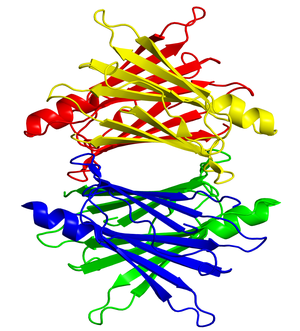
Transthyretin protein structure

Transthyretin protein structure (Photo credit: Wikipedia)

Age-standardised disability-adjusted life year...

Age-standardised disability-adjusted life year (DALY) rates from Protein-energy malnutrition by country (per 100,000 inhabitants). (Photo credit: Wikipedia)

_________________________________________________________________________________________________________

The systemic inflammatory response syndrome C-reactive protein and transthyretin conundrum.
Larry H Bernstein
Clin Chem Lab Med 2007; 45(11):0
ICID: 939932
Article type: Editorial

The Transthyretin Inflammatory State Conundrum
Larry H. Bernstein
Current Nutrition & Food Science, 2012, 8, 00-00

Keywords: Tranthyretin (TTR), systemic inflammatory response syndrome (SIRS), protein-energy malnutrition (PEM), C- reactive protein, cytokines, hypermetabolism, catabolism, repair.

Transthyretin has been widely used as a biomarker for identifying protein-energy malnutrition (PEM) and for monitoring the improvement of nutritional status after implementing a nutritional intervention by enteral feeding or by parenteral infusion. This has occurred because transthyretin (TTR) has a rapid removal from the circulation in 48 hours and it is readily measured by immunometric assay. Nevertheless, concerns have been raised about the use of TTR in the ICU setting, which prompts a review of the actual benefit of using this test in a number of settings. TTR is easily followed in the underweight and the high risk populations in an ambulatory setting, which has a significant background risk of chronic diseases. It is sensitive to the systemic inflammatory response syndrome (SIRS), and needs to be understood in the context of acute illness to be used effectively.

There are a number of physiologic changes associated with SIRS and the injury/repair process that affect TTR and  in the context of an ICU setting, the contribution of TTR is essential.  The only consideration is the timing of initiation since the metabolic burden is sufficiently high that a substantial elevation is expected in the first 3 days post admission, although the level of this biomarker is related to the severity of injury. Despite the complexity of the situation, TTR is not to be considered a test “for all seasons”. In the context of age, prolonged poor meal intake, chronic or acute illness, TTR needs to be viewed in a multivariable lens, along with estimated lean body mass, C-reactive protein, the absolute lymphocyte count, presence of neutrophilia, and perhaps procalcitonin if there is remaining uncertainty. Furthermore, the reduction of risk of associated complication requires a systematized approach to timely identification, communication, and implementation of a suitable treatment plan.

The most important point is that in the context of an ICU setting, the contribution of TTR is significant in a complex milieu.

_________________________________________________________________________________________________________

Title: The Automated Malnutrition Assessment
Accepted 29 April 2012. http://www.nutritionjrnl.com. Nutrition (2012), doi:10.1016/j.nut.2012.04.017.
Authors: Gil David, PhD; Larry Howard Bernstein, MD; Ronald R Coifman, PhD
Article Type: Original Article

Keywords: Network Algorithm; unsupervised classification; malnutrition screening; protein energy malnutrition (PEM); malnutrition risk; characteristic metric; characteristic profile; data characterization; non-linear differential diagnosis

We have proposed an automated nutritional assessment (ANA) algorithm that provides a method for malnutrition risk prediction with high accuracy and reliability.  The problem of rapidly identifying risk and severity of malnutrition is crucial for minimizing medical and surgical complications. These are not easily performed or adequately expedited. We characterized for each patient a unique profile and mapped similar patients into a classification. We also found that the laboratory parameters were sufficient for the automated risk prediction.

_________________________________________________________________________________________________________

Title: The Increasing Role for the Laboratory in Nutritional Assessment
Article Type: Editorial
Section/Category: Clinical Investigation
Accepted 22 May 2012. http://www.elsevier.com/locate/clinbiochem.
Clin Biochem (2012), doi:10.1016/j.clinbiochem.2012.05.024
Keywords: Protein Energy Malnutrition; Nutritional Screening; Laboratory Testing
Author: Dr. Larry Howard Bernstein, MD

The laboratory role in nutritional management of the patient has seen remarkable growth while there have been dramatic changes in technology over the last 25 years, and it is bound to be transformative in the near term. This editorial is an overview of the importance of the laboratory as an active participant in nutritional care.

The discipline emerged divergently along separate paths with unrelated knowledge domains in physiological chemistry, pathology, microbiology, immunology and blood cell recognition, and then cross-linked emerging into clinical biochemistry, hematology-oncology, infectious diseases, toxicology and therapeutics, genetics, pharmacogenomics, translational genomics and clinical diagnostics.

In reality, the more we learn about nutrition, the more we uncover of metabolic diversity of individuals, the family, and societies in adapting and living in many unique environments and the basic reactions, controls, and responses to illness. This course links metabolism to genomics and individual diversity through metabolomics, which will be enlightened by chemical and bioenergetic insights into biology and translated into laboratory profiling.

Vitamin deficiencies were discovered as clinical entities with observed features as a result of industrialization (rickets and vitamin D deficiency) and mercantile trade (scurvy and vitamin C)[2].  Advances in chemistry led to the isolation of each deficient “substance”.  In some cases, a deficiency of a vitamin and what is later known as an “endocrine hormone” later have confusing distinctions (vitamin D, and islet cell insulin).

The accurate measurement and roles of trace elements, enzymes, and pharmacologic agents was to follow within the next two decades with introduction of atomic absorption, kinetic spectrophotometers, column chromatography and gel electrophoresis.  We had fully automated laboratories by the late 1960s, and over the next ten years basic organ panels became routine.   This was a game changer.

Today child malnutrition prevalence is 7 percent of children under the age of 5 in China, 28 percent in sub-Saharan African, and 43 percent in India, while under-nutrition is found mostly in rural areas with 10 percent of villages and districts accounting for 27-28 percent of all Indian underweight children. This may not be surprising, but it is associated with stunting and wasting, and it has not receded with India’s economic growth. It might go unnoticed viewed alongside a growing concurrent problem of worldwide obesity.

The post WWII images of holocaust survivors awakened sensitivity to nutritional deprivation.

In the medical literature, Studley [HO Studley.  Percentage of weight loss. Basic Indicator of surgical risk in patients with chronic peptic ulcer.  JAMA 1936; 106(6):458-460.  doi:10.1001/jama.1936.02770060032009] reported the association between weight loss and poor surgical outcomes in 1936.  Ingenbleek et al [Y Ingenbleek, M De Vissher, PH De Nayer. Measurement of prealbumin as index of protein-calorie malnutrition. Lancet 1972; 300[7768]: 106-109] first reported that prealbumin (transthyretin, TTR) is a biomarker for malnutrition after finding very low TTR levels in African children with Kwashiorkor in 1972, which went unnoticed for years.  This coincided with the demonstration by Stanley Dudrick  [JA Sanchez, JM Daly. Stanley Dudrick, MD. A Paradigm ShiftArch Surg. 2010; 145(6):512-514] that beagle puppies fed totally through a catheter inserted into the superior vena cava grew, which method was then extended to feeding children with short gut.  Soon after Bistrian and Blackburn [BR Bistrian, GL Blackburn, E Hallowell, et al. Protein status of general surgical patients. JAMA 1974; 230:858; BR Bistrian, GL Blackburn, J Vitale, et al. Prevalence of malnutrition in general medicine patients, JAMA, 1976, 235:1567] showed that malnourished hospitalized medical and surgical patients have increased length of stay, increased morbidity, such as wound dehiscence and wound infection, and increased postoperative mortality, later supported by many studies.

Michael Meguid,MD, PhD, founding editor of Nutrition [Elsevier] held a nutrition conference “Skeleton in the Closet – 20 years later” in Los Angeles in 1995, at which a Beckman Prealbumin Roundtable was held, with Thomas Baumgartner and Michael M Meguid as key participants.  A key finding was that to realize the expected benefits of a nutritional screening and monitoring program requires laboratory support. A Ross Roundtable, chaired by Dr. Lawrence Kaplan, resulted in the first Standard of Laboratory Practice Document of the National Academy of Clinical Biochemists on the use of the clinical laboratory in nutritional support and monitoring. Mears then showed a real benefit to a laboratory interactive program in nutrition screening based on TTR [E Mears. Outcomes of continuous process improvement of a nutritional care program incorporating serum prealbumin measurements. Nutrition 1996; 12 (7/8): 479-484].

A later Ross Roundtable on Quality in Nutritional Care included a study of nutrition screening and time to dietitian intervention organized by Brugler and Di Prinzio that showed a decreased length of hospital stay with $1 million savings in the first year (which repeated), which included reduced cost for dietitian evaluations and lower complication rates.

Presentations were made at the 1st International Transthyretin Congress in Strasbourg, France by Mears [E Mears.  The role of visceral protein markers in protein calorie malnutrition. Clin Chem Lab Med 2002; 40:1360-1369] on the impact of TTR in screening for PEM in a public hospital in Louisiana, and by Potter [MA Potter, G Luxton. Prealbumin measurement as a screening tool for patients with protein calorie malnutrition in emergency hospital admissions: a pilot study.  Clin Invest Med. 1999; 22(2):44-52] that indicated a 17% in-hospital mortality rate in a Canadian hospital for patients with PCM compared with 4% without PCM (p < 0.02), while only 42% of patients with PCM received nutritional supplementation. Cost analysis of screening with prealbumin level projected a saving of $414 per patient screened.  Ingenbleek and Young [Y Ingenbleek, VR Young.  Significance of transthyretin in protein metabolism.  Clin Chem Lab Med. 2002; 40(12):1281–1291.  ISSN (Print) 1434-6621, DOI: 10.1515/ CCLM.2002.222, December 2002. published online: 01/06/2005] tied the TTR to basic effects reflected in protein metabolism.

_______________________________________________________________________________________________

Transthyretin as a marker to predict outcome in critically ill patients.
Arun Devakonda, Liziamma George, Suhail Raoof, Adebayo Esan, Anthony Saleh, Larry H Bernstein
Clin Biochem 2008; 41(14-15):1126-1130
ICID: 939927
Article type: Original article

TTR levels correlate with patient outcomes and are an accurate predictor of patient recovery in non-critically ill patients, but it is uncertain whether or not TTR level correlates with level of nutrition support and outcome in critically ill patients. This issue has been addressed only in critically ill patients on total parenteral nutrition and there was no association reported with standard outcome measures. We revisit this in all patients admitted to a medical intensive care unit.

Serum TTR was measured on the day of admission, day 3 and day 7 of their ICU stay. APACHE II and SOFA score was assessed on the day of admission. A registered dietician for their entire ICU stay assessed the nutritional status and nutritional requirement. Patients were divided into three groups based on initial TTR level and the outcome analysis was performed for APACHE II score, SOFA score, ICU length of stay, hospital length of stay, and mortality.

TTR showed excellent concordance with the univariate or multivariate classification of patients with PEM or at high malnutrition risk, and followed for seven days in the ICU, it is a measure of the metabolic burden.  TTR levels decline from day 1 to day 7 in spite of providing nutritional support. Twenty-five patients had an initial TTR serum concentration more than 17 mg/dL (group 1), forty-eight patients had mild malnutrition with a concentration between 10 and 17 mg/dL (group 2), Forty-five patients had severe malnutrition with a concentration less than 10 mg/dL (group 3).  Initial TTR level had inverse correlation with ICU length of stay, hospital length of stay, and APACHE II score, SOFA score; and predicted mortality, especially in group 3.

___________________________________________________________________________________________________________

A simplified nutrition screen for hospitalized patients using readily available laboratory and patient
information.
Linda Brugler, Ana K Stankovic, Madeleine Schlefer, Larry Bernstein
Nutrition 2005; 21(6):650-658
ICID: 825623
Article type: Review article
The role of visceral protein markers in protein calorie malnutrition.
Linda Brugler, Ana Stankovic, Larry Bernstein, Frederick Scott, Julie O’Sullivan-Maillet
Clin Chem Lab Med 2002; 40(12):1360-1369
ICID: 636207
Article type: Original article

The Automated Nutrition Score is a data-driven extension of continuous quality improvement.

Larry H Bernstein
Nutrition 2009; 25(3):316-317
ICID: 939934

______________________________________________________________________________________________________
Transthyretin: its response to malnutrition and stress injury. clinical usefulness and economic implications.
LH Bernstein, Y Ingenbleek
Clin Chem Lab Med 2002; 40(12):1344-1348
ICID: 636205
Article type: Original article

_______________________________________________________________________________________________________

THE NUTRITIONALLY-DEPENDENT ADAPTIVE DICHOTOMY (NDAD) AND STRESS HYPERMETABOLISM
Yves Ingenbleek  MD  PhD  and  Larry Bernstein MD
J CLIN LIGAND ASSAY  (out of print)

The acute reaction to stress is characterized by major metabolic, endocrine and immune alterations. According to classical descriptions, these changes clinically present as a succession of 3 adaptive steps – ebb phase, catabolic flow phase, and anabolic flow phase. The ebb phase, shock and resuscitation, is immediate, lasts several hours, and is characterized by hypokinesis, hypothermia, hemodynamic instability and reduced basal metabolic rate. The catabolic flow phase, beginning within 24 hours and lasting several days, is characterized by catabolism with the flow of gluconeogenic substrates and ketone bodies in response to the acute injury. The magnitude of the response depends on the acuity and the severity of the stress. The last, a reparative anabolic flow phase, lasts weeks and is characterized by the accretion of amino acids (AAs) to rebuilding lean body mass.

The current opinion is that the body economy is reset during the course of stress at novel thresholds of metabolic priorities. This is exemplified mainly by proteolysis of muscle, by an effect on proliferating gut mucosa and lymphoid tissue as substrates are channeled to support wound healing, by altered syntheses of liver proteins with preferential production of acute phase proteins (APPs) and local repair in inflamed tissues (3). The first two stages demonstrate body protein breakdown exceeding the rate of protein synthesis, resulting in a negative nitrogen (N) balance, muscle wasting and weight loss. In contrast, the last stage displays reversed patterns, implying progressive recovery of endogenous N pools and body weight.

These adaptive alterations undergo continuing elucidation. The identification of cytokines, secreted by activated macrophages/monocytes or other reacting cells, has provided further insights into the molecular mechanisms controlling energy expenditure, redistribution of protein pools, reprioritization of syntheses and secretory processes.

The free fraction of hormones bound to specific binding-protein(s) [BP(s)] manifests biological activities, and any change in the BP blood level modifies the effect of the hormone on the end target organ.  The efficacy of these adaptive responses may be severely impaired in protein-energy malnourished (PEM) patients. This is especially critical with respect to changes of the circulating levels of transthyretin (TTR), retinol-binding protein (RBP) and corticosteroid-binding globulin (CBG) conveying thyroid hormones (TH), retinol and cortisol, respectively.  This reaction is characterized by cytokine mediated autocrine, paracrine and endocrine changes. Among the many inducing molecules identified, interleukins 1 and 6 (Il-1, Il-6) and tumor necrosis factor a (TNF) are associated with enhanced production of 3 counterregulatory hormonal families (cortisol, catecholamines and glucagon). Growth hormone (GH) and TH also have roles in these metabolic adjustments.

There is overproduction of cortisol mediated by several cytokines acting on both the adrenal cortex (10) and on the pituitary through hypothalamic CRH with loss of feedback regulation of ACTH production (11). Hypercortisolemia is a major finding observed after surgery (12), sepsis (13), and medical insults, usually correlated with severity of insult and of complications. Rising cortisol values parallel hyperglycemic trends, as an effect of both gluconeogenesis and insulin resistance. Working in concert with TNF, glucocorticoids govern the breakdown of muscle mass, which is regarded as the main factor responsible for the negative N balance.

Under normal conditions, GH exerts both lipolytic and anabolic influences in the whole body economy under the dual control of the hypothalamic hormones somatocrinin (GHRH) and somatostatin (SRIH). GH secretion is usually depressed by rising blood concentrations of glucose and free fatty acids (FFAs) but is paradoxicaly elevated despite hyperglycemia in stressed patients.

The oversecretion of counterregulatory hormones working in concert generates subtle equilibria between glycogenolytic/glycolytic/gluconeogenic adaptive processes. The net result is the neutralization of the main hypoglycemic and anabolic activities of insulin and the development of a persisting and controlled hyperglycemic tone in the stressed body. The molecular mechanisms whereby insulin resistance occurs in the course of stress refer to
cytokine-  and  hormone-induced  phosphorylation abnormalities affecting receptor signaling. The insulin-like anabolic processes of GH are mediated by IGF1 working as relay agent. The expected high IGF1 surge associated with GH oversecretion is not observed in severe stress as plasma values are usually found at the lower limit of normal or even in the subnormal range.  The end result of this dissociation between high GH and low IGF1 levels is to favor the proteolysis of muscle mass to release AAs for gluconeogenesis and the breakdown of adipose tissue to provide ketogenic substrates.

The acute stage of stress is associated with the onset of a low T3 syndrome typically delineated by the drop of both total (TT3) and free (FT3) triiodothyronine plasma levels in the subnormal range. In contrast, both total (TT4) and free (FT4) thyroxine values usually remain within normal ranges with declining trends observed for TT4 and rising tendencies for FT4 (44). This last free compound is regarded as the sensor reflecting the actual thyroid status and governing the release of TSH whereas FT3 works as the active hormonal mediator at nuclear receptor level. The maintenance of an euthyroid sick syndrome is compatible with the down-regulation of most metabolic and energetic processes in healthy tissues. These inhibitory effects , negatively affecting all functional steps of the hypothalamo-pituitary-thyroid axis concern TSH production, iodide uptake, transport and organification into iodotyrosyl residues, peroxidase coupling activity as well as thyroglobulin synthesis and TH leakage. Taken together, the above-mentioned data indicate that the development of hyperglycemia and of insulin-resistance in healthy tissues – mainly in the muscle mass – are hallmarks resulting from the coordinated activities of the counterregulatory hormones.

A growing body of recent data suggest that the stressed territory, whatever the causal agent – bacterial or viral sepsis, auto-immune disorder, traumatic or toxic shock, burns, cancer – manifest differentiated metabolic and immune reactions. The amplitude, duration and efficacy of these responses are reportedly impaired along several ways in PEM patients. These last detrimental effects are accompanied by a number of medical, social and economical consequences, such as extended length of hospital stay and increased complication / mortality rates. It is therefore mandatory to correctly identify and follow up the nutritional status of hospitalized patients. Such approaches are prerequisite to timely and scientifically grounded nutritional and pharmacological mediated interventions.

Contrary to the rest of the body, energy requirements of the inflamed territory are primarily fulfilled by anaerobic glycolysis, an effect triggered by the inhibition of key-enzymes of carbohydrate metabolism, notably pyruvate-dehydrogenase. This non-oxidative combustion of glucose reveals low conversion efficiency but offers the major advantage to maintain, in the context of hyperglycemia, fuel provision to poorly irrigated and/or edematous tissues. The depression of the 5’-monodeiodinating activity (5’-DA) plays a pivotal role in these adaptive changes, yielding inactive reverse T3 (rT3) as index of impaired T4 to T3 conversion rates, but at the same time there is an augmented supply of bioactive T3 molecules and local overstimulation of thyro-dependent processes characterized by thyroid down-regulation.  The same differentiated evolutionary pattern applies to IGF1. In spite of lowered plasma total concentrations, the proportion of IGF1 released in free form may be substantially increased owing to the proteolytic degradation of IGFBP-3 in the intravascular compartment. The digestion of  BP-3 results from the surge of several proteases occurring the course of stress, yielding biologically active IGF1 molecules available for the repair of damaged tissues. In contrast, healthy receptors oppose a strong resistance to IGF1 ligands freed in the general circulation, likely induced by an acquired phosphorylation defect very similar in nature to that for the insulin transduction pathway.

PEM is the generic denomination of a broad spectrum of nutritional disorders, commonly found in hospital settings, and whose extreme poles are identified as marasmus and kwashiorkor. The former condition is usually regarded as the result of long-lasting starvation leading to the loss of lean body mass and fat reserves but relatively well-preserved liver function and immune capacities. The latter condition is typically the consequence of (sub)acute deprivation predominantly affecting the protein content of staplefood, an imbalance causing hepatic steatosis, fall of visceral proteins, edema and increased vulnerability to most stressful factors. PEM may be hypometabolic or hypermetabolic, usually coexists with other diseased states and is frequently associated with complications. Identification of PEM calls upon a large set of clinical and analytical disciplines comprising anthropometry, immunology, hematology and biochemistry.

CBG, TTR and RBP share in common the transport of specific ligands exerting their metabolic effects at nuclear receptor level. Released from their specific BPs in free form, cortisol, FT4 and retinol immediately participe to the strenghtening of the positive and negative responses to stressful stimuli. CBG is a relatively weak responder to short-term nutritional influences (73)  although long-lasting PEM is reportedly capable of causing its significant diminution (74). The dramatic drop of CBG in the course of stress appears as the combined effect of Il-6-induced posttranscriptional blockade of its liver synthesis (75) and peripheral overconsumption by activated neutrophils (61). The divergent alterations outlined by CBG and total cortisolemia result in an increased disposal of free ligand reaching proportions considerably higher than the 4 % recorded under physiological conditions.

The appellation of negative APPs that was once given to the visceral group of carrier-proteins. The NDAD concept takes the opposite view, defending the opinion that their suppressed synthesis releases free ligands which positively contribute to strengthen all aspects of the stress reaction, justifying the ABR denomination. This implies that the role played by ABRs should no longer be interpreted in terms of concentrations but in terms of functionality.

++++++++++++++++++++++++++++++++++++++++++++++++++++++++++++++++++++++++++++++++++++++++++++

THE OXIDATIVE STRESS OF HYPERHOMOCYSTEINEMIA RESULTS FROM REDUCED BIOAVAILABILITY OF SULFUR-CONTAINING REDUCTANTS.
Yves Ingenbleek. The Open Clinical Chemistry Journal, 2011, 4, 34-44.

Vegetarian subjects consuming subnormal amounts of methionine (Met) are characterized by subclinical protein malnutrition causing reduction in size of their lean body mass (LBM) best identified by the serial measurement of plasma transthyretin (TTR). As a result, the transsulfuration pathway is depressed at cystathionine-β-synthase (CβS) level triggering the upstream sequestration of homocysteine (Hcy) in biological fluids and promoting its conversion to Met. Maintenance of beneficial Met homeostasis is counterpoised by the drop of cysteine (Cys) and glutathione (GSH) values downstream to CβS causing in turn declining generation of hydrogen sulfide (H2S) from enzymatic sources. The biogenesis of H2S via non-enzymatic reduction is further inhibited in areas where earth’s crust is depleted in elemental sulfur (S8) and sulfate oxyanions. Combination of subclinical malnutrition and S8-deficiency thus maximizes the defective production of Cys, GSH and H2S reductants, explaining persistence of unabated oxidative burden. The clinical entity increases the risk of developing cardiovascular diseases (CVD) and stroke in underprivileged plant-eating populations regardless of Framingham criteria and vitamin-B status. Although unrecognized up to now, the nutritional disorder is one of the commonest worldwide, reaching top prevalence in populated regions of Southeastern Asia. Increased risk of hyperhomocysteinemia and oxidative stress may also affect individuals suffering from intestinal malabsorption or westernized communities having adopted vegan dietary lifestyles.

Metabolic pathways: Met molecules supplied by dietary proteins are submitted to TM processes allowing to release Hcy which may in turn either undergo Hcy – Met RM pathways or be irreversibly committed into TS decay. Impairment of CbS activity, as described in protein malnutrition, entails supranormal accumulation of Hcy in body fluids, stimulation of activity and maintenance of Met homeostasis. This last beneficial effect is counteracted by decreased concentration of most components generated downstream to CbS, explaining the depressed CbS- and CbL-mediated enzymatic production of H2S along the TS cascade. The restricted dietary intake of elemental S further operates as a limiting factor for its non-enzymatic reduction to H2S which contributes to downsizing a common body pool. Combined protein- and S-deficiencies work in concert to deplete Cys, GSH and H2S from their body reserves, hence impeding these reducing molecules to properly face the oxidative stress imposed by hyperhomocysteinemia.

see also …

McCully, K.S. Vascular pathology of homocysteinemia: implications for the pathogenesis of arteriosclerosis. Am. J. Pathol., 1996, 56, 111-128.

Cheng, Z.; Yang, X.; Wang, H. Hyperhomocysteinemia and endothelial dysfunction. Curr. Hypertens. Rev., 2009, 5,158-165.

Loscalzo, J. The oxidant stress of hyperhomocyst(e)inemia. J. Clin.Invest., 1996, 98, 5-7.

Ingenbleek, Y.; Hardillier, E.; Jung, L. Subclinical protein malnutrition is a determinant of hyperhomocysteinemia. Nutrition, 2002, 18, 40-46.

Ingenbleek, Y.; Young, V.R. The essentiality of sulfur is closely related to nitrogen metabolism: a clue to hyperhomocysteinemia. Nutr. Res. Rev., 2004, 17, 135-153.

Hosoki, R.; Matsuki, N.; Kimura, H. The possible role of hydrogen sulfide as an endogenous smooth muscle relaxant in synergy with nitric oxide. Biochem. Biophys. Res. Commun., 1997, 237, 527-531.

Tang, B.; Mustafa, A.; Gupta, S.; Melnyk, S.; James S.J.; Kruger, W.D. Methionine-deficient diet induces post-transcriptional downregulation of cystathionine-􀀁-synthase. Nutrition, 2010, 26, 1170-1175.

Yves Ingenbleek. Plasma Transthyretin Reflects the Fluctuations of Lean Body Mass in Health and Disease. Chapter 20. In S.J. Richardson and V. Cody (eds.), Recent Advances in Transthyretin Evolution, Structure and Biological Functions, DOI: 10.1007/978‐3‐642‐00646‐3_20, # Springer‐Verlag Berlin Heidelberg 2009.

Transthyretin (TTR) is a 55-kDa protein secreted mainly by the choroid plexus and the liver. Whereas its intracerebral production appears as a stable secretory process allowing even distribution of intrathecal thyroid hormones, its hepatic synthesis is influenced by nutritional and inflammatory circumstances working concomitantly. Both morbid conditions are governed by distinct pathogenic mechanisms leading to the reduction in size of lean body mass (LBM). The liver production of TTR integrates the dietary and stressful components of any disease spectrum, explaining why it is the sole plasma protein whose evolutionary patterns closely follow the shape outlined by LBM fluctuations. Serial measurement of TTR therefore provides unequalled information on the alterations affecting overall protein nutritional status. Recent advances in TTR physiopathology emphasize the detecting power and preventive role played by the protein in hyperhomocysteinemic states, acquired metabolic disorders currently ascribed to dietary restriction in water-soluble vitamins. Sulfur (S)-deficiency is proposed as an additional causal factor in the sizeable proportion of hyperhomocysteinemic patients characterized by adequate vitamin intake but experiencing varying degrees of nitrogen (N)-depletion. Owing to the fact that N and S coexist in plant and animal tissues within tightly related concentrations, decreasing LBM as an effect of dietary shortage and/or excessive hypercatabolic losses induces proportionate S-losses. Regardless of water-soluble vitamin status, elevation of homocysteine plasma levels is negatively correlated with LBM reduction and declining TTR plasma levels. These findings occur as the result of impaired cystathionine-b-synthase activity, an enzyme initiating the transsulfuration pathway and whose suppression promotes the upstream accumulation and remethylation of homocysteine molecules. Under conditions of N- and S-deficiencies, the maintenance of methionine homeostasis indicates high metabolic priority.

Schematically, the human body may be divided into two major compartments, namely fat mass (FM) and FFM that is obtained by substracting
FM from body weight (BW). The fat cell mass sequesters about 80% of the total body lipids, is poorly hydrated and contains only small quantities of lean tissues and nonfat constituents. FFM comprises the sizeable part of lean tissues and minor mineral compounds among which are Ca, P, Na, and Cl pools totaling about 1.7 kg or 2.5% of BW in a healthy man weighing 70 kg. Subtraction of mineral mass from FFM provides LBM, a composite aggregation of organs and tissues with specific functional properties. LBM is thus nearly but not strictly equivalent to FFM. With extracellular mineral content subtracted, LBM accounts for most of total body proteins (TBP) and of TBN assuming a mean 6.25 ratio between protein and N content.

SM accounts for 45% of TBN whereas the remaining 55% is in nonmuscle lean tissues. The LBM of the reference man contains 98% of total
body potassium (TBK) and the bulk of total body sulfur (TBS). TBK and TBS reach equal intracellular amounts (140 g each) and share distribution patterns (half in SM and half in the rest of cell mass).  The body content of K and S largely exceeds that of magnesium (19 g), iron (4.2 g) and zinc (2.3 g). The average hydration level of LBM in healthy subjects of all age is 73% with the proportion of the intracellular/extracellular fluid spaces being 4:3. SM is of particular relevance in nutritional studies due to its capacity to serve as a major reservoir of amino acids (AAs) and as a dispenser of gluconeogenic substrates. An indirect estimate of SM size consists in the measurement of urinary creatinine, end-product of the nonenzymatic hydrolysis of phosphocreatine which is limited to muscle cells.

During ageing, all the protein components of the human body decrease regularly. This shrinking tendency is especially well documented for SM  whose absolute amount is preserved until the end of the fifth decade, consistent with studies showing unmodified muscle structure, intracellular K content and working capacit. TBN and TBK are highly correlated in healthy subjects and both parameters manifest an age-dependent curvilinear decline
with an accelerated decrease after 65 years.  The trend toward sarcopenia is more marked and rapid in elderly men than in elderly women decreasing strength and functional capacity. The downward SM slope may be somewhat prevented by physical training or accelerated by supranormal cytokine status as reported in apparently healthy aged persons suffering low-grade inflammation. 2002) or in critically ill patients whose muscle mass undergoes proteolysis and contractile dysfunction.

The serial measurement of plasma TTR in healthy children shows that BP values are low in the neonatal period and rise linearly with superimposable concentrations in both sexes during infant growth consistent with superimposable N accretion and protein synthesis rates. Starting from the sixties, TTR values progressively decline showing steeper slopes in elderly males. The lowering trend seems to be initiated by the attenuation of androgen influences and trophic stimuli with increasing age. The normal human TTR trajectory from birth to death has been well documented by scientists belonging to the Foundation for Blood Research. TTR is the first plasma protein to decline in response to marginal protein restricion, thus working as an early signal warning that adaptive mechanisms maintaining homeostasis are undergoing decompensation.

TTR was proposed as a marker of protein nutritional status following a clinical investigation undertaken in 1972 on protein-energy malnourished (PEM) Senegalese children (Ingenbleek et al. 1972). By comparison with ALB and transferrin (TF) plasma values, TTR revealed a much higher degree of sensitivity to changes in protein status that has been attributed to its shorter biological half-life (2 days) and to its unusual Trp richness (Ingenbleek et al. 1972, 1975a). Transcription of the TTR gene in the liver is directed by CCAAT/enhancer binding protein (C/EBP) bound to hepatocyte nuclear factor 1 (HNF1) under the control of several other HNFs. The mechanism responsible for the suppressed TTR synthesis in PEM-states is a restricted AA and energy supply working as limiting factors (Ingenbleek and Young 2002). The rapidly turning over TTR protein is highly responsive to any change in protein flux and energy supply, being clearly situated on the cutting edge of the equipoise.

LBM shrinking may be the consequence of either dietary restriction reducing protein syntheses to levels compatible with survival or that of cytokine-induced tissue proteolysis exceeding protein synthesis and resulting in a net body negative N balance. The size of LBM in turn determines plasma TTR concentrations whose liver production similarly depends on both dietary provision and inflammatory conditions. In animal cancer models, reduced TBN pools were correlated with decreasing plasma TTR values and provided the same predictive ability. In kidney patients, LBM is proposed as an excellent predictor of outcome working in the same direction as TTR plasma levels.  High N intake, supposed to preserve LBM reserves, reduces significantly the mortality rate of kidney patients and is positively correlated with the alterations of TTR plasma concentrations appearing as the sole predictor of final outcome. It is noteworthy that most SELDI or MALDI workers interested in defining protein nutritional status have chosen TTR as a biomarker, showing that there exists a large consensus considering the BP as the most reliable indicator of protein depletion in most morbid circumstances.

Total homocysteine (tHcy) is a S-containing AA not found in customary diets but endogenously produced in the body of mammals by the enzymatic transmethylation of methionine (Met), one of the eight IAAs supplied by staplefoods. tHcy may either serve as precursor substrate for the synthesis of new Met molecules along the remethylation (RM) pathway or undergo irreversible kidney leakage through a cascade of derivatives defining the transsulfuration (TS) pathway. Hcy is thus situated at the crossroad of RM and TS pathways that are regulated by three water-soluble vitamins (pyridoxine, B6; folates, B9; cobalamins, B12).

Significant positive correlations are found between tHcy and plasma urea and plasma creatinine, indicating that both visceral and muscular tissues undergo proteolytic degradation throughout the course of rampant inflammatory burden. In healthy individuals, tHcy plasma concentrations maintain positive correlations with LBM and TTR from birth until the end of adulthood. Starting from the onset of normal old age, tHcy values become disconnected from LBM control and reveal diverging trends with TTR values. Of utmost importance is the finding that, contrary to all protein
components which are downregulated in protein-depleted states, tHcy values are upregulated.  Hyperhomocysteinemia is an acquired clinical entity characterized by mild or moderate elevation in tHcy blood values found in apparently healthy individuals (McCully 1969). This distinct morbid condition appears as a public health problem of increasing importance in the general population, being regarded as an independent and graded risk factor for vascular pathogenesis unrelated to hypercholesterolemia, arterial hypertension, diabetes and smoking.

Studies grounded on stepwise multiple regression analysis have concluded that the two main watersoluble vitamins account for only 28% of tHcy variance whereas vitamins B6, B9, and B12, taken together, did not account for more than 30–40% of variance. Moreover, a number of hyperhomocysteinemic conditions are not responsive to folate and pyridoxine supplementation. This situation prompted us to search for other causal factors which might fill the gap between the public health data and the vitamin triad deficiencies currently incriminated. We suggest that S – the forgotten element – plays central roles in nutritional epidemiology (Ingenbleek and Young 2004).

Aminoacidemia studies performed in PEM children, adult patients and elderly subjects have reported that the concentrations of plasma IAAs invariably display lowering trends as the morbid condition worsens. The depressed tendency is especially pronounced in the case of tryptophan and for the so-called branched-chain AAs (BCAAs, isoleucine, leucine, valine) the decreases in which are regarded as a salient PEM feature following the direction outlined by TTR (Ingenbleek et al. 1986). Met constitutes a notable exception to the above described evolutionary profiles, showing unusual stability in chronically protein depleted states.

Maintenance of normal methioninemia is associated with supranormal tHcy blood values in PEMadults (Ingenbleek et al. 1986) and increased tHcy leakage in the urinary output of PEM children. In contrast, most plasma and urinary S-containing compounds produced along the TS pathway downstream to CbSconverting step (Fig. 20.1) display significantly diminished values. This is notably the case for cystathionine (Ingenbleek et al. 1986), glutathione, taurine, and sulfaturia. Such distorted patterns are reminiscent of abnormalities defining homocystinuria, an inborn disease of Met metabolism characterized by CbS refractoriness to pyridoxine stimuli, thereby promoting the upstream retention of tHcy in biological fluids. It
was hypothesized more than 20 years ago (Ingenbleek et al. 1986) that PEM is apparently able to similarly depress CbS activity, suggesting that the enzyme is a N-status sensitive step working as a bidirectional lockgate, overstimulated by high Met intake (Finkelstein and Martin 1986) and downregulated under N-deprivation conditions (Ingenbleek et al. 2002). Confirmation that N dietary deprivation may inhibit CbS activity has recently provided. The tHcy precursor pool is enlarged in biological fluids, boosting Met remethylation processes along the RM pathway, consistent with studies showing overstimulation of Met-synthase activity in conditions of protein restriction. In other words, high tHcy plasma concentrations observed in PEM states are the dark side of adaptive mechanisms for maintaining Met homeostasis. This is consistent with the unique role played by Met in the preservation of N body stores.

The classical interpretation that strict vegans, who consume plenty of folates in their diet and manifest nevertheless higher tHcy plasma concentrations than omnivorous counterparts, needs to be revisited. On the basis of hematological and biochemical criteria, cobalamin deficiency is one of the most prevalent vitamin-deficiencies wordwide, being often incriminated as deficient in vegan subjects. It seems, however, likely that its true causal impact on rising tHcy values is substantially overestimated in most studies owing to the modest contribution played by cobalamins on tHcy
variance analyses. In contrast, there exists a growing body of converging data indicating that the role played by the protein component is largely underscored in vegan studies. It is worth recalling that S is the main intracellular anion coexisting with N within a constant mean S:N ratio (1:14.5) in animal tissues and dietary products of animal origin (Ingenbleek 2006). The mean S:N ratio found in plant items ranges from 1:20 to 1:35, a proportion that does not optimally meet human tissue requirements (Ingenbleek 2006), paving the way for borderline S and N deficiencies.

A recent Taiwanese investigation on hyperhomocysteinemic nuns consuming traditional vegetarian regimens consisting of mainly rice, soy products,
vegetables and fruits with few or no dairy items illustrates such clinical misinterpretation (Hung et al. 2002). The authors reported that folates and cobalamins, taken together, accounted for only 28.6% of tHcy variance in the vegetarian cohort whereas pyridoxine was inoperative (Hung et al. 2002). The daily vegetable N and Met intakes were situated highly significantly (p < 0.001) below the recommended allowances for humans (FAO/WHO/United Nations University 1985), causing a stage of unrecognized PEM documented by significantly depressed BCAA plasma
concentrations. Met levels escaped the overall decline in IAAs levels, emphasizing that efficient homeostatic mechanisms operate at the expense of an acquired hyperhomocysteinemic state. The diagnosis of subclinical PEM was missed because the authors ignored the exquisitely sensitive TTR detecting power. A proper PEM identification would have allowed the authors to confirm the previously described TTR–tHcy relationship that was established in Western Africa from comparable field studies involving country dwellers living on plant products.

The concept that acute or chronic stressful conditions may exert similar inhibitory effects on CbS activity and thereby promote hyperhomocysteinemic states is founded on previous studies showing that hypercatabolic states are characterized by increased urinary N and S losses maintaining tightly correlated depletion rates (Cuthbertson 1931; Ingenbleek and Young 2004; Sherman and Hawk 1900) which reflect the S:N ratio found in tissues undergoing cytokine induced proteolysis. This has been documented in coronary infarction and in acute pancreatitis where tHcy elevation evolves too rapidly to allow for a nutritional vitamin B-deficit explanation.  tHcy is considered stable in plasma and the two investigations report unaltered folate and cobalamin plasma concentrations.

The clinical usefulness of TTR as a nutritional biomarker, described in the early seventies (Ingenbleek et al. 1972) has been substantially disregarded by the scientific community for nearly four decades. This long-lasting reluctance expressed by many investigators is largely due to the fact that protein malnutrition and stressful disorders of various causes have combined inhibitory effects on hepatic TTR synthesis. Declining TTR plasma concentrations may result from either dietary protein and energy restrictions or from cytokine-induced transcriptional blockade (Murakami et al. 1988) of its hepatic synthesis. The proposed marker was therefore seen as having high sensitivity but poor specificity. Recent advances in protein metabolism settle the controversy by throwing further light on the relationships between TTR and the N-components of body composition.

The developmental patterns of LBM and TTR exhibit striking similarities. Both parameters rise from birth to puberty, manifest gender dimorphism during full sexual maturity then decrease during ageing. Uncomplicated PEM primarily affects both visceral and structural pools of LBM with distinct kinetics, reducing protein synthesis to levels compatible with prolonged survival. In acute or chronic stressful disorders, LBM undergoes muscle proteolysis exceeding the upregulation of protein syntheses in liver and injured areas, yielding a net body negative N balance. These adaptive responses are well identified by the measurement of TTR plasma concentrations which therefore appear as a plasma marker for LBM fluctuations.
Attenuation of stress and/or introduction of nutritional rehabilitation restores both LBM and TTR to normal values following parallel slopes. TTR fulfills, therefore, a unique position in assessing actual protein nutritional status, monitoring the efficacy of dietetic support and predicting the patient’s outcome (Bernstein and Pleban 1996).

see also…

Acosta PB, Yannicelli S, Ryan AS, Arnold G, Marriage BJ, Plewinska M, Bernstein L, Fox J, Lewis V, Miller M, Velazquez A (2005) Nutritional therapy improves growth and protein status of children with a urea cycle enzyme defect. Mol Genet Metab 86:448–455.

Arroyave G, Wilson D, Be´har M, Scrimshaw NS (1961) Serum and urinary creatinine in children with severe protein malnutrition. Am J Clin Nutr 9:176–179.

Bates CJ, Mansoor MA, van der Pols J, Prentice A, Cole TJ, Finch S (1997) Plasma total homocysteine in a representative sample of 972 British men and women aged 65 and over. Eur J Clin Nutr 51:691–697.

Battezzatti A, Bertoli S, San Romerio A, Testolin G (2007) Body composition: An important determinant of homocysteine and methionine concentrations in healthy individuals. Nutr Metab Cardiovasc Dis 17:525–534.

Bernstein LH, Bachman TE, Meguid M, Ament M, Baumgartner T, Kinosian B, Martindale R, Spiekerman M (1995) Prealbumin in nutritional care Consensus Group. Measurement of visceral protein status in assessing protein and energy malnutrition: Standard of care. Nutrition 11:169–171

Bernstein LH, Ingenbleek Y (2002) Transthyretin: Its response to malnutrition and stress injury. Clinical usefulness and economical implications. Clin Chem Lab Med 40:1344–1348.

Boorsook H, Dubnoff JW (1947) The hydrolysis of phosphocreatine and the origin of creatinine. J Biol Chem 168:493–510.

Briend A, Garenne M, Maire B, Fontaine O, Dieng F (1989) Nutritional status, age and survival: The muscle mass hypothesis. Eur J Clin Nutr 43:715–726

Gray GE, Landel AM, Meguid MM (1994) Taurine-supplemented total parenteral nutrition and taurine status of malnourished cancer patients. Nutrition 10:11–15

Heymsfield SB, McManus C, Stevens V, Smith J (1982) Muscle mass: Reliable indicator of protein-energy malnutrition and outcome. Am J Clin Nutr 35:1192–1199

Ingenbleek Y (2006) The nutritional relationship linking sulfur to nitrogen in living organisms. J Nutr 136:S1641–S1651
Ingenbleek Y (2008) Plasma transthyretin indicates the direction of both nitrogen balance and retinoid status in health and disease. Open Clin Chem J 1:1–12
Ingenbleek Y, Bernstein LH (1999a) The stressful condition as a nutritionally dependent adaptive dichotomy. Nutrition 15:305–320
Ingenbleek Y, Bernstein LH (1999b) The nutritionally dependent adaptive dichotomy (NDAD) and stress hypermetabolism. J Clin Ligand Assay 22:259–267
Ingenbleek Y, Carpentier YA (1985) A prognostic inflammatory and nutritional index scoring critically ill patients. Internat J Vitam Nutr Res 55:91–101

Ingenbleek Y, Young VR (1994) Transthyretin (prealbumin) in health and disease: Nutritional implications. Annu Rev Nutr 14:495–533
Ingenbleek Y, Young VR (2002) Significance of transthyretin in protein metabolism. Clin Chem Lab Med 40:1281–1291
Ingenbleek Y, Young VR (2004) The essentiality of sulfur is closely related to nitrogen metabolism. Nutr Res Rev 17:135–151

Pharma Intell Links

Nitric Oxide and iNOS have Key Roles in Kidney Diseases – Part II
Biochemistry of the Coagulation Cascade and Platelet Aggregation – Part I 
Mitochondrial dynamics and cardiovascular diseases 
“Seductive Nutrition”: Making Popular Dishes a Bit Healthier – Culinary Institute of America
Low Bioavailability of Nitric Oxide due to Misbalance in Cell Free Hemoglobin in Sickle Cell Disease – A Computational Model
Ubiquinin-Proteosome pathway, autophagy, the mitochondrion, proteolysis and cell apoptosis
Nitric Oxide and Immune Responses: Part 2
Mitochondrial Damage and Repair under Oxidative Stress
Endothelial Function and Cardiovascular Disease
Nitric Oxide and Sepsis, Hemodynamic Collapse, and the Search for Therapeutic Options
Is the Warburg Effect the cause or the effect of cancer: A 21st Century View?
Sepsis, Multi-organ Dysfunction Syndrome, and Septic Shock: A Conundrum of Signaling Pathways Cascading Out of Control
Mitochondria: Origin from oxygen free environment, role in aerobic glycolysis, metabolic adaptation
Metabolite Identification Combining Genetic and Metabolic Information: Genetic association links unknown metabolites to functionally related genes
Clinical Trials Results for Endothelin System: Pathophysiological role in Chronic Heart Failure, Acute Coronary Syndromes and MI – Marker of Disease Severity or Genetic Determination?
Nitric Oxide Covalent Modifications: A Putative Therapeutic Target?
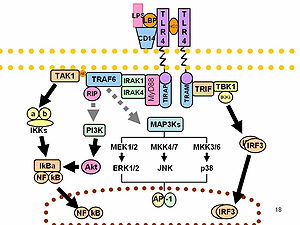
Simple representation of the toll-like recepto...

Sepsis, Multi-organ Dysfunction Syndrome, and Septic Shock: A Conundrum of Signaling Pathways Cascading Out of Control

Curator and Author: Larry H Bernstein, MD, FCAP

What is Septic Shock?
Scripps Research Professor Wolfram Ruf and colleagues have identified a key connection between the signaling pathways and the immune system spiraling out of control involving the coagulation system and vascular endothelium that, if disrupted may be a target for sepsis. (Science Daily, Feb 29, 2008). It may be caused by a bacterial infection that enters the bloodstream, but we now recognize the same cascade not triggered by bacterial invasion. These invading bacteria produce endotoxins and other toxins that trigger a widespread inflammatory response of the innate immune system–a response that is necessary, as it turns out, because without the inflammation, the body cannot fight off the bacterial infection. During sepsis, the inflammation triggers widespread coagulation in the bloodstream. This coagulation can block blood vessels in vital organs, starving the organs of oxygen and damaging them. The organs can be further damaged when the blood starts to flow again because the lining of the blood vessels remain leaky due to inflammatory cytokines and damage by intravascular coagulation.
What is the Pathogenesis of Sepsis?
The acute respiratory distress syndrome (ARDS) has been defined as a severe form of acute lung injury featuring pulmonary inflammation and increased capillary leak. ARDS is associated with a high mortality rate and accounts for 100,000 deaths annually in the United States. ARDS may arise in a number of clinical situations, especially in patients with sepsis. A well-described pathophysiological model of ARDS is one form of the acute lung inflammation mediated by neutrophils, cytokines, and oxidant stress. Neutrophils are major effect cells at the frontier of innate immune responses, and they play a critical role in host defense against invading microorganisms. The tissue injury appears to be related to proteases and toxic reactive oxygen radicals released from activated neutrophils. In addition, neutrophils can produce cytokines and chemokines that enhance the acute inflammatory response. Neutrophil accumulation in the lung plays a pivotal role in the pathogenesis of acute lung injury during sepsis. Directed movement of neutrophils is mediated by a group of chemoattractants, especially CXC chemokines. Local lung production of CXC chemokines is intensified during experimental sepsis induced by cecal ligation and puncture (CLP). Under these conditions of stimulation, activation of MAPKs (p38, p42/p44) occurs in sham neutrophils but not in CLP neutrophils, while under the same conditions phosphorylation of p38 and p42/p44 occurs in both sham and CLP alveolar macrophages. These data indicate that, under septic conditions, there is impaired signaling in neutrophils and enhanced signaling in alveolar macrophages, resulting in CXC chemokine production, and C5a appears to play a pivotal role in this process. As a result, CXC chemokines increase in lung, setting the stage for neutrophil accumulation in lung during sepsis.
Uncontrolled activation of the coagulation cascade following lung injury contributes to the development of lung inflammation and fibrosis in acute lung injury/acute respiratory distress syndrome (ALI/ARDS) and fibrotic lung disease. This article reviews our current understanding of the mechanisms leading to the activation of the coagulation cascade in response to lung injury and the evidence that excessive procoagulant activity is of pathophysiological significance in these disease settings. This is consistent with a pneumonia or lung injury preceding sepsis. On the other hand, it is not surprising that abdominal, cardiac bypass, and post cardiac revascularization may also lead to events resembling sepsis and/or cardiovascular collapse. The tissue factor-dependent extrinsic pathway is the predominant mechanism by which the coagulation cascade is locally activated in the lungs of patients with ALI/ARDS and pulmonary fibrosis. The cellular effects mediated via activation of proteinase-activated receptors (PARs) may be of particular importance in influencing inflammatory and fibroproliferative responses in experimental models involving direct injury to the lung. In this regard, studies in PAR1 knockout mice have shown that this receptor plays a major role in orchestrating the interplay between coagulation, inflammation and lung fibrosis.
The activation of the coagulation cascade is one of the earliest events initiated following tissue injury. The prime function of this complex and highly regulated proteolytic system is to generate insoluble, crosslinked fibrin strands, which bind and stabilize weak platelet hemostatic plugs, formed at sites of tissue injury. The formation of this provisional clot is critically dependent on the action of thrombin, and is generated following the stepwise activation of coagulation proteinases via the extrinsic and intrinsic systems. Under normal circumstances, blood is not exposed to tissue factor (TF). However, upon tissue injury, exposure of plasma to TF expressed on non-vascular cells or on activated endothelial cells results in the formation of the TF-activated factor VII (FVIIa) complex. The TF–FVIIa complex subsequently catalyses the initial activation of FX to activated factor X (FXa) and FIX to activated factor IX. FXa in association with activated factor V catalyses the conversion of prothrombin to thrombin. Sustained coagulation is achieved when thrombin synthesized through the initial TF–FVIIa–FXa complex catalyses the activation of FXI, FIX, FVIII and FX. In this manner, the intrinsic pathway is activated.
The systemic inflammatory response syndrome (SIRS) is the massive inflammatory reaction resulting from systemic mediator release that may lead to multiple organ dysfunction. I introduce an analysis of the roles of cytokines, cytokine production, and the relationship of cytokine production to the development of SIRS. The article postulates a three-stage development of SIRS, in which stage 1 is a local production of cytokines in response to an injury or infection. Stage 2 is the protective release of a small amount of cytokines into the body’s circulation. Stage 3 is the massive systemic reaction where cytokines turn destructive by compromising the integrity of the capillary walls and flooding end organs. While cytokines are generally viewed as a destructive development in the patient that generally leads to multiple organ dysfunction, cytokines also protect the body when localized. It will be necessary to study the positive effects of cytokines while also studying their role in causing SIRS. It will also be important to investigate the relationship between cytokines and their blockers in SIRS.
Monocyte/macrophage- and neutrophil-mediated inflammatory responses can be stimulated through a variety of receptors, including G protein-linked 7-transmembrane receptors (e.g., FPR1; MIM 136537), Fc receptors (see MIM 146790), CD14 (MIM 158120) and Toll-like receptors (e.g., TLR4; MIM 603030), and cytokine receptors (e.g., IFNGR1; MIM 107470). Engagement of these receptors can also prime myeloid cells to respond to other stimuli. Myeloid cells express receptors belonging to the Ig superfamily, such as TREM1, or to the C-type lectin superfamily. Depending on their transmembrane and cytoplasmic sequence structure, these receptors have either activating (e.g., KIR2DS1; MIM 604952) or inhibitory functions (e.g., KIR2DL1; MIM 604936).[supplied by OMIM].
TREM-1 associates with and signals via the adapter protein 12DAP12/12TYROBP, which contains an ITAM. To mediate activation, TREM-1 associates with the transmembrane adapter molecule 12DAP12. In sharp contrast to the effect by Ad-FDAP12, transgene expression in the liver of soluble form of extracellular domain of TREM-1 as an antagonist of 12DAP12 signaling, remarkably inhibited zymosan A-induced granuloma formation at every time point examined.
For signal transduction, 01TREM-1 couples to the ITAM-containing adapter DNAX activation protein of 12 kDa (23DAP12 ). MARV and EBOV activate TREM-1 on human neutrophils, resulting in 12DAP12 phosphorylation, TREM-1 shedding, mobilization of intracellular calcium, secretion of proinflammatory cytokines, and phenotypic changes. TREM-1 is the best-characterized member of a growing family of 12DAP12-associated receptors that regulate the function of myeloid cells in innate and adaptive responses. TREM-1 (triggering receptor expressed on myeloid cells), a recently discovered receptor of the immunoglobulin superfamily, activates neutrophils and monocytes/macrophages by signaling through the adapter protein 12DAP12. 522Granulocyte TREM-1 expression was high at baseline and immediately down-regulated upon LPS exposure along with an increase in soluble TREM-1.
DIC is primarily a laboratory diagnosis, based on the combination of elevated fibrin-related markers (FRM), with decreased procoagulant factors and platelets. Non-overt DIC is observed in most patients with sepsis, whereas overt DIC is less frequent. Consumption coagulopathy is a bleeding disorder caused by low levels of platelets and procoagulant factors associated with massive coagulation activation. Treatment with drotrecogin alfa (activated) improves survival and other outcome parameters in severe sepsis, including a subgroup of patients fulfilling the laboratory criteria of overt DIC. No randomized trials demonstrating effective therapies in consumption coagulopathy have been published.
Sepsis is a complex syndrome characterized by simultaneous activation of inflammation and coagulation manifested as systemic inflammatory response syndrome (SIRS)/sepsis symptoms through release of proinflammatory cytokines, procoagulants, and adhesion molecules from immune cells and/or damaged endothelium. Conventional treatments have focused on source control, antimicrobials, vasopressors, and fluid resuscitation; however, a new treatment paradigm exists: that of treating the host response to infection with adjunct therapies including early goal-directed therapy, drotrecogin alfa (activated), and immunonutrition. The drotrecogin alfa (activated) has been shown to reduce mortality in the severely septic patient when combined with traditional treatment. Therapies targeting improved oxygen and blood flow and reduction of apoptosis and free radicals are under investigation. Ultimately, intervention timing may be the most important factor in reducing severe sepsis mortality.

Cell Signaling in Sepsis
Recent data have shown stable patterns of activation among peripheral blood mononuclear cells and neutrophils in healthy human subjects. Although polymorphisms in Toll-like receptors play a contributory role in determining cellular activation, other factors are involved as well. In addition, circulating and locally released mediators of inflammation, including cytokines, complement fragments, and components of activated coagulation and fibrinolytic systems, that are generated in increased amounts during severe infection also interact with membrane-based receptors, leading to activation of intracellular path ways capable of further accelerating proinflammatory cascades. Circulating and organ-specific cell populations are activated to produce proinflammatory mediators during sepsis. Neutrophils and PBMCs bear TLR2 and TLR4, as well as other receptors, such as protein —coupled receptor, that induce increased generation of cytokines and other immunoregulatory proteins, as well as enhance release of proinflammatory mediators, including reactive oxygen species.
The expression of cytokines such as TNF-α and IL-1β is increased in sepsis, and engagement of TNF-α with type I(p55) and type II(p75) TNF receptors or IL-1β with IL-1 receptors belonging to the TLR/IL-1 receptor family produces activation of kinases (including Src, p38, extracellular signal—regulated kinase, and phosphoinositide 3–kinase) and transcriptional factors (such as nuclear factor [NF]–κB) important for further up-regulation of inflammatory proteins.
Genetic polymorphisms lead to alterations in TLR conformation (a small percentage of the variability in humans when their cells are exposed to bacterial products) that are accompanied by decreased cellular activation after exposure to bacterial products. The stable variability in cellular activation that is present among the genetically heterogeneous human population, only a limited number of studies have examined how such patterns may correlate with clinical outcome. A number of studies have examined the transcriptional factor NF-κB and kinases, including p38 and Akt, and provide insights into how heterogeneity in cell signaling may contribute to subsequent clinical course.
Increased activation of the mitogen-activated protein kinase protein 38, Akt, and nuclear factor (NF)–κB in neutrophils and other cell populations obtained at early time points in the clinical course of sepsis-induced acute lung injury or after accidental trauma is associated with a more-severe clinical course, suggesting that a proinflammatory cellular phenotype contributes to organ system dysfunction in such settings. Identification of patients with cellular phenotypes characterized by increased activation of NF-κB, Akt, and protein 38, as well as discrete patterns of gene activation, may permit identification of patients with sepsis who are likely to have a worse clinical outcome, thereby permitting early institution of therapies that modulate deleterious signaling pathways before organ system dysfunction develops, reducing morbidity and improving survival.

NF-kB

The transcriptional regulatory factor NF-κB is a central participant in modulating the expression of many immuno regulatory mediators involved in the acute inflammatory response [30–35]. NF-κB/rel transcription factors function as dimers held latently in the cytoplasm of cells by inhibitory IκB proteins. Signaling pathways initiated by engagement of TLRs, such as TLR 2 and TLR 4, by microbial products and other inflammatory mediators lead to nuclear accumulation of NF-κB and enhanced transcription of genes responsible for the expression of cytokines, chemokines, adhesion molecules, and other mediators of the inflammatory response associated with infection. Association of NF-κB with the inhibitory protein κB-α in the cytoplasm blocks the nuclear localization sequence of NF-κB, inhibiting its movement into the nucleus. Phosphorylation events, in addition to those involving IKKα/β and IκB-α, and involving NF-κB subunits (such as p 65) and nuclear coactivator proteins (such as TATA box binding protein or cAMP-responsive element—binding protein) are mediated by p 38, Akt, and other kinases and play an important role in regulating the transcriptional activity of NF-κB.

Studies have shown that greater nuclear accumulation of NF-κB is accompanied by higher mortality and worse clinical course in patients with sepsis. These clinical series demonstrated that persistent activation of NF-κB was found in nonsurvivors, with surviving patients having lower nuclear concentrations of NF-κB at early time points in their septic course than did nonsurvivors as well as more rapid return of nuclear accumulation of NF-κB.  Although studies of patients with sepsis have generally shown that nuclear concentrations of NF-κB are higher in non survivors than in survivors, an unresolved issue is whether such changes occur early and, therefore, define the subsequent course of sepsis or whether pathophysiological changes that result in poor clinical outcome also produce NF-κB activation as a secondary event, so that such changes in NF-κB are simply associated with more severe organ system dysfunction but do not contribute directly to outcome. A study of surgical patients without sepsis supports the hypothesis that neutrophil phenotypes defined by NF-κB activation patterns predict clinical outcome [54]. In that clinical series of patients undergoing repair of aortic aneurysms, higher preoperative levels of NF-κB in peripheral neutrophils were associated with death and with the development of postoperative organ dysfunction.

NF-κB

NF-κB (Photo credit: Wikipedia)

Stable high and low responder phenotypes in the healthy population, implies that the presence of a preexistent high responder neutrophil phenotype, as characterized by increased nuclear translocation of NF-κB after stimulation with TLR 2 or TLR 4 ligands, would be associated with more severe pulmonary inflammatory response and clinical course in response to infection. Conversely, persons whose neutrophils have diminished activation of NF-κB after stimulation would be expected to have less-intense neutrophil-driven inflammation, as well as organ dysfunction. In addition, Nuclear levels of nuclear factor (NF)–κB are significantly increased in neutrophils obtained within 24h of initiation of mechanical ventilation in patients whose clinical course from sepsis-induced acute lung injury is more severe (as defined by death or ventilation for >14 days—that is, ⩽14 ventilator-free days [VFD]), compared with patients with a less-severe course (as defined by mechanical ventilation for <14 days, or >14 VFD).  Baseline nuclear concentrations of NF-κB were lower in healthy volunteers than in patients with sepsis-induced acute lung injury, regardless of subsequent clinical course, demonstrating baseline activation of NF-κB in association with sepsis. *P <.05, vs. volunteers. †P< .05, vs. >14VFD.

Modulation of intracellular signaling cascades involving kinases, such as p 38 or Akt, or transcriptional factors, such as NF-κB, through specific inhibitory approaches has shown their pathophysiological importance in experimental models. However, the role of specific intra cellular pathways in contributing to clinical outcomes in patients with sepsis remains incompletely determined, primarily because such alterations in cellular activation patterns have not been examined at early time points before the onset of multiple organ dysfunction. Recent information shows that alterations in p38, Akt, and NF-κB among neutrophils and other cell populations not only precedes the development of organ system dysfunction but also has predictive value in identifying patients with a more severe subsequent clinical course.

RC Chambers. Procoagulant signalling mechanisms in lung inflammation and fibrosis: novel opportunities for pharmacological intervention? British Journal of Pharmacology 2008; 153, S367–S378; doi:10.1038/sj.bjp.0707603.

RC Bone. Toward a theory regarding the pathogenesis of the systemic inflammatory response syndrome: What we do and do not know about cytokine regulation. Crit Care Med 1996; 24:163-172.

Bouchon A, Facchetti F, Weigand MA, Colonna M. TREM-1 amplifies inflammation and is a crucial mediator of septic shock. Nature 2001; 410 (6832): 1103-7. doi:/10.1038/35074114. PMID 11323674.

Bleharski JR, Kiessler V, Buonsanti C, et al. A role for triggering receptor expressed on myeloid cells-1 in host defense during the early-induced and adaptive phases of the immune response. J. Immunol. 2003; 170 (7): 3812-8. PMID 12646648.

Colonna M, Facchetti F. TREM-1 (triggering receptor expressed on myeloid cells): a new player in acute inflammatory responses. J. Infect. Dis 2003; 187 (Suppl 2): S397-401. PMID 12792857.

Dempfle CE. Coagulopathy of Sepsis. Thromb Hemost 2004; 91:213-224.

Cunneen J, Cartwright M. The Puzzle of Sepsis: Fitting the Pieces of the Inflammatory Response with Treatment. AACN Clin Issues 2004;15:18-44.

Ren-Feng Guo, NC Riedemann, Lei Sun, Hongwei Gao, KX Shi, et al. Divergent Signaling Pathways in Phagocytic Cells during Sepsis. The Journal of Immunology, 2006, 177: 1306–1313.

Abraham E.  Alterations in Cell Signaling in Sepsis. Clin Infect Dis 2005: 41 (Supplement 7): S459-S464. doi: 10.1086/431997

Yang KY, Arcaroli JJ, Abraham E. Early alterations in neutrophil activation are associated with outcome in acute lung injury. Am J Respir Crit Care Med 2003; 167:1567-74.

Abraham E. Neutrophils and Acute Lung Injury. Crit Care Med 2003; 31:195-9.

Abraham E, Carmody A, Shenkar R, Arcaroli J. Neutrophils as early immunologic effectors in hemorrhage- or endotoxemia-induced acute lung injury. Am J Physiol Lung Cell Mol Physiol 2000; 279:1137-45.

Sepsis Bundles

The Institute for Healthcare Improvement (IHI) has highlighted sepsis as an area of focus and has identified several deficiencies that may cause suboptimal care of patients with severe sepsis.

These deficiencies include inconsistency in the early diagnosis of severe sepsis and septic shock, frequent inadequate volume resuscitation without defined endpoints, late or inadequate use of antibiotics, frequent failure to support the cardiac output when depressed, frequent failure to control hyperglycemia adequately, frequent failure to use low tidal volumes and pressures in acute lung injury, and frequent failure to treat adrenal inadequacy in refractory shock.

To address these deficiencies, the Surviving Sepsis Campaign and IHI have revised and added to the Surviving Sepsis Guidelines and created 2 sepsis treatment bundles (resuscitation and management) to guide therapy for patients with severe sepsis.

“Implicit in the use of the bundles is the need to adopt all the elements contained in the bundle,” the authors write. “One cannot choose to apply only selected items from the bundle and expect to achieve comparable benefit. The IHI sepsis website provides tools to screen patients for severe sepsis, as well as to measure success with adherence to implementing the bundles (http://www.ihi.org/IHI/Topics/CriticalCare/Sepsis/).” (The authors are employees of Eli Lilly and Co, the maker of drotrecogin alfa (activated). South Med J. 2007;100:594-600.

The sepsis resuscitation bundle, which should be accomplished as soon as possible and scored during the first 6 hours

Prealbumin (Transthyretin)

Discharge prealbumin and the change in prealbumin were positively correlated with protein and energy intake and inversely correlated with markers of inflammation, particularly CRP and IL-6. When all covariates were included in a multivariable regression analysis, the markers of inflammation predominantly accounted for the variance in prealbumin change (56%), whereas discharge protein intake accounted for 6%.

These authors propose an updated approach that incorporates current understanding of the systemic inflammatory response to help guide assessment, diagnosis, and treatment. An appreciation of a continuum of inflammatory response in relation to malnutrition syndromes is described. This discussion serves to highlight a research agenda to address deficiencies in diagnostics, biomarkers, and therapeutics of inflammation in relation to malnutrition.

Procalcitonin

The most frequent indication for antibiotic prescriptions in the northwestern hemisphere is lower respiratory tract infections (LRTIs),which range in severity from self-limited acute bronchitis to severe acute exacerbation of chronic obstructive pulmonary disease (COPD), and to life-threatening bacterial community-acquired pneumonia (CAP).4 Clinical signs and symptoms, as well as commonly used laboratory markers, are unreliable in distinguishing viral from bacterial LRTI. As many as 75% of patients with LRTI are treated with antibiotics, despitethe predominantly viral origin of their infection. An approach to estimate the probability of bacterial origin in LRTI is the measurement of serum procalcitonin (PCT).

In patients with LRTIs, a strategy of PCT guidance compared with standard guidelines resulted in similar rates of adverse outcomes, as well as lower rates of antibiotic exposure and antibiotic-associated adverse effects. (Trial Registration isrctn.org Identifier: ISRCTN95122877)

Neutrophil CD64

Despite improvements in the treatment of sepsis in recent years, there have been few diagnostic innovations which improve the sensitivity and specificity of diagnosis or facilitate therapeutic monitoring. The clinical reliance on the CBC and leukocyte differential with associated band count to indicate myeloid left shift of immaturity is not accurate, and it is not comparable to the measurement of the metamyeloctes and myelocytes. Only the introduction of a test which measures procalcitonin (PCT), an acute phase marker which is claimed to be more specific for bacterial infections than for viral infections, can be cited as a new diagnostic for the evaluation of patients with suspected infection. A need still persists for improved diagnostic indictors of infection or sepsis, as well as better tests to facilitate monitoring of therapy in the treatment of infection, so that use of antibiotics might be less empirical.

Studies have indicated that quantitative neutrophil CD64 expression is a sensitive and specific laboratory indicator of sepsis or the presence of a systemic acute inflammatory response.  Neutrophil CD64 is a highly sensitive marker for neonatal sepsis. Prospective studies incorporating CD64 into a sepsis scoring system are warranted. Studies have indicated that quantitative neutrophil CD64 (high affinity Fc receptor) expression is a worth­while candidate for evaluation as a more sensitive and specific laboratory indi­cator of sepsis or the presence of a systemic acute inflammatory response than available diagnostics . Neutrophil (PMN) CD64 is one of many activa­tion-related antigenic changes manifested by neutrophils during the normal pathophysiological acute inflammatory or innate immune response. PMN expression of CD64 is up-regulated under the influence of inflammatory relat­ed cytokines such as interleukin 12 (IL-12), interferon gamma (IFN-y) and granulocyte colony stimulating factor (G-CSF).

The first commercially available assay for PMN CD64, developed by Trillium Diagnostics, LLC is a fluorescence based, no wash flow cytometric assay, namely the Leuko64. The assay kit contains a cocktail of monoclonal antibodies includ­ing two monoclonal antibodies to CD64 and a monoclonal antibody to CD163, red cell lysis buffer, fluorescence quantitation beads, and a software program for automated analysis of the flow cytometric data that reports PMN CD64 as a CD64 index. The PMN CD64 index is designed so that normal inactivated PMNs yield values of < 1.00 and blood samples from individuals with docu­mented infection or sepsis typically show values > 1.50. Using clinical flow cytometers, the assay can be completed within 30 minutes. While this initial assay format was developed for multiparameter flow cytometers, a new version of the assay has been developed to give nearly identical results on the CD4000 and Sapphire (manufactured by Abbott Diagnostics, Santa Clara, CA) blood cell counters, which are equipped with laser light sources and fluorescence detection capabilities. If these blood cell counters are available in diagnostic haematology laboratories, the Leuko64 assay can be utilised on a 24 hour basis, in contrast to the more typical daytime operation hours of flow cytometric diagnostic laboratories.

Leukocare and Trillium Diagnostics entered an agreement to develop and market Leukocare’s method for detecting inflammatory activity using circulating cell-free DNA. Trillium aims to create a cf-DNA test as a “simple and cost effective” tool that healthcare professionals can use to obtain clinically relevant data on patients who are suspected of having sepsis. The companies said that they expect to finish developing the assay and market it in two years.

B Casserly, R Read, MM Levy. Multimarker Panels  in Sepsis. Crit Care Clin 27 (2011) 391–405 doi:10.1016/j.ccc.2010.12.011 criticalcare.theclinics.com

Dennis RA, Johnson LE, Roberson PK, Heif M, Bopp MM, et al.  Changes in prealbumin, nutrient intake, and systemic inflammation in elderly recuperative care patients.  J Am Geriatr Soc. 2008; 56(7):1270-5. Epub 2008 Jun 10. PMID: 18547360

Jensen GL, Bistrian B, Roubenoff R, Heimburger DC.  Malnutrition Syndromes: A Conundrum vs Continuum.

Bernstein LH. The systemic inflammatory response syndrome C-reactive protein and transthyretin conundrum. Clinical Chemistry Laboratory Medicine 2007; 45(11):1566–1567, ISSN (Online) 14374331, ISSN (Print) 14346621, DOI: 10.1515/CCLM.2007.334.

Schuetz P, Christ-Crain M, Thomann R, Falconnier C, Wolbers M, et al.  for the ProHOSP Study Group. Effect of Procalcitonin-Based Guidelines vs Standard Guidelines on Antibiotic Use in Lower Respiratory Tract Infections: The ProHOSP Randomized Controlled Trial.  JAMA  2009; 302(10): 1059

Bhandari V, Wang C, Rinder C, Rinder H. Hematologic Profile of Sepsis in Neonates: Neutrophil CD64 as a Diagnostic Marker. Pediatrics 2007; 31:4005.   (ISSN Numbers: Print, 0031-4005; Online, 1098-4275). doi:10.1542/peds.2007-1308

Davis BH.  Neutrophil CD64 expression in infection and sepsis. CLI Ocober 2006.

Chapter 1 Statement of Inferential    Second Opinion

Realtime Clinical Expert Support

Gil David and Larry Bernstein have developed, in consultation with Prof. Ronald Coifman, in the Yale University Applied Mathematics Program, a software system that is the equivalent of an intelligent Electronic Health Records Dashboard that provides empirical medical reference and suggests quantitative diagnostics options.

Keywords: Entropy, Maximum Likelihood Function, separatory clustering, peripheral smear, automated hemogram, Anomaly, classification by anomaly, multivariable and multisyndromic, automated second opinion

Abbreviations: Akaike Information Criterion, AIC;  Bayes Information Criterion, BIC, Systemic Inflammatory Response Syndrome, SIRS.

Background: The current design of the Electronic Medical Record (EMR) is a linear presentation of portions of the record by services, by diagnostic method, and by date, to cite examples.  This allows perusal through a graphical user interface (GUI) that partitions the information or necessary reports in a workstation entered by keying to icons.  This requires that the medical practitioner finds the history, medications, laboratory reports, cardiac imaging and EKGs, and radiology in different workspaces.  The introduction of a DASHBOARD has allowed a presentation of drug reactions, allergies, primary and secondary diagnoses, and critical information about any patient the care giver needing access to the record.  The advantage of this innovation is obvious.  The startup problem is what information is presented and how it is displayed, which is a source of variability and a key to its success.

Intent: We are proposing an innovation that supercedes the main design elements of a DASHBOARD and utilizes the conjoined syndromic features of the disparate data elements.  So the important determinant of the success of this endeavor is that it facilitates both the workflow and the decision-making process with a reduction of medical error. Continuing work is in progress in extending the capabilities with model datasets, and sufficient data because the extraction of data from disparate sources will, in the long run, further improve this process.  For instance, the finding of  both ST depression on EKG coincident with an elevated cardiac biomarker (troponin), particularly in the absence of substantially reduced renal function. The conversion of hematology based data into useful clinical information requires the establishment of problem-solving constructs based on the measured data.

The most commonly ordered test used for managing patients worldwide is the hemogram that often incorporates the review of a peripheral smear.  While the hemogram has undergone progressive modification of the measured features over time the subsequent expansion of the panel of tests has provided a window into the cellular changes in the production, release or suppression of the formed elements from the blood-forming organ to the circulation.  In the hemogram one can view data reflecting the characteristics of a broad spectrum of medical conditions.

Progressive modification of the measured features of the hemogram has delineated characteristics expressed as measurements of size, density, and concentration, resulting in many characteristic features of classification. In the diagnosis of hematological disorders proliferation of marrow precursors, the domination of a cell line, and features of suppression of hematopoiesis provide a two dimensional model.  Other dimensions are created by considering the maturity of the circulating cells.  The application of rules-based, automated problem solving should provide a valid approach to the classification and interpretation of the data used to determine a knowledge-based clinical opinion. The exponential growth of knowledge since the mapping of the human genome enabled by parallel advances in applied mathematics that have not been a part of traditional clinical problem solving.  As the complexity of statistical models has increased the dependencies have become less clear to the individual.  Contemporary statistical modeling has a primary goal of finding an underlying structure in studied data sets.  The development of an evidence-based inference engine that can substantially interpret the data at hand and convert it in real time to a “knowledge-based opinion” could improve clinical decision-making by incorporating multiple complex clinical features as well as duration of onset into the model.

An example of a difficult area for clinical problem solving is found in the diagnosis of SIRS and associated sepsis.  SIRS (and associated sepsis) is a costly diagnosis in hospitalized patients.   Failure to diagnose sepsis in a timely manner creates a potential financial and safety hazard.  The early diagnosis of SIRS/sepsis is made by the application of defined criteria (temperature, heart rate, respiratory rate and WBC count) by the clinician.   The application of those clinical criteria, however, defines the condition after it has developed and has not provided a reliable method for the early diagnosis of SIRS.  The early diagnosis of SIRS may possibly be enhanced by the measurement of proteomic biomarkers, including transthyretin, C-reactive protein and procalcitonin.  Immature granulocyte (IG) measurement has been proposed as a more readily available indicator of the presence of granulocyte precursors (left shift).  The use of such markers, obtained by automated systems in conjunction with innovative statistical modeling, provides a promising approach to enhance workflow and decision making.   Such a system utilizes the conjoined syndromic features of disparate data elements with an anticipated reduction of medical error.  This study is only an extension of our approach to repairing a longstanding problem in the construction of the many-sided electronic medical record (EMR).  In a classic study carried out at Bell Laboratories, Didner found that information technologies reflect the view of the creators, not the users, and Front-to-Back Design (R Didner) is needed.

Costs would be reduced, and accuracy improved, if the clinical data could be captured directly at the point it is generated, in a form suitable for transmission to insurers, or machine transformable into other formats.  Such data capture, could also be used to improve the form and structure of how this information is viewed by physicians, and form a basis of a more comprehensive database linking clinical protocols to outcomes, that could improve the knowledge of this relationship, hence clinical outcomes.

How we frame our expectations is so important that it determines the data we collect to examine the process.   In the absence of data to support an assumed benefit, there is no proof of validity at whatever cost.   This has meaning for hospital operations, for nonhospital laboratory operations, for companies in the diagnostic business, and for planning of health systems.

In 1983, a vision for creating the EMR was introduced by Lawrence Weed,  expressed by McGowan and Winstead-Fry (J J McGowan and P Winstead-Fry. Problem Knowledge Couplers: reengineering evidence-based medicine through interdisciplinary development, decision support, and research. Bull Med Libr Assoc. 1999 October; 87(4): 462–470.)   PMCID: PMC226622    Copyright notice

They introduce Problem Knowledge Couplers as a clinical decision support software tool that  recognizes that functionality must be predicated upon combining unique patient information, but obtained through relevant structured question sets, with the appropriate knowledge found in the world’s peer-reviewed medical literature.  The premise of this is stated by LL WEED in “Idols of the Mind” (Dec 13, 2006): “ a root cause of a major defect in the health care system is that, while we falsely admire and extol the intellectual powers of highly educated physicians, we do not search for the external aids their minds require”.  HIT use has been focused on information retrieval, leaving the unaided mind burdened with information processing.

The data presented has to be comprehended in context with vital signs, key symptoms, and an accurate medical history.  Consequently, the limits of memory and cognition are tested in medical practice on a daily basis.  We deal with problems in the interpretation of data presented to the physician, and how through better design of the software that presents this data the situation could be improved.  The computer architecture that the physician uses to view the results is more often than not presented as the designer would prefer, and not as the end-user would like.  In order to optimize the interface for physician, the system would have a “front-to-back” design, with the call up for any patient ideally consisting of a dashboard design that presents the crucial information that the physician would likely act on in an easily accessible manner.  The key point is that each item used has to be closely related to a corresponding criterion needed for a decision.  Currently, improved design is heading in that direction.  In removing this limitation the output requirements have to be defined before the database is designed to produce the required output.  The ability to see any other information, or to see a sequential visualization of the patient’s course would be steps to home in on other views.  In addition, the amount of relevant information, even when presented well, is a cognitive challenge unless it is presented in a disease- or organ-system structure.  So the interaction between the user and the electronic medical record has a significant effect on practitioner time, ability to minimize errors of interpretation, facilitate treatment, and manage costs.  The reality is that clinicians are challenged by the need to view a large amount of data, with only a few resources available to know which of these values are relevant, or the need for action on a result, or its urgency. The challenge then becomes how fundamental measurement theory can lead to the creation at the point of care of more meaningful actionable presentations of results.  WP Fisher refers to the creation of a context in which computational resources for meeting the challenges will be incorporated into the electronic medical record.  The one which he chooses is a probabilistic conjoint (Rasch) measurement model, which uses scale-free standard measures and meets data quality standards. He illustrates this by fitting a set of data provided by Bernstein (19)(27 items for the diagnosis of acute myocardial infarction (AMI) to a Rasch multiple rating scale model testing the hypothesis that items work together to delineate a unidimensional measurement continuum. The results indicated that highly improbable observations could be discarded, data volume could be reduced based on internal, and increased ability of the care provider to interpret the data.


Classified data a separate issue from automation

 Feature Extraction. This further breakdown in the modern era is determined by genetically characteristic gene sequences that are transcribed into what we measure.  Eugene Rypka contributed greatly to clarifying the extraction of features in a series of articles, which set the groundwork for the methods used today in clinical microbiology.  The method he describes is termed S-clustering, and will have a significant bearing on how we can view hematology data.  He describes S-clustering as extracting features from endogenous data that amplify or maximize structural information to create distinctive classes.  The method classifies by taking the number of features with sufficient variety to map into a theoretic standard. The mapping is done by a truth table, and each variable is scaled to assign values for each: message choice.  The number of messages and the number of choices forms an N-by N table.  He points out that the message choice in an antibody titer would be converted from 0 + ++ +++ to 0 1 2 3.

Even though there may be a large number of measured values, the variety is reduced by this compression, even though there is risk of loss of information.  Yet the real issue is how a combination of variables falls into a table with meaningful information.  We are concerned with accurate assignment into uniquely variable groups by information in test relationships. One determines the effectiveness of each variable by its contribution to information gain in the system.  The reference or null set is the class having no information.  Uncertainty in assigning to a classification is only relieved by providing sufficient information.  One determines the effectiveness of each variable by its contribution to information gain in the system.  The possibility for realizing a good model for approximating the effects of factors supported by data used for inference owes much to the discovery of Kullback-Liebler distance or “information”, and Akaike found a simple relationship between K-L information and Fisher’s maximized log-likelihood function. A solid foundation in this work was elaborated by Eugene Rypka.  Of course, this was made far less complicated by the genetic complement that defines its function, which made  more accessible the study of biochemical pathways.  In addition, the genetic relationships in plant genetics were accessible to Ronald Fisher for the application of the linear discriminant function.    In the last 60 years the application of entropy comparable to the entropy of physics, information, noise, and signal processing, has been fully developed by Shannon, Kullback, and others,  and has been integrated with modern statistics, as a result of the seminal work of Akaike, Leo Goodman, Magidson and Vermunt, and unrelated work by Coifman. Dr. Magidson writes about Latent Class Model evolution:

The recent increase in interest in latent class models is due to the development of extended algorithms which allow today’s computers to perform LC analyses on data containing more than just a few variables, and the recent realization that the use of such models can yield powerful improvements over traditional approaches to segmentation, as well as to cluster, factor, regression and other kinds of analysis.

Perhaps the application to medical diagnostics had been slowed by limitations of data capture and computer architecture as well as lack of clarity in definition of what are the most distinguishing features needed for diagnostic clarification.  Bernstein and colleagues had a series of studies using Kullback-Liebler Distance  (effective information) for clustering to examine the latent structure of the elements commonly used for diagnosis of myocardial infarction (CK-MB, LD and the isoenzyme-1 of LD),  protein-energy malnutrition (serum albumin, serum transthyretin, condition associated with protein malnutrition (see Jeejeebhoy and subjective global assessment), prolonged period with no oral intake), prediction of respiratory distress syndrome of the newborn (RDS), and prediction of lymph nodal involvement of prostate cancer, among other studies.   The exploration of syndromic classification has made a substantial contribution to the diagnostic literature, but has only been made useful through publication on the web of calculators and nomograms (such as Epocrates and Medcalc) accessible to physicians through an iPhone.  These are not an integral part of the EMR, and the applications require an anticipation of the need for such processing.

Gil David et al. introduced an AUTOMATED processing of the data available to the ordering physician and can anticipate an enormous impact in diagnosis and treatment of perhaps half of the top 20 most common causes of hospital admission that carry a high cost and morbidity.  For example: anemias (iron deficiency, vitamin B12 and folate deficiency, and hemolytic anemia or myelodysplastic syndrome); pneumonia; systemic inflammatory response syndrome (SIRS) with or without bacteremia; multiple organ failure and hemodynamic shock; electrolyte/acid base balance disorders; acute and chronic liver disease; acute and chronic renal disease; diabetes mellitus; protein-energy malnutrition; acute respiratory distress of the newborn; acute coronary syndrome; congestive heart failure; disordered bone mineral metabolism; hemostatic disorders; leukemia and lymphoma; malabsorption syndromes; and cancer(s)[breast, prostate, colorectal, pancreas, stomach, liver, esophagus, thyroid, and parathyroid].

Extension of conditions and presentation to the electronic medical record (EMR)

We have published on the application of an automated inference engine to the Systemic Inflammatory Response (SIRS), a serious infection, or emerging sepsis.  We can report on this without going over previous ground.  Of considerable interest is the morbidity and mortality of sepsis, and the hospital costs from a late diagnosis.  If missed early, it could be problematic, and it could be seen as a hospital complication when it is not. Improving on previous work, we have the opportunity to look at the contribution of a fluorescence labeled flow cytometric measurement of the immature granulocytes (IG), which is now widely used, but has not been adequately evaluated from the perspective of diagnostic usage.  We have done considerable work on protein-energy malnutrition (PEM), to which the automated interpretation is currently in review.  Of course, the

cholesterol, lymphocyte count, serum albumin provide the weight of evidence with the primary diagnosis (emphysema, chronic renal disease, eating disorder), and serum transthyretin would be low and remain low for a week in critical care.  This could be a modifier with age in providing discriminatory power.

Chapter  3           References

The Cost Burden of Disease: U.S. and Michigan. CHRT Brief. January 2010. @www.chrt.org

The National Hospital Bill: The Most Expensive Conditions by Payer, 2006. HCUP Brief #59.

Rudolph RA, Bernstein LH, Babb J: Information-Induction for the diagnosis of

myocardial infarction. Clin Chem 1988;34:2031-2038.

Bernstein LH (Chairman). Prealbumin in Nutritional Care Consensus Group.

Measurement of visceral protein status in assessing protein and energy malnutrition: standard of care. Nutrition 1995; 11:169-171.

Bernstein LH, Qamar A, McPherson C, Zarich S, Rudolph R. Diagnosis of myocardial infarction: integration of serum markers and clinical descriptors using information theory. Yale J Biol Med 1999; 72: 5-13.

Kaplan L.A.; Chapman J.F.; Bock J.L.; Santa Maria E.; Clejan S.; Huddleston D.J.; Reed R.G.; Bernstein L.H.; Gillen-Goldstein J. Prediction of Respiratory Distress Syndrome using the Abbott FLM-II amniotic fluid assay. The National Academy of Clinical Biochemistry (NACB) Fetal Lung Maturity Assessment Project.  Clin Chim Acta 2002; 326(8): 61-68.

Bernstein LH, Qamar A, McPherson C, Zarich S. Evaluating a new graphical ordinal logit method (GOLDminer) in the diagnosis of myocardial infarction utilizing clinical features and laboratory data. Yale J Biol Med 1999; 72:259-268.

Bernstein L, Bradley K, Zarich SA. GOLDmineR: Improving models for classifying patients with chest pain. Yale J Biol Med 2002; 75, pp. 183-198.

Ronald Raphael Coifman and Mladen Victor Wickerhauser. Adapted Waveform Analysis as a Tool for Modeling, Feature Extraction, and Denoising. Optical Engineering, 33(7):2170–2174, July 1994.

R. Coifman and N. Saito. Constructions of local orthonormal bases for classification and regression. C. R. Acad. Sci. Paris, 319 Série I:191-196, 1994.

Chapter 4           Clinical Expert System

Realtime Clinical Expert Support and validation System

We have developed a software system that is the equivalent of an intelligent Electronic Health Records Dashboard that provides empirical medical reference and suggests quantitative diagnostics options. The primary purpose is to gather medical information, generate metrics, analyze them in realtime and provide a differential diagnosis, meeting the highest standard of accuracy. The system builds its unique characterization and provides a list of other patients that share this unique profile, therefore utilizing the vast aggregated knowledge (diagnosis, analysis, treatment, etc.) of the medical community. The main mathematical breakthroughs are provided by accurate patient profiling and inference methodologies in which anomalous subprofiles are extracted and compared to potentially relevant cases. As the model grows and its knowledge database is extended, the diagnostic and the prognostic become more accurate and precise. We anticipate that the effect of implementing this diagnostic amplifier would result in higher physician productivity at a time of great human resource limitations, safer prescribing practices, rapid identification of unusual patients, better assignment of patients to observation, inpatient beds, intensive care, or referral to clinic, shortened length of patients ICU and bed days.

The main benefit is a real time assessment as well as diagnostic options based on comparable cases, flags for risk and potential problems as illustrated in the following case acquired on 04/21/10. The patient was diagnosed by our system with severe SIRS at a grade of 0.61 .

The patient was treated for SIRS and the blood tests were repeated during the following week. The full combined record of our system’s assessment of the patient, were derived from the further Hematology tests.  Following treatment, the SIRS risk as a major concern was eliminated and the system provides a positive feedback for the treatment of the physician.


Method for data organization and classification via characterization metrics.

Our database organized to enable linking a given profile to known profiles. This is achieved by associating a patient to a peer group of patients having an overall similar profile, where the similar profile is obtained through a randomized search for an appropriate weighting of variables. Given the selection of a patients’ peer group, we build a metric that measures the dissimilarity of the patient from its group. This is achieved through a local iterated statistical analysis in the peer group.

We then use this characteristic metric to locate other patients with similar unique profiles, for each of whom we repeat the procedure described above. This leads to a network of patients with similar risk condition. Then, the classification of the patient is inferred from the medical known condition of some of the patients in the linked network. Given a set of points (the database) and a newly arrived sample (point), we characterize the behavior of the newly arrived sample, according to the database. Then, we detect other points in the database that match this unique characterization. This collection of detected points defines the characteristic neighborhood of the newly arrived sample. We use the characteristic neighbor hood in order to classify the newly arrived sample. This process of differential diagnosis is repeated for every newly arrived point.   The medical colossus we have today has become a system out of control and beset by the elephant in the room – an uncharted complexity. We offer a method that addresses the complexity and enables rather than disables the practitioner.  The method identifies outliers and combines data according to commonality of features.

Summary and Perspectives: Impairments in Pathological States: Endocrine Disorders, Stress Hypermetabolism and Cancer

Author and Curator: Larry H. Bernstein, MD, FCAP

http://pharmaceuticalintelligence.com/2014/11/09/summary-and-perspectives-impairments-in-pathological-states-endocrine-disorders-stress-hypermetabolism-cancer/

This summary is the last of a series on the impact of transcriptomics, proteomics, and metabolomics on disease investigation, and the sorting and integration of genomic signatures and metabolic signatures to explain phenotypic relationships in variability and individuality of response to disease expression and how this leads to  pharmaceutical discovery and personalized medicine.  We have unquestionably better tools at our disposal than has ever existed in the history of mankind, and an enormous knowledge-base that has to be accessed.  I shall conclude here these discussions with the powerful contribution to and current knowledge pertaining to biochemistry, metabolism, protein-interactions, signaling, and the application of the -OMICS to diseases and drug discovery at this time.

The Ever-Transcendent Cell

Deriving physiologic first principles By John S. Torday | The Scientist Nov 1, 2014
http://www.the-scientist.com/?articles.view/articleNo/41282/title/The-Ever-Transcendent-Cell/

Both the developmental and phylogenetic histories of an organism describe the evolution of physiology—the complex of metabolic pathways that govern the function of an organism as a whole. The necessity of establishing and maintaining homeostatic mechanisms began at the cellular level, with the very first cells, and homeostasis provides the underlying selection pressure fueling evolution.

While the events leading to the formation of the first functioning cell are debatable, a critical one was certainly the formation of simple lipid-enclosed vesicles, which provided a protected space for the evolution of metabolic pathways. Protocells evolved from a common ancestor that experienced environmental stresses early in the history of cellular development, such as acidic ocean conditions and low atmospheric oxygen levels, which shaped the evolution of metabolism.

The reduction of evolution to cell biology may answer the perennially unresolved question of why organisms return to their unicellular origins during the life cycle.

As primitive protocells evolved to form prokaryotes and, much later, eukaryotes, changes to the cell membrane occurred that were critical to the maintenance of chemiosmosis, the generation of bioenergy through the partitioning of ions. The incorporation of cholesterol into the plasma membrane surrounding primitive eukaryotic cells marked the beginning of their differentiation from prokaryotes. Cholesterol imparted more fluidity to eukaryotic cell membranes, enhancing functionality by increasing motility and endocytosis. Membrane deformability also allowed for increased gas exchange.

Acidification of the oceans by atmospheric carbon dioxide generated high intracellular calcium ion concentrations in primitive aquatic eukaryotes, which had to be lowered to prevent toxic effects, namely the aggregation of nucleotides, proteins, and lipids. The early cells achieved this by the evolution of calcium channels composed of cholesterol embedded within the cell’s plasma membrane, and of internal membranes, such as that of the endoplasmic reticulum, peroxisomes, and other cytoplasmic organelles, which hosted intracellular chemiosmosis and helped regulate calcium.

As eukaryotes thrived, they experienced increasingly competitive pressure for metabolic efficiency. Engulfed bacteria, assimilated as mitochondria, provided more bioenergy. As the evolution of eukaryotic organisms progressed, metabolic cooperation evolved, perhaps to enable competition with biofilm-forming, quorum-sensing prokaryotes. The subsequent appearance of multicellular eukaryotes expressing cellular growth factors and their respective receptors facilitated cell-cell signaling, forming the basis for an explosion of multicellular eukaryote evolution, culminating in the metazoans.

Casting a cellular perspective on evolution highlights the integration of genotype and phenotype. Starting from the protocell membrane, the functional homolog for all complex metazoan organs, it offers a way of experimentally determining the role of genes that fostered evolution based on the ontogeny and phylogeny of cellular processes that can be traced back, in some cases, to our last universal common ancestor.  ….

As eukaryotes thrived, they experienced increasingly competitive pressure for metabolic efficiency. Engulfed bacteria, assimilated as mitochondria, provided more bioenergy. As the evolution of eukaryotic organisms progressed, metabolic cooperation evolved, perhaps to enable competition with biofilm-forming, quorum-sensing prokaryotes. The subsequent appearance of multicellular eukaryotes expressing cellular growth factors and their respective receptors facilitated cell-cell signaling, forming the basis for an explosion of multicellular eukaryote evolution, culminating in the metazoans.

Casting a cellular perspective on evolution highlights the integration of genotype and phenotype. Starting from the protocell membrane, the functional homolog for all complex metazoan organs, it offers a way of experimentally determining the role of genes that fostered evolution based on the ontogeny and phylogeny of cellular processes that can be traced back, in some cases, to our last universal common ancestor.

Given that the unicellular toolkit is complete with all the traits necessary for forming multicellular organisms (Science, 301:361-63, 2003), it is distinctly possible that metazoans are merely permutations of the unicellular body plan. That scenario would clarify a lot of puzzling biology: molecular commonalities between the skin, lung, gut, and brain that affect physiology and pathophysiology exist because the cell membranes of unicellular organisms perform the equivalents of these tissue functions, and the existence of pleiotropy—one gene affecting many phenotypes—may be a consequence of the common unicellular source for all complex biologic traits.  …

The cell-molecular homeostatic model for evolution and stability addresses how the external environment generates homeostasis developmentally at the cellular level. It also determines homeostatic set points in adaptation to the environment through specific effectors, such as growth factors and their receptors, second messengers, inflammatory mediators, crossover mutations, and gene duplications. This is a highly mechanistic, heritable, plastic process that lends itself to understanding evolution at the cellular, tissue, organ, system, and population levels, mediated by physiologically linked mechanisms throughout, without having to invoke random, chance mechanisms to bridge different scales of evolutionary change. In other words, it is an integrated mechanism that can often be traced all the way back to its unicellular origins.

The switch from swim bladder to lung as vertebrates moved from water to land is proof of principle that stress-induced evolution in metazoans can be understood from changes at the cellular level.

http://www.the-scientist.com/Nov2014/TE_21.jpg

A MECHANISTIC BASIS FOR LUNG DEVELOPMENT

The switch from swim bladder to lung as vertebrates moved from water to land is proof of principle that stress-induced evolution in metazoans can be understood from changes at the cellular level.

http://www.the-scientist.com/Nov2014/TE_21.jpg

A MECHANISTIC BASIS FOR LUNG DEVELOPMENT: Stress from periodic atmospheric hypoxia (1) during vertebrate adaptation to land enhances positive selection of the stretch-regulated parathyroid hormone-related protein (PTHrP) in the pituitary and adrenal glands. In the pituitary (2), PTHrP signaling upregulates the release of adrenocorticotropic hormone (ACTH) (3), which stimulates the release of glucocorticoids (GC) by the adrenal gland (4). In the adrenal gland, PTHrP signaling also stimulates glucocorticoid production of adrenaline (5), which in turn affects the secretion of lung surfactant, the distension of alveoli, and the perfusion of alveolar capillaries (6). PTHrP signaling integrates the inflation and deflation of the alveoli with surfactant production and capillary perfusion.  THE SCIENTIST STAFF

From a cell-cell signaling perspective, two critical duplications in genes coding for cell-surface receptors occurred during this period of water-to-land transition—in the stretch-regulated parathyroid hormone-related protein (PTHrP) receptor gene and the β adrenergic (βA) receptor gene. These gene duplications can be disassembled by following their effects on vertebrate physiology backwards over phylogeny. PTHrP signaling is necessary for traits specifically relevant to land adaptation: calcification of bone, skin barrier formation, and the inflation and distention of lung alveoli. Microvascular shear stress in PTHrP-expressing organs such as bone, skin, kidney, and lung would have favored duplication of the PTHrP receptor, since sheer stress generates radical oxygen species (ROS) known to have this effect and PTHrP is a potent vasodilator, acting as an epistatic balancing selection for this constraint.

Positive selection for PTHrP signaling also evolved in the pituitary and adrenal cortex (see figure on this page), stimulating the secretion of ACTH and corticoids, respectively, in response to the stress of land adaptation. This cascade amplified adrenaline production by the adrenal medulla, since corticoids passing through it enzymatically stimulate adrenaline synthesis. Positive selection for this functional trait may have resulted from hypoxic stress that arose during global episodes of atmospheric hypoxia over geologic time. Since hypoxia is the most potent physiologic stressor, such transient oxygen deficiencies would have been acutely alleviated by increasing adrenaline levels, which would have stimulated alveolar surfactant production, increasing gas exchange by facilitating the distension of the alveoli. Over time, increased alveolar distension would have generated more alveoli by stimulating PTHrP secretion, impelling evolution of the alveolar bed of the lung.

This scenario similarly explains βA receptor gene duplication, since increased density of the βA receptor within the alveolar walls was necessary for relieving another constraint during the evolution of the lung in adaptation to land: the bottleneck created by the existence of a common mechanism for blood pressure control in both the lung alveoli and the systemic blood pressure. The pulmonary vasculature was constrained by its ability to withstand the swings in pressure caused by the systemic perfusion necessary to sustain all the other vital organs. PTHrP is a potent vasodilator, subserving the blood pressure constraint, but eventually the βA receptors evolved to coordinate blood pressure in both the lung and the periphery.

Read Full Post »

G-protein-coupled receptor kinases in inflammation and disease – Nature.com

Reporter: Aviva Lev-Ari, PhD, RN


G-protein-coupled receptor kinases in inflammation and disease
Nature.com
Correspondence: N Parameswaran, Professor N Parameswaran, Department of Physiology, Michigan State University, East Lansing, MI 48824, USA.

Sourced through Scoop.it from: news.google.com

See on Scoop.itCardiovascular Disease: PHARMACO-THERAPY

Read Full Post »

Voluntary and Involuntary S- Insufficiency

Writer and Curator: Larry H Bernstein, MD, FCAP 

Transthyretin and the Stressful Condition

Introduction

This article is written among a series of articles concerned with stress, obesity, diet and exercise, as well as altitude and deep water diving for extended periods, and their effects.  There is a reason that I focus on transthyretin (TTR), although much can be said about micronutients and vitamins, and fat soluble vitamins in particular, and iron intake during pregnancy.    While the importance of vitamins and iron are well accepted, the metabolic basis for their activities is not fully understood.  In the case of a single amino acid, methionine, it is hugely important because of the role it plays in sulfur metabolism, the sulfhydryl group being essential for coenzyme A, cytochrome c, and for disulfide bonds.  The distribution of sulfur, like the distribution of iodine, is not uniform across geographic regions.  In addition, the content of sulfur found in plant sources is not comparable to that in animal protein.  There have been previous articles at this site on TTR, amyloid and sepsis.

Transthyretin and Lean Body Mass in Stable and Stressed State

http://pharmaceuticalintelligence.com/2013/12/01/transthyretin-and-lean-body-mass-in-stable-and-stressed-state/

A Second Look at the Transthyretin Nutrition Inflammatory Conundrum

http://pharmaceuticalintelligence.com/2012/12/03/a-second-look-at-the-transthyretin-nutrition-inflammatory-conundrum/

Stabilizers that prevent transthyretin-mediated cardiomyocyte amyloidotic toxicity

http://pharmaceuticalintelligence.com/2013/12/02/stabilizers-that-prevent-transthyretin-mediated-cardiomyocyte-amyloidotic-toxicity/

Thyroid Function and Disorders

http://pharmaceuticalintelligence.com/2015/02/05/thyroid-function-and-disorders/

Proteomics, Metabolomics, Signaling Pathways, and Cell Regulation: a Compilation of Articles in the Journal http://pharmaceuticalintelligence.com

http://pharmaceuticalintelligence.com/2014/09/01/compilation-of-references-in-leaders-in-pharmaceutical-intelligence-about-proteomics-metabolomics-signaling-pathways-and-cell-regulation-2/

Malnutrition in India, high newborn death rate and stunting of children age under five years

http://pharmaceuticalintelligence.com/2014/07/15/malnutrition-in-india-high-newborn-death-rate-and-stunting-of-children-age-under-five-years/

Vegan Diet is Sulfur Deficient and Heart Unhealthy

http://pharmaceuticalintelligence.com/2013/11/17/vegan-diet-is-sulfur-deficient-and-heart-unhealthy/

How Methionine Imbalance with Sulfur-Insufficiency Leads to Hyperhomocysteinemia

http://pharmaceuticalintelligence.com/2013/04/04/sulfur-deficiency-leads_to_hyperhomocysteinemia/

Amyloidosis with Cardiomyopathy

http://pharmaceuticalintelligence.com/2013/03/31/amyloidosis-with-cardiomyopathy/

Advances in Separations Technology for the “OMICs” and Clarification of Therapeutic Targets

http://pharmaceuticalintelligence.com/2012/10/22/advances-in-separations-technology-for-the-omics-and-clarification-of-therapeutic-targets/

Sepsis, Multi-organ Dysfunction Syndrome, and Septic Shock: A Conundrum of Signaling Pathways Cascading Out of Control

http://pharmaceuticalintelligence.com/2012/10/13/sepsis-multi-organ-dysfunction-syndrome-and-septic-shock-a-conundrum-of-signaling-pathways-cascading-out-of-control/

Automated Inferential Diagnosis of SIRS, sepsis, septic shock

http://pharmaceuticalintelligence.com/2012/08/01/automated-inferential-diagnosis-of-sirs-sepsis-septic-shock/

Transthyretin and the Systemic Inflammatory Response 

Transthyretin has been widely used as a biomarker for identifying protein-energy malnutrition (PEM) and for monitoring the improvement of nutritional status after implementing a nutritional intervention by enteral feeding or by parenteral infusion. This has occurred because transthyretin (TTR) has a rapid removal from the circulation in 48 hours and it is readily measured by immunometric assay. Nevertheless, concerns have been raised about the use of TTR in the ICU setting, which prompts a review of the actual benefit of using this test in a number of settings. TTR is easily followed in the underweight and the high risk populations in an ambulatory setting, which has a significant background risk of chronic diseases.  It is sensitive to the systemic inflammatory response syndrom (SIRS), and needs to be understood in the context of acute illness to be used effectively. There are a number of physiologic changes associated with SIRS and the injury/repair process that will affect TTR and will be put in context in this review. The most important point is that in the context of an ICU setting, the contribution of TTR is significant in a complex milieu.  copyright @ Bentham Publishers Ltd. 2009.

Transthyretin as a marker to predict outcome in critically ill patients.
Arun Devakonda, Liziamma George, Suhail Raoof, Adebayo Esan, Anthony Saleh, Larry H. Bernstein.
Clin Biochem Oct 2008; 41(14-15): 1126-1130

A determination of TTR level is an objective method od measuring protein catabolic loss of severly ill patients and numerous studies show that TTR levels correlate with patient outcomes of non-critically ill patients. We evaluated whether TTR level correlates with the prevalence of PEM in the ICUand evaluated serum TTR level as an indicator of the effectiveness of nutrition support and the prognosis in critically ill patients.

TTR showed excellent concordance with patients classified with PEM or at high malnutrition risk, and followed for 7 days, it is a measure of the metabolic burden. TTR levels did not respond early to nutrition support because of the delayed return to anabolic status. It is particularly helpful in removing interpretation bias, and it is an excellent measure of the systemic inflammatory response concurrent with a preexisting state of chronic inanition.

 The Stressful Condition as a Nutritionally Dependent Adaptive Dichotomy

Yves Ingenbleek and Larry Bernstein
Nutrition 1999;15(4):305-320 PII S0899-9007(99)00009-X

The injured body manifests a cascade of cytokine-induced metabolic events aimed at developing defense mechanisms and tissue repair. Rising concentrations of counterregulatory hormones work in concert with cytokines to generate overall insulin and insulin-like growth factor 1 (IGF-1), postreceptor resistance and energy requirements grounded on lipid dependency. Dalient features are self-sustained hypercortisolemia persisting as long as cytokines are oversecreted and down-regulation of the hypothalamo-pituitary-thyroid axis stabilized at low basal levels. Inhibition of thyroxine 5’deiodinating activity (5’DA) accounts for the depressed T3 values associated with the sparing of both N and energy-consuming processes. Both the liver and damaged territories adapt to stressful signals along up-regulated pathways disconnected from the central and peripheral control systems. Cytokines stimulate 5’DA and suppress the synthesis of TTR, causing the drop of retinol-binding protein (RBP) and the leakage of increased amounts of T4 and retinol in free form. TTR and RBP thus work as prohormonal reservoirs of precursor molecules which need to be converted into bioactive derivatives (T3 and retinoic acids) to reach transcriptional efficiency. The converting steps (5’DA and cellular retinol-binding protein-1) are activated to T4 and retinol, themselves operating as limiting factors to positive feedback loops. …The suicidal behavior of TBG, CBG, and IGFBP-3 allows the occurrence of peak endocrine and mitogenic influences at the site of inflammation. The production rate of TTR by the liver is the main determinant of both the hepatic release and blood transport of holoRBP, which explains why poor nutritional status concomitantly impairs thyroid- and retinoid-dependent acute phase responses, hindering the stressed body to appropriately face the survival crisis.  …
abbreviations: TBG, thyroxine-binding globulain; CBG, cortisol-binding globulin; IGFBP-3, insulin growth factor binding protein-3; TTR, transthyretin; RBP, retionol-binding protein.

Why Should Plasma Transthyretin Become a Routine Screening Tool in Elderly Persons? 

Yves Ingenbleek.
J Nutrition, Health & Aging 2009.

The homotetrameric TTR molecule (55 kDa as MM) was first identified in cerebrospinal fluid (CSF).  The initial name of prealbumin (PA)  was assigned based on the electrophoretic migration anodal to albumin. PA was soon recognized as a specific binding protein for thyroid hormone. and also of plasma retinol through the mediation of the small retinol-binding protein (RBP, 21 kDa as MM), which has a circulating half-life half that of TTR (24 h vs 48 h).

There exist at least 3 goos reasons why TTR should become a routine medical screening test in elderly persons.  The first id grounded on the assessment of protein nutritional status that is frequently compromized and may become a life threatening condition.  TTR was proposed as a marker of protein-energy malnutrition (PEM) in 1972. As a result of protein and energy deprivation, TTR hepatic synthesis is suppressed whereas all plasma indispensable amino acids (IAAs) manifest declining trends with the sole exception of methionine (Met) whose concentration usually remains unmodified. By comparison with ALB and transferrin (TF) plasma values, TTR did reveal a much higher degree of reactivity to changes in protein status that has been attributed to its shorter biological half-life and to its unusual tryptophan richness. The predictive ability of outcome offered by TTR is independent of that provided by ALB and TF. Uncomplicated PEM primarily affects the size of body nitrogen (N) pools, allowing reduced protein syntheses to levels compatible with survival.  These adaptiver changes are faithfully identified by the serial measurement of TTR whose reliability has never been disputed in protein-depleted states. On the contrary, the nutritional relevance of TTR has been controverted in acute and chronic inflammatory conditions due to the cytokine-induced transcriptional blockade of liver synthesis which is an obligatory step occurring independently from the prevailing nutritional status. Although PEM and stress ful disorders refer to distinct pathogenic mechanisms, their combined inhibitory effects on TTR liber production fueled a long-lasting strife regarding a poor specificity.  Recent body compositional studies have contributed to disentagling these intermingled morbidities, showing that evolutionary patterns displayed by plasma TTR are closely correlated with the fluctuations of lean body mass (LBM).

The second reason follows from advances describing the unexpected relationship established between TTR and homocysteine (Hcy), a S-containing AA not found in customary diets but resulting from the endogenous transmethylation of dietary methionine.  Hcy may be recycled to Met along a remethylation pathway (RM) or irreversibly degraded throughout the transsulfuration (TS) cascade to relase sulfaturia as end-product. Hcy is thus situated at the crossrad of RM and TS pathways which are in equilibrium keeping plasma Met values unaltered.  Three dietary water soluble B viatamins are implicated in the regulation of the Hcy-Met cycle. Folates (vit B9) are the most powerful agent, working as a supplier of the methyl group required for the RM process whereas cobalamines (vit B12) and pyridoxine (vit B6) operate as cofactors of Met-synthase and cystathionine-β-synthase.  Met synthase promotes the RM pathway whereas the rate-limiting CβS governs the TS degradative cascade. Dietary deficiency in any of the 3 vitamins may upregulate Hcy plasma values, an acquied biochemiucal anomaly increasingly encountered in aged populations.

The third reason refers to recent and fascinating data recorded in neurobiology and emphasizing the specific properties of TTR in the prevention of brain deterioration. TTR participates directly in the maintenance of memory and normal cognitive processes during the aging process by acting on the retinoid signaling pathway.  Moreover, TTR may bind amyloid β peptide in vitro, preventing its transformation into toxic amyloid fibrils and amyloid plaques.  TTR works as a limiting factor for the plasma transport of retinoid, which in turn operates as a limiting determinant of both physiologically active retinoic acid (RA) derivatives, implying that any fluctuation in protein status might well entail corresponding  alterations in cellular bioavailability of retinoid compounds.  Under normal aging circumstances, the concentration of retinoid compounds declines in cerebral tissues together with the downregulation of RA receptor expression. In animal models, depletion of RAs causes the deposition of amyloid-β peptides, favoring the formation of amyloid plaques.

Prealbumin and Nutritional Evaluation

Larry Bernstein, Walter Pleban
Nutrition Apr 1996; 12(4):255-259.
http://nutritionjrnl.com/article/S0899-9007(96)90852-7

We compressed 16-test-pattern classes of albumin (ALB), cholesterol (CHOL), and total protein (TPR) in 545 chemistry profiles to 4 classes by conveerting decision values to a number code to separate malnourished (1 or 2) from nonmalnourished (NM)(0) patients using as cutoff values for NM (0), mild (1), and moderate (2): ALB 35, 27 g/L; TPR 63, 53 g/L; CHOL 3.9, 2.8 mmol/L; and BUN 9.3, 3.6 mmol/L. The BUN was found to have  to have too low an S-value to make a contribution to the compressed classification. The cutoff values for classifying the data were assigned prior to statistical analysis, after examining information in the structured data. The data was obtained by a natural experiment in which the test profiles routinely done by the laboratory were randomly extracted. The analysis identifies the values used that best classify the data and are not dependent on distributional assumptions. The data were converted to 0, 1, or 2 as outcomes, to create a ternary truth table (eaxch row in nnn, the n value is 0 to 2). This allows for 3(81) possible patterns, without the inclusion of prealbumin (TTR). The emerging system has much fewer patterns in the information-rich truth table formed (a purposeful, far from random event). We added TTR, coded, and examined the data from 129 patients. The classes are a compressed truth table of n-coded patterns with outcomes of 0, 1, or 2 with protein-energy malnutrition (PEM) increasing from an all-0 to all-2 pattern.  Pattern class (F=154), PAB (F=35), ALB (F=56), and CHOL (F=18) were different across PEM class and predicted PEM class (R-sq. = 0.7864, F=119, p < E-5). Kruskall-Wallis analysis of class by ranks was significant for pattern class E-18), TTR (6.1E-15) ALB (E-16), CHOL (9E-10), and TPR (5E-13). The medians and standard error (SEM) for TTR, ALB, and CHOL of four TTR classes (NM, mild, mod, severe) are: TTR = 209, 8.7; 159, 9.3; 137, 10.4; 72, 11.1 mg/L. ALB – 36, 0.7; 30.5, 0.8; 25.0, 0.8; 24.5, 0.8 g/L. CHOL = 4.43, 0.17; 4.04, 0.20; 3.11, 0.21; 2.54, 0.22 mmol/L. TTR and CHOL values show the effect of nutrition support on TTR and CHOL in PEM. Moderately malnourished patients receiving nutrition support have TTR values in the normal range at 137 mg/L and at 159 mg/L when the ALB is at 25 g/L or at 30.5 g/L.

An Informational Approach to Likelihood of Malnutrition 

Larry Bernstein, Thomas Shaw-Stiffel, Lisa Zarney, Walter Pleban.
Nutrition Nov 1996;12(11):772-776.  PII: S0899-9007(96)00222-5.
http://dx.doi.org:/nutritionjrnl.com/article/S0899-9007(96)00222-5

Unidentified protein-energy malnutrition (PEM) is associated with comorbidities and increased hospital length of stay. We developed a model for identifying severe metabolic stress and likelihood of malnutrition using test patterns of albumin (ALB), cholesterol (CHOL), and total protein (TP) in 545 chemistry profiles…They were compressed to four pattern classes. ALB (F=170), CHOL (F = 21), and TP (F = 5.6) predicted PEM class (R-SQ = 0.806, F= 214; p < E^-6), but pattern class was the best predictor (R-SQ = 0.900, F= 1200, p< E^-10). Ktuskal-Wallis analysis of class by ranks was significant for pattern class (E^18), ALB (E^-18), CHOL (E^-14), TP (@E^-16). The means and SEM for tests in the three PEM classes (mild, mod, severe) were; ALB – 35.7, 0.8; 30.9, 0.5; 24.2, 0.5 g/L. CHOL – 3.93, 0.26; 3.98, 0.16; 3.03, 0.18 µmol/L, and TP – 68.8, 1.7; 60.0, 1.0; 50.6, 1.1 g/L. We classified patients at risk of malnutrition using truth table comprehension.

Downsizing of Lean Body Mass is a Key Determinant of Alzheimer’s Disease

Yves Ingenbleek, Larry Bernstein
J Alzheimer’s Dis 2015; 44: 745-754.
http://dx.doi.org:/10.3233/JAD-141950

Lean body mass (LBM) encompasses all metabolically active organs distributed into visceral and structural tissue compartments and collecting the bulk of N and K stores of the human body. Transthyretin (TTR)  is a plasma protein mainly secreted by the liver within a trimolecular TTR-RBP-retinol complex revealing from birth to old age strikingly similar evolutionary patterns with LBM in health and disease. TTR is also synthesized by the choroid plexus along distinct regulatory pathways. Chronic dietary methionine (Met) deprivation or cytokine-induced inflammatory disorders generates LBM downsizing following differentiated physiopathological processes. Met-restricted regimens downregulate the transsulfuration cascade causing upstream elevation of homocysteine (Hcy) safeguarding Met homeostasis and downstream drop of hydrogen sulfide (H2S) impairing anti-oxidative capacities. Elderly persons constitute a vulnerable population group exposed to increasing Hcy burden and declining H2S protection, notably in plant-eating communities or in the course of inflammatory illnesses. Appropriate correction of defective protein status and eradication of inflammatory processes may restore an appropriate LBM size allowing the hepatic production of the retinol circulating complex to resume, in contrast with the refractory choroidal TTR secretory process. As a result of improved health status, augmented concentrations of plasma-derived TTR and retinol may reach the cerebrospinal fluid and dismantle senile amyloid plaques, contributing to the prevention or the delay of the onset of neurodegenerative events in elderly subjects at risk of Alzheimer’s disease.

Amyloidogenic and non-amyloidogenic transthyretin variants interact differently with human cardiomyocytes: insights into early events of non-fibrillar tissue damage

Pallavi Manral and Natalia Reixach
Biosci.Rep.(2015)/35/art:e00172 http://dx.doi.org:/10.1042/BSR20140155

TTR (transthyretin) amyloidosis are diseases characterized by the aggregation and extracellular deposition of the normally soluble plasma protein TTR. Ex vivo and tissue culture studies suggest that tissue damage precedes TTR fibril deposition, indicating that early events in the amyloidogenic cascade have an impact on disease development. We used a human cardiomyocyte tissue culture model system to define these events. We previously described that the amyloidogenic V122I TTR variant is cytotoxic to human cardiac cells, whereas the naturally occurring, stable and non-amyloidogenic T119M TTR variant is not. We show that most of the V122I TTR interacting with the cells is extracellular and this interaction is mediated by a membraneprotein(s). In contrast, most of the non-amyloidogenic T119M TTR associated with the cells is intracellular where it undergoes lysosomal degradation. The TTR internalization process is highly dependent on membrane cholesterol content. Using a fluorescent labelled V122I TTR variant that has the same aggregation and cytotoxic potential as the native V122I TTR, we determined that its association with human cardiomyocytes is saturable with a KD near 650nM. Only amyloidogenic V122I TTR compete with fluorescent V122I force ll-binding sites. Finally, incubation of the human cardiomyocytes with V122I TTR but not with T119M TTR, generates superoxide species and activates caspase3/7. In summary, our results show that the interaction of the amyloidogenic V122I TTR is distinct from that of a non-amyloidogenic TTR variant and is characterized by its retention at the cell membrane, where it initiates the cytotoxic cascade.

Emerging roles for retinoids in regeneration and differentiation in normal and disease states

Lorraine J. Gudas
Biochimica et Biophysica Acta 1821 (2012) 213–221
http://dx.doi.org:/10.1016/j.bbalip.2011.08.002

The vitamin (retinol) metabolite, all-transretinoic acid (RA), is a signaling molecule that plays key roles in the development of the body plan and induces the differentiation of many types of cells. In this review the physiological and pathophysiological roles of retinoids (retinol and related metabolites) in mature animals are discussed. Both in the developing embryo and in the adult, RA signaling via combinatorial Hoxgene expression is important for cell positional memory. The genes that require RA for the maturation/differentiation of T cells are only beginning to be cataloged, but it is clear that retinoids play a major role in expression of key genes in the immune system. An exciting, recent publication in regeneration research shows that ALDH1a2(RALDH2), which is the rate-limiting enzyme in the production of RA from retinaldehyde, is highly induced shortly after amputation in the regenerating heart, adult fin, and larval fin in zebrafish. Thus, local generation of RA presumably plays a key role in fin formation during both embryogenesis and in fin regeneration. HIV transgenic mice and human patients with HIV-associated kidney disease exhibit a profound reduction in the level of RARβ protein in the glomeruli, and HIV transgenic mice show reduced retinol dehydrogenase levels, concomitant with a greater than 3-fold reduction in endogenous RA levels in the glomeruli. Levels of endogenous retinoids (those synthesized from retinol within cells) are altered in many different diseases in the lung, kidney, and central nervous system, contributing to pathophysiology.

The Membrane Receptor for Plasma Retinol-Binding Protein, A New Type of Cell-Surface Receptor

Hui Sun and Riki Kawaguchi
Intl Review Cell and Molec Biol, 2011; 288:Chap 1. Pp 1:34
http://dx.doi.org:/10.1016/B978-0-12-386041-5.00001-7

Vitamin A is essential for diverse aspects of life ranging from embryogenesis to the proper functioning of most adul torgans. Its derivatives (retinoids) have potent biological activities such as regulating cell growth and differentiation. Plasma retinol-binding protein (RBP) is the specific vitamin A carrier protein in the blood that binds to vitamin A with high affinity and delivers it to target organs. A large amount of evidence has accumulated over the past decades supporting the existence of a cell-surface receptor for RBP that mediates cellular vitamin A uptake. Using an unbiased strategy, this specific cell-surface RBP receptor has been identified as STRA6, a multi-transmembrane domain protein with previously unknown function. STRA6 is not homologous to any protein of known function and represents a new type of cell-surface receptor. Consistent with the diverse functions of vitamin A, STRA6 is widely expressed in embryonic development and in adult organ systems. Mutations in human STRA6 are associated with severe pathological phenotypes in many organs
such as the eye, brain, heart, and lung. STRA6 binds to RBP with high affinity and mediates vitamin A uptake into cells. This review summarizes the history of the RBP receptor research, its expression in the context of known functions of vitamin A in distinct human organs, structure/function analysis of this new type of membrane receptor, pertinent questions regarding its very existence, and its potential implication in treating human diseases.

Choroid plexus dysfunction impairs beta-amyloid clearance in a triple transgenic mouse model of Alzheimer’s disease

Ibrahim González-Marrero, Lydia Giménez-Llort, Conrad E. Johanson, et al.
Front Cell Neurosc  Feb2015; 9(17): 1-10
http://dx.doi.org:/10.3389/fncel.2015.00017

Compromised secretory function of choroid plexus (CP) and defective cerebrospinal fluid (CSF) production, along with accumulation of beta-amyloid (Aβ) peptides at the blood-CSF barrier (BCSFB), contribute to complications of Alzheimer’s disease (AD). The AD triple transgenic mouse model (3xTg-AD) at 16 month-old mimics critical hallmarks of the human disease: β-amyloid (Aβ) plaques and neurofibrillary tangles (NFT) with a temporal-and regional-specific profile. Currently, little is known about transport and metabolic responses by CP to the disrupted homeostasis of CNS Aβ in AD. This study analyzed the effects of highly-expressed AD-linked human transgenes (APP, PS1 and tau) on lateral ventricle CP function. Confocal imaging and immunohistochemistry revealed an increase only of Aβ42 isoform in epithelial cytosol and in stroma surrounding choroidal capillaries; this buildup may reflect insufficient clearance transport from CSF to blood. Still, there was increased expression, presumably compensatory, of the choroidal Aβ transporters: the low density lipoprotein receptor-related protein1 (LRP1) and the receptor for advanced glycation end product (RAGE). A thickening of the epithelial basal membrane and greater collagen-IV deposition occurred around capillaries in CP, probably curtailing solute exchanges. Moreover, there was attenuated expression of epithelial aquaporin-1 and transthyretin(TTR) protein compared to Non-Tg mice. Collectively these findings indicate CP dysfunction hypothetically linked to increasing Aβ burden resulting in less efficient ion transport, concurrently with reduced production of CSF (less sink action on brain Aβ) and diminished secretion of TTR (less neuroprotection against cortical Aβ toxicity). The putative effects of a disabled CP-CSF system on CNS functions are discussed in the context of AD.

Endoplasmic reticulum: The unfolded protein response is tangled In neurodegeneration

Jeroen J.M. Hoozemans, Wiep Scheper
Intl J Biochem & Cell Biology 44 (2012) 1295–1298
http://dx.doi.org/10.1016/j.biocel.2012.04.023

Organelle facts•The ER is involved in the folding and maturation ofmembrane-bound and secreted proteins.•The ER exerts protein quality control to ensure correct folding and to detect and remove misfolded proteins.•Disturbance of ER homeostasis leads to protein misfolding and induces the UPR.•Activation of the UPR is aimed to restore proteostasis via an intricate transcriptional and (post)translational signaling network.•In neurodegenerative diseases classified as tauopathies the activation of the UPR coincides with the pathogenic accumulation of the microtubule associated protein tau.•The involvement of the UPR in tauopathies makes it a potential therapeutic target.

The endoplasmic reticulum (ER) is involved in the folding and maturation of membrane-bound and secreted proteins. Disturbed homeostasis in the ER can lead to accumulation of misfolded proteins, which trigger a stress response called the unfolded protein response (UPR). In neurodegenerative diseases that are classified as tauopathies, activation of the UPR coincides with the pathogenic accumulation of the microtubule associated protein tau. Several lines of evidence indicate that UPR activation contributes to increased levels of phosphorylated tau, a prerequisite for the formation of tau aggregates. Increased understanding of the crosstalk between signaling pathways involved in protein quality control in the ERand tau phosphorylation will support the development of new therapeutic targets that promote neuronal survival.

Chemical and/or biological therapeutic strategies to ameliorate protein misfolding diseases

Derrick Sek Tong Ong and Jeffery W Kelly
Current Opin Cell Biol 2011; 23:231–238
http://dx.doi.org:/10.1016/j.ceb.2010.11.002

Inheriting a mutant misfolding-prone protein that cannot be efficiently folded in a given cell type(s) results in a spectrum of human loss-of-function misfolding diseases. The inability of the biological protein maturation pathways to adapt to a specific misfolding-prone protein also contributes to pathology. Chemical and biological therapeutic strategies are presented that restore protein homeostasis, or proteostasis, either by enhancing the biological capacity of the proteostasis network or through small molecule stabilization of a specific misfolding-prone protein. Herein, we review the recent literature on therapeutic strategies to ameliorate protein misfolding diseases that function through either of these mechanisms, or a combination thereof, and provide our perspective on the promise of alleviating protein misfolding diseases by taking advantage of proteostasis adaptation.

Read Full Post »

Diet and Exercise

Writer and Curator: Larry H. Bernstein, MD, FCAP 


Introduction

In the last several decades there has been a transformation in the diet of Americans, and much debate about obesity, type 2 diabetes mellitus, hyperlipidemia, and the transformation of medical practice to a greater emphasis on preventive medicine. This occurs at a time that the Western countries are experiencing a large portion of the obesity epidemic, which actually diverts attention from a larger share of malnutrition in parts of Africa, Asia, and to a greater extent in India. This does not mean that obesity or malnutrition is exclusively in any parts of the world. But there is a factor at play that involves social factors, poverty, education, cognition, anxiety, and eating behaviors, food preferences and food balance, and activities of daily living. The epidemic of obesity also involves the development of serious long term health problems, such as, type 2 diabetes mellitus, sarcopenia, fracture risk, pulmonary disease, sleep apnea in particular, and cardiovascular and stroke risk. Nevertheless, this generation of Western society is also experiencing a longer life span than its predecessors. In this article I shall explore the published work on diet and exercise.


‘‘Go4Life’’ exercise counseling, accelerometer feedback, and activity levels in older people

Warren G. Thompson, CL Kuhle, GA Koepp, SK McCrady-Spitzer, JA Levine
Archives of Gerontology and Geriatrics 58 (2014) 314–319
http://dx.doi.org/10.1016/j.archger.2014.01.004

Older people are more sedentary than other age groups. We sought to determine if providing an accelerometer with feedback about activity and counseling older subjects using Go4Life educational material would increase activity levels. Participants were recruited from independent living areas within assisted living facilities and the general public in the Rochester, MN area. 49 persons aged 65–95(79.5 + 7.0 years) who were ambulatory but sedentary and overweight participated in this randomized controlled crossover trial for one year. After a baseline period of 2 weeks, group 1 received an accelerometer and counseling using Go4Life educational material (www.Go4Life.nia.nih.gov) for 24 weeks and accelerometer alone for the next 24 weeks. Group 2 had no intervention for the first 24 weeks and then received an accelerometer and Go4Life based counseling for 24 weeks. There were no significant baseline differences between the two groups. The intervention was not associated with a significant change inactivity, body weight, % body fat, or blood parameters (p > 0.05). Older (80–93) subjects were less active than younger (65–79) subjects (p = 0.003). Over the course of the 48 week study, an increase in activity level was associated with a decline in % body fat (p = 0.008). Increasing activity levels benefits older patients. However, providing an accelerometer and a Go4Life based exercise counseling program did not result in a 15% improvement in activity levels in this elderly population. Alternate approaches to exercise counseling may be needed in elderly people of this age range.

It is generally recommended that older adults be moderately or vigorously active for 150 min each week. A systematic review demonstrated that only 20–60% of older people are achieving this goal. These studies determined adherence to physical activity recommendations by questionnaire. Using NHANES data, it has been demonstrated that older people meet activity recommendations 62% of the time using a self-report questionnaire compared to 9.6% of the time when measured by accelerometry. Thus, objective measures suggest that older people are falling even more short of the goal than previously thought. Most studies have measured moderate and vigorous activity. However, light activity or NEAT (non-exercise activity thermogenesis) also has an important effect on health. For example, increased energy expenditure was associated with lower mortality in community-dwelling older adults. More than half of the extra energy expenditure in the high energy expenditure group came from non-exercise (light) activity. In addition to reduced total mortality, increased light and moderate activity has been associated with better cognitive function, reduced fracture rate (Gregg et al., 1998), less cardiovascular disease, and weight loss in older people. A meta-analysis of middle-aged and older adults has demonstrated greater all-cause mortality with increased sitting time. Thus, any strategy which can increase activity (whether light or more vigorous) has the potential to save lives and improve quality of life for older adults. A variety of devices have been used to measure physical activity.

A tri-axial accelerometer measures movement in three dimensions. Studies comparing tri-axial accelerometers with uniaxial accelerometers and pedometers demonstrate that only certain tri-axial accelerometers provide a reliable assessment of energy expenditure. This is usually due to failure to detect light activity. Since light activity accounts for a substantial portion of older people’s energy expenditure, measuring activity with a questionnaire or measuring steps with a pedometer do not provide an accurate reflection of activity in older people.

A recent review concluded that there is only weak evidence that physical activity can be improved. Since increasing both light and moderate activity benefit older people, studies demonstrating that physical activity can be improved are urgently needed. Since accelerometry is the best way to accurately assess light activity, we performed a study to determine if an activity counseling program and using an accelerometer which gives feedback on physical activity, can result in an increase in light and moderate activity in older people. We also sought to determine whether counseling and accelerometer feedback would result in weight loss, change in % body fat, glucose, hemoglobin A1c, insulin, and fasting lipid profile.

The main results of the study are both the experimental and control group lost weight (about 1 kg) at 6months (p = 0.04 and 0.02, respectively). The experimental group was less active at 6 months but not significantly while the control group was significantly less active at 6 months (p = 0.006) than at baseline. The experimental group had a modest decline in cholesterol (p = 0.03) and an improvement in Get Up & go time (p = 0.03) while the control group had a slight improvement in HgbA1c (p = 0.01). However, the main finding of the study was that there were no differences between the two groups on any of these variables. Thus, providing this group of older participants with an accelerometer and Go4Life based counseling resulted in no increase in physical activity, weight loss or change in glucose, lipids, blood pressure, or body fat. There were no differences within either group or between groups from 6 to 12 months on any of the variables (data not shown). While age was correlated with baseline activity, it did not affect activity change indicating that younger participants did not respond to the program better than older participants. Performance on the Get Up and Go test and season of the year did not influence the change in activity. There were no differences in physical activity levels at 3 or 9 months.

There was a significant correlation (r = -0.38, p = 0.006) between change in activity and change in body fat over the course of the study. Those subjects (whether in the experimental or control group) who increased their activity over the course of the year were likely to have a decline in % body fat over the year while those whose activity declined were likely to have increased %body fat. There was no correlation between change in activity and any of the other parameters including weight and waist circumference (data not shown).

Older adults are the fastest growing segment of the population in the US, but few meet the minimum recommended 30 min of moderate activity on 5 days or more per week (Centers for Disease Control and Prevention, 2002). Our study found that within the geriatric population, activity declines as people age. We saw a 2.4% decline per year cross-sectionally. This finding agrees with a recent cohort study (Bachman et al., 2014). In that study, the annual decline accelerated with increasing age. Thus, there is a need to increase activity particularly in the oldest age groups. The United States Preventive Services Task Force concluded that the evidence that counseling improves physical activity is weak (Moyer and US Preventive Services Task Force, 2012). The American Heart Association reached similar conclusions (Artinian et al., 2010). Thus, new ways of counseling older patients to counter the natural decline in activity with age are urgently needed.

Applying health behavior theory to multiple behavior change: Considerations and approaches

Seth M. Noar, Melissa Chabot, Rick S. Zimmerman
Preventive Medicine 46 (2008) 275–280
http://dx.doi.org:/10.1016/j.ypmed.2007.08.001

Background.There has been a dearth of theorizing in the area of multiple behavior change. The purpose of the current article was to examine how health behavior theory might be applied to the growing research terrain of multiple behavior change. Methods. Three approaches to applying health behavior theory to multiple behavior change are advanced, including searching the literature for potential examples of such applications. Results. These three approaches to multiple behavior change include

(1) a behavior change principles approach;

(2) a global health/behavioral category approach, and

(3) a multiple behavioral approach.

Each approach is discussed and explicated and examples from this emerging literature are provided. Conclusions. Further study in this area has the potential to broaden our understanding of multiple behaviors and multiple behavior change. Implications for additional theory-testing and application of theory to interventions are discussed.

Many of the leading causes of death in the United States are behavior-related and thus preventable. While a number of health behaviors are a concern individually, increasingly the impact of multiple behavioral risks is being appreciated. As newer initiatives funded by the National Institutes of Health and Robert Wood Johnson Foundation begin to stimulate research in this important area, a critical question emerges: How can we understand multiple health behavior change from a theoretical standpoint? While multiple behavior change interventions are beginning to be developed and evaluated, to date there have been few efforts to garner a theory-based understanding of the process of multiple health behavior change. Given that so little theoretical work currently exists in this area, our main purpose is to advance the conversation on how health behavior theory can help us to achieve a greater understanding of multiple behavior change. The approaches discussed have implications for both theory-testing as well as intervention design.

A critical question that must be asked, is whether there is a common set of principles of health behavior change that transcend individual health behaviors. This is an area where much data already exists, as health behavior theories have been tested across numerous health behaviors.The integration of findings from studies across diverse behavioral areas, is not what it could be. Godin and Kok (1996) reviewed studies of the TPB applied to numerous health-related behaviors. Across seven categories of health behaviors, they found TPB components to offer similar prediction of intention but inconsistent prediction of behavior.They concluded that the nature of differing health behaviors may require additional constructs to be added to the TPB, such as actual (versus perceived) behavioral control. Prochaska et al. (1994) examined decisional balance across stages of change for 12 health-related behaviors. Similar patterns were found across nearly all of these health behaviors, with the “pros” of changing generally increasing across the stages, the “cons” decreasing, and a pro/con crossover occurring in the contemplation or preparation stages of change. Prochaska et al. (1994) concluded that clear commonalties exist across these differing health behaviors which were examined in differing samples. Finally, Rosen (2000) examined change processes from the TTM across six behavioral categories, examining whether the trajectory of change processes is similar or different across stages of change in those health areas. He found that for smoking cessation, cognitive change processes were used more in earlier stages of change than behavioral processes, while for physical activity and dietary change, both categories of change processes increased together.

A second approach is the following: Rather than applying theoretical concepts to specific behaviors, such concepts might be applied at the general or global level. A general orientation toward health may not lead directly to specific health behaviors, but it may increase the chances of particular health-related attitudes, which may in turn lead to specific health behaviors. In fact, although Ajzen and Timko (1986) found general health attitudes to be poor predictors of behavior, such attitudes were significantly related to specific health attitudes and perceived behavioral control over specific behaviors. It is likely that when we consider multiple behaviors that we may discover an entire network of health attitudes and beliefs that are interrelated. In fact, studies of single behaviors essentially take those behaviors out of the multi-attitude and multi-behavioral context in which they are embedded. For instance, although attitudes toward walking may be a better predictor of walking behavior than attitudes toward physical activity, walking behavior is part of a larger “physical activity” behavioral category. While predicting that particular behavior may be best served by the specific measure, the larger category is both relevant and of interest. Thus, it may be that there are higher order constructs to be understood here.

A third approach is a multiple behavioral approach, or one which focuses on the linkages among health behaviors. It shares some similarities to the approach just described. Here the focus is more strictly on how particular  interventions were superior to comparison groups for 21 of 41 (51%) studies (3 physical activity, 7 diet, 11 weight loss/physical activity and diet). Twenty-four studies had indeterminate results, and in four studies the comparison conditions outperformed eHealth interventions. Conclusions: Published studies of eHealth interventions for physical activity and dietary behavior change are in their infancy. Results indicated mixed findings related to the effectiveness of eHealth interventions. Interventions that feature interactive technologies need to be refined and more rigorously evaluated to fully determine their potential as tools to facilitate health behavior change.


A prospective evaluation of the Transtheoretical Model of Change applied to exercise in young people 

Patrick Callaghan, Elizabeth Khalil, Ioannis Morres
Intl J Nursing Studies 47 (2010) 3–12
http://dx.doi.org:/10.1016/j.ijnurstu.2009.06.013

Objectives:To investigate the utility of the Transtheoretical Model of Change in predicting exercise in young people. Design: A prospective study: assessments were done at baseline and follow-up 6 months later. Method: Using stratified random sampling 1055 Chinese high school pupils living in Hong Kong, 533 of who were followed up at 6 months, completed measures of stage of change (SCQ), self-efficacy (SEQ), perceptions of the pros and cons of exercising (DBQ) and processes of change (PCQ). Data were analyzed using one-way ANOVA, repeated measures ANOVA and independent sample t tests.
Results:The utility of the TTM to predict exercise in this population is not strong; increases in self-efficacy and decisional balance discriminated between those remaining active at baseline and follow-up, but not in changing from an inactive (e.g.,Precontemplation or Contemplation) to an active state (e.g.,Maintenance) as one would anticipate given the staging algorithm of the TTM.
Conclusion:The TTM is a modest predictor of future stage of change for exercise in young Chinese people. Where there is evidence that TTM variables may shape movement over time, self-efficacy, pros and behavioral processes of change appear to be the strongest predictors


A retrospective study on changes in residents’ physical activities, social interactions, and neighborhood cohesion after moving to a walkable community

Xuemei Zhu,Chia-Yuan Yu, Chanam Lee, Zhipeng Lu, George Mann
Preventive Medicine 69 (2014) S93–S97
http://dx.doi.org/10.1016/j.ypmed.2014.08.013

Objective. This study is to examine changes in residents’ physical activities, social interactions, andneighbor-hood cohesion after they moved to a walkable community in Austin, Texas.
Methods. Retrospective surveys (N=449) were administered in 2013–2014 to collect pre-and post-move data about the outcome variables and relevant personal, social, and physical environmental factors. Walkability of each resident’s pre-move community was measured using the Walk Score. T tests were used to examine the pre–post move differences in the outcomes in the whole sample and across subgroups with different physical activity levels, neighborhood conditions, and neighborhood preferences before the move. Results. After the move, total physical activity increased significantly in the whole sample and all subgroups except those who were previously sufficiently active; lived in communities with high walkability, social interactions, or neighborhood cohesion; or had moderate preference for walkable neighborhoods. Walking in the community increased in the whole sample and all subgroups except those who were previously sufficiently active, moved from high-walkability communities, or had little to no preference for walkable neighborhoods. Social interactions and neighborhood cohesion increased significantly after the move in the whole sample and all subgroups.
Conclusion.This study explored potential health benefits of a walkable community in promoting physically and socially active lifestyles, especially for populations at higher risk of obesity. The initial result is promising, suggesting the need for more work to further examine the relationships between health and community design using pre–post assessments.


Application of the transtheoretical model to identify psychological constructs influencing exercise behavior: A questionnaire survey

Young-Ho Kim
Intl J Nursing Studies 44 (2007) 936–944
http://dx.doi.org:/10.1016/j.ijnurstu.2006.03.008

Background: Current research on exercise behavior has largely been attempted to identify the relationship between psychological attributes and the initiation or adherence of exercise behavior based on psychological theories. A limited data are available on the psychological predictors of exercise behavior in public health. Objectives: The present study examined the theorized association of TTM of behavior change constructs by stage of change for exercise behavior. Methods: A total of 228 college students selected from 2 universities in Seoul were surveyed. Four Korean-version questionnaires were used to identify the stage of exercise behavior and psychological attributes of adolescents. Data were analyzed by frequency analysis, MANOVA, correlation analysis, and discriminant function analysis.
Results: Multivariate F-test indicated that behavioral and cognitive processes of change, exercise efficacy, and pros differentiated participants across the stages of exercise behavior. Furthermore, exercise behavior was significantly correlated with the TTM constructs, and that overall classification accuracy across the stages of change was 61.0%. Conclusions:The present study supports the internal and external validity of the Transtheoretical Model for explaining exercise behavior. As this study highlights, dissemination must increase awareness but also influences perceptions regarding theoretically based and practically important exercise strategies for public health professionals.


Does more education lead to better health habits? Evidence from the school reforms in Australia?

Jinhu Li, Nattavudh Powdthavee
Social Science & Medicine 127 (2015) 83-91
http://dx.doi.org/10.1016/j.socscimed.2014.07.021

The current study provides new empirical evidence on the causal effect of education on health-related behaviors by exploiting historical changes in the compulsory schooling laws in Australia. Since World War II, Australian states increased the minimum school leaving age from 14 to 15 in different years. Using differences in the laws regarding minimum school leaving age across different cohorts and across different states as a source of exogenous variation in education, we show that more education improves people’s diets and their tendency to engage in more regular exercise and drinking moderately, but not necessarily their tendency to avoid smoking and to engage in more preventive health checks. The improvements in health behaviors are also reflected in the estimated positive effect of education on some health outcomes. Our results are robust to alternative measures of education and different estimation methods.

Read Full Post »

« Newer Posts - Older Posts »