Feeds:
Posts
Comments

Archive for the ‘Population Health Management, Nutrition and Phytochemistry’ Category

Otto Warburg, A Giant of Modern Cellular Biology

Reporter: Larry H Bernstein, MD, FCAP


Otto Heinrich Warburg

Otto Heinrich Warburg (Photo credit: Wikipedia)

Otto Heinrich Warburg (October 8, 1883 – August 1, 1970), son of physicist Emil Warburg, was a German physiologist, medical doctor and Nobel laureate.

Otto Heinrich Warburg was born on October 8, 1883, in Freiburg, Baden. His father, the physicist Emil Warburg, was President of the Physikalische Reichsanstalt, Wirklicher Geheimer Oberregierungsrat. He was a member of the Warburg family, a prominent family and financial dynasty of German Jewish descent, noted for their varied accomplishments in physicsclassical musicart historypharmacologyphysiologyfinanceprivate equity and philanthropy. They are believed to be descended from the Venetian Jewish del Banco family, in the early 1500s one of the wealthiest Venetian families. The Warburgs fled from Italy to Warburg in Germany in the 16th century before moving to Altona, near Hamburg in the 17th century taking their surname from the city of Warburg. The brothers Moses Marcus Warburg(1763 – 1830) and Gerson Warburg (1765 – 1826) founded the M. M. Warburg & Co. banking company in 1798 that is still in existence.

Otto studied chemistry under the great Emil Fischer, and gained the degree, Doctor of Chemistry (Berlin), in 1906. He then studied under von Krehl and obtained the degree, Doctor of Medicine (Heidelberg), in 1911.

He served as an officer in the elite Uhlan (cavalry regiment) during the First World War, and won the Iron Cross (1st Class) for bravery. Warburg was one of the 20th century’s leading biochemists. [1] He won the Nobel Prize of 1931. In total, he was nominated an unprecedented three times for the Nobel prize for three separate achievements.
While working at the Marine Biological Station, Warburg performed research on oxygen consumption in sea urchin eggs after fertilization, and proved that upon fertilization, the rate of respiration increases by as much as sixfold. His experiments also proved iron is essential for the development of the larval stage.

In 1918, Warburg was appointed professor at the Kaiser Wilhelm Institute for Biology in Berlin-Dahlem (part of the Kaiser-Wilhelm-Gesellschaft). By 1931 he was named director of the Kaiser Wilhelm Institute for Cell Physiology, which was founded the previous year by a donation of the Rockefeller Foundation to the Kaiser Wilhelm Gesellschaft (since renamed the Max Planck Society).
Warburg’s early researches with Fischer were in the polypeptide field.

At Heidelberg he worked on the process of oxidation. His special interest in the investigation of vital processes by physical and chemical methods led to attempts to relate these processes to phenomena of the inorganic world. His methods involved detailed studies on the assimilation of carbon dioxide in plants, the metabolism of tumors, and the chemical constituent of the oxygen transferring respiratory ferment. Warburg was never a teacher, and he has always been grateful for his opportunities to devote his whole time to scientific research. His later researches at the Kaiser Wilhelm Institute have led to the discovery that the flavins and the nicotinamide were the active groups of the hydrogen-transferring enzymes.
This, together with the iron-oxygenase discovered earlier, gives a complete account of the oxidations and reductions in the living world. Warburg investigated the metabolism of tumors and the respiration of cells, particularly cancer cells, and in 1931 was awarded the Nobel Prize in Physiology for his “discovery of the nature and mode of action of the respiratory enzyme.”[2]

The award came after receiving 46 nominations over a period of nine years beginning in 1923, 13 of which were submitted in 1931, the year he won the prize. This discovery opened up new ways in the fields of cellular metabolism and cellular respiration. He hypothesized, among other things, that cancerous cells can live and develop, even in the absence of oxygen. Warburg also wrote about oxygen’s relationship to the pH of cancer cells’ internal environments, since fermentation was a major metabolic pathway of cancer cells.
Three scientists who worked in Warburg’s lab, including Sir Hans Adolf Krebs, went on to win the Nobel Prize. Among other discoveries, Krebs is credited with the identification of the citric acid cycle (or Szent györgyi-Krebs cycle).
In 1944, Warburg was nominated for a second Nobel Prize in Physiology by Albert Szent-Györgyi, for his work on nicotinamide, the mechanism and enzymes involved in fermentation, and the discovery of flavine (in yellow enzymes). Although he was considered a worthwhile candidate, he was not selected for the prize.

References

  1.  Krebs, HA (1972), “Warburg Heinrich Warburg. 1883-1970”, Biographical Memoirs of Fellows of the Royal Society (The Royal Society) 18: 628–699,doi:10.1098/rsbm.1972.0023
  2. ^ NobelPrize.org, The Nobel Prize in Physiology or Medicine 1931accessed April 20, 2007
  3.  Warburg O (1956), “On the origin of cancer cells”, Science 123 (3191): 309–14, doi:10.1126/science.123.3191.309PMID 13298683
  4. a b Kim JW, Dang CV (2006), “Cancer’s molecular sweet tooth and the Warburg effect”, Cancer Res. 66 (18): 8927–30, doi:10.1158/0008-5472.CAN-06-1501PMID 16982728
  5. Som P; Atkins HL; Bandoypadhyay D et al. (1 July 1980), “A fluorinated glucose analog, 2-fluoro-2-deoxy-D-glucose (F-18): nontoxic tracer for rapid tumor detection”, J. Nucl. Med. 21 (7): 670–5, PMID 7391842
  6. Chernow, Ron (1993), The Warburgs: The Twentieth-Century Odyssey of a Remarkable Jewish Family, New York, NY: Random House, ISBN 0-679-41823-7

Read Full Post »

Reporter and Curator: Dr. Sudipta Saha, Ph.D.


Leptin is considered to have an important role in reproductive functions, including menstrual-cycle regulation, pregnancy, and lactation. The absence of leptin action caused by functional mutations in the leptin gene (LEP) or the leptin receptor gene (LEPR) has been linked to infertility in rodents and humans. A pregnancy was reported in a woman despite absent leptin signaling.

In 1998, it was reported the case of a morbidly obese patient with a rare homozygous LEPR mutation, which was shared by several affected siblings. The mutation was found in the patient’s blood and adipose tissue, indicating no evidence of chimerism. She had been followed for morbid obesity since early childhood, with abnormal compulsive-feeding behaviors and reduced levels of growth hormone and thyrotropin. She entered puberty late, with irregular cycles after the age of 17 years. Repeated evaluations of sex-hormone levels were considered to be normal after the age of 18 years. The patient underwent abdominoplasty at the age of 16 years and gastric-bypass surgery at the age of 24 years. Six months after gastric bypass, her weight had decreased from 220 kg (485 lb) to 170 kg (375 lb), with a concurrent decrease in the body-mass index (the weight in kilograms divided by the square of the height in meters) from 81 to 62. She was counseled regarding contraception and was prescribed oral contraceptives. Two years after gastric bypass, just before an unplanned pregnancy, she had no diabetes, hypertension, respiratory disorders, or other recognized complications of obesity.

Ultrasonographic examinations during pregnancy were considered normal except for suspected macrosomia in the third trimester. The patient’s total weight gain during pregnancy was 50 kg (110 lb) from a prepregnancy weight of 180 kg (397 lb). Routine screening for gestational diabetes was normal. Although occasional elevated blood sugar levels were documented during the pregnancy, the glycated hemoglobin level in the third trimester was 5.6%. At 37 weeks 5 days of gestation (on the basis of first-trimester ultrasonography), the patient delivered a son by elective cesarean section, which was performed because of breech presentation and suspected macrosomia under epidural anesthesia after the administration of glucocorticoids for fetal lung maturation. The birth weight was 3720 g (8.2 lb), and the length was 50 cm (19.7 in.); the head circumference was 36.5 cm (14.4 in.), which was above the 90th percentile. The patient’s postpartum course was complicated by a wound infection. The infant’s neonatal course was complicated by hypoglycemia, hypocalcemia, and jaundice requiring phototherapy. The patient briefly breast-fed her child. The child’s growth and development have been normal; his weight at 1 year was 14 kg (31 lb).

This case of a natural pregnancy in a woman with a homozygous LEPR mutation calls into question the belief that leptin function is critical to reproductive function.


Source References:


http://www.nejm.org/doi/full/10.1056/NEJMc1200116


Read Full Post »

Ubiquinin-Proteosome pathway, autophagy, the mitochondrion, proteolysis and cell apoptosis

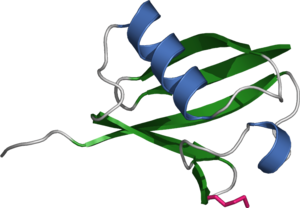
Original description - :Cartoon representation...

Original description – :Cartoon representation of ubiquitin protein, highlighting the secondary structure. α-helices are coloured in blue and the β-sheet in green. The normal attachment point for a further ubiquitin molecule in polyubiquitin chain formation, lysine 48, is shown in pink. :Image was created using PyMOL (Photo credit: Wikipedia)

Ubiquinin-Proteosome pathway, autophagy, the mitochondrion, proteolysis and cell apoptosis

Larry H Bernstein, MD, FACP, Curator, Reporter, AEW

The work reviewed follows a seminal contribution by two Israeli and an American molecular biologists who shared the Nobel Prize in Chemistry in 2004.

The Royal Swedish Academy of Sciences awarded the Nobel Prize in Chemistry for 2004 “for the discovery of ubiquitin-mediated protein degradation” jointly to Aaron Ciechanover Technion – Israel Institute of Technology, Haifa, Israel, Avram Hershko Technion – Israel Institute of Technology, Haifa, Israel and Irwin Rose – University of California, Irvine, USA.

Aaron Ciechanover, born 1947 (57 years) in Haifa, Israel (Israeli citizen) received a Doctor’s degree in medicine in 1975 at Hebrew University of Jerusalem, and in biology in 1982 at the Technion (Israel Institute of Technology), Haifa. He is a Distinguished Professor at the Center for Cancer and Vascular Biology, and the Rappaport Faculty of Medicine and Research Institute at the Technion, Haifa,
Israel.

Avram Hershko, born 1937 (67 years) in Karcag, Hungary (Israeli citizen) earned the Doctor’s degree in medicine in 1969 at the Hadassah and the Hebrew University Medical School, Jerusalem.  He is a Distinguished Professor at the Rappaport Family Institute for Research in Medical Sciences at the Technion (Israel Institute of Technology), Haifa, Israel.

Irwin Rose, born 1926 (78 years) in New York, USA (American citizen) achieved a Doctor’s degree in 1952 at the University of Chicago, USA. Specialist at the Department of Physiology and Biophysics, College of Medicine, University of California, Irvine, USA.

Proteins labelled for destruction
Proteins build up all living things: plants, animals and therefore us humans. In the past few decades biochemistry has come a long way towards explaining how the cell produces all its various proteins. But as to the breaking down of proteins, not so many researchers were interested. Aaron Ciechanover, Avram Hershko and Irwin Rose went against the stream and at the beginning of the 1980s discovered one of the cell’s most important cyclical processes, regulated protein degradation. For this, they are being rewarded
with the 2004 Nobel Prize in Chemistry.

The label consists of a molecule called ubiquitin. This fastens to the protein to be destroyed, accompanies it to the proteasome where it is recognised as the key in a lock, and signals that a protein is on the way for disassembly. Shortly before the protein is squeezed into the proteasome, its ubiquitin label is disconnected for re-use.

Aaron Ciechanover, Avram Hershko and Irwin Rose have brought us to realise that the cell functions as a highly-efficient checking station where proteins are built up and broken down at a furious rate. The degradation is not indiscriminate but takes place through a process that is controlled in detail so that the proteins to be broken down at any given moment are given a molecular label, a ‘kiss of death’, to be dramatic. The labelled proteins are then fed into the cells’ “waste disposers”, the so called proteasomes, where they are chopped into small pieces and destroyed.

Animation (Plug in requirement: Flash Player 6)

Thanks to the work of the three Laureates it is now possible to understand at  molecular level how the cell controls a number of central processes by breaking down certain proteins and not others. Examples of processes governed by ubiquitin-mediated protein degradation are cell division, DNA repair, quality control of newly-produced proteins, and important parts of the immune defence. When the degradation does not work correctly, we fall ill. Cervical cancer and cystic fibrosis are two examples. Knowledge of
ubiquitin-mediated protein degradation offers an opportunity to develop drugs against these diseases and others.

Aaron Ciechanover and Ronen Ben-Saadon. N-terminal ubiquitination: more protein substrates join in. TRENDS in Cell Biology 2004; 14 (3):103-106.

The ubiquitin–proteasome system (UPS) is involved in selective targeting of innumerable cellular proteins through a complex pathway that plays important roles in a broad array of processes. An important step in the proteolytic cascade is specific recognition of the substrate by one of many ubiquitin ligases, E3s, which is followed by generation of the polyubiquitin degradation signal. For most substrates, it is believed that the first ubiquitin moiety is conjugated, through its C-terminal Gly76 residue, to an 1-NH2 group of an internal Lys residue. Recent findings indicate that, for several proteins, the first ubiquitin moiety is fused linearly to the a-NH2 group of the N-terminal residue.

The ubiquitin–proteasome system (UPS). Ubiquitin is first activated to a high-energy intermediate by E1. It is then transferred to a member of the E2 family of enzymes. From E2 it can be transferred directly to the substrate (S, red) that is bound specifically to a member of the ubiquitin ligase family of proteins, E3

  • (a). This occurs when the E3 belongs to the RING finger family of ligases. In the case of a HECT-domain-containing ligase
  • (b), the activated ubiquitin is transferred first to the E3 before it is conjugated to the E3-bound substrate . Additional ubiquitin moieties are added successively to the previously conjugated moiety to generate a polyubiquitin chain.
  • The polyubiquitinated substrate binds to the 26S proteasome complex (comprising 19S and 20S sub-complexes): the substrate is degraded to short peptides, and free and reusable ubiquitin is released through the activity of de-ubiquitinating enzymes (DUBs).

Ubiquitination on an internal lysine and on the N-terminal residue of the target substrate.

  • (a) The first ubiquitin moiety is conjugated, through its C-terminal Gly76 residue, to the 1-NH2 group of an internal lysine residue of the target substrate (Kn).
  • (b) The first ubiquitin moiety is conjugated to a free a-NH2 group of the N-terminal residue, X.
  • In both cases, successive addition of activated ubiquitin moieties to internal Lys48 on the previously conjugated ubiquitin moiety leads to the synthesis of a  polyubiquitin chain that serves as the degradation signal for the 26S proteasome


A UPS Autophagy Review

Summary: This discussion is another in a series discussing mitochondrial metabolism, energetics and regulatory function, and dysfunction, and the process leading to apoptosis and a larger effect on disease, with a specific targeting of neurodegeneration. Why neurological and muscle damage are more sensitive than other organs is not explained easily, but recall in the article on mitochondrial oxidation-reduction reactions and repair that there are organ specific differences in the rates of organelle mutation errors and in the rates of repair. In addition, consider the effect of iron-binding in the function of the cell, and Ca2+ binding in the creation of the mechanic work or signal transmission carried out by the neuromuscular system. We target the previously mentioned role of ubiquitin-proteosome, and interaction with autophagy, mitophagy, and disease.

Keywords: autophagy, ubiquitin-proteosome, UPS, protein degradation, defective organelle removal, selective degradation, E3, neurodegenerative disease, mitochondria, mitophagy, proteolysis, ribosomes, apoptosis, Ca++, rapamycin, TORC1, atg1p kinase, ubiqitization, trafficking pathways, unfolded protein response (UPS), p52/sequestrome, IC3, nitrogen starvation, acetaldehyde dehydrogenase (Ald6p), Ut1hp, toxisomes, Pex3/14 proteins, Bax, E3 Ligase, TRAP1, TNF-a, NFkB.

Ubiquitin-Proteosome Pathway
Three recent papers, describing three apparently independent biological processes, highlight the role of the ubiquitin-proteasome system as a major, however selective, proteolytic and regulatory pathway. Using specific inhibitors to the proteasome, Rock et al. (1994) demonstrate a role for this protease in the degradation of the major bulk of cellular proteins. They also showed that antigen processing requires the ubiquitin-activating enzyme, El. This indicates that antigen processing is both ubiquitin dependent and proteasome dependent. Furthermore, inhibitors to the proteasome prevent tumor necrosis factor a (TNFa)-induced activation of mature NFKB and its entry into the nucleus. The two studies clearly demonstrate that the ubiquitin-proteasome system is involved not only in complete destruction of its protein substrates, but also in limited proteolysis and posttranslational processing in which biologically active peptides or fragments are generated. In addition, the unstable c-Jut but not the stable v-Jun, is multiubiquitinated and degraded. The escape of the oncogenic v-Jun from ubiquitin-dependent degradation suggests a novel route to malignant transformation. Presented here is a review of the components, mechanisms of action, and cellular physiology of the ubiquitin-proteasome pathway.

Experimental evidence implicates the ubiquitin system in the degradation of

  • mitotic cyclins,
  • oncoproteins,
  • the tumor suppressor protein p53,
  • several cell surface receptors,
  • transcriptional regulators, and
  • mutated and damaged proteins.

Some of the proteolytic processes occur throughout the cell cycle, whereas others are tightly programmed and occur following cell cycle-dependent posttranslational modifications of the components involved. Signaling and degradation of other proteins (cell surface receptors, for example) may occur only following structural changes or modification(s) in the target molecule that results from ligand binding. Cell cycle-and modification-dependent degradation, as well the ability of the system to destroy completely or only partially its protein substrates, reflects the complexity involved in regulated intracellular protein degradation.

Enzymes of the System
The reaction occurs in two distinct steps:

  1. signaling of the protein by covalent attachment of multiple ubiquitin molecules and
  2. degradation of the targeted protein with the release of free and reutilizable ubiquitin.

Conjugation of ubiquitin to proteins destined for degradation proceeds, in general, in a three-step mechanism.

  1. Initially, the C-terminal Gly of ubiquitin is activated by ATP to a high energy thiol ester intermediate in a reaction catalyzed by the ubiquitin-activating enzyme, El.
  2. Following activation, E2 (ubiquitin carrier protein or ubiquitin-conjugating enzyme [USC]) transfers ubiquitin from El to the substrate that is bound to a ubiquitin-protein ligase, E3.
  3. Here an isopeptide bond is formed between the activated C-terminal Gly of ubiquitin and an c-NH2 group of a Lys residue of the substrate.

As E3 enzymes specifically synthesized by processive transfer of ubiquitin moieties to Lys-48 of the previous (and already conjugated) ubiquitin molecule. In many cases, E2 transfers activated ubiquitin directly to the protein substrate. Thus, E2 enzymes also play an important role in substrate recognition, although, in most cases, this modification is of the monoubiquitin type.

The Ubiquitin-Mediated Proteolytic Pathway
(1) Activation of ubiquitin by El and E2.
(2) Binding of the protein substrate to E3.
(3) EP dependent but EM independent monoubiquitination.
(4) EP-dependent but EM independent polyubiquitination?
(5) Ed-dependent polyubiquitination.
(6) Degradation of ubiquitin-protein conjugate by the 26s protease.
(7) “Correction” function of C-terminal hydrolase(s).
(6) Release of ubiquitin from terminal proteolytic products by &terminal hydrolase(s).

It is essential for the system that ubiquitin recycles. This function is carried out by ubiquitin C-terminal hydrolases (isopeptidases). In protein degradation, hydrolase(s) is required to release ubiquitin from isopeptide linkage with Lys residues of the protein substrate at the final stage of the proteolytic process. A ubiquitin C-terminal hydrolytic activity is also required to disassemble polyubiquitin chains linked to the protein substrate, following or during the degradative process. A “proofreading” function has been proposed for hydrolases to release free protein from “incorrectly” ubiquitinated proteins. Another possibility is that ubiquitin C-terminal hydrolases are required for trimming polyubitin chains.

Hydrolases are probably required for the processing of biosynthetic precursors of ubiquitin, since most ubiquitin genes are arranged either in linear polyubiquitin arrays or are fused to ribosomal proteins. Yet another hydrolase may be required for the removal of extra amino acid residues that are encoded by certain genes at the C-termini of some polyubiquitin molecules. Ubiquitin C-terminal hydrolases may have other functions as well. High energy El-ubiquitin and E2-ubiquitin thiol esters may react with intracellular nucleophiles (such as glutathione or polyamines). Such reactions may lead to rapid depletion of free ubiquitin unless such side products are rapidly cleaved.

Recognition of Substrates
Short-lived proteins contain a region enriched with Pro, Glu, Ser, and Thr (PEST region). However, it has not been shown that this region indeed serves as a consensus proteolysis targeting signal. An interesting problem involves the evolution of the N-end rule pathway and its physiological roles. Proteins that are derived from processing of polyproteins (Sindbis virus RNA polymerase, for example) may contain destabilizing N-termini and thus are proteolyzed via the N-end rule pathway.

Using a “synthetic lethal” screen, Ota and Varshavsky attempted to isolate a mutant that requires the N-end rule pathway for viability. They characterized an extragenic suppressor of the mutation and found that it encodes a protein with a strong correlation to protein phosphotyrosine phosphatase. The target protein or the connection between dephosphorylation of phosphotyrosine and the N-end rule pathway is still obscure. In an additional study, these researchers have shown that a missense mutation in SLNI, a member of a two-component signal transduction system in yeast, is lethal in the absence, but not in the presence, of the N-end rule pathway. Further studies are required to isolate the target protein and identify the signal transduction pathway.

Two recent studies have shed light on the role of the ubiquitin system and the proteasome in the process. Michalek et al. (1993) have shown that a mutant cell that harbors a thermolabile El cannot present peptides derived from ovalbumin following inactivation of the enzyme. In contrast, presentation of a minigene-expressed antigene peptide or presentation of exogenous similar peptide was not perturbed at the nonpermissive temperature. The important conclusion of the researchers is that the processing of the protein to peptides requires the complete ubiquitin pathway. In a complementary study, Rock et al. (1994) have shown that inhibitors that block the chymotryptic activity of the proteasome also block antigen presentation, most probably by inhibiting proteolysis of the antigen (ovalbumin). Thus, it appears that processing of MHC restricted class I antigens requires both ubiquitination and subsequent degradation by the proteasome. It is likely that the proteasome catalyzes processing of these antigens as part of the 26s protease complex.
Ciechanover A. The Ubiquitin-Proteasome Proteolytic Pathway. Cell 1994; 79:13-21.
Regulation of autophagy
The protein content of the cell is determined by the balance between protein synthesis and protein degradation. At constant intracellular protein concentration, i.e. at steady state, rates of protein synthesis and degradation are equal. Although turnover of protein results in energy dissipation, regulation at the level of protein degradation effectively controls protein levels.
Intracellular proteins to be degraded in the lysosomes can get access to these organelles by the following processes:

  • macroautophagy,
  • microautophagy,
  • crinophagy and selective,
  • chaperonin mediated, direct uptake of proteins.

Overview of the involvement of signal transduction in the regulation of macroautophagic proteolysis by amino acids and cell swelling.

  1. Amino acids (AA) stimulate a protein kinase cascade via a plasma membrane receptor.
  2. Receptor activation results in activation of PtdIns 3-kinase (PI3K), possibly via a heterotrimeric Gái3 protein.
  3. followed by activation of PKC-æ, PKB/Akt, p70S6 kinase (p70S6k) and finally phosphorylation of ribosomal protein S6 (S6P).
  4. The GDP-bound form of Gái3 is required for autophagic sequestration, whereas the GTP-bound form is inhibitory.
  5. The constitutively formed phosphatidylinositol 3-phosphate (PI3P) is also required for autophagic sequestration. Therefore,

inhibition of PtdIns 3-kinase activity by

  • wortmannin (W),
  • LY294002 (LY) or
  • 3-methyladenine (3MA) prevents autophagic sequestration.

Activation of PKC-æ and PKB/Akt is mediated by the 3,4- and 3,4,5-phosphate forms of phosphatidylinositol (PI3,4P2 and PI3,4,5P3) that are produced upon activation of PtdIns 3-kinase.

As a result of this, the first step of the macroautophagic pathway is

  • inhibited by components of the cascade that are downstream of PtdIns 3-kinase.
  • inhibition of this downstream cascade by rapamycin (RAPA) accelerates autophagic sequestration.
  • cell swelling potentiates the effect of amino acids via a change in the receptor owing to membrane stretch.

Furthermore, the site of action of the different effectors of the cytoskeleton (okadaic acid, cytochalasin, nocodazole, vinblastin and colchicine) are indicated.

  • AVi,
  • initial autophagic vacuole;
  • AVd,
  • mature degradative autophagic vacuole,
  • ER, endoplasmic reticulum.

The rate of proteolysis , an important determinant of the intracellular protein content, and part of its degradation occurs in the lysosomes and is mediated by macroautophagy. In liver, macroautophagy is very active and almost completely accounts for starvation-induced proteolysis. Factors inhibiting this process include

  • amino acids,
  • cell swelling and
  • insulin.

In the mechanisms controlling macroautophagy, protein phosphorylation plays an important role.

  • Activation of a signal transduction pathway, ultimately
  • leading to phosphorylation of ribosomal protein S6,
  • accompanies Inhibition of macroautophagy.

Components of this pathway may include

  • a heterotrimeric Gi3-protein,
  • phosphatidylinositol 3-kinase and
  • p70S6 kinase.

Selectivity of Autophagy
It has been assumed for a long time that macroautophagy is a non-selective process, in which macromolecules are randomly degraded in the same ratio as they occur in the cytoplasm . However, recent observations strongly suggest that this may not always be the case, and that macroautophagy can be selective. Lysosomal protein degradation can selectively occur via ubiquitin-dependent and -independent pathways. In the perfused liver, although autophagic breakdown of protein and RNA (mainly ribosomal RNA) is sensitive to inhibition by amino acids and insulin, glucagon accelerates proteolysis but has no effect on RNA degradation.

Another example of selective autophagy is the degradation of superfluous peroxisomes in hepatocytes from clofibrate-treated rats. When hepatocytes from these rats, in which the number of peroxisomes is greatly increased, are incubated in the absence of amino acids to ensure maximal flux through the macroautophagic pathway, peroxisomes are degraded at a relative rate that exceeds that of any other component in the liver cell. The accelerated degradation of peroxisomes was sensitive to inhibition by 3-methyladenine, a specific autophagic sequestration inhibitor. Interestingly, the accelerated removal of peroxisomes was prevented by long-chain but not short-chain fatty acids. Since long-chain fatty acids are substrates for peroxisomal â-oxidation, this indicates that these organelles are removed by autophagy when they are functionally redundant.  Our hypothesis is that acylation (palmitoylation?) of a peroxisomal membrane protein protects the peroxisome against autophagic sequestration.

Under normal conditions macroautophagy may be largely unselective and serves, for example, to produce amino acids for gluconeogenesis and the synthesis of essential proteins in starvation. When cell structures are functionally redundant or when they become damaged, the autophagic system is able to recognize this and is able to degrade the structure concerned. As yet, nothing is known about the recognition signals. A possibility is that ubiquitination of membrane proteins is required to mark the structure to be degraded for autophagic sequestration.

Ubiquitin may be involved in macroautophagy
Ubiquitin not only contributes to extralysosomal proteolysis but is also involved in autophagic protein degradation. Thus, in fibroblasts ubiquitin–protein conjugates can be found in the lysosomes, as shown by immunohistochemistry and immunogold electron microscopy. Free ubiquitin can also be found inside lysosomes. Accumulations of ubiquitin–protein conjugates in filamentous, presumably lysosomal, structures are also found in a large number of neurodegenerative diseases. Mallory bodies in the liver of alcoholics also contain ubiquitin–protein conjugates.

This presence of ubiquitin–protein conjugates in filamentous inclusions in neurons and other cells can be caused by a defect in the extralysosomal ubiquitin-dependent proteolytic pathway. However, it is also possible that these filamentous inclusions represent an attempt of the cell to get rid of unwanted material (proteins, organelles) via autophagy. Direct evidence that ubiquitin may be involved in the control of macroautophagy came from experiments with CHO cells with a temperature-sensitive mutation in the ubiquitin-activating enzyme E1. Wild-type cells increased their rate of proteolysis in response to stress (amino acid depletion, increased temperature). This was prevented by the acidotropic agent ammonia or by the autophagic sequestration inhibitor 3-methyladenine, indicating that the accelerated proteolysis occurred by autophagy. In the mutant cells, there was no such increase in proteolysis in response to stress at the restrictive temperature.

Autophagy and carcinogenesis
In cancer development, cell growth is mainly induced by inhibition of protein degradation, since differences in the rate of protein synthesis between tumorigenic cells and their normal counterparts are rather small. A striking example of how reduced autophagic proteolysis can contribute to cell growth can be found in the development of liver carcinogenesis. This decrease in autophagic flux results from a decrease in the rate of autophagic sequestration and is already detectable in the early preneoplastic stage. Autophagic flux is then hardly inhibitable by amino acids nor is it inducible by catabolic stimuli
and declines in the more advanced stage of cancer development to a rate of less than 20% of that seen in normal hepatocytes. The fact that the addition of 3-methyladenine to hepatocytes from normal rats increased hepatocyte viability to the same level as observed for the tumour cells strongly suggests that the fall in autophagic proteolysis contributes to the rapid growth rate of these cells and gives them a selective advantage over the normal hepatocytes.

Underlying control mechanisms for autophagy are gradually being unravelled. It is perhaps not surprising that protein phosphorylation and signal transduction are key elements in these mechanisms. The discovery of an amino acid receptor in the plasma membrane of the hepatocyte with a signal transduction pathway coupled to it may have important repercussions, not only for the control of macroautophagy but also for the control of other pathways.

It remains to be seen whether the details of the mechanisms controlling the process in yeast are similar to those in mammalian cells. For example, it is not known whether amino acids are able to control the process as they do in mammalian cells.

Blommaart EFC, Luiken JJFP, Meijer AJ. Autophagic proteolysis: control and specificity. Histochemical Journal (1997); 29:365–385.
A Novel Type of Selective Autophagy
Eukaryotic cells use autophagy and the ubiquitin–proteasome system (UPS) as their major protein degradation pathways. Whereas the UPS is required for the rapid degradation of proteins when fast adaptation is needed, autophagy pathways selectively remove protein aggregates and damaged or excess organelles. However, little is known about the targets and mechanisms that provide specificity to this process. Here we show that mature ribosomes are rapidly degraded by autophagy upon nutrient starvation in Saccharomyces cerevisiae. Surprisingly, this degradation not only occurs by a nonselective mechanism, but also involves a novel type of selective autophagy, which we term ‘ribophagy’. A genetic screen revealed that selective degradation of ribosomes requires catalytic activity of the Ubp3p/Bre5p ubiquitin protease. Although Ubp3p and Bre5p cells strongly accumulate 60S ribosomal particles upon starvation, they are proficient in starvation sensing and in general trafficking and autophagy pathways. Moreover, ubiquitination of several ribosomal subunits and/or ribosome associated proteins was specifically enriched in Ubp3p cells, suggesting that the regulation of ribophagy by ubiquitination may be direct. Interestingly, Ubp3p cells are sensitive to rapamycin and nutrient starvation, implying that selective degradation of ribosomes is functionally important in vivo. Taken together, our results suggest a link between ubiquitination and the regulated degradation of mature ribosomes by autophagy.
Kraft C, Deplazes A, Sohrmann M,Peter M. Mature ribosomes are selectively degraded upon starvation by an autophagy pathway requiring the Ubp3p/Bre5p ubiquitin protease. Nature Cell Biology 2008; 10(5): 603-609. DOI: 10.1038/ncb1723.  www.nature.com/naturecellbiology

Mitochondrial Failure and Protein Degradation

Progressive mitochondrial failure is tightly associated with the the development of most age-related human diseases including neurodegenerative diseases, cancer, and type 2 diabetes.

This tight connection results from the double-edged sword of mitochondrial respiration, which is responsible for generating both ATP and ROS, as well as from risks that are inherent to mitochondrial biogenesis. To prevent and treat these diseases, a precise understanding of the mechanisms that maintain functional mitochondria is necessary. Mitochondrial protein quality control is one of the mechanisms that protect mitochondrial integrity, and increasing evidence implicates the cytosolic ubiquitin/proteasome system (UPS) as part of this surveillance network. In this review, we will discuss our current understanding of UPS-dependent mitochondrial protein degradation, its roles in diseases progression, and insights into future studies.

While mitochondria have their own genome, about 99% of the roughly 1000 mitochondrial proteins are encoded in the nuclear genome. Most mitochondrial proteins are therefore

  • synthesized in the cytoplasm,
  • unfolded,
  • transported across one or both mitochondrial membranes,
  • then refolded and/or assembled into complexes (Tatsuta, 2009).

Failure of this complex series of events generates unfolded or misfolded proteins within mitochondria, often disrupting critical functions.

Mitochondrial oxidative phosphorylation generates usable cellular energy in the form of ATP, but also produces reactive oxygen species (ROS) . ROS tend to react quickly, so their predominant sites of damage are mitochondrial macromolecules that are localized nearby the source of ROS production.

Exposure to oxidative stress facilitates misfolding and aggregation of these mitochondrial proteins, leading to disassembly of protein complexes and eventual loss of mitochondrial integrity.

The clearance of misfolded and aggregated proteins is constantly needed to maintain functional mitochondria.
There are several systems promoting this turnover.

  1. Mitophagy, a selective mitochondrial autophagy, mediates a bulk removal of damaged mitochondria.
  2. mitochondria intrinsically contain proteases in each of their compartments and these proteases recognize misfolded mitochondrial proteins and mediate their degradation.

Accumulating evidence shows that the ubiquitin proteasome system (UPS) plays an important role in mitochondrial protein degradation. At various cellular sites, the UPS is involved in protein degradation. With the help of ubiquitin E1–E2–E3 enzyme cascades, target proteins destined for destruction are marked by conjugation of K48-linked poly-ubiquitin chain. This poly-ubiquitinated protein is then targeted to the proteasome for degradation.

Cells treated with proteasome inhibitors exhibit elevated levels of ubiquitinated mitochondrial proteins, suggesting the potentially important roles of the proteasome on mitochondrial protein degradation. Studies have also identified mitochondrial substrates of the UPS.

  • Fzo1, an outer mitochondrial membrane (OMM) protein involved in mitochondrial fusion, is partially dependent on the proteasome for its degradation in yeast.
  • The F box protein Mdm30 mediates ubiquitination of Fzo1 by Skp1-Cullin-F-boxMdm30 ligase, which leads to proteasomal degradation.

The UPS has also been implicated in mitochondrial protein degradation in higher organisms. In mammals,

  • the OMM proteins mitofusin 1 and 2 (Mfn1/2; the mammalian orthologs of Fzo1) and Mcl1 are polyubiquitinated and degraded by the proteasome.
  • VDAC1, Tom20 and Tom70 were also suggested as targets of proteasomal degradation as they are stabilized by proteasome inhibition.
  •  inactivation of the proteasome also induces accumulation of intermembrane space (IMS) proteins and, consistent with this, the proteasome plays a role in degradation of the IMS protein, Endonuclease G.

Turnover of some inner mitochondrial membrane (IMM) proteins is also dependent upon the proteasome. Uncoupling proteins (UCPs) 2 and 3 exhibit an unusually short half-life compared with other IMM proteins, and Brand and colleagues showed that inactivation of the proteasome prevents their turnover in vivo and in a reconstituted in vitro system. Finally, mitochondrial matrix proteins can also be degraded by the proteasome.

Cdc48/p97 is involved in many cellular processes through its role in protein degradation and is targeted to different subcellular sites by adaptor proteins. For example, Cdc48/p97 is recruited to the endoplasmic reticulum with the help of two adaptor proteins, Npl4 and Ufd1. This implies the existence of specific adaptors that recruit Cdc48/p97 to mitochondria. Consistent with this notion, the authors recently identified a mitochondrial adaptor protein for Cdc48, which we named Vms1 (VCP/Cdc48-associated mitochondrial stress responsive 1). Vms1 interacts with Cdc48/p97 and Npl4, but not with Ufd1, which indicates that the Cdc48/p97–Npl4–Ufd1 complex functions in ER protein degradation while the Vms1–Cdc48/p97–Npl4 complex acts in mitochondria. In agreement with this notion, overexpression of Cdc48 or Npl4 rescues the Vms1 mutant phenotype while Ufd1 has no effect.

Normally, Vms1 is cytoplasmic. Upon mitochondrial stress, however, Vms1 recruits Cdc48 and Npl4 to mitochondria. In agreement with the role of Cdc48/p97 in OMM protein degradation, loss of the Vms1 system results in accumulation of ubiquitin-conjugated proteins in purified mitochondria as well as stabilization of Fzo1 under mitochondrial stress conditions. Accumulation of damaged and misfolded mitochondrial proteins disturbs the normal physiology of the mitochondria, leading to mitochondrial dysfunction. As expected, the Vms1 mutants progressively lose mitochondrial respiratory activity, eventually leading to cell death. The VMS1 gene is broadly conserved in eukaryotes, implying an important functional role in a wide range of organisms. The C. elegans Vms1 homolog exhibits a similar pattern of mitochondrial stress responsive translocation and is required for normal lifespan. Additionally, mammalian Vms1 also forms a stable complex with p97. Combining these observations, the authors conclude that Vms1 is a conserved component of the UPS-dependent mitochondrial protein quality control system.

The UPS regulates mitochondrial dynamics and initiation of mitophagy
The UPS regulates mitochondrial dynamics. Major proteins involved in mitochondrial fission or fusion (e.g. Mfn1/2, Drp1 and Fis1) are degraded by the UPS.  MITOL, a mitochondrial E3 ubiquitin ligase, is required for Drp1-dependent mitochondrial fission as depletion or inactivation of MITOL blocks mitochondrial fragmentation. Moreover, knockdown of USP30, an OMM-localized deubiquitinating enzyme, induces an elongated mitochondrial morphology, suggesting a defect in fission. Through this regulatory process, the UPS controls mitochondrial dynamics. Parkin, an E3 ligase involved in mitophagy, utilizes the UPS to enhance mitochondrial fission through degradation of components of the fusion machinery. By facilitating fragmentation of damaged mitochondria, which is essential for initiation of mitophagy, Parkin stimulates mitophagy. The underlying mechanisms linking the UPS to the regulation of mitochondrial dynamics remain unclear.

Accumulation of aberrant proteins and human diseases
In neurodegenerative diseases wherein aberrant pathological proteins accumulate throughout the cell, including sites in mitochondria. Amyloid precursor protein (APP), a protein associated with Alzheimer’s disease, accumulates within mitochondria and is implicated in blockade of mitochondrial protein import. A, a neurotoxic APP cleavage product, can also facilitate the formation of the mitochondrial permeability transition pore (mPTP) by binding to mPTP components VDAC1, CypD and ANT, which provokes cell death.
-Synuclein, a protein associated with the development of Parkinson’s disease, is targeted to the IMM where it binds to the mitochondrial respiratory complex I and impairs its function. -Synuclein interferes with mitochondrial dynamics as its unique interaction with the mitochondrial membrane disturbs the fusion process. Finally, in Huntington’s disease, increased association of the mutant huntingtin protein with mitochondria can impair mitochondrial trafficking. Moreover, accumulation of mutant huntingtin protein disrupts cristae structure and it facilitates mitochondrial fragmentation by activation of Drp1. These examples demonstrate the crucial importance of prompt removal of dysfunctional and/or aberrant proteins in maintaining functional mitochondria.

UPS-mediated mitochondrial protein degradation.
Misfolded and/or damaged mitochondrial proteins destined for proteasomal degradation in the cytosol are recruited to the outer mitochondrial membrane (OMM) from each mitochondrial compartment by unknown mechanisms. Upon reaching the OMM, these proteins are presented to the proteasome through a series of events. They are K48 polyubiquitinated by the cytoplasmic (e.g. Parkin) or mitochondrial ubiquitin E3 ligases. For proteasomal degradation, polyubiquitinated mitochondrial substrate proteins need to be retrotranslocated to the cytoplasm, probably, either by the proteasome per se or by the help of UPS components such as Vms1, Cdc48/p97 and Npl4. Following dislocation to the cytoplasm, these substrate proteins are degraded by the proteasome.

Treatment of diseases that arise from defects in protein quality control will depend on greater depth in our understanding of this process, which could contribute to the development of novel therapeutic approaches. For instance, both mutant SOD1, a misfolded mitochondrial protein associated with the onset of amyotrophic lateral sclerosis, and polyglutamine expanded ataxin-3, a pathogenic protein causing Machado-Joseph disease, are ubiquitinated by MITOL and then degraded by the proteasome. Facilitating the proteasomal degradation of these aberrant proteins might therefore efficiently control diseases progression and, eventually, cure the diseases. Answering these questions would partially unveil the mysterious physiology of mitochondria, which, in turn, would facilitate the development of therapeutics to prevent and cure devastating human diseases.

Heo JM, Rutter J. Ubiquitin-dependent mitochondrial protein degradation. The International Journal of Biochemistry & Cell Biology 2011; 43:1422– 1426. http://www.elsevier.com/locate/biocel
UPS Inhibitors and Apoptotic Machinery
Over the past decade, the promising results of UPSIs (UPS inhibitors) in eliciting apoptosis in various cancer cells, and the approval of the first UPSI (Bortezomib/Velcade/PS-341) for the treatment of multiple myeloma have raised interest in assessing the death program activated upon proteasomal blockage. Several reports indicate that UPSIs stimulate apoptosis in malignant cells by operating at multiple levels, possibly by inducing different types of cellular stress. Normally cellular stress signals converge on the core elements of the apoptotic machinery to trigger the cellular demise. In addition to eliciting multiple stresses, UPSIs can directly operate on the core elements of the apoptotic machinery to control their abundance. Alterations in the relative levels of anti and pro-apoptotic factors can render cancer cells more prone to die in response to other anti-cancer treatments. Aim of the present review is to discuss those core elements of the apoptotic machinery that are under the control of the UPS.

The UPS (Ubquitin-Proteasome System)
To fulfill the protein-degradation process two branches, operating at different levels, principally comprise the UPS.

  • The first branch is formed by the enzymatic activities responsible for delivering the substrate to the degradative machinery: the targeting branch.
  • The second branch is represented by the proteolytic machinery, which ultimately fragments the protein substrate into small oligopeptides.

Oligopeptides are further digested to single amino acids by cytosolic proteases.
It is important to remember that conjugation of ubiquitin to a specific protein is not sufficient to determine its degradation. In fact, mono-ubiquitination or poly-monoubiquitination and in certain cases also poly-ubiquitination of proteins are post-translational modifications related to various cellular functions including DNA repair or membrane trafficking . To deliver polypeptides for proteasomal degradation poly-ubiquitin chains of more than 4 ubiquitins must be assembled through lysine-48 linkages.

There are 3 catalytic sites for each polyubiquitin chain. These sites show specific requirements in terms of substrate specificities and catalytic activities, and they are identified as

  1. trypsin-like, which prefer to cleave after hydrophobic bonds, chymotrypsin-like, which cleave at basic residues and
  2. postglutamyl peptide hydrolase-like or
  3. caspase-like activities, which cut after acidic amino acid.

Each proteasome active site uses the side chain hydroxyl group of an NH2-terminal threonine as the catalytic nucleophile, a mechanism that distinguishes the proteasome from other cellular proteases. The presence of substrate proteolysis small size peptides ranging from 3 to 22 residues are generated. Alternative catalytic sites guarantees the efficient processing of several different substrates.

UPS Inhibitors
By UPS inhibitors (UPSI) we mean small molecules that share the ability to target and inhibit specific activities of the UPS, causing the accumulation of poly-ubiquitinated proteosomal substrates. UPSIs are heterogeneous compounds and among them bortezomib is the only one used in clinical practice.

PR-171, a modified peptide related to the natural product epoxomicin, is composed of two key elements:

  1. a peptide portion that selectively binds with high affinity in the substrate binding pocket(s) of the proteasome and
  2. an epoxyketone pharmacophore that stereospecifically interacts with the catalytic threonine residue and irreversibly inhibits enzyme activity.

In comparison to bortezomib, PR-171 exhibits equal potency, but greater selectivity, for the chymotrypsin-like activity of the proteasome. In cell culture PR-171 is more cytotoxic than bortezomib. In mice PR-171 is well tolerated and shows stronger anti-tumor activity when compared with bortezomib . Clinical studies are in progress to test the safety of PR-171 at different dose levels on some hematological cancers.

Cell Death by UPSI
In vitro experiments have unambiguously established that incubation of neoplastic cells with UPSIs including bortezomib triggers their death. Apoptosis or type I cell death relies on the timed activation of caspases, a group of cysteine proteases, which cleave selected cellular substrates after aspartic residues. Two main apoptotic pathways keep in check caspase activation.

The turnover of a large number of cellular proteins is under the control of the UPS. Thus in principle any proteosomal substrate could contribute directly or indirectly to the cell death phenotype. This is perfectly exemplified by two master regulators of cell life and death, p53 and NFkB.  UPSIs cause

  • NF-kB inhibition through reduced IkB degradation and,
  • in opposition; they promote stabilization and accumulation of p53.

c-FLIP is the most important element of the extrinsic pathway under the direct control of the UPS. Two different FLIP isoforms exist:

  1. c-FLIPL (Long) and
  2. c-FLIPS (Short).

c-FLIPL is highly homologus to caspase-8 and contains two tandem repeat Death Effector Domains (DED) and a catalytically inactive caspase-like domain. Both FLIPs can be degraded by the UPS; however they display distinct half-lives and the unique C terminus of c-FLIPS possesses a destabilizing function. The regulation of c-FLIP levels in response to UPSIs is rather controversial. Some reports indicate that UPSIs can reduce c-FLIP levels and in this manner synergize with TRAIL to promote apoptosis.

UPSIs activate multiple cellular responses and different stress signals that ultimately cause cell death. For this reason they represent broad inducers of apoptosis. In addition, since many of the available UPSIs alter the proteolytic activity of the proteasome, they represent non-specific modulators of the expression/activity of various components of the apoptotic machinery. Paradoxically they can simultaneously favor the accumulation of pro- and anti-apoptotic factors.
Brancolini C. Inhibitors of the Ubiquitin-Proteasome System and the Cell Death Machinery: How Many Pathways are Activated? Current Molecular Pharmacology, 2008; 1:24-37.

Mitochondrial Quality Control
The PINK1–Parkin pathway plays a critical role in mitochondrial quality control by selectively targeting damaged mitochondria for autophagy. The AAA-type ATPase p97 acts downstream of PINK1 and Parkin to segregate fusion-incompetent mitochondria for turnover. [Tanaka et al. (2010. J. Cell Biol. doi: 10.1083/jcb.201007013)]. p97 acts by targeting the mitochondrial fusion-promoting factor mitofusin for degradation through an endoplasmic reticulum–associated degradation (ERAD)-like mechanism.

Pallanck LJ. Culling sick mitochondria from the herd. J Cell Biol 2012;191(7):1225–1227. http://www.jcb.org/cgi/doi/10.1083/jcb.201011068

PINK1 and Parkin and Parkinson’s Disease

Studies of the familial Parkinson disease-related proteins PINK1 and Parkin have demonstrated that these factors promote the fragmentation and turnover of mitochondria following treatment of cultured cells with mitochondrial depolarizing agents. Whether PINK1 or Parkin influence mitochondrial quality control under normal physiological conditions in dopaminergic neurons, a principal cell type that degenerates in Parkinson disease, remains unclear. To address this matter, we developed a method to purify and characterize neural subtypes of interest from the adult Drosophila brain.

Using this method, we find that dopaminergic neurons from Drosophila parkin mutants accumulate enlarged, depolarized mitochondria, and that genetic perturbations that promote mitochondrial fragmentation and turnover rescue the mitochondrial depolarization and neurodegenerative phenotypes of parkin mutants. In contrast, cholinergic neurons from parkin mutants accumulate enlarged depolarized mitochondria to a lesser extent than dopaminergic neurons, suggesting that a higher rate of mitochondrial damage, or a deficiency in alternative mechanisms to repair or eliminate damaged mitochondria explains the selective vulnerability of dopaminergic neurons in Parkinson disease.

Our study validates key tenets of the model that PINK1 and Parkin promote the fragmentation and turnover of depolarized mitochondria in dopaminergic neurons. Moreover, our neural purification method provides a foundation to further explore the pathogenesis of Parkinson disease, and to address other neurobiological questions requiring the analysis of defined neural cell types.

Burmana JL, Yua S, Poole AC, Decala RB , Pallanck L. Analysis of neural subtypes reveals selective mitochondrial dysfunction in dopaminergic neurons from parkin mutants.

Autophagy in Parkinson’s Disease.
Parkinson’s disease is a common neurodegenerative disease in the elderly. To explore the specific role of autophagy and the ubiquitin-proteasome pathway in apoptosis, a specific proteasome inhibitor and macroautophagy inhibitor and stimulator were selected to investigate pheochromocytoma (PC12) cell lines transfected with human mutant (A30P) and wildtype (WT) -synuclein.

The apoptosis ratio was assessed by flow cytometry. LC3, heat shock protein 70 (hsp70) and caspase-3 expression in cell culture were determined by Western blot. The hallmarks of apoptosis and autophagy were assessed with transmission electron microscopy. Compared to the control group or the rapamycin (autophagy stimulator) group, the apoptosis ratio in A30P and WT cells was significantly higher after treatment with inhibitors of the proteasome and macroautophagy. The results of Western blots for caspase-3 expression were similar to those of flow cytometry; hsp70 protein was significantly higher in the proteasome inhibitor group than in control, but in the autophagy inhibitor and stimulator groups, hsp70 was similar to control. These findings show that inhibition of the proteasome and autophagy promotes apoptosis, and the macroautophagy stimulator rapamycin reduces the apoptosis ratio. And inhibiting or stimulating autophagy has less impact on hsp70 than the proteasome pathway.

In conclusion, either stimulation or inhibition of macroautophagy, has less impact on hsp70 than on the proteasome pathway. This study found that rapamycin decreased apoptotic cells in A30P cells independent of caspase-3 activity. Although several lines of evidence recently demonstrated crosstalk between autophagy and caspase-independent apoptosis, we could not confirm that autophagy activation protects cells from caspase-independent cell death. Undoubtedly, there are multiple connections between the apoptotic and autophagic processes.

Inhibition of autophagy may subvert the capacity of cells to remove damaged organelles or to remove misfolded proteins, which would favor apoptosis. However, proteasome inhibition activated macroautophagy and accelerated apoptosis. A likely explanation is inhibition of the proteasome favors oxidative reactions that trigger apoptosis, presumably through

1. a direct effect on mitochondria, and
2. the absence of NADPH2 and ATP

which may deinhibit the activation of caspase-2 or MOMP. Another possibility is that aggregated proteins induced by proteasome inhibition increase apoptosis.

Yang F, Yanga YP, Maoa CJ, Caoa BY, et al. Role of autophagy and proteasome degradation pathways in apoptosis of PC12 cells overexpressing human -synuclein. Neuroscience Letters 2009; 454:203–208. doi:10.1016/j.neulet.2009.03.027. http://www.elsevier.com/locate/neulet

Parkin-dependent Ubiquitination of Endogenous Bax 

Autosomal recessive loss-of-function mutations within the PARK2 gene functionally inactivate the E3 ubiquitin ligase parkin, resulting in neurodegeneration of catecholaminergic neurons and a familial form of Parkinson disease. Current evidence suggests both a mitochondrial function for parkin and a neuroprotective role, which may in fact be interrelated. The antiapoptotic effects of Parkin have been widely reported, and may involve fundamental changes in the threshold for apoptotic cytochrome c release, but the substrate(s) involved in Parkin dependent protection had not been identified. Here, we demonstrate the Parkin-dependent ubiquitination of endogenous Bax comparing primary cultured neurons from WT and Parkin KO mice and using multiple Parkin-overexpressing cell culture systems. The direct ubiquitination of purified Bax was also observed in vitro following incubation with recombinant parkin. The authors found that Parkin prevented basal and apoptotic stress induced translocation of Bax to the mitochondria. Moreover, an engineered ubiquitination-resistant form of Bax retained its apoptotic function, but Bax KO cells complemented with lysine-mutant Bax did not manifest the antiapoptotic effects of Parkin that were observed in cells expressing WT Bax. These data suggest that Bax is the primary substrate responsible for the antiapoptotic effects of Parkin, and provide mechanistic insight into at least a subset of the mitochondrial effects of Parkin.

Johnson BN, Berger AK, Cortese GP, and LaVoie MJ. The ubiquitin E3 ligase Parkin regulates the proapoptotic function of Bax. PNAS 2012, pp 6. http://www.pnas.org/cgi/doi/10.1073/pnas.1113248109
Parkin Promotes Mitochondrial Loss in Autophagy
Parkin, an E3 ubiquitin ligase implicated in Parkinson’s disease, promotes degradation of dysfunctional mitochondria by autophagy. Using proteomic and cellular approaches, we show that upon translocation to mitochondria, Parkin activates the ubiquitin–proteasome system (UPS) for widespread degradation of outer membrane proteins. This is evidenced by an increase in K48-linked polyubiquitin on mitochondria, recruitment of the 26S proteasome and rapid degradation of multiple outer membrane proteins. The degradation of proteins by the UPS occurs independently of the autophagy pathway, and inhibition of the 26S proteasome completely abrogates Parkin-mediated mitophagy in HeLa, SH-SY5Y and mouse cells. Although the mitofusins Mfn1 and Mfn2 are rapid degradation targets of Parkin, degradation of additional targets is essential for mitophagy. These results indicate that remodeling of the mitochondrial outer membrane proteome is important for mitophagy, and reveal a causal link between the UPS and autophagy, the major pathways for degradation of intracellular substrates.

Chan NC, Salazar AM, Pham AH, Sweredoski MJ, et al. Broad activation of the ubiquitin–proteasome system by Parkin is critical for mitophagy. Human Molecular Genetics 2011; 20(9): 1726–1737. doi:10.1093/hmg/ddr048.

TRAP1 and TBP7 Interaction in Refolding of Damaged Proteins
TRAP1 is a mitochondrial antiapoptotic heat shock protein. The information available on the TRAP1 pathway describes just a few well-characterized functions of this protein in mitochondria. However, our group’s use of mass spectrometry analysis identified TBP7, an AAA-ATPase of the 19S proteasomal subunit, as a putative TRAP1-interacting protein. Surprisingly, TRAP1 and TBP7 co-localize in the endoplasmic reticulum (ER), as demonstrated by biochemical and confocal/electron microscopy analyses, and directly interact, as confirmed by FRET analysis. This is the first demonstration of TRAP1 presence in this cellular compartment. TRAP1 silencing by shRNAs, in cells exposed to thapsigargin-induced ER stress, correlates with up-regulation of BiP/Grp78, thus suggesting a role of TRAP1 in the refolding of damaged proteins and in ER stress protection. Consistently, TRAP1 and/or TBP7 interference enhanced stress-induced cell death and increased intracellular protein ubiquitination. These experiments led us to hypothesize an involvement of TRAP1 in protein quality control for mistargeted/misfolded mitochondria-destined proteins, through interaction with the regulatory proteasome protein TBP7. Remarkably, the expression of specific mitochondrial proteins decreased upon TRAP1 interference as a consequence of increased ubiquitination. The proposed TRAP1 network has an impact in vivo, since it is conserved in human colorectal cancers, is controlled by ER-localized TRAP1 interacting with TBP7 and provides a novel model of ER-mitochondria crosstalk.

Amoroso MR, Matassa DS, Laudiero G, Egorova AV. TRAP1 AND THE PROTEASOME REGULATORY PARTICLE TBP7/Rpt3 INTERACT IN THE ENDOPLASMIC RETICULUM AND CONTROL CELLULAR UBIQUITINATION OF SPECIFIC MITOCHONDRIAL PROTEINS. Cell Death and Differentiation 2012; pp? DOI : 10.1038/cdd.2011.128

VMS1 and Mitochondrial Protein Degradation
We show that Ydr049 (renamed VCP/Cdc48-associated mitochondrial stress-responsive—Vms1), a member of an unstudied pan-eukaryotic protein family, translocates from the cytosol to mitochondria upon mitochondrial stress. Cells lacking Vms1 show progressive mitochondrial failure, hypersensitivity to oxidative stress, and decreased chronological life span. Both yeast and mammalian Vms1 stably interact with Cdc48/VCP/p97, a component of the ubiquitin/proteasome system with a well-defined role in endoplasmic reticulum-associated protein degradation (ERAD), wherein misfolded ER proteins are degraded in the cytosol. We show that oxidative stress triggers mitochondrial localization of Cdc48 and this is dependent on Vms1. When this system is impaired by mutation of Vms1,

  • ubiquitin-dependent mitochondrial protein degradation,
  • mitochondrial respiratory function,and
  • cell viability are compromised.

We demonstrate that Vms1 is a required component of an evolutionarily conserved system for mitochondrial protein degradation, which is
necessary to maintain

  • mitochondrial,
  • cellular, and
  • organismal viability.

Heo JM, Livnat-Levanon N, Taylor EB, Jones KT. A Stress-Responsive System
for Mitochondrial Protein Degradation. Molecular Cell 2010; 40:465–480.
DOI 10.1016/j.molcel.2010.10.021

Mitochondrial Protein Degradation
The biogenesis of mitochondria and the maintenance of mitochondrial functions depends on an autonomous proteolytic system in the organelle which is highly conserved throughout evolution. Components of this system include processing

  • peptidases and
  • ATP-dependent proteases, as well as
  • molecular chaperone proteins and
  • protein complexes with apparently regulatory functions.

While processing peptidases mediate maturation of nuclear-encoded mitochondrial preproteins, quality control within various subcompartments of mitochondria is ensured by ATP-dependent proteases which selectively remove non-assembled or misfolded polypeptides. Moreover, these proteases appear to control the activity- or steady-state levels of specific regulatory proteins and thereby ensure mitochondrial genome integrity, gene expression and protein assembly.

Kaser M and Langer T. Protein degradation in mitochondria. CELL & DEVELOPMENTAL BIOLOGY 2000; 11:181–190. doi: 10.1006/10.1006/scdb.2000.0166.

RING finger E3s

Ubiquitin-ligases or E3s are components of the ubiquitin proteasome system (UPS) that coordinate the transfer of ubiquitin to the target protein. A major class of ubiquitin-ligases consists of RING-finger domain proteins that include the substrate recognition sequences in the same polypeptide; these are known as single-subunit RING finger E3s. We are studying a particular family of RING finger E3s, named ATL, that contain a transmembrane domain and the RING-H2 finger domain; none of the member of the family contains any other previously described domain. Although the study of a few members in A. thaliana and O. sativa has been reported, the role of this family in the life cycle of a plant is still vague.

To provide tools to advance on the functional analysis of this family we have undertaken a phylogenetic analysis of ATLs in twenty-four plant genomes. ATLs were found in all the 24 plant species analyzed, in numbers ranging from 20–28 in two basal species to 162 in soybean. Analysis of ATLs arrayed in tandem indicates that sets of genes are expanding in a species-specific manner. To
get insights into the domain architecture of ATLs we generated 75 pHMM LOGOs from 1815 ATLs, and unraveled potential protein-protein interaction regions by means of yeast two-hybrid assays. Several ATLs were found to interact with DSK2a/ubiquilin through a region at the amino-terminal end, suggesting that this is a widespread interaction that may assist in the mode of action of ATLs; the region was traced to a distinct sequence LOGO. Our analysis provides significant observations on the evolution and expansion of the ATL family in addition to information on the domain structure of this class of ubiquitin-ligases that may be involved in plant adaptation to environmental stress.

Aguilar-Hernandez V, Aguilar-Henonin L, Guzman P. Diversity in the Architecture of ATLs, a Family of Plant Ubiquitin-Ligases, Leads to Recognition and Targeting of Substrates in Different Cellular Environments. PLoS ONE 2011; 6(8): e23934. doi:10.1371/journal.pone.0023934
UPS Proteolytic Function Inadequate in Proteinopathies
Proteinopathies are a family of human disease caused by toxic aggregation-prone proteins and featured by the presence of protein aggregates in the affected cells. The ubiquitin-proteasome system (UPS) and autophagy are two major intracellular protein degradation pathways. The UPS mediates the targeted degradation of most normal proteins after performing their normal functions as well as the removal of abnormal, soluble proteins. Autophagy is mainly responsible for degradation of defective organelles and the bulk degradation of cytoplasm during starvation. The collaboration between the UPS and autophagy appears to be essential to protein quality control in the cell.

UPS proteolytic function often becomes inadequate in proteinopathies which may lead to activation of autophagy, striving to remove abnormal proteins especially the aggregated forms. HADC6, p62, and FoxO3 may play an important role in mobilizing this proteolytic consortium. Benign measures to enhance proteasome function are currently lacking; however, enhancement of autophagy via pharmacological intervention and/or lifestyle change has shown great promise in alleviating bona fide proteinopathies in the cell and animal models. These pharmacological interventions are expected to be applied clinically to treat human proteinopathies in the near future.

Zheng Q, Li J, Wang X. Interplay between the ubiquitin-proteasome system and
autophagy in proteinopathies. Int J Physiol Pathophysiol Pharmacol 2009;1:127-142. http://www.ijppp.org/IJPPP904002

Ubiquitin-associated Protein-Protein Interactions

Applicability of in vitro biotinylated ubiquitin for evaluation of endogenous ubiquitin conjugation and analysis of ubiquitin-associated protein-protein interactions has been investigated. Incubation of rat brain mitochondria with biotinylated ubiquitin followed by affinity chromatography on avidin-agarose, intensive washing, tryptic digestion of proteins bound to the affinity sorbent and their mass spectrometry analysis resulted in reliable identification of 50 proteins belonging to mitochondrial and extramitochondrial compartments. Since all these proteins were bound to avidin-agarose only after preincubation of the mitochondrial fraction with biotinylated ubiquitin, they could therefore be referred to as specifically bound proteins. A search for specific
ubiquitination signature masses revealed several extramitochondrial and intramitochondrial ubiquitinated proteins representing about 20% of total number of proteins bound to avidin-agarose. The interactome analysis suggests that the identified non-ubiquitinated proteins obviously form tight complexes either with ubiquitinated proteins or with their partners and/or mitochondrial membrane components. Results of the present study demonstrate that the use of biotinylated ubiquitin may be considered as the method of choice for in vitro evaluation of endogenous ubiquitin-conjugating machinery in particular
subcellular organelles and changes in ubiquitin/organelle associated interactomes. This may be useful for evaluation of changes in interactomes induced by protein ubiquitination.

Buneeva OA, Medvedeva MV, Kopylov AT, Zgoda VG, Medvedev AE. Use of Biotinylated Ubiquitin for Analysis of Rat Brain Mitochondrial Proteome and Interactome. Int J Mol Sci 2012; 13: 11593-11609; doi:10.3390/ijms130911593
IL-6 regulation on mitochondrial remodeling/dysfunction

Muscle protein turnover regulation during cancer cachexia is being rapidly defined, and skeletal muscle mitochondria function appears coupled to processes regulating muscle wasting. Skeletal muscle oxidative capacity and the expression of proteins regulating mitochondrial biogenesis and dynamics are disrupted in severely cachectic ApcMin/+ mice. It has not been determined if these changes occur at the onset of cachexia and are necessary for the progression of muscle wasting. Exercise and anti-cytokine therapies have proven effective in preventing cachexia development in tumor bearing mice, while their effect on mitochondrial content, biogenesis and dynamics is not well understood.

The purposes of this study were to

1) determine IL-6 regulation on mitochondrial remodeling/dysfunction during the progression of cancer cachexia and
2) to determine if exercise training can attenuate mitochondrial dysfunction and the induction of proteolytic pathways during IL-6 induced cancer cachexia.

ApcMin/+ mice were examined during the progression of cachexia, after systemic interleukin (IL)-6r antibody treatment, or after IL-6 over-expression with or without exercise. Direct effects of IL-6 on mitochondrial remodeling were examined in cultured C2C12 myoblasts.

Mitochondrial content was not reduced during the initial development of cachexia, while muscle PGC-1α and fusion (Mfn1, Mfn2) protein expression was repressed.

With progressive weight loss mitochondrial content decreased, PGC-1α and fusion proteins were further suppressed, and fission protein (FIS1) was induced.

IL-6 receptor antibody administration after the onset of cachexia

  • improved mitochondrial content,
  • PGC-1α,
  • Mfn1/Mfn2 and
  • FIS1 protein expression.

IL-6 over-expression in pre-cachectic mice

  • accelerated body weight loss and muscle wasting, without reducing mitochondrial content,
  • while PGC-1α and Mfn1/Mfn2 protein expression was suppressed
  • and FIS1 protein expression induced.

Exercise normalized these IL-6 induced effects. C2C12 myotubes administered IL-6 had

  • increased FIS1 protein expression,
  • increased oxidative stress, and
  • reduced PGC-1α gene expression
  • without altered mitochondrial protein expression.

Altered expression of proteins regulating mitochondrial biogenesis and fusion are early events in the initiation of cachexia regulated by IL-6, which precede the loss of muscle mitochondrial content. Furthermore, IL-6 induced mitochondrial remodeling and proteolysis can be rescued with moderate exercise training even in the presence of high circulating IL-6 levels.

White JP, Puppa MJ, Sato S, Gao S. IL-6 regulation on skeletal muscle mitochondrial remodeling during cancer cachexia in the ApcMin/+ mouse. Skeletal Muscle 2012; 2:14-30.
http://www.skeletalmusclejournal.com/content/2/1/14

Starvation-induced Autophagy
Upon starvation cells undergo autophagy, a cellular degradation pathway important in the turnover of whole organelles and long lived proteins. Starvation-induced protein degradation has been regarded as an unspecific bulk degradation process. We studied global protein dynamics during amino acid starvation-induced autophagy by quantitative mass spectrometry and were able to record nearly 1500 protein profiles during 36 h of starvation. Cluster analysis of the recorded protein profiles revealed that cytosolic proteins were degraded rapidly, whereas proteins annotated to various complexes and organelles were degraded later at different time periods. Inhibition of protein degradation pathways identified the lysosomal/autophagosomal system as the main degradative route.

Thus, starvation induces degradation via autophagy, which appears to be selective and to degrade proteins in an ordered fashion and not completely arbitrarily as anticipated so far.

Kristensen AR, Schandorff S, Høyer-Hansen M, Nielsen MO, et al. Ordered Organelle Degradation during Starvation-induced Autophagy. Molecular & Cellular Proteomics 2008; 7:2419–2428.

Skeletal Muscle Macroautophagy
Skeletal muscles are the agent of motion and one of the most important tissues responsible for the control of metabolism. Coordinated movements are allowed by the highly organized structure of the cytosol of muscle fibers (or myofibers), the multinucleated and highly specialized cells of skeletal muscles involved in contraction. Contractile proteins are assembled into repetitive structures, the basal unit of which is the sarcomere, that are well packed into the myofiber cytosol. Myonuclei are located at the edge of the myofibers, whereas the various organelles such as mitochondria and sarcoplasmic reticulum are embedded among the myofibrils. Many different changes take place in the cytosol of myofibers during catabolic conditions:

  • proteins are mobilized
  • organelles networks are reorganized for energy needs
  • the setting of myonuclei can be modified.

Further,

  • strenuous physical activity,
  • improper dietary regimens and
  • aging

lead to mechanical and metabolic damages of myofiber organelles, especially mitochondria, and contractile proteins. During aging the protein turnover is slowed down, therefore it is easier to accumulate aggregates of dysfunctional proteins. Therefore, a highly dynamic tissue such as skeletal muscle requires a rapid and efficient system for the removal of altered organelles, the elimination of protein aggregates, and the disposal of toxic products.

The two major proteolytic systems in muscle are the ubiquitin-proteasome and the autophagy-lysosome pathways. The proteasome system requires

  • the transcription of the two ubiquitin ligases (atrogin-1 and MuRF1) and
  • the ubiquitination of the substrates.

Therefore, the ubiquitin-proteasome system can provide the rapid elimination of single proteins or small aggregates. Conversely, the autophagic system is able to degrade entire organelles and large proteins aggregates. In the autophagy-lysosome system, double-membrane vesicles named autophagosomes are able to engulf a portion of the cytosol and fuse with lysosomes, where their content is completely degraded by lytic enzymes.

The autophagy flux can be biochemicaly monitored following LC3 lipidation and p62 degradation. LC3 is the mammalian homolog of the yeast Atg8 gene, which is lipidated when recruited for the double-membrane commitment and growth. p62 (SQSTM-1) is a polyubiquitin-binding protein involved in the proteasome system and that can either reside free in the cytosol and nucleus or occur within autophagosomes and lysosomes. The GFP-LC3 transgenic mouse model allows easy detection of autophagosomes by simply monitoring the presence of bright GFP-positive puncta inside the myofibrils and beneath the plasma membrane of the myofibers, thus investigate the activation of autophagy in skeletal muscles with different contents of slow and fast-twitching myofibers and in response to stimuli such as fasting. For example, in the fast-twiching extensor digitorum longus muscle few GFP-LC3 dots were observed before starvation, while many small GFP-LC3 puncta appeared between myofibrils and in the perinuclear regions after 24 h starvation. Conversely, in the slow-twitching soleus muscle, autophagic puncta were almost absent in standard condition and scarcely induced after 24 h starvation.
Autophagy in Muscle Homeostasis
The autophagic flux was found to be increased during certain catabolic conditions, such as fasting, atrophy , and denervation , thus contributing to protein breakdown. Food deprivation is one of the strongest stimuli known to induce autophagy in muscle. Indeed skeletal muscle, after the liver, is the most responsive tissue to autophagy activation during food deprivation. Since muscles are the biggest reserve of amino acids in the body, during fasting autophagy has the vital role to maintain the amino acid pool by digesting muscular protein and organelles. In mammalian cells, mTORC1, which consists of

  • mTOR and
  • Raptor,

is the nutrient sensor that negatively regulates autophagy.

During atrophy, protein breakdown is mediated by atrogenes, which are under the forkhead box O (FoxO) transcription factors control, and activation of autophagy seems to aggravate muscle loss during atrophy. In vivo and in vitro studies demonstrated that several genes coding for components of the autophagic machinery, such as

  • LC3,
  • GABARAP,
  • Vps34,
  • Atg12 and
  • Bnip3,

are controlled by FoxO3 transcription factor. FoxO3 is able to regulate independently the ubiquitin-proteasome system and the autophagy-lysosome machinery in vivo and in vitro. Denervation is also able to induce autophagy in skeletal muscle, although at a slower rate than fasting. This effect is mediated by RUNX1, a transcription factor upregulated during autophagy; the lack of RUNX1 results in excessive autophagic flux in denervated muscle and leads to atrophy. The generation of Atg5 and Atg7 muscle-specific knockout mice have shown that with suppression of autophagy both models display muscle weakness and atrophy and a significant reduction of weight, which is correlated with the important loss of muscle tissue due to an atrophic condition. An unbalanced autophagy flux is highly detrimental for muscle, as too much induces atrophy whereas too little leads to muscle weakness and degeneration. Muscle wasting associated with autophagy inhibition becomes evident and symptomatic only after a number of altered proteins and dysfunctional organelles are accumulated, a condition that becomes evident after months or even years. On the other hand, the excessive increase of autophagy flux is able to induce a rapid loss of muscle mass (within days or weeks).
Alterations of autophagy are involved in the pathogenesis of several myopathies and dystrophies.

The maintenance of muscle homeostasis is finely regulated by the balance between catabolic and anabolic process. Macroautophagy (or autophagy) is a catabolic process that provides the degradation of protein aggregation and damaged organelles through the fusion between autophagosomes and lysosomes. Proper regulation of the autophagy flux is fundamental for the homeostasis of skeletal muscles during physiological situations and in response to stress. Defective as well as excessive autophagy is harmful for muscle health and has a pathogenic role in several forms of muscle diseases.
Grumati P, Bonaldo P. Autophagy in Skeletal Muscle Homeostasis and in Muscular Dystrophies. Cells 2012, 1, 325-345; doi:10.3390/cells1030325. ISSN 2073-4409. http://www.mdpi.com/journal/cells

Parkinson’s Disease Mutations
Mutations in parkin, a ubiquitin ligase, cause early-onset familial Parkinson’s disease (AR-JP). How Parkin suppresses Parkinsonism remains unknown. Parkin was recently shown to promote the clearance of impaired mitochondria by autophagy, termed mitophagy. Here, we show that Parkin promotes mitophagy by catalyzing mitochondrial ubiquitination, which in turn recruits ubiquitin-binding autophagic components, HDAC6 and p62, leading to mitochondrial clearance.

During the process, juxtanuclear mitochondrial aggregates resembling a protein aggregate-induced aggresome are formed. The formation of these “mito-aggresome” structures requires microtubule motor-dependent transport and is essential for efficient mitophagy. Importantly, we show that AR-JP–causing Parkin mutations are defective in supporting mitophagy due to distinct defects at

  • recognition,
  • transportation, or
  • ubiquitination of impaired mitochondria,

thereby implicating mitophagy defects in the development of Parkinsonism. Our results show that impaired mitochondria and protein aggregates are processed by common ubiquitin-selective autophagy machinery connected to the aggresomal pathway, thus identifying a mechanistic basis for the prevalence of these toxic entities in Parkinson’s disease.
Lee JY,Nagano Y, Taylor JP,Lim KL, and Yao TP. Disease-causing mutations in Parkin impair mitochondrial ubiquitination, aggregation, and HDAC6-dependent mitophagy. J Cell Biol 2010; 189(4):671-679. http://www.jcb.org/cgi/doi/10.1083/jcb.201001039

Drosophila Parkin Requires PINK1

Loss of the E3 ubiquitin ligase Parkin causes early onset Parkinson’s disease, a neurodegenerative disorder of unknown etiology. Parkin has been linked to multiple cellular processes including

  • protein degradation,
  • mitochondrial homeostasis, and
  • autophagy;

however, its precise role in pathogenesis is unclear. Recent evidence suggests that Parkin is recruited to damaged mitochondria, possibly affecting

  • mitochondrial fission and/or fusion,
  • to mediate their autophagic turnover.

The precise mechanism of recruitment and the ubiquitination target are unclear. Here we show in Drosophila cells that PINK1 is required to recruit Parkin to dysfunctional mitochondria and promote their degradation. Furthermore, PINK1 and Parkin mediate the ubiquitination of the profusion factor Mfn on the outer surface of mitochondria. Loss of Drosophila PINK1 or parkin causes an increase in Mfn abundance in vivo and concomitant elongation of mitochondria. These findings provide a molecular mechanism by which the PINK1/Parkin pathway affects mitochondrial fission/fusion as suggested by previous genetic interaction studies. We hypothesize that Mfn ubiquitination may provide a mechanism by which terminally damaged mitochondria are labeled and sequestered for degradation by autophagy.

Ziviani E, Tao RN, and Whitworth AJ. Drosophila Parkin requires PINK1 for mitochondrial translocation and ubiquitinates Mitofusin. PNAS 2010. Pp6 http://www.pnas.org/cgi/doi/10.1073/pnas.0913485107

Dynamin-related protein 1 (Drp1) in Parkinson’s
Mutations in Parkin, an E3 ubiquitin ligase that regulates protein turnover, represent one of the major causes of familial Parkinson’s disease (PD), a neurodegenerative disorder characterized by the loss of dopaminergic neurons and impaired mitochondrial functions. The underlying mechanism by which pathogenic parkin mutations induce mitochondrial abnormality is not fully understood. Here we demonstrate that Parkin interacts with and subsequently ubiquitinates dynamin-related protein 1 (Drp1), for promoting its proteasome-dependent degradation. Pathogenic mutation or knockdown of Parkin inhibits the ubiquitination and degradation of Drp1, leading to an increased level of Drp1 for mitochondrial fragmentation. These results identify Drp1 as a novel substrate of Parkin and suggest a potential mechanism linking abnormal Parkin expression to mitochondrial dysfunction in the pathogenesis of PD.

Wang H, Song P, Du L, Tian W. Parkin ubiquitinates Drp1 for proteasome-dependent degradation: implication of dysregulated mitochondrial dynamics in Parkinson’s disease.
JBC Papers in Press. Published on February 3, 2011 as Manuscript M110.144238. http://www.jbc.org/cgi/doi/10.1074/jbc.M110.144238

Pink1, Parkin, and DJ-1 Form a Complex
Mutations in the genes PTEN-induced putative kinase 1 (PINK1), PARKIN, and DJ-1 cause autosomal recessive forms of Parkinson disease (PD), and the Pink1/Parkin pathway regulates mitochondrial integrity and function. An important question is whether the proteins encoded by these genes function to regulate activities of other cellular compartments. A study in mice, reported by Xiong et al. in this issue of the JCI, demonstrates that Pink1, Parkin, and DJ-1 can form a complex in the cytoplasm, with Pink1 and DJ-1 promoting the E3 ubiquitin ligase activity of Parkin to degrade substrates via the proteasome (see the related article, doi:10.1172/ JCI37617).

This protein complex in the cytosol may or may not be related to the role of these proteins in regulating mitochondrial function or oxidative stress in vivo.
Three models for the role of the PPD complex. In this issue of the JCI, Xiong et al. report that Pink1, Parkin, and DJ-1 bind to each other and form a PPD E3 ligase complex in which Pink1 and DJ-1 modulate Parkin-dependent ubiquitination and subsequent degradation of substrates via the proteasome. Previous work suggests that the Pink1/Parkin pathway regulates mitochondrial integrity and promotes mitochondrial fission in Drosophila.

(A) Parkin and DJ-1 may be recruited to the mitochondrial outer membrane during stress and interact with Pink1. These interactions may facilitate the ligase activity of Parkin, thereby facilitating the turnover of molecules that regulate mitochondrial dynamics and mitophagy. The PPD complex may have other roles in the cytosol that result in degradative ubiquitination and/or relay information from mitochondria to other cellular compartments.
(B) Alternatively, Pink1 may be released from mitochondria after cleavage to interact with DJ-1 and Parkin in the cytosol.
A and B differ in the site of action of the PPD complex and the cleavage status of Pink1.
The complex forms on the mitochondrial outer membrane potentially containing full-length Pink1 in A, and in the cytosol with cleaved Pink1 in B.
Lack of DJ-1 function results in phenotypes that are distinct from the mitochondrial phenotypes observed in null mutants of Pink1 or Parkin in Drosophila. Thus, although the PPD complex is illustrated here as regulating mitochondrial fission, the role of DJ-1 in vivo remains to be clarified.
(C) It is also possible that the action occurs in the cytosol and is independent of the function of Pink1/Parkin in regulating mitochondrial integrity and function.

The Xiong et al. study offers an entry point for explorations of the role of Pink1, Parkin, and DJ-1 in the cytoplasm. It remains to be shown whether Parkin, in complex with Pink1 and DJ-1, carries out protein degradation in vivo.

Li H, and Guo M. Protein degradation in Parkinson disease revisited: it’s complex. commentaries. J Clin Invest.  doi:10.1172/JCI38619. http://www.jci.org

Xiong, H., et al. Parkin, PINK1, and DJ-1 form a ubiquitin E3 ligase complex promoting unfolded protein degradation. J. Clin. Invest. 2009; 119:650–660.

 Mitochondrial Ubiquitin Ligase, MITOL, protects neuronal cells

Nitric oxide (NO) is implicated in neuronal cell survival. However, excessive NO production mediates neuronal cell death, in part via mitochondrial dysfunction. Here, we report that the mitochondrial ubiquitin ligase, MITOL, protects neuronal cells from mitochondrial damage caused by accumulation of S-nitrosylated microtubule associated protein 1B-light chain 1 (LC1). S-nitrosylation of LC1 induces a conformational change that serves both to activate LC1 and to promote its ubiquination by MITOL, indicating that microtubule
stabilization by LC1 is regulated through its interaction with MITOL. Excessive NO production can inhibit MITOL, and MITOL inhibition resulted in accumulation of S-nitrosylated LC1 following stimulation of NO production by calcimycin and N-methyl-D-aspartate. LC1 accumulation under these conditions resulted in mitochondrial dysfunction and neuronal cell death. Thus, the balance between LC1 activation by S-nitrosylation and down-regulation by MITOL is critical for neuronal cell survival. Our findings may contribute significantly to an understanding of the mechanisms of neurological diseases caused by nitrosative stress-mediated mitochondrial dysfunction.

Yonashiro R, Kimijima Y, Shimura T, Kawaguchi K, et al. Mitochondrial ubiquitin ligase MITOL blocks S-nitrosylated MAP1B-light chain 1-mediated mitochondrial dysfunction and neuronal cell death. PNAS; 2012. pp 6. http://www.pnas.org/cgi/doi/10.1073/pnas.1114985109

Ubiquitin–Proteasome System in Neurodegeneration
A common histopathological hallmark of most neurodegenerative diseases is the presence of aberrant proteinaceous inclusions inside affected neurons. Because these protein aggregates are detected using antibodies against components of the ubiquitin–proteasome system (UPS), impairment of this machinery for regulated proteolysis has been suggested to be at the root of neurodegeneration. This hypothesis has been difficult to prove in vivo owing to the lack of appropriate tools. The recent report of transgenic mice with ubiquitous expression of a UPS-reporter protein should finally make it possible to test in vivo the role of the UPS in neurodegeneration.

Hernandez F, Dıaz-Hernandez M, Avila J and Lucas JJ. Testing the ubiquitin–proteasome hypothesis of neurodegeneration in vivo. TRENDS in Neurosciences 2004; 27(2): 66-68.

ALP in Parkinson’s
The ubiquitin-proteasome system (UPS) and autophagy-lysosome pathway (ALP) are the two most important mechanisms that normally repair or remove abnormal proteins. Alterations in the function of these systems to degrade misfolded and aggregated proteins are being increasingly recognized as playing a pivotal role in the pathogenesis of many neurodegenerative disorders such as Parkinson’s disease. Dysfunction of the UPS has been already strongly implicated in the pathogenesis of this disease and, more recently, growing interest has been shown in identifying the role of ALP in neurodegeneration. Mutations of a-synuclein and the increase of intracellular concentrations of non-mutant a-synuclein have been associated with Parkinson’s disease phenotype.

The demonstration that a-synuclein is degraded by both proteasome and autophagy indicates a possible linkage between the dysfunction of the UPS or ALP and the occurrence of this disorder.The fact that mutant a-synucleins inhibit ALP functioning by tightly binding to the receptor on the lysosomal membrane for autophagy pathway further supports the assumption that impairment of the ALP may be related to the development of Parkinson’s disease.

In this review, we summarize the recent findings related to this topic and discuss the unique role of the ALP in this neurogenerative disorder and the putative therapeutic potential through ALP enhancement.

Pan Y, Kondo S, Le W, Jankovic J. The role of autophagy-lysosome pathway in
neurodegeneration associated with Parkinson’s disease. Brain 2008; 131: 1969-1978. doi:10.1093/brain/awm318.

Ubiquitin-Proteasome System in Parkinson’s

There is growing evidence that dysfunction of the mitochondrial respiratory chain and failure of the cellular protein degradation machinery, specifically the ubiquitin-proteasome system, play an important role in the pathogenesis of Parkinson’s disease. We now show that the corresponding pathways of these two systems are linked at the transcriptomic level in Parkinsonian substantia nigra. We examined gene expression in medial and lateral substantia nigra (SN) as well as in frontal cortex using whole genome DNA oligonucleotide microarrays. In this study, we use a hypothesis-driven approach in analysing microarray data to describe the expression of mitochondrial and ubiquitin-proteasomal system (UPS) genes in Parkinson’s disease (PD).

Although a number of genes showed up-regulation, we found an overall decrease in expression affecting the majority of mitochondrial and UPS sequences. The down-regulated genes include genes that encode subunits of complex I and the Parkinson’s-disease-linked UCHL1. The observed changes in expression were very similar for both medial and lateral SN and also affected the PD cerebral cortex. As revealed by “gene shaving” clustering analysis, there was a very significant correlation between the transcriptomic profiles of both systems including in control brains.

Therefore, the mitochondria and the proteasome form a higher-order gene regulatory network that is severely perturbed in Parkinson’s disease. Our quantitative results also suggest that Parkinson’s disease is a disease of more than one cell class, i.e. that it goes beyond the catecholaminergic neuron and involves glia as well.

Duke DC, Moran LB, Kalaitzakis ME, Deprez M, et al. Transcriptome analysis reveals link between proteasomal and mitochondrial pathways in Parkinson’s disease. Neurogenetics 2006; 7:139-148.
Bax Degradation a Novel Mechanism for Survival in Bcl-2 overexpressed cancer cells
The authors previously reported that proteasome inhibitors were able to overcome Bcl-2-mediated protection from apoptosis, and now show that inhibition of the proteasome activity in Bcl-2-overexpressing cells accumulates the proapoptotic Bax protein to mitochondrial cytoplasm, where it interacts to Bcl-2 protein. This event was followed by release of mitochondrial cytochrome c into the cytosol and activation of caspase-mediated apoptosis. In contrast, proteasome inhibition did not induce any apparent changes in Bcl-2 protein levels. In addition, treatment with a proteasome inhibitor increased levels of ubiquitinated forms of Bax protein, without any effects on Bax mRNA expression. They also established a cell-free Bax degradation assay in which an in vitro-translated, 35S-labeled Bax protein can be degraded by a tumor cell protein extract, inhibitable by addition of a proteasome inhibitor or depletion of the proteasome or ATP. The Bax degradation activity can be reconstituted in the proteasome-depleted supernatant by addition of a purified 20S proteasome or proteasome-enriched fraction. Finally, by using tissue samples of human prostate adenocarcinoma, they demonstrated that increased levels of Bax degradation correlated well with decreased levels of Bax protein and increased Gleason scores of prostate cancer. These studies strongly suggest that ubiquitin-proteasome-mediated Bax degradation is a novel survival mechanism in human cancer cells and that selective targeting of this pathway should provide a unique approach for treatment of human cancers, especially those overexpressing Bcl-2.
In the current study, These investigators report that

  • (i) proteasome inhibition results in Bax accumulation before release of cytochrome c and induction of apoptosis, which is associated with the ability of proteasome inhibitors to overcome Bcl-2-mediated antiapoptotic function;
  • (ii) Bax is regulated by an ATP-ubiquitin-proteasome-dependent degradation pathway; and
  • (iii) decreased levels of Bax protein correlate with increased levels of Bax degradation in aggressive human prostate cancer.

Li B and Dou QP. Bax degradation by the ubiquitin-proteasome-dependent pathway: Involvement in tumor survival and progression. PNAS 2000; 97(8): 3851-3855. http://www.pnas.org

p97 and DBeQ, ATP-competitive p97 inhibitor
A major limitation to current studies on the biological functions of p97/Cdc48 is that there is no method to rapidly shut off its ATPase activity. Given the range of cellular processes in which Cdc48 participates, it is difficult to determine whether any particular phenotype observed in the existing mutants is due to a direct or indirect effect. Moreover, inhibition of p97 activity in animal cells by siRNA or expression of a dominant-negative version is challenged by its high abundance and is not suited to evaluating proximal phenotypic effects of p97 loss of function.

A specific small-molecule inhibitor of p97 would provide an important tool to investigate diverse functions of this essential ATPase associated with diverse cellular activities (AAA) ATPase and to evaluate its potential to be a therapeutic target in human disease. Cancer cells may be particularly sensitive to killing by suppression of protein degradation mechanisms, because they may exhibit a heightened dependency on these mechanisms to clear an elevated burden of quality-control substrates. For example, some cancers produce high levels of a specific protein that is a prominent quality-control substrate (e.g., Ig light chains in multiple myeloma) or produce high levels of reactive oxygen species, which can result in excessive protein damage via oxidation. Therefore, a specific p97 inhibitor would be a valuable research tool to investigate p97 function in cells.

We carried out a high-throughput screen to identify inhibitors of p97 ATPase activity. Dual-reporter cell lines that simultaneously express p97-dependent and p97-independent proteasome substrates were used to stratify inhibitors that emerged from the screen. N2,N4-dibenzylquinazoline-2,4-diamine (DBeQ) was identified as a selective,potent, reversible, and ATP-competitive p97 inhibitor.

DBeQ blocks multiple processes that have been shown by RNAi to depend on p97, including degradation of ubiquitin fusion degradation and endoplasmic reticulum-associated degradation pathway reporters, as well as autophagosome maturation. DBeQ also potently inhibits cancer cell growth and is more rapid than a proteasome inhibitor at mobilizing the executioner caspases-3 and -7.

Simultaneous inhibition of proteasome and histone deacetylase 6 (HDAC6) [which is required for autophagy results in synergistic killing of multiple myeloma cells]. Interestingly, more than one dozen human clinical trials (www.clinicaltrials.gov) combine bortezomib with the broad-spectrum HDAC inhibitor vorinostat, which is active toward HDAC6. Targeting p97
may provide an alternative route to achieving the same objective. Our results provide a rationale for targeting p97 in cancer therapy. Future work will provide molecular insight into how inhibition of p97 activity by DBeQ results in apoptosis and could strengthen the rationale for a p97-targeted cancer therapeutic.

Chou TF, Brown SJ, Minond D, Nordin BE, et al. Reversible inhibitor of p97, DBeQ, impairs both ubiquitin-dependent and autophagic protein clearance pathways. PNAS 2011; pp 6 http://www.pnas.org/cgi/doi/10.1073/pnas.1015312108

The causes of various neurodegenerative diseases, particularly sporadic cases, remain unknown, but increasing evidence suggests that these diseases may share similar molecular and cellular mechanisms of pathogenesis. One prominent feature common to most neurodegenerative diseases is the accumulation of misfolded proteins in the form of insoluble protein aggregates or inclusion bodies. Although these aggregates have different protein compositions, they all contain ubiquitin and proteasome subunits, implying a failure of the ubiquitin-proteasome system (UPS) in the removal of misfolded proteins.

A direct link between UPS dysfunction and neurodegeneration has been
provided by recent findings that genetic mutations in UPS components cause several rare, familial forms of neurodegenerative diseases. Furthermore, it is becoming increasingly clear that oxidative stress, which results from aging or exposure to environmental toxins, can directly damage UPS components, thereby contributing to the pathogenesis of sporadic forms of neurodegenerative diseases.

Aberrations in the UPS often result in defective proteasome-mediated protein degradation, leading to accumulation of toxic proteins and eventually to neuronal cell death. Interestingly, emerging evidence has begun to suggest that impairment in substrate-specific components of the UPS, such as E3 ubiquitin-protein ligases, may cause aberrant ubiquitination and neurodegeneration in a proteasome-independent manner. This provides an overview of the molecular components of the UPS and their impairment in familial and sporadic forms of neurodegenerative diseases, and summarizes present knowledge about the pathogenic mechanisms of UPS dysfunction in neurodegeneration.

Molecular mechanisms of protein ubiquitination and degradation by the UPS. Ubiquitination involves a highly specific enzyme cascade in which

  • ubiquitin (Ub) is first activated by the ubiquitinactivating enzyme (E1),
  • then transferred to an ubiquitin-conjugating enzyme (E2), and
  • finally covalently attached to the substrate by an ubiquitin-protein ligase (E3).

Ubiquitination is a reversible posttranslational modification in which the removal of Ub is mediated by a deubiquitinating enzyme (DUB).

  • Substrate proteins can be either monoubiquitinated or polyubiquitinated through successive conjugation of Ub moieties to an internal lysine residue in Ub.
  • K48-linked poly-Ub chains are recognized by the 26S proteasome, resulting in degradation of the substrate and recycling of Ub.
  • Monoubiquitination or K63-linked polyubiquitination plays a number of regulatory roles in cells that are proteasome-independent.

Parkin

Loss-of-function mutations in parkin, a 465-amino-acid RING-type E3 ligase, were first identified as the cause for autosomal recessive juvenile Parkinsonism (AR-JP) and subsequently found to account for ~50% of all recessively transmitted early-onset PD cases. Interestingly, patients with parkin mutations do not exhibit Lewy body pathology.

Possible pathogenic mechanisms by which impaired UPS components cause neurodegeneration. Genetic mutations or oxidative stress from aging and/or exposure to environmental toxins have been shown to impair the ubiquitination machinery (particularly E3 ubiquitin-protein ligases) and deubiquitinating enzymes (DUBs), resulting in abnormal ubiquitination. Depending on the type of ubiquitination affected, the impairment could cause neurodegeneration through two different mechanisms.

In the first model, aberrant K48-linked polyubiquitination resulting from impaired E3s or DUBs alters protein degradation by the proteasome, leading to accumulation of toxic proteins and subsequent neurodegeneration. The proteasomes could be directly damaged by oxidative stress or might be inhibited by protein aggregation, which exacerbates the neurotoxicity.

In the second model, aberrant monoubiquitination or K63-linked polyubiquitination resulting from impaired E3s or DUBs alters crucial non-proteasomal functions, such as gene transcription and protein trafficking, thereby causing neurodegeneration without protein aggregation.

These two models are not mutually exclusive because a single E3 or DUB enzyme, such as parkin or UCH-L1, could regulate more than one type of ubiquitination. In addition, abnormal ubiquitination and neurodegeneration could also result from mutation or oxidative stress-induced structural changes in the protein substrates that alter their recognition and degradation by the UPS.

Lian Li and Chin LS. IMPAIRMENT OF THE UBIQUITIN-PROTEASOME SYSTEM: A COMMON PATHOGENIC MECHANISM IN NEURODEGENERATIVE DISORDERS. In The Ubiquitin Proteasome System…Chapter 23. (Eds: Eds: Mario Di Napoli and Cezary Wojcik) 553-577 © 2007 Nova Science Publishers, Inc. ISBN 978-1-60021-749-4.
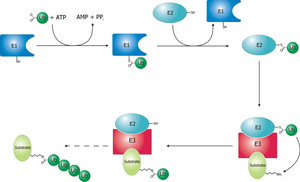
filedesc Schematic diagram of the ubiquitylati...

filedesc Schematic diagram of the ubiquitylation system. Created by Roger B. Dodd (Photo credit: Wikipedia)


Current Noteworthy Work

Nassif M and Hetz C.  Autophagy impairment: a crossroad between neurodegeneration and tauopathies.  BMC Biology 2012; 10:78. http://www.biomedcentral.com/1741-7007/10/78

Impairment of protein degradation pathways such as autophagy is emerging as a consistent and transversal pathological phenomenon in neurodegenerative diseases, including Alzheimer´s, Huntington´s, and Parkinson´s disease. Genetic inactivation of autophagy in mice has demonstrated a key role of the pathway in maintaining protein homeostasis in the brain, triggering massive neuronal loss and the accumulation of abnormal protein inclusions.  A paper in Molecular Neurodegeneration from Abeliovich´s group now suggests a role for phosphorylation of Tau and the activation of glycogen synthase kinase 3β (GSK3β) in driving neurodegeneration in autophagy-deficient neurons. We discuss the implications of this study for understanding the factors driving neurofibrillary tangle formation in Alzheimer´s disease and tauopathies.

Cajee UF, Hull R and Ntwasa M. Modification by Ubiquitin-Like Proteins: Significance in Apoptosis and Autophagy Pathways. Int. J. Mol. Sci. 2012, 13, 11804-11831; doi:10.3390/ijms130911804

Ubiquitin-like proteins (Ubls) confer diverse functions on their target proteins. The modified proteins are involved in various biological processes, including DNA replication, signal transduction, cell cycle control, embryogenesis, cytoskeletal regulation,
metabolism, stress response, homeostasis and mRNA processing. Modifiers such as SUMO, ATG12, ISG15, FAT10, URM1, and UFM have been shown to modify proteins thus conferring functions related to programmed cell death, autophagy and regulation of
the immune system. Putative modifiers such as Domain With No Name (DWNN) have been identified in recent times but not fully characterized. In this review, we focus on cellular processes involving human Ubls and their targets.

Aloy P. Shaping the future of interactome networks. (A report of the third Interactome Networks Conference, Hinxton, UK, 29 August-1 September 2007). Genome Biology 2007; 8:316 (doi:10.1186/gb-2007-8-10-316)

Complex systems are often networked, and biology is no exception. Following on from the genome sequencing projects,
experiments show that proteins in living organisms are highly connected, which helps to explain how such great complexity
can be achieved by a comparatively small set of gene products. At a recent conference on interactome networks held outside
Cambridge, UK, the most recent advances in research on cellular networks were discussed. This year’s conference focused on
identifying the strengths and weaknesses of currently resolved interaction networks and the techniques used to determine
them – reflecting the fact that the field of mapping interaction networks is maturing.

Peroutka RJ, Orcutt SJ, Strickler JE, and Butt TR. SUMO Fusion Technology for Enhanced Protein Expression and Purification in Prokaryotes and Eukaryotes. Chapter 2. in T.C. Evans, M.-Q. Xu (eds.), Heterologous Gene Expression in E. coli, Methods in Molecular Biology 705:15-29. DOI 10.1007/978-1-61737-967-3_2, © Springer Science+Business Media, LLC 2011

The preparation of sufficient amounts of high-quality protein samples is the major bottleneck for structural proteomics. The use of recombinant proteins has increased significantly during the past decades. The most commonly used host, Escherichia coli, presents many challenges including protein misfolding, protein degradation, and low solubility. A novel SUMO fusion technology appears to enhance protein expression and solubility (www.lifesensors.com). Efficient removal of the SUMO tag by SUMO protease in vitro facilitates the generation of target protein with a native N-terminus. In addition to its physiological relevance in eukaryotes, SUMO can be used as a powerful biotechnology tool for enhanced functional protein expression in prokaryotes and eukaryotes.

Juang YC, Landry MC, et al. OTUB1 Co-opts Lys48-Linked Ubiquitin Recognition to Suppress E2 Enzyme Function. Molecular Cell 2012; 45: 384–397. DOI 10.1016/j.molcel.2012.01.011

Ubiquitylation entails the concerted action of E1, E2, and E3 enzymes. We recently reported that OTUB1, a deubiquitylase, inhibits the DNA damage response independently of its isopeptidase activity. OTUB1 does so by blocking ubiquitin transfer by UBC13, the cognate E2 enzyme for RNF168. OTUB1 also inhibits E2s of the UBE2D and UBE2E families. Here we elucidate the structural mechanism by which OTUB1 binds E2s to inhibit ubiquitin transfer. OTUB1 recognizes ubiquitin-charged E2s through contacts with both donor ubiquitin and the E2 enzyme. Surprisingly, free ubiquitin associates with the canonical distal ubiquitin-binding site on OTUB1 to promote formation of the inhibited E2 complex. Lys48 of donor ubiquitin lies near the OTUB1 catalytic site and the C terminus of free ubiquitin, a configuration that mimics the products of Lys48-linked ubiquitin chain cleavage. OTUB1 therefore co-opts Lys48-linked ubiquitin chain recognition to suppress ubiquitin conjugation and the DNA damage response.

Hunter T. The Age of Crosstalk: Phosphorylation, Ubiquitination, and Beyond. Molecular Cell  2007; 28:730-738. DOI 10.1016/ j.molcel.2007.11.019.

Crosstalk between different types of posttranslational modification is an emerging theme in eukaryotic biology. Particularly prominent are the multiple connections between phosphorylation and ubiquitination, which act either positively or negatively in both directions to regulate these processes.

Tu Y, Chen C, et al. The Ubiquitin Proteasome Pathway (UPP) in the regulation of cell cycle control and DNA damage repair and its implication in tumorigenesis. Int J Clin Exp Pathol 2012;5(8):726-738. www.ijcep.com /ISSN:1936-2625/IJCEP1208018

Accumulated evidence supports that the ubiquitin proteasome pathway (UPP) plays a crucial role in protein
metabolism implicated in the regulation of many biological processes such as cell cycle control, DNA damage
response, apoptosis, and so on. Therefore, alterations for the ubiquitin proteasome signaling or functional impairments
for the ubiquitin proteasome components are involved in the etiology of many diseases, particularly in cancer
development.The authors discuss the ubiquitin proteasome pathway in the regulation of cell cycle control and DNA
damage response, the relevance for the altered regulation of these signaling pathways in tumorigenesis, and finally
assess and summarize the advancement for targeting the ubiquitin proteasome pathway in cancer therapy.

Cebollero E , Reggiori F  and Kraft C.  Ribophagy: Regulated Degradation of Protein Production Factories. Int J Cell Biol. 2012; 2012: 182834. doi:  10.1155/2012/182834 (online).

During autophagy, cytosol, protein aggregates, and organelles are sequestered into double-membrane vesicles called autophagosomes and delivered to the lysosome/vacuole for breakdown and recycling of their basic components. In all eukaryotes this pathway is important for adaptation to stress conditions such as nutrient deprivation, as well as to regulate intracellular homeostasis by adjusting organelle number and clearing damaged structures. For a long time, starvation-induced autophagy has been viewed as a nonselective transport pathway; however, recent studies have revealed that autophagy is able to selectively engulf specific structures, ranging from proteins to entire organelles. In this paper, we discuss recent findings on the mechanisms and physiological implications of two selective types of autophagy: ribophagy, the specific degradation of ribosomes, and reticulophagy, the selective elimination of portions of the ER.

Lee JH, Yu WH,…, Nixon RA.  Lysosomal Proteolysis and Autophagy Require Presenilin 1 and Are Disrupted by Alzheimer-Related PS1 Mutations. Cell 2010; 141, 1146–1158. DOI 10.1016/j.cell.2010.05.008.

Macroautophagy is a lysosomal degradative pathway essential for neuron survival. Here, we show that macroautophagy requires the Alzheimer’s disease (AD)-related protein presenilin-1 (PS1). In PS1 null blastocysts, neurons from mice hypomorphic for PS1 or
conditionally depleted of PS1, substrate proteolysis and autophagosome clearance during macroautophagy are prevented as a result of a selective impairment of autolysosome acidification and cathepsin activation. These deficits are caused by failed PS1-dependent
targeting of the v-ATPase V0a1 subunit to lysosomes. N-glycosylation of the V0a1 subunit, essential for its efficient ER-to-lysosome delivery, requires the selective binding of PS1 holoprotein to the unglycosylated subunit and the  sec61alpha/ oligosaccharyltransferase complex. PS1 mutations causing early-onset AD produce a similar lysosomal/autophagy phenotype in
fibroblasts from AD patients. PS1 is therefore essential for v-ATPase targeting to lysosomes, lysosome acidification, and proteolysis during autophagy. Defective lysosomal proteolysis represents a basis for pathogenic protein accumulations and neuronal cell death in AD and suggests previously unidentified therapeutic targets.

Pohl C and Jentsch S. Midbody ring disposal by autophagy is a post-abscission event of cytokinesis. nature cell biology 2009; 11 (1): 65-70.  DOI: 10.1038/ncb1813.

At the end of cytokinesis, the dividing cells are connected by an intercellular bridge, containing the midbody along with a single,
densely ubiquitylated, circular structure called the midbody ring (MR). Recent studies revealed that the MR serves as a target
site for membrane delivery and as a physical barrier between the prospective daughter cells. The MR materializes in telophase,
localizes to the intercellular bridge during cytokinesis, and moves asymmetrically into one cell after abscission. Daughter
cells rarely accumulate MRs of previous divisions, but how these large structures finally disappear remains unknown.
Here, we show that MRs are discarded by autophagy, which involves their sequestration into autophagosomes and delivery to
lysosomes for degradation. Notably, autophagy factors, such as the ubiquitin adaptor p62 and the ubiquitin-related protein Atg8 , associate with the MR during abscission, suggesting that autophagy is coupled to cytokinesis. Moreover, MRs accumulate in cells of patients with lysosomal storage disorders, indicating that defective MR disposal is characteristic of these diseases. Thus our findings suggest that autophagy has a broader role than previously assumed, and that cell renovation by clearing from superfluous large macromolecular assemblies, such as MRs, is an important autophagic function.


Hanai JI, Cao P, Tanksale P, Imamura S, et al. The muscle-specific ubiquitin ligase atrogin-1/MAFbx mediates statin-induced muscle toxicity. The Journal of Clinical Investigation  2007; 117(12):3930-3951.    http://www.jci.org

Statins inhibit HMG-CoA reductase, a key enzyme in cholesterol synthesis, and are widely used to treat hypercholesterolemia.
These drugs can lead to a number of side effects in muscle, including muscle fiber breakdown; however, the mechanisms of muscle injury by statins are poorly understood. We report that lovastatin induced the expression of atrogin-1, a key gene involved in skeletal muscle atrophy, in humans with statin myopathy, in zebrafish embryos, and in vitro in murine skeletal muscle cells. In cultured mouse myotubes, atrogin-1 induction following lovastatin treatment was accompanied by distinct morphological changes, largely absent in
atrogin-1 null cells. In zebrafish embryos, lovastatin promoted muscle fiber damage, an effect that was closely mimicked by knockdown of zebrafish HMG-CoA reductase. Moreover, atrogin-1 knockdown in zebrafish embryos prevented lovastatin-induced muscle injury. Finally, overexpression of PGC-1α, a transcriptional coactivator that induces mitochondrial biogenesis and protects against the development of muscle atrophy, dramatically prevented lovastatin-induced muscle damage and abrogated atrogin-1 induction both in fish and in cultured mouse myotubes. Collectively, our human, animal, and in vitro findings shed light on the molecular mechanism of statin-induced myopathy and suggest that atrogin-1 may be a critical mediator of the muscle
damage induced by statins.

Inami Y, Waguri S, Sakamoto A, Kouno T, et al.  Persistent activation of Nrf2 through p62 in hepatocellular carcinoma cells. J. Cell Biol. 2011; 193(2): 275–284. http://www.jcb.org/cgi/doi/10.1083/jcb.201102031

Macroautophagy (hereafter referred to as autophagy) is a cellular degradation system in which cytoplasmic components, including
organelles, are sequestered by double membrane structures called autophagosomes and the sequestered materials are
degraded by lysosomal hydrolases for supply of amino acids and for cellular homeostasis. Although autophagy has generally been considered nonselective, recent studies have shed light on another indispensable role for basal autophagy in cellular homeostasis, which is mediated by selective degradation of a specific substrate(s).  p62 is a ubiquitously expressed cellular protein that is conserved in metazoa but not in plants and fungi, and recently it has been known as one of the selective substrates for autophagy.
This protein is localized at the autophagosome formation site  and directly interacts with LC3, an autophagosome localizing protein . Subsequently, the p62 is incorporated into the autophagosome and then degraded. Therefore, impaired autophagy is accompanied by
accumulation of p62 followed by the formation of p62 and ubiquitinated protein aggregates because of the nature of both self- oligomerization and ubiquitin binding of p62.


Kima K, Khayrutdinov BI, Leeb CK, et al. Solution structure of the Zβ domain of human DNA-dependent activator of IFN-regulatory factors and its binding modes to B- and Z-DNAs. PNAS 2010; Early Edition ∣ pp 6. www.pnas.org/cgi/doi/10.1073/pnas.1014898107

The DNA-dependent activator of IFN-regulatory factors (DAI), also known as DLM-1/ZBP1, initiates an innate immune response by binding to foreign DNAs in the cytosol. For full activation of the immune response, three DNA binding domains at the N terminus are required: two Z-DNA binding domains (ZBDs), Zα and Zβ, and an adjacent putative B-DNA binding domain. The crystal structure of the Zβ domain of human DAI (hZβDAI) in complex with Z-DNA revealed structural features distinct from other known Z-DNA binding proteins, and it was classified as a group II ZBD. To gain structural insights into the DNA binding mechanism of hZβDAI, the solution structure of the free hZβDAI was solved, and its bindings to B- and Z-DNAs were analyzed by NMR spectroscopy. Compared to the Z-DNA–bound structure, the conformation of free hZβDAI has notable alterations in the α3 recognition helix, the “wing,” and Y145, which are critical in Z-DNA recognition. Unlike some other Zα domains, hZβDAI appears to have conformational flexibility, and structural adaptation is required for Z-DNA binding. Chemical-shift perturbation experiments revealed that hZβDAI also binds weakly to B-DNA via a different binding mode. The C-terminal domain of DAI is reported to undergo a conformational change on B-DNA binding; thus, it is possible that these changes are correlated. During the innate immune response, hZβDAI is likely to play an active role in binding to DNAs in both B and Z conformations in the recognition of foreign DNAs.


Epicrisis

This extensive review leaves little left unopened. We have seen the central role that the UPS system plays in normal organelle proteolysis in concert with autophagy. Impaired ubiquitination occurs from aging, and/or toxins, under oxidative stress involving E3s or DUBs.

This leads to altered gene transcripton, altered protein trafficking, and plays a role in neurodegenative disease, muscle malfunction, and cancer as well.

English: A cartoon representation of a lysine ...

English: A cartoon representation of a lysine 48-linked diubiquitin molecule. The two ubiquitin chains are shown as green cartoons with each chain labelled. The components of the linkage are indicated and shown as orange sticks. Image was created using PyMOL from PDB id 1aar. (Photo credit: Wikipedia)

Different forms of protein ubiquitylation

Different forms of protein ubiquitylation (Photo credit: Wikipedia)

Related articles

Read Full Post »

Endothelial Function and Cardiovascular Disease

Pathologist and AuthorLarry H Bernstein, MD, FCAP 


This discussion is a continuation of a series on Nitric Oxide, vascular relaxation, vascular integrity, and systemic organ dysfunctions related to inflammatory and circulatory disorders. In some of these, the relationships are more clear than others, and in other cases the vascular disorders are aligned with serious metabolic disturbances. This article, in particular centers on the regulation of NO production, NO synthase, and elaborates more on the assymetrical dimethylarginine (ADMA) inhibition brought up in a previous comment, and cardiovascular disease, including:

Recall, though, that in SIRS leading to septic shock, that there is a difference between the pulmonary circulation, the systemic circulation and the portal circulation in these events. The comment calls attention to:
Böger RH. Asymmetric dimethylarginine, an endogenous inhibitor of nitric oxide synthase, explains the ‘L-arginine paradox’ and acts as a novel cardiovascular risk factor. J Nutr 2004; 134: 2842S–7S.

This observer points out that ADMA inhibits vascular NO production at concentrations found in pathophysiological conditions (i.e., 3–15 μmol/l); ADMA also causes local vasoconstriction when it is infused intra-arterially. ADMA is increased in the plasma of humans with hypercholesterolemia, atherosclerosis, hypertension, chronic renal failure, and chronic heart failure.

Increased ADMA levels are associated with reduced NO synthesis as assessed by impaired endothelium-dependent vasodilation. We’ll go into that more with respect to therapeutic targets – including exercise, sauna, and possibly diet, as well as medical drugs.

It is remarkable how far we have come since the epic discovery of 17th century physician, William Harvey, by observing the action of the heart in small animals and fishes, proved that heart receives and expels blood during each cycle, and argued for the circulation in man. This was a huge lead into renaissance medicine. What would he think now?

Key Words: eNOS, NO, endothelin, ROS, oxidative stress, blood flow, vascular resistance, cardiovascular disease, chronic renal disease, hypertension, diabetes, atherosclerosis, MI, exercise, nutrition, traditional chinese medicine, statistical modeling for targeted therapy.

Endothelial Function
The endothelium plays a crucial role in the maintenance of vascular tone and structure by means of eNOS, producing the endothelium-derived vasoactive mediator nitric oxide (NO), an endogenous messenger molecule formed in healthy vascular endothelium from the amino acid precursor L-arginine. Nitric oxide synthases (NOS) are the enzymes responsible for nitric oxide (NO) generation. The generation and actions of NO under physiological and pathophysiological conditions are exquisitely regulated and extend to almost every cell type and function within the circulation. While the molecule mediates many physiological functions, an excessive presence of NO is toxic to cells.

The enzyme NOS, constitutively or inductively, catalyses the production of NO in several biological systems. NO is derived not only from NOS isoforms but also from NOS-independent sources. In mammals, to date, three distinct NOS isoforms have been identified:

  1. neuronal NOS (nNOS),
  2. inducible NOS (iNOS), and
  3. endothelial NOS (eNOS).

The molecular structure, enzymology and pharmacology of these enzymes have been well defined, and reveal critical roles for the NOS system in a variety of important physiological processes. The role of NO and NOS in regulating vascular physiology, through neuro-hormonal, renal and other non-vascular pathways, as well as direct effects on arterial smooth muscle, appear to be more intricate than was originally thought.

Vallance et al. described the presence of asymmetric dimethylarginine (ADMA) as an endogenous inhibitor of eNOS in 1992. Since then, the role of this molecule in the regulation of eNOS has attracted increasing attention.
Endothelins are 21-amino acid peptides, which are active in almost all tissues in the body. They are potent vasoconstrictors, mediators of cardiac, renal, endocrine and immune functions and play a role in bronchoconstriction, neurotransmitter regulation, activation of inflammatory cells, cell proliferation and differentiation.

Endothelins were first characterised by Yanagisawa et al. (1988). The three known endothelins ET-1, -2 and -3 are structurally similar to sarafotoxins from snake venoms. ET-1 is the major isoform generated in blood vessels and appears to be the isoform of most importance in the cardiovascular system with a major role in the maintenance of vascular tone.

The systemic vascular response to hypoxia is vasodilation. However, reports suggest that the potent vasoconstrictor endothelin-1 (ET-1) is released from the vasculature during hypoxia. ET-1 is reported to augment superoxide anion generation and may counteract nitric oxide (NO) vasodilation. Moreover, ET-1 was proposed to contribute to increased vascular resistance in heart failure by increasing the production of asymmetric dimethylarginine (ADMA).

A study investigated the role of ET-1, the NO pathway, the potassium channels and radical oxygen species in hypoxia-induced vasodilation of large coronary arteries and found NO contributes to hypoxic vasodilation, probably through K channel opening, which is reversed by addition of ET-1 and enhanced by endothelin receptor antagonism. These latter findings suggest that endothelin receptor activation counteracts hypoxic vasodilation.

Endothelial dysfunction
Patients with Raynaud’s Phemonenon had abnormal vasoconstrictor responses to cold pressor tests (CPT) that were similar in primary and secondary RP. There were no differences in median flow-mediated and nitroglycerin mediated dilation or CPT of the brachial artery in the 2 populations. Patients with secondary RP were characterized by abnormalities in microvascular responses to reactive hyperemia, with a reduction in area under the curve adjusted for baseline perfusion, but not in time to peak response or peak perfusion ratio.

Plasma ET-1, ADMA, VCAM-1, and MCP-1 levels were significantly elevated in secondary RP compared with primary RP. There was a significant negative correlation between ET-1 and ADMA values and measures of microvascular perfusion but not macrovascular endothelial function. Secondary RP is characterized by elevations in plasma ET-1 and ADMA levels that may contribute to alterations in cutaneous microvascular function.

ADMA inhibits vascular NO production within the concentration range found in patients with vascular disease. ADMA also causes local vasoconstriction when infused intra-arterially, and increases systemic vascular resistance and impairs renal function when infused systemically. Several recent studies have supplied evidence to support a pathophysiological role of ADMA in the pathogenesis of vascular dysfunction and cardiovascular disease. High ADMA levels were found to be associated with carotid artery intima-media-thickness in a study with 116 clinically healthy human subjects. Taking this observation further, another study performed with hemodialysis patients reported that ADMA prospectively predicted the progression of intimal thickening during one year of follow-up.

In a nested, case-control study involving 150 middle-aged, non-smoking men, high ADMA levels were associated with a 3.9-fold elevated risk for acute coronary events. Clinical and experimental evidence suggests elevation of ADMA can cause a relative L-arginine deficiency, even in the presence of “normal” L-arginine levels. As ADMA is a competitive inhibitor of eNOS, its inhibitory action can be overcome by increasing the concentration of the substrate, L-arginine. Elevated ADMA concentration is one possible explanation for endothelial dysfunction and decreased NO production in these diseases.
Metabolic Regulation of L-arginine and NO Synthesis 
Methylation of arginine residues within proteins or polypeptides occurs through N-methyltransferases, which utilize S-adenosylmethionine as a methyl donor. After proteolysis of these proteins or polypeptides, free ADMA is present in the cytoplasm. ADMA can also be detected in circulating blood plasma. ADMA acts as an inhibitor of eNOS by competing with the substrate of this enzyme, L-arginine. The ensuing reduction in nitric oxide synthesis causes vascular endothelial dysfunction and, subsequently, atherosclerosis. ADMA is eliminated from the body via urinary excretion and via metabolism by the enzyme DDAH to citrulline and dimethylamine.
Supplementation with L-arginine in animals with experimentally-induced vascular dysfunction atherosclerosis improves endothelium-dependent vasodilation. Moreover, L-arginine supplementation results in enhanced endothelium-dependent inhibition of platelet aggregation, inhibition of monocyte adhesion, and reduced vascular smooth muscle proliferation. One mechanism that explains the occurrence of endothelial dysfunction is the presence of elevated blood levels of asymmetric dimethylarginine (ADMA) – an L-arginine analogue that inhibits NO formation and thereby can impair vascular function. Supplementation with L-arginine has been shown to restore vascular function and to improve the clinical symptoms of various diseases associated with vascular dysfunction.

Beneficial Effects of L-Arginine

  • Angina
  • Congestive Heart Failure
  • Hypertension
  • Erectile dysfunction
  • Sickle Cell Disease and Pulmonary Hypertension

The ratio of L-arginine to ADMA is considered to be the most accurate measure of eNOS substrate availability. This ratio will increase during L-arginine supplementation, regardless of initial ADMA concentration. Due to the pharmacokinetics of oral L-arginine and the positive results from preliminary studies, it appears supplementation with a sustained-release L-arginine preparation will achieve positive therapeutic results at lower dosing levels.

Many prospective clinical trials have shown that the association between elevated ADMA levels and major cardiovascular events and total mortality is robust and extends to diverse patient populations. However, we need to define more clearly in the future who will profit from ADMA determination, in order to use this novel risk marker as a more specific diagnostic tool.
Elimination of ADMA by way of DDAH
Asymmetric dimethylarginine (ADMA) and monomethyl arginine (L-NMMA) are endogenously produced amino acids that inhibit all three isoforms of nitric oxide synthase (NOS). ADMA accumulates in various disease states, including renal failure, diabetes and pulmonary hypertension, and its concentration in plasma is strongly predictive of premature cardiovascular disease and death. Both LNMMA and ADMA are eliminated largely through active metabolism by dimethylarginine dimethylaminohydrolase (DDAH) and thus DDAH dysfunction may be a crucial unifying feature of increased cardiovascular risk. These investigators ask whether ADMA is the underlying issue related to the pathogenesis of the vascular disorder.
They identified the structure of human DDAH-1 and probed the function of DDAH-1 both by deleting the Ddah1 gene in mice and by using DDAH-specific inhibitors that is shown by crystallography, bind to the active site of human DDAH-1. The loss of DDAH-1 activity leads to accumulation of ADMA and reduction in NO signaling. This in turn causes vascular pathophysiology, including endothelial dysfunction, increased systemic vascular resistance and elevated systemic and pulmonary blood pressure. The results suggest that DDAH inhibition could be harnessed therapeutically to reduce the vascular collapse associated with sepsis.
Methylarginines are formed when arginine residues in proteins are methylated by the action of protein arginine methyltransferases (PRMTs), and free methylarginines are liberated following proteolysis. Clear demonstration of an effect of endogenous ADMA and L-NMMA on cardiovascular physiology would be of importance, not only because of the implications for disease, but also because it would expose a link between post-translational modification of proteins and signaling through a proteolytic product of these modified proteins.
Which is it? ADMA or DDHA: Intrusion of a Genetic alteration.
The study showed that loss of DDAH expression or activity causes endothelial dysfunction, we believe that DDAH inhibition could potentially be used therapeutically to limit excessive NO production, which can have pathological effects. They then showed treated cultured isolated blood vessels with lipopolysaccharide (LPS) induced expression of the inducible isoform of NO synthase (iNOS) and generated high levels of NO, which were blocked by the iNOS-selective inhibitor 1400W and by DDAH inhibitors. Treatment of isolated blood vessels with DDAH inhibitors significantly increased ADMA accumulation in the culture medium. Treatment of isolated blood vessels with bacterial LPS led to the expected hyporeactivity to the contractile effects of phenylephrine, which was reversed by treatment with a DDAH inhibitor. The effect of the DDAH inhibitor was large and stereospecific, and was reversed by the addition of L-arginine.
In conclusion, genetic and chemical-biology approaches provide compelling evidence that loss of DDAH-1 function results in increased ADMA concentrations and thereby disrupts vascular NO signaling. A broader implication of this study is that post-translational methylation of arginine residues in proteins may have downstream effects by affecting NO signaling upon hydrolysis and release of the free methylated amino acid. This signaling pathway seems to have been highly conserved through evolution.

The crucial role of nitric oxide (NO) for normal endothelial function is well known. In many conditions associated with increased risk of cardiovascular diseases such as hypercholesterolemia, hypertension, abdominal obesity, diabetes and smoking, NO biosynthesis is dysregulated, leading to endothelial dysfunction. The growing evidence from animal and human studies indicates that endogenous inhibitors of endothelial NO synthase such as asymmetric dimethylarginine (ADMA) and NG-monomethyl-L-arginine (L-NMMA) are associated with the endothelial dysfunction and potentially regulate NO synthase.

Nitric Oxide Synthase

Asymmetric dimethylarginine (ADMA) is one of three known endogenously produced circulating methylarginines (i.e. ADMA, NG-monomethyl-L-arginine (L-NMMA) and symmetrically methylated NG, NG-dimethyl-L-arginine). ADMA is formed by the action of protein arginine methyltransferases that methylate arginine residues in proteins and after which free ADMA is released. ADMA and L-NMMA can competitively inhibit NO elaboration by displacing L-arginine from NO synthase (NOS). The amount of methylarginines is related to overall metabolic activity and the protein turnover rate of cells. Although methylarginines are excreted partly by the kidneys, the major route of elimination of ADMA in humans is metabolism by the dimethylarginine dimethylaminohydrolase enzymes[ dimethylarginine dimethylaminohydrolase-1 and -2 (DDAH)] enzymes. Inhibition of DDAH leads to the accumulation of ADMA and consequently to inhibition of NO-mediated endothelium dependent relaxation of blood vessels.
The potential role of ADMA in angina pectoris has been evaluated by Piatti and co-workers, who reported ADMA levels to be higher in patients with cardiac syndrome X (angina pectoris with normal coronary arteriograms) than in controls. According to preliminary results from the CARDIAC (Coronary Artery Risk Determination investigating the influence of ADMA Concentration) study, patients with coronary heart disease (n 816) had a higher median ADMA plasma concentration than age and sex matched controls (median 0.91 vs. 0.70 mol/l; p 0.0001). Further, in a prospective Chinese study, a high plasma ADMA level independently predicted subsequent cardiovascular adverse events (cardiovascular death, myocardial infarction, and repeated revascularization of a target vessel).

Protein detoxification pathway.

Protein detoxification pathway. (Photo credit: Wikipedia)

There are only few published findings concerning variations in human DDAH. However, polymorphisms in other genes potentially related to risk factors for endothelial dysfunction and cardiovascular events have been studied. Reduced NO synthesis has been implicated in the development of atherosclerosis. For example, there are some functionally important variants of the NOS that could affect individual vulnerability to atherosclerosis by changing the amount of NO generated by the endothelium.
There are probably several functional variations in genes coding DDAH enzymes in different populations. Some of them could confer protection against the harmful effects of elevated ADMA and others impair enzyme function causing accumulation of ADMA in cytosol and/or blood.
In a study of 16 men with either low or high plasma ADMA concentrations were screened to identify DDAH polymorphisms that could potentially be associated with increased susceptibility to cardiovascular diseases. In that study a novel functional mutation of DDAH-1 was identified; the mutation carriers had a significantly elevated risk for cardiovascular disease and a tendency to develop hypertension. These results confirmed the clinical role of DDAH enzymes in ADMA metabolism. Furthermore, it is possible that more common variants of DDAH genes contribute more widely to increased cardiovascular risk.
We found a rare variation in the DDAH-1 gene, which is associated with elevated plasma concentrations of ADMA in heterozygous mutation carriers. There was also an increased prevalence of CHD and a tendency to hypertension among individuals with this DDAH-1 mutation. These observations highlight the importance of ADMA as a possible risk factor and emphasize the essential role of DDAH in regulating ADMA levels.

ADMA Elevation and Coronary Artery Disease
Endothelial dysfunction may be considered as a systemic disorder and involves different vascular beds. Coronary endothelial dysfunction (CED) precedes the development of coronary. Endothelial dysfunction is characterized by a reduction in endogenous nitric oxide (NO) activity, which may be accompanied by elevated plasma asymmetric dimethylarginine (ADMA) levels. ADMA is a novel endogenous competitive inhibitor of NO synthase (NOS), an independent marker for cardiovascular risk.

English: Structure of asymmetric dimethylargin...

English: Structure of asymmetric dimethylarginine; ADMA; N,N-Dimethylarginine Deutsch: Asymmetrisches Dimethylarginin; N,N-Dimethyl-L-arginin; Guanidin-N,N-dimethylarginin (Photo credit: Wikipedia)

In a small study fifty-six men without obstructive coronary artery disease (CAD) who underwent coronary endothelial function testing were studied. Men with CED had significant impairment of erectile function (P ¼ 0.008) and significantly higher ADMA levels (0.50+0.06 vs. 0.45+0.07 ng/mL, P ¼ 0.017) compared with men with normal endothelial function. Erectile function positively correlated with coronary endothelial function. This correlation was independent of age, body mass index, high-density lipoprotein, C-reactive protein, homeostasis model assessment of insulin resistance index, and smoking status, suggesting that CED is independently associated with ED and plasma ADMA concentration in men with early coronary atherosclerosis.

ADMA and Chronic Renal Failure in Hepatorenal Syndrome
The concentration of SDMA was significantly higher in the patients with HRS compared to the patients without HRS and it was also higher than the values obtained from the healthy participants (1.76 ± 0.3 μmol/L; 1.01 ± 0.32 and 0.520 ± 0.18 μmol/L, respectively; p < 0.01). The concentrations of ADMA were higher in the cirrhotic patients with HRS than in those without this serious complication of cirrhosis. The concentration of ADMA in all the examined cirrhotic patients was higher than those obtained from healthy volunteers (1.35 ± 0.27 μmol/L, 1.05 ± 0.35 μmol/L and 0.76 ± 0.21 μmol/L, respectively). In the patients with terminal alcoholic liver cirrhosis, the concentrations
of ADMA and SDMA correlated with the progress of cirrhosis as well as with the development of cirrhosis complications. In the patients with HRS there was a positive correlation between creatinine and SDMA in plasma (r2 = 0.0756, p < 0.001) which was not found between creatinine and ADMA. The results demonstrate that the increase in SDMA concentration is proportionate to the progression of chronic damage of the liver and kidneys. Increased ADMA concentration can be a causative agent of renal insufficiency in patients with cirrhosis.

In patients with cirrhosis, ADMA, as well as SDMA could be markers for kidney insufficiency development. Accumulation of ADMA in plasma causes kidney
vasoconstriction and thereby retention of SDMA. Considering that ADMA has several damaging effects, it can be concluded that modulation of the activity of enzyme which participates in ADMA catabolism may represent a new therapeutic goal which is intended to reduce the progress of liver and kidney damage and thus the development of HRS.

ADMA Therapeutic Targets
Elevated plasma concentrations of the endogenous nitric oxide synthase
inhibitor asymmetric dimethylarginine (ADMA) are found in various clinical settings, including

  • renal failure,
  • coronary heart disease,
  • hypertension,
  • diabetes and
  • preeclampsia.

In healthy people acute infusion of ADMA promotes vascular dysfunction,
and in mice chronic infusion of ADMA promotes progression of atherosclerosis.
Thus, ADMA may not only be a marker but also an active player in cardiovascular disease, which makes it a potential target for therapeutic interventions.

This review provides a summary and critical discussion of the presently available data concerning the effects on plasma ADMA levels of cardiovascular drugs, hypoglycemic agents, hormone replacement therapy, antioxidants, and vitamin supplementation.
We assess the evidence that the beneficial effects of drug therapies on vascular function can be attributed to modification of ADMA levels. To develop more specific ADMA-lowering therapies, mechanisms leading to elevation of plasma ADMA concentrations in cardiovascular disease need to be better understood.

ADMA is formed endogenously by degradation of proteins containing arginine residues that have been methylated by S-adenosylmethionine-dependent methyltransferases (PRMTs). There are two major routes of elimination: renal excretion and enzymatic degradation by the dimethylarginine dimethylaminohydrolases (DDAH-1 and -2).

Oxidative stress causing upregulation of PRMT expression and/or attenuation of DDAH activity has been suggested as a mechanism and possible drug target in clinical conditions associated with elevation of ADMA. As impairment of DDAH activity or capacity is associated with substantial increases in plasma ADMA concentrations, DDAH is likely to emerge as a prime target for specific therapeutic interventions.

Cardiovascular diseases (CVD) in diabetic patients have endothelial dysfunction as a key pathogenetic event. Asymmetric dimethylarginine (ADMA), an endogenous inhibitor of nitric oxide synthase (NOS), plays a pivotal role in endothelial dysfunction. Different natural polyphenols have been shown to preserve endothelial function and prevent CVD. Another study assessed the effect of silibinin, a widely used flavonolignan from milk thistle, on ADMA levels and endothelial dysfunction in db/db mice.

Plasma and aorta ADMA levels were higher in db/db than in control lean mice. Silibinin administration markedly decreased plasma ADMA; consistently, aorta ADMA was reduced in silibinin-treated animals. Plasma and aorta ADMA levels exhibited a positive correlation, whereas liver ADMA was inversely correlated with both plasma and aorta ADMA concentrations. Endothelium-(NO)-dependent vasodilatation to ACh was impaired in db/db mice and was restored in the silibinin group, in accordance with the observed reduction of plasma and vascular levels of ADMA. Endothelium-independent vasodilatation to SNP was not modified by silibinin administration.

Endothelin Inhibitors
Endothelins are potent vasoconstrictors and pressor peptides and are important mediators of cardiac, renal andendocrine functions. Increased ET-1 levels in disease states such as congestive heart failure, pulmonary hypertension, acute myocardial infarction, and renal failure suggest the endothelin system as an attractive target for pharmacotherapy. A non-peptidic, selective, competitive endothelin receptor antagonist with an affinity for the ETA receptor in the subnanomolar range was administered by continuous intravenous infusion to beagle dogs, rats, and Goettingen minipigs. It caused mild arteriopathy characterised by segmental degeneration in the media of mid- to large-size coronary arteries in the heart of dog, but not rat or minipig.

The lesions only occurred in the atrium and ventricle. Frequency and severity of the vascular lesions was not sex or dose related. No effects were noted in blood vessels in other organs or tissue. Plasma concentrations at steady state, and overall exposure in terms of AUC(0–24h) were higher in minipig and rat than the dog but did not cause cardiac arteriopathy. These findings concur with those caused by other endothelin anatagonists, vasodilators and positive inotropic: vasodilating drugs such as potassium channel openers, phosphodiesterase inhibitors and peripheral vasodilators.

Results by echocardiography indicate treatment-related local vasodilatation in the coronary arteries. These data suggest that the coronary arteriopathy may be the result of exaggerated pharmacology. Sustained vasodilatation in the coronary vascular bed may alter flow dynamics and lead to increased shear stress and tension on the coronary wall with subsequent microscopic trauma. In our experience with a number of endothelin receptor antagonists, the cardiac arteriopathy was only noted in studies with multiple daily or continuous intravenous infusion inviting speculation that sustained high plasma levels are needed for development of the lesions.

Up-regulation of vascular endothelin type B (ETB) receptors is implicated in the
pathogenesis of cardiovascular disease. Culture of intact arteries has been shown to induce similar receptor alterations and has therefore been suggested as a suitable method for, ex vivo, in detail delineation of the regulation of endothelin receptors. We hypothesize that mitogen-activated kinases (MAPK) and protein kinase C (PKC) are involved in the regulation of endothelin ETB receptors in human internal mammary arteries.

The endothelin-1-induced contraction (after endothelin ETB receptor desensitization) and the endothelin ETA receptor mRNA expression levels were not altered by culture. The sarafotoxin 6c contraction, endothelin ETB receptor protein and mRNA expression levels were increased. This increase was antagonized by;

PKC inhibitors (10 μM bisindolylmaleimide I and 10 μM Ro-32-0432), and
inhibitors of the p38, extracellular signal related kinases 1 and 2 (ERK1/2) and C-jun terminal kinase (JNK) MAPK pathways
Endothelin Receptor Antagonist Tezosentan
The effects of changes in the mean (Sm) and pulsatile (Sp) components of arterial wall shear stress on arterial dilatation of the iliac artery of the anaesthetized dog were examined in the absence and presence of the endothelin receptor antagonist tezosentan (10 mg kg_1 I.V.; Ro 61-0612; [5-isopropylpyridine-2-sulphonic acid 6-(2-hydroxy-ethoxy)-5-(2-methoxy-phenoxy)-2-(2-1H-tetrazol-5-ylpyridin-4-yl)-pyrimidin-4-ylamide]).

Changes in shear stress were brought about by varying local peripheral resistance and stroke volume using a distal infusion of acetylcholine and stimulation of the left ansa subclavia. An increase in Sm from 1.81 ± 0.3 to 7.29 ± 0.7 N m_2 (means ± S.E.M.) before tezosentan caused an endothelium-dependent arterial dilatation which was unaffected by administration of tezosentan for a similar increase in Sm from 1.34 ± 0.6 to 5.76 ± 1.4 N m_2 (means ± S.E.M.).

In contrast, increasing the Sp from 7.1 ± 0.8 to a maximum of 11.5 ± 1.1 N m_2 (means ± S.E.M.) before tezosentan reduced arterial diameter significantly. Importantly, after administration of tezosentan subsequent increases in Sp caused arterial dilatation for the same increase in Sp achieved prior to tezosentan, increasing from a baseline of 4.23 ± 0.4 to a maximum of 9.03 ± 0.9 N m_2 (means ± S.E.M.; P < 0.001). The results of this study provide the first in vivo evidence that pulsatile shear stress is a stimulus for the release of endothelin from the vascular endothelium.

Exercise and Diet
Vascular endotheliumis affected by plasma asymmetric dimethylarginine (ADMA), and it is induced by inflammatory cytokines of tumour necrosis factor (TNF)-a in vitro. Would a tight glycemic control restore endothelial function in patients with type-2 diabetes mellitus (DM) with modulation of TNF-a and/or reduction of ADMA level? In 24 patients with type-2 DM, the flow-mediated, endothelium-dependent dilation (FMD: %) of brachial arteries during reactive hyperaemia was determined by a high-resolution ultrasound method. Blood samples for glucose, cholesterol, TNF-a, and ADMA analyses were also collected from these patients after fasting. No significant glycemic or FMD changes were observed in 10 patients receiving the conventional therapy.

In 14 patients who were hospitalized and intensively treated, there was a significant decrease in glucose level after the treatment [from 190+55 to 117+21 (mean+SD) mg/dL, P , 0.01]. After the intensive control of glucose level, FMD increased significantly (from 2.5+0.9 to 7.2+3.0%), accompanied by a significant (P , 0.01) decrease in TNF-a (from 29+16 to 11+9 pg/dL) and ADMA (from 4.8+1.5 to 3.5+1.1 mM/L) levels. The changes in FMD after treatment correlated inversely with those in TNF-a (R ¼ 20.711, P , 0.01) and ADMA (R ¼ 20.717, P , 0.01) levels.
The exaggerated blood pressure response to exercise (EBPR) is an independent predictor of hypertension. Asymmetric dimethylarginine (ADMA) is an endogenous nitric oxide inhibitor and higher plasma levels of ADMA are related to increased cardiovascular risk. The aim of this study is to identify the relationship between ADMA and EBPR.

A total of 66 patients (36 with EBPR and 30 as controls) were enrolled in the study. EBPR is defined as blood pressure (BP) measurements ≥200/100 mmHg during the treadmill test. All the subjects underwent 24-h ambulatory BP monitoring. L-arginine and ADMA levels were measured using a high performance lipid chromatography technique.

The serum ADMA levels were increased in the EBPR group compared to the healthy controls (4.0±1.4 vs 2.6±1.1 μmol/L respectively, P=0.001), but L-arginine levels were similar in the 2 groups (P=0.19). The serum ADMA levels were detected as an independent predictor of EBPR (odds ratio 2.28; 95% confidence interval 1.22–4.24; P=0.002). Serum ADMA levels might play a role in EBPR to exercise.

Endothelial dysfunction occurs early in atherosclerosis in response to cardiovascular risk factors. The occurrence of endothelial dysfunction is primarily the result of reduced nitric oxide (NO) bioavailabilty. It represents an independent predictor of cardiovascular events and predicts the prognosis of the patient. Therefore, endothelial function has been identified as a target for therapeutic intervention. Regular exercise training is a nonpharmacological option to improve endothelial dysfunction in patients with cardiovascular disease by increasing NO bioavailability.

Peripheral Arterial Disease (PAD) is a cause of significant morbidity and mortality in the Western world. risk factor modification and endovascular and surgical revascularisation are the main treatment options at present. However, a significant number of patients still require major amputation. There is evidence that nitric oxide (NO) and its endogenous inhibitor asymmetric dimethylarginine (ADMA) play significant roles in the pathophysiology of PAD.

This paper reviews experimental work implicating the ADMA-DDAH-NO pathway in PAD, focusing on both the vascular dysfunction and both the vascular dysfunction and effects within the ischaemic muscle, and examines the potential of manipulating this pathway as a novel adjunct therapy in PAD.

In patients with CHF, the peripheral vascular resistance is increased via activation of the neurohormonal system, namely by autonomous sympathetic nervous system, rennin -angiotensin- aldosterone system (RAAS), and endothelin system. The vascular endothelial function in patients with CHF, mainly represented by the endothelium-dependent vasodilation, is altered.

Such alteration leads to increased vascular tone and remodeling of the blood vessels, reducing the peripheral blood flow. Hence, the amount of oxygen for the skeletal muscles is compromised, with progressive exercise intolerance. The vascular endothelial dysfunction in the CHF is mainly due to the decrease of the nitric oxide production induced by the reduced gene expression of eNOS and increased oxidative stress.

The endothelium-dependent vasodilation alteration has been virtually reported in all cardiovascular diseases. Using sauna bath as therapeutic option for CHF is not very recent, since in the 1950’s the first studies with CHF patients were conducted and the potential beneficial effect of sauna was suggested. However, some time later the studies emphasized especially its risks and recommended caution in its use for cardiac patients.

Frequently, sports medicine physicians are invited to evaluate the impact of the sauna on diseases and on health in general. Sauna can be beneficial or dangerous depending on its use. In the past few years the sauna is considered beneficial for the cardiovascular diseases’ patients, as the heart failure and lifestyle-related diseases, mainly by improving the peripheral endothelial function through the increase in cardiac output and peripheral vasodilation.

It is widely known that the vasodilators, such as angiotensin converting enzyme inhibitors, improve the CHF and increase the peripheral perfusion. Since the endothelial function is altered in CHF, the endothelium is considered as a new therapeutic target in heart failure. Hence, the angiotensin converting enzyme inhibitors and physical training improve the endothelial function in CHF patients. One of the proposed mechanisms for the alteration of the endothelium-dependent vasodilation would be through the decrease of the NO production in the peripheral vessels in CHF patients. The decrease of peripheral perfusion would decrease the shear stress. The shear stress is an important stimulus for NO production and eNOS expression. On the other hand, the heat increases the cardiac output and improves the peripheral perfusion in CHF patients. Consequently, with the cardiac output improvement in CHF patients, an increase of the shear stress, NO production and eNOS expression are expected.

Sauna bath
The sauna bath represents a heat load of 300-600 W/m2 of body surface area. The skin temperature rapidly increases to ± 40o-41oC and the thermoregulatory mechanisms are triggered. Evaporative heat transfer by sweating is the only effective body heat loss channel in dry sauna. The sweating begins rapidly and reaches its maximum level in ± 15 min. The total sweat secretion represents a heat loss of about 200 W/m2 of the body surface area. The body cannot compensate for the heat load and causing elevation of internal temperature. The skin circulation increases substantially. The skin blood flow, in the thermo-neutral condition (± 20oC) and in rest corresponding to ± 5-10% of the cardiac output, can reach ± 50-70% of the cardiac output.

Thermal therapy in 60oC produced systemic arterial, pulmonary arterial and venous vasodilation, reduced the preload and afterload and improved the cardiac output and the peripheral perfusion, clinical symptoms, life quality, and cardiac arrhythmias in CHF patients. In infants with severe CHF secondary to ventricular septal defect, the sauna therapy decreased the systemic vascular resistance and increased the cardiac output. The sauna benefits in CHF patients are possibly caused by the improvement of the vascular endothelial function and normalization of the neurohormonal system .

Ikeda et al. discovered that the observed improvements in the sauna therapy are due to the eNOS expression increase in the arterial endothelium. They later showed that the thermal therapy with sauna improves the survival of the TO-2 cardiomyopathic hamsters with CHF and, more recently, showed that the repetitive therapy with sauna increases the eNOS expression and the nitric oxide production in artery endothelium of TO-2 cardiomyopathic hamsters with CHF.
Whether n-3 polyunsaturated fatty acid (PUFA) supplementation and/or diet intervention might have beneficial influence on endothelial function was assessed using plasma levels of ADMA and L-arginine. A male population (n = 563, age 70 ± 6 yrs) with long-standing hyperlipidemia, characterized as high risk individuals in 1970–72, was included, randomly allocated to receive placebo n-3 PUFA capsules (corn oil) and no dietary advice (control group), dietary advice (Mediterranean type), n-3 PUFA capsules, or dietary advice and n-3 PUFA combined and followed for 3 years. Fasting blood samples were drawn at baseline and the end of the study.

Compliance with both intervention regimens were demonstrated by changes in serum fatty acids and by recordings from a food frequency questionnaire. No influence of either regimens on ADMA levels were obtained. However, n-3 PUFA supplementation was accompanied by a significant increase in L-arginine levels, different from the decrease observed in the placebo group (p < 0.05). In individuals with low body mass index (<26 kg/m2), the decrease in L-arginine on placebo was strengthened (p = 0.01), and the L-arginine/ADMA ratio was also significantly reduced (p = 0.04). In this rather large randomized intervention study, ADMA levels were not influenced by n-3 PUFA supplementation or dietary counselling. n-3 PUFA did, however, counteract the age related reduction in L-arginine seen on placebo, especially in lean individuals, which might be considered as an improvement of endothelial function.

Traditional Chinese Medicine

Traditional Chinese Medicine (TCM) involves a broad range of empirical testing and refinement and plays an important role in the health maintenance for people all over the world. However, due to the complexity of Chinese herbs, a full understanding of TCM’s action mechanisms is still unavailable despite plenty of successful applications of TCM in the treatment of various diseases, including especially cardiovascular diseases (CVD), one of the leading causes of death.

An integrated system of TCM has been constructed to uncover the underlying action mechanisms of TCM by incorporating the chemical predictors, target predictors and network construction approaches from three representative Chinese herbs, i.e., Ligusticum chuanxiong Hort., Dalbergia odorifera T. Chen and Corydalis yanhusuo WT Wang widely used in CVD treatment, by combined use of drug absorption, distribution, metabolism and excretion (ADME) screening and network pharmacology techniques. These studies have generated 64 bioactive ingredients and identified 54 protein targets closely associated with CVD, to clarify some of the common conceptions in TCM, and provide clues to modernize such specific herbal medicines.

Ligusticum chuanxiong Hort., Dalbergia odorifera T. Chen and Corydalis yanhusuo WT Wang
Twenty-two of 194 ingredients in Ligusticum chuanxiong demonstrate good bioavailability (60%) after oral administration. Interestingly, as the most abundant bioactive compound of Chuanxiong, Ligustilide (M120) only has an adequate OB of 50.10%, although it significantly inhibits the vasoconstrictions induced by norepinephrine bitartrate (NE) and calcium chloride (CaCl2). Indeed, this compound can be metabolized to butylidenephthalide, senkyunolide I (M156), and senkyunolide H (M155) in vivo.

The three natural ingredients produce various pharmacological activities in cerebral blood vessels, the general circulatory system and immune system including spasmolysis contraction effects, inhibitory effects of platelet aggregation and anti-proliferative activity, and thus improve the therapeutic effect on patients. Cnidilide (M93, OB = 77.55%) and spathulenol (M169, OB = 82.37%) also closely correlate with the smooth muscle relaxant action, and thereby have the strongest spasmolytic activity. Carotol (M8) and Ferulic acid (M105) with an OB of 149.03% and 86.56%, respectively, demonstrate better bioavailability compared with cnidilide and spathulenol, which show strong antifungal, antioxidant and anti-inflammatory activity.

The pharmacological activity of ferulic acid results in the improvement of blood fluidity and the inhibition of platelet aggregation, which may offer beneficial effects against cancer, CVD, diabetes and Alzheimer’s disease. As for 3-n-butylphthalide (M85, OB = 71.28%), this compound is not only able to inhibit platelet aggregation, but also decreases the brain infarct volume and enhances microcirculation, thus benefiting patients with ischemic stroke. Platelet aggregation represents a multistep adhesion process involving distinct receptors and adhesive ligands, with the contribution of individual receptor-ligand interactions to the aggregation process depending on the prevailing blood flow conditions, implying that the rheological (blood flow) conditions are an important impact factor for platelet aggregation. Moreover, thrombosis, the pathological formation of platelet aggregates and one of the biggest risk factors for CVD, occludes blood flow causing stroke and heart attack. This explains why the traditional Chinese herb Ligusticum chuanxiong that inhibits platelet aggregates forming and promotes blood circulation can be used in treatment of CVD.

Twenty-six percent (24 of 93) of the ingredients in Dalbergia odorifera meet the OB > 60% criterion irrespective of the pharmacological activity. Relatively high bioavailability values were predicted for the mainly basic compounds odoriflavene (M275, OB = 84.49%), dalbergin (M247, OB = 78.57%), sativanone (M281, OB = 73.01%), liquiritigenin (M262, OB = 67.19%), isoliquiritigenin (M259, OB = 61.38%) and butein (M241, OB = 78.38%). Interestingly, all of the six ingredients show obvious anti-inflammatory property. Butein, liquiritigenin and isoliquiritigenin inhibit cell inflammatory responses by suppressing the NF-κB activation induced by various inflammatory agents and carcinogens, and by decreasing the NF-κB reporter activity. Inflammation occurs with CVD, and Dalbergia odorifera, one of the most potent anti-cardiovascular and anti-cerebrovascular agents, exerts great anti-inflammatory activity.

Corydalis yanhusuo has gained ever-increasing popularity in today’s world because of its therapeutic effects for the treatment of cardiac arrhythmia disease, gastric and duodenal ulcer and menorrhalgia. In our work, 21% (15 of 73) of chemicals in this Chinese herb display good OB (60% or even high), and the four main effective ingredients are natural alkaloid agents.

Dehydrocorydaline blocks the release of noradrenaline from the adrenergic nerve terminals in both the Taenia caecum and pulmonary artery, and thereby inhibits the relaxation or contraction of adrenergic neurons. As for dehydrocavidine with an OB of 47.59%, this alkaloid exhibits a significant spasmolytic effect, which acts via relaxing smooth muscle.

In recent years, CVD has been at the top list of the most serious health problems. Many different types of therapeutic targets have already been identified for the management and prevention of CVD, such as endothelin and others. The key question asked is

  • what the interactions of the active ingredients of the Chinese herbs are with their protein targets in a systematic manner and
  • how do the corresponding targets change under differential perturbation of the chemicals?

The study used an unbiased approach to probe the proteins that bind to the small molecules of interest in CVD on the basis of the Random Forest (RF) and Support Vector Machine (SVM) methods combining the chemical, genomic and pharmacological information for drug targeting and discovery on a large scale. Applied to 64 ingredients derived from the three traditional Chinese medicines Dalbergia odorifera, Ligusticum chuanxiong and Corydalis yanhusuo, which show good OB, 261 ligand-target interactions have been constructed, 221 of which are enzymes, receptors, and ion channels. This indicates that chemicals with multiple relative targets are responsible for the high interconnectedness of the ligand-target interactions. The promiscuity of drugs has restrained the advance in recent TCM, because they were thought to be undesirable in favor of more target-specific drugs.

Target Identification and Validation
To validate the reliability of these target proteins, the researchers performed a docking analysis to select the ligand-protein interactions with a binding free energies of ≤−5.0 kcal/mol, which leads to the sharp reduction of the interaction number from 5982 to 760. These drug target candidates were subsequently subject to PharmGkb (available online: http://www.pharmgkb.org; accessed on 1 December 2011), a comprehensive disease-target database, to investigate whether they were related to CVD or not, and finally, 54 proteins were collected and retained.

Fourty-two proteins (76%) were identified as the targets of Ligusticum chuanxiong, such as dihydrofolate reductase (P150), an androgen receptor (P210) and angiotensin-converting enzyme (P209) that were involved in the development of CVD. Of the proteins, seven and two were recognized as those of Dalbergia odorifera and Corydalis yanhusuo, respectively. For Dalbergia odorifera, this Chinese herb has 48 potential protein targets, 13 of which have at least one link to other drugs.

The three herbs share 29 common targets, accounting for 52.7% of the total number. Indeed, as one of the most important doctrines of TCM
abstracted from direct experience and perception, “multiple herbal drugs for one disease” has played an undeniable role. These studies explored the targets of the three Chinese herbs, indicating that these drugs target the same targets simultaneously and exhibit similar pharmacological effects on CVD. This is consistent with the theory of “multiple herbal drugs for one disease”.

The three Chinese herbs possess specific targets. The therapeutic efficacy of a TCM depends on multiple components, targets and pathways. The complexity becomes a huge obstacle for the development and innovation of TCM. For example, the Chinese herb Ligusticum chuanxiong identifies the protein caspase-3 (P184), a cysteinyl aspartate-specific protease, as one of its specific targets, and exhibits inhibitory effects on the activity of this protease. In fact, connective tissue growth factor enables the activation of caspase-3 to induce apoptosis in human aortic vascular smooth muscle cells.

Thus, modulation of the activity of caspase-3 with Ligusticum chuanxiong suggests an efficient therapeutic approach to CVD. The Chinese herb Dalbergia odorifera has the α-2A adrenergic receptor (P216) as its specific target and probably blocks the release of this receptor, and thus influences its action. As for Corydalisyanhusuo, the protein tyrosine-protein kinase JAK2 (P9) is the only specific target of this Chinese herb. The results indicate different specific targets possessed by the three Chinese herbs.

Ligand-Candidate Target and Ligand-Potential Target Networks
Previous studies have already reported the relationships of the small molecules with CVD, which indicates the reliability of our results [45,46]. Regarding the candidate targets, we have found that prostaglandin G/H synthase 2 (P46) and prostaglandin G/H synthase 1 (P47) possess the largest number of connected ingredients. Following are nitric-oxide synthase, endothelial (P66) and tyrosine-protein phosphatase non-receptor type 1 (P8), which have 62 and 61 linked chemicals, respectively.
The 29 targets shared by the three traditional Chinese herbs exhibit a high degree of correlations with CVD, which further verifies their effectiveness for the treatment of CVD. These results provide a clear view of the relationships of the target proteins with CVD and other related diseases, which actually link the Chinese herbs and the diseases via the protein targets. This result further explains the theory of “multiple herbal drugs for one disease” based on molecular pharmacology.

Target-Pathway Network
Cells communicate with each other using a “language” of chemical signals. The cell grows, divides,or dies according to the signals it receives. Signals are generally transferred from the outside of the cell. Specialized proteins are used to pass the signal—a process known as signal transduction. Cells have a number of overlapping pathways to transmit signals to multiple targets. Ligand binding in many of the signaling proteins in the pathway can change the cellular communication and finally affect cell growth and proliferation. The authors extracted nine signal pathways closely associated with CVD in PharmGkb (available online: http://www.pharmgkb.org; accessed on 1 December 2011).

As the main components in the VEGF system, proto-oncogene tyrosine-protein kinase Src, eNOS, and hsp90-α is also recognized as common targets of Dalbergia odorifera, Ligusticum chuanxiong and Corydalis yanhusuo, which are efficient for the treatment of CVD. This implies that the candidate drugs can target different target proteins involved in the same or different signal pathways, and thereby have potential effects on the whole signal system.

Target Prediction
In search of the candidate targets, the model that efficiently integrates the chemical, genomic and pharmacological information for drug targeting and discovery on a large scale is based on the two powerful methods Random Forest (RF) and Support Vector Machine (SVM). The model is supported by a large pharmacological database of 6511 drugs and 3999 targets extracted from the DrugBank database (available online: http://drugbank.ca/; accessed on 1 June 2011), and shows an impressive performance of prediction for drug-target interaction, with a concordance of 85.83%, a sensitivity of 79.62% and a specificity of 92.76%. the candidate targets were selected according to the criteria that the possibility of interacting with potential candidate targets was higher than 0.6 for the RF model and 0.7 for the SVM model. The obtained candidate targets were finally reserved and were further predicted for their targets.

Target Validation
Molecular docking analysis was carried out using the AutoDock software (available online: http://autodock.scripps.edu/; accessed on 1 February 2012). This approach performs the docking of the small, flexible ligand to a set of grids describing the target protein. During the docking process, the protein was considered as rigid and the molecules as flexible. The crystal structures of the candidate targets were downloaded from the RCSB Protein Data Bank (available online: http://www.pdb.org/; accessed on 1 December 2011), and the proteins without crystal structures were performed based on homology modeling using the Swiss-Model Automated Protein Modelling Server (available online: http://swissmodel.expasy.org/; accessed on 1 February 2012).

TCM is a heritage that is thousands of years old and is still used by millions of people all over the world—even after the development of modern scientific medicine. Chinese herbal combinations generally include one or more plants and even animal products.

The study identified 54 protein targets, which are closely associated with CVD for the three Chinese herbs, of which 29 are common targets (52.7%), which clarifies the mechanism of efficiency of the herbs for the treatment of CVD.

Activation of NFkB

Extracellular stimuli for NFkB activation and NFkB regulated genes
Extracellular stimuli                       Regulated genes
TNFa                                         Growth factors (G/M-CSF)
Interleukin 1                            G/M CSF, M CSF, G CSF
ROS                                              Cell adhesion molecules
UV light                            ICAM-1, VCAM, E-Selectin, P-selectin
Ischaemia                                   Cytokines
Lipopolysaccharide               TNFa, IL-1, IL-2, IL-6, interferon
Bacteria                                        Transcription regulators
Viruses                                         P53, IkB, c-rel, c-myc
Amyloid                                      Antiapoptotic proteins
Glutamate                              TRAF-1, TRAF-2, c-IAP1, c-IAP2
Pathophysiology
Reactive oxygen species (ROS) are toxic and in conditions of a dysbalance between their overproduction and the diminished activity of various antioxidant enzymes and other molecules induce cellular injury termed oxidative stress. ROS are often related to a number of diseases like atherosclerosis. However, the mechanism is not clear at all. Latest years of research have brought the idea of connection between ROS and NFkB. And indeed, in vitro studies showed a rapid activation of NFkB after exposure of certain cell types to ROS. Today, no specific receptor for ROS has been found, thus, the details of the ROS induced activation of NFkB are missing.

Natural occurring agents which actions are still a matter of debate in the theory and nouvelle small molecular derivates activate or inhibit the transcriptional factor. Synthetic oligo and polypeptide inhibitors of NFkB can penetrate the cell membrane and directly act on the Rel proteins. The most sophisticated approaches towards inhibiting the activation and translocation of NFkB into the nucleus represent gene deliveries, using plasmids or adenoviruses containing genes for various super repressors—modified IkB proteins, or so called NFkB decoys, which interact with activated NFkB and thus, inhibit the interaction between the transcription factor and nuclear DNA enhancers.

A simplified scheme of the activation of NFkB by the degradation of IkB. IkB is phosphorylated by IKK and ubiquinatated by the ubiquitine ligase system (ULS). IkB is further degradated by the 26S proteasome (26S).Activated NFkB can pass the nuclear membrane and interact with kB binding sequences in enhancers of NFkB regulated genes. LPS, lipopolysaccharide; ROS, reactive oxygen species; FasL, Fas ligand; TRAF, TNFa receptor associated factor; NIK, NFkB inducing kinase; MEKK, mitogen activated protein kinase/extracellular signal regulated kinases kinases.

The medicine of this century is a medicine of molecules, the diagnostic procedure and the therapy moves further from the “clinical picture” to the use of achievements in molecular biology and genetics. However, sober scepticism and awareness are indicated. Especially the role of NFkB in multiple signal transducing pathways and the tissue dependent variability of responses to alternations in NFkB pathway may be the reasons for unwanted side effects of the therapy that are after in vitro or in vivo experiments hardly to expect in the clinical use.

Therapeutic Targets
Modern drug discovery is primarily based on the search and subsequent testing of drug candidates acting on a preselected therapeutic target. Progress in genomics, protein structure, proteomics, and disease mechanisms has led to a growing interest in an effort for finding new targets and more effective exploration of existing targets. The number of reported targets of marketed and investigational drugs has significantly increased in the past 8 years. There are 1535 targets collected in the therapeutic target database.
Knowledge of these targets is helpful for molecular dissection of the mechanism of action of drugs and for predicting features that guide new drug design and the
search for new targets. This article summarizes the progress of target exploration and investigates the characteristics of the currently explored targets to analyze their sequence, structure, family representation, pathway association, tissue distribution, and genome location features for finding clues useful for searching for new targets. Possible “rules” to guide the search for druggable proteins and the feasibility of using a statistical learning method for predicting druggable proteins directly from their sequences are discussed.

Current Trends in Exploration of Therapeutic Targets
There are 395 identifiable targets described in 1606 patents. Of these targets, 264 have been found in more than one patent and 50 appear in more than 10 patents. The number of patents associated with a target can be considered to partly correlate with the level of effort and intensity of interest currently being directed to it. Approximately one third of the patents with an identifiable target were approved in the past year. This suggests that the effort for the exploration of these targets is ongoing, and there has been steady progress in the discovery of new investigational agents directed to these targets.

Various degrees of progress have been made toward discovery and testing of agents directed at these targets. However, for some of these targets, many difficulties remain to be resolved before viable drugs can be derived. The appearance of a high number of patents associated with these targets partly reflects the intensity of efforts for finding effective drug candidates against these targets.

There are 62 targets being explored for the design of subtype-specific drugs, which represents 15.7% of the 395 identifiable targets in U.S. patents approved in 2000 through 2004. Compared with the 11 targets of FDA approved subtype-specific drugs during the same period, a significantly larger number of targets are being explored for the design of subtype-specific drugs.

What Constitutes a Therapeutic Target?
The majority of clinical drugs achieve their effect by binding to a cavity and regulating the activity, of its protein target. Specific structural and physicochemical properties, such as the “rule of five” (Lipinski et al., 2001), are required for these drugs to have sufficient levels of efficacy, bioavailability, and safety, which define target sites to which drug-like molecules can bind. In most cases, these sites exist out of functional necessity, and their structural architectures accommodate target-specific drugs that minimally interact with other functionally important but structurally similar sites.
These constraints limit the types of proteins that can be bound by drug-like molecules, leading to the introduction of the concept of druggable proteins (Hopkins and Groom, 2002; Hardy and Peet, 2004). Druggable proteins do not necessarily become therapeutic targets (Hopkins and Groom, 2002); only those that play key roles in diseases can be explored as potential targets.

 Prediction of Druggable Proteins by a Statistical Learning Method

Currently, the support vector machine (SVM) method seems to be the most accurate statistical learning method for protein predictions. SVM is based on the structural risk minimization principle from statistical learning theory. Known proteins are divided into druggable and nondruggable classes; each of these proteins is represented by their sequence-derived physicochemical features.

These features are then used by the SVM to construct a hyperplane in a higher dimensional hyperspace that maximally separates druggable proteins and nondruggable ones. By projecting the sequence of a new protein onto this hyperspace, it can be determined whether this protein is druggable from its location with respect to the hyperplane. It is a druggable protein if it is located on the side of druggable class.
References

Böger RH. Asymmetric dimethylarginine, an endogenous inhibitor of nitric oxide synthase, explains the ‘L-arginine paradox’ and acts as a novel cardiovascular risk factor. J Nutr 2004; 134: 2842S–7S.
B Dobutovi, K Smiljani, S Soski, HD Düngen and ER Isenovi. Nitric Oxide and its Role in Cardiovascular Diseases. The Open Nitric Oxide Journal, 2011; 3: 65-71. 1875-0427/11.
Vallance P, Leone A, Calver A, Collier J, Moncada S. Accumulation of an endogenous inhibitor of nitric oxide synthesis in chronic renal failure. Lancet 1992; 339(8793): 572−5.

ER Hedegaard, E Stankevicius, U Simonsen and O Fröbert. Non-endothelial endothelin counteracts hypoxic vasodilation in porcine large coronary arteries. BMC Physiology 2011; 11:8-20. http://www.biomedcentral.com/1472-6793/11/8

S Rajagopalan, D Pfenninger, C Kehrer, A Chakrabarti. Increased Asymmetric Dimethylarginine and Endothelin 1 Levels in Secondary Raynaud’s Phenomenon. Arthritis & Rheumatism 2003; 48(7): 1992–2000. DOI: 10.1002/art.11060
Boger RH. The emerging role of asymmetric dimethylarginine as a novel cardiovascular risk factor. Cardiovasc Res 2003;59:824-833.

Böger RH, Ron ES. L-Arginine Improves Vascular Function by Overcoming the Deleterious Effects of ADMA, a Novel Cardiovascular Risk Factor. Altern Med Rev 2005;10(1):14-23.

Böger RH. Asymmetric dimethylarginine (ADMA) and cardiovascular disease: insights from prospective clinical trials. Vascular Medicine 2005; 10(2): S19-S25. DOI: 10.1191/ 1358863x 05vm602oa.

J Leiper, M Nandi, B Torondel, J Murray-Rust, et al. Disruption of methylarginine metabolism impairs vascular homeostasis.

Murray-Rust, J. et al. Structural insights into the hydrolysis of cellular nitric oxide synthase inhibitors by dimethylarginine dimethylaminohydrolase. Nat. Struct. Biol. 2001; 8:679–683.

D Nilsson, LGustafsson, A Wackenfors, B Gesslein, et al. Up-regulation of endothelin type B receptors in the human internal mammary artery in culture is dependent on protein kinase C and mitogen-activated kinase signaling pathways. MC Cardiovascular Disorders 2008; 8:21-31. doi:10.1186/1471-2261-8-21. http://www.biomedcentral.com/1471-2261/8/21

GL Volti, S Salomone, V Sorrenti, A Mangiameli, et al. Effect of silibinin on endothelial dysfunction and ADMA levels in obese diabetic mice. Cardiovascular Diabetology 2011, 10:62. http://www.cardiab.com/content/10/1/62

Leiper, J., Murray-Rust, J., McDonald, N. & Vallance, P. S-nitrosylation of dimethylarginine dimethylaminohydrolase regulates enzyme activity: further interactions between nitric oxide synthase and DDAH. Proc. Natl. Acad. Sci. USA 2002; 99: 13527–13532.

R Maas. Pharmacotherapies and their influence on asymmetric dimethylargine (ADMA). Vascular Medicine 2005; 10(2): S49-S57. DOI : 10.1191/ 1358863x05vm605oa

Veli-Pekka Valkonen, Tomi-Pekka Tuomainen, R Laaksonen. DDAH gene and cardiovascular risk. Vascular Medicine 2005; 10: S45–48.

AA Elesber, H Solomon, RJ Lennon, V Mathew, et al. Coronary endothelial dysfunction is associated with erectile dysfunction and elevated asymmetric dimethylarginine in patients with early atherosclerosis. European Heart Journal 2006; 27: 824–831. doi:10.1093/eurheartj/ehi749.

S Yasuda, S Miyazaki, M Kanda, Y Goto, et al. Intensive treatment of risk factors in patients with type-2 diabetes mellitus is associated with improvement of endothelial function coupled with a reduction in the levels of plasma asymmetric dimethylarginine an endogenous inhibitor of nitric oxide synthase. European Heart Journal 2006; 27: 1159–1165. doi:10.1093/ eurheartj/ehi876.

F Markos, BA Hennessy, M Fitzpatrick, J O’Sullivan and HM Snow. The effect of tezosentan, a non-selective endothelin receptor antagonist, on shear stress-induced changes in arterial diameter of the anaesthetized dog. Journal of Physiology 2002; 544(3): 913–918. DOI: 10.1113/jphysiol.2002.030478. http://www.jphysiol.org

M Kayrak; A Bacaksiz; MA Vatankulu, SS Ayhan, et al. Association Between Exaggerated Blood Pressure Response to Exercise and Serum Asymmetric Dimethylarginine Levels. Hypertension and Circulatory Control. Circ J 2010; 74: 1135 – 1141.

C Walther, S Gielen, and R Hambrecht. The effect of exercise training on endothelial function in cardiovascular disease in humans. Exerc Sport Sci Rev 2004; 32(4): 129–134 .

D Abraham, S Selvakumar, DM Baker, and JCS Tsui. Nitric Oxide Manipulation: A Therapeutic Target for Peripheral Arterial Disease? Williams, Xu Shi-Wen, Hindawi Publishing Corporation, Cardiology Research and Practice 2012; Article ID 656247, 7 pages doi:10.1155/2012/656247G . Sidney G. Shaw, Ed.

M Stephan-Gueldner, A Inomata. Coronary arterial lesions induced by endothelin antagonists. Toxicology Letters 2000; 112–113: 531–535.

V Ničković, J Nikolić, N Djindjić, М Ilić, et al. Diagnostic significance of dimethylarginine in the development of hepatorenal syndrome in patients with alcoholic liver cirrhosis. Vojnosanit Pregl 2012; 1-6 .UDC: 616.89-008.441.3-06:[616.36-004-07:616.61-008.6-07DOI: 10.2298/ VSP110728009N.

HMA Eid, H Arnesen, EM Hjerkinn, T Lyberg, et al. Effect of diet and omega-3 fatty acid intervention on asymmetric dimethylarginine. Nutrition & Metabolism 2006; 3:4-14. doi:10.1186/1743-7075-3-4.

B Li, X Xu, X Wang, H Yu, X Li, et al. A Systems Biology Approach to Understanding the Mechanisms of Action of Chinese Herbs for Treatment of Cardiovascular Disease. Int. J. Mol. Sci. 2012; 13: 13501-13520; doi:10.3390/ ijms131013501. ISSN 1422-0067. http://www.mdpi.com/journal/ijms

P Celec. Nuclear factor kappa B—molecular biomedicine: the next generation. Biomedicine & Pharmacotherapy 2004; 58:365–371. http://www.elsevier.com/locate/biopha

C. J. ZHENG, L. Y. HAN, C. W. YAP, Z. L. JI, et al. Therapeutic Targets: Progress of Their Exploration and Investigation of Their Characteristics. Pharmacol Rev 2006; 58:259–279. 0031-6997/06/5802-259–279. http://pharmrev.aspetjournals.org/content/suppl/2006/05/26/58.2.259.D

Lev-Ari, A. Stem cells create new heart cells in baby mice, but not in adults, study shows

http://pharmaceuticalintelligence.com/2012/08/03/stem-cells-create-new-heart-cells-in-baby-mice-but-not-in-adults-study-shows/

Lev-Ari, A. Cardiovascular Disease (CVD) and the Role of agent alternatives in endothelial Nitric Oxide Synthase (eNOS) Activation and Nitric Oxide Production

http://pharmaceuticalintelligence.com/2012/07/19/cardiovascular-disease-cvd-and-the-role-of-agent-alternatives-in-endothelial-nitric-oxide-synthase-enos-activation-and-nitric-oxide-production/

Lev-Ari, A. Bystolic’s generic Nebivolol – positive effect on circulating Endothelial Progenitor Cells endogenous augmentation

http://pharmaceuticalintelligence.com/2012/07/16/bystolics-generic-nebivolol-positive-effect-on-circulating-endothilial-progrnetor-cells-endogenous-augmentation/

Lev-Ari, A. Macrovascular Disease – Therapeutic Potential of cEPCs: Reduction Methods for CV Risk

http://pharmaceuticalintelligence.com/2012/07/02/macrovascular-disease-therapeutic-potential-of-cepcs-reduction-methods-for-cv-risk/

Lev-Ari, A. Heart patients’ skin cells turned into healthy heart muscle cells

http://pharmaceuticalintelligence.com/2012/06/04/heart-patients-skin-cells-turned-into-healthy-heart-muscle-cells/

Lev-Ari, A. Resident-cell-based Therapy in Human Ischaemic Heart Disease: Evolution in the PROMISE of Thymosin beta4 for Cardiac Repair

http://pharmaceuticalintelligence.com/2012/04/30/93/

 Nitric Oxide and Sepsis, Hemodynamic Collapse, and the Search for Therapeutic Options

Congestive Heart Failure & Personalized Medicine: Two-gene Test predicts response to Beta Blocker Bucindolol

Mediterranean Diet is BEST for patients with established Heart Disorders

NO Nutritional remedies for hypertension and atherosclerosis. It’s 12 am: do you know where your electrons are?

Endothelin Receptors in Cardiovascular Diseases: The Role of eNOS Stimulation
Inhibition of ET-1, ETA and ETA-ETB, Induction of NO production, stimulation of eNOS and Treatment Regime with PPAR-gamma agonists (TZD): cEPCs

Endogenous Augmentation for Cardiovascular Risk Reduction – A Bibliography

Reveals from ENCODE project will invite high synergistic collaborations to discover specific targets

Read Full Post »

Reporter: Aviva Lev-Ari, PhD, RN

Screen Shot 2021-07-19 at 7.33.50 PM

Word Cloud By Danielle Smolyar

Pancreatic cancer genomes reveal aberrations in axon guidance pathway genes

Nature (2012) 

doi:10.1038/nature11547 Received 09 January 2012  Accepted 04 September 2012 

Published online 24 October 2012

Pancreatic cancer is a highly lethal malignancy with few effective therapies. We performed exome sequencing and copy number analysis to define genomic aberrations in a prospectively accrued clinical cohort (n = 142) of early (stage I and II) sporadic pancreatic ductal adenocarcinoma. Detailed analysis of 99 informative tumours identified substantial heterogeneity with 2,016 non-silent mutations and 1,628 copy-number variations. We define 16 significantly mutated genes, reaffirming known mutations (KRASTP53CDKN2A, SMAD4MLL3TGFBR2, ARID1A andSF3B1), and uncover novel mutated genes including additional genes involved in chromatin modification (EPC1 and ARID2), DNA damage repair (ATM) and other mechanisms (ZIM2,MAP2K4NALCNSLC16A4 and MAGEA6). Integrative analysis with in vitro functional data and animal models provided supportive evidence for potential roles for these genetic aberrations in carcinogenesis. Pathway-based analysis of recurrently mutated genes recapitulated clustering in core signalling pathways in pancreatic ductal adenocarcinoma, and identified new mutated genes in each pathway. We also identified frequent and diverse somatic aberrations in genes described traditionally as embryonic regulators of axon guidance, particularly SLIT/ROBO signalling, which was also evident in murine Sleeping Beauty transposon-mediated somatic mutagenesis models of pancreatic cancer, providing further supportive evidence for the potential involvement of axon guidance genes in pancreatic carcinogenesis.

Figures at a glance

Contributions

The research network comprising the Australian Pancreatic Cancer Genome Initiative, the Baylor College of Medicine Cancer Genome Project and the Ontario Institute for Cancer Research Pancreatic Cancer Genome Study (ABO collaboration) contributed collectively to this study as part of the International Cancer Genome Consortium. Biospecimens were collected at affiliated hospitals and processed at each biospecimen core resource centre. Data generation and analyses were performed by the genome sequencing centres, cancer genome characterization centres and genome data analysis centres. Investigator contributions are as follows: S.M.G., A.V.B., J.V.P., R.L.S., R.A.G., D.A.W., M.-C.G., J.D.M., L.D.S and T.J.H. (project leaders); A.V.B., S.M.G. and R.L.S. (writing team); A.L.J., J.V.P., P.J.W., J.L.F., C.L., M.A., O.H., J.G.R., D.T., C.X., S.Wo., F.N., S.So., G.K. and W.K. (bioinformatics/databases); D.K.M., I.H., S.I., C.N., S.M., A.Chr., T.Br., S.Wa., E.N., B.B.G., D.M.M., Y.Q.W., Y.H., L.R.L., H.D., R. E. D., R.S.M. and M.W. (sequencing); N.W., K.S.K., J.V.P., A.-M.P., K.N., N.C., M.G., P.J.W., M.J.C., M.P., J.W., N.K., F.Z., J.D., K.C., C.J.B., L.B.M., D.P., R.E.D., R.D.B., T.Be. and C.K.Y. (mutation, copy number and gene expression analysis); A.L.J., D.K.C., M.D.J., M.P., C.J.S., E.K.C., C.T., A.M.N., E.S.H., V.T.C., L.A.C., E.N., J.S.S., J.L.H., C.T., N.B. and M.Sc. (sample processing and quality control); A.J.G., J.G.K., R.H.H., C.A.I.-D., A.Cho., A.Mai., J.R.E., P.C. and A.S. (pathology assessment); J.W., M.J.C., M.P., C.K.Y. and mutation analysis team (network/pathway analysis and functional data integration); K.M.M., N.A.J., N.G.C., P.A.P.-M., D.J.A., D.A.L., L.F.A.W., A.G.R., D.A.T., R.J.D., I.R., A.V.P., E.A.M., R.L.S., R.H.H. and A.Maw. (functional screens); E.N., A.L.J., J.S.S., A.J.G., J.G.K., N.D.M., A.B., K.E., N.Q.N., N.Z., W.E.F., F.C.B., S.E.H., G.E.A., L.M., L.T., M.Sam., K.B., A.B., D.P., A.P., N.B., R.D.B., R.E.D., C.Y., S.Se., N.O., D.M., M-S.T., P.A.S., G.M.P., S.G., L.D.S., C.A.I.-D., R.D.S., C.L.W., R.A.M., R.T.L., S.B., V.C., M.Sca., C.B., M.A.T., G.T., A.S. and J.R.E. (sample collection and clinical annotation); D.K.C., M.P., C.J.S., E.S.H., J.A.L., R.J.D., A.V.P. and I.R. (preclinical models).

Competing financial interests

The authors declare no competing financial interests.

International Team Reports on Large-Scale Pancreatic Cancer Analysis

October 24, 2012

NEW YORK (GenomeWeb News) – A whole-exome sequencing and copy number variation study of pancreatic cancer published online today in Nature suggests that the disease sometimes involves alterations to genes and pathways best known for their role in axon guidance during embryonic development.

The work was conducted as part of the International Cancer Genome Consortium effort by researchers with the BCM Cancer Genome Project, the Australian Pancreatic Cancer Genome Initiative, and the Ontario Institute for Cancer Research Pancreatic Cancer Genome Study.

As they reported today, the investigators identified thousands of somatic mutations and copy number alterations in pancreatic ductal adenocarcinoma cancer, the most common form of pancreatic cancer. Some of the mutations affected known cancer genes and/or pathways implicated in pancreatic cancer in the past. Other genetic glitches pointed to processes not previously linked to the disease including mutations to axon guidance genes such as SLIT2, ROBO1, and ROBO2.

“This is a category of genes not previously linked to pancreatic cancer,” Baylor College of Medicine researcher William Fisher, a co-author on the new paper, said in a statement. “We are poised to jump on this gene list and do some exciting things.”

Pancreatic cancer is among the deadliest types of cancer, he and his colleagues explained, with a grim five-year survival rate of less than 5 percent. But despite its clinical importance, direct genomic studies of primary tumors had been stymied in the past due to difficulties obtaining large enough samples for such analyses.

“Genomic characterization of pancreatic ductal adenocarcinoma, which accounts for over 90 [percent] of pancreatic cancer, has so far focused on targeted polymerase chain reaction-based exome sequencing of primary and metastatic lesions propagated as xenografts or cell lines,” the study authors noted.

“A deeper understanding of the underlying molecular pathophysiology of the clinical disease is needed to advance the development of effective therapeutic and early detection strategies,” they added.

For the current study, researchers started with a set of tumor-normal samples from 142 individuals with stage I or stage II sporadic pancreatic ductal adenocarcinoma. Following a series of experiments to assess tumor cellularity and other features that can impact tumor analyses, they selected 99 patients whose samples were assessed in detail.

For whole-exome sequencing experiments, the investigators nabbed coding sequences from matched tumor and normal samples using either Agilent SureSelectII or Nimblegen capture kits before sequencing the exomes on SOLiD 4 or Illumina sequencing platforms. They also used Ion Torrent and Roche 454 platforms to validate apparent somatic mutations in the samples.

For its copy number analyses, meanwhile, the team tested the pancreatic cancer and normal tissue samples using Illumina HumanOmni1 Quad genotyping arrays.

When they sifted through data for the 99 most completely characterized pancreatic tumors, researchers uncovered 1,628 CNVs and roughly 2,000 non-silent, somatic coding mutations. More than 1,500 of the non-silent mutations were subsequently verified through additional sequencing experiments.

On average, each of the tumors contained 26 coding mutations. And despite the variability in mutations present from one tumor to the next, researchers identified 16 genes that were mutated in multiple tumor samples.

Some were well-known cancer players such as KRAS, which was mutated in more than 90 percent of the 142 pancreatic tumors considered initially. Several other genes belonged to cell cycle checkpoint, apoptosis, blood vessel formation, and cell signaling pathways, researchers reported, or to pathways involved in chromatin remodeling or DNA damage repair.

For example, some 8 percent of tumors contained mutations to ATM, a gene participating in a DNA damage repair pathway that includes the ovarian/breast cancer risk gene BRCA1.

Genes falling within axon guidance pathways turned up as well. That pattern was supported by the researchers analyses of data from published pancreatic cancer studies — including two studies based on mutagenesis screens in mouse models of the disease — and by their own gene expression experiments in mice.

The team also tracked down a few more pancreatic ductal adenocarcinoma cases involving mutations to axon guidance genes such as ROBO1, ROBO2, and SLIT2 through targeted testing on 30 more pancreatic cancer patients.

The findings are consistent with those found in some other cancer types, according to the study’s authors, who noted that there is evidence indicating that some axon guidance components feed into signaling pathways related to cancer development, such as the WNT signaling pathway. If so, they explained, it’s possible that mutations to axon guidance genes might influence the effectiveness of therapies targeting such downstream pathways or serve as potential treatment targets themselves.

Still, those involved in the study cautioned that more research is needed not only to explore such possibilities but also to distinguish between driver and passenger mutations in pancreatic cancer.

“The potential therapeutic strategies identified will … require testing in appropriate clinical trials that are specifically designed to target subsets of patients stratified according to well-defined molecular markers,” the study’s authors concluded.

Read Full Post »

Advances in Separations Technology for the “OMICs” and Clarification of Therapeutic Targets

Advances in Separations Technology for the “OMICs” and Clarification of Therapeutic Targets

Curator, Reporter, EAW:  Larry H Bernstein, MD, FCAP


This discussion is a continuation of an earlier piece on the technologic framework for , proteomics, nutrigenomics, and translational medicine. The last decade has seen the emergence of a genomic science that is changing the trajectory of biological sciences and medicine. It has not resolved all of our problems by any means, but it has begun to redraw the map, which began with the elucidation of major metabolic pathways in the first half of the 20th century, was then captured by the transformation of genetics with the discovery of the “Watson-Crick Model”, and then later was recharged with the discovery of the Toll-like receptor and the drawing of “signaling pathways”. What we have seen in an unraveling of protein-genome interactions, small peptide regulators, and dynamic changes in pathway dominance, bloackage, and reentry, depending on genetic, dietary, and environmental conditions, mostly expressed in what we refer to as “oxidative stress”.

Unraveling the multitude of nutrigenomic, proteomic, and metabolomic patterns that arise from the ingestion of foods or their bioactive food components will not be simple but is likely to provide insights into a tailored approach to diet and health. The use of new and innovative technologies, such as microarrays, RNA interference, and nanotechnologies, will provide needed insights into molecular targets for specific bioactive food components and how they harmonize to influence individual phenotypes. A challenging aspect of omic technologies is the refined analysis of quantitative dynamics in biological systems.

In recent years, nutrition research has moved from classical epidemiology and physiology to molecular biology and genetics. The new era of nutrition research translates empirical knowledge to evidence-based molecular science. Following this trend, Nutrigenomics has emerged as a novel and multidisciplinary research field in nutritional science that aims to elucidate how diet can influence human health. It is already well known that bioactive food compounds can interact with genes affecting transcription factors, protein expression and metabolite production. The study of these complex interactions requires the development of advanced analytical approaches combined with bioinformatics.
The Institute of Medicine recently convened a workshop to review the state of the various domains of nutritional genomics research and policy and to provide guidance for further development and translation of this knowledge into nutrition practice and policy. Nutritional genomics holds the promise to revolutionize both clinical and public health nutrition practice and facilitate the establishment of

  1.  genome-informed nutrient and food-based dietary guidelines for disease prevention and healthful aging,
  2.  individualized medical nutrition therapy for disease management, and
  3.  better targeted public health nutrition interventions (including micronutrient fortification and supplementation) that maximize benefit and minimize adverse outcomes within genetically diverse human populations.

For metabolomics, gas and liquid chromatography coupled to mass spectrometry are well suited for coping with high sample numbers in reliable measurement times with respect to both technical accuracy and the identification and quantitation of small-molecular-weight metabolites. This potential is a prerequisite for the analysis of dynamic systems. Thus, metabolomics is a key technology for systems biology.
The bioavailability of bioactive food constituents as well as dose-effect correlations are key information to understand the impact of food on defined health outcomes. Both strongly depend on appropriate analytical tools to identify and quantify minute amounts of individual compounds in highly complex matrices–food or biological fluids–and to monitor molecular changes in the body in a highly specific and sensitive manner. Based on these requirements, mass spectrometry has become the analytical method of choice with broad applications throughout all areas of nutrition research.

Dynamic Construct of the –Omics

Metabolomics is a term that encompasses several types of analyses, including

  1. metabolic fingerprinting, which measures a subset of the whole profile with little differentiation or quantitation of metabolites;
  2. metabolic profiling, the quantitative study of a group of metabolites, known or unknown, within or associated with a particular metabolic pathway; and
  3. target isotope-based analysis, which focuses on a particular segment of the metabolome by analyzing only a few selected metabolites that comprise a specific biochemical pathway.

Any unifying concept of the metabolome was incomplete or debatable in the first 30 years of the 20th century. It was only known that insulin is anabolic and that insulin deficiency (or resistance) would have consequences in the point of entry into the citric acid cycle, which generates 28-32 ATPs. In fat catabolism, triglycerides are hydrolyzed to break them into fatty acids and glycerol. In the liver the glycerol can be converted into glucose via dihydroxyacetone phosphate and glyceraldehyde-3-phosphate by way of gluconeogenesis. In the case of this cycle there is a tie in with both catabolism and anabolism.

See Aerobic glucose and acetate metabolism. (from dos Santos MM, et al. EUKARYOTIC CELL 2003; 2:599–608)

For bypass of the Pyruvate Kinase reaction of Glycolysis, cleavage of 2 ~P bonds is required. The free energy change associated with cleavage of one ~P bond of ATP is insufficient to drive synthesis of phosphoenolpyruvate (PEP), since PEP has a higher negative DG of phosphate hydrolysis than ATP.
The two enzymes that catalyze the reactions for bypass of the Pyruvate Kinase reaction are the following:

  • Pyruvate Carboxylase (Gluconeogenesis) catalyzes pyruvate + HCO3- + ATP — oxaloacetate + ADP + Pi
  • PEP Carboxykinase (Gluconeogenesis) catalyzes: oxaloacetate + GTP —- phosphoenolpyruvate + GDP + CO2

Many high throughput methods have been employed to get some insight into the whole process and several examples of successful research. Proteomics and metabolomics need to encompass large numbers of experiments and linked data. Due to the nature of the proteins, as well as due to the properties of various metabolites, experimental approaches require the use of comprehensive high throughput methods and a sufficiency of analysed tissue or body fluids.

Ovesná J, Slabý O, Toussaint O, Kodícek M, et al. High throughput ‘omics’ approaches to assess the effects of phytochemicals in human health studies. Br J Nutr. 2008;99 E Suppl 1:ES127-34.

An important and revolutionary aspect of  ‘The 2010 Project’ is that it implicitly endorses the allocation of resources to attempts to assign function to genes that have no known function. This represents a significant departure from the common practice of defining and justifying a scientific goal based on the biological phenomena. The rationale for endorsing this radical change is that for the first time it is feasible to envision a whole-systems approach to gene and protein function. I shall not discuss the emerging field of bioinformatics that makes this possible.
In this review, the end-of-the line “detector will be considered having been covered. The entire focus proceeds to a discussion of separation methods. Separation methods have always been tricky, time consuming, and a multiple step process that depended on using anionic and cationic resins as intermediate steps in bulk separation, and then molecular size separation.  Therapeutic Targets will be identified as they are seen.

Affinity Chromatography
The rapid development of biotechnology and biomedicine requires more reliable and efficient separation technologies for the isolation and purification of biopolymers such as therapeutic proteins, antibodies, enzymes and nucleic acids. In particular, monoclonal antibodies are centrally important as therapeutics for the treatment of cancer and other diseases, leading to recombinant monoclonal antibodies that dominate today’s biopharmaceutical pipeline. The large-scale production of therapeutic biopolymers requires

  • a manufacturing process that delivers reliability and in high-yield, as well as
  • an effective purification process affording extremely pure products.

Because of its high selectivity, affinity chromatography has been used extensively to isolate a variety of biopolymers. The retention of solutes is based on specific, reversible interactions found in biological systems, such as the binding of an enzyme with an inhibitor or an antibody with an antigen. These interactions are exploited in affinity chromatography by immobilizing an affinity ligand onto a support, and using this as a stationary phase.
Non-porous particles having an average diameter of 2.1 mm were prepared by co-polymerization of styrene, methyl methacrylate and glycidyl methacrylate, which was abbreviated as P(S–MMA–GMA). The particles were mechanically stable due to the presence of benzene rings in the backbone of polymer chains, and could withstand high pressures when a column packed with these particles was operated in the HPLC mode.

The polymer particles were advantaged by immobilization of ligands via the epoxy groups on the particle surface that were introduced by one of the monomers, glycidyl methacrylate. As a model system, Cibacron Blue 3G-A was covalently immobilized onto the non-porous copolymer beads. The dye-immobilized P(S–MMA–GMA) particles were slurry packed into a 1.0 cm30.46 cm I.D. column. This affinity column was effective for the separation of turkey egg white lysozyme from a protein mixture. The bound lysozyme could be eluted to yield a sharp peak by using a phosphate buffer containing 1 M NaCl. For a sample containing up to 8 mg of lysozyme, the retained portion of proteins could be completely eluted without any slit peak. Due to the use of a shorter column, the analysis time was shorter in comparison with other affinity systems reported in the literature. The retention time could be reduced significantly by increasing the flow-rate, while the capacity factor remained at the same level.
CH Chen, WC Lee. Affinity chromatography of proteins on non-porous copolymerized particles of styrene, methyl methacrylate and glycidyl methacrylate. Journal of Chromatography A 2001; 921: 31–37.

Affinity separation membranes, consisting of electrospun nanofibers, have been developed recently. Affinity ligands are attached to the surface of the constituent fibers, offering a potential solution to some of the problems of traditional, column-based, affinity chromatography. Electrospun fibers are good candidates for use in affinity separation because of their

  • unique characteristics of high surface area to volume ratio, resulting in
  • high ligand loading, and
  • their large porosity, resulting in
  • high throughput operation.

A number of polymers have been used for electrospun fiber mesh-based affinity membrane separations including poly (ether-urethane-urea), cellulose, poly(ethylene terephthalate, polysulphone, and polyacrlonitrile. Typically, very thin electrospun fiber meshes are produced by electrostatically collecting negatively charged fibers on a collector electrode. These very thin 2D electrospun fiber mesh mats provide excellent solution permeability as compared to 3D column packed with affinity beads.
M Miyauchi, J Miao, TJ Simmons, JS Dordick and RJ Linhardt. Flexible Electrospun Cellulose Fibers as an Affinity Packing Material for the Separation of Bovine Serum Albumin. J Chromatograph Separat Techniq 2011; 2:2 http://dx.doi.org/10.4172/2157-7064.1000110

Dye Affinity Chromatography
Biomimetic Dyes
Affinity adsorbents based on immobilized triazine dyes offer important advantages circumventing many of the problems associated with biological ligands. The main drawback of dyes is their moderate selectivity for proteins. Rational attempts to tackle this problem are realized through the biomimetic dye concept according to which new dyes, the biomimetic dyes, are designed to mimic natural ligands. Biomimetic dyes are expected to exhibit increased affinity and purifying ability for the targeted proteins.

Biocomputing offers a powerful approach to biomimetic ligand design. The successful exploitation of contemporary computational techniques in molecular design requires the knowledge of the three-dimensional structure of the target protein, or at least, the amino acid sequence of the target protein and the three-dimensional structure of a highly homologous protein. From such information one can then design, on a graphics workstation,

  • the model of the protein and also
  • a number of suitable synthetic ligands which mimic natural biological ligands of the protein.

There are several examples of enzyme purifications

  • trypsin
  • urokinase
  • kallikrein
  • alkaline phosphatase
  • malate dehydrogenase
  • formate dehydrogenase
  • oxaloacetate decarboxylase
  • lactate dehydrogenase

where synthetic biomimetic dyes have been used successfully as affinity chromatography tools.
YD Clonis, NE Labrou, VPh Kotsira, C Mazitsos, et al. Biomimetic dyes as affinity chromatography tools in enzyme purification. Journal of Chromatography A 2000; 891: 33–44.

Interactions between Cibacron Blue F3GA (CB F3GA), as a model of triazine dye, and 2-hydroxypropyl-b-cyclodextrin (HP-b-CD), as a model of cyclodextrin, were investigated by monitoring the spectral shift that accompanies the binding phenomena. Matrix analysis of the difference spectral titration of CB F3GA with HP-b-CD revealed only two absorbing species, indicating a host–guest ratio of 1:1. The dissociation constant for this HP-b-CD–CB F3GA complex, K , was found d to be 0.43 mM. The data for HP-b-CD forming inclusion complexes with CB F3GA were used to develop the concept of competitive elution by inclusion complexes in dye-affinity chromatography.
When this concept was applied to the elution of L-lactate dehydrogenase from a CB F3GA affinity matrix, it was shown to be an effective elution strategy. It provided a 15-fold purification factor with 89% recovery and sharp elution profile (0.8 column volumes for 80% recovery), which is as good as that obtained by specific elution with NADH (16-fold, 78% recovery and 1.8 column volumes). In addition, the new elution strategy showed a better purification factor and sharper elution profile than traditional non-specific.
JA Lopez-Mas, SA Streitenberger, F Garcıa-Carmona, AA Sanchez-Ferrer. Cyclodextrin biospecific-like displacement in dye-affinity chromatography. Journal of Chromatography A 2001; 911: 47–53.

Affinity chromatography uses biospecific binding usually between an antibody and an antigen, an enzyme and a substrate or other pairs of key-lock type of matching molecules. Due to its high selectivity, it is able to purify proteins and other macromolecules from very dilute solutions. In this work, a general rate model for affinity chromatography was used for scale-up studies. Parameters for the model were estimated from existing correlations, or from experimental results obtained on a small column with the same packing material. As anexample, Affi-Gel with 4.5mol cm−3 Cibacron Blue F-3GA as immobilized ligands covalently attached to cross-linked 6% agarose was used for column packing. Cibacron Blue F-3GA was also used as a soluble ligand in the elution stage. Satisfactory scale-up predictions were obtained for a 98.2 ml column and a 501 ml column based on a few experimental data obtained on a 7.85 ml small column.
T. Gu, K.-H. Hsu and M.-J. Syu, “Scale-Up of Affinity Chromatography for Purification of Enzymes and Other Proteins.” Enzyme and Microbial Technology 2003; 33:433-437.

Affinity Column with AAAA as a Model Sense Ligand
The degeneracy of antisense peptides was studied by high-performance affinity chromatography. A model sense peptide (AAAA) and its antisense peptides (CGGG, GGGG, RGGG, SGGG) were designed and synthesized according to the degeneracy of genetic codes. An affinity column with AAAA as the ligand was prepared. The affinity chromatographic behaviors of antisense peptides on the column were evaluated. The results indicated that model antisense peptides have clear retention on the immobilized AAAA affinity column. RGGG showed the strongest affinity interaction.
R Zhao, X Yu, H Liu, L Zhai, S Xiong, et al. Study on the degeneracy of antisense peptides using affinity chromatography. Journal of Chromatography A 2001; 913: 421–428.

Frontal AC for Biomolecular Interactions
Frontal affinity chromatography is a method for quantitative analysis of biomolecular interactions. We reinforced it by incorporating various merits of a contemporary liquid chromatography system. As a model study, the interaction between an immobilized Caenorhabditis elegans galectin (LEC-6) and fluorescently labeled oligosaccharides (pyridylaminated sugars) was analyzed. LEC-6 was coupled to N-hydroxysuccinimide-activated Sepharose 4 Fast Flow (100 mm diameter), and packed into a miniature column (e.g., 1034.0 mm, 0.126 ml). The volume of the elution front (V) determined graphically for each sample was compared with that obtained in the presence of an excess amount of hapten saccharide, lactose (V ); and the dissociation constant, K , was calculated according to the literature. This system also proved to be useful for an inverse confirmation; that is, application of galectins to an immobilized glycan column (in the present case, asialofetuin was immobilized on Sepharose 4 Fast Flow), and the elution profiles were monitored by fluorescence based on tryptophan. The newly constructed system proved to be extremely versatile. It enabled rapid (analysis time 12 min/ cycle) and sensitive (20 nM for pyridylaminated derivatives, and 1 mg/ml for protein) analyses of lectin–carbohydrate interactions.
J Hirabayashi, Y Arata, K Kasai. Reinforcement of frontal affinity chromatography for effective analysis of lectin–oligosaccharide interactions. Journal of Chromatography A 2000; 890:261–271.

Immobilized Metal Ion Affinity
New immobilized metal ion affinity chromatography (IMAC) matrices containing a high concentration of metal–chelate moieties and completely coated with inert flexible and hydrophilic dextrans are here proposed to improve the purification of polyhistidine (poly-His) tagged proteins. The purification of an interesting recombinant multimeric enzyme (a thermoresistant b-galactosidase from Thermus sp. strain T2) has been used to check the performance of these new chromatographic media.

IMAC supports with a high concentration (and surface density) of metal chelate groups promote a rapid adsorption of poly-His tagged proteins during IMAC. However, these supports also favor the promotion of undesirable multi-punctual adsorptions and problems may arise for the simple and effective purification of poly-His tagged proteins. For example, desorption of the pure enzyme from the support may become quite difficult (e.g., it is not fully desorbed from the support even using 200 mM of imidazole).

The coating of these IMAC supports with dextrans greatly reduces these undesired multi-point adsorptions. However, this dextran coating of chromatographic matrices seems to allow the formation of strong one-point adsorptions that involve small areas of the protein and support surface, but the dextran coating seems to have dramatic effects for the prevention of weak or strong multipoint interactions that should involve a high geometrical congruence between the enzyme and the support surface.
C Mateo , G Fernandez-Lorente , BCC Pessela , A Vian, et al. Affinity chromatography of polyhistidine tagged enzymes. New dextran-coated immobilized metal ion affinity chromatography matrices for prevention of undesired multipoint adsorptions. Journal of Chromatography A 2001; 915:97–106.
The underlying principle of immobilized metal ion affinity chromatography (IMAC) of proteins is the coordination between the electron donor groupings on a protein surface (histidine, tryptophan, cysteine) and chelated (iminodiacetate; IDA) transition metal ions [IDA-M(II)].  This principle of immobilized metal ion affinity (IMA) has been presented by now in some detail. The practice of IMAC in the purification of proteins has had its empirical phase. There is now a need, from the body of data, to establish somewhat more detailed ground rules that would allow for the use of IMAC in a more predictive manner.
Immobilized metal ion affinity chromatography (IMAC) has been explored as a probe into the topography of histidyl residues of a protein molecule. An evaluation of the chromatographic behavior of selected model proteins-

  • thioredoxin
  • ubiquitin
  • calmodulin
  • lysozyme
  • cytochrome c
  • myoglobin

on immobilized transition metal ions

  • Co2+
  • Ni2+
  • Cu2+
  • Zn2

-allows establishment of the following facets of the histidyl side chain distribution:

  1. either interior or surface;
  2. when localized on the surface, accessible or unaccessible for coordination;
  3. single or multiple;
  4. When multiple, either distant or vicinal.

Moreover, proteins displaying single histidyl side chains on their surfaces may, in some instances, be resolved by IMAC; apparently, the microenvironments of histidyl residues are sufficiently diverse to result in different affinities for the immobilized metal ions. IMAC, previously introduced as an approach to the fractionation of proteins, has become also, upon closer examination, a facile probe into the topography of histidyl residues.
This is possible because of the inherent versatility of IMAC; an appropriate metal ion (M2+) can be selected to suit the analytical purpose and a particular chromatographic protocol can be applied (isocratic pH, falling pH, and imidazole elution). We now report that IMAC may be exploited as an analytical tool in addition to its use as a protein purification technique. IMAC can be used to ascertain several facets of the status of a histidyl residue(s) in a protein molecule:

  1. localization (interior vs. surface)
  2. coordination potential as defined by the steric accessibility and the state of protonation
  3. single vs. multiple
  4. surface density.

ES Hemdan, YJ Zhao, E Sulkowski, J Porath. Surface topography of histidine residues: A facile probe by immobilized metal ion affinity chromatography. Proc. Natl. Acad. Sci. USA 1989; 86: 1811-1815. Biochemistry.

A novel, two-step preparative technique is described for the purification of authentic recombinant human prolactin (rhPRL) secreted into the periplasm of transformed Escherichia coli cells. The first step is based on immobilized metal ion affinity chromatography of periplasmic extract, using Ni(II) as a relatively specific ligand for hPRL in this system. It gives superior resolution and yield than established ion-exchange chromatography. Size-exclusion chromatography is used for further purification to .99.5% purity. The methodology is reproducible, leading to 77% recovery. Identity and purity of the rhPRL were demonstrated using sodium dodecylsulphate–polyacrylamide electrophoresis, isoelectric focusing, mass spectrometry (matrix-assisted laser desorption ionization time-of-flight), radioimmunoassay, RP-HPLC and high-performance size-exclusion chromatography. In the Nb2 bioassay, the hormone showed a bioactivity of 40.9 IU/mg.

EKM Ueda, PW Gout, L Morgantia. Ni(II)-based immobilized metal ion affinity chromatography of recombinant human prolactin from periplasmic Escherichia coli extracts. Journal of Chromatography A 2001; 922:165–175.

Adenosine Affinity Ligand for Glutamine Synthase
Glutamine synthetase has been purified from both procaryotic and eucaryotic sources using various types of affinity chromatography. For example, ADP-agarose has been used to purify glutamine synthetase from photosynthetic bacteria, while the related “Blue” chromatography media (e.g. Affigel Blue) have been used to purify glutamine synthetases from a variety of sources. In addition, 2’,5’-ADPSepharose 4B has been used to purify glutamine synthetase from procaryotes, plants and insects. However, this latter affinity ligand resembles NADP more than ADP, particularly with respect to the position of the phosphate moieties. This is reflected in the more general use of this affinity ligand in the purification of NADPH-dependent enzymes.
In the present report, we characterize the ability of glutamine synthetase to be purified by three different adenosine-affinity ligands: 5’-ADP-agarose (an ADP analogue), 2’,5’-ADP-Sepharose 4B (an NADP analogue) and 3’,5’-ADP-agarose (a cyclic AMP analogue). We report conditions for the successful purification of insect flight muscle glutamine synthetase using each of these three different affinity ligands.
The enzyme bound most strongly to the

  1. ADP analogue (S-ADP-agarose),
  2. followed by the NADPH analogue (2’,5’-ADP-Sepharose 4B), and least strongly to
  3. the cyclic AMP analogue (3’J’-ADP-agarose).

In all cases, binding was strongest in the presence of Mn2+ when compared to Mg”. These results suggest that the binding of glutamine synthetase to adenosine-affinity media is related to the participation of Mn. ADP in the y-glutamyl transferase reaction that is catalyzed by glutamine synthetase.
M Dowton, IR Kennedy. Purification of glutamine synthetase by adenosine-affinity chromatography. Journal of Chromatography A 1994; 664: 280-283

Aptamer Based Stationary Phase
An anti-adenosine aptamer was evaluated as a stationary phase in packed capillary liquid chromatography. Using an 21 aqueous mobile phase containing 20 mM Mg , adenosine was strongly retained on the column.  A gradient of increasing 21 Ni (to 18 mM), which is presumed to complex with nitrogen atoms in adenosine involved in binding to the aptamer, eluted adenosine in a narrow zone. The adenosine assay, which required no sample preparation, was used on microdialysis samples. Total analysis times were short so samples could be injected every 5 min.
Q Deng, CJ Watson, RT Kennedy. Aptamer affinity chromatography for rapid assay of adenosine in microdialysis samples collected in vivo. Journal of Chromatography A 2003; 1005:123–130.

We will realize the full power of proteomics only when we can measure and compare the proteomes of many individuals to identify biomarkers of human health and disease and track the blood-based proteome of an individual over time. Because the human proteome contains an estimated 20,000 proteins – plus splicing and post-translational variants – that span a concentration range of ,12 logs, identifying and quantifying valid biomarkers is a great technical challenge.
Proteomic measurements demand

  • extreme sensitivity
  • specificity
  • dynamic range
  • accurate quantification.

We describe a new class of DNA-based aptamers enabled by a versatile chemistry technology that endows nucleotides with protein-like functional groups. These modifications greatly expand the repertoire of targets accessible to aptamers.
The resulting technology provides efficient, large-scale selection of exquisite protein-binding reagents selected specifically for use in highly multiplexed proteomics arrays.
Aptamers are a class of nucleic acid-based molecules discovered twenty years ago, and have since been employed in diverse applications including

  • therapeutics
  • catalysis
  • proteomics

Aptamers are short single-stranded oligonucleotides, which fold into diverse and intricate molecular structures that bind with high affinity and specificity to

  • proteins
  • peptides
  • small molecules.

Aptamers are selected in vitro from enormously large libraries of randomized sequences by the process of Systematic Evolution of Ligands by EXponential enrichment (SELEX). A SELEX library with 40 random sequence positions has 440 (,1024) possible combinations and a typical selection screens 1014–1015 unique molecules. This is on the order of 105 times larger than standard peptide or protein combinatorial molecular libraries.

The interrogation of proteomes (‘‘proteomics’’) in a highly multiplexed and efficient manner remains a coveted and challenging goal in biology and medicine. We present a new aptamer-based proteomic technology for biomarker discovery capable of simultaneously measuring thousands of proteins from small sample volumes (15 mL of serum or plasma).

Our current assay measures 813 proteins with low limits of detection (1 pM median), 7 logs of overall dynamic range (,100 fM–1 mM), and 5% median coefficient of variation. This technology is enabled by a new generation of aptamers that contain chemically modified nucleotides, which greatly expand the physicochemical diversity of the large randomized nucleic acid libraries from which the aptamers are selected. Proteins in complex matrices such as plasma are measured with a process that transforms a signature of protein concentrations into a corresponding signature of DNA aptamer concentrations, which is quantified on a DNA microarray.

Our assay takes advantage of the dual nature of aptamers as both folded protein-binding entities with defined shapes and
unique nucleotide sequences recognizable by specific hybridization probes.

This is a versatile and powerful tool that allows large-scale comparison of proteome profiles among discrete populations. This unbiased and highly multiplexed search engine will enable the discovery of novel biomarkers in a manner that is unencumbered by our incomplete knowledge of biology, thereby helping to advance the next generation of evidence-based medicine.
L Gold, D Ayers, J Bertino, Christopher Bock, et al. Aptamer-Based Multiplexed Proteomic Technology for Biomarker Discovery. PlosONE 2010; 5 (12): e15004

Biomarker Discovery, Diagnostics, and Therapeutics
Progression from health to disease is accompanied by complex changes in protein expression in both the circulation and affected tissues. Large-scale comparative interrogation of the human proteome can offer insights into disease biology as well as lead to

  • the discovery of new biomarkers for diagnostics
  • new targets for therapeutics
  • can identify patients most likely to benefit from treatment.

Although genomic studies provide an increasingly sharper understanding of basic biological and pathobiological processes, they ultimately only offer a prediction of relative disease risk, whereas proteins offer an immediate assessment of “real-time” health and disease status.
We have recently developed a new proteomic technology, based on modified aptamers, for biomarker discovery that is capable of simultaneously measuring more than a thousand proteins from small volumes of biological samples such as plasma, tissues, or cells. Our technology is enabled by SOMAmers (Slow Off-rate Modified Aptamers), a new class of protein binding reagents that contain chemically modified nucleotides that greatly expand the physicochemical diversity of nucleic acid-based ligands. Such modifications introduce functional groups that are absent in natural nucleic acids but are often found in protein-protein, small molecule-protein, and antibody-antigen interactions. The use of these modifications expands the range of possible targets for SELEX (Systematic Evolution of Ligands by EXponential Enrichment), results in improved binding properties, and facilitates selection of SOMAmers with slow dissociation rates. Our assay works by transforming protein concentrations in a mixture into a corresponding DNA signature, which is then quantified on current commercial DNA microarray platforms. In essence, we take advantage of the dual nature of SOMAmers as

  • both folded binding entities with defined shapes and
  • unique nucleic acid sequences recognizable by specific hybridization probes.

Mehan MR, Ostroff R, Wilcox SK, Steele F, et al. Highly multiplexed proteomic platform for biomarker discovery, diagnostics, and therapeutics. Adv Exp Med Biol. 2013; 734:283-300.

Aptamers and Smart Drug delivery Targeting
In this review, the strategies for using functional nucleic acids in creating smart drug delivery devices will be explained, as their has been very recent progress in controlled drug release based on molecular gating achieved with aptamers. Aptamers are functional nucleic acid sequences which can bind specific targets.
An artificial combinatorial methodology can identify aptamer sequences for any target molecule, from ions to whole cells. Drug delivery systems seek to increase efficacy and reduce side-effects by concentrating the therapeutic agents at specific disease sites in the body. This is generally achieved by specific targeting of inactivated drug molecules.
Aptamers which can bind to various cancer cell types selectively and with high affinity have been exploited in a variety of drug delivery systems for therapeutic purposes. Recent progress in selection of cell-specific aptamers has provided new opportunities in targeted drug delivery. Especially functionalization of nanoparticles with such aptamers has drawn major attention in the biosensor and biomedical areas.

Nucleic acids are recognized as attractive building materials in nanomachines because of their unique molecular recognition properties and structural features. An active controlled delivery of drugs once targeted to a disease site is a major research challenge. Stimuli-responsive gating is one way of achieving controlled release of nanoparticle cargoes. Recent reports incorporate the structural properties of aptamers in controlled release systems of drug delivering nanoparticles.

Nanoparticle-encapsulated drug delivery aims to deliver the active therapeutic ingredients to the disease site in stable compartments in order to reduce premature release. This ensures that the effects of drug are maximized and the side effects are reduced. An encapsulated nanoparticle system requires a specific targeting mechanism and at the same time the retention of drugs inside the container should be high. The balance between specificity of targeting and the extent of premature leakage determines the success of a given delivery system.

Nanotechnology research approaches in drug delivery include a wide variety of nanomaterials ranging from soft hydrogels to solid polymeric particles. Large surface area, high drug loading efficiency and potential combination with other organic/inorganic materials are the main properties of hollow nanostructures that are attractive for biomedical applications.

Packaging of small-molecule drugs

  • improves their availability
  • compatibility
  • reduces toxicity

Controlling the drug release profile is the main challenge in drug delivery development when the drug is to be successfully targeted to a specific site. Stimuli-responsive materials have been created by using biological, physical and chemical properties of materials for heat-activated, light-activated or pH-activated delivery. Nucleic acids are utilized to construct rationally designed nanostructures at molecular levels for nanotechnology applications. Integration of the properties of nucleic acids can offer many opportunities for drug delivery systems, including stimuli-responsive nanogates for nanocarriers and molecular sensors. Favorable drug release kinetics can be achieved at the target sites by aptamer-based capping systems.

VC Ozalp, F Eyidogan and HA Oktem. Aptamer-Gated Nanoparticles for Smart Drug Delivery.
Pharmaceuticals 2011, 4, 1137-1157; doi:10.3390/ph4081137. ISSN 1424-8247. http://www.mdpi.com/journal/pharmaceuticals

Activity Based Profiling
Powerful strategies for the gel-free analysis of proteomes have emerged, including isotope-coded affinity tagging (ICAT) for quantitative proteomics and multidimensional protein identification technology (MudPIT) for comprehensive proteomics, both of which utilize liquid chromatography (LC) and MS for protein separation and detection, respectively.
Nonetheless, these methods, like 2DE-MS, still focus on measuring changes in protein abundance and, therefore, provide only an indirect estimate of dynamics in protein function. Indeed, several important forms of post-translational regulation, including protein–protein and protein–small-molecule interactions, may elude detection by abundance-based proteomic methods.
To facilitate the analysis of protein function, several proteomic methods have been introduced to characterize the activity of proteins on a global scale. These include large-scale yeast two-hybrid screens and epitope tagging immunoprecipitation experiments, which aim to construct comprehensive maps of protein–protein interactions, and protein microarrays, which aim to provide an assay platform for the rapid assessment of protein activities. A chemical proteomic strategy referred to as activity-based protein profiling (ABPP) has emerged that utilizes active site-directed probes to profile the functional state of enzyme families directly in complex proteomes.

Recent advances in genomic and proteomic technologies have begun to address the challenge of assigning molecular and cellular functions to the numerous protein products encoded by prokaryotic and eukaryotic genomes. In particular, chemical strategies for proteome analysis have emerged that enable profiling of protein activity on a global scale. Herein, we highlight these chemical proteomic methods and their application to the discovery and characterization of disease-related enzyme activities.

N Jessani and BF Cravatt. The development and application of methods for activity-based protein profiling. Current Opinion in Chemical Biology 2004; 8:54–59. In Proteomics and genomics, M Snyder and J Yates III, eds. 2003 Elsevier Ltd. DOI: 10.1016/ j.cbpa.2003.11.004

Cells with fundamental metabolic alterations commonly arise during tumorigenesis, and it is these types of changes that help to establish a biochemical foundation for disease progression and malignancy. A seminal example of this was discovered in the 1920s when Otto Warburg found that cancer cells consume higher levels of glucose and secrete most of the glucose carbon as lactate rather than oxidizing it completely.
Since then, studies by multiple groups have uncovered a diverse array of metabolic changes in cancer, including
alterations in

  1. glycolytic pathways
  2. the citric acid cycle
  3. glutaminolysis
  4. lipogenesis
  5. lipolysis
  6. proteolysis

These in turn modulate the levels of cellular building blocks

  1. lipids, nucleic acids and amino acids,
  2. cellular energetics,
  3. oncogenic signaling molecules
  4. the extracellular environment to confer protumorigenic and malignant properties.

Despite these advances, our current understanding of cancer metabolism is far from complete and would probably benefit from experimental strategies that are capable of profiling enzymatic pathways on a global scale. To this end, conventional genomic and proteomic methods, which comparatively quantify the expression levels of transcripts and proteins, respectively, have yielded many useful insights. These platforms are, however, limited in their capacity to identify changes in protein activity that are caused by posttranslational mechanisms.

Annotating biochemical pathways in cancer is further complicated by the potential for enzymes to carry out distinct metabolic activities in tumor cells that might not be mirrored in normal physiology. In addition, a substantial proportion of the human proteome remains functionally uncharacterized, and it is likely that at least some of these poorly understood proteins also have roles in tumorigenesis. These challenges require new proteomic technologies that can accelerate the assignment of protein function in complex biological systems, such as cancer cells and tumors.

Metabolomics has emerged as a powerful approach for investigating enzyme function in living systems. Metabolomic experiments in the context of enzyme studies typically start with

  1. the extraction of metabolites from control and enzyme-disrupted biological systems,
  2. followed by metabolite detection and comparative data analysis.

For example, lipophilic metabolites can be enriched from cells or tissues by organic extraction.
Mass spectrometry (MS) has become a primary analytical method for surveying metabolites in complex biological samples, with upfront separation accomplished by liquid chromatography (LC–MS) or gas chromatography (GC–MS). MS experiments can be carried out using

  • targeted or untargeted approaches,
  • depending on whether the objective is
  • to profile and quantitate known metabolites or
  • to broadly scan for metabolites across a large mass range, respectively.

As metabolomic experiments generate a large amount of data, powerful software tools are needed for identification and quantitation of ions in LC–MS data sets (see the figure; the mass to charge ratio (m/z) is indicated). One such program is XCMS95, which

  • aligns,
  • quantifies and
  • statistically ranks ions that are altered between two sets of metabolomic data.

This program can be used to rapidly identify metabolomic signatures of various disease states or to assess metabolic networks that are regulated by an enzyme using pharmacological or genetic tools that modulate enzyme function. Additional databases assist in metabolite structural characterization, such as HMDB96,97, METLIN98,99 and LIPID MAPS100.
In this Review, we discuss one such proteomic platform, termed activity based protein profiling (ABPP), and its implementation in the discovery and functional characterization of deregulated enzymatic pathways in cancer. We discuss the evidence that, when coupled with other large scale profiling methods, such as metabolomics and proteomics, ABPP can provide a compelling, systems level understanding of biochemical networks that are important for the development and progression of cancer.

Large-scale profiling methods have uncovered numerous gene and protein expression changes that correlate with tumorigenesis. However, determining the relevance of these expression changes and which biochemical pathways they affect has been hindered by our incomplete understanding of the proteome and its myriad functions and modes of regulation. Activity-based profiling platforms enable both the discovery of cancer-relevant enzymes and selective pharmacological probes to perturb and characterize these proteins in tumour cells. When integrated with other large-scale profiling methods, activity-based proteomics can provide insight into the metabolic and signaling pathways that support cancer pathogenesis and illuminate new strategies for disease diagnosis and treatment.

Representative activity-based probes and their application to cancer research

  • enzyme class applications in cancer
  • Serine hydrolases increased KIAA1363 and MAGL
  • aggressive human cancer lines
  • uPA and tPA serine protease aggressive cancers
  • RBBP9 activity in pancreatic carcinoma
  • Metalloproteinases neprilysin activity in melanoma cell lines
  • Cysteine proteases cathepsin cysteine protease in pancreatic islet tumours
  • Kinases Inhibitor selectivity profiling of kinase inhibitors
  • Caspases visualization of apoptosis in colon tumour-bearing mice treated with Apomab
  • Deubiquitylases Identified increased carboxy-terminal hydrolase UCHL3 and UCH37 activity in HPV cervical carcinomas
  • Cytochrome P450s Identified the aromatase inhibitor anastrazole as an inducer of CYP1A2

Serine hydrolases KIaa1363 and MaGL regulate lipid metabolic pathways that support cancer pathogenesis. Activity-based protein profiling (ABPP) identified

  • KIAA1363 and
  • monoacylglycerol (MAG) lipase (MAGL)

as being increased in aggressive human cancer cells from multiple tumour types. Pharmacological and/or RNA interference ablation of KIAA1363 and MAGL coupled with metabolomic analysis revealed specific roles for KIAA1363 and MAGL in cancer metabolism. Disruption of KIAA1363 by the small-molecule inhibitor AS115 lowered monoalkylglycerol ether (MAGE), alkyl lysophosphatidic acid (alkyl LPA) and alkyl lysophosphatidyl choline (alkyl LPC) levels in cancer cells. Disruption of MAGL by the small-molecule inhibitor JZL184 raised MAG levels and reduced free fatty acid, lysophosphatidic acid (LPA) and prostaglandin E2 (PGE2) levels in cancer cells. Disruption of KIAA1363 and MAGL leads to impairments in cancer cell aggressiveness and tumour growth, PAF, platelet-activating factor.

At a glance

• Activity-based protein profiling (ABPP) facilitates the discovery of deregulated enzymes in cancer.
• Competitive ABPP yields selective inhibitors for functional characterization of cancer enzymes.
• ABPP can be integrated with metabolomics to map deregulated enzymatic pathways in cancer.
• ABPP can be integrated with other proteomic methods to map proteolytic pathways in cancer.
• ABPP probes can be used to image tumour development in living animals.

DK Nomura, MM Dix and BF Cravatt. Activity-based protein profiling for biochemical pathway discovery in cancer. Nature Reviews. Cancer. 2010; 10: 630-638.

New methods are thus needed to accelerate the assignment of biochemical, cellular and physiological functions to these poorly annotated genes and proteins. Here we propose that the emerging chemical proteomic technology, ABPP, is distinctly suited to address this problem.

Activity-based protein profiling (ABPP), the use of active site-directed chemical probes to monitor enzyme function in complex biological systems, is emerging as a powerful post-genomic technology. ABPP probes have been developed for several enzyme classes and have been used to inventory enzyme activities en masse for a range of (patho)physiological processes.

ABPP uses active site–directed, small molecule–based covalent probes to report on the functional state of enzyme activities directly in native biological systems. ABPP probes are designed or selected to target a subset of the proteome based on shared principles of binding and/or reactivity and have been successfully developed for many enzyme classes, including

  • serine
  • cysteine,
  • aspartyl
  • metallo hydrolases
  • kinases
  • glycosidases
  • histone deacetylases and
  • oxidoreductases.

These probes have been shown to selectively label active enzymes but not their inactive precursor (zymogen) or inhibitor-bound forms, thus allowing researchers to capture functional information that is beyond the scope of standard proteomic methods.
By presenting specific examples, we show here that ABPP provides researchers with a distinctive set of chemical tools to embark on the assignment of functions to many of the uncharacterized enzymes that populate eukaryotic and prokaryotic proteomes.

Reactive group                                                 Enzyme                                                       Enzyme class

Benzophenone                                                  Presenilins                            Aspartyl protease (γ-secretase )

Bromoethyl                                           HSPC263 (OTU domain)              Deubiquitinating enzyme (DUB)

Vinyl-methylester                             UL from HSV-1                                 Deubiquitinating enzyme (DUB)

Aryl 2-deoxy-2-fluoro                    glycoside Cfx from C. fimi            Glycosidase (β-1-4-glycanase)
Fluorophosphonate                                    SAE                                             Serine hydrolase

Examples of enzymes assigned to specific mechanistic classes by ABPP

ABPP can also be implemented as a direct assay for inhibitor discovery, allowing researchers to develop potent and selective pharmacological probes for uncharacterized enzymes.

Examples of enzymes assigned to specific mechanistic classes by ABPP.

  • Probe Leu-Asp-αCA probe selectively labeled Upβ
  • Substrate the endogenous Upβ substrate, N-carbamoyl-β-alanine
  • Substrate mimicry of an ABPP probe.

Multidimensional profiling strategy for the annotation of the cancer-related enzyme KIAA1363. ABPP using fluorophosphonate probes identified KIAA1363 as a highly elevated enzyme activity in aggressive cancer cells. Competitive ABPP was then used to develop a selective KIAA1363 inhibitor (AS115). Metabolomic analysis of cancer cells treated with AS115 determined a role for this enzyme in the regulation of MAGE lipids in cancer cells. Biochemical studies confirmed that KIAA1363 acts as 2-acetyl MAGE hydrolase in a metabolic network that bridges the platelet activating factor and lysophosphatidic acid classes of signaling lipids.
Assignment of enzyme mechanism by ABPP

There are multiple levels of annotation for enzymes. The most basic level is assignment to a specific mechanistic class based on the general chemical reaction catalyzed by the enzyme (for example, hydrolase, kinase, oxidoreductase and others). Additional annotation involves determining the endogenous substrates and products for the enzyme. Finally, complete annotation requires an understanding of how the specific chemical transformation(s) catalyzed by an enzyme integrate into larger metabolic and signaling pathways to influence cell physiology and behavior.

Many of the predicted enzymes uncovered by genome sequencing projects can be assigned to a mechanistic class or ascribed a putative biochemical function based on sequence homology to well-characterized enzymes. But some enzymes have insufficient sequence relatedness for class assignment or have a function different from that predicted by sequence comparisons. ABPP has facilitated class annotation for several such uncharacterized enzymes.

KT Barglow & BF Cravatt. Activity-based protein profiling for the functional annotation of enzymes. Nature Methods 2007; 4(10): 822- 827. DOI:10.1038/NMETH1092

A principal goal of modern biomedical research is to discover, assemble, and experimentally manipulate molecular pathways in cells and organisms to reveal new disease mechanisms.

Toward this end, complete genome sequences for numerous bacteria and higher organisms, including humans, have laid the fundamental groundwork for understanding the molecular basis of life in its many forms. However, the information content of DNA sequences is limited and, on its own, cannot describe most physiological and pathological processes.

Unlike oligonucleotides, proteins are a very diverse group of biomolecules that display a wide range of chemical and biophysical features, including

  • membrane-binding,
  • hetero/homo-oligomerization, and
  • posttranslational modification.

The biochemical complexity intrinsic to protein science intimates that several complementary analytical strategies will be needed to achieve the ultimate goal of proteomics – a comprehensive characterization of the expression, modification state, interaction map, and activity of all proteins in cells and tissues.

A powerful LC-MS strategy for proteomics involves the use of isotope-coded affinity tags (ICAT). This approach enables the comparison of protein expression in proteomes by treating samples with isotopically distinct forms of a chemical labeling reagent. ICAT methods provide superior resolving power compared to gel-based methods and improve access to membrane-associated proteins. More recently, isotope-free MS methods for quantitative proteomics have emerged.

Reverse protein microarrays have also been described in which proteomes themselves are arrayed and the antibodies used for detection in a format analogous to Western blotting. In addition to increasing the throughput of proteomic experiments by integrating the protein separation and detection steps, microarrays consume much less material than conventional proteomic methods. Still, the general application of microarrays for proteomics is currently limited by the availability of high-quality capture reagents (e.g., antibodies, aptamers, etc).

These approaches, by measuring protein abundance provide, like genomics, only an indirect assessment of protein activity and may fail to detect important posttranslational events that regulate protein function, such as protein–protein or protein–small-molecule interactions. To address these limitations, complementary strategies for the functional analysis of proteins have been introduced. Prominent among these functional proteomic efforts is the use of chemistry for the design of active site-directed probes that measure enzyme activity in samples of high biological complexity.

Many post-translational modes of enzyme regulation share a common mechanistic foundation – they perturb the active site such that catalytic power and/or substrate recognition is impaired. Accordingly, it was hypothesized that chemical probes capable of reporting on the integrity of enzyme active sites directly in cells and tissues might serve as effective functional proteomic tools. These activity based protein profiling (ABPP) probes consist of at least two general elements:

  1. a reactive group for binding and covalently modifying the active sites of many members of a given enzyme class or classes
  2. a reporter tag for the detection, enrichment, and identification of probe-labeled proteins

ABPP probes have been successfully developed for more than a dozen enzyme classes, including

  • all major classes of proteases
  • kinases
  • phosphatases
  • glycosidases
  • GSTs
  • oxidoreductases.

Post-translational regulation of enzyme activity. Many enzymes are produced as inactive precursors, or zymogens, which require proteolytic processing for activation. Enzyme activity can be further regulated by interactions with endogenous protein inhibitors.
The field of proteomics aims to develop and apply technologies for the characterization of protein function on a global scale. Toward this end, synthetic chemistry has played a major role by providing new reagents to profile segments of the proteome based on activity rather than abundance. Small molecule probes for activity-based protein profiling have been created for more than a dozen enzyme classes and used to discover several enzyme activities elevated in disease states. These innovations have inspired complementary advancements in analytical chemistry, where new platforms have been introduced to augment the information content achievable in chemical proteomics experiments. Here, we will review these analytical platforms and discuss how they have exploited the versatility of chemical probes to gain unprecedented insights into the function of proteins in biological samples of high complexity.

Advanced analytical platforms utilize a range of separation and detection strategies, including LC-MS, CELIF, and antibody microarrays, to achieve an unprecedented breadth and depth of proteome coverage in ABPP investigations. The complementary strengths and weaknesses of each of these methods suggest that the selection of an appropriate analytical platform should be guided by the specific experimental question being addressed.
SA Sieber and BF Cravatt. Analytical platforms for activity-based protein profiling – exploiting the versatility of chemistry for functional proteomics. Chem. Commun. 2006, 2311–2319. http://www.rsc.org/chemcomm

Diagnostic Therapeutics in Activity Based Probes
Activity-based chemical proteomics-an emerging field involving a combination of organic synthesis, biochemistry, cell biology, biophysics and bioinformatics-allows the detection, visualisation and activity quantification of whole families or selected sub-sets of proteases based upon their substrate specificity. This approach can be applied for drug target/lead identification and validation, the fundamentals of drug discovery. The activity-based probes discussed in this review contain three key features;

  1. a ‘warhead’ (binds irreversibly but selectively to the active site),
  2. a ‘tag’ (allowing enzyme ‘handling’, with a combination of fluorescent, affinity and/or radio labels),
  3. a linker region between warhead and tag.

From the design and synthesis of the linker arise some of the latest developments discussed here; not only can the physical properties (e.g., solubility, localisation) of the probe be tuned, but the inclusion of a cleavable moiety allows selective removal of tagged enzyme from affinity beads etc.
Heal WP, Wickramasinghe SR, Tate EW. Activity based chemical proteomics: profiling proteases as drug targets. Curr Drug Discov Technol 2008; 5(3):200-12. PMID: 18690889

The genomic revolution has created a wealth of information regarding the fundamental genetic code that defines the inner workings of a cell. However, it has become clear that analyzing genome sequences alone will not lead to new therapies to fight human disease. Rather, an understanding of protein function within the context of complex cellular networks will be required to facilitate the discovery of novel drug targets and, subsequently, new therapies directed against them. The past ten years has seen a dramatic increase in technologies that allow large-scale, systems-based methods for analysis of global biological processes and disease states.

In the field of proteomics, several well-established methods persist as a means to resolve and analyze complex mixtures of proteins derived from cells and tissues. However, the resolving power of these methods is often challenged by the diverse and dynamic nature of the proteome. The field of activity-based proteomics, or chemical proteomics, has been established in an attempt to focus proteomic efforts on subsets of physiologically important protein targets. This new approach to proteomics is centered around the use of small molecules termed activity-based probes (ABPs) as a means to tag, enrich, and isolate, distinct sets of proteins based on their enzymatic activity.
Berger AB, Vitorino PM, Bogyo M. Activity-based protein profiling: applications to biomarker discovery, in vivo imaging and drug discovery. Am J Pharmacogenomics. 2004;4(6):371-81.

Recent advances in global genomic and proteomic methods have led to a greater understanding of how genes and proteins function in complex networks within a cell. One of the major limitations in these methodologies is their inability to provide information on the dynamic, post-translational regulation of enzymatic proteins. In particular proteases are often synthesized as inactive zymogens that need to be activated in order to carry out specific biological processes. Thus, methods that allow direct monitoring of protease activity in the context of a living cell or whole animal will be required to begin to understand the systems-wide functional roles of proteases. In this review, we discuss the development and applications of activity based probes (ABPs) to study proteases and their role in pathological processes. Specifically we focus on application of this technique for biomarker discovery, in vivo imaging and drug screening.

Fonović M, Bogyo M. Activity based probes for proteases: applications to biomarker discovery, molecular imaging and drug screening. Curr Pharm Des. 2007;13(3):253-61.

Proteases, in particular, are known for their multilayered post-translational activity regulation that can lead to a significant difference between protease abundance levels and their enzyme activity. To address these issues, the field of activity-based proteomics has been established in order to characterize protein activity and monitor the functional regulation of enzymes in complex proteomes.

Fonović M, Bogyo M. Activity-based probes as a tool for functional proteomic analysis of proteases. Expert Rev Proteomics. 2008; 5(5):721-30. PMID: 18937562. PMCID: PMC2997944

As a result of the recent enormous technological progress, experimental structure determination has become an integral part of the development of drugs against disease-related target proteins. The post-translational modification of proteins is an important regulatory process in living organisms; one such example is lytic processing by peptidases. Many different peptidases represent disease targets and are being used in structure-based drug design approaches. The development of drugs such as aliskiren and tipranavir, which inhibit renin and HIV protease, respectively, testifies to the success of this approach.

Mittl PR, Grütter MG. Opportunities for structure-based design of protease-directed drugs.
Curr Opin Struct Biol 2006; 16(6):769-75. Epub 2006 Nov 16. PMID: 17112720

Presenilin is the catalytic component of γ-secretase, a complex aspartyl protease and a founding member of intramembrane-cleaving proteases. γ-Secretase is involved in the pathogenesis of Alzheimer’s disease and a top target for therapeutic intervention. However, the protease complex processes a variety of transmembrane substrates, including the Notch receptor, raising concerns about toxicity. Nevertheless, γ-secretase inhibitors and modulators have been identified that allow Notch processing and signaling to continue, and promising compounds are entering clinical trials.

Molecular and biochemical studies offer a model for how this protease hydrolyzes transmembrane domains in the confines of the lipid bilayer. Progress has also been made toward structure elucidation of presenilin and the γ-secretase complex by electron microscopy as well as by studying cysteine-mutant presenilins. The signal peptide peptidase (SPP) family of proteases are distantly related to presenilins. However, the SPPs work as single polypeptides without the need for cofactors and otherwise appear to be simple model systems for presenilin in the γ-secretase complex.

Critical clues to the identity of γ-secretase included:
(1) Genes encoding the multi-pass membrane proteins presenilin-1 and presenilin-2 are, like APP, associated with familial, early-onset Alzheimer’s disease. The disease-causing missense mutations were found to alter how γ-secretase cuts APP, leading to increased proportions of longer, more aggregation-prone forms of Aβ.
(2) Knockout of presenilin genes eliminates γ-secretase cleavage of APP.
(3) Peptidomimetics that inhibit γ-secretase contain moieties typically found in aspartyl protease inhibitors.
These findings led to the identification of two conserved transmembrane aspartates in the multi-pass presenilins that are critical for γ-secretase cleavage of APP, evidence that presenilins are aspartyl proteases.
Presenilin is endoproteolytically cleaved into two polypeptides, an N-terminal fragment (NTF) and a C-terminal fragment (CTF), the formation of which is

  • regulated
  • metabolically stable
  • part of a high-molecular weight complex

suggesting that the NTF-CTF heterodimer is the biologically active form. NTF and CTF each contribute one of the essential and conserved aspartates, and transition-state analogue inhibitors of γ-secretase, compounds designed to interact with the active site of the protease, bind directly to presenilin NTF and CTF.
Presenilins are also required for Notch signaling (Levitan and Greenwald, 1995), a pathway essential for cell differentiation during development and beyond.

The highly conserved role of γ-secretase in Notch signalling and its importance in development led to genetic screens in Caenorhabditis elegans that identified three other integral membrane proteins besides presenilin that modify Notch signaling.
Designed inhibitors have proven to be useful tools in understanding the mechanism of γ-secretase and substrate recognition – affinity labelling with transition-state analogue inhibitors showed binding at the interface between the presenilin NTF and CTF subunits, consistent with the active site residing at this interface, with each presenilin subunit contributing one of the essential aspartates.
The concept of presenilin as the catalytic component for γ-secretase was considerably strengthened when

  1. signal peptide peptidase (SPP) was found to be a similar intramembrane aspartyl protease
  2. SPP is exploited by the hepatitis C virus for the maturation of its core protein, suggesting that this protease may be a suitable target for antiviral therapy
  3. SPP was identified by affinity labeling with a peptidomimetic inhibitor, and the protein sequence displayed similarities with presenilin.
  4. SPP contains two conserved aspartates, each predicted to lie in the middle of a transmembrane domain, and the aspartate-containing sequences resemble those found in presenilins.
  5. SPP appears to be less complicated than γ-secretase.

Expression of human SPP in yeast reconstituted the protease activity, suggesting that the protein has activity on its own and does not require other mammalian protein cofactors.

Aspartyl I-CLiPs are found in all forms of life and play essential roles in biology and disease. How these enzymes carry out hydrolysis in the membrane is a fascinating question that is not entirely resolved, but evidence suggests an initial substrate docking site and a lateral gate into a pore where water and the active site aspartates reside. Designed inhibitors have been critical in elucidating these mechanisms, but inhibitors targeting γ-secretase for the treatment of Alzheimer’s disease must avoid interfering with Notch signaling.

MS Wolfe. Structure, Mechanism and Inhibition of γ-Secretase and Presenilin-Like Proteases.
Biol Chem. 2010 August; 391(8): 839–847. doi: 10.1515/BC.2010.086. PMCID: PMC2997569. NIHMSID: NIHMS254540
Study Suggests Expanding the Genetic Alphabet May Be Easier than Previously Thought
Genomics Monday, June 4, 2012
A new study led by scientists at The Scripps Research Institute suggests that the replication process for DNA—the genetic instructions for living organisms that is composed of four bases (C, G, A and T)—is more open to unnatural letters than had previously been thought.

An expanded “DNA alphabet” could carry more information than natural DNA, potentially coding for a much wider range of molecules and enabling a variety of powerful applications, from precise molecular probes and nanomachines to useful new life forms.
The new study, which appears in the June 3, 2012 issue of Nature Chemical Biology, solves the mystery of how a previously identified pair of artificial DNA bases can go through the DNA replication process almost as efficiently as the four natural bases.
“We now know that the efficient replication of our unnatural base pair isn’t a fluke, and also that the replication process is more flexible than had been assumed,” said Floyd E. Romesberg, principal developer of the new DNA bases.

Adding to the DNA Alphabet
Romesberg and his lab have been trying to find a way to extend the DNA alphabet since the late 1990s. In 2008, they developed the efficiently replicating bases NaM and 5SICS, which come together as a complementary base pair within the DNA helix, much as, in normal DNA, the base adenine (A) pairs with thymine (T), and cytosine (C) pairs with guanine (G).

The following year, Romesberg and colleagues showed that NaM and 5SICS could be efficiently transcribed into RNA. But these bases’ lack the ability to form the hydrogen bonds that join natural base pairs in DNA. Such bonds had been thought to be an absolute requirement for successful DNA replication‑—a process in which a large enzyme, DNA polymerase, moves along a single, unwrapped DNA strand and stitches together the opposing strand, one complementary base at a time.

An early structural study of a very similar base pair in double-helix DNA added to Romesberg’s concerns. The data strongly suggested that NaM and 5SICS do not even approximate the edge-to-edge geometry of natural base pairs—termed the Watson-Crick geometry, after the co-discoverers of the DNA double-helix. Instead, they join in a looser, overlapping, “intercalated” fashion. “Their pairing resembles a ‘mispair,’ such as two identical bases together, which normally wouldn’t be recognized as a valid base pair by the DNA polymerase.” Yet in test after test, the NaM-5SICS pair was efficiently replicable.

Edge to Edge
The NaM-5SICS pair maintain an abnormal, intercalated structure within double-helix DNA—but remarkably adopt the normal, edge-to-edge, “Watson-Crick” positioning when gripped by the polymerase during the crucial moments of DNA replication. “The DNA polymerase apparently induces this unnatural base pair to form a structure that’s virtually indistinguishable from that of a natural base pair.” NaM and 5SICS, lacking hydrogen bonds, are held together in the DNA double-helix by “hydrophobic” forces, which cause certain molecular structures to be repelled by water molecules, and thus to cling together in a watery medium. “It’s very possible that these hydrophobic forces have characteristics that enable the flexibility and thus the replicability of the NaM-5SICS base pair.”

An Arbitrary Choice?
The finding suggests that NaM-5SICS and potentially other, hydrophobically bound base pairs could some day be used to extend the DNA alphabet. It also hints that Evolution’s choice of the existing four-letter DNA alphabet—on this planet—may have been somewhat arbitrary. “It seems that life could have been based on many other genetic systems.” Source: The Scripps Research Institute

DNA damage response (DDR) network

Eukaryotic cells have evolved an intricate system to resolve DNA damage to prevent its transmission to daughter cells. This system, collectively known as the DNA damage response (DDR) network, includes many proteins that detect DNA damage, promote repair, and coordinate progression through the cell cycle. Because defects in this network can lead to cancer, this network constitutes a barrier against tumorigenesis. The modular BRCA1 carboxyl-terminal (BRCT) domain is frequently present in proteins involved in the DDR, can exist either as an individual domain or as tandem domains (tBRCT), and can bind phosphorylated peptides. We performed a systematic analysis of protein-protein interactions involving tBRCT in the DDR.

We identified 23 proteins containing conserved BRCT domains and generated a human protein-protein interaction network for seven proteins with tBRCT. This study also revealed previously unknown components in DNA damage signaling, such as COMMD1 and the target of rapamycin complex mTORC2. Additionally, integration of tBRCT domain interactions with DDR phosphoprotein studies and analysis of kinase-substrate interactions revealed signaling subnetworks that may aid in understanding the involvement of tBRCT in disease and DNA repair.

NT Woods, RD Mesquita, M Sweet, MA. Carvalho, et al. Charting the Landscape of Tandem BRCT Domain–Mediated Protein Interactions. Sci. Signal 2012; 5(242): rs6. DOI: 10.1126/ scisignal.2002255.

Mitochondrial ROS production

Mitochondria have various essential functions in metabolism and in determining cell fate during apoptosis. In addition, mitochondria are also important nodes in a number of signaling pathways. For example, mitochondria can modulate signals transmitted by second messengers such as calcium. Because mitochondria are also major sources of reactive oxygen species (ROS), they can contribute to redox signaling—for example, by the production of ROS such as hydrogen peroxide that can reversibly modify cysteine residues and thus the activity of target proteins. Mitochondrial ROS production is thought to play a role in hypoxia signaling by stabilizing the oxygen-sensitive transcription factor hypoxia-inducible factor–1α. New evidence has extended the mechanism of mitochondrial redox signaling in cellular responses to hypoxia in interesting and unexpected ways. Hypoxia altered the microtubule-dependent transport of mitochondria so that the organelles accumulated in the perinuclear region, where they increased the intranuclear concentration of ROS. The increased ROS in turn enhanced the expression of hypoxia-sensitive genes such as VEGF (vascular endothelial growth factor) not by reversibly oxidizing a protein, but by oxidizing DNA sequences in the hypoxia response element of the VEGF promoter. This paper and other recent work suggest a new twist on mitochondrial signaling: that the redistribution of mitochondria within the cell can be a component of regulatory pathways.

M. P. Murphy. Modulating Mitochondrial Intracellular Location as a Redox Signal. Sci Signal 2012; 5(242): p re39. DOI: 10.1126/scisignal.2002858

A challenge in the treatment of lung cancer is the lack of early diagnostics. Here, we describe the application of monoclonal antibody proteomics for discovery of a panel of biomarkers for early detection (stage I) of non-small cell lung cancer (NSCLC). We produced large monoclonal antibody libraries directed against the natural form of protein antigens present in the plasma of NSCLC patients. Plasma biomarkers associated with the presence of lung cancer were detected via high throughput ELISA. Differential profiling of plasma proteomes of four clinical cohorts, totaling 301 patients with lung cancer and 235 healthy controls, identified 13 lung cancer-associated (p < 0.05) monoclonal antibodies. The monoclonal antibodies recognize five different cognate proteins identified using immunoprecipitation followed by mass spectrometry. Four of the five antigens were present in non-small cell lung cancer cells in situ.

Guergova-Kuras M, Kurucz I, Hempel W, et al. Discovery of lung cancer biomarkers by profiling the plasma proteome with monoclonal antibody libraries. Mol Cell Proteomics. 2011 (12): M111.010298. Epub 2011 Sep 26.

Read Full Post »

Reporter: Aviva Lev-Ari, PhD, RN

Dysthymia: Often Chronic, Always Serious

Johns Hopkins Health Alert

Dysthymia is a chronic form of depression that is characterized by the presence of a depressed mood for most of the day, for more days than not, over a period of at least two years. Dysthymia may be intermittent and interspersed with periods of feeling normal, but these periods of improvement last for no more than two months.

Dysthymia often goes unnoticed. And because of its chronic nature, the person may come to believe, “I’ve always been this way.” In addition to depressed mood, symptoms of dysthymia include two or more of the following:

It is far better to treat dysthymia than to think of it as a minor condition. Bypassing treatment places people at increased risk for subsequently developing major depression. In fact, about 10 percent of people with dysthymia also have recurrent episodes of major depression, a condition known as double depression.

What causes of dysthymia?  Some medical conditions, including neurological disorders (such as multiple sclerosis and stroke), hypothyroidism, fibromyalgia and chronic fatigue syndrome, are associated with dysthymia. Investigators believe that, in these cases, developing dysthymia is not a psychological reaction to being ill but rather is a biological effect of these disorders.

There are many reasons for this connection. It may be that these medical conditions interfere with the action of neurotransmitters, or that medications (such as corticosteroids or beta-blockers) taken for a medical illness may trigger the dysthymia or that both dysthymia and the medical illness are related in some other way, reinforcing each other in a complicated manner.

Dysthymia can also follow severe psychological stress, such as losing a spouse or caring for a chronically ill loved one. Older people who have never had psychiatric disorders are particularly susceptible to developing dysthymia after significant life stresses.

Posted in Depression and Anxiety on October 16, 2012


Medical Disclaimer: This information is not intended to substitute for the advice of a physician. Click here for additional information: Johns Hopkins Health Alerts Disclaimer


Read Full Post »

Reporter: Aviva Lev-Ari, PhD, RN

What’s Up with the Mediterranean Diet?

Why Heart Doctors Love It


Most of us have heard about the Mediterranean diet, which has generated interest from both the media and the medical community as the gold standard in healthy eating. But what’s all the fuss about – is this diet really worth all the attention?

The answer is yes, according toMurray Mittleman, MD, DrPH, a physician in the CardioVascular Institute at Beth Israel Deaconess Medical Center, Director of the Master’s in Public Health program at Harvard Medical School, and Director of cardiovascular epidemiological research at BIDMC.

“The Mediterranean diet is a very healthy eating style that has been shown to improve cardiovascular risk factors – even for patients with established heart disorders,” Mittleman says.

What is the Mediterranean Diet?

While most healthy diets include produce, whole grains, and fish, the Mediterranean diet and lifestyle offer subtle differences that may reduce the risk for heart disease, while making it easier to stick to healthy eating habits.

According to the American Heart Association, traditional Mediterranean diets have the following characteristics in common:

  • High consumption of fruits, vegetables, beans, nuts and grains
  • Use of olive oil rather than saturated fats like butter, lard, and cottonseed, palm and coconut oils
  • Low to moderate consumption of dairy, eggs, fish and poultry
  • Very little red meat
  • Wine in low-to-moderate amounts

The Diet’s “Discovery”

Originating from the culture and traditional foods found in the area bordering the Mediterranean Sea, this diet first drew the attention of the American scientist Ancel Keys, who was stationed in Italy during World War II. Keys became convinced that middle-aged American men were experiencing heart attacks due to their diets and lifestyles. After conducting studies in the U.S., he began to work with researchers overseas in the first cross-cultural comparison of males and heart attack risk in what is known as the Seven Countries Study.

Starting in 1958, the Seven Countries Study followed 11,579 men, 40 to 59 years of age, in four regions of the world (United States, Northern Europe, Southern Europe and Japan). This study found that men in Southern Europe were far less likely to experience coronary deaths than those in the U.S. and Northern Europe. The study also began to identify the eating pattern known as the Mediterranean diet and its protective benefits.

Since then, “additional research has continued to show the beneficial effects of the diet,” says Mittleman. “The Lyon Diet Heart Study, conducted in the 1990s in France, showed that those who followed the Mediterranean Diet for three years had significantly fewer additional heart attacks and a 76 percent reduction in cardiovascular deaths compared to the control group.”

How Does it Work?

Murray A. Mittleman, MD, DrPH

The Mediterranean diet is a combination of many healthy choices that work together to promote good health, according to Mittleman.

“There is a low intake of refined carbs and very little processed food, which is an important distinction that also lowers fat and salt content,” he explains. “There is more variety in fruit and vegetable consumption, and portions are smaller than those commonly found in the U.S.”

Understanding how and why the Mediterranean diet works involves looking at each of the components that make up this particular style of eating.

Healthy Fats

The Mediterranean diet does not focus on limiting total fat consumption, but it does avoid the use of saturated fats and hydrogenated oils (trans fats), which both contribute to heart disease.

Most of the fat calories in a Mediterranean diet come from “good” or monounsaturated fats, mainly from olive oil and also from nuts.

“These plant-based fats don’t raise blood cholesterol levels the way saturated fat does,” says Mittleman. “In fact, monounsaturated fats actually help reduce LDL cholesterol levels when used in place of saturated or trans fats.”

Monounsaturated fats such as olive, canola, sesame, sunflower and corn oils contain alpha-linolenic acid, a type of omega-3 fatty acid from plant sources. Omega-3 fatty acids lower triglycerides, moderate blood pressure, decrease blood clotting and improve the health of your blood vessels.

Light Protein Sources

Fish is frequently on the menu of the Mediterranean diet, and red meat is rarely served. Light in calories, fish is a beneficial substitute for meat-heavy Western cuisine, which is higher in unhealthy saturated fat. In addition, fish such as mackerel, lake trout, herring, sardines, albacore tuna and salmon are rich sources of omega-3 fatty acids.

Other plant-based protein sources, such as beans and nuts, also predominate in this style of eating. These vegetable protein sources are also light on saturated fat, helping to keep cholesterol and blood pressure in check.

Plenty of Produce

A wide variety of fruits and vegetables play an important role in the Mediterranean diet, and include fresh salads, greens sautéed in garlic and olive oil, soups, and vegetarian pasta dishes.

Fruits, such as melon, often serve as dessert, rather than the sweetened, high-fat concoctions that Western-style dining offers. Baked sweets are generally reserved for holidays or special occasions. Fresh produce provides phytonutrients that prevent and repair damage to cells and protect blood vessels. In addition, the added fiber in the diet slows the release of glucose in the blood stream, which is an important way to help prevent or control diabetes.

A Little Wine

Kenneth J. Mukamal, MD, MPH

The Mediterranean diet typically includes a small amount of wine. While red wine has antioxidant properties, the amount, frequency and style of enjoying wine is what makes this an important part of Mediterranean dining, according toDr. Kenneth J. Mukamal, an internist and cardiovascular researcher at BIDMC.

Mukamel served as lead researcher in a BIDMC study that linked the heart benefits of alcohol to the frequency of drinking. The study, which investigated 38,000 men over a 12-year period, was published in the New England Journal of Medicine in January 2003.

“The study confirmed that people who have one drink a day have the lowest rate of heart disease compared with non-drinkers or heavy drinkers,” says Mukamal. “It doesn’t seem to be the type of alcohol that matters; it’s the frequency. Individuals who drink a little bit three to-seven days a week are at lowest risk. There’s also evidence that alcohol consumed with meals — which is typical in the Mediterranean diet — is safest, providing a more gradual increase in blood alcohol levels.”

How much alcohol is appropriate? The American Heart Association recommends up to one drink a day for women and one to two drinks a day for men. Examples of one drink include 4 ounces of wine, 12 ounces of beer, or 1.5 ounces of distilled spirits (80 proof).

Mukamal cautions that for some people, such as those who have or are at risk for breast cancer or hepatitis C, regular consumption of alcohol may not be advisable.

“It’s a complex mixture of potential risks and benefits, so it’s always worth a discussion with your doctor to be sure that drinking small amounts of alcohol is right for your situation,” he says.

Taking the Mediterranean Route

The incidence of heart disease and deaths in Mediterranean countries is lower than in the United States, but such statistics may not be entirely dependent upon diet. The Mediterranean diet is part of a lifestyle in which exercise, such as walking, is frequent. Families and friends gather to enjoy meals and each other’s company. And the pace of living seems less frenetic than elsewhere.

But you don’t have to go to Rome to live as the Romans do. With some planning and attention to diet and lifestyle, you can bring the flavor and health benefits of the Mediterranean into your own life.

The changes aren’t as severe as you might think. Here are some steps that can get you moving in the right direction:

  • Take a half-hour walk each day.
  • Use olive oil instead of butter or margarine.
  • Increase servings of fresh veggies and fruits – aim for at least seven per day.
  • Eat fish and poultry and minimize or eliminate red meat.
  • Aim for several meatless meals each week, incorporating legumes as a protein source when possible.
  • Use fresh herbs and spices to flavor food instead of salt.
  • Avoid foods that are processed, high in fat, or contain trans or saturated fat.
  • Have a small glass of wine with dinner, if your doctor agrees.
  • Invite your family and friends to join you!

“The Mediterranean diet is very sustainable and livable,” says Mittleman. “There’s a lot of variety for your palate and it’s easy to maintain. The heart-health benefits will pay you back for a lifetime.”

Above content provided by the CardioVascular Institute at Beth Israel Deaconess Medical Center. For advice about your medical care, consult your doctor.

Posted October 2012

http://bidmc.org/CentersandDepartments/Departments/CardiovascularInstitute/CVINewsletter/MediterraneanDiet.aspx

Read Full Post »

Reporter: Aviva Lev-Ari, PhD, RN


Study Counters WHI on Heart Risk of Hormones in Menopause

By Crystal Phend, Senior Staff Writer, MedPage Today

Published: October 03, 2012


Hormone therapy may actually help the heart in some respects for newly menopausal women, a randomized trial showed, although the impact on hard outcomes like stroke and breast cancer still remains to be seen.

Oral estrogen plus progesterone improved lipid levels, while a transdermal patch improved insulin sensitivity in the KEEPS trial, according to researchers led by S. Mitchell Harman, MD, PhD, of the nonprofit Kronos Longevity Research Institute, which sponsored the trial.

Neither combination hormone treatment altered atherosclerosis progression or raised blood pressure, according to a Kronos press release summarizing a report to be presented Wednesday at the North American Menopause Society meeting in Orlando.

“The results provide reassurance for women who are recently menopausal and taking hormone therapy for short-term treatment of menopausal symptoms,” the group concluded in the release.

The need for reassurance stems from results released a decade ago from the Women’s Health Initiative (WHI), which showed an elevated risk of cardiovascular disease, stroke, and thromboembolic events as well as breast cancer with estrogen plus progestin.

Subsequent studies largely affirmed those risks and pointed to others, including ovarian cancer, lung cancer mortality, and probable dementia.

Menopause organizations largely recommended “the lowest dose for the shortest time” but have started backing away from that stance, instead endorsing a more flexible approach based on type and timing of hormone therapy.

Contradiction or Clarification?

The new study didn’t show significant differences in adverse events between women taking oral or transdermal estrogen with progesterone and those on placebo, including:

  • Breast cancer
  • Endometrial cancer
  • Myocardial infarction
  • Transient ischemic attack
  • Stroke
  • Venous thromboembolic disease

“However, the absolute numbers of such events were extremely small in all three treatment groups, making definitive conclusions impossible,” the researchers acknowledged.

Nor is the KEEPS study ever likely to definitively determine safety, because it was too small to assess clinical events, session moderator and presenter JoAnn E. Manson, MD, DrPH, commented in an email to ABC News and MedPage Today.

But that wasn’t the point of the trial, said Manson, who serves as chief of preventive medicine at Brigham and Women’s Hospital in Boston and is outgoing president of the menopause society.

“The KEEPS trial does not challenge the conclusions of WHI about the risks of clinical events with hormone therapy,” she wrote. “KEEPS and WHI were addressing entirely different questions.”

The earlier study tested hormone therapy as it was in clinical use at the time, for cardiovascular prevention based on epidemiologic suggestion of benefit.

The evidence has clearly come down against hormone therapy for that use, Manson noted.

The question that KEEPS is now answering is how perimenopausal women should approach management of menopausal symptoms — if relatively short periods of hormone therapy are safe, noted Sharonne N. Hayes MD, of the Women’s Heart Clinic at the Mayo Clinic in Rochester, Minn.

So it may be enough that these risks weren’t substantially elevated in the trial, several experts contacted by ABC and MedPage Today agreed.

“The safety of HRT in this newly menopausal population is very reassuring and will likely increase usage as well as demand for HRT in women suffering with vasomotor symptoms,” commented neurologist Cynthia L. Harden, MD, of the North Shore-Long Island Jewish Health System in Great Neck, N.Y., who said the KEEPS data adds nuance rather than contradiction.

The results don’t change the post-WHI clinical approach of yearly reassessment targeting discontinuation after a few years of hormone therapy, added Wendy Vitek, MD, an ob/gyn at the University of Rochester Medical Center in Rochester, N.Y.

Different Populations, Different Drugs

There were some differences between the Women’s Health Initiative and the KEEPS trial that may lead to real differences in outcome, though, researchers suggested.

The KEEPS trial included 727 healthy women ages 42 to 58 who were all within 3 years of the onset of menopause at baseline.

The mean age was 52, whereas the vast majority of women in the nine hormone therapy trials done to date, including the WHI, were in their 60s.

KEEPS randomized its newly-menopausal population to double-blind treatment with cyclical micronized progesterone (Prometrium) plus one of the following:

  •  

    Oral conjugated equine estrogen (Premarin) given at 0.45 mg/day, which was lower than the 0.625 mg/d used in the WHI

  •  

    Transdermal estradiol (Climara) at 50 µg/day, an option not available in the WHI

  • Placebo


Even the two different estrogen administration routes showed some differential effects on cardiovascular risk factors, the investigators pointed out.

HDL cholesterol and triglycerides rose while LDL fell with the oral estrogen.

The patch didn’t affect any lipid levels, but it did lower insulin resistance, which the oral form did not.

Neither drug boosted systolic or diastolic blood pressure, unlike the blood pressure increases seen with oral estrogen in the WHI.

Atherosclerosis neither accelerated nor reversed with 48 months of either treatment as monitored by carotid ultrasound, although there was a nonsignificant trend for less coronary artery calcium accumulation compared with placebo, noted Harman, who also practices at the Phoenix VA Medical System.

But that’s not necessarily reassuring with regard to cardiovascular outcomes for this younger group of women, Jacques Rossouw, MBChB, MD, chief of the WHI Branch of the National Heart, Lung and Blood Institute, noted in an email to ABC and MedPage Today.

“Changes in arteries in younger women have little relation to risk of stroke,” he explained. “Estrogen/progestin have [effects] on clotting mechanisms, on inflammation mechanisms. Those are things that trigger acute heart attack or stroke [in younger women]. Perfectly healthy young women can have strokes but have completely normal arteries. ”

Really, “the lack of effect on atherosclerosis reinforces the results of the WHI that hormone therapy is not good preventive therapy for heart disease,” added Lewis H. Kuller, MD, DrPH, of the University of Pittsburgh.


As expected, hormone therapy cut down on hot flashes and night sweats while raising bone density and mood, co-investigator Sanjay Asthana, MD, of the University of Wisconsin in Madison, said in the Kronos press release.

Sexual function also improved compared with placebo, in accord with the reduction in vaginal dryness although not the lack of improvement in sex drive seen in prior studies.

“KEEPS also highlights the need for individualized decision making about hormone therapy, given that oral conjugated equine estrogen and transdermal estradiol may have different profiles of effects, and different women have different symptom profiles and priorities for treatment,” the researchers noted in the press release.

KEEPS Sponsor Biased?

Kronos has long had an openly declared interest in countering the 2002 WHI findings of increased health risks from postmenopausal hormone therapy. In 2007, it issued a series of press releases attacking the WHI conclusions and touting KEEPS — one of which included a synopsis describing the nascent trial as “one of the studies to refute the WHI.”

The money behind Kronos comes from the Aurora Foundation. The latter was established by John Sperling, the billionaire founder of the University of Phoenix and other for-profit education ventures.

About 90% of Kronos’ $5.3 million in funding in 2010, the last year for which public records are available, came from Aurora. The $4.8 million given to Kronos that year was more than half of Aurora’s total giving.

Sperling, who is the foundation’s sole trustee, has a long history of involvement in sometimes controversial biological research involving life extension. He funded a successful, multimillion-dollar effort to clone his girlfriend’s dog in 2007, and later a similar cloning project for house cats.

Previously, he had bankrolled a medical clinic in a Phoenix suburb called the Kronos Group — not related to the Kronos Longevity Research Institute — that offered anti-aging remedies to older patients. It has since morphed into Kronos Optimal Health, which markets relatively conventional health and wellness programs to employers and individuals.

2004 article in Wired magazine reported that Sperling had also invested in a group of biotechnology companies seeking to develop anti-aging technologies based on cloning and stem cells.

The study was sponsored by the Kronos Longevity Research Institute with funding from the National Institutes of Health for the ancillary cognitive and affective portion.

The presentation was supported by grant funding from Noven Pharmaceuticals.

This article was developed in collaboration with ABC News. 


Primary source: North American Menopause Society
Source reference:
Manson JE, et al “New findings from the Kronos early estrogen prevention study (keeps) Randomized trial” NAMS2012.


Crystal Phend

Staff Writer

Crystal Phend joined MedPage Today in 2006 after roaming conference halls for publications including The Medical PostOncology TimesDoctor’s Guide, and the journal IDrugs. When not covering medical meetings, she writes from Silicon Valley, just south of the San Francisco fog.

SOURCE:

http://www.medpagetoday.com/MeetingCoverage/NAMS/35106?utm_source=breaking-news&utm_medium=email&utm_campaign=breaking-news

Read Full Post »

Mitochondria: Origin from oxygen free environment, role in aerobic glycolysis, metabolic adaptation


English: A diagram of cellular respiration inc...

English: A diagram of cellular respiration including glycolysis, Krebs cycle, citric acid cycle, and the electron transport chain (Photo credit: Wikipedia)

English: Figure from Journal publication of sc...

English: Diagram showing regulation of the enz...

Reporter and Curator: Larry H Bernstein, MD, FACP

Introduction

Mitochondria are essential for life, and are critical for the generation of ATP. Otto Warburg won the Nobel Prize in 1918 for his studies of respiration and he described a situation of impaired respiration in cancer cells causing them to produce lactic acid, like bacteria. This has been termed facultative anaerobic glycolysis. The metabolic explanation for mitochondrial respiration had to await the Nobel discoveries of the Krebs cycle and high energy ~P in acetyl CoA by Fritz Lippman. The Krebs cycle generates 16 ATPs I respiration compared to 2 ATPs through glycolysis. The discovery of the genetic code with the “Watson-Crick” model and the identification of DNA polymerase opened a window for contuing discovery leading to the human genome project at 20th century end that has now been followed by “ENCODE” in the 21st century. This review opens a rediscovery of the metabolic function of mitochondria and adaptive functions with respect to cancer and other diseases.

Function in aerobic and anaerobic metabolism

Two-carbon compounds – the TCA, the pentose phosphate pathway, together with gluconeogenesis and the glyoxylate cycle are essential for the provision of anabolic precursors. Yeast environmental diversity mostly leads to a vast metabolic complexity driven by carbon and the energy available in environmental habitats. This resulted in much early research on analysis of yeast metabolism associated with glucose catabolism in Saccharomyces cerevisiae, under both aerobic and anaerobic environments. Yeasts may be physiologically classified with respect to the type of energy-generating process involved in sugar metabolism, namely non-, facultative- or obligate fermentative. The nonfermentative yeasts have exclusively a respiratory metabolism and are not capable of alcoholic fermentation from glucose, while the obligate-fermentative yeasts – “natural respiratory mutants” – are only capable of metabolizing glucose through alcoholic fermentation. Most of the yeasts identified are facultative-fermentative ones, and depending on the growth conditions, the type and concentration of sugars and/or oxygen availability, may display either a fully respiratory or a fermentative metabolism or even both in a mixed respiratory-fermentative metabolism (e.g., S. cerevisiae). The sugar composition of the media and oxygen availability are the two main environmental conditions that have a strong impact on yeast metabolic physiology, and three frequently observed effects associated with the type of energy-generating processes involved in sugar metabolism and/or oxygen availability are Pasteur, Crabtree and Custer. In modern terms the Pasteur effect refers to an activation of anaerobic glycolysis in order to meet cellular ATP demands owing to the lower efficiency of ATP production by fermentation compared with respiration. In 1861 Pasteur observed that S. cerevisiae consume much more glucose in the absence of oxygen than in its presence. S. cerevisiae only shows a Pasteur at low growth rates and at resting-cell conditions, where a high contribution of respiration to sugar catabolism occurs owing to the loss of fermentative capacity. The Crabtree effect is defined as the occurrence of alcoholic fermentation under aerobic conditions, explained by a theory involving “limited respiratory capacities” in the branching point of pyruvate metabolism. The Custer effect is known as the inhibition of alcoholic fermentation by the absence of oxygen. It is thought that the Custer effect is caused by reductive stress.

Glycolysis

Once inside the cell, glucose is phosphorylated by kinases to glucose 6-phosphate and then isomerized to fructose 6-phosphate, by phosphoglucose isomerase. The next enzyme is phospho-fructokinase, which is subject to regulation by several metabolites, and further phosphorylates fructose 6-phosphate to fructose 1,6-bisphosphate. These steps of glycolysis require energy in the form of ATP. Glycolysis leads to pyruvate formation associated with a net production of energy and reducing equivalents. Approximately 50% of glucose 6-phosphate is metabolized via glycolysis and 30% via the pentose phosphate pathway in Crabtree negative yeasts. However, about 90% of the carbon going through the pentose phosphate pathway reentered glycolysis at the level of fructose 6-phosphate or glyceraldehyde 3-phosphate. The pentose phosphate pathway in Crabtree positive yeasts (S. cerevisiae) is predominantly used for NADPH production but not for biomass production or catabolic reactions.
Pyruvate branch point. At the pyruvate (the end product of glycolysis) branching point, pyruvate can follow three different metabolic fates depending on the yeast species and the environmental conditions. On the other hand, the carbon flux may be distributed between the respiratory and fermentative pathways. Pyruvate might be directly converted to acetyl–cofactor A (CoA) by the mitochondrial multienzyme complex pyruvate dehydrogenase (PDH) after its transport into the mitochondria by the mitochondrial pyruvate carrier. Alternatively, pyruvate can also be converted to acetyl–CoA in the cytosol via acetaldehyde and to acetate by the so-called PDH-bypass pathway. Compared with cytosolic pyruvate decarboxylase, the mitochondrial PDH complex has a higher affinity for pyruvate and therefore most of the pyruvate will flow through the PDH complex at low glycolytic rates. However, at increasing glucose concentrations, the glycolytic rate will increase and more pyruvate is formed, saturating the PDH bypass and shifting the carbon flux through ethanol production. In the yeast S. cerevisiae, the external glucose level controls the switch between respiration and fermentation.

Rodrigues F, Ludovico P and Leão C. Sugar Metabolism in Yeasts: an Overview of Aerobic and Anaerobic Glucose Catabolism. In Molecular and Structural Biology. Chapter 6. qxd 07/23/05 P117
Eriksson P, Andre L, Ansell R, Blomberg A, Adler L (1995) Cloning and characterization of GPD2, a second gene encoding sn-glycerol 3-phosphate dehydrogenase (NAD+) in Saccharomyces cerevisiae, and its comparison with GPD1. Mol Microbiol 17:95–107.
Flikweert MT, van der Zanden L, Janssen WM, Steensma HY, van Dijken JP, Pronk JT (1996)Pyruvate decarboxylase: an indispensable enzyme for growth of Saccharomyces cerevisiae on glucose. Yeast 12:247–257.

Biogenesis of mitochondrial structures from aerobically grown S. cerevisiae

Under aerobic conditions S. cerevisiae forms mitochondria which are classical in their properties,
but the number, morphology, and enzyme activity of these mitochondria are also affected by catabolite repression, but it cannot respire under anaerobic conditions and lacks cytochromes. These structures were isolated from anaerobically grown yeast cells and contain malate and succinate dehydrogenases, ATPase, and DNA characteristic of yeast mitochondria. These lipid-complete structures consist predominantly of double-membrane vesicles enclosing a dense matrix which contains a folded inner membrane system bordering electron-transparent regions similar to the cristae of mitochondria.

  • The morphology of the structures is critically dependent on their lipid composition
  • Their unsaturated fatty acid content is similar to that of mitochondria from aerobically grown cells
  • The structures from cells grown without lipid supplements have simpler morphology – a dense granular matrix surrounded by a double membrane but have no obvious folded inner membrane system within the matrix
  • The lipid-depleted structures are only isolated in intact form from protoplasts
  • The synthesis of ergosterol and unsaturated fatty acids is oxygen-dependent and anaerobically grown cells may be depleted of these lipid components
  • The cytology of anaerobically grown yeast cells is profoundly affected by both lipid-depletion and catabolite repression
  • Lipid-depleted anaerobic cells, membranous mitochondrial profiles were not demonstrable
  • The structures from the aerobically and anaerobically grown cells are markedly different in morphology and fatty acid composition, but both contain mitochondrial DNA and a number of mitochondrial enzymes

The phospholipid composition of various strains of Saccharomyces cerevisiae, wild type and petite (cytoplasmic respiratory deficient) yeasts and derived mitochondrial mutants grown under conditions designed to induce variations in the complement of mitochondrial were fractionated into various subcellular fractions and analyzed for cytochrome oxidase (in wild type) and phospholipid composition . 90% or more of the phospholipid, cardiolipin was found in the mitochondrial membranes of wild type and petite yeast . Cardiolipin content differed markedly under various growth conditions .

  • Stationary yeast grown in glucose had better developed mitochondria and more cardiolipin than repressed log phase yeast .
  • Aerobic yeast contained more cardiolipin than anaerobic yeast .
  • Respiration-deficient cytoplasmic mitochondrial mutants, both suppressive and neutral, contained less cardiolipin than corresponding wild types .
  • A chromosomal mutant lacking respiratory function had normal cardiolipin content .
  • Log phase cells grown in galactose and lactate, which do not readily repress the development of mitochondrial membranes, contained as much cardiolipin as stationary phase cells grown in glucose .
  • Cytoplasmic mitochondrial mutants respond to changes in the glucose concentration of the growth medium by variations in their cardiolipin content in the same way as wild type yeast does under similar growth conditions.
  • It is of interest that the chromosomal petite, which as far as can be ascertained has qualitatively normal mitochondrial DNA and a normal cardiolipin content when grown under maximally derepressed conditions .

Thus, the genetic defect in this case probably does not diminish the mass of inner mitochondrial membrane under appropriate conditions . This suggests the cardiolipin content of yeast is a good indicator of the state of development of mitochondrial membrane.
Jakovcic S, Getz Gs, Rabinowitz M, Jakob H, Swift H. Cardiolipin Content Of Wild Type and Mutant Yeasts in Relation to Mitochondrial Function and Development. JCB 1971. jcb.rupress.org
Jakovcic S, Haddock J, Getz GS, Rabinowitz M, Swift H. Biochem J. 1971; 121 :341 .
EPHRUSSI, B . 1953 . Nucleocytoplasmic Relations in Microorganisms . Clarendon Press, Oxford.

Mitochondria, hydrogenosomes and mitosomes

Before and after the publication of an unnoticed article in 1905 by Mereschkowsky there were many publications dealing with plant “chimera’s” and cytoplasmic inheritance in plants, which should have favoured the interpretation of plastids as “semi-autonomous” symbiotic entities in the cytoplasm of the eukaryotic plant cell. Twenty years after Mereschkowsky’s plea for an endosymbiotic origin of plastids, Wallin (1925, 1927) postulated the “bacterial nature of mitochondria”. And so it is one of the mysteries of the 20th century that an endosymbiotic origin of plastids had not been generally accepted before the 1970s, primarily because one cannot experience the consequences of mutations in the mitochondrial genome by naked eye.

  • Mitochondrial DNA is usually present in multiple copies in one and the same mitochondrion and those in the hundreds to thousands of mitochondria in a single cell are not necessarily identical.
  • The random partitioning of the mitochondria in mitosis (and meiosis) frequently results in a more or less biased distribution of the diverent mitochondria in the daughter cells, eventually causing diverent phenotypes in different tissues obscuring the maternal inheritance
  • It was not until the 1990s that certain diseases—which had been interpreted as being X-chromosomal with incomplete penetrance—eventually turned out to be

Lastly, the vast majority of mitochondrial proteins are encoded in the nucleus and, consequently, mutations in the corresponding genes exhibit a Mendelian, and not a cytoplasmic, maternal inheritance
In the 1970s and 1980s the unequivocal demonstration of mitochondrial DNA occurred
and mitochondrial mutations at the DNA level provided the final proof for the role of such mutations in a wealth of hereditary diseases in man.

  • The genomics era provided the tools to prove the endosymbiont-hypothesis for the origin of the eukaryotic cell

Since DNA does not arise de novo, the genomes of organisms and organelles provide a historical record for the evolution of the eukaryotic cell and its organelles. The DNA sequences of two to three genomes of the eukaryotic cell turned out to be a record of the evolution of the eukaryotic life on earth. The analysis of organelle genomes unequivocally revealed a cyanobacterial origin for plastids and an -proteobacterial origin for mitochondria. Both plastids and mitochondria appear to be monophyletic, i.e. plastids derived from one and the same cyanobacterial ancestor, and mitochondria from one and the same -proteobacterial ancestor.
The evolution of the eukaryotic cell appears to have involved one (in the case of animals) or two (in the case of plants) events that took place 1.5 to 2 billion years ago. However, it appears that symbioses involving one or the other eubacterium arose repeatedly during the billions of years available. For example, photosynthetic algae by phagotrophic eukaryotes, negating the hypothesis of a single eukaryotic event, rather than stringent selection shaping the diversity of present-day life. Recent hypotheses for the origin of the nucleus have postulated that introns, which could be acquired by the uptake of the -proteobacterial endosymbiont, forced the nucleus-cytosol compartmentalization. Lateral gene transfer among eukaryotes is more frequent than was assumed earlier, and “mitochondrial genes” in the nuclear genomes of amitochondrial organisms are not necessarily the consequence of a transient presence of a DNA-containing mitochondrial-like organelle.
To cope with the obvious ubiquity of “mitochondrial” genes and the chimerism of the DNA of present day eukaryotes, the hydrogen hypothesis postulates that an archaeal host took up a eubacterial symbiont that became the ancestor of mitochondria and hydrogenosomes. The hydrogen hypothesis has the potential to explain both the monophyly of the mitochondria, and the existence of “anaerobic” and “aerobic” variants of one and the same original organelle. Based on these observations we have only the terms “mitochondrion”, “hydrogenosome” and “mitosome” to classify the various variants of the mitochondrial family.
Hackstein JHP, Joachim Tjaden J , Huynen M. Mitochondria, hydrogenosomes and mitosomes: products of evolutionary tinkering! Curr Genet (2006) 50:225–245. DOI 10.1007/s00294-006-0088-8.

Lineages

A look at the phylogenetic distribution of characterized anaerobic mitochondria among animal lineages shows that these are not clustered but spread across metazoan phylogeny. The biochemistry and the enzyme equipment used in the facultatively anaerobic mitochondria of metazoans is nearly identical across lineages, strongly indicating a common origin from an archaic metazoan ancestor. The organelles look like hydrogenosomes – anaerobic forms of mitochondria that generate H2 and adenosine triphosphate (ATP) from pyruvateoxidation and which were previously found only in unicellular eukaryotes. The animals harbor structures resembling prokaryotic endosymbionts, reminiscent of the methanogenic endosymbionts found in some hydrogenosome-bearing protists; fluorescence of F420, a typical methanogen cofactor, or lack thereof, will bring more insights as to what these structures are. If we follow the anaerobic lifestyle further back into evolutionary history, beyond the origin of the metazoans, we see that the phylogenetic distribution of eukaryotes with facultative anaerobic mitochondria, eukaryotes with hydrogenosomes and eukaryotes that possess mitosomes (reduced forms of mitochondria with no direct role in ATP synthesis) the picture is similar to that seen for animals. In all six of the major lineages (or supergroups) of eukaryotes that are currently recognized, forms with anaerobic mitochondria have been found. The newest additions to the growing collection of anaerobic mitochondrial metabolisms are the denitrifying foraminiferans. A handful of about a dozen enzymes make the difference between a ‘normal’ O2-respiring mitochondrion found in mammals, and the energy metabolism of eukaryotes with anaerobic mitochondria, hydrogenosomes or mitosomes. Notably, the full complement of those enzymes, once thought to be specific to eukaryotic anaerobes, surprisingly turned up in the green alga Chlamydomonas reinhardtii , which produces O2 in the light, has typical O2-respiring mitochondria but, within about 30 min of exposure to heterotrophic, anoxic and dark conditions, expresses its anaerobic biochemistry to make H2 in the same way as trichomonads, the group in which hydrogenosomes were discovered. Chlamydomonas provides evidence which indicates that the ability to inhabit oxygen-harbouring, as well as anoxic environments, is an ancestral feature of eukaryotes and their mitochondria. The prokaryote inhabitants have existed for well over a billion years, and have reached this new habitat by dispersal, not by adaptive evolution de novo and in situ. Indeed, geochemical evidence has shown that methanogenesis and sulphate reduction, and the niches in which they occur, are truly ancient.
Mentel and Martin. Anaerobic mitochondria: more common all the time. BMC Biology 2010; 8:32. BioMed Central Ltd. http://www.biomedcentral.com/1741-7007/8/32.

Anaerobic mitochondrial enzymes

Mitochondria from the muscle of the parasitic nematode Ascaris lumbricoides var. suum function anaerobically in electron transport-associated phosphorylations under physiological conditions. These helminth organelles have been fractionated into inner and outer membrane, matrix, and inter-membrane space fractions. The distributions of enzyme systems were determined and compared with corresponding distributions reported in mammalian mitochondria. Succinate and pyruvate dehydrogenases as well as NADH oxidase, Mg++-dependent ATPase, adenylate kinase, citrate synthase, and cytochrome c reductases were determined to be distributed as in mammalian mitochondria. In contrast with the mammalian systems, fumarase and NAD-linked “malic” enzyme were isolated primarily from the intermembrane space fraction of the worm mitochondria. These enzymes are required for the anaerobic energy-generating system in Ascaris and would be expected to give rise to NADH in the intermembrane space.
Pyruvate kinase activity is barely detectable in Ascaris muscle. Therefore, rather than giving rise to cytoplasmic pyruvate, CO2 is fixed into phosphoenolpyruvate, resulting in the formation of oxalacetate which, in turn, is reduced by NADH to form malate regenerating glycolytic NAD . Ascaris muscle mitochondria utilize malate anaerobically as their major substrate by means of a dismutation reaction. The “malic” enzyme in the mitochondrion catalyzes theoxidation of malate to form pyruvate, CO2, and NADH. This reaction serves to generate intramitochondrial reducing power in the form of NADH. Concomitantly, fumarase catalyzes thedehydration of an equivalent amount of malate to form fumarate which, in turn, is reduced by an NADH-linked fumarate reductase to succinate. The flavin-linked fumarate reductase reaction results in a site I electron transport-associated phosphorylation of ADP, giving rise to ATP. This identifies a proton translocation system to obtain energy generation.
Rew RS, Saz HJ. Enzyme Localization in the Anaerobic Mitochondria Of Ascaris Lumbricoides. The Journal Of Cell Biology 1974; 63: 125-135. jcb.rupress.org

Mitochondrial redox status

Tumor cells are characterized by accelerated growth usually accompanied by up-regulated pathways that ultimately increase the rate of ATP production. These cells can suffer metabolic reprogramming, resulting in distinct bioenergetic phenotypes, generally enhancing glycolysis channeled to lactate production. These investigators showed metabolic reprogramming by means of inhibitors of histone deacetylase (HDACis), sodium butyrate and trichostatin. This treatment was able to shift energy metabolism by activating mitochondrial systems such as the respiratory chain and oxidative phosphorylation that were largely repressed in the untreated controls.
Amoêdo ND, Rodrigues MF, Pezzuto P, Galina A, et al. Energy Metabolism in H460 Lung Cancer Cells: Effects of Histone Deacetylase Inhibitors. PLoS ONE 2011; 6(7): e22264. doi:10.1371/ journal.pone.0022264
Antioxidant pathways that rely on NADPH are needed for the reduction of glutathione and maintenance of proper redox status. The mitochondrial matrix protein isocitrate dehydrogenase 2 (IDH2) is a major source of NADPH. NAD+-dependent deacetylase SIRT3 is essential for the prevention of age related hearing loss of caloric restricted mice. Oxidative stress resistance by SIRT3 was mediated through IDH2. Inserting SIRT3 Nε-acetyl-lysine into position 413 of IDH2 and has an activity loss by as much as 44-fold. Deacetylation by SIRT3 fully restored maximum IDH2 activity. The ability of SIRT3 to protect cells from oxidative stress was dependent on IDH2, and the deacetylated mimic, IDH2K413R variant was able to protect Sirt3-/- MEFs from oxidative stress through increased reduced glutathione levels. The increased SIRT3 expression protects cells from oxidative stress through IDH2 activation. Together these results uncover a previously unknown mechanism by which SIRT3 regulates IDH2 under dietary restriction. Recent findings demonstrate that IDH2 activities are a major factor in cancer, and as such, these results implicate SIRT3 as a potential regulator of IDH2-dependent functions in cancer cell metabolism.
Wei Yu, Dittenhafer-Reed KE and JM Denu. SIRT3 Deacetylates Isocitrate Dehydrogenase 2 (IDH2) and Regulates Mitochondrial Redox Status. JBC Papers in Press. Published on March 13, 2012 as Manuscript M112.355206. http://www.jbc.org
Computationally designed drug small molecules targeted for metabolic processes: a bridge from the genome to repair of dysmetabolism
New druglike small molecules with possible anticancer applications were computationally designed. The molecules formed stable complexes with antiapoptotic BCL-2, BCL-W, and BFL-1 proteins. These findings are novel because, to the best of the author’s knowledge, molecules that bind all three of these proteins are not known. A drug based on them should be more economical and better tolerated by patients than a combination of drugs, each targeting a single protein. The calculated drug-related properties of the molecules were similar to those found in most commercial drugs. The molecules were designed and evaluated following a simple, yet effective procedure. The procedure can be used efficiently in the early phases of drug discovery to evaluate promising lead compounds in time- and cost-effective ways.
Keywords: small molecule mimetics, antiapoptotic proteins, computational drug design.

Tardigrades

Tardigrades have unique stress-adaptations that allow them to survive extremes of cold, heat, radiation and vacuum. To study this, encoded protein clusters and pathways from an ongoing transcriptome study on the tardigrade Milnesium tardigradum were analyzed using bioinformatics tools and compared to expressed sequence tags (ESTs) from Hypsibius dujardini, revealing major pathways involved in resistance against extreme environmental conditions. ESTs are available on the Tardigrade Workbench along with software and databank updates. Our analysis reveals that RNA stability motifs for M. tardigradum are different from typical motifs known from higher animals. M. tardigradum and H. dujardini protein clusters and conserved domains imply metabolic storage pathways for glycogen, glycolipids and specific secondary metabolism as well as stress response pathways (including heat shock proteins, bmh2, and specific repair pathways). Redox-, DNA-, stress- and protein protection pathways complement specific repair capabilities to achieve the strong robustness of M. tardigradum. These pathways are partly conserved in other animals and their manipulation could boost stress adaptation even in human cells. However, the unique combination of resistance and repair pathways make tardigrades and M. tardigradum in particular so highly stress resistant.
Keywords: RNA, expressed sequence tag, cluster, protein family, adaptation, tardigrada, transcriptome

Epicrisis

This discussion has disparate pieces that are tied together by dysfunctional changes that are

  • adaptations from metabolic process in the channeling of energy dependent of mitochondrial enzymes in interaction with three to 6 carbon carbohydrates, high energy phosphate, oxygen and membrane lipid structures, as well as
  • proteins rich or poor in sulfur linked with genome specific targets, and semisynthetic modifications, oxidative stress
  • leading to a new approach to pharmaceutical targeted drug design.

Related articles


Read Full Post »

« Newer Posts - Older Posts »