Feeds:
Posts
Comments

Archive for the ‘Human Immune System in Health and in Disease’ Category

Cancer Immunotherapy

Curator: Larry H. Bernstein, MD, FCAP, Curator


Research explains limits of cancer immunotherapy drugs

Finding offers possibility to improve response to therapies

http://www.uofmhealth.org/news/archive/201510/research-explains-limits-cancer-immunotherapy-drugs


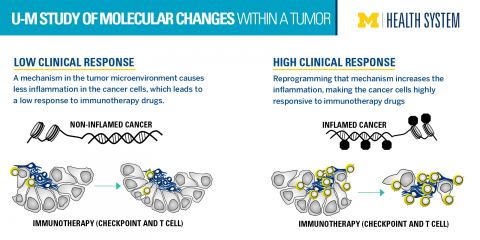
A new study from the University of Michigan Comprehensive Cancer Center reveals molecular changes within the tumor that are preventing the immunotherapy drugs from killing off the cancer.

Clinical trials with PD-L1 and PD-1 blockade suggested that tumors with a high number of inflammation-causing T cells were more responsive to the immunotherapy-based PD-L1 and PD-1 inhibitors. Tumors with low inflammation, or low T cells, were less responsive. But what controls T cells in the tumor microenvironment is poorly understood.

graphical image that shows how turning off a mechanism leads to more inflammation which means better drug response

http://www.uofmhealth.org/sites/default/files/styles/large/public/Immunotherapy.png?itok=_oihl0jj


“We defined a molecular mechanism to explain why some tumors are inflamed and others are not – and consequently why some patients will be responsive to therapy and others not,” says senior author Weiping Zou, M.D., Ph.D.

“If we can reprogram this epigenetic mechanism, then the therapy might work for more patients,” says Zou, Charles B. de Nancrede Professor of Surgery, Immunology and Biology at the University of Michigan Medical School.

Zou’s group was the first to show PD-L1 expression, regulation and functional blockade in dendritic cells in the human cancer microenvironment.

In this study, published in Nature, researchers studied human and mouse models of ovarian cancer cells. They applied epigenetic drugs and found that the numbers of T cells in the tumor increased. They also saw that the epigenetic drugs synergized the anti-tumor effect of PD-L1 blockade in their models.

“We hope this could be developed into a clinical trial testing a combination of PD-L1 and PD-1 blockade with epigenetic therapy. We want to see if we can make the responders more responsive and turn the non-responders into responders,” Zou says.

Additional authors: From U-M: Dongjun Pen, Ilona Kryczek, Nisha Nagarsheth, Lili Zhao, Shuang Wei, Weimin Wang, Yuqing Sun, Ende Zhao, Linda Vatan, Wojciech Szeliga, Yali Dou, Kathleen Cho, Rebecca Liu; from Medical University in Lublin, Poland: Jan Kotarski, Rafal Tarkowski; from Henry Ford Health System: Sharon Hensley-Alford, Adnan Munkarah

Funding: National Institutes of Health grants CA190176, CA123088, CA099985, CA193136, CA152470, CA171306, 5P30 CA46592; Rivkin Ovarian Cancer Center, Ovarian Cancer Research Fund, Barbara and Don Leclair

Cancer immunotherapy research is evolving to more targeted strategies

Discoveries in immune pathway research have helped refine cancer immunotherapy strategies to become more targeted.1,2

Image of timeline showing cancer immunotherapy research has evolved from general to targeted approaches over the years


http://www.researchcancerimmunotherapy.com/overview/targeted-cancer-research

  • CAR=chimeric antigen receptor;
  • CSF-1R=colony-stimulating factor 1; CTLA4=cytotoxic
  • T-lymphocyte antigen-4; IDO=indoleamine
  • 2,3-dioxygenase; PD-1=programmed death-1; PD-L1=programmed death-ligand 1.

http://www.researchcancerimmunotherapy.com/images/overview/evolution-research/history-of-immunotherapy.png


Engaging the immune response: a unique approach to cancer management

Cancer immunotherapy strategies are designed to engage the immune system against tumors. This approach is unique in the oncology setting and introduces new considerations for cancer management.1,2

  • TARGETED

    to tumor-specific antigens

  • RAPID

    activation of the immune response

  • ADAPTABLE

    as the tumor mutates and evolves

  • SELF-PROPAGATING

    with each revolution of the cancer immunity cycle

  • DURABLE

    response over time


CONSIDERATIONS FOR CANCER IMMUNOLOGY

Duration of response

The immune response has the ability to adapt with cancer as it evolves, and can become self-propagating once the cancer immunity cycle is initiated. Immune-directed strategies aim to leverage these attributes, with the goal of inducing a durable antitumor effect.3-5

Pseudo-progression

T-cell infiltration to the tumor site may cause an apparent increase in tumor size or the appearance of new lesions. This inflammatory effect can be misinterpreted as progressive disease, as it can be difficult to differentiate the different cell types in radiographic imaging. New criteria have been developed to better capture immune-related response patterns, and may guide evaluation of immunotherapies in clinical trials, and potentially in clinical care.1,2,6

Image showing T-cell infiltration into the tumor site can cause pseudoprogression]

REFERENCES

  1. Chen DS, Mellman I. Oncology meets immunology: the cancer-immunity cycle. Immunity. 2013;39:1-10. PMID: 23890059
  2. Mellman I, Coukos G, Dranoff G. Cancer immunotherapy comes of age. Nature. 2011;480:480-489. PMID: 22193102
  3. Hanahan D, Weinberg RA. Hallmarks of cancer: the next generation. Cell. 2011;144:646-674. PMID: 21376230

Immune-related adverse events

While the goal of cancer immunotherapy research is to understand how to activate specific components of the immune response, the potential for off-target effects exists. Adverse event profiles may vary among different immune-directed strategies. As strategies grow more targeted, the recognition and management of immune-related adverse events will evolve.1,3

REFERENCES

  1. Mellman I, Coukos G, Dranoff G. Cancer immunotherapy comes of age. Nature. 2011;480:480-489. PMID: 22193102
  2. Hoos A, Eggermont AM, Janetzki S, et al. Improved endpoints for cancer immunotherapy trials. J Natl Cancer Inst. 2010;102:1388-1397.PMID: 20826737
  3. Chen DS, Mellman I. Oncology meets immunology: the cancer-immunity cycle. Immunity. 2013;39:1-10. PMID: 23890059
  4. Topalian SL, Weiner GJ, Pardoll DM. Cancer immunotherapy comes of age. J Clin Oncol. 2011;29:4828-4836. PMID: 22042955
  5. Chen DS, Irving BA, Hodi FS. Molecular pathways: next-generation immunotherapy—inhibiting programmed death-ligand 1 and programmed death-1. Clin Cancer Res. 2012;18:6580-6587. PMID: 23087408
  6. Wolchok JD, Hoos A, O’Day S, et al. Guidelines for the evaluation of immune therapy activity in solid tumors: immune-related response criteria. Clin Cancer Res. 2009;15:7412-7420. PMID: 19934295


Tumors can evade immune destruction

By disrupting the processes of the cancer immunity cycle throughout the body, tumors can avoid detection by the immune system and limit the extent of immune destruction.1-3

Image of dendritic cell capturing tumor antigens, step 2 of cancer immunity cycle

Tumor microenvironment

Disrupting antigen detection

http://www.researchcancerimmunotherapy.com/images/overview/evading-immune-destruction/tumor-microenv.png


Lymph node

Inhibiting T-cell activation by dendritic cells

http://www.researchcancerimmunotherapy.com/images/overview/evading-immune-destruction/lymph-node.png

Image of dendritic cell activating T cell, step 3 of cancer immunity cycle

Blood vessel

Blocking T-cell infiltration into tumor

http://www.researchcancerimmunotherapy.com/images/overview/evading-immune-destruction/blood-vessel.png

Image of T cell infiltrating tumor, step 5 of cancer immunity cycle

Tumor microenvironment

Suppressing cytotoxic T-cell activity

http://www.researchcancerimmunotherapy.com/images/overview/evading-immune-destruction/suppressing-tcell.png


EVADING IMMUNE DESTRUCTION IS AN EMERGING HALLMARK OF CANCER

Alt text: Image of hallmarks of cancer, which includes evading immune destruction

http://www.researchcancerimmunotherapy.com/images/overview/evading-immune-destruction/hallmark-cancer.png

The growing body of research into the mechanisms of immune evasion has led to its addition as an emerging hallmark of cancer, a distinct biological capability that enables tumors to grow and metastasize.


MUTATION RATE BY CANCER TYPE4

Image of mutation chart; melanoma, lung, and bladder cancer have high mutation rates

http://www.researchcancerimmunotherapy.com/images/tumor-types/immunogenic-cancer/immunogenic-cancer.png

REFERENCES

  1. Chen DS, Mellman I. Oncology meets immunology: the cancer-immunity cycle. Immunity. 2013;39:1-10. PMID: 23890059
  2. Chen DS, Irving BA, Hodi FS. Molecular pathways: next-generation immunotherapy—inhibiting programmed death-ligand 1 and programmed death-1. Clin Cancer Res. 2012;18:6580-6587. PMID: 23087408
  3. Rajasagi M, Shokla SA, Fritsch EF, et al. Systematic identification of personal tumor-specific neoantigens in chronic lymphocytic leukemia.Blood. 2014;124:453-462. PMID: 24891321
  4. Lawrence MS, Stojanov P, Polak P, et al. Mutational heterogeneity in cancer and the search for new cancer-associated genes. Nature.2013;499:214-218. PMID: 23770567


Atezolizumab (Anti-PDL1) clinical trials   

Atezolizumab clinical trials are being conducted for the following types of cancers: lung, bladder, kidney, hematological malignancies, and breast cancer. Please check back for updates or search clinicaltrials.gov with the search term “Atezolizumab.”


EXPLORING A MORE PERSONALIZED APPROACH TO CANCER IMMUNOTHERAPY RESEARCH

With the evolution to more targeted strategies, research is focusing on identifying predictors of individual immune response through specific tumor characteristics and factors in the tumor microenvironment, such as

  • The presence of tumor-infiltrating immune cells8
    • The ability of immune cells to infiltrate the tumor microenvironment may be a key criterion for a variety of immune-directed strategies, and could indicate which tumors are more likely to respond
  • Gene expression patterns in tumors, particularly the genes involved in immune response9
  • Cell surface protein expression
    • PD-L1 expression on tumor cells and tumor-infiltrating immune cells10,11
    • MUC1 expression on tumor cells12     

REFERENCES

  1. Chen DS, Mellman I. Oncology meets immunology: the cancer-immunity cycle. Immunity. 2013;39:1-10. PMID: 23890059
  2. Mellman I, Coukos G, Dranoff G. Cancer immunotherapy comes of age. Nature. 2011;480:480-489. PMID: 22193102
  3. Lesterhuis WJ, Haanen JB, Punt CJ. Cancer immunotherapy—revisited. Nat Rev Drug Discov. 2011;10:591-600. PMID: 21804596
  4. National Institutes of Health ClinicalTrials.gov. https://clinicaltrials.gov/ct2/show/NCT01494688. Accessed March 4, 2015.
  5. National Institutes of Health ClinicalTrials.gov. https://clinicaltrials.gov/ct2/show/NCT00739609. Accessed March 4, 2015.
  6. Glienke W, Esser R, Priesner C, et al. Advantages and applications of CAR-expressing natural killer cells. Front Pharmacol. 2015;6:21. doi: 10.3389/fphar.2015.00021. PMID: 25729364
  7. National Institutes of Health ClinicalTrials.gov. https://clinicaltrials.gov/ct2/show/NCT01303705. Accessed March 4, 2015.
  8. Gajewski TF, Schreiber H, Fu YX. Innate and adaptive immune cells in the tumor microenvironment. Nat Immunol. 2013;14:1014-1022.PMID: 24048123
  9. Ji RR, Chasalow SD, Wang L, et al. An immune-active tumor microenvironment favors clinical response to ipilimumab. Cancer Immunol Immunother. 2012;61:1019-1031. PMID: 22146893
  10. Taube JM, Anders RA, Young GD, et al. Colocalization of inflammatory response with B7-h1 expression in human melanocytic lesions supports an adaptive resistance mechanism of immune escape. Sci Transl Med. 2012;4:127ra37. PMID: 22461641
  11. Chen DS, Irving BA, Hodi FS. Molecular pathways: next-generation immunotherapy—inhibiting programmed death-ligand 1 and programmed death-1. Clin Cancer Res. 2012;18:6580-6587. PMID: 23087408
  12. Stojnev S, Ristic-Petrovic A, Velickovic LJ, et al. Prognostic significance of mucin expression in urothelial bladder cancer. Int J Clin Exp Pathol. 2014;7:4945-4958. PMID: 25197366
  13. Pardoll DM. The blockade of immune checkpoints in cancer immunotherapy. Nat Rev Cancer. 2012;12:252-264. PMID: 22437870
  14. Taylor RC, Patel A, Panageas KS, Busam KJ, Brady MS. Tumor-infiltrating lymphocytes predict sentinel lymph node positivity in patients with cutaneous melanoma. J Clin Oncol. 2007;25:869-875. PMID: 17327608


Read Full Post »

antibody-like proteins to awaken and destroy HIV holdouts

Larry H. Bernstein, MD, FCAP, Curator

LPBI

Two-Faced Proteins May Tackle HIV Reservoirs

Researchers design antibody-like proteins to awaken and destroy HIV holdouts.

By Amanda B. Keener | October 21, 2015

http://www.the-scientist.com//?articles.view/articleNo/44293/title/Two-Faced-Proteins-May-Tackle-HIV-Reservoirs/#.

For the millions of people living with HIV worldwide, a life-long commitment to antiretroviral drugs is a must. Without these drugs, reservoirs of HIV hiding within resting T cells throughout the body can easily resurge and cause disease. In a study published yesterday (October 20) in Nature Communications, researchers from the National Institute of Allergy and Infectious Diseases (NIAID) in Bethesda, Maryland, described a bispecific antibody-like protein that attacks those reservoirs by coaxing HIV out of hiding and targeting infected cells for destruction.

“In order to kill the [infected] cell, the cell has to be activated,” said study coauthor John Mascola, director of NIAID’s Vaccine Research Center. This is because HIV has a way of hiding out inside inactive CD4+ T cells where the virus adopts a dormant-like state known as latency. In this state, the virus is impervious to antiretroviral drugs as well as antibodies that might otherwise alert other immune cells to the virus’ presence inside an infected cell. “By definition, latently-infected cells don’t express virus proteins,” Oliver Schwartz, the head of the virus and immunity laboratory at the Pasteur Institute in Paris, who was not involved in the work, told The Scientist.

Mascola and his colleagues designed a protein that activates latently-infected T cells by targeting a protein found on the surface of all T cells called CD3. Engagement of CD3 signals infected CD4+ T cells to start dividing, which revamps HIV’s replication machinery causing the virus to make proteins that appear on the surface of the infected cell. Mascola’s team tested the protein, called VRC07-αCD3, on T cells donated by HIV patients on antiretroviral therapies. The researchers found that VRC07-αCD3 caused the T cells to display Env, indicating that latent virus had become reactivated.

In recent years, researchers have come up with a handful of approaches to activate latent HIV, such ashistone deacetylase inhibitors, which increase viral gene expression. VRC07-αCD3, however, doesn’t just activate latent HIV—it also binds Env on the surface of infected CD4+ T cells and tags the cells for killing by another sort of cell called CD8+ killer T cells. Using T cells in culture, Mascola’s team demonstrated that the CD3-binding region of the protein triggers killer CD8+ T cells to lyse CD4+ T cells expressing Env.

The NIAID study was preceded by one in The Journal of Clinical Investigation that described a similar protein with dual specificities for CD3 and Env, but with a slightly different structure. Both designs share features that allow the proteins to activate latent cells, tag Env, and activate and bring killer CD8+ T cells into close proximity of their infected targets.

The dual specificity for CD3 and Env also provides a layer of safety: it ensured the killer CD8+ T cells only acted in full force when HIV was present. “That was an encouraging part of the data,” Mascola said.

Schwartz said this feature potentially addresses the concern that nonspecific activation of large numbers of T cells could elicit a dangerous overactivation of the immune system called a cytokine storm.

Mascola and his colleagues tested the safety of VRC07-αCD3 in five HIV-infected Rhesus macaques by giving the animals six doses over the course of three weeks. The monkeys were also on antiretroviral drugs, and the virus remained undetectable throughout the treatment. Although the monkeys tolerated the drug well, VRC07-αCD3 did activate T cells and caused serum cytokine levels to increase. “So this type of treatment is not risk-free,” Caltech virologist Pamela Bjorkman, who was not involved in the work, wrote in an email to The Scientist.

Mascola said his group plans to continue testing VRC07-αCD3 in macaques and in humanized mice to work out a balance between T cell activation and HIV killing. However, neither model “really tells you what’s going to happen in people,” he said. “We’ll have to proceed slowly in the clinic.”

A. Pegu et al., “Activation and lysis of human CD4 cells latently infected with HIV-1,”Nature Communications, 6:8447 doi:10.1038/ncomms9447, 2015.

Read Full Post »

Renal (Kidney) Cancer: Connections in Metabolism at Krebs cycle  and Histone Modulation

Curator: Demet Sag, PhD, CRA, GCP

Through Histone Modulation

Renal cell carcinoma accounts for only 3% of total human malignancies but it is still the most common type of urological cancer with a high prevalence in elderly men (>60 years of age).

ICD10 C64
ICD9-CM 189.0
ICD-O M8312/3
OMIM 144700 605074
DiseasesDB 11245
MedlinePlus 000516
eMedicine med/2002

Most kidney cancers are renal cell carcinomas (RCC). RCC lacks early warning signs and 70 % of patients with RCC develop metastases. Among them, 50 % of patients having skeletal metastases developed a dismal survival of less than 10 % at 5 years.

There are three main histopathological entities:

  1. Clear cell RCC (ccRCC), dominant in histology (65%)
  2. Papillary (15-20%) and
  3. Chromophobe RCC (5%).

There are very rare forms of RCC shown in collecting duct, mucinous tubular, spindle cell, renal medullary, and MiTF-TFE translocation carcinomas.

Subtypes of clear cell and papillary RCC, and a new subtype, clear cell papillary http://www.ncbi.nlm.nih.gov/pmc/articles/PMC3399969/bin/nihms380694f6.jpg

Different subtypes of clear cell RCC can be defined by HIF patterns as well as by transcriptomic expression as defined by ccA and ccB subtypes. Papillary RCC also demonstrates distinct histological subtypes. A recently described variant denoted as clear cell papillary RCC is VHL wildtype (VHL WT), while other clear cell tumors are characterized by VHL mutation, loss, or inactivation (VHL MT).

KEY POINTS

  • Renal cell cancer is a disease in which malignant (cancer) cells form in tubules of the kidney.
  • Smoking and misuse of certain pain medicines can affect the risk of renal cell cancer.
  • Signs of renal cell cancer include
  • Blood in your urine, which may appear pink, red or cola colored
  • A lump in the abdomen.
  • Back pain just below the ribs that doesn’t go away
  • Weight loss
  • Fatigue
  • Intermittent fever


Factors that can increase the risk of kidney cancer include:

  • Older age.
  • High blood pressure (hypertension).
  • Treatment for kidney failure.(long-term dialysis to treat chronic kidney failure)
  • Certain inherited syndromes.
  • von Hippel-Lindau disease

Tests that examine the abdomen and kidneys are used to detect (find) and diagnose renal cell cancer.

The following tests and procedures may be used:

There are 3 treatment approaches for Renal Cancer:

Stages of Renal Cancer:

Stage I Tumour of a diameter of 7 cm (approx. 23⁄4 inches) or smaller, and limited to the kidney. No lymph node involvement or metastases to distant organs.
Stage II Tumour larger than 7.0 cm but still limited to the kidney. No lymph node involvement or metastases to distant organs.
Stage III
any of the following
Tumor of any size with involvement of a nearby lymph node but no metastases to distant organs. Tumour of this stage may be with or without spread to fatty tissue around the kidney, with or without spread into the large veins leading from the kidney to the heart.
Tumour with spread to fatty tissue around the kidney and/or spread into the large veins leading from the kidney to the heart, but without spread to any lymph nodes or other organs.
Stage IV
any of the following
Tumour that has spread directly through the fatty tissue and the fascia ligament-like tissue that surrounds the kidney.
Involvement of more than one lymph node near the kidney
Involvement of any lymph node not near the kidney
Distant metastases, such as in the lungs, bone, or brain.
Grade Level Nuclear Characteristics
Grade I Nuclei appear round and uniform, 10 μm; nucleoli are inconspicuous or absent.
Grade II Nuclei have an irregular appearance with signs of lobe formation, 15 μm; nucleoli are evident.
Grade III Nuclei appear very irregular, 20 μm; nucleoli are large and prominent.
Grade IV Nuclei appear bizarre and multilobated, 20 μm or more; nucleoli are prominent


GENETICS:

90% or more of kidney cancers are believed to be of epithelial cell origin, and are referred to as renal cell carcinoma (RCC), which are further subdivided based on histology into clear-cell RCC (75%), papillary RCC (15%),

chromophobe tumor (5%), and oncocytoma (5%).

Nephrectomy continues to be the cornerstone of treatment for localized renal cell carcinoma (RCC). Research is still underway to developed targeted agents against the vascular endothelial growth factor (VEGF) molecule and related pathways as well as inhibitors of the mammalian target of rapamycin (mTOR),

clear cell RCC (ccRCC) doesn’t respond well to radiation chemotherapy due to high radiation resistancy.  The hallmark genetic features of solid tumors such as KRAS or TP53 mutations are also absent. However, there is a well-designed association presented between ccRCC and mutations in the VHL gene

Hereditary RCC, accounts for around 4% of cases, has been a relatively dominant area of RCC genetics.

Causative genes have been identified in several familial cancer syndromes that predispose to RCC including

  • VHLmutations in von Hippel-Lindau disease that predispose to ccRCC and VHL is somatically mutated in up to 80% of ccRCC
  • METmutations in familial papillary renal cancer,
  • dominantly activating kinase domainMET mutation reported in 4–10% of sporadic papillary RCC[2].
  • FH (fumarate hydratase) mutations in hereditary leiomyomatosis and renal cell cancer that predispose to papillary RCC
  • FLCN(folliculin) mutations in Birt-Hogg-Dubé syndrome that predispose to primarily chromophobe RCC.

In addition, there are germline mutations:

  • in theTSC1/2 genes predispose to tuberous sclerosis complex where approximately 3% of cases develop ccRCC,
  • in the SDHB(succinate dehydrogenase type B) in patients with paraganglioma syndrome shows elevated risk to develop multiple types of RCC.

GWAS in almost 6000 RCC cases demonstrated that loci on 2p21 and 11q13.3 play a role in RCC. Although EPAS1 gene encoding a transcription factor operative in hypoxia-regulated responses in  2p21 , 11q13.3 has no known coding genes.

There has been, however, comparatively less progress in the elaboration of the somatic genetics of sporadic RCC.

Absent mutations in sporadic RCC:

  • somaticFH mutations
  • somatic mutations ofTSC12 and SDHB

Present mutations in sporadic ccRCC (chromophobe RCC) are

  • TSC1mutations occur in 5% of ccRCCs and
  • somatic mutations inFLCN  rare
  • may predict for extraordinary sensitivity to mTORC1 inhibitors clinically.

The COSMIC database reports somatic point mutations in TP53 in 10% of cases, KRAS/HRAS/NRAS combined ≤1%, CDKN2A 10%, PTEN 3%, RB1 3%, STK11/LKB1 ≤1%, PIK3Ca ≤1%, EGFR1% and BRAF ≤1% in all histological samples. Further information can be found at (http://www.sanger.ac.uk/ genetics/CGP/cosmic/) for the  RCC somatic genetics.

HIF- and hypoxia-mediated epigenetic regulation work together due to histone modification because HIF activate several chromatin demethylases, including JMJD1A (KDM3A), JMJD2B (KDM4B), JMJD2C (KDM4C) and JARID1B (KDM5B), all of which are directly targeted by HIF.

Overview of Histone 3 modifications implicated in RCC genetics http://www.ncbi.nlm.nih.gov/pmc/articles/PMC3399969/bin/nihms380694f1.jpg

A number of histone modifying genes are mutated in renal cell carcinoma. These include the H3K36 trimethylase SETD2, the H3K27 demethylase UTX/KDM6A, the H3K4 demethylase JARID1C/KDM5C and the SWI/SNF complex compenent PBRM1, shown in this cartoon to represent their relative activities on Histone H3.

Hyper-methylation is observed on RASSF1 highly (50% f RCC) yet less on VHL and CDKN2A, yet there is a methylation and silencing observed on TIMP3 and secreted frizzled-related protein 2.

RCC is ONE OF THE “CILIOPATHIES” among Polycystic Kidney Disease (PKD), Tuberous Sclerosis Complex (TSC) and VHL Syndrome. The main display of cysts is dysfunctional primary cilia.

Mol Cancer Res. Author manuscript; available in PMC 2013 Jan 1.

Mol Cancer Res. 2012 Jul; 10(7): 859–880. Published online 2012 May 25. doi:  10.1158/1541-7786.MCR-12-0117

pVHL mutants are categorized as Class A, B and C depending on the affected step in pVHL protein quality control http://www.ncbi.nlm.nih.gov/pmc/articles/PMC3399969/bin/nihms380694f2.jpg

VHL proteostasis involves the chaperone mediated translocation of nascent VHL peptide from the ribosome to the TRiC/CCT chaperonin, where folding occurs in an ATP dependent process. The VBC complex is formed while VHL is bound to TRiC, and the mature complex is then released. Three different classes of mutation exist: Class A mutations prevent binding of VHL to TRiC, and abrogate folding into a mature complex. Class B mutations prevent association of Elongins C and B to VHL. Class C mutations inhibit interaction between VHL and HIF1 a.

# 193300. VON HIPPEL-LINDAU SYNDROME; VHL ICD+, Links
VON HIPPEL-LINDAU SYNDROME, MODIFIERS OF, INCLUDED
Cytogenetic locations: 3p25.3 , 11q13.3
Matching terms: lindau, disease, von, hippellindau, hippel
  • Birt-Hogg-Dube syndrome,
# 135150. BIRT-HOGG-DUBE SYNDROME; BHD ICD+, Links
Cytogenetic location: 17p11.2 
Matching terms: birthoggdube, syndrome, birt, hogg, dube
  • tuberous sclerosis
# 191100. TUBEROUS SCLEROSIS 1; TSC1 ICD+, Links
Cytogenetic location: 9q34.13 
Matching terms: tuber, sclerosi, tuberous
  • familial papillary renal cell carcinoma.
# 144700. RENAL CELL CARCINOMA, NONPAPILLARY; RCC ICD+, Links
NONPAPILLARY RENAL CARCINOMA 1 LOCUS, INCLUDED
Cytogenetic locations: 3p25.3 3p25.3 3q21.1 8q24.13 12q24.31 17p11.2 17q12 
Matching terms: renal, familial, papillary, carcinoma, cell

http://www.ncbi.nlm.nih.gov/pmc/articles/PMC4358399/bin/467fig3.jpg

Model for the control of the fate of nephron progenitor cells. Eya1 lies genetically upstream of Six2. Six2 labels the nephron progenitor cells, which can either maintain a progenitor state and self-renew or differentiate via the Wnt4-mediated MET. Wnt4 expression is under the direct control of Wt1. β-Catenin is involved in both progenitor cell fates through activation of different transcriptional programs. Active nuclear phosphorylated Yap/Taz shifts the progenitor balance toward the self-renewal fate. Eya1 and Six2 interact directly with Mycn, leading to dephosphorylation of Mycn pT58, stabilization of the protein, increased proliferation, and potentially a shift of the nephron progenitor toward self-renewal. Genes activated in Wilms’ tumors are depicted in green, and inactivated genes are in blue. Deregulation of Yap/Taz in Wilms’ tumors results in phosphorylated Yap not being retained in the cytoplasm as it should, but it translocates to the nucleus and thus shifts the progenitor cell balance toward self-renewal. This model is likely a simplification, as it presumes that all Wilms’ tumors, regardless of causative mutation, are caused by the same mechanism.

Epigenetic aberrations associated with Wilms’ tumor

Chinese Case Study: PMCID: PMC4471788

They u8ndertook this study based on association of low circulating adiponectin concentrations with a higher risk of several cancers, including renal cell carcinoma. Thus they demonstrated that by case–control study that ADIPOQ rs182052 is significantly associated with ccRCC risk.

They investigated the frequency of three single nucleotide polymorphisms (SNPs), rs182052G>A, rs266729C>G, rs3774262G>A, in the adiponectin gene (ADIPOQ).  1004 registered patients with clear cell renal cell carcinoma (ccRCC) compared with 1108 healthy subjects (= 1108).

The first table presents the characteristics of 1004 patients with clear cell renal cell carcinoma and 1108 cancer-free controls from a Chinese Han population. The Second and third table shows the SNP results.

Table 1: The characteristics of the examined population.

Variable Cases, n (%) Controls, n (%) P-value
1004 (100) 1108 (100)
Age, years
 ≤44 195 (19.4) 230 (20.8) 0.559
 45–64 580 (57.8) 644 (58.1)
 ≥65 229 (22.8) 234 (21.1)
Sex
 Male 711 (70.8) 815 (73.6) 0.160
 Female 293 (29.2) 293 (26.4)
BMI, kg/m2
 <25 480 (47.8) 589 (53.2) 0.014
 ≥25 524 (52.2) 519 (46.8)
Smoking status
 Never 455 (45.3) 529 (47.7) 0.265
 Ever/current 549 (54.7) 579 (52.3)
Hypertension
 No 639 (63.6) 780 (70.4) 0.001
 Yes 365 (36.4) 328 (29.6)
Fuhrman grade
 I 40 (4.0)
 II 380 (37.8)
 III 347 (34.6)
 IV 175 (17.4)
 Missing 62 (6.2)
Stage at diagnosis
 I 738 (73.5)
 II 71 (7.1)
 III 19 (1.9)
 IV 176 (17.5)

Pearson’s χ2-test.

Table 2:

Association between ADIPOQ single nucleotide polymorphisms (SNP) and clear cell renal cell carcinoma risk

SNP HWE Cases, n(%) Controls, n(%) Crude OR (95% CI) P-value Adjusted OR (95% CI) P-value
rs182052
 GG 0.636 249 (24.8) 315 (28.4) 1.00 1.00
 AG 485 (48.3) 544 (49.1) 1.13 (0.92–1.39) 0.253 1.11 (0.90–1.37) 0.331
 AA 270 (26.9) 249 (22.5) 1.37 (1.08–1.75) 0.010 1.36 (1.07–1.74) 0.013
 AG/AA versusGG 1.20 (0.99–1.46) 0.060 1.19 (0.98–1.45) 0.086
 AA versusGG/AG 1.28 (1.04–1.57) 0.019 1.27 (1.04–1.56) 0.019
rs266729
 CC 0.143 502 (50.0) 572 (51.6) 1.00 1.00
 CG 398 (39.6) 434 (39.2) 1.05 (0.88–1.25) 0.635 1.05 (0.87–1.26) 0.633
 GG 104 (10.4) 102 (9.2) 1.16 (0.86–1.57) 0.324 1.17 (0.86–1.58) 0.307
 CG/GG versusCC 1.07 (0.91–1.29) 0.456 1.07 (0.90–1.27) 0.445
 GG versus CC/CG 1.19 (0.83–1.59) 0.377 1.15 (0.86–1.54) 0.353
rs3774262
 GG 0.106 482 (48.0) 523 (47.2) 1.00 1.00
 AG 420 (41.8) 459 (41.4) 0.99 (0.83–1.20) 0.938 0.99 (0.82–1.19) 0.905
 AA 102 (10.2) 126 (11.4) 0.88 (0.66–1.17) 0.381 0.90 (0.67–1.20) 0.463
 AG/AA versusGG 0.98 (0.80–1.16) 0.711 0.97 (0.82–1.15) 0.722
 AA versusGG/AG 0.88 (0.67–1.18) 0.372 0.90 (0.68–1.19) 0.465

Bold values indicate significance.

Adjusted for age, sex, BMI, smoking status, and hypertension. CI, confidence interval; OR, odds ratio; HWE, Hardy–Weinberg equilibrium.

Table 3:

Association between ADIPOQ single nucleotide polymorphisms (SNP) and clear cell renal cell carcinoma risk

SNP HWE Cases, n(%) Controls, n(%) Crude OR (95% CI) P-value Adjusted OR (95% CI) P-value
rs182052
 GG 0.636 249 (24.8) 315 (28.4) 1.00 1.00
 AG 485 (48.3) 544 (49.1) 1.13 (0.92–1.39) 0.253 1.11 (0.90–1.37) 0.331
 AA 270 (26.9) 249 (22.5) 1.37 (1.08–1.75) 0.010 1.36 (1.07–1.74) 0.013
 AG/AA versusGG 1.20 (0.99–1.46) 0.060 1.19 (0.98–1.45) 0.086
 AA versusGG/AG 1.28 (1.04–1.57) 0.019 1.27 (1.04–1.56) 0.019
rs266729
 CC 0.143 502 (50.0) 572 (51.6) 1.00 1.00
 CG 398 (39.6) 434 (39.2) 1.05 (0.88–1.25) 0.635 1.05 (0.87–1.26) 0.633
 GG 104 (10.4) 102 (9.2) 1.16 (0.86–1.57) 0.324 1.17 (0.86–1.58) 0.307
 CG/GG versusCC 1.07 (0.91–1.29) 0.456 1.07 (0.90–1.27) 0.445
 GG versus CC/CG 1.19 (0.83–1.59) 0.377 1.15 (0.86–1.54) 0.353
rs3774262
 GG 0.106 482 (48.0) 523 (47.2) 1.00 1.00
 AG 420 (41.8) 459 (41.4) 0.99 (0.83–1.20) 0.938 0.99 (0.82–1.19) 0.905
 AA 102 (10.2) 126 (11.4) 0.88 (0.66–1.17) 0.381 0.90 (0.67–1.20) 0.463
 AG/AA versusGG 0.98 (0.80–1.16) 0.711 0.97 (0.82–1.15) 0.722
 AA versusGG/AG 0.88 (0.67–1.18) 0.372 0.90 (0.68–1.19) 0.465

Bold values indicate significance.

Adjusted for age, sex, BMI, smoking status, and hypertension. CI, confidence interval; OR, odds ratio; HWE, Hardy–Weinberg equilibrium.

Molecular Genetics Level for Physiology (Function):

http://www.ncbi.nlm.nih.gov/pmc/articles/PMC4503866/bin/10585_2015_9731_Fig6_HTML.jpg

a The protein–protein interaction for the identified 8 proteins in STRING (10 necessary proteins/genes were added into the network so as to find the potential strong connection among them. The red dotted lines circled three main pathways. b The ingenuity pathway analysis (IPA) for all these 18 genes showing that oxidative phosphorylation, mitochondria dysfunction and granzyme A are the significantly activated pathways (fold change over 1.5, P < 0.05). c The possible mechanism related mitochondria functions: unspecific condition like inflammation, carcinogens, radiation (ionizing or ultraviolet), intermittent hypoxia, viral infections which is carcinogenesis in our study that damages a cell’s oxidative phosphorylation. Any of these conditions can damage the structure and function of mitochondria thus activating a respiratory chain changes (Complex I, II, III, IV) and also cytochrome c release. When the mitochondrial dysfunction persists, it produces genome instability (mtDNA mutation), and further lead to malignant transformation (metastasis) via increased ROS and apoptotic resistance. (Color figure online)

RENAL CELL CARCINOMA AND METABOLISM goes hand to hand in genes encoding enzymes of the Krebs cycle suppress tumor formation in kidney cells. This includes Succinate dehydrogenase (SDH), Fumarate hydratase (FH).  As a result of accumulation of succinate or fumarate causes the inhibition of a family of 2-oxoglutarate-dependent dioxygeneases.

The FH and SDH genes function as two-hit tumor suppressor genes.

SDH has a complex of 4 different polypeptides (SDHA-D) function in electron transfer, catalyzes the conversion of succinate to fumarate. Furthermore, heterozygous germline mutations in SDHsubunits predispose to pheochromocytoma/paraganglioma. FH function to convert fumarate to malate.  When its mutations presented as heterozygous germline, it predisposes hereditary leiomyomatosis and renal cell cancer (HLRCC). Among them about 20–50% of HLRCC families are typically papillary-type 2 (pRCC-2) and overwhelmingly aggressive.RCC is increasingly being recognized as a metabolic disease, and key lesions in nutrient sensing and processing have been detected.

Regulation of Prolyl Hydroxylases and Keap1 by Krebs cycle http://www.ncbi.nlm.nih.gov/pmc/articles/PMC3399969/bin/nihms380694f4.jpg

Regulation of Prolyl Hydroxylases by Tricarboxylic Acid (TCA) Cycle Intermediates. Prolyl hydroxylases use TCA cycle intermediates to help catalyze the oxygen, iron and ascorbate dependent- addition of a hydroxyl side chain to a Pro402 and Pro564 of HIF alpha subunits, leading to VHL binding and degradation. Defects in either fumarate hydratase or succinate dehydrogenase will drive up levels of fumarate and succinate, which competitively bind prolyl hydroxylases, and prevent HIF prolyl hydroxylation. This results in higher intracellular HIF levels.

Regulation of mTORC1 http://www.ncbi.nlm.nih.gov/pmc/articles/PMC3399969/bin/nihms380694f5.jpg

HIF regulation and mTOR pathway connections. Hypoxia blocks HIF expression in a TSC1/2 and REDD dependent pathway [155]. HIF1α appears to be both TORC1 and TORC2 dependent, whereas HIF2α is only TORC2 dependent [275]. Signaling via TORC2 appears to upregulate HIF2α in an AKT dependent manner [69].

TREATMENT:

Based on the types of renal cancers the treatment method may vary but the general scheme is:


Drugs Approved for Kidney (Renal Cell) Cancer

Food and Drug Administration (FDA) approved drugs for kidney (renal cell) cancer. Some of the drug names link to NCI’s Cancer Drug Information summaries.

T cell regulation in RCC http://www.ncbi.nlm.nih.gov/pmc/articles/PMC3399969/bin/nihms380694f7.jpg

Immune regulation of renal tumor cells. A: When an antigen presenting cell (APC) engages a T-cell via a cognate T-cell receptor (TCR) and CD28, T-cell cell activation occurs. B: Early and late T-cell inhibitory signals are mediated via CTLA-4 and PD-1 receptors, and this occurs via engagement of the APC via B7 and PD-L1, respectively. C: Inhibitory antibodies against CTLA-4 and PD-1 can overcome T-cell downregulation and once again allow cytokine production.

Phase III Trials of Targeted Therapy in Metastatic Renal Cell Carcinoma

Trial Number
of
patients
Clinical setting RR (%) PFS (months) OS (months)
VEGF-Targeted Therapy
*AVOREN

Bevacizumab +
IFNa
vs.IFNa[270]

649 First-line 31 vs. 12 10.2 vs. 5.5
(p<0.001)
23.3 vs. 21.3
(p=0.129)
*CALBG 90206

Bevacizumab +
IFNa
vs.IFNa[271]

732 First-line 25.5 vs. 13 8.4 vs. 4.9
(p<0.001)
18.3 vs. 17.4
(p=0.069)
Sunitinib vs.
IFNa[248]
750 First-line 47 vs. 12 11 vs. 5
(p=0.0001)
26.4 vs. 21.8
(p=0.051)
*TARGET

Sorafenib vs.
Placebo[272]

903 Second-line

(post-cytokine)

10 vs. 2 5.5 vs. 2.8
(p<0.01)
17.8vs.15.2
(p=0.88)
Pazopanib vs.
placebo[273]
435 First line/second line

(post-cytokine)

30 vs. 3 9.2 vs. 4.2
(p<0.0001)
22.9 vs. 20.5
(p=0.224)
*AXIS

Axitinib vs.
sorafenib [269]

723 Second line

(post-sunitinib, cytokine,
bevacizumab or
temsirolimus)

19 vs. 9
(p=0.0001)
6.7 vs. 4.7
(p<0.0001)
Not reported
mTOR-Targeted Therapy
*ARCC
Temsirolimus
vs. Tem + IFNa
vs. IFNa[249]
624 First line, ≥ 3 poor risk
featuresa
9 vs. 5 3.8 vs. 1.9 for
IFNa
monotherapy
(p=0.0001)
10.9 vs. 7.3 for
IFNa(p=0.008)
*RECORD-1
Everolimus vs.
placebo [274]
410 Second line
(post sunitinib and/or
sorafenib)
2 vs. 0 4.9 vs. 1.9

(p<0.0001)

14.8 vs. 14.5

RCC renal cell carcinoma, RR response rate, OS overall survival, PFS progression free survival, VEGFvascular endothelial growth factor, IFNa interferon alphamTOR mammalian target of rapamycin. AVORENAVastin fOr RENal cell cancer, CALBG Cancer and Leukemia Group B. TARGET Treatment Approaches in Renal Cancer Global Evaluation Trial. AXIS Axitinib in Second Line. ARCC Advanced Renal-Cell Carcinoma. RECORD-1 REnal Cell cancer treatment withOral RAD001 given Daily.

aIncluding serum lactate dehydrogenase level of more than 1.5 times the upper limit of the normal range, a hemoglobin level below the lower limit of the normal range; a corrected serum calcium level of more than 10 mg per deciliter (2.5 mmol per liter), a time from initial diagnosis of renal-cell carcinoma to randomization of less than 1 year, a Karnofsky performance score of 60 or 70, or metastases in multiple organs.

PMC full text: Open Access J Urol. Author manuscript; available in PMC 2013 Jul 8.

Open Access J Urol. 2010 Aug; 2010(2): 125–141. doi:  10.2147/RRU.S7242

Table: RCC-Associated Antigens (RCCAA) Recognized by T Cells.

Antigen Antigen
Category
Frequency of
Expression
Among RCC
Tumors (%)
CD8+ T cell
recognition:
Patients with
HLA Class I
Allele(s)
CD4+ T cell
recognition:
Patients with
HLA Class II
Allele(s)
References found in Open Access J Urol. Author manuscript; available in PMC 2013 Jul 8.
Survivina ML 100 Multiple Multiple 114
OFA-iLR OF 100 A2 NR 115116
IGFBP3ab ML 97 NR Multiple 117118
EphA2a ML > 90 A2 DR4 1744119
RU2AS Antisense
transcript
> 90 B7 NR 120
G250
(CA-IX) ab
RCC 90 A2, A24 Multiple 4751
EGFRab ML 85 A2 NR 121122
HIFPH3a ML 85 A24 NR 123
c-Meta ML > 80 A2 NR 124
WT-1a ML 80 A2, A24 NR 125128
MUC1ab ML 76 A2 DR3 46129130
5T4 ML 75 A2, Cw7 DR4 54131133
iCE aORF 75 B7 NR 134
MMP7a ML 75 A3 Multiple 117135136
Cyclin D1a ML 75 A2 Multiple 117137138
HAGE b CT 75 A2 DR4 139
hTERT ab ML > 70 Mutliple Multiple 140142
FGF-5 Protein splice variant > 60 A3 NR 143
mutVHLab ML > 60 NR NR 144
MAGE-A3 b CT 60 Multiple Multiple 145
SART-3 ML 57 Mulitple NR 146149
SART-2 ML 56 A24 NR 150
PRAME b CT 40 Multiple NR 151154
p53ab Mutant/WT
ML
32 Mutliple Multiple 155156
MAGE-A9b CT >30 A2 NR 157
MAGE-A6b CT 30 Mutliple DR4 18158
MAGE-D4b CT 30 A25 NR 159
Her2/neua ML 1030 Multiple Multiple 45160164
SART-1a ML 25 Multiple NR 165167
RAGE-1 CT (ORF2/5) 21 Mutliple Multiple 151157168169
TRP-1/ gp75 ML 11 A31 DR4 151170172

A summary is provided for RCCAA that have been defined at the molecular level. RCCAA are characterized with regard to their antigen category, their prevalence of (over)expression among total RCC specimens evaluated, whether RCCAA expression is modulated by hypoxia or tumor DNA methylation status, and which HLA class I and class II alleles have been reported to serve as presenting molecules for T cell recognition of peptides derived from a given RCCAA.

Abbreviations: CT = Cancer-Testis Antigens; ML = Multi-lineage Antigens; NR = Not Reported; OF = Oncofetal Antigen; aORF = altered open reading frame; ORF = open reading frame; RCC = Renal cell carcinoma; WT = Wild-Type;

aHypoxia-Induced;

bHypomethylation-Induced.

PMC full text: Open Access J Urol. Author manuscript; available in PMC 2013 Jul 8.

Open Access J Urol. 2010 Aug; 2010(2): 125–141. doi:  10.2147/RRU.S7242

Expected Impact on Teff versus Suppressor Cells
Co-Therapeutic Agent Teff
priming
Teff
function
Teff
survival
Teff
(TME)
Treg/
MDSC
References found in Open Access J Urol. Author manuscript; available in PMC 2013 Jul 8.
Cytokines
IL-2 +/− ↑ (Treg) 173175
IL-7 ↑ (Treg) 176178
IL-12 – (Treg), ↓ (MDSC) 179181
IL-15 ↑ (Treg)* 182183
IL-18 ↓ (Treg) 184186
IL-21 ? +/− (Treg) 187190
IFN-α +/− (Treg) 175191194
IFN-γ -? ? ↑ ↑ (Treg); ↑ ?(MDSC) 195197
GM-CSF ? ↑ (Treg); ↑(MDSC) 198202
Coinhibitory Antagonist
CTLA-4 ? ↓ (Treg) 203204
PD1/PD1L ↓ (Treg) 205207
Costimulatory Agonist
CD40/CD40L ↑ (Treg); ↑(MDSC) 208211
GITR/GITRL ↓ (Treg); ↓ (MDSC) 212213
OX40/OX86 ↑↓ (Treg); ↓ (MDSC) 214219
4-1BB/4-1BBL ↑ (Treg) 220224
TLR Agonists
Imiquimod (TLR7) ? 225227
Resiquimod (TLR8) ? ? 228229
CpG (TLR9) ↓ (Treg) 230232
Anti-Angiogenic
VEGF-Trap ? ? 233
Sunitinib ? ↓ (Treg/MDSC) 98100234
Sorafenib ? ↓ (MDSC) 235
Bevacizumab ? ? ↓ (MDSC) 236237
Gefitinib (IRESSA) ? ? ? ? ? 238239
Cetuximab ? ? ? ? 240
mTOR Inhibitors
Temsirolimus/Everolimus ? ↓ (Treg) 241
Treg/MDSC Inhibitors
Iplimumab (CTLA-4) ? ↓ (Treg) 242243
ONTAK (CD25) +/− +/− ? ? ↓ (Treg) 244
Anti-TGFβ/TGFβR ↓ (Treg) 245247
Anti-IL10/IL10R +/− ↓ (Treg) 248249
Anti-IL35/IL35R ↑? ↑? ↑? ↑? ↓ (Treg) 250
1-methyl trytophan ? ? ↓ (MDSC) 251
ATRA ? ? ↑ (Treg), ↓ (MDSC) 9093

Agents that are currently or soon-to-be in clinical trials are summarized with regard to their anticipated impact(s) on Type-1 anti-tumor T cell (Te) activation, function, survival and recruitment into the TME. Additional anticipated effects of drugs on suppressor cells (Treg and MDSC) are also summarized. Key: ↑, agent is expected to increase parameter; ↓, agent is expected to inhibit parameter; +/−, minimal increase or decrease is expected in parameter as a consequence of treatment with agent; ?, unknown effect of agent on parameter.

Abbreviations: ATRA, all-trans retinoic acid; CTLA-4, cytotoxic T Lymphocyte antigen 4; GITR(L), glucocorticoid-induced TNF receptor (ligand); GM-CSF, granulocyte-macrophage colony stimulating factor; IFN, interferon; IL, interleukin; MDSC, myeloid-derived suppressor cell; PD1/PD1L, programmed cell death 1 (ligand); TGF-β(R), tumor necrosis factor-β(receptor); TLR, Toll-like receptor; TME, tumor microenvironment; Treg, regulatory T cell; VEGF, vascular endothelial growth factor.

Alternative and Complementary Therapies for Cancer:

  • Art therapy
  • Dance or movement therapy
  • Exercise
  • Meditation
  • Music therapy
  • Relaxation exercises

Mol Cancer Res. 2012 Jul; 10(7): 859–880. Published online 2012 May 25. doi:  10.1158/1541-7786.MCR-12-0117 PMCID: PMC3399969 NIHMSID: NIHMS380694

State-of-the-science: An update on renal cell carcinoma

Eric Jonasch,1 Andrew Futreal,1 Ian Davis,2 Sean Bailey,2 William Y. Kim,2 James Brugarolas,3 Amato Giaccia,4 Ghada Kurban,5 Armin Pause,6 Judith Frydman,4 Amado Zurita,1 Brian I. Rini,7 Pam Sharma,8Michael Atkins,9 Cheryl Walker,8,* and W. Kimryn Rathmell2,*

Go to:

REFERENCES

Germline and somatic mutations in the tyrosine kinase domain of the MET proto-oncogene in papillary renal carcinomas.[Nat Genet. 1997]

Germline mutations in FH predispose to dominantly inherited uterine fibroids, skin leiomyomata and papillary renal cell cancer.[Nat Genet. 2002]

Mutations in a novel gene lead to kidney tumors, lung wall defects, and benign tumors of the hair follicle in patients with the Birt-Hogg-Dubé syndrome.[Cancer Cell. 2002]

Tuberous sclerosis-associated renal cell carcinoma. Clinical, pathological, and genetic features.[Am J Pathol. 1996]

Tumor risks and genotype-phenotype-proteotype analysis in 358 patients with germline mutations in SDHB and SDHD.[Hum Mutat. 2010]

Genome-wide association study of renal cell carcinoma identifies two susceptibility loci on 2p21 and 11q13.3.[Nat Genet. 2011]

Mutations of the VHL tumour suppressor gene in renal carcinoma.[Nat Genet. 1994]

Germline and somatic mutations in the tyrosine kinase domain of the MET proto-oncogene in papillary renal carcinomas.[Nat Genet. 1997]

Few FH mutations in sporadic counterparts of tumor types observed in hereditary leiomyomatosis and renal cell cancer families.[Cancer Res. 2002]

Interplay between pVHL and mTORC1 pathways in clear-cell renal cell carcinoma.[Mol Cancer Res. 2011]

Intratumor heterogeneity and branched evolution revealed by multiregion sequencing.[N Engl J Med. 2012]

Exome sequencing identifies frequent mutation of the SWI/SNF complex gene PBRM1 in renal carcinoma.[Nature. 2011]

Systematic sequencing of renal carcinoma reveals inactivation of histone modifying genes.[Nature. 2010]

Histone methyltransferase gene SETD2 is a novel tumor suppressor gene in clear cell renal cell carcinoma.[Cancer Res. 2010]

The von Hippel-Lindau tumor suppressor protein regulates gene expression and tumor growth through histone demethylase JARID1C.[Oncogene. 2012]

HIFalpha targeted for VHL-mediated destruction by proline hydroxylation: implications for O2 sensing.[Science. 2001]

Targeting of HIF-alpha to the von Hippel-Lindau ubiquitylation complex by O2-regulated prolyl hydroxylation.[Science. 2001]

Hypoxia induces trimethylated H3 lysine 4 by inhibition of JARID1A demethylase.[Cancer Res. 2010]

Silencing of the VHL tumor-suppressor gene by DNA methylation in renal carcinoma.[Proc Natl Acad Sci U S A. 1994]

Inactivation of the von Hippel-Lindau (VHL) tumour suppressor gene and allelic losses at chromosome arm 3p in primary renal cell carcinoma: evidence for a VHL-independent pathway in clear cell renal tumourigenesis.[Genes Chromosomes Cancer. 1998]

DNA methylation and histone modifications cause silencing of Wnt antagonist gene in human renal cell carcinoma cell lines.[Int J Cancer. 2008]

Global levels of histone modifications predict prognosis in different cancers.[Am J Pathol. 2009]

A phase II trial of panobinostat, a histone deacetylase inhibitor, in the treatment of patients with refractory metastatic renal cell carcinoma.[Cancer Invest. 2011]

Review Oxygen sensing by metazoans: the central role of the HIF hydroxylase pathway.[Mol Cell. 2008]

Review Targeting HIF-1 for cancer therapy.[Nat Rev Cancer. 2003]

Review Hypoxia-inducible factors: central regulators of the tumor phenotype.[Curr Opin Genet Dev. 2007]

Review Role of VHL gene mutation in human cancer.[J Clin Oncol. 2004]

Systematic sequencing of renal carcinoma reveals inactivation of histone modifying genes.[Nature. 2010]

Genetic and functional studies implicate HIF1α as a 14q kidney cancer suppressor gene.[Cancer Discov. 2011]

HIF-alpha effects on c-Myc distinguish two subtypes of sporadic VHL-deficient clear cell renal carcinoma.[Cancer Cell. 2008]

Software and database for the analysis of mutations in the VHL gene.[Nucleic Acids Res. 1998]

Genetic analysis of von Hippel-Lindau disease.[Hum Mutat. 2010]

The von Hippel-Lindau tumor suppressor protein is required for proper assembly of an extracellular fibronectin matrix.[Mol Cell. 1998]

pVHL modification by NEDD8 is required for fibronectin matrix assembly and suppression of tumor development.[Mol Cell Biol. 2004]

Contrasting effects on HIF-1alpha regulation by disease-causing pVHL mutations correlate with patterns of tumourigenesis in von Hippel-Lindau disease.[Hum Mol Genet. 2001]

Characterization of a von Hippel Lindau pathway involved in extracellular matrix remodeling, cell invasion, and angiogenesis.[Cancer Res. 2006]

The von Hippel-Lindau tumor suppressor gene inhibits hepatocyte growth factor/scatter factor-induced invasion and branching morphogenesis in renal carcinoma cells.[Mol Cell Biol. 1999]

A role for mitochondrial enzymes in inherited neoplasia and beyond.[Nat Rev Cancer. 2003]

Mitochondrial tumour suppressors: a genetic and biochemical update.[Nat Rev Cancer. 2005]

Mitochondrial tumour suppressors: a genetic and biochemical update.[Nat Rev Cancer. 2005]

Identification of the von Hippel-Lindau disease tumor suppressor gene.[Science. 1993]

Vascular tumors in livers with targeted inactivation of the von Hippel-Lindau tumor suppressor.[Proc Natl Acad Sci U S A. 2001]

mTOR: from growth signal integration to cancer, diabetes and ageing.[Nat Rev Mol Cell Biol. 2011]

Genomic expression and single-nucleotide polymorphism profiling discriminates chromophobe renal cell carcinoma and oncocytoma.[BMC Cancer. 2010]

Classification of renal neoplasms based on molecular signatures.[J Urol. 2006]

Genetic subtyping of renal cell carcinoma by comparative genomic hybridization.[Recent Results Cancer Res. 2003]

Papillary renal cell carcinoma. Prognostic value of morphological subtypes in a clinicopathologic study of 43 cases.[Virchows Arch. 2003]

Prognostic impact of carbonic anhydrase IX expression in human renal cell carcinoma.[BJU Int. 2007]

Survivin expression in renal cell carcinoma.[Cancer Invest. 2008]

High expression levels of survivin protein independently predict a poor outcome for patients who undergo surgery for clear cell renal cell carcinoma.[Cancer. 2006]

Mcm2, Geminin, and KI67 define proliferative state and are prognostic markers in renal cell carcinoma.[Clin Cancer Res. 2005]

Prognostic impacts of cytogenetic findings in clear cell renal cell carcinoma: gain of 5q31-qter predicts a distinct clinical phenotype with favorable prognosis.[Cancer Res. 2001]

Chromosome 14q loss defines a molecular subtype of clear-cell renal cell carcinoma associated with poor prognosis.[Mod Pathol. 2011]

Loss of chromosome 9p is an independent prognostic factor in patients with clear cell renal cell carcinoma.[Mod Pathol. 2008]

Chromosome 9p deletions identify an aggressive phenotype of clear cell renal cell carcinoma.[Cancer. 2010]

Gene expression profiling predicts survival in conventional renal cell carcinoma.[PLoS Med. 2006]

Biomarkers predicting outcome in patients with advanced renal cell carcinoma: Results from sorafenib phase III Treatment Approaches in Renal Cancer Global Evaluation Trial.[Clin Cancer Res. 2010]

Interleukin-8 mediates resistance to antiangiogenic agent sunitinib in renal cell carcinoma.[Cancer Res. 2010]

Therapeutic vaccination against metastatic renal cell carcinoma by autologous dendritic cells: preclinical results and outcome of a first clinical phase I/II trial.[Cancer Immunol Immunother. 2002]

Immunotherapy for metastatic renal cell carcinoma.[BJU Int. 2007]

Results of treatment of 255 patients with metastatic renal cell carcinoma who received high-dose recombinant interleukin-2 therapy.[J Clin Oncol. 1995]

Phase II study of vinorelbine in patients with androgen-independent prostate cancer.[Ann Oncol. 2001]

CD28-mediated signalling co-stimulates murine T cells and prevents induction of anergy in T-cell clones.[Nature. 1992]

CD28 and CTLA-4 have opposing effects on the response of T cells to stimulation.[J Exp Med. 1995]

 Mechanisms of T-cell inhibition: implications for cancer immunotherapy.[Expert Rev Vaccines. 2010]

Enhancement of antitumor immunity by CTLA-4 blockade.[Science. 1996]

Combination immunotherapy of B16 melanoma using anti-cytotoxic T lymphocyte-associated antigen 4 (CTLA-4) and granulocyte/macrophage colony-stimulating factor (GM-CSF)-producing vaccines induces rejection of subcutaneous and metastatic tumors accompanied by autoimmune depigmentation.[J Exp Med. 1999]

Biologic activity of cytotoxic T lymphocyte-associated antigen 4 antibody blockade in previously vaccinated metastatic melanoma and ovarian carcinoma patients.[Proc Natl Acad Sci U S A. 2003]

Preoperative CTLA-4 blockade: tolerability and immune monitoring in the setting of a presurgical clinical trial.[Clin Cancer Res. 2010]

Ipilimumab (anti-CTLA4 antibody) causes regression of metastatic renal cell cancer associated with enteritis and hypophysitis.[J Immunother. 2007]

PD-1 and its ligands in tolerance and immunity.[Annu Rev Immunol. 2008]

New strategies in kidney cancer: therapeutic advances through understanding the molecular basis of response and resistance.[Clin Cancer Res. 2010]

Efficacy of everolimus in advanced renal cell carcinoma: a double-blind, randomised, placebo-controlled phase III trial.[Lancet. 2008]

Comparative effectiveness of axitinib versus sorafenib in advanced renal cell carcinoma (AXIS): a randomised phase 3 trial.[Lancet. 2011]

Efficacy of everolimus in advanced renal cell carcinoma: a double-blind, randomised, placebo-controlled phase III trial.[Lancet. 2008]

American Cancer Society. Cancer Facts & Figures 2014. 2014. http://www.cancer.org/research/cancerfactsstatistics/cancerfactsfigures2014/. Accessed Oct. 1, 2014.

Amin A, Plimack ER, Infante JR, Ernstoff MS, Rini BI, Mcdermott DF, Knox JJ, Pal SK, Voss MH, Sharma P, Kollmannsberger CK, Heng DYC, Sprattin JL, Shen Y, Kurland JF, Gagnier P, Hammers HJ. Nivolumab (anti-PD-1; BMS-936558, ONO-4538) in combination with sunitinib or pazopanib in patients (pts) with metastatic renal cell carcinoma (mRCC). J Clin Oncol 32:5s (suppl; abstr 5010), 2014.

Atkins MB, Kudchadkar RR, Sznol M, Mcdermott DF, Lotem M, Schacther J, Wolchok JD, Urba WJ, Kuzel T, Schuchter LM, Slingluff CL, Ernstoff MS, Fay JW, Friedlander PA, Gajewski T, Zarour H, Rotem-Yehudar R, Sosman JA. Phase 2, multicenter, safety and efficacy study of pidilizumab in patients with metastatic melanoma. J Clin Oncol 32:5s (suppl; abstr 9001), 2014.

Beck KE, Blansfield JA, Tran KQ, Feldman AL, Hughes MS, Royal RE, Kammula US, Topalian SL, Sherry RM, Kleiner D, Quezado M, Lowy I, Yellin M, Rosenberg SA, Yang JC. Enterocolitis in patients with cancer after antibody blockade of cytotoxic T-lymphocyte-associated antigen 4. J Clin Oncol 24(15):2283-2289, 2006.

Berger R, Rotem-Yehudar R, Slama G, Landes S, Kneller A, Leiba M, Koren-Michowitz M, Shimoni A, Nagler A. Phase I safety and pharmacokinetic study of CT-011, a humanized antibody interacting with PD-1, in patients with advanced hematologic malignancies. Clin Cancer Res 14(10):3044-3051, 2008.

Brahmer JR, Drake CG, Wollner I, Powderly JD, Picus J, Sharfman WH, Stankevich E, Pons A, Salay TM, Mcmiller TL, Gilson MM, Wang C, Selby M, Taube JM, Anders R, Chen L, Korman AJ, Pardoll DM, Lowy I, Topalian SL. Phase I study of single-agent anti-programmed death-1 (MDX-1106) in refractory solid tumors: safety, clinical activity, pharmacodynamics, and immunologic correlates. J Clin Oncol 28(19):3167-3175, 2010.

Camacho LH, Antonia S, Sosman J, Kirkwood JM, Gajewski TF, Redman B, Pavlov D, Bulanhagui C, Bozon VA, Gomez-Navarro J, Ribas A. Phase I/II trial of tremelimumab in patients with metastatic melanoma. J Clin Oncol 27(7):1075-1081, 2009.

Cho DC, Sosman JA, Sznol M, Gordon MS, Hollebecque A, Mcdermott DF, Delord JP, Rhee IP, Mokatrin A, Kowantez M, Funke RP, Fine GD, Powles T. Clinical activity, safety, and biomarkers of MPDL3280A, an engineered PD-L1 antibody in patients with metastatic renal cell carcinoma (mRCC). J Clin Oncol 31 (suppl; abstr 4505), 2013.

Choueiri TK, Fishman MN, Escudier B, Kim JJ, Kluger H, Stadler WM, Perez-Gracia JL, Mcneel DG, Curti BD, Harrison MR, Plimack ER, Appleman LJ, Fong L, Drake CG, Cohen LJ, Srivastava S, Jure-Kunkel M, Hong Q, Kurland JF, Sznol M. Immunomodulatory activity of nivolumab in previously treated and untreated metastatic renal cell carcinoma (mRCC): Biomarker-based results from a randomized clinical trial. J Clin Oncol 32:5s (suppl; abstr 5012), 2014.

Coppin C, Porzsolt F, Awa A, Kumpf J, Coldman A, Wilt T. Immunotherapy for advanced renal cell cancer. Cochrane Database Syst Rev (1):CD001425, 2005.

Downey SG, Klapper JA, Smith FO, Yang JC, Sherry RM, Royal RE, Kammula US, Hughes MS, Allen TE, Levy CL. Prognostic factors related to clinical response in patients with metastatic melanoma treated by CTL-associated antigen-4 blockade. Clin Cancer Res 13(22):6681-6688, 2007.

Drake CG, Mcdermott DF, Sznol M. Survival, safety, and response duration results of nivolumab (Anti-PD-1; BMS-936558; ONO-4538) in a phase I trial in patients with previously treatedmetastatic renal cell carcinoma (mRCC): long-term patient followup. J Clin Oncol 31 (suppl; abstr 4514), 2013.

Dunn GP, Bruce AT, Ikeda H, Old LJ, Schreiber RD. Cancer immunoediting: from immunosurveillance to tumor escape. Nat Immunol 3(11):991-998, 2002.

Elfiky AA, Sonpavde G. Novel molecular targets for the therapy of renal cell carcinoma. Discov Med13(73):461-471, 2012.

FDA. Pembrolizumab. http://www.fda.gov/Drugs/InformationOnDrugs/ApprovedDrugs/ucm412861.htm. 2014. Accessed Oct. 16, 2014.

Fyfe G, Fisher RI, Rosenberg SA, Sznol M, Parkinson DR, Louie AC. Results of treatment of 255 patients with metastatic renal cell carcinoma who received high-dose recombinant interleukin-2 therapy. J Clin Oncol 13(3):688-696, 1995.

Gupta K, Miller JD, Li JZ, Russell MW, Charbonneau C. Epidemiologic and socioeconomic burden of metastatic renal cell carcinoma (mRCC): a literature review. Cancer Treat Rev 34(3):193-205, 2008.

Hamid O, Robert C, Daud A, Hodi FS, Hwu WJ, Kefford R, Wolchok JD, Hersey P, Joseph RW, Weber JS, Dronca R, Gangadhar TC, Patnaik A, Zarour H, Joshua AM, Gergich K, Elassaiss-Schaap J, Algazi A, Mateus C, Boasberg P, et al. Safety and tumor responses with lambrolizumab (anti-PD-1) in melanoma. N Engl J Med 369(2):134-144, 2013.

Hammers H, Plimack ER, Infante JR, Ernstoff MS, Rini BI, Mcdermott B, Razak AR, Pal SK, Voss MH, Sharma P, Kollmannsberger C, Heng DY, Spratlin J, Shen Y, Kurland J, Gagnier P, Amin A. Phase I study of nivolumab in combination with ipilimumab in metastatic renal cell carcinoma. ASCO Annual Meeting. J Clin Oncol 32:5s (suppl; abstr 4504), 2014.

Hodi FS, O’day SJ, Mcdermott DF, Weber RW, Sosman JA, Haanen JB, Gonzalez R, Robert C, Schadendorf D, Hassel JC. Improved survival with ipilimumab in patients with metastatic melanoma.N Engl J Med 363(8):711-723, 2010.

Infante JR, Powderly JD, Burris HA, Kittaneh M, Grice JH, Smothers JF, Brett S, Fleming ME, May R, Marshall S, Devenport M, Pillemer S, Pardoll DM, Chen L, Langermann S, Lorusso P. Clinical and pharmacodynamic (PD) results of a phase I trial with AMP-224 (B7-DC Fc) that binds to the PD-1 receptor. J Clin Oncol 31 (suppl; abstr 3044), 2013.

Intlekofer AM, Thompson CB. At the bench: preclinical rationale for CTLA-4 and PD-1 blockade ascancer immunotherapyJ Leukoc Biol 94(1):25-39, 2013.

Keir ME, Butte MJ, Freeman GJ, Sharpe AH. PD-1 and its ligands in tolerance and immunity. Annu Rev Immunol 26:677-704, 2008.

Kirkwood JM, Lorigan P, Hersey P, Hauschild A, Robert C, Mcdermott D, Marshall MA, Gomez-Navarro J, Liang JQ, Bulanhagui CA. Phase II trial of tremelimumab (CP-675,206) in patients with advanced refractory or relapsed melanoma. Clin Cancer Res 16(3):1042-1048, 2010.

Lieu C, Bendell J, Powderly JD, Pishvaian MJ, Hochster H, Eckhardt SG, Funke RP, Rossi C, Waterkamp D, Hurwitz H. Safety and efficacy of MPDL3280A (anti-PDL1) in combination with bevacizumab (bev) and/or chemotherapy (chemo) in patients (pts) with locally advanced or metastatic solid tumors. Ann Oncol 25 (suppl 4; abstr 1049o), 2014.

McDermott DF, Regan MM, Clark JI, Flaherty LE, Weiss GR, Logan TF, Kirkwood JM, Gordon MS, Sosman JA, Ernstoff MS, Tretter CP, Urba WJ, Smith JW, Margolin KA, Mier JW, Gollob JA, Dutcher JP, Atkins MB. Randomized phase III trial of high-dose interleukin-2 versus subcutaneous interleukin-2 and interferon in patients with metastatic renal cell carcinoma. J Clin Oncol 23(1):133-141, 2005.

McDermott DF, Sznol M, Sosman JA, Soria JC, Gordon MS, Hamid O, Delord JP, Fasso M, Wang Y, Bruey J, Fine GD, Powles T. Immune correlates and long term follow up of a phase Ia study of MPDL3280A, an engineered PD-L1 antibody, in patients with metastatic renal cell carcinoma (mRCC). Ann Oncol 25 (Suppl 4; abstr 809o), 2014.

Melero I, Hervas-Stubbs S, Glennie M, Pardoll DM, Chen L. Immunostimulatory monoclonal antibodies for cancer therapy. Nat Rev Cancer 7(2):95-106, 2007.

Millward M, Underhill C, Lobb S, Mcburnie J, Meech SJ, Gomez-Navarro J, Marshall MA, Huang B, Mather CB. Phase I study of tremelimumab (CP-675 206) plus PF-3512676 (CPG 7909) in patients with melanoma or advanced solid tumours. Br J Cancer 108(10):1998-2004, 2013.

Motzer RJ, Hutson TE, Cella D, Reeves J, Hawkins R, Guo J, Nathan P, Staehler M, De Souza P, Merchan JR, Boleti E, Fife K, Jin J, Jones R, Uemura H, De Giorgi U, Harmenberg U, Wang J, Sternberg CN, Deen K, et al. Pazopanib versus sunitinib in metastatic renal-cell carcinoma. N Engl J Med 369(8):722-731, 2013.

Motzer RJ, Jonasch E, Agarwal N. NCCN Clinical Practice Guidelines in Oncology: Kidney Cancer. Version 1. 2015. National Comprehensive Cancer Network.http://www.nccn.org/professionals/physician_gls/f_guidelines.asp. Accessed Oct. 1, 2014.

Motzer RJ, Rini BI, McDermott DF, Redman BG, Kuzel TM, Harrison MR, Vaishampayan UN, Drabkin HA, George S, Logan TF, Margolin KA, Plimack ER, Lambert AM, Waxman IM, Hammers HJ. Nivolumab for Metastatic Renal Cell Carcinoma: Results of a Randomized Phase II Trial. J Clin Oncol, epub ahead of print, Dec. 1, 2014.

National Cancer Institute. SEER Stat Fact Sheets: Kidney and renal pelvis cancer. Surveillance,Epidemiology, and End Results Program. 2014. http://seer.cancer.gov/statfacts/html/kidrp.html. Accessed Oct. 1, 2014.

Negrier S, Escudier B, Lasset C, Douillard JY, Savary J, Chevreau C, Ravaud A, Mercatello A, Peny J, Mousseau M, Philip T, Tursz T. Recombinant human interleukin-2, recombinant human interferon alfa-2a, or both in metastatic renal-cell carcinoma. Groupe Francais d’Immunotherapie. N Engl J Med 338(18):1272-1278, 1998.

O’Day SJ, Hamid O, Urba WJ. Targeting cytotoxic T-lymphocyte antigen-4 (CTLA-4). Cancer110(12):2614-2627, 2007.

Page DB, Postow MA, Callahan MK, Allison JP, Wolchok JD. Immune modulation in cancer with antibodies. Annu Rev Med 65:185-202, 2014.

Pages C, Gornet JM, Monsel G, Allez M, Bertheau P, Bagot M, Lebbe C, Viguier M. Ipilimumab-induced acute severe colitis treated by infliximab. Melanoma Res 23(3):227-230, 2013.

Pardoll DM. The blockade of immune checkpoints in cancer immunotherapy. Nat Rev Cancer12(4):252-264, 2012.

Park J-J, Omiya R, Matsumura Y, Sakoda Y, Kuramasu A, Augustine MM, Yao S, Tsushima F, Narazaki H, Anand S. B7-H1/CD80 interaction is required for the induction and maintenance of peripheral T-cell tolerance. Blood 116(8):1291-1298, 2010.

Patnaik A, Kang SP, Tolcher AW, Rasco DW, Papadopoulos KP, Beeram M, Drengler R, Chen C, Smith L, Perez C, Gergich K, Lehnert M. Phase I study of MK-3475 (anti-PD-1 monoclonal antibody) in patients with advanced solid tumors. J Clin Oncol 30 (suppl; abstr 2512), 2012.

Ribas A, Hodi FS, Kefford R, Hamid O, Daud A, Wolchok JD, Hwu WJ, Gangadhar TC, Patnaik A, Joshua AM, Hersey P, Weber JS, Dronca R, Zarour H, Gergich K, Li XN, Iannone R, Kang SP, Ebbinghaus SW, Robert C. Efficacy and safety of the anti-PD-1 monoclonal antibody MK-3475 in 411 patients (pts) with melanoma (MEL). J Clin Oncol 32:5s (suppl; abstr LBA9000), 2014.

Ribas A, Kefford R, Marshall MA, Punt CJ, Haanen JB, Marmol M, Garbe C, Gogas H, Schachter J, Linette G, Lorigan P, Kendra KL, Maio M, Trefzer U, Smylie M, Mcarthur GA, Dreno B, Nathan PD, Mackiewicz J, Kirkwood JM, et al. Phase III randomized clinical trial comparing tremelimumab with standard-of-care chemotherapy in patients with advanced melanoma. J Clin Oncol 31(5):616-622, 2013.

Rini BI, Stein M, Shannon P, Eddy S, Tyler A, Stephenson JJ Jr, Catlett L, Huang B, Healey D, Gordon M. Phase 1 dose-escalation trial of tremelimumab plus sunitinib in patients with metastatic renal cell carcinoma. Cancer 117(4):758-767, 2011.

Robert C, Ribas A, Wolchok JD, Hodi FS, Hamid O, Kefford R, Weber JS, Joshua AM, Hwu WJ, Gangadhar TC, Patnaik A, Dronca R, Zarour H, Joseph RW, Boasberg P, Chmielowski B, Mateus C, Postow MA, Gergich K, Elassaiss-Schaap J, et al. Anti-programmed-death-receptor-1 treatment with pembrolizumab in ipilimumab-refractory advanced melanoma: a randomised dose-comparison cohort of a phase 1 trial. Lancet 384(9948):1109-1117, 2014.

Robert C, Thomas L, Bondarenko I, O’day S, M DJ, Garbe C, Lebbe C, Baurain JF, Testori A, Grob JJ, Davidson N, Richards J, Maio M, Hauschild A, Miller WH Jr, Gascon P, Lotem M, Harmankaya K, Ibrahim R, Francis S, et al. Ipilimumab plus dacarbazine for previously untreated metastatic melanoma. N Engl J Med 364(26):2517-2526, 2011.

Sheridan C. Cautious optimism surrounds early clinical data for PD-1 blocker. Nat Biotechnol30(8):729-730, 2012.

Tarhini AA, Cherian J, Moschos SJ, Tawbi HA, Shuai Y, Gooding WE, Sander C, Kirkwood JM. Safety and efficacy of combination immunotherapy with interferon alfa-2b and tremelimumab in patients with stage IV melanoma. J Clin Oncol 30(3):322-328, 2012.

Topalian SL, Drake CG, Pardoll DM. Targeting the PD-1/B7-H1(PD-L1) pathway to activate anti-tumor immunityCurr Opin Immunol 24(2):207-212, 2012a.

Topalian SL, Hodi FS, Brahmer JR, Gettinger SN, Smith DC, Mcdermott DF, Powderly JD, Carvajal RD, Sosman JA, Atkins MB, Leming PD, Spigel DR, Antonia SJ, Horn L, Drake CG, Pardoll DM, Chen L, Sharfman WH, Anders RA, Taube JM, et al. Safety, activity, and immune correlates of anti-PD-1 antibody in cancer. N Engl J Med 366(26):2443-2454, 2012b.

Waterhouse P, Penninger JM, Timms E, Wakeham A, Shahinian A, Lee KP, Thompson CB, Griesser H, Mak TW. Lymphoproliferative disorders with early lethality in mice deficient in Ctla-4. Science270(5238):985-988, 1995.

Weber JS, Kähler KC, Hauschild A. Management of immune-related adverse events and kinetics of response with ipilimumab. J Clin Oncol 30(21):2691-2697, 2012.

Weber JS, Minor DR, D’Angelo S, Hodi FS, Gutzmer R, Neyns B, Hoeller C, Khushalani NI, Miller WH, Grob J, Lao C, Linette G, Grossmann K, Hassel J, Lorigan P, Maio M, Sznol M, Lambert A, Yang A, Larkin J. A phase 3 randomized, open-label study of nivolumab (anti-PD-1; BMS-936558; ONO-4538) versus investigator’s choice chemotherapy (ICC) in patients with advanced melanoma after prior anti-CTLA-4 therapy. ESMO Annual Meetings. Abstract #LBA3_PR. 2014.

Westin JR, Chu F, Zhang M, Fayad LE, Kwak LW, Fowler N, Romaguera J, Hagemeister F, Fanale M, Samaniego F, Feng L, Baladandayuthapani V, Wang Z, Ma W, Gao Y, Wallace M, Vence LM, Radvanyi L, Muzzafar T, Rotem-Yehudar R, et al. Safety and activity of PD1 blockade by pidilizumab in combination with rituximab in patients with relapsed follicular lymphoma: a single group, open-label, phase 2 trial. Lancet Oncol 15(1):69-77, 2014.

Wolchok JD, Kluger H, Callahan MK, Postow MA, Rizvi NA, Lesokhin AM, Segal NH, Ariyan CE, Gordon RA, Reed K, Burke MM, Caldwell A, Kronenberg SA, Agunwamba BU, Zhang X, Lowy I, Inzunza HD, Feely W, Horak CE, Hong Q, et al. Nivolumab plus ipilimumab in advanced melanoma.N Engl J Med 369(2):122-133, 2013.

Yang JC, Hughes M, Kammula U, Royal R, Sherry RM, Topalian SL, Suri KB, Levy C, Allen T, Mavroukakis S, Lowy I, White DE, Rosenberg SA. Ipilimumab (anti-CTLA4 antibody) causes regression of metastatic renal cell cancer associated with enteritis and hypophysitis. J Immunother30(8):825-830, 2007.

Zou W, Chen L. Inhibitory B7-family molecules in the tumour microenvironment. Nat Rev Immunol8(6):467-477, 2008.

[Discovery Medicine; ISSN: 1539-6509; Discov Med 18(101):341-350, December 2014.Copyright © Discovery Medicine. All rights reserved.]


Related Articles

Read Full Post »

Observing the spleen colonies in mice and proving the existence of stem cells – Till and McCulloch

Larry H. Bernstein, MD, FCAP, Curator

Leaders in Pharmaceutical Innovation

Series E. 2; 7.2


Till & McCulloch are Doctors James Till and Ernest McCulloch who, while studying the effect of radiation on the bone marrow of mice at the Ontario Cancer Institute, in Toronto, demonstrated the existence of multipotent stem cells in 1961.

Now recognized as the Fathers of Stem Cell Science, Till & McCulloch exemplified the importance of multidisciplinary collaboration in scientific research and have received many awards for their collaborative and ground-breaking research.

They first published their findings of the discovery of stem cells in the journal Radiation Research.[1][2] In later work, joined by graduate student Andy Becker, they cemented their stem cell theory and published the results in the journal Nature in 1963.[3]

After their pioneering discovery, Till & McCulloch continued to help this new field develop; not only by continuing to expand their research activities, but also by mentoring other young scientists. Together, Till & McCulloch spawned successive generations of scientists who continue to deepen the understanding of how the different types of stem cells work and their application to different diseases and medical conditions—many have also become globally recognized leaders in their field.

Dr. Till’s focus shifted increasingly towards the evaluation of cancer therapies and quality of life issues in the 1980s. He has held a wide range of positions in organizations ranging from the Stem Cell Network to Project Open Source to the Canadian Breast Cancer Foundation, and many others.

Dr. McCulloch continued to expand the depth of work in his field with a heavy emphasis on cellular and molecular mechanisms affecting the growth of malignant blast stem cells from the blood of patients with Acute Myeloblastic Leukemia. Unfortunately, Dr. McCulloch died on January 20, 2011, shortly before the 50th anniversary of the publication of the 1961 paper in Radiation Research.

Lifetime Achievement: Drs. James Till and Ernest McCulloch

http://oicr.on.ca/news/portal-news/lifetime-achievement-drs-james-till-and-ernest-mcculloch

In the early 1960s, two Canadian scientists started a series of experiments involving injection of bone marrow cells into irradiated mice.

Dr. James E. Till, a native of Saskatchewan who completed his PhD in biophysics at Yale, and Dr. Ernest McCulloch, a Toronto-born doctor who completed his research training in England, were working together on research related to leukemia at the Ontario Cancer Institute. Their immediate aim was to investigate a controversial new finding by Colorado scientist Theodore Puck, which seemed to show that normal cells are just as susceptible to radiation as cancer cells. At the time, scientists believed radiation “melted” away cancer cells while leaving normal tissue intact. While there was no doubt that radiation is an effective way to kill cancer cells, Puck’s research suggested scientists must be wrong about the way it acts on cells.

Till and McCulloch’s study proved Puck’s finding was correct. But this wasn’t all that their research proved.

In the mouse experiments, they observed nodules in the animals’ spleens when the bone marrow cells were injected. These nodules appeared in proportion to the number of cells injected, leading the two young scientists to speculate that the nodules – which they termed “spleen colonies” – were arising from a single marrow cell. If this were true, the experiment would be a breakthrough, since scientists had not yet proved that it was possible for cells to act in this fashion.

Till and McCulloch conducted further experiments that proved the cells they were observing were indeed stem cells. The rest, as they say, is history.

Still a groundbreaking field

Stem cell research is often discussed in the media as a new, groundbreaking field, but the idea that certain special cells might be responsible for creating many other types of cell goes back quite a bit further than Till and McCulloch’s experiments in the 1960s. The problem of where cells come from is fundamental to biology; for centuries, or perhaps longer, scientists have searched for the origin of the building blocks of life.

Since early in the 1900s, scientists had suspected that there must be some sort of stem cell in the blood forming system. But stem cells proved extraordinarily tricky to observe.

By observing the spleen colonies in mice and proving the existence of stem cells, Till and McCulloch sparked worldwide interest. Once they had established proof that spleen colonies originate from stem cells, there was solid reason to believe that other cells originate from them too – something that has been confirmed through further research.

Developments in technology, biology and research ethics have recently propelled stem cell research to the forefront of public debates on science. Scientists now know that embryonic stem cells can differentiate into all of the specialized embryonic tissues, while adult organisms’ stem cells and progenitor cells can act as a repair system for the body, replenishing specialized cells and maintaining the normal turnover of regenerative organs, such as blood, skin or intestinal tissues.
In the United States, and to a lesser extent in other countries, controversy has erupted as scientists have proposed to explore using human embryonic stem cells – which, by definition, have to be harvested from human embryos – as treatments for disease.

While they tend to garner fewer headlines, there are also many projects exploring the use of adult stem cells in medicine to regenerate parts of the body affected by disease or injury. Research in this area has become very promising since 2006, when Shinya Yamanaka, a researcher at Kyoto University in Japan, showed that adult somatic cells can be “reprogrammed” to act like embryonic stem cells – opening the possibility of using pluripotent stem cells in medicine without harvesting cells from human embryos. The reprogrammed cells, called induced pluripotent stem cells, are an area of intense research activity. In the few years since Yamanaka’s discovery, researchers have already refined and improved techniques for creating induced pluripotent stem cells.

Remarkable careers

In the decades after their discovery, Till and McCulloch continued their research on stem cells, publishing several groundbreaking papers and eventually developing the framework through which stem cells are currently understood. They later moved on to other projects, with McCulloch focusing on cellular and molecular mechanisms affecting the growth of malignant blast stem cells obtained from the blood of patients with acute myeloblastic leukemia, and Till branching out into a number of other health-related fields including evaluation of cancer therapies, quality of life issues and the ethics of Internet research.

Till and McCulloch have received many honours for their research, including the Albert Lasker Award for Basic Medical Research and the Gairdner International Award, Canada’s major award for biomedical research. Both are University Professors Emeritus at the University of Toronto, Officers of the Order of Canada and members of the Order of Ontario and the Canadian Medical Hall of Fame. Till’s research on the impact of the Internet and advocacy for open access to research publications continues to this day. McCulloch is now retired.

Although Till and McCulloch are no longer working in the stem cell field, there are plenty of Ontario scientists who are. The University of Toronto and Ontario Cancer Institute have retained their early lead, developing programs to harness stem cell research for a wide range of applications in medicine. The province rose to international prominence again in the 1990s when Dr. John Dick, a scientist at the Ontario Cancer Institute, proved the existence of cancer stem cells – a subpopulation of cancer cells that are responsible for the growth and spread of cancer.

In the years since, Dick has established a major hub of cancer stem cell research in Ontario. In 2007 the Ontario Institute for Cancer Research appointed Dick as Director of a new Cancer Stem Cell Program to develop and implement a strategy to further understand cancer stem cells and use the concept as the basis for developing new treatments. The program has already recruited rising stars in the cancer stem cell field and has begun working on its ambitious research plan.

“The truly remarkable thing about Drs. Till and McCulloch is that the stem cell discovery was just one part of two very outstanding careers. They also worked tirelessly behind the scenes as builders, teachers and mentors in the decades when Ontario solidified its presence in cancer research,” says Dr. Bob Phillips, Deputy Director of OICR and a former colleague of Till and McCulloch’s at the Ontario Cancer Institute.

“And the remarkable thing about the discovery itself is that we’re just starting to realize the potential of stem cells for medicine. In the 1960s, scientists recognized that Drs. Till and McCulloch’s discovery was important, but I don’t think anyone could have imagined that more than 45 years down the road their work would still be laying the basis for new ideas, new strategies, even new research institutes built around the concept of stem cells.”

Ernest McCulloch: Cell Biology – Conducted a series of experiments that would eventually result in the first proof of the existence of stem cells, a discovery that would revolutionize our understanding of human biology and disease.

“I learned enough about myself to settle on a career in medicine: I did not like discipline – therefore I wanted to work for myself – to be my own boss.”

On an ordinary Sunday more than half a century ago, so ordinary a day that its exact date would later be forgotten, a young faculty member at the Ontario Cancer Institute in Toronto went to work to perform a routine check on his experimental animals. Many years later, he only remembered that it was a cold day, perhaps in the autumn. Navigating his way through quiet streets, Dr. Ernest McCulloch arrived at the Institute and entered the building. After donning his lab coat, McCulloch went to the animal quarters and checked his experimental mice. McCulloch followed a routine process for obtaining samples of their blood-forming tissues, a process which he had done many times before. His goal, working with his research partner James Till, was to determine if, by irradiating mouse bone marrow cells before transplanting them into irradiated mice, changes might later be found in the kinds of cells responsible for blood formation. It was a routine collection of samples on an ordinary day, noteworthy only because it was a Sunday.

After the samples were processed McCulloch, ever the sharp-eyed observer, noticed the unexpected presence of several small rounded bumps on the spleens of mice that had received bone marrow cells, and he decided to count them. He found that the number of nodules on each spleen was directly related to the number of bone marrow cells the mouse had received.

Suddenly things got very exciting for this unlikely duo of researchers. McCulloch was short, a medical doctor, raised in affluent downtown Toronto, with a penchant for classical literature, cinema and poetry. Till, on the other hand, was tall and athletic, a straight-shooting biophysicist who grew up on the Canadian Prairies and loved the sport of curling.

Although it had long been postulated that a single type of cell—a so-called stem cell— could give rise to multiple different cell types, no definitive evidence proved that they existed. The potential of such a “stem cell”, if discovered, would be dramatic, because its ability to regenerate different human body tissues could be used to treat all sorts of diseases. Following this cold, ordinary yet ultimately incredibly exciting day, McCulloch and Till went on to perform a series of seminal experiments in the 1960s that proved, for the first time, the existence of stem cells detected by their “spleen colony formation” assays.

The initial discovery of a direct relationship between the number of colonies and the number of transplanted cells suggested that single rare cells were able to initiate these colonies, but the suggestion required further validation. They knew that they were onto something very interesting, because they found that the colonies contained a variety of precursors of mature blood cell types—red cells, white cells and platelets—the normal cellular components of blood. These foundational observations were published in the specialty journal “Radiation Research” in 1961 under the un-dramatic title “A Direct Measurement of Radiation Sensitivity of Normal Bone Marrow Cells”. The paper did not use the words ”stem cell”, because Till and McCulloch, being rigorous scientists, required stronger evidence before making such a bold interpretation of their findings. Hence, their paper went unnoticed by the general biology community.

Their next paper, published in Nature in 1963, changed this and really brought Till and McCulloch to the forefront of hematological biology —the study of blood. Till’s PhD student Andy Becker found a way to trace the source of the cells in the spleen colonies to demonstrate that they originated from individual cells (not clusters of cells) in the bone marrow and could generate three types of progenitors required to make blood. The paper, titled “Cytological Demonstration of the Clonal Nature of Spleen Colonies Derived from Transplanted Mouse Marrow Cells”, still did not use the word “stem cell” as this was not the nature of these exacting scientists, who demanded that any degree of doubt be extinguished before making such claims.

McCulloch and Till went on to publish a number of subsequent papers, which have now been cited thousands of times, unequivocally demonstrating the presence of special cells within the bone marrow. They, with colleague Louis Siminovitch, offered the first biological definition of stem cells, which included two key characteristics: 1) self renewal – to be a stem cell, a cell must be able to give rise to new copies of itself; 2) differentiation – stem cells are able to divide and generate more mature cells that, following subsequent divisions, are eventually able to generate the highly specialized and functional cells essential for complex multi-cellular organisms work. An example of this can be seen in the hematopoietic (e.g. blood forming) stem cells they described, with a single undifferentiated stem cell being able to eventually form all the different types of cells that comprise our blood.

After these breakthroughs in the 1960s, the pair continued to work together in the field of experimental hematology for the next two decades.  Although they continued to make more discoveries, it was those first findings that caused a huge impact on biology today by demonstrating the presence of stem cells. The field of stem cell biology has expanded dramatically and is now on the verge of a potential revolution in how we understand health and treat disease.

Born in an affluent neighborhood of Toronto, on Warren Road south of St. Clair Avenue, Ernest “Bun” McCulloch was raised well, with a private school education at Upper Canada College and summers at the cottage in the country. Given the nickname “Bun” by his grandmother, the name stuck with him for his entire life. McCulloch was educated as a medical doctor at the University of Toronto, graduating with an MD in 1948, then going on to the Lister Institute in London, England, where he had his first experience with scientific research.

“Bun” returned to Canada in 1949 where he interned at the Toronto General Hospital, specializing in internal medicine. His medical career began at the Sunnybrook Hospital in Toronto where he became an assistant resident and a research fellow in pathology at the Banting Institute. In 1954, McCulloch joined the University of Toronto as a teacher in the Department of Medicine. His next move, taking on the Head of Hematology in the Biology Division at the Ontario Cancer Institute in 1957, would result in his most famous work. He became part of a team of new promising young cancer researchers in the newly founded Department of Medical Biophysics, McCulloch quickly partnered up with James Till to study the effects of radiation on mouse bone marrow cells. The pair conducted a series of experiments that would eventually result in the first proof of the existence of stem cells, a discovery that would revolutionize our understanding of human biology and disease.

Ernest McCulloch was a man of incredible personality and charm. He was extremely well read and enjoyed discussing a wide variety of poetry, classical literature and theatre with his colleagues. He is known for his long-lasting impact on the Canadian medical research community. A list of the notable scientists mentored by Till and McCulloch is a who’s who of Canadian medical scientists, including (but not limited to): former president of the Canadian Institute for Health Research, Alan Bernstein; the discoverer of the T-cell receptor, Tak Mak, and a world leader in the field of hematopoietic stem cell biology, Connie Eaves.

McCulloch and Till’s work resulted in almost every top honor in science, except for the Noble Prize. Widely expected to be a joint winner of this top prize in science with Jim Till, sadly McCulloch passed away in 2011 preventing him from receiving this distinction. Till and McCulloch’s legacy in Canadian biomedical research cannot be understated, with their foundational work in establishing the presence of stem cells within bone marrow and prolific scientific mentorship. With two recent Nobel prizes, 2007 and 2012, going to stem cell researchers who worked on embryonic stem cells and induced pluripotent stem cells, respectively, it is still expected by many scientists that Till’s seminal experiments on adult stem cells will garner him the Nobel prize in the future.

by Ben Paylor

Read Full Post »

Roeder – the coactivator OCA-B, the first cell-specific coactivator, discovered by Roeder in 1992, is unique to immune system B cells

Larry H Bernstein, MD, FCAP, Curator

Leaders in Pharmaceutical Intelligence
The B-cell-specific transcription coactivator OCA-B/OBF-1/Bob-1 is essential for normal production of immunoglobulin isotypes

Unkyu Kim*, Xiao-Feng Qin†, Shiaoching Gong†, Sean Stevens*, Yan Luo*, Michel Nussenzweig† & Robert G. Roeder*
Nature 383, 542 – 547 (10 October 1996);  http://dx.doi.org:/10.1038/383542a0
* Laboratory of Biochemistry and Molecular Biology, and Laboratory of Molecular Immunology, Howard Hughes Medical Institute, The Rockefeller University, New York, New York 10021, USA

OCA-B was initially identified as a B-cell-restricted coactivator that functions with octamer binding transcription factors (Oct-1 and Oct-2) to mediate efficient cell type-specific transcription of immunoglobulin promoters in vitro 1–3. Subsequent cloning studies led to identification of the coactivator as a single poly-peptide, designated either as OCA-B (ref. 3), OBF-1 (ref. 4) or Bob-1 (ref. 5). OCA-B itself does not bind to DNA directly, but interacts with either Oct-1 or Oct-2 to potentiate transcriptional activation1–5. To determine the biological role of OCA-B, we generated OCA-B-deficient mice by gene targeting. Mice lacking OCA-B undergo normal antigen-independent, B-cell differentiation, including appropriate expression of both immunoglobulin genes and other early B-cell-restricted genes. However, antigen-dependent maturation of B cells is greatly affected. The pro- liferative response to surface IgM crosslinking is impaired, and there is a severe deficiency in the production of secondary immunoglobulin isotypes including IgGl, IgG2a, IgG2b, IgG3, IgA and IgE in OCA-B-deficient B cells. This defect is not due to a failure of the isotype switching process, but rather to reduced levels of transcription from normally switched immunoglobulin heavy-chain loci. In accord with the defective isotype production, germinal centre formation is absent in these mutant mice.

References

1. Pierani, A., Heguy, A., Fujii, H. & Roeder, R. G. Mol. Cell. Biol. 10, 6204−6215 (1990). | PubMed | ChemPort |
2. Luo, Y., Fujii, H., Gerster, T. & Roeder, R. G. Cell 71, 231−241 (1992). | Article | PubMed | ISI | ChemPort |
3. Luo, Y. & Roeder, R. G. Mol. Cell. Biol. 15, 4115−4124 (1995). | PubMed | ISI | ChemPort |
4. Strubin, M., Newell, J. W. & Matthias, P. Cell 80, 497−506 (1995). | Article | PubMed | ISI | ChemPort |
5. Gstaiger, M., Knoepfel, L., Georgiev, O., Schaffner, W. & Hovens, C. M. Nature 373, 360−362 (1995). | Article | PubMed | ISI | ChemPort |
6. Yancopoulos, G. D. & Alt, F. W. Cell 40, 271−281 (1985). | Article | PubMed | ISI | ChemPort |
7. Yancopoulos, G. D. & Alt, F. W. Annu. Rev. Immunol. 4, 339−368 (1986). | Article | PubMed | ISI | ChemPort |
8. Rajewsky, K. Curr. Opin. Immunol. 4, 171−176 (1992). | Article | PubMed | ChemPort |
9. Rolink, A. & Melchers, F. Adv. Immunol. 53, 123−156 (1993). | PubMed | ISI | ChemPort |
10. Gold, M. R. & DeFranco, A. L. Adv. Immunol. 55, 221−295 (1994). | PubMed | ISI | ChemPort |
11. Coffman, R. L., Lebman, D. A. & Rothman, P. Adv. Immunol. 54, 229−270 (1993). | PubMed | ISI | ChemPort |
12. Parker, D. C. Annu. Rev. Immunol. 11, 331−360 (1993). | Article | PubMed | ISI | ChemPort |
13. Wang, H. Y., Paul, W. E. & Keegan, A. Immunity 4, 113−122 (1996). | Article | PubMed | ISI | ChemPort |
14. McLennan, I. C. Annu. Rev. Immunol. 12, 117−139 (1994). | Article | PubMed | ISI | ChemPort |
15. Lutzker, S. & Alt, F. W. Mol. Cell. Biol. 8, 1849−1852 (1988). | PubMed | ISI | ChemPort |
16. Stavnezer, J. et al. Proc. Natl Acad. Sci. USA 85, 7704−7708 (1988). | PubMed | ChemPort |
17. Staudt, L. M. & Lenardo, M. J. Annu. Rev. Immunol. 9, 373−398 (1991). | Article | PubMed | ISI | ChemPort |
18. Dariavach, P., Williams, G. T., Campbell, K., Pettersson, S. & Neuberger, M. S. Eur. J. Immunol. 21, 1499−1504 (1991). | PubMed | ISI | ChemPort |
19. Grant, P. A., Thompson, C. B. & Pettersson, S. EMBO J. 14, 4501−4513 (1995). | PubMed | ISI | ChemPort |
20. Bain, G., Gruenwald, S. & Murre, C. Mol. Cell. Biol. 13, 3522−3529 (1993). | PubMed | ISI | ChemPort |
21. Tybulewicz, V. L., Crawford, C. E., Jackson, P. K., Bronson, R. T. & Mulligan, R. C. Cell 65, 1153−1163 (1991). | Article | PubMed | ISI | ChemPort |
22. DeFranco, A. L. J. Exp. Med. 155, 1523−1536 (1982). | Article | PubMed | ISI | ChemPort |
23. Bottaro, A. et al. EMBO J. 13, 665−674 (1994). | PubMed | ISI | ChemPort |
24. Cogne, M. et al. Cell 77, 737−747 (1994). | Article | PubMed | ISI |
25. Gong, S. & Nussenzweig, M. C. Science 272, 411−414 (1996). | PubMed | ISI | ChemPort |
26. Qin, X. F. et al. EMBO J. 13, 5967−5976 (1994). | PubMed | ISI | ChemPort |
27. Li, S. C. et al. Int. Immunol. 6, 491−497 (1994). | PubMed | ChemPort |


Cloning, Functional Characterization, and Mechanism of Action of the B-Cell-Specific Transcriptional Coactivator

Oca-B Yan Luo & Robert G. Roeder*
Laboratory of Biochemistry and Molecular Biology, The Rockefeller University, New York, New York 10021
Molecular And Cellular Biology, Aug. 1995;  15(8):4115–4124 0270-7306/95/
http://www.ncbi.nlm.nih.gov/pmc/articles/PMC230650/pdf/154115.pdf

Biochemical purification and cognate cDNA cloning studies have revealed that the previously described transcriptional coactivator OCA-B consists of a 34- or 35-kDa polypeptide with sequence relationships to known coactivators that function by protein-protein interactions. Studies with a recombinant protein have proved that a single OCA-B polypeptide is the main determinant for B-cell-specific activation of immunoglobulin (Ig) promoters and provided additional insights into its mechanism of action. Recombinant OCA-B can function equally well with Oct-1 or Oct-2 on an Ig promoter, but while corresponding POU domains are sufficient for OCA-B interaction, and for octamer-mediated transcription of a histone H2B promoter, an additional Oct-1 or Oct-2 activation domain(s) is necessary for functional synergy with OCA-B. Further studies show that Ig promoter activation by Oct-1 and OCA-B requires still other general (USA-derived) cofactors and also provide indirect evidence that distinct Oct-interacting cofactors regulate H2B transcription.

A novel B cell-derived coactivator potentiates the activation of immunoglobulin promoters by octamer-binding transcription factors

Yan Luo, Hiroshi Fujii, Thomas Gerster, Robert G. Roeder

Laboratory of Biochemistry and Molecular Biology The Rockefeller University New York, New York 10021 USA
Present address: Department of Biochemistry, Niigata University School of Medicine, Niigata 951, Japan.
Present address: Biozentrum der Universität Basel, Abteilung Zellbiologie, 4056 Basel, Switzerland.
Cell Oct 1992 71(2):231–241    http://dx.doi.org/10.1016/0092-8674(92)90352-D
A novel B cell-restricted activity, required for high levels of octamer/Oct-dependent transcription from an immunoglobulin heavy chain (IgH) promoter, was detected in an in vitro system consisting of HeLa cell-derived extracts complemented with fractionated B cell nuclear proteins. The factor responsible for this activity was designated Oct coactivator from B cells (OCA-B). OCA-B stimulates the transcription from an IgH promoter in conjunction with either Oct-1 or Oct-2 but shows no significant effect on the octamer/Oct-dependent transcription of the ubiquitously expressed histone H2B promoter and the transcription of USF- and Sp1-regulated promoters. Taken together, our results suggest that OCA-B is a tissue-, promoter-, and factor-specific coactivator and that OCA-B may be a major determinant for B cell-specific activation of immunoglobulin promoters. In light of the evidence showing physical and functional interactions between Oct factors and OCA-B, we propose a mechanism of action for OCA-B and discuss the implications of OCA-B for the transcriptional regulation of other tissue-specific promoters.

Identification of transcription coactivator OCA-B dependent genes involved in antigen-dependent B cell differentiation by cDNA array analyses

Unkyu Kim*, Rachael Siegel*, Xiaodi Ren*, Cary S. Gunther*, Terry Gaasterland†, and Robert G. Roeder*‡
*Laboratory of Biochemistry and Molecular Biology and †Laboratory of Computational Genomics, The Rockefeller University, 1230 York Avenue, New York, NY 10021

PNAS  http://www.pnas.org/content/100/15/8868.full.pdf

The tissue-specific transcriptional coactivator OCA-B is required for antigen-dependent B cell differentiation events, including germinal center formation. However, the identity of OCA-B target genes involved in this process is unknown. This study has used large-scale cDNA arrays to monitor changes in gene expression patterns that accompany mature B cell differentiation. B cell receptor ligation alone induces many genes involved in B cell expansion, whereas B cell receptor and helper T cell costimulation induce genes associated with B cell effector function. OCA-B expression is induced by both B cell receptor ligation alone and helper T cell costimulation, suggesting that OCA-B is involved in B cell expansion as well as B cell function. Accordingly, several genes involved in cell proliferation and signaling, such as Lck, Kcnn4, Cdc37, cyclin D3, B4galt1, and Ms4a11, have been identified as OCA-B-dependent genes. Further studies on the roles played by these genes in B cells will contribute to an understanding of B cell differentiation.


Identification and Characterization of a Novel OCA-B Isoform: Implications for a Role in B Cell Signaling Pathways

Xin Yu, Lu Wang†, Yan Luo, Robert G. Roeder
Immunity Feb 2001; 14(2): 157–167   http://dx.doi.org:/10.1016/S1074-7613(01)00099-1

OCA-B is a B lymphocyte–specific transcription coactivator that mediates tissue- and stage-restricted transcription of immunoglobulin genes. Earlier genetic studies revealed that OCA-B is essential for germinal center formation and production of secondary immunoglobulin isotypes. Biochemically purified OCA-B contains p35 and p34 isoforms, and a further analysis has now revealed that p35 is derived from a newly found isoform, p40. More importantly, it has been found that p35 is myristoylated in vivo and that this leads to dramatic changes (including localization to membrane compartments) in its properties. These results suggest that the p35 isoform of OCA-B has functions distinct from those of the nuclear p34 and that it might be a component of a signaling pathway that is required for late-stage B cell development.


The B cell–restricted function of immunoglobulin (Ig) promoters is mediated mainly by an octamer element (5′-ATGCAAAT-3′) that is conserved in virtually all Ig heavy (H) and light (L) chain gene promoters, as well as in some Ig enhancers (reviewed by Staudt and Lenardo, 1990). However, this same element is also a key central element for transcription of differentially regulated genes that include ubiquitously expressed small nuclear RNA genes (snRNA) and cell cycle-regulated histone H2B genes (reviewed inLuo et al., 1992). The regulatory functions of octamer elements, therefore, are likely dependent on transcription factors that bind this DNA sequence. The well-characterized octamer binding transcription factors include the ubiquitous Oct-1 and the B cell–enriched Oct-2, both of which belong to the POU family and share a conserved DNA binding structure called the POU domain (reviewed by Herr et al. 1988 and Wegner et al. 1993). It was originally thought that Oct-2 would account for the tissue-specific activity of Ig promoters, whereas Oct-1 would facilitate transcription of the ubiquitously expressed genes regulated through octamer elements (e.g., snRNA and histone H2B genes) Staudt et al. 1986, Cockerill and Klinken 1990 and Murphy et al. 1992. However, subsequent biochemical Pierani et al. 1990 and Luo et al. 1992 and genetic (Corcoran et al., 1993)analyses clearly demonstrated that this was not the case. Instead, the promoter specificity was shown to be due to an Oct-1 interacting factor called OCA-B (Luo et al., 1992), and the purification of related p35 and p34 isoforms with apparently equivalent activity in vitro (Luo and Roeder, 1995) set the stage for further studies of the structure and function of OCA-B.

Subsequent to the biochemical identification of OCA-B and its mechanism of action, cognate cDNAs were cloned using both biochemical (Luo and Roeder, 1995) and genetic screening Gstaiger et al. 1995 and Strubin et al. 1995 methods. Analyses of recombinant OCA-B (p34) function in cell-free systems and in transfection assays confirmed both physical and functional interactions with Oct-1 and Oct-2 (via their POU domains) on Ig promoters Gstaiger et al. 1995, Luo and Roeder 1995 and Strubin et al. 1995 and led to the definition of an N-terminal OCA-B domain that interacts with the Oct POU domainCepek et al. 1996, Gstaiger et al. 1996, Babb et al. 1997 and Chaseman et al. 1999 and a C-terminal activation domain that acts synergistically with Oct activation domains to recruit additional coactivators (Luo et al., 1998).

The physiological roles of OCA-B were further investigated by genetic disruption of OCA-B expression in mice Kim et al. 1996, Nielson et al. 1996 and Schubart et al. 1996. These studies showed that, although not required for early B cell development, OCA-B functions are essential both for germinal center formation and for efficient secondary Ig isotype production (including IgGs, IgA, and IgE). In accordance with the biochemical function of OCA-B in activating Ig promoter transcription, it has been found that the decrease of secondary antibody production in OCA-B-deficient mice is largely due to reduced levels of transcription from normally switched IgH chain loci, rather than a reduced capacity for class switching events per se Kim et al. 1996 and Schubart et al. 1996. Recent results further demonstrated that OCA-B plays an essential role in efficient transcription from switched IgH loci by directly regulating 3′ IgH enhancer function in conjunction with Oct-1 or Oct-2 Tang and Sharp 1999 and Stevens et al. 2000b. On the other hand, the lack of germinal center formation in OCA-B-deficient mice cannot be explained by reduced Ig isotype production, since these are two independent events in B cell development (Vajdy et al., 1995). Therefore, OCA-B may regulate germinal center formation by activating the expression of other target genes or by mediating signal pathways that in turn trigger a specific genetic program. At least two lines of evidence support this idea: (1) B cells lacking OCA-B are defective in the proliferative response to surface IgM cross-linking (Kim et al., 1996); (2) OCA-B expression, which is very low in early B cells but high in activated B cells in vivo, can be dramatically and synergistically induced in naive B cells by B cell stimuli (CD40L, Ig cross-linking, and IL4) that are required for germinal center formation (Qin et al., 1998).

Our findings in this report raise the possibility that OCA-B may be directly involved in B cell signaling pathways through novel mechanisms. We report the presence of a novel isoform of OCA-B (p40) that results from utilization of an upstream alternative translation initiation codon and that serves as a precursor to the p35 isoform of OCA-B. Relative to the conventional p34 OCA-B isoform, p35 shows distinct protein modification, subcellular localization, and transcriptional coactivator properties. The unique features of p35 suggest a novel function for this molecule in signal transduction.


Synergism with the Coactivator OBF-1 (OCA-B, BOB-1) Is Mediated by a Specific POU Dimer Configuration

Alexey Tomilin1, 2, #, Attila Reményi2, 4, #, Katharina Lins1, Hanne Bak2, Sebastian Leidel1, Gerrit Vriend3, Matthias Wilmanns4, Hans R Schöler1, 2
Cell   Dec 2000; 103(6):853–864  doi:10.1016/S0092-8674(00)00189-6

POU domain proteins contain a bipartite DNA binding domain divided by a flexible linker that enables them to adopt various monomer configurations on DNA. The versatility of POU protein operation is additionally conferred at the dimerization level. The POU dimer formed on the PORE (ATTTGAAATGCAAAT) can recruit the transcriptional coactivator OBF-1, whereas POU dimers formed on the consensus MORE (ATGCATATGCAT) or on MOREs from immunoglobulin heavy chain promoters (AT[G/A][C/A]ATATGCAA) fail to interact. An interaction with OBF-1 is precluded since the same Oct-1 residues that form the MORE dimerization interface are also used for OBF-1/Oct-1 interactions on the PORE. Our findings provide a paradigm of how specific POU dimer assemblies can differentially recruit a coregulatory activity with distinct transcriptional readouts.

Development of multicellular organisms is characterized by an intricate series of genetic and epigenetic events that generate the complex adult body from the unicellular zygote. A refined and sophisticated regulatory network that is established during embryogenesis reflects the complexity of organisms. Although embryonic development is a multistep process characterized by the sequential activation and repression of many genes, only a relatively small number of transcription factors are responsible for regulating the expression of developmental genes. This diversity in transcriptional control by a limited array of transcription factors is achieved through a complex network of interactions between these proteins and specific DNA sequences found in promoters and enhancers of developmental genes. The primary structure of these DNA elements defines the composition and architecture of the transcriptional activation complexes that ultimately control gene expression in the appropriate temporo-spatial context of the developing organism. For example, nonsteroid members of the nuclear receptor superfamily that possess a zinc-finger DNA binding domain operate by binding to the hormone response elements (HREs). HREs consist of two minimal core hexad sequences, AGGTCA, which can be configured into various functional motifs. The orientation and spacing between these two hexamers as well as subtle differences in their sequence dictate the identity and the mode (monomer, hetero-, or homodimer) of nuclear receptor binding that results in diverse effects on transcription (Mangelsdorf and Evans 1995).

The operation of members of the POU domain family of transcription factors is also highly dependent on the nature of cognate DNA elements. The 160 amino-acid-long DNA binding domain of these proteins is composed of two structurally independent subdomains: the POU-type homeodomain (POU-homeo or POUH), and the POU-specific domain (POUS) that are connected by a flexible linker region (27 and 36). POU domain proteins demonstrate impressive versatility in how they regulate transcription. This is due to several, often interdependent, factors: (1) flexible amino acid–base interaction, (2) variable orientation, spacing, and positioning of DNA-tethered POU subdomains relative to each other, (3) posttranslational modification, and (4) interaction with heterologous proteins (Herr and Cleary 1995).

POU domain proteins are able to bind to DNA cooperatively, thus conferring additional functional variability. The homo- and heterodimerization of Oct-1 and Oct-2 on immunoglobulin (Ig) heavy chain promoters (VH) provided evidence of cooperativity, with a yet unknown dimer arrangement (13, 16 and 23). The cis-elements are considered to consist of low-affinity heptamer and high-affinity octamer sites separated by two nucleotides (Full-size image (<1 K)ATFull-size image (<1 K)).

The pituitary-specific POU domain protein Pit-1 binds to DNA either as a homodimer or as a heterodimer with Oct-1 (Voss et al. 1991). Crystallographic studies determined the structure of a Pit-1 homodimer assembled on the synthetic motif ATGTATATACAT (referred to here as PitD) that had been derived from the natural Pit-1 cognate element within the prolactin gene promoter (ATATATATTCAT) (Jacobson et al. 1997). The structure of the Pit-1 POUS and POUH domains, and their docking onto DNA, are very similar to that observed in the cocrystal of the Oct-1 POU domain monomer with the octamer site (ATGCAAAT, Klemm et al. 1994). The Oct-1 POUS domain recognizes the ATGC subsite whereas the Pit-1 POUS domain binds to the sequence ATAC. However, the latter subsite lies on the opposite strand and, as a consequence, the orientation of POUS relative to the POUH domain is inverted (Jacobson et al. 1997).

Another mechanism outlining cooperative DNA binding by POU proteins was recently determined during the course of an Oct-4 target gene characterization (Botquin et al. 1998). The P alindromic O ct factor R ecognition E lement (PORE), ATTTGAAATGCAAAT (15 bp), of the Osteopontin (OPN) enhancer interacts with an Oct-4 dimer, thereby mediating strong transcriptional activation in preimplantation mouse embryos. Homo- and heterodimerization of other Oct factors like Oct-1 and Oct-6 on the PORE has also been demonstrated.

The aforementioned examples provide evidence of the various ways in which POU domain proteins are able to cooperatively bind to substrate DNA. The particular mode of binding employed is primarily defined by the DNA sequence. To address the question of whether diversity in cooperative binding is reflected in transcriptional regulation, we have assessed and compared the ability of two different types of POU dimers to interact with the coactivator OBF-1 (OCA-B, Bob-1). This coactivator synergistically interacts with Oct-1 and Oct-2 monomers bound to the octamer motif (18, 9, 17 and 33). We have investigated one type of POU dimer that is formed on the PORE and another that is formed on another palindromic DNA motif called MORE (M ore P ORE), ATGCATATGCAT. The data presented in this study provide an example of how POU domain molecules that bind to DNA in the same stoichiometry but in different configurations can differentially recruit a transcriptional coactivator to the promoter resulting in differential transcriptional activation.

B-cell-specific Coactivator OCA-B: Biochemical Aspects, Role in B-Cell Development and Beyond

Cold Spring Harb Symp Quant Biol 1999 64: 119-132;
http://dx.doi.org:/10.1101/sqb.1999.64.119

Read Full Post »

Treatment for Chronic Leukemias [2.4.4B]

Larry H. Bernstein, MD, FCAP, Author, Curator, Editor

http://pharmaceuticalintelligence.com/2015/8/11/larryhbern/Treatment-for-Chronic-Leukemias-[2.4.4B]

2.4.4B1 Treatment for CML

Chronic Myelogenous Leukemia Treatment (PDQ®)

http://www.cancer.gov/cancertopics/pdq/treatment/CML/Patient/page4

Treatment Option Overview

Key Points for This Section

There are different types of treatment for patients with chronic myelogenous leukemia.

Six types of standard treatment are used:

  1. Targeted therapy
  2. Chemotherapy
  3. Biologic therapy
  4. High-dose chemotherapy with stem cell transplant
  5. Donor lymphocyte infusion (DLI)
  6. Surgery

New types of treatment are being tested in clinical trials.

Patients may want to think about taking part in a clinical trial.

Patients can enter clinical trials before, during, or after starting their cancer treatment.

Follow-up tests may be needed.

There are different types of treatment for patients with chronic myelogenous leukemia.

Different types of treatment are available for patients with chronic myelogenous leukemia (CML). Some treatments are standard (the currently used treatment), and some are being tested in clinical trials. A treatment clinical trial is a research study meant to help improve current treatments or obtain information about new treatments for patients with cancer. When clinical trials show that a new treatment is better than the standard treatment, the new treatment may become the standard treatment. Patients may want to think about taking part in a clinical trial. Some clinical trials are open only to patients who have not started treatment.

Six types of standard treatment are used:

Targeted therapy

Targeted therapy is a type of treatment that uses drugs or other substances to identify and attack specific cancer cells without harming normal cells. Tyrosine kinase inhibitors are targeted therapy drugs used to treat chronic myelogenous leukemia.

Imatinib mesylate, nilotinib, dasatinib, and ponatinib are tyrosine kinase inhibitors that are used to treat CML.

See Drugs Approved for Chronic Myelogenous Leukemia for more information.

Chemotherapy

Chemotherapy is a cancer treatment that uses drugs to stop the growth of cancer cells, either by killing the cells or by stopping them from dividing. When chemotherapy is taken by mouth or injected into a vein or muscle, the drugs enter the bloodstream and can reach cancer cells throughout the body (systemic chemotherapy). When chemotherapy is placed directly into the cerebrospinal fluid, an organ, or a body cavity such as the abdomen, the drugs mainly affect cancer cells in those areas (regional chemotherapy). The way the chemotherapy is given depends on the type and stage of the cancer being treated.

See Drugs Approved for Chronic Myelogenous Leukemia for more information.

Biologic therapy

Biologic therapy is a treatment that uses the patient’s immune system to fight cancer. Substances made by the body or made in a laboratory are used to boost, direct, or restore the body’s natural defenses against cancer. This type of cancer treatment is also called biotherapy or immunotherapy.

See Drugs Approved for Chronic Myelogenous Leukemia for more information.

High-dose chemotherapy with stem cell transplant

High-dose chemotherapy with stem cell transplant is a method of giving high doses of chemotherapy and replacing blood-forming cells destroyed by the cancer treatment. Stem cells (immature blood cells) are removed from the blood or bone marrow of the patient or a donor and are frozen and stored. After the chemotherapy is completed, the stored stem cells are thawed and given back to the patient through an infusion. These reinfused stem cells grow into (and restore) the body’s blood cells.

See Drugs Approved for Chronic Myelogenous Leukemia for more information.

Donor lymphocyte infusion (DLI)

Donor lymphocyte infusion (DLI) is a cancer treatment that may be used after stem cell transplant.Lymphocytes (a type of white blood cell) from the stem cell transplant donor are removed from the donor’s blood and may be frozen for storage. The donor’s lymphocytes are thawed if they were frozen and then given to the patient through one or more infusions. The lymphocytes see the patient’s cancer cells as not belonging to the body and attack them.

Surgery

Splenectomy

What`s new in chronic myeloid leukemia research and treatment?

http://www.cancer.org/cancer/leukemia-chronicmyeloidcml/detailedguide/leukemia-chronic-myeloid-myelogenous-new-research

Combining the targeted drugs with other treatments

Imatinib and other drugs that target the BCR-ABL protein have proven to be very effective, but by themselves these drugs don’t help everyone. Studies are now in progress to see if combining these drugs with other treatments, such as chemotherapy, interferon, or cancer vaccines (see below) might be better than either one alone. One study showed that giving interferon with imatinib worked better than giving imatinib alone. The 2 drugs together had more side effects, though. It is also not clear if this combination is better than treatment with other tyrosine kinase inhibitors (TKIs), such as dasatinib and nilotinib. A study going on now is looking at combing interferon with nilotinib.

Other studies are looking at combining other drugs, such as cyclosporine or hydroxychloroquine, with a TKI.

New drugs for CML

Because researchers now know the main cause of CML (the BCR-ABL gene and its protein), they have been able to develop many new drugs that might work against it.

In some cases, CML cells develop a change in the BCR-ABL oncogene known as a T315I mutation, which makes them resistant to many of the current targeted therapies (imatinib, dasatinib, and nilotinib). Ponatinib is the only TKI that can work against T315I mutant cells. More drugs aimed at this mutation are now being tested.

Other drugs called farnesyl transferase inhibitors, such as lonafarnib and tipifarnib, seem to have some activity against CML and patients may respond when these drugs are combined with imatinib. These drugs are being studied further.

Other drugs being studied in CML include the histone deacetylase inhibitor panobinostat and the proteasome inhibitor bortezomib (Velcade).

Several vaccines are now being studied for use against CML.

2.4.4.B2 Chronic Lymphocytic Leukemia

Chronic Lymphocytic Leukemia Treatment (PDQ®)

General Information About Chronic Lymphocytic Leukemia

Key Points for This Section

  1. Chronic lymphocytic leukemia is a type of cancer in which the bone marrow makes too many lymphocytes (a type of white blood cell).
  2. Leukemia may affect red blood cells, white blood cells, and platelets.
  3. Older age can affect the risk of developing chronic lymphocytic leukemia.
  4. Signs and symptoms of chronic lymphocytic leukemia include swollen lymph nodes and tiredness.
  5. Tests that examine the blood, bone marrow, and lymph nodes are used to detect (find) and diagnose chronic lymphocytic leukemia.
  6. Certain factors affect treatment options and prognosis (chance of recovery).
  7. Chronic lymphocytic leukemia is a type of cancer in which the bone marrow makes too many lymphocytes (a type of white blood cell).

Chronic lymphocytic leukemia (also called CLL) is a blood and bone marrow disease that usually gets worse slowly. CLL is one of the most common types of leukemia in adults. It often occurs during or after middle age; it rarely occurs in children.

http://www.cancer.gov/images/cdr/live/CDR755927-750.jpg

Anatomy of the bone; drawing shows spongy bone, red marrow, and yellow marrow. A cross section of the bone shows compact bone and blood vessels in the bone marrow. Also shown are red blood cells, white blood cells, platelets, and a blood stem cell.

Anatomy of the bone. The bone is made up of compact bone, spongy bone, and bone marrow. Compact bone makes up the outer layer of the bone. Spongy bone is found mostly at the ends of bones and contains red marrow. Bone marrow is found in the center of most bones and has many blood vessels. There are two types of bone marrow: red and yellow. Red marrow contains blood stem cells that can become red blood cells, white blood cells, or platelets. Yellow marrow is made mostly of fat.

Leukemia may affect red blood cells, white blood cells, and platelets.

Normally, the body makes blood stem cells (immature cells) that become mature blood cells over time. A blood stem cell may become a myeloid stem cell or a lymphoid stem cell.

A myeloid stem cell becomes one of three types of mature blood cells:

  1. Red blood cells that carry oxygen and other substances to all tissues of the body.
  2. White blood cells that fight infection and disease.
  3. Platelets that form blood clots to stop bleeding.

A lymphoid stem cell becomes a lymphoblast cell and then one of three types of lymphocytes (white blood cells):

  1. B lymphocytes that make antibodies to help fight infection.
  2. T lymphocytes that help B lymphocytes make antibodies to fight infection.
  3. Natural killer cells that attack cancer cells and viruses.
Blood cell development. CDR526538-750

Blood cell development. CDR526538-750

http://www.cancer.gov/images/cdr/live/CDR526538-750.jpg

Blood cell development; drawing shows the steps a blood stem cell goes through to become a red blood cell, platelet, or white blood cell. A myeloid stem cell becomes a red blood cell, a platelet, or a myeloblast, which then becomes a granulocyte (the types of granulocytes are eosinophils, basophils, and neutrophils). A lymphoid stem cell becomes a lymphoblast and then becomes a B-lymphocyte, T-lymphocyte, or natural killer cell.

Blood cell development. A blood stem cell goes through several steps to become a red blood cell, platelet, or white blood cell.

In CLL, too many blood stem cells become abnormal lymphocytes and do not become healthy white blood cells. The abnormal lymphocytes may also be called leukemia cells. The lymphocytes are not able to fight infection very well. Also, as the number of lymphocytes increases in the blood and bone marrow, there is less room for healthy white blood cells, red blood cells, and platelets. This may cause infection, anemia, and easy bleeding.

This summary is about chronic lymphocytic leukemia. See the following PDQ summaries for more information about leukemia:

  • Adult Acute Lymphoblastic Leukemia Treatment.
  • Childhood Acute Lymphoblastic Leukemia Treatment.
  • Adult Acute Myeloid Leukemia Treatment.
  • Childhood Acute Myeloid Leukemia/Other Myeloid Malignancies Treatment.
  • Chronic Myelogenous Leukemia Treatment.
  • Hairy Cell Leukemia Treatment

Older age can affect the risk of developing chronic lymphocytic leukemia.

Anything that increases your risk of getting a disease is called a risk factor. Having a risk factor does not mean that you will get cancer; not having risk factors doesn’t mean that you will not get cancer. Talk with your doctor if you think you may be at risk. Risk factors for CLL include the following:

  • Being middle-aged or older, male, or white.
  • A family history of CLL or cancer of the lymph system.
  • Having relatives who are Russian Jews or Eastern European Jews.

Signs and symptoms of chronic lymphocytic leukemia include swollen lymph nodes and tiredness.

Usually CLL does not cause any signs or symptoms and is found during a routine blood test. Signs and symptoms may be caused by CLL or by other conditions. Check with your doctor if you have any of the following:

  • Painless swelling of the lymph nodes in the neck, underarm, stomach, or groin.
  • Feeling very tired.
  • Pain or fullness below the ribs.
  • Fever and infection.
  • Weight loss for no known reason.

Tests that examine the blood, bone marrow, and lymph nodes are used to detect (find) and diagnose chronic lymphocytic leukemia.

The following tests and procedures may be used:

Physical exam and history : An exam of the body to check general signs of health, including checking for signs of disease, such as lumps or anything else that seems unusual. A history of the patient’s health habits and past illnesses and treatments will also be taken.

Complete blood count (CBC) with differential : A procedure in which a sample of blood is drawn and checked for the following:

The number of red blood cells and platelets.

The number and type of white blood cells.

The amount of hemoglobin (the protein that carries oxygen) in the red blood cells.

The portion of the blood sample made up of red blood cells.

Results from the Phase 3 Resonate™ Trial

Significantly improved progression free survival (PFS) vs ofatumumab in patients with previously treated CLL

  • Patients taking IMBRUVICA® had a 78% statistically significant reduction in the risk of disease progression or death compared with patients who received ofatumumab1
  • In patients with previously treated del 17p CLL, median PFS was not yet reached with IMBRUVICA® vs 5.8 months with ofatumumab (HR 0.25; 95% CI: 0.14, 0.45)1

Significantly prolonged overall survival (OS) with IMBRUVICA® vs ofatumumab in patients with previously treated CLL

  • In patients with previously treated CLL, those taking IMBRUVICA® had a 57% statistically significant reduction in the risk of death compared with those who received ofatumumab (HR 0.43; 95% CI: 0.24, 0.79; P<0.05)1

Typical treatment of chronic lymphocytic leukemia

http://www.cancer.org/cancer/leukemia-chroniclymphocyticcll/detailedguide/leukemia-chronic-lymphocytic-treating-treatment-by-risk-group

Treatment options for chronic lymphocytic leukemia (CLL) vary greatly, depending on the person’s age, the disease risk group, and the reason for treating (for example, which symptoms it is causing). Many people live a long time with CLL, but in general it is very difficult to cure, and early treatment hasn’t been shown to help people live longer. Because of this and because treatment can cause side effects, doctors often advise waiting until the disease is progressing or bothersome symptoms appear, before starting treatment.

If treatment is needed, factors that should be taken into account include the patient’s age, general health, and prognostic factors such as the presence of chromosome 17 or chromosome 11 deletions or high levels of ZAP-70 and CD38.

Initial treatment

Patients who might not be able to tolerate the side effects of strong chemotherapy (chemo), are often treated with chlorambucil alone or with a monoclonal antibody targeting CD20 like rituximab (Rituxan) or obinutuzumab (Gazyva). Other options include rituximab alone or a corticosteroid like prednisione.

In stronger and healthier patients, there are many options for treatment. Commonly used treatments include:

  • FCR: fludarabine (Fludara), cyclophosphamide (Cytoxan), and rituximab
  • Bendamustine (sometimes with rituximab)
  • FR: fludarabine and rituximab
  • CVP: cyclophosphamide, vincristine, and prednisone (sometimes with rituximab)
  • CHOP: cyclophosphamide, doxorubicin, vincristine (Oncovin), and prednisone
  • Chlorambucil combined with prednisone, rituximab, obinutuzumab, or ofatumumab
  • PCR: pentostatin (Nipent), cyclophosphamide, and rituximab
  • Alemtuzumab (Campath)
  • Fludarabine (alone)

Other drugs or combinations of drugs may also be also used.

If the only problem is an enlarged spleen or swollen lymph nodes in one region of the body, localized treatment with low-dose radiation therapy may be used. Splenectomy (surgery to remove the spleen) is another option if the enlarged spleen is causing symptoms.

Sometimes very high numbers of leukemia cells in the blood cause problems with normal circulation. This is calledleukostasis. Chemo may not lower the number of cells until a few days after the first dose, so before the chemo is given, some of the cells may be removed from the blood with a procedure called leukapheresis. This treatment lowers blood counts right away. The effect lasts only for a short time, but it may help until the chemo has a chance to work. Leukapheresis is also sometimes used before chemo if there are very high numbers of leukemia cells (even when they aren’t causing problems) to prevent tumor lysis syndrome (this was discussed in the chemotherapy section).

Some people who have very high-risk disease (based on prognostic factors) may be referred for possible stem cell transplant (SCT) early in treatment.

Second-line treatment of CLL

If the initial treatment is no longer working or the disease comes back, another type of treatment may help. If the initial response to the treatment lasted a long time (usually at least a few years), the same treatment can often be used again. If the initial response wasn’t long-lasting, using the same treatment again isn’t as likely to be helpful. The options will depend on what the first-line treatment was and how well it worked, as well as the person’s health.

Many of the drugs and combinations listed above may be options as second-line treatments. For many people who have already had fludarabine, alemtuzumab seems to be helpful as second-line treatment, but it carries an increased risk of infections. Other purine analog drugs, such as pentostatin or cladribine (2-CdA), may also be tried. Newer drugs such as ofatumumab, ibrutinib (Imbruvica), and idelalisib (Zydelig) may be other options.

If the leukemia responds, stem cell transplant may be an option for some patients.

Some people may have a good response to first-line treatment (such as fludarabine) but may still have some evidence of a small number of leukemia cells in the blood, bone marrow, or lymph nodes. This is known as minimal residual disease. CLL can’t be cured, so doctors aren’t sure if further treatment right away will be helpful. Some small studies have shown that alemtuzumab can sometimes help get rid of these remaining cells, but it’s not yet clear if this improves survival.

Treating complications of CLL

One of the most serious complications of CLL is a change (transformation) of the leukemia to a high-grade or aggressive type of non-Hodgkin lymphoma called diffuse large cell lymphoma. This happens in about 5% of CLL cases, and is known as Richter syndrome. Treatment is often the same as it would be for lymphoma (see our document called Non-Hodgkin Lymphoma for more information), and may include stem cell transplant, as these cases are often hard to treat.

Less often, CLL may transform to prolymphocytic leukemia. As with Richter syndrome, these cases can be hard to treat. Some studies have suggested that certain drugs such as cladribine (2-CdA) and alemtuzumab may be helpful.

In rare cases, patients with CLL may have their leukemia transform into acute lymphocytic leukemia (ALL). If this happens, treatment is likely to be similar to that used for patients with ALL (see our document called Leukemia: Acute Lymphocytic).

Acute myeloid leukemia (AML) is another rare complication in patients who have been treated for CLL. Drugs such as chlorambucil and cyclophosphamide can damage the DNA of blood-forming cells. These damaged cells may go on to become cancerous, leading to AML, which is very aggressive and often hard to treat (see our document calledLeukemia: Acute Myeloid).

CLL can cause problems with low blood counts and infections. Treatment of these problems were discussed in the section “Supportive care in chronic lymphocytic leukemia.”

Read Full Post »

Treatments other than Chemotherapy for Leukemias and Lymphomas

Author, Curator, Editor: Larry H. Bernstein, MD, FCAP

2.5.1 Radiation Therapy 

http://www.lls.org/treatment/types-of-treatment/radiation-therapy

Radiation therapy, also called radiotherapy or irradiation, can be used to treat leukemia, lymphoma, myeloma and myelodysplastic syndromes. The type of radiation used for radiotherapy (ionizing radiation) is the same that’s used for diagnostic x-rays. Radiotherapy, however, is given in higher doses.

Radiotherapy works by damaging the genetic material (DNA) within cells, which prevents them from growing and reproducing. Although the radiotherapy is directed at cancer cells, it can also damage nearby healthy cells. However, current methods of radiotherapy have been improved upon, minimizing “scatter” to nearby tissues. Therefore its benefit (destroying the cancer cells) outweighs its risk (harming healthy cells).

When radiotherapy is used for blood cancer treatment, it’s usually part of a treatment plan that includes drug therapy. Radiotherapy can also be used to relieve pain or discomfort caused by an enlarged liver, lymph node(s) or spleen.

Radiotherapy, either alone or with chemotherapy, is sometimes given as conditioning treatment to prepare a patient for a blood or marrow stem cell transplant. The most common types used to treat blood cancer are external beam radiation (see below) and radioimmunotherapy.
External Beam Radiation

External beam radiation is the type of radiotherapy used most often for people with blood cancers. A focused radiation beam is delivered outside the body by a machine called a linear accelerator, or linac for short. The linear accelerator moves around the body to deliver radiation from various angles. Linear accelerators make it possible to decrease or avoid skin reactions and deliver targeted radiation to lessen “scatter” of radiation to nearby tissues.

The dose (total amount) of radiation used during treatment depends on various factors regarding the patient, disease and reason for treatment, and is established by a radiation oncologist. You may receive radiotherapy during a series of visits, spread over several weeks (from two to 10 weeks, on average). This approach, called dose fractionation, lessens side effects. External beam radiation does not make you radioactive.

2.5.2  Bone marrow (BM) transplantation

http://www.nlm.nih.gov/medlineplus/ency/article/003009.htm

There are three kinds of bone marrow transplants:

Autologous bone marrow transplant: The term auto means self. Stem cells are removed from you before you receive high-dose chemotherapy or radiation treatment. The stem cells are stored in a freezer (cryopreservation). After high-dose chemotherapy or radiation treatments, your stems cells are put back in your body to make (regenerate) normal blood cells. This is called a rescue transplant.

Allogeneic bone marrow transplant: The term allo means other. Stem cells are removed from another person, called a donor. Most times, the donor’s genes must at least partly match your genes. Special blood tests are done to see if a donor is a good match for you. A brother or sister is most likely to be a good match. Sometimes parents, children, and other relatives are good matches. Donors who are not related to you may be found through national bone marrow registries.

Umbilical cord blood transplant: This is a type of allogeneic transplant. Stem cells are removed from a newborn baby’s umbilical cord right after birth. The stem cells are frozen and stored until they are needed for a transplant. Umbilical cord blood cells are very immature so there is less of a need for matching. But blood counts take much longer to recover.

Before the transplant, chemotherapy, radiation, or both may be given. This may be done in two ways:

Ablative (myeloablative) treatment: High-dose chemotherapy, radiation, or both are given to kill any cancer cells. This also kills all healthy bone marrow that remains, and allows new stem cells to grow in the bone marrow.

Reduced intensity treatment, also called a mini transplant: Patients receive lower doses of chemotherapy and radiation before a transplant. This allows older patients, and those with other health problems to have a transplant.

A stem cell transplant is usually done after chemotherapy and radiation is complete. The stem cells are delivered into your bloodstream usually through a tube called a central venous catheter. The process is similar to getting a blood transfusion. The stem cells travel through the blood into the bone marrow. Most times, no surgery is needed.

Donor stem cells can be collected in two ways:

  • Bone marrow harvest. This minor surgery is done under general anesthesia. This means the donor will be asleep and pain-free during the procedure. The bone marrow is removed from the back of both hip bones. The amount of marrow removed depends on the weight of the person who is receiving it.
  • Leukapheresis. First, the donor is given 5 days of shots to help stem cells move from the bone marrow into the blood. During leukapheresis, blood is removed from the donor through an IV line in a vein. The part of white blood cells that contains stem cells is then separated in a machine and removed to be later given to the recipient. The red blood cells are returned to the donor.

Why the Procedure is Performed

A bone marrow transplant replaces bone marrow that either is not working properly or has been destroyed (ablated) by chemotherapy or radiation. Doctors believe that for many cancers, the donor’s white blood cells can attach to any remaining cancer cells, similar to when white cells attach to bacteria or viruses when fighting an infection.

Your doctor may recommend a bone marrow transplant if you have:

Certain cancers, such as leukemia, lymphoma, and multiple myeloma

A disease that affects the production of bone marrow cells, such as aplastic anemia, congenital neutropenia, severe immunodeficiency syndromes, sickle cell anemia, thalassemia

Had chemotherapy that destroyed your bone

2.5.3 Autologous stem cell transplantation

Phase II trial of 131I-B1 (anti-CD20) antibody therapy with autologous stem cell transplantation for relapsed B cell lymphomas

O.W Press,  F Appelbaum,  P.J Martin, et al.
http://www.thelancet.com/journals/lancet/article/PIIS0140-6736(95)92225-3/abstract

25 patients with relapsed B-cell lymphomas were evaluated with trace-labelled doses (2·5 mg/kg, 185-370 MBq [5-10 mCi]) of 131I-labelled anti-CD20 (B1) antibody in a phase II trial. 22 patients achieved 131I-B1 biodistributions delivering higher doses of radiation to tumor sites than to normal organs and 21 of these were treated with therapeutic infusions of 131I-B1 (12·765-29·045 GBq) followed by autologous hemopoietic stem cell reinfusion. 18 of the 21 treated patients had objective responses, including 16 complete remissions. One patient died of progressive lymphoma and one died of sepsis. Analysis of our phase I and II trials with 131I-labelled B1 reveal a progression-free survival of 62% and an overall survival of 93% with a median follow-up of 2 years. 131I-anti-CD20 (B1) antibody therapy produces complete responses of long duration in most patients with relapsed B-cell lymphomas when given at maximally tolerated doses with autologous stem cell rescue.

Autologous (Self) Transplants

http://www.leukaemia.org.au/treatments/stem-cell-transplants/autologous-self-transplants

An autologous transplant (or rescue) is a type of transplant that uses the person’s own stem cells. These cells are collected in advance and returned at a later stage. They are used to replace stem cells that have been damaged by high doses of chemotherapy, used to treat the person’s underlying disease.

In most cases, stem cells are collected directly from the bloodstream. While stem cells normally live in your marrow, a combination of chemotherapy and a growth factor (a drug that stimulates stem cells) called Granulocyte Colony Stimulating Factor (G-CSF) is used to expand the number of stem cells in the marrow and cause them to spill out into the circulating blood. From here they can be collected from a vein by passing the blood through a special machine called a cell separator, in a process similar to dialysis.

Most of the side effects of an autologous transplant are caused by the conditioning therapy used. Although they can be very unpleasant at times it is important to remember that most of them are temporary and reversible.

Procedure of Hematopoietic Stem Cell Transplantation

Hematopoietic stem cell transplantation (HSCT) is the transplantation of multipotent hematopoietic stem cells, usually derived from bone marrow, peripheral blood, or umbilical cord blood. It may be autologous (the patient’s own stem cells are used) or allogeneic (the stem cells come from a donor).

Hematopoietic Stem Cell Transplantation

Author: Ajay Perumbeti, MD, FAAP; Chief Editor: Emmanuel C Besa, MD
http://emedicine.medscape.com/article/208954-overview

Hematopoietic stem cell transplantation (HSCT) involves the intravenous (IV) infusion of autologous or allogeneic stem cells to reestablish hematopoietic function in patients whose bone marrow or immune system is damaged or defective.

The image below illustrates an algorithm for typically preferred hematopoietic stem cell transplantation cell source for treatment of malignancy.

An algorithm for typically preferred hematopoietic stem cell transplantation cell source for treatment of malignancy: If a matched sibling donor is not available, then a MUD is selected; if a MUD is not available, then choices include a mismatched unrelated donor, umbilical cord donor(s), and a haploidentical donor.

Supportive Therapies

2.5.4  Blood transfusions – risks and complications of a blood transfusion

  • Allogeneic transfusion reaction (acute or delayed hemolytic reaction)
  • Allergic reaction
  • Viruses Infectious Diseases

The risk of catching a virus from a blood transfusion is very low.

HIV. Your risk of getting HIV from a blood transfusion is lower than your risk of getting killed by lightning. Only about 1 in 2 million donations might carry HIV and transmit HIV if given to a patient.

Hepatitis B and C. The risk of having a donation that carries hepatitis B is about 1 in 205,000. The risk for hepatitis C is 1 in 2 million. If you receive blood during a transfusion that contains hepatitis, you’ll likely develop the virus.

Variant Creutzfeldt-Jakob disease (vCJD). This disease is the human version of Mad Cow Disease. It’s a very rare, yet fatal brain disorder. There is a possible risk of getting vCJD from a blood transfusion, although the risk is very low. Because of this, people who may have been exposed to vCJD aren’t eligible blood donors.

  • Fever
  • Iron Overload
  • Lung Injury
  • Graft-Versus-Host Disease

Graft-versus-host disease (GVHD) is a condition in which white blood cells in the new blood attack your tissues.

2.5.5 Erythropoietin

Erythropoietin, (/ɨˌrɪθrɵˈpɔɪ.ɨtɨn/UK /ɛˌrɪθr.pˈtɪn/) also known as EPO, is a glycoprotein hormone that controls erythropoiesis, or red blood cell production. It is a cytokine (protein signaling molecule) for erythrocyte (red blood cell) precursors in the bone marrow. Human EPO has a molecular weight of 34 kDa.

Also called hematopoietin or hemopoietin, it is produced by interstitial fibroblasts in the kidney in close association with peritubular capillary and proximal convoluted tubule. It is also produced in perisinusoidal cells in the liver. While liver production predominates in the fetal and perinatal period, renal production is predominant during adulthood. In addition to erythropoiesis, erythropoietin also has other known biological functions. For example, it plays an important role in the brain’s response to neuronal injury.[1] EPO is also involved in the wound healing process.[2]

Exogenous erythropoietin is produced by recombinant DNA technology in cell culture. Several different pharmaceutical agents are available with a variety ofglycosylation patterns, and are collectively called erythropoiesis-stimulating agents (ESA). The specific details for labelled use vary between the package inserts, but ESAs have been used in the treatment of anemia in chronic kidney disease, anemia in myelodysplasia, and in anemia from cancer chemotherapy. Boxed warnings include a risk of death, myocardial infarction, stroke, venous thromboembolism, and tumor recurrence.[3]

2.5.6  G-CSF (granulocyte-colony stimulating factor)

Granulocyte-colony stimulating factor (G-CSF or GCSF), also known as colony-stimulating factor 3 (CSF 3), is a glycoprotein that stimulates the bone marrow to produce granulocytes and stem cells and release them into the bloodstream.

There are different types, including

  • Lenograstim (Granocyte)
  • Filgrastim (Neupogen, Zarzio, Nivestim, Ratiograstim)
  • Long acting (pegylated) filgrastim (pegfilgrastim, Neulasta) and lipegfilgrastim (Longquex)

Pegylated G-CSF stays in the body for longer so you have treatment less often than with the other types of G-CSF.

2.5.7  Plasma Exchange (plasmapheresis)

http://emedicine.medscape.com/article/1895577-overview

Plasmapheresis is a term used to refer to a broad range of procedures in which extracorporeal separation of blood components results in a filtered plasma product.[1, 2] The filtering of plasma from whole blood can be accomplished via centrifugation or semipermeable membranes.[3] Centrifugation takes advantage of the different specific gravities inherent to various blood products such as red cells, white cells, platelets, and plasma.[4] Membrane plasma separation uses differences in particle size to filter plasma from the cellular components of blood.[3]

Traditionally, in the United States, most plasmapheresis takes place using automated centrifuge-based technology.[5] In certain instances, in particular in patients already undergoing hemodialysis, plasmapheresis can be carried out using semipermeable membranes to filter plasma.[4]

In therapeutic plasma exchange, using an automated centrifuge, filtered plasma is discarded and red blood cells along with replacement colloid such as donor plasma or albumin is returned to the patient. In membrane plasma filtration, secondary membrane plasma fractionation can selectively remove undesired macromolecules, which then allows for return of the processed plasma to the patient instead of donor plasma or albumin. Examples of secondary membrane plasma fractionation include cascade filtration,[6] thermofiltration, cryofiltration,[7] and low-density lipoprotein pheresis.

The Apheresis Applications Committee of the American Society for Apheresis periodically evaluates potential indications for apheresis and categorizes them from I to IV based on the available medical literature. The following are some of the indications, and their categorization, from the society’s 2010 guidelines.[2]

  • The only Category I indication for hemopoietic malignancy is Hyperviscosity in monoclonal gammopathies

2.5.8  Platelet Transfusions

Indications for platelet transfusion in children with acute leukemia

Scott Murphy, Samuel Litwin, Leonard M. Herring, Penelope Koch, et al.
Am J Hematol Jun 1982; 12(4): 347–356
http://onlinelibrary.wiley.com/doi/10.1002/ajh.2830120406/abstract;jsessionid=A6001D9D865EA1EBC667EF98382EF20C.f03t01
http://dx.doi.org:/10.1002/ajh.2830120406

In an attempt to determine the indications for platelet transfusion in thrombocytopenic patients, we randomized 56 children with acute leukemia to one of two regimens of platelet transfusion. The prophylactic group received platelets when the platelet count fell below 20,000 per mm3 irrespective of clinical events. The therapeutic group was transfused only when significant bleeding occurred and not for thrombocytopenia alone. The time to first bleeding episode was significantly longer and the number of bleeding episodes were significantly reduced in the prophylactic group. The survival curves of the two groups could not be distinguished from each other. Prior to the last month of life, the total number of days on which bleeding was present was significantly reduced by prophylactic therapy. However, in the terminal phase (last month of life), the duration of bleeding episodes was significantly longer in the prophylactic group. This may have been due to a higher incidence of immunologic refractoriness to platelet transfusion. Because of this terminal bleeding, comparison of the two groups for total number of days on which bleeding was present did not show a significant difference over the entire study period.

Clinical and Laboratory Aspects of Platelet Transfusion Therapy
Yuan S, Goldfinger D
http://www.uptodate.com/contents/clinical-and-laboratory-aspects-of-platelet-transfusion-therapy

INTRODUCTION — Hemostasis depends on an adequate number of functional platelets, together with an intact coagulation (clotting factor) system. This topic covers the logistics of platelet use and the indications for platelet transfusion in adults. The approach to the bleeding patient, refractoriness to platelet transfusion, and platelet transfusion in neonates are discussed elsewhere.

Pooled Platelets – A single unit of platelets can be isolated from every unit of donated blood, by centrifuging the blood within the closed collection system to separate the platelets from the red blood cells (RBC). The number of platelets per unit varies according to the platelet count of the donor; a yield of 7 x 10¹⁰ platelets is typical [1]. Since this number is inadequate to raise the platelet count in an adult recipient, four to six units are pooled to allow transfusion of 3 to 4 x 10¹¹ platelets per transfusion [2]. These are called whole blood-derived or random donor pooled platelets.

Advantages of pooled platelets include lower cost and ease of collection and processing (a separate donation procedure and pheresis equipment are not required). The major disadvantage is recipient exposure to multiple donors in a single transfusion and logistic issues related to bacterial testing.

Apheresis (single donor) Platelets – Platelets can also be collected from volunteer donors in the blood bank, in a one- to two-hour pheresis procedure. Platelets and some white blood cells are removed, and red blood cells and plasma are returned to the donor. A typical apheresis platelet unit provides the equivalent of six or more units of platelets from whole blood (ie, 3 to 6 x 10¹¹ platelets) [2]. In larger donors with high platelet counts, up to three units can be collected in one session. These are called apheresis or single donor platelets.

Advantages of single donor platelets are exposure of the recipient to a single donor rather than multiple donors, and the ability to match donor and recipient characteristics such as HLA type, cytomegalovirus (CMV) status, and blood type for certain recipients.

Both pooled and apheresis platelets contain some white blood cells (WBC) that were collected along with the platelets. These WBC can cause febrile non-hemolytic transfusion reactions (FNHTR), alloimmunization, and transfusion-associated graft-versus-host disease (ta-GVHD) in some patients.

Platelet products also contain plasma, which can be implicated in adverse reactions including transfusion-related acute lung injury (TRALI) and anaphylaxis. (See ‘Complications of platelet transfusion’ .)

Read Full Post »

Ablation Techniques in Interventional Oncology

Author and Curator: Dror Nir, PhD

“Ablation is removal of material from the surface of an object by vaporization, chipping, or other erosive processes.”; WikipediA.

The use of ablative techniques in medicine is known for decades. By the late 90s, the ability to manipulate ablation sources and control their application to area of interest improved to a level that triggered their adaptation to cancer treatment. To date, ablation  is still a controversial treatment, yet steadily growing in it’s offerings to very specific cancer patients’ population.

The attractiveness in ablation as a form of cancer treatment is in the promise of minimal invasiveness, focused tissue destruction and better quality of life due to the ability to partially maintain viability of affected organs.  The main challenges preventing wider adaptation of ablative treatments are: the inability to noninvasively assess the level of cancerous tissue destruction during treatment; resulting in metastatic recurrence of the disease and the insufficient isolation of the treatment area from its surrounding.   This frequently results In addition, post-ablation salvage treatments are much more complicated. Since failed ablative treatment represents a lost opportunity to apply effective treatment to the primary tumor the current trend is to apply such treatments to low-grade cancers.

Nevertheless, the attractiveness of treating cancer in a focused way that preserves the long-term quality of life continuously feeds the development efforts and investments related to introduction of new and improved ablative treatments giving the hope that sometime in the future focused ablative treatment will reach its full potential.

The following paper reviews the main ablation techniques that are available for use today: Percutaneous image-guided ablation of bone and soft tissue tumours: a review of available techniques and protective measures.

Abstract

Background

Primary or metastatic osseous and soft tissue lesions can be treated by ablation techniques.

Methods

These techniques are classified into chemical ablation (including ethanol or acetic acid injection) and thermal ablation (including laser, radiofrequency, microwave, cryoablation, radiofrequency ionisation and MR-guided HIFU). Ablation can be performed either alone or in combination with surgical or other percutaneous techniques.

Results

In most cases, ablation provides curative treatment for benign lesions and malignant lesions up to 3 cm. Furthermore, it can be a palliative treatment providing pain reduction and local control of the disease, diminishing the tumor burden and mass effect on organs. Ablation may result in bone weakening; therefore, whenever stabilization is undermined, bone augmentation should follow ablation depending on the lesion size and location.

Conclusion

Thermal ablation of bone and soft tissues demonstrates high success and relatively low complication rates. However, the most common complication is the iatrogenic thermal damage of surrounding sensitive structures. Nervous structures are very sensitive to extremely high and low temperatures with resultant transient or permanent neurological damage. Thermal damage can cause normal bone osteonecrosis in the lesion’s periphery, surrounding muscular atrophy and scarring, and skin burns. Successful thermal ablation requires a sufficient ablation volume and thermal protection of the surrounding vulnerable structures.

Teaching points

Percutaneous ablations constitute a safe and efficacious therapy for treatment of osteoid osteoma.

Ablation techniques can treat painful malignant MSK lesions and provide local tumor control.

Thermal ablation of bone and soft tissues demonstrates high success and low complication rates.

Nerves, cartilage and skin are sensitive to extremely high and low temperatures.

Successful thermal ablation occasionally requires thermal protection of the surrounding structures.

For the purpose of this chapter we picked up three techniques:

Radiofrequency ablation

Straight or expandable percutaneously placed electrodes deliver a high-frequency alternating current, which causes ionic agitation with resultant frictional heat (temperatures of 60–100 ˚C) that produces protein denaturation and coagulation necrosis [8]. Concerning active protective techniques, all kinds of gas dissection can be performed. Hydrodissection is performed with dextrose 5 % (acts as an insulator as opposed to normal saline, which acts as a conductor). All kinds of skin cooling, thermal and neural monitoring can be performed.


Microwave ablation

Straight percutaneously placed antennae deliver electromagnetic microwaves (915 or 2,450 MHz) with resultant frictional heat (temperatures of 60–100 ˚C) that produces protein denaturation and coagulation necrosis [8]. Concerning active protective techniques, all kinds of gas dissection can be performed, whilst hydrodissection is usually avoided (MWA is based on agitation of water molecules for energy transmission). All kinds of skin cooling, thermal and neural monitoring can be performed.

Percutaneous ablation of malignant metastatic lesions is performed under imaging guidance, extended local sterility measures and antibiotic prophylaxis. Whenever the ablation zone is expected to extend up to 1 cm close to critical structures (e.g. the nerve root, skin, etc.), all the necessary thermal protection techniques should be applied (Fig. 3).

13244_2014_332_Fig3_HTML

a Painful soft tissue mass infiltrating the left T10 posterior rib. b A microwave antenna is percutaneously inserted inside the mass. Due to the proximity to the skin a sterile glove filled with cold water is placed over the skin. c CT axial scan 3 months

Irreversible Electroporation (IRE)

Each cell membrane point has a local transmembrane voltage that determines a dynamic phenomenon called electroporation (reversible or irreversible) [16]. Electroporation is manifested by specific transmembrane voltage thresholds related to a given pulse duration and shape. Thus, a threshold for an electronic field magnitude is defined and only cells with higher electric field magnitudes than this threshold are electroporated. IRE produces persistent nano-sized membrane pores compromising the viability of cells [16]. On the other hand, collagen and other supporting structures remain unaffected. The IRE generator produces direct current (25–45 A) electric pulses of high voltage (1,500–3,000 V).

Lastly we wish to highlight a method that is mostly used on patients diagnosed at intermediate or advanced clinical stages of Hepatocellular Carcinoma (HCC); transarterial chemoembolization  (TACE)

“Transcatheter arterial chemoembolization (also called transarterial chemoembolization or TACE) is a minimally invasive procedure performed in interventional radiology  to restrict a tumor’s blood supply. Small embolic particles coated with chemotherapeutic agents are injected selectively into an artery directly supplying a tumor. TACE derives its beneficial effect by two primary mechanisms. Most tumors within the liver are supplied by the proper hepatic artery, so arterial embolization preferentially interrupts the tumor’s blood supply and stalls growth until neovascularization. Secondly, focused administration of chemotherapy allows for delivery of a higher dose to the tissue while simultaneously reducing systemic exposure, which is typically the dose limiting factor. This effect is potentiated by the fact that the chemotherapeutic drug is not washed out from the tumor vascular bed by blood flow after embolization. Effectively, this results in a higher concentration of drug to be in contact with the tumor for a longer period of time. Park et al. conceptualized carcinogenesis of HCC as a multistep process involving parenchymal arterialization, sinusoidal capillarization, and development of unpaired arteries (a vital component of tumor angiogenesis). All these events lead to a gradual shift in tumor blood supply from portal to arterial circulation. This concept has been validated using dynamic imaging modalities by various investigators. Sigurdson et al. demonstrated that when an agent was infused via the hepatic artery, intratumoral concentrations were ten times greater compared to when agents were administered through the portal vein. Hence, arterial treatment targets the tumor while normal liver is relatively spared. Embolization induces ischemic necrosis of tumor causing a failure of the transmembrane pump, resulting in a greater absorption of agents by the tumor cells. Tissue concentration of agents within the tumor is greater than 40 times that of the surrounding normal liver.”; WikipediA

A recent open access research paper: Conventional transarterial chemoembolization versus drug-eluting bead transarterial chemoembolization for the treatment of hepatocellular carcinoma is discussing recent clinical approaches  related to this techniques.

Abstract

Background

To compare the overall survival of patients with hepatocellular carcinoma (HCC) who were treated with lipiodol-based conventional transarterial chemoembolization (cTACE) with that of patients treated with drug-eluting bead transarterial chemoembolization (DEB-TACE).

Methods

By an electronic search of our radiology information system, we identified 674 patients that received TACE between November 2002 and July 2013. A total of 520 patients received cTACE, and 154 received DEB-TACE. In total, 424 patients were excluded for the following reasons: tumor type other than HCC (n = 91), liver transplantation after TACE (n = 119), lack of histological grading (n = 58), incomplete laboratory values (n = 15), other reasons (e.g., previous systemic chemotherapy) (n = 114), or were lost to follow-up (n = 27). Therefore, 250 patients were finally included for comparative analysis (n = 174 cTACE; n = 76 DEB-TACE).

Results

There were no significant differences between the two groups regarding sex, overall status (Barcelona Clinic Liver Cancer classification), liver function (Child-Pugh), portal invasion, tumor load, or tumor grading (all p > 0.05). The mean number of treatment sessions was 4 ± 3.1 in the cTACE group versus 2.9 ± 1.8 in the DEB-TACE group (p = 0.01). Median survival was 409 days (95 % CI: 321–488 days) in the cTACE group, compared with 369 days (95 % CI: 310–589 days) in the DEB-TACE group (p = 0.76). In the subgroup of Child A patients, the survival was 602 days (484–792 days) for cTACE versus 627 days (364–788 days) for DEB-TACE (p = 0.39). In Child B/C patients, the survival was considerably lower: 223 days (165–315 days) for cTACE versus 226 days (114–335 days) for DEB-TACE (p = 0.53).

Conclusion

The present study showed no significant difference in overall survival between cTACE and DEB-TACE in patients with HCC. However, the significantly lower number of treatments needed in the DEB-TACE group makes it a more appealing treatment option than cTACE for appropriately selected patients with unresectable HCC.

Read Full Post »

Metastatic Melanoma: Immunotherapy Drug Combination, Ipilimumab plus Nivolumab – Shrinks Tumor Size In 58% Skin Cancer Patients

Reporter: Aviva Lev-Ari, PhD, RN


N Engl J Med. 2015 May 31. [Epub ahead of print]

Combined Nivolumab and Ipilimumab or Monotherapy in Untreated Melanoma.

Abstract

Background Nivolumab (a programmed death 1 [PD-1] checkpoint inhibitor) and ipilimumab (a cytotoxic T-lymphocyte-associated antigen 4 [CTLA-4] checkpoint inhibitor) have been shown to have complementary activity in metastatic melanoma. In this randomized, double-blind, phase 3 study, nivolumab alone or nivolumab plus ipilimumab was compared with ipilimumab alone in patients with metastatic melanoma. Methods We assigned, in a 1:1:1 ratio, 945 previously untreated patients with unresectable stage III or IV melanoma to nivolumab alone, nivolumab plus ipilimumab, or ipilimumab alone. Progression-free survival and overall survival were coprimary end points. Results regarding progression-free survival are presented here. Results The median progression-free survival was 11.5 months (95% confidence interval [CI], 8.9 to 16.7) with nivolumab plus ipilimumab, as compared with 2.9 months (95% CI, 2.8 to 3.4) with ipilimumab (hazard ratio for death or disease progression, 0.42; 99.5% CI, 0.31 to 0.57; P<0.001), and 6.9 months (95% CI, 4.3 to 9.5) with nivolumab (hazard ratio for the comparison with ipilimumab, 0.57; 99.5% CI, 0.43 to 0.76; P<0.001). In patients with tumors positive for the PD-1 ligand (PD-L1), the median progression-free survival was 14.0 months in the nivolumab-plus-ipilimumab group and in the nivolumab group, but in patients with PD-L1-negative tumors, progression-free survival was longer with the combination therapy than with nivolumab alone (11.2 months [95% CI, 8.0 to not reached] vs. 5.3 months [95% CI, 2.8 to 7.1]). Treatment-related adverse events of grade 3 or 4 occurred in 16.3% of the patients in the nivolumab group, 55.0% of those in the nivolumab-plus-ipilimumab group, and 27.3% of those in the ipilimumab group. Conclusions Among previously untreated patients with metastatic melanoma, nivolumab alone or combined with ipilimumab resulted in significantly longer progression-free survival than ipilimumab alone. In patients with PD-L1-negative tumors, the combination of PD-1 and CTLA-4 blockade was more effective than either agent alone. (Funded by Bristol-Myers Squibb; CheckMate 067 ClinicalTrials.gov number, NCT01844505 .).

SOURCE

http://www.ncbi.nlm.nih.gov/pubmed/26027431

Source: Wolchok JD, Larkin K, Chiarion-Sileni V, et al. Combined Nivolumab and Ipilimumab or Monotherapy in Untreated Melanoma. The New England Journal of Medicine. 2015.

Also reported in

http://www.medicalnewstoday.com/releases/294660.php

Immunotherapy Drug Combo Shrinks Tumor Size In 58% Skin Cancer Patients

Despite years searching for the “miracle drug” to cure cancer, recent research suggests the biggest weapon we have against the disease may be our own immune system. In a phase 3 cancer treatment trial, over half of advanced melanoma patients given a combination of two immunotherapy drugs, ipilimumab and nivolumab, saw significant reduction in tumor size, suggesting that immunotherapy may soon replace chemotherapy as the standard route of cancer treatment.

http://www.medicaldaily.com/immunotherapy-drug-combo-shrinks-tumor-size-58-skin-cancer-patients-new-cancer-335890#.VW2CM-nTpDM.mailto

OTHER RELATED STUDIES

Ann Oncol. 2010 Aug;21(8):1712-7. doi: 10.1093/annonc/mdq013. Epub 2010 Feb 10.

Efficacy and safety of ipilimumab monotherapy in patients with pretreated advanced melanoma: a multicenter single-arm phase II study.

O’Day SJ1, Maio M, Chiarion-Sileni V, Gajewski TF, Pehamberger H, Bondarenko IN, Queirolo P, Lundgren L, Mikhailov S, Roman L, Verschraegen C, Humphrey R, Ibrahim R, de Pril V, Hoos A, Wolchok JD.

Abstract

BACKGROUND:

This phase II study evaluated the safety and activity of ipilimumab, a fully human mAb that blocks cytotoxic T-lymphocyte antigen-4, in patients with advanced melanoma.

PATIENTS AND METHODS:

Patients with previously treated, unresectable stage III/stage IV melanoma received 10 mg/kg ipilimumab every 3 weeks for four cycles (induction) followed by maintenance therapy every 3 months. The primary end point was best overall response rate (BORR) using modified World Health Organization (WHO) criteria. We also carried out an exploratory analysis of proposed immune-related response criteria (irRC).

RESULTS:

BORR was 5.8% with a disease control rate (DCR) of 27% (N = 155). One- and 2-year survival rates (95% confidence interval) were 47.2% (39.5% to 55.1%) and 32.8% (25.4% to 40.5%), respectively, with a median overall survival of 10.2 months (7.6-16.3). Of 43 patients with disease progression by modified WHO criteria, 12 had disease control by irRC (8% of all treated patients), resulting in a total DCR of 35%. Adverse events (AEs) were largely immune related, occurring mainly in the skin and gastrointestinal tract, with 19% grade 3 and 3.2% grade 4. Immune-related AEs were manageable and generally reversible with corticosteroids.

CONCLUSION:

Ipilimumab demonstrated clinical activity with encouraging long-term survival in a previously treated advanced melanoma population.


Ipilimumab plus Dacarbazine for Previously Untreated Metastatic Melanoma

Caroline Robert, M.D., Ph.D., Luc Thomas, M.D., Ph.D., Igor Bondarenko, M.D., Ph.D., Steven O’Day, M.D., Jeffrey Weber, M.D., Ph.D., Claus Garbe, M.D., Celeste Lebbe, M.D., Ph.D., Jean-François Baurain, M.D., Ph.D., Alessandro Testori, M.D., Jean-Jacques Grob, M.D., Neville Davidson, M.D., Jon Richards, M.D., Ph.D., Michele Maio, M.D., Ph.D., Axel Hauschild, M.D., Wilson H. Miller, Jr., M.D., Ph.D., Pere Gascon, M.D., Ph.D., Michal Lotem, M.D., Kaan Harmankaya, M.D., Ramy Ibrahim, M.D., Stephen Francis, M.Sc., Tai-Tsang Chen, Ph.D., Rachel Humphrey, M.D., Axel Hoos, M.D., Ph.D., and Jedd D. Wolchok, M.D., Ph.D.

N Engl J Med 2011; 364:2517-2526June 30, 2011DOI: 10.1056/NEJMoa1104621

Abstract

Ipilimumab monotherapy (at a dose of 3 mg per kilogram of body weight), as compared with glycoprotein 100, improved overall survival in a phase 3 study involving patients with previously treated metastatic melanoma. We conducted a phase 3 study of ipilimumab (10 mg per kilogram) plus dacarbazine in patients with previously untreated metastatic melanoma.

We randomly assigned 502 patients with previously untreated metastatic melanoma, in a 1:1 ratio, to ipilimumab (10 mg per kilogram) plus dacarbazine (850 mg per square meter of body-surface area) or dacarbazine (850 mg per square meter) plus placebo, given at weeks 1, 4, 7, and 10, followed by dacarbazine alone every 3 weeks through week 22. Patients with stable disease or an objective response and no dose-limiting toxic effects received ipilimumab or placebo every 12 weeks thereafter as maintenance therapy. The primary end point was overall survival.

Overall survival was significantly longer in the group receiving ipilimumab plus dacarbazine than in the group receiving dacarbazine plus placebo (11.2 months vs. 9.1 months, with higher survival rates in the ipilimumab–dacarbazine group at 1 year (47.3% vs. 36.3%), 2 years (28.5% vs. 17.9%), and 3 years (20.8% vs. 12.2%) (hazard ratio for death, 0.72; P<0.001). Grade 3 or 4 adverse events occurred in 56.3% of patients treated with ipilimumab plus dacarbazine, as compared with 27.5% treated with dacarbazine and placebo (P<0.001). No drug-related deaths or gastrointestinal perforations occurred in the ipilimumab–dacarbazine group.

Ipilimumab (at a dose of 10 mg per kilogram) in combination with dacarbazine, as compared with dacarbazine plus placebo, improved overall survival in patients with previously untreated metastatic melanoma. The types of adverse events were consistent with those seen in prior studies of ipilimumab; however, the rates of elevated liver-function values were higher and the rates of gastrointestinal events were lower than expected on the basis of prior studies. (Funded by Bristol-Myers Squibb; ClinicalTrials.gov number, NCT00324155.)

CONCLUSIONS

In summary, this trial showed that there was a significant improvement in overall survival among patients with previously untreated metastatic melanoma who received ipilimumab plus dacarbazine as compared with dacarbazine plus placebo. Adverse events other than those typically seen with dacarbazine or ipilimumab therapy were not identified. An increase in liver-function values is an important side effect that was observed more frequently than expected with the combination therapy. Other ipilimumab-associated adverse events (enterocolitis and endocrinopathy) were observed, albeit at a rate that was lower than expected. The key side effects of ipilimumab were managed through adherence to treatment according to well-established guidelines, including the administration of systemic glucocorticoids or other immunosuppressant agents.

http://www.ncbi.nlm.nih.gov/pubmed/20147741


Read Full Post »

« Newer Posts - Older Posts »