Feeds:
Posts
Comments

Archive for the ‘Digital HealthCare – biotech & internet joint ventures’ Category

Wearable Tech + Digital Health NYC and NeuroTech NYC, New York Academy of Sciences,  June 7 – 8, 2016

Reporter: Aviva Lev-Ari, PhD, RN

Wearable Tech + Digital Health NYC and NeuroTech NYC return to the New York Academy of Sciences on June 7 – 8, 2016.  Scientists, technologists, health systems, investors, device and app designers, machine learning, deep learning, AI, and big data experts will gather at these highly curated conferences. Interdisciplinary solutions to life’s greatest challenges will be the outcome.

We invite you to register before Friday, March 25th to receive the significantly discounted early rate.

Keynotes include:

  • UnitedHealth Group’s Vidya Raman-Tangella on disrupting care delivery with disruptive technologies
  • Takeda’s Bruno Villetelle on the digital future of healthcare
  • Olympic cyclist Sky Christopherson on data, not doping, for elite sport performance
  • Tel Aviv University and neurosteer’s Nathan Intrator on enhancing the brain with wearables, not drugs
  • Harvard / Mass General’s Arshya Vahabzadeh on the (tech driven) future of psychiatry
  • MIT / Empatica / Affectiva’s Rosalind Picard on wearables to track emotions and predict seizures
  • Trauma surgeon Rafael Grossmann on augmented and virtual realty in the operating room
  • NeuroVigil’s Philip Low on BCI – and how he helped Stephen Hawking communicate

Featured speakers include:

  • Eythor Bender – UNYQ
  • Sky Christopherson – Olympic Cyclist
  • C. Gustavo De Moraes – Columbia University
  • Wen Dombrowski – Resonate Health
  • Joel Dudley – Mount Sinai
  • Deborah Estrin – Cornell Tech
  • Alvaro Fernandez – SharpBrains
  • Adam Goulburn – Lux Capital
  • Rafael Grossmann – Trauma Surgeon
  • Nathan Intrator – Tel Aviv University; neurosteer
  • Doo Yeon Kim – Harvard; MGH
  • Philip Low – NeuroVigil; MIT; NASA
  • Adam Marblestone – MIT
  • Robert Mittendorff – Norwest
  • Philip Parks – Draper
  • Alexandra Pelletier – White House Innovation Fellow
  • Rosalind Picard – MIT; Affectiva; Empatica
  • Vidya Raman-Tangella – UnitedHealth Group
  • Wilson Zachary Ray – Washington University
  • Ellis Rubinstein – New York Academy of Sciences
  • Justin Sanchez – DARPA
  • Ned Sahin – Brain Power; Harvard
  • David Sontag – NYU
  • Unity Stoakes – StartUp Health
  • John Torous – Brigham & Women’s; Harvard; JMIR
  • Arshya Vahabzadeh – Harvard; MGH; Brain Power
  • Bruno Villetelle – Takeda
  • Jack Young – Qualcomm Ventures; dRx Capital

Session topics include:

  • DARPA’s initiatives and priorities
  • Digital diagnostics and therapeutics
  • Machine learning for disease and progression prediction
  • A panel of VCs on funding technology at various stages
  • 3D printed, connected exoskeletons (and some that are mind-controlled)
  • Novel wearables for autistic children and adults
  • Smart contact lenses for tracking glaucoma and other conditions
  • Wearables for children and their guardians
  • Helping seniors age in place with wearable sensors, IoT and smart homes
  • Human-centered engineering and biosensor development
  • The broad (and growing) spectrum of mental health apps – What truly helps patients?
  • Self-dissolving TBI sensors to avoid multiple surgeries
  • Alzheimer’s disease modeling for improved therapies
  • Brain-Computer Interfaces for mobility and communication

ApplySci partners with like-minded companies that are improving life through science and technology. Contact us to receive a sponsorship prospectus. 

We look forward to seeing you at Wearable Tech + Digital Health NYC and NeuroTech NYC in beautiful New York City this June.


Lisa Weiner Intrator

Curator, Wearable Tech + Digital Health NYC

Curator, NeuroTech NYC

Editor, ApplySci discoveries


Should you wish to join us sooner:  Wearable Tech + Digital Health + NeuroTech SF will take place on April 5-6, 2016 in Mission Bay, San Francisco – the city’s center of digital health and neuroscience innovation.

SOURCE

From: Lisa Weiner Intrator <lisa=applysci.com@mail100.atl71.mcdlv.net> on behalf of Lisa Weiner Intrator <lisa@applysci.com>

Reply-To: Lisa Weiner Intrator <lisa@applysci.com>

Date: Wednesday, March 23, 2016 at 4:40 AM

To: <AvivaLev-Ari>, <PhD>, Aviva Lev-Ari <AvivaLev-Ari@alum.berkeley.edu>

Subject: Join MIT, TAU, DARPA, UnitedHealth, Takeda, Mt Sinai, neurosteer, Harvard, NASA at Wearable Tech + Digital Health + NeuroTech NYC – June 7-8, 2016

Read Full Post »

Tim Cook on iPhone Data Privacy

Reporter: Aviva Lev-Ari, PhD, RN


22APPLE10-master675

Tim Cook, Apple’s chief executive, with a rendering of the company’s new campus, where future product events will be held. Credit: Andrew Burton for The New York Times

VIEW VIDEO

http://www.nytimes.com/video/business/100000004284105/apple-chief-on-iphone-data-privacy.html?action=click&contentCollection=technology&module=embedded&region=caption&pgtype=article

The chief executive of Apple, Timothy D. Cook, said that the company did not expect to be at odds with the government over iPhone encryption, but that it would not back down.

By REUTERS on Publish DateMarch 21, 2016. Photo by Marcio Jose Sanchez/Associated Press. Watch in Times Video »


Apple also touted the iPhone’s potential usefulness in medical research and personal medical monitoring. It introduced new software on Monday to help developers create apps for both purposes, showcasing as an example a large project to study people with Parkinson’s disease.

Even then, Apple stressed its commitment to protecting customer data, saying that any sharing of health information would require a customer’s explicit permission.

“Nothing is more sensitive than your health data,” said Jeff Williams, Apple’s chief operating officer.

SOURCE

http://www.nytimes.com/2016/03/22/technology/apples-modest-product-upgrades-take-back-seat-to-worries-on-iphone-encryption.html?_r=0

Read Full Post »

Google & Digital Healthcare Technology

Reporter: Aviva Lev-Ari, PhD, RN


On 12/14/2015 we published a related article:

TSUNAMI in HealthCare under the New Name Verily.com

Curator: Aviva Lev-Ari, PhD, RN


On 3/12/2016 CHI reports:

Google’s Ambitions in Health

The idea barely existed five years ago, but it certainly does now. Digital healthcare technology has arrived-and it’s getting plenty of attention. In a year when US venture capital funding hit its highest point since 2001, with $47.3 billion, healthcare funding in 2014 dominated the technology space.

Google’s Ambitions in Health maps the journey of one of the leading technology companies and provides context and insights about other companies also investing in the rapidly evolving field of healthcare technology.

Based on expert interviews, market analysis and up-to-date news and views from the field, the report tracks current moves and strategies of leading healthcare tech giants. Focused on Google, and including insights on Apple, Microsoft and others, this report analyses key partnerships and offers insight into pharma’s future in one of the most dynamic and fast-evolving industries.

As digital healthcare technology finds new and innovative ways to put healthcare into the hands of consumers, key questions remain: what might pharma lose by not getting involved in health technology, and where does pharma go from here?

Key Takeaways

  • Insight into the strategies behind Google’s foray into digital healthcare
  • First hand analysis of how Google is carving out a dominant position in health data and analytics
  • Timely expert views on pharma’s role as an enabler of health data and systems integration and data sharing
  • Breakdown of Google’s key health ventures, including the Calico/AbbVie partnership
  • Access expert knowledge of how pharma can ‘co-create’ the future of digital healthcare

Report Features

  • In-depth expert interviews and research covering the consumerisation of healthcare
  • Four key strategies for building smart digital healthcare partnerships
  • Analysis of Google’s key digital healthcare ventures and where they’re headed, plus insights into Apple’s ambitions in the space
  • Assessments of Google’s European and US investments and ventures
  • Expert insight into DIY Health and its future

Read More | Order Today!

www.InsightPharmaReports.com

SOURCE

From: Daniel Miller <danielm@healthtech.com>

Date: Friday, March 11, 2016 at 11:25 AM

To: Aviva Lev-Ari <AvivaLev-Ari@alum.berkeley.edu>

Subject: Google’s Foray into Digital Healthcare

Read Full Post »

Processor chips, the silicon brains inside the iPhone, iPad, Apple Watch, and Apple TV: What it takes to head the Design, QA and Supply Chain

Reporter: Aviva Lev-Ari, PhD, RN


At the center of all this is Srouji, 51, an Israeli who joined Apple after jobs at Intel and IBM. He’s compact, he’s intense, and he speaks Arabic, Hebrew, and French. His English is lightly accented and, when the subject has anything to do with Apple, nonspecific bordering on koanlike. “Hard is good. Easy is a waste of time,” he says when asked about increasingly thin iPhone designs. “The chip architects at Apple are artists, the engineers are wizards,” he answers another question. He’ll elaborate a bit when the topic is general. “When designers say, ‘This is hard,’ ” he says, “my rule of thumb is if it’s not gated by physics, that means it’s hard but doable.”

Srouji was born in Haifa, a port city in northern Israel. He was the third child of four. His family was Christian Arab, a minority within a minority in the Jewish state. “Haifa is one of the most integrated cities in Israel,” he says. “You have Christians, you have Muslims, Jews, Bahá’ís, you have any religion you want, and everyone lives together in peaceful harmony. Integration worked for me.”

Srouji’s father owned a metal pattern-making business outside the city, and from age 10, Srouji spent weekends and summers helping him pattern wooden moldings that were used to make engine parts, medical equipment, and other machinery. His father had an unusual philosophy: He would undercharge customers for complicated work while overcharging for easier jobs. “If there was a very complex thing that he’d never done, he wanted to do it,” Srouji says.

His father, who died in 2000, constantly reminded him not to get comfortable in the family business. Education was more important. In high school, Srouji got perfect grades in math, physics, chemistry, and science. He was introduced to computers by an instructor who also taught at the nearby Technion Israel Institute of Technology, one of the world’s top engineering schools. “I fell in love,” Srouji says.


I recommend the read at

The Most Important Apple Executive You’ve Never Heard Of

http://www.bloomberg.com/features/2016-johny-srouji-apple-chief-chipmaker/

Read Full Post »

Novaseek Research Wins Pistoia Alliance President’s Startup Challenge 2015

Reporter: Aviva Lev-Ari, PhD, RN


Novaseek Research Wins Pistoia Alliance President’s Startup Challenge 2015


Boston, MA, February 17, 2016 – Novaseek Research today announced that it is a winner of the inaugural 2015 Pistoia Alliance President’s Startup Challenge.

The Pistoia Alliance is a global, not-for-profit alliance of life science companies, vendors, publishers, and academic groups that work together to lower barriers to innovation in R&D.  The Startup Challenge 2015 panel of expert judges, drawn from the Pistoia Alliance’s membership, evaluated more than 30 start-up companies from around the world who are developing new ideas to lower the barriers to innovation in life sciences R&D.

Dr. Kate Torchilin, CEO of Novaseek Research said: “Novaseek is honored to receive this award. Going through the rigorous process of judging and working with our mentor at Pistoia allowed us to substantially enhance our Clinical Data Network for Research (CDNR) platform, the industry’s first comprehensive platform for accessing clinical data and human biospecimens that are essential for understanding diseases and developing medical advances.” 

Novaseek’s CDNR platform enables biomedical researchers to realize the power of the electronic medical record (EMR), opening access to clinical data from consenting patients and thousands of biospecimens flowing through hospital laboratories each day.   

CNDR features powerful real-time analytics for project planning and timing of biospecimen fulfillment. It also enables researchers to specify criteria such as lab values, gender, diagnosis and medication history, and then match these search criteria to biospecimens in the hospitals. Novaseek and its healthcare partners use IRB-approved protocols and patient consents to ensure the ethical conduct of research and respect for all participants.


About the Pistoia Alliance

The Pistoia Alliance is a global, not-for-profit alliance of life science companies, vendors, publishers, and academic groups that work together to lower barriers to innovation in R&D. Our projects transform R&D innovation through pre-competitive collaboration. We bring together the key constituents to identify the root causes that lead to R&D inefficiencies. We develop best practices and technology pilots to overcome common obstacles. Our members collaborate as equals on open projects that generate significant value for the worldwide life sciences community. For further information about the Pistoia Alliance please visit our website: http://www.pistoiaalliance.org/

About the Pistoia Alliance President’s Startup Challenge 2015

The Pistoia Alliance Startup Challenge is a global competition for small to medium enterprises developing new technologies and services that will benefit the life sciences industry. Entries must support the Pistoia Alliance’s mission to lower barriers to innovation in life sciences R&D. The finalists and winners will each receive a cash prize along with mentorship from industry experts drawn from the Pistoia Alliance’s membership. More information is available at: http://www.pistoiaalliance.org/startup2015


About Novaseek

Novaseek is transforming how biomedical researchers access clinical data and human biospecimens to accelerate R&D. The Novaseek Clinical Data Network for Research (CDNR) is the industry’s first comprehensive platform enabling researchers to access real-world, real-time clinical data and large quantities of high quality biospecimens – that is essential for understanding disease and developing medical advances – all in compliance with HIPAA.  Incorporating Novaseek’s CDNR platform across all phases of research and development helps industry and academia generate powerful new insights, increases R&D productivity and decreases risk in the pursuit of new cures. The CDNR platform was developed by experts in drug development, hospital operations and health IT to create a win-win for industry, academia, healthcare providers and patients. For more information, please visit www.novaseekresearch.com


SOURCE

From: Constantine <constantine@basepairgroup.com>

Reply-To: <constantine@basepairgroup.com>

Date: Wednesday, February 17, 2016 at 11:27 AM

To: Aviva Lev-Ari <AvivaLev-Ari@alum.berkeley.edu>

Subject: Novaseek Research Wins Pistoia Alliance President’s Startup Challenge 2015

Read Full Post »

BioMEMS The Market aspects of Oligonucleotide-Chips, Products and Applications, Competition, January 21, 2016

Curator: Gérard LOISEAU, ESQ


BioMEMS

The Market aspects of Oligonucleotide-Chips, Products, Applications, Competition 

January 21, 2016

2015-2020

The oligonucleotide synthesis market is expected to reach USD 1.918.6Billion at a CAGR of 10.1% by 2020 from USD 1.078.1Billion in 2015.

SOURCE

MARKETSANDMARKETS marketsandmarkets.com/


PLAYERS

  • Agilent Technologies Inc.
  • BioAutomation Corp.
  • Biosearch Technologies
  • Gen9 Inc.
  • GenScript Inc.
  • Illumina Inc.
  • Integrated DNA Technologies
  • New England Biolabs Inc.
  • Nitto Denko Avecia Inc.
  • OriGene Technologies Inc.
  • Sigma-Aldrich Corporation
  • Thermo Fisher Scientific Inc.
  • TriLink Biotechnologies


Agilent Technologies
 CA NYSE :A


http://www.agilent.com/

  • Agilent was created as a spin off from Hewlett-Packard Company in 1999.
  • Agilent Technologies Inc. is engaged in the life sciences, diagnostics and applied chemical markets. The Company provides application focused solutions that include instruments, software, services and consumables for the entire laboratory workflow. The Company has three business segments:

the life sciences and applied markets business,

the diagnostics and genomics business, and

the Agilent Cross Lab business

  • The Company’s life sciences and applied markets business segment brings together the Company’s analytical laboratory instrumentation and informatics.
  • The Company’s diagnostics and genomics business segment consists of three businesses: the Dako business, the genomics business and the nucleic acid solutions business.
  • The Company’s Agilent Cross Lab business segment combines its analytical laboratory services and consumables business

SOURCE

http://reuters.com/

PRODUCTS AND SERVICES

https://www.agilent.com/en-us/default#collapse-0

  • October 09, 2015 03:21 PM Eastern Daylight Time
  • CARPINTERIA, Calif.–(BUSINESS WIRE)–Dako, an Agilent Technologies company and a worldwide provider of cancer diagnostics, today announced the U.S. Food and Drug Administration has approved a new test that can identify PD-L1 expression levels on the surface of non-small cell lung cancer tumor cells and provide information on the survival benefit with OPDIVO® (nivolumab) for patients with non-squamous NSCLC.

SOURCE

BUSINESS WIRE busibesswire.com/


BioAutomation Corp.

 TX


http://bioautomation.com/

          PRODUCTS AND SERVICES

  • DNA and RNA synthesis reagents for the MerMades


Note: The MerMade 192E Oligonucleotide synthesizer is designed to synthesize DNA, RNA & LNA oligonucleotides in a column format

          PARTNERSHIPS

  • HONGENE BIOTECH : BIOAUTOMATION is the exclusive distributor for the Americas
  • EMD MILLIPORE
  • BIOSEARCH TECHNOLOGIES


DISTRIBUTORS

  • LINK TECHNOLOGIES : UK
  • AME BIOSCIENCE : UK
  • BOSUNG SCIENCE : KOREA
  • DNA CHEM : CHINA
  • WAKO : JAPAN
  • ACE PROBE : INDIA

SOURCE

bioautomation.com/


Biosearch Technologies
 CA


http://biosearchtech.com/

          PRODUCTS

  • qPCR & SNP Genotyping
  • Custom Oligonucleotides
  • – highly sophisticated oligonucleotides
  • – simple PCR primers
  • Oligos in Plates
  • RNA FISH
  • Synthesis Reagents
  • Immunochemicals
  • Primers
  • Probes
  • Large-Scale Synthesis Oligos
  • Intermediate-Scale Synthesis Oligos

          SERVICES

  • GMP & Commercial Services
  • OEM & Kit Manufacturing
  • qPCR Design Collaborations

          DISTRIBUTORS

Argentina | Australia | Austria | Brazil | Canada |Chile | China | Colombia | Czech Republic | Denmark | Ecuador | Finland | Germany |Hong Kong | Israel | Italy | Japan | Korea | Malaysia | Mexico | New Zealand | Norway | Paraguay | Peru| Philippines | Poland | Romania | Singapore | South Africa | Spain | Sweden |Switzerland | Taiwan ROC | Thailand | Turkey | United Kingdom | Uruguay | Vietnam

SOURCE

biosearchtech.com/


Gen9 Inc.
 MA 


http://www.gen9bio.com/

          PRODUCTS

Gen9 is building on advances in synthetic biology to power a scalable fabrication capability that will significantly increase the world’s capacity to produce DNA content. The privately held company’s next-generation gene synthesis technology allows for the high-throughput, automated production of DNA constructs at lower cost and higher accuracy than previous methods on the market. Founded by world leaders in synthetic biology, Gen9 aims to ensure the constructive application of synthetic biology in industries ranging from enzyme and chemical production to pharmaceuticals and biofuels.

          SERVICES

  • Synthetic Biology
  • Gene Synthesis Services
  • Variant Libraries
  • Gene Sequence Design Services

         INVESTORS

  • Agilent Technologies : Private Equity
  • CAMBRIDGE, Mass. and SANTA CLARA, Calif. — April 24, 2013 —Gen9 Receives $21 Million Strategic Investment from Agilent Technologies

SOURCE

gen9bio.com/


GenScript Inc.
 NJ 


http://www.genscript.com/

  • GenScript is the largest gene synthesis provider in the USA
  • GenScript Corporation, a biology contract research organization, provides biological research and drug discovery services to pharmaceutical companies, biotech firms, and research institutions in the United States, Europe, and Japan. It offers bio-reagent, custom molecular biology, custom peptide, protein production, custom antibody production, drug candidates testing, assay development and screening, lead optimization, antibody drug development, gene synthesis, and assay-ready cell line production services.
  • The company also offers molecular biology, peptide, protein, immunoassay, chemicals, and cell biology products. It offers its products through distributors in Tokyo, Japan; and Seoul, Korea. GenScript Corporation has a strategic partnership with Immunologix, Inc. The company was founded in 2002 and is based in Piscataway, New Jersey. It has subsidiaries in France, Japan, and China.


Note: As of October 24, 2011, Immunologix, Inc. was acquired by Intrexon Corporation. Immunologix, Inc. develops and produces antibody-based therapeutics for various biological targets. It produces human monoclonal antibodies against viral, bacterial, and tumor antigens, as well as human auto antigens.

Intrexon Corporation, founded in 1998, is a leader in synthetic biology focused on collaborating with companies in Health, Food, Energy, Environment and Consumer sectors to create biologically based products that improve quality of life and the health of the planet.


             PRODUCTS AND SERVICES

  • Gene synthesis
  • Antibody services
  • Protein Services
  • Peptide services


               INVESTORS


Note: The Balloch Group (‘TBG’) was established in 2001 by Howard Balloch (Canada‘s ambassador to China from 1996 to 2001). TBG has since grown from a market-entry consultancy working with North American clients in China to a leading advisory and merchant banking firm serving both domestic Chinese companies and multinational corporations. TBG was ranked as the number one boutique investment bank in China by ChinaVenture in 2008.

Kleiner, Perkins, Caufield and Byers


Illumina
Inc. CA


http://illumina.com/


Monica Heger : SAN FRANCISCO (GenomeWeb) – Illumina today announced two new next-generation sequencing platforms, a targeted sequencing system called MiniSeq and a semiconductor sequencer that is still under development.

Illumina disclosed the initiatives during a presentation at the JP Morgan Healthcare conference held here today. During the presentation, Illumina CEO Jay Flatley also announced a new genotyping array called Infinium XT; a partnership with Bio-Rad to develop a single-cell sequencing workflow; preliminary estimates of its fourth-quarter 2015 revenues; and an update on existing products. The presentation followed the company’s announcement on Sunday that it has launched a new company called Grail to develop a next-generation sequencing test for early cancer detection from patient blood samples.

The MiniSeq system, which is based on Illumina’s current sequencing technology, will begin shipping early this quarter and has a list price of $49,500. It can perform a variety of targeted DNA and RNA applications, from single-gene to pathway sequencing, and promises “all-in” prices, including library prep and sequencing, of $200 to $300 per sample, Flatley said during the JP Morgan presentation.

SOURCES

https://www.genomeweb.com/sequencing-technology/illumina-unveils-mini-targeted-sequencer-semiconductor-sequencing-project-jp

http://investor.biospace.com/biospace/quote?Symbol=ILMN


              PRODUCTS AND SERVICES

  •               Mid to large scale manufacturing assets
  •               Analytical Labs
  •               Pre-clinical
  •               Clinical
  •               Launched products


              COMPETITORS

https://finance.yahoo.com/q/co?s=ILMN+Competitors Tue, Feb 2, 2016, 2:16pm EST – US Markets

ILMN PVT1 AFFX LMNX Industry
Market Cap: 22.75B N/A 1.13B 835.66M 134.14M
Employees: 3,700 10,000 1,200 745 45.00
Qtrly Rev Growth (yoy): 0.14 N/A -0.01 0.07 0.18
Revenue (ttm): 2.14B 3.80B1 357.74M 235.37M 8.47M
Gross Margin (ttm): 0.73 N/A 0.63 0.71 0.58
EBITDA (ttm): 770.84M N/A 46.64M 52.99M -12.31M
Operating Margin (ttm): 0.30 N/A 0.08 0.17 -1.62
Net Income (ttm): 510.36M 430.90M1 11.22M 39.29M N/A
EPS (ttm): 3.42 N/A 0.13 0.93 -0.34
P/E (ttm): 45.43 N/A 104.40 20.91 25.33
PEG (5 yr expected): 2.68 N/A 4.66 0.55 N/A
P/S (ttm): 10.87 N/A 3.13 3.45 13.65


Pvt1 = Life Technologies Corporation (privately held)

AFFX = Affymetrix Inc.

LMNX = Luminex Corporation


Integrated DNA Technologies (IDT)
IOWA + CA

http://www.com/


Integrated DNA Technologies, Inc. (IDT), the global leader in nucleic acid synthesis, serving all areas of life sciences research and development, offers products for a broad range of genomics applications. IDT’s primary business is the production of custom, synthetic nucleic acids for molecular biology applications, including qPCR, sequencing, synthetic biology, and functional genomics. The company manufactures and ships an average of 44,000 custom nucleic acids per day to more than 82,000 customers worldwide. For more information, visit idtdna.com.


               PRODUCTS AND SERVICES

               https://eu.idtdna.com/site

  • DNA & RNA Synthesis
  • Custom DNA Oligos 96- & 384-Well Plates Ultramer Oligos Custom RNA Oligos SameDay Oligos HotPlates ReadyMade Primers Oligo Modifications Freedom
  • Dyes GMP for Molecular Diagnostics Large Scale Oligo Synthesis


Note : Skokie, IL – December 1, 2015. Integrated DNA Technologies Inc. (“IDT”), the global leader in custom nucleic acid synthesis, has entered into a definitive agreement to acquire the oligonucleotide synthesis business of AITbiotech Pte. Ltd. in Singapore (“AITbiotech”). With this acquisition, IDT expands its customer base across Southeast Asia making it possible for these additional customers to now have access to its broad range of products for genomic applications. AITbiotech will continue operations in its other core business areas.


New England Biolabs Inc.
 MA 


http://www.neb.com/


                PRODUCTS AND SERVICES

  •                 Restriction Endonucleases
  •                 PCR, Polymerases & Amplification Technologies
  •                 DNA Modifying Enzymes
  •                 Library Preparation for Next Generation Sequencing
  •                 Nucleic Acid Purification
  •                 Markers & Ladders
  •                 RNA Reagents
  •                 Gene Expression
  •                 Cellular Analysis

SOURCE

neb.com/


Nitto Denko Avecia Inc.
 MA


http://avecia.com/


With over 20 years of experience in oligonucleotide development and production, and over 1000 sequences manufactured, Avecia has played an integral role in the advancing oligo therapeutic market. Our mission is to continue to build value for our customers, as they progress through drug development into commercialization. And as a member of the Nitto Denko Corporation (nitto.com), Avecia is committed to the future of the oligonucleotide market. We are driven by innovative ideas and flexible solutions, designed to provide our customers with the best in service, quality, and technology.


SOURCE

http://avecia.com/


Note : 1918 Nitto Electric Industrial Co., Ltd. forms in Ohsaki, Tokyo, to produce electrical insulating materials in Japan.

2011 Acquires Avecia Biotechnology Inc. in the U.S.A.


OriGene Technologies Inc.
 CA

http://www.com/


OriGene Technologies, Inc. develops, manufactures, and sells genome wide research and diagnostic products for pharmaceutical, biotechnology, and academic research applications. The company offers cDNA clones, including TrueORF cDNA, viral ORF, destination vectors, TrueClones (human), TrueClones (mouse), organelle marker plasmids, MicroRNA tools, mutant and variant clones, plasmid purification kits, transfection reagents, and gene synthesis service; and HuSH shRNA, siRNA, miRNA, qPCR reagents, plasmid purification products, transfection reagents, PolyA+ and total RNA products, first-strand cDNA synthesis, and CRISPR/Cas9 genome products. It also provides proteins and lysates, such as purified human proteins, over-expression cell lysates, mass spectrometry standard proteins, and protein purification reagents; UltraMAB IHC antibodies, TrueMAB primary antibodies, anti-tag and fluorescent proteins, ELISA antibodies, luminex antibodies, secondary antibodies, and controls and others; and anatomic pathology products, including IHC antibodies, detection systems, and IHC accessories

The company offers luminex and ELISA antibody pairs, autoantibody profiling arrays, ELISA kits, cell assay kits, assay reagents, custom development, and fluorogenic cell assays; TissueFocus search tools; tissue sections; tissue microarrays, cancer protein lysate arrays, TissueScan cDNA arrays, tissue blocks, and quality control products, as well as tissue RNA, DNA, and protein lysates; and lab essentials. Its research areas include cancer biomarker research, RNAi, pathology IHC, stem cell research, ion channels, and protein kinase products. The company provides gene synthesis and molecular biology services, genome editing, custom cloning, custom shRNA, purified protein, monoclonal antibody development, and assay development. It sells its products through distributors worldwide, as well as online. OriGene Technologies, Inc. was incorporated in 1995 and is based in Rockville, Maryland.

SOURCE

http://BLOOMBERG.com

               PRODUCTS AND SERVICES

  •                cDNA Clones
Human, mouse, rat
Expression validated
  •                RNAi
shRNA, siRNA
microRNA & 3’UTR clones
  •                Gene Synthesis
Codon optimization
Variant libraries
  •                Real-time PCR
Primer pairs, panels
SYBR green reagents
  •                Lab Essentials
DNA/RNA purification kits
Transfection reagents
  •                Anatomic Pathology
UltraMAB antibodies
Specificity validated
  •                Recombinant Proteins
10,000 human proteins
from mammalian system
  •                Antibodies
TrueMAB primary antibodies
Anti-tag antibodies
  •                Assays and Kits
ELISA & Luminex antibodies
Autoantibody Profiling Array
  •                Cancer & Normal Tissues
Pathologist verified
gDNA, RNA, sections, arrays

SOURCE

origene.com/


Sigma-Aldrich Corporation 
MI 


http://www.sigmaaldrich.com/

Louis, MO – November 18, 2015 Merck KGaA, Darmstadt, Germany, Completes Sigma-Aldrich Acquisition

Merck KGaA today announced the completion of its $17 billion acquisition of Sigma-Aldrich, creating one of the leaders in the $130 billion global industry to help solve the toughest problems in life science.

Press Release: 18-Nov-2015

Letter to our Life Science Customers from Dr. Udit Batra

The life science business of Merck KGaA, Darmstadt, Germany brings together the world-class products and services, innovative capabilities and exceptional talent of EMD Millipore and Sigma-Aldrich to create a global leader in the life science industry.

Everything we do starts with our shared purpose – to solve the toughest problems in life science by collaborating with the global scientific community. 

This combination is built on complementary strengths, which will enable us to serve you even better as one organization than either company could alone.

This means providing a broader portfolio with a catalog of more than 300,000 products, including many of the most respected brands in the industry, greater geographic reach, and an unmatched combination of industry-leading capabilities.

                PRODUCTS AND SERVICES

                http://www.sigmaaldrich.com/configurator/servlet/DesignCenter?btnOpen_0.x=1

                http://www.sigmaaldrich.com/content/dam/sigma-aldrich/common/quality-products.jpg


Thermo Fisher Scientific Inc.
 MA 
NYSE :TMO


http://thermofisher.com/

Thermo Fisher Scientific Inc. is a provider of analytical instruments, equipment, reagents and consumables, software and services for research, manufacturing, analysis, discovery and diagnostics. The company operates through four segments: Life Sciences Solutions, provides reagents, instruments and consumables used in biological and medical research, discovery and production of new drugs and vaccines as well as diagnosis of disease; Analytical Instruments, provides instruments, consumables, software and services that are used in the laboratory; Specialty Diagnostics, offers diagnostic test kits, reagents, culture media, instruments and associated products, and Laboratory Products and Services, offers self-manufactured and sourced products for the laboratory.

SOURCE

http://REUTERS.com


                PRODUCTS AND SERVICES

  •                 Oligos Value – Standard – Plate
  •                 Primers
  •                 Probes
  •                 Nucleotides


                BRANDS

  1.                THERMO SCIENTIFIC
  2.                 APPLIED BIOSYSTEMS
  3.                 INVITROGEN
  4.                 FISHER SCIENTIFIC
  5.                 UNITY LAB SERVICES


                 PARTNERSHIPS

AFFYMETRIX : NASDAQ : AFFX : affymetrix.com/

WALTHAM, Mass. & SANTA CLARA, Calif.–(BUSINESS WIRE)–Jan. 8, 2016– Thermo Fisher Scientific Inc. (NYSE:TMO), the world leader in serving science, and Affymetrix Inc. (NASDAQ:AFFX), a leading provider of cellular and genetic analysis products, today announced that their boards of directors have unanimously approved Thermo Fisher’s acquisition of Affymetrix for $14.00 per share in cash. The transaction represents a purchase price of approximately $1.3 billion.

SOURCE

http://BUSINESSWIRE.com


TriLink Biotechnologies
 CA 


http://www.com/


              PRODUCTS

              Oligonucleotides

  •               DNA Oligos
  •               RNA Oligos
  •               Modified Oligos
  •               Specialty Oligos

              Nucleotides

  •               NTPs (Nucleoside Triphosphates)
  •               Biphosphates
  •               Monophosphates


              SERVICES

  •              Custom Chemistry
  •              Reagents
  •              Aptamers


             PARTNERSHIPS

  • LIFE TECHNOLOGIES,
  • TERMO FISHER SCIENTIFIC since July 2015 thermofisher.com/
  • GENMARK genmarkdx.com/

SOURCE

http://trilinkbiotech.com/


Other related articles published in this Open Access Online Scientific Journal include the following:

Gene Editing: The Role of Oligonucleotide Chips

http://pharmaceuticalintelligence.com/2016/01/07/gene-editing-the-role-of-oligonucleotide-chips/

Gene Editing for Exon 51: Why CRISPR Snipping might be better than Exon Skipping for DMD

http://pharmaceuticalintelligence.com/2016/01/23/gene-editing-for-exon-51-why-crispr-snipping-might-be-better-than-exon-skipping-for-dmd/


Read Full Post »

Healthcare conglomeration to access Big Data and lower costs, Volume 2 (Volume Two: Latest in Genomics Methodologies for Therapeutics: Gene Editing, NGS and BioInformatics, Simulations and the Genome Ontology), Part 1: Next Generation Sequencing (NGS)

Healthcare conglomeration to access Big Data and lower costs

Curator: Larry H. Bernstein, MD, FCAP 


UPDATED on 3/17/2019

https://www.medpagetoday.com/cardiology/prevention/78202?xid=nl_mpt_SRCardiology_2019-02-25&eun=g99985d0r&utm_source=Sailthru&utm_medium=email&utm_campaign=CardioUpdate_022519&utm_term=NL_Spec_Cardiology_Update_Active

Medicare Advantage plans may be driving up quality of care in terms of preventive treatment for coronary artery disease patients, but that has had little impact on outcomes compared with fee-for-service Medicare, researchers reported in JAMA Cardiology.


The expected benefits are not as easily realized as anticipated.   The problem of access to data sources is not as difficult as the content needed for evaluation.


Healthcare Big Data Drives a New Round of Collaborations between Hospitals, Health Systems, and Care Management Companies

DARK DAILY   DARK DAILY info@darkreport.com


January 13, 2016

Recently-announced partnerships want to use big data to improve patient outcomes and lower costs; clinical laboratory test data will have a major role in these efforts

In the race to use healthcare big data to improve patient outcomes, several companies are using acquisitions and joint ventures to beef up and gain access to bigger pools of data. Pathologists and clinical laboratory managers have an interest in this trend, because medical laboratory test data will be a large proportion of the information that resides in these huge healthcare databases.

For health systems that want to be players in the healthcare big data market, one strategy is to do arisk-sharing venture with third-party care-management companies. This allows the health systems to leverage their extensive amounts of patient data while benefiting from the expertise of their venture partners.

Cardinal Health Acquires 71% Interest in naviHealth

One company that wants to work with hospitals and health systems in these types of arrangements is Cardinal Health. It recently acquired a 71% interest in Nashville-based naviHealth. This company partners with health plans, health systems, physicians, and post-acute providers to manage the entire continuum of post-acute care (PAC), according to a news release on the naviHealth website. NaviHealth’s business model involves sharing the financial risk with its clients and leveraging big data to predict best outcomes and lower costs.

“We created an economic model to take on the entire post-acute-care episode,” declared naviHealth CEO and President Clay Richards in a company news release. “It’s leveraging the technology and analytics to create individual care protocols.”

Click here to see image

“The most basic, and the most important, thing is … they [Cardinal Health] share the same core values as we do, which is to be on the right side of healthcare,” naviHealth CEO Clay Richards told The Tennessean. “It’s about how you deliver better outcomes for patients with lower costs: How do you solve the problems [with growing costs]? That’s what we and Cardinal define as being on the right side of healthcare.” (Caption and image copyright: The Tennessean.)

Provider Investments Signal Continuation of Trend

Cardinal Health intends to combine its ability to reduce costs while providing effective care with naviHealth’s evidence-based, personalized post-acute-care plans. This is one approach to harness the power of big data to improve patient care. One goal is focus this expertise on post-acute care, which is one of Medicare’s quality measures.

Patients and their families often are unsure of what to expect after being discharged. And, according to an article published in Kaiser Health News, a 2013 Institutes of Medicine (IOM) report noted a link between the quality of post-acute care and healthcare spending following the discharge of Medicare patients.

However, maximizing the use of healthcare big data requires the participation of multiple stakeholders. Information scientists, hospital administrators, software developers, insurers, clinicians, and patients themselves must all perform a role in order for big data to reach its full potential. No single sector will be able to bring the benefits of big data to fruition; rather collaboration and partnerships will be necessary.

Other Collaborations and Alliances Target Healthcare Big Data

Two other organizations engaged in a similar collaboration are the Mayo Clinic andOptum360, a revenue management services company that focuses on simplifying and streamlining the revenue cycle process. In a press release, the companies announced that they were partnering to “develop new revenue management services capabilities aimed at improving patient experiences and satisfaction while reducing administrative costs for healthcare providers.” (See Dark Daily, “When It Comes to Mining Healthcare Big Data, Including Medical Laboratory Test Results, Optum Labs Is the Company to Watch,” December 14, 2015.)

In order to accomplish this, Mayo will have to share its revenue cycle management (RCM) data with Optum360, which will use the data to devise improved revenue cycle processes and systems.

“What we’re trying to find out, if we can, is what does healthcare cost, and what of that spend really adds value to a patient’s outcome over time, especially with these high-impact diseases,” stated Mayo Clinic President and CEO John Noseworthy, MD, in a story published by the Star Tribune. He was referencing another big data project Mayo is engaged in with UnitedHealth Group. “Ultimately, we as a country have to figure this out, so people can have access to high-quality care and it doesn’t bankrupt them or the country.”

Click here to see image

Mayo Clinic President and CEO John Noseworthy, MD, believes big data may be the key to transforming healthcare costs by informing clinical decision-making and altering patient outcomes. (Photo copyright: Mayo Clinic.)

Another interesting healthcare big data partnership is the Pittsburgh Health Data Alliance (The Alliance). It involves a collaboration between Carnegie Mellon University (CMU), the University of Pittsburgh (PITT), and the University of Pittsburgh Medical Center (UPMC). The aim of The Alliance is to take raw data from wearable devices, insurance records, medical appointments, as well as other common sources, and develop ways to improve the health of individuals and the wider community.

The common thread among all these collaborative efforts is a desire to improve outcomes while reducing costs. This is the promise of healthcare big data. And no matter which direction the effort takes, clinical laboratories, which generate a vast amount of critical health data, are in a good position to play important roles involving the contribution of lab test data and identifying ways to use healthcare big data projects to improve patient care.
—Dava Stewart

Read Full Post »

Biomarker Development

Biomarker Development, Volume 2 (Volume Two: Latest in Genomics Methodologies for Therapeutics: Gene Editing, NGS and BioInformatics, Simulations and the Genome Ontology), Part 1: Next Generation Sequencing (NGS)

Biomarker Development

Curator: Larry H. Bernstein, MD, FCAP


NBDA’s Biomarker R&D Modules

http://nbdabiomarkers.org/

“collaboratively creating the NBDA Standards* required for end-to-end, evidence – based biomarker development to advance precision (personalized) medicine”

http://nbdabiomarkers.org/sites/all/themes/nbda/images/nbda_logo.jpg

http://nbdabiomarkers.org/about/what-we-do/pipeline-overview/assay-development


Successful biomarkers should move systematically and seamlessly through specific R&D “modules” – from early discovery to clinical validation. NBDA’s end-to-end systems approach is based on working with experts from all affected multi-sector stakeholder communities to build an in-depth understanding of the existing barriers in each of these “modules” to support decision making at each juncture.  Following extensive “due diligence” the NBDA works with all stakeholders to assemble and/or create the enabling standards (guidelines, best practices, SOPs) needed to support clinically relevant and robust biomarker development.

Mission: Collaboratively creating the NBDA Standards* required for end-to-end, evidence – based biomarker development to advance precision (personalized) medicine.
NBDA Standards include but are not limited to: “official existing standards”, guidelines, principles, standard operating procedures (SOP), and best practices.

https://vimeo.com/83266065


“The NBDA’s vision is not to just relegate the current biomarker development processes to history, but also to serve as a working example of what convergence of purpose, scientific knowledge and collaboration can accomplish.”

NBDA Workshop VII – “COLLABORATIVELY BUILDING A FOUNDATION FOR FDA BIOMARKER QUALIFICATION”
NBDA Workshop VII   December 14-15, 2015   Washington Court Hotel, Washington, DC

The upcoming meeting was preceded by an NBDA workshop held on December 1-2, 2014, “The Promising but Elusive Surrogate Endpoint:  What Will It Take?” where we explored in-depth with FDA leadership and experts in the field the current status and future vison for achieving success in surrogate endpoint development.  Through panels and workgroups, the attendees extended their efforts to pursue the FDA’s biomarker qualification pathway through the creation of sequential contexts of use models to support qualification of drug development tools – and ultimately surrogate endpoints.

Although the biomarker (drug development tools) qualification pathway (http://www.fda.gov/Drugs/DevelopmentApprovalProcess/DrugDevelopmentTools…) represents an opportunity to increase the value of predictive biomarkers, animal models, and clinical outcomes across the drug (and biologics) development continuum, there are myriad challenges.  In that regard, the lack of evidentiary standards to support contexts of use-specific biomarkers emerged from the prior NBDA workshop as the major barrier to achieving the promise of biomarker qualification.  It also became clear that overall, the communities do not understand the biomarker qualification process; nor do they fully appreciate that it is up to the stakeholders in the field (academia, non-profit foundations, pharmaceutical and biotechnology companies, and patient advocate organizations) to develop these evidentiary standards.

This NBDA workshop will feature a unique approach to address these problems.  Over the past two years, the NBDA has worked with experts in selected disease areas to develop specific case studies that feature a systematic approach to identifying the evidentiary standards needed for sequential contexts of use for specific biomarkers to drive biomarker qualification.   These constructs, and accompanying whitepapers are now the focus of collaborative discussions with FDA experts.

The upcoming meeting will feature in-depth panel discussions of 3-4 of these cases, including the case leader, additional technical contributors, and a number of FDA experts.  Each of the panels will analyze their respective case for strengths and weaknesses – including suggestions for making the biomarker qualification path for the specific biomarker more transparent and efficient. In addition, the discussions will highlight the problem of poor reproducibility of biomarker discovery results, and its impact on the qualification process.


Health Care in the Digital Age

Mobile, big data, the Internet of Things and social media are leading a revolution that is transforming opportunities in health care and research. Extraordinary advancements in mobile technology and connectivity have provided the foundation needed to dramatically change the way health care is practiced today and research is done tomorrow. While we are still in the early innings of using mobile technology in the delivery of health care, evidence supporting its potential to impact the delivery of better health care, lower costs and improve patient outcomes is apparent. Mobile technology for health care, or mHealth, can empower doctors to more effectively engage their patients and provide secure information on demand, anytime and anywhere. Patients demand safety, speed and security from their providers. What are the technologies that are allowing this transformation to take place?


https://youtu.be/WeXEa2cL3oA    Monday, April 27, 2015  Milken Institute

Moderator


Michael Milken, Chairman, Milken Institute


Speakers


Anna Barker, Fellow, FasterCures, a Center of the Milken Institute; Professor and Director, Transformative Healthcare Networks, and Co-Director, Complex Adaptive Systems Network, Arizona State University
Atul Butte, Director, Institute of Computational Health Sciences, University of California, San Francisco
John Chen, Executive Chairman and CEO, BlackBerry
Victor Dzau, President, Institute of Medicine, National Academy of Sciences; Chancellor Emeritus, Duke University
Patrick Soon-Shiong, Chairman and CEO, NantWorks, LLC


Mobile, big data, the Internet of Things and social media are leading a revolution that is transforming opportunities in health care and research. Extraordinary advancements in mobile technology and connectivity have provided the foundation needed to dramatically change the way health care is practiced today and research is done tomorrow. While we are still in the early innings of using mobile technology in the delivery of health care, evidence supporting its potential to impact the delivery of better health care, lower costs and improve patient outcomes is apparent. Mobile technology for health care, or mHealth, can empower doctors to more effectively engage their patients and provide secure information on demand, anytime and anywhere. Patients demand safety, speed and security from their providers. What are the technologies that are allowing this transformation to take place?

Read Full Post »

Best Big Data? Volume 2 (Volume Two: Latest in Genomics Methodologies for Therapeutics: Gene Editing, NGS and BioInformatics, Simulations and the Genome Ontology), Part 1: Next Generation Sequencing (NGS)

Best Big Data?

Larry H. Bernstein, MD, FCAP, Curator

LPBI


What’s The Big Data?

Google’s RankBrain Outranks the Best Brains in the Industry

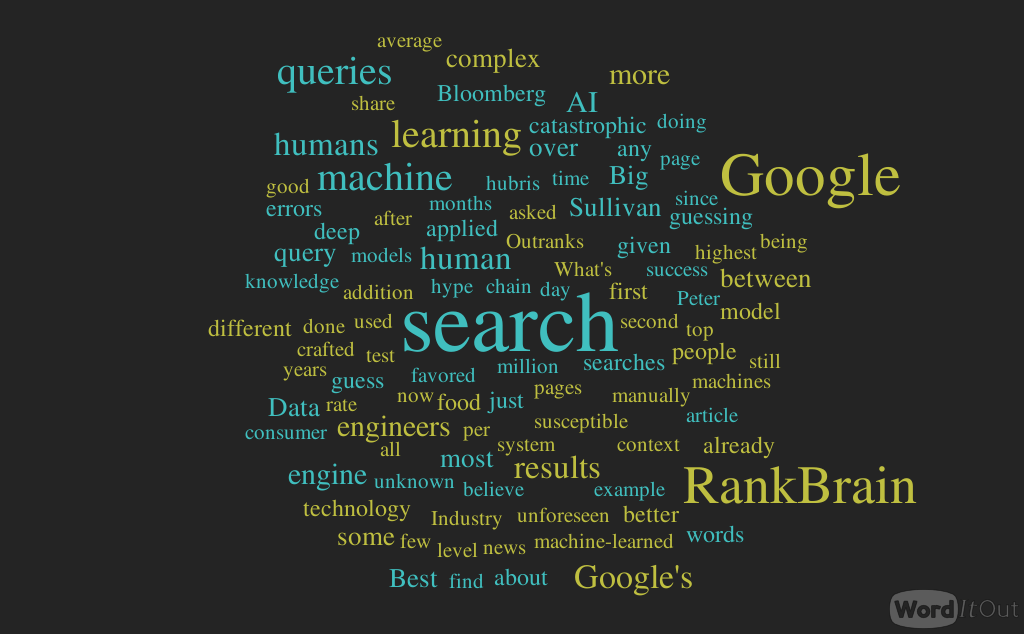
Bloomberg recently broke the news that Google is “turning its lucrative Web search over to AI machines.” Google revealed to the reporter that for the past few months, a very large fraction of the millions of search queries Google responds to every second have been “interpreted by an artificial intelligence system, nicknamed RankBrain.”

The company that has tried hard to automate its mission to organize the world’s information was happy to report that its machines have again triumphed over humans. When Google search engineers “were asked to eyeball some pages and guess which they thought Google’s search engine technology would rank on top,” RankBrain had an 80% success rate compared to “the humans [who] guessed correctly 70 percent of the time.”

There you have it. Google’s AI machine RankBrain, after only a few months on the job, already outranks the best brains in the industry, the elite engineers that Google typically hires.

Or maybe not. Is RankBrain really “smarter than your average engineer” and already “living up to its AI hype,” as the Bloomberg article informs us, or is this all just, well, hype?

Desperate to find out how far our future machine overlords are already ahead of the best and the brightest (certainly not “average”), I asked Google to shed more light on the test, e.g., how do they determine the “success rate”?

“That test was fairly informal, but it was some of our top search engineers looking at search queries and potential search results and guessing which would be favored by users. (We don’t have more detail to share on how that’s determined; our evaluations are a pretty complex process).”

I guess both RankBrain and Google search engineers were given possible search results to a given query and RankBrain outperformed humans in guessing which are the “better” results, according to some undisclosed criteria.

I don’t know about you, but my TinyBrain is still confused. Wouldn’t Google search engine, with or without RankBrain, outperform any human being, including the smartest people on earth, in terms of “guessing” which search results “would be favored by users”? Haven’t they been mining the entire corpus of human knowledge for more than fifteen years and, by definition, have produced a search engine that “understands” relevance more than any individual human being?

The key to the competition, I guess, is that the “search queries” used in it were not just any search queries but complex queries containing words that have different meaning in different context. It’s the kind of queries that will stump most human beings and it’s quite surprising that Google engineers scored 70% on search queries that presumably require deep domain knowledge in all human endeavors, in addition to search expertise.

The only example of a complex query given in the Bloomberg article is “What’s the title of the consumer at the highest level of a food chain?” The word “consumer” in this context is a scientific term for something that consumes food and the label (the “title”) at highest level of the food chain is “predator.”

This explanation comes from search guru Danny Sullivan who has come to the rescue of perplexed humans like me, providing a detailed RankBrain FAQ, up to the limits imposed by Google’s legitimate reluctance to fully share its secrets. Sullivan: “From emailing with Google, I gather RankBrain is mainly used as a way to interpret the searches that people submit to find pages that might not have the exact words that were searched for.”

Sullivan points out that a lot of work done by humans is behind Google’s outstanding search results (e.g., creating a synonym list or a database with connections between “entities”—places, people, ideas, objects, etc.). But Google needs now to respond to some 450 million new queries per day, queries that have never been entered before into its search engine.

RankBrain “can see patterns between seemingly unconnected complex searches to understand how they’re actually similar to each other,” writes Sullivan. In addition, “RankBrain might be able to better summarize what a page is about than Google’s existing systems have done.”

Finding out the “unknown unknowns,” discovering previously unknown (to humans) links between words and concepts is the marriage of search technology with the hottest trend in big data analysis—deep learning. The real news about RankBrain is that it is the first time Google applied deep learning, the latest incarnation of “neural networks” and a specific type of machine learning, to its most prized asset—its search engine.

Google has been doing machine learning since its inception. The first published paper listed in the AI and  machine learning section of its research page is from 2001, and, to use just one example, Gmail is so good at detecting spam because of machine learning). But Goggle hasn’t applied machine learning to search. That there has been internal opposition to doing so we learn from a summary of a 2008 conversation between Anand Rajaraman and Peter Norvig, co-author of the most popular AI textbook and leader of Google search R&D since 2001. Here’s the most relevant excerpt:

The big surprise is that Google still uses the manually-crafted formula for its search results. They haven’t cut over to the machine learned model yet. Peter suggests two reasons for this. The first is hubris: the human experts who created the algorithm believe they can do better than a machine-learned model. The second reason is more interesting. Google’s search team worries that machine-learned models may be susceptible to catastrophic errors on searches that look very different from the training data. They believe the manually crafted model is less susceptible to such catastrophic errors on unforeseen query types.

This was written three years after Microsoft has applied machine learning to its search technology. But now, Google got over its hubris. 450 million unforeseen query types per day are probably too much for “manually crafted models” and google has decided that a “deep learning” system such as RankBrain provides good enough protection against “catastrophic errors.”

Read Full Post »

Better Bioinformatics, Volume 2 (Volume Two: Latest in Genomics Methodologies for Therapeutics: Gene Editing, NGS and BioInformatics, Simulations and the Genome Ontology), Part 1: Next Generation Sequencing (NGS)

Better bioinformatics

Larry H. Bernstein, MD, FCAP, Curator

LPBI


Big data in biomedicine: 4 big questions

Eric Bender  Nature Nov 2015; S19, 527.     http://dx.doi.org:/10.1038/527S19a

http://www.nature.com/nature/journal/v527/n7576_supp/full/527S19a.html

Gathering and understanding the deluge of biomedical research and health data poses huge challenges. But this work is rapidly changing the face of medicine.


http://www.nature.com/nature/journal/v527/n7576_supp/images/527S19a-g1.jpg


1. How can long-term access to biomedical data that are vital for research be improved?

Why it matters
Data storage may be getting cheaper, particularly in cloud computing, but the total costs of maintaining biomedical data are too high and climbing rapidly. Current models for handling these tasks are only stopgaps.

Next steps
Researchers, funders and others need to analyse data usage and look at alternative models, such as ‘data commons’, for providing access to curated data in the long term. Funders also need to incorporate resources for doing this.

Quote
“Our mission is to use data science to foster an open digital ecosystem that will accelerate efficient, cost-effective biomedical research to enhance health, lengthen life and reduce illness and disability.” Philip Bourne, US National Institutes of Health.


2. How can the barriers to using clinical trial results and patients’ health records for research be lowered?

Why it matters
‘De-identified’ data from clinical trials and patients’ medical records offer opportunities for research, but the legal and technical obstacles are immense. Clinical study data are rarely shared, and medical records are walled off by privacy and security regulations and by legal concerns.

Next steps
Patient advocates are lobbying for access to their own health data, including genomic information. The European Medicines Agency is publishing clinical reports submitted as part of drug applications. And initiatives such as CancerLinQ are gathering de-identified patient data.

Quote
“There’s a lot of genetic information that no one understands yet, so is it okay or safe or right to put that in the hands of a patient? The flip side is: it’s my information — if I want it, I should get it.”Megan O’Boyle, Phelan-McDermid Syndrome Foundation.


3. How can knowledge from big data be brought into point-of-care health-care delivery?

Why it matters
Delivering precision medicine will immensely broaden the scope of electronic health records. This massive shift in health care will be complicated by the introduction of new therapies, requiring ongoing education for clinicians who need detailed information to make clinical decisions.

Next steps
Health systems are trying to bring up-to-date treatments to clinics and build ‘health-care learning systems’ that integrate with electronic health records. For instance, the CancerLinQ project provides recommendations for patients with cancer whose treatment is hard to optimize.

Quote
“Developing a standard interface for innovators to access the information in electronic health records will connect the point of care to big data and the full power of the web, spawning an ‘app store’ for health.” Kenneth Mandl, Harvard Medical School.


4. Can academia create better career tracks for bioinformaticians?

Why it matters
The lack of attractive career paths in bioinformatics has led to a shortage of scientists that have both strong statistical skills and biological understanding. The loss of data scientists to other fields is slowing the pace of medical advances.

Next steps
Research institutions will take steps, including setting up formal career tracks, to reward bioinformaticians who take on multidisciplinary collaborations. Funders will find ways to better evaluate contributions from bioinformaticians.

Quote
“Perhaps the most promising product of big data, that labs will be able to explore countless and unimagined hypotheses, will be stymied if we lack the bioinformaticians that can make this happen.” Jeffrey Chang, University of Texas.


Eric Bender is a freelance science writer based in Newton, Massachusetts.

Read Full Post »

« Newer Posts - Older Posts »