Feeds:
Posts
Comments

Author: Ziv Raviv PhD

Screen Shot 2021-07-19 at 7.46.39 PM

Word Cloud By Danielle Smolyar

Part A: Introduction to the PI3K/Akt pathway

Background

Akt/Protein kinase B (PKB) is a cytosolic serine/threonine kinase that promotes cell survival by inactivation of targets of the apoptotic pathways [1], and is implicated in the execution of many other cellular processes including:  cell proliferation, angiogenesis, glucose metabolism [2], protein translation, and gene transcription, all are mediated by extracellular and intracellular signals. In many cancers Akt is overexpressed and has central role in cancer progression and cancer cell survival [3,4], what makes it an attractive target for cancer therapy.

The Akt signaling pathway

Upstream signaling:

The Akt signaling pathway is initiated by growth factors leading to the recruiting and activation of phosphoinositol-3-kinase (PI3K) on receptor tyrosine kinases (RTKs). PI3K is then translocated to the cell membrane where it phosphorylates inositol ring at the D3 position of phosphatidylinositol  to form phosphatidylinositol (3,4,5)-triphosphate (PIP3). PIP3 serves to anchor Akt to the plasma membrane where it is phosphorylated at Thr308 by PDK1 and is further completely activated by mTOR by phosphorylation of Ser473. In certain circumstances activated Ras can also activate PI3K.

Downstream signaling:

Upon activation Akt is transducing its signals to downstream substrates to induce various intracellular processes, among them are: Activation of mTOR and its downstream effector S6K – to facilitate activation of translation; Phosphorylation of Bad – that inhibits apoptosis ; Phosphorylation of the tumor suppressor gene FOXO1 – inducing its ubiquitination and subsequent degradation by the proteasome;  Inhibition by phosphorylation of glycogen synthase kinase 3 (GSK-3) – which results in increase of glycogen synthesis.   Regulation of cell growth and survival is executed also by blocking apoptosis by Akt-associated survivin (BRC5) upregulation and via the NF-κB pathway by activation of IκB kinase (IKK).

  • Watch a Video on Akt Signaling Pathway

Figure 1: The Akt signaling pathway

AKT_cClick on image to enlarge

Taken from: Targeting the PI3K-AKT-mTOR pathway: progress, pitfalls, and promises. Workman P et al. Curr Opin Pharmacol. 2008 Aug;8(4):393-412

Negative regulation:

PI3K-dependent Akt activation is negatively regulated by the tumor suppressor protein PTEN, which works essentially opposite to PI3K, namely,  PTEN acts as a phosphatase and dephosphorylates PIP3 back to PIP2. This step removes Akt from its membrane anchoring through PIP3 resulting in substantial decreased rate of Akt activation and consequently inactivation of Akt-depended downstream pathways. In addition, PIP3 can also be dephosphorylated by the SHIP family of inositol phosphatases form PIP2.

Involvement of Akt  in cancer

The PI3K/Akt pathway is frequently altered and deregulated in many human malignancies. Hyper-activation of AKT kinases is one of the most common molecular findings in human malignancies and account for malignant transformation. Mechanisms for Akt pathway activation include loss of tumor suppressor PTEN function, amplification or mutation of PI3K, amplification or mutation of Akt, activation of growth factor receptors, inactivation of the translation repressor protein 4E-BP1 [5], and exposure to carcinogens [3 ,4]. For instance, heterozygous deletion of PTEN in mice elicits spontaneous tumors attributed mainly to activation of Akt. In addition, the production PIP3 by PI3K is over-activated in a wide range of tumor types. On the other hand, Akt knockout mice demonstrate that Akt is required for both cancer cell survival and oncogenic transformation. That activation of Akt is oncogenic, could be explained by preventing normal apoptosis of cells, thereby enabling accumulation of more oncogenic mutations in these cells. In addition, activation of Akt can also abrogate cell cycle checkpoints and can overcome G2/M cell-cycle arrest mediated by DNA mismatch repair. Thus, cells in which Akt is activated can accumulate mutations because the G2 cell-cycle point is abrogated and survive and continue to divide because of the anti-apoptotic activity of Akt. It is, therefore, proposed that this dual activity of Akt activation may explain the frequent activation of Akt in human malignancies [6].

Taken together, Akt activation has an effective role in cancer and through its downstream substrates Akt controls many cancer related cellular processes such as cell metabolism, growth and survival, proliferation, and motility, all of which contribute to tumor initiation and progression. Therefore, this pathway is an attractive therapeutic target for cancer treatment because it serves as a convergence point for many growth stimuli. Moreover, activation of the PI3/Akt pathway confers resistance to many chemotherapeutic drags [6], and is a poor prognostic factor for many types of cancers. Therefore, small molecule agents that block PI3K/Akt signaling might block many aspects of the tumor-cell phenotype [7,8]. Indeed, the Akt pathway is a major target for anticancer drug development by pharmaceutical companies.

  • The below Part B review the efforts to develop targeted Akt therapies for cancer.

Part B: Clinically available/in clinical development PI3K/Akt/mTOR inhibitors 

As described in Part Athe PI3/Akt cascade is a major intracellular signaling route conferring pro-survival signals to the cell. In cancer, there are many conditions where the PI3K/Akt pathway is deregulated, an attribute that is contributing to cancer formation and propagation. Given that Akt servers as convergence point to many pro-survival signals together with it being deregulated frequently in cancers, make Akt as a valuable target for developing anti-cancer therapy.

In addition, Akt shortens patient survival by allowing cancer cells to escape the cytotoxic effects of standard chemotherapy drugs. The importance of the Akt pathway in cancer thus is also evident from its significant role in the resistance of tumors to chemotherapies. A considerable route in developing anti- Akt based therapies is thus combining Akt inhibitors with standard chemotherapy rather than the using of Akt inhibitors as single agents.

Even in targeted therapies for cancer, such those that target receptor tyrosine kinases (RTKs) and other signaling pathways, it has been demonstrated that when applying a targeted agent such as trastuzumab  (Herceptin) a compensation reaction of increasing of downstream and parallel signaling pathways components, among them Akt, occurs in response, which enables cancer cells to be spared the effects of these targeted drugs. Therefore a multi-targeting approach with selective inhibitors would be useful, and inhibiting Akt directly will restore sensitivity to agents such as trastuzumab.

(i) Inhibitors that are in clinical use

Temsirolimus (CCI-779; marked as Torisel by Pfizer), an analog of sirolimus (rapamycin), is an immunophilin-binding antibiotic that blocks the initiation of the translation of mRNA by inhibiting mammalian target of rapamycin (mTOR) in a highly specific manner. Rapamycin itself is toxic and found in the clinic however as an immunosuppressant to prevent rejection in organ transplantation. Temsirolimus acts by interacting with mTOR, preventing the phosphorylation of eIF4E-BP1 and p70S6K, and thereby inhibiting the initiation of the translation of mRNA. The main mechanism of temsirolimus is inhibition of proliferation by G1 phase arrest induction, yet without inducing apoptosis. Temsirolimus was introduced only recently to treat renal cell carcinoma (RCC). In this cancer type HIF-1a levels are accumulated since its degradation is reduced significantly due to mutations of von Hippel Lindau tumor-suppressor gene and the activation of mTOR only worsen that accumulation of HIF1-a, which is its downstream effector. Therefore by blocking mTOR function temsirolimus is reducing the accumulation of HIF-1a. Temsirolimus has been generally well tolerated by advanced RCC patients that could be attributed to its high specificity toward mTOR. However, temsirolimus is associated with a small, but significant increased risk of developing a fatal adverse event. Nevertheless, temsirolimus benefit the overall patient population with the approved indications, including RCC. In the pivotal phase III study, temsirolimus demonstrated median overall survival (OS) in previously untreated patients of 10.9 months in patients with advanced RCC with poor prognostic risk, compared with 7.3 months for interferon-alpha. Temsirolimus remains the only treatment that shows a significant improvement in OSin treatment-naive, poor-risk patients with advanced RCC. Temsirolimus approved cancer indications are RCC and mantle cell lymphoma (MCL), and many other cancer conditions are found in advanced clinical development processes, including various solid tumors, diffused tumors (leukemias and lymphomas), and even in soft tissue sarcomas (STS).

Everolimus (RAD001; marketed by Novartis  as Afinitor) is an ester derivative of rapamycin and is also an inhibitor mTOR.  The drug inhibits oncogenic signaling in tumor cells and angiogenic signaling in vascular endothelial cells. Key features of everolimus include good tolerability, unique mechanism of action, G1 arrest, and induction of apoptosis. In vitro studies have demonstrated a cooperative effect between everolimus and gefitinib in various cancer cell lines. Treatment of human cancer cell lines with everolimus results in a decrease in p-4E-BP1, p-p70S6K, and p-S6 levels while increasing p-AKT levels. The rise of p-AKT is accompanied with a parallel increase in downstream p-GSK-3a/ß, suggesting feedback activation of the AKT pathway. Thus AKT activation could revert the antitumor activity of everolimus. Gefitinib completely prevents everolimus-induced p-AKT increase and markedly enhances the everolimus mediated decrease in p-4E-BP1 and p-p70S6K.

Everolimus is approved for the treatment of RCC, progressive pancreatic neuroendocrine tumors, breast cancer in post-menopausal women with advanced hormone receptor (HR)-positive/HER2-negative. In addition the drug is used as a preventive drug of organ rejection after renal transplantation. As with the case of temsirolimus, everolimus has also a slight increase of mortality risk over other drugs.

Cancer indications that are now in clinical development for treatment by everolimus, some of which are in advanced clinical studies, include various forms of leukemias and lymphomas such as AML, ALL CML, T-cell leukemia, diffuse large B-cell lymphoma (DLBCL), non-Hodgkin’s lymphoma (NHL), and MCL. Everolimus is particularly applicable to the treatment of leukemia because mTOR-related messengers, particularly PI3K, AKT, p70S6K kinase and 4E-BP1, are known to be both constitutively activated in hematologic malignancies and interfere with the activity of current anti-leukemia therapy. Solid tumors such as lung, breast, prostate, and colorectal at various stages, as well as brain cancers and STS are also in developmental stages for everolimus treatment.

(ii) Inhibitors that are in advanced clinical development (phase II/III)

Perifosine (KRX-0401) by AEterna Zentaris – among Akt inhibitors under development for cancer therapy, perifosine is found in advanced stages of clinical development and is moving toward phase III clinical trials. It belongs to alkylphosphocholines (ALP) – phospholipid-like molecules – which disrupt lipid-mediated signal transduction pathways that are necessary for tumor cell growth and survival. ALP induce apoptotic cell death in a variety of tumor cell lines. Perifosine primarily acts on the cell membrane where it inhibits signaling that could explain its capability to inhibit Akt, as Akt interaction with PIP3 in the cytosolic face of the plasma cell membrane is essential to its activation. In addition to Akt, perifosine inhibits also JNK and NF-kB, both are also associated with apoptosis, cell growth, differentiation, and survival. In addition to its potential efficacy as a single agent, perifosine may provide synergistic effects when combined with established cancer treatments such as radiotherapy, chemotherapy, tyrosine kinase inhibitors such as commercially available EGFR inhibitors, and endocrine therapies.

Many clinical trials were/are conducted with perifosine in various cancer conditions and settings. Especially successive phase II studies engaged perifosine were with colorectal cancer (CRC), where patients with metastatic disease treated with the combination of capecitabine and perifosine had more than doubled the median time to progression (TTP) of the disease, which led to an ongoing phase III study. Other solid cancer indications phase II studies employing perifosine that had encouraging results include metastatic RCC (mRCC) and non-small lung cancer (NSLC). Perifosine is also exmined in clinical trials with hematological cancers. Advanced stages clinical studies were conducted in multiple myeloma (MM), where patients treated with the combination of perifosine + bortezomib (proteasome inhibitor) and dexamethasone, in which after, a phase III study was conducted on that basis. However, that phase III study was terminated in March 2013 upon recommendation by data safety monitoring board to discontinue the experiment since it was highly unlikely that the trial would achieve a significant difference in progression-free survival (PFS).  Another potential benefit for perifosine has been documented in Waldenström’s macroglobulinemia (WM).  In addition, perifosine is examined in other hematologic cancers such as in AML, CLL and lymphomas.

MK-2206 – MK-2206 by Merck is an allosteric inhibitor of Akt that is currently widely examined in tens of clinical experimentation where some of them are in phase II status.  In preclinical experiments, MK-2206, demonstrated synergistic activity when combined with other targeted therapies, such as erlotinib in NSCLC cell lines, and lapatinib in breast cancer cell lines and in xenograft mice bearing ovarian cancer, MK-2206 treatment led to substantial growth inhibition and sustained inhibition of Akt.

Several phase II research studies employing MK-2206 are in progress, among them found a multicenter study with advanced ovarian cancer resistant to platinum therapy, and another multicenter study with breast cancer patients. Phase I/II study is conducted also for CLL patients. Many others phase I studies are in progress, among them trails testing the combinations of MK-2206 with other targeted drugs as well as chemotherapy. For instance an ongoing phase I study is evaluating the addition of MK-2206 to trastuzumab in patients with solid tumors HER2 positive, or another study is conducted to evaluate MK-2206 in combination with trastuzumab and lapatinib for the treatment of HER2 positive, advanced solid tumors. MK-2206 is testing also in advanced NSCLC with the combination of gefitinib in one study and with erlotinib in another. In another relatively large phase I study, patients with advanced solid tumors were randomized to MK-2206 either given with carboplatin and paclitaxel, docetaxel, or erlotinib. Another study with patients bearing locally advanced or metastatic solid tumors or metastatic breast cancer examined MK-2206 given with and paclitaxel (Taxol). Finally MK-2206 and selumetinib administration was tested in phase I studies in patients with advanced CRC. Other cancer indications that are investigated MK-2206 as single agent or in combination with chemotherapy in phase I studies include prostate cancer,  head and neck cancer, large B cell lymphoma, leukemias such as AML, and melanoma.

Ridaforolimus (AP23573/MK-8669,; Taltorvic by Merck) – Ridaforolimus is an oral mTOR inhibitor found in several clinical trials. A compressive phase III experiment was conducted with ridaforolimus in metastatic STS and metastatic bone sarcomas (SUCCEED – Sarcoma Multi-Center Clinical Evaluation of the Efficacy of Ridaforolimus) by Merck and Ariad Pharmaceuticals that had presented positive data at the beginning showing that patients that have received ridaforolimus had a median progression-free survival (PFC) – the primary endpoint of the study – of 17.7 weeks compared with 14.6 weeks for those received placebo. However, FDA’s oncologic drugs advisory committee (ODAC) panel (March 2012) did not approved the use of ridaforolimus as maintenance therapy for patients with metastatic soft-tissue sarcoma or bone sarcoma. The committee did not think that a significant difference was observed between the groups in terms of OS and although patients did experience a longer disease-free period before their cancer returned when receiving ridaforolimus, the delay was not significant. There was also a concern regarding side effects. In a complete response letter, (June 2012) the FDA did not approve the SUCCEED application in its present form, therefore, Merck formally withdrawn the marketing authorization application for ridaforolimus for sarcoma. However, Merck still continue experimenting ridaforolimus in other cancer indications. A phase II study is conducted in breast cancer patients examining ridaforolimus alone, ridaforolimus + dalotuzumab, or ridaforolimus + Exemestane. Another phase II study is conducted in female adult patients harboring recurrent or persistent endometrial cancer. A third Phase II study is examining ridaforolimus in patients with taxane-resistant androgen-independent prostate cancer. Many phase I experiments are conducted with ridaforolimus among them: experiment in pediatric patients with solid tumors treated with dalotuzumab given alone or in combination with ridaforolimus; Bicalutamide and ridaforolimus in men with prostate cancer; Combinations of carboplatin/paclitaxel/ridaforolimus in endometrial and ovarian tumors; Safety study examining ridaforolimus  in patients with progressive or recurrent glioma, and others. Given the consequences as with the SUCCEED experiment; it remains to see whether ridaforolimus alone or in combinations would be approved and be valid in the clinical arena.

RX-0201 (Archexin) by Rexahn Pharmaceuticals is an antisense oligonucleotide directed toward Akt1 mRNA. RX-0201 was demonstrated to significantly downregulated the expression of AKT1 at both the mRNA and protein levels. In addition combined treatment of RX-0201with several cytotoxic drugs resulted in an additive growth inhibition of Caki-1 clear cell carcinoma cells. In addition, preclinical experiments demonstrated that RX-0201 given at nano-molars as a single agent induced substantial growth inhibition in various types of human cancer cells. Furthermore, in vivo studies using nude mice xenografts have resulted in significant inhibition of tumor growth and tumor formation treated with RX-0201. Therefore RX-0201 was further tested in phase I studies in patients with solid tumors. The only dose limiting toxicity (DLT) observed was Grade 3 fatigue. Phase II studies of RX-0201 were approved thus in advanced RCC. Furthermore, another phase II study was completed last year with encouraging results.  This phase II trial was conducted in metastatic pancreatic cancer, assessing the combination of RX-0201 and gemcitabine. The study enrolled 31 patients and the primary endpoint was overall survival following 4 cycles of therapy with a 6-month follow-up. The study demonstrated that treatment with RX-0201 in combination with gemcitabine resulted in a median survival of 9.1 months compared to the published survival data of 5.65 months for gemcitabine given alone. The most frequently side effects were constipation, nausea, abdominal pain, and pyrexia, regardless of relatedness.

BKM120 – by Novartis is an oral selective class-I PI3K inhibitor, induces its inhibition in an ATP-competitive manner, thereby inhibiting the production of the secondary messenger PIP3 and activation of downstream signaling pathway. BKM120 was shown to induce pro-apoptotic effects in vitro and anti-tumor activity in vivo. BKM120 is enrolled in many clinical trials at all levels for several cancer indications. Phase I experiments are performed with the following cancers: CRC in combination with panitumumab; RCC; breast cancer (HR+/HER2+); breast cancer (triple negative, recurrent); ovarian cancer; and leukemias.  Phase II trials include: endometrial cancer; metastatic NSCLC; malignant melanoma (Braf V600 mutated); prostate; and glioblastoma multiforme (GBM).

A phase III study is currently enrolled with postmenopausal breast cancer patients with HR+/HER2- (local, advanced or metastatic), examining BKM120 in combination with fulvestrant. In preliminary clinical experiments activity was observed with BKM120 in patients with breast cancer, as a single agent or in combination with letrozole, or trastuzumab. In this phase III study, postmenopausal women with HR+/HER2- breast cancer whom were treated with aromatase inhibitor (AI), and are refractory to endocrine and mTOR inhibition (mTORi) combination therapy, are randomized to receive continuous BKM120 or placebo daily, with fulvestrant. The rational for this experiment is that the use of PI3K inhibition may overcome resistance to mTORi in breast cancer by targeting the PI3K pathway upstream.  The primary endpoint of the trail is PFS and the secondary endpoint is OS. Other secondary endpoints are overall response rate and clinical benefit rate, safety, pharmacokinetics of BKM120, and patient-reported quality of life.

CAL-101 (Idelalisib) – by Gilead Sciences is an orally bio-available, small molecule inhibitor of PI3K delta proposed for the treatment hematologic malignancies. In preclinical efficacy studies, CAL-101 inhibited the PI3K pathway and decreased cellular proliferation in primary CLL and AML cells, and in a range of NHL cell lines. The delta form of PI3K is expressed primarily in blood-cell lineages, including cells that cause or mediate hematologic malignancies, inflammation, autoimmune diseases and allergies. Therefore, CAL-101 as specific inhibitor of the PI3K-delta is expected to have therapeutic effects in these diseases without inhibiting PI3K signaling that is critical to the normal function of healthy cells. A variety of studies have shown that inhibition of other PI3K forms can cause significant toxicities, particularly with respect to glucose metabolism, which is essential for normal cell activity. CAL-101 was shown to block constitutive PI3K signaling, resulting in decreased phosphorylation of Akt and other downstream effectors, an increase in PARP and caspase cleavage, and an induction of apoptosis across a broad range of immature and mature B-cell malignancies. Importantly, CAL-101 does not promote apoptosis in normal T cells or NK cells, nor does it diminish antibody-dependent cellular cytotoxicity (ADCC) but decreased activated T-cell production of various inflammatory and anti-apoptotic cytokines. These findings provide rationale for the clinical development of CAL-101 as a first-in-class targeted therapy for CLL and related B-cell proliferative disorders. Indeed several clinical trials are currently enrolled for Hodgkin’s lymphoma, NHL, and CLL. Phase III clinical trials for CLL are now recruiting patients aimed to examine CAL-101 in combination with Bendamustine and Rituximab in one study;  CAL-101 + Rituximab;  and the combinations of CAL-101 with Ofatumumab in third phase III study. Both Rituximab and Ofatumumab are monoclonal Abs for CD20, which is primarily found on the surface of B cells. In addition, another phase III study of CAL-101 in combination with Bendamustine and Rituximab for indolent NHLs is also now recruiting patients.

(iii) Other Akt pathway inhibitors in clinical development.

There are dozens of agents targeting Akt pathway that are found at preclinical and clinical development. The various inhibitors are targeting various elements of the Akt pathway including: Akt itself, PI3K, mTOR, and PDK1. Most of these agents are small molecules inhibitors, some are extracts while others are synthetic, but also include an antisense oligonucleotide (RX-0201 to Akt).

The list below describes shortly agents which currently reached phase II stage and their relevant indications:

XL-147 – sponsored by Sanofi, small molecule-pan PI3K inhibitor for breast cancer and endometrial cancer.

XL-765 – also of Sanofi, inhibitor of the activity of PI3K and mTOR, for HR+/HER2- breast cancer patients.

BN108 – by Bionovo, an aqueous extract of Anemarrhena asphodeloides, is an orally available dual inhibitor, that induces apoptotic cancer cell death by rapid inactivation of both Akt and mTOR pathways, for breast cancer.

GDC-0068 – by Genentech, is an orally available small molecule pan-Akt inhibitor, for prostate cancer.

BEZ235 – by Novartis is a dual ATP-competitive PI3K and mTOR inhibitor, prevents PI3K signaling and inhibits growth of cancer cells with activating PI3K mutations. Phase II study is recruiting patients with metastatic or unresectable malignant PEComa (perivascular epithelioid cell tumors), other phase II include endometrial cancer indications and metastatic HR+/HER2-breast cancer patients.

BAY 80-6946 – is a pan class I PI3K inhibitor by BayerPhase II for NHL, currently recruiting.

Nelfinavir  – by ViiV Healthcare is an HIV protease inhibitor found to downregulate Akt phosphorylation by inhibiting proteasomal activity and inducing the unfolded protein response (UPR). HIV-1 protease inhibitor was found induces growth arrest and apoptosis of human prostate cancer cells in vitro and in vivo in conjunction with blockade of androgen receptor, STAT3 and AKT signaling. A phase I/II trial is enrolled for patients with locally advanced CRC to test Nelfinavir in combination with chemo/radiotherapy.

Triciribine  Triciribine phosphate monohydrate (TCN-PM) is a specific AKT inhibitor used also in the basic research arena but undergo also several clinical studies. Currently a phase II sponsored by Cahaba Pharmaceuticals is recruiting, to examine triciribine with paclitaxel in patients with locally advanced breast cancer. And a phase I/II experiment of combination with carboplatin in ovarian patients is planned.

GSK2110183 – by GlaxoSmithKline  is an oral panAkt inhibitor. Phase II is recruiting subjects with solid tumors and hematologic malignancies.

(iv) Conclusive remarks

Given the broaden arsenal of agents targeting Akt that are in pre-clinical and clinical development, it is extremely important to figure out how to use them optimally and to elucidate carefully which of them have the greatest potential to proceed into advanced stages of clinical trials and to clinical approval.  One of the various considerations in developing valid Akt inhibitors for the clinic use should be choosing a relevant cancer in which Akt has a central role in its development/propagation (e.g. mRCC). Since there is cross-talk between the Akt pathway to other pathways especially by involvement of RTKs (e.g. VEGFR), there is a rational to apply Akt inhibitions in cancer indications that had good results with inhibition of RTKs where combinations of Akt with agents such as sunitinib, could results in a synergistic anti-cancer effect. The combinations of Akt inhibitors with RTKs inhibitors could also overcome the compensate reaction to agents such as Herceptin that confer resistance. It is important to introduce efficient Akt inhibitor on the background of existing anti-cancer chemotherapies where Akt inhibitors can complement these therapies by circumvent frequent resistance to these drugs. Finally, the developing of biomarkers for a validation of the efficacy of candidate Akt inhibitor to be developed in further advance clinical studies for specific cancer indications is essentially needed, to ensure that accurate efforts would be invested at the most validate Akt inhibitors. Such biomarkers could be levels of phosphorylated Akt in blood or mRNA levels to be monitored upon treatment with Akt inhibitors and the correlation to the efficacy of these inhibitors, and that is besides of their prognostic value. The status of mutations of PI3K and PTEN could also serve as a marker for the efficiency of Akt inhibitors and how to use them optimally.

References

1. Song G, Ouyang G, Bao S (2005) The activation of Akt/PKB signaling pathway and cell survival. J Cell Mol Med 9 (1):59-71

2. Gonzalez E, McGraw TE (2009) The Akt kinases: isoform specificity in metabolism and cancer. Cell Cycle 8 (16):2502-2508

3. Vivanco I, Sawyers CL (2002) The phosphatidylinositol 3-Kinase AKT pathway in human cancer. Nat Rev Cancer 2 (7):489-501

4. Altomare DA, Testa JR (2005) Perturbations of the AKT signaling pathway in human cancer. Oncogene 24 (50):7455-7464

5. She QB, Halilovic E, Ye Q, Zhen W, Shirasawa S, Sasazuki T, Solit DB, Rosen N (2010) 4E-BP1 is a key effector of the oncogenic activation of the AKT and ERK signaling pathways that integrates their function in tumors. Cancer Cell 18 (1):39-51

6. Kim D, Dan HC, Park S, Yang L, Liu Q, Kaneko S, Ning J, He L, Yang H, Sun M, Nicosia SV, Cheng JQ (2005) AKT/PKB signaling mechanisms in cancer and chemoresistance. Front Biosci 10:975-987

7. Pal SK, Reckamp K, Yu H, Figlin RA (2010) Akt inhibitors in clinical development for the treatment of cancer. Expert Opin Investig Drugs 19 (11):1355-1366

8. Hsieh AC, Truitt ML, Ruggero D (2011) Oncogenic AKTivation of translation as a therapeutic target. Br J Cancer 105 (3):329-336

9. Alexander W (2011) Inhibiting the Akt pathway in cancer treatment. P T.  April; 36(4): 225–227

10. LoPiccolo J, Blumenthal GM, Bernstein WB, Dennis PA.(2008) Targeting the PI3K/Akt/mTOR pathway: effective combinations and clinical considerations. Drug Resist Updat.  Feb-Apr;11(1-2):32-50

11. Weigelt B and Downward J (2012) Genomic Determinants of PI3K Pathway Inhibitor Response in Cancer. Front Oncol. 2012;2:109

12. Janna Elizabeth Hutz. Genetic analysis of the PI3k/AKT/mTOR signaling pathway. udini.proquest.com

Resources

New medicine Oncology KnowledgeBASE (nmOK)

ClinicalTrials.gov

Related articles on this Open Access Online Scientific Journal

AKT signaling variable effects. Reporter: Larry H Bernstein, MD

Author: Tilda Barliya PhD

Neuroblastoma: A Review

WordCloud created by Noam Steiner Tomer 8/10/2020

Neuroblastoma is the most common extracranial solid tumor of infancy. It is an embryonal tumor of the autonomic/sympathetic  nervous system arising from neuroblasts (pluripotent sympathetic cells).In the developing embryo, these cells invaginate, migrate along the neuraxis, and populate the sympathetic ganglia, adrenal medulla, and other sites. The patterns of distribution of these cells correlates with the sites of primary neuroblastoma presentation.

Age, stage, and biological features encountered in tumor cells are important prognostic factors and are used for risk stratification and treatment assignment. The differences in outcome for patients with neuroblastoma are striking.

Epidemiology

The incidence of neuroblastoma per year is 10.5 per million children less than 15 years of age (1). Neuroblastoma accounts for 8% to 10% of all childhood cancers and for approximately 15% of cancer deaths in children.

  • No significant geographical variation in the incidence between North America and Europe
  • No differences between races.
  • slightly more frequently in boys than girls (ratio 1.2:1)
  • The incidence peaks at age 0 to 4 years
  • Cases of familial neuroblastoma have been reported (but rare).
  • Environmental factors are implicated in the development of neuroblastoma (eg, paternal exposure to electromagnetic fields or prenatal exposure to alcohol, pesticides, or phenobarbital). Yet, none of these environmental factors has been confirmed in independent studies
  • Asymptomatic tumors could be detected in infants by measurement of urinary catecholamine metabolites (2).

Note: The Quebec Neuroblastoma Screening Project and the German Neuroblastoma Screening studies demonstrate that screening for neuroblastoma at or under the age of 1 year identifies tumors with a good prognosis and molecular pathology, doubles the incidence, and fails to detect the poor-prognosis disease that presents clinically at an older age.

Pathology

The peripheral neuroblastic tumors (pNTs), including neuroblastoma, belong to the ‘‘small blue round cell’’ neoplasms of childhood (3). “They are derived from progenitor cells of the sympathetic nervous system: the sympathogonia of the sympathoadrenal lineage. After migrating from the neural crest, these pluripotent sympathogonia form the sympathetic ganglia, the chromaffin cells of the adrenal medulla, and the paraganglia, reflecting the typical localization of neuroblastic tumors”.

Defects in embryonic genes controlling neural crest development are likely to underlie the proliferation and differentiation of neurobalstoma, yet the precise mechanism is unknown.Developmental programs controlling self-renewal in neuronal stem cells, including the Notch, Sonic hedgehog, and Wnt/b-catenin pathways, have been implicated in embryonal tumorigenesis (1,4,5).

Zhi F et al investigated the role of Wnt/β-catenin in modulation of cellular plasticity of the N2A cells-derived neurons and its possible functions in origination of neuroblastoma.  In human neuroblastoma specimens, the authors found that the amount of activated β-catenin in nucleus was up-regulated significantly in pace with clinical neuroblastoma risk (8).

Wickstorm M et al as well as others have investigated the role of Hedgehog (HH) signaling pathway and its role in the development of several types of cancer (9,10). Specific inhibitors revealed that inhibition of HH signaling at the level of GLI was most effective in reducing neuroblastoma growth. GANT61 sensitivity positively correlated to GLI1 and negatively to MYCN expression in the neuroblastoma cell lines tested. Wickstrom M and colleagues suggest that suggests that inhibition of HH signaling is a highly relevant therapeutic target for high-risk neuroblastoma lacking MYCN amplification and should be considered for clinical testing.

Although Sonic hedgehog, and Wnt/b-catenin pathways were found to be relevant in neuroblastoma progression, there were yet to be implied in the clinical practice.

According to the International Neuroblastoma Pathology Classification (INPC) the pNTs are assigned to one of the following
four basic morphological categories:

  • (1) Neuroblastoma (Schwannian-stroma poor)
  • (2) Ganglioneuroblastoma, intermixed (Schwannian stroma-rich)
  • (3) Ganglioneuroblastoma, nodular (composite Schwannian stroma-rich/stroma dominant and stroma-poor).
  • (4) Ganglioneuroma (Schwannian-stroma-dominant).

Shimada et al developed a histopathologic classification in patients with neuroblastoma (6) which was adapted by the INPC.

Important features of this classification include:

  • (1) the degree of neuroblast differentiation,
  • (2) the presence or absence of Schwannian stromal development (stroma-rich, stroma-poor),
  • (3) the index of cellular proliferation (known as mitosis-karyorrhexis index [MKI]),
  • (4) nodular pattern,
  • (5) age.

In a short summary, these pathological classification differentiate these patients into 2 major categories that prognosis:

  • Patients with low-risk and intermediate-risk neuroblastoma have excellent prognosis and outcome.
  • Patients with high-risk disease continue to have very poor outcomes despite intensive therapy.

Unfortunately, approximately 70-80% of patients older than 18 months present with metastatic disease, usually in the lymph nodes, liver, bone, and bone marrow, with particular predilection for metaphyseal, skull, and orbital bone sites. ” A classic presentation of periorbital swelling and ecchymoses (‘‘raccoon eyes’’) is seen in children who have disease spread to periorbital region”.

In contrast to the frequent lack of symptoms with locoregional disease, patients who have widespread disease are often ill appearing with fever, pain, and irritability.

Gene mutations and biomarkers:

Many chromosomal and molecular abnormalities have been identified in patients with neuroblastoma, some of these have been incorporated into the strategies used for risk assignment (7).

  • MYCN  amplification – is considered the most important biomarker in patients with neuroblastoma. “MYCN is an oncogene that is overexpressed in approximately one quarter of cases of neuroblastoma via the amplification of the distal arm of chromosome 2. This gene is amplified in approximately 25% of de novo cases and is more common in patients with advanced-stage disease. Patients whose tumors have MYCN amplification tend to have rapid tumor progression and poor prognosis, even in the setting of other favorable factors such as low-stage disease or 4S disease” (7).
  • H-ras expression – An oncogene correlates with lower stages of the disease
  • Deletion of Chromosome 1 – Deletion of the short arm of chromosome 1 is the most common chromosomal abnormality present in neuroblastoma and confers a poor prognosis. The 1p chromosome region likely harbors tumor suppressor genes or genes that control neuroblast differentiation. Deletion of 1p is associated with more advanced stage of the disease.
  • DNA index – a useful test that correlates with response to therapy in infants. DNA index >1 (=hyperdiploidy) have good therapeutic response while DNA index <1 are less responsive and require a more aggressive treatment. Note – DNA index does not have any prognostic significance in older children and this index occurs in the context of other chromosomal and molecular abnormalities that confer a poor prognosis.
  • Neurotrophin receptors (TrkA, TrkB and TrkC) – TrkA gene expression is inversely correlated with the amplification of the MYCN gene. In most patients younger than 1 year, a high expression of TrkA correlates with a good prognosis, especially in patients with stages 1, 2, and 4S. TrkC gene is correlated with TrkA expression. In contrast, TrkB is more commonly expressed in tumors with MYCN amplification. This association may represent an autocrine survival pathway.
  • Disruption of normal apoptotic pathways – Drugs that target DNA methylation, such as decitabine, are being explored in preliminary studies.
  • Others – other gene and protein expression were found such as glycoprotein  CD44 and multidrug resistance protein (MRP). Yet their role in the development of neuroblastoma is controversial.

Therapy

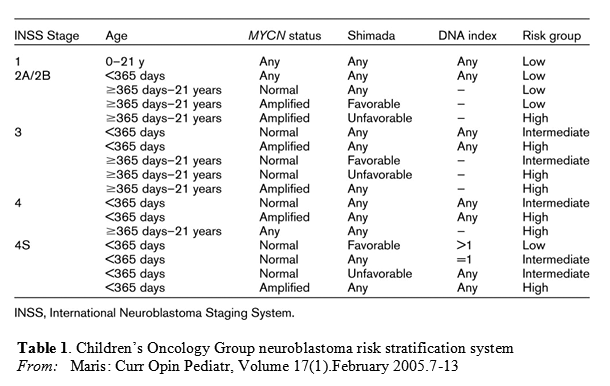
The table below outlines criteria for risk assignment based on the International Neuroblastoma Staging System (INSS), age, and biologic risk factors.

These criteria are based on the analysis of several thousands of patients treated in cooperative group protocols in Australia, Canada, Europe, Japan, and the United States.

Treatment regimes is carefully designed upon risk assessment and staging (1):

Low-risk neuroblastoma  Survival rates for patients who have INSS stage 1 disease, regardless of biologic factors, are excellent with surgery alone. Chemotherapy may be needed as an effective salvage therapy for patients who have INSS stage 1 disease who relapse after surgery only.

For patients who have INSS stage
1, 2A, or 2B disease, chemotherapy should be reserved for those who have localized neuroblastoma and experience life- or organ-threatening symptoms at diagnosis or for the minority of patients who experience recurrent or progressive disease.Patients with stage 2A/2B disease with amplified MYCN are considered high risk regardless of age and histology

Stage 4S neuroblastoma withoutMYCN amplification undergoes spontaneous regression in the majority of cases.  Chemotherapy or low-dose radiotherapy is used in patients who have large tumors or massive hepatomegaly.

Intermediate-risk neuroblastoma

Surgical resection and moderate–dose, multiagent chemotherapy (cyclophosphamide, doxorubicin, carboplatin, etoposide) are the standard of care. Chemo rounds are of either 4 cycles, 6 cycles, or 8 cycles, depending on histology and DNA index and response to treatment.  If residual disease is present after chemotherapy and surgery, radiation therapy could be considered. However, the use of radiation is controversial.

High-risk neuroblastoma

Patients with high-risk neuroblastoma require treatment with multiagent chemotherapy, surgery, and radiotherapy. Current therapeutic protocols involve 4 phases of therapy, including induction, local control, consolidation and treatment of minimal residual disease. Induction therapy currently involves multiagent chemotherapy with non–cross-resistant profiles, including: alkylating agents, platinum, and anthracyclines and topoisomerase II inhibitors. Topoisomerase I inhibitor are also being considered. Local control involves surgical resection of primary tumor site as well as radiation to primary tumor site.

Myeloablative consolidation therapy – myeloablative consolidation therapy with etoposide, carboplatin, and melphalan have improved the outcome of patients. most centers now recommend the use of peripheral blood stem cell support over bone marrow for consolidation therapy in patients with high-risk neuroblastoma.

Other consideration – Use of 13-cis -retinoic acid in a maintenance phase of therapy. Recent data have showed improved survival in patients receiving 13-cis -RA in combination with immunomodulatory therapy with interleukin (IL)-2, granulocyte macrophage colony-stimulating factor (GM-CSF), and the chimeric anti-GD2 (gangliosidase) antibody when compared with 13-cis -RA alone.

Summary:

“Neuroblastoma is a heterogenous tumor for which biology dictates clinical behavior”.  The main the goal is to have patient-tailored prognosis. Additional research in search for new therapeutics for high-risk patients is needed. Some therapies under investigation include aurora kinase inhibitors, antiangiogenic agents, histone deacetylase inhibitors, and therapeutic metaiodobenzylguanidine (MIBG).  According to Park et al: “we must minimize the lasting effects of therapy,For the remaining patients who have low- and intermediate-risk disease,specifically avoiding organ damage or organ loss from surgery and organ dysfunction or risk for secondary malignancy after chemotherapy”.

Other future aspect of therapeutics may include specific inhibitor of this pathway, viz Cyclopamine and other kinase inhibitors like LY294002 for PI3K inhibition or  GSK-3β inhibitors in order to inhibit the Hedgehog and the β-catenin pathways, respectively.

Reference:

1. Park JR., Eggert A and Caron H.Neuroblastoma: Biology, Prognosis and Treatment. Pediatric Clinics of North America 2008; 55(1): 97-120. http://www.sciencedirect.com/science/article/pii/S0031395507001575

2. Yamamoto K, Hayashi Y, Hanada R, et al. Mass screening and age-specific incidence of neuroblastoma in Saitama Prefecture, Japan. J Clin Oncol 1995;13(8):2033–2038. http://www.ncbi.nlm.nih.gov/pubmed/?term=Mass+screening+and+age-specific+incidence+of+neuroblastoma+in+Saitama+Prefecture%2C+Japan

3. Triche TJ. Neuroblastoma: biology confronts nosology. Arch Pathol Lab Med 1986;110(11):994–996. no available abstract.

4. Singh SK, Hawkins C, Clarke ID, et al. Identification of human brain tumour initiating cells. Nature 2004;432(7015):396–401. http://www.ncbi.nlm.nih.gov/pubmed/15549107

5. Tirode F, Laud-Duval K, Prieur A, et al. Mesenchymal stem cell features of Ewing tumors.Cancer Cell 2007;11(5):421–429. http://www.ncbi.nlm.nih.gov/pubmed/17482132

6. Shimada H, Chatten J, Newton WA Jr, et al. Histopathologic prognostic factors in neuroblastic tumors: definition of subtypes of ganglioneuroblastoma and an age-linked classification of neuroblastomas.J Natl Cancer Inst. Aug 1984;73(2):405-416. http://www.ncbi.nlm.nih.gov/pubmed/6589432

7. Norman J Lacayo and Max J Coppes. Pediatric Neuroblastoma. MedScape Reference June 2012. http://emedicine.medscape.com/article/988284-overview#a0104

8. Zhi F., Gong G., Xu Y., Zhu Y., Hu D., Yang Y and Hu Y.Activated β-catenin Forces N2A Cell-derived Neurons Back to Tumor-like Neuroblasts and Positively Correlates with a Risk for Human Neuroblastoma. Int J Biol Sci. 2012; 8(2): 289–297. http://www.ncbi.nlm.nih.gov/pmc/articles/PMC3269611/

9. Shahi MH., Sinha S., Afzal M and Castresana JS. Role of Sonic hedgehog signaling pathway in neuroblastoma development. Biology and Medicine 2009, 1 (4): Rev2, 1-6. http://biolmedonline.com/Articles/vol1_4_Rev2.pdf

10. Wickstrom M., Dyberg C, Shimokawa T., Milosevic J., Baryawno N., Fuskevag OM., Larsson R., Kogner P, Zaphiropoulos PG and Johnsen JI. Targeting the hedgehog signal transduction pathway at the level of GLI inhibits neuroblastoma cell growth in vitro and in vivo.  Int J. Cancer 2013 Apr 1;132(7):1516-1524. http://www.ncbi.nlm.nih.gov/pubmed/22949014

Other related articles on Open Access Leaders in Pharmaceutical Intelligence:

1.By: Larry H Bernstein. AKT signaling variable effects. http://pharmaceuticalintelligence.com/2013/03/04/akt-signaling-variable-effects/

2. By: Aviva Lev-Ari PhD RN. Human Variome Project: encyclopedic catalog of sequence variants indexed to the human genome sequence. http://pharmaceuticalintelligence.com/2012/11/24/human-variome-project-encyclopedic-catalog-of-sequence-variants-indexed-to-the-human-genome-sequence/

3. By: Aviva Lev-Ari PhD RN. Neuroprotective Therapies: Pharmacogenomics vs Psychotropic drugs and Cholinesterase Inhibitors. http://pharmaceuticalintelligence.com/2012/11/23/neuroprotective-therapies-pharmacogenomics-vs-psychotropic-drugs-and-cholinesterase-inhibitors/

4. By:  Aviva Lev-Ari PhD RN.  arrayMap: Genomic Feature Mining of Cancer Entities of Copy Number Abnormalities (CNAs) Data. http://pharmaceuticalintelligence.com/2012/11/01/arraymap-genomic-feature-mining-of-cancer-entities-of-copy-number-abnormalities-cnas-data/

5. By: Venkat S Karra. $20 million Novartis deal with ‘University of Pennsylvania’ to develop Ultra-Personalized Cancer Immunotherapy. http://pharmaceuticalintelligence.com/2012/08/08/20-million-novartis-deal-with-university-of-pennsylvania-to-develop-ultra-personalized-cancer-immunotherapy/

7.  By: Aviva Lev-Ari PhD RN. Acoustic Neuroma, Neurinoma or Vestibular Schwannoma: Treatment Options. http://pharmaceuticalintelligence.com/2012/10/30/acoustic-neuroma-neurinoma-or-vestibular-schwannoma-treatment-options/

8.  By: Aviva Lev-Ari PhD RN. Clinical Trials on Schwannoma & Benign Intracranial Tumors Radiosurgery Treatment. http://pharmaceuticalintelligence.com/2012/10/30/clinical-trials-on-schwannoma-benign-intracranial-tumors-radiosurgery-treatment/

9. By: Aviva Lev-Ari PhD RN. Facial Nerve, Intracanalicular Meningiomas, Vestibular Schwannomas: Surgical Planning. http://pharmaceuticalintelligence.com/2012/10/15/facial-nerve-intracanalicular-meningiomas-vestibular-schwannomas-surgical-planning/

Reporter: Ziv Raviv, PhD

FDA Approves BioMerieux’s BRAF Test as CDx, www.genomeweb.com

The FDA has very recently (May 29, 2013) approved two new drugs to treat unresectable and metastatic melanoma. Both drugs are inhibitors of B-Raf which is frequently mutated in melanoma (1). The new drugs are products of GlaxoSmithKline (GSK): Dabrafenib (marked as Tafinlar), a B-Raf inhibitor aimed to treat melanoma patients harboring V600E mutation (2), and Trametinib (marked as Mekinist), a MEK inhibitor that was shown in phase III clinical trials to be efficient for treating melanoma patients with BRAF V600E or V600K mutations (3). Both drugs are given orally and approved as single agents. About 75,000 new cases of melanoma are being diagnosed in the US and above 9,000 people die from the disease, each year. Until recently metastatic melanoma was considered an incurable disease with very poor prognosis and limited survival rates. These new two drugs are now joining the first two drugs approved in 2011 to treat metastatic melanoma that are already in clinical use – vemurafenib (Zelboraf) which is also a B-Raf inhibitor (4), and ipilimumab (Yervoy). The introduction of the two drugs was co-approved in concert with the THxID BRAF test from BioMérieux. This PCR-based BRAF test is designed to determine whether a melanoma patient harbors the V600E or V600K BRAF gene mutation and will assist directing the correct treatment to be given to patients. This BRAF mutation test is the second companion diagnostic approved for BRAF mutation detection following the approval of Roche’s cobas 4800 BRAF V600 Mutation Test in August 2011. Overall, the association of diagnostics with treatments as approved in this case is another step further in the ongoing efforts invested by pharmaceutical and diagnostic companies toward establishing personalized medicine to treat cancer patients.

Resources:

FDA press release

GenomeWeb report

References

  1. Mutations of the BRAF gene in human cancer. Davies H et al. Nature. 2002 Jun 27;417(6892):949-54.
  2. Dabrafenib in BRAF-mutated metastatic melanoma: a multicentre, open-label, phase 3 randomized controlled trial. Hauschild A et al. Lancet. 2012 Jul 28;380(9839):358-65.
  3. Improved survival with MEK inhibition in BRAF-mutated melanoma. Flaherty KT et al. N Engl J Med. 2012 Jul 12;367(2):107-14
  4. Improved Survival with Vemurafenib in Melanoma with BRAF V600E Mutation. Chapman PB et al. N Engl J Med. 2011 Jun 30;364(26):2507-16

Related articles on this Open Access Online Scientific Journal

  1. Whole exome somatic mutations analysis of malignant melanoma contributes to the development of personalized cancer therapy for this disease. Author: Ziv Raviv PhD
  2. In focus: Melanoma Genetics. Curator: Ritu Saxena, PhD
  3. In focus: Melanoma therapeutics. Author and Curator: Ritu Saxena, PhD

Transposon-mediated Gene Therapy improves Pulmonary Hemodynamics and attenuates Right Ventricular Hypertrophy: eNOS gene therapy reduces Pulmonary vascular remodeling and Arterial wall hyperplasia

Reporter: Aviva Lev-Ari, PhD, RN


Sleeping Beauty-mediated eNOS gene therapy attenuates monocrotaline-induced pulmonary hypertension in rats

  1. Li Liu*,
  2. Hanzhong Liu,
  3. Gary Visner and
  4. Bradley S. Fletcher,1

  1. *Department of Pharmacology and Therapeutics, College of Medicine, University of Florida, Gainesville, Florida, USA;

  2.  

  3. Division of Pulmonary Medicine, Children’s Hospital of Philadelphia, Philadelphia, Pennsylvania, USA; and

  4.  

  5. Medical Research Service, Department of Veteran Affairs Medical Center, Gainesville, Florida, USA
  1. Correspondence: 1Correspondence: Department of Pharmacology and Therapeutics, 1600 S.W. Archer Rd., Box 100267, University of Florida, College of Medicine, Gainesville, FL 32610-0267, USA. E-mail: bsf@pharmacology.ufl.edu

DISCUSSION

Despite the diverse origins of etiology of pulmonary hypertension, the various disorders share similar histological and pathological findings, including endothelial dysfunction and the proliferation of SMCs resulting in vascular remodelingin situ thrombus formation with obliteration of distal arterioles, and an inflammatory type reaction (2) . Treatment strategies for PH have relied on the use of vasodilators (e.g., calcium-channel blockers, prostacyclin) or phosphodiesterase inhibitors (e.g., sildenafil), which promote smooth muscle relaxation (4) . While pharmacological agents can be effective, potential drawbacks include the need for continuous i.v. infusion of prostacyclin derivatives or the use of nonselective vasodilators with potential side effects (3) . Inhaled NO has also been used as a treatment in patients with PH (41) ; however, its shortcomings include minimal response rates (∼10%), expense, the need for sophisticated delivery systems, and rebound hypertension (42) . These obstacles limit the therapeutic potential of the pharmacological approaches and suggest that alternative treatment modalities should be investigated.

As an alternative to simply promoting vasodilatation, an ideal strategy would be to combat the pathological processes that drive the increased pulmonary vascular resistance and loss of pulmonary microvasculature. This includes SMC proliferation and vascular remodeling, oxidative stress, inflammatory responses, and abnormal levels of vasoconstrictive molecules such as endothelin-1 (ET-1) (43) and certain prostanoids (44 , 45) .

Gene therapy, especially multigene delivery, offers the possibility to overcome some of these pathological factors by using proteins or other genetic elements, such as RNA interference (RNAi), which target key regulators of vascular tone and regeneration. A growing body of literature points to the importance of endothelial-derived NO in promoting endothelial health and regulating vascular tone and regeneration.

Therefore, overexpression of eNOS, potentially in combination with inhibitors of expression of vasoconstrictor molecules (such as ET-1), is a therapeutic strategy that may reverse some of the pathological changes associated with late-stage PH.

In the present study, a severe model of PH (monocrotaline-induced) was used to test the ability of a nonviral approach to alleviate the pathological events leading to PH. Intravenous gene delivery of plasmid DNA complexed to the synthetic polymer polyethylenimine tends to transfect endothelial cells and type II pneumocytes within the lung (31 , 32 , 46) . Although endothelial cells would be ideal targets, we chose to use a very active nonspecific promoter to obtain the highest level of eNOS expression possible within the lung tissue. Using the CMV-driven eNOS transposon, we could demonstrate increased eNOS protein and nitrate production in vivo following gene transfer. In theory, increased NO production should lead to SMC relaxation, vasodilatation, and a reduction in PABP, which was observed in the hemodynamic studies (Fig. 3) .

However, a key factor in PH progression is increased pulmonary resistance due to SMC proliferation, intimal wall hyperplasia, and increased wall thickness. The histological data suggest that transposon-based eNOS expression prevented this hyperplasia and vascular remodeling. As NO has the ability to both inhibit SMCs proliferation and induce apoptosis (15 , 47 , 48) , it was unclear if the improvement in vascular remodeling was the result of growth inhibition or apoptotic effects of NO on SMCs. Tunnel assays on the histological sections revealed no significant difference in the amount of apoptosis in gene therapy-treated animals (data not shown), suggesting the effect was more on inhibition of SMC proliferation. Taken together, these results suggest that the

transposon-based approach can increase pulmonary NO production, reduce PABP, and attenuate right ventricular hypertrophy by preventing SMC proliferation and vascular remodeling.

Although SB has been used in other animal paradigms, this is the first report of using SB-mediated gene delivery to treat PH. Benefits of this approach, compared with several previous studies using adenovirus, include its nonviral delivery method, lack of inflammatory responses to viral components, cost-effectiveness, and ability to promote sustained therapeutic transgene expression. Given that SB transposons integrate within the host genome, there is some concern this approach may induce tumorigenic mutations, as has been seen with retrovirus (49) . Although this concern may be valid, SB is still considered one of the safest integrating vectors because of its near-random nature of integration (50) .

The problems associated with SB-mediated insertional mutagenesis could be overcome through the development of transposases with site-specific integration (51) . Lastly, clinically relevant delivery methods of plasmid DNA are still needed. Although the polymer PEI has recently been used in humans (52) , the efficiency of nonviral gene transfer could be improved through the synthesis more effective liposomes (e.g., cationic polymers and lipid) or lipoplexes with reduced toxicity. These complexes must be stable within plasma, transfect the pulmonary vasculature efficiently, and be able to navigate the cytoplasm to deliver the plasmid cargo to the nucleus. Given that few long-term treatment options,

other than lung transplantation, are available for PH, the success of this nonviral gene-based approach to attenuate the pathological processes driving PH warrants further investigations.

REFERENCES

  1. Machado, R. D., Pauciulo, M. W., Thomson, J. R., Lane, K. B., Morgan, N. V., Wheeler, L., Phillips, J. A., 3rd, Newman, J., Williams, D., Galie, N., et al (2001) BMPR2 haploinsufficiency as the inherited molecular mechanism for primary pulmonary hypertension. Am. J. Hum. Genet. 68,92-102Epub 2000 Dec 2012
  2. Hampl, V., Herget, J. (2000) Role of nitric oxide in the pathogenesis of chronic pulmonary hypertension. Physiol. Rev. 80,1337-1372
  3. Michelakis, E. D. (2003) The role of the NO axis and its therapeutic implications in pulmonary arterial hypertension. Heart Fail Rev. 8,5-21
  4. Strange, J. W., Wharton, J., Phillips, P. G., Wilkins, M. R. (2002) Recent insights into the pathogenesis and therapeutics of pulmonary hypertension. Clin. Sci. (Lond). 102,253-268
  5. Giaid, A., Saleh, D. (1995) Reduced expression of endothelial nitric oxide synthase in the lungs of patients with pulmonary hypertension. N. Engl. J. Med.333,214-221
  6. Tyler, R. C., Muramatsu, M., Abman, S. H., Stelzner, T. J., Rodman, D. M., Bloch, K. D., McMurtry, I. F. (1999) Variable expression of endothelial NO synthase in three forms of rat pulmonary hypertension. Am. J. Physiol. 276,L297-L303
  7. Champion, H. C., Bivalacqua, T. J., Greenberg, S. S., Giles, T. D., Hyman, A. L., Kadowitz, P. J. (2002) Adenoviral gene transfer of endothelial nitric-oxide synthase (eNOS) partially restores normal pulmonary arterial pressure in eNOS-deficient mice. Proc. Natl. Acad. Sci. U. S. A. 99,13248-13253Epub 12002 Sep 13217
  8. Kouyoumdjian, C., Adnot, S., Levame, M., Eddahibi, S., Bousbaa, H., Raffestin, B. (1994) Continuous inhalation of nitric oxide protects against development of pulmonary hypertension in chronically hypoxic rats. J. Clin. Invest. 94,578-584
  9. Roberts, J. D., Jr, Chiche, J. D., Weimann, J., Steudel, W., Zapol, W. M., Bloch, K. D. (2000) Nitric oxide inhalation decreases pulmonary artery remodeling in the injured lungs of rat pups. Circ. Res. 87,140-145
  10. Champion, H. C., Bivalacqua, T. J., D’Souza, F. M., Ortiz, L. A., Jeter, J. R., Toyoda, K., Heistad, D. D., Hyman, A. L., Kadowitz, P. J. (1999) Gene transfer of endothelial nitric oxide synthase to the lung of the mouse in vivo. Effect on agonist-induced and flow-mediated vascular responses. Circ. Res. 84,1422-1432
  11. Budts, W., Pokreisz, P., Nong, Z., Van Pelt, N., Gillijns, H., Gerard, R., Lyons, R., Collen, D., Bloch, K. D., Janssens, S. (2000) Aerosol gene transfer with inducible nitric oxide synthase reduces hypoxic pulmonary hypertension and pulmonary vascular remodeling in rats. Circulation 102,2880-2885
  12. Champion, H. C., Bivalacqua, T. J., Toyoda, K., Heistad, D. D., Hyman, A. L., Kadowitz, P. J. (2000) In vivo gene transfer of prepro-calcitonin gene-related peptide to the lung attenuates chronic hypoxia-induced pulmonary hypertension in the mouse. Circulation 101,923-930
  13. Louzier, V., Eddahibi, S., Raffestin, B., Deprez, I., Adam, M., Levame, M., Eloit, M., Adnot, S. (2001) Adenovirus-mediated atrial natriuretic protein expression in the lung protects rats from hypoxia-induced pulmonary hypertension. Hum. Gene Ther. 12,503-513
  14. Partovian, C., Adnot, S., Raffestin, B., Louzier, V., Levame, M., Mavier, I. M., Lemarchand, P., Eddahibi, S. (2000) Adenovirus-mediated lung vascular endothelial growth factor overexpression protects against hypoxic pulmonary hypertension in rats. Am. J. Respir. Cell Mol. Biol. 23,762-771
  15. Schmidt, H. H., Walter, U. (1994) NO at work. Cell 78,919-925
  16. Von der Leyen, H. E., Dzau, V. J. (2001) Therapeutic potential of nitric oxide synthase gene manipulation. Circulation 103,2760-2765
  17. Kay, M. A., Glorioso, J. C., Naldini, L. (2001) Viral vectors for gene therapy: the art of turning infectious agents into vehicles of therapeutics. Nat. Med. 7,33-40
  18. Thomas, C. E., Ehrhardt, A., Kay, M. A. (2003) Progress and problems with the use of viral vectors for gene therapy. Nat. Rev. Genet. 4,346-358
  19. Gong, F., Tang, H., Lin, Y., Gu, W., Wang, W., Kang, M. (2005) Gene transfer of vascular endothelial growth factor reduces bleomycin-induced pulmonary hypertension in immature rabbits. Pediatr. Int. 47,242-247
  20. Tahara, N., Kai, H., Niiyama, H., Mori, T., Sugi, Y., Takayama, N., Yasukawa, H., Numaguchi, Y., Matsui, H., Okumura, K., Imaizumi, T. (2004) Repeated gene transfer of naked prostacyclin synthase plasmid into skeletal muscles attenuates monocrotaline-induced pulmonary hypertension and prolongs survival in rats. Hum. Gene Ther. 15,1270-1278
  21. Campbell, A. I., Zhao, Y., Sandhu, R., Stewart, D. J. (2001) Cell-based gene transfer of vascular endothelial growth factor attenuates monocrotaline-induced pulmonary hypertension. Circulation 104,2242-2248
  22. Zhao, Y. D., Campbell, A. I., Robb, M., Ng, D., Stewart, D. J. (2003) Protective role of angiopoietin-1 in experimental pulmonary hypertension. Circ. Res. 92,984-991Epub 2003 Apr 2010
  23. Zhao, Y. D., Courtman, D. W., Ng, D. S., Robb, M. J., Deng, Y. P., Trogadis, J., Han, R. N., Stewart, D. J. (2006) Microvascular regeneration in established pulmonary hypertension by angiogenic gene transfer. Am. J. Respir. Cell Mol. Biol.16,16
  24. Niidome, T., Huang, L. (2002) Gene therapy progress and prospects: nonviral vectors. Gene Ther. 9,1647-1652
  25. Ivics, Z., Hackett, P. B., Plasterk, R. H., Izsvak, Z. (1997) Molecular reconstruction of Sleeping Beauty, a Tc1-like transposon from fish, and its transposition in human cells. Cell 91,501-510
  26. Ohlfest, J. R., Frandsen, J. L., Fritz, S., Lobitz, P. D., Perkinson, S. G., Clark, K. J., Nelsestuen, G., Key, N. S., McIvor, R. S., Hackett, P. B., Largaespada, D. A. (2005) Phenotypic correction and long-term expression of factor VIII in hemophilic mice by immunotolerization and nonviral gene transfer using the Sleeping Beauty transposon system. Blood 105,2691-2698Epub 2004 Dec 2692
  27. Liu, L., Mah, C., Fletcher, B. S. (2006) Sustained FVIII expression and phenotypic correction of hemophilia a in neonatal mice using an endothelial-targeted Sleeping Beauty transposon. Mol. Ther. 3,3
  28. Yant, S. R., Meuse, L., Chiu, W., Ivics, Z., Izsvak, Z., Kay, M. A. (2000) Somatic integration and long-term transgene expression in normal and haemophilic mice using a DNA transposon system. Nat. Genet. 25,35-41
  29. Montini, E., Held, P. K., Noll, M., Morcinek, N., Al-Dhalimy, M., Finegold, M., Yant, S. R., Kay, M. A., Grompe, M. (2002) In vivo correction of murine tyrosinemia type I by DNA-mediated transposition. Mol. Ther. 6,759-769
  30. Goula, D., Benoist, C., Mantero, S., Merlo, G., Levi, G., Demeneix, B. A. (1998) Polyethylenimine-based intravenous delivery of transgenes to mouse lung.Gene Ther. 5,1291-1295
  31. Belur, L. R., Frandsen, J. L., Dupuy, A. J., Ingbar, D. H., Largaespada, D. A., Hackett, P. B., Scott McIvor, R. (2003) Gene insertion and long-term expression in lung mediated by the Sleeping Beauty transposon system. Mol. Ther. 8,501-507
  32. Liu, L., Sanz, S., Heggestad, A. D., Antharam, V., Notterpek, L., Fletcher, B. S. (2004) Endothelial targeting of the Sleeping Beauty transposon within lung. Mol. Ther. 10,97-105
  33. Dimmeler, S., Fleming, I., Fisslthaler, B., Hermann, C., Busse, R., Zeiher, A. M. (1999) Activation of nitric oxide synthase in endothelial cells by Akt-dependent phosphorylation. Nature 399,601-605
  34. Yew, N. S., Zhao, H., Przybylska, M., Wu, I. H., Tousignant, J. D., Scheule, R. K., Cheng, S. H. (2002) CpG-depleted plasmid DNA vectors with enhanced safety and long-term gene expression in vivo. Mol. Ther. 5,731-738
  35. Baus, J., Liu, L., Heggestad, A. D., Sanz, S., Fletcher, B. S. (2005) Hyperactive transposase mutants of the sleeping beauty transposon. Mol. Ther.12,1148-1156Epub 2005 Sep 1148
  36. Patel, J. M., Zhang, J., Block, E. R. (1996) Nitric oxide-induced inhibition of lung endothelial cell nitric oxide synthase via interaction with allosteric thiols: role of thioredoxin in regulation of catalytic activity. Am. J. Respir. Cell Mol. Biol. 15,410-419
  37. Zhou, H., Liu, H., Porvasnik, S. L., Terada, N., Agarwal, A., Cheng, Y., Visner, G. A. (2006) Heme oxygenase-1 mediates the protective effects of rapamycin in monocrotaline-induced pulmonary hypertension. Lab. Invest. 86,62-71
  38. Guignabert, C., Raffestin, B., Benferhat, R., Raoul, W., Zadigue, P., Rideau, D., Hamon, M., Adnot, S., Eddahibi, S. (2005) Serotonin transporter inhibition prevents and reverses monocrotaline-induced pulmonary hypertension in rats. Circulation111,2812-2819
  39. Dupuy, A. J., Clark, K., Carlson, C. M., Fritz, S., Davidson, A. E., Markley, K. M., Finley, K., Fletcher, C. F., Ekker, S. C., Hackett, P. B., et al (2002) Mammalian germ-line transgenesis by transposition. Proc. Natl. Acad. Sci. U. S. A.99,4495-4499Epub 2002 Mar 4419
  40. Rudolph, C., Lausier, J., Naundorf, S., Muller, R. H., Rosenecker, J. (2000) In vivo gene delivery to the lung using polyethylenimine and fractured polyamidoamine dendrimers. J. Gene Med. 2,269-278
  41. Ichinose, F., Roberts, J. D., Jr, Zapol, W. M. (2004) Inhaled nitric oxide: a selective pulmonary vasodilator: current uses and therapeutic potential. Circulation109,3106-3111
  42. Miller, O. I., Tang, S. F., Keech, A., Celermajer, D. S. (1995) Rebound pulmonary hypertension on withdrawal from inhaled nitric oxide. Lancet 346,51-52
  43. Giaid, A., Yanagisawa, M., Langleben, D., Michel, R. P., Levy, R., Shennib, H., Kimura, S., Masaki, T., Duguid, W. P., Stewart, D. J. (1993) Expression of endothelin-1 in the lungs of patients with pulmonary hypertension. N. Engl. J. Med.328,1732-1739
  44. Galie, N., Manes, A., Branzi, A. (2003) Prostanoids for pulmonary arterial hypertension. Am. J. Respir. Med. 2,123-137
  45. Galie, N., Manes, A., Branzi, A. (2004) The endothelin system in pulmonary arterial hypertension. Cardiovasc. Res. 61,227-237
  46. Goula, D., Becker, N., Lemkine, G. F., Normandie, P., Rodrigues, J., Mantero, S., Levi, G., Demeneix, B. A. (2000) Rapid crossing of the pulmonary endothelial barrier by polyethylenimine/DNA complexes. Gene Ther. 7,499-504
  47. Chen, L., Daum, G., Forough, R., Clowes, M., Walter, U., Clowes, A. W. (1998) Overexpression of human endothelial nitric oxide synthase in rat vascular smooth muscle cells and in balloon-injured carotid artery. Circ. Res. 82,862-870
  48. Pilane, C. M., LaBelle, E. F. (2004) NO induced apoptosis of vascular smooth muscle cells accompanied by ceramide increase. J. Cell Physiol. 199,310-315
  49. Hacein-Bey-Abina, S., von Kalle, C., Schmidt, M., Le Deist, F., Wulffraat, N., McIntyre, E., Radford, I., Villeval, J. L., Fraser, C. C., Cavazzana-Calvo, M., Fischer, A. (2003) A serious adverse event after successful gene therapy for X-linked severe combined immunodeficiency. N. Engl. J. Med. 348,255-256
  50. Yant, S. R., Wu, X., Huang, Y., Garrison, B., Burgess, S. M., Kay, M. A. (2005) High-resolution genome-wide mapping of transposon integration in mammals. Mol. Cell Biol. 25,2085-2094
  51. Thyagarajan, B., Olivares, E. C., Hollis, R. P., Ginsburg, D. S., Calos, M. P. (2001) Site-specific genomic integration in mammalian cells mediated by phage phiC31 integrase. Mol. Cell Biol. 21,3926-3934
  52. Ohana, P., Gofrit, O., S, A., Al-Sharef, W., Mizrahi, A., Birman, T., Schneider, T., Matouk, I., de Groot, N., Tavdy, E., Ami Sidi, A., Hochberg, A. (2004) Regulatory sequences of the H19 gene in DNA based therapy of bladder cancer.Gene Ther. Mol. Biol. 8,181-192

http://www.fasebj.org/content/20/14/2594.full

http://www.fasebj.org/cgi/doi/10.1096/fj.06-6254fje

Other related articles published on this Open Access OnLine Scientific Journal, include the following:

How mobile elements in “Junk” DNA promote cancer. Part 1: Transposon-mediated tumorigenesis.

Stephen J. Williams, Ph.D

http://pharmaceuticalintelligence.com/2012/10/31/how-mobile-elements-in-junk-dna-prote-cacner-part1-transposon-mediated-tumorigenesis/

Endothelial Dysfunction, Diminished Availability of cEPCs, Increasing CVD Risk for Macrovascular Disease –Therapeutic Potential of cEPCs

Aviva Lev-Ari, PhD, RN 8/27/2012

http://pharmaceuticalintelligence.com/2012/08/27/endothelial-dysfunction-diminished-availability-of-cepcs-increasing-cvd-risk-for-macrovascular-disease-therapeutic-potential-of-cepcs/

Genomics & Genetics of Cardiovascular Disease Diagnoses: A Literature Survey of AHA’s Circulation Cardiovascular Genetics, 3/2010 – 3/2013

Lev-Ari, A. and L H Bernstein 3/7/2013

http://pharmaceuticalintelligence.com/2013/03/07/genomics-genetics-of-cardiovascular-disease-diagnoses-a-literature-survey-of-ahas-circulation-cardiovascular-genetics-32010-32013/

The Heart: Vasculature Protection – A Concept-based Pharmacological Therapy including THYMOSIN

Aviva Lev-Ari, PhD, RN 2/28/2013

http://pharmaceuticalintelligence.com/2013/02/28/the-heart-vasculature-protection-a-concept-based-pharmacological-therapy-including-thymosin/

Arteriogenesis and Cardiac Repair: Two Biomaterials – Injectable Thymosin beta4 and Myocardial Matrix Hydrogel

Aviva Lev-Ari, PhD, RN 2/27/2013

http://pharmaceuticalintelligence.com/2013/02/27/arteriogenesis-and-cardiac-repair-two-biomaterials-injectable-thymosin-beta4-and-myocardial-matrix-hydrogel/

Coronary artery disease in symptomatic patients referred for coronary angiography: Predicted by Serum Protein Profiles

Aviva Lev-Ari, PhD, RN 12/29/2012

http://pharmaceuticalintelligence.com/2012/12/29/coronary-artery-disease-in-symptomatic-patients-referred-for-coronary-angiography-predicted-by-serum-protein-profiles/

Peroxisome proliferator-activated receptor (PPAR-gamma) Receptors Activation: PPARγ transrepression for Angiogenesis in Cardiovascular Disease and PPARγ transactivation for Treatment of Diabetes

Aviva Lev-Ari, PhD, RN 11/13/2012

http://pharmaceuticalintelligence.com/2012/11/13/peroxisome-proliferator-activated-receptor-ppar-gamma-receptors-activation-pparγ-transrepression-for-angiogenesis-in-cardiovascular-disease-and-pparγ-transactivation-for-treatment-of-dia/

Clinical Trials Results for Endothelin System: Pathophysiological role in Chronic Heart Failure, Acute Coronary Syndromes and MI – Marker of Disease Severity or Genetic Determination?

Aviva Lev-Ari, PhD, RN 10/19/2012

http://pharmaceuticalintelligence.com/2012/10/19/clinical-trials-results-for-endothelin-system-pathophysiological-role-in-chronic-heart-failure-acute-coronary-syndromes-and-mi-marker-of-disease-severity-or-genetic-determination/

Endothelin Receptors in Cardiovascular Diseases: The Role of eNOS Stimulation

Aviva Lev-Ari, PhD, RN 10/4/2012

http://pharmaceuticalintelligence.com/2012/10/04/endothelin-receptors-in-cardiovascular-diseases-the-role-of-enos-stimulation/

Inhibition of ET-1, ETA and ETA-ETB, Induction of NO production, stimulation of eNOS and Treatment Regime with PPAR-gamma agonists (TZD): cEPCs Endogenous Augmentation for Cardiovascular Risk Reduction – A Bibliography

Aviva Lev-Ari, PhD, RN 10/4/2012

http://pharmaceuticalintelligence.com/2012/10/04/inhibition-of-et-1-eta-and-eta-etb-induction-of-no-production-and-stimulation-of-enos-and-treatment-regime-with-ppar-gamma-agonists-tzd-cepcs-endogenous-augmentation-for-cardiovascular-risk-reduc/

Positioning a Therapeutic Concept for Endogenous Augmentation of cEPCs — Therapeutic Indications for Macrovascular Disease: Coronary, Cerebrovascular and Peripheral

Aviva Lev-Ari, PhD, RN 8/29/2012

http://pharmaceuticalintelligence.com/2012/08/29/positioning-a-therapeutic-concept-for-endogenous-augmentation-of-cepcs-therapeutic-indications-for-macrovascular-disease-coronary-cerebrovascular-and-peripheral/

Cardiovascular Outcomes: Function of circulating Endothelial Progenitor Cells (cEPCs): Exploring Pharmaco-therapy targeted at Endogenous Augmentation of cEPCs

Aviva Lev-Ari, PhD, RN 8/28/2012

http://pharmaceuticalintelligence.com/2012/08/28/cardiovascular-outcomes-function-of-circulating-endothelial-progenitor-cells-cepcs-exploring-pharmaco-therapy-targeted-at-endogenous-augmentation-of-cepcs/

Vascular Medicine and Biology: CLASSIFICATION OF FAST ACTING THERAPY FOR PATIENTS AT HIGH RISK FOR MACROVASCULAR EVENTS Macrovascular Disease – Therapeutic Potential of cEPCs

Aviva Lev-Ari, PhD, RN 8/24/2012

http://pharmaceuticalintelligence.com/2012/08/24/vascular-medicine-and-biology-classification-of-fast-acting-therapy-for-patients-at-high-risk-for-macrovascular-events-macrovascular-disease-therapeutic-potential-of-cepcs/

Cardiovascular Disease (CVD) and the Role of agent alternatives in endothelial Nitric Oxide Synthase (eNOS) Activation and Nitric Oxide Production

Aviva Lev-Ari, PhD, RN 7/19/2012

http://pharmaceuticalintelligence.com/2012/07/19/cardiovascular-disease-cvd-and-the-role-of-agent-alternatives-in-endothelial-nitric-oxide-synthase-enos-activation-and-nitric-oxide-production/

Resident-cell-based Therapy in Human Ischaemic Heart Disease: Evolution in the PROMISE of Thymosin beta4 for Cardiac Repair

Aviva Lev-Ari, PhD, RN 4/30/2012

http://pharmaceuticalintelligence.com/2012/04/30/93/

Triple Antihypertensive Combination Therapy Significantly Lowers Blood Pressure in Hard-to-Treat Patients with Hypertension and Diabetes

Aviva Lev-Ari, PhD, RN 5/29/2012

http://pharmaceuticalintelligence.com/2012/05/29/445/

Macrovascular Disease – Therapeutic Potential of cEPCs: Reduction Methods for CV Risk

Aviva Lev-Ari, PhD, RN 7/2/2012

http://pharmaceuticalintelligence.com/2012/07/02/macrovascular-disease-therapeutic-potential-of-cepcs-reduction-methods-for-cv-risk/

Mitochondria Dysfunction and Cardiovascular Disease – Mitochondria: More than just the “powerhouse of the cell”

Aviva Lev-Ari, PhD, RN 7/9/2012

http://pharmaceuticalintelligence.com/2012/07/09/mitochondria-more-than-just-the-powerhouse-of-the-cell/

Bystolic’s generic Nebivolol – positive effect on circulating Endothelial Proginetor Cells endogenous augmentation

Aviva Lev-Ari, PhD, RN 7/16/2012

http://pharmaceuticalintelligence.com/2012/07/16/bystolics-generic-nebivolol-positive-effect-on-circulating-endothilial-progrnetor-cells-endogenous-augmentation/

Heart Remodeling by Design – Implantable Synchronized Cardiac Assist Device: Abiomed’s Symphony

Aviva Lev-Ari, PhD, RN 7/23/2012

http://pharmaceuticalintelligence.com/2012/07/23/heart-remodeling-by-design-implantable-synchronized-cardiac-assist-device-abiomeds-symphony/

Dilated Cardiomyopathy: Decisions on implantable cardioverter-defibrillators (ICDs) using left ventricular ejection fraction (LVEF) and Midwall Fibrosis: Decisions on Replacement using late gadolinium enhancement cardiovascular MR (LGE-CMR)

Aviva Lev-Ari, PhD, RN 3/10/2013
http://pharmaceuticalintelligence.com/2013/03/10/dilated-cardiomyopathy-decisions-on-implantable-cardioverter-defibrillators-icds-using-left-ventricular-ejection-fraction-lvef-and-midwall-fibrosis-decisions-on-replacement-using-late-gadolinium/

PCI Outcomes, Increased Ischemic Risk associated with Elevated Plasma Fibrinogen not Platelet Reactivity

Aviva Lev-Ari, PhD, RN 1/10/2013
http://pharmaceuticalintelligence.com/2013/01/10/pci-outcomes-increased-ischemic-risk-associated-with-elevated-plasma-fibrinogen-not-platelet-reactivity/

The ACUITY-PCI score: Will it Replace Four Established Risk Scores — TIMI, GRACE, SYNTAX, and Clinical SYNTAX

Aviva Lev-Ari, PhD, RN
http://pharmaceuticalintelligence.com/2013/01/03/the-acuity-pci-score-will-it-replace-four-established-risk-scores-timi-grace-syntax-and-clinical-syntax/

Heart Renewal by pre-existing Cardiomyocytes: Source of New Heart Cell Growth Discovered

Aviva Lev-Ari, PhD, RN 12/23/2012
http://pharmaceuticalintelligence.com/2012/12/23/heart-renewal-by-pre-existing-cardiomyocytes-source-of-new-heart-cell-growth-discovered/

Cardiovascular Risk Inflammatory Marker: Risk Assessment for Coronary Heart Disease and Ischemic Stroke – Atherosclerosis.

Aviva Lev-Ari, PhD, RN 10/30/2012
http://pharmaceuticalintelligence.com/2012/10/30/cardiovascular-risk-inflammatory-marker-risk-assessment-for-coronary-heart-disease-and-ischemic-stroke-atherosclerosis/

To Stent or Not? A Critical Decision

Aviva Lev-Ari, PhD, RN 10/23/2012
http://pharmaceuticalintelligence.com/2012/10/23/to-stent-or-not-a-critical-decision/

New Definition of MI Unveiled, Fractional Flow Reserve (FFR)CT for Tagging Ischemia

Aviva Lev-Ari, PhD, RN 8/27/2012
http://pharmaceuticalintelligence.com/2012/08/27/new-definition-of-mi-unveiled-fractional-flow-reserve-ffrct-for-tagging-ischemia/

Expected New Trends in Cardiology and Cardiovascular Medical Devices

Aviva Lev-Ari, PhD, RN 8/17/2012
http://pharmaceuticalintelligence.com/2012/08/17/expected-new-trends-in-cardiology-and-cardiovascular-medical-devices/

Coronary Artery Disease – Medical Devices Solutions: From First-In-Man Stent Implantation, via Medical Ethical Dilemmas to Drug Eluting Stents

Aviva Lev-Ari, PhD, RN 8/13/2012

http://pharmaceuticalintelligence.com/2012/08/13/coronary-artery-disease-medical-devices-solutions-from-first-in-man-stent-implantation-via-medical-ethical-dilemmas-to-drug-eluting-stents/

Curator: Aviva Lev-Ari, PhD, RN

Intellectual Property: Code of Ethics Violation – A Big Pharma Sponsor of Academic R&D bypassed A University’s Technology Transfer Office: UCLA slams the door on GlaxoSmithKline’s latest R&D competition

UCLA slams the door on GlaxoSmithKline’s latest R&D competition – FierceBiotech http://www.fiercebiotech.com/story/ucla-slams-door-glaxosmithklines-latest-rd-competition/2013-05-30#ixzz2UoFhfUlh

http://www.fiercebiotech.com/story/ucla-slams-door-glaxosmithklines-latest-rd-competition/2013-05-30?utm_medium=nl&utm_source=internal

Fast Track or End Run?

May 28, 2013
 

These days many research universities are constantly looking for new grant competitions and encouraging their faculty members to apply. On Friday, the University of California at Los Angeles took the unusual step of telling professors not to apply to a major new grant competition from a pharmaceutical company, saying that the program violated university rules.

An e-mail marked “urgent” was sent Friday to all faculty members and deans about the Discovery Fast Track Competition, which was just announced this month and for which the sponsor — GlaxoSmithKline — is approaching faculty members directly, bypassing technology transfer offices at universities.

The company announced that the program was an attempt to reward academic researchers by offering a “fast track” to financing their most creative ideas. Faculty members are invited to submit short proposals and promised a quick decision later this year, leading to funding. The news release announcing the program this month said that grants would start promptly, without contract negotiations between the company, the researchers or their universities.

“To avoid initial contract negotiations, which are often perceived as the biggest bottleneck in the pharma/academia collaborative process, the [GlaxoSmithKline] team conceived the Discovery Fast Track competition as a means to rapidly identify and screen the most promising hypotheses in academia,” it said.

Faculty members just started to receive invitations last week, and when UCLA officials saw the terms of the proposed agreement, they took a step they have not taken previously — and told the entire campus not to apply.

“Please be advised that the terms and conditions do not adhere to UC policy because faculty have prior and ongoing obligations under the patent policy to disclose all discoveries to the university and have assigned patent rights to the university. Participation in the GSK competition would violate these policies and obligations,” said the e-mail, from James S. Economou, vice chancellor for research, and Brendan J. Rauw, associate vice chancellor for research and executive director of entrepreneurship.

In an interview, Rauw said that most proposals for corporate support for faculty members are coordinated through the university, which can negotiate terms consistent with university rules. He said that there was an inherent problem in a company saying that there could be no contract negotiations. Further, Rauw said that faculty members were being asked to give away rights they didn’t necessarily have (since the university has rules both for sharing intellectual property and assuring that agreements are consistent with academic principles). He also said that the phrasing of the grant proposal suggested that “background IP” from past work might be covered — even though it was not clear the company was entitled to those rights.

“This opens up our entire portfolio to a pharma company with no guarantee that our rights will be protected,” he said.

Rauw said UCLA faculty members may be among the first to have received the invitations. When he conferred with colleagues on other UC campuses last week, they had yet to receive grant details.

He noted that there has been “a perception” that universities “have given too much away” when dealing with pharmaceutical companies. Rauw said that UCLA has approved of grant relationships between GlaxoSmithKline and faculty members in the past (without problems), and that UCLA has reached out to the company to talk about how rules might be changed so that faculty members could participate.

“This is a challenging situation for us,” he said. “We are trying as a university to be open for industry and find opportunities for increased collaboration. But there is a balance there. We had to make a decision that this went too far.”

A spokeswoman for GlaxoSmithKline Friday said via e-mail Monday that she couldn’t comment on the UCLA concerns directly, but that the program was “designed to balance the playing field and avoid early IP contract negotiations, which can be the biggest obstacle to collaborative drug discovery.” She added that “there may be situations where initial interpretation of the Discovery Fast Track terms & conditions … will preclude some technology transfer officers from allowing researchers affiliated with their institution to participate,” but that she hoped university officials would “make a determined effort to read the competition documents … in detail before coming to a conclusion as to the provisions of these documents and competition outcomes.”

http://www.insidehighered.com/news/2013/05/28/ucla-tells-professors-not-apply-major-new-pharmaceutical-grant#ixzz2UoG061ic

http://www.insidehighered.com/news/2013/05/28/ucla-tells-professors-not-apply-major-new-pharmaceutical-grant#ixzz2UcMH2G4S

Three new rules for biopharma collaborations

May 21, 2012 | By 

Last week I moderated a panel called “The New Rules of Partnerships and Collaborations” at the Convergence East conference on Cape Cod, and the experience gave me a chance to probe some of the biopharma industry’s top dealmakers about their preferences and prejudices going into talks with other companies. I’ve decided to write down three key observations or “rules” that emerged during the panel and other notes from the Convergence meeting.

1. Competition is heating up for compelling clinical-stage assets–and not just those in Phase III trials. Take Biogen Idec’s ($BIIB) recent buyout of Stromedix for its Phase II-ready antibody STX-100 for combating fibrosis. Apparently, Pfizer ($PFE) was interested in buying the asset, Jose-Carlos Gutierrez-Ramos, senior vice president of biotherapeutics R&D at the drug giant, revealed during the panel. Gutierrez-Ramos and Steven Holtzman, Biogen’s chief dealmaker (who obviously won the Stromedix deal), traded some jabs about why Biogen prevailed. The bottom line: Stromedix had options.

2. Which partners are most coveted among biotechs? At least in oncology, Celgene ($CELG) appears to be winning over collaborators. In one off-the-record conversation, two heads of business development told me that biotechs are warming up to the flexibility and creativity of the Summit, NJ-based drugmaker in deals. Celgene has been quite active with the recent buyout of Avila Therapeutics,partnership deal with Epizyme and ongoing tie-up with Agios Pharmaceuticals. Yet I wonder whether sharp biotech dealmakers in Cambridge, MA, are getting the best of Celgene at the negotiating table.

This 3-part webinar series is specifically geared toward the non-science professional who needs to better understand industry terminology, science, techniques and issues. This series provides an overview of the science and technology used to enable discovery and the processes scientists use to discover new therapeutics. Register Now!

For instance, one of my panelists, Anna Protopapas, executive vice president of global business development at Takeda Pharmaceutical, didn’t think that her company would have bought Avila Therapeutics under the terms that Celgene did early this year. Protopapas noted that the key asset in the deal, Avila’s Phase I Btk inhibitor, is a third-in-class compound, and first-in-class cancer drugs have an edge because of the difficulty that later drugs in the same class face in besting them. Did Celgene–which shelled out $350 million upfront and promised up to $575 million more in milestones–overpay for Avila?

3. Big Pharma can be your friend. Sure, we know about the monumental problems large drugmakers face from expiring patents on key drugs and assaults on their old business models. And, yes, drugmakers are entertaining all kinds of diverse deal structures with biotech companies to soften the blow. Yet every week or so we learn of another strategy drugmakers are using to efficiently develop products. Pfizer’s Gutierrez-Ramos shared one with me (though it wasn’t covered during the panel). He’s now looking for biotech partners that are interested in taking over development of drugs from Pfizer’s pipeline. He’s offering the compounds for free and willing to share in the success of the programs down the line.

Of course, Pfizer’s strategy here builds on the Center for Therapeutic Innovation, which the drug giant expanded last year through several collaborations with academic groups, which work with CTI on translational research. Like CTI, externalizing clinical development of Pfizer compounds at biotech companies, including venture-backed startups, lets the drug giant tap expertise that doesn’t reside under its own roof.

“I think the misperception is that,” outside of large buyouts and tiny deals, “Pfizer is not a great partner to work with because, due to the big acquisitions, we are product-driven [and] that the perception out there is that we just want products,” Gutierrez-Ramos said. “And what we have been trying to re-prove over the last two years is that the new Pfizer is not like that.” — Ryan McBride (Email | Twitter)

Three new rules for biopharma collaborations – FierceBiotech http://www.fiercebiotech.com/story/three-new-rules-biopharma-collaborations/2012-05-21#ixzz2UoEEjN00

http://www.fiercebiotech.com/story/three-new-rules-biopharma-collaborations/2012-05-21

20 Major Pharma-Academic Alliances in 2012

By Skye Toor and Ryan McBride

Big Pharma companies’ insatiable needs for growing their pipelines and grabbing dibs on hot new science send them running to academic labs. With some pharma groups slashing internal R&D, drugmakers have taken a shining to funding discovery and early R&D work at universities and academic medical centers.

Pharma groups have dabbled in commercializing innovations from academia for decades, but what’s happened more recently is a drive to expand the number and breadth of collaborations with academics and other external groups. Traditional pharma players such as Sanofi ($SNY), Eli Lilly ($LLY) and Pfizer ($PFE) have realized that their internal R&D groups alone aren’t enough.

Here we’ve rounded up 20 notable pharma-academic collaborations from 2012 or those that made headlines this year. Check out the list and learn where Big Pharma is placing its bets and seeding projects that could yield big-time products down the road.

Lilly backs $50M launch of public/private biotech research institute

May 30, 2013 | By 

Indiana’s biotech cluster just got a big boost. Eli Lilly ($LLY) and Roche Diagnostics ($RHHBY) have joined an industry consortium that will help launch a new research institute in Indiana that plans to hire a staff of about 100 investigators to pursue new treatments for a slate of metabolic diseases. And they’ll be joined by Notre Dame, Purdue and Indiana University, with the state chipping in the first $25 million of a $50 million startup fund.

Industry and philanthropic groups are being tapped for the second half of that start-up budget, with future bills covered by industry and government-sponsored research programs into cardiovascular disease, diabetes, obesity and nutrition. The Indiana Biosciences Research Institute has already put out feelers for a new director and staff, which will be expected to help lead teams of collaborators drawn from the industry as well as regional universities.

The new institute’s research mission fits neatly into Eli Lilly’s corporate R&D strategy, which is closely focused on diabetes as one of its key disease areas.

INDIVIDUAL SESSION: $129, FULL SERIES: $239This 3-part webinar series is specifically geared toward the non-science professional who needs to better understand industry terminology, science, techniques and issues. This series provides an overview of the science and technology used to enable discovery and the processes scientists use to discover new therapeutics. Register Now!

“The Indiana Biosciences Research Institute will attract local and national scientific leaders beginning with the CEO and the recruitment of research “Indiana Fellows,” says the group’s press release. “These research fellows will lead teams of scientists and partner with industry and universities on research projects. These teams will consist of experts across a spectrum of competencies, including bioengineering, bioinformatics, nanotechnology and agriculture. These cross-functional teams will share resources and research laboratories at the Indiana Biosciences Research Institute and will work onsite at industry and research university labs with academic and industry scientists.”

– here’s the press release
– read the story from the Indianapolis Business Journal

Special Report: 20 Major Pharma-Academic Alliances in 2012

Related Articles:
Pfizer taps UCSF for small-molecule drug discovery
Three new rules for biopharma collaborations
Roche breaks ground on $300M diagnostics expansion

Lilly backs $50M launch of public/private biotech research institute – FierceBiotech http://www.fiercebiotech.com/story/lilly-backs-50m-launch-publicprivate-biotech-research-institute/2013-05-30#ixzz2UnscEHzj

20 Major Pharma-Academic Alliances in 2012 – FierceBiotech http://www.fiercebiotech.com/slideshows/20-major-pharma-academic-alliances-2012#ixzz2UnqkaqMH

http://www.fiercebiotech.com/slideshows/20-major-pharma-academic-alliances-2012?utm_medium=nl&utm_source=internal

First-of-Its-Kind FDA Approval for ‘AUI’ Device with Endurant II AAA Stent Graft: Medtronic Expands in Endovascular Aortic Repair in the United States

Reporter: Aviva Lev-Ari, PhD, RN


Medtronic, Inc. (MDT) Expands Endovascular Aortic Portfolio With Two New Devices

5/30/2013 8:39:47 AM

Medtronic Garners First-Of-Its-Kind FDA Approval for ‘AUI’ Device with Endurant II AAA Stent Graft 

MINNEAPOLIS — May 30, 2013 — Medtronic, Inc. (NYSE: MDT) is expanding its market-leading portfolio of products for endovascular aortic repair in the United States with two new medical devices: the company recently received approval from the U.S. Food and Drug Administration (FDA) for the Endurant II Aorto-Uni-Iliac (AUI) Stent Graft System and the FDA’s 510(k) clearance for the Sentrant Introducer Sheath; both devices will be on exhibit at the Medtronic booth during the Society for Vascular Surgery‘s “Vascular Annual Meeting,” which runs May 30-June 2 in San Francisco.

Endurant II AUI Stent Graft System

The Endurant II AUI Stent Graft System is the only FDA-approved AUI device in the United States indicated for the primary endovascular treatment of infrarenal abdominal aortic or aorto-iliac aneurysms in patients whose anatomy does not allow for the use of a bifurcated device. Both the bifurcated and AUI configurations of the Endurant Stent Graft System provide a new pathway for blood flow through the iliac arteries in abdominal aortic aneurysms, thereby reducing risk of aneurysm rupture.

Whereas use of the bifurcated device requires access to both iliac arteries, the AUI device requires access to only one iliac artery (Endurant II Aorto-Uni-Iliac (AUI)). In published studies of endovascular abdominal aortic aneurysm (AAA) repair.

Current global usage of AUI stent graft configurations averages

  • 5 percent (range 0-26%) for intact AAA and
  • 39 percent (range 0-91%) for ruptured AAA.[i],[ii]

“The new Endurant II Aorto-Uni-Iliac Stent Graft extends the proven performance of the Endurant System to patients with difficult access,” said Dr. Michel Makaroun, chief of vascular surgery at the University of Pittsburgh Medical Center and co-director of the UPMC Heart and Vascular Institute. “By maintaining the deliverability, conformability and deployment accuracy of the bifurcated Endurant device, the AUI configuration offers aneurysm patients with challenging outflow anatomies a better option for a successful endovascular aortic repair.”

As with the bifurcated Endurant II Stent Graft, distinguishing features of the Endurant II AUI Stent Graft include a low delivery profile, tip capture for easy and accurate deployment and compatibility with contralateral iliac limbs and aortic extensions for ultimate patient applicability.

Sentrant Introducer Sheath

The Sentrant Introducer Sheath complements Medtronic’s market-leading portfolio of stent grafts for endovascular aortic repair. It is specially designed for use with the Endurant II AAA and Valiant Captivia Stent Graft Systems and is also compatible with competitive systems. The Sentrant Introducer Sheath is inserted at the access site

in the patient’s femoral artery and advanced upwards into the iliac arteries to facilitate the implant procedure and enable smooth passage of the stent graft delivery system en route to the treatment site in the aorta.

The Sentrant Introducer Sheath can accommodate a wide range of anatomies, with diameters of 12-26 French and shaft lengths of 28cm. Other distinguishing features of the accessory device include:

  • optimal seal for superior hemostasis,
  • reinforced coil for kink resistance,
  • hydrophilic coating and
  • flexibility for easy tracking through tortuous and calcified iliacs and a
  • dilator locking mechanism for secure positioning.

The Sentrant Introducer Sheath received the CE (Conformité Européenne) mark in April 2013. Its FDA clearance expands the accessory device’s availability to endovascular specialists in the United States.

In collaboration with leading clinicians, researchers and scientists, Medtronic offers the broadest range of innovative medical technology for the interventional and surgical treatment of cardiovascular disease and cardiac arrhythmias. The company strives to offer products and services that deliver clinical and economic value to healthcare consumers and providers worldwide.

ABOUT MEDTRONIC

Medtronic, Inc. (www.medtronic.com), headquartered in Minneapolis, is the global leader in medical technology-alleviating pain, restoring health and extending life for millions of people around the world.

Any forward-looking statements are subject to risks and uncertainties such as those described in Medtronic’s periodic reports on file with the Securities and Exchange Commission. Actual results may differ materially from anticipated results.

http://www.devicespace.com/news_story.aspx?NewsEntityId=298363&type=email&source=DS_053013

New scheme to routinely test patients for inherited cancer genes

Reporter, Curator: Stephen J. Williams, Ph.D.

KJ Monohan reports in The Family History of Bowel Cancer Clinic blog, a report from the Cancer Research UK about a new program being initiated by a team consisting of The Institute of Cancer Research, The Royal Marsden, Illumina Inc and the Wellcome Trust Centre for Human Genetics to screen ovarian and breast cancer patients for genes known to increase cancer risk.

The program Mainstreaming Cancer Genetics Programme will evaluate 97 known cancer predisposition genes in breast and ovarian cancer patients (using the TruSight Cancer Panel; see below for description and link).

A link to the full story can be found here:

New scheme to routinely test patients for inherited cancer genes.

The program will complement Cancer Research UK’s own stratified medicine program, which aims to identify driver mutations (mutations in genes {usually tumor suppressor genes} which drive (responsible for) the initiation and growth of a patient’s tumor. For descriptions of driver mutations of tumors please see some articles posted on this site such as:

Rewriting the Mathematics of Tumor Growth; Teams Use Math Models to Sort Drivers from Passengers

Winning Over Cancer Progression: New Oncology Drugs to Suppress Passengers Mutations vs. Driver Mutations

Writer’s commentary: As I had commented on this posting, 10% of breast and ovarian cancers are considered hereditary, meaning germline mutations exist in cancer risk genes (notably BRCA1/2 for breast /ovarian) and the offspring who inherit these mutant genes from carriers have a greatly enhanced risk to develop cancer in their lifetime. Although not in the scope of this post, I will curate, in a future post, research on the identity and relative risk for various gene mutations for breast/ovarian cancer risk.

TruSight Cancer Panel

A description of Illumina’s TruSight Cancer Panel is given below:

Targeting genes previously linked to a predisposition towards cancer.

  • Developed in collaboration with Professor Nazneen Rahman and team at the Institute of Cancer Research (ICR), London
  • Targets 94 known genes and 284 SNPs associated with a predisposition towards cancer

TruSight Cancer includes genes associated with both common (e.g., breast, colorectal) and rare cancers. In addition, the set includes 284 SNPs found to correlate with cancer through genome-wide association studies (GWAS). Content selection was based on expert curation of the scientific literature and other high-quality resources.

The TruSight Cancer sequencing panel provides custom oligos targeting identified regions of interest. Sufficient product is supplied for four enrichment reactions. TruSight Cancer is compatible with TruSight Rapid Capture and is supported on the MiSeq, NextSeq, and HiSeq sequencing systems.

The authors note that in the US and UK, genetic testing is performed at a genetics clinic, at the request of physicians and/or the individual. With the new program the patient’s cancer doctor can manage the genetic testing, giving the oncologist access to critical genetic information which can help in treatment options and family risk assessments.

Some cancer centers already have integrated a genetic counseling department among their services. These departments also act as Family Risk Assessment Programs. A few family risk assessment programs which deal with breast/ovarian cancer are given below:

Fox Chase Cancer Center Risk Assessment Program

The Mariann and Robert MacDonald Women’s Cancer Risk Evaluation Center at Penn Medicine

Massachusetts General Hospital Breast and Ovarian Cancer Genetics and Risk Assessment Program

Breast & Ovarian Risk Evaluation Program at University of Michigan

The Breast & Ovarian Cancer Prevention Program at Seattle Cancer Care Alliance

Dana-Farber Cancer Institute’s Center for Cancer Genetics and Prevention

Cancer Risk Program are offered through the UCSF Medical Center

These are only a few cancer centers in the US which provide comprehensive counseling and testing.

Other posts on this site about Cancer Risk and Genetic Testing include:

Testing for Multiple Genetic Mutations via NGS for Patients: Very Strong Family History of Breast & Ovarian Cancer, Diagnosed at Young Ages, & Negative on BRCA Test

(discussions on Angela Jolie’s experiences and issues through genetic testing and decision)

Host – Tumor Interactions during Cancer Therapy – Dr. Yuval Shaked’s Lab @Technion

(discussion by assistant professor on new paradigms in cancer treatment, detection)

Foundation Medicine reported 4,702 Clinical Tests in Q1, 715 were the FoundationOne Heme Cancer Test, average Reimbursement of $3,400 per Test

(report on success and use of Foundation Medicine’s cancer genetic testing kit)

Efficacy of Ovariectomy in Presence of BRCA1 vs BRCA2 and the Risk for Ovarian Cancer

Cancer Biomarkers for Companion Diagnostics

(Scientists from around the world gathered to share some of their newest biomarker research at the “Oncology Biomarkers Conference”)

Invitae been Sued for BRCA1/2 Patent Violation by Myriad Genetics

(legal problems may hinder the availability of BRCA1/2 testing)

Ethical Concerns in Personalized Medicine: BRCA1/2 Testing in Minors and Communication of Breast Cancer Risk

(discussion about issues mothers have informing their daughters about test results)

Opens Exome Service for Rare Diseases & Advanced Cancer @Mayo Clinic’s OncoSpire

Reporter: Aviva Lev-Ari, PhD, RN

Mayo Launches OncoSpire with Cancer Genetics; Opens Exome Service for Rare Diseases, Advanced Cancer

May 29, 2013
 

The Mayo Clinic is continuing its push into clinical sequencing with several new initiatives. Recently, it announced that it has teamed up with Cancer Genetics to form a commercial entity dedicated to developing products to better diagnose cancer, guide treatment, and predict outcomes. Additionally, the center has now opened a whole-exome sequencing service for patients with unknown diseases or advanced cancer, Gianrico Farrugia, who heads Mayo’s Center for Individualized Medicine, told Clinical Sequencing News.

It has also launched a clinical trial involving next-gen sequencing of patients with castration-resistant prostate cancer, called Prostate Cancer Medically Optimized Genome-Enhanced Therapy, or PROMOTE. The goal is to use sequencing technologies to identify treatment options for prostate cancer patients.

In addition, in April, it launched its first next-generation sequencing panel for hereditary colorectal cancer, and it has around 26 additional panels in the pipeline, Farrugia said.

OncoSpire Genomics

The Mayo/Cancer Genetics entity, dubbed OncoSpire Genomics, will be based in Rochester, Minn. It will focus on cancer biomarker discovery, around which tests can be developed to diagnose cancer, guide treatment, predict drug response and resistance, and predict outcomes.

“We felt that this was an opportunity for us to create a new company that would allow Mayo’s expertise to be partnered with outside resources to accelerate the process of bringing new biomarkers out for our patients,” Farrugia said.

The venture will leverage Mayo Clinic’s clinical expertise and next-generation sequencing resources with Cancer Genetics’ “commercial acumen” and operating capital, Panna Sharma, Cancer Genetics’ CEO, told CSN.

Initially, OncoSpire will focus on hematological and urogenital cancers. A board composed of both Mayo and Cancer Genetics employees will choose the projects, which will be carried out by Mayo staff, Farrugia said. The Mayo has one of the “best clinically annotated biobanks,” he said, and “the ability to use that is key.”

The initial board of governors consists of six members, three Mayo Clinic appointees and three Cancer Genetics appointees. Farrugia is on the board along with Scott Beck, administrator of the Mayo’s Center for Individualized Medicine, and Kathy Bates, director of business development for Mayo’s Medical Laboratories. The three representatives from Cancer Genetics are Sharma, Founder and Chairman of the Board Raju Chaganti, and John Pappajohn, a member of the firm’s board of directors.

Sequencing will initially be done at Mayo, but Farrugia said that the team has not yet decided if that will be its long-term plan.

Sharma added that more details about the products and commercial timeline would be provided at an analyst day conference that will be held in Rochester in the next month or two.

WES Service

Separately, the Mayo has launched a whole-exome sequencing service for patients with unknown diseases and advanced cancer.

For this service, Mayo has been contracting sequencing to Baylor College of Medicine and Foundation Medicine, but plans to do more in-house sequencing by the end of year when its pipeline is CLIA certified. The center is working with Silicon Valley Biosystems to develop that clinical sequencing pipeline (CSN 1/23/2013).

The exome service has been available since September, said Farrugia, but Mayo has only recently begun advertising for it. Around 30 to 35 patients have gone through the pipeline thus far.

The diagnostic rate is about 40 percent for the cancer patients and slightly higher for the diagnostic odyssey patients, said Farrugia, but those “numbers are too small to attach too much significance to them,” he said.

The Mayo Clinic works with patients’ insurance companies to obtain reimbursement for the services, which often will include targeted sequencing as well as whole-exome sequencing, and the average out-of-pocket expense ranges between $7,000 and $11,000, depending on the patient’s condition and what the service entails, said Farrugia.

For instance, the service for cancer patients can include obtaining a new tissue sample, sequencing both normal and tumor samples, and sometimes doing both targeted sequencing for a quicker turnaround and exome sequencing, Farrugia said.

As such, the total price charged for the cancer service can be much higher than what is charged for patients with a rare disease, sometimes approaching $30,000, Farrugia said, although prices vary.

Because of all these variables, Farrugia said there isn’t a list price for the service. “We’re really tailoring it to the patient and what we think they can best benefit from,” he said.

Turnaround time is still too long, he said, about one to two months, which he said will be reduced when the center’s clinical sequencing pipeline becomes CLIA certified and more can be done in-house.

Additionally, every patient that receives clinical sequencing also has the option of participating in research, said Farrugia. If the patient consents to research sequencing, that is done at the Mayo Clinic, while the clinical sequencing is outsourced. However, he said that is a temporary model until Mayo’s clinical exome pipeline is CLIA certified and has New York state approval.

The center also offers patients a choice in terms of which incidental findings to receive from the sequencing. Typically, patients with advanced cancer just want to hear about anything that’s actionable, while the conversation with patients and families with diagnostic odysseys is longer and more complicated, he said.

Like other labs offering clinical sequencing, Mayo has decided to diverge from recommendations recently published by the American College of Medical Genetics and Genomics, which say that providers should always return pathogenic variants from a list of 57 genes related to 24 disorders (CSN 5/8/2013).

The recommendations, which were released in March, have sparked a debate in the field as to how best to deal with incidental findings, and a number of groups have written publications both in support of and disagreeing with the recommendations (CSN 5/22/2013).

Farrugia said that Mayo has also written a formal response to ACMG, which he said would be published in an upcoming journal, detailing where it agrees and where it disagrees with the recommendations.

    Monica Heger tracks trends in next-generation sequencing for research and clinical applications for GenomeWeb’s In Sequenceand Clinical Sequencing News. E-mail Monica Heger or follow her GenomeWeb Twitter accounts at @InSequence and@ClinSeqNews.

Related Stories

http://www.genomeweb.com/sequencing/mayo-launches-oncospire-cancer-genetics-opens-exome-service-rare-diseases-advanc?hq_e=el&hq_m=1586418&hq_l=8&hq_v=e1df6f3681


Reporter: Aviva Lev-Ari, PhD, RN


2013 GREAT DEBATE: THE BURNING ISSUES – BIORESORBABLE SCAFFOLDS AND DUAL ANTIPLATELET THERAPY

With an unrestricted educational grant from MEDTRONIC

Watch the videoWatch the video

WATCH VIDEO

BIORESORBABLE SCAFFOLDS AND DUAL ANTIPLATELET THERAPY

SOURCE:

http://www.pcronline.com/EuroPCR/EuroPCR-2013/2013-Great-Debate-The-burning-issues-Bioresorbable-scaffolds-and-dual-antiplatelet-therapy


Full Program for May 21 to May 24, 2013 is presented, below

EUROPCR 2013, Paris 5/21-5/24, 2013 Conference for Cardiolovascular Intervention and Interventional Medicine

http://pharmaceuticalintelligence.com/2013/05/29/europcr-2013-paris-521-524-2013-conference-for-cardiolovascular-intervention-and-interventional-medicine/


Reporter: Aviva Lev-Ari, PhD, RN


PCR is an organisation dedicated to education and information in the field of cardiovascular therapies, most notably for cardiolovascular intervention and interventional medicine.
Its activities cover a large spectrum, from the organisation of annual courses in Europe, Asia and the Middle East to editing a scientific journal, publishing textbooks as well as providing training seminars on thematic subjects.

[92] TUESDAY 21 MAY

Abstract & Case Corner
Complex and unusual interventions for structural heart disease 12:30 – 13:30
Congenital disease treatment in children and adults 13:30 – 15:00
Challenges during percutaneous balloon mitral valvuloplasty 15:00 – 16:30
Percutaneous treatment of mitral regurgitation 16:45 – 18:15
Interactive Case Corner
Interactive case corner #1 13:15 – 14:45
Interactive case corner #2 15:00 – 16:30
Interactive case corner #3 16:45 – 18:15
Main arena
Opening 10:00 – 13:00
2013 Great Debate: The burning issues – Bioresorbable scaffolds and dual antiplatelet therapy 
With an unrestricted educational grant from MEDTRONIC
13:00 – 14:30
Presentation of the 2013 Ethica award by Jean Fajadet & William Wijns 14:30 – 15:00
From late breaking trial to clinical practice 15:00 – 16:45
Moderated Poster Area
Moderated posters 1 16:45 – 18:15
PCR Sharing Centre
Understand what you see with the iPad Atlas of OCT – Interactive OCT image interpretation 14:00 – 15:30
Do you want to become comfortable with health economics? Practical example: is TAVI cost effective? 15:40 – 16:40
Peripheral Abstract & Case Corner
Renal artery stenting: what you cannot leave behind 12:30 – 14:00
Subclavian artery angioplasty: rare but real 14:00 – 15:30
In vascular disease, think global! 15:30 – 16:30
Room 241
Embolic stroke and cardiovascular interventions 13:30 – 15:00
RSICA@EuroPCR – Combined structural heart disease interventions 
With the collaboration of the Russian Scientific Society of Interventional Cardioangiology
15:00 – 16:30
Percutanous haemodynamic support in high-risk PCI and cardiogenic shock: your safety net in the cathlab 
With an unrestricted educational grant from ABIOMED
16:45 – 18:15
Room 242AB
How to decide between antegrade versus retrograde recanalisation of coronary chronic total occlusions? 12:30 – 13:30
Techniques for antegrade revascularisation of coronary chronic total occlusion 13:30 – 14:30
Techniques for retrograde coronary chronic total occlusion recanalisation 14:30 – 15:30
Coronary chronic total occlusion: from procedural success to long-term outcome 15:30 – 16:30
Coronary chronic total occlusion: set up your strategy to achieve success while keeping it simple 
With an unrestricted educational grant from ABBOTT VASCULAR
16:45 – 18:15
Room 243
A decade of experience with DES: insights from large registries and randomised clinical trials 12:30 – 14:00
DES: updated evidence from randomised clinical trials 14:00 – 15:00
Coronary perforation and interventional devices 15:00 – 16:30
Coronary dissection: management of rare and common cases 16:45 – 18:15
Room 251
Managing challenges during TAVI 12:30 – 14:00
Current and future technologies in the cathlab 14:00 – 15:30
TAVI update 15:30 – 16:30
Room 252AB
Renal denervation for resistant hypertension: procedural aspects, clinical effects and off-target indications 12:30 – 14:00
Selecting the right patient for catheter-based renal sympathetic denervation: a case-based discussion 14:00 – 15:30
Emerging technologies for transcatheter aortic valve therapies – Part I 
undefined
15:30 – 16:30
Catheter-based renal sympathetic denervation: long-term Symplicity clinical evidence, new data and future perspectives 
With an unrestricted educational grant from MEDTRONIC
16:45 – 18:15
Room 253
Interventional strategies for thrombus management in STEMI 12:30 – 14:00
Stent for Life and 2012 ESC STEMI guidelines implementation 14:00 – 15:30
Primary PCI for STEMI: prevention of thrombus embolism 15:30 – 16:30
Clot, too much clot, new clots: primary PCI for STEMI 16:45 – 18:15
Room 341
Outcome in contemporary coronary intervention 12:30 – 14:00
Cardiovascular Innovation Pipeline – New stents, scaffolds and drug-eluting balloons 14:00 – 15:30
Procedural factors determining outcome in high-risk patients 15:30 – 16:30
Novelties in peripheral interventions 16:45 – 17:45
Room 342A
Is there consensus in approach to coronary chronic total occlusion management? 
Under the auspices of the British Cardiovascular Intervention Society (BCIS) and the Cardiovascular Society of India
12:30 – 14:00
Patients in whom PCI is preferred over CABG 
Under the auspices of the Working Group on Interventional Cardiology of the Croatian Cardiac Society, the Working Group on Interventional Cardiology of the Cyprus Society of Cardiology, the South African Society of Cardiovascular Interventions (SASCI) and the Working Group on Interventional Cardiology of the Serbian Society of Cardiology
14:00 – 16:30
Mechanical device support during PCI: when, to whom and which device? 
With an unrestricted educational grant from MAQUET Cardiovascular GETINGE GROUP
16:45 – 18:15
Room 342B
Use of intravascular imaging during PCI 12:30 – 13:30
Impact of IVUS in a real-world practice 13:30 – 14:30
Use of adjunctive imaging during PCI in ACS 14:30 – 15:30
Use of adjunctive imaging during PCI 15:30 – 16:30
Unsettled issues with oral antiplatelet therapy: which one? How much? How long? 16:45 – 18:15
Room 343
Risk scores to aid decision making between CABG and PCI – Role of SYNTAX Score II 12:30 – 14:00
Intra-coronary haemodynamic parameters for evaluation of coronary lesion severity during cardiac catheterisation: how should we use them for clinical decision making? 
Under the auspices of the British Cardiovascular Intervention Society (BCIS) and the Working Group on Interventional Cardiology of the Netherlands Society of Cardiology (WIC)
14:00 – 15:30
Percutaneous interventions for congenital disease 15:30 – 16:30
Strategies in percutaneous management of left main stem stenosis 16:45 – 18:15
Room 351
TAVI results from worldwide registries 12:30 – 14:00
Overcoming TAVI challenges 14:00 – 15:30
Managing difficulties during TAVI 15:30 – 16:30
Transapical TAVI and other surgical transcatheter techniques 
With an unrestricted educational grant from EDWARDS LIFESCIENCES, JENAVALVE, MEDTRONIC and SYMETIS S.A.
16:45 – 18:15
Room 352A
You are facing a patient who needs a PCI: how to build your strategy and select your material? 14:00 – 15:30
Clinical impact of stent design – What’s new in 2013? 15:30 – 16:30
How to prevent distal embolisation during PCI of diseased saphenous vein graft 16:45 – 18:15
Room 352B
Various imaging techniques for TAVI procedures 12:30 – 14:00
TAVI nightmares 
Under the auspices of the British Cardiovascular Intervention Society (BCIS) and the Working Group on Interventional Cardiology (AGIK) of the German Society of Cardiology (DGK)
14:00 – 15:30
Percutaneous valve implantation for rare causes 15:30 – 16:30
TAVI: predictors of clinical outcomes 16:45 – 18:15
Room 353
Non-aortic transcatheter valvular interventions 12:30 – 13:30
All you need to know about interventions for mitral regurgitation 13:30 – 15:00
Percutaneous treatment options for degenerative mitral regurgitation 15:00 – 16:30
Atrial septal defect and left atrial appendage closure 16:45 – 18:15
Room Cordis
Training Village: Radial approach for coronary diagnostic and interventions – hands-on with the experts 
With an unrestricted educational grant from CORDIS CARDIAC & VASCULAR INSTITUTE
13:00 – 15:00
Training Village: Catheter-based renal sympathetic denervation: introduction to an irrigated technology 
With an unrestricted educational grant from CORDIS CARDIAC & VASCULAR INSTITUTE
15:30 – 16:30
Training Village: Catheter-based renal sympathetic denervation: introduction to an irrigated technology 
With an unrestricted educational grant from CORDIS CARDIAC & VASCULAR INSTITUTE
16:30 – 17:30
Training Village: Femoral artery access and haemostasis 
With an unrestricted educational grant from CORDIS CARDIAC & VASCULAR INSTITUTE
17:30 – 18:30
Room Maillot
Trials and innovations for peripheral interventions 13:00 – 14:00
Revascularisation strategies in patients with lower limb disease 14:00 – 16:30
Titanium-nitride-oxide active coated stents in renal applications: the true indications of renal stenting after ASTRAL and after the introduction of denervation 
With an unrestricted educational grant from HEXACATH
16:45 – 18:15
Room Medtronic Academia
Training Village: Hands-on introduction to the new Symplicity Spyral catheter-based renal sympathetic denervation system 
With an unrestricted educational grant from MEDTRONIC ACADEMIA
13:00 – 14:30
Training Village: Hands-on introduction to the new Symplicity Spyral catheter-based renal sympathetic denervation system 
With an unrestricted educational grant from MEDTRONIC ACADEMIA
14:45 – 16:15
Training Village: Hands-on introduction to the new Symplicity Spyral catheter-based renal sympathetic denervation system 
With an unrestricted educational grant from MEDTRONIC ACADEMIA
16:30 – 18:00
Room St Jude Medical
Training Village: PCI optimisation – Focus on FFR 
With an unrestricted educational grant from ST. JUDE MEDICAL
14:00 – 15:00
Training Village: PCI optimisation – Focus on FFR 
With an unrestricted educational grant from ST. JUDE MEDICAL
15:15 – 16:15
Training Village: Left atrial appendage 
With an unrestricted educational grant from ST. JUDE MEDICAL
15:45 – 17:15
Training Village: TAVI 
With an unrestricted educational grant from ST. JUDE MEDICAL
16:30 – 17:30
Theatre Bleu
NIC@EuroPCR – Interventional procedures complicated with fatal outcome 
With the collaboration of the National Intervention Council of India
14:00 – 16:30
Left main PCI using transradial approach 
With an unrestricted educational grant from TERUMO
16:45 – 18:45
Theatre Bordeaux
Expanding the indication for TAVI: who, why and when? 14:30 – 16:30
Tips and tricks on the four key steps of left atrial appendage closure: selection, planning, imaging, and guidance 
PHILIPS and ST JUDE MEDICAL
16:45 – 18:45
Theatre Havane
Learning bifurcations – How to successfully perform PCI in your patient presenting complex bifurcation lesions requiring two stents 14:00 – 15:30
Interactive case-based discussion on complex bifurcations 15:40 – 16:30
Incorporating bioresorbable vascular scaffolds in daily clinical practice: the time has come 
With an unrestricted educational grant from ABBOTT VASCULAR


[173] WEDNESDAY 22 MAY

Abstract & Case Corner
Left main treatment: dedicated stents, complex strategies and post-CABG situation 08:00 – 09:30
Left main PCI for left main disease intervention: outcome in 2013 09:45 – 10:45
Treatment of left main stem stenosis in high-risk patients 10:45 – 11:45
Fistula and haematoma during PCI 12:00 – 13:00
PCI challenges: just another day in the cathlab? 13:00 – 14:00
Retrieval techniques of lost ‘bits and pieces’ during PCI 14:10 – 15:40
Unusual causes of ACS 15:40 – 16:40
Stent deformation during PCI 16:45 – 18:15
Interactive Case Corner
Interactive case corner #4 08:00 – 09:30
Interactive case corner #5 09:45 – 11:15
Interactive case corner #6 12:00 – 13:30
Interactive case corner #7 14:10 – 15:40
Interactive case corner #8 16:45 – 18:15
Main arena
Complex cardiovascular interventions and new techniques – Master LIVE demonstrations by Jean Fajadet & Talib Majwal and expert panel discussion 08:00 – 11:45
Complex cardiovascular interventions and new techniques – Master LIVE demonstrations by Karl Heinz Kuck & Talib Majwal and expert panel discussion 14:10 – 16:45
Moderated Poster Area
Moderated posters 2 12:00 – 14:00
Moderated posters 3 16:45 – 18:15
Nurses and Technicians Corner
Moderated posters 12:00 – 13:00
PCR Sharing Centre
Do you want to become comfortable with pathophysiology? Practical example: hypertensive patients 08:00 – 09:00
Understand what you see with the iPad Atlas of OCT – Interactive OCT image interpretation 09:45 – 11:15
Do you want to become comfortable with health economics? Practical example: is renal denervation cost effective? 14:10 – 15:10
Do you want to become comfortable with data analysis? 15:40 – 16:40
Peripheral Abstract & Case Corner
Thoraco-abdominal aneurysm treatment 08:00 – 09:30
Endovascular aortic aneurysm repair: an evergrowing story 09:45 – 10:45
Aortic aneurysms: fundamentals to innovation 10:45 – 11:45
Renal artery stenting: challenging but rewarding cases 12:00 – 13:00
How to manage aorto-renal rupture and dissection 13:00 – 14:00
Aneurysm and false aneurysm management for superficial femoral artery and popliteal artery 14:10 – 15:40
Multilevel vascular interventions 15:40 – 16:40
Complications and great saves on carotid interventions 16:45 – 17:45
Room 241
Percutaneous mitral valve repair with the MitraClip system: determinants of outcome 08:00 – 09:30
Technical and approach issues in renal artery stenting 
Under the auspices of the Working Group on Interventional Cardiology of the Bulgarian Society of Cardiology, the Working Group on Interventional Cardiology of the Macedonian Society of Cardiology and the Working Group on Interventional Cardiology of the Romanian Society of Cardiology
09:45 – 11:45
Chronic total occlusion and multivessel disease: can novel imaging help to reduce risks? 
With an unrestricted educational grant from PHILIPS and INFRAREDX
12:00 – 13:00
Cardioprotective strategies to reduce ischaemic injury during PCI 
With an unrestricted educational grant from MENARINI
13:05 – 14:05
How to avoid patient-prosthesis mismatch and aortic regurgitation after aortic valve interventions 14:10 – 15:40
Hot Line – First-in-man in valvular heart disease 15:40 – 16:40
New frontiers – Exploring reduced contrast volume and fluoroscopy time with the GPSCath balloon dilatation catheter for complex percutaneous transluminal angioplasty procedures 
With an unrestricted educational grant from TELEFLEX
16:45 – 18:15
Room 242AB
Innovative stents and scaffolds 08:00 – 09:40
Emerging technologies for transcatheter aortic valve therapies – Part II 09:45 – 11:45
Real-world considerations for selecting antiplatelet therapy in high-risk ACS patients: putting evidence into clinical practice 
This educational programme is accredited by EBAC for one hour of External CME credit – Programme supported by an unrestricted educational grant from ASTRAZENECA
12:00 – 13:30
Hot Line – Trial updates and registries 14:10 – 15:10
Managing patients with unprotected left main coronary artery disease 
With the collaboration of China Interventional Therapeutics (CIT)
15:10 – 16:40
Catheter-based renal sympathetic denervation – Building momentum with the next generation Vessix system 
With an unrestricted educational grant from BOSTON SCIENTIFIC
16:45 – 18:15
Room 243
Challenging coronary artery intervention in ACS 
Under the auspices of the Iranian Society of Interventional Cardiology (ISOIC) and the Russian Society of Interventional Cardioangiology (RSICA)
08:00 – 09:30
Hot Line – First-in-man & novel DES and scaffolds 09:45 – 11:45
Management of complex coronary disease in Asia Pacific 
With an unrestricted educational grant from MEDTRONIC
12:00 – 13:30
Complex cardiovascular intervention in patients primarily reported as ACS 
Under the auspices of the Working Group on Interventional Cardiology of the Czech Society of Cardiology and the Working Group on Interventional Cardiology of the Slovak Society of Cardiology
14:10 – 15:40
How to improve the STEMI treatment in large territories like Russia? 15:40 – 16:40
Impact of thrombus aspiration device on the results of primary PCI 16:45 – 18:15
Room 251
Primary PCI in complex STEMI with cardiogenic shock 08:00 – 09:30
Learning FFR – Assisting for FFR measurement in the cathlab 09:45 – 11:15
Synchronising polymer absorption and drug elution with the Synergy stent. Implications for healing and dual antiplatelet therapy duration 
With an unrestricted educational grant from BOSTON SCIENTIFIC
12:00 – 13:00
The Direct Flow valve: innovation for improving outcomes in TAVI 
With an unrestricted educational grant from DIRECT FLOW MEDICAL
13:05 – 14:05
Assisting for PCI through radial approach 14:10 – 15:40
Pre-procedure risk assessment to prevent complications after/during PCI 15:40 – 16:40
Clinical value of anti-restenosis and pro-healing Combo stent 
With an unrestricted educational grant from ORBUSNEICH
16:45 – 18:15
Room 252AB
How to treat a patient with complex multivessel disease and/or left main disease 
Under the auspices of the Argentine College of Interventional Cardioangiologist (CACI) and the Atheroma Coronary and Interventional Cardiology Group (GACI)
08:00 – 09:30
GRCI@EuroPCR – Challenging cases in the catheterisation laboratory: international viewpoint Gestion de cas complexes en salle de cathétérisme: approche internationale 
Bilingual session in collaboration with the GRCI (Groupe de Réflexion sur la Cardiologie Interventionnelle) Session bilingue en collaboration avec le GRCI (Groupe de Réflexion sur la Cardiologie Interventionnelle)
09:45 – 11:15
Advancing innovations in catheter-based renal sympathetic denervation 
CORDIS, JOHNSON & JOHNSON
12:00 – 13:30
Device-based interventions in heart failure: targeting deleterious mechanisms of heart failure progression 14:10 – 15:40
Novel devices for acute or chronic heart failure 15:40 – 16:40
DES and dual antiplatelet therapy: customising treatment duration to your patient 
With an unrestricted educational grant from ABBOTT VASCULAR
16:45 – 18:15
Room 253
Transradial approach for complex coronary interventions in patients with ACS 
Under the auspices of the Working Group on Interventional Cardiology of the Hungarian Society of Cardiology and the Working Group on Interventional Cardiology of the Macedonian Society of Cardiology
08:00 – 09:30
How to write a scientific manuscript and get it published! 09:45 – 10:45
From bench to cathlab: clinical implication of stent design 10:45 – 11:45
Conduction disturbances after TAVI 12:00 – 13:00
Overcoming TAVI challenges 13:00 – 14:00
Planning is the key to avoiding TAVI complications 
Under the auspices of the Association of Cardiovascular Interventions (ACVI) of the Polish Cardiac Society and the South African Society of Cardiovascular Intervention (SASCI)
14:10 – 15:40
How to write a scientific abstract and get it accepted! 15:40 – 16:40
Use of DES in specific subsets of patients/lesions 16:45 – 18:15
Room 341
Tough calls in primary PCI: STEMI and multivessel disease 
Under the auspices of the Working Group on Interventional Cardiology of the Israeli Heart Society and the Working Group on Interventional Cardiology of the Slovenian Society of Cardiology
08:00 – 09:30
Antegrade or retrograde strategy for coronary chronic total occlusion recanalisation? 09:45 – 10:45
Complicated coronary chronic total occlusion recanalisation 10:45 – 11:45
Resistant hypertension and its treatment across the world 
With an unrestricted educational grant from TERUMO
12:00 – 13:00
Coronary intervention in the elderly population 13:00 – 14:00
PCI in the elderly: when to stop, when to intervene 
Under the auspices of the Working Group on Interventional Cardiology of the Dutch Society of Cardiology and the Working Group on Interventional Cardiology (GTCI) of the Tunisian Society of Cardiology and Cardiovascular Surgery
14:10 – 15:40
Percutaneous revascularisation from coronary chronic total occlusion: results from registries 15:40 – 16:40
Single-guide catheter techniques for retrograde recanalisations for coronary chronic total occlusions 16:45 – 18:15
Room 342A
Intravascular diagnostics – Does it really change our treatment strategy? 
Under the auspices of the Working Group on Interventional Cardiology of the Danish Society of Cardiology and the Working Group on Interventional Cardiology of the Norwegian Society of Cardiology
08:00 – 09:30
Multivessel disease: “a tale of two cities” 
Under the auspices of the British Cardiovascular Intervention Society (BCIS) and the Working Group on Interventional Cardiology of the Cyprus Society of Cardiology
09:45 – 11:15
Self-expanding stents: a NEW solution for patients presenting with atypical coronary anatomy 
With an unrestricted educational grant from STENTYS
12:00 – 13:30
Complex primary PCI in high-risk STEMI patients 14:10 – 15:40
Non-left main bifurcation stenting: tips and tricks 15:40 – 16:40
Ischaemia-driven revascularisation: the evolution of FFR in daily practice 
With an unrestricted educational grant from ST. JUDE MEDICAL
16:45 – 18:15
Room 342B
Unusual causes of STEMI in young women 08:00 – 09:30
Different approaches for thrombus removal during primary PCI 09:45 – 10:45
Primary PCI for STEMI when stent is not the solution 10:45 – 11:45
Revascularisation strategies for multivessel disease patients: stents, bypasses or both? 12:00 – 13:00
Complex PCI in patients with multivessel disease 13:00 – 14:00
Challenging cases from Turkey 
With the collaboration of the Turkish Society of Cardiology’s Association of Percutaneous Cardiovascular Interventions
14:10 – 15:10
Individualised antiplatelet therapy based on testing or genotyping: idea from the past or solution for the future 15:40 – 16:40
Real life use of bioabsorbable vascular scaffold in coronary disease 16:45 – 18:15
Room 343
Patent foramen ovale closure in patients with cryptogenic stroke – Timed out or role respected? 
Under the auspices of the British Cardiovascular Intervention Society (BCIS) and the Working Group on Interventional Cardiology of the Danish Society of Cardiology
08:00 – 09:30
Multislice computed tomography: emerging indication in interventional cardiology 09:45 – 10:45
The role of non-invasive imaging to guide percutaneous coronary revascularisation procedures 10:45 – 11:45
FFR in the real world 12:00 – 13:00
FFR are we working with the best threshold? 13:00 – 14:00
STEMI and multivessel disease 
Under the auspices of the Working Group on Interventional Cardiology of the Georgian Society of Cardiology and the Working Group on Interventional Cardiology of the Kazakhstanese Society of Cardiology
14:10 – 15:40
Coronary aneurysms and ACS 15:40 – 16:40
Left ventricular assistance devices in acute ischaemic heart failure 16:45 – 18:15
Room 351
All you need to know about TAVI 08:00 – 09:30
New devices for TAVI 09:45 – 10:45
Percutaneous valve implantation: new valves and new indications 10:45 – 11:45
Complex patients today and tomorrow: Medtronic DES solutions from Resolute Integrity to bioresorbable stents 
With an unrestricted educational grant from MEDTRONIC
12:00 – 13:30
All you need to know about OCT 14:10 – 15:40
Use of OCT during PCI 15:40 – 16:40
The Medtronic transcatheter valve programmes – Recapturability, transapical technology and mitral solutions 
With an unrestricted educational grant from MEDTRONIC
16:45 – 18:15
Room 352A
You are facing an elderly patient presenting with high risk NSTE-ACS: how do you successfully perform PCI? 08:00 – 09:30
Radial approach – Fundamental rules 09:45 – 10:40
Radial approach – Navigation from radial to brachial 10:50 – 11:45
Radial access: anything new? 12:00 – 13:00
When there is no access site, remember that the arteries lead to the heart 13:00 – 14:00
You are facing a patient presenting with an acute STEMI: how do you successfully perform PCI? 14:10 – 15:40
Radial approach – Navigation from brachial artery to ascending aorta 15:45 – 16:40
Radial access: a gold standard worldwide? 16:45 – 18:15
Room 352B
TAVI: typical and atypical complications 
Under the auspices of the Association of Cardiovascular Interventions (ACVI) of Polish Cardiac Society and the Saudi Arabia Cardiology Interventional Group (SACIG) of the Saudia Heart Association
08:00 – 09:30
AICT@EuroPCR – How Asia performs PCI of coronary chronic total occlusion 
With the collaboration of the Asian Interventional Cardiovascular Therapeutics (AICT)
09:45 – 11:15
Titanium-nitride-oxide bioactive stent: the evidence-based choice in STEMI and NSTEMI patients 
With an unrestricted educational grant from HEXACATH
12:00 – 13:30
TAVI and coronary artery disease: what is the best treatment strategy? 
Under the auspices of the Working Group on Interventional Cardiology of the Latvian Society of Cardiology and the Russian Society of Interventional Cardioangiology
14:10 – 15:40
TAVI and coronary artery disease 15:40 – 16:40
A new combination of factor Xa inhibition and standard antiplatelet therapy to prevent more recurrent cardiovascular events in ACS 
With an unrestricted educational grant from BAYER HEALTHCARE PHARMACEUTICALS
16:45 – 18:15
Room 353
Czech Republic shares its most educational cases 
Under the auspices of the Working Group on Interventional Cardiology of the Czech Society of Cardiology
08:00 – 08:45
India shares its most educational cases 
Under the auspices of the Cardiovascular Society of India
08:45 – 09:30
Hungary shares its most educational cases 
Under the auspices of the Working Group on Interventional Cardiology of the Hungarian Society of Cardiology
09:45 – 10:30
Saudi Arabia shares its most educational cases 
Under the auspices of the Saudi Arabia Cardiology Interventional Society (SACIS) of the Saudia Heart Association
10:30 – 11:15
South Africa shares its most educational cases 
Under the auspices of the South African Society of Cardiovascular Intervention (SASCI)
11:15 – 12:00
Diabetes and coronary artery disease: a bad association! 12:00 – 13:00
Renal function and clinical outcome after PCI 13:00 – 14:00
Switzerland shares its most educational cases 
Under the auspices of the Working Goup on Interventional Cardiology and ACS of the Swiss Society of Cardiology
14:10 – 14:55
United Kingdom shares its most educational cases 
Under the auspices of the British Cardiovascular Intervention Society (BCIS)
14:55 – 15:40
Serbia shares its most educational cases 
Under the auspices of the Working Group on Interventional Cardiology of the Serbian Society of Cardiology
15:40 – 16:25
Iran shares its most educational cases 
Under the auspices of the Iranian Society of Interventional Cardiology (ISOIC)
16:45 – 17:30
Germany shares its most educational cases 
Under the auspices of the Working Group on Interventional Cardiology (AGIK) of the German Society of Cardiology (DGK)
17:30 – 18:15
Room Cordis
Training Village: Radial approach for coronary diagnostic and interventions – hands-on with the experts 
With an unrestricted educational grant from CORDIS CARDIAC & VASCULAR INSTITUTE
09:00 – 11:00
Training Village: Catheter-based renal sympathetic denervation: introduction to an irrigated technology 
With an unrestricted educational grant from CORDIS CARDIAC & VASCULAR INSTITUTE
14:00 – 15:00
Training Village: Advanced tips and tricks: vessel preparation and post dilation 
With an unrestricted educational grant from CORDIS CARDIAC & VASCULAR INSTITUTE
15:30 – 16:30
Room Maillot
Carotid LIVE session: the “state-of-the-art” of stroke prevention 08:00 – 09:55
Access is key for carotid artery stenting in complex aortic arches 10:00 – 10:50
Embolic protection devices for carotid artery stenting 10:50 – 11:45
Access is critical 
With an unrestricted educational grant from COOK MEDICAL
12:00 – 13:30
Visceral and renal artery interventions 14:10 – 15:40
Guest lectures: how I survived the peripheral endovascular battle? 15:40 – 16:40
The evolving evidence of IN.PACT drug-eluting balloon in claudication and critical limb ischaemia 
With an unrestricted educational grant from MEDTRONIC
16:45 – 18:15
Room Medtronic Academia
Training Village: Hands-on introduction to the new Symplicity Spyral catheter-based renal sympathetic denervation system 
With an unrestricted educational grant from MEDTRONIC ACADEMIA
09:00 – 10:30
Training Village: Hands-on introduction to the new Symplicity Spyral catheter-based renal sympathetic denervation system 
With an unrestricted educational grant from MEDTRONIC ACADEMIA
10:30 – 12:00
Training Village: Hands-on introduction to the new Symplicity Spyral catheter-based renal sympathetic denervation system 
With an unrestricted educational grant from MEDTRONIC ACADEMIA
12:30 – 14:00
Training Village: Hands-on introduction to the new Symplicity Spyral catheter-based renal sympathetic denervation system 
With an unrestricted educational grant from MEDTRONIC ACADEMIA
14:15 – 15:45
Training Village: Hands-on introduction to the new Symplicity Spyral catheter-based renal sympathetic denervation system 
With an unrestricted educational grant from MEDTRONIC ACADEMIA
16:00 – 17:30
Room St Jude Medical
Training Village: Left atrial appendage 
With an unrestricted educational grant from ST. JUDE MEDICAL
09:00 – 10:30
Training Village: TAVI 
With an unrestricted educational grant from ST. JUDE MEDICAL
10:15 – 11:15
Training Village: Left atrial appendage 
With an unrestricted educational grant from ST. JUDE MEDICAL
10:45 – 12:15
Training Village: TAVI 
With an unrestricted educational grant from ST. JUDE MEDICAL
11:30 – 12:30
Training Village: TAVI 
With an unrestricted educational grant from ST. JUDE MEDICAL
14:00 – 15:00
Training Village: TAVI 
With an unrestricted educational grant from ST. JUDE MEDICAL
15:15 – 16:15
Training Village: Left atrial appendage 
With an unrestricted educational grant from ST. JUDE MEDICAL
15:45 – 17:15
Training Village: TAVI 
With an unrestricted educational grant from ST. JUDE MEDICAL
16:30 – 17:30
Talk ‘LIVE’ Corner
Talk ‘LIVE’ 17:00 – 18:30
Theatre Bleu
Structured care pathways for NSTE-ACS: best practice examples 08:00 – 09:30
Complex bifurcation stenting: LIVE demonstration of emerging techniques 09:45 – 11:45
Do we really need dedicated stents to treat bifurcation lesions? 
With an unrestricted educational grant from BIOSENSORS INTERNATIONAL
12:00 – 14:00
Bioresorbable coronary scaffolds in practice 14:10 – 16:10
Acurate positioning of transapical and transfemoral aortic valves with self-seating and self-sealing design 
With an unrestricted educational grant from SYMETIS S.A.
16:45 – 18:45
Theatre Bordeaux
The best way to diagnose ischaemia in my patient? Convince me! Personal views from interventional cardiologists 08:00 – 09:30
Can left atrial appendage or patent foramen ovale closure prevent embolic stroke? 09:45 – 11:45
Optimising PCI outcomes using OCT and FFR in patients with stable and acute coronary artery disease 
With an unrestricted educational grant from ST. JUDE MEDICAL
12:00 – 14:00
What to do with coronary artery disease in TAVI candidates? 14:10 – 16:10
The next frontier for catheter-based renal sympathetic denervation for patients with resistant hypertension 
With an unrestricted educational grant from COVIDIEN
16:45 – 18:45
Theatre Havane
Learning access for TAVI – Access options for TAVI 08:00 – 09:30
Learning transseptal puncture and mitral balloon valvuloplasty – Transseptal puncture and mitral balloon valvuloplasty made easy 10:15 – 11:45
An in-depth look into the BIOFLOW trials: a modern limus-eluting stent with bioabsorbable polymer 
With an unrestricted educational grant from BIOTRONIK
12:00 – 13:30
Learning atrial closure procedures – Patent foramen ovale and left atrial appendage closure made easy 14:10 – 15:40
Interactive case-based discussion – complications on atrial closure procedures 15:45 – 16:40
Interventional management of high-risk ACS and STEMI: don’t just do it… do it right! 
With an unrestricted educational grant from TERUMO and THE MEDICINES COMPANY
16:45 – 18:15

[172] THURSDAY 23 MAY

Abstract & Case Corner
FFR or IVUS to guide coronary revascularisation? Do you believe in morphology or function? 08:00 – 09:30
Role of imaging in in-stent restenosis 09:45 – 10:45
Diagnostics and management of stent fracture 10:45 – 11:45
PCI of totally occluded saphenous vein graft 12:00 – 13:00
Interventional management of unusual causes of angina 13:00 – 14:00
The role of drug-eluting balloons in contemporary coronary intervention 14:10 – 15:40
Management of late in-stent restenosis 15:40 – 16:40
Coronary perforation management 16:45 – 17:45
Interactive Case Corner
Interactive case corner #9 08:00 – 09:30
Interactive case corner #10 09:45 – 11:15
Interactive case corner #11 12:00 – 13:30
Interactive case corner #12 14:10 – 15:40
Interactive case corner #13 16:45 – 18:15
Main arena
Complex cardiovascular interventions and new techniques – Master LIVE demonstrations by Corrado Tamburino, Martyn Thomas & Simon Redwood and expert panel discussion 08:00 – 11:45
Complex cardiovascular interventions and new techniques – Master LIVE demonstrations by Christian Hamm & Corrado Tamburino and expert panel discussion 14:10 – 16:45
Moderated Poster Area
Moderated posters 4 12:00 – 14:00
Moderated posters 5 16:45 – 18:15
PCR Sharing Centre
Understand what you see with the iPad Atlas of OCT – Interactive OCT image interpretation 08:00 – 09:30
Do you want to be more confident when developing and delivering PowerPoint presentations? 14:10 – 15:10
Do you want to become comfortable with data analysis? 15:40 – 16:40
Peripheral Abstract & Case Corner
Tips and tricks in carotid artery stenting 08:00 – 09:30
Carotid artery stenting: clinical outcome 09:45 – 10:45
Acute procedural events in carotid artery stenting 10:45 – 11:45
Carotid artery stenting: novelties in risk assessment 12:00 – 13:00
Carotid artery stenting: challenging scenarios 13:00 – 14:00
Aorto-iliac angioplasty: what is new in 2013 14:10 – 15:40
Iliac angioplasty 15:40 – 16:40
Complex aortic interventions 
With the collaboration of the International Society of Endovascular Specialists
16:45 – 18:15
Room 241
How I treat complications after peripheral endovascular intervention 
Under the auspices of the Italian Society for Vascular and Endovascular Surgery (SICVE) and the Vascular Surgery Society of Southern Africa (VASSA)
08:00 – 09:30
Cardiovascular Innovation Pipeline – New valves and devices 09:45 – 10:45
Radiation safety during PCI 10:45 – 11:45
Innovating vascular restoration: paving the way for the DESolve scaffold platform 
With an unrestricted educational grant from ELIXIR MEDICAL
12:00 – 13:30
How to prevent and treat ilio-femoral complications of TAVI? 14:10 – 15:40
Emerging technologies for transcatheter mitral valve therapies 2013 – Part I: transcatheter mitral valve repair devices 15:40 – 16:40
Tryton growing clinical experience and data displacing provisional stenting? 
With an unrestricted educational grant from TRYTON MEDICAL
16:45 – 18:15
Room 242AB
Challenges in complex percutaneous valve treatment: the combination of aortic stenosis and significant functional mitral regurgitation 08:00 – 09:30
Preclinical studies of upcoming bioresorbable scaffolds 09:45 – 11:45
The Embolic Protection Stent – Beyond current techniques: a more effective solution in STEMI primary PCI 
With an unrestricted educational grant from INSPIRE MD
12:00 – 13:30
Effect of catheter-based renal sympathetic denervation: is there a role beyond resistant hypertension? 14:10 – 15:40
Contribution of renal denervation to the treatment of resistant hypertension: a health technology assessment perspective 15:40 – 16:40
Edwards TAVI: a predictable procedure with sustained clinical results 
With an unrestricted educational grant from EDWARDS LIFESCIENCES
16:45 – 18:15
Room 243
PCI of bifurcation lesions: results from registries and new dedicated stents 08:00 – 09:30
Non-left main bifurcation stenting: tips and tricks 09:45 – 10:45
Non-left main bifurcation lesions: tips and tricks 10:45 – 11:45
Stent thrombosis: management challenges 12:00 – 13:00
Very late stent thrombosis 13:00 – 14:00
Innovations in Cardiovascular Interventions@EuroPCR 2013 
With the collaboration of Innovations in Cardiovascular Interventions (ICI)
14:10 – 15:40
Intervention for prevention of stroke 15:40 – 16:40
Stent thrombosis: new evidence from clinical trials and registries 16:45 – 18:15
Room 251
Best clinical abstract presentations 08:00 – 09:30
Best nurse research abstract session 09:45 – 11:15
Nurses and Technicians best presentation award and closing ceremony 11:15 – 11:45
The Portico TAVI system – How new design translates into clinical results 
With an unrestricted educational grant from ST. JUDE MEDICAL
12:00 – 13:00
Emerging clinical use of drug-eluting balloons in challenging atherosclerotic lesions 
With an unrestricted educational grant from BIOTRONIK
13:05 – 14:05
Challenging cases from Taiwan 
With the collaboration of the Taiwan Society of Cardiovascular Interventions
14:10 – 15:40
Left main dissection during PCI 15:40 – 16:40
Cre8: welcome back confidence in short dual antiplatelet therapy with effective DES 
With an unrestricted educational grant from CID
16:45 – 18:15
Room 252AB
All you need to know about catheter-based renal sympathetic denervation 08:00 – 09:30
Antiplatelet and antithrombotic therapy in PCI: a balancing act 09:45 – 11:15
Clinical update on EnligHTN, the original multi-electrode catheter-based renal sympathetic denervation system 
With an unrestricted educational grant from ST. JUDE MEDICAL
12:00 – 13:30
Up-to-date primary PCI technique 14:10 – 15:40
GPIIbIII inhibitors : still useful in 2013? 15:40 – 16:40
What do YOU think? A case-based discussion on biodegradable versus durable polymer DES in complex patients 
With an unrestricted educational grant from BIOSENSORS INTERNATIONAL
16:45 – 18:15
Room 253
Restenosis after failure of CABG and PCI 
Under the auspices of the Working Group on Interventional Cardiology of the Danish Society of Cardiology and the Working Group on Interventional Cardiology of the Finnish Society of Cardiology
08:00 – 09:30
How to write a scientific manuscript and get it published! 09:45 – 10:45
ABC for biotechnology innovators@EuroPCR 
With the collaboration of Innovations in Cardiovascular Interventions (ICI)
10:45 – 11:45
Tools and techniques for PCI of coronary chronic total occlusion 12:00 – 13:00
How to treat coronary chronic total occlusion with limited resources and material? 13:00 – 14:00
New challenges for high-risk primary PCI in 2013 
Under the auspices of the Association of Cardiovascular Interventions (ACVI) of the Polish Cardiac Society and the Working Group of Acute Cardiology of the Slovenian Society of Cardiology
14:10 – 15:40
The unusual coronary chronic total occlusion: recanalisation in bypass patients, acute myocardial infarction and anomalous coronaries 15:40 – 16:40
New generation DES: comparison with older DES 16:45 – 18:15
Room 341
Prevention and management of complications after TAVI 
Under the auspices of the Portuguese Association for Interventional Cardiology (APIC) and the Working Group on Interventional Cardiology of the Spanish Society of Cardiology
08:00 – 09:30
Incidence and prevention of cerebrovascular events after TAVI 09:45 – 10:45
Challenges before, during and after TAVI 10:45 – 11:45
TAVI and bleeding complication 12:00 – 13:00
TAVI and kidney injury 13:00 – 14:00
TAVI with coronary artery disease 
Under the auspices of the Working Goup on Interventional Cardiology (EWGIC) of the Egyptian Society of Cardiology and the Working Group on Interventional Cardiology of the Lebanese Society of Cardiology
14:10 – 15:40
TAVI in unique clinical scenarios 15:40 – 16:40
TAVI technical issues 16:45 – 18:15
Room 342A
How to treat a patient with significant paravalvular leak after TAVI 
Under the auspices of the British Cardiovascular Intervention Society (BCIS) and the Atheroma Coronary and Interventional Cardiology Group (GACI)
08:00 – 09:30
Interventional treatment of acute ischaemic stroke: which role for STEMI networks? 09:45 – 11:45
Self-expanding stents: a NEW solution to optimise primary PCI beyond the open artery 
With an unrestricted educational grant from STENTYS
12:00 – 13:30
Cardiovascular Innovation Pipeline – Treatment of resistant hypertension 14:10 – 15:40
Hot Line – Registries and first-in-man for structural heart disease 15:40 – 16:40
Patient with STEMI: learn the best from East and West 
With an unrestricted educational grant from TERUMO
16:45 – 18:15
Room 342B
Determinants of outcome in STEMI patients 08:00 – 09:30
Resuscitated cardiac arrest – Burning interventional questions 09:45 – 11:45
Updates on contrast-induced nephropathy 12:00 – 13:00
Updates on myocardial revascularisation in patients with chronic kidney disease and haemodialysis 13:00 – 14:00
Unusual causes of STEMI 14:10 – 15:40
You cannot miss this great session on Rotablator! 15:40 – 16:40
Rotational atherectomy in complex coronary cases 16:45 – 18:15
Room 343
Challenges in acute myocardial infarction 
Under the auspices of the Working Group on Interventional Cardiology of the Austrian Society of Cardiology and the Working Goup on Interventional Cardiology and ACS of the Swiss Society of Cardiology
08:00 – 09:30
New methods for physiological assessment of coronary stenosis? 09:45 – 10:45
Complex PCI: which role for self-expanding stents? 10:45 – 11:45
Clinical value of IVUS during ACS: when you lose your way 12:00 – 13:00
Clinical value of IVUS: what others don’t tell 13:00 – 14:00
Challenging prosthetic mitral valve malfunction 
Under the auspices of the Working Group on Interventional Cardiology (AGIK) of the German Cardiac Society (DGK) and the Working Group on Invasive Cardiology of the Italian Society of Invasive Cardiology (SICI-GISE)
14:10 – 15:40
Clinical value of IVUS during coronary chronic total occlusion PCI: with a little help from your friend 15:40 – 16:40
Room 351
All you need to know about bioresorbable scaffolds 08:00 – 09:30
Hot Line – Evolving procedural strategies 09:45 – 11:45
Treating complex lesions and patients with bioresorbable vascular scaffolds 
With an unrestricted educational grant from ABBOTT VASCULAR
12:00 – 13:30
Bioresorbable vascular scaffolds in chronic total occlusions and calcified lesions 14:10 – 15:40
Bioresorbable scaffolds: clinical results 15:40 – 16:40
Complex cases of mitral regurgitation: how far can you go with MitraClip? 
With an unrestricted educational grant from ABBOTT VASCULAR
16:45 – 18:15
Room 352A
You are a practitioner who wishes to successfully start a peripheral percutaneous transluminal angioplasty (PTA) programme 08:00 – 09:30
Radial approach – Cannulation of the targeted vessels ostia 09:45 – 10:40
Forum on radial approach 10:50 – 11:45
Difficult diagnosis and management of ACS 12:00 – 13:00
Acute heart failure due to ACS 13:00 – 14:00
Cardiovascular Innovation Pipeline – Novel interventional approaches for heart failure 15:40 – 16:40
Radial access: problem or solution? 16:45 – 18:15
Room 352B
All you need to know about treatment of coronary chronic total occlusion 08:00 – 09:30
Renal denervation: novel approaches and first-in-man results 09:45 – 10:45
Management of intra-coronary thrombus during primary PCI 10:45 – 11:45
Provisional treatment approach of a distal left main and true bifurcation lesion: combination of a dedicated stent in the main branch and drug-eluting balloon in the side branch 
With an unrestricted educational grant from MINVASYS
12:00 – 13:30
EuroIntervention / European Heart Journal@EuroPCR 14:10 – 15:40
Unusual presentation of coronary aneurysms 15:40 – 16:40
How to treat aorto-ostial coronary dissection 16:45 – 18:15
Room 353
Tunisia shares its most educational cases 
Under the auspices of the Working Group on Interventional Cardiology (GTCI) of the Tunisian Society of Cardiology and Cardiovascular Surgery
08:00 – 08:45
Italy shares its most educational cases 
Under the auspices of the Working Group on Invasive Cardiology of the Italian Society of Invasive Cardiology (SICI-GISE)
08:45 – 09:30
Egypt shares its most educational cases 
Under the auspices of the Working Group on Interventional Cardiology (EWGIC) of the Egyptian Society of Cardiology
09:45 – 10:30
Kazakhstan shares its most educational cases 
Under the auspices of the Working Group on Interventional Cardiology of the Association of Cardiologists of Kazakhstan
11:15 – 12:00
Stent dislodgement during PCI 12:00 – 13:00
Aortic damage during percutaneous intervention 13:00 – 14:00
Spain shares its most educational cases 
Under the auspices of the Working Group on Interventional Cardiology of the Spanish Society of Cardiology
14:10 – 14:55
Sweden shares its most educational cases 
Under the auspices of the Working Group on Interventional Cardiology of the Swedish Society of Cardiology
14:55 – 15:40
Argentina shares its most educational cases 
Under the auspices of the Argentine College of Interventional Cardioangiologist (CACI)
15:40 – 16:25
Portugal shares its most educational cases 
Under the auspices of the Portuguese Association for Interventional Cardiology (APIC)
16:45 – 17:30
Greece shares its most educational cases 
Under the auspices of the Working Group on Interventional Cardiology of the Hellenic Cardiological Society
17:30 – 18:15
Room Cordis
Training Village: Endovascular complication management: renal access 
With an unrestricted educational grant from CORDIS CARDIAC & VASCULAR INSTITUTE
09:00 – 10:00
Training Village: Catheter-based renal sympathetic denervation: introduction to an irrigated technology 
With an unrestricted educational grant from CORDIS CARDIAC & VASCULAR INSTITUTE
10:30 – 11:30
Training Village: Radial approach for coronary diagnostic and interventions – hands-on with the experts 
With an unrestricted educational grant from CORDIS CARDIAC & VASCULAR INSTITUTE
13:00 – 15:00
Training Village: Advanced Exoseal: achieving haemostasis and managing access site complications 
With an unrestricted educational grant from CORDIS CARDIAC & VASCULAR INSTITUTE
15:30 – 16:30
Training Village: Importance of vessel pre- and post- dilatation for better patient outcomes 
With an unrestricted educational grant from CORDIS CARDIAC & VASCULAR INSTITUTE
16:45 – 18:00
Room Maillot
Solutions for complex abdominal aortic aneurysm 08:00 – 09:55
Therapeutic embolisation – Part I: tools and techniques for coronary and peripheral arteries 10:00 – 11:45
Left atrial appendage closure for stroke prevention: what every interventional cardiologist should know 
With an unrestricted educational grant from BOSTON SCIENTIFIC
12:00 – 13:00
New hopes for critical limb ischaemia 
With an unrestricted educational grant from TERUMO
13:05 – 14:05
Solutions for complex thoracic aortic disease 14:10 – 15:40
Therapeutic embolisation – Part II: clinical applications for coronary and peripheral arteries 15:40 – 16:40
Titanium-nitride-oxide active stent in ACS patients with or without bleeding risks 
With an unrestricted educational grant from HEXACATH
16:45 – 18:15
Room Medtronic Academia
Training Village: Hands-on introduction to the new Symplicity Spyral catheter-based renal sympathetic denervation system 
With an unrestricted educational grant from MEDTRONIC ACADEMIA
09:00 – 10:30
Training Village: Hands-on introduction to the new Symplicity Spyral catheter-based renal sympathetic denervation system 
With an unrestricted educational grant from MEDTRONIC ACADEMIA
10:30 – 12:00
Training Village: Hands-on introduction to the new Symplicity Spyral catheter-based renal sympathetic denervation system 
With an unrestricted educational grant from MEDTRONIC ACADEMIA
12:30 – 14:00
Training Village: Hands-on introduction to the new Symplicity Spyral catheter-based renal sympathetic denervation system 
With an unrestricted educational grant from MEDTRONIC ACADEMIA
14:15 – 15:45
Training Village: Hands-on introduction to the new Symplicity Spyral catheter-based renal sympathetic denervation system 
With an unrestricted educational grant from MEDTRONIC ACADEMIA
16:00 – 17:30
Room St Jude Medical
Training Village: PCI optimisation – Focus on OCT 
With an unrestricted educational grant from ST. JUDE MEDICAL
09:00 – 10:00
Training Village: PCI optimisation – Focus on OCT 
With an unrestricted educational grant from ST. JUDE MEDICAL
10:15 – 11:15
Training Village: Left atrial appendage 
With an unrestricted educational grant from ST. JUDE MEDICAL
10:45 – 12:15
Training Village: TAVI 
With an unrestricted educational grant from ST. JUDE MEDICAL
11:30 – 12:30
Training Village: TAVI 
With an unrestricted educational grant from ST. JUDE MEDICAL
14:00 – 15:00
Training Village: TAVI 
With an unrestricted educational grant from ST. JUDE MEDICAL
15:15 – 16:15
Training Village: Left atrial appendage 
With an unrestricted educational grant from ST. JUDE MEDICAL
15:45 – 17:15
Training Village: TAVI 
With an unrestricted educational grant from ST. JUDE MEDICAL
16:30 – 17:30
Talk ‘LIVE’ Corner
Talk ‘LIVE’ 17:00 – 18:30
Theatre Bleu
Revascularisation in a patient with ischaemic heart failure and reduced left ventricular function 08:00 – 09:30
Treatment of coronary chronic total occlusion: Japan meets Europe 
With the collaboration of Complex Cardiovascular Therapeutics (CCT)
09:45 – 11:45
Left main and complex bifurcation stenting 
With an unrestricted educational grant from TERUMO
12:00 – 14:00
Am I treating the right lesion? Angiography versus ischaemia-based coronary revascularisation in stable coronary artery disease patients 14:10 – 16:10
Catheter-based renal sympathetic denervation: introducing the new Symplicity Spyral and Flex systems 
With an unrestricted educational grant from MEDTRONIC
16:45 – 18:45
Theatre Bordeaux
Enabling technologies for TAVI 08:00 – 09:30
Percutaneous treatment options for functional mitral regurgitation 09:45 – 11:45
Optimising TAVI procedures and patients outcomes: Medtronic’s new technologies and valve-in-valve procedure with Evolut 
With an unrestricted educational grant from MEDTRONIC
12:00 – 14:00
Valve-in-valve 14:10 – 16:10
Physiological stenosis assessment with FFR and instant wave-free ratio: we need both! 
With an unrestricted educational grant from VOLCANO
16:45 – 18:45
Theatre Havane
Optimal management of your NSTE-ACS patient with complex multivessel disease 08:00 – 09:30
Learning renal denervation – Critical appraisal on device-based therapies targeting the sympathetic system 09:45 – 11:45
Contemporary ACS antithrombotic therapy 
With an unrestricted educational grant from THE MEDICINES COMPANY
12:00 – 13:30
Learning ostial PCI – How to successfully perform PCI in a patient presenting ostial left main and ostial right coronary artery 14:10 – 15:40
Interactive case-based discussion – complications on ostial PCI 15:45 – 16:40
Contemporary coronary chronic total occlusion PCI: integrating the hybrid approach to your practice 
With an unrestricted educational grant from BOSTON SCIENTIFIC
16:45 – 18:15


[59] FRIDAY 24 MAY

Abstract & Case Corner
How to close paravalvular leak 09:00 – 10:30
Cases you have never seen 10:45 – 11:45
Unusual cases in the cathlab: diagnostic challenges 11:45 – 12:45
Interactive Case Corner
Interactive case corner #14 09:00 – 10:30
Interactive case corner #15 10:45 – 12:15
Main arena
Complex cardiovascular interventions and new techniques – Master LIVE demonstrations by Farrel Hellig, Martyn Thomas & Simon Redwood and expert panel discussion 09:00 – 13:00
PCR Sharing Centre
Do you want to be more confident when developing and delivering PowerPoint presentations? 09:00 – 10:00
Peripheral Abstract & Case Corner
Femoro-popliteal angioplasty : could new devices improve mid-term follow-up? 09:00 – 10:30
Chronic total occlusion revascularisation for superficial femoral artery 10:45 – 12:15
Room 241
Bioresorbable versus durable polymer coatings for DES 09:00 – 10:30
All you need to know about drug-coated balloons in coronary and peripheral vascular disease 10:45 – 12:15
Room 242A
Fully-absorbable jacket, in-stent restenosis and bypasses: new avenues for bioabsorbable vascular scaffolds? 09:00 – 10:30
Bioresorbable scaffolds: lessons learned from intracoronary imaging 10:45 – 11:45
Managing difficult stent cases 11:45 – 12:45
Room 242B
Challenging cases of saphenous vein graft interventions 09:00 – 10:30
Overcoming challenges during PCI 10:45 – 11:45
Helpful techniques during “extreme” PCI 11:45 – 12:45
Room 243
Predictors of in-stent restenosis and stent thrombosis after DES implantation 09:00 – 10:30
Stent thrombosis: overcoming challenging scenarios 10:45 – 12:15
Room 251
Emerging technologies for transcatheter mitral valve therapies 2013 – Part II: transcatheter replacement technologies 09:00 – 11:00
Novel catheter-based therapies of mitral regurgitation 11:00 – 12:00
Room 252A
Developments in percutaneous closure of the left atrial appendage 09:00 – 10:30
Percutaneous treatment of complex coronary aneurysms 10:45 – 11:45
Percutaneous management of complex coronary aneurysms 11:45 – 12:45
Room 252B
Primary PCI when the left main is the culprit 09:00 – 10:30
Primary PCI when the left main is the culprit 10:45 – 11:45
Left main dissection during PCI 11:45 – 12:45
Room 253
Below-the-knee angioplasty: risk stratification and DES benefits 09:00 – 10:00
Severe aortic stenosis combined with coronary artery disease in high-risk patient 
Under the auspices of the Working Group on Interventional Cardiology of the Hellenic Cardiological Society and the Working Group on Interventional Cardiology of the Israeli Heart Society
10:45 – 12:15
Room 341
Slow flow and no flow in PCI, not only in ACS: how to prevent and how to treat it? 
Under the auspices of the Working Group on Interventional Cardiology of the Danish Society of Cardiology and the Working Group on Interventional Cardiology of the Swedish Society of Cardiology
09:00 – 10:30
Renal denervation for resistant hypertension 10:45 – 12:15
Room 342A
Cardiogenic shock and intra-aortic balloon pump 
Under the auspices of the Luxembourg Society of Cardiology and the Working Group on Interventional Cardiology of the Norwegian Society of Cardiology
09:00 – 10:30
PCI of bifurcation lesions: impact of procedural techniques on clinical outcome 10:45 – 11:45
Bifurcation lesion: problems and solutions 11:45 – 12:45
Room 342B
TAVI or not TAVI: that is the question 
Under the auspices of the British Cardiovascular Intervention Society (BCIS) and the Working Group on Interventional Cardiology of the Spanish Society of Cardiology
09:00 – 10:30
Unfrequent indications for TAVI 10:45 – 11:45
TAVI in patients with previous cardiac valve operations 11:45 – 12:45
Room 343
Insights from OCT 09:00 – 10:30
Importance of OCT during PCI today 10:45 – 12:15
Room 351
Primary PCI for STEMI 
Under the auspices of the Working Group on Interventional Cardiology (BWGIC) of the Belgium Society of Cardiology and the Working Group on Interventional Cardiology of the Scottish Cardiac Society
09:00 – 10:30
All you need to know about radial approach for PCI 10:45 – 12:15
Room 352A
Learning rotablator – How to easily and successfully use rotational atherectomy 09:00 – 10:30
Novel techniques using rotational atherectomy 10:45 – 12:15
Room 352B
All you need to know about antiplatelet and antithrombotic pharmacology for PCI: NSTEMI and STEMI 09:00 – 10:30
Management of acute coronary artery occlusion during PCI 10:45 – 11:45
Retrieval of ‘things’ left behind during PCI 11:45 – 12:45
Room 353
Israel shares its most educational cases 
Under the auspices of the Working Group on Interventional Cardiology of the Israeli Heart Society
09:00 – 09:45
Macedonia shares its most educational cases 
Under the auspices of the Working Group on Interventional Cardiology of the Macedonian Society of Cardiology
09:45 – 10:30
Cyprus shares its most educational cases 
Under the auspices of the Working Group on Interventional Cardiology of the Cyprus Society of Cardiology
10:45 – 11:30
Austria shares its most educational cases 
Under the auspices of the Working Group on Interventional Cardiology of the Austrian Society of Cardiology
11:30 – 12:15
Room Maillot
Hybrid angio suite 09:00 – 10:30
Large size percutaneous access for endoaortic procedures 10:45 – 12:45
Theatre Bleu
Coronary perforation: management and implications 09:00 – 10:30
Device-based left ventricular cavity reduction in heart failure 10:45 – 12:15
Theatre Bordeaux
SOLACI@EuroPCR 
With the collaboration of the Sociedad Latino Americana de Cardiologia Intervencionista (SOLACI)
09:00 – 10:30
Tips and tricks for a successful catheter-based renal sympathetic denervation in difficult anatomies 10:45 – 12:45
Theatre Havane
Optimal management of your patient with coronary chronic total occlusion 09:00 – 10:30
The ‘undefeatable’ coronary chronic total occlusion: warriors at work 10:45 – 11:45
Challenging retrograde recanalisations of coronary chronic total occlusion 11:45 – 12:45
 SOURCE: