Feeds:
Posts
Comments

Archive for the ‘Personalized and Precision Medicine & Genomic Research’ Category


Reporter: Aviva Lev-Ari, PhD, RN

July 20, 2012

The 2012 Intelligent Systems for Molecular Biology conference held this week in Long Beach, Calif., marked the 20th anniversary of what is considered the largest meeting in computational biology.

As part of the festivities at this year’s meeting, two founding members of the International Society for Computational Biology, which plans and manages ISMB, presented an anniversary keynote.

Lawrence Hunter, who directs the computational bioscience program and the center for computational pharmacology at the University of Colorado School of Medicine, and Richard Lathrop, a professor in the department of computer science at the University of California, Irvine, delivered the keynote, which traced the early days of the meeting, with its initial focus on artificial intelligence, to its current focus on computational biology.

BioInform caught up with Hunter, who was the first president of ISCB, after his talk to discuss the history of the conference and possible future directions for the community. What follows is an edited version of the conversation.

It’s been 20 years since the first ISMB. How has the meeting evolved over the years?

ISMB has gone through several stages. In the very beginning it was almost entirely computer scientists and there were really clear themes that emerged from the meeting. [For example, at] the third meeting … half of the papers were about hidden Markov models. As the field has grown and changed, there is a much less clear division between the computer scientist and the biologist. We’ve really become computational biologists and so the level of biological sophistication has gone up and the field has diversified so that there is really rarely a clear theme anymore; it’s multifaceted and diverse.

Another thing that’s changed is the orientation toward medicine. In the early days of the field, we were grappling with much more basic science problems and while there is still a lot of that, there is a much higher proportion of work that’s translational or clinical. Whether it’s drug repositioning, where I think there is real potential to change the pharmaceutical industry based on the kind of informatics work that’s done here, to an increase in the use of clinical data in the techniques that are being proposed here — whether it’s text mining or patient records or formalin-fixed, paraffin-embedded samples and the challenges in doing transcriptomics in those kinds of clinical samples — we are much more tightly connected to human health than we were 20 years ago.

Is that a good thing? Does the focus on health mean that bioinformatics tool development in other areas is being neglected?

I think it’s a good thing. Everybody wants to be relevant. Scientists don’t want to do things in the abstract; they want to do things that make a difference in people’s lives. One of the biggest ways to make a difference in people’s lives with bioinformatics is through medicine or pharmacology. There has never been a big contingent of folks working in agriculture but there are always a few … so far, the agricultural impacts have been smaller than the medical ones. And there are plenty of people doing basic science who are trying to understand how life works, [and] not so much trying to affect disease. I think there is a good balance and it will shift around from time to time. It would be great if there were more agricultural kinds of applications … [but] there is much more funding for things with medical applications than there are for ones with ag applications.

Following up on comments about funding, do you find that researchers have gotten better at including a budget for informatics in their grant proposals?

I think reviewers demand pretty sophisticated informatics in a lot of grants. For NIH grants, especially for the bigger, more prestigious ones — R01s or program projects or the [Clinical and Translational Science Awards] — all of those require a pretty good degree of informatics sophistication, I think, in order to do well. Looking over the last 20 years, one thing that has improved, although it could still use work, is study sections at [the National Institutes of Health], the review panels, becoming more sophisticated about computation. For a long time there was no standing study section at NIH that was specifically computational. Now there are two. There is also increasing sophistication on other study sections, so if you sit on an NIGMS panel, for example, there are going to be at least a couple of people who are pretty sophisticated about the informatics looking at those applications.

For the really large center proposals, and I am thinking now about the CTSA awards, there was such an emphasis on the informatics in the program announcement from the NIH that it changed institutions. Medical schools started adding divisions or departments of biomedical informatics in response to NIH requirements that the grant proposals be more sophisticated.

You mentioned earlier that ISMB has evolved since it first launched. Do you think that the meeting and ISCB in general have stayed true to their initial mandates?

It’s evolved. When we first put it together, we were thinking about artificial intelligence and robotics in molecular biology. It was much narrower. There were already conferences on, say, biological databases and we didn’t think that it was our topic. There was also the RECOMB [Conference on Research in Computational Molecular Biology] community, the algorithms community, and we separated from them too so that original vision was much narrower. ISMB has turned into a much more inclusive conference and ISCB a more inclusive society.

ISCB and ISMB both start with ‘IS’ but the ‘IS’es are different. ISMB, the conference, was about intelligent systems, that is, about AI. ISCB is the International Society for Computational Biology; it’s a much broader mandate. It includes databases and algorithms and visualization and all kinds of things that aren’t intelligent systems. That’s been a big change from the initial vision and, I think, ultimately a good one. I think the boundary lines were not productive and while I am still very interested in the artificial intelligence question, the blending of people working from different areas of computer science all sort of pulling towards solving problems motivated by biology has really been productive and so I am glad we’ve changed a bit from the initial vision.

Is there still room for AI?

The AI stuff has never gone away. There is tons of machine learning here, text mining, ontology, and knowledge representation here. One of the reasons I think this conference and this field and the original AI in molecular idea has been so successful is the technology works. It works in molecular biology almost better than it works in any other application area. So there is no shortage of intelligent systems at ISMB. It’s just more than that now.

Are there any computational issues that the community was dealing with 20 years ago that are still being dealt with today?

We go in cycles. If you go back to the very early ISMBs there was a lot of sequence analysis and alignment questions and relatively little dynamics. Fast forward 10 years, everything was microarrays and time series and concentration levels and sequence analysis was a boring solved problem. Fast forward 10 more years and we’ve gone back in a circle. Right now, microarrays are kind of a boring solved problem and sequence analysis is really interesting and hot again. The technology changes and so the problems change, nothing ever seems to stay solved. Either our ability to peer into the biology lets us know that we were naïve or over simplistic about something that we now need to go back and look at much more carefully. For example, the assumption that only protein-coding bits of the genome were transcribed underlay a lot of science for a long time. Now it turns out that a huge portion of the genome is transcribed and there is a lot of action going on in RNA editing and mircoRNAs and long non-coding RNAs are starting to look interesting again. As you look deeper, more interesting problems come up that you didn’t notice when you were making assumptions about how biology works.

It’s rare in our field that we prove some technique optimal. The best we can do is prove that my way of doing it is better than X,Y, and Z and so it’s a step forward but that always leaves the possibility that there is yet a still better way to do it and we still see people who are working on topics that have been well studied for a long time [such as] splice site identification, transcription start sites, structure prediction, function prediction problems that have been studied for a long time, yet new methods that are generally better come out. Even after working on it for 20 years, there is still the potential to do better.

Looking ahead 20 years from now, what do you see as the future of bioinformatics?

Let me take [a prediction] from my keynote. I think that we will see computer programs as increasingly independent and individuated intellectual partners. Right now, everybody using, say, Cufflinks uses the same version and it does the same thing every time. 20 years from now, I would expect that my computer program would be so customized to my way of thinking and what’s going on in my lab that the same computer program would do something different in somebody else’s lab. That doesn’t mean it’s not reproducible, we’ll know what it did and why, but that rather than having tens of thousands of copies that do the same thing, it’ll be more like having a computational member of the lab. It will know what we are after and what our interests are and what my collaborators want and who my competitors are and be much more individualized. I am not going to say that we’ll have a program that everyone thinks is a mind 20 years from now … but I think along the path to developing genuine artificial intelligence, all minds are unique, everybody is different, and that’s going to be increasingly true to programs too.

http://www.genomeweb.com//node/1108711?hq_e=el&hq_m=1314078&hq_l=7&hq_v=e1df6f3681

Uduak Grace Thomas is the editor of GenomeWeb’s BioInform. She covers bioinformatics, computational biology, and life science informatics. E-mail her here or follow her GenomeWeb Twitter account at @BioInformGW.


Read Full Post »

Stanford Study Finds miRNA-320a a Broad Regulator of Glycolysis, Potential Drug Target

 Reporter: Aviva Lev-Ari, PhD, RN

A study by Stanford researchers has found that microRNA-320a appears to regulate glycolysis in response to oxidative stress in several biological systems, including lung cancer and wasting of disused muscle.

The Stanford team was initially interested in better understanding the wasting of diaphragm muscles due to mechanical ventilation, but expanded its study to look at lung cancer and an experimental in vitro model of oxidative stress, as well as the similarity of pathogenic glycolytic pathways across these biological systems.

The group profiled miRNA and protein expression in samples from human diaphragm muscles under mechanical ventilation to identify miRNAs associated with the glycolytic rate-limiting enzyme phosphofructokinase, or PFKm, without which glycolysis is reduced.

The group initially identified 28 miRNAs that were significantly downregulated and three that were upregulated in the ventilated human diaphragm samples. Using predictive software, the group pinpointed miR-320a as being potentially involved in the regulation PFKm.

To validate miR-320a, the researchers looked at all three experimental systems — samples of diaphragm tissue, lung cancer, and an in vitro cell model under oxidative stress. In all three, miR-320a was down-regulated in the samples versus the control.

The group also confirmed that miR-320a influences PFKm in each system, and further demonstrated that miR-320a knockdown increased lactate levels in vitro; and thathigher miR-320a levels reduced lactate levels in in vivo mouse experiments.

The group wrote that the study shows for the first time that glycolytic activity “is increased in diaphragm tissue that is noncontractile as a result of full mechanical ventilator support.” The results also confirmed that glycolysis up-regulation, or the Warburg effect, is present in lung adenocarcinoma, and that both otherwise divergent disorders are in fact linked by the influence of miR-320a.

The finding has implications for cancer treatment, as well as more effective treatment for dysfunctional diaphragm muscles following breathing support using a ventilator, according to the team, which published the study online in the FASEB Journal earlier this month.

Glycolysis is the process of converting sugar into energy, and is implicated in the growth of some cancers through a process called the Warburg effect. To the Stanford team, the Warburg effect seen in lung adenocarcinoma “appears to closely mimic” that of dysfunctional human diaphragm tissue after mechanical ventilation therapy, a condition called ventilator-induced diaphragm dysfunction, or VIDD.

The Stanford researchers claim that their study shows that these very divergent biological systems share the same glycolysis regulatory apparatus involving miR-320a, which the authors believe they are the first to identify.

Additionally, “miR-320 regulation of glycolysis may represent a general mechanism underlying other clinical diseases that are associated with changes in energy supply,” the researchers wrote, such as cardiac ischemia, to insulin resistance.

In cancer specifically, down-regulation of miR-320a has been previously reported in a number of malignancies, the group reported. Coupled with the fact that the Warburg effect is thought to be important in many cancers, and the results of the group’s study in adenocarcinoma, this suggests that miR-320a “may be directly related” to the development of cancer, and that the associated glycolysis may be a potential drug target.

FASEB J. 2012 Jul 5. [Epub ahead of print]

Oxidative stress-responsive microRNA-320 regulates glycolysis in diverse biological systems.

Tang HLee MSharpe OSalamone LNoonan EJHoang CDLevine SRobinson WHShrager JB.

Source

*Division of Thoracic Surgery, Department of Cardiothoracic Surgery.

Abstract

Glycolysis is the initial step of glucose catabolism and is up-regulated in cancer cells (the Warburg Effect). Such shifts toward a glycolytic phenotype have not been explored widely in other biological systems, and the molecular mechanisms underlying the shifts remain unknown. With proteomics, we observed increased glycolysis in disused human diaphragm muscle. In disused muscle, lung cancer, and H(2)O(2)-treated myotubes, we show up-regulation of the rate-limiting glycolytic enzyme muscle-type phosphofructokinase (PFKm, >2 fold, P<0.05) and accumulation of lactate (>150%, P<0.05). Using microRNA profiling, we identify miR-320a as a regulator of PFKm expression. Reduced miR-320a levels (to ∼50% of control, P<0.05) are associated with the increased PFKm in each of these diverse systems. Manipulation of miR-320a levels both in vitro and in vivo alters PFKm and lactate levels in the expected directions. Further, miR-320a appears to regulate oxidative stress-induced PFKm expression, and reduced miR-320a allows greater induction of glycolysis in response to H(2)O(2) treatment. We show that this microRNA-mediated regulation occurs through PFKm’s 3′ untranslated region and that Ets proteins are involved in the regulation of PFKm via miR-320a. These findings suggest that oxidative stress-responsive microRNA-320a may regulate glycolysis broadly within nature.-Tang, H., Lee, M., Sharpe, O., Salamone, L., Noonan, E. J., Hoang, C. D., Levine, S., Robinson, W. H., Shrager, J. B. Oxidative stress-responsive microRNA-320 regulates glycolysis in diverse biological systems.

Read Full Post »

Reporter: Aviva Lev-Ari, PhD, RN
July 25, 2012
Insights into protein folding may lead to better flu vaccine
folding proteins

S.B. Qian
This image shows shows mRNA (purple) with ribosomes (beige) bearing nascent protein chains (pink) in different stages of folding.

A new method for looking at how proteins fold inside mammal cells could one day lead to better flu vaccines, among other practical applications, say Cornell researchers.

The method, described online in the Proceedings of the National Academy of Sciences July 16, allows researchers to take snapshots of the cell’s protein-making machinery — called ribosomes — in various stages of protein production. The scientists then pieced together the snapshots to reconstruct how proteins fold during their synthesis.

Proteins are made up of long chains of amino acids called polypeptides, and folding gives each protein its characteristic structure, which determines its function. Though researchers have used synthetic and purified proteins to study protein folding, this study looks at proteins from their inception, providing a truer picture for how partially synthesized polypeptides can fold in cells.

Proteins fold so quickly — in microseconds — that it has been a longtime mystery just how polypeptide chains fold to create the protein’s structure.

“The speed is very fast, so it’s very hard to capture certain steps, but our approach can look at protein folding at the same time as it is being synthesized by the ribosomes,” said Shu-Bing Qian, assistant professor of nutritional sciences and the corresponding author on the paper. Yan Han, a postdoctoral associate in Qian’s lab, is the paper’s first author.

In a nutshell, messenger RNA (mRNA) carries the coding information for proteins from the DNA to ribosomes, which translate those codes into chains of amino acids that make up proteins. Previously, other researchers had developed a technique to localize the exact position of the ribosomes on the mRNA. Qian and colleagues further advanced this technique to selectively enrich only a certain portion of the protein-making machinery, basically taking snapshots of different stages of the protein synthesis process.

“Like a magnifier, we enrich a small pool from the bigger ocean and then paint a picture from early to late stages of the process,” Qian said.

In the paper, the researchers also describe applying this technique to better understanding a protein called hemagglutinin (HA), located on the surface of the influenza A virus; HA’s structure (folding) allows it to infect the cell.

Flu vaccines are based on antibodies that recognize such proteins as HA. But viruses have high mutation rates to escape antibody detection. Often, flu vaccines lose their effectiveness because surface proteins on the virus mutate. HA, for example, has the highest mutation rate of the flu virus’ surface proteins.

The researchers proved that their technique can identify how the folding process changes when HA mutates.

“If people know the folding picture of how a mutation changes, it will be helpful for designing a better vaccine,” Qian said.

“Folding is a very fundamental issue in biology,” Qian added. “It’s been a long-term mystery how the cell achieves this folding successfully, with such speed and with such a great success rate.”

Co-authors include researchers at the National Institute of Allergy and Infectious Diseases.

The research was funded by the National Institute of Allergy and Infectious Diseases Division of Intramural Research, National Institutes of Health Grant, Ellison Medical Foundation Grant and U.S. Department of Defense Exploration-Hypothesis Development Award.

 http://www.news.cornell.edu/stories/July12/ProteinFoldingQian.html

##

Read Full Post »

SAME SCIENTIFIC IMPACT: Scientific Publishing – Open Journals vs. Subscription-based

Reporters: Aviva Lev-Ari, PhD, RN & Pnina G. Abir-Am, PhD

Drastic change in academic education by design: FREE ACCESS to knowledge — Program edX – the  Harvard+MIT collaboration on Online education!! 
FREE ACCESS to Scientific Journals will be the next step. Research to support that by a study carried by Bjork, B. C., and D. Solomon. 2012. Open access versus subscription journals: a comparison of scientific impact. BMC Medicine. 10(1):73+. 
“Following step will be to demonstrated that Scientific Websites like http://pharmaceuticalintelligence.com have SAME Scientific impact as Open Journals!!
“We are well positioned to demonstrate that” said Aviva Lev-Ari, PhD, RN, Director & Founder of Leaders in Pharmaceutical Business Intelligence and the 2/2012 launcher of the initiative called  http://pharmaceuticalintelligence.com  To trace her contributions to Research Methodology, 1976-2005, go to  https://sites.google.com/site/avivasopusmagnum/aviva-s-home-page
The merit of Scientific Website is manifold:
  • Time from Lab/Desk to Publication on the Internet and Search engines is reduced to seconds
  • comments by other scientists are equally valuable to peer review
  • collaboration with other scientist around the globe is fostered on WWW
  • the platform is of collaborative authoring, we have 60 categories of research in one site
  • interdisciplinary work can be published in one site the over arching domain in our case is Life Sciences, Pharmaceutical and Healthcare
In May 2012 MIT and Harvard are collaborating on distribution of course material of all classes on the Internet – a Program called EdX
In the Press Release“EdX represents a unique opportunity to improve education on our own campuses through online learning, while simultaneously creating a bold new educational path for millions of learners worldwide,” MIT President Susan Hockfield said.

Harvard President Drew Faust said, “edX gives Harvard and MIT an unprecedented opportunity to dramatically extend our collective reach by conducting groundbreaking research into effective education and by extending online access to quality higher education.”

“Harvard and MIT will use these new technologies and the research they will make possible to lead the direction of online learning in a way that benefits our students, our peers, and people across the nation and the globe,” Faust continued.

Princeton, Stanford, Michigan and the University of Pennsylvania announced that they would offer free Web-based courses through a for-profit company called Coursera that was founded by two Stanford computer science professors. One of those professors, Andrew Ng, taught a free online course in machine learning this past fall with an enrollment of more than 100,000 students.

There’s also Udacity, co-founded by a former Stanford professor, andKhan Academy, which boasts 3,100 free educational videos across a variety of subjects.

MIT and Harvard said that they hope to eventually partner with other universities to expand the offerings on the edX platform.

Results of the BMC Medicine study are reported, below and they are:  Open Access, But Same Impact
profile

BioTechniques

http://www.biotechniques.com/news/Open-Access-But-Same-Impact/biotechniques-333012.html#.UA2SsRxueMU 

Open Access, But Same Impact

07/19/2012

Jesse Jenkins
By comparing two-year impact factors for journals, researchers found that open access and subscription-based journals have about the same scientific impact.
Open access (OA) journals are approaching the same scientific impact and quality as traditional subscription journals, according to a new study. In a study published in BMC Medicine on July 17 (1), researchers surveyed the impact factors, the average number of citations per paper published in a journal during the two preceding years, of OA and traditional subscription journals.

By comparing two-year impact factors for journals from the four countries that publish the most scientific literature, researchers have found that OA journals have about the same scientific impact as their subscription-based counterparts. Source: BMC Medicine.

At first, the study’s authors—Bo-Christer Björk from the Hanken School of Economics in Helsinki, Finland, and David Solomon from the College of Human Medicine at Michigan State University—found that there was a 30% higher average citation rate for subscription journals. But after controlling for journal discipline, location of publisher, and age of publication, their results showed that OA and subscription journals had nearly identical scientific impact.

“The newer open access published within the last 10 years, particularly those journals funded by article processing fees, had basically the same impact as subscription journals within the same category,” said Solomon. “I think that that is the key finding.”

The initial higher citation rate for subscription journals was the result of a higher percentage of older OA journals from countries that are not major publishing countries. “A lot of them are from South America or other developing countries, and they tend to have lower impact factors,” said Solomon. “When you compare apples to apples and start looking within subgroups, particularly journals launched after 2000 in biomedicine for example, the differences fall away.”

However, the authors identified a sector of low quality, OA publishers that are looking to capitalize on the article processing charge model rather than contribute to the advancement of science. Solomon said that this could partly be to blame for negative perceptions about the integrity of OA publishing as a whole and its impact on the peer review system. But most researchers are aware of these low-quality publishers and prefer to publish in more reputable OA journals.

In the end, Bjork and Solomon are hopeful that the study’s findings may help dispel some of the misconceptions in the debate over OA publishing. “Open access journals still have the reputation of being second class in the minds of some people. So, we think that this is important because this is objective data verifying that at least the open access journals published in the last 10 years by professional publishers are on par with subscription journals.”

References

  1. Bjork, B. C., and D. Solomon. 2012. Open access versus subscription journals: a comparison of scientific impact. BMC Medicine. 10(1):73+.

Read Full Post »

Reporter and Curator: Dr. Sudipta Saha, Ph.D.

Researchers have mapped out the entire genomes of 91 separate sperm cells donated by a 40 year old man. The results will allow scientists a closer view of the recombination process. Following single cell amplification of DNA in the sperm cells, the researchers genotyped each with the Illumina Omni1S Bead Array. Amplified DNA from eight more individual sperm cells was sequenced using the Illumina GAII or HiSeq 2000 to look at de novo mutation rates. At the genome level, recombination patterns in the sperm cells matched those predicted previously from Caucasian population and pedigrees and studies using cytology-based sperm testing, researchers reported, with each sperm cell showing almost 23 recombination events, on average. Likewise, recombination at the chromosome level, it was found that patterns similar to those described in the past, including an over-representation of recombination sites in telomeric chromosome regions and a dearth of recombination around chromosome centromeres. On the genome stability side, 7 percent of the sperm cells tested showed some signs of genome instability, including some sperm cells that were missing complete or partial chromosomes. Recombination is important because it means children develop completely new genetic codes and add to the diversity of the human race, which would not be the case if they inherited entire chromosomes from their parents. But problems in the process can result in sperm missing certain portions of genetic code or even entire chromosomes, potentially leading to infertility. Until now, such issues have been hard to diagnose. According to Prof Stephen Quake, who led the study published in the Cell journal, people have difficulty conceiving children due to reproductive disorders, and this will provide a very effective way to analyse when there are problems with their sperm. Examining individual sperm cells can reveal how often the blending of DNA has happened in each cell, and how the rate of recombination differs between people. Previous studies have only been able to estimate the rate of recombination at the level of whole populations, and could not reveal how often the process occurs in individuals. For the first time, it was possible to generate an individual recombination map and mutation rate for each of several sperm from one person. It may now be possible to look at a particular individual’s cells and comment about what they would likely contribute genetically to an embryo and perhaps even diagnose or detect potential problems. Further technological advances could allow the technique to be used to routinely screen men for reproductive problems, and to improve the success rate of fertility treatments. It is very interesting that what happens in one person’s body mirrors the population average. A futuristic idea would be to associate and correlate many such features to harmlessly identify healthy sperm for use in IVF. The DNA is the raw material that ultimately defines a sperm’s potential. The current sequencing technique involves the destruction of the sperm, but catching the cells just as they divide from one another could allow healthy cells to be identified without being killed. Researchers would then sequence the genome of one cell – destroying it in the process – but the results would enable them to determine the exact genetic properties of its “mirror” cell while allowing it to remain intact.

Resources that may be reviewed:

Stanford-led Team Produces Personal Recombination Map from Individual’s Sperm Cells

http://www.genomeweb.com//node/1108291?hq_e=el&hq_m=1311723&hq_l=2&hq_v=e1df6f3681

Entire Genetic Sequence of Individual Human Sperm Determined

http://www.sciencedaily.com/releases/2012/07/120719132855.htm

We Are All Mutants: First Direct Whole-Genome Measure of Human Mutation Predicts 60 New Mutations in Each of Us

http://www.sciencedaily.com/releases/2011/06/110613012758.htm

First Whole Genome Sequencing of Family of Four Reveals New Genetic Power

http://www.sciencedaily.com/releases/2010/03/100310185541.htm

Sequencing Genome of Entire Family Reveals Parents Give Kids Fewer Gene Mutations Than Was Thought

http://www.sciencedaily.com/releases/2010/03/100310175141.htm

Epigenetics May Be The Underlying Cause For Male Infertility

http://www.sciencedaily.com/releases/2007/12/071212202006.htm

Genetic Alteration Linked With Human Male Infertility

http://www.sciencedaily.com/releases/2010/09/100930142713.htm

Read Full Post »

Curator: Aviva Lev-Ari, PhD, RN

Sunitinib brings Adult acute lymphoblastic leukemia (ALL) to Remission – RNA Sequencing – FLT3 Receptor Blockade

http://pharmaceuticalintelligence.com/2012/07/09/sunitinib-brings-adult-all-to-remission-rna-sequencing/


Read Full Post »

Curator: Aviva Lev-Ari, PhD, RN

Sunitinib brings Adult acute lymphoblastic leukemia (ALL) to Remission – RNA Sequencing – FLT3 Receptor Blockade

Screen Shot 2021-07-19 at 7.36.02 PM

Word Cloud By Danielle Smolyar

http://pharmaceuticalintelligence.com/2012/07/09/sunitinib-brings-adult-all-to-remission-rna-sequencing/


Read Full Post »

Author and Curator: Ritu Saxena, Ph.D.

Consultants: Aviva Lev-Ari, PhD, RN and Pnina G. Abir-Am, PhD

CONTENT:

Section I   : Mitochondrial diseases and molecular understanding

Section II  : Diagnosis and therapy of mitochondrial diseases

Section III: Mitochondria, metabolic syndrome and research

I. MITOCHONDRIAL DISEASES and MOLECULAR UNDERSTANDING

Mitochondrial cytopathy in adults – current understanding:

Mitochondrial cytopathies are a diverse group of inherited and acquired disorders that result in inadequate energy production leading to illnesses. Several syndromes have been linked to mutations in mitochondrial DNA. Some key features common to mitochondrial diseases are listed as follows:

  • Diverse manifestations of mitochondrial diseases: Although all mitochondrial diseases have the same characteristic of inadequate energy production as compared to the demand, they seem to show diverse manifestations in the form of organs being affected, age of onset and the rate of progression. Reason lies in the unique genetic makeup of mitochondria. The percentage of mtDNA carrying defects varies when the ovum divides and one daughter cells receiving more defective mtDNA and the other receiving less. Hence, successive divisions may lead to accumulation of defects in one of the developing organs or tissues. Since the process in which defective mtDNA becomes concentrated in an organ is random, this may account for the differing manifestations among patients with the same genetic defect. Also, somatic mutations and mutations occurring as a result of exposure to environmental toxins may cause mitochondrial diseases.

As stated by Robert K. Naviaux, founder and co-director of the Mitochondrial and Metabolic Disease Center (MMDC) at the University of California, San Diego;  

“It is a hallmark of mitochondrial diseases that identical mtDNA mutations may not produce identical diseases…the converse is also true, different mutations can lead to the same diseases.”

  • Postmitotic tissues are more vulnerable to mitochondrial diseases: Postmitotic tissues such as those in the brain, muscles, nerves, retinas, and kidneys, are vulnerable for several reasons. Apart from the fact that these tissues have high-energy demands, healthier neighboring cells unlike that observed in skin cannot replace the diseased cells. Thus, mutations in mtDNA accumulate over a period of time resulting in progressive dysfunction of individual cells and hence the organ itself.
  • High rate of mtDNA mutation: MtDNA mutates at rate that is six-seven times higher than the rate of mutation of nuclear DNA. First reason is the absence of histones on mtDNA and second is the exposure of mtDNA to free radicals due to their close proximity to electron transport chain. Additionally, lack of DNA repair enzymes results in mutant tRNA, rRNA and protein transcripts

Spectrum of mitochondrial diseases:

Following is the list of mitochondrial diseases occurring as a result of either mtDNA mutations, alteration in mitochondrial function or those diseases that sometimes might be associated with mitochondrial dysfunction.

  • Disorders associated with mtDNA mutations-

MELAS, MERRF, NARP, Myoneurogastrointestinal disorder and encephalopathy (MNGIE), Pearson Marrow syndrome Kearns-Sayre-CPEO, Leber hereditary optic neuropathy (LHON), Aminoglycoside-associated deafness, Diabetes with deafness

  • Mendelian disorders of mitochondrial function related to fuel homeostasis-

Luft disease, Leigh syndrome (Complex I, COX, PDH), Alpers Disease, MCAD, SCAD, SCHAD, VLCAD, LCHAD, Glutaric aciduria II, Lethal infantile cardiomyopathy, Friedreich ataxia, Maturity onset diabetes of young Malignant hyperthermia, Disorders of ketone utilization, mtDNA depletion syndrome, Reversible COX deficiency of infancy, Various defects of the Krebs Cycle, Pyruvate dehydrogenase deficiency, Pyruvate carboxylase deficiency, Fumarase deficiency, Carnitine palmitoyl transferase deficiency

  • Disorders sometimes associated with mitochondrial function-

Hemochromatosis, Wilson disease, Batten disease, Huntington disease, Menkes disease, Lesch-Nyhan syndrome, Aging, Type II diabetes mellitus, Atherosclerotic heart disease, Parkinson disease, Alzheimer dementia, Congestive heart failure, Niacin-responsive hypercholesterolemia, Postpartum cardiomyopathy, Alcoholic myopathy, Cancer metastasis, Irritable bowel syndrome Gastroparesis-GI dysmotility, Multiple sclerosis, Systemic lupus erythematosis, Rheumatoid arthritis.

II. DIAGNOSIS AND THERAPY OF MITOCHONDRIAL DISEASES

Diagnosis:

Owing to the diversity of symptoms, there is no accepted criterion for diagnosis. Also, due to overlapping symptoms of several diseases with those of mitochondrial dysfunction illnesses, it is important to evaluate the patient for other conditions. A diagnosis could involve combination of molecular genetic, pathologic, or biochemical data in a patient who has clinical features consistent with the diagnosis including mutational analysis on blood lymphocytes and possibly muscle biopsy for visual and biochemical analysis.

The two main biochemical features in most mtDNA disorders are:

  1. Respiratory chain deficiency and
  2. Lactic acidosis.

Skeletal muscle is chosen to study the pathogenic consequence of mtDNA mutations because of the formation of ragged-red fibers (RRF) through mitochondrial proliferation and massive mitochondrial accumulation in many pathogenic situations. RRF can be detected in two ways. Mitochondrial fibers in a subset of these fibers are shown by red or purple stained area by Gomori trichrome stain; the normal or less-affected fibers stain blue or turquoise. Deep purple areas show accumulations of mitochondria as activity of succinate dehydrogenase (SDH) in the case of mitochondrial mutation.

The primary care physician should remember this relatively simple rule of thumb: “When a common disease has features that set it apart from the pack, or involves 3 or more organ systems, think mitochondria.”

Treatment:

There are no cures for mitochondrial diseases; therefore, the treatment is focused on alleviating symptoms and enabling normal functioning of the affected organs. Most patients have used cofactor and vitamins; however, there is no overwhelming evidence that they are helpful in most patients.

  • Coenzyme Q10 (CoQ10) is the best-known cofactor used in treating mitochondrial cytopathies with no known side effects. CoQ10, residing in the inner mitochondrial membrane, functions as the mobile electron carrier and is a powerful antioxidant with benefits such as reduction in lactic acid levels, improved muscle strength, decreased muscle fatigue and so on.
  • Levocarnitine (L-carnitine, carnitine), is a cofactor required for the metabolism of fatty acids. Levocarnitine therapy improves strength, reversal of cardiomyopathy, and improved gastrointestinal motility, which can be a major benefit to those with poor motility due to their disease. Intestinal cramping and pain are the major side effects.
  • Creatine phosphate, synthesized from creatine can accumulate in small amounts in the body, and can act as storage for a high-energy phosphate bond. Muscular creatine may be depleted in mitochondrial cytopathy, and supplemental creatine phosphate has been shown to be helpful in some patients with weakness due to their disease.
  • B Vitamin, are necessary for the function of several enzymes associated with energy production. The need for supplemental B vitamin therapy is not proven, aside from rare cases of thiamine (vitamin B1)-responsive pyruvate dehydrogenase deficiency.

Research – Restriction enzyme for gene therapy of Mitochondria diseases:

Mitochondrial DNA (mtDNA) is the only extrachromosomal DNA in humans and defects in this genome are now recognized as important causes of various diseases. Presently, there is no effective treatment for patients suffering from diseases that harbor mutations in mtDNA.

Tanaka et al discovered a gene therapy method to treat a mitochondrial disease associated with mtDNA heteroplasmy. Heteroplasmy is where mutant and wild-type mtDNA molecules co-exist within cells. This syndrome of neurogenic muscle weakness, ataxia and retinitis pigmentosa (NARP) is caused by mutations in mtDNA leading to amino acid replacement in the resulting protein that codes for a subunit of mitochondrial ATP synthase. Level of mutant mtDNA is crucial for the disease as above a certain threshold level of mtDNA, the disease becomes biochemically and clinically apparent. Authors hypothesized that a possible method to treat patients was by selectively destroying mutant mtDNA, thereby only allowing propagation of wild-type mtDNA. Since restriction endonucleases can recognize highly specific sequences, they were utilized for gene therapy. Tanaka et al utilized Sma1, a restriction endonuclease to destroy mutant mtDNA, leading to increase in wild-type mtDNA levels.

Thus, authors concluded, “ the present results indicate that the use of a mitochondrion-targeted restriction enzyme which specifically recognizes a mutant mtDNA provides a novel strategy for gene therapy of mitochondrial diseases.”

III. MITOCHONDRIA, METABOLIC SYNDROME & RESEARCH

Mitochondria:

Mitochondria are double-membrane organelles located in the cytoplasm and often referred to as the “powerhouse” of the cell. In simple terms, they convert energy into forms that are usable by the cell. Mitochondria are semi-autonomous in that they are only partially dependent on the cell to replicate and grow. They have their own DNA, ribosomes, and can make their own proteins. They are the sites of cellular respiration that generates fuel for the cell’s activities. Mitochondria are also involved in other cell processes such as cell division, cellular growth and cell death. Multiple essential cellular functions are mediated by thousands of mitochondrial-specific proteins, encoded by both the nuclear and mitochondrial genomes.

Interestingly, mitochondria take on many different shapes and along with serving several different metabolic functions. In fact, each mitochondrion’s shape is characteristic of the specialized cell in which it resides. The number of mitochondria too varies in difference cell types, with as high as 500-2000 in some nucleated cells and as low as zero in RBCs and 2-6 in platelets.

The standard sequence to which all human mtNDNA is compared is referred to as the “Cambridge Sequence.” It was sequenced from several different human mtDNAs by a Medical Research Council (MRC) labora- tory based at Cambridge, UK, in 1981 and as a part of this work, Fred Sanger, the received his second Nobel Prize. Several variations in the form of polymorphisms are observed from the Cambridge sequence in the mtDNA of different individuals.

Metabolic syndrome:

Metabolic syndrome is a cluster of conditions — increased blood pressure, a high blood sugar level, excess body fat around the waist or abnormal cholesterol levels — that occur together, increasing your risk of heart disease, stroke and diabetes. Metabolic syndrome is becoming more and more common in the United States. In the future, it may overtake smoking as the leading risk factor for heart disease. In general, a person who has metabolic syndrome is twice as likely to develop heart disease and five times as likely to develop diabetes as someone who doesn’t have metabolic syndrome.

The five conditions described below are metabolic risk factors. You must have at least three metabolic risk factors to be diagnosed with metabolic syndrome.

  • A large waistline. This also is called abdominal obesity or “having an apple shape.” Excess fat in the stomach area is a greater risk factor for heart disease than excess fat in other parts of the body, such as on the hips.
  • A high triglyceride level (or you’re on medicine to treat high triglycerides). Triglycerides are a type of fat found in the blood.
  • A low HDL cholesterol level (or you’re on medicine to treat low HDL cholesterol). HDL sometimes is called “good” cholesterol. This is because it helps remove cholesterol from your arteries. A low HDL cholesterol level raises your risk for heart disease.
  • High blood pressure (or you’re on medicine to treat high blood pressure). Blood pressure is the force of blood pushing against the walls of your arteries as your heart pumps blood. If this pressure rises and stays high over time, it can damage your heart and lead to plaque buildup.
  • High fasting blood sugar (or you’re on medicine to treat high blood sugar). Mildly high blood sugar may be an early sign of diabetes.

Role of Mitochondria in Metabolic Syndrome & Diabetes:

Impaired mitochondrial function has recently emerged as a potential causes of insulin resistance and/or diabetes progression, risk factors of metabolic syndrome.

Mitochondria plays several key functions including generation of ATP, and generating metabolites via Tricarboxylic acid cycle that function in cytosolic pathways, oxidative catabolism of amino acids, ketogenesis, urea cycle; the generation of reactive oxygen species (ROS); the control of cytoplasmic calcium; and the synthesis of all cellular Fe/S clusters, protein cofactors essential for cellular functions such as protein translation and DNA repair. These roles define the mitochondria to be involved in metabolic homeostasis and hence, a major candidate for metabolic syndrome and its associated risk factor including diabetes, obesity and insulin resistance.

Research and Therapeutic relevance:

Understanding the underlying molecular mechanism of aberrant role of mitochondria is important in developing therapeutic agents for mitochondria-associated diseases. In the recent issue of Mitonews, several papers have been published using the products of MitoSciences, which describe research pertaining to the importance of mitochondria in obesity and diabetes. Some recent research articles based on mitochondrial research (also mentioned in MitoNews) have been briefly discussed here:

  • Metabolic inflexibility and Metabolic syndrome: Metabolic inflexibility is defined as the failure of insulin-resistant patients to appropriately adjust mitochondrial fuel selection in response to nutritional cues. Although the phenomenon has been emphasized an important aspect of metabolic syndrome, the molecular mechanisms have not yet been fully deciphered. In a recent article by Muoio et al, published in Cell Metabolism journal, essential role of the mitochondrial matrix enzyme, carnitine acetyltransferase (CrAT) has been identified in regulating substrate switching and glucose tolerance. CrAT regulates mitochondrial and intracellular Carbon trafficking by converting acetyl-CoA to its membrane permeant acetylcarnitine ester. Using muscle muscle-specific Crat knockout mice, primary human skeletal myocytes, and human subjects undergoing L-carnitine supplementation, authors have suggested a model wherein CrAT combats nutrient stress, promotes metabolic flexibility, and enhances insulin action by permitting mitochondrial efflux of excess acetyl moieties that otherwise inhibit key regulatory enzymes such as pyruvate dehydrogenase. These findings offer therapeutically relevant insights into the molecular basis of metabolic inflexibility.
  • Rosiglitazone and obesity: Eepicardial adipose tissue (EAT) has been described in humans as a functioning brown adipose tissue (BAT) and has been shown in animal models to have a lower glucose oxidation rate and higher fatty acid (FA) metabolism. In obese individuals, epicardial adipose tissue (EAT) is “hypertrophied”. EAT is a source of BAT may be a source of proinflamatory cytokines. Distel et al published their studies using a rat model of obesity and insulin resistance treated with rosiglitazone. They observed that rosiglitazone, promoted a BAT phenotype in the EAT depot characterized by an increase in the expression levels of genes encoding proteins involved in mitochondrial processing and density PPARγ coactivator 1 alpha (PGC-1α), NADH dehydrogenase 1 and cytochrome oxidase (COX4) resulting in significant up-regulation of PGC1-α and COX4 protein. The authors concluded that PPAR-γ agonist could induce a rapid browning of the EAT that probably contributes to the increase in lipid turnover. Thus, important insights into the mechanism of fat metabolism and involvement of mitochondrial proteins with a therapy were presented in the article.
  • Mitochondrial dysfunction and diabetic neuropathy: Animal models of diabetic neuropathy show that mitochondrial dysfunction occurs in sensory neurons that may contribute to distal axonopathy. The adenosine monophosphate-activated protein kinase (AMPK) and peroxisome proliferator-activated receptor γ coactivator-1α (PGC-1α) signalling axis senses the metabolic demands of cells and regulates mitochondrial function. Studies in muscle, liver and cardiac tissues have shown that the activity of AMPK and PGC-1α is decreased under hyperglycaemia. Chowdhury et al using type 1 and type 2 diabetic rat and mice models studied the hypothesis that deficits in AMPK/PGC-1 signalling in sensory neurons underlie impaired axonal plasticity, suboptimal mitochondrial function and development of neuropathy. The authors have shown there is a significant reduction in phospho-AMPK, phopho-ACC, total PGC-1α, NDUFS3and COXIV in sensory neurons of the dorsal root ganglia of 14 week old diabetic mice with marked signs of thermal hypoalgesia. These results were associated with an impaired neuronal bioenergetic profile and a decrease in the activity of mitochondrial complex I, complex IV and citrate synthase. The fact that resveratrol treatment reversed the changes observed in vitro and in vivo suggest that the development of distal axonopathy in diabetic neuropathy is linked to nutrient excess and mitochondrial dysfunction via defective signalling of the AMPK/PGC-1α pathway.
  • ROS and diabetes: Mitochondria generated reactive oxygen species (ROS) has been associated with kidney damage occurring in diabetes. Rosca et al, published an article investigating the source and site of ROS production by kidney cortical tubule mitochondria in streptozotocin-induced type 1 diabetes in rats. The authors observed that in diabetic mitochondria, the fatty acid oxidation enzymes were elevated with increased oxidative phosphorylation and increased ROS production. The authors observed ROS production with fatty acid oxidation remained unchanged by limiting electron flow in ETC complexes, changes in ETC substrate processing and that the ROS supported by pyruvate also remained unaltered. The authors hence concluded that mitochondrial fatty acid oxidation is the source of increased ROS production in kidney cortical tubules in early diabetes

Sources:

http://www.ncbi.nlm.nih.gov/pubmed/11453081

http://health.cat/open.php?url=http://biochemgen.ucsd.edu/mmdc/ep-3-10.pdf

http://findarticles.com/p/articles/mi_go2827/is_n6_v27/ai_n28687375/

http://www.columbiamitodiagnostics.org/images/Mitobrochure.pdf

http://www.ncbi.nlm.nih.gov/pubmed?term=12372991

http://www.ncbi.nlm.nih.gov/pubmedhealth/PMH0004546/

http://www.mayoclinic.com/health/metabolic%20syndrome/DS00522

http://www.nhlbi.nih.gov/health/health-topics/topics/ms/

http://www.ncbi.nlm.nih.gov/pubmed?term=22560225

http://www.ncbi.nlm.nih.gov/pubmed?term=%20%20%20%2022575275

http://www.ncbi.nlm.nih.gov/pubmed?term=%20%20%20%2022561641

http://www.mitosciences.com/mitonews_08_06.html

Read Full Post »

Sunitinib brings Adult Acute Lymphoblastic Leukemia (ALL) to Remission – RNA Sequencing – FLT3 Receptor Blockade

Curator: Aviva Lev-Ari, PhD, RN

Article ID #1: Sunitinib brings Adult Acute Lymphoblastic Leukemia (ALL) to Remission – RNA Sequencing – FLT3 Receptor Blockade. Published on 7/9/2012

WordCloud Image Produced by Adam Tubman

Sunitinib brings Adult Acute Lymphoblastic Leukemia (ALL) to Remission – RNA Sequencing – FLT3 Receptor Blockade

Word Cloud by Daniel Menzin

Updated 11/13/2013

Pazopanib versus Sunitinib in Renal Cancer

N Engl J Med 2013; 369:1968-1970November 14, 2013DOI: 10.1056/NEJMc1311795

Article

To the Editor:

Cancer treatments are expensive. The estimation of the total cost can be challenging because of several factors such as efficacy, toxicity, and the costs and duration of supportive care and end-of-life care. Motzer et al. (Aug. 22 issue)1 report similar efficacy but a favorable safety and quality-of-life profile and less medical resource utilization with pazopanib as compared with sunitinib in first-line therapy for metastatic renal cancer. Since oncology is becoming an increasingly value-based specialty, we wanted to highlight another important aspect of this trial. Pazopanib appears to be favorable not only in terms of safety and quality of life, but also in terms of overall cost. A 30-day supply of pazopanib (at a dose of 800 mg daily) ranges from $3,500 to $8,556, whereas a 30-day supply of sunitinib (at a dose of 50 mg daily) ranges from $4,500 to $13,559.2 The total cost of pazopanib during the median progression-free survival of 8.4 months is $29,400 to $71,870, and the total cost of sunitinib during the median progression-free survival of 9.5 months is $42,750 to $127,454. Less toxicity and less medical resource utilization with pazopanib will most likely further lower the overall costs of treatment with this agent. Comparative-effectiveness trials hold great promise for maximizing patient safety, improving treatment outcomes, and reducing costs.

Ryan Ramaekers, M.D.
Mark Tharnish, Pharm.D.
M. Sitki Copur, M.D.
Saint Francis Cancer Treatment Center, Grand Island, NE
mcopur@sfmc-gi.org

No potential conflict of interest relevant to this letter was reported.

2 References

To the Editor:

Motzer et al. report a combined analysis of two open-label noninferiority trials (927 patients in the original trial and 183 patients in a second trial), each of which compared pazopanib with sunitinib with respect to progression-free survival in renal-cell carcinoma. Quality-of-life outcomes were subjective.

Analysis of noninferiority trials is notoriously difficult.1,2 The authors’ analysis of the trials, which was open-label because of the different administration schedules of the drugs, presents problems in interpreting progression-free survival and quality of life. The studies define disease progression differently. The larger study defined progression-free survival according to independent review. The protocol for the smaller study states that progression-free survival “will be summarized . . . based on the investigator assessment.” Inference from subjective outcomes in unmasked trials (e.g., quality of life in both studies and progression-free survival in the smaller study and therefore in the combined analysis) is subject to well-known bias. Moreover, the article does not state how many of the 379 participants (34%) who discontinued the intervention before death or disease progression (see Fig. S2 in the Supplementary Appendix, available with the full text of the article at NEJM.org) were assessed for progression-free survival. A fair comparison must use rigorous methods to handle missing data.3 Since the article did not deal appropriately with missing data, its conclusions regarding noninferiority are uninterpretable.

Janet Wittes, Ph.D.
Statistics Collaborative, Washington, DC
janet@statcollab.com

Dr. Wittes reports that her company, Statistics Collaborative, has consulting agreements with both GlaxoSmithKline and Pfizer, the manufacturers of the drugs discussed in the article by Motzer et al. In addition, Statistics Collaborative has contracts with several other companies that produce drugs for patients with cancer. No other potential conflict of interest relevant to this letter was reported.

3 References

To the Editor:

Motzer et al. state that “the results of the progression-free survival analysis in the per-protocol population were consistent with the results of the primary analysis.” However, the predefined margin of noninferiority (<1.25) was not met. The upper limit of the confidence interval (1.255) was clearly above the defined threshold.1 In a noninferiority trial, the use of the intention-to-treat population is generally nonconservative,2 the full analysis set and the per-protocol analysis set are considered to have equal importance, and the use of the intention-to-treat population should lead to similar conclusions for a robust interpretation.3 Thus, it is surprising that the authors did not come to or discuss the same conclusions as that of the French National Authority for Health4: “serious doubt exists about the noninferiority result of pazopanib compared to sunitinib” and “the clinical significance of the noninferiority threshold defined in the protocol was an efficacy loss of 2.2 months in the median progression-free survival. This is too large for patients.”

Jochen Casper, M.D.
Silke Schumann-Binarsch, M.D.
Claus-Henning Köhne, M.D.
Klinikum Oldenburg, Oldenburg, Germany
casper.jochen@klinikum-oldenburg.de

Dr. Casper reports receiving consulting fees from Bayer, Novartis, and Pfizer and speaking fees from Novartis and Pfizer. No other potential conflict of interest relevant to this letter was reported.

4 References

The authors reply: In reply to Ramaekers et al.: we agree that decisions regarding the provision of health care include economic evaluations to identify treatments that provide the best clinical benefit at an acceptable cost.

To clarify a point in the letter by Wittes: the primary end point of this phase 3 trial was progression-free survival evaluated by an independent review committee; these data were assessed for all 1110 patients from both trials. This is specified in the protocol. The consistency of the quality-of-life results with the observed differences in the safety profiles for the two drugs speaks to the absence of bias in the quality-of-life outcome. The number of patients in whom follow-up ended before progression was assessed by the independent review committee was balanced between the two groups: 156 patients in the pazopanib group (28%) and 168 patients in the sunitinib group (30%). To Wittes’s final point regarding rigorous methods to handle missing data: the algorithm for assigning disease-progression and censoring dates followed the Guidance for Industry of the Food and Drug Administration1 and is included in the protocol of our article.

In reply to Casper et al.: there is no consensus regarding whether the per-protocol population is more conservative than the intention-to-treat population for the noninferiority analysis.2,3Reviews of noninferiority trials indicate that the per-protocol population is not generally more conservative than the intention-to-treat population, and there are scenarios in which the per-protocol analysis itself could introduce bias.3 A systematic review indicated that more than 70% of published findings from noninferiority trials in oncology show results in only the intention-to-treat population and not in the per-protocol population.4 Our phase 3 trial had a single primary analysis in the intention-to-treat population, with the per-protocol population included as a key sensitivity analysis, as supported by Fleming et al.5 No formal hypothesis testing was planned for the per-protocol population, nor was the trial powered for this. Consistency of the point estimates was desired to show an absence of bias due to the analysis population. This absence of bias was shown by the consistency of the hazard ratios (1.07 in the per-protocol analysis vs. 1.05 in the primary analysis). For an underpowered per-protocol comparison, it is inappropriate for Casper et al. to interpret that the upper bound that barely exceeded 1.25 in our per-protocol analysis is an indication of inconsistency of results across the two populations. The noninferiority margin was selected in consultation with oncology experts, and justification of the margin is in the protocol.

Robert J. Motzer, M.D.
Memorial Sloan-Kettering Cancer Center, New York, NY
motzerr@mskcc.org

Lauren McCann, Ph.D.
Keith Deen, M.S.
GlaxoSmithKline, Collegeville, PA

Since publication of their article, the authors report no further potential conflict of interest.

REFERENCES

Food and Drug Administration. Guidance for industry: clinical trial endpoints for the approval of cancer drugs and biologics. May 2007 (http://www.fda.gov/downloads/Drugs/GuidanceComplianceRegulatoryInformation/Guidances/ucm071590.pdf).
Jones B, Jarvis P, Lewis JA, Ebbutt AF. Trials to assess equivalence: the importance of rigorous methods. BMJ 1996;313:36-39[Erratum, BMJ 1996;313:550.]
CrossRef | Web of Science | Medline
Brittain E, Lin D. A comparison of intent-to-treat and per-protocol results in antibiotic non-inferiority trials. Stat Med 2005;24:1-10
CrossRef | Web of Science | Medline
Tanaka S, Kinjo Y, Kataoka Y, Yoshimura K, Termukai S. Statistical issues and recommendations for noninferiority trials in oncology: a systematic review. Clin Cancer Res 2012;18:1837-1847
CrossRef | Web of Science | Medline
Fleming TR, Odem-Davis K, Rothmann MD, Li Shen Y. Some essential considerations in the design and conduct of non-inferiority trials. Clin Trials2011;8:432-439
CrossRef | Web of Science | Medline
SOURCE

Original Article Published on 7/9/2012

July 6, 2012 NY Times reports on a new approach based on DNA and RNA sequencing and a cancer drug for kidney cancer to bring REMISSION to Adult acute lymphoblastic leukemia (ALL).

On the lower left corner of this page – Watch the VIDEO

second-chance.html

Dr. Lukas Wartman, is a Cancer Researcher specializing in Leukemia. He suspected he had Leukemia, the very disease he had devoted his medical career to studying.

After years of treatment and two relapses of ALL, he has exhaused all conventional approaches to his disease. At Washington University in St. Louis, his colleagues in the lab, decoded Dr. Wartman’s genetic information by genome sequencing techniques t determine the genetic cause of his ALL. The team found an overactive gne, FLT3 on Chromosome 13. The gene was treated with pfizer’s Suntinib drug for advanced kidney cancer.

Blood samples free of ALL found in days after using the drug. As results were very promising, Pfizer, the drug’s maker who has turned down Dr. Wartman’s request for the drug under their compassionate use program, though he explained that his entire salary was only enough to pay for 7 1/2 months of Sutent (Suntinib). While he does not know why Pfizer gave him the drug finally, he suspects it was the plea of his Nurse Practitioner, Stephanie Bauer, NP.

Identification of the genetic cause for his ALL, thus discovering a breakthough in understanding and treatment for ALL in other patients, involved the following steps:

SAMPLE

two tissue samples taken from Dr. Wartman’s Bone marrow and skin cells

SEQUENCE

Extracts of DNA and RNA from Dr. Wartman’s cells, two types of genetic material tested

COMPARISON

DNA sequesnces showed genetic mutations possibly related to his ALL, none seemed treatable. However, RNA sequencing revealed that a normal Gene, FLT3, on cheomozome 13, was overactive in his leukemia cells

TARGETING

The FLT3 gene helps create new white blod cells in the bone marrow. Dr. Wartman’s marrow bone cells were covered with an extreme number of FLT3 receptors which possibly caused the growth of his leukemia.

TREATMENT – Receptor Blockade 

Drug known to block FLT3 receptor, Sunitinib, used for kedney cancer treatment, was given to Dr. Wartman. Two weeks after Dr, Wartman began taking the drug, tests revealed that his leukenia was in remission.

NEW MARKETS FOR FLT3  GENE BLOCKADE DRUG  – KIDNEY CANCER AND LEUKEMIA

Pfizer has NOW a NEW market for Sunitinib — All CANCER PATIENTS DIAGNOSED WITH Adult acute lymphoblastic leukemia (ALL) where an overactive FLT3 gene on chomosome 13 is found.

NEW TREATMENT OPTIONS FOR Adult acute lymphoblastic leukemia (ALL)

Thus, any (ALL) diagnosed patient needs to be tested for Chromosome 13, ONLY rather then the entire genome sequencing of the Patient. If FLT3 is not found overactive, THEN proceed with entire genome sequencing of the Patient. IF another gene is overactive FIND DRUG FOR RECEPTOR BLOCKADE.

SIZING THE MARKET FOR FLT3 BLOCKADE DRUGS: KIDNEY CANCER vs LEUKEMIA

The Market for Adult ALL is much bigger than the market for kidney cancer. Thus, this discovery regarding the remission of Dr. Wartman’s remission following two relapses is so significant for Pfizer and for any patient with the diagnosis of Adult ALL.

I recommend the reader to click on the links and follow the reactions of the public to this article in The New York Times.

http://www.nytimes.com/2012/07/08/health/in-gene-sequencing-treatment-for-leukemia-glimpses-of-the-future.html?pagewanted=all

Read HUNDREDS of Comments by Cancer Patients and the readers of The New York Times Health Section

http://www.nytimes.com/2012/07/08/health/in-gene-sequencing-treatment-for-leukemia-glimpses-of-the-future.html?pagewanted=all#commentsContainer

Read Full Post »

Curated by: Dr. Venkat S. Karra, Ph.D.

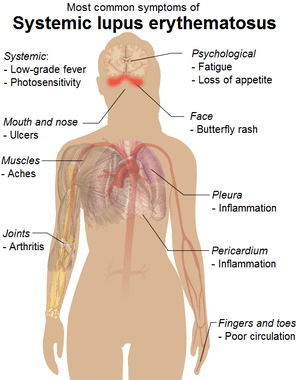
Systemic lupus erythematosus (SLE) is a systemic autoimmune disease resulting in chronic activation of self-reactive lymphocytes and pro-inflammatory myeloid cells. SLE may also be caused by certain drugs called drug-induced lupus erythematosus.  People with SLE have abnormal deposits in the kidney cells. This leads to a condition called lupus nephritis. Patients with this condition may eventually develop kidney failure and need dialysis or a kidney transplant. The underlying cause of autoimmune diseases is not fully known and so far there is no cure for SLE.

SLE effects multiple end organs including the kidneys, brain, joints and skin and causes damage to many different parts of the body, including:

1. Blood clots in the legs (deep vein thrombosis) or lungs (pulmonary embolism)

2. Destruction of red blood cells (hemolytic anemia) or anemia of chronic disease

3. Fluid around the heart, pericarditis, endocarditis or inflammation of the heart (myocarditis)

4. Fluid around the lungs (pleural effusions) and damage to lung tissue

5. Pregnancy complications, including miscarriage

6. Stroke

7. Severely low blood platelets (thrombocytopenia)

8. Inflammation of the blood vessels

The molecular basis for the various manifestations of this autoimmune disease and the impact of the systemic autoimmune process on basic metabolic processes in the body are currently obscure.

However, recently a metabolomic study was executed first to understand the metabolic disturbances that underlie systemic lupus erythematosus (SLE). The study compared the sera of 20 SLE patients against that of healthy controls, using LC/MS and GC/MS platforms. Validation of key differences was performed using an independent cohort of 38 SLE patients and orthogonal assays.

The SLE metabolome exhibited profound lipid peroxidation, reflective of oxidative damage. Deficiencies were noted in the cellular anti-oxidant, glutathione, and all methyl group donors, including cysteine, methionine, and choline, as well as phosphocholines.

SLE sera showed evidence of profoundly dampened glycolysis, Krebs cycle, fatty acid β oxidation and amino acid metabolism, alluding to reduced energy biogenesis from all sources.

Whereas long-chain fatty acids, including the n3 and n6 essential fatty acids, were significantly reduced, medium chain fatty acids  and serum free fatty acids were elevated.

The best discriminators of SLE included elevated lipid peroxidation products, MDA, gamma-glutamyl peptides, GGT, leukotriene B4 and 5-HETE.

Comprehensive profiling of the SLE metabolome reveals evidence of heightened oxidative stress, inflammation, reduced energy generation, altered lipid profiles and a pro-thrombotic state.

From this study it is evident that first supplementing the diet with essential fatty acids, vitamins and methyl group donors offers novel opportunities for disease modulation in this disabling systemic autoimmune ailment.

Second quickly identifying selected molecules/ therapies is another opportunity to resetting the SLE metabolome. One such opportunity is to use adrenocorticotropic hormone (ACTH) analogue.

With Prednisone, up to 90% of adults with minimal change disease (MCD) will respond to initial therapy and may require further immunosuppression. But with diseases such as idiopathic membranous nephropathy (iMN) and focal segmental glomerulosclerosis (FSGS), for which first-line therapies produce substantially lower response rates than for MCD and physicians are often compelled to use second-, third-, and even fourth-line therapies to achieve remission.

ACTH usage is not new, it was widely used way back in 1950s for the treatment of childhood nephrotic syndrome. Now there is a renewed interest in using ACTH as treatment for nephrotic syndrome as a second, third or even fourth line treatment, particularly in patients who are resistant to conventional therapies.

Subsequent clinical studies demonstrated that ACTH has prominent antiproteinuric and renoprotective effects that are not entirely explained by steroidogenic actions.

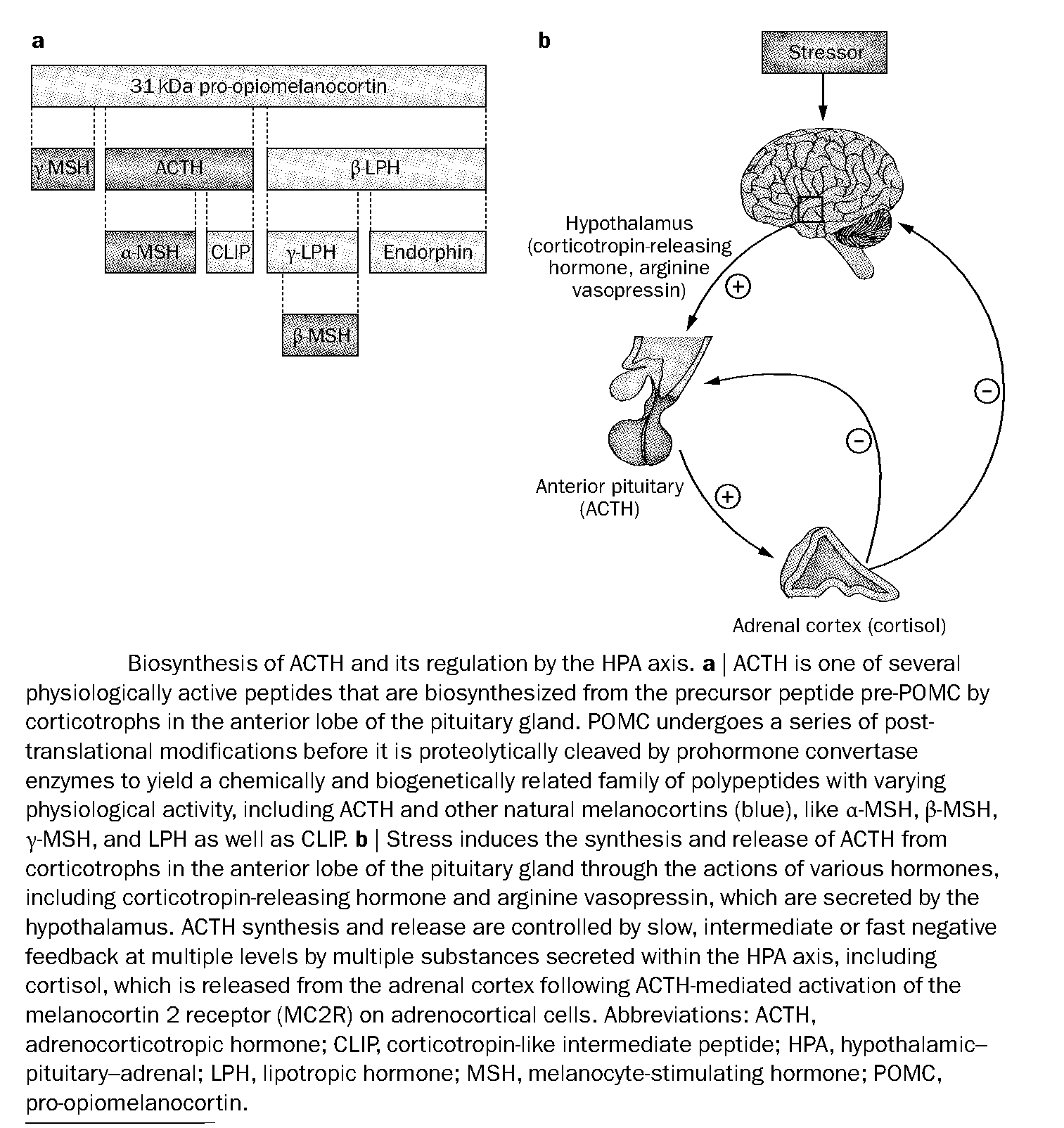
Adrenocorticotropic hormone (ACTH), also known as corticotropin, is a polypeptide tropic hormone produced and secreted by the anterior pituitry gland. It is an important component of the hypothalamic-pituitary-adrenal axis (HPA) and is often produced in response to biological stress. Its principal effects are increased production and release of corticosteriods. HPA is a complex set of direct influences and feedbackk interactions among the hypothalamus, the pituitary gland  and the adrenal glands.

A deficiency of ACTH is a cause of secondary adrenal insufficiency and an excess of it is a cause of Cushing’s syndrome.

Steroid hormones ( steriod that acts as a hormone) can be grouped into five groups by the receptors to which they bind: glycocorticoids, mineralcarticoids, androgens, estrogens, and progestrogens.

Steroid hormones help control metabolism, inflammation, immune functions, salt and water balance, development of sexual characteristics, and the ability to withstand illness and injury.

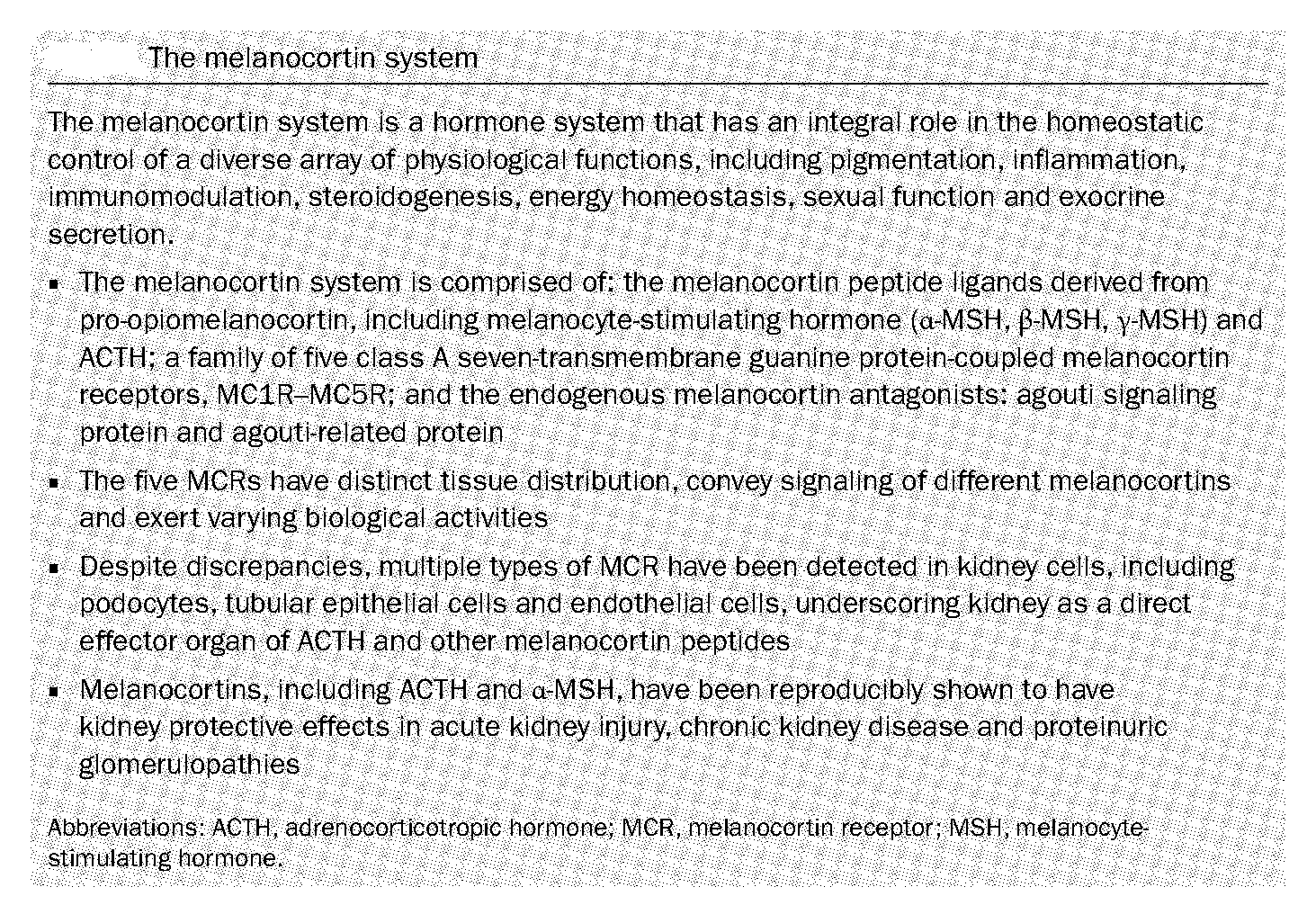
As a potent physiological agonist of melanocortin system that could directly target renal parenchymal cells, such as podocytes, ACTH might serve as a promising therapy for nephrotic glomerulopathies (a disease affecting the renal glomeruli – inflammatory or non-inflammatory).

Mineralocorticoids are hormones that were involved in the retention of sodium. The primary endogenous mineralocorticoid is aldosterone. Aldosterone acts on the kidneys to provide active reabsorption of sodium and an associated passive reabsorption of water, as well as the active secretion of potassium in the principal cells of the cortical collecting tubule and active secretion of protons via proton ATPases in the lumenal membrane of the intercalated cells of the collecting tubule. This in turn results in an increase of blood pressure and blood volume.

Aldosterone is produced in the cortex of the adrenal gland and its secretion is mediated principally by angiotensin II but also by adrenocorticotropic hormone (ACTH) and local potassium levels.

Aldosterone and cortisol (a glucosteroid) have similar affinity for the mineralocorticoid receptor; however, glucocorticoids circulate at roughly 100 times the level of mineralocorticoids. Glucocorticoid concentrations are a balance between production under the negative feedback control and diurnal rhythm of the HPA axis, and peripheral metabolism, for example by the enzyme 11beta-hydroxysteroid dehydrogenase type1 (11B-HSD1), which catalyses the reduction of inactive cortisone (11-DHC in mice) to cortisol (corticosterone in mice). Reductase activity is conferred upon 11B-HSD1 by hexose-6-phosphate dehydrogenase (H6PDH). 11B-HSD1 is implicated in the development of obesity.

Knock out of H6PDH resulted in a substantial increase in urinary DHC metabolites in males (65%) and females (61%). Knock out of 11B-HSD1 alone or in combination with H6PDH led to a significant increase (36% and 42% respectively) in urinary DHC metabolites in females only. Intermediate 11B-HSD1/H6PDH heterozygotes maintained a normal HPA axis.

Urinary steroid metabolite profile by GC/MS as a biomarker assay may be beneficial in assaying HPA axis status clinically in cases of congenital and acquired 11B-HSD1/H6PDH deficiency

ACTH acts through the stimulation of cell surface ACTH receptors, which are located primarily on adrenocortical cells of the adrenal cortex. This results in the synthesis and secretion of gluco- and mineralo-corticosteriods and androgenic steroids.

An enzyme exists in mineralocorticoid target tissues to prevent overstimulation by glucocorticoids. This enzyme, 11-beta hydroxysteriod dehydrogenase type II (protein: HSD11B2), catalyzes the deactivation of glucocorticoids to 11-dehydro metabolites.

ACTH acts at several key steps to influence the steroidogenic pathway in the adrenal cortex:

ACTH stimulates lipoprotein uptake into cortical cells. This increases the bio-availability of cholestrol in the cells of the adrenal cortex.

ACTH increases the transport of cholesterol into the mitochondria and activates its hydrolysis.

ACTH Stimulates cholesterol side-chain cleavage enzyme, which makes the rate-limiting step in steroidogenesis. This results in the production of pregnenolone.

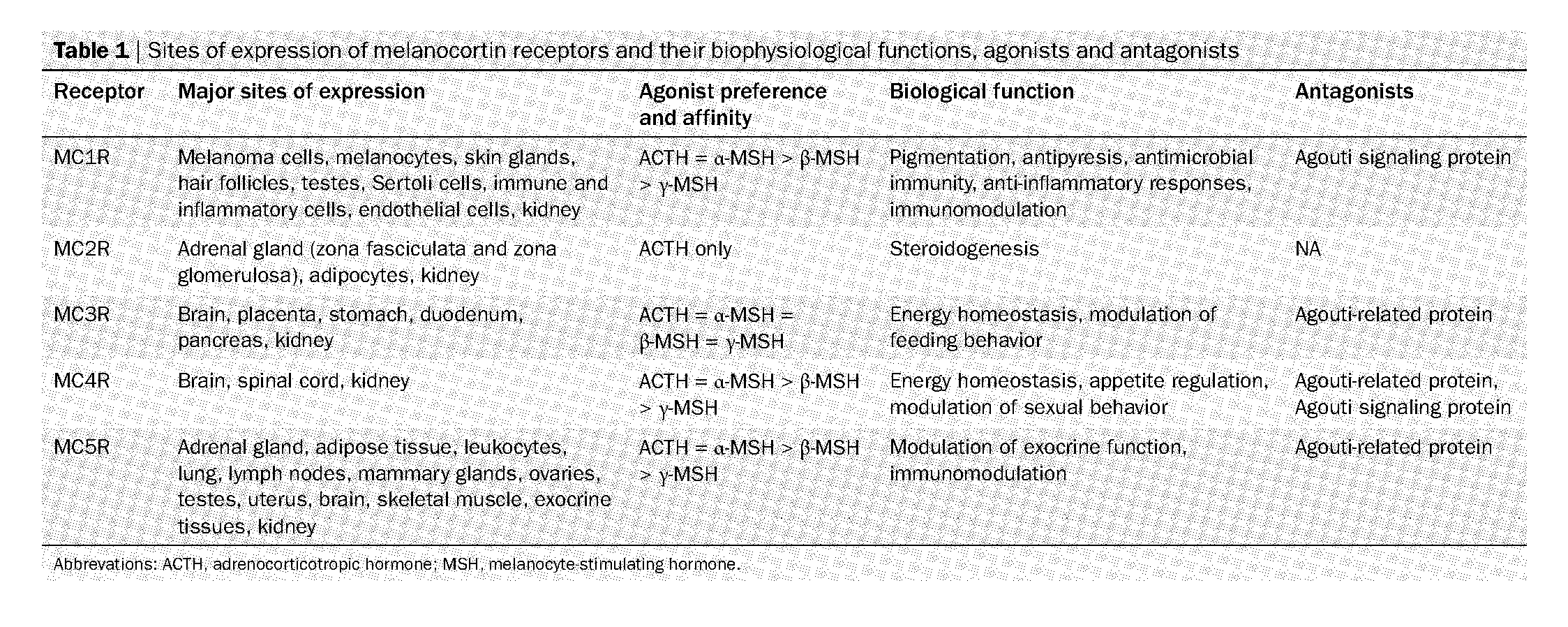
Receptor-binding studies have revealed that mineralcorticoids show a strong affinity for ACTH thereby establishing the potential for this hormone to activate mineralocorticoid receptors (MCRs). There are five MCRs and all of them show affinity for ACTH.

MCRs are expressed in kidney cells and that indicates that kidney is a target organ for the affects of ACTH.

Functions include:

1. Steroidogenic and adrenotropic activity

2. A multifaceted extra adrenal action that is mediated by the different MCRs present in the peripheral tissues and CNS

3. Has a lipostatic effect and stimulates lipolysis – (thus ACTH deficiency leads to obesity)

4. Its administration lowers levels of plasma lipids including Triglycerides, Total cholestrol, LDL-cholestrol and phospholipids

5. Its administration (complete ACTH molecule) rapidly increases the plasma insulin

Other activities include:

1. regulation of skin and hair pigmentation,

2. modulation of sebacious gland function and

3. anti-inflammatory and immunomodulatory functions

The total adrenocorticotropic hormone (ACTH) analogue is available as H.P. Acthar Gel (repository corticotropin injection) and is used for:

1. Monotherapy treatment of infantile spasms (IS) in infants and children under 2 years of age.

2. The treatment of exacerbations of multiple sclerosis in adults.

3. For inducing a diuresis or a remission of proteinuria in the nephrotic syndrome without uremia of the idiopathic type or that due to lupus erythematosus.

4. Also:: rheumatic disorders; collagen diseases; dermatologic diseases; allergic states; ophthalmic diseases and respiratory diseases.

FDA approved indications for the above prodcut are available at the following URL:

http://www.ncbi.nlm.nih.gov/pmc/articles/PMC2697107/table/t1-ptj34_5p250/

Disclaimer: This is for information purpose only, not a medical advise.

For a full list of warnings, precautions, and adverse events related to Acthar, please refer to the full Prescribing Information including the Medication Guide for the treatment of Infantile Spasms and discuss this information with your healthcare provider.

Literature:

The renaissance of corticotropin therapy in proteinuric nephropathies

Metabolic Disturbances Associated with Systemic Lupus Erythematosus

H.P. Acthar Gel and Cosyntropin Review

Childhood nephrotic syndrome—current and future therapies

Read Full Post »

« Newer Posts - Older Posts »