Feeds:
Posts
Comments

Archive for the ‘International Global Work in Pharmaceutical’ Category

Coronary Reperfusion Therapies: CABG vs PCI – Mayo Clinic preprocedure Risk Score (MCRS) for Prediction of in-Hospital Mortality after CABG or PCI

Author and Curator: Larry H. Bernstein, MD, FCAP 

and

Curator: Aviva Lev-Ari, PhD, RN


Published on Mar 27, 2012

Mayo Clinic cardiologist Charanjit Rihal, M.D. discusses a recent study conducted by Mayo Clinic that focuses on predicting operator outcomes in coronary angioplasty procedures.

“We’ve been interested in prediction of outcomes after coronary angioplasty and stent procedures for some time,” says Dr. Rihal. “Almost ten years ago, we published a paper called ‘The Mayo Clinic Risk Score for Prediction of Adverse Events following Coronary Angioplasty and Stent Procedures’. We’ve since refined into the ‘New Mayo Clinic Risk Score’, which includes seven key variables that predict bad outcomes following PCI procedures.”

The study, which was presented at the 2012 ACC Annual Scientific Session & Expo, presents a novel application of the Mayo Clinic Risk Score to predict operator specific outcomes in coronary angioplasty procedures.

“We looked at the outcomes of over 8000 procedures performed by 21 Mayo Clinic interventional cardiologists as predicted by the Mayo Clinic Risk Score,” says Dr. Rihal. “On an individual basis, we were able to calculate the expected mortality and adverse event rate and compare that to the actual observed mortality and adverse event rate. We were able to show that in our clinical practice of PCI, this risk score was very useful as a performance measure.

In a pleasant surprise, the study also discovered an outlier whose outcomes for instances of adverse event rates were much better than expected. “We don’t know exactly why this operator has such good results,” remarks Dr. Rihal, “But that will be the next phase of this analysis. We can compare procedural, pre-procedural, and post procedural practices of this operator and see if there are things that are translatable to the rest of us.”

VIEW VIDEO

Singh M, Gersh BJ, Li S, Rumsfeld JS, Spertus JA, O’Brien SM, Suri RM, Peterson ED.
Circulation. 2008 Jan 22;117(3):356-62.  http://dx.doi.org/10.1161/CIRCULATIONAHA.107.711523     Epub 2008 Jan 2.  PMID: 18172033
BACKGROUND:  Current risk models predict in-hospital mortality after either coronary artery bypass graft surgery or percutaneous coronary interventions. The overlap of models suggests that the same variables can define the risks of alternative coronary reperfusion therapies. We sought  a preprocedure risk model that can predict in-hospital mortality after either percutaneous coronary intervention or coronary artery bypass graft surgery.
METHODS AND RESULTS:  We tested the ability of the recently validated, integer-based Mayo Clinic Risk Score (MCRS) for percutaneous coronary intervention, which is based solely on preprocedure variables:
  • age,
  • creatinine,
  • ejection fraction,
  • myocardial infarction < or = 24 hours,
  • shock,
  • congestive heart failure
  • peripheral vascular disease
to predict in-hospital mortality among 370,793 patients in the Society of Thoracic Surgeons  (STS) database undergoing isolated coronary artery bypass graft surgery from 2004 to 2006. The median age of the STS database patients was 66 years (quartiles 1 to 3, 57 to 74 years), with 37.2% of patients > or = 70 years old. The high prevalence of comorbid conditions included
  • diabetes mellitus (37.1%)
  • hypertension (80.5%)
  • peripheral vascular disease (15.3%)
  • renal disease (creatinine > or = 1.4 mg/dL; 11.8%).
A strong association existed between the MCRS and the observed mortality in the STS database. The in-hospital mortality ranged between 0.3% (95% confidence interval 0.3% to 0.4%) with a score of 0 on the MCRS and 33.8% (95% confidence interval 27.3% to 40.3%) with an MCRS score of 20 to 24. The discriminatory ability of the MCRS was moderate, as measured by the area under the receiver operating characteristic curve (C-statistic = 0.715 to 0.784 among various subgroups); performance was inferior to the STS model for most categories tested.
CONCLUSIONS:  This model is based on the 7 preprocedure risk variables listed above. However, it  may be useful for providing patients with individualized, evidence-based estimates of procedural risk as part of the informed consent process before percutaneous or surgical revascularization.
It appears to this reviewer that the model might provide a better AUC if it were reconstructed as follows:
  1. age
  2. estimated creatinine clearance (which has been improved substantially by the Mayo Clinic)
  3. EF
  4. AMI < 24 hrs
  5. Decompensated CHF or shock
  6. PVD, or carotid artery disease, or PAD
  7. MAP
Mean arterial pressure (MAP) Calculator: Systolic BP: mm Hg: Diastolic BP: mm Hg Background: Equation: MAP = [(2 x diastolic)+systolic] / 3      http://www.globalrph.com/map.htm
There is another question that This reviewer has about the approach to prediction of post-procedural survival from pre-procedural information.
  • Age falls into interval classes that would suffice for use as classification variables.
  • Creatinine is a measurement that is a continuous variable, but I  call attention to the fact that eGFR would be preferred, as physicians tend to look at the creatinine roughly in relationship to age, gender, and body size or BMI.
  • The laboratory contribution as powerful information is underutilized.
On the one hand, CHF is important, but how is the distinction made between
  • stable CHF and
  • decompensated CHF, or degrees in between?
This is where the amino-terminal pro b-type natriuretic perptide, or the BNP has been used in isolation, but not in a multivariate model such as described.  There is a difference between them, but whether the difference makes a difference is unproved.
The BNP, derived from the propeptide is made by the myocardium as a hormonal mediator of sodium retention.  The BNP is degraded by the vascular endothelium, so it’s half time of disappearance would not reflect renal dysfunction, which is not the case for the NT proBNP.  This observation has nothing to do with the medical use of BNP.
Related articles

Other related articles were published on this Open Access Online Scientific Journal, including:

Survivals Comparison of Coronary Artery Bypass Graft (CABG) and Percutaneous Coronary Intervention (PCI) / Coronary Angioplasty

Larry H Bernstein, MD, FCAP and Aviva Lev-Ari, PhD, RN

http://pharmaceuticalintelligence.com/2013/06/23/comparison-of-cardiothoracic-bypass-and-percutaneous-interventional-catheterization-survivals/

Competition in the Ecosystem of Medical Devices in Cardiac and Vascular Repair: Heart Valves, Stents, Catheterization Tools and Kits for Open Heart and Minimally Invasive Surgery (MIS) (Aviva Lev-Ari)
http://pharmaceuticalintelligence.com/2012/06/22/competition-in-the-ecosystem-of-medical-devices-in-cardiac-and-vascular-repair-heart-valves-stents-catheterization-tools-and-kits-for-open-heart-and-minimally-invasive-surgery-mis/

Bioabsorbable Drug Coating Scaffolds, Stents and Dual Antiplatelet Therapy (Aviva Lev-Ari)
http://pharmaceuticalintelligence.com/2013/05/29/bioabsorbable-drug-coating-scaffolds-stents-and-dual-antiplatelet-therapy/

Vascular Repair: Stents and Biologically Active Implants (larryhbern)
http://pharmaceuticalintelligence.com/2013/05/04/stents-biologically-active-implants-and-vascular-repair/

Drug Eluting Stents: On MIT’s Edelman Lab’s Contributions to Vascular Biology and its Pioneering Research on DES (larryhbern)

http://pharmaceuticalintelligence.com/2013/04/25/contributions-to-vascular-biology/
Coronary Artery Disease – Medical Devices Solutions: From First-In-Man Stent Implantation, via Medical Ethical Dilemmas to Drug Eluting Stents (Aviva Lev-Ari)
http://pharmaceuticalintelligence.com/2012/08/13/coronary-artery-disease-medical-devices-solutions-from-first-in-man-stent-implantation-via-medical-ethical-dilemmas-to-drug-eluting-stents/

Survivals Comparison of Coronary Artery Bypass Graft (CABG) and Percutaneous Coronary Intervention (PCI) / Coronary Angioplasty (larryhbern)
http://pharmaceuticalintelligence.com/2013/06/23/comparison-of-cardiothoracic-bypass-and-percutaneous-interventional-catheterization-survivals/
Trans-apical Transcatheter Aortic Valve Replacement in a Patient with Severe and Complex Left Main Coronary Artery Disease (LMCAD) (larryhbern)
http://pharmaceuticalintelligence.com/2013/06/17/management-of-difficult-trans-apical-transcatheter-aortic-valve-replacement-in-a-patient-with-severe-and-complex-arterial-disease/
Transcatheter Aortic Valve Replacement (TAVR): Postdilatation to Reduce Paravalvular Regurgitation During TAVR with a Balloon-expandable Valve (larryhbern)
http://pharmaceuticalintelligence.com/2013/06/17/postdilatation-to-reduce-paravalvular-regurgitation-during-transcatheter-aortic-valve-replacement/

Svelte Medical Systems’ Drug-Eluting Stent: 0% Clinically-Driven Events Through 12-Months in First-In-Man Study (Aviva Lev-Ari)
http://pharmaceuticalintelligence.com/2013/05/28/svelte-medical-systems-drug-eluting-stent-0-clinically-driven-events-through-12-months-in-first-in-man-study/

Acute and Chronic Myocardial Infarction: Quantification of Myocardial Perfusion Viability – FDG-PET/MRI vs. MRI or PET alone (Justin Pearlman, Aviva Lev-Ari)
http://pharmaceuticalintelligence.com/2013/05/22/acute-and-chronic-myocardial-infarction-quantification-of-myocardial-viability-fdg-petmri-vs-mri-or-pet-alone/

Biomaterials Technology: Models of Tissue Engineering for Reperfusion and Implantable Devices for Revascularization (larryhbern)
http://pharmaceuticalintelligence.com/2013/05/05/bioengineering-of-vascular-and-tissue-models/
Revascularization: PCI, Prior History of PCI vs CABG (A Lev-Ari)
http://pharmaceuticalintelligence.com/2013/04/25/revascularization-pci-prior-history-of-pci-vs-cabg/
Accurate Identification and Treatment of Emergent Cardiac Events (larryhbern)
http://pharmaceuticalintelligence.com/2013/03/15/accurate-identification-and-treatment-of-emergent-cardiac-events/
FDA Pending 510(k) for The Latest Cardiovascular Imaging Technology (A Lev-Ari)
http://pharmaceuticalintelligence.com/2013/01/28/fda-pending-510k-for-the-latest-cardiovascular-imaging-technology/
The ACUITY-PCI score: Will it Replace Four Established Risk Scores — TIMI, GRACE, SYNTAX, and Clinical SYNTAX (A Lev-Ari)
http://pharmaceuticalintelligence.com/2013/01/03/the-acuity-pci-score-will-it-replace-four-established-risk-scores-timi-grace-syntax-and-clinical-syntax/
CABG or PCI: Patients with Diabetes – CABG Rein Supreme (A Lev-Ari)
http://pharmaceuticalintelligence.com/2012/11/05/cabg-or-pci-patients-with-diabetes-cabg-rein-supreme/
New Drug-Eluting Stent Works Well in STEMI (A Lev-Ari)
http://pharmaceuticalintelligence.com/2012/08/22/new-drug-eluting-stent-works-well-in-stemi/

Three coronary artery bypass grafts, a LIMA to...

Three coronary artery bypass grafts, a LIMA to LAD and two saphenous vein grafts – one to the right coronary artery (RCA) system and one to the obtuse marginal (OM) system. (Photo credit: Wikipedia)

Forrester-classification for classification of...

Forrester-classification for classification of Congestive heart failure ; Forrester-Klassifikation zur Einteilung einer akuten Herzinsuffizienz (Photo credit: Wikipedia)

Read Full Post »

Improved Results for Treatment of Persistent type 2 Endoleak after Endovascular Aneurysm Repair: Onyx Glue Embolization

Writer, Curator: Larry H Bernstein, MD, FCAP

and

Curator: Aviva Lev-Ari, PhD, RN 


This report is an evaluation of onyx glue use in endovascular aneurysm repair. Onyx® is a non-adhesive liquid embolic agent used for the pre-surgical embolization of brain Arteriovenous malformations (bAVM).
Onyx is comprised of EVOH (ethylene vinyl alcohol) copolymer dissolved in DMSO (dimethyl sulfoxide), and suspended micronized tantalum powder to provide contrast for visualization under fluoroscopy.
A DMSO compatible delivery micro catheter that is indicated for use in the neuro vasculature (e.g. Marathon™, Rebar® or UltraFlow™ HPC catheters) is used to access the embolization site.
Onyx is available in two product formulations, Onyx 18 (6% EVOH) and Onyx 34 (8% EVOH).
ONYX glue

Improved results using Onyx glue for the treatment of persistent type 2 endoleak after endovascular aneurysm repair. 

Abularrage CJ, Patel VI, Conrad MF, Schneider EB, Cambria RP, Kwolek CJ
Division of Vascular and Endovascular Surgery, Massachusetts General Hospital and Harvard Medical School, Boston, Mass 02114, USA.
J Vasc Surg. 2012 Sep;56(3):630-6.  http://dx.doi.org/10.1016/j.jvs.2012.02.038.  Epub 2012 May 8.
Persistent type 2 (PT2) endoleaks (present ≥ 6 months) after endovascular aneurysm repair are associated with adverse outcomes, and
  • selective secondary intervention is indicated in those patients with an expanding aneurysm sac.

This study evaluated the outcomes of secondary intervention for PT2.

From 1999 to 2007, 136 patients who underwent endovascular aneurysm repair developed PT2 and comprised the study cohort. Primary end points included
  • PT2 resolution (secondary interventional success) and
  • survival
 both  were evaluated using multiple logistic regression and Kaplan-Meier analyses
Fifty-one patients underwent a total of 68 secondary interventions for PT2 with expanding aneurysm sacs
  • with a median postsecondary interventional follow-up of 13.7 months.

Secondary interventions included

  • 20 inferior mesenteric artery coil embolizations,
  • 17 Onyx glue embolizations,
  • 11 aneurysm sac coil embolizations,
  • 10 non-Onyx glue embolizations,
  • 7 lumbar artery coil embolizations,
  • 2 open lumbar ligations, and 1 graft explant.
The overall secondary interventional success rate was 43% (29 of 68). Onyx glue embolization was associated with
  • a greater success rate when used as the initial secondary intervention (odds ratio, 59.61; 95% confidence interval, 4.78-742.73; P < .001). 
There was no difference in success between the different techniques when multiple secondary interventions were required. Five-year survival was 72% ± 0.08% and
  • was unrelated to any of the secondary interventional techniques.
Secondary intervention for PT2 is associated with success in less than half of all cases. Onyx glue embolization was associated with greater long-term success
  • when used as the initial secondary intervention.
Competition in the Ecosystem of Medical Devices in Cardiac and Vascular Repair: Heart Valves, Stents, Catheterization Tools and Kits for Open Heart and Minimally Invasive Surgery (MIS)  (Aviva Lev-Ari)
Vascular Repair: Stents and Biologically Active Implants (larryhbern)
Drug Eluting Stents: On MIT’s Edelman Lab’s Contributions to Vascular Biology and its Pioneering Research on DES  (larryhbern)
Coronary Artery Disease – Medical Devices Solutions: From First-In-Man Stent Implantation, via Medical Ethical Dilemmas to Drug Eluting Stents  (Aviva Lev-Ari)
Trans-apical Transcatheter Aortic Valve Replacement in a Patient with Severe and Complex Left Main Coronary Artery Disease (LMCAD) (larryhbern)
Transcatheter Aortic Valve Replacement (TAVR): Postdilatation to Reduce Paravalvular Regurgitation During TAVR with a Balloon-expandable Valve  (larryhbern)
Svelte Medical Systems’ Drug-Eluting Stent: 0% Clinically-Driven Events Through 12-Months in First-In-Man Study  (Aviva Lev-Ari)
Acute and Chronic Myocardial Infarction: Quantification of Myocardial Perfusion Viability – FDG-PET/MRI vs. MRI or PET alone  (Justin Pearlman, Aviva Lev-Ari)
Biomaterials Technology: Models of Tissue Engineering for Reperfusion and Implantable Devices for Revascularization (larryhbern)
Revascularization: PCI, Prior History of PCI vs CABG  (A Lev-Ari)
The ACUITY-PCI score: Will it Replace Four Established Risk Scores — TIMI, GRACE, SYNTAX, and Clinical SYNTAX  (A Lev-Ari)
Absorb™ Bioresorbable Vascular Scaffold: An International Launch by Abbott Laboratories (Aviva Lev-Ari)
Carotid Stenting: Vascular surgeons have pointed to more minor strokes in the stenting group and cardiologists to more myocardial infarctions in the CEA cohort. (A Lev-Ari)
Endovascular repair of cerebral aneurysm.

Endovascular repair of cerebral aneurysm. (Photo credit: Wikipedia)

Read Full Post »

Carotid Endarterectomy (CEA) vs. Carotid Artery Stenting (CAS): Comparison of CMMS high-risk criteria on the Outcomes after Surgery:  Analysis of the Society for Vascular Surgery (SVS) Vascular Registry Data

Writer and Curator: Larry H. Bernstein, MD, FCAP

and

Curator: Aviva Lev-Ari, PhD, RN 

UPDATED on 1/30/2024

The Texas Heart Institute

WATCH Video

https://youtu.be/KobPZLWmLfQ?si=LUxy1gD9fCptj1E7

This week on Inside the Studio, both Dr. Joseph Rogers and Dr. Zvonimir Krajcer sit down with the 2024 Ray C. Fish Award Recipient Dr. Gary S. Roubin to discuss “Carotid Stenting: State of the Art.” Don’t miss out on our upcoming live talks, or catch up on previous recordings at https://www.texasheart.org/grandrounds.

Show the Transcript

UPDATED on 9/25/2021

1-Year Results From a Prospective Experience on CAS Using the CGuard Stent System: The IRONGUARD 2 Study

Peripheral

J Am Coll Cardiol Intv, 14 (17) 1917–1923

Abstract

Objectives

The aim of this study was to evaluate the 1-year safety and efficacy of a dual-layered stent (DLS) for carotid artery stenting (CAS) in a multicenter registry.

Background

DLS have been proved to be safe and efficient during short-term follow-up. Recent data have raised the concern that the benefit of CAS performed with using a DLS may be hampered by a higher restenosis rate at 1 year.

Methods

From January 2017 to June 2019, a physician-initiated, prospective, multispecialty registry enrolled 733 consecutive patients undergoing CAS using the CGuard embolic prevention system at 20 centers. The primary endpoint was the occurrence of death and stroke at 1 year. Secondary endpoints were 1-year rates of transient ischemic attack, acute myocardial infarction, internal carotid artery (ICA) restenosis, in-stent thrombosis, and external carotid artery occlusion.

Results

At 1 year, follow-up was available in 726 patients (99.04%). Beyond 30 days postprocedure, 1 minor stroke (0.13%), four transient ischemic attacks (0.55%), 2 fatal acute myocardial infarctions (0.27%), and 6 noncardiac deaths (1.10%) occurred. On duplex ultrasound examination, ICA restenosis was found in 6 patients (0.82%): 2 total occlusions and 4 in-stent restenoses. No predictors of target ICA restenosis and/or occlusion could be detected, and dual-antiplatelet therapy duration (90 days vs 30 days) was not found to be related to major adverse cardiovascular event or restenosis occurrence.

Conclusions

This real-world registry suggests that DLS use in clinical practice is safe and associated with minimal occurrence of adverse neurologic events up to 12-month follow-up.

SOURCE

UPDATED on 8/5/2020

USPSTF advises against carotid artery stenosis screening

By Theresa Pablos, AuntMinnie staff writer

August 5, 2020 — The U.S. Preventive Services Task Force (USPSTF) is poised to once again recommend against screening for asymptomatic carotid artery stenosis. The task force reaffirmed its D rating in a draft recommendation statement published on August 4.

The USPSTF last weighed in on the topic in 2014, concluding with moderate certainty that the harms of screening for carotid artery stenosis in the general population outweighed the benefits. In its new draft recommendation statement, the agency reaffirmed that position, stating there was not enough new evidence to change its previous recommendation against screening with either carotid duplex ultrasound, CT angiography, or MR angiography.

“The USPSTF found no new substantial evidence that could change its recommendation and therefore reaffirms its recommendation,” the task force wrote.

In theory, screening the general population for stenosis could lead to early detection of narrowed blood vessels, thus enabling medical professionals to conduct potentially life-saving interventions, such as carotid endarterectomy (CEA) and carotid artery stenting (CAS). But the USPSTF concluded that the evidence it reviewed didn’t readily support that hypothesis.

The task force has consistently found limited evidence in favor of asymptomatic carotid artery stenosis screening, especially when compared with other medical therapies, such as statins and antihypertensive agents. And the evidence has been particularly lacking since the USPSTF’s last review in 2014.

USPSTF draft recommendation rationale for asymptomatic carotid artery stenosis
Detection Ultrasonography has reasonable sensitivity and specificity for detecting clinically relevant carotid artery stenosis, but it also yields many false-positive results in the general population.
Scanning the neck for carotid bruits has poor accuracy for clinically relevant carotid artery stenosis.
Benefits Direct evidence does not indicate that screening for asymptomatic carotid artery stenosis can improve stroke, mortality, or other adverse health outcomes.
Carotid endarterectomy (CEA) or carotid artery angioplasty and stenting (CAS) provides little or no benefit for improving stroke, myocardial infarction, mortality, or other adverse outcomes compared with current medical therapy.
Harms While direct evidence does not show that screening for asymptomatic carotid artery stenosis can cause harm, there are known harms with confirmatory testing and interventions.
Direct evidence supports that treating asymptomatic patients with CEA or CAS could cause harms, including stroke or death.
Harms related to screening and treating asymptomatic carotid artery stenosis have small-to-moderate magnitude.

After searching the scientific literature, USPSTF investigators found no recent eligible studies that directly investigated the benefits or harms of asymptomatic carotid artery stenosis screening. The two studies that were conducted on the topic in the past six years were both prematurely terminated and produced mixed results.

When looking at the benefits and harms of CEA or CAS, the authors found an additional two national datasets and three surgical registries that met their inclusion criteria. Rates of 30-day postoperative stroke or death after CEA ranged from 1.4% to 3.5% depending on the registry or database. Similarly, 30-day stroke or death after CAS ranged from 2.6% to 5.1%.

Based on the evidence — or lack thereof — the investigators concluded there wasn’t enough new information to change the D rating for asymptomatic carotid artery stenosis screening. However, they pointed out that two clinical trials are currently underway, which may shed light on the topic in the future.

“There were few new trials, all with methodologic concerns, examining the important question of the comparative effectiveness and harms of revascularization plus best medical treatment compared with best medical treatment alone,” they wrote. “The ongoing CREST-2 and ECST-2 trials will be the largest trials to address this issue.”

The draft recommendation is available for public comment through August 31. After the comment period has ended, the task force will publish its final recommendation.

USPSTF opens review of carotid stenosis screening
The U.S. Preventive Services Task Force (USPSTF) has posted a draft research plan on screening for asymptomatic carotid artery stenosis, an exam that…
USPSTF still against US carotid artery stenosis screening
The U.S. Preventive Services Task Force (USPSTF) has finalized its draft recommendation advising against the use of widespread ultrasound screening for…
USPSTF advises against carotid artery screening
The U.S. Preventive Services Task Force (USPSTF) has issued a draft recommendation against ultrasound screening for asymptomatic carotid artery stenosis…
USPSTF to revisit carotid artery stenosis screening
The U.S. Preventive Services Task Force (USPSTF) plans to review its guidelines on the use of imaging to screen patients for asymptomatic carotid artery…

SOURCE

https://www.auntminnie.com/index.aspx?sec=sup&sub=ult&pag=dis&ItemID=129787

UPDATED on 8/20/2018

Transcarotid Artery Revascularization Shows Favorable Outcomes in Patients With Carotid Artery Disease

First large body of real-world clinical evidence showing benefits of TCAR versus surgery presented at SVS 2018 Annual Meeting

Transcarotid Artery Revascularization Shows Favorable Outcomes in Patients With Carotid Artery Disease

July 30, 2018 — Silk Road Medical Inc. recently announced the presentation of real-world data for the treatment of patients with carotid artery disease at risk for stroke at the Society for Vascular Surgery 2018 Vascular Annual Meeting (VAM), June 20-23 in Boston. In a headline presentation, Marc Schermerhorn, M.D., of Beth Israel Deaconess Medical Center (Boston) shared, for the first time, results from the ongoing TransCarotid Artery Revascularization (TCAR) Surveillance Project, a key initiative of the Society for Vascular Surgery’s Vascular Quality Initiative (VQI).

The trial evaluated patients over a two-year period, with 1,182 patients receiving TCAR compared to 10,797 patients receiving carotid endarterectomy (CEA).

“Our overall findings showed that while patients receiving TCAR were sicker and more likely to be symptomatic with a higher degree of stenosis, the stroke and death rate compared to CEA was the same,” Schermerhorn said. “With TCAR, there were significantly lower cranial nerve injuries, less time spent in the operating room and fewer patients with a prolonged length of stay. I believe that clinicians should more widely adopt the TCAR technology as it has demonstrated both safety and efficacy and is an excellent alternative to CEA.”

Significant findings from the study showed TCAR to have:

  • Comparable rates of in-hospital stroke or death to CEA (TCAR, 1.6 percent; CEA, 1.4 percent, p=.33);
  • Lower rates of acute cranial nerve injury (TCAR, 0.6 percent; CEA, 1.8 percent, p<.001);
  • Shorter operative times (TCAR, 78 min; CEA, 111 min, p<.001); and
  • Shorter hospital stays, despite patients being older and sicker (percent of hospitals stays longer than one night: TCAR, 27%; CEA, 30%, p=0.046).

TCAR is a clinically proven procedure combining surgical principles of neuroprotection with minimally invasive endovascular techniques to treat blockages in the carotid artery at risk of causing a stroke. The TCAR Surveillance Project is the largest single body of evidence reported since the launch of TCAR in 2016.

Additional TCAR presentations highlighted at SVS VAM 2018 demonstrated similar results:

“Vascular Live: Latest Stroke Prevention Data Signals Standard of Care Potential in Carotid Revascularization” provided an interim update on the ROADSTER 2 Per Protocol data set. The ROADSTER 2 trial is a post-market study intended to enroll a minimum of 600 patients and with at least 70 percent enrollment completed by newly trained operators. Peter Schneider, M.D., of Kaiser Permanente (Honolulu) and co-principal investigator for the ROADSTER 2 trial, presented interim results on 470 patients. Schneider highlighted a 30-day stroke rate of 0.6 percent and a stroke/death rate of 0.9 percent, consistent with the outcomes seen in the pivotal ROADSTER trial.

“A Multi-Institutional Analysis of Contemporary Outcomes after TransCarotid Artery Revascularization versus Carotid Endarterectomy” compared outcomes of TCAR to CEA across four institutions. Alex King of University Hospitals Cleveland Medical Center (Ohio) presented results showing that patients undergoing TCAR (n=292), had similar 30-day stroke rates (TCAR, 1 percent; CEA, 1.1 percent, p=1.00) compared with patients undergoing CEA (n=371), despite being more likely to have significant comorbidities. Acute (TCAR, 0.3 percent; CEA, 4.1 percent, p<.01) and six-month cranial nerve injury rates (TCAR, 0 percent; CEA: 1.9 percent, p=0.02) were shown to be lower with TCAR vs CEA.

The Enroute Transcarotid Stent is intended to be used in conjunction with the Enroute Transcarotid Neuroprotection System (NPS) during the TCAR procedure. The Enroute Transcarotid NPS is used to directly access the common carotid artery and initiate high rate temporary blood flow reversal to protect the brain from stroke while delivering and implanting the Enroute Transcarotid Stent.

For more information: www.silkroadmed.com

This is a review of the impact of the Centers for Medair and Medicaid Services on carotid artery endovascular outcomes carried out by the Division of Vascular and Endovascular Surgery at Harvard Medical School, Partners.

The impact of Centers for Medicare and Medicaid Services high-risk criteria on outcome after carotid endarterectomy and carotid artery stenting in the SVS Vascular Registry.

Schermerhorn ML, Fokkema M, Goodney P, Dillavou ED, Jim J, Kenwood CT, Siami FS, White RA; SVS Outcomes Committee.
 J Vasc Surg. 2013 May;57(5):1318-24.   http://dx.doi.org/10.1016/j.jvs.2012.10.107. Epub 2013 Feb 11.
The Centers for Medicare and Medicaid Services (CMS) require high-risk (HR) criteria for carotid artery stenting (CAS) reimbursement. The impact of these criteria on outcomes after carotid endarterectomy (CEA) and CAS remains uncertain. Additionally, if these HR criteria are associated with more adverse events after CAS, then existing comparative effectiveness analysis of CEA vs CAS may be biased. We sought to elucidate this using data from the SVS Vascular Registry.
We analyzed 10,107 patients undergoing CEA (6370) and CAS (3737), stratified by CMS HR criteria. The primary endpoint was composite death, stroke, and myocardial infarction (MI) (major adverse cardiovascular event [MACE]) at 30 days. We compared baseline characteristics and outcomes using univariate and multivariable analyses.
CAS patients were more likely than CEA to have
  • preoperative stroke (26% vs 21%) or
  • transient ischemic attack (23% vs 19%) .
Although age ≥ 80 years was similar, CAS patients were more likely to have all other HR criteria.
For CEA, HR patients had higher MACEs than normal risk in both
  • symptomatic (7.3% vs 4.6%; P < .01) and
  • asymptomatic patients (5% vs 2.2%; P < .0001).
For CAS, HR status was not associated with a significant increase in MACE for
  • symptomatic (9.1% vs 6.2%; P = .24) or
  • asymptomatic patients (5.4% vs 4.2%; P = .61).
All CAS patients had MACE rates similar to HR CEA. After multivariable risk adjustment, CAS had higher rates than CEA
  • for MACE (odds ratio [OR], 1.2; 95% confidence interval [CI], 1.0-1.5),
  • death (OR, 1.5; 95% CI, 1.0-2.2), and
  • stroke (OR, 1.3; 95% CI,1.0-1.7),
whereas there was no difference in MI (OR, 0.8; 95% CI, 0.6-1.3).
Among CEA patients, MACE was predicted by:
  • age ≥ 80 (OR, 1.4; 95% CI, 1.02-1.8),
  • congestive heart failure (OR, 1.7; 95% CI, 1.03-2.8),
  • EF <30% (OR, 3.5; 95% CI, 1.6-7.7),
  • angina (OR, 3.9; 95% CI, 1.6-9.9),
  • contralateral occlusion (OR, 3.2; 95% CI, 2.1-4.7), and
  • high anatomic lesion (OR, 2.7; 95% CI, 1.33-5.6).
Among CAS patients, recent MI (OR, 3.2; 95% CI, 1.5-7.0) was predictive, and
  • radiation (OR, 0.6; 95% CI, 0.4-0.8) and
  • restenosis (OR, 0.5; 95% CI, 0.3-0.96) …..were protective for MACE
Although CMS HR criteria can successfully discriminate a group of patients at HR for adverse events after CEA, certain CMS HR criteria are more important than others. However, CEA appears safer for the majority of patients with carotid disease. Among patients undergoing CAS, non-HR status may be limited to restenosis and radiation.
This study was preceded by another publication 5-years earlier involving ML Schermerhorn, of the study above.

Risk-adjusted 30-day outcomes of carotid stenting and endarterectomy: results from the SVS Vascular Registry.

Sidawy AN, Zwolak RM, White RA, Siami FS, Schermerhorn ML, Sicard GA; Outcomes Committee for the Society for Vascular Surgery.
Department of Surgery, Washington VA Medical Center, Washington, DC, USA.
J Vasc Surg. 2009 Jan;49(1):71-9. http:/dx.doi.org/10.1016/j.jvs.2008.08.039. Epub 2008 Nov 22.
As of December 26, 2007, 6403 procedures with discharge data were entered by 287 providers at 56 centers on 2763 CAS patients (1450 with 30-day outcomes, 52.5%) and 3259 CEA patients (1368 with 30-day outcomes, 42%).
Of the total cohort, 98% of CEA and 70.7% of CAS (P < .001) were performed for atherosclerotic disease.
  • Restenosis accounted for 22.3% and
  • post-radiation induced stenosis in 4.5% of CAS patients.
Preprocedure lateralizing neurologic symptoms were present in a greater proportion of – CAS patients (49.2%) than CEA patients (42.4%, P < .001).
CAS patients also had higher preprocedure prevalence of
  1. coronary artery disease (CAD),
  2. MI,
  3. congestive heart failure (CHF),
  4. chronic obstructive pulmonary disease (COPD), and
  5. cardiac arrhythmia.
For CAS, death/stroke/MI at 30 days was
  • 7.13% for symptomatic patients and 4.60% for asymptomatic patients (P = .04).
For CEA, death/stroke/MI at 30 days was
  • 3.75% in symptomatic patients and 1.97% in asymptomatic patients (P = .05).
After risk-adjustment for age, history of stroke, diabetes, and American Society of Anesthesiologists (ASA) grade (ie, factors found to be significant confounders in outcomes using backwards elimination),
logistic regression analysis suggested better outcomes following CEA.
When CAS and CEA were compared in the treatment of atherosclerotic disease only, the difference in outcomes between the two procedures was more pronounced, with
  • death/stroke/MI 6.42% after CAS vs 2.62% following CEA, P < .0001.
With continued enrollment and follow-up, analysis of SVS-VR will supplement randomized trials by providing real-world comparisons of CAS and CEA with sufficient numbers to serve as an outcome assessment tool of important patient subsets and across the spectrum of peripheral vascular procedures.
J Vasc Surg. 2012 May;55(5):1313-20; discussion 1321. doi: 10.1016/j.jvs.2011.11.128. Epub 2012 Mar 28.

Society for Vascular Surgery (SVS) Vascular Registry evaluation of comparative effectiveness of carotid revascularization procedures stratified by Medicare age.

Jim JRubin BGRicotta JJ 2ndKenwood CTSiami FSSicard GASVS Outcomes Committee.

Source

Washington University School of Medicine, St. Louis, Mo., USA.

Abstract

OBJECTIVE:

Recent randomized controlled trials have shown that age significantly affects the outcome of carotid revascularization procedures. This study used data from the Society for Vascular Surgery Vascular Registry (VR) to report the influence of age on the comparative effectiveness of carotid endarterectomy (CEA) and carotid artery stenting (CAS).

METHODS:

VR collects provider-reported data on patients using a Web-based database. Patients were stratified by age and symptoms. The primary end point was the composite outcome of death, stroke, or myocardial infarction (MI) at 30 days.

RESULTS:

As of December 7, 2010, there were 1347 CEA and 861 CAS patients aged < 65 years and 4169 CEA and 2536 CAS patients aged ≥ 65 years. CAS patients in both age groups were more likely to have a disease etiology of radiation or restenosis, be symptomatic, and have more cardiac comorbidities. In patients aged <65 years, the primary end point (5.23% CAS vs 3.56% CEA; P = .065) did not reach statistical significance. Subgroup analyses showed that CAS had a higher combined death/stroke/MI rate (4.44% vs 2.10%; P < .031) in asymptomatic patients but there was no difference in the symptomatic (6.00% vs 5.47%; P = .79) group. In patients aged ≥ 65 years, CEA had lower rates of death (0.91% vs 1.97%; P < .01), stroke (2.52% vs 4.89%; P < .01), and composite death/stroke/MI (4.27% vs 7.14%; P < .01). CEA in patients aged ≥ 65 years was associated with lower rates of the primary end point in symptomatic (5.27% vs 9.52%; P < .01) and asymptomatic (3.31% vs 5.27%; P < .01) subgroups. After risk adjustment, CAS patients aged ≥ 65 years were more likely to reach the primary end point.

CONCLUSIONS:

Compared with CEA, CAS resulted in inferior 30-day outcomes in symptomatic and asymptomatic patients aged ≥ 65 years. These findings do not support the widespread use of CAS in patients aged ≥ 65 years.

Related articles

Other related articles published in this Open Access Online Scientific Journal

Abdominal Aortic Aneurysm: Endovascular repair and open repair resulted in similar long-term survival  (Aviva Lev-Ari)
Competition in the Ecosystem of Medical Devices in Cardiac and Vascular Repair: Heart Valves, Stents, Catheterization Tools and Kits for Open Heart and Minimally Invasive Surgery (MIS)  (Aviva Lev-Ari)
Bioabsorbable Drug Coating Scaffolds, Stents and Dual Antiplatelet Therapy (Aviva Lev-Ari)
Vascular Repair: Stents and Biologically Active Implants (larryhbern)
Drug Eluting Stents: On MIT’s Edelman Lab’s Contributions to Vascular Biology and its Pioneering Research on DES  (larryhbern)
Transcatheter Aortic Valve Replacement (TAVR): Postdilatation to Reduce Paravalvular Regurgitation During TAVR with a Balloon-expandable Valve  (larryhbern)
Acute and Chronic Myocardial Infarction: Quantification of Myocardial Perfusion Viability – FDG-PET/MRI vs. MRI or PET alone  (Justin Pearlman, Aviva Lev-Ari)
Biomaterials Technology: Models of Tissue Engineering for Reperfusion and Implantable Devices for Revascularization (larryhbern)
Revascularization: PCI, Prior History of PCI vs CABG  (A Lev-Ari)
Accurate Identification and Treatment of Emergent Cardiac Events (larryhbern)
FDA Pending 510(k) for The Latest Cardiovascular Imaging Technology (A Lev-Ari)
The ACUITY-PCI score: Will it Replace Four Established Risk Scores — TIMI, GRACE, SYNTAX, and Clinical SYNTAX  (A Lev-Ari)
http://pharmaceuticalintelligence.com/2013/01/03/the-acuity-pci-score-will-it-replace-four-established-risk-scores-timi-grace-syntax-and-clinical-syntax/
Absorb™ Bioresorbable Vascular Scaffold: An International Launch by Abbott Laboratories (Aviva Lev-Ari)
Carotid Stenting: Vascular surgeons have pointed to more minor strokes in the stenting group and cardiologists to more myocardial infarctions in the CEA cohort. (A Lev-Ari)
Global Supplier Strategy for Market Penetration & Partnership Options (Niche Suppliers vs. National Leaders) in the Massachusetts Cardiology & Vascular Surgery Tools and Devices Market for Cardiac Operating Rooms and Angioplasty Suites (A Lev-Ari)
English: FIG. 513 – The internal carotid and v...

English: FIG. 513 – The internal carotid and vertebral arteries. Right side. Deutsch: Rechte Arteria carotis (Photo credit: Wikipedia)

Carotid Plaque Atherosclerotic plaque from a c...

Carotid Plaque Atherosclerotic plaque from a carotid endarterectomy specimen. This shows the bifurcation of the common into the internal and external carotid arteries. (Photo credit: Wikipedia)

Right common carotid artery - The Anatomy of t...

Right common carotid artery – The Anatomy of the Arteries Visual Guide, page 5 (of 57) (Photo credit: Rob Swatski)

Read Full Post »

Larry H. Bernstein, MD, Reviewer and Curator
Leaders in Pharmaceutical Intelligence
http://pharmaceuticalintelligence.com/2013/06/20/Naked Mole Rats Cancer-Free/lhbern

Screen Shot 2021-07-19 at 6.24.30 PM

Word Cloud By Danielle Smolyar

This discussion is a novel piece of investigations now and earlier  published in the Proceedings of the National Academy of Sciences, and another in Nature pertaining to aging, longevity, and cancer.  The blind mole rat has an unexpected lifespan compared to other rodents.  There are also findings of a related naked mole rat that comes into the picture.  They are related, but not exactly the same. In both cases, the moles are cold-blooded, live underground with a queen and workers and they don’t develop cancer. The naked mold rates don’t develop cancer because of the presence of an imbalance in the intercellular matrix caused by abundant naturally produced, sticky complex carbohydrate also found in human joints that repels the cells at their interstices.

This is fascinating because it is also an important aspect of joint mobility.  In the situation of chondomalacia before erosion of the articular cartilage, the movement and shearing stresses initially induced production of more chondrocytes and with that, a thickened cartilage that becomes taxed until it loses matrix fluid, followed by loss of matrix and loss of collagen by shearing stress.  This type of motion and shear stress plays no part in the life of the naked mole rat, which has a rough skin.  The property of the cellular matrix seems to be characterized by both the production of the intercellular goo…called hyalurenan (like hyaluronic acid) and sparse hyaluronidase to remove and remodel the cell architecture.  How this is related to extreme aging and no loss of cellular growth control, having sparce ubiqitination that is involve in cell death and repair is unclear.

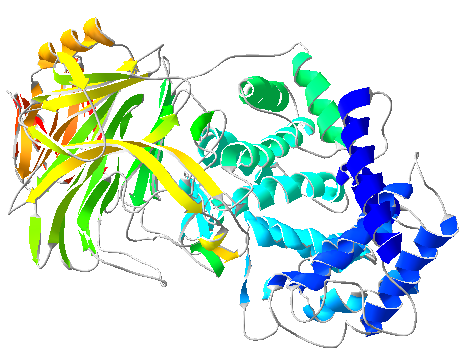
The hyaluronidases (EC 3.2.1.35) are a family of enzymes that degrade hyaluronic acid.  In humans, there are six associated genes, including HYAL1, HYAL2, HYAL3, and PH-20/SPAM1. By catalyzing the hydrolysis of hyaluronan, a constituent of the extracellular matrix (ECM), hyaluronidase lowers the viscosity of hyaluronan.  http://upload.wikimedia.org/wikipedia/commons/2/2f/Hyaluronidase-1OJN.png

The blind mole rat is closely related, but it differs in that it has a mechanism by which the cells have limited proliferation and don’t proliferate to the point of getting out of control.  This is because after several generations of cellular proliferation they produce a protein,  IFN-β.  This protein induces massive apoptosis, limiting the size of the sell population. There are findings in these investigations that might be relevant to understanding cancer resistance, and perhaps it could provide clues to treatment approaches.  If that is too much to ask for, it gives us great insight into how cells organize.

Cancer resistance in the blind mole rat is mediated by concerted necrotic cell death mechanism

Gorbunovaa V, Hinea C, Tiana X, Ablaevaa J, Gudkovb AV, Nevoc E, and Seluanova A.
Contributed by Eviatar Nevo, October 3, 2012 (sent for review August 28, 2012)

Abstract

Blind mole rats Spalax (BMR) are small subterranean rodents common in the Middle East. BMR is distinguished by its adaptations to life underground, remarkable longevity (with a maximum documented lifespan of 21 y), and resistance to cancer. Spontaneous tumors have never been observed in spalacids. To understand the mechanisms responsible for this resistance, we examined the growth of BMR fibroblasts in vitro of the species Spalax judaei and Spalax golani. BMR cells proliferated actively for 7–20 population doublings, after which the cells began secreting IFN-β, and the cultures underwent massive necrotic cell death within 3 d. The necrotic cell death phenomenon was independent of culture conditions or telomere shortening. Interestingly, this cell behavior was distinct from that observed in another long-lived and cancer-resistant African mole rat, Heterocephalus glaber, the naked mole rat in which cells display hypersensitivity to contact inhibition. Sequestration of p53 and Rb proteins using SV40 large T antigen completely rescued necrotic cell death. Our results suggest that cancer resistance of BMR is conferred by massive necrotic response to overproliferation mediated by p53 and Rb pathways, and triggered by the release of IFN-β. Thus, we have identified a unique mechanism that contributes to cancer resistance of this subterranean mammal extremely adapted to life underground.

Source:

1To whom correspondence may be addressed. E-mail:  vera.gorbunova@rochester.edu, nevo@research.haifa.ac.il, or andrei.seluanov@rochester.edu.

2Present address: Department of Genetics and Complex Diseases, Harvard School of Public Health, Boston, MA 02115.

http://www.pnas.org/content/early/2012/10/31/1217211109

naked mole rat

Image: Greg Goebel/Flickr


Long-Lived Rat May Hold Clues to Combating Aging

BY BRANDON KEIM02.17.09

The extraordinarily durable proteins in the world’s longest-lived rodent may contain a vital piece of the puzzle of aging.

  • Like short-lived mice, the cells of naked mole rats are suffused with free-floating, cell-damaging oxygen free radicals. 
  • Unlike the mice — and every other species that appears compromised by oxidative deterioration, including humans — they’ve found a way to live with it.

“When we compare the lab mouse with the naked mole rat, we find a striking difference in their systems,” said study co-author Asish Chaudhuri, a University of Texas Health Science Center biochemist. “Their proteins are still working. Even when damaged, the functions are maintained.”

The findings, published Monday in the Proceedings of the National Academy of Sciences, represent a new wrinkle in the oxidative-stress theory of aging. According to the theory, mitochondria — cellular machines that produce our bodies’ energy — pump out highly reactive oxygen molecules during respiration. Called free radicals, these molecules bind easily with other molecules, including DNA. Over time, DNA breaks down, compromising cellular function. Eventually whole tissues and organs no longer function.  Multiple studies have found evidence of mitochondrial malfunction in a range of diseases that become more common with age, from heart disease to neurodegeneration to cancer. Drugs designed to rejuvenate mitochondria have shown promise in treating diabetes, and are celebrated as possible therapies for other conditions.

DNA repair rate is an important determinant of...

DNA repair rate is an important determinant of cell pathology (Photo credit: Wikipedia)

Chaudhuri’s team’s findings don’t contradict the role of mitochondria, but expand the theory to include cellular proteins other than DNA. They also explain a condundrum: some long-lived species display plenty of oxidative damage. “We’ve studied a dozen species, half short-lived and the others long-lived. One long-lived species would have lots of oxidative damage, and another would have little. The one thing that seemed to be consistent was protein stability,” said University of Texas Health Sciences Center gerontologist Steven Austad, who was not involved in the current study. “Until recently I’ve focused on DNA damage and repair, but this strikes me as even more fundamental. For DNA repair to work, you need all the repair proteins to work properly.”  Mole rats caught the researchers’ attention because they can live for 30 years, or ten times longer than lab mice, even though the two are similarly sized.

They found that mole rats do have efficient mitochondria that release fewer free radicals than expected. But their mitochondria aren’t perfect. Free radicals still gather and cause damage. Two-year-old mole rats show just as much oxidative stress two-year-old mice — and then live for another quarter-century.  The key appears to be their proteins, which continue to function despite damage. Study co-author Rochelle Buffenstein, a University of Texas Health Sciences Center physiologist, likened the phenomena to rusting cars: in other species, the axles rust, but in naked mole rats, it’s just the doors.  With heat and urea — both of which typically cause complex protein spools to unfold — the researchers tried to break down the proteins, but to no avail.  “You can basically hit them with a sledgehammer, and the proteins don’t unfold,” said Buffenstein. “Something makes them inherently more stable. There might be small molecules that tack on to proteins and help them retain structure in the face of cellular stress.”

Mole rats also appear to delay protein repair until the last possible moment, thus saving energy and resources. When proteins finally do break down, mole rats do an especially efficient job of cleaning them up. Only a tiny bit of ubiquitin — the chemical tag used to label damaged proteins for disposal — is required.  Finally, specialized protein-disposal structures, called proteosomes (tied to ubiqitination), don’t appear to break down with age in mole rats.

English: Damaraland mole-rat (Fukomys damarensis)

English: Damaraland mole-rat (Fukomys damarensis) (Photo credit: Wikipedia)

The researchers will next try to determine what maintains the mole rat’s proteins and proteosome. If, as Buffenstein suspects, it turns out to be an as-yet-unidentified protein protectant, scientists could apply the findings to people. “If we can identify those proteins, we can use them to study aging and age-related diseases. These animals don’t have any symptoms of neurodegeneration, even in old age,” said Chaudhuri. “Then we can design peptides that act like the protein, and take it as a drug.”

Citation:

Protein stability and resistance to oxidative stress are determinants of longevity in the longest-living rodent, the naked mole-rat.

By Viviana I. Perez, Rochelle Buffenstein, Venkata Masamsetti, Shanique Leonard, Adam B. Salmon, James Meleb, Blazej Andziak, Ting Yang, Yael Edrey, Bertrand Friguet, Walter Ward, Arlan Richardson and Asish Chaudhuri. Proceedings of the National Academy of Sciences, Vol. 106 No. 7, Feb. 16, 2009.

Why Blind Mole Rats Don’t Get Cancer

By Ian Steadman, Wired UK

Blind mole rats don’t get cancer. in 2011 it was found they have a gene that stops cancerous cells from forming. The same team thought that two other cancer-proof mole rat species might have similar genes, but instead it turns out that they do develop cancerous cells. It’s just that those cells are programmed to destroy themselves if they become dangerous.

The blind mole rat (Spalax typhlus) has tiny e...

The blind mole rat (Spalax typhlus) has tiny eyes completely covered by a layer of skin. (Photo credit: Wikipedia)

Mole rats, which live in underground burrows throughout Southern and Eastern Africa, and the Middle East, are fascinating creatures. The naked mole rat, in particular, is the only cold-blooded mammal known to man, doesn’t experience pain, and is also arguably the only mammal (along with the Damaraland mole rat) to demonstrate eusociality — that is, they live in large hierarchical communities with a queen and workers, like ants or bees.

The two species examined by the University of Rochester’s Vera Gorbunova and her team were the Judean Mountains blind mole rat (Spalax judaei) and the Golan Heights blind mole rat (Spalax golani), which live within small regions of Israel. The team took cells from the rodents and put them in a culture that would force them to multiply beyond what would happen within the animals’ bodies. For the first seven to 20 multiplications, things looked fine, but beyond 20 multiplications the cells started rapidly dying off.  Examining the cells as they died revealed that they had started to produce a protein, IFN-β, that caused them to undergo “massive necrotic cell death within three days”. In effect, once the cells had detected that they had multiplied beyond a certain point, they killed themselves. The cells of naked mole rats have a self-preservation mechanism tied to a hypersensitivity to overcrowding, which stops them from multiplying too much.  On the one hand (blind mole rat) you have self-destruction at a point at which there is crowding due to IFN-β.  On the other hand, you find an aversion to overcrowding (naked mole rat).

In the Proceedings of the National Academy of Sciences, Gorbunova hypothesizes that the blind mole rats’ unique habitat — almost entirely underground — might mean that they “could perhaps afford to evolve a long lifespan, which includes developing efficient anti-cancer defences”. Blind mole rats have extremely long lifespans by rodent standards, often living beyond 20 years at a time.

The reasons why this is, though, are still all hypothetical, as the precise mechanism that triggers the production of the IFN-β is still unknown. The hope is that this research could eventually lead to new therapies for cancer in humans.

Super Sugar Keeps Naked Mole Rats Cancer-Free

BY ELIZABETH PENNISI, SCIENCENOW 06.20.13

Although they are quite ugly and confined to a life underground, naked mole rats have at least one attribute that other animals, even humans, might aspire to: They don’t get cancer. Now, researchers have discovered that the secret to this rodent’s good health is a complex sugar that helps keeps cells from clumping together and forming tumors.  It exists in the spaces between cells called the extracellular matrix, “the work underlines the very important regulatory role of [the] extracellular matrix in cancer,” says Bryan Toole, a cancer biologist at the Medical University of South Carolina in Charleston who was not involved with the study. Molecular and cell biologist Vera Gorbunova of the University of Rochester in New York wanted to take a different tack and focus on animals that seem protected from tumors. So she tracked down the lifespans of 20 different rodents, looking for the ones that live a long time. Beavers and gray squirrels last a couple of decades, but naked mole rats outlive those larger animals by 10 years.  Furthermore, naked mole rats have a unique social structure, with one queen that produces all the young for an underground colony full of helpers. Thanks to these studies, scientists know for sure that this species doesn’t get cancer. Given that naked mole rats live long and are resistant to cancer, “we fell in love with them right away,” Gorbunova says.

At first, she and her colleagues did not know where to look for the source of animals’ cancer resistance. But when they grew naked mole rat cells in a lab dish, they noticed that cells wouldn’t get too close together. Furthermore, the dish contents got very gooey, and when they eliminated the goo, the cells would clump together. The researchers tracked the stickiness to a complex sugar called hyaluronan, which cells make and release into the extracellular matrix.  Hyaluronan exists in all animals, helping lubricate joints and serving as an essential component in skin and cartilage. However, naked mole rat hyaluronan is unusual in that each molecule is about 5 times the size of hyaluronan molecules from mice, rats, and humans. In addition, the researchers discovered that the enzyme that breaks down this sugar (hyaluronidase) is not very active in naked mole rats, allowing the compound to accumulate to higher concentrations than it does in other animals. The researchers think that this sugar evolved to make naked mole rat skin more elastic and able to cope with the tight squeeze of the narrow underground tunnels.

But does it prevent cancer? Gorbunova and her colleagues tried to stimulate naked mole rat cells to form tumors by exposing them to viral proteins that in mice lead to tumor growth. These proteins inactivate genes that suppress cancer, yet still naked mole rat cells did not show uncontrolled growth. However, when the researchers interfered with the production of hyaluronan or revved up the activity of the enzyme that breaks the sugar down, thereby reducing its concentrations, tumors did form in live animals, they report online today in Nature.

The work is “very thought-provoking [and] adds an interesting wrinkle to the role of the extracellular matrix in cancer,” says Roy Zent, a cell biologist at Vanderbilt University Medical Center in Nashville. Toole agrees. “It pushes our thoughts forward [about hyaluronan] in a very dramatic way,” he notes. “It establishes hyaluronan as an important player in cancer.”  “If we could alter our [hyaluronan] or stabilize it somehow, we may be able to suppress cancers,” suggests Carlo Maley, an evolutionary cancer biologist at the University of California, San Francisco, who was not involved with the work. The next step, he adds, is to “put the naked mole rat [hyaluronan] gene into mice and test if they are cancer resistant.”

English: Naked mole rats. Cropped version of F...

English: Naked mole rats. Cropped version of File:Naked Mole Rats.jpg. (Photo credit: Wikipedia)

Naked Mole rat baby

Naked Mole rat baby (Photo credit: Wikipedia)

English: Spalax leucodon, syn. Nannospalax leu...

English: Spalax leucodon, syn. Nannospalax leucodon Magyar: Földikutya (Photo credit: Wikipedia)

Read Full Post »

High Risk of Transmissible Disease and Mortality in Cancer, Advanced Cardiovascular Disease, and Hemodialysis Patients

Curator: Larry H Bernstein, MD, FCAP

This contribution is aimed at three situations of special concern with respect to transmission and handling of episodic bacteria or virus spread in hospital and ambulatory healthcare settings, where healthcare workers may be exposed and either become ill or are potential carriers of the disease.  Not discussed is a report in the last week of an association between human papilloma virus (HPV), known to be associated with cervical cancer, and oropharyngeal cancer.   In all of these situations, the patients at highest risk of death are immune compromized, carry a heavy burden of unbalanced oxidative stress, and have mitcochondrial dysfunction from unbalanced ubiquitination and repair.

Clostridium Difficile Colitis

Faten N Aberra, MD, MSCE; Chief Editor: Julian Katz, MD
Medscape – Practice Essentials

Clostridium difficile colitis results from a disturbance of the normal bacterial flora of the colon, colonization by C difficile, and the release of toxins that cause mucosal inflammation and damage. Antibiotic therapy is the key factor that alters the colonic flora. C difficile infection primarily occurs in hospitalized patients.

Essential update: Fidaxomicin superior to vancomycin for cancer patients with C difficile

In a multicenter study including 1105 subjects with C difficile – associated diarrhea, 183 of whom had solid tumors or hematologic malignancies, fidaxomicin treatment was superior to vancomycin treatment in cancer patients, resulting in higher cure and sustained response rates, shorter time to resolution of diarrhea (TTROD), and fewer recurrences.  Cure rates were lower overall in cancer patients than in others (79.2% vs 88.6%; P < 0.001).[2Whereas cure rates for noncancer patients were approximately the same with fidaxomicin as with vancomycin (88.5% vs 88.7%), those for cancer patients were higher with fidaxomicin than with vancomycin (85.1% vs 74.0%), though the difference was not statistically significant. Median TTRODs in noncancer patients were 54 hours with fidaxomicin and 58 with vancomycin; those in cancer patients were 74 and 123 hours, respectively.  The risk of recurrence was approximately twice as high with vancomycin as with fidaxomicin, regardless of whether patients had cancer or not, but because both cure and recurrence outcomes were better with fidaxomicin than with vacomycin in cancer patients, the relative odds of sustained response at 28 days in these patients were more than 2.5-fold higher for fidaxomicin than for vancomycin.

Background

Clostridium difficile is a gram-positive, anaerobic, spore-forming bacillus that is responsible for the development of antibiotic-associated diarrhea and colitis. C difficile was first described in 1935 as a component of the fecal flora of healthy newborns and was initially not thought to be a pathogen. It was named difficile because it grows slowly and is difficult to culture. While early investigators noted that the bacterium produced a potent toxin, the role of C difficile in antibiotic-associated diarrhea and pseudomembranous colitis was not elucidated until the 1970s.
Approximately 20% of individuals who are hospitalized acquire C difficile during hospitalization, and more than 30% of these patients develop diarrhea. Thus, C difficile colitis is currently one of the most common nosocomial infections.
The diagnosis of C difficile colitis should be suspected in any patient with diarrhea who has received antibiotics within the previous 2 months and/or when diarrhea occurs 72 hours or more after hospitalization.

Pathophysiology

Colonization occurs by the fecal-oral route. C difficile forms heat-resistant spores that can persist in the environment for several months to years. Outbreaks of C difficile diarrhea may occur in hospitals and other outpatient facilities where contamination with spores is prevalent. Normal gut flora resists colonization and overgrowth with C difficile. Antibiotic use, which suppresses the normal flora, allows proliferation of C difficile.
Pathogenic strains of C difficile produce 2 distinct toxins. Toxin A is an enterotoxin, and toxin B is a cytotoxin. Both are high–molecular weight proteins capable of binding to specific receptors on the intestinal mucosal cells. Receptor-bound toxins gain intracellular entry where they catalyze a specific alteration of Rho proteins, small glutamyl transpeptidase (GTP)–binding proteins that assist in actin polymerization, cytoskeletal architecture, and cell movement. Both toxin A and toxin B appear to play a role in the pathogenesis of C difficile colitis in humans.

Epidemiology

Although the incidence of other nosocomial infections declined from 2000-2009, the number of hospitalized patients with any C difficile infection discharge diagnosis more than doubled, from approximately 139,000 to 336,600. The number of patients with a primary C difficile infection diagnosis more than tripled, from 33,000 to 111,000.
Among C difficile infections identified in the Centers for Disease Control and Prevention’s (CDC’s) Emerging Infections Program data in 2010, 94% were associated with receiving health care; of these, 75% had onset among persons not currently hospitalized, including recently discharged patients, outpatients, and nursing home residents

Diagnosis

http://img.medscape.com/pi/emed/ckb/gastroenterology/169972-186458-3532tn.jpg

Physical examination may reveal the following in patients with the disorder:
  • Fever: Especially in more severe cases
  • Dehydration
  • Lower abdominal tenderness
  • Rebound tenderness: Raises the possibility of colonic perforation and peritonitis

Laboratory studies

  • Lab tests for evaluating patients with C difficile infection include the following:
  • Electrolytes: Dehydration and electrolyte imbalance may accompany severe disease
  • Albumin: Hypoalbuminemia and anasarca may accompany severe disease
    • Transthyretin is the serum protein of choice for a rapid onset diarrhea with dehydration leading to weight loss, dehydration, anasarca and sarcopenia, as it has a serum half-life of ~ 48 hrs rather than 21 days, and it is an accurate measure of lean body mass.
  • Complete blood count: Leukocytosis may be present
  • Stool examination: Stool may be Hemoccult positive in severe colitis, but grossly bloody stools are unusual; fecal leukocytes are present in about half of cases
  • Stool assays for C difficile, from the most to the least sensitive, include the following:
  1. Stool culture: The most sensitive test (sensitivity, 90-100%; specificity, 84-100%), but the results are slow and may lead to a delay in the diagnosis if used alone
  2. Glutamate dehydrogenase enzyme immunoassay (EIA): Very sensitive (sensitivity, 85-100%; specificity, 87-98%); this test detects the presence of glutamate dehydrogenase produced by C difficile
  3. Real-time polymerase chain reaction (PCR) assay: May be used to detect C difficile gene toxin
  4. The stool cytotoxin test: Has a sensitivity of 70-100% and a specificity of 90-100%; a positive test result is the demonstration of a cytopathic effect that is neutralized by a specific antiserum
  5. Enzyme immunoassay for detecting toxins A and B: Used in most labs; the sensitivity is moderate (79-80%), and the specificity is excellent (98%)
  6. Latex agglutination technique: Another means of detecting glutamate dehydrogenase; the sensitivity of this test is poor (48-59%), although the specificity is 95-96%

Management

Treatment for C difficile infection varies according to its severity. Interventions include the following:
  • Asymptomatic carriers: No treatment necessary
  • Mild, antibiotic-associated diarrhea without fever, abdominal pain, or leukocytosis: Cessation may be the only treatment necessary
  • Mild to moderate diarrhea or colitis: Metronidazole (oral or intravenous) or vancomycin (oral) for 10 days
Severe disease: Vancomycin is considered to produce faster symptom resolution and fewer treatment failures than metronidazole; in fulminant cases, combined therapy with intravenous metronidazole and oral vancomycin may be considered

Relapse

Relapse occurs in 20-27% of patients treated with metronidazole or vancomycin. Once a patient has one relapse, the risk for a second relapse is 45%. Relapses should be treated as follows:
  • First relapse: The choice of antibiotic should be based on the severity of C difficile diarrhea/colitis
  • Subsequent relapses: For every relapse beyond the first, vancomycin (prolonged taper/pulsed regimen) is recommended to help clear persistent spores
Among various investigational therapies, fecal transplantation (fecal enemas or infusion of donor feces through a nasoduodenal tube) has been reported to repopulate the colonic flora and treat recurrent C difficile infection.

Staphylococcus Aureus Infection

Robert W Tolan Jr, MD; Chief Editor: Russell W Steele, MD
http://emedicine.medscape.com/article/971358-overview?src=wnl_ref_prac_infd&uac=62859DN

Rise of methicillin and vancomycin-resistance

Both community-associated and hospital-acquired infections with Staphylococcus aureus have increased in the past 20 years, and the rise in incidence has been accompanied by a rise in antibiotic-resistant strains—in particular, methicillin-resistant S aureus (MRSA) and, more recently, vancomycin-resistant strains.

Essential update: Universal decolonization more effective than screening and isolation in reducing rates of MRSA

Daily washing of ICU patients with chlorhexidine-impregnated cloths reduced positive cultures of MRSA by 37% and reduced bloodstream infection by any pathogen by 44%, according to a study of 74,256 patients in 74 adult ICUs.
In the study, hospitals were randomized to 18 months of either screening for MRSA followed by isolation of positive patients, targeted decolonization of MRSA-positive patients and isolation, or universal decolonization of all ICU patients without screening. Decolonization was achieved via daily cleansing with chlorhexidine-impregnated cloths and 5 days of twice-daily intranasal mupirocin treatments. At baseline, there was no significant difference in the rate of MRSA infections between the 3 groups.  However, patients who underwent universal decolonization showed a significantly larger decline between baseline and intervention periods than those in either of the targeted interventions. Universal decolonization led to a 37% drop in the rate of MRSA infections, while targeted decolonization led to a 25% decline and no significant change was seen in the screening and isolation group. There was no significant difference in outcomes between the targeted decolonization and the screening and isolation groups, while the difference between the universal decolonization and the screening and isolation groups was significant (P = .003). Universal decolonization also significantly reduced ICU-attributed bloodstream infections from any pathogen.

Management

Antibiotic regimens include the following:
  • Empiric therapy with penicillins or cephalosporins may be inadequate because of community-associated methicillin-resistant Staphylococcus aureus (CA-MRSA)
  • Combination therapy with a penicillinase-resistant penicillin or cephalosporin (in case the organism is methicillin-sensitive S aureus [MSSA]) and clindamycin or a quinolone
  • Clindamycin, trimethoprim-sulfamethoxazole (TMP-SMX), rifampin, doxycycline, or a quinolone
  • TMP-SMX and rifampin in combination, rather than singly
Clindamycin (rather than TMP-SMX) may become the preferred outpatient antibiotic therapy in regions with a relatively low incidence of clindamycin resistance
The Infectious Diseases Society of America has published treatment guidelines for MRSA infection

Bacteremia

Daptomycin, with or without beta-lactams, controls S aureus bacteremia without worsening renal dysfunction. In a cohort of patients with mild or moderate renal insufficiency, more than 80% responded to treatment, with no detrimental effect on their kidneys. Currently, the combination of daptomycin with beta-lactams is recommended only as salvage therapy for refractory MRSA bacteremia. 

New Coronavirus ‘Eerily’ Like SARS

By Michael Smith, North American Correspondent, MedPage   June 19, 2013
Reviewed by Robert Jasmer, MD; Associate Clinical Professor of Medicine, University of California, San Francisco
http://www.medpagetoday.com/InfectiousDisease/GeneralInfectiousDisease/39972?xid=nl_mpt_DHE_2013-06-20

The novel coronavirus outbreak in the Middle East is eerily similar to SARS, according to Trish Perl, MD, of the Johns Hopkins University School of Medicine, part of an international team, led by Ziad Memish, MD, of the World Health Organization in Riyadh, that looked into a cluster of 23 cases in hospitals in the east of Saudi Arabia. . “The illness pattern, the incubation period — there are a lot of eerie similarities,” Perl told MedPage Today. They reported online in the New England Journal of Medicine, that the virus, MERS-CoV, is related to the virus that caused the 2002-2003 SARS outbreak.  The viruses both are coronaviruses and both lead to severe respiratory illness. Further, person-to-person transmission can take place in healthcare settings and can do so with “considerable morbidity.”  One key difference, Perl and colleagues noted, is that — at least in the cluster they investigated — the fatality rate was 65%, markedly higher than the 8% or so seen in the SARS outbreak. On the other hand, that rate may fall if a large number of milder cases is detected, they noted.  An outside expert, David Freedman, MD, of the University of Alabama at Birmingham, told MedPage Today that an open question has been whether MERS could spread within hospitals as easily as did SARS.  The current study, he said, shows “unequivocally” that it can.
The report comes as the World Health Organization is reporting a total of 64 laboratory-confirmed cases of infection with MERS-CoV, including 38 deaths. Most reported cases have either occurred in the Middle East or have involved recent travel to the region.  SARS was contained and eventually controlled by identifying cases vigorously and then isolating them to prevent transmission, Perl noted, and similar tactics — when they were applied in Saudi Arabia — appeared to have the same effect. The key in the epidemiological chain may have been Patient C, who had been undergoing long-term hemodialysis, and was admitted to hospital April 6 in the room next to Patient A.  When Patient A developed a fever April 8, Patient C was still in the same room and developed fever himself 3 days later. He also had dialysis in the hospital’s outpatient hemodialysis unit twice after the onset of symptoms. Between April 14 and April 30, MERS was confirmed in nine more patients who were undergoing hemodialysis, including six who did so at times overlapping those of Patient C. All told, Patient C appears to have transmitted MERS directly to seven people, six in the dialysis unit and one in the intensive care unit, the researchers reported, while other infected people had more limited transmission and some did not pass on the disease at all.

Related articles

Clostridium Difficile

Clostridium Difficile (Photo credit: fjbengoat)

English: Low mag. Image:Colonic pseudomembrane...

English: Low mag. Image:Colonic pseudomembranes intermed mag.jpg (Photo credit: Wikipedia)

Obtained after an outbreak this micrograph dep...

Obtained after an outbreak this micrograph depicts Gram-positive Clostridium difficile bacteria. These C. difficile organisms were cultured from a stool sample obtained during an outbreak of gastrointestinal illness, and extracted using a .1µm filter. (Photo credit: Wikipedia)

English: Clostridium difficile toxin B rendere...

English: Clostridium difficile toxin B rendered from PDB 2BVM (Photo credit: Wikipedia)

Pseudomembranous Colitis, Colectomy (Gross)

Pseudomembranous Colitis, Colectomy (Gross) (Photo credit: euthman)

Read Full Post »

Sleep apnea and non-invasive positive pressure breathing

Curator: Larry H Bernstein, MD, FCAP


UPDATED on 10/24/2019

Researchers identify genetic variations linked to oxygen drops during sleep

“This study highlights the advantage of using family data in searching for rare variants, which is often missed in genome-wide association studies,” said James Kiley, Ph.D., director of the Division of Lung Diseases at NHLBI. “It showed that, when guided by family linkage data, whole genome sequence analysis can identify rare variants that signal disease risks, even with a small sample. In this case, the initial discovery was done with fewer than 500 samples.”

Notably, 51 of the 57 genetic variants influence and regulate human lung fibroblast cells, a type of cell producing scar tissue in the lungs, according to study author Xiaofeng Zhu, Ph.D., professor at the Case Western Reserve University School of Medicine, Cleveland.

“This is important because Mendelian Randomization analysis, a statistical approach for testing causal relationship between an exposure and an outcome, shows a potential causal relationship between how the DLC1 gene modifies fibroblasts cells and the changes in oxygen levels during sleep,” he said.

https://www.nih.gov/news-events/news-releases/researchers-identify-genetic-variations-linked-oxygen-drops-during-sleep


Presentation of sleep apnea

Obstructive sleep apnea is caused by a blockage of the airway.  This may occur when the soft tissue in the rear of the throat collapses and closes during sleep. Sleep apnea causes SNORING, intermittent cessation of breathing during sleep, which the person having the sleep disturbance may be unaware of.  This results in reawaking and restless sleep, and concomitantly, daytime fatigue. Obstructive sleep apnea accounts for 85% of cases. According to some studies, one in every 15 Americans is affected by this condition, and only a small percentage of them get treated.

Treatment(s)

Weight loss and diabetic control might be sufficient for some who have a mild condition.  There are also breathing exercises, and the placement of an orthodontic specially fitted mouth guard that flattens the posterior mouth during sleep.  Those who have moderate to severe sleep apnea may require assisted beathing during sleep, or surgery.  The standard treatments are CPAP (continuous positive airway pressure ) or BiPAP (Bilevel positive airway pressure), the first being most commonly used.  However, the effectiveness is influenced by body positioning during sleep.  Many patients are unable to adjust to the CPAP mask, which has to fit snugly over the mouth and nose.

TransOral Robotic Surgery (TORS) for sleep apnea

A recently introduced surgical procedure that has gained wide use is transoral robotic surgery (TORS).
The use of da Vinci® robot-assisted surgery for treatment of obstructive sleep apnea is revolutionary due to the minimally invasive nature of the procedure.  The surgeon guides the robotic arms in through the patient’s mouth, and a high-definition [3D] camera allows the surgeon to perfectly visualize areas of the mouth and throat without any open incisions.  The surgery focuses on reducing the size of the base of the tongue. Patients are assessed during an in-office examination, which includes a review of recent sleep studies, and an evaluation with a scope to identify the level and nature  of obstruction.

The sleep apnea procedure (TORS) involves the actual surgery and a 1-2 day hospital stay after the surgery. Full recovery is expected to take about three weeks. A sleep study is then conducted about three months after surgery to ensure that the procedure was successful.

About CPAP

Continuous positive airway pressure or CPAP is used both in hospitals for newborn babies or those who suffer from respiratory failure, and in the home.  The device works by increasing pressure in the airway, preventing collapse while breathing in. The CPAP machine has tubing, a setting for the pressure, and a mask that covers the mouth and nose, delivering the air pressure into the nasal passages. The right air pressure for a patient is prescribed by the sleep physician after conducting a detailed overnight study of the patient’s breathing pattern. Such a prescribed air pressure is termed as ‘titrated pressure’. The CPAP machine, set at the prescribed air pressure , blows air at the titrated pressure, maintaining the air passage open for uninterrupted breathing during sleep.

CPAP Side Effects

Nasal Congestion: Use of CPAP machines may cause nasal congestion. Some patients may experience nasal irritation or a runny nose too. This is because of the fact that the nose humidifies the air that passes through it and the air from CPAP machine dries up the nose. The body reacts by producing more mucus in the nose, which leads to nasal congestion. In some patients, there will be no mucus production and this results in dry nose, which cause nasal irritation, burning or sneezing. CPAP machines with inbuilt humidifier may help you address this problem.  Other problems are ear pressure and difficulty from a deviated nasal septum.

CPAP Alternatives

Only 23% of individuals suffering from sleep apnea succeed in getting used to CPAP. A popular alternative to this machine are the intraoral dental appliances that consist of two U-shaped plates that are joined to form a hinge. These can be custom-made by a dentist or an orthodontist.   It adjusts the lower jaw and tongue of a user, so that the air passage does not collapse while sleeping. There are lingual tabs that hold the appliance in place.

CPAP Vs. BiPAP – Difference between CPAP and BiPAP

The Continuous Positive Airway Pressure (CPAP) machine gives a predetermined level of pressure. It releases a gust of compressed air through a hose which is connected to the nose mask. The continuous air pressure is what keeps the upper airway open. Thus, air pressure prevents obstructive sleep apnea, which occurs as a result of narrowing of the air passage due to the relaxation of upper respiratory tract muscles while the patient sleeps. It assists in increasing the flow of oxygen by keeping the airway open.

The Bilevel Positive Airway Pressure (BiPAP) is a patented, non-invasive ventilation machine. As the name suggest, it delivers two levels of pressure.  Inspiratory Positive Airway Pressure (IPAP) is a high level of pressure, applied when the patient inhales. Expiratory Positive Airway Pressure (EPAP), a low level of pressure exerted during exhalation.  BiPAP is used to treat central sleep apnea and severe obstructive sleep apnea, and It is prescribed for patients who suffer from respiratory and heart diseases.
Patients using the CPAP have to exert extra force against the air flow while exhaling, whereas with the BiPAP, the airway pressure is set at high and low levels, making it more user-friendly.

Relationship of sleep apnea syndrome to other complicating conditions

Macular edema

Sixteen of 22 obese diabetics of an apneic cohort had severe and six had moderate obstructive sleep apnea syndrome.  The cohort had an average of 44.6 + 21.9 apneic or hypopneic events per hour averaging 23.3 + 5.9 seconds, with oxygen saturation of 73.5 + 9.5% (normal 94%).  The patients had retinopathy manifesting multiple nerve-fiber layer infarcts, at least 3 in each eye, and more than 6 infarcts in most eyes, with microvascular leakage and macular edema.  This finding was rare among the cohort without sleep apnea.

Laparoscopic surgery has been associated with ventilator complications, contingent on cardiac and respiratory comorbidities, and body habitus., particularly morbidly obese patients receiving general anesthesia. The EZ PAP positive airway pressure system is an easily used, disposable device that delivers CPAP air flow from an oxygen flow meter, and has been predicted to improve oxygenation, reducxe CO2 retention, and lower the risk of respiratory complications postoperatively.  Patients in the EZ PAP group demonstrated improvement in ventilator effort in the first few hours postoperatively, but the measured benefit did not exceed 4 hours.  Interventions must be aimed at improvement for longer periods.

Sleep apnea is well documented to negatively affect neurocognitive and neuropsychiatric functioning, including memory, attention, mood, and anxiety.  It has been identified as a risk for developing Alzheimer’s disease, and TBI (traumatic brain injury) is a risk factor for developing dementia, expetially in those with the apolipoprotein epsilon 4 allele.  The majority of sleep apnea are male and TBI is common in veterans of combat,  the increased incidence of sleep disordered breathing in TBI patients (SDB in TBI in 50-70% of patients) is of interest to the Department of Veterans Affairs.  A recent review by O’Hara et al. found that sleep apnea interacted with APOE ε4 and carried increased risk for poor cognitive performance.  Moreover, SNPs within the APOE gene (rs157580, rs405509, rs769455, and rs7412) all showed associations with OSA in children, with age and BMI as covariates.  This suggests that the interaction between TBI, OSA, and APOE genotype is quite complex.  Studies indicate that CPAP/BiPAP can be effective in reducing the sleep apnea and the cognitive sequelae.  The question is raised as  to whether the treatment of OSA might only target APOE ε4 carriers, but it is important to recognize that chronic pulmonary disease that increases hypoxia would factor in.

Treatment of Obstructive Sleep Apnea Reduces the Risk of Atrial Fibrillation Recurrence After Catheter Ablation

Objectives The aim of this study was to examine the effect of continuous positive airway pressure (CPAP) therapy on atrial fibrillation (AF) recurrence in patients with obstructive sleep apnea (OSA) undergoing pulmonary vein isolation (PVI).
Background OSA is a predictor of AF recurrence following PVI, but the impact of CPAP therapy on PVI outcome in patients with OSA is unknown.
Methods Among 426 patients who underwent PVI between 2007 and 2010, 62 patients had a polysomnography-confirmed diagnosis of OSA. While 32 patients were “CPAP users” the remaining 30 patients were “CPAP nonusers.” The recurrence of any atrial tachyarrhythmia, use of antiarrhythmic drugs, and need for repeat ablations were compared between the groups during a follow-up period of 12 months. Additionally, the outcome of patients with OSA was compared to a group of patients from the same PVI cohort without OSA.
Results CPAP therapy resulted in higher AF-free survival rate (71.9% vs. 36.7%; p = 0.01) and AF-free survival off antiarrhythmic drugs or repeat ablation following PVI (65.6% vs. 33.3%; p = 0.02). AF recurrence rate of CPAP-treated patients was similar to a group of patients without OSA (HR: 0.7, p = 0.46). AF recurrence following PVI in CPAP nonuser patients was significantly higher (HR: 2.4, p < 0.02) and similar to that of OSA patients managed medically without ablation (HR: 2.1, p = 0.68).
Conclusions CPAP is an important therapy in OSA patients undergoing PVI that improves arrhythmia free survival.
Comment: . The current study extends similar benefits to those undergoing catheter ablation to those undergoing elective cardioversion of atrial fibrillation with a better long term success when OSA patients are treated with CPAP.
J Am Coll Cardiol. 2013;62(4):300-305.   http://dx.doi.org/10.1016/j.jacc.2013.03.052  

References:

A putative relationship between OSA and diabetic macular edema associated with optic nerve fiber layer infarcts.
Unver YB, Yavuz GSA, Stafford CA, Sinclair SH.
The  Open Sleep Journal 2009;2:11-19.       1874-6209/09
http://www.benthamscience.com/open/toslpj/articles/V002/11TOSLPJ.pdf

EZ-PAP in the postoperative period: a pilot study.
Talley HC, Twiss K, Wilkinson S, et al.
J Anesth Clin Res 2012; 3:8
http://dx.doi.org/10.4172/2155-6148.1000236

Continuous positive airway pressure devices for the treatment of obstructive sleep apnea-hypopnea syndrome: a systematic review and economic analysis.
McDaid C,  Griffin S, Weatherly H, Duree K, et al.
High Technology Assessment 2009; 13(4):1-136
http://dx.doi.org/10.3310/hta13040

Sleep apnea, apolipoprotein epsilon 4 allele, and TBI: Mechanism for cognitive dysfunction and development of dementia.
O’Hara R, Luzon A, Hubbard J, Zeitzer JM.
J Rehab Res Develop  2009; 46(6):837-850.
http://dx.doi.org/10.1682/JRRD.2008.10.0140

English: The Cycle of Obstructive Sleep Apnea ...

English: The Cycle of Obstructive Sleep Apnea – OSA (Photo credit: Wikipedia)

English: This is my own machine of which I too...

English: This is my own machine of which I took the picture. (Photo credit: Wikipedia)

Young Innovator Develops bCPAP to Save Babies ...

Young Innovator Develops bCPAP to Save Babies Lives (Photo credit: USAID_IMAGES)

English: Medical report showing the duration a...

English: Medical report showing the duration and frequency of sleep apnea of a test subject. Duration and frequencies are sorted by the sleeper’s position in bed. Français : Analyse de la durée et du nombre d’apnées en fonction de la position du dormeur. (Photo credit: Wikipedia)

More Related Articles

Read Full Post »

Imaging Biomarker for Arterial Stiffness: Pathways in Pharmacotherapy for Hypertension and Hypercholesterolemia Management

Author, and Content Consultant to e-SERIES A: Cardiovascular Diseases: Justin Pearlman, MD, PhD, FACC

and

Article Curator: Aviva Lev-Ari, PhD, RN

This article has Four Parts:

Part 1:

Quantification of Arterial Stiffness selected for its Predictive Value for Cardiovascular (CV) Events.

Arterial stiffness can predict cardiovascular adverse events such as stroke and heart attack. While there are various ways to define and estimate arterial stiffness, relatively simple surrogates have clinical advantages and favorable reports regarding predictive accuracy. This article will review in particular carotid-femoral pulse wave velocity (cfPWV) as an imaging-based biomarker of arterial stiffness.

Part II:

Results for Advances and Recent Clinical Trials in Hypertension Management

Caution is required in the interpretation of trial results, due to the Hawthorne Effect: participation in a trial confers benefits to all groups. Usually the Hawthorne effect is attributed to the close attention and is considered transient, but it can have lasting impact. In a retrospective cohort study, the benefits of participation in clinical trials irrespective of the treatment allocation were illustrated by better persistence and adherence to prescribed medication long term.

  • Participation in a clinical trial enhances adherence and persistence to treatment: a retrospective cohort study.

Hypertension . 2011 ; 58 : 573 – 578 .

  • It is proving more and more difficult to show incremental benefit of new therapies over standard therapy in control groups that are on background therapy marked by high statin, antiplatelet, and other antihypertensive therapy rates, as well as more overweight and obesity and less tobacco use than in the past.

Participation in a Clinical Trial Enhances Adherence and Persistence to Treatment, A Retrospective Cohort Study Chronobiol Int . 2011 ; 28 : 601 – 610.

 Cardiorenal end points in a trial of Aliskiren for type 2 diabetes. N Engl J Med . 2012 ; 367 : 2204 – 2213.

Part III:

Pharmacotherapy for Hypertension and Hypercholesterolemia Management: Mechanism of Action of Top 10 Cardio Drugs 2012, published on May 16, 2013. FiercePharma reports the top 10 drugs from expenditure standpoint:

Part IV: Management Aspects of the Global Pharmaceutical Industry

The 20 Highest-Paid Biopharma CEOs of 2012 are also reported by FiersePharma.

Part 1:

Quantification of Arterial Stiffness selected for its Predictive Value for Cardiovascular (CV) Events.

based on

Stéphane Laurent, Elie Mousseaux and Pierre Boutouyrie, Arterial Stiffness as an Imaging Biomarker : Are All Pathways Equal?

http://hyper.ahajournals.org/content/early/2013/05/20/HYPERTENSIONAHA.113.01372.citation

In a recent meta-analysis,2 Seventeen longitudinal studies totalizing 15,877 subjects with a mean follow-up of 7.7 years showed, for 1 SD increase in PWV, a risk ratio of 1.47 (1.31–1.64) for total mortality, 1.47 (1.29–1.66) for CV mortality, and 1.42 (1.29–1.58) for all-cause mortality.

Aortic stiffness, measured through cfPWV, can thus be considered as a novel imaging biomarker for predicting CV events, although its value as a true surrogate end point requires a large intervention trial to demonstrate that the reduction in arterial stiffness translates into a reduction in CV events.

Prediction of Occurrence of Cardiovascular Events Independently of Left Ventricular Mass in Hypertensive Patients: Monitoring of Timing of Korotkoff Sounds as Indicator of Arterial Stiffness

In this article by Gosse et al7 published in the present issue of Hypertension, the Authors provides an important contribution with regard to the predictive value of arterial stiffness for CV events for the following reasons:

  • First, the authors reported that arterial stiffness, measured in a population of 793 patients with hypertension with a mean follow-up of 97 months, was independently related to all CV events, major CV events, and total mortality. Interestingly, the predictive value was significant in all subgroups of CV risk, defined by a low, medium, or high SCORE risk. These findings confirmed those of previous studies.
  • Second, the authors took advantage of the simultaneous measurement of 24-hour blood pressure (BP) to include 24-hour mean BP in the multivariate Cox analysis, and this is a novelty. Thus, they were able to provide the demonstration that the predictive value of arterial stiffness is not only independent of office BP, as shown in most epidemiological studies, but also of 24-hour mean BP and pulse pressure (or alternatively 24-hour systolic and diastolic BPs) simultaneously measured.
  • Third, among the 793 patients, 519 patients had baseline measurements of arterial stiffness before any antihypertensive treatment, and the remaining 274 patients had measurement during the follow- up period. The independent predictive value of arterial stiffness was significant whether measured before or after the administration of antihypertensive treatment.
  • Finally, Gosse et al 7 showed, in a subgroup of 523 patients who had a measurement of left ventricular mass index, that the predictive value of arterial stiffness for major CV events was independent of left ventricular mass index. The authors thus confirmed the very few epidemiological studies which analyzed the predictive value of biomarkers of target organ damages (ie, left ventricular mass index, urinary albumin excretion rate, carotid intimamedia thickness, and arterial stiffness) and found that arterial stiffness retained a significant predictive value when adjusted either to left ventricular mass index6 or carotid intima-media thickness.5
  • The method which has been used to determine arterial stiffness. Indeed, Gosse et al 8 proposed, 2 decades ago, to take advantage of an ambulatory measurement of BP and continuous monitoring of ECG >24 hours, to calculate the QKD interval. QKD is the time between the onset of the QRS on the ECG and the detection of the last Korotkoff sound by the microphone placed on the brachial artery. It has 2 components:
  1. the pre-ejection time, which is influenced by heart rate and
  2. the pulse transmission time, which is inversely related to PWV, and arterial stiffness.
  • BP and QKD are measured repeatedly, and a stiffness parameter is derived from the linear regression of all the measurements of QKD, heart rate, and systolic BP >24 hours. The QKD interval is calculated for a 100-mm Hg BP, thus it gives an isobaric value of arterial stiffness, and for a 60-beats/min heart rate to reduce the influence of the pre-ejection time.
  • Most importantly, the arterial pathway of pulse wave transmission includes the ascending aorta, the aortic arch, and muscular arteries (subclavian and brachial), and thus,
  • differs from the carotid-femoral pathway of the cfPWV measurement, considered as gold standard for arterial stiffness.9
  • cfPWV is calculated as the ratio of the transit time between the feet of the carotid and femoral pressure waveforms, and the carotid-femoral distance, a ratio which is undisputedly recognized as a stiffness parameter. Several studies and a consensus statement have determined the correction factor, which should be applied to the carotid-femoral distance, to take into account the fact that, when the pressure wave is recorded at the carotid level, it has already reached the descending thoracic aorta.
  • The pressure wave travels mostly along an aortic segment, including the thoracic descending aorta and the abdominal aorta, and ultimately travels along the iliac and common femoral arteries. This is well exemplified by the Figure, which superimposes the trajectory of the pressure pulse wave on a normal angiogram obtained by magnetic resonance imaging.

VIEW FIGURE

The trajectories of the pressure pulse waves along the arterial segments are superimposed onto an angiogram obtained by computed tomography scan (left anterior oblique). The carotid-femoral pathway is described as dotted line, and the QKD pathway is described as dashed line.

pap62

FIGURE SOURCE:

http://hyper.ahajournals.org/content/early/2013/05/20/HYPERTENSIONAHA.113.01372.citation

The method developed by Gosse et al 7,8 measures the time delay between the onset of the QRS on the ECG and the detection of the last Korotkoff sound by the microphone placed on the brachial artery. Thus, the pressure pulse wave travels first along the ascending aorta and the aortic arch (ie, a short pathway of elastic arteries) and then along the subclavian and brachial arteries (ie, a much longer pathway of muscular arteries).

Because the stiffness of muscular arteries is little influenced by age and hypertension, Gosse et al8 attributed the difference in QKD duration to ascending aorta and aortic arch. However, a closer look at the Figure shows that the length of the ascending and aortic arch pathway represents a very small part of the total pathway and casts doubt about this statement.

Furthermore, in magnetic resonance imaging studies, the transit time of flow wave along the aortic arch (average 120 mm length) is often found ≈35 ms in young healthy subjects,10 a value which is far from the mean 206 ms QKD duration found in the present study. Thus, part of that QFD duration has to be further explained by both the preejection period and the transit time within muscular arteries.

Alternative Devices

  • 2008 – The arteriograph system estimates PWV from a single-site determination of the suprasystolic waveform at the brachial artery site, and measures the time elapsed between the first wave ejected from the left ventricle to the aortic root, and its reflection from the bifurcation as the second systolic wave, with subtraction of the brachial artery transit time.
  • 2010 – The Mobil-O-Graph system uses oscillometric recording of brachial artery pressure waveform and reconstructs the central pulse wave by applying a transfer function. Central pulse wave is then decomposed into forward and backward waves, and PWV isestimated from their time difference.
  • Device |Method |Arterial Pathway |Predictive Value for CV Events | (Year of First Publication)

1984 Complior Mechanotransducer Carotid-femoral Yes (1999)

1990 Sphygmocor Tonometer Carotid-femoral Yes (2011)

1994 QKD ECG + Korotkoff sounds Aorta + brachial Yes (2005)

1997 Cardiov. Eng. Inc Tonometer Carotid-femoral Yes (2010)

2002 Doppler probes Doppler probe Aortic arch + descending aorta Yes (2002)

2002 VP-1000 Omron Brachial and ankle pressure cuffs Aorta + brachial + lower limbs Yes (2005)

2004 PulsePen Tonometer Carotid-femoral No

2006 CAVI-VaSera ECG + Brachial and ankle pressure cuffs Aorta + brachial + lower limbs No

2008 Arteriograph Arm pressure cuff Aorta + brachial No

2009 MRI-ArtFun MRI Aortic arch No

2009 Vicorder Cuffs Carotid-femoral No

2010 Mobil-O-Graph Arm pressure cuff Aorta No

Conclusions

The measurement of arterial stiffness is increasingly popular among physicians and researchers mainly because its predictive value for cardiovascular (CV) events has been well demonstrated. The largest amount of evidence has been given for aortic stiffness, measured through carotid-femoral pulse wave velocity (cfPWV). This has been initially reported in the late 1990s or early 2000s.1

Aortic stiffness is an independent predictor of all-cause and cardiovascular mortality in hypertensive patientsHypertension. 2001;37:1236–1241.

European Network for Non-invasive Investigation of Large Arteries. Expert consensus document on arterial stiffness: methodological issues and clinical applicationsEur Heart J. 2006;27:2588–2605.

Arterial Stiffness as an Imaging Biomarker : Are All Pathways Equal? http://hyper.ahajournals.org/content/early/2013/05/20/HYPERTENSIONAHA.113.01372.citation

References for Imaging Biomarker for Arterial Stiffness, at the end of the paper

Part II:

Results for Advances and Recent Clinical Trials in Hypertension Management

Based on

Garry L.R. Jennings, Recent Advances in Hypertension:Recent Clinical Trials of Hypertension Management http://hyper.ahajournals.org/content/early/2013/05/20/HYPERTENSIONAHA.113.00863.citation

Trends: tended to drive interest toward equivalence rather than efficacy studies (ie, trials designed to show an investigational agent is as good as, not better than, existing treatment), surrogate end points, including new blood pressure (BP) variables, and studies of combinations and algorithms rather than single interventions. Population studies around the world, however, continue to show that large numbers of people have hypertension that is not treated satisfactorily and are not achieving the goals set by the major national guidelines. These guidelines themselves are under continual scrutiny on the basis of recent data casting doubt on the validity of present BP goals. Guideline committees also face the issue that evidence based on expensive large-scale clinical trials is more often funded by the pharmaceutical or device industries than by government, leaving large evidence gaps in areas of public importance but no direct interest to industry funders. The purpose of the present article is to briefly review clinical trials of interventions in hypertension during the past 2 years.

Subject categories of Last Decade Clinical Trials on Hypertension

  • Resistant Hypertension
  • Resistant Hypertension and the Sympathetic
  • Nervous System
  • Trials of Pharmacotherapy
  • Old Ground, New Findings
  • Are Chlorthalidone and Nonthiazides the Best Diuretics for Treatment of Hypertension?
  • BP Targets and Treatment
  • Lifestyle and Nonpharmacological Approaches to Hypertension
  1.  Sodium
  2. Trials of Nutrition and BP
  • Resistance Exercise and BP

What Can Be Learned From Clinical Trials Reported in the Present Decade?

  • Systems for blood pressure management in the community can be improved because a large treatment gap remains.
  • Drug combinations from different classes with different modes of action are useful.
  • Drug combinations that include drugs with similar mode of action do not generally enhance efficacy and come at a cost in adverse events.
  • Small but important nutritional effects on blood pressure demand further examination.
  • The sympathetic nervous system has returned as an important target for therapy of hypertension.
  • Blood pressure targets and goals need refining, preferably on the basis of specifically designed clinical trials.

The scene for clinical trials of hypertension management is in transition. The era of mega trials may not be over but is certainly in decline, and in the past 2 years there have been no studies reporting primary outcome data the scale of the

  • Antihypertensive and
  • Lipid-Lowering Treatment
  1. Lipid-Lowering Treatment to Prevent Heart Attack Trial (ALLHAT),
  2. The ONgoing Telmisartan Alone and in combination with Ramipril Global Endpoint Trial (ONTARGET),
  3. Anglo-Scandinavian Cardiac Outcomes Trial (ASCOT), and other
  4. major studies that marked clinical trial activity and informed guideline committees during the past 2 to 3 decades.

This reflects in part the view that the

  • present benchmark pharmacological agents for treating hypertension are difficult to improve,
  • some systemic issues affecting the pharmaceutical industry influencing the ability to make the large investment required to perform mega trials and
  • the quality of the antihypertensive drug pipeline.

http://hyper.ahajournals.org/content/early/2013/05/20/HYPERTENSIONAHA.113.00863.citation

References for Clinical Trial on Hypertension, at the end of the paper

Part III:

Mechanism of Action of Top 10 Cardio Drugs 2012, published on May 16, 2013

The top 10 Cardio Drugs in 2012 belong to two drug classes

  • Antihypertensive and
  • Lipid-Lowering Treatment

Sales % Change 2012 vs 2011 by Drug Class

MOA

By

Drug Class

Drug Name

2011 Sales billion

2012 Sales billion

% change

Statins

Crestor

6.622

6.253

-6%

Lipitor

9.577

3.948

-59%

Zetia

2.428

2.567

+6%

Vytorin

1.882

1.747

-7%

Total Sales and % change Statins

 20,509  14,515  -29.2%

ARB

Diovan

5.665

4.417

-22%

ACEII

Benicar

2.602

2.446

-6%

ACEI

Micardis

2.217

2.098

-5%

ARB

Avapro

1.797

1.422

-30% (BMS)

ARB

Blopress

1.808

1.643

-9%

PAH

Tracleer

1.721

1.6

-7%

Total Sales and % change AntiHTN

 15,810  13,626  -13.8%

Data Source:

http://www.fiercepharma.com/special-reports/top-10-cardio-drugs-2012#ixzz2U9Axh8X4 

1 Crestor

Crestor (AstraZeneca)
Patent expiry: July 2016

2012 sales: $6.253 billion
2011 sales: $6.622 billion
Change: (6%)

Crestor – FiercePharma http://www.fiercepharma.com/special-reports/crestor-0#ixzz2UACLZyaa 

(rosuvastatin calcium) is indicated as an adjunct to diet to reduce elevated Total-C, LDL-C, ApoB, non-HDL-C, and triglycerides, and to increase HDL-C in adult patients with primary hyperlipidemia or mixed dyslipidemia and to slow the progression of atherosclerosis in adult patients as part of a treatment strategy to lower Total-C and LDL-C to target levels.1

Diovan

Diovan (Novartis)
Patent expiry: September 2012

2012 sales: $4.417 billion
2011 sales: $5.665 billion
Change: (22%)

Diovan – FiercePharma http://www.fiercepharma.com/special-reports/diovan#ixzz2UACdBCtZ 

Valsartan (Angiotan or Diovan) is an angiotensin II receptor antagonist (more commonly called an “ARB”, or angiotensin receptor blocker), with particularly high affinity for the type I (AT1) angiotensin receptor. By blocking the action of angiotensin, valsartan dilates blood vessels and reduces blood pressure.[1] In the U.S., valsartan is indicated for treatment of high blood pressurecongestive heart failure (CHF), or post-myocardial infarction (MI).[2]

3 Lipitor

Lipitor (Pfizer)
Patent expiry: November 2011

2012 sales: $3.948 billion
2011 sales: $9.577 billion
Change: (59%)

Lipitor – FiercePharma http://www.fiercepharma.com/special-reports/lipitor-2#ixzz2UACsJ2Y2 

(atorvastatin calcium) tablets are a prescription medicine that is used along with a low-fat diet. It lowers the LDL (“bad”) cholesterol and triglycerides in your blood. It can raise your HDL (“good”) cholesterol as well. LIPITOR can lower the risk for heart attack, stroke, certain types of heart surgery, and chest pain in patients who have heart disease or risk factors for heart disease such as age, smoking, high blood pressure, low HDL, or family history of early heart disease. LIPITOR can lower the risk for heart attack or stroke in patients with diabetes and risk factors such as diabetic eye or kidney problems, smoking, or high blood pressure.

LIPITOR is a member of the drug class known as statins, used for lowering blood cholesterol. It also stabilizes plaque and prevents strokes through anti-inflammatory and other mechanisms. Like all statins, atorvastatin works by inhibiting HMG-CoA reductase, an enzyme found in liver tissue that plays a key role in production of cholesterol in the body.

Atorvastatin was first synthesized in 1985 by Bruce Roth of Parke-Davis Warner-Lambert Company (now Pfizer). The best selling drug in pharmaceutical history, sales of Lipitor since it was approved in 1996 exceed US$125 billion, and the drug has topped the list of best-selling branded pharmaceuticals in the world for nearly a decade

4 Zetia

Zetia (Merck)
Patent expiry: December 2016

2012 sales: $2.567 billion
2011 sales: $2.428 billion
Change: 6%

Zetia – FiercePharma http://www.fiercepharma.com/special-reports/zetia#ixzz2UADFaGJ0 

Ezetimibe (pron.: /ɛˈzɛtɨmɪb/) is a drug that lowers plasma cholesterol levels. It acts by decreasing cholesterol absorption in the intestine. It may be used alone (marketed as Zetia or Ezetrol), when other cholesterol-lowering medications are not tolerated, or together withstatins (e.g., ezetimibe/simvastatin, marketed as Vytorin and Inegy) when statins alone do not control cholesterol.

Ezetimibe decreases cholesterol levels, but has not been shown to improve outcomes in cardiovascular disease patients by decreasing atherosclerotic or vascular events compared to placebo. Ezetimibe is endorsed in the Canadian Lipid Guidelines and is considered a well-tolerated option for an add-on agent to statin, to help patients achieve their LDL (or bad cholesterol) targets. [1] Ezetimibe is the only add-on to statin therapy that has successfully shown cardiovascular benefit when combined with statin, but has not been proven to have an incremental benefit compared to statins alone. [2] Britain’s NICE statement, published in 2007, endorses its use for monotherapy if statins are not tolerated or as add-on therapy.[3]

5 Benicar

Benicar (Daiichi Sankyo)
Patent expiry: October 2016

2012 sales: $2.446 billion
2011 sales: $2.602 billion
Change: (6%)

Benicar – FiercePharma http://www.fiercepharma.com/special-reports/benicar#ixzz2UADYvld5 

BENICAR and BENICAR HCT are prescription medicines used to lower high blood pressure (hypertension). They may be used alone or with other medicines used to treat high blood pressure. BENICAR HCT is not for use as the first medicine to treat high blood pressure.

 Olmesartan medoxomil is an angiotensin II receptor antagonistused to treat high blood pressure.

Olmesartan is a prodrug that works by blocking the binding of angiotensin II to the AT1 receptors in vascular muscle; it is therefore independent of angiotensin II synthesis pathways, unlike ACE inhibitors. By blocking the binding rather than the synthesis of angiotensin II, olmesartan inhibits the negative regulatory feedback on renin secretion. As a result of this blockage, olmesartan reduces vasoconstriction and the secretion of aldosterone. This lowers blood pressure by producing vasodilation, and decreasing peripheral resistance.

6 Micardis

Micardis (Boehringer Ingelheim)
Patent Expiry: January 2014

2012 Sales: $2.098 billion
2011 Sales: $2.217 billion
Change: (5%)

Micardis – FiercePharma http://www.fiercepharma.com/special-reports/micardis#ixzz2UADpDZeO 

Micardis® (telmisartan) tablets are a prescription medicine used to treat high blood pressure (hypertension). Additionally, MICARDIS 80 mg tablets are used in certain high-risk people aged 55 years and older who are unable to take a medicine called an angiotensin converting enzyme inhibitor (ACE-I) to help lower their risk of having certain cardiovascular problems such as stroke, heart attack, or death.

Micardis® (telmisartan) tablets are a prescription medicine used to treat high blood pressure (hypertension).

Telmisartan (INN) (pron.: /tɛlmɪˈsɑrtən/) is an angiotensin II receptor antagonist (angiotensin receptor blocker, ARB) used in the management of hypertension. It is marketed under thetrade name Micardis (by Boehringer Ingelheim), among others.

Telmisartan is an angiotensin II receptor blocker that shows high affinity for the angiotensin II receptor type 1 (AT1), with a binding affinity 3000 times greater for AT1 than AT2. It has the longest half-life of any ARB (24 hours)[1][4] and the largest volume of distribution.

In addition to blocking the RAs, telmisartan acts as a selective modulator of peroxisome proliferator-activated receptor gamma (PPAR-γ), a central regulator of insulin and glucose metabolism. It is believed that telmisartan’s dual mode of action may provide protective benefits against the vascular and renal damage caused by diabetes and cardiovascular disease (CVD).[4]

Telmisartan’s activity at the PPAR-γ receptor has prompted speculation around its potential as a sport doping agent as an alternative to GW 501516.[5] Telmisartan activates PPARδ receptors in several tissues. [6][7][8][9]

7 Avapro

Avapro (Sanofi)
Patent expiry: March 2012

Total 2012 sales: $1.925 billion
2012 sales Sanofi: $1.422 billion
2012 sales BMS: $503 million

Total 2011 sales: $2.749 billion
2011 sales Sanofi: $1.797 billion
2011 sales BMS: $952 million
Total Change: (30%)

Avapro – FiercePharma http://www.fiercepharma.com/special-reports/avapro#ixzz2UAE9iB2E 

rbesartan (INN) (pron.: /ɜrbəˈsɑrtən/) is an angiotensin II receptor antagonist used mainly for the treatment of hypertension. Irbesartan was developed by Sanofi Research (now part ofsanofi-aventis). It is jointly marketed by sanofi-aventis and Bristol-Myers Squibb under the trade names AprovelKarvea, and Avapro.

As with all angiotensin II receptor antagonists, irbesartan is indicated for the treatment ofhypertension. Irbesartan may also delay progression of diabetic nephropathy and is also indicated for the reduction of renal disease progression in patients with type 2 diabetes,[1]hypertension and microalbuminuria (>30 mg/24 hours) or proteinuria (>900 mg/24 hours).[2]

 A large randomized trial following 4100+ men and women with heart failure and normal ejection fraction (>=45%) over 4+ years found no improvement in study outcomes or survival with irbesartan as compared to placebo.[3]

8 Vytorin

Vytorin (Merck)
Patent Expiry: April 2017

2012 sales: $1.747 billion
2011 sales: $1.882 billion
Change: (7%)

Vytorin – FiercePharma http://www.fiercepharma.com/special-reports/vytorin#ixzz2UAEQVcQr 

Ezetimibe/simvastatin (pron.: /ɛˈzɛtɨmɪb ˌsɪmvəˈstætɨn/) is a drug combination used for the treatment of dyslipidemia. It is a combination of ezetimibe (best known as Zetia in the United States and Ezetrol elsewhere) and the statin drug simvastatin (best known as Zocor in the U.S.). The combination preparation is marketed by Merck & Co./Schering-PloughPharmaceuticals (joint venture) under the trade names Vytorin and Inegy.

Ezetimibe reduces blood cholesterol by inhibiting absorption of cholesterol by the small intestine by acting at the brush border of the small intestine and inhibits the absorption of cholesterol, leading to a decrease in the delivery of intestinal cholesterol to the liver.

Simvastatin is an HMG-CoA reductase inhibitor or statin. It works by blocking an enzymethat is necessary for the body to make cholesterol.

Even though ezetimibe decreases cholesterol levels, as of 2009 it has not been found to lead to improvement in real world outcomes.[1] The combination of simvastatin and ezetimibe has not been found to be any better than simvastatin alone. A panel of experts thus concluded in 2008 that it should “only be used as a last resort”.[2]

9 Blopress

Blopress (Takeda Pharmaceutical)
Patent expiry: June 2012

2012 sales: $1.643 billion
2011 sales: $1.808 billion
Change: (9%)

Blopress – FiercePharma http://www.fiercepharma.com/special-reports/blopress#ixzz2UAEnxyWy

Candesartan (rINN) (pron.: /ˌkændɨˈsɑrtən/) is an angiotensin II receptor antagonist used mainly for the treatment of hypertension. The prodrug candesartan cilexetil is marketed by AstraZeneca and Takeda Pharmaceuticals, commonly under the trade names Blopress,AtacandAmias, and Ratacand

As all angiotensin II receptor antagonists, candesartan is indicated for the treatment of hypertension. Results from the CHARM study in the early 2000s demonstrated the morbidity and mortality reduction benefits of candesartan therapy in congestive heart failure.[1] Thus, while ACE inhibitors are still considered first-line therapy in heart failure, candesartan can be used in combination with an ACE to achieve improved mortality and morbidity vs. an ACE alone and additionally is an alternative in patients intolerant of ACE inhibitor therapy.

Prehypertension

In a four-year randomized controlled trial, candesartan was compared to placebo to see whether it could prevent or postpone the development of full-blown hypertension in people with so-called prehypertension. During the first two years of the trial, half of participants were given candesartan, and the others received placebo; candesartan reduced the risk of developing hypertension by nearly two-thirds during this period. In the last two years of the study, all participants were switched to placebo. By the end of the study, candesartan hadsignificantly reduced the risk of hypertension, by more than 15%. Serious side effects were actually more common among participants receiving placebo than in those given candesartan.[2]

Candesartan is also available in a combination formulation with a low dose thiazide diuretic, invariably hydrochlorothiazide, to achieve an additive antihypertensive effect. Candesartan/hydrochlorothiazide combination preparations are marketed under various trade names including Atacand HCTHytacandBlopress Plus, Advantec and Ratacand Plus.

10 Tracleer

Tracleer (Actelion)
Patent expiry: November 2015   

2012 sales: $1.600 billion
2011 sales: $1.721 billion
Change: (7%)

Tracleer – FiercePharma http://www.fiercepharma.com/special-reports/tracleer#ixzz2UAF2iIJB 

Bosentan is a dual endothelin receptor antagonist used in the treatment of pulmonary artery hypertension (PAH). It is licensed in the United States, the European Union and other countries by Actelion Pharmaceuticals for the management of PAH under the trade name Tracleer.

Bosentan is a competitive antagonist of endothelin-1 at the endothelin-A (ET-A) and endothelin-B (ET-B) receptors. Under normal conditions, endothelin-1 binding of ET-A or ET-B receptors causes pulmonary vasoconstriction. By blocking this interaction, bosentan decreases pulmonary vascular resistance. Bosentan has a slightly higher affinity for ET-A than ET-B.

Clinical uses 

Bosentan is indicated mainly for the treatment of pulmonary hypertension. In 2007, bosentan was approved in the European Union also for reducing the number of new digital ulcers in patients with systemic sclerosis and ongoing digital ulcer disease.

In the United States, bosentan is indicated for the treatment of pulmonary arterial hypertension (WHO Group I) in patients with WHO Class II-IV symptoms, to improve exercise capacity and decrease the rate of clinical worsening.[1]

http://www.fiercepharma.com/special-reports/top-10-cardio-drugs-2012

For years, cardio was king. The world’s all-time best-selling drug, Pfizer’s ($PFELipitor, after all, is an antihyperlipidemic drug. Cardio drugs have traditionally made up one of the largest categories of therapeutic treatment in the drug universe.

According to EvaluatePharma‘s World Preview 2018 report, combined sales of antihypertensive drugs and antihyperlipidemics were more than $70 billion in 2011. That would put them at the top of the heap. Sales of antihypertensive drugs alone were more than $40 billion that year, making them the second-largest therapy area defined by the report, behind oncology drugs at $64.4 billion. The list, compiled by EvaluatePharma, includes the theraputic areas categorized as cardio, so it does not include some products sometimes used for heart disease but not in that therapeutic area, including blood thinners like Plavix.

But many of the top cardio drugs are long in the tooth, and generics are now eating their lunch. Did I mention Lipitor? Sales cratered last year, falling nearly 60%. Despite that, the drug placed third among the top 10 cardio drugs of 2012, a reminder of the stature it had achieved. Four of the top 10 have lost patent protection in the last two years, and most will be off patent by 2016, with only Merck’s ($MRKVytorin protected until 2017.

Last year, the top 10 cardio drugs racked up sales of $28.644 billion, down 23% from the $37.271 billion they sold in 2011. Still, the group has made a lot of money for its companies for years and, in some cases, completely changed the treatment of heart disease.

It is an interesting list. Only Merck has two drugs in the top 10. The other drugmakers make up a broad swath of the pharma industry. Read our report below, and if you have some insights you would like to share, please do.

Top 10 Cardio Drugs 2012 – FiercePharma http://www.fiercepharma.com/special-reports/top-10-cardio-drugs-2012#ixzz2UAByWR7s 

Part IV:

20 Highest-Paid Biopharma CEOs of 2012

Call it a rite of spring. Every year about this timeFiercePharma takes a look at executive compensation in the industry, and we rank the highest-paid CEOs. If you’re a regular reader, you’ll notice that this year’s list is longer than previous editions. And there’s a reason for that: curiosity.

As we were beginning to gather numbers from biopharma companies’ proxy statements and annual reports, news surfaced that Valeant Pharmaceuticals ($VRX) and Actavis ($ACT) had been in merger talks. The former CEO of Mylan ($MYL), one of Actavis’ rivals, regularly appeared on our highest-paid executives list, so we looked up the numbers on Actavis. No dice; CEO Paul Bisaro may have pulled off his biggest merger ever last year, but $8.66 million in compensation still didn’t qualify him for our ranking.

Then, we pulled out Valeant’s proxy statement. And while CEO Michael Pearson didn’t earn enough in 2012 to make the cutoff–his compensation just surpassed $6 million–he should have been at the top of the list last year. Pearson’s 2011 pay package broke $36 million. He collected more than $18 million in stock and option awards, plus a special $13.7 million dividend payment, stemming from agreements negotiated years before.

We hate to miss a scoop. Naturally. So, we vowed to avoid making the same mistake this time around. Rather than limit our executive-pay search to the biggest pharma companies and biotechs, plus the usual suspects who often make CEO-pay rankings, we used a bigger net. We collected compensation information from 50 companies, including numbers for CEOs, CFOs, R&D chiefs and other top executives.

Partly because of this search, but mostly because of big bonuses and awards at fast-growing Regeneron ($REGN), we have a brand-new No. 1 on our list. That’s Regeneron CEO Leonard Schleifer, whose 2012 compensation totaled $30.047 million. You’ll notice some other newbies, such as Leonard Bell from Alexion ($ALXN), whose pay bump put him in 12th place. And then there are familiar faces, such as Pfizer ($PFE) CEO Ian Read; Johnson & Johnson’s ($JNJ) former chairman and CEO, William Weldon; and Eli Lilly ($LLY) CEO John Lechleiter, who hung on in 10th place.

Many of the companies we researched pay their top people far less than the $10 million that served as our cutoff figure. Novo Nordisk ($NVO) CEO Lars Sorensen, who has presided over double-digit growth there for several years, collected a package of cash and stock awards worth about $5 million for 2012. GlaxoSmithKline ($GSK) CEO Andrew Witty made less than $6 million himself; he took a pay cut for the year because of Glaxo’s shortfall on certain performance targets.

And then there are others who would have made the list, had their titles been different. There’s Regeneron R&D chief George Yancopoulos, whose extraordinary $81 million in compensation shows how much the company appreciates its newly minted blockbuster, Eylea. There’s Mylan Chairman Robert Coury, who used to be a fixture on our list until Heather Bresch took over as CEO; he made more than $28 million last year. Novartis’ ($NVS) former chairman Daniel Vasella could have qualified for 12th place with his $13.98 million in compensation.

Vasella, then, gives us a quick segue to the ongoing debate over executive pay. In Switzerland, populist dismay at some high-profile compensation figures led to a public vote earlier this year. Citizens voted in new restrictions on common bonuses, such as golden parachutes, and gave shareholders a binding vote on executive pay. And local analysts figure that late-breaking news of Vasella’s behind-the-scenes noncompete agreement–worth some $78 million over 5 years–helped pay activists to get out the vote. (Vasella ended up refusing the deal, by the way.)

In the U.S., where executives are paid more than anywhere else in the world, shareholders at some companies have successfully lobbied for a greater emphasis on performance pay and against extraordinary bonuses, such as change-in-control payments that send top executives on their way with tens of millions after a merger. Other companies have instituted “say-on-pay” advisory votes for shareholders, but those often end up as rubber stamps for the status quo.

Now, we’re interested in what you have to say about executive compensation. Are the CEOs on this list worth their price? What’s a supersuccessful new drug worth? Should CEO pay be docked for R&D failures? What about failed launches? Should other, lower-paid executives earn more? Tweet your opinions to @FiercePharma using the hashtag #FPexecpay, leave your comments below or email us. We’ll collect your thoughts in a future article.

As always, feel free to send us your thoughts on our coverage. And if we missed a well-paid CEO, be sure to let us know.

— Tracy Staton (email | Twitter)

For more:
Top 10 Biotech CEO Pay Packages of 2012
Top 10 Pharma CEO salaries of 2010
Top 10 Pharma CEO salaries of 2009
2012’s 10 highest-paid Med Tech CEOs
Top 10 Medical Device Industry CEO Salaries for 2011


20 Highest-Paid Biopharma CEOs of 2012 – FiercePharma http://www.fiercepharma.com/special-reports/20-highest-paid-biopharma-ceos-2012#ixzz2UAGAlHay 

REFERENCES FOR Part I: Arterial Stiffness

1. Laurent S, Boutouyrie P, Asmar R, Gautier I, Laloux B, Guize L,

Ducimetiere P, Benetos A. Aortic stiffness is an independent predictor

of all-cause and cardiovascular mortality in hypertensive patients.

Hypertension. 2001;37:1236–1241.

2. Vlachopoulos C, Aznaouridis K, Stefanadis C. Prediction of cardiovascular

events and all-cause mortality with arterial stiffness: a systematic

review and meta-analysis. J Am Coll Cardiol. 2010;55:1318–1327.

3. Boutouyrie P, Tropeano AI, Asmar R, Gautier I, Benetos A, Lacolley P,

Laurent S. Aortic stiffness is an independent predictor of primary coronary

events in hypertensive patients: a longitudinal study. Hypertension.

2002;39:10–15.

4. Mattace-Raso FU, van der Cammen TJ, Hofman A, van Popele NM, Bos

ML, Schalekamp MA, Asmar R, Reneman RS, Hoeks AP, Breteler MM,

Witteman JC. Arterial stiffness and risk of coronary heart disease and

stroke: the Rotterdam Study. Circulation. 2006;113:657–663.

5. Sehestedt T, Jeppesen J, Hansen TW, Rasmussen S, Wachtell K, Ibsen H,

Torp-Pedersen C, Olsen MH. Risk stratification with the risk chart from

the European Society of Hypertension compared with SCORE in the general

population. J Hypertens. 2009;27:2351–2357.

6. Mitchell GF, Hwang SJ, Vasan RS, Larson MG, Pencina MJ,

Hamburg NM, Vita JA, Levy D, Benjamin EJ. Arterial stiffness and

cardiovascular events: the Framingham Heart Study. Circulation. 2010;

121:505–511.

7. Gosse P, Cremer A, Papaioannou G, Yeim S. Arterial stiffness from monitoring

of timing of Korotkoff sounds predicts the occurrence of cardiovascular

events independently of left ventricular mass in hypertensive

patients. HYPERTENSIONAHA.113.01039 Published online before print May 20, 2013,doi: 10.1161/​HYPERTENSIONAHA.113.01039

Hypertension. 2013;62:XX–XX.

http://hyper.ahajournals.org/content/early/2013/05/20/HYPERTENSIONAHA.113.01039.abstract.html?papetoc

8. Gosse P, Guillo P, Ascher G, Clementy J. Assessment of arterial distensibility

by monitoring the timing of Korotkoff sounds. Am J Hypertens.

1994;7:228–233.

9. Laurent S, Cockcroft J, Van Bortel L, Boutouyrie P, Giannattasio C,

Hayoz D, Pannier B, Vlachopoulos C, Wilkinson I, Struijker-Boudier

H; European Network for Non-invasive Investigation of Large Arteries.

Expert consensus document on arterial stiffness: methodological issues

and clinical applications. Eur Heart J. 2006;27:2588–2605.

10. Dogui A, Redheuil A, Lefort M, DeCesare A, Kachenoura N, Herment A,

Mousseaux E. Measurement of aortic arch pulse wave velocity in cardiovascular

MR: comparison of transit time estimators and description of a

new approach. J Magn Reson Imaging. 2011;33:1321–1329.

downloaded from

http://hyper.ahajournals.org/content/early/2013/05/20/HYPERTENSIONAHA.113.01372.citation

REFERENCES for Part II: Clinical Trials of Hypertension Management

1. Hanselin MR , Saseen JJ , Allen RR , Marrs JC , Nair KV . Description of

antihypertensive use in patients with resistant hypertension prescribed

four or more agents. Hypertension . 2011 ; 58 : 1008 – 1013 .

2. Bakris GL , Lindholm LH , Black HR , Krum H , Linas S , Linseman JV ,

Arterburn S , Sager P , Weber M . Divergent results using clinic and ambulatory

blood pressures: report of a darusentan-resistant hypertension trial.

Hypertension . 2010 ; 56 : 824 – 830 .

3. Smithwick RH , Thompson JE . Splanchnicectomy for essential hypertension;

results in 1,266 cases. J Am Med Assoc . 1953 ; 152 : 1501 – 1504 .

4. Esler M , Ferrier C , Lambert G , Eisenhofer G , Cox H , Jennings G .

Biochemical evidence of sympathetic hyperactivity in human hypertension.

Hypertension . 1991 ; 17 ( 4 Suppl ): III29 – III35 .

5. Esler MD , Krum H , Sobotka PA , Schlaich MP , Schmieder RE , Bohm

M . Symplicity HTN-2 investigators. Renal sympathetic denervation in

patients with treatment-resistant hypertension: a randomized controlled

trial. Lancet 2010 ; 376 : 1903 – 1909 .

6. Brinkmann J , Heusser K , Schmidt BM , Menne J , Klein G , Bauersachs J ,

Haller H , Sweep FC , Diedrich A , Jordan J , Tank J . Catheter-based renal

nerve ablation and centrally generated sympathetic activity in diffi cultto-

control hypertensive patients: prospective case series. Hypertension .

2012 ; 60 : 1485 – 1490 .

7. Mahfoud F , Cremers B , Janker J , et al . Renal hemodynamics and renal

function after catheter-based renal sympathetic denervation in patients

with resistant hypertension. Hypertension . 2012 ; 60 : 419 – 424 .

8. Lambert GW , Hering D , Esler MD , Marusic P , Lambert EA , Tanamas

SK , Shaw J , Krum H , Dixon JB , Barton DA , Schlaich MP . Health-related

quality of life after renal denervation in patients with treatment-resistant

hypertension. Hypertension . 2012 ; 60 : 1479 – 1484 .

9. Daugherty SL , Powers JD , Magid DJ , Masoudi FA , Margolis KL ,

O ’ Connor PJ , Schmittdiel JA , Ho PM . The association between medication

adherence and treatment intensifi cation with blood pressure control

in resistant hypertension. Hypertension . 2012 ; 60 : 303 – 309 .

10. Bobrie G , Frank M , Azizi M , Peyrard S , Boutouyrie P , Chatellier G ,

Laurent S , Menard J , Plouin PF . Sequential nephron blockade versus

sequential renin-angiotensin system blockade in resistant hypertension:

a prospective, randomized, open blinded endpoint study. J Hypertens .

2012 ; 30 : 1656 – 1664 .

11. Mancia G . Additional drug treatment in resistant hypertension: need for

randomized studies. J Hypertens . 2012 ; 30 : 1514 – 1515 .

12. Hermida RC , Ayala DE , Moj ó n A , Fontao MJ , Fern á ndez JR .

Chronotherapy with valsartan/hydrochlorothiazide combination in essential

hypertension: improved sleep-time blood pressure control with bedtime

dosing. Chronobiol Int . 2011 ; 28 : 601 – 610 .

13. Persu A , Renkin J , Thijs L , Staessen JA . Renal denervation: ultima

ratio or standard in treatment-resistant hypertension. Hypertension .

2012 ; 60 : 596 – 606 .

14. Lohmeier TE , Iliescu R . Chronic lowering of blood pressure by carotid

barorefl ex activation: mechanisms and potential for hypertension therapy.

Hypertension . 2011 ; 57 : 880 – 886 .

15. Bisognano JD , Bakris G , Nadim MK , Sanchez L , Kroon AA , Schafer J ,

de Leeuw PW , Sica DA . Barorefl ex activation therapy lowers blood pressure

in patients with resistant hypertension: results from the double-blind,

randomized, placebo-controlled rheos pivotal trial. J Am Coll Cardiol .

2011 ; 58 : 765 – 773 .

16. Parving HH , Brenner BM , McMurray JJ , de Zeeuw D , Haffner SM ,

Solomon SD , Chaturvedi N , Persson F , Desai AS , Nicolaides M , Richard

A , Xiang Z , Brunel P , Pfeffer MA ; ALTITUDE Investigators . Cardiorenal

end points in a trial of aliskiren for type 2 diabetes. N Engl J Med .

2012 ; 367 : 2204 – 2213 .

17. The ONTARGET Investigators . Telmisartan, ramipril, or both in patients

at high risk for vascular events. N Engl J Med . 2008 ; 358 : 1547 – 1559 .

18. Mancia G , Parati G , Bilo G , et al . Ambulatory blood pressure values in

the Ongoing Telmisartan Alone and in Combination with Ramipril Global

Endpoint Trial (ONTARGET). Hypertension . 2012 ; 60 : 1400 – 1406 .

19. Roush GC , Holford TR , Guddati AK . Chlorthalidone compared with

hydrochlorothiazide in reducing cardiovascular events: systematic review

and network meta-analyses. Hypertension . 2012 ; 59 : 1110 – 1117 .

20. Cushman WC , Bakris GL , White WB , Weber MA , Sica D , Roberts A ,

Lloyd E , Kupfer S . Azilsartan medoxomil plus chlorthalidone reduces

blood pressure more effectively than olmesartan plus hydrochlorothiazide

in stage 2 systolic hypertension. Hypertension . 2012 ; 60 : 310 – 318 .

21. Alderman MH , Piller LB , Ford CE , Probstfi eld JL , Oparil S , Cushman WC ,

Einhorn PT , Franklin SS , Papademetriou V , Ong ST , Eckfeldt JH , Furberg

CD , Calhoun DA , Davis BR ; Antihypertensive and Lipid-Lowering

Treatment to Prevent Heart Attack Trial Collaborative Research Group .

Clinical signifi cance of incident hypokalemia and hyperkalemia in treated

hypertensive patients in the antihypertensive and lipid-lowering treatment

to prevent heart attack trial. Hypertension . 2012 ; 59 : 926 – 933 .

22. Kostis WJ , Thijs L , Richart T , Kostis JB , Staessen JA . Persistence of mortality

reduction after the end of randomized therapy in clinical trials of

blood pressure-lowering medications. Hypertension . 2010 ; 56 : 1060 – 1068 .

23. van Onzenoort HA , Menger FE , Neef C , Verberk WJ , Kroon AA , de

Leeuw PW , van der Kuy PH . Participation in a clinical trial enhances

adherence and persistence to treatment: a retrospective cohort study.

Hypertension . 2011 ; 58 : 573 – 578 .

24. Sever PS . The Anglo-Scandinavian Cardiac Outcomes Trial: implications

and further outcomes. Hypertension . 2012 ; 60 : 248 – 259 .

25. Larstorp AC , Ariansen I , Gjesdal K , Olsen MH , Ibsen H , Devereux RB ,

Okin PM , Dahl ö f B , Kjeldsen SE , Wachtell K . Association of pulse pressure

with new-onset atrial fi brillation in patients with hypertension and

left ventricular hypertrophy: the Losartan Intervention For Endpoint

(LIFE) reduction in hypertension study. Hypertension . 2012 ; 60 : 347 – 353 .

26. Rossignol P , Cridlig J , Lehert P , Kessler M , Zannad F . Visit-to-visit blood

pressure variability is a strong predictor of cardiovascular events in hemodialysis:

insights from FOSIDIAL. Hypertension . 2012 ; 60 : 339 – 346 .

27. Matsui Y , O ’ Rourke MF , Hoshide S , Ishikawa J , Shimada K , Kario

K . Combined Effect of Angiotensin II Receptor Blocker and Either a

Calcium Channel Blocker or Diuretic on Day-by-Day Variability of Home

Blood Pressure: The Japan Combined Treatment With Olmesartan and a

Calcium-Channel Blocker Versus Olmesartan and Diuretics Randomized

Effi cacy Study. Hypertension . 2012 ; 59 : 1132 – 1138 .

28. Jennings GL , Sudhir K . Initial therapy of primary hypertension. Med J

Aust . 1990 ; 152 : 198 – 203 .

29. Egan BM , Bandyopadhyay D , Shaftman SR , Wagner CS , Zhao Y ,

Yu-Isenberg KS . Initial monotherapy and combination therapy and hypertension

control the fi rst year. Hypertension . 2012 ; 59 : 1124 – 1131 .

30. Bavry AA , Pepine CJ . Treatment of hypertension: lower is better, or is it?

Hypertension . 2012 ; 60 : 281 – 282 .

31. Mizuno R , Fujimoto S , Saito Y , Okamoto Y . Optimal antihypertensive

level for improvement of coronary microvascular dysfunction: the lower,

the better? Hypertension . 2012 ; 60 : 326 – 332 .

32. Roman MJ , Howard BV , Howard WJ , Mete M , Fleg JL , Lee ET ,

Devereux RB . Differential impacts of blood pressure and lipid lowering

on regression of ventricular and arterial mass: the Stop Atherosclerosis in

Native Diabetics Trial. Hypertension . 2011 ; 58 : 367 – 371 .

33. Bertoia ML , Waring ME , Gupta PS , Roberts MB , Eaton CB . Implications

of new hypertension guidelines in the United States. Hypertension .

2012 ; 60 : 639 – 644 .

34. Stewart S , Carrington MJ , Swemmer CH , et al .; VIPER-BP Study

Investigators . Effect of intensive structured care on individual blood pressure

targets in primary care: multicentre randomised controlled trial. BMJ .

2012 ; 345 : e7156 .

35. Dickinson BD , Havas S ; Council on Science and Public Health, American

Medical Association . Reducing the population burden of cardiovascular

disease by reducing sodium intake: a report of the Council on Science and

Public Health. Arch Intern Med . 2007 ; 167 : 1460 – 1468 .

36. O ’ Donnell MJ , Yusuf S , Mente A , Gao P , Mann JF , Teo K , McQueen M ,

Sleight P , Sharma AM , Dans A , Probstfi eld J , Schmieder RE . Urinary

sodium and potassium excretion and risk of cardiovascular events. JAMA .

2011 ; 306 : 2229 – 2238 .

37. Hummel SL , Seymour EM , Brook RD , Kolias TJ , Sheth SS , Rosenblum

HR , Wells JM , Weder AB . Low-sodium dietary approaches to stop

hypertension diet reduces blood pressure, arterial stiffness, and oxidative

stress in hypertensive heart failure with preserved ejection fraction.

Hypertension . 2012 ; 60 : 1200 – 1206 .

38. Soedamah-Muthu SS , Verberne LD , Ding EL , Engberink MF , Geleijnse JM .

Dairy consumption and incidence of hypertension: a dose-response metaanalysis

of prospective cohort studies. Hypertension . 2012 ; 60 : 1131 – 1137 .

39. West SG , Gebauer SK , Kay CD , Bagshaw DM , Savastano DM ,

Diefenbach C , Kris-Etherton PM . Diets containing pistachios reduce systolic

blood pressure and peripheral vascular responses to stress in adults

with dyslipidemia. Hypertension . 2012 ; 60 : 58 – 63 .

40. Zhang X , Qi Q , Liang J , Hu FB , Sacks FM , Qi L . Neuropeptide Y promoter

polymorphism modifi es effects of a weight-loss diet on 2-year

changes of blood pressure: the preventing overweight using novel dietary

strategies trial. Hypertension . 2012 ; 60 : 1169 – 1175 .

41. Meredith IT , Friberg P , Jennings GL , Dewar EM , Fazio VA , Lambert GW ,

Esler MD . Exercise training lowers resting renal but not cardiac sympathetic

activity in humans. Hypertension . 1991 ; 18 : 575 – 582 .

42. Cornelissen VA , Fagard RH , Coeckelberghs E , Vanhees L . Impact of resistance

training on blood pressure and other cardiovascular risk factors: a metaanalysis

of randomized, controlled trials. Hypertension . 2011 ; 58 : 950 – 958 .

Downloaded from

http://hyper.ahajournals.org/content/early/2013/05/20/HYPERTENSIONAHA.113.00863.citation

RELATED SOURCES:

Aortic pulse pressure is associated with the localization of coronary artery disease based on coronary flow lateralization. American journal of hypertension, 25(10), 1055-1063.

  1. Georges Khoueiry1,
  2. Basem Azab2,
  3. Estelle Torbey2,
  4. Nidal Abi Rafeh1,
  5. Jean-Paul Atallah2,
  6. Kathleen Ahern2,
  7. James Malpeso1,
  8. Donald McCord1 and
  9. Elie R. Chemaly3

Author Affiliations


  1. 1Department of Cardiology, Staten Island University Hospital, Staten Island, New York, USA

  2. 2Department of Internal Medicine, Staten Island University Hospital, Staten Island, New York, USA

  3. 3Cardiovascular Institute, Mount Sinai School of Medicine, New York, New York, USA

Elie R. Chemaly (elie.chemaly@mssm.edu)

Abstract

Background Aortic pulse pressure (APP) is related to arterial stiffness and associated with the presence and extent of coronary artery disease (CAD). Besides, the left coronary artery (LCA) has a predominantly diastolic flow while the right coronary artery (RCA) receives systolic and diastolic flow. Thus, we hypothesized that increased systolic–diastolic pressure difference had a greater atherogenic effect on the RCA than on the LCA.

Methods A random sample of 433 CAD patients (145 females, 288 males, mean age 65.0 ± 11.1 years) undergoing coronary angiography at Staten Island University Hospital between January 2005 and May 2008 was studied. Coronary lesion was defined as a ≥50% luminal stenosis. Patients were divided into three groups, with isolated LCA lesions (n = 154), isolated RCA lesions (n = 36) or mixed LCA and RCA lesions (n = 243).

Results APP differed significantly between groups, being highest when the RCA alone was affected (67.6 ± 20.3 mm Hg for LCA vs. 78.8 ± 22.0 for RCA vs. 72.7 ± 22.6 for mixed, P = 0.008 for analysis of variance (ANOVA)). Age and gender were not associated with CAD location. Heart rate was associated with CAD location, lowest in RCA group, and negatively correlated with APP. However, left ventricular ejection fraction (LVEF) was lower in the mixed CAD group and positively correlated with APP. The association between APP and right-sided CAD persisted in multivariate logistic regression adjusting for confounders, including heart rate, LVEF and medication use. A similar but less significant pattern was seen with brachial arterial pressures.

Conclusions Aortic pulse pressure may affect CAD along with coronary flow phasic patterns.

American Journal of Hypertension, advance online publication 28 June 2012; doi:10.1038/ajh.2012.87

The Relationship Between Diastolic Pressure and Coronary Collateral Circulation in Patients With Stable Angina Pectoris and Chronic Total OcclusionAm J Hypertens (2013)doi: 10.1093/ajh/hps096 

First published online: February 7, 2013

  1. Wang Shu1,
  2. Jing jing1,
  3. Liu Chang Fu1,
  4. Jiang Tie Min2,
  5. Yang Xiao Bo1,
  6. Zhou Ying1and
  7. Chen Yun Dai1,*
  1. 1 The Cardiovascular Medical Department of the General Hospital of the Chinese People’s Liberation Army, Beijing, China;

  2. 2 The Cardiovascular Medical Department of the Affiliated Hospital of the Chinese People’s Armed Police Logistics College, Tianjin, China.
  1. Correspondence: Chen Yun Dai (chenyundai2002@163.com).

Abstract

BACKGROUND The most important biomechanical source of activation of the coronary collateral circulation (CCC) is increased tangential fluid shear stress at the arterial endothelial surface. The coronary circulation is unique in that most coronary blood flow occurs in diastole. Consequently, the diastolic blood pressure (DBP) may influence the tangential fluid shear stress on the arterial endothelial surface in diastole, therebyaffecting development of the CCC.

METHODS To investigate this, we conducted a study of 222 patients with stable angina pectoris and chronic total occlusion of coronary arteries. All of the patients had no history of coronary artery interventional therapy, coronary artery bypass surgery, cardiomyopathy, or congenital heart disease. The extent of the collateral vasculature of the area perfused by the artery affected by chronic total occlusion was graded as poor or well-developed according to Rentrop’s classification.

RESULTS Univariate analysis showed a significant difference between the study subgroup with poorly developed collaterals and that with well-developed collaterals in terms of high diastolic blood pressure (DBP) and mean DBP. Multivariate analysis revealed high DBP as the only independent positive predictor of a well-developed collateral circulation.

CONCLUSIONS High DBP is positively related to a well-developed CCC. Differences in development of the CCC may be one of the pathophysiologic mechanisms responsible for the J-curve phenomenon in the relationship between DBP and cardiovascular risk.

http://ajh.oxfordjournals.org/content/early/2013/02/06/ajh.hps096.abstract

Other related articles that were published on this Open Access Online Scientific Journal, include the following:

Synthetic Biology: On Advanced Genome Interpretation for Gene Variants and Pathways: What is the Genetic Base of Atherosclerosis and Loss of Arterial Elasticity with Aging

Aviva Lev-Ari, PhD, RN May 17, 2013

http://pharmaceuticalintelligence.com/2013/05/17/synthetic-biology-on-advanced-genome-interpretation-for-gene-variants-and-pathways-what-is-the-genetic-base-of-atherosclerosis-and-loss-of-arterial-elasticity-with-aging/

Artherogenesis: Predictor of CVD – the Smaller and Denser LDL Particles

Aviva Lev-Ari, PhD, RN 11/15/2012

http://pharmaceuticalintelligence.com/2012/11/15/artherogenesis-predictor-of-cvd-the-smaller-and-denser-ldl-particles/

Cardiovascular Diseases: Causes, Risks and Management, Volume Two, Risks of Cardiovascular Diseases

Justin D. Pearlman MD ME PhD MA FACC, Editor

http://pharmaceuticalintelligence.com/biomed-e-books/cardiovascular-diseases-risks-and-management/cvd-2-risk-assessment-of-cardiovascular-diseases/

Genetics of Conduction Disease: Atrioventricular (AV) Conduction Disease (block): Gene Mutations – Transcription, Excitability, and Energy Homeostasis

Aviva Lev-Ari, PhD, RN 4/28/2013

http://pharmaceuticalintelligence.com/2013/04/28/genetics-of-conduction-disease-atrioventricular-av-conduction-disease-block-gene-mutations-transcription-excitability-and-energy-homeostasis/

Genomics & Genetics of Cardiovascular Disease Diagnoses: A Literature Survey of AHA’s Circulation Cardiovascular Genetics, 3/2010 – 3/2013

Aviva Lev-Ari, PhD, RN and Larry H. Bernstein, MD, FCAP 3/7/2013

http://pharmaceuticalintelligence.com/2013/03/07/genomics-genetics-of-cardiovascular-disease-diagnoses-a-literature-survey-of-ahas-circulation-cardiovascular-genetics-32010-32013/

Hypertriglyceridemia concurrent Hyperlipidemia: Vertical Density Gradient Ultracentrifugation a Better Test to Prevent Undertreatment of High-Risk Cardiac Patients

Aviva Lev-Ari, PhD, RN 4/4/2013

http://pharmaceuticalintelligence.com/2013/04/04/hypertriglyceridemia-concurrent-hyperlipidemia-vertical-density-gradient-ultracentrifugation-a-better-test-to-prevent-undertreatment-of-high-risk-cardiac-patients/

Hypertension and Vascular Compliance: 2013 Thought Frontier – An Arterial Elasticity Focus

Justin D. Pearlman, MD, PhD and Aviva Lev-Ari, PhD, RN 5/11/2013

http://pharmaceuticalintelligence.com/2013/05/11/arterial-elasticity-in-quest-for-a-drug-stabilizer-isolated-systolic-hypertension-caused-by-arterial-stiffening-ineffectively-treated-by-vasodilatation-antihypertensives/

Read Full Post »

The Implications of a Newly Discovered  CYP2J2 Gene Polymorphism  Associated with Coronary Vascular Disease in the Uygur Chinese Population

Author, Curator: Larry H Bernstein, MD, FCAP

This is an interesting genomic study of the relationship of genetic polymorphism in the Chinese Uygur population that highlights the difficulty in CVD genomics, and casts a promising light on difficulties over
1.  possibly no more than 8 genetic signatures to account for all of human CVD conditions
2.  genetic signatures may no be equally distributed over studied populations
3.  genetic signatures may be more pronounced in different populations
4.  there is little predictable validity in such studies over large assimilated populations (such as African-Americans
5.  the best genomic evidence for meaningful associations does appear to tie in with endothelial metabolism
6.  the greatest difficulty in all studies is the small dose of information provided by an such linkage
7.  there has been too little information provided in studies of the effect of dietary factors on the affected population, which would entail nutrigenomics.
8.  there is an association between certain distinct CVD’s and later development of coronary heart disease (CHD).
This study concepts, methods and difficulties were recently reviewed in the following articles:
Synthetic Biology: On Advanced Genome Interpretation for Gene Variants and Pathways: What is the Genetic Base of Atherosclerosis and Loss of Arterial Elasticity with Aging
Aviva Lev-Ari, PhD, RN
Genomics & Genetics of Cardiovascular Disease Diagnoses: A Literature Survey of AHA’s Circulation Cardiovascular Genetics, 3/2010 – 3/2013
Aviva Lev-Ari, PhD, RN and Larry H Bernstein, MD, FCAP
Diagnosis of Cardiovascular Disease, Treatment and Prevention: Current & Predicted Cost of Care and the Promise of Individualized Medicine Using Clinical Decision Support Systems
Aviva Lev-Ari, PhD, RN and Larry H Bernstein, MD, FCAP
Hypertension and Vascular Compliance: 2013 Thought Frontier – An Arterial Elasticity Focus
Justin D. Pearlman, MD, PhD, and Aviva Lev-Ari, PhD, RN
Clinical Trials Results for Endothelin System: Pathophysiological role in Chronic Heart Failure, Acute Coronary Syndromes and MI – Marker of Disease Severity or Genetic Determination?
Aviva Lev-Ari, PhD, RN
Vascular Medicine and Biology: CLASSIFICATION OF FAST ACTING THERAPY FOR PATIENTS AT HIGH RISK FOR MACROVASCULAR EVENTS Macrovascular Disease – Therapeutic Potential of cEPCs
Aviva Lev-Ari, PhD, RN
Endothelial Function and Cardiovascular Disease
Larry H Bernstein, MD, FCAP
Reversal of Cardiac Mitochondrial Dysfunction
Larry H Bernstein, MD, FCAP
A Second Look at the Transthyretin Nutrition Inflammatory Conundrum
Larry H Bernstein, MD, FCAP

A Novel Polymorphism of the CYP2J2 Gene is Associated with Coronary Artery Disease in Uygur Population in China

Qing Zhu, Zhenyan Fu, Yitong Ma, Hong Yang, Ding Huang, Xiang Xie, Fen Liu, Yingying Zheng, Erdenbat Cha
PII: S0009-9120(13)00174-4    Available online 15 May 2013
Reference: CLB 8375
To appear in: Clinical Biochemistry
Received date: 17 February 2013
Revised date: 13 April 2013
Accepted date: 3 May 2013
Background: Cytochrome P450 (CYP) 2J2 is expressed in the vascular endothelium and metabolizes arachidonic acid to biologically active epoxyeicosatrienoic acids (EETs).
  • The EETs are potent endogenous vasodilators and
  • inhibitors of vascular inflammation.
The aim of the present study was to assess the association between the human CYP2J2 gene polymorphism and coronary artery disease (CAD) in a Han and Uygur population of China.
We use two independent case-control studies:
  1. a Han population (206 CAD patients and 262 control subjects) and
  2. a Uygur population (336 CAD patients and 448 control subjects).
All CAD patients  and controls were genotyped for the same three single nucleotide polymorphisms (SNPs)
  1. rs890293
  2. rs11572223
  3. rs2280275
of CYP2J2 gene by a Real-time PCR instrument.
Results: In the Uygur population, for total, the distribution of SNP3 (rs2280275) genotypes showed a significant difference between CAD and control participants (P=0.048).
For total and men, the distribution of SNP3 (rs2280275) alleles and the dominant model (CC vs CT + TT)
  • showed a significant difference between CAD and control participants (for allele: P=0.014 and P=0.035, respectively; for dominant model: P=0.014 and P=0.034, respectively).
The significant difference in dominant model was retained after adjustment for covariates (OR: 0.279, 95% confidence interval [CI]: 0.176-0.440, P=0.001; OR: 0.240, 95% CI: 0.128-0.457, P=0.001, respectively).
Conclusions: The CC genotype of rs2280275 in CYP2J2 gene could be a protective genetic marker of CAD and T allele may be a risk genetic marker of CAD in men of Uygur population in China.
Highlights:
1. We used two independent case-control studies: one was in a Han population and the other was in a Uygur population.
2. The CC genotype of rs2280275 in CYP2J2 gene could be a protective genetic marker of CAD and T allele may be a risk genetic marker of CAD in men of Uygur population in China.
3. Polymorphism of the CYP2J2 gene can affect the synthesis of epoxyeicosatrienoic acids (EETs).
Reviewer Observations:
This article describes the association between CYP2J2 polymorphism(SNP1, SNP2 and SNP3) and coronary artery disease (CAD) in two populations of China (Han and Uygur).
Results show that
  1. the frequency of T allele of rs2280275 (SNP3 of the CYP2J2) is higher in CAD patients than in control subjects and
  2. that CC genotype of rs 2280275 is significantly lower in CAD patients than in control subjects.
  3. “T allele of rs2280275 was significantly higher in CAD patients than in control participants. CC genotype of rs2280275 was significantly lower in CAD patients than in control participants.”;
  4. It appears that CC is the homozygous and dominant state of this SNP3 sequence in a pairing-combination.
  5. The effect of decreased CHD is seen only in the CC double combination, in men and not women. The difference between men and women with CAD is in LDL.
For Uygur population,
(1) after adjusting major confounding factors such as Glu、LDL、EH、DM and smoking, the effect of decreased CAD is seen only in the CC double combination, in men and not women.
(2) for men, the LDL level is higher in CAD than in control, for women, there isn’t a difference of LDL level between CAD and control.
(3) for men, the distribution of T and C allele is different between CAD and control (p=0.035), and not in women (p=0.118).
The T allele of SNP3 is increased in CAD. So the C allele is important, and a CT pair is neutral. Neither SNP1 or SNP2, or presumably both have lower incidence.

I might conjecture that having(heterozygous rs2280275), a C & a T, and eating a lot of fish and/or flax seed would show a difference

  • because of the intimal enzymatic conversion of arachidonic acid to EETs.

Arachidonic acid is a derivative of linoleic acid,an n-6 PUFA, while linolenic acid is an omega-3 PUFA. Substantial documentation of the effect of EETs is given. The anti-inflammatory advantage of an n-3 PUFA is also known.
It appears that the intimal conversion results in an omega-3 product.  In addition, the EET activates eNOS, so that there is endothelial NO produced.

The studies of both Spiecker and Ping Yin Liu showed the polymorphism of CYP2J2 (rs890293, SNP1) has relation with CAD. However, in this study, the authors found there was no association between the polymorphism of CYP2J2 (rs890293, SNP1) and CAD in Han population and Uygur population. We found (rs 2280275, SNP3) has association with CAD.
  • “The CC genotype of rs2280275 in CYP2J2 gene could be a protective genetic marker of CAD and T allele may be a risk genetic marker of CAD in men of Uygur population in China”
All participants had a differential diagnosis for chest pain encountered in the Cardiac Catheterization Laboratory of First Affiliated Hospital of Xinjiang Medical University. We recruited randomly CAD group and control group, subjects with valvular disease were excluded, control subjects were not healthy individuals, some of them have hypertension, some of them have DM, some of them have hyperlipidemia, which means control group expose to the same risk factors of CAD while the results of coronary angiogram is normal. All control subjects underwent a coronary angiogram and have no coronary artery stenosis.
The analysis was a logistic regression analysis, we used the major variables of CAD to analysis and found the CC genotype was the dependent useful factor after adjusting for major confounding factors such as Glu、LDL、EH、DM and smoking.
Schematic of EET interactions with cardiovascularion channels.
A: In the cardiac myocyte, EETs activate sarcolemmal or mitochondrial KATP channels.
B: In the vasculature, EETs activate endothelial small-(SKCa) or intermediate (IKCa)–conductance calcium-activated channels to cause hyperpolarization, which can be transmitted to the vascular smooth muscle via myoendothelial gap junctions. EETs also activate TRPV4 channels to activate Ca2+influx. In the vascular smooth muscle, EETs activate large conductance, calcium-activated (BK-Ca) channels through a G protein-Coupled event.
C: In platelets, EETs activate BK-Ca channels.calcium-activated (BK-Ca) channels through a G-protein-coupled event. C, In platelets, EETs activate BK-Ca channels.

Association of the ADRA2A polymorphisms with the risk of type 2 diabetes: A meta-analysis

Xi Chen, Lei Liu, Wentao He, Yu Lu, Delin Ma, Tingting Du, Qian Liu, Cai Chen, Xuefeng Yu
Clinical Biochemistry 2013;  46 (9): 722–726   http://dx.doi.org/10.1016/j.clinbiochem.2013.02.004
Results from the published studies on the association of ADRA2A (adrenoceptor alpha 2A) variants with type 2 diabetes (T2D) are conflicting and call for further assessment. The aim of this meta-analysis was to quantitatively summarize the effects of the two recently reported ADRA2A single nucleotide polymorphisms (SNPs) rs553668 and rs10885122 on T2D risk.
Results
Twelve studies with 40,828 subjects from seven eligible papers were included in the meta-analysis. Overall, the present meta-analysis failed to support a positive association between ADRA2A SNPs (rs553668 and rs10885122) and susceptibility to T2D (OR = 1.05, p = 0.17, 95% CI: 0.98, 1.12; and OR = 1.06, p = 0.11, 95% CI: 0.99, 1.13; respectively).
However, in the subgroup analysis by ethnicity, the significant association between rs553668 and the risk of T2D was obtained in Europeans under the recessive genetic model (OR = 1.36, p = 0.02, 95% CI: 1.05, 1.76).
Conclusion
The results of the meta-analyses indicated that both SNPs were associated with CHD in Caucasians (P < 0.05) but not in Asians. The results from our case-control study and meta-analyses might be explained by genetic heterogeneity in the susceptibility of CHD and ethnic differences between Asians and Caucasians.

Association between PCSK9 and LDLR gene polymorphisms with coronary heart disease: Case-control study and meta-analysis

Lina Zhang, Fang Yuan, Panpan Liu, Lijuan Fei, Yi Huang, Limin Xu, et al.
Clinical Biochemistry 2013; 46 (9): 727–732
► Association of rs11206510 and rs1122608 with CHD in 813 Chinese participants.
► The first association test of rs1122608 with the risk of CHD in Han Chinese.
► Meta-analyses were performed for rs11206510 and rs1122608.
► The two SNPs were associated with CHD in Caucasians but not in Asians.
Objective
To explore the association of rs11206510 (PCSK9 gene) and rs1122608 (LDLR gene) polymorphisms with coronary heart disease (CHD) in Han Chinese.
Methods
A total of 813 participants (290 CHD cases, 193 non-CHD controls and 330 healthy controls) were recruited in the case-control study. DNA genotyping was performed on the SEQUENOM® Mass–ARRAY iPLEX® platform. χ2-test was used to compare the genotype distribution and allele frequencies. Two meta-analyses were performed to establish the association between the two polymorphisms with CHD.
Results
No significant associations between the two SNPs and the risk of CHD were observed in the present study. The meta-analysis of rs11206510 of PCSK9 gene comprises 11 case-control studies with a total of 69,054 participants. Significant heterogeneity was observed in Caucasian population in subgroup analysis of the association studies of rs11206510 with CHD (P = 0.003, I2 = 67.2%). The meta-analysis of LDLR gene rs1122608 polymorphism comprises 7 case-control studies with a total of 20,456 participants and the heterogeneity of seven studies was minimal (P = 0.148, I2 = 36.7%).
Conclusion
The results of the meta-analyses indicated that both SNPs were associated with CHD in Caucasians (P < 0.05) but not in Asians.

The effect of hyperhomocysteinemia on aortic distensibility in healthy individuals

I Eleftheriadou, P Grigoropoulou, I Moyssakis, A Kokkinos. et al.
Nutrition 18 Feb 2013; 29 (6): 876-880, PII: S0899-9007(13)00015-4
Elevated plasma homocysteine (HCY) levels have been associated with increased risk for cardiovascular disease. Aortic distensibility and aortic pulse wave velocity (PWV) are indices of aortic elasticity. The aim of the present study was to determine the effect of acute methionine-induced HHCY on aortic distensibility and PWV in healthy individuals and the effect of acute HHCY on myocardial performance of the left ventricle (Tei index).
Thirty healthy volunteers were included in this crossover study. Aortic distensibility and Tei index were determined non-invasively by ultrasonography at baseline and 3 h after methionine or water consumption, while PWV was measured by applanation tonometry at baseline and every 1 h for the same time interval.
Oral methionine induced an increase in total plasma HCY concentrations (P < 0.001), whereas HCY concentrations did not change after water consumption. Aortic distensibility decreased 3 h after methionine load (P < 0.001) and Tei index increased (P < 0.001), suggesting worsening compared with baseline values. Water consumption had no effect on aortic distensibility or Tei index values. PWV values did not change after either methionine or water consumption.
Acute methionine-induced HHCY reduces aortic distensibility and worsens myocardial performance in healthy individuals. Further research is warranted to examine in the long term the direct effects of HHCY on cardiovascular function and the indirect effects on structural remodeling.
Micrograph of an artery that supplies the hear...

Micrograph of an artery that supplies the heart with significant atherosclerosis and marked luminal narrowing. Tissue has been stained using Masson’s trichrome. (Photo credit: Wikipedia)

Estimated propability of death or non-fatal my...

Estimated propability of death or non-fatal myocardial-infarction over one year corresponding ti selectet values of the individual scores. Ordinate: individual score, abscissa: Propability of death or non-fatal myocardial infarction in 1 year (in %) (Photo credit: Wikipedia)


Read Full Post »

Reporter: Aviva Lev-Ari, PhD, RN


In this Journal Stent technology was researched thoroughly, the reader is advised to enrich his/hers knowledge on Re-vascularization technology by reviewing the following articles and the bibliography in each of them:

Coronary Artery Disease – Medical Devices Solutions: From First-In-Man Stent Implantation, via Medical Ethical Dilemmas to Drug Eluting Stents

Aviva Lev-Ari, PhD, RN 8/13/2012

Drug Eluting Stents: On MIT’s Edelman Lab’s Contributions to Vascular Biology and its Pioneering Research on DES

Larry H Bernstein, MD, FACP, Author and  Aviva Lev-Ari, PhD, RN, Curator 4/25/2013

Vascular Repair: Stents and Biologically Active Implants

Larry H Bernstein, MD, FACP, Author and  Aviva Lev-Ari, PhD, RN, Curator 5/4/2013

Biomaterials Technology: Models of Tissue Engineering for Reperfusion and Implantable Devices for Revascularization 5/5/2013

Revascularization: PCI, Prior History of PCI vs CABG

Aviva Lev-Ari, PhD, RN 4/25/2013

To Stent or Not? A Critical Decision

Aviva Lev-Ari, PhD, RN 10/23/2012

New Drug-Eluting Stent Works Well in STEMI

Aviva Lev-Ari, PhD, RN 8/22/2012

OrbusNeich seizes Boston Scientific stents in Germany as part of patent infringement proceedings

May 21, 2013

OrbusNeich seizes Boston Scientific stents in Germany as part of patent infringement proceedings

WIESBADEN, Germany, May 21, 2013 /PRNewswire/ — Medical device manufacturer OrbusNeich Medical Inc. and its subsidiary, OrbusNeich Medical GmbH (collectively “OrbusNeich”) today announced that it has enforced the seizure of over 190 stent systems from Boston Scientific Corporation (NYSE: BSX) in connection with its patent infringement proceedings in the Dusseldorf Regional Court. The products were found on May 15, 2013, at the premises of Boston Scientific Medizintechnik GmbH in Ratingen (Germany), the German subsidiary of Boston Scientific Corporation (collectively “Boston Scientific”).

In violation of the Court’s April 30, 2013 Preliminary Injunction, Boston Scientific initially denied access to search its premises – the court’s decision grants OrbusNeich the right to seize stents in the possession of Boston Scientific that have been commercially distributed but not yet used. Boston Scientific claimed that none of the concerned stent systems were in its possession at the location in Ratingen. Only after the Police were called did Boston Scientific allow the bailiff to search the building and seize the products.

The April 30, 2013, ruling, which Boston Scientific has appealed, allows OrbusNeich to prevent Boston Scientific from marketing and selling the affected stent lines in Germany, which include the Small Vessel, Small Workhorse and Workhorse Stents of Boston Scientific’s PROMUS Element™, PROMUS Element Plus™, OMEGA™, TAXUS Element™, SYNERGY™ and Promus PREMIER™ product lines. In this decision, the Regional Court found that the geometric pattern of these stents infringe OrbusNeich’s patent EP 1 341 482.

On May 13, 2013, OrbusNeich obtained a second Preliminary Injunction against Boston Scientific following Boston Scientific’s attempt to circumvent the first Injunction by transferring the German distribution of the affected products to Boston Scientific (UK) Ltd. and Boston Scientific Ltd. Boston Scientific may appeal this decision.

In addition to the Preliminary Injunctions, OrbusNeich’s principal patent infringement proceedings are also before the Dusseldorf Regional Court. In these proceedings, OrbusNeich is seeking damages, a permanent injunction and other relief for alleged infringement of the German parts of the EP 1 341 412 and ‘482 patents by the affected stent lines. A hearing in this main proceeding is scheduled for May 2014.

Similar infringement proceedings have also been filed in The Netherlands and Ireland.

The proceedings follow a favorable ruling for OrbusNeich by the European Patent Office (EPO) on February 11, 2013, in connection with the ‘482 patent. The EPO decision, which has been appealed, upheld the claim of the ‘482 patent, as amended, against an opposition by Boston Scientific and Terumo, claiming the patent was invalid.

About OrbusNeich

OrbusNeich is a global company that designs, develops, manufactures and markets innovative medical devices for the treatment of vascular diseases. Current products are the world’s first pro-healing stent, the Genous™ Stent, as well as other stents and balloons marketed under the names of Azule™, R stent™, Scoreflex™, Sapphire™, Sapphire II™ and Sapphire NC™. Development stage products include the COMBO Dual Therapy Stent™, the world’s first dual therapy stent. OrbusNeich is headquartered in Hong Kong and has operations in Shenzhen, China; Fort Lauderdale, Fla.; Hoevelaken, The Netherlands; and Tokyo, Japan. OrbusNeich supplies medical devices to interventional cardiologists in more than 60 countries. For more information, visit http://www.OrbusNeich.com.

Media Contact:
Jed Repko – Bryan Darrow – Taylor Ingraham
Joele Frank , Wilkinson Brimmer Katcher
212-355-4449

SOURCE: OrbusNeich Medical Inc.

Read more: OrbusNeich seizes Boston Scientific stents in Germany as part of patent infringement proceedings – FierceMedicalDevices http://www.fiercemedicaldevices.com/press-releases/orbusneich-seizes-boston-scientific-stents-germany-part-patent-infringement#ixzz2TwxCAgth

http://www.fiercemedicaldevices.com/press-releases/orbusneich-seizes-boston-scientific-stents-germany-part-patent-infringement?utm_medium=nl&utm_source=internal


Read Full Post »

Treatment, Prevention and Cost of Cardiovascular Disease: Current & Predicted Cost of Care and the Potential for Improved Individualized Care Using Clinical Decision Support Systems

Author, and Content Consultant to e-SERIES A: Cardiovascular Diseases: Justin Pearlman, MD, PhD, FACC

Author and Curator: Larry H Bernstein, MD, FACP

and

Curator: Aviva Lev-Ari, PhD, RN

This article has the following FIVE parts:

1. Forecasting the Impact of Heart Failure in the United States : A Policy Statement From the American Heart Association

2. A Case Study from the GENETIC CONNECTIONS — In The Family: Heart Disease Seeking Clues to Heart Disease in DNA of an Unlucky Family

3. Arterial Stiffness and Cardiovascular Events : The Framingham Heart Study

4. Arterial Elasticity in Quest for a Drug Stabilizer: Isolated Systolic Hypertension
caused by Arterial Stiffening Ineffectively Treated by Vasodilatation Antihypertensives

5. Clinical Decision Support Systems: Realtime Clinical Expert Support — Biomarkers of Cardiovascular Disease : Molecular Basis and Practical Considerations


1. Forecasting the Impact of Heart Failure in the United States : A Policy Statement From the American Heart Association

PA Heidenreich, NM Albert, LA Allen, DA Bluemke, J Butler, et al. Circulation: Heart Failure 2013;6.
Print ISSN: 1941-3289, Online ISSN: 1941-3297.

Heart failure (HF) poses a major burden on productivity and cost of national healthcare expenditures

  • among older Americans, more are hospitalized for HF than for any other medical condition.

As the population ages, the prevalence of HF is expected to increase.

The purpose of this report is to

  • provide an in-depth look at how the changing demographics in the United States will impact the prevalence and cost of care for HF for different US populations.

 Projections of HF Prevalence

Prevalence estimates for HF were determined from

 Projections of the US Population With HF From 2010 to 2030 for Different Age Groups

Year

All ages

18-44 y

45-64 y

65-79 y

> 80

2012 5 813 262 396 578 1 907 141 2 192 233 1 317 310
2015 6 190 606 402 926 1 949 669 2 483 853 1 354 158
2020 6 859 623 417 600 1 974 585 3 004 002 1 463 436
2025 7 644 674 434 635 1 969 852 3 526 347 1 713 840
2030 8 489 428 450 275 2 000 896 3 857 729 2 180 528

Future Costs of HF

The future costs of HF were estimated by methods developed by the American Heart Association

  • project the prevalence and costs of HF from 2012 to 2030
  • factor out  the costs attributable to comorbid conditions.

The model does this by assuming that

(1) HF prevalence percentages will remain constant by age, sex, and race/ethnicity;

(2) the costs of technological innovation will rise at the current rate.

HF prevalence and costs (direct and indirect) were projected using the following steps:

1. HF prevalence and average cost per person were estimated by age group (18–44, 45–64, 65–79, ≥80 years), gender (male, female), and race/ethnicity (white non-Hispanic, white Hispanic, black, other) [32]. The initial HF cost per person and rate of increase in cost was determined for each demographic group, as a percentage of total healthcare expeditures.

2. Inflation is separately addressed by correcting dollar values from Medical Expenditure Panel Survey (MEPS) to 2010 dollars.

3. Nursing home spending triggered an adjustment. The estimates project the incremental cost of care attributable to heart failure (HF).

4. Total HF population prevalence and costs were projected by multiplying the US Census–projected population of each demographic group by the percentage prevalence and average cost

5. The total work loss and home productivity loss costs were generated by multiplying per capita work days lost attributable to HF by (1) prevalence of HF, (2) the probability of employment given HF (for work loss costs only), (3) mean per capita daily earnings, and (4) US Census population projection counts.

Projections of Indirect Costs

Indirect costs of lost productivity from morbidity and premature mortality were estimated as detailed below.
Morbidity costs represent the value of lost earnings attributable to HF and include loss of work among

  • currently employed individuals and those too sick to work, as well as
  • home productivity loss, which is the value of household services performed by household members who do not receive pay for the services.

Total Costs Attributable to Heart Failure (HF)

Projections of Total Cost of Care ($ Billions) for HF for Different Age Groups of the US Population

Year All 18–44 45–64 65–79 ≥ 80
2012
Medical 20.9 0.33 3.67 8.46 8.42
Indirect: Morbidity 5.42 0.52 1.92 2.05 0.93
Indirect: Mortality 4.35 0.66 2.53 0.98 0.18
Total 30.7 1.51 8.12 11.5 9.53
2020
Medical 31.1 0.43 4.58 14.2 11.8
Indirect: Morbidity 7.09 0.66 2.20 3.11 1.12
Indirect: Mortality 5.39 0.79 2.89 1.49 0.22
Total 43.6 1.88 9.67 18.8 13.2
2030
Medical 53.1 0.59 5.86 23.3 23.4
Indirect: Morbidity 9.80 0.91 2.54 4.48 1.87
Indirect: Mortality 6.84 0.98 3.32 2.16 0.37
Total 69.7 2.48 11.7 29.9 25.6

Excludes HF care costs that have been attributed to comorbid conditions.

Cost of Care

Total medical costs are projected to increase from $20.9 billion in 2012 to $53.1 billion in 2030, a 2.5-fold increase. Assuming continuation of current hospitalization practices, the majority (80%) of the costs stem from

  • hospitalization. Also, the majority of increase is from directs costs. Indirect costs are expected to rise as well, but at a lower rate, from $9.8 billion to $16.6 billion, an increase of 69%.

Direct costs (cost of medical care) are expected to increase at a faster rate than indirect costs because of premature deaths and lost productivity.

The total cost of HF (direct and indirect costs) is expected to increase in 2030 from the current $30.7 billion to at least $69.8 billion. This will amount to $244 for every US adult in 2030.

Thus the burden of HF for the US healthcare system will grow substantially during the next 18 years if current trends continue.

It is estimated that

  • by 2030, the prevalence of HF in the United States will increase by 25%, to 3.0%.
  • >8 million people in the US (1 in every 33) will have HF by 2030.
  • the projected total direct medical costs of HF between 2012 and 2030 (in 2010 dollars) will increase from $21 billion to $53 billion.
  • Total costs, including indirect costs for HF, are estimated to increase from $31 billion in 2012 to $70 billion in 2030.
  • If one assumes all costs of cardiac care for HF patients are attributable to HF
    (no cost attribution to comorbid conditions), the 2030 projected cost estimates of treating patients with HF will be 3-fold higher ($160 billion in direct costs).

Projections can be lowered if action is taken to reduce the health and economic burden of HF. Strategies, plans, and implementation to prevent HF and improve the efficiency of care are needed.

Causes and Stages of HF

If the projections for accelerating HF costs are to be avoided, attention to the different causes of HF and their risk factors is warranted.
HF is a clinical syndrome that results from a variety of cardiac disorders

  1. idiopathic dilated cardiomyopathy
  2. cardiac valvular disease
  3. pericarditis or pericardial effusion
  4. ischemic heart disease
  5. primary or secondary hypertension
  6. renovascular disease
  7. advanced liver disease with decreased venous return
  8. pulmonary hypertension
  9. prolonged hypoalbuminemia with generalized interstitial edema
  10. diabetic nephropathy
  11. heart muscle infiltration disease such as primary or secondary amyloidosis
  12. myocarditis
  13. rhythm disorders
  14. congenital diseases
  15. accidental trauma (war, chest trauma)
  16. toxicities (methamphetamine, cocaine, heavy metals, chemotherapy)

HF generally causes symptoms:

  • shortness of breath
  • fatigue
  • swelling (edema)
  • inability to lay flat (orthopnea, paroxysmal nocturnal dyspnea)
  • possibly cough, wheezing

In the Western world the predominant causes of HF are:

  • coronary artery disease
  • valvular disease
  • hypertension
  • viral, alcohol, methamphetamine or other drug  toxicity cardiomyopathy
  • stress (catechol toxicity, takotsubo “broken heart” cardiomyopathy)
  • atrial fibrillation/rapid heart rates
  • thyroid disease

In 2001, the American College of Cardiology and AHA practice guidelines for chronic HF promoted a classification system that encompasses 4 stages of HF.

  • Stage A: Patients at high risk for developing HF in the future but no functional or structural heart disorder.
  • Stage B: a structural heart disorder but no symptoms.
  • Stage C: previous or current symptoms of heart failure, manageable with medical treatment.
  • Stage D: advanced disease requiring hospital-based support, a heart transplant or palliative care.

Stages A and B are considered precursors to the clinical HF and are meant

  1. to alert healthcare providers to known risk factors for HF and
  2. the available therapies aimed at mitigating disease progression.

Stage A patients have risk factors for HF hypertension, atherosclerotic heart disease, and/or diabetes mellitus.

Patients with stage B are asymptomatic patients who have  developed structural heart disease from a variety of potential insults to the heart muscle such as myocardial infarction or valvular heart disease.

Stages C and D represent the symptomatic phases of HF, with stage C manageable and stage D failing medical management, resulting in marked symptoms at rest or with minimal activity despite optimal medical therapy.

Therapeutic interventions include:

  • dietary salt restriction and diuretics
  • medications known to prolong survival (beta blockers, ACE inhibitors, aldosterone inhibitors)
  • implantable devices such as pacemakers and defibrillators
  • stoppage of tobacco, toxic drugs, excess alcohol

Classic demographic risk factors for the development of HF include

  • older age, male gender, ethnicity, and low socioeconomic status.
  • comorbid disease states contribute to the development of HF
    • Ischemic heart disease
    • Hypertension

Diabetes mellitus, insulin resistance, and obesity are also linked to HF development,

  • with diabetes mellitus increasing the risk of HF by ≈2-fold in men and up to 5-fold in women.

Smoking remains the single largest preventable cause of disease and premature death in the United States.

Translation of Scientific Evidence into Clinical Practice

In multiple studies, failures to apply evidence-based management strategies are blamed for avoidable hospitalizations and/or deaths from HF

Improved implementation of guidelines can delay, mitigate or prevent the onset of HF, and improve survival. Performance improvement programs have facilitated the implementation of evidence-based therapies in both hospital and ambulatory care settings.

Care transition programs by hospitals have become more widespread

  • in an effort to reduce avoidable readmissions.

The interventions used by these programs include

  • initiating discharge planning early in the course of hospital care,
  • actively involving patients and families or caregivers in the plan of care,
  • providing new processes and systems that ensure patient understanding of the plan of care before discharge from the hospital, and
  • improving quality of care by continually monitoring adherence to national evidence-based guidelines with appropriate adaptations for individual differences in needs and responses.

In multiple studies,adherence to the HF plan of care was associated with reduced all-cause mortality as well as HF hospitalization.

It is anticipated that care transition programs may increase appropriate admissions while decreasing inappropriate admissions

This would have a potentially benenficial impact on the 30-day all-cause readmission rate that has become

  • a focus of public reporting in pay for performance.

More than a quarter of Medicare spending occurs in the last year of life, and

  • the costs of care during the last 6 months for a patient with HF have been increasing (11% from 2000 to 2007).

Improving end-of-life care cost effectiveness for patients with stage D HF will require ongoing

  • improved prediction of outcomes
  • integration of multiple aspects of care
  • educated examination of alternatives and priorities
  • improved decision-making
  • unbiased allocation of resources and coverage for this process rather than unbalanced coverage favoring catastrophic care

Palliative care, including formal hospice care, is increasingly advocated for patients with advanced HF.
Offering palliative care to patients with HF may lead to

  • more conservative (and less expensive) treatment
  • consistent with many patients’ goals for care

The use of hospice services is growing among the HF population,

  • HF now the second most common reason for entering hospice
  • but hospice declaration may impose automated restrictions on care that can impose an impediment to election of hospice

A recent study of patients in hospice care found that

  • patients with HF were more likely than patients with cancer to use hospice services longer than 6 months or to be discharged from hospice care alive.

Highlights:

1. Increasing incidence and costs of care for heart failure projected from 2012 to 2030

2. Direct costs rising at greater rate than indirect costs

3. American Heart Association has defined 4 stages of HF, the last 2 of which are advanced

4. Stages C & D are clinically overt and contribute to rehospitalization

5. Stage D accounts for a significant use of end-of-life hospice care

6. There are evidence-based guidelines for the provision of coordinated care that are not widely applied at present

Basic questions raised:

1. If stages A & B are under the radar, then what measures can best trigger the use of evidence-based guidelines for care?
2. Why are evidence-based guidelines commonly not deployed?

  • Flaws in the “evidence” due to bias, design errors, limted ability to extrapolate to the patients it should address
  • Delays in education, convincing of caretakers, and deployment
  • Inadequate resources
  • Financial or other disincentives

The arguments for introducing coordinated care and for evidence-based guidelines is strong.

Arguments AGAINST slavish imposition of evidence based medicine include genetic individuality (what is best on average is not necessarily best for each genetically and behaviorly distinct individual). Strict adherence to evidence-based guidelines also stifles innovative explorations. None-the-less, deviations from evidence-based plans should be cautious, well-documented, and well-informed, not due to mal-aligned incentives, ignorance, carelessness or error.

The question of when and how to intervene most cost effectively is unanswered. If some patients are salt-sensitive as a contribution to the prevalence of hypertension and heart failure, should EVERYONE be salt restricted or should there be a more concerted effort to define who is salt sensitive? What if it proved more cost-effective to restrict salt intake for everyone, even though many might be fine with high sodium intake, and some might even benefit from or require high sodium intake? Is it reasonable to impose costs, hurdles, even possible harm on some as a cheaper way to achieve “greater good”?
These issues are highly relevant to the proposed emphasis on holistic solutions.

2. A Case Study from the GENETIC CONNECTIONS — In The Family: Heart Disease Seeking Clues to Heart Disease in DNA of an Unlucky Family

By GINA KOLATA   2013.05.13  New York Times

Scientists are studying the genetic makeup of the Del Sontro family for

  • telltale mutations or aberrations in the DNA.

Robin Ashwood, one of Mr. Del Sontro’s sisters, found out she had extensive heart disease even though her electrocardiograms was normal. Six of her seven siblings also have heart disease, despite not having any of the traditional risk factors. Then, after a sister, just 47 years old, found out she had advanced heart disease, Mr. Del Sontro, then 43, went to a cardiologist. An X-ray of his arteries revealed the truth. Like his grand-father, his mother, his four brothers and two sisters, he had heart disease.

Now he and his extended family have joined an extraordinary federal research project that is using genetic sequencing to find factors that increase the risk of heart disease beyond the usual suspects — high cholesterol, high blood pressure, smoking and diabetes.“We don’t know yet how many pathways there are to heart disease,” said Dr. Leslie Biesecker, who directs the study Mr. Del Sontro joined. “That’s the power of genetics. To try and dissect that.”

“I had bought the dream: if you just do the right things and eat the right things, you will be O.K.,” said Mr. Del Sontro, whose cholesterol and blood pressure are reassuringly low.

3. Arterial Stiffness and Cardiovascular Events : The Framingham Heart Study

GF Mitchell, Shih-Jen Hwang, RS Vasan, MG Larson.

Circulation. 2010;121:505-511.  http://circ.ahajournals.org/content/121/4/505
http://dx.doi.org/10.1161/CIRCULATIONAHA.109.886655

Various measures of arterial stiffness and wave reflection have been proposed as cardiovascular risk markers.
Prior studies have not assessed relations of a comprehensive panel of stiffness measures to prognosis.
First-onset major cardiovascular disease events in relation to arterial stiffness

  • pulse wave velocity [PWV]
  • wave reflection
    • augmentation index
    • carotid-brachial pressure amplification)
  • central pulse pressure

were analyzed  in 2232 participants (mean age, 63 years; 58% women) in the Framingham Heart Study by a proportional hazards model. During median follow-up of 7.8 (range, 0.2 to 8.9) years,

  • 151 of 2232 participants (6.8%) experienced an event.

In multivariable models adjusted for

  • age
  • sex
  • systolic blood pressure
  • use of antihypertensive therapy
  • total and high-density lipoprotein cholesterol concentrations
  • smoking
  • presence of diabetes mellitus

higher aortic PWV was associated with a 48% increase in cardiovascular disease risk (95% confidence interval, 1.16 to 1.91 per SD; P 0.002).

After PWV was added to a standard risk factor model, integrated discrimination improvement was 0.7% (95% confidence interval, 0.05% to 1.3%; P 0.05).

In contrast,

  • augmentation index,
  • central pulse pressure, and
  • pulse pressure amplification

were not related to cardiovascular disease outcomes in multivariable models.

Higher aortic stiffness assessed by PWV

  • is associated with increased risk for a first cardiovascular event.

Aortic PWV improves risk prediction when added to standard risk factors and may represent

  • a valuable biomarker of cardiovascular disease risk

We shall here visit a recent article by Justin D. Pearlman and Aviva Lev-Ari, PhD, RN, on

Pros and Cons of Drug Stabilizers for Arterial  Elasticity as an Alternative or Adjunct to Diuretics and Vasodilators in the Management of Hypertension, titled

4. Hypertension and Vascular Compliance: 2013 Thought Frontier – An Arterial Elasticity Focus

http://pharmaceuticalintelligence.com/2013/05/11/arterial-elasticity-in-quest-for-a-drug-stabilizer-isolated-systolic-hypertension-caused-by-arterial-stiffening-ineffectively-treated-by-vasodilatation-antihypertensives/

Speaking at the 2013 International Conference on Prehypertension and Cardiometabolic Syndrome, meeting cochair Dr Reuven Zimlichman (Tel Aviv University, Israel) argued that there is a growing number of patients for whom the conventional methods are inappropriate for

  • the definitions of hypertension
  • the risk-factor tables used to guide treatment

Most antihypertensives today work by producing vasodilation or decreasing blood volume which may be

  • ineffective treatments for patients in whom average arterial diameter and circulating volume are not the causes of hypertension and as targets of therapy may promote decompensation

In the future, he predicts, “we will have to start looking for a totally different medication that will aim to

  • improve or at least to stabilize arterial elasticity: medication that might affect factors that determine the stiffness of the arteries, like collagen, like fibroblasts.

Those are not the aim of any group of antihypertensive medications today.”

Zimlichman believes existing databases could be used to develop algorithms that focus on

  • inelasticity as a mechanism of hypertensive disease

He also points out that

  • ambulatory blood-pressure-monitoring devices can measure elasticity

http://www.theheart.org/article/1502067.do

A related article was published on the relationship between arterial stiffening and primary hypertension.

Arterial stiffening provides sufficient explanation for primary hypertension.

KH Pettersen, SM Bugenhagen, J Nauman, DA Beard, SW Omholt.

By use of empirically well-constrained computer models describing the coupled function of the baroreceptor reflex and mechanics of the circulatory system, we demonstrate quantitatively that

  • arterial stiffening seems sufficient to explain age-related emergence of hypertension.

Specifically,

  • the empirically observed chronic changes in pulse pressure with age
  • the capacity of hypertensive individuals to regulate short-term changes in blood pressure becomes impaired

The results suggest that a major target for treating chronic hypertension in the elderly  may include

  • the reestablishment of a proper baroreflex response.

http://arxiv.org/abs/1305.0727v2?goback=%2Egde_4346921_member_240018699

5. Clinical Decision Support Systems: Realtime Clinical Expert Support: Biomarkers of Cardiovascular Disease — Molecular Basis and Practical Considerations

RS Vasan.  Circulation. 2006;113:2335-2362

http://dx.doi.org/10.1161/CIRCULATIONAHA.104.482570

http://circ.ahajournals.org/content/113/19/2335

Substantial data indicate that CVD is a life course disease that begins with the evolution of risk factors that contribute to

  • subclinical atherosclerosis.

Subclinical disease culminates in overt CVD. The onset of CVD itself portends an adverse prognosis with greater

  • risks of recurrent adverse cardiovascular events, morbidity, and mortality.

Clinical assessment alone has limitations. Clinicians have used additional tools to aid clinical assessment and to enhance their ability to identify the “vulnerable” patient at risk for CVD, as suggested by a recent National Institutes of Health (NIH) panel.

Biomarkers are one such tool to better identify high-risk individuals, to diagnose disease conditions promptly for diagnosis, prognosis, and treatment guidance.

Biological marker (biomarker): A laboratory test value that is objectively measured and evaluated as an indicator of

  1. normal biological processes,
  2. pathogenic processes, or
  3. pharmacological responses to a therapeutic intervention.

Type 0 biomarker: A marker of the natural history of a disease

  • Type 0 correlates longitudinally with known clinical indices/predicts outcomes.

Type I biomarker: A marker that captures the effects of a therapeutic intervention

  • Type I assesses an aspect of treatment mechanism of action.

Type 2 biomarker (surrogate end point):  A marker intended to predict outcomes on the basis of

  • epidemiologic
  • therapeutic
  • pathophysiologic or
  • other scientific evidence.

With biomarkers monitoring disease progression or response to therapy, the patient can serve as  his or her own control (follow-up values may be compared to baseline  values).

Costs may be less important for prognostic markers when they are largely restricted to people with disease (total cost=cost per person x number to be tested, plus down-stream costs). Some biomarkers (e.g., an exercise stress test) may be used for both diagnostic and prognostic purposes.

Generally there are cost differences in establishing a prognostic value versus diagnostic value of a biomarker:

  • prognostic utility typically requires a large sample and a prospective design, whereas
  • diagnostic value often can be determined with a smaller sample in a cross-sectional design

Regardless of the intended use, it is important to remember that biomarkers that do not change disease management

  • cannot affect patient outcome and therefore
  • are unlikely to be cost-effective (judged in terms of quality-adjusted life-years gained).

Typically, for a biomarker to change management, it is important to have evidence that risk reduction strategies should vary with biomarker levels, and/or biomarker-guided management achieves advantages over a management scheme that ignores the biomarker levels.

Typically it means that biomarker levels should be modifiable by therapy.

Gil David and Larry Bernstein have developed, in consultation with Prof. Ronald Coifman, in the Yale University Applied Mathematics Program, a software system that is the equivalent of an intelligent Electronic Health Records Dashboard that

  • provides empirical medical reference and
  • suggests quantitative diagnostics options.

The current design of the Electronic Medical Record (EMR) is a
linear presentation of portions of the record

  • by services
  • by diagnostic method, and
  • by date

to cite examples.

This allows perusal through a graphical user interface (GUI) that

  • partitions the information or necessary reports in a workstation entered by keying to icons.
  • presents decision support

Examples of data partitions include:

  • history
  • medications
  • laboratory reports
  • imaging
  • EKGs

The introduction of a DASHBOARD adds presentation of

  • drug reactions
  • allergies
  • primary and secondary diagnoses, and
  • critical information

about any patient the care giver needing access to the record.

A basic issue for such a tool is what information is presented and how it is displayed.

A determinant of the success of this endeavor is if it

  • facilitates workflow
  • facilitates decision-making process
  • reduces medical error.

Continuing work is in progress in extending the capabilities with model datasets, and sufficient data based on the assumption that computer extraction of data from disparate sources will, in the long run, further improve this process.

For instance, there is synergistic value in finding coincidence of:

  • ST shift on EKG
  • elevated cardiac biomarker (troponin)
  • in the absence of substantially reduced renal function.

Similarly, the conversion of hematology based data into useful clinical information requires the establishment of problem-solving constructs based on the measured data.

The most commonly ordered test used for managing patients worldwide is the hemogram that often incorporates

  • morphologic review of a peripheral smear
  • descriptive statistics

While the hemogram has undergone progressive modification of the measured features over time the subsequent expansion of the panel of tests has provided a window into the cellular changes in the

  • production
  • release
  • or suppression

of the formed elements from the blood-forming organ into the circulation. In the hemogram one can view data reflecting the characteristics of a broad spectrum of medical conditions.

Progressive modification of the measured features of the hemogram has delineated characteristics expressed as measurements of

  • size
  • density, and
  • concentration

resulting in many characteristic features of classification. In the diagnosis of hematological disorders

  • proliferation of marrow precursors
  • domination of a cell line
  • suppression of hematopoiesis

Other dimensions are created by considering

  • the maturity and size of the circulating cells.

The application of rules-based, automated problem solving should provide a valid approach to

  • the classification and interpretation of the data used to determine a knowledge-based clinical opinion.

The exponential growth of knowledge since the mapping of the human genome enabled by parallel advances in applied mathematics that have not been a part of traditional clinical problem solving.

As the complexity of statistical models has increased

  • the dependencies have become less clear to the individual.

Contemporary statistical modeling has a primary goal of finding an underlying structure in studied data sets.
The development of an evidence-based inference engine that can substantially interpret the data at hand and

  • convert it in real time to a “knowledge-based opinion”

could improve clinical decision-making by incorporating into the model

  • multiple complex clinical features as well as onset and duration .

An example of a difficult area for clinical problem solving is found in the diagnosis of Systemic Inflammatory Response Syndrome (SIRS) and associated sepsis. SIRS is a costly diagnosis in hospitalized patients.   Failure to diagnose it in a timely manner increases the financial and safety hazard.  The early diagnosis of SIRS/sepsis is made by the application of defined criteria by the clinician.

  • temperature
  • heartrate
  • respiratory rate and
  • WBC count

The application of those clinical criteria, however, defines the condition after it has developed, leaving unanswered the hope for

  • a reliable method for earlier diagnosis of SIRS.

The early diagnosis of SIRS may possibly be enhanced by the measurement of proteomic biomarkers, including

  • transthyretin
  • C-reactive protein
  • procalcitonin
  • mean arterial pressure

Immature granulocyte (IG) measurement has been proposed as a

  • readily available indicator of the presence of granulocyte precursors (left shift).

The use of such markers, obtained by automated systems in conjunction with innovative statistical modeling, provides

  • a promising support to early accurate decision making.

Such a system aims to reduce medical error by utilizing

  • the conjoined syndromic features of disparate data elements .

How we frame our expectations is important. It determines

  • the data we collect to examine the process.

In the absence of data to support an assumed benefit, there is no proof of validity at whatever cost.

Potential arenas of benefit include:

  • hospital operations
  • nonhospital laboratory studies
  • companies in the diagnostic business
  • planners of health systems

The problem stated by LL  WEED in “Idols of the Mind” (Dec 13, 2006):
“ a root cause of a major defect in the health care system is that, while we falsely admire and extol the intellectual powers of highly educated physicians, we do not search for the external aids their minds require.” Hospital information technology (HIT) use has been focused on information retrieval, leaving

  • the unaided mind burdened with information processing.

We deal with problems in the interpretation of data presented to the physician, and how the situation could be improved through better

  • design of the software that presents data .

The computer architecture that the physician uses to view the results is more often than not presented

  • as the designer would prefer, and not as the end-user would like.

In order to optimize the interface for physician, the system could have a “front-to-back” design, with the call up for any patient

  • A dashboard design that presents the crucial information that the physician would likely act on in an easily accessible manner
  • Each item used has to be closely related to a corresponding criterion needed for a decision.

Feature Extraction.

Eugene Rypka contributed greatly to clarifying the extraction of features in a series of articles, which

  • set the groundwork for the methods used today in clinical microbiology.

The method he describes is termed S-clustering, and

  • will have a significant bearing on how we can view laboratory data.

He describes S-clustering as extracting features from endogenous data that

  • amplify or maximize structural information to create distinctive classes.

The method classifies by taking the number of features with sufficient variety to generate maps.

The mapping is done by

  • a truth table NxN of messages and choices
  • each variable is scaled to assign values for each message choice.

For example, the message for an antibody titer would be converted from 0 + ++ +++ to 0 1 2 3.

Even though there may be a large number of measured values, the variety is reduced by this compression, even though it may represent less information.

The main issue is

  • how a combination of variables falls into a table to convey meaningful information.

We are concerned with

  • accurate assignment into uniquely variable groups by information in test relationships.

One determines the effectiveness of each variable by its contribution to information gain in the system. The reference or null set is the class having no information.  Uncertainty in assigning to a classification can be countered by providing sufficient information.

One determines the effectiveness of each variable by its contribution to information gain in the system. The possibility for realizing a good model for approximating the effects of factors supported by data used

  • for inference owes much to the discovery of Kullback-Liebler distance or “information”, and Akaike
  • found a simple relationship between K-L information and Fisher’s maximized log-likelihood function.

In the last 60 years the application of entropy comparable to

  • the entropy of physics, information, noise, and signal processing,
  • developed by Shannon, Kullback, and others
  • integrated with modern statistics,
  • as a result of the seminal work of Akaike, Leo Goodman, Magidson and Vermunt, and work by Coifman

Akaike pioneered recognition that the choice of model influence results in a measurable manner. In particular, a larger number of variables promotes further explanations of variance, such that a model selection criterion is important that penalizes for the number of variables when success is measured by explanation of variance.

Gil David et al. introduced an AUTOMATED processing of the data available to the ordering physician and

  • can anticipate an enormous impact in diagnosis and treatment of perhaps half of the top 20 most common
  • causes of hospital admission that carry a high cost and morbidity.

For example:

  1. anemias (iron deficiency, vitamin B12 and folate deficiency, and hemolytic anemia or myelodysplastic syndrome);
  2. pneumonia; systemic inflammatory response syndrome (SIRS) with or without bacteremia;
  3. multiple organ failure and hemodynamic shock;
  4. electrolyte/acid base balance disorders;
  5. acute and chronic liver disease;
  6. acute and chronic renal disease;
  7. diabetes mellitus;
  8. protein-energy malnutrition;
  9. acute respiratory distress of the newborn;
  10. acute coronary syndrome;
  11. congestive heart failure;
  12. hypertension
  13. disordered bone mineral metabolism;
  14. hemostatic disorders;
  15. leukemia and lymphoma;
  16. malabsorption syndromes; and
  17. cancer(s)[breast, prostate, colorectal, pancreas, stomach, liver, esophagus, thyroid, and parathyroid].
  18. endocrine disorders
  19. prenatal and perinatal diseases

Rudolph RA, Bernstein LH, Babb J: Information-Induction for the diagnosis of
myocardial infarction. Clin Chem 1988;34:2031-2038.

Bernstein LH (Chairman). Prealbumin in Nutritional Care Consensus Group.

Measurement of visceral protein status in assessing protein and energy
malnutrition: standard of care. Nutrition 1995; 11:169-171.

Bernstein LH, Qamar A, McPherson C, Zarich S, Rudolph R. Diagnosis of myocardial infarction:
integration of serum markers and clinical descriptors using information theory.
Yale J Biol Med 1999; 72: 5-13.

Kaplan L.A.; Chapman J.F.; Bock J.L.; Santa Maria E.; Clejan S.; Huddleston D.J.; Reed R.G.;
Bernstein L.H.; Gillen-Goldstein J. Prediction of Respiratory Distress Syndrome using the
Abbott FLM-II amniotic fluid assay. The National Academy of Clinical Biochemistry (NACB)
Fetal Lung Maturity Assessment Project.  Clin Chim Acta 2002; 326(8): 61-68.

Bernstein LH, Qamar A, McPherson C, Zarich S. Evaluating a new graphical ordinal logit method
(GOLDminer) in the diagnosis of myocardial infarction utilizing clinical features and laboratory
data. Yale J Biol Med 1999; 72:259-268.

Bernstein L, Bradley K, Zarich SA. GOLDmineR: Improving models for classifying patients with
chest pain. Yale J Biol Med 2002; 75, pp. 183-198.

Ronald Raphael Coifman and Mladen Victor Wickerhauser. Adapted Waveform Analysis as a Tool for Modeling, Feature Extraction, and Denoising. Optical Engineering, 33(7):2170–2174, July 1994.

R. Coifman and N. Saito. Constructions of local orthonormal bases for classification and regression.
C. R. Acad. Sci. Paris, 319 Série I:191-196, 1994.

Realtime Clinical Expert Support and validation System

We have developed a software system that is the equivalent of an intelligent Electronic Health Records Dashboard that provides empirical medical reference and suggests quantitative diagnostics options. The primary purpose is to gather medical information, generate metrics, analyze them in realtime and provide a differential diagnosis, meeting the highest standard of accuracy. The system builds its unique characterization and provides a list of other patients that share this unique profile, therefore

  • utilizing the vast aggregated knowledge (diagnosis, analysis, treatment, etc.) of the medical community.
  • The main mathematical breakthroughs are provided by accurate patient profiling and inference methodologies
  • in which anomalous subprofiles are extracted and compared to potentially relevant cases.

As the model grows and its knowledge database is extended, the diagnostic and the prognostic become more accurate and precise.
We anticipate that the effect of implementing this diagnostic amplifier would result in

  • higher physician productivity at a time of great human resource limitations,
  • safer prescribing practices,
  • rapid identification of unusual patients,
  • better assignment of patients to observation, inpatient beds,
    intensive care, or referral to clinic,
  • shortened length of patients ICU and bed days.

The main benefit is a

  1. real time assessment as well as
  2. diagnostic options based on comparable cases,
  3. flags for risk and potential problems

as illustrated in the following case acquired on 04/21/10. The patient was diagnosed by our system with severe SIRS at a grade of 0.61 .

Graphical presentation of patient status

The patient was treated for SIRS and the blood tests were repeated during the following week. The full combined record of our system’s assessment of the patient, as derived from the further hematology tests, is illustrated below. The yellow line shows the diagnosis that corresponds to the first blood test (as also shown in the image above). The red line shows the next diagnosis that was performed a week later.

Progression changes in patient ICU stay with SIRS

The MISSIVE(c) system, by Justin Pearlman, is an alternative approach that includes not only automated data retrieval and reformatting of data for decision support, but also an integrated set of tools to speed up analysis, structured for quality and error reduction, couplled to facilitated report generation, incorporation of just-in-time knowledge and group expertise, standards of care, evidence-based planning, and both physician and patient instruction.

See also in Pharmaceutical Intelligence:

The Cost Burden of Disease: U.S. and Michigan.CHRT Brief. January 2010. @www.chrt.org

The National Hospital Bill: The Most Expensive Conditions by Payer, 2006. HCUP Brief #59.

Rudolph RA, Bernstein LH, Babb J: Information-Induction for the diagnosis of myocardial infarction. Clin Chem 1988;34:2031-2038.

Bernstein LH, Qamar A, McPherson C, Zarich S, Rudolph R. Diagnosis of myocardial infarction:
integration of serum markers and clinical descriptors using information theory.
Yale J Biol Med 1999; 72: 5-13.

Kaplan L.A.; Chapman J.F.; Bock J.L.; Santa Maria E.; Clejan S.; Huddleston D.J.; Reed R.G.;
Bernstein L.H.; Gillen-Goldstein J. Prediction of Respiratory Distress Syndrome using the Abbott FLM-II amniotic fluid assay. The National Academy of Clinical Biochemistry (NACB) Fetal Lung Maturity Assessment Project.  Clin Chim Acta 2002; 326(8): 61-68.

Bernstein LH, Qamar A, McPherson C, Zarich S. Evaluating a new graphical ordinal logit method (GOLDminer) in the diagnosis of myocardial infarction utilizing clinical features and laboratory
data. Yale J Biol Med 1999; 72:259-268.

Bernstein L, Bradley K, Zarich SA. GOLDmineR: Improving models for classifying patients with chest pain. Yale J Biol Med 2002; 75, pp. 183-198.

Ronald Raphael Coifman and Mladen Victor WickerhauserAdapted Waveform Analysis as a Tool for Modeling, Feature Extraction, and Denoising.
Optical Engineering 1994; 33(7):2170–2174.

R. Coifman and N. SaitoConstructions of local orthonormal bases for classification and regressionC. R. Acad. Sci. Paris, 319 Série I:191-196, 1994.

W Ruts, S De Deyne, E Ameel, W Vanpaemel,T Verbeemen, And G Storms. Dutch norm data for 13 semantic categoriesand 338 exemplars. Behavior Research Methods, Instruments,
& Computers 2004; 36 (3): 506–515.

De Deyne, S Verheyen, E Ameel, W Vanpaemel, MJ Dry, WVoorspoels, and G Storms.  Exemplar by feature applicability matrices and other Dutch normative data for semantic
concepts.
  Behavior Research Methods 2008; 40 (4): 1030-1048

Landauer, T. K., Ross, B. H., & Didner, R. S. (1979). Processing visually presented single words: A reaction time analysis [Technical memorandum].  Murray Hill, NJ: Bell Laboratories.
Lewandowsky , S. (1991).

Weed L. Automation of the problem oriented medical record. NCHSR Research Digest Series DHEW. 1977;(HRA)77-3177.

Naegele TA. Letter to the Editor. Amer J Crit Care 1993;2(5):433.

Sheila Nirenberg/Cornell and Chethan Pandarinath/Stanford, “Retinal prosthetic strategy with the capacity to restore normal vision,” Proceedings of the National Academy of Sciences.

Other related articles published in this Open Access Online Scientific Journal include the following:

http://pharmaceuticalintelligence.com/2012/08/13/the-automated-second-opinion-generator/

http://pharmaceuticalintelligence.com/2012/09/21/the-electronic-health-record-how-far-we-
have-travelled-and-where-is-journeys-end/

http://pharmaceuticalintelligence.com/2013/02/18/the-potential-contribution-of-
informatics-to-healthcare-is-more-than-currently-estimated/

http://pharmaceuticalintelligence.com/2013/05/04/cardiovascular-diseases-decision-support-
systems-for-disease-management-decision-making/?goback=%2Egde_4346921_member_239739196

http://pharmaceuticalintelligence.com/2012/08/13/demonstration-of-a-diagnostic-clinical-
laboratory-neural-network-agent-applied-to-three-laboratory-data-conditioning-problems/

http://pharmaceuticalintelligence.com/2012/12/17/big-data-in-genomic-medicine/

http://pharmaceuticalintelligence.com/2013/02/13/cracking-the-code-of-human-life-
the-birth-of-bioinformatics-and-computational-genomics/

http://pharmaceuticalintelligence.com/2013/04/28/genetics-of-conduction-disease-
atrioventricular-av-conduction-disease-block-gene-mutations-transcription-excitability-
and-energy-homeostasis/

http://pharmaceuticalintelligence.com/2012/12/10/identification-of-biomarkers-that-
are-relatedto-the-actin-cytoskeleton/

http://pharmaceuticalintelligence.com/2012/08/14/regression-a-richly-textured-method-
for-comparison-and-classification-of-predictor-variables/

http://pharmaceuticalintelligence.com/2012/08/02/diagnostic-evaluation-of-sirs-by-
immature-granulocytes/

http://pharmaceuticalintelligence.com/2012/08/01/automated-inferential-diagnosis-
of-sirs-sepsis-septic-shock/

http://pharmaceuticalintelligence.com/2012/08/12/1815/

http://pharmaceuticalintelligence.com/2012/08/15/1946/

http://pharmaceuticalintelligence.com/2013/05/13/vinod-khosla-20-doctor-included-speculations-
musings-of-a-technology-optimist-or-technology-will-replace-80-of-what-doctors-do/

http://pharmaceuticalintelligence.com/2013/05/05/bioengineering-of-vascular-and-tissue-models/

The Heart: Vasculature Protection – A Concept-based Pharmacological Therapy including THYMOSIN
Aviva Lev-Ari, PhD, RN 2/28/2013
http://pharmaceuticalintelligence.com/2013/02/28/the-heart-vasculature-protection-a-concept-
based-pharmacological-therapy-including-thymosin/

FDA Pending 510(k) for The Latest Cardiovascular Imaging Technology
Aviva Lev-Ari, PhD, RN 1/28/2013
http://pharmaceuticalintelligence.com/2013/01/28/fda-pending-510k-for-the-latest-
cardiovascular-imaging-technology/

PCI Outcomes, Increased Ischemic Risk associated with Elevated Plasma Fibrinogen not
Platelet Reactivity    Aviva Lev-Ari, PhD, RN 1/10/2013
http://pharmaceuticalintelligence.com/2013/01/10/pci-outcomes-increased-ischemic-risk-
associated-with-elevated-plasma-fibrinogen-not-platelet-reactivity/

The ACUITY-PCI score: Will it Replace Four Established Risk Scores — TIMI, GRACE, SYNTAX,
and Clinical SYNTAX   Aviva Lev-Ari, PhD, RN 1/3/2013
http://pharmaceuticalintelligence.com/2013/01/03/the-acuity-pci-score-will-it-replace-four-
established-risk-scores-timi-grace-syntax-and-clinical-syntax/

Coronary artery disease in symptomatic patients referred for coronary angiography: Predicted by
Serum Protein Profiles    Aviva Lev-Ari, PhD, RN 12/29/2012
http://pharmaceuticalintelligence.com/2012/12/29/coronary-artery-disease-in-symptomatic-
patients-referred-for-coronary-angiography-predicted-by-serum-protein-profiles/

New Definition of MI Unveiled, Fractional Flow Reserve (FFR)CT for Tagging Ischemia
Aviva Lev-Ari, PhD, RN 8/27/2012
http://pharmaceuticalintelligence.com/2012/08/27/new-definition-of-mi-unveiled-
fractional-flow-reserve-ffrct-for-tagging-ischemia/

Herceptin Fab (antibody) - light and heavy chains

Herceptin Fab (antibody) – light and heavy chains (Photo credit: Wikipedia)

Personalized Medicine

Personalized Medicine (Photo credit: Wikipedia)

Diagnostic of pathogenic mutations. A diagnost...

Diagnostic of pathogenic mutations. A diagnostic complex is a dsDNA molecule resembling a short part of the gene of interest, in which one of the strands is intact (diagnostic signal) and the other bears the mutation to be detected (mutation signal). In case of a pathogenic mutation, the transcribed mRNA pairs to the mutation signal and triggers the release of the diagnostic signal (Photo credit: Wikipedia)

Read Full Post »

« Newer Posts - Older Posts »